A Complete Guide to the Calcein-AM mPTP Opening Assay: From Basic Principles to Advanced Applications
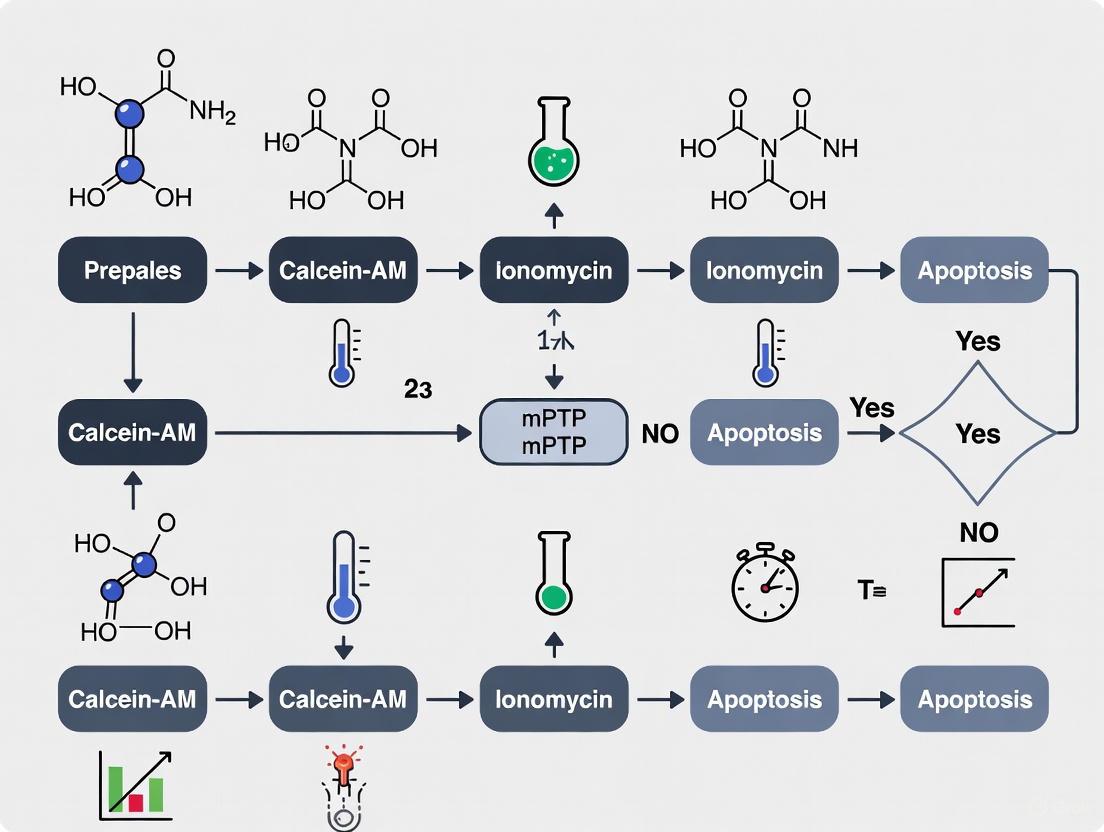
This comprehensive guide details the calcein-AM cobalt quenching assay for detecting mitochondrial permeability transition pore (mPTP) opening, a critical event in regulated cell death.
A Complete Guide to the Calcein-AM mPTP Opening Assay: From Basic Principles to Advanced Applications
Abstract
This comprehensive guide details the calcein-AM cobalt quenching assay for detecting mitochondrial permeability transition pore (mPTP) opening, a critical event in regulated cell death. Tailored for researchers and drug development scientists, the article covers the foundational biology of mPTP, a step-by-step protocol for somatic and primary cells, common troubleshooting pitfalls with proven solutions, and methods for data validation. By integrating current research from somatic cell reprogramming to disease models like myocardial injury and cancer, this resource provides a robust framework for implementing this key technique in studies of metabolism, toxicology, and therapeutic development.
Understanding mPTP Biology and the Calcein-AM Assay Principle
What is the mPTP? Defining a Key Regulator of Cell Life and Death
The mitochondrial permeability transition pore (mPTP) is a non-specific channel that forms in the inner mitochondrial membrane under pathological conditions such as calcium overload and oxidative stress. This comprehensive application note explores the mPTP's dual role as both a life and death regulator, detailing its molecular identity, pathophysiological significance, and functional regulation. We provide detailed methodologies for investigating mPTP dynamics, with particular emphasis on the calcein-AM mPTP opening assay protocol. This resource equips researchers with the theoretical foundation and practical tools necessary to advance drug discovery programs targeting mPTP-mediated conditions including ischemia-reperfusion injury, neurodegenerative diseases, and cancer.
The mitochondrial permeability transition pore represents a critical mitochondrial megachannel whose opening triggers a profound increase in the permeability of the inner mitochondrial membrane to solutes up to 1.5 kilodaltons [1] [2]. First discovered by Haworth and Hunter in 1979, this pore complex functions as a pivotal switch governing cellular destiny [1] [3]. Under physiological conditions, transient mPTP opening may contribute to calcium homeostasis and metabolic regulation, whereas sustained opening initiates devastating consequences including loss of membrane potential, mitochondrial swelling, and cellular demise through both apoptotic and necrotic pathways [1] [2] [4].
The mPTP exists in multiple conductance states, with its functional impact determined largely by opening duration and extent. Transient, low-conductance openings may facilitate rapid calcium efflux and participate in metabolic signaling, while prolonged, high-conductance opening causes collapse of the proton gradient, ATP depletion, outer membrane rupture, and release of pro-apoptotic factors [2] [4] [3]. This dual nature positions the mPTP as both a physiological modulator and pathological executioner, making it an attractive therapeutic target for conditions characterized by dysregulated cell death.
Molecular Identity and Regulatory Components
Despite decades of investigation, the precise molecular architecture of the mPTP remains elusive, representing one of the most contested topics in mitochondrial biology. The current consensus recognizes that the pore is regulated by a complex interplay of proteins rather than consisting of a single fixed structure [2] [5].
Table 1: Core Components and Regulators of the mPTP
| Component/Regulator | Location | Function/Role in mPTP | Genetic Evidence |
|---|---|---|---|
| Cyclophilin D (CypD) | Mitochondrial matrix | Essential regulatory component; peptidyl-prolyl cis-trans isomerase that facilitates pore opening | Knockout mice show resistance to mPTP opening and reduced cell death from ischemia/Ca²⁺ overload [1] [4] |
| F-ATP synthase | Inner mitochondrial membrane | Proposed pore-forming component; dimers, monomers, or c-subunit ring may form the channel | Genetic ablation studies suggest role in pore formation [2] [6] |
| Adenine nucleotide translocase (ANT) | Inner mitochondrial membrane | Regulatory component; may facilitate pore opening in response to metabolic signals | Not essential for mPTP (genetic ablation doesn't prevent pore formation) but modulates sensitivity [1] [2] [5] |
| ATAD3A | Inner mitochondrial membrane | Novel upstream regulator (2025 discovery); controls mitochondrial cholesterol transport and CypD localization | Loss prevents calcium-induced pore formation and renders mitochondria insensitive to cyclosporin A [1] |
| Voltage-dependent anion channel (VDAC) | Outer mitochondrial membrane | Once considered core component; may facilitate outer membrane permeability | Not essential for mPTP (genetic ablation doesn't prevent pore formation) [1] [5] |
| Paraplegin (SPG7) | Inner mitochondrial membrane | Regulatory role through interaction with CyPD and mitochondrial calcium uniporter complex | Knockout studies show dysregulated mPTP flickering and impaired calcium handling [6] |
Recent research has identified ATAD3A, an inner mitochondrial membrane AAA+ ATPase, as a critical upstream modulator of mPTP formation. This 2025 discovery revealed that ATAD3A regulates mitochondrial cholesterol transport and cyclophilin D localization, with loss of ATAD3A preventing calcium-induced pore formation and rendering mitochondria insensitive to cyclosporin A [1]. This positions ATAD3A upstream of cyclophilin D in the mPTP regulatory hierarchy.
Diagram 1: mPTP Regulatory Network. The diagram illustrates the complex regulation of mPTP opening by various stress signals, protein components, and pharmacological inhibitors.
Pathophysiological Roles of mPTP
The mPTP serves as a critical executioner in numerous pathological conditions while potentially playing a role in physiological processes through transient opening events.
Cell Death Pathways
The mPTP occupies a central position in cell death pathways, with opening duration determining the mode of cellular demise:
- Necrosis: Sustained mPTP opening causes colloid-osmotic mitochondrial swelling, outer membrane rupture, and energy collapse leading to necrotic death [1] [4].
- Apoptosis: Transient mPTP opening may facilitate release of pro-apoptotic factors like cytochrome c through outer membrane perturbations without immediate energy collapse [1] [3].
- Excitotoxicity: In neurological contexts, overactivation of glutamate receptors causes excessive calcium entry that triggers mPTP opening and neuronal death [1].
Disease Implications
The mPTP has been implicated in a wide range of clinical conditions:
- Ischemia-Reperfusion Injury: The pore remains closed during ischemia but opens upon reperfusion, contributing to tissue damage in heart attacks and stroke [1] [5].
- Neurodegenerative Disorders: Alzheimer's disease, multiple sclerosis, and excitotoxic neuronal death involve mPTP-mediated cell death pathways [4] [3].
- Muscular Dystrophies: Collagen VI muscular dystrophies involve mPTP dysfunction leading to muscle cell death [1].
- Cancer: Modulation of mPTP opening presents opportunities for inducing death in malignant cells [4].
- Hepatotoxicity: Reye's syndrome and drug-induced liver injury involve mPTP activation by agents like salicylate and valproate [1].
Table 2: mPTP in Pathological Conditions
| Pathological Condition | Role of mPTP | Key Evidence |
|---|---|---|
| Cardiac Ischemia/Reperfusion | Major contributor to cell death upon reperfusion | Inhibition by cyclosporine A reduces infarct size; pore opens during reperfusion, not ischemia [1] [5] |
| Neurodegenerative Diseases | Mediates neuronal death in excitotoxicity and oxidative stress | CypD knockout mice show reduced neuronal death in stroke models [1] [4] |
| Muscular Dystrophies | Causes mitochondrial dysfunction and muscle cell death | Linked to collagen VI muscular dystrophies through mitochondrial defects [1] |
| Reye's Syndrome | Induced by chemicals causing this condition | Salicylate and valproate trigger mPTP opening [1] |
| Cancer | Potential target for inducing cancer cell death | Modulation of mPTP can trigger apoptosis in malignant cells [4] |
Experimental Assessment of mPTP Function
Calcein-AM mPTP Opening Assay Protocol
The calcein-AM quenching assay represents a robust method for monitoring mPTP opening in live cells, combining calcein-AM loading with cobalt chloride (CoCl₂) quenching to specifically detect mitochondrial permeability changes [7] [8].
Principle: Cell-permeant calcein-AM enters cells and is cleaved by intracellular esterases to produce fluorescent calcein, which is trapped within cellular compartments. Cobalt chloride quenches cytosolic and nuclear fluorescence but cannot cross intact mitochondrial membranes. mPTP opening allows cobalt to enter mitochondria and quench mitochondrial calcein fluorescence, providing a direct readout of pore activity [7] [9] [8].
Materials and Reagents:
Table 3: Research Reagent Solutions for Calcein-AM mPTP Assay
| Reagent/Material | Function/Role | Example Specifications |
|---|---|---|
| Calcein-AM | Fluorescent dye precursor; cell-permeant esterase substrate | 1 mM stock solution in DMSO; Molecular Probes C1430 [8] [10] |
| Cobalt Chloride (CoCl₂) | Fluorescence quencher for cytosolic calcein | Prepared in appropriate buffer (e.g., HBSS) [8] |
| Ionomycin | Calcium ionophore; positive control for mPTP induction | Used at optimized concentrations to trigger calcium-dependent pore opening [8] |
| Cyclosporine A | CypD inhibitor; negative control for mPTP inhibition | Confirms specificity of fluorescence loss through mPTP inhibition [1] [4] |
| Hank's Balanced Salt Solution (HBSS) | Assay buffer; maintains cell viability during imaging | With calcium for physiological conditions [8] |
| Cell culture plates | Platform for cell growth and imaging | 24-well or 96-well plates with optical bottoms for microscopy [7] |
Step-by-Step Protocol:
Cell Preparation: Plate cells in appropriate culture vessels (e.g., 24-well plates with glass coverslips) and culture until 70-80% confluent [7] [10].
Dye Loading Solution Preparation:
- Prepare loading solution containing 10-15 μM calcein-AM in pre-warmed HBSS with calcium [8] [10].
- Add 1-2 mM cobalt chloride to the loading solution to quench cytosolic fluorescence [8].
- For positive controls, include 1-5 μM ionomycin to induce calcium-dependent mPTP opening [8].
- Protect all solutions from light throughout the procedure.
Cell Loading:
Post-Loading Processing:
- Remove loading solution and wash cells twice with HBSS/Ca²⁺ to remove excess dye and cobalt [8].
- Add fresh pre-warmed HBSS/Ca²⁺ or culture medium for imaging.
Fluorescence Detection:
Image Analysis:
- Quantify mean fluorescence intensity of mitochondrial regions.
- Calculate percentage fluorescence loss relative to negative controls (cyclosporine A-treated).
- Normalize data to cell number or viability markers.
Diagram 2: Calcein-AM mPTP Assay Workflow. The diagram outlines the key steps in assessing mPTP opening using the calcein-AM cobalt quenching method.
Troubleshooting Tips:
- High background fluorescence: Ensure adequate cobalt chloride concentration and washing steps.
- Poor cellular viability: Optimize incubation times and confirm buffer compatibility.
- Variable results: Include appropriate positive and negative controls in each experiment.
- Weak signal: Confirm calcein-AM stock solution quality and storage conditions.
Complementary Assessment Methods
While the calcein-AM assay provides a robust cellular readout, comprehensive mPTP characterization often requires orthogonal approaches:
- Mitochondrial Swelling Assays: Monitor light scattering changes in isolated mitochondria as indicators of permeability transition-induced swelling [6].
- Patch-Clamp Electrophysiology: Direct measurement of channel activity in mitoplasts reveals multiple conductance states of the mitochondrial megachannel [2] [5].
- Membrane Potential Sensing: Use JC-1, TMRM, or other potentiometric dyes to detect mPTP-associated mitochondrial depolarization [5].
- Calcium Flux Measurements: Monitor mitochondrial calcium handling using targeted biosensors or dyes [6].
Modulators and Pharmacological Regulation
The mPTP is regulated by diverse factors that either promote or inhibit its opening, providing multiple points for therapeutic intervention:
Potentiators:
- Calcium overload: Primary trigger for pore opening [1] [2]
- Oxidative stress: Reactive oxygen species sensitize the pore to calcium [1] [5]
- Inorganic phosphate: Synergizes with calcium to promote opening [1]
- Adenine nucleotide depletion: Reduces inhibitory regulation [1]
Inhibitors:
- Cyclosporine A: Binds CypD and desensitizes the pore to calcium [1] [4]
- Adenine nucleotides: ATP and ADP stabilize closed conformation [1] [2]
- Acidic pH: Protects against pore opening during ischemia [1]
- Divalent cations: Mg²⁺ competes with Ca²⁺ at binding sites [1] [2]
The mitochondrial permeability transition pore remains an enigmatic yet critically important channel that governs life and death decisions at the cellular level. While significant progress has been made in understanding its regulation and pathophysiological significance, the precise molecular identity continues to elude researchers, with recent evidence pointing to the F-ATP synthase and newly discovered regulators like ATAD3A as key players.
The calcein-AM mPTP opening assay provides a robust and reproducible method for investigating pore dynamics in live cells, offering researchers a valuable tool for screening potential modulators and probing basic biological mechanisms. As drug discovery efforts increasingly target mPTP-mediated cell death in conditions ranging from ischemic injury to neurodegenerative diseases, this protocol will continue to serve as an essential component of the mitochondrial researcher's toolkit.
Future research directions will likely focus on resolving the high-resolution structure of the pore complex, understanding the structural transitions that convert energy-producing complexes into death-inducing channels, and developing more specific pharmacological agents that can selectively modulate pathological versus physiological pore opening. These advances will ultimately yield new therapeutic strategies for the myriad conditions characterized by dysregulated mitochondrial permeability transition.
The mitochondrial permeability transition pore (mPTP) is a non-selective channel that forms in the inner mitochondrial membrane (IMM) under conditions of elevated matrix calcium ((Ca^{2+})) and oxidative stress [2] [11]. Its opening permits the diffusion of solutes and molecules up to 1.5 kDa in size, leading to the collapse of the mitochondrial membrane potential ((\Delta\Psi_m)), uncoupling of oxidative phosphorylation, osmotic swelling, and ultimately, necrotic or apoptotic cell death [2] [12] [1]. Initially considered a pathological artifact, the mPTP is now recognized to also participate in physiological processes, where its transient, sub-conductance opening may contribute to (Ca^{2+}) homeostasis and metabolic regulation [2] [12].
Despite decades of intensive research, the precise molecular identity of the mPTP remains one of the most significant enigmas in mitochondrial biology. The field has witnessed a dramatic evolution in proposed models, shifting from early paradigms involving multi-protein complexes spanning both mitochondrial membranes to more recent hypotheses centered on specific inner membrane proteins. This application note critically examines the two foremost candidate models—the F-ATP synthase and the adenine nucleotide translocase (ANT)—detailing the evidence for each, their proposed mechanisms of pore formation, and the experimental contexts of their study. Framed within methodological research on the calcein-AM mPTP opening assay, this review provides researchers and drug development professionals with a consolidated overview of the current landscape and the tools to investigate it.
Current Models of the mPTP's Molecular Identity
The quest to define the mPTP's structure has been marked by controversy and paradigm shifts. The following sections summarize the evidence for the leading candidate pore-forming components.
The F-ATP Synthase Hypotheses
The mitochondrial F(1)F(O)-ATP synthase, essential for ATP synthesis, has emerged as a primary candidate for the mPTP. Research has converged on two non-mutually exclusive models for its pore-forming capability.
- Dimer/Monomer Interface Model: This hypothesis proposes that the pore forms at the interface of F-ATP synthase dimers or within the membrane sector of a monomer itself. Cryo-electron microscopy studies suggest that a conformational change, facilitated by (Ca^{2+}) binding and Cyclophilin D (CypD) interaction, could trigger a pore formation within the (FO) module [2] [12]. The detachment of the (F1) catalytic domain from the (F_O) membrane domain under stress conditions has also been suggested to induce a pore-forming conformation [12].
- c-subunit Ring Model: An alternative hypothesis posits that the lipid-plugged c-subunit ring of the F-ATP synthase itself constitutes the pore. In this model, (Ca^{2+}) and CypD promote the ejection of the lipid plug, converting the c-ring into a non-selective channel permeable to small molecules [2] [12]. Studies on genetically modified cells and isolated systems indicate that the c-ring can conduct currents with properties reminiscent of the mPTP.
The following diagram illustrates the hypothesized signaling pathway leading to mPTP formation via the F-ATP synthase.
Diagram 1: Proposed pathway for F-ATP synthase-dependent mPTP formation.
The Adenine Nucleotide Translocase (ANT) Hypothesis
The ANT, an IMM protein responsible for exchanging ATP and ADP across the inner membrane, was one of the earliest proposed components of the mPTP. While initially considered part of a larger complex, recent genetic evidence has revitalized the idea that it may form a pore itself.
Evidence supporting this model includes the profound inhibitory effect of specific ANT ligands like bongkrekic acid on mPTP opening [11] [13]. Crucially, a key study demonstrated that the genetic suppression of all ANT isoforms, in conjunction with CypD ablation, led to the complete abolition of the mPTP, suggesting ANT is an indispensable pore-forming component, potentially responsible for a lower-conductance state of the pore [12]. It is now widely thought that ANT may not be the sole pore-forming entity but a critical regulator or a constituent of one of several mPTP conductance states [2].
Comparative Analysis of mPTP Models
Table 1: Comparison of the primary proposed mPTP pore-forming components.
| Feature | F-ATP Synthase Model | ANT Model |
|---|---|---|
| Primary Proposed Role | Core pore-forming structure (dimer interface, monomer, or c-subunit ring) [2] [12] | Core pore-forming structure and/or regulator; may form a lower-conductance pore [2] [12] |
| Key Supporting Evidence | - Cryo-EM structures showing pore-like structures [2]- Genetic ablation/modification of subunits affects mPTP function [12]- Reconstitution of channel activity from purified subunits [2] | - Pharmacological inhibition by ligands (e.g., bongkrekic acid) [11] [13]- Genetic ablation of all isoforms impairs/abolishes CypD-sensitive mPTP [12] |
| Postulated Conductance States | Multiple sub-conductance states up to the fully open 1.5 kDa pore [2] | Possibly responsible for a smaller, lower-conductance activity [2] |
| Regulation by CypD | Direct interaction with the oligomycin sensitivity-conferring protein (OSCP) subunit, facilitating pore opening [2] [11] | Direct interaction, modulating conformation to favor pore state [12] [13] |
| Key Open Questions | - What is the exact trigger for the conformational change?- Does the pore form from the c-ring or the dimer interface? [2] | - Is ANT the sole pore or one of several?- What is its specific role in physiological vs. pathological opening? [2] [12] |
Essential Regulatory Components and Triggers
Beyond the pore-forming candidates, several key molecules are universally accepted as critical regulators of the mPTP.
- Cyclophilin D (CypD): This matrix peptidyl-prolyl cis-trans isomerase is the primary pharmacological target for mPTP inhibition. Cyclosporin A (CsA) desensitizes the pore by binding to and inhibiting CypD. Genetic ablation of CypD confirms its role as a crucial positive regulator, but not the structural component of the pore, as its deletion makes mitochondria more resistant to (Ca^{2+})-induced opening but does not prevent it entirely [2] [11] [1].
- Calcium ((Ca^{2+})): A necessary trigger for mPTP opening in pathological contexts. The matrix (Ca^{2+}) load is a primary determinant of pore opening probability, often assessed via the Calcium Retention Capacity (CRC) assay [11] [12].
- Reactive Oxygen Species (ROS): Oxidative stress synergizes with (Ca^{2+}) to markedly lower the threshold for mPTP induction, making it a key player in ischemia-reperfusion injury and degenerative diseases [11] [12].
The Scientist's Toolkit: Key Research Reagent Solutions
The study of the mPTP relies on a suite of well-characterized reagents and assays. The following table details essential tools for investigating mPTP structure and function.
Table 2: Key research reagents and methods for mPTP investigation.
| Reagent / Assay | Function / Target | Application in mPTP Research |
|---|---|---|
| Cyclosporin A (CsA) | Inhibits Cyclophilin D (CypD) [11] [12] | Gold-standard pharmacological inhibitor to confirm CypD-dependent mPTP opening. |
| Calcein-AM / CoCl₂ | Fluorescent probe for pore opening [14] [15] | Core components of the calcein-AM mPTP quenching assay to visualize pore opening in cells and isolated mitochondria. |
| Bongkrekic Acid | Inhibitor of ANT [11] [13] | Used to probe the involvement of the adenine nucleotide translocase in mPTP formation. |
| Ca²⁺ Retention Capacity (CRC) | Measures mitochondrial Ca²⁺ buffering [11] [12] | Functional assay to quantify the sensitivity of mitochondria to Ca²⁺-induced mPTP opening. |
| Spectrophotometric Swelling Assay | Measures light scattering at 540 nm [11] [12] [14] | Classical ensemble method to detect mitochondrial swelling as a consequence of full mPTP opening. |
| Nano-Flow Cytometry (nFCM) | Multi-parameter single-mitochondrion analysis [15] | Advanced technique to detect mPTP opening, ΔΨm loss, and cytochrome c release simultaneously in individual mitochondria, revealing heterogeneity. |
Application Note: Calcein-AM mPTP Opening Assay Protocol
The calcein-AM quenching assay is a widely used method to monitor mPTP opening in live cells and isolated mitochondria, leveraging the properties of the cell-permeant fluorescent dye calcein-AM.
Principle of the Assay
Cells or mitochondria are loaded with calcein-AM, which passively diffuses across membranes. Intracellular esterases cleave the AM ester group, trapping the fluorescent calcein molecule within the cell. The subsequent application of cobalt chloride (CoCl₂) quenches the cytosolic and nuclear calcein fluorescence, as (Co^{2+}) can cross the plasma membrane but is excluded from healthy mitochondria. The fluorescence retained within mitochondria is thus protected. Upon induction of mPTP opening, (Co^{2+}) enters the mitochondrial matrix and quenches the intramitochondrial calcein signal, providing a direct readout of pore activity [14] [15].
Detailed Experimental Workflow
The following diagram outlines the key steps of the protocol for a cellular assay.
Diagram 2: Experimental workflow for the calcein-AM mPTP opening assay in live cells.
Step-by-Step Protocol:
- Cell Preparation: Plate cells (e.g., primary cardiomyocytes, HeLa cells) onto appropriate culture dishes or multi-well plates and culture until they reach the desired confluence.
- Dye Loading:
- Prepare a working solution of 1-5 µM calcein-AM in pre-warmed, serum-free culture medium.
- Remove the culture medium from cells and replace it with the calcein-AM working solution.
- Incubate for 15-30 minutes at 37°C in the dark.
- Cytosolic Quenching:
- Carefully wash the cells 2-3 times with PBS or a suitable buffer to remove excess dye.
- Incubate cells with 1-2 mM CoCl₂ in culture medium for 15-20 minutes to quench cytosolic calcein fluorescence.
- Experimental Treatment & Imaging:
- Apply the experimental treatments. This may include:
- mPTP Inducers: (Ca^{2+}) ionophores (e.g., A23187), oxidative stress agents (e.g., (H2O2)), or pro-apoptotic compounds (e.g., Betulinic Acid) [15].
- mPTP Inhibitors: 1 µM Cyclosporin A (CsA) can be added as a control 15-30 minutes prior to induction.
- Monitor fluorescence in real-time using a confocal microscope (excitation ~488 nm, emission ~515 nm) or a fluorescence plate reader. A decrease in fluorescence intensity over time indicates mPTP opening.
- Apply the experimental treatments. This may include:
Data Interpretation and Troubleshooting
- Validation: Inclusion of a CsA control is critical to confirm that fluorescence loss is due to specific mPTP opening.
- Quantification: Fluorescence can be normalized to the initial value (F/F₀). The time to 50% fluorescence decay or the area under the curve can be used for statistical comparison.
- Troubleshooting:
- Rapid Quenching: May indicate poor esterase activity or dye overloading. Optimize calcein-AM concentration and loading time.
- No Signal Change: The mPTP induction stimulus may be insufficient. Titrate the concentration of inducers and confirm cell viability.
The molecular composition of the mPTP continues to be a dynamic and fiercely debated area of research. The evidence implicating both the F-ATP synthase and the ANT is compelling, suggesting a model where the pore may not have a single molecular identity but could arise from different proteins under varying conditions or form a complex with overlapping components [2] [12]. The continued refinement of models, coupled with advanced techniques like cryo-EM and nano-flow cytometry, promises to resolve this long-standing enigma. A definitive understanding of the mPTP's structure is the fundamental key to unlocking its full potential as a therapeutic target for a wide spectrum of human diseases, from acute ischemia-reperfusion injury to chronic neurodegenerative disorders. The calcein-AM assay remains an accessible, robust, and invaluable tool for researchers contributing to this ongoing discovery process.
The mitochondrial permeability transition pore (mPTP) is a non-specific channel spanning the inner and outer mitochondrial membranes, serving as a critical regulator of cell survival and death [16]. Its opening allows solutes up to 1.5 kDa to pass through, disrupting the mitochondrial membrane potential, causing swelling, and leading to the release of pro-apoptotic factors that can initiate cell death pathways [15]. Once considered a biochemical curiosity, mPTP is now recognized as a central pathological mechanism in a diverse range of diseases, from cardiac ischemia and neurodegenerative disorders to cancer [15]. Understanding and detecting mPTP activity is therefore paramount for both basic research and drug development. The calcein-AM mPTP opening assay has emerged as a direct and reliable method to visualize and quantify this pivotal event in intact cells and isolated mitochondria, providing invaluable insights into disease mechanisms and potential therapeutic interventions [17].
The Critical Role of mPTP in Human Diseases
Cardiac Ischemia and Neurodegeneration
mPTP opening is a well-established contributor to cell death in cardiac ischemia-reperfusion injury and neurodegenerative diseases [15]. In these conditions, cellular stresses such as calcium overload and oxidative stress trigger prolonged mPTP opening, resulting in the catastrophic loss of mitochondrial function and the initiation of apoptosis or necrosis.
Infectious Diseases
Recent research has illuminated the role of mPTP in host-pathogen interactions. For instance, infection with Eimeria tenella, a poultry parasite, promotes MPTP-dependent apoptosis in host caecal epithelial cells. Studies show that the infection leads to a significant release of mitochondrial pro-apoptotic factors—including Smac, Endo G, and AIF—into the cytoplasm, a process that can be mitigated by the mPTP inhibitor Cyclosporin A (CsA) [18]. Table 1 summarizes the quantitative changes in these factors observed during infection.
Table 1: mPTP-Dependent Release of Apoptotic Factors in E. tenella Infection
| Apoptotic Factor | Change in Mitochondria (Post-Infection) | Change in Cytoplasm (Post-Infection) | Effect of CsA (mPTP Inhibition) |
|---|---|---|---|
| Smac | Significantly Decreased (p<0.05) [18] | Significantly Elevated (p<0.05) [18] | Restored Mitochondrial Levels (p<0.05) [18] |
| Endo G | Significantly Decreased (p<0.05) [18] | Significantly Elevated (p<0.05) [18] | Restored Mitochondrial Levels (p<0.05) [18] |
| AIF | Significantly Decreased (p<0.05) [18] | Significantly Elevated (p<0.05) [18] | Restored Mitochondrial Levels (p<0.05) [18] |
Cancer and Therapy Resistance
In cancer biology, mPTP-mediated mitochondrial dysfunction presents a promising therapeutic target. Research using nano-flow cytometry (nFCM) has revealed that certain anti-cancer compounds, like betulinic acid (BetA), can directly induce mPTP opening, leading to caspase-independent cell death even in the absence of Bax/Bak, thus potentially overcoming a common drug resistance mechanism [15]. This direct induction of mPTP opening is not a universal property of all cytotoxic compounds, highlighting the specificity of this cell death pathway [15].
The Scientist's Toolkit: Core mPTP Assay Protocol & Reagents
The calcein-AM cobalt quenching technique is a standard method for direct mPTP detection.
Research Reagent Solutions
Table 2: Essential Reagents for the Calcein-AM mPTP Assay
| Reagent / Kit | Function in the Assay | Example Source / Catalog |
|---|---|---|
| Calcein AM | Cell-permeant fluorescent dye; cleaved by esterases to calcein, which is trapped inside cellular compartments including mitochondria. | Transition Pore Assay Kit (Invitrogen, I35103) [8] [19] |
| Cobalt Chloride (CoCl₂) | Fluorescence quencher; penetrates the cytosol but cannot enter mitochondria unless the mPTP is open. | Included in commercial kits [16] [20] |
| Ionomycin | Calcium ionophore; used as a positive control to induce mPTP opening by causing calcium overload. | Included in commercial kits [16] [20] |
| Cyclosporin A (CsA) | Specific mPTP inhibitor; binds to cyclophilin D to prevent pore opening. Used to confirm mPTP involvement. | N/A [18] [15] |
| HBSS Buffer | A balanced salt solution used for washing cells and during the staining procedure. | Modified HBSS (Thermo Fisher, 14175095) [19] |
Detailed Protocol: Imaging mPTP Opening in Live Cells
This protocol is adapted from established methodologies for use in somatic cell reprogramming and other cell fate conversion studies [7] [19].
Key Resources:
- Cells: Mouse embryonic fibroblasts (MEFs) or other relevant cell lines.
- Medium: Appropriate culture medium (e.g., DMEM with 10% FBS, GlutaMAX, NEAA) [19].
- Buffers: Modified HBSS Buffer.
- Reagents: Calcein AM, CoCl₂, and Ionomycin from a commercial kit (e.g., Invitrogen MitoProbe Transition Pore Assay Kit, #I35103) [8] [19].
- Equipment: Confocal or fluorescence microscope with a 488 nm excitation laser.
Step-by-Step Workflow:
Step 1: Cell Preparation
- Seed cells (e.g., MEFs) on an appropriate imaging dish and culture until they reach 40-80% confluence [19]. Ensure cells are healthy and actively dividing.
Step 2: Staining Solution Preparation
- Prepare the working staining solution by diluting Calcein AM and CoCl₂ in a balanced salt solution like HBSS. For example, use the 1000X Calcein AM and 100X CoCl₂ stocks from a commercial kit according to the manufacturer's instructions [16] [20].
Step 3: Cell Staining and Incubation
- Remove the culture medium from the cells and wash once with HBSS.
- Add the prepared staining solution to completely cover the cells.
- Incubate the cells at 37°C for 15 minutes, protected from light [8].
Step 4: Washing
- After incubation, carefully remove the staining solution.
- Wash the cells twice with HBSS (or HBSS/Ca²⁺) to ensure the complete removal of extracellular dye and cobalt [8] [19].
Step 5: Image Acquisition
- Add a small volume of fresh HBSS to cover the cells.
- Immediately image the cells using a confocal microscope (e.g., Zeiss LSM 710) with settings for green fluorescence (Ex/Em ~488/530 nm) [19]. Under these conditions, only the mitochondria should display bright green fluorescence.
Step 6: Experimental Controls
- Positive Control (Induced Opening): Treat a separate sample of stained and washed cells with Ionomycin (e.g., 0.25-0.5 µM) for a short period before imaging. This induces calcium influx and mPTP opening, leading to cobalt quenching of mitochondrial calcein and loss of fluorescence [16] [20].
- Inhibitor Control (Prevented Opening): Pre-treat cells with 1-10 µM Cyclosporin A (CsA) for 30-60 minutes before and during the staining procedure. CsA inhibits mPTP opening, preserving mitochondrial calcein fluorescence even in the presence of inducers [18] [15].
Advanced Applications and Quantitative Analysis
Flow Cytometry and Cell Sorting
The calcein-AM assay is readily adaptable to flow cytometry for high-throughput, quantitative analysis. This application allows researchers to not only measure the degree of mPTP opening in a large population but also to sort sub-populations of cells based on their mPTP status. For instance, somatic cells with high and low calcein fluorescence (indicating low and high mPTP opening, respectively) have been sorted and subsequently reprogrammed into induced pluripotent stem cells (iPSCs) to study the role of metabolism in cell fate conversion [7] [19].
Single-Mitochondrion Analysis with Nano-Flow Cytometry (nFCM)
A cutting-edge application involves using nano-flow cytometry (nFCM) to analyze mPTP opening in isolated mitochondria. This technique provides unparalleled sensitivity to study mitochondrial heterogeneity and the sequence of molecular events during mPT. The workflow, as demonstrated in recent research, involves isolating mitochondria from cells (e.g., HeLa cells), staining them with calcein-AM/CoCl₂, and then analyzing them with nFCM [15]. This approach has been crucial in verifying that mPTP opening and depolarization occur prior to cytochrome c release, and has revealed the simultaneous release of multiple cell-death-associated factors (Cyt c, AIF, PNPT1, mtDNA) during mPT [15].
The opening of the mitochondrial permeability transition pore is a decisive event in cellular life-or-death decisions, with far-reaching implications in pathologies from cardiac ischemia to infectious diseases and cancer. The calcein-AM mPTP opening assay provides a direct, versatile, and robust method to investigate this phenomenon. From standard protocols in live cells to advanced applications like cell sorting and single-mitochondrion analysis, this technique continues to be an indispensable tool in the molecular scientist's arsenal. As research progresses, particularly in the realm of cancer therapeutics targeting mPTP to overcome drug resistance, this assay will remain fundamental to unlocking new mechanistic insights and developing innovative disease interventions.
The mitochondrial permeability transition pore (mPTP) is a non-selective channel in the inner mitochondrial membrane whose opening allows the free passage of molecules and ions under 1500 Da. Transient opening of the mPTP is believed to play a role in normal calcium and ROS homeostasis, whereas prolonged opening leads to the collapse of the mitochondrial membrane potential, uncoupling of oxidative phosphorylation, and ultimately can trigger cell death via apoptosis or necrosis [21]. Given its central role in cell survival, the reliable detection of mPTP opening is crucial in areas ranging from fundamental cell biology to drug discovery. The calcein acetoxymethyl (AM)/cobalt (Co²⁺) quenching technique, first established by Petronilli et al., provides a direct and reliable method to monitor this critical event in intact, living cells [22] [23] [21].
This application note details the core principles and methodologies of the calcein-AM/cobalt quenching assay, framing it within the context of broader research on mPTP opening. It is designed to provide researchers and drug development professionals with the experimental protocols and mechanistic understanding necessary to implement this powerful technique effectively.
The Core Principle of the Assay
The calcein-AM/cobalt quenching assay is elegantly designed to isolate the mitochondrial signal from the overwhelming cytosolic background, allowing for direct observation of pore-mediated changes within the mitochondria.
The Journey of Calcein-AM
Calcein-AM is a cell-permeant, non-fluorescent compound. Upon entering the cell, ubiquitous intracellular esterases hydrolyze the acetoxymethyl (AM) ester groups, converting it into calcein, a hydrophilic, strongly fluorescent molecule that is then trapped within the cell [24]. This hydrolysis occurs in all cellular compartments, resulting in the loading of calcein into both the cytosol and the mitochondrial matrix [22].
The Role of Cobalt as a Collisional Quencher
Cobalt ions (Co²⁺) act as a potent collisional quencher of calcein fluorescence. Quenching occurs when Co²⁺ diffuses to within a critical distance of an excited calcein molecule, causing the energy to be dissipated non-radiatively [25]. A key feature of this system is that the Co²⁺ supplied to the cell culture medium is membrane-permeant and can enter the cytosol, but it is excluded from the mitochondrial matrix in healthy cells due to the impermeability of the intact inner mitochondrial membrane [22] [24].
Isolating the Mitochondrial Signal
The assay's power lies in its strategic separation of signals. When cells are co-loaded with calcein-AM and CoCl₂, the following occurs:
- Cytosolic calcein fluorescence is quenched by the free cytosolic Co²⁺.
- Mitochondrial calcein fluorescence remains bright because the inner mitochondrial membrane prevents Co²⁺ from entering the matrix.
Consequently, under a fluorescence microscope, the bright punctate structures corresponding to mitochondria are visible against a dark cytosolic background [24].
Detecting Pore Opening
The opening of the mPTP fundamentally alters this configuration. When the pore opens, the inner mitochondrial membrane becomes permeable to ions and small molecules. This allows two simultaneous events:
- Cobalt Influx: Co²⁺ ions enter the mitochondrial matrix.
- Calcein Efflux: Calcein molecules (∼623 Da) exit the matrix.
The influx of Co²⁺ results in the immediate quenching of the mitochondrial calcein fluorescence. Therefore, a decrease in mitochondrial calcein fluorescence is a direct indicator of mPTP opening [22] [21]. Research using this method has revealed that the mPTP is not a simple on/off switch but likely fluctuates rapidly between open and closed states in intact cells, as evidenced by a constant, spontaneous decrease in fluorescence that can be inhibited by cyclosporin A (CsA) [22] [23].
Table 1: Key Components and Their Roles in the mPTP Assay
| Component | Chemical Property | Role in the Assay | Result in Healthy Mitochondria | Result Upon mPTP Opening |
|---|---|---|---|---|
| Calcein-AM | Cell-permeant, non-fluorescent | Fluorescent precursor | Hydrolyzed to fluorescent calcein in cytosol and mitochondria | N/A |
| Calcein | Hydrophilic, fluorescent (Ex/Em ~494/517 nm) | Reporter molecule | Trapped in all compartments; mitochondrial signal is visible | Effluxes from matrix, leading to signal loss |
| Cobalt (Co²⁺) | Cell-permeant, collisional quencher | Cytosolic quencher | Quenches cytosolic calcein; excluded from matrix | Influx into matrix, quenching residual calcein |
| Cyclosporin A (CsA) | Cyclophilin D inhibitor | Pharmacological control | No effect on mPTP | Inhibits Ca²⁺-induced pore opening, preventing fluorescence loss [22] |
Visualizing the Core Principle
The following diagram illustrates the sequential mechanism of the calcein-AM/cobalt quenching assay for detecting mPTP opening.
Detailed Experimental Protocol
This protocol is adapted from established methodologies [22] [21] [24] and is designed for adherent cells cultured in a 96-well plate to facilitate high-throughput screening and quantitative analysis.
Materials and Reagents
Table 2: Essential Research Reagent Solutions
| Reagent/Solution | Function / Role in Assay | Example / Typical Working Concentration | Critical Notes |
|---|---|---|---|
| Calcein-AM | Fluorescent probe precursor | 1–5 mM stock in DMSO; 1–10 µM working [24] | Protect from light; optimize concentration for cell type. |
| Cobalt Chloride (CoCl₂) | Cytosolic fluorescence quencher | 1 mM [22] | Enables isolation of mitochondrial signal. |
| Cyclosporin A (CsA) | Control mPTP inhibitor [22] | 1 µM [22] | Validates assay specificity. Prevents Ca²⁺-induced pore opening. |
| Ionophore (e.g., A23187) or Ca²⁺ | Positive control mPTP inducer | Varies | Triggers pore opening for assay validation. |
| Appropriate Cell Culture Medium | Maintains cell health during assay | e.g., DMEM, RPMI | May be serum-free during staining. |
| Phosphate Buffered Saline (PBS) | Washing buffer | 1X | Removes excess, unhydrolyzed dye. |
| Dimethyl Sulfoxide (DMSO) | Solvent for Calcein-AM stock | Anhydrous | Keep stock concentration high to minimize final DMSO %. |
Step-by-Step Procedure
Cell Preparation:
- Seed adherent cells into a black-walled, clear-bottom 96-well plate to achieve 70-90% confluency at the time of assay. Ensure cells are healthy and in the logarithmic growth phase.
Dye Loading (Perform protected from light):
- Prepare the Calcein-AM Loading Solution by diluting Calcein-AM stock into pre-warmed serum-free culture medium to a final concentration of 1–5 µM. Note: The optimal concentration must be determined empirically for each cell line.
- Remove the culture medium from the cells and gently wash once with PBS.
- Add the Calcein-AM Loading Solution to the cells (e.g., 100 µL per well).
- Incubate for 30 minutes at 37°C in a cell culture incubator.
Cobalt Quenching:
- Prepare the Cobalt Quenching Solution by diluting a CoCl₂ stock into pre-warmed culture medium to a final concentration of 1 mM.
- After the 30-minute incubation, remove the Calcein-AM Loading Solution.
- Gently wash the cells twice with PBS to remove any residual, non-hydrolyzed dye.
- Add the Cobalt Quenching Solution to the cells (e.g., 100 µL per well).
- Incubate for 20-30 minutes at 37°C.
Experimental Treatment & Fluorescence Monitoring:
- Following the Co²⁺ incubation, the cells are ready for experimental treatment. The baseline mitochondrial calcein fluorescence is now established (cytosol quenched).
- For kinetic studies: Directly add inducers (e.g., Ca²⁺, pro-oxidants) or inhibitors (e.g., CsA) directly to the wells and immediately transfer the plate to a fluorescence plate reader.
- For endpoint studies: Pre-treat cells with compounds (e.g., CsA for 30 min) before adding inducers.
- Monitor fluorescence over time (e.g., every 5-10 minutes for 1-2 hours). Typical calcein fluorescence is measured with excitation at 490 nm and emission at 515 nm.
Controls and Data Interpretation
- Negative Control: Cells + Calcein-AM + Co²⁺ (no inducer). Should show stable mitochondrial fluorescence.
- Positive Control: Cells + Calcein-AM + Co²⁺ + mPTP inducer (e.g., Ca²⁺ ionophore). Should show a rapid decrease in fluorescence.
- Inhibition Control: Cells + Calcein-AM + Co²⁺ + CsA + mPTP inducer. The fluorescence loss should be significantly attenuated, confirming the event is a specific mPTP.
A successful experiment will show a rapid decrease in fluorescence upon induction of mPTP, which is inhibitable by CsA. The rate and extent of fluorescence loss can be quantified to compare the potency of different inducers or the efficacy of potential therapeutic inhibitors.
Critical Considerations and Limitations
While robust, the calcein-AM/cobalt assay has specific limitations that researchers must consider.
Cell-Type Specific Variations: Notably, some cell types, such as mammalian spermatozoa, exhibit mPTP formation that is resistant to cyclosporin A (CsA)-mediated inhibition [21]. This indicates that the "classical" mPTP regulatory pathway involving cyclophilin D may not be universal, and researchers should not rely solely on CsA resistance to rule out mPTP activity in novel cell types.
Probe Limitations: Calcein-AM is also a known substrate for multidrug resistance transporters like P-glycoprotein (P-gp) [24]. In cells with high P-gp expression, efflux of Calcein-AM from the plasma membrane can result in lower accumulation of fluorescent calcein in the cytoplasm, potentially complicating signal interpretation. The dye is also non-fixable, making it unsuitable for long-term storage of samples.
Interpretation Caveats: A critical finding from recent research is that a loss of mitochondrial membrane potential (MMP), often used as an indirect proxy for mPTP, can occur independently of mPTP formation [21]. Therefore, MMP should not be used as a sole indicator for mPTP opening, highlighting the importance of direct detection methods like the calcein/cobalt assay.
Applications in Research and Drug Discovery
The calcein-AM/cobalt quenching assay is a versatile tool with broad applications across biological research and pharmaceutical development. Its primary use is in the direct quantification of mPTP formation in response to various stimuli, such as oxidative stress, calcium overload, and pathological insults [22] [21]. This makes it indispensable for investigating the role of mPTP in cell death pathways underlying conditions like ischemia-reperfusion injury, neurodegenerative diseases, and toxicology. Furthermore, the assay is perfectly suited for high-throughput screening of compound libraries to identify novel pharmacological inhibitors or inducers of mPTP opening for therapeutic purposes [24]. Finally, it can be effectively combined with other fluorescent probes to multiplex parameters such as intracellular calcium levels, mitochondrial membrane potential, and cell viability within a single experiment, providing a more comprehensive view of cellular health and signaling.
The mitochondrial permeability transition pore (mPTP) is a key mediator of cell death and dysfunction, playing a critical role in various human diseases. Analysis of mPTP opening remains methodologically challenging, requiring techniques that can capture this dynamic process in living systems. The Calcein-AM assay has emerged as a gold standard method for monitoring mPTP opening in real-time, offering unique advantages for live-cell analysis. This application note examines the technical foundations, key benefits, and implementation protocols of the Calcein-AM mPTP opening assay, highlighting its significance for researchers and drug development professionals working in mitochondrial research.
The mitochondrial permeability transition pore (mPTP) is a calcium-dependent, non-selective channel in the inner mitochondrial membrane whose opening triggers mitochondrial swelling, dissipation of membrane potential, and release of pro-apoptotic factors [26]. Although studied for over 50 years, the molecular structure of mPTP remains incompletely characterized, with current models suggesting involvement of either the adenine nucleotide translocator (ANT) or ATP synthase complexes [26]. This structural ambiguity complicates biochemical approaches to studying mPTP function, necessitating reliable functional assays.
Table 1: Key Characteristics of the Mitochondrial Permeability Transition Pore (mPTP)
| Parameter | Characteristics |
|---|---|
| Regulation | Calcium-dependent, regulated by reactive oxygen species and mitochondrial membrane potential |
| Permeability | Nonselective pore permeable to solutes and molecules up to 1.5 kDa |
| Opening Modes | Short-term (reversible, protective) vs. long-term (irreversible, induces cell death) |
| Molecular Components | Proposed models include ANT, ATP synthase, Cyp-D (regulatory) |
| Functional Consequences | Mitochondrial swelling, ΔΨm dissipation, cytochrome c release |
Traditional methods for monitoring mPTP opening include mitochondrial swelling assays measured by absorbance at 540 nm and calcium retention capacity assays [27]. However, these ensemble-averaged methods are unable to reveal mitochondrial heterogeneity or sub-populations with different mPT tendencies, creating a critical need for single-organelle analysis approaches [27]. The Calcein-AM assay addresses this limitation by enabling mPTP visualization at both single-mitochondrion and single-cell levels.
Fundamentals of the Calcein-AM mPTP Assay
Biochemical Principle
The Calcein-AM mPTP assay employs a co-loading strategy with calcein-AM and cobalt chloride (CoCl₂) to selectively monitor pore opening [27]. The membrane-permeable, non-fluorescent calcein-AM dye crosses both plasma and mitochondrial membranes. Inside cells and organelles, endogenous esterases cleave the acetoxymethyl (AM) groups, producing negatively charged, fluorescent calcein that is trapped within compartments.
Under baseline conditions with closed mPTP, the mitochondrial matrix retains calcein, producing strong green fluorescence. When mPTP opens, cobalt ions (Co²⁺) quench the mitochondrial calcein fluorescence while the cytosolic signal remains largely unaffected due to different quenching kinetics [27]. This creates a quantifiable decrease in mitochondrial fluorescence that directly correlates with mPTP opening status.
Figure 1: Mechanism of Calcein-AM mPTP Assay Showing Fluorescence Quenching Upon Pore Opening
Technical Implementation
The standard assay involves co-incubating cells with 1-5 μM calcein-AM and 1-2 mM CoCl₂ for 15-30 minutes at 37°C, followed by washing to remove extracellular dye [27] [28]. Live-cell imaging is then performed using fluorescence microscopy or flow cytometry with standard FITC filters (excitation ~490 nm, emission ~515 nm). The optimal calcein-AM concentration may vary depending on cell type, and it is generally best to use the lowest dye concentration that gives sufficient signal [28].
For single-mitochondrion analysis using nano-flow cytometry (nFCM), mitochondria are isolated and stained with calcein-AM and CoCl₂ before analysis. This approach requires approximately 20-fold less sample quantity compared to conventional spectrophotometric methods, which is particularly advantageous when assessing rare mitochondrial samples from patients with mitochondrial diseases [27].
Key Advantages of the Calcein-AM mPTP Assay
Direct Functional Measurement
Unlike molecular or antibody-based approaches that detect specific protein components, the Calcein-AM assay directly measures the functional consequence of mPTP opening—increased permeability of the inner mitochondrial membrane. This is particularly valuable given the ongoing uncertainty surrounding the molecular identity of mPTP components [26]. The assay reports directly on pore activity regardless of its molecular composition, providing physiologically relevant data on mitochondrial function.
Single-Organelle Resolution
The Calcein-AM assay enables mPTP analysis at the single-mitochondrion level when combined with high-sensitivity detection methods like nFCM. This reveals mitochondrial heterogeneity and identifies sub-populations with different mPT tendencies that would be masked in ensemble measurements [27]. Such resolution is critical for understanding cell-to-cell variability in response to pathological stimuli or therapeutic interventions.
Real-Time Kinetic Monitoring
The assay supports continuous, non-invasive monitoring of mPTP dynamics in living cells, enabling researchers to capture the precise timing and progression of pore opening [27]. This temporal resolution can distinguish between transient, reversible openings and sustained, pathological openings, providing insights into mPTP regulation under different physiological conditions.
Table 2: Comparison of mPTP Analysis Methods
| Method | Resolution | Throughput | Information Obtained | Key Limitations |
|---|---|---|---|---|
| Calcein-AM Assay | Single-organelle to single-cell | Medium to High | Dynamic, real-time mPTP opening | Requires calibration for quantification |
| Mitochondrial Swelling | Population average | Low | Bulk mPTP opening via light scattering | No single-organelle information |
| Calcium Retention Capacity | Population average | Medium | Threshold for Ca²⁺-induced mPTP opening | Endpoint measurement only |
| Electrophysiology | Single mitoplast | Very Low | Direct channel characterization | Technically challenging, artificial conditions |
Multiparametric Compatibility
The green fluorescence of calcein is compatible with a wide range of other fluorescent probes, enabling multiplexed assays that simultaneously monitor mPTP opening alongside other parameters such as mitochondrial membrane potential (using TMRE or JC-1), ROS production, or cytosolic calcium [27]. This multiparametric capability provides comprehensive insights into mitochondrial physiology and the sequence of events during cell death initiation.
Minimal Cellular Perturbation
When used at optimized concentrations, calcein-AM exhibits low cellular toxicity, allowing long-term tracking of viable cells without significantly altering normal physiology [28]. The co-loading strategy with cobalt is less disruptive than alternative methods that require mitochondrial isolation or permeabilization, preserving native cellular contexts and signaling pathways.
Research Applications and Validation
Drug Discovery and Screening
The Calcein-AM assay has been instrumental in identifying compounds that directly induce mPTP opening. For instance, nFCM analysis with calcein-AM revealed that betulinic acid and antimycin A directly induce mitochondrial dysfunction through mPT-mediated mechanisms, while cisplatin and staurosporine cannot directly trigger pore opening [27]. Such applications are valuable for screening compounds with potential therapeutic applications in cancer or for identifying drug-induced mitochondrial toxicity.
Disease Mechanism Elucidation
In studies of Leber's hereditary optic neuropathy (LHON), a classic mitochondrial disease caused by mtDNA mutations, monitoring mitochondrial function is essential for evaluating therapeutic interventions [29]. The Calcein-AM assay provides a reliable method for assessing mitochondrial health in disease models and determining the efficacy of potential treatments targeting mPTP regulation.
Cell Death Research
The assay enables precise delineation of mPTP's role in various cell death pathways. Using dose and time-dependent strategies with calcein-AM loading, researchers have experimentally verified that mPTP opening and ΔΨm depolarization occur prior to cytochrome c release during mPT-mediated mitochondrial dysfunction [27]. This temporal resolution helps establish causal relationships in cell death signaling cascades.
Essential Reagents and Experimental Solutions
Table 3: Research Reagent Solutions for Calcein-AM mPTP Assay
| Reagent/Material | Function | Implementation Notes |
|---|---|---|
| Calcein-AM | Fluorescent probe for mPTP status | Dissolve in DMSO, use at 1-5 μM final concentration |
| Cobalt Chloride (CoCl₂) | Fluorescence quencher | Use at 1-2 mM final concentration |
| Cyclosporin A | mPTP inhibitor (negative control) | Use at 1-10 μM to confirm mPTP specificity |
| Ionomycin/Ca²⁺ | mPTP inducer (positive control) | Calcium ionophores or direct Ca²⁺ addition |
| Hanks' Balanced Salt Solution | Assay buffer | Phenol-red free formulation recommended |
| Pluronic F-127 | Dye dispersant | Enhances calcein-AM loading in some cell types |
Detailed Experimental Protocol
Cell Preparation and Staining
Cell Seeding: Plate cells in appropriate culture vessels (e.g., 96-well plates for HTS) and culture until 70-80% confluence. Maintain consistent cell densities across experiments to minimize variability.
Dye Preparation: Prepare calcein-AM working solution immediately before use. Dilute stock solution in pre-warmed, serum-free medium to achieve final concentration of 1-5 μM. Add CoCl₂ to final concentration of 1-2 mM.
Staining Incubation: Remove culture medium and replace with calcein-AM/CoCl₂ working solution. Incubate for 30 minutes at 37°C in the dark.
Washing: Remove staining solution and wash cells twice with pre-warmed PBS or assay buffer to remove extracellular dye. Add fresh culture medium without phenol red for imaging.
Live-Cell Imaging and Analysis
Image Acquisition: Perform live-cell imaging using fluorescence microscopy with standard FITC filter sets. Maintain cells at 37°C with 5% CO₂ during imaging. For kinetic studies, acquire images at regular intervals (e.g., every 5-15 minutes).
Quantitative Analysis: Measure fluorescence intensity in mitochondrial regions using image analysis software. Normalize values to initial time points or control conditions. Calculate percentage fluorescence decrease as indicator of mPTP opening.
Data Interpretation: A rapid decrease in mitochondrial calcein fluorescence indicates mPTP opening. Compare treatment groups to appropriate controls (cyclosporin A for inhibition, calcium ionophores for induction).
Figure 2: Experimental Workflow for Calcein-AM mPTP Assay Implementation
The Calcein-AM mPTP opening assay represents a gold standard approach for investigating mitochondrial permeability transition in live cells, combining direct functional assessment with single-organelle resolution and real-time kinetic monitoring. Its unique advantages make it particularly valuable for drug discovery, disease mechanism studies, and fundamental mitochondrial research. As technologies advance, particularly in high-sensitivity flow cytometry and automated live-cell imaging platforms, the Calcein-AM assay continues to evolve as an essential tool for researchers and drug development professionals working to understand and target mitochondrial dysfunction in human disease.
Step-by-Step Protocol for the Calcein-AM mPTP Assay in Mammalian Cells
The mitochondrial permeability transition pore (mPTP) is a non-selective channel in the inner mitochondrial membrane that opens in response to matrix Ca²⁺ overload and oxidative stress [2]. Sustained opening of this pore leads to the dissipation of the mitochondrial membrane potential, uncoupling of oxidative phosphorylation, and ultimately necrotic or apoptotic cell death [2]. Consequently, mPTP is a critical drug target for pathologies including ischemia-reperfusion injury, neurodegenerative diseases, and acute pancreatitis [30]. This application note details the essential reagents, equipment, and protocols for implementing the calcein-AM mPTP opening assay, a reliable method for investigating mPTP function in live cells.
Core mPTP Assay Principle and Key Reagents
The Calcein-AM Cobalt Quenching Principle
The calcein-AM assay enables specific measurement of mPTP opening in the mitochondrial matrix by exploiting selective fluorescence quenching. The core principle involves loading cells with calcein-AM, a cell-permeable, non-fluorescent compound. Once inside the cell, ubiquitous intracellular esterases cleave the AM ester group, producing the highly fluorescent and hydrophilic calcein molecule, which is then trapped within cellular compartments, including the cytoplasm and mitochondria [16]. Treatment with cobalt chloride (CoCl₂), a potent quencher of calcein fluorescence, follows. In a healthy cell with closed mPTPs, the inner mitochondrial membrane prevents cobalt ions from entering the matrix. Therefore, while cytoplasmic calcein fluorescence is quenched, the mitochondrial calcein signal remains brightly fluorescent. However, when the mPTP opens, cobalt ions gain access to the mitochondrial matrix and quench the calcein signal therein, providing a direct and quantifiable measure of pore opening [19] [16].
Essential Research Reagent Solutions
Successful execution of the mPTP assay requires a specific set of reagents and tools. The table below catalogs the essential components for building your mPTP research toolkit.
Table 1: Essential Reagents and Equipment for the Calcein-AM mPTP Assay
| Item | Function/Role in the Assay | Examples/Specifications |
|---|---|---|
| Calcein-AM | Fluorescent probe; enters cells and is cleaved by esterases to fluorescent calcein, loading multiple compartments. | Often provided as a 1000X stock in DMSO; stored at -20°C protected from light [16]. |
| Cobalt Chloride (CoCl₂) | Fluorescence quencher; quenches cytosolic calcein signal but cannot enter mitochondria if mPTP is closed. | Often provided as a 100X solution; critical for compartment-specific quenching [16]. |
| Ionomycin | Calcium ionophore; used as a positive control to induce Ca²⁺-dependent mPTP opening. | Often provided as a 200X stock; stored at -20°C [16]. |
| Assay Buffer | Provides a physiological ionic and pH environment for the cells during the assay. | Modified HBSS (without phenol red) or Hanks and Hepes buffer are commonly used [19] [31]. |
| Cyclosporin A (CsA) | Potent mPTP inhibitor; acts by binding to cyclophilin D (CypD). Used to confirm mPTP involvement. | IC₅₀ values typically range from 86–92 nM; a key pharmacological tool [32]. |
| Dimethyl Sulfoxide (DMSO) | Solvent for preparing stock solutions of reagents like Calcein-AM and Ionomycin. | Use anhydrous, high-grade DMSO; keep stock concentrations high to minimize final DMSO concentration [31]. |
| Fluorescence Microscope | For imaging and quantifying the spatial distribution (mitochondrial vs. cytosolic) of calcein fluorescence. | Confocal laser scanning microscope (e.g., Zeiss LSM 710) is ideal for high-resolution imaging [19]. |
| Flow Cytometer | For high-throughput, quantitative analysis of calcein fluorescence intensity in a large population of cells. | Requires a blue laser (e.g., 488 nm) and a FITC detection filter (e.g., 530/30 nm) [31]. |
| Fluorescence Microplate Reader | For kinetic measurement of fluorescence changes in a multi-well plate format, suitable for compound screening. | Requires injectors for adding reagents (e.g., Ionomycin) during reading; Ex/Em ~490/515 nm [30]. |
Detailed Experimental Protocols
Core Workflow for the Calcein-AM mPTP Assay
The following diagram summarizes the key stages of the experimental protocol, from cell preparation to data analysis.
Protocol for Imaging mPTP Opening with Confocal Microscopy
This protocol is adapted from established methodologies for visualizing mPTP opening in somatic cell reprogramming [19] and commercial assay kits [16].
- Cell Preparation: Plate cells (e.g., mouse embryonic fibroblasts, MEFs) on 35-mm imaging dishes at an appropriate density (e.g., 40% confluency) and culture overnight [19].
- Dye Loading:
- Prepare the Calcein-AM loading solution by diluting Calcein-AM (from a 1000X DMSO stock) to a final working concentration of 1-5 µM in pre-warmed Modified HBSS buffer (without phenol red) [19] [31] [16].
- Optional: Include 0.02% Pluronic F-127 to improve dye solubility [31].
- Replace the cell culture medium with the Calcein-AM loading solution.
- Incubate cells for 30 minutes at 37°C protected from light. The incubation time may require optimization for different cell lines [31].
- Cobalt Quenching:
- Carefully aspirate the Calcein-AM loading solution.
- Wash the cells gently with Modified HBSS buffer to remove excess probe.
- Add a solution of CoCl₂ (diluted to 1X in assay buffer from a 100X stock) to the cells and incubate for 15-30 minutes at 37°C [16]. This step quenches the cytosolic calcein signal.
- Experimental Treatment & Imaging:
- (Optional) Add potential mPTP modulators (e.g., test compounds, 1 µM Cyclosporin A as an inhibitor) and pre-incubate for a designated time.
- To induce mPTP opening, treat cells with Ionomycin (diluted from a 200X stock) to a final concentration of 1-5 µM to cause calcium influx [16].
- Immediately transfer the dish to a confocal laser scanning microscope (e.g., Zeiss LSM 710). Image the calcein fluorescence using a 488 nm laser for excitation and a 515 nm emission filter [19].
- Acquire time-lapse images every 30-60 seconds for 15-30 minutes to monitor the kinetics of mitochondrial fluorescence loss.
Protocol for High-Throughput Analysis using Flow Cytometry
This protocol is ideal for quantifying mPTP opening in a large population of cells, suitable for drug screening [31].
- Cell Preparation: Harvest and resuspend cells in suspension (e.g., Jurkat cells) at a density of 3×10⁵ to 5×10⁵ cells/mL in FACS tubes. Ensure you prepare tubes for all necessary controls [31].
- Staining:
- Add the prepared Calcein-AM working solution (final concentration 1-5 µM) to the cell suspensions.
- Incubate for 30 minutes at 37°C protected from light. Gently resuspend the cells periodically to ensure even staining.
- Add CoCl₂ (final concentration 1X) and incubate for an additional 15-30 minutes. Note: Some protocols may omit a wash step between calcein and cobalt addition [31].
- Induction and Measurement:
- Induce mPTP opening by adding Ionomycin (1-5 µM).
- Analyze the cells immediately on a flow cytometer equipped with a blue laser (488 nm). Measure calcein fluorescence in the FITC channel (e.g., 530/30 nm filter) [31].
- The percentage of cells with high calcein fluorescence (live, closed mPTP) versus low fluorescence (open mPTP) is quantified.
The Calcium Retention Capacity (CRC) Assay
The CRC assay is a complementary, widely-used method to study mPTP function in isolated mitochondria. It directly measures the ability of mitochondria to accumulate Ca²⁺ before triggering pore opening [32] [30].
Table 2: Key Parameters for the Calcium Retention Capacity (CRC) Assay
| Parameter | Specification | Purpose/Rationale |
|---|---|---|
| Mitochondria Source | Freshly isolated from tissue (e.g., liver) or cells. | Functional integrity is crucial for reliable results. |
| Calcium Sensor | Calcium Green-5N (a low-affinity, membrane-impermeant dye). | Exhibits fluorescence increase upon binding extra-mitochondrial Ca²⁺ [30]. |
| Instrumentation | Fluorescence microplate reader with injectors. | Enables kinetic monitoring and multiple Ca²⁺ additions. |
| Ex/Em Wavelengths | Excitation ~485 nm, Emission ~530 nm. | Optimal for detecting Calcium Green-5N fluorescence. |
| Calcium Additions | Repeated, small boluses (e.g., 10 µM) at fixed intervals (e.g., 4 min). | Gradually loads the matrix until the mPTP opening threshold is reached [32] [30]. |
| Key Readout | Calcium Retention Capacity (CRC): total Ca²⁺ load required to trigger mPTP. | A higher CRC indicates a lower sensitivity to mPTP opening. |
Protocol Summary: Isolated mitochondria are suspended in assay buffer containing Calcium Green-5N. Sequential pulses of CaCl₂ are injected automatically. Each pulse causes a transient fluorescence spike as Ca²⁺ enters the solution, which then decays as mitochondria take up the Ca²⁺. This repeats until a critical Ca²⁺ load is reached, triggering mPTP opening. Upon pore opening, mitochondria can no longer sequester Ca²⁺ and may even release their accumulated load, resulting in a large, permanent increase in fluorescence [30]. The total calcium added before this event is the CRC.
Critical Factors for Assay Success
- Proper Controls are Essential: Always include a positive control for maximum mPTP opening (e.g., Ionomycin) and a negative control for inhibited mPTP (e.g., Cyclosporin A). Unstained cells are necessary for setting flow cytometry gates or background subtraction in imaging [31] [16].
- Metabolic State Influences mPTP: The cell's or mitochondria's metabolic state significantly affects the mPTP opening threshold. For instance, mitochondria energized with succinate (a complex II substrate) are more sensitive to Ca²⁺-induced opening than those using glutamate/malate (complex I substrates) due to mechanisms like reverse electron transfer [32].
- Molecular Identity and Modulation: While the core pore-forming unit is debated, with F-ATP synthase and ANT as leading candidates, the regulatory role of cyclophilin D (CypD) is well-established. CypD sensitizes the pore to Ca²⁺, and its inhibition by Cyclosporin A is a hallmark of mPTP, raising the Ca²⁺ threshold required for opening [2] [32].
Within the context of mitochondrial permeability transition pore (mPTP) research using calcein-AM assays, consistent and high-quality results fundamentally depend on the initial steps of cell preparation and seeding. The mPTP, a calcium-dependent non-selective channel in the inner mitochondrial membrane, plays a critical role in cell fate decisions, including during processes like somatic cell reprogramming [19] [26]. Its opening can be a regulated event in cellular homeostasis or a trigger for cell death [21]. The calcein-AM/cobalt quenching assay is a established method for visualizing mPTP opening, where the fluorescent calcein is trapped in the cytoplasm and mitochondria of viable cells [33]. Proper cell seeding density, viability, and culture conditions are prerequisites for an accurate assay, as they directly impact mitochondrial health, the cell's ability to retain and hydrolyze calcein-AM, and the subsequent interpretation of mPTP dynamics [31] [24]. This application note details optimized protocols for preparing and seeding somatic and primary cells to ensure reliable and reproducible results in mPTP studies.
Background and Significance
The Critical Role of mPTP in Cellular Homeostasis
The mitochondrial permeability transition pore is a supramolecular complex whose molecular identity, while debated, is crucial for maintaining cellular equilibrium. Current models suggest the pore-forming component may be the F1/F0 ATP synthase or the adenine nucleotide translocase (ANT) [26] [14]. Its opening is regulated by matrix cyclophilin D (CypD), which sensitizes the pore to calcium (Ca²⁺) and reactive oxygen species (ROS) [14]. Transient, low-conductance opening of the mPTP is believed to participate in physiological Ca²⁺ and ROS signaling. In contrast, sustained, high-conductance opening leads to the collapse of the mitochondrial membrane potential, uncoupling of oxidative phosphorylation, and can initiate necrotic or apoptotic cell death pathways [26]. Consequently, pathological mPTP opening is implicated in a range of conditions, including cardiac ischemia-reperfusion injury, neurodegenerative diseases, and musculoskeletal degeneration [14].
The Calcein-AM/Cobalt mPTP Assay Principle
The calcein-AM/cobalt chloride (CoCl₂) assay provides a direct method to monitor mPTP opening in live cells. The assay leverages several key principles:
- Esterase Activity: The non-fluorescent, cell-permeant calcein-AM dye enters the cell's cytoplasm and mitochondria. Viable cells with active intracellular esterases hydrolyze the AM ester group, converting it to fluorescent, hydrophilic calcein, which is then trapped within cellular compartments [24] [33].
- Selective Quenching: Cobalt (Co²⁺) ions, which are also cell-permeant, effectively quench the fluorescence of cytosolic calcein. However, in healthy cells, the mitochondrial membrane is impermeable to Co²⁺, leaving the mitochondrial calcein signal intact [33].
- Pore Opening: Activation of the mPTP allows Co²⁺ to enter the mitochondrial matrix, quenching the mitochondrial calcein fluorescence, and simultaneously permits calcein to exit. The resultant decrease in fluorescence, typically measured via confocal microscopy or flow cytometry, serves as a direct indicator of mPTP opening [19] [33].
The integrity of this assay is wholly dependent on the health and appropriate density of the prepared cells, underscoring the necessity for optimized cell preparation and seeding protocols.
Materials and Reagents
The Scientist's Toolkit: Key Research Reagent Solutions
The following table catalogs essential materials and reagents required for the preparation of somatic and primary cells and the subsequent execution of the calcein-AM mPTP assay.
Table 1: Essential Research Reagents and Materials for Cell Preparation and mPTP Assay
| Item | Function/Description | Example Sources / Notes |
|---|---|---|
| Calcein AM | Cell-permeant fluorescent dye for viability and mPTP assays; hydrolyzed by esterases in live cells. | Thermo Fisher Scientific [34] [33] |
| MitoProbe Transition Pore Assay Kit | A complete kit containing Calcein-AM, Cobalt Chloride, and ionomycin for standardized mPTP assays. | Thermo Fisher Scientific (Cat. No. M34153) [33] |
| Dimethyl Sulfoxide (DMSO) | Solvent for preparing stock solutions of Calcein-AM and other reagents. | High-grade, sterile [19] [31] |
| Pluronic F-127 | Non-ionic detergent used to improve aqueous solubility of AM ester dyes. | Often included in staining protocols [31] |
| Dulbecco's Modified Eagle Medium (DMEM) | Base medium for culturing fibroblasts and other somatic cells. | [19] |
| Fetal Bovine Serum (FBS) | Essential supplement for cell culture media to support cell growth and viability. | Concentrations vary (e.g., 10-15%) [19] |
| GlutaMAX | A stable dipeptide substitute for L-glutamine in cell culture media. | [19] |
| Non-Essential Amino Acids (NEAA) | Supplement for cell culture media. | [19] |
| Polyethylenimine (PEI) | Transfection reagent for introducing plasmids into packaging cells for virus production. | [19] |
| Modified HBSS Buffer | A balanced salt solution without Ca²⁺, Mg²⁺, and phenol red, used for assays and buffer preparation. | Thermo Fisher Scientific [19] |
| Antibiotics (Penicillin/Streptomycin) | Added to cell culture media to prevent bacterial contamination. | [19] |
Experimental Protocols
Protocol 1: Preparation of Mouse Embryonic Fibroblasts (MEFs) for Reprogramming and mPTP Analysis
This protocol is adapted from a detailed study on mPTP opening during somatic cell reprogramming [19].
Materials Preparation
- Fibroblast Medium Preparation:
Combine the following components to prepare 567.2 mL of medium:
- DMEM: 500 mL
- FBS: 10% (56 mL)
- GlutaMAX: 1% (5.6 mL)
- NEAA: 1% (5.6 mL) Store the complete medium at 4°C and use within one month [19].
- Polyethylenimine (PEI) Solution (1 mg/mL):
- Add 100 mg of PEI to 100 mL of sterile, deionized water.
- Heat the solution to 65–70°C for 5 minutes to dissolve.
- Adjust the pH to neutral (6.8–7.2) using 1 M HCl.
- Sterilize the solution by filtration through a 0.22 μm filter.
- Aliquot into 1 mL portions and store at -20°C. Avoid repeated freeze-thaw cycles; thawed aliquots can be stored at 4°C for 3-4 weeks [19].
Cell Preparation and Seeding
- Source and Passage: MEFs are typically derived from 13.5-day mouse embryos. For reprogramming studies, use low-passage cells (e.g., passage 2) to ensure robust proliferative capacity [19].
- Culture Conditions: Maintain MEFs in fibroblast medium. Change the medium every 2-3 days until cells reach 70-80% confluence for passaging or experimental use.
- Seeding for Reprogramming: Prior to reprogramming factor induction, seed MEFs at an appropriate density to achieve 40% confluence in a 100-mm dish 24 hours before transfection or infection [19]. This optimal density ensures cells are in a log-growth phase and allows sufficient room for subsequent manipulations.
- Timeline for mPTP Analysis: Following the initiation of reprogramming (e.g., via retroviral transduction with Yamanaka factors), mPTP opening can be assessed using the calcein release assay at specific time points, such as days 0, 3, 5, and 8, to track dynamic changes during cell fate conversion [19].
Protocol 2: General Cell Preparation and Seeding for Calcein-AM mPTP Assay
This protocol provides a generalized framework for preparing various somatic and primary cells for the mPTP assay, consolidating information from commercial and research sources [31] [24].
Calcein-AM Stock Solution Preparation
- Resuspend Calcein-AM in anhydrous DMSO to prepare a 1-5 mM stock solution.
- Aliquot the stock solution and store protected from light at -20°C for up to two months. Avoid repeated freezing and thawing [31] [24].
- Immediately before use, dilute the stock solution in an appropriate assay buffer (e.g., Modified HBSS, PBS) to create a working solution. The typical final concentration for staining ranges from 1 μM to 10 μM, though this should be optimized for each cell type [31] [24].
Cell Seeding and Staining for mPTP
- Cell Harvesting: Gently dissociate adherent cells using a standard method (e.g., trypsin-EDTA). Neutralize the trypsin with complete medium containing serum.
- Cell Counting and Viability Assessment: Count the cells using a hemocytometer or automated cell counter. Ensure viability is >90% for optimal assay performance. Low viability can lead to high background noise from esterase-deficient dead cells.
- Seeding:
- For Microscopy: Seed cells into black-walled, clear-bottom 96-well plates or other suitable culture vessels (e.g., 35-mm dishes) at a density optimized for the cell type. A general range is 1x10³ to 5x10⁵ cells/mL [31]. The target is to achieve a sub-confluent monolayer (e.g., 50-70%) at the time of staining to ensure well-separated cells for imaging and adequate nutrient access.
- For Flow Cytometry: Prepare a single-cell suspension in FACS tubes at a concentration between 3x10⁵ to 5x10⁵ cells/mL (and always <10⁶ cells/mL) [31].
- Incubation and Staining:
- Allow seeded cells to adhere and recover overnight in a 37°C, 5% CO₂ incubator.
- Following recovery, replace the medium with the pre-warmed Calcein-AM working solution.
- Incubate the cells for 15-30 minutes at 37°C, protected from light. The incubation time may require optimization for different cell lines [31] [24].
- After incubation, gently wash the cells 1-2 times with an indicator-free buffer (e.g., PBS, Modified HBSS) to remove excess dye. For the mPTP assay, this buffer would typically contain CoCl₂ (e.g., from the MitoProbe kit) to quench cytosolic signal [33].
- Assay Execution: Proceed with the specific mPTP opening induction and measurement protocol (e.g., time-lapse imaging after a stimulus).
The following workflow diagram summarizes the key steps in cell preparation for the mPTP assay.
Data Presentation and Optimization Guidelines
Successful cell preparation requires careful attention to specific quantitative parameters. The following table consolidates key data from the referenced protocols to serve as a starting point for optimization.
Table 2: Summary of Key Parameters for Cell Preparation and Seeding
| Parameter | Typical Range / Value | Application Context / Notes | Source |
|---|---|---|---|
| Seeding Density for Transfection | 40% confluence in 100-mm dish | Preparation of Plat-E cells for retrovirus packaging. | [19] |
| General Seeding Density Range | 1x10³ to 5x10⁵ cells/mL | Starting point for optimization in 96-well plates. | [31] |
| Flow Cytometry Cell Concentration | 3x10⁵ to 5x10⁵ cells/mL (<10⁶ cells/mL) | Prevents apoptosis and ensures efficient cytometer analysis. | [31] |
| Calcein-AM Working Concentration | 1 - 10 µM | Must be determined empirically for each cell type. | [24] |
| Staining Incubation Time | 15 - 30 minutes at 37°C | Can be extended to 1 hour for some cell types. | [31] |
| Fibroblast Medium Shelf Life | Use within 1 month at 4°C | For medium containing FBS, GlutaMAX, NEAA. | [19] |
| mES Medium Shelf Life | Use within 2 weeks at 4°C | Due to the presence of LIF. | [19] |
Critical Considerations for Optimization
- Cell Type-Specific Optimization: The provided values are benchmarks. Primary cells and different somatic cell lines (e.g., MEFs vs. cardiomyocytes) will have unique growth rates and metabolic activities. Conduct pilot experiments to determine the ideal seeding density that prevents over-confluence and maintains log-phase growth during the assay [35].
- Serum and Medium Quality: The concentration and quality of FBS are critical for primary cell viability. Use validated lots and consistent concentrations (e.g., 10% for MEFs, 15% for mES medium) to ensure reproducibility [19].
- Assay-Specific Controls: Always include appropriate controls. For the mPTP assay, this includes live, non-treated cells (high fluorescence control) and cells where mPTP is chemically induced (e.g., with Ca²⁺ ionophores, though with caution as noted in cardiomyocytes [35]) or where cell death is induced (e.g., with ethanol, for viability assessment) [31].
Troubleshooting and Methodological Notes
- Ca²⁺ Ionophore Considerations: While Ca²⁺ ionophores like A23187 and ionomycin are often used to induce mPTP opening, they may not be suitable for all cell types. For instance, in adult murine cardiomyocytes, A23187 can artificially quench calcein via direct interaction with cobalt, and ETH129 can induce CypD-independent cell death. Hypoxia-reoxygenation may be a more physiologically relevant model in such excitable cells [35].
- Mitochondrial Membrane Potential (ΔΨm) is Not a Direct Proxy: A loss of ΔΨm, often measured with dyes like JC-1, can occur independently of mPTP formation. The calcein-AM/cobalt assay provides a more direct measure of pore opening and is therefore preferred for definitive conclusions [21].
- Handling Primary Cells: Primary cells like stallion spermatozoa or MEFs can exhibit non-classical mPTP properties, such as resistance to cyclosporin A inhibition. This highlights the importance of validating the assay system for each specific cell type used [21].
The calcein-acetoxymethyl (AM) with cobalt (Co²⁺) quenching technique represents a cornerstone method for investigating mitochondrial permeability transition pore (mPTP) dynamics in live cells. This assay leverages the compartment-specific retention and quenching of fluorescent calcein to provide real-time, quantitative insights into the functional state of the mPTP, a key regulator of cell survival and death. This Application Note delineates a detailed, step-by-step protocol for executing this assay, complete with optimized timelines, critical reagent specifications, and analytical methodologies tailored for research and drug discovery applications.
The mitochondrial permeability transition pore (mPTP) is a calcium-sensitive, non-selective channel whose sustained opening is a well-established trigger for cell death in pathologies such as cardiac ischemia-reperfusion injury and neurodegenerative diseases [12] [36]. A precise understanding of mPTP opening dynamics is thus critical for basic research and the development of novel cytoprotective therapeutics.
The calcein-AM/cobalt assay enables specific interrogation of mPTP status within intact cells [37]. The principle involves the cellular uptake of the non-fluorescent, cell-permeant calcein-AM ester, which is cleaved by intracellular esterases to yield fluorescent calcein. This hydrophilic product is trapped within cellular compartments, including the cytosol and mitochondrial matrix. The simultaneous application of CoCl₂, a quencher of calcein fluorescence, adds a layer of specificity. As Co²⁺ cannot traverse the inner mitochondrial membrane under normal conditions, fluorescence within the mitochondria remains intact. However, upon mPTP opening, Co²⁺ gains access to the matrix, resulting in the quenching of mitochondrial calcein fluorescence, which serves as a direct indicator of pore activity [35] [37]. This protocol details the application of this powerful assay.
Materials and Equipment
Research Reagent Solutions
The following table details the essential reagents required for the successful execution of the calcein-AM/cobalt quenching assay.
Table 1: Key Research Reagents and Their Functions
| Reagent / Material | Function / Role in the Assay | Critical Notes |
|---|---|---|
| Calcein-AM (Thermo Fisher, I35103 [19]) | Cell-permeant fluorescent probe; converted to impermeant, fluorescent calcein by intracellular esterases. | Resuspend in anhydrous DMSO for a stock solution; final working concentration typically 1-5 µM [19] [31]. |
| Cobalt Chloride (CoCl₂) | Fluorescence quencher; selectively quenches cytosolic and nuclear calcein signal. | Used at 1 mM to quench cytosolic calcein, leaving mitochondrial signal intact prior to mPTP opening [35] [37]. |
| Cyclosporine A (CsA) | Gold-standard mPTP inhibitor; binds to Cyclophilin D (CypD) to desensitize the pore. | Used at 0.2-2 µM as a critical pharmacological control to confirm mPTP-dependent signal changes [38] [35]. |
| Modified HBSS Buffer (Ca²⁺/Mg²⁺-free, Thermo Fisher 14175095 [19]) | Assay buffer; provides ionic and osmotic stability without interfering phenol red. | Absence of Ca²⁺ and Mg²⁺ allows for controlled induction of mPTP and prevents probe interference. |
| Ionomycin | Calcium ionophore; used to induce Ca²⁺-dependent mPTP opening in some experimental models. | Note: Its suitability is cell-type dependent; it may not reliably induce CypD-dependent mPTP in adult cardiomyocytes [35]. |
| NIM811 | Non-immunosuppressive CypD inhibitor; blocks mPTP opening without calcineurin effects. | A superior control over CsA for specifically isolating CypD-dependent mPTP effects [39]. |
Required Equipment
- Confocal Laser Scanning Microscope (e.g., Zeiss LSM 710 [19]) or fluorescence microscope
- Flow Cytometer (e.g., FACSCalibur [37]) for quantitative, high-throughput analysis
- CO₂ Incubator maintained at 37°C
- Cell culture vessels (e.g., 35-mm glass-bottom dishes for imaging [19])
Experimental Protocol
The diagram below illustrates the core logic and workflow of the calcein-AM/cobalt quenching assay for detecting mPTP opening.
Step-by-Step Procedure & Detailed Timeline
The following table provides a critical path and detailed timeline for the entire assay procedure, from cell preparation to data acquisition.
Table 2: Detailed Experimental Timeline and Protocol
| Step | Procedure | Duration | Critical Parameters & Notes |
|---|---|---|---|
| 1. Cell Preparation | Plate cells at optimal density (e.g., 1x10³ to 5x10⁵ cells/mL) in appropriate culture vessels. | 5-7 days (cell-specific) | For imaging, use black-walled, clear-bottom plates to minimize background fluorescence [31]. |
| 2. Probe Loading | Incubate cells with Calcein-AM (1-5 µM) in pre-warmed assay buffer (e.g., Modified HBSS). | 30-45 minutes at 37°C | Timing is critical. Empirically determine incubation time for each cell line to ensure sufficient loading without compartmentalization or dye toxicity [19] [31]. |
| 3. Cobalt Quenching | Add CoCl₂ to a final concentration of 1 mM and incubate. | 10-30 minutes at 37°C | This step quenches cytosolic and nuclear calcein, isolating the mitochondrial signal [37]. |
| 4. Washing | Gently wash cells 1-2 times with indicator-free buffer (e.g., PBS or Modified HBSS). | ~5 minutes | Removes excess, non-hydrolyzed probe and extracellular Co²⁺, reducing background [31]. |
| 5. Baseline Acquisition | Acquire initial (t=0) fluorescence images or flow cytometry readings. | <5 minutes | Essential step. This baseline measurement is the reference for all subsequent quantitative analysis of mPTP opening. |
| 6. Induce mPTP Opening | Apply experimental treatment (e.g., ionomycin, H₂O₂, Ca²⁺ overload) or vehicle control. | Variable (e.g., 5-60 min) | Include positive (e.g., ionomycin) and negative (e.g., CsA or NIM811) controls in every experiment [35] [39]. |
| 7. Real-Time Monitoring | Continuously or intermittently monitor fluorescence over the experimental timeframe. | 30 minutes to several hours | For imaging, acquire data every 30-60 seconds. For flow cytometry, take time-point aliquots. |
Data Analysis and Interpretation
Quantitative Analysis
- Fluorescence Microscopy: Quantify the mean fluorescence intensity (MFI) of mitochondrial regions in individual cells over time. mPTP opening is indicated by a rapid, significant drop in MFI. Data are often normalized to the initial baseline MFI (t=0) and expressed as a percentage [35] [36].
- Flow Cytometry: Analyze the calcein fluorescence intensity of the entire cell population. A shift in the fluorescence histogram toward lower values indicates mPTP opening in the population. The percentage of calcein-low cells can be quantified [37].
Controls and Validation
Robust experimental design requires the implementation of key controls, as summarized below.
Table 3: Essential Experimental Controls
| Control Type | Purpose | Expected Outcome |
|---|---|---|
| Negative Control (Vehicle) | Establish baseline fluorescence and spontaneous mPTP opening. | Stable mitochondrial fluorescence over the assay duration. |
| Inhibitor Control (CsA / NIM811) | Confirm that fluorescence loss is specifically due to CypD-dependent mPTP opening. | Delayed or prevented loss of mitochondrial calcein fluorescence upon induction [35] [39]. |
| Genetic Control (CypD KO) | Gold-standard genetic validation of mPTP involvement. | Resistance to induced calcein fluorescence loss [35]. |
| Inducer Control (Ionomycin/Ca²⁺) | Positive control to trigger mPTP opening. | Rapid quenching of mitochondrial calcein fluorescence. |
Troubleshooting and Technical Notes
- Artifact Identification: A23187, a Ca²⁺ ionophore, can directly transport Co²⁺ into mitochondria, causing calcein quenching that is independent of mPTP opening. This artifact can be identified by its insensitivity to CypD inhibition or genetic deletion [35].
- Cell Health Assessment: Always correlate calcein fluorescence data with cell viability assays (e.g., propidium iodide exclusion) and measures of mitochondrial membrane potential (e.g., TMRM) to ensure that fluorescence loss is due to specific mPTP opening and not general cell death [35] [36].
- Context-Dependent Validation: The efficacy of pharmacological inducers like ionophores can vary significantly by cell type. The hypoxia-reoxygenation model is noted as a more physiologically relevant and reliable model for inducing CypD-dependent mPTP opening in certain cells, such as adult cardiomyocytes [35].
Applications in Research and Drug Discovery
This assay is instrumental in multiple research domains:
- Mechanistic Studies: Elucidating the role of mPTP in cell death pathways, mitochondrial calcium homeostasis [40], and cellular differentiation [39].
- Drug Discovery: Screening and validating novel compounds that inhibit mPTP opening for therapeutic applications in diseases like myocardial infarction [41] [36].
- Disease Modeling: Investigating mitochondrial dysfunction in models of neurodegeneration (e.g., linked to PINK1 mutations [37]) and ischemia-reperfusion injury [41] [36].
The calcein-AM/cobalt quenching assay is a powerful, accessible, and quantitative method for monitoring mPTP dynamics in live cells. Adherence to the detailed protocols, timelines, and controls outlined in this Application Note will ensure the generation of robust, reliable, and interpretable data, thereby advancing research in mitochondrial biology and the development of mitochondrial-targeted therapeutics.
Confocal microscopy is an indispensable tool in modern biological research, providing the unique capability to generate high-resolution, optical sections from thick specimens for precise quantitative measurements [42]. When configured appropriately, a confocal fluorescence microscope can block out-of-focus light, allowing researchers to quantify fluorescence with exceptional spatial precision in both fixed and live cells [43]. The fundamental principle of confocal microscopy involves both illumination and detection optics being focused on the same diffraction-limited spot in the sample, which is moved during a scan to build a complete image point-by-point [42]. This optical sectioning is achieved through a system of pinhole apertures positioned in conjugate image planes, making them "confocal" [42]. Unlike Western blotting or ELISA, which provide average protein concentrations across cell populations, confocal imaging reveals the distribution of molecules within individual cells, making it particularly valuable for tissues with complex cellular compositions or when sample material is limiting [44].
The transition from qualitative imaging to quantitative analysis requires careful attention to appropriate controls, experimental design, and data collection parameters [44]. Generating reproducible data relies on multiple factors: high-quality molecular probes and antibodies, optimized immunostaining protocols, confocal microscope settings that collect images within the linear range of detectors, and selection of image analysis methods appropriate for the scientific question [44]. For researchers investigating mitochondrial permeability transition pore (mPTP) opening using calcein-AM assays, proper configuration of the confocal microscope is essential for obtaining accurate, quantifiable data that can reliably inform conclusions about mitochondrial function and cell health.
Core Principles of Confocal Imaging for Quantification
Fundamental Operating Principles
Laser-scanning confocal microscopy (LSCM) utilizes a laser beam as a source of illumination that is focused into a diffraction-limited spot in the specimen [44]. Emission from fluorophores at this spot is refocused onto a conjugate image plane in the scan head where a pinhole is positioned, then detected by a photomultiplier tube (PMT) that converts photons into electrical signals representing light intensity [44]. This sophisticated optical arrangement ensures that out-of-focus light emission from planes above and below the excitation spot is efficiently rejected [44]. The resulting fundamental advantage of confocal microscopy is its ability to provide optical sectioning, which allows for three-dimensional reconstruction of samples from high-resolution Z-stacks [42]. Each spot in the specimen is visualized as a pixel in the final image with an associated intensity value, providing not only qualitative visual data but also the foundation for quantitative measurements [44].
Resolution and Optical Sectioning Parameters
The resolution in confocal microscopy is primarily determined by the numerical aperture (NA) of the objective lens, sample properties (refractive index), and the wavelength of light [42]. The lateral resolution can be calculated as R~lateral~ = 0.4λ/NA, while axial resolution follows R~axial~ = 1.4λη/(NA)², where λ represents the emission light wavelength and η is the refractive index of the mounting medium [42]. In practice, the best resolution achievable is approximately 0.2 μm laterally and 0.6 μm axially, though these theoretical limits are not always attained in biological samples [42]. A critical tradeoff exists between light collection efficiency and resolution, particularly for dim samples where the pinhole may need to be opened to improve contrast at the expense of resolution [42].
Table 1: Relationship Between Objective Lens, Numerical Aperture, and Optical Section Thickness
| Objective Magnification | Numerical Aperture (NA) | Optical Section Thickness (μm) with 1mm Pinhole | Optical Section Thickness (μm) with 7mm Pinhole |
|---|---|---|---|
| 60x | 1.40 | 0.4 | 1.9 |
| 40x | 1.30 | 0.6 | 3.3 |
| 40x | 0.55 | 1.4 | 4.3 |
| 25x | 0.80 | 1.4 | 7.8 |
| 4x | 0.20 | 20.0 | 100.0 |
The choice of objective lens significantly impacts resolution and optical section thickness, with higher NA objectives providing thinner optical sections [45]. For example, using a 60x objective with NA 1.4 and a pinhole diameter set at 1mm yields an optical section thickness of approximately 0.4 μm, while a 16x objective with NA 0.5 produces a section thickness of about 1.8 μm with the same pinhole setting [45]. It is important to note that resolution is always poorer vertically than horizontally; with a 60x, 1.4 NA objective, horizontal resolution is approximately 0.2 μm compared to vertical resolution of about 0.5 μm [45].
Microscope Configuration for Quantitative Imaging
System Calibration and Validation
Proper calibration of the confocal system is foundational for quantitative imaging. Before undertaking quantitative experiments, verify that all components—including lasers, PMT detectors, scanning mirrors, and pinholes—are functioning within specified parameters. Laser power should be stabilized, with the AOTF (acousto-optic tunable filter) calibrated to ensure consistent illumination across imaging sessions [42]. PMT detectors must be operated within their linear range, as operating in saturation will compromise data integrity. Establish baseline measurements using reference standards with known fluorescence properties to validate system performance regularly. For calcein-AM mPTP assays, include control samples with known mPTP opening status to create reference values for quantitative comparisons between experiments.
Optimal Parameter Selection for Quantification
Configuring microscope settings appropriately is critical for acquiring quantifiable data. Key parameters must be optimized to ensure images are collected within the linear response range of the detectors while minimizing photobleaching and phototoxicity [43].
Laser Power and Detection Settings: Use the lowest laser power that provides adequate signal-to-noise ratio to minimize photobleaching and cellular damage [45]. For calcein-AM (typically excited at ~495 nm), select the appropriate laser line and adjust power to maintain signal intensity within the linear detection range of the PMT (generally between 50-800 pixel intensity on a 12-bit system). Set detector gain and offset to utilize the full dynamic range without saturation, ensuring that the brightest pixels in the image do not exceed the maximum detectable value [44] [43].
Pinhole Configuration: Adjust the pinhole diameter to balance optical section thickness and signal intensity. For most quantitative applications, set the pinhole to 1 Airy Unit (AU) to optimize section thickness and signal-to-noise ratio [42]. In calcein-AM experiments, this provides optimal resolution for visualizing mitochondrial localization while maintaining sufficient signal intensity from the typically bright calcein fluorescence.
Spatial Sampling and Zoom: Set digital resolution (pixel size) according to the Nyquist criterion—at least 2.3 times smaller than the optical resolution. For a system with 0.2 μm lateral resolution, this corresponds to a pixel size of approximately 0.09 μm. Use digital zoom rather than optical magnification changes when possible, as zooming with a single objective lens maintains optical conditions while reducing the scanned area [45].
Temporal Resolution for Live-Cell Imaging: For dynamic processes like mPTP opening, balance temporal resolution with image quality. Reduce scan speed, line averaging, or image resolution to capture rapid fluorescence changes while maintaining sufficient signal. For calcein-AM quenching experiments, time-lapse intervals of 30-60 seconds often provide adequate temporal resolution to monitor mPTP opening kinetics.
Table 2: Configuration Parameters for Quantitative Calcein-AM mPTP Assay
| Parameter | Recommended Setting | Rationale | Impact on Quantification |
|---|---|---|---|
| Laser Power | Minimum for adequate SNR (typically 1-5%) | Minimizes photobleaching and cellular stress | Prevents nonlinear signal decay and artifacts |
| Detector Gain | 600-800 V (PMT) | Optimizes signal within linear range | Ensures proportional relationship between fluorescence and dye concentration |
| Pinhole Size | 1 Airy Unit | Optimal balance of section thickness and signal | Standardizes optical section thickness between sessions |
| Pixel Dwell Time | 0.8-1.6 μs | Adequate signal collection without excessive irradiation | Reduces spatial averaging while minimizing photodamage |
| Image Resolution | 1024×1024 or 2048×2048 | Appropriate Nyquist sampling | Prevents undersampling artifacts |
| Z-section Interval | 0.5-1.0 μm | Adequate axial sampling | Enables accurate 3D quantification |
| Time Interval | 30-60 seconds | Captures mPTP dynamics | Balances temporal resolution with cell viability |
Sample Preparation for Quantitative Calcein-AM mPTP Assay
Cell Culture and Staining Protocol
Proper sample preparation is essential for generating reliable quantitative data in calcein-AM mPTP assays. The following protocol has been adapted from established methods for fluorescent dye loading and imaging [10]:
Day 1: Cell Seeding
- Seed between 50,000 and 80,000 cells in glass-bottom dishes or on coverslips previously coated with Poly-L-lysine (10 μg/mL) [10]. The exact cell number should be optimized based on slide area and cell size, ensuring 70-80% confluence at the time of imaging to provide adequate cell numbers while avoiding overcrowding [10].
- Incubate cells for 24 hours at 37°C and 5% CO₂ to allow proper attachment and recovery [10].
Day 2: Calcein-AM Loading and Cobalt Chloride Quenching
- Prepare the calcein-AM working solution by diluting calcein-AM to a final concentration of 1-5 μM in pre-warmed, serum-free culture medium [10]. For stock solution preparation, dissolve calcein-AM in anhydrous DMSO to create a 1 mM stock solution, which can be aliquoted and stored at -20°C protected from light.
- Remove culture medium from cells and wash with pre-warmed PBS to remove serum esterases that may hydrolyze AM esters extracellularly.
- Incubate cells with the calcein-AM working solution for 30-45 minutes at 37°C protected from light.
- Prepare the cobalt chloride quenching solution by adding cobalt (II) chloride (CoCl₂) to calcium-containing buffer at final concentration of 1-2 mM.
- Remove calcein-AM solution and wash cells twice with pre-warmed PBS to remove extracellular dye.
- Incubate cells with cobalt chloride solution for 15-30 minutes at 37°C to quench cytosolic calcein fluorescence. Cobalt chloride enters the cytosol and quenches the calcein signal, while mitochondrial calcein remains protected, enabling specific visualization of mitochondrial calcein.
- For fixed cell imaging, replace cobalt solution with 4% paraformaldehyde in PBS and fix for 20 minutes at room temperature [10]. For live-cell imaging, replace with pre-warmed culture medium without phenol red.
Controls and Validation
Include appropriate controls for accurate interpretation of calcein-AM mPTP data:
- Positive Control: Treat cells with mPTP inducer (e.g., 100-500 μM Ca²⁺ plus oxidative stress) to demonstrate complete mitochondrial calcein release.
- Negative Control: Include mPTP inhibitors (e.g., 1 μM cyclosporin A) to confirm specificity of the signal changes.
- Background Control: Include unstained cells to account for autofluorescence.
- Quenching Validation: Confirm complete cytosolic quenching by including samples without cobalt chloride treatment.
Image Acquisition and Analysis Workflow
Systematic Acquisition Protocol
Follow a consistent acquisition protocol to ensure data comparability across experimental conditions:
Microscope Initialization: Power up the confocal system and allow lasers to stabilize for at least 30 minutes before quantitative imaging. Ensure environmental chamber is pre-equilibrated to 37°C and 5% CO₂ for live-cell imaging.
Objective Lens Selection: Choose an objective with appropriate NA and magnification. For mitochondrial imaging, high-NA objectives (≥1.3) are essential for resolving individual mitochondria. A 60x or 63x oil-immersion objective with NA 1.4 is typically optimal [45].
Find Focal Plane: Using brightfield or low laser power, locate cells and establish the optimal focal plane. For mitochondrial visualization, focus on the perinuclear region where mitochondria are typically abundant.
Channel Configuration: Set up acquisition channels for calcein (excitation ~495 nm, emission ~515 nm) and any additional probes (e.g., TMRM for membrane potential, excitation ~548 nm, emission ~574 nm). Ensure minimal spectral bleed-through between channels using appropriate control samples.
Parameter Optimization: Adjust laser power, gain, and offset using a representative sample to achieve optimal signal without saturation. Once established, maintain identical settings across all samples within an experiment.
Z-stack Acquisition: For 3D quantification, acquire Z-stacks with step size of 0.5 μm or smaller to adequately sample the axial dimension [10]. Set the total Z-range to encompass the entire cell volume.
Time-lapse Acquisition: For dynamic mPTP opening assays, establish time-lapse acquisition with appropriate interval (typically 30-60 seconds) and total duration (60-120 minutes) to capture the process.
Multiple Field Acquisition: Acquire images from at least 5-10 random fields per condition to ensure adequate sampling and statistical power.
Quantitative Image Analysis
Quantitative analysis of calcein-AM fluorescence requires careful segmentation and measurement:
Preprocessing Steps
- Apply flat-field correction to compensate for uneven illumination if necessary.
- For time-lapse data, apply registration to correct for cellular movement.
- For 3D data, create maximum intensity projections or analyze individual Z-sections.
Mitochondrial Segmentation and Measurement
- Use intensity-based thresholding (e.g., Otsu's method or manual threshold) to identify mitochondrial regions.
- Apply size and circularity filters to exclude non-mitochondrial objects.
- Measure mean fluorescence intensity within segmented mitochondrial regions.
- Normalize fluorescence values to initial time point or control conditions.
Data Extraction and Statistical Analysis
- Export intensity values for statistical analysis.
- For mPTP opening kinetics, calculate the time to 50% fluorescence decrease (T½).
- Perform appropriate statistical tests (e.g., ANOVA for multiple comparisons) with post-hoc testing.
- Include data from at least 3-5 independent biological replicates [44].
Research Reagent Solutions for Calcein-AM mPTP Assay
Table 3: Essential Reagents and Materials for Calcein-AM mPTP Assay
| Reagent/Material | Function/Purpose | Recommended Specifications | Considerations for Quantification |
|---|---|---|---|
| Calcein-AM | Cell-permeant fluorescent dye that is hydrolyzed to calcein by intracellular esterases | High purity (>90%), anhydrous DMSO stock solution (1-5 mM) | Aliquot to avoid freeze-thaw cycles; protect from light to prevent degradation |
| Cobalt Chloride (CoCl₂) | Quenches cytosolic calcein fluorescence while mitochondrial signal remains protected | Tissue culture grade, prepared as aqueous stock solution (100-200 mM) | Optimize concentration (1-2 mM) for complete cytosolic quenching without cellular toxicity |
| Poly-L-lysine | Coating agent for improved cell adhesion to imaging dishes | 0.01% solution in water, sterile filtered | Essential for maintaining cell position during time-lapse imaging |
| mPTP Inducers | Positive control for maximum mPTP opening (e.g., Calcium ionophores, oxidative stress inducers) | Varies by specific inducer | Use at minimal effective concentrations to induce mPTP without rapid cell death |
| mPTP Inhibitors | Negative control to confirm mPTP specificity (e.g., Cyclosporin A) | Varies by specific inhibitor | Pre-incubate according to manufacturer recommendations |
| Serum-free Medium | Vehicle for calcein-AM loading | Without phenol red, pre-warmed to 37°C | Phenol-red free formulation reduces background fluorescence |
| Mounting Medium | For fixed sample preservation (if not live-cell imaging) | Antifade mounting medium | Use mounting medium with antifade agents to preserve signal during acquisition |
Troubleshooting and Quality Control
Common Pitfalls and Solutions
Even with careful protocol implementation, several issues can compromise quantitative confocal imaging:
Poor Signal-to-Noise Ratio: If calcein signal is weak, consider increasing dye loading concentration or duration, but avoid excessive concentrations that may cause compartment overloading or non-specific staining. Verify esterase activity in your cell type, as some cell lines have lower esterase activity. Increase PMT gain or laser power within reasonable limits, but beware of introducing noise or accelerating photobleaching.
Excessive Photobleaching: Rapid signal decay during acquisition invalidates quantitative measurements. To mitigate, reduce laser power to the minimum necessary, increase detector gain instead. Use neutral density filters if available. Employ antifade reagents for fixed samples. Optimize acquisition speed to balance temporal resolution with illumination exposure.
Incomplete Cytosolic Quenching: If cytosolic signal persists after cobalt chloride treatment, verify cobalt concentration and treatment duration. Ensure cobalt solution is prepared fresh and at correct pH. Check cell permeability to cobalt, which can vary by cell type. Consider including a ionophore treatment control to validate quenching efficiency.
Mitochondrial Morphology Changes: mPTP opening often accompanies mitochondrial swelling and fragmentation. Use high-resolution settings to resolve individual mitochondria and avoid quantification artifacts from morphology changes. Consider concurrent use of mitochondrial markers (e.g., Mitotracker) in multi-color experiments to validate mitochondrial identification.
Validation of Quantitative Measurements
Establish rigorous validation procedures to ensure data reliability:
Linearity Verification: Create a dilution series of fluorescent beads or solutions to confirm detector response is linear across the measurement range. This is particularly important when comparing samples with widely different fluorescence intensities.
Background Subtraction: Measure background fluorescence from unstained regions or cells and subtract appropriately. For calcein-AM assays, include samples with complete quenching (e.g., with mitochondrial uncouplers) to establish background levels.
Reproducibility Assessment: Perform replicate measurements on the same sample to determine technical variability. Include biological replicates (different cell preparations) to assess biological variability [44]. For calcein-AM mPTP assays, inter-experiment variation should be characterized using control compounds with known effects.
Threshold Determination: Establish objective thresholds for defining mPTP opening events based on control samples rather than arbitrary fluorescence decreases. Typically, a 50% decrease in mitochondrial calcein fluorescence relative to initial value indicates significant mPTP opening.
Configuring confocal microscopy for accurate quantification in calcein-AM mPTP assays requires meticulous attention to both theoretical principles and practical implementation. By understanding the core operating mechanisms of confocal systems, optimizing configuration parameters specifically for quantification, implementing robust sample preparation protocols, and applying rigorous image analysis methods, researchers can generate reliable, reproducible data on mitochondrial function. The protocols and guidelines presented here provide a framework for obtaining quantitative measurements that can validly inform conclusions about mPTP regulation and pharmacological modulation. As with any quantitative microscopy approach, consistency in application, appropriate controls, and validation of measurements are paramount for generating scientifically meaningful results that advance our understanding of mitochondrial biology in health and disease.
The mitochondrial permeability transition pore (mPTP) is a calcium-dependent, non-selective channel in the inner mitochondrial membrane whose opening plays a critical role in cellular metabolism, calcium signaling, and cell death pathways [26] [12]. In the context of somatic cell reprogramming—the process of converting differentiated somatic cells into induced pluripotent stem cells (iPSCs)—the regulation of mitochondrial function emerges as a pivotal determinant of reprogramming efficiency [7]. The calcein-AM mPTP opening assay provides a powerful methodological approach for investigating the dynamic changes in mitochondrial permeability during this profound cell fate transition. This application note details the integration of this assay into somatic cell reprogramming workflows, enabling researchers to quantify functional mitochondrial changes and their impact on reprogramming outcomes.
Recent advances have illuminated the dual roles of mPTP opening: short-term, reversible opening facilitates physiological processes such as calcium efflux and redox signaling, whereas prolonged, irreversible opening triggers mitochondrial dysfunction and cell death [26] [2]. During reprogramming, somatic cells undergo metabolic rewiring from oxidative phosphorylation to glycolysis, a transition essential for establishing pluripotency [7]. Monitoring mPTP dynamics through the calcein-AM assay offers a window into this metabolic restructuring and provides a functional biomarker for assessing reprogramming efficiency and iPSC quality.
Quantitative Evidence: mPTP in Reprogramming and Disease Models
Table 1: Key Findings on mPTP Function in Cellular Reprogramming and Disease Contexts
| Experimental Context | Key Finding | Quantitative Outcome | Significance | Citation |
|---|---|---|---|---|
| Somatic Cell Reprogramming | mPTP opening status predicts reprogramming efficiency | Sorting cells with low mPTP opening enhanced iPSC generation | Functional mitochondrial state is a selection marker for reprogramming-competent cells | [7] |
| Ovarian Cancer (MRPL13-SLC25A6 axis) | MRPL13 inhibits mPTP opening by promoting SLC25A6 degradation | MRPL13 knockdown increased mPTP opening, decreased ATP, increased ROS | Links mitochondrial protein synthesis directly to mPTP regulation and tumor progression | [46] |
| Sporadic Alzheimer's Disease | Fibroblasts show persistent mPTP activation | Cyclosporine A (CsA) treatment reduced mitochondrial superoxide and improved calcium handling | mPTP contributes to mitochondrial failure in peripheral tissues, offering a diagnostic biomarker | [47] |
| Myocardial Ischemia-Reperfusion Injury | Polydopamine-based targeted delivery of CsA inhibits mPTP | Targeted CsA nearly reversed pathological injury, outperforming free CsA | Highlights therapeutic potential of precise mPTP inhibition | [41] |
| Nano-flow Cytometry (nFCM) | Betulinic acid (BetA) directly induces mPTP opening | nFCM detected ~90% decrease in calcein fluorescence upon Ca2+-induced mPTP opening | Confirms direct mPTP induction and enables single-mitochondrion analysis | [15] |
The evidence presented in Table 1 underscores the conserved role of mPTP as a regulatory node across diverse biological processes, from cell fate conversion to disease pathogenesis. The direct application of mPTP analysis in reprogramming workflows comes from Ying et al. (2018), who demonstrated that somatic cells with low mPTP opening are more amenable to reprogramming, enabling enrichment of reprogramming-competent cells prior to induction [7]. This finding positions the calcein-AM mPTP assay not merely as an observational tool but as a functional screening method for enhancing reprogramming outcomes.
Experimental Protocols: Assessing mPTP in Reprogramming
Core Protocol: Calcein-AM mPTP Assay for Reprogramming Cells
This protocol is adapted from established methods for analyzing mPTP opening in somatic cell reprogramming [7].
Materials:
- Calcein-AM (e.g., 1 mM stock solution in DMSO)
- Cobalt Chloride (CoCl₂)
- Hanks' Balanced Salt Solution (HBSS) or other suitable cell culture medium without phenol red
- Cyclosporine A (CsA, optional inhibitor control)
- Cells undergoing reprogramming (e.g., fibroblasts or erythroid progenitor cells transduced with reprogramming factors)
- Appropriate cell culture plates (e.g., micropatterned substrates for live-cell imaging [48])
- Fluorescence microscope or flow cytometer
Procedure:
- Cell Preparation: Plate cells undergoing reprogramming at an appropriate density (e.g., ~10³ cells per micropatterned island [48]) and culture for the desired period. Include control groups (non-reprogrammed somatic cells and fully reprogrammed iPSCs) for comparison.
- Staining Solution Preparation: Prepare the working staining solution by diluting calcein-AM to a final concentration of 1-5 µM in pre-warmed HBSS. Add CoCl₂ to a final concentration of 1-2 mM. The cobalt quenches the cytosolic and nuclear calcein signal, leaving only the mitochondrial signal [15].
- Cell Staining:
- Aspirate the culture medium from the cells.
- Wash the cells gently with PBS.
- Add the calcein-AM/CoCl₂ working solution to completely cover the cells.
- Incubate for 15-20 minutes at 37°C in the dark.
- Removal of Excess Dye:
- Carefully aspirate the staining solution.
- Wash the cells 2-3 times with fresh, pre-warmed HBSS to remove residual extracellular dye and cobalt.
- Image Acquisition and Analysis (Microscopy):
- For live-cell imaging on micropatterned substrates [48], immediately acquire images using a fluorescence microscope with appropriate filters (Ex/Em ~494/517 nm for calcein).
- Image the same locations over time to track kinetic changes in individual cell subpopulations.
- Flow Cytometry Analysis (Alternative):
- For endpoint analysis, harvest the cells gently using trypsin or a non-enzymatic dissociation solution.
- Resuspend the cell pellet in HBSS and analyze immediately using a flow cytometer (FL1 channel).
- A minimum of 10,000 events per sample should be recorded for robust statistics.
- Inhibitor Control (Optional): To confirm mPTP-specific staining, pre-treat a separate set of cells with 1-5 µM Cyclosporine A (CsA) for 30-60 minutes prior to and during the calcein-AM/CoCl₂ staining. CsA inhibits mPTP opening by binding to cyclophilin D, and thus should result in higher retained mitochondrial calcein fluorescence [15] [2].
- Data Analysis: Quantify the mean fluorescence intensity (MFI) for each cell or cell population. A decrease in MFI indicates mPTP opening. Data can be expressed as normalized fluorescence or as a percentage of the CsA-treated control.
Advanced Protocol: Nano-Flow Cytometry for Single-Mitochondrion Analysis
For ultra-sensitive, multi-parametric analysis of mPTP opening and associated mitochondrial changes, nano-flow cytometry (nFCM) can be employed, particularly with isolated mitochondria from reprogramming cells [15].
Procedure:
- Mitochondrial Isolation: Isolate mitochondria from control and reprogramming cells using standard differential centrifugation.
- Multi-Parametric Staining: Divide the mitochondrial suspension into aliquots for parallel staining:
- mPTP Status: Stain with 5 µM calcein-AM and CoCl₂ as described in the core protocol.
- Mitochondrial Membrane Potential (ΔΨm): Stain with 3,3'-dihexyloxacarbocyanine iodide (DiOC6(3), 10-50 nM).
- Cytochrome c Release/OMM Integrity: Stain with antibodies against cytochrome c or porin followed by fluorescent secondary antibodies.
- nFCM Analysis: Analyze each stained mitochondrial sample using nFCM, which offers the sensitivity required for single-mitochondrion detection.
- Data Integration: Correlate the loss of calcein fluorescence (mPTP opening) with the dissipation of ΔΨm and the release of cytochrome c to establish the sequence of events during mPT-mediated mitochondrial dysfunction [15].
The Scientist's Toolkit: Essential Research Reagents
Table 2: Key Reagent Solutions for the Calcein-AM mPTP Assay
| Reagent / Material | Function in Assay | Key Considerations | Example Application |
|---|---|---|---|
| Calcein-AM | Cell-permeant fluorescent dye; esterase cleavage traps calcein in compartments with intact membranes (e.g., mitochondria). | The AM ester group is essential for cell permeability. Use high-purity, fresh stocks. | Core fluorescent indicator for mPTP status [7] [15]. |
| Cobalt Chloride (CoCl₂) | Quencher of cytosolic calcein fluorescence; impermeant to intact mitochondria. | Allows selective visualization of mitochondrial calcein. Concentration must be optimized. | Essential for compartmentalizing the fluorescent signal to mitochondria [15]. |
| Cyclosporine A (CsA) | Inhibits mPTP opening by binding to cyclophilin D (CypD). | Serves as a critical validation control. Can have off-target effects; use appropriate vehicle controls. | Confirms that fluorescence loss is due to specific mPTP opening [15] [47] [2]. |
| Micropatterned Substrates (μCP) | Physically confines cells into discrete islands for live-cell imaging while preserving microenvironment. | Enables tracking of hundreds of subpopulations during reprogramming. | Allows correlation of mPTP dynamics with nuclear morphological changes in live cells [48]. |
| Nano-Flow Cytometry (nFCM) | High-sensitivity flow cytometry for analyzing single mitochondria. | Reveals heterogeneity in mitochondrial populations and multi-parameter changes. | Detects mPTP opening, ΔΨm loss, and cytochrome c release simultaneously in single mitochondria [15]. |
| Polydopamine (PDA) Nanocapsules | Biocompatible, mitochondrial-targeting delivery vector. | Can be loaded with mPTP modulators (e.g., CsA) for precise mitochondrial intervention. | Proof-of-concept for enhancing therapeutic efficacy of mPTP inhibitors [41]. |
Visualizing the Workflow and Molecular Landscape
Experimental Workflow for mPTP Analysis in Reprogramming
Diagram Title: Integrated Workflow for mPTP Analysis During Reprogramming
Molecular Regulation of mPTP and Cellular Consequences
Diagram Title: Molecular Regulation and Outcomes of mPTP Opening
Integrating the calcein-AM mPTP opening assay into somatic cell reprogramming workflows provides a powerful, functional metric for assessing mitochondrial fitness and its critical role in cell fate determination. The protocols and reagents detailed herein enable researchers to move beyond static morphological assessments to dynamic, quantitative analyses of a key organellar transition. This approach not only facilitates the identification and selection of high-quality iPSCs but also deepens our understanding of the metabolic and bioenergetic underpinnings of pluripotency. As the molecular understanding of the mPTP continues to evolve—with F-ATP synthase and ANT as leading pore candidates—the ability to precisely monitor and modulate its activity will undoubtedly yield further insights and enhance the efficiency and safety of cell-based therapies and regenerative medicine applications.
The mitochondrial permeability transition pore (mPTP) is a non-specific channel in the inner mitochondrial membrane whose dysregulated opening leads to a loss of mitochondrial membrane potential, bioenergetic collapse, and ultimately, cell death [49] [47]. The calcein-acetoxymethyl ester (calcein-AM) cobalt quenching assay has become a cornerstone technique for quantifying mPTP opening in intact cells and isolated mitochondria, enabling the assessment of this critical process in various pathological models and drug discovery applications [27] [50].
This assay leverages the unique properties of calcein-AM, a cell-permeant fluorogenic compound. Upon entering live cells, intracellular esterases hydrolyze calcein-AM into the fluorescent, membrane-impermeant calcein, which is typically retained in the cytoplasm and mitochondrial matrix. When cobalt chloride (CoCl₂) is added to the medium, it quenches the cytosolic calcein fluorescence but cannot cross the intact inner mitochondrial membrane. Therefore, the remaining fluorescence signal originates primarily from mitochondria. The opening of the mPTP allows cobalt to enter the mitochondrial matrix, leading to fluorescence quenching, the rate and extent of which directly reflect mPTP opening kinetics [51] [27] [50].
This application note provides a detailed protocol and framework for quantifying fluorescence loss and calculating the opening kinetics of the mPTP, with a specific focus on data interpretation for researchers and drug development professionals.
Experimental Protocols for mPTP Assay
Protocol for mPTP Assay in Intact Cells
The following protocol is adapted for adherent cell cultures, such as H9c2 cells or primary fibroblasts [50].
- Step 1: Cell Seeding and Culture. Seed cells onto an appropriate culture dish and allow them to adhere and grow to the desired confluence under standard culture conditions.
- Step 2: Loading with Calcein-AM. Wash the cells with pre-warmed phosphate-buffered saline (PBS). Incubate the cells with 2 µM calcein-AM in PBS at 37°C for 20 minutes in the dark. Calcein-AM is typically supplied in anhydrous DMSO and should be stored at -20°C, protected from light [52] [53].
- Step 3: Cobalt Quenching. After incubation, wash the cells twice with PBS to remove excess dye. Then, incubate the cells with 5 mM CoCl₂ in PBS for 30 minutes at 37°C in the dark. This step quenches the cytosolic calcein fluorescence.
- Step 4: Fluorescence Measurement. Wash the cells twice with PBS to terminate the quenching process. The fluorescence intensity is then immediately measured. For a high-throughput approach, this can be done using a flow cytometer. Alternatively, for single-cell analysis, images can be captured using a fluorescence microscope equipped with a standard FITC filter set (Ex/Em ~494/517 nm) [50] [53].
Protocol for mPTP Assay in Isolated Mitochondria
Using isolated mitochondria eliminates potential interference from cytosolic components and is ideal for high-throughput drug screening [49] [27].
- Step 1: Mitochondrial Isolation. Isolate mitochondria from tissue (e.g., mouse liver) or cultured cells via differential centrifugation. Briefly, homogenize the tissue in ice-cold isolation buffer and centrifuge at 800 × g for 10 minutes at 4°C to remove nuclei and cell debris. Transfer the supernatant and centrifuge at 10,300 × g for 10 minutes at 4°C to pellet the crude mitochondrial fraction [49]. Determine the mitochondrial protein concentration using an assay such as the BCA protein assay.
- Step 2: Staining and Induction. Resuspend the isolated mitochondria in appropriate assay buffer. Load the mitochondria with calcein-AM (e.g., 5 µM) and CoCl₂. To induce mPTP opening, add a trigger such as 400 µM Ca²⁺ and incubate at 37°C for up to 2 hours [27]. Include control groups with mPTP inhibitors like 1 µM Cyclosporin A (CsA) [51] [47].
- Step 3: Fluorescence Measurement. The fluorescence of individual mitochondria can be quantified using nano-flow cytometry (nFCM), which offers high sensitivity and requires approximately 20-fold less sample than conventional spectrophotometric methods [27]. Alternatively, fluorescence can be measured in a microplate reader.
Table 1: Key Reagents and Solutions for the Calcein-AM mPTP Assay
| Reagent | Function/Role | Typical Working Concentration |
|---|---|---|
| Calcein-AM | Fluorogenic dye; enters mitochondria and is hydrolyzed to fluorescent calcein. | 2 - 5 µM [27] [50] |
| Cobalt Chloride (CoCl₂) | Fluorescence quencher; quenches cytosolic signal and enters matrix upon mPTP opening. | 1 - 5 mM [27] [50] |
| Cyclosporin A (CsA) | Pharmacological inhibitor of mPTP opening; used as a negative control. | 1 - 10 µM [51] [27] [47] |
| Calcium (Ca²⁺) | Canonical inducer of mPTP opening; used to trigger permeability transition. | 100 - 400 µM [27] |
| Digitonin | Plasma membrane permeabilizer; used for complex-driven respiration studies in cells. | 0.01% (w/v) [51] |
Data Interpretation and Kinetic Analysis
Quantifying Fluorescence Loss
The raw fluorescence data must be processed to extract quantitative metrics for comparison between experimental conditions. The fundamental parameter is the Normalized Fluorescence Intensity.
- For plate reader or spectrophotometer data: Normalize the fluorescence intensity (F) at each time point to the initial baseline fluorescence (F₀) for each well or sample. The formula is Normalized Fluorescence = F / F₀.
- For flow cytometry or nFCM data: Analyze the median fluorescence intensity of the population. For nFCM, which operates at the single-mitochondrion level, this reveals population heterogeneity that ensemble methods may obscure [27]. Normalize the median fluorescence of treated samples to the control (e.g., uninduced or CsA-treated) sample.
From the normalized fluorescence trace, several key metrics can be derived, as summarized in the table below.
Table 2: Key Quantitative Metrics for mPTP Opening Analysis
| Metric | Description | Interpretation |
|---|---|---|
| Rate of Fluorescence Decay | The slope of the linear phase of fluorescence loss (e.g., % fluorescence loss per minute). | Directly indicates the kinetics of pore opening; a steeper slope signifies faster mPTP opening. |
| Time to 50% Quenching (T₅₀) | The time taken for the normalized fluorescence to decrease to 50% of its initial value. | A shorter T₅₀ indicates a higher susceptibility to mPTP opening. |
| Final Percent Quenching | The percentage of fluorescence lost at the endpoint of the experiment: (1 - F\_final/F₀) * 100%. |
Reflects the total proportion of mitochondria that have undergone permeability transition. |
Calculating Opening Kinetics and Statistical Comparison
To compare mPTP opening susceptibility between genotypes or treatments, calculate the metrics in Table 2 for each independent experiment and then perform statistical analysis.
- Example Calculation: A study on PINK1-/- cells, a model for Parkinson's disease, found that the calcein fluorescence was quenched by approximately 90% after Ca²⁺ induction, whereas pre-treatment with CsA prevented this quenching [27]. This dramatic difference in final percent quenching indicates a higher propensity for mPTP opening in the diseased model.
- Statistical Testing: Report data as mean ± standard deviation or error from multiple replicates (e.g., n ≥ 3). Use appropriate statistical tests (e.g., Student's t-test for two groups, ANOVA for multiple groups) to determine if differences between control and experimental groups are significant. A p-value < 0.05 is typically considered statistically significant.
The Scientist's Toolkit: Research Reagent Solutions
Table 3: Essential Materials and Reagents for mPTP Research
| Item | Function/Application | Example & Notes |
|---|---|---|
| Calcein-AM | Live-cell fluorescent indicator for viability and mPTP. | Available from suppliers like Biotium; supplied as lyophilized solid or solution in DMSO; protect from light and moisture [52]. |
| mPTP Inhibitors | Confirm assay specificity and have therapeutic relevance. | Cyclosporin A (CsA), Bongkrekic Acid (BkA) [51]. |
| mPTP Inducers | Positive controls for assay validation. | Calcium, Betulinic Acid (BetA), Antimycin A [27]. |
| Mitochondrial Stains | Multiparameter analysis of mitochondrial function. | TMRM/TMRE (for membrane potential), Mitotracker Green (for mass) [51] [54]. |
| Isolation Reagents | For preparing functional mitochondria from cells or tissue. | Isolation buffers, BCA Protein Assay Kit for quantification [49]. |
Signaling Pathways and Experimental Workflows
The following diagrams illustrate the core principles of the assay and its contextual role in mitochondrial biology, using the specified color palette.
Calcein-AM mPTP Assay Principle
mPTP Assay Workflow
Solving Common Problems and Optimizing Your mPTP Assay
Within the context of developing a robust calcein-AM mPTP opening assay, achieving a high signal-to-noise ratio is paramount for reliable data interpretation. Faint calcein fluorescence is a frequent obstacle that can compromise the assessment of mitochondrial permeability and, consequently, the evaluation of cellular responses in drug development screens. This application note delineates the primary sources of weak fluorescence signals and provides detailed, actionable protocols to optimize assay performance for researchers and scientists.
A suboptimal signal can stem from various factors, including improper dye preparation, compromised cellular health, or inadequate imaging parameters. The core principle of the assay relies on the retention of enzymatically converted calcein within the cytosol and mitochondria; its quenching by cobalt upon mPTP opening provides the key measurable output. When the initial fluorescence is faint, the dynamic range of the assay is severely diminished. The following sections systematically address the root causes and present optimized protocols to ensure strong, quantifiable signals.
Root Causes and Optimized Solutions
Dye Preparation and Staining Conditions
The initial preparation of the calcein-AM dye is a critical first step where errors can significantly attenuate the final signal.
- Use the Correct Diluent and Concentration: A common practice is to reconstitute and dilute calcein-AM in phosphate-buffered saline (PBS). However, recent evidence indicates that using a nutritive medium like Opti-MEM as a diluent can dramatically enhance fluorescence intensity. Compared to the traditional 2 µM in PBS, a concentration of 4 µM calcein-AM in Opti-MEM resulted in a threefold increase in fluorescence intensity in corneal endothelial cells [55]. This combination not only boosts signal but also better preserves cell integrity, as PBS alone was observed to cause disruptive cracks between cell islands [55].
- Ensure Proper Handling and Storage: Calcein-AM is susceptible to hydrolysis and photodegradation. Always prepare a stock solution in high-quality, anhydrous DMSO and aliquot it for storage at ≤ -20°C, protected from light and moisture. Avoid repeated freeze-thaw cycles. When preparing the working solution, use it promptly and protect it from light during incubation with cells [24].
Table 1: Optimized Calcein-AM Staining Parameters for Improved Signal
| Parameter | Suboptimal Condition | Optimized Condition | Effect on Signal |
|---|---|---|---|
| Diluent | PBS | Opti-MEM [55] | Prevents cell damage, enhances fluorescence intensity |
| Working Concentration | 2 µM | 4 µM [55] | Increases dye loading and final signal strength |
| Incubation Time | 15 min (may be insufficient) | 30-45 min [55] [56] | Allows adequate dye penetration and conversion |
| Storage | Multiple freeze-thaws, in aqueous solution | Single-use aliquots in anhydrous DMSO, ≤ -20°C [24] | Prevents dye hydrolysis and maintains potency |
Cellular and Assay Health
The functionality of the cells under study is a cornerstone of a successful assay, as the mechanism of action depends on active cellular processes.
- Confirm Esterase Activity and Membrane Integrity: The conversion of non-fluorescent calcein-AM into fluorescent calcein is dependent on intracellular esterase activity. Use cells that are healthy and in the logarithmic growth phase [24]. Stressed, confluent, or dying cells have reduced esterase activity and compromised membranes, leading to poor dye retention and faint signals. Include a positive control (e.g., untreated, healthy cells) in every experiment to benchmark the expected fluorescence.
- Minimize Efflux Pump Activity: Calcein-AM is a known substrate for efflux transporters like P-glycoprotein (P-gp). In cells expressing high levels of these transporters, the dye is actively pumped out before it can be hydrolyzed, resulting in low intracellular fluorescence [24]. If working with such cell lines, consider incorporating specific efflux pump inhibitors into the assay protocol during the staining step.
- Address Background Fluorescence with Counterstains: Non-specific fluorescence and background noise can mask a genuine but weak signal. Incorporating a post-staining step with trypan blue has been shown to effectively quench this non-specific fluorescence, thereby enhancing the contrast and specificity of the calcein signal. This simple step can significantly reduce inter-operator variability by 43% and cut analysis time by nearly half [55].
Instrumentation and Detection
Even with an optimized staining protocol, improper instrument settings can lead to the perception of a faint signal.
- Validate Microscope and Detector Settings: Ensure the fluorescence microscope or plate reader is properly configured. Confirm that the correct filter sets are used (calcein excitation ~494 nm, emission ~517 nm) [24]. Avoid signal saturation, but maximize the gain/detector sensitivity within a dynamic range where the signal is linear. Regularly calibrate instruments using fluorescent standards.
- Employ Deconvolution or Z-stack Imaging: For a clearer signal, especially in thick samples or 3D cultures, consider using fluorescence microscopy coupled with a deconvolution system. Acquiring a Z-stack (a series of images at different focal planes) and processing it with Extended Depth of Focus (EDF) or similar 3D reconstruction techniques can generate a sharper composite image, improving the overall signal clarity [55] [10].
Detailed Experimental Protocol for an Optimized Calcein-AM mPTP Assay
Reagent and Material Preparation
- Calcein-AM Stock Solution: Resuspend calcein-AM in anhydrous DMSO to a concentration of 1-5 mM. Aliquot into single-use volumes and store protected from light at ≤ -20°C [24].
- Cobalt Chloride (CoCl₂) Solution: Prepare a 1 mM solution in your cell culture assay buffer (e.g., HBSS) [19].
- Ionomycin Solution: Prepare a 1 µM solution in DMSO or buffer as a positive control for mPTP opening.
- Assay Buffer: Use a modified HBSS buffer, preferably without phenol red, and ensure it contains calcium and magnesium to support mitochondrial function unless the protocol specifies otherwise [19].
Staining and mPTP Opening Workflow
Figure 1: mPTP Assay Workflow. The diagram outlines the key steps for performing the calcein-AM mPTP opening assay, from cell staining to final interpretation based on fluorescence intensity.
- Cell Seeding: Seed cells onto poly-L-lysine-coated glass-bottom dishes or multi-well plates and culture until they reach 70-80% confluence [10].
- Calcein-AM Loading:
- Thaw a Calcein-AM aliquot on ice, protected from light.
- Dilute to a final working concentration of 4 µM in pre-warmed Opti-MEM medium [55].
- Remove the culture medium from cells and gently add the Calcein-AM working solution.
- Incubate for 30-45 minutes at 37°C in a cell culture incubator, protected from light.
- Washing: After incubation, carefully remove the staining solution and wash the cells twice with pre-warmed assay buffer to thoroughly remove any extracellular dye.
- Cobalt Quenching:
- Incubate the cells with the 1 mM CoCl₂ solution in assay buffer for 15-20 minutes at 37°C. This step quenches the cytosolic calcein fluorescence, leaving only the mitochondrial signal intact, as cobalt cannot enter intact mitochondria [24].
- Experimental Treatment and Imaging:
- Apply the experimental compounds or the positive control (e.g., ionomycin) directly in the assay buffer.
- Image the cells immediately and at regular intervals using a fluorescence microscope or high-content imaging system with appropriate settings. The loss of green fluorescence over time indicates the opening of the mPTP and the release of calcein from mitochondria.
The Scientist's Toolkit: Essential Research Reagents
Table 2: Key Reagents for Calcein-AM mPTP Assay
| Reagent | Function in the Assay | Key Consideration |
|---|---|---|
| Calcein-AM [24] | Cell-permeant viability probe; converted to fluorescent calcein by esterases. | Hydrolyzes in aqueous solution; store desiccated at ≤ -20°C in DMSO. |
| Opti-MEM [55] | Reduced-serum medium used as a diluent for Calcein-AM. | Enhances fluorescence intensity and preserves cell health compared to PBS. |
| Cobalt Chloride (CoCl₂) [24] | Quencher of cytosolic calcein fluorescence. | Allows specific isolation of the mitochondrial calcein signal. |
| Trypan Blue [55] | Counterstain to reduce non-specific background fluorescence. | Apply after calcein staining and washing to improve signal-to-noise ratio. |
| Hoechst 33342 [55] [10] | Cell-permeant nuclear counterstain. | Provides a reference for cell number and location during imaging. |
| Ionomycin [19] | Calcium ionophore; positive control for inducing mPTP opening. | Validates the assay's functionality in each experiment. |
Faint calcein fluorescence in mPTP opening assays is a multifactorial problem that can be systematically resolved. By critically evaluating and optimizing the dye preparation—specifically through the use of 4 µM Calcein-AM in Opti-MEM—ensuring robust cellular health, and employing techniques like trypan blue quenching and deconvolution microscopy, researchers can achieve a high signal-to-noise ratio. The implementation of these detailed protocols will enhance the reliability and sensitivity of the calcein-AM mPTP assay, providing higher quality data for critical decision-making in basic research and drug development.
The mitochondrial permeability transition pore (mPTP) is a non-specific channel in the inner mitochondrial membrane whose opening is a critical event in cellular stress signaling and cell death pathways. The calcein-acetoxymethyl (AM)-cobalt quenching method, first introduced by Petronilli et al., remains a gold standard for directly visualizing mPTP opening in intact living cells [17]. This powerful technique relies on the differential distribution of fluorescent dyes: calcein-AM loads into all cellular compartments, while cobalt chloride (CoCl₂) quenches the cytosolic and nuclear calcein fluorescence, leaving only the mitochondrial signal intact [17]. When the mPTP opens, calcein diffuses from mitochondria into the cytosol where it is quenched by cobalt, resulting in a measurable decrease in mitochondrial fluorescence [17] [57].
However, a persistently high background fluorescence signal remains a common technical challenge that compromises assay sensitivity and reliability. This high background predominantly stems from suboptimal CoCl₂ concentration and insufficient quenching time, which lead to incomplete cytosolic calcein quenching. This application note provides a structured framework and optimized protocol to resolve these issues, ensuring robust and reproducible assessment of mPTP dynamics for research and drug discovery applications.
The Scientific Basis of the Calcein-AM/Cobalt Assay
Fundamental Principles
The calcein-AM/cobalt quenching method leverages key differences in cellular compartmentalization and chemical properties:
- Calcein-AM Permeability: The non-fluorescent, cell-permeant calcein-AM ester enters all cellular compartments.
- Intracellular Esterase Activity: Cytosolic and mitochondrial esterases cleave the AM ester group, trapping the fluorescent anionic calcein within cells.
- Cobalt Quenching: Co²⁺ ions effectively quench calcein fluorescence but cannot cross intact biological membranes under normal conditions.
- Mitochondrial Membrane Integrity: The inner mitochondrial membrane excludes cobalt, preserving mitochondrial calcein fluorescence unless the mPTP opens.
This technique provides a direct readout of mPTP status, unlike indirect methods that monitor correlated events like mitochondrial membrane potential dissipation, which can occur through other mechanisms [17].
Key Advantages and Recent Applications
This method enables real-time monitoring of mPTP opening in intact cells, preserving physiological cellular architecture and mitochondrial-cytosolic communication. Recent studies continue to validate its relevance. For instance, the assay was employed to demonstrate that mPTP inhibition with cyclosporine A (CsA) reduces mitochondrial superoxide levels and improves calcium dysregulation in Alzheimer's disease fibroblasts [58]. Another study utilized the protocol to show that lycopene pretreatment prevents hydrogen peroxide-induced mPTP opening in SH-SY5Y cells [57].
Establishing the Experimental Framework
Research Reagent Solutions
Table 1: Essential Reagents for Calcein-AM/mPTP Assay
| Reagent | Function/Role in Assay | Key Considerations |
|---|---|---|
| Calcein-AM | Fluorescent probe; cell-permeant ester derivative converted to impermeant calcein by cellular esterases [17] [57]. | Stock solution stability is concentration and solvent-dependent; prepare fresh or aliquot and store at ≤ -20°C. |
| Cobalt Chloride (CoCl₂) | Critical quencher; quenches cytosolic and nuclear calcein fluorescence but is excluded from mitochondria unless mPTP opens [17]. | Concentration and incubation time are key optimization variables discussed in this protocol. |
| Cyclosporine A (CsA) | Gold-standard mPTP inhibitor; used as a positive control to confirm mPTP-specific effects [58] [17]. | Pre-treatment (e.g., 0.5-1 µM for 1-2 hours) is typically required before calcein loading. |
| Ionomycin/Ca²⁺ | mPTP inducer; calcium ionophore used as a positive control to trigger maximal mPTP opening [17]. | Validates assay responsiveness; use after baseline measurements. |
| Hanks' Balanced Salt Solution (HBSS) | Physiological buffer for staining and incubation steps; maintains cell viability [57]. | Must contain calcium and magnesium for proper mPTP physiology. |
Core Experimental Workflow
The following diagram illustrates the step-by-step workflow and the underlying biological principle of the calcein-AM/cobalt quenching mPTP assay.
Optimization Strategy: Concentration and Quenching Time
Quantitative Optimization Parameters
While the foundational study established the core principle, subsequent protocol implementations provide specific quantitative frameworks. Systematic optimization of both cobalt concentration and incubation time is essential for achieving complete cytosolic quenching without inducing cellular toxicity that could artifactually trigger mPTP.
Table 2: Optimization Matrix for Cobalt Chloride Quenching
| Parameter | Reported Range | Recommended Starting Point | Toxicity Considerations |
|---|---|---|---|
| CoCl₂ Concentration | 1 mM [17] | 1 mM for most cell lines | Concentrations > 2 mM may induce metal toxicity or non-specific effects; test viability with MTT assay. |
| Quenching/Incubation Time | 20-30 minutes [17] [57] | 25 minutes at 37°C | Extending beyond 30 minutes may deplete cellular ATP, indirectly promoting mPTP opening. |
| Calcein-AM Concentration | 1 µM [57] | 0.5 - 1 µM | Higher concentrations increase background and incubation time required for complete quenching. |
| Post-Quenching Washes | 2 washes with warm buffer [57] | 2-3 thorough washes | Incomplete removal of external cobalt can lead to continued quenching and signal drift during imaging. |
Step-by-Step Optimized Protocol
Reagent Preparation:
- Prepare 1 mM Calcein-AM stock in high-quality, anhydrous DMSO.
- Prepare 100 mM Cobalt Chloride (CoCl₂) stock in distilled water, filter sterilize.
- Prepare experimental working solution in pre-warmed HBSS or KRH-glucose buffer: 1 µM Calcein-AM and 1 mM CoCl₂ [17] [57].
Staining and Quenching Procedure:
- Cell Preparation: Plate cells in appropriate imaging vessels (e.g., 24-well plates, glass-bottom dishes) and culture until 70-80% confluent.
- Calcein/Cobalt Loading:
- Aspirate culture medium.
- Add the calcein-AM/cobalt working solution (250-500 µL per well of a 24-well plate) [57].
- Incubate for 25 minutes at 37°C in the dark.
- Washing:
- Carefully aspirate the staining solution.
- Wash cells twice with 1 mL of pre-warmed HBSS or KRH-glucose buffer to remove extracellular cobalt [57].
- Image Acquisition:
- Acquire images immediately using a fluorescence microscope or plate reader with standard FITC filters (Ex/Em: ~488/515 nm) [57].
- For time-course experiments, maintain cells at 37°C in a stage-top incubator.
Validation and Controls:
- Positive Control (Induced mPTP Opening): Treat cells with 1 µM ionomycin or 400 µM H₂O₂ for 15-30 minutes post-staining to induce maximal mPTP opening [17] [57].
- Negative Control (Inhibited mPTP): Pre-treat cells with 1 µM Cyclosporine A (CsA) for 30 minutes prior to and during staining to block mPTP opening [58] [17].
Troubleshooting High Background Fluorescence
Systematic Problem Resolution
Table 3: Troubleshooting Guide for High Background
| Problem | Potential Cause | Solution |
|---|---|---|
| Persistently high cytosolic signal | Incomplete quenching due to insufficient CoCl₂ concentration or incubation time. | Increase CoCl₂ to 1.5 mM and/or extend incubation time in 5-minute increments (up to 35 min). |
| Low signal-to-noise ratio | Calcein-AM concentration too high. | Reduce Calcein-AM to 0.5 µM and ensure proper esterase activity (healthy cells). |
| Rapid signal loss over time | Cell toxicity or ongoing quenching from residual extracellular cobalt. | Include viability control; ensure thorough washing; check for precipitate in staining solution. |
| High background in negative controls | Spontaneous mPTP opening due to unhealthy cells or stressful conditions. | Use early-passage cells; avoid over-confluence; minimize pH and temperature shifts. |
| Variable signal between replicates | Inconsistent washing or evaporation during incubation. | Standardize wash volumes and timing; use humidity chamber during incubations. |
Advanced Optimization Strategies
For particularly challenging cell models or when fine-tuning for high-content screening:
- Perform a Matrix Experiment: Systematically test CoCl₂ concentrations (0.5, 1.0, 1.5 mM) against incubation times (15, 20, 25, 30 min). Select the condition that yields the lowest cytosolic fluorescence while maintaining cell viability >90%.
- Validate with CsA: The optimal quenching condition should show a strong differential signal between CsA-treated (closed pore, high signal) and ionomycin-treated (open pore, low signal) cells.
- Multiplexing with Other Probes: To confirm mPTP-specific effects, the assay can be combined with tetramethyl-rhodamine methyl ester (TMRM) to monitor mitochondrial membrane potential simultaneously, though note potential interactions between fluorescent probes [58] [17].
The calcein-AM/cobalt chloride quenching assay provides a direct and robust method for monitoring mPTP opening in intact cells, making it invaluable for studying mitochondrial biology in health and disease. The persistent challenge of high background fluorescence can be effectively resolved through meticulous optimization of cobalt chloride concentration and quenching time, with 1 mM CoCl₂ and a 25-minute incubation serving as a reliable starting point for most cell types. By implementing this optimized protocol and systematic troubleshooting framework, researchers can achieve enhanced assay sensitivity and reproducibility, advancing both basic research and drug discovery efforts targeting mitochondrial permeability transition.
The mitochondrial permeability transition pore (mPTP) is a calcium-dependent, non-selective channel located at the contact sites between the inner and outer mitochondrial membranes [12]. Its opening, particularly under conditions of cellular stress such as calcium overload and oxidative stress, represents a critical point of no return in the cell death pathway [15]. Consequently, accurate assessment of mPTP opening is essential in basic research and drug development, especially for evaluating compound toxicity or protective agents.
The calcein-AM mPTP opening assay has emerged as a powerful tool for investigating this process. This method utilizes the unique properties of the cell-permeant calcein acetoxymethyl ester (calcein-AM) dye, which is hydrolyzed by intracellular esterases to produce fluorescent calcein [24]. The fundamental principle of the assay involves the use of cobalt chloride (CoCl₂) to quench cytosolic calcein fluorescence, thereby isolating the signal originating from the mitochondrial matrix [15] [19]. When the mPTP opens, cobalt ions enter the matrix, quenching the mitochondrial calcein fluorescence and providing a quantifiable measure of pore activity [15].
However, the reliability of this assay is highly dependent on experimental conditions. Artifactual opening of the mPTP can be induced by common laboratory stressors, including prolonged incubation times, suboptimal staining concentrations, and improper cell handling, potentially leading to misleading conclusions about a treatment's true effect on cell health [56] [59]. This application note details a standardized protocol for the calcein-AM mPTP assay, designed to minimize artifacts and ensure the accurate assessment of mitochondrial health.
Key Principles and Mechanisms of the Calcein-AM mPTP Assay
The Molecular Physiology of mPTP
The mPTP is a supramolecular complex whose precise molecular identity remains an active area of research. Current evidence suggests roles for the adenine nucleotide translocator (ANT) and the ATP synthase c-subunit as potential pore-forming components, with cyclophilin D (Cyp-D) serving as a critical regulatory component that sensitizes the pore to calcium [12]. The pore's opening allows the free passage of solutes and molecules up to 1.5 kDa, resulting in the collapse of the mitochondrial membrane potential (ΔΨm), swelling of the organelle, and rupture of the outer membrane, ultimately leading to the release of pro-apoptotic factors like cytochrome c [15] [12].
The regulation of mPTP is complex and influenced by multiple factors. Calcium ions are the primary activator, while reactive oxygen species (ROS) and decreased ATP levels increase the sensitivity of the pore to opening. Conversely, the pore can be inhibited by cyclosporin A (CsA), which acts through its binding to Cyp-D, as well as by Mg²⁺ ions and acidic pH [12]. This regulatory landscape means that the mPTP acts as a sensor of mitochondrial fitness, making its accurate measurement paramount.
The Calcein-Cobalt Quenching Mechanism
The calcein-AM mPTP assay leverages a straightforward yet elegant biochemical principle, as illustrated in the workflow below:
The core mechanism relies on the differential permeability of cellular membranes. In a healthy cell with closed mPTP, the inner mitochondrial membrane is impermeable to cobalt ions, preserving the calcein signal within the mitochondria. Upon pore opening, this barrier function is lost, allowing cobalt to enter and quench the mitochondrial fluorescence, which is measurable via microscopy or flow cytometry [15] [19].
Essential Reagents and Equipment
A successful assay requires careful preparation and the use of specific, high-quality reagents. The table below catalogues the essential research reagent solutions.
Table 1: Key Research Reagent Solutions for the Calcein-AM mPTP Assay
| Reagent/Kit | Function in the Assay | Key Characteristics |
|---|---|---|
| Calcein, AM [24] [10] | Cell-permeant fluorescent probe | Non-fluorescent until hydrolyzed by intracellular esterases; excitation/emission ~494/517 nm. |
| Cobalt Chloride (CoCl₂) [15] [19] | Fluorescence quencher | Quenches cytosolic and nuclear calcein fluorescence; cannot cross intact inner mitochondrial membrane. |
| Cyclosporin A (CsA) [15] | mPTP inhibitor | Gold-standard inhibitor that binds to Cyclophilin D; essential control for validating mPTP-specific opening. |
| Ionomycine or Ca²⁺ Ionophores [15] | mPTP inducer (Positive Control) | Increases intracellular Ca²⁺ load, inducing mPTP opening; used for assay validation. |
| Image-iT LIVE mPTP Assay Kit [60] | Commercial all-in-one solution | Contains optimized calcein-AM and quencher; provides a standardized and reliable method. |
| Modified HBSS Buffer [19] | Assay buffer | Provides a physiological ionic environment without phenol red, calcium, or magnesium which can interfere. |
Equipment
- Fluorescence Microscope or Confocal Microscope: For high-content, spatial analysis of mPTP opening in real-time. A 63x oil immersion objective is recommended for optimal resolution [10] [19].
- Flow Cytometer or Nano-Flow Cytometer (nFCM): For high-throughput, quantitative analysis of mPTP opening at the single-cell or single-mitochondrion level. nFCM offers superior sensitivity for detecting heterogeneity in mitochondrial populations [15] [61].
- Cell Culture Incubator: Maintained at 37°C with 5% CO₂ for consistent cell health during staining and assay procedures.
Optimized Protocol for an Artefact-Free mPTP Assay
Pre-Assay Considerations and Cell Preparation
Cell Line Selection: Adherent cell lines such as HeLa, SAOS-2, or primary fibroblasts are commonly used [15] [61] [19]. Ensure cells are healthy and in the logarithmic growth phase at the time of the assay, as viability and esterase activity are highest during this phase [24].
Cell Seeding: Seed cells at an appropriate density (e.g., 50,000 - 80,000 cells per well on poly-L-lysine-coated glass slides or in culture plates) 24 hours before the experiment to achieve 70-80% confluence, ensuring a robust and consistent monolayer [10].
Critical Control Groups: To validate your results, include the following controls in every experiment:
- Baseline Control: Cells stained with calcein-AM only (no cobalt).
- Maximum Quenching Control: Cells stained with calcein-AM and cobalt, treated with a strong mPTP inducer (e.g., ionomycine, Ca²⁺ overload, or antimycin A [15]).
- Inhibition Control: Cells pre-treated with 1µM Cyclosporin A (CsA) for 30 minutes prior to and during induction [15].
Step-by-Step Staining and Assay Protocol
The following diagram outlines the core experimental workflow, from cell preparation to data analysis.
Detailed Protocol:
Prepare Working Solutions:
- Create a 10 µM Calcein-AM working solution by diluting a 1 mM stock in DMSO with pre-warmed (37°C), apyrogenic Modified HBSS buffer [10]. Protect from light. Higher concentrations (e.g., 5-10 µM) may be needed for robust signal, but optimization is critical to avoid esterase overload and artifact [56].
- Prepare a 1 mM Cobalt Chloride (CoCl₂) solution in the same buffer.
Calcein-AM Loading:
- Remove the culture medium from the cells and wash once gently with Modified HBSS.
- Add the prepared Calcein-AM working solution to the cells.
- Incubate for 20 minutes at 37°C in the dark. Avoid extending this incubation time, as prolonged exposure to the AM-ester can lead to artifactual loading and stress.
Cobalt Quenching:
- Following incubation, do not wash out the Calcein-AM. Directly add CoCl₂ to the well to a final concentration of 1 mM.
- Incubate for an additional 20 minutes at 37°C in the dark. This step quenches the cytosolic signal.
Final Wash and Assay Buffer Application:
- Carefully aspirate the staining solution and wash the cells twice gently with Modified HBSS to remove residual extracellular dye and cobalt.
- Add a fresh, pre-warmed Modified HBSS buffer to the cells for the duration of the measurement.
Experimental Treatment & Data Acquisition:
- For real-time mPTP induction, apply your test compounds or positive controls (e.g., Ca²⁺) directly to the buffer while on the microscope stage or before placing in the flow cytometer.
- Acquire images or flow cytometry data immediately. For microscopy, capture images using a 63x objective and settings optimized for FITC/GFP channels. For flow cytometry, collect at least 10,000 events per sample, gating on live cells based on forward and side scatter to exclude debris and dead cells [61].
Data Analysis and Interpretation
- Fluorescence Microscopy: Quantify the mean fluorescence intensity (MFI) of the mitochondrial signal in individual cells over time using image analysis software (e.g., ImageJ). A decrease in MFI indicates mPTP opening.
- Flow Cytometry: Analyze the median fluorescence intensity of the cell population. A leftward shift in the fluorescence histogram indicates a population-wide decrease in mitochondrial calcein, signifying mPTP opening.
- Validation: The assay is considered valid only if the CsA control shows significantly higher fluorescence (less quenching) than the maximum quenching control after induction, confirming that the fluorescence loss is due to specific mPTP opening.
Table 2: Quantifiable Outcomes from an Optimized mPTP Assay Using nFCM (Adapted from [15])
| Experimental Condition | Normalized Calcein Fluorescence (Median) | Interpretation |
|---|---|---|
| Baseline (No CoCl₂) | 100% | Maximum possible signal. |
| Control (Calcein-AM + CoCl₂) | ~90-100% | Healthy mitochondria with closed pores. |
| Ca²⁺ Induction (400 µM) | ~10% | Extensive mPTP opening. |
| Ca²⁺ + CsA Inhibition (10 µM) | ~80-90% | Pore opening is pharmacologically inhibited, confirming specificity. |
| Betulinic Acid (BetA) Induction | ~15% | Direct mPTP induction, caspase-independent [15]. |
Troubleshooting and Mitigation of Common Artefacts
Even with a robust protocol, several factors can introduce artifacts. The table below outlines common issues and their solutions.
Table 3: Troubleshooting Guide for the Calcein-AM mPTP Assay
| Problem | Potential Cause | Recommended Solution |
|---|---|---|
| High Background/ Low Signal-to-Noise | Incomplete cytosolic quenching; residual dye in media. | Optimize CoCl₂ concentration and incubation time; ensure thorough but gentle washing post-staining. |
| Rapid, Non-Specific Fluorescence Loss | Spontaneous mPTP opening due to cytotoxic staining. | Titrate Calcein-AM to the lowest effective concentration (start at 1 µM); ensure cells are not over-confluent or stressed before the assay. |
| No Signal | Degraded Calcein-AM; low esterase activity. | Use fresh dye aliquots, protect from light; confirm cell viability is >95% before staining [61]. |
| High Variability Between Replicates | Inconsistent cell seeding or staining. | Ensure a homogeneous cell monolayer; use precise pipetting and add staining solutions evenly across the well. |
| Lack of CsA Inhibition | Non-mPTP mediated cell death; incorrect CsA preparation. | Confirm the activity of CsA with a known inducer; ensure treatments are not directly causing mitochondrial outer membrane permeabilization (MOMP) [15]. |
A primary source of artifact is the staining process itself. Studies have shown that the chemical reagents in viability assays can negatively impact cell health, with stained cells showing significantly lower viability over time compared to unstained controls analyzed by label-free methods [59]. This underscores the importance of the "kill-two-birds-with-one-stone" approach of the calcein-cobalt method, which minimizes overall dye exposure compared to multi-dye protocols.
The calcein-AM mPTP assay is a powerful technique for probing a decisive event in cell death pathways. Its reliability, however, is inextricably linked to meticulous assay design and execution. By adhering to this optimized protocol—emphasizing the use of healthy cells, rigorously titrated reagents, defined incubation times, and appropriate controls—researchers can confidently apply this assay to screen novel therapeutics, study disease mechanisms, and advance our understanding of mitochondrial biology without the confounding influence of artifactual results.
Within the framework of a broader thesis on calcein-AM mitochondrial permeability transition pore (mPTP) opening assay protocol research, the inclusion of critical pharmacological controls is paramount for validating experimental specificity. The mPTP is a non-selective channel in the inner mitochondrial membrane whose sustained opening leads to mitochondrial swelling, collapse of the membrane potential, and cell death [62] [2]. The calcein-AM cobalt quenching assay is a widely employed method to monitor mPTP opening in intact cells [8] [57]. However, without rigorous controls, specifically the use of established mPTP inhibitors, observed fluorescence changes cannot be definitively attributed to mPTP activity. This application note details the essential protocols and controls, with a focus on Cyclosporine A (CsA), to ensure the specificity and interpretation of the calcein-AM mPTP assay.
The mPTP and its Regulation by Cyclophilin D
The molecular identity of the mPTP has been a subject of extensive research, with current consensus implicating the mitochondrial F-ATP synthase and the adenine nucleotide translocase (ANT) as core components [2] [46]. A critical regulatory protein is Cyclophilin D (CypD), located in the mitochondrial matrix. CypD facilitates the conformational change that leads to pore opening in response to elevated matrix calcium and oxidative stress [62] [2].
- Cyclosporine A (CsA) Mechanism: CsA is a cornerstone inhibitor of mPTP. Its primary mechanism of action involves binding to CypD. This CsA-CypD complex prevents CypD from interacting with its target proteins (e.g., components of the F-ATP synthase or ANT), thereby inhibiting pore opening [63] [2]. The use of CsA in the calcein-AM assay is a critical negative control to confirm that fluorescence quenching is due to a CsA-sensitive process, i.e., the canonical mPTP.
The following diagram illustrates the core mechanism of mPTP regulation and its inhibition by CsA.
The Calcein-AM Cobalt Quenching Assay: Principle and Workflow
The calcein-AM cobalt quenching assay is a robust method for visualizing mPTP opening in live cells. Its principle relies on the differential distribution and accessibility of fluorescent dyes.
- Calcein-AM: This non-fluorescent, cell-permeable compound enters the cytosol and mitochondria. Esterases within these compartments cleave the AM ester group, releasing the fluorescent, membrane-impermeable calcein dye, which is then trapped [27].
- Cobalt Chloride (CoCl₂): This quencher is co-incubated with calcein-AM. CoCl₂ can enter the cytosol but cannot cross the intact inner mitochondrial membrane. Therefore, under normal conditions (mPTP closed), cytosolic calcein fluorescence is quenched by cobalt, while mitochondrial calcein fluorescence remains bright [27] [57].
- mPTP Opening: Upon an inducing stimulus (e.g., calcium overload, oxidative stress), the mPTP opens. This creates a permeability pathway that allows cobalt to enter the mitochondrial matrix, where it quenches the calcein fluorescence. A decrease in calcein fluorescence is thus a direct indicator of mPTP opening [27].
The experimental workflow for this assay is standardized and can be adapted to various plate formats.
Critical Controls and Experimental Design
Validating Specificity with Pharmacological Inhibitors
To ensure that the observed fluorescence loss in the assay is due to specific mPTP opening, the use of inhibitor controls is non-negotiable. The following table summarizes key pharmacological agents used for this purpose.
Table 1: Key Pharmacological Agents for Validating mPTP Specificity
| Reagent | Mechanism of Action | Role in Assay Control | Example Usage |
|---|---|---|---|
| Cyclosporine A (CsA) | Binds to Cyclophilin D (CypD), inhibiting its pore-promoting activity [63] [2]. | Gold-standard negative control. Pre-treatment should prevent or significantly reduce fluorescence quenching upon induction [27]. | Pre-incubate cells with 1-10 µM CsA for 30 min prior to and during mPTP induction [63] [27]. |
| NIM811 | A non-immunosuppressive analogue of CsA that inhibits CypD and mPTP opening without affecting calcineurin [63]. | Control for CsA's off-target effects. Confirms that inhibition is due to mPTP blockade, not immunosuppressive pathways. | Use at concentrations similar to CsA (e.g., 125-250 nM) [63]. |
| Tacrolimus (FK506) | An immunosuppressant that inhibits calcineurin but does not bind to CypD [63]. | Critical specificity control. Pre-treatment should not prevent fluorescence quenching, confirming the CypD-specificity of the assay. | Use at concentrations similar to CsA (e.g., 125-250 nM) [63]. |
| Ionomycin / Ca²⁺ | Calcium ionophore / key mPTP trigger. Induces pore opening by increasing mitochondrial calcium load [8] [27]. | Positive control for mPTP opening. Validates that the assay system is functional and responsive. | Include in the calcein-AM/CoCl₂ incubation solution or as a pre-treatment [8]. |
Quantitative Data Interpretation
Properly executed controls yield quantitative data that validates the assay. Research using nano-flow cytometry has provided clear benchmarks for expected outcomes. The following table summarizes typical quantitative changes in calcein fluorescence under different conditions.
Table 2: Expected Quantitative Outcomes in the Calcein-AM mPTP Assay
| Experimental Condition | Expected Effect on Calcein Fluorescence | Quantitative Reference (from [27]) |
|---|---|---|
| Basal (No Induction) | High, stable fluorescence (mPTP closed). | Baseline fluorescence (100%). |
| After Induction (e.g., Ca²⁺) | Significant decrease in fluorescence (mPTP open). | ~90% decrease in fluorescence. |
| Induction + CsA Pre-treatment | Fluorescence is preserved (mPTP inhibited). | Fluorescence nearly unchanged compared to basal level. |
| Induction + Tacrolimus Pre-treatment | Significant decrease in fluorescence (no inhibition). | Similar to induction-only group. |
Detailed Experimental Protocol: Calcein-AM mPTP Assay with CsA Control
This protocol is adapted from established methodologies for a 24-well plate format [8] [57].
Materials and Reagent Preparation
- The Scientist's Toolkit: Essential Research Reagent Solutions
- Calcein-AM Solution: Dissolve calcein-AM in anhydrous DMSO to make a 1-4 mM stock solution. Aliquot and store at -20°C protected from light and moisture.
- Cobalt Chloride (CoCl₂) Solution: Prepare a 100-200 mM stock solution in distilled water.
- Cyclosporine A (CsA) Stock Solution: Prepare a 1-10 mM stock in 95% ethanol or DMSO [63]. Store at -20°C.
- Assay Buffer: Hank's Balanced Salt Solution (HBSS) with calcium (HBSS/Ca²⁺) is commonly used [8].
- Inducing Agent: e.g., Hydrogen Peroxide (H₂O₂). Prepare a fresh stock solution in assay buffer [57].
Step-by-Step Procedure
- Cell Seeding and Culture: Seed cells into a 24-well plate at an optimal density (e.g., 5 × 10⁴ cells/well) [57] and culture until they reach the desired confluence.
- Inhibitor Pre-treatment: Pre-treat cells with or without 1-10 µM CsA (or vehicle control) for 30 minutes at 37°C [63] [27]. Include a tacrolimus control group if assessing specificity.
- mPTP Induction: Expose cells to the inducing stimulus (e.g., 400 µM H₂O₂ for 24 hours [57]) in the continued presence or absence of inhibitors.
- Calcein-AM/CoCl₂ Loading: a. Prepare the loading solution in pre-warmed assay buffer containing 1-5 µM calcein-AM and 1-2 mM CoCl₂ [8] [57]. b. After induction, wash cells twice with 1 mL of assay buffer. c. Add 250-500 µL of the calcein-AM/CoCl₂ loading solution to each well. d. Incubate for 15-20 minutes at 37°C, protected from light [8] [57].
- Wash and Measure: a. Aspirate the loading solution and wash the cells twice gently with pre-warmed assay buffer to remove external dye and quencher. b. Add fresh assay buffer to each well. c. Immediately measure fluorescence using a microplate reader or high-content imaging system with excitation at ~488 nm and emission at ~505-530 nm [8] [57].
- Data Normalization: Normalize the fluorescence intensity values to the total protein content in each well (e.g., using a Bradford assay) to account for any differences in cell number [57].
Integrating critical controls, with Cyclosporine A as the centerpiece, is fundamental to the rigorous application of the calcein-AM mPTP opening assay. The protocol detailed herein, which emphasizes the use of CsA alongside stimulatory and specificity controls like tacrolimus, provides a framework for generating reliable and interpretable data. This disciplined approach is essential for accurate investigations into mPTP biology and for the valid assessment of novel compounds targeting this pivotal pore in the context of drug discovery and disease mechanism research.
The mitochondrial permeability transition pore (mPTP) is a non-selective channel in the inner mitochondrial membrane whose dysregulated opening is a pivotal event in cellular stress, leading to loss of mitochondrial membrane potential, swelling, and cell death [12]. The calcein-AM mPTP opening assay is a widely adopted method for investigating this critical phenomenon in living cells. However, a one-size-fits-all approach often yields suboptimal results due to the vast heterogeneity in mitochondrial content, metabolic activity, and dye-uptake kinetics across different experimental models.
This application note provides a detailed, evidence-based framework for optimizing the calcein-AM mPTP assay for diverse cell types and mitochondrial loads. We summarize quantitative data into structured tables and provide detailed methodologies to ensure reproducibility, enabling researchers and drug development professionals to obtain reliable and physiologically relevant data on mitochondrial health.
Core Principle of the Calcein-AM mPTP Assay
The assay leverages the differential quenching of the fluorescent dye calcein to visualize mPTP opening in intact cells [64]. The protocol involves co-loading cells with two compounds:
- Calcein-AM: A cell-permeant, non-fluorescent compound that diffuses into the cytosol and mitochondria. Intracellular esterases cleave the AM ester group, trapping the fluorescent calcein molecule (green fluorescence) inside both compartments.
- Cobalt Chloride (CoCl₂): A quencher that is co-loaded with calcein-AM. Cobalt can enter the cytosol and quenches the cytosolic and nuclear calcein fluorescence, but it cannot cross the intact inner mitochondrial membrane.
Under these conditions, fluorescence is predominantly mitochondrial in origin. Upon induction of mPTP opening, the inner mitochondrial membrane becomes permeable, allowing cobalt to enter the mitochondrial matrix and quench the calcein signal. A decrease in intracellular fluorescence is, therefore, a direct indicator of mPTP opening [15] [64].
The following diagram illustrates the core workflow and principle of this assay:
Key Research Reagent Solutions
A successful assay depends on the precise function of its core components. The table below details the essential reagents and their roles.
Table 1: Essential Reagents for the Calcein-AM mPTP Assay
| Reagent | Function in the Assay | Key Considerations |
|---|---|---|
| Calcein-AM | Cell-permeant fluorescent probe; converted to membrane-impermeant calcein by intracellular esterases. | Optimal loading concentration is cell-type dependent (typically 1-5 µM). Aliquots should be stored dry, protected from light and moisture [51] [64]. |
| Cobalt Chloride (CoCl₂) | Quencher of calcein fluorescence; used to distinguish mitochondrial from cytosolic signal. | Standard working concentration is 1-2 mM. It quenches only cytosolic calcein when the mPTP is closed [64]. |
| Ionophores (e.g., FCCP) | Positive control; uncoupler that dissipates mitochondrial membrane potential, indirectly promoting mPTP opening. | Useful for validating assay sensitivity. FCCP treatment leads to increased cytosolic calcium in sensitive cell models [51]. |
| mPTP Inhibitors (e.g., Cyclosporine A) | Negative control; inhibits mPTP opening by binding to cyclophilin D. | Cyclosporine A (CsA) at 1 µM is a gold-standard inhibitor used to confirm mPTP-specific effects [51] [41]. |
| mPTP Inducers (e, g., Ca²⁺, Betulinic Acid) | Experimental tool to trigger pore opening for mechanistic studies. | Betulinic acid (BetA) can directly induce mPTP opening by reducing Bcl-2/Bcl-xL levels and elevating ROS [15]. |
Quantitative Optimization Parameters for Different Cell Types
Cell types vary dramatically in their mitochondrial content and physiology, necess tailored protocol adjustments. The following table provides a starting point for optimization based on cell characteristics.
Table 2: Cell-Type Specific Optimization Guide for the Calcein-AM mPTP Assay
| Cell Type / Characteristic | Mitochondrial Load | Suggested Calcein-AM [51] [64] | Suggested Loading Duration | Key Considerations & Potential Challenges |
|---|---|---|---|---|
| Primary Neurons / Cardiomyocytes | High | 1 µM | 30-45 min, 37°C | Highly sensitive to stress; use gentle washing; confirm healthy ΔΨm with TMRM/JC-1 alongside calcein [51]. |
| Fibroblasts (e.g., MEFs) | Moderate | 1-2 µM | 30 min, 37°C | Robust cells; suitable for initial protocol establishment [51]. |
| Cancer Cell Lines (e.g., HeLa, OVCAR-3) | Variable (Low to High) | 2-5 µM | 20-45 min, 37°C | High glycolytic flux may require optimization of loading time over concentration; validate with positive control [65] [15]. |
| Immune Cells (e.g., Lymphocytes) | Low | 2-5 µM | 15-30 min, 37°C | Small cell size and low esterase activity may require higher dye concentration; analysis by flow cytometry is ideal [64]. |
| Adherent vs. Suspension Cells | N/A | 1-5 µM (adjust per type) | 15-45 min (adjust per type) | Suspension cells are pelleted for washing; ensure gentle resuspension to prevent mechanical stress-induced mPTP. |
Detailed Experimental Protocols
Core Protocol for Adherent Cells
This protocol is adapted from established methods for primary mouse embryonic fibroblasts (MEFs) and neurons [51], and general cell-based assay guidelines [64].
Materials:
- Complete cell culture medium (pre-warmed)
- Hanks' Balanced Salt Solution (HBSS) or PBS (with Ca²⁺/Mg²⁺, pre-warmed)
- Calcein-AM stock solution (1 mM in DMSO)
- Cobalt Chloride (CoCl₂) stock solution (100 mM in H₂O)
- Cyclosporine A (CsA) stock solution (1 mM in DMSO)
- Inducer (e.g., Betulinic Acid, Ca²⁺ ionophore)
Procedure:
- Cell Seeding and Culture: Seed cells appropriately on glass-bottom dishes or in multi-well plates and culture until they reach 70-90% confluency.
- Preparation of Loading Solution: Prepare the calcein-AM/CoCl₂ working solution in pre-warmed serum-free medium or HBSS immediately before use. A typical final concentration is 1 µM Calcein-AM and 1-2 mM CoCl₂.
- Dye Loading:
- Aspirate the culture medium from the cells.
- Gently wash the cells once with pre-warmed HBSS/PBS.
- Add enough calcein-AM/CoCl₂ working solution to cover the cells completely.
- Incubate for 30 minutes at 37°C in the dark.
- Removal of Extracellular Dye:
- After incubation, carefully aspirate the loading solution.
- Gently wash the cells twice with pre-warmed HBSS/PBS to ensure complete removal of external calcein-AM and cobalt.
- Image Acquisition and Kinetic Analysis:
- Add fresh, pre-warmed serum-free medium (with or without modulators) to the cells.
- For baseline recording, acquire images for 5-10 minutes using a fluorescence microscope with a FITC/GFP filter set.
- Add the mPTP inducer (e.g., Betulinic Acid) or inhibitor (e.g., 1 µM CsA) and continue acquiring images for the desired timeframe (e.g., 60-90 minutes).
- Data Analysis: Quantify the mean fluorescence intensity over time for individual cells or the entire field of view. The rate and extent of fluorescence loss are indicators of mPTP opening.
Protocol Adaptation for Suspension Cells
The workflow for suspension cells (e.g., lymphocytes) follows the same principle but uses centrifugation steps for washing.
Procedure:
- Cell Preparation: Pellet cells by gentle centrifugation (e.g., 300 x g for 5 minutes).
- Dye Loading: Resuspend the cell pellet in the calcein-AM/CoCl₂ working solution. Use the concentrations suggested in Table 2, potentially leaning towards higher values for cells with low mitochondrial load.
- Incubation: Incubate the cell suspension for 15-30 minutes at 37°C in the dark, with gentle agitation every 5-10 minutes to prevent settling.
- Washing: Pellet the cells by centrifugation and carefully aspirate the supernatant. Resuspend the pellet in pre-warmed HBSS/PBS and repeat the wash step once.
- Analysis: Resuspend the cells in fresh medium and analyze immediately by flow cytometry or plate reader for kinetic measurements.
Advanced Applications and Validation
For more sophisticated research questions, the calcein-AM assay can be integrated with other techniques. The signaling pathways involved in mPTP regulation and its functional consequences are complex. The following diagram outlines key regulators and outcomes of mPTP opening, integrating information from recent studies.
Single-Mitochondrion Resolution with nFCM
Nano-flow cytometry (nFCM) allows for the quantitative analysis of mPTP opening in individual isolated mitochondria, eliminating interference from cellular components [15]. This is particularly useful for studying direct effects of compounds on mitochondria.
Procedure:
- Mitochondrial Isolation: Isolate mitochondria from cells or tissues using differential centrifugation [66].
- Staining and Induction: Stain isolated mitochondria with calcein-AM and CoCl₂. Induce mPTP with a precise stimulus like 400 µM Ca²⁺.
- nFCM Analysis: Analyze the mitochondria with nFCM. A shift in the population towards lower calcein fluorescence indicates mPTP opening. This method requires ~20-fold less sample than conventional spectrophotometric swelling assays [15].
Multiparameter Assays for Validation
To confirm that fluorescence changes are specific to mPTP, combine the calcein-AM assay with other probes:
- Mitochondrial Membrane Potential (ΔΨm): Co-stain with TMRM (50 nM) or JC-1. mPTP opening should cause concurrent calcein quenching and ΔΨm loss [51] [15].
- Cell Death Markers: Use Annexin V/propidium iodide staining to distinguish early apoptosis from late apoptosis/necrosis following mPTP opening [64].
- Oxidative Stress: Use MitoSOX Red to measure mitochondrial superoxide production, a key mPTP inducer [51] [67].
Troubleshooting and Data Interpretation
| Problem | Potential Cause | Solution |
|---|---|---|
| High Background/ Low Signal-to-Noise | Incomplete quenching of cytosolic calcein by cobalt. | Optimize CoCl₂ concentration; ensure adequate washing after loading; verify esterase activity is not limiting. |
| No Fluorescence Change upon Induction | Cells are resistant; mPTP not induced; dye leakage. | Include a robust positive control (e.g., FCCP, high Ca²⁺); use known sensitive cells (e.g., PINK1-/- MEFs [51]); check dye activity. |
| Rapid Fluorescence Loss in Controls | Spontaneous mPTP opening due to cell stress. | Ensure cells are healthy; use lower passage numbers; avoid serum starvation if possible; perform experiment quickly after washing. |
| Heterogeneous Response in Cell Population | Genuine biological heterogeneity or uneven dye loading. | Analyze data at the single-cell level (microscopy/flow cytometry); ensure uniform loading conditions. |
Validating Your Data and Integrating the Assay with Other Techniques
The mitochondrial permeability transition pore (mPTP) is a non-specific channel that forms in the inner mitochondrial membrane under pathological conditions such as calcium overload and oxidative stress. Its opening allows the free passage of molecules and ions, leading to the collapse of mitochondrial membrane potential (ΔΨm), mitochondrial swelling, and initiation of cell death pathways. Understanding the dynamic interplay between mPTP opening, reactive oxygen species (ROS) production, and ΔΨm changes provides critical insights into cellular fate decisions under stress conditions. This application note explores these functional relationships through the lens of the calcein-AM mPTP opening assay, providing detailed protocols and data interpretation frameworks for researchers investigating mitochondrial function in health and disease.
Quantitative Relationships Between mPTP Opening, ROS, and ΔΨm
Extensive research has established that mPTP opening exhibits complex, quantifiable relationships with ROS production and ΔΨm changes. These interconnections form a self-reinforcing cycle that amplifies mitochondrial dysfunction under stress conditions.
Table 1: Experimental Evidence Linking mPTP Opening to ROS and ΔΨm Changes
| Experimental Condition | Effect on mPTP Opening | Impact on ROS Production | ΔΨm Changes | Functional Outcome | Citation |
|---|---|---|---|---|---|
| High Glucose (20 mM) | Accelerated opening | Substantially elevated | Mitochondrial hyperpolarization | Decreased cell survival under oxidative stress | [68] |
| Calcium Overload (100-200 μM) | Induced opening | Slight increase | ΔΨm collapse | Mitochondrial swelling | [69] |
| Cyclosporin A pretreatment | Inhibited opening | Attenuated increase | Partial prevention of ΔΨm dissipation | Protected against mitochondrial dysfunction | [69] |
| 2,4 Dinitrophenol (DNP) | Delayed opening | Significantly attenuated | Eliminated hyperpolarization | Reversed cytotoxicity to cytoprotection | [68] |
| Anesthetic Preconditioning | Delayed opening | Attenuated excessive generation | Moderate decrease (partial depolarization) | Cytoprotection against oxidative stress | [68] |
The data demonstrate that high glucose exposure rapidly enhances mitochondrial energy metabolism, observed through increased NAD(P)H fluorescence intensity, oxygen consumption, and mitochondrial hyperpolarization. This state substantially elevates ROS production, accelerates mPTP opening, and decreases survival of cells exposed to oxidative stress [68]. The relationship is particularly evident in cardiomyocytes, where attenuation of high glucose-induced mitochondrial hyperpolarization with the uncoupler 2,4-dinitrophenol significantly reduced ROS production and reversed high glucose-induced cytotoxicity to cytoprotection [68].
Calcium overload represents another critical pathway to mPTP opening, with high concentrations of Ca²⁺ (≥100 μM) causing overt mitochondrial swelling and ΔΨm collapse. Interestingly, these dramatic structural and functional changes were accompanied by only slight increases in ROS production, suggesting that Ca²⁺-induced mPTP opening may occur through mechanisms somewhat distinct from ROS-mediated pathways [69]. Blocking the mitochondrial calcium uniporter (MCU) with Ru360 was less effective in protecting against mitochondrial dysfunction compared to mPTP inhibition with cyclosporin A (CsA), indicating that the dominant cause of Ca²⁺-induced cardiac mitochondrial dysfunction is mediated through the mPTP rather than MCU [69].
Table 2: Protective Compounds and Their Effects on mPTP-Associated Parameters
| Compound | Mechanism of Action | Effect on mPTP | Impact on ROS | Influence on ΔΨm | Citation |
|---|---|---|---|---|---|
| Cyclosporin A | Binds cyclophilin D | Prevents opening | Attenuates production | Partial prevention of dissipation | [69] |
| 2,4 Dinitrophenol | Protonophore, uncoupler | Delays opening | Significantly reduces | Eliminates hyperpolarization | [68] |
| Ru360 | MCU blocker | Minor protection | Attenuates increase | Minor protection | [69] |
The following diagram illustrates the key mechanistic relationships between high glucose, calcium overload, and the functional outcomes mediated through mPTP opening:
Diagram 1: Signaling pathways linking high glucose, calcium overload, and mPTP opening to functional outcomes. Protective interventions that disrupt this cycle are shown with reverse-direction arrows.
Detailed Experimental Protocols
Calcein-AM mPTP Opening Assay with Cobalt Quenching
The calcein-AM cobalt quenching technique provides a direct method for monitoring mPTP opening in intact cells [17] [22]. The principle relies on the compartment-specific quenching of calcein fluorescence, allowing researchers to specifically monitor mitochondrial dye retention.
Protocol Details:
Cell Preparation: Plate cells on appropriate culture vessels (35-mm dishes for imaging, multi-well plates for flow cytometry) and allow to adhere overnight. For reprogramming studies, somatic cells can be analyzed at various time points during the reprogramming process (e.g., days 0, 3, 5, and 8) [19].
Dye Loading Solution Preparation: Prepare calcein-AM working solution in Modified HBSS buffer or Hank's Balanced Salt Solution (HBSS) with calcium. The typical calcein-AM concentration ranges from 1-5 μM. Add CoCl₂ (typically 1-2 mM) to the loading solution to quench cytosolic and nuclear calcein signals [8] [16] [19].
Staining Procedure: Incubate cells with calcein-AM/CoCl₂ working solution at 37°C for 15-20 minutes while protected from light [8]. For positive controls, include ionomycin (1-2 μM) to induce calcium-dependent mPTP opening [16]. For inhibitor studies, include cyclosporin A (1-5 μM) to specifically block mPTP opening [69].
Fluorescence Measurement: After incubation, wash cells twice with HBSS/Ca²⁺ to remove excess dye. Monitor calcein fluorescence using appropriate instrumentation:
Data Interpretation: In healthy cells with closed mPTP, mitochondria display bright green fluorescence while cytosolic and nuclear signals are quenched by cobalt. mPTP opening permits cobalt influx into mitochondria, quenching mitochondrial calcein fluorescence. The fluorescence decrease directly correlates with mPTP opening extent [16] [22].
Simultaneous Monitoring of mPTP, ROS, and ΔΨm
For comprehensive assessment of mitochondrial function, parallel measurements of mPTP opening, ROS production, and ΔΨm can be performed using multi-parameter fluorescence assays.
Integrated Protocol:
Simultaneous Staining Approach:
Sequential Imaging Parameters:
- Calcein: Ex/Em: 488/500-540 nm (mPTP status)
- TMRE: Ex/Em: 543/560-610 nm (ΔΨm) [68]
- H₂DCFDA: Ex/Em: 495/520-530 nm (ROS production)
Experimental Workflow:
- Establish baseline fluorescence for all three parameters
- Apply experimental treatments (high glucose, calcium overload, etc.)
- Monitor temporal changes in all fluorescence channels
- Include controls with mPTP inhibitors (CsA), uncouplers (DNP), and ROS scavengers
Data Correlation: Analyze the sequence and magnitude of changes in each parameter. Typically, ΔΨm alterations and ROS increases precede full mPTP opening, providing predictive indicators of impending mitochondrial dysfunction [68].
The following workflow diagram illustrates the integrated experimental approach for simultaneous monitoring of mPTP, ROS, and ΔΨm:
Diagram 2: Experimental workflow for simultaneous monitoring of mPTP opening, ROS production, and ΔΨm changes using multi-parameter fluorescence assays.
The Scientist's Toolkit: Essential Research Reagents
Table 3: Key Research Reagent Solutions for mPTP Studies
| Reagent/Catalog Number | Primary Function | Application Notes | Supplier |
|---|---|---|---|
| Calcein-AM / M34153 | Fluorescent mPTP indicator | Cell-permeant esterase substrate; entrapped in mitochondria until mPTP opening | Thermo Fisher [33] |
| CoCl₂ · 6H₂O | Cytosolic calcein quencher | Quenches cytosolic but not mitochondrial calcein in intact cells | Various Suppliers [16] |
| Cyclosporin A / 09930 | mPTP inhibitor | Binds cyclophilin D; validates mPTP-specific effects | Cayman Chemical [69] |
| TMRE (T669) | ΔΨm-sensitive dye | Accumulates in polarized mitochondria; decreased in ΔΨm dissipation | Thermo Fisher [68] |
| H₂DCFDA (C6827) | ROS-sensitive probe | Detects general oxidative stress; increased with ROS production | Thermo Fisher [68] |
| Ionomycin (I3909) | Calcium ionophore | Positive control for calcium-induced mPTP opening | Sigma-Aldrich [16] |
| Ru360 (557440) | MCU inhibitor | Blocks mitochondrial calcium uptake; assesses calcium-specific effects | EMD Millipore [69] |
| 2,4-Dinitrophenol (D198501) | Mitochondrial uncoupler | Dissipates ΔΨm; tests hyperpolarization-dependent effects | Sigma-Aldrich [68] |
Data Interpretation and Technical Considerations
Temporal Dynamics of mPTP Opening
The calcein-AM cobalt quenching assay reveals that mPTP operates in dynamic equilibrium between open and closed states rather than as a simple binary switch. Research demonstrates a constant, spontaneous decrease in mitochondrial calcein fluorescence that is completely prevented by cyclosporin A, suggesting that mPTP likely fluctuates rapidly between open and closed states in intact cells under physiological conditions [22]. These transient openings become stabilized and prolonged under pathological conditions such as calcium overload and oxidative stress, creating a point-of-no-return in cell death pathways.
Correlation with Functional Outcomes
The functional significance of mPTP opening is context-dependent, with opening duration and extent determining cellular fate:
Transient, Limited Opening: May serve as a calcium release mechanism and ROS signal modulator, potentially participating in metabolic adaptation and cytoprotective signaling [68].
Sustained, Massive Opening: Leads to irreversible ΔΨm collapse, cytochrome c release, and initiation of apoptosis or necrosis [69]. In cardiac mitochondria, calcium-induced mPTP opening resulted in dramatic mitochondrial swelling and ΔΨm collapse with only modest ROS increases, suggesting structural consequences may dominate in certain cell types [69].
Troubleshooting and Validation
Artifact Recognition: CsA-independent fluorescence decreases may indicate non-specific dye leakage or photobleaching rather than specific mPTP opening [17].
Cell Type Considerations: Different cell types exhibit varying mPTP sensitivities. Primary cardiomyocytes show particular susceptibility to calcium-induced opening, while reprogramming somatic cells demonstrate dynamic mPTP changes during cell fate transitions [7] [69].
Multi-parameter Validation: Always correlate calcein quenching with complementary measures of mitochondrial function, including TMRE for ΔΨm and specific ROS probes, to confirm comprehensive mitochondrial dysfunction [68].
The calcein-AM mPTP opening assay provides a powerful tool for directly monitoring this critical pore in intact cells. When combined with simultaneous measurements of ROS production and ΔΨm changes, researchers can establish causal relationships between these interconnected mitochondrial parameters and functional cellular outcomes. The detailed protocols and analytical frameworks presented here enable comprehensive investigation of mPTP in diverse biological contexts, from cardiovascular pathophysiology to stem cell reprogramming, supporting drug development efforts targeting mitochondrial dysfunction.
In modern biomedical research, particularly in the study of subcellular events like mitochondrial permeability transition pore (mPTP) opening, the integration of multiple analytical techniques has become essential for generating robust, validated data. The calcein-AM mPTP opening assay represents a prime example where the complementary strengths of microscopy and flow cytometry can be strategically leveraged to overcome the inherent limitations of either technique used in isolation. While microscopy provides high-resolution spatial and temporal information about cellular events, flow cytometry offers statistically powerful, high-throughput quantitative analysis of heterogeneous cell populations. This application note details structured methodologies for cross-validating mPTP opening data within the context of calcein-AM-based assays, providing researchers and drug development professionals with a framework for enhancing data reliability and biological insight.
The fundamental principle of the calcein-AM mPTP assay involves the cellular retention of calcein fluorescence following its quenching in the cytosol by cobalt chloride (CoCl₂). mPTP opening permits the entry of CoCl₂ into the mitochondrial matrix, leading to calcein quenching within this compartment [7]. This dynamic process benefits tremendously from a multi-modal analytical approach, as the spatial resolution of microscopy reveals subcellular patterns of quenching, while the population statistics of flow cytometry contextualize these events across thousands of cells, capturing the inherent heterogeneity often masked in microscopic field views.
Technical Comparison: Core Strengths and Applications
Table 1: Complementary strengths of microscopy and flow cytometry in mPTP analysis.
| Analytical Feature | Microscopy | Flow Cytometry |
|---|---|---|
| Spatial Resolution | High (subcellular localization) [7] | Low (cellular, but improving with IFC) [70] |
| Temporal Resolution | High (real-time kinetics on single cells) | Moderate (snapshot of population) |
| Throughput | Low (tens to hundreds of cells) | High (thousands to millions of cells) [71] |
| Quantitative Analysis | Moderate (intensity-based) | Excellent (multi-parameter, statistical) [72] |
| Multiplexing Capacity | Moderate (typically 4-5 colors) | High (10+ parameters with spectral flow) [73] |
| Data Output | Images & videos | Fluorescence intensity distributions & derived parameters |
| Best Use Case | Validating subcellular event localization, tracking kinetics | Quantifying population heterogeneity, rare cell detection |
Imaging Flow Cytometry (IFC) has emerged as a powerful hybrid technology that merges the high-throughput capability of conventional flow cytometry with the spatial information provided by cellular morphology [70] [74]. IFC can acquire not only fluorescence intensity data but also high-precision, large-scale localization data, allowing for the discrimination of cell states based on localization information that was previously indistinguishable [70]. This enables a more direct cross-validation with microscopy data, as the same cellular event can be observed in both systems.
Diagram 1: Cross-validation workflow for mPTP analysis.
Integrated Protocol for Cross-Validation of mPTP Opening
Stage 1: Cell Preparation and Staining
Principle: The calcein-AM mPTP assay relies on the differential quenching of cytosolic and mitochondrial calcein. The following protocol is adapted from established methods for analyzing mPTP opening during somatic cell reprogramming and host-pathogen interactions [7] [18].
Reagents and Materials:
- Calcein-AM stock solution: 1 mM in anhydrous DMSO. Aliquot and store at -20°C protected from light.
- Cobalt Chloride (CoCl₂) solution: 100 mM in PBS. Filter sterilize and store at room temperature.
- Positive control: Cyclosporin A (CsA), a specific mPTP inhibitor [18]. Prepare as 1 mM stock in DMSO.
- Inducer: Depending on experimental model (e.g., E. tenella infection [18], Rotenone [54], or other stressors).
- Appropriate cell culture medium without phenol red to reduce background fluorescence.
- Cell lines or primary cells of interest.
Procedure:
- Cell Seeding: Seed cells at an appropriate density (e.g., 1×10⁵ cells/mL for microscopy in chambered coverslips; 5×10⁵ cells/mL for flow cytometry in culture plates) and culture for 24 hours.
- Staining Solution: Prepare the calcein-AM loading solution in pre-warmed culture medium at a final concentration of 1 µM. Protect from light.
- Loading: Remove culture medium from cells and replace with the calcein-AM loading solution.
- Incubation: Incubate cells for 30 minutes at 37°C in a 5% CO₂ incubator, protected from light.
- Quenching: After incubation, carefully remove the loading solution. Wash cells twice with PBS. Add culture medium containing 1 mM CoCl₂ to quench the cytosolic and nuclear calcein signal. Incubate for 15 minutes at 37°C.
- Washing: Remove the CoCl₂-containing medium and wash cells twice thoroughly with PBS.
- Experimental Treatment: Add fresh medium containing the mPTP inducer or vehicle control. For the inhibition control, pre-treat cells with 1 µM CsA for 30 minutes prior to induction [18].
Stage 2: Parallel Data Acquisition
A. Quantitative Analysis via Flow Cytometry
- Cell Harvesting: For suspension cells, proceed directly. For adherent cells, gently harvest using non-enzymatic dissociation buffer to preserve membrane integrity and avoid false-positive mPTP opening.
- Resuspension: Resuspend the cell pellet in ice-cold PBS supplemented with 1% FBS. Keep samples on ice and protected from light until acquisition.
- Instrument Setup: Use a standard flow cytometer equipped with a 488 nm laser. Collect calcein fluorescence in the FITC/GFP channel (e.g., 530/30 nm bandpass filter).
- Acquisition: Acquire a minimum of 10,000 events per sample at a low flow rate to ensure data quality. Record fluorescence intensity for the calcein signal.
- Gating Strategy:
- Gate on FSC-A vs. SSC-A to exclude debris and select the main cell population.
- Apply a viability dye (e.g., propidium iodide or 7-AAD) to exclude dead cells from the analysis [72].
- Analyze the calcein fluorescence intensity of the live, single-cell population.
B. Spatial and Kinetic Validation via Microscopy
- Image Acquisition: Use a confocal microscope equipped with a 488 nm laser and a 40x or 63x oil-immersion objective.
- Setup: Image calcein fluorescence using appropriate emission filters (e.g., 500–550 nm). Ensure consistent laser power and detector gain across all samples.
- Spatial Analysis: Capture images from multiple random fields. Focus on visualizing the punctate mitochondrial pattern of calcein fluorescence. mPTP opening is indicated by a loss of this punctate signal.
- Kinetic Analysis (Optional): For real-time monitoring, set up time-lapse imaging at 30-second to 2-minute intervals immediately after adding the inducer.
The Scientist's Toolkit: Essential Research Reagents
Table 2: Key reagents for the calcein-AM mPTP opening assay.
| Reagent/Solution | Function/Principle | Application Note |
|---|---|---|
| Calcein-AM | Cell-permeant esterase substrate; converted to fluorescent, cell-impermeant calcein that loads into cytosol and mitochondria. | Critical to optimize concentration and loading time to avoid artificial swelling [7]. |
| Cobalt Chloride (CoCl₂) | Quenches cytosolic calcein fluorescence, leaving mitochondrial signal intact. | The quenching step must be thoroughly optimized and validated for each cell type. |
| Cyclosporin A (CsA) | Binds cyclophilin D to inhibit mPTP opening; essential pharmacological negative control. | Validates that fluorescence loss is specifically due to mPTP opening [18]. |
| Ionophore (e.g., Ionomycin) | Serves as a positive control for maximum mPTP opening. | Useful for assay validation but can be cytotoxic. |
| Propidium Iodide / 7-AAD | Cell viability dyes to exclude dead cells with compromised membranes. | Crucial for flow cytometry gating to ensure analysis of healthy, mPTP-relevant events [72]. |
Data Integration and Analysis Strategy
Quantitative Correlation:
- Flow Cytometry Data: Report the geometric mean fluorescence intensity (MFI) of calcein for the live cell population. A decrease in MFI indicates mPTP opening at the population level.
- Microscopy Data: Quantify the fluorescence intensity per cell using image analysis software (e.g., ImageJ). Alternatively, score cells based on the retention of punctate mitochondrial fluorescence.
- Cross-Correlation: Plot the percentage of cells exhibiting mPTP opening (from flow cytometry) against the percentage of cells with dissipated punctate staining (from microscopy) across all experimental conditions. A strong positive correlation (e.g., R² > 0.9) validates the findings from both techniques.
Advanced Application: Cell Sorting Based on mPTP Status A powerful application of this cross-validated approach involves sorting cells based on mPTP opening status for downstream functional studies. As demonstrated in protocols for somatic cell reprogramming, somatic cells can be sorted into populations with "high" and "low" mPTP opening based on calcein fluorescence for subsequent reprogramming into induced pluripotent stem cells (iPSCs) [7]. This demonstrates the functional utility of accurately identifying mPTP status.
Diagram 2: Relationship between mPTP status, experimental readouts, and functional outcomes.
The strategic integration of flow cytometry and microscopy for cross-validating mPTP opening data creates a synergistic analytical framework that is greater than the sum of its parts. This multi-modal approach leverages the high-throughput statistical power of flow cytometry to quantify population heterogeneity and the high-resolution spatial context of microscopy to confirm the subcellular specificity of the calcein quenching signal. For researchers in drug development, this rigorous cross-validation is paramount for confidently identifying compounds that modulate mPTP opening, a target of significant therapeutic interest. The protocols and workflows detailed herein provide a robust foundation for generating reliable, reproducible, and deeply insightful data on mitochondrial function in health and disease.
Within the framework of a broader thesis on calcein-AM mPTP opening assay protocol research, this application note provides detailed methodologies for the pharmacological validation of mitochondrial permeability transition pore (mPTP) activity. The mPTP is a non-selective channel in the inner mitochondrial membrane whose prolonged opening is a critical event in cellular stress signaling, leading to mitochondrial membrane potential (ΔΨm) collapse, swelling, and the release of pro-apoptotic factors [46] [47] [75]. Accurate assessment of mPTP opening is therefore essential in studies of cell death, metabolic diseases, and drug development.
The calcein-AM/cobalt chloride (CoCl₂) quenching assay is a widely employed and powerful technique for visualizing mPTP opening in live cells. However, the interpretation of its results requires rigorous validation. This document provides detailed protocols for using established pharmacological inducers and inhibitors to confirm that observed calcein fluorescence changes are specifically due to mPTP activity. By incorporating these validation steps, researchers can ensure the reliability and biological relevance of their data, a cornerstone of high-quality mPTP research.
Key Pharmacological Agents for mPTP Validation
A robust pharmacological toolkit is indispensable for validating mPTP activity. The table below summarizes the primary inducers and inhibitors used to confirm mPTP opening in the calcein-AM assay.
Table 1: Established Pharmacological Modulators for mPTP Validation
| Agent | Classification | Primary Molecular Target | Effect on mPTP | Typical Working Concentration | Key Considerations |
|---|---|---|---|---|---|
| Carboxyatractyloside (CAT) | Inducer | Adenine Nucleotide Translocator (ANT) | Activates pore opening [76] | 10 μM [76] | Stabilizes ANT in "c" (cytosol-facing) conformation [76]. |
| Bongkrekic Acid (BA) | Inhibitor | Adenine Nucleotide Translocator (ANT) | Suppresses pore opening [76] | 25 μM [76] | Stabilizes ANT in "m" (matrix-facing) conformation [76]. |
| Cyclosporine A (CsA) | Inhibitor | Cyclophilin D (CypD) | Suppresses pore opening [41] [47] [75] | 0.2 - 2 μM [77] | Gold standard inhibitor; confirms CypD-dependent mPTP. Narrow effective concentration range [77]. |
| Calcium Ionophores (e.g., A23187, ETH129) | Inducer (in isolated mitochondria) | Increases mitochondrial Ca²⁺ | Can induce pore opening [77] | Varies (e.g., 0.5-50 μM) [77] | Not recommended for use in intact adult cardiomyocytes due to CypD-independent effects and technical artifacts in the calcein assay [77]. |
| Palmitate / Oxidized LDL (ox-LDL) | Pathological Inducer | Metabolic stress / Oxidative stress | Promotes pore opening [76] [78] | 0.75 mM (Palmitate) / 100 μg/mL (ox-LDL) [76] [78] | Models lipotoxicity and atherosclerotic endothelial injury; effects should be inhibitable by CsA or BA. |
Detailed Experimental Protocols
Core Calcein-AM/CoCl₂ mPTP Opening Assay
This protocol is adapted for a 24-well plate format using adherent cells.
Reagents and Solutions:
- Calcein-AM stock solution (1 mM in DMSO)
- Cobalt Chloride (CoCl₂) stock solution (200 mM in distilled water)
- Complete cell culture medium (without phenol red is preferable)
- Phosphate-Buffered Saline (PBS)
- Positive control inducer (e.g., Carboxyatractyloside, prepared according to vendor instructions)
Procedure:
- Cell Seeding: Seed cells onto sterile, glass-bottomed 24-well plates and culture until they reach 70-90% confluence.
- Loading Solution Preparation: Prepare the calcein-AM/CoCl₂ loading solution by diluting calcein-AM and CoCl₂ in pre-warmed serum-free medium to final concentrations of 1-2 μM and 1-2 mM, respectively. Protect from light.
- Dye Loading:
- Aspirate the culture medium from the wells and gently wash the cells once with PBS.
- Add 200-300 μL of the loading solution to each well.
- Incubate the plate for 20-30 minutes at 37°C in a cell culture incubator, protected from light.
- Washing: After incubation, carefully remove the loading solution and wash the cells twice with pre-warmed PBS or serum-free medium to remove extracellular dye and CoCl₂.
- Baseline Imaging: Add fresh, pre-warmed medium to each well. Acquire baseline images of calcein fluorescence using a fluorescence microscope or confocal system with settings appropriate for FITC/FAM (Ex/Em ~494/517 nm).
- Pharmacological Challenge & Time-Lapse Imaging:
- Replace the medium with fresh medium containing your pharmacological agent of interest (e.g., inducer, inhibitor, or vehicle control).
- Immediately initiate time-lapse imaging to monitor changes in calcein fluorescence over time (e.g., every 5-10 minutes for 1-2 hours). Maintain environmental control (37°C, 5% CO₂) if possible.
Data Analysis:
- Quantify the mean fluorescence intensity within the mitochondrial regions of cells over time.
- Normalize the fluorescence values to the initial (time zero) intensity for each cell/group.
- mPTP opening is indicated by a decrease in normalized calcein fluorescence over time. Compare the rate and extent of fluorescence loss between treatment groups and controls.
Pharmacological Validation Protocol
This protocol describes how to integrate inducers and inhibitors with the core assay to validate your results.
Experimental Groups:
- Group 1: Vehicle Control. Treated with the vehicle (e.g., DMSO) for the pharmacological agents.
- Group 2: Inducer Only. Treated with a known mPTP inducer (e.g., 10 μM Carboxyatractyloside).
- Group 3: Inhibitor Pre-treatment. Pre-incubated with an mPTP inhibitor (e.g., 25 μM Bongkrekic Acid or 1 μM Cyclosporine A) for 30-60 minutes, followed by co-application of the inducer.
- Group 4 (Optional): Inhibitor Only. Treated with the inhibitor alone to assess its baseline effect.
Procedure:
- Prepare cells and perform the calcein-AM/CoCl₂ loading and washing steps as described in Section 3.1.
- For the inhibitor pre-treatment group (Group 3), add the inhibitor-containing medium after the final wash step and incubate for the designated pre-treatment period.
- Acquire baseline images for all wells.
- Replace the medium in each well with the corresponding treatment medium:
- For Group 3, this should be medium containing both the inhibitor and the inducer.
- For other groups, add the inducer or vehicle control.
- Proceed with time-lapse imaging as in the core protocol.
Validation Criteria:
- A valid assay is confirmed if the inducer (Group 2) causes a significant and rapid decrease in calcein fluorescence compared to the vehicle control (Group 1).
- Specific mPTP involvement is confirmed if the pre-treatment with an inhibitor (Group 3) significantly attenuates or abolishes the fluorescence loss induced by the stimulant.
Visualizing the Experimental Workflow and mPTP Regulation
The following diagrams illustrate the logical flow of the validation protocol and the molecular targets of the key pharmacological agents.
mPTP Pharmacological Validation Workflow
Pharmacological Targeting of mPTP Components
The Scientist's Toolkit: Essential Research Reagents
Table 2: Key Research Reagent Solutions for mPTP Studies
| Reagent / Assay Kit | Function in mPTP Research | Example Application |
|---|---|---|
| Calcein-AM | Cell-permeant fluorescent dye; converted to cell-impermeant calcein by intracellular esterases. Trapped in mitochondria and quenched by cobalt. | Core component of the imaging-based mPTP opening assay described in this protocol [77]. |
| MitoTracker Probes | Mitochondria-selective dyes that accumulate in active mitochondria. | Used for staining mitochondrial networks and confirming mitochondrial localization, often in co-localization studies with calcein [79]. |
| Tetramethylrhodamine Methyl Ester (TMRM/TMRE) | Cell-permeant, cationic, fluorescent dye that accumulates in active mitochondria due to the membrane potential (ΔΨm). | Monitoring mitochondrial depolarization, a key consequence of mPTP opening; often used alongside calcein [77]. |
| MitoSOX Red | Fluorogenic dye for selective detection of mitochondrial superoxide. | Measuring mitochondrial reactive oxygen species (ROS), a key trigger for mPTP opening [46] [78]. |
| JC-1 Dye | Fluorescent cationic dye that exhibits potential-dependent accumulation in mitochondria, indicated by a fluorescence emission shift from green to red. | An alternative method for assessing mitochondrial depolarization [78]. |
| Cyclosporine A | Gold-standard CypD-dependent mPTP inhibitor. | Essential positive control for validating mPTP inhibition in any experimental model [41] [47] [75]. |
The mitochondrial permeability transition pore (mPTP) is a non-selective channel in the inner mitochondrial membrane whose dysregulated opening is a critical event in cellular dysfunction and death across a spectrum of diseases. This phenomenon connects disparate pathological conditions, from diabetic complications to oncogenesis, through shared mechanisms of mitochondrial dysfunction. Understanding mPTP dynamics provides a unified framework for exploring disease pathogenesis and therapeutic intervention. The calcein-AM mPTP opening assay serves as a cornerstone technique in this field, enabling direct quantification of pore activity in physiological and disease contexts. This case study examines the role of mPTP activation in diabetic nephropathy and ovarian cancer, details the calcein-AM protocol, and explores emerging therapeutic strategies targeting this mitochondrial gateway.
mPTP Structure and Regulation
Molecular Composition
The mPTP is a supramolecular entity whose precise molecular identity has evolved through several theoretical models. Initially conceptualized as a complex comprising the voltage-dependent anion channel (VDAC), adenine nucleotide translocator (ANT), and cyclophilin D (CypD), genetic studies have since excluded VDAC and ANT as essential structural components, relegating them to regulatory roles [26]. Current research indicates that F1/F0 ATP synthase and adenine nucleotide translocase (ANT) likely serve as pore-forming components on the inner mitochondrial membrane, with matrix CypD facilitating transition to the open state [14]. Notably, ANT is now thought to generate low-conductance pores, while high-conductance currents are attributed to ATP synthase pores [26]. The regulatory landscape includes positive modulators such as Ca2+ and reactive oxygen species (ROS), and negative modulators including Mg2+ and Cyclosporin A (CsA) [14].
Physiological and Pathological Functions
The mPTP exhibits dualistic functionality depending on opening duration. Short-term, reversible opening participates in physiological Ca2+ efflux and protection against oxidative damage, while long-term, irreversible opening initiates processes leading to cell death [26]. Pathological mPTP overactivation contributes to numerous age-related conditions, including neurodegenerative diseases like Alzheimer's and Parkinson's, cardiovascular ischemia-reperfusion injury, and musculoskeletal degeneration [14]. In the integrated cell death pathway known as PANoptosis, mPTP serves as a crucial nexus where apoptosis, necroptosis, and pyroptosis pathways converge, with mitochondria acting as sensors and amplifiers of death signals [80].
Table 1: Core Components and Regulators of the mPTP
| Component/Regulator | Localization | Function/Role in mPTP |
|---|---|---|
| F1/F0 ATP synthase | Inner Mitochondrial Membrane | Putative pore-forming component; generates high-conductance currents [26] [14] |
| Adenine Nucleotide Translocase (ANT) | Inner Mitochondrial Membrane | Putative pore-forming component; generates low-conductance pores [26] [14] |
| Cyclophilin D (CypD) | Mitochondrial Matrix | Regulatory; facilitates conformational change to open-pore state; binding site for CsA [26] [14] |
| Voltage-Dependent Anion Channel (VDAC) | Outer Mitochondrial Membrane | Regulatory modulator; not essential for pore function [14] |
| Phosphate Carrier (PiC) | Inner Mitochondrial Membrane | Regulatory modulator [26] [14] |
| Ca2+ | - | Positive modulator; induces pore opening [26] [14] |
| Reactive Oxygen Species (ROS) | - | Positive modulator; induces pore opening [26] [14] |
| Cyclosporin A (CsA) | - | Negative modulator; inhibits pore opening via CypD binding [26] [14] |
mPTP in Diabetic Nephropathy
Mechanisms of mPTP Activation in Diabetes
Diabetic nephropathy develops within a milieu of chronic hyperglycemia that drives mitochondrial dysfunction through multiple interconnected pathways. Central to this process is the overproduction of mitochondrial ROS, which directly sensitizes mPTP to opening [81]. In renal cells, elevated glucose levels increase fatty acid oxidation, leading to accumulation of toxic lipid intermediates like ceramides and diacylglycerol (DAG) that further promote oxidative stress and mPTP activation [81]. Calcium homeostasis is also disrupted in diabetic conditions, with elevated cytosolic and mitochondrial Ca2+ levels providing the primary trigger for mPTP opening [26] [21]. These damaging processes—ROS production, lipid accumulation, and calcium overload—create a self-reinforcing cycle of mitochondrial impairment that drives renal cell death and nephropathy progression.
Metformin as a Therapeutic Intervention
Metformin, a biguanide traditionally used for type 2 diabetes management, demonstrates direct effects on mitochondrial function that may benefit diabetic nephropathy. The drug partially inhibits mitochondrial complex I of the electron transport chain, resulting in reduced ATP production and subsequent activation of AMP-activated protein kinase (AMPK) [82] [83]. Through AMPK activation and potential direct actions, metformin stabilizes mitochondrial membrane potential and decreases mPTP opening susceptibility [82]. This mechanism is particularly relevant in diabetic nephropathy, where metformin's modulation of mitochondrial function may protect renal cells from hyperglycemia-induced damage. Epidemiological studies support this concept, showing metformin use associated with significantly lower cancer incidence in diabetic patients, suggesting system-wide protection potentially mediated through mitochondrial pathways [82].
mPTP in Ovarian Cancer
Mitochondrial Dysregulation in Oncogenesis
Cancer cells, including those in ovarian malignancies, exploit mitochondrial plasticity to support survival and proliferation. Unlike their normal counterparts, cancer cells frequently demonstrate resistance to mitochondrial apoptosis, often through overexpression of anti-apoptotic Bcl-2 family proteins that prevent mitochondrial outer membrane permeabilization (MOMP) and subsequent cell death [80]. The mPTP sits at the intersection of multiple cell death pathways co-opted in oncogenesis, with cancer cells developing mechanisms to limit its opening. In ovarian cancer, this may involve altered expression of mPTP regulatory components or modulation of the mitochondrial calcium buffering capacity. The metabolic reprogramming characteristic of cancer cells (the Warburg effect) may also influence mPTP sensitivity by affecting mitochondrial membrane potential and ROS production.
Therapeutic Targeting of mPTP in Oncology
Emerging cancer therapeutic strategies seek to overcome apoptotic resistance by directly targeting mitochondrial vulnerabilities. Pharmacological agents that sensitize mPTP to opening or bypass anti-apoptotic proteins show promise in preclinical models. Metformin has demonstrated anticancer effects that may partially operate through mitochondrial actions, with studies showing it can reduce cancer incidence in diabetic patients to near non-diabetic levels [82]. The drug's ability to inhibit mitochondrial complex I and activate AMPK creates metabolic stress that may lower the threshold for mPTP opening in malignant cells [82]. Additionally, metformin has been shown to enhance CAR-T cell antitumor efficacy by improving their oxidative phosphorylation and energy metabolism, while simultaneously suppressing cancer cell metabolism—a dual effect that underscores the therapeutic potential of mitochondrial modulation [82].
Table 2: mPTP-Targeting Therapeutic Agents in Disease Contexts
| Therapeutic Agent | Mechanism of Action | Disease Context | Observed Effects |
|---|---|---|---|
| Metformin | Partial complex I inhibition; AMPK activation; mPTP stabilization [82] [83] | Diabetes, Cancer | Reduces cancer incidence; improves metabolic parameters; potential geroprotective effects [82] |
| Cyclosporin A (CsA) | Binds cyclophilin D; desensitizes mPTP to Ca2+ [26] [14] | Ischemia-Reperfusion Injury | Reduces infarct size in experimental models; limited by immunosuppressive effects [26] [14] |
| Bcl-2 Inhibitors (Venetoclax) | Inhibits anti-apoptotic Bcl-2; promotes MOMP [80] | Hematologic Cancers | Restores apoptosis in malignant cells; FDA-approved for certain leukemias [80] |
| SGLT-2 Inhibitors | Senolytic properties; potential indirect effects on mitochondrial function [84] | Diabetes, Heart Failure | Reduces cardiovascular events; may slow kidney disease progression [84] |
Calcein-AM mPTP Opening Assay: Protocol and Applications
Experimental Principle
The calcein-AM mPTP opening assay provides a direct, quantitative method for assessing pore activity in living cells. The protocol utilizes calcein-AM, a non-fluorescent, cell-permeant compound that diffuses into cells and accumulates in all compartments, including the cytosol and mitochondria. intracellular esterases cleave the AM ester group, converting calcein-AM to fluorescent calcein, which is membrane-impermeant and thus trapped within cells [8] [64]. Cobalt chloride (CoCl2) is simultaneously added to quench cytosolic and nuclear calcein fluorescence, as Co2+ can cross these membranes but cannot penetrate intact mitochondrial membranes [8] [21]. Under baseline conditions, only mitochondrial calcein fluorescence remains, creating a distinct punctate staining pattern. When mPTP opens, the inner mitochondrial membrane becomes permeable to molecules ≤1.5 kDa, allowing Co2+ to enter the mitochondrial matrix and quench the calcein signal [26]. The subsequent decrease in mitochondrial fluorescence directly correlates with mPTP opening extent.
Detailed Protocol
Materials Required:
- Calcein-AM (e.g., MitoProbe Transition Pore Assay Kit, Invitrogen ) [8] [64]
- Cobalt Chloride (CoCl2)
- Hank's Balanced Salt Solution (HBSS) with Ca2+
- Ionomycin (positive control)
- Cell culture plate (e.g., 24-well plate for adherent cells)
- Fluorescence microscope or high-content screening system with 488 nm excitation/530 nm emission capabilities
Procedure:
- Cell Preparation: Seed cells in a 24-well plate and culture until desired confluence is reached. Include appropriate controls (untreated, positive control with inducer, and potential inhibitor conditions).
- Staining Solution Preparation: Prepare working solution in HBSS/Ca2+ containing 1-5 μM calcein-AM and 1-2 mM CoCl2. For positive control wells, include 1-10 μM ionomycin to induce mPTP opening [8].
- Staining Incubation: Remove culture medium and gently wash cells with warm HBSS/Ca2+. Add staining solution to cover cells (approximately 200-500 μL per well for a 24-well plate). Incubate at 37°C for 15 minutes protected from light [8].
- Washing: Remove staining solution and wash cells twice with HBSS/Ca2+ to remove excess dye and CoCl2.
- Fluorescence Detection: Add fresh HBSS/Ca2+ to cells and immediately detect calcein fluorescence using high-content screening or fluorescence microscopy at 488 nm excitation/530 nm emission [8]. For kinetic studies, take measurements at multiple time points after washing.
- Data Analysis: Quantify fluorescence intensity per cell or per field. Calculate percentage decrease in fluorescence relative to negative control (no inducer) to determine mPTP opening extent.
Technical Considerations and Validation
The calcein-AM assay requires careful optimization and validation for different cell types. Mitochondrial membrane potential (ΔΨm) assays using JC-1 or TMRE are often performed in parallel but note that loss of ΔΨm can occur independently of mPTP formation and is not a reliable proxy [21]. Cyclosporin A (CsA), a CypD inhibitor, should be included as a negative control to confirm mPTP specificity, though some cell types like stallion spermatozoa show CsA-resistant mPTP formation [21]. Calcium ionophores like ionomycin provide robust positive controls by inducing calcium overload. The assay is particularly valuable for evaluating pharmacological interventions; for instance, testing metformin's effect on mPTP opening in disease models. Recent methodological advances include nanoscale patch-clamp techniques and improved fluorescent probes that promise enhanced precision in mPTP measurement [14].
Research Reagent Solutions
Table 3: Essential Research Reagents for mPTP Investigation
| Reagent/Category | Specific Examples | Function/Application |
|---|---|---|
| mPTP Detection Kits | MitoProbe Transition Pore Assay Kit (Invitrogen ) [8] | Complete kit containing calcein-AM and CoCl2 for standardized mPTP assessment |
| Fluorescent Probes | Calcein-AM, JC-1, TMRE, MitoSOX Red [8] [64] [21] | Calcein-AM for direct mPTP detection; JC-1/TMRE for mitochondrial membrane potential; MitoSOX for mitochondrial ROS |
| mPTP Inducers | Ionomycin, Calcium chloride, Hydrogen peroxide, Arachidonic acid [8] [21] | Ionomycin/CaCl2 for calcium overload; H2O2 for oxidative stress; AA for ETC perturbation |
| mPTP Inhibitors | Cyclosporin A, Sanglifehrin A [26] [14] | CypD-dependent inhibition of mPTP opening; essential for control experiments |
| Therapeutic Compounds | Metformin, Bcl-2 inhibitors (Venetoclax), SGLT-2 inhibitors [82] [80] [84] | Investigational agents for modulating mPTP in disease contexts |
| Cell Death Assays | Annexin V/PI staining, TUNEL assay, caspase activity assays [64] | Complementary techniques to correlate mPTP opening with apoptotic/necrotic outcomes |
The mPTP serves as a critical integration point in cellular stress response pathways with far-reaching implications across disease states from diabetic nephropathy to ovarian cancer. The calcein-AM mPTP opening assay provides a robust, direct methodology for investigating pore dynamics in physiological and pathological contexts. As research continues to elucidate the precise molecular architecture of mPTP and its regulation, therapeutic strategies targeting this mitochondrial gateway hold significant promise. The ongoing TAME trial investigating metformin's potential to delay age-related chronic diseases underscores the translational relevance of understanding mitochondrial regulation. Future directions will likely focus on developing tissue-specific mPTP modulators, combining mitochondrial-targeting agents with conventional therapies, and leveraging advanced detection technologies to further unravel the complexities of mitochondrial permeability in health and disease.
Application Notes and Protocols
Beyond the Standard Assay: Future Directions with Mitochondrial-Targeted Delivery Systems
The calcein-AM/cobalt chloride (CoCl₂) assay is a cornerstone protocol for investigating Mitochondrial Permeability Transition Pore (mPTP) opening, a critical event in regulated cell death. The standard assay quantifies fluorescence loss from the mitochondrial matrix upon pore opening. This document details advanced applications of this assay, framing it within a broader research context focused on evaluating novel mitochondrial-targeted drug delivery systems (DDS). The integration of this established protocol with cutting-edge DDS provides a powerful platform for screening the efficacy and mechanisms of next-generation therapeutics aimed at modulating mitochondrial function [85].
Visualization: The Role of the Calcein-AM Assay in Evaluating Mitochondrial-Targeted Therapies
The following workflow diagrams the integration of mitochondrial-targeted delivery systems with the calcein-AM mPTP assay to evaluate therapeutic efficacy.
Advanced Quantitative Data from mPTP Modulation Studies
The calcein-AM assay yields robust quantitative data. The following table summarizes key findings from studies where mitochondrial targeting or genetic manipulation significantly altered mPTP opening dynamics, providing a benchmark for future experiments with targeted DDS.
Table 1: Quantitative Profiling of mPTP Opening in Experimental Models
| Experimental Model / Intervention | Key mPTP-Related Finding | Assay Method & Quantitative Outcome | Biological Implication |
|---|---|---|---|
| Cdk5-/- MEFs (Genetic loss of kinase) [85] | Increased susceptibility to mPTP opening. | Calcein-AM/CoCl₂ Flow Cytometry: Significant reduction in normalized calcein fluorescence intensity (0.25 in Cdk5-/- vs. 0.52 in wild-type). | Loss of Cdk5 disrupts mitochondrial Ca²⁺ homeostasis, promoting pro-death mPTP opening. |
| Lycopene Pre-treatment (Antioxidant) in SH-SY5Y cells [57] | Protection against oxidative stress-induced mPTP opening. | Calcein-AM/CoCl₂ Microplate Reader: Fluorescence signals normalized to total protein content. Pre-treatment prevented H₂O₂-induced fluorescence loss. | Validates the assay for screening protective compounds that stabilize the mPTP. |
| Sea Urchin Eggs (Ionomycin/Ca²⁺) [86] | MPTP is voltage- and Ca²⁺-triggered. | Calcein-AM/CoCl₂ & ΔΨm probes: Pore opening was CsA-sensitive, induced by Ca²⁺ ionophores, and led to increased ROS. | Demonstrates the evolutionary conservation of mPTP and its link to ROS generation. |
The Scientist's Toolkit: Core Reagents for mPTP & Targeting Research
Table 2: Essential Research Reagent Solutions for Mitochondrial Targeting and mPTP Analysis
| Reagent / Material | Function / Description | Key Application in Protocol |
|---|---|---|
| Calcein-AM (Cell-permeant fluorogen) | Non-fluorescent until hydrolyzed by cellular esterases to green-fluorescent calcein, which is trapped in intact compartments. | Primary probe for mPTP status; fluorescence within mitochondria indicates closed pore [57] [85]. |
| Cobalt Chloride (CoCl₂) | Fluorescence quencher that cannot cross the intact inner mitochondrial membrane. | Quenches cytosolic and nuclear calcein fluorescence. Loss of mitochondrial signal indicates mPTP opening [85]. |
| Triphenylphosphonium (TPP+) | Lipophilic cation that exploits the high mitochondrial membrane potential (ΔΨm) for accumulation. | A common targeting moiety conjugated to drugs or nanocarriers to direct them to mitochondria [87] [88]. |
| Cyclosporin A (CsA) | Potent pharmacological inhibitor of mPTP opening via binding to cyclophilin D. | Control reagent to confirm that fluorescence loss is due to specific mPTP opening [86]. |
| Szeto-Schiller (SS) Peptides (e.g., SS-31/Elamipretide) | Mitochondria-targeting peptides that bind to cardiolipin on the inner membrane. | Used as a therapeutic agent or targeting ligand to stabilize mitochondrial cristae and improve function [88]. |
| Ionomycin / H₂O₂ | Chemical inducers of mPTP opening (via Ca²⁺ loading and oxidative stress, respectively). | Used as positive control agents to trigger mPTP opening and validate the assay's sensitivity [57] [86]. |
Protocol: Evaluating Mitochondrial-Targeted Nanotherapeutics Using the Calcein-AM Assay
This detailed protocol adapts the standard calcein-AM/CoCl₂ assay to test the efficacy of mitochondria-targeted drug delivery systems.
Objective: To determine if a novel mitochondrial-targeted DDS induces or inhibits mPTP opening in a cell culture model.
Materials:
- Cell line of interest (e.g., MEFs, SH-SY5Y, cancer cells)
- Complete cell culture medium
- Test Compounds: Mitochondrial-targeted nanotherapeutic (e.g., TPP+-conjugated nanoparticle, SS-peptide-loaded liposome) and non-targeted control.
- Assay Reagents: Calcein-AM solution, CoCl₂, Hanks' Balanced Salt Solution (HBSS) or PBS.
- Controls: Cyclosporin A (CsA, 1-2 µM), mPTP inducer (e.g., 400 µM H₂O₂, 1-10 µM Ionomycin).
- Equipment: Fluorescence microscope or flow cytometer, CO₂ incubator, cell culture plates (24-well or 96-well).
Methodology:
- Cell Seeding and Culture: Seed cells in an appropriate plate at a density of ~5x10⁴ cells/well and culture until 70-80% confluent [57].
- Treatment with Targeted DDS:
- Pre-treatment Design: To test for protective effects, pre-treat cells with the targeted DDS (and relevant controls) for a predetermined time (e.g., 4-24 h) before inducing mPTP.
- Induction Design: To test for direct induction of mPTP, add the targeted DDS concurrently with or just before the calcein-AM.
- Include control wells: Vehicle control, CsA control, and inducer-only control.
- Calcein-AM Loading and Cobalt Quenching:
- Prepare a working solution of calcein-AM and CoCl₂ in pre-warmed HBSS/PBS. A typical ratio is 1-2 µM calcein-AM and 1-2 mM CoCl₂ [57] [85].
- Remove cell culture medium and carefully wash cells with HBSS/PBS.
- Add the calcein-AM/CoCl₂ working solution to each well. Incubate for 20-30 minutes at 37°C in the dark.
- Washing and Fluorescence Measurement:
- After incubation, carefully remove the loading solution and wash the cells twice with pre-warmed HBSS/PBS to remove extracellular dye and CoCl₂.
- Add a fresh, clear buffer to the wells.
- Immediately measure fluorescence using a microplate reader (Ex/Em ~488/505 nm), fluorescence microscope, or flow cytometer [57] [85].
Data Analysis:
- Normalize fluorescence readings to total protein content per well if using a plate reader, or to cell count in flow cytometry [57].
- Express data as a percentage of the vehicle control (100% fluorescence = mPTP closed).
- A statistically significant decrease in fluorescence in the DDS-treated group compared to the non-targeted control indicates that the targeted system successfully induces mPTP opening. Conversely, a significant increase in fluorescence upon pre-treatment with the DDS before an inducer like H₂O₂ indicates a protective, pore-inhibiting effect.
Visualizing the Therapeutic Strategy: From Delivery to Action
The ultimate goal of this integrated approach is to develop systems that can precisely control cell fate by modulating mitochondrial processes, as summarized below.
The calcein-AM mPTP opening assay, a foundational technique in mitochondrial biology, is far from obsolete. Its integration into the development pipeline of mitochondrial-targeted delivery systems provides an indispensable, quantitative functional readout. By applying this protocol as described, researchers can effectively screen and validate novel nanotherapeutics, moving beyond simple characterization to a deeper understanding of their mechanism of action at the subcellular level, thereby accelerating the development of precise treatments for cancer, neurodegenerative, and cardiovascular diseases.
Conclusion
The calcein-AM mPTP opening assay remains an indispensable, reliable, and versatile tool for probing a pivotal event in cellular homeostasis. Mastering its execution—from understanding the fundamental biology to adeptly troubleshooting practical issues—provides researchers with a powerful window into mitochondrial function in health and disease. As research continues to elucidate the precise molecular identity of the pore and its complex regulation, this assay will maintain its critical role. Future directions will likely see its increased integration with high-content screening platforms for drug discovery and its application in novel areas like mitochondrial transplantation therapy, solidifying its value in advancing both basic science and clinical translation for a wide spectrum of human diseases.
References
- 1. Mitochondrial permeability transition pore [https://en.wikipedia.org/wiki/Mitochondrial_permeability_transition_pore]
- 2. Identity, structure, and function of the mitochondrial ... [https://www.nature.com/articles/s41418-023-01187-0]
- 3. Is mPTP the gatekeeper for necrosis, apoptosis, or both? - PMC [https://pmc.ncbi.nlm.nih.gov/articles/PMC3050112/]
- 4. Mitochondrial Permeability Transition and Cell Death [https://www.frontiersin.org/journals/physiology/articles/10.3389/fphys.2013.00076/full]
- 5. Regulation and pharmacology of the mitochondrial ... [https://pmc.ncbi.nlm.nih.gov/articles/PMC2701724/]
- 6. Mitochondrial Permeability Transition Pore - an overview [https://www.sciencedirect.com/topics/biochemistry-genetics-and-molecular-biology/mitochondrial-permeability-transition-pore]
- 7. Protocols for analysis of mitochondrial permeability ... [https://www.sciencedirect.com/science/article/pii/S2666166721002756]
- 8. Evaluation of mPTP activation with calcein-AM [https://bio-protocol.org/exchange/minidetail?id=724207&type=30]
- 9. Calcein-Acetyoxymethyl Cytotoxicity Assay [https://pmc.ncbi.nlm.nih.gov/articles/PMC96238/]
- 10. Step-by-step protocol for loading Calcein-AM into ... [https://www.protocols.io/view/step-by-step-protocol-for-loading-calcein-am-into-dppp5mmn.html]
- 11. Mitochondrial Permeability Transition Pore-Dependent Necrosis - PMC [https://pmc.ncbi.nlm.nih.gov/articles/PMC9868081/]
- 12. The Mitochondrial Permeability Transition Pore—Current ... [https://www.mdpi.com/2073-4409/12/9/1273]
- 13. The Molecular Composition of the Mitochondrial ... [https://pmc.ncbi.nlm.nih.gov/articles/PMC2683186/]
- 14. Detection assays of mitochondrial permeability transition ... [https://www.sciencedirect.com/science/article/abs/pii/S0065128125000509]
- 15. Nano-flow cytometry unveils mitochondrial permeability ... [https://www.nature.com/articles/s41420-024-01947-y]
- 16. Mitochondrial Permeability Transition Pore Assay Kit [https://www.apexbt.com/mitochondrial-permeability-transition-pore-assay-kit.html]
- 17. Imaging the mitochondrial permeability transition pore in ... [https://pubmed.ncbi.nlm.nih.gov/9914828/]
- 18. Mechanistic Insights into Eimeria tenella-Induced Host Cell ... [https://pmc.ncbi.nlm.nih.gov/articles/PMC12472518/]
- 19. Protocols for analysis of mitochondrial permeability ... [https://pmc.ncbi.nlm.nih.gov/articles/PMC8188620/]
- 20. Mitochondrial Permeability Transition Pore Assay (A319762) [https://www.antibodies.com/catalog/assay-kits/mitochondrial-permeability-transition-pore-assay-a319762]
- 21. The effects of oxidative stress and intracellular calcium on ... [https://pmc.ncbi.nlm.nih.gov/articles/PMC11150759/]
- 22. Transient and Long-Lasting Openings of the Mitochondrial ... [https://www.sciencedirect.com/science/article/pii/S0006349599772395]
- 23. Transient and long-lasting openings of the mitochondrial ... [https://pmc.ncbi.nlm.nih.gov/articles/PMC1300077/]
- 24. Calcein AM staining: A guide to cell viability [https://www.abcam.com/en-us/knowledge-center/cell-biology/calcein-am-staining]
- 25. The use of cobalt ions as a collisional quencher to probe ... [https://pubmed.ncbi.nlm.nih.gov/4041444/]
- 26. The Mitochondrial Permeability Transition Pore—Current ... [https://pmc.ncbi.nlm.nih.gov/articles/PMC10177258/]
- 27. Nano-flow cytometry unveils mitochondrial permeability ... [https://pmc.ncbi.nlm.nih.gov/articles/PMC11018844/]
- 28. Calcein AM Cell Viability Assay [https://www.creative-bioarray.com/support/calcein-am-cell-viability-assay.htm]
- 29. Super mitochondria-enriched extracellular vesicles enable ... [https://pmc.ncbi.nlm.nih.gov/articles/PMC12559409/]
- 30. Calcium retention assay for mitochondria [https://www.bmglabtech.com/en/application-notes/calcium-retention-capacity-assay-evaluates-inhibition-of-mitochondrial-permeability-transition-pore/]
- 31. Experimental Protocol for Calcein AM Assay [https://www.aatbio.com/resources/application-notes/experimental-protocol-for-calcein-am-assay]
- 32. Mitochondrial permeability transition pore: sensitivity to ... [https://pmc.ncbi.nlm.nih.gov/articles/PMC5585167/]
- 33. MitoProbe™ Transition Pore Assay Kit, for flow cytometry [https://www.thermofisher.com/order/catalog/product/M34153]
- 34. , by Thermo Fisher Scientific - Product details - Pubcompare Calcein am [https://www.pubcompare.ai/product/VCLhCZIBPBHhf-iFeOYs/]
- 35. Ca2+ ionophores are not suitable for inducing mPTP in... opening [https://www.nature.com/articles/s41598-017-04618-4?error=cookies_not_supported]
- 36. Mitochondrial ROS production and subsequent ERK ... [https://www.nature.com/articles/cddis201284]
- 37. Regulation of mitochondrial permeability transition pore by ... [https://molecularneurodegeneration.biomedcentral.com/articles/10.1186/1750-1326-7-22]
- 38. Non-Conventional Mitochondrial Permeability Transition [https://pmc.ncbi.nlm.nih.gov/articles/PMC9729414/]
- 39. Mitochondrial permeability transition dictates ... [https://www.nature.com/articles/s42003-024-06671-y]
- 40. The mitochondrial permeability transition pore is a ... [https://www.sciencedirect.com/science/article/pii/S0143416014000530]
- 41. Polydopamine as a biocompatible and precise mitochondrial ... [https://pmc.ncbi.nlm.nih.gov/articles/PMC12528934/]
- 42. Confocal Microscopy: Principles and Modern Practices - PMC [https://pmc.ncbi.nlm.nih.gov/articles/PMC6961134/]
- 43. Tutorial: guidance for quantitative confocal microscopy [https://www.crick.ac.uk/research/publications/tutorial-guidance-for-quantitative-confocal-microscopy]
- 44. A simple method for quantitating confocal fluorescent images [https://pmc.ncbi.nlm.nih.gov/articles/PMC7856428/]
- 45. Specimen Preparation and Imaging - Confocal [https://www.microscopyu.com/techniques/confocal/specimen-preparation-and-imaging]
- 46. MRPL13 enhances mitochondrial function and promotes ... [https://www.nature.com/articles/s41419-025-07953-x]
- 47. Mitochondrial permeability transition pore contributes to ... [https://www.sciencedirect.com/science/article/pii/S221323171830627X]
- 48. Tracking and Predicting Human Somatic Cell ... [https://pmc.ncbi.nlm.nih.gov/articles/PMC7203070/]
- 49. Investigating the Mitochondrial Permeability Transition Pore in ... [https://pmc.ncbi.nlm.nih.gov/articles/PMC9286464/]
- 50. 2.15. Mitochondrial permeability transition pore (mPTP) ... [https://bio-protocol.org/exchange/minidetail?id=1917359&type=30]
- 51. Regulation of mitochondrial permeability transition pore by ... [https://pmc.ncbi.nlm.nih.gov/articles/PMC3405481/]
- 52. Calcein AM [https://biotium.com/product/calcein-am/]
- 53. Calcein AM Dye Profile [https://app.fluorofinder.com/dyes/388-calcein-am-ex-max-491-nm-em-max-511-nm]
- 54. Super mitochondria-enriched extracellular vesicles enable ... [https://www.nature.com/articles/s41467-025-64486-9]
- 55. Optimized laboratory techniques for assessing the quality ... [https://www.nature.com/articles/s41598-025-91512-z]
- 56. An In Vivo Fluorescence Image Analysis Tool for Esterase ... [https://pmc.ncbi.nlm.nih.gov/articles/PMC12409896/]
- 57. Determination of mitochondrial permeability transition pore ... [https://bio-protocol.org/exchange/minidetail?id=2446537&type=30]
- 58. Mitochondrial permeability transition pore contributes to ... [https://pmc.ncbi.nlm.nih.gov/articles/PMC6129674/]
- 59. Live-dead assay on unlabeled cells using phase imaging ... [https://www.nature.com/articles/s41467-022-28214-x]
- 60. Image-IT™ LIVE Mitochondrial Transition Pore Assay Kit, ... [https://www.thermofisher.com/order/catalog/product/I35103]
- 61. Evaluating cell viability assessment techniques: a comparative ... [https://biomedical-engineering-online.biomedcentral.com/articles/10.1186/s12938-025-01452-y]
- 62. Mitochondrial permeability transition pore: a potential drug ... [https://pmc.ncbi.nlm.nih.gov/articles/PMC6449145/]
- 63. suppresses keratinocyte cell death through Cyclosporine ... A MPTP [https://pmc.ncbi.nlm.nih.gov/articles/PMC6917037/]
- 64. Cell-Based Assays Guide [https://www.antibodies.com/assay-kits/cell-based-assays-guide]
- 65. MRPL13 enhances mitochondrial function and promotes ... [https://pmc.ncbi.nlm.nih.gov/articles/PMC12371087/]
- 66. Common methods in mitochondrial research (Review) [https://www.spandidos-publications.com/10.3892/ijmm.2022.5182]
- 67. MAFF mitigates oxidative stress and pyroptosis in ... [https://www.frontiersin.org/journals/physiology/articles/10.3389/fphys.2025.1516167/full]
- 68. Targeted modification of mitochondrial ROS production ... [https://pmc.ncbi.nlm.nih.gov/articles/PMC5028252/]
- 69. Calcium-induced Cardiac Mitochondrial Dysfunction Is ... [https://www.sciencedirect.com/science/article/abs/pii/S0188440912001658]
- 70. Imaging Flow Cytometry as a Molecular Biology Tool [https://pmc.ncbi.nlm.nih.gov/articles/PMC12524540/]
- 71. A machine learning framework for cross-institute ... [https://www.sciencedirect.com/science/article/pii/S0010482525007450]
- 72. Analytical validation of a flow cytometric method for the ... [https://www.frontiersin.org/journals/veterinary-science/articles/10.3389/fvets.2025.1542460/full]
- 73. New & Emerging Spectral Flow Cytometry Instrumentation [https://fluorofinder.com/new-and-emerging-spectral-flow-cytometry-instrumentation/]
- 74. Imaging flow cytometry: from high - resolution ... [https://www.frontiersin.org/journals/bioengineering-and-biotechnology/articles/10.3389/fbioe.2025.1580749/full]
- 75. Mechanistic Insights into Eimeria tenella-Induced Host Cell ... [https://www.mdpi.com/2076-2607/13/9/2139]
- 76. ANT-Mediated Inhibition of the Permeability Transition ... [https://www.mdpi.com/2218-273X/14/9/1159]
- 77. Ca2+ ionophores are not suitable for inducing mPTP ... [https://www.nature.com/articles/s41598-017-04618-4]
- 78. Silencing of SOX4 prevents endothelial injury from ox-LDL ... [https://www.sciencedirect.com/science/article/pii/S0040816625004811]
- 79. Mitochondria-targeting natural product rhein conjugated ... [https://pmc.ncbi.nlm.nih.gov/articles/PMC12036875/]
- 80. Mitochondrial orchestration of PANoptosis: mechanisms, ... [https://www.nature.com/articles/s41420-025-02750-z]
- 81. The role of mitochondrial function in the pathogenesis ... [https://www.frontiersin.org/journals/endocrinology/articles/10.3389/fendo.2025.1607641/full]
- 82. Metformin Beyond Diabetes: A Precision Gerotherapeutic and ... [https://pmc.ncbi.nlm.nih.gov/articles/PMC12346583/]
- 83. The Anti-Aging Mechanism of Metformin: From Molecular ... [https://www.mdpi.com/1420-3049/30/4/816]
- 84. A comprehensive Review of the Multi-System Benefits ... [https://www.sciencedirect.com/science/article/pii/S2468501125000070]
- 85. mPTP opening caused by Cdk5 loss is due to increased ... [https://www.nature.com/articles/s41388-020-1188-5]
- 86. Mitochondrial permeability transition pore in sea urchin ... [https://www.sciencedirect.com/science/article/pii/S0925477318300686]
- 87. A sojourn on mitochondria targeted drug delivery systems ... [https://www.sciencedirect.com/science/article/abs/pii/S156772492300106X]
- 88. Pioneering Advances and Innovative Applications of ... [https://www.frontierspartnerships.org/journals/british-journal-of-biomedical-science/articles/10.3389/bjbs.2024.13707/full]