A Complete Guide to Titrating Cleaved Caspase-3 Antibody for Reproducible Western Blot Results
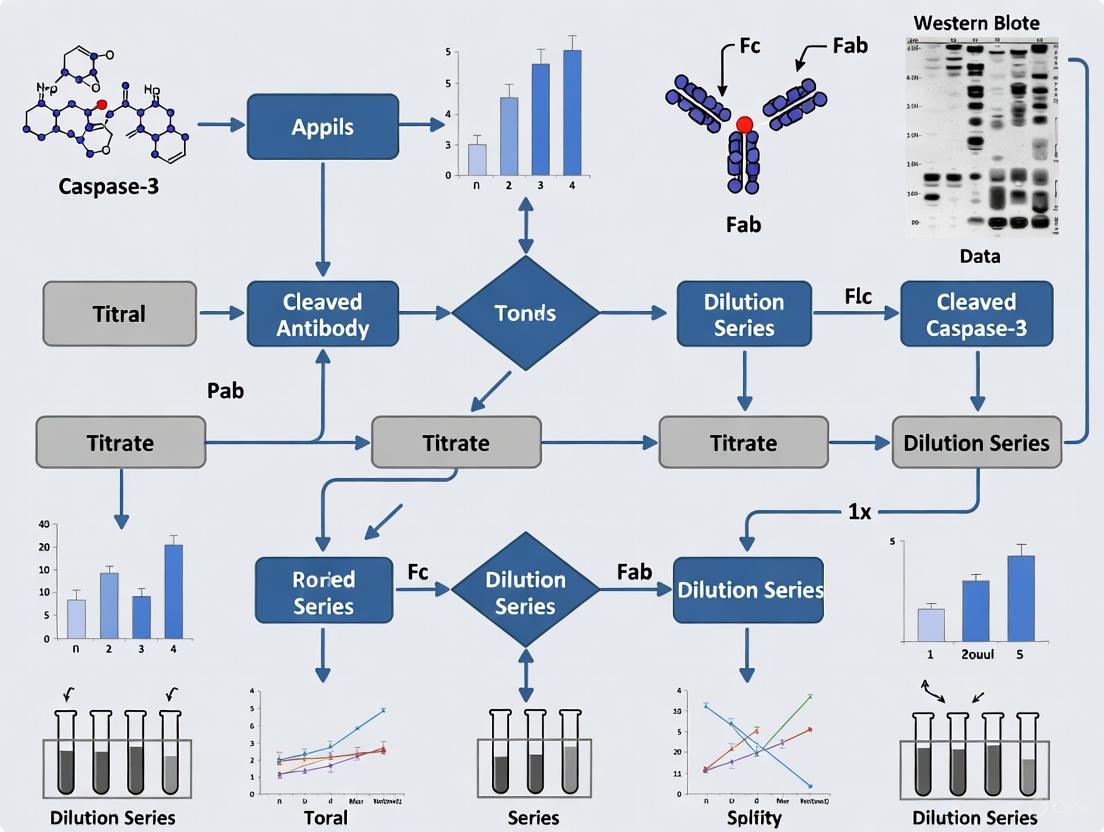
This article provides a comprehensive, step-by-step guide for researchers and drug development professionals to successfully titrate cleaved caspase-3 antibodies for Western blot analysis.
A Complete Guide to Titrating Cleaved Caspase-3 Antibody for Reproducible Western Blot Results
Abstract
This article provides a comprehensive, step-by-step guide for researchers and drug development professionals to successfully titrate cleaved caspase-3 antibodies for Western blot analysis. It covers the essential foundational knowledge of caspase-3 biology and antibody selection, detailed methodological protocols for dilution optimization, systematic troubleshooting for common issues like weak signal or non-specific bands, and rigorous strategies for data validation. By integrating current best practices and leveraging specialized control tools, this guide aims to equip scientists with the knowledge to generate reliable, high-quality data on apoptosis for both basic research and therapeutic development.
Understanding Caspase-3 Biology and Antibody Selection for Accurate Apoptosis Detection
Caspase-3, also known as CPP-32, Apopain, or Yama, is a critical executioner protease in the apoptotic pathway [1]. As a member of the cysteine-aspartic acid protease (caspase) family, it exists as an inactive zymogen that requires proteolytic activation [1] [2]. Upon activation, caspase-3 executes the final stages of apoptosis by cleaving a broad range of cellular targets, including the nuclear enzyme poly (ADP-ribose) polymerase (PARP) [1]. This irreversible cleavage event dismantles essential cellular components and leads to programmed cell death. The activation mechanism involves proteolytic processing at conserved aspartic residues to produce large (p17/p19) and small (p12) subunits that dimerize to form the active enzyme [1] [2]. Research has established that caspase-3 is the predominant caspase involved in cleaving amyloid-beta 4A precursor protein, which associates with neuronal death in Alzheimer's disease [2].
Beyond its traditional role in apoptosis, emerging evidence reveals non-apoptotic functions for caspase-3 and the closely related caspase-7. A 2025 study demonstrated that these effector caspases promote cytoprotective autophagy in human breast cancer cells under non-lethal stress conditions, such as nutrient deprivation [3]. This non-canonical role involves unique processing mechanisms and PARP1 modulation, suggesting a complex regulatory landscape that extends beyond cell death execution [3].
Antibody Characterization and Selection
The detection of activated caspase-3 relies on antibodies specific to the cleaved form of the protein. Antibodies targeting the Asp175 cleavage site recognize the large fragments (17/19 kDa) of activated caspase-3 resulting from cleavage adjacent to Asp175, without recognizing full-length caspase-3 or other cleaved caspases [1]. This specificity is crucial for accurate apoptosis assessment in experimental models.
Table 1: Commercial Cleaved Caspase-3 Antibodies for Western Blot
| Product Code | Host | Reactivity | Tested Dilution | Observed Band Size | Supplier |
|---|---|---|---|---|---|
| #9661 | Rabbit | Human, Mouse, Rat, Monkey | 1:1000 | 17/19 kDa | Cell Signaling Technology |
| PA5-114687 | Rabbit | Human, Mouse, Rat | 1:500-1:2000 | Not specified | Thermo Fisher Scientific |
| 25128-1-PBS | Rabbit | Human, Mouse | Not specified | 17-25 kDa | Proteintech |
These antibodies are typically produced by immunizing animals with a synthetic peptide corresponding to amino-terminal residues adjacent to Asp175 in human caspase-3 [1] [2]. The Cell Signaling Technology antibody (#9661) shows 100% sequence homology with bovine, dog, and pig proteins, though reactivity with these species hasn't been experimentally confirmed [1]. Proper validation of species cross-reactivity is essential for experimental design, particularly in comparative models.
The Scientist's Toolkit: Essential Research Reagents
Table 2: Key Reagents for Caspase-3 Western Blot Analysis
| Item | Function | Example Products |
|---|---|---|
| Cleaved Caspase-3 Antibody | Detects activated caspase-3 fragments | CST #9661, Thermo Fisher PA5-114687 |
| Reference Antibodies | Control for protein loading and transfer | β-actin, GAPDH, α-Tubulin |
| Total Protein Stain | Normalization control | No-Stain Protein Labeling Reagent |
| HRP-conjugated Secondary Antibody | Signal generation for detection | Peroxidase goat anti-rabbit IgG |
| ECL Substrate | Chemiluminescent detection | Clarity Western ECL kit |
| Blocking Buffer | Reduces non-specific antibody binding | BSA or non-fat dry milk solutions |
| Nitrocellulose Membrane | Protein immobilization after transfer | Bio-Rad, Thermo Fisher |
Antibody Titration Protocol for Western Blot
Experimental Workflow
Detailed Titration Methodology
Antibody titration is essential for optimizing signal-to-noise ratio in Western blot detection of cleaved caspase-3. The following protocol outlines a systematic approach:
Materials Preparation:
- Prepare cell lysates from apoptotic (positive control) and non-apoptotic (negative control) cells. Apoptotic inducers like staurosporine (1μM for 4-6 hours) work effectively
- Precool centrifugation to 4°C
- Prepare running buffer, transfer buffer, and TBST washing buffer freshly
- Pre-chill primary antibody dilution buffer (5% BSA in TBST)
Titration Procedure:
- Prepare serial dilutions of cleaved caspase-3 antibody in 5% BSA/TBST according to the ranges below:
Load 20-30μg of protein lysate per lane on a 12% Mini-Protean TGX Stain-Free gel [4]
Transfer proteins to nitrocellulose membrane using standard transfer protocols
Block membrane with 5% BSA in TBST for 1 hour at room temperature
Incubate with primary antibody dilutions overnight at 4°C with gentle agitation
Wash membrane 3 times with TBST for 5 minutes each
Incubate with HRP-conjugated secondary antibody at manufacturer-recommended dilution (typically 1:2000-1:5000) for 1 hour at room temperature
Wash membrane 3 times with TBST for 5 minutes each
Detect signal using ECL reagent kit and image with appropriate system (e.g., Li-Cor Odyssey FC) [4]
Troubleshooting and Optimization
- Weak or No Signal: Increase primary antibody concentration, extend incubation time, or check transfer efficiency
- High Background: Reduce antibody concentration, increase washing stringency (add 0.1% Tween-20), or optimize blocking conditions
- Non-specific Bands: Verify antibody specificity using caspase-3 knockout cell lysates as negative controls
- Multiple Bands: Note that cleaved caspase-3 antibodies may detect both p17 and p19 fragments, and sometimes complexed forms around 25-35 kDa [5]
Caspase-3 Activation Pathway and Detection
The caspase-3 activation pathway represents the final common step in both intrinsic and extrinsic apoptosis pathways. As illustrated above, procaspase-3 undergoes proteolytic processing at Asp175 to yield active fragments [1]. This activation is typically initiated by upstream caspases (caspases 8, 9, and 10), though other proteases like granzyme B can also perform this cleavage [2] [3]. Once activated, caspase-3 cleaves key cellular proteins including PARP (inactivating DNA repair), ICAD (releasing CAD nuclease for DNA fragmentation), and other structural components [4]. This systematic dismantling of cellular infrastructure represents the point of no return in apoptotic commitment.
UV radiation provides a clinically relevant model for studying caspase-3 activation. A 2024 study demonstrated that exposure to UVR-B can induce active caspase-3 expression in rat lens tissue, though subthreshold doses (1 kJ/m²) did not show significant differences between exposed and non-exposed lenses within the first 120 hours [4]. This highlights the importance of both dose and timing in experimental design when studying caspase-3-mediated apoptosis.
Data Analysis and Normalization Strategies
Accurate quantification of cleaved caspase-3 requires proper normalization to account for experimental variability. While traditional housekeeping proteins (HKPs) like β-actin, GAPDH, and α-tubulin have been widely used, they present significant limitations for apoptosis studies:
- HKP Expression Variability: Housekeeping protein expression changes with cell type, developmental stage, tissue pathology, and experimental conditions [6]
- Signal Saturation: HKPs are typically abundant, causing band intensities to saturate easily and leading to misinterpretation [6]
- Co-migration Issues: HKPs may co-migrate with similar-sized target proteins, complicating analysis [6]
Total Protein Normalization (TPN) has emerged as the gold standard for Western blot quantitation [6]. This method normalizes target protein signal to the total protein in each lane rather than a single loading control, providing:
- Broader dynamic range for detection
- Resistance to experimental manipulations
- Quality assessment of electrophoresis and transfer efficiency
- Elimination of HKP variability concerns
For cleaved caspase-3 studies, TPN is particularly valuable as apoptosis may alter expression of traditional housekeeping proteins. Fluorogenic labeling methods like the No-Stain Protein Labeling Reagent enable sensitive TPN without destaining steps [6].
Publication Guidelines for Western Blot Data
Leading scientific journals have implemented specific requirements for Western blot publication to ensure data integrity and reproducibility:
Table 3: Journal-Specific Western Blot Publication Requirements
| Journal | Minimum Resolution | Color Mode | Blot Guidelines | Image Manipulation Policies |
|---|---|---|---|---|
| Nature | 300 dpi (final size) | RGB | Loading controls must be run on the same blot; rearranged lanes must be clearly indicated | Touch-up tools that deliberately obscure manipulations are unacceptable |
| Cell Press | 300 dpi | RGB | Figures should be submitted as separate files; TIFF or PDF preferred | Minimal image processing required; all processing must be transparent and explained |
| Science | 300 dpi | CMYK | Prefers single Word file with figures and tables included | Does not allow certain electronic enhancements or manipulations of gels |
| Elsevier | 300-500 dpi | RGB | Specific guidelines vary by journal; check individual requirements | No specific feature may be enhanced, obscured, moved, removed, or introduced |
Key universal requirements include:
- Preserve original, unprocessed images for all experiments [7] [6]
- Document all imaging settings (resolution, exposure time) and any post-capture processing [7]
- Avoid excessive cropping to maintain context; include molecular weight markers in all images [7]
- Use linear adjustments when possible; if nonlinear adjustments are used, document them thoroughly [7]
- For multiplex fluorescent Westerns, present data in RGB color mode [7]
The detection of cleaved caspase-3 through optimized antibody titration provides a critical window into cellular fate decisions. The protocols outlined here enable researchers to accurately quantify apoptosis execution in diverse experimental models, from basic research to drug development applications. The emerging non-apoptotic functions of caspase-3 in stress adaptation [3] further highlight the importance of precise detection methodologies. As research continues to reveal the multifaceted roles of this executioner caspase, standardized protocols for its detection and quantification will remain essential for generating reproducible, publication-quality data that advances our understanding of cell death and survival mechanisms.
Caspase-3 is a critical executioner protease in the apoptotic pathway, functioning as a central mediator of programmed cell death. This cysteine-aspartic acid protease exists as an inactive zymogen (35 kDa) that requires proteolytic cleavage for activation. During apoptosis, caspase-3 is processed into activated fragments (p17 and p12), which then cleave numerous cellular substrates, leading to the characteristic biochemical and morphological changes of apoptosis [8] [9]. The reliable detection of activated caspase-3 through Western blotting serves as a key biomarker for apoptosis research, making antibody titration a crucial step in ensuring specific and reproducible results.
Caspase-3 Cleavage Products and Key Antibodies
The proteolytic activation of caspase-3 generates specific fragments that can be detected with appropriate antibodies. Understanding these products is essential for interpreting Western blot results.
Table 1: Caspase-3 Proteolytic Products and Detection Antibodies
| Product Type | Molecular Weight | Description | Detection Antibody Examples |
|---|---|---|---|
| Full-length (Inactive Zymogen) | 35 kDa | Inactive procaspase-3 precursor | Caspase-3 Antibody #9662 [8] |
| Large Activated Fragment | 17 kDa | Result of cleavage at specific aspartic residues | Anti-active caspase-3 (cleaved) [10] |
| Small Activated Fragment | 12 kDa | Second subunit that dimerizes with p17 | Often detected with antibodies targeting the cleaved form |
| Cleaved Caspase-3 (Specific Epitope) | 17/19 kDa | Fragments containing the cleaved Asp175 site | Caspase 3 (Cleaved Asp175) Antibody #PA5-114687 [2] |
The diagram below illustrates the proteolytic cleavage process of caspase-3 from its inactive zymogen state to its active executioner form.
Quantitative Analysis of Caspase-3 Activity and Substrate Cleavage
Caspase-3 activity can be measured using various substrates, providing quantitative data on its enzymatic function. The kinetic parameters reveal significant variations in cleavage efficiency across different substrate sites.
Table 2: Kinetic Parameters of Caspase-3 Substrate Cleavage
| Substrate | Cleavage Site | kcat/KM (M⁻¹s⁻¹) | Biological Result | Reference / Context |
|---|---|---|---|---|
| αII-Spectrin | After D1185 | 40,000 | Generates SBDP150 | Quantitative study of spectrin breakdown [11] |
| αII-Spectrin | After D1478 | 3,000 | Generates SBDP120 | Quantitative study of spectrin breakdown [11] |
| CAD (Pyrimidine Synthesis Enzyme) | After D1371 | Not specified | Inactivates de novo pyrimidine synthesis, promoting chemosensitivity | Role in cancer cell chemosensitivity [12] |
| Synthetic Peptide Substrate (DEVD-AMC/AFC) | After Asp residue | Varies with assay | Fluorogenic/Chromogenic signal for enzyme activity measurement | Caspase enzyme assay in tissue homogenates [9] |
Detailed Western Blot Protocol for Detecting Cleaved Caspase-3
Sample Preparation and Gel Electrophoresis
- Homogenization: Prepare tissue samples using a Dounce homogenizer in a suitable lysis buffer (e.g., 50 mM HEPES, pH 7.5, 0.1% CHAPS, 2 mM dithiothreitol, 0.1% Nonidet P-40, 1 mM EDTA) containing protease inhibitors (1 mM PMSF, 2 μg/ml leupeptin, 2 μg/ml pepstatin A) at 4°C [9].
- Protein Quantification: Determine protein concentration using a standardized assay such as the Thermo Scientific Pierce BCA Protein Assay Kit [9].
- Denaturation: Heat-denature equal amounts of protein (20-40 μg) in Laemmli sample buffer containing 2-mercaptoethanol (5%) at 95-100°C for 5 minutes [10].
- Gel Electrophoresis: Resolve denatured proteins by 15% SDS-PAGE gel electrophoresis. Use a MiniProtean II or equivalent gel apparatus. The stacking gel should be 4% acrylamide in 0.5 M Tris-HCl (pH 6.8), and the separating gel should be 15% acrylamide in 1.5 M Tris-HCl (pH 8.8). Run the gel at constant voltage (e.g., 80-120V) until the dye front reaches the bottom [10] [9].
Membrane Transfer and Blocking
- Transfer: Electroblot proteins from the gel to a nitrocellulose or PVDF membrane using a wet or semi-dry transfer system. Use transfer buffer (25 mM Tris, 192 mM glycine, 20% methanol) at constant current (e.g., 200-400 mA) for 60-90 minutes [10] [9].
- Blocking: Block non-specific binding sites by incubating the membrane in 5% non-fat dry milk in PBS (or TBS) for 1 hour at room temperature with gentle agitation [10].
Antibody Incubation and Detection
- Primary Antibody Incubation: Incubate the membrane with a rabbit monoclonal anti-active caspase-3 (cleaved) primary antibody (e.g., Cell Signaling Technology #9661 or equivalent) at a recommended starting dilution of 1:1000 in 5% BSA in PBS-T (PBS with 0.05% Tween-20) overnight at 4°C with gentle agitation [10] [8]. > Titration Note: The optimal dilution for cleaved caspase-3 antibodies can vary. It is crucial to perform a titration experiment (e.g., testing 1:500, 1:1000, and 1:2000 dilutions) to determine the concentration that provides the strongest specific signal with minimal background for your specific experimental system.
- Washing: Wash the membrane thoroughly 3-4 times for 5-10 minutes each with PBS-T (or TBS-T) to remove unbound primary antibody.
- Secondary Antibody Incubation: Incubate the membrane with a goat anti-rabbit HRP-conjugated secondary antibody at a dilution of 1:5000 in 5% non-fat dry milk in PBS-T for 1-2 hours at room temperature [10].
- Detection: Visualize immunoreactivity using an enhanced chemiluminescence (ECL) substrate kit (e.g., SuperSignal West Pico Chemiluminescent Substrate) according to the manufacturer's instructions. Image the chemiluminescent signals using a scanner or imaging system (e.g., C-DiGit Blot Scanner, Bio-Rad Chemidoc) [10] [9].
- Loading Control: Strip the membrane (if necessary) and re-probe with an antibody against a housekeeping protein such as β-tubulin or GAPDH (e.g., at 1:5000 dilution) to control for equal protein loading [10] [9].
The complete workflow for detecting cleaved caspase-3, from sample preparation to data analysis, is summarized below.
The Scientist's Toolkit: Key Research Reagents
Table 3: Essential Reagents for Cleaved Caspase-3 Western Blotting
| Reagent / Material | Function / Role | Example / Specification |
|---|---|---|
| Anti-Cleaved Caspase-3 Antibody | Primary antibody specifically recognizing the activated fragment of caspase-3 | Rabbit monoclonal anti-active caspase-3 (e.g., CST #9661); reacts with 17 kDa fragment [10] [8] |
| HRP-Conjugated Secondary Antibody | Binds primary antibody for chemiluminescent detection | Goat anti-rabbit IgG-HRP; typically used at 1:5000 dilution [10] |
| Enhanced Chemiluminescence (ECL) Substrate | Generates light signal upon HRP enzyme reaction for detection | SuperSignal West Pico Chemiluminescent Substrate [10] |
| Nitrocellulose/PVDF Membrane | Solid support for immobilized proteins after transfer | Nitrocellulose membrane (e.g., Thermo Scientific) [10] |
| Protein Loading Control Antibody | Verifies equal protein loading across lanes | Anti-β-tubulin or Anti-GAPDH antibody [10] [9] |
| Caspase-3 Synthetic Substrate | Alternative method to measure caspase-3 activity | DEVD-AMC or DEVD-AFC (fluorogenic substrates) [9] |
| Protease Inhibitors | Prevents protein degradation during sample preparation | PMSF, leupeptin, pepstatin A in lysis buffer [9] |
Caspase-3 is a critical executioner protease in the apoptotic pathway, responsible for the proteolytic cleavage of numerous key cellular proteins, such as poly (ADP-ribose) polymerase (PARP) [13] [14]. It exists within cells as an inactive zymogen (proenzyme) that requires proteolytic processing to become activated [14]. This activation occurs through a cleavage event at specific aspartic acid residues, resulting in the separation of the proenzyme into large (p17) and small (p12) fragments that dimerize to form the active enzyme [13] [14]. The central role of caspase-3 in apoptosis makes it a fundamental biomarker for researchers studying programmed cell death in contexts ranging from cancer biology to neurodegenerative diseases and drug development [14].
The choice of detection antibody—whether pan (total) or cleavage-specific—represents a critical methodological decision that directly impacts experimental interpretation. Pan caspase-3 antibodies recognize both the inactive precursor and the activated enzyme, while cleavage-specific antibodies detect only the activated form of caspase-3, typically by targeting the neo-epitope exposed after cleavage at Asp175 [15] [2]. This application note provides a structured comparison of these antibody types and detailed protocols for their effective use, particularly in Western blot applications within drug discovery research.
Antibody Comparison: Pan vs. Cleavage-Specific
The decision between pan and cleavage-specific caspase-3 antibodies hinges on the specific research question. The table below summarizes the core characteristics of each antibody type for direct comparison:
Table 1: Key Characteristics of Pan and Cleavage-Specific Caspase-3 Antibodies
| Feature | Pan Caspase-3 Antibody | Cleavage-Specific Caspase-3 Antibody |
|---|---|---|
| Target Epitope | Full-length protein (pro-caspase-3) | Neo-epitope created by cleavage adjacent to Asp175 [15] [2] |
| Proteins Detected | Both inactive (35 kDa) and cleaved (17/19 kDa) forms [13] | Only the large fragment (17/19 kDa) of activated caspase-3 [15] |
| Primary Application | Assessing total caspase-3 expression levels | Specifically detecting apoptosis-associated caspase-3 activation [15] [9] |
| Information Provided | Presence of caspase-3 protein, but not activity status | Direct evidence of caspase-3 activation and apoptosis induction |
| Example Product | Caspase-3 Antibody #9662 (Cell Signaling) [13] | Cleaved Caspase-3 (Asp175) Antibody #9661 (Cell Signaling) [15] |
The Caspase-3 Activation Pathway
The following diagram illustrates the process of caspase-3 activation from its inactive zymogen form to the cleaved, active enzyme, highlighting the specific targets of pan and cleavage-specific antibodies.
Recommended Antibodies and Working Dilutions
Selection of appropriate antibodies and optimization of working concentrations are essential for robust and reproducible results. The following table compiles commercially available antibodies and their recommended dilutions for Western blot applications:
Table 2: Commercial Caspase-3 Antibodies and Recommended Western Blot Dilutions
| Antibody Type | Product Name | Supplier | Recommended WB Dilution | Reactivity | Key Feature |
|---|---|---|---|---|---|
| Pan Caspase-3 | Caspase-3 Antibody #9662 | Cell Signaling Technology | 1:1000 [13] | Human, Mouse, Rat, Monkey [13] | Detects full-length (35 kDa) and large fragment (17 kDa) [13] |
| Cleaved Caspase-3 | Cleaved Caspase-3 (Asp175) Antibody #9661 | Cell Signaling Technology | 1:1000 [15] | Human, Mouse, Rat, Monkey [15] | Specific for activated fragments (17/19 kDa); does not recognize full-length [15] |
| Cleaved Caspase-3 | Cleaved Caspase 3 Antibody #25128-1-AP | Proteintech | 1:500-1:2000 [16] | Human, Mouse, Rat, Chicken, Bovine, Goat [16] | Specific for cleaved fragments; does not recognize full-length caspase-3 [16] |
| Cleaved Caspase-3 | Caspase 3 (Cleaved Asp175) Antibody PA5-114687 | Thermo Fisher | 1:500-1:2,000 [2] | Human, Mouse, Rat [2] | Detects fragment resulting from cleavage adjacent to Asp175 [2] |
Detailed Western Blot Protocol for Caspase-3 Detection
Sample Preparation and Protein Extraction
- Prepare Lysis Buffer: Use a cell lysis buffer containing 50 mM HEPES (pH 7.5), 0.1% CHAPS, 2 mM dithiothreitol (DTT), 0.1% Nonidet P-40, 1 mM EDTA, 1 mM phenylmethylsulfonyl fluoride (PMSF), 2 μg/ml leupeptin, and 2 μg/ml pepstatin A at 4°C [9].
- Lyse Cells or Tissue: For tissue samples, homogenize using a Dounce homogenizer in lysis buffer (approximately 1 mL per 100 mg tissue) [9]. For cell cultures, lyse cells directly on the plate or after scraping.
- Clarify Lysate: Centrifuge at 10,000 × g for 10 minutes at 4°C to pellet insoluble material.
- Quantify Protein: Determine protein concentration using a BCA Protein Assay Kit according to manufacturer's instructions [9].
Gel Electrophoresis and Transfer
- Prepare Samples: Mix 20-50 μg of total protein with 2× SDS-sample buffer (62.5 mM Tris-HCl pH 6.8, 10% glycerol, 2% SDS, 5% 2-mercaptoethanol, 0.01% bromophenol blue) and heat at 95-100°C for 5 minutes [9].
- SDS-PAGE: Load samples onto a 4-20% gradient or 15% polyacrylamide gel. Run at 100-120 V until the dye front reaches the bottom of the gel using 1× SDS-running buffer (25 mM Tris, 192 mM glycine, 0.1% SDS, pH 8.3) [9].
- Western Transfer: Transfer proteins to a PVDF membrane using wet or semi-dry transfer systems with 1× transfer buffer (25 mM Tris, 192 mM glycine, 20% methanol) [9].
Immunoblotting
- Block Membrane: Incubate membrane in 5% non-fat dry milk in PBS-T (1× PBS, 0.05% Tween-20) for 1 hour at room temperature with gentle agitation [9].
- Primary Antibody Incubation: Dilute primary antibody in 5% BSA in PBS-T at the recommended dilution (see Table 2). Incubate membrane with primary antibody overnight at 4°C with gentle agitation [9].
- Wash: Wash membrane 3 times for 5 minutes each with PBS-T.
- Secondary Antibody Incubation: Incubate with appropriate HRP-conjugated secondary antibody (1:2000-1:5000) in 5% non-fat dry milk in PBS-T for 1 hour at room temperature [9].
- Detection: Develop using enhanced chemiluminescence reagent according to manufacturer's instructions [9].
Expected Results and Troubleshooting
- Pan Caspase-3 Antibody: Should detect a 35 kDa band (inactive pro-caspase-3) in control samples, with appearance of 17 kDa and/or 19 kDa bands (cleaved fragments) in apoptotic samples [13].
- Cleaved Caspase-3 Antibody: Should detect only 17 kDa and/or 19 kDa bands in apoptotic samples, with no signal in control samples where apoptosis has not been induced [15].
- Loading Control: Always probe the same membrane with a housekeeping protein antibody such as anti-GAPDH (1:1000) to ensure equal protein loading [9].
Experimental Workflow for Apoptosis Detection
A comprehensive approach to detecting caspase-3 activation typically involves multiple complementary techniques, as illustrated in the following workflow:
Research Reagent Solutions
Successful detection of caspase-3 activation requires a suite of specialized reagents. The following table details essential materials and their functions:
Table 3: Essential Research Reagents for Caspase-3 Detection
| Reagent Category | Specific Product/Composition | Function/Purpose |
|---|---|---|
| Primary Antibodies | Caspase-3 Antibody #9662 (Cell Signaling) [13]; Cleaved Caspase-3 (Asp175) Antibody #9661 (Cell Signaling) [15] | Target recognition and binding |
| Cell Lysis Buffer | 50 mM HEPES pH 7.5, 0.1% CHAPS, 2 mM DTT, 0.1% Nonidet P-40, 1 mM EDTA, protease inhibitors [9] | Protein extraction while maintaining integrity and activity |
| Caspase Activity Assay Substrates | DEVD-AMC or DEVD-AFC (for caspase-3/7) [9] | Fluorogenic substrates for functional enzymatic activity measurement |
| Positive Control Lysate | Apoptotic cell lysate (e.g., from etoposide- or staurosporine-treated cells) | Verification of antibody performance and assay functionality |
| Loading Control Antibodies | Anti-GAPDH (e.g., sc-47724, Santa Cruz Biotechnology) [9] | Normalization for protein loading and transfer efficiency |
| Caspase Inhibitor | Q-VD-OPh (pan-caspase inhibitor) [17] | Experimental control to confirm caspase-dependent effects |
The strategic selection between pan and cleavage-specific caspase-3 antibodies fundamentally shapes the biological interpretation of experimental outcomes. Pan antibodies provide information about total caspase-3 protein expression but cannot distinguish between inactive and active forms, while cleavage-specific antibodies offer definitive evidence of caspase-3 activation and apoptosis induction. For comprehensive assessment of apoptotic signaling in drug development research, a combined approach using both antibody types, alongside complementary techniques such as PARP cleavage analysis or caspase activity assays, provides the most robust experimental framework. The protocols and reagents detailed in this application note offer researchers a solid foundation for implementing these critical apoptosis detection methods in their investigative workflows.
Caspase-3 is a critical executioner caspase in the apoptotic pathway, responsible for the proteolytic cleavage of numerous key cellular proteins, such as the nuclear enzyme poly (ADP-ribose) polymerase (PARP) [18]. It is synthesized as an inactive pro-enzyme (pro-caspase-3) that must undergo proteolytic processing to become activated. This activation requires cleavage at specific aspartic acid residues, leading to the separation of the pro-enzyme into the large (p17) and small (p12) subunits that form the active heterotetramer [18] [19]. The detection of these different forms via Western blotting serves as a fundamental readout for apoptosis research. Proper interpretation of the expected band sizes—specifically distinguishing the inactive pro-form from the activated cleavage products—is therefore essential for accurate data analysis. This application note details the expected band sizes for pro- and cleaved caspase-3 and provides a validated protocol for the specific detection of cleaved caspase-3, framed within the critical context of antibody titration.
Expected Band Sizes and Antibody Specificity
The table below summarizes the expected molecular weights for the various forms of caspase-3 detectable by Western blot and the specificity of different classes of antibodies.
Table 1: Caspase-3 Forms and Corresponding Western Blot Band Sizes
| Caspase-3 Form | Status | Theoretical/Reported Band Sizes (kDa) | Antibody Specificity |
|---|---|---|---|
| Pro-caspase-3 | Inactive precursor | 35 kDa [18], 30-35 kDa [20] | Detected by general Caspase-3 antibodies [18] |
| Cleaved Caspase-3 | Activated large fragment | 17 kDa and/or 19 kDa [18] [19] [21] | Detected by Cleaved Caspase-3 (Asp175) specific antibodies [19] [21] |
| Cleaved Caspase-3 | Activated small fragment | 12 kDa | (Rarely the focus of immunodetection) |
The appearance of the 17/19 kDa doublet or single band is a definitive indicator of caspase-3 activation and ongoing apoptosis. It is crucial to select an antibody appropriate for your research question: those specific for cleaved caspase-3 (e.g., CST #9661 [19] or PTGLab 68773-1-Ig [21]) will not recognize the full-length 35 kDa pro-caspase, while some general caspase-3 antibodies (e.g., CST #9662 [18]) can detect both the full-length and the large cleaved fragment.
The Scientist's Toolkit: Essential Reagents for Detection
Table 2: Key Research Reagents for Cleaved Caspase-3 Western Blotting
| Item | Function/Description | Example |
|---|---|---|
| Cleaved Caspase-3 Antibody | Primary antibody specific to the activated large fragment (p17/p19) exposed after cleavage at Asp175. | Rabbit Monoclonal [19] or Mouse Monoclonal [21] |
| HRP-Conjugated Secondary Antibody | Enzyme-linked antibody for chemiluminescent detection of the primary antibody. | Goat Anti-Rabbit IgG H&L [20] |
| Cell Lysis Buffer | Buffer for efficient extraction of total protein while maintaining protein integrity and activity. | RIPA or similar lysis buffer |
| Positive Control Lysate | Lysate from cells undergoing apoptosis, providing a known source of cleaved caspase-3. | Staurosporine-treated Jurkat or HeLa cells [20] [21] |
| Total Protein Normalization Reagent | Reagent for staining total protein in each lane, the gold standard for quantitative Western blot normalization [6]. | No-Stain Protein Labeling Reagent [6] |
| Blocking Solution | Protein-based solution (e.g., BSA or non-fat milk) to prevent non-specific antibody binding. | 5% BSA or NFDM/TBST [20] |
Detailed Protocol: Titration and Detection of Cleaved Caspase-3
Sample Preparation
- Induction of Apoptosis: Use a positive control such as Jurkat or HeLa cells treated with 1-2 µM Staurosporine for 3-6 hours to reliably induce apoptosis and generate cleaved caspase-3 [20] [21].
- Cell Lysis: Lyse cells in an appropriate RIPA or Laemmli buffer. Centrifuge to remove debris and collect the supernatant.
- Protein Quantification: Accurately determine the protein concentration of each lysate using a colorimetric assay (e.g., BCA assay).
Gel Electrophoresis and Transfer
- Load 20-30 µg of total protein per lane for standard cell lysates [20].
- Include a pre-stained protein molecular weight marker to allow for accurate size determination of the bands of interest.
- Perform SDS-PAGE on a 4-20% gradient gel for optimal separation of proteins in the 10-35 kDa range.
- Transfer proteins from the gel to a nitrocellulose or PVDF membrane using a standard wet or semi-dry transfer system.
Antibody Titration and Immunoblotting
Titration of the primary antibody is critical for achieving a strong, specific signal with minimal background.
- Blocking: Incubate the membrane in 5% non-fat dry milk or BSA in TBST for 1 hour at room temperature [20].
- Primary Antibody Incubation: Incubate the membrane with the cleaved caspase-3 antibody. A starting dilution of 1:1000 in blocking buffer is recommended for many commercial antibodies (e.g., CST #9661) [19]. For a more sensitive antibody like PTGLab 68773-1-Ig, a wider range of 1:5000 to 1:50000 can be tested, with 1:10000 being a good starting point [21]. Perform this incubation overnight at 4°C with gentle agitation.
- Secondary Antibody Incubation: Wash the membrane and incubate with an HRP-conjugated secondary antibody (e.g., Goat Anti-Rabbit) at a 1:10000 to 1:20000 dilution for 1 hour at room temperature [20].
- Detection: Develop the blot using a high-sensitivity chemiluminescent substrate and image with a system capable of capturing a wide dynamic range, such as an iBright Imaging System [6].
Normalization and Quantification
For quantitative Western blotting, Total Protein Normalization (TPN) is now considered the gold standard over housekeeping proteins (HKPs) like GAPDH or β-actin, as HKP expression can be variable [6]. Use a total protein stain or labeling reagent (e.g., No-Stain Protein Labeling Reagent) on the membrane after transfer and before blocking. The signal from the total protein in each lane is used to normalize the cleaved caspase-3 signal, ensuring accurate quantitation of protein expression changes.
Diagram 1: WB workflow for cleaved caspase-3 detection.
Troubleshooting Common Issues
- Weak or No Signal for Cleaved Caspase-3:
- Cause: Insufficient apoptosis induction or inefficient transfer.
- Solution: Include a validated positive control (e.g., Staurosporine-treated Jurkat cells). Optimize apoptosis induction time and concentration. Verify transfer efficiency with total protein stain.
- Non-Specific Bands:
- Cause: Antibody concentration too high or insufficient blocking.
- Solution: Titrate the primary antibody to find the optimal dilution. Increase blocking time or try a different blocking agent (e.g., switch from milk to BSA).
- High Background:
- Cause: Excessive antibody or insufficient washing.
- Solution: Further dilute the primary or secondary antibody. Increase the number and duration of washes after antibody incubations.
- Inconsistent Results After Titration:
- Cause: Improper normalization.
- Solution: Implement Total Protein Normalization (TPN) to account for loading inconsistencies instead of relying on a single housekeeping protein [6].
Accurate interpretation of caspase-3 band sizes—specifically, distinguishing the 35 kDa pro-caspase from the 17/19 kDa activated fragments—is fundamental for valid conclusions in apoptosis research. A rigorous antibody titration protocol, combined with the use of appropriate controls and the implementation of total protein normalization, ensures the specific, sensitive, and quantifiable detection of cleaved caspase-3. This disciplined approach provides a reliable foundation for investigating cell death mechanisms in development, homeostasis, and disease.
Confirming Species Reactivity for Your Experimental Model
Confirming species reactivity is a foundational step in titrating a cleaved caspase-3 antibody for Western blot research, ensuring that detected signals genuinely reflect biological apoptosis rather than experimental artifacts. Caspase-3 is a critical executioner protease in the apoptotic pathway, responsible for the proteolytic cleavage of many key cellular proteins, such as poly (ADP-ribose) polymerase (PARP) [22] [23]. Its activation requires proteolytic processing of the inactive 35 kDa zymogen into activated p17 and p19 fragments [22]. Researchers investigating apoptosis across different experimental models must verify that their chosen antibody specifically recognizes the cleaved form of caspase-3 in their species of interest. Without this essential validation, subsequent titration efforts and experimental conclusions remain questionable, potentially compromising research integrity and reproducibility in basic science and drug development contexts.
Key Concepts: Antibody Specificity and Species Reactivity
Understanding Antibody Specificity for Cleaved Caspase-3
Antibodies targeting cleaved caspase-3 are specifically designed to recognize epitopes exposed or formed after proteolytic cleavage at aspartic acid residues, particularly Asp175, which generates the active enzyme fragments [23]. Unlike antibodies that recognize both precursor and cleaved forms, cleaved-specific antibodies exclusively detect the large fragment (17/19 kDa) of activated caspase-3 and do not recognize full-length caspase-3 (35 kDa) or other cleaved caspases [23]. This specificity is crucial for accurately interpreting apoptosis induction in experimental models, as it distinguishes the potentially active enzyme from its inactive precursor. The mitochondrial subpopulation of caspase-3 precursor molecules is particularly important in Bcl-2-sensitive apoptotic signaling pathways, and its cleavage represents a key commitment point in the cell death process [24].
The Critical Importance of Species Reactivity Validation
Species reactivity confirmation ensures that the antibody's target epitope is conserved and accessible in the experimental model being studied. Commercial antibodies are typically characterized for reactivity with specific species based on sequence homology and empirical testing. For example, Cell Signaling Technology's Caspase-3 Antibody (#9662) has been validated for reactivity with human, mouse, rat, and monkey samples, while detecting endogenous levels of both full-length caspase-3 (35 kDa) and the large cleavage fragment (17 kDa) [22]. However, predicted reactivity based on sequence homology alone (e.g., with pig models) may not guarantee actual recognition without empirical validation [22]. Discrepancies between predicted and actual reactivity can arise from post-translational modifications, epitope masking, or slight sequence variations that affect antibody binding affinity. Therefore, independent verification of species reactivity remains essential, particularly when working with less common model organisms or when utilizing antibodies in novel experimental contexts.
Methods: Confirming Species Reactivity
In Silico Analysis of Epitope Conservation
Before laboratory experimentation, bioinformatic analysis provides a preliminary assessment of potential antibody cross-reactivity across species:
Epitope Mapping: Identify the exact amino acid sequence used as the immunogen for antibody production. For example, many cleaved caspase-3 antibodies are generated using synthetic peptides corresponding to residues surrounding the cleavage site at Asp175 [22] [23].
Sequence Alignment: Perform protein sequence alignment between the immunogen species (typically human) and your experimental model species using tools like NCBI Protein BLAST.
Conservation Assessment: Evaluate sequence identity within the epitope region, with special attention to residues critical for antibody binding. 100% sequence homology within the epitope region suggests potential reactivity, while any variations may compromise binding affinity.
Structural Considerations: When possible, examine three-dimensional structural conservation around the cleavage site, as conformational accessibility can influence antibody recognition independent of linear sequence homology.
Table 1: Commercially Available Cleaved Caspase-3 Antibodies with Documented Species Reactivity
| Product Name | Vendor | Documented Species Reactivity | Predicted Cross-Reactivity | Key Applications |
|---|---|---|---|---|
| Caspase-3 Antibody #9662 | Cell Signaling Technology | Human, Mouse, Rat, Monkey [22] | Pig [22] | WB, IHC, IP |
| Cleaved Caspase-3 (Asp175) Antibody | Cell Signaling Technology | Human, Mouse, Rat, Monkey [23] | Not specified | WB (specific for cleaved form) |
| Various Caspase-3 Antibodies | Novus Biologicals | Human, Mouse, Rat, Bovine, Canine, Porcine, and others [25] | Varies by product | WB, ICC/IF, IHC, Flow Cytometry, IP |
Empirical Validation of Species Reactivity
While in silico analysis provides preliminary insights, laboratory confirmation remains essential for verifying species reactivity:
Positive Control Selection: Obtain protein lysates from well-characterized positive control samples known to contain cleaved caspase-3. These may include:
- Apoptotic cell lysates from species with confirmed reactivity (e.g., human Jurkat cells treated with staurosporine)
- Tissue lysates from models undergoing developmental or induced apoptosis [9]
Experimental Sample Preparation: Prepare lysates from your experimental model under both baseline and apoptosis-inducing conditions using appropriate lysis buffers (e.g., 50 mM HEPES, pH 7.5, 0.1% CHAPS, 2 mM dithiothreitol, 0.1% Nonidet P-40, 1 mM EDTA) with protease inhibitors [9].
Western Blot Analysis: Perform simultaneous Western blot analysis of positive controls and experimental samples:
- Resolve proteins by SDS-PAGE (15% gel recommended for optimal separation of cleaved fragments) [10]
- Transfer to nitrocellulose or PVDF membranes [10] [26]
- Probe with cleaved caspase-3 antibody at manufacturer's recommended starting dilution (typically 1:1000 for Western blot) [22] [10]
- Detect using appropriate HRP-conjugated secondary antibodies and chemiluminescent substrates [9] [10]
Result Interpretation: Confirm species reactivity when:
- The antibody detects bands at expected molecular weights (17/19 kDa) in apoptotic experimental samples
- The detection pattern aligns with positive control samples
- No signal is present in non-apoptotic negative controls
- Signal intensity corresponds to expected apoptosis levels
Integration with Antibody Titration
Establishing Initial Working Dilutions
Once species reactivity is confirmed, antibody titration determines the optimal dilution for specific experimental conditions:
Manufacturer Recommendations: Begin with the vendor's suggested dilution (e.g., 1:1000 for Western blot for Cell Signaling Technology's #9662 antibody) [22].
Dilution Series: Prepare a series of antibody dilutions spanning above and below the recommended concentration (e.g., 1:500, 1:1000, 1:2000, 1:4000).
Parallel Detection: Process identical membranes with different antibody concentrations simultaneously to ensure comparable signal detection.
Optimal Dilution Selection: Identify the dilution that provides strong specific signal with minimal background noise, ensuring the signal falls within the linear dynamic range for accurate quantification.
Normalization Strategies for Quantitative Analysis
Appropriate normalization is essential for accurate quantification of cleaved caspase-3 levels:
Housekeeping Proteins (Traditional Approach): Utilize proteins like GAPDH, β-tubulin, or β-actin as loading controls, but acknowledge their limitations, including expression variability under different experimental conditions and potential signal saturation [6].
Total Protein Normalization (Recommended): Normalize against total protein content using stains or labeling technologies (e.g., No-Stain Protein Labeling Reagent) before antibody probing, providing a more reliable measure with a broader dynamic range [6] [26].
Calculation of Relative Expression: Determine fold changes by quantifying target protein band intensity, normalizing to the loading control, and comparing to control samples [26].
Table 2: Comparison of Western Blot Normalization Methods
| Normalization Method | Principle | Advantages | Limitations | Suitability for Cleaved Caspase-3 Detection |
|---|---|---|---|---|
| Housekeeping Proteins (GAPDH, β-actin, etc.) | Normalization to constitutively expressed proteins | Widely used, established protocols | Expression variability across cell types, conditions, and tissues; narrow linear range; potential saturation [6] | Moderate (requires validation of HKP stability) |
| Total Protein Normalization (TPN) | Normalization to total protein load in each lane | Less prone to variation, broader dynamic range, provides quality control for electrophoresis and transfer [6] [26] | Requires additional staining/labeling step | High (recommended for quantitative studies) |
Troubleshooting and Best Practices
Addressing Common Reactivity Challenges
Researchers may encounter several challenges when confirming species reactivity:
Absence of Expected Signal:
- Verify apoptosis induction in positive controls using alternative methods
- Check protein extraction efficiency and sample integrity
- Confirm antibody compatibility with specific buffer systems
- Test alternative antibodies targeting the same protein
Non-Specific Binding:
- Optimize blocking conditions (e.g., 5% BSA in PBS-T) [9]
- Increase wash stringency (e.g., extended washes with PBS-T)
- Titrate primary and secondary antibody concentrations
- Verify antibody specificity using caspase-3 knockout samples if available
Inconsistent Results:
- Standardize sample preparation protocols across experiments
- Use consistent protein quantification methods
- Ensure uniform transfer efficiency across gel lanes
- Implement both technical and biological replicates [26]
Best Practices for Reproducible Detection
Sample Preparation:
Electrophoresis and Transfer:
Detection and Imaging:
Research Reagent Solutions
Table 3: Essential Reagents for Cleaved Caspase-3 Western Blot Analysis
| Reagent Category | Specific Examples | Function in Experiment | Key Considerations |
|---|---|---|---|
| Cleaved Caspase-3 Antibodies | Caspase-3 Antibody #9662 (Cell Signaling) [22]; Various antibodies (Novus Biologicals) [25] | Specific detection of activated caspase-3 | Verify species reactivity; confirm specificity for cleaved vs. full-length form |
| Cell/Tissue Lysis Buffers | HEPES-based buffer with CHAPS and protease inhibitors [9] | Protein extraction while maintaining epitope integrity | Include fresh protease inhibitors; optimize detergent concentration |
| Electrophoresis Systems | MiniProtean II (Bio-Rad) or equivalent [9] | Protein separation by molecular weight | Use 15% gels for optimal resolution of cleaved fragments [10] |
| Transfer Systems | Wet/tank, semi-dry, or dry transfer systems [26] | Protein immobilization on membrane | Optimize for efficient transfer of small molecular weight proteins |
| Detection Reagents | HRP-conjugated secondary antibodies with chemiluminescent substrates (e.g., SuperSignal West Pico) [9] [10] | Signal generation and detection | Ensure linear range of detection; avoid signal saturation |
| Normalization Reagents | No-Stain Protein Labeling Reagent (Thermo Fisher) [6]; Housekeeping protein antibodies | Loading control for quantification | Total protein normalization preferred over housekeeping proteins [6] |
| Imaging Systems | Chemidoc systems (Bio-Rad); iBright Imaging Systems (Thermo Fisher) [10] [6] | Signal capture and quantification | Capable of detecting chemiluminescence with linear response |
Proper confirmation of species reactivity establishes a critical foundation for subsequent antibody titration and accurate detection of cleaved caspase-3 in Western blot applications. By implementing a systematic approach combining bioinformatic analysis and empirical validation, researchers can ensure that their apoptosis assessments reflect genuine biological events rather than experimental artifacts. This rigorous methodology supports research reproducibility and reliability, particularly important in preclinical drug development where accurate apoptosis quantification informs therapeutic efficacy and safety assessments. Integrating species reactivity confirmation with appropriate normalization techniques and optimized detection protocols provides a comprehensive framework for generating robust, quantifiable data on caspase-3 activation across diverse experimental models.
A Step-by-Step Protocol for Optimizing Cleaved Caspase-3 Antibody Dilution
The accurate detection of cleaved caspase-3, a critical executioner protease in apoptosis, is essential for research in cell death mechanisms and drug development. Successful Western blot analysis depends heavily on the appropriate selection and use of key reagents. Proper lysis buffers are required to extract the protein of interest in its native state, protease inhibitors are necessary to prevent its degradation during sample preparation, and well-characterized control lysates are indispensable for validating antibody specificity and ensuring experimental reproducibility. This application note details the essential reagents and protocols for the effective titration of cleaved caspase-3 antibody, framed within the broader context of achieving reliable and quantitative Western blot data.
Research Reagent Solutions
The following table catalogs the essential reagents required for experiments aimed at detecting cleaved caspase-3 via Western blot.
| Reagent Category | Specific Examples & Details | Primary Function in Cleaved Caspase-3 Detection |
|---|---|---|
| Primary Antibodies | • Caspase-3 (Cleaved Asp175) PAb (PA5-114687): Targets activated caspase-3 fragment [2].• Cleaved Caspase-3 PAb (25128-1-AP): Specific for cleaved fragments, does not recognize full-length protein [27].• Caspase-3 MAb [31A1067] (ab13585): Detects both pro- and cleaved caspase-3 [28]. | Specifically binds to the cleaved, active form of caspase-3, enabling its visualization and quantification. |
| Control Lysates | • Positive Control: HeLa or HAP1 cell lysate treated with Staurosporine (e.g., 2 µM for 4 hours) [28] [29].• Negative Control: Untreated HeLa or HAP1 cell lysate [29].• Specificity Control: Caspase-3 knockout (KO) HAP1 cell lysate [28]. | Validates antibody specificity and confirms proper experimental function; the KO control is crucial for identifying non-specific bands. |
| Lysis Buffers | • RIPA/NP-40 Lysis Buffer: Recommended for preparing whole cell lysates [29]. | Efficiently extracts total cellular protein, including cleaved caspase-3, while maintaining protein integrity. |
| Protease Inhibitors | • Protease Inhibitor Cocktail: Must be added to the lysis buffer immediately before use [29].• Caspase-specific Inhibitors (e.g., Z-DEVD-fmk): Used in experimental controls to block caspase-3 activation [30] [31]. | Prevents post-lysis protein degradation by cellular proteases, preserving the native protein state for accurate analysis. |
A clear understanding of the expected molecular weights and the reagents used to induce apoptosis is vital for interpreting Western blot results.
Table 1: Key Characteristics of Caspase-3 in Western Blot Analysis
| Parameter | Details | Experimental Context / Notes |
|---|---|---|
| Full-Length (Pro-Caspase-3) Molecular Weight | ~32-35 kDa [32] [28] | Observed in untreated control cells. |
| Cleaved Caspase-3 (Large Subunit) Molecular Weight | ~17-19 kDa [32] [28] [29] | May appear as a doublet or a stack of bands [28]. The active executioner protease. |
| Common Apoptosis Inducers | Staurosporine (1-2 µM, 4-24 hours) [28] [29], Proteasome inhibitors (e.g., Z-LLLal, Lactacystin) [30] | Used to generate positive control lysates. Proteasome inhibitors induce apoptosis via cytochrome c release and caspase-3 activation [30]. |
| Recommended Gel Percentage | 10% separating gel [29] | For optimal resolution of the ~17 kDa fragment. |
| Recommended Transfer Membrane | 0.22 µm PVDF membrane [29] | For efficient transfer of the cleaved fragment. |
Detailed Experimental Protocol for Antibody Titration
Sample Preparation
- Cell Lysis: Aspirate culture medium and wash cells with ice-cold PBS. Lyse cells using an appropriate volume of RIPA/NP-40 Lysis Buffer, supplemented with a protease inhibitor cocktail, on ice for 5 minutes [29].
- Clarification: Centrifuge the lysate at 4°C for 15 minutes. Collect the supernatant into a new tube [29].
- Protein Quantification: Determine the protein concentration of the supernatant using a reliable assay (e.g., BCA or Bradford).
- Sample Denaturation: Mix the lysate with protein loading buffer. Denature the samples by heating at 95-100°C for 5 minutes, then cool on ice [29].
Gel Electrophoresis and Transfer
- Gel Loading: Load an equal amount of total protein (e.g., 20-30 µg) for all samples, including positive, negative, and knockout controls. Include a molecular weight marker.
- Electrophoresis: Perform SDS-PAGE using a 10% separating gel. Run the gel at 80V for 30 minutes through the stacking gel, then increase to 110-150V until the dye front approaches the bottom [29].
- Protein Transfer: Assemble the wet transfer stack in the order: cathode - sponge - filter paper - gel - PVDF membrane (pre-activated in methanol) - filter paper - sponge - anode. Transfer at a constant 200 mA for 60 minutes [29].
Membrane Blocking and Antibody Incubation
- Blocking: After transfer, wash the membrane briefly with TBST. Incubate the membrane in a blocking solution (e.g., 5% skim milk or BSA in TBST) for 1 hour at room temperature with gentle shaking [29].
- Primary Antibody Incubation:
- Washing and Secondary Antibody Incubation:
Detection and Analysis
- Detection: Incubate the membrane with an appropriate detection reagent (e.g., ECL substrate for HRP) for at least 2 minutes [29]. Image the blot using a suitable imaging system.
- Normalization: For quantitative data, normalize the signal of cleaved caspase-3 to the total protein load in each lane. Total Protein Normalization (TPN) is now considered the gold standard over housekeeping proteins, as it accounts for variability in loading and transfer more accurately [6].
- Titration Analysis: The optimal antibody dilution is the one that produces the strongest specific signal for the ~17 kDa band in the positive control with minimal to no background or non-specific bands in the knockout control lane.
Apoptosis Signaling to Caspase-3 Activation
The following diagram illustrates the key signaling pathway that leads to the cleavage and activation of caspase-3, providing context for the experiments described above.
Experimental Workflow for Antibody Validation
This workflow outlines the critical steps for titrating and validating a cleaved caspase-3 antibody, ensuring the generation of specific and reproducible data.
The rigorous titration and validation of antibodies against cleaved caspase-3 are foundational to obtaining reliable data in apoptosis research. The protocols detailed herein, which emphasize the use of essential reagents like optimized lysis buffers, comprehensive protease inhibition, and critical control lysates, provide a robust framework for researchers. By adhering to these guidelines and incorporating best practices such as total protein normalization, scientists can ensure the generation of high-quality, reproducible Western blot data that meets the stringent standards of modern scientific publication.
For researchers and drug development professionals titrating a cleaved caspase-3 antibody, establishing a proper dilution series is a critical step in achieving specific, reproducible results in Western blotting. Antibody titration determines the optimal concentration that provides the strongest specific signal with minimal background noise, ultimately ensuring the reliability of your apoptosis data. This guide provides a detailed framework for establishing a practical dilution series from 1:100 to 1:2000, complete with protocols and data presentation guidelines fit for publication.
The Importance of Antibody Titration and Serial Dilution
Titrating a new antibody is not merely a recommendation but a necessity for rigorous science. Using an incorrect concentration can lead to false positives, masked results, or wasted precious samples. A well-designed dilution series allows you to precisely identify the "sweet spot" for your specific experimental conditions.
Serial dilutions, where the same dilution step is repeated using the previous dilution as the input for the next, are the preferred method for this process [33]. They create a geometric series of concentrations, cover the desired range evenly, and are simpler and less error-prone to prepare than making each dilution individually from a stock [33]. This approach is more efficient with both time and materials, allowing you to focus on the biological question at hand, such as accurately quantifying the activation of the apoptosis executioner, caspase-3.
Designing Your Dilution Series for Caspase-3
Before beginning wet lab work, planning your series is crucial. For cleaved caspase-3, which appears as a 17 kDa band, the recommended starting dilution range is often between 1:500 and 1:1000 based on manufacturer data [34] [35]. A series from 1:100 to 1:2000 provides a broad enough range to bracket the optimal condition.
Dilution Calculator and Preparation Table
The table below provides a clear guide for preparing a 10 mL volume of each antibody dilution, a standard volume for conventional incubation using 10 mL of solution [36]. These volumes can be scaled proportionally for different final volumes.
Table 1: Antibody Dilution Preparations for a 10 mL Final Volume
| Final Antibody Dilution | µL of Antibody Stock | µL of Dilution Buffer |
|---|---|---|
| 1:100 | 100.0 | 9,900 |
| 1:250 | 40.0 | 9,960 |
| 1:500 | 20.0 | 9,980 |
| 1:1000 | 10.0 | 9,990 |
| 1:2000 | 5.0 | 9,995 |
Note: The antibody stock is typically a concentrated solution provided by the vendor. The dilution buffer is often TBST with 1-5% BSA or non-fat dry milk [34] [35].
Experimental Workflow for Dilution Series Testing
The following diagram outlines the core workflow for testing your antibody dilution series, from sample preparation through to analysis.
Step-by-Step Protocol for Titrating Cleaved Caspase-3 Antibody
Materials Required
Research Reagent Solutions Toolkit
| Item | Function in Protocol |
|---|---|
| Caspase-3 Antibody | The primary antibody for detecting both full-length (35 kDa) and cleaved (17 kDa) caspase-3 [34]. |
| Phosphate-Buffered Saline (PBS) or Tris-Buffered Saline (TBS) | Base for washing and buffer preparation. |
| Tween-20 | Detergent added to PBS/TBS to create PBST/TBST, which helps reduce non-specific background [36]. |
| Non-Fat Dry Milk or BSA | Blocking agent used to cover non-specific protein binding sites on the membrane [35]. |
| HRP-Conjugated Secondary Antibody | Enzyme-linked antibody that binds the primary antibody for subsequent detection. |
| Chemiluminescent Substrate | Reacts with HRP to produce light, enabling visualization of protein bands [36]. |
| Nitrocellulose (NC) or PVDF Membrane | Porous membrane to which separated proteins are transferred from the gel. |
| Sheet Protector (Stationery Item) | Optional tool for a minimal-volume antibody incubation method to conserve reagents [36]. |
Detailed Procedure
Sample Preparation and Gel Electrophoresis: Prepare cell lysates, including a positive control for apoptosis (e.g., etoposide-treated Jurkat cells). Determine protein concentration using a BCA assay [36]. Load equal amounts of protein (e.g., 20 µg per lane) onto a 10-15% SDS-polyacrylamide gel to resolve proteins by molecular weight [35]. Include a pre-stained protein ladder.
Protein Transfer and Blocking: Transfer the separated proteins from the gel to a nitrocellulose or PVDF membrane using a standard wet or semi-dry transfer system. Confirm successful transfer and even loading with Ponceau S staining [36]. Block the membrane in 5% non-fat dry milk in TBST for 1 hour at room temperature with gentle agitation to prevent non-specific antibody binding [35].
Primary Antibody Incubation:
- Conventional Method: Dilute the caspase-3 primary antibody to the different concentrations in your series (1:100 to 1:2000) in 5% milk or BSA in TBST. Incubate separate membrane strips, each containing your positive control and test samples, in the different antibody solutions. A typical incubation is 1 hour at room temperature or overnight at 4°C with gentle agitation [34] [35]. Use approximately 10 mL of antibody solution per mini-gel membrane [36].
- Antibody-Conserving SP Method: To drastically reduce antibody consumption, use the sheet protector (SP) method. After blocking, briefly blot the membrane on a paper towel. Place the membrane on a sheet protector leaflet and apply a small volume of antibody solution (e.g., 20-150 µL for a mini-gel) directly onto the membrane. Carefully overlay with the top leaflet, allowing the solution to spread evenly. Incubate flat, potentially at room temperature without agitation [36].
Washing and Secondary Antibody Incubation: Wash the membrane three times for 5 minutes each with TBST. Prepare the HRP-conjugated secondary antibody at the manufacturer's recommended dilution (e.g., 1:2000 to 1:10000) in 5% milk/TBST. Incubate the membrane for 1 hour at room temperature with agitation [35].
Detection and Analysis: Wash the membrane again three times for 5 minutes with TBST. Develop the blot using a chemiluminescent substrate according to the kit instructions [35]. Image the blot on a compatible imaging system. The optimal dilution is the one that yields the strongest, cleanest band at the expected molecular weight for cleaved caspase-3 (17 kDa) with the lowest background.
Data Normalization and Presentation for Publication
Accurate quantification and proper data presentation are critical for publication.
- Normalization: For quantitative Western blotting, Total Protein Normalization (TPN) is now considered the gold standard over the use of Housekeeping Proteins (HKPs) like GAPDH or β-actin [6]. TPN is less variable and provides a more accurate loading control because HKP expression can change under experimental conditions [6].
- Image Presentation: Top journals require transparency. Avoid over-cropping images; retain important bands and molecular weight markers. Do not use editing tools to obscure manipulations. Brightness and contrast adjustments must be applied equally to the entire image [6].
A meticulously planned and executed dilution series is the foundation of robust and reproducible cleaved caspase-3 detection. By following this guide, researchers can systematically identify the optimal antibody concentration, ensuring their Western blot data accurately reflects the biological processes of apoptosis under investigation. This rigorous approach enhances the reliability of findings, which is paramount in both basic research and drug development.
In Western blot research, particularly when studying subtle apoptotic markers like cleaved caspase-3, the selection of an appropriate blocking buffer is not merely a technical step but a critical determinant of experimental success. Effective blocking prevents non-specific antibody binding, thereby reducing background noise and enhancing the signal-to-noise ratio essential for detecting low-abundance protein fragments [37] [38]. The 17/19 kDa cleaved fragments of caspase-3 represent transient signaling events in apoptosis, making their detection particularly susceptible to interference from suboptimal blocking conditions [39] [9]. This application note examines the comparative merits of bovine serum albumin (BSA) and non-fat dry milk (NFDM) within the specific context of titrating cleaved caspase-3 antibodies, providing structured protocols and data-driven recommendations for researchers and drug development professionals.
Blocking Buffer Composition and Properties
Blocking agents function by saturating the unoccupied protein-binding sites on nitrocellulose or PVDF membranes after transfer, preventing detection antibodies from binding non-specifically to the membrane surface [38]. The physiological role of apoptosis in health and disease necessitates precise detection methods, with cleaved caspase-3 serving as a definitive apoptotic marker [9]. The choice between BSA and NFDM significantly impacts the sensitivity and specificity of this detection.
Table 1: Fundamental Characteristics of BSA and Non-Fat Dry Milk
| Characteristic | Bovine Serum Albumin (BSA) | Non-Fat Dry Milk (NFDM) |
|---|---|---|
| Composition | Single, purified protein (~66.5 kDa) [40] | Complex mixture of proteins (caseins, whey, immunoglobulins) [38] |
| Blocking Mechanism | Coats membrane with inert protein layer [40] | Multiple proteins saturate various binding sites [37] |
| Typical Working Concentration | 2-5% (w/v) in TBST or PBST [37] [38] | 1-5% (w/v) in TBST or PBST [37] [41] |
| Cost Considerations | Moderate to high cost [38] | Low cost [37] [38] |
Comparative Analysis: BSA versus Non-Fat Dry Milk
Performance in Different Experimental Conditions
The optimal blocking buffer varies significantly depending on the specific experimental context, particularly the target protein and detection methodology.
Table 2: Performance Comparison of BSA and NFDM Blocking Buffers
| Application Context | BSA Performance | NFDM Performance | Key Considerations |
|---|---|---|---|
| Phosphoprotein Detection | Recommended - lacks phosphoproteins that cause interference [37] [38] | Not Recommended - contains endogenous phosphoproteins [37] [38] | BSA prevents false positives from anti-phospho antibodies [38] |
| Biotin-Streptavidin Systems | Use High-Purity Grades - trace biotin may cause interference [38] [40] | Not Recommended - contains biotin [38] | Interference leads to high background in avidin-biotin detection [38] |
| General Protein Detection | Good sensitivity, may yield higher background for abundant proteins [38] | Excellent - provides strong blocking for common targets [38] | NFDM often preferred for cost-effectiveness in routine applications [37] |
| Fluorescent Western Blotting | Recommended - low autofluorescence [38] | Variable - potential for autofluorescence [38] | Detergent-free BSA buffers minimize fluorescent artifacts [38] |
| Cleaved Caspase-3 Detection | Often Preferred - minimizes risk of proteolytic degradation [39] | Acceptable with validated antibodies | BSA preserves antigen integrity for low-abundance cleaved fragments [39] |
Empirical Data in Target Detection
Experimental data demonstrates how blocking buffer selection directly impacts detection quality for specific targets, highlighting the importance of empirical optimization.
Table 3: Blocking Buffer Performance in Detecting Specific Targets
| Target Protein | Blocking Buffer | Result | Implication |
|---|---|---|---|
| pAKT [38] | 2% BSA (PBS) | High sensitivity, non-specific bands at high lysate loads | Good for detection limit but may require optimization |
| pAKT [38] | 5% NFDM (PBS) | Low background but reduced detection limit | Sacrifices sensitivity for cleanliness |
| Hsp90 [38] | 5% BSA (PBS) | Higher non-specific binding but good sensitivity | Suitable for highly abundant proteins |
| Hsp90 [38] | 5% NFDM (PBS) | Reasonable signal-to-noise ratio | Reliable for routine detection of abundant proteins |
Recommended Protocols for Cleaved Caspase-3 Antibody Titration
Protocol 1: BSA-Based Blocking for Cleaved Caspase-3
Principle: BSA provides a chemically defined blocking environment ideal for detecting cleaved caspase-3 fragments (17/19 kDa), minimizing proteolytic degradation and phosphoprotein-related interference [39] [42].
Solutions and Reagents:
- Transfer Buffer: 10X Tris-Glycine Transfer Buffer diluted to 1X with 20% methanol [43]
- Blocking Buffer: 5% BSA (w/v) in TBST [43] [37]
- Antibody Diluent: 5% BSA in TBST [43]
- Wash Buffer: TBST (Tris-Buffered Saline with 0.1% Tween-20) [43]
- Primary Antibody: Cleaved Caspase-3 (Asp175) Antibody (e.g., CST #9661) [39]
- Secondary Antibody: HRP-conjugated Anti-Rabbit IgG (1:2000-1:3000) [43]
Methodology:
- Protein Transfer: Following SDS-PAGE, transfer proteins to nitrocellulose membrane (0.2 µm pore size recommended) using standard wet or semi-dry transfer systems [43] [42].
- Blocking: Incubate membrane in 5% BSA/TBST buffer (0.1-1 mL per 10 cm² membrane) for 1 hour at room temperature with gentle agitation [43] [37]. For enhanced blocking, overnight incubation at 4°C may be employed.
- Primary Antibody Incubation: Dilute cleaved caspase-3 antibody in 5% BSA/TBST at the manufacturer's recommended starting dilution (typically 1:1000 for Western blot) [39]. Incubate membrane with primary antibody solution overnight at 4°C with gentle agitation [43].
- Washing: Wash membrane three times for 5 minutes each with TBST (15 mL per 100 cm² membrane) [43].
- Secondary Antibody Incubation: Incubate membrane with HRP-conjugated secondary antibody (1:2000-1:3000 in 5% BSA/TBST) for 1 hour at room temperature with gentle agitation [43].
- Detection: Develop blot using chemiluminescent substrate (e.g., LumiGLO or SignalFire) per manufacturer's instructions [43].
Protocol 2: Non-Fat Dry Milk-Based Blocking
Principle: NFDM provides economical and effective blocking for cleaved caspase-3 detection when phosphoprotein interference is not a concern and antibody specificity has been validated [37] [41].
Solutions and Reagents:
- Blocking Buffer: 5% non-fat dry milk (w/v) in TBST [43] [37]
- Antibody Diluent: 5% non-fat dry milk in TBST [43]
- Other Reagents: As described in Protocol 4.1
Methodology: The methodology for NFDM-based blocking follows identical steps to Protocol 4.1, with the substitution of NFDM-based buffers for BSA-based buffers throughout the procedure [43]. Note that milk solutions should be freshly prepared and filtered if particulate matter is present [37].
Antibody Titration Strategy
Rational Titration Approach:
- Initial Dilution Series: Test cleaved caspase-3 antibody at a range of dilutions spanning the manufacturer's recommendation (e.g., 1:500, 1:1000, 1:2000) using both BSA and NFDM blocking buffers [39].
- Control Inclusion: Include appropriate controls (apoptotic-induced cell lysates, non-apoptotic controls, and molecular weight markers) to verify specific detection of the 17/19 kDa fragments [39] [9].
- Signal Optimization: Identify the dilution yielding the strongest specific signal with minimal background for each blocking buffer.
- Cross-Validation: Confirm specificity using complementary methods such as caspase activity assays or detection of additional apoptotic markers (e.g., cleaved PARP) [9].
Workflow Visualization
The Scientist's Toolkit: Essential Reagents for Cleaved Caspase-3 Detection
Table 4: Key Research Reagent Solutions for Apoptosis Signaling Research
| Reagent / Solution | Function / Purpose | Example Products / Formulations |
|---|---|---|
| Caspase Lysis Buffer | Extracts and preserves caspase proteins and activity from tissues/cells [9] | 50 mM HEPES, pH 7.5, 0.1% CHAPS, 2 mM DTT, 1 mM PMSF [9] |
| Cleaved Caspase-3 Antibody | Specifically detects the activated 17/19 kDa fragments of caspase-3 [39] | Cell Signaling Technology #9661; Thermo Fisher PA5-114687 [2] [39] |
| BSA Blocking Buffer | Defined blocking agent for phosphoproteins and sensitive applications [37] [38] | 2-5% BSA in TBST; Thermo Scientific Blocker BSA [38] |
| Non-Fat Dry Milk Buffer | Economical blocking agent for general protein detection [37] [41] | 5% NFDM in TBST; Santa Cruz Biotechnology Blotto [44] |
| HRP Chemiluminescent Substrate | Generates light signal for protein band visualization [43] | LumiGLO (CST #7003); SuperSignal West Pico PLUS [43] [38] |
| Biotinylated Protein Ladder | Provides precise molecular weight determination [43] | CST #7727 Biotinylated Protein Ladder [43] |
The optimal blocking buffer for cleaved caspase-3 antibody titration depends significantly on experimental priorities. BSA represents the superior choice for researchers requiring maximal sensitivity for low-abundance cleaved fragments, particularly in phosphoprotein-rich environments or when using biotin-streptavidin amplification systems with high-purity BSA. Conversely, non-fat dry milk offers a cost-effective and efficient alternative for routine detection of cleaved caspase-3 when antibody specificity is well-established and phosphoprotein interference is not a concern. Systematic titration of cleaved caspase-3 antibodies across a range of dilutions in both blocking buffers remains the most reliable approach to establishing robust, reproducible detection of this critical apoptotic marker.
In the titration of a cleaved caspase-3 antibody for Western blot, the incorporation of robust positive controls is a critical step to verify antibody specificity, sensitivity, and experimental validity. Apoptosis, or programmed cell death, proceeds via a well-defined cascade involving mitochondrial cytochrome c release and subsequent caspase-3 activation. Utilizing lysates from cells treated with etoposide, a DNA-damaging agent, or directly introducing cytochrome c into cells, provides reliable and reproducible positive controls that are essential for distinguishing specific signal from background noise during antibody optimization.
The Apoptotic Signaling Pathway: From Stimulus to Caspase-3 Cleavage
The following diagram illustrates the key molecular events in the intrinsic apoptosis pathway, induced by etoposide and leveraged for positive control generation.
Experimental Protocols for Generating Positive Control Lysates
Protocol A: Etoposide Treatment to Induce Intrinsic Apoptosis
Etoposide, a topoisomerase II inhibitor, induces DNA double-strand breaks, activating the intrinsic apoptotic pathway and culminating in caspase-3 cleavage [45] [46].
Detailed Procedure:
- Cell Culture: Maintain human leukemia cell lines (e.g., U937, L929 fibroblasts) in appropriate medium (e.g., RPMI 1640 for U937) supplemented with 10% Fetal Calf Serum (FCS) and antibiotics. Use cells in the logarithmic phase of growth [45].
- Treatment:
- Seed cells at a density of 1x10⁶ cells/mL.
- Treat with a final concentration of 50 µM etoposide to induce rapid, caspase-3-mediated apoptosis [45].
- Incubate cells for a period of 16-24 hours at 37°C in a humidified atmosphere with 5% CO₂. The exact duration should be optimized for the specific cell line.
- Validation of Apoptosis: Post-treatment, confirm apoptosis induction by analyzing:
- Nuclear Fragmentation: Stain cells with Hoechst 33342 (10 µg/mL) and observe under a fluorescence microscope for condensed and fragmented apoptotic nuclei [45].
- Caspase-3 Cleavage: Run a small aliquot of the lysate on a Western blot probed with your caspase-3 antibody to confirm the appearance of the cleaved fragments (p17/p19).
- Lysate Preparation:
- Harvest cells by centrifugation.
- Lyse cells in a suitable RIPA buffer supplemented with protease and phosphatase inhibitors.
- Clarify the lysate by centrifugation at >12,000 x g for 15 minutes at 4°C.
- Determine the protein concentration of the supernatant using a standard assay (e.g., BCA).
- Aliquot and store at -80°C.
Protocol B: Cytochrome c Microinjection to Bypass Upstream Signaling
This method directly triggers apoptosome formation by introducing cytochrome c into the cytosol, bypassing potential defects in the upstream signaling pathway [47].
Detailed Procedure:
- Preparation of Cytochrome c Solution: Prepare a solution of 1-10 mg/mL cytochrome c from horse heart or recombinant source in a microinjection-compatible buffer (e.g., PBS, pH 7.4). Include a fluorescent dextran (e.g., FITC-dextran) in the injection mix to mark successfully injected cells.
- Cell Culture: Plate adherent cells (e.g., HeLa, L929) onto sterile glass coverslips in culture dishes and allow them to adhere and reach ~50-70% confluency.
- Microinjection: Using a microinjection system, inject the cytochrome c solution directly into the cell cytoplasm. A typical injection volume is 0.1-1.0 picoliters per cell.
- Incubation: Following microinjection, return cells to the 37°C incubator for 2-4 hours to allow for caspase cascade activation.
- Validation and Lysate Preparation:
- Visually inspect injected cells (via the fluorescent marker) for morphological changes characteristic of apoptosis (e.g., membrane blebbing, cell rounding).
- For lysate preparation, it is ideal to use a method to selectively harvest the injected population if possible. Alternatively, if the efficiency is high, harvest all cells from the coverslip.
- Proceed with lysis and protein quantification as described in Protocol A.
Summary of Positive Control Generation Methods:
| Parameter | Protocol A: Etoposide Treatment | Protocol B: Cytochrome c Microinjection |
|---|---|---|
| Mechanism | Induces DNA damage, activating intrinsic pathway via Bax upregulation & mitochondrial outer membrane permeabilization (MOMP) [46] | Bypasses upstream signaling; direct cytosolic delivery induces apoptosome assembly [47] |
| Key Feature | Models physiologically relevant drug-induced apoptosis | Useful for systems with defects in upstream apoptotic regulators |
| Technical Demand | Moderate (standard cell culture & treatment) | High (requires microinjection equipment & expertise) |
| Typical Incubation | 16-24 hours | 2-4 hours |
| Validation Assays | Hoechst staining (nuclear fragmentation), Western blot for cleaved caspase-3 | Cell morphology, co-injection of fluorescent marker |
Application in Cleaved Caspase-3 Antibody Titration
Once prepared, these positive control lysates are indispensable for determining the optimal working dilution of a cleaved caspase-3 antibody.
Titration Procedure:
- Gel Electrophoresis: Load 20-30 µg of your positive control lysate (etoposide or cytochrome c-treated) and a negative control lysate (from untreated cells) across a multi-lane gel.
- Western Blotting: Transfer proteins to a PVDF or nitrocellulose membrane.
- Antibody Incubation:
- Segment the membrane into strips, each containing both positive and negative control lanes.
- Probe each strip with a different dilution of the primary cleaved caspase-3 antibody (e.g., #9662 from Cell Signaling Technology [48]). A typical starting range for a polyclonal antibody is 1:100 to 1:2000.
- Follow with an appropriate HRP-conjugated secondary antibody.
- Detection and Analysis: Develop the blot using a chemiluminescent substrate and image it. The optimal dilution is the one that yields a strong, specific signal for the cleaved fragments (p17/p19) in the positive control lane with minimal to no background in the negative control lane.
The Scientist's Toolkit: Essential Research Reagents
The table below lists key reagents and their functions for implementing these protocols.
| Reagent | Function in the Protocol | Example & Notes |
|---|---|---|
| Etoposide | DNA-damaging agent; induces intrinsic apoptosis by stabilizing topoisomerase II-DNA cleavage complexes [45] [46] | Sigma-Aldrich, ~50 µM working concentration [45] |
| Cytochrome c | Critical apoptogenic factor; when released into cytosol, initiates apoptosome formation [47] | Horse heart or recombinant; 1-10 mg/mL for microinjection |
| Caspase-3 Antibody | Detects full-length (35 kDa) and cleaved (17/19 kDa) forms of caspase-3; primary tool for validation [48] | Cell Signaling Technology #9662; validates cleavage event [48] |
| Hoechst 33342 | Cell-permeable DNA dye; used to visualize nuclear condensation and fragmentation during apoptosis [45] | Thermo Fisher Scientific; 10 µg/mL working concentration [45] |
| Pan-Caspase Inhibitor | Negative control; confirms caspase-dependent apoptosis by blocking cell death [45] [17] | e.g., Z-VAD-fmk; pre-treatment prevents caspase-3 cleavage |
| Loading Control Antibody | Normalizes protein loading across lanes; ensures equal transfer [49] | Anti-β-Actin, Anti-GAPDH, or Total Protein Normalization [6] |
Workflow for Antibody Titration Using Positive Controls
The entire process, from control preparation to antibody validation, is summarized in the following workflow.
In Western blot analysis for cleaved caspase-3, achieving optimal exposure times and signal-to-noise ratios represents a critical challenge that directly impacts data reliability and publication quality. Cleaved caspase-3, an key executioner protease in apoptosis, presents unique detection challenges due to its relatively low abundance in biological samples and the presence of both full-length (inactive) and cleaved (active) forms. Proper antibody titration and detection optimization are therefore essential for accurately quantifying apoptosis in research models, particularly in drug development contexts where precise measurement of therapeutic effects on cell death pathways is paramount. This application note provides detailed methodologies for optimizing exposure parameters and detection strategies specifically for cleaved caspase-3 Western blots, framed within the broader context of antibody titration protocols.
Antibody Characterization and Titration for Cleaved Caspase-3
Understanding Cleaved Caspase-3 Antibodies
Cleaved caspase-3 antibodies specifically recognize the activated form of caspase-3 resulting from cleavage adjacent to Asp175, producing fragments of 17 kDa and 19 kDa [50]. These antibodies typically do not recognize full-length caspase-3 (approximately 32 kDa) or other cleaved caspases, providing specificity for apoptosis detection [50]. The cleaved caspase-3 fragments may sometimes form complexes that appear at around 30-35 kDa in Western blots [51].
Establishing Optimal Antibody Dilution
Antibody titration is fundamental to achieving specific signal detection while minimizing background. The table below summarizes recommended dilution ranges from major suppliers for cleaved caspase-3 antibodies:
Table 1: Recommended Antibody Dilutions for Cleaved Caspase-3
| Product Source | Catalog Number | Recommended Dilution Range | Optimal Starting Dilution |
|---|---|---|---|
| Cell Signaling Technology | #9661 | 1:1000 (WB) | 1:1000 |
| Proteintech | 25128-1-AP | 1:500-1:2000 | 1:1000 |
| Novus Biologicals | NB500-210 | 1:500-1:1000 | 1:500 |
A systematic titration approach should bracket the manufacturer's recommended dilution. For instance, if a 1:1000 dilution is suggested, test 1:250, 1:500, 1:1000, 1:2000, and 1:4000 dilutions while maintaining all other parameters constant [52]. Customer validation data for Proteintech's cleaved caspase-3 antibody (25128-1-AP) indicates successful detection at 1:1000 dilution in HK-2 cell lines, compared to another commercial antibody that only worked at 1:250 [51].
Titration Protocol for Cleaved Caspase-3 Antibody
Materials Required:
- Cleaved caspase-3 primary antibody
- Appropriate positive control (e.g., apoptotic Jurkat cells, human kidney 293 cells) [51] [53]
- HRP-conjugated secondary antibody
- Chemiluminescent substrate
- Membrane (PVDF or nitrocellulose)
- Blocking buffer (5% non-fat dry milk or BSA)
Methodology:
- Prepare a protein gradient or load uniform protein amounts (typically 20-30 μg per lane) across multiple lanes [53] [52].
- After transfer and blocking, cut the membrane into strips corresponding to each lane.
- Incubate each strip with different dilutions of primary antibody in blocking buffer for 1 hour at room temperature or overnight at 4°C.
- Wash membranes and incubate with appropriately diluted HRP-conjugated secondary antibody.
- Develop with chemiluminescent reagent and image with varying exposure times.
Evaluation: The optimal dilution provides strong specific signal at the expected molecular weights (17/19 kDa) with minimal background. The signal should show a dose-response relationship with protein loading amount.
Detection System Optimization and Exposure Strategies
Chemiluminescent Detection Optimization
Chemiluminescent detection remains the most common method for cleaved caspase-3 Western blots due to its sensitivity and dynamic range. However, optimization is crucial for accurate quantification:
Secondary Antibody Concentration:
- Too little HRP enzyme results in low signal and faint bands
- Too much HRP causes rapid substrate depletion, creating "burnt-out" bands with white centers [52]
- Titrate secondary antibody following similar principles as primary antibody
Substrate Incubation:
- Typical incubation times range from 1-5 minutes
- Test different exposure times systematically (e.g., 5s, 15s, 30s, 1m, 5m)
- Signal depletion typically occurs within 10-15 minutes [52]
Exposure Time Optimization Protocol
Objective: Determine the linear range of detection for the imaging system to ensure accurate quantification.
Procedure:
- Develop blot with chemiluminescent substrate according to manufacturer's instructions.
- Capture multiple exposures of the same blot, varying time from very short (5-10 seconds) to longer (5-10 minutes).
- Analyze the resulting images for signal saturation.
Interpretation:
- Proper exposure: Band intensities are within the linear range of detection, with no saturated pixels
- Underexposure: Bands are faint or not visible, quantitative comparisons unreliable
- Overexposure: Bands appear solid white with no internal detail, indicating signal saturation
Technical Tip: Use imaging software that provides pixel intensity values to identify saturation (typically values of 255 in 8-bit images for all pixels within a band).
Advanced Normalization Strategies
For publication-quality cleaved caspase-3 data, particularly in drug development contexts, proper normalization is essential:
Total Protein Normalization (TPN):
- Increasingly required by major journals [6]
- Normalizes target protein to total protein in each lane rather than a single housekeeping protein
- Not affected by experimental manipulations that may alter housekeeping protein expression
- Provides larger dynamic range for detection [6]
Implementation:
- Use total protein stains or fluorescent labeling methods before antibody incubation
- The No-Stain Protein Labeling Reagent enables rapid fluorescent labeling of total protein [6]
- Normalize cleaved caspase-3 signal to total protein rather than traditional loading controls
Figure 1: Exposure time optimization workflow for cleaved caspase-3 detection
Troubleshooting and Signal Enhancement
Common Detection Issues and Solutions
Table 2: Troubleshooting Guide for Cleaved Caspase-3 Detection
| Problem | Potential Causes | Solutions |
|---|---|---|
| Weak or no signal | Insufficient protein loadingAntibody concentration too lowOver-transfer of small proteins | Increase protein load (up to 50 μg)Titrate antibody (lower dilution)Use 0.2 μm pore membrane [54] |
| High background | Insufficient blockingAntibody concentration too highInadequate washing | Extend blocking time to 1-3 hours [53] [54]Increase antibody dilutionAdd Tween-20 to wash buffer (0.05-0.1%) [52] |
| Non-specific bands | Antibody cross-reactivityProtein degradation | Include protease inhibitors during lysis [54]Try different blocking buffers (BSA vs. milk) [52] |
| Signal fades quickly | Substrate depletionInsufficient HRP | Prepare fresh substrateOptimize secondary antibody concentration |
Enhanced Signal-to-Noise Optimization
Blocking Optimization:
- Standard blocking: 5% non-fat dry milk in TBST for 1-3 hours [53]
- High background: Extend blocking time or try BSA-based blockers
- Phosphoprotein detection: Avoid milk-based blockers (contain phosphatases) [52]
Transfer Efficiency:
- For cleaved caspase-3 fragments (17-19 kDa): Use 0.2 μm pore membranes to prevent over-transfer [54]
- Semi-dry transfer: 25V for 15-25 minutes [55]
- Add SDS to transfer buffer to improve movement of proteins [54]
Experimental Design and Validation
Appropriate Controls for Cleaved Caspase-3
Essential Controls:
- Positive control: Apoptotic cell lysates (e.g., staurosporine-treated Jurkat cells) [51]
- Negative control: Non-apoptotic cell lysates
- Specificity control: Peptide competition (if available)
- Loading control: Total protein normalization or traditional housekeeping proteins
Activation Protocol for Positive Controls: To generate activated caspase-3 in cell extracts:
- Bring extract to final concentration of 5 mM dATP
- Incubate at 37°C for 15-30 minutes [53]
Quantitative Analysis and Publication Standards
Image Processing Guidelines:
- Maintain original, uncropped images of full membranes
- Avoid brightness/contrast adjustments that affect quantification
- Clearly indicate any lane splicing or rearrangement [6]
Journal Requirements:
- Major journals (Nature, Science, Cell Press) now often require total protein normalization [6]
- Include molecular weight markers on all blots
- Document all experimental parameters and antibody information
Figure 2: Complete workflow for cleaved caspase-3 Western blot analysis
The Scientist's Toolkit: Essential Reagents and Materials
Table 3: Key Research Reagent Solutions for Cleaved Caspase-3 Western Blotting
| Item | Function | Recommendation |
|---|---|---|
| Primary Antibodies | Detection of cleaved caspase-3 | #9661 (CST) or 25128-1-AP (Proteintech) [50] [51] |
| Positive Control | Assay validation | Apoptotic Jurkat cells or activated 293 cell extracts [53] [51] |
| Membrane | Protein immobilization | 0.2 μm PVDF for small proteins (<25 kDa) [54] |
| Detection System | Signal generation | Enhanced chemiluminescent substrates |
| Normalization Method | Loading control | Total protein normalization stains/labels [6] |
| Transfer Buffer | Protein migration | Tris-glycine with 20% ethanol [55] |
Optimizing exposure times and signal detection for cleaved caspase-3 Western blots requires systematic approaches to antibody titration, detection optimization, and appropriate normalization. The strategies outlined in this application note provide researchers with detailed methodologies for achieving reliable, reproducible detection of this critical apoptosis marker. By implementing these protocols—particularly the combination of rigorous antibody titration, total protein normalization, and careful exposure control—researchers can generate quantitative, publication-quality data on apoptotic pathways relevant to basic research and drug development applications.
Diagnosing and Solving Common Cleaved Caspase-3 Western Blot Problems
For researchers studying apoptosis, detecting cleaved caspase-3 presents a significant technical challenge due to its transient expression and low abundance in cells. This application note provides detailed methodologies for troubleshooting weak or absent signals when working with this critical apoptosis marker, with a specific focus on antibody titration strategies to optimize detection sensitivity while maintaining specificity. The protocols outlined here address the complete workflow from sample preparation to detection, empowering scientists and drug development professionals to overcome the unique obstacles associated with low-abundance target detection in Western blotting.
The Scientist's Toolkit: Research Reagent Solutions
The following table details essential reagents and their specific functions for detecting cleaved caspase-3:
| Item | Function/Description | Example Product Notes |
|---|---|---|
| Cleaved Caspase-3 Antibody | Primary antibody detecting activated 17/19 kDa fragments; does not recognize full-length protein [56]. | Cell Signaling #9661 (Rabbit, polyclonal); Proteintech 25128-1-AP (Rabbit, polyclonal) [56] [57]. |
| Positive Control Lysate | Lysate from apoptotic cells verifying antibody performance and protocol validity. | Jurkat cells (apoptotic) recommended for validation [57]. |
| HRP or Fluorescent Conjugated Secondary Antibody | Enzyme- or fluorophore-linked antibody for signal generation. | Avoid sodium azide in buffers with HRP conjugates [58]. |
| High-Sensitivity Chemiluminescent Substrate | Ultra-sensitive substrate for low-abundance target detection. | e.g., SuperSignal West Femto [58]. |
| Blocking Buffer | Protein solution (BSA, casein) blocking nonspecific membrane binding sites. | For phosphoproteins, use BSA/TBS instead of milk/PBS [58]. |
| Transfer Buffer Additives | Methanol or SDS improving protein binding to membrane. | 20% methanol aids low MW antigen binding; 0.01-0.05% SDS aids high MW antigen transfer [58]. |
Established Protocol: Cleaved Caspase-3 Staining Assay
The following detailed protocol has been successfully implemented for immunohistochemical detection of cleaved caspase-3 and can be adapted for Western blot sample preparation [59]:
Sample Preparation and Antigen Retrieval:
- Paraffin-embedded tissue sections are rehydrated through a series of histoclear and alcohol gradations (100%, 95%, 70%, 50%) and water, 10 minutes each
- Antigen retrieval is performed by microwaving slides in citric acid (0.01 M, pH 6.8) twice for 5 minutes
- Slides are cooled for 20 minutes then washed in phosphate-buffered saline (PBS) for 15 minutes
Blocking and Antibody Incubation:
- Block with appropriate blocking buffer (e.g., ABC Rabbit Kit) for 20 minutes at room temperature
- Incubate overnight at 4°C in a 1:100 dilution of anti-cleaved caspase-3 primary antibody (Cell Signaling #9661)
- Wash in PBS three times for 10 minutes
- Neutralize endogenous peroxidase activity with 1% H₂O₂ for 5 minutes
- Wash in PBS twice for 5 minutes
- Incubate in biotinylated secondary antibody for 50 minutes at room temperature per manufacturer's instructions
Detection and Visualization:
- Wash in PBS three times for 5 minutes
- Incubate in ABC Reaction Kit for 30 minutes
- Wash in PBS three times for 5 minutes each
- Develop with DAB for 6-8 minutes to visualize positive staining
- Stop reaction with water, counterstain with hematoxylin for ~2 seconds
- Rinse in water for 10 minutes, dehydrate through alcohol gradations and mount
Causes and Solutions for Weak/No Signal
The table below summarizes primary troubleshooting strategies for cleaved caspase-3 detection:
| Problem Cause | Recommended Solution | Technical Notes |
|---|---|---|
| Insufficient Antigen | Increase protein load; use positive control [58]. | Apoptotic Jurkat cell lysate recommended [57]. |
| Suboptimal Antibody Concentration | Titrate primary antibody [58]. | Test 1:250-1:2000 range; Proteintech antibody effective at 1:1000 [57]. |
| Inefficient Transfer | Verify transfer efficiency; optimize buffer [58]. | Stain membrane post-transfer; add methanol (low MW) or SDS (high MW) to buffer [58]. |
| Incompatible Blocking Buffer | Switch blocking buffer; avoid milk for phosphoproteins [58]. | Use BSA in TBS for phosphoproteins; milk contains biotin interfering with avidin-biotin systems [58]. |
| Low Antibody Affinity | Select validated antibodies; consider alternatives [58] [57]. | Proteintech 25128-1-AP shows strong signal vs. other brands at higher dilutions [57]. |
Antibody Titration Protocol for Cleaved Caspase-3
Optimization Procedure:
- Prepare a dilution series of primary antibody: 1:250, 1:500, 1:1000, and 1:2000 in blocking buffer containing 0.05% Tween 20 [58] [57]
- Load apoptotic Jurkat cell lysate (positive control) and experimental samples
- Follow standard Western blot procedure
- Image blots using appropriate exposure times
- Select the dilution producing strongest specific signal (17/19 kDa bands) with minimal background
Validation Data:
- Proteintech cleaved caspase-3 antibody (25128-1-AP) yields optimal results at 1:1000 dilution for HK-2 cell line [57]
- Cell Signaling Technology antibody (9661) may require higher concentrations (e.g., 1:250) for detectable signal [57]
Advanced Detection Workflow for Low Abundance Targets
The following diagram illustrates the comprehensive troubleshooting workflow for detecting cleaved caspase-3:
Normalization Strategies for Publication-Quality Data
For quantitative Western blot publication, normalization is essential for accurate interpretation:
Total Protein Normalization (TPN):
- Current gold standard recommended by major journals [6]
- Normalizes target protein to total protein in each lane rather than single housekeeping protein
- Provides larger dynamic range and unaffected by experimental manipulations
- Use fluorescent labeling methods (e.g., No-Stain Protein Labeling Reagent) for sensitive detection
Housekeeping Protein Limitations:
- Expression varies by cell type, tissue pathology, and experimental conditions [6]
- High abundance often causes signal saturation
- Narrow linear dynamic range complicates quantitation
Journal Publication Guidelines
Major scientific journals have implemented specific requirements for Western blot data presentation [6]:
- Nature: Discourages quantitative comparisons between different blots; loading controls must be run on the same blot; high-contrast images discouraged
- Journal of Biological Chemistry: Requires molecular weight markers and detailed description of antibody products and methods
- General Standards: Avoid overcropping; maintain original image files; document all image processing procedures
Successful detection of cleaved caspase-3 requires systematic optimization across the entire Western blot workflow. By implementing the antibody titration protocols, troubleshooting strategies, and normalization methods outlined in this application note, researchers can significantly improve detection sensitivity for this critical low-abundance apoptosis marker. The combination of validated reagents, appropriate controls, and optimized detection conditions enables reliable quantification of cleaved caspase-3 expression for both basic research and drug development applications.
Cleaved caspase-3 is a critical executioner protease in the apoptosis pathway, and its specific detection via western blot is essential for studying programmed cell death in research and drug development contexts. The antibody targeting cleaved caspase-3 (Asp175) is designed to detect the large activated fragments (17 kDa and 19 kDa) resulting from cleavage at aspartic acid 175, without recognizing full-length caspase-3 or other cleaved caspases [60]. However, researchers often encounter challenges such as multiple bands or high background, which can compromise data interpretation. These issues frequently stem from inadequate antibody titration, suboptimal blocking, or non-linear signal detection. This application note provides a detailed framework for titrating the cleaved caspase-3 antibody (#9661) to achieve specific, reproducible results with minimal background, enabling accurate assessment of apoptosis in experimental models.
Antibody Characterization and Key Specifications
Product Specifications and Reactivity
The cleaved caspase-3 (Asp175) antibody #9661 is a rabbit polyclonal antibody produced using a synthetic peptide corresponding to amino-terminal residues adjacent to Asp175 in human caspase-3 [60]. The table below summarizes its core specifications:
| Parameter | Specification |
|---|---|
| Reactivities | Human, Mouse, Rat, Monkey [60] |
| Predicted Reactivity | Bovine, Dog, Pig (based on 100% sequence homology) [60] |
| Molecular Weight (Cleaved) | 17 kDa and 19 kDa fragments [60] |
| Sensitivity | Endogenous [60] |
| UniProt ID | P42574 [60] |
Important Specificity Notes
A critical characteristic of this antibody is that it does not recognize the full-length caspase-3 protein [60]. However, users should be aware that the antibody may detect non-specific caspase substrates in western blot, and non-specific labeling has been observed in specific subtypes of healthy cells (e.g., pancreatic alpha-cells) in fixed-frozen tissues [60]. Nuclear background may also be observed in rat and monkey samples [60].
Systematic Approach to Antibody Titration
The Rationale for Titration
Titrating both primary and secondary antibodies is not merely a recommendation but a fundamental requirement for quantitative western blotting. Applying excessive antibody concentration is a primary cause of signal saturation, high background, short signal duration, and ultimately, non-linear data that cannot be reliably quantified [61]. Proper dilution optimizes the signal-to-noise ratio, reduces non-specific binding, and ensures that the final chemiluminescent or fluorescent signal falls within the linear dynamic range of your detection system.
Recommended Starting Dilutions
Cell Signaling Technology provides a standard dilution of 1:1000 for western blotting with the cleaved caspase-3 antibody #9661 [60]. This should serve as a starting point for optimization. The table below outlines standard and titration-specific dilutions for various applications.
Table: Cleaved Caspase-3 Antibody Recommended Dilutions
| Application | Standard Dilution | Titration Range Suggested |
|---|---|---|
| Western Blotting | 1:1000 [60] | 1:500 to 1:5000 |
| Immunohistochemistry (Paraffin) | 1:400 [60] | - |
| Immunofluorescence | 1:400 [60] | - |
| Flow Cytometry | 1:800 [60] | - |
Titration Protocol for Western Blot
This protocol outlines a systematic method to determine the optimal dilution of your cleaved caspase-3 antibody.
Materials Required
- Cleaved Caspase-3 (Asp175) Antibody (#9661) [60]
- Positive control lysate (e.g., apoptotic cell lysate)
- Pre-cast SDS-PAGE gel (4-12% Bis-Tris gradient recommended) [62]
- Transfer membrane (nitrocellulose or PVDF)
- Blocking buffer (e.g., 5% non-fat dry milk in PBST or commercial SuperBlock Buffer) [63]
- HRP-conjugated secondary antibody (e.g., goat anti-rabbit) [10]
- Chemiluminescent substrate (e.g., SuperSignal West Dura) [61]
Experimental Workflow The following diagram illustrates the complete titration protocol workflow:
Detailed Procedural Steps
- Sample Preparation: Prepare a positive control lysate from apoptotic cells. Determine protein concentration using an assay like BCA or Bradford and dilute in Laemmli buffer to a final concentration of 1-2 mg/mL [62]. Denature samples by boiling at 100°C for 10 minutes [62].
- Gel Electrophoresis: Load an equal amount of protein (e.g., 20-30 µg per well) onto a pre-cast SDS-PAGE gel. Include a molecular weight marker. Run the gel according to the manufacturer's instructions [62].
- Protein Transfer: Transfer proteins from the gel to a nitrocellulose or PVDF membrane using a wet or semi-dry transfer system [63].
- Blocking: Incubate the membrane in a suitable blocking buffer (e.g., 5% non-fat dry milk in PBS with 0.05% Tween-20) for 1 hour at room temperature with gentle agitation [10].
- Primary Antibody Incubation:
- Cut the membrane into strips, each containing all necessary lanes (positive control and molecular weight markers).
- Prepare different dilutions of the cleaved caspase-3 antibody (e.g., 1:500, 1:1000, 1:2000) in blocking buffer or a commercial antibody diluent.
- Incubate each strip with a different antibody dilution overnight at 4°C with gentle agitation [10].
- Washing: Wash the membrane strips 3 times for 5 minutes each with PBST (PBS with 0.05% Tween-20) [10].
- Secondary Antibody Incubation: Incubate all strips with an HRP-conjugated goat anti-rabbit secondary antibody at a dilution of 1:5000 in blocking buffer for 2 hours at room temperature [10].
- Washing: Repeat the washing step as above.
- Detection: Apply a sensitive chemiluminescent substrate (e.g., SuperSignal West Dura) evenly across each membrane strip [10]. Image the blots using a digital imaging system capable of capturing a wide dynamic range without saturation.
Troubleshooting Specificity and Background
Addressing Multiple Bands
The appearance of multiple bands can indicate either specific detection of caspase-3 fragments (the 17 kDa and 19 kDa cleaved forms) or non-specific antibody binding.
- Verify Target Bands: The cleaved caspase-3 antibody is specific for the 17 kDa and 19 kDa large fragments of activated caspase-3 [60]. Any other bands, particularly those at higher molecular weights, are likely non-specific.
- Include Appropriate Controls: Always run a positive control (e.g., lysate from cells treated with a known apoptosis inducer) and a negative control (e.g., lysate from healthy cells). The cleaved forms should be prominent in the positive control and absent or weak in the negative control.
- Optimize Protein Load: Overloading wells with too much protein is a common cause of non-specific bands and signal saturation [61]. For medium-abundance proteins like cleaved caspase-3, a load of 10-40 µg of total lysate is often appropriate, but this should be optimized [62].
- Check Antibody Specificity: Review the product datasheet to confirm the expected molecular weights. The antigen used to produce antibody #9661 shares 100% sequence homology with several species, but reactivity should be confirmed in your model system [60].
Reducing High Background
High background signal obscures specific bands and compromises quantification.
- Re-evaluate Blocking Conditions: If background is high, try alternative blocking buffers. While 5% non-fat milk is common, commercial blocking buffers like SuperBlock can sometimes provide superior signal-to-noise ratios, especially for phospho-specific antibodies [63].
- Optimize Wash Stringency: Ensure thorough washing after both primary and secondary antibody incubations. Increasing the number of washes or the concentration of Tween-20 in the wash buffer (e.g., from 0.05% to 0.1%) can help reduce background, but avoid over-washing which can decrease specific signal [63].
- Titrate the Secondary Antibody: Excessive secondary antibody concentration is a major contributor to high background [61]. If background persists after optimizing the primary antibody, test a higher dilution of the secondary antibody (e.g., 1:10,000 to 1:50,000).
The Scientist's Toolkit: Essential Reagents and Materials
Table: Key Research Reagent Solutions for Cleaved Caspase-3 Western Blotting
| Item | Function | Example Products & Specifications |
|---|---|---|
| Primary Antibody | Specifically binds to cleaved caspase-3 (17/19 kDa) fragments. | Cleaved Caspase-3 (Asp175) Antibody #9661 [60] |
| Positive Control Lysate | Verifies antibody performance and experimental setup. | Lysate from apoptotic cells (e.g., staurosporine-treated Jurkat cells). |
| Secondary Antibody | Binds to primary antibody; conjugated for detection. | HRP-conjugated Goat Anti-Rabbit IgG (e.g., 1:5000 dilution) [10] |
| Blocking Buffer | Prevents non-specific antibody binding to the membrane. | 5% Non-fat dry milk in PBST or SuperBlock Blocking Buffer [63] |
| Chemiluminescent Substrate | Generates light signal upon reaction with HRP enzyme. | SuperSignal West Dura Extended Duration Substrate [61] |
| Transfer Membrane | Immobilizes proteins after gel electrophoresis for probing. | Nitrocellulose or PVDF membrane [63] |
| Total Protein Normalization Reagent | Provides superior loading control versus housekeeping proteins. | No-Stain Protein Labeling Reagent [61] |
Validation of Quantitative Results
Determining Linear Range
For western blotting to be truly quantitative, the signal intensity must be linearly proportional to the amount of protein loaded. This is a critical validation step often overlooked.
- Perform a Linear Range Experiment: Prepare a series of dilutions of your positive control lysate (e.g., from 5 µg to 40 µg total protein) and run the western blot using your optimized conditions [64].
- Analyze the Data: Plot the signal intensity of the cleaved caspase-3 bands against the protein load. The optimal loading amount falls within the linear portion of this curve, where the R² value is close to 1.0 [61]. Signal saturation occurs when this relationship plateaus, making quantitation impossible.
Normalization Strategies: TPN vs. HKP
Accurate normalization corrects for variations in sample loading and transfer efficiency. The field is moving away from traditional Housekeeping Proteins (HKPs) toward Total Protein Normalization (TPN) as the gold standard.
- Housekeeping Protein (HKP) Limitations: HKPs like β-actin, GAPDH, and α-tubulin are falling out of favor because their expression can vary with experimental conditions, cell type, and pathology [6]. They are also highly abundant and easily saturate, leading to non-linear signals and inaccurate normalization [6] [61].
- Total Protein Normalization (TPN) Advantages: TPN normalizes the target protein signal to the total amount of protein in each lane. It is not affected by changes in individual protein expression and provides a wider dynamic range [6] [61]. This method is increasingly required by top-tier journals [6]. Fluorescent total protein stains, such as the No-Stain Protein Labeling Reagent, are ideal for this purpose as they offer high sensitivity, low background, and a linear response over a wide range of protein loads [6] [61].
The following diagram illustrates the key decision points for achieving quantitative western blot data:
Successful detection of cleaved caspase-3 with high specificity and low background is achievable through meticulous antibody titration and systematic optimization of western blot conditions. Using antibody #9661 as a model, this guide has outlined a proven strategy to eliminate non-specific bands and reduce background, focusing on optimizing protein load, antibody concentrations, and detection reagents. Furthermore, adopting Total Protein Normalization and validating the linear range of detection are essential steps for generating quantitative, publication-quality data that meets the stringent requirements of modern scientific journals. By following this detailed protocol, researchers can reliably quantify apoptosis in their experimental systems, thereby supporting robust drug development and basic research.
Caspase-3 serves as a critical executioner protease in the apoptotic pathway, responsible for the proteolytic cleavage of numerous key cellular proteins, such as the nuclear enzyme poly (ADP-ribose) polymerase (PARP) [65]. Its activation is a definitive marker of apoptosis and a crucial readout in diverse research contexts, from cancer drug development to neurodegenerative disease studies. Researchers detecting caspase-3 via Western blot often anticipate observing its inactive 35 kDa zymogen (full-length caspase-3). However, the execution phase of apoptosis triggers its proteolytic processing into activated fragments of 17 kDa and 12 kDa [65]. A comprehensive understanding of these forms, alongside knowledge of potential additional unexpected molecular weights, is essential for accurate experimental interpretation.
This application note details protocols and analytical frameworks for the precise titration of cleaved caspase-3 antibodies, ensuring specific and reproducible detection within the broader context of a thesis investigating apoptosis signaling. We place special emphasis on troubleshooting unexpected bands, which can arise from specific antibody characteristics, post-translational modifications (PTMs), or alternative degradation pathways. The methods outlined are designed for researchers, scientists, and drug development professionals requiring robust and quantitative apoptosis data.
Caspase-3 Biology and Antibody Detection Principles
Molecular Forms and Antibody Specificity
The central challenge in caspase-3 detection lies in distinguishing its various molecular forms. The antibody from Cell Signaling Technology (#9662) exemplifies a common reactivity profile, detecting endogenous levels of full-length caspase-3 (35 kDa) and the large fragment resulting from cleavage (17 kDa) [65]. It is crucial to note that antibody specificity varies significantly between vendors. For instance, another antibody (Abcam, ab44976) is explicitly noted to recognize the caspase-3 precursor but not the p12 or p17 activated forms [66]. This highlights the necessity of understanding the exact specificity of the primary antibody used in your experiments.
Unexpected molecular weights on a Western blot can stem from several biological and technical sources. These include nonspecific antibody binding, protein aggregation, alternative splicing isoforms, and, critically for caspase-3, post-translational modifications. Phosphorylation, ubiquitination, and other PTMs can alter a protein's apparent molecular weight and are increasingly recognized as key regulators of enzyme function and stability [67]. Furthermore, the expanding field of Targeted Protein Degradation (TPD), which uses agents like PROTACs to deliberately induce protein ubiquitination and proteasomal destruction, represents a relevant technological context where understanding caspase-3 dynamics and potential band shifts is paramount [68].
The Critical Role of Normalization
Accurate quantitation of caspase-3 cleavage requires careful normalization to account for experimental variability. Traditional methods using housekeeping proteins (HKPs) like GAPDH or β-actin are increasingly falling out of favor with major journals. Studies confirm that HKP expression is variable, not constant, and can change with cell type, developmental stage, tissue pathology, and experimental conditions [6]. A superior method is Total Protein Normalization (TPN), which normalizes the target protein signal to the total amount of protein in each lane. TPN is less affected by experimental manipulations, provides a larger dynamic range for detection, and is becoming the gold standard for accurate quantitation required by top-tier publications [6].
Research Reagent Solutions
Table 1: Key Reagents for Caspase-3 Western Blotting
| Reagent Type | Specific Example | Function & Role in Experiment |
|---|---|---|
| Primary Antibody | Caspase-3 Antibody #9662 (Cell Signaling Technology) [65] | Detects endogenous levels of full-length (35 kDa) and cleaved large fragment (17 kDa) of caspase-3. |
| Positive Control | Activated Cell Extracts (e.g., from Human kidney 293 cells) [69] | Provides a known source of caspase-3 and its cleaved forms to validate antibody performance and protocol. |
| Normalization Reagent | No-Stain Protein Labeling Reagent (Thermo Fisher) [6] | Enables accurate Total Protein Normalization (TPN) by fluorescently labeling all proteins on the blot. |
| E3 Ligase Ligand | Cereblon (CRBN) or VHL ligands (in PROTAC research) [68] | Recruits the ubiquitin-proteasome system for targeted degradation studies relevant to protein turnover. |
Detailed Antibody Titration Protocol
Sample Preparation and Activation
Proper sample preparation is foundational for detecting caspase-3 cleavage. To generate a robust positive control for cleaved caspase-3, you can experimentally induce apoptosis in cell cultures. Alternatively, a defined biochemical activation can be performed on cell extracts:
- Prepare Cell Extract: Lyse cells in a suitable RIPA or SDS-free lysis buffer to preserve protein interactions and modifications.
- In Vitro Activation: Bring the cell extract to a final concentration of 5 mM dATP. Incubate the extracts at 37°C for 15-30 minutes [69]. This step activates the apoptotic cascade within the extract, leading to caspase-3 cleavage.
- Denature Samples: Add Laemmli sample buffer containing SDS and β-mercaptoethanol, and heat at 95-100°C for 5 minutes.
Western Blot and Antibody Titration Procedure
The following protocol provides a framework for determining the optimal dilution of your cleaved caspase-3 antibody.
- Gel Electrophoresis: Load approximately 20 µg of total protein per lane onto a 10-15% SDS-polyacrylamide gel. Include a pre-stained protein molecular weight marker. Run the gel at constant voltage until adequate separation is achieved [69].
- Protein Transfer: Transfer the proteins from the gel to a nitrocellulose or PVDF membrane using standard wet or semi-dry transfer systems.
- Blocking: Block the membrane in a blocking buffer, such as PT-T20 (20 mM Tris-HCl, pH 7.4, 150 mM NaCl, 0.5% Tween 20) supplemented with 5% non-fat dry milk (NFDM), for 3 hours at room temperature with gentle shaking [69].
- Primary Antibody Incubation (Titration): Prepare a series of dilutions for the cleaved caspase-3 antibody in blocking buffer. For the Cell Signaling Technology #9662 antibody, the recommended starting range for Western blot is 1:1000 [65]. For the Novus Biosciences antibody (NB500-210), the suggested range is 1:500 to 1:1000 [69]. A suggested titration series is:
- Dilution A: 1:250
- Dilution B: 1:500
- Dilution C: 1:1000
- Dilution D: 1:2000 Incubate the membrane sections in the different antibody dilutions for 60 minutes at room temperature (or overnight at 4°C for enhanced sensitivity).
- Washing: Wash the membrane for 15 minutes, three times, in wash buffer (e.g., PT-T20) at room temperature [69].
- Secondary Antibody Incubation: Incubate the membrane in a species-appropriate HRP-conjugated secondary antibody, diluted in blocking buffer, for 60 minutes at room temperature.
- Washing: Repeat the washing step as in #5.
- Detection: Develop the membrane using a chemiluminescent substrate kit, following the vendor's instructions, and image on a suitable digital imaging system [69].
Total Protein Normalization Protocol
For rigorous quantitation, implement TPN as follows:
- Labeling: After transfer, label the membrane with a total protein stain, such as the No-Stain Protein Labeling Reagent, according to the manufacturer's instructions [6].
- Imaging: Image the membrane using the appropriate fluorescence channel on your imaging system (e.g., an iBright Imaging System) to capture the total protein in each lane before proceeding with antibody incubation.
- Analysis: Use analysis software to quantify the total protein signal in each lane. This value will be used to normalize the caspase-3 signal, correcting for any loading or transfer inconsistencies.
Data Analysis and Troubleshooting Unexpected Bands
Quantitative Analysis and Normalization
Following the Western blot, quantitative analysis is essential. The workflow below outlines the key steps from image acquisition to final data normalization, providing a logical path for troubleshooting unexpected results.
Interpreting Common Unexpected Bands
Table 2: Troubleshooting Unexpected Caspase-3 Band Sizes
| Observed Band(s) | Potential Identity | Recommended Investigation & Solution |
|---|---|---|
| Bands >35 kDa | Protein aggregates, ubiquitinated caspase-3, or non-specific binding. | Include a reducing agent in sample buffer. Re-boil samples. Verify antibody specificity by using a caspase-3 knockout lysate as a negative control. |
| Bands between 19-35 kDa | Partial degradation products, alternative splicing isoforms, or phosphorylation variants. | Check antibody datasheet for known isoforms. Use fresh protease and phosphatase inhibitors during sample preparation. |
| Smear or multiple close bands | Extensive post-translational modifications (e.g., poly-ubiquitination) or non-specific antibody binding. | Titrate antibody to optimal concentration to reduce background. Consider the context of targeted degradation platforms like PROTACs, which induce poly-ubiquitination [68]. |
| Absence of cleaved p17 band | Insufficient apoptosis induction, antibody does not recognize cleaved form, or low sensitivity. | Use the in-vitro dATP activation method [69] to generate a positive control. Titrate antibody at a higher concentration (e.g., 1:500) or try a different antibody known to detect the cleaved fragment. |
Meeting Journal Publication Standards
Leading scientific journals now enforce strict guidelines for Western blot data presentation. Key requirements include:
- Total Protein Normalization: Journals like the Journal of Biological Chemistry strongly advocate for TPN over housekeeping proteins due to the variable expression of HKPs [6].
- Image Integrity: Avoid over-cropping gels and blots; retain all important bands and molecular weight markers. Never use editing tools that obscure manipulations. Adjustments to brightness or contrast must be applied uniformly to the entire image and should not eliminate any background information [6].
- Data Transparency: Clearly indicate if lanes from different parts of the same gel or from different blots have been rearranged in the figure. Always be prepared to provide original, unprocessed images to editorial staff upon request [6].
Concluding Remarks
Successfully detecting and quantifying cleaved caspase-3 requires a meticulous approach that integrates specific antibody titration, appropriate positive controls, and robust normalization using TPN. Unexplained bands should be systematically investigated by considering protein degradation, aggregation, and the growing list of PTMs that regulate apoptosis. Adherence to these detailed protocols and analytical frameworks will ensure the generation of reliable, high-quality data that meets the stringent standards of modern scientific publication and facilitates accurate interpretation within the broader scope of proteostasis and disease mechanism research.
Transfer Efficiency Checks for Low Molecular Weight Proteins (17/19 kDa)
Within the context of optimizing the detection of cleaved caspase-3, verifying the efficiency of protein transfer from the gel to the membrane is a critical, yet often overlooked, step. The 17 and 19 kDa fragments of cleaved caspase-3 are considered low molecular weight (LMW) proteins, which present unique challenges during western blotting [70] [71]. Their small size makes them prone to pass completely through the pores of standard membranes if transfer conditions are not properly adjusted, leading to a false negative result [72]. This application note provides detailed methodologies to quantitatively assess and troubleshoot transfer efficiency specifically for LMW proteins like cleaved caspase-3, ensuring that a failure in detection is due to biology and not technical artifact.
The Critical Importance of Transfer Efficiency for LMW Proteins
For proteins in the 17-19 kDa range, standard western blot transfer protocols frequently result in incomplete transfer or total loss of the target. The primary risk is that LMW proteins can migrate so efficiently that they pass directly through the standard 0.45 µm pore-size membrane without being retained [73] [72]. This is exacerbated by transfer conditions that are too long or use too high a current, essentially blowing the small proteins through the membrane [74]. Consequently, a lack of signal may be misinterpreted as an absence of the cleaved caspase-3, when in reality the protein was present but lost during transfer. Therefore, confirming that your target protein has been successfully retained on the membrane is a fundamental prerequisite for any meaningful interpretation of your caspase-3 titration and activation experiments.
Methods for Verifying Transfer Efficiency
Double-Membrane Assay
The most definitive check for transfer efficiency of LMW proteins is the double-membrane assay, which directly tests whether your target protein has passed through the primary membrane [72].
Protocol:
- Sandwich Assembly: During the standard setup of your transfer stack, place a second PVDF membrane directly behind the first (on the side facing the anode/positive electrode). The two membranes should be separated by a sheet of filter paper (e.g., Whatman) to prevent capillary transfer between them [72].
- Process Normally: Complete the protein transfer using your standard protocol.
- Stain and Analyze: After transfer, carefully separate the two membranes and stain both with a reversible stain like Ponceau S [72].
- Interpretation:
- Efficient Retention: If the primary membrane shows stained bands in the <20 kDa region and the secondary membrane is blank, the transfer conditions are appropriate.
- Inefficient Retention: If the primary membrane is blank in the low molecular weight region, but the secondary membrane shows stained bands, it confirms that the LMW proteins have passed through the primary membrane. This indicates that the voltage, current, or transfer time needs to be reduced [72].
Total Protein Staining
Total protein staining of the membrane post-transfer provides a qualitative assessment of overall transfer efficiency and protein retention.
- Procedure: After transfer, stain the membrane with Ponceau S or use a fluorescent total protein stain (e.g., No-Stain Protein Labeling Reagent) [6].
- Assessment: Look for a uniform stain pattern across the lane and the presence of sharp, well-defined bands in the low molecular weight region. The absence or faint appearance of bands below 25 kDa suggests poor retention of LMW proteins. Total protein staining also serves as an excellent loading control for normalization during quantitative analysis, superior to traditional housekeeping proteins [6].
Optimization Strategies for Efficient Transfer and Retention
Based on the outcome of your efficiency checks, the following parameters should be optimized for LMW proteins like cleaved caspase-3.
Membrane Selection and Preparation
| Parameter | Recommendation for LMW Proteins (<25 kDa) | Rationale |
|---|---|---|
| Membrane Type | PVDF | PVDF generally has higher protein binding capacity than nitrocellulose, which is beneficial for retaining small, scarce proteins [73]. |
| Pore Size | 0.22 µm | The smaller pore size is essential for physically trapping LMW proteins and preventing them from passing through [73] [72]. |
| Activation | Methanol for 15-30 seconds | PVDF membranes are hydrophobic and must be activated in 100% methanol before use to render them hydrophilic and enable protein binding [73] [74]. |
Transfer Buffer and Conditions
The composition of the transfer buffer is a key lever for controlling the transfer of LMW proteins. The goal is to reduce the driving force for small proteins to prevent over-transfer.
| Parameter | Recommendation for LMW Proteins | Rationale |
|---|---|---|
| Methanol | Increase to 20% | Methanol improves protein binding to the membrane but also shrinks the gel pores, which can slow the transfer of larger proteins. For LMW proteins, this helps retain them on the membrane [73] [74]. |
| SDS | Omit or reduce to 0.0375% | SDS helps proteins migrate but can reduce retention on the membrane. Removing it for LMW proteins slows their migration and improves binding [74]. |
| Transfer Time | Reduce (e.g., 45-60 mins at 1A) | Shorter transfer times prevent the small proteins from being driven through the membrane. Constant current is recommended over constant voltage for better control [74]. |
| Transfer Method | Semi-Dry Transfer | Semi-dry transfer is generally suitable for small proteins and is faster, using less buffer [72] [74]. |
Optimization Workflow for LMW Protein Transfer
Integrated Protocol: Cleaved Caspase-3 Detection with Transfer Efficiency Check
This protocol integrates the transfer efficiency check into a complete workflow for detecting cleaved caspase-3.
Gel Electrophoresis and Transfer
- Gel Selection: Use a high-percentage Tris-Tricine gel (15-16.5%) for optimal separation of proteins in the 10-30 kDa range [70] [73]. The Tricine buffer system provides superior resolution for LMW proteins compared to Bis-Tris or Tris-Glycine gels.
- Sample Loading: Load 20-40 µg of total protein per lane [73].
- Membrane Preparation: Cut a 0.22 µm PVDF membrane to size. Activate it by soaking in 100% methanol for 15-30 seconds, followed by a brief rinse in deionized water and equilibration in transfer buffer [73] [74].
- Transfer Buffer: Use a wet or semi-dry transfer buffer containing 20% methanol and no SDS [73] [74].
- Transfer with Efficiency Check: Assemble the transfer stack with the primary PVDF membrane and a secondary PVDF membrane separated by filter paper. Perform semi-dry transfer at 1 A constant current for 45 minutes or wet transfer at 100 V for 1 hour [74].
- Post-Transfer Analysis: Stain both membranes with Ponceau S. Confirm that the primary membrane contains stained bands in the 17-19 kDa region and that the secondary membrane is clear. If bands are present on the secondary membrane, repeat the transfer with a shorter time (e.g., 30 minutes).
Immunodetection and Titration of Cleaved Caspase-3 Antibody
- Blocking: Block the membrane in 5% non-fat dry milk (NFDM) in TBST (Tris-buffered saline with 0.1% Tween-20) for 1 hour at room temperature [75].
- Primary Antibody Incubation: Incubate the membrane with anti-cleaved caspase-3 antibody. Titrate the antibody across a range of dilutions (e.g., 1:500, 1:1000, 1:2000) in blocking buffer for 1 hour at room temperature or overnight at 4°C [75]. Using a positive control lysate (e.g., apoptotic cell extract) is crucial for titration.
- Washing: Wash the membrane 3 times for 5-10 minutes each with TBST.
- Secondary Antibody Incubation: Incubate with an HRP-conjugated secondary antibody, diluted 1:2000 to 1:10000 in blocking buffer, for 1 hour at room temperature [75].
- Detection: Develop the blot using a high-sensitivity chemiluminescent substrate (e.g., SuperSignal West Atto) to maximize the detection of low-abundance cleaved fragments [70]. Image the blot on a system capable of detecting low-intensity signals.
The Scientist's Toolkit: Essential Reagents for LMW Protein Western Blotting
| Reagent / Tool | Function in LMW Protein Detection |
|---|---|
| Tricine Gels | Provides superior resolution for proteins and peptides below 30 kDa compared to standard glycine-based systems [73]. |
| 0.22 µm PVDF Membrane | Smaller pore size is essential for physically retaining low molecular weight proteins like the 17/19 kDa caspase-3 fragments [73] [72]. |
| Methanol | Critical for activating PVDF membranes and, when included in the transfer buffer (at 20%), improves protein binding and prevents gel swelling [73] [74]. |
| High-Sensitivity Chemiluminescent Substrate | Enables detection of very low-abundance targets, which is often the case for cleaved caspase fragments, offering significantly greater sensitivity than conventional ECL [70]. |
| Ponceau S Stain | A reversible stain used for the double-membrane assay to quickly visualize transferred proteins and assess transfer efficiency and uniformity [72]. |
| No-Stain Protein Labeling Reagent | A fluorescent method for total protein normalization (TPN), which is more accurate than housekeeping proteins for quantitative western blotting [6]. |
Troubleshooting Common Issues
- Faint or No Bands for Cleaved Caspase-3: First, perform the double-membrane assay to rule out transfer-related loss. If transfer is efficient, check antibody specificity and concentration, and ensure a high-sensitivity detection substrate is used [70] [73].
- High Background: Ensure adequate blocking time and optimize antibody concentrations. Chicken antibodies, sometimes used as secondaries, can bind non-specifically to PVDF; switching to nitrocellulose can help in this specific case [74].
- Smeared Bands: This can be caused by overloading the gel or improper gel polymerization. Ensure the gel is cast correctly and that the sample is not overloaded [73].
In Western blot analysis, achieving optimal protein load is a critical prerequisite for generating reliable and interpretable data. This is particularly crucial when detecting cleaved caspase-3, a key executioner protease in apoptosis, where the signal from the activated cleaved fragments must be discernible against the background of the full-length protein. Underloading can result in a weak or undetectable signal for these low-abundance cleaved forms, while overloading can lead to non-specific bands, signal saturation, and masking of cleavage events, ultimately compromising quantitative accuracy [76] [77]. This application note provides detailed protocols and data for titrating both your protein samples and your cleaved caspase-3 antibody to avoid these common pitfalls, ensuring precise detection of apoptosis.
The Critical Role of Caspase-3 in Apoptosis and Detection Principles
Caspase-3 exists as an inactive 35 kDa zymogen (pro-caspase-3) in healthy cells. During apoptosis, it is proteolytically cleaved to generate activated fragments, primarily the large subunits of 17 kDa and 19 kDa [78] [79]. The core principle of detection relies on antibodies that can distinguish these cleaved forms from the full-length protein.
The diagram below illustrates the signaling pathways leading to caspase-3 activation and the key bands detected in a Western blot.
Key Reagents and Materials
The table below lists the essential reagents required for the protocols described in this note.
Table 1: Essential Research Reagents for Caspase-3 Western Blotting
| Reagent | Function / Description | Example Catalog Number / Source |
|---|---|---|
| Caspase-3 Antibody | Detects endogenous levels of full-length (35 kDa) and large cleaved fragments (17/19 kDa) of caspase-3 [78] [79]. | #9662 (CST); #9668 (CST) |
| Secondary Antibody (HRP-conjugated) | Binds to the primary antibody for chemiluminescent detection. | - |
| Cell Lysis Buffer | Extracts total protein from cells. RIPA buffer is commonly used [80]. | - |
| Protease/Phosphatase Inhibitors | Added to lysis buffer to prevent protein degradation and preserve post-translational modifications [81]. | - |
| BCA or Bradford Assay Kit | For accurate quantification of protein concentration in lysates prior to loading [77]. | - |
| PVDF or Nitrocellulose Membrane | Membrane for protein transfer. PVDF offers high binding capacity and strength [82]. | - |
| Blocking Agent (e.g., NFDM, BSA) | Reduces non-specific antibody binding to the membrane. 5% non-fat dry milk (NFDM) is standard [83]. | - |
| Chemiluminescent Substrate | Enzymatic substrate for HRP that produces light for film or digital imaging. | - |
Experimental Protocols
Determining Optimal Protein Load
This protocol is designed to establish the linear range of detection for your specific sample, avoiding both underloading and overloading.
Workflow for Determining Optimal Protein Load
Detailed Procedure:
- Prepare Cell Lysates: Culture and treat cells to induce apoptosis (e.g., with etoposide or staurosporine) [79]. Wash cells with PBS and lyse in an appropriate buffer like RIPA, supplemented with protease and phosphatase inhibitors [81] [80]. Clear lysates by centrifugation.
- Quantify Protein Concentration: Determine the protein concentration of each lysate using a reliable assay, such as the BCA or Bradford assay, following the manufacturer's instructions [77].
- Create a Protein Dilution Series: Prepare a series of protein loads from your apoptotic and control samples. A typical range is 5, 10, 20, 30, and 40 µg of total protein per lane, diluted in 1X Laemmli buffer.
- SDS-PAGE and Western Blot: Load the dilution series onto a 10-15% SDS-polyacrylamide gel [83]. Separate proteins by electrophoresis and transfer them to a PVDF membrane. Block the membrane in PT-T20 (PBS with 0.5% Tween 20) + 5% non-fat dry milk for 1-3 hours at room temperature [83].
- Antibody Incubation and Detection: Incubate the membrane with a recommended caspase-3 primary antibody (e.g., at 1:1000 dilution in 5% BSA or milk) overnight at 4°C with gentle shaking [78] [79]. Wash the membrane and incubate with an HRP-conjugated secondary antibody. Develop using a chemiluminescent substrate.
- Analysis: Capture the image using a digital imager or film. Use densitometry software (e.g., ImageJ) to measure the band intensity of both the cleaved (17/19 kDa) and full-length (35 kDa) caspase-3 [76] [77].
Table 2: Expected Results from a Protein Load Titration Experiment
| Protein Load (µg) | Expected Cleaved Caspase-3 Signal | Expected Full-Length Caspase-3 Signal | Interpretation |
|---|---|---|---|
| 5 - 10 | Weak or absent | Weak | Underloaded. Insufficient signal for reliable quantification of cleaved forms. |
| 15 - 25 | Clear, non-saturated | Clear, non-saturated | Optimal Load. Signal is within the linear range for accurate densitometry. |
| 30 - 40+ | Saturated or masked | Saturated, potential smearing | Overloaded. Signal saturation occurs; non-specific bands and high background are likely [77] [82]. |
Titrating Cleaved Caspase-3 Antibody
Once the optimal protein load is determined, the primary antibody concentration must be optimized to maximize the signal-to-noise ratio for the cleaved fragments.
Detailed Procedure:
- Prepare Membranes: Using the optimal protein load determined in Section 3.1, run and transfer multiple identical gel sets, or use a multi-lane gel with a membrane that can be cut into strips.
- Antibody Dilution Series: Prepare a series of dilutions of your cleaved caspase-3 antibody. A good starting range is 1:500, 1:1000, and 1:2000 [78] [83] [79]. Dilute the antibody in the appropriate blocking buffer (e.g., 5% BSA in TBST).
- Incubate and Detect: Incubate each membrane strip with a different antibody dilution, following the same protocol for washing, secondary antibody incubation, and detection as in Section 3.1.
- Analysis: Compare the signal intensity and background across the different dilutions. The optimal dilution provides a strong, specific signal for the cleaved caspase-3 fragments with minimal background noise.
Table 3: Expected Results from an Antibody Titration Experiment
| Antibody Dilution | Expected Cleaved Caspase-3 Signal | Expected Background | Interpretation |
|---|---|---|---|
| 1:500 | Very strong, potential saturation | High | Antibody concentration is too high, leading to non-specific binding and high background [82]. |
| 1:1000 | Strong, specific | Low | Optimal Dilution. Provides a strong specific signal with low background. |
| 1:2000 | Weaker but detectable | Very low | A viable option if background is an issue, but signal intensity may be reduced. |
Data Interpretation and Troubleshooting
Quantification and Normalization
For quantitative analysis, measure the band intensity of the cleaved caspase-3 fragments and normalize it to the total caspase-3 levels or a loading control housekeeping protein like GAPDH or β-actin [76]. This ratio (cleaved/total or cleaved/loading control) provides a relative measure of apoptosis activation. It is critical to ensure that the signals for both the target and the loading control are within the linear, non-saturated range for this normalization to be valid [77].
Common Pitfalls and Solutions
Table 4: Troubleshooting Common Western Blot Issues
| Problem | Potential Cause | Solution |
|---|---|---|
| Weak or No Signal | Insufficient protein load; inefficient transfer; low antibody concentration. | Re-optimize protein load and antibody dilution; check transfer efficiency with Ponceau S staining [82]. |
| High Background | Inadequate blocking; too high antibody concentration; insufficient washing. | Increase blocking time; titrate down primary antibody; increase wash frequency and duration [82]. |
| Non-specific Bands | Antibody cross-reactivity; protein overloading. | Ensure antibody specificity; reduce protein load; use a different blocking agent like BSA [82]. |
| Smiling Bands | Uneven gel polymerization or heating during electrophoresis. | Ensure gel is poured evenly and polymerized completely; run gel at a lower voltage [82]. |
Application in Research Contexts
Optimized detection of cleaved caspase-3 is fundamental in diverse research areas. In cancer research, it is used to evaluate the efficacy of chemotherapeutic drugs and radiotherapy, which often induce apoptosis in cancer cells [76] [80]. In neurodegenerative disease research, understanding aberrant apoptosis pathways requires precise measurement of caspase activation [76]. Furthermore, during drug screening, robust detection of cleaved caspase-3 allows researchers to identify and characterize novel pro-apoptotic compounds [76]. The protocols outlined herein ensure that data generated in these critical contexts is both reliable and quantifiable.
Validating Your Results and Comparing Antibody Performance for Rigorous Data
In Western blot analysis of apoptosis, the use of Caspase-3 Control Cell Extracts provides an essential benchmark for validating experimental results. These commercially available controls consist of defined protein extracts from cells that have been subjected to apoptotic stimuli, thereby containing precisely quantified levels of both full-length and cleaved caspase-3. Within the broader context of titrating a cleaved caspase-3 antibody for Western blot research, these control extracts serve as the reference standard that enables researchers to distinguish specific signal from non-specific background effectively. The critical importance of these controls stems from the transient nature of caspase activation during apoptosis—without proper controls, researchers risk preparing cell extracts at the wrong time point or misinterpreting cleavage events.
Cell Signaling Technology (CST) offers specifically engineered control extracts that undergo rigorous validation to ensure lot-to-lot consistency. For instance, their Caspase-3 Control Cell Extracts (#9663) are produced from the cytoplasmic fraction of Jurkat cells treated with cytochrome c, while their Jurkat Apoptosis Cell Extracts (#2043) utilize total Jurkat cells treated with 25 µM etoposide for five hours [84]. These treatments robustly activate the apoptotic pathway, generating extracts containing reliably detectable levels of cleaved caspase-3 alongside the full-length procaspase form. When titrating a cleaved caspase-3 antibody, these controls provide the necessary benchmark to determine optimal antibody concentrations that maximize specific signal detection while minimizing background noise.
The Critical Role in Antibody Titration
Titrating a cleaved caspase-3 antibody without appropriate controls resembles navigating uncharted territory without a map. Control extracts provide the reference landscape that guides dilution optimization by offering known positive and negative signals against which to compare results. The cleaved caspase-3 antibody specifically recognizes the large fragment (17/19 kDa) of activated caspase-3 resulting from cleavage adjacent to Asp175, while the full caspase-3 antibody detects both the full-length (35 kDa) and the large cleavage fragment [85] [86]. During titration, researchers can simultaneously monitor the disappearance of the full-length procaspase-3 and the appearance of the cleaved fragments when using control extracts containing both forms.
The fundamental challenge in cleaved caspase-3 detection lies in the ephemeral nature of the cleavage event and the potential for non-specific binding. Research demonstrates that caspase-3 activation occurs not only in classical apoptosis but also in other cellular processes including erythroid differentiation [87]. Furthermore, technical challenges such as nuclear background in specific species and non-specific labeling in certain healthy cell types have been documented with some cleaved caspase-3 antibodies [85]. These complexities underscore why titration without proper controls often yields irreproducible results. By using control extracts with predefined caspase-3 cleavage status, researchers establish a standardized framework for determining the precise antibody concentration that delivers optimal specificity and sensitivity for their experimental system.
Research Reagent Solutions
The following table details essential materials required for implementing caspase-3 control extracts in validation workflows:
| Reagent/Tool | Function & Application Notes |
|---|---|
| Caspase-3 Control Cell Extracts (#9663) | Cytoplasmic fraction from cytochrome c-treated Jurkat cells; provides known positive (cleaved) and negative (full-length) controls [84]. |
| Jurkat Apoptosis Cell Extracts (#2043) | Whole cell extracts from etoposide-treated Jurkat cells; positive control for multiple apoptosis markers including cleaved caspase-3, -6, -7, -8, -9, and PARP [84]. |
| Cleaved Caspase-3 (Asp175) Antibody (#9661) | Rabbit polyclonal; detects endogenous 17/19 kDa fragment of activated caspase-3; recommended dilution 1:1000 for WB [85]. |
| Caspase-3 Antibody (#9662) | Rabbit polyclonal; detects both full-length (35 kDa) and large cleaved fragment (17 kDa) of caspase-3; recommended dilution 1:1000 for WB [86]. |
| Apoptosis Western Blot Cocktail | Antibody cocktail for simultaneous detection of pro/p17-caspase-3, cleaved PARP1, and muscle actin loading control [88]. |
Recommended Experimental Protocols
Protocol 1: Antibody Titration Using Control Extracts
This protocol provides a systematic approach for determining the optimal working concentration for cleaved caspase-3 antibodies using control extracts.
Materials Required:
- Caspase-3 Control Cell Extracts (#9663) or Jurkat Apoptosis Cell Extracts (#2043) [84]
- Cleaved Caspase-3 (Asp175) Antibody (#9661) [85]
- Electrophoresis and western blotting equipment
- TBST washing buffer
- Appropriate HRP-conjugated secondary antibodies
- Chemiluminescence detection reagents
Procedure:
- Prepare control extracts: Reconstitute or thaw control extracts according to manufacturer's specifications. The positive control should contain induced levels of cleaved caspase-3, while the negative control contains minimal cleaved forms [84].
- Set up dilution series: Prepare a range of primary antibody dilutions in antibody dilution buffer. For Cleaved Caspase-3 (Asp175) Antibody (#9661), test dilutions from 1:500 to 1:2000, as the manufacturer recommends 1:1000 for Western blotting [85].
- Separate proteins: Load 20-40 µg of positive and negative control extracts per lane and perform SDS-PAGE according to standard protocols [9].
- Transfer and block: Transfer proteins to PVDF membrane and block with 5% non-fat dry milk or BSA in TBST for 1 hour at room temperature.
- Incubate with primary antibody: Apply diluted primary antibodies to separate membrane strips or use multi-well apparatus to incubate with different antibody concentrations overnight at 4°C.
- Wash and incubate with secondary antibody: Wash membranes 3×5 minutes with TBST, then incubate with appropriate HRP-conjugated secondary antibody for 1 hour at room temperature.
- Detect signal: Apply chemiluminescence substrate and image blots. The optimal dilution provides a strong specific signal for the 17/19 kDa cleaved caspase-3 fragments in the positive control with minimal to no signal in the negative control lane and no non-specific bands [85] [84].
Protocol 2: Validation of Apoptosis Induction
This protocol describes how to use control extracts to validate apoptosis induction in experimental samples through caspase-3 cleavage detection.
Materials Required:
- Experimental cell lysates
- Caspase-3 Control Cell Extracts (#9663)
- Cleaved Caspase-3 (Asp175) Antibody (#9661) [85]
- Caspase-3 Antibody (#9662) [86]
- PARP antibody (as secondary apoptosis marker)
Procedure:
- Prepare experimental lysates: Treat cells with apoptosis-inducing agents (e.g., etoposide, staurosporine) for appropriate durations. For example, Jurkat cells treated with 1-2 µM staurosporine show significant caspase-3 cleavage [89].
- Prepare control lysates: Include both positive (Caspase-3 Control Cell Extracts) and negative (untreated cell extracts) controls on the same gel.
- Perform western blotting: Separate proteins by SDS-PAGE and transfer to membrane as described in Protocol 1.
- Simultaneous detection: Probe membranes with both cleaved caspase-3 antibody (to detect activated caspase-3) and full caspase-3 antibody (to monitor loss of procaspase-3).
- Confirm apoptosis: Reprobe membrane with PARP antibody to detect cleavage events as secondary validation of apoptosis induction [84].
- Interpret results: Compare the cleavage pattern in experimental samples with the positive control extract. Valid apoptosis induction shows similar cleavage patterns to the positive control, with appearance of the 17/19 kDa fragments and corresponding decrease in full-length caspase-3 [86] [84].
Data Interpretation & Analysis
Proper interpretation of western blot data using caspase-3 control extracts requires understanding both the expected molecular weights and the temporal sequence of cleavage events. The table below summarizes the key protein forms and their characteristics:
| Protein Target | Molecular Weight | Detection Status | Biological Significance |
|---|---|---|---|
| Procaspase-3 | 35 kDa | Inactive zymogen | Decreases during apoptosis activation [86] |
| Cleaved Caspase-3 (large fragment) | 17/19 kDa | Active form | Appears during apoptosis execution [85] |
| Cleaved PARP | 89 kDa | Caspase substrate | Secondary validation of caspase activity [84] |
When analyzing titration results, the optimal antibody dilution should produce a clean, robust band at 17/19 kDa in the positive control extract with minimal to no signal at this molecular weight in the negative control extract. Additionally, proper titration should not yield non-specific bands at other molecular weights, though researchers should note that some antibodies may detect non-specific caspase substrates as mentioned in the specificity data for Cleaved Caspase-3 (Asp175) Antibody (#9661) [85]. A successfully titrated antibody will clearly differentiate between apoptotic and non-apoptotic samples in experimental conditions, matching the pattern established by the control extracts.
Signaling Pathways and Workflows
The following diagram illustrates the central role of caspase-3 in the apoptotic signaling pathway and how control extracts validate its detection:
Figure 1: Caspase-3 Activation Pathway and Control Validation
The experimental workflow for utilizing control extracts in antibody titration is presented below:
Figure 2: Antibody Titration Workflow Using Control Extracts
The implementation of caspase-3 control cell extracts represents an indispensable methodology in apoptosis research, particularly when titrating cleaved caspase-3 antibodies for Western blot applications. These standardized controls provide the reference framework that enables researchers to optimize antibody concentrations with precision, validate experimental results with confidence, and maintain reproducibility across experiments. The protocols outlined herein for antibody titration and apoptosis validation provide a systematic approach that leverages these control tools to their fullest potential. As caspase-3 continues to be recognized as a critical executioner protease not only in classical apoptosis but also in differentiation processes [87], the rigorous validation of its detection through proper controls becomes increasingly important for generating reliable scientific data in basic research and drug development contexts.
The reliable detection of apoptosis is a cornerstone of research in cell biology, oncology, and drug development. Among the most established biochemical markers of apoptosis are the proteolytic cleavage of Poly(ADP-ribose) polymerase-1 (PARP-1) and the activation of executioner caspases, with caspase-3 being the primary effector. This protocol details the methodologies for correlating these key apoptotic events, with a specific focus on the critical titration of cleaved caspase-3 antibody for Western blot analysis. Proper antibody titration is not merely a procedural step but a fundamental prerequisite for obtaining specific, reproducible, and interpretable data, ensuring that the observed cleavage fragments truly reflect the apoptotic status of the cell.
Key Apoptotic Markers and Their Detection
During the execution phase of apoptosis, several key proteins are cleaved in a characteristic and sequential manner. The table below summarizes the primary markers, their cleavage products, and the proteases responsible.
Table 1: Key Apoptotic Markers and Their Characteristics
| Marker | Full-Length Size (kDa) | Cleavage Fragment(s) Size (kDa) | Primary Protease | Significance of Cleavage |
|---|---|---|---|---|
| PARP-1 | 113 | 89 and 24 [90] [91] | Caspase-3, -7 [91] | Hallmark of apoptosis; inactivates DNA repair, promotes DNA fragmentation [91]. |
| Caspase-3 | 35 | 17 and 19 (active large fragments) [92] [93] | Caspase-8, -9, -10 [2] | Critical executioner caspase; cleaves numerous substrates including PARP-1 [92]. |
| Caspase-6 | ~34 | Active large fragment (~15) | Caspase-3, -7 | Executioner caspase; involved in lamin cleavage. |
| Caspase-7 | ~35 | Active large fragment (~20) | Caspase-8, -9, -10 | Executioner caspase with overlapping substrates to caspase-3. |
It is crucial to differentiate apoptotic cleavage from necrotic cleavage. During necrosis, PARP-1 is processed into a 50 kDa fragment by lysosomal proteases such as cathepsins B and G, a process not inhibited by broad-spectrum caspase inhibitors like zVAD-fmk [90]. Furthermore, recent research has revealed that the 89 kDa truncated PARP-1 (tPARP1) fragment is not merely an inactive byproduct. It translocates to the cytoplasm, where it can mono-ADP-ribosylate the RNA Polymerase III (Pol III) complex, facilitating innate immune responses and amplifying apoptosis [94]. This discovery underscores the complex biological significance of PARP-1 cleavage beyond the simple inactivation of DNA repair.
The following diagram illustrates the core apoptotic signaling pathway and the proteolytic relationships between these key markers.
Experimental Protocols
Protocol 1: Titrating Cleaved Caspase-3 Antibody for Western Blot
A. Sample Preparation
- Generate Apoptotic Cell Lysate: Use a positive control cell line (e.g., Human kidney 293 cells treated with 1 µM staurosporine for 4 hours or 1 µM doxorubicin for 16-24 hours) to induce apoptosis [95] [9]. Include an untreated control.
- Prepare Cell Extract: Lyse cells in RIPA buffer supplemented with protease inhibitors. Determine protein concentration using a BCA assay [9].
B. Western Blot Procedure
- Electrophoresis: Load ~20 µg of total protein per lane on a 10-15% SDS-polyacrylamide gel [96]. Run the gel at constant voltage until the dye front reaches the bottom.
- Transfer: Transfer proteins from the gel to a PVDF or nitrocellulose membrane using standard wet or semi-dry transfer protocols [9].
- Blocking: Incubate the membrane in a blocking buffer (e.g., 5% non-fat dry milk (NFDM) in PBS or TBS containing 0.1% Tween-20) for 1 hour at room temperature with gentle agitation [96].
- Primary Antibody Incubation (Titration): This is the critical titration step. Prepare a series of dilutions for the cleaved caspase-3 antibody (e.g., Cell Signaling Technology #9662) in blocking buffer. A recommended starting range is 1:500 to 1:2,000 [92]. Incubate the membrane sections in the different antibody dilutions for 1 hour at room temperature or overnight at 4°C.
- Washing: Wash the membrane three times for 15 minutes each with PBS-T or TBS-T.
- Secondary Antibody Incubation: Incubate the membrane with an HRP-conjugated secondary antibody (e.g., anti-rabbit IgG) diluted in blocking buffer (typically 1:2000 to 1:10000) for 1 hour at room temperature.
- Detection: Wash the membrane as in step 5. Develop the blot using a chemiluminescent substrate kit and image with a digital imaging system.
C. Titration Analysis and Optimization
- The optimal dilution is the one that yields a strong signal for the 17/19 kDa cleaved caspase-3 fragments in the apoptotic sample with minimal to no background or non-specific bands.
- If background is high, increase the antibody dilution or switch to a different blocking agent (e.g., 5% BSA in TBST).
- Always include an untreated control lysate to confirm the absence of cleaved caspase-3, verifying the antibody's specificity for the apoptotic state.
- Re-probe the blot with an antibody for a loading control (e.g., GAPDH or β-actin) to ensure equal protein loading.
Protocol 2: Simultaneous Detection of PARP-1 and Caspase-3 Cleavage
This protocol allows for the direct correlation of both key apoptotic events on the same blot.
- Sample Preparation and Gel Electrophoresis: Follow the steps outlined in Protocol 3.1, sections A and B.
- Membrane Transfer and Blocking: As per Protocol 3.1.
- Primary Antibody Incubation: Co-incubate the membrane with a mouse anti-cleaved caspase-3 antibody (e.g., Novus Biologicals NB500-210, diluted 1:500-1:1000) and a rabbit anti-PARP antibody that detects both full-length and the 89 kDa fragment (e.g., Cell Signaling Technology #9542) in blocking buffer overnight at 4°C [96].
- Secondary Antibody Detection: Wash the membrane and incubate with a mixture of HRP-conjugated anti-mouse and anti-rabbit secondary antibodies.
- Detection and Stripping (Alternative): Alternatively, detect one protein (e.g., PARP), then strip the membrane using a gentle stripping buffer (e.g., 62.5 mM Tris-HCl, pH 6.8, 2% SDS, and 100 mM β-mercaptoethanol) [9]. Re-block the membrane and re-probe for the second target (e.g., cleaved caspase-3).
The workflow for this correlative analysis is outlined below.
Protocol 3: Flow Cytometric Analysis of Apoptosis Markers
Flow cytometry offers a quantitative, single-cell approach to assess apoptosis. The following protocol is adapted from methods used in bovine mastitis research [95].
- Induce Apoptosis and Collect Cells: Treat cells with an apoptotic inducer and collect both adherent and floating cells.
- Fix and Permeabilize Cells: Use a commercial fixation/permeabilization kit (e.g., Cytofix/Cytoperm from BD Biosciences). Fix cells for 20 minutes on ice, then permeabilize for 20 minutes on ice [95].
- Intracellular Staining:
- Resuspend ~1×10^6 cells in permeabilization buffer.
- Incubate with a fluorochrome-conjugated cleaved caspase-3 antibody (e.g., Cell Signaling Technology #9669, Alexa Fluor 488 conjugate, diluted 1:50) for 45-60 minutes at 4°C, protected from light [93].
- In parallel, stain cells with a FITC-conjugated anti-cleaved PARP (Asp214) antibody (e.g., BD Biosciences #552596) [95].
- Washing and Analysis: Wash cells twice with permeabilization buffer and resuspend in PBS. Analyze immediately on a flow cytometer. Use unstained and single-stained controls for compensation.
The Scientist's Toolkit: Essential Research Reagents
The following table lists critical reagents required for the experiments described in this protocol.
Table 2: Key Research Reagents for Apoptosis Detection via PARP and Caspase Cleavage
| Reagent / Assay | Specific Example(s) | Function / Application |
|---|---|---|
| Anti-Cleaved Caspase-3 | CST #9662 (WB, IP, IHC) [92]; CST #9669 (Flow, AF488) [93] | Detects endogenous 17/19 kDa active fragments; essential for WB and flow cytometry. |
| Anti-PARP | CST #9542 (full-length & cleaved) | Detects full-length (113 kDa) and apoptotic 89 kDa fragment; confirms apoptosis. |
| Anti-Cleaved PARP | BD #552596 (FITC, Flow) [95] | Specifically detects the cleaved form of PARP (Asp214) for flow cytometry. |
| Caspase Substrate | DEVD-AMC / DEVD-AFC [9] | Synthetic fluorogenic/colorimetric substrate for measuring caspase-3/7 activity. |
| Caspase Inhibitor | zVAD-fmk (broad-spectrum) | Pan-caspase inhibitor; used as a negative control to confirm caspase-dependent cleavage [90]. |
| Apoptosis Inducers | Staurosporine, Doxorubicin, Etoposide [90] [9] | Positive control treatments to reliably induce the intrinsic apoptotic pathway. |
| Flow Cytometry Kit | Cytofix/Cytoperm Kit (BD) [95] | For fixation and permeabilization of cells prior to intracellular staining for flow cytometry. |
| Chemiluminescent Substrate | SuperSignal West Pico/Femto (Thermo) [9] | HRP substrate for sensitive detection of proteins in Western blotting. |
The correlative analysis of PARP-1 and caspase-3 cleavage provides a robust and reliable framework for confirming apoptosis in experimental systems. The successful application of these protocols hinges on meticulous optimization, particularly the titration of the cleaved caspase-3 antibody, and the use of appropriate controls. By integrating these complementary techniques—Western blot for molecular weight confirmation and flow cytometry for quantitative population analysis—researchers can obtain a comprehensive and validated understanding of the apoptotic status of their cells, which is critical for advancing research in cell death mechanisms and therapeutic development.
The accurate detection of cleaved caspase-3, a critical executioner protease in apoptosis, is fundamental for research in cell biology, cancer, and drug development. For scientists titrating this antibody for Western blot analysis, selecting the appropriate reagent is paramount, as antibody performance directly impacts experimental reproducibility, sensitivity, and specificity. This application note provides a comparative analysis of two commercially available cleaved caspase-3 antibodies, presenting structured quantitative data, detailed protocols for Western blotting, and essential guidance for achieving optimal results in quantitative analysis. The information is framed within the practical context of titrating and validating these reagents for sensitive and specific detection of apoptosis in research models.
Comparative Antibody Performance Data
The performance of an antibody is primarily evaluated based on its sensitivity and specificity. The table below summarizes the key characteristics of two prominent commercial cleaved caspase-3 antibodies, based on manufacturer specifications and user-provided feedback.
Table 1: Comparative Analysis of Commercial Cleaved Caspase-3 Antibodies
| Feature | Cell Signaling Technology (CST) #9661 [97] | Proteintech 25128-1-AP [98] |
|---|---|---|
| Host Species & Isotype | Rabbit / IgG [97] | Rabbit / IgG [98] |
| Reactivity | Human, Mouse, Rat, Monkey [97] | Human, Mouse, Rat, Chicken, Bovine, Goat [98] |
| Observed MW (Cleaved) | 17 kDa, 19 kDa [97] | 17 kDa, 25 kDa (may form complexes) [98] |
| Specificity | Detects endogenous large fragment; does not recognize full-length caspase-3 [97] | Specific for cleaved caspase-3 fragments; does not recognize full-length caspase-3 [98] |
| Recommended WB Dilution | 1:1000 [97] | 1:500 - 1:2000 [98] |
| Reported Performance | Well-characterized, widely cited | A user review noted a stronger signal at 1:1000 dilution compared to a competitor (presumably CST) which only worked at 1:250 on HK-2 cell lysates [98] |
Detailed Western Blot Protocol for Cleaved Caspase-3 Detection
The following protocol is adapted from published methodologies [10] [99] and optimized for the detection of cleaved caspase-3.
Materials and Reagents
- Primary Antibodies: CST #9661 or Proteintech 25128-1-AP (see Table 1 for dilutions).
- Secondary Antibody: HRP-conjugated goat anti-rabbit IgG (e.g., Thermo Scientific #32460) [100].
- Cell Lysis Buffer: Ice-cold RIPA buffer supplemented with fresh protease inhibitor cocktail [99].
- Electrophoresis System: Pre-cast or hand-cast SDS-PAGE gels (e.g., 15% resolving gel) [10].
- Transfer System: Nitrocellulose or PVDF membrane [10] [99].
- Blocking Solution: 5% non-fat dry milk in TBST [10].
- Detection Reagent: Enhanced chemiluminescent (ECL) substrate (e.g., Thermo Scientific SuperSignal West Dura) [100] [10].
Step-by-Step Procedure
Protein Extraction and Quantification:
- Lyse adherent cells or tissue samples in ice-cold lysis buffer. For cells, wash with cold PBS, dislodge with a scraper, and incubate the pellet with lysis buffer for 30 minutes on ice [99].
- Clarify the lysate by centrifugation at 12,000 RPM for 10 minutes at 4°C [99].
- Transfer the supernatant to a fresh tube and determine protein concentration using a reliable assay (e.g., BCA assay) [100].
Sample Preparation and Gel Electrophoresis:
- Mix equal amounts of protein (e.g., 20-50 µg) with Laemmli sample buffer containing 2-mercaptoethanol [10].
- Heat denature the samples at 100°C for 5 minutes [99].
- Load samples and a molecular weight marker onto a 15% SDS-PAGE gel [10].
- Run the gel at a constant voltage (e.g., 60V through stacking gel, 140V through resolving gel) until the dye front approaches the bottom [99].
Protein Transfer:
Immunoblotting:
- Blocking: Incubate the membrane in 5% non-fat dry milk in TBST for 1 hour at room temperature with gentle agitation [10].
- Primary Antibody Incubation: Incubate the membrane with the cleaved caspase-3 primary antibody (diluted in 5% BSA or blocking solution) overnight at 4°C on a shaker [10] [99].
- Washing: Wash the membrane three times for 5 minutes each with TBST [99].
- Secondary Antibody Incubation: Incubate with HRP-conjugated secondary antibody (diluted 1:5000 in 5% milk-TBST) for 1 hour at room temperature [10].
- Washing: Repeat the washing step as above [99].
Signal Detection:
The Scientist's Toolkit: Essential Reagents for Western Blotting
Table 2: Key Research Reagent Solutions for Cleaved Caspase-3 Western Blot
| Item | Function | Example Product / Note |
|---|---|---|
| Cleaved Caspase-3 Antibody | Specifically binds to the activated (cleaved) form of caspase-3, enabling detection. | CST #9661 or Proteintech 25128-1-AP [97] [98] |
| HRP-conjugated Secondary Antibody | Binds to the primary antibody and, via HRP enzyme, catalyzes the chemiluminescent reaction for detection. | Goat Anti-Rabbit IgG (Thermo Scientific #32430) [100] |
| Enhanced Chemiluminescent (ECL) Substrate | Provides the substrate for HRP, producing light upon reaction to visualize the protein bands. | SuperSignal West Dura for quantitative, linear range detection [100] |
| Housekeeping Protein Antibody | Serves as a loading control for normalization (e.g., β-Actin, GAPDH, α-Tubulin). | Validate stability under experimental conditions [100] [26] |
| Total Protein Normalization Reagent | An alternative to housekeeping proteins; stains all transferred protein for superior normalization. | Invitrogen No-Stain Protein Labeling Reagent [100] |
| Protein Ladder | Allows for estimation of the molecular weight of detected proteins. | Essential for confirming the size of cleaved caspase-3 fragments (~17/19 kDa) [97] |
Critical Workflow and Pathway Visualization
Experimental Workflow for Antibody Titration and Validation
This diagram outlines the key steps in optimizing and performing a Western blot for cleaved caspase-3 detection, incorporating titration and validation controls.
Caspase-3 Activation Pathway in Apoptosis
This diagram illustrates the simplified signaling pathway of caspase-3 activation, showing the position of the target protein within the apoptotic process.
Best Practices for Quantitative Western Blotting
To generate reliable, quantitative data for cleaved caspase-3, specific best practices must be followed beyond the basic protocol.
Optimize Protein Load and Antibody Dilution: Avoid signal saturation by loading minimal protein (1-10 µg) [100]. For cleaved caspase-3 (a low- to medium-abundance protein), a linear signal may be achieved with up to 40 µg of lysate [100]. Co-optimize primary and secondary antibody concentrations; excessive antibody can cause high background and signal saturation, while insufficient antibody reduces sensitivity [100]. A user-reported example found the Proteintech antibody effective at 1:1000 dilution where another required a 1:250 dilution, highlighting the need for titration [98].
Employ Rigorous Normalization: Use a loading control to account for variations in sample loading and transfer efficiency. Traditional housekeeping proteins (HKPs) like β-actin or GAPDH must be validated for stable expression under your experimental conditions, as they can easily saturate [100] [26]. Total protein normalization (TPN) is a robust alternative that provides a linear response over a wider dynamic range and is less prone to variation [100] [26].
Ensure Signal Linearity: The chemiluminescent signal must be within the linear range of your imaging system to be quantitative. Avoid overexposure at all costs, as saturated signals cannot be accurately quantified [100] [26]. Use ECL substrates designed for quantitative applications, such as Thermo Scientific SuperSignal West Dura, which offer a wide dynamic range [100]. Acquire multiple exposures to ensure at least one image has non-saturated bands.
Include Appropriate Controls: Always include:
- A positive control (e.g., lysate from apoptotic cells) to confirm antibody activity.
- A negative control (e.g., lysate where caspase-3 is not activated) to assess specificity.
- A no-primary-antibody control to identify non-specific binding of the secondary antibody.
Utilize Proper Image Analysis Software: For densitometry, use scientific analysis software like ImageJ (NIH) [10] [26]. Always subtract background signal, use consistent ROI sizes, and perform analyses on images saved in lossless formats (e.g., TIFF) [26]. Finally, calculate the fold-change by normalizing the cleaved caspase-3 signal to your chosen loading control and comparing to the control sample [26].
Apoptosis, or programmed cell death, is a fundamental biological process essential for development, tissue homeostasis, and disease pathogenesis. The accurate quantification of apoptosis is particularly crucial in cancer research and drug development, where therapeutic efficacy often depends on inducing cell death in target cells [76]. Among the key molecular executors of apoptosis, caspase-3 stands out as a critical executioner protease that becomes activated through proteolytic cleavage during apoptosis [101]. This activation requires proteolytic processing of the inactive zymogen into activated p17 and p19 fragments, which can be detected using antibodies specific for the cleaved forms [101].
The integration of western blot densitometry with functional assays provides a powerful approach for validating apoptosis induction in response to various stimuli. This integrated methodology is especially valuable for drug screening applications and mechanistic studies where confirming the activation of specific cell death pathways is essential [76] [71]. Within this framework, the precise titration of cleaved caspase-3 antibody emerges as a critical parameter for generating reliable, quantitative data that accurately reflects biological reality.
Antibody Characterization and Titration Strategy
Cleaved Caspase-3 Antibody Specificity
The Cleaved Caspase-3 (Asp175) Antibody (#9661) detects endogenous levels of the large fragment (17/19 kDa) of activated caspase-3 resulting from cleavage adjacent to Asp175 [101]. This antibody exhibits several important specificity characteristics:
- No cross-reactivity with full-length caspase-3 or other cleaved caspases
- Species reactivity confirmed for human, mouse, rat, and monkey
- Specificity for neo-epitope created by caspase cleavage at Asp175
Antibodies targeting caspase-cleaved neo-epitopes provide exceptional specificity for apoptosis detection because they recognize epitopes that are primarily present only under apoptotic conditions, as executioner caspases are generally inactive under non-apoptotic conditions [17]. This makes them invaluable tools for distinguishing between baseline caspase expression and active apoptosis.
Comprehensive Titration Protocol
Materials Required:
- Cell lysates from apoptotic and non-apoptotic controls
- Cleaved Caspase-3 (Asp175) Primary Antibody (#9661)
- Appropriate HRP-conjugated secondary antibody
- Chemiluminescent substrate with wide dynamic range (e.g., SuperSignal West Dura)
- Nitrocellulose or PVDF membrane
- Blocking buffer (5% BSA or non-fat dry milk)
- TBST washing buffer
Experimental Setup and Dilution Series:
- Prepare lysates: Generate apoptotic lysates using established inducers (e.g., 5-FU/TRAIL combination, staurosporine, or other context-relevant stimuli) [17]. Include caspase inhibitor controls (e.g., QVD-OPH) to confirm specificity.
- Load protein samples: Separate 20-30 μg of total protein from apoptotic and control lysates by SDS-PAGE.
- Transfer to membrane: Use optimized wet or semi-dry transfer conditions appropriate for the 17-19 kDa target size.
- Set up antibody dilution series: Prepare primary antibody dilutions at 1:500, 1:1000, 1:2000, and 1:5000 in blocking buffer.
- Incubate with primary antibody: Apply diluted antibody to membrane sections containing both apoptotic and control samples. Incubate for 2 hours at room temperature or overnight at 4°C with gentle agitation.
- Perform detection: Incubate with appropriate secondary antibody (typically 1:50,000-1:250,000 dilution) for 1 hour, then develop with chemiluminescent substrate.
Table 1: Antibody Titration Assessment Parameters
| Dilution Factor | Signal Intensity | Background | Signal-to-Noise Ratio | Recommended Application |
|---|---|---|---|---|
| 1:500 | Very strong | High | Moderate | Initial screening only |
| 1:1000 | Strong | Moderate | High | Standard western blot |
| 1:2000 | Moderate | Low | High | High-abundance targets |
| 1:5000 | Weak | Very low | Moderate | Low-abundance targets with high sensitivity detection |
Optimization Criteria:
- Select the dilution that provides strong specific signal in apoptotic samples with minimal background
- Ensure no detectable signal in caspase inhibitor-treated controls
- Confirm linearity of signal with protein load concentration
- Validate with positive control lysates of known apoptosis induction
Quantitative Densitometry Methodology
Image Acquisition and Preprocessing
Proper image acquisition is fundamental to accurate densitometry. The dynamic range of the detection system must accommodate both weak and strong signals without saturation [77]. Avoid overexposure at all costs, as saturated bands cannot be accurately quantified and may lead to false conclusions about protein abundance [26] [77].
Optimal Acquisition Parameters:
- Capture multiple exposures (e.g., 30s, 60s, 120s) to ensure at least one non-saturated image
- Use lossless file formats (TIFF or PNG) to preserve image quality
- Ensure band intensities fall within the linear range of the detection system
- Maintain consistent imaging parameters across all blots within an experiment
For image preprocessing in ImageJ, invert the image to create dark bands on a light background, adjust brightness and contrast consistently across the entire image, and define rectangular regions of interest (ROIs) of consistent size for each band [26].
Densitometry Analysis Using ImageJ
The following protocol provides reliable quantification of cleaved caspase-3 bands:
- Open the blot image in ImageJ and invert if necessary (Image > Adjust > Invert)
- Draw rectangular selections around each band of interest, maintaining consistent area
- Measure band intensity (Analyze > Measure) to obtain raw integrated density values
- Subtract background by measuring adjacent areas without bands
- Use the "Analyze Gels" function as an alternative method:
- Select the "Gels" tool from the toolbar
- Define each lane with the rectangular selection tool
- Use the "Plot Lanes" function to generate density profiles
- Select peaks corresponding to bands of interest
Table 2: Densitometry Normalization Strategies
| Normalization Method | Procedure | Advantages | Limitations |
|---|---|---|---|
| Housekeeping Proteins | Divide target density by HKP density (e.g., GAPDH, β-actin) | Familiar methodology, widely accepted | HKP expression may vary under experimental conditions [77] |
| Total Protein Normalization | Stain membrane with total protein stain (e.g., No-Stain Protein Labeling Reagent) | More reliable, accounts for total protein load | Requires additional staining step, may limit reprobing [100] |
| Cleaved/Total Ratio | Calculate ratio of cleaved caspase-3 to total caspase-3 | Provides activation-specific information | Requires probing for both forms, potential antibody cross-reactivity issues |
| Internal Standard | Include reference sample on all blots | Controls for inter-blot variability | Requires careful sample preparation and storage |
Calculation of Relative Expression:
- Obtain background-subtracted density values for both target (cleaved caspase-3) and loading control
- Calculate normalized density: Normalized = Target Density / Loading Control Density
- Determine fold change: Fold Change = Normalized Sample / Normalized Control
- For statistical analysis, consider log transformation (e.g., log2) of fold change values
Integration with Functional Apoptosis Assays
Caspase Activation Profiling
A comprehensive assessment of apoptosis requires evaluating multiple caspases to delineate specific cell death pathways [71]. The extensive crosstalk between apoptotic, pyroptotic, and necroptotic pathways underscores the importance of evaluating multiple caspases to accurately characterize the cell death mechanism [71].
Parallel Caspase Detection Workflow:
- Prepare lysates from the same cellular population used for cleaved caspase-3 detection
- Probe separate blots or multiplex for additional caspases:
- Initiator caspases: caspase-8 (extrinsic pathway), caspase-9 (intrinsic pathway)
- Executioner caspases: caspase-3, caspase-7
- Inflammatory caspases: caspase-1 (pyroptosis)
- Include additional apoptosis markers:
- PARP cleavage (89 kDa fragment)
- Bcl-2 family proteins (pro- vs. anti-apoptotic balance)
This multi-parameter approach helps contextualize cleaved caspase-3 data within broader apoptotic signaling networks and can identify pathway-specific caspase activation events [76] [17].
Validation with Complementary Methods
Annexin V/propidium iodide staining provides validation of apoptosis induction by detecting phosphatidylserine externalization, a hallmark of early apoptosis [17]. DNA fragmentation assays (TUNEL) offer complementary evidence of late apoptotic events.
Functional caspase activity assays using fluorescent substrates (e.g., DEVD-ase activity for caspase-3) provide enzymatic activity data that complements western blot detection of cleaved protein [102]. These assays can be adapted for high-throughput screening and real-time monitoring of caspase activation in intact cells [102].
Technical Considerations and Troubleshooting
Optimization of Western Blot Conditions
Sample Preparation:
- Use fresh protease inhibitors to prevent protein degradation
- Ensure consistent protein quantification across samples
- Include both positive and negative controls in every experiment
Electrophoresis and Transfer:
- For cleaved caspase-3 (17-19 kDa), use 12-15% gels for optimal separation
- Transfer efficiency varies by protein size; for small proteins, limit transfer time to prevent blow-through
- Consider 0.22 μm PVDF membranes for better retention of low molecular weight proteins [55]
Detection Optimization:
- Titrate both primary and secondary antibodies for optimal signal-to-noise
- Choose chemiluminescent substrates with wide dynamic range for quantification
- Avoid signal saturation by optimizing exposure time and protein load
Common Pitfalls in Quantitative Western Blotting
Table 3: Troubleshooting Common Issues in Apoptosis Western Blotting
| Problem | Potential Causes | Solutions |
|---|---|---|
| High background | Non-specific antibody binding, insufficient blocking | Optimize blocking conditions (5% BSA, 1 hour), increase wash stringency, titrate antibody |
| Weak or no signal | Insufficient apoptosis, poor transfer, antibody too dilute | Include positive control, check transfer efficiency with Ponceau S, optimize antibody concentration |
| Non-linear densitometry | Signal saturation, insufficient antibody, improper normalization | Load less protein, capture multiple exposures, validate normalization method [77] |
| Inconsistent replicates | Variable sample preparation, transfer inefficiency, detection inconsistencies | Use precast gels, standardize transfer conditions, include internal standards |
Research Reagent Solutions
Table 4: Essential Reagents for Cleaved Caspase-3 Detection
| Reagent | Specifications | Application Notes |
|---|---|---|
| Cleaved Caspase-3 (Asp175) Antibody | Rabbit monoclonal, detects 17/19 kDa fragments, species: H,M,R,Mk [101] | Optimal dilution typically 1:1000 for western blot; validate for each application |
| Secondary Antibody | HRP-conjugated anti-rabbit IgG | Recommended dilution: 1:50,000-1:250,000 to reduce background |
| Chemiluminescent Substrate | Extended duration substrate (e.g., SuperSignal West Dura) | Wide dynamic range essential for quantitative applications [100] |
| Membrane | 0.22 μm PVDF or nitrocellulose | 0.22 μm PVDF recommended for better retention of low MW proteins [55] |
| Apoptosis Inducers | Staurosporine, 5-FU/TRAIL, etc. | Context-dependent selection; include caspase inhibitor controls |
| Loading Controls | GAPDH, β-actin, α-tubulin antibodies | Validate stability under experimental conditions; consider total protein normalization |
| Caspase Inhibitor | QVD-OPH (pan-caspase inhibitor) | Essential control for confirming specificity of apoptosis-related signals [17] |
Signaling Pathway Integration
Caspase Activation Pathways in Apoptosis
Experimental Workflow
Quantitative Western Blot Workflow
The integration of carefully optimized cleaved caspase-3 western blotting with quantitative densitometry and functional apoptosis assays provides a robust framework for evaluating cell death mechanisms in research and drug development contexts. The antibody titration strategy outlined here serves as a critical foundation for generating reliable, quantitative data that accurately reflects biological reality. When properly implemented, this integrated approach enables researchers to move beyond simple detection to meaningful quantification of apoptotic responses, supporting more informed conclusions about therapeutic efficacy and mechanism of action across diverse biomedical applications.
For researchers investigating apoptosis, particularly through the lens of cleaved caspase-3 detection in Western blotting, establishing robust reproducibility is a cornerstone of reliable science. This document addresses two critical pillars of reproducibility: maintaining data consistency across different reagent lots and designing sound experimental replicates. With cleaved caspase-3 (Asp175) being a critical executioner protease of apoptosis, its accurate and consistent detection is non-negotiable for drawing valid biological conclusions in basic research and drug development. This guide provides a structured framework to navigate the technical challenges of antibody titration and validation, ensuring that your results withstand the scrutiny of peer review and contribute to reproducible science.
The Importance of Reproducibility in Antibody-Based Research
The "reproducibility crisis" in life sciences has highlighted that many scientific experiments cannot be repeated, with antibodies being heavily implicated core components. This makes careful product selection and rigorous, application-specific validation paramount [103]. For cleaved caspase-3 Western blotting, variability can arise from multiple sources:
- Reagent Lot-to-Lot Variation: Even high-quality antibodies can exhibit performance differences between manufacturing lots, potentially altering the signal-to-noise ratio and detection sensitivity for the 17/19 kDa cleaved fragments.
- Inadequate Experimental Replication: True biological effects must be distinguished from experimental artifacts through appropriate replication (technical, biological, and independent experimental repeats).
- Improper Normalization: Without proper normalization to correct for uneven protein loading and transfer, quantitative comparisons of cleaved caspase-3 levels are unreliable.
Addressing these factors systematically is essential for generating publishable data on apoptosis induction.
Quantitative Data on Reagent Consistency
Rigorous validation by manufacturers ensures that new lots of antibodies and ELISA kits perform comparably to previous lots. The tables below summarize key performance metrics used to verify lot-to-lot consistency.
Table 1: Validation Parameters for ELISA Kit Lot-to-Lot Consistency
| Testing Parameter | Acceptance Criterion | Purpose |
|---|---|---|
| Signal/Blank Ratio | >5.0 (at highest titration) | Ensures sufficient assay dynamic range and sensitivity [103] |
| Percent Coefficient of Variation (%CV) | <15% | Measures inter-assay precision and consistency between lots [103] |
| Positive Control OD | >1.5 | Confirms adequate assay signal strength [103] |
| Blank/Buffer OD | <0.3 | Verifies low background noise [103] |
Table 2: Key Characteristics of Cleaved Caspase-3 (Asp175) Antibodies
| Product | Reactivities | Recommended Western Blot Dilution | Specificity |
|---|---|---|---|
| CST #9661 [104] | Human, Mouse, Rat, Monkey | 1:1000 | Detects endogenous 17/19 kDa fragments; does not recognize full-length caspase-3 |
| Invitrogen PA5-114687 [2] | Human, Mouse, Rat | 1:500 - 1:2,000 | Detects endogenous levels of the activated caspase-3 fragment |
Experimental Protocols
Protocol for Assessing Antibody Lot-to-Lot Consistency
Before committing a new antibody lot to a long-term study, perform a side-by-side comparison with the previous lot.
Materials:
- Current and new lots of cleaved caspase-3 (Asp175) antibody (e.g., #9661 or PA5-114687)
- Positive control cell lysate (e.g., apoptotic cell lysate)
- Negative control cell lysate (e.g., healthy cell lysate)
- Standard Western blot reagents and equipment
Procedure:
- Prepare Lysates: Generate a single batch of positive and negative control lysates, aliquot, and store at -80°C to ensure identical samples for testing.
- Run Western Blot: Load a dilution series of the positive control lysate alongside the negative control on the same gel. After transfer, cut the membrane to allow simultaneous probing with both the current and new antibody lots on the same blot.
- Optimize Detection: Use the recommended starting dilution (e.g., 1:1000 for #9661) [104] and ensure the signal for the 17/19 kDa bands falls within the linear range of detection.
- Quantify and Compare: Measure the band intensity and background signal for both lots. Calculate the signal-to-noise ratio and ensure the new lot performs comparably to the current one, with a %CV of less than 15% being a common benchmark for acceptance [103].
Protocol for Titrating Cleaved Caspase-3 Antibody for Western Blot
Antibody titration is critical for optimizing the signal-to-noise ratio, which is essential for accurate quantitation.
Materials:
- Cleaved caspase-3 (Asp175) antibody
- Positive control lysate (apoptotic cells)
- Negative control lysate (non-apoptotic cells)
- Secondary antibody with HRP or fluorescent conjugate
- Blocking buffer
- Wash buffer
Procedure:
- Prepare Lysate Dilutions: Prepare a series of protein loads of your positive control lysate to determine the linear range.
- Prepare Antibody Dilutions: Create a range of primary antibody dilutions. For #9661, test a range around 1:1000; for PA5-114687, test around 1:500-1:2000 [104] [2].
- Electrophoresis and Transfer: Separate the lysate dilutions by SDS-PAGE and transfer to a membrane.
- Block and Incubate: Block the membrane to reduce nonspecific binding. Cut the membrane into strips and incubate each with a different primary antibody dilution.
- Detect and Image: Incubate with an appropriate secondary antibody and develop using chemiluminescent or fluorescent detection. Capture images at multiple exposures to avoid saturation.
- Analyze Results: The optimal dilution is the one that yields the strongest specific signal for the 17/19 kDa bands with the lowest background on the negative control. This dilution should be within the linear range of detection for the target protein.
Protocol for Incorporating Experimental Replicates
A robust experimental design includes different types of replicates to account for various sources of error.
- Technical Replicates: Multiple aliquots of the same biological sample are loaded on the same gel. This controls for errors in sample preparation, loading, and detection.
- Biological Replicates: Samples are derived from multiple independent biological specimens to account for natural biological variation.
- Independent Experimental Repeats: The entire experiment is repeated from the cell treatment stage on different days to confirm the findings.
For cleaved caspase-3 Western blots, always include:
- Positive Control: Cells treated with a known apoptosis inducer.
- Negative Control: Healthy, untreated cells.
- Loading Control: Use total protein normalization for the most accurate quantitation [6].
The Scientist's Toolkit: Research Reagent Solutions
Table 3: Essential Materials for Cleaved Caspase-3 Western Blotting
| Item | Function | Example |
|---|---|---|
| Cleaved Caspase-3 Antibody | Specifically detects the activated 17/19 kDa fragments of caspase-3; the primary detection reagent. | CST #9661, Invitrogen PA5-114687 [104] [2] |
| Validated Secondary Antibody | Conjugated to HRP or a fluorophore; binds the primary antibody for signal detection. | — |
| Apoptosis Inducer | Provides a reliable positive control lysate for antibody validation and titration. | Staurosporine, Etoposide |
| Cell Lysis Buffer | Extracts total protein while maintaining the integrity of protein epitopes and post-translational modifications. | RIPA Buffer |
| Total Protein Stain | Enables Total Protein Normalization, the gold standard for quantitative Western blotting [6]. | No-Stain Protein Labeling Reagent [6] |
| Imaging System | Captures high-resolution, quantitative data from chemiluminescent or fluorescent blots. | Azure Sapphire Imager, iBright Imaging System [6] [7] |
Workflow and Signaling Pathway Diagrams
Validation and Titration Workflow
This diagram outlines the sequential process for validating a new antibody lot, optimizing its use through titration, and analyzing the resulting data to ensure reproducible cleaved caspase-3 detection.
Caspase-3 Activation Pathway
This diagram illustrates the key signaling steps in caspase-3 activation during apoptosis. The antibody targets the cleaved, active fragments, making it a definitive marker for this biological process.
In the context of cleaved caspase-3 antibody titration, documenting reproducibility is not an administrative task but a scientific imperative. By systematically validating new reagent lots, rigorously optimizing antibody concentration, and incorporating robust experimental replicates, researchers can generate quantitative Western blot data that is both reliable and reproducible. Adhering to these practices, framed within the broader thesis of careful antibody titration, ensures that findings related to apoptosis are accurate, trustworthy, and contributory to the advancement of science and therapeutic development.
Conclusion
Mastering the titration of cleaved caspase-3 antibody is fundamental for generating reliable apoptosis data in diverse research and drug development contexts. A methodical approach that integrates a solid understanding of caspase biology, a optimized titration protocol, proactive troubleshooting, and rigorous validation using control extracts is paramount. As research continues to unveil the complex roles of caspases in cell death pathways like PANoptosis, the ability to accurately detect their activation becomes increasingly critical. The strategies outlined herein provide a robust framework that will not only improve immediate experimental outcomes but also contribute to the advancement of therapeutic strategies aimed at modulating cell death in cancer, neurodegeneration, and other human diseases.
References
- 1. Cleaved Caspase-3 (Asp175) Antibody #9661 [https://www.cellsignal.com/products/primary-antibodies/cleaved-caspase-3-asp175-antibody/9661?srsltid=AfmBOoptsP--MnIYXND-S188Fyb12YHhEIjwjm90MZrgdqYcE27mFueB]
- 2. Caspase 3 (Cleaved Asp175) Polyclonal Antibody [https://www.thermofisher.com/antibody/product/Caspase-3-Cleaved-Asp175-Antibody-Polyclonal/PA5-114687]
- 3. and caspase 7 promote cytoprotective autophagy and the... Caspase 3 [https://pmc.ncbi.nlm.nih.gov/articles/PMC11882052/]
- 4. Expression of active caspase in the rat lens after in vivo exposure to... 3 [https://bmcophthalmol.biomedcentral.com/articles/10.1186/s12886-024-03315-x]
- 5. Cleaved Caspase 3 antibody (25128-1-PBS) [https://www.ptglab.com/products/Cleaved-Caspase-3-Antibody-25128-1-PBS.htm?srsltid=AfmBOooXvo-5wR6qaUiWNfKw67or9zr0Coh12nWRDqDEXo2-d_tSabEL]
- 6. 2024 Guide to Quantitative Western Blot Publication [https://www.thermofisher.com/blog/life-in-the-lab/2023-guide-to-quantitative-western-blot-publication/]
- 7. 2024 Scientific Publication Requirements for Western Blots ... [https://azurebiosystems.com/blog/publication-requirements-for-western-blots-and-gels/]
- 8. Caspase-3 Antibody #9662 [https://www.cellsignal.com/products/primary-antibodies/caspase-3-antibody/9662?srsltid=AfmBOoqLEkM_jQbtc0K4pgCCvE80IdDQq8wo940LSWU8EBY02Zdeno3u]
- 9. Caspase Protocols in Mice - PMC - PubMed Central - NIH [https://pmc.ncbi.nlm.nih.gov/articles/PMC4084876/]
- 10. Western blot analysis of cleaved caspase-3 protein [19] [https://bio-protocol.org/exchange/minidetail?id=3198837&type=30]
- 11. Quantitative Studies of Caspase-3 Catalyzed αII-Spectrin ... [https://pmc.ncbi.nlm.nih.gov/articles/PMC3786445/]
- 12. Cleavage of CAD by caspase-3 determines the cancer cell ... [https://www.nature.com/articles/s41467-025-60144-2]
- 13. Caspase-3 Antibody #9662 [https://www.cellsignal.com/products/primary-antibodies/caspase-3-antibody/9662?srsltid=AfmBOorq8UftoAh4rRxi_y7HgSBzM5FJsH0TC6468-XBvRf9OG03goJe]
- 14. A Comprehensive Exploration of Caspase Detection Methods [https://pmc.ncbi.nlm.nih.gov/articles/PMC11121653/]
- 15. Cleaved Caspase-3 (Asp175) Antibody #9661 [https://www.cellsignal.com/products/primary-antibodies/cleaved-caspase-3-asp175-antibody/9661?srsltid=AfmBOoqJtPPWThCCDHhyc0O2dunkcNR_5aSmdT2RPiUa6zQXGCijb8LD]
- 16. Cleaved Caspase 3 antibody (25128-1-AP) [https://www.ptglab.com/products/cleaved-Caspase-3-Antibody-25128-1-AP.htm?srsltid=AfmBOop4lFeHo0dvE1btdwbKEnNQ-1PhTQwXc535YFGjgvVjAjW95Up_]
- 17. Generation and characterization of antibodies specific for ... [https://www.nature.com/articles/cddis201191]
- 18. Caspase-3 Antibody #9662 [https://www.cellsignal.com/products/primary-antibodies/caspase-3-antibody/9662?srsltid=AfmBOopDP3K2gxANxsc52SKUqNPS6A9W6CT29i5rSpgSwNDSp5Uhrqkn]
- 19. Cleaved Caspase-3 (Asp175) Antibody #9661 [https://www.cellsignal.com/products/primary-antibodies/cleaved-caspase-3-asp175-antibody/9661?srsltid=AfmBOorw1q-aDQubkH6usUQ2WY43TZMF7KsSYKC6Ew0JAN0s5ksqPa-a]
- 20. Anti-pro Caspase-3 antibody [E61] (ab32150) [https://www.abcam.com/en-us/products/primary-antibodies/pro-caspase-3-antibody-e61-ab32150]
- 21. Cleaved Caspase 3/P17/P19 antibody (68773-1-Ig) [https://www.ptglab.com/products/Cleaved-Caspase-3-P17-Antibody-68773-1-Ig.htm?srsltid=AfmBOopavaUXAtA_cJok3jrdYcNIQktNeWom0NMbKdDCnrTuZ3W3DLId]
- 22. Caspase-3 Antibody #9662 [https://www.cellsignal.com/products/primary-antibodies/caspase-3-antibody/9662?srsltid=AfmBOooLQzrSZCcu4i0uJXrW0FhXdkjCXIHTfbweOnX-2OT_qw93Q03c]
- 23. Cleaved Caspase-3 (Asp175) Western Detection Kit #9660 [https://www.cellsignal.com/products/primary-antibodies/apoptosis-marker-cleaved-caspase-3-asp175-western-detection-kit/9660?srsltid=AfmBOoq2ZLWYrT6IWFBg5zMgLyhh9Bh0d967atLjZtI42ywaDprF4zvK]
- 24. The Caspase-3 Precursor Has a Cytosolic and Mitochondrial ... [https://pmc.ncbi.nlm.nih.gov/articles/PMC2132665/]
- 25. Anti-Caspase-3 Antibodies [https://www.novusbio.com/primary-antibodies/caspase-3?srsltid=AfmBOooc8Y9MWNGfHbwBvB5LZbV9fIxow-SdDSd53ySSGEiHlF7Vs9gg]
- 26. Guide to western blot quantification [https://www.abcam.com/en-us/knowledge-center/western-blot/western-blot-quantification]
- 27. Cleaved Caspase 3 antibody (25128-1-AP) [https://www.ptglab.com/products/cleaved-Caspase-3-Antibody-25128-1-AP.htm?srsltid=AfmBOop0vJwOpMKAxCBZ8mZ0RapHshDu8kGup0G8oZ_PVgEzG9tFcSB5]
- 28. Anti-Caspase-3 antibody [31A1067] KO tested (ab13585) [https://www.abcam.com/en-us/products/primary-antibodies/caspase-3-antibody-31a1067-ab13585]
- 29. Cleaved Caspase-3 Antibody [G2J3] [https://www.selleckchem.com/antibodies/cleaved-caspase-3-antibody-g2j3.html]
- 30. Proteasome Inhibitors Induce Cytochrome c–Caspase-3-Like ... [https://pmc.ncbi.nlm.nih.gov/articles/PMC6774120/]
- 31. Caspase 3-mediated Proteolysis of the N-terminal ... [https://www.sciencedirect.com/science/article/pii/S002192582075266X]
- 32. Caspase-3 Antibody #9662 [https://www.cellsignal.com/products/primary-antibodies/caspase-3-antibody/9662?srsltid=AfmBOoorC17ARnT9XAg4GzHJNneND-dlm0eCferT6uObiwiT8fRn-rhu]
- 33. Serial Dilutions [https://www.bio.umass.edu/micro/immunology/elisa/serial.htm]
- 34. Caspase-3 Antibody #9662 [https://www.cellsignal.com/products/primary-antibodies/caspase-3-antibody/9662?srsltid=AfmBOoqqyJuHY6Nc5ORpELwFV-w7qaXnyu_8peQDkczz2F8uqIY_fJcE]
- 35. Western Blot Protocol for Caspase 3 Antibody (NB500-210) [https://www.novusbio.com/support/protocols/western-blot-protocol-for-caspase-3-antibody-nb500-210.html?srsltid=AfmBOoqxljzB4uavUjOLoFxC0d5PAzlH5UVOljLUFcpa6M0CTHgnOWOo]
- 36. Sheet Protector Strategy for Western Blot to Reduce ... [https://pmc.ncbi.nlm.nih.gov/articles/PMC12462392/]
- 37. Western blot blocking: Best practices [https://www.abcam.com/en-us/knowledge-center/western-blot/western-blot-blocking-methods]
- 38. Blocking Buffers for Western Blot and ELISA [https://www.thermofisher.com/us/en/home/life-science/protein-biology/protein-biology-learning-center/protein-biology-resource-library/pierce-protein-methods/blocking-buffers-western-blot-elisa.html]
- 39. Cleaved Caspase-3 (Asp175) Antibody #9661 [https://www.cellsignal.com/products/primary-antibodies/cleaved-caspase-3-asp175-antibody/9661?srsltid=AfmBOopRyQXLjt8ylj24_8gQXoTWkwiCr3mJY1i0J5LGZ3yU-KX0RIEX]
- 40. Everything You Need to Know About BSA [https://www.bosterbio.com/blog/post/everything-you-need-to-know-about-bsa?srsltid=AfmBOoo7or-vOpF2h5RQgSgHLEBmedMuvoEOMTfmsFqpmFtGg7RCkSAF]
- 41. Non-Fat Dry Milk (NFDM) Solution for Blocking Western Blots [https://www.sigmaaldrich.com/US/en/support/calculators-and-apps/non-fat-dry-milk-solution?srsltid=AfmBOorV53lqhI-fs5oN0R_mL9mwF-rqTQKIGThSUTjsCeUGsUDH0QNN]
- 42. Western Blot Protocol - BSA Blocking [https://www.atlasantibodies.com/knowledge-hub/protocols-for-antibody-applications/western-blot-protocol-bsa-blocking/]
- 43. Western Blotting Protocol [https://www.cellsignal.com/learn-and-support/protocols/protocol-western?srsltid=AfmBOoo7aWaaKhqDvfX7Qu5NQTWHknE-Ukb-odD6QsPkxA5Y9VnRhxo5]
- 44. Blotto, non-fat dry milk: sc-2324 [https://www.scbt.com/p/blotto-non-fat-dry-milk?srsltid=AfmBOop4TY9jf6Rfmy4Y5NhOq89s9tG7uw1KbthuZJG1gb0wDNEkutud]
- 45. Lowering Etoposide Doses Shifts Cell Demise From ... [https://pmc.ncbi.nlm.nih.gov/articles/PMC6243040/]
- 46. The Course of Etoposide-induced Apoptosis from Damage ... [https://www.sciencedirect.com/science/article/pii/S0021925819606940]
- 47. Distinct stages of cytochrome c release from mitochondria [https://www.nature.com/articles/4400629]
- 48. Caspase-3 Antibody #9662 [https://www.cellsignal.com/products/primary-antibodies/caspase-3-antibody/9662?srsltid=AfmBOoqbnQ2ZpqRbNZK4fjXRkCHM6uqr3rPPaOByLA6elksRvzZB2SEO]
- 49. Recommended controls for western blot [https://www.abcam.com/en-us/technical-resources/guides/western-blot-guide/recommended-controls-for-western-blot]
- 50. Cleaved Caspase-3 (Asp175) Antibody #9661 [https://www.cellsignal.com/products/primary-antibodies/cleaved-caspase-3-asp175-antibody/9661?srsltid=AfmBOoqad8ZA1fXRn0Mgbbpe_wFThvETfzOPVTw9TdjLIeead94X8gN-]
- 51. Cleaved Caspase 3 antibody (25128-1-AP) [https://www.ptglab.com/products/cleaved-Caspase-3-Antibody-25128-1-AP.htm?srsltid=AfmBOorlaPMYGUm6BTQ5T9gzlgl5iAQinDErhRrRczC242k4sNUgw9PO]
- 52. 7 Tips For Optimizing Your Western Blotting Experiments [https://www.ptglab.com/news/blog/7-tips-for-optimizing-your-western-blotting-experiments/?srsltid=AfmBOor_3Z26eBHLJRr-gBdULscUNuxfow9NJSsGQmE4P-HrnrRXVyvo]
- 53. Western Blot Protocol for Caspase 3 Antibody (NB500-210) [https://www.novusbio.com/support/protocols/western-blot-protocol-for-caspase-3-antibody-nb500-210.html?srsltid=AfmBOoqL9pMMghr7QRASrYulSYpZwtxTxDxDlX_heKQrQ-xa94UAoTb-]
- 54. Troubleshooting and Optimizing a Western Blot [https://blog.addgene.org/troubleshooting-and-optimizing-a-western-blot]
- 55. Comprehensive Optimization of Western Blotting - PMC [https://pmc.ncbi.nlm.nih.gov/articles/PMC10453944/]
- 56. Cleaved Caspase-3 (Asp175) Antibody #9661 [https://www.cellsignal.com/products/primary-antibodies/cleaved-caspase-3-asp175-antibody/9661?srsltid=AfmBOooWopWkU4uTlnZJIhZHRvYzVFoZnOVAo9pNPbkewpNmv8_Q9uZ7]
- 57. Cleaved Caspase 3 antibody (25128-1-AP) [https://www.ptglab.com/products/cleaved-Caspase-3-Antibody-25128-1-AP.htm?srsltid=AfmBOop2E7e1y99VQXnT6Ds7HxKew2araPINAtnnRRnLv7g_fcu57lNm]
- 58. Western Blot Troubleshooting [https://www.thermofisher.com/us/en/home/life-science/protein-biology/protein-biology-learning-center/protein-gel-electrophoresis-information/western-blot-troubleshooting.html]
- 59. Cleaved caspase-3 staining assay. [https://bio-protocol.org/exchange/minidetail?id=8059978&type=30]
- 60. Cleaved Caspase-3 (Asp175) Antibody #9661 [https://www.cellsignal.com/products/primary-antibodies/cleaved-caspase-3-asp175-antibody/9661?srsltid=AfmBOor9TnKdUZmcF8-LytLhMj5ETUT13ZGdZmRjb0zN9iiydyHHTxxy]
- 61. Quantitative Western Blot Analysis [https://www.thermofisher.com/ar/en/home/life-science/protein-biology/protein-biology-learning-center/protein-biology-resource-library/pierce-protein-methods/quantitative-western-blot-analysis.html]
- 62. Western blot protocol [https://www.abcam.com/en-us/technical-resources/protocols/western-blot]
- 63. Western Blotting: Products, Protocols, & Applications [https://www.thermofisher.com/us/en/home/life-science/protein-biology/protein-biology-learning-center/protein-biology-resource-library/pierce-protein-methods/overview-western-blotting.html]
- 64. Quantitative Western Blot Overview [https://bio.licor.com/bio/help/empiria_studio/software/empiria_studio/quantitative-blots/quantitative-blot-overview.html]
- 65. Caspase-3 Antibody #9662 [https://www.cellsignal.com/products/primary-antibodies/caspase-3-antibody/9662?srsltid=AfmBOopHwyowwyiNUwRkOc-m0PX-oMrfX7Gw1CvUR-s-dIn0PO_m49kR]
- 66. Anti-Caspase-3 antibody (ab44976) [https://www.abcam.com/en-us/products/primary-antibodies/caspase-3-antibody-ab44976]
- 67. Machine learning-driven prediction of substrates for ... [https://www.nature.com/articles/s42004-025-01717-6]
- 68. Targeted Protein Degradation with PROTACs and ... [https://blog.crownbio.com/targeted-protein-degradation-with-protacs-and-molecular-glues]
- 69. Western Blot Protocol for Caspase 3 Antibody (NB500-210) [https://www.novusbio.com/support/protocols/western-blot-protocol-for-caspase-3-antibody-nb500-210.html?srsltid=AfmBOopLawoSbDoYsJ5B-miTeZZ1Op8R66laOTIka4r2jbxo2oqrrV7l]
- 70. Detecting Low Abundance Proteins in Western Blotting [https://www.thermofisher.com/us/en/home/life-science/protein-biology/protein-biology-learning-center/protein-biology-resource-library/pierce-protein-methods/detecting-low-abundance-proteins-in-western-blotting.html]
- 71. Evaluation of Caspase Activation to Assess Innate Immune ... [https://pmc.ncbi.nlm.nih.gov/articles/PMC10202388/]
- 72. How to transfer proteins of low molecular weight? [https://www.agrisera.com/en/blogg/technical-blog/2022/03/21/how-to-transfer-proteins-of-low-molecular-weight.html]
- 73. Western blot protocol for low molecular weight proteins [https://www.abcam.com/en-us/technical-resources/protocols/western-blot-protocol-for-low-molecular-weight-proteins]
- 74. Protein Transfer Methods for Western Blot [https://www.sinobiological.com/category/wb-protein-transfer]
- 75. Western Blot Protocol for Caspase 3 Antibody (NB500-210) [https://www.novusbio.com/support/protocols/western-blot-protocol-for-caspase-3-antibody-nb500-210.html?srsltid=AfmBOopCUzij-ulH7hBmdbOYj44gDL4Wa9RvbbfCBeD7fCBqNEnU5g6u]
- 76. Apoptosis western guide | Abcam blot [https://www.abcam.com/en-us/knowledge-center/western-blot/western-blot-analysis-of-apoptosis]
- 77. Common Quantification Mistakes in Western Blot ... [https://pmc.ncbi.nlm.nih.gov/articles/PMC6360618/]
- 78. Caspase-3 (3G2) Mouse Monoclonal Antibody #9668 [https://www.cellsignal.com/products/primary-antibodies/caspase-3-3g2-mouse-monoclonal-antibody/9668?srsltid=AfmBOorE4q61o0UWpEalxglhBAuQ-2ICn01JIhwwthdR7hPFdK_DyqP4]
- 79. Caspase-3 Antibody (#9662) Datasheet With Images [https://www.cellsignal.com/products/9662/datasheet?images=1&protocol=0&srsltid=AfmBOopPGzfTyUgcFIJhN26zQ67yjdnbBN7T9ickpLJJYcXRDAgmPZvZ]
- 80. - Caspase regulates the migration, invasion, and metastasis of colon... 3 [https://pmc.ncbi.nlm.nih.gov/articles/PMC6204286/]
- 81. An Unbiased Proteomic Screen Reveals Caspase ... [https://pmc.ncbi.nlm.nih.gov/articles/PMC4014278/]
- 82. Western Blot Troubleshooting: 10 Common Problems and ... [https://synapse.patsnap.com/article/western-blot-troubleshooting-10-common-problems-and-solutions]
- 83. Western Blot Protocol for Caspase 3 Antibody (NB500-210) [https://www.novusbio.com/support/protocols/western-blot-protocol-for-caspase-3-antibody-nb500-210.html?srsltid=AfmBOoqpUnL6GfXhvveHRx5yu7WRxz6s8oo722I9EFEx-ujOlJ1UbMzY]
- 84. How to Control Your Apoptosis, Autophagy & Mitophagy ... [https://blog.cellsignal.com/control-extracts-for-western-blot]
- 85. Cleaved Caspase-3 (Asp175) Antibody #9661 [https://www.cellsignal.com/products/primary-antibodies/cleaved-caspase-3-asp175-antibody/9661?srsltid=AfmBOooqZrp0ZE1y9kDqYooiGucEjsaL0niWiRRcu_XYqYjN862MXrGI]
- 86. Caspase-3 Antibody #9662 [https://www.cellsignal.com/products/primary-antibodies/caspase-3-antibody/9662?srsltid=AfmBOooctETZvn1pm792lHG8O-lv9rOmQeozGco_HiqJLL6LWLc-wP1F]
- 87. - Caspase cleaves hnRNP K in erythroid differentiation | 3 Death... Cell [https://www.nature.com/articles/cddis201375?error=cookies_not_supported&code=857abebb-bd2f-440f-8873-f19d916b4cd1]
- 88. Apoptosis Western Blot Cocktail (pro/cleaved Caspase-3 ... [https://www.abcam.com/en-us/products/panels/apoptosis-western-blot-cocktail-pro-p17-caspase-3-cleaved-parp1-muscle-actin-ab136812]
- 89. Caspase-3 Antibody (R31602) [https://www.nsjbio.com/tds/caspase-3-antibody-r31602?srsltid=AfmBOoqHYznNdbKycVhUYFrFXryI5tDUvqUQOKj07_XwvyJWDpSuKDjt]
- 90. Characterization of the necrotic cleavage of poly(ADP-ribose) polymerase (PARP-1): implication of lysosomal proteases | Cell Death & Differentiation [https://www.nature.com/articles/4400851]
- 91. Poly(ADP-ribose) polymerase-1 cleavage during apoptosis: An update | Apoptosis [https://link.springer.com/article/10.1023/A:1016119328968]
- 92. Caspase-3 Antibody #9662 [https://www.cellsignal.com/products/primary-antibodies/caspase-3-antibody/9662?srsltid=AfmBOop_qMIUIcgMJm5z7rBH4JxyiMKX2bsNU-f6l4-sFqFxW3dZX3lz]
- 93. Cleaved Caspase-3 (Asp175) Antibody (Alexa Fluor ® 488 ... [https://www.cellsignal.com/products/antibody-conjugates/cleaved-caspase-3-asp175-antibody-alexa-fluor-488-conjugate/9669?srsltid=AfmBOooknpDDP16RJpDU3_qBc8wkxKv2pFLHCeWaL8AlHHu9RrOd2Qni]
- 94. Truncated PARP1 mediates ADP-ribosylation of RNA polymerase III for apoptosis | Cell Discovery [https://www.nature.com/articles/s41421-021-00355-1]
- 95. New Insights into the Significance of PARP-1 Activation [https://pmc.ncbi.nlm.nih.gov/articles/PMC8001672/]
- 96. Western Blot Protocol for Caspase 3 Antibody (NB500-210) [https://www.novusbio.com/support/protocols/western-blot-protocol-for-caspase-3-antibody-nb500-210.html?srsltid=AfmBOoqBd6m_IeYWB6YjU91ImnOCLPXLVrq00D56YeESebIcmvU9msH-]
- 97. Cleaved Caspase-3 (Asp175) Antibody #9661 [https://www.cellsignal.com/products/primary-antibodies/cleaved-caspase-3-asp175-antibody/9661?srsltid=AfmBOopK4ZxRwYMwIJu2ySl9S9XqMAvLZ7rog3H0sRM12mDa_C4cUmIC]
- 98. Cleaved Caspase 3 antibody (25128-1-AP) [https://www.ptglab.com/products/cleaved-Caspase-3-Antibody-25128-1-AP.htm?srsltid=AfmBOorYTw-9n9dDK_pfKhsv7DKonj3fhMaCajCNCi-ALJysTJWa2fTt]
- 99. Western Blot: Technique, Theory, and Trouble Shooting [https://pmc.ncbi.nlm.nih.gov/articles/PMC3456489/]
- 100. Quantitative Western Blot Analysis [https://www.thermofisher.com/us/en/home/life-science/protein-biology/protein-biology-learning-center/protein-biology-resource-library/pierce-protein-methods/quantitative-western-blot-analysis.html]
- 101. Cleaved Caspase-3 (Asp175) Antibody #9661 [https://www.cellsignal.com/products/primary-antibodies/cleaved-caspase-3-asp175-antibody/9661?srsltid=AfmBOoogMk2yh_uLd8wh0uScvao5NPTOKvWUvmLG0RuzIJUDB5wp54k9]
- 102. Quantitative analysis of fluorescent caspase substrate ... [https://www.nature.com/articles/4400769]
- 103. ELISA Kit Lot-to-Lot Reproducibility - CST Blog [https://blog.cellsignal.com/elisa-kit-lot-to-lot-reproducibility]
- 104. Cleaved Caspase-3 (Asp175) Antibody #9661 [https://www.cellsignal.com/products/primary-antibodies/cleaved-caspase-3-asp175-antibody/9661?srsltid=AfmBOork9zNBOF-dpI0m84u7ymjGCc5DdSqqgE26lWlBMVTJHA3Ey1DA]