A Comprehensive Guide to Apoptosis Antibody Cocktails for Streamlined Western Blot Analysis
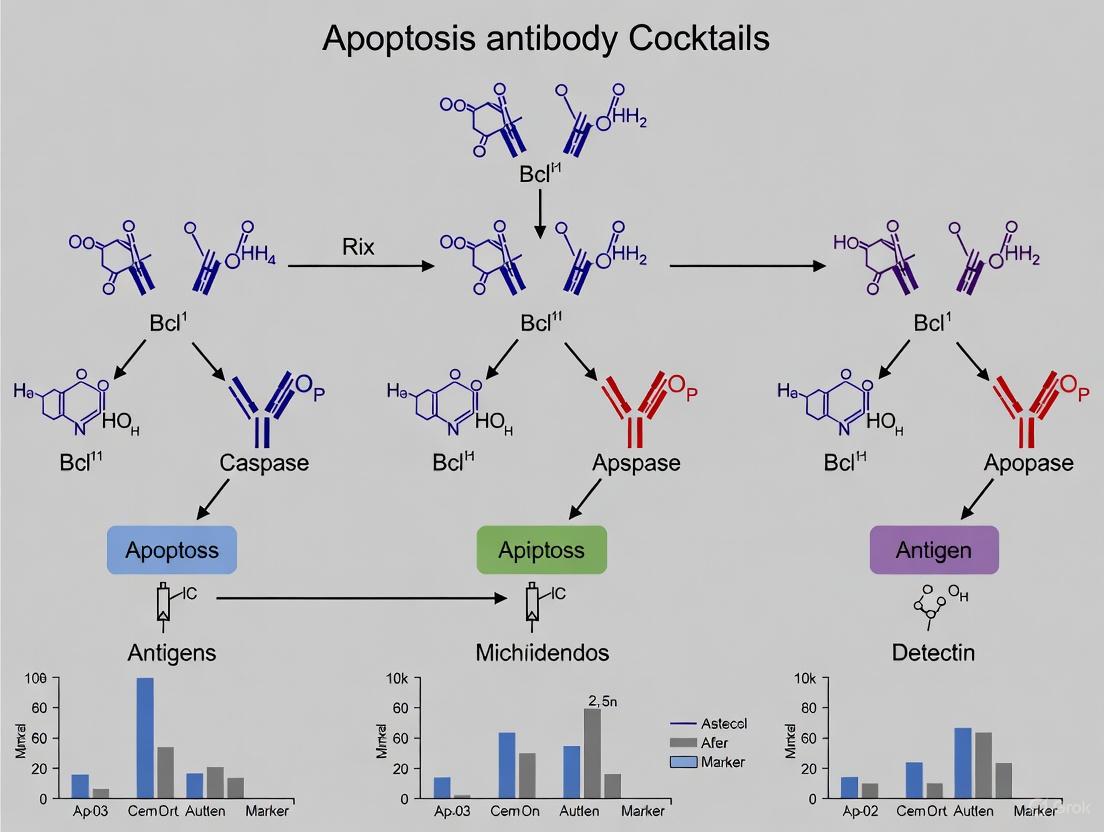
This article provides a detailed guide for researchers and drug development professionals on utilizing apoptosis antibody cocktails in Western blot analysis.
A Comprehensive Guide to Apoptosis Antibody Cocktails for Streamlined Western Blot Analysis
Abstract
This article provides a detailed guide for researchers and drug development professionals on utilizing apoptosis antibody cocktails in Western blot analysis. It covers the foundational principles of apoptosis and key protein markers, offers step-by-step methodological protocols for efficient detection, presents solutions for common troubleshooting and optimization challenges, and outlines best practices for data validation and comparison with other techniques. The content is designed to help scientists save time and resources while obtaining reliable, reproducible data on programmed cell death in various research contexts, from basic biology to therapeutic development.
Understanding Apoptosis Pathways and Key Detectable Markers
Apoptosis, or programmed cell death, is a fundamental biological process essential for maintaining cellular balance within an organism. It is a highly controlled and organized mechanism that allows cells to die without causing harm to surrounding tissues, eliminating cells that are damaged, unnecessary, or potentially harmful [1]. This process plays a vital role in various biological functions, including embryonic development, immune system regulation, and cancer prevention [1]. Disruptions in apoptotic pathways can lead to serious diseases; excessive apoptosis contributes to neurodegenerative disorders, while reduced apoptosis can permit the survival of damaged cells, potentially leading to cancer [1]. Understanding the molecular mechanisms of apoptosis is therefore critical for both basic biological research and therapeutic development.
Western blotting has emerged as a powerful technique for detecting apoptosis, offering high specificity and sensitivity for identifying key protein markers involved in cell death pathways [1]. This method allows researchers to monitor the activation of specific apoptotic proteins, providing insights into the complex regulatory networks that control cell fate decisions. The ability to quantify these protein changes makes western blotting particularly valuable for comparing apoptotic activity across different experimental conditions and treatment regimens.
Molecular Mechanisms of Apoptosis
Apoptosis proceeds through two primary signaling pathways: the extrinsic (death receptor) pathway and the intrinsic (mitochondrial) pathway. Both pathways converge on the activation of executioner caspases, which orchestrate the controlled dismantling of cellular components [1].
Caspase Activation Cascade
Caspases, a family of cysteine proteases, serve as the central executioners of apoptosis. They exist as inactive zymogens (pro-caspases) in healthy cells and become activated through proteolytic cleavage during apoptosis initiation [2]. Initiator caspases (caspase-8, -9, -10) are activated first through dimerization in response to pro-apoptotic signals. These initiator caspases then proteolytically process and activate executioner caspases (caspase-3, -6, -7), which carry out the systematic cleavage of cellular substrates, leading to the characteristic morphological changes of apoptosis [1] [2].
Key Apoptotic Markers for Western Blot Analysis
Several protein markers serve as reliable indicators of apoptosis when detected via western blot. The most commonly analyzed markers include:
Caspase-3: This executioner caspase is activated by cleavage of its 32 kDa pro-form to generate active fragments, including the p17 subunit [3]. Detection of both the pro-form and cleaved forms provides information about the progression of apoptosis.
PARP (Poly [ADP-ribose] polymerase): A DNA repair enzyme that is cleaved by activated caspases during apoptosis from its full-length 116 kDa form to generate an 89 kDa fragment [3] [1]. The appearance of this cleaved fragment serves as a definitive marker of caspase-mediated cell death.
Bcl-2 Family Proteins: This protein family includes both pro-apoptotic (e.g., Bax, Bid) and anti-apoptotic (e.g., Bcl-2, Bcl-xL) members that regulate mitochondrial outer membrane permeabilization (MOMP), a critical event in the intrinsic pathway [1] [2]. Changes in the expression ratios of these proteins indicate cellular commitment to apoptosis.
The following diagram illustrates the core apoptotic signaling pathways and key detection markers:
Figure 1: Core Apoptotic Signaling Pathways. The diagram illustrates the key events in extrinsic (death receptor) and intrinsic (mitochondrial) apoptosis pathways, converging on caspase-3 activation and execution of cell death.
Apoptosis Antibody Cocktails for Western Blot
Advantages of Antibody Cocktails
Apoptosis western blot cocktails represent a significant advancement in the detection of programmed cell death, offering researchers pre-mixed solutions containing multiple antibodies designed to detect various apoptosis-related markers simultaneously [1]. These cocktails typically target key proteins in the apoptosis pathway, such as caspases, PARP, and loading controls, enabling comprehensive analysis in a single assay. The use of antibody cocktails provides several distinct advantages over traditional western blot methods, including improved efficiency through reduced handling of multiple separate antibodies, enhanced detection capability across various apoptotic markers, greater reproducibility due to consistent antibody concentrations, and cost-effectiveness by minimizing the number of individual antibodies required for experiments [1].
Composition and Applications
A representative example of these innovative tools is the Apoptosis Western Blot Cocktail (pro/p17-caspase-3, cleaved PARP1, muscle actin) (ab136812), which contains a carefully formulated mixture of primary antibodies for detecting crucial apoptosis biomarkers along with a loading control [3]. The cocktail includes a rabbit monoclonal caspase-3 antibody that detects both the 32 kDa pro-caspase-3 and the p17 subunit of active caspase-3 generated by cleavage at Asp175, a mouse monoclonal PARP antibody that specifically recognizes the apoptosis-specific 89 kDa PARP fragment (cleaved-PARP) generated from full-length PARP by active caspases, and a rabbit muscle actin antibody that serves as a loading control for sample normalization [3].
This integrated approach to apoptosis detection is particularly valuable when studying complex apoptosis pathways, comparing apoptotic activity across different experimental conditions, or working with limited sample quantities [1]. The cocktail format ensures consistent antibody concentrations across experiments, improving reliability and reproducibility of results while streamlining the western blot workflow.
Table 1: Key Components of an Apoptosis Western Blot Cocktail (ab136812)
| Component | Target | Specificity | Molecular Weights | Function in Apoptosis |
|---|---|---|---|---|
| Caspase-3 Antibody | Pro-caspase-3 and cleaved caspase-3 | Rabbit monoclonal | 32 kDa (pro-form), p17 subunit (active) | Executioner caspase; activation indicates commitment to apoptosis |
| PARP Antibody | Cleaved PARP only | Mouse monoclonal | 89 kDa (cleaved fragment) | DNA repair enzyme; cleavage confirms caspase-mediated apoptosis |
| Muscle Actin Antibody | Muscle actin | Rabbit polyclonal | 42 kDa | Loading control for sample normalization |
Experimental Protocols for Apoptosis Detection
Sample Preparation and Optimization
Proper sample preparation is critical for obtaining reliable apoptosis data through western blotting. The process begins with cell lysis using appropriate buffers containing protease and phosphatase inhibitors to preserve protein integrity and modification states [4]. For apoptosis studies, specialized lysis buffers such as RIPA buffer are commonly used, though gentle lysis buffers without detergents may be required for certain antibodies that cannot detect denatured samples [4]. Following extraction, protein concentration must be accurately determined using a colorimetric assay such as the Bradford assay, and samples normalized to ensure equal protein loading across lanes [4]. Each western blot sample should consist of normalized protein extract mixed with Laemmli buffer in a 1:1 volume ratio, then heated to denature proteins to their primary structure before loading [4].
The timing of sample collection is particularly important in apoptosis studies due to the transient nature of many post-translational modifications, such as caspase cleavage events [5]. Researchers should establish time-course experiments to capture the dynamics of apoptotic progression, especially when working with novel cell types or treatment conditions. The use of control cell extracts, consisting of both negative and positive controls, can help verify that sample preparation and treatment conditions are optimal for detecting apoptosis markers [5].
Electrophoresis and Transfer
Protein separation is achieved through SDS-polyacrylamide gel electrophoresis (SDS-PAGE), which resolves denatured proteins based on molecular weight [4]. The Laemmli discontinuous buffer system is most commonly used, employing a stacking gel with larger pores to concentrate proteins into a narrow band before they enter the resolving gel where separation occurs [4]. The percentage of polyacrylamide in the resolving gel should be optimized based on the target protein sizes; for apoptosis markers like caspases (17-35 kDa) and PARP (89-116 kDa), gels between 10-15% are typically suitable.
Following electrophoresis, proteins are transferred to a suitable membrane, typically PVDF or nitrocellulose, for antibody probing [4]. Wet transfer systems are generally preferred for apoptosis studies as they offer higher efficiency across a wide range of protein sizes, including large proteins like PARP [4]. The transfer buffer (Towbin buffer: 25 mM Tris, 192 mM glycine, 20% methanol, pH 8.3) should include methanol, which increases protein hydrophobicity and facilitates SDS release, enhancing protein adsorption to the membrane [4].
Immunodetection and Analysis
After transfer, membranes are blocked to prevent nonspecific antibody binding, then incubated with primary antibodies targeting specific apoptosis markers [1]. For apoptosis cocktails, the pre-mixed primary antibody solution is applied at the recommended dilution (typically 1:250 for ab136812) [3]. Following incubation and washing, membranes are probed with appropriate HRP-conjugated secondary antibodies (typically used at 1:100 dilution for ab136812) and visualized using chemiluminescent or fluorescent detection methods [3] [1].
Quantitative analysis of apoptosis western blots requires careful normalization to account for variations in sample loading and transfer efficiency [1]. Signals from apoptotic markers (e.g., cleaved caspase-3 or cleaved PARP) should be normalized to loading controls (e.g., actin or GAPDH) [1]. Densitometry software such as ImageJ is commonly used to measure band intensities, with results presented as relative intensity levels or ratios to demonstrate apoptotic patterns [1]. For caspases, comparing the ratio of cleaved to uncleaved forms provides information about the proportion of activated protein relative to the total pool, offering insights into the level of apoptosis activation [1].
The following workflow diagram outlines the complete experimental process for apoptosis detection using western blot:
Figure 2: Western Blot Workflow for Apoptosis Detection. The diagram outlines the key steps in detecting apoptotic markers, from sample preparation through quantitative analysis.
Research Reagent Solutions
Successful apoptosis detection via western blot requires access to high-quality reagents and tools. The following table outlines essential materials and their functions for apoptosis research:
Table 2: Essential Research Reagents for Apoptosis Western Blot Analysis
| Reagent Category | Specific Examples | Function in Apoptosis Detection |
|---|---|---|
| Apoptosis Antibody Cocktails | ab136812 (Apoptosis Western Blot Cocktail) | Simultaneous detection of multiple apoptosis markers (caspase-3, PARP, actin) in a single assay |
| Control Cell Extracts | Jurkat Apoptosis Cell Extracts (etoposide) #2043; Caspase-3 Control Cell Extracts #9663 | Positive controls for validating antibody performance and sample preparation methods |
| Apoptosis Inducers | Etoposide (25 µM, 5 hours); Cytochrome c; Staurosporine (1 µM, 4 hours) | Chemical induction of apoptosis for positive control samples and experimental treatments |
| Protein Extraction Reagents | RIPA buffer; Protease and phosphatase inhibitors | Cell lysis while preserving protein integrity and modification states |
| Electrophoresis Supplies | Polyacrylamide gels; Laemmli buffer; Molecular weight markers | Protein separation by molecular weight and monitoring of separation efficiency |
| Transfer Systems | PVDF membranes; Towbin transfer buffer | Efficient protein transfer from gels to membranes for antibody probing |
| Detection Reagents | HRP-conjugated secondary antibodies; Chemiluminescent substrates | Visualization of target proteins with high sensitivity and specificity |
Data Interpretation and Troubleshooting
Analysis of Apoptosis Western Blot Results
Interpreting western blot results for apoptosis requires careful attention to specific band patterns that indicate activation of cell death pathways. The key indicators include caspase activation, observed as a decrease in pro-caspase bands (e.g., 32 kDa for caspase-3) with a corresponding appearance of cleaved fragments (e.g., p17 for caspase-3) [3] [1]. PARP cleavage is another definitive marker, characterized by the reduction of full-length PARP (116 kDa) and appearance of the 89 kDa cleavage fragment [3] [1]. Additionally, changes in the expression ratios of Bcl-2 family proteins can indicate shifts in the cellular balance toward pro-apoptotic signaling [1].
Quantitative analysis should include normalization of target protein signals to loading controls (e.g., actin) to account for variations in sample loading, and calculation of cleavage ratios (cleaved to uncleaved protein) to determine the extent of apoptosis activation [1]. For accurate quantification, researchers should ensure they are working within the linear range of detection for both the target proteins and loading controls [6].
Common Challenges and Solutions
Apoptosis detection via western blot presents several technical challenges that can affect result interpretation. Inconsistent induction of apoptosis across samples can arise from variations in cell density, treatment conditions, or cell passage number [5]. This can be addressed by using validated positive control extracts and optimizing treatment conditions for each cell type. Weak or absent signals for cleaved caspases or PARP may result from suboptimal sample collection timing, as these cleavage events can be transient [5]. Time-course experiments are recommended to capture peak activation. Poor transfer efficiency, particularly for larger proteins like PARP, can be improved by using wet transfer methods instead of semi-dry systems and optimizing transfer duration [4]. High background noise often stems from insufficient blocking or antibody concentrations; optimizing blocking conditions and antibody dilutions can improve signal-to-noise ratios [1]. Finally, inconsistent loading control signals may indicate uneven protein loading or transfer; normalizing to total protein staining rather than a single housekeeping protein can provide more reliable quantification [6].
Applications in Biomedical Research
The detection of apoptosis through western blotting plays a crucial role in various fields of biomedical research by enabling precise monitoring of cell death markers. In cancer research, analyzing apoptosis markers helps elucidate the molecular alterations that permit cancer cells to evade programmed cell death, providing insights for developing therapies that restore apoptotic processes to eliminate malignant cells [1]. For neurodegenerative diseases such as Alzheimer's and Parkinson's, apoptosis western blotting is essential for understanding pathological processes involving excessive neuronal cell death, enabling researchers to track apoptosis markers and identify potential therapeutic targets to protect neurons and slow disease progression [1]. In drug discovery and development, this technique is extensively used to evaluate the effects of potential therapeutic compounds, assessing whether candidate drugs effectively induce apoptosis in target cells while sparing healthy ones [1]. Additionally, in basic mechanistic studies, western blotting for apoptosis markers allows researchers to dissect complex cell death pathways and understand how different stimuli activate specific apoptotic mechanisms, providing fundamental insights into cellular regulation and fate decisions [2].
The use of apoptosis antibody cocktails further enhances these applications by providing comprehensive profiling of multiple apoptotic markers in a single assay, streamlining workflows in high-throughput screening environments, improving reproducibility across experiments and laboratories, and facilitating standardized apoptosis assessment in multi-center studies [3] [1]. As research continues to uncover the complexities of cell death pathways, these sophisticated tools will play an increasingly important role in advancing our understanding of disease mechanisms and therapeutic interventions.
Apoptosis, or programmed cell death, is a fundamental biological process essential for maintaining cellular homeostasis, eliminating damaged or unnecessary cells without causing harm to surrounding tissues [1]. This highly organized form of cell death occurs through controlled and organized biochemical events that lead to characteristic cellular changes including cell shrinkage, chromatin condensation, DNA fragmentation, and membrane blebbing [1] [7]. Unlike necrosis, which represents an uncontrolled and inflammatory form of cell death, apoptosis provides a clean, non-inflammatory method for removing cells, as dying cells are packaged into small, membrane-bound fragments called apoptotic bodies that are efficiently removed by immune cells [1].
The molecular execution of apoptosis is primarily carried out by a family of cysteine proteases known as caspases, which act in a proteolytic cascade to dismantle cellular components in an orderly fashion [1] [8]. These caspases exist as inactive zymogens in healthy cells and become activated through proteolytic cleavage during the apoptotic process. Research into apoptotic mechanisms has revealed that cells possess at least two broad signaling pathways that lead to apoptosis: the intrinsic pathway (mitochondrial pathway) and the extrinsic pathway (death receptor pathway) [8]. While these pathways are initiated by distinct stimuli and involve different molecular components, they ultimately converge on the activation of executioner caspases that mediate the final stages of cell dismantling.
Understanding these apoptotic pathways is particularly crucial in biomedical research and drug development, especially in fields such as cancer biology, neurodegenerative diseases, and immunology [1] [7]. The ability to detect and quantify apoptosis using techniques like western blotting provides researchers with powerful tools to investigate disease mechanisms, screen potential therapeutic compounds, and evaluate treatment efficacy. This application note will explore the key differences between intrinsic and extrinsic apoptotic pathways, provide detailed experimental protocols for their investigation, and highlight essential research tools for apoptosis research, with particular emphasis on western blot analysis.
The Intrinsic Apoptotic Pathway
Molecular Mechanisms and Key Components
The intrinsic pathway of apoptosis, also known as the mitochondrial pathway, represents a critical cellular response to internal damage or stress. This pathway initiates when cells experience internal injuries such as DNA damage, oxidative stress, hypoxia, oncogene activation, or deprivation of survival factors [8]. These stress signals converge on mitochondria, triggering fundamental changes in mitochondrial membrane permeability and initiating a cascade of molecular events that commit the cell to apoptosis.
Central to the regulation of the intrinsic pathway is the Bcl-2 family of proteins, which includes both pro-apoptotic and anti-apoptotic members that determine the cell's fate by controlling mitochondrial outer membrane permeabilization (MOMP) [7] [8]. Anti-apoptotic members such as Bcl-2 and Bcl-XL reside in the outer mitochondrial membrane and function to prevent cytochrome c release, thereby promoting cell survival. In contrast, pro-apoptotic proteins like Bax, Bak, Bid, and Bad translocate to mitochondria in response to apoptotic stimuli, where they either form pores directly or antagonize anti-apoptotic proteins to induce MOMP [8].
The tumor suppressor protein p53 serves as a critical activator of the intrinsic pathway, functioning as a sensor of cellular stress that becomes stabilized and activated in response to DNA damage and other cellular insults [8]. Once activated, p53 acts as a transcription factor that induces the expression of pro-apoptotic Bcl-2 family members such as Bax, Noxa, and PUMA (p53-Upregulated Modulator of Apoptosis), while simultaneously repressing anti-apoptotic Bcl-2 proteins and cellular inhibitor of apoptosis proteins (CIAPs) [8]. This shift in the balance toward pro-apoptotic signals promotes mitochondrial membrane permeabilization and the release of key apoptotic factors.
Following MOMP, several critical proteins are released from the mitochondrial intermembrane space into the cytosol, including cytochrome c, SMAC (Second Mitochondria-Derived Activator of Caspase), Diablo, and AIF (Apoptosis Inducing Factor) [8]. Cytochrome c binds to Apoptotic Protease Activating Factor-1 (APAF-1), forming a complex known as the apoptosome in the presence of dATP. The apoptosome then recruits and activates procaspase-9, which in turn cleaves and activates the executioner caspase-3, committing the cell to apoptosis [8]. Simultaneously, SMAC and Diablo counteract the effects of Inhibitor of Apoptosis Proteins (IAPs), which normally bind to and inhibit caspase activation, thereby further promoting the apoptotic cascade.
Detection Methods and Key Markers
Western blot analysis provides a powerful approach for monitoring the intrinsic apoptotic pathway by detecting specific protein markers and cleavage events. Key markers for intrinsic apoptosis include the activation of caspase-9, cleavage of caspase-3, changes in Bcl-2 family protein expression, and the presence of cleaved PARP [1] [3].
Caspase-9 serves as a specific marker for the intrinsic pathway, as it becomes activated within the apoptosome complex following cytochrome c release [8]. Detection of the cleaved, active form of caspase-9 by western blot provides direct evidence of intrinsic pathway activation. Similarly, caspase-3, a key executioner caspase activated by both intrinsic and extrinsic pathways, can be detected as both its full-length (inactive) and cleaved (active) forms, with increased cleavage indicating apoptotic progression [1] [3].
The Bcl-2 family proteins represent critical regulatory markers for the intrinsic pathway. Western blot analysis can assess the balance between pro-apoptotic (e.g., Bax, Bak, Bid) and anti-apoptotic (e.g., Bcl-2, Bcl-XL) proteins, with an increased Bax/Bcl-2 ratio indicating a predisposition to apoptosis [1]. Additionally, PARP cleavage serves as a reliable late-stage apoptotic marker, as this DNA repair enzyme is specifically cleaved by activated caspases during apoptosis, generating characteristic 89 kDa and 24 kDa fragments [1] [3].
Table 1: Key Markers for Detecting Intrinsic Apoptosis via Western Blot
| Marker | Molecular Weight (Full-length/Cleaved) | Function in Pathway | Detection Significance |
|---|---|---|---|
| Caspase-9 | ~46 kDa (procaspase); ~35/37 kDa (active) | Initiator caspase for intrinsic pathway | Activation indicates apoptosome formation |
| Cytochrome c | ~12 kDa | Mitochondrial protein released during MOMP | Cytosolic release confirms mitochondrial pathway engagement |
| Bax | ~21 kDa | Pro-apoptotic Bcl-2 family protein | Increased expression promotes MOMP |
| Bcl-2 | ~26 kDa | Anti-apoptotic Bcl-2 family protein | Decreased expression facilitates apoptosis |
| SMAC/Diablo | ~23 kDa | Counteracts IAP proteins | Mitochondrial release enhances caspase activation |
| Caspase-3 | ~32 kDa (procaspase); ~17/19 kDa (active) | Executioner caspase | Cleavage indicates commitment to apoptosis |
| PARP | ~116 kDa (full-length); ~89 kDa (cleaved) | DNA repair enzyme | Cleavage confirms caspase activation and late-stage apoptosis |
The Extrinsic Apoptotic Pathway
Molecular Mechanisms and Key Components
The extrinsic pathway of apoptosis represents a cell's response to external death signals, initiating when conditions in the extracellular environment determine that a cell must die [8]. This pathway begins with the binding of specific death ligands to their corresponding death receptors on the cell surface, triggering an intracellular cascade that ultimately leads to caspase activation and programmed cell death.
Death receptors belong to the tumor necrosis factor receptor (TNFR) superfamily and are characterized by cysteine-rich extracellular domains and a conserved intracellular death domain [8]. Prominent death receptors include Fas (CD95), TNFR1 (Tumor Necrosis Factor Receptor-1), and receptors for Apo2L/Apo3L (also known as TRAIL) [8]. These receptors transmit apoptotic signals initiated by their specific ligands: FasL (Fas Ligand) for Fas, TNF-α for TNFR1, and Apo2L/Apo3L for their respective receptors.
Upon ligand binding, death receptors undergo oligomerization and recruit adapter molecules through interactions between their intracellular death domains [8]. For instance, Fas recruitment of FADD (Fas-Associated via Death Domain) and subsequent binding of procaspase-8 forms a complex known as the DISC (Death Inducing Signaling Complex) [8]. Within the DISC, procaspase-8 molecules are brought into close proximity, leading to their autocatalytic activation through self-cleavage. The regulatory protein FLIP (FLICE Inhibitory Protein) can modulate this process by competing with procaspase-8 for binding to FADD, thereby inhibiting caspase-8 activation and serving as a critical control point in extrinsic apoptosis [8].
Activated caspase-8 then propagates the death signal through two primary mechanisms [8]. In Type I cells, caspase-8 directly cleaves and activates executioner caspase-3 and caspase-7, sufficient to induce apoptosis independently of mitochondrial amplification. In Type II cells, the apoptotic signal requires mitochondrial amplification through caspase-8-mediated cleavage of the Bcl-2 family protein Bid. Truncated Bid (tBid) translocates to mitochondria, promoting cytochrome c release and engaging the intrinsic pathway to amplify the death signal [8].
The extrinsic pathway is also subject to cross-regulation with other signaling pathways. For example, TNFR1 activation can lead to the formation of two distinct complexes [8]. Complex I, formed initially at the plasma membrane, activates NF-κB signaling and promotes cell survival. Subsequently, Complex II forms in the cytosol and initiates apoptosis through FADD and caspase-8 recruitment. The cellular decision between survival and apoptosis thus depends on the balance between these complexes and the expression levels of regulatory proteins like FLIP.
Detection Methods and Key Markers
Western blot analysis enables specific detection of extrinsic pathway components and activation states. Key markers include caspase-8 activation, Bid cleavage, and downstream caspase-3 and PARP cleavage [1] [3].
Caspase-8 serves as the definitive marker for extrinsic pathway activation. Western blot can detect both the full-length (55-60 kDa) and cleaved active fragments (43/45 kDa and 18 kDa) of caspase-8, providing direct evidence of DISC formation and activity [8]. The cleavage of Bid to its truncated form (tBid, ~15 kDa) indicates cross-talk between extrinsic and intrinsic pathways, particularly important in Type II cells where mitochondrial amplification is required for efficient apoptosis [8].
FADD and other adapter proteins can also be monitored, though their expression levels typically remain constant during apoptosis. More informative is the detection of receptor-ligand interactions through co-immunoprecipitation approaches or the assessment of death receptor expression levels, which may be regulated in various physiological and pathological conditions.
Table 2: Key Markers for Detecting Extrinsic Apoptosis via Western Blot
| Marker | Molecular Weight (Full-length/Cleaved) | Function in Pathway | Detection Significance |
|---|---|---|---|
| Caspase-8 | ~55-60 kDa (procaspase); ~43/45 and ~18 kDa (active) | Initiator caspase for extrinsic pathway | Cleavage indicates DISC formation and activation |
| FADD | ~28 kDa | Adapter protein in DISC | Recruitment to receptors facilitates caspase-8 activation |
| Bid | ~22 kDa (full-length); ~15 kDa (truncated) | Pro-apoptotic Bcl-2 family protein | Cleavage to tBid indicates cross-talk with intrinsic pathway |
| Fas (CD95) | ~48 kDa | Death receptor | Membrane expression enables extrinsic apoptosis initiation |
| FLIP | ~55 kDa (long form); ~26 kDa (short form) | Caspase-8 homolog inhibitor | Expression level regulates sensitivity to extrinsic apoptosis |
| Death Ligands | Varies (e.g., FasL ~40 kDa) | Extracellular initiators | Binding to receptors triggers pathway activation |
Comparative Analysis of Intrinsic and Extrinsic Pathways
Key Differences and Cross-Talk Mechanisms
While both intrinsic and extrinsic pathways ultimately converge on caspase activation and apoptotic execution, they differ significantly in their initiation mechanisms, regulatory components, and physiological roles. Understanding these distinctions is crucial for designing appropriate experimental approaches and interpreting results accurately.
The fundamental distinction lies in their initiation: the intrinsic pathway responds to internal cellular damage such as DNA damage, oxidative stress, or growth factor deprivation, while the extrinsic pathway is activated by external death signals delivered through specific receptor-ligand interactions [8]. This difference reflects their distinct physiological roles—the intrinsic pathway primarily eliminates damaged or potentially dangerous cells, while the extrinsic pathway mediates immune-regulated cell death and tissue homeostasis.
The key regulatory components also differ between pathways. The intrinsic pathway is primarily governed by the Bcl-2 protein family, which controls mitochondrial outer membrane permeabilization and cytochrome c release, with p53 serving as a critical stress sensor and transcriptional activator [8]. In contrast, the extrinsic pathway is regulated at the level of death receptor expression and activation, adapter protein recruitment, and caspase-8 activation at the DISC, with FLIP serving as a key regulatory protein [8].
Despite their distinct initiation mechanisms, these pathways exhibit significant cross-talk that amplifies apoptotic signals and ensures efficient cell elimination when necessary. The primary point of convergence is the cleavage of Bid by caspase-8, which generates tBid that translocates to mitochondria and engages the intrinsic amplification loop [8]. This cross-talk is particularly important in Type II cells, where the direct caspase cascade from caspase-8 to executioner caspases is insufficient for full apoptotic commitment without mitochondrial amplification.
Table 3: Comparative Analysis of Intrinsic and Extrinsic Apoptotic Pathways
| Feature | Intrinsic Pathway | Extrinsic Pathway |
|---|---|---|
| Initiation | Internal cellular stress (DNA damage, hypoxia, etc.) | External death signals (death ligands) |
| Key Initiators | Cellular stress, p53, Bcl-2 family proteins | Death receptors (Fas, TNFR1, TRAIL-R) |
| Molecular Complex | Apoptosome (APAF-1, cytochrome c, caspase-9) | DISC (Death receptor, FADD, caspase-8) |
| Key Caspases | Caspase-9 (initiator), Caspase-3/7 (executioner) | Caspase-8 (initiator), Caspase-3/7 (executioner) |
| Regulatory Proteins | Bcl-2 family, IAPs, SMAC/Diablo | FLIP, FADD, TRADD |
| Mitochondrial Involvement | Central (MOMP required) | Variable (Type I: independent; Type II: dependent) |
| Key Detection Markers | Cytochrome c release, Caspase-9 cleavage, Bax/Bcl-2 ratio | Caspase-8 cleavage, Bid cleavage, Death receptor activation |
| Primary Physiological Role | Eliminating damaged or potentially dangerous cells | Immune regulation, tissue homeostasis |
Pathway Integration in Cellular Decision-Making
Cells integrate signals from both intrinsic and extrinsic pathways to make life-or-death decisions based on the totality of internal and external cues. This integration occurs at multiple levels, including direct protein interactions, transcriptional regulation, and post-translational modifications. The relative dominance of each pathway varies by cell type, developmental stage, and physiological context.
The p53 protein serves as a critical integrator, responding to diverse stress signals by transcriptionally activating components of both pathways [8]. Similarly, caspase-8 mediates cross-talk through its ability to cleave Bid and engage the mitochondrial pathway when direct executioner caspase activation is insufficient [8]. Additionally, certain Bcl-2 family proteins can influence death receptor signaling, further blurring the distinction between these pathways in specific cellular contexts.
This integrative signaling network ensures that apoptosis occurs appropriately in response to the complex combination of signals that cells encounter in physiological and pathological conditions. From a research perspective, this interplay necessitates comprehensive analysis of multiple pathway components to fully understand apoptotic regulation in any given experimental system.
Essential Research Reagent Solutions
The investigation of apoptotic pathways requires specific reagents and tools designed to detect key molecular events. Antibody-based detection, particularly through western blotting, remains a cornerstone of apoptosis research due to its specificity, sensitivity, and ability to provide quantitative information about protein expression and modification states.
Apoptosis antibody cocktails represent valuable tools for simultaneous detection of multiple apoptotic markers in a single experiment, saving time, reagents, and precious samples [1] [3]. These pre-mixed solutions typically contain antibodies targeting key apoptosis regulators such as caspases, PARP, and loading controls. For example, the Apoptosis Western Blot Cocktail (ab136812) includes antibodies for pro/cleaved caspase-3, cleaved PARP1, and muscle actin as a loading control, enabling comprehensive assessment of apoptotic activity [3].
Individual antibodies against specific pathway components remain essential for detailed mechanistic studies. Key reagents include antibodies targeting initiator caspases (caspase-8 for extrinsic, caspase-9 for intrinsic), executioner caspases (caspase-3, -7), Bcl-2 family proteins (Bax, Bcl-2, Bid), death receptors (Fas, TNFR1), and classical apoptotic markers like PARP [1] [3]. Selection of antibodies specific for cleaved/activated forms of caspases and other substrates provides particularly valuable information about pathway activation status.
Supporting reagents for western blotting include appropriate secondary antibodies, detection systems, protein extraction buffers, protease and phosphatase inhibitors, and loading controls such as β-actin or GAPDH [1]. Proper normalization to housekeeping proteins is essential for accurate quantification of apoptotic markers, especially when comparing across different experimental conditions or time points.
Table 4: Essential Research Reagents for Apoptosis Investigation
| Reagent Category | Specific Examples | Research Application | Key Features |
|---|---|---|---|
| Antibody Cocktails | Apoptosis Western Blot Cocktail (ab136812) [3] | Simultaneous detection of multiple apoptotic markers | Includes caspase-3, cleaved PARP, loading control; efficient and reproducible |
| Caspase Antibodies | Cleaved caspase-3, -8, -9 antibodies [1] [3] | Detection of initiator and executioner caspase activation | Distinguish pro-form vs. cleaved active forms; pathway-specific information |
| Bcl-2 Family Antibodies | Bax, Bcl-2, Bid antibodies [1] [8] | Assessment of mitochondrial regulation | Monitor expression changes and cleavage events; determine pro/anti-apoptotic balance |
| Death Receptor Antibodies | Fas, TNFR1, TRAIL-R antibodies [8] | Analysis of extrinsic pathway initiation | Detect receptor expression and activation states |
| Apoptosis Substrate Antibodies | Cleaved PARP, cleaved lamin antibodies [1] [3] | Confirmation of apoptotic execution | Specific cleavage fragments indicate caspase activity |
| Loading Controls | β-actin, GAPDH, tubulin antibodies [1] | Normalization for quantitative analysis | Ensure equal loading and transfer; essential for accurate quantification |
| Detection Reagents | HRP-conjugated secondary antibodies, chemiluminescent substrates [1] [3] | Signal detection and visualization | Sensitive detection with broad linear range for quantification |
Experimental Protocols for Pathway Analysis
Western Blot Protocol for Apoptosis Detection
Comprehensive analysis of apoptotic pathways requires careful experimental design and execution. The following protocol outlines a standardized approach for detecting key apoptotic markers via western blotting, with specific considerations for pathway-specific analysis.
Sample Preparation:
- Harvest cells during logarithmic growth phase and treat with appropriate apoptotic inducers (e.g., staurosporine for intrinsic pathway, Fas ligand or TRAIL for extrinsic pathway) [3].
- Include both untreated and induced samples, plus a known apoptotic positive control.
- Lyse cells using RIPA buffer supplemented with protease and phosphatase inhibitors to preserve protein modifications.
- Centrifuge lysates at 12,000 × g for 15 minutes at 4°C and collect supernatants.
- Determine protein concentration using a compatible assay (e.g., BCA assay) and adjust samples to equal concentrations with lysis buffer.
- Prepare samples with 2× Laemmli buffer containing β-mercaptoethanol and denature at 95°C for 5 minutes.
Gel Electrophoresis and Transfer:
- Load 20-30 μg of protein per lane on appropriate SDS-PAGE gels (10-15% acrylamide depending on target protein size) [3].
- Include pre-stained molecular weight markers for reference.
- Separate proteins by electrophoresis at constant voltage (100-120V) until dye front reaches bottom of gel.
- Transfer proteins to PVDF or nitrocellulose membranes using wet or semi-dry transfer systems.
- Verify transfer efficiency with Ponceau S staining if desired.
Antibody Incubation and Detection:
- Block membranes with 5% non-fat milk or BSA in TBST for 1 hour at room temperature.
- Incubate with primary antibodies diluted in blocking buffer overnight at 4°C with gentle agitation.
- Recommended dilutions: caspase-3 (1:1000), cleaved PARP (1:1000), caspase-8 (1:800), caspase-9 (1:800), Bax (1:1000), Bcl-2 (1:1000), loading control (1:5000) [1] [3].
- Wash membranes 3× with TBST for 10 minutes each.
- Incubate with appropriate HRP-conjugated secondary antibodies (1:5000-1:10000) for 1 hour at room temperature.
- Wash membranes 3× with TBST for 10 minutes each.
- Detect signals using enhanced chemiluminescence substrate and image with appropriate system.
Data Analysis:
- Quantify band intensities using densitometry software (e.g., ImageJ) [1].
- Normalize target protein signals to loading controls.
- Calculate ratios of cleaved to full-length proteins (e.g., cleaved PARP:full-length PARP) to assess activation.
- For Bcl-2 family proteins, calculate Bax:Bcl-2 ratio as indicator of apoptotic propensity.
- Present data as mean ± SEM from at least three independent experiments.
Protocol for Using Apoptosis Antibody Cocktails
Antibody cocktails provide an efficient approach for simultaneous detection of multiple apoptotic markers, particularly useful for initial screening or when sample material is limited.
Membrane Preparation:
- Following protein transfer, block membrane as described above.
- Prepare primary antibody cocktail according to manufacturer's instructions. For ab136812, use 1:250 dilution of the 250× primary antibodies cocktail in blocking buffer [3].
- Incubate membrane with primary antibody cocktail overnight at 4°C with gentle agitation.
- Wash membrane 3× with TBST for 10 minutes each.
- Prepare secondary antibody cocktail (for ab136812, use 1:100 dilution of the 100× HRP-conjugated secondary antibodies cocktail) [3].
- Incubate membrane with secondary antibody cocktail for 1 hour at room temperature.
- Wash membrane 3× with TBST for 10 minutes each.
- Detect signals using enhanced chemiluminescence.
Data Interpretation:
- Identify bands of interest based on expected molecular weights: pro-caspase-3 (32 kDa), cleaved caspase-3 p17 subunit (17 kDa), cleaved PARP (89 kDa), muscle actin (42 kDa) [3].
- Compare treated vs. untreated samples for changes in band intensity and appearance of cleavage products.
- Normalize caspase and PARP signals to actin loading control for quantitative comparisons.
Pathway Visualization and Experimental Workflow
The following diagrams illustrate the key components and relationships within the intrinsic and extrinsic apoptotic pathways, as well as a typical experimental workflow for their investigation.
Intrinsic Apoptotic Pathway
Extrinsic Apoptotic Pathway
Experimental Workflow for Apoptosis Analysis
The intricate signaling networks governing intrinsic and extrinsic apoptotic pathways represent fundamental biological processes with profound implications for health and disease. This application note has provided a comprehensive overview of these pathways, highlighting their distinct initiation mechanisms, key molecular components, regulatory checkpoints, and points of convergence. The experimental approaches and reagents described herein offer researchers robust tools for investigating these pathways in various biological contexts.
Understanding the nuanced interplay between intrinsic and extrinsic apoptosis is particularly crucial for drug discovery and development, especially in oncology where manipulating apoptotic pathways represents a promising therapeutic strategy [7]. The ability to specifically detect and quantify pathway activation using western blotting and antibody-based approaches provides critical insights for evaluating drug efficacy, understanding resistance mechanisms, and identifying predictive biomarkers.
As apoptosis research continues to evolve, emerging technologies including high-content screening, multiplexed assays, and single-cell analysis will further enhance our understanding of these complex regulatory networks. However, western blotting remains an essential and reliable technique for apoptosis assessment, particularly when performed with well-validated antibodies and careful attention to experimental design and quantification. The protocols and reagents described in this application note provide a solid foundation for researchers navigating the complex landscape of apoptotic signaling pathways.
Apoptosis, or programmed cell death, is a fundamental physiological process for maintaining cellular balance by eliminating damaged, unnecessary, or potentially harmful cells in a controlled manner [1]. Unlike necrotic cell death, apoptosis occurs through an organized cascade that avoids inflammatory responses, characterized by cellular events including cell shrinkage, DNA fragmentation, and membrane blebbing [1]. Western blot analysis has emerged as a powerful technique for detecting apoptosis by assessing changes in the expression and activation of specific protein markers throughout the early, middle, and late phases of this process [1]. This application note focuses on the essential apoptosis markers detectable by western blot—caspases, PARP, and Bcl-2 family proteins—framed within the context of utilizing apoptosis antibody cocktails to streamline research and drug development workflows.
The detection of apoptosis is crucial for understanding numerous biological processes and disease mechanisms, particularly in cancer research, neurodegenerative disorders, and therapeutic development [1]. Western blotting offers significant advantages for apoptosis detection, including high specificity for apoptotic proteins and the ability to quantify protein levels to compare different experimental conditions [1]. Within the broader context of apoptosis antibody cocktails research, this technique enables comprehensive screening of multiple apoptotic pathways simultaneously, saving valuable time and sample resources while providing a more complete picture of cellular responses to experimental treatments.
Key Apoptosis Markers and Their Detection
Caspases
Caspases are cysteine proteases that act as central executors of the apoptotic cascade through a proteolytic cascade that dismantles cellular components [1]. These enzymes are synthesized as inactive zymogens (pro-caspases) that undergo proteolytic cleavage to become activated. Western blot detection reveals both the inactive pro-form and the active cleaved fragments, providing insight into the activation status of the apoptotic pathway.
Executioner Caspases:
- Caspase-3: The primary executioner caspase that cleaves multiple cellular targets, leading to characteristic apoptotic morphology. Activated caspase-3 appears as cleaved fragments (17-19 kDa and 12 kDa) on western blots [1].
- Caspase-7: Another executioner caspase with overlapping substrates with caspase-3, producing cleaved fragments of approximately 20 kDa and 12 kDa [1].
Initiator Caspases:
- Caspase-8: Plays a critical role in the extrinsic apoptosis pathway, initiated by death receptor engagement. Activation produces cleaved fragments of 43/41 kDa and 18 kDa [1].
- Caspase-9: Functions in the intrinsic (mitochondrial) apoptosis pathway, generating cleaved fragments of 37 kDa and 35 kDa [1].
PARP (Poly ADP-ribose polymerase)
PARP is a nuclear enzyme involved in DNA repair that serves as a classic substrate for executioner caspases during apoptosis [1]. Cleavage of full-length PARP (116 kDa) by caspases (primarily caspase-3) generates a characteristic 89 kDa fragment and a 24 kDa fragment [1]. The presence of cleaved PARP (89 kDa) provides a reliable indicator of committed apoptosis, as this cleavage inactivates the DNA repair function of PARP and facilitates cellular disassembly.
Bcl-2 Family Proteins
The Bcl-2 protein family represents crucial regulators of the intrinsic apoptotic pathway, consisting of both pro-apoptotic and anti-apoptotic members that determine cellular commitment to apoptosis [1]. Changes in the expression levels and ratios of these proteins provide valuable information about apoptotic signaling dynamics.
Anti-apoptotic Proteins:
- BCL-2: (26 kDa) Protects mitochondria from permeabilization, preventing cytochrome c release [9].
- BCL-XL: (30 kDa) Another key anti-apoptotic family member that preserves mitochondrial integrity.
- MCL-1: (37 kDa) Regulates mitochondrial outer membrane permeabilization.
Pro-apoptotic Proteins:
- BIM: Multiple isoforms (BIMEL 23 kDa, BIML 15 kDa, BIMS 12 kDa) that initiate apoptosis activation [9].
- PUMA: (23 kDa) Critical for p53-mediated apoptosis [9].
- BAX: (21 kDa) Promotes mitochondrial outer membrane permeabilization.
- BAK: (25 kDa) Functions similarly to BAX in mitochondrial disruption.
Table 1: Essential Apoptosis Markers for Western Blot Analysis
| Marker Category | Specific Protein | Full-Length Size (kDa) | Cleaved/Active Forms (kDa) | Primary Function |
|---|---|---|---|---|
| Executioner Caspases | Caspase-3 | 32-35 | p17, p12 | Primary effector caspase cleaving multiple substrates |
| Caspase-7 | 35 | p20, p12 | Executioner caspase with overlapping substrates | |
| Initiator Caspases | Caspase-8 | 55 | p43/41, p18 | Extrinsic pathway initiator |
| Caspase-9 | 46 | p37, p35 | Intrinsic pathway initiator | |
| Cell Death Substrate | PARP | 116 | 89 | DNA repair enzyme inactivated by caspase cleavage |
| Anti-apoptotic Bcl-2 | BCL-2 | 26 | - | Mitochondrial protection, prevents cytochrome c release |
| BCL-XL | 30 | - | Maintains mitochondrial integrity | |
| MCL-1 | 37 | - | Regulates mitochondrial membrane permeabilization | |
| Pro-apoptotic Bcl-2 | BIM | 23, 15, 12 (isoforms) | - | Initiates apoptosis activation |
| PUMA | 23 | - | Critical for p53-mediated apoptosis | |
| BAX | 21 | - | Promotes mitochondrial outer membrane permeabilization |
Apoptosis Signaling Pathways
The process of apoptosis occurs through two primary signaling pathways: the extrinsic (death receptor) pathway and the intrinsic (mitochondrial) pathway [1]. Both pathways converge on caspase activation, ultimately leading to the characteristic morphological changes associated with apoptotic cell death.
Diagram 1: Apoptosis Signaling Pathways
The diagram above illustrates the two main apoptosis pathways. The extrinsic pathway (blue) initiates outside the cell through death receptor activation (e.g., Fas, TRAIL receptors), leading to caspase-8 activation [1]. The intrinsic pathway (yellow) begins within the cell in response to stressors like DNA damage or oxidative stress, resulting in mitochondrial outer membrane permeabilization and caspase-9 activation [1]. Both pathways converge on the activation of executioner caspases-3 and -7 (red), which cleave cellular substrates including PARP, culminating in apoptotic cell death [1]. The BCL-2 family proteins (green) serve as critical regulators of the intrinsic pathway, with the balance between pro-apoptotic and anti-apoptotic members determining cellular fate [1] [9].
Western Blot Protocol for Apoptosis Detection
Sample Preparation and Protein Quantification
Begin by preparing cell lysates from samples of interest using RIPA buffer or similar lysis buffer containing protease and phosphatase inhibitors. For apoptosis induction, treat cells with appropriate stimuli (e.g., staurosporine for intrinsic pathway activation or Trail for extrinsic pathway activation) for varying timepoints to capture different stages of apoptosis. Centrifuge lysates at 14,000 × g for 15 minutes at 4°C to remove insoluble material. Perform protein quantification using a compatible assay (e.g., BCA or Bradford assay) to ensure equal protein loading across samples [1].
Gel Electrophoresis and Protein Transfer
Prepare samples with Laemmli buffer, denature at 95°C for 5 minutes, and load equal amounts of protein (typically 20-40 μg) into SDS-polyacrylamide gels. Include molecular weight markers in at least one lane. For simultaneous detection of multiple apoptosis markers, gradient gels (4-20%) are recommended to resolve proteins across a broad molecular weight range. Run electrophoresis at constant voltage (100-150V) until the dye front reaches the bottom of the gel. Transfer proteins to PVDF or nitrocellulose membranes using wet or semi-dry transfer systems [1].
Membrane Blocking and Antibody Incubation
Block membranes with 5% non-fat dry milk or BSA in TBST for 1 hour at room temperature to prevent non-specific antibody binding. Incubate with primary antibodies targeting apoptotic markers of interest, diluted in blocking buffer or TBST, overnight at 4°C with gentle agitation [1]. When using apoptosis antibody cocktails, follow manufacturer recommendations for dilution and incubation conditions [10].
Table 2: Recommended Antibody Dilutions for Apoptosis Markers
| Target Protein | Recommended Dilution | Incubation Conditions | Expected Band Sizes |
|---|---|---|---|
| Caspase-3 | 1:1000 | Overnight, 4°C | 35 kDa (full-length), 17/12 kDa (cleaved) |
| Cleaved Caspase-3 | 1:1000 | Overnight, 4°C | 17/12 kDa (cleaved only) |
| PARP | 1:2000 | Overnight, 4°C | 116 kDa (full-length), 89 kDa (cleaved) |
| BCL-2 | 1:1000 | Overnight, 4°C | 26 kDa |
| BIM | 1:1000 | Overnight, 4°C | 23, 15, 12 kDa (isoforms) |
| PUMA | 1:1000 | Overnight, 4°C | 23 kDa |
| β-actin | 1:5000 | 1 hour, RT | 42 kDa |
Detection and Visualization
Wash membranes 3×5 minutes with TBST, then incubate with appropriate HRP-conjugated or fluorescently-labeled secondary antibodies for 1 hour at room temperature. Wash again 3×5 minutes with TBST. For chemiluminescent detection, incubate membrane with ECL substrate and image using a digital imaging system. For fluorescent detection, scan membrane using appropriate laser/excitation settings. Ensure that band intensities fall within the linear dynamic range of detection by optimizing exposure times [1] [11].
Diagram 2: Western Blot Workflow for Apoptosis Detection
Using Apoptosis Antibody Cocktails
Apoptosis western blot cocktails represent advanced research tools that combine multiple primary antibodies into a single pre-mixed solution, enabling simultaneous detection of various apoptosis-related markers in a single assay [1] [10]. These cocktails typically target key proteins involved in apoptosis pathways, such as caspases, Bcl-2 family members, and PARP, along with loading controls like muscle actin [1].
Advantages of Antibody Cocktails
- Efficiency: Reduces the need for multiple separate antibodies and processing steps, significantly simplifying workflows [1] [10].
- Enhanced Detection: Increases the likelihood of detecting apoptotic activity across various markers in a single experiment [1].
- Reproducibility: Ensures consistent antibody concentrations across experiments, contributing to more reliable and reproducible results [1] [10].
- Cost-Effectiveness: Minimizes overall costs by reducing the number of individual antibodies required and conserving valuable sample materials [1].
- Reduced Sample Requirement: Enables analysis of multiple targets without the need for multiple blots, particularly beneficial when working with limited sample quantities [10].
Application Scenarios
Antibody cocktails are particularly valuable in research contexts involving complex apoptosis pathways, comparison of apoptotic activity across different experimental conditions, or when sample material is scarce [1]. They are ideal for comprehensive apoptosis screening in drug efficacy studies, disease modeling, or mechanistic investigations of cell death [1]. Recent research demonstrates their utility in identifying adaptive resistance mechanisms, such as BCL2 upregulation in uveal melanoma cells following MEK and FAK inhibition [9].
Protocol for Antibody Cocktail Usage
- Prepare membrane as described in standard western blot protocol through the blocking step.
- Dilute apoptosis antibody cocktail according to manufacturer recommendations in appropriate buffer.
- Incubate membrane with diluted cocktail for 1-2 hours at room temperature or overnight at 4°C with gentle agitation.
- Wash membrane 3×5 minutes with TBST.
- Proceed with appropriate secondary antibody incubation and detection methods.
- For multiplex fluorescent detection, ensure secondary antibodies are species-specific and recognize different host species with minimal cross-reactivity.
Data Interpretation and Analysis
Band Pattern Recognition
Proper interpretation of western blot results for apoptosis requires careful analysis of specific band patterns corresponding to different markers and their activated forms:
- Caspase Activation: Look for the appearance of cleaved caspase fragments (e.g., p17/p12 for caspase-3) alongside the decrease in pro-caspase bands (e.g., 35 kDa for caspase-3). The presence of cleaved forms indicates apoptotic pathway activation [1].
- PARP Cleavage: Assess the ratio of cleaved PARP (89 kDa) to full-length PARP (116 kDa). Increased cleaved PARP relative to full-length PARP indicates active apoptosis execution [1].
- Bcl-2 Family Analysis: Evaluate expression changes in both pro-apoptotic (BIM, PUMA, BAX) and anti-apoptotic (BCL-2, BCL-XL, MCL-1) proteins. Shifts in the balance toward pro-apoptotic members promote cell death commitment [1] [9].
Quantification and Normalization
For accurate quantification of apoptosis markers, follow these guidelines:
Normalization: Normalize target protein signals to housekeeping proteins (e.g., β-actin, GAPDH) or total protein staining to account for loading variations [1]. Recent trends favor total protein normalization (TPN) over traditional housekeeping proteins due to more consistent performance across experimental conditions [12] [11].
Ratio Calculations: Calculate the ratio of cleaved to total protein (e.g., cleaved caspase-3 to total caspase-3) to determine the activation proportion rather than absolute amounts [1].
Densitometry: Use software such as ImageJ or commercial systems (e.g., Li-COR Odyssey) to measure band intensity. Present results as relative intensity levels or ratios to demonstrate patterns across experimental conditions [1].
Table 3: Expected Band Patterns During Apoptosis
| Apoptosis Phase | Caspase-3 | PARP | BCL-2 Family Changes | Additional Markers |
|---|---|---|---|---|
| Early | Pro-form decrease | Full-length dominant | BIM/PUMA increase | Phospho-BCL-2 changes |
| Middle | Cleaved forms appear | Cleaved form detectable | BAX activation | Cytochrome c release |
| Late | Cleaved forms dominant | Cleaved form dominant | Anti-apoptotic decrease | DNA fragmentation |
Troubleshooting Common Issues
- Faint or No Bands: Optimize antibody concentration; increase sample load; extend exposure time; verify apoptosis induction efficiency.
- High Background: Increase blocking time; optimize antibody dilution; increase wash stringency; use different blocking agent.
- Non-specific Bands: Include secondary-only control; try different antibody lot; optimize blocking conditions.
- Smeared Bands: Avoid overloading; ensure complete protein denaturation; check gel integrity.
Research Reagent Solutions
Table 4: Essential Reagents for Apoptosis Western Blotting
| Reagent Category | Specific Examples | Function & Application Notes |
|---|---|---|
| Apoptosis Antibody Cocktails | Pro/p17-caspase-3, cleaved PARP1, muscle actin cocktails [1] | Simultaneous detection of multiple apoptosis markers; saves time and reagents |
| Individual Primary Antibodies | Caspase-3, cleaved caspase-3, PARP, BCL-2, BIM, PUMA [1] [9] | Target-specific detection; optimized for individual marker analysis |
| Secondary Antibodies | HRP-conjugated, fluorescently-labeled (IRDye 680RD, 800CW) [11] | Signal generation; fluorescent secondaries enable multiplex detection |
| Detection Systems | ECL substrates, NIR fluorescence imaging systems [11] | Visualization of protein bands; fluorescent detection offers wider linear range |
| Normalization Reagents | Total protein stains (Revert 700), β-actin, GAPDH antibodies [12] [11] | Loading controls; total protein normalization preferred for quantitative accuracy |
| Cell Lysis Buffers | RIPA buffer with protease/phosphatase inhibitors | Protein extraction while maintaining integrity and modification states |
| Apoptosis Inducers | Staurosporine (intrinsic), Trail (extrinsic), chemotherapeutic agents | Positive controls for apoptosis induction in experimental systems |
Applications in Research and Drug Development
Western blot analysis of apoptosis markers plays a crucial role across multiple research domains by enabling precise monitoring of apoptotic activity:
Cancer Research
Analysis of apoptosis markers helps researchers understand molecular alterations that allow cancer cells to evade programmed cell death [1]. By identifying how apoptosis pathways are dysregulated in cancer, scientists can develop therapies aimed at restoring apoptotic processes to eliminate malignant cells [1]. Recent studies in uveal melanoma demonstrate that adaptive BCL2 upregulation represents a resistance mechanism to combined MEK and FAK inhibition, suggesting BCL2 inhibitors as a promising strategy to overcome treatment resistance [9].
Neurodegenerative Diseases
Apoptosis detection is critical for understanding conditions like Alzheimer's and Parkinson's disease, where dysregulated cell death contributes to pathology [1]. In these disorders, excessive apoptosis leads to neuronal loss, contributing to disease progression. Western blotting of apoptosis markers enables researchers to track apoptotic activity, helping to understand disease mechanisms and identify potential therapeutic targets to protect neurons [1].
Drug Screening and Development
In pharmaceutical development, apoptosis western blotting is extensively used to evaluate the effects of potential therapeutic compounds [1]. By assessing whether candidate drugs induce apoptosis in target cells, researchers can determine their therapeutic potential, particularly for oncology applications. This application is vital in early drug screening stages, helping identify promising candidates that effectively induce apoptosis in diseased cells while sparing healthy tissues [1].
Compliance with Publication Standards
When preparing apoptosis western blot data for publication, adhere to current journal requirements to ensure acceptance and maintain scientific integrity:
- Image Acquisition: Capture blot images at minimum 300 dpi resolution and at least 190 mm wide [13]. Save original, unprocessed images without any manipulations.
- Normalization Methods: Prefer total protein normalization (TPN) over housekeeping proteins, as TPN provides superior accuracy and is increasingly required by major journals [12] [11].
- Data Presentation: Avoid excessive cropping of blots; include molecular weight markers and relevant controls in all images [13]. Clearly indicate any lane splices or rearrangements in the figure.
- Image Processing: If adjustments (brightness, contrast) are applied, they must be performed uniformly across the entire image and disclosed in the methods or figure legends [13]. Never manipulate images to alter, obscure, or eliminate data.
- Documentation: Maintain detailed records of experimental parameters, including antibody catalog numbers, dilutions, incubation conditions, and detection methods [1] [13].
Major journal publishers including Nature, Science, Cell Press, and Elsevier provide specific guidelines for western blot data presentation that must be consulted during manuscript preparation [12] [13]. Following these standards ensures research credibility and facilitates reproducibility in the broader scientific community.
Apoptosis, or programmed cell death, is a complex process governed by intricate signaling pathways involving numerous proteins and their post-translational modifications. Traditional western blotting methods, which detect a single protein target per blot, often provide an incomplete picture of this dynamic process. The advent of antibody cocktails—pre-mixed solutions containing multiple antibodies designed to detect different apoptosis-related markers simultaneously—represents a significant technological advancement. When framed within the context of apoptosis research, multiplexing with antibody cocktails transforms western blotting from a targeted analytical tool into a comprehensive profiling technique, enabling researchers to capture the multifaceted nature of cell death signaling with unprecedented efficiency and context.
The intrinsic and extrinsic apoptosis pathways, while distinct in their initiation, converge on common executioner mechanisms. Understanding the balance and crosstalk between these pathways is essential for fundamental research and therapeutic development, particularly in oncology and neurodegenerative diseases. Antibody cocktails specifically formulated for apoptosis detection provide a powerful means to simultaneously monitor key players across both pathways, offering a systems-level view of cellular commitment to death that was previously unattainable with sequential single-antibody assays.
Key Advantages of Antibody Cocktails in Apoptosis Detection
The implementation of antibody cocktails for apoptosis detection confers several distinct advantages over traditional single-antibody approaches, fundamentally enhancing the quality, reliability, and depth of experimental outcomes.
Enhanced Efficiency and Workflow Simplification
- Streamlined Procedures: Apoptosis western blot cocktails target key proteins involved in the apoptosis pathway, such as caspases, the Bcl-2 family, and PARP, in a single assay [1]. This integration drastically reduces the number of separate blots, incubations, and processing steps required.
- Resource Conservation: By combining multiple detections into a single workflow, these cocktails conserve precious sample material, a critical consideration when working with limited biological samples or patient-derived xenografts [1]. This efficiency also extends to reduced consumption of buffers, reagents, and laboratory time.
Comprehensive Pathway Mapping
Apoptosis is not a single event but a process with interconnected signaling cascades. Antibody cocktails enable the simultaneous assessment of multiple markers across different stages and pathways of apoptosis, providing a more holistic view of the cell death process.
Table 1: Key Apoptosis Markers for Multiplexed Detection via Antibody Cocktails
| Marker Category | Specific Examples | Role in Apoptosis | Detectable Forms |
|---|---|---|---|
| Initiator Caspases | Caspase-8, Caspase-9 | Extrinsic and intrinsic pathway initiation, respectively [14] | Pro-form, Cleaved forms |
| Executioner Caspases | Caspase-3, Caspase-7 | Carry out apoptosis by cleaving cellular substrates [1] [14] | Pro-form, Cleaved (active) forms |
| Bcl-2 Family | Bcl-2, Bcl-xL (anti-apoptotic); Bax, Bak (pro-apoptotic) | Regulate mitochondrial outer membrane permeabilization [1] [14] | Total protein, Phosphorylated forms |
| DNA Repair Enzyme | PARP-1 | Substrate of executioner caspases; cleavage inactivates repair [1] [14] | Full-length (116 kDa), Cleaved (89 kDa) |
| Mitochondrial Marker | Cytochrome c, COX-4 | Released from mitochondria or indicate integrity during intrinsic pathway [14] | Cellular localization, Total protein |
Improved Reproducibility and Data Quality
- Minimized Technical Variability: Using a single, pre-mixed cocktail ensures consistent antibody concentrations and ratios across all experiments, which minimizes run-to-run variation and enhances the reliability of comparative analyses [1].
- Internal Contextualization: With multiple markers detected on the same blot, researchers can directly compare expression levels and activation states without the uncertainty introduced by comparing data from separate blots processed at different times. This allows for more robust normalization and quantification.
Cost-Effectiveness
While the initial per-experiment cost of a specialized antibody cocktail might be higher than a single antibody, the overall cost is significantly lower when considering the collective expense of purchasing multiple individual antibodies and the associated consumables for running several separate western blots [1].
Visualizing Apoptosis Pathways and Multiplex Detection
The following diagram illustrates the key pathways of apoptosis and highlights the central markers that can be simultaneously detected using a multiplexed antibody cocktail approach, providing a systems-level view of cell death signaling.
Diagram 1: Apoptosis signaling pathways and key detection targets. Markers in green and red are commonly included in multiplex antibody cocktails for comprehensive pathway monitoring.
Essential Reagents and Materials for Apoptosis Multiplex Western Blotting
Successful implementation of multiplex western blotting for apoptosis detection requires careful selection of reagents and materials. The following toolkit outlines the essential components.
Table 2: Research Reagent Solutions for Apoptosis Multiplex Western Blotting
| Reagent Category | Specific Examples | Function & Importance |
|---|---|---|
| Antibody Cocktails | Pro/p17-caspase-3, cleaved PARP1, muscle actin cocktail [1] | Pre-optimized mixture for simultaneous detection of multiple apoptotic markers, saving time and ensuring consistency. |
| Cell Lysis Buffers | RIPA buffer, NP-40 buffer, Tris-HCl buffer with protease/phosphatase inhibitors [15] [16] | Efficiently extract proteins while preserving post-translational modifications and preventing degradation. |
| Protein Quantification Assays | Bradford assay, BCA assay [16] | Accurately measure protein concentration to ensure equal loading across gels. |
| Blocking Agents | Bovine serum albumin (BSA), non-fat milk, casein [16] | Reduce non-specific antibody binding to the membrane, lowering background noise. |
| Validated Primary Antibodies | Anti-caspase-3, anti-PARP, anti-Bcl-2, anti-Bax, anti-cytochrome c [14] [16] | For validating cocktail results or probing additional targets; must be characterized for high selectivity. |
| Secondary Antibodies | HRP- or fluorophore-conjugated anti-species antibodies [16] | Enable detection of bound primary antibodies; choice depends on detection system (chemiluminescence vs. fluorescence). |
| Detection Reagents | Enhanced chemiluminescence (ECL) substrates, fluorescent scanner [1] | Generate the detectable signal; ECL is common, but fluorescence allows for true multiplexing. |
| Loading Controls | β-actin, GAPDH, total protein stains (Ponceau S, Fast Green) [1] [16] | Normalize for sample loading variability; housekeeping proteins must be stable under experimental conditions. |
Detailed Experimental Protocol for Multiplex Apoptosis Detection
This protocol provides a step-by-step methodology for performing a multiplex western blot to analyze key apoptosis markers using an antibody cocktail.
Sample Preparation and Protein Extraction
- Harvesting and Lysis:
- Quickly harvest cells or tissue in ice-cold lysis buffer to halt metabolic activity and prevent protein degradation [15]. A suitable buffer is RIPA (50 mM Tris-HCl, pH 7.4, 150 mM NaCl, 1% NP-40, 0.5% sodium deoxycholate, 0.1% SDS) supplemented with protease and phosphatase inhibitor cocktails [16].
- For tissues, employ mechanical homogenization (e.g., Dounce homogenizer) or cryogenic grinding to ensure complete disruption [15]. Keep samples on ice throughout the process.
- Clarification and Quantification:
- Centrifuge lysates at >10,000 × g for 10 minutes at 4°C to pellet insoluble debris.
- Transfer the supernatant to a new tube and determine protein concentration using a BCA or Bradford assay, ensuring compatibility with detergents in the lysis buffer [16].
- Adjust concentrations with lysis buffer, prepare samples with Laemmli buffer containing a reducing agent like DTT, and denature at 95°C for 5 minutes.
Gel Electrophoresis and Protein Transfer
- SDS-PAGE:
- Load an equal amount of total protein (e.g., 20-30 µg) per well onto a pre-cast or hand-cast SDS-polyacrylamide gel. Include a pre-stained protein molecular weight marker.
- Run the gel at a constant voltage until the dye front nears the bottom, ensuring optimal separation of target proteins based on their molecular weights.
- Electroblotting (Transfer):
- Assemble the "sandwich" for wet or semi-dry transfer to immobilize proteins onto a nitrocellulose or PVDF membrane [15].
- For PVDF, pre-activate the membrane in 100% methanol. Transfer conditions (voltage, time) must be optimized for the specific target proteins to ensure efficient transfer of both high and low molecular weight markers.
Membrane Blocking and Antibody Incubation
- Blocking:
- Incubate the membrane in a blocking solution for 1 hour at room temperature with gentle agitation. Common blocking agents include 5% non-fat milk or 3-5% BSA in TBST (Tris-buffered saline with 0.1% Tween-20) [16]. BSA is often preferred for phospho-specific antibodies.
- Incubation with Primary Antibody Cocktail:
- Dilute the commercial apoptosis antibody cocktail (e.g., ab136812) in the recommended buffer (often blocking buffer or a specialized antibody diluent) according to the manufacturer's instructions [1].
- Incubate the membrane with the cocktail solution overnight at 4°C with gentle agitation. This allows simultaneous binding of all antibodies to their respective targets.
- Washing and Secondary Antibody Incubation:
- Wash the membrane 3-4 times for 5-10 minutes each with TBST to remove unbound primary antibodies.
- Incubate with the appropriate horseradish peroxidase (HRP)-conjugated or fluorescently-labeled secondary antibodies for 1 hour at room temperature. If using a cocktail, ensure the secondary antibody recognizes all species and isotypes present in the primary cocktail [16].
- Perform a final series of washes with TBST.
Signal Detection and Data Analysis
- Detection:
- For chemiluminescent detection, incubate the membrane with an ECL substrate and capture the signal using a digital imager or X-ray film. Ensure exposure times are within the linear range of detection to avoid saturation [16].
- For fluorescent detection, scan the membrane using an appropriate laser and filter sets for the fluorophores used.
- Stripping and Reprobing (Optional):
- If needed, the membrane can be stripped with a harsh stripping buffer to remove antibodies and reprobed with additional antibodies, such as a loading control like β-actin or GAPDH.
- Data Analysis:
- Use densitometry software (e.g., ImageJ) to quantify the band intensities [1].
- Normalize the signal of the target proteins (e.g., cleaved caspase-3) to a loading control (e.g., β-actin) from the same sample.
- For markers like caspases, calculate the ratio of the cleaved (active) form to the total protein (cleaved + pro-form) to assess the degree of activation [1].
Troubleshooting and Best Practices
- Validation is Critical: Always validate the antibody cocktail using known positive and negative controls (e.g., cells treated with an apoptosis inducer like staurosporine versus untreated cells) to confirm specific detection of each target [16].
- Optimize Concentrations: While cocktails are pre-mixed, the dilution factor may require optimization for specific cell types or experimental conditions to achieve the optimal signal-to-noise ratio.
- Manage Spectral Overlap (Fluorescence): When using fluorescently-conjugated secondary antibodies in a multiplex setup, select fluorophores with non-overlapping emission spectra to prevent cross-talk.
- Provide Full Data: When publishing, provide full scans of uncropped blots to reviewers to ensure transparency and reproducibility of the results [16].
The power of multiplexing with antibody cocktails in western blot analysis is undeniable, particularly in the complex field of apoptosis research. By enabling the simultaneous, contextual, and efficient analysis of multiple key players in cell death pathways, this approach provides a more accurate and comprehensive understanding of biological responses to therapeutic agents and disease states. As the demand for robust and reproducible data grows, the adoption of multiplexed strategies like antibody cocktails will continue to be a cornerstone of advanced biomedical research and drug development.
Apoptosis, or programmed cell death, is a fundamental biological process essential for maintaining cellular homeostasis, eliminating damaged, infected, or superfluous cells without causing inflammation or damage to surrounding tissues [1] [17]. This highly regulated process unfolds through a series of distinct morphological and biochemical stages, each characterized by specific cellular events and molecular markers [1] [18]. The detection and quantification of apoptosis are therefore critical in diverse research fields, from understanding disease mechanisms to evaluating the efficacy of potential therapeutics, particularly in cancer and neurodegenerative diseases [1] [19].
Western blotting has emerged as a powerful and widely used technique for apoptosis detection due to its high specificity, ability to quantify protein levels, and capacity to provide insights into the specific apoptotic pathways and phases engaged [1]. The strategic selection of antibodies targeting key apoptotic markers allows researchers to map cell death dynamics with temporal precision, distinguishing between early, middle, and late apoptotic events [1]. This application note provides a structured framework for selecting optimal antibody targets to delineate specific apoptosis phases, supported by detailed protocols and data interpretation guidelines.
Apoptosis proceeds primarily via two interconnected signaling cascades: the extrinsic (death receptor) pathway and the intrinsic (mitochondrial) pathway [14] [17] [19]. Both pathways converge on the activation of executioner caspases, which orchestrate the controlled dismantling of the cell.
The extrinsic pathway is initiated by the binding of extracellular death ligands (e.g., FasL, TRAIL) to their corresponding cell surface death receptors [14] [19]. This ligand-receptor interaction prompts the assembly of the Death-Inducing Signaling Complex (DISC), which recruits and activates initiator caspase-8 [14] [19]. Active caspase-8 can then directly cleave and activate executioner caspases like caspase-3, or alternatively, amplify the death signal by cleaving the Bcl-2 family protein Bid into its active form, tBid, which translocates to mitochondria to engage the intrinsic pathway [19].
The intrinsic pathway is triggered by internal cellular stressors, including DNA damage, oxidative stress, or growth factor deprivation [14] [17]. These stimuli cause a shift in the balance of Bcl-2 family proteins, favoring pro-apoptotic members like Bax and Bak, which promote Mitochondrial Outer Membrane Permeabilization (MOMP) [14] [17]. This leads to the release of mitochondrial proteins such as cytochrome c and Smac/DIABLO into the cytosol [17]. Cytochrome c, together with Apaf-1, forms the apoptosome, a complex that activates initiator caspase-9, which in turn activates the executioner caspases [14] [19]. Smac/DIABLO promotes apoptosis by neutralizing Inhibitor of Apoptosis Proteins (IAPs) [14] [19].
The following diagram illustrates the core components and sequence of events in these two pathways:
Mapping Apoptosis Markers to Specific Phases
A strategic approach to apoptosis detection involves selecting antibody targets that serve as definitive signposts for specific phases of the cell death process. The table below summarizes the key markers, their molecular weights, and the specific apoptotic phases they indicate, providing a guide for experimental design and interpretation.
Table 1: Key Apoptosis Markers for Western Blot Analysis
| Apoptosis Phase | Key Marker | Molecular Weight (Full-Length / Cleaved) | Pathway Involvement | Biological Significance |
|---|---|---|---|---|
| Early / Initiation | Pro-Caspase-8 | 55 kDa / 41, 43 kDa (cleaved) | Extrinsic | Initiator caspase; activated at the DISC [1] [14]. |
| Pro-Caspase-9 | 45 kDa / 35 kDa (cleaved) | Intrinsic | Initiator caspase; activated in the apoptosome [1] [14]. | |
| Bax / Bcl-2 | 21 kDa / 26 kDa | Intrinsic (Regulator) | Ratio indicates commitment to apoptosis; Bax pro-apoptotic, Bcl-2 anti-apoptotic [1] [14]. | |
| Middle / Execution | Pro-Caspase-3 | 32 kDa / 17, 19 kDa (cleaved) | Convergence | Primary executioner caspase; cleaves multiple cellular substrates [1] [3]. |
| Pro-Caspase-7 | 35 kDa / 20 kDa (cleaved) | Convergence | Executioner caspase [1] [14]. | |
| Late / Execution | PARP-1 | 116 kDa / 89 kDa (cleaved) | Convergence | DNA repair enzyme; cleavage by caspase-3 inactivates it and is a hallmark of apoptosis [1] [3]. |
The progression of apoptosis and the corresponding detection of these key markers can be visualized in the following phase map:
Experimental Protocol: Apoptosis Detection via Western Blotting
Sample Preparation and Protein Quantification
Begin by preparing cell lysates from both untreated (control) and apoptosis-induced samples. Induction can be achieved using agents like 1 µM staurosporine for 4-6 hours or other inducers relevant to your research [3]. Lyse cells using a suitable RIPA buffer supplemented with protease and phosphatase inhibitors to preserve post-translational modifications. Following lysis, clarify the lysates by centrifugation at 14,000 × g for 15 minutes at 4°C. Precisely quantify the protein concentration of the supernatant using a standardized assay such as Bradford or BCA. Normalize all samples to the same concentration using lysis buffer to ensure equal protein loading across gels [1].
Gel Electrophoresis and Protein Transfer
Load 20-30 µg of each normalized protein lysate per well onto an SDS-polyacrylamide gel (SDS-PAGE) [3]. Include a pre-stained protein molecular weight marker for accurate size determination. Conduct electrophoresis at constant voltage until the dye front reaches the bottom of the gel. Following separation, transfer the proteins from the gel onto a nitrocellulose or PVDF membrane using a wet or semi-dry transfer system. To verify efficient transfer and equal loading, membranes can be briefly stained with Ponceau S before proceeding to blocking [1].
Antibody Incubation and Signal Detection
Block the membrane with 5% non-fat milk or BSA in TBST (Tris-Buffered Saline with 0.05% Tween-20) for 1 hour at room temperature to prevent non-specific antibody binding. Incubate the membrane with primary antibodies diluted in blocking buffer overnight at 4°C with gentle agitation [1] [3].
Table 2: Key Research Reagent Solutions
| Reagent Type | Specific Example | Function in Experiment |
|---|---|---|
| Apoptosis Inducer | Staurosporine (1 µM) | A broad-spectrum kinase inhibitor used to reliably induce intrinsic apoptosis in cell cultures [3]. |
| Primary Antibody Cocktail | Apoptosis Western Blot Cocktail (ab136812) | Pre-mixed solution containing antibodies against pro/p17-caspase-3 and cleaved PARP1, plus muscle actin loading control. Streamlines workflow and ensures consistent detection of key markers [1] [3]. |
| HRP-Conjugated Secondary Antibody Cocktail | Goat Anti-Rabbit & Anti-Mouse IgG HRP | Pre-mixed secondary antibodies for simultaneous detection of primary antibodies from different species (e.g., rabbit anti-caspase-3 and mouse anti-PARP), enabling multiplexing [3]. |
| Detection Reagent | Enhanced Chemiluminescence (ECL) Substrate | Enzyme substrate that produces light upon reaction with HRP, allowing visualization of protein bands on X-ray film or digital imaging systems [1]. |
Following primary antibody incubation, wash the membrane three times for 5-10 minutes each with TBST. Incubate with the appropriate HRP-conjugated secondary antibody (e.g., Goat Anti-Rabbit IgG HRP) diluted in blocking buffer for 1 hour at room temperature [3]. Perform another series of three washes with TBST. Detect the signal using a sensitive Enhanced Chemiluminescence (ECL) substrate according to the manufacturer's instructions, and visualize using X-ray film or a digital imaging system [1].
Data Interpretation and Normalization Strategies
Accurate interpretation of western blot results is crucial for drawing valid conclusions about apoptotic activity. Key aspects of analysis include:
- Caspase Activation: Look for a decrease in the band intensity of the pro-caspase (e.g., 32 kDa pro-caspase-3) and/or the appearance of its cleaved, active fragments (e.g., p17/p19 for caspase-3) [1] [3]. The presence of cleaved forms indicates that the apoptotic cascade has been initiated.
- PARP Cleavage: A definitive marker of late-stage apoptosis is the cleavage of full-length PARP (116 kDa) into its characteristic 89 kDa fragment [1] [3]. The ratio of cleaved to full-length PARP increases as apoptosis progresses.
- Quantification and Normalization: Use densitometry software (e.g., ImageJ) to quantify band intensities [1]. To account for variations in sample loading and transfer efficiency, normalize the signal intensity of the target protein (e.g., cleaved caspase-3) to that of a housekeeping protein, such as β-actin or GAPDH. For a more precise measure of activation, calculate the ratio of the cleaved form of a protein to its total (cleaved + uncleaved) form (e.g., cleaved caspase-3 / total caspase-3) [1].
The following diagram outlines the logical workflow for analyzing and interpreting western blot data in apoptosis experiments:
Application in Research: Cancer and Neurodegenerative Diseases
The strategic selection of apoptosis markers via western blotting plays a pivotal role in various research fields. In cancer research, this technique is used to understand how apoptosis pathways are dysregulated in tumors and to evaluate the efficacy of chemotherapeutic agents designed to reactivate cell death in cancer cells [1] [19]. For example, a poor apoptotic response to a drug, indicated by weak caspase-3 activation and minimal PARP cleavage, can signal treatment resistance. Conversely, in neurodegenerative diseases like Alzheimer's and Parkinson's, excessive apoptosis contributes to neuronal loss. Detecting elevated levels of apoptotic markers in disease models helps researchers understand disease progression and identify potential therapeutic targets to protect vulnerable neurons [1].
Optimized Western Blot Protocol for Apoptosis Cocktail Application
Within the framework of apoptosis research, western blotting serves as a cornerstone technique for detecting key protein markers of programmed cell death. The reliability of this detection, especially when using efficient apoptosis antibody cocktails to monitor cleaved caspases and PARP, is fundamentally dependent on two initial and critical phases: the preparation of high-quality cell lysates and the efficient transfer of proteins to a membrane [1]. This application note provides a detailed, step-by-step protocol covering these essential stages, ensuring researchers can generate reproducible and meaningful data in their studies of cell death mechanisms.
Sample Preparation and Lysis
Proper sample preparation is the first critical step to preserve protein integrity and ensure accurate detection of apoptosis markers.
Cell Culture Lysis Protocol
The following procedure is recommended for adherent and suspension cell cultures [20] [21]:
- For Adherent Cells:
- Place the cell culture dish on ice and wash cells with ice-cold Phosphate-Buffered Saline (PBS).
- Aspirate PBS and add ice-cold lysis buffer supplemented with protease and phosphatase inhibitors (~1 mL per 10⁷ cells or a 100 mm dish) [21].
- Scrape adherent cells off the dish using a cold plastic cell scraper and transfer the suspension to a pre-cooled microcentrifuge tube.
- Maintain constant agitation for 30 minutes at 4°C [20].
- For Suspension Cells:
- Pellet cells by centrifugation at 2,500 x g for 10 minutes. Discard the supernatant.
- Wash the cell pellet by resuspending it in ice-cold PBS and re-pellet.
- Add ice-cold lysis buffer (~1 mL per 100 mg wet cell pellet) and pipette to resuspend.
- Shake the mixture gently for 10 minutes at 4°C [21].
- Clarification: Centrifuge the lysate at ~14,000 x g for 15 minutes at 4°C to pellet cell debris.
- Collection: Transfer the supernatant (the protein lysate) to a fresh tube kept on ice and discard the pellet [20] [21].
Tissue Lysis Protocol
For tissue samples, the protocol is as follows [20]:
- Dissect the tissue of interest with clean tools on ice as quickly as possible.
- Add ice-cold lysis buffer (e.g., ~300 µL for a ~5 mg piece of tissue) and homogenize immediately with an electric homogenizer.
- Shake the homogenate for 2 hours at 4°C with constant agitation.
- Centrifuge for 20 minutes at 12,000 x g at 4°C.
- Transfer the supernatant to a fresh tube.
Lysis Buffer Selection
Choosing the appropriate lysis buffer is vital for effective solubilization of your target apoptosis proteins.
Table 1: Recommended Lysis Buffers for Different Protein Localizations
| Target Protein Location | Recommended Buffer | Key Characteristics |
|---|---|---|
| Whole Cell (Total Protein) | M-PER or T-PER | Mild, non-denaturing detergent; ideal for retaining protein-protein interactions [21]. |
| Membrane-Bound, Nuclear, or Mitochondrial Proteins | RIPA Buffer | Contains iconic detergents (NP-40, deoxycholate) and SDS to solubilize difficult proteins [21]. |
| Cytoplasmic Proteins | NP-40 Cell Lysis Buffer | Non-ionic detergent effective for lysing the plasma membrane while leaving nuclei intact [21]. |
Protein Quantification and Sample Denaturation
After lysis, accurate protein quantification is essential for loading equal amounts of protein across gels, which is a prerequisite for reliable quantification of apoptosis markers like the ratio of cleaved to full-length PARP [1] [22].
- Quantification: Determine protein concentration using a compatible assay such as the BCA assay or Bradford assay [20]. The BCA assay is often preferred for its compatibility with samples containing up to 5% detergents and greater protein-to-protein accuracy [21].
- Denaturation and Reduction: Prepare samples for denaturing SDS-PAGE by mixing the lysate with a sample buffer containing SDS and a reducing agent [20] [21].
- A standard recipe for 2X Laemmli buffer is: 4% SDS, 10% 2-mercaptoethanol, 20% glycerol, 0.004% bromophenol blue, and 0.125 M Tris HCl, pH 6.8 [20].
- Heat the samples at 70–100°C for 5–10 minutes to denature the proteins [20] [21]. Heating at 70°C is often recommended to prevent proteolysis or aggregation of multi-pass membrane proteins [20] [21].
Table 2: Sample Preparation for Electrophoresis
| Reagent | Reduced, Denatured Sample | Non-Reduced, Denatured Sample |
|---|---|---|
| Protein Sample | x µL | x µL |
| SDS/LDS Sample Buffer (4X) | 2.5 µL | 2.5 µL |
| Reducing Agent (10X) | 1 µL | — |
| Deionized Water | to 10 µL | to 10 µL |
| Total Volume | 10 µL | 10 µL |
Protein Transfer Methods
Following SDS-PAGE separation, proteins must be transferred from the gel onto a solid support membrane for antibody probing. The following diagram illustrates the workflow and decision process for selecting a transfer method.
Electroblotting Method Comparison
Electroblotting is the most efficient and widely used transfer method. The three primary types are compared below [23].
Table 3: Comparison of Western Blot Electroblotting Methods
| Parameter | Wet/Tank Transfer | Semi-Dry Transfer | Dry Transfer |
|---|---|---|---|
| Transfer Time | 30–120 minutes (or overnight) | 7–60 minutes | As few as 3–7 minutes |
| Buffer Requirements | Requires large volume (~1 L) with methanol | Lower volume (~200 mL); often methanol-free | No external buffers required |
| Throughput | High (multiple gels possible) | High | Medium |
| Transfer Efficiency | Excellent for wide range of proteins, especially high molecular weight | Good, but can be lower for proteins >300 kDa | Excellent, comparable to wet transfer |
| Ease of Use | Moderate (extensive setup and cleanup) | High (simpler setup and cleanup) | High (minimal setup and cleanup) |
| Key Consideration | Cooling may be required for long transfers; high risk of protein "blow-through" for low MW targets over time | Filter papers must be cut precisely to gel size; rapid methods available | Requires manufacturer-specific pre-assembled transfer stacks |
The Scientist's Toolkit: Research Reagent Solutions
The following table details essential materials and reagents required for the protocols described in this note.
Table 4: Key Research Reagents for Apoptosis Western Blotting
| Reagent / Material | Function / Application | Examples / Notes |
|---|---|---|
| Protease & Phosphatase Inhibitor Cocktail | Added to lysis buffer to prevent co-extracted proteases and phosphatases from degrading proteins and modifying post-translational modifications [21]. | Halt Protease and Phosphatase Inhibitor Cocktail; Pierce Protease and Phosphatase Inhibitor Tablets [21]. |
| RIPA Lysis Buffer | A robust buffer for total protein extraction, particularly effective for membrane-bound, nuclear, or mitochondrial proteins [21]. | Contains ionic detergents (e.g., SDS) to help solubilize difficult proteins. |
| BCA Protein Assay Kit | A colorimetric method for determining protein concentration; compatible with samples containing up to 5% detergents [21]. | Offers greater protein-to-protein uniformity compared to Bradford assays. |
| SDS/LDS Sample Buffer (4X) | Loading buffer containing SDS to denature proteins and a tracking dye to monitor electrophoresis progress [21]. | Often used with a reducing agent to break disulfide bonds. |
| Nitrocellulose or PVDF Membrane | The solid support matrix to which separated proteins are transferred and immobilized for antibody probing [23]. | Nitrocellulose is common for general use; PVDF is more durable and has higher protein-binding capacity. |
| Apoptosis Western Blot Cocktail | A pre-mixed solution of multiple antibodies for simultaneous detection of key apoptosis markers, increasing workflow efficiency [1] [3]. | E.g., ab136812: contains antibodies for pro/cleaved Caspase-3, cleaved PARP, and a muscle actin loading control [3]. |
| HRP-Conjugated Secondary Antibody Cocktail | A mixture of secondary antibodies for detecting primary antibodies from different species in a multiplexed blot [3]. | Used with the apoptosis antibody cocktail to detect mouse and rabbit primary antibodies simultaneously. |
| Chemiluminescent Substrate | A sensitive detection reagent that produces light when incubated with the HRP enzyme on the secondary antibody [22]. | For quantitative work, choose a substrate with a wide dynamic range like SuperSignal West Dura [22]. |
Within the framework of apoptosis research, western blotting remains a cornerstone technique for detecting specific protein markers of programmed cell death. The use of antibody cocktails—pre-mixed solutions containing multiple antibodies—significantly enhances the efficiency and comprehensiveness of apoptosis detection. These cocktails allow researchers to simultaneously monitor key apoptotic markers, such as caspase activation and PARP cleavage, within a single assay, saving precious time, resources, and sample material [1]. Mastering the application of these cocktails, however, hinges on the precise optimization of dilution, incubation, and washing parameters. This protocol details the methodologies required to effectively employ apoptosis antibody cocktails, ensuring reliable and reproducible results for researchers and drug development professionals.
Principles of Apoptosis and Key Detection Markers
Apoptosis, or programmed cell death, is a tightly regulated process essential for maintaining cellular homeostasis. It proceeds through distinct phases—early, middle, and late—characterized by cellular shrinkage, chromatin condensation, and membrane blebbing [1]. Two primary signaling pathways initiate apoptosis: the extrinsic pathway, triggered by external death signals, and the intrinsic pathway, initiated by internal cellular stress [1]. Both pathways converge on the activation of a family of cysteine proteases known as caspases, which execute the dismantling of the cell.
Western blot analysis for apoptosis detection focuses on key protein markers that signify the activation of these pathways:
- Caspases: Initiator caspases (e.g., caspase-8, -9) and executioner caspases (e.g., caspase-3, -7) are synthesized as inactive zymogens (pro-caspases). Upon apoptotic signaling, they undergo proteolytic cleavage into active fragments. For instance, pro-caspase-3 (35 kDa) is cleaved to generate active fragments of 17 and 12 kDa [1] [3].
- PARP (Poly (ADP-ribose) polymerase): A DNA repair enzyme that is cleaved by activated caspases, such as caspase-3, during apoptosis. Full-length PARP (116 kDa) is cleaved into a characteristic 89 kDa fragment, which serves as a definitive marker for apoptosis [1] [3].
- Bcl-2 Family Proteins: This family includes both pro-apoptotic (e.g., Bax, Bak) and anti-apoptotic (e.g., Bcl-2, Bcl-xL) members. Shifts in their expression ratios can indicate the cell's commitment to the intrinsic apoptotic pathway [1].
Antibody cocktails are pre-mixed solutions designed to detect several of these markers at once. A typical apoptosis western blot cocktail might contain antibodies against pro- and cleaved caspase-3, the cleaved 89 kDa fragment of PARP, and a loading control such as muscle actin [3]. This allows for a multi-faceted assessment of the apoptotic status from a single sample.
Detailed Experimental Protocol
Sample Preparation
Proper sample preparation is critical for preserving protein integrity and achieving accurate results.
Materials:
- Cell culture or tissue samples
- Ice-cold RIPA Lysis Buffer (e.g., containing 50 mM Tris-HCl, 150 mM NaCl, 1% NP-40, 0.5% sodium deoxycholate, 0.1% SDS) [24] [25]
- Protease Inhibitor Cocktail (e.g., PMSF, pepstatin) [24] [16]
- Phosphatase Inhibitor Cocktail (for phosphorylated proteins) [24] [16]
- PBS (Phosphate Buffered Saline)
- BCA or Bradford Assay Kit [24]
Method:
- Cell Lysis: For adherent cells, wash with cold PBS, then scrape cells into ice-cold RIPA lysis buffer supplemented with fresh protease and phosphatase inhibitors. For tissues, homogenize the sample in lysis buffer using a mechanical homogenizer [24] [25].
- Incubation: Incubate the lysate on ice for 30 minutes to ensure complete lysis [25].
- Clarification: Centrifuge the lysate at 14,000-17,000 x g for 10-15 minutes at 4°C. Transfer the supernatant (which contains the soluble proteins) to a new tube [24] [26].
- Protein Quantification: Determine the protein concentration of the supernatant using a BCA or Bradford assay, following the manufacturer's instructions [24] [16].
- Sample Preparation for SDS-PAGE: Dilute the lysate in loading buffer (e.g., Laemmli buffer) containing a reducing agent like Dithiothreitol (DTT). Heat the samples at 95-100°C for 5-10 minutes to denature the proteins [24] [26]. A typical load is 20-50 µg of total protein per lane for cell lysates [24] [3].
Gel Electrophoresis and Protein Transfer
Proteins are separated by size and transferred to a membrane for immunodetection.
Materials:
- SDS-PAGE Gel (e.g., 4-12% Bis-Tris gradient gel)
- Molecular Weight Marker
- Electrophoresis Running Buffer (e.g., Tris-Glycine, MES, or MOPS)
- Transfer Buffer
- Nitrocellulose or PVDF Membrane
- Methanol (for PVDF activation)
Method:
- Gel Electrophoresis: Load samples and molecular weight marker onto the SDS-PAGE gel. Run the gel at a constant voltage (e.g., 120-140V for stacking gel, 60-100V for separating gel) until the dye front reaches the bottom [26]. The choice of gel percentage can be optimized based on target protein size (see Table 1).
- Protein Transfer: Assemble a "transfer sandwich" in the following order: cathode, sponge, filter papers, gel, membrane, filter papers, sponge, anode. Ensure no air bubbles are trapped. For wet transfer, submerge the sandwich in transfer buffer and transfer at 100V for 60-90 minutes on ice, or according to your system's recommendations [26].
Immunoblotting with Antibody Cocktails
This is the core section where the antibody cocktail is applied.
Materials:
- Blocking Buffer (e.g., 5% Skim Milk or BSA in TBST)
- Primary Antibody Cocktail (e.g., ab136812)
- HRP-conjugated Secondary Antibody Cocktail
- Wash Buffer (TBST: Tris-Buffered Saline with 0.1% Tween-20)
Table 1: Recommended Gel and Buffer Systems for Apoptosis Markers
| Target Protein | Approx. Molecular Weight | Recommended Gel | Recommended Running Buffer |
|---|---|---|---|
| Pro-Caspase-3 | 35 kDa | 4-12% Bis-Tris | MES or MOPS [24] |
| Cleaved Caspase-3 (p17) | 17 kDa | 4-12% Bis-Tris | MES [24] |
| Full-length PARP | 116 kDa | 4-12% Bis-Tris | MOPS [24] |
| Cleaved PARP | 89 kDa | 4-12% Bis-Tris | MOPS [24] |
| β-Actin / Muscle Actin | 42 kDa | 4-12% Bis-Tris | MES or MOPS [24] |
Method:
- Blocking: Incubate the membrane in 5% skim milk or BSA in TBST for 1 hour at room temperature with gentle agitation to prevent non-specific antibody binding [25] [26].
- Primary Antibody Incubation:
- Dilution: Prepare the primary antibody cocktail in the recommended dilution buffer (e.g., 5% BSA or milk in TBST). For the ab136812 cocktail, a 1:250 dilution is suggested [3].
- Innovative Low-Volume Incubation (Sheet Protector Method): To conserve antibody, a recently developed method can be used. After blocking, briefly blot the membrane on a paper towel to remove excess liquid. Place the membrane on a sheet protector leaflet. Apply a minimal volume of antibody solution (20-150 µL for a mini-gel) directly onto the membrane. Carefully overlay a second sheet protector leaflet, allowing the antibody to form a thin, even layer over the membrane. Incubate for 1-2 hours at room temperature without agitation, or sealed in a humidified chamber for longer incubations [27].
- Conventional Incubation: Alternatively, incubate the membrane with 10-15 mL of the diluted primary antibody cocktail overnight at 4°C with gentle agitation [25] [26].
- Washing: This is a critical step for reducing background. Wash the membrane three times for 5 minutes each with TBST (0.1% Tween-20) with constant agitation [28] [26]. If high background persists, consider increasing the number of washes, wash duration, or detergent concentration (up to 0.5% Tween-20) [28].
- Secondary Antibody Incubation:
- Washing: Repeat the washing step as after the primary antibody (3 x 5 minutes with TBST) [26].
Detection and Analysis
Visualize the protein bands using a chemiluminescent substrate.
Method:
- Detection: Incubate the membrane with a chemiluminescent substrate (e.g., Luminol reagent) for 1-2 minutes. Drain excess substrate and capture the signal using a CCD camera or X-ray film [25] [26].
- Analysis: Use densitometry software (e.g., ImageJ, Image Studio Lite) to quantify the band intensities. Normalize the signal of the target proteins (e.g., cleaved caspase-3, cleaved PARP) to a loading control (e.g., actin) from the same sample. The induction of apoptosis is indicated by an increase in the cleaved forms and/or a decrease in the pro-forms of the caspases [1].
Diagram 1: Western Blot Workflow with Antibody Cocktail. Steps in green are critical for optimizing signal-to-noise ratio.
Optimization and Troubleshooting
Successful implementation requires careful attention to several key parameters. The tables below summarize critical optimization variables.
Table 2: Antibody Cocktail Incubation Parameters
| Parameter | Conventional Method | Low-Volume (SP) Method [27] | Considerations |
|---|---|---|---|
| Volume | 10 - 15 mL | 20 - 150 µL | SP volume is size-dependent. |
| Dilution Factor | As per mfr. (e.g., 1:250) [3] | May require 2x higher concentration | Titration is essential. |
| Incubation Time | Overnight (12-16 hrs) | 1 - 2 hours (or overnight) | Shorter times possible with SP. |
| Incubation Temperature | 4°C | Room Temperature | Agitation not required for SP. |
| Agitation | Constant, gentle rocking | Not required | Agitation helps in conventional method. |
Table 3: Troubleshooting Common Issues
| Problem | Potential Cause | Suggested Remedy |
|---|---|---|
| High Background | Inadequate washing | Increase wash number, duration, or Tween-20 concentration (up to 0.5%) [28]. |
| Antibody concentration too high | Titrate antibody to find optimal dilution. | |
| Weak or No Signal | Over- or under-saturated exposure | Ensure band intensity is in the linear range for quantification [16]. |
| Insufficient antibody or short incubation | Increase antibody concentration or incubation time. | |
| Non-specific Bands | Antibody cross-reactivity | Include knockout/knockdown controls to validate antibody specificity [16]. |
| Inconsistent Results | Improper normalization | Use a stable loading control; consider total protein staining with Ponceau S [16]. |
The Scientist's Toolkit: Essential Reagents and Materials
- Apoptosis Western Blot Cocktail (e.g., ab136812): A pre-mixed solution of primary antibodies against key apoptotic markers (Caspase-3, cleaved PARP) and a loading control (Actin) for comprehensive analysis from a single blot [3].
- Protease and Phosphatase Inhibitor Cocktails: Added to lysis buffer to prevent protein degradation and preserve post-translational modifications during sample preparation [24] [16].
- HRP-Conjugated Secondary Antibody Cocktail: A mixture of secondary antibodies (e.g., anti-mouse and anti-rabbit) conjugated to Horseradish Peroxidase, allowing simultaneous detection of primary antibodies from different species [3].
- Chemiluminescent Substrate: A luminol-based reagent that produces light in the presence of HRP, enabling the visualization of protein bands on film or a digital imager [25].
- Sheet Protector: A common stationery item that can be used to create a low-volume incubation chamber for antibodies, drastically reducing reagent consumption [27].
The strategic use of antibody cocktails in apoptosis research streamlines the western blotting process, enabling the efficient and simultaneous interrogation of multiple key pathways. The reliability of the data generated hinges on a deep understanding and meticulous execution of the protocols for dilution, incubation, and washing. By adhering to the detailed methodologies and optimization strategies outlined in this application note—including the adoption of innovative techniques like the sheet protector method—researchers can achieve high-quality, reproducible results that robustly support their investigations into cell death mechanisms and the efficacy of novel therapeutics.
The detection of apoptosis through western blotting is a cornerstone of biological research, playing a critical role in understanding disease mechanisms, cancer biology, and drug development [1]. The choice between using a pre-optimized commercial antibody cocktail or formulating a custom blend is a significant decision that impacts the efficiency, reproducibility, and cost of research. This application note provides a detailed comparison of these two approaches, supported by quantitative data, standardized protocols for both methods, and visual guides to apoptosis signaling pathways. We aim to equip researchers with the practical knowledge needed to select the optimal strategy for their specific experimental needs in apoptosis research.
Apoptosis, or programmed cell death, is a highly regulated process essential for maintaining cellular homeostasis, shaping organs during embryonic development, and eliminating damaged or infected cells [1]. Dysregulation of apoptosis is a hallmark of numerous diseases, including cancer and neurodegenerative disorders, making its accurate detection paramount for researchers and drug development professionals [1].
Western blotting remains one of the most frequently used techniques for apoptosis detection due to its high specificity and ability to quantify protein levels and post-translational modifications [1] [16]. The technique reliably detects key apoptotic markers across the early, middle, and late stages of the process. At the heart of apoptotic signaling are caspases—cysteine proteases that act in a proteolytic cascade to dismantle the cell. Key executioner caspases, such as caspase-3, are synthesized as inactive zymogens (pro-caspases) and become activated through cleavage. A primary downstream target is Poly (ADP-ribose) polymerase 1 (PARP1), a DNA repair enzyme whose cleavage is a definitive marker of apoptosis [3] [1].
The following diagram illustrates the core intrinsic and extrinsic apoptosis pathways and the key proteins detected by western blot.
Key Apoptosis Markers for Western Blot Analysis
Accurate interpretation of apoptosis western blots relies on understanding the molecular weight and significance of key protein markers. The table below summarizes the primary targets used in apoptosis detection.
Table 1: Key Apoptosis Markers for Western Blot Analysis
| Target Protein | Function & Role in Apoptosis | Full-length (kDa) | Cleaved/Active Form (kDa) | Detection Significance |
|---|---|---|---|---|
| Caspase-3 | Executioner caspase; cleaves multiple cellular substrates [3] [1] | 32 (pro-caspase) | 17 and 12 (p17 subunit) [3] | Decrease in pro-form and/or increase in p17 indicates activation [3] |
| PARP1 | DNA repair enzyme; caspase substrate [3] [1] | 116 | 89 (apoptosis-specific fragment) [3] | Presence of 89 kDa fragment is a definitive marker of apoptosis [3] |
| Caspase-8 | Initiator caspase for the extrinsic pathway [1] | 55 | 41 and 43 (subunits) | Indicates activation of the death receptor pathway |
| Caspase-9 | Initiator caspase for the intrinsic pathway [1] | 45-50 | 35-37 (active subunit) | Indicates activation of the mitochondrial pathway |
| Bcl-2 Family | Regulators of mitochondrial permeability (pro- and anti-apoptotic) [1] | Varies (e.g., Bcl-2 ~26) | N/A | Ratio of pro- (e.g., Bax) to anti-apoptotic (e.g., Bcl-2) members determines commitment to apoptosis |
Commercial Kits vs. Custom Blends: A Strategic Comparison
The decision to use a commercial cocktail or prepare a custom antibody blend involves weighing factors such as time, cost, reproducibility, and experimental flexibility.
Commercial Apoptosis Western Blot Cocktails
Commercial kits, such as the Apoptosis Western Blot Cocktail (ab136812), provide pre-mixed solutions containing multiple primary antibodies against key markers like pro/p17-caspase-3 and cleaved PARP1, often including a loading control such as muscle actin [3] [29]. These kits are designed for simplicity and reproducibility.
Key Advantages:
- Efficiency and Workflow Simplification: Reduces the number of separate incubations and optimization steps, saving significant time [1].
- Enhanced Reproducibility: Pre-optimized antibody ratios ensure consistent concentrations from experiment to experiment, reducing batch-to-batch variability [1].
- Sample and Resource Conservation: Allows for the comprehensive screening of multiple apoptosis biomarkers from a single, often limited, sample [1].
- Validation: Many commercial cocktails are cited in numerous publications, providing a layer of validation [3].
Custom Apoptosis Antibody Blends
Researchers can create custom blends by mixing individually selected primary antibodies. This approach offers maximum flexibility but requires more extensive optimization.
Key Advantages:
- Unmatched Flexibility: Enables the detection of any combination of markers, including novel, phospho-specific, or pathway-specific targets not available in commercial kits.
- Cost-Effectiveness for High-Throughput: For labs with established antibody collections and protocols, custom blends can be more economical for large-scale or routine experiments [27].
- Optimization Control: Researchers have full control over antibody concentrations, incubation times, and buffers, allowing for fine-tuning to achieve the best signal-to-noise ratio for each specific antibody combination.
Direct Comparison Table
The following table provides a direct, quantitative comparison to help guide the selection process.
Table 2: Commercial Kits vs. Custom Blends: A Detailed Comparison
| Parameter | Commercial Cocktails | Custom Blends |
|---|---|---|
| Ease of Use | High. Pre-mixed, ready-to-use or simple dilution [3]. | Low to Moderate. Requires antibody titration and blend optimization. |
| Hands-on Time | Low. Simplified, streamlined workflow [1]. | High. Multiple steps for preparation and validation. |
| Reproducibility | High. Consistent, pre-optimized antibody ratios [1]. | Variable. Dependent on researcher skill and consistent reagent batches. |
| Flexibility | Low. Limited to the predefined markers in the kit. | High. Any antibody combination can be used. |
| Initial Cost | Higher per test kit. | Can be lower, especially if antibodies are already available. |
| Long-Term Cost | Higher for frequent use on a few targets. | Can be more cost-effective for high-throughput or established targets. |
| Time to First Result | Fast. Minimal optimization required. | Slow. Requires significant upfront optimization. |
| Ideal For | - Initial apoptosis screening- Labs new to apoptosis research- Experiments requiring high reproducibility- Studies with limited sample | - Investigating novel or complex targets- Labs with established in-house protocols- High-throughput screening with fixed parameters- Multicolor fluorescent detection |
Detailed Experimental Protocols
Protocol: Using a Commercial Apoptosis Western Blot Cocktail
This protocol is adapted for the Abcam Apoptosis Western Blot Cocktail (ab136812) which detects pro/p17-caspase-3, cleaved PARP1, and uses muscle actin as a loading control [3].
The Scientist's Toolkit: Essential Materials
- Apoptosis Western Blot Cocktail (ab136812): Contains 250X primary antibodies cocktail and 100X HRP-conjugated secondary antibodies cocktail [3].
- Cell Lysates: e.g., HeLa or Jurkat cells, treated with apoptosis inducer (e.g., 1 µM staurosporine for 4 hours) and untreated controls [3].
- Lysis Buffer: RIPA buffer supplemented with fresh protease inhibitors (e.g., PMSF, DTT) [16].
- Protein Assay Kit: BCA or Bradford assay for protein quantification [16].
- SDS-PAGE System: Pre-cast or hand-cast gels (e.g., 4-20% gradient gels) [30].
- Transfer System: Nitrocellulose or PVDF membrane (0.2 µm) and transfer apparatus [30].
- Blocking Agent: 5% skim milk or BSA in TBST [3] [30].
- Detection System: Chemiluminescent substrate (e.g., WesternBright Quantum) and imager (e.g., ChemiDoc) [31].
Methodology:
- Sample Preparation: Harvest control and treated cells. Lyse in RIPA buffer on ice for 30 minutes. Centrifuge at 4°C to clear debris and determine supernatant protein concentration using a BCA assay [16].
- Gel Electrophoresis: Load 20 µg of total protein per lane alongside a pre-stained protein ladder. Perform SDS-PAGE at constant voltage until adequate separation is achieved [3] [30].
- Protein Transfer: Transfer proteins from the gel to a nitrocellulose membrane using a standard wet or semi-dry transfer system.
- Blocking: Incubate the membrane in 5% skim milk in TBST for 1 hour at room temperature with gentle agitation [30].
- Primary Antibody Incubation: Prepare the primary antibody cocktail by diluting the 250X stock 1:250 in 5% milk/TBST. Incubate the membrane with the cocktail for the recommended time (e.g., overnight at 4°C with agitation) [3].
- Washing: Wash the membrane 3-4 times with TBST for 5 minutes per wash.
- Secondary Antibody Incubation: Prepare the HRP-conjugated secondary antibody cocktail by diluting the 100X stock 1:100 in TBST. Incubate the membrane for 1 hour at room temperature [3].
- Washing: Repeat step 6.
- Detection: Incubate the membrane with chemiluminescent substrate according to the manufacturer's instructions. Image the membrane using a digital imager or X-ray film [31].
Expected Results: In apoptosis-induced samples (e.g., staurosporine-treated), expect to see:
- A decrease in the 32 kDa pro-caspase-3 band and/or the appearance of the 17 kDa cleaved caspase-3 band.
- The appearance of the 89 kDa cleaved PARP1 fragment.
- Consistent intensity of the 42 kDa muscle actin band across all lanes, confirming equal loading [3].
Protocol: Creating and Using a Custom Antibody Blend
This protocol provides a framework for formulating and validating a custom antibody cocktail, incorporating an innovative method to conserve valuable antibodies [27].
Methodology:
- Antibody Selection and Titration: Individually titrate each primary antibody (e.g., anti-caspase-3, anti-cleaved PARP, anti-β-actin) to determine the optimal dilution that provides a strong specific signal with minimal background on control and induced samples.
- Cocktail Formulation: Combine the primary antibodies at their optimal dilutions in a single tube containing 5% skim milk or BSA in TBST. The total volume needed will depend on the method of incubation.
- Antibody Probing (Sheet Protector Strategy): This method can reduce antibody solution volume to 20–150 µL for a mini-gel membrane, offering substantial savings without compromising sensitivity or specificity [27].
- After blocking, briefly rinse the membrane in TBST and blot away residual moisture with a paper towel.
- Place the semi-dried membrane on a leaflet of a cropped sheet protector.
- Apply the calculated volume of custom primary antibody cocktail directly onto the membrane.
- Gently overlay the upper leaflet of the sheet protector, allowing the solution to disperse as a thin layer over the entire membrane by surface tension.
- Incubate the "SP unit" at room temperature for a determined time (can be as little as 15 minutes for some targets, or longer). For extended incubations, place the sealed SP unit on a wet paper towel in a ziplock bag to prevent evaporation [27].
- Washing and Secondary Detection: Proceed with standard TBST washes. For detection, use species-specific secondary antibodies conjugated to HRP or fluorescent dyes. If using fluorescent detection, ensure the fluorophores have non-overlapping emission spectra for multiplexing [31].
- Validation: Always run appropriate controls (e.g., knockout lysates, untreated cells) alongside to confirm the specificity of each antibody in the blend [16].
The workflow for the sheet protector strategy, which is highly suitable for custom blends, is summarized below.
Data Interpretation and Troubleshooting
Interpreting Apoptosis Western Blot Results
- Caspase Activation: Apoptosis induction is indicated by a decrease in the pro-caspase band intensity and/or the appearance of lower molecular weight cleaved fragments (e.g., p17 for caspase-3) [1].
- PARP Cleavage: The presence of the 89 kDa cleaved PARP fragment is a definitive marker of apoptosis. The ratio of cleaved to full-length PARP increases with apoptotic activity [3] [1].
- Quantification and Normalization: Use densitometry software (e.g., ImageJ) to measure band intensity. Normalize the signal of the target protein (e.g., cleaved caspase-3) to a housekeeping protein (e.g., β-actin, GAPDH) or total protein stain from the same sample to account for loading variations [1] [16]. Calculate ratios like "cleaved/total caspase-3" to assess the proportion of activated protein.
Common Challenges and Solutions
- Weak or No Signal:
- Cause: Insufficient protein transfer, inefficient antibody binding, or degraded antibodies.
- Solution: Validate transfer with Ponceau S staining [16]. Re-titrate antibodies. Use fresh aliquots of reagents.
- High Background:
- Cause: Inadequate blocking or non-specific antibody binding.
- Solution: Optimize blocking conditions (e.g., use BSA instead of milk for phospho-specific antibodies [16]). Increase wash stringency (e.g., more washes, longer duration, slightly higher Tween-20 concentration).
- Unexpected Band Sizes:
- Cause: Non-specific antibody cross-reactivity, protein degradation, or improper gel percentage.
- Solution: Always include a molecular weight marker. Run a positive control lysate. Validate antibody specificity using knockout controls if available [16].
Advanced Applications and Future Directions
Western blotting for apoptosis detection finds critical applications in cancer research for understanding how cancer cells evade death and for evaluating pro-apoptotic drugs [1]. In neurodegenerative disease research, it helps track the excessive apoptosis of neurons [1]. The technique is also indispensable in drug screening to assess the efficacy of novel compounds in inducing apoptosis in target cells [1].
Technological advancements are continuously shaping this field. Automated Western blotting systems (e.g., JESS Simple Western) can save time, increase reproducibility, and require less sample, though at a higher cost for devices and reagents [30]. Furthermore, multiplex fluorescent detection allows for the simultaneous detection of multiple apoptosis markers on the same blot without the need for stripping and re-probing, enhancing data consistency and throughput [31].
Accurate normalization is the cornerstone of reliable western blot analysis, ensuring that observed changes in protein expression are biologically relevant and not artifacts of technical variability. In the specific context of apoptosis research using antibody cocktails, proper loading controls correct for inevitable inconsistencies in sample loading, transfer efficiency, and detection. Apoptosis antibody cocktails, such as those targeting pro/p17-caspase-3 and cleaved PARP1, provide a multifaceted view of cell death pathways [3] [1]. However, without rigorous normalization, the quantitative data derived from these markers can be misleading, potentially resulting in erroneous conclusions about therapeutic efficacy or disease mechanisms.
The fundamental principle of normalization involves comparing the signal intensity of the target protein to that of a stably expressed internal control. This practice is especially critical when assessing subtle changes in apoptosis signaling, where the ratio of cleaved to full-length proteins often determines cellular fate. Housekeeping proteins (HKPs) have traditionally served this role, but emerging evidence indicates their expression can vary significantly under experimental or pathological conditions [32]. Consequently, researchers must adopt a critical and validated approach to loading controls to generate quantitatively accurate and reproducible data in their apoptosis studies, particularly when screening novel compounds or investigating cell death mechanisms.
Validation of Housekeeping Proteins
The selection of an appropriate loading control is not a one-size-fits-all process; it requires empirical validation for each experimental system. Commonly used HKPs, including β-actin, GAPDH, and α-tubulin, are involved in basic cellular processes and are often assumed to be constitutively expressed at constant levels. However, this assumption is frequently invalidated in disease models and specific experimental conditions. For instance, a 2025 study demonstrated that the expression of these common HKPs was significantly altered in asthmatic mouse lung samples, with expression levels varying from 26% to 278% compared to the control group [32]. This dramatic fluctuation renders them unreliable for normalization in this model and underscores the necessity of validation.
Validation Protocol
A systematic protocol for validating housekeeping proteins ensures that the chosen control is stable across all experimental conditions.
- Step 1: Sample Preparation. Prepare cell or tissue lysates from both control and treated groups (e.g., vehicle vs. staurosporine-treated HeLa cells) [3]. Use a consistent lysis buffer supplemented with protease and phosphatase inhibitors to preserve protein integrity [24].
- Step 2: Protein Assay and Loading. Determine protein concentration using a colorimetric assay, such as the Bradford or BCA assay [24]. Load a series of increasing protein amounts (e.g., 5, 10, 20, 30 µg) for each experimental condition to assess linearity.
- Step 3: Western Blotting. Perform standard western blotting according to established protocols [24]. Probe the membrane with antibodies against candidate housekeeping proteins (β-actin, GAPDH, α-tubulin).
- Step 4: Data Analysis. Use densitometry software to quantify band intensity. Plot the signal intensity against the protein load for each condition. A suitable housekeeping protein will demonstrate a linear relationship (R² > 0.95) between load and signal, and its normalized expression should not show statistically significant variation between control and experimental groups [22] [32].
Table 1: Characteristics of Common Housekeeping Proteins
| Housekeeping Protein | Molecular Weight (kDa) | Primary Function | Advantages | Limitations |
|---|---|---|---|---|
| β-Actin | 42 | Cytoskeletal structural protein | Abundantly expressed in most cells | Expression altered during cell proliferation, differentiation, and in diseases like cancer [32] |
| GAPDH | 36 | Glycolytic enzyme | High level of conservation and expression | Expression regulated by cellular metabolic state and various drugs [32] |
| α-Tubulin | 55 | Microtubule component | Essential cellular role | Expression can vary with cell cycle stage and in response to certain stressors [32] |
Alternative Normalization Methods
When traditional HKPs prove unstable, alternative normalization strategies offer more robust solutions for quantitative western blotting. Total protein normalization (TPN) is a powerful method growing in popularity [22]. This approach normalizes the target signal to the total amount of protein present in each lane, circumventing the issues associated with the variable expression of a single protein.
- Total Protein Normalization with Stains: Methods like Ponceau S staining provide a consistent and reliable measure of total protein across samples. The 2025 asthma model study found that while HKP expression varied dramatically, no significant differences were observed in Ponceau S staining among the groups, establishing it as a superior loading control in that context [32].
- Fluorescent Total Protein Labeling: Commercially available reagents, such as No-Stain Protein Labeling Reagent, covalently label total protein and provide a linear response curve with a wide dynamic range [22]. This method outperforms traditional HKPs, which often show signal saturation at higher protein loads, leading to non-linear data and inaccurate quantitation.
Table 2: Comparison of Normalization Methods for Quantitative Western Blot
| Normalization Method | Principle | Advantages | Disadvantages | Ideal Use Case |
|---|---|---|---|---|
| Traditional HKPs | Normalization to a single, constitutively expressed protein | Well-established; wide array of available antibodies | Expression can vary with experimental conditions; risk of saturation | Preliminary studies where HKP stability has been confirmed |
| Ponceau S Staining | Reversible staining of total protein on the membrane | Inexpensive; fast; no additional steps before antibody probing | Less sensitive; reversible nature can be a limitation | Routine apoptosis assays where a quick, reliable control is needed |
| Fluorescent Total Protein Label | Covalent fluorescent labeling of total protein | High sensitivity; wide linear dynamic range; permanent record | Requires a fluorescent-capable imaging system | High-precision quantitation for drug screening and publication |
Integrated Protocol for Apoptosis Detection with Validated Controls
This section provides a detailed methodology for detecting apoptosis using an antibody cocktail while incorporating critical loading controls to ensure quantitative accuracy.
Sample Preparation and Protein Quantification
- Cell Culture and Treatment: Culture cells (e.g., HeLa, Jurkat) and treat with apoptotic inducers (e.g., 1 µM staurosporine for 4 hours) and appropriate vehicle controls [3].
- Cell Lysis: Lyse cells in RIPA or non-denaturing lysis buffer supplemented with protease and phosphatase inhibitors on ice [24]. Centrifuge at 14,000–17,000 x g for 5-10 minutes at 4°C to pellet insoluble debris.
- Protein Quantification: Determine the protein concentration of the supernatant (lysate) using a colorimetric protein assay, such as the Pierce Rapid Gold BCA Protein Assay, to ensure accurate and equal loading [22] [24].
Gel Electrophoresis and Transfer
- Sample Denaturation: Dilute lysates in loading buffer containing DTT and denature by heating at 100°C for 10 minutes [24].
- Gel Loading: Load an equal mass of protein (recommended 10–40 µg for cell lysates) alongside a pre-stained molecular weight ladder [24]. To avoid saturation, it is critical to optimize the protein load based on target abundance; for high-abundance targets, loads as low as 1-3 µg may be necessary for linear quantitation [22].
- Electrophoresis and Transfer: Perform SDS-PAGE using an appropriate gel system (e.g., 4-12% Bis-Tris gradient gel for proteins between 10-150 kDa) and transfer proteins to a PVDF or nitrocellulose membrane [24].
Immunodetection and Normalization
- Total Protein Normalization (Optional but Recommended): Immediately after transfer, label the membrane with a total protein stain (e.g., Ponceau S or a fluorescent No-Stain reagent) [22] [32]. Image the membrane to document total protein in each lane for subsequent normalization.
- Blocking: Block the membrane with 5% non-fat milk in PBS-Tween for 1 hour at room temperature to prevent non-specific antibody binding [3] [24].
- Antibody Cocktail Incubation: Incubate the membrane with a pre-mixed apoptosis western blot cocktail, such as ab136812, which contains primary antibodies against pro/p17-caspase-3, cleaved PARP1, and muscle actin [3]. Use the recommended dilution (e.g., 1/250) and incubate overnight at 4°C with gentle agitation. To achieve quantitative linear signals, optimize antibody concentrations; excessive antibody can lead to signal saturation [22].
- Secondary Antibody Incubation: Wash the membrane and incubate with an HRP-conjugated secondary antibody cocktail (e.g., 1/100 dilution) for 1 hour at room temperature [3].
- Signal Detection: Develop the blot using a chemiluminescent substrate with a wide dynamic range, such as SuperSignal West Dura Extended Duration Substrate, and image using a digital imaging system [22]. Ensure that no bands are saturated during image acquisition.
Data Analysis and Quantification
- Densitometry: Use image analysis software (e.g., ImageJ, iBright Analysis Software) to perform densitometry on all target bands (cleaved PARP, pro/p17-caspase-3) and the loading control (muscle actin or total protein stain) [22] [1].
- Normalization and Ratios: For each lane, normalize the intensity of each apoptotic marker to the intensity of the loading control. Calculate key apoptotic indices, such as the cleaved to total caspase-3 ratio and the cleaved to full-length PARP ratio [1]. These ratios provide a powerful measure of the activation level of the apoptotic pathway.
Diagram 1: Integrated workflow for apoptosis western blot with critical loading controls.
The Scientist's Toolkit: Research Reagent Solutions
Table 3: Essential Reagents for Apoptosis Western Blot with Quantitative Normalization
| Item | Function/Description | Example Product/Catalog |
|---|---|---|
| Apoptosis Antibody Cocktail | Pre-mixed antibodies for multiplex detection of key apoptosis markers (e.g., Caspase-3, cleaved PARP) | Apoptosis Western Blot Cocktail (ab136812) [3] |
| Housekeeping Protein Antibodies | Antibodies for traditional loading controls (e.g., β-actin, GAPDH, α-tubulin) | Various primary antibodies [22] |
| Total Protein Stain | Reagent for normalizing to total protein loaded, offering a wider linear dynamic range | No-Stain Protein Labeling Reagent; Ponceau S Solution [22] [32] |
| Chemiluminescent Substrate | HRP substrate for signal detection; should be selected for wide dynamic range and linearity | SuperSignal West Dura Extended Duration Substrate [22] |
| Protein Quantitation Assay | Accurate determination of protein concentration in lysates prior to loading | Pierce Rapid Gold BCA Protein Assay [22] |
| Protease/Phosphatase Inhibitors | Added to lysis buffer to prevent protein degradation and preserve post-translational modifications | Protease Inhibitor Cocktail (ab65621) [24] |
Diagram 2: Apoptosis pathway and western blot detection points with normalization.
The study of apoptosis, or programmed cell death, is a cornerstone of biomedical research, providing critical insights into cancer biology, neurodegenerative diseases, and drug development. Western blot analysis serves as a fundamental technique for detecting specific protein markers of apoptosis, with detection methodology significantly influencing assay sensitivity, dynamic range, and reproducibility. This application note details two primary detection modalities—chemiluminescent and fluorescent development—within the context of apoptosis antibody cocktail analysis. Chemiluminescent detection, utilizing enzyme-substrate reactions that produce light, has historically been the method of choice for Western blotting due to its high sensitivity and ease of use. In this method, horseradish peroxidase (HRP) or alkaline phosphatase (AP) conjugated to a secondary antibody catalyzes a reaction with a substrate to emit light, allowing for highly sensitive identification of a specific protein of interest [33]. Fluorescent detection, alternatively, relies on fluorophore-labeled antibodies that emit light at specific wavelengths upon excitation, enabling multiplexing capabilities and a broader linear dynamic range. The choice between these methods depends on multiple experimental factors, including the abundance of target antigens, the requirement for multiplex analysis, and the available imaging instrumentation. This guide provides detailed protocols and comparative data to inform selection and implementation of these critical detection technologies for apoptosis research.
Key Apoptosis Markers and Antibody Cocktails
Apoptosis antibody cocktails are pre-mixed solutions containing multiple antibodies designed to detect key proteins involved in the apoptotic pathway within a single assay. These cocktails target crucial markers such as caspases, PARP, and Bcl-2 family proteins, streamlining the Western blot process, saving time and resources, and improving the accuracy of apoptosis detection [1]. A prominent example is the Apoptosis Western Blot Cocktail (ab136812), which contains antibodies for pro/p17-caspase-3, cleaved PARP1, and muscle actin as a loading control [3]. The cocktail utilizes a rabbit monoclonal caspase-3 antibody that detects both the 32 kDa pro-caspase-3 and the p17 subunit of active caspase-3, enabling researchers to monitor apoptosis induction through the decrease of the pro-caspase or the increase of the p17 fragment. Simultaneously, a mouse monoclonal PARP antibody detects the apoptosis-specific 89 kDa cleaved PARP fragment generated by caspase-mediated cleavage, providing a second, confirmatory biomarker for programmed cell death [3]. The inclusion of a muscle actin antibody provides a robust loading control for sample-to-sample normalization, which is a critical step in accurate protein quantification.
Table 1: Key Components of an Apoptosis Western Blot Cocktail (ab136812)
| Target Protein | Molecular Weight | Antibody Host | Function in Apoptosis |
|---|---|---|---|
| Pro/P17 Caspase-3 | 32 kDa (pro), 17 kDa (p17) | Rabbit Monoclonal | Executioner caspase activated by proteolytic cleavage; cleavage indicates activation. |
| Cleaved PARP1 | 89 kDa (cleaved fragment) | Mouse Monoclonal | DNA repair enzyme cleaved by caspases; cleavage is a hallmark of apoptosis. |
| Muscle Actin | 42 kDa | Rabbit | Loading control for normalizing protein expression across samples. |
Chemiluminescent Detection
Principle and Workflow
Chemiluminescent detection is an indirect method that utilizes an enzyme-substrate reaction to produce light for identifying proteins of interest. In this process, a primary antibody binds specifically to the target protein on the membrane. Subsequently, an enzyme-conjugated secondary antibody, such as Horseradish Peroxidase (HRP), is applied to bind the primary antibody. Upon adding a chemiluminescent substrate, HRP catalyzes an oxidation reaction, converting the substrate into a product in an excited state. As this product returns to its ground state, it emits light, which can be captured by a CCD-based imaging system or X-ray film [33]. The key advantage of this method is its high sensitivity, as the enzyme catalyzes the turnover of many substrate molecules, resulting in significant signal amplification and enabling the detection of low-abundance proteins.
Detailed Protocol
The following protocol is adapted for use with apoptosis antibody cocktails and assumes proteins have been separated by SDS-PAGE and transferred to a PVDF or nitrocellulose membrane.
- Blocking: After transfer, place the membrane in an incubation tray. Wash the membrane with high purity water for 5 minutes with rocking. Discard the water and add a sufficient volume of blocking buffer (e.g., Azure Chemi Blot Blocking Buffer or 5% non-fat milk in PBS with 0.05% Tween 20) to fully cover the membrane. Rock the membrane under mild agitation for 30-60 minutes at room temperature to prevent non-specific antibody binding [33].
- Primary Antibody Incubation: While blocking, prepare the primary antibody solution. For an apoptosis antibody cocktail like ab136812, dilute the 250X primary antibody cocktail 1:250 in the recommended dilution buffer (e.g., 5% milk in PBS with 0.05% Tween 20) [3]. After blocking, discard the blocking buffer and immediately add the primary antibody solution. Ensure the membrane is fully covered. Incubate for 1 hour at room temperature with rocking or overnight at 4°C for enhanced sensitivity.
- Washing: Pour off the primary antibody solution (which can be recovered and stored for limited re-use). Wash the membrane three times for 5 minutes each with a large volume (e.g., 25 mL) of wash buffer (e.g., 1X PBS or TBS containing 0.1% Tween 20) under agitation to remove unbound antibodies [33].
- Secondary Antibody Incubation: For the ab136812 cocktail, use the provided 100X HRP-conjugated secondary antibody cocktail, diluted 1:100 in blocking buffer [3]. Incubate the membrane with the secondary antibody solution for 1 hour at room temperature with rocking.
- Washing: Discard the secondary antibody and perform three additional 5-minute washes with wash buffer as in step 3.
- Substrate Incubation and Detection: Prepare the chemiluminescent substrate working solution according to the manufacturer's instructions. Common substrates include CDP-Star and CSPD. Ensure a volume of 0.03 mL per cm² of membrane is prepared [34]. Incubate the membrane with the substrate for 5 minutes at room temperature, ensuring even coverage. Remove the membrane, allow excess substrate to drain, and place it in a plastic sleeve or within a digital blot scanner. Capture the image using a CCD-based imaging system like the Azure Imaging System. For CSPD, peak light emission occurs in 3-4 hours, while CDP-Star produces a faster, ~10-fold brighter signal with peak emission after 1-2 hours [34].
Table 2: Comparison of Common Chemiluminescent Substrates
| Substrate | Enzyme | Peak Emission | Signal Intensity | Signal Persistence | Key Characteristic |
|---|---|---|---|---|---|
| CDP-Star | Alkaline Phosphatase (AP) | 1-2 hours | High (~10x brighter than CSPD) | Persistent (minimal loss in 24h) | Suitable for multiple image captures [34] |
| CSPD | Alkaline Phosphatase (AP) | 3-4 hours | Lower | Persistent for days | More economical [34] |
| Luminol-based | Horseradish Peroxidase (HRP) | Minutes | High | Short-lived (minutes to hours) | Most common for HRP; requires optimization |
Fluorescent Detection
Principle and Workflow
Fluorescent detection relies on fluorophores, molecules that absorb light at a specific wavelength and emit light at a longer wavelength. This method involves using primary antibodies directly conjugated to fluorophores or employing fluorescently-labeled secondary antibodies. The emitted light is detected using imaging systems equipped with appropriate lasers and filters. A key property is the Stokes shift, the difference between the excitation and emission wavelengths, which allows for the separation of the excitation signal from the emitted light, which is crucial for clear imaging [35]. The primary advantage of fluorescent Western blotting is the ability to perform multiplexing, where multiple proteins are detected simultaneously on the same blot using antibodies labeled with fluorophores that have distinct, non-overlapping emission spectra.
Detailed Protocol
This protocol outlines a standard fluorescent detection workflow, which can be adapted for direct (fluorophore-conjugated primary) or indirect (fluorescent secondary antibody) methods.
- Blocking: Following transfer, block the membrane with a suitable blocking buffer (e.g., 5% BSA in TBST) for 1 hour at room temperature with agitation. Note that for fluorescent detection, protein-based blockers like casein are often preferred over milk to minimize autofluorescence.
- Primary Antibody Incubation: Prepare the primary antibody cocktail in blocking buffer. If using a directly conjugated apoptosis antibody cocktail, follow the manufacturer's recommended dilution. If using unconjugated primary antibodies, a cocktail can still be used, but species compatibility must be ensured for the subsequent secondary antibody step. Incubate with the membrane for 1-2 hours at room temperature or overnight at 4°C.
- Washing: Wash the membrane three times for 5-10 minutes each with a large volume of wash buffer (e.g., TBST) under agitation.
- Secondary Antibody Incubation (if using indirect detection): Prepare fluorescently-labeled secondary antibodies in blocking buffer. For multiplexing, use secondary antibodies raised in the same host species, conjugated to different fluorophores (e.g., IRDye 680RD and IRDye 800CW). Incubate for 1 hour at room temperature with rocking, ensuring the process is carried out in the dark from this point forward to prevent photobleaching.
- Washing: Perform a final set of three washes, each for 5-10 minutes, with wash buffer in the dark.
- Imaging: Briefly rinse the membrane with distilled water or buffer to remove salt crystals. Image the membrane using a fluorescence scanner or imager equipped with the correct excitation lasers and emission filters for the fluorophores used. For example, common dyes like Cy3 (excitation ~550 nm, emission ~570 nm) and Cy5 (excitation ~650 nm, emission ~670 nm) require specific filter sets [35]. Ensure the membrane does not dry out if multiple scans are required.
Table 3: Common Fluorophores Used in Western Blotting
| Fluorophore | Excitation Max (nm) | Emission Max (nm) | Relative Brightness | Notes |
|---|---|---|---|---|
| Cy2 | ~492 | ~510 | Moderate | Good for multiplexing |
| Cy3 | ~550 | ~570 | High | Photostable, common choice |
| Cy5 | ~650 | ~670 | High | Low background, good for multiplexing [35] |
| Alexa Fluor 488 | ~495 | ~519 | High | Bright and photostable |
| Alexa Fluor 647 | ~650 | ~665 | Very High | Excellent for multiplexing |
| IRDye 680RD | ~680 | ~700 | High | Near-IR, low background |
| IRDye 800CW | ~780 | ~800 | High | Near-IR, low background |
Comparative Analysis and Data Quantification
Method Selection Guide
Choosing between chemiluminescent and fluorescent detection depends on the specific experimental goals and available resources. Chemiluminescence is ideal for detecting low-abundance proteins due to its high signal amplification and is widely used for single-plex experiments. Its limitations include a non-linear signal response and the inability to multiplex. Fluorescence offers a wider linear dynamic range, which is beneficial for accurate quantification over a large concentration span, and enables multiplex detection of multiple targets from a single blot, saving sample and time. Challenges with fluorescence include potential background autofluorescence from the membrane or buffers and the requirement for more expensive imaging instrumentation [35].
Table 4: Chemiluminescent vs. Fluorescent Detection Comparison
| Parameter | Chemiluminescence | Fluorescence |
|---|---|---|
| Sensitivity | Very High (due to amplification) | High |
| Dynamic Range | Limited (non-linear) | Wide (linear) |
| Multiplexing | Not possible | Yes (2+ targets simultaneously) |
| Signal Duration | Transient (minutes to hours) | Stable (if protected from light) |
| Data Quantification | Good (requires careful exposure control) | Excellent (due to linearity) |
| Cost | Lower | Higher (antibodies, imager) |
| Key Application | High-sensitivity single-plex | Multiplexing, precise quantification |
Quantification of Western Blot Data
Accurate quantification is essential for interpreting apoptosis Western blot results. The process involves measuring band intensity and normalizing the data to correct for variations in sample loading and transfer efficiency.
- Image Acquisition: For chemiluminescence, capture multiple exposures to ensure bands are within the linear range of the detector and are not overexposed. For fluorescence, use the scanner's linear range settings [36].
- Band Intensity Measurement: Use densitometry software such as ImageJ. Open the image file (preferably in a lossless format like TIFF). Invert the image if necessary so bands are dark on a light background. Define a rectangle of consistent size for each band and measure the integrated density. Subtract the background intensity from an adjacent area for each band [36].
- Normalization: For apoptosis markers, it is critical to normalize the signal of the cleaved protein (e.g., cleaved caspase-3) to the total protein levels or a housekeeping protein to account for loading differences. Calculate the normalized density for each sample by dividing the target protein density by the loading control density (e.g., muscle actin) in the same lane [1] [36].
- Fold Change Calculation: To express the difference in expression between treated and control samples, divide the normalized density value of each sample by the normalized density of the control sample. This yields the fold change, representing the relative increase or decrease in protein expression [36].
The Scientist's Toolkit: Essential Research Reagents
Table 5: Key Reagents for Apoptosis Detection via Western Blot
| Reagent / Material | Function | Example / Note |
|---|---|---|
| Apoptosis Antibody Cocktail | Simultaneous detection of key apoptotic markers (e.g., Caspase-3, PARP) in a single assay. | ab136812; includes primary and HRP-secondary cocktails [3]. |
| Chemiluminescent Substrate | Enzyme substrate that produces light upon reaction with HRP or AP for signal generation. | CDP-Star (bright, persistent) or CSPD (economical) for AP [34]. |
| Fluorophore-Conjugated Antibody | Primary or secondary antibody labeled with a fluorescent dye for direct detection or multiplexing. | Cy3, Cy5, or Alexa Fluor dyes; require specific imaging filters [35]. |
| Blocking Buffer | Prevents non-specific binding of antibodies to the membrane. | 5% BSA or non-fat dry milk in TBST; BSA preferred for fluorescence. |
| PVDF or Nitrocellulose Membrane | Solid support for immobilizing proteins after transfer from the gel. | PVDF requires activation in methanol before use [33]. |
| Imaging System | Instrument for capturing chemiluminescent or fluorescent signals. | CCD-based imager (e.g., Azure Imaging Systems) or fluorescence scanner [33]. |
| Densitometry Software | For quantifying band intensities and normalizing data. | ImageJ (open-source) or commercial software packages [36]. |
Apoptosis Signaling Pathways
Apoptosis proceeds via two main pathways that converge on a common execution phase. The extrinsic pathway is initiated by the binding of extracellular death ligands (e.g., FasL) to cell surface death receptors, leading to the activation of initiator caspase-8. The intrinsic pathway, triggered by internal cellular stress signals (e.g., DNA damage), involves mitochondrial outer membrane permeabilization and the release of cytochrome c, which promotes the assembly of the apoptosome and activation of initiator caspase-9. Both pathways activate the executioner caspases, primarily caspase-3 and -7, which then cleave key cellular substrates, including PARP, leading to the characteristic morphological changes of apoptosis [1]. The following diagram illustrates these pathways and the key targets for antibody cocktail detection.
Solving Common Challenges in Apoptotic Protein Detection
The accurate detection of apoptosis via western blot is foundational to research in cancer biology, neurodegenerative diseases, and drug development. The integrity of this data is wholly dependent on the initial steps of sample preparation, where labile protein epitopes are most vulnerable. Apoptosis markers, such as caspases and cleaved PARP, are particularly susceptible to proteolytic degradation and post-translational modifications that can occur during cell lysis if conditions are not meticulously controlled [1] [37]. The use of multi-target apoptosis antibody cocktails places an even higher demand on sample quality, as the preparation must simultaneously preserve a diverse set of epitopes for biomarkers like pro/cleaved Caspase-3 and cleaved PARP1 to ensure all targets are accurately detected in a single assay [3]. This application note details a optimized protocols designed to safeguard these delicate epitopes from the moment of cell harvest, thereby ensuring the reliability of downstream apoptosis analysis.
Apoptosis Signaling Pathways and Key Detection Markers
Apoptosis proceeds via two primary signaling pathways that converge on a common execution phase. Understanding these pathways is essential for selecting appropriate detection markers and understanding their vulnerabilities during sample preparation.
The extrinsic pathway is initiated by external signals through death receptors (e.g., Fas, TRAIL receptors) on the cell surface, leading to the formation of the Death-Inducing Signaling Complex (DISC) and activation of initiator caspase-8 [1] [14]. In contrast, the intrinsic pathway (mitochondrial pathway) is triggered by internal cellular stress, such as DNA damage, which disrupts the balance of Bcl-2 family proteins, increases mitochondrial membrane permeability, and releases cytochrome c, ultimately forming the apoptosome and activating initiator caspase-9 [1] [14]. Both pathways activate executioner caspases-3 and -7, which mediate the cleavage of key cellular substrates, including PARP, leading to the organized dismantling of the cell [1] [14].
The following diagram illustrates the sequence of events in these pathways and the key protein targets for western blot analysis:
Core Challenges in Preserving Apoptosis Protein Epitopes
The accurate detection of apoptosis relies on preserving the structural integrity of key protein epitopes, which are highly susceptible to degradation and modification during sample preparation.
Proteolysis and Phosphatase Activity
Upon cell lysis, proteases and phosphatases are released from cellular compartments, initiating rapid degradation and dephosphorylation of key apoptosis markers [37]. Caspases, which exist as inactive zymogens (pro-caspases), are particularly vulnerable to nonspecific proteolysis, which can generate cleaved fragments that are indistinguishable from those produced during genuine apoptosis, leading to false-positive results [1]. Similarly, phosphorylation states of proteins like Bcl-2, which are critical regulatory modifications, can be lost due to phosphatase activity, obscuring the true apoptotic status of the cell [37].
Protein Complex Disassembly and Epitope Denaturation
The choice of lysis buffer is critical for maintaining the native conformation of protein epitopes, especially when using apoptosis antibody cocktails that often include antibodies recognizing both conformational and linear epitopes [37] [3]. Overly harsh denaturing conditions can disrupt essential protein-protein interactions or destroy conformational epitopes, preventing antibody binding. For instance, the detection of certain Bcl-2 family interactions or death receptor complexes requires mild, non-denaturing lysis conditions to preserve these labile complexes [37]. Conversely, some epitopes, particularly those of cleaved fragments, require denaturing conditions for antibody access.
Optimization of Lysis Buffers for Different Apoptosis Markers
The subcellular localization of apoptosis proteins necessitates different lysis buffer formulations for optimal extraction and epitope preservation.
Table 1: Lysis Buffer Selection Guide for Key Apoptosis Markers
| Target Localization | Recommended Buffer | Key Components | Rationale | Example Apoptosis Markers |
|---|---|---|---|---|
| Cytoplasmic | Tris-HCl, NP-40 Buffer | Mild non-ionic detergents (e.g., 1% NP-40) | Gently solubilizes membranes while preserving protein complexes and epitope structure. | Pro-caspases, Bcl-2, Bax, Cytochrome c (pre-release) [37] |
| Membrane-Bound | RIPA Buffer | Ionic and non-ionic detergents (e.g., 1% SDS) | Effectively solubilizes hydrophobic and membrane-associated proteins. | Death Receptors (Fas, TRAIL-R) [37] |
| Nuclear | RIPA Buffer or Nuclear Fractionation | High-stringency detergents, Sonication | Disrupts nuclear envelope and solubilizes DNA-binding proteins; reduces sample viscosity. | PARP, DNA Fragmentation Factors [37] |
| Mitochondrial | RIPA Buffer or Mitochondrial Fractionation | Ionic detergents, Sonication | Robustly disrupts mitochondrial double membrane for intra-organellar protein extraction. | Cytochrome c (post-release), SMAC/DIABLO, AIF [37] |
Experimental Protocols for Optimal Sample Preparation
Comprehensive Workflow for Apoptotic Cell Lysate Preparation
This standardized protocol is designed to preserve the integrity of key apoptosis markers for subsequent western blot analysis, particularly when using multi-analyte antibody cocktails.
Step-by-Step Protocol
Cell Harvest and Wash
- Gently detach adherent cells using non-enzymatic methods (e.g., cell scrapers) where possible to avoid receptor cleavage. For suspension cells, pellet by gentle centrifugation (300 × g for 5 min at 4°C).
- Wash cell pellets once with ice-cold phosphate-buffered saline (PBS) to remove residual serum and proteases. All subsequent steps must be performed on ice or at 4°C. [37]
Ice-Cold Lysis with Inhibitors
- Resuspend the cell pellet in a suitable volume of pre-chilled lysis buffer (see Table 1) supplemented with a complete protease and phosphatase inhibitor cocktail.
- Standard Inhibitor Cocktail: Include 1 mM PMSF, 1-10 µg/mL Aprotinin, 1-10 µg/mL Leupeptin, 1 µg/mL Pepstatin A, 1 mM EDTA, 1 mM EGTA, 1 mM Sodium Orthovanadate, and 1-2 mM β-glycerophosphate [37].
- Incubate on ice for 15-30 minutes with occasional gentle vortexing to ensure complete lysis.
Clarification of Lysate
- Centrifuge the lysate at high speed (≥12,000 × g for 15 minutes at 4°C) to pellet insoluble debris, including nuclei and unlysed cells.
- Critical: Immediately transfer the clarified supernatant (the protein lysate) to a new pre-chilled tube. Avoid disturbing the pellet [37].
Protein Quantification
- Determine the protein concentration of the clarified lysate using a colorimetric assay compatible with your lysis buffer (e.g., BCA assay for RIPA buffers; Bradford assay for mild, detergent-free buffers) [37].
- Prepare aliquots of the lysate at a standardized concentration (e.g., 1-5 µg/µL) to minimize repeated freeze-thaw cycles.
Controlled Denaturation for SDS-PAGE
- Dilute the protein lysate with an equal volume of 2X Laemmli sample buffer.
- Denaturation Condition: Heat samples at 70°C for 10 minutes, or as per antibody manufacturer recommendation. Avoid boiling, as this can cause aggregation of certain apoptosis proteins (e.g., Bax, Bcl-2) and mask epitopes [37].
Storage
- For immediate use, keep samples on ice. For long-term storage, snap-freeze aliquots in liquid nitrogen and store at -80°C. Avoid repeated freeze-thaw cycles [37].
Validation Assay: Time-Dependent Apoptosis Induction
This protocol validates the efficacy of the sample preparation method by detecting dynamic changes in key apoptotic markers upon induction.
- Induction: Treat HeLa or Jurkat cells with 1 µM Staurosporine for 0, 2, 4, and 6 hours to induce intrinsic apoptosis [3].
- Lysis: Prepare lysates from each time point using the detailed protocol above with RIPA buffer.
- Analysis: Load 20-30 µg of total protein per lane and perform western blotting using an apoptosis antibody cocktail (e.g., ab136812) containing antibodies against pro-caspase-3, the p17 subunit of cleaved caspase-3, and the 89 kDa cleaved fragment of PARP [3].
- Expected Outcome: A time-dependent decrease in pro-caspase-3 (32 kDa) and a corresponding increase in cleaved caspase-3 (p17) and cleaved PARP (89 kDa) will confirm successful apoptosis induction and epitope preservation.
The Scientist's Toolkit: Essential Reagents for Apoptosis Epitope Preservation
Table 2: Key Research Reagent Solutions for Apoptosis Sample Preparation
| Reagent / Material | Function | Specific Example & Notes |
|---|---|---|
| Protease Inhibitor Cocktail | Broad-spectrum inhibition of serine, cysteine, aspartic, and metalloproteases to prevent marker degradation. | Commercial tablets or custom mixes containing PMSF, Aprotinin, Leupeptin, Pepstatin A, EDTA, EGTA. Essential for preserving caspases and PARP. [37] |
| Phosphatase Inhibitor Cocktail | Preserves phosphorylation status of regulatory proteins. | Sodium Orthovanadate (tyrosine phosphatases), Sodium Fluoride (serine/threonine phosphatases). Critical for detecting phosphorylated Bcl-2. [37] |
| Apoptosis Western Blot Cocktail | Multi-analyte detection of key markers from a single sample, ensuring consistent loading and transfer. | ab136812: Contains antibodies for pro/cleaved Caspase-3, cleaved PARP, and muscle actin loading control. Streamlines workflow and improves reproducibility. [3] |
| RIPA Buffer | Versatile lysis buffer for a wide range of apoptosis markers, including membrane-bound and nuclear proteins. | Effective for extracting death receptors, PARP, and cytoplasmic markers. Contains ionic and non-ionic detergents. [37] |
| NP-40/Triton X-100 Buffer | Mild, non-denaturing lysis for protein complexes and delicate epitopes. | Ideal for studying native protein-protein interactions within the Bcl-2 family or Death Inducing Signaling Complex (DISC). [37] |
| No-Stain Protein Labeling Reagent | Fluorescent total protein stain for superior normalization (Total Protein Normalization). | Overcomes variability of traditional housekeeping proteins (e.g., GAPDH, Actin) which can change during apoptosis. The gold standard for quantitative western blotting. [12] |
| Sheet Protector (SP) Method | Novel immunodetection technique that drastically reduces antibody consumption. | Enables effective antibody probing with only 20–150 µL of volume, saving precious antibody stocks without compromising sensitivity. [27] |
The pursuit of reliable and reproducible data in apoptosis research begins at the bench with meticulous sample preparation. The integrity of delicate protein epitopes for markers such as caspases and PARP is non-negotiable, especially when leveraging the power of antibody cocktails for comprehensive pathway analysis. By adhering to the protocols outlined herein—utilizing ice-cold workflows, tailored lysis buffers, comprehensive enzyme inhibition, and gentle handling—researchers can confidently preserve the native state of these critical biomarkers. This rigorous approach to sample integrity forms the foundation upon which meaningful conclusions about cell death mechanisms, drug efficacy, and disease pathology are built, ultimately advancing the fields of biomedicine and therapeutic development.
In apoptosis research, the reliability of western blot data is paramount. High-quality results depend on antibody specificity, as non-specific binding and high background can obscure critical findings on key markers like caspases and PARP. This is especially crucial when using valuable apoptosis antibody cocktails, where multiple antibodies are deployed simultaneously. This guide provides detailed protocols to optimize antibody performance, ensuring accurate detection of cell death mechanisms.
Understanding Non-Specific Binding in Apoptosis Detection
Non-specific binding occurs when antibodies interact with proteins other than the target antigen, leading to confounding bands or high background. In apoptosis research, this is particularly challenging due to the similarity of protein sizes within pathways and the presence of cleaved fragments. For example, a non-specific band could be misinterpreted as cleaved caspase-3. The primary causes include:
- Antibody Cross-Reactivity: Antibodies binding to unrelated proteins that share epitope similarities [38].
- Insufficient Blocking: Incomplete blocking of nitrocellulose membrane binding sites.
- Suboptimal Antibody Concentration: Excessive antibody concentration can amplify weak, non-specific interactions.
- Impure Antigen Samples: Cell lysates containing non-target proteins with sticky or charged regions.
Optimization Strategies and Experimental Protocols
Strategy 1: Antibody and Buffer Optimization
Titration of Primary Antibody
- Objective: Determine the minimum antibody concentration that gives a strong specific signal with minimal background.
- Protocol:
- Prepare a series of primary antibody dilutions in blocking buffer (e.g., 1:500, 1:1000, 1:2000, 1:5000).
- Incubate separate membrane strips with each dilution for the same duration.
- Compare signals. The optimal dilution is the highest (most dilute) that provides a clear target band with the lowest background [27].
Enhanced Blocking Conditions
- Objective: Saturate non-specific protein binding sites on the membrane.
- Protocol:
- Prepare blocking buffer: 5% (w/v) non-fat dry milk or Bovine Serum Albumin (BSA) in TBST.
- Incubate membrane with 10 mL blocking buffer per 10 cm² membrane area with gentle agitation for 1 hour at room temperature.
- For difficult backgrounds, extend blocking to 2 hours or use at 4°C overnight.
- Consider adding 0.1% Tween-20 to the blocking buffer to further reduce hydrophobic interactions.
Strategy 2: Advanced Wash Stringency
Objective: Remove weakly bound, non-specific antibodies without eluting the specific signal.
- Protocol:
- Standard Washes: Post antibody incubation, wash membrane 3 times for 5 minutes each with TBST (0.1% Tween-20) with agitation.
- High-Stringency Wash (if needed): For persistent background, perform an additional 10-minute wash with TBS containing 0.5% Tween-20 or 500 mM NaCl to disrupt low-affinity bonds.
- Ensure thorough washing by using enough volume (e.g., 10-15 mL per mini-gel membrane) and ensuring the membrane is fully submerged and moving freely.
Strategy 3: Innovative Method for Antibody Conservation and Background Reduction
The Sheet Protector (SP) strategy is a recent innovation that minimizes antibody consumption and can reduce background by localizing the antibody solution [27].
SP Protocol for Antibody Incubation
- Membrane Preparation: After blocking, briefly rinse the membrane in TBST and blot excess liquid with a paper towel. The membrane should be semi-dried.
- Assemble SP Unit: Place the membrane on a leaflet of a cropped sheet protector. Apply a small volume of primary antibody working solution (20–150 µL for a mini-gel) directly onto the membrane.
- Distribute Antibody: Gently place the upper leaflet of the sheet protector over the membrane. The antibody solution will spread by surface tension to form a thin, even layer.
- Incubate: Incubate the sealed SP unit flat on a bench. For incubations over 2 hours, place the SP unit on a wet paper towel inside a sealed bag to prevent evaporation.
- Incubation Conditions: This method allows for efficient binding at room temperature in as little as 15 minutes, though optimal time should be determined empirically [27].
Data Presentation: Optimization Parameters
Table 1: Summary of Key Optimization Parameters and Their Effects
| Parameter | Sub-Optimal Condition | Optimized Condition | Impact on Specificity |
|---|---|---|---|
| Primary Antibody Concentration | High concentration (e.g., 1:100) | Titrated dilution (e.g., 1:2000) | Reduces off-target binding and background noise [27]. |
| Blocking Agent & Time | 1% Milk, 30 min | 5% BSA, 1-2 hours | Better saturation of non-specific sites, lower background. |
| Wash Stringency | TBST, 0.05% Tween, 5 min | TBST, 0.1-0.5% Tween, 10 min | More effective removal of loosely-bound antibodies [1]. |
| Incubation Method | Conventional (10 mL, 4°C, overnight) | SP Strategy (50 µL, RT, 15-60 min) | Saves >99% antibody; can enhance specificity with shorter, room temp incubation [27]. |
Table 2: Expected Outcomes for Key Apoptosis Markers After Optimization
| Target Marker | Specific Band(s) | Common Non-Specific Bands | Differentiation Strategy |
|---|---|---|---|
| Caspase-3 | Pro-form (~35 kDa), Cleaved (~17, ~19 kDa) | ~50-55 kDa bands | Use antibodies specific for cleaved forms; confirm with positive apoptosis control [1]. |
| PARP | Full-length (~116 kDa), Cleaved (~89 kDa) | Multiple bands between 50-100 kDa | Verify cleavage by the loss of full-length and gain of 89 kDa fragment [1] [14]. |
| Bcl-2 | ~26 kDa (anti-apoptotic) | Various non-specific bands | Compare expression relative to pro-apoptotic Bax; normalize to loading control [14]. |
The Scientist's Toolkit: Research Reagent Solutions
Table 3: Essential Reagents for Apoptosis Western Blotting
| Reagent / Solution | Function / Purpose | Example / Note |
|---|---|---|
| Apoptosis Antibody Cocktail | Simultaneously detects multiple key apoptosis proteins (e.g., pro-caspase-3, cleaved PARP). | Streamlines workflow, ensures consistent antibody ratios, and improves reproducibility [1]. |
| Phosphatase & Protease Inhibitors | Added to lysis buffer to preserve post-translational modifications (e.g., Bcl-2 phosphorylation) and prevent protein degradation. | Essential for accurate detection of labile epitopes. |
| High-Affinity Primary Antibodies | Specifically bind to target apoptosis markers with minimal cross-reactivity. | Recombinant monoclonal antibodies are recommended for superior specificity and batch-to-batch consistency [14] [38]. |
| HRP-Conjugated Secondary Antibodies | Bind to primary antibodies for chemiluminescent detection. | Use antibodies pre-adsorbed against the species of your samples to reduce background. |
| Sheet Protector | Enables minimal-volume antibody incubation. | A common stationery item used to implement the SP strategy for massive antibody conservation [27]. |
Signaling Pathway and Workflow Visualization
Apoptosis Signaling Pathways and Antibody Targets
Diagram 1: Key Apoptosis Pathways & Detection
Experimental Workflow for Optimized Apoptosis Western Blot
Diagram 2: Optimized Western Blot Workflow
Within the broader context of apoptosis research using antibody cocktails for western blot analysis, accurately interpreting band patterns is paramount. The induction of programmed cell death triggers precise proteolytic events that modify key protein biomarkers, leading to characteristic band shifts and the appearance of cleaved fragments on western blots. These patterns serve as essential diagnostic tools for researchers and drug development professionals studying cellular responses to therapeutic compounds. However, the accurate identification of these bands is frequently complicated by numerous biological and technical factors that can alter expected migration patterns. This application note provides a comprehensive guide to troubleshooting band pattern interpretation, with specific focus on understanding cleaved forms and expected molecular weights in apoptosis studies using specialized antibody cocktails.
Fundamental Apoptosis Markers and Their Band Patterns
Caspase Activation Cascade
Caspases represent the core executioners of apoptosis, undergoing proteolytic activation that produces characteristic band patterns detectable by western blot. During apoptosis, initiator caspases (such as caspase-8 and -9) activate executioner caspases (including caspase-3 and -7) through proteolytic cleavage, generating distinct fragment sizes [1].
Key Band Patterns:
- Caspase-3: Typically migrates as a 32 kDa pro-form (inactive) that is cleaved to produce active fragments of 17 kDa and 12 kDa [3]. The p17 fragment is most commonly detected in western blots using specific antibodies.
- Caspase-8: Appears as 55-57 kDa pro-forms that are processed to active fragments of 41/43 kDa and 18 kDa.
- Caspase-9: Generally observed as a 46-49 kDa pro-form that is cleaved to produce a 37 kDa active fragment.
The appearance of these cleaved fragments, accompanied by the simultaneous decrease in pro-caspase bands, provides compelling evidence of apoptotic pathway activation.
PARP Cleavage as an Apoptosis Marker
Poly (ADP-ribose) polymerase (PARP) is a DNA repair enzyme that serves as a primary substrate for executioner caspases, particularly caspase-3. During apoptosis, PARP is cleaved at a specific DEVD motif, generating characteristic fragments [1] [39].
Expected Band Sizes:
- Full-length PARP: 116 kDa
- Cleaved PARP Fragment: 89 kDa
The detection of the 89 kDa fragment, using antibodies specific to the cleavage site, represents a gold-standard apoptosis marker, while the full-length protein decreases correspondingly [3]. Some antibodies may detect both forms, while cleavage-specific antibodies exclusively recognize the 89 kDa fragment.
Table 1: Expected Molecular Weights of Key Apoptosis Markers
| Protein Target | Full-length/Pro-form (kDa) | Cleaved/Active Form (kDa) | Function in Apoptosis |
|---|---|---|---|
| Caspase-3 | 32 | 17 (p17) & 12 | Executioner caspase |
| Caspase-8 | 55-57 | 41/43 & 18 | Extrinsic pathway initiator |
| Caspase-9 | 46-49 | 37 | Intrinsic pathway initiator |
| PARP | 116 | 89 | DNA repair enzyme, caspase substrate |
| Bcl-2 | 26 | Variable (phosphorylated forms) | Anti-apoptotic regulator |
Apoptosis Signaling Pathways: Molecular Framework
The following diagram illustrates the core apoptosis signaling pathways, highlighting key proteins and their cleavage events that produce characteristic band patterns on western blots.
Experimental Protocol for Apoptosis Detection
Sample Preparation and Electrophoresis
Proper sample preparation is critical for accurate detection of apoptosis markers. Use ice-cold radioimmunoprecipitation assay (RIPA) buffer supplemented with protease inhibitors (PMSF, pepstatin, EDTA) and phosphatase inhibitors (NaF, Na3VO4) to preserve protein modifications [40]. Determine protein concentration using Bradford, Lowry, or bicinchoninic acid (BCA) assays, with BCA offering superior compatibility with detergents [40].
For electrophoresis:
- Load 20-50 μg of total protein per lane, optimizing for target abundance [22] [3]
- Include molecular weight markers (e.g., prestained protein ladders) in at least one lane
- Perform SDS-PAGE using appropriate percentage gels based on target protein sizes
- For apoptosis cocktails, 4-12% Bis-Tris gels provide optimal resolution for proteins ranging from 10-250 kDa [3]
Transfer and Blocking
Electrophoretically transfer proteins to nitrocellulose or PVDF membranes using wet/tank, semi-dry, or dry transfer systems [36]. Wet transfer offers highest efficiency for diverse protein sizes, while semi-dry and dry transfers are faster [36]. Block membranes with 5% non-fat milk or bovine serum albumin (BSA) in PBS-Tween (0.05%) for 1 hour at room temperature to prevent non-specific antibody binding [40] [3].
Antibody Incubation and Detection
When using apoptosis antibody cocktails (e.g., ab136812 containing caspase-3, cleaved PARP, and actin antibodies):
- Prepare primary antibody cocktail per manufacturer recommendations (typically 1:250 dilution in blocking buffer) [3]
- Incubate membrane with primary antibody cocktail overnight at 4°C with gentle agitation
- Wash membrane 3× for 5-10 minutes each with PBS-Tween
- Incubate with appropriate HRP-conjugated secondary antibody cocktail (typically 1:100 dilution) for 1 hour at room temperature [3]
- Perform chemiluminescent detection using substrates with wide dynamic range (e.g., SuperSignal West Dura) for quantitative applications [22]
Normalization and Quantification
Normalize target protein signals using appropriate loading controls:
- Housekeeping proteins: β-actin (42 kDa), GAPDH (37 kDa), or α-tubulin (50 kDa) [40] [36]
- Total protein normalization: Ponceau S staining or Fast Green staining, which may offer superior reliability when housekeeping protein expression varies [40] [36]
For accurate quantification:
- Ensure band intensities fall within the linear detection range [22] [36]
- Use multiple exposures to avoid signal saturation
- Perform densitometric analysis using software such as ImageJ [36]
- Calculate normalized density: (Target protein density) / (Loading control density)
- Determine fold change relative to control samples [36]
Troubleshooting Unexpected Band Patterns
Common Causes of Discrepant Molecular Weights
Several biological and technical factors can cause observed band sizes to differ from predicted molecular weights:
Biological Factors:
- Post-translational modifications: Phosphorylation, glycosylation, methylation, SUMOylation, or ubiquitination can increase apparent molecular weight [41]. For example, glycosylation can increase a protein's apparent size by 10-20 kDa or more.
- Alternative splicing: Different mRNA splice variants produce protein isoforms with varying molecular weights [39] [41].
- Protein cleavage: Protolytic processing generates fragments of lower molecular weight, as seen in caspase and PARP cleavage during apoptosis [1] [39].
- Multimerization: Strong non-covalent interactions can cause dimerization or multimerization, resulting in higher molecular weight bands, even under reducing conditions [41].
Technical Factors:
- Gel percentage and composition: Higher percentage gels provide better resolution for lower molecular weight proteins.
- Transfer efficiency: Incomplete transfer, particularly of high molecular weight proteins, can cause band absence or faint appearance.
- Antibody specificity: Non-specific antibody binding may detect unrelated proteins with similar epitopes [39].
Validation Strategies for Band Identification
To confirm the identity of unexpected bands:
- Genetic controls: Compare wild-type with knockout or knockdown cells/tissues using siRNA, shRNA, or CRISPR-Cas9 approaches [40] [39]. True specific signals should be eliminated or significantly reduced in knockout samples.
- Peptide competition: Pre-incubate antibody with immunizing peptide; specific binding should be competitively inhibited.
- Multiple antibody validation: Use independent antibodies targeting different epitopes of the same protein [40].
- Positive controls: Include established apoptotic samples (e.g., staurosporine-treated cells) to verify cleavage patterns [3].
Table 2: Troubleshooting Guide for Unexpected Band Patterns
| Observation | Potential Causes | Solution Approaches |
|---|---|---|
| Bands larger than expected | Post-translational modifications, incomplete denaturation, protein multimers | Treat with specific glycosidases or phosphatases; ensure fresh reducing agents in loading buffer |
| Bands smaller than expected | Protein cleavage, degradation, alternative splicing | Use fresh protease inhibitors; check protein integrity; research known isoforms |
| Multiple bands | Specific cleavage products, protein isoforms, degradation, non-specific binding | Employ knockout controls; optimize antibody dilution; research expected isoforms |
| Smearing background | Protein aggregation, overloading, transfer issues, antibody concentration too high | Reduce protein load; optimize transfer conditions; titrate antibody |
| No bands | Low protein abundance, transfer failure, inactive antibodies | Verify transfer with prestained markers; include positive controls; check antibody expiration |
Research Reagent Solutions
The following table outlines essential reagents for apoptosis western blot studies, with specific emphasis on products designed for multiplex detection of key biomarkers.
Table 3: Essential Research Reagents for Apoptosis Western Blot Analysis
| Reagent Category | Specific Examples | Key Features & Applications |
|---|---|---|
| Antibody Cocktails | Apoptosis Western Blot Cocktail (ab136812) | Detects pro/cleaved caspase-3 (32/17 kDa), cleaved PARP (89 kDa), and muscle actin (42 kDa) loading control in single assay [3] |
| Prestained Protein Markers | PageRuler Plus Prestained Protein Ladder (10-250 kDa), Spectra Multicolor Broad Range Protein Ladder (10-260 kDa) | Enable monitoring of electrophoresis progression and transfer efficiency; provide molecular weight estimation [42] |
| Chemiluminescent Substrates | SuperSignal West Dura Extended Duration Substrate | Provides wide dynamic range, sensitive detection, and long half-life ideal for quantitative applications [22] |
| Housekeeping Antibodies | β-actin, GAPDH, α-tubulin | Serve as loading controls for sample normalization; must be validated for stability under experimental conditions [40] |
| Membranes | Nitrocellulose, PVDF | Choice affects binding capacity and background; nitrocellulose offers high sensitivity for most applications |
Best Practices for Publication-Quality Results
To ensure reproducible, publication-ready apoptosis western blot data:
Experimental Design:
- Include both positive and negative controls in every experiment [40]
- Perform biological replicates (minimum n=3) to account for natural variability [36]
- Use internal controls on the same gel when comparing samples [13]
Image Acquisition and Processing:
- Capture multiple exposures to ensure bands are within linear range [36] [13]
- Save original, unmodified images in TIFF or PNG format [36] [13]
- If image adjustments are necessary, apply brightness/contrast changes uniformly across entire image [13]
- Maintain records of all acquisition parameters and processing steps [13]
Documentation for Publication:
- Provide uncropped blot images as supplementary material [13]
- Report antibody sources, catalog numbers, lot numbers, and dilutions [40]
- Specify membrane types, blocking agents, and detection methods [40]
- Describe normalization strategies and statistical analyses [36]
Accurate interpretation of band patterns in apoptosis western blotting requires thorough understanding of expected molecular weights, recognition of common cleavage events, and systematic troubleshooting of discrepancies. The integration of antibody cocktails specifically designed for apoptosis detection significantly enhances experimental efficiency while providing internal validation through simultaneous detection of multiple pathway components. By implementing the protocols, troubleshooting guides, and best practices outlined in this application note, researchers can generate robust, reproducible data that advances our understanding of apoptotic mechanisms and facilitates drug development efforts targeting cell death pathways.
The accurate detection of apoptosis is fundamental to research in cancer biology, neurodegenerative diseases, and drug development. Western blotting remains a cornerstone technique for probing the key protein markers of programmed cell death. However, researchers frequently encounter the challenge of weak or non-existent signals, which can obscure biological insights and compromise experimental conclusions. This application note, framed within a broader thesis on apoptosis antibody cocktails, provides detailed protocols and evidence-based strategies to enhance the signal-to-noise ratio in apoptosis western blotting. We focus on leveraging antibody cocktails for efficient, multiplexed detection while addressing common pitfalls from sample preparation through final detection.
Key Apoptosis Markers and Pathways
Apoptosis proceeds via two principal signaling pathways: the extrinsic pathway, initiated by external death signals through cell surface receptors, and the intrinsic pathway, triggered by internal cellular stress leading to mitochondrial involvement [1]. These pathways converge on the activation of executioner caspases, which dismantle the cell in a controlled manner.
Core Apoptosis Markers for Western Blot Analysis:
- Caspases: Cysteine proteases that act as primary executors of apoptosis. Key members include:
- Caspase-3 and -7: Executioner caspases that cleave multiple cellular substrates.
- Caspase-8: Primary initiator of the extrinsic pathway.
- Caspase-9: Primary initiator of the intrinsic pathway [1].
- PARP (Poly (ADP-ribose) polymerase): A DNA repair enzyme cleaved by activated caspases. The shift from full-length (116 kDa) to cleaved PARP (89 kDa) is a definitive marker of apoptosis [1] [3].
- Bcl-2 Family Proteins: Comprise both pro-apoptotic (e.g., Bax, Bak) and anti-apoptotic (e.g., Bcl-2, Bcl-xL) members that regulate mitochondrial outer membrane permeabilization [1].
The following diagram illustrates the core apoptosis signaling pathways and the key protein targets detectable by western blot.
The Apoptosis Antibody Cocktail Approach
Antibody cocktails are pre-mixed solutions containing multiple primary antibodies designed to detect different apoptosis-related markers simultaneously in a single assay [10]. For apoptosis research, a typical cocktail might include antibodies targeting pro- and cleaved caspase-3, cleaved PARP, and a loading control such as muscle actin [3].
Advantages of Antibody Cocktails:
- Efficiency: Streamlines the western blot process by allowing simultaneous detection of multiple targets, saving time and reagents [1] [10].
- Consistency: Reduces variability by providing pre-validated antibody combinations, ensuring more reliable and reproducible results [10].
- Reduced Sample Requirement: Enables comprehensive analysis of multiple targets from a single blot, conserving valuable sample material [10].
- Enhanced Detection: Increases the likelihood of accurately detecting apoptotic activity across various markers, providing a more robust view of the cell death process [1].
Table 1: Example Composition of an Apoptosis Western Blot Cocktail
| Target | Specificity | Molecular Weights Detected | Role in Apoptosis |
|---|---|---|---|
| Caspase-3 | Pro-caspase-3 (32 kDa) and p17 subunit of active caspase-3 [3] | 32 kDa, 17 kDa | Executioner caspase; cleaves multiple cellular substrates including PARP [1]. |
| PARP | Apoptosis-specific 89 kDa cleaved fragment [3] | 89 kDa | DNA repair enzyme; cleavage is a hallmark of caspase activation [1]. |
| Muscle Actin | Loading control (42 kDa) [3] | 42 kDa | Normalizes for sample loading and transfer variations. |
Optimized Protocol for Enhanced Apoptosis Detection
Sample Preparation: The Foundation of Signal Detection
Proper sample preparation is critical, especially for labile proteins and transient post-translational modifications like caspase cleavage [5].
Critical Steps:
- Use Appropriate Lysis Buffer: Select a lysis buffer compatible with your targets. RIPA buffer is common, but for harsh extraction conditions, buffers containing ionic detergents like SDS may be necessary [16].
- Inhibit Protein Degradation: Add a broad-spectrum protease inhibitor cocktail to the lysis buffer immediately before use to prevent target protein degradation [16] [43]. For phosphorylation studies, include phosphatase inhibitors [16].
- Ensure Complete Lysis: Use ultrasonication to break cell clusters and facilitate the release of nuclear and membrane-associated proteins. A typical protocol involves 3-second pulses with 10-second intervals, repeated 5-15 times [43].
- Avoid Over-dilution: Use a 5x loading buffer instead of 2x to avoid excessive dilution of your protein lysate, which is crucial for low-abundance targets [43].
- Optimize Denaturation: For most proteins, boil samples at 100°C for 10 minutes. However, for multi-transmembrane proteins, avoid boiling to prevent aggregation; instead, incubate at room temperature, on ice, or at 70°C [43].
Gel Electrophoresis and Transfer: Maximizing Protein Resolution and Recovery
- Increase Sample Load: Load 50-100 μg of total protein per lane to enhance the signal for low-abundance targets [43].
- Use Thicker Gels: Gels with 1.5 mm combs allow for larger sample loading volumes [43].
- Optimize Transfer: For low-abundance proteins, use a PVDF membrane due to its higher protein-binding capacity compared to nitrocellulose. Remember to pre-wet PVDF membranes in methanol before use [43].
Immunodetection: Enhancing Specific Signal
- Blocking: Block the membrane for 1 hour at room temperature with 5% blocking buffer (e.g., BSA or non-fat dry milk). Over-blocking can mask weak signals, so avoid excessive blocking time [43].
- Primary Antibody Incubation:
- Secondary Antibody Incubation: Use a higher concentration of HRP-conjugated secondary antibody and incubate for 1 hour at room temperature. Ensure no sodium azide is present in the detection system, as it inhibits HRP activity [43].
- Detection: Use high-sensitivity chemiluminescent substrates. Digital imaging systems offer a wider dynamic range and superior sensitivity compared to traditional X-ray film for capturing weak signals [43].
The complete optimized workflow, integrating these enhanced steps, is summarized below.
Essential Research Reagent Solutions
The following table catalogs key reagents and their optimized applications for enhancing apoptosis detection in western blots.
Table 2: Essential Research Reagents for Apoptosis Western Blotting
| Reagent / Tool | Function & Specificity | Application Notes |
|---|---|---|
| Apoptosis Antibody Cocktail (e.g., ab136812) | Pre-mixed primary antibodies for Caspase-3 (pro & p17), cleaved PARP (89 kDa), and muscle actin [3]. | Simplifies multiplexed detection; validates cocktail compatibility; ideal for limited samples [1] [10]. |
| Control Cell Extracts (e.g., Jurkat Apoptosis Cell Extracts) | Pre-prepared positive & negative controls from treated cells (e.g., etoposide, cytochrome c) [5]. | Essential for validating antibody performance and sample preparation protocols; confirms expected cleavage events [5]. |
| Protease Inhibitor Cocktail | Broad-spectrum inhibition of proteolytic enzymes during lysis [16]. | Preserves full-length and cleaved protein forms; critical for labile targets like caspases and cleaved PARP [16] [43]. |
| Phosphatase Inhibitor Cocktail | Inhibits protein dephosphorylation [16]. | Essential for detecting phosphorylated forms of apoptosis regulators (e.g., Bcl-2 family proteins) [16]. |
| High-Binding Capacity PVDF Membrane | Membrane for protein immobilization post-transfer [43]. | Superior for low-abundance proteins; requires pre-wetting in methanol [43]. |
| High-Sensitivity Chemiluminescent Substrate | Enzyme substrate for HRP-conjugated secondary antibodies. | Increases signal strength and duration for low-abundance targets compared to standard substrates [43]. |
Troubleshooting Weak or Non-Existent Signals
A systematic approach is required to diagnose and resolve issues leading to poor signal detection.
Table 3: Troubleshooting Guide for Weak Apoptosis Signals
| Problem | Potential Causes | Solutions & Optimization Steps |
|---|---|---|
| No Signal for Target or Loading Control | Inefficient transfer or low protein load. | Verify transfer efficiency with Ponceau S staining [43]. Increase total protein load to 50-100 μg per lane [43]. |
| Signal Present in Controls but Not Experimental Samples | Apoptosis not adequately induced in experimental system. | Use validated control cell extracts to confirm antibody activity [5]. Re-optimize apoptosis induction (e.g., agent, concentration, duration) [5]. |
| Weak Target Signal; Good Loading Control | Low abundance of target protein or sub-optimal immunodetection. | Enrich for target (e.g., nuclear/membrane fraction) [43]. Increase primary antibody concentration; extend incubation time [43]. |
| High Background Noise | Non-specific antibody binding or insufficient blocking/washing. | Re-optimize blocking buffer and duration [43]. Ensure adequate washing stringency and volume [16]. |
| Atypical Band Sizes | Protein degradation or non-specific antibody binding. | Always use fresh protease inhibitors [16] [43]. Validate antibody specificity using knockout/knockdown controls if available [16]. |
Data Interpretation and Normalization
Accurate interpretation is crucial for drawing valid conclusions. Focus on the characteristic band patterns:
- Caspase Activation: Look for the appearance of cleaved fragments (e.g., p17/p19 for caspase-3) and/or the decrease of the pro-form (e.g., 32 kDa pro-caspase-3) [1] [3].
- PARP Cleavage: A definitive marker is the shift from full-length PARP (116 kDa) to the apoptosis-specific 89 kDa fragment [1] [3].
Quantification and Normalization:
- Use densitometry software (e.g., ImageJ) to quantify band intensities [1].
- Calculate the ratio of cleaved to total protein (e.g., cleaved PARP to total PARP) or cleaved protein to loading control (e.g., cleaved caspase-3 to β-actin) [1].
- Normalize signals to a stable housekeeping protein (e.g., β-actin, GAPDH) or total protein staining to account for loading variations [1] [16]. Ensure the chosen loading control is verified to be stable under your experimental conditions [16].
Enhancing the signal-to-noise ratio for detecting apoptosis by western blot requires a meticulous, multi-faceted approach. By integrating optimized sample preparation protocols, leveraging the efficiency and consistency of validated antibody cocktails, and employing strategic troubleshooting, researchers can significantly improve the reliability of their data. The methodologies outlined herein provide a robust framework for obtaining clear, reproducible results, thereby advancing research in cell death mechanisms and therapeutic development.
The accurate detection of apoptosis—a programmed, organized form of cell death—is fundamental to research in cancer biology, neurodegenerative diseases, and drug development [1]. Western blotting has emerged as a powerful technique for this purpose, allowing researchers to detect specific protein markers and cleavage events characteristic of the apoptotic process [1]. Within this framework, antibody cocktails provide a streamlined approach for simultaneously analyzing multiple apoptosis markers, thereby enhancing efficiency and providing a more comprehensive view of cell death pathways [1]. However, the reliability of any western blot experiment hinges on the specificity of the antibodies employed, making rigorous validation an essential component of experimental design. Without proper validation, the risk of misinterpretation due to non-specific binding or cross-reactivity increases significantly, potentially compromising research conclusions and therapeutic development efforts [44].
Antibody validation is particularly crucial when studying complex processes like apoptosis, where multiple related proteins and cleavage fragments may be present. The confirmation of antibody specificity ensures that observed bands truly represent the target apoptotic markers, such as cleaved caspases or PARP, rather than unrelated proteins with similar molecular weights [44]. This application note details comprehensive validation strategies, focusing on the use of biological controls and knockout cell lines, to confirm antibody specificity within the context of apoptosis research using western blot analysis.
Antibody Validation Fundamentals
The Critical Need for Validation
The importance of antibody validation extends beyond mere protocol; it is a fundamental requirement for generating reproducible and reliable data. Antibodies that have not been properly validated may produce false-positive or false-negative results, leading to incorrect conclusions about apoptotic activity [44]. This is especially critical in drug development, where decisions about compound efficacy often rely on accurate apoptosis detection. Validation strategies should be tailored to the specific biological context of apoptosis and the technical requirements of western blotting, where proteins are denatured and the recognized epitopes may differ from those in native folding [44].
A robust antibody validation strategy employs multiple complementary approaches to demonstrate specificity convincingly. Binary validation utilizes biologically relevant positive and negative expression systems, including genetic knockouts, to test whether an antibody recognizes its intended target without cross-reacting with other biomolecules [44]. Orthogonal validation cross-references antibody-based results with data obtained from non-antibody-based methods, providing independent verification [44]. Multiple antibody validation uses two or more antibodies against distinct, non-overlapping epitopes on the same target to produce comparable immunostaining data, while recombinant strategies can verify cross-reactivity with protein isoforms or conserved family members [44]. For apoptosis research, where proteins often exist in both full-length and cleaved forms, a combination of these strategies provides the most compelling evidence of antibody specificity.
Validation Using Controls and Knockout Lines
Binary Validation with Knockout Systems
Genetic knockout (KO) cell lines represent one of the most powerful tools for confirming antibody specificity in western blot applications [44]. The fundamental principle is straightforward: an antibody specific to its target protein should produce a strong signal in wild-type (WT) cells but show a complete loss of signal in KO cells where the target gene has been disrupted. This approach provides a clean, binary readout of specificity. For example, as shown in , western blot analysis of Caspase 8 using a specific monoclonal antibody demonstrates a clear signal loss in HeLa Cas8 knockout cells compared to wild-type and control cells, confirming the antibody's specificity [45].
However, this method presents particular challenges in apoptosis research. Many apoptotic proteins are essential for cell survival, and their complete knockout may result in non-viable cell lines [44]. Furthermore, some cell lines are notoriously difficult to transfect efficiently with knockout reagents, limiting the practical application of this technique for certain targets [44]. When viable, KO validation should be performed for each application the antibody is intended for, as specificity demonstrated in western blot (where proteins are denatured) does not guarantee equivalent performance in techniques like immunohistochemistry (where epitopes remain native) [44].
Table 1: Interpretation of Knockout Validation Results in Western Blot
| Western Blot Result Pattern | Interpretation | Recommended Action |
|---|---|---|
| Signal present in WT; absent in KO | Specific antibody binding | Antibody validated for target |
| Signal present in both WT and KO | Non-specific antibody binding | Do not use; seek alternative antibody |
| Signal absent in both WT and KO | Technical failure or non-functional antibody | Troubleshoot protocol; verify cell lysates |
| Altered band size in KO | Possible off-target binding | Further validation required |
Biological and Treatment Controls
In cases where knockout cell lines are not feasible, biological and treatment controls provide valuable alternatives for demonstrating antibody specificity. The ranged strategy employs endogenous models that express high, moderate, and low levels of the target protein, reflecting the natural biological spectrum of expression [44]. For apoptosis research, this often involves using cell lines with known differences in expression of specific apoptotic regulators, such as Bcl-2 family proteins.
Treatment-induced expression changes offer particularly compelling evidence of specificity in apoptosis studies. Many apoptotic proteins, especially executioner caspases and their substrates, undergo characteristic expression changes or cleavage upon induction of apoptosis. For instance, treatment with pro-apoptotic agents like staurosporine or etoposide typically increases the cleavage of caspases and PARP, which can be detected with specific antibodies as shown in . Western blot analysis using a Caspase 3 monoclonal antibody demonstrates the appearance of the cleaved form upon treatment of SH-SY5Y and Jurkat cells with etoposide and staurosporine, respectively [45]. This induced alteration in signal pattern strongly supports antibody specificity.
Table 2: Common Apoptosis Inducers for Treatment Controls in Validation
| Inducing Agent | Primary Mechanism | Expected Effect on Apoptosis Markers | Typical Cell Lines |
|---|---|---|---|
| Staurosporine | Protein kinase inhibitor | Activates both intrinsic and extrinsic pathways; caspase cleavage | Jurkat, SH-SY5Y |
| Etoposide | Topoisomerase inhibitor | DNA damage; intrinsic pathway activation | Jurkat, HeLa |
| Anti-FAS antibody | Death receptor agonist | Extrinsic pathway activation; caspase-8 cleavage | Jurkat, BJAB |
| TNF-α + Cycloheximide | Inflammatory cytokine + translation inhibitor | Enhances death signaling; caspase activation | HeLa, MCF-7 |
Complementary Validation Techniques
Additional strategies provide further layers of validation confidence. The multiple antibody approach, where two different antibodies against the same target (recognizing distinct epitopes) produce concordant results, is highly persuasive [44]. In apoptosis research, this might involve using an antibody against the full-length protein and another specific to the cleaved form. For example, detecting both full-length and cleaved PARP with different antibodies that show coordinated expression changes upon apoptosis induction provides strong evidence for the specificity of both reagents.
Orthogonal validation is particularly valuable for confirming results obtained through antibody-based methods. This might involve comparing western blot data for a specific caspase with activity assays that measure enzymatic function, or correlating protein expression changes with mRNA levels measured by RT-qPCR [44]. While these methods do not directly validate the antibody itself, they provide crucial corroborating evidence that the biological phenomena being detected are genuine.
Experimental Protocols
Protocol 1: Knockout Validation for Antibody Specificity
This protocol outlines the steps for validating apoptosis antibody specificity using CRISPR-Cas9-generated knockout cell lines, with western blot analysis as the readout.
Materials:
- Wild-type cell line (e.g., HeLa, HEK293, Jurkat)
- CRISPR-Cas9 knockout cell line for target protein
- Appropriate negative control cell line (e.g., Cas9-only)
- Validated positive control antibody
- Antibody to be tested
- Apoptosis inducer (e.g., 1 µM Staurosporine) for treated controls
- Cell culture reagents and lysis buffer
- Western blot equipment and reagents
Procedure:
- Cell Culture and Treatment:
- Culture wild-type, knockout, and negative control cells under standard conditions.
- For treatment controls, induce apoptosis in a subset of wild-type cells with 1 µM staurosporine for 4-16 hours (optimize for your system).
- Harvest cells during logarithmic growth phase or at appropriate time post-treatment.
Protein Extraction and Quantification:
- Lyse cells using RIPA buffer or other appropriate lysis buffer supplemented with protease inhibitors.
- Centrifuge lysates at 12,000 × g for 15 minutes at 4°C to remove insoluble material.
- Quantify protein concentration using BCA or Bradford assay.
- Adjust all samples to equal concentration with lysis buffer.
Western Blot Analysis:
- Load 20-30 µg of total protein per lane onto SDS-PAGE gel [45].
- Include molecular weight markers for reference.
- Separate proteins by electrophoresis and transfer to PVDF or nitrocellulose membrane.
- Block membrane with 5% non-fat dry milk or BSA in TBST for 1 hour at room temperature.
- Incubate with primary antibody (dilution per manufacturer's recommendation) overnight at 4°C.
- Wash membrane and incubate with appropriate HRP-conjugated secondary antibody.
- Develop using enhanced chemiluminescence substrate.
Interpretation:
- Compare signal intensity between wild-type and knockout cell lines.
- Specific antibodies will show markedly reduced or absent signal in knockout lanes.
- Apoptosis-induced samples should show characteristic cleavage products where appropriate.
Protocol 2: Specificity Confirmation Using Treatment Controls
This protocol uses apoptosis inducers to demonstrate antibody specificity through characteristic protein expression changes and cleavage events.
Materials:
- Appropriate cell line (e.g., Jurkat for extrinsic pathway, HeLa for intrinsic pathway)
- Apoptosis inducers: Staurosporine (1 µM), Etoposide (50-100 µM), Anti-FAS antibody (500 ng/mL)
- Negative control: DMSO vehicle only
- Target antibody and loading control antibodies (e.g., β-actin, GAPDH)
- Complete cell culture and western blot reagents
Procedure:
- Cell Treatment and Apoptosis Induction:
- Seed cells at 60-70% confluence and allow to adhere overnight (if adherent).
- Treat cells with apoptosis inducer or vehicle control for predetermined time (typically 4-24 hours).
- Include positive control wells for viability assessment (e.g., Annexin V staining).
Sample Preparation and Western Blot:
- Harvest cells, lyse, and quantify protein as in Protocol 1.
- Prepare samples with 1× Laemmli buffer, denature at 95°C for 5 minutes.
- Load 25-40 µg protein per lane for optimal detection of both full-length and cleaved forms.
- Perform western blot as described in Protocol 1, steps 3-6.
Validation Assessment:
- For executioner caspases (e.g., caspase-3): Look for decrease in pro-form (35 kDa) and appearance of cleaved forms (17/19 kDa) in treated samples.
- For PARP: Detect full-length (116 kDa) and cleaved (89 kDa) fragments; cleaved form should increase with apoptosis induction.
- For initiator caspases (e.g., caspase-8, -9): Assess cleavage products specific to each caspase.
- Normalize all signals to loading controls to ensure equal loading.
Apoptosis Signaling Pathways and Key Markers
Apoptosis proceeds through two main pathways: the extrinsic (death receptor) pathway and the intrinsic (mitochondrial) pathway [1] [46]. The extrinsic pathway is initiated by extracellular death signals binding to cell surface receptors like FAS and TNF receptors, leading to the formation of the Death-Inducing Signaling Complex (DISC) and activation of initiator caspase-8 [46]. The intrinsic pathway is triggered by internal cellular stressors such as DNA damage, resulting in mitochondrial outer membrane permeabilization, cytochrome c release, and formation of the apoptosome, which activates initiator caspase-9 [46]. Both pathways converge on the activation of executioner caspases (caspase-3, -6, -7), which cleave key cellular substrates including PARP, leading to the characteristic morphological changes of apoptosis [1].
Key Apoptosis Markers for Western Blot
Table 3: Essential Apoptosis Markers for Western Blot Validation
| Target Protein | Function in Apoptosis | Full-Length (kDa) | Cleaved/Active Form (kDa) | Validation Approach |
|---|---|---|---|---|
| Caspase-3 | Executioner caspase | 35 | 17/19 | KO, treatment-induced cleavage |
| Caspase-8 | Extrinsic initiator | 55 | 41/43 | KO, death receptor activation |
| Caspase-9 | Intrinsic initiator | 46 | 35/37 | KO, mitochondrial stress |
| PARP | DNA repair enzyme | 116 | 89 | Treatment-induced cleavage |
| Bcl-2 | Anti-apoptotic regulator | 26 | - | Expression correlation with survival |
| Bax | Pro-apoptotic effector | 21 | - | Translocation to mitochondria |
| Cytochrome c | Mitochondrial release | 14 | - | Subcellular fractionation |
Research Reagent Solutions
Table 4: Essential Research Reagents for Apoptosis Antibody Validation
| Reagent Category | Specific Examples | Application in Validation | Key Considerations |
|---|---|---|---|
| Knockout Cell Lines | CRISPR-Cas9 modified HeLa, HEK293 | Specificity confirmation via signal loss | Ensure viability for essential genes |
| Apoptosis Inducers | Staurosporine, Etoposide, Anti-FAS | Treatment controls for cleavage events | Optimize concentration and timing |
| Positive Control Antibodies | Validated caspase-3, PARP antibodies | Benchmark for new antibody performance | Use well-characterized commercial antibodies |
| Loading Controls | β-actin, GAPDH, Vinculin | Normalization for protein loading | Choose based on molecular weight separation |
| Cell Death Detection Kits | Annexin V, PI staining kits | Independent apoptosis confirmation | Correlate with western blot results |
| Pathway-Specific Reagents | TNF-α, TRAIL, ABT-263 (Bcl-2 inhibitor) | Pathway-specific activation | Select based on pathway of interest |
Robust antibody validation is not merely an optional optimization step but a fundamental requirement for generating reliable apoptosis data using western blot analysis. The integration of knockout cell lines with appropriate biological and treatment controls provides a multi-layered approach that convincingly demonstrates antibody specificity. For apoptosis research specifically, leveraging the characteristic protein cleavage events and expression changes that occur during programmed cell death offers particularly compelling validation evidence. By implementing these comprehensive validation strategies, researchers can confidently interpret their western blot results, advancing our understanding of apoptotic mechanisms and facilitating the development of novel therapeutics that modulate cell death pathways.
Data Interpretation, Validation, and Technique Comparison
Apoptosis, or programmed cell death, is a fundamental biological process crucial for maintaining cellular homeostasis, with dysregulation implicated in diseases ranging from cancer to neurodegenerative disorders [1]. Western blotting has emerged as a powerful technique for detecting apoptosis, offering high specificity and the ability to quantify protein levels across different experimental conditions [1]. Unlike simple endpoint detection, advanced densitometry analysis enables researchers to extract nuanced, quantitative data about the apoptotic process, particularly through the calculation of cleaved-to-total protein ratios. These ratios provide critical information about the activation state of key apoptotic proteins, transforming western blotting from a qualitative tool into a robust quantitative method. This application note details comprehensive methodologies for accurate densitometry analysis and interpretation of cleaved-to-total protein ratios within the context of apoptosis research, providing a framework for obtaining reliable, reproducible data for research and drug development applications.
Key Apoptotic Markers and Signaling Pathways
Central Apoptotic Proteins for Western Blot Analysis
The core apoptotic machinery involves several key protein families whose cleavage and activation can be monitored through western blot analysis. Caspases, a family of cysteine proteases, act as central executors of apoptosis [1]. Initiator caspases (e.g., caspase-8, -9) are activated in response to pro-apoptotic signals, which then activate executioner caspases (e.g., caspase-3, -7) that cleave numerous cellular substrates, leading to the characteristic morphological changes of apoptosis [1]. Poly (ADP-ribose) polymerase (PARP) is one such substrate; its cleavage by executioner caspases during apoptosis generates a characteristic 89 kDa fragment, serving as a definitive biochemical marker of cell death commitment [1] [3]. The Bcl-2 family of proteins, comprising both pro-apoptotic (e.g., Bax, Bak) and anti-apoptotic (e.g., Bcl-2, Bcl-xL) members, regulates mitochondrial outer membrane permeabilization (MOMP), a pivotal event in the intrinsic pathway [1]. Following MOMP, cytochrome c is released from the mitochondrial intermembrane space into the cytoplasm, where it initiates apoptosome formation and caspase activation [47].
Apoptosis Signaling Pathways
The diagram below illustrates the major apoptotic signaling pathways and key detection markers.
Experimental Protocol for Apoptosis Detection
Sample Preparation and Induction of Apoptosis
Proper sample preparation is critical for accurate apoptosis detection. Cells can be treated with various apoptosis-inducing agents depending on the pathway of interest. For the intrinsic pathway, etoposide (25 µM for 5 hours) effectively triggers apoptosis [5]. For the extrinsic pathway, agents like anti-FAS antibody can be used [47]. Staurosporine (1 µM for 4 hours) is another commonly used broad inducer of apoptosis [3]. After treatment, harvest cells and lyse using RIPA or similar lysis buffer supplemented with protease and phosphatase inhibitors. Quantify protein concentration accurately using spectrophotometric methods. The A280 method is suitable for proteins containing tryptophan or tyrosine residues, while A205 measurement offers an alternative for proteins lacking these aromatic amino acids [48]. For the A205 method, ensure appropriate buffer correction as many common buffer components absorb at this wavelength [48].
Western Blotting and Detection
Load 20-50 µg of total protein per lane on an SDS-PAGE gel for separation [3]. After electrophoresis, transfer proteins to a PVDF or nitrocellulose membrane. Block membranes with 5% non-fat milk in PBST (PBS with 0.05% Tween 20) for 1 hour at room temperature [3]. Incubate with primary antibodies diluted in blocking buffer. Antibody cocktails offer significant advantages for apoptosis detection, providing multiple biomarkers in a single assay, saving time, resources, and sample material while ensuring consistent antibody concentrations for improved reproducibility [1] [3]. For example, the Apoptosis Western Blot Cocktail (ab136812) contains antibodies against pro/p17-caspase-3, cleaved PARP1, and muscle actin as a loading control [3]. Incubate with appropriate HRP-conjugated secondary antibodies (diluted 1:100 for cocktail antibodies) and detect using chemiluminescent substrates [3].
Experimental Workflow for Apoptosis Analysis
The following diagram outlines the complete experimental workflow from sample preparation to data analysis.
Densitometry Analysis and Background Subtraction
Image Acquisition and Analysis Software
For densitometry analysis, image acquisition can be performed using standard office scanners or CCD cameras, which provide reasonable tools for image analysis when coupled with appropriate software [49] [50]. ImageJ, a Java-based image-processing software available from the National Institutes of Health, is widely used for western blot quantification due to its accessibility and powerful analysis capabilities [49] [50]. For more advanced and automated analysis, commercial software packages like Phoretix 1D offer specialized algorithms for background subtraction and band quantification [51].
Background Subtraction Methods
Accurate background subtraction is essential for reliable quantification. Different methods are suitable for different types of images:
- Rolling Ball: This method works by imagining a ball rolling under the surface of the image, with the top of the ball representing the background intensity at each pixel [51]. It is effective for images with smooth and continuous backgrounds. The ball size is typically represented as a percentage of the lane length [51].
- Lane Edge: This lane-specific method uses the lower of the two values at the edges of the lane length as the background [51]. It is particularly useful for images with multiple closely-spaced bands but should not be used if bands intersect the lane edges [51].
- Rubber Band: This method can be thought of as stretching a rubber band underneath the lane profile and using the pixel value below that band as the background [51]. Avoid this method if the values at the ends of the profile are lower than the rest of the profile or if bands are badly separated [51].
- Image Rectangle: This user-defined method involves selecting a rectangular area of interest within an unused part of the gel or blot and using the average pixel intensity as a constant background value [51].
A study comparing background subtraction methodologies found that office scanners coupled with ImageJ software and proper background subtraction methods provide an affordable, accurate, and reproducible approach for western blot quantification [49] [50].
Calculating Cleaved-to-Total Protein Ratios
Quantification Approach and Rationale
The cleaved-to-total protein ratio provides a sensitive measure of apoptotic activation that accounts for variations in total protein expression between samples. This ratio is calculated by comparing the signal intensity of the cleaved form of a protein (e.g., cleaved caspase-3) to the total signal intensity of both cleaved and uncleaved forms in the same sample [1]. This approach reveals the proportion of activated protein relative to the overall protein pool, offering information about the level of activation of apoptosis-related proteins independent of total protein abundance [1].
Data Normalization and Analysis
For accurate quantification, signals must be normalized to account for technical variations. Normalize to housekeeping proteins such as β-actin, GAPDH, or muscle actin to correct for variations in sample loading and transfer efficiency [1] [3]. The apoptosis western blot cocktail ab136812 includes muscle actin specifically for this purpose [3]. After background subtraction and normalization, calculate the cleaved-to-total ratio using densitometry values. Use the following formula:
Cleaved-to-Total Ratio = Densitometry Value of Cleaved Form / (Densitometry Value of Cleaved Form + Densitometry Value of Uncleaved Form)
Software such as ImageJ or commercial packages like Li-COR Odyssey system or Phoretix 1D can be used for band intensity measurement and subsequent calculations [1] [51].
Key Apoptosis Markers for Ratio Analysis
Table 1: Key Apoptotic Markers for Cleaved-to-Total Protein Ratio Analysis
| Protein Marker | Full-Length Form | Cleaved/Active Form | Biological Significance | Detection Example |
|---|---|---|---|---|
| Caspase-3 | 32 kDa (pro-caspase-3) | p17 subunit (active caspase-3) | Executioner caspase; primary activator of apoptotic dismantling | Decrease in pro-form (32 kDa) and/or increase in p17 subunit indicates activation [3] |
| PARP | 116 kDa (full-length) | 89 kDa fragment | DNA repair enzyme; cleavage inhibits repair and facilitates cell death | Appearance of 89 kDa fragment indicates caspase activation [1] [3] |
| Caspase-9 | ~46 kDa (inactive) | ~35/37 kDa (active) | Initiator caspase for intrinsic pathway | Increased cleaved forms indicate intrinsic pathway activation [5] |
Research Reagent Solutions for Apoptosis Studies
Essential Antibodies and Control Tools
Table 2: Key Research Reagents for Apoptosis Western Blot Analysis
| Reagent | Type | Key Targets | Application & Purpose |
|---|---|---|---|
| Apoptosis WB Cocktail (ab136812) [3] | Antibody Cocktail | pro/p17-caspase-3, cleaved PARP1, muscle actin | Simultaneous detection of key apoptotic markers with loading control in a single assay |
| Cytochrome c Apoptosis WB Antibody Cocktail (ab110415) [47] | Antibody Cocktail | Cytochrome c, GAPDH, PDH-E1-alpha, ATP synthase | Monitor cytochrome c release from mitochondria; includes cytoplasmic and mitochondrial markers |
| Jurkat Apoptosis Cell Extracts (etoposide) #2043 [5] | Control Cell Extracts | Multiple caspases, cleaved caspases, PARP, cleaved PARP | Positive control for etoposide-induced apoptosis; validates antibody performance |
| Caspase-3 Control Cell Extracts #9663 [5] | Control Cell Extracts | Caspase-3, cleaved caspase-3, caspase-9, cleaved caspase-9 | Positive control for cytochrome c-induced apoptosis; validates caspase activation antibodies |
Troubleshooting and Data Interpretation
Common Challenges and Solutions
Apoptotic protein detection presents several common challenges. Sample preparation and handling are critical, as apoptotic proteins are often subject to rapid degradation and modification [1]. Using freshly prepared lysates with appropriate protease inhibitors is essential. Validation of antibody specificity is another crucial consideration, particularly for detecting specific cleavage products [1]. Control cell extracts from companies like Cell Signaling Technology, which provide both induced (+) and non-induced (-) extracts, are invaluable for verifying antibody performance and specificity [5]. For background and quantification issues, ensure consistent background subtraction methods across all samples and normalize to appropriate loading controls [49] [51].
Interpretation of Results
When analyzing western blot results for apoptosis, focus on the specific markers and their cleavage patterns. Caspase activation is indicated by the appearance of cleaved fragments and/or decrease in pro-caspase levels [1] [3]. PARP cleavage, demonstrated by the appearance of the 89 kDa fragment, provides confirmation of executioner caspase activity [1] [3]. For cytochrome c, its translocation from mitochondria to cytoplasm during apoptosis can be detected by comparing mitochondrial and cytoplasmic fractions [47]. The use of fractionation markers like GAPDH (cytoplasmic) and PDH-E1-alpha or ATP synthase (mitochondrial) is essential for validating the fractionation quality [47]. The cleaved-to-total protein ratios should be interpreted in the context of appropriate positive and negative controls, with significant increases in these ratios indicating activation of the apoptotic pathway.
Apoptosis, or programmed cell death, is a fundamental physiological process essential for maintaining cellular balance by eliminating damaged, unnecessary, or potentially harmful cells in a controlled manner [1]. Unlike necrotic cell death, apoptosis occurs without causing inflammation or damage to surrounding tissue [1]. Detecting apoptosis is crucial for understanding disease mechanisms, particularly in cancer research, neurodegenerative disorders, and drug development, as it provides critical insights into cellular responses to treatments and disease progression [1].
Western blotting has emerged as a powerful and widely adopted technique for apoptosis detection due to its high specificity and ability to quantify protein levels, enabling comparisons across different experimental conditions [1]. This technique allows researchers to detect key apoptotic markers throughout various phases of cell death—early, middle, and late stages—by assessing changes in endogenous mitochondrial and endoplasmic reticulum stress pathways, as well as proteins associated with exogenous death receptors through the extrinsic pathway [1]. Within the context of apoptosis antibody cocktails, Western blotting provides a comprehensive platform for evaluating multiple markers simultaneously, offering a streamlined approach to studying complex apoptotic pathways in research and drug development settings.
Key Apoptosis Markers and Their Characteristic Band Patterns
The interpretation of Western blot results for apoptosis relies on recognizing specific protein markers and their characteristic band patterns that indicate activation of cell death pathways. The most significant markers include caspases, PARP, and Bcl-2 family proteins, each providing distinct information about the apoptotic process [1] [52].
Caspase Family Proteases
Caspases are cysteine proteases that act as central executioners in the apoptotic cascade, undergoing proteolytic cleavage from inactive pro-forms to active fragments during apoptosis [1]. The table below summarizes the characteristic band patterns for key caspases:
Table 1: Characteristic Western Blot Band Patterns for Key Apoptosis Markers
| Marker | Role in Apoptosis | Inactive Form (Pro-caspase) | Active Form (Cleaved) | Band Pattern Interpretation |
|---|---|---|---|---|
| Caspase-3 | Executioner caspase | 32 kDa pro-caspase-3 [3] | p17 subunit [3] | Decreased pro-caspase-3 and/or appearance of p17 indicates activation [3] |
| Caspase-8 | Extrinsic pathway initiator | 55-57 kDa pro-caspase-8 | p43/p41 and p18 fragments | Cleavage fragments indicate death receptor pathway activation |
| Caspase-9 | Intrinsic pathway initiator | 46-49 kDa pro-caspase-9 | p35/p37 and p10 fragments | Cleavage indicates mitochondrial pathway activation |
| PARP | DNA repair enzyme | 116 kDa full-length PARP [52] | 89 kDa cleaved fragment [3] | Cleaved PARP (89 kDa) appearance confirms apoptosis execution [52] [3] |
| Bcl-2 | Anti-apoptotic regulator | ~26 kDa | N/A | Decreased expression promotes apoptosis |
| Bax | Pro-apoptotic regulator | ~21 kDa | N/A | Increased expression promotes apoptosis |
Caspase-3 serves as a critical executioner caspase that is activated by proteolytic cleavage during apoptosis [3]. The rabbit caspase-3 antibody in apoptosis cocktails typically detects both the 32 kDa pro-caspase-3 and the p17 subunit of active caspase-3 generated by cleavage at Asp175 [3]. The induction of apoptosis can be monitored either by a decrease in the pro-caspase-3 band or by an increase in the p17 caspase-3 fragment [3]. Monitoring changes in pro-caspase-3 is particularly advantageous because the proportion of caspase activation can be determined from the reduction of the pro-form when comparing control and stimulated samples [3].
Caspase-8 primarily functions in the extrinsic apoptosis pathway as an initiator caspase activated by death receptors, while caspase-9 operates in the intrinsic pathway, linking mitochondrial signals to the apoptotic cascade [1]. The activation of these initiator caspases precedes and triggers the activation of executioner caspases like caspase-3 and caspase-7, which carry out apoptosis by cleaving various cellular substrates, leading to the characteristic morphological changes of apoptotic cells [1].
PARP Cleavage as an Apoptosis Indicator
Poly (ADP-ribose) polymerase (PARP) is a DNA repair enzyme that is cleaved during apoptosis by activated caspases, making it a reliable marker of cell death [52]. The mouse PARP antibody in apoptosis detection cocktails typically detects only the apoptosis-specific 89 kDa PARP fragment (cleaved-PARP) generated from the full-length PARP by active caspases [3]. This antibody does not react with the full-length PARP, providing specific detection of the apoptotic process [3]. The presence of cleaved PARP strongly suggests that cells are undergoing programmed cell death, and when combined with caspase-3 detection, these two biomarkers provide complementary evidence of apoptosis [3].
Bcl-2 Family Proteins
The Bcl-2 family includes both pro-apoptotic (e.g., Bax, Bak) and anti-apoptotic (e.g., Bcl-2, Bcl-xL) proteins that are vital for regulating apoptosis [1] [52]. Their expression levels can indicate cellular commitment to apoptosis, with the balance between pro- and anti-apoptotic members determining cell fate [1]. Western blot analysis of these proteins typically shows decreased expression of anti-apoptotic proteins like Bcl-2 and increased expression of pro-apoptotic proteins like Bax in cells undergoing apoptosis [52]. The ratio of Bax to Bcl-2 provides particularly insightful information about the tendency of cells to survive or die [52].
Apoptosis Signaling Pathways
Apoptosis proceeds through two primary signaling pathways: the extrinsic (death receptor) pathway and the intrinsic (mitochondrial) pathway. Both pathways converge to activate executioner caspases that dismantle cellular components in an organized manner.
This diagram illustrates the two main apoptosis pathways. The extrinsic pathway (red) is initiated by external death signals that activate caspase-8 [1]. The intrinsic pathway (blue) begins with internal cellular stress signals that trigger mitochondrial outer membrane permeabilization, leading to cytochrome c release and caspase-9 activation [1]. Both pathways converge to activate executioner caspase-3 (green), which cleaves cellular substrates including PARP, resulting in the characteristic morphological changes of apoptosis [1] [3]. The Bcl-2 protein family regulates the intrinsic pathway by controlling mitochondrial membrane permeability [1] [52].
Western Blot Protocol for Apoptosis Detection
Sample Preparation and Protein Quantification
Proper sample preparation is critical for reliable apoptosis detection. Cells should be collected from both treated (apoptosis-induced) and untreated control conditions [52]. Preparation of lysates must include protease and phosphatase inhibitors to preserve proteins and their post-translational modifications [52]. For intracellular proteins, cells are lysed using appropriate lysis buffers such as RIPA or NP-40 containing detergents that disrupt cell membranes [53]. Mechanical methods like freeze-thaw cycles, ultrasonication, or homogenization may be required depending on the cell type [53]. Following lysis, protein concentration should be determined using BCA or Bradford assays to ensure equal loading across samples [27] [54]. Samples are typically mixed with loading buffer containing SDS and reducing agents (DTT or β-mercaptoethanol) and denatured by boiling at 95-100°C for 5 minutes before loading [53] [54].
Gel Electrophoresis and Protein Transfer
Equal amounts of protein (typically 20-50 µg per lane) are loaded and separated by SDS-PAGE [52]. The choice of gel percentage depends on the molecular weights of target proteins: 8% gels for proteins 50-250 kDa, 10% for 20-250 kDa, 12% for 10-100 kDa, or gradient gels (4-12% or 4-20%) for analyzing proteins of widely different sizes [54]. Following electrophoresis, proteins are transferred to PVDF or nitrocellulose membranes using wet or semi-dry transfer systems [52] [54]. Nitrocellulose membranes offer lower background, while PVDF membranes are sturdier and can be stripped and reprobed multiple times [54]. Protein transfer efficiency should be confirmed using Ponceau S staining or similar methods before proceeding to immunodetection [27].
Immunodetection Using Antibody Cocktails
Table 2: Research Reagent Solutions for Apoptosis Western Blotting
| Reagent/Material | Function | Examples/Specifications |
|---|---|---|
| Apoptosis Antibody Cocktail | Simultaneous detection of multiple apoptosis markers | Pro/cleaved caspase-3, cleaved PARP1, muscle actin (ab136812) [3] |
| Cell Lysis Buffer | Protein extraction while preserving modifications | RIPA buffer, NP-40 with protease/phosphatase inhibitors [52] [53] |
| PVDF/Nitrocellulose Membrane | Protein immobilization after transfer | 0.2-0.45 µm pore size; PVDF for reprobing, nitrocellulose for low background [54] |
| Blocking Solution | Prevents non-specific antibody binding | 5% skim milk or BSA in TBST [27] [55] |
| Chemiluminescent Substrate | Signal generation for HRP-conjugated antibodies | WesternBright Quantum, ECL [27] [52] |
| Sheet Protector Strategy | Antibody conservation method | Enables antibody incubation with 20-150 µL volume instead of 10 mL [27] |
After transfer, membranes are blocked with 5% skim milk or BSA in TBST (Tris-buffered saline with Tween 20) for 1 hour at room temperature to prevent non-specific antibody binding [27] [55]. The membrane is then incubated with primary antibodies targeting apoptotic markers. Traditional protocol uses 10 mL of primary antibody solution at working concentration with gentle agitation overnight at 4°C [27]. However, the innovative sheet protector (SP) strategy enables significant antibody conservation by using only 20-150 µL of antibody solution distributed as a thin layer between the membrane and a sheet protector leaflet, incubated without agitation even at room temperature [27]. This method maintains sensitivity and specificity while reducing antibody consumption and incubation time [27].
Following primary antibody incubation, membranes are washed three times with TBST (5 minutes per wash at 200 RPM) [27]. Subsequently, membranes are incubated with horseradish peroxidase (HRP)-conjugated secondary antibodies for 1 hour at room temperature with gentle agitation [27] [52]. After additional washing, bands are visualized using chemiluminescent substrates such as WesternBright Quantum and detected with imaging systems like ImageQuant LAS-4000 mini or Odyssey SA [27] [55].
Diagram 2: Western Blot Experimental Workflow for Apoptosis Detection
This workflow outlines the key steps in apoptosis detection via Western blotting, highlighting both traditional and innovative sheet protector (SP) methods for antibody incubation [27]. The SP strategy offers significant advantages in antibody conservation and reduced incubation time while maintaining detection sensitivity and specificity comparable to conventional methods [27].
Interpretation and Analysis of Results
Band Pattern Analysis
When analyzing Western blot results for apoptosis, researchers should examine specific band patterns that indicate activation of apoptotic pathways. Key indicators include:
- Caspase activation: Look for decreased intensity of pro-caspase bands and/or appearance of cleaved fragments [3]. For caspase-3, monitor both the reduction of the 32 kDa pro-caspase-3 and the appearance of the p17 active subunit [3].
- PARP cleavage: Identify the appearance of the 89 kDa cleaved PARP fragment alongside the decrease in full-length 116 kDa PARP [52] [3]. The presence of cleaved PARP confirms apoptosis execution.
- Bcl-2 family changes: Note decreased expression of anti-apoptotic proteins (e.g., Bcl-2) and increased expression of pro-apoptotic proteins (e.g., Bax) [52]. The Bax/Bcl-2 ratio is particularly informative for assessing apoptotic tendency.
Quantification and Normalization
Accurate quantification of band intensity is essential for comparative analysis. Signals are typically normalized to housekeeping proteins (e.g., β-actin, GAPDH, α-tubulin) or total protein staining to account for variations in sample loading and transfer efficiency [1] [12]. However, recent trends favor total protein normalization (TPN) over housekeeping proteins due to the documented variability in expression of traditional loading controls under different experimental conditions [12]. TPN provides a larger dynamic range for detection and is increasingly required by scientific publications [12].
Densitometry software such as ImageJ or Image Studio is used to quantify band intensities [1] [55]. The signal intensity of cleaved forms should be compared to uncleaved forms (e.g., cleaved to total caspase-3 ratio) in the same sample to determine the proportion of activated protein [1]. Results are typically presented as relative intensity levels or ratios to demonstrate apoptotic patterns across different experimental conditions [1].
Troubleshooting Common Issues
Several challenges may arise during apoptotic protein detection:
- Multiple bands: May indicate protein degradation due to insufficient protease inhibition during sample preparation [53].
- High background: Can result from insufficient blocking, inadequate washing, or inappropriate antibody concentrations [54].
- Weak or no signal: May be caused by low protein abundance, inefficient transfer, or antibody issues [54].
- Inconsistent results: Could stem from variability in sample handling, protein quantification inaccuracies, or differences in incubation conditions [1].
Applications in Research and Drug Development
Western blot analysis of apoptosis markers plays a crucial role in various research fields and drug development processes. In cancer research, analyzing apoptosis markers helps researchers understand the molecular changes that allow cancer cells to survive and proliferate, enabling the development of therapies aimed at restoring apoptotic processes to eliminate malignant cells [1]. For neurodegenerative diseases like Alzheimer's and Parkinson's, detecting apoptosis is important for understanding disease pathology, where excessive apoptosis contributes to neuronal loss [1]. In drug screening and development, apoptosis Western blotting is frequently used to evaluate the effects of pro-apoptotic compounds, helping identify promising therapeutic candidates that effectively induce apoptosis in diseased cells while sparing healthy ones [1].
The use of apoptosis antibody cocktails significantly enhances these applications by allowing simultaneous assessment of multiple markers, providing a more comprehensive view of apoptotic pathway activation. This multi-target approach is particularly valuable for mechanistic studies, disease modeling, and evaluating therapeutic efficacy across various experimental conditions [1] [3].
In the study of complex biological processes like apoptosis, the integration of multiple analytical techniques provides a more comprehensive understanding than any single method alone. Western Blot, Flow Cytometry, and Enzyme-Linked Immunosorbent Assay (ELISA) represent three cornerstone methodologies for protein detection and analysis, each with distinct advantages and limitations. While Flow Cytometry offers single-cell resolution in a native state, and ELISA delivers high-throughput quantification, Western Blot provides critical information about protein molecular weight and integrity, making it particularly valuable for detecting specific apoptotic markers such as cleaved caspases and PARP [1] [56]. The complementary use of these techniques enables researchers to overcome the limitations inherent in each individual method, thereby generating more robust and reproducible data, especially when characterizing apoptosis antibody cocktails for research and drug development applications.
The current "irreproducibility crisis" in life sciences research has highlighted the critical importance of proper antibody validation and method selection [57]. As antibodies are key biological reagents that can perform differently across various assay formats, understanding the synergistic relationships between Western Blot, Flow Cytometry, and ELISA is essential for researchers aiming to generate reliable data in apoptosis studies and therapeutic development.
Technical Comparison of Core Methodologies
Fundamental Principles and Workflows
Western Blot involves separating proteins by molecular weight using gel electrophoresis, transferring them to a membrane, and detecting specific proteins with antibodies. This technique provides information about protein size, post-translational modifications, and cleavage events—critical parameters for apoptosis detection where caspase activation and PARP cleavage serve as key markers [1] [58]. The multi-step process typically takes 1-2 days and offers moderate throughput.
Flow Cytometry utilizes fluorescently-labeled antibodies to detect proteins on or within individual cells as they pass through a laser beam. This technique preserves cellular integrity and provides multi-parametric data at single-cell resolution, allowing researchers to analyze heterogeneous cell populations and their apoptotic states. Sample processing is relatively rapid (minutes to hours), with the capability to analyze thousands of cells per second [56] [59].
ELISA employs antibodies immobilized on plate wells to capture target proteins from liquid samples, followed by detection with enzyme-conjugated antibodies. The subsequent enzyme-substrate reaction generates a measurable signal, typically colorimetric or chemiluminescent. ELISA is primarily used for precise quantification of soluble proteins in samples such as serum, plasma, or cell culture supernatants, with high throughput capabilities using 96- or 384-well plates [56] [60].
Comparative Analysis of Key Parameters
Table 1: Comparative Characteristics of Western Blot, Flow Cytometry, and ELISA
| Parameter | Western Blot | Flow Cytometry | ELISA |
|---|---|---|---|
| Sensitivity & Specificity | High specificity for protein size; detects isoforms and PTMs [56] | Very high sensitivity (single-cell level); high specificity with proper gating [56] | High sensitivity (pg–ng/mL range); excellent for soluble proteins [56] |
| Sample Type | Lysates from tissue, cells, or whole organisms [56] | Requires live or fixed cell suspensions (blood, PBMCs, cultured cells) [56] | Serum, plasma, cell culture supernatants [56] |
| Throughput | Low to moderate throughput (manual process) [56] | Moderate to high throughput (10K+ cells/sec) [56] | High throughput (96–384 well plates) [56] |
| Time Efficiency | Labor-intensive and time-consuming (1–2 days) [56] | Complex setup; results in minutes to hours depending on staining [56] | Results in 2–6 hours; automation possible [56] |
| Key Applications in Apoptosis Research | Detecting caspase activation, PARP cleavage, Bcl-2 family protein expression [1] | Analysis of apoptotic cell populations, mitochondrial membrane potential, annexin V staining [1] [56] | Quantifying soluble apoptotic markers (cytochrome c, SMAC/Diablo) [56] |
| Data Output | Protein molecular weight, cleavage status, modification information [58] | Single-cell multi-parametric analysis, population statistics [56] | Quantitative concentration data, absorbance values [58] |
| Cost Considerations | Moderate cost for reagents and equipment [56] | Higher instrument cost; complex setup [56] | Cost-effective; lower reagent costs [56] [58] |
Complementary Applications in Apoptosis Research
Strategic Integration of Methods
The combination of Western Blot, Flow Cytometry, and ELISA creates a powerful analytical pipeline for apoptosis research. Flow Cytometry serves as an excellent discovery tool, enabling researchers to identify apoptotic populations within complex cell mixtures and monitor kinetic changes in real-time. Once identified, these populations can be further characterized using Western Blot to confirm specific protein cleavage events and pathway activation. Finally, ELISA provides precise quantification of key apoptotic markers in conditioned media or serum samples, offering valuable data for therapeutic monitoring and biomarker validation [1] [56].
This multi-method approach is particularly valuable when studying the effects of apoptosis antibody cocktails, which typically target multiple markers simultaneously, such as caspases, Bcl-2 family proteins, and PARP [1]. The use of antibody cocktails streamlines the Western Blot process by reducing the number of separate antibodies and steps required, saving time and resources while improving detection accuracy across various apoptotic markers [1].
Methodological Synergies in Practice
Several research applications demonstrate the powerful synergy between these techniques:
In cancer research, Flow Cytometry can identify populations of therapy-resistant cells, Western Blot can analyze the expression of anti-apoptotic Bcl-2 family proteins in these populations, and ELISA can quantify the release of apoptotic markers into circulation following treatment [1] [56].
For neurodegenerative disease studies, where excessive apoptosis contributes to pathology, Flow Cytometry can measure the percentage of apoptotic neurons in heterogeneous cultures, Western Blot can confirm caspase activation and PARP cleavage, while ELISA can track biomarker levels in cerebrospinal fluid over time [1].
In drug screening applications, Flow Cytometry provides rapid assessment of compound efficacy across multiple cell lines, Western Blot validates the mechanism of action through specific pathway analysis, and ELISA enables high-throughput screening of compound libraries for pro-apoptotic activity [1] [56].
Experimental Protocols for Apoptosis Detection
Integrated Protocol: Apoptosis Analysis via Combined Methods
Sample Preparation
- Culture cells under experimental conditions and collect both cells and conditioned media at appropriate time points
- For Flow Cytometry: Harvest cells gently, wash with PBS, and resuspend in appropriate buffer for staining
- For Western Blot: Lyse cells in RIPA buffer supplemented with protease and phosphatase inhibitors
- For ELISA: Collect conditioned media by centrifugation and store at -80°C until analysis
Concurrent Analysis Using Multiple Techniques
- Flow Cytometry Protocol:
- Stain 1×10^6 cells with Annexin V-FITC and Propidium Iodide according to manufacturer's instructions
- Include appropriate controls: unstained cells, single stains, and positive controls (e.g., staurosporine-treated cells)
- Analyze on flow cytometer within 1 hour of staining
- Gate on viable cells using forward and side scatter, then analyze Annexin V/PI staining to distinguish early apoptotic (Annexin V+/PI-), late apoptotic (Annexin V+/PI+), and necrotic (Annexin V-/PI+) populations [1]
Western Blot Protocol for Apoptosis Markers:
- Determine protein concentration of lysates using BCA assay
- Load 20-30 μg protein per lane on 4-20% gradient SDS-PAGE gels
- Transfer to PVDF membrane using wet transfer system
- Block with 5% non-fat milk in TBST for 1 hour
- Probe with apoptosis antibody cocktail (e.g., pro/p17-caspase-3, cleaved PARP1, actin) overnight at 4°C [1]
- Incubate with appropriate HRP-conjugated secondary antibodies
- Develop with enhanced chemiluminescence substrate and image
- Normalize signals to housekeeping proteins (e.g., β-actin, GAPDH) [36]
ELISA Protocol for Soluble Apoptotic Markers:
- Coat 96-well plates with capture antibody in carbonate buffer overnight at 4°C
- Block with 1% BSA in PBS for 2 hours at room temperature
- Add conditioned media samples and standards in duplicate
- Incubate with detection antibody followed by enzyme-conjugated secondary antibody
- Develop with appropriate substrate and measure absorbance
- Calculate concentrations using standard curve [60]
Data Integration and Analysis
- Correlate the percentage of apoptotic cells from Flow Cytometry with cleavage of caspases and PARP in Western Blot
- Compare the temporal release of apoptotic markers in ELISA with intracellular events detected by Western Blot and Flow Cytometry
- Use statistical analysis to determine significance across multiple experiments
Validation and Quality Control
Antibody Validation
- Confirm antibody specificity using knockout controls or siRNA knockdown where possible [57]
- Validate antibodies in the specific experimental context, as performance can vary based on assay conditions [57]
- Test batch-to-batch variation, particularly for polyclonal antibodies [57]
Controls for Apoptosis Experiments
- Include both positive and negative controls in all experiments
- For positive controls, use cells treated with known apoptosis inducers (e.g., staurosporine, camptothecin)
- For negative controls, use untreated healthy cells and viability-enhancing conditions
- Include housekeeping proteins (e.g., β-actin, GAPDH) for normalization in Western Blot [36]
Research Reagent Solutions for Apoptosis Studies
Table 2: Essential Research Reagents for Apoptosis Analysis
| Reagent Category | Specific Examples | Function & Application |
|---|---|---|
| Apoptosis Antibody Cocktails | Pro/p17-caspase-3, cleaved PARP1, muscle actin cocktails [1] | Simultaneous detection of multiple apoptosis markers in Western Blot; improves efficiency and reproducibility [1] |
| Flow Cytometry Staining Kits | Annexin V-FITC/PI apoptosis detection kits [1] | Differentiation between early/late apoptotic and necrotic cell populations |
| ELISA Kits | Quantikine ELISA kits for cytochrome c, SMAC/Diablo [56] | Precise quantification of soluble apoptotic markers in supernatants or serum |
| Primary Antibodies | Cleaved caspase-3, PARP, Bcl-2, Bax antibodies [1] | Target-specific detection in Western Blot and Flow Cytometry |
| Secondary Antibodies | HRP-conjugated, fluorochrome-conjugated antibodies [57] | Signal amplification and detection in respective platforms |
| Housekeeping Protein Antibodies | β-actin, GAPDH, tubulin antibodies [36] | Loading controls for data normalization in Western Blot |
| Cell Lysis Buffers | RIPA buffer with protease/phosphatase inhibitors [1] | Protein extraction while preserving modification states |
| Detection Reagents | ECL substrates, fluorescent dyes [58] [36] | Signal generation and visualization |
Data Interpretation and Normalization Strategies
Western Blot Quantification and Analysis
Accurate quantification of Western Blot data is essential for meaningful interpretation of apoptosis experiments. The process typically involves:
Image Acquisition and Processing
- Capture blot images using digital imaging systems with appropriate exposure settings to avoid saturation
- Save images in lossless formats (TIFF or PNG) to preserve data integrity [36]
- Use image analysis software such as ImageJ for densitometry measurements [36]
Band Quantification and Normalization
- Outline each protein band with a consistent area using rectangular selection tools
- Measure band intensity with background subtraction from adjacent areas [36]
- Normalize target protein signals to housekeeping proteins (e.g., β-actin, GAPDH) in the same sample [1] [36]
- Calculate the ratio of cleaved to full-length proteins (e.g., cleaved caspase-3 to pro-caspase-3) to assess activation [1]
- Express results as fold changes relative to control conditions [36]
Statistical Analysis
- Perform experiments with both biological and technical replicates
- Use appropriate statistical tests to determine significance
- Present data as mean ± standard deviation from multiple independent experiments
Correlation of Multi-Method Data
Integrating data from Western Blot, Flow Cytometry, and ELISA requires careful consideration of what each method measures:
- Correlate the percentage of Annexin V-positive cells from Flow Cytometry with caspase cleavage observed in Western Blot
- Compare the temporal pattern of soluble apoptotic markers in ELISA with intracellular events detected by Western Blot
- Use Western Blot to explain heterogeneous responses observed in Flow Cytometry data
Visualizing Complementary Relationships and Workflows
Diagram 1: Complementary relationships between techniques in apoptosis analysis
Diagram 2: Apoptosis signaling pathways and detection methodologies
The strategic integration of Western Blot, Flow Cytometry, and ELISA creates a powerful analytical framework for apoptosis research that transcends the limitations of any single methodology. Western Blot serves as an essential confirmatory tool that complements the high-throughput capabilities of ELISA and the single-cell resolution of Flow Cytometry, particularly through its ability to provide specific information about protein molecular weight, cleavage events, and post-translational modifications. For researchers investigating complex apoptotic processes or developing therapeutic agents, this multi-modal approach—especially when enhanced through the use of validated antibody cocktails—ensures more reliable, reproducible, and comprehensive data generation. As the field continues to address challenges related to reproducibility, the thoughtful combination of these complementary techniques, accompanied by rigorous validation and appropriate controls, will remain fundamental to advancing our understanding of apoptotic mechanisms and developing effective interventions for apoptosis-related diseases.
Apoptosis, or programmed cell death, is a highly regulated process essential for maintaining cellular homeostasis, eliminating damaged, infected, or superfluous cells without causing harm to surrounding tissues [1]. Its dysregulation is a hallmark of numerous diseases, including cancer, neurodegenerative disorders, and autoimmune conditions, making its accurate detection and quantification a critical endeavor in basic research and drug development [1] [61]. While many techniques exist for studying apoptosis, western blotting remains a cornerstone method for its ability to provide specific, quantitative data on key protein markers central to the cell death process [1].
This application note details a robust framework for assessing apoptosis induction by correlating molecular markers detected via western blot with functional assays. We place particular emphasis on the use of apoptosis antibody cocktails, which streamline the simultaneous analysis of multiple key proteins within the complex apoptotic signaling network [1] [10]. By integrating these tools with complementary functional readouts, researchers can obtain a comprehensive, multi-parametric view of cell death, yielding deeper insights into disease mechanisms and therapeutic efficacy.
Molecular Basis of Apoptosis and Key Markers
Apoptosis progresses through two primary signaling pathways: the extrinsic pathway, initiated by external death signals via transmembrane receptors, and the intrinsic pathway, triggered by internal cellular stress leading to mitochondrial outer membrane permeabilization (MOMP) [1]. Both pathways converge on the activation of a cascade of proteolytic enzymes known as caspases, which execute the orderly dismantling of the cell [1] [62].
The table below summarizes the primary molecular markers detectable by western blot that are essential for interpreting apoptotic activity.
Table 1: Key Apoptosis Markers for Western Blot Analysis
| Marker | Role in Apoptosis | Western Blot Indicator | Associated Pathway |
|---|---|---|---|
| Caspase-3 | Key executioner caspase; cleaves numerous cellular substrates [1] [62] | Cleavage of pro-caspase-3 (35 kDa) to active fragments (17/19 kDa) [1] | Intrinsic & Extrinsic |
| Caspase-9 | Initiator caspase for the intrinsic pathway; links mitochondrial signals to the caspase cascade [1] [62] | Cleavage of pro-caspase-9 (45-49 kDa) to active fragments (35/37 kDa) [1] | Intrinsic |
| Caspase-7 | Executioner caspase with roles distinct from caspase-3, such as in cell detachment [62] | Cleavage of pro-caspase-7 (35 kDa) to active fragments (20 kDa) [1] [62] | Intrinsic & Extrinsic |
| PARP | DNA repair enzyme; cleavage inactivates it and facilitates cellular disassembly [1] | Cleavage of full-length PARP (116 kDa) to 89 kDa fragment [1] | Intrinsic & Extrinsic |
| Bcl-2 Family | Regulators of mitochondrial integrity (e.g., Bcl-2 anti-apoptotic, Bax pro-apoptotic) [1] | Change in expression ratio of anti- to pro-apoptotic proteins (e.g., Bcl-2/Bax) [1] | Intrinsic |
| Cytochrome c | Released from mitochondria upon MOMP; triggers apoptosome formation [63] | Translocation from mitochondrial to cytosolic fraction [63] | Intrinsic |
| Bid | Pro-apoptotic protein linking extrinsic to intrinsic pathway; cleaved to active tBid [62] | Cleavage of full-length Bid (22 kDa) to tBid (15 kDa) [62] | Extrinsic to Intrinsic Cross-talk |
The relationships between these key markers and the pathways they operate in are illustrated in the following signaling pathway diagram.
Diagram 1: Core Apoptotic Signaling Pathways. The intrinsic (blue) and extrinsic (red) pathways converge on the activation of executioner caspases, leading to apoptotic cell death (green).
The Advantage of Apoptosis Antibody Cocktails in Western Blot
Traditional western blotting involves probing for one protein at a time, which can be time-consuming, consume valuable sample, and introduce variability between blots. Apoptosis antibody cocktails are pre-mixed solutions containing multiple, validated primary antibodies that allow for the simultaneous detection of several key apoptotic markers from a single sample loading [1] [10].
The integration of antibody cocktails into the apoptosis assessment workflow offers significant practical benefits, as outlined below.
Diagram 2: Workflow Comparison: Traditional vs. Cocktail-Based Western Blot.
The use of cocktails is particularly advantageous in the following scenarios [1] [10]:
- Pathway Mapping: Studying complex apoptosis pathways where multiple proteins need to be observed simultaneously to understand signaling dynamics.
- Limited Sample Material: Conserving precious samples, such as those from patient biopsies or complex in vitro models, by maximizing data output from a single blot.
- Comparative Studies: Ensuring consistent and reproducible comparison of protein expression levels across different treatment conditions or time points.
- Drug Screening: Efficiently evaluating the effects of pro-apoptotic compounds on multiple key nodes of the cell death pathway in early-stage screening.
Detailed Experimental Protocols
Protocol 1: Western Blot Analysis Using an Apoptosis Antibody Cocktail
This protocol is designed for the simultaneous detection of cleaved caspase-3, PARP, and a loading control using a pre-mixed antibody cocktail.
Table 2: Research Reagent Solutions for Western Blot
| Item | Function | Example/Note |
|---|---|---|
| Lysis Buffer | Extracts soluble proteins from cells/tissue; often contains protease/phosphatase inhibitors to prevent degradation [16]. | RIPA buffer (contains ionic detergents) or NP-40 buffer (non-ionic) [16]. |
| Protease Inhibitor Cocktail | Prevents protein degradation by cellular proteases during and after extraction [63]. | Added fresh to lysis buffer [63]. |
| BCA Assay Kit | Quantifies protein concentration to ensure equal loading across gel lanes [16]. | More sensitive and compatible with a wider range of detergents than Bradford assay [16]. |
| SDS-PAGE Gel | Separates proteins based on molecular weight. | 12-15% gels are typical for apoptosis markers like caspases and PARP. |
| Antibody Cocktail | Pre-mixed primary antibodies for simultaneous multi-target detection [1] [10]. | e.g., pro/p17-caspase-3, cleaved PARP1, β-actin cocktail [1]. |
| HRP-conjugated Secondary Antibody | Binds primary antibody and enables chemiluminescent detection. | Species must match the host of the primary antibodies in the cocktail. |
| Chemiluminescent Substrate | Generates light signal upon reaction with HRP enzyme. | Signal captured by digital imager or X-ray film. |
Procedure:
Sample Preparation:
- Harvest treated and control cells by centrifugation. Wash cell pellet with ice-cold PBS [63].
- Lyse cells in an appropriate volume of lysis buffer (e.g., RIPA) supplemented with fresh protease and phosphatase inhibitors. Incubate on ice for 15-30 minutes [16].
- Centrifuge the lysate at >12,000 x g for 15 minutes at 4°C. Transfer the supernatant (whole cell lysate) to a new tube.
Protein Quantification and Separation:
- Determine the protein concentration of each lysate using a BCA or Bradford assay [16].
- Dilute samples in Laemmli buffer, heat-denature, and load an equal amount of protein (e.g., 20-30 μg) per well on an SDS-PAGE gel. Include a pre-stained molecular weight marker.
- Run the gel at constant voltage until the dye front reaches the bottom.
Protein Transfer and Blocking:
- Transfer proteins from the gel to a PVDF or nitrocellulose membrane using standard wet or semi-dry transfer methods.
- Block the membrane with 5% non-fat milk or BSA in TBST for 1 hour at room temperature to prevent non-specific antibody binding.
Antibody Incubation:
- Incubate the membrane with the apoptosis antibody cocktail, prepared according to the manufacturer's instructions in blocking buffer or a designated dilution buffer, overnight at 4°C with gentle agitation [1] [10].
- Wash the membrane 3-4 times for 5-10 minutes each with TBST.
- Incubate with the appropriate HRP-conjugated secondary antibody (e.g., anti-rabbit or anti-mouse cocktail) for 1 hour at room temperature.
- Perform a final series of washes with TBST.
Detection:
- Incubate the membrane with a chemiluminescent substrate and image using a digital imaging system. Ensure multiple exposure times are captured to avoid signal saturation [16].
Protocol 2: Subcellular Fractionation for Cytochrome c Release
The release of cytochrome c from the mitochondria into the cytosol is a definitive marker for intrinsic apoptosis. This requires subcellular fractionation before western blot analysis [63].
Procedure:
Homogenization:
- Collect approximately 5 x 10⁷ apoptotic and control cells. Wash with ice-cold PBS and centrifuge [63].
- Resuspend the cell pellet in 1 mL of ice-cold Cytosol Extraction Buffer containing DTT and protease inhibitors. Incubate on ice for 15 minutes.
- Homogenize the cells in a pre-chilled Dounce homogenizer with 30-50 passes. Confirm >70% cell breakage under a microscope by checking that nuclei lack a shiny ring [63].
Differential Centrifugation:
- Centrifuge the homogenate at 700 x g for 10 minutes at 4°C. Transfer the supernatant to a new tube. Repeat this step to remove all nuclei and intact cells [63].
- Centrifuge the resulting supernatant at 10,000 x g for 30 minutes at 4°C. The new supernatant is the cytosolic fraction.
- The pellet contains the mitochondrial fraction. Wash it once with Extraction Buffer, re-centrifuge, and then solubilize the final pellet in 100 μL of Mitochondrial Extraction Buffer [63].
Analysis:
- Load 10-20 μg of protein from both the cytosolic and mitochondrial fractions on an SDS-PAGE gel.
- Perform western blotting as described in Protocol 4.1, probing for cytochrome c.
- To confirm the purity of the fractions, re-probe the blot with organelle-specific markers: an antibody against VDAC1 for mitochondria and an antibody against β-actin for the cytosol [63].
Quantification, Analysis, and Correlation with Functional Assays
Quantifying Western Blot Results
For accurate quantification, it is critical to ensure that band signals are not saturated and are within the linear range of detection [16]. Densitometry analysis of band intensity can be performed using software like ImageJ (a free, open-source tool from the NIH) [64]. The general process involves:
- Converting the image to grayscale and inverting it so that bands appear as peaks on a dark background.
- Defining rectangular regions of interest around each band and measuring the integrated density (volume).
- Subtracting the background intensity from a nearby empty area.
- Normalizing the intensity of the target protein band to a loading control (e.g., β-actin, GAPDH) or total protein stain from the same sample [1] [16].
A key quantitative measure for activation is calculating the cleaved-to-total protein ratio (e.g., cleaved caspase-3 to total caspase-3), which indicates the proportion of protein that has been activated [1].
Correlation with Functional Flow Cytometry Assays
While western blotting provides molecular evidence of apoptosis, correlating these findings with functional assays that measure cellular physiology offers a more complete picture. Flow cytometry is ideally suited for this, as it allows multi-parametric analysis of individual, unfixed cells [65].
The most informative approach involves combining a fluorogenic caspase substrate with assays for later apoptotic events:
- Caspase Activity: Use cell-permeable fluorogenic substrates (e.g., PhiPhiLux, FLICA). These are non-fluorescent until cleaved by active caspases within live cells, providing a direct functional readout of enzyme activity at a single-cell level [65].
- Phosphatidylserine Exposure: Detect the translocation of phosphatidylserine to the outer leaflet of the plasma membrane using Annexin V conjugates. This is a marker for early apoptosis [65].
- Membrane Integrity: Use non-cell-permeant DNA-binding dyes like propidium iodide (PI) or 7-AAD to distinguish late apoptotic and necrotic cells with compromised membranes from early apoptotic cells with intact membranes [65].
By staining cells with all three probes simultaneously, one can identify distinct populations by flow cytometry: viable (Annexin V-/PI-), early apoptotic (Annexin V+/PI-, caspase+), and late apoptotic (Annexin V+/PI+, caspase+) cells [65]. A strong correlation between the cleavage of caspases and PARP on western blots and the appearance of caspase-positive/Annexin V-positive populations in flow cytometry robustly confirms active apoptotic progression.
Applications in Research
The integrated strategy of using antibody cocktail western blots and functional assays has broad applications in biomedical research:
- Cancer Research: Evaluating the efficacy of novel chemotherapeutic agents by measuring their ability to induce caspase activation, PARP cleavage, and cytochrome c release in cancer cell lines and xenograft models [1] [66]. For example, a study on Ganoderma lucidum spore oil (GLSO) used western blotting to show upregulation of Bax and activation of caspases-3 and -9 in breast cancer cells, correlating with inhibited tumor growth in vivo [66].
- Neurodegenerative Diseases: Understanding the role of excessive apoptosis in diseases like Alzheimer's and Parkinson's by tracking the activation of apoptotic markers in neuronal models, helping to identify potential neuroprotective targets [1].
- Drug Discovery and Toxicology: Screening compound libraries for pro- or anti-apoptotic activity and conducting mechanistic toxicological profiling to understand off-target effects that trigger cell death pathways [1] [61].
A multi-faceted approach that correlates molecular markers from western blotting with functional assays provides the most rigorous assessment of apoptosis. The adoption of apoptosis antibody cocktails significantly enhances this approach by increasing throughput, conserving sample, and improving the reproducibility of protein expression data. By following the detailed protocols for blotting, fractionation, and quantification outlined herein, and by integrating these molecular data with functional flow cytometry, researchers can achieve a deep and reliable understanding of cell death mechanisms, ultimately accelerating research in disease biology and therapeutic development.
Apoptosis, or programmed cell death, is a controlled physiological process essential for maintaining cellular balance, eliminating damaged, unnecessary, or potentially harmful cells. Disruptions in apoptotic pathways are implicated in diseases ranging from cancer to neurodegenerative disorders, making its accurate detection a cornerstone of biomedical research and drug development [1]. Western blotting has emerged as a widely used tool for detecting apoptosis, offering high specificity and the ability to quantify protein levels, thus enabling comparisons across different experimental conditions [1]. This application note, framed within broader research on apoptosis antibody cocktails, details a rigorous methodology for generating consistent and reliable apoptosis data by western blot. We focus on best practices for detecting key apoptotic markers, emphasizing experimental design, validation, and analysis to overcome common challenges in reproducibility.
Key Apoptotic Markers and Pathways
Apoptosis progresses through two primary signaling pathways: the extrinsic pathway, initiated by external death signals via cell surface receptors, and the intrinsic pathway, initiated by internal cellular stress leading to mitochondrial outer membrane permeabilization [1]. A central feature of both pathways is the activation of a proteolytic cascade mediated by caspases, which dismantle the cell in an organized manner.
Table 1: Key Apoptosis Markers for Western Blot Analysis
| Marker Category | Specific Protein | Role in Apoptosis | Key Detected Forms |
|---|---|---|---|
| Initiator Caspases | Caspase-8 | Extrinsic Pathway Initiator | Pro-form, Cleaved forms |
| Caspase-9 | Intrinsic Pathway Initiator | Pro-form, Cleaved forms | |
| Executioner Caspases | Caspase-3 | Key Executioner Protease | Pro-form, Cleaved (Active) |
| Caspase-7 | Executioner Protease | Pro-form, Cleaved (Active) | |
| Caspase Substrates | PARP | DNA Repair Enzyme; Caspase Substrate | Full-length (116 kDa), Cleaved (89 kDa) |
| Mitochondrial Proteins | Cytochrome c | Triggers Apoptosome Formation | Localization (Mitochondrial vs. Cytosolic) |
| Regulatory Proteins | Bcl-2 Family | Regulates Mitochondrial Permeability | Pro- and Anti-apoptotic members |
The following diagram summarizes the core apoptotic pathways and the key proteins detectable by western blot:
Essential Reagents and Controls for Reproducibility
The reliability of apoptosis data hinges on the use of well-validated reagents and appropriate experimental controls. Antibody cocktails, which are pre-mixed solutions containing multiple antibodies against key apoptosis markers, offer significant advantages by streamlining workflows, ensuring consistent antibody concentrations, and improving the accuracy of detection [1].
Table 2: Research Reagent Solutions for Apoptosis Western Blotting
| Reagent / Kit | Function / Target | Application Note |
|---|---|---|
| Apoptosis Antibody Cocktail (e.g., ab110415) | Simultaneously detects cytochrome c, GAPDH, PDH-E1-alpha, C-V-alpha. | Ideal for assessing cytochrome c release; includes cytoplasmic and mitochondrial markers to verify fractionation purity [47]. |
| Apoptosis Antibody Sampler Kit (e.g., #9930) | Contains antibodies against multiple caspases and PARP. | An economical means to evaluate levels of active and inactive caspases in mouse samples [67]. |
| Control Cell Extracts (e.g., Jurkat Apoptosis, Caspase-3) | Provide positive and negative controls for key apoptotic events. | Essential for verifying antibody performance and sample preparation. Extracts are from cells treated with inducters like etoposide or cytochrome c [5]. |
| Validated Primary Antibodies | Target-specific antibodies for caspases, PARP, Bcl-2 family, etc. | Selectivity must be validated via knockout/knockdown controls or correlation with other methods [16]. |
| Fluorescent- or HRP-conjugated Secondary Antibodies | Enable detection of primary antibodies. | Species and isotype must match the primary antibody. Fluorescent labels allow for multiplexing [16]. |
The use of control cell extracts is particularly critical for troubleshooting. For instance, if a treatment fails to induce a cleaved caspase-3 signal but the positive control extract shows a robust signal, the problem likely lies with the treatment or sample preparation rather than the antibody or detection system [5].
Detailed Experimental Protocol
Sample Preparation and Protein Quantification
- Lysis: Use an appropriate ice-cold lysis buffer (e.g., RIPA buffer for most applications) supplemented with protease and phosphatase inhibitors to prevent protein degradation and dephosphorylation [16].
- Quantification: Perform protein concentration measurement using a detergent-compatible assay, such as the bicinchoninic acid (BCA) assay, against a standard curve. Use technical replicates (e.g., triplicate samples) to improve accuracy [68].
- Preparation: Dilute lysates in Laemmli sample buffer. Denature samples at 95-100°C for 5 minutes before loading.
Gel Electrophoresis and Protein Transfer
- Loading: Load an equal mass of total protein (e.g., 15-30 μg) per lane, confirmed by prior quantification [68]. Include a pre-stained molecular weight marker.
- Experimental Design: Implement a counterbalanced loading design across the gel using tools like blotRig to distribute samples from different experimental groups randomly, minimizing lane position bias [68].
- Separation: Perform SDS-PAGE using a precast gel (e.g., 10-20% Tris-HCl polyacrylamide gel) at 200 V for approximately 30-60 minutes, or until the dye front reaches the bottom.
- Transfer: Transfer proteins to a nitrocellulose or PVDF membrane using a validated transfer method (wet, semi-dry, or dry). Confirm transfer efficiency by staining the membrane with Ponceau S or using stain-free gel technology to image the total protein transferred [36] [69].
Immunoblotting
- Blocking: Incubate the membrane in a blocking buffer (e.g., Odyssey Blocking Buffer or 5% non-fat milk in TBST) for 1 hour at room temperature with gentle agitation to prevent non-specific antibody binding [68].
- Primary Antibody Incubation: Probe the membrane with a validated primary antibody or antibody cocktail diluted in blocking buffer overnight at 4°C with agitation. For example, the Cytochrome c Apoptosis WB Antibody Cocktail (ab110415) is diluted 1:250 for use [47].
- Washing: Wash the membrane 4-5 times for 5 minutes each with Tris-buffered saline containing 0.1% Tween-20 (TTBS).
- Secondary Antibody Incubation: Incubate with the appropriate fluorescent- or HRP-conjugated secondary antibody (e.g., 1:15,000 to 1:50,000 dilution) for 1 hour at room temperature, protected from light if fluorescent [68] [69].
- Washing: Repeat the washing step as above.
Detection and Image Acquisition
- For chemiluminescent detection, incubate the membrane with an ECL substrate and image. Avoid overexposure, which saturates bands and compromises quantification. Take multiple exposures to ensure signals are within the linear dynamic range [36] [69].
- For fluorescent detection, image the membrane using a digital imager system like the Li-COR Odyssey. Digital imaging systems generally offer a wider linear dynamic range compared to film [69].
- Always save the image in a lossless format (e.g., TIFF or PNG) for subsequent quantification [36].
Quantification, Normalization, and Data Analysis
Accurate quantification is a critical, multi-step process for ensuring reproducible data.
- Band Density Quantification: Use densitometry software like ImageJ or ImageLab to measure the background-subtracted density of each protein band [1] [36].
- Normalization: Normalize the target protein density to correct for loading variations.
- Loading Control Normalization: Divide the target protein density by the density of a stable housekeeping protein (e.g., β-actin, GAPDH) in the same lane. The housekeeping protein must be validated to be stable under your experimental conditions [1] [16].
- Total Protein Normalization: As a more robust alternative, normalize the target signal to the total protein stain in the same lane, which is less prone to variation [36] [16].
- Analysis of Cleavage and Activation:
- For markers like caspases and PARP, calculate the ratio of the cleaved (active) form to the total (cleaved + uncleaved) protein to assess the level of activation [1].
- Present data as fold change relative to the control sample after normalization.
- Statistical Analysis:
- Replicates: Include both biological replicates (samples from different experiments/animals) and technical replicates (the same sample run on multiple gels) to account for different sources of variability [36].
- Advanced Modeling: For highest rigor, analyze data using a Linear Mixed Model (LMM), treating technical replicates as a random effect and the loading control as a covariate. This approach has been shown to increase statistical power and sensitivity compared to simple averaging [68].
Troubleshooting Common Challenges
Table 3: Common Challenges and Solutions in Apoptosis Western Blotting
| Challenge | Potential Cause | Recommended Solution |
|---|---|---|
| No Signal or Weak Signal | Inefficient cell death induction, poor antibody affinity, or suboptimal sample preparation. | Use validated control cell extracts to verify antibody performance. Optimize treatment conditions and confirm protein concentration accuracy [5]. |
| Inconsistent Band Patterns | Improper sample denaturation, protein degradation, or uneven transfer. | Ensure samples are properly denatured, keep samples on ice, use fresh inhibitors, and confirm transfer efficiency with Ponceau S or stain-free imaging [36]. |
| High Background | Inadequate blocking or non-specific antibody binding. | Optimize blocking conditions (e.g., use BSA instead of milk for phospho-antibodies), increase wash stringency, and titrate antibodies to optimal concentrations [16]. |
| Lane-to-Lane Variation | Inconsistent sample loading or protein transfer. | Use precise protein assays for quantification and normalize using total protein stain instead of a single housekeeping protein where appropriate [36] [69]. |
| Irreproducible Results Between Experiments | Lack of standardized protocols and poor experimental design. | Implement a counterbalanced design across gels, run inter-gel controls, and use standardized protocols and statistical models like LMM [68]. |
| Over-saturated Bands | Excessive exposure during image capture. | Acquire multiple exposure times to ensure band intensities are within the linear dynamic range of the detection system [16] [69]. |
Reproducible apoptosis data by western blot is achievable through a meticulous approach that integrates validated antibody cocktails, rigorous experimental design with appropriate controls, careful normalization strategies, and sophisticated statistical analysis. By adhering to the best practices and detailed protocols outlined in this application note, researchers can generate reliable, high-quality data crucial for advancing our understanding of cell death mechanisms in health and disease, ultimately accelerating drug discovery and development.
Conclusion
Apoptosis antibody cocktails represent a powerful and efficient tool for Western blot analysis, enabling researchers to simultaneously interrogate multiple key players in cell death pathways. By integrating foundational knowledge with optimized protocols, robust troubleshooting strategies, and rigorous validation approaches, scientists can significantly enhance the reliability and throughput of their apoptosis studies. As research continues to advance, these multiplexed approaches will be crucial for unraveling complex apoptotic mechanisms in cancer, neurodegenerative diseases, and drug development, ultimately contributing to more targeted therapeutic strategies and improved patient outcomes.
References
- 1. Apoptosis western blot guide [https://www.abcam.com/en-us/knowledge-center/western-blot/western-blot-analysis-of-apoptosis]
- 2. Quantitative analysis of pathways controlling extrinsic ... [https://pmc.ncbi.nlm.nih.gov/articles/PMC2858979/]
- 3. Apoptosis Western Blot Cocktail (pro/cleaved Caspase-3 ... [https://www.abcam.com/en-us/products/panels/apoptosis-western-blot-cocktail-pro-p17-caspase-3-cleaved-parp1-muscle-actin-ab136812]
- 4. Western Blot - StatPearls - NCBI Bookshelf - NIH [https://www.ncbi.nlm.nih.gov/books/NBK542290/]
- 5. How to Control Your Apoptosis, Autophagy & Mitophagy ... [https://blog.cellsignal.com/control-extracts-for-western-blot]
- 6. A systematic approach to quantitative Western blot analysis [https://www.sciencedirect.com/science/article/pii/S000326971930750X]
- 7. Apoptosis: A Comprehensive Overview of Signaling Pathways ... [https://pmc.ncbi.nlm.nih.gov/articles/PMC11592877/]
- 8. Intrinsic and Extrinsic Pathways of Apoptosis [https://www.thermofisher.com/us/en/home/life-science/antibodies/antibodies-learning-center/antibodies-resource-library/cell-signaling-pathways/cellular-apoptosis-pathway.html]
- 9. Inhibition of anti-apoptotic BCL2 overcomes adaptive ... [https://pmc.ncbi.nlm.nih.gov/articles/PMC12557573/]
- 10. Antibody cocktails [https://www.abcam.com/en-us/products/primary-antibodies/cocktails-panels/antibody-cocktails]
- 11. Follow Publication Standards for Western Blot Data ... [https://www.licorbio.com/applications/quantitative-western-blots/produce-better-blots]
- 12. 2024 Guide to Quantitative Western Blot Publication [https://www.thermofisher.com/blog/life-in-the-lab/2023-guide-to-quantitative-western-blot-publication/]
- 13. 2024 Scientific Publication Requirements for Western Blots ... [https://azurebiosystems.com/blog/publication-requirements-for-western-blots-and-gels/]
- 14. Apoptosis antibodies: Tools for cell death detection [https://www.abcam.com/en-us/knowledge-center/antibodies/apoptosis-antibodies]
- 15. Protein purification and analysis: next generation Western ... [https://pmc.ncbi.nlm.nih.gov/articles/PMC6810642/]
- 16. A brief guide to good practices in pharmacological ... [https://www.nature.com/articles/s41401-020-00539-7]
- 17. Apoptosis Overview | Thermo Fisher Scientific - US [https://www.thermofisher.com/us/en/home/life-science/antibodies/antibodies-learning-center/antibodies-resource-library/antibody-methods/apoptosis-overview.html]
- 18. Apoptosis detection: a purpose-dependent approach ... [https://pmc.ncbi.nlm.nih.gov/articles/PMC8208110/]
- 19. How to target apoptosis signaling pathways for the ... [https://www.frontiersin.org/journals/oncology/articles/10.3389/fonc.2013.00022/full]
- 20. Sample preparation for western blot [https://www.abcam.com/en-us/technical-resources/guides/western-blot-guide/sample-preparation-for-western-blot]
- 21. Western Blot Sample Preparation Protocol [https://www.thermofisher.com/us/en/home/life-science/protein-biology/protein-biology-learning-center/protein-gel-electrophoresis-information/western-blot-protocols/western-blot-sample-preparation.html]
- 22. Quantitative Western Blot Analysis [https://www.thermofisher.com/us/en/home/life-science/protein-biology/protein-biology-learning-center/protein-biology-resource-library/pierce-protein-methods/quantitative-western-blot-analysis.html]
- 23. Western Blot Transfer Methods [https://www.thermofisher.com/us/en/home/life-science/protein-biology/protein-biology-learning-center/protein-biology-resource-library/pierce-protein-methods/western-blot-transfer-methods.html]
- 24. Western blot protocol [https://www.abcam.com/en-us/technical-resources/protocols/western-blot]
- 25. Western (Immuno-) Blotting [https://www.scbt.com/resources/protocols/western-immuno-blotting?srsltid=AfmBOorUW78Sf1SL31jA3vqEfiYePR9_c8rMY4P3xfk7Gx9ZUZzylFLP]
- 26. Western Blot: Technique, Theory, and Trouble Shooting [https://pmc.ncbi.nlm.nih.gov/articles/PMC3456489/]
- 27. Sheet Protector Strategy for Western Blot to Reduce ... [https://pmc.ncbi.nlm.nih.gov/articles/PMC12462392/]
- 28. Rinse Right: The Hidden Power of Washing in Western Blots [https://www.agrisera.com/en/blogg/technical-blog/2025/02/11/rinse-right-the-hidden-power-of-washing-in-western-blots.html]
- 29. Abcam Apoptosis Western Blot Cocktail (pro/p17-caspase- ... [https://www.fishersci.com/shop/products/apoptosis-westrn-blot-cocktail/NC0886829]
- 30. Comparison of Automated and Traditional Western Blotting ... [https://pmc.ncbi.nlm.nih.gov/articles/PMC10142486/]
- 31. How do you Choose the Right Western Blot Detection ... [https://www.enzo.com/note/how-do-you-choose-the-right-western-blot-detection-method/]
- 32. Expressions of commonly used housekeeping proteins are ... [https://www.sciencedirect.com/science/article/pii/S2405580825001050]
- 33. Chemiluminescent Western Blot Protocol [https://azurebiosystems.com/support/protocols/chemiluminescent-western-blot-protocol/]
- 34. An electrophoretic mobility shift assay with ... [https://www.protocols.io/view/an-electrophoretic-mobility-shift-assay-with-chemi-g5tfby6jp.html]
- 35. An update on recent advances in fluorescent materials for ... [https://pubs.rsc.org/en/content/articlehtml/2025/ra/d5ra03102h]
- 36. Guide to western blot quantification [https://www.abcam.com/en-us/knowledge-center/western-blot/western-blot-quantification]
- 37. Western Blot: The Complete Guide [https://www.antibodies.com/applications/western-blotting]
- 38. Understanding and Modulating Antibody Fine Specificity [https://pmc.ncbi.nlm.nih.gov/articles/PMC9326607/]
- 39. Does a Western blot with multiple bands indicate antibody ... [https://www.genuinbiotech.com/post/antibody-non-specificity]
- 40. A brief guide to good practices in pharmacological ... [https://pmc.ncbi.nlm.nih.gov/articles/PMC8209196/]
- 41. Western Blot Band Sizes: Prediction & Variations Explained [https://www.bosterbio.com/blog/post/predicting-western-blot-band-sizes?srsltid=AfmBOooP9CMuSmq61UriCPxli0tkICsIJAJEH3q-j8cE2sFd-vbSReTF]
- 42. Protein Standards & Ladders [https://www.thermofisher.com/us/en/home/life-science/protein-biology/protein-gel-electrophoresis/protein-standards-ladders.html]
- 43. Western blot protocol for low abundance proteins [https://www.abcam.com/en-us/technical-resources/protocols/western-blot-protocol-for-low-abundance-proteins]
- 44. Tools to Confirm Antibody Specificity | Validation - CST Blog [https://blog.cellsignal.com/tools-to-confirm-antibody-specificity]
- 45. Apoptosis Antibodies | Thermo Fisher Scientific - US [https://www.thermofisher.com/us/en/home/life-science/antibodies/primary-antibodies/research-area-antibodies/apoptosis-antibodies.html]
- 46. : Tools for cell death detection | Abcam Apoptosis antibodies [https://www.abcam.cn/knowledge-center/antibodies/apoptosis-antibodies]
- 47. Cytochrome c Apoptosis WB Antibody Cocktail (ab110415) [https://www.abcam.com/en-us/products/panels/cytochrome-c-apoptosis-wb-antibody-cocktail-ab110415]
- 48. Sequence-specific determination of protein and peptide ... [https://pmc.ncbi.nlm.nih.gov/articles/PMC3690723/]
- 49. A new background subtraction method for Western blot ... [https://www.sciencedirect.com/science/article/pii/S0022175918300371]
- 50. A new background subtraction method for Western blot ... [https://pubmed.ncbi.nlm.nih.gov/29522776/]
- 51. Background Subtraction in 1D SDS-PAGE & Western Blot ... [https://totallab.com/resources/background-subtraction-1d-sds-page/]
- 52. How to Use Western Blot for Apoptosis and Cell Death ... [https://www.linkedin.com/pulse/how-use-western-blot-apoptosis-cell-death-studies-huang-md-phd-y59ye]
- 53. Western blotting guide: Part 1, Introduction and Sample ... [https://www.jacksonimmuno.com/secondary-antibody-resource/technical-tips/western-blotting-guide-part-1/]
- 54. Technical Design of a Western Blot [https://blog.addgene.org/technical-design-of-a-western-blot]
- 55. Apoptosis array and Western blotting. [https://bio-protocol.org/exchange/minidetail?id=7456107&type=30]
- 56. ELISA, Flow, Western: Choosing the Right Assay for Your ... [https://precisionantibody.com/elisa-flow-western-choosing-the-right-assay-for-your-antibody/]
- 57. Antibody validation for Western blot: By the user, for the user [https://pmc.ncbi.nlm.nih.gov/articles/PMC6983856/]
- 58. ELISA vs Western Blot: When to Use Each Immunoassay ... [https://www.thermofisher.com/blog/life-in-the-lab/western-blot-or-elisa/]
- 59. A bimolecular fluorescence complementation flow ... [https://www.nature.com/articles/s41598-021-98810-2]
- 60. Combined use of ELISA and Western blot with recombinant N ... [https://virologyj.biomedcentral.com/articles/10.1186/s12985-018-1096-2]
- 61. Apoptosis Assays | Thermo Fisher Scientific - US [https://www.thermofisher.com/us/en/home/life-science/cell-analysis/cell-viability-and-regulation/apoptosis.html]
- 62. - Caspase , 9 - caspase and caspase-7 have distinct roles during... 3 [https://bmcmolcellbiol.biomedcentral.com/articles/10.1186/1471-2121-14-32]
- 63. PROTOCOL: Western Blot Detection of Cytoplasmic Cytochr [https://www.novusbio.com/support/apoptosis-western-blot-cytochrome-c-protocol?srsltid=AfmBOoqa_i2_TqIO8b8FK_OOUswIXqHPuZJ6LVR1DjPLD-GmKFkzKJqm]
- 64. How to Quantify Western Blot Results Using ImageJ [https://www.betalifesci.com/blogs/technical-protocols-and-qc/how-to-quantify-western-blot-results-using-imagej?srsltid=AfmBOoqkNsN380Gip_z-6CaRsXXefmO7Px3ObynzfjxacV7K5kpRqyQk]
- 65. Multiparametric Analysis of Apoptosis by Flow Cytometry [https://pmc.ncbi.nlm.nih.gov/articles/PMC8063493/]
- 66. Ganoderma lucidum spore oil induces apoptosis of breast cancer cells... [https://pubmed.ncbi.nlm.nih.gov/31586690/]
- 67. Apoptosis Antibody Sampler Kit (Mouse Preferred) #9930 [https://www.cellsignal.com/products/primary-antibodies/apoptosis-antibody-sampler-kit-mouse-preferred/9930?srsltid=AfmBOooCvEJRLB89gerCf7war87IMLWjAkqgmo5DBRy3i4oZ-oSrEfP0]
- 68. Improving rigor and reproducibility in western blot experiments ... [https://pmc.ncbi.nlm.nih.gov/articles/PMC10418285/]
- 69. A Defined Methodology for Reliable Quantification of ... [https://pmc.ncbi.nlm.nih.gov/articles/PMC3840294/]