A Comprehensive Guide to Validating Cleaved Caspase-3 Antibody Specificity in Western Blot
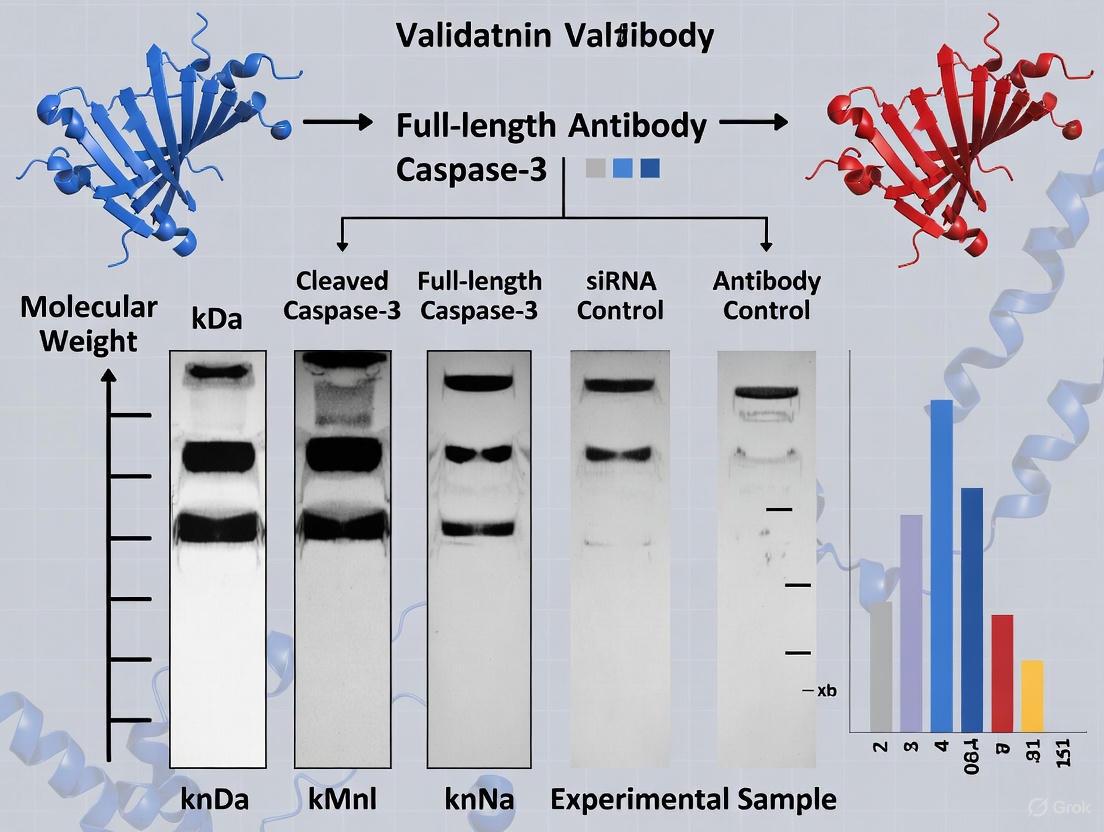
This article provides a systematic guide for researchers and drug development professionals on validating cleaved caspase-3 antibody specificity for Western blot analysis.
A Comprehensive Guide to Validating Cleaved Caspase-3 Antibody Specificity in Western Blot
Abstract
This article provides a systematic guide for researchers and drug development professionals on validating cleaved caspase-3 antibody specificity for Western blot analysis. It covers foundational principles of caspase-3 biology and antibody selection, detailed methodological protocols for sample preparation and detection, advanced troubleshooting for common issues like weak signals and high background, and rigorous validation strategies using knockout controls and comparative antibody assessment. The guide synthesizes current best practices and technical insights to ensure accurate and reliable detection of this critical apoptosis executioner in diverse research and preclinical applications.
Understanding Caspase-3 Biology and Antibody Specificity Fundamentals
The Critical Role of Caspase-3 as an Apoptosis Executioner
Caspase-3 is a critical effector protease in the caspase family, playing an indispensable role as the central executioner of apoptosis, the programmed cell death essential for embryogenesis, cellular homeostasis, and disease pathogenesis [1] [2]. This enzyme exists within cells as an inactive proenzyme (procaspase-3) with a molecular weight of approximately 32-35 kDa [3]. During apoptosis, initiator caspases (such as caspase-8 and caspase-9) cleave procaspase-3 at conserved aspartic residues, generating the active enzyme composed of large (17 kDa) and small (12 kDa) subunits that dimerize to form the functional protease [3]. Once activated, caspase-3 mediates the execution phase of apoptosis by catalyzing the cleavage of numerous cellular proteins, including poly(ADP-ribose) polymerase (PARP), lamin A, and cytokeratin-18, leading to the characteristic biochemical and morphological changes associated with apoptotic cell death [1] [3].
The detection of active caspase-3 has become a cornerstone in apoptosis research, with cleaved caspase-3 antibodies serving as vital tools for identifying and quantifying this key executioner protease. Within the context of antibody validation for Western blot research, understanding caspase-3's fundamental biology provides the necessary foundation for evaluating antibody performance and specificity. This article will objectively compare commercially available cleaved caspase-3 antibodies, providing experimental data and methodologies to guide researchers in selecting appropriate reagents for their specific applications.
Key Research Reagents for Caspase-3 Detection
The following table details essential reagents used in caspase-3 Western blot research, with brief explanations of their functions in experimental workflows.
| Reagent Category | Specific Examples | Function in Caspase-3 Research |
|---|---|---|
| Primary Antibodies | Anti-Caspase-3 (ab13847), Cleaved Caspase-3 (25128-1-AP), Anti-Caspase-3 (ABIN3188045) | Specifically bind to either pro-caspase-3 (~32 kDa) or cleaved active subunits (17/19 kDa) for detection [3] [4] [5]. |
| Cell Lysis Buffers | 50 mM HEPES, 0.1% CHAPS, 2 mM DTT, 0.1% Nonidet P-40, 1 mM EDTA [1] | Extract and solubilize proteins while maintaining caspase-3 integrity and activity. |
| Protease Inhibitors | 1 mM PMSF, 2 μg/ml leupeptin, 2 μg/ml pepstatin A [1] | Prevent non-specific proteolysis during protein extraction. |
| Caspase Substrates | DEVD-AMC or DEVD-AFC [1] | Fluorogenic/Chromogenic peptides for measuring caspase-3 enzymatic activity. |
| Loading Controls | Anti-GAPDH (sc-47724) [1] | Verify consistent protein loading across Western blot lanes. |
| Chemiluminescence Reagents | Super Signal WestPico Chemiluminescence Reagent [1] | Generate light signal for visualizing antibody-antigen complexes. |
| Positive Control Lysates | Staurosporine-treated cell lysates, Activated Jurkat cell extracts [3] [5] | Provide known sources of active caspase-3 for antibody validation. |
Comparative Analysis of Cleaved Caspase-3 Antibodies
The specificity and performance of cleaved caspase-3 antibodies vary significantly between products and manufacturers. The table below provides a structured comparison of several commercially available antibodies, highlighting key specifications and validation data.
| Antibody & Source | Host & Clonality | Reactivity | Applications | Key Characteristics & Validation Data |
|---|---|---|---|---|
| Anti-Caspase-3 (ab13847) [3] | Rabbit Polyclonal | Human (Validated); Mouse, Rat (Predicted) | WB (Validated) | - KO-Validated: Specificity confirmed using caspase-3 knockout HAP1 cells [3].- Detects: 32 kDa (inactive) and 17 kDa (active) subunits [3].- Requirement: Apoptosis induction needed for cleaved form detection [3]. |
| Cleaved Caspase-3 (25128-1-AP) [5] | Rabbit Polyclonal | Human, Mouse, Rat, Chicken, Bovine, Goat | WB, IHC, IF/ICC, ELISA | - Specificity: Recognizes only cleaved caspase-3 fragments, not full-length [5].- Band Pattern: Detects fragments at 17-25 kDa [5].- Performance: Cited as superior to competitor in direct comparison [5]. |
| Anti-Caspase-3 (ABIN3188045) [4] | Mouse Monoclonal (Clone 5E1) | Human, Mouse, Rat | WB, IHC | - Specificity: Detects endogenous active caspase-3 protein [4].- Band Pattern: 30-35 kDa (procaspase) and 17 kDa (p17 subunit) [4].- Load Recommendation: 30μg total protein; non-specific bands at 60μg [4]. |
| Caspase 3 Antibodies (Thermo Fisher) [6] | Rabbit, Mouse, Alpaca; Various clonalities | Human, Mouse, Rat, Non-human primate, Porcine | WB, IHC, ICC/IF, Flow, ELISA | - Broad Range: Over 70 antibodies with various host species [6].- Validation: Verified by cell treatment, knockdown, and knockout [6].- Formats: Polyclonal, monoclonal, recombinant monoclonal available [6]. |
Caspase-3 Activation Pathway and Detection Workflow
The diagrams below illustrate the caspase-3 activation pathway and the subsequent Western blot detection workflow, providing visual guidance for experimental planning and interpretation.
Caspase-3 Activation Pathway in Apoptosis
Western Blot Workflow for Caspase-3 Detection
Detailed Western Blot Protocols for Caspase-3 Detection
Standard Western Blot Protocol for Caspase-3 Antibody (NB500-210)
The following protocol provides a validated method for detecting caspase-3 using antibody NB500-210, which can be adapted for other caspase-3 antibodies with appropriate optimization [7]:
Gel Electrophoresis: Run a 10-15% SDS-polyacrylamide gel, loading approximately 20 μg of cell extract per lane to ensure optimal separation of caspase-3 fragments [7].
Protein Transfer: Transfer proteins from the gel to a PVDF or nitrocellulose membrane using standard transfer apparatus and conditions appropriate for the target protein sizes [1].
Membrane Blocking: Block the membrane in PT-T20 buffer (20 mM Tris-HCl, pH 7.4, 150 mM NaCl, 0.5% Tween 20) containing 5% non-fat dry milk (NFDM) for 3 hours at room temperature with gentle shaking to prevent non-specific antibody binding [7].
Primary Antibody Incubation: Incubate the membrane with anti-Caspase-3 primary antibody (NB500-210) diluted 1:500-1:1,000 in PT-T20 + 5% NFDM for 60 minutes at room temperature [7].
Washing: Wash the membrane for 15 minutes, three times, in PT-T20 buffer at room temperature to remove unbound primary antibody [7].
Secondary Antibody Incubation: Incubate the membrane with an anti-mouse IgG conjugated to horseradish peroxidase (HRP) diluted in PT-T20 + 5% NFDM for 60 minutes at room temperature [7].
Final Washing and Detection: Repeat the washing step (15 minutes, three times in PT-T20) and develop the membrane using chemiluminescent reagents according to the manufacturer's instructions [7].
Protocol for Activating Caspase-3 in Cell Extracts
For experiments requiring induction of caspase-3 activation in control samples, the following activation protocol is recommended [7]:
- Bring the cell extract to a final concentration of 5 mM dATP to activate the apoptotic pathway in vitro.
- Incubate the extracts at 37°C for 15-30 minutes to allow for caspase activation.
- Process the activated extracts immediately for Western blot analysis alongside experimental samples.
Alternative Lysis and Detection Protocol
An alternative comprehensive protocol for caspase detection in mouse tissue homogenates includes the following key steps [1]:
- Lysis Buffer Composition: Use 50 mM HEPES (pH 7.5), 0.1% CHAPS, 2 mM dithiothreitol, 0.1% Nonidet P-40, 1 mM EDTA, 1 mM phenylmethylsulfonyl fluoride, 2 μg/ml leupeptin, and 2 μg/ml pepstatin A at 4°C for optimal caspase preservation [1].
- Protein Concentration Determination: Use the Thermo Scientific Pierce BCA (bicinchoninic acid) Protein Assay Kit according to manufacturer recommendations to standardize protein loading [1].
- Gel Preparation: Prepare denaturing SDS-PAGE gels using solutions of 30% acrylamide/0.8% bisacrylamide, 1.5 M Tris-HCl (pH 8.8), 0.5 M Tris-HCl (pH 6.8), 10% SDS, and 10% ammonium persulfate with TEMED for polymerization [1].
- Membrane Blocking Alternatives: Block membranes in 5% BSA in PBS-T (phosphate-buffered saline with 0.05% Tween-20) as an alternative to NFDM, which may reduce background for some antibodies [1].
Methodological Comparisons and Technical Considerations
Comparison of Caspase Detection Methods
Research directly comparing caspase detection methods reveals important distinctions between antibody-based approaches and fluorescent substrate techniques [2]. In studies of gentamicin-induced hair cell death, both caspase-directed antibodies and CaspaTag kits reliably labeled cells with activated caspase-3, with similar timing of detection following apoptotic induction [2]. However, a critical distinction emerged: caspase-3 antibodies typically label only cells currently undergoing apoptotic death, providing a "snapshot" of apoptosis at a specific time point, while CaspaTag labels all cells that have undergone apoptotic death in addition to those currently dying, making it more suitable for showing overall patterns of cell death over time [2].
Optimization Strategies for Multiplex Western Blotting
For researchers requiring simultaneous detection of caspase-3 alongside other apoptosis-related proteins, multiplex Western blotting offers significant advantages. Key optimization strategies include [8]:
- Antibody Host Species Selection: Primary antibodies must be derived from different host species (e.g., rabbit, mouse, chicken) to enable distinction by species-specific secondary antibodies. Avoid combining antibodies from closely related species like mouse and rat, as secondary antibodies may cross-react [8].
- Blocking Buffer Optimization: Test multiple blocking buffers (e.g., protein-based and protein-free options) to identify conditions that provide strong specific signals with low background for all targets. Mixed blocking buffers (e.g., 75:25 or 50:50 ratios) can sometimes provide optimal results when single buffers are insufficient [8].
- Linear Range Determination: Establish the linear detection range for each antibody using dilution series of sample types to ensure all targets are detected within their quantitative ranges [8].
- Validation with Controls: Include both positive controls (e.g., staurosporine-treated cells, activated Jurkat cells) and negative controls (caspase-3 knockout cell lines) to verify antibody specificity [3] [5].
The critical role of caspase-3 as an apoptosis executioner necessitates highly specific and well-validated detection antibodies for accurate research outcomes. The comparative data presented in this guide demonstrates that while multiple high-quality cleaved caspase-3 antibodies are commercially available, they differ significantly in their specificity, validation approaches, and optimal applications. Researchers must consider these differences when selecting reagents for their specific experimental needs, particularly when working with complex samples or multiple species. Proper validation using knockout controls, optimization of protocols for specific sample types, and appropriate selection of detection methodologies are all essential components of rigorous apoptosis research focused on this key effector caspase.
Caspase-3 is a critical executioner caspase that functions as a cysteine-aspartic acid protease, playing an indispensable role in the execution phase of programmed cell death (apoptosis) [9]. Within cells, caspase-3 exists predominantly as an inactive zymogen (pro-caspase-3) that requires proteolytic maturation to become a fully active enzyme [10] [11]. This activation process involves dramatic structural rearrangements that transform the inactive precursor into a potent protease capable of cleaving numerous cellular target proteins [11]. The specific detection of cleaved caspase-3 via Western blotting serves as a definitive biochemical marker for apoptosis, making the understanding of its activation mechanism essential for researchers investigating cell death mechanisms in contexts ranging from cancer therapy response to neurodegenerative diseases [12] [9]. This guide provides a comprehensive comparison of pro-caspase-3 and cleaved caspase-3, with particular emphasis on structural differences, activation mechanisms, and experimental validation of antibody specificity for apoptosis research.
Structural Comparison: Zymogen vs. Activated Enzyme
The transition from pro-caspase-3 to active caspase-3 involves significant structural changes that enable catalytic function. The table below summarizes the key structural differences between these two forms:
| Structural Feature | Pro-Caspase-3 (Inactive Zymogen) | Cleaved Caspase-3 (Active Enzyme) |
|---|---|---|
| Quaternary Structure | Homodimer [11] | Heterotetramer (p17₂-p12₂) [11] |
| Molecular Weight | ~35 kDa [13] [14] | p17 (~17 kDa) and p12 (~12 kDa) fragments [13] [15] |
| Catalytic Site | Inaccessible; disrupted LH β-sheet [10] | Accessible and functional [10] |
| Loop Conformation | L1 disordered; L3 pulled from active site [10] | Ordered loops forming functional substrate binding groove [10] |
| Proteolytic Cleavage Sites | Uncleaved at Asp175, Asp28, and Asp9 [11] | Cleaved at Asp175 (essential), and often at Asp28 & Asp9 [11] |
| Catalytic Activity | Catalytically inactive [10] [11] | Active; cleaves cellular substrates after aspartic residues [9] |
The structure of pro-caspase-3 reveals three key distinguishing features compared to the active enzyme: (1) Loop-1 (L1) disorder, including disorder of Arg64, a primary residue responsible for binding the P1 aspartate in caspase substrates; (2) Disruption of the loop-H (LH) β-sheet containing residues contributing to the oxyanion hole and the catalytic histidine (His121), which moves ~5 Å from its conformation in the mature enzyme; and (3) Rewinding of loop-4 (L4) residues into an adjacent α-helix [10]. These structural features maintain the zymogen in a catalytically inactive state until appropriate apoptotic signals trigger its activation.
Upon proteolytic cleavage at specific aspartic acid residues, caspase-3 undergoes a conformational rearrangement that forms the mature active enzyme. The active site becomes accessible, and the loops reorganize to form a functional substrate-binding groove [10]. The catalytic efficiency increases dramatically, with the kcat for processed caspase-3 being approximately 3.3 × 10⁴-fold higher than that of the procaspase-7 homolog, indicating the profound functional impact of these structural changes [10].
Molecular Visualization of Caspase-3 Activation
The following diagram illustrates the structural transition from pro-caspase-3 to cleaved caspase-3:
Molecular Mechanisms of Caspase-3 Activation
The Proteolytic Activation Pathway
Caspase-3 activation follows a tightly regulated proteolytic cascade. Initiator caspases (particularly caspase-9 in the intrinsic pathway) cleave procaspase-3 at specific aspartate residues within the intersubunit linker (loop-2) [11]. The primary cleavage occurs at Asp175, located between the large (p20) and small (p10) subunits, which is essential for generating the active heterotetrameric enzyme [11] [15]. This cleavage allows the enzyme to undergo a conformational change that exposes its active site centered around the catalytic cysteine residue at position 163 (C163) [11].
Following the initial cleavage at the intersubunit linker, additional processing events occur at the N-terminal prodomain. Research demonstrates that cleavage at Asp9 within the prodomain is vital for complete caspase-3 activation, potentially serving as an initial cleavage event that permits subsequent cleavage at Asp28, leading to prodomain removal [11]. The 28-amino acid prodomain is highly conserved across species, suggesting a critical regulatory function rather than merely serving as an inhibitory segment [11].
Distinct Activation Mechanisms Between Caspase Homologs
Interestingly, structural studies reveal that procaspase-3 and its close homolog procaspase-7 employ distinct activation mechanisms despite their high sequence identity (52% in humans) [10]. Procaspase-3 is catalytically inactive and matures through a symmetric all-or-nothing process, whereas procaspase-7 contains latent catalytic activity and matures through an asymmetric and tiered mechanism [10]. This suggests that procaspase-7 may have a lower activation threshold compared to procaspase-3, potentially explaining their non-redundant biological functions in apoptosis [10].
Experimental Detection and Validation Methods
Western Blot Methodology for Caspase-3 Analysis
The detection and distinction between pro-caspase-3 and cleaved caspase-3 by Western blotting provides critical information about apoptotic status in experimental systems. Below is a standardized protocol for validating caspase-3 activation:
Sample Preparation:
- Cell Lysis: Lyse cells in RIPA buffer (or similar protein extraction reagent) containing protease inhibitors.
- Protein Quantification: Determine protein concentration using BCA or Bradford assay.
- Sample Denaturation: Mix 20-30 μg of total protein with Laemmli buffer, denature at 95-100°C for 5 minutes.
Gel Electrophoresis and Blotting:
- SDS-PAGE: Load samples onto 12-15% polyacrylamide gels for optimal separation of low molecular weight proteins.
- Transfer: Electrophoretically transfer proteins to PVDF or nitrocellulose membrane.
Antibody Incubation:
- Blocking: Incubate membrane with 5% non-fat milk in TBST for 1 hour at room temperature.
- Primary Antibody: Incubate with appropriate dilution of caspase-3 antibodies (typically 1:1000 in blocking buffer) overnight at 4°C.
- Washing: Wash membrane 3× with TBST for 5-10 minutes each.
- Secondary Antibody: Incubate with HRP-conjugated secondary antibody (typically 1:2000-1:5000) for 1 hour at room temperature.
- Detection: Develop with enhanced chemiluminescence (ECL) substrate and image.
Experimental Controls:
- Induced Apoptosis: Include samples treated with known apoptosis inducers (e.g., 1 μM staurosporine for 4 hours) as positive control [9].
- Caspase Inhibition: Use caspase inhibitors (e.g., Q-VD-OPh, Z-VAD-FMK) to confirm specificity of cleavage detection [16].
- Loading Control: Include housekeeping proteins (e.g., actin, GAPDH) for normalization.
Antibody Specificity Validation
Validating antibody specificity is crucial for accurate interpretation of Western blot results. The table below outlines key validation strategies:
| Validation Method | Experimental Approach | Expected Outcome |
|---|---|---|
| Molecular Weight Verification | Compare band sizes to expected weights: pro-caspase-3 (~35 kDa), cleaved fragments (17/19 kDa and 12 kDa) [13] [15] | Antibody detects bands at correct molecular weights |
| Knockout/Knockdown Validation | Use caspase-3 deficient cells or siRNA knockdown [11] [6] | Loss of signal in deficient cells confirms specificity |
| Induction Time Course | Treat cells with apoptosis inducers and collect samples at multiple time points [14] [9] | Progressive decrease in pro-form with corresponding increase in cleaved fragments |
| Peptide Competition | Pre-incubate antibody with immunizing peptide [13] [15] | Significant reduction or elimination of signal |
| Caspase Inhibition | Treat cells with caspase inhibitors before apoptosis induction [16] | Attenuation or absence of cleaved caspase-3 bands |
Antibodies that specifically recognize cleaved caspase-3 (such as those targeting the neo-epitope around Asp175) are particularly valuable as they provide definitive evidence of caspase activation rather than mere protein expression [15]. These antibodies detect the large fragment (17/19 kDa) of activated caspase-3 resulting from cleavage adjacent to Asp175 and typically do not recognize full-length caspase-3 [15].
Experimental Workflow for Apoptosis Detection
The following diagram outlines a comprehensive experimental workflow for detecting caspase-3 activation in cell culture models:
Research Reagent Solutions for Caspase-3 Studies
The table below provides essential research reagents for studying caspase-3 activation, along with their specific applications in experimental protocols:
| Research Reagent | Specific Function/Application | Example Use in Experiments |
|---|---|---|
| Caspase-3 Antibodies (pan) | Detects both pro-caspase-3 (35 kDa) and cleaved large fragment (17 kDa) [13] [14] | Monitoring total caspase-3 expression and processing in Western blot |
| Cleaved Caspase-3 (Asp175) Antibodies | Specifically recognizes activated caspase-3; does not detect full-length protein [15] | Definitive identification of apoptotic cells in IHC, IF, and Western blot |
| Caspase Inhibitors (e.g., Q-VD-OPh, Z-VAD-FMK) | Irreversibly inhibits caspase activity; prevents caspase-3 activation [16] | Specificity controls; determining caspase-dependent vs independent cell death |
| Apoptosis Inducers (e.g., Staurosporine) | Triggers intrinsic apoptotic pathway [14] [9] | Positive control for caspase-3 activation in time-course experiments |
| PARP Antibodies | Detects cleavage of PARP (89 kDa fragment), a key caspase-3 substrate [14] | Downstream verification of caspase-3 functional activity |
| Caspase-3 Deficient Cells | Lack functional caspase-3 gene [11] | Specificity controls for antibodies and functional assays |
When selecting antibodies for caspase-3 detection, consider both the application context and required specificity. Antibodies that recognize both pro and cleaved forms (such as Cell Signaling Technology #9662) are useful for assessing the ratio of inactive to active caspase-3, while neo-epitope antibodies specific for cleaved caspase-3 (such as Cell Signaling Technology #9661) provide unambiguous evidence of activation [13] [15]. Commercial antibody cocktails that include caspase-3, cleaved PARP, and loading controls in a single mixture (such as abCAM ab136812) offer streamlined workflows for apoptosis assessment [14].
Research Applications and Implications
The specific detection of cleaved caspase-3 has significant implications across multiple research domains. In cancer research, levels of cleaved caspase-3 correlate with cancer progression and treatment response [12] [9]. Immunohistochemical analysis of cleaved caspase-3 in tumor specimens shows association with recurrence rates and patient survival [9]. In drug development, caspase-3 activation serves as a key indicator for evaluating the cytotoxic potential and mechanism of action of therapeutic candidates [9]. In neurodegenerative disease research, caspase-3 activation contributes to disease pathogenesis, with evidence showing it promotes accumulation of pathogenic proteins in Alzheimer's Disease [9].
Recent advances in caspase-3 research include the development of neo-epitope antibodies (NEAs) that recognize the common structural features of caspase-cleaved proteins without prior knowledge of specific cleavage sites [16]. These antibodies target exposed C-terminal tetrapeptide sequences (conforming to the 'DXXD' pattern) generated by caspase cleavage and can immunoprecipitate multiple cleaved caspase substrates, providing a powerful tool for identifying novel caspase cleavage events [16].
The structural and mechanistic insights into caspase-3 activation continue to inform therapeutic strategies. For instance, the discovery that procaspase-3 can be allosterically activated by conformation-specific antibody fragments suggests potential avenues for developing proenzyme activators that could directly trigger apoptosis in cancer cells [10]. Furthermore, the recognition that decreases in intracellular pH can stimulate procaspase-7 activity highlights the importance of microenvironmental conditions in regulating caspase activation [10].
Caspase-3 serves as a critical executioner protease in the apoptotic pathway, responsible for the proteolytic cleavage of numerous key cellular proteins during programmed cell death [12]. Its activation requires proteolytic processing of an inactive 35 kDa zymogen into activated p17 and p12 fragments, which then dimerize to form the active enzyme [17] [3] [18]. This fundamental process in cell biology necessitates precise detection tools, primarily antibodies that target different forms of the protein. Cleavage-site specific antibodies (also called cleaved caspase-3 antibodies) selectively recognize the activated form of caspase-3, generated after cleavage adjacent to Asp175, and are therefore direct markers of apoptosis [17]. In contrast, pan-caspase-3 antibodies detect both the full-length (inactive) proenzyme and the cleaved (active) fragments, providing information about total caspase-3 expression levels but not specifically indicating activation [18]. Within research contexts focused on validating apoptotic events, particularly in Western blot applications, understanding the distinction between these antibody types is paramount for accurate data interpretation and experimental validity.
Conceptual Framework: Mechanisms of Epitope Recognition
The Caspase-3 Activation Pathway
The activation of caspase-3 represents a convergence point in apoptosis signaling. As a critical executioner caspase, it is synthesized as an inactive proenzyme (pro-caspase-3) that must undergo proteolytic cleavage at specific aspartic acid residues to become active [12]. The cleavage occurs at Asp175, generating large (17/19 kDa) and small (12 kDa) subunits that form the active heterotetramer [17] [19]. This activation can be triggered by both intrinsic (mitochondrial) and extrinsic (death receptor) apoptotic pathways, making caspase-3 activity a definitive marker of apoptotic commitment [12]. The following diagram illustrates this activation process and the protein regions targeted by different antibody types:
Molecular Basis of Antibody Specificity
The fundamental distinction between cleavage-site specific and pan-caspase-3 antibodies lies in their epitope recognition. Cleavage-specific antibodies are typically generated using synthetic peptides corresponding to amino-terminal residues adjacent to Asp175 in human caspase-3, which becomes exposed only after proteolytic cleavage [17]. This design enables highly specific detection of the activated caspase-3 without cross-reactivity with the full-length precursor or other cleaved caspases [17]. In contrast, pan-caspase-3 antibodies are often produced using immunogens corresponding to residues surrounding the cleavage site of human caspase-3, enabling recognition of both cleaved and uncleaved forms [18]. Some pan-caspase-3 antibodies may detect the large fragment (17 kDa) and the inactive pro-caspase-3 (32 kDa), providing a comprehensive view of total caspase-3 expression but lacking specificity for apoptosis [3].
Comparative Analysis: Antibody Performance Characteristics
Side-by-Side Antibody Comparison
The selection between cleavage-specific and pan-caspase-3 antibodies requires careful consideration of their performance across multiple parameters. The following table provides a comprehensive comparison of representative antibodies from these two categories, synthesizing data from commercial manufacturers and independent validation studies:
Table 1: Comparative Analysis of Cleavage-Specific vs. Pan-Caspase-3 Antibodies
| Parameter | Cleavage-Specific Caspase-3 (Asp175) Antibody #9661 | Caspase-3 Antibody #9662 | Anti-Caspase-3 Antibody (ab13847) |
|---|---|---|---|
| Target Epitope | N-terminal residues adjacent to Asp175 after cleavage [17] | Residues surrounding cleavage site (both forms) [18] | Large active subunit (17kDa) and inactive pro-caspase-3 (32kDa) [3] |
| Specificity | Detects only cleaved caspase-3 (17/19 kDa); does not recognize full-length caspase-3 [17] | Detects full-length (35 kDa) and large fragment (17 kDa) [18] | Recognizes both cleaved (~17 kDa) and full-length caspase-3 [3] |
| Recommended Applications | WB, IP, IHC, IF, Flow Cytometry [17] | WB, IP, IHC [18] | Western Blot (human) [3] |
| Species Reactivity (Confirmed) | Human, Mouse, Rat, Monkey [17] | Human, Mouse, Rat, Monkey [18] | Human [3] |
| Key Validation Data | Independent validation: detects apoptosis in serum-starved PC12 cells [20] | Detects endogenous levels of full-length and cleaved caspase-3 [18] | KO-validated in HAP1 cells; recognizes caspase-3 in wild-type but not knockout cells [3] |
| Band Pattern in WB | 17 and 19 kDa bands [17] | 17, 19, and 35 kDa bands [18] | 17 kDa (cleaved) and 32 kDa (full-length) bands [3] |
Application-Specific Performance Data
Different research applications demand specific antibody characteristics. The table below compares the performance of various caspase-3 antibodies across common laboratory techniques, based on manufacturer specifications and independent validation studies:
Table 2: Application Performance Comparison of Commercial Caspase-3 Antibodies
| Antibody | Western Blot | Immuno-histochemistry | Immuno-precipitation | Flow Cytometry | Immuno-fluorescence |
|---|---|---|---|---|---|
| Cleaved Caspase-3 (D3E9) Rabbit mAb #9579 | N/A [21] | ++++ [21] | N/A [21] | ++++ [21] | ++++ [21] |
| Cleaved Caspase-3 (5A1E) Rabbit mAb #9664 | ++++ [21] | +++ [21] | ++++ [21] | ++ [21] | ++ [21] |
| Cleaved Caspase-3 (Asp175) Antibody #9661 | ++++ [21] | ++++ [21] | +++ [21] | +++ [21] | +++ [21] |
| Caspase-3 (3G2) Mouse mAb #9668 | +++ [21] | - [21] | - [21] | - [21] | - [21] |
| Caspase-3 Antibody #9662 | +++ [21] | ++ [21] | +++ [21] | - [21] | - [21] |
Application Key: (++++)=Very Highly Recommended, (+++)=Highly Recommended, (++)=Recommended, (-)=Not Recommended, N/A=Not Applicable [21]
Experimental Validation: Methodologies and Protocols
Western Blot Protocol for Cleaved Caspase-3 Detection
The detection of cleaved caspase-3 by Western blot requires optimized conditions to ensure specificity and sensitivity. Based on manufacturer protocols and independent validation studies, the following methodology represents a standardized approach:
Sample Preparation: Cells or tissues should be lysed using RIPA buffer or similar, supplemented with protease and phosphatase inhibitors to prevent protein degradation and maintain phosphorylation status [20]. Apoptosis can be induced using various stimuli including staurosporine (1μM for 4 hours) [3], serum starvation [20], or chemotherapeutic agents like 5-fluorouracil [19].
Electrophoresis and Transfer: Separate proteins using 4-20% gradient or 12.5% Tris-Glycine gels [3] [20]. Transfer to nitrocellulose or PVDF membranes using standard wet or semi-dry transfer systems [3].
Antibody Incubation:
- Blocking: Incubate membrane with 5% bovine serum albumin (BSA) or non-fat dry milk for 1 hour at room temperature [3].
- Primary Antibody: Incubate with cleaved caspase-3 antibody #9661 at 1:1000 dilution in TBST with 5% BSA overnight at 4°C [17] [20].
- Secondary Antibody: Incubate with HRP-conjugated anti-rabbit IgG at 1:10,000 dilution for 1 hour at room temperature [20].
Detection: Develop blots using enhanced chemiluminescence (ECL) reagents and visualize with appropriate imaging systems [3]. Expected bands for cleaved caspase-3 appear at 17 and 19 kDa [17].
Specificity Controls and Validation Methods
Rigorous validation is essential for confirming antibody specificity in caspase-3 detection:
Knockout Validation: Antibody specificity should be confirmed using caspase-3 knockout cell lines (e.g., HAP1 cells), where the antibody should not produce the characteristic bands observed in wild-type cells [3].
Apoptosis Induction Controls: Include samples treated with known apoptosis inducers (e.g., staurosporine, serum starvation) as positive controls, which should show enhanced cleaved caspase-3 detection compared to untreated cells [3] [20].
Peptide Competition: Pre-incubation of the antibody with the immunizing peptide should abolish or significantly reduce signal intensity, confirming epitope specificity [17].
Multiple Application Validation: As highlighted in Table 2, antibodies should be validated across multiple applications, with particular attention to potential non-specific bands in Western blot, which can be identified through knockout controls [3] [20].
Research Applications and Biological Significance
Detection of Apoptosis in Experimental Models
Cleaved caspase-3 antibodies serve as direct markers of apoptotic activity across diverse research contexts. In cancer research, immunohistochemical detection of cleaved caspase-3 provides valuable prognostic information, with studies demonstrating significantly higher levels of cleaved caspase-3 in head and neck cancers (73.3%) compared to oral premalignant disorders (22.9%), suggesting enhanced apoptotic activity associated with malignancy progression [12]. In therapeutic studies, cleaved caspase-3 detection confirms drug efficacy, as demonstrated in gastric cancer models where chemotherapeutic agents induced caspase-3 activation and subsequent cleavage of downstream substrates like CAD, a rate-limiting enzyme in pyrimidine synthesis [19]. The following experimental workflow illustrates a typical approach for detecting caspase-3 activation in cell-based assays:
Functional Consequences of Caspase-3 Activation
The biological significance of caspase-3 activation extends beyond its role as an apoptosis marker to encompass specific substrate cleavage events that drive apoptotic morphology. Caspase-3 mediates the proteolytic cleavage of key cellular proteins including:
- Poly (ADP-ribose) polymerase (PARP): Cleavage inactivates DNA repair mechanisms [17] [18].
- CAD (Caspase-activated DNase): Cleavage at Asp1371 by caspase-3 activates CAD, leading to DNA fragmentation [19].
- BAD: Cleavage by caspase-3 generates a truncated form that exhibits enhanced pro-apoptotic activity [22].
- Viral proteins: Caspase-3 cleavage of viral antigens, such as KSHV LANA, can modulate host defense responses [23].
These specific cleavage events highlight the functional importance of caspase-3 activation in executing the apoptotic program and explain why detection of cleaved caspase-3 provides more specific information about apoptotic commitment than mere expression of the zymogen.
Technical Considerations and Research Reagent Solutions
Essential Reagents for Caspase-3 Research
Table 3: Research Reagent Solutions for Caspase-3 Detection
| Reagent Category | Specific Examples | Function/Application |
|---|---|---|
| Cleaved Caspase-3 Antibodies | #9661 (CST), ab13847 (Abcam) [17] [3] | Specific detection of activated caspase-3 in apoptotic cells |
| Pan-Caspase-3 Antibodies | #9662 (CST) [18] | Detection of total caspase-3 (both cleaved and uncleaved forms) |
| Apoptosis Inducers | Staurosporine, 5-Fluorouracil, Serum starvation [3] [19] [20] | Positive controls for caspase-3 activation |
| Validation Tools | Caspase-3 knockout cell lines (e.g., HAP1) [3] | Specificity controls for antibody validation |
| Detection Systems | HRP-conjugated secondary antibodies, ECL reagents [3] [20] | Signal detection and visualization in Western blot |
Troubleshooting and Optimization Guidelines
Effective detection of caspase-3, particularly the cleaved form, requires attention to several technical considerations:
Band Pattern Interpretation: Cleaved caspase-3 antibodies typically detect bands at 17 and 19 kDa, representing the large fragments resulting from cleavage at Asp175 [17]. Pan-caspase-3 antibodies may detect these plus the full-length 35 kDa proenzyme [18]. Additional non-specific bands may appear, emphasizing the need for appropriate controls [20].
Species Reactivity Considerations: While many commercial antibodies show cross-reactivity with human, mouse, and rat caspase-3, confirmed reactivity varies between products [21] [17] [18]. Species predicted to react based on 100% sequence homology but not experimentally verified include bovine, dog, and pig for some antibodies [21] [17].
Sensitivity Optimization: For low-abundance cleaved caspase-3 detection, increasing protein loading, enhancing signal detection with high-sensitivity ECL reagents, or using amplification systems may be necessary. Apoptosis induction with established agents serves as an important positive control [3] [20].
Validation Across Applications: Antibodies performing well in Western blot may not be optimal for other applications. Consultation of application-specific recommendations, as provided in Table 2, is essential for experimental success [21].
The distinction between cleavage-site specific and pan-caspase-3 antibodies represents a critical consideration in apoptosis research. Cleavage-specific antibodies provide definitive evidence of caspase-3 activation and ongoing apoptotic processes, making them invaluable for studies focused specifically on apoptosis induction and execution. Pan-caspase-3 antibodies offer a broader view of total caspase-3 expression but lack activation specificity. The selection between these reagents should be guided by research objectives, with cleavage-specific antibodies preferred for definitive apoptosis detection and pan-caspase-3 antibodies suitable for monitoring overall caspase-3 expression changes. Rigorous validation using appropriate controls, including knockout lines and apoptosis inducers, remains essential for generating reliable data regardless of antibody selection. Through understanding these distinctions and applications, researchers can effectively utilize these tools to advance our understanding of apoptotic mechanisms in health and disease.
In Western blot research focused on apoptosis, the validation of caspase-3 antibody specificity hinges on the accurate detection of expected molecular weights. Caspase-3, a crucial executioner protease in programmed cell death, undergoes a specific proteolytic activation process that yields characteristic fragments detectable by Western blot [24]. The inactive 35 kDa full-length zymogen is cleaved to generate activated fragments of 17 kDa and 19 kDa, which represent the large subunit of the activated enzyme [25] [26]. This molecular weight transition serves as a fundamental biomarker for confirming both antibody specificity and the occurrence of apoptosis in experimental models.
The distinction between these molecular forms is particularly vital in cancer research and drug development, where caspase-3 activation indicates successful induction of apoptotic pathways by therapeutic agents [19]. This guide provides a systematic comparison of antibodies and methodologies for reliably distinguishing these molecular weight species, enabling researchers to accurately interpret caspase-3 activation status in their experimental systems.
Caspase-3 Antibody Comparison: Specificity and Applications
Comprehensive Antibody Characteristics
Table 1: Comparison of Caspase-3 Antibodies for Western Blot Applications
| Antibody Name | Supplier | Clone | Reactivity | Specificity | Detects Full-length (35 kDa) | Detects Cleaved Fragments (17/19 kDa) |
|---|---|---|---|---|---|---|
| Caspase-3 Antibody #9662 | Cell Signaling Technology | Polyclonal | H, M, R, Mk | Endogenous caspase-3 | Yes | Yes [25] |
| Cleaved Caspase-3 (Asp175) Antibody #9661 | Cell Signaling Technology | Cleavage-specific | H, M, R, Mk | Cleaved caspase-3 only | No | Yes [27] |
| Caspase 3/P17/P19 Antibody 19677-1-AP | Proteintech | Polyclonal | H, M, R (8+ species) | Total caspase-3 | Yes (32-35 kDa) | Yes (17 kDa) [28] |
| Cleaved Caspase 3/P17/P19 Antibody 68773-1-Ig | Proteintech | 2F7B8 (Monoclonal) | H, M, R | Cleaved caspase-3 only | No | Yes (17 kDa, 19 kDa) [29] |
| Caspase-3 (3G2) Mouse mAb #9668 | Cell Signaling Technology | 3G2 (Monoclonal) | H | Total caspase-3 | Yes | Not recommended [27] |
Performance Data and Recommended Applications
Table 2: Antibody Performance Ratings and Experimental Use Cases
| Antibody | Western Blot Rating | IHC Rating | IP Rating | Flow/IF Rating | Optimal Dilution (WB) | Key Distinguishing Feature |
|---|---|---|---|---|---|---|
| #9662 | +++ | ++ | +++ | - | 1:1000 | Detects both full-length and cleaved forms [25] [27] |
| #9661 | ++++ | ++++ | +++ | +++ | Not specified | Cleavage-specific; superior for activated caspase-3 [27] |
| 19677-1-AP | Highly cited | 1:50-1:500 | 0.5-4.0 µg | 1:50-1:500 | 1:500-1:2000 | Most cited caspase-3 antibody; extensive validation [28] |
| 68773-1-Ig | 1:5000-1:50000 | 1:1000-1:4000 | 0.5-4.0 µg | 1:500-1:2000 | 1:5000-1:50000 | Exceptional WB sensitivity; cleaved-form specific [29] |
| #9668 | +++ | - | - | - | Not specified | Human-specific monoclonal [27] |
Molecular Weight Fundamentals: Caspase-3 Structure and Cleavage
Biochemical Basis of Molecular Weight Species
Caspase-3 is synthesized as an inactive proenzyme (35 kDa) consisting of a prodomain, large subunit (p17), and small subunit (p12) [24]. During apoptosis, proteolytic cleavage at specific aspartic acid residues (including Asp175) separates the domains, resulting in the formation of activated fragments [26]. The large subunit (p17) and its intermediate (p19) are the primary fragments detected at approximately 17 kDa and 19 kDa by Western blot [25] [28].
The observed molecular weights may vary slightly (32-35 kDa for full-length, 17-19 kDa for cleaved fragments) depending on gel systems and experimental conditions [28]. This cleavage process is essential for caspase-3 activation, as it enables the formation of the active heterotetramer consisting of two p17 and two p12 subunits [24]. The recognition of these specific molecular weights provides critical validation of antibody specificity and confirms the occurrence of caspase-3 activation in experimental systems.
Caspase-3 Cleavage and Apoptosis Signaling Pathways
The diagram above illustrates the proteolytic processing of caspase-3 from its inactive 35 kDa zymogen to the activated 17 kDa and 19 kDa fragments through apoptosis signaling pathways. This processing occurs through both intrinsic (mitochondrial) and extrinsic (death receptor) pathways, ultimately converging on caspase-3 activation [24]. The cleaved fragments form the active enzyme complex that executes apoptosis by cleaving key cellular substrates including PARP, CAD, and other regulatory and structural proteins [19] [24].
Experimental Protocols for Molecular Weight Validation
Western Blot Protocol for Caspase-3 Detection
Sample Preparation:
- Prepare cell lysates using RIPA buffer supplemented with protease inhibitors
- Use apoptotic inducers as positive controls: 1 μM Staurosporine (3-6 hours), 50 μM Cisplatin (18 hours), or 5-fluorouracil (5-FU) [28] [29]
- Include both treated and untreated samples for comparison
- Protein quantification using BCA assay recommended
Gel Electrophoresis and Transfer:
- Use 12-15% SDS-PAGE gels for optimal separation of 17-35 kDa range
- Load 20-50 μg total protein per lane
- Include pre-stained molecular weight markers
- Transfer to PVDF or nitrocellulose membrane using standard protocols
Antibody Incubation and Detection:
- Block membrane with 5% non-fat milk or BSA in TBST
- Incubate with primary antibody at appropriate dilution (see Table 2)
- Primary antibody incubation: overnight at 4°C or 1-2 hours at room temperature
- Secondary antibody: HRP-conjugated, 1:2000-1:5000, 1 hour at room temperature
- Detection: ECL or superior chemiluminescent substrates
Expected Results:
- Untreated cells: Primary band at ~35 kDa (full-length caspase-3)
- Apoptotic cells: Additional bands at ~17 kDa and/or ~19 kDa (cleaved fragments)
- Possible intermediate bands may be observed during activation
Validation Controls and Trouble-shooting
Essential Controls:
- Apoptotic positive control (Staurosporine-treated Jurkat or HeLa cells)
- Negative control (untreated cells)
- Loading control (β-actin, GAPDH)
- Specificity control: peptide competition where possible
Common Issues and Solutions:
- Non-specific bands: Titrate antibody concentration; optimize blocking conditions
- Weak or no signal: Check antibody expiration; optimize antigen retrieval
- High background: Increase wash stringency; optimize blocking conditions
- Incorrect molecular weight: Check buffer formulations; verify gel percentage
The Scientist's Toolkit: Essential Research Reagents
Table 3: Key Research Reagent Solutions for Caspase-3 Western Blot Research
| Reagent/Category | Specific Examples | Function/Application | Validation Tips |
|---|---|---|---|
| Caspase-3 Antibodies | CST #9662, Proteintech 19677-1-AP, CST #9661 (cleaved-specific) | Detect full-length and/or cleaved caspase-3 | Verify expected MW bands; use apoptotic positive controls |
| Apoptosis Inducers | Staurosporine (1 μM), 5-FU, Cisplatin, TRAIL | Positive control for caspase-3 activation | Titrate concentration and time course for optimal cleavage |
| Cell Lines | Jurkat, HeLa, HCT116, A2780 | Model systems for apoptosis research | Validate baseline caspase-3 expression and inducibility |
| Detection Kits | Cleaved Caspase-3 Western Detection Kit #9660 (CST) | Complete system for detecting activated caspase-3 | Includes positive control lysates and optimized reagents |
| Caspase Inhibitors | Z-VAD-FMK, QVD-OPH | Negative controls; confirm caspase-dependent cleavage | Pre-treat cells to prevent apoptosis-induced cleavage |
| Positive Control Lysates | Staurosporine-treated Jurkat cell lysates | Antibody validation and experimental standardization | Commercial sources available or prepare in-house |
Advanced Applications: CAD Cleavage as a Downstream Marker
A critical downstream application of caspase-3 activation detection is monitoring cleavage of specific substrates such as CAD (Caspase-Activated DNase). Recent research has demonstrated that CAD must be cleaved by caspase-3 at Asp1371 for its activation during apoptosis [19]. This cleavage event is essential for DNA fragmentation, a hallmark of apoptotic cell death.
In experimental settings, the detection of both caspase-3 cleavage (17/19 kDa fragments) and CAD cleavage provides compelling evidence of apoptosis progression. This dual validation approach is particularly valuable in chemotherapeutic efficacy studies, where CAD cleavage by caspase-3 determines cancer cell fate in response to treatment [19].
Caspase-3 Dependent Apoptosis Signaling Pathway
The diagram above illustrates the central role of caspase-3 cleavage in executing apoptosis following chemotherapeutic treatment. The detection of the 17/19 kDa fragments serves as a key molecular indicator confirming successful activation of this pathway, while subsequent CAD cleavage validates the functional consequence of caspase-3 activation [19].
The accurate identification of caspase-3 molecular weights (17/19 kDa vs. 35 kDa) requires careful antibody selection and appropriate experimental controls. Cleavage-specific antibodies (#9661, 68773-1-Ig) provide superior detection of activated caspase-3 with minimal background from the full-length zymogen, while pan-caspase-3 antibodies (#9662, 19677-1-AP) offer the advantage of simultaneously detecting both forms to assess the activation ratio.
For drug development applications where quantifying apoptosis induction is crucial, the cleavage-specific antibodies provide the most unambiguous results. In basic research contexts where monitoring both zymogen and activated forms is valuable, the pan-specific antibodies offer comprehensive information. In all cases, validation using apoptotic positive controls and careful attention to expected molecular weights remains essential for accurate interpretation of caspase-3 activation status in Western blot experiments.
Species Reactivity Considerations for Experimental Design
Within the framework of validating cleaved caspase-3 antibody specificity for Western blot research, a critical and often underappreciated factor is species reactivity. The ability to accurately detect this key executioner of apoptosis—the 17/19 kDa fragments of activated caspase-3—is fundamentally dependent on the antibody's performance across different model organisms used in drug development research [30]. Inconsistent or unvalidated cross-reactivity can lead to false negatives or misleading data, directly impacting the reproducibility and translational value of preclinical findings. This guide objectively compares the species reactivity of commercially available cleaved caspase-3 antibodies, providing experimentally grounded data and methodologies to inform robust experimental design.
Cleaved Caspase-3 Antibody Comparison
The table below summarizes the key characteristics of two widely used cleaved caspase-3 antibodies, based on manufacturer specifications and independent user reviews.
Table 1: Comparative Analysis of Cleaved Caspase-3 Antibodies
| Feature | Cell Signaling Technology (CST) #9661 | Proteintech 25128-1-AP |
|---|---|---|
| Reacted Species (Tested) | Human (H), Mouse (M), Rat (R), Monkey (Mk) [30] | Human, Mouse [31] |
| Predicted Reactivity | Bovine, Dog, Pig (based on 100% sequence homology) [30] | Rat, Chicken, Bovine, Goat (cited reactivity) [31] |
| Recommended WB Dilution | 1:1000 [30] | 1:500 - 1:2000 [31] |
| Observed MW (kDa) | 17, 19 [30] | 17-25 (may indicate complex formation) [31] |
| Immunogen | Synthetic peptide adjacent to Asp175 in human caspase-3 [30] | Peptide (exact sequence not specified) [31] |
| Independent Verification | A user reported difficulty obtaining a signal even at 1:250 dilution, achieving a quality result only at 1:250 [31]. | A user switching from CST #9661 reported a clear signal at 1:1000 dilution on HK-2 cells [31]. |
| Antibody Specificity | Does not recognize full-length caspase-3 or other cleaved caspases [30]. | Specific for cleaved caspase-3 fragments; does not recognize full-length caspase-3 [31]. |
The Scientist's Toolkit: Essential Reagents for Validation
Table 2: Key Research Reagent Solutions for Cleaved Caspase-3 Western Blotting
| Reagent / Material | Function in Experimental Design |
|---|---|
| Validated Positive Control Lysate | Provides a confirmed source of cleaved caspase-3 (e.g., from apoptotic cells) to verify antibody performance and experimental workflow [32]. |
| Species-Specific Negative Control | Tissue or cell lysates from caspase-3 knockout animals or siRNA-treated cells to confirm antibody specificity by absence of signal [32]. |
| Pan-Caspase Inhibitor (e.g., QVD-OPH) | Used to treat control cells to suppress apoptosis; absence of cleaved caspase-3 signal in these samples confirms the antibody's specificity for an apoptosis-dependent neo-epitope [33]. |
| Total Protein Normalization Reagents | Dyes (e.g., Ponceau S, Fast Green) or labeling reagents (e.g., No-Stain Protein Labeling Reagent) for total protein normalization (TPN), which is increasingly required by journals as a superior loading control over housekeeping proteins [34]. |
| Phosphatase and Protease Inhibitors | Added to lysis buffers to prevent protein degradation and dephosphorylation during sample preparation, preserving the integrity of protein targets and cleavage fragments [32]. |
Experimental Protocols for Specificity Validation
Protocol 1: Specificity Verification Using Genetic Knockout Controls
- Sample Preparation: Prepare protein lysates from both wild-type and caspase-3 knockout (or knockdown) cell lines or tissues [32]. Induce apoptosis in a portion of the wild-type cells using a relevant stimulus (e.g., chemotherapeutic agent, TRAIL).
- Western Blotting: Separate proteins via SDS-PAGE and transfer to a membrane. Perform immunoblotting using the cleaved caspase-3 antibody following the manufacturer's recommended protocol and dilution [30] [31].
- Analysis: The antibody is considered specific if a signal is detected only in the apoptotic wild-type sample and is eliminated or significantly reduced in the knockout sample, confirming that the signal is not due to non-specific binding [32].
Protocol 2: Immunoprecipitation of Cleaved Caspase Substrates
This protocol, adapted from a study on neo-epitope antibodies, validates antibody function beyond simple binding [33].
- Induce Apoptosis: Treat cells (e.g., HCT116 colorectal carcinoma cell line) with an apoptosis-inducing agent (e.g., 5-fluorouracil and TRAIL). Confirm apoptosis induction via an external method, such as Annexin V staining [33].
- Immunoprecipitation: Incubate the apoptotic cell lysate with the cleaved caspase-3 antibody. Use a non-specific rabbit IgG as a negative control. To further validate specificity, pre-treat a parallel sample with a pan-caspase inhibitor (e.g., QVD-OPH) – this should abolish the pull-down of cleaved substrates [33].
- Detection: Analyze the immunoprecipitated proteins by Western blot. Probe the blot with antibodies against known caspase substrates (e.g., PARP or caspase-6). The specific detection of the cleaved fragments of these substrates in the pull-down fraction, but not in the IgG control or inhibitor-treated sample, confirms the antibody's ability to recognize caspase-cleaved neo-epitopes [33].
Caspase-3 Activation Pathway and Experimental Workflow
The following diagram illustrates the key role of caspase-3 in apoptosis and a generalized workflow for validating its activation via Western blot.
Discussion and Best Practices
The Critical Role of Normalization
For quantitative Western blot analysis, normalization is essential to account for variability in protein loading and transfer efficiency. The field is increasingly moving away from using housekeeping proteins (HKPs) like GAPDH and β-actin, as their expression can vary with experimental conditions, cell type, and pathology [34]. Total Protein Normalization (TPN) is now considered the gold standard by many leading journals [34]. TPN, which involves staining and quantifying the total protein in each lane, provides a larger dynamic range and is not affected by changes in a single control protein, leading to more accurate and reproducible quantitation [34].
Addressing Antibody Cross-Reactivity and Promiscuity
A significant challenge in caspase research is the overlapping substrate specificity among caspases [35]. Studies have shown that caspase-3, in particular, can efficiently cleave motifs previously thought to be specific for other caspases [35]. This underscores the importance of using well-characterized antibodies that are specific for the cleaved form of caspase-3 and do not cross-react with other caspases or their cleaved fragments [30]. The use of knockout controls, as detailed in the protocols, is the most robust method to confirm this specificity.
Adherence to Journal Publication Guidelines
Top scientific journals have implemented strict guidelines for Western blot data to ensure integrity and reproducibility. Key requirements often include [34] [32]:
- Provision of Uncropped Blots: Full scans of original blots should be submitted as supplementary material.
- Avoidance of Image Manipulation: The use of editing tools that obscure data is prohibited. Adjustments to brightness/contrast must be applied evenly and must not eliminate any information.
- Clear Reporting: The "Materials and Methods" section must include detailed information on antibody sources, catalog and lot numbers, dilutions, and blocking agents.
Optimized Western Blot Protocol for Cleaved Caspase-3 Detection
Validating antibody specificity for cleaved caspase-3 by Western blot requires meticulous sample preparation to preserve protein integrity and post-translational modifications. The selection of appropriate lysis buffers and protease inhibitor cocktails is fundamental to preventing artifactual results and ensuring accurate detection of this critical apoptosis marker. This guide provides an objective comparison of available products and methodologies to help researchers optimize their sample preparation protocols for reliable cleaved caspase-3 detection.
Lysis Buffer Selection for Apoptosis Signaling Proteins
The cellular localization of your target protein dictates the optimal lysis buffer selection. For cleaved caspase-3, which localizes to the cytoplasm during apoptosis, researchers must choose buffers that effectively solubilize cytoplasmic proteins while maintaining the protein's structural epitopes for antibody recognition.
Table 1: Lysis Buffer Comparison for Protein Extraction
| Target Protein Location | Recommended Buffer | Key Components | Advantages | Limitations |
|---|---|---|---|---|
| Whole Cell (Total Protein) | RIPA Buffer | 25 mM Tris-HCl (pH 7.6), 150 mM NaCl, 1% NP-40, 1% sodium deoxycholate, 0.1% SDS [36] [37] | Effective for membrane-bound, nuclear, and mitochondrial proteins; harsh detergents solubilize challenging proteins | May disrupt protein-protein interactions; can interfere with some downstream applications |
| Whole Cell (Mild Extraction) | NP-40 Buffer | 50 mM Tris-HCl (pH 7.4-8.5), 150 mM NaCl, 1% NP-40 [36] [37] | Preserves protein-protein interactions; maintains native protein structure | Less effective for nuclear and membrane-bound proteins |
| Cytoplasmic Proteins | Tris-HCl Buffer | 50 mM Tris-HCl (pH 7.4), 250 mM NaCl, 5 mM EDTA, 50 mM NaF, 1% NP-40 [36] [37] | Ideal for cytoplasmic extracts like cleaved caspase-3; minimal disruption to organelles | Not suitable for nuclear or membrane proteins |
For cleaved caspase-3 detection, cytoplasmic extraction buffers (Tris-HCl with NP-40) often provide optimal results by effectively solubilizing the cytoplasmic protein while maintaining epitope integrity. However, RIPA buffer may be preferable when simultaneously analyzing multiple apoptosis markers with different cellular localizations.
Protease and Phosphatase Inhibitor Formulations
Protease and phosphatase inhibitors are essential components in lysis buffers that prevent protein degradation and preserve post-translational modifications during sample preparation. The following table compares major commercial inhibitor formulations:
Table 2: Commercial Protease and Phosphatase Inhibitor Formulations
| Product Format | Inhibitor Types | Key Components | Downstream Compatibility | Experimental Evidence |
|---|---|---|---|---|
| Liquid Cocktail (Halt) | Broad-spectrum protease & phosphatase | AEBSF, Aprotinin, E-64, Leupeptin, Bestatin, EDTA, Sodium Fluoride, Sodium Orthovanadate [38] | Not compatible with 2D gels or IMAC [38] | ≥97% protease inhibition in pancreatic extract; preserves phosphorylation of MEK, MAPK, STAT3 [38] |
| Tablets (Pierce) | Broad-spectrum protease & phosphatase | Similar spectrum to liquid formats but in tablet formulation [38] | Compatible with all applications, including 2D gels and IMAC (EDTA-free versions) [38] | Effective protease inhibition across multiple tissue types; preserves phosphorylation of AKT, PDGFR, ERK1/2 [38] |
| EDTA-Free Formulations | Broad-spectrum without metalloprotease inhibition | Contains inhibitors for serine, cysteine, and aspartic proteases but lacks EDTA [38] | Compatible with IMAC and 2D electrophoresis [38] | Maintains effective inhibition of non-metalloproteases [38] |
Experimental data demonstrates that liquid cocktail formulations provide superior protease inhibition (≥97%) compared to tablet formats (≥59%) in standardized assays using pancreatic extract [38]. Both formats effectively preserve protein phosphorylation states, crucial for studying signaling pathways upstream of caspase-3 activation.
Optimized Sample Preparation Protocol
Cell Lysis Procedure for Cleaved Caspase-3 Detection
Prepare Lysis Buffer: Add protease and phosphatase inhibitors immediately before use. For Halt Protease and Phosphatase Inhibitor Cocktail (100X), add 10 µL per 1 mL of ice-cold lysis buffer [36]. For cytoplasmic extraction of cleaved caspase-3, NP-40 or Tris-HCl lysis buffers are recommended.
Harvest Adherent Cells:
- Place culture dish on ice and wash cells with ice-cold PBS
- Aspirate PBS and add ice-cold lysis buffer (200-400 µL for 6-well plate)
- Incubate with gentle shaking for 5 minutes on ice [36]
Harvest Suspension Cells:
- Pellet cells by centrifugation at 2,500 × g for 10 minutes
- Wash pellet with ice-cold PBS
- Resuspend in ice-cold lysis buffer (1 mL per 10⁷ cells) [36]
Clarify Lysate:
Determine Protein Concentration:
Sample Denaturation for Caspase-3 Detection
Western Blot Sample Denaturation Workflow
For cleaved caspase-3 detection:
- Mix protein sample with SDS/LDS sample buffer to final 1X concentration
- Add reducing agent (DTT or β-mercaptoethanol) to final 1X concentration
- Heat at 70°C for 10 minutes (avoids excessive aggregation that can occur at 100°C) [36]
- Cool samples and centrifuge briefly before loading gel
Heating at 70°C rather than 100°C is specifically recommended to prevent proteolysis while ensuring proper denaturation for optimal cleaved caspase-3 detection [36].
Experimental Data Supporting Inhibitor Efficacy
Quantitative Protease Inhibition Performance
Independent experiments comparing commercial protease inhibitor formulations demonstrate significant performance differences:
Table 3: Protease Inhibition Efficacy Under Standardized Conditions
| Inhibitor Format | % Protease Inhibition | Test Conditions | Statistical Significance |
|---|---|---|---|
| Halt Protease Inhibitor Cocktail | ≥97% | 1.0 mg/mL rat pancreas extract, validated protease assay [38] | p < 0.001 vs. untreated control |
| Competitive Tablet Formulations | ≥59% | Same conditions as above for direct comparison [38] | Significantly lower efficacy than liquid cocktail |
Phosphorylation State Preservation
Phosphatase inhibitors are crucial for maintaining upstream regulatory signals that control caspase-3 activation:
- Halt Phosphatase Inhibitor Cocktail preserves phosphorylation of MEK (serine), MAPK (threonine/tyrosine), and STAT3 (tyrosine) in HeLa cell lysates [38]
- Pierce Phosphatase Inhibitor Tablets maintain phosphorylation of AKT and PDGFR in NIH 3T3 cells and ERK1/2 in liver and spleen tissues [38]
The Scientist's Toolkit: Essential Reagents
Table 4: Key Research Reagent Solutions for Cleaved Caspase-3 Detection
| Reagent Category | Specific Products | Function in Experiment |
|---|---|---|
| Cell Lysis Buffers | RIPA Buffer, NP-40 Buffer, M-PER, T-PER [36] | Solubilizes proteins while maintaining epitope integrity for antibody recognition |
| Protease/Phosphatase Inhibitors | Halt Cocktail, Pierce Tablets (Thermo Fisher) [38] [36] | Prevents protein degradation and maintains post-translational modifications |
| Protein Assays | Pierce BCA Protein Assay [36] | Accurately quantifies protein concentration for equal loading |
| Electrophoresis Buffers | LDS Sample Buffer, Reducing Agents, Tris-Glycine Buffers [36] | Denatures proteins for size-based separation while maintaining linear epitopes |
| Cleaved Caspase-3 Antibodies | #9661 (Cell Signaling), 25128-1-AP (Proteintech) [40] [41] | Specifically detects activated caspase-3 fragments (17/19 kDa) without cross-reactivity to full-length protein |
Impact on Cleaved Caspase-3 Antibody Validation
Proper sample preparation directly influences cleaved caspase-3 antibody validation outcomes:
- Inadequate protease inhibition can generate artificial cleavage fragments that compromise specificity determinations
- Improper lysis conditions may fail to extract the target protein efficiently or alter conformational epitopes
- Suboptimal heating during denaturation (100°C vs. 70°C) can promote aggregation or additional cleavage [36]
Antibody validation experiments must include positive controls (apoptosis-induced cells) and negative controls (caspase inhibitor-treated cells) processed with identical lysis conditions to establish specificity.
Advanced Methodologies for Quantitative Western Blotting
Total Protein Normalization
For publication-quality cleaved caspase-3 quantification, total protein normalization (TPN) is increasingly required by major journals:
- TPN normalizes target protein to total protein in each lane, avoiding housekeeping protein variability [34]
- Methods include total protein stains (No-Stain Protein Labeling Reagent) or fluorescent labeling [34]
- Provides larger dynamic range and more reliable quantification than traditional housekeeping proteins [34]
Image Acquisition and Analysis Guidelines
- Acquire images in lossless formats (TIFF, PNG) at minimum 300 dpi resolution [42] [34]
- Avoid overexposed bands that compromise quantitative accuracy [42]
- Use ImageJ or specialized Western blot quantification software for densitometry [42]
- Maintain original, unprocessed images for journal submission [34]
Optimal sample preparation through appropriate lysis buffer selection and effective protease inhibition is foundational to validating cleaved caspase-3 antibody specificity. Liquid inhibitor cocktails provide superior protection against protein degradation, while cytoplasmic extraction buffers optimally solubilize cleaved caspase-3 for accurate detection. As quantitative Western blotting standards evolve toward total protein normalization, researchers must implement rigorous sample preparation protocols to ensure reproducible and publication-ready results in apoptosis research.
In caspase research, particularly studies investigating cleaved caspase-3 antibody specificity via Western blotting, the inclusion of robust positive controls is not merely good practice—it is fundamental to experimental validity. Apoptosis, or programmed cell death, executes through a cascade of proteolytic events culminating in the cleavage of effector caspases like caspase-3. Detecting the cleaved fragments of caspase-3 (p17 and p19) serves as a definitive marker for apoptotic induction [43] [44] [45]. Without appropriate positive controls demonstrating expected antibody reactivity, researchers cannot distinguish between true biological negatives, failed apoptosis induction, or technical artifacts. This guide objectively compares staurosporine and alternative agents for establishing reliable positive controls, providing performance data and detailed protocols to ensure reproducible validation of cleaved caspase-3 antibodies in Western blot experiments.
Apoptosis-Inducing Agents: A Comparative Analysis
Staurosporine as a Potent Apoptosis Inducer
Staurosporine, a broad-spectrum kinase inhibitor isolated from Streptomyces staurosporeus, stands as one of the most potent inducers of apoptosis and is widely used for positive controls [46] [47]. Its mechanism involves disrupting the normal balance between mitosis and apoptosis by inhibiting multiple kinase pathways, ultimately leading to caspase activation [46]. Research demonstrates that staurosporine induces apoptosis primarily through the intrinsic (mitochondrial) pathway, characterized by activation of caspase-9 [46]. Western blot analyses have confirmed that staurosporine stimulation (1 µM) in pancreatic carcinoma cells (PaTu 8988t and Panc-1) activates caspase-9 and decreases expression of anti-apoptotic proteins like Bcl2 [46].
The efficacy of staurosporine is notably cell-type dependent. For instance, while pancreatic carcinoma cells show significantly increased apoptosis, colorectal carcinoma cells SW480 demonstrate resistance, with no appreciable apoptosis induction under the same conditions [46]. Furthermore, the form of cell death induced by staurosporine is concentration-dependent. Lower concentrations (10⁻⁷ M) tend to induce apoptosis, while higher concentrations (10⁻⁶ M) can trigger necroptosis, a regulated form of necrosis, particularly in cultured rat cortical astrocytes [47]. This dual capability makes staurosporine valuable for studying different cell death modalities.
Performance Comparison with Alternative Agents
Other pharmacological agents also serve as effective apoptosis inducers, with mechanisms ranging from kinase inhibition to DNA damage induction.
Table 1: Comparison of Apoptosis-Inducing Agents for Positive Controls
| Agent | Primary Mechanism | Effective Concentration | Key Signaling Pathways | Advantages | Limitations |
|---|---|---|---|---|---|
| Staurosporine | Broad-spectrum kinase inhibitor [46] | 0.1-1 µM [46] [45] | Intrinsic pathway; Caspase-9 activation [46] | Potent; Fast-acting; Works across many cell lines [46] | Can induce necroptosis at high concentrations [47] |
| Ro-31-8220 | Bisindolylmaleimide analog; PKC inhibitor [48] | Varies by cell type | Mitochondrial cytochrome c release; Caspase-3 activation [48] | More specific than staurosporine [48] | Apoptosis induction may be independent of PKC inhibition [48] |
| Doxorubicin | DNA intercalation; Topoisomerase inhibition [49] | Varies by cell type | DNA damage response; p53 activation | Clinically relevant chemotherapeutic [49] | Slower induction; Can cause other stress responses |
| Cisplatin | DNA cross-linking [45] | 50 µM [45] | DNA damage response; Caspase-3 cleavage [45] | Well-characterized DNA damage agent | Variable kinetics across cell types |
The bisindolylmaleimide analog Ro-31-8220, designed as a more specific protein kinase C (PKC) inhibitor compared to staurosporine, effectively induces apoptosis in HL-60 cells through mitochondrial cytochrome c efflux and caspase-3 activation [48]. Interestingly, its apoptotic effect appears independent of PKC inhibition, suggesting additional molecular targets [48]. Doxorubicin, an anthracycline chemotherapy drug, induces apoptosis through DNA damage and is particularly useful in breast cancer models like MDA-MB-231 cells [49]. Cisplatin similarly acts through DNA cross-linking, effectively triggering caspase-3 cleavage as demonstrated in BV-2 cells [45].
Experimental Setup and Protocol Design
Staurosporine Treatment Protocol
For effective apoptosis induction using staurosporine, follow this optimized protocol:
Cell Preparation: Culture cells until they reach 70-80% confluence in appropriate medium supplemented with 10% fetal calf serum [46]. Use standardized cell lines known to respond to staurosporine, such as PaTu 8988t, Panc-1 (pancreatic carcinoma), or Jurkat cells (T-cell leukemia) [46] [45].
Staurosporine Treatment:
- Prepare a fresh 1 mM stock solution of staurosporine in DMSO [46].
- Dilute to working concentrations (typically 0.1-1 µM) in standard growth media [46] [45].
- Replace cell culture media with staurosporine-containing media.
- Incubate for 3-24 hours at 37°C in a humidified CO₂ atmosphere [46]. Treatment duration depends on cell type and desired apoptosis stage.
Harvesting Cells:
Apoptosis Verification Methods
Confirm apoptosis induction through multiple complementary techniques:
Western Blot Analysis for Caspase Activation:
- Prepare cell lysates using RIPA buffer containing protease inhibitors [46].
- Separate 30 µg of total protein by SDS-PAGE and transfer to nitrocellulose membranes [46].
- Probe with cleaved caspase-3 antibodies (e.g., #9661 from Cell Signaling Technology or PA5-114687 from Thermo Fisher) at recommended dilutions (typically 1:1000) [43] [44].
- Detect cleaved fragments of caspase-3 (p17/p19) as apoptosis markers [43] [45].
- Use β-actin as a loading control [46].
Flow Cytometry with Annexin V/PI Staining:
- Resuspend 10⁵ cells in 100 µL binding buffer [46] [50].
- Add 5 µL FITC Annexin V and 5 µL propidium iodide (PI) [46].
- Incubate 15 minutes at room temperature protected from light [46].
- Add 400 µL binding buffer and analyze by flow cytometry [46] [49].
- Differentiate cell populations: viable (Annexin V⁻/PI⁻), early apoptotic (Annexin V⁺/PI⁻), and late apoptotic/necrotic (Annexin V⁺/PI⁺) [47] [49].
Table 2: Key Reagent Solutions for Apoptosis Detection
| Reagent | Function | Application Notes |
|---|---|---|
| Staurosporine | Induces apoptosis via kinase inhibition [46] | Prepare fresh stock in DMSO; Use 0.1-1 µM working concentration [46] [45] |
| Cleaved Caspase-3 Antibodies | Detect activated caspase-3 (p17/p19 fragments) [43] [44] [45] | Validate specificity with positive controls; Use recommended dilutions (1:500-1:1000 for WB) [43] [44] |
| Annexin V-FITC | Binds phosphatidylserine externalized in early apoptosis [50] [49] | Requires calcium-containing buffer; Use with PI for stage differentiation [50] [49] |
| Propidium Iodide (PI) | DNA intercalating dye stains late apoptotic/necrotic cells [50] | Non-permeant to viable cells; Use at 0.5-1 µg/mL final concentration [50] |
| FLICA Reagents | Fluorochrome-labeled caspase inhibitors bind active caspases [50] | Detects early caspase activation; Compatible with flow cytometry and microscopy [50] |
Staurosporine-Induced Apoptosis Signaling Pathway
The molecular events triggered by staurosporine follow a defined cascade that ultimately leads to caspase-3 activation. Understanding this pathway is essential for proper experimental design and interpretation of Western blot results for cleaved caspase-3.
Figure 1: Staurosporine-induced intrinsic apoptosis pathway. Staurosporine inhibits multiple kinases, triggering mitochondrial stress and cytochrome c release, which activates caspase-9 and subsequently cleaves caspase-3 into its active p17/p19 fragments [46].
The pathway illustrates that staurosporine-induced apoptosis predominantly follows the intrinsic pathway [46]. Key events include:
- Kinase Inhibition: Broad-spectrum kinase inhibition disrupts survival signaling [46] [48].
- Mitochondrial Dysfunction: Decreased Bcl2 expression disrupts mitochondrial membrane potential [46].
- Caspase Activation: Cytochrome c release activates caspase-9, which cleaves and activates caspase-3 [46] [43].
- Execution Phase: Active caspase-3 cleaves cellular substrates, executing apoptosis [43].
Experimental Workflow for Apoptosis Detection
A robust protocol for detecting apoptosis and verifying cleaved caspase-3 antibody specificity requires systematic execution of sequential steps.
Figure 2: Experimental workflow for apoptosis detection and antibody validation. The process from cell treatment through Western blot analysis ensures specific detection of cleaved caspase-3. Parallel flow cytometry analysis provides complementary verification of apoptosis induction.
This workflow emphasizes critical checkpoints for validating cleaved caspase-3 antibody specificity:
- Proper Controls: Include both untreated (negative) and staurosporine-treated (positive) cells [46].
- Protein Extraction: Use protease inhibitors to prevent protein degradation during lysis [46].
- Antibody Specificity: Confirm detection of appropriate p17/p19 fragments without cross-reactivity with full-length caspase-3 [43] [45].
- Method Correlation: Verify apoptosis through complementary methods like flow cytometry [50] [49].
Establishing robust positive controls with staurosporine or alternative apoptosis inducers is indispensable for validating cleaved caspase-3 antibody specificity in Western blot applications. Staurosporine emerges as a particularly valuable agent due to its potency, rapid action, and reliable activation of the intrinsic apoptotic pathway culminating in caspase-3 cleavage [46]. The comparative data and detailed protocols provided enable researchers to select appropriate apoptosis inducers based on their specific experimental models and optimize treatment conditions for definitive positive controls. Proper implementation of these apoptotic inducers ensures research rigor in caspase studies, particularly for therapeutic development targeting apoptotic pathways in cancer and other diseases [46] [48]. Through systematic application of these protocols, researchers can confidently verify antibody performance and generate reliable, reproducible data in apoptosis research.
Gel Electrophoresis Conditions for Optimal 17-19 kDa Protein Separation
Validating antibody specificity for cleaved caspase-3 via Western blotting is a critical step in apoptosis research and drug development. The core of this validation lies in the precise separation of protein targets, where optimal gel electrophoresis conditions are paramount. Cleaved caspase-3 fragments are approximately 17 and 19 kDa in size; achieving clear resolution of these bands is essential for confirming antibody specificity and avoiding cross-reactivity with other proteins. This guide objectively compares different polyacrylamide gel systems and electrophoretic conditions to identify the most effective methodology for separating proteins in the 17-19 kDa range, providing researchers with data-driven recommendations to enhance the reliability of their Western blot results.
The separation of low molecular weight proteins presents unique challenges, including the need for higher percentage gels to resolve small size differences and the prevention of protein diffusion that can lead to band broadening. This article systematically evaluates traditional Tris-glycine and modern Bis-Tris gel systems, alongside emerging capillary electrophoresis technology, to provide a comprehensive comparison for scientists requiring high-resolution separation of caspase-3 fragments and similarly sized proteins.
Gel Percentage Selection for 17-19 kDa Proteins
Optimal Acrylamide Concentrations
The resolution of proteins in the 17-19 kDa range requires careful selection of gel percentage to achieve optimal separation. Based on established protein separation principles, higher percentage gels provide better resolution for lower molecular weight proteins by creating smaller pores that differentially restrict protein migration.
Table 1: Gel Percentage Recommendations for Protein Separation
| Protein Size Range (kDa) | Recommended Gel Percentage (%) | Separation Principle |
|---|---|---|
| 4-40 | 15-20 | Higher percentage for better small protein resolution |
| 12-45 | 15 | Ideal for 17-19 kDa range |
| 10-70 | 12.5 | Acceptable for 17-19 kDa range |
| 15-100 | 10 | Lower resolution for small proteins |
For proteins in the 17-19 kDa range, such as cleaved caspase-3 fragments, a 15% polyacrylamide gel is recommended as the optimal choice [51]. This percentage provides the appropriate pore size to resolve the small molecular weight differences between the 17 and 19 kDa fragments while preventing their comigration. Alternatively, 12.5% gels can provide acceptable separation, though with potentially reduced resolution between closely sized proteins [51].
Gradient gels (e.g., 4-12% or 4-20%) offer a versatile alternative, particularly when analyzing multiple protein sizes simultaneously or when the exact molecular weight varies [51] [52]. These gels generate a continuous range of polyacrylamide concentrations, creating a pore size gradient that allows sharper protein band formation across a broad molecular weight range. For laboratories frequently analyzing different protein sizes, gradient gels provide consistent high-resolution separation without requiring multiple fixed-percentage gels.
Comparison of Gel Electrophoresis Systems
Traditional vs. Modern Gel Chemistry
The choice of gel chemistry significantly impacts protein integrity, band sharpness, and overall resolution for low molecular weight proteins. Two primary systems dominate current practice: traditional Tris-glycine and modern Bis-Tris gels.
Table 2: Performance Comparison of Gel Electrophoresis Systems
| Parameter | Tris-Glycine Gels | Bis-Tris Gels | Capillary Gel Electrophoresis |
|---|---|---|---|
| Operating pH | ~9.5 (basic) | ~7.0 (neutral) | Variable (method-dependent) |
| Protein Integrity | Moderate (Asp-Pro bond cleavage at low pH) | High (minimized protein modifications) | High (controlled conditions) |
| Band Sharpness | Variable (fuzzy bands possible) | Excellent (sharp, straight bands) | Superior (automated separation) |
| Run Time | 45-90 minutes | 20-35 minutes | 10-30 minutes |
| Resolution for 17-19 kDa | Moderate | High | Very High |
| Sample Capacity | Standard wells | WedgeWell format available | Limited (nanoliters) |
Tris-Glycine Gel Systems
Traditional Tris-glycine SDS-PAGE operates at a basic pH (approximately 9.5) using a discontinuous buffer system [52]. While this system has been widely used for decades, it presents several limitations for resolving 17-19 kDa proteins. The high pH environment can promote protein degradation through aspartyl-prolyl (Asp-Pro) bond cleavage, particularly concerning when analyzing fragile protein fragments like cleaved caspase-3 [52]. Additionally, at basic pH, residual unpolymerized acrylamide can react with cysteine and lysine residues in proteins, potentially affecting migration and leading to band diffusion and fuzzy appearances [52]. These factors can compromise the clear resolution required to distinguish between the 17 and 19 kDa fragments of caspase-3.
Bis-Tris Gel Systems
NuPAGE Bis-Tris and Bolt Bis-Tris Plus gels represent advanced alternatives that address many limitations of traditional systems. These gels operate at a neutral pH (approximately 7.0), which significantly reduces protein degradation and modifications during electrophoresis [52]. The neutral environment minimizes Asp-Pro bond cleavage and virtually eliminates reactions between proteins and residual acrylamide, resulting in sharper, better-defined bands [52]. This enhanced band integrity is particularly valuable when resolving closely sized proteins like the 17 and 19 kDa fragments of caspase-3, where slight band diffusion could obscure results.
Bis-Tris systems also offer practical advantages, including significantly faster run times (20-35 minutes compared to 45-90 minutes for traditional systems) and specialized WedgeWell formats that double sample loading capacity [52]. The availability of different running buffers (MES for better resolution of smaller proteins 1-200 kDa, MOPS for medium to large proteins 14-260 kDa) allows researchers to optimize conditions specifically for their target protein size [52]. For cleaved caspase-3 fragments at 17-19 kDa, MES SDS running buffer is recommended for optimal resolution.
Capillary Gel Electrophoresis
Capillary gel electrophoresis (CGE), also known as capillary sieving electrophoresis (CSE), represents an automated, high-performance alternative to traditional slab gel electrophoresis [53]. This technology uses replaceable polymer matrices in capillary formats to achieve superior resolution with on-column detection [53]. CGE offers significant advantages for quantitative analysis, including automated operation, great resolving power, and capability for accurate protein quantification and molecular weight determination [53].
For researchers requiring high-throughput analysis or rigorous quantification of cleaved caspase-3, CGE systems such as the Simple Western platform provide fully automated workflows where all steps following sample preparation are performed by instrument [54]. These systems offer excellent reproducibility and sensitivity, though they require specialized equipment and may have lower sample throughput compared to traditional slab gels.
Diagram 1: Experimental workflow for optimal protein separation comparing three electrophoresis approaches. The Bis-Tris path (green) offers superior protein integrity for 17-19 kDa separation.
Detailed Experimental Protocols
Sample Preparation for Cleaved Caspase-3 Detection
Proper sample preparation is crucial for successful detection of cleaved caspase-3 fragments. Efficient protein extraction and appropriate denaturation preserve the protein targets and minimize degradation.
Cell Lysis Protocol:
- Use ice-cold RIPA lysis buffer (150 mM NaCl, 1% Triton X-100, 0.5% sodium deoxycholate, 0.1% SDS, 50 mM Tris-HCl pH 8.0) supplemented with protease inhibitors [55].
- For adherent cells: Wash with ice-cold PBS, add lysis buffer directly to culture dishes, scrape with cold plastic cell scraper, and collect lysates [55].
- Agitate lysates for 30 minutes at 4°C, then centrifuge at 16,000 × g for 20 minutes at 4°C [55].
- Collect supernatant and determine protein concentration using Bradford or BCA assay [55].
Sample Denaturation:
- Mix cell lysate with equal volume of 2X Laemmli loading buffer (4% SDS, 10% 2-mercaptoethanol, 20% glycerol, 0.004% bromophenol blue, 0.125 M Tris-HCl) [55].
- For Bis-Tris gels, use LDS sample buffer instead of Laemmli buffer to maintain neutral pH conditions [52].
- Heat samples at 95°C for 5 minutes, then centrifuge at 16,000 × g for 5 minutes to pellet debris [55].
Critical Considerations:
- Maintain samples at 2-8°C during extraction to prevent proteolytic degradation [55].
- Avoid multiple freeze-thaw cycles of protein samples to preserve protein integrity [56].
- Include appropriate positive and loading controls in experimental design [51].
Electrophoresis Conditions
Gel Preparation and Selection:
- For 17-19 kDa proteins, select 15% Bis-Tris gels or 4-12% gradient Bis-Tris gels [51] [52].
- If using Tris-glycine systems, choose 15% gels for optimal resolution [57].
Running Buffer Preparation:
- For Bis-Tris gels: Use MES SDS running buffer for optimal resolution of 1-200 kDa proteins [52].
- MES SDS running buffer recipe: 50 mM MES, 50 mM Tris Base, 0.1% SDS, 1 mM EDTA, pH ~7.3 [52].
- For Tris-glycine gels: Prepare 1X running buffer (25 mM Tris base, 192 mM glycine, 0.1% SDS, pH 8.3) [54].
Electrophoresis Execution:
- Load 15-40 µg total protein per mini-gel well for complex lysates; reduce amount for purified proteins [51].
- Include molecular weight markers in one lane for size determination [51].
- Run Bis-Tris gels at constant voltage (100-150V) for 20-35 minutes depending on buffer system [52].
- Run Tris-glycine gels at 100-150V for 45-90 minutes until dye front reaches bottom [57].
- Terminate electrophoresis immediately when dye front reaches bottom to prevent protein elution [51].
The Scientist's Toolkit: Essential Research Reagents
Table 3: Key Reagents for Optimal 17-19 kDa Protein Separation
| Reagent Category | Specific Products | Function & Importance |
|---|---|---|
| Gel Systems | NuPAGE Bis-Tris Gels, Bolt Bis-Tris Plus Gels | Neutral pH chemistry preserves protein integrity and enables sharp band formation |
| Running Buffers | MES SDS Running Buffer, MOPS SDS Running Buffer | Determines separation range (MES for 1-200 kDa proteins) |
| Sample Buffers | LDS Sample Buffer, Laemmli Buffer | Denatures proteins and provides negative charge for electrophoretic migration |
| Molecular Weight Markers | Prestained Protein Ladders, Unstained Standards | Enables protein size estimation and transfer monitoring |
| Loading Controls | GAPDH (35 kDa), Cofilin (19 kDa), Actin (42 kDa) | Verifies equal protein loading and transfer efficiency |
| Transfer Systems | PVDF Membranes, Nitrocellulose Membranes | Immobilizes separated proteins for antibody probing |
Technical Considerations for Low Molecular Weight Proteins
Enhanced Resolution Techniques
Achieving optimal separation of 17-19 kDa proteins requires attention to several technical factors beyond gel percentage and chemistry. These considerations significantly impact the final resolution and reliability of Western blot results for cleaved caspase-3 detection.
Gel Thickness and Format: Standard 1.0 mm mini-gels provide excellent resolution for most applications, while 1.5 mm gels offer higher protein capacity for low-abundance targets [52]. WedgeWell formats available in Bis-Tris systems double the sample loading capacity without compromising resolution, particularly beneficial when detecting faint caspase-3 cleavage products [52].
Molecular Weight Markers: Select markers with strong reference bands in the 10-25 kDa range for accurate size determination of cleaved caspase-3 fragments. Prestained markers allow visual monitoring of electrophoresis progress and transfer efficiency, while unstained markers provide higher accuracy for molecular weight estimation [51]. Note that apparent molecular weight can vary with different buffer systems, so consistent methodology is essential [51].
Loading Controls: Appropriate loading controls are essential for validating cleaved caspase-3 Western blots. For the 17-19 kDa range, avoid loading controls with similar molecular weights that may overlap with target bands. Cofilin (19 kDa) should not be used when detecting the 19 kDa caspase-3 fragment [51]. Instead, select controls with distinct molecular weights, such as GAPDH (35 kDa) or Tubulin (50 kDa), to prevent interference [51].
Troubleshooting Common Issues
Band Diffusion and Fuzzy Bands: This common problem with low molecular weight proteins often results from gel overheating or improper buffer pH. Ensure adequate cooling during electrophoresis and use fresh running buffers. Switching to Bis-Tris chemistry significantly reduces band diffusion by minimizing protein-gel matrix interactions [52].
Poor Resolution Between 17 and 19 kDa Bands: Inadequate separation between cleaved caspase-3 fragments can stem from incorrect gel percentage, insufficient electrophoresis time, or overloading. Optimize using 15% gels, ensure electrophoresis runs until proper separation is achieved, and reduce protein load if bands appear overloaded [51] [57].
Unexpected Band Migration: Strongly charged proteins may exhibit anomalous migration in SDS-PAGE [57]. Verify antibody specificity using positive controls and consider two-dimensional electrophoresis if abnormal migration patterns persist. For cleaved caspase-3, ensure complete reduction with fresh DTT or β-mercaptoethanol in sample buffer to maintain uniform charge-to-mass ratio [57].
The electrophoretic separation of 17-19 kDa proteins, particularly cleaved caspase-3 fragments, requires optimized conditions for reliable antibody validation in Western blotting. Based on comparative analysis, Bis-Tris gel systems operating at neutral pH provide superior protein integrity, sharper bands, and better resolution compared to traditional Tris-glycine systems for low molecular weight proteins. The recommended protocol utilizing 15% Bis-Tris gels with MES SDS running buffer offers an optimal balance of resolution, speed, and protein preservation for cleaved caspase-3 detection.
For researchers validating caspase-3 antibody specificity, consistent electrophoresis conditions are paramount for reproducible results. The methodologies presented herein enable clear resolution of the 17 and 19 kDa fragments essential for confirming apoptosis activation in research and drug development applications. By implementing these optimized electrophoretic conditions, scientists can enhance the reliability of their Western blot data and strengthen conclusions regarding programmed cell death mechanisms.
Recommended Antibody Dilutions and Incubation Conditions
Validating antibody specificity is a critical step in Western blot research, particularly for detecting dynamic processes like apoptosis. Cleaved caspase-3 serves as a definitive marker for apoptotic cells, making antibodies targeted against its activated form essential tools for researchers in cell biology and drug development. This guide objectively compares the performance of commercially available cleaved caspase-3 antibodies, providing experimental data and protocols to facilitate informed reagent selection.
Product Comparison Table
The following table summarizes key specifications and recommended working dilutions for five prominent cleaved caspase-3 antibodies in Western blot applications.
| Product Name | Supplier | Clonality | Host Species | Reactivities | Recommended WB Dilution | Observed Band Size |
|---|---|---|---|---|---|---|
| Cleaved Caspase-3 (Asp175) Antibody #9661 | Cell Signaling Technology | Polyclonal | Rabbit | Human, Mouse, Rat, Monkey | 1:1000 [58] | 17/19 kDa [58] |
| Cleaved Caspase 3 Antibody (25128-1-AP) | Proteintech | Polyclonal | Rabbit | Human, Mouse | 1:500-1:2000 [59] | 17-25 kDa [59] |
| Cleaved Caspase 3/P17/P19 Antibody (68773-1-Ig) | Proteintech | Monoclonal (Clone 2F7B8) | Mouse | Human, Mouse, Rat | 1:5000-1:50000 [60] | 17/19 kDa [60] |
| Caspase 3 (Cleaved Asp175) Antibody (PA5-114687) | Thermo Fisher Scientific | Polyclonal | Rabbit | Human, Mouse, Rat | 1:500-1:2000 [44] | Information Missing |
| Anti-Cleaved Caspase-3 antibody [E83-77] (ab32042) | Abcam | Monoclonal (Clone E83-77) | Rabbit | Human | 1:500 [61] | 17 kDa [61] |
Detailed Experimental Protocols
Cell Signaling Technology #9661
- Sample Preparation: The datasheet does not specify a detailed sample preparation protocol. However, for apoptosis studies, it is generally recommended to treat cells with an apoptosis inducer (e.g., staurosporine) prior to lysis [61]. Standard lysis should be performed on ice with RIPA buffer supplemented with protease inhibitors to prevent protein degradation [62].
- Electrophoresis and Transfer: Load 20-40 μg of total protein per lane on an SDS-PAGE gel. After separation, transfer proteins to a nitrocellulose or PVDF membrane.
- Blocking: Block the membrane with 5% non-fat dry milk or BSA in TBST for 1 hour at room temperature.
- Primary Antibody Incubation: Incubate membrane with the primary antibody at a 1:1000 dilution in blocking buffer overnight at 4°C [58].
- Secondary Antibody Incubation: Incubate with an HRP-conjugated anti-rabbit secondary antibody (typically at 1:2000-1:5000) for 1 hour at room temperature.
- Detection: Develop the blot using a enhanced chemiluminescence (ECL) substrate and image with a digital imaging system.
Proteintech Monoclonal (68773-1-Ig)
- Sample Preparation: This antibody has been validated in staurosporine-treated Jurkat, A2780, and BV-2 cells, as well as cisplatin-treated BV-2 cells [60]. Use induced cells as positive controls.
- Primary Antibody Incubation: This high-affinity antibody can be used at a significantly wider dilution range of 1:5000 to 1:50,000 [60]. A starting dilution of 1:10000 is recommended for optimization.
- Key Specificity Note: The antibody is confirmed to not recognize full-length caspase-3 and is specific for the cleaved p17 and p19 fragments [60].
Abcam [E83-77] (ab32042)
- Sample Preparation: The manufacturer strongly recommends inducing apoptosis in samples to generate the cleaved caspase-3 target. A validated protocol uses HeLa or HAP1 cells treated with 2μM Staurosporine for 4-24 hours [61].
- Blocking: Block membrane in 3% milk in TBST.
- Primary Antibody Incubation: Incubate with primary antibody at 1:500 dilution in blocking buffer overnight at 4°C [61].
- Validation Data: This antibody is knockout-validated, with no signal observed in CASP3 knockout HeLa cell lines treated with staurosporine, confirming its specificity [61].
Experimental Workflow and Validation Strategy
The diagrams below outline the core experimental workflow for detecting cleaved caspase-3 and the strategic approach for validating antibody specificity.
The Scientist's Toolkit
The following table lists essential reagents and materials required for successful cleaved caspase-3 detection by Western blot.
| Reagent/Material | Function/Purpose | Specific Recommendations |
|---|---|---|
| Apoptosis Inducer | To activate caspase-3 and generate the cleaved target epitope. | Staurosporine (1-2 μM, 3-24 hours) or Cisplatin (50 μM, 18 hours) [60] [61]. |
| Lysis Buffer | To solubilize proteins while maintaining epitope integrity. | RIPA buffer for whole cell extracts; include protease inhibitors [62]. |
| Protease Inhibitors | To prevent proteolytic degradation of target protein during preparation. | PMSF (1 mM), Aprotinin (2 μg/ml), Leupeptin (1-10 μg/ml) [62]. |
| Positive Control Lysate | To confirm antibody performance and experimental setup. | Lysate from staurosporine-treated Jurkat, HeLa, or HAP1 cells [60] [61]. |
| KO Validation Lysate | To confirm antibody specificity by providing a negative control. | CASP3 knockout cell lysate (e.g., HAP1 CASP3 KO) [61]. |
| Blocking Reagent | To reduce non-specific antibody binding and background noise. | 3-5% BSA or non-fat dry milk in TBST [61]. |
| High-Affinity Secondary Antibody | To amplify the primary antibody signal for detection. | HRP-conjugated anti-rabbit or anti-mouse IgG, depending on primary antibody host species [63]. |
Performance and Selection Considerations
When selecting a cleaved caspase-3 antibody, consider that monoclonal antibodies like Proteintech's 68773-1-Ig and Abcam's [E83-77] generally offer superior lot-to-lot consistency, while polyclonal antibodies may provide broader epitope recognition [63]. The exceptional sensitivity of Proteintech's monoclonal antibody (working dilution up to 1:50,000) makes it suitable for detecting low-abundance cleaved caspase-3 [60]. For research requiring cross-species reactivity, Cell Signaling Technology's #9661 and Proteintech's monoclonal antibody offer the broadest confirmed reactivity profiles [58] [60]. Abcam's [E83-77] antibody provides knockout-validated specificity, a critical factor for ensuring results are not confounded by off-target binding [61].
Enhanced Detection Methods for Low-Abundance Cleaved Caspase-3
The detection of cleaved caspase-3 represents a critical biomarker for confirming the activation of the apoptotic cascade in experimental models, particularly in cancer biology and therapeutic development [64]. As the primary executioner caspase, caspase-3 exists as an inactive zymogen (32-35 kDa) until proteolytic activation, which generates specific cleavage fragments (17-19 kDa and 12 kDa) [65] [44]. Traditional antibody-based methods, while foundational, often lack the sensitivity and quantitative rigor required for accurate detection of these low-abundance cleavage products [66] [64]. This guide provides a comprehensive comparison of contemporary detection methodologies and reagents, emphasizing enhanced protocols that maximize specificity, sensitivity, and quantification for cleaved caspase-3 in Western blot research, thereby supporting rigorous validation within drug discovery pipelines.
Comparative Analysis of Cleaved Caspase-3 Antibodies
The selection of an appropriate antibody is paramount for the specific detection of cleaved caspase-3, distinguishing it from the full-length precursor and other caspase family members. The following table summarizes key performance data for commercially available antibodies, providing a basis for informed reagent selection.
Table 1: Comparative Performance of Cleaved Caspase-3 Antibodies in Western Blotting
| Antibody (Clone/Source) | Supplier | Reactivity | Recommended Dilution | Observed Band(s) | Key Validation Data |
|---|---|---|---|---|---|
| Cleaved Caspase-3 (Asp175) (D3E9) Rabbit mAb | Cell Signaling Technology (9579) | H, (M, R, Mk, B, Pg) [67] | Not specified for WB [67] | Not specified | "Very Highly Recommended" for IHC, IF, Flow; WB data not explicitly stated [67] |
| Cleaved Caspase-3 (Asp175) (5A1E) Rabbit mAb | Cell Signaling Technology (9664) | H, M, R, Mk, (Dg) [67] | Not specified | Not specified | "Very Highly Recommended" for WB and IP [67] |
| Cleaved Caspase-3 (Asp175) Antibody | Cell Signaling Technology (9661) | H, M, R, Mk, (B, Dg, Pg) [67] | Not specified | Not specified | "Very Highly Recommended" for WB and IHC [67] |
| Cleaved Caspase-3 Polyclonal Antibody (25128-1-AP) | Proteintech | H, M, R, Ck, B, Gt [65] | 1:500 - 1:2000 [65] | 17-25 kDa [65] | Signal at 1:1000 dilution in HK-2 cells; superior to another commercial source [65] |
| Caspase 3 (Cleaved Asp175) Polyclonal Antibody (PA5-114687) | Thermo Fisher | H, M, Rat [44] | 1:500 - 1:2,000 [44] | Not specified | Detects endogenous fragment from cleavage at Asp175; validated for ICC/IF [44] |
Analysis of Comparative Performance: Antibodies from Cell Signaling Technology are extensively characterized for multiple applications and species reactivity, with several clones receiving "Very Highly Recommended" ratings for Western blotting [67]. The Proteintech polyclonal antibody (25128-1-AP) offers a defined dilution range (1:500-1:2000) and specifically detects the cleaved fragments in the 17-25 kDa range, which aligns with the expected molecular weight of the large subunit of activated caspase-3 [65]. User reviews for the Proteintech antibody indicate successful detection at a 1:1000 dilution in human kidney (HK-2) cells, noting it provided a clearer signal compared to another commercial source [65]. This empirical data from end-users is invaluable for protocol optimization. The Thermo Fisher antibody (PA5-114687) is also a viable option, generated against a synthesized peptide corresponding to the cleavage site, and is validated for multiple applications including Western blotting [44].
Advanced Western Blotting Methodology for Enhanced Detection
Quantitative Fluorescent Western Blotting (QFWB)
Traditional chemiluminescent Western blotting is often considered semi-quantitative due to signal saturation limitations, particularly problematic for abundant proteins like housekeeping genes used as loading controls [66]. In contrast, Quantitative Fluorescent Western Blotting (QFWB) utilizes fluorescently-labeled secondary antibodies, generating a linear detection profile that directly correlates fluorescence intensity to protein quantity [66]. This linearity is critical for accurately measuring subtle expression differences in low-abundance targets like cleaved caspase-3, a key advantage for validating therapeutic efficacy in drug development.
Table 2: Essential Research Reagent Solutions for QFWB
| Reagent / Solution | Function / Purpose | Specific Recommendation / Note |
|---|---|---|
| Extraction Buffer | Protein solubilization from tissue/cells | RIPA buffer (25 mM Tris-HCl pH 7.6, 150 mM NaCl, 1% NP-40, 1% sodium deoxycholate, 0.1% SDS); compatibility with protein assay (e.g., BCA) must be verified [66] |
| Protease Inhibitors | Prevents protein degradation during extraction | Add 5% protease inhibitor cocktail to extraction buffer prior to use [66] |
| Gel System | Electrophoretic separation | 4-12% Bis-Tris gradient gels for broad molecular weight separation [66] |
| Running Buffer | Conducts current for electrophoresis | MES buffer for proteins 3.5-160 kDa; MOPS for proteins >200 kDa [66] |
| Transfer System | Moves proteins from gel to membrane | Fast transfer systems (e.g., I-Blot); nitrocellulose or PVDF membranes [66] |
| Fluorescent Secondaries | Target-specific detection | IRDye-conjugated antibodies for imaging systems like LI-COR Odyssey [66] |
| Fluorescent Imaging System | Signal detection and quantification | LI-COR Odyssey or equivalent; enables direct linear quantification [66] |
Detailed QFWB Protocol for Cleaved Caspase-3
The following protocol, adapted from a established QFWB methodology, is optimized for sensitivity and quantification [66].
Sample Preparation
- Homogenization: Manually macerate tissue samples, then homogenize in a prepared extraction buffer (e.g., RIPA with protease inhibitors) at approximately 1:10 w/v (tissue weight/buffer volume) using a dounce or electric homogenizer until a smooth homogenate is achieved. For precious samples, a ratio of 1:5 can be effective [66].
- Clarification: Centrifuge homogenates at 20,000 x g for 20 minutes at 4°C. Collect the supernatant containing solubilized proteins and store at -80°C [66].
- Protein Determination: Determine protein concentration using a BCA or Bradford assay. Ensure the standard curve has an R-squared value ≥ 0.99 for accurate quantification. All samples for comparison must be assayed against the same standard curve [66].
- Sample Denaturation: Dilute samples to the desired concentration (e.g., 15 μg for neuronal isolates) with dH₂O to a 10 μl volume. Add 5 μl of loading buffer, vortex, and heat at 98°C for 2 minutes [66].
Gel Electrophoresis and Total Protein Staining
- Gel Preparation: Use 4-12% Bis-Tris gradient gels. After removing the comb, wash wells with running buffer to remove bubbles [66].
- Loading and Run Conditions: Load molecular weight standards and samples. It is imperative to run two identical gels: one for immunodetection and a second for total protein staining to serve as a superior loading control. Run the gel initially at 80 V for 4 minutes to ensure uniform entry of samples into the gel, then increase to 180 V for approximately 50 minutes, or until the dye front reaches the gel's bottom [66].
- Total Protein Stain: Upon completion, dedicate one gel for total protein staining (e.g., with fluorescent stains like Spyro Ruby) to normalize for potential loading inaccuracies, a critical step for precise quantification of cleaved caspase-3 [66].
Protein Transfer and Immunodetection
- Membrane Transfer: Transfer proteins from the gel to a nitrocellulose or PVDF membrane using a rapid transfer system according to the manufacturer's instructions [66].
- Blocking and Antibody Incubation: Block the membrane with a suitable blocking buffer (e.g., PBS-based buffers with 0.05% Tween 20). Empirically determined blocking solutions like SuperBlock Blocking Buffer can provide superior signal-to-noise ratios compared to non-fat milk [68]. Incubate with the primary antibody against cleaved caspase-3 (at the optimized dilution, e.g., 1:1000 for Proteintech 25128-1-AP [65]) followed by the appropriate fluorescently-labeled secondary antibody.
- Imaging and Quantification: Image the blot using a fluorescent scanner (e.g., LI-COR Odyssey). The resulting fluorescence signal is linear and directly quantifiable, allowing for accurate comparison of cleaved caspase-3 levels when normalized to the total protein stain [66].
Caspase-3 Signaling Pathway
The following diagram illustrates the core intrinsic and extrinsic apoptotic pathways that converge on caspase-3 activation, providing context for its role as an executioner protease.
Figure 1: Caspase-3 Activation Pathways. The intrinsic and extrinsic apoptotic pathways activate initiator caspases (8 and 9), which in turn cleave and activate the executioner caspase-3, leading to apoptosis [64].
Emerging Detection Technologies
While antibody-based methods like Western blotting remain indispensable, recent technological advances offer powerful alternatives for studying caspase activity [64].
- Fluorescent-Labeled Inhibitors (FLIs) and FRET Sensors: These probes enable real-time, live-cell imaging of caspase activity, providing temporal and spatial resolution that fixed-cell methods cannot. FLIs covalently bind active caspase enzymes, while FRET sensors cleave upon caspase activation, producing a measurable fluorescence change [64].
- Mass Spectrometry (MS): MS techniques are expanding the toolbox for caspase research by enabling the identification and quantification of caspase substrates, specific cleavage products, and post-translational modifications. This provides a systems-level view of caspase-mediated proteolysis during apoptosis [64].
- High-Throughput and In Vivo Imaging: Activatable multifunctional probes allow for non-invasive in vivo imaging of caspase activity in animal models, facilitating therapeutic screening. These methods are increasingly being adapted for high-throughput automated platforms to accelerate drug discovery [64].
The reliable detection of low-abundance cleaved caspase-3 is fundamental to apoptosis research. This guide demonstrates that moving from traditional semi-quantitative chemiluminescence to Quantitative Fluorescent Western Blotting significantly improves sensitivity, dynamic range, and quantification accuracy. The choice of a highly validated antibody, coupled with a rigorous protocol that includes total protein normalization, is critical for generating reproducible and reliable data. Furthermore, researchers now have access to a suite of advanced tools, from live-cell imaging probes to mass spectrometry, that complement antibody-based methods and provide deeper insights into the dynamics of caspase activation. Integrating these enhanced detection methods ensures robust validation of cleaved caspase-3, strengthening research outcomes in molecular biology and preclinical drug development.
Solving Common Problems: Weak Signal, High Background, and Non-Specific Bands
Weak or absent signals in Western blotting, particularly when working with low-abundance targets like cleaved caspase-3, often stem from two critical experimental stages: improper loading controls and inefficient protein transfer. This guide objectively compares the performance of different normalization strategies and transfer optimization techniques, providing a structured approach to validate your results and obtain publication-quality data.
Loading Control Selection for Accurate Normalization
Loading controls are essential for confirming equal protein loading and transfer across all lanes. Choosing the wrong control is a common reason for poor data quantification and false negative results. [69]
Performance Comparison of Common Loading Controls
The table below summarizes the key characteristics and suitability of commonly used loading controls, helping you select the most appropriate one for your experimental conditions, including cleaved caspase-3 detection. [69] [70]
| Loading Control | Molecular Weight | Primary Application | Advantages | Disadvantages and Considerations |
|---|---|---|---|---|
| GAPDH | 35-40 kDa | Whole Cell Lysates | Highly expressed in most cells. | Expression upregulated under hypoxia; not suitable for metabolic studies. [69] [70] |
| Beta-Actin | 42 kDa | Whole Cell Lysates, Cytoskeleton | Very common; robust expression. | Unsuitable for nuclear fractions; expression can vary in muscle cells and with cellular aging. [69] [70] |
| Alpha-Tubulin | 55 kDa | Whole Cell Lysates, Cytoskeleton | Good for cytoplasmic fractions. | Expression can be altered by anti-mitotic drugs. [69] [70] |
| Vinculin | 125 kDa | Whole Cell Lysates | High molecular weight, easy to distinguish from many targets. | Less commonly used. |
| Lamin B1 | 66 kDa | Nuclear Fractions | Specific marker for the nuclear envelope. | Not suitable for embryonic stem cells or samples where the nuclear envelope is removed. [69] [70] |
| COX IV | 16 kDa | Mitochondrial Fractions | Specific organelle marker. | Many proteins run at this size; ensure your target is a different MW. [69] [70] |
| Histone H3 | 15 kDa | Nuclear Fractions | Specific marker for nuclear chromatin. | Like COX IV, many proteins run at ~15-17 kDa. [69] |
The Shift to Total Protein Normalization (TPN)
Growing evidence indicates that traditional Housekeeping Protein (HKP) controls like GAPDH and actin can exhibit expression variability under different experimental conditions, making them unreliable for precise quantification. [34] Total Protein Normalization (TPN) is now considered the gold standard by many journals because it normalizes the target protein signal to the total amount of protein in each lane, which is not affected by biological variables. [34]
- Performance Data: A comparison of normalization methods shows that HKP signals can saturate at high protein loads (e.g., 30 µg), losing linearity. In contrast, TPN maintains a linear dynamic range across a wider spectrum of protein loads, providing more accurate quantitation. [34]
- Implementation: TPN can be achieved using total protein stains like Ponceau S or, more effectively, with fluorescent total protein labeling reagents (e.g., No-Stain Protein Labeling Reagent). These fluorescent labels offer high sensitivity, low background, and do not require destaining. [69] [34]
Optimizing Transfer Efficiency for Reliable Detection
Inefficient transfer of proteins from the gel to the membrane is a major cause of weak or no signal, especially for proteins of extreme molecular weights.
Troubleshooting and Optimizing Protein Transfer
The following workflow outlines a systematic approach to diagnose and resolve common transfer-related issues. This is crucial for detecting cleaved caspase-3, which has fragments (~17-19 kDa and ~12 kDa) that are prone to over-transfer. [71] [72]
Membrane and Transfer Method Comparison
The choice of membrane and transfer system should be tailored to your protein of interest, as summarized below. [73] [72]
| Parameter | 0.45 µm Pore PVDF/Nitrocellulose | 0.2 µm Pore PVDF |
|---|---|---|
| Ideal Protein Size | Regular to large proteins (>20 kDa) | Small proteins and peptides (<20 kDa) like cleaved caspase-3 fragments |
| Key Advantage | Standard for most applications | Prevents over-transfer of small proteins |
| Transfer Method | Wet, semi-dry, or dry systems | Wet, semi-dry, or dry systems |
| Buffers | Standard Tris-Glycine with 10-20% methanol | May require increased methanol (e.g., 20%) to slow small proteins |
Experimental Protocol: Validating Cleaved Caspase-3 Specificity
This detailed protocol integrates loading controls and transfer optimization to confidently detect cleaved caspase-3 and validate antibody specificity.
Sample Preparation and Controls
- Cell Lysis: Use RIPA buffer supplemented with protease and phosphatase inhibitors. Keep samples on ice at all times to prevent protein degradation and pre-existing caspase-3 activity. [72]
- Protein Concentration Measurement: Accurately measure lysate concentration using a colorimetric assay (e.g., BCA assay) to ensure equal loading.
- Critical Controls: [70]
- Positive Control: Lysate from Jurkat cells treated with a apoptosis-inducing agent (e.g., staurosporine) is highly recommended. This provides a known source of cleaved caspase-3.
- Negative Control: Lysate from non-induced cells or, ideally, from caspase-3 knockout cell lines.
- No Primary Antibody Control: Incubate with secondary antibody only to check for non-specific secondary binding.
Gel Electrophoresis and Optimized Transfer
- Gel Selection: Use a 12-15% Tris-Glycine gel for optimal separation of the 17-19 kDa (large fragment) and ~12 kDa (small fragment) cleaved caspase-3 bands. [71]
- Protein Load: Load 20-50 µg of total protein per lane for most cell lysates. Include a pre-stained protein ladder. [73]
- Electrophoresis: Run gel at a constant voltage (e.g., 100-120V) until the dye front reaches the bottom. Avoid high voltages that cause smiling bands or poor separation. [72]
- Transfer for Cleaved Caspase-3: [72]
- Membrane: Use a 0.2 µm PVDF membrane to prevent the small cleaved fragments from passing through.
- Method: Semi-dry transfer is efficient for these small proteins.
- Buffer: Consider a standard Tris-Glycine buffer with 20% methanol to enhance protein retention on the membrane.
- Validation: After transfer, stain the membrane with Ponceau S to confirm even protein loading and successful transfer across all lanes.
Immunodetection and Data Analysis
- Blocking: Block the membrane with 5% BSA or non-fat milk in TBST for 1 hour at room temperature. BSA is generally preferred for phospho-specific antibodies but works well for most applications. [73]
- Antibody Incubation: [71]
- Primary Antibody (Cleaved Caspase-3): Incubate with a validated cleaved caspase-3 antibody (e.g., 25128-1-AP from Proteintech or #9661 from Cell Signaling) at a dilution of 1:500 to 1:2000 in blocking buffer overnight at 4°C.
- Loading Control Antibody: Co-incubate or subsequently incubate with a loading control antibody (e.g., GAPDH or Vinculin) chosen based on the table in Section 1.1.
- Washing and Detection: Wash membranes thoroughly with TBST. Incubate with appropriate HRP-conjugated secondary antibodies. Use a high-sensitivity chemiluminescent substrate and image on a system capable of detecting low-abundance signals. [73]
- Quantification and Normalization: [34]
- Capture images of both the target and loading control bands without signal saturation.
- For HKP normalization, calculate the ratio of the cleaved caspase-3 band intensity to the loading control band intensity for each lane.
- For TPN, use software to quantify the total protein signal in each lane (from the Ponceau S or fluorescent total protein stain) and normalize the cleaved caspase-3 signal to this value.
The Scientist's Toolkit: Essential Research Reagents
The table below lists key reagents and their functions for successful cleaved caspase-3 Western blotting. [74] [69] [71]
| Item | Function | Examples & Notes |
|---|---|---|
| Cleaved Caspase-3 Antibodies | Specifically detects the activated, cleaved form of caspase-3; does not recognize full-length protein. | Cell Signaling #9661 (highly recommended for WB, IP, IHC-F). Proteintech 25128-1-AP (tested in WB, IHC, IF; specific for fragments). [74] [71] |
| Validated Loading Control Antibodies | Binds to constitutive "housekeeping" proteins to normalize for loading and transfer. | Choose based on sample type and target protein size (see Table 1). Ensure it is validated for your species. [70] |
| Positive Control Lysate | Lysate from cells known to express cleaved caspase-3; verifies protocol and antibody functionality. | Apoptotic Jurkat cell lysate. Essential for validating negative results. [70] |
| PVDF Membrane (0.2 µm) | Membrane with small pore size to immobilize low molecular weight cleaved caspase-3 fragments. | Critical to prevent over-transfer of the 17 kDa fragment. [72] |
| Total Protein Stain | Reversible stain to visualize all transferred proteins and confirm equal loading/transfer. | Ponceau S Staining Solution or Fluorescent Total Protein Label (e.g., No-Stain Reagent). [69] [34] |
| Protease Inhibitor Cocktail | Added to lysis buffer to prevent protein degradation and artificial cleavage during sample prep. | Essential for all lysis buffers. |
| Chemiluminescent Substrate | Enzyme substrate that produces light upon reaction with HRP-conjugated secondary antibodies. | Use a high-sensitivity substrate for low-abundance targets. |
In the validation of cleaved caspase-3 antibody specificity for Western blot research, achieving a high signal-to-noise ratio is paramount. High background staining can obscure specific bands, leading to misinterpretation of apoptosis data. The blocking step is critical for preventing nonspecific binding of antibodies to the membrane, while optimized wash stringency ensures that non-specifically bound antibodies are removed without diminishing the specific signal. This guide objectively compares the performance of various blocking buffers and wash conditions, providing a structured framework for researchers to optimize their experimental conditions for cleaved caspase-3 detection.
The Critical Role of Blocking and Washing
The high protein-binding affinity of nitrocellulose and PVDF membranes, while excellent for immobilizing transferred proteins, also makes them prone to nonspecific adsorption of detection antibodies. The primary function of a blocking buffer is to saturate these unoccupied sites on the membrane with inert proteins or other agents, thereby preventing the detection antibodies from binding anywhere other than the specific target antigen. Inadequate blocking results in excessive background noise, which can mask the specific signal of the cleaved caspase-3 band, typically observed between 17 and 19 kDa.
Similarly, the washing steps, often employing buffers containing detergents like Tween 20, are designed to disrupt weak, non-specific interactions between antibodies and the membrane or non-target proteins. However, the concentration of detergent must be carefully optimized; excessive Tween 20 can strip away weak-specific antibodies along with the non-specific ones, reducing the target signal. The interplay between blocking efficiency and wash stringency is a key determinant of the final signal-to-noise ratio in a Western blot.
The following diagram illustrates the core mechanism of how blocking buffers and washes work together to reduce background in Western blotting.
Comparative Performance of Blocking Buffers
Selecting an appropriate blocking buffer is not a one-size-fits-all endeavor; it depends heavily on the specific antigen-antibody pair and the detection system. The table below summarizes the key advantages and disadvantages of the most common blocking agents, with a particular focus on their application in detecting cleaved caspase-3.
Table 1: Performance Comparison of Common Blocking Buffers
| Blocking Buffer | Key Advantages | Key Disadvantages & Considerations | Suitability for Cleaved Caspase-3 |
|---|---|---|---|
| Bovine Serum Albumin (BSA) 2-5% [75] [76] | - Compatible with phospho-specific and biotin-streptavidin systems [75]. - Allows for higher sensitivity detection of low-abundance proteins [76]. | - Generally provides less complete blocking, potentially leading to higher non-specific binding [75] [76]. - More expensive than non-fat dry milk [75]. | Highly Suitable. Ideal for maximizing sensitivity for the cleaved fragment and is not contaminated with bovine caspases. |
| Non-Fat Dry Milk 3-5% [75] [76] | - Inexpensive and provides more complete blocking for many targets [75]. - Can effectively reduce non-specific antibody binding [75]. | - Contains biotin and phosphoproteins, interfering with streptavidin systems and phospho-antibody detection [76]. - May mask some antigens, lowering detection sensitivity [76]. | Not Recommended. Potential for endogenous bovine caspase interference and may reduce sensitivity. |
| Specialized Commercial Buffers (e.g., StartingBlock, Intercept) [76] [77] | - Often serum- and biotin-free, ensuring wide compatibility [76]. - Fast blocking times (10-15 minutes) and optimized for low background [76]. - Protein-free options available to eliminate any cross-reactivity risk [77]. | - More expensive than traditional options like milk or BSA [76]. - Ships as a powder and cannot be swapped into a different buffer base [75]. | Highly Suitable. Excellent choice for minimizing risk of cross-reactivity and achieving consistent, low-background results. |
Experimental data directly supports these comparisons. For instance, in the detection of phosphorylated AKT (pAKT), 2% BSA provided the highest sensitivity but showed weaker blocking, evidenced by non-specific banding patterns at higher lysate loads. In contrast, 5% non-fat milk provided the lowest background but at a significant cost to the limit of detection [76]. This trade-off is critical when detecting a low-abundance protein like cleaved caspase-3, where sensitivity is often a priority.
Optimizing Wash Stringency
The stringency of the wash buffers is primarily controlled by the concentration of the detergent Tween 20. Adjusting this concentration is a key lever for reducing high background without losing the specific signal.
Table 2: Effect of Tween-20 Concentration on Wash Stringency
| Tween-20 Concentration | Effect on Background | Effect on Specific Signal | Recommended Application |
|---|---|---|---|
| Low (0.05%) [76] | Moderate reduction; may be insufficient for high-background antibodies. | Minimal impact on strong antibody-antigen bonds. | A good starting point for well-characterized, high-affinity antibodies. |
| Standard (0.1%) [76] [77] | Effective reduction of nonspecific binding for most applications. | Generally safe for most specific signals. | The most commonly used and recommended concentration for standard workflows. |
| High (0.2%) [76] [77] | Very effective at minimizing background. | May elute weak-specific antibodies, reducing target signal intensity [76]. | Used for antibodies known to produce very high background. Use with caution. |
It is crucial to maintain buffer consistency throughout the protocol. The buffer system (TBS or PBS) used for blocking and antibody dilutions should also be used for washing [77]. Furthermore, for fluorescent Western blotting, particles in buffers can create fluorescent artifacts. It is therefore recommended to use high-quality, filtered buffers and to limit detergent use during the blocking step itself, as detergents can auto-fluoresce [76].
Experimental Protocol for Systematic Optimization
The following step-by-step protocol, adapted from Li-Cor, provides a robust methodology for empirically determining the optimal blocking and wash conditions for your specific cleaved caspase-3 antibody [77].
Workflow: Blocking Buffer and Wash Stringency Optimization
Step-by-Step Guide:
- Gel Loading and Transfer: Load a serial dilution of your sample lysate (e.g., from 313 ng to 10 µg) in duplicate onto an SDS-PAGE gel. Include a protein molecular weight marker. After electrophoresis, transfer the proteins to a single membrane (nitrocellulose or PVDF) using standard procedures [77].
- Membrane Cutting: Once the transfer is complete and the membrane is dry, cut it into several strips, each containing the full dilution series and a marker lane. This ensures identical sample sets are tested under different conditions [77].
- Blocking: Block each membrane strip with 10 mL of a different blocking buffer for 1 hour at room temperature with gentle shaking. Suggested buffers for comparison include [77]:
- Strip 1: 3% BSA in TBST
- Strip 2: 5% Non-fat dry milk in TBST
- Strip 3: A specialized commercial blocking buffer (e.g., Intercept (TBS) Blocking Buffer)
- Primary Antibody Incubation: Dilute your cleaved caspase-3 primary antibody in its respective blocking buffer (supplemented with 0.2% Tween 20). Incubate each membrane strip in its corresponding antibody solution for 1-4 hours at room temperature or overnight at 4°C with gentle shaking [77].
- Washing: Wash the membranes with a buffer that matches the blocking system. Wash each blot four times for 5 minutes each with vigorous shaking using TBST (0.1% Tween 20) or PBST [77].
- Secondary Antibody Incubation: Dilute the fluorescently or HRP-conjugated secondary antibody in the corresponding blocking buffer (with 0.2% Tween 20). Incubate for 1 hour at room temperature protected from light [77].
- Final Washing and Imaging: Repeat the washing procedure as in Step 5. Image the membranes using an appropriate imaging system. Compare the strips for signal intensity of the cleaved caspase-3 band versus background noise.
The Scientist's Toolkit: Essential Research Reagents
Table 3: Key Reagents for Blocking and Wash Optimization
| Reagent | Function | Recommendation for Cleaved Caspase-3 |
|---|---|---|
| Blocking Agents | Saturate binding sites on the membrane to prevent nonspecific antibody binding. | Start with BSA or a specialized commercial buffer in TBS for best compatibility and sensitivity [75] [76]. |
| Tris-Buffered Saline (TBS) | Provides an optimal ionic and pH environment for immunological reactions. | Preferred over PBS for its compatibility with alkaline phosphatase systems and detection of phosphoproteins by analogy [75] [77]. |
| Tween 20 | A non-ionic detergent that disrupts hydrophobic interactions, reducing nonspecific binding during washes. | Use at 0.1% in wash buffers (TBST) as a standard starting point. Increase to 0.2% if background remains high [76] [77]. |
| PVDF Membrane | A durable membrane with high protein-binding capacity. | Preferred over nitrocellulose for experiments requiring multiple rounds of stripping and reprobing, as it is less fragile [78]. |
| Cleaved Caspase-3 Antibody | The primary reagent to specifically detect the activated form of caspase-3. | Select a cleavage-specific antibody validated for Western blot (e.g., Cell Signaling #9661, Thermo Fisher PA5-114687) [79] [44]. |
Validating cleaved caspase-3 antibody specificity requires a methodical approach to minimizing background. Based on the comparative data, the following recommendations are made:
- For Highest Sensitivity: A 2-5% BSA solution in TBS is the recommended starting point for detecting the cleaved caspase-3 fragment, as it avoids potential contaminants and offers high sensitivity [75] [76].
- For Lowest Background: If background remains an issue with BSA, a specialized commercial blocking buffer like Intercept or StartingBlock should be evaluated, as these are explicitly formulated for low background and broad compatibility [76] [77].
- Systematic Optimization is Key: There is no single universal best blocking buffer. The optimal condition must be determined empirically for each antibody and cell lysate system using the parallel testing protocol outlined above.
- Adhere to Publication Standards: When capturing images for publication, save original, unprocessed images and maintain detailed records of all imaging settings and any adjustments made. Journals increasingly require the submission of unprocessed blot images as supplementary information [34] [80].
By systematically optimizing blocking buffers and wash stringency, researchers can significantly improve the quality and reliability of their cleaved caspase-3 Western blot data, ensuring clear, publication-ready results.
In Western blot research, the persistence of non-specific bands presents a significant challenge to data interpretation and experimental validity. This is particularly critical in apoptosis studies detecting cleaved caspase-3, where accurate identification of the 17/19 kDa fragments is essential for drawing meaningful biological conclusions. Antibody titration and comprehensive specificity testing form the cornerstone of robust assay development, enabling researchers to distinguish true signal from background noise. Within the broader context of validating cleaved caspase-3 antibody specificity, this guide provides an objective comparison of leading antibody products and detailed methodologies to achieve clean, interpretable results that meet the stringent requirements of today's top scientific journals.
Product Performance Comparison
Caspase-3 Antibody Characterization and Comparison
Table 1: Comprehensive Comparison of Caspase-3 Antibodies
| Antibody / Product Code | Specificity | Reactivity | Recommended Applications & Performance | Key Characteristics |
|---|---|---|---|---|
| Cleaved Caspase-3 (Asp175) #9661 (Cell Signaling Technology) [81] [82] | Cleaved caspase-3 only (17/19 kDa fragments); does not recognize full-length caspase-3 [82] | Human, Mouse, Rat, Monkey (100% sequence homology with Bovine, Dog, Pig) [81] [82] | WB: ++++ [81]IHC: ++++ [81]Flow: +++ [81]IF: +++ [81] | Polyclonal; detects endogenous protein; nuclear background possible in rat/monkey [82] |
| Cleaved Caspase-3 (Asp175) (5A1E) #9664 (Cell Signaling Technology) [81] | Cleavage-specific [81] | Human, Mouse, Rat, Monkey, (Dog) [81] | WB: ++++ [81]IHC: +++ [81]IP: ++++ [81] | Rabbit monoclonal antibody [81] |
| Caspase-3 (3G2) #9668 (Cell Signaling Technology) [81] | Not cleavage-specific [81] | Human [81] | WB: +++ [81]IHC: - [81]IP: - [81] | Mouse monoclonal antibody; detects both full-length and cleaved forms [81] |
| Anti-Caspase-3 #700182 (Invitrogen) [6] | Caspase-3 [6] | Human, Mouse [6] | WB, IHC (P), ICC/IF [6] | Rabbit recombinant monoclonal antibody [6] |
| Anti-Caspase-3 #A83337 (Antibodies.com) [83] | Internal region of caspase-3 (not cleavage-specific) [83] | Human, Mouse, Rat [83] | WB: 0.5-1 µg/ml [83]ELISA: 1:32,000 [83]IF: 10 µg/ml [83] | Goat polyclonal antibody; predicts 32 kDa band (full-length) [83] |
Critical Analysis of Performance Data
The comparative data reveals significant functional differences between antibodies targeting cleaved versus total caspase-3. Cleavage-specific antibodies such as #9661 and #9664 provide superior specificity for apoptosis detection by exclusively recognizing the activated 17/19 kDa fragments, thereby eliminating potential confusion from the full-length (35 kDa) pro-caspase-3 signal [81] [82]. In contrast, antibodies like #9668 and #A83337 that target internal regions will detect both forms, which can complicate interpretation in experiments measuring apoptosis induction [81] [83]. Reactivity profiles also vary substantially, with some antibodies exhibiting restricted specificity to human samples only (#9668), while others demonstrate broad cross-reactivity across multiple model organisms including human, mouse, and rat (#9661, #9664) [81]. This cross-reactivity is particularly valuable for translational research programs utilizing multiple experimental systems.
Experimental Protocols for Validation
Protocol 1: Standard Western Blot for Cleaved Caspase-3
This protocol, adapted from Bio-protocol with detailed methodology, ensures specific detection of cleaved caspase-3 [84].
Materials Required:
- Primary Antibody: Cleaved Caspase-3 (Asp175) Antibody #9661 (Cell Signaling Technology) [84]
- Sample Preparation: Lung tissue homogenates or cultured cells lysed in appropriate lysis buffer [84]
- Electrophoresis: 15% SDS-PAGE gel [84]
- Transfer: Nitrocellulose membrane (Thermo Scientific) [84]
- Blocking Solution: 5% non-fat dry milk in PBS [84]
- Secondary Antibody: Goat anti-rabbit HRP-conjugated (Thermo Scientific, 1:5000 dilution) [84]
- Detection: Enhanced chemiluminescence (SuperSignal Pico Chemiluminescent Substrate; Thermo Scientific) [84]
- Imaging: C-DiGit Blot Scanner (Li-Cor) or similar system [84]
Step-by-Step Methodology:
- Protein Separation: Heat-denature equal protein amounts (20-50 µg) in Laemmli sample buffer containing 2-mercaptoethanol (5%) and resolve using 15% SDS-PAGE gel electrophoresis [84].
- Protein Transfer: Transfer proteins from gel to nitrocellulose membrane using standard wet or semi-dry transfer systems [84].
- Membrane Blocking: Incubate membrane in 5% PBS-nonfat dry milk for 1 hour at room temperature to prevent non-specific antibody binding [84].
- Primary Antibody Incubation: Incubate membrane with cleaved caspase-3 primary antibody (#9661) at 1:1000 dilution overnight at 4°C with gentle agitation [84].
- Washing: Thoroughly wash membrane with PBS containing 0.05% Tween-20 (PBST) to remove unbound primary antibody [84].
- Secondary Antibody Incubation: Incubate membrane with HRP-conjugated goat anti-rabbit secondary antibody at 1:5000 dilution for 2 hours at room temperature [84].
- Signal Detection: Visualize cleaved caspase-3 immunoreactivity using enhanced chemiluminescence substrate according to manufacturer's instructions [84].
- Image Acquisition and Analysis: Capture chemiluminescent signals using a digital imaging system such as the Li-Cor C-DiGit Blot Scanner. Perform densitometric analysis using ImageJ software (NIH). Normalize to loading control (β-tubulin or total protein) for quantitative comparisons [84].
Protocol 2: Antibody Titration for Optimal Signal-to-Noise Ratio
Materials Required:
- Cleaved Caspase-3 antibody (#9661 or equivalent)
- Positive control lysate (apoptotic cell extracts)
- Negative control lysate (non-apoptotic cell extracts)
- Standard Western blot reagents
Methodology:
- Prepare a series of antibody dilutions (e.g., 1:500, 1:1000, 1:2000, 1:5000) in antibody dilution buffer [82].
- Process identical blots containing positive and negative control samples in parallel.
- Incubate each blot with a different antibody dilution following the standard protocol above.
- Compare results to identify the dilution that provides strong specific signal at 17/19 kDa while minimizing non-specific bands.
- The recommended starting dilution for #9661 in Western blot is 1:1000, which may be further optimized for specific experimental conditions [82].
Protocol 3: Specificity Verification Testing
Materials Required:
- Peptide antigen used for antibody generation (if available)
- Isotope-matched control immunoglobulin
- Caspase inhibitor (e.g., Q-VD-OPh)
Methodology:
- Peptide Competition Assay: Pre-incubate the primary antibody with a 5-10 fold molar excess of the immunizing peptide for 1 hour at room temperature before applying to the blot. Specific binding should be significantly reduced or eliminated [16].
- Caspase Inhibition: Treat cells with a pan-caspase inhibitor (e.g., QVD-OPH, 20 µM) prior to apoptosis induction. Cleaved caspase-3 signal should be abolished in inhibitor-treated samples [16].
- Knockout Validation: Where possible, use caspase-3 knockout cells or tissues to confirm absence of signal, providing definitive specificity verification [6].
The Scientist's Toolkit: Essential Research Reagents
Table 2: Key Research Reagent Solutions for Caspase-3 Western Blotting
| Reagent Category | Specific Product Examples | Function and Application Notes |
|---|---|---|
| Cleaved Caspase-3 Antibodies | #9661 (CST), #700182 (Invitrogen) [81] [6] | Specifically detect activated caspase-3 fragments (17/19 kDa); essential for apoptosis quantification. |
| Total Protein Normalization Reagents | No-Stain Protein Labeling Reagent (Thermo Fisher) [34] | Superior to housekeeping proteins for quantification; provides more accurate loading control [34]. |
| Enhanced Chemiluminescence Substrates | SuperSignal Pico Chemiluminescent Substrate (Thermo Scientific) [84] | High-sensitivity detection for low-abundance cleaved caspase-3 proteins. |
| Digital Imaging Systems | C-DiGit Blot Scanner (Li-Cor), iBright Imaging Systems (Thermo Fisher) [84] [34] | Capable of capturing linear, quantifiable signal for accurate densitometric analysis. |
| Caspase Inhibitors | Q-VD-OPh (pan-caspase inhibitor) [16] | Essential negative control for specificity verification; abolishes cleaved caspase-3 signal. |
| Validation Tools | Peptide antigens, knockout cell lines [6] [16] | Confirm antibody specificity through competition and genetic approaches. |
Visualizing Experimental Workflows
Caspase-3 Antibody Validation Workflow
Specificity Testing Logic
Meeting Journal Publication Standards
Recent updates to publication guidelines emphasize rigorous validation approaches for Western blot data. Leading journals including Nature, Science, and Journal of Biological Chemistry now strongly prefer total protein normalization over housekeeping proteins due to the documented variability in expression of traditional loading controls like GAPDH and β-actin across different experimental conditions [34]. Authors must maintain original, uncropped images of entire blots and avoid quantitative comparisons between samples on different gels. Furthermore, image manipulation beyond minimal brightness/contrast adjustments that do not obscure original data is strictly prohibited, with many journals now employing specialized software to detect inappropriate image alterations [34].
Successful elimination of non-specific bands in cleaved caspase-3 detection requires a systematic approach combining appropriate antibody selection, rigorous titration, and comprehensive specificity testing. The comparative data presented here demonstrates that cleavage-specific antibodies provide superior specificity for apoptosis detection, particularly when combined with optimized protocols and proper normalization strategies. By implementing the methodologies outlined in this guide, researchers can generate robust, publication-quality Western blot data that meets the evolving standards of scientific rigor while advancing our understanding of apoptotic pathways in health and disease.
This guide objectively compares antibody performance and provides methodologies to validate cleaved caspase-3 antibody specificity in Western blot research, a critical step for researchers and drug development professionals in obtaining reliable, interpretable data.
Caspase-3 Antibody Comparative Performance Data
The table below summarizes key performance characteristics of several commonly used caspase-3 antibodies, based on manufacturer data and empirical evidence. This comparison aids in selecting the appropriate reagent for specific experimental needs.
Table 1: Comparison of Caspase-3 Antibodies for Western Blot Applications [85]
| Antibody Name (Clone/Catalog) | Reactivity | Western Blot | Immunoprecipitation | Key Specificity Notes |
|---|---|---|---|---|
| Cleaved Caspase-3 (Asp175) (D3E9) Rabbit mAb #9579 | H, (M, R, Mk, B, Pg) | N/A | N/A | Specific for cleaved (active) form; does not recognize full-length caspase-3. [85] |
| Cleaved Caspase-3 (Asp175) (5A1E) Rabbit mAb #9664 | H, M, R, Mk, (Dg) | ++++ | ++++ | Specific for cleaved (active) form. [85] |
| Cleaved Caspase-3 (Asp175) Antibody #9661 | H, M, R, Mk, (B, Dg, Pg) | ++++ | +++ | Specific for cleaved (active) form; detects 17/19 kDa fragments. [85] [86] |
| Caspase-3 (3G2) Mouse mAb #9668 | H | +++ | - | Recognizes full-length (inactive) caspase-3. [85] |
| Caspase-3 Antibody #9662 | H, M, R, Mk | +++ | +++ | Recognizes full-length caspase-3. [85] |
Application Key: (++++)=Very Highly Recommended, (+++)=Highly Recommended, (++)=Recommended, (-)=Not Recommended, N/A=Not Applicable. Reactivity Key: H=Human, M=Mouse, R=Rat, Mk=Monkey, B=Bovine, Dg=Dog, Pg=Pig. Species in parentheses are predicted to react based on 100% sequence homology. [85]
Understanding Caspase-3 in Apoptosis and Band Patterns
Caspase-3 is a critical "executioner" caspase that, upon activation, cleaves many key cellular proteins, leading to apoptotic cell death. [86] Its activation requires proteolytic processing of an inactive zymogen into activated p17 and p12 fragments. [86] The expected bands in a well-optimized Western blot are:
- Cleaved Caspase-3 (Active Form): Doublet or single band at 17/19 kDa (p17 fragment). [86]
- Full-Length Caspase-3 (Inactive Pro-form): Band at 35-37 kDa.
The following diagram illustrates the role of caspase-3 in apoptosis and the origin of its cleaved fragments.
The Researcher's Toolkit: Essential Reagents for Caspase-3 Detection
Table 2: Key Research Reagents for Apoptosis and Western Blot Analysis [87]
| Reagent | Function in Experiment | Example Product / Target |
|---|---|---|
| Caspase-3 Inhibitor | Validates caspase-specific cleavage by preventing target degradation. | Z-DQMD-FMK or Z-DEVD-FMK [88] [87] |
| Protease Inhibitor Cocktail | Prevents non-specific protein degradation during sample preparation. | Complete, Mini Protease Inhibitor Cocktail [87] |
| Phosphatase Inhibitors | Preserves post-translational modifications like phosphorylation. | Often included in commercial cocktails |
| Caspase Substrate Antibodies | Detect cleavage of known caspase-3 targets to confirm apoptosis. | Anti-PARP, Anti-caspase-6 [89] [16] |
| Loading Control Antibodies | Normalize for protein loading across lanes. | Anti-β-actin, Anti-GAPDH, Anti-α-tubulin [89] |
| High-Sensitivity Chemiluminescent Substrate | Enhances detection of low-abundance cleaved fragments. | SuperSignal West Atto Ultimate Sensitivity Substrate [90] |
| Specific Cell Lysis Buffer | Efficiently extracts total protein or subcellular fractions. | RIPA Buffer [91] |
Troubleshooting Diffuse or Multiple Bands
The presence of diffuse, smeared, or multiple unexpected bands often points to issues with sample integrity or antibody specificity.
Sample Degradation and Proteolysis
A characteristic smear running down the lane suggests general protein degradation, often due to endogenous protease activity post-lysis. [92]
- Cause: Inactivation or omission of protease inhibitors, improper sample handling (e.g., leaving lysates on ice too long), or repeated freeze-thaw cycles.
- Solution:
- Always use fresh, broad-spectrum protease inhibitors in your lysis buffer. [90]
- Keep samples on ice whenever possible.
- Aliquot lysates to avoid repeated freeze-thaws.
- Process samples quickly and heat-denature them in SDS-PAGE loading buffer promptly after lysis.
Non-Specific Antibody Binding
Unexpected bands at incorrect molecular weights indicate the antibody is binding to off-target proteins. [92]
- Cause: Polyclonal antibodies can recognize multiple epitopes. Overly high antibody concentration can also amplify low-affinity, non-specific binding.
- Solution:
- Titrate your primary antibody. The dilution on the datasheet is a starting point; optimal concentration must be determined empirically. [92]
- Switch to a monoclonal antibody known for high specificity, such as the Cleaved Caspase-3 (Asp175) (D3E9) Rabbit mAb #9579. [85] [92]
- Change the blocking agent. For phosphorylated targets or to reduce background, switch from milk to BSA. [92]
Incomplete or Non-Optimal Protein Separation
Diffuse bands can result from poor resolution during gel electrophoresis.
- Cause: Using a gel chemistry not suited for the target protein's size, leading to compression or poor separation.
- Solution:
Detection of Protein Isoforms or Modifications
Multiple specific bands may be biologically relevant.
- Cause: The target protein may exist in different isoforms, undergo alternative splicing, or experience other post-translational modifications (e.g., phosphorylation, ubiquitination) that alter its mobility. [92]
- Solution:
- Consult databases and literature to understand known isoforms and modifications of your protein.
- Use knockout cell lysates or specific inhibitors to confirm the identity of the bands.
Optimized Experimental Protocol for Cleaved Caspase-3 Detection
The following workflow integrates best practices to minimize artifacts and ensure specific detection of cleaved caspase-3.
Detailed Methodology
Induction of Apoptosis and Sample Preparation:
- Treat cells with an appropriate apoptotic stimulus (e.g., UV irradiation, Staurosporine, Trail/5-FU combination). [16]
- To confirm caspase-3 specific cleavage, include a control group treated with a caspase-3 inhibitor (e.g., Z-DQMD-FMK or Z-DEVD-FMK at 40 µM) added to the culture medium during apoptosis induction. [88] [87]
- Lyse cells in RIPA buffer or similar, supplemented with a fresh protease inhibitor cocktail. [91] [87]
- Determine protein concentration using a BCA assay. [91] [87]
Protein Separation and Transfer:
Immunodetection:
- Block the membrane with 5% BSA in TBST for 1 hour at room temperature, especially when detecting cleaved (and often phosphorylated) epitopes. [92]
- Incubate with a cleavage-specific primary antibody (e.g., #9661 or #9579 from Table 1) at the optimized dilution in blocking buffer overnight at 4°C. [85] [91]
- Consider the sheet protector (SP) strategy to conserve valuable antibodies: using a sheet protector to create a thin layer of antibody solution (20–150 µL) over the membrane can provide comparable sensitivity to conventional methods while reducing antibody consumption. [91]
- Wash thoroughly and incubate with an HRP-conjugated secondary antibody.
- Detect using a high-sensitivity chemiluminescent substrate to visualize low-abundance cleaved fragments. [90]
Critical Controls for Validation:
- Positive Control: Lysate from cells known to be undergoing apoptosis.
- Negative Control: Lysate from healthy, untreated cells.
- Caspase Inhibitor Control: Lysate from cells treated with both apoptotic stimulus and a caspase-3 inhibitor. The cleaved caspase-3 band should be diminished or absent. [87]
- Secondary Antibody Only Control: To identify non-specific signal from the secondary antibody. [92]
- Loading Control: Probe for a housekeeping protein like β-actin or GAPDH to ensure equal loading. [89]
Successful detection of cleaved caspase-3 with high specificity requires a multifaceted approach: selecting an antibody validated for the cleaved form, preparing samples under strict conditions to prevent degradation, and implementing a robust set of controls. By systematically troubleshooting diffuse or multiple bands using the guidelines above, researchers can generate reliable, interpretable data critical for advancing apoptosis research and drug development.
Validating cleaved caspase-3 antibody specificity by Western blot presents significant challenges when working with complex biological samples containing high salt and detergent concentrations. These common buffer components, while essential for protein extraction and solubilization, can severely compromise electrophoretic resolution, transfer efficiency, and ultimate detection sensitivity. This guide systematically compares optimization strategies for handling difficult samples, providing researchers with evidence-based protocols to overcome salt- and detergent-induced artifacts that frequently obscure critical results in apoptosis research and drug development studies.
Table 1: Troubleshooting Salt and Detergent Interference in Western Blotting
| Problem | Primary Cause | Recommended Solution | Experimental Evidence |
|---|---|---|---|
| Lane streaking and widening | High salt concentration (>100 mM) in sample [93] | Dialysis to decrease salt concentration; Use of concentrators [93] | Reduction of NaCl concentration to <100 mM resolves migration defects [93] |
| Dumbbell-shaped bands | Excess salt (ammonium sulfate) during electrophoresis [93] | Concentrate and resuspend samples in lower-salt buffer prior to electrophoresis [93] | Pre-electrophoresis buffer exchange normalizes band morphology [93] |
| Poor resolution and protein aggregation | DNA contamination in cell lysate [93] | Shear genomic DNA to reduce viscosity before loading [93] | Reduced viscosity improves protein migration patterns [93] |
| Diffuse bands and high background | High nonionic detergent concentration (Triton X-100, NP-40, Tween 20) [93] | Maintain SDS to nonionic detergent ratio at 10:1 or greater; Use detergent removal columns [93] | Optimized detergent ratios prevent interference with SDS-protein binding equilibrium [93] |
| Significant streaking and lane widening | High concentration of RIPA buffer [93] | Dilute samples before electrophoresis to lower final lysis buffer concentration [93] | Reduced RIPA concentration prevents buffer-related defects [93] |
| Shadow at lane edges | Excess reducing agent (DTT, TCEP, β-ME) in sample buffer [93] | Final concentration of <50 mM for DTT/TCEP; <2.5% for β-ME [93] | Proper reducing agent concentration eliminates edge artifacts [93] |
Experimental Protocols for Sample Optimization
Dialysis-Based Salt Reduction Protocol
For samples with excessive salt content (evidenced by lane widening or distorted bands), implement the following dialysis procedure adapted from Thermo Fisher Scientific recommendations [93]:
- Utilize slide-a-lyzer mini dialysis devices (0.5 mL capacity) or similar systems
- Dialyze against 500x sample volume of low-salt buffer (e.g., 25 mM Tris-HCl, pH 7.5)
- Perform buffer exchange at 4°C with gentle agitation for 4 hours minimum
- Change dialysis buffer twice at 2-hour intervals for comprehensive salt reduction
- Confirm final salt concentration does not exceed 100 mM for optimal electrophoresis [93]
Detergent Removal and Normalization Method
When nonionic detergents interfere with SDS-PAGE separation [93]:
- Employ detergent removal columns specifically designed for protein samples
- Alternatively, use Pierce SDS-PAGE Sample Prep Kit for optimized detergent management
- Critical: Maintain SDS to nonionic detergent ratio at minimum 10:1 throughout sample preparation
- For RIPA buffer-derived samples, implement pre-loading dilution to minimize final detergent concentration
- Validate detergent concentration by comparing migration patterns with standardized controls
Quantitative Assessment of Optimization Efficacy
Post-optimization, employ these validation measures:
- Monitor transfer efficiency using reversible protein stain kits for PVDF or nitrocellulose membranes [93]
- Confirm protein integrity via total protein staining of a duplicate gel [66]
- Assess normalization using housekeeping proteins within linear detection range [66]
- Verify cleaved caspase-3 detection using positive controls with known activation status [66]
Visualization of Optimization Workflow
Optimization Workflow for Difficult Samples
Caspase-3 Signaling and Detection Context
Caspase-3 Activation and Detection Pathway
Research Reagent Solutions for Optimal Cleaved Caspase-3 Detection
Essential Materials for Difficult Sample Western Blotting
| Reagent Category | Specific Product Examples | Function in Optimization |
|---|---|---|
| Dialysis Devices | Slide-A-Lyzer MINI Dialysis Device, 0.5 mL [93] | Reduces salt concentration without protein loss |
| Protein Concentrators | Pierce Protein Concentrators PES, 0.5 mL [93] | Concentrates dilute samples while adjusting buffer composition |
| Detergent Removal | Detergent Removal Columns; SDS-PAGE Sample Prep Kit [93] | Eliminates interfering detergents while maintaining protein solubility |
| Specialized Buffers | SuperBlock T20 Blocking Buffer; StartingBlock T20 [93] | Provides effective blocking with optimized detergent for low background |
| Transfer Monitoring | Reversible Protein Stain Kit; Prestained Protein Ladders [93] | Validates efficient protein transfer from gel to membrane |
| Positive Controls | Recombinant cleaved caspase-3; Activated cell lysates [66] | Verifies antibody specificity and detection system functionality |
Antibody Performance Comparison for Cleaved Caspase-3 Detection
Table 2: Cleaved Caspase-3 Antibody Comparison for Western Blot Applications
| Antibody Designation | Reactivity | Western Blot Performance | Recommended Dilution | Key Characteristics |
|---|---|---|---|---|
| Cleaved Caspase-3 (D3E9) Rabbit mAb [94] | H, (M, R, Mk, B, Pg) | Not specified for WB | Manufacturer recommended | Cleavage-specific (Asp175); Preferred for IHC/Flow/IF |
| Cleaved Caspase-3 (5A1E) Rabbit mAb [94] | H, M, R, Mk, (Dg) | ++++ [94] | Manufacturer recommended | Cleavage-specific (Asp175); Excellent for WB and IP |
| Cleaved Caspase-3 (Asp175) Antibody [94] | H, M, R, Mk, (B, Dg, Pg) | ++++ [94] | Manufacturer recommended | Broad species reactivity; reliable for multiple applications |
| Caspase-3 (3G2) Mouse mAb [94] | H | +++ [94] | Manufacturer recommended | Detects both full-length and cleaved forms; human specific |
| Cleaved Caspase-3 Polyclonal Antibody [95] | H, M, (rat, chicken, bovine, goat) | 1:500-1:2000 [95] | 1:500-1:2000 [95] | Specific for cleaved fragments (17-25 kDa); does not recognize full-length |
Discussion and Implementation Guidelines
Successful detection of cleaved caspase-3 in difficult samples requires systematic optimization of salt and detergent concentrations throughout the Western blot workflow. The experimental data presented demonstrates that exceeding 100 mM salt or improper detergent ratios fundamentally compromises protein separation and transfer efficiency [93]. These effects are particularly problematic for apoptosis research where cleaved caspase-3 fragments (17-25 kDa) must be resolved from full-length protein and other cross-reactive species [95].
Researchers should implement the dialysis and detergent normalization protocols prior to electrophoresis when working with RIPA-extracted samples or other detergent-rich lysates. The selection of cleaved caspase-3-specific antibodies with validated performance in Western blot applications is equally critical, as evidenced by the comparative antibody data [94] [95]. Quantitative fluorescent Western blotting (QFWB) methodologies may provide enhanced linear detection ranges compared to traditional chemiluminescence for precise measurement of subtle expression changes in apoptotic signaling [66].
For drug development applications where precise quantification of caspase activation is essential, these optimization strategies enable reliable detection of cleaved caspase-3 while minimizing false positives and negatives associated with buffer-related artifacts. The provided protocols and troubleshooting guide facilitate implementation across diverse laboratory settings, supporting robust apoptosis assessment in preclinical research.
Rigorous Validation Strategies and Antibody Performance Comparison
Within the context of validating cleaved caspase-3 antibody specificity for Western blot research, the use of Caspase-3 knockout (Casp3-/-) cells stands as the gold standard negative control. This guide objectively compares this definitive methodological control against other common techniques, such as peptide competition and caspase inhibitor treatments. We present supporting experimental data and detailed protocols to equip researchers with the tools to rigorously verify antibody specificity, thereby ensuring the reliability of apoptosis signaling data in scientific and drug development applications.
Caspase-3 is a critical executioner protease in apoptosis, responsible for the proteolytic cleavage of numerous key cellular proteins [96]. Its activation is typically detected by antibodies specific for the cleaved (activated) form of the enzyme. However, a significant challenge in the field is that many commercially available caspase-3 antibodies exhibit cross-reactivity with other proteins or cleaved caspases, leading to false-positive results and erroneous conclusions [16].
The core thesis of this guide is that while multiple methods exist for validating antibody specificity, the use of Caspase-3 knockout cells provides an unambiguous and definitive negative control. Genetic ablation of the caspase-3 gene ensures a complete absence of the target protein, creating a biological system against which antibody signal can be definitively assessed. This method surpasses other techniques by offering an internal, system-level control that validates specificity within the exact experimental context, including the complex protein milieu of a whole-cell lysate used in Western blotting.
Comparative Analysis of Specificity Validation Methods
The table below summarizes the key characteristics, advantages, and limitations of the primary methods used to validate cleaved caspase-3 antibody specificity.
Table 1: Comparison of Methods for Validating Cleaved Caspase-3 Antibody Specificity
| Method | Principle | Key Advantage | Primary Limitation | Reliability for Western Blot |
|---|---|---|---|---|
| Caspase-3 Knockout Cells | Genetic deletion of the target gene ensures no protein is present. | Definitive, unambiguous negative control; validates specificity within the full biological context. | Requires access to or generation of specialized cell lines; may not be feasible for all research systems. | Very High |
| Peptide Blocking / Competition | Pre-incubation of antibody with excess immunizing peptide competes for binding. | Technically simple and inexpensive; uses standard lab reagents. | Does not rule out cross-reactivity with proteins of similar epitopes; success is concentration-dependent. | Moderate |
| Pharmacological Caspase Inhibition | Use of inhibitors (e.g., Z-VAD-FMK, Z-DEVD-FMK) to prevent caspase-3 activation. | Provides functional insight into the caspase activation pathway. | Inhibitors may be incomplete or non-specific; does not confirm the identity of the detected band. | Moderate to Low |
| siRNA/shRNA Knockdown | Transcriptional silencing to reduce, but not eliminate, target protein levels. | Can be applied to a wider range of cell lines than knockout models. | Knockdown is often incomplete, leaving a residual signal that is difficult to interpret. | High (if knockdown is efficient) |
The Unparalleled Specificity of Caspase-3 Knockout Controls
Direct Evidence from Knockout Studies
Research utilizing Caspase-3 gene knockout mice provides the foundational evidence for the utility of this control. A seminal study demonstrated that caspase-3 mutant female mice possessed aberrant atretic follicles containing granulosa cells that failed to be eliminated by apoptosis, as confirmed by TUNEL analysis [97]. This study established a clear cell lineage-specific requirement for caspase-3 in programmed cell death signaling. From a methodological perspective, Western blot analysis of tissue or cells derived from these animals would show a complete absence of signal when probed with a specific cleaved caspase-3 antibody, thereby confirming the antibody's specificity in a complex biological sample.
Furthermore, caspase-3 deficient mice exhibit profoundly abnormal brain development, underscoring the enzyme's non-redundant role in developmental apoptosis [98] [99]. Cell lines derived from such models provide an ideal resource for the generation of in vitro tools for antibody validation.
Experimental Workflow for Knockout Validation
The following diagram illustrates the logical workflow for employing Caspase-3 knockout cells as a negative control in a Western blot experiment to validate antibody specificity.
Implementing the Gold Standard: Protocols and Reagents
Detailed Western Blot Protocol for Caspase-3 Detection
The protocol below is adapted from standard procedures and manufacturer recommendations for caspase-3 antibodies [96] [100].
1. Sample Preparation:
- Induce apoptosis in both wild-type and Caspase-3 knockout cells using a relevant stimulus (e.g., 5-fluorouracil, staurosporine, or serum starvation).
- Positive Control Activation: For some experiments, a positive control lysate can be prepared by incubating cell extracts with 5 mM dATP at 37°C for 15-30 minutes to activate caspases in vitro [100].
- Lyse cells in a suitable RIPA buffer supplemented with protease and phosphatase inhibitors.
- Quantify protein concentration and load ~20-30 µg per lane on a 10-15% SDS-polyacrylamide gel [100].
2. Gel Electrophoresis and Transfer:
- Run the gel at constant voltage until the dye front reaches the bottom.
- Transfer proteins to a PVDF or nitrocellulose membrane using a standard wet or semi-dry transfer system.
3. Blocking and Antibody Incubation:
- Block the membrane in a solution such as PT-T20 (20 mM Tris-HCl, pH 7.4, 150 mM NaCl, 0.5% Tween 20) containing 5% non-fat dry milk (NFDM) for 3 hours at room temperature with gentle shaking [100].
- Incubate with the primary antibody against cleaved caspase-3 (e.g., Cell Signaling Technology #9661, #9664) diluted in blocking buffer. Optimal dilution must be determined empirically but often falls between 1:500 and 1:1000 [101] [100].
- Wash the membrane three times for 15 minutes each with PT-T20.
- Incubate with an appropriate HRP-conjugated secondary antibody diluted in blocking buffer for 1 hour at room temperature.
- Wash again three times for 15 minutes with PT-T20.
4. Detection:
- Develop the membrane using a enhanced chemiluminescent (ECL) substrate kit, following the manufacturer's instructions.
- Image the blot using a digital imager capable of detecting chemiluminescence.
The Scientist's Toolkit: Essential Research Reagents
Table 2: Key Research Reagent Solutions for Caspase-3 Antibody Validation
| Reagent / Resource | Function / Purpose | Example & Notes |
|---|---|---|
| Cleaved Caspase-3 Antibodies | To specifically detect the activated form of caspase-3 (~17 kDa fragment) in Western blot. | CST #9661: Rabbit polyclonal. High sensitivity for WB, IHC, Flow [101]. CST #9664: Rabbit mAb (5A1E). Excellent for WB and IP [101]. |
| Caspase-3 Knockout Cell Line | The gold standard negative control to confirm antibody specificity. | Available through commercial repositories or academic collaborations. Often generated from caspase-3 deficient mice [97] [99]. |
| Caspase Inhibitors | Functional negative control to inhibit caspase activation and subsequent cleavage. | e.g., Z-VAD-FMK (pan-caspase inhibitor), Z-DEVD-FMK (caspase-3 specific). Used to treat cells prior to apoptosis induction [98]. |
| Apoptosis Inducers | To trigger the caspase-3 activation pathway and generate a positive signal. | e.g., Staurosporine, 5-Fluorouracil (5-FU), TRAIL. Concentration and time must be optimized [16] [19]. |
| Positive Control Lysate | To ensure the antibody and Western blot system are functioning correctly. | Commercially available apoptotic cell lysates or lysates from treated cells (e.g., 5-FU treated HCT116) [19]. |
Supporting Data: Antibody Performance and Cross-Reactivity
The performance of different caspase-3 antibodies varies significantly by application. The comparative data below, derived from manufacturer specifications, highlights these differences and underscores why validation is critical [101].
Table 3: Comparative Performance of Selected Caspase-3 Antibodies in Various Applications
| Antibody (Clone / Code) | Reactivity | Western Blot | Immuno-precipitation | IHC | Flow Cytometry | Immuno-fluorescence |
|---|---|---|---|---|---|---|
| Cleaved Caspase-3 (D3E9) #9579 | H, (M, R, Mk, B, Pg) | N/A | N/A | ++++ | ++++ | ++++ |
| Cleaved Caspase-3 (5A1E) #9664 | H, M, R, Mk, (Dg) | ++++ | ++++ | +++ | ++ | ++ |
| Caspase-3 Antibody #9662 | H, M, R, Mk | +++ | +++ | ++ | - | - |
Application Key: (++++)=Very Highly Recommended, (+++)=Highly Recommended, (++)=Recommended, (-)=Not Recommended, N/A=Not Applicable. Reactivity Key: H=Human, M=Mouse, R=Rat, Mk=Monkey, B=Bovine, Dg=Dog, Pg=Pig. Species in parentheses react based on 100% sequence homology but are not guaranteed.
This table illustrates that an antibody highly recommended for one technique (e.g., #9579 for IHC) may not be intended for another (WB). Furthermore, observed reactivity across species must be confirmed experimentally, particularly for species listed in parentheses. The use of Caspase-3 knockout cells provides the most robust method to confirm that the observed signal in a researcher's specific model system is authentic.
In the critical task of validating cleaved caspase-3 antibody specificity for Western blot research, Caspase-3 knockout cells represent the gold standard negative control. This method provides an unambiguous system-level validation that is superior to peptide competition or pharmacological inhibition. By implementing the protocols and comparisons outlined in this guide, researchers can generate data of the highest reliability, fueling accurate scientific discovery and robust drug development in the field of apoptosis.
Comparative Analysis of Leading Commercial Cleaved Caspase-3 Antibodies
Cleaved caspase-3 serves as a critical executioner protease in the apoptotic pathway and represents a definitive biomarker for detecting programmed cell death. The specificity of antibodies targeting the activated form of caspase-3 is paramount for accurate apoptosis assessment in research and drug development. This guide provides an objective comparison of leading commercial cleaved caspase-3 antibodies, with particular emphasis on their validation for Western blot applications, to assist researchers in selecting appropriate reagents for their specific experimental needs.
Key Commercial Cleaved Caspase-3 Antibodies Comparison
The following table summarizes the critical specifications of widely used cleaved caspase-3 antibodies from leading suppliers, providing a direct comparison of their reactivity, applications, and key characteristics.
Table 1: Comparative Analysis of Leading Commercial Cleaved Caspase-3 Antibodies
| Supplier | Product Code | Clonality | Reactivity | Recommended Dilution (WB) | Specificity | Molecular Weight of Detected Fragments |
|---|---|---|---|---|---|---|
| Cell Signaling Technology (CST) | #9661 | Polyclonal | H, M, R, Mk, (B, Dg, Pg) [102] | 1:1000 [103] | Detects 17/19 kDa fragment; does not recognize full-length caspase-3 [103] | 17, 19 kDa [103] |
| Proteintech | 25128-1-AP | Polyclonal | H, M, R, Ck, B, Gt [104] | 1:500-1:2000 [104] | Specific for cleaved fragments; does not recognize full-length [104] | 17-25 kDa (may form complexes) [104] |
| Merck Millipore | AB3623 | Polyclonal | H, M, R [105] | 1:100-1:200 (0.5-4 µg/mL) [105] | Detects only the cleaved p17 fragment [105] | 17 kDa [105] |
| Antibodies.com | A94479 | Polyclonal | H [106] | 1:500-1:1000 [106] | Detects fragment from cleavage adjacent to Asp175 [106] | 20 and 35 kDa [106] |
| Cell Signaling Technology (CST) | #9579 | Monoclonal (Rabbit, D3E9) | H, (M, R, Mk, B, Pg) [102] | N/A [102] | Cleavage-specific [102] | Not Specified |
Experimental Protocols for Western Blot Validation
Standard Western Blot Protocol for Cleaved Caspase-3 Detection
The following workflow outlines the core process for detecting cleaved caspase-3 via Western blot, which can be adapted based on the specific antibody selected.
Sample Preparation: Induce apoptosis in cultured cells (e.g., HGC27, HCT116, Jurkat) using appropriate stimuli such as 5-fluorouracil (5-FU, 25µM) [19], etoposide (25µM) [106], staurosporine (0.5µM) [105], or TRAIL [105]. Prepare whole-cell lysates using RIPA buffer supplemented with protease and phosphatase inhibitors. Quantify protein concentration to ensure equal loading (e.g., 20-30μg per lane).
Gel Electrophoresis and Transfer: Separate proteins via SDS-PAGE on 4-20% gradient gels. Transfer proteins to PVDF or nitrocellulose membranes using standard wet or semi-dry transfer systems.
Antibody Incubation and Detection:
- Block membranes with 5% non-fat dry milk in TBST for 1 hour at room temperature.
- Incubate with primary cleaved caspase-3 antibody at the recommended dilution (see Table 1) in blocking buffer overnight at 4°C.
- Wash membranes 3 times for 5 minutes each with TBST.
- Incubate with appropriate HRP-conjugated secondary antibody (e.g., anti-rabbit IgG) for 1 hour at room temperature.
- Wash membranes 3 times for 5 minutes each with TBST.
- Develop blots using enhanced chemiluminescence (ECL) substrate and visualize with a digital imaging system.
Key Validation Controls and Performance Data
Positive Controls:
- Induced Cell Lysates: Apoptotic Jurkat cells treated with recombinant soluble TRAIL and staurosporine serve as excellent positive controls [105].
- Treated Cell Lines: HeLa cells treated with etoposide (25µM for 60 minutes) [106] or various GC and CRC cells (HGC27, MKN45, HCT116, SW480) treated with 5-FU, oxaliplatin, doxorubicin, or paclitaxel [19] reliably produce cleaved caspase-3.
Specificity Verification:
- Peptide Blocking: Pre-incubate the antibody with the immunizing peptide to demonstrate specificity, as shown in validation data for A94479 [106].
- Knockout Validation: Use caspase-3 knockout cell lines where available to confirm absence of non-specific bands.
- Fragment Recognition: Ensure the antibody detects the appropriate fragments (typically 17 kDa and/or 19 kDa) but not the full-length (32 kDa) caspase-3 [103] [105].
Performance Notes:
- Proteintech's 25128-1-AP has demonstrated superior signal at 1:1000 dilution compared to another leading vendor's antibody that required 1:250 dilution for detectable signal in human kidney (HK-2) cell research [104].
- CST's #9661 may detect non-specific caspase substrates in Western blot and show background in specific healthy cell types during immunofluorescence [103].
The Apoptotic Signaling Pathway and Caspase-3 Activation
Understanding the position of caspase-3 within the apoptotic signaling cascade is crucial for proper experimental design and data interpretation. The following diagram illustrates the key activation pathway.
Caspase-3 exists as an inactive 32 kDa proenzyme that undergoes proteolytic processing at aspartic acid residue 175 upon apoptotic signaling [103]. This cleavage generates activated fragments of 17 kDa and 12 kDa that form the active enzyme complex [105]. The central role of caspase-3 as an executioner caspase involves cleaving key cellular substrates including PARP (poly-ADP ribose polymerase) and CAD (Caspase-activated DNase), leading to the characteristic biochemical and morphological changes of apoptosis [103] [19].
Recent research highlights the significance of caspase-3 mediated CAD cleavage at Asp1371 as a necessary step for chemotherapy-induced cancer cell death in gastric and colorectal cancers [19]. This underscores the importance of specific cleaved caspase-3 detection for understanding chemotherapeutic mechanisms and resistance.
The Scientist's Toolkit: Essential Research Reagents
Table 2: Key Research Reagent Solutions for Cleaved Caspase-3 Studies
| Reagent / Resource | Function / Application | Examples / Specifications |
|---|---|---|
| Cleaved Caspase-3 Antibodies | Detecting activated caspase-3 in apoptotic cells | See Table 1 for specific product codes and suppliers |
| Apoptosis Inducers | Positive control generation for antibody validation | Staurosporine (0.5µM), Etoposide (25µM), 5-Fluorouracil (25µM), TRAIL [105] [106] [19] |
| Cell Lines | Model systems for apoptosis research | Jurkat (lymphoma), HeLa (cervical cancer), HCT116 (colorectal cancer), HK-2 (human kidney) [104] [105] [106] |
| Positive Control Tissues/Lysates | Antibody specificity verification | Apoptotic tonsil/appendix tissue, TRAIL-induced Jurkat cell lysates [105] |
| CAD Protein/Assays | Studying downstream caspase-3 targets | Detecting CAD cleavage at Asp1371 as apoptosis marker [19] |
The selection of an appropriate cleaved caspase-3 antibody requires careful consideration of experimental needs, species reactivity, and application-specific performance. Antibodies from Cell Signaling Technology (#9661), Proteintech (25128-1-AP), and Merck Millipore (AB3623) all provide well-validated options for Western blot applications, each with demonstrated specificity for the activated form of caspase-3. Proper validation including appropriate positive controls and specificity tests remains essential for generating reliable apoptosis data. The critical role of caspase-3 activation in chemotherapy-induced cell death underscores the importance of these reagents for basic research and drug development programs focused on oncological applications.
Validating an antibody for a single application is insufficient for rigorous scientific research. Antibody performance must be confirmed across each specific technique—Western blot (WB), Immunohistochemistry (IHC), Immunofluorescence (IF), and Flow Cytometry (FC)—to ensure data reliability. This guide examines the critical need for application-specific validation, using cleaved caspase-3 antibodies as a central example, to provide researchers with a framework for evaluating reagent performance and troubleshooting experimental discrepancies.
Performance Comparison of Cleaved Caspase-3 Antibodies
The table below compares key commercial cleaved caspase-3 antibodies based on supplier data and user reviews, highlighting validated applications and specific characteristics.
Table 1: Comparison of Commercial Cleaved Caspase-3 Antibodies
| Supplier & Catalog Number | Clonality | Validated Applications | Species Reactivity (Tested) | Key Features & Performance Notes |
|---|---|---|---|---|
| Cell Signaling Technology (CST) #9579 | Rabbit Monoclonal | WB, IHC, IF, FC [107] | Human, Mouse [108] | Specific for Asp175; Extensive validation data; Conjugates available for IF/FC [108]. |
| Proteintech #25128-1-AP | Rabbit Polyclonal | WB, IHC, IF/ICC, ELISA [109] | Human, Mouse [109] | Detects cleaved fragments (~17-25 kDa); Positive user reviews on signal strength [109]. |
| Abcam #ab2302 | Rabbit Polyclonal | WB [110] | Human [110] | >1360 publications; Specific for cleaved form; Not validated for IHC/IF in provided data [110]. |
| Affinity Biosciences #AF7022 | Rabbit Polyclonal | WB, IHC, IF/ICC [111] | Human, Mouse, Rat, Bovine [111] | Detects p17 fragment; Predicts reactivity across multiple species [111]. |
Experimental Protocols for Application-Specific Validation
Western Blot Validation Protocol
- Sample Preparation: Use positive control lysates from cells treated with apoptosis-inducing agents (e.g., 2 µM Staurosporine for HeLa cells or Camptothecin for Jurkat cells) [110]. Prepare negative controls from untreated cells.
- Gel Electrophoresis and Transfer: Load 20-60 µg of total protein per lane. Use a gel system appropriate for resolving low molecular weight proteins (17-25 kDa for cleaved caspase-3 fragments) [110] [109].
- Antibody Incubation: Incubate with the primary antibody at the recommended dilution (e.g., 1:500-1:2000 for Proteintech #25128-1-AP [109] or 1:50-1:500 for Abcam #ab2302 [110]). Use HRP-conjugated secondary antibodies and chemiluminescent detection.
- Validation Specifics: The antibody should detect strong bands at the expected molecular weights in induced samples only. Specificity should be confirmed using knockout cell lines or siRNA knockdown where possible [107] [112].
Immunofluorescence/Immunocytochemistry Validation Protocol
- Cell Culture and Fixation: Culture cells (e.g., HeLa cells) on coverslips. Induce apoptosis and fix with 4% paraformaldehyde [109].
- Permeabilization and Blocking: Permeabilize cells with 0.1% Triton X-100 and block with 5% normal serum to reduce non-specific binding.
- Antibody Staining: Incubate with the primary antibody (e.g., CST #9604 at 1:50 [108] or Proteintech #25128-1-AP at 1:50-1:500 [109]). For directly conjugated antibodies, no secondary is needed.
- Validation Specifics: Look for expected subcellular localization (cytoplasmic). Include untransfected or untreated controls and compare staining patterns with multiple antibodies targeting different epitopes (Multiple Antibody Strategy) [107].
Immunohistochemistry Validation Protocol
- Tissue Processing and Sectioning: Use formalin-fixed, paraffin-embedded (FFPE) tissue sections (e.g., mouse brain) [109].
- Antigen Retrieval: Perform heat-induced epitope retrieval (HIER) using TE buffer (pH 9.0) or citrate buffer (pH 6.0) [109].
- Staining and Detection: Apply primary antibody (e.g., Proteintech #25128-1-AP at 1:50-1:500 [109]). Use an appropriate enzymatic detection system (e.g., DAB).
- Validation Specifics: Staining should be absent in negative control tissues. Specificity can be confirmed by comparing staining patterns with non-antibody-derived data like in situ hybridization (Orthogonal Strategy) [107].
Flow Cytometry Validation Protocol
- Cell Preparation and Staining: Create a single-cell suspension from cultured cells or tissues. Induce apoptosis. Stain cells with a directly conjugated cleaved caspase-3 antibody (e.g., Alexa Fluor 555-conjugated CST #9604) [108].
- Intracellular Staining: Fix and permeabilize cells using a commercial intracellular staining kit to allow antibody access.
- Data Acquisition and Analysis: Analyze on a flow cytometer. Use untreated cells and fluorescence-minus-one (FMO) controls to set positive gates.
- Validation Specifics: Signal should be specific to apoptotic cell populations. Employ the "Ranged" validation hallmark by comparing cells with high and low levels of apoptosis induction [107].
Navigating Technical Discrepancies and Validation Strategies
Discrepancies between WB, IHC, IF, and FC results are common and often traceable to fundamental methodological differences [113]:
- Sample Preparation: FC analyzes single cells in suspension, while IHC/IF examine intact tissue architecture, and WB uses fully denatured protein lysates [113].
- Target Accessibility: IHC/IF require antigen retrieval to unmask epitopes obscured by cross-linking fixatives, an issue absent in WB [113].
- Detection Sensitivity and Localization: WB provides total protein levels, while IHC/IF/FC offer spatial context. A protein may be present (detectable by WB) but not localized correctly for its function [113].
- Post-Translational Modifications (PTMs): WB can distinguish protein isoforms or PTMs based on molecular weight shifts, which is generally not possible with IHC/IF/FC [113].
Hallmarks of Antibody Validation
Cell Signaling Technology proposes a multi-faceted framework for comprehensive antibody validation, which should be applied to cleaved caspase-3 antibodies [107]:
- Genetic Strategies: Use knockout (CRISPR) or knock-down (siRNA) cells to confirm the absence of signal confirms specificity.
- Orthogonal Strategies: Compare antibody-based results with data from non-antibody methods (e.g., mass spectrometry, RNA in situ hybridization).
- Multiple Antibody Strategy: Demonstrate that two or more antibodies against independent epitopes of the target protein yield congruent results.
- Biochemical and Expression-Based Strategies: These include using cell lines with graded protein expression, peptide competition assays, and overexpression systems.
Diagram 1: Antibody validation workflow showing necessary steps for application-specific verification.
The Scientist's Toolkit: Essential Reagent Solutions
Table 2: Key Research Reagents for Cleaved Caspase-3 Detection
| Reagent / Tool | Function / Description | Example Product / Note |
|---|---|---|
| Apoptosis-Inducing Agents | Induce cleavage of caspase-3 to create positive control samples. | Staurosporine, Camptothecin [110]. |
| Validated Primary Antibodies | Specifically bind the cleaved (active) form of caspase-3. | Select based on application-specific validation (see Table 1). |
| Fluorophore-Conjugated Antibodies | Enable detection for IF and FC; reduce protocol steps. | CST #9604 (Alexa Fluor 555) [108]. |
| Positive Control Beads | Verify antibody conjugate functionality independently of cells. | CST Posibeads (e.g., #88651) [114]. |
| Cell Lines with Known TF Expression | Serve as model systems for validation. | HPAF-II (TF-positive), MIA PaCa-2 (TF-negative) cell lines [112]. |
| Knockout/Knockdown Cell Lines | Critical controls for confirming antibody specificity. | Generated via CRISPR or siRNA [107]. |
Rigorous, application-specific validation is a non-negotiable standard for reliable biomarker detection. As demonstrated with cleaved caspase-3, an antibody's performance in Western blot does not predict its utility in IHC, IF, or Flow Cytometry. By employing systematic validation strategies—genetic, orthogonal, and multi-antibody—and understanding the technical foundations of each method, researchers can generate reproducible and biologically meaningful data, thereby advancing drug development and fundamental scientific knowledge.
Assessing Batch-to-Batch Variability and Antibody Reproducibility
Reproducibility is a cornerstone of scientific research, and within the field of protein analysis, antibody performance is a critical variable. For researchers investigating apoptosis through the detection of cleaved caspase-3, ensuring antibody specificity and consistency is paramount. A growing body of evidence suggests that a significant proportion of commercial antibodies do not perform as advertised, contributing to a broader reproducibility crisis in biomedical research. This guide objectively compares the performance of various cleaved caspase-3 antibodies, with a specific focus on assessing and controlling for batch-to-batch variability, to provide scientists and drug development professionals with the data needed to make informed reagent selections.
The Scale of the Reproducibility Challenge
Independent, large-scale validation efforts have revealed alarming statistics regarding antibody performance. The YCharOS initiative, which characterized over 600 commercially available antibodies for neuroscience-related proteins, found that more than 50% failed in one or more applications as recommended by manufacturers [115]. When projected across the approximately 7.7 million research antibody products on the market, this suggests potentially over five million research antibodies being sold today that won't work as expected in experimental conditions [116].
The implications are far-reaching. One analysis noted that hundreds of these underperforming antibodies had been used in numerous published articles, potentially compromising the conclusions drawn from these studies [115]. For cleaved caspase-3 research specifically, improper validation can lead to inaccurate apoptosis assessment, with significant consequences for understanding disease mechanisms and developing therapeutic interventions.
Comparative Analysis of Cleaved Caspase-3 Antibodies
The table below summarizes key performance characteristics of several commercially available cleaved caspase-3 antibodies, based on manufacturer specifications and available validation data.
| Product Name | Supplier | Clonality | Host | Reactivity | Recommended Applications | Key Validation Data |
|---|---|---|---|---|---|---|
| Cleaved Caspase-3 (Asp175) Antibody #9661 | Cell Signaling Technology | Polyclonal | Rabbit | H, M, R, Mk | WB, IHC, IF, IP, FC | Detects 17/19 kDa fragments; shows no cross-reactivity with full-length caspase-3 [117]. |
| Anti-Cleaved Caspase-3 [E83-77] (ab32042) | Abcam | Monoclonal (Recombinant) | Rabbit | Human | WB, ICC/IF | KO-validated in HAP1 and HeLa cell lines; specific band at 17/19 kDa in apoptotic cells [61]. |
| Cleaved Caspase-3 (Asp175) (5A1E) Rabbit mAb #9664 | Cell Signaling Technology | Monoclonal | Rabbit | H, M, R, Mk | WB, IP, IHC, F, IF | Recommended for Western Blot (++++ rating) and Immunoprecipitation (++++ rating) [118]. |
| Caspase-3 (3G2) Mouse mAb #9668 | Cell Signaling Technology | Monoclonal | Mouse | Human | WB only | Recommended for Western Blot (+++ rating); not recommended for IP, IHC, or IF [118]. |
Application codes: WB = Western Blot, IHC = Immunohistochemistry, IF = Immunofluorescence, IP = Immunoprecipitation, FC = Flow Cytometry, ICC = Immunocytochemistry. Reactivity codes: H = Human, M = Mouse, R = Rat, Mk = Monkey.
Understanding Antibody Types and Their Impact on Reproducibility
The fundamental characteristics of an antibody, including its clonality and production method, significantly influence its performance and consistency across batches.
Antibody Clonality and Production Methods
Polyclonal Antibodies: Produced by multiple B-cell lineages in an immunized host, these antibodies recognize multiple epitopes on the target protein. While this can provide signal amplification and potentially higher sensitivity, the mixture of antibodies varies between immunized animals and bleeds, resulting in significant batch-to-batch variability that necessitates re-validation with each new lot [119] [120].
Monoclonal Antibodies: Derived from a single B-cell clone, these antibodies target a single epitope with high specificity and demonstrate superior batch-to-batch consistency. [120] However, they may exhibit lower sensitivity if the specific epitope is compromised during sample preparation [119].
Recombinant Antibodies: Generated from genetically engineered sequences rather than animal immunization, recombinant antibodies represent the gold standard for reproducibility. As the sequence is defined and production is consistent, they demonstrate minimal batch-to-batch variation [119]. The YCharOS study confirmed that recombinant antibodies performed better than monoclonal or polyclonal antibodies in their large-scale analysis [115].
Experimental Protocols for Validation
Knockout Validation as a Gold Standard
The most rigorous method for confirming antibody specificity is using knockout (KO) cell lines. This approach involves comparing signal presence in wild-type cells versus genetically engineered cells where the target gene has been disrupted.
Protocol for KO Validation by Western Blot:
- Cell Line Preparation: Utilize parental and caspase-3 KO cell lines (e.g., HAP1 or HeLa CASP3 KO) [61].
- Apoptosis Induction: Treat cells with an apoptosis inducer (e.g., 2µM Staurosporine for 4-24 hours) and include untreated controls [61].
- Protein Extraction and Electrophoresis: Prepare whole cell lysates using RIPA buffer, quantify protein concentration by BCA assay, and load 20µg per lane for SDS-PAGE [61] [91].
- Transfer and Blocking: Transfer proteins to a nitrocellulose membrane, then block with 5% skim milk in TBST [91].
- Antibody Incubation: Incubate with primary antibody (e.g., 1:500 dilution for ab32042) overnight at 4°C, followed by HRP-conjugated secondary antibody [61].
- Result Interpretation: Specific antibodies show bands at the expected molecular weight (17/19 kDa) only in treated wild-type cells, with complete absence of these bands in KO lanes [61].
Alternative Validation Methods
When KO cells are unavailable, these approaches provide supporting validation:
- siRNA Knockdown: Partial reduction of target protein should correspondingly reduce signal intensity.
- Peptide Competition: Pre-incubation with the immunizing peptide should block specific binding.
- Orthogonal Validation: Confirm results using another method, such as immunofluorescence following known subcellular localization patterns.
The Scientist's Toolkit: Essential Research Reagents
| Reagent / Resource | Function in Experiment | Specific Examples / Considerations |
|---|---|---|
| Validated Primary Antibodies | Specifically binds cleaved caspase-3 | Select KO-validated antibodies from comparison table; recombinant format preferred for reproducibility [61] [119]. |
| KO Cell Lines | Critical negative control for specificity testing | HAP1 CASP3 KO or HeLa CASP3 KO lines confirm absence of off-target binding [61]. |
| Apoptosis Inducers | Positive control to generate cleaved caspase-3 | Staurosporine (2µM, 4-24 hours) or other inducers to ensure target presence [61]. |
| Western Blot Equipment | Protein separation, transfer, and detection | Consider precast gels for consistency; PVDF membrane for reprobing capability [119]. |
| Validation Databases | Third-party antibody performance assessment | YCharOS, CiteAb, Antibody Registry provide independent validation data [116]. |
Best Practices for Enhancing Reproducibility
Antibody Selection and Storage
- Prioritize Renewable Formats: Recombinant antibodies should be selected when available, as they offer the most consistent performance across batches [115] [119].
- Demand Application-Specific Validation: Ensure the antibody has been validated for Western blot specifically, as performance varies significantly by application [116] [121].
- Follow Storage Guidelines: Aliquot antibodies to avoid repeated freeze-thaw cycles, and prepare working solutions fresh on the day of use [120].
Experimental Design and Controls
- Include Comprehensive Controls: Always run KO/knockdown samples alongside wild-type, and include both induced and non-induced apoptotic controls [61].
- Titrate Antibody Concentrations: Perform two-fold dilution series around the manufacturer's recommended concentration to determine optimal signal-to-noise ratio for your specific conditions [120].
- Validate Across Multiple Contexts: Test antibody performance in your specific experimental model, as buffer conditions, antigen presentation, and cell/tissue type can all affect performance [121].
The reliability of cleaved caspase-3 detection in Western blot applications depends heavily on antibody specificity and consistency. Batch-to-batch variability remains a significant challenge, particularly with polyclonal antibodies, but can be mitigated through strategic reagent selection and rigorous validation practices. By prioritizing recombinant antibody formats, implementing knockout-validated controls, and following standardized experimental protocols, researchers can significantly enhance the reproducibility of their apoptosis studies. As the scientific community continues to address the broader reproducibility crisis through initiatives like YCharOS, increased transparency in antibody validation will further strengthen our collective understanding of caspase-3 biology and its role in disease mechanisms.
Validating the specificity of a cleaved caspase-3 antibody by western blot is a critical step in apoptosis research, serving as a cornerstone for reliable data interpretation. Cleaved caspase-3, the activated form of this key executioner protease, provides a definitive marker for cells committed to apoptotic death [122] [123]. However, the complexity of apoptotic signaling necessitates that this marker be correlated with other key proteins in the pathway to build a robust and conclusive picture of cell death dynamics. This guide objectively compares the performance of various cleaved caspase-3 antibodies and complementary assays, providing structured experimental data and protocols to empower researchers in their validation efforts.
The Apoptotic Signaling Landscape
Understanding the position of caspase-3 within the apoptotic pathways is fundamental to designing a logical multiplex validation strategy. The diagram below illustrates the key signaling routes leading to caspase-3 activation.
Comparative Analysis of Cleaved Caspase-3 Antibodies
A wide array of antibodies is available for detecting cleaved caspase-3 by western blot. The table below provides a quantitative comparison of key reagents from leading suppliers, detailing critical specifications for experimental planning.
Table 1: Commercial Cleaved Caspase-3 Antibodies for Western Blot Analysis
| Supplier | Product Code | Clonality | Recommended Dilution | Observed Band Size | Reactivity | Key Features / Validation |
|---|---|---|---|---|---|---|
| Cell Signaling | #9661 | Polyclonal | 1:1000 | 17/19 kDa | Hu, Ms, Rt, Mk | Detects large fragment only; not full-length [124] |
| Proteintech | 25128-1-AP | Polyclonal | 1:500-1:2000 | 17-25 kDa | Hu, Ms (Cited: Rt, Ch, Bov) | Specific for cleaved fragments; may show complex at ~30-35 kDa [125] |
| Abcam | ab32042 | Monoclonal (RabMAb) | 1:500 | 17 kDa, 28 kDa | Human | KO-validated; >610 publications; more sensitive for cleaved form [61] |
| Thermo Fisher | PA5-114687 | Polyclonal | 1:500-1:2000 | Information Missing | Hu, Ms, Rt, C. elegans | Derived from peptide around Asp175 [44] |
| Antibodies.com | A36278 | Polyclonal | 1:500-1:2000 | Information Missing | Hu, Ms, Rt | Affinity purified; detects p17 fragment [126] |
Multiplex Apoptosis Marker Panels for Correlative Analysis
Correlating cleaved caspase-3 with other apoptosis markers significantly strengthens experimental conclusions. The following table outlines key markers that can be analyzed in parallel to provide a comprehensive view of the apoptotic process.
Table 2: Key Apoptosis Markers for Multiplex Validation with Cleaved Caspase-3
| Marker | Role in Apoptosis | Detection Signal | Correlation with Cleaved Caspase-3 |
|---|---|---|---|
| Caspase-7 | Executioner caspase, redundant with caspase-3 [89] | Cleaved fragments (~20, 30 kDa) | Confirms executioner phase activation; serves as a cross-verification [127]. |
| PARP-1 | DNA repair enzyme, caspase-3 substrate [89] | Cleavage from 116 kDa to 89 kDa fragment | Direct evidence of caspase-3 enzymatic activity; late-stage marker [89]. |
| Caspase-9 | Initiator caspase (intrinsic pathway) [89] | Cleaved fragments (37, 35 kDa) | Indicates upstream intrinsic pathway activation; precedes caspase-3 cleavage. |
| Caspase-8 | Initiator caspase (extrinsic pathway) [123] | Cleaved fragments (43, 41, 18 kDa) | Indicates upstream extrinsic pathway activation; can directly activate caspase-3. |
| Bcl-2 / Bax | Regulators of mitochondrial integrity [89] [128] | Altered protein ratios (by intensity) | Shows pro-/anti-apoptotic balance; contextualizes caspase-3 activation [128]. |
Advanced Multiplexing Technologies
Beyond traditional western blotting, newer multiplex platforms offer simultaneous quantification of multiple apoptosis markers from a single sample, providing advantages for comprehensive validation studies.
Bio-Plex Pro RBM Apoptosis Assays: This magnetic bead-based technology uses Luminex xMAP to multiplex key pharmacodynamic biomarkers from the intrinsic pathway. The assay measures proteins in total lysates or subcellular fractions (cytosolic, nuclear+mitochondrial) and demonstrates superior sensitivity compared to western blotting with a broad dynamic range and high precision (%CV <20) [128]. This system is ideal for confirming the mechanism of action and evaluating drug efficacy with limited sample volume.
Caspase Activity Assays: As a functional correlate to immunoblotting, luminescent caspase-3/7 activity assays provide high sensitivity (20-50 fold more sensitive than fluorogenic versions) and are amenable to high-throughput screening. These lytic assays use a luminogenic substrate (DEVD-aminoluciferin) that, upon cleavage, generates a light signal quantified as Relative Luminescence Units (RLU), confirming the functional activity of the cleaved caspase detected by western blot [127].
Experimental Workflow for Multiplex Western Blot Validation
A rigorous protocol is essential for generating reliable, reproducible data when correlating cleaved caspase-3 with other markers. The following workflow outlines the key steps from sample preparation to data analysis.
Detailed Protocol for Key Experimental Steps
- Sample Preparation and Apoptosis Induction:
- Culture cells (e.g., HeLa, Jurkat) and induce apoptosis using established reagents. Staurosporine (2 μM for 4 hours) and Camptothecin are well-documented inducers that reliably generate cleaved caspase-3 positive controls [61]. Always include a vehicle control (e.g., DMSO) for comparison.
- Protein Extraction and Quantification:
- Lyse cells in a suitable RIPA buffer containing protease and phosphatase inhibitors. Clarify lysates by centrifugation.
- Precisely quantify protein concentration using an colorimetric assay, such as the bicinchoninic acid (BCA) method, to ensure equal loading across all wells (typically 20-30 μg per lane) [123] [61].
- SDS-PAGE and Western Blotting:
- Separate proteins by SDS-PAGE on a 4-20% gradient gel to resolve both full-length and cleaved protein fragments effectively.
- Transfer proteins to a nitrocellulose membrane. Following transfer, block the membrane with 5% non-fat milk or BSA in TBST for 1 hour at room temperature to prevent non-specific antibody binding [61].
- Immunoblotting and Multiplex Detection:
- Incubate the membrane with primary antibodies against your target proteins (e.g., cleaved caspase-3, total caspase-3, PARP, Bcl-2) diluted in blocking buffer overnight at 4°C. Refer to Table 1 for recommended dilutions.
- After washing, incubate with species-appropriate secondary antibodies conjugated to HRP or fluorescent tags (e.g., IRDye 800CW) for 1 hour at room temperature [61].
- For multiplexing, you can either strip and re-probe the same membrane or use multiplex fluorescent western blotting with secondary antibodies emitting at different wavelengths to detect multiple targets simultaneously without stripping.
- Data Analysis and Normalization:
- Visualize bands using chemiluminescent or fluorescent detection and capture images with a digital imager.
- Use densitometry software (ImageJ) to quantify band intensities [89].
- Calculate the ratio of cleaved caspase-3 to total caspase-3 to determine the proportion of activated protein.
- Normalize the signal intensity of your protein of interest to a housekeeping protein (e.g., β-actin, GAPDH, or Vinculin) to account for any variations in loading and transfer efficiency [89] [61].
The Scientist's Toolkit: Essential Research Reagent Solutions
Table 3: Key Reagents for Apoptosis Detection Experiments
| Item | Function | Example Use Case |
|---|---|---|
| Cleaved Caspase-3 Antibody (#9661) | Detects activated 17/19 kDa fragment by WB; specific for Asp175 cleavage site [124]. | Primary marker for confirming executioner caspase activation. |
| Apoptosis Western Blot Cocktail | Pre-mixed antibodies for multiple markers (e.g., pro/p17-caspase-3, cleaved PARP1, actin) [89]. | Streamlines workflow, saves sample, ensures consistent ratios for multiplex detection. |
| Caspase-Glo 3/7 Assay | Luminescent functional assay measuring caspase-3/7 activity in a plate reader format [127]. | Provides high-throughput, quantitative functional data to correlate with western blot results. |
| Bio-Plex Pro RBM Apoptosis Panel | Multiplex immunoassay for quantifying Bcl-2 family proteins and other intrinsic pathway markers [128]. | Enables comprehensive, quantitative analysis of upstream regulators from minimal sample. |
| Positive Control Lysates | Lysates from apoptotic cells (e.g., Staurosporine-treated HeLa/Jurkat) [61]. | Essential control for antibody validation and assay performance. |
The specificity of a cleaved caspase-3 antibody in western blot research is most convincingly demonstrated not in isolation, but through its correlation with a network of other apoptotic markers. By integrating data from initiator caspases, functional substrates like PARP, and regulatory Bcl-2 family proteins, researchers can move beyond simple detection to a mechanistic understanding of cell death. The comparative data and detailed protocols provided here serve as a foundation for designing robust validation strategies, ensuring that conclusions about apoptotic activity are both specific and biologically meaningful. This multiplexed approach is indispensable for high-quality research in drug development, cancer biology, and neurodegenerative diseases.
Conclusion
Validating cleaved caspase-3 antibody specificity is fundamental for accurate apoptosis assessment in research and drug development. A rigorous approach combining foundational knowledge of caspase-3 biology, optimized methodological protocols, systematic troubleshooting, and comprehensive validation using knockout controls ensures reliable data generation. As research advances into complex cell death pathways like PANoptosis, where caspase-3 interacts with other cell death components, antibody specificity becomes increasingly critical. Future directions include developing more standardized validation protocols, recombinant antibodies with enhanced consistency, and integration with digital pathology and AI-driven analysis to improve quantitative assessment of apoptosis in both basic research and clinical translation.
References
- 1. Caspase Protocols in Mice - PMC - PubMed Central - NIH [https://pmc.ncbi.nlm.nih.gov/articles/PMC4084876/]
- 2. Comparison of activated caspase detection methods in the ... [https://pmc.ncbi.nlm.nih.gov/articles/PMC2430666/]
- 3. Anti- Caspase / SCA-1 3 . KO antibody (ab13847) | Abcam validated [https://www.abcam.com/en-us/products/primary-antibodies/caspase-3-antibody-ab13847]
- 4. [ABIN3188045] - for Human, Mouse, Rat WB, IHC Caspase 3 Antibody [https://www.antibodies-online.com/antibody/3188045/anti-Caspase+3+CASP3+antibody/]
- 5. Cleaved Caspase 3 antibody (25128-1-AP) [https://www.ptglab.com/products/cleaved-Caspase-3-Antibody-25128-1-AP.htm?srsltid=AfmBOornrDJk5lQekpUcL7IQdprbFVt9ygIxfR1NPzPK8p3-MzBH0dei]
- 6. Anti- Caspase | Invitrogen 3 Antibodies [https://www.thermofisher.com/antibody/primary/target/caspase%203]
- 7. Western Blot Protocol for Caspase 3 Antibody (NB500-210) [https://www.novusbio.com/support/protocols/western-blot-protocol-for-caspase-3-antibody-nb500-210.html?srsltid=AfmBOopBCotxOulDdGqHBqX8AAp9jJ-bHHxv2dJB1XAz09sZZs3qQ-UT]
- 8. Developing a 3-Color Western Blot [https://www.licorbio.com/support/contents/applications/western-blots/developing-a-3-color-western.html]
- 9. Cleaved Caspase-3: A Marker of Programmed Cell Death [https://www.novusbio.com/antibody-news/antibodies/caspase-3-a-marker-of-programmed-cell-death?srsltid=AfmBOop25pCLK_N_RgVlwdo4-8B3Iw9zfPEEog-EVLp5pOKtz7CWlSQ8]
- 10. Structural snapshots reveal distinct mechanisms of ... [https://pmc.ncbi.nlm.nih.gov/articles/PMC3666719/]
- 11. The prodomain of caspase-3 regulates its own removal ... [https://www.nature.com/articles/s41420-019-0142-1]
- 12. Caspase 3 and Cleaved Caspase 3 Expression in ... [https://pmc.ncbi.nlm.nih.gov/articles/PMC9569947/]
- 13. Caspase-3 Antibody #9662 [https://www.cellsignal.com/products/primary-antibodies/caspase-3-antibody/9662?srsltid=AfmBOoqXYef1KqKKDLsFOESHwcfwkUX9mIKCz1o97SQGZfpKLn8TTWWi]
- 14. Apoptosis Western Blot Cocktail (pro/cleaved Caspase-3 ... [https://www.abcam.com/en-us/products/panels/apoptosis-western-blot-cocktail-pro-p17-caspase-3-cleaved-parp1-muscle-actin-ab136812]
- 15. Cleaved Caspase-3 (Asp175) Antibody #9661 [https://www.cellsignal.com/products/primary-antibodies/cleaved-caspase-3-asp175-antibody/9661?srsltid=AfmBOop-dIeLPXzpG5OuH232UjRTWsNwxMDTGXRw5y0eNNjWMVSgX-6-]
- 16. Generation and characterization of antibodies specific for ... [https://www.nature.com/articles/cddis201191]
- 17. Cleaved Caspase-3 (Asp175) Antibody #9661 [https://www.cellsignal.com/products/primary-antibodies/cleaved-caspase-3-asp175-antibody/9661?srsltid=AfmBOooF4_mXp_lWCmTTNVGbN-iYUF6fQ272vrsDUm9ipeZHuAXUvneU]
- 18. Caspase-3 Antibody #9662 [https://www.cellsignal.com/products/primary-antibodies/caspase-3-antibody/9662?srsltid=AfmBOoqDrIP7aa6_-S1TN6ElvxaToMF7v0k7ohecROhMz7zXp7TpM1ZZ]
- 19. Cleavage of CAD by caspase-3 determines the cancer cell ... [https://www.nature.com/articles/s41467-025-60144-2]
- 20. Validation of Anti-CSPα, SNAP25, Tyrosine Hydroxylase ... [https://pmc.ncbi.nlm.nih.gov/articles/PMC5765218/]
- 21. - Caspase Table | Cell Signaling Technology 3 Antibody Comparison [https://www.cellsignal.com/science-resources/caspase-3-signaling/caspase-3-comparison]
- 22. Caspase Cleavage Enhances the Apoptosis-Inducing ... [https://pmc.ncbi.nlm.nih.gov/articles/PMC86931/]
- 23. Identification of Caspase in KSHV... | PLOS Pathogens Cleavage Sites [https://journals.plos.org/plospathogens/article?id=10.1371/journal.ppat.1005064]
- 24. A Comprehensive Exploration of Caspase Detection Methods [https://www.mdpi.com/1422-0067/25/10/5460]
- 25. Caspase-3 Antibody #9662 [https://www.cellsignal.com/products/primary-antibodies/caspase-3-antibody/9662?srsltid=AfmBOooMcOjXclX4_7hp9kkOG3qM06sbWoDzrh_BqR9imrpr3icUCJeU]
- 26. Cleaved Caspase-3 (Asp175) Western Detection Kit #9660 [https://www.cellsignal.com/products/primary-antibodies/apoptosis-marker-cleaved-caspase-3-asp175-western-detection-kit/9660?srsltid=AfmBOoo55Opdfsp4vt0hfTZYm4fyXkoCpJiWOMMbBkjhiRgfW0gASOnZ]
- 27. Caspase-3 Antibody Comparison Table [https://www.cellsignal.com/science-resources/caspase-3-signaling/caspase-3-comparison?srsltid=AfmBOoo3DG1zGGVDGf-dvtdOO32evQVGkT7xpmfDpZqTY6lDZD8oMiDl]
- 28. Caspase 3/P17/P19 antibody (19677-1-AP) [https://www.ptglab.com/products/CASP3-Antibody-19677-1-AP.htm?srsltid=AfmBOorl6M3wwrQ7ALHOrow1Nd7Ebu5S4HAqrjrqRg11cRcIvMSm3Bh7]
- 29. Cleaved Caspase 3/P17/P19 antibody (68773-1-Ig) [https://www.ptglab.com/products/Cleaved-Caspase-3-P17-Antibody-68773-1-Ig.htm?srsltid=AfmBOorpHuzFXwqXUexKG6h9E18gAgafzxcOxwpmeqhOjdSYQFRhVFUA]
- 30. Cleaved Caspase-3 (Asp175) Antibody #9661 [https://www.cellsignal.com/products/primary-antibodies/cleaved-caspase-3-asp175-antibody/9661?srsltid=AfmBOoqvTr41SjFrnJsbrmgxoKqD6-_DFL35tnDDv0UtUuos_fofPgIW]
- 31. Cleaved Caspase 3 antibody (25128-1-AP) [https://www.ptglab.com/products/cleaved-Caspase-3-Antibody-25128-1-AP.htm?srsltid=AfmBOop2xnP0uuQ0XoDZWJ2-UUlgBnbM2CjkvHsytwWm3gxxhdUriDbI]
- 32. A brief guide to good practices in pharmacological ... [https://www.nature.com/articles/s41401-020-00539-7]
- 33. Generation and characterization of antibodies specific for ... [https://pmc.ncbi.nlm.nih.gov/articles/PMC3186909/]
- 34. 2024 Guide to Quantitative Western Blot Publication [https://www.thermofisher.com/blog/life-in-the-lab/2023-guide-to-quantitative-western-blot-publication/]
- 35. Overlapping cleavage motif selectivity of caspases [https://www.nature.com/articles/4402260]
- 36. Western Blot Sample Preparation Protocol [https://www.thermofisher.com/us/en/home/life-science/protein-biology/protein-biology-learning-center/protein-gel-electrophoresis-information/western-blot-protocols/western-blot-sample-preparation.html]
- 37. Choosing The Right Lysis Buffer [https://www.ptglab.com/support/western-blot-protocol/choosing-the-right-lysis-buffer/?srsltid=AfmBOoonQx1bBJr-AaEuRey1G-dSoNd2zfJFHwit2pv8yD6aKcGAPjV-]
- 38. Protease and Phosphatase Inhibitors [https://www.thermofisher.com/us/en/home/life-science/protein-biology/protein-purification-isolation/cell-lysis-fractionation/protease-phosphatase-inhibition.html]
- 39. Sample preparation for western blot [https://www.abcam.com/en-us/technical-resources/guides/western-blot-guide/sample-preparation-for-western-blot]
- 40. Cleaved Caspase-3 (Asp175) Antibody #9661 [https://www.cellsignal.com/products/primary-antibodies/cleaved-caspase-3-asp175-antibody/9661?srsltid=AfmBOopHEuPg6hFlIDU--5NnfdqKYBFlhHaipZod1XkOiimrw78zALGt]
- 41. Cleaved Caspase 3 antibody (25128-1-AP) [https://www.ptglab.com/products/cleaved-Caspase-3-Antibody-25128-1-AP.htm?srsltid=AfmBOorfbotXGXlZP59aypYCxobb17kxrN4qCmE4zgWei7fOPHwB50P1]
- 42. Guide to western blot quantification [https://www.abcam.com/en-us/knowledge-center/western-blot/western-blot-quantification]
- 43. Cleaved Caspase-3 (Asp175) Antibody #9661 [https://www.cellsignal.com/products/primary-antibodies/cleaved-caspase-3-asp175-antibody/9661?srsltid=AfmBOooJ3B1eLxiqxwsAOCnG4nWZrjnP41L3HAHdms8k2HmurMf3G3Xl]
- 44. Caspase 3 (Cleaved Asp175) Polyclonal Antibody [https://www.thermofisher.com/antibody/product/Caspase-3-Cleaved-Asp175-Antibody-Polyclonal/PA5-114687]
- 45. Cleaved Caspase 3/P17/P19 antibody (68773-1-Ig) [https://www.ptglab.com/products/Cleaved-Caspase-3-P17-Antibody-68773-1-Ig.htm?srsltid=AfmBOorzhJbiVQ7x9zLLVsb95MZrkqjpCusRroVfwRIwKdjhWevDlfPt]
- 46. Staurosporine induces apoptosis in pancreatic carcinoma ... [https://pmc.ncbi.nlm.nih.gov/articles/PMC6348604/]
- 47. Staurosporine induces different cell death forms in cultured rat ... [https://pmc.ncbi.nlm.nih.gov/articles/PMC3572888/]
- 48. The staurosporine analog, Ro-31-8220, induces apoptosis ... [https://www.nature.com/articles/4400681]
- 49. Flow cytometry-based quantitative analysis of cellular ... [https://www.sciencedirect.com/science/article/pii/S2405844024096968]
- 50. Flow cytometry-based apoptosis detection - PMC [https://pmc.ncbi.nlm.nih.gov/articles/PMC3863590/]
- 51. in Electrophoresis | Abcam western blot [https://www.abcam.com/en-us/technical-resources/guides/western-blot-guide/electrophoresis]
- 52. NuPAGE Bis-Tris and Bolt Bis-Tris Plus Gels [https://www.thermofisher.com/us/en/home/life-science/protein-biology/protein-gel-electrophoresis/protein-gels/nupage-bis-tris-gels.html]
- 53. Protein Separation by Capillary Gel Electrophoresis [https://pmc.ncbi.nlm.nih.gov/articles/PMC3227876/]
- 54. Western Blot SDS-PAGE [https://www.novusbio.com/support/support-by-application/western-blot-sds-page?srsltid=AfmBOoq-9miBfSr2cs2GoW_SRL_NRMj-QNMlh05eRbxbZdRpSyTXzclU]
- 55. Introduction to Western Detection of Blot Proteins [https://www.sigmaaldrich.com/RU/en/technical-documents/technical-article/protein-biology/western-blotting/western-blotting]
- 56. purification and analysis: next generation Protein ... Western blotting [https://pmc.ncbi.nlm.nih.gov/articles/PMC6810642/]
- 57. SDS-PAGE Protocol [https://www.rockland.com/resources/sds-page-protocol/?srsltid=AfmBOopjpK4WW7EnWfbh2N_xZuVYPe-X8O5fIEh6Z9Xi0ipjg79INlSX]
- 58. Cleaved Caspase-3 (Asp175) Antibody #9661 [https://www.cellsignal.com/products/primary-antibodies/cleaved-caspase-3-asp175-antibody/9661?srsltid=AfmBOopMH8ZWoYW_i7er0LhYzI7MYKOUCxVwa5Y9n4ibjwLC-Snt60Ui]
- 59. Cleaved Caspase 3 antibody (25128-1-AP) [https://www.ptglab.com/products/cleaved-Caspase-3-Antibody-25128-1-AP.htm?srsltid=AfmBOooqs4XLmyzbnW9m9RWFQoGTpVefwEvZRsNJPHKQW5OMIyYzfzRH]
- 60. Cleaved Caspase 3/P17/P19 antibody (68773-1-Ig) [https://www.ptglab.com/products/Cleaved-Caspase-3-P17-Antibody-68773-1-Ig.htm?srsltid=AfmBOorrEAEsYtWXxBzeVSBPtruoNnSeKz4pBmkv_m2No8BSBykFiDFp]
- 61. Anti-Cleaved Caspase-3 antibody [E83-77] (AB32042) [https://www.abcam.com/en-us/products/primary-antibodies/cleaved-caspase-3-antibody-e83-77-ab32042]
- 62. Western Blot: The Complete Guide [https://www.antibodies.com/applications/western-blotting]
- 63. How to Choose the Right Antibody for Western Blot (WB) [https://www.bosterbio.com/blog/post/how-to-choose-the-right-antibody-for-western-blot-wb-a-practical-guide?srsltid=AfmBOorQEmrsB8VCJcWPO3aIfVUptWPxn0i5BEEuDuI-CU1GOpMxiRdZ]
- 64. A Comprehensive Exploration of Caspase Detection Methods [https://pmc.ncbi.nlm.nih.gov/articles/PMC11121653/]
- 65. Cleaved Caspase 3 antibody (25128-1-AP) [https://www.ptglab.com/products/cleaved-Caspase-3-Antibody-25128-1-AP.htm?srsltid=AfmBOorOkvWVZyUXWPZDf5pDci_e51cSDV_Dh_NUjrXnramk8ygQtTCp]
- 66. A Guide to Modern Quantitative Fluorescent Western ... [https://pmc.ncbi.nlm.nih.gov/articles/PMC4354265/]
- 67. Caspase-3 Antibody Comparison Table [https://www.cellsignal.com/science-resources/caspase-3-signaling/caspase-3-comparison?srsltid=AfmBOooNES8fkHeGIhd1OHoj270sxH_ur8YdueagPX8lik1-ngsiY5_6]
- 68. Far-Western Blot Analysis [https://www.thermofisher.com/us/en/home/life-science/protein-biology/protein-biology-learning-center/protein-biology-resource-library/pierce-protein-methods/far-western-blot-analysis.html]
- 69. Loading Controls for Western Blot [https://www.novusbio.com/support/loading-controls-for-western-blot?srsltid=AfmBOorSJAg-XshL88LColHJ8fJwQmpS18oLdtiF2cM8jjVEITxKxnbJ]
- 70. Recommended controls for western blot [https://www.abcam.com/en-us/technical-resources/guides/western-blot-guide/recommended-controls-for-western-blot]
- 71. Cleaved Caspase 3 antibody (25128-1-AP) [https://www.ptglab.com/products/cleaved-Caspase-3-Antibody-25128-1-AP.htm?srsltid=AfmBOop7EYuMxfXziwDIaPt_0swXjGMpKhUZ2iLBmK3N-nqPvl-S1ryY]
- 72. Troubleshooting and Optimizing a Western Blot [https://blog.addgene.org/troubleshooting-and-optimizing-a-western-blot]
- 73. How To Optimize Your Western Blot [https://www.ptglab.com/support/western-blot-protocol/how-to-optimize-your-western-blot/?srsltid=AfmBOorL1zjAt809IKtWaZf-Hzi7yKb8HkQbqENwrQHN_WrwtsTi8VXF]
- 74. Caspase-3 Antibody Comparison Table [https://www.cellsignal.com/science-resources/caspase-3-signaling/caspase-3-comparison?srsltid=AfmBOorAfo0HlMyQgwrW9lBDUnJhXLoct4GW0xMwMt-ubx2Qay6aFb-8]
- 75. Western Blot Blocking Buffer Optimization | Boster Bio [https://www.bosterbio.com/protocol-and-troubleshooting/western-blotting-optimization/blocking?srsltid=AfmBOoq5cjGNAWymc9bvAtvMg5Iyt1X8BDEKYHbDPc_F7sSjiKyxmiCJ]
- 76. Blocking Buffers for Western Blot and ELISA [https://www.thermofisher.com/us/en/home/life-science/protein-biology/protein-biology-learning-center/protein-biology-resource-library/pierce-protein-methods/blocking-buffers-western-blot-elisa.html]
- 77. Blocking Buffer Optimization Protocol [https://www.licorbio.com/support/contents/applications/western-blots/blocking-buffer-optimization-protocol.html]
- 78. Stripping and Reprobing Western Blots [https://www.thermofisher.com/us/en/home/life-science/protein-biology/protein-biology-learning-center/protein-biology-resource-library/pierce-protein-methods/stripping-reprobing-western-blots.html]
- 79. Caspase-3 Antibody Comparison Table [https://www.cellsignal.com/science-resources/caspase-3-signaling/caspase-3-comparison?srsltid=AfmBOoq1wSsCFEAnsf7pCH7aVUI91FiZbEsNFcYsqODPI7qFkR-x7yxu]
- 80. 2024 Scientific Publication Requirements for Western Blots ... [https://azurebiosystems.com/blog/publication-requirements-for-western-blots-and-gels/]
- 81. Caspase-3 Antibody Comparison Table [https://www.cellsignal.com/science-resources/caspase-3-signaling/caspase-3-comparison?srsltid=AfmBOorjMTQfY8THfs_NBT50uwjdBwyFeo5x64R-TXEvYuDy4IUSRyGj]
- 82. Cleaved Caspase-3 (Asp175) Antibody #9661 [https://www.cellsignal.com/products/primary-antibodies/cleaved-caspase-3-asp175-antibody/9661?srsltid=AfmBOorGimrLVU0iaMdiLv6QZaK9xqszCVSPhX-h539BUdH-Iat0vRkW]
- 83. Anti-Caspase-3 Antibody (A83337) [https://www.antibodies.com/catalog/primary-antibodies/caspase-3-antibody-a83337]
- 84. Western blot analysis of cleaved caspase-3 protein [19] [https://bio-protocol.org/exchange/minidetail?id=3198837&type=30]
- 85. Caspase-3 Antibody Comparison Table [https://www.cellsignal.com/science-resources/caspase-3-signaling/caspase-3-comparison?srsltid=AfmBOor1vdDo57ythN_R3JHAAo6XvNw68eFgs6XtkvSxf9dNJ9vsQ1nP]
- 86. Cleaved Caspase-3 (Asp175) Antibody (Alexa Fluor ® 488 ... [https://www.cellsignal.com/products/antibody-conjugates/cleaved-caspase-3-asp175-antibody-alexa-fluor-488-conjugate/9669?srsltid=AfmBOooBpQUEEuZeChhSkXOmn7Az2qXPvlox615wH_0itBCnjOT8uWdH]
- 87. Assessing Caspase -Mediated Cleavage of Viral and Host Proteins in... [https://www.jove.com/t/30924/assessing-caspase-mediated-cleavage-viral-host-proteins-virus]
- 88. Inhibiting caspase - 3 activity blocks beta-catenin degradation after... [https://pmc.ncbi.nlm.nih.gov/articles/PMC2744604/]
- 89. Apoptosis western guide | Abcam blot [https://www.abcam.com/en-us/knowledge-center/western-blot/western-blot-analysis-of-apoptosis]
- 90. Detecting Low Abundance Proteins in Western Blotting [https://www.thermofisher.com/us/en/home/life-science/protein-biology/protein-biology-learning-center/protein-biology-resource-library/pierce-protein-methods/detecting-low-abundance-proteins-in-western-blotting.html]
- 91. Sheet Protector Strategy for Western Blot to Reduce ... [https://pmc.ncbi.nlm.nih.gov/articles/PMC12462392/]
- 92. The 8 Western Blot Failures and How to Prevent Them (2025 ... [https://wildtypeone.substack.com/p/the-8-western-blot-failures-and-how?utm_campaign=post&triedRedirect=true]
- 93. Western Blot Troubleshooting [https://www.thermofisher.com/us/en/home/life-science/protein-biology/protein-biology-learning-center/protein-gel-electrophoresis-information/western-blot-troubleshooting.html]
- 94. Caspase-3 Antibody Comparison Table [https://www.cellsignal.com/science-resources/caspase-3-signaling/caspase-3-comparison?srsltid=AfmBOor5uDNI3dS1zgE2LtQU9dbFNEe8J1ur2clPWijlkfPk8HRHLtx-]
- 95. Cleaved Caspase 3 antibody (25128-1-AP) [https://www.ptglab.com/products/cleaved-Caspase-3-Antibody-25128-1-AP.htm?srsltid=AfmBOorN6aKdIm6qKHTBxLP--nY6lxz-XlMkNux1KV5UXIzYlBAt7-P2]
- 96. Caspase-3 Antibody #9662 [https://www.cellsignal.com/products/primary-antibodies/caspase-3-antibody/9662?srsltid=AfmBOopt2p4VHcEWR_QWscreKt1sbCnM09jherfOlhTSVNcadWYCqX-q]
- 97. Caspase-3 gene knockout defines cell lineage specificity for ... [https://pubmed.ncbi.nlm.nih.gov/11356696/]
- 98. Activation and Cleavage of Caspase-3 in Apoptosis Induced ... [https://pmc.ncbi.nlm.nih.gov/articles/PMC6793169/]
- 99. Caspase knockouts: matters of life and death [https://www.nature.com/articles/4400593.pdf]
- 100. Western Blot Protocol for Caspase 3 Antibody (NB500-210) [https://www.novusbio.com/support/protocols/western-blot-protocol-for-caspase-3-antibody-nb500-210.html?srsltid=AfmBOorpDecAmc7KDgoKAjtm5b6ier1jRsakW0t-NN9n_hv1nM4vfdDA]
- 101. Caspase-3 Antibody Comparison Table [https://www.cellsignal.com/science-resources/caspase-3-signaling/caspase-3-comparison?srsltid=AfmBOoqJb5C3Tkf0KIQ091Wje1BN0x-Cv7_YaW7lsFefJ7qwEEhDe7ba]
- 102. Caspase-3 Antibody Comparison Table [https://www.cellsignal.com/science-resources/caspase-3-signaling/caspase-3-comparison?srsltid=AfmBOoojYSRWbN5XZVIbFW4rLIuXv4lsRpzz5dDVm6UC2LacUteUWniH]
- 103. Cleaved Caspase-3 (Asp175) Antibody #9661 [https://www.cellsignal.com/products/primary-antibodies/cleaved-caspase-3-asp175-antibody/9661?srsltid=AfmBOoo10I_fmsqHpVL_QoS4cvy8lk5bwLtVkSGngCLyu08sc9fIzVuE]
- 104. Cleaved Caspase 3 antibody (25128-1-AP) [https://www.ptglab.com/products/cleaved-Caspase-3-Antibody-25128-1-AP.htm?srsltid=AfmBOoo0qt1EPacukYVoRG2FoZqkeWSMiTdWAhpaqGkllMdndZWkx440]
- 105. Anti-Caspase 3 Antibody, active (cleaved) form | AB3623 [https://www.merckmillipore.com/BR/pt/product/Anti-Caspase-3-Antibody-active-cleaved-form,MM_NF-AB3623]
- 106. Anti-Caspase 3 (cleaved Asp175) Antibody (A94479) [https://www.antibodies.com/catalog/primary-antibodies/caspase-3-cleaved-asp175-antibody-a94479]
- 107. Product Performance & Validation [https://www.cellsignal.com/about-us/cst-antibody-validation-principles?srsltid=AfmBOoqMlHPyThXByuYBSWjFv8lqzkaJHdyH4zJo6hpjpNuv1tLHB_Nk]
- 108. Cleaved Caspase-3 (Asp175) (D3E9) Rabbit Monoclonal ... [https://www.cellsignal.com/products/antibody-conjugates/cleaved-caspase-3-asp175-d3e9-rabbit-monoclonal-antibody-alexa-fluor-555-conjugate/9604?srsltid=AfmBOoqdT8i3snl29EHnaWiWm1TojnHwgWSbqLHQvYTOhrE6xOkXnglH]
- 109. Cleaved Caspase 3 antibody (25128-1-AP) [https://www.ptglab.com/products/cleaved-Caspase-3-Antibody-25128-1-AP.htm?srsltid=AfmBOooqxU6k24LRBaY6RJoQb4PzPeZhHUBJZ-4iGLHINeo02qobDDHy]
- 110. Anti-CC3 antibody - rabbit polyclonal (ab2302) [https://www.abcam.com/en-us/products/primary-antibodies/cleaved-caspase-3-antibody-ab2302]
- 111. Cleaved-Caspase 3 (Asp175), p17 Antibody [https://www.affbiotech.com/goods-2074-AF7022-Cleaved_Caspase_3_Asp175_p17_Antibody.html]
- 112. Evaluation of different commercial antibodies for their ... [https://www.sciencedirect.com/science/article/pii/S2475037922020672]
- 113. 🟥 How to Explain Discrepancies in Results When Using FC ... [https://www.linkedin.com/pulse/how-explain-discrepancies-results-when-using-fc-ihc-wb-huang-md-phd-5sife]
- 114. Latest Developments in Flow Cytometry [https://fluorofinder.com/latest-developments-in-flow-cytometry/]
- 115. Scaling of an antibody validation procedure enables ... [https://pmc.ncbi.nlm.nih.gov/articles/PMC10312534/]
- 116. Do You Trust Your Research Antibody? - CST Blog [https://blog.cellsignal.com/validation-trust-your-research-antibody]
- 117. Cleaved Caspase-3 (Asp175) Antibody #9661 [https://www.cellsignal.com/products/primary-antibodies/cleaved-caspase-3-asp175-antibody/9661?srsltid=AfmBOoquJ_KmRFD10CYFt5bJ1IQQFaL-P4QlkirsAwu-_8U4qBE1UveT]
- 118. Caspase-3 Antibody Comparison Table [https://www.cellsignal.com/science-resources/caspase-3-signaling/caspase-3-comparison?srsltid=AfmBOooJtKoDp-cdeHveriMq_mDjapca7oyrGpvKOskdRpZV2KbLMkVF]
- 119. Technical Design of a Western Blot [https://blog.addgene.org/technical-design-of-a-western-blot]
- 120. Western blotting guide: Part 5, Primary Antibodies [https://www.jacksonimmuno.com/secondary-antibody-resource/immuno-techniques/western-blotting-guide-part-5/]
- 121. Sensitivity and Experimental Factors in Antibody ... [https://www.biointron.com/blog/sensitivity-and-experimental-environments-in-antibody-performance.html]
- 122. Cleaved Caspase-3 (Asp175) Western Detection Kit #9660 [https://www.cellsignal.com/products/primary-antibodies/apoptosis-marker-cleaved-caspase-3-asp175-western-detection-kit/9660?srsltid=AfmBOopGoJkFX9szVIKB8q4sK0dX-o-jo6mv2KSEeA266z94ITdYLi_b]
- 123. Determination of Caspase Activation by Western Blot - PubMed [https://pubmed.ncbi.nlm.nih.gov/34033089/]
- 124. Cleaved Caspase-3 (Asp175) Antibody #9661 [https://www.cellsignal.com/products/primary-antibodies/cleaved-caspase-3-asp175-antibody/9661?srsltid=AfmBOooAmScd-pL81iqJSlhYMa_0rSTDuUI7IPWYmRAH6ERwhZ9_eCof]
- 125. Cleaved Caspase 3 antibody (25128-1-AP) [https://www.ptglab.com/products/cleaved-Caspase-3-Antibody-25128-1-AP.htm?srsltid=AfmBOopPELOZOQCVAqvAa_KtW7repqeavbcF3IcN8MS37Oixr8i77Icu]
- 126. Anti-Cleaved-caspase 3 Antibody (A36278) [https://www.antibodies.com/catalog/primary-antibodies/cleaved-caspase-3-antibody-a36278]
- 127. Apoptosis Marker Assays for HTS - NCBI [https://www.ncbi.nlm.nih.gov/books/NBK572437/]
- 128. Multiplex Analysis of Cell Death Markers Using Bio-Plex ... [https://www.bioradiations.com/multiplex-analysis-of-cell-death-markers-using-bio-plex-pro-rbm-apoptosis-assays/]