A Comprehensive HL-60 Cell Culture Protocol for Robust Apoptosis Induction and Analysis
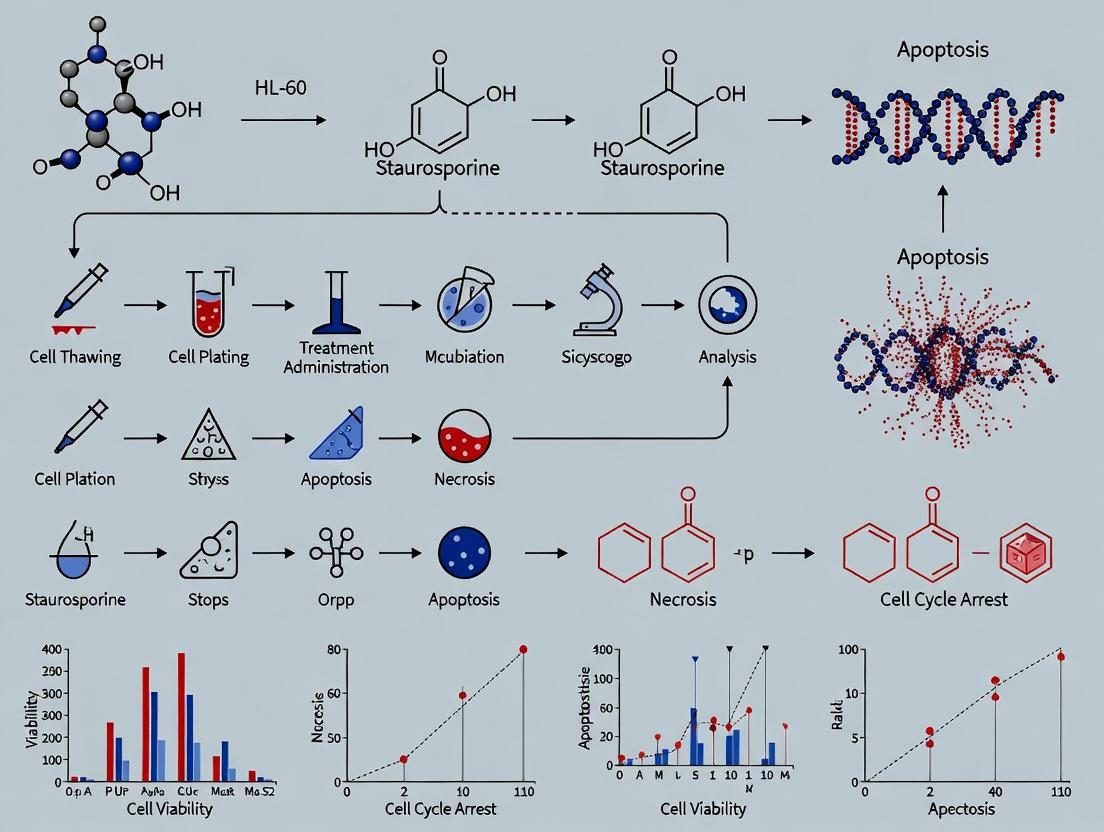
This detailed protocol provides researchers and drug development scientists with a complete framework for culturing HL-60 promyelocytic leukemia cells specifically for apoptosis studies.
A Comprehensive HL-60 Cell Culture Protocol for Robust Apoptosis Induction and Analysis
Abstract
This detailed protocol provides researchers and drug development scientists with a complete framework for culturing HL-60 promyelocytic leukemia cells specifically for apoptosis studies. Covering foundational knowledge, optimized methodological steps for inducing and assaying apoptosis, advanced troubleshooting for common pitfalls, and validation strategies to confirm cell death mechanisms, this guide ensures reliable and reproducible results in cytotoxicity screening, drug discovery, and basic cell death research.
HL-60 Cells 101: Understanding Your Model System for Apoptosis Research
Origin and Characteristics
The HL-60 (Human Leukemia-60) cell line is a continuous, myeloid precursor cell line established in 1977 from the peripheral blood leukocytes of a 35-year-old female patient with acute promyelocytic leukemia (APL). This cell line is predominantly promyelocytic but exhibits remarkable plasticity, allowing for differentiation into granulocyte-like or monocyte/macrophage-like cells upon exposure to specific chemical inducers.
Key Characteristics (Summarized)
| Characteristic | Description |
|---|---|
| Origin | Peripheral blood; Acute Promyelocytic Leukemia (APL) patient. |
| Morphology | Primarily promyelocytic; blast-like, non-adherent cells. |
| Karyotype | Hypotriploid; Complex, including a characteristic t(15;17) in some sublines. |
| Pluripotency | Can be differentiated along granulocytic, monocytic, or eosinophilic pathways. |
| Key Markers (Undifferentiated) | CD33+, CD34+, MPO+. |
| Doubling Time | Approximately 24-48 hours under optimal conditions. |
| Primary Use | Model for myeloid differentiation, hematopoiesis, and apoptosis studies. |
Relevance in Apoptosis Studies
HL-60 cells are a quintessential model for apoptosis (programmed cell death) research due to their rapid proliferation, sensitivity to a wide array of apoptotic inducers (both intrinsic and extrinsic pathways), and lack of p53 expression. This p53-null status allows for the study of p53-independent apoptotic mechanisms. Their utility spans basic mechanistic studies, screening of novel chemotherapeutic agents, and investigating resistance mechanisms.
Application Notes & Protocols: Apoptosis Induction & Analysis
This protocol is designed for the induction and quantification of apoptosis in HL-60 cells, a core methodology within a thesis on HL-60 culture for apoptosis research.
Basic HL-60 Cell Culture Maintenance Protocol
Objective: To maintain healthy, logarithmically growing HL-60 cells for experimentation. Materials:
- HL-60 cell line (from authenticated repository, e.g., ATCC CCL-240).
- Complete Growth Medium: RPMI-1640 + 10-20% heat-inactivated fetal bovine serum (FBS) + 1% penicillin-streptomycin.
- T-25 or T-75 sterile tissue culture flasks.
- Humidified incubator at 37°C, 5% CO₂.
- Centrifuge.
Procedure:
- Culture HL-60 cells in suspension in complete growth medium at an initial density of 2-5 x 10⁵ cells/mL.
- Incubate at 37°C, 5% CO₂.
- Subculture every 2-3 days or when cell density exceeds 1-1.5 x 10⁶ cells/mL. Centrifuge at 300 x g for 5 min, aspirate supernatant, and resuspend pellet in fresh pre-warmed medium at the desired density.
- Maintain viability >95% (assessed by Trypan Blue exclusion) for experiments.
Protocol: Staurosporine-Induced Apoptosis & Analysis via Annexin V/PI
Objective: To induce apoptosis via the intrinsic pathway and quantify early/late apoptotic and necrotic populations.
Research Reagent Solutions & Essential Materials
| Reagent/Material | Function / Explanation |
|---|---|
| Staurosporine (STS) | A broad-spectrum protein kinase inhibitor; a potent and reliable inducer of the intrinsic (mitochondrial) apoptotic pathway in HL-60 cells. |
| Annexin V Binding Buffer (10X) | Provides the optimal calcium-rich buffer conditions for Annexin V to bind to exposed phosphatidylserine (PS) on the outer leaflet of apoptotic cell membranes. |
| Fluorescent Annexin V (e.g., FITC conjugate) | Binds specifically to PS, marking cells in early and late apoptosis. |
| Propidium Iodide (PI) | A membrane-impermeant DNA dye. Stains cells with compromised plasma membranes (late apoptotic and necrotic cells). Excludes viable and early apoptotic cells. |
| Flow Cytometry Tubes | Specialized tubes compatible with flow cytometer sample lines. |
| Flow Cytometer | Instrument for quantifying fluorescence of individual cells, enabling population statistics. |
Experimental Workflow:
- Seed & Treat: Harvest log-phase HL-60 cells. Seed at 3-5 x 10⁵ cells/mL in fresh medium. Treat with 0.5-1.0 µM Staurosporine (from a 1 mM DMSO stock). Include a vehicle control (0.1% DMSO). Incubate for 3-6 hours.
- Harvest Cells: Transfer cells to a centrifuge tube. Pellet at 300 x g for 5 min. Wash once with 1X PBS.
- Annexin V/PI Staining: Resuspend cell pellet (~1 x 10⁵ cells) in 100 µL of 1X Annexin V Binding Buffer. Add 5 µL of FITC-Annexin V and 5 µL of PI (50 µg/mL stock). Mix gently. Incubate for 15 min at room temperature in the dark.
- Analysis: Add 400 µL of 1X Binding Buffer to each tube. Analyze within 1 hour using a flow cytometer with excitation/emission settings for FITC (488/530 nm) and PI (535/617 nm). Collect at least 10,000 events per sample.
- Gating Strategy: On an FSC vs. SSC plot, gate the main cell population. Create a dot plot of Annexin V-FITC (x-axis) vs. PI (y-axis). Quadrants: Annexin V-/PI- (Q1: Viable), Annexin V+/PI- (Q2: Early Apoptosis), Annexin V+/PI+ (Q3: Late Apoptosis), Annexin V-/PI+ (Q4: Necrosis).
Protocol: Assessment of Caspase-3 Activation
Objective: To detect the cleavage/activation of executioner caspase-3, a hallmark of apoptosis.
Materials: Anti-Caspase-3 (cleaved) antibody, fluorescence plate reader, cell lysis buffer. Procedure:
- Induce apoptosis as in 3.2. Harvest cells.
- Lyse cells in RIPA buffer with protease inhibitors for 30 min on ice. Centrifuge at 12,000 x g for 15 min at 4°C.
- Perform a standard colorimetric or fluorometric caspase-3 activity assay per manufacturer's instructions, using the substrate Ac-DEVD-pNA or Ac-DEVD-AFC.
- Measure absorbance/fluorescence. Increased activity in treated vs. control samples confirms caspase-3 activation.
Visualizations
Why HL-60 Cells are a Gold Standard for In Vitro Apoptosis and Differentiation Research
HL-60 cells, a human promyelocytic leukemia line, are a cornerstone of in vitro research due to their unique biological properties. This application note details their role as a model system for studying apoptosis and differentiation, providing validated protocols within the context of a broader thesis on HL-60 cell culture for apoptosis studies.
HL-60 cells are non-adherent, immortalized cells that proliferate continuously in suspension culture. Their gold-standard status is attributed to:
- Bipotential Differentiation: Can be reliably induced to differentiate into granulocyte-like or monocyte/macrophage-like lineages using specific chemical inducers.
- Susceptibility to Apoptosis: Highly responsive to a wide array of intrinsic and extrinsic apoptotic stimuli, including chemotherapeutic agents, UV radiation, and kinase inhibitors.
- Genetic Stability and Reproducibility: Provide consistent, homogeneous responses, ensuring high experimental reproducibility.
- Well-Characterized Markers: Established molecular markers for both differentiation (CD11b, CD14, NBT reduction) and apoptosis (phosphatidylserine exposure, caspase activation).
Key Signaling Pathways in HL-60 Apoptosis and Differentiation
The utility of HL-60 cells stems from their well-mapped signaling cascades.
Diagram Title: HL-60 Key Signaling Pathways for Apoptosis and Differentiation
Experimental Protocols
Protocol: Induction of Monocytic Differentiation
Objective: Differentiate HL-60 cells into monocyte/macrophage-like cells using 1,25-Dihydroxy Vitamin D3 (VitD3). Materials: See "Scientist's Toolkit" Table 1. Procedure:
- Maintain HL-60 cells in complete RPMI-1640 medium at 37°C, 5% CO₂. Keep cell density between 2x10⁵ and 1x10⁶ cells/mL.
- Seed cells at 2x10⁵ cells/mL in fresh complete medium containing 100 nM VitD3 (from a 10 µM stock in ethanol). Prepare a vehicle control (0.1% ethanol).
- Incubate for 72-96 hours. Refresh medium and inducer at 48 hours if culture exceeds 1x10⁶ cells/mL.
- Assessment: Harvest cells and analyze by flow cytometry for surface marker CD14 (≥80% positivity indicates successful differentiation) or perform functional NBT reduction assay.
Protocol: Induction of Apoptosis via DNA Damage
Objective: Trigger intrinsic apoptosis using the topoisomerase II inhibitor, Etoposide. Materials: See "Scientist's Toolkit" Table 1. Procedure:
- Seed HL-60 cells at 3x10⁵ cells/mL in complete medium.
- Treat cells with 20 µM Etoposide (from a 20 mM stock in DMSO). Include a vehicle control (0.1% DMSO).
- Incubate for 6-24 hours (time-course dependent on endpoint analysis).
- Assessment:
- Annexin V/PI Staining: At 6-8 hours, quantify early/late apoptosis by flow cytometry.
- Caspase-3 Activity Assay: At 4-6 hours, lyse cells and measure cleavage of fluorogenic substrate (e.g., DEVD-AFC).
- Western Blot: At 4-8 hours, probe for cleaved caspase-3 and PARP.
Diagram Title: HL-60 Experimental Workflow for Apoptosis/Differentiation
Table 1: Common Inducers and Their Effects on HL-60 Cells
| Inducer | Concentration | Time Course | Primary Outcome | Key Readout (Expected Change) |
|---|---|---|---|---|
| ATRA | 1 µM | 96-120 hrs | Granulocytic Differentiation | CD11b+ (>80%), NBT+ (>70%) |
| 1,25-(OH)₂ Vitamin D3 | 100 nM | 72-96 hrs | Monocytic Differentiation | CD14+ (>80%) |
| DMSO | 1.25% (v/v) | 120-144 hrs | Granulocytic Differentiation | CD11b+ (>60%), Morphology |
| Etoposide | 20 µM | 6-24 hrs | Intrinsic Apoptosis | Annexin V+ (40-60% at 8h), Cleaved Caspase-3+ |
| TRAIL | 100 ng/mL | 4-8 hrs | Extrinsic Apoptosis | Annexin V+ (50-70% at 6h) |
| Camptothecin | 10 µM | 4-8 hrs | Intrinsic Apoptosis | Sub-G1 Peak (DNA Fragmentation) |
Table 2: Advantages and Limitations of the HL-60 Model
| Advantage | Description |
|---|---|
| High Reproducibility | Clonal origin ensures uniform genetic background and response. |
| Rapid Proliferation | Doubling time ~24-36 hours, enabling quick generation of experimental material. |
| Multiplexing Potential | Can be assayed for apoptosis, differentiation, and cell cycle simultaneously. |
| Limitation | Description |
| Limited In Vivo Translation | Cancer cell line may not fully replicate primary cell or in vivo physiology. |
| Genetic Drift | Phenotype can shift with high passage number (>30). Requires regular banking. |
| Absence of Tissue Context | Lack of stromal interactions, a limitation of all suspension cell lines. |
The Scientist's Toolkit
Table 1: Essential Research Reagent Solutions for HL-60 Studies
| Reagent/Material | Function/Application | Example Vendor/Product |
|---|---|---|
| RPMI-1640 Medium | Base growth medium supplemented with FBS and glutamine. | Gibco, Thermo Fisher Scientific |
| Fetal Bovine Serum (FBS) | Essential serum supplement for cell growth and viability. | Characterized, heat-inactivated. |
| ATRA (All-trans Retinoic Acid) | Gold-standard inducer of granulocytic differentiation. | Sigma-Aldrich, prepare 10 mM stock in DMSO. |
| 1,25-(OH)₂ Vitamin D3 | Potent inducer of monocytic differentiation. | Cayman Chemical, prepare 10 µM stock in ethanol. |
| Etoposide | Topoisomerase II inhibitor; induces intrinsic apoptosis. | Tocris Bioscience, prepare 20 mM stock in DMSO. |
| Annexin V-FITC/PI Kit | Dual-stain assay for detecting phosphatidylserine exposure (apoptosis) and membrane integrity (necrosis). | BioLegend, BD Biosciences |
| Anti-human CD11b Antibody | Surface marker for granulocytic differentiation (flow cytometry). | Clone ICRF44, BioLegend |
| Anti-human CD14 Antibody | Surface marker for monocytic differentiation (flow cytometry). | Clone M5E2, BioLegend |
| Nitroblue Tetrazolium (NBT) | Substrate for superoxide production assay; functional test for granulocytic differentiation. | Sigma-Aldrich |
| Caspase-3 Activity Assay Kit | Fluorometric measurement of caspase-3/7 activity via cleavage of DEVD-based substrate. | Promega, Abcam |
| Cell Culture Flasks | Ventilated, non-treated plasticware for suspension culture. | Corning, TPP |
This application note details the essential equipment and reagents required to establish a robust HL-60 cell culture system, framed within a broader research thesis on apoptosis studies. HL-60, a human promyelocytic leukemia cell line, is a cornerstone model for investigating differentiation, proliferation, and programmed cell death. A properly configured lab is fundamental for maintaining cell health and ensuring reproducible results in apoptosis-inducing experiments.
The Scientist's Toolkit: Essential Equipment and Reagents
The following table summarizes the core materials required for routine culture and experimental manipulation of HL-60 cells.
Table 1: Essential Equipment for HL-60 Cell Culture
| Equipment | Function & Specification |
|---|---|
| Class II Biological Safety Cabinet (BSC) | Provides an aseptic environment for all cell culture manipulations to prevent contamination. |
| Humidified CO2 Incubator | Maintains optimal growth conditions (37°C, 5% CO2, 95% humidity). |
| Inverted Phase-Contrast Microscope | For routine daily observation of cell morphology, confluence, and health. |
| Centrifuge (with swing-out rotor) | For pelleting cells during subculture and reagent washing. |
| Water Bath | For warming culture media and reagents to 37°C prior to use. |
| Automated Cell Counter or Hemocytometer | For accurate cell counting and viability assessment (e.g., via Trypan Blue exclusion). |
| Refrigerator (4°C) & Freezer (-20°C) | For storage of media components and reagents. |
| Liquid Nitrogen Storage System | For long-term cryopreservation of cell stocks. |
| Vacuum Aspiration System | For safe removal of spent media. |
Table 2: Core Reagents for HL-60 Culture & Apoptosis Studies
| Reagent Category | Specific Product/Type | Function in HL-60 Culture |
|---|---|---|
| Basal Medium | Iscove's Modified Dulbecco's Medium (IMDM) or RPMI-1640 | The nutrient-rich foundation for cell growth. IMDM is often preferred for HL-60. |
| Serum Supplement | Fetal Bovine Serum (FBS), heat-inactivated | Provides essential growth factors, hormones, and proteins. Typically used at 10-20%. |
| Antibiotic/Antimycotic | Penicillin-Streptomycin (Pen-Strep) | Prevents bacterial contamination in culture. |
| Passaging Reagent | Phosphate-Buffered Saline (PBS) | For diluting and washing cells without causing osmotic shock. |
| Cryopreservation | Dimethyl Sulfoxide (DMSO) & FBS | DMSO (typically at 10%) protects cells from ice crystal formation during freezing. |
| Differentiation Inducers | All-Trans Retinoic Acid (ATRA), Dimethyl Sulfoxide (DMSO) | Used in studies of differentiation-linked apoptosis (e.g., ATRA induces granulocytic differentiation). |
| Apoptosis Inducers | Staurosporine, Actinomycin D, Etoposide | Positive control agents for intrinsic apoptosis pathway studies. |
| Viability Stain | Trypan Blue | Dye exclusion test to determine the percentage of live/dead cells. |
Protocols
Protocol 1: Routine Subculture of HL-60 Cells
HL-60 cells grow in suspension and require regular dilution to maintain optimal density (recommended 2-5 x 10^5 cells/mL).
Materials: Complete growth medium (e.g., IMDM + 20% FBS + 1% Pen-Strep), sterile PBS, centrifuge tubes, hemocytometer, Trypan Blue.
Method:
- Aseptically transfer the cell suspension to a centrifuge tube.
- Centrifuge at 300 x g for 5 minutes at room temperature.
- Carefully aspirate the supernatant without disturbing the cell pellet.
- Resuspend the pellet in 1-2 mL of fresh, pre-warmed complete medium by gentle pipetting.
- Perform a cell count and viability assessment using Trypan Blue.
- Dilute the cell suspension to a seeding density of 2-3 x 10^5 viable cells/mL in a fresh culture flask with pre-warmed complete medium.
- Return the culture to the humidified 37°C, 5% CO2 incubator.
Protocol 2: Induction of Apoptosis for Experimental Studies
This protocol uses Staurosporine as a classic inducer of the intrinsic apoptosis pathway.
Materials: HL-60 cells in log-phase growth, complete growth medium, Staurosporine stock solution (e.g., 1 mM in DMSO), sterile PBS, DMSO (vehicle control).
Method:
- Harvest and count HL-60 cells as in Protocol 1, steps 1-5.
- Seed cells in a multi-well plate at a density of 2.5 x 10^5 cells/mL in complete medium. A minimum volume of 2 mL per well in a 6-well plate is recommended.
- Prepare working concentrations of Staurosporine (e.g., 0.5 µM, 1 µM) in complete medium from the stock solution. Include a vehicle control (DMSO at the same final concentration as in drug-treated wells, typically <0.1% v/v).
- Aspirate the seeding medium from the wells and replace it with the treatment-containing or control medium.
- Return the plate to the incubator for the desired time course (e.g., 4, 8, 24 hours).
- Harvest cells by transferring suspension to a centrifuge tube. Rinse the well with PBS to collect any adherent apoptotic cells and pool.
- Centrifuge at 300 x g for 5 min. The pellet is now ready for downstream apoptosis assays (e.g., Annexin V/PI staining, caspase-3 activity, DNA fragmentation).
Visualizations
Within the context of a thesis focused on establishing a robust HL-60 cell culture protocol for apoptosis studies, the selection and optimization of culture media is a critical foundational step. The HL-60 human promyelocytic leukemia cell line is a premier model for investigating differentiation, proliferation, and cell death mechanisms. Consistent and reproducible apoptosis assays are fundamentally dependent on a well-defined and stable culture environment. This guide details the components, formulations, and protocols for maintaining HL-60 cells to ensure experimental fidelity in drug development and mechanistic research.
Media Formulations: RPMI-1640 Base
RPMI-1640 is the standard basal medium for HL-60 cell culture. Variations exist, primarily differing in glucose concentration and buffer capacity, which can influence cell metabolism and experimental outcomes, especially in long-term assays.
Table 1: Common RPMI-1640 Formulations for HL-60 Culture
| Formulation Variant | Glucose Concentration | Key Features | Primary Application in Apoptosis Research |
|---|---|---|---|
| Standard RPMI-1640 | 2.0 g/L (11.1 mM) | Contains phenol red, standard buffer. | Routine maintenance and sub-culturing. |
| High-Glucose RPMI-1640 | 4.5 g/L (25 mM) | Enhanced energy supply. | Studies under high metabolic demand or stress. |
| Glucose-Free RPMI-1640 | 0 g/L | Requires supplementation. | Metabolic studies, glucose deprivation-induced apoptosis. |
| Phenol Red-Free RPMI-1640 | 2.0 g/L | Lacks pH indicator. | Fluorescence-based assays (e.g., caspase activity) to reduce background. |
| HEPES-Buffered RPMI-1640 | 2.0 g/L | Contains 10-25 mM HEPES. | Experiments outside a CO₂ incubator (e.g., microscopy, time-lapse). |
Serum Requirements: FBS and Alternatives
Fetal Bovine Serum (FBS) provides essential growth factors, hormones, and carriers for lipids and minerals. However, its undefined nature and lot-to-lot variability can introduce inconsistency in apoptosis studies.
Table 2: Serum and Serum-Free Options for HL-60 Culture
| Supplement | Typical Concentration | Advantages | Disadvantages for Apoptosis Studies |
|---|---|---|---|
| Heat-Inactivated FBS | 10-20% (v/v) | Standard, supports robust growth. | High variability, contains undefined survival factors that can mask pro-apoptotic stimuli. |
| Charcoal/Dextran-Stripped FBS | 10% (v/v) | Low in hormones (steroids, thyroid). | Useful for studies involving hormone receptors or related apoptotic pathways. |
| Defined FBS Alternative (e.g., Serum Replacement) | As per manufacturer | Defined composition, reduced variability. | May require optimization; cost can be higher. |
| Serum-Free Media | 0% | Fully defined, no confounding factors. | Often requires specific adaptation of cell line; growth rate may be slower. |
Critical Supplements and Additives
Beyond serum, specific additives are required for HL-60 health and for modulating experimental conditions.
- Antibiotics: Penicillin-Streptomycin (100 U/mL penicillin, 100 µg/mL streptomycin) or Gentamicin (50 µg/mL) are commonly used to prevent bacterial contamination.
- Glutamine: L-glutamine (2-4 mM final) is an essential amino acid. Unstable in liquid media, it is often supplemented fresh or replaced with stable alternatives like GlutaMAX (alanyl-glutamine dipeptide).
- β-Mercaptoethanol (β-ME): Often used at 0.05-0.1 mM as an antioxidant to reduce oxidative stress in the culture, though it is not always mandatory for HL-60.
- Differentiation Inducers: For studies linking differentiation to apoptosis, agents like ATRA (All-Trans Retinoic Acid, 1 µM) or DMSO (1.25% v/v) are added.
- Apoptosis Inducers/Inhibitors: Positive controls for assays include Staurosporine (0.1-1 µM) or Actinomycin D (0.5-1 µg/mL). Caspase inhibitors like Z-VAD-FMK (20-50 µM) are used to confirm apoptotic mechanisms.
Detailed Protocol: HL-60 Maintenance for Apoptosis Assays
Protocol 1: Standard Subculture and Maintenance
Objective: To maintain HL-60 cells in exponential growth phase for consistent apoptosis experimentation. Materials: See The Scientist's Toolkit below. Procedure:
- Preparation: Warm complete RPMI-1640 medium (with 10-20% FBS, 2 mM GlutaMAX, 1% Pen/Strep) to 37°C in a water bath.
- Assessment: Gently mix the culture flask and aseptically remove an aliquot for cell counting and viability assessment via Trypan Blue exclusion.
- Passaging: When cell density reaches 0.8 - 1.0 x 10⁶ cells/mL, transfer the cell suspension to a sterile centrifuge tube.
- Centrifugation: Centrifuge at 300 x g for 5 minutes at room temperature.
- Resuspension: Carefully decant the supernatant. Resuspend the cell pellet in fresh, pre-warmed complete medium.
- Seeding: Dilute the cell suspension to a seeding density of 2.0 - 3.0 x 10⁵ cells/mL in a new culture vessel. Incubate at 37°C in a humidified 5% CO₂ incubator.
- Monitoring: Passage cells every 2-3 days to maintain log-phase growth. Do not allow density to exceed 1.2 x 10⁶ cells/mL.
Protocol 2: Serum Starvation for Synchronization Prior to Apoptosis Induction
Objective: To synchronize cells in G0/G1 phase and reduce basal survival signaling from serum. Materials: Serum-free or low-serum (0.5-1% FBS) RPMI-1640, complete medium. Procedure:
- Harvest log-phase HL-60 cells (0.8-1.0 x 10⁶ cells/mL) by centrifugation (300 x g, 5 min).
- Wash the cell pellet once with 1X PBS (without Ca²⁺/Mg²⁺) to remove residual serum.
- Resuspend cells in pre-warmed serum-free or low-serum medium at a density of 5.0 x 10⁵ cells/mL.
- Incubate cells for 16-24 hours under standard conditions (37°C, 5% CO₂).
- After starvation, treat cells with the apoptotic agent in either continued low-serum or full-serum medium, as required by the experimental design. Always include a control returned to complete medium.
Visualizing Key Pathways and Workflows
The Scientist's Toolkit
Table 3: Essential Research Reagents for HL-60 Apoptosis Studies
| Item | Function/Application | Example Product/Catalog |
|---|---|---|
| RPMI-1640 Base Medium | Basal nutrient supply for HL-60 proliferation. | Gibco RPMI-1640 (11875093) |
| Heat-Inactivated FBS | Provides essential growth factors and adhesion proteins. | Gibco Fetal Bovine Serum, HI (10082147) |
| GlutaMAX Supplement | Stable source of L-glutamine for cellular metabolism. | Gibco GlutaMAX (35050061) |
| Penicillin-Streptomycin | Antibiotic mixture to prevent bacterial contamination. | Gibco Pen-Strep (15140122) |
| Trypan Blue Solution (0.4%) | Viability stain for manual cell counting. | Gibco Trypan Blue Stain (15250061) |
| Annexin V-FITC/PI Apoptosis Kit | Dual-stain flow cytometry assay for early/late apoptosis. | BioLegend Annexin V-FITC Apoptosis Kit (640914) |
| Caspase-3/7 Activity Assay | Fluorogenic substrate-based assay for effector caspase activity. | Promega Caspase-Glo 3/7 Assay (G8091) |
| Staurosporine | Broad-spectrum kinase inhibitor; common apoptosis positive control. | Sigma-Aldrich S6942 |
| Z-VAD-FMK (Pan-Caspase Inhibitor) | Irreversible caspase inhibitor; confirms caspase-dependent apoptosis. | Selleckchem S7023 |
| Dimethyl Sulfoxide (DMSO) | Vehicle for hydrophobic compounds; also induces differentiation. | Sigma-Aldrich D8418 |
This Application Note provides standardized protocols for the establishment and maintenance of HL-60 (Human Leukemia-60) cell cultures, specifically optimized for use in apoptosis research. Within the context of a broader thesis on apoptosis studies, the foundation of reproducible, high-quality data is a robustly maintained cell line with predictable growth kinetics. Proper seeding density, split ratios, and an understanding of the growth curve are critical to ensuring cells are in the optimal physiological state for apoptosis-inducing experiments.
HL-60 Cell Culture Protocol
Cell Line: HL-60 (ATCC CCL-240). Culture Medium: RPMI-1640 supplemented with 20% fetal bovine serum (FBS) and 1% penicillin-streptomycin. Cultures are maintained in a humidified incubator at 37°C with 5% CO₂. Note: HL-60 cells are non-adherent and grow in suspension.
Routine Maintenance and Splitting
HL-60 cells should be passaged when cell density reaches 0.8 - 1.0 x 10⁶ cells/mL, typically every 2-3 days. Do not allow density to exceed 1.2 x 10⁶ cells/mL to maintain log-phase growth and prevent spontaneous differentiation or apoptosis.
- Gently mix the culture flask to ensure an even cell suspension.
- Aseptically remove the desired volume of cell suspension.
- Centrifuge at 300 x g for 5 minutes.
- Discard the supernatant and resuspend the cell pellet in fresh, pre-warmed complete medium.
- Seed the cells at the recommended seeding density (see Table 1).
Seeding Densities for Experimental Setup
Optimal seeding density depends on the experimental endpoint. The following table summarizes recommended densities.
Table 1: Recommended HL-60 Seeding Densities
| Application | Recommended Seeding Density | Rationale |
|---|---|---|
| Routine Maintenance | 2.0 - 3.0 x 10⁵ cells/mL | Ensures cells remain in log-phase growth for 2-3 days before next split. |
| Apoptosis Induction (24-48h) | 2.5 - 4.0 x 10⁵ cells/mL | Provides sufficient cell numbers for analysis while minimizing confluence-induced stress at the end of treatment. |
| Growth Curve Analysis | 1.0 - 1.5 x 10⁵ cells/mL | Allows for multiple days of logarithmic growth without requiring a medium change. |
| Cryopreservation | 3.0 - 5.0 x 10⁶ cells/mL in freezing medium | Standard concentration for high viability upon recovery. |
Determining Growth Kinetics
A standard growth curve experiment is essential to characterize the population doubling time (PDT) of your specific HL-60 culture, a critical parameter for timing apoptosis experiments.
Protocol: Growth Curve and PDT Determination
- Seed Cells: Seed a 12-well plate with HL-60 cells at a low density (1.0 x 10⁵ cells/mL) in 2 mL of medium per well. Prepare triplicate wells for each time point.
- Daily Counts: Every 24 hours for 5-7 days, harvest and count the cells from the designated triplicate wells using a trypan blue exclusion assay and an automated cell counter or hemocytometer.
- Plot & Calculate: Plot the mean viable cell density (log10 scale) against time (hours). Identify the exponential (log) phase. Calculate the Population Doubling Time (PDT) using the formula: [ PDT (hours) = \frac{t \times \ln(2)}{\ln(Nt / N0)} ] Where ( t ) is the time in hours between measurements during log phase, ( N0 ) is the initial cell count, and ( Nt ) is the cell count at time ( t ).
Table 2: Typical HL-60 Growth Parameters
| Parameter | Typical Range | Notes |
|---|---|---|
| Optimal Maintenance Density | 0.2 - 1.0 x 10⁶ cells/mL | Maintain within this range. |
| Maximum Density | ~1.2 x 10⁶ cells/mL | Do not exceed to avoid stress. |
| Population Doubling Time (PDT) | 20 - 30 hours | Varies with serum batch and passage number. Determine empirically. |
| Recommended Split Ratio | 1:3 to 1:5 | Every 2-3 days, based on density. |
Key Signaling Pathways in Apoptosis
HL-60 cells are a classic model for studying both the intrinsic (mitochondrial) and extrinsic (death receptor) pathways of apoptosis, which converge on caspase activation.
Diagram Title: Core Apoptosis Pathways in HL-60 Cells
The Scientist's Toolkit: Key Research Reagent Solutions
Table 3: Essential Reagents for HL-60 Apoptosis Research
| Reagent/Material | Function/Application | Key Notes |
|---|---|---|
| RPMI-1640 Medium | Base nutrient medium for HL-60 cell proliferation. | Must be supplemented with high-quality FBS. |
| Fetal Bovine Serum (FBS) | Provides essential growth factors, hormones, and nutrients. | Use 20% for HL-60. Batch testing is recommended for apoptosis studies. |
| Dimethyl Sulfoxide (DMSO) | Vehicle for hydrophobic compounds; also used in cryopreservation. | Keep final concentration low (<0.1% for treatment) to minimize cytotoxicity. |
| Annexin V-FITC / PI Kit | Dual-staining for flow cytometry to distinguish early apoptotic (Annexin V+/PI-), late apoptotic (Annexin V+/PI+), and necrotic (Annexin V-/PI+) cells. | Gold standard for apoptosis quantification. |
| Caspase-3/7 Activity Assay | Luminescent or fluorescent assay to measure executioner caspase activation. | Provides direct enzymatic evidence of apoptosis. |
| Etoposide or Camptothecin | Chemical inducers of the intrinsic apoptosis pathway (DNA topoisomerase inhibitors). | Common positive controls for apoptosis in HL-60 cells. |
| Recombinant Human TRAIL | Activator of the extrinsic apoptosis pathway via death receptors DR4/DR5. | Used to study death-receptor mediated apoptosis. |
| Propidium Iodide (PI) | DNA intercalating dye used for cell cycle analysis by flow cytometry. | Sub-G1 peak indicates apoptotic cells with fragmented DNA. |
Experimental Workflow for Apoptosis Studies
A generalized workflow for conducting apoptosis experiments with HL-60 cells is outlined below.
Diagram Title: HL-60 Apoptosis Study Workflow
Step-by-Step Protocol: Culturing, Treating, and Quantifying Apoptosis in HL-60 Cells
Application Notes
This protocol details the routine subculture and maintenance of the HL-60 human promyelocytic leukemia cell line, specifically framed for ensuring optimal cell health and consistency as a prerequisite for apoptosis studies. HL-60 cells are suspension cells widely used as a model for myeloid differentiation and for screening chemotherapeutic agents. Consistent maintenance is critical, as passage number, confluence, and metabolic state directly influence baseline apoptosis and response to inducers. Deviations can lead to experimental variability, spurious results in assays like Annexin V/propidium iodide flow cytometry or caspase-3 activity measurements.
Key Quantitative Parameters for Maintenance: Table 1: Standard HL-60 Culture Parameters
| Parameter | Specification | Rationale for Apoptosis Studies |
|---|---|---|
| Base Medium | RPMI-1640 | Standard for hematopoietic cells. |
| Serum Supplement | 10-20% Heat-inactivated Fetal Bovine Serum (FBS) | Supports growth; heat inactivation removes complement to prevent serum-induced cell death. |
| Typical Seeding Density | 2.0 - 5.0 x 10⁵ cells/mL | Maintains log-phase growth. |
| Subculture Interval | Every 2-3 days | Prevents over-confluence (>1.5 x 10⁶ cells/mL), which can induce spontaneous differentiation or death. |
| Optimal Growth Range | 2.0 x 10⁵ – 1.0 x 10⁶ cells/mL | Cells are healthiest and most responsive to apoptotic stimuli within this range. |
| Doubling Time | ~36-48 hours | Indicator of normal metabolism. |
| Passage Number Consideration | Use cells between passage 5 and 30 post-revival | Genetic drift and altered responses may occur at very high passages. |
| Cryopreservation Density | 5-10 x 10⁶ cells/mL in 90% FBS/10% DMSO | Ensures high viability upon thawing for reproducible experiments. |
Detailed Protocols
Protocol 1: Routine Subculture of HL-60 Cells
Objective: To maintain HL-60 cells in exponential growth phase. Materials: See Scientist's Toolkit. Procedure:
- Aseptic Technique: Perform all steps in a biosafety cabinet.
- Assess Culture: Visually check for color (phenol red should be orange-red) and clumping. Gently swirl flask.
- Cell Count & Viability: Take a small sample. Mix with Trypan Blue (1:1 dilution) and count using a hemocytometer or automated cell counter. Calculate total viable cells/mL.
- Calculate Dilution: Determine the volume of cell suspension needed to seed a new flask at 3.0 x 10⁵ cells/mL in a final volume of culture medium (e.g., 10 mL for a T-25 flask). Formula:
Volume of cells (mL) = (Desired density x Total medium volume) / Current viable density. - Subculture: a. Transfer the calculated volume of cell suspension to a new, labeled sterile flask. b. Add pre-warmed complete RPMI-1640 medium to the final volume. c. Cap flask loosely to allow gas exchange and place in a 37°C, 5% CO₂, humidified incubator.
- Record Keeping: Document passage number, seeding density, date, and viability.
Protocol 2: Cryopreservation of HL-60 Cells
Objective: To preserve HL-60 stock at a specific passage. Procedure:
- Harvest: Collect cells from a log-phase culture by centrifugation at 300 x g for 5 minutes.
- Resuspend: Aspirate supernatant. Gently resuspend cell pellet in ice-cold freezing medium (90% FBS / 10% DMSO) at 5-10 x 10⁶ cells/mL.
- Aliquot: Quickly dispense 1 mL aliquots into labeled cryovials.
- Freeze: Use a controlled-rate freezer or place vials in an isopropanol-filled freezing container at -80°C for 24 hours, then transfer to liquid nitrogen for long-term storage.
Protocol 3: Thawing and Reviving HL-60 Cells
Objective: To recover frozen HL-60 stocks with high viability. Procedure:
- Quick Thaw: Remove vial from liquid nitrogen and immediately place in a 37°C water bath. Thaw just until ice crystal disappears (~1-2 min).
- Dehydrate: Wipe vial with ethanol, transfer contents to a sterile 15 mL conical tube.
- Dilute Slowly: Slowly add 9 mL of pre-warmed complete medium drop-wise over 1-2 minutes while gently swirling the tube to dilute DMSO.
- Centrifuge: Spin at 300 x g for 5 minutes.
- Reseed: Aspirate supernatant, resuspend pellet in 10 mL fresh complete medium, and transfer to a T-25 flask.
- First Medium Change: After 24 hours, centrifuge the culture and resuspend in fresh complete medium to remove residual dead cells and DMSO.
Visualizations
Title: HL-60 Routine Subculture Workflow
Title: Culture Stress Links to Apoptosis Pathways
The Scientist's Toolkit
Table 2: Essential Reagents & Materials for HL-60 Maintenance
| Item | Function & Specification |
|---|---|
| RPMI-1640 Medium | Base nutrient medium providing amino acids, vitamins, and buffers. |
| Heat-Inactivated FBS | Source of essential growth factors and hormones. Heat inactivation (56°C, 30 min) prevents complement-mediated cell lysis. |
| Penicillin-Streptomycin (Pen-Strep) | Antibiotic solution (e.g., 100 U/mL penicillin, 100 µg/mL streptomycin) to prevent bacterial contamination. |
| Trypan Blue Stain (0.4%) | Vital dye used to distinguish viable (unstained) from non-viable (blue) cells during counting. |
| Dimethyl Sulfoxide (DMSO) | Cryoprotectant for freezing cells. Must be sterile, tissue culture grade. |
| Sterile PBS (without Ca²⁺/Mg²⁺) | Phosphate-buffered saline for washing cells (e.g., before cryopreservation). |
| T-25 or T-75 Tissue Culture Flasks | For suspension culture; used upright with loose caps for gas exchange. |
| Hemocytometer or Automated Cell Counter | For determining cell density and viability. |
| Controlled-Rate Freezer or Cryo Container | For achieving a slow, consistent freezing rate (~-1°C/min) to maximize viability. |
Application Notes
Within the context of a broader thesis on HL-60 cell culture for apoptosis studies, proper cell preparation is foundational. Apoptosis assays measure a dynamic, regulated process. Using an unsynchronized, unhealthy, or stressed population introduces high variability, confounding the interpretation of experimental treatments. This protocol details methods to synchronize HL-60 promyelocytic leukemia cells at the G1/S boundary and to rigorously assess baseline cellular health prior to inducing apoptosis.
Cell cycle synchronization is critical because a cell's susceptibility to apoptotic stimuli varies with cycle phase. HL-60 cells, being suspension cells, are amenable to chemical synchronization. A double thymidine block is a standard, reversible method that inhibits DNA synthesis, causing cells to accumulate at the G1/S border. Post-synchronization, a thorough health assessment—via viability, doubling time, and morphology—establishes a reliable baseline. Only cultures demonstrating >95% viability and normal growth kinetics should proceed to apoptosis induction (e.g., with etoposide, camptothecin, or TRAIL). This preparation minimizes background apoptotic signals and ensures that observed effects are due to the experimental treatment and not pre-existing stress or cycle heterogeneity.
Protocols
Protocol 1: HL-60 Cell Synchronization at G1/S Boundary using Double Thymidine Block
- Principle: Excess thymidine causes feedback inhibition of nucleotide synthesis, specifically depleting deoxycytidine triphosphate (dCTP), thereby halting DNA synthesis and progression from G1 to S phase.
- Materials: HL-60 cell culture, RPMI-1640 medium, Fetal Bovine Serum (FBS), Penicillin-Streptomycin, 200 mM Thymidine stock solution (in DMSO or PBS, sterile-filtered), Phosphate-Buffered Saline (PBS).
- Procedure:
- Maintain HL-60 cells in exponential growth (0.2-0.8 x 10^6 cells/mL) in RPMI-1640 + 10% FBS + 1% Pen-Strep.
- First Thymidine Block: Add thymidine stock to culture to a final concentration of 2 mM. Incubate for 16-18 hours.
- Release: Centrifuge cells (300 x g, 5 min). Wash cell pellet twice with pre-warmed, thymidine-free complete medium. Resuspend in fresh complete medium at 0.3 x 10^6 cells/mL. Incubate for 9 hours.
- Second Thymidine Block: Add thymidine again to 2 mM final concentration. Incubate for 16-18 hours.
- Final Release: Wash cells twice as in step 3. Resuspend in fresh complete medium. This is time "T=0" for synchronization. Proceed to health assessment or experimental treatment.
Protocol 2: Baseline Health Assessment of Synchronized HL-60 Cells
- A. Viability and Cell Count (T=0, post-release)
- Mix cell suspension gently. Take an aliquot and mix 1:1 with 0.4% Trypan Blue solution.
- Load onto a hemocytometer. Count live (unstained) and dead (blue-stained) cells in at least four squares.
- Calculate viability and total cell density.
- B. Doubling Time Assessment (Over 24h post-release)
- After final release (T=0), seed cells at a precise density (e.g., 0.2 x 10^6 cells/mL) in a fresh flask.
- At 0, 12, and 24 hours, sample the culture and perform viable cell counts as in Part A.
- Plot log(cell concentration) vs. time. Calculate doubling time during exponential growth phase.
Table 1: Expected Metrics for Healthy, Synchronized HL-60 Cells
| Parameter | Acceptable Range | Measurement Method |
|---|---|---|
| Pre-sync Viability | >95% | Trypan Blue Exclusion |
| Post-sync Viability (T=0) | >95% | Trypan Blue Exclusion |
| Apparent Synchrony (G1/S) | 70-85% | Flow Cytometry (PI staining) |
| Post-release Doubling Time | ~20-24 hours | Serial Viable Cell Counts |
| Morphology (Cytospin) | Uniform, intact, smooth nuclear contour | Wright-Giemsa Staining |
Signaling Pathways and Workflows
Title: HL-60 Synchronization & Health Check Workflow
Title: Thymidine Block Mechanism of Action
The Scientist's Toolkit: Research Reagent Solutions
Table 2: Essential Materials for Cell Preparation for Apoptosis Assays
| Reagent/Material | Function & Importance | Example/Note |
|---|---|---|
| Thymidine | Chemical synchronizing agent for reversible G1/S block. | Prepare 200 mM stock, sterile filter. Aliquot and store at -20°C. |
| Defined FBS | Provides consistent growth factors and nutrients for reproducible cell growth. | Use the same lot/brand for an entire thesis project to minimize variability. |
| Trypan Blue Stain | Dye exclusion assay for rapid, quantitative assessment of cell membrane integrity (viability). | 0.4% solution. Count immediately after mixing with cells. |
| Propidium Iodide (PI) | Membrane-impermeant DNA dye for cell cycle analysis (post-sync) and late apoptosis/necrosis detection. | Requires flow cytometer. RNase treatment is necessary for clean cell cycle profiles. |
| Wright-Giemsa Stain | Provides morphological assessment of health, cell cycle state (condensed chromatin), and apoptosis. | Use cytospin slides for suspension HL-60 cells. |
| DNase-free RNase A | Critical for accurate cell cycle analysis by PI staining; degrades RNA that otherwise binds PI. | Use with PI solution for DNA staining protocol. |
This document provides detailed application notes and protocols for inducing apoptosis in the human promyelocytic leukemia HL-60 cell line. This work is framed within a broader thesis investigating standardized HL-60 culture protocols for apoptosis studies, which serve as a foundational model for screening chemotherapeutic agents and elucidating cell death pathways in cancer research and drug development.
Research Reagent Solutions: Essential Materials
| Item | Function/Brief Explanation |
|---|---|
| HL-60 Cell Line | Human promyelocytic leukemia cells; a well-established, suspension-grown model for apoptosis and differentiation studies. |
| RPMI-1640 Medium | Standard growth medium, often supplemented with L-glutamine, for optimal HL-60 proliferation. |
| Fetal Bovine Serum (FBS) | Typically used at 10-20% to provide essential growth factors and nutrients. Heat-inactivation is common. |
| Penicillin-Streptomycin | Antibiotic supplement to prevent bacterial contamination in culture. |
| Etoposide | Topoisomerase II inhibitor; induces DNA double-strand breaks, activating the intrinsic apoptosis pathway. |
| Camptothecin | Topoisomerase I inhibitor; induces DNA single-strand breaks during replication, leading to apoptosis. |
| Staurosporine | Broad-spectrum protein kinase inhibitor; a potent, rapid inducer of apoptosis via direct mitochondrial perturbation. |
| Dimethyl Sulfoxide (DMSO) | Common solvent for reconstituting water-insoluble chemical inducers; final concentration in culture should not exceed 0.1-0.5%. |
| Phosphate-Buffered Saline (PBS) | Used for washing cells and diluting reagents. |
| Annexin V Binding Buffer | Provides appropriate calcium ion concentration for Annexin V to bind to externalized phosphatidylserine. |
| Propidium Iodide (PI) / 7-AAD | Cell-impermeant DNA dyes to stain necrotic/late apoptotic cells with compromised membranes. |
| FITC-Annexin V | Fluorescent conjugate used to detect phosphatidylserine exposure on the outer leaflet of the plasma membrane (early apoptosis). |
| CellTiter-Glo Luminescent Assay | Measures ATP content as a proxy for viable cell number and metabolic activity. |
| Caspase-3/7 Activity Assay | Fluorogenic or luminogenic substrate-based assay to measure executioner caspase activation. |
| PARP Cleavage Antibody (Western Blot) | Detects cleaved PARP (89 kDa fragment), a hallmark biochemical event of apoptosis. |
Table 1: Recommended Concentrations and Exposure Times for Apoptosis Induction in HL-60 Cells.
| Inducer | Primary Target | Recommended Concentration Range (μM) | Typical Treatment Duration | Key Apoptosis Readout Timepoint(s) |
|---|---|---|---|---|
| Etoposide | Topoisomerase II | 10 - 100 μM | 4 - 24 hours | 16-24 hours (for robust caspase-3/PARP cleavage) |
| Camptothecin | Topoisomerase I | 1 - 10 μM | 2 - 6 hours | 4-6 hours (for DNA damage signaling and early apoptosis) |
| Staurosporine | Protein Kinases (Pan-inhibitor) | 0.1 - 2 μM | 2 - 6 hours | 3-4 hours (for rapid phosphatidylserine exposure) |
Table 2: Expected Apoptosis Marker Profile Post-Treatment (Approximate).
| Inducer | [C] (Example) | Time (h) | % Annexin V+ (Flow) | Caspase-3/7 Activity (Fold Increase) | PARP Cleavage (WB) | Notes |
|---|---|---|---|---|---|---|
| Etoposide | 50 μM | 16 | 40-60% | 8-12x | Strong | Dose-dependent; slower onset. |
| Camptothecin | 5 μM | 4 | 25-40% | 5-8x | Moderate | S-phase dependent. |
| Staurosporine | 1 μM | 3 | 60-80% | 15-25x | Very Strong | Rapid, potent, but less physiologically relevant. |
Detailed Experimental Protocols
Protocol 1: HL-60 Maintenance Culture
Objective: To maintain HL-60 cells in exponential growth phase for apoptosis experiments.
- Culture Conditions: Grow HL-60 cells in RPMI-1640 medium supplemented with 10-20% heat-inactivated FBS and 1% penicillin-streptomycin at 37°C in a humidified 5% CO2 incubator.
- Passaging: Maintain cells between 2 x 10^5 and 1 x 10^6 cells/mL. Every 2-3 days, dilute cells to ~2-3 x 10^5 cells/mL in fresh, pre-warmed complete medium.
- Preparation for Experiment: 24 hours before an apoptosis induction experiment, seed cells at 2-3 x 10^5 cells/mL to ensure they are in mid-log phase (viability >95%) at the time of treatment.
Protocol 2: Apoptosis Induction with Chemical Agents
Objective: To treat HL-60 cells with etoposide, camptothecin, or staurosporine.
- Compound Preparation:
- Prepare 10-100 mM stock solutions of each inducer in DMSO. Aliquot and store at -20°C or -80°C.
- On the day of treatment, prepare intermediate dilutions in DMSO or directly in culture medium such that the final DMSO concentration is ≤0.1% (v/v). Vortex thoroughly.
- Cell Treatment:
- Harvest exponentially growing HL-60 cells by centrifugation (300 x g, 5 min).
- Resuspend cell pellet in fresh, pre-warmed complete medium to a density of 3-5 x 10^5 cells/mL.
- Dispense cell suspension into treatment plates/flasks.
- Add the prepared inducer solutions directly to the culture. Include a vehicle control (0.1% DMSO).
- Return cells to the 37°C, 5% CO2 incubator for the designated treatment period.
Protocol 3: Assessment by Annexin V / Propidium Iodide Flow Cytometry
Objective: To quantify early and late apoptotic/necrotic cells.
- Post-Treatment: Harvest cells (including floating cells) by gentle centrifugation (300 x g, 5 min).
- Washing: Wash cell pellet once with cold PBS, then once with 1X Annexin V Binding Buffer.
- Staining: Resuspend ~1 x 10^5 cells in 100 μL of Annexin V Binding Buffer containing FITC-Annexin V (per manufacturer's recommended dilution) and Propidium Iodide (e.g., 1 μg/mL). Incubate for 15 min at room temperature in the dark.
- Analysis: Add 400 μL of Binding Buffer and analyze within 1 hour on a flow cytometer. Use untreated and single-stained controls for compensation. Gate on intact cells, then quantify populations: Annexin V-/PI- (viable), Annexin V+/PI- (early apoptotic), Annexin V+/PI+ (late apoptotic/necrotic).
Visualizations
Title: Apoptosis Pathways Activated by Chemical Inducers
Title: Workflow for Apoptosis Induction and Analysis
Within the broader thesis investigating standardized HL-60 cell culture protocols for apoptosis studies, this application note details the critical post-treatment harvesting, centrifugation, and washing steps required for accurate downstream apoptosis analysis. Proper execution of these foundational techniques is paramount to preserve apoptotic markers, minimize assay artifacts, and ensure reproducible quantitative data in drug development research.
HL-60, a human promyelocytic leukemia cell line, is a cornerstone model for studying apoptosis induced by chemotherapeutic agents and targeted therapeutics. The transition from cell culture to analysis is a vulnerable phase where mishandling can induce secondary apoptosis, necrosis, or loss of key biochemical signatures. This protocol, integral to the thesis workflow, standardizes the harvesting and processing steps to maintain cell integrity and apoptotic state fidelity prior to assays such as flow cytometry (Annexin V/PI), caspase activation, and DNA fragmentation analysis.
Key Research Reagent Solutions & Materials
| Item | Function in Protocol |
|---|---|
| Complete Growth Medium (RPMI-1640 + 10-20% FBS + 1% Pen/Strep) | Provides nutrients and protects cells during initial handling; serum can inhibit trypsin but is not required for suspension HL-60s. |
| Ice-cold 1X Phosphate-Buffered Saline (PBS) | Iso-osmotic washing buffer to remove media constituents without inducing osmotic shock. Ice-cold temperature slows metabolic processes. |
| Annexin V Binding Buffer (10 mM HEPES, 140 mM NaCl, 2.5 mM CaCl₂, pH 7.4) | Provides the required calcium environment for Annexin V binding to phosphatidylserine in downstream apoptosis assays. |
| Trypan Blue Solution (0.4%) | Vital dye used to assess cell viability and count post-harvest, prior to setting up apoptosis assays. |
| Cell Dissociation Solution (Non-enzymatic) | For gently dislodging any weakly adherent cells; HL-60s are primarily suspension but may adhere weakly. |
Protocol: Harvesting and Washing HL-60 Cells for Apoptosis Analysis
A. Pre-Harvest Considerations
- Treatment Plate Setup: In your thesis experiments, seed HL-60 cells at a density of 2-5 x 10⁵ cells/mL in appropriate culture vessels. Apply apoptotic inducers (e.g., camptothecin, etoposide) for the determined time course.
- Include Controls: Always include untreated (healthy proliferating) and a late-stage apoptotic/necrotic positive control (e.g., high-dose staurosporine or heat-treated cells) for protocol validation.
B. Harvesting and Centrifugation Steps
Step 1: Gentle Cell Collection
- For suspension cultures (standard for HL-60), gently swirl the flask/plate to ensure a homogeneous cell suspension.
- Transfer the entire cell suspension to a labeled conical centrifuge tube (e.g., 15 mL or 50 mL).
- Note: Avoid trypsinization unless significant adherence is observed. If required, use a non-enzymatic cell dissociation solution.
Step 2: Initial Centrifugation
- Centrifuge the tubes at 300 x g for 5 minutes at 4°C. Lower temperatures are critical to halt the progression of apoptosis and metabolic activity.
- Critical Parameter: Use a controlled acceleration and deceleration (brake) setting. A harsh or no brake can disturb the pellet, leading to cell loss.
Step 3: Supernatant Aspiration and Washing
- Carefully aspirate the supernatant containing the drug treatment/media without disturbing the pellet.
- Resuspend the cell pellet gently in 5-10 mL of ice-cold 1X PBS. Pipette up and down 3-5 times slowly to break the pellet without creating bubbles.
- Centrifuge again at 300 x g for 5 minutes at 4°C.
Step 4: Final Resuspension for Assay
- Aspirate the PBS wash supernatant completely.
- Resuspend the pellet in the appropriate assay-specific buffer:
- For Annexin V/Flow Cytometry: Resuspend in ice-cold 1X Annexin V Binding Buffer at a density of ~1 x 10⁶ cells/mL.
- For Caspase or Western Blot Analysis: Resuspend in appropriate lysis buffer.
- For Viability Count: Resuspend in 1 mL of complete media or PBS for Trypan Blue exclusion counting.
C. Viability Assessment Pre-Assay
- Mix 10 µL of resuspended cells with 10 µL of 0.4% Trypan Blue.
- Load onto a hemocytometer and count viable (clear) vs. non-viable (blue) cells.
- Record viability and adjust cell concentration for the downstream apoptosis assay. Target viability for untreated controls should be >95%.
Table 1: Optimized Centrifugation Parameters for HL-60 Apoptosis Studies
| Step | Speed (x g) | Time (min) | Temperature | Brake Setting | Purpose & Rationale |
|---|---|---|---|---|---|
| Initial Harvest | 300 | 5 | 4°C | Low/Medium | Pellet cells gently; low temp preserves apoptotic state. |
| Wash Step | 300 | 5 | 4°C | Low/Medium | Remove media/drugs without inducing shear stress. |
| Alternative for Fixed Cells | 500 | 5 | 4°C | Medium | After fixation with paraformaldehyde; a firmer pellet. |
Table 2: Common Artifacts from Suboptimal Processing
| Artifact | Likely Cause | Effect on Apoptosis Assay |
|---|---|---|
| High Baseline Necrosis (PI+ only) | Excessive centrifugal force (>500 x g), vortexing during resuspension. | False-positive necrosis, obscures early apoptotic population. |
| Low Cell Yield | Over-aspiration of supernatant, pellet disturbance, no brake used. | Insufficient cells for triplicate analyses, increased statistical error. |
| Poor Annexin V Staining | Use of Ca²⁺-free PBS during washing, warming cells during process. | Underestimation of early apoptosis (phosphatidylserine externalization). |
| Clumping | Incomplete resuspension after centrifugation, DNA release from dead cells. | Flow cytometry clogging, inaccurate population identification. |
Workflow and Pathway Visualizations
The reproducibility and accuracy of apoptosis data in HL-60 studies, a central aim of the encompassing thesis, are fundamentally dependent on meticulous harvesting and washing techniques. Adherence to the specified parameters for centrifugation speed, temperature, and buffer composition minimizes technical artifacts, thereby ensuring that the observed apoptotic signals truly reflect the experimental treatment's biological effect rather than processing-induced stress. This protocol forms the essential bridge between cell treatment and high-quality analytical data.
Within the broader thesis context of establishing a standardized HL-60 cell culture protocol for apoptosis research, the selection of orthogonal, core assays is critical. HL-60 (human promyelocytic leukemia) cells are a classic model for studying cytotoxic drug-induced apoptosis. This document details three fundamental assays that probe distinct biochemical events in the apoptotic cascade: externalization of phosphatidylserine (Annexin V/PI), effector caspase activation, and nuclear DNA fragmentation. Together, these provide a robust, multi-parameter assessment of apoptosis in HL-60 cultures.
Core Apoptosis Pathways in HL-60 Cells
The intrinsic (mitochondrial) pathway is predominant in HL-60 cells treated with many chemotherapeutic agents (e.g., etoposide, camptothecin). Key events include mitochondrial outer membrane permeabilization (MOMP), cytochrome c release, caspase-9 activation, and subsequent activation of executioner caspases-3/7.
Title: Key Apoptotic Events and Corresponding Core Assays in HL-60s
Research Reagent Solutions & Essential Materials
| Item | Function & Application in HL-60 Apoptosis Studies |
|---|---|
| HL-60 Cell Line | Human promyelocytic leukemia; suspension cell line highly responsive to intrinsic apoptosis inducers. |
| Complete RPMI-1640 Medium | Growth medium supplemented with 10-20% FBS and 1% penicillin/streptomycin for HL-60 culture. |
| Annexin V-FITC / PI Apoptosis Kit | Contains Annexin V-FITC conjugate to bind externalized PS, and propidium iodide (PI) to stain late apoptotic/necrotic cells. |
| Caspase-Glo 3/7 Assay | Luminescent assay utilizing a proluminescent caspase-3/7 DEVD-aminoluciferin substrate. |
| TUNEL Assay Kit (In Situ or Flow) | Labels 3'-OH ends of fragmented DNA with fluorescent-dUTP via terminal deoxynucleotidyl transferase (TdT). |
| Apoptosis Inducer (e.g., Etoposide) | Topoisomerase II inhibitor; standard positive control for inducing intrinsic apoptosis in HL-60s. |
| Binding Buffer (10X) | Calcium-containing buffer required for Annexin V binding to phosphatidylserine. |
| Flow Cytometry Buffer (PBS + 1% BSA) | Used for cell washing and resuspension to reduce non-specific binding in flow assays. |
| Cell Permeabilization Buffer | Required for intracellular staining (e.g., for caspase antibodies) or TUNEL assay in fixed cells. |
Table 1: Expected Assay Outcomes for HL-60 Cells Treated with 20 µM Etoposide for 24 Hours
| Assay | Parameter Measured | Untreated Control (Mean ± SD) | Etoposide-Treated (Mean ± SD) | Key Interpretation |
|---|---|---|---|---|
| Annexin V/PI Flow | % Viable (Annexin V-/PI-) | 92 ± 3% | 40 ± 8% | Baseline viability. |
| % Early Apoptotic (Annexin V+/PI-) | 5 ± 2% | 35 ± 7% | Cells committed to apoptosis, membrane intact. | |
| % Late Apoptotic/Necrotic (Annexin V+/PI+) | 2 ± 1% | 22 ± 6% | Loss of membrane integrity in late stages. | |
| Caspase-3/7 Activity | Relative Luminescence Units (RLU) | 10,000 ± 1,500 | 85,000 ± 12,000 | ~8.5-fold increase indicates robust caspase activation. |
| TUNEL Assay (Flow) | % TUNEL-Positive Cells | 3 ± 1% | 65 ± 10% | Majority of population exhibits DNA strand breaks. |
Detailed Protocols
Protocol 1: Annexin V-FITC / Propidium Iodide Flow Cytometry
Principle: Detects loss of phospholipid asymmetry (PS externalization) and loss of plasma membrane integrity.
Materials: HL-60 cells in log phase, apoptosis inducer, Annexin V-FITC/PI kit, flow cytometry binding buffer, 12 x 75 mm FACS tubes, flow cytometer.
Workflow:
Title: Annexin V/PI Flow Cytometry Workflow for HL-60s
Procedure:
- Cell Preparation: After treatment, transfer cells to a FACS tube. Pellet at 300 x g for 5 minutes at 4°C. Aspirate supernatant carefully.
- Washing: Wash cells once by resuspending in 1 mL of cold PBS and centrifuging again. Aspirate supernatant completely.
- Staining: Resuspend the cell pellet in 100 µL of 1X Annexin V Binding Buffer. Add 5 µL of Annexin V-FITC and 5 µL of Propidium Iodide (PI) staining solution. Gently vortex and incubate for 15 minutes at room temperature (20-25°C) in the dark.
- Analysis: Within 1 hour, add 400 µL of 1X Binding Buffer to each tube. Analyze samples using a flow cytometer equipped with a 488 nm laser. Collect FITC fluorescence at ~530 nm (FL1) and PI fluorescence at >575 nm (FL2 or FL3). Use unstained and single-stained controls for compensation.
- Gating Strategy: Plot Annexin V-FITC vs. PI. Quadrants define: lower left (viable, double negative), lower right (early apoptotic, Annexin V+/PI-), upper right (late apoptotic/necrotic, double positive), upper left (necrotic, Annexin V-/PI+).
Protocol 2: Caspase-3/7 Activity Assay (Luminescent)
Principle: Measures cleavage of a DEVD-aminoluciferin substrate, generating a luminescent signal proportional to caspase activity.
Materials: HL-60 cells, apoptosis inducer, Caspase-Glo 3/7 reagent, white-walled 96-well plates, plate shaker, luminescence plate reader.
Workflow:
Title: Luminescent Caspase-3/7 Activity Assay Workflow
Procedure:
- Plate Cells: Seed HL-60 cells in a flat-bottom, white-walled 96-well plate at a density of 2.5 x 10^4 cells/well in 100 µL of complete culture medium. Include vehicle control wells and positive control (e.g., etoposide-treated) wells. Prepare background control wells with medium only.
- Treatment: Add apoptotic inducer to treatment wells and return plate to incubator (37°C, 5% CO2) for the desired duration (e.g., 4, 8, 16, 24 hours).
- Assay Preparation: Remove the plate and Caspase-Glo 3/7 reagent from storage and allow them to equilibrate to room temperature (~30 minutes).
- Add Reagent: Add 100 µL of Caspase-Glo 3/7 Reagent directly to each 100 µL culture well. Pipette gently to mix or place plate on an orbital shaker at 300-500 rpm for 30 seconds.
- Incubate: Cover plate with a plate sealer or foil and incubate at room temperature for 30 minutes to 2 hours (optimize for signal strength).
- Measurement: Read luminescence on a plate-reading luminometer. Record results in relative light units (RLUs). Calculate fold-increase over vehicle control.
Protocol 3: Terminal Deoxynucleotidyl Transferase dUTP Nick End Labeling (TUNEL) Assay for Flow Cytometry
Principle: Labels 3'-hydroxyl termini of fragmented nuclear DNA, a hallmark of late-stage apoptosis.
Materials: HL-60 cells, apoptosis inducer, TUNEL assay kit (e.g., FITC- or BrdU-based), 4% paraformaldehyde (PFA), 70% ethanol, PBS, permeabilization buffer, flow cytometer.
Procedure:
- Induction & Fixation: Harvest approximately 1 x 10^6 treated or control HL-60 cells by centrifugation. Wash once with PBS. Fix cells by resuspending in 1 mL of 4% PFA in PBS and incubate for 30 minutes at room temperature.
- Permeabilization: Pellet cells (300 x g, 5 min), wash twice with PBS. Permeabilize cells by resuspending in 1 mL of ice-cold 70% ethanol. Cells can be stored in ethanol at -20°C for several weeks.
- TUNEL Labeling: Pellet ethanol-fixed cells, wash twice with PBS. Resuspend cell pellet in 50 µL of TUNEL reaction mixture (prepared per kit instructions, containing TdT enzyme and fluorescent-dUTP). Incubate for 60 minutes at 37°C in a humidified, dark atmosphere.
- Wash & Analyze: Wash cells twice with PBS or rinse buffer provided in the kit. Resuspend in PBS containing 1% BSA and analyze immediately by flow cytometry. Use a negative control (no TdT enzyme) and a positive control (e.g., DNase I-treated cells) to set the gating for TUNEL-positive cells.
Integrating Annexin V/PI flow cytometry, caspase-3/7 activity, and TUNEL assays provides a comprehensive temporal and mechanistic profile of apoptosis in HL-60 cell models. These protocols, standardized within a robust HL-60 culture system, form the cornerstone of reproducible research in drug development and cell death biology, allowing researchers to confidently characterize pro-apoptotic compounds and mechanisms.
Solving Common HL-60 Apoptosis Assay Problems: A Troubleshooting Guide
1. Introduction in Thesis Context Within the broader thesis on establishing a robust HL-60 cell culture protocol for apoptosis studies, maintaining optimal cell health is non-negotiable. Subtle deviations, including mycoplasma contamination, slow proliferation, and elevated basal death, can critically compromise experimental integrity, leading to irreproducible caspase activation data and flawed dose-response curves in drug testing. These issues are often interlinked and must be systematically diagnosed to ensure the reliability of apoptosis assays.
2. Quantitative Data Summary
Table 1: Impact of Cell Health Issues on Apoptosis Assay Parameters in HL-60 Cells
| Health Issue | Doubling Time Increase | Basal Caspase-3/7 Activity Increase | Viability (Trypan Blue) Decrease | Apoptotic Threshold Shift |
|---|---|---|---|---|
| Mycoplasma+ | 35-50% | 200-400% | 20-30% | Requires 40-60% higher inducer concentration |
| Nutrient Depletion | 25-40% | 50-150% | 15-25% | Requires 20-40% higher inducer concentration |
| High Passage | 20-35% | 75-200% | 10-20% | Requires 15-30% higher inducer concentration |
| Optimal Culture | ~24 hours | Baseline (1x) | ≥95% | Reference threshold |
Table 2: Common Mycoplasma Detection Methods Comparison
| Method | Time to Result | Sensitivity (CFU/mL) | Cost | Notes |
|---|---|---|---|---|
| PCR-Based Kit | 3-4 hours | 10^2 - 10^3 | $$ | High throughput, standard for routine screening. |
| Hoechst DNA Staining | 1-2 days | 10^4 - 10^5 | $ | Requires fluorescence microscopy, visual inspection. |
| Microbiological Culture | Up to 4 weeks | 10^1 | $$$ | Gold standard but very slow. |
| ELISA | 4-5 hours | 10^3 - 10^4 | $$ | Detects specific species antibodies. |
3. Detailed Experimental Protocols
Protocol 3.1: Comprehensive Mycoplasma Detection via PCR Objective: Confirm or rule out mycoplasma contamination in HL-60 cultures.
- Sample Collection: Centrifuge 1 mL of cell culture supernatant (from a culture at 60-80% confluence) at 300 x g for 5 min. Transfer 500 µL of supernatant to a sterile microtube.
- DNA Extraction: Use a commercial microbial DNA extraction kit. Add 100 µL of lysis buffer to the supernatant, incubate at 56°C for 15 min, then at 95°C for 10 min. Centrifuge briefly and use the lysate directly or purify column-based.
- PCR Setup: Prepare a 25 µL reaction mix using a universal mycoplasma PCR primer set (e.g., targeting 16S rRNA gene). Common forward primer: 5'-GGG AGC AAA CAG GAT TAG ATA CCC T-3'; reverse: 5'-TGC ACC ATC TGT CAC TCT GTT AAC CTC-3'.
- Cycling Conditions: Initial denaturation: 95°C, 5 min; 35 cycles of [95°C, 30 sec; 60°C, 45 sec; 72°C, 90 sec]; final extension: 72°C, 10 min.
- Analysis: Run products on a 1.5% agarose gel. A band near 500 bp indicates contamination. Include positive (mycoplasma DNA) and negative (nuclease-free water) controls.
Protocol 3.2: Systematic Assessment of HL-60 Growth & Death Kinetics Objective: Quantify proliferation and basal death rates to establish health baseline.
- Setup: Seed HL-60 cells at a precise density of 2.0 x 10^5 cells/mL in fresh, pre-warmed complete medium (RPMI-1640 + 20% FBS + 1% Pen/Strep) in T-25 flasks. Set up triplicate flasks.
- Daily Counting: Every 24 hours for 4 days, remove 500 µL from each flask, mix with 500 µL of Trypan Blue solution (0.4%), and count viable (unstained) and dead (blue) cells using a hemocytometer or automated cell counter.
- Data Analysis: Calculate population doubling time (PDT) during exponential growth (usually days 1-3). PDT (hours) = (T * ln2) / ln(Xe/Xb), where T is culture time, Xe is end cell count, Xb is beginning cell count. Calculate daily viability: % Viability = (Viable cells / Total cells) x 100.
- Interpretation: Healthy, low-passage HL-60 cells should have a PDT of 20-28 hours and maintain >95% viability during exponential growth. A PDT >35 hours and/or viability <90% indicates suboptimal health.
Protocol 3.3: Distinguishing Apoptosis from Necrosis via Annexin V/PI Staining Objective: Determine the mode of cell death contributing to high basal death.
- Cell Harvest & Wash: Collect 1 x 10^5 - 5 x 10^5 HL-60 cells by centrifugation (300 x g, 5 min). Wash once with cold 1X PBS.
- Staining: Resuspend cell pellet in 100 µL of 1X Annexin V Binding Buffer. Add 5 µL of FITC-conjugated Annexin V and 5 µL of Propidium Iodide (PI) solution (50 µg/mL). Incubate for 15 min at room temperature in the dark.
- Analysis: Add 400 µL of binding buffer and analyze by flow cytometry within 1 hour. Use excitation/emission settings for FITC (488/530 nm) and PI (535/617 nm).
- Gating: Plot Annexin V-FITC vs. PI. Quadrants: Annexin V-/PI-: viable; Annexin V+/PI-: early apoptotic; Annexin V+/PI+: late apoptotic/secondary necrotic; Annexin V-/PI+: necrotic. High basal death in healthy cultures should show <5% Annexin V+ cells in untreated controls.
4. Signaling Pathways & Workflow Diagrams
Diagram Title: How Cell Health Issues Converge on Apoptosis Pathways
Diagram Title: Diagnostic Workflow for Unhealthy HL-60 Cultures
5. The Scientist's Toolkit: Research Reagent Solutions
Table 3: Essential Reagents for HL-60 Health Monitoring & Apoptosis Research
| Reagent/Material | Function & Application | Example Product/Catalog |
|---|---|---|
| Mycoplasma PCR Detection Kit | Specific, sensitive, and rapid detection of mycoplasma contamination in cell cultures. | MycoAlert PLUS (Lonza), VenorGeM (Sigma) |
| Annexin V-FITC / PI Apoptosis Kit | Dual-staining to quantitatively distinguish apoptotic (early/late) from necrotic cells by flow cytometry. | Annexin V-FITC Apoptosis Detection Kit (BioVision) |
| Cell Proliferation Dye (e.g., CFSE) | Track cell division kinetics over time via dye dilution, providing precise growth rate data. | CellTrace CFSE Cell Proliferation Kit (Thermo Fisher) |
| Caspase-3/7 Glo Assay | Luminescent measurement of effector caspase activity, critical for apoptosis study readouts. | Caspase-Glo 3/7 Assay (Promega) |
| High-Quality, Characterized FBS | Provides consistent growth factors and nutrients; batch testing is crucial for HL-60 stability. | Premium, heat-inactivated, mycoplasma-tested FBS (e.g., Gibco) |
| Routine Cell Culture Antibiotics (Pen/Strep) | Prevents bacterial contamination but is NOT effective against mycoplasma. | Penicillin-Streptomycin (10,000 U/mL) |
| Cryopreservation Medium (DMSO-based) | Maintains low-passage master stocks of healthy cells to reset cultures when issues arise. | Synth-a-Freeze or custom 90% FBS/10% DMSO |
Within the broader thesis on establishing a robust HL-60 cell culture protocol for apoptosis research, a common experimental hurdle is unexpectedly low apoptosis induction. This application note provides a systematic troubleshooting framework to differentiate between two primary failure points: the activity of the apoptosis inducer and the sensitivity of the cell population. We present validated protocols for verifying both, ensuring reliable downstream analysis.
Key Research Reagent Solutions
| Reagent / Material | Function in Apoptosis Troubleshooting |
|---|---|
| HL-60 Cell Line (Human Promyelocytic Leukemia) | A well-characterized, suspension cell model highly sensitive to a wide range of apoptotic inducers (e.g., DNA damage, death receptor activation). |
| Staurosporine | Broad-spectrum protein kinase inhibitor; a canonical positive control for the intrinsic apoptosis pathway. |
| Camptothecin | Topoisomerase I inhibitor; induces intrinsic apoptosis via DNA damage. Validates genotoxic stress response. |
| Anti-Fas/CD95 Antibody (e.g., CH-11) | Agonistic antibody to activate the extrinsic apoptosis pathway via the Fas death receptor. |
| Annexin V-FITC / Propidium Iodide (PI) | Gold-standard fluorescent assay for detecting early (Annexin V+/PI-) and late (Annexin V+/PI+) apoptotic/necrotic cells via flow cytometry. |
| Caspase-3/7 Luminescent or Fluorescent Assay Kit | Quantitative measurement of effector caspase activation, a key biochemical hallmark of apoptosis. |
| Cell Viability Dye (e.g., Trypan Blue) | Distinguishes between loss of membrane integrity (necrosis/death) and apoptotic processes. |
| Mitochondrial Membrane Potential Dye (e.g., JC-1, TMRM) | Detects early mitochondrial depolarization, a key event in intrinsic apoptosis. |
Part 1: Verifying Apoptosis Inducer Activity
If an experimental compound fails to induce apoptosis, first confirm the activity of known positive control inducers under your specific laboratory conditions.
Protocol 1.1: Dose-Response Validation of Canonical Inducers
- Objective: Establish a baseline dose-response for known inducers in your HL-60 culture system.
- Materials: HL-60 cells in log-phase growth (≥95% viability), complete growth medium (e.g., RPMI-1640 + 10-20% FBS), Staurosporine (1 mM stock in DMSO), Camptothecin (10 mM stock in DMSO), 24-well or 96-well plates, flow cytometry setup.
- Method:
- Seed HL-60 cells at 2-3 x 10⁵ cells/mL in fresh medium.
- Prepare serial dilutions of inducers in medium. Final Test Concentrations:
- Staurosporine: 0.1, 0.5, 1.0, 2.0 µM
- Camptothecin: 1, 5, 10, 20 µM
- Include vehicle control (e.g., 0.1% DMSO).
- Treat cells in triplicate for 6, 12, and 24 hours at 37°C, 5% CO₂.
- Harvest cells and assess apoptosis by Annexin V/PI staining per manufacturer’s protocol. Analyze by flow cytometry (collect ≥10,000 events per sample).
- Expected Results & Data Table: A representative expected outcome for a 16-18 hour treatment is summarized below. Actual IC₅₀ values may vary based on passage number, serum lot, and culture conditions.
Table 1: Expected Apoptosis Induction by Positive Controls (16-18h Treatment)
| Inducer | Concentration (µM) | Expected Apoptotic Cells (Annexin V+) | Expected Viable Cells (Annexin V-/PI-) |
|---|---|---|---|
| Vehicle (0.1% DMSO) | - | 5-15% | 80-95% |
| Staurosporine | 0.5 | 40-60% | 30-50% |
| 1.0 | 70-90% | 5-20% | |
| Camptothecin | 5.0 | 30-50% | 40-60% |
| 10.0 | 60-85% | 10-30% |
Interpretation: If positive controls yield expected apoptosis, the experimental system is fundamentally sound. If not, proceed to Part 2.
Part 2: Assessing HL-60 Cell Sensitivity
Poor response to known inducers indicates an issue with cell health or phenotype.
Protocol 2.1: Comprehensive Cell Health and Phenotype Audit
- Objective: Systematically evaluate culture conditions and marker expression.
- Methodology & Key Checkpoints:
- Viability & Doubling Time: Maintain cultures >95% viability. Passage every 2-3 days. Calculate doubling time; it should be ~20-30 hours. Slower growth indicates stress.
- Mycoplasma Contamination: Test routinely using PCR or fluorochrome-based kits. Contamination severely dampens apoptotic response.
- Passage Number & Differentiation: HL-60 cells can spontaneously differentiate. Use cells between passage 10-30. Monitor differentiation markers (e.g., CD11b) by flow cytometry. Differentiated cells have altered apoptotic sensitivity.
- Serum Lot Variability: Test new serum lots alongside current lot using the dose-response assay (Protocol 1.1). Some lots contain higher levels of pro-survival factors.
- Baseline Apoptosis: Analyze untreated cells for Annexin V/PI. >20% baseline apoptosis indicates unhealthy culture.
Part 3: Mechanistic Confirmation of Apoptotic Pathway Activation
When induction is low, confirm engagement of the specific apoptotic pathway.
Protocol 3.1: Caspase-3/7 Activity Assay
- Objective: Quantitatively confirm the execution phase of apoptosis.
- Materials: Caspase-Glo 3/7 or equivalent luminescent assay kit, white-walled 96-well plate, plate-reading luminometer.
- Method: Seed cells at 1 x 10⁵ cells/well. Treat with inducers for 4-8 hours (early timepoint). Add an equal volume of Caspase-Glo reagent, incubate for 30-60 min, and measure luminescence. Normalize to vehicle control.
Protocol 3.2: Mitochondrial Membrane Potential (ΔΨm) Assessment using JC-1
- Objective: Visualize early intrinsic pathway activation.
- Method: Load treated cells with JC-1 dye (2.5 µg/mL) for 20 min at 37°C. Analyze by flow cytometry. Healthy mitochondria show red fluorescence (J-aggregates). Apoptotic cells show a shift to green fluorescence (J-monomers), indicating ΔΨm loss.
Diagnostic Workflow and Pathway Diagrams
Title: Troubleshooting Low Apoptosis Induction Diagnostic Workflow
Title: Intrinsic Apoptosis Pathway & Key Assay Checkpoints
Within the broader context of HL-60 cell culture protocol optimization for apoptosis research, the accurate quantification of apoptotic cells via Annexin V staining is critical. A common hurdle is high background fluorescence coupled with poor discrimination between viable, early apoptotic, and necrotic cells, which compromises data integrity. This document details the sources of these issues and presents optimized protocols and reagent solutions to achieve clear, reliable results.
Common Pitfalls & Optimization Strategies
High background in Annexin V staining typically arises from improper buffer composition, excessive probe concentration, inadequate washing, or the presence of dead cells and debris. Poor discrimination between apoptotic and necrotic cells is often due to suboptimal viability dye concentration or compromised cell membrane integrity during sample processing.
Key Optimization Variables:
- Calcium Concentration: Annexin V binding is Ca²⁺-dependent. Insufficient Ca²⁺ reduces signal; excess can promote cell aggregation.
- Buffer Ionic Strength & pH: A physiological pH (7.4) and isotonic buffer are essential for maintaining cell integrity and specific binding.
- Probe & Dye Concentration: Titration is required to balance signal-to-noise.
- Incubation Conditions: Time, temperature, and light exposure must be controlled.
- Washing Rigor: Removes unbound probe to minimize background.
- Sample Purity: Debris and late apoptotic/necrotic cells contribute nonspecific signal.
Table 1: Effect of Buffer Components on Annexin V Staining in HL-60 Cells
| Variable Tested | Low Level | High Level | Optimal for HL-60 | Impact on Background | Impact on Specific Signal |
|---|---|---|---|---|---|
| CaCl₂ Concentration | 1.0 mM | 2.5 mM | 2.0 mM | High at >2.5 mM | Reduced at <1.5 mM |
| Annexin V-FITC | 0.5 µg/mL | 2.0 µg/mL | 1.0 µg/mL | High at >1.5 µg/mL | Low at <0.75 µg/mL |
| PI Concentration | 0.5 µg/mL | 2.0 µg/mL | 1.0 µg/mL | High at >2.0 µg/mL | Poor dead cell exclusion at <0.5 µg/mL |
| Incubation Time | 10 min | 30 min | 15 min (RT, dark) | Increases after 20 min | Peaks at 15 min |
| Buffer pH | 7.0 | 7.8 | 7.4 | High at pH >7.6 | Reduced at pH <7.2 |
Table 2: Sample Preparation Quality Control Metrics
| Parameter | Acceptable Range (HL-60) | Method of Assessment | Consequence of Deviation |
|---|---|---|---|
| Baseline Viability (Pre-stain) | ≥95% | Trypan Blue exclusion | High background, poor quadrants |
| Cell Density during Stain | 0.5-1 x 10⁶ cells/mL | Hemocytometer | Crowding causes aggregation |
| Post-Harvest Processing Time | <1 hr (4°C) | Timed protocol | Increased spontaneous apoptosis |
| Centrifugation Force | 300 x g for 5 min | Calibrated centrifuge | Cell loss or damage |
Optimized Protocols
Protocol 4.1: HL-60 Cell Preparation for Apoptosis Induction
- Maintain HL-60 cells in logarithmic growth phase (0.2-1 x 10⁶ cells/mL) in RPMI-1640 with 15% heat-inactivated FBS, 2 mM L-glutamine, and 1% penicillin/streptomycin.
- For apoptosis induction, treat cells with 1 µM Staurosporine or 2 µM Camptothecin for 4-6 hours. Include an untreated control.
- Harvest cells by gentle centrifugation at 300 x g for 5 minutes at 4°C.
- Wash cells once in 10 mL of cold, serum-free culture medium or PBS.
- Resuspend cell pellet in pre-warmed (37°C) complete medium at 1 x 10⁶ cells/mL for staining.
Protocol 4.2: Optimized Annexin V/Propidium Iodide (PI) Staining
Materials: See "The Scientist's Toolkit" (Section 6).
- Prepare Staining Buffer: 10 mM HEPES/NaOH (pH 7.4), 140 mM NaCl, 2.5 mM CaCl₂. Filter through 0.2 µm filter. Chill on ice.
- Prepare Cells: After induction, transfer 1 x 10⁵ - 5 x 10⁵ cells to a 1.5 mL microcentrifuge tube. Pellet at 300 x g, 4°C, 5 min. Aspirate supernatant completely.
- Wash: Gently resuspend cell pellet in 1 mL of cold Annexin V Staining Buffer. Centrifuge again and aspirate supernatant.
- Stain: Resuspend cells in 100 µL of Staining Buffer.
- Add 5 µL of Annexin V-FITC (1 µg/mL final concentration) and 5 µL of PI (1 µg/mL final concentration).
- For controls, prepare single-stain (Annexin V only, PI only) and unstained tubes.
- Incubate: Mix gently and incubate for 15 minutes at room temperature (20-25°C) in complete darkness.
- Analyze: Without washing, add 400 µL of cold Staining Buffer to each tube. Keep samples on ice and in the dark.
- Acquire Data: Analyze by flow cytometry within 60 minutes. Use a 488 nm laser; collect FITC emission at 530/30 nm (Annexin V) and PI emission at >600 nm (e.g., 610/20 nm).
Visualizations
Diagram Title: Annexin V/PI Apoptosis Detection Principle
Diagram Title: Optimized Staining Workflow
The Scientist's Toolkit
Table 3: Essential Research Reagent Solutions for Annexin V Staining
| Item | Function & Role in Optimization | Recommended Product/Specification |
|---|---|---|
| Annexin V-FITC Conjugate | Binds specifically to externalized PS. Conjugate choice (FITC, PE, APC) depends on instrument filters. | Recombinant, high purity, low endotoxin. Titrate for each lot. |
| Propidium Iodide (PI) | Viability dye excluded by intact membranes. Distinguishes late apoptotic/necrotic cells. | Prepare 50 µg/mL stock in PBS, store at 4°C in dark. |
| HEPES-Buffered Saline (with Ca²⁺) | Provides physiological pH and ionic strength. CaCl₂ is essential for Annexin V binding. | 10 mM HEPES (pH 7.4), 140 mM NaCl, 2.5 mM CaCl₂. 0.2 µm filter. |
| Pro-apoptotic Inducer (Control) | Positive control for apoptosis. Validates the entire staining protocol. | Staurosporine (1 µM) or Camptothecin (2 µM) for HL-60 cells. |
| Flow Cytometry Buffer | Sample dilution and acquisition buffer. Can include low level of PI-binding competitor. | PBS with 0.5-1% BSA or 2% FBS. Optional: 0.01% EDTA to reduce clumping. |
| Cell Strainer | Removes cell aggregates prior to flow analysis, preventing clogging and improving data quality. | 35-70 µm nylon mesh, sterile. |
1. Introduction This application note is framed within the broader thesis context of establishing a robust, standardized protocol for using HL-60 human promyelocytic leukemia cells in apoptosis research. A major challenge in comparing apoptosis data across studies is assay variability stemming from inconsistencies in cell culture, treatment schedules, and flow cytometry analysis. This document provides detailed, actionable protocols to standardize these key parameters, thereby enhancing data reproducibility and reliability in drug development.
2. Standardized HL-60 Culture Protocol for Apoptosis Studies
- Cell Line: HL-60 (ATCC CCL-240).
- Culture Medium: RPMI-1640, supplemented with 20% heat-inactivated fetal bovine serum (FBS) and 1% Penicillin-Streptomycin.
- Standardized Culture Conditions:
- Incubation: 37°C, 5% CO₂, humidified atmosphere.
- Passaging: Maintain cells in exponential growth phase (3-9 x 10⁵ cells/mL). Do not allow density to exceed 1.2 x 10⁶ cells/mL.
- Passage Ratio: Dilute cultures 1:3 to 1:5 every 2-3 days.
- Mycoplasma Testing: Perform monthly. Use only mycoplasma-negative cultures.
- Crucial Pre-Treatment Step: For apoptosis induction experiments, cells must be seeded at a standardized density of 2.5 x 10⁵ cells/mL in fresh, pre-warmed medium 18-24 hours prior to treatment. This ensures consistent metabolic and cell cycle status at treatment initiation.
3. Protocol: Apoptosis Induction via Camptothecin (CPT)
- Reagent Preparation: Prepare a 10 mM stock of Camptothecin (CPT) in DMSO. Aliquot and store at -20°C. Avoid freeze-thaw cycles.
- Treatment Timing Standardization:
- Harvest exponentially growing HL-60 cells.
- Count and dilute to 2.5 x 10⁵ cells/mL in fresh, pre-warmed complete medium.
- Seed a defined volume (e.g., 10 mL) into T-25 flasks or appropriate culture plates.
- Incubate for 18-24 hours.
- Add CPT directly to the culture medium to achieve the desired final concentration (e.g., 1 µM). Vortex the stock solution briefly before use. Include a vehicle control (0.1% DMSO).
- Incubate for a precisely defined duration (e.g., 4, 6, 8, 16 hours). Record the exact start and end times.
- Cell Harvesting: At the designated time point, transfer cells to a conical tube. Pellet at 300 x g for 5 minutes. Wash once with 1X PBS.
4. Protocol: Standardized Annexin V/Propidium Iodide (PI) Staining & Flow Cytometry Gating
- Reagents: FITC-conjugated Annexin V, Propidium Iodide (PI, 100 µg/mL stock), 1X Annexin V Binding Buffer (10 mM HEPES, 140 mM NaCl, 2.5 mM CaCl₂, pH 7.4).
- Staining Procedure:
- After washing, gently resuspend cell pellet in 1X PBS to a concentration of ~1 x 10⁶ cells/mL.
- Aliquot 100 µL of cell suspension (~1 x 10⁵ cells) into flow cytometry tubes.
- Add 5 µL of FITC Annexin V and 5 µL of PI solution.
- Mix gently and incubate for 15 minutes at room temperature (20-25°C) in the dark.
- After incubation, add 400 µL of 1X Annexin V Binding Buffer to each tube.
- Analyze on the flow cytometer within 1 hour. Keep samples on ice and in the dark until acquisition.
- Mandatory Gating Strategy: Apply the following sequential, standardized gates to all samples.
- FSC-A vs. SSC-A: Gate on the main population to exclude debris.
- FSC-H vs. FSC-A: Gate on single cells to exclude doublets/aggregates.
- FITC-A vs. PI-A (Annexin V vs. PI): Analyze the single-cell population.
- Viable (Annexin V-/PI-): Lower left quadrant.
- Early Apoptotic (Annexin V+/PI-): Lower right quadrant.
- Late Apoptotic/Necrotic (Annexin V+/PI+): Upper right quadrant.
- Necrotic/Debris (Annexin V-/PI+): Upper left quadrant.
5. Quantitative Data Summary: Effect of Standardization on Apoptosis Assay Variability
Table 1: Impact of Seeding Density on Apoptosis Assay Readout (CPT 1 µM, 6h)
| Pre-Treatment Seeding Density (cells/mL) | Viable Cells (%) | Early Apoptotic (%) | Late Apoptotic (%) | Coefficient of Variation (CV) across replicates |
|---|---|---|---|---|
| 1.0 x 10⁵ | 45.2 ± 6.8 | 30.1 ± 5.2 | 24.7 ± 4.1 | 15.1% |
| 2.5 x 10⁵ (Standardized) | 38.5 ± 2.1 | 35.4 ± 1.8 | 26.1 ± 1.5 | 5.5% |
| 5.0 x 10⁵ | 60.3 ± 8.4 | 20.5 ± 6.9 | 19.2 ± 3.7 | 17.9% |
Table 2: Effect of Treatment Duration on Apoptosis Progression (CPT 1 µM, Standardized Seeding)
| Treatment Duration (hours) | Viable Cells (%) | Early Apoptotic (%) | Late Apoptotic (%) |
|---|---|---|---|
| 0 (Control) | 95.8 ± 1.2 | 1.5 ± 0.5 | 0.2 ± 0.1 |
| 4 | 65.3 ± 3.1 | 25.4 ± 2.5 | 9.3 ± 1.8 |
| 6 | 38.5 ± 2.1 | 35.4 ± 1.8 | 26.1 ± 1.5 |
| 8 | 22.1 ± 2.8 | 28.9 ± 2.1 | 49.0 ± 3.0 |
6. Visualizing Key Pathways and Workflows
Diagram Title: Standardized Workflow for HL-60 Apoptosis Assay
Diagram Title: Camptothecin-Induced Apoptosis Signaling Pathway
7. The Scientist's Toolkit: Essential Research Reagent Solutions
| Item | Function & Rationale for Standardization |
|---|---|
| HL-60 Cell Line (ATCC CCL-240) | Well-characterized model for apoptosis; source certification minimizes genetic drift. |
| RPMI-1640 with 20% FBS | High serum supports robust HL-60 growth; using a defined lot and percentage is critical. |
| Dimethyl Sulfoxide (DMSO), Cell Culture Grade | Vehicle for drug stocks; must be high-purity, sterile, and used at minimal concentration (≤0.1%). |
| Camptothecin (CPT) | Standard inducer of intrinsic apoptosis via Topoisomerase I inhibition; a reliable positive control. |
| FITC Annexin V Apoptosis Detection Kit | Fluorochrome-conjugated protein binding externalized PS; kit format ensures reagent compatibility. |
| Propidium Iodide (PI) Solution | Membrane-impermeant DNA dye; distinguishes late apoptotic/necrotic (PI+) from early (PI-) cells. |
| 1X Annexin V Binding Buffer | Provides optimal Ca²⁺ concentration for Annexin V binding; pH-stabilized for consistent staining. |
| Flow Cytometry Alignment Beads | Daily instrument performance validation ensures consistent fluorescence measurements over time. |
Application Notes: Media Optimization for Apoptosis Induction in HL-60 Cells
Within the broader thesis on establishing a robust HL-60 cell culture protocol for apoptosis research, manipulating the culture microenvironment is a critical determinant of experimental success. Standard RPMI-1640 medium must be strategically modified to accommodate specific apoptotic stimuli, including chemical inducers, co-culture systems, and physiological stressors like hypoxia. The following notes outline key considerations.
1. Media for Chemical Inducer Studies: Chemical inducers like staurosporine (a broad-spectrum kinase inhibitor) or TNF-α-related compounds require careful serum management. Fetal Bovine Serum (FBS) contains variable levels of survival factors that can antagonize apoptosis. For consistent, potent induction, serum reduction (to 0.5-1%) or the use of charcoal-stripped serum is often necessary. Antioxidants in standard media (e.g., β-mercaptoethanol) may also interfere with ROS-dependent inducers like Arsenic Trioxide (As₂O₃).
2. Media for Co-culture Apoptosis Studies: Studying apoptosis in HL-60 cells influenced by stromal cells (e.g., HS-5 bone marrow stromal cells) requires a balanced medium that supports both cell types. A 1:1 mix of RPMI-1640 and DMEM, supplemented with 10% FBS, is common. Transwell inserts (porous membranes) are essential to separate cell populations while allowing soluble factor exchange. The medium must be phenol-red-free if using fluorescence-based apoptosis assays.
3. Media for Hypoxia-Induced Apoptosis: Hypoxic conditions (<1% O₂) for studying apoptosis (e.g., via HIF-1α signaling) require specialized media formulations. Standard RPMI contains high glucose (2000 mg/L), which can lead to acidosis under hypoxia, confounding results. Using a lower glucose formulation (1000 mg/L) or adding HEPES buffer (10-25 mM) for better pH stability is recommended. Serum should be reduced to minimize metabolic byproducts.
Quantitative Data Summary: Media Modifications and Apoptotic Response
Table 1: Impact of Serum Conditions on Apoptosis Inducers in HL-60 Cells
| Apoptosis Inducer | Standard Medium (10% FBS) | Low-Serum Medium (0.5% FBS) | Key Assay & Timepoint |
|---|---|---|---|
| Staurosporine (1 μM) | ~35% Apoptosis | ~75% Apoptosis | Annexin V/PI, 6h |
| TNF-α (20 ng/mL) + CHX (10 μg/mL) | ~20% Apoptosis | ~60% Apoptosis | Caspase-3 Activity, 8h |
| Etoposide (50 μM) | ~40% Apoptosis | ~55% Apoptosis | Annexin V/PI, 24h |
| Arsenic Trioxide (2 μM) | ~25% Apoptosis | ~50% Apoptosis | PI Sub-G1, 48h |
Table 2: Hypoxia vs. Normoxia Apoptosis in HL-60 Cells
| Cell Culture Condition | Medium Glucose | % Viability (24h) | % Apoptosis (48h) | Key Marker Change |
|---|---|---|---|---|
| Normoxia (21% O₂) | High (2000 mg/L) | 95% ± 3 | 5% ± 2 | Baseline HIF-1α |
| Hypoxia (0.5% O₂) | High (2000 mg/L) | 65% ± 5 | 30% ± 4 | HIF-1α ↑ 5-fold |
| Hypoxia (0.5% O₂) | Low (1000 mg/L) | 75% ± 4 | 22% ± 3 | HIF-1α ↑ 4.5-fold, pH stable |
Experimental Protocols
Protocol 1: Serum Reduction for Enhanced Chemical Inducer Sensitivity Objective: To prepare HL-60 cells for maximum sensitivity to kinase inhibitor-induced apoptosis.
- Maintain HL-60 cells in RPMI-1640 + 10% FBS + 1% Pen/Strep (standard growth medium).
- Day -1: Seed cells at 3 x 10⁵ cells/mL in fresh standard medium.
- Day 0 (Experiment): Harvest cells by centrifugation (300 x g, 5 min). Wash once with 1X PBS.
- Resuspend cells in pre-warmed, low-serum assay medium: RPMI-1640 + 0.5% Charcoal-Stripped FBS + 1% Pen/Strep + 25mM HEPES.
- Seed cells in 12-well plates at 2 x 10⁵ cells/mL. Allow cells to acclimate for 2h in a 37°C, 5% CO₂ incubator.
- Add inducer (e.g., Staurosporine, 1 μM final concentration from a 1 mM DMSO stock). Include vehicle control (0.1% DMSO).
- Incubate for desired time (e.g., 6h) and proceed with apoptosis assay (Annexin V/PI staining).
Protocol 2: Establishing a Transwell Co-culture System for Apoptosis Modulation Objective: To study paracrine-mediated apoptosis protection of HL-60 cells by stromal cells.
- Stromal Layer Preparation: Seed adherent HS-5 cells in 6-well plate (lower compartment) at 1 x 10⁵ cells/well in DMEM + 10% FBS. Grow to ~80% confluence (48h).
- HL-60 Preparation: On day of experiment, harvest and wash HL-60 cells as in Protocol 1.
- Medium Equilibration: Aspirate medium from HS-5 wells. Add 2 mL of co-culture medium (1:1 RPMI-1640:DMEM, phenol-red-free, 10% FBS, 1% Pen/Strep) to the lower compartment. Incubate 1h.
- Transwell Setup: Resuspend HL-60 cells in co-culture medium. Seed 1 x 10⁶ cells in 1 mL into a 3.0 μm pore transwell insert placed into the well with HS-5 cells. For control, place an insert into a well with medium only.
- Induction: Add apoptosis inducer (e.g., Etoposide, 50 μM) directly to the upper (HL-60) compartment. Incubate for 24-48h.
- Analysis: Carefully remove the transwell insert. Harvest HL-60 cells from the insert by gentle pipetting. Analyze apoptosis by flow cytometry.
Protocol 3: Inducing and Monitoring Apoptosis under Hypoxic Conditions Objective: To assess hypoxia-induced apoptosis in HL-60 cells with optimized low-glucose medium.
- Medium Preparation: Prepare hypoxic assay medium: RPMI-1640 (1000 mg/L glucose), 1% FBS, 25 mM HEPES, 1% Pen/Strep. Pre-equilibrate in the hypoxia chamber for >4h.
- Cell Preparation: Harvest and wash HL-60 cells. Resuspend in pre-equilibrated hypoxic medium at 5 x 10⁵ cells/mL.
- Hypoxic Seeding: Working quickly inside the hypoxia chamber (maintained at 0.5% O₂, 5% CO₂, balance N₂ at 37°C), seed cells into pre-placed, sealed multi-well plates.
- Incubation: Seal plates in individual hypoxic bags or keep inside the chamber. Incubate for 24-72h. Normoxia controls: Seed identical cells in standard/high-glucose medium and incubate in a standard 21% O₂ incubator.
- Termination & Analysis: For endpoint assays, rapidly remove plates and harvest cells immediately for analysis (Annexin V/PI, Western Blot for HIF-1α, Cleaved Caspase-3).
Pathway and Workflow Diagrams
Diagram Title: Hypoxia-Induced Apoptosis Pathway in HL-60
Diagram Title: Workflow for Modified Media Apoptosis Studies
The Scientist's Toolkit: Research Reagent Solutions
Table 3: Essential Materials for Modified Media Apoptosis Studies with HL-60 Cells
| Reagent/Material | Function & Role in Protocol |
|---|---|
| Charcoal-Stripped FBS | Removes hormones and growth factors; reduces serum-mediated inhibition of apoptosis inducers. |
| HEPES Buffer (1M Stock) | Maintains pH stability in low-serum conditions and during extended hypoxia experiments. |
| Phenol-Red-Free RPMI-1640 | Eliminates background interference in fluorescence-based assays (e.g., plate reader, flow). |
| Low-Glucose RPMI-1640 (1000 mg/L) | Prevents excessive acidosis in hypoxic cultures, reducing confounding metabolic stress. |
| Transwell Inserts (3.0 μm pore) | Allows soluble factor exchange between cell populations while maintaining physical separation. |
| Hypoxia Chamber/Workstation | Provides a controlled, sealed environment for maintaining precise low-oxygen tension (<1% O₂). |
| Dimethyloxalylglycine (DMOG) | A cell-permeable HIF-1α stabilizer; used as a positive control for hypoxia-mimetic pathways. |
| Annexin V-FITC / PI Apoptosis Kit | Dual-staining for flow cytometry to distinguish early apoptotic, late apoptotic, and necrotic cells. |
Beyond Annexin V: Validating Apoptosis and Comparing Death Pathways in HL-60 Cells
Application Notes
Within the broader thesis investigating HL-60 cell culture protocols for apoptosis studies, this protocol outlines a multiparameter validation strategy. Apoptosis is a multi-faceted process; relying on a single assay can yield false positives or negatives. This application note details the simultaneous correlation of three classical hallmarks of apoptosis: changes in cellular morphology, executioner caspase-3/7 activation, and the loss of mitochondrial membrane potential (ΔΨm). Using HL-60 cells treated with camptothecin (a topoisomerase I inhibitor) as a model, this integrated approach provides a robust, confirmatory framework for apoptosis research and drug development screening.
Table 1: Expected Multiparameter Apoptosis Data from Camptothecin-Treated HL-60 Cells
| Parameter | Assay/Marker | Control (Untreated) Cells | Apoptotic (Camptothecin-Treated) Cells | Key Observation |
|---|---|---|---|---|
| Morphology | Bright-field / Phase-Contrast Microscopy | Round, smooth, refractive cells. Uniform size. | Cell shrinkage, membrane blebbing, apoptotic body formation. | Qualitative, early to mid-stage marker. |
| Caspase Activation | Fluorogenic DEVD-AMC substrate (Caspase-3/7) | Low fluorescence signal (RFU: ~500-1000). | High fluorescence signal (RFU: ~5000-15000). | Quantifiable mid-stage executioner phase marker. |
| Mitochondrial Health (ΔΨm) | JC-1 Dye Ratio (Aggregates/Monomers) | High red/green fluorescence ratio (>5). Polarized mitochondria. | Low red/green fluorescence ratio (<1). Depolarized mitochondria. | Quantifiable early-to-mid-stage marker of intrinsic pathway. |
Experimental Protocols
Protocol 1: HL-60 Cell Culture and Apoptosis Induction
- Culture Maintenance: Grow HL-60 cells in RPMI-1640 medium supplemented with 10-20% fetal bovine serum (FBS) and 1% penicillin-streptomycin at 37°C in a 5% CO₂ humidified incubator. Maintain cells in exponential growth phase (2-10 x 10⁵ cells/mL).
- Apoptosis Induction: Harvest cells by centrifugation (300 x g, 5 min). Resuspend in fresh complete medium at 2.5 x 10⁵ cells/mL. Treat experimental flasks with 1-10 µM camptothecin (from a 10 mM stock in DMSO). Include a vehicle control (0.1% DMSO). Incubate for 4-6 hours.
Protocol 2: Morphological Assessment via Microscopy
- After treatment, gently mix the cell suspension.
- Using a pipette, place 20 µL of cell suspension on a clean glass slide and carefully lower a coverslip.
- Immediately observe under a phase-contrast microscope (40x or 60x objective).
- Analysis: Look for characteristic apoptotic morphology: cell shrinkage, increased cytoplasmic granularity, membrane blebbing (zeiosis), and formation of apoptotic bodies. Capture representative images.
Protocol 3: Caspase-3/7 Activity Assay using Fluorogenic Substrate
- Cell Preparation: After treatment, aliquot 100 µL of cell suspension (2.5 x 10⁴ cells) into a black-walled, clear-bottom 96-well plate in triplicate.
- Substrate Addition: Add 100 µL of Caspase-Glo 3/7 reagent (or equivalent containing the DEVD-AMC/AC substrate) directly to each well. Mix gently on an orbital shaker for 30 seconds.
- Incubation & Measurement: Incubate at room temperature for 30-60 minutes in the dark. Measure luminescence (or fluorescence if using AMC) using a plate reader.
Protocol 4: Assessment of Mitochondrial Membrane Potential (ΔΨm) using JC-1 Dye
- Cell Staining: After treatment, pellet 1 mL of cell suspension (2.5 x 10⁵ cells). Resuspend in 0.5 mL of complete medium pre-warmed to 37°C.
- Add 0.5 mL of JC-1 staining solution (2 µM in medium, from a 1 mg/mL DMSO stock). Incubate at 37°C, 5% CO₂ for 20 minutes.
- Washing: Pellet cells, wash once with 1X PBS, and resuspend in 500 µL of PBS.
- Flow Cytometry Analysis: Analyze immediately using a flow cytometer. Use 488 nm excitation.
- FL2 (585/40 nm): Measures JC-1 aggregates (red, high ΔΨm).
- FL1 (530/30 nm): Measures JC-1 monomers (green, low ΔΨm).
- Data Analysis: Calculate the ratio of median FL2 (red) to FL1 (green) fluorescence or plot dual-parameter dot plots to visualize the shift from red-high to green-high populations.
The Scientist's Toolkit: Research Reagent Solutions
| Item | Function / Role in Apoptosis Assay |
|---|---|
| HL-60 Cell Line | A well-established human promyelocytic leukemia cell line, suspension-grown and highly sensitive to apoptosis inducers. Ideal for mechanistic studies. |
| Camptothecin | A potent topoisomerase I inhibitor. Induces apoptosis primarily via the intrinsic (mitochondrial) pathway, serving as a positive control. |
| JC-1 Dye (5,5',6,6'-Tetrachloro-1,1',3,3'- Tetraethylbenzimidazolylcarbocyanine Iodide) | A cationic, lipophilic dye that accumulates in mitochondria. Forms red fluorescent J-aggregates in polarized mitochondria and green monomers upon depolarization. |
| Fluorogenic Caspase-3/7 Substrate (e.g., DEVD-AMC) | A peptide sequence (DEVD) cleaved specifically by active caspase-3/7, releasing the fluorescent aminomethylcoumarin (AMC) moiety for quantification. |
| Caspase-Glo 3/7 Assay | A homogeneous, luminescent assay combining substrate and luciferase reagent. Caspase cleavage generates luminescent signal, ideal for high-throughput screening. |
| Carbonyl Cyanide 3-Chlorophenylhydrazone (CCCP) | A mitochondrial uncoupler (optional control). Serves as a positive control for complete ΔΨm loss in JC-1 assays. |
| Z-VAD-FMK (pan-caspase inhibitor) | A cell-permeable, irreversible caspase inhibitor. Used as a negative control to confirm caspase-dependent apoptosis. |
Diagrams
Within the broader thesis on developing a standardized HL-60 cell culture protocol for apoptosis studies, distinguishing between apoptotic, necroptotic, and autophagic cell death is critical. HL-60 cells, a human promyelocytic leukemia line, serve as a premier model for studying cell death mechanisms due to their suspension culture and sensitivity to diverse inducers. Misidentification of the death pathway can lead to erroneous conclusions in drug development. This application note provides a consolidated framework using pharmacological inhibitors and specific molecular markers to accurately discriminate between these pathways.
Key Distinguishing Features and Pharmacological Tools
The following table summarizes the core characteristics and targeted inhibitors for each death pathway.
Table 1: Core Characteristics and Pharmacological Inhibitors of Cell Death Pathways in HL-60 Cells
| Feature | Apoptosis | Necroptosis | Autophagy |
|---|---|---|---|
| Primary Physiological Role | Programmed, immunologically silent cell removal. | Programmed necrosis; inflammatory cell death. | Cellular recycling; can promote cell survival or death. |
| Key Morphological Hallmarks | Cell shrinkage, chromatin condensation (pyknosis), nuclear fragmentation (karyorrhexis), blebbing, apoptotic bodies. | Cellular and organelle swelling, plasma membrane rupture, release of DAMPs. | Formation of double-membraned autophagosomes, cytoplasmic vacuolization. |
| Central Regulators | Initiator & Executioner Caspases (e.g., Casp-3, -8, -9), Bcl-2 family proteins. | RIPK1, RIPK3, MLKL. | ATG proteins (e.g., ATG5, ATG7, LC3). |
| Canonical Pharmacological Inhibitors | Pan-caspase: Z-VAD-FMK (20-50 µM). Casp-8 specific: Z-IETD-FMK. | Nec-1s (RIPK1 inhibitor): 1-10 µM. GSK'872 (RIPK3 inhibitor): 1-5 µM. | Early stage: 3-Methyladenine (3-MA, 5-10 mM). Late stage: Bafilomycin A1 (10-100 nM). |
| Selective Inducers for HL-60s | Etoposide (20-50 µM), Staurosporine (0.5-1 µM), TRAIL. | TNF-α + Smac mimetic (e.g., BV6) + Z-VAD-FMK (TSZ protocol). | Rapamycin (0.1-1 µM), Serum/ nutrient deprivation. |
Experimental Protocol: A Sequential Inhibitor and Marker Analysis Workflow
This protocol is designed to be integrated into the standard HL-60 culture and apoptosis induction workflow described in the overarching thesis.
Part 1: Cell Culture and Treatment Setup
- HL-60 Culture: Maintain HL-60 cells in RPMI-1640 medium supplemented with 10-20% fetal bovine serum (FBS) and 1% penicillin-streptomycin at 37°C in a 5% CO₂ humidified atmosphere. Keep cells in exponential growth phase (density 2-8 x 10⁵ cells/mL).
- Experimental Seeding: Seed cells in 12- or 24-well plates at 2.5 x 10⁵ cells/mL in complete medium.
- Pre-treatment with Inhibitors (1 hr prior to inducer):
- Control Group: Vehicle (e.g., DMSO, ≤0.1% final).
- Apoptosis Inhibition Group: Z-VAD-FMK (20 µM).
- Necroptosis Inhibition Group: Nec-1s (7 µM).
- Autophagy Inhibition Group: 3-MA (5 mM) or Bafilomycin A1 (50 nM).
- Treatment with Inducers: Add death inducers to respective wells.
- Apoptosis Induction: Etoposide (25 µM).
- Necroptosis Induction: TSZ Cocktail: hTNF-α (20 ng/mL) + BV6 (1 µM) + Z-VAD-FMK (20 µM).
- Autophagy Induction: Rapamycin (0.5 µM) or Earle's Balanced Salt Solution (EBSS) for starvation.
- Incubation: Incubate cells for 6-24 hours (time-course recommended). Harvest cells for analysis.
Part 2: Multimodal Marker Analysis for Pathway Discrimination
Perform parallel assays on harvested cells.
A. Flow Cytometry Analysis for Apoptosis vs. Necroptosis
- Annexin V-FITC / Propidium Iodide (PI) Staining:
- Harvest ~1x10⁵ cells per condition, wash with PBS.
- Resuspend in 100 µL Annexin V binding buffer containing Annexin V-FITC (1:100 dilution) and PI (1 µg/mL).
- Incubate 15 min in the dark at RT. Add 400 µL buffer and analyze immediately by flow cytometry.
- Interpretation: Annexin V+/PI-: Early apoptosis. Annexin V+/PI+: Late apoptosis or secondary necrosis. Annexin V-/PI+: Primary necrosis/necroptosis.
B. Western Blot Analysis for Pathway-Specific Markers
- Cell Lysis: Lyse 2x10⁶ cells per condition in RIPA buffer with protease/phosphatase inhibitors.
- Electrophoresis & Transfer: Load 20-30 µg protein per lane on SDS-PAGE gel, transfer to PVDF membrane.
- Immunoblotting: Block, then incubate with primary antibodies overnight at 4°C.
- Key Antibodies:
- Cleaved Caspase-3 (Asp175): Apoptosis executioner.
- Cleaved Caspase-8 (Asp387): Apoptosis initiator.
- Phospho-MLKL (Ser358): Necroptosis executioner.
- LC3B: Autophagy marker (LC3-II form correlates with autophagosome number).
- SQSTM1/p62: Autophagy flux marker (degrades during active autophagy).
- β-Actin: Loading control.
- Key Antibodies:
- Visualization: Use appropriate HRP-conjugated secondary antibodies and chemiluminescent substrate.
Table 2: Expected Western Blot Results Across Treatment Conditions
| Treatment (Inducer + Inhibitor) | Cleaved Casp-3 | p-MLKL | LC3-II : LC3-I Ratio | p62 |
|---|---|---|---|---|
| Etoposide | +++ | - | No change / Slight increase | No change / Increase |
| Etoposide + Z-VAD | - | - | No change | No change |
| TSZ Cocktail | - (blocked by Z-VAD) | +++ | No change | No change |
| TSZ + Nec-1s | - | - | No change | No change |
| Rapamycin | - | - | +++ | -- (decrease) |
| Rapamycin + Bafilomycin A1 | - | - | ++++ (accumulated) | ++ (accumulated) |
Part 3: Microscopic Assessment (Supplementary)
- Nuclear Morphology (Hoechst 33342/PI): Stain live cells with Hoechst (1 µg/mL) and PI (1 µg/mL). Visualize by fluorescence microscopy.
- Apoptosis: Condensed, fragmented nuclei (bright, punctate Hoechst), PI-negative (early) or positive (late).
- Necroptosis: Uniformly PI-positive nuclei with swollen morphology.
- Autophagic Vacuoles (MDC Staining): Incubate cells with 0.05 mM Monodansylcadaverine (MDC) for 10 min at 37°C. Wash and observe. Punctate cytoplasmic fluorescence indicates autophagic vacuoles.
The Scientist's Toolkit: Essential Research Reagents
Table 3: Key Research Reagent Solutions for Cell Death Discrimination in HL-60s
| Reagent | Category/Function | Example & Purpose in This Context |
|---|---|---|
| Z-VAD-FMK | Pan-caspase inhibitor | Blocks apoptotic signaling, used to confirm caspase-dependent death or to enable necroptosis induction in TSZ protocol. |
| Necrostatin-1s (Nec-1s) | RIPK1 inhibitor | Specific inhibitor of necroptosis; confirms RIPK1-dependent death. |
| 3-Methyladenine (3-MA) | Class III PI3K inhibitor | Inhibits autophagosome formation (early-stage autophagy inhibitor). |
| Bafilomycin A1 | V-ATPase inhibitor | Blocks autophagosome-lysosome fusion (late-stage autophagy inhibitor), used to measure autophagy flux via LC3-II/p62 accumulation. |
| Annexin V Binding Buffer & Conjugates | Apoptosis detection | Essential for flow cytometry to detect phosphatidylserine externalization, distinguishing early/late apoptosis and necrosis. |
| Phospho-Specific Antibodies (p-MLKL) | Necroptosis detection | Critical for definitive confirmation of necroptosis via Western blot. |
| LC3B Antibody | Autophagy detection | Standard marker to monitor LC3-I to LC3-II conversion, indicating autophagosome formation. |
| TSZ Cocktail | Necroptosis inducer | Standardized combination (TNF-α, Smac mimetic, Z-VAD) to induce robust necroptosis in susceptible cells like HL-60s. |
Visualizing Signaling Pathways and Experimental Workflow
Title: Cell Death Pathway Decision, Execution, and Inhibition
Title: Experimental Workflow for Cell Death Discrimination
Application Notes
Apoptosis induction is a critical strategy in leukemia research and therapy development. The human promyelocytic leukemia HL-60 cell line serves as a standard model for evaluating the efficacy and mechanisms of diverse apoptotic stimuli. This analysis compares four major classes of apoptosis inducers—chemotherapeutic agents, kinase inhibitors, natural compounds, and death receptor ligands—based on their mechanistic pathways and quantitative effects on HL-60 cells. Key performance metrics include IC50 values, caspase activation kinetics, and markers of mitochondrial involvement.
Table 1: Quantitative Efficacy Profiles of Apoptosis Inducers on HL-60 Cells
| Inducer Class | Example Compound | Reported IC50 (µM) | Time to 50% Apoptosis (hrs) | Caspase-3/7 Peak Activity (Fold Increase) | Mitochondrial Depolarization (Yes/No) | Primary Pathway |
|---|---|---|---|---|---|---|
| Chemotherapeutic Agent | Etoposide | 12.5 ± 3.2 | 16-18 | 8.5 | Yes | Intrinsic/Mitochondrial |
| Kinase Inhibitor | Staurosporine | 0.05 ± 0.01 | 4-6 | 12.0 | Yes | Intrinsic/Mitochondrial |
| Natural Compound | Curcumin | 25.0 ± 5.1 | 24-30 | 6.0 | Yes | Intrinsic/Mitochondrial |
| Death Receptor Ligand | TRAIL | 0.1 ± 0.02 ng/mL | 8-10 | 10.5 | No (Secondary) | Extrinsic/Death Receptor |
Table 2: Key Apoptotic Marker Expression Post-Treatment (Flow Cytometry)
| Compound (at IC50) | Annexin V+ (%) | Sub-G1 Peak (%) | PARP Cleavage (%) | ROS Increase (Fold) |
|---|---|---|---|---|
| Untreated Control | 3-5 | 2-4 | <5 | 1.0 |
| Etoposide (20 µM, 24h) | 65 ± 7 | 58 ± 6 | 85 ± 8 | 2.8 ± 0.4 |
| Staurosporine (0.05 µM, 6h) | 85 ± 5 | 80 ± 7 | 95 ± 5 | 3.5 ± 0.5 |
| Curcumin (25 µM, 30h) | 55 ± 8 | 50 ± 9 | 70 ± 10 | 4.2 ± 0.6 |
| TRAIL (0.1 ng/mL, 12h) | 75 ± 6 | 70 ± 8 | 90 ± 7 | 1.5 ± 0.3 |
Experimental Protocols
Protocol 1: HL-60 Cell Culture for Apoptosis Studies
- Cell Line: HL-60 (human promyelocytic leukemia).
- Culture Medium: RPMI-1640, supplemented with 15% heat-inactivated fetal bovine serum (FBS) and 1% penicillin-streptomycin.
- Maintenance: Culture in a humidified incubator at 37°C, 5% CO2. Maintain cells in logarithmic growth phase (3-9 x 10^5 cells/mL) by passaging every 2-3 days. Use cultures below passage 30 for consistent apoptosis responses.
- Freezing Medium: 90% FBS + 10% DMSO.
- Apoptosis Induction Setup: Seed cells at 2.5 x 10^5 cells/mL in fresh medium 24 hours prior to treatment. Prepare stock solutions of inducers: Etoposide (10 mM in DMSO), Staurosporine (1 mM in DMSO), Curcumin (10 mM in DMSO), TRAIL (recombinant human, 100 µg/mL in sterile buffer).
Protocol 2: Dose-Response and IC50 Determination via MTT Assay
- Seed HL-60 cells (10^4 cells/well) in 96-well plates in 100 µL medium.
- Add apoptosis inducers in serial dilutions (e.g., 1:3 dilutions across 8 concentrations). Include DMSO vehicle controls (≤0.1% final).
- Incubate for 48 hours at 37°C, 5% CO2.
- Add 10 µL of MTT reagent (5 mg/mL in PBS) per well. Incubate for 4 hours.
- Add 100 µL of solubilization solution (10% SDS in 0.01M HCl). Incubate overnight.
- Measure absorbance at 570 nm with a reference at 650 nm. Calculate % viability relative to untreated control. Determine IC50 using non-linear regression (sigmoidal dose-response) in GraphPad Prism or similar.
Protocol 3: Annexin V-FITC / Propidium Iodide (PI) Staining for Flow Cytometry
- Treat HL-60 cells (~5x10^5 cells/mL) with IC50 concentrations of inducers in 12-well plates.
- At designated timepoints, harvest 1-2 mL of cell suspension.
- Wash cells twice with cold PBS and resuspend in 100 µL of 1X Annexin V Binding Buffer.
- Add 5 µL of Annexin V-FITC and 5 µL of PI (50 µg/mL stock). Incubate for 15 min at RT in the dark.
- Add 400 µL of Binding Buffer. Analyze within 1 hour on a flow cytometer using FL1 (FITC) and FL3 (PI) channels. Distinguish live (Annexin-/PI-), early apoptotic (Annexin+/PI-), late apoptotic (Annexin+/PI+), and necrotic (Annexin-/PI+) populations.
Protocol 4: Caspase-3/7 Activity Assay (Luminescent)
- Seed HL-60 cells (10^4 cells/well in 50 µL medium) in white-walled 96-well plates.
- Treat with inducers for 6, 12, and 24-hour intervals.
- Equilibrate plate and Caspase-Glo 3/7 reagent to room temperature.
- Add 50 µL of Caspase-Glo 3/7 reagent to each well. Mix on a plate shaker for 30 sec.
- Incubate at RT for 1 hour. Measure luminescence on a plate reader.
- Express data as Fold Induction over untreated control luminescence.
Signaling Pathway Diagrams
Diagram Title: Apoptosis Signaling Pathways in HL-60 Cells
Diagram Title: Workflow: Screening Apoptosis Inducers on HL-60
The Scientist's Toolkit: Key Research Reagent Solutions
| Reagent / Material | Function / Application in HL-60 Apoptosis Studies |
|---|---|
| RPMI-1640 Medium | Standard growth medium for suspension leukemic cell lines like HL-60. |
| Heat-Inactivated FBS | Provides essential growth factors; heat inactivation removes complement activity. |
| DMSO (Cell Culture Grade) | Vehicle for dissolving hydrophobic compounds (e.g., etoposide, curcumin). |
| Recombinant Human TRAIL | Activates the extrinsic apoptosis pathway via death receptors DR4/DR5. |
| Annexin V-FITC Apoptosis Kit | Detects phosphatidylserine externalization on the cell surface (early apoptosis). |
| Propidium Iodide (PI) Solution | Membrane-impermeable DNA dye to distinguish late apoptotic/necrotic cells. |
| Caspase-Glo 3/7 Assay | Luminescent assay for sensitive, specific quantification of effector caspase activity. |
| MTT Tetrazolium Dye | Yellow tetrazolium reduced to purple formazan by metabolically active cells. |
| PARP Antibody (Cleavage-Specific) | Western Blot detection of cleaved PARP (89 kDa), a hallmark of caspase-3 activity. |
| JC-1 Dye | Fluorescent probe for detecting mitochondrial membrane potential depolarization. |
1. Introduction Within the broader thesis investigating compound-induced apoptosis in HL-60 cells, robust benchmarking of each assay is critical. This document details expected outcomes and essential controls for key assays, ensuring data reliability and accurate interpretation of apoptotic mechanisms.
2. Key Assays: Controls, Protocols, and Expected Data 2.1. Cell Viability/Proliferation (MTS Assay)
- Objective: Quantify metabolic activity as a proxy for viable cell number.
- Detailed Protocol:
- Seed HL-60 cells in 96-well plates (e.g., 1x10^4 cells/well in 100µL complete RPMI-1640 medium).
- Treat with experimental compounds, positive, and negative controls for desired time points (e.g., 24, 48h).
- Add 20µL of MTS reagent (e.g., CellTiter 96 AQueous One Solution) directly to each well.
- Incubate for 1-4 hours at 37°C in a humidified, 5% CO₂ incubator.
- Measure absorbance at 490nm using a plate reader.
- Controls & Expected Results:
- Negative Control: Untreated cells in complete medium. Expected: High absorbance.
- Positive Control (Cytotoxicity): Cells treated with 1-10µM Staurosporine for 24h. Expected: Significantly reduced absorbance.
- Blank: Medium only (no cells). Expected: Low background absorbance.
Table 1: Expected MTS Assay Results for HL-60 Apoptosis Induction (24h Treatment)
| Sample | Expected Absorbance (490nm) | Interpretation |
|---|---|---|
| Blank (Medium only) | 0.05 - 0.15 | Background baseline |
| Negative Control (Untreated) | 1.0 - 1.5 | 100% Viability |
| Positive Control (Staurosporine 2µM) | 0.2 - 0.4 | ~70-80% Viability Reduction |
| Test Compound (Effective) | Variable, between controls | Dose-dependent decrease |
2.2. Apoptosis Detection via Annexin V/PI Flow Cytometry
- Objective: Distinguish viable, early apoptotic, late apoptotic, and necrotic cells.
- Detailed Protocol:
- Harvest ~1x10^5 HL-60 cells per condition by centrifugation (300 x g, 5 min).
- Wash cells gently with cold 1X PBS, then resuspend in 100µL 1X Annexin V Binding Buffer.
- Add fluorescent conjugates: e.g., 5µL Annexin V-FITC and 5µL Propidium Iodide (PI, 50µg/mL stock).
- Incubate for 15 min at room temperature in the dark.
- Add 400µL of Annexin V Binding Buffer and analyze by flow cytometry within 1 hour.
- Use 488nm excitation; collect fluorescence emission at ~530nm (FITC) and >575nm (PI).
- Controls & Expected Results:
- Unstained Cells: For instrument voltage setup.
- Single Stained Controls (Annexin V only, PI only): For fluorescence compensation.
- Negative Control (Untreated): >90% Annexin V-/PI- (viable).
- Positive Control (Early Apoptosis): Cells treated with 0.5µM Camptothecin for 4h. Expected: ~20-40% Annexin V+/PI- population.
- Positive Control (Late Apoptosis/Necrosis): Cells treated with 100µM H₂O₂ for 2h or heat-killed. Expected: High Annexin V+/PI+ population.
Table 2: Expected Annexin V/PI Profile for HL-60 Apoptosis Controls
| Control / Condition | Annexin V-/PI- (Viable) | Annexin V+/PI- (Early Apoptotic) | Annexin V+/PI+ (Late Apoptotic/Necrotic) |
|---|---|---|---|
| Untreated HL-60 | >90% | <5% | <5% |
| Camptothecin (0.5µM, 4h) | 50-70% | 20-40% | 5-15% |
| Staurosporine (2µM, 24h) | 20-40% | 20-30% | 30-50% |
| Heat-Killed Cells | <2% | <5% | >90% |
2.3. Caspase-3/7 Activity Assay (Luminescent)
- Objective: Measure executioner caspase activation, a hallmark of apoptosis.
- Detailed Protocol:
- Seed and treat cells in a white-walled 96-well plate as in Section 2.1.
- Equilibrate Caspase-Glo 3/7 reagent to room temperature.
- Add 100µL of reagent to each well containing 100µL of cell culture medium.
- Mix on a plate shaker for 30 seconds, then incubate at room temperature for 30-60 minutes.
- Measure luminescence using a plate reader.
- Controls & Expected Results:
- Negative Control: Untreated cells. Expected: Baseline luminescence.
- Positive Control: Cells treated with 2µM Staurosporine for 6h. Expected: 5- to 20-fold increase in luminescent signal.
- Background Control: Medium + reagent only (no cells). Expected: Low signal.
2.4. Western Blotting for Apoptotic Markers
- Objective: Detect cleavage of key proteins (e.g., PARP, Caspase-3).
- Detailed Protocol:
- Harvest 1-2x10^6 HL-60 cells per condition. Lyse in RIPA buffer with protease inhibitors.
- Determine protein concentration (e.g., BCA assay).
- Separate 20-30µg protein by SDS-PAGE (e.g., 4-20% gradient gel) and transfer to PVDF membrane.
- Block membrane with 5% non-fat milk in TBST for 1h.
- Incubate with primary antibody (e.g., anti-cleaved PARP, anti-cleaved Caspase-3, anti-β-Actin loading control) diluted in blocking buffer overnight at 4°C.
- Wash and incubate with HRP-conjugated secondary antibody for 1h at RT.
- Detect using chemiluminescent substrate and imaging system.
- Controls & Expected Results:
- Negative Control: Untreated cell lysate. Expected: Band for full-length PARP (116 kDa) or pro-Caspase-3 (35 kDa). No cleaved bands.
- Positive Control: Lysate from cells treated with 2µM Staurosporine for 16h. Expected: Clear bands for cleaved PARP (89 kDa) and cleaved Caspase-3 (17/19 kDa).
- Loading Control: β-Actin (~42 kDa). Expected: Equal intensity across all lanes.
3. The Scientist's Toolkit: Essential Research Reagent Solutions Table 3: Key Reagents for HL-60 Apoptosis Assays
| Reagent / Material | Function & Application |
|---|---|
| HL-60 Cell Line (ATCC CCL-240) | Human promyelocytic leukemia cell line; suspension culture model for apoptosis studies. |
| Complete RPMI-1640 Medium | Growth medium supplemented with FBS (e.g., 10-20%) and antibiotics. |
| Staurosporine | Broad-spectrum kinase inhibitor; standard positive control for inducing intrinsic apoptosis. |
| Camptothecin | Topoisomerase I inhibitor; positive control for inducing early-stage apoptosis. |
| Annexin V-FITC/PI Kit | Dual-stain kit for flow cytometric quantification of apoptotic stages. |
| Caspase-Glo 3/7 Assay | Luminescent homogeneous assay for quantifying caspase-3/7 activity in live cells. |
| MTS/PMS Solution (e.g., CellTiter 96) | Colorimetric tetrazolium-based assay for quantifying cell viability/metabolic activity. |
| Anti-cleaved PARP (Asp214) Antibody | Primary antibody for detecting the apoptosis-specific 89 kDa fragment of PARP by western blot. |
| RIPA Lysis Buffer | Comprehensive buffer for efficient extraction of total cellular proteins for western blotting. |
4. Visualizing Key Apoptosis Pathways and Workflows
Diagram 1: Intrinsic Apoptosis Pathway Induced in HL-60 Cells
Diagram 2: Multi-Assay Workflow for Apoptosis Benchmarking
Diagram 3: Flow Cytometry Gating for Annexin V/PI Assay
Application Notes
The HL-60 promyelocytic leukemia cell line is a cornerstone model for studying apoptotic pathways in response to chemotherapeutic agents and differentiating compounds. While traditional assays (e.g., Annexin V/PI, caspase-3 activity) confirm apoptotic endpoints, they offer limited insight into the complex, multi-layered regulatory networks. Integrated transcriptomics and proteomics provide a systems-level view, validating target engagement, revealing novel effectors, and identifying post-transcriptional regulatory events critical for understanding apoptosis. The following data and protocols are framed within a broader thesis exploring optimized HL-60 culture and apoptosis induction for drug discovery.
Table 1: Summary of Key Omics Findings in HL-60 Apoptosis Studies
| Omics Layer | Analytical Method | Key Quantitative Findings (Example: 1μM ATRA treatment, 72h) | Biological Insight |
|---|---|---|---|
| Transcriptomics | RNA-Seq | 2,145 DEGs (padj <0.05); Up: CD38 (Log2FC=8.2), C/EBPε (Log2FC=4.1). Down: MYC (Log2FC=-3.5). | Validates granulocytic differentiation program; suggests apoptosis priming via MYC suppression. |
| Proteomics | LC-MS/MS (TMT labeling) | 1,850 DEPs (padj <0.05); Strong correlation with mRNA for core effectors (e.g., Caspase-3, R=0.89). Key discordance: BCL2 protein stable despite mRNA down 2-fold. | Confirms executioner caspase activation; highlights important post-transcriptional regulation of anti-apoptotic BCL2. |
| Phosphoproteomics | LC-MS/MS with TiO2 enrichment | 560 phosphosites altered; >2-fold increase in p53-S15, BAD-S112 dephosphorylation. | Maps activation of pro-apoptotic signaling hubs and inactivation of survival pathways. |
| Integrated Analysis | Multi-omics factor analysis | Identifies 3 co-varying molecular programs: 1) Differentiation, 2) Cell Cycle Arrest, 3) Apoptosis Execution. | Demonstrates temporal ordering of events; apoptosis execution module tightly couples protein-level changes. |
Detailed Experimental Protocols
Protocol 1: HL-60 Cell Culture & Apoptosis Induction for Omics Studies Objective: To generate reproducible, high-quality samples for subsequent RNA and protein extraction.
- Culture Maintenance: HL-60 cells are maintained in RPMI-1640 medium supplemented with 10% heat-inactivated fetal bovine serum (FBS) and 1% penicillin-streptomycin at 37°C in a 5% CO₂ humidified incubator. Maintain cells in exponential growth phase (2-8 x 10⁵ cells/mL) with passaging every 2-3 days.
- Apoptosis Induction: Seed cells at 3 x 10⁵ cells/mL in fresh medium. Add inducing agent (e.g., 1µM All-Trans Retinoic Acid (ATRA), 0.2µM Staurosporine, or 100µM Etoposide). Include vehicle control (e.g., DMSO <0.1%).
- Sampling: At designated timepoints (e.g., 24, 48, 72h), collect 5-10 x 10⁶ cells per replicate (n≥3) by centrifugation (300 x g, 5 min, 4°C).
- Wash: Wash cell pellet once with ice-cold PBS. Gently vortex pellet for even splitting.
- Aliquoting: Split pellet for parallel omics analysis: ⅔ for proteomics (snap-freeze), ⅓ for transcriptomics (lysis in RLT buffer/RNA later). Store at -80°C.
Protocol 2: Integrated RNA-Seq & Proteomics Sample Preparation Workflow Objective: To process paired samples for parallel next-generation sequencing and mass spectrometry.
| Step | Transcriptomics (RNA-Seq) | Proteomics (LC-MS/MS) |
|---|---|---|
| 1. Lysis | RLT buffer + β-mercaptoethanol. Pass through QIAshredder column. | Lysis in 8M Urea, 50mM TEAB, plus protease/phosphatase inhibitors. Sonicate (10 pulses). |
| 2. Cleanup | RNA purification using silica-membrane kits (e.g., RNeasy). DNase I treatment. | Reduce (5mM DTT, 30min, 55°C), alkylate (15mM IAA, 20min, dark), and dilute urea to <2M. |
| 3. Processing | Assess RNA integrity (RIN >8.0). Library prep with poly-A selection. | Trypsin digestion (1:50 w/w, 37°C, overnight). Desalt with C18 StageTips. |
| 4. Quantification | Qubit fluorometry. Library QC by Bioanalyzer. | Peptide concentration via BCA assay. Label with TMTpro 16plex reagents per manufacturer. |
| 5. Analysis | Sequence on Illumina platform (≥30M paired-end reads). Align to GRCh38. | Fractionate by high-pH RP-HPLC. Analyze on Orbitrap Eclipse coupled to nanoLC. Data search with MaxQuant vs. UniProt human database. |
Protocol 3: Data Integration & Pathway Analysis Objective: To derive biologically coherent insights from paired datasets.
- Data Normalization & Filtering: Normalize RNA-seq counts (DESeq2) and proteomics intensities (limma). Filter for significant changes (adj. p-value < 0.05, |FC| > 1.5).
- Correlation Analysis: Perform pairwise correlation (e.g., Spearman) between log2FC values of mRNAs and their corresponding proteins. Identify concordant and discordant genes.
- Pathway Enrichment: Use tools like GSEA or Metascape on DEG and DEP lists separately, then compare enriched pathways (e.g., KEGGApoptosis, GORegulationofapoptotic_process).
- Network Visualization: Integrate significant molecules into curated apoptosis pathway maps (see diagrams) using Cytoscape, highlighting omics-confirmed nodes.
The Scientist's Toolkit: Key Research Reagent Solutions
| Reagent/Material | Function in HL-60 Apoptosis Omics Studies |
|---|---|
| ATRA (All-Trans Retinoic Acid) | Gold-standard differentiating agent; induces granulocytic differentiation and subsequent intrinsic apoptosis in HL-60 cells. |
| TMTpro 16plex Isobaric Labels | Enables multiplexed, quantitative comparison of up to 16 proteome samples in a single LC-MS/MS run, reducing batch effects. |
| Caspase-3/7 Activity Assay (Luminescent) | Validates apoptotic phenotype in parallel omics samples; provides functional correlation for proteomic caspase detection. |
| Annexin V FITC / PI Apoptosis Kit | Flow cytometry-based assay to quantify early/late apoptosis and necrosis, essential for phenotyping cells pre-omics harvest. |
| RNeasy Plus Mini Kit | Ensures high-quality, genomic DNA-free total RNA extraction, critical for reliable RNA-seq results. |
| High-Select TiO2 Phosphopeptide Enrichment Kit | Enriches for phosphorylated peptides from complex lysates, enabling phosphoproteomic analysis of apoptotic signaling. |
| DESeq2 & MaxQuant Software | Statistical workhorses for differential expression analysis of RNA-seq and MS proteomics data, respectively. |
Title: Integrated Omics in Intrinsic Apoptosis Signaling
Title: Integrated Omics Analysis Workflow for Apoptosis
Conclusion
Mastering HL-60 cell culture for apoptosis studies requires a holistic approach that integrates robust foundational practices, a precise and optimized methodological protocol, proactive troubleshooting, and rigorous multi-assay validation. This comprehensive framework ensures the generation of reliable, reproducible data critical for drug screening, mechanistic toxicology, and fundamental cell biology research. As the field advances, future directions include adapting this protocol for 3D co-culture models, integrating real-time kinetic apoptosis sensors, and aligning in vitro HL-60 findings with primary patient-derived samples to enhance translational relevance in oncology and beyond.