Advanced Strategies for Improving Accuracy in Automated Apoptosis Image Analysis
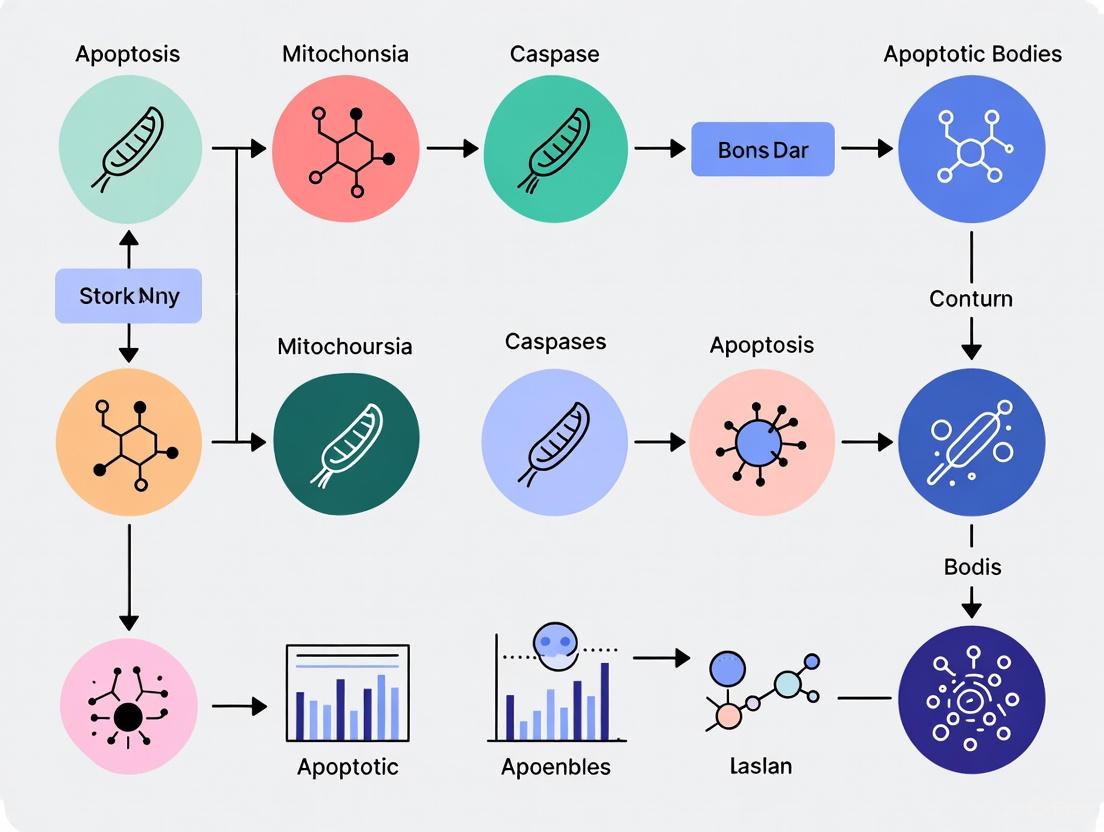
This article provides a comprehensive guide for researchers and drug development professionals seeking to enhance the precision and reliability of automated apoptosis image analysis.
Advanced Strategies for Improving Accuracy in Automated Apoptosis Image Analysis
Abstract
This article provides a comprehensive guide for researchers and drug development professionals seeking to enhance the precision and reliability of automated apoptosis image analysis. It covers the foundational principles of apoptotic pathways and key morphological biomarkers, explores advanced methodologies including high-content live-cell imaging and AI-driven analysis of multicellular patterns, addresses common troubleshooting and optimization challenges, and establishes robust validation frameworks against gold-standard techniques. The integration of these strategies is crucial for accelerating drug discovery, improving toxicology studies, and advancing the development of cell-based therapies.
Understanding Apoptosis: Pathways, Biomarkers, and the Imperative for Accurate Imaging
Core Pathway Diagrams
Apoptotic Signaling Pathways
Caspase Activation Hierarchy
Key Executioner Caspases: Quantitative Profile
Table 1: Executioner Caspase Characteristics and Detection Methods
| Caspase | Primary Role | Activation Trigger | Key Substrates | Preferred Detection Method |
|---|---|---|---|---|
| Caspase-3 | Principal executioner; cleaves majority of apoptotic substrates | Activated by both intrinsic (caspase-9) and extrinsic (caspase-8) pathways | PARP, ICAD, DFF45 | CellEvent DEVD-based assays, IF with specific antibodies [1] |
| Caspase-7 | Redundant executioner; complements caspase-3 activity | Similar to caspase-3 but with distinct substrate profile | PARP, DFF45 | DEVD-based fluorescent assays, co-detection with caspase-3 [2] |
| Caspase-6 | Effector caspase; specialized substrate cleavage | Activated by caspase-3, -7, -8, -10 | Lamin A/C, nuclear mitotic apparatus protein | Specific antibody-based detection, VED-based substrates [3] |
Research Reagent Solutions
Table 2: Essential Reagents for Apoptosis Detection and Analysis
| Reagent Type | Specific Examples | Primary Function | Compatibility |
|---|---|---|---|
| Fluorescent Caspase Substrates | CellEvent Caspase-3/7 Green, FAM-DEVD-FMK | Detect caspase-3/7 activity via DEVD cleavage | Live-cell imaging, flow cytometry, HCS [1] |
| Antibody-Based Detection | Anti-cleaved caspase-3, caspase-9 antibodies | Detect specific caspase forms via immunofluorescence | Fixed samples, tissue sections, IF [4] |
| Live-Cell Reporters | ZipGFP-based caspase-3/7 biosensors | Real-time monitoring of caspase activation | Live-cell imaging, 2D/3D cultures [2] |
| Caspase Inhibitors | zVAD-FMK (pan-caspase), DEVD-CHO (caspase-3/7) | Validate caspase-dependent mechanisms, control experiments | Pre-treatment, co-treatment studies [2] |
| Multiplexing Dyes | Annexin V, PI, TMRM, Hoechst 33342 | Multi-parametric analysis of cell death | Flow cytometry, fluorescence microscopy [1] [5] |
Technical Support & Troubleshooting Guide
Frequently Asked Questions
Q1: Why do I detect high background signal in my caspase immunofluorescence staining?
Solution: Implement these specific protocol adjustments:
- Increase blocking time to 2 hours using 5% serum from the secondary antibody host species [4]
- Optimize permeabilization: Use PBS/0.1% Triton X-100 for 5 minutes at room temperature [4]
- Include rigorous washing: Three washes with PBS/0.1% Tween 20 for 10 minutes each after primary antibody incubation [4]
- Validate antibody specificity with no-primary-antibody negative controls [4]
Q2: How can I distinguish between intrinsic and extrinsic pathway activation in my automated image analysis?
Solution: Implement multi-parametric assessment:
- Monitor early markers: Track mitochondrial membrane potential (TMRM) loss preceding caspase activation [1]
- Temporal analysis: Extrinsic pathway typically activates caspase-8 within 1-4 hours; intrinsic pathway shows delayed caspase-9 activation (4-12 hours) [3]
- Inhibitor validation: Use specific caspase-8 vs. caspase-9 inhibitors to confirm pathway involvement [2]
- Morphological correlation: Combine caspase activation with nuclear fragmentation analysis in automated workflows [6]
Q3: My live-cell caspase reporter shows inconsistent activation kinetics between cells. Is this biologically relevant or technical noise?
Answer: This likely represents biological reality rather than technical artifact. Research confirms:
- Individual cells within a population exhibit heterogeneous caspase activation kinetics [7]
- Single-cell analysis reveals subpopulations with differential caspase activation thresholds [7]
- Technical validation: Confirm with endpoint caspase-3 cleavage Western blot to verify overall activation [2]
- Analysis adjustment: Implement single-cell tracking rather than population averages in your automated analysis [2] [6]
Q4: What are the limitations of DEVD-based caspase detection assays I should consider in automated analysis?
Key limitations to program into your analysis algorithms:
- Caspase-3 deficiency: MCF-7 cells lack caspase-3 but maintain caspase-7-mediated DEVD cleavage [2]
- Early apoptosis detection: DEVD cleavage occurs after commitment to apoptosis; earlier markers (Annexin V, mitochondrial potential) may detect initial phases [1] [6]
- Specificity concerns: Some non-apoptotic processes may cause minimal DEVD cleavage; always correlate with morphological apoptosis markers [5]
- 3D model challenges: Ensure adequate reagent penetration in spheroids/organoids; normalize signals to cell viability markers [2]
Q5: How can I improve accuracy in detecting early apoptosis for automated high-content screening?
Implement multi-parametric detection:
- Combine label-free and fluorescent methods: Use deep learning to detect apoptotic bodies (92% accuracy) alongside caspase activation [6]
- Early morphological markers: Program algorithms to detect membrane blebbing, cell shrinkage before caspase activation [6]
- Cross-validation: Correlate caspase activation with Annexin V exposure and nuclear condensation [5]
- Temporal tracking: Monitor for consecutive frame apoptosis signatures (3-frame minimum) to reduce false positives [6]
Experimental Protocol: Caspase Immunofluorescence Detection
Title: Standardized Protocol for Executioner Caspase Detection in Fixed Cells
Materials Required:
- Primary antibody against caspase (e.g., anti-Caspase 3 antibody)
- Prepared, fixed samples on slides
- Triton X-100 or NP-40
- PBS
- Blocking buffer (PBS/0.1% Tween 20 + 5% appropriate serum)
- Conjugated secondary antibody (e.g., goat anti-rabbit Alexa Fluor 488 conjugate)
- Mounting medium
- Humidified chamber [4]
Step-by-Step Methodology:
- Permeabilization: Incubate fixed samples in PBS/0.1% Triton X-100 for 5 minutes at room temperature
- Washing: Three washes in PBS, 5 minutes each at room temperature
- Blocking: Apply 200 μL blocking buffer, incubate 1-2 hours in humidified chamber at room temperature
- Primary Antibody: Apply 100 μL primary antibody diluted 1:200 in blocking buffer, incubate overnight at 4°C in humidified chamber
- Secondary Detection: Apply 100 μL appropriate secondary antibody diluted 1:500 in PBS, incubate 1-2 hours protected from light
- Mounting: Apply mounting medium, image with fluorescence microscope [4]
Critical Optimization Parameters for Automated Analysis:
- Antibody validation: Include no-primary-antibody controls for background subtraction
- Fixation consistency: Standardize fixation times across all samples for comparable intensity measurements
- Image acquisition: Maintain consistent exposure settings across experimental conditions
- Multi-channel imaging: Include nuclear counterstain (Hoechst) for cell segmentation in automated analysis [4]
Apoptosis, or programmed cell death, is a genetically controlled process essential for development and tissue homeostasis. It is morphologically distinct from necrotic cell death, characterized by specific hallmarks: cell shrinkage, nuclear fragmentation, and membrane blebbing. [8] [9] These morphological changes result from the precise cleavage of key cellular substrates by a family of proteases called caspases. [10] [11] The efficient demolition of apoptotic cells ensures their swift and quiet clearance without inducing inflammatory responses, a process crucial for maintaining health. [10] Defects in apoptosis are implicated in numerous diseases, including cancer, autoimmune, and neurodegenerative disorders, making its accurate detection vital for research and drug discovery. [8] [9] This guide provides troubleshooting support to improve the accuracy of quantifying these hallmark changes in automated image analysis.
Core Biochemical Pathways
The morphological changes of apoptosis are initiated through two main pathways that converge on caspase activation. [8]
Troubleshooting Guide: Resolving Common Experimental Challenges
This section addresses frequent issues encountered when detecting apoptotic morphology and offers targeted solutions to ensure data reliability.
Troubleshooting Membrane Blebbing and PS Externalization
Annexin V binding, used to detect phosphatidylserine (PS) externalization, is a common early apoptosis marker. The table below outlines common problems and their solutions. [12] [13]
| Problem | Possible Cause | Recommended Solution |
|---|---|---|
| High background in controls | Cell handling damage from trypsin/EDTA or mechanical scraping. [12] [13] | Use gentle, EDTA-free dissociation buffers (e.g., Accutase). Allow cells to recover for 30 minutes in culture medium after handling before staining. [12] [13] |
| No signal in treated group | Insufficient apoptosis induction; loss of apoptotic cells in supernatant during washing. [12] | Optimize drug concentration/duration; include cell supernatant in analysis; avoid washing steps after staining. [12] |
| False positives from platelet contamination | Platelets in blood samples expose PS, binding Annexin V. [12] | Remove platelets from blood samples prior to analysis. [12] |
| Poor compensation in flow cytometry | Fluorescence spillover between channels. [12] | Use proper single-stain controls (unstained, Annexin V-only, PI-only) to adjust compensation. [12] |
Troubleshooting Nuclear Fragmentation Assays
Accurate quantification of nuclear fragmentation relies on clear and specific staining of DNA breaks.
| Problem | Possible Cause | Recommended Solution |
|---|---|---|
| High background in TUNEL/Click-iT assays | Non-specific dye binding or cellular autofluorescence. [13] | Increase number of BSA washes; include a no-enzyme control; verify signal is not due to autofluorescence. [13] |
| Low or no signal | Metal chelators (e.g., EDTA) in buffers interfering with click reaction; insufficient fixation/permeabilization. [13] | Avoid chelators in all pre-reaction buffers. Ensure cells are adequately fixed and permeabilized for reagent access. [13] |
| Incomplete nuclear separation | Over-confluent or poor health cells. | Use healthy, log-phase cells and avoid excessive pipetting or harsh handling. [12] |
General Experimental Optimization
| Problem | Possible Cause | Recommended Solution |
|---|---|---|
| Unclear cell population separation | Cellular autofluorescence interfering with signal. [12] | Check for cell autofluorescence and select a kit with a non-overlapping fluorophore (e.g., use PE or APC instead of FITC for GFP-expressing cells). [12] |
| Low signal across assays | Reagent degradation or improper storage. [12] | Use a positive control (e.g., camptothecin-treated cells) to verify kit functionality. Store light-sensitive reagents in the dark. [12] |
| Low signal in 3D cultures or tissues | Reagents cannot penetrate deep into the sample. | Optimize digestion (e.g., with proteinase K) or use specialized kits validated for 3D models. [13] |
Detailed Experimental Protocols for Key Apoptosis Assays
Real-Time, Live-Cell Analysis of Apoptosis
Live-cell analysis systems allow for kinetic monitoring of apoptosis without disturbing the cells. [14]
Workflow Overview:
Methodology: [14]
- Plate cells in a 96- or 384-well plate.
- Add apoptotic inducers (e.g., camptothecin) along with mix-and-read dyes:
- Incucyte Caspase-3/7 Dye: Cell-permeant substrate cleaved by activated caspases, releasing a DNA-binding fluorescent dye that labels nuclei.
- Incucyte Annexin V Dye: Binds to externalized PS on the outer leaflet of the plasma membrane.
- Place the plate into a live-cell analysis system inside a tissue culture incubator.
- Acquire images automatically at set intervals over several hours or days.
- Quantify fluorescence and concomitant morphological changes (shrinking, blebbing) using integrated software.
Key Advantages: [14]
- Kinetic Data: Reveals the timing and sequence of apoptotic events.
- No Wash Steps: Minimizes disturbance and loss of dying cells.
- Multiplexing: Caspase and Annexin V signals can be correlated with morphology and cell count in the same well.
Flow Cytometry-Based Annexin V/Propidium Iodide (PI) Assay
This classic assay distinguishes early apoptotic (Annexin V+/PI-), late apoptotic (Annexin V+/PI+), and necrotic (Annexin V-/PI+) cells. [12]
Methodology: [12]
- Harvest cells gently. Use EDTA-free cell dissociation buffer and allow cells to recover for 30 minutes post-detachment.
- Wash cells with cold PBS and resuspend in a binding buffer containing Ca²⁺.
- Stain with Annexin V-FITC and PI for 15-20 minutes in the dark.
- Analyze by flow cytometry within 1 hour. Use single-stain controls for proper compensation.
- Analyze data by gating on the population of interest and plotting Annexin V vs. PI.
The Scientist's Toolkit: Key Reagents and Assays
A summary of essential tools for studying apoptotic morphology is provided in the table below.
| Item | Function & Application | Key Considerations |
|---|---|---|
| Annexin V Conjugates | Detects phosphatidylserine (PS) exposure on the outer membrane leaflet, an early marker of apoptosis. [12] [14] [9] | Binding is Ca²⁺-dependent; avoid EDTA. Not species-specific. Choose fluorophores that don't overlap with other labels (e.g., avoid FITC if cells express GFP). [12] |
| Caspase-3/7 Substrates | Measures executioner caspase activity. Inert, non-fluorescent substrates (containing DEVD sequence) are cleaved to release fluorescent dyes upon activation. [14] [9] | Some cell lines (e.g., MCF-7) lack caspase-3; use Annexin V or other assays instead. [14] |
| Propidium Iodide (PI) / 7-AAD | DNA-binding dyes that stain cells with compromised membranes, identifying late-stage apoptotic and necrotic cells. [12] | Impermeant to live and early apoptotic cells. Used to discriminate stages of cell death in combination with Annexin V. [12] |
| TUNEL / Click-iT Assay Kits | Labels DNA strand breaks, a hallmark of nuclear fragmentation, via terminal deoxynucleotidyl transferase (TdT) or "click" chemistry. [13] | Requires careful fixation and permeabilization. Avoid metal chelators in buffers for click chemistry. [13] |
| Live-Cell Analysis Instruments | Enables real-time, kinetic imaging of apoptosis inside an incubator without manual intervention. [14] | Ideal for long-term studies, multiplexing apoptosis markers with cell morphology and proliferation. [14] |
Frequently Asked Questions (FAQs)
Q1: My untreated control cells show high Annexin V signal. What is wrong? This is a common issue often caused by cell stress during handling. The most likely culprits are using trypsin-EDTA for detachment (EDTA chelates the Ca²⁺ required for Annexin V binding, while trypsin damages the membrane) or excessive mechanical force. Solution: Switch to a gentle, EDTA-free dissociation buffer and allow cells to recover for at least 30 minutes in complete medium before staining. [12] [13]
Q2: Why is there no caspase-3/7 signal in my treated cells, even though they look shrunken? First, verify your cells express caspase-3 (some lines, like MCF-7, do not). If they do, the treatment conditions (drug concentration or duration) may be insufficient to trigger robust caspase activation, or the cells may be undergoing a caspase-independent cell death pathway. Solution: Use a positive control (e.g., camptothecin) to confirm kit functionality. Consider multiplexing with Annexin V to detect apoptosis through an alternative pathway. [12] [14]
Q3: Can I perform apoptosis assays on suspension cells and in co-culture systems? Yes. For suspension cells like Jurkat T-cells, coating plates with poly-L-ornithine can help keep them in the field of view for imaging. [14] For co-cultures, you can use fluorescent cell trackers or lineage-specific labels (e.g., Nuclight Lentivirus) to multiplex with apoptosis dyes, allowing you to attribute death to a specific cell type. [14]
Q4: How can I distinguish between apoptotic and necrotic cells in my analysis? The Annexin V/PI assay is designed for this. Apoptotic cells will be Annexin V+/PI- (early) or Annexin V+/PI+ (late), while necrotic cells are typically Annexin V-/PI+ due to passive membrane rupture without prior PS exposure. Furthermore, observing morphology is key: apoptosis features cell shrinkage, blebbing, and nuclear fragmentation, while necrosis involves cell swelling and lysis. [12] [8] [9]
Troubleshooting Guides & FAQs
Caspase Activation Detection
Q: What causes high background fluorescence in my caspase immunofluorescence staining?
A: High background often results from insufficient blocking or overtitration of primary/secondary antibodies. To resolve this:
- Ensure thorough washing steps (three times, 5 minutes each) after permeabilization and antibody incubations [4].
- Use appropriate blocking serum from the host species of the secondary antibody (e.g., goat serum for goat anti-rabbit secondary) [4].
- Optimize primary antibody concentration; suggested starting dilution is 1:200 in blocking buffer, but may require further optimization depending on your specific antibody and sample type [4].
- Always include a negative control without primary antibody to distinguish specific from non-specific staining [4].
Q: My caspase reporter cell line shows weak signal upon apoptosis induction. How can I improve detection?
A: Weak signal may indicate issues with reporter sensitivity or apoptosis induction:
- Validate apoptosis induction using positive controls (e.g., carfilzomib or oxaliplatin treatment) and confirm with complementary methods like Annexin V/PI staining [15].
- For stable reporter lines expressing DEVD-based biosensors, verify caspase-3/7 specificity using pan-caspase inhibitors (zVAD-FMK) which should abrogate the signal [15].
- Ensure proper biosensor function—in caspase-3 deficient MCF-7 cells, signal generation relies on caspase-7 activity, which may produce different kinetics [15].
- Optimize imaging parameters and ensure adequate expression of the constitutive fluorescent marker (e.g., mCherry) for normalization [15].
Phosphatidylserine Exposure
Q: How can I distinguish pathological PS exposure from apoptotic PS exposure?
A: The context and additional markers help differentiate these phenomena:
- Temporal dynamics: Non-apoptotic PS exposure on tumor cells is often transient and reversible, while apoptotic PS externalization is irreversible [16] [17].
- Cellular viability: PS-positive tumor cells remain viable and proliferative, while apoptotic PS-exposing cells show characteristic morphological changes and loss of membrane integrity [17].
- Co-localization patterns: In brain metastases, PS exposure is specifically found on the luminal surface of tumor vascular endothelial cells, colocalizing with CD31+ endothelial markers rather than tumor parenchyma [16].
- Functional assays: Combine with viability dyes and caspase activity markers; viable PS-positive cells will exclude viability dyes and lack caspase activation [15] [17].
Q: What controls are essential for validating PS exposure experiments?
A: Proper controls are crucial for interpreting PS exposure data:
- Include known PS-positive (e.g., tumor cell lines like glioblastoma U87-mg or metastatic melanoma WM164) and PS-negative (normal fibroblasts or melanocytes) control cell lines [17].
- Use calcium ionophores as positive controls for scramblase activation and PS externalization [18].
- For in vivo imaging with PS-targeting antibodies like 1N11, include control antibodies targeting irrelevant antigens (e.g., Aurexis) to assess non-specific binding [16].
- Validate PS detection reagents: Annexin V requires calcium-containing buffers, while PS-specific antibodies may have different binding requirements [18] [16].
Nuclear Condensation Analysis
Q: What staining methods provide optimal nuclear and chromatin feature extraction?
A: The choice of nuclear stain significantly impacts feature detection quality:
- Hoechst staining provides superior classification accuracy (~79%) compared to H&E staining (~70%) for distinguishing normal versus metastatic tissue based on nuclear morphology and chromatin organization [19].
- Ensure adequate fixation (4% PFA for 10-20 minutes) while avoiding over-fixation, which can alter chromatin structure [20].
- For high-resolution chromatin imaging, use oil immersion objectives (60X) with appropriate UV illumination and emission filters [20].
- Standardize imaging conditions across samples, as fluorescence intensity variations can affect texture-based feature extraction [19].
Q: How can I automate nuclear segmentation and feature extraction for high-content analysis?
A: Implement a standardized pipeline for consistent results:
- Use a combination of intensity-based approaches (thresholding, watershed) for standard density samples and model-based approaches (U-net architecture, StarDist) for crowded samples [19].
- Extract comprehensive feature sets including global morphology (area, volume, eccentricity), nuclear boundary features, global intensity, and intensity distribution features [19].
- Validate segmentation sensitivity (>82% on validation datasets) using manually annotated ground truth data [19].
- Implement machine learning classifiers (Random Forest, Linear Discriminant Analysis) trained on extracted features to automatically classify nuclear states [19] [21].
Quantitative Data Tables
Biomarker Performance Metrics
Table 1: Performance Comparison of Apoptosis Detection Methods
| Detection Method | Target | Sensitivity | Specificity | Spatial Resolution | Temporal Resolution | Key Applications |
|---|---|---|---|---|---|---|
| Caspase IF [4] | Active caspases | ~85%* | ~90%* | Single-cell | Fixed endpoint | Apoptosis validation, tissue sections |
| DEVD-based reporters [15] | Caspase-3/7 activity | >90% | >90% | Single-cell | Real-time (hours-days) | Live-cell imaging, 3D models, drug screening |
| PS targeting antibodies [16] | Exposed PS | High (micrometastasis detection) | High (no normal brain signal) | ~20μm (optical) | Minutes-hours | Brain metastasis detection, vascular targeting |
| Nuclear morphology classifiers [19] | Chromatin condensation | ~79% | ~79% | Single-cell | Fixed endpoint | Tumor grading, PBMC analysis |
| Automated caspase algorithm [22] | Signal translocation | >85% | >90% | Single-cell | Fixed endpoint | High-throughput screening |
*Estimated based on troubleshooting recommendations; actual values require experimental optimization.
Biomarker Expression Patterns Across Cell States
Table 2: Biomarker Expression in Different Cellular Contexts
| Cell Type/State | Caspase Activation | PS Exposure | Nuclear Condensation | Additional Markers |
|---|---|---|---|---|
| Healthy cells | None | Inner leaflet only [16] [17] | Normal chromatin organization [19] | Intact mitochondrial membrane [4] |
| Early apoptosis | Initiator caspase activation | Beginning externalization | Mild chromatin compaction | Cytochrome C release [22] |
| Late apoptosis | Executioner caspase activation [15] | Robust exposure | Significant condensation, fragmentation | PARP cleavage [15] |
| Tumor cells | Typically absent [17] | Surface exposure on viable cells [17] | Abnormal organization [19] | Aneuploidy, irregular shape [19] |
| Brain metastasis vasculature | Absent | Luminal surface exposure [16] | Not applicable | CD31+ endothelial markers [16] |
| Therapy-responsive PBMCs | Variable | Variable | Altered chromatin states [21] | Increased γH2AX, decreased Lamin A/C [21] |
Experimental Protocols
Caspase Immunofluorescence Detection Protocol
Based on established caspase immunofluorescence staining protocols with optimization for automated image analysis [4]
Materials:
- Primary antibody against caspase (e.g., anti-Caspase 3 rabbit mAb)
- Prepared, fixed samples on slides
- Triton X-100 or NP-40
- PBS
- Blocking buffer (PBS/0.1% Tween 20 + 5% appropriate serum)
- Conjugated secondary antibody (e.g., goat anti-rabbit Alexa Fluor 488 conjugate)
- Mounting medium
- Humidified chamber
Method:
- Permeabilization: Incubate fixed samples in PBS/0.1% Triton X-100 for 5 minutes at room temperature.
- Washing: Wash three times in PBS, 5 minutes each at room temperature.
- Blocking: Drain slides and add 200μL blocking buffer. Incubate flat in humidified chamber for 1-2 hours at room temperature.
- Primary antibody incubation: Add 100μL primary antibody diluted 1:200 in blocking buffer. Incubate in humidified chamber overnight at 4°C.
- Secondary antibody incubation: Wash slides three times, 10 minutes each in PBS/0.1% Tween 20. Drain and add 100μL appropriate secondary antibody diluted 1:500 in PBS. Incubate protected from light for 1-2 hours at room temperature.
- Final processing: Wash three times in PBS/0.1% Tween 20 for 5 minutes, protected from light. Drain liquid, mount with appropriate mounting medium, and image with fluorescence microscope.
Automated Analysis Considerations:
- For high-throughput applications, implement automated segmentation algorithms to identify caspase-positive cells [22].
- Use intensity thresholding optimized with positive and negative controls to define activation thresholds.
- For spatial analysis, calculate the percentage of caspase-positive cells within specific regions of interest.
Real-Time Caspase Activity Monitoring in 3D Models
Adapted from validated protocols for live-cell caspase reporter imaging [15]
Materials:
- Stable reporter cells expressing DEVD-based biosensor (e.g., ZipGFP with mCherry normalization)
- Apoptosis inducers (carfilzomib, oxaliplatin)
- Pan-caspase inhibitor (zVAD-FMK) for control
- Appropriate culture media for 3D models (CultrexTM for spheroids)
- Live-cell imaging compatible plate reader or microscope
- Image analysis software with segmentation capabilities
Method:
- 3D model preparation: Generate spheroids or organoids from reporter cells using appropriate extracellular matrix.
- Treatment application: Add apoptosis inducers at optimized concentrations alongside controls.
- Time-lapse imaging: Acquire images at regular intervals (1-4 hours) over 48-120 hours using maintained environmental control.
- Image processing: Segment individual cells based on constitutive mCherry signal.
- Signal quantification: Measure GFP/mCherry ratio over time to normalize for cell presence.
- Data analysis: Calculate timing and extent of caspase activation using optimized thresholds.
Troubleshooting Notes:
- For heterogeneous organoids, implement regional analysis to account for spatial variations in reporter activation.
- Optimize imaging depth and interval to minimize phototoxicity while capturing key dynamics.
- Use AI-based cell health modules for simultaneous viability assessment when available.
Signaling Pathway Diagrams
Apoptosis Biomarker Signaling Network
Biomarker Image Analysis Workflow
Research Reagent Solutions
Table 3: Essential Reagents for Apoptosis Biomarker Research
| Reagent Category | Specific Examples | Key Applications | Technical Considerations |
|---|---|---|---|
| Caspase Detection | Anti-Caspase 3 antibody (rabbit mAb) [4] | Immunofluorescence, fixed samples | Optimize dilution (1:200 starting point); validate with caspase-deficient controls |
| DEVD-based fluorescent reporters (ZipGFP) [15] | Live-cell imaging, real-time kinetics | Use with constitutive marker (mCherry) for normalization; caspase inhibitor controls essential | |
| PS Detection | PS-targeting antibodies (1N11) [16] | In vivo imaging, vascular targeting | Distinguish apoptotic vs. non-apoptotic exposure; control antibodies critical |
| Annexin V conjugates | Flow cytometry, early apoptosis detection | Requires calcium-containing buffers; combine with viability dyes | |
| Nuclear Stains | Hoechst 33342 [19] | Chromatin condensation analysis | Superior to H&E for classification accuracy; standardized imaging essential |
| DAPI [21] | PBMC chromatin phenotyping | Compatible with multiparameter immunofluorescence | |
| Apoptosis Inducers | Carfilzomib [15] | Reporter validation, therapy models | Proteasome inhibitor; induces intrinsic pathway |
| Oxaliplatin [15] | Chemotherapy response studies | DNA-damaging agent; caspase-dependent apoptosis | |
| Inhibitors/Controls | zVAD-FMK [15] | Caspase dependence validation | Pan-caspase inhibitor; should block reporter activation |
| Bafilomycin A1 [23] | Lysosomal function studies | Inhibits acidification; affects caspase-1 activation | |
| Image Analysis Tools | StarDist [19] | Nuclear segmentation | U-net based; superior for crowded images |
| Custom MATLAB algorithms [22] | Signal translocation analysis | Enables high-throughput screening applications |
Troubleshooting Guides & FAQs
Frequently Asked Questions
Q1: My automated image analysis shows a high percentage of false positives in the control group. What could be the cause? A: Several factors related to cell handling and assay conditions can lead to false positives in your controls [12]:
- Cell Health: Using over-confluent, starved, or otherwise unhealthy cells can lead to spontaneous apoptosis [12].
- Mechanical Stress: Excessive pipetting, over-trypsinization (especially with EDTA-containing trypsin, which chelates the Ca²⁺ required for Annexin V binding), or other harsh handling can disrupt the cell membrane [12].
- Improper Compensation: Poorly adjusted fluorescence compensation can cause signal spillover, making negative cells appear positive. Always use single-stain controls to set up your instrument correctly [12].
Q2: After a pro-apoptotic drug treatment, I am not detecting any positive signals. What should I check? A: A lack of expected signal can be due to issues with the assay or the biological model [12]:
- Treatment Efficacy: The drug concentration or treatment duration may be insufficient to induce detectable apoptosis. Perform a dose-response or time-course experiment [12].
- Lost Cells: Apoptotic cells in the early stages can detach and be lost in the supernatant. Always ensure you collect and analyze the supernatant along with the adherent cells [12].
- Reagent Issues: Verify that all dyes were added and that the reagents have not degraded. Include a positive control (e.g., cells treated with a known apoptosis inducer like staurosporine or camptothecin) to confirm the kit is functional [24] [25].
Q3: Why is accurate segmentation so critical in automated apoptosis analysis, and what are the common challenges? A: Accurate segmentation is the foundation of all subsequent quantification. Errors in identifying individual cells directly lead to inaccurate counts and misclassification of their state [26] [27]. Common challenges include:
- Cell Clustering: Adherent or densely packed cells can be difficult for software to separate, leading to them being counted as a single, large object [27].
- Morphological Heterogeneity: Cells undergoing apoptosis display a vast range of shapes and sizes, which can confuse algorithms trained on uniform, healthy cells [26].
- Image Quality: Poor contrast, out-of-focus images, or uneven illumination severely degrade segmentation performance. Platforms like Quantella address this with initial image enhancement steps to improve boundary clarity [27].
Q4: How can I validate the accuracy of my automated image analysis system? A: Validation against a gold standard method is essential. One study demonstrated the accuracy of a smartphone-based platform (Quantella) by comparing its results for over 10,000 cells to flow cytometry data, achieving a deviation of less than 5% [27]. Furthermore, you can:
- Manually Verify: Manually check the software's segmentation and classification on a subset of images.
- Use Reference Materials: The cell metrology community is working towards developing standardized materials to improve data comparability across platforms and labs [26].
Troubleshooting Guide: Annexin V/PI Assay
This guide addresses common problems encountered when using Annexin V and Propidium Iodide (PI) for apoptosis detection via flow cytometry or image cytometry.
Table: Common Problems and Solutions in Annexin V/PI Apoptosis Assays
| Problem | Possible Causes | Recommended Solutions |
|---|---|---|
| High Background in Untreated Controls [12] | - Poor cell health- Mechanical damage from handling- Over-trypsinization with EDTA- Poor fluorescence compensation | - Use healthy, log-phase cells. Be gentle during pipetting.- Use gentle, EDTA-free dissociation enzymes like Accutase.- Use single-stain controls to properly adjust compensation. |
| No Apoptotic Signal in Treated Group [12] | - Insufficient drug treatment- Loss of apoptotic cells in supernatant- Reagent degradation or omission | - Optimize drug concentration and treatment time.- Always include the supernatant when harvesting.- Include a positive control to verify kit functionality. |
| Only PI is Positive (Annexin V Negative) [12] | - Cells are primarily late apoptotic/necrotic- Mechanical damage making membranes permeable | - Ensure gentle cell handling to avoid artifactual necrosis.- Verify treatment conditions; very rapid necrosis may bypass early apoptosis. |
| Only Annexin V is Positive (PI Negative) [12] | - Cells are in early apoptosis- PI or other nuclear dye was omitted | - This is the expected profile for early apoptosis.- Confirm that all dyes were added during the staining procedure. |
| Poor Separation of Cell Populations [12] | - Cellular autofluorescence- Spectral overlap of fluorophores- Poor cell condition | - Choose fluorophores that do not overlap with cellular autofluorescence (e.g., use PE or APC instead of FITC for GFP-expressing cells).- Ensure optimal cell health and staining conditions. |
Experimental Protocols & Methodologies
Standardized Protocol: Apoptosis Detection via Annexin V/PI Staining for Image Cytometry
This protocol is adapted for systems like the Cellometer platform but can be adjusted for other image cytometers [25].
Principle: In healthy cells, phosphatidylserine (PS) is located on the inner leaflet of the plasma membrane. During early apoptosis, PS is translocated to the outer leaflet, where it can be bound by fluorochrome-labeled Annexin V. Propidium Iodide (PI) is a membrane-impermeant dye that only enters cells with compromised membranes (late apoptotic and necrotic cells) and stains DNA [25].
Materials:
- Cell sample (suspension culture or dissociated adherent cells)
- Annexin V-FITC (or other fluorophore conjugate)
- Propidium Iodide (PI) solution
- 1X Annexin-Binding Buffer
- Cellometer counting chamber and image cytometer (e.g., Revvity Cellometer K2 or Spectrum)
Procedure [25]:
- Prepare Cell Sample: Harvest cells, ensuring gentle handling to avoid mechanical damage. Wash cells once with 1X PBS.
- Stain Cells:
- Resuspend cell pellet in 1X Annexin-Binding Buffer at a density of ~1 x 10⁶ cells/mL.
- Add Annexin V-FITC and PI to the cell suspension. Follow manufacturer recommendations for volumes (e.g., a 1:1 ratio with a premixed stain is common).
- Incubate for 15-20 minutes at room temperature in the dark.
- Acquire Images:
- Pipette 20 µL of the stained sample into a disposable Cellometer slide chamber.
- Insert the slide into the instrument.
- Select the appropriate apoptosis assay from the software menu and initiate image acquisition.
- Analyze Data: The software will typically generate scatter plots and quantify the percentage of cells in each population (live, early apoptotic, late apoptotic/necrotic).
Intrinsic and Extrinsic Apoptosis Pathways
The following diagram illustrates the two main pathways of apoptosis, which converge on the activation of executioner caspases. Accurate image analysis often involves detecting key events in these pathways, such as caspase activation or mitochondrial membrane depolarization.
Experimental Workflow for Accurate Apoptosis Analysis
This workflow outlines the critical steps from sample preparation to data analysis to ensure accurate and reproducible results in automated apoptosis imaging.
The Scientist's Toolkit: Research Reagent Solutions
This table details key reagents and their functions for detecting apoptosis, forming a toolkit for researchers.
Table: Essential Reagents for Apoptosis Detection Assays
| Reagent / Assay | Function / Target | Key Application Notes |
|---|---|---|
| Annexin V (FITC, PE, APC) [12] [25] | Binds to phosphatidylserine (PS) on the outer leaflet of the cell membrane, an early marker of apoptosis. | Calcium-dependent. Avoid EDTA in cell preparation buffers. Not species-specific. |
| Propidium Iodide (PI) [12] [25] | Membrane-impermeant DNA dye. Stains cells with compromised membranes (late apoptotic/necrotic). | Distinguishes early apoptosis (Annexin V+/PI-) from late apoptosis/necrosis (Annexin V+/PI+). |
| 7-AAD [12] | Alternative membrane-impermeant DNA dye. Can be used in place of PI in multicolor panels. | Often used in combination with Annexin V-PE due to better spectral separation than PI. |
| JC-1 Dye [25] | Mitochondrial membrane potential sensor. Forms red fluorescent aggregates in healthy mitochondria (high ΔΨm) and remains green in depolarized mitochondria (low ΔΨm). | Decrease in red/green fluorescence intensity ratio indicates mitochondrial depolarization, an early apoptotic event in the intrinsic pathway. |
| Caspase 3/7 Substrates (e.g., CellEvent) [24] | Fluorogenic substrates that are cleaved by active executioner caspases 3 and 7, producing a bright fluorescent signal. | Allows direct measurement of a key convergence point in apoptosis pathways. Can be used for live-cell imaging. |
| TUNEL Assay (e.g., Click-iT Plus) [24] | Labels DNA strand breaks, a hallmark of late-stage apoptosis. | Highly specific for detecting DNA fragmentation. Modern versions (Click-iT Plus) allow better multiplexing with other markers. |
Data Presentation: Quantitative Analysis
Table: Example Accuracy Validation of an Automated Imaging Platform vs. Flow Cytometry
This table summarizes validation data from a study comparing a smartphone-based image analysis platform (Quantella) to the gold standard, flow cytometry, for cell analysis [27]. Such validation is critical for establishing confidence in automated systems.
| Cell Analysis Parameter | Quantella Result | Flow Cytometry Result | Reported Deviation |
|---|---|---|---|
| Cell Viability (%) | Derived from cell count data | Derived from cell count data | < 5% |
| Cell Density | Derived from cell count data | Derived from cell count data | < 5% |
| Validation Method Notes: | Analysis of >10,000 cells per test across diverse cell types (suspension, adherent, primary cells). Achieved >90% accuracy in cell identification [27]. |
Cutting-Edge Techniques: From High-Content Imaging to AI-Powered Multicellular Tracking
Research Reagent Solutions for Apoptosis Analysis
The following table summarizes key reagents essential for real-time kinetic analysis of apoptosis using high-content live-cell imaging.
| Reagent Category | Specific Examples | Primary Function in Apoptosis Analysis |
|---|---|---|
| Phosphatidylserine (PS) Probes | Annexin V-488, Annexin V-594, Annexin V NIR [28] [29] [30] | Binds to PS exposed on the outer leaflet of the plasma membrane, an early event in apoptosis. |
| Caspase Activation Reporters | CellEvent Caspase-3/7 Green/Red, Incucyte Caspase-3/7 Dyes, DEVD-NucView488 [31] [29] [32] | Fluorogenic substrates cleaved by active caspase-3/7, releasing a DNA-binding fluorescent dye. |
| Viability (Dead Cell) Indicators | YOYO-3, SYTOX Green/Orange/Deep Red, DRAQ7 [31] [30] | Cell-impermeant dyes that stain nucleic acids only in cells with compromised membranes, indicating late-stage apoptosis/necrosis. |
| Nuclear Stains (Live-Cell) | Hoechst 33342, NucBlue Live, HCS NuclearMask Stains [31] [28] [33] | Permeant dyes that label all nuclei for cell counting, segmentation, and confluence measurement. |
| Multiplexing Labels | Incucyte Nuclight Lentivirus (NIR, Red) [29] | Labels nuclei of live cells for concurrent tracking of proliferation and apoptosis in a single well. |
Experimental Protocols
Protocol: Multiplexed Kinetic Apoptosis and Proliferation Assay
This protocol enables simultaneous, real-time tracking of cell death and proliferation, ideal for high-throughput drug toxicity testing [28] [29].
Key Materials:
- Cells: Adherent cell lines (e.g., HT-1080, A549, HeLa).
- Reagents:
- Equipment:
Detailed Methodology:
- Cell Preparation: Generate a stable cell line expressing the nuclear label (e.g., Nuclight NIR) following manufacturer's instructions. For the assay, seed labeled cells at an optimized density (e.g., 2,000-6,000 cells per well for a 384-well plate) to achieve 70% confluence at the assay endpoint [28] [29].
- Treatment and Staining: After a 24-hour incubation, add serially diluted compounds (e.g., Camptothecin, Cisplatin) to the wells. Simultaneously, add the Annexin V dye directly to the medium. The final assay volume is typically 60-100 µL. This is a "no-wash" protocol [29].
- Real-Time Imaging and Analysis:
- Place the plate in the live-cell imaging system maintained at 37°C and 5% CO₂.
- Program the system to acquire both phase-contrast and fluorescence images (for NIR and red channels) from multiple fields per well at regular intervals (e.g., every 2-4 hours) for the desired duration (24-72 hours) [29].
- Use integrated software to automatically quantify two key parameters in each well over time:
- Apoptosis: The count of red fluorescent objects (Annexin V-positive cells).
- Proliferation: The count of NIR fluorescent nuclei (total cells) [29].
Protocol: High-Throughput Annexin V / Yo-Pro-3 Apoptosis Assay
This optimized protocol uses a three-dye multiplexed approach for rich, multiparametric cell death profiling in a live-cell, high-throughput format [28] [30].
Key Materials:
- Cells: Adherent or suspension cells (e.g., HeLa, MDA-MB-231).
- Reagents:
- Annexin V conjugate (e.g., Alexa Fluor 488).
- Yo-Pro-3 (1 µM) or SYTOX family dye.
- Hoechst 33342 (1 µM).
- Phenol-free culture medium.
- Equipment:
- High-content imager (e.g., PerkinElmer Operetta).
- 384-well plates.
- Centrifuge with microplate rotors.
Detailed Methodology:
- Cell Seeding and Treatment: Plate cells in 384-well plates at a density predetermined to yield 70% confluence at the endpoint. Incubate for 24 hours, then add compounds using an acoustic dispenser or liquid handler. Maintain a low, consistent DMSO concentration (e.g., 0.05%) across all wells [28].
- Staining: At the desired time points (e.g., 24, 48, 72 hours):
- Centrifuge plates at 400g for 3 minutes to retain loosely adherent and floating cells.
- Carefully remove 20 µL of media and replace it with 20 µL of staining medium containing the three dyes (Hoechst, Annexin V, Yo-Pro-3) [28].
- Image Acquisition and Analysis:
- Incubate the stained plate for 1 hour at 37°C before imaging.
- Image using a 10x or 20x objective, capturing fields for Hoechst (Ex 360-400/Em 410-480 nm), Annexin V (e.g., Ex 460-490/Em 500-550 nm), and Yo-Pro-3 (Ex 560-580/Em 650-760 nm) [28].
- Use image analysis software to segment individual nuclei (Hoechst channel) and classify cells into populations:
- Viable: Hoechst-positive only.
- Early Apoptotic: Hoechst-positive and Annexin V-positive.
- Late Apoptotic/Necrotic: Hoechst-positive, Annexin V-positive, and Yo-Pro-3-positive [28].
Troubleshooting Guides & FAQs
Frequently Asked Questions (FAQs)
Q1: Why does my apoptosis assay show high background fluorescence in the control wells? A1: High background can stem from several sources:
- Reagent Toxicity: Some traditional viability dyes like propidium iodide can be toxic during long-term kinetic assays. Use more inert dyes like YOYO-3 or DRAQ7 [30].
- Media Components: Use specially formulated, low-fluorescence media (e.g., FluoroBrite DMEM) to reduce autofluorescence. Avoid phenol red [31] [28].
- Assay Buffer: Buffers like Annexin V Binding Buffer (ABB) can synergize with treatment stress and increase basal apoptosis. Standard culture media like DMEM (which contains sufficient Ca²⁺) often yields better results for kinetic imaging [30].
Q2: My caspase activation signal is weak, even with a known apoptotic inducer. What could be wrong? A2: Consider the following:
- Timing: Caspase activation is a transient event. The signal may peak and then decrease. Ensure you are imaging at frequent intervals to capture the kinetic peak [32].
- Substrate Limitations: Fluorogenic caspase substrates (DEVD-based) can be cleaved by non-caspase proteases or may not be cleaved efficiently if physiological substrates are altered. Confirm apoptosis with a complementary method, such as Annexin V staining, which is often more sensitive [30].
- Inhibitor Overexpression: Cancer cell lines may overexpress anti-apoptotic proteins (e.g., Bcl-XL), which can attenuate caspase activation downstream of the initial death signal [32].
Q3: When performing a multiplexed assay, how do I prevent spectral bleed-through between channels? A3:
- Filter Selection: Use narrow-band emission filters on your imager to minimize crosstalk.
- Dye Selection: Choose fluorophores with well-separated excitation and emission spectra. The combination of NucBlue (Hoechst), GFP/FITC, RFP/TRITC, and Cy5/NIR is effective. Refer to your imaging system's filter sets (e.g., EVOS Light Cubes) when selecting dyes [31].
- Sequential Imaging & Controls: Image each channel sequentially and include single-stained controls to set compensation and validate that signals are isolated to their intended channels.
Troubleshooting Common Experimental Issues
The table below outlines specific problems, their potential causes, and recommended solutions.
| Problem | Potential Causes | Recommended Solutions |
|---|---|---|
| Poor Cell Health in Control Wells | Cytotoxicity of fluorescent dyes during long-term exposure; incorrect environmental control (e.g., CO₂, temperature). | Use validated, non-toxic live-cell dyes (e.g., CellEvent Caspase-3/7, NucLive stains) [31] [32]. Use an onstage incubator that tightly controls temperature and CO₂ [31]. |
| Low Signal-to-Noise Ratio for Annexin V | Insufficient calcium; dye concentration too low; signal internalization in late-stage apoptosis. | Ensure culture medium contains at least 1.8 mM Ca²⁺. Titrate the Annexin V reagent to find the optimal concentration (can be as low as 7 nM) [30]. |
| Inaccurate Cell Segmentation/Counting | Incorrect cell seeding density; poor contrast in nuclear staining; clustered cell morphology. | Optimize seeding density to prevent over-confluence. Use a high-quality, live-cell permeant nuclear stain (e.g., Hoechst 33342) for accurate segmentation [28]. Adjust analysis software parameters for cell cluster identification. |
| Discrepancy between Apoptosis and Viability Readouts | Using a viability dye that detects only very late-stage death; physical stress from sample handling in endpoint assays. | Use kinetic imaging to observe the natural sequence of events (Annexin V positivity precedes viability dye uptake). Avoid cell lifting and washing steps by using no-wash, mix-and-read protocols [29] [30]. |
Signaling Pathways and Experimental Workflows
Apoptosis Signaling and Detection Pathways
(Diagram Title: Apoptosis Signaling and Detection Methods)
High-Content Live-Cell Imaging Workflow
(Diagram Title: Kinetic Apoptosis Assay Workflow)
Core Principles of Apoptosis Detection
Apoptosis, or programmed cell death, is a tightly regulated process characterized by specific biochemical events. The most common markers for detecting these events are phosphatidylserine (PS) externalization and caspase-3/7 activation. PS is a phospholipid normally confined to the inner leaflet of the plasma membrane; during early apoptosis, it translocates to the outer leaflet, where it can be detected by Annexin V conjugates. Simultaneously, the executioner caspases-3 and -7 are activated, which can be detected using fluorogenic substrates. To distinguish between intact, early apoptotic, and late apoptotic/necrotic cells, these assays are typically multiplexed with viability dyes like propidium iodide (PI) or 7-AAD, which only penetrate cells with compromised plasma membranes [34] [12].
The following diagram illustrates the fundamental workflow for distinguishing between live, early apoptotic, and late apoptotic cells based on these principles.
Research Reagent Solutions
A successful apoptosis assay relies on a toolkit of well-characterized reagents. The table below summarizes key materials, their functions, and important spectral properties.
| Reagent Name | Function / Target | Key Characteristics | Typical Excitation/Emission (nm) |
|---|---|---|---|
| Annexin V-FITC [34] [12] | Binds externalized Phosphatidylserine (PS) | Calcium-dependent binding; marker for early apoptosis. | ~494/518 |
| Annexin V-PE [34] [12] | Binds externalized Phosphatidylserine (PS) | Alternative for multiplexing with GFP or FITC-based reagents. | ~565/575 |
| CellEvent Caspase-3/7 Green [35] | Detects activated Caspase-3/7 | Fluorogenic substrate; non-fluorescent until cleaved; signal survives fixation. | ~502/530 |
| NucView 488 Caspase-3 Substrate [36] | Detects activated Caspase-3 | Cell-permeable; upon cleavage, stains nucleus bright green. | ~500/530 |
| Propidium Iodide (PI) [34] [12] | Viability dye (DNA intercalator) | Membrane-impermeant; stains DNA in late apoptotic/necrotic cells. | ~535/617 |
| 7-AAD [34] | Viability dye (DNA intercalator) | Membrane-impermeant; alternative to PI for flow cytometry. | ~546/647 |
| Fixable Viability Dyes (FVD) [34] | Viability marker (protein binder) | Covalently binds amines; allows subsequent fixation/permeabilization. | Varies by conjugate (e.g., eFluor 660) |
| 10X Binding Buffer [34] | Provides optimal staining conditions | Contains Ca²⁺ essential for Annexin V-PS binding. | N/A |
Experimental Protocols
Annexin V / Propidium Iodide Staining for Flow Cytometry
This protocol is adapted for use with specific Annexin V detection kits and is a standard for differentiating stages of cell death [34].
Materials:
- 12 x 75 mm round-bottom tubes
- 1X PBS (without EDTA or other calcium chelators)
- Annexin V conjugate (e.g., FITC, PE, APC)
- 10X Binding Buffer
- Propidium Iodide (PI) Staining Solution or 7-AAD
- (Optional) Fixable Viability Dye (FVD)—Note: FVD eFluor 450 is not recommended.
Procedure [34]:
- Preparation: Prepare 1X binding buffer by diluting 10X binding buffer 1:9 with distilled water. Harvest cells, gently avoiding mechanical damage.
- Washing: Wash cells once in 1X PBS, then once in 1X binding buffer.
- Staining with Annexin V: Resuspend cell pellet in 1X Binding Buffer at a concentration of 1-5 x 10⁶ cells/mL. Add 5 μL of fluorochrome-conjugated Annexin V to 100 μL of the cell suspension. Incubate for 10-15 minutes at room temperature, protected from light.
- Washing: Add 2 mL of 1X binding buffer and centrifuge at 400-600 x g for 5 minutes. Discard the supernatant.
- Staining with Viability Dye: Resuspend the cell pellet in 200 µL of 1X binding buffer. Add 5 μL of PI or 7-AAD and incubate for 5-15 minutes on ice or at room temperature, protected from light.
- Critical Note: Do not wash cells after adding PI or 7-AAD. These dyes must remain in the buffer during flow cytometry acquisition.
- Analysis: Analyze samples by flow cytometry immediately (within 4 hours).
CellEvent Caspase-3/7 Staining for Live-Cell Imaging
This protocol is designed for detecting caspase activation in live cells, which can later be fixed for multiplexing with other markers [35].
Materials:
- CellEvent Caspase-3/7 Detection Reagent (e.g., Catalog number C10423 for Green)
- Phosphate-Buffered Saline (PBS)
- Complete cell culture media
Procedure [35]:
- Reagent Preparation:
- If using the dry down powder format, add 100 μL of PBS to the vial to create a 100X stock solution.
- If using the DMSO solution format, it is a 400X stock solution and is ready to use.
- Staining Solution Preparation: Dilute the stock solution in complete growth media at the recommended ratio (e.g., 1:100 for the 100X stock, or 1:400 for the 400X stock).
- Staining Cells: Add the prepared staining solution to the cells. Incubate for 30-60 minutes at 37°C, protected from light.
- Imaging: Visualize cells using a fluorescence microscope with the appropriate filter set (e.g., FITC/GFP filter set for the green reagent).
- Critical Note: No wash step is required or recommended after staining, as this can lead to the loss of fragile apoptotic cells.
Troubleshooting Guides & FAQs
Annexin V Assay Troubleshooting
| Problem | Possible Cause | Solution |
|---|---|---|
| High background in untreated control [12] | 1. Use of trypsin/EDTA for cell harvesting.2. Mechanical damage from harsh pipetting.3. Over-confluent or starved cells.4. Poor compensation in flow cytometry. | 1. Use gentle, EDTA-free dissociation enzymes like Accutase.2. Handle cells gently; avoid excessive pipetting.3. Use healthy, log-phase cells.4. Re-adjust compensation using single-stain controls. |
| No signal in treated group [12] | 1. Insufficient drug concentration or treatment duration.2. Apoptotic cells in supernatant were discarded.3. Operational error (e.g., forgot to add dye, washed after staining). | 1. Optimize treatment conditions with a dose/time curve.2. Always include the cell culture supernatant when harvesting.3. Repeat staining carefully, following the protocol steps. |
| Only PI positive (Annexin V negative) [12] | 1. Cells are primarily necrotic (e.g., due to acute toxicity).2. Cells are in late stages where membrane integrity is lost but PS exposure may be less detectable. | 1. Verify treatment model; consider shorter treatment times to capture early apoptosis.2. Ensure Annexin V binding buffer contains Ca²⁺ and is EDTA-free. |
| Only Annexin V positive (PI negative) [12] | Cells are in early apoptosis. | This is an expected result for early apoptotic cells. Confirm with a caspase-3/7 assay. |
Caspase-3/7 Assay & General FAQs
Q: Can I use CellEvent Caspase-3/7 Green Detection Reagent in a 96-well microplate format, and can I multiplex it with a viability dye? [35] A: Yes, it has been validated for use in microplates. Furthermore, it can be successfully multiplexed with viability reagents like PrestoBlue Cell Viability Reagent. Note that sensitivity in a microplate reader may be lower than in microscopy.
Q: I want to study apoptosis in adherent cells via microscopy. Should I use Annexin V or a caspase reagent? [35] A: For adherent cells and microscopy, detecting caspases with reagents like CellEvent is generally recommended. Differentiating Annexin V staining on adherent cells via microscopy can be challenging because the signal difference between healthy and apoptotic cells is more subtle and better quantified by the higher sensitivity of flow cytometry [35].
Q: How long is the signal stable for CellEvent Caspase-3/7 reagents in a kinetic assay? [35] A: The reagent has been tested for up to 48 hours with no observed toxicity or stability issues. If cells are fixed at the end point, the signal is retained for days. In live cells, apoptotic cells will eventually round up and detach before the fluorescence signal is lost.
Q: My cells express GFP. Which apoptosis detection kit should I use? [12] A: Avoid FITC-labeled Annexin V, as its emission spectrum overlaps with GFP. Instead, choose kits labeled with PE, APC, or Alexa Fluor 647 to minimize spectral overlap. The same principle applies to caspase substrates; a red-emitting version (e.g., CellEvent Caspase-3/7 Red) would be preferable [35] [12].
Q: Can I use CellEvent Caspase-3/7 Green Detection Reagent with fixed samples? [35] A: No, the reagent must be applied to live cells to be cleaved by active caspases. However, a key feature is that after the cleavage reaction has occurred in live cells, the resulting fluorescent signal can survive subsequent fixation and permeabilization, allowing for multiplexing with antibody-based staining [35].
Technical Visualization of Experimental Workflow
The following diagram summarizes the integrated experimental workflow, from sample preparation to data interpretation, incorporating the key reagents and steps detailed in this guide.
Frequently Asked Questions (FAQs)
General Segmentation & Tracking
Q: What are the most common causes of poor cell segmentation in time-lapse images? A: Poor segmentation often results from low contrast between cells and background, high cell density leading to touching cells, variability in cell shapes and sizes, and inconsistent image quality due to noise or uneven illumination [37] [38]. For phase contrast or differential interference contrast (DIC) microscopy, the lack of clear intensity boundaries presents additional challenges compared to fluorescence microscopy [37].
Q: How can I handle tracking cells through mitosis (cell division) automatically? A: Effective mitosis tracking requires algorithms that can detect division events and reassign new identities to daughter cells. Graph-based techniques that link cell instances across frames and identify mitosis events based on morphological changes are commonly used [37]. Tools like CellPhe include features to help monitor major cellular events such as mitosis [38].
Apoptosis Analysis Specifics
Q: What morphological features are most indicative of apoptosis in image analysis? A: Key morphological features include cell shrinkage, membrane blebbing, and nuclear fragmentation. Quantifying these changes over time requires precise segmentation and tracking to monitor dynamic morphological transformations [38] [39]. The CellPhe toolkit provides an extensive list of features to characterize these temporal changes [38].
Q: Why does my apoptosis analysis show inconsistent results between experiments? A: Inconsistency often stems from segmentation errors, variable staining efficiency, or differences in cell culture conditions. Using standardized protocols and validated reagents improves reproducibility. Implementing automated error detection, like CellPhe's segmentation error removal, can significantly improve data quality [38].
Technical Implementation
Q: What software tools are available for automated cell segmentation and tracking? A: Multiple specialized tools exist, each with different strengths. The following table summarizes key available tools and their applications:
Table 1: Software Tools for Cell Segmentation and Tracking
| Tool Name | Primary Function | Key Features | Applicable Imaging Modalities |
|---|---|---|---|
| CSTQ [37] | Cell segmentation and tracking | Uses multi-scale space-time interest point detection and neural networks | Fluorescence microscopy, Phase contrast (PhC), Differential interference contrast (DIC) |
| CellPhe [38] | Cell phenotyping from tracking data | Provides extensive morphological and dynamic feature extraction; includes segmentation error removal | Fluorescence imaging, Ptychography (quantitative phase images) |
| u-Segment3D [40] | 3D cell segmentation | Creates 3D consensus segmentation from 2D segmented stacks without training data | 3D microscopy images of single cells, cell aggregates, and tissues |
| ARCOS [41] | Detection of collective signalling | Quantifies collective events like ERK activity waves | Fluorescence microscopy (2D and 3D) |
| Mitometer [42] | Mitochondria segmentation and tracking | Tracks mitochondrial motion, morphology, and events (fusion/fission) | 2D and 3D live-cell time-lapse images of mitochondria |
Q: How can I convert 2D segmentations into accurate 3D models for cells imaged in 3D? A: The u-Segment3D toolbox addresses this by translating 2D instance segmentations from multiple orthogonal views (x-y, x-z, y-z) into a consensus 3D segmentation without requiring new training data. This approach avoids the rasterized, tube-like artifacts common in simple stitching methods and works well with crowded cells and complex morphologies [40].
Troubleshooting Guides
Issue 1: Poor Segmentation Accuracy in Crowded Cell Environments
Problem: Cells are frequently merged together (undersegmentation) or incorrectly split (oversegmentation), especially in confluent cultures.
Solutions:
- Algorithm Selection: Implement advanced segmentation methods like the multi-scale approach used in CSTQ, which employs spatio-temporal interest point detectors to automatically select the optimal scale for each frame [37].
- Consensus Methods: For 3D data, use tools like u-Segment3D that build 3D segmentations from 2D segmentations in multiple orthogonal views, which significantly improves accuracy in crowded environments [40].
- Morphological Operations: Apply careful dilation and erosion sequences to separate touching cells while preserving shape. The example below demonstrates a basic workflow using morphological operations:
Table 2: Morphological Workflow for Segmenting Touching Cells
| Step | Operation | Purpose | Example Implementation |
|---|---|---|---|
| 1 | Edge Detection | Identify cell boundaries | Sobel operator with tuned threshold [43] |
| 2 | Dilation | Connect broken boundary segments | Use vertical/horizontal linear structuring elements [43] |
| 3 | Hole Filling | Create solid cell regions | imfill function to fill interior gaps [43] |
| 4 | Border Clearing | Remove partial cells at image border | imclearborder with connectivity setting [43] |
| 5 | Smoothing | Refine cell boundaries | Erosion with diamond structuring element [43] |
Issue 2: Tracking Errors and Identity Swaps
Problem: Cell identities are incorrectly maintained over time, especially when cells move closely together or temporarily disappear from the field of view.
Solutions:
- Motion Compensation: Use optical flow-based motion compensation to accurately match cells between frames, as implemented in the CSTQ methodology [37].
- Graph-Based Tracking: Implement graph-based techniques that form cell tracklets by linking cell instances across frames, then identify both migration and mitosis events to complete the tracking stage [37].
- Gap-Closing: Employ tracking algorithms with gap-closing schemes, like those in Mitometer, which can handle temporary disappearances of objects [42].
- Error Detection: Utilize automated error detection systems like CellPhe, which can identify and remove cells with tracking errors such as ID swaps or erroneous boundary assignments [38].
Issue 3: Class Imbalance in Machine Learning-Based Detection
Problem: Training data has significantly more background regions than cell regions, causing classification bias toward the background class.
Solutions:
- Prototype Balancing: Before training a neural network, use unsupervised clustering techniques like DBSCAN (Density-Based Spatial Clustering of Applications with Noise) to identify main cluster prototypes in the feature space and resample the training samples to balance classes [37].
- Data Augmentation: Apply synthetic minority oversampling techniques (SMOTE) to balance class distributions, as successfully implemented in CellPhe for segmentation error classification [38].
Issue 4: Quantifying Subtle Morphological Changes in Apoptosis
Problem: Early apoptotic changes are morphologically subtle and difficult to distinguish from normal cell variations.
Solutions:
- Multi-Parameter Analysis: Extract an extensive set of morphological, texture, and dynamic features over time rather than relying on single parameters. CellPhe provides a comprehensive list of such features and uses custom feature selection to identify the most discriminatory variables for specific experimental conditions [38].
- Temporal Pattern Recognition: Analyze time series patterns rather than single time points. Interpolate cell tracks to ensure equal time sampling, then calculate features that characterize the entire time series behavior [38].
- Collective Signaling Analysis: For epithelium studies, use tools like ARCOS to detect and quantify collective phenomena such as apoptosis-induced ERK activity waves, which provide contextual information about cell death processes [41].
Experimental Protocols
Protocol 1: Comprehensive Workflow for Apoptosis Analysis in 2D Cell Cultures
This workflow diagrams the complete process from sample preparation to data analysis for quantifying apoptotic morphological changes.
Materials and Reagents:
- Appropriate cell culture reagents and apoptosis-inducing compounds
- Fluorescent dyes for viability assessment (e.g., Annexin V for early apoptosis [39])
- Fixed cells for antibody-based assays if live-cell imaging is not feasible [26]
Step-by-Step Procedure:
- Sample Preparation: Seed cells in appropriate imaging chambers and apply experimental treatments. Include controls for normal and apoptotic cells.
- Image Acquisition: Acquire time-lapse images using fluorescence or phase contrast microscopy. Maintain temperature and CO₂ conditions for live-cell imaging [26].
- Image Preprocessing: Apply anisotropic diffusion filtering to reduce noise while preserving edges, as implemented in CSTQ's spatio-temporal filtering [37].
- Cell Segmentation: Use multi-scale interest point detectors (Harris corner, Hessian) to identify optimal scales for segmentation [37].
- Cell Tracking: Implement graph-based tracking with optical flow compensation to maintain cell identities through migration and division [37].
- Error Removal: Apply automated segmentation error detection using classifiers trained on morphological time-series features to remove incorrectly tracked cells [38].
- Feature Extraction: Calculate morphological (size, shape), texture, and dynamic (motility) features over time for each cell.
- Apoptosis Classification: Use ensemble classification methods with feature selection to identify apoptotic cells based on their temporal morphological patterns [38].
Protocol 2: Analysis of Collective ERK Signaling in Response to Apoptosis
This protocol specifically addresses the detection and quantification of collective signaling waves triggered by apoptotic events, which is relevant for understanding tissue-level responses to cell death.
Materials and Reagents:
- MCF10A cells stably transfected with nuclear H2B marker and ERK-KTR biosensor [41]
- Starving medium without external stimulation to minimize proliferation and maintain basal ERK activity [41]
Step-by-Step Procedure:
- Cell Culture: Culture transfected MCF10A cells in starving medium to minimize proliferation rates and maintain ERK activity at basal levels [41].
- Image Acquisition: Acquire time-lapse images for both H2B (nuclear) and ERK-KTR channels at regular intervals (e.g., 5-minute intervals for 25 hours) [41].
- Nuclear Segmentation: Use StarDist, a convolutional neural network for star-convex object detection, to identify nuclei from the H2B channel [41].
- Cytosolic Region Definition: Create cytosolic rings by expanding nuclear labels by 6 pixels, then subtracting a smaller mask expanded by 2 pixels, creating a 4-pixel-wide ring around each nucleus [41].
- ERK Activity Quantification: For each cell and time point, calculate the cytoplasmic to nuclear fluorescence ratio (C/N ERK-KTR) from the ERK-KTR channel [41].
- Cell Tracking: Use Bayesian tracking (btrack) to reconstruct cell trajectories over time based on nuclear positions and properties [41].
- Collective Event Detection: Apply the ARCOS (Automatic Recognition of COllective Signalling) algorithm to identify and quantify collective ERK activity waves [41].
- Wave Characterization: Quantify properties of collective events including duration, size (number of unique cells involved), growth dynamics, and displacement of the center of mass over time [41].
Research Reagent Solutions
Table 3: Essential Research Reagents and Tools for Automated Apoptosis Analysis
| Category | Specific Product/Tool | Function in Apoptosis Analysis | Key Features |
|---|---|---|---|
| Apoptosis Detection Kits | Annexin V-FITC Apoptosis Detection Kit [39] | Detection of early apoptotic cells by phosphatidylserine exposure | High-throughput compatibility, works with automated imaging systems |
| Biosensors | ERK-KTR Biosensor [41] | Measurement of ERK activity through nucleocytoplasmic shuttling | Enables live-cell imaging of signaling dynamics in response to apoptosis |
| Cell Line Tools | MCF10A with H2B marker [41] | Nuclear identification and tracking in live cells | Stable expression enables long-term time-lapse imaging |
| Segmentation Tools | StarDist [41] | Nuclear segmentation in 2D and 3D images | Pretrained models available, based on convolutional neural networks |
| Tracking Algorithms | btrack [41] | Cell tracking in crowded environments | Bayesian methodology, handles object linking and mitosis events |
| Analysis Software | CellPhe Toolkit [38] | Cell phenotyping from tracking data | Extensive feature extraction, segmentation error removal, clustering |
| Collective Signaling Analysis | ARCOS [41] | Detection and quantification of collective signaling waves | Identifies spatial-temporal clusters of activity in cell collectives |
Methodology Comparison & Performance Metrics
Table 4: Quantitative Performance Comparison of Segmentation and Tracking Methods
| Method | Segmentation Accuracy | Tracking Precision | Execution Speed | Key Advantages | Limitations |
|---|---|---|---|---|---|
| CSTQ Framework [37] | Competitive with top CTC methods | High (graph-based with event detection) | Moderate (multi-scale processing) | Generalizable to diverse cell types and microscopy techniques | Requires parameter tuning for different modalities |
| CellPhe [38] | Dependent on input segmentation | N/A (works on tracked data) | Fast feature extraction | Excellent segmentation error detection; extensive feature set | Does not perform segmentation directly |
| u-Segment3D [40] | Exceeds native 3D segmentation in crowded scenes | N/A (segmentation focus) | Fast 2D-to-3D conversion | No training data needed; works with any 2D segmentation method | Requires quality 2D segmentations from multiple views |
| Mitometer [42] | High for mitochondrial structures | High (gap-closing scheme) | Fast processing | Unbiased tracking of fusion/fission events | Specialized for mitochondria |
The field of automated cell tracking and segmentation continues to evolve rapidly, with current methods successfully addressing many challenges in apoptosis image analysis. By implementing these troubleshooting guides and standardized protocols, researchers can significantly improve the accuracy and reproducibility of their quantitative morphological analyses.
Troubleshooting Guide: Common AI Apoptosis Analysis Issues
FAQ: My AI model performs poorly due to limited annotated data for training. What are proven solutions to this problem?
Issue: A key challenge in medical imaging is the scarcity of labeled data, which makes it difficult to train accurate AI models for apoptosis detection. This is particularly problematic for Whole Slide Images (WSIs) which are often difficult to interpret with insufficient labeled examples [44].
Solutions:
- Implement Advanced Training Techniques: Utilize the S5CL v2 training method which allows models to learn effectively even with limited examples, making it adaptable to real-world scenarios where labeled data is often scarce [44].
- Adopt the Navigator AI Model: This advanced model mimics how pathologists analyze slides by starting at low resolution and gradually zooming in for finer details. It has demonstrated an 8% increase in accuracy compared to previous models and requires fewer labeled examples for training [44].
- Leverage Multi-Instance Learning: Implement a multi-granular multiple-instance learning approach employing instance embeddings with coarse and fine granularities to extract patch-level morphological features from limited data [45].
FAQ: How can I improve detection of early apoptosis when morphological changes are subtle?
Issue: Early apoptotic events produce minimal visual cues that are difficult to detect, especially before traditional markers like Annexin-V become positive [6].
Solutions:
- Focus on Apoptotic Body Detection: Train ResNet50 networks to identify membrane-bound vesicles (ApoBDs) of 0.5-2.0 μm diameter, which can provide earlier detection. This approach has achieved 92% accuracy in identifying nanowells containing apoptotic bodies and predicts apoptosis onset with an error of only one frame (5 min/frame) [6].
- Utilize Phase-Contrast Microscopy with AI: Combine phase-contrast imaging with AI classification (ResNet50 models) to detect subtle changes in refractive indices during early apoptosis progression. This approach can effectively categorize cells into caspase-negative/no DNA fragmentation, caspase-positive/no DNA fragmentation, and caspase-positive/DNA fragmentation groups [46].
- Apply Feature Selection Filtering: Use Mutual Information Maximization (MIM) filter techniques to identify the most discriminative features in high-dimensional property spaces from imaging flow cytometry data, enabling detection of subtle early apoptotic changes [47].
FAQ: Which imaging modality should I choose for label-free apoptosis detection in dynamic assays?
Issue: Fluorescent markers can cause biochemical perturbation, phototoxicity, and require dedicated fluorescent channels, while finding the optimal label-free approach presents technical challenges [6].
Solutions:
- Phase-Contrast Microscopy with AI: This combination enables discrimination of apoptotic cells without stains by leveraging AI's ability to detect subtle morphological features and refractive index changes invisible to the human eye [46].
- Reflection Interference Contrast Microscopy (RICM): For studying immune cell interactions with surfaces, RICM provides label-free imaging sensitive to submicrometer distances between cell membranes and surfaces. When combined with AI segmentation tools like StarDist or Cellpose, it effectively analyzes cell spreading dynamics as an apoptosis indicator [48].
- Brightfield Imaging with IFC: Combine brightfield imaging with Imaging Flow Cytometry (IFC) in different fluorescence channels to extract morphological, spectral, and abstract features for machine learning-based apoptosis detection without relying solely on fluorescent markers [47].
Table 1: AI Model Performance Comparison for Apoptosis Detection
| AI Model | Application | Accuracy/Performance | Key Advantage |
|---|---|---|---|
| Navigator | Whole Slide Image analysis | 8% increase vs previous models | Mimics pathologist's zooming behavior |
| ResNet50 | Apoptotic body detection | 92% accuracy | Predicts onset with 5-minute frame error |
| ResNet50 | Phase-contrast classification | High accuracy (F-values) | Detects subtle refractive index changes |
| MG-MIL | PD-L1 expression in NSCLC | AUC: 0.901-0.958 | Multi-granular feature extraction |
Experimental Protocols: Key Methodologies for AI-Based Apoptosis Detection
Protocol 1: AI-Assisted Apoptosis Classification in Suspension Cells Using Phase-Contrast Microscopy
This protocol enables automated classification of apoptotic cells without staining by leveraging AI analysis of phase-contrast images [46].
Materials and Reagents:
- K562 cells (chronic myeloid leukemia cell line)
- Gamma-secretase inhibitors (GSI-XXI/Compound E) for apoptosis induction
- MEM Alpha medium with fetal bovine serum
- SYBR Green I nucleic acid gel stain
- CaspACE (FITC-VAD-FMK)
- Phase-contrast microscope with fluorescence capability (e.g., Leica DMIRB)
- Digital camera (e.g., Sony α-7S) with imaging software
Methodology:
- Cell Culture and Apoptosis Induction: Culture K562 cells in MEM Alpha medium with FBS at 37°C under 5% CO₂. Induce apoptosis 72 hours after incubation start by adding GSI-XXI at 20 μM final concentration.
- Fluorescent Staining: Three days after GSI addition, stain cells with SYBR Green I (2,000-fold dilution) for DNA fragmentation and CaspACE (10,000-fold dilution) for caspase activity.
- Image Acquisition: Capture both phase-contrast and fluorescence images of the same fields using 491 nm excitation/561 nm emission filter sets. Use phase plates 0, 1, and 2 for phase-contrast imaging.
- Dataset Preparation: Manually crop individual cell images from field images. Prepare approximately 1,380 single-cell images for AI training.
- AI Model Training: Train both Lobe(R) and server-based ResNet50 models using the image dataset with three classification labels: caspase-negative/no DNA fragmentation, caspase-positive/no DNA fragmentation, and caspase-positive/DNA fragmentation.
- Validation: Evaluate model performance using F-values through five-fold cross-validation.
Technical Notes: The phase-contrast and fluorescent images must be perfectly aligned. Use a single dichroic mirror-filter system for both SYBR green and CaspACE to maintain consistent fluorescence detection and avoid color-based classification bias [46].
Protocol 2: Deep Learning-Based Apoptotic Body Detection in Time-Lapse Imaging
This protocol detects apoptosis through direct identification of apoptotic bodies (ApoBDs) in label-free phase-contrast images with superior sensitivity to Annexin-V staining [6].
Materials and Reagents:
- Effector cells (ex vivo-expanded tumor-infiltrating lymphocytes)
- Target cells (Mel526 melanoma cell line)
- Polydimethylsiloxane (PDMS) nanowell arrays
- PKH67 Green Fluorescent Cell Linker (for TILs)
- PKH26 Red Fluorescent Cell Linker (for melanoma cells)
- Annexin-V conjugated to Alexa Fluor 647
- Phenol red-free cell-culture media
Methodology:
- Cell Preparation and Labeling: Label TILs with PKH67 (1 μM) and melanoma cells with PKH26 (1 μM) following manufacturer protocols.
- Nanowell Loading: Load cells to nanowell chips at concentration of 2 million effector cells and 1 million target cells/ml.
- Apoptosis Marker Application: Immerse chip in phenol red-free media containing Annexin-V Alexa Fluor 647 at 1:60 dilution.
- TIMING Imaging: Use Time-lapse Imaging Microscopy In Nanowell Grids (TIMING) system with Axio fluorescent microscope (20× 0.8 NA objective, Orca Flash 4.0 camera) to image chips every 5 minutes in controlled environment.
- Image Processing: Transform raw images to 16-bit TIFF format, process through TIMING pipeline for nanowell detection and cell detection.
- ApoBD Analysis Pipeline: Apply image classifier to detect frames showing ApoBD release, use three-frame temporal constraint to determine actual death events, and identify apoptotic cells within nanowells.
- Validation: Compare ApoBD detection with Annexin-V positivity, calculating that approximately 70% of ApoBD-detected events are not detected by Annexin-V staining.
Technical Notes: The apoptotic body segmentation should yield an IoU accuracy of 75%, allowing associative identification of apoptotic cells. Use the open-source code available at https://github.com/kwu14victor/ApoBDproject [6].
Table 2: Quantitative Performance Metrics for Apoptosis Detection Methods
| Detection Method | Detection Rate | Temporal Resolution | Label-Free | Key Limitation |
|---|---|---|---|---|
| Annexin-V Staining | Baseline | Limited by staining interval | No | Misses early events (70% undetected) |
| ApoBD Detection with ResNet50 | 92% accuracy | 5-minute frames | Yes | Requires specialized analysis |
| AI Phase-Contrast Analysis | High F-values | Real-time monitoring | Yes | Requires initial fluorescence validation |
| Caspase Activity + DNA Fragmentation | Gold standard | End-point measurement | No | Not suitable for live cell tracking |
Workflow and Signaling Pathway Visualizations
The Scientist's Toolkit: Essential Research Reagents and Materials
Table 3: Key Research Reagent Solutions for AI Apoptosis Detection
| Reagent/Material | Function | Application Example | Technical Notes |
|---|---|---|---|
| Annexin-V Apoptosis Kits (FITC, PE, APC conjugates) | Detection of phosphatidylserine externalization | Flow cytometry, fluorescence microscopy | Avoid with GFP-expressing cells; use EDTA-free dissociation [12] |
| CaspACE (FITC-VAD-FMK) | Caspase activity detection | Early apoptosis identification in K562 cells | Use 10,000-fold dilution; compatible with SYBR Green [46] |
| SYBR Green I | DNA fragmentation staining | Apoptosis validation in suspension cells | 2,000-fold dilution; can be combined with caspase staining [46] |
| PKH67/PKH26 Cell Linkers | Cell membrane labeling for tracking | TIMING assays for effector-target interactions | Use at 1 μM concentration; enables cell type differentiation [6] |
| Gamma-secretase inhibitors (GSI-XXI) | Apoptosis induction in leukemic cells | K562 cell apoptosis model | 20 μM final concentration; 72-hour treatment [46] |
| PDMS Nanowell Arrays | Single-cell confinement and interaction control | High-throughput TIMING imaging | Enables automated tracking of cell pairs and interactions [6] |
| Cellpose/StarDist | AI-based cell segmentation | RICM image analysis of spreading cells | Handles challenging segmentation where cells vary in contrast [48] |
Optimizing Assay Performance: Tackling Variability, Artifacts, and Data Reproducibility
Frequently Asked Questions
Q1: What are the most common causes of non-specific binding and high background in fluorescence-based apoptosis assays? Non-specific binding and high background often stem from antibody cross-reactivity, the presence of endogenous fluorophores, or inadequate blocking and washing steps. In irradiated cells, a significant increase in non-specific antibody binding can also occur, potentially leading to false conclusions if appropriate negative control antibodies are not tested [49]. Optimizing antibody concentration, using validated blocking reagents, and thorough washing can mitigate this [50].
Q2: How can dye toxicity itself confound live-cell apoptosis imaging experiments? The use of fluorescent probes in live-cell imaging, while informative, can interfere with physiological functions or lead to cell toxicity, thereby potentially altering the very process being observed [51]. This is a key motivation for the development of label-free detection methods.
Q3: Why might an assay show a loss of signal during sample processing? Signal loss can result from excessive washing, prolonged exposure to harsh solvents, or the use of inappropriate mounting media [50]. Optimizing washing steps to balance background reduction with signal preservation and using compatible mounting media are crucial.
Q4: Can a sub-G1 DNA content, detected by propidium iodide staining, be considered a definitive marker of apoptosis? No. While widely used, a sub-G1 DNA content does not definitively distinguish apoptotic cells from other forms of cell death. Preparations of necrotic cells have been shown to contain large numbers of particles with a sub-G1 DNA content, which could lead to misinterpretation [49].
Troubleshooting Guides
Challenges in Fluorescent Staining
| Common Issue | Potential Causes | Recommended Solutions |
|---|---|---|
| Insufficient Staining Intensity | Inadequate antibody concentration; improper incubation; poor sample fixation/permeabilization [50]. | Titrate antibody concentration; optimize incubation time/temperature; ensure proper sample preparation [50]. |
| High Background Fluorescence | Non-specific antibody binding; autofluorescence; spectral overlap; insufficient blocking [50]. | Employ blocking reagents; validate antibody specificity; optimize washing; select fluorophores with minimal spectral overlap [50]. |
| Uneven Staining Pattern | Inadequate permeabilization; uneven antibody distribution [50]. | Optimize permeabilization step; ensure thorough mixing; use gentle agitation during incubation [50]. |
| Loss of Signal | Excessive washing; prolonged solvent exposure; inappropriate mounting media [50]. | Optimize washing steps; handle samples gently; use compatible mounting media [50]. |
Pitfalls in Flow Cytometry Apoptosis Assays
| Assay Method | Common Pitfall | Interpretation Caution |
|---|---|---|
| Sub-G1 DNA Content (PI Staining) | Necrotic cells and cellular fragments can also display sub-G1 DNA content [49]. | Does not exclusively identify apoptotic cells; can be confounded by other cell death mechanisms [49]. |
| Mitochondrial Membrane Potential (e.g., JC-1) | Loss of potential occurs in both apoptotic and necrotic cells [49]. | Should be combined with a viability stain (e.g., for an intact cell membrane) to confirm apoptotic origin [49]. |
| Annexin V Staining | Subcellular fragments and apoptotic bodies are close to the size of intact cells, complicating gating [49]. | Size thresholds must be set carefully to avoid including debris and fragments mistaken for apoptotic cells [49]. |
| Antibody Crosslinking | Can induce tight cell aggregation, leading to mechanical stress and death during handling [49]. | Aggregated cells may be impossible to analyze accurately, potentially skewing results [49]. |
Experimental Protocols & Data
In Situ Nick Translation Protocol for DNA Strand Breaks
This protocol is effective for detecting DNA strand breaks during development and apoptosis [52].
Key Steps:
- Sample Preparation: Dissect tissues (e.g., Drosophila larval lymph glands or eye imaginal discs) in cold PBS [52].
- Fixation: Fix tissues in freshly prepared 4% paraformaldehyde for optimal preservation [52].
- Nick Translation Reaction: Incubate tissues in a reaction mixture containing DIG-11-dUTP and DNA Polymerase I to label DNA break sites [52].
- Detection: Visualize the incorporated label using a rhodamine-conjugated anti-DIG antibody [52].
- Mounting and Imaging: Mount samples with DAPI and image using confocal microscopy [52].
Critical Reagents:
- DIG-11-dUTP (alkali-labile)
- DNA Polymerase I
- Rhodamine-conjugated anti-Digoxigenin antibody
- DAPI nuclear stain [52]
MVA-NAO: A Dye-Based Screening Assay for Cell Death
This method uses multivariate analysis of cells stained with Nonyl Acridine Orange (NAO) and a nuclear stain to quantify cell death [53].
- Procedure Summary:
- Cell Seeding: Seed adherent cells (e.g., MCF-7) in a multi-well plate.
- Staining: Incubate cells with 100 nM NAO and a nuclear dye (e.g., DRAQ5) for 30 minutes before imaging.
- Image Acquisition: Acquire images using a high-content screening system.
- Analysis: Use multivariate image analysis algorithms to extract a "feature-fingerprint" from each cell for classification [53].
- Advantages: The method uses inexpensive dyes, requires minimal handling, and can accurately quantify cytotoxicity induced by mechanistically unrelated compounds [53].
The Scientist's Toolkit: Key Research Reagents
| Reagent | Function in Apoptosis Detection |
|---|---|
| Caspase Antibodies | Detect activation of key apoptosis executors (e.g., Caspase-3, -8, -9) via western blot; cleaved forms indicate activation [54]. |
| PARP Antibodies | Cleavage of PARP is a reliable marker of apoptosis; western blot distinguishes full-length from cleaved forms [54]. |
| Annexin V Conjugates | Binds to phosphatidylserine (PS) exposed on the outer leaflet of the cell membrane, an early marker of apoptosis for flow cytometry/imaging [55]. |
| Fixable Viability Dyes (e.g., Phantom Dyes) | Covalently bind to proteins in dead cells with compromised membranes; allow for dead cell exclusion in fixed samples for flow cytometry [55]. |
| DNA Binding Dyes (PI, 7-AAD, DAPI) | Enter dead cells with permeable membranes and intercalate into DNA, used for viability staining and cell cycle analysis (sub-G1 peak) in flow cytometry [55]. |
| TUNEL Assay Reagents | Label DNA strand breaks (a hallmark of late apoptosis) by incorporating fluorescently-labeled dUTP via terminal deoxynucleotidyl transferase (TdT) [55]. |
Apoptosis Signaling Pathways and Detection Workflows
Apoptosis Signaling and Detection Markers Flowchart
General Apoptosis Assay Workflow and Pitfalls
Frequently Asked Questions (FAQs)
Q1: Why is standardization so critical in automated apoptosis image analysis? Standardization is fundamental because automated algorithms are highly sensitive to variations in sample preparation, imaging conditions, and analysis parameters. Inconsistent protocols can lead to misinterpretation of statistical image data and introduce artifacts that are mistakenly classified as biological phenomena, thereby compromising the accuracy and reproducibility of your research [22]. Proper standardization ensures that the morphological changes detected (e.g., chromatin condensation, membrane blebbing) are consistent and reliably quantified across different experiments and operators.
Q2: What is the most robust readout for quantifying apoptosis in images? The choice of readout should align with your biological question and the staining method. For apoptosis quantification, the two most robust readouts are:
- The number of apoptotic objects (cells): Ideal when apoptotic cells are distinct and not clustered [56].
- The stained area: More reliable when apoptosis is extensive and individual cells are hard to segment [56]. Avoid relying solely on staining intensity, as it is more sensitive to processing variations and does not directly correlate with the number of apoptotic events. TUNEL assay has been noted to be quite robust across different image processing parameters, whereas anti-cleaved caspase staining requires more careful processing [56].
Q3: How can I distinguish true apoptotic phenotypes from image artifacts? Distinguishing real phenotypes from artifacts is a common challenge. Implementing a cell-level quality control (QC) workflow is recommended. This involves:
- Using machine learning (e.g., one-class Support Vector Machines) to classify individual segmented objects as valid cells or artifacts [57].
- Calculating an Artifact Ratio (ARcell), which is the ratio of artifact area to total detected cell area. This single metric provides a robust assessment of image quality, allowing you to salvage partially contaminated images or exclude heavily contaminated ones [57].
- Manually inspecting a representative subset of cellular phenotypes to train the classifier, which saves time compared to inspecting entire datasets.
Q4: My automated analysis is failing to segment cells properly after apoptotic stimulation. What could be wrong? Apoptotic stimuli can cause cells to adhere together, forming large, irregular "blobs" that standard segmentation algorithms cannot correctly identify. This is a classic example of a biological artifact that confuses analysis software [57]. To troubleshoot:
- Review your segmentation parameters (e.g., threshold, size) on images from treated samples.
- Consider using a machine learning-based QC tool that can be trained to recognize these treated-cell blobs as artifacts, preventing them from skewing your single-cell data [57].
Troubleshooting Guides
Issue 1: Inconsistent Apoptosis Detection Across Repeated Experiments
| Potential Cause | Diagnostic Steps | Corrective Action |
|---|---|---|
| Variable sample fixation | Check fixation time and temperature logs. Inspect images for high background or uneven staining. | Implement a standardized fixation protocol (e.g., 3.7% formaldehyde for 20 min at room temperature) and strictly adhere to it [56]. |
| Inconsistent apoptosis induction | Use a positive control (e.g., Staurosporine or anti-Fas/CD95 antibody) and verify efficacy with a complementary assay [58]. | Standardize the inducer concentration, treatment duration, and cell density across all experiments. |
| Uncalibrated imaging settings | Image the same control sample across different sessions and compare intensity and contrast. | Use consistent microscope hardware settings (laser power, gain, offset) and capture images within the dynamic range to avoid saturation [59]. |
Issue 2: High Background or Poor Signal-to-Noise Ratio in Fluorescence Imaging
| Potential Cause | Diagnostic Steps | Corrective Action |
|---|---|---|
| Incomplete washing steps | Review protocol for wash buffer volume and number of washes. | Increase the number of washes after antibody incubation or staining steps. Ensure sufficient buffer volume is used. |
| Antibody concentration too high | Perform an antibody titration test. | Optimize and use the correct dilution for each primary and secondary antibody (e.g., 1:100 for primary and 1:400 for secondary as a starting point) [56]. |
| Non-specific antibody binding | Include a no-primary-antibody control and a fluorescence-minus-one (FMO) control. | Incorporate a blocking step (e.g., 1-2 hours in PBST-BSA) before antibody incubation to reduce non-specific binding [56]. |
Issue 3: Discrepancy Between Automated and Manual Apoptotic Cell Counts
| Potential Cause | Diagnostic Steps | Corrective Action |
|---|---|---|
| Suboptimal image segmentation | Visually compare the automated segmentation overlay with the raw image. | Use open-source software like CellProfiler to adjust segmentation parameters (e.g., thresholding method, cell diameter) [57]. |
| Inaccurate thresholding during analysis | Test different global and local thresholding methods on a subset of images. | Utilize open-source tools like the CASQITO macro for Fiji, which provides multiple thresholding options to improve the accuracy of signal quantification [56]. |
| Presence of confounding artifacts | Calculate the ARcell metric for your images to quantify the level of contamination [57]. | Implement the cell-level QC workflow to automatically flag and exclude artifacts from the final analysis [57]. |
Key Metrics for Image Quality Control
The following table summarizes critical metrics to monitor for ensuring consistent and high-quality image acquisition in apoptosis studies.
| Metric | Description | Target/Acceptable Range |
|---|---|---|
| ARcell | Ratio of artifact area to total detected cell area [57] | < 0.1 (10% artifact contamination) |
| Focus Score | Measure of image sharpness and clarity [57] | Should be consistent across all images in an experiment. |
| Signal-to-Noise Ratio (SNR) | Ratio of the signal intensity to the background noise [59] | > 8.9 (as reported in in vivo studies) [59] |
| Cell Count per Field | Number of cells in the field of view [59] | Monitor for consistency; large variations may indicate issues with plating or health. |
Research Reagent Solutions & Essential Materials
This table details key reagents and tools used in standardized apoptosis imaging protocols.
| Item | Function/Application | Example |
|---|---|---|
| Anti-cleaved Caspase Antibodies | Immunodetection of activated executioner caspases (e.g., Caspase-3, Dcp-1) [56] | Anti-cleaved Dcp-1 (Cell Signaling Technology) [56] |
| TUNEL Assay Kit | Labeling of DNA fragmentation, a late-stage apoptotic hallmark [56] | ApopTag Red In Situ Apoptosis Detection Kit [56] |
| Annexin V Conjugates | Detection of phosphatidylserine exposure on the outer leaflet of the plasma membrane [58] | Fluorescently-labeled Annexin V (e.g., from BD Biosciences) [58] |
| Apoptosis Inducers | Positive controls for inducing apoptosis via specific pathways [58] | Staurosporine (kinase inhibitor), Camptothecin (topoisomerase inhibitor), anti-Fas/CD95 antibody (receptor-mediated) [58] |
| Nuclear & Cytoplasmic Markers | Live-cell tracking of morphological changes and creation of reporter cell lines [22] | Cytochrome-C-GFP, Caspase-3/-8 activity reporters (EYFP-NLS) [22] |
| Image Analysis Software | Cell segmentation, feature extraction, and quantitative analysis [57] | CellProfiler, Fiji/ImageJ (with CASQITO macro) [56] [57] |
Experimental Workflow for Standardized Apoptosis Imaging
The following diagram outlines a generalized, robust workflow from sample preparation to image analysis, integrating steps that ensure consistency.
Cell-Level Quality Control Workflow
This diagram details the specific steps for the machine learning-based cell-level QC workflow, which is crucial for identifying and excluding artifacts before final analysis.
Apoptosis, or programmed cell death, is a fundamental biological process crucial for tissue homeostasis, development, and immune system regulation. Dysregulation of apoptotic pathways contributes to various pathological conditions, including cancer, autoimmune diseases, and developmental disorders. Traditional methods for apoptosis detection often rely on single-parameter assays, which provide limited and sometimes ambiguous "percent apoptotic" results. Multi-parametric analysis represents a significant advancement by simultaneously measuring multiple apoptotic characteristics within individual cells, providing a comprehensive view of the complex and asynchronous cell death process.
The multiparametric approach allows researchers to capture various stages of apoptosis—from early initiation to late execution—by combining markers for different biochemical and morphological events. This methodology offers several critical advantages over single-parameter assays, including enhanced specificity through internal validation, reduced false positives/negatives, and the ability to delineate complex apoptotic sequences and heterogenous cellular responses. By integrating multiple complementary detection methods, researchers can obtain a more accurate and information-rich assessment of cell death, which is particularly valuable for drug discovery, toxicology studies, and basic research into cell death mechanisms.
Key Apoptotic Markers and Their Significance
Biochemical Hallmarks of Apoptosis
Table 1: Core Apoptotic Markers for Multi-Parametric Analysis
| Marker Category | Specific Marker | Biological Significance | Detection Method |
|---|---|---|---|
| Early Apoptosis | Phosphatidylserine (PS) externalization | Loss of membrane phospholipid asymmetry; occurs early in apoptosis | Annexin V conjugates (FITC, PE, APC) [60] [12] |
| Caspase activation (Caspase-3/7, -8, -9) | Executioner and initiator protease activity; central to apoptotic cascade | Fluorogenic substrates (PhiPhiLux, FLICA, CellEvent) [60] | |
| Intermediate Events | Mitochondrial membrane potential (ΔΨm) disruption | Mitochondrial outer membrane permeabilization (MOMP) | TMRE, JC-1 dyes [61] |
| Cytochrome c release | Mitochondrial involvement in intrinsic pathway | Cyt-C-GFP reporter constructs [22] | |
| Late Apoptosis | DNA fragmentation | Endonuclease activation; irreversible commitment to death | TUNEL assay, DNA binding dyes (PI, 7-AAD) [60] [62] |
| Loss of membrane integrity | Permeabilization allowing dye entry; distinguishes late apoptosis from necrosis | Propidium iodide, 7-AAD [60] [12] | |
| Regulatory Proteins | Bcl-2 family proteins | Control mitochondrial apoptosis pathway; affect therapeutic resistance | IHC, ELISA, flow cytometry [63] |
| c-FLIP, IAPs | Inhibit caspase activation; contribute to treatment resistance | Western blot, ELISA [64] |
Apoptotic Signaling Pathways
Figure 1: Apoptotic Signaling Pathways Diagram
Multi-Parametric Experimental Protocols
Combined Caspase Activation, PS Externalization, and Membrane Integrity Assay
This protocol enables simultaneous detection of three key apoptotic events using flow cytometry, allowing discrimination of viable, early apoptotic, late apoptotic, and necrotic cell populations [60].
Reagents Required:
- Fluorogenic caspase substrate (PhiPhiLux G1D2, FLICA, or CellEvent Green)
- Annexin V conjugate (FITC, PE, or APC, depending on caspase substrate fluorescence)
- DNA binding dye (Propidium iodide or 7-AAD) or covalent viability dye
- Calcium-containing binding buffer (for Annexin V)
- Cell culture medium appropriate for your cell line
- Apoptosis-inducing agent for positive control
Step-by-Step Methodology:
Cell Preparation and Treatment:
- Harvest cells during logarithmic growth phase, ensuring viability >90%
- Wash cells twice with cold PBS
- Induce apoptosis using your chosen treatment (e.g., TRAIL + CDK9 inhibitor [64])
- Include untreated controls and single-stain controls for compensation
Caspase Substrate Labeling:
- Resuspend 0.5-1 × 10^6 cells in 300 μL of culture medium
- Add fluorogenic caspase substrate according to manufacturer's instructions:
- For PhiPhiLux G1D2: Add 1 μL of stock solution, incubate 60 minutes at 37°C in the dark
- For FLICA: Add 1-5 μL of stock, incubate 30-60 minutes at 37°C
- For CellEvent Green: Dilute to working concentration, incubate 30 minutes
- Wash cells twice with 1× apoptosis wash buffer
Annexin V and Viability Dye Staining:
- Resuspend cells in 100 μL of Annexin V binding buffer containing calcium
- Add Annexin V conjugate at manufacturer's recommended concentration
- Add DNA binding dye (e.g., PI at 1-5 μg/mL final concentration) or covalent viability dye
- Incubate for 15 minutes at room temperature in the dark
- Add 400 μL of additional binding buffer and analyze within 1 hour
Flow Cytometry Analysis:
- Analyze samples using flow cytometer with appropriate laser and filter configurations
- For PhiPhiLux G1D2 (FITC-like): Use 488 nm excitation with 530/30 nm bandpass filter
- For Annexin V-PE: Use 488 nm excitation with 575/25 nm bandpass filter
- For PI: Use 488 nm excitation with 610/20 nm bandpass filter
- Collect at least 10,000 events per sample for statistically significant data
Data Interpretation Guidelines:
- Viable cells: Caspase-negative, Annexin V-negative, PI-negative
- Early apoptotic: Caspase-positive, Annexin V-positive, PI-negative
- Late apoptotic: Caspase-positive, Annexin V-positive, PI-positive
- Necrotic: Caspase-negative, Annexin V-positive (may be weak), PI-positive
Automated Image Analysis for Apoptosis Quantification
This protocol adapts multi-parametric apoptosis detection for automated image analysis platforms, enabling high-throughput screening applications [22] [62].
Reagents and Equipment:
- Apoptosis reporter cell lines (e.g., Cyt-C-GFP, caspase-3/8 reporters)
- Glass-bottom multiwell plates for imaging
- Annexin V conjugate compatible with imaging system
- DNA counterstain (Hoechst 33342, DAPI)
- Live-cell imaging medium
- Automated fluorescence microscope or imaging flow cytometer
Methodology:
- Cell Seeding and Treatment:
- Seed cells at 40-50% confluency in glass-bottom plates
- Allow cells to adhere overnight under standard culture conditions
- Apply apoptotic stimuli, maintaining controls
Staining Procedure:
Image Acquisition and Analysis:
- Acquire images at multiple time points to capture dynamic apoptosis progression
- Use 20× or 40× objectives for sufficient cellular detail
- Implement automated algorithm for signal translocation analysis [22]
Algorithm Implementation for Biomarker Translocation:
- Develop MATLAB-based algorithm with tunable parameters
- For Cyt-C-GFP: Quantify fluorescence redistribution from punctate mitochondrial pattern to diffuse cytosolic signal
- For caspase reporters: Measure nuclear translocation of cleaved EYFP-NLS
- Achieve >90% precision and >85% sensitivity in apoptosis detection [22]
Troubleshooting Guides and FAQs
Common Experimental Challenges and Solutions
Table 2: Troubleshooting Annexin V-Based Apoptosis Assays
| Problem | Potential Causes | Solutions |
|---|---|---|
| High background in controls | Poor compensation causing fluorescence overlap [12] | Re-adjust compensation using single-stain controls; ensure FITC-only cells don't appear in PI-positive quadrant |
| Overconfluent or starved cells [12] | Use healthy, log-phase cells; avoid overconfluent cultures | |
| Mechanical damage during processing [12] | Use gentle, EDTA-free dissociation enzymes like Accutase; avoid excessive pipetting | |
| No positive signals in treated group | Insufficient drug concentration or treatment duration [12] | Perform dose-response and time-course experiments to optimize conditions |
| Apoptotic cells lost in supernatant [12] | Always include supernatant when harvesting cells | |
| Kit degradation or improper storage [12] | Use positive control to verify kit functionality; ensure proper storage conditions | |
| Only Annexin V positive, PI negative | Cells in early apoptosis only [12] | Extend treatment time; confirm with caspase activation markers |
| PI omitted from staining [12] | Repeat staining with proper dye inclusion | |
| Poor cell population separation | Cellular autofluorescence interference [12] | Choose fluorophores with minimal spectral overlap with autofluorescence |
| Nonspecific PS exposure [12] | Use gentle cell dissociation methods; optimize cell handling |
Frequently Asked Questions
Q: What is the principle behind Annexin V/PI apoptosis detection? A: In early apoptosis, phosphatidylserine (PS) translocates from the inner to outer membrane leaflet. Annexin V binds specifically to externalized PS, while PI only enters cells with compromised membranes, distinguishing early apoptotic (Annexin V+/PI-) from late apoptotic (Annexin V+/PI+) cells [12].
Q: Are Annexin V apoptosis kits species-specific? A: No. Annexin V binds to PS, which is conserved across species, making the kits applicable to various cell types without species dependency [12].
Q: How does trypsin/EDTA affect apoptosis detection? A: Trypsin with EDTA chelates calcium ions, which are essential for Annexin V binding to PS. This interference compromises assay results, so alternative dissociation methods like Accutase are recommended [12].
Q: What precautions are necessary when handling Annexin V staining reagents? A: Annexin V conjugates are light-sensitive, so staining and incubation should be performed in the dark. Samples should be analyzed within 1 hour of staining for optimal results [12].
Q: How can I adapt apoptosis assays for cells expressing fluorescent proteins? A: Avoid fluorophores with overlapping emission spectra. For GFP-expressing cells, use Annexin V conjugated to PE, APC, or Alexa Fluor 647 instead of FITC [12].
Q: Why is multiparametric analysis superior to single-parameter apoptosis assays? A: Multiparametric analysis provides multiple confirmations of apoptotic activity, captures the temporal progression of cell death, distinguishes between apoptosis and necrosis, and reveals heterogeneous responses within cell populations, reducing false positives/negatives [65] [60].
Research Reagent Solutions
Table 3: Essential Reagents for Multi-Parametric Apoptosis Analysis
| Reagent Category | Specific Examples | Function | Application Notes |
|---|---|---|---|
| Fluorogenic Caspase Substrates | PhiPhiLux G1D2 (caspase-3/7) [60] | Becomes fluorescent upon caspase cleavage; indicates early apoptosis | Compatible with live cells; requires prompt analysis after staining |
| FLICA reagents [60] | Covalently binds active caspase enzymes; retained after fixation | Allows cell fixation for delayed analysis; broader caspase specificity available | |
| CellEvent Caspase-3/7 Green [60] | Non-fluorescent until cleaved; DNA-binding after activation | Provides nuclear localization after cleavage; fixed-cell compatible | |
| PS Binding Reagents | Annexin V-FITC [60] [12] | Binds externalized PS; early apoptosis marker | Requires calcium; compatible with 488 nm laser excitation |
| Annexin V-PE [12] | Alternative to FITC; reduced overlap with GFP | Use for GFP-expressing cells; brighter fluorescence than FITC | |
| Annexin V-APC [12] | Far-red fluorescent conjugate; minimal spectral overlap | Ideal for multicolor panels; requires red laser excitation | |
| Membrane Integrity Probes | Propidium Iodide (PI) [60] [12] | DNA intercalator; excludes viable cells | Distinguishes late apoptotic/necrotic cells; standard 488 nm excitation |
| 7-AAD [12] | DNA binder; alternative to PI | Reduced cellular toxicity; longer wavelength than PI | |
| Covalent viability dyes [60] | Irreversibly labels compromised cells | Fixed-cell compatible; allows subsequent processing | |
| Mitochondrial Probes | TMRE [61] | Mitochondrial membrane potential sensor | Loss of signal indicates MOMP; early apoptosis marker |
| JC-1 [61] | Ratiometric ΔΨm indicator | Emission shift from red to green with depolarization | |
| Nuclear Stains | Hoechst 33342 [61] | Cell-permeable DNA dye; morphology assessment | Low concentration for viability; reveals chromatin condensation |
| DAPI | Cell-impermeable nuclear counterstain | Fixed cells only; blue fluorescence |
Advanced Applications and Combination Therapies
The multi-parametric approach to apoptosis analysis has revealed powerful combination therapies that effectively induce cell death in treatment-resistant cancers. Research demonstrates that combining TRAIL with CDK9 inhibition (TRAIL-CDK9i) induces potent apoptosis across diverse cancer types, including those resistant to standard therapies [64].
Mechanistic Insights:
- CDK9 inhibition downregulates c-FLIP and Mcl-1, key anti-apoptotic proteins
- This sensitizes cancer cells to TRAIL-induced caspase-8 activation and Bid cleavage
- Dynamic BH3 profiling reveals enhanced mitochondrial priming following combination treatment
- The approach effectively kills primary patient-derived cancer cells and organoids
Experimental Workflow for Combination Therapy Screening:
Figure 2: Combination Therapy Screening Workflow
This comprehensive approach to multi-parametric apoptosis analysis provides researchers with robust methodologies for accurate cell death assessment, enabling more reliable drug screening, mechanistic studies, and therapeutic development in biomedical research.
Automated live-cell imaging and analysis systems represent a significant advancement over traditional endpoint apoptosis assays. These integrated platforms combine optimized hardware, software, and reagent systems to enable real-time, kinetic analysis of programmed cell death within the controlled environment of a cell culture incubator. This technical support center addresses common implementation challenges and provides methodologies for leveraging these technologies to improve accuracy in automated apoptosis image analysis research, supporting more reproducible drug discovery and development workflows.
Troubleshooting Guides
Common Technical Issues and Solutions
| Problem Phenomenon | Possible Cause | Recommended Solution |
|---|---|---|
| High background fluorescence | Reagent degradation; incorrect dosing; plate condensation | Confirm reagent storage conditions; titrate dye concentration; ensure plate seals are secure [14]. |
| Low signal-to-noise ratio | Incorrect focal plane; low confluence; insufficient apoptosis | Recalibrate autofocus; seed cells at optimal density (e.g., 2,000-5,000 cells/well for 96-well format); include a positive control (e.g., 1 µM Camptothecin) to validate assay [29]. |
| Poor segmentation/masking | Cell clustering; debris in well; atypical morphology | Adjust segmentation parameters (size, intensity) for specific cell type; use background correction; employ pre-processing filters [66]. |
| High well-to-well variability | Inconsistent cell seeding; temperature gradients; pipetting error | Use automated liquid handlers for dispensing; allow plates to pre-warm in incubator before assay; confirm cell suspension homogeneity before seeding [29]. |
| Signal loss over long-term kinetics | Photobleaching; reagent instability; loss of cell viability | Use photostable dyes (e.g., Cyanine-based labels); schedule imaging intervals to minimize light exposure; confirm incubator environment (37°C, 5% CO₂) [14]. |
Assay Performance and Validation
| Performance Issue | Root Cause | Validation and Correction Protocol |
|---|---|---|
| Inconsistent positive control response | Compound solubility; cell line drift; assay media composition | Freshly prepare control compound in DMSO (<0.1% final concentration); use low-passage cells; validate serum lot compatibility [29]. |
| Inability to distinguish apoptosis from necrosis | Single-parameter analysis; dye toxicity; excessive stimulus | Multiplex Caspase-3/7 and Annexin V dyes; titrate reagents to minimize cytotoxicity; include a necrosis indicator (e.g., Cytotox Dye) [14]. |
| Poor Z-factor for HTS | High coefficient of variation; low dynamic range | Optimize cell number and stimulus concentration to maximize signal window; automate all liquid handling steps; use 384-well plates for miniaturization [29]. |
| Algorithm inaccuracy with confluent cells | Object masking errors; failure to segment clustered cells | Apply watershed algorithms for separation; use nuclear markers (e.g., Nuclight) for individual cell tracking; validate with manual counts [66]. |
Frequently Asked Questions (FAQs)
Q1: Can preconfigured apoptosis modules be used with both adherent and suspension cells?
Yes, protocols have been optimized for a wide range of cell types, including cancer cells, immune cells, and neurons. For suspension cells like Jurkat T-cells, coating plates with poly-L-ornithine, poly-D-lysine, or Matrigel helps maintain cells in the field of view during imaging [14].
Q2: How can we multiplex apoptosis measurements with other cell health parameters?
The systems are designed for multiplexing. You can combine Caspase-3/7 or Annexin V assays with Nuclight Reagents for nuclear labeling to simultaneously track proliferation and apoptosis, or with Cytotox Dyes to differentiate apoptotic from necrotic death mechanisms [29] [14].
Q3: Our lab works with MCF-7 cells, which lack Caspase-3 expression. Which apoptosis assay should we use?
For cell types deficient in Caspase-3, such as MCF-7 breast cancer cells, it is recommended to use Annexin V dyes to detect phosphatidylserine externalization rather than Caspase-3/7 reagents [14].
Q4: What is the advantage of kinetic apoptosis analysis compared to traditional endpoint assays?
Kinetic analysis provides temporal resolution of treatment effects, revealing not just if cells die, but when and how the death occurs. This allows for identification of compound mechanisms and windows of therapeutic efficacy that single timepoint assays can miss [29].
Q5: How do we validate that our automated algorithm is accurately quantifying apoptosis?
Validation should include correlation with established manual counts or flow cytometry. Studies show deviations of under 5% can be achieved from flow cytometry when using validated automated platforms. Additionally, visual inspection of masked images should confirm proper segmentation of apoptotic events [27] [22].
Experimental Protocols & Methodologies
Core Protocol: Kinetic Apoptosis Assay with Multiplexed Capability
This standardized protocol enables real-time quantification of apoptosis in a 96-well or 384-well format, adaptable for various cell types and treatment conditions [29] [14].
Materials Required
- Cells: Adherent or suspension cells (e.g., HT-1080, A549, Jurkat)
- Instrument: Incucyte Live-Cell Analysis System or equivalent
- Reagents: Incucyte Caspase-3/7 Green Dye (Catalog #4440) or Annexin V Red Dye (Catalog #4641)
- Optional for Multiplexing: Incucyte Nuclight Reagents (for nuclear labeling), Cytotox Dyes (for necrosis)
- Consumables: Clear-bottom cell culture plates, treatment compounds
Step-by-Step Procedure
Cell Seeding:
- Plate adherent cells at an optimized density (e.g., 2,000-5,000 cells per well in 96-well format) in complete growth medium.
- For suspension cells, coat plates with appropriate substrate and centrifuge plates after seeding to settle cells.
Treatment and Staining:
- After cell attachment (typically 18-24 hours), prepare treatment compounds in medium containing the appropriate apoptosis dye (e.g., 1:2000 dilution for Caspase-3/7 Green Dye).
- Remove a minimal volume of medium from wells and replace with an equal volume of treatment/dye solution. This creates a "no-wash, mix-and-read" setup.
Data Acquisition:
- Place the microplate in the live-cell analysis system inside the incubator.
- Program the instrument to capture images from multiple positions per well at regular intervals (e.g., every 2-4 hours) for the duration of the experiment (24-72 hours typically).
Image Analysis:
- Use integrated software tools to automatically segment and quantify fluorescent apoptotic objects.
- Apply appropriate masks to identify Caspase-3/7 positive nuclei or Annexin V positive cells.
- Export time-course data for statistical analysis.
Validation Experiment: Pharmacological Dose-Response
To validate assay performance and analyze compound efficacy, conduct a dose-response study [29]:
- Plate A549 cells at 2,000 cells/well in a 96-well plate.
- Treat with serial dilutions of apoptosis inducers (e.g., Camptothecin, Cisplatin, Staurosporine) in the presence of Annexin V NIR Dye.
- Image kinetically every 2 hours for 72 hours.
- Analyze data to generate:
- Time-course curves showing kinetic fluorescence increase
- Concentration-response curves at specific timepoints (e.g., 72 hours)
- IC50 values for each compound
Research Reagent Solutions
| Reagent Category | Specific Examples | Function in Apoptosis Assays |
|---|---|---|
| Caspase Activation Detectors | Incucyte Caspase-3/7 Green Dye (DEVD substrate) | Non-fluorescent substrate cleaved by activated caspases to release DNA-binding fluorophore, identifying committed apoptotic cells [29] [14]. |
| Phosphatidylserine Detectors | Incucyte Annexin V Red Dye (CF dye conjugate) | Binds to externalized phosphatidylserine on apoptotic cell membranes; available in multiple colors (Green, Red, Orange, NIR) for multiplexing [14]. |
| Nuclear Labeling | Incucyte Nuclight Lentivirus Reagents (NIR, Red, Green) | Enables automated cell counting and proliferation tracking when multiplexed with apoptosis assays [29]. |
| Viability/Cytotoxicity | Incucyte Cytotox Dyes | Differentiates membrane-permeabilized necrotic cells from apoptotic cells in multiplexed formats [14]. |
| Positive Controls | Camptothecin, Cisplatin, Staurosporine | Known apoptosis inducers for assay validation and optimization [29]. |
Signaling Pathways and Experimental Workflows
Apoptosis Signaling Pathways
Automated Analysis Workflow
Quantitative Data Reference Tables
Apoptosis Assay Performance Metrics
| Parameter | Typical Range | Optimal Value | Notes |
|---|---|---|---|
| Cell Seeding Density | 1,000 - 10,000 cells/well (96-well) | 2,000 - 5,000 cells/well | Optimize for 30-50% confluence at start; avoid overcrowding [29]. |
| Assay Duration | 24 - 96 hours | 48 - 72 hours | Dependent on cell doubling time and treatment kinetics. |
| Dye Concentration | 1:1000 - 1:5000 dilution | 1:2000 dilution | Titrate for specific cell type to balance signal and background [14]. |
| Imaging Interval | 1 - 6 hours | 2 - 4 hours | Shorter intervals for rapid apoptosis; longer for slow processes. |
| Z-factor (HTS) | 0.5 - 0.7 | >0.6 | Indicator of robust, high-throughput capable assays [29]. |
Comparison of Apoptosis Detection Methods
| Method | Detection Principle | Advantages | Limitations |
|---|---|---|---|
| Caspase-3/7 Activation | Fluorogenic substrate cleavage | Early apoptosis marker; irreversible commitment; intracellular [29]. | Not suitable for Caspase-3 deficient cells (e.g., MCF-7). |
| Annexin V Binding | PS externalization | Well-established; works with most cell types; multiple colors [14]. | Requires calcium; can be reversible; not specific to apoptosis. |
| Nuclear Morphology | Chromatin condensation | Label-free potential; correlates with late apoptosis; no dyes needed [67]. | Requires high-resolution imaging; complex algorithm development. |
| Cytochrome C Release | Mitochondrial translocation | Early intrinsic pathway detection; mechanistic insight [22]. | Requires reporter cell line generation; complex imaging setup. |
Benchmarking Accuracy: Validation Against Flow Cytometry and Emerging Gold Standards
This technical support center resource is designed for researchers and scientists engaged in apoptosis analysis. It provides a detailed comparison between automated imaging cytometry and traditional flow cytometry, focusing on experimental sensitivity, troubleshooting common issues, and optimized protocols. The content supports the broader thesis that automated image analysis significantly improves accuracy in apoptosis research by offering superior morphological detail, spatial context, and sensitivity for detecting early apoptotic events.
Quantitative Comparison: Automated Imaging vs. Flow Cytometry
The table below summarizes key performance metrics and characteristics of automated imaging cytometry and traditional flow cytometry based on current research findings.
Table 1: Performance Comparison of Apoptosis Detection Methods
| Feature | Automated Imaging Cytometry | Traditional Flow Cytometry |
|---|---|---|
| Detection Sensitivity | Identifies 70% more apoptosis events missed by Annexin-V [6] | Relies on Annexin-V binding, missing early events [6] |
| Spatial & Morphological Data | Preserves spatial context and subcellular morphology; enables tracking of morphological changes like nuclear condensation [68] [69] | Loses spatial context; provides minimal morphological information [68] |
| Best for Cell Types | Effective for both adherent and suspension cells [70] | Difficult with adherent cells; requires trypsinization, which can cause false positives [70] |
| Throughput | Low to medium (1-100 events/sec) [68] | High (10,000+ events/sec) [68] |
| Key Advantage | Direct, label-free detection of early apoptotic bodies (ApoBDs) with 92% accuracy [6] | High-speed, quantitative analysis of large cell populations for robust statistics [68] |
Experimental Protocols for Enhanced Apoptosis Detection
Protocol 1: Label-Free Apoptosis Detection via Apoptotic Body (ApoBD) Analysis
This protocol uses a trained ResNet50 deep learning network to identify apoptotic bodies in phase-contrast images, enabling sensitive, label-free apoptosis detection [6].
- Image Acquisition (TIMING Setup): Use a high-throughput time-lapse imaging system (e.g., TIMING - Time-lapse Imaging Microscopy In Nanowell Grids). Acquire bright-field phase-contrast images of cell-cell interaction assays every 5 minutes [6].
- Data Preprocessing: Transform raw images into 16-bit TIFF format. Use a pipeline (e.g., TIMING pipeline) for nanowell detection and cell detection to obtain multi-channel images of individual nanowells [6].
- Image Classification: Apply the trained ResNet50 network to identify frames containing ApoBDs. These membrane-bound vesicles (0.5–2.0 μm in diameter) appear as small extracellular vesicles beyond the cell body [6].
- Onset Determination: Use a three-frame temporal constraint. Apoptosis onset is assigned to the starting frame when ApoBDs are detected in three consecutive frames (error of ±1 frame, or 5 minutes) [6].
- Segmentation and Associative Identification: Perform ApoBD segmentation, which can achieve an IoU (Intersection over Union) accuracy of 75%, to associatively identify the specific apoptotic cell within the nanowell [6].
Protocol 2: Multiplexed Fluorescence Imaging for Apoptosis and Viability
This protocol uses a digital microscopy automated cell imaging system to simultaneously assess cell viability and apoptosis, providing a more complete picture of cellular health [70].
- Cell Staining:
- Seed cells in a 96-well flat-bottom plate and allow them to settle for 24 hours.
- Add fluorescent dyes directly to the culture medium:
- Incubate the plate with dyes for 1 hour at 37°C.
- Image Acquisition: Image the entire well using an automated cell imaging system (e.g., ImageXpress PICO) at 4x magnification. Use DAPI and FITC channels to capture Hoechst (total cells) and SYTOX Green (dead cells) signals, respectively [70].
- Image Analysis: Use integrated software (e.g., CellReporterXpress) to perform an "Apoptosis" analysis. The software will:
- Count the total number of Hoechst-positive cells.
- Within this population, identify and count the number of SYTOX Green-positive (dead) cells [70].
- Data Interpretation: The ratio of SYTOX Green-positive cells to the total cell population provides a quantitative measure of cell death. This method is effective for both adherent and suspension cell lines without requiring detachment or washing steps [70].
Troubleshooting Guides & FAQs
Frequently Asked Questions
Q1: Why does my flow cytometry data show high background Annexin V staining in my adherent cell lines? A1: This is a common issue often caused by sample preparation. Trypsinization or mechanical scraping used to detach adherent cells temporarily disrupts the plasma membrane. This allows Annexin V to bind to phosphatidylserine on the cytoplasmic surface, leading to false-positive staining. To resolve this, allow cells to recover for about 30 minutes in optimal cell culture conditions after trypsinization before proceeding with staining. For lightly adherent lines, consider using a non-enzyme cell dissociation buffer [71].
Q2: What is the primary trade-off when choosing between imaging cytometry and flow cytometry? A2: The core trade-off is between throughput and information. Flow cytometry offers unparalleled speed and statistical power, analyzing tens of thousands of cells per second. Imaging cytometry provides rich morphological and spatial data, including cell-cell interactions and subcellular localization, but at a significantly lower throughput [68].
Q3: My apoptosis reagent (e.g., alamarBlue, PrestoBlue) is showing high background or precipitation. What should I do? A3: Background can result from dye breakdown due to light exposure; always store reagents in the dark. If you see precipitation, which can cause uneven dye concentration, warm the reagent to 37°C and mix it thoroughly to ensure all components are completely in solution. Also, verify that your pipettor is properly calibrated [71].
Troubleshooting Flowchart
The following diagram outlines a systematic approach to diagnosing and resolving common problems in apoptosis assay data, guiding you to the most likely causes and solutions.
The Scientist's Toolkit: Key Research Reagent Solutions
Table 2: Essential Reagents for Apoptosis Detection Assays
| Reagent | Function | Example Use Case |
|---|---|---|
| Annexin V (e.g., FITC conjugate) | Binds to phosphatidylserine (PS) exposed on the outer leaflet of the cell membrane, an early marker of apoptosis [72]. | Detection of early-stage apoptosis via flow cytometry or imaging; often used in combination with a viability dye like PI [72]. |
| Caspase-3/7 Luminogenic Substrate (e.g., DEVD-aminoluciferin) | A peptide sequence (DEVD) cleaved by executioner caspases-3/7, releasing aminoluciferin for a luminescent reaction. Highly sensitive for HTS [72]. | Homogeneous, lytic cell-based assays in 96- to 1536-well plates to confirm engagement of the core apoptotic pathway [72]. |
| Fluorescent Nuclear Stains (Hoechst-33342 & SYTOX Green) | Hoechst-33342: Labels all nuclei. SYTOX Green: Labels only nuclei of dead cells with compromised membranes. Used together for viability assessment [70]. | Multiplexed imaging assays to count total cells (Hoechst) and dead/apoptotic cells (SYTOX Green) simultaneously without cell washing [70]. |
| Fluorescent Protein Reporter (e.g., vg:DsRed, caspase-3-sensitive GFP) | vg:DsRed: Nuclear localization loss indicates nuclear envelope breakdown [69]. Caspase-sensitive GFP: Loses fluorescence upon cleavage by caspase-3, enabling real-time visualization [73]. | Live-cell time-lapse imaging to track the kinetics and spatiotemporal patterns of apoptosis in real-time without fixation [69] [73]. |
| Click-iT TUNEL Assay Kits | Labels DNA strand breaks (a late apoptotic event) via a click chemistry reaction. Highly specific for detecting end-stage apoptosis [71]. | Confirming late-stage apoptosis, particularly in fixed cells or tissue samples. Requires adequate fixation and permeabilization [71]. |
Visualizing the Automated Image Analysis Workflow
The diagram below illustrates the key steps in a high-throughput, automated image analysis pipeline for apoptosis detection, from image acquisition to data visualization.
Accurate detection of apoptotic cell death is fundamental to biomedical research, playing a crucial role in understanding cancer treatment efficacy, neurodegenerative diseases, and developmental biology. Among the various methods available, three techniques—TUNEL, electron microscopy, and caspase activity assays—are frequently employed, yet each possesses distinct limitations that researchers must navigate. This technical support guide addresses the specific experimental challenges associated with these methods, providing targeted troubleshooting advice to enhance the accuracy and reliability of apoptotic cell death analysis within the context of automated image analysis systems. By understanding the correlation and discrepancies between these techniques, researchers can design more robust experimental paradigms and improve the validation of novel apoptosis detection platforms.
Technical Comparisons and Quantitative Data
Comparative Analysis of Apoptosis Detection Methods
Table 1: Key characteristics of gold-standard apoptosis detection methods
| Method | Primary Detection Target | Key Advantages | Major Limitations | Correlation with True Apoptosis |
|---|---|---|---|---|
| TUNEL | DNA strand breaks [74] | Relatively easy to perform; broad kit availability; suitable for single-cell analysis in tissues and cultures [74] | Not specific for apoptosis; labels DNA breaks in necrotic, mitotic, and oncotic cells [75] [74]; overestimates apoptosis [75] | Poor; significantly overestimates apoptosis compared to EM and caspase-3 [75] |
| Electron Microscopy (EM) | Ultrastructural morphological changes [76] [77] | Gold standard; highest specificity for definitive apoptosis identification [76] [77] | Labor-intensive; time-consuming; expensive; miniscule fields of view [75] | High; considered the reference standard for definitive apoptosis identification [76] [77] |
| Caspase Activity Assays | Activated caspase enzymes (e.g., caspase-3) [75] | Provides biochemical mechanism specificity; multiple assay formats available | Does not necessarily confirm cell demise (reversible) [74]; may not detect caspase-independent apoptosis | Variable; specific for apoptotic pathway activation but does not confirm death execution |
Table 2: Experimental findings comparing apoptosis detection methods in myocardial ischemia models
| Detection Method | Reported Apoptosis | Notes on Specificity and Context |
|---|---|---|
| TUNEL Staining | Marked/Much higher [75] | Result not specific for apoptosis; labels multiple cell death forms [75] |
| ssDNA Staining | Significantly less than TUNEL (P<0.001) [75] | More specific than TUNEL for apoptosis-associated DNA alterations [75] |
| Cleaved Caspase-3 | Significantly less than TUNEL (P<0.001) [75] | Specific for apoptotic pathway activation [75] |
| Caspase 3/8 Activity | No significant difference from normal hearts [75] | Biochemical confirmation of caspase pathway status [75] |
| Electron Microscopy | Virtually absent [75] | Gold standard; definitive morphological identification [75] |
Key Methodological Workflows
Diagram 1: Experimental workflows for apoptosis detection methods
Troubleshooting Guides & FAQs
TUNEL Assay Troubleshooting
Problem: Widespread non-specific fluorescence with no discernible differences between experimental conditions.
- Potential Cause 1: Excessive TdT enzyme concentration or prolonged reaction time [78].
- Solution: Titrate TdT enzyme concentration and optimize reaction time. Standard incubation is typically 60 minutes at 37°C [79].
- Potential Cause 2: Inappropriate fixation causing pre-fixation DNA strand breaks [78].
- Potential Cause 3: Endogenous nuclease activity remains high after fixation [78].
- Solution: Use a solution containing dUTP and dAPT to block endogenous nucleases [78].
Problem: Low labeling efficiency despite known apoptotic conditions.
- Potential Cause 1: TdT enzyme inactivation or improper storage [79].
- Solution: Prepare TUNEL reaction solution immediately before use and store briefly on ice. Avoid repeated freeze-thaw cycles.
- Potential Cause 2: Inadequate permeabilization preventing reagent access [78].
- Potential Cause 3: Inadequate dewaxing of paraffin-embedded samples [78].
- Solution: Extend dewaxing time or use fresh dewaxing solution. Deparaffinize at 60°C for 20 minutes followed by xylene treatment [79].
Problem: High fluorescent background throughout samples.
- Potential Cause 1: TdT enzyme concentration too high or reaction time too long [78] [79].
- Solution: Reduce TdT concentration and limit reaction time to 60 minutes at 37°C [79].
- Potential Cause 2: Mycoplasma contamination in cell cultures [78].
- Solution: Test for and eliminate mycoplasma contamination in cell cultures.
- Potential Cause 3: Insufficient washing after staining [79].
- Solution: Increase PBS washes to 5 times after TUNEL reaction to remove residual dye [79].
Caspase Activity Assay Troubleshooting
Problem: No caspase activity detected in treated samples.
- Potential Cause 1: Apoptotic cells may have been lost during processing [12].
- Solution: Always include the cell supernatant in your analysis as apoptotic cells may detach [12].
- Potential Cause 2: Drug concentration or treatment duration insufficient to induce apoptosis [12].
- Solution: Perform time-course and dose-response experiments to establish optimal treatment conditions.
- Potential Cause 3: Operational errors such as missing dye addition or washing away dye after staining [12].
- Solution: Follow protocol steps meticulously and avoid washing steps after staining unless explicitly specified.
Problem: High background signal in control samples.
- Potential Cause 1: Over-confluent or starved cells undergoing spontaneous apoptosis [12].
- Solution: Use healthy, log-phase cells and maintain appropriate cell density.
- Potential Cause 2: Excessive mechanical or enzymatic damage during processing [12].
- Solution: Use gentle, EDTA-free dissociation enzymes like Accutase and avoid harsh pipetting [12].
Electron Microscopy Troubleshooting for Apoptosis Detection
Problem: Difficulty finding apoptotic cells despite known induction.
- Potential Cause 1: The transient nature of apoptosis (2-24 hour process) means few cells are undergoing apoptosis at any single time point [76].
- Solution: Optimize timing of sample collection based on apoptosis induction method. Consider multiple time points.
- Potential Cause 2: Limited fields of view inherent to EM methodology [75].
- Solution:* Examine multiple areas (at least 6 different areas with 25+ cells each) to increase detection probability [76].
Problem: Challenges in distinguishing early apoptosis from necrosis.
- Potential Cause: Overlapping morphological features in degenerating cells.
- Solution:* Focus on key ultrastructural hallmarks of early apoptosis: nuclear membrane irregularity, chromatin condensation and margination, reduction of nuclear volume, and cytoplasmic condensation with intact organelles [76].
Research Reagent Solutions
Table 3: Essential reagents for apoptosis detection methods
| Reagent/Kits | Primary Function | Method | Key Considerations |
|---|---|---|---|
| TdT Enzyme | Catalyzes addition of labeled dUTP to 3'-OH DNA ends [79] | TUNEL | Concentration critical; avoid inactivation by preparing fresh [79] |
| Proteinase K | Permeabilizes cell and nuclear membranes [79] | TUNEL | Optimize concentration (typically 20 μg/mL) and time to balance access vs. preservation [79] |
| Annexin V-FITC | Binds externalized phosphatidylserine [80] | Flow Cytometry | Calcium-dependent binding; requires Ca²⁺ in binding buffer [80] |
| Propidium Iodide (PI) | DNA intercalating dye for membrane integrity assessment [12] | Flow Cytometry | Penetrates only compromised membranes; use with Annexin V to distinguish stages [12] |
| Caspase-Specific Antibodies | Detect active (cleaved) caspase forms [75] | IHC/Western | Prefer antibodies targeting cleaved forms (e.g., cleaved caspase-3) for specificity [75] |
| Glutaraldehyde | Cross-linking fixative for ultrastructure preservation [76] | Electron Microscopy | Provides superior structural preservation compared to formaldehyde alone [76] |
Methodological Protocols
Standardized TUNEL Assay Protocol for Tissue Sections
Sample Preparation and Fixation
Deparaffinization and Permeabilization
TUNEL Reaction
Detection and Analysis
Caspase-3 Immunohistochemistry Protocol
Sample Preparation
- Use formalin-fixed, paraffin-embedded tissue sections (4-6 μm) [75].
- Perform antigen retrieval using appropriate methods (citrate buffer, pH 6.0, heat-induced epitope retrieval).
Staining Procedure
- Block endogenous peroxidase activity and non-specific binding sites.
- Incubate with primary antibody against cleaved caspase-3 overnight at 4°C [75].
- Apply species-appropriate secondary antibody conjugated to enzyme (HRP) or fluorophore.
- Develop with appropriate chromogenic substrate (DAB) for brightfield or mount for fluorescence microscopy.
Quantification
- Quantify positive cells in multiple fields of view (recommended: 3 tissue sections, 3 separate fields per section) [75].
- Focus on regions with expected highest apoptosis based on experimental model.
Diagram 2: Temporal sequence of apoptotic events and detection methods
Based on the comparative analysis and troubleshooting guidelines presented, researchers should adopt the following best practices to enhance the accuracy of apoptosis detection in their experimental systems:
Employ Multiple Complementary Methods: Never rely solely on TUNEL staining. Combine TUNEL with caspase activation assays (e.g., cleaved caspase-3 immunohistochemistry) for more accurate apoptosis assessment [75].
Include Appropriate Controls: Always include positive controls (DNase-treated samples for TUNEL) and negative controls (omitting TdT enzyme for TUNEL) to validate experimental conditions and staining specificity [79].
Validate Novel Methods with Electron Microscopy: When developing or implementing new apoptosis detection platforms, particularly automated image analysis systems, validate findings against the gold standard of electron microscopy where feasible [75] [76].
Recognize Method-Specific Limitations: Understand that TUNEL overestimates apoptosis, caspase activation may be reversible, and EM has limited sampling capacity. Design experiments and interpret results within these constraints [75] [74].
By implementing these evidence-based practices, researchers can significantly improve the accuracy and reliability of apoptosis detection in their experimental systems, leading to more robust and reproducible research outcomes.
This technical support guide details the methodology from a groundbreaking study on kinetic apoptosis profiling using real-time high-content live-cell imaging. This approach provides a highly sensitive, accurate, and simple zero-handling method to quantify the effects of intrinsic and extrinsic inducers of apoptosis, such as anti-cancer compounds [30]. The method centers on the real-time detection of phosphatidylserine (PS) externalization—an early and definitive marker of apoptosis—using fluorescently labeled Annexin V, and can be multiplexed with a viability dye to monitor late-stage apoptotic events [30] [81]. Compared to traditional endpoint assays like flow cytometry, this kinetic methodology is 10-fold more sensitive, eliminates extensive sample handling that can artificially induce stress, and provides single-cell resolution data over the entire course of the experiment [30]. The following sections provide a complete experimental protocol, essential reagent toolkit, and targeted troubleshooting to ensure the accuracy and reproducibility of this automated apoptosis analysis.
Detailed Experimental Protocol
Key Reagent Solutions
The following table lists the critical reagents required for establishing the kinetic apoptosis assay.
Table 1: Essential Research Reagents for Kinetic Apoptosis Imaging
| Reagent Name | Function/Description |
|---|---|
| Annexin V-488 or Annexin V-594 | Fluorescent conjugate that binds to phosphatidylserine (PS) exposed on the outer leaflet of the plasma membrane during early apoptosis [30]. |
| YOYO-3 Iodide | Cell-impermeant viability dye that stains nuclei upon loss of plasma membrane integrity in late apoptosis/necrosis; preferred for kinetic assays due to low toxicity and rapid staining [30]. |
| Cell Culture Medium (e.g., DMEM) | Standard culture medium containing ~1.8 mM Ca²⁺ is sufficient for Annexin V binding; avoids synergistic stress caused by specialized Annexin V buffers [30]. |
| Pro-apoptotic Inducers | Agents such as cycloheximide (CHX) or staurosporine (STS) for use as positive controls to validate the assay system [30]. |
| EDTA-Free Cell Dissociation Reagent | Enzymes like Accutase are recommended to preserve cell surface integrity and prevent chelation of Ca²⁺, which is essential for Annexin V binding [12]. |
Step-by-Step Workflow Protocol
- Cell Seeding and Culture: Seed cells into a multi-well plate compatible with live-cell imaging. Allow cells to adhere and stabilize under normal culture conditions. For 3D models like patient-derived tumoroids, use a specialized microenvironment chip (TMoC) to better recapitulate physiological gradients and drug penetration [82].
- Reagent Preparation and Addition: Dilute the Annexin V fluorophore conjugate (e.g., Annexin V-488) in standard cell culture medium to a final working concentration of 0.25 µg/mL (7 nM). For multiplexing, add YOYO-3 iodide to the same medium [30].
- Treatment and Imaging: Add the prepared medium containing Annexin V and/or YOYO-3 to the cells. Introduce the anti-cancer compounds or other apoptotic inducers to the wells. Transfer the plate to a pre-warmed, environmentally controlled (37°C, 5% CO₂) high-content live-cell imager.
- Data Acquisition: Program the imager to capture images from multiple sites within each well at regular intervals (e.g., every 2 hours) for the desired experiment duration (e.g., 24-72 hours). Use a 10x or 20x objective to ensure adequate cell numbers and clear morphological detail.
- Image and Data Analysis: Use integrated or third-party image analysis software to automatically identify single cells and quantify the fluorescence intensity of Annexin V and YOYO-3 in each cell over time. Generate kinetic curves of the percentage of Annexin V-positive cells.
The logical flow of the experimental setup and analysis is summarized below.
Troubleshooting Guides and FAQs
Assay Setup and Optimization
Q1: What is the principle behind using Annexin V with a viability dye like YOYO-3 to detect apoptosis? In viable cells, phosphatidylserine (PS) is located on the inner leaflet of the plasma membrane. During early apoptosis, PS is translocated to the outer leaflet, where it is specifically bound by fluorescent Annexin V. At this stage, the cell membrane remains intact, excluding viability dyes. In late apoptosis, the membrane integrity is lost, allowing dyes like YOYO-3 to enter and stain nuclear DNA. This creates a kinetic profile where Annexin V positivity precedes YOYO-3 positivity [30] [81].
Q2: Why is my positive control (treated cells) showing no Annexin V signal?
- Insufficient apoptosis induction: Confirm the concentration and duration of your pro-apoptotic drug treatment. Perform a dose-response curve [12].
- Lost apoptotic cells: Apoptotic cells can detach and be lost during medium changes. Ensure you are imaging the entire well, including the supernatant, without washing steps after staining [30].
- Reagent degradation: Always include a positive control (e.g., cells treated with 1 µM staurosporine for 2-4 hours) to verify kit functionality [12].
Q3: Why are my untreated control cells showing high background Annexin V signal?
- Cell handling stress: Over-trypsinization, excessive pipetting, or using dissociation reagents containing EDTA (which chelates Ca²⁺ required for Annexin V binding) can damage cells and cause false positives. Use gentle, EDTA-free dissociation enzymes like Accutase [12].
- Poor cell health: Use healthy, log-phase cells. Over-confluent or starved cultures may undergo spontaneous apoptosis [12].
- Inappropriate buffer: Using specialized Annexin V Binding Buffers (ABB) for prolonged periods can itself induce cellular stress and synergize with other stressors, increasing background. Standard culture medium (e.g., DMEM) is sufficient and recommended for kinetic imaging [30].
Imaging and Artifact Resolution
Q4: How can I minimize phototoxicity and photobleaching during long-term live imaging?
- Reduce illumination: Use the lowest laser power or light intensity that provides a clear signal.
- Shorten exposure time: Decrease the camera exposure time for each channel.
- Use longer wavelengths: When possible, choose fluorophores excited by longer-wavelength (red) light, which is less energetic and generates fewer reactive oxygen species [83] [84].
- Increase intervals: Lengthen the time between image acquisition cycles to reduce cumulative light exposure.
- Use anti-fade reagents: For fixed-cell end-point assays, use mounting media with anti-fade compounds [84].
Q5: My images have poor signal-to-noise ratio, making analysis unreliable. What can I do?
- Eliminate ambient light: Always turn off the room lights during imaging. If in a shared space, use black fabric to tent the microscope to block stray light [84].
- Optimize camera settings: Adjust gain and exposure time to maximize signal without saturating pixels. Consider using cameras with high quantum efficiency and a good signal-to-noise ratio (SNR) [83].
- Reduce background fluorescence: Ensure culture medium is free of autofluorescent contaminants and use phenol-free medium if necessary.
Q6: I suspect spectral bleed-through (crosstalk) between my fluorescent channels. How can I fix this?
- Optimize filter sets: Use emission filters with a narrower bandpass to ensure you are only collecting light from the intended fluorophore.
- Choose spectrally separated dyes: Select fluorophore combinations with well-separated excitation and emission spectra (e.g., Annexin V-594 and YOYO-3 instead of closely spaced green dyes) [84].
- Perform sequential imaging: Acquire images for each channel sequentially rather than simultaneously to avoid cross-excitation.
- Validate with controls: Image single-stained controls to check for signal spillover into other channels and adjust acquisition settings accordingly [12].
Data Analysis and Interpretation
Q7: How can I account for well-to-well variability in cell number when calculating the percentage of apoptotic cells? Implement a multiplexed normalization strategy. The total cell count in each well can be determined by:
- Nuclear stain: Using a non-toxic, live-cell nuclear stain (e.g., Hoechst 33342 at low concentration) added at the beginning of the experiment.
- Brightfield analysis: Using the brightfield channel and software algorithms to count all cells directly from transmitted light images [30]. The number of Annexin V-positive cells is then normalized to the total cell count in each well at every time point.
Q8: The kinetic curves from my replicate experiments are highly variable. What could be the cause?
- Inconsistent cell state: Ensure consistent cell culture conditions (passage number, confluence at seeding, media batch) [85]. Differentiation and proliferation assays are acutely sensitive to changes in proliferation rates.
- Environmental fluctuations: Mechanical forces or thermal fluctuations on the microscope stage can induce cellular stress responses. Use a microscope with a stable, pre-warmed on-stage incubator and minimize vibration [85] [84].
- Data analysis parameters: Verify that the image analysis algorithm (e.g., for cell segmentation and fluorescence thresholding) is applied consistently across all wells and time points.
Quantitative Data and Validation
The following table summarizes key performance metrics from the foundational study, providing benchmarks for assay validation [30].
Table 2: Key Performance Metrics of Kinetic Apoptosis Imaging vs. Flow Cytometry
| Parameter | Kinetic High-Content Imaging | Traditional Flow Cytometry |
|---|---|---|
| Annexin V Working Concentration | 0.25 µg/mL (7 nM) | ~2.5 µg/mL (70 nM) |
| Relative Sensitivity | 10-fold more sensitive | Baseline |
| Data Type | Real-time kinetics & single-cell resolution | Single end-point |
| Sample Handling | Zero-handling after plate setup; non-perturbing | Extensive processing (trypsinization, washing, centrifugation) |
| Temporal Resolution | Continuous monitoring (e.g., every 2 hours) | Discrete time points require separate samples |
| Impact of Staining Buffer | Standard culture medium (low stress) | Annexin V Binding Buffer (can increase basal apoptosis) |
The core apoptotic signaling pathway detected by this assay is illustrated below.
Core Concepts: Apoptosis in CAR-T Cell Therapy
What is the role of apoptosis in evaluating CAR-T cell efficacy?
Apoptosis, or programmed cell death, is one of the principal mechanisms by which CAR-T cells eliminate target tumor cells [6]. Monitoring the induction of apoptosis in cancer cell cultures is therefore a direct and quantitative method to measure the cytotoxic potency of a CAR-T cell product. Accurate apoptosis detection allows researchers to quantify tumor cell killing efficiency, a critical metric during the preclinical assessment of CAR-T therapies [86].
What are the key pathways of CAR-T-mediated apoptosis?
CAR-T cells employ two main pathways to initiate apoptosis in target cells [86]:
- The Perforin and Granzymes Pathway: CAR-T cells release perforin, which creates pores in the target cell membrane. Granzyme proteases then enter through these pores and trigger caspase-dependent and independent apoptotic pathways within the target cell.
- The FAS-FAS Ligand (FASL) Pathway: The FASL expressed on CAR-T cells binds to the FAS receptor on tumor cells. This binding leads to the formation of a death-inducing signaling complex (DISC), subsequently activating caspases and leading to apoptosis. This pathway can also contribute to the clearance of antigen-negative tumor cells through a "bystander effect" [86].
The following diagram illustrates the primary and secondary cytotoxic mechanisms employed by CAR-T cells:
Troubleshooting Apoptosis Detection Assays
FAQ 1: My apoptosis detection assay shows high background signal. What could be the cause?
High background signal is a common issue that can stem from several sources. The table below outlines potential causes and recommended solutions.
| Potential Cause | Recommended Solution |
|---|---|
| Excessive fluorescent dye concentration | Titrate the dye to determine the optimal, lowest effective concentration. |
| Inadequate washing steps | Increase the number or volume of wash buffers to remove unbound dye thoroughly. |
| Cell debris in the sample | Use a purified cell population or incorporate a debris exclusion step in your flow cytometry gating strategy. |
| Non-specific antibody binding | Include an isotype control and use a blocking buffer during staining. |
| Instrument compensation issues | Check and adjust fluorophore compensation settings on your flow cytometer or microscope. |
FAQ 2: I observe a discrepancy between label-free and fluorescence-based apoptosis detection. Which result should I trust?
Discrepancies are not uncommon, as each method detects different stages or aspects of apoptosis.
- Annexin-V (Fluorescence-based): Binds to phosphatidylserine (PS), which is exposed on the outer leaflet of the cell membrane during early apoptosis. However, PS exposure can be transient, and some cells may not externalize PS reliably [6].
- Label-free (Morphological): Detects late-stage morphological changes, such as membrane blebbing and the formation of apoptotic bodies (ApoBDs). This can provide a more direct and earlier indication of apoptotic commitment in some cell types [6].
A study comparing a deep learning-based label-free method (detecting ApoBDs) to Annexin-V staining found that ~70% of apoptosis events were detected only by the label-free method, suggesting it can be more sensitive for certain applications [6]. Trust the result that aligns with your other efficacy metrics (e.g., tumor growth inhibition) and consider using both methods as complementary assays.
FAQ 3: My CAR-T cells show potent in vitro killing but poor in vivo persistence and efficacy. How can apoptosis analysis help?
This disconnect often relates to CAR-T cell fitness and persistence. The problem may not be the target cancer cells' apoptosis but the early apoptosis of the CAR-T cells themselves.
- Investigate CAR-T Cell Apoptosis: Implement assays to track the health and survival of the CAR-T cells over time. Use flow cytometry to stain for early (Annexin V+/PI-) and late (Annexin V+/PI+) apoptosis in the CAR-T population.
- Check for Tonic Signaling: Some CAR constructs, particularly third-generation ones with multiple costimulatory domains, can exhibit "tonic signaling" in the absence of the target antigen. This chronic activation can lead to exhaustion and premature activation-induced cell death (AICD) in CAR-T cells [86].
- Assess Mitochondrial Health: Measure mitochondrial membrane potential (ΔΨm) in CAR-T cells. Mitochondrial depolarization is an early indicator of the intrinsic apoptosis pathway [87].
Advanced Protocols for Accurate Analysis
Detailed Protocol: Automated, Label-Free Apoptosis Detection Using Phase-Contrast Imaging
This protocol leverages deep learning to detect apoptotic bodies (ApoBDs), offering an early, sensitive, and non-perturbative method for monitoring apoptosis in co-culture assays [6].
1. Principle A trained convolutional neural network (CNN) identifies the presence of membrane-bound ApoBDs (0.5–2.0 μm in diameter) released during apoptotic cell disassembly in time-lapse phase-contrast images.
2. Materials
- Polydimethylsiloxane (PDMS) nanowell arrays.
- Time-lapse Imaging Microscopy In Nanowell Grids (TIMING) system or equivalent live-cell imager.
- Phase-contrast microscope (e.g., Axio microscope with 20× 0.8 NA objective).
- Effector cells (e.g., CAR-T cells) and target cells (e.g., tumor cell line).
- Image analysis software (e.g., custom code from https://github.com/kwu14victor/ApoBDproject).
3. Workflow Steps The following diagram outlines the key steps in the image acquisition and analysis workflow:
4. Key Validation Metrics The ResNet50 network, when trained for this task, can achieve [6]:
- Accuracy: 92% for identifying nanowells containing ApoBDs.
- Onset Prediction: Predicts the onset of apoptosis with an error of ±5 minutes (one frame).
- Segmentation Accuracy: Apoptotic body segmentation achieved an Intersection over Union (IoU) of 75%.
The Scientist's Toolkit: Key Research Reagent Solutions
The table below lists essential reagents and tools used in apoptosis detection for immunotherapy development, compiled from research and market analyses [39] [88].
| Product / Tool | Function / Application | Key Vendors |
|---|---|---|
| Annexin V Assay Kits | Detection of phosphatidylserine exposure during early apoptosis. | Thermo Fisher Scientific, Bio-Rad, Merck |
| Flow Cytometers | Multiplexed, quantitative analysis of apoptosis markers (Annexin V, PI, caspases) at single-cell resolution. | Danaher (Beckman Coulter), Becton, Dickinson and Company |
| Caspase Activity Assays | Measure the activation of key enzymes in the apoptosis execution phase. | Thermo Fisher Scientific, Merck, Promega |
| High-Content Imaging Systems | Automated, label-free or fluorescent imaging and analysis of morphological apoptosis features. | Thermo Fisher Scientific, Danaher |
| AI-Powered Analysis Software | Automated gating, real-time image processing, and predictive analytics for apoptosis quantification. | Bio-Rad (Image Lab), Vendor-specific AI suites |
Optimizing Analysis and Data Interpretation
FAQ 4: How can I improve the accuracy of automated image analysis for apoptosis detection?
- Ensure High-Quality Image Acquisition: Use even, high-contrast illumination and a high-resolution objective to make subtle features like ApoBDs clearly visible [6] [89]. Minimize noise and flare in the optical system.
- Leverage Deep Learning Models: Pre-trained networks like ResNet50 can be fine-tuned for your specific cell type to detect ApoBDs with high accuracy, reducing reliance on subjective manual counting [6].
- Combine Multiple Markers: Do not rely on a single parameter. Correlate morphological data (from phase-contrast) with fluorescent markers (like Annexin-V) in a multiplexed assay to validate your findings [6].
- Implement Temporal Tracking: Use time-lapse imaging to establish the sequence of events. A true apoptotic event can be confirmed by observing the progression from membrane blebbing to ApoBD formation over consecutive frames [6].
FAQ 5: What are the common pitfalls in flow cytometry analysis of apoptosis in co-culture systems?
- Incorrect Gating Due to Cell Aggregation: Carefully use forward and side scatter properties to distinguish single cells from aggregates. Doublet exclusion gates are essential.
- Failure to Distinguish Effector from Target Cells: Use a stable cell tracker dye (e.g., PKH67/PKH26) to label the CAR-T or target cells before co-culture, allowing you to gate on each population separately for apoptosis analysis [6].
- Ignoring the Time Course of Apoptosis: Apoptosis is a dynamic process. Analyze samples at multiple time points to capture the peak of apoptosis induction, as early and late apoptotic populations will shift over time.
Conclusion
The strategic integration of advanced imaging technologies, robust assay design, and intelligent computational analysis is fundamentally enhancing the accuracy of automated apoptosis detection. Moving beyond traditional end-point assays to kinetic, multi-parametric analysis provides a more nuanced understanding of cell death dynamics, which is critical for evaluating novel therapeutics in oncology and beyond. Future progress will be driven by the deeper integration of AI for predictive modeling and pattern recognition, the adoption of 3D cell culture models for more physiologically relevant data, and the continued refinement of these tools for clinical diagnostic applications. These advancements promise to not only improve the precision of basic research but also to accelerate the translation of findings into effective personalized medicines.
References
- 1. Caspase Assays | Thermo Fisher Scientific - US [https://www.thermofisher.com/us/en/home/life-science/cell-analysis/cell-viability-and-regulation/apoptosis/caspase-assays.html]
- 2. Integrated real-time imaging of executioner caspase ... [https://www.nature.com/articles/s41420-025-02662-y]
- 3. A Comprehensive Exploration of Caspase Detection Methods [https://pmc.ncbi.nlm.nih.gov/articles/PMC11121653/]
- 4. Protocol for detection of caspases using immunofluorescence [https://www.abcam.com/en-us/technical-resources/protocols/immunofluorescence-protocol-to-detect-caspases]
- 5. Guidelines for Regulated Cell Death Assays: A Systematic ... [https://www.frontiersin.org/journals/cell-and-developmental-biology/articles/10.3389/fcell.2021.634690/full]
- 6. Automated detection of apoptotic bodies and cells in label-free ... [https://pmc.ncbi.nlm.nih.gov/articles/PMC10563152/]
- 7. Measurement of caspase activity in individual cells reveals ... [https://www.nature.com/articles/4400800]
- 8. Apoptosis [https://en.wikipedia.org/wiki/Apoptosis]
- 9. Apoptosis Assays | Thermo Fisher Scientific - US [https://www.thermofisher.com/us/en/home/life-science/cell-analysis/cell-viability-and-regulation/apoptosis.html]
- 10. Cellular and Nuclear Degradation during Apoptosis - PMC [https://pmc.ncbi.nlm.nih.gov/articles/PMC2787732/]
- 11. Cellular and nuclear degradation during apoptosis [https://www.sciencedirect.com/science/article/abs/pii/S0955067409001550]
- 12. Common Problems and Solutions in Annexin V-Based Flow ... [https://www.yeasenbio.com/blogs/cell/common-problems-and-solutions-in-annexin-v-based-flow-cytometry-apoptosis-assays]
- 13. Cell Viability, Proliferation, Cryopreservation, and ... [https://www.thermofisher.com/tr/en/home/technical-resources/technical-reference-library/cell-analysis-support-center/cell-viability-proliferation-cryopreservation-apoptosis-support/cell-viability-proliferation-cryopreservation-apoptosis-support-troubleshooting.html]
- 14. Incucyte® Apoptosis Assays for Live-Cell Analysis [https://www.sartorius.com/en/applications/life-science-research/live-cell-assays/apoptosis]
- 15. Integrated real-time imaging of executioner caspase dynamics... [https://www.nature.com/articles/s41420-025-02662-y?error=cookies_not_supported&code=997d5d12-8110-4bfe-afc4-0e9db0552642]
- 16. Exposed Phosphatidylserine as a Biomarker for Clear ... [https://www.mdpi.com/2072-6694/16/17/3088]
- 17. Phosphatidylserine exposed by non-apoptotic tumor cells ... [https://pmc.ncbi.nlm.nih.gov/articles/PMC3175029/]
- 18. Phosphatidylserine Exposure Controls Viral Innate Immune ... [https://pmc.ncbi.nlm.nih.gov/articles/PMC5600182/]
- 19. Single cell imaging-based chromatin biomarkers for tumor ... [https://www.nature.com/articles/s41598-021-02441-6]
- 20. Nuclear morphometrics and chromatin condensation ... [https://pmc.ncbi.nlm.nih.gov/articles/PMC6636717/]
- 21. Imaging and AI based chromatin biomarkers for diagnosis and ... [https://pmc.ncbi.nlm.nih.gov/articles/PMC10719365/]
- 22. Apoptosis detection via automated algorithms to analyze ... biomarker [https://pmc.ncbi.nlm.nih.gov/articles/PMC7703573/]
- 23. Extracellular cathepsin S and intracellular caspase 1 activation are... [https://particleandfibretoxicology.biomedcentral.com/articles/10.1186/s12989-016-0129-5]
- 24. Apoptosis Information | Thermo Fisher Scientific - US [https://www.thermofisher.com/us/en/home/life-science/cell-analysis/cell-analysis-learning-center/cell-viability-function-information/apoptosis-information.html]
- 25. Apoptosis Detection: Methods, Assays & Analysis ... [https://www.revvity.com/ask/apoptosis]
- 26. Evaluation of image analysis tools for the measurement of ... [https://pmc.ncbi.nlm.nih.gov/articles/PMC12119626/]
- 27. Automated smartphone based cell analysis platform [https://www.nature.com/articles/s44303-025-00093-z]
- 28. HighVia—A Flexible Live-Cell High-Content Screening ... [https://pmc.ncbi.nlm.nih.gov/articles/PMC7522770/]
- 29. Kinetic quantification of apoptosis using Incucyte® live-cell ... [https://www.news-medical.net/whitepaper/20251027/Kinetic-quantification-of-apoptosis-using-Incucytec2ae-live-cell-imaging-assays.aspx]
- 30. Robust high-throughput kinetic analysis of apoptosis with ... [https://www.nature.com/articles/cddis2016332]
- 31. Live-Cell Imaging | Thermo Fisher Scientific - HN [https://www.thermofisher.com/hn/en/home/life-science/cell-analysis/cellular-imaging/fluorescence-microscopy-and-immunofluorescence-if/microscopy-reagents-and-media/live-cell-imaging-reagents.html.html]
- 32. Live Cell Imaging of Caspase Activation for High Content ... [https://pmc.ncbi.nlm.nih.gov/articles/PMC3613133/]
- 33. High-Content Analysis (Quantitative Imaging) Information [https://www.thermofisher.com/us/en/home/life-science/cell-analysis/cell-analysis-learning-center/cell-imaging-information/high-content-analysis-information.html]
- 34. Annexin V Staining Protocol for Flow Cytometry [https://www.thermofisher.com/us/en/home/references/protocols/cell-and-tissue-analysis/protocols/annexin-v-staining-flow-cytometry.html]
- 35. CellEvent™ Caspase - 3 / 7 Detection Reagents 1 x 100 μL Vial [https://www.thermofisher.com/order/catalog/product/C10423]
- 36. Dual Apoptosis Assay with NucView® 488 Caspase - 3 Substrate... [https://biotium.com/product/dual-apoptosis-assay-with-nucview-488-caspase-3-substrate-and-annexin-v/]
- 37. Scale selection and machine learning based cell segmentation and tracking in time lapse microscopy | Scientific Reports [https://www.nature.com/articles/s41598-025-95993-w]
- 38. The CellPhe toolkit for cell phenotyping using time-lapse imaging and pattern recognition | Nature Communications [https://www.nature.com/articles/s41467-023-37447-3]
- 39. North America Apoptosis Assay Market Trends 2025–2034 [https://www.gminsights.com/industry-analysis/north-america-apoptosis-assay-market]
- 40. Universal consensus 3D segmentation of cells from 2D ... [https://www.nature.com/articles/s41592-025-02887-w]
- 41. Quantification of collective signalling in time-lapse ... [https://pmc.ncbi.nlm.nih.gov/articles/PMC11308913/]
- 42. Automated segmentation and tracking of mitochondria in live-cell time-lapse images - PubMed [https://pubmed.ncbi.nlm.nih.gov/34413523/]
- 43. Detect Cell Using Edge Detection and Morphology [https://www.mathworks.com/help/images/detecting-a-cell-using-image-segmentation.html]
- 44. New AI Model Enhances Speed and Accuracy in Medical ... [https://www.helmholtz-munich.de/en/ehc/ehc-news/news-detail/new-ai-model-enhances-speed-and-accuracy-in-medical-diagnoses]
- 45. Artificial Intelligence-driven image analysis for ... [https://pmc.ncbi.nlm.nih.gov/articles/PMC12465877/]
- 46. AI-based Apoptosis Cell Classification Using Phase ... [https://ar.iiarjournals.org/content/44/3/935]
- 47. How to make sense of imaging flow cytometry data | PLOS One [https://journals.plos.org/plosone/article?id=10.1371/journal.pone.0197208]
- 48. Celldetective: an AI-enhanced image analysis tool for ... [https://elifesciences.org/reviewed-preprints/105302]
- 49. Apoptosis assays with lymphoma cell lines: problems and ... [https://www.nature.com/articles/6603663]
- 50. Troubleshooting in Fluorescent Staining [https://www.creative-bioarray.com/support/troubleshooting-in-fluorescent-staining.htm]
- 51. Transformer-based spatial–temporal detection of apoptotic ... [https://elifesciences.org/articles/90502]
- 52. Protocol to study DNA strand breaks during development and ... [https://pmc.ncbi.nlm.nih.gov/articles/PMC7617862/]
- 53. A Versatile Cell Death Screening Assay Using Dye-Stained ... [https://pmc.ncbi.nlm.nih.gov/articles/PMC4652219/]
- 54. Apoptosis western blot guide [https://www.abcam.com/en-us/knowledge-center/western-blot/western-blot-analysis-of-apoptosis]
- 55. To dye or not to dye? Understanding the different viability ... [https://www.ptglab.com/news/blog/to-dye-or-not-to-dye-understanding-the-different-viability-dyes-available-for-flow-cytometry/?srsltid=AfmBOoqeMPcBuBrY5aF_MqKCNPGZ8nXXtWEyFskdeiJP5MP0LAPlgw-M]
- 56. Apoptosis Quantification in Tissue: Development of a Semi ... [https://pmc.ncbi.nlm.nih.gov/articles/PMC8533694/]
- 57. A cell-level quality control workflow for high-throughput image ... [https://bmcbioinformatics.biomedcentral.com/articles/10.1186/s12859-020-03603-5]
- 58. Apoptosis Protocols [https://www.bdbiosciences.com/en-sg/resources/protocols/apoptosis]
- 59. Transformer-based spatial-temporal detection of apoptotic ... [https://elifesciences.org/reviewed-preprints/90502v1]
- 60. Multiparametric Analysis of Apoptosis by Flow Cytometry [https://pmc.ncbi.nlm.nih.gov/articles/PMC8063493/]
- 61. Multi-parametric imaging of cell heterogeneity in apoptosis ... [https://www.sciencedirect.com/science/article/abs/pii/S1046202316302055]
- 62. Automatic image analysis for quantification of apoptosis in ... [https://www.sciencedirect.com/science/article/pii/S0022175999001076]
- 63. Biomarkers of apoptosis - PMC [https://pmc.ncbi.nlm.nih.gov/articles/PMC2538762/]
- 64. Potent pro-apoptotic combination therapy is highly effective ... [https://www.nature.com/articles/s41418-021-00869-x]
- 65. Multiparametric analysis of apoptosis by flow and image ... [https://pubmed.ncbi.nlm.nih.gov/14976365/]
- 66. A semi-automated algorithm for image analysis of respiratory ... [https://journals.plos.org/ploscompbiol/article?id=10.1371/journal.pcbi.1013589]
- 67. High-Resolution Imaging of Morphological Changes ... [https://www.mdpi.com/2079-6374/15/8/522]
- 68. Comparing Flow Cytometry with Imaging Cytometry [https://www.labx.com/resources/comparing-flow-cytometry-with-imaging-cytometry/5523]
- 69. Towards automatic image analysis and assessment of the ... [https://pmc.ncbi.nlm.nih.gov/articles/PMC4613781/]
- 70. Comparing automated cell imaging with conventional ... [https://pmc.ncbi.nlm.nih.gov/articles/PMC11441402/]
- 71. Cell Counting, Viability, Proliferation, Cryopreservation ... [https://www.thermofisher.com/in/en/home/technical-resources/technical-reference-library/cell-analysis-support-center/cell-counting-viability-proliferation-cryopreservation-apoptosis-support/cell-counting-viability-proliferation-cryopreservation-apoptosis-support-troubleshooting.html]
- 72. Apoptosis Marker Assays for HTS - NCBI [https://www.ncbi.nlm.nih.gov/books/NBK572437/]
- 73. "Reading cell death with light: Real-time visualization of ... [https://www.eurekalert.org/news-releases/1096590]
- 74. Do TUNEL and Other Apoptosis Assays Detect Cell Death ... [https://www.mdpi.com/1422-0067/21/23/9090]
- 75. The magnitude and temporal dependence of apoptosis ... [https://pmc.ncbi.nlm.nih.gov/articles/PMC2660641/]
- 76. Detecting Apoptotic Human Lens Epithelial Cells With ... [https://pmc.ncbi.nlm.nih.gov/articles/PMC10599265/]
- 77. Research review Screening and Detection of Apoptosis [https://www.sciencedirect.com/science/article/abs/pii/S0022480406004008]
- 78. TUNEL Experiment Issues? Here's How to Solve Them ... [https://www.linkedin.com/pulse/tunel-experiment-issues-heres-how-solve-them-one-elabscience]
- 79. Common Problems and Solutions in TUNEL Assay for ... [https://www.arcegen.com/blogs/cell-anti-contamination-assembly/common-problems-and-solutions-in-tunel-assay-for-detecting-cell-apoptosis]
- 80. Annexin V staining assay protocol for apoptosis [https://www.abcam.com/en-us/technical-resources/protocols/annexin-v-for-apoptosis]
- 81. Flow cytometry-based apoptosis detection - PMC [https://pmc.ncbi.nlm.nih.gov/articles/PMC3863590/]
- 82. Real-time and regional analysis of the efficacy of anticancer ... [https://pubs.rsc.org/en/content/articlehtml/2025/lc/d4lc00990h]
- 83. Major Imaging Challenges in Microscopy & How to Solve ... [https://www.e-consystems.com/blog/camera/applications/major-imaging-challenges-in-microscopy-how-to-solve-them/]
- 84. Learn To Minimize Artifacts In Fluorescence Microscopy [https://expertcytometry.com/artifacts-in-fluorescence-microscopy-and-how-to-minimize-them/]
- 85. Assay Development Guidelines for Image-Based High ... - NCBI [https://www.ncbi.nlm.nih.gov/books/NBK100913/]
- 86. Challenges in the preclinical design and assessment of CAR ... [https://pmc.ncbi.nlm.nih.gov/articles/PMC12371366/]
- 87. Investigating apoptosis in peripheral blood mononuclear cells ... [https://pmc.ncbi.nlm.nih.gov/articles/PMC12577001/]
- 88. Top Apoptosis Detection Companies & How to Compare ... [https://www.linkedin.com/pulse/top-apoptosis-detection-companies-how-compare-them-2025-txqae/]
- 89. Contrast Resolution chart and analysis [https://www.imatest.com/docs/contrast-resolution/]