Apoptosis vs Necrosis: A Researcher's Guide to Experimental Distinction and Biomarker Validation
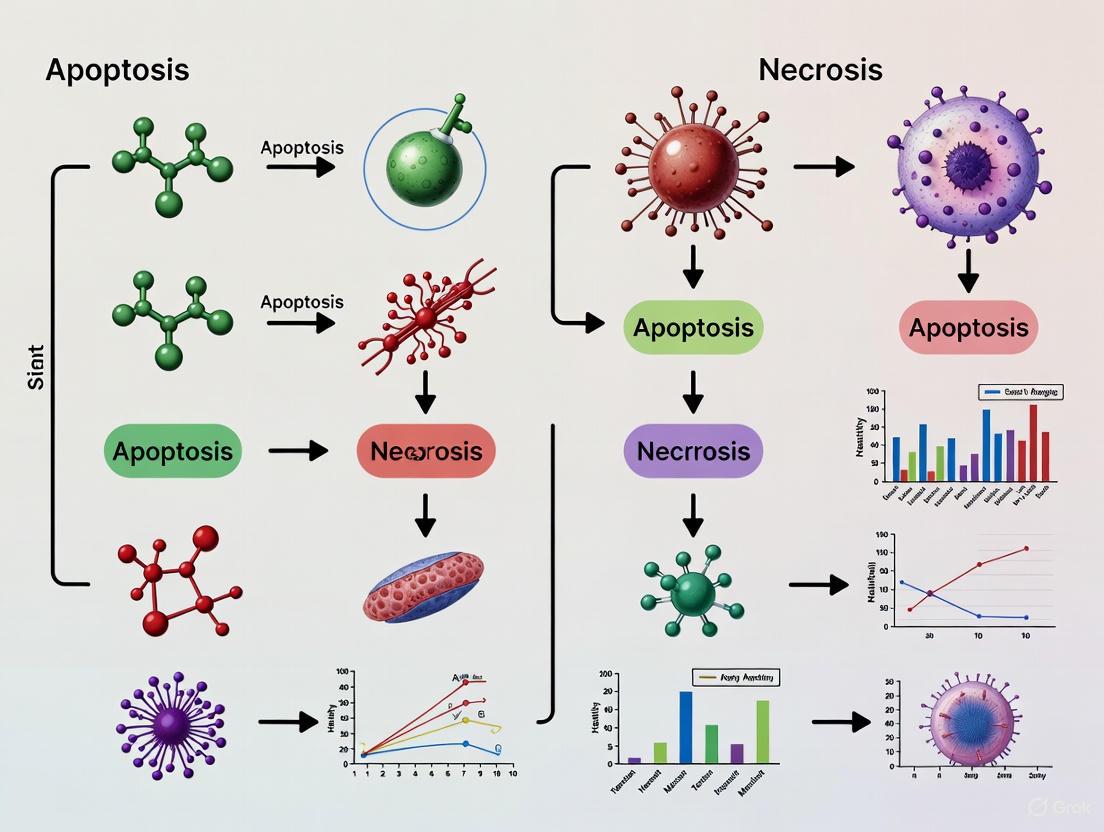
Accurately distinguishing between apoptosis and necrosis is critical in biomedical research, drug development, and disease pathology studies.
Apoptosis vs Necrosis: A Researcher's Guide to Experimental Distinction and Biomarker Validation
Abstract
Accurately distinguishing between apoptosis and necrosis is critical in biomedical research, drug development, and disease pathology studies. This guide provides a comprehensive framework for researchers and scientists, covering the foundational biology, key morphological and biochemical differences, and established methodological approaches for discriminating these cell death pathways. It details core protocols for flow cytometry, microscopy, and western blotting, offers troubleshooting for common experimental pitfalls, and emphasizes the importance of multi-method validation. By synthesizing current standards with emerging biomarkers, this article serves as an essential resource for ensuring accurate cell death characterization in experimental and clinical contexts.
Apoptosis and Necrosis: Defining the Fundamental Pathways of Cell Death
For researchers, scientists, and drug development professionals, accurately identifying the mechanism of cell death is a fundamental experimental task. Misclassification can lead to erroneous data interpretation and flawed conclusions in studies ranging from cancer therapy development to neurotoxicity assessments. This guide provides clear, actionable criteria and troubleshooting tips to confidently distinguish between apoptosis and necrosis in the laboratory.
FAQ: Addressing Common Experimental Challenges
Q1: My TUNEL assay is positive, but I cannot confirm apoptosis with other methods. What could be wrong?
The TUNEL assay detects DNA strand breaks, which are a hallmark of apoptosis but are not exclusive to it. Necrotic cells, which undergo random DNA degradation, can also produce a positive signal [1]. To confirm apoptosis:
- Combine with morphology: Use microscopy to check for cell shrinkage, chromatin condensation, and apoptotic bodies [1] [2].
- Check caspase activation: Perform a Western blot for cleaved/activated caspases (e.g., caspase-3) [3] [4]. Apoptosis is caspase-dependent, while classic necrosis is not.
- Assess membrane integrity: Use a viability dye (e.g., propidium iodide) in conjunction with an Annexin V assay. Early apoptotic cells are Annexin V-positive and viability dye-negative; necrotic cells are positive for both [2].
Q2: I am observing groups of dead cells in my culture. Does this indicate necrosis?
Yes, this is a key morphological indicator. Apoptosis typically affects isolated, single cells within a population. In contrast, necrosis often affects contiguous cells or groups of cells due to an external insult impacting a local area [3] [1]. The observation of grouped dead cells strongly suggests a necrotic process.
Q3: My cells are dying, and I detect significant inflammation in the co-culture. Does this rule out apoptosis?
While not a definitive rule-out, it is a strong indicator. A defining feature of apoptosis is its non-inflammatory nature. Apoptotic cells are neatly packaged and phagocytosed by neighboring cells without releasing their contents [3] [5] [4]. Necrosis, however, is characterized by the release of intracellular components (e.g., HMGB1, ATP) that act as damage-associated molecular patterns (DAMPs), triggering a potent inflammatory response [6] [2].
Q4: What is the most reliable method to distinguish between these two processes?
No single method is foolproof. The most reliable approach is a combination of techniques that assess different hallmarks [2]. The following table provides a consolidated comparison for easy reference.
Table 1: Key Comparison of Apoptosis and Necrosis
| Feature | Apoptosis | Necrosis |
|---|---|---|
| Stimulus | Physiological or pathological signals [3] | Pathological (e.g., toxins, infection, trauma) [7] |
| Cellular Scope | Single, isolated cells [3] [1] | Groups of contiguous cells [3] |
| Cell Morphology | Shrinkage, membrane blebbing, formation of apoptotic bodies [3] [5] | Cell and organelle swelling, rupture (oncosis) [3] [6] |
| Nuclear Morphology | Chromatin condensation, nuclear fragmentation (karyorrhexis) [1] | Nuclear dissolution (karyolysis) [6] |
| Plasma Membrane | Integrity maintained until late stages [5] | Integrity lost early [3] |
| DNA Fragmentation | Internucleosomal cleavage ("DNA laddering") [1] | Random, diffuse degradation [3] |
| Caspase Dependence | Yes, a hallmark feature [3] [4] | Typically, no [6] |
| Energy Dependence | ATP-dependent [3] | ATP-independent [3] |
| Inflammatory Response | No (immunologically silent) [5] [4] | Yes (prominent) [3] [6] |
| Fate of Dead Cells | Phagocytosed by neighboring cells [5] | Cell lysis; in vitro, progresses to secondary necrosis [3] [2] |
Troubleshooting Guide: A Step-by-Step Experimental Workflow
Follow this logical workflow to correctly classify cell death in your experiments.
Diagram 1: Experimental Workflow for Cell Death Identification
Step 1: Initial Morphological Assessment
Protocol: Light or Phase-Contrast Microscopy
- Observe your cell culture under a microscope.
- Look for the key features listed in Table 1. Apoptotic cells will appear shrunken, rounded, and detach from the surface. You may see small, membrane-bound apoptotic bodies.
- Necrotic cultures will show widespread swelling and lysis, often in patches.
Troubleshooting Tip: Morphology can be subjective. For a more quantitative assessment, use flow cytometry to measure forward scatter (FSC) and side scatter (SSC). Apoptotic cells, being smaller and denser, will show decreased FSC and increased SSC.
Step 2: Membrane Integrity and Phosphatidylserine Exposure
Protocol: Annexin V/Propidium Iodide (PI) Staining with Flow Cytometry
- Harvest cells, ensuring to include any floating cells.
- Stain with FITC-conjugated Annexin V and PI according to manufacturer's instructions. Annexin V binds to phosphatidylserine (PS) exposed on the outer leaflet of the plasma membrane, an early event in apoptosis. PI is a viability dye that only enters cells with a compromised membrane.
- Analyze by flow cytometry:
- Annexin V-FITC+/PI-: Early Apoptotic cells.
- Annexin V-FITC+/PI+: Late Apoptotic or Necrotic cells. This is where further distinction is needed.
- Annexin V-FITC-/PI+: A small population indicating primary necrosis or very late-stage apoptosis.
Troubleshooting Tip: A critical confounding factor is secondary necrosis. If an apoptotic cell is not phagocytosed (as in vitro), it will eventually lose membrane integrity and become PI+, mimicking necrosis [2]. Therefore, this assay must be combined with other methods.
Step 3: Confirmatory Biochemical Assay
Protocol: Caspase Activity Assay
- This is the most definitive biochemical test. Use a commercial kit to detect the activity of key executioner caspases like caspase-3/7.
- These kits often use fluorescent substrates that become cleaved by active caspases.
- A significant increase in caspase activity is a hallmark of apoptosis [3] [4]. Its absence suggests a necrotic pathway.
Troubleshooting Tip: Include a positive control (e.g., cells treated with a known apoptosis inducer like staurosporine) to ensure your assay is working correctly.
The Scientist's Toolkit: Key Research Reagents
Table 2: Essential Reagents for Cell Death Analysis
| Reagent | Function | Key Application |
|---|---|---|
| Annexin V (FITC conjugate) | Binds to phosphatidylserine (PS) on the outer membrane surface. | Flow cytometry or fluorescence microscopy to detect early apoptosis [2]. |
| Propidium Iodide (PI) | DNA intercalating dye that is impermeant to live and early apoptotic cells. | Flow cytometry to identify cells with compromised plasma membranes (necrosis/late apoptosis) [2]. |
| Caspase-3/7 Activity Assay Kits | Fluorogenic substrates cleaved by active executioner caspases. | Definitive biochemical confirmation of apoptotic pathway activation [3] [4]. |
| Anti-Cleaved Caspase-3 Antibody | Detects the activated (cleaved) form of caspase-3 by Western Blot or IF. | Specific and sensitive detection of caspase activation in cell lysates or tissue sections [3]. |
| TUNEL Assay Kit | Labels DNA strand breaks (a feature of late apoptosis). | Detecting apoptotic cells in situ (tissue sections) [1]. Note: Requires careful controls to avoid false positives from necrotic DNA fragmentation. |
| HMGB1 Antibody | Detects High Mobility Group Box 1 protein. | Can be used in Western Blot of culture supernatant to confirm necrosis, as HMGB1 is released from necrotic cells [6] [2]. |
Advanced Concepts: Visualizing the Signaling Pathways
Understanding the molecular pathways helps in selecting the right detection targets. The following diagrams summarize the core pathways.
Diagram 2: Core Apoptotic Signaling Pathways
Diagram 3: Regulated Necrosis (Necroptosis) Pathway
Troubleshooting Guide: Distinguishing Apoptosis and Necrosis
FAQ 1: How can I definitively distinguish an apoptotic cell from a necrotic cell using basic microscopy?
The most definitive method is to observe the key morphological differences in the nucleus and cytoplasm on H&E-stained sections.
- For Apoptosis: Look for single, non-contiguous cells with:
- Cellular Shrinkage: The cell and its nucleus are smaller and densely stained.
- Nuclear Condensation and Fragmentation: The chromatin condenses (pyknosis) and the nucleus breaks into discrete fragments (karyorrhexis).
- Apoptotic Bodies: The cell buds off membrane-bound fragments containing cytoplasm and condensed chromatin.
- Preserved Membrane Integrity: The plasma membrane remains intact until late stages, preventing inflammatory content leakage [8] [9].
- For Necrosis: Look for groups of cells showing:
- Cellular Swelling (Oncosis): The cell and its organelles (e.g., mitochondria, ER) swell.
- Loss of Plasma Membrane Integrity: The membrane becomes permeable and ruptures.
- Nuclear Changes without Fragmentation: The nucleus may undergo pyknosis, but typically progresses to disintegration (karyolysis).
- Inflammatory Response: The release of intracellular contents incites a significant inflammatory reaction in the surrounding tissue [8] [10].
FAQ 2: My flow cytometry data is inconclusive. How can I confirm if cell death is apoptotic or necrotic?
Flow cytometry can be tricky due to late-stage apoptosis sharing features with necrosis. A combination of techniques is recommended.
- Problem: Poor separation between apoptotic, necrotic, and healthy cell populations.
- Solution:
- Combine Light Scatter with a Viability Dye: Analyze Forward Scatter (FSC, indicates size) and Side Scatter (SSC, indicates granularity/complexity). Apoptotic cells typically show decreased FSC (shrinkage) and slightly increased SSC (nuclear condensation). Necrotic cells may initially show increased FSC (swelling) but then rapidly decrease as they lyse [11].
- Use Propidium Iodide (PI) Staining: Healthy cells exclude PI; early apoptotic cells are PI-negative/dim; and necrotic cells are PI-bright due to their permeable membranes. This can be combined with an Annexin V assay to detect phosphatidylserine exposure, an early apoptotic marker [11].
- Morphological Validation is Essential: Always sort the populations identified by flow cytometry and validate the findings using light or electron microscopy. This is considered the gold standard for confirmation [11].
FAQ 3: Why is there no inflammation in apoptosis but a strong inflammatory response in necrosis?
The difference lies in the integrity of the plasma membrane and the process of clearance.
- Apoptosis: The plasma membrane remains intact throughout the process. The cell contents, including pro-inflammatory factors, are neatly packaged into apoptotic bodies. These bodies are swiftly engulfed and digested by neighboring phagocytic cells (e.g., macrophages) before any cellular contents can leak out. This efficient cleanup prevents an inflammatory response [8] [4].
- Necrosis: The plasma membrane ruptures early in the process. This allows the unregulated release of intracellular components, such as DAMPs (Damage-Associated Molecular Patterns), into the extracellular space. These molecules act as "danger signals" that activate the immune system, triggering a potent inflammatory response [8] [12].
The table below consolidates the core features used to differentiate these two cell death pathways [8].
| Feature | Apoptosis | Necrosis |
|---|---|---|
| Stimulus | Physiological or pathological, programmed | Pathological, accidental |
| Cell Morphology | Shrinkage, preservation of organelles | Swelling (oncosis), disruption of organelles |
| Nucleus | Condensation (pyknosis), fragmentation into apoptotic bodies | Condensation followed by dissolution (karyolysis) |
| Plasma Membrane | Intact, blebbing, phosphatidylserine exposure | Ruptured, loss of integrity |
| DNA Degradation | Endonuclease-cleaved into a DNA ladder | Random, smear pattern on gel |
| Energy Requirement | ATP-dependent | ATP-independent |
| Tissue Response | Affects individual cells, no inflammation | Affects groups of cells, strong inflammation |
| Fate of Dead Cell | Phagocytosis by neighboring cells | Cell lysis |
Essential Experimental Protocols
Protocol 1: Distinguishing Apoptosis and Necrosis by Light Scatter Flow Cytometry
This protocol uses the intrinsic morphological changes to differentiate cell populations [11].
Materials:
- PBS, pH 7.0
- Flow cytometer with 488 nm laser
Methodology:
- Prepare your test sample (1x10^5 cells in 300-500 µL PBS).
- Prepare control samples:
- Healthy Control: 1x10^5 untreated cells.
- Necrotic Control: Take half of the healthy control sample and induce necrosis by 3 cycles of freezing and thawing.
- Set up the flow cytometer. On a FSC vs. SSC cytogram, adjust the population of healthy cells to mid-high FSC and mid SSC values.
- Analyze the necrotic control. This population will typically appear at lower FSC and SSC values, often merging with debris.
- Analyze the test sample. The apoptotic population will typically appear as a distinct group with lower FSC (due to cell shrinkage) and slightly higher SSC (due to increased granularity from nuclear condensation) compared to healthy cells.
Troubleshooting Tip: The ability to distinguish populations by light scatter depends on the cell type and its nuclear-to-cytoplasmic (N/C) ratio. Always validate by sorting the populations and confirming their morphology microscopically [11].
Protocol 2: Distinguishing Apoptosis and Necrosis by Membrane Permeability (Propidium Iodide)
This protocol uses the differential integrity of the plasma membrane to classify cells [11].
Materials:
- PBS, pH 7.0
- Propidium Iodide (PI) solution (40 µg/mL in PBS)
Methodology:
- Prepare your test and control samples as in Protocol 1.
- Pellet the cells and carefully resuspend the pellets in the PI solution.
- Incubate at room temperature for 30 to 90 minutes (optimize for your cell type).
- Analyze by flow cytometry, measuring red fluorescence on a logarithmic scale.
- Healthy cells will be PI-negative (low fluorescence).
- Early apoptotic cells will show dim PI fluorescence.
- Necrotic cells and late apoptotic cells will be brightly stained with PI.
Troubleshooting Tip: If healthy and apoptotic cell populations are not well-separated, try increasing the incubation time with PI. If the healthy cell peak is too high, decrease the incubation time [11].
Pathway Diagrams
Apoptotic Signaling Pathways
Necrotic Signaling Pathway
The Scientist's Toolkit: Key Research Reagents
| Reagent / Solution | Function in Distinguishing Cell Death |
|---|---|
| Propidium Iodide (PI) | A DNA dye excluded by intact membranes. Used to identify necrotic cells (PI-positive) and late apoptotic cells. |
| Annexin V (FITC conjugate) | Binds to phosphatidylserine (PS), which is externalized on the outer membrane of cells in early apoptosis. |
| Caspase Activity Assays | Detect the activity of key executioner enzymes (caspases-3, -7) that are hallmarks of the apoptotic pathway. |
| Antibodies to Activated Caspase-3 | Used in immunohistochemistry (IHC) or flow cytometry to specifically identify cells undergoing apoptosis [8]. |
| H&E Staining Kit | The standard histological stain for visualizing morphological hallmarks like cell shrinkage, nuclear condensation, and swelling under a light microscope. |
Cell death is a fundamental process in development and tissue homeostasis. The two primary forms of cell death—apoptosis and necrosis—differ dramatically in their biochemical pathways, morphological features, and functional consequences. Apoptosis is a precisely regulated, energy-dependent process executed by caspases, while necrosis is characterized by an unregulated physicochemical collapse of cellular structures. Accurately distinguishing between these mechanisms is crucial for research in cancer biology, neurobiology, and drug development.
Fundamental Differences: Apoptosis vs. Necrosis
Biochemical Pathways
Apoptosis is mediated through caspase activation cascades. Caspases (cysteine-aspartic proteases) exist as inactive zymogens in living cells and become activated through proteolytic cleavage. Initiator caspases (caspase-8, -9, -10) activate executioner caspases (caspase-3, -6, -7), which dismantle the cell by cleaving hundreds of cellular proteins [13] [14].
Necrosis occurs through passive physicochemical processes including ATP depletion, loss of ion homeostasis, cellular swelling, and plasma membrane rupture without caspase involvement. This unregulated process leads to the release of intracellular contents that trigger inflammatory responses [15] [14].
Comparative Analysis
Table 1: Key Characteristics of Apoptosis and Necrosis
| Parameter | Apoptosis | Necrosis |
|---|---|---|
| Regulation | Programmed, tightly regulated | Unregulated, accidental |
| Caspase Involvement | Essential (caspase-3/7 execution) | Absent [16] [14] |
| Cellular Morphology | Cell shrinkage, chromatin condensation, membrane blebbing | Cellular and organelle swelling, membrane rupture [14] |
| Membrane Integrity | Maintained until late stages; phosphatidylserine externalization | Rapidly lost [17] [15] |
| DNA Fragmentation | Ordered nucleosomal fragmentation (DNA laddering) | Random digestion (smear pattern) [14] |
| Energy Requirement | ATP-dependent | ATP-independent [14] |
| Inflammatory Response | Minimal; rapid phagocytosis | Significant; release of pro-inflammatory mediators [15] [14] |
| Tissue Response | Affects individual cells | Affects groups of contiguous cells [14] |
Molecular Mechanisms and Signaling Pathways
Apoptotic Pathways
Extrinsic Pathway: Initiated by extracellular death ligands (FasL, TNF-α) binding to death receptors, leading to formation of the Death-Inducing Signaling Complex (DISC), which activates caspase-8 [18]. Active caspase-8 can either directly activate executioner caspases or cleave Bid to amplify the death signal through the mitochondrial pathway.
Intrinsic Pathway: Triggered by intracellular stress signals (DNA damage, oxidative stress), leading to mitochondrial outer membrane permeabilization (MOMP) and release of cytochrome c. Cytochrome c forms the apoptosome with Apaf-1 and caspase-9, activating the caspase cascade [18] [19].
Diagram 1: Biochemical pathways of apoptosis and necrosis. Apoptosis proceeds through regulated caspase activation cascades, while necrosis involves unregulated physicochemical collapse.
Necrotic Processes
Unlike apoptosis, necrosis does not involve specific signaling cascades but represents a passive degenerative process. Key events include:
- Energy collapse: Rapid ATP depletion impairing ion pump function
- Loss of membrane integrity: Physical disruption of plasma and organellar membranes
- Calcium influx: Activation of calcium-dependent degradative enzymes
- Enzymatic digestion: Nonspecific degradation of cellular components by released lysosomal enzymes [15] [14]
Experimental Discrimination: Methods and Protocols
Morphological Assessment
Time-Lapse Microscopy Protocol: Plate cells in glass-bottom dishes and treat with experimental conditions. Capture images every 15-60 minutes using phase-contrast microscopy. Apoptotic cells display shrinkage, membrane blebbing, and formation of apoptotic bodies. Necrotic cells show swelling and rapid membrane rupture without blebbing [17].
Transmission Electron Microscopy Protocol: Fix cells with glutaraldehyde, post-fix with osmium tetroxide, dehydrate, and embed in resin. Prepare ultrathin sections and stain with uranyl acetate and lead citrate. Examine using TEM. Apoptotic cells show chromatin condensation and intact organelles. Necrotic cells display organelle swelling and membrane disruption [17].
Biochemical Techniques
Flow Cytometry with Annexin V/PI Staining Protocol: Harvest cells and wash with cold PBS. Resuspend in binding buffer containing FITC-conjugated Annexin V and Propidium Iodide (PI). Incubate for 15 minutes in dark and analyze by flow cytometry within 1 hour.
- Early apoptotic: Annexin V+/PI-
- Late apoptotic/necrotic: Annexin V+/PI+
- Primary necrotic: Annexin V-/PI+ [17] [20]
Caspase Activity Assays Protocol: Lyse cells in caspase assay buffer. Incubate lysates with fluorogenic caspase substrates (DEVD-AFC for caspase-3/7, IETD-AFC for caspase-8, LEHD-AFC for caspase-9). Measure fluorescence (excitation 400 nm, emission 505 nm) over time. Increased fluorescence indicates caspase activation and confirms apoptosis [13] [20].
Western Blot Analysis Protocol: Separate proteins by SDS-PAGE, transfer to membrane, and probe with antibodies against cleaved caspases, PARP cleavage, cytochrome c release, or HMGB1. Cytochrome c release from mitochondria and caspase/PARP cleavage indicate apoptosis, while HMGB1 release indicates necrosis [17].
Advanced Real-Time Discrimination
FRET-Based Caspase Sensor with Mitochondrial Marker Protocol: Generate stable cell lines expressing FRET-based caspase sensor (ECFP-DEVD-EYFP) and mitochondrial-targeted DsRed. Treat cells and perform time-lapse imaging measuring FRET ratio (ECFP/EYFP) and DsRed fluorescence.
- Apoptotic cells: Loss of FRET (increased ECFP/EYFP ratio) with retained DsRed
- Necrotic cells: Loss of both ECFP and EYFP fluorescence with retained DsRed
- Secondary necrosis: Initial FRET loss followed by fluorescence loss [20]
Table 2: Quantitative Analysis of Cell Death Types Using FRET/Mito-DsRed System
| Treatment | Live Cells (%) | Apoptotic Cells (%) | Primary Necrotic Cells (%) | Secondary Necrotic Cells (%) |
|---|---|---|---|---|
| Control | 92.5 ± 3.2 | 2.1 ± 1.1 | 1.8 ± 0.9 | 3.6 ± 1.4 |
| Doxorubicin | 15.3 ± 4.1 | 68.7 ± 5.3 | 5.2 ± 1.8 | 10.8 ± 2.9 |
| H₂O₂ | 8.9 ± 2.7 | 4.3 ± 1.5 | 82.5 ± 6.1 | 4.3 ± 1.6 |
| Valinomycin | 22.6 ± 3.8 | 52.1 ± 4.9 | 8.3 ± 2.1 | 17.0 ± 3.2 |
Data adapted from [20] demonstrating quantitative discrimination of cell death types using real-time imaging.
Diagram 2: Experimental workflow for discriminating apoptosis from necrosis. A combination of morphological, biochemical, and advanced methods provides conclusive identification.
Troubleshooting Guide: Common Experimental Issues
FAQ 1: My Annexin V/PI staining shows high background in untreated controls. How can I reduce this? Solution: Ensure proper washing to remove unbound Annexin V. Use fresh binding buffer and perform analysis immediately after staining. Include compensation controls for fluorescence spillover. Test different Annexin V concentrations to optimize signal-to-noise ratio [17].
FAQ 2: I'm detecting caspase activation but no morphological signs of apoptosis. What could explain this? Solution: Caspase activation may occur without progression to full apoptosis in some contexts. Check for inhibitor of apoptosis proteins (IAPs) that might block downstream effects. Assess mitochondrial membrane potential and verify that executioner caspases (caspase-3/7) are active, not just initiator caspases [13] [18].
FAQ 3: How can I distinguish primary necrosis from secondary necrosis? Solution: Perform time-course experiments rather than single time points. Primary necrosis shows immediate membrane permeability without caspase activation. Secondary necrosis occurs after apoptosis, showing initial caspase activation followed by loss of membrane integrity. The FRET-based method with mitochondrial marker effectively distinguishes these [17] [20].
FAQ 4: My samples show mixed populations of apoptotic and necrotic cells. How should I interpret this? Solution: Mixed death patterns are common, especially with higher stimulus intensities. Quantify the percentage of each death type and report all populations. Consider whether necrosis represents primary death or secondary necrosis following apoptosis. Dose-response studies may help identify conditions favoring specific death pathways [20].
Research Reagent Solutions
Table 3: Essential Reagents for Cell Death Discrimination
| Reagent/Category | Specific Examples | Function/Application |
|---|---|---|
| Caspase Substrates | DEVD-AFC (caspase-3/7), IETD-AFC (caspase-8), LEHD-AFC (caspase-9) | Fluorogenic detection of caspase activity; specific for apoptotic pathway [13] [20] |
| Viability Dyes | Propidium Iodide, 7-AAD, Fixable Viability Dyes | Membrane integrity assessment; distinguishes live/dead cells [17] [15] |
| Phosphatidylserine Detection | FITC-Annexin V, PE-Annexin V | Early apoptotic marker detection when used with viability dyes [17] [20] |
| Mitochondrial Probes | TMRE, JC-1, MitoTracker Red, Mito-DsRed | Mitochondrial membrane potential and integrity assessment [20] [18] |
| Antibodies for Cell Death Detection | Anti-cleaved caspase-3, anti-cleaved PARP, anti-cytochrome c, anti-HMGB1 | Western blot and immunofluorescence detection of specific death markers [17] [14] |
| Cell Death Inducers/Inhibitors | Staurosporine (apoptosis inducer), H₂O₂ (necrosis inducer), Z-VAD-FMK (pan-caspase inhibitor) | Experimental controls for death pathway validation [20] [19] |
| FRET-Based Sensors | ECFP-DEVD-EYFP caspase sensor | Real-time apoptosis detection in live cells [20] |
Accurate discrimination between apoptosis and necrosis requires a multifaceted approach combining morphological assessment, biochemical analysis, and advanced real-time methods. Understanding the fundamental differences in caspase activation versus unregulated collapse enables appropriate experimental design and interpretation. The protocols and troubleshooting guides provided here offer researchers comprehensive tools for definitive cell death characterization in diverse experimental contexts.
For researchers in drug development and biological sciences, accurately distinguishing between apoptosis and necrosis is a fundamental experimental requirement. These two forms of cell death initiate vastly different physiological consequences for the organism: one is a silent, programmed process essential for homeostasis, while the other triggers a potent inflammatory cascade. This guide provides clear, actionable methodologies and troubleshooting tips to help you confidently identify each process in your experimental models.
Key Differences at a Glance
The table below summarizes the core characteristics that differentiate apoptosis from necrosis.
| Feature | Apoptosis | Necrosis |
|---|---|---|
| Physiological Role | Programmed, regulated cell death; beneficial and essential for development and homeostasis [21] [22] | Accidental, unregulated cell death; always pathological and harmful [21] [22] |
| Morphological Hallmarks | Cell shrinkage, chromatin condensation, nuclear fragmentation, membrane blebbing, formation of apoptotic bodies [21] [22] [23] | Cell and organelle swelling (oncosis), rupture of the plasma membrane [21] [24] [22] |
| Membrane Integrity | Maintained until late stages (intact) [21] | Lost early [21] [24] |
| Inflammatory Response | Typically none (immunologically silent); apoptotic bodies are swiftly phagocytosed [25] [26] | Potent inflammatory cascade; release of cellular contents acts as "danger signals" [21] [26] |
| Scope of Death | Localized to individual cells [21] | Often affects contiguous groups of cells [21] |
| Key Biochemical Mediators | Caspase activation (e.g., Caspase-3, -8, -9), PARP cleavage [25] [27] [22] | No caspase dependence; plasma membrane leakage [21] [24] |
Figure 1: Decision workflow for distinguishing cell death pathways based on membrane integrity and physiological outcomes.
Frequently Asked Questions (FAQs) & Troubleshooting
FAQ 1: My viability assay shows high cell death, but I don't see inflammation in my culture. Is this apoptosis?
Answer: This is a classic sign of apoptosis. The absence of inflammation, despite significant cell death, is a key indicator of apoptotic clearance. Apoptosis is an immunologically silent process where cells are neatly packaged and phagocytosed without releasing pro-inflammatory signals [26]. To confirm:
- Check Morphology: Use microscopy with EB/AO staining. Look for condensed or fragmented green nuclei (early apoptotic) or orange nuclei (late apoptotic) with maintained cell structure. Avoid seeing structurally normal orange nuclei (necrotic) or significant cellular debris [28].
- Confirm Biochemically: Perform a western blot for cleaved caspase-3 or cleaved PARP, which are definitive markers of apoptosis execution [27].
FAQ 2: My treated cells are positive for Annexin V but also show high LDH release. What does this mean?
Answer: This result suggests your cells are progressing from early apoptosis into secondary necrosis.
- Explanation: In early apoptosis, phosphatidylserine (PS) is externalized (detected by Annexin V), but the cell membrane remains intact (low LDH release). If apoptotic cells are not cleared by phagocytes in vitro, they will eventually lose membrane integrity, a stage known as secondary necrosis. This leads to the release of LDH [24].
- Solution: This is a common occurrence in cell culture. To accurately quantify early apoptosis, ensure you measure samples at multiple time points and use methods that differentiate early stages (like flow cytometry with Annexin V and a viability dye) rather than relying on a single endpoint assay.
FAQ 3: I suspect necrosis, but my LDH assay shows low signal. What could be wrong?
Answer: Several factors can interfere with the LDH assay, leading to false negatives.
- Check Your Reagents:
- Serum: Fetal bovine serum (FBS) contains high levels of LDH. Use low-serum (<5%) or serum-free media during the assay to reduce background [24].
- Media Components: Ensure your culture media is free of strong reducing agents (e.g., ascorbate, β-mercaptoethanol) and pyruvate, as they can interfere with the enzymatic reaction [24].
- Optimize Cell Number: Different cell types contain different amounts of LDH. Perform a pilot experiment with a serial dilution of cells to ensure your sample falls within the linear range of the assay [24].
- Consider the Timepoint: Necrosis can be rapid. You may have missed the peak of LDH release. Take measurements at multiple time points after treatment.
Core Experimental Protocols
Protocol 1: Ethidium Bromide & Acridine Orange (EB/AO) Staining for Morphological Assessment
This simple, rapid assay allows simultaneous quantification of live, apoptotic, and necrotic cell populations in a 96-well plate [28].
Principle: AO permeates all cells, staining DNA green. EB is only taken up by cells with compromised membranes, staining DNA orange/red. EB overrides AO.
Workflow:
Figure 2: EB/AO staining workflow and interpretation guide for direct morphological assessment.
Key Advantage (Troubleshooting Tip): This method eliminates cell detachment and washing steps, minimizing damage to adherent cells and preventing the loss of fragile apoptotic or necrotic floaters, leading to more accurate quantification [28].
Protocol 2: Lactate Dehydrogenase (LDH) Release Assay for Necrosis
The LDH release assay is a standard, colorimetric method to quantitatively assess necrosis and other forms of cell membrane damage [24].
Principle: LDH, a stable cytoplasmic enzyme, is released into the cell culture supernatant upon plasma membrane rupture. The released LDH is measured by a coupled enzymatic reaction that converts a tetrazolium salt into a red formazan product, which can be measured spectrophotometrically.
Step-by-Step Summary:
- Plate and Treat Cells: Seed cells in a 96-well plate and apply your experimental treatment. Include controls:
- Spontaneous LDH Release: Untreated cells in medium.
- Maximum LDH Release: Cells lysed with Triton X-100 (e.g., 1% final concentration).
- Culture Medium Background: Medium without cells.
- Harvest Supernatant: Centrifuge the plate to pellet cells. Carefully transfer a portion of the supernatant (e.g., 50 µL) to a new plate.
- Measure LDH Activity: Add an equal volume of the LDH assay reaction mixture to the supernatant. Protect from light and incubate at room temperature for 10-30 minutes.
- Stop and Read: Add a stop solution (e.g., 1M acetic acid) and measure the absorbance at 490-520 nm.
Calculation:
% Cytotoxicity = 100 × (Test LDH - Spontaneous LDH) / (Maximum LDH - Spontaneous LDH)
Note: This assay detects any loss of membrane integrity and does not distinguish between primary necrosis and secondary necrosis following apoptosis [24].
Protocol 3: Western Blot for Apoptotic Markers
Western blotting provides high-specificity detection of key apoptotic proteins and their activation states [27].
Key Steps and Critical Markers:
- Prepare Cell Lysates: Lyse cells from your treated and control samples. Perform protein quantification to ensure equal loading.
- SDS-PAGE and Transfer: Separate proteins by gel electrophoresis and transfer to a membrane.
- Immunoblotting: Probe the membrane with antibodies against:
- Executioner Caspases: Cleaved Caspase-3 and Cleaved Caspase-7 are direct markers of apoptosis execution.
- Initiator Caspases: Cleaved Caspase-8 (extrinsic pathway) and Cleaved Caspase-9 (intrinsic pathway).
- PARP: Cleavage of PARP from its full-length (116 kDa) form to a 89 kDa fragment is a classic apoptotic signature.
- Bcl-2 Family: Changes in the ratio of pro-apoptotic (e.g., Bax, Bak) to anti-apoptotic (e.g., Bcl-2, Bcl-xL) proteins.
- Normalization: Always normalize signals to a housekeeping protein (e.g., β-actin, GAPDH).
Troubleshooting Tip: For a comprehensive view, consider using an apoptosis antibody cocktail that allows detection of multiple markers (e.g., pro/p17-caspase-3, cleaved PARP, actin) in a single assay, saving time, reagents, and sample material [27].
Research Reagent Solutions
| Reagent / Assay | Primary Function | Key Interpretative Insight |
|---|---|---|
| EB/AO Stain [28] | Differential DNA staining based on membrane integrity. | Distinguishes live, apoptotic, and necrotic cells based on nuclear morphology and color. |
| LDH Assay Kit [24] | Colorimetric quantification of cytotoxicity and necrosis. | Measures membrane rupture. Does not differentiate primary from secondary necrosis. |
| Annexin V Assay | Detects phosphatidylserine (PS) externalization on the cell surface. | Marker for early apoptosis. Requires combination with a viability dye (e.g., PI) to exclude late apoptotic/necrotic cells. |
| Anti-Cleaved Caspase-3 Antibody [27] | Detects activated executioner caspase via Western Blot or IF. | Definitive biochemical evidence of apoptosis execution. |
| Anti-Cleaved PARP Antibody [27] | Detects specific PARP cleavage fragment via Western Blot. | Highly specific and reliable marker for ongoing apoptosis. |
| Apoptosis Western Blot Cocktail [27] | Pre-mixed antibodies for simultaneous detection of multiple apoptotic markers. | Increases efficiency, reproducibility, and likelihood of detecting apoptotic activity. |
Advanced Concepts: Necroptosis and PANoptosis
Beyond the classical dichotomy, regulated forms of necrosis exist. Necroptosis is a programmed, caspase-independent process triggered by factors like TNFα when caspase-8 is inhibited [21] [22] [23]. It is highly immunogenic and involves a defined molecular pathway (RIPK1 → RIPK3 → MLKL). Research shows that genetic ablation of caspase-9 in B cells can lead to a decrease in germinal center B cells not due to lack of apoptosis, but because of increased necroptosis; this defect can be rescued by deleting Ripk3, a key necroptosis mediator [29].
Furthermore, crosstalk between cell death pathways is common. PANoptosis is a concept describing the simultaneous activation of key components from Pyroptosis, Apoptosis, and Necroptosis within a single cell population, often in response to infection or sterile inflammation, creating an inflammatory cell death continuum [23].
Frequently Asked Questions (FAQs) and Troubleshooting Guide
FAQ 1: What are the key morphological differences I should look for under a microscope to tell apoptosis and necrosis apart?
The most reliable morphological differences lie in cell and membrane integrity.
Apoptosis is a controlled process where cells shrink, and the membrane forms blebs (bubble-like structures) to form apoptotic bodies. The cell membrane remains intact, and the contents are not released [27] [30] [31].
Necrosis is characterized by uncontrolled cell swelling and ultimate membrane rupture, leading to the leakage of cellular contents and causing inflammation [30] [31].
Regulated necrosis, like necroptosis, shares the latter morphology—cell swelling and membrane rupture—but is triggered by specific molecular pathways [32] [33].
- Troubleshooting Tip: For high-resolution, label-free imaging of these morphological changes, techniques like Full-Field Optical Coherence Tomography (FF-OCT) can visualize apoptosis (cell shrinkage, membrane blebbing) and necrosis (rapid membrane rupture) in real-time without affecting cell viability [31].
FAQ 2: The pathways for apoptosis and necroptosis both involve TNF-α and death receptors. How do they diverge?
The divergence is primarily controlled by the activity of caspase-8.
The table below summarizes the key molecular differences after TNF-α binds to its receptor (TNFR1).
| Feature | Apoptosis | Necroptosis |
|---|---|---|
| Key Initiating Signal | Active Caspase-8 [32] [34] | Inhibited Caspase-8 [32] [33] |
| Core Signaling Complex | Death-Inducing Signaling Complex (DISC) [34] | Necrosome (RIPK1/RIPK3 complex) [32] [33] |
| Key Effector Molecules | Executioner Caspases-3/7 [32] [35] | Phosphorylated MLKL (pMLKL) [32] [33] |
| Final Cellular Event | Cleavage of cellular substrates (e.g., PARP); membrane blebbing [27] [35] | Oligomerized pMLKL forms pores in the plasma membrane; cell rupture [32] [33] |
The following diagram illustrates the decisive role of caspase-8 in directing cell fate toward apoptosis or necroptosis.
FAQ 3: What are the best markers to detect and differentiate apoptosis from necroptosis in a high-throughput assay?
For high-throughput screening (HTS), the optimal markers are those that can be measured in a homogeneous, no-wash format using a multimode plate reader.
For Apoptosis:
- Caspase-3/7 Activity: This is the most popular HTS assay. It uses a luminogenic or fluorogenic substrate (e.g., DEVD-aminoluciferin) that, when cleaved, generates a signal. It is highly sensitive and miniaturizable for 1536-well plates [35].
- Phosphatidylserine (PS) Exposure: A no-wash annexin V-based assay using enzyme complementation (e.g., with a split luciferase) can detect PS on the outer leaflet of the cell membrane without wash steps, making it suitable for HTS [35].
For Necroptosis:
- Phosphorylated MLKL (pMLKL): Detection of pMLKL by Western blot is a definitive marker, but it is a low-throughput technique [32] [33].
- Alternative HTS-Compatible Methods: Since necroptosis involves membrane rupture, methods that detect this event are useful. Near-Infrared (NIR) Spectroscopy can distinguish apoptotic from necroptotic cells non-invasively based on light scattering properties in the 1100-1700 nm wavelength range, without any labels [36].
FAQ 4: My cells are dying, but a caspase-3/7 assay is negative. What other regulated cell death pathways should I investigate?
A negative caspase-3/7 result strongly suggests a non-apoptotic cell death mechanism. You should investigate other forms of regulated cell death, primarily necroptosis and ferroptosis.
- Investigate Necroptosis: As outlined in FAQ 2, necroptosis occurs when caspase-8 is inhibited. Check for key markers like phosphorylation of RIPK3 and MLKL via Western blot [32] [33].
- Investigate Ferroptosis: This is an iron-dependent form of cell death driven by lipid peroxidation. Key markers include:
Key Methodologies and Protocols
High-Throughput Caspase-3/7 Activity Assay for Apoptosis Detection
This protocol is adapted for a luminescent, homogeneous "add-mix-measure" format in 96-, 384-, or 1536-well plates [35].
Workflow:
- Plate cells in an opaque-walled, white microplate.
- Treat cells with compounds or stimuli.
- Equilibrate Caspase-Glo 3/7 Reagent to room temperature.
- Add an equal volume of reagent to each well.
- Mix contents gently using a plate shaker.
- Incubate at room temperature for 30-60 minutes (optimize time for your cell type).
- Measure luminescence using a plate-reading luminometer.
Advantages: Highly sensitive, suitable for automation, minimal background, and tolerant to DMSO concentrations up to 1% [35].
Near-Infrared (NIR) Spectroscopy for Non-Invasive Cell Death Discrimination
This label-free method can differentiate apoptosis from necroptosis based on light scattering properties [36].
Workflow:
- Prepare cell solutions of normal, apoptotic, and necroptotic cells.
- Apoptosis Induction: Use TNF-α + Smac mimetic (TB).
- Necroptosis Induction: Use TNF-α + Smac mimetic + z-VAD (TBZ) [36].
- Place cell solution in the NIR spectroscopy setup.
- Scan samples across the 1100–1700 nm wavelength range.
- Calculate the attenuation coefficient (δμ), which combines absorption and scattering properties.
- Analyze data using statistical models like Partial Least Squares (PLS) regression and Linear Discriminant Analysis (LDA) to classify the type of cell death.
Advantages: Non-invasive, no fluorescent labels or staining required, rapid, and can be potentially applied in vivo [36].
The Scientist's Toolkit: Essential Research Reagents
The following table lists key reagents used to study, induce, and detect different cell death pathways.
| Reagent / Tool | Function / Target | Application in Cell Death Research |
|---|---|---|
| z-VAD-FMK | Pan-caspase inhibitor | Used to inhibit apoptosis and shift cell fate towards caspase-independent pathways like necroptosis [36]. |
| Necrostatin-1 (Nec-1) | RIPK1 inhibitor | A specific inhibitor of necroptosis; used to confirm RIPK1-dependent cell death [32] [33]. |
| DEVD-based Substrate | Caspase-3/7 substrate | The core component in fluorogenic (DEVD-AMC/AFC) or luminogenic (DEVD-aminoluciferin) assays to measure executioner caspase activity [35]. |
| Annexin V (Recombinant) | Binds Phosphatidylserine (PS) | Detects PS externalization on the outer leaflet of the plasma membrane, an early event in apoptosis. Engineered versions enable HTS [27] [35]. |
| Ferrostatin-1 | Lipophilic antioxidant | A specific inhibitor of ferroptosis; used to confirm iron-dependent, oxidative cell death [32] [34]. |
| TNF-α + Smac Mimetic | Death receptor ligand & IAP antagonist | A common combination to robustly induce extrinsic apoptosis [36]. |
| TNF-α + Smac Mimetic + z-VAD | - | A standard combination to induce necroptosis by engaging the death receptor pathway while blocking apoptotic caspase activation [36]. |
Laboratory Techniques: A Practical Guide to Distinguishing Cell Death Mechanisms
Core Principles: Distinguishing Apoptosis from Necrosis
The accurate discrimination between apoptosis and necrosis is fundamental in cell biology, toxicology, and drug development. These two modes of cell death are characterized by distinct morphological and biochemical features, which can be effectively identified through multi-parameter flow cytometry [37] [38].
Comparative Analysis of Cell Death Modes
| Cellular Feature | Apoptosis | Necrosis |
|---|---|---|
| Cell Size & Shape | Cell shrinkage, membrane blebbing [39] [37] | Cell and organelle swelling [39] [40] |
| Plasma Membrane | Phosphatidylserine (PS) externalization; integrity maintained until late stages [39] [41] | Loss of membrane integrity, rapid rupture [39] [37] |
| Nuclear Morphology | Chromatin condensation, nuclear fragmentation, internucleosomal DNA cleavage [39] [42] [37] | Dissolution of chromatin, random DNA degradation (no laddering) [42] [37] |
| Caspase Activation | Absolute requirement for caspase cascade activation [37] | Lack of caspase activation [37] |
| Inflammatory Response | No; apoptotic bodies are phagocytosed [42] | Yes; release of cellular contents [20] [40] |
| Light Scatter (Flow Cytometry) | Decrease in Forward Scatter (FSC), increase in Side Scatter (SSC) [42] [38] | Decrease in both FSC and SSC [38] |
Essential Experimental Protocols
Annexin V / Propidium Iodide (PI) Staining
This is a robust and widely used protocol for quantitatively analyzing apoptosis induction by measuring the loss of plasma membrane asymmetry and integrity [41] [40].
Detailed Methodology:
- Cell Preparation: Harvest approximately (1 \times 10^6) cells per sample. Wash cells gently with cold phosphate-buffered saline (PBS) to remove residual media and proteins [43] [44].
- Staining: Resuspend the cell pellet in 100 µL of Annexin V Binding Buffer.
- Add 5 µL of Annexin V-FITC and incubate for 15 minutes at room temperature (25°C) in the dark [41].
- Add 5 µL of Propidium Iodide (PI) solution (or 7-AAD, an alternative viability dye) just prior to analysis [41] [40].
- Flow Cytometry Analysis: Analyze the cells immediately on a flow cytometer. Acquire at least 10,000 events per sample. Use the following gating strategy:
- Annexin V-FITC negative / PI negative: Viable, healthy cells.
- Annexin V-FITC positive / PI negative: Early apoptotic cells.
- Annexin V-FITC positive / PI positive: Late apoptotic or necrotic cells [41].
Multi-Parameter Analysis with Light Scatter and DNA Staining
This protocol leverages changes in cell morphology and DNA content to discriminate cell death modes without the need for specific fluorescent antibodies [42].
Detailed Methodology:
- Cell Staining: Harvest and wash cells. Stain with a DNA-binding fluorophore like Hoechst 33342 (which penetrates live cells) and Propidium Iodide (PI) [42].
- Flow Cytometry Analysis: Analyze cells by measuring Forward Scatter (FSC), Side Scatter (SSC), and fluorescence from Hoechst and PI.
- Data Interpretation:
- Viable Cells: High FSC, low SSC, Hoechst positive, PI negative.
- Apoptotic Cells: Decreased FSC (due to cell shrinkage), increased SSC (from chromatin condensation and nuclear fragmentation), Hoechst positive, PI negative (until late stages) [42].
- Necrotic Cells: Decreased FSC and SSC, Hoechst positive, PI positive (due to loss of membrane integrity) [38].
Flow cytometry decision tree for Annexin V/PI staining
The Scientist's Toolkit: Key Reagent Solutions
| Research Reagent | Function in Cell Death Analysis |
|---|---|
| Annexin V (conjugated to e.g., FITC) | Binds to phosphatidylserine (PS) exposed on the outer leaflet of the plasma membrane during early apoptosis [41]. |
| Propidium Iodide (PI) | A vital dye that is excluded by live and early apoptotic cells. It stains DNA in cells with compromised membrane integrity (necrotic and late apoptotic cells) [41] [40]. |
| 7-Aminoactinomycin D (7-AAD) | An alternative viability dye to PI, used to gate out dead cells during live cell surface staining [44] [40]. |
| Hoechst 33342 | A cell-permeable DNA-binding dye that stains the DNA in all cells, allowing for cell cycle analysis and identification of apoptotic nuclei with condensed chromatin [42]. |
| Caspase Activity Probes | Fluorogenic substrates or FRET-based probes that detect the activation of caspases, a hallmark of apoptosis [37] [20]. |
| Fixable Viability Dyes | Dyes (e.g., eFluor) that covalently bind to amines in cells, allowing them to withstand fixation and permeabilization steps for subsequent intracellular staining [44]. |
Troubleshooting FAQs and Guides
Problem: Weak or No Fluorescence Signal
| Possible Cause | Recommended Solution |
|---|---|
| Antibody/Dye Degradation | Ensure reagents are stored as per manufacturer's instructions and are not expired. Protect fluorescent dyes from light [43]. |
| Low Antibody Concentration | Titrate antibodies before use to determine the optimal concentration for your specific cell type and experiment [43] [44]. |
| Inefficient Staining (Intracellular) | Optimize fixation and permeabilization protocols for intracellular targets. Use ice-cold methanol added drop-wise while vortexing for homogeneous permeabilization [44]. |
| Instrument Settings | Ensure the laser and PMT (photomultiplier tube) settings on the flow cytometer are compatible with the fluorochromes being used [43] [44]. |
Problem: High Background or Non-Specific Staining
| Possible Cause | Recommended Solution |
|---|---|
| Presence of Dead Cells | Always include a viability dye (e.g., PI, 7-AAD) to gate out dead cells, which non-specifically bind antibodies [43] [44]. |
| Inadequate Washing | Wash cells adequately after every antibody incubation step to remove unbound antibodies [43]. |
| Fc Receptor Binding | Block Fc receptors on cells prior to antibody incubation using Fc blockers, BSA, or serum from the same host as the antibody [43] [44]. |
| High Auto-fluorescence | Include an unstained control. For cells with high auto-fluorescence (e.g., neutrophils), use bright fluorochromes (e.g., PE, APC) that emit in the red spectrum [43] [44]. |
Problem: Abnormal Light Scatter Profile
| Possible Cause | Recommended Solution |
|---|---|
| Cell Clumping | Sieve cells through a strainer before acquisition. Gently pipette to mix cells before running [43]. |
| Presence of Cell Debris or RBCs | Ensure complete red blood cell lysis. Use fresh buffers and optimize sample preparation to minimize debris [43] [44]. |
| Cells are Lysed/Damaged | Avoid vortexing or centrifuging cells at high speeds. Use freshly isolated cells whenever possible [43]. |
Key signaling pathways in apoptosis and necrosis
Advanced Techniques and Future Directions
For more complex studies, researchers are moving beyond single-timepoint analysis. Real-time imaging using cells stably expressing FRET-based caspase probes (e.g., CFP-DEVD-YFP) along with organelle-targeted fluorescent proteins (e.g., Mito-DsRed) allows for the dynamic tracking of caspase activation and simultaneous loss of probe due to necrosis at single-cell resolution [20]. This approach can conclusively distinguish primary necrosis (no caspase activation, loss of probe) from apoptosis (cascade activation, probe retained until late stages) and secondary necrosis (cascade activation followed by probe loss) [20]. Modern flow cytometers capable of analyzing up to 16 parameters further empower researchers to design highly multiplexed assays that probe multiple nodes of the cell death network simultaneously [37].
This technical support guide focuses on the use of Propidium Iodide (PI) and Annexin V staining to distinguish between apoptosis and necrosis, a fundamental requirement in cell death research. Accurate discrimination is critical for understanding disease mechanisms, evaluating drug efficacy, and advancing therapeutic development. This resource provides detailed methodologies, troubleshooting guides, and FAQs to address specific issues researchers encounter during these experiments.
Key Concepts and Theoretical Framework
The Phosphatidylserine (PS) Flip as an Apoptosis Marker
In healthy cells, the phospholipid phosphatidylserine (PS) is restricted to the inner leaflet of the plasma membrane. During the early stages of apoptosis, this asymmetry is lost, and PS becomes exposed on the outer leaflet, serving as an "eat-me" signal for phagocytes [45] [46]. Annexin V is a 36-kDa calcium-binding protein that binds specifically to this externally exposed PS, providing a marker for early apoptotic cells [45] [47].
Loss of Membrane Integrity in Late-Stage Cell Death
Propidium Iodide (PI) is a membrane-impermeant dye that intercalates into double-stranded DNA. Viable and early apoptotic cells with intact plasma membranes exclude PI. In contrast, late apoptotic and necrotic cells, characterized by a loss of membrane integrity, become permeable to PI, allowing it to enter and stain the nucleus [48] [49] [47]. This principle is used to assess cell viability and identify late-stage cell death.
Differentiating Cell Death Phases by Flow Cytometry
When used together in a flow cytometry assay, Annexin V and PI enable researchers to distinguish between different cellular states based on membrane changes and integrity. The table below outlines the standard interpretation of the staining patterns.
| Cell Population | Annexin V Staining | PI Staining | Interpretation |
|---|---|---|---|
| Viable/Healthy Cells | Negative | Negative | Intact membrane, no external PS [47]. |
| Early Apoptotic Cells | Positive | Negative | PS externalized, membrane intact [45] [47]. |
| Late Apoptotic Cells | Positive | Positive | PS externalized, membrane integrity lost [45] [47]. |
| Necrotic Cells | Negative / Positive* | Positive | Membrane integrity lost; can be primary or secondary necrosis [50] [47]. |
*Note: Primary necrotic cells may initially be Annexin V-positive/PI-negative before losing membrane integrity and becoming PI-positive [50].
This relationship and the progression of cell death can be visualized in the following workflow:
Detailed Experimental Protocols
Standard Annexin V/PI Staining Protocol for Flow Cytometry
This protocol is adapted for flow cytometry and is suitable for most cell types [47].
Materials Needed:
- Cells: Cultured cells or cell suspension (1 x 10⁶ cells/sample).
- Annexin V Conjugate: Fluorescently labeled (e.g., Annexin V-FITC).
- Propidium Iodide (PI): 50 µg/mL stock solution.
- Binding Buffer: Calcium-containing buffer (e.g., 10 mM HEPES, 140 mM NaCl, 2.5 mM CaCl₂, pH 7.4).
- Flow Cytometer and appropriate tubes.
- Centrifuge.
Step-by-Step Procedure:
- Cell Preparation: Harvest cells gently, using non-enzymatic dissociation for adherent cells to preserve membrane integrity. Wash cells twice in cold PBS by centrifugation at 300 x g for 5 minutes.
- Resuspension: Resuspend the cell pellet in binding buffer at a concentration of 1 x 10⁶ cells/mL.
- Staining: Aliquot 100 µL of cell suspension into a tube. Add 5 µL of Annexin V conjugate and 5 µL of PI solution. Gently mix the contents.
- Incubation: Incubate at room temperature for 15 minutes in the dark.
- Analysis: After incubation, add 400 µL of binding buffer and analyze samples promptly on a flow cytometer. Keep samples on ice if analysis is delayed.
Modified Annexin V/PI Protocol with RNase A Treatment
A significant known issue with conventional PI staining is false-positive events due to PI binding to cytoplasmic RNA, which can affect up to 40% of cells in a sample [48]. This modified protocol mitigates that risk.
Additional Materials:
- Formaldehyde (2% solution).
- RNase A (e.g., Sigma, R4642).
Modifications to the Standard Protocol [48]:
- After staining with Annexin V and PI (Steps 1-3 above), add 500 µL of 2% formaldehyde to the cells in binding buffer to create a 1% formaldehyde fixative solution.
- Fix samples on ice for 10 minutes. They can be stored overnight at 4°C at this stage.
- Wash the fixed cells by adding 1 mL of PBS, centrifuging at 425 x g for 8 minutes, and decanting the supernatant.
- Resuspend the cell pellet and add 16 µL of a 1:100 diluted RNase A to achieve a final concentration of 50 µg/mL.
- Incubate for 15 minutes at 37°C.
- Wash cells once with 1 mL of PBS and centrifuge at 425 x g for 8 minutes.
- Resuspend the pellet in buffer for flow cytometry analysis.
Troubleshooting Guides and FAQs
Frequently Asked Questions
Q1: My unstained or negative control shows high background PI signal. What could be the cause? High background PI signal is frequently caused by PI binding to cytoplasmic RNA [48]. This is especially prevalent in large cells with low nuclear-to-cytoplasmic ratios, such as primary macrophages. To resolve this, adopt the modified protocol that includes a fixation step followed by RNase A treatment to digest RNA and eliminate this source of false positives [48].
Q2: According to the standard model, necrotic cells are Annexin V-negative/PI-positive. Why am I detecting a population of Annexin V-positive/PI-positive cells after a necrotic stimulus? The classical model where necrosis is solely Annexin V-negative is an oversimplification. Research shows that cells undergoing primary necrosis (a caspase-independent process) can externalize phosphatidylserine and thus appear Annexin V-positive before losing membrane integrity and becoming PI-positive [50]. Therefore, an Annexin V-positive/PI-positive population can consist of both late apoptotic cells and primary necrotic cells. These can be discriminated using specific inhibitors like necrostatin-1, which inhibits RIP1 kinase, a key mediator of necroptosis [50].
Q3: I am using a high-content live-cell imager for kinetic analysis. Is PI suitable for this application? Prolonged exposure to PI can be toxic to cells and interfere with long-duration kinetic imaging [46]. For such applications, consider alternative viability dyes like YOYO-3 or DRAQ7, which have been validated for compatibility and low toxicity in real-time, high-content live-cell imaging assays [46].
Q4: My Annexin V binding signal is weak. How can I improve it? First, ensure your binding buffer contains sufficient calcium ions (typically 2.5 mM CaCl₂), as Annexin V binding to PS is calcium-dependent [47]. While supplementing with extra calcium can intensify the signal, be cautious as it can also lead to the formation of non-specific Annexin V-positive puncta on the cell surface [46]. Standard cell culture media (e.g., DMEM) often contains enough calcium for adequate labeling without supplementation [46].
Troubleshooting Common Problems
The table below summarizes common issues, their potential causes, and recommended solutions.
| Problem | Potential Cause | Solution |
|---|---|---|
| High PI Background | PI staining of cytoplasmic RNA [48]. | Implement the fixation and RNase A treatment step from the modified protocol [48]. |
| Low Annexin V Signal | Insufficient calcium in buffer [47]. | Verify calcium concentration in binding buffer; ensure pH is 7.4. |
| Excessive Cell Aggregation | Cell handling causing stress or clumping. | Gently pipette to create a single-cell suspension; avoid enzymatic overtrypsinization. |
| High Basal Apoptosis in Controls | Stress from sample handling or suboptimal buffer. | Minimize mechanical stress during harvesting; use culture media instead of specialized buffers during long incubations if standard buffers prove stressful [46]. |
| Poor Population Separation in Flow | Inadequate compensation for fluorescence spillover. | Use single-stained controls (Annexin V only, PI only) for proper compensation on the flow cytometer. |
The Scientist's Toolkit: Essential Research Reagents
The following table details key reagents and their critical functions in performing a successful Annexin V/PI assay.
| Reagent | Function | Critical Parameters |
|---|---|---|
| Annexin V, fluorescent conjugate | Binds to phosphatidylserine (PS) on the outer leaflet of the plasma membrane to detect early apoptosis [45] [47]. | Calcium-dependent binding; requires optimization of concentration and incubation time. |
| Propidium Iodide (PI) | Membrane-impermeant DNA dye; stains cells with compromised membrane integrity (late apoptosis/necrosis) [48] [49] [47]. | Can falsely stain RNA; use of RNase is recommended for accuracy [48]. |
| Annexin Binding Buffer | Provides the optimal ionic and calcium environment for specific Annexin V-PS binding [47]. | Must contain calcium (e.g., 2.5 mM CaCl₂) and be at physiological pH. |
| RNase A | Enzyme that degrades cytoplasmic RNA, eliminating a major source of false-positive PI staining [48]. | Critical for large cells and primary cells; used after fixation in the modified protocol [48]. |
| Positive Control Cells | Cells treated with a known apoptosis inducer (e.g., staurosporine) to validate the staining protocol. | Essential for protocol qualification and troubleshooting. |
A Technical Support Center for Cell Death Analysis
This technical support center provides troubleshooting guides and FAQs to help researchers accurately distinguish between apoptosis and necrosis using microscopy techniques, a critical skill in experimental research for drug development and cellular biology.
Frequently Asked Questions
1. In my phase-contrast images, some cells show extensive bubbling and swelling, while others appear shrunken. Which is which? You are likely observing both necrosis and apoptosis. The swollen cells with bubbles (vacuolization) are probably undergoing necrosis, a result of cell injury leading to loss of osmotic control and cellular swelling. The shrunken, condensed cells are characteristic of apoptosis, which involves controlled cellular condensation and cytoplasm shrinkage [39] [51] [52].
2. My Hoechst-stained nuclei show different patterns. What do condensed and fragmented nuclei versus uniformly bright nuclei indicate? This is a key diagnostic feature. Condensed and fragmented nuclei (karyorrhexis) are a hallmark of apoptosis, resulting from caspase-activated endonucleases that cleave DNA [39] [53]. In contrast, uniformly bright, structureless nuclei that may appear slightly enlarged can indicate necrosis, where the DNA is degraded randomly but the nuclear structure disintegrates without controlled fragmentation [54] [52].
3. My positive control for apoptosis isn't working. What could be wrong? Several factors can affect staining outcomes:
- Cell Handling: Rough handling, over-digestion (e.g., with trypsin), or prolonged incubation times can induce unintended apoptosis or necrosis, leading to high background death in your controls [55] [56]. Always handle cells gently.
- Drug Concentration: If using a chemical inducer, an excessively high concentration can cause rapid necrosis instead of apoptosis, skipping the characteristic nuclear fragmentation [56].
- Fixation and Permeabilization: For fluorescent nuclear stains like Hoechst or DAPI, ensure cells are properly fixed and permeabilized so the dye can access the DNA [54].
4. I see a lot of cellular debris in my samples, which interferes with analysis. How can I prevent this? Cellular debris is often a sign of late-stage apoptosis or necrosis. To minimize this:
- Gentle Separation: Use gentle cell separation methods. Harsh techniques like vigorous pipetting or high-speed centrifugation can rupture fragile dying cells [51].
- Reduce Incubation Time: Do not leave cells for extended periods in suboptimal conditions (e.g., without nutrients, at incorrect pH or temperature) [56].
- Dead Cell Removal: Consider using a commercial dead cell removal kit to purify your sample before staining and analysis [51].
5. My Annexin V/PI flow cytometry data shows a large population of cells that are both Annexin V and PI positive. Does this mean they are necrotic? Not necessarily. A double-positive population typically indicates late-stage apoptotic cells. In early apoptosis, phosphatidylserine (PS) is externalized (Annexin V+), but the membrane remains intact (PI-). In late apoptosis, the membrane integrity is lost, allowing PI to enter. True necrotic cells will often be Annexin V negative (or dim) and PI positive because they lose membrane integrity before significant PS externalization can occur [57] [20] [58]. However, this can vary, and snapshot measurements make it difficult to distinguish primary necrosis from late apoptosis.
Troubleshooting Guides
Problem 1: Unclear or Weak Nuclear Staining
Potential Causes and Solutions:
| Cause | Solution |
|---|---|
| Insufficient dye concentration | Increase the concentration of the fluorescent dye (e.g., Hoechst, PI) within the working range. Titrate for optimal signal [56]. |
| Improper reagent storage | Store light-sensitive reagents as recommended. For example, 7-AAD should be stored at -20°C. Avoid freeze-thaw cycles [56]. |
| Inadequate fixation/permeabilization | Ensure cells are properly fixed (e.g., with paraformaldehyde) and permeabilized (e.g., with Triton X-100) to allow nuclear dyes to access DNA [54]. |
| Instrument threshold set too high | Adjust your microscope camera settings or flow cytometer threshold to ensure you are collecting the dim fluorescence signal from apoptotic nuclei [56]. |
Problem 2: High Background of Spontaneous Cell Death
Potential Causes and Solutions:
| Cause | Solution |
|---|---|
| Poor cellular health at start | Use cells in the log phase of growth and ensure they are not over-confluent. Check for mycoplasma contamination [56]. |
| Toxic experimental conditions | Ensure solvents like DMSO are used at minimal concentrations (typically <0.5%). Optimize drug treatment concentrations and duration to avoid overwhelming toxicity [56]. |
| Rough handling during protocol | Be gentle when pipetting, centrifuging, and washing cells. Use low centrifugation speeds and avoid vortexing cell pellets [51] [56]. |
Morphological and Biochemical Hallmarks: A Comparison Table
The table below summarizes the key differentiating features observable via microscopy and other assays [39] [51] [54].
| Feature | Apoptosis | Necrosis |
|---|---|---|
| Cell Size & Shape | Condensed, shrunken cytoplasm | Swollen, enlarged cell (oncosis) |
| Plasma Membrane | Blebbing (intact integrity), Apoptotic bodies | Loss of integrity, rupture |
| Organelles | Generally intact until late stages | Swelling (mitochondria, ER), disintegration |
| Nucleus (Morphology) | Chromatin condensation, nuclear fragmentation | Condensed chromatin, nuclear disintegration |
| DNA Fragmentation | Oligonucleosomal ladder (regular ~180bp fragments) | Random, diffuse smearing on gel |
| Caspase Activation | Yes (execution phase) | No (not involved) |
| PS Externalization | Yes (early event, Annexin V+) | Variable, often absent |
| Tissue Response | No inflammation; phagocytosis by neighbors | Strong inflammatory response |
Essential Research Reagent Solutions
The table below lists key reagents used in distinguishing apoptosis and necrosis [39] [57] [54].
| Reagent | Function & Application |
|---|---|
| Annexin V (e.g., FITC conjugate) | Binds to phosphatidylserine (PS) on the outer leaflet of the plasma membrane, a marker for early apoptosis. |
| Propidium Iodide (PI) | A cell-impermeable DNA dye. Stains cells with compromised membranes, indicating late apoptosis or necrosis. |
| Hoechst 33342 / DAPI | Cell-permeable DNA dyes. Used in fluorescence microscopy to assess nuclear morphology (condensation, fragmentation). |
| 7-Aminoactinomycin D (7-AAD) | A cell-impermeable DNA dye similar to PI, often used in flow cytometry as a viability probe. |
| Caspase Inhibitors (e.g., Z-VAD-FMK) | Pan-caspase inhibitors used to confirm the caspase-dependent nature of apoptotic cell death. |
| FRET-based Caspase Sensor (e.g., CFP-DEVD-YFP) | Genetically encoded probe. Cleavage by caspases during apoptosis causes a loss of FRET, measurable in live cells [20] [58]. |
| Mito-DsRed / MitoTracker | Fluorescent probes targeted to mitochondria. Used in live-cell imaging to confirm organelle retention and distinguish primary necrosis (loss of cytosolic probe, retained mitochondria) [20]. |
Detailed Experimental Protocols
Principle: Visualize gross morphological changes in live cells without staining.
- Seed cells on an appropriate culture vessel (e.g., glass-bottom dish).
- Treat cells with the agent of interest.
- Observe directly under a phase-contrast microscope.
- Identify and document:
- Apoptotic cells: Retracted from neighbors, rounded, shrunken, with intense darkening and membrane blebbing.
- Necrotic cells: Swollen, translucent appearance, often with vacuoles, leading to cell lysis.
Principle: Use DNA-binding dyes to visualize critical nuclear changes.
- Stain Cells: Incubate live or fixed/permeabilized cells with a nuclear dye (e.g., Hoechst 33342 at 1-5 µg/mL or DAPI at 300 nM) for 10-20 minutes at 37°C.
- Wash: Gently wash cells with PBS to remove excess dye.
- Mount: If using fixed cells, mount with an anti-fade mounting medium.
- Image: Observe under a fluorescence microscope with a DAPI/UV filter set.
- Analyze:
- Viable cells: Large, diffuse, pale blue nuclei with normal structure.
- Apoptotic cells: Brightly stained, condensed, and/or fragmented nuclei.
- Necrotic cells: Nuclei may appear uniformly bright and structureless or show disorganized condensation.
Principle: Use a combination of inhibitors and stains to pinpoint the death pathway.
- Perform the Annexin V/PI staining protocol as a baseline.
- Include inhibitor controls:
- Use a pan-caspase inhibitor (e.g., Z-VAD-FMK, 20-50 µM). If cell death is inhibited, it is apoptosis.
- Use a specific necroptosis inhibitor (e.g., Necrostatin-1, RIPK1 inhibitor). If cell death is inhibited, it is necroptosis.
- Analyze data: Cell death that proceeds in the presence of Z-VAD but is blocked by Necrostatin-1 is indicative of necroptosis, a form of programmed necrosis.
Experimental Workflow and Signaling Pathways
Apoptosis Signaling Pathways
Experimental Workflow for Cell Death Analysis
For researchers in drug development and biomedical science, accurately distinguishing between apoptosis (programmed cell death) and necrosis (uncontrolled cell death) is crucial for understanding disease mechanisms and treatment efficacy. Western blot analysis of caspase activation and PARP cleavage provides specific molecular signatures that differentiate these cell death pathways. This guide provides detailed methodologies and troubleshooting for reliably detecting these key biomarkers.
Frequently Asked Questions (FAQs)
What are the key markers to distinguish apoptosis from necrosis via western blot?
Answer: Apoptosis and necrosis present distinct molecular profiles detectable by western blot. The table below summarizes the key markers:
Table 1: Key Western Blot Markers for Apoptosis vs. Necrosis
| Cell Death Pathway | Key Markers | Expected Western Blot Result |
|---|---|---|
| Apoptosis | Executioner Caspases (Caspase-3/7) | Appearance of cleaved, activated fragments (e.g., Caspase-3 p17/p19 fragments) [59] [27]. |
| Initiator Caspases (Caspase-8, -9) | Cleavage of pro-caspases into active subunits [59] [27]. | |
| PARP-1 | Cleavage of full-length (116 kDa) protein into an 89 kDa fragment and a 24 kDa DNA-binding domain [27] [60]. | |
| Bcl-2 Family | Shift in balance between pro-apoptotic (e.g., Bax) and anti-apoptotic proteins [27]. | |
| Necrosis | Inflammatory Caspases (Caspase-1, -4, -5, -11) | Cleavage and activation, often without apoptotic caspase activation [59]. |
| Full-length PARP-1 | Often remains uncleaved; potential degradation into non-specific fragments [61] [60]. |
Why is my western blot showing multiple bands for caspases or PARP?
Answer: Multiple bands are common and their interpretation is critical:
- Caspases: The higher molecular weight band typically represents the inactive pro-caspase (e.g., Caspase-3 at ~35 kDa). The lower band(s) represent the cleaved, active fragments (e.g., Caspase-3 at p17/p19) [59] [27]. This cleavage is a positive indicator of activation.
- PARP-1: A single band at ~89 kDa is the classic signature of caspase-mediated cleavage during apoptosis. Other fragments (e.g., ~50-55 kDa, ~40-42 kDa) can be generated by other proteases like calpains, cathepsins, granzymes, or matrix metalloproteinases (MMPs), and may indicate alternative cell death pathways or cellular stress [60].
- Non-specific Bands: Can arise from antibody cross-reactivity, protein degradation, or splice variants. Always use positive and negative controls (e.g., lysates from cells treated with a known apoptosis inducer) to validate your antibody's specificity [62].
How can I optimize my transfer for detecting large cleavage fragments?
Answer: Efficient transfer of proteins, especially large ones like full-length PARP-1 (116 kDa), is technique-sensitive. The table below compares transfer conditions:
Table 2: Western Blot Transfer Optimization for Cell Death Markers
| Parameter | Standard Conditions | Optimized for Large Proteins (>100 kDa) | Optimized for Small Proteins (<20 kDa) |
|---|---|---|---|
| Gel Percentage | 4-12% Bis-Tris gradient [63] | 8% or less [64] | 12-15% [64] |
| Transfer Buffer | Tris-Glycine + 20% Methanol [64] | Add 0.1% SDS, reduce methanol to 10% or less [64] | Omit SDS, maintain 20% methanol [64] |
| Transfer Method | Semi-dry (rapid) | Wet transfer (more reliable) [64] | Semi-dry or wet transfer |
| Transfer Time | 1 hour (semi-dry) | Extended (e.g., overnight at 4°C) [64] | Shorter times to prevent blow-through [64] |
| Membrane | Nitrocellulose or PVDF [64] | PVDF (requires pre-wetting in methanol) [64] | Nitrocellulose or PVDF [64] |
Troubleshooting Guides
Problem: Weak or No Signal for Cleaved Caspases
Potential Causes and Solutions:
Insufficient Cell Death Induction:
- Solution: Include a positive control (e.g., Jurkat or other cell line treated with 0.5 µM Staurosporine for 4 hours). Titrate your death-inducing agent and perform a time-course experiment [61].
Antibody Specificity Issues:
- Solution: Validate antibodies using genetic controls (e.g., CRISPR/Cas9 KO cells) or siRNA knockdown. Confirm the antibody is validated for western blotting and recognizes the cleaved (activated) form, not just the pro-caspase [62].
Suboptimal Protein Transfer:
Problem: High Background or Non-Specific Bands
Potential Causes and Solutions:
Ineffective Blocking:
Antibody Cross-Reactivity:
- Solution: Titrate both primary and secondary antibodies to the lowest concentration that gives a strong specific signal. Ensure secondary antibodies are host-appropriate and pre-adsorbed against the species of your other primaries if multiplexing [65].
Membrane Choice:
- Solution: If background persists with PVDF, switch to nitrocellulose, or vice-versa. PVDF can sometimes give higher background with certain antibodies, like chicken IgYs [64].
Experimental Workflow & Signaling Pathways
Apoptosis Signaling Pathway for Western Blot Analysis
This diagram outlines the key signaling pathways in apoptosis, highlighting points where western blot can detect protein cleavage and activation.
Western Blot Workflow for Detecting Cell Death
This workflow details the key experimental steps from sample preparation to imaging, with integrated troubleshooting checkpoints.
The Scientist's Toolkit: Research Reagent Solutions
Table 3: Essential Reagents for Caspase and PARP Western Blotting
| Reagent / Tool | Function / Specificity | Key Considerations |
|---|---|---|
| RIPA Lysis Buffer | Efficient extraction of nuclear and cytoplasmic proteins, including caspases and PARP [63]. | Compatible with BCA protein assay; may need optimization for specific subcellular fractions [63]. |
| Protease Inhibitor Cocktail | Prevents post-lysis protein degradation, preserving cleavage fragments [63]. | Essential for accurate detection of cleavage patterns; must be added fresh. |
| Caspase-3 Antibody (Cleaved Specific) | Detects the active p17/p19 fragments of Caspase-3, a key executioner caspase [59] [27]. | Must be validated for specificity to the cleaved form, not the pro-caspase [62]. |
| PARP-1 Antibody | Detects both full-length (116 kDa) and the apoptotic cleavage fragment (89 kDa) [27] [60]. | A good antibody should clearly resolve both forms; confirms caspase activity downstream. |
| Total Protein Stain (e.g., No-Stain, Ponceau S) | Normalization control superior to housekeeping proteins (GAPDH, Actin) [66] [64]. | Accounts for variations in loading and transfer; required by many journals [66]. |
| Fluorescent Secondary Antibodies (e.g., IRDye) | Enable multiplexing and quantitative analysis with a wider linear range than chemiluminescence [63] [65]. | Host species must match primary antibody; avoid cross-reactivity in multiplexing [65]. |
| Positive Control Lysate (e.g., Apoptotic Cell Lysate) | Essential control to confirm antibody performance and experimental success [62]. | Commercially available or generated in-lab (e.g., Staurosporine-treated cells). |
For researchers and drug development professionals, accurately distinguishing between apoptosis and necrosis is fundamental to understanding compound toxicity, disease mechanisms, and therapeutic outcomes. Apoptosis, or programmed cell death, is a caspase-dependent process characterized by controlled cellular dismantling without inflammation. In contrast, necrosis is an unregulated, accidental cell death triggered by external stressors, leading to plasma membrane rupture and a potent inflammatory response [67].
This technical support center provides targeted guidance on using two key biomarker systems—Cytokeratin-18 (CK18) isoforms and High Mobility Group Box 1 (HMGB1)—to reliably differentiate these death pathways in your experiments. The following FAQs, troubleshooting guides, and detailed protocols are designed to address specific, common issues encountered at the bench.
Frequently Asked Questions (FAQs)
1. What is the fundamental difference between CK18-FK18 and CK18-cCK18 as biomarkers?
- Full-length CK18 (FK18): A biomarker of necrosis. During necrotic cell death, the cellular contents are released indiscriminately, including full-length CK18 [68].
- Caspase-cleaved CK18 (cCK18, M30 antigen): A biomarker of apoptosis. During apoptosis, caspases-3 and -7 cleave CK18 at aspartate 396, generating a neoantigen (M30) that is not present in viable or necrotic cells [68] [69].
2. Under what experimental conditions is HMGB1 a useful biomarker, and what does its release indicate?
HMGB1 is a non-histone nuclear protein that acts as a Damage-Associated Molecular Pattern (DAMP) when released extracellularly [70]. Its measurement is valuable in models of sterile inflammation and tissue injury, such as:
- Hepatic ischemia-reperfusion injury [68]
- Acetaminophen-induced hepatotoxicity [71]
- Sepsis and septic shock [70] [71]
- Diabetic nephropathy progression [72]
The release and isoform of HMGB1 provide critical information:
- Passive Release: Unmodified HMGB1 released from necrotic cells indicates cell death by necrosis [68] [71].
- Active Release: Hyperacetylated HMGB1 is actively secreted by immune cells (e.g., macrophages) and is a marker of inflammation [68] [71].
3. My ELISA results for HMGB1 are inconsistent or lower than expected. What could be causing this?
A common issue is interference from HMGB1-binding factors in serum/plasma [71].
- Cause: HMGB1 naturally forms complexes with autoantibodies (IgG, IgM), cytokines (IL-1β), and other molecules (LPS, DNA), which can block antibody binding in standard ELISAs [71].
- Solution: Consider using a PCA-ELISA protocol, which involves treating samples with perchloric acid (PCA) to denature and dissociate these complexes before measurement. This method has been shown to significantly improve HMGB1 detection in samples from conditions like septic shock [71]. Caution: PCA is highly toxic and requires appropriate safety measures.
4. I am working with sensitive or rare samples. What advanced assay technologies are available for these biomarkers?
For maximum sensitivity, consider moving beyond traditional ELISA:
- Chemiluminescent Enzyme Immunoassay (CLEIA): A newly developed CLEIA for cCK18 achieves a limit of detection of 0.056 ng/mL, which is significantly more sensitive than many conventional assays [69].
- Single-Molecule Counting (SMCxPRO): A state-of-the-art technology for total CK18 detection with an exceptionally low limit of quantification of 1 pg/mL, ideal for early disease detection or working with minute sample volumes [73].
- Liquid Chromatography-Tandem Mass Spectrometry (LC/MS): This is the gold-standard method for resolving different HMGB1 isoforms (e.g., hypoacetylated vs. hyperacetylated). It provides exquisite specificity but is low-throughput and requires specialized expertise [71].
Troubleshooting Guide: Common Experimental Issues
| Problem | Potential Cause | Recommended Solution |
|---|---|---|
| High background in cCK18 (M30) assay | Non-specific antibody binding or sample hemolysis. | Ensure samples are non-hemolytic. Optimize antibody dilution and include appropriate controls (e.g., sample without primary antibody). |
| Inability to distinguish apoptosis from necrosis in a mixed population | Relying on a single biomarker. | Use a dual-parameter approach: measure both cCK18 (apoptosis) and FK18 (necrosis) simultaneously. The ratio can indicate the dominant death pathway [68]. |
| HMGB1 measurements are variable between plasma and serum | HMGB1 release during clotting. | Use plasma (EDTA or heparin) instead of serum. HMGB1 levels in serum are artificially elevated due to release from platelets and other blood cells during clot formation [70] [71]. |
| Need to detect very early apoptotic events | Standard assays lack sensitivity. | Employ a highly sensitive assay like CLEIA [69] or SMCxPRO [73]. Combine with functional assays like FLICA to measure caspase activation [74]. |
Detailed Experimental Protocols
Protocol 1: Differentiating Cell Death Using CK18 Isoforms
Principle: This protocol uses two different ELISA-based assays to quantify caspase-cleaved CK18 (cCK18, apoptosis) and total CK18 (which includes both full-length and cleaved fragments). The level of full-length CK18 (FK18, necrosis) can be derived by subtraction [68].
Materials Required:
- Research Reagent Solutions:
- M30 ELISA Kit: For detecting cCK18 (apoptosis).
- M65/M65-E ELISA Kit: For detecting total CK18.
- Plasma/Serum Samples: Centrifuged to remove debris.
- Microplate Reader.
Procedure:
- Sample Preparation: Collect cell culture supernatant or blood. For blood, centrifuge to obtain plasma/serum and aliquot to avoid freeze-thaw cycles.
- Assay Execution:
- Run the M30 (cCK18) ELISA according to the manufacturer's instructions.
- Run the M65 (total CK18) ELISA on a parallel sample aliquot.
- Data Calculation:
- Apoptotic Index (cCK18): Directly from M30 ELISA results.
- Necrotic Index (FK18): Calculate using the formula:
[FK18] ≈ [Total CK18 from M65] - [cCK18 from M30]
Protocol 2: Quantifying HMGB1 with PCA Pretreatment to Overcome Interference
Principle: This protocol modifies a standard HMGB1 ELISA by incorporating a perchloric acid (PCA) precipitation step to dissociate interfering complexes, thereby unmasking the true concentration of HMGB1 [71].
Materials Required:
- Research Reagent Solutions:
- Commercial HMGB1 ELISA Kit (e.g., IBL HMGB1 ELISA).
- Perchloric Acid (PCA): Handle with extreme care using appropriate PPE.
- Potassium Carbonate (K₂CO₃) Solution.
- Centrifuge and microcentrifuge tubes.
Procedure:
- PCA Precipitation:
- Mix 10 µL of plasma with 20 µL of ice-cold PCA.
- Incubate on ice for 15-20 minutes.
- Centrifuge at high speed (e.g., 15,000 x g) for 10 minutes at 4°C.
- Neutralization:
- Carefully transfer the supernatant to a new tube.
- Neutralize the acidic supernatant with a pre-optimized volume of K₂CO₃ solution.
- Centrifuge again to remove the precipitate.
- ELISA:
- Use the final neutralized supernatant in the standard HMGB1 ELISA protocol.
Biomarker Data and Assay Comparison Tables
Table 1: Key Biomarkers for Distinguishing Apoptosis and Necrosis
| Biomarker | Cell Death Process | Molecular Form | Detection Method |
|---|---|---|---|
| cCK18 (M30) | Apoptosis | Caspase-cleaved fragment (Asp396) | M30 ELISA, CLEIA [68] [69] |
| FK18 | Necrosis | Full-length protein | Calculated (M65 - M30), MS [68] |
| HMGB1 (Total) | Necrosis / Inflammation | Full-length, various redox forms | ELISA, Western Blot [68] [71] |
| HMGB1 (Hyperacetylated) | Inflammation (active secretion) | Acetylated isoforms | LC/MS (gold standard) [71] |
| Caspase-3/7 Activity | Apoptosis | Activated enzymes | Fluorogenic substrates (e.g., Ac-DEVD-AMC) [68] |
Table 2: Performance Comparison of Advanced CK18 Detection Assays
| Assay Technology | Target | Limit of Detection | Key Advantage | Application Context |
|---|---|---|---|---|
| Traditional ELISA | cCK18 / FK18 | Varies by kit | Widely accessible, high-throughput | Initial screens with abundant sample |
| CLEIA [69] | cCK18 | 0.056 ng/mL | High sensitivity, good reproducibility | Detecting low-level apoptosis (e.g., early disease) |
| Single-Molecule Counting (SMC) [73] | Total CK18 | 1 pg/mL | Ultra-high sensitivity, wide dynamic range | Maximizing data from minute/rare samples |
Signaling Pathways and Experimental Workflows
Biomarker Release in Cell Death Pathways
This diagram illustrates the fundamental pathways of biomarker release during apoptosis and necrosis, which is the core concept for experimental differentiation.
Experimental Workflow for Cell Death Analysis
This workflow provides a logical, step-by-step guide for designing experiments to distinguish between apoptosis and necrosis using the discussed biomarkers.
Solving Common Problems: Optimizing Your Apoptosis and Necrosis Assays
In the context of a broader thesis on how to distinguish apoptosis from necrosis in experimental research, a recurring and significant technical challenge is the accurate gating of cell populations in flow cytometry. Debris and late-stage apoptotic cells can exhibit similar characteristics in standard light scatter plots, leading to misclassification and inflated viable cell counts. This guide provides targeted troubleshooting and FAQs to help researchers, scientists, and drug development professionals overcome these hurdles, ensuring the precise quantification of apoptosis and necrosis, which is critical for understanding cell death mechanisms and evaluating therapeutic efficacy.
Why Debris Gating is Critical in Apoptosis Assays
During apoptosis, cells undergo shrinkage and eventually fragment into apoptotic bodies. These small, low-volume particles can appear in the same region on a Forward Scatter (FS) vs. Side Scatter (SS) plot as cellular debris or small fragments from sample preparation [75]. If these events are not excluded from analysis, they are often incorrectly classified as viable cells (Annexin V negative / PI negative) because they lack intact membranes and exposed phosphatidylserine. This artificially inflates the live cell population and skews the results for early and late apoptotic fractions [75]. Therefore, developing a reproducible gating strategy to exclude debris is fundamental to data accuracy.
Troubleshooting Guides
FAQ 1: My apoptosis results show an unexpectedly high viable population. Could I be mis-gating debris?
Potential Cause and Solution This is a common problem where small, low-volume debris and late-stage apoptotic fragments are incorrectly included in the viable cell gate. These particles are often double-negative for Annexin V and PI but do not represent true, intact live cells.
Step-by-Step Gating Strategy to Exclude Debris [75]:
- Create a Fluorescence Gate: On your entire, ungated dataset, display a plot of Annexin V vs. PI. Draw a region (R1) around the double-negative (Annexin V-/PI-) population.
- Define Debris from Live Cells: Gate an FS vs. SS plot on the double-negative cells from R1. You will typically see two distinct populations: a larger one of true, intact live cells (high FS) and a smaller one of debris (low FS). Draw a tight region (R2) around this smaller, low-FS population and label it "Debris".
- Invert the Gate for Analysis: Invert the "Debris" gate (R2) to create a "Not-Debris" gate. Apply this "Not-Debris" gate to your total population for all downstream analysis, including the final Annexin V vs. PI plot used for quadrant statistics.
This method specifically removes small, non-fluorescent events that do not belong to any biologically relevant apoptosis category.
Visual Guide to the Gating Strategy
FAQ 2: How do I resolve high background fluorescence that obscures my apoptotic populations?
Potential Causes and Solutions [76]
High background can mask the separation between negative and positive populations, making it difficult to identify early apoptotic cells reliably.
- Cause: Cell Death from Sample Preparation. Tissue dissociation can cause high cell death. Dead cells bind antibodies non-specifically.
- Solution: Always include a viability dye (e.g., PI, 7-AAD, DAPI) in your staining panel and use it to gate out dead cells during analysis [76].
- Cause: Fc Receptor-Mediated Binding. The Fc region of antibodies can bind to Fc receptors on cells, causing non-specific staining.
- Cause: Excessive Antibody Concentration. Too much antibody can lead to non-specific binding.
- Solution: Titrate all antibodies to find the optimal concentration that provides the best signal-to-noise ratio [76].
- Cause: Inadequate Washing. Unbound antibody or reagent can contribute to background.
- Solution: Increase the volume, number, and/or duration of wash steps after antibody incubations [76].
Experimental Protocols
Detailed Methodology: Combined Annexin V / PI Apoptosis Assay with Debris Exclusion
This protocol enables the quantitative assessment of apoptosis induction while controlling for debris, allowing for clear differentiation between viable, early apoptotic, and late apoptotic/necrotic cells [74] [41].
1. Sample Preparation [77]
- Harvest and wash cells in cold PBS supplemented with 5-10% fetal calf serum (FCS).
- Determine cell count and resuspend at a concentration of 0.5–1 x 10^6 cells/mL in ice-cold suspension buffer.
- Critical: Keep cells on ice throughout processing to prevent the internalization of surface antigens like phosphatidylserine.
2. Staining Procedure [74]
- Transfer 100 µL of cell suspension (approx. 5 x 10^5 cells) to a FACS tube.
- Add Annexin V-FITC conjugate (as per manufacturer's instructions) in Annexin V Binding Buffer (AVBB), which must contain 2.5 mM CaCl₂.
- Incubate for 15-20 minutes at room temperature, protected from light.
- Add PI staining mixture (e.g., 5 µL of 50 µg/mL PI stock) directly to the tube.
- Gently vortex and incubate for an additional 3-5 minutes on ice.
- Add 500 µL of AVBB and analyze on the flow cytometer within 1 hour.
3. Data Acquisition and Gating
- Use a 488 nm laser for excitation. Collect FITC emission with a ~530 nm bandpass filter (e.g., FL1) and PI emission with a ~575 nm bandpass filter (e.g., FL2 or FL3) [74].
- Follow the 3-step gating strategy outlined in FAQ 1 to exclude debris before setting quadrants on the Annexin V vs. PI plot.
Workflow for Apoptosis/Necrosis Detection
The Scientist's Toolkit: Research Reagent Solutions
Table 1: Essential reagents for flow cytometry-based apoptosis detection.
| Item | Function / Explanation | Key Considerations |
|---|---|---|
| Annexin V | Binds to phosphatidylserine (PS) exposed on the outer leaflet of the plasma membrane in early apoptosis. | Requires calcium-containing buffer. Not specific to apoptosis in late stages. |
| Viability Dyes | Distinguishes between intact and compromised membranes. | PI, 7-AAD, DAPI cannot cross live cell membranes. Use with unfixed cells [76] [77]. |
| Fc Blocking Reagent | Reduces non-specific antibody binding to Fc receptors, lowering background. | e.g., purified IgG or anti-CD16/CD32. Incubate before antibody staining [76] [77]. |
| Compensation Beads | Ultraviolet-engraved polystyrene beads used to set up fluorescence compensation controls. | Provide a uniform negative/positive signal, superior to using cells for compensation [76]. |
| Fixative | Preserves cell structure and halts biological processes. | 1-4% PFA is common. Note that fixation can affect some epitopes and fluorochromes [77]. |
| RBC Lysis Buffer | Removes red blood cells from samples like peripheral blood or spleen. | Prevents interference from an overabundance of non-nucleated cells during analysis [77]. |
Data Presentation: Apoptosis Population Definitions
Table 2: Defining cell populations based on Annexin V and Propidium Iodide staining [76] [74].
| Population | Annexin V Staining | Propidium Iodide (PI) Staining | Biological Interpretation |
|---|---|---|---|
| Viable Cells | Negative | Negative | Healthy cells with intact membranes. |
| Early Apoptotic | Positive | Negative | Cells actively undergoing apoptosis, PS exposed, membrane intact. |
| Late Apoptotic | Positive | Positive | Late-stage apoptosis or post-apoptotic necrosis; membrane integrity is lost. |
| Necrotic | Negative | Positive | Cells that have died by accidental necrosis; PS not exposed, membrane permeabilized. |
Accurately distinguishing between apoptosis and necrosis is fundamental to research in oncology, drug development, and cell biology. Apoptosis, or programmed cell death, is a highly regulated process crucial for maintaining tissue homeostasis, whereas necrosis is an unregulated form of cell death resulting from extreme stress and often triggering inflammatory responses [78]. A key challenge researchers face is inconclusive staining during experiments, which can lead to the misidentification of these cell death pathways. This guide provides targeted troubleshooting and protocols to optimize antibody-based detection methods, ensuring reliable and reproducible results.
FAQs and Troubleshooting Guides
Q1: My Western blot results for cleaved caspase-3 are inconsistent. What could be the cause? Inconsistent detection of cleaved caspase-3, a key effector caspase, often stems from suboptimal antibody concentration or incomplete cell lysis.
- Solution: Perform an antibody titration assay. Test a range of concentrations (e.g., 0.5, 1, 2 µg/mL) of your primary antibody to identify the optimal signal-to-noise ratio. Ensure your lysis buffer contains appropriate protease inhibitors and that cells are thoroughly lysed to extract all apoptotic proteins.
- Underlying Principle: Caspase-3 activation is a hallmark of apoptosis execution. Upon cleavage, it generates specific fragments that can be detected by antibodies designed to recognize the cleaved form, providing a direct measure of apoptosis progression [78].
Q2: How can I prevent false positives in my TUNEL assay, which labels DNA fragmentation? The TUNEL assay, which identifies DNA strand breaks by labeling the 3'-OH ends, is susceptible to false positives from DNA damage unrelated to apoptosis, such as in necrosis or during sample preparation [79].
- Solution: Always run appropriate controls, including a negative control (cells not induced to undergo apoptosis) and a positive control (cells treated with a known apoptosis inducer, like staurosporine). Corroborate TUNEL results with another method, such as staining for activated caspases, to confirm an apoptotic mechanism [79].
Q3: Why is my Annexin V/PI flow cytometry staining unable to clearly distinguish late apoptotic from necrotic cells? Both late apoptotic and necrotic cells are Annexin V and PI positive, making them indistinguishable by this assay alone [80]. Late apoptotic cells lose membrane integrity, allowing PI uptake, while primary necrotic cells also bind both markers due to immediate membrane rupture.
- Solution: Incorporate an additional marker to clarify the cell death pathway. For instance, stain for active caspases (e.g., caspase-3) to confirm the presence of the apoptotic machinery in the double-positive population. Alternatively, use a viability dye that is compatible with fixed cells if you plan to perform intracellular staining [80].
Q4: What is the best way to titrate a new antibody for flow cytometry? Titration is critical for achieving specific staining without high background.
- Solution: Follow this protocol [81]:
- Prepare a suspension of at least 2 x 10^6 cells per tube.
- Aliquot cells and incubate with a range of antibody concentrations (e.g., 0.1, 0.5, 1.0 µg per 10^6 cells) for 30 minutes on ice in the dark.
- Wash cells twice with a cold flow cytometry staining buffer.
- Resuspend in buffer and analyze on the flow cytometer.
- The optimal concentration is the one that gives the best separation between the positive and negative (isotype control) populations without shifting the negative population.
Key Differences Between Apoptosis and Necrosis
Understanding the distinct morphological and biochemical characteristics of apoptosis and necrosis is the first step toward accurate experimental identification.
Table 1: Characteristic Features of Apoptosis vs. Necrosis
| Feature | Apoptosis | Necrosis |
|---|---|---|
| Induction | Physiological or pathological signals | Pathological, extreme stress |
| Morphology | Cell shrinkage, membrane blebbing, chromatin condensation, apoptotic bodies | Cell swelling, membrane rupture |
| Biochemistry | Caspase activation, phosphatidylserine (PS) externalization, DNA fragmentation | ATP depletion, loss of ion homeostasis |
| Inflammation | No | Yes |
| Key Detectors | Annexin V (early), cleaved caspase antibodies, TUNEL (late) | Propidium Iodide (PI), 7-AAD in viable cells |
Experimental Protocols for Distinguishing Cell Death
Annexin V/Propidium Iodide (PI) Assay by Flow Cytometry
This is a standard method for detecting early apoptosis (via PS externalization) and membrane integrity [82] [80].
Workflow Diagram:
- Sample Preparation: Harvest cells (e.g., from culture or blood). Wash twice with cold phosphate-buffered saline (PBS) by centrifugation at 350–500 x g for 5 minutes. Resuspend cells in an ice-cold binding buffer at a concentration of 0.5–1 x 10^6 cells/mL.
- Staining: Transfer 100 µL of cell suspension to a FACS tube. Add fluorochrome-conjugated Annexin V (e.g., Annexin V-FITC) and Propidium Iodide (PI) according to the manufacturer's instructions. Vortex gently and incubate for 15-30 minutes at room temperature in the dark.
- Analysis: After incubation, add 400 µL of binding buffer to each tube and analyze by flow cytometry within 1 hour. Use unstained cells and single-stained controls to set up compensation and voltage.
- Gating Strategy [83]:
- Step 1: Exclude debris and dead cells on an FSC-A vs. SSC-A plot.
- Step 2: Exclude doublets on an FSC-A vs. FSC-W plot.
- Step 3: Analyze the single, intact cells on an Annexin V vs. PI plot.
Western Blot Analysis for Apoptotic Markers
Western blotting allows for the detection of specific protein expression and cleavage events during apoptosis.
Workflow Diagram:
Detailed Protocol [78]:
- Protein Extraction: Lyse cells in RIPA buffer supplemented with protease and phosphatase inhibitors. Centrifuge at high speed (e.g., 12,000 x g for 15 min) to remove insoluble material. Quantify protein concentration.
- Electrophoresis and Transfer: Separate equal amounts of protein (20-50 µg) by SDS-PAGE. Transfer proteins from the gel to a nitrocellulose or PVDF membrane.
- Antibody Incubation:
- Blocking: Incubate the membrane in 5% non-fat milk or BSA in TBST for 1 hour at room temperature.
- Primary Antibody: Incubate with the primary antibody (e.g., anti-cleaved caspase-3, anti-cleaved PARP) diluted in blocking buffer overnight at 4°C.
- Washing: Wash the membrane 3 times for 5-10 minutes each with TBST.
- Secondary Antibody: Incubate with an HRP-conjugated secondary antibody for 1 hour at room temperature. Wash again 3 times with TBST.
- Detection: Develop the blot using enhanced chemiluminescence (ECL) reagent and visualize with a digital imager.
The Scientist's Toolkit: Research Reagent Solutions
Table 2: Essential Reagents for Apoptosis and Necrosis Detection
| Reagent / Kit | Function | Key Applications |
|---|---|---|
| Annexin V Conjugates | Binds to phosphatidylserine (PS) exposed on the outer leaflet of the cell membrane during early apoptosis. | Flow Cytometry, Microscopy [82] [80] |
| Propidium Iodide (PI) / 7-AAD | DNA intercalating dyes that are excluded by live cells. Penetrate cells with compromised membranes (necrotic/late apoptotic). | Viability staining, Cell cycle analysis, Necrosis marker [83] [80] |
| Caspase Antibodies | Detect initiator (caspase-8, -9) and effector (caspase-3, -7) caspases, both full-length and cleaved active forms. | Western Blot, Immunohistochemistry, Flow Cytometry (after permeabilization) [78] |
| PARP Antibodies | Detect cleavage of PARP (from 116 kDa to 89 kDa), a classic substrate of executioner caspases. | Western Blot (highly specific apoptosis marker) [78] |
| Bcl-2 Family Antibodies | Measure the balance of pro-survival (Bcl-2, Bcl-xL) and pro-apoptotic (Bax, Bak) proteins regulating the mitochondrial pathway. | Western Blot, Immunohistochemistry [78] [84] |
| MitoStep Kits | Measure changes in mitochondrial membrane potential, an early event in the intrinsic apoptotic pathway. | Flow Cytometry [82] |
| TUNEL Assay Kits | Label DNA strand breaks characteristic of late-stage apoptosis. | Microscopy, Flow Cytometry [79] |
Commercial Kit Solutions
Several optimized commercial kits can streamline your apoptosis/necrosis detection workflow. For example, Immunostep offers kits for Annexin V staining and mitochondrial membrane potential assays, which are validated for flow cytometry with various cell types and provide high sensitivity for detecting early apoptotic changes [82].
Troubleshooting Guide: Resolving Common Biomarker Specificity Issues
This guide addresses frequent challenges researchers face when distinguishing apoptosis from necrosis using specific biomarkers.
Problem: High Background Signal in Immunofluorescence or IHC
| Possible Source | Recommended Test or Action |
|---|---|
| Insufficient washing | Increase number of washes; add a 30-second soak step between washes [85]. |
| Non-specific antibody binding | Titrate antibodies to optimal concentration; include isotype controls; use antibody diluents with carrier proteins [86]. |
| Incomplete blocking | Extend blocking time; ensure use of appropriate blocking serum or protein [87]. |
Problem: Apoptosis Assay Shows Positive Signal in Predominantly Necrotic Samples
| Possible Source | Recommended Test or Action |
|---|---|
| Secondary necrosis in late-stage apoptotic cells | Perform time-course experiments; use real-time imaging to track death progression [88]. |
| Non-specific DNA fragmentation in necrosis | Combine TUNEL assay with morphological analysis (e.g., cell shrinkage for apoptosis, swelling for necrosis) [68] [86]. |
| Caspase-independent apoptosis pathways | Use multiple biomarkers (e.g., caspase-3 activity plus cytokeratin-18 cleavage) for confirmation [68] [89]. |
Problem: Inconsistent Results Between Duplicate Samples
| Possible Source | Recommended Test or Action |
|---|---|
| Uneven cell plating or treatment | Ensure homogeneous cell suspension before plating; use consistent treatment application methods [88]. |
| Variations in incubation temperature | Adhere strictly to recommended incubation temperatures; avoid temperature fluctuations [85]. |
| Improper reagent handling | Ensure all reagents are at room temperature before use unless specified; mix reagents thoroughly [85]. |
Problem: Biomarker Signal is Weaker Than Expected
| Possible Source | Recommended Test or Action |
|---|---|
| Suboptimal sample fixation | For RNA, fix samples in fresh 10% NBF for 16–32 hours; avoid over-fixing [87]. |
| Inadequate antigen retrieval | Optimize protease digestion time and temperature; validate with positive control probes [87]. |
| Biomarker degradation | Use fresh reagents; check sample collection and processing timelines; include protease inhibitors [68]. |
Frequently Asked Questions (FAQs)
Q1: What are the most specific plasma biomarkers to definitively distinguish apoptotic from necrotic cell death in vivo?
The most specific combination includes caspase-cleaved cytokeratin-18 (CK18) for apoptosis and full-length cytokeratin-18 (FK18) for necrosis. Other highly specific markers are plasma caspase-3 activity (apoptosis) and high mobility group box-1 (HMGB1) or micro-RNA-122 (necrosis). Studies show that in hepatic ischemia-reperfusion injury, necrosis markers increased dramatically by 40 to >10,000-fold, while apoptotic markers showed only a temporary and minor increase, confirming necrosis as the dominant cell death pathway [68].
Q2: How can I validate that a positive TUNEL stain indicates apoptosis and not necrosis?
The TUNEL assay alone is not sufficient, as it detects DNA strand breaks in both apoptosis and necrosis. Validation requires correlating TUNEL with morphological features: in early apoptosis, TUNEL staining is restricted to nuclei with cell shrinkage; during necrosis, it later spreads to the cytosol, a characteristic of karyorrhexis. For confirmation, combine TUNEL with caspase-3 activation assays or HMGB1 release measurements [68].
Q3: What is the best real-time method to track the transition from apoptosis to secondary necrosis in cell culture?
A robust method uses cells stably expressing a FRET-based caspase sensor (e.g., ECFP-DEVD-EYFP) and a mito-DsRed fluorescent protein. Apoptotic cells show FRET loss (caspase activation) while retaining mitochondrial fluorescence. Necrotic cells lose the soluble FRET probe without ratio change but retain the red mito-fluorescence. This allows single-cell tracking of death progression [88].
Q4: How can I troubleshoot a biomarker assay that works in cell lines but not in complex patient tissue samples?
Complex tissues present matrix effects and heterogeneity. Dilute samples at least 1:2 in appropriate diluent and perform a dilution series to check for recovery. Run internal controls and positive controls on the same sample. Qualify your sample first using control probes for housekeeping genes to assess RNA integrity and optimal permeabilization [85] [87].
Experimental Protocols for Distinguishing Apoptosis and Necrosis
Protocol 1: Multiparameter Flow Cytometry for Discriminating Cell Death
This protocol rapidly quantifies viable, apoptotic, and necrotic cells [90].
Materials:
- Hoechst 33342 DNA-binding fluorophore
- Propidium Iodide (PI)
- Flow cytometer with capability for forward scatter (FSC), side scatter (SSC), and fluorescence detection
Procedure:
- Harvest cells and resuspend in appropriate buffer.
- Add Hoechst 33342 (final concentration 1-5 µg/mL) and incubate for 15-30 minutes at 37°C.
- Add PI (final concentration 1-2 µg/mL) shortly before analysis.
- Analyze by flow cytometry using FSC (cell size), SSC (granularity), Hoechst 33342 (viable and apoptotic cells), and PI (necrotic cells) detection.
- Identify populations:
- Viable cells: Hoechst-positive, PI-negative, high FSC
- Apoptotic cells: Hoechst-positive, PI-negative, decreased FSC
- Necrotic cells: Hoechst-positive, PI-positive, increased FSC
Protocol 2: Real-Time Live-Cell Imaging of Apoptosis and Necrosis
This protocol uses genetically encoded sensors for real-time discrimination [88].
Materials:
- Cell line stably expressing FRET-based caspase sensor (ECFP-DEVD-EYFP) and Mito-DsRed
- Live-cell imaging microscope with environmental control
- Appropriate filter sets for ECFP, EYFP, and DsRed
Procedure:
- Plate cells in glass-bottom dishes and allow to adhere.
- Treat with experimental compounds and place on microscope stage maintained at 37°C and 5% CO₂.
- Acquire images every 15-30 minutes for 24-48 hours using appropriate channels.
- Analyze images for:
- Live cells: Intact FRET probe (EYFP/ECFP ratio), Mito-DsRed fluorescence
- Apoptotic cells: Loss of FRET (increased ECFP/EYFP ratio), retained Mito-DsRed
- Necrotic cells: Loss of FRET probe fluorescence (no ratio change), retained Mito-DsRed
Key Signaling Pathways in Apoptosis and Necrosis
The following diagrams illustrate the core signaling pathways involved in apoptotic and necrotic cell death, highlighting key biomarkers and decision points.
Decision Points in Cell Death Pathways
Research Reagent Solutions: Essential Materials for Cell Death Studies
| Reagent Category | Specific Examples | Function in Distinguishing Cell Death |
|---|---|---|
| Caspase Activity Probes | FRET-based DEVD substrates (ECFP-DEVD-EYFP), Fluorogenic caspase-3 substrates (Ac-DEVD-AMC) | Specific detection of apoptotic caspase activation [88] [89] |
| Plasma Membrane Integrity Markers | Propidium Iodide, Hoechst 33342, Annexin V conjugates | Differentiate early apoptosis (Annexin V+/PI-) from necrosis (Annexin V+/PI+) [90] |
| Mitochondrial Probes | Mito-DsRed, JC-1, TMRM | Track mitochondrial integrity and membrane potential loss [88] |
| Cell Death ELISAs | CK18 (M30/M65) ELISA, HMGB1 ELISA, caspase-cleaved cytokeratin-18 ELISAs | Quantify specific apoptotic and necrotic biomarkers in plasma/serum [68] |
| ISH/IHC Detection | RNAscope probes for cell death genes, TUNEL assay kits | Localize cell death-specific RNA or DNA fragmentation in tissue sections [87] |
| Pathway Inhibitors | Z-VAD-fmk (pan-caspase inhibitor), Necrostatin-1 (necroptosis inhibitor) | Mechanistic validation of specific cell death pathways [68] [86] |
Troubleshooting Guides & FAQs
FAQ: My samples are degrading during storage, leading to inconsistent results. What are the best practices for preservation?
- Answer: Sample degradation is often caused by improper handling or storage conditions. To preserve both protein integrity and cell morphology for cell death analysis, follow these protocols:
- Immediate Processing: For tissue samples, immediate processing after collection is ideal. Rinse with ice-cold saline to remove contaminants like blood and fat [91].
- Rapid Freezing: If immediate processing isn't possible, snap-freeze samples in liquid nitrogen. This halts enzymatic activity instantly. Store these samples at -80°C to prevent protein degradation and preserve post-translational modifications that can be key biomarkers [92] [93].
- Use Stabilization Solutions: For cell pellets or certain tissues, immersion in a stabilizer like RNAlater is an excellent alternative to freezing, especially when cold storage is not immediately available. Research shows it performs as well as flash-freezing for preserving metaproteomes [93].
- Avoid Freeze-Thaw Cycles: Repeated freezing and thawing degrades proteins and disrupts cellular structures. Always aliquot your samples to avoid this [92].
FAQ: How can I prevent the introduction of bias during the protein extraction and digestion steps?
- Answer: Bias is often introduced by incomplete lysis or inconsistent digestion.
- Thorough Lysis: Use a combination of mechanical and chemical methods. Mechanical disruption (e.g., bead beating, sonication) breaks down cell structures, while chemical lysis buffers with detergents (e.g., SDS) or chaotropic agents (e.g., urea) solubilize proteins. Always include protease and phosphatase inhibitors in your lysis buffer to prevent pre-analytical protein degradation or modification [91].
- Optimized Digestion: For bottom-up proteomics, efficient and reproducible protein digestion is critical. Use high-purity trypsin and control the enzyme-to-substrate ratio, temperature, and incubation time precisely. Automated digestion systems (e.g., autoSISPROT, SP3 bead-based workflows) can significantly improve reproducibility and throughput while reducing human error [94] [91].
FAQ: I need to distinguish apoptosis from necrosis in my cell culture models. What are the key morphological and biochemical features I should look for?
- Answer: Apoptosis and necrosis present distinct morphological and biochemical hallmarks, which require different detection strategies. The table below summarizes the key differences.
Table 1: Key Characteristics for Differentiating Apoptosis from Necrosis
| Feature | Apoptosis | Necrosis/Necroptosis |
|---|---|---|
| Cell Morphology | Cell shrinkage, membrane blebbing, chromatin condensation, formation of apoptotic bodies [95] [96]. | Cell and organelle swelling, loss of membrane integrity, rupture, and leakage of intracellular contents [95]. |
| Membrane Integrity | Maintained until late stages (secondary necrosis) [96]. | Lost early in the process [36]. |
| Key Biochemical Biomarkers | Caspase-3 activation, caspase-cleaved cytokeratin-18 (e.g., M30 antigen) [68] [96]. | Release of full-length proteins: HMGB1, full-length cytokeratin-18 (e.g., M65 antigen), micro-RNA-122 [68]. |
| Histological Stains | TUNEL-positive staining (can be nuclear initially), but note: TUNEL is not specific and also stains necrotic cells [68]. | TUNEL-positive staining (can become cytosolic). Relies more on characteristic swollen morphology in H&E stains [68]. |
The following table provides a summary of quantitative biomarkers that can be measured in plasma/serum to objectively quantify cell death modes in vivo.
Table 2: Plasma Biomarkers for Differentiating Apoptosis and Necrosis
| Biomarker | Cell Death Mode Detected | Significance & Characteristics | Example Measurement Result |
|---|---|---|---|
| Caspase-cleaved CK18 (M30) | Apoptosis | Specific for caspase-mediated cleavage of cytokeratin-18; a direct measure of epithelial apoptosis [96]. | Minor increase (e.g., at 3h reperfusion) in a murine liver IR injury model [68]. |
| Full-length CK18 (M65) | Necrosis | Detects total CK18 released from dying cells; elevated during necrotic death where proteins are released intact [68] [96]. | Dramatic increase (e.g., >10,000-fold) correlating with ALT release in a murine liver IR injury model [68]. |
| HMGB1 | Necrosis | A damage-associated molecular pattern (DAMP) protein released from the nucleus during necrotic cell death; promotes sterile inflammation [68]. | Dramatic increase in plasma, correlating with markers of necrosis [68]. |
| micro-RNA-122 (miR-122) | Necrosis | Tissue-specific miRNA released upon hepatocyte necrosis; a sensitive and early marker of liver injury [68]. | Dramatic increase in plasma (e.g., 40-fold) after hepatic ischemia-reperfusion [68]. |
| Circulating DNA Nucleosomes | Apoptosis (Primarily) | Result from endonuclease cleavage of DNA during apoptosis; can be detected by ELISA [96]. | Levels elevated in cancer patients and can increase following pro-apoptotic therapy [96]. |
Experimental Protocols for Cell Death Differentiation
Protocol 1: Plasma Biomarker Analysis forIn VivoModels
This protocol is ideal for quantifying the relative contributions of apoptosis and necrosis in animal models of diseases like hepatic ischemia-reperfusion injury [68].
- Sample Collection: Draw blood from the subject (e.g., vena cava in mice) into a heparinized syringe.
- Plasma Separation: Centrifuge the blood to obtain plasma. Aliquot and freeze at -80°C until analysis.
- Biomarker Assays:
- Apoptosis: Measure caspase-3 activity using a fluorometric substrate (e.g., Ac-DEVD-AMC) or use an ELISA specific for caspase-cleaved CK18 (M30 antigen).
- Necrosis: Use ELISAs to quantify full-length CK18 (M65 antigen), total HMGB1, or tissue-specific markers like miR-122 (measured by qRT-PCR).
- Data Interpretation: Compare the magnitude and time course of the apoptotic and necrotic biomarkers. A dominant necrotic injury is indicated by a massive release of M65 and HMGB1 with minimal caspase-3 activity or M30 [68].
Protocol 2: Label-Free Live-Cell Imaging Using FF-OCT
This protocol uses Full-Field Optical Coherence Tomography (FF-OCT) to distinguish cell death types by morphology in real-time without labels [95].
- Cell Preparation: Culture adherent cells (e.g., HeLa cells) on an imaging dish.
- Induction of Cell Death:
- Apoptosis: Treat cells with 5 μmol/L doxorubicin.
- Necrosis: Treat cells with a high concentration of ethanol (e.g., 99%).
- FF-OCT Imaging: Use a custom-built or commercial FF-OCT system.
- Place the dish on the stage and initiate time-lapse imaging immediately after drug addition.
- Acquire high-resolution en-face (x-y) and tomographic (z-stack) images at regular intervals (e.g., every 20 minutes) for up to 3 hours.
- Image Analysis:
- For Apoptosis: Look for characteristic morphological changes: cell contraction, echinoid spine formation, membrane blebbing, and filopodia reorganization.
- For Necrosis: Identify features like rapid cell swelling, membrane rupture, leakage of intracellular contents, and abrupt loss of adhesion structure.
- Use 3D surface topography mapping to quantify these morphological changes.
Research Reagent Solutions
Table 3: Essential Reagents for Cell Death Analysis
| Reagent / Kit | Function | Application in Cell Death Research |
|---|---|---|
| RNAlater / Similar Stabilizers | Preserves protein and nucleic acid integrity at non-freezing temperatures. | Ideal for stabilizing tissue and cell samples before homogenization, preventing post-sampling changes in biomarker levels [93]. |
| Protease & Phosphatase Inhibitor Cocktails | Added to lysis buffers to prevent protein degradation and dephosphorylation. | Crucial for preserving key signaling proteins and cleavage products (e.g., caspases, phosphorylated proteins) during sample preparation [91]. |
| M30 Apoptosense ELISA | Quantifies caspase-cleaved cytokeratin-18. | A specific serological biomarker for detecting epithelial apoptosis [96]. |
| M65 ELISA | Quantifies total full-length cytokeratin-18. | Measures total cell death, with high levels indicating a dominant necrotic pathway [96]. |
| Caspase-3 Fluorometric Assay Kit | Measures the enzymatic activity of caspase-3. | A direct functional assay for confirming the activation of the executioner phase of apoptosis [68]. |
| HMGB1 ELISA | Quantifies levels of High Mobility Group Box 1 protein. | A specific blood biomarker for necrotic cell death; also indicates activation of sterile inflammation [68]. |
Experimental Workflow and Pathway Diagrams
Accurately distinguishing between apoptosis and necrosis is a critical task in cell biology, toxicology, and drug development. While apoptosis is a highly regulated, caspase-dependent form of programmed cell death, necrosis is characterized as an accidental, unregulated process leading to cell swelling and inflammation. However, the distinction in experimental settings can be challenging due to overlapping features and the potential for secondary necrosis. This guide provides troubleshooting advice and methodological insights to help you select the appropriate assays and correctly interpret your results.
The following table summarizes the fundamental differences between apoptosis and necrosis, which form the basis for most detection methods. [97] [9] [98]
| Characteristic | Apoptosis | Necrosis |
|---|---|---|
| Trigger | Programmed (internal/external signals); physiological or pathological [97] [9] | Accidental (trauma, toxins, infection, ischemia); always pathological [97] [99] |
| Energy Requirement | Energy-dependent (ATP-requiring) [97] | Not energy-dependent [97] |
| Caspase Activation | Yes (execution phase) [97] [25] | No [97] [100] |
| Cell Morphology | Cell shrinkage, membrane blebbing, nuclear fragmentation (karyorrhexis), formation of apoptotic bodies [97] [100] [9] | Cell and organelle swelling, rupture of the plasma membrane (oncosis) [97] [25] [100] |
| DNA Fragmentation | Ladder-like pattern (internucleosomal cleavage) [97] [25] | Random, smeared degradation [97] [25] |
| Membrane Integrity | Maintained until late stages (allows Annexin V binding without PI uptake) [9] [101] | Lost early [99] |
| Inflammatory Response | No ("silent" and immunologically inert) [25] [9] | Yes (spillage of cellular contents triggers inflammation) [97] [25] |
| Scope of Death | Localized, single cells [9] [99] | Contiguous cell groups [99] |
Key Signaling Pathways in Cell Death
Understanding the core pathways helps in selecting molecular targets for detection.
Apoptosis Signaling Pathways
Necroptosis Signaling Pathway
Necroptosis is a programmed form of necrosis that can be initiated by death receptors when caspase-8 is inhibited. [25] [100]
Troubleshooting Guides & FAQs
Annexin V/Propidium Iodide (PI) Staining
This is a common flow cytometry assay to distinguish early apoptotic (Annexin V+/PI-), late apoptotic/necrotic (Annexin V+/PI+), and necrotic (Annexin V-/PI+) cells. [102] [101]
Common Problems & Solutions:
- Problem: Lack of early apoptotic cells, with a large population of late apoptotic/necrotic cells.
- Potential Cause: The cell processing conditions are too intense (e.g., high drug concentration, excessive organic solvents). This can cause rapid cell death, skipping the apoptotic process. [102]
- Solution: Gently treat cells by reducing drug concentration and controlling the amount of organic solvents (e.g., DMSO below 0.5%). [102]
- Problem: Unclear cell population clustering in flow cytometry plots.
- Potential Causes:
- Solutions: Increase dye concentration; gently handle cells during culture and experiments; consider using reagent kits with different fluorescent labels. [102]
- Problem: High background signal or false positives in the blank/control group.
- Potential Causes: The flow cytometer was not cleaned thoroughly; interference from fluorescent substances (e.g., doxorubicin, cells with fluorescent plasmids); background fluorescence from poor-quality cells. [102]
- Solutions: Thoroughly clean the instrument; use normal cells in good condition for the blank group; replace fluorescent reagents if there is interference. [102]
- Problem: Subcellular fragments are mistaken for apoptotic cells.
- Potential Cause: Apoptosis and necrosis generate fragments that are close to the size of intact cells, interfering with accurate gating in flow cytometry. [101]
- Solution: Use forward scatter (FSC, indicating size) and side scatter (SSC, indicating granularity/complexity) plots carefully to gate on intact cells and exclude debris. This may require morphological confirmation. [101]
Caspase Activity Assays
Caspase activation is a hallmark of apoptosis and is generally not involved in necrosis. [97] [25] [100]
Common Problems & Solutions:
- Problem: No caspase activity is detected, but other markers indicate cell death.
- Potential Causes:
- Solutions: Validate your assay with a known apoptosis inducer. Check reagent storage conditions. Re-optimize cell treatment conditions (e.g., drug concentration, duration). [102]
- Pitfall to Avoid: Using caspase inhibitors (e.g., Z-VAD-fmk) to confirm apoptosis can, in some cell types like L929, inadvertently stimulate necroptosis. Always use multiple assays for confirmation. [100]
DNA Fragmentation Analysis
Apoptotic cells exhibit a characteristic "laddering" pattern due to internucleosomal cleavage, while necrosis shows a smeared pattern. [97] [25]
Common Problems & Solutions:
- Pitfall to Avoid: A sub-G1 DNA content, identified by propidium iodide staining and flow cytometry, is often used to identify apoptotic cells. However, this pattern does not exclusively indicate apoptosis; necrotic cells and cellular fragments can also display a sub-G1 DNA content. [101]
- Solution: Use DNA fragmentation as a supportive assay, not a standalone method for distinguishing apoptosis from necrosis. Correlate with other markers like morphology or caspase activation. [101]
Mitochondrial Membrane Potential (ΔΨm) Assays
Loss of ΔΨm is often associated with the intrinsic apoptotic pathway. [97]
Common Problems & Solutions:
- Pitfall to Avoid: Loss of ΔΨm, often measured with dyes like JC-1, does not distinguish between apoptotic and necrotic cells. Both forms of cell death can cause mitochondrial dysfunction. [101]
- Solution: Combine ΔΨm assays with a marker for plasma membrane integrity (e.g., PI exclusion). This helps determine if the loss of potential is part of a controlled apoptotic process or a consequence of general membrane failure in necrosis. [101]
Advanced & Real-Time Detection Methods
To overcome the limitations of single-time-point assays, real-time live-cell imaging methods have been developed. These allow for tracking the fate of individual cells over time.
Methodology Overview: [20]
- Engineered Cell Line: Create a cell line stably expressing two probes:
- A FRET-based caspase sensor (e.g., CFP and YFP linked by a DEVD sequence cleavable by caspase-3). Caspase activation results in loss of FRET (increase in CFP/EYFP ratio).
- A non-soluble fluorescent marker (e.g., DsRed targeted to mitochondria) to track cell viability and location.
- Real-Time Imaging: Treat cells and monitor them via time-lapse microscopy.
- Discrimination of Cell Death:
- Live Cells: Retain both FRET probe and mitochondrial fluorescence, with no FRET ratio change.
- Apoptotic Cells: Show a FRET ratio change (indicating caspase activation) while retaining mitochondrial fluorescence.
- Necrotic Cells: Lose the soluble FRET probe due to membrane rupture (no fluorescence, no ratio change) but retain the mitochondrial DsRed signal.
This method provides a powerful way to distinguish primary necrosis (no caspase activation) from secondary necrosis (which occurs after caspase activation in apoptosis). [20]
The Scientist's Toolkit: Key Research Reagent Solutions
| Reagent / Assay | Primary Function | Key Considerations for Apoptosis/Necrosis |
|---|---|---|
| Annexin V-FITC/PI | Flow cytometry-based detection of PS exposure (apoptosis) and membrane integrity (necrosis). [102] [101] | Distinguishes early apoptotic (Annexin V+/PI-), late apoptotic (Annexin V+/PI+), and necrotic (Annexin V-/PI+) cells. Sensitive to handling and timing. [102] |
| Caspase Inhibitors (e.g., Z-VAD-fmk) | Broad-spectrum caspase inhibitor used to confirm caspase-dependent apoptosis. [100] | Can sometimes stimulate necroptosis; not a definitive tool for distinction. Use in combination with other assays. [100] |
| Necroptosis Inhibitors (e.g., Necrostatin-1) | Inhibits RIPK1, a key regulator of necroptosis. [100] | Can, in some contexts, induce RIPK1-mediated apoptosis. Useful for probing the mechanism of necrosis. [100] |
| JC-1 Dye | Fluorescent dye for detecting mitochondrial membrane potential (ΔΨm) loss. [101] | Loss of ΔΨm is not specific to apoptosis; also occurs in necrosis. Must be combined with membrane integrity assay. [101] |
| FRET-based Caspase Sensor | Genetically encoded probe for real-time, live-cell imaging of caspase activation. [20] | Allows kinetic tracking of apoptosis onset. When combined with a viability marker (e.g., Mito-DsRed), it can clearly distinguish apoptosis from necrosis. [20] |
| Propidium Iodide (PI) / 7-AAD | DNA-binding dyes that are impermeant to live cells; mark cells with compromised membranes. [101] | Standard counterstain for necrosis and late apoptosis. PI staining for sub-G1 DNA content is not specific to apoptosis. [101] |
| Dead Cell Removal Kits | Microbubble or column-based methods to remove dead cells from a sample population. [99] | Increases purity and accuracy of downstream assays by reducing false positives from dead cells (both apoptotic and necrotic). [99] |
Ensuring Accuracy: Multi-Method Validation and Biomarker Comparison
Core Concepts: Apoptosis vs. Necrosis
What are the fundamental morphological differences between apoptosis and necrosis?
Apoptosis and necrosis are distinct forms of cell death that can be differentiated by their unique morphological characteristics, which are best observed through high-resolution imaging techniques.
- Apoptosis is an active, genetically regulated process of programmed cell dismantling. Key features include cell contraction, nuclear and cytoplasmic condensation, formation of echinoid spines and membrane blebs, reorganization of filopodia, and ultimately fragmentation into membrane-bound apoptotic bodies that are neatly phagocytosed by other cells without causing inflammation [95] [4] [103].
- Necrosis is characterized as a passive, accidental form of cell death resulting from severe physicochemical injury. It is marked by a gain in cell volume, swelling of organelles, plasma membrane rupture, and uncontrolled leakage of intracellular contents, which typically triggers an inflammatory response in the surrounding tissue [95] [4] [103].
The table below summarizes the key differences.
| Feature | Apoptosis | Necrosis |
|---|---|---|
| Cell Size | Contraction/Reduction [95] [103] | Swelling/Increase [103] |
| Plasma Membrane | Blebbing, integrity maintained [95] [4] | Rupture, loss of integrity [95] |
| Cellular Contents | Retained in apoptotic bodies [4] | Leakage [95] |
| Nuclear Changes | Chromatin condensation & fragmentation [4] [103] | Disintegration [103] |
| Inflammatory Response | None (non-immunogenic) [4] | Present (immunogenic) [4] |
What is the biochemical basis for the Annexin V/PI flow cytometry assay?
The Annexin V/propidium iodide (PI) assay is a cornerstone flow cytometry method for distinguishing between viable, apoptotic, and necrotic cells. It is based on two key biochemical events:
- Phosphatidylserine (PS) Exposure: In viable cells, PS is restricted to the inner leaflet of the plasma membrane. During the early stages of apoptosis, this asymmetry is lost, and PS is translocated to the outer membrane leaflet, where it serves as an "eat-me" signal for phagocytes [104] [4] [105]. Annexin V is a calcium-dependent phospholipid-binding protein with a high affinity for PS. It binds to exposed PS on the surface of apoptotic cells [105].
- Loss of Membrane Integrity: Propidium Iodide (PI) is a DNA-binding dye that is impermeant to live and early apoptotic cells with intact membranes. In necrosis, and in the late stages of apoptosis (secondary necrosis), the plasma membrane becomes ruptured, allowing PI to enter the cell, stain the DNA, and fluoresce [104] [103].
The dot-plot generated from this assay allows for the clear discrimination of cell populations.
Troubleshooting Common Flow Cytometry Issues
We are observing high background and inconsistent staining in our Annexin V/PI assay. What could be the cause?
Improper sample handling is a common culprit for poor assay performance. Adherence to the following protocol is critical for reliable results.
Detailed Protocol for Annexin V/PI Staining [105]:
- Cell Collection: Gently collect both floating and adherent cells (for adherent cultures) by trypsinization, and wash them in cold 1X PBS. Centrifuge at approximately 670 × g for 5 minutes at room temperature [104].
- Stain Preparation: For each sample, prepare a 100 µL incubation reagent containing 1X Binding Buffer, Annexin V conjugate (e.g., FITC-labeled), and Propidium Iodide. Note: The optimal dilution of Annexin V conjugate may vary by cell type and should be titrated (typical range 1:10 to 1:1000) [105].
- Staining: Gently resuspend the washed cell pellet (approx. 5x10^5 to 1x10^6 cells) in the 100 µL incubation reagent.
- Incubation: Incubate in the dark for 15 minutes at room temperature.
- Analysis: Add 400 µL of 1X Binding Buffer to the sample and analyze by flow cytometry within 1 hour.
Critical Notes:
- Calcium Dependence: The binding of Annexin V to PS is calcium-dependent. Always use the recommended binding buffer, not standard PBS [105].
- Time Sensitivity: Analyze samples immediately after staining, as prolonged incubation can lead to loss of membrane integrity in healthy cells.
- Include Controls: Always run unstained cells, cells stained with Annexin V only, and cells stained with PI only to correctly set up compensation and gating on your flow cytometer [104] [105].
Our flow cytometry data shows compensation errors. How can we identify and fix them?
Compensation errors are a frequent source of bad flow cytometry data. Follow this systematic workflow to identify and resolve them [106].
- For Errors in Both Controls and Full Stains (Step 3a): The most likely cause is an incorrect compensation calculation. Revisit your automated compensation wizard settings to ensure that the correct single-stained control is assigned to each fluorophore and that the gating for positive and negative populations is accurate [106].
- For Errors Only in Full Stains (Step 3b): This indicates that your single-stained controls were not valid for your full-stained samples. The two most common rule violations are [106]:
- Brightness Mismatch: The single-stained control must be as bright or brighter than the fully stained sample.
- Fluorophore Mismatch: The exact same fluorophore must be used to stain the control and the fully stained sample (e.g., do not use a FITC control to compensate for GFP).
Correlative Analysis: Bridging Morphology and Flow Cytometry
How can we directly correlate flow cytometry data with morphological changes in the same sample?
To definitively link an Annexin V/PI phenotype with cellular morphology, you can use imaging flow cytometry or follow this correlative microscopy workflow.
Workflow for Correlative Analysis:
- Stain live cells with Annexin V-FITC and PI as described in the protocol above.
- Acquire flow cytometry data and note the coordinates or sorting gates for the populations of interest (Annexin V+/PI-, Annexin V+/PI+, etc.).
- Sort or manually retrieve cells from these specific populations onto glass slides or into culture dishes.
- Fix the sorted cells (e.g., with 4% paraformaldehyde) and perform high-resolution imaging.
What to Observe:
- Annexin V+/PI- (Early Apoptotic): Cells should show characteristic membrane blebbing, cell contraction, and chromatin condensation, but with an intact plasma membrane [95] [103].
- Annexin V+/PI+ (Late Apoptotic/Necrotic): You may observe a loss of membrane integrity. Morphology can help distinguish secondary apoptosis from primary necrosis. Necrotic cells will typically appear swollen with ruptured membranes, without the organized blebbing seen in apoptosis [95] [103].
Advanced label-free imaging techniques like Full-Field Optical Coherence Tomography (FF-OCT) can further enhance this correlation by providing high-resolution, 3D topographic maps of apoptotic and necrotic cells without requiring staining, thus validating the phenotypes identified by flow cytometry [95].
What other assays can be used to confirm the mechanism of cell death?
Relying on a single assay can be misleading. The table below outlines key complementary assays to confirm the cell death pathway.
| Assay | Target | Methodology | Interpretation |
|---|---|---|---|
| TUNEL Assay [103] [105] | DNA Fragmentation | Labels DNA strand breaks with modified dUTP via Terminal Transferase (TdT). | Positive staining indicates apoptotic DNA cleavage. Requires cell permeabilization and fixation. |
| Caspase Activation [4] [103] | Caspase Activity | Uses fluorogenic substrates or antibodies to detect active caspases. | Presence of active caspase-3/7 confirms executioner phase of apoptosis. |
| Mitochondrial Membrane Potential [103] | Mitochondrial Health | Uses fluorescent dyes (e.g., JC-1, TMRM) that accumulate in healthy mitochondria. | Loss of signal indicates early apoptotic event (MOMP). |
| High-Resolution Imaging (e.g., FF-OCT) [95] | Cellular Morphology | Label-free, non-invasive 3D tomography. | Visualizes hallmark structures: membrane blebs (apoptosis) vs. membrane rupture (necrosis). |
Research Reagent Solutions
This table details essential reagents and their functions for apoptosis/necrosis detection.
| Reagent / Kit | Function | Key Considerations |
|---|---|---|
| Annexin V Conjugates | Binds exposed Phosphatidylserine (PS) on apoptotic cells. | Calcium-dependent binding. Conjugate (FITC, PE, etc.) must match laser/filter setup [104] [105]. |
| Propidium Iodide (PI) | DNA intercalating dye stains cells with compromised membranes. | Impermeant to live/early apoptotic cells. Use as a viability probe [104] [103]. |
| 10X Binding Buffer | Provides optimal calcium concentration for Annexin V binding. | Must be diluted correctly. Do not substitute with PBS [105]. |
| Caspase Fluorogenic Substrates | Cleaved by active caspases to release a fluorescent signal. | Measures enzymatic activity; confirms apoptotic pathway engagement [103]. |
| Permeabilization Buffer | Permeabilizes fixed cells to allow access to intracellular targets. | Required for TUNEL and intracellular antigen staining (e.g., activated caspases) [105]. |
| In Situ Cell Death Detection Kit (TUNEL) | Labels DNA strand breaks characteristic of apoptosis. | Specific for apoptosis, but detects late stages [103] [105]. |
Accurately distinguishing between apoptosis (programmed cell death) and necrosis (accidental cell death) is fundamental in biomedical research, particularly for understanding disease mechanisms and evaluating therapeutic interventions. Apoptosis is a controlled, energy-dependent process characterized by specific biochemical events leading to cell shrinkage and disintegration without causing inflammation. In contrast, necrosis is a pathological, inflammatory form of cell death resulting from external damage, featuring cell swelling and plasma membrane rupture [38] [25] [86].
Cross-platform validation using Western Blot, ELISA, and DNA fragmentation analysis provides a robust multidimensional approach to differentiate these cell death pathways reliably. Each technique contributes unique data points that, when integrated, create a comprehensive profile of the cell death mechanism, overcoming limitations of single-method assessments [86] [27].
Fundamental Differences Between Apoptosis and Necrosis
Morphological and Biochemical Hallmarks
Table 1: Key Characteristics of Apoptosis vs. Necrosis
| Parameter | Apoptosis | Necrosis |
|---|---|---|
| Induction | Physiological or pathological signals | Cellular injury, toxins, ischemia |
| Morphology | Cell shrinkage, membrane blebbing, chromatin condensation, apoptotic bodies | Cell swelling, organelle dilation, membrane rupture |
| Inflammation | None (immunologically silent) | Significant inflammatory response |
| DNA Fragmentation | Ordered internucleosomal cleavage (DNA laddering) | Random digestion (smear pattern) |
| Caspase Activation | Present (caspase-3, -8, -9) | Typically absent |
| Plasma Membrane Integrity | Maintained until late stages | Lost early in the process |
| Energy Requirement | ATP-dependent | ATP-independent |
Molecular Pathways
Apoptosis proceeds primarily through two interconnected pathways [27]:
- Extrinsic Pathway: Triggered by external death ligands binding to cell surface receptors, activating caspase-8.
- Intrinsic Pathway: Initiated by internal cellular stress leading to mitochondrial outer membrane permeabilization, cytochrome c release, and caspase-9 activation.
Both pathways converge on executioner caspases (caspase-3, -7) that cleave cellular substrates, producing the characteristic apoptotic morphology [25] [27].
Necrosis, particularly its regulated form necroptosis, can involve specific molecular mediators including RIPK1, RIPK3, and MLKL, but generally lacks the coordinated caspase activation cascade seen in apoptosis [25] [86].
Technical Guides for Cross-Platform Validation
Western Blot Analysis for Apoptosis Detection
Western blotting enables detection of specific protein markers and cleavage events characteristic of apoptosis [27].
Key Apoptosis Markers for Western Blot
Table 2: Essential Apoptosis Markers for Western Blot Analysis
| Marker | Function/Role in Apoptosis | Detection Method | Expected Results in Apoptosis |
|---|---|---|---|
| Caspase-3 | Executioner caspase | Antibodies against cleaved form (17-19 kDa) | Appearance of cleaved fragments |
| PARP | DNA repair enzyme | Antibodies against full-length (116 kDa) and cleaved (89 kDa) forms | Increase in 89 kDa cleaved fragment |
| Caspase-8 | Extrinsic pathway initiator | Antibodies against cleaved forms (43/41 kDa and 18 kDa) | Appearance of cleaved fragments |
| Caspase-9 | Intrinsic pathway initiator | Antibodies against cleaved form (37/35 kDa) | Appearance of cleaved fragments |
| Bcl-2 Family | Regulation of mitochondrial pathway | Antibodies against pro- and anti-apoptotic members | Altered ratios (e.g., Bax/Bcl-2 increase) |
- Sample Preparation: Lyse cells in appropriate RIPA buffer with protease and phosphatase inhibitors. Keep samples on ice to prevent protein degradation.
- Protein Quantification: Perform BCA or Bradford assay to ensure equal protein loading across samples.
- SDS-PAGE: Load 20-50 μg protein per lane. Use 4-20% gradient gels for optimal resolution of both high and low molecular weight proteins.
- Membrane Transfer: Transfer to PVDF or nitrocellulose membrane. Confirm transfer efficiency with reversible protein stains.
- Blocking: Block membrane with 5% BSA or non-fat milk in TBST for 1 hour at room temperature.
- Antibody Incubation:
- Primary antibody: Incubate overnight at 4°C with gentle agitation
- Secondary antibody: Incubate 1-2 hours at room temperature
- Detection: Use chemiluminescent or fluorescent substrates appropriate for your system.
- Weak or No Signal: Check transfer efficiency using reversible membrane stains; optimize antibody concentrations; verify substrate activity.
- High Background: Reduce antibody concentrations; increase blocking time; optimize wash stringency with 0.05% Tween-20.
- Non-specific Bands: Validate antibody specificity; check for protein degradation during sample preparation.
- Multiple Bands: Ensure sufficient sample denaturation; check antibody cross-reactivity.
ELISA-Based Apoptosis Detection
ELISA provides quantitative measurement of specific apoptosis markers in cell lysates or culture supernatants.
Common ELISA Targets for Apoptosis Detection
- Cytoplasmic nucleosomes (Cell Death Detection ELISA)
- Caspase-cleaved cytokeratin-18 (M30 ELISA)
- Cytochrome c release
- Phospho-histone H2A.X (DNA damage marker)
- Sample Collection: Collect both adherent and floating cells. Prepare cytoplasmic fractions or use whole cell lysates.
- Microplate Coating: Incubate samples in anti-histone-coated plates for 2 hours.
- Detection Antibody: Add anti-DNA peroxidase antibody for 2 hours.
- Substrate Incubation: Add ABTS substrate solution and incubate for 10-20 minutes.
- Quantification: Measure absorbance at 405 nm with reference at 490 nm.
Advantages and Limitations
- Advantages: High sensitivity, quantitative results, suitable for high-throughput screening.
- Limitations: Does not provide spatial information, potential for false positives from necrotic cells.
DNA Fragmentation Analysis
DNA fragmentation represents a biochemical hallmark of apoptosis, producing a characteristic laddering pattern due to internucleosomal cleavage.
Methods for DNA Fragmentation Analysis
Agarose Gel Electrophoresis
- Extract genomic DNA using phenol-chloroform method
- Load 1-2 μg DNA on 1.5-2% agarose gel containing ethidium bromide
- Run at 5-6 V/cm for 2-3 hours
- Visualize under UV light: apoptosis shows ~180-200 bp laddering pattern
TUNEL Assay (Terminal deoxynucleotidyl transferase dUTP Nick End Labeling)
- Label DNA strand breaks with modified nucleotides
- Detect using fluorescence microscopy or flow cytometry
- Allows single-cell analysis and spatial resolution
- Apoptotic Pattern: Discrete ~180-200 bp DNA laddering
- Necrotic Pattern: Smear of randomly fragmented DNA
- Mixed Pattern: May indicate concurrent apoptosis and necrosis
Integrated Experimental Workflow
Research Reagent Solutions
Table 3: Essential Reagents for Cell Death Analysis
| Reagent/Category | Specific Examples | Application/Function |
|---|---|---|
| Primary Antibodies | Anti-cleaved caspase-3, Anti-PARP, Anti-Bax, Anti-Bcl-2 | Detection of specific apoptotic protein markers in Western blot and immunohistochemistry |
| ELISA Kits | Cell Death Detection ELISA, M30 Apoptosis ELISA, Cytochrome c ELISA | Quantitative measurement of specific apoptosis markers |
| DNA Fragmentation Assays | TUNEL Assay Kits, DNA Laddering Detection Kits | Detection of characteristic DNA cleavage patterns in apoptosis |
| Caspase Activity Assays | Fluorogenic caspase substrates, Caspase inhibitor controls | Measurement of caspase activation and enzymatic activity |
| Cell Viability/Vitality Assays | MTT/XTT assays, LDH release assays, ATP detection kits | Assessment of metabolic activity and membrane integrity |
| Membrane Integrity Markers | Annexin V conjugates, Propidium iodide, 7-AAD | Flow cytometry analysis of early/late apoptosis and necrosis |
| Protein Extraction & Analysis | RIPA buffers, protease/phosphatase inhibitors, BCA protein assay kits | Sample preparation for Western blot and other protein-based analyses |
Frequently Asked Questions (FAQs)
Q1: How can I distinguish between primary necrosis and secondary necrosis (post-apoptotic) in my experiments? A: Primary necrosis shows immediate membrane rupture, random DNA fragmentation, and absence of caspase activation. Secondary necrosis occurs after apoptosis, where apoptotic bodies lose membrane integrity; it shows both caspase activation/DNA laddering (from earlier apoptosis) and membrane damage markers. Use time-course experiments with Annexin V/PI staining to track progression [38] [86].
Q2: My Western blot shows cleaved caspase-3 but no DNA laddering. Is this still apoptosis? A: Yes, this can occur in certain cell types or apoptotic pathways. Some cells undergo caspase-dependent death without oligonucleosomal DNA fragmentation due to low levels or different isoforms of the DNA fragmentation factor (DFF). Always examine multiple markers to confirm apoptosis [38] [25].
Q3: What are the most reliable controls for apoptosis experiments? A: Include both positive controls (cells treated with known apoptosis inducers like staurosporine or actinomycin D) and negative controls (untreated healthy cells). For specific pathways, use caspase inhibitors (ZVAD-fmk) to confirm caspase-dependent apoptosis, and genetic controls if available (e.g., caspase-3 knockout cells) [86] [27].
Q4: How do I handle discrepancies between different apoptosis detection methods? A: First, verify technical execution of each method. Then consider biological explanations: different temporal sensitivity (early vs. late markers), spatial heterogeneity in samples, or simultaneous occurrence of different death pathways. Use morphological examination (microscopy) as a tie-breaker [38] [86].
Q5: Can I use only one method to reliably distinguish apoptosis from necrosis? A: No single method is sufficient for reliable distinction. Morphological analysis remains the "gold standard," but requires expertise. For objective assessment, combine at least two methods examining different hallmarks (e.g., caspase activation + membrane integrity + DNA fragmentation) [38] [86] [27].
Q6: How long should I treat cells to observe apoptotic markers? A: This varies by cell type and inducer. Generally:
- Early markers (phosphatidylserine exposure, caspase activation): 2-6 hours
- Intermediate markers (PARP cleavage, mitochondrial changes): 4-12 hours
- Late markers (DNA laddering, membrane permeabilization): 8-24 hours Perform time-course experiments to establish optimal timing for your system [27].
Q7: My ELISA shows high apoptosis markers but Western blot doesn't confirm. What could be wrong? A: Possible issues include:
- Different sensitivities of the assays
- Recognition of different epitopes (e.g., precursor vs. cleaved forms)
- Sample preparation differences (whole cell lysates vs. cytoplasmic fractions)
- Cross-reactivity in ELISA antibodies Validate with a third method and ensure proper controls [86] [27].
Why is Distinguishing Apoptosis from Necrosis Important?
In cell biology and drug development, accurately distinguishing between apoptosis (programmed cell death) and necrosis (accidental cell death) is critical. Apoptosis is a regulated, caspase-dependent process that occurs without inflammation, while necrosis is an unregulated process resulting from cellular injury, leading to the release of pro-inflammatory cellular contents [4] [107]. Misclassification can skew experimental results, lead to incorrect conclusions about a drug's mechanism of action, and potentially overlook detrimental inflammatory side effects caused by necrotic cell death [68] [20]. Using a single biomarker or method is often insufficient for a definitive diagnosis, making integrated biomarker panels the gold standard.
Biomarker Panels for Differentiating Cell Death
No single biomarker can definitively distinguish apoptosis from necrosis. The table below summarizes key biomarkers that, when combined into a panel, provide a more accurate diagnosis.
Table 1: Key Biomarkers for Differentiating Apoptosis from Necrosis
| Biomarker | Mechanism / Target | Cell Death Type Indicated | Key Feature / Assay |
|---|---|---|---|
| Caspase-Cleaved CK18 (M30) | Caspase-cleaved neo-epitope on Cytokeratin-18 [96] | Apoptosis [68] [96] | Specific for caspase-mediated apoptosis; measured by ELISA (e.g., M30 Apoptosense) [96] |
| Full-Length CK18 (M65) | Total Cytokeratin-18, both full-length and cleaved [96] | Necrosis (and total cell death) [68] [96] | Released during any cell death; M65 ELISA measures total cell death; comparison with M30 indicates mechanism [96] |
| Caspase-3/7 Activity | Activation of effector caspases [4] | Apoptosis [68] [4] | Fluorogenic substrate cleavage (e.g., Ac-DEVD-AMC) or Western blot for cleaved caspase-3 [68] |
| Phosphatidylserine (PS) Exposure | PS translocation to the outer leaflet of the plasma membrane [108] | Early Apoptosis [108] | Detected by Annexin V-FITC binding (calcium-dependent); not specific for apoptosis alone [109] [108] |
| Membrane Integrity (PI/7-AAD) | DNA intercalation in cells with compromised membranes [109] | Late Apoptosis / Necrosis [109] [108] | Impermeant to live and early apoptotic cells; used with Annexin V to differentiate stages [109] [108] |
| High Mobility Group Box-1 (HMGB1) | Nuclear protein released upon membrane rupture [68] | Necrosis [68] | Measured by immunoassay; hyper-acetylated form can indicate immune cell activation [68] |
| Histone-Associated DNA Fragments | Oligonucleosomes from DNA cleavage [96] | Apoptosis [96] | Detected by ELISA in serum; indicates endonuclease activity [96] |
The power of these biomarkers is magnified when they are used in combination. For instance, the ratio of caspase-cleaved CK18 (M30) to total CK18 (M65) can quantify the relative contribution of apoptotic and necrotic processes in a sample [96]. In a murine model of hepatic ischemia-reperfusion injury, this approach demonstrated that cell death occurred predominantly through necrosis, with only a minor, transient apoptotic component—a finding that would guide future research to focus on necrotic signaling pathways [68].
Essential Experimental Protocols
Annexin V/Propidium Iodide (PI) Staining for Flow Cytometry
This protocol is a standard method for detecting early apoptosis and membrane integrity.
Principle: In early apoptosis, phosphatidylserine (PS) is exposed on the cell surface and binds Annexin V. Propidium iodide (PI) is a DNA dye that only enters cells when plasma membrane integrity is lost, a feature of late apoptosis and necrosis [109] [108].
Detailed Protocol:
- Cell Preparation: Harvest 1-5 x 10⁵ cells. For adherent cells, use gentle, EDTA-free dissociation enzymes like Accutase to avoid damaging the PS-binding site and artificially increasing necrosis [109] [110].
- Staining: Resuspend cells in 500 µL of 1X Annexin V Binding Buffer.
- Dye Addition: Add 5 µL of Annexin V-FITC and 5 µL of PI solution [108].
- Incubation: Incubate for 5-15 minutes at room temperature in the dark [108].
- Analysis: Analyze by flow cytometry within 1 hour. Use the following gating strategy:
- Viable cells: Annexin V⁻/PI⁻
- Early apoptotic cells: Annexin V⁺/PI⁻
- Late apoptotic/necrotic cells: Annexin V⁺/PI⁺
- Cells in late-stage necrosis/necroptosis: Annexin V⁻/PI⁺ (if membrane damage occurs before PS exposure) [108].
ELISA-Based Detection of Cytokeratin 18 (CK18) Fragments
This protocol provides a serological, mechanism-based approach to distinguish cell death types.
Principle: The M30 ELISA detects a caspase-cleaved neo-epitope on CK18, specific for apoptosis. The M65 ELISA detects both full-length and cleaved CK18, representing total cell death. The M30/M65 ratio indicates the primary mode of cell death [68] [96].
Detailed Protocol:
- Sample Collection: Collect blood plasma or serum from experimental subjects or cell culture supernatants.
- Assay Setup: Follow the manufacturer's instructions for the M30 Apoptosense and M65 ELISAs.
- Incubation & Detection: Typically involves adding samples to antibody-coated plates, incubation steps, washing, adding a detection antibody and enzyme conjugate, and finally a colorimetric substrate. Measure the absorbance.
- Data Analysis:
Troubleshooting Guides & FAQs
Flow Cytometry with Annexin V/PI
Problem: There are no positive signals in the treated group.
Problem: The control group shows high background or false-positive signals.
Problem: Cell populations are not clearly separated on the flow plot.
General Biomarker Analysis
Problem: Biomarker levels are inconsistent or do not match histological findings.
FAQ: Are Annexin V kits species-specific?
- Answer: No. Annexin V binds to phosphatidylserine, which is highly conserved across species, so the kits are not species-dependent [109].
FAQ: Can I use cells expressing GFP for Annexin V apoptosis detection?
- Answer: Yes, but avoid FITC-labeled Annexin V due to spectral overlap. Use kits labeled with PE, APC, or Alexa Fluor 647 instead [109].
Advanced Methodologies: Real-Time Live-Cell Imaging
For dynamic, single-cell analysis, advanced imaging techniques are superior. One powerful method uses cells stably expressing two fluorescent probes:
- A FRET-based caspase sensor (e.g., CFP and YFP linked by a DEVD caspase-cleavage site).
- A non-soluble marker like DsRed targeted to mitochondria (Mito-DsRed) [20].
Discrimination Workflow:
- Viable Cell: Intact FRET signal (e.g., yellow) + mitochondrial fluorescence.
- Apoptotic Cell: Loss of FRET (cleavage of probe, e.g., shift to blue) + retention of mitochondrial fluorescence.
- Necrotic Cell: Loss of both FRET and mitochondrial fluorescence due to membrane rupture, but the mitochondrial probe is retained longer than the cytosolic FRET probe [20].
This method allows real-time tracking of cell death fate, distinguishing primary necrosis from secondary necrosis that occurs after caspase activation.
The Scientist's Toolkit: Research Reagent Solutions
Table 2: Essential Reagents for Apoptosis/Necrosis Detection
| Reagent / Kit | Function | Key Considerations |
|---|---|---|
| Annexin V Apoptosis Detection Kits (e.g., FITC, PE, APC conjugates) | Detects PS exposure for identification of early apoptosis [108]. | Fluorophore choice should avoid overlap with other labels (e.g., GFP). Always include a viability dye like PI [109]. |
| Caspase Activity Assay Kits (Fluorometric or Colorimetric) | Measures activation of key effector caspases (3/7), confirming apoptotic pathway engagement [68]. | Uses specific substrates (e.g., Ac-DEVD-AMC). Can be performed on cell lysates or in live cells. |
| CK18 M30 & M65 ELISA Kits | Quantifies apoptotic (M30) and total (M65) cell death from serum/plasma or culture supernatant [68] [96]. | Provides a mechanism-based, quantitative readout. The M30/M65 ratio is highly informative. |
| Cell Viability Dyes (Propidium Iodide, 7-AAD) | Stains DNA in cells with compromised membranes, indicating late-stage apoptosis/necrosis [109]. | Used to gate out dead cells or as a counterstain in Annexin V assays. 7-AAD is more stable than PI. |
| Gentle Cell Dissociation Reagents (e.g., Accutase) | Detaches adherent cells for analysis without damaging membrane integrity or chelating calcium [109] [110]. | Critical for accurate Annexin V staining. Prefer over trypsin-EDTA, as EDTA chelates Ca²⁺ required for Annexin V binding [109]. |
Hepatic ischemia-reperfusion injury (HIRI) is a major complication in liver transplantation, resection, and trauma surgeries, leading to significant hepatic damage due to oxidative stress, inflammation, and mitochondrial dysfunction [111] [112]. In HIRI, the interruption and subsequent restoration of blood flow trigger a complex cellular response, resulting in various forms of cell death, primarily apoptosis and necrosis [113] [112]. Accurately distinguishing between these cell death modalities is crucial for understanding disease pathogenesis and developing targeted therapeutic interventions [4].
This case study explores the experimental approaches for differentiating apoptosis from necrosis within a hepatic ischemia-reperfusion model, providing technical guidance and troubleshooting advice for researchers working in this field.
Fundamental Differences Between Apoptosis and Necrosis
Definition and Key Characteristics
Apoptosis is an active, programmed, and genetically regulated process of autonomous cellular dismantling that avoids eliciting inflammation [4] [114]. In contrast, necrosis has been characterized as passive, accidental cell death resulting from environmental perturbations with uncontrolled release of inflammatory cellular contents [4] [115].
Comparative Analysis of Morphological and Biochemical Features
Table 1: Key Differences Between Apoptosis and Necrosis
| Feature | Apoptosis | Necrosis |
|---|---|---|
| Induction | Programmed, physiological, or pathological | Always pathological, from severe injury |
| Cellular Morphology | Cell shrinkage, membrane blebbing, chromatin condensation | Cell swelling, membrane rupture, organelle disintegration |
| Membrane Integrity | Maintained until late stages, formation of apoptotic bodies | Lost early, release of cellular contents |
| DNA Fragmentation | Internucleosomal cleavage (DNA laddering) | Random degradation (smear pattern) |
| Caspase Dependence | Caspase-dependent execution | Caspase-independent |
| Inflammatory Response | No inflammation | Significant inflammation |
| Energy Requirement | ATP-dependent | ATP-independent |
| Tissue Response | Affects individual cells | Affects groups of contiguous cells |
| Physiological Role | Development, homeostasis, immune regulation | Pathological response to injury |
Experimental Methods for Distinguishing Apoptosis and Necrosis
Morphological Assessment Techniques
High-Resolution Imaging
Protocol: Full-Field Optical Coherence Tomography (FF-OCT) for Live-Cell Imaging
FF-OCT is a label-free, non-invasive imaging modality that enables visualization of apoptotic and necrotic processes at the single-cell level with sub-micrometer resolution [31].
Experimental Workflow:
- Cell Preparation: Culture HeLa cells or primary hepatocytes as a monolayer in appropriate medium
- HIRI Modeling:
- For apoptosis induction: Add doxorubicin (5 μmol/L final concentration)
- For necrosis induction: Treat with 99% ethanol
- FF-OCT Imaging: Use custom-built time-domain FF-OCT system with broadband halogen light source (center wavelength: 650 nm)
- Image Acquisition: Perform continuous imaging at 20-min intervals for up to 180 minutes post-treatment
- 3D Reconstruction: Stack tomographic images in z-stack format for 3D morphological analysis
Expected Results:
- Apoptotic cells: Show echinoid spine formation, cell contraction, membrane blebbing, and filopodia reorganization
- Necrotic cells: Exhibit rapid membrane rupture, intracellular content leakage, and abrupt loss of adhesion structure [31]
Biochemical and Molecular Assays
Flow Cytometry with Annexin V/Propidium Iodide
Protocol: Dual Staining for Apoptosis and Necrosis Detection
This method distinguishes between viable, early apoptotic, late apoptotic, and necrotic cells based on phosphatidylserine exposure and membrane integrity [114] [37].
Experimental Procedure:
- Cell Harvesting: Collect cells from HIRI model, wash with cold PBS
- Staining Solution Preparation:
- Annexin V-FITC: 1 μg/mL in binding buffer
- Propidium Iodide: 0.5 μg/mL in binding buffer
- Staining Protocol:
- Resuspend 1×10⁶ cells in 100 μL binding buffer
- Add 5 μL Annexin V-FITC and 5 μL PI
- Incubate 15 minutes at room temperature in the dark
- Add 400 μL binding buffer and analyze within 1 hour
- Flow Cytometry Analysis:
- Use 488 nm excitation with FITC (530/30 nm) and PI (585/42 nm) filters
- Analyze minimum 10,000 events per sample
Interpretation Guidelines:
- Annexin V-/PI-: Viable cells
- Annexin V+/PI-: Early apoptotic cells
- Annexin V+/PI+: Late apoptotic or necrotic cells
- Annexin V-/PI+: Necrotic cells or cellular debris
Table 2: Quantitative Assessment Methods for Cell Death Analysis
| Method | Principle | Apoptosis Detection | Necrosis Detection | HIRI Application |
|---|---|---|---|---|
| Annexin V/PI Flow Cytometry | PS externalization & membrane integrity | Early and late stages | Secondary necrosis | Primary hepatocytes, sinusoidal endothelial cells |
| Caspase Activity Assays | Fluorogenic substrate cleavage | Specific marker | Not detected | Hepatocyte apoptosis in warm IRI |
| TUNEL Assay | DNA fragmentation labeling | Specific for apoptosis | Not specific | Hepatocytes, detects DNA strand breaks |
| LDH Release Assay | Cytoplasmic enzyme release | Not detected | Specific marker | General necrosis assessment |
| DNA Laddering | Internucleosomal DNA cleavage | Specific pattern | Random degradation | Hepatocyte apoptosis confirmation |
| Western Blot (Caspase-3) | Cleaved caspase-3 detection | Specific activation | Not detected | Apoptotic pathway activation |
| HMGB1 Release | DAMP molecule release | Not detected | Specific release | Sterile inflammation in HIRI |
| Cytochrome c Release | Mitochondrial membrane permeabilization | Early apoptosis marker | Not specific | Mitochondrial pathway of apoptosis |
The Scientist's Toolkit: Research Reagent Solutions
Table 3: Essential Reagents for Cell Death Analysis in HIRI Research
| Reagent/Category | Specific Examples | Function/Application | Experimental Notes |
|---|---|---|---|
| Inducers | Doxorubicin (5 μmol/L), Ethanol (99%), TNF-α | Apoptosis and necrosis induction in HIRI models | Dose optimization required for primary hepatocytes |
| Caspase Substrates | Ac-DEVD-AMC, Ac-IETD-AFC | Fluorometric caspase-3 and -8 activity measurement | Include caspase inhibitors as controls |
| Membrane Integrity Markers | Propidium Iodide, 7-AAD, SYTOX Green | Necrosis detection and viability assessment | Combine with Annexin V for stage determination |
| Phosphatidylserine Detection | Annexin V-FITC, Annexin V-APC | Early apoptosis detection via PS externalization | Calcium-dependent binding requires specific buffer |
| Mitochondrial Dyes | JC-1, TMRM, MitoTracker | Mitochondrial membrane potential assessment | Critical for MPTP opening detection in HIRI |
| DNA Fragmentation Assays TUNEL kit, DNA laddering kits | Apoptosis-specific DNA cleavage detection | False positives possible in necrotic cells | |
| Caspase Antibodies | Anti-cleaved caspase-3, Anti-caspase-8 | Western blot detection of caspase activation | Confirm specificity with positive controls |
| MPTP Modulators | Cyclosporine A, Sanglifehrin A | CypD-dependent MPTP inhibition | Protective in HIRI models [116] |
| Oxidative Stress Probes | DCFH-DA, MitoSOX Red | ROS detection in HIRI | Key mechanism in reperfusion phase |
Signaling Pathways in HIRI Cell Death
Technical Support Center: Troubleshooting Guides and FAQs
Frequently Asked Questions
Q1: Why do I see high background signal in my Annexin V staining? A: High background often results from improper washing, excessive calcium in buffers, or cell handling that induces accidental necrosis. Ensure:
- Use of calcium-containing binding buffer specifically formulated for Annexin V
- Gentle cell harvesting to minimize mechanical damage
- Immediate analysis after staining (within 1 hour)
- Inclusion of unstained and single-stained controls for compensation
Q2: How can I distinguish between late apoptosis and primary necrosis in flow cytometry? A: This distinction is challenging but can be approached by:
- Temporal analysis: Collect time-course data - apoptosis develops over hours while necrosis can be rapid
- Caspase activation: Combine with caspase activity assays - late apoptotic cells are caspase-positive while primary necrotic cells are not
- Morphological assessment: Confirm with microscopy - apoptotic cells show shrinkage and blebbing while necrotic cells show swelling
Q3: My TUNEL assay is positive in both treatment groups. Does this mean all cell death is apoptotic? A: No. TUNEL detects DNA strand breaks which occur in both apoptosis and necrosis, though through different mechanisms:
- Apoptosis: Ordered internucleosomal cleavage producing DNA ladder
- Necrosis: Random DNA degradation producing smear pattern Always confirm TUNEL results with other apoptosis-specific markers like caspase activation or morphological analysis [37].
Q4: What controls are essential for proper interpretation of cell death experiments? A: Implement these critical controls:
- Negative control: Untreated healthy cells
- Apoptosis positive control: Staurosporine (1 μM, 4-6 hours) or doxorubicin
- Necrosis positive control: Ethanol (70-99%, 30-60 minutes) or heat treatment
- Method controls: Include unstained, single stains for flow cytometry; isotype controls for antibodies
Advanced Troubleshooting Guide
Table 4: Troubleshooting Common Experimental Issues
| Problem | Possible Causes | Solutions | Prevention |
|---|---|---|---|
| Low signal in caspase assays | Inadequate apoptosis induction, substrate degradation, incorrect buffer conditions | Optimize induction time, use fresh substrates, validate with positive control | Pre-test apoptosis inducers, aliquot and store substrates properly |
| High PI background in viable cells | Membrane damage during processing, excessive staining concentration, prolonged staining | Use gentler digestion methods, optimize PI concentration, reduce staining time | Process cells on ice, use sharp pipette tips, minimize processing time |
| Inconsistent DNA laddering | Incomplete apoptosis, DNA degradation, improper electrophoresis | Extend induction time, use fresh reagents, optimize electrophoresis conditions | Include both positive and negative controls, use high-quality DNA extraction kits |
| Poor FF-OCT image quality | Sample movement, inadequate coherence gate positioning, cell density issues | Stabilize sample, optimize reference arm, adjust cell seeding density | Use specialized imaging chambers, calibrate system regularly |
| Discrepant results between methods | Different detection principles, timing variations, sample heterogeneity | Use multiple complementary methods, standardize timing, ensure sample uniformity | Establish standardized protocols, use synchronized cell populations |
Emerging Concepts and Future Directions
The understanding of cell death in HIRI continues to evolve beyond the simple apoptosis-necrosis dichotomy. Recent research has identified several regulated cell death modalities that play significant roles in HIRI:
PANoptosis: An integrated inflammatory programmed cell death pathway involving crosstalk between pyroptosis, apoptosis, and necroptosis [117]. Bioinformatic analyses have identified PANoptosis-related genes (CEBPB, HSPA1A, HSPA1B, IRF1, SERPINE1, and TNFAIP3) as potential biomarkers in HIRI following liver transplantation [117].
Mitochondrial Permeability Transition (MPT): Cyclophilin D (CypD)-mediated MPTP opening serves as a key decision point directing cells toward apoptotic or necrotic death depending on the extent and duration of pore opening [116]. Therapeutic targeting of CypD shows promise for mitigating HIRI.
Ferroptosis and Cuproptosis: Emerging evidence suggests roles for iron- and copper-dependent cell death mechanisms in HIRI pathogenesis, opening new avenues for therapeutic intervention [111] [112].
The field continues to advance with new technologies including multispectral imaging cytometry, spectroscopic cytometry, and microfluidic Lab-on-a-Chip solutions that enable more precise discrimination of cell death modalities [37]. These developments will enhance our understanding of HIRI pathophysiology and facilitate the development of more targeted therapeutic strategies.
Fundamental Concepts: Apoptosis vs. Necrosis
What are the key morphological and biochemical differences between apoptosis and necrosis?
The table below outlines the core characteristics that differentiate these two forms of cell death, which is fundamental for accurate experimental interpretation [118] [119].
| Characteristic | Apoptosis | Necrosis |
|---|---|---|
| Process Type | Programmed, regulated | Unregulated, accidental |
| Cellular Morphology | Cell shrinkage, membrane blebbing | Cell swelling, membrane rupture |
| Inflammation | No inflammation | Promotes inflammation |
| Primary DNA Fragmentation | Internucleosomal cleavage (ladder pattern) | Random digestion (smear pattern) |
| Key Release Mechanisms | Apoptotic bodies, ApoEVs | Passive leakage from damaged cells |
| Plasma Membrane Integrity | Maintained until late stages | Lost early in the process |
| Histone Protection | DNA protected by nucleosomes | DNA exposed and randomly degraded |
How do the release mechanisms for biomarkers differ between apoptosis and necrosis?
The mechanisms through which cells release ctDNA and ApoEVs are intrinsically linked to the type of cell death.
- Apoptosis: During apoptosis, cellular contents, including nucleic acids, are packaged into apoptotic bodies and ApoEVs. This packaging protects the contents from immediate degradation. The DNA is systematically cleaved by enzymes like caspase-activated DNase (CAD), resulting in a characteristic ladder-like pattern of fragments, with a strong peak at ~167 base pairs, corresponding to the length of DNA wrapped around a single nucleosome plus a linker [119].
- Necrosis: This process involves cell swelling and membrane rupture, leading to the passive and random release of cellular contents. The DNA is not protected and is exposed to degradative enzymes, resulting in larger, more heterogeneous fragments [119].
Experimental Protocols & Workflows
Protocol 1: Distinguishing Cell Death via Annexin V/PI Flow Cytometry
This is a standard method for quantifying early and late apoptotic cells versus necrotic cells.
- Cell Preparation: Harvest cells, ensuring gentle handling. Use EDTA-free, gentle dissociation enzymes like Accutase to avoid false positives from mechanical stress or Ca²⁺ chelation [109].
- Staining:
- Resuspend cell pellet in Annexin V binding buffer.
- Add Annexin V-FITC and Propidium Iodide (PI) to the cell suspension.
- Incubate for 15 minutes in the dark at room temperature.
- Analysis:
- Analyze by flow cytometry within 1 hour.
- Annexin V-FITC negative / PI negative: Viable cells.
- Annexin V-FITC positive / PI negative: Early apoptotic cells (PS externalized, membrane intact).
- Annexin V-FITC positive / PI positive: Late apoptotic cells (PS externalized, membrane compromised).
- Annexin V-FITC negative / PI positive: Necrotic cells (membrane damaged without PS externalization) [109].
Protocol 2: Isolating Apoptotic Extracellular Vesicles (ApoEVs) via Differential Centrifugation
This protocol describes isolating ApoEVs from cell culture supernatant or apoplastic washing fluid [120] [118] [121].
- Collect Supernatant: Collect conditioned medium from cells undergoing apoptosis. Pre-clear by low-speed centrifugation (300 × g, 10 min) to remove floating cells.
- Remove Cell Debris: Centrifuge supernatant at 2,000 × g for 30 minutes at 4°C to pellet dead cells and large debris.
- Filter: Pass the supernatant through a 0.45 μm filter to remove larger vesicles.
- Pellet ApoEVs: Transfer filtered supernatant to ultracentrifuge tubes. Pellet ApoEVs via high-speed centrifugation at ≥100,000 × g for 70 minutes at 4°C.
- Wash (Optional): Resuspend pellet in sterile PBS and repeat the ultracentrifugation step to improve purity.
- Characterize: Resuspend final ApoEV pellet in PBS and characterize by Western Blot (for markers like CD63, LAMP1, HSP70 [118]), Nanoparticle Tracking Analysis (NTA), or electron microscopy.
Protocol 3: Analyzing ctDNA Fragment Patterns to Infer Cell Death Origin
The size profile of cell-free DNA can indicate its primary cellular origin [122] [119].
- Plasma Collection: Collect blood into EDTA tubes. Process to platelet-poor or platelet-rich plasma via sequential centrifugation (e.g., 3,000 rpm for 10 min).
- cfDNA Extraction: Extract cfDNA from plasma using a commercial kit (e.g., Qiagen DNA Blood Mini Kit).
- Fragment Analysis: Analyze DNA fragment size distribution using a high-sensitivity instrument (e.g., Agilent Bioanalyzer).
- Interpret Results:
- A dominant peak at ~167 bp is indicative of apoptosis.
- A broader size distribution or a shift towards longer fragments (>1,000 bp) suggests a contribution from necrosis.
Frequently Asked Questions (FAQs) & Troubleshooting
Q1: My flow cytometry control group shows high false-positive signals. What could be the cause? A: Several factors can cause this [109]:
- Cell Handling: Over-trypsinization or harsh mechanical pipetting can damage the plasma membrane. Use gentle, EDTA-free dissociation enzymes.
- Cell Health: Using over-confluent, starved, or otherwise unhealthy cells can lead to spontaneous apoptosis. Always use healthy, log-phase cells.
- Improper Staining Conditions: Remember that Annexin V binding is Ca²⁺-dependent. Ensure your binding buffer contains Ca²⁺ and avoid reagents like EDTA that can chelate it.
- Platelet Contamination: In blood samples, platelets are PS-positive and can bind Annexin V, causing interference. Remove platelets by high-speed centrifugation during plasma preparation.
Q2: I detect a strong nuclear dye (PI) signal but a weak Annexin V signal in my treated cells. What does this mean? A: This pattern suggests significant necrosis. The cells have lost membrane integrity (allowing PI entry) without undergoing the controlled process of phosphatidylserine (PS) externalization, which is a hallmark of apoptosis [109]. Check for overly cytotoxic treatment conditions.
Q3: My Annexin V signal is positive, but the nuclear dye is negative. Is this valid? A: Yes. This is the classic signature of early apoptosis. The cells have externalized PS but still maintain an intact plasma membrane that excludes PI [109].
Q4: Why is the isolation of pure ApoEVs challenging? A: ApoEVs are a heterogeneous population, and their size range can overlap with other extracellular vesicles like exosomes and microvesicles. Furthermore, standard isolation methods like differential centrifugation can co-pellet non-vesicular contaminants. Using additional purification steps like density gradient centrifugation or immunoaffinity capture (e.g., using anti-TET8 beads for plant ApoEVs) can improve purity [120] [118].
Q5: What are the key surface markers to confirm ApoEV identity? A: While shared with other EVs, ApoEVs are particularly enriched in specific markers. Compared to extracellular vesicles from viable cells (which are enriched in CD9, ALIX, RAB7), ApoEVs display higher levels of CD63, LAMP1, HSP70, and surface phosphatidylserine (PS) [118].
The Scientist's Toolkit: Key Research Reagents
The table below lists essential reagents and their functions in apoptosis/necrosis research.
| Research Reagent / Kit | Primary Function | Key Consideration |
|---|---|---|
| Annexin V-FITC/PI Kit | Flow cytometry-based detection of PS exposure and membrane integrity. | Use EDTA-free cell dissociation methods. Analyze promptly after staining [109]. |
| Caspase Inhibitors (e.g., Z-VAD-FMK) | Pharmacologically inhibits caspase activity to confirm apoptosis involvement. | Useful for mechanistic studies to distinguish caspase-dependent apoptosis from other death pathways. |
| Anti-CD63 / LAMP1 Antibodies | Detection of ApoEV-enriched surface proteins via Western Blot or immunoaffinity capture. | ApoEVs are enriched in CD63 and LAMP1 compared to other EVs [118]. |
| High-Sensitivity DNA Analysis Kit | Precise sizing of cfDNA fragments to infer apoptotic vs. necrotic origin. | A peak at ~167 bp is indicative of apoptosis [122] [119]. |
| NLRP3 Inhibitor (e.g., CY-09) | Inhibits the NLRP3 inflammasome, a key component of PANoptosis. | Helps dissect complex cell death pathways in inflammatory environments [123]. |
Emerging Biomarkers: ctDNA and ApoEVs in Context
Circulating Tumor DNA (ctDNA) and Apoptotic Extracellular Vesicles (ApoEVs) represent two powerful classes of biomarkers that carry specific molecular fingerprints of their cell of origin.
- ctDNA in Cancer: In cancer patients, ctDNA fragments often carry tumor-specific mutations. The fragment size profile of ctDNA can serve as a non-invasive indicator of the dominant cell death mechanism in the tumor microenvironment. A high fraction of mononucleosomal (~167 bp) fragments suggests apoptosis is predominant [122] [119].
- ApoEVs as Diagnostic Packages: ApoEVs are more than just cell debris. They are structured vesicles carrying a rich cargo—including proteins, genomic DNA, and RNA—from the parent cell. This makes them promising biomarkers for cancer and neurodegenerative diseases. Their cargo can provide unique information about the cell's state at the time of death, such as specific phosphorylated tau proteins in Alzheimer's disease or oncogene mutations in cancer [118].
The following diagram illustrates the journey of these biomarkers from cell death to clinical analysis.
Conclusion
Distinguishing apoptosis from necrosis is not an academic exercise but a fundamental requirement for accurate biological interpretation. A multi-parametric approach, combining morphological assessment with biochemical and flow cytometric techniques, is essential for reliable discrimination. The future of cell death analysis lies in the development and validation of highly specific biomarker panels, including circulating biomarkers and vesicle-based signatures, which promise enhanced sensitivity for clinical translation. As our understanding of regulated necrosis expands, these experimental frameworks will continue to evolve, driving innovations in drug discovery, toxicology, and the treatment of diseases ranging from cancer to neurodegeneration.
References
- 1. Morphologic criteria and detection of apoptosis [https://pubmed.ncbi.nlm.nih.gov/10412642/]
- 2. Chapter 16 Methods for Distinguishing Apoptotic from ... [https://www.sciencedirect.com/science/article/abs/pii/S007668790801416X]
- 3. What is the difference between necrosis and apoptosis? [https://www.ptglab.com/news/blog/what-is-the-difference-between-necrosis-and-apoptosis/?srsltid=AfmBOop4295HJZTyCCc3qhq9GBQxxmtS1AZwTz08FPVjb-axDidRz2Mi]
- 4. Apoptosis, Pyroptosis, and Necrosis: Mechanistic Description ... [https://pmc.ncbi.nlm.nih.gov/articles/PMC1087413/]
- 5. - Wikipedia Apoptosis [https://en.wikipedia.org/wiki/Apoptosis]
- 6. Necrosis Pathology - StatPearls - NCBI Bookshelf - NIH [https://www.ncbi.nlm.nih.gov/books/NBK557627/]
- 7. Necrosis Vs. Apoptosis: Processes, Necrotic Cell Death ... [https://www.akadeum.com/blog/necrosis-vs-apoptosis-processes-necrotic-cell-death-apoptosis-steps/?srsltid=AfmBOoq-iY-0KBKuG9e5ZAjumT8TY3Zu4GmW1oJzXi-0yIfTASXyXhaZ]
- 8. What is the difference between necrosis and apoptosis? [https://www.ptglab.com/news/blog/what-is-the-difference-between-necrosis-and-apoptosis/?srsltid=AfmBOorGWyIBrDqKnrIHcxzJMM7swksfzBANRFUvBBX7oi3g_OQN5qEk]
- 9. Recommendations from the INHAND Apoptosis/Necrosis ... [https://pmc.ncbi.nlm.nih.gov/articles/PMC4785073/]
- 10. Cell Death: Causes, Apoptosis, Autophagy & Necrosis [https://my.clevelandclinic.org/health/articles/cell-death]
- 11. Apoptosis vs Necrosis [http://www.cyto.purdue.edu/sites/default/files/__subsites__/archive/flowcyt/research/cytotech/apopto/data/chap10.htm]
- 12. Necrosis Vs. Apoptosis: Processes, Necrotic Cell Death ... [https://www.akadeum.com/blog/necrosis-vs-apoptosis-processes-necrotic-cell-death-apoptosis-steps/?srsltid=AfmBOopiDVXeWqCpQPhKRP9ENZA-iNmeQR1UDcQK5mn8xMHxlQF9doZw]
- 13. Caspase [https://en.wikipedia.org/wiki/Caspase]
- 14. What is the difference between necrosis and apoptosis? [https://www.ptglab.com/news/blog/what-is-the-difference-between-necrosis-and-apoptosis/?srsltid=AfmBOoo6N8HnIKh4tslM8LQQ3TNvRe68vIeJOWNcYzavTuEosj2pyxPL]
- 15. Necrosis Vs. Apoptosis: Processes, Necrotic Cell Death ... [https://www.akadeum.com/blog/necrosis-vs-apoptosis-processes-necrotic-cell-death-apoptosis-steps/?srsltid=AfmBOoqsG-EMEactl1DxVqwzzyJ6a5X07SDBFs2lVIYklHar5ivZC-e7]
- 16. Review The biochemical pathways of apoptotic, necroptotic ... [https://www.sciencedirect.com/science/article/pii/S1097276523010171]
- 17. Methods for distinguishing apoptotic from necrotic cells and ... [https://pubmed.ncbi.nlm.nih.gov/18662577/]
- 18. Intrinsic and Extrinsic Pathways of Apoptosis [https://www.thermofisher.com/us/en/home/life-science/antibodies/antibodies-learning-center/antibodies-resource-library/cell-signaling-pathways/cellular-apoptosis-pathway.html]
- 19. Apoptosis: A Comprehensive Overview of Signaling Pathways ... [https://pmc.ncbi.nlm.nih.gov/articles/PMC11592877/]
- 20. A quantitative real-time approach for discriminating ... [https://www.nature.com/articles/cddiscovery2016101]
- 21. Necrosis Vs. Apoptosis: Processes, Necrotic Cell Death ... [https://www.akadeum.com/blog/necrosis-vs-apoptosis-processes-necrotic-cell-death-apoptosis-steps/?srsltid=AfmBOoold_xY2Gw6kqhUch-7TvGmXPRHtodFEhnEP58YacRydtToulNu]
- 22. What is the difference between necrosis and apoptosis? [https://www.ptglab.com/news/blog/what-is-the-difference-between-necrosis-and-apoptosis/?srsltid=AfmBOoq3VuE8yWmsOU6Rktplnd6-Fjkx5wSZ7ya_4Vpavb8o4vlVsWUN]
- 23. Regulated cell death pathways and their roles in ... - Nature [https://www.nature.com/articles/s12276-023-01069-y]
- 24. Detection of Necrosis by Release of Lactate ... [https://pmc.ncbi.nlm.nih.gov/articles/PMC3763497/]
- 25. Programmed cell death detection methods - PubMed Central [https://pmc.ncbi.nlm.nih.gov/articles/PMC9308588/]
- 26. The inflammatory response to cell death - PMC [https://pmc.ncbi.nlm.nih.gov/articles/PMC3094097/]
- 27. Apoptosis western blot guide [https://www.abcam.com/en-us/knowledge-center/western-blot/western-blot-analysis-of-apoptosis]
- 28. A simple technique for quantifying apoptosis in 96-well plates [https://bmcbiotechnol.biomedcentral.com/articles/10.1186/1472-6750-5-12]
- 29. Maintenance of Germinal Center B cells by Caspase-9 ... [https://pmc.ncbi.nlm.nih.gov/articles/PMC7992968/]
- 30. Apoptosis vs Pyroptosis vs Necrosis vs Ferroptosis vs ... [https://www.bocsci.com/blog/apoptosis-vs-pyroptosis-vs-necrosis-vs-ferroptosis-vs-autophagy/?srsltid=AfmBOooA9VhAusX55OofCiDQ1JGwHgIm59lE0dS2ip6GZBtBTBj-LUA5]
- 31. High-Resolution Imaging of Morphological Changes ... [https://www.mdpi.com/2079-6374/15/8/522]
- 32. Targeting regulated cell death: Apoptosis, necroptosis ... [https://pmc.ncbi.nlm.nih.gov/articles/PMC11921819/]
- 33. Different types of cell death and their shift in shaping disease [https://www.nature.com/articles/s41420-023-01581-0]
- 34. Insights on the crosstalk among different cell death ... [https://www.nature.com/articles/s41420-025-02328-9]
- 35. Apoptosis Marker Assays for HTS - NCBI [https://www.ncbi.nlm.nih.gov/books/NBK572437/]
- 36. Non-invasive detection and differentiation of apoptotic and ... [https://www.sciencedirect.com/science/article/pii/S1011134423000842]
- 37. Cytometry in Cell Necrobiology Revisited. Recent Advances ... [https://pmc.ncbi.nlm.nih.gov/articles/PMC2975392/]
- 38. Apoptosis and Beyond: Cytometry in Studies of ... [https://pmc.ncbi.nlm.nih.gov/articles/PMC3263828/]
- 39. Discriminating Between Apoptosis, Necrosis, Necroptosis ... [https://pubmed.ncbi.nlm.nih.gov/38112058/]
- 40. Flow cytometry evaluation of in vitro cellular necrosis and ... [https://www.sciencedirect.com/science/article/abs/pii/S0278691515002008]
- 41. Flow cytometry-based quantitative analysis of cellular ... [https://www.sciencedirect.com/science/article/pii/S2405844024096968]
- 42. Analysis and discrimination of necrosis and apoptosis ... [https://www.sciencedirect.com/science/article/abs/pii/016748899290048G]
- 43. Troubleshooting Flow Cytometry Issues [https://www.bosterbio.com/protocol-and-troubleshooting/flow-cytometry-troubleshooting?srsltid=AfmBOoqxX3UXt-78JtVFqYqPG8MrAran3Rzx0CQSoa2E6EehwO0k39j2]
- 44. Flow Cytometry Troubleshooting Guide [https://www.cellsignal.com/learn-and-support/troubleshooting/flow-cytometry-troubleshooting-guide?srsltid=AfmBOoqihdUFJLBQHCGDr9z32H5EyOAL-AjEprR3ds0zmyFSkWOCfNdz]
- 45. Quantitation of Apoptosis and Necrosis by Annexin V ... [https://pubmed.ncbi.nlm.nih.gov/27803250/]
- 46. Robust high-throughput kinetic analysis of apoptosis with ... [https://www.nature.com/articles/cddis2016332]
- 47. Annexin V PI Staining Guide for Apoptosis Detection [https://www.bosterbio.com/blog/post/methods/flow-cytometry-with-annexin-v-pi-staining?srsltid=AfmBOopSSG82hN2aKtuZoLlP0Ll8_8HC0YMvn73m7JDJpNncc_kd6CtD]
- 48. Modified Annexin V/Propidium Iodide Apoptosis Assay For ... [https://pmc.ncbi.nlm.nih.gov/articles/PMC3169266/]
- 49. Propidium Iodide Cell Viability Flow Cytometry Protocol [https://www.rndsystems.com/resources/protocols/flow-cytometry-protocol-analysis-cell-viability-using-propidium-iodide]
- 50. Discrimination between primary necrosis and apoptosis by ... [https://www.sciencedirect.com/science/article/pii/S0006291X11011995]
- 51. Necrosis Vs. Apoptosis: Processes, Necrotic Cell Death ... [https://www.akadeum.com/blog/necrosis-vs-apoptosis-processes-necrotic-cell-death-apoptosis-steps/?srsltid=AfmBOorcaSWYNotxlp2Qy2hJyLfor75D8KhkDY0wKJp22O7EMU_5fZl3]
- 52. What is the difference between necrosis and apoptosis? [https://www.ptglab.com/news/blog/what-is-the-difference-between-necrosis-and-apoptosis/?srsltid=AfmBOopJuMaYXh04jrn1gqA1bx8ReTZCd-K0KODfEY8TpdWS_OkjyEg3]
- 53. Characterization and comparison of the mode of cell death ... [https://pubmed.ncbi.nlm.nih.gov/10323769/]
- 54. Cell-death assessment by fluorescent and nonfluorescent ... [https://pubmed.ncbi.nlm.nih.gov/24831993/]
- 55. Chapter 24 Difficulties and pitfalls in analysis of apoptosis [https://www.sciencedirect.com/science/article/pii/S0091679X01630280]
- 56. Analysis and Solution of Common Problems in Annexin V ... [https://www.elabscience.com/resources/cell-function-guidelines-and-q-a/981?srsltid=AfmBOooz9y9Y3Lk1nlizwnGhpmy146_Kgd8ycZPzdnBLMn97atYhZoTy]
- 57. Apoptosis and Necrosis Assay (Flow Cytometry) | Cyprotex [https://www.evotec.com/solutions/drug-discovery-preclinical-development/cyprotex-adme-tox-solutions/toxicology/mechanistic-toxicity/apoptosis-and-necrosis-assay-flow-cytometry]
- 58. Quantitative Analysis of Apoptosis and Necrosis in Live ... [https://pubmed.ncbi.nlm.nih.gov/36087259/]
- 59. Evaluation of Caspase Activation to Assess Innate Immune ... [https://pmc.ncbi.nlm.nih.gov/articles/PMC10202388/]
- 60. PARP-1 cleavage fragments: signatures of cell-death ... [https://biosignaling.biomedcentral.com/articles/10.1186/1478-811X-8-31]
- 61. The selection between apoptosis and necrosis is ... [https://www.nature.com/articles/4401249]
- 62. Antibody validation for Western blot: By the user, for the user [https://pmc.ncbi.nlm.nih.gov/articles/PMC6983856/]
- 63. A Guide to Modern Quantitative Fluorescent Western ... [https://pmc.ncbi.nlm.nih.gov/articles/PMC4354265/]
- 64. Protein transfer and visualization in western blot [https://www.abcam.com/en-us/technical-resources/guides/western-blot-guide/protein-transfer-and-visualization-in-western-blot]
- 65. Developing a 3-Color Western Blot [https://www.licorbio.com/support/contents/applications/western-blots/developing-a-3-color-western.html]
- 66. 2024 Guide to Quantitative Western Blot Publication [https://www.thermofisher.com/blog/life-in-the-lab/2023-guide-to-quantitative-western-blot-publication/]
- 67. Necrosis Vs. Apoptosis: Processes, Necrotic Cell Death ... [https://www.akadeum.com/blog/necrosis-vs-apoptosis-processes-necrotic-cell-death-apoptosis-steps/?srsltid=AfmBOop3vkXObA0MJutlZj4HuAKZgmlJAriYCIcFzVYkPk5ObCeKBvFh]
- 68. BIOMARKERS DISTINGUISH APOPTOTIC AND NECROTIC ... [https://pmc.ncbi.nlm.nih.gov/articles/PMC4213307/]
- 69. Development of a highly sensitive chemiluminescent ... [https://www.nature.com/articles/s41598-021-97439-5]
- 70. Progress in Assays of HMGB1 Levels in Human Plasma ... [https://pmc.ncbi.nlm.nih.gov/articles/PMC9031208/]
- 71. How to measure alarmin HMGB1 - The Blog [https://www.tecan.com/blog/how-to-measure-alarmin-hmgb1]
- 72. Investigating HMGB1 as a potential serum biomarker for ... [https://www.sciencedirect.com/science/article/pii/S2589004224000555]
- 73. Highly sensitive single-molecule counting technology for ... [https://www.sciencedirect.com/science/article/pii/S0026265X24002674]
- 74. Flow cytometry-based apoptosis detection - PMC [https://pmc.ncbi.nlm.nih.gov/articles/PMC3863590/]
- 75. My 3-step approach to gating Annexin V data appropriately [https://voices.uchicago.edu/ucflow/2012/07/08/my-3-step-approach-to-gating-annexin-v-data-appropriately/]
- 76. Flow Cytometry Troubleshooting Guide [https://www.bio-techne.com/applications/flow-cytometry/flow-cytometry-troubleshooting-guide]
- 77. Flow Cytometry Protocol | Abcam [https://www.abcam.com/en-us/technical-resources/protocols/flow-cytometry-for-intracellular-and-extracellular-targets]
- 78. Apoptosis antibodies: Tools for cell death detection [https://www.abcam.com/en-us/knowledge-center/antibodies/apoptosis-antibodies]
- 79. Apoptosis detection: a purpose-dependent approach ... [https://pmc.ncbi.nlm.nih.gov/articles/PMC8208110/]
- 80. Cell death stages in single apoptotic and necrotic ... [https://www.nature.com/articles/srep04698]
- 81. Flow Cytometry Protocol for Cell Surface Markers [https://www.rndsystems.com/resources/protocols/flow-cytometry-protocol-staining-membrane-associated-proteins-suspended-cells]
- 82. Apoptosis Detection with Immunostep: Advanced Tools for ... [https://immunostep.com/2025/02/28/apoptosis-detection-with-immunostep-advanced-tools-for-cellular-research/]
- 83. Comprehensive Guide to Gating Strategies in Flow Cytometry [https://www.bosterbio.com/blog/post/comprehensive-guide-to-gating-strategies-in-flow-cytometry?srsltid=AfmBOoqM53KgNDpM8QwDq18Mh-GH23_N-PWsjZhrrs-MfnDUgETn5hVy]
- 84. Quantitative real time PCR analysis of apoptotic gene ... [https://appliedcr.biomedcentral.com/articles/10.1186/s41241-017-0014-z]
- 85. Troubleshooting Guide: ELISA [https://www.rndsystems.com/resources/troubleshooting-guide-elisa-development]
- 86. Guidelines for Regulated Cell Death Assays: A Systematic ... [https://www.frontiersin.org/journals/cell-and-developmental-biology/articles/10.3389/fcell.2021.634690/full]
- 87. RNAscope Troubleshooting Guide and FAQ [https://acdbio.com/technical-support/solutions]
- 88. A quantitative real-time approach for discriminating ... [https://pmc.ncbi.nlm.nih.gov/articles/PMC5253725/]
- 89. Impact of Complex Apoptotic Signaling Pathways on ... [https://www.mdpi.com/2072-6694/16/5/984]
- 90. Analysis and discrimination of necrosis and apoptosis ... [https://www.sciencedirect.com/science/article/pii/016748899290048G]
- 91. Bottom-Up Proteomics: Advancements in Sample ... [https://pmc.ncbi.nlm.nih.gov/articles/PMC10049050/]
- 92. Proteomics Sample Preparation [https://www.organomation.com/proteomics-sample-preparation]
- 93. Evaluation of Sample Preservation and Storage Methods for ... [https://pmc.ncbi.nlm.nih.gov/articles/PMC8672883/]
- 94. Protein Quantification Protocol: From Sample Preparation ... [https://synapse.patsnap.com/article/protein-quantification-protocol-from-sample-preparation-to-data-analysis]
- 95. High-Resolution Imaging of Morphological Changes ... [https://pmc.ncbi.nlm.nih.gov/articles/PMC12384366/]
- 96. Biomarkers of apoptosis | British Journal of Cancer [https://www.nature.com/articles/6604519]
- 97. Apoptosis vs. Necrosis: Know the Cell Death Pathways for ... [https://kingofthecurve.org/blog/mcat-apoptosis-vs-necrosis-guide]
- 98. Apoptosis (Programmed Cell Death) [https://my.clevelandclinic.org/health/articles/apoptosis]
- 99. Necrosis Vs. Apoptosis: Processes, Necrotic Cell Death ... [https://www.akadeum.com/blog/necrosis-vs-apoptosis-processes-necrotic-cell-death-apoptosis-steps/?srsltid=AfmBOopoe2YtdUjm01Ak78AIMwGf5PY-wbcqh6CA8UCPR4yABGQUhFI1]
- 100. Apoptosis vs Necroptosis: Identifying Both Types of Cell ... [https://www.bio-techne.com/resources/blogs/apoptosis-and-necroptosis-part-i-important-factors-to-identify-both-types-of-programmed-cell-death]
- 101. Apoptosis assays with lymphoma cell lines: problems and ... [https://www.nature.com/articles/6603663]
- 102. Analysis and Solution of Common Problems in Annexin V ... [https://www.elabscience.com/resources/cell-function-guidelines-and-q-a/981?srsltid=AfmBOoolFFBjKUVph7aAGQysJZ8-nkIet3PAEgdJcEjY_cYcUaH0X5gG]
- 103. Cell Death: Discriminating between apoptosis, necrosis & ... [https://www.ddw-online.com/cell-death-discriminating-between-apoptosis-necrosis-autophagy-946-201412/]
- 104. Protocol for Apoptosis Assay by Flow Cytometry Using ... [https://pmc.ncbi.nlm.nih.gov/articles/PMC4943750/]
- 105. Apoptosis Protocols [https://health.usf.edu/medicine/corefacilities/flowcytometry/methods-apoptosis]
- 106. How to Fix Flow Cytometry Compensation Errors (and ... [https://voices.uchicago.edu/ucflow/2021/08/09/how-to-fix-compensation-errors-and-unmixing-errors-bad-data-part-4/]
- 107. Necrosis Vs. Apoptosis: Processes, Necrotic Cell Death ... [https://www.akadeum.com/blog/necrosis-vs-apoptosis-processes-necrotic-cell-death-apoptosis-steps/?srsltid=AfmBOoqfDR518ANHk92mnboNr_dvTS369HDJGwsSBizKx1HiqlwBSrQm]
- 108. Annexin V staining assay protocol for apoptosis [https://www.abcam.com/en-us/technical-resources/protocols/annexin-v-for-apoptosis]
- 109. Common Problems and Solutions in Annexin V-Based Flow ... [https://www.yeasenbio.com/blogs/cell/common-problems-and-solutions-in-annexin-v-based-flow-cytometry-apoptosis-assays]
- 110. Analysis and Solution of Common Problems in Annexin V ... [https://www.elabscience.com/resources/cell-function-guidelines-and-q-a/981?srsltid=AfmBOorPrYQQcumkFAcOJaEg3pTs-mCLjZ752zsL6s-koXyku9UFhNse]
- 111. Liver ischemia reperfusion injury: Mechanisms, cellular ... [https://pubmed.ncbi.nlm.nih.gov/39961215/]
- 112. Liver ischemia reperfusion injury: Mechanisms, cellular ... [https://www.sciencedirect.com/science/article/abs/pii/S1567576925002899]
- 113. Non-coding RNAs: The potential biomarker or therapeutic ... [https://pmc.ncbi.nlm.nih.gov/articles/PMC10507504/]
- 114. What is the difference between necrosis and apoptosis? [https://www.ptglab.com/news/blog/what-is-the-difference-between-necrosis-and-apoptosis/?srsltid=AfmBOoohy_ipLx1ZhBigsyTfm9fS8yJKJtxfUkA5kUzKiGojpUeQmafs]
- 115. Necrosis Vs. Apoptosis: Processes, Necrotic Cell Death ... [https://www.akadeum.com/blog/necrosis-vs-apoptosis-processes-necrotic-cell-death-apoptosis-steps/?srsltid=AfmBOopWoqiLZAbSnHshIIOEe9ExR6O6GeVEc2VWoNnou20U101KZ1k5]
- 116. Cyclophilin D (PPIF) and MPTP in hepatic ischemia ... [https://www.frontiersin.org/journals/immunology/articles/10.3389/fimmu.2025.1575242/full]
- 117. Identification of PANoptosis related biomarkers to predict ... [https://www.nature.com/articles/s41598-025-99264-6]
- 118. Apoptotic extracellular vesicles: emerging biomarkers for ... [https://www.frontiersin.org/journals/immunology/articles/10.3389/fimmu.2025.1619456/full]
- 119. Circulating tumor nucleic acids: biology, release mechanisms ... [https://molecular-cancer.biomedcentral.com/articles/10.1186/s12943-022-01710-w]
- 120. Effective methods for isolation and purification of ... [https://pmc.ncbi.nlm.nih.gov/articles/PMC8972076/]
- 121. Efficient methods of isolation and purification of extracellular ... [https://nanoconvergencejournal.springeropen.com/articles/10.1186/s40580-025-00509-x]
- 122. An Improved Detection of Circulating Tumor DNA in ... [https://pmc.ncbi.nlm.nih.gov/articles/PMC8226168/]
- 123. Identification of the pyroptosis, apoptosis, and necroptosis ... [https://pmc.ncbi.nlm.nih.gov/articles/PMC12211273/]