Apoptotic Body Formation in Phase IIb: Mechanisms, Therapeutic Applications, and Research Advances
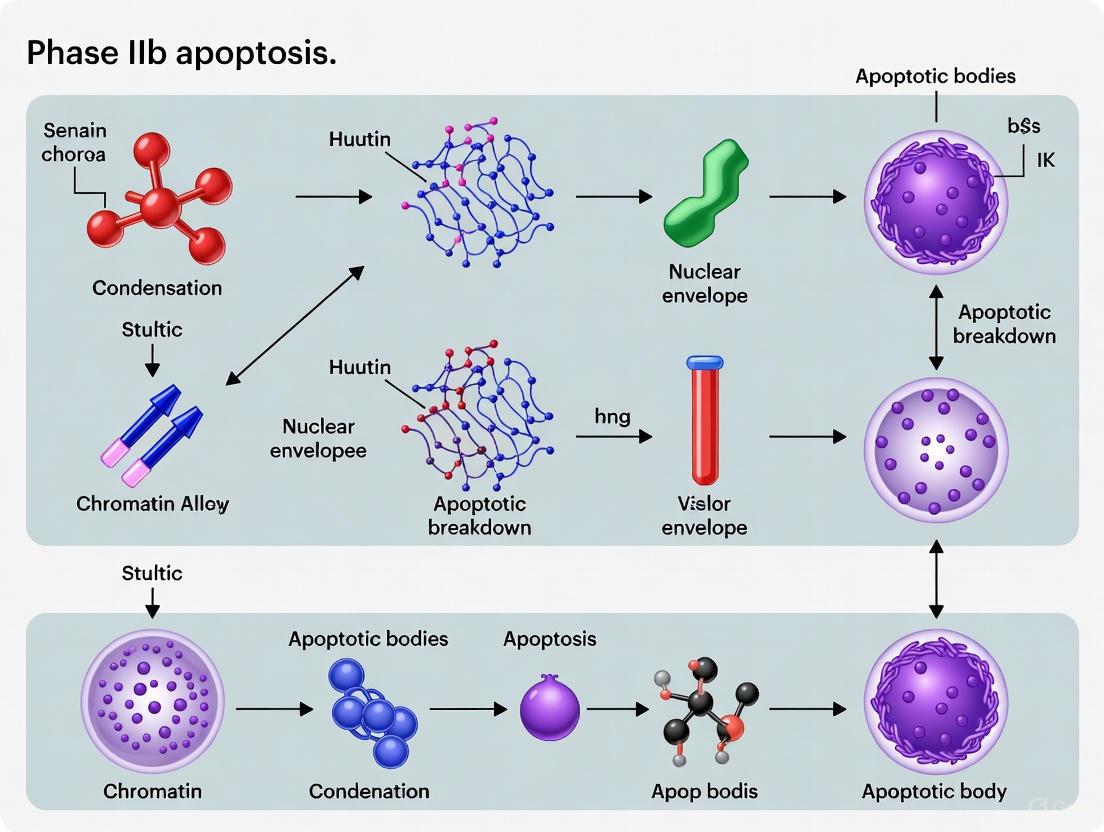
This article provides a comprehensive analysis of apoptotic body (ApoBD) formation mechanisms, particularly during the critical disassembly phase (Phase IIb), for an audience of researchers and drug development professionals.
Apoptotic Body Formation in Phase IIb: Mechanisms, Therapeutic Applications, and Research Advances
Abstract
This article provides a comprehensive analysis of apoptotic body (ApoBD) formation mechanisms, particularly during the critical disassembly phase (Phase IIb), for an audience of researchers and drug development professionals. It explores the foundational molecular regulators of apoptotic cell disassembly, details advanced methodologies for ApoBD isolation and characterization, and addresses key challenges in the field. Further, it validates ApoBDs' therapeutic potential against other extracellular vesicles and discusses their emerging applications in drug delivery, immunotherapy, and as diagnostic tools, synthesizing current research to guide future biomedical innovation.
Deconstructing Apoptotic Body Biogenesis: From Caspase Activation to Final Disassembly
Apoptosis, a form of programmed cell death (PCD), is a genetically regulated process essential for embryonic development, tissue homeostasis, and the elimination of damaged or infected cells [1] [2]. The initiation of apoptosis triggers a cascade of molecular events leading to the systematic disassembly of the cell into apoptotic bodies, which are subsequently phagocytosed by neighboring cells without inducing inflammation [3] [4]. This stands in stark contrast to necrotic cell death, which involves cell swelling and membrane rupture, leading to the release of pro-inflammatory cellular contents [3] [2]. Within the context of Phase IIb research, which often focuses on proof-of-concept and dose-finding for novel therapeutic agents, a detailed understanding of apoptotic body formation is critical. Such biomarkers can serve as valuable non-invasive tools for monitoring treatment efficacy and disease progression in clinical trials for conditions like cancer and neurodegenerative disorders [4]. This guide delves into the core mechanisms that initiate the caspase cascade, the execution phase of apoptosis, and the subsequent formation of apoptotic bodies, providing a technical foundation for research and drug development professionals.
Molecular Mechanisms of Apoptosis Initiation
The initiation of apoptosis is primarily governed by two distinct yet interconnected signaling pathways: the extrinsic (death receptor) pathway and the intrinsic (mitochondrial) pathway. Both pathways converge on the activation of a family of cysteine proteases known as caspases, which are the ultimate executors of the apoptotic program [2] [5].
The Extrinsic (Death Receptor) Pathway
The extrinsic pathway is activated by the binding of extracellular death ligands to their corresponding cell surface death receptors. This pathway is particularly relevant in immune-mediated cell death and certain therapeutic interventions [3] [2].
- Key Receptors and Ligands: Prominent death receptors include Fas (CD95) and Tumor Necrosis Factor Receptor 1 (TNFR1). Their cognate ligands, FasL (CD95L) and TNF-α, respectively, trigger receptor trimerization and intracellular signaling [3] [2].
- DISC Formation and Caspase-8 Activation: Ligand binding induces the assembly of a multi-protein complex known as the Death-Inducing Signaling Complex (DISC). The DISC recruits and activates initiator caspase-8 (and in some cases caspase-10) through dimerization and autocleavage [2] [5]. Active caspase-8 then propagates the death signal by directly cleaving and activating downstream effector caspases, such as caspase-3 and -7 [5].
The Intrinsic (Mitochondrial) Pathway
The intrinsic pathway is activated in response to internal cellular stressors, including DNA damage, oxidative stress, and growth factor withdrawal [3] [2]. This pathway is a major focus in oncology research, as many chemotherapeutic agents induce apoptosis through this mechanism.
- BCL-2 Family Protein Dynamics: The pathway is critically regulated by the balance between pro-apoptotic and anti-apoptotic members of the BCL-2 protein family. Cellular stress signals, often mediated by the tumor suppressor protein p53, upregulate or activate pro-apoptotic "activator" proteins (e.g., BIM, BID, PUMA) and "sensitizer" proteins (e.g., BAD, NOXA) [3] [2].
- Mitochondrial Outer Membrane Permeabilization (MOMP): The activators BAX and BAK undergo conformational changes, oligomerize, and integrate into the outer mitochondrial membrane, causing MOMP. This pivotal event leads to the release of several apoptogenic factors, including cytochrome c, from the mitochondrial intermembrane space into the cytosol [2] [5].
- Apoptosome Formation and Caspase-9 Activation: In the cytosol, cytochrome c binds to and induces the oligomerization of Apoptotic Protease-Activating Factor 1 (APAF-1), forming a wheel-like complex known as the apoptosome. The apoptosome recruits and activates the initiator caspase-9 [3] [2].
Pathway Crosstalk and Amplification
The extrinsic and intrinsic pathways are not isolated; they can interconnect to amplify the apoptotic signal. For instance, in some cell types, caspase-8 activated via the extrinsic pathway cleaves the BCL-2 family protein BID into its active truncated form (tBID). tBID then translocates to the mitochondria, activating BAX and BAK to trigger MOMP, thereby engaging the intrinsic pathway for signal amplification [5].
The Caspase Cascade and Execution Phase
The initiator caspases (-8, -9, -10) activated in the upstream pathways proteolytically activate the effector or executioner caspases (-3, -6, -7) [2] [5]. This marks the irreversible commitment to cell death and the beginning of the execution phase.
- Role of Effector Caspases: Activated effector caspases, particularly caspase-3, orchestrate the systematic dismantling of the cell by cleaving hundreds of cellular substrates [5]. Key cleavage events include:
- Inactivation of DNA Repair: Cleavage of enzymes like Poly (ADP-ribose) Polymerase (PARP) inactivates DNA repair mechanisms [3] [5].
- Destabilization of Structural Proteins: Cleavage of nuclear lamins leads to the breakdown of the nuclear envelope [5].
- Activation of DNases: Caspase-activated DNase (CAD) is activated, leading to the characteristic internucleosomal DNA fragmentation (~180-200 base pairs) [4].
- Formation of Apoptotic Bodies: The culmination of these processes is the packaging of the condensed chromatin and cellular organelles into membrane-bound vesicles known as apoptotic bodies. This process of cell shrinkage and budding ensures that the cellular contents are contained for efficient phagocytosis, preventing an inflammatory response [4] [6].
The following diagram illustrates the core signaling pathways of apoptosis, from initiation to execution and the formation of apoptotic bodies.
Quantitative Data and Key Molecular Regulators
A comprehensive understanding of apoptosis requires familiarity with the key molecular players. The tables below summarize the functions of major caspases and the BCL-2 family of proteins, which are critical regulatory nodes in the apoptotic process.
Table 1: Caspases in Apoptosis Initiation and Execution. Source: [3] [2] [5]
| Caspase | Role/Type | Primary Activator/Pathway | Key Actions/Substrates |
|---|---|---|---|
| Caspase-8 | Initiator | Extrinsic (DISC) | Activates Caspase-3, -7; cleaves BID to tBID. |
| Caspase-9 | Initiator | Intrinsic (Apoptosome) | Activates Caspase-3, -7. |
| Caspase-3/7 | Effector | Activated by Caspase-8/9 | Cleaves PARP, lamins; activates CAD; induces pyropotosis via GSDME cleavage. |
| Caspase-6 | Effector/Initiator | Activated by Caspase-3, -8 | Activates Caspase-8; cleaves lamins. |
Table 2: Key Regulators of the Intrinsic Apoptotic Pathway. Source: [3] [2]
| Protein | Function | Role in Apoptosis |
|---|---|---|
| p53 | Tumor Suppressor | Upregulates pro-apoptotic genes (e.g., PUMA, NOXA) in response to DNA damage. |
| Bcl-2 / Bcl-xL | Anti-apoptotic | Binds and inhibits pro-apoptotic BAX/BAK; promotes cell survival. |
| BAX / BAK | Pro-apoptotic (Effectors) | Oligomerize to cause MOMP, leading to cytochrome c release. |
| BID / BIM / PUMA | Pro-apoptotic (Activators) | Directly activate BAX/BAK in response to death signals. |
| BAD / NOXA | Pro-apoptotic (Sensitizers) | Bind and neutralize anti-apoptotic Bcl-2 proteins. |
Experimental Protocols for Apoptosis Assessment in Phase IIb Research
Robust and quantifiable methods for detecting apoptosis and apoptotic body formation are essential for translational research. The following protocols are highly relevant for preclinical and early clinical investigations.
Isolation and Quantification of Circulating Apoptotic Bodies
The detection of apoptotic bodies in blood plasma offers a non-invasive biomarker for monitoring apoptotic activity in diseases like stroke and neurodegeneration [4].
- Sample Collection: Collect peripheral blood using EDTA or citrate tubes to prevent coagulation. Process samples within 2 hours of collection.
- Differential Centrifugation:
- Platelet Removal: Centrifuge at 2,500 × g for 15 minutes to obtain platelet-poor plasma.
- Apoptotic Body Isolation: Centrifuge the plasma supernatant at 12,000 × g for 45 minutes at 4°C.
- Wash and Resuspend: Wash the pellet (containing apoptotic bodies) in phosphate-buffered saline (PBS) and centrifuge again at 12,000 × g for 45 minutes. Resuspend the final pellet in a suitable buffer for analysis.
- Characterization and Quantification:
- Flow Cytometry: The gold standard for quantification. Apoptotic bodies can be identified based on size (forward scatter) and granularity (side scatter). Staining for phosphatidylserine exposure (using Annexin V) can confirm their apoptotic origin [4].
- Transmission Electron Microscopy (TEM): Used for morphological validation, showing round, membrane-bound structures with electron-dense chromatin [4].
- DNA Fragmentation Analysis: DNA extracted from isolated apoptotic bodies should show a characteristic laddering pattern of ~180-200 bp fragments when analyzed by gel electrophoresis or a Bioanalyzer system [4].
Quantitative Phase Imaging (QPI) for Label-Free Apoptosis Dynamics
QPI is a powerful label-free technique that allows for the time-lapse observation of subtle changes in cell mass distribution and morphology during cell death, providing high-content data for drug screening and mechanistic studies [6].
- Cell Culture and Treatment: Seed cells (e.g., prostate cancer lines DU145, LNCaP) in appropriate chambers. Treat with apoptosis inducers (e.g., 0.5 µM staurosporine, 0.1 µM doxorubicin) with or without a pan-caspase inhibitor (e.g., 10 µM z-VAD-FMK) as a control [6].
- Image Acquisition: Use a QPI microscope (e.g., Q-PHASE) to acquire time-lapse images of the cells under standard culture conditions (37°C, 5% CO₂). A frame rate of one image every 20 minutes is often sufficient.
- Data Analysis:
- Cell Tracking and Segmentation: Employ automated or semi-automated software to track individual cells over time.
- Key Parameters:
- Cell Density: Mass per pixel (pg/pixel), which decreases during apoptosis.
- Cell Dynamic Score (CDS): A measure of average intensity change, reflecting morphological dynamics like membrane blebbing.
- Classification: Machine learning algorithms (e.g., LSTM networks) can classify cells undergoing caspase-dependent apoptosis (characterized by cell shrinkage, dynamic membrane blebbing, and formation of apoptotic bodies) versus caspase-independent lytic death (characterized by cell swelling and sudden rupture) with high accuracy [6].
The following workflow diagram outlines the key steps for isolating and analyzing apoptotic bodies from blood plasma.
The Scientist's Toolkit: Key Research Reagents and Materials
Table 3: Essential Reagents for Apoptosis and Apoptotic Body Research. Sources: [4] [5] [6]
| Reagent / Material | Function / Application | Example Use in Protocol |
|---|---|---|
| z-VAD-FMK | Pan-caspase inhibitor. Used to confirm caspase-dependent apoptosis. | Added to cell culture (e.g., 10 µM) to inhibit caspase activity and distinguish apoptosis from other death mechanisms [6]. |
| Staurosporine / Doxorubicin | Pharmacological inducers of intrinsic apoptosis. | Used as positive controls to trigger apoptosis in cell cultures (e.g., 0.5 µM Staurosporine) [6]. |
| CellEvent Caspase-3/7 Kit | Fluorogenic substrate for active caspases-3 and -7. | Live-cell imaging of caspase activation; fluorescence indicates initiation of the execution phase [6]. |
| Annexin V (FITC/APC) | Binds to phosphatidylserine (PS) exposed on the outer leaflet of the apoptotic cell membrane. | Flow cytometry staining to identify early apoptotic cells and apoptotic bodies [4]. |
| Propidium Iodide (PI) | DNA intercalating dye that is impermeable to live and early apoptotic cells. | Flow cytometry to distinguish late apoptotic/necrotic cells (PI-positive) from early apoptotic cells (Annexin V-positive, PI-negative) [6]. |
| Anti-Fas / TNF-α Antibodies | Agonists to activate the extrinsic apoptosis pathway. | Used to specifically trigger death receptor-mediated apoptosis in experimental models [3] [2]. |
| Differential Centrifugation Equipment | Isolation of apoptotic bodies and other extracellular vesicles from biofluids. | Essential for the step-wise isolation of apoptotic bodies from blood plasma as described in Section 5.1 [4]. |
| Quantitative Phase Microscope | Label-free imaging of cell mass, morphology, and dynamics. | Enables real-time, non-invasive tracking of apoptosis progression (cell shrinkage, blebbing) without fluorescent labels [6]. |
Apoptotic cell disassembly is a critical downstream process of programmed cell death, representing a highly regulated and coordinated mechanism rather than a stochastic breakdown. Within the context of Phase IIb research on apoptotic body (ApoBD) formation mechanisms, understanding this precise morphological progression is paramount for developing therapeutic strategies that can modulate cell death outcomes. The process generates membrane-bound extracellular vesicles known as apoptotic bodies, which facilitate efficient cellular clearance and mediate intercellular communication through the transfer of biomolecules [7] [8]. This technical guide details the distinct morphological stages, molecular mechanisms, and experimental approaches for investigating apoptotic cell disassembly, providing a foundation for research applications in drug development and disease therapeutics.
The Three Morphological Stages of Apoptotic Disassembly
The disassembly of an apoptotic cell into ApoBDs occurs through three sequential, morphologically distinct steps, each governed by specific molecular machinery and cytoskeletal rearrangements [7].
Stage 1: Apoptotic Membrane Blebbing
Description and Mechanism: The initial stage is characterized by the formation of dynamic plasma membrane blebs. This process is primarily driven by actomyosin contraction, where caspase-mediated activation of ROCK I kinase leads to phosphorylation of myosin light chain (MLC) and subsequent contraction of the actin-myosin cytoskeleton [7]. This generates intracellular pressure that pushes the plasma membrane outward, forming blebs that initially remain connected to the cytoskeleton.
Regulatory Factors: Key regulators include ROCK I, LIM kinase 1, cofilin, and PAK2, all of which are activated by caspase cleavage and contribute to cytoskeletal dynamics that promote membrane blebbing [7].
Stage 2: Apoptotic Protrusion Formation
Description and Mechanism: Following widespread blebbing, certain cell types extend string-like or bead-like membrane protrusions. These include:
- Microtubule Spikes: Thin, rigid protrusions supported by microtubules [7].
- Apoptopodia: Dynamic, actin-supported string-like protrusions that extend and retract [7].
- Beaded Apoptopodia: Protrusions exhibiting a characteristic beads-on-a-string morphology [7].
The formation of these structures serves to radiate membrane blebs away from the cell body, preparing them for efficient fragmentation.
Stage 3: Apoptotic Fragmentation
Description and Mechanism: The final stage involves the pinching-off of protrusions and blebs to generate individual ApoBDs. This fission event is regulated by caspase-activated Pannexin 1 (PANX1) membrane channels [7]. The selective packaging of cellular contents into ApoBDs is not random; organelles, nuclear fragments, and other biomolecules are differentially distributed [7].
Nuclear Fragmentation: Concurrently, the nucleus undergoes a defined condensation process characterized by three stages: Stage 1 Ring Condensation (peripheral chromatin condensation), Stage 2 Necklace Condensation (beaded appearance with nuclear shrinkage), and Stage 3 Nuclear Collapse/Disassembly (fragmentation into apoptotic bodies) [9]. This process requires DNase activity for stage 2 and hydrolysable ATP for stage 3 [9].
Quantitative Analysis of Morphological Changes
Advanced image processing and segmentation methods enable quantitative differentiation of apoptotic stages based on morphological parameters. The table below summarizes key geometric parameters that distinguish normal, early apoptotic, and late apoptotic cells.
Table 1: Quantitative Morphological Parameters for Apoptotic Stage Identification
| Parameter | Normal Cells | Early Apoptosis | Late Apoptosis | Biological Significance |
|---|---|---|---|---|
| Cell Area | Relatively large | Intermediate | Smallest | Indicates cell shrinkage [10] |
| Shape Factor | Closer to 1 | Intermediate | Farthest from 1 | Measures deviation from circular shape; indicates membrane blebbing and irregularity [10] |
| Smoothness Index | ~1 | >1 | >>1 | Ratio of cell perimeter to equivalent circle perimeter; indicates extent of membrane blebbing [10] |
| Number of Pit Points | Low | Intermediate | High | Quantifies concave regions on cell membrane; indicates "blebbing" extent [10] |
| Nuclear Area | Large and uniform | Decreasing, condensed | Fragmented, smallest | Indicates nuclear condensation and fragmentation [11] |
| Center Distance (Nucleus-Cytoplasm) | Consistent | Increasing | Variable/Very Large | Reflects chromatin margination and nuclear displacement [10] |
Molecular Regulation and Signaling Pathways
The morphological stages of apoptotic disassembly are executed by precise molecular pathways. Caspase activation serves as the central regulator, cleaving and activating downstream effector proteins.
Diagram Title: Molecular Regulation of Apoptotic Disassembly
Recent Research Insights: The protein NINJ1 has been identified as a key executioner of plasma membrane rupture (PMR) during secondary necrosis. NINJ1 oligomerizes on ApoBDs after the completion of apoptotic disassembly, regulating the release of damage-associated molecular patterns (DAMPs) and inflammatory signals [12]. This highlights a critical regulatory point at the intersection of orderly disassembly and inflammatory lytic outcomes.
Experimental Protocols for Visualization and Quantification
Protocol 1: Time-Lapse Microscopy for Dynamic Disassembly Analysis
This protocol enables real-time observation of the entire apoptotic disassembly process.
- 1. Cell Preparation: Plate cells (e.g., immortalized Bone Marrow-Derived Macrophages - iBMDMs or PtK cells) on glass-bottom dishes and allow to adhere [13] [12].
- 2. Apoptosis Induction: Treat cells with a suitable inducer.
- 3. Image Acquisition: Use an inverted microscope equipped with Differential Interference Contrast (DIC) optics and a temperature-controlled chamber (37°C, 5% CO₂). Acquire images in a single Z-plane at a rate of 2-4 frames/minute for several hours [13] [12].
- 4. Data Analysis: Quantify the percentage of cells progressing through each disassembly stage: membrane blebbing, apoptopodia formation, and fragmentation [12].
Protocol 2: Fluorescence-Based Staining and Segmentation for Quantitative Morphology
This protocol uses multi-channel fluorescence imaging for precise stage determination and parameter measurement.
- 1. Cell Culture and Induction: Culture HL-60 cells and induce apoptosis with 1.5 mM H₂O₂ for 24 hours [10].
- 2. Fluorescent Staining: Stain cells with a cocktail of dyes to distinguish viability states:
- Hoechst 33342: Cell-permeant DNA dye labels all nuclei.
- Annexin V-FITC: Binds to phosphatidylserine exposed on the outer membrane leaflet of early apoptotic cells.
- Propidium Iodide (PI): Cell-impermeant dye labels nuclei of late apoptotic/necrotic cells with compromised membrane integrity [10].
- 3. Image Acquisition: Capture images using an inverted fluorescence microscope with appropriate filter sets for all three fluorophores. Acquire multiple fields of view to ensure statistical power [10].
- 4. Image Processing and Segmentation:
- Pre-processing: Apply morphological opening to correct non-uniform illumination. Use median filtering (5x5 window) and grayscale stretching to reduce noise and enhance contrast [10].
- Segmentation: Apply the Otsu thresholding method to automatically separate foreground (cells) from background. Use dilation and erosion operators to clean the binary image, remove small objects, and delete incomplete cells on the image border [10].
- 5. Parameter Extraction and Stage Classification:
- Extract geometric parameters (Area, Perimeter, Shape Factor, etc.) for each segmented cell and its nucleus.
- Classify apoptotic stages automatically based on staining patterns:
- Normal: Hoechst 33342+, Annexin V-, PI-
- Early Apoptotic: Annexin V+, PI-
- Late Apoptotic: PI+ [10].
The Scientist's Toolkit: Essential Research Reagents and Materials
Table 2: Key Reagents for Studying Apoptotic Disassembly
| Reagent / Material | Function / Application | Specific Example / Target |
|---|---|---|
| Apoptosis Inducers | Experimentally initiate the apoptotic cascade. | Staurosporine (PK inhibitor), BH3 mimetics (e.g., ABT-737, Venetoclax), Doxorubicin, H₂O₂ [14] [10] [11] |
| Fluorescent Probes | Visualize specific morphological or biochemical events. | Annexin V (PS exposure), PI/7-AAD (membrane integrity), Hoechst/DAPI (chromatin), Mito-Tracker (mitochondria), Caspase-3/7 substrates (e.g., NucView 488) [10] [13] |
| Caspase Inhibitors | Determine caspase-dependency of processes. | Ac-DEVD-CHO (caspase-3 inhibitor), Z-VAD-FMK (pan-caspase inhibitor) [9] |
| Antibodies | Detect specific proteins via immunoblotting/IF. | Anti-cleaved Caspase-3, anti-PANX1, anti-NINJ1, anti-HMGB1 [7] [12] |
| Cell Lines | Model systems for in vitro study. | HL-60 (leukemia), MCF-7 (breast cancer), iBMDMs (macrophages), HeLa (cervical cancer) [10] [12] [11] |
| ApoBD Isolation Kits | Purify ApoBDs for downstream analysis. | Differential centrifugation kits (e.g., successive spins at 1,500 x g) [12] |
The morphological progression of apoptotic cell disassembly—through blebbing, protrusion, and fragmentation—is a tightly orchestrated process fundamental to efficient cell clearance and intercellular communication. For Phase IIb research focused on ApoBD formation mechanisms, leveraging the detailed experimental protocols, quantitative morphological parameters, and molecular insights outlined in this guide is critical. Understanding these stages not only provides insights into basic biology but also opens therapeutic avenues for modulating apoptosis in cancer, autoimmune, and inflammatory diseases by targeting specific steps in the disassembly pathway or the stability of the resulting ApoBDs.
The formation of apoptotic bodies (ApoBDs) during the late phase of apoptosis (Phase IIb) is a critical process for the controlled disassembly of cellular components and subsequent clearance by phagocytes. This whitepaper delineates the pivotal roles of three key molecular regulators—ROCK1, PANX1, and Plexin B2—in orchestrating the intricate morphological and biochemical events that define Phase IIb. Through a detailed examination of their signaling mechanisms, quantitative experimental data, and associated methodologies, we provide a comprehensive technical resource for researchers and drug development professionals aiming to modulate apoptotic body formation for therapeutic purposes.
Programmed cell death, or apoptosis, is a fundamental biological process essential for development, tissue homeostasis, and immune regulation [15] [16]. Morphologically, apoptosis progresses through distinct stages: initial cell shrinkage and chromatin condensation (Phase I), followed by membrane blebbing and the disassembly of the cell into small, membrane-bound vesicles known as apoptotic bodies (ApoBDs) during Phase IIb [15] [2] [17]. This final disassembly stage is not a passive collapse but a highly coordinated process that packages cellular contents, including nuclear fragments and organelles, into ApoBDs for efficient efferocytosis (clearance by phagocytes) [18] [16]. The proper execution of Phase IIb is crucial for preventing secondary necrosis and inflammatory responses, thereby maintaining immune tolerance [15]. This review focuses on the core molecular machinery—specifically, the proteins ROCK1, PANX1, and Plexin B2—that governs the dynamics of ApoBD formation.
The Core Regulatory Machinery of Phase IIb
ROCK1: Master Regulator of Membrane Blebbing
The kinase ROCK1 is a primary executor of the membrane blebbing that characterizes the early stages of Phase IIb. Its activity is directly coupled to the core apoptotic cascade through cleavage and activation by executioner caspases-3 and -7 [19]. Once activated, ROCK1 phosphorylates key substrates such as the myosin light chain (MLC), leading to hyper-activation of actomyosin contractility. This force generation increases intracellular pressure, causing the plasma membrane to detach from the underlying actin cortex and form blebs [19].
Table 1: Key Experimental Findings on ROCK1 in Apoptotic Membrane Blebbing
| Experimental Model | Treatment/Condition | Key Findings | Citation |
|---|---|---|---|
| DLD1 cells (human colon cancer) | Anti-Fas antibody ± ROCK inhibitor (Y-27632) | ROCK inhibition suppressed membrane bleb formation and subsequent ApoBD generation. | [19] |
| DLD1 cells | Apoptosis induction & live imaging | Bleb size increases as apoptosis progresses; early blebs are small and regress quickly, while late blebs are large and slow to regress. | [19] |
| DLD1 cells | Y-27632 treatment during apoptosis | Suppressed physical disruption of the nuclear membrane and degradation of Lamin A, impairing the release of nuclear content (e.g., HMGB1). | [19] |
PANX1: Channel for 'Find-Me' Signal Release and Disassembly
Pannexin 1 (PANX1) is a transmembrane channel protein that is cleaved and activated by caspases 3 and 7 during apoptosis [20]. Its opening facilitates the regulated release of cytoplasmic metabolites, which serve as critical signals for the immune system. Notably, PANX1 mediates the efflux of adenosine triphosphate (ATP), a potent "find-me" signal that recruits phagocytes to the site of cell death [20]. Recent research has also identified its role in apoptotic cell disassembly.
Table 2: Key Experimental Findings on PANX1 in Apoptosis
| Experimental Model | Treatment/Condition | Key Findings | Citation |
|---|---|---|---|
| Jurkat T cells & primary thymocytes | Raptinal (apoptosis inducer) vs. anti-Fas, UV | Raptinal-induced apoptotic cells showed abolished TO-PRO-3 dye uptake and significantly reduced ATP release, mimicking PANX1-/- cells. | [20] |
| Jurkat T cells | Trovafloxacin (PANX1 inhibitor) | Inhibition of PANX1 reduced levels of ATP in the supernatant of apoptotic cell cultures. | [20] |
| Jurkat T cells | Apoptosis inducers | Caspase-mediated cleavage of full-length PANX1 (~45-50 kDa) to an ~15 kDa N-terminal fragment was observed, confirming proteolytic activation. | [20] |
Plexin B2: Coordinator of Monocyte Apoptopodia and ApoBD Formation
Plexin B2 (PlexB2), a transmembrane receptor, has been identified as a novel and positive regulator of apoptotic disassembly in monocytes. It is a substrate for caspases 3/7 and becomes enriched in the resulting ApoBDs [18] [21]. Its primary function is to govern the formation of specific, highly structured protrusions called "beaded apoptopodia," which subsequently fragment to release ApoBDs.
Table 3: Key Experimental Findings on Plexin B2 in Apoptotic Disassembly
| Experimental Model | Treatment/Condition | Key Findings | Citation |
|---|---|---|---|
| THP-1 monocytes (human) | Generation of PlexB2-deficient cells | Lack of PlexB2 impaired the formation of beaded apoptopodia and the generation of ApoBDs. | [18] [21] |
| THP-1 monocytes | Phagocytosis assays with PlexB2-/- cells | The loss of PlexB2 resulted in impaired clearance of apoptotic monocytes by both professional and non-professional phagocytes. | [18] [21] |
Integrated Signaling Pathways in Phase IIb
The coordinated actions of ROCK1, PANX1, and Plexin B2 ensure the efficient dismantling of the apoptotic cell. The following diagram summarizes the core signaling pathway and the interdependencies between these key regulators during Phase IIb.
Diagram 1: Integrated signaling pathway regulating Phase IIb apoptosis.
Detailed Experimental Protocols for Investigating Phase IIb
Protocol 1: Assessing PANX1 Channel Activity in Apoptotic Cells
This protocol utilizes flow cytometry to evaluate the function of caspase-activated PANX1 channels based on the uptake of a cell-impermeable dye [20].
- Key Reagents: Apoptosis inducer (e.g., anti-Fas antibody, UV irradiation, Raptinal), Annexin V binding buffer, Fluorescently conjugated Annexin A5 (A5), TO-PRO-3 iodide dye, PANX1 inhibitor (e.g., Trovafloxacin) as control, culture medium.
- Procedure:
- Induce apoptosis in cell populations (e.g., Jurkat T cells) using your chosen stimulus.
- At desired timepoints post-induction (e.g., 2-6 hours), harvest cells by centrifugation.
- Resuspend cell pellet in Annexin V binding buffer containing A5 and TO-PRO-3 dye.
- Incubate for 15-20 minutes at room temperature, protected from light.
- Analyze samples immediately using a flow cytometer.
- Gating Strategy: Identify viable (A5-negative, TO-PRO-3-negative), apoptotic (A5-positive, TO-PRO-3-intermediate), and necrotic/secondary necrotic (A5-positive, TO-PRO-3-high) populations.
- Data Interpretation: Active PANX1 channels in apoptotic cells facilitate the uptake of TO-PRO-3, resulting in an intermediate fluorescence signal. A significant reduction in TO-PRO-3 intermediate population upon treatment with a PANX1 inhibitor (or Raptinal) indicates successful channel blockade [20].
Protocol 2: Genetic Deletion of Plexin B2 to Study Apoptopodia
This protocol outlines the generation of Plexin B2-deficient cells to investigate its role in apoptotic disassembly [18] [21].
- Key Reagents: THP-1 monocyte cell line, CRISPR-Cas9 system or siRNA targeting PlexB2, transfection reagent, antibodies for PlexB2 western blot, phagocyte cell line (e.g., J774 macrophages).
- Procedure:
- Knockdown/Knockout: Transfect THP-1 cells with CRISPR-Cas9 constructs or siRNA specifically targeting the PlexB2 gene. Include a non-targeting control.
- Validation: Confirm PlexB2 deficiency 48-72 hours post-transfection via western blot analysis.
- Induction and Imaging: Induce apoptosis in control and PlexB2-deficient THP-1 cells. Use time-lapse microscopy or fixed-cell imaging (with phalloidin staining for F-actin) to visualize and quantify the formation of beaded apoptopodia.
- Functional Assay: Co-culture apoptotic THP-1 cells (labeled with a fluorescent dye) with phagocytes. After incubation, analyze the percentage of phagocytes that have ingested ApoBDs using flow cytometry or fluorescence microscopy.
- Data Interpretation: PlexB2-deficient cells are expected to show a significant reduction in beaded apoptopodia formation, ApoBD yield, and subsequent uptake by phagocytes compared to control cells [18] [21].
The Scientist's Toolkit: Essential Research Reagents
Table 4: Key Reagents for Studying Phase IIb Apoptosis Regulators
| Reagent / Tool | Primary Function in Research | Example Application |
|---|---|---|
| Y-27632 (ROCK inhibitor) | Chemically inhibits ROCK1 kinase activity. | Suppressing membrane blebbing to study its necessity for nuclear disruption and ApoBD formation [19]. |
| Raptinal | Small molecule that rapidly induces intrinsic apoptosis; concurrently inhibits PANX1 channel function. | A unique tool to induce apoptosis while dissecting PANX1-dependent processes like ATP release [20]. |
| TO-PRO-3 Iodide | Cell-impermeable, DNA-binding fluorescent dye. | Flow cytometric assessment of PANX1 channel activity in apoptotic cells [20]. |
| Plexin B2 siRNA/CRISPR | Genetically depletes Plexin B2 expression. | Establishing causal relationships between PlexB2 loss and defects in apoptopodia formation and cell clearance [18]. |
| Antibody Cocktails (e.g., vs Caspase-3, PARP) | Pre-mixed antibodies for simultaneous detection of multiple apoptotic markers via western blot. | Streamlined analysis of caspase activation and downstream cleavage events [17]. |
| Annexin A5, Fluorochrome-conjugated | Binds to phosphatidylserine (PS) exposed on the outer leaflet of apoptotic cell membranes. | Identifying early and late apoptotic populations in conjunction with viability dyes [20] [17]. |
The disciplined disassembly of a cell during Phase IIb of apoptosis is a direct consequence of the coordinated activities of ROCK1, PANX1, and Plexin B2. ROCK1 drives the mechanical forces necessary for bleb formation, PANX1 mediates crucial communication with the cellular environment, and Plexin B2 directs the sophisticated morphological process of apoptopodia formation. A deep understanding of these molecular mechanisms provides a robust foundation for therapeutic interventions. Targeting these regulators holds significant promise for treating diseases characterized by dysregulated cell clearance, such as autoimmune disorders, chronic inflammatory conditions, and cancer.
The formation of apoptotic bodies (ApoBDs) represents a critical process in the later stages of apoptosis, facilitating immunologically silent cell clearance through efferocytosis. However, when this clearance fails, cells progress to secondary necrosis, characterized by plasma membrane rupture (PMR) and release of inflammatory mediators. Ninjurin-1 (NINJ1), a small double-transmembrane protein, has emerged as the key executioner of PMR across multiple lytic cell death pathways. Recent research illuminates its specific role in regulating the stability of ApoBDs and other large extracellular vesicles, positioning NINJ1 oligomerization as the final gateway controlling cellular content release. Within Phase IIb research on apoptotic body formation mechanisms, understanding NINJ1-mediated membrane rupture provides crucial insights into the transition between non-inflammatory apoptosis and pro-inflammatory secondary necrosis, with significant implications for therapeutic intervention in inflammatory diseases and cancer.
Table: Key Characteristics of NINJ1 (Ninjurin-1)
| Property | Description |
|---|---|
| Protein Size | 152-amino-acid, ~16.3 kDa [22] |
| Domain Structure | Two extracellular regions, two hydrophobic transmembrane domains, one intracellular region [22] |
| Key Domains | N-terminal adhesion motif (N-NAM, Pro26-Asn37), extracellular amphipathic helices (α1, α2), transmembrane helices (α3, α4) [23] [22] |
| Oligomerization | Forms higher-order oligomers, rings, and filaments upon activation [23] |
| Primary Function in Cell Death | Execution of plasma membrane rupture during lytic cell death modalities [12] [24] |
Molecular Mechanisms of NINJ1-Mediated Plasma Membrane Rupture
Structural Basis of NINJ1 Oligomerization
The molecular architecture of NINJ1 provides critical insights into its membrane-rupturing function. Structural studies using cryo-EM reveal that each NINJ1 subunit comprises two amphipathic helices (α1, α2) and two transmembrane helices (α3, α4) that form a chain of subunits primarily through interactions between the TM helices and α1 [23] [25]. The transmembrane helices α3 and α4 feature distinctive kinks containing conserved glycine residues that are essential for function [23]. The NINJ1 oligomer possesses an asymmetric structure with a concave hydrophobic side that interfaces with the membrane and a convex hydrophilic side formed by α1 and α2 upon activation [25]. This structural arrangement enables NINJ1 to assemble into ring-like structures of varying sizes, with structural models demonstrating how segments containing 6-7 subunits can form curved assemblies that generate membrane curvature [23].
The "Cookie-Cutter" Model of Membrane Rupture
Contrary to initial hypotheses suggesting a pore-forming mechanism similar to gasdermins, recent structural and functional evidence supports a distinctive "cookie-cutter" model for NINJ1-mediated membrane disruption [23] [25]. In this model, activated NINJ1 oligomerizes into hydrophilic rings that encircle and excise patches of the plasma membrane, leading to the liberation of membrane disks and subsequent catastrophic membrane loss [23]. This mechanism is fundamentally different from gasdermin-mediated pore formation, as it results in physical removal of membrane sections rather than simply creating pores. Supporting this model, experiments with recombinant NINJ1 demonstrate its capacity to completely dissolve liposomes containing specific anionic lipids such as phosphatidic acid (PA) and phosphatidylinositol 4-phosphate (PI(4)P), generating smaller heterogeneous structures containing both lipids and NINJ1 [23]. Live-cell and super-resolution imaging have confirmed the presence of these ring-like structures on the plasma membrane of dying cells and their subsequent release into the extracellular environment [25].
NINJ1 Activation Pathway: This diagram illustrates the sequential process from inactive NINJ1 to plasma membrane rupture and content release.
Experimental Evidence for NINJ1 Oligomerization in Apoptotic Bodies
NINJ1 Oligomerization on ApoBDs
Recent research has specifically investigated NINJ1 oligomerization during apoptotic cell disassembly and ApoBD formation. Using immortalized bone marrow-derived macrophages (iBMDMs) with NINJ1 disrupted via CRISPR/Cas9 gene editing, researchers demonstrated that NINJ1 deficiency does not significantly alter apoptosis progression or apoptotic cell disassembly, including the formation of membrane blebs and protrusions that lead to ApoBD generation [12] [26]. However, through Blue Native-PAGE and bis(sulfosuccinimidyl) suberate (BS3) crosslinking followed by SDS-PAGE, researchers detected significant higher-order NINJ1 oligomerization specifically on isolated ApoBDs compared to untreated cells or apoptotic cell-enriched samples [12]. This oligomerization occurs predominantly after the completion of apoptotic cell disassembly, suggesting temporal regulation of NINJ1 activation that permits ApoBD formation prior to membrane rupture [12]. Time-course analysis revealed limited NINJ1 oligomerization at 4 hours post-apoptosis induction when ApoBDs were collected, with increased oligomerization occurring later [12].
Functional Consequences for ApoBD Stability
The functional significance of NINJ1 oligomerization on ApoBDs was demonstrated through multiple experimental approaches. Lactate dehydrogenase (LDH) release assays, a standard measure of PMR, showed that NINJ1 deficiency markedly reduced PMR in both whole apoptotic iBMDMs and isolated ApoBD samples [12] [26]. Additionally, FITC-dextran exclusion assays at the single vesicle level revealed that NINJ1-/- iBMDM-derived ApoBDs exhibited twice as much FITC-dextran exclusion compared to Cas9 control iBMDM-derived ApoBDs, indicating reduced membrane permeability in NINJ1-deficient ApoBDs [12]. These findings establish NINJ1 as the first known regulator of extracellular vesicle stability, controlling the transition from intact ApoBDs to lytic release of cellular contents [26].
Table: Quantitative Evidence for NINJ1-Mediated ApoBD Membrane Rupture
| Experimental Measure | Finding | Significance |
|---|---|---|
| LDH Release from ApoBDs | Markedly reduced in NINJ1-/- vs control [12] | NINJ1 deficiency protects against PMR |
| FITC-Dextran Exclusion | 2x higher in NINJ1-/- ApoBDs vs control [12] | Enhanced membrane integrity without NINJ1 |
| HMGB1 DAMP Release | Significantly impaired in NINJ1-/- ApoBDs [26] | NINJ1 controls inflammatory signal release |
| Norovirus Particle Release | ~2.5 fold decrease from NINJ1-/- ApoBDs [26] | NINJ1 facilitates viral dissemination |
Detailed Experimental Protocols for Studying NINJ1 Oligomerization
Detection of NINJ1 Oligomerization
Blue Native-PAGE Protocol:
- Sample Preparation: Isolate ApoBDs using differential centrifugation (2,000 × g for 10 min) from apoptotic cells induced by BH3 mimetics (2 μM ABT-737 + 10 μM S63845) for 4 hours [12].
- Membrane Protein Extraction: Use digitonin or LMNG:CHS (lauryl maltose neopentyl glycol with cholesteryl hemisuccinate) detergents to solubilize membrane proteins while preserving protein complexes [23].
- Electrophoresis: Load samples on NativePAGE Novex 3-12% Bis-Tris gels with Cathode Buffer (NativePAGE Running Buffer + G-250 Additive) and Anode Buffer (NativePAGE Running Buffer) [12].
- Transfer and Immunoblotting: Transfer proteins to PVDF membranes using NativePAGE Transfer Buffer and detect NINJ1 oligomers using specific anti-NINJ1 antibodies [12].
BS3 Crosslinking Protocol:
- Crosslinking Reaction: Incubate isolated ApoBDs with 2 mM bis(sulfosuccinimidyl) suberate (BS3) in PBS for 30 minutes at room temperature [12].
- Reaction Quenching: Add Tris-HCl (pH 7.5) to a final concentration of 20 mM and incubate for 15 minutes to quench the crosslinking reaction [12].
- Analysis: Resolve crosslinked products by SDS-PAGE and visualize NINJ1 oligomers by immunoblotting [12].
Functional Assessment of Plasma Membrane Integrity
LDH Release Assay:
- Sample Collection: Collect culture supernatants from ApoBD preparations (4 hours post-isolation) and centrifuge at 2,000 × g for 10 minutes to remove cellular debris [12] [24].
- LDH Measurement: Use the CyQUANT LDH Cytotoxicity Assay Kit according to manufacturer instructions. Mix 50 μL of supernatant with 50 μL of reaction mixture and incubate for 30 minutes at room temperature protected from light [12].
- Data Analysis: Measure absorbance at 490 nm and 680 nm (reference wavelength). Calculate percentage LDH release relative to total LDH content from lysed ApoBDs [24].
FITC-Dextran Exclusion Assay:
- Labeling: Incubate ApoBDs with 1 mg/mL FITC-conjugated dextran (70 kDa) for 15 minutes at 37°C [12].
- Imaging: Transfer to glass-bottom dishes and image using confocal microscopy with standard FITC settings (excitation 488 nm, emission 519 nm) [12].
- Quantification: Count FITC-negative ApoBDs (intact membranes) and express as percentage of total ApoBDs from multiple fields [12].
NINJ1 Oligomerization Experimental Workflow: This diagram outlines the key methodological steps for studying NINJ1 oligomerization and its functional consequences on ApoBDs.
The Scientist's Toolkit: Key Research Reagents and Solutions
Table: Essential Research Reagents for Studying NINJ1 Oligomerization
| Reagent / Tool | Function / Application | Key Details |
|---|---|---|
| NINJ1-Deficient Cells | Genetic loss-of-function model | Generated via CRISPR/Cas9 in iBMDMs; validates NINJ1-specific effects [12] |
| BH3 Mimetics (ABT-737, S63845) | Apoptosis induction | Targets Bcl-2 family proteins; 2 μM ABT-737 + 10 μM S63845 for 4h [12] |
| Blue Native-PAGE | Protein oligomer detection | Resolves native protein complexes; detects NINJ1 oligomers [12] |
| BS3 Crosslinker | Protein complex stabilization | Membrane-impermeable crosslinker; stabilizes NINJ1 oligomers for SDS-PAGE [12] |
| LMNG:CHS Detergent | Membrane protein solubilization | Preserves NINJ1 oligomers during purification [23] |
| Anti-NINJ1 Antibodies | NINJ1 detection | Essential for immunoblotting after Native/SDS-PAGE [12] |
| LDH Cytotoxicity Assay | Membrane integrity assessment | Quantifies PMR in ApoBD supernatants [12] [24] |
| FITC-Dextran (70 kDa) | Membrane permeability probe | Large molecule excluded by intact membranes [12] |
| Liposome Formulations | Membrane rupture reconstitution | PC/PA/PI(4)P liposomes for in vitro NINJ1 activity assays [23] |
Implications for Phase IIb Research on Apoptotic Body Formation
Within Phase IIb research focused on apoptotic body formation mechanisms, understanding NINJ1 oligomerization provides crucial insights with both fundamental and therapeutic implications. The discovery that NINJ1 specifically oligomerizes on ApoBDs after their biogenesis reveals a previously unrecognized regulatory checkpoint that determines whether ApoBDs remain intact for efferocytosis or undergo lytic decomposition with consequent inflammatory effects [12] [26]. This temporal regulation ensures that apoptotic cell disassembly can proceed effectively to generate "bite-sized" fragments for phagocytic clearance before NINJ1-mediated rupture occurs [12]. From a therapeutic perspective, targeting NINJ1 offers promising avenues for modulating the inflammatory consequences of cell death in various pathological contexts. In autoimmune and chronic inflammatory diseases characterized by defective efferocytosis, NINJ1 inhibition could prevent the release of DAMPs and autoantigens from uncleared apoptotic cells [12] [26]. Conversely, in cancer therapy, promoting NINJ1-mediated rupture could enhance the immunogenicity of tumor cell death or prevent the utilization of ApoBDs for viral dissemination in infection contexts [26] [22]. The finding that NINJ1 also contributes to the release of norovirus particles from ApoBDs further expands the potential therapeutic applications to infectious disease settings [26].
The integration of NINJ1 biology into Phase IIb apoptotic body research also highlights the multifaceted nature of ApoBDs, which function not merely as cellular fragments but as regulated communicative structures with diverse roles in tissue homeostasis, disease progression, and intercellular transfer of biomaterials [12] [27]. The identification of NINJ1 as the first known regulator of extracellular vesicle stability opens new investigative pathways for understanding how vesicle longevity is controlled and how this impacts their functional capabilities in different physiological and pathological contexts [26]. Future research directions should focus on elucidating the precise activation signals that trigger NINJ1 oligomerization on ApoBDs, exploring potential co-factors that modulate its activity, and developing specific pharmacological agents that can selectively inhibit or enhance its membrane-rupturing function in different disease settings.
Apoptosis, the most prominent form of programmed cell death, serves as a critical mechanism for maintaining tissue homeostasis, with an adult human losing approximately 50 billion cells through this process each day [28] [29] [16]. Rather than culminating in mere cellular disintegration, apoptosis represents an active, highly orchestrated process that generates a heterogeneous population of extracellular vesicles (EVs) known collectively as apoptotic vesicles (ApoVs) [28] [30]. These vesicles, once considered mere cellular debris, are now recognized as key mediators of intercellular communication with important roles in physiological and pathophysiological processes [29] [30] [31].
The apoptotic vesicle family comprises three distinct subtypes: apoptotic bodies (ApoBDs), apoptotic microvesicles (ApoMVs), and apoptotic exosomes (ApoExos) [28] [30]. These subtypes exhibit fundamental differences in their biogenesis, physical characteristics, molecular markers, and biological functions [32] [31]. Understanding this heterogeneity is particularly crucial within Phase IIb drug development research, where elucidating the specific mechanisms of apoptotic body formation can inform therapeutic strategies for cancer, autoimmune disorders, and regenerative medicine [14] [12].
This technical guide provides a comprehensive overview of the apoptotic vesicle family, with emphasis on distinguishing characteristics, experimental methodologies, and molecular regulators relevant to investigative research.
Classification and Characteristics of Apoptotic Vesicles
Apoptotic vesicles represent a diverse ecosystem of membrane-bound particles released during programmed cell death. The classification of these vesicles has evolved significantly since Kerr, Wyllie, and Currie first described apoptosis in 1972 [16]. We now recognize three principal subtypes based on biogenesis, size, and composition.
Table 1: Fundamental Characteristics of Apoptotic Vesicle Subtypes
| Characteristic | ApoBDs | ApoMVs | ApoExos |
|---|---|---|---|
| Size Range | 1-5 μm [28] [12] | 0.1-1 μm [28] [30] | 30-150 nm [28] [30] |
| Biogenesis Mechanism | Membrane blebbing and apoptopodia formation [28] [31] | Plasma membrane budding [29] [30] | Endosomal system (MVBs) and S1P-S1PR signaling [28] [30] |
| Key Markers | Phosphatidylserine, histones, C1q, TSP-1, calreticulin, nuclear fragments [28] [30] [31] | ARF6, VCAMP3, HSP70, integrin [28] | LAMP2, LG3, S1P1/3, CD63, CD81 [28] [30] |
| Cellular Contents | Nuclear fragments, organelles, nuclear components [29] [30] | Proteins, lipids, nucleic acids [30] | Proteins, mRNA, miRNA, cytosolic components [30] |
| Buoyant Density | 1.118-1.228 g/mL [31] | Information missing | 1.13-1.21 g/mL [29] |
The biogenesis of ApoBDs is a caspase-dependent process involving three morphological stages: initial plasma membrane blebbing, formation of thin membrane protrusions, and finally the generation of distinct ApoBDs [28]. A recently discovered mechanism involves "beads-on-a-string" structures called apoptopodia, whose formation is negatively regulated by caspase-activated pannexin 1 channels [28] [31]. In contrast, ApoMVs arise through outward budding of the plasma membrane during apoptosis [29] [30], while ApoExos are formed through the endosomal system, with their release triggered by caspase-3 activation and S1P-S1PR signaling rather than traditional endosomal-sorting complexes [28] [30].
Table 2: Functional Differences Between Apoptotic Vesicle Subtypes
| Functional Aspect | ApoBDs | ApoMVs | ApoExos |
|---|---|---|---|
| Immune Regulation | Promote efferocytosis; can cause sterile inflammation [30] [12] | Stimulate CD8+ T cells; may induce interferon-α [30] | Enhance autoantibody generation and allograft rejection [30] |
| Stem Cell Functions | Inhibit proliferation and migration [32] | Promote proliferation, migration, and multipotent differentiation [32] | Information missing |
| Therapeutic Potential | Drug delivery, vaccine development [28] | Immunomodulation, tissue regeneration [32] | Immunogenicity, disease propagation [30] |
| Stability | 3-6 hours in culture at 37°C [12] | Information missing | Information missing |
Recent investigations have revealed that these vesicle subtypes not only differ structurally but also exert distinct—sometimes opposing—biological effects. For instance, in studies comparing ApoBDs and apoptotic small extracellular vesicles (apoSEV, which encompass ApoMVs and ApoExos), apoSEV promoted stem cell proliferation, migration, and multi-potent differentiation, whereas ApoBDs inhibited these functions [32]. This functional divergence underscores the importance of precise vesicle characterization in research and therapeutic applications.
Molecular Mechanisms and Regulators
The formation of apoptotic vesicles is governed by sophisticated molecular machinery that coordinates cell death with vesicle generation. Understanding these mechanisms is fundamental to appreciating the functional differences between vesicle subtypes.
Diagram 1: Biogenesis Pathways of Apoptotic Vesicles. This diagram illustrates the distinct molecular pathways governing the formation of ApoBDs, ApoMVs, and ApoExos following caspase activation during apoptosis.
The stability and inflammatory potential of apoptotic vesicles are regulated by specific molecular mechanisms. Recent research has identified NINJ1 (ninjurin-1) as a key regulator of plasma membrane rupture in ApoBDs [12]. NINJ1 oligomerizes on ApoBDs following the completion of apoptotic cell disassembly, forming ring-like structures that mediate vesicle lysis and the release of damage-associated molecular patterns (DAMPs) and inflammatory signals [12]. This mechanism represents a crucial control point determining whether ApoBDs undergo silent clearance or contribute to inflammatory responses.
The molecular composition of apoptotic vesicles is strongly influenced by their parental cells. For instance, mesenchymal stem cell-derived ApoVs (MSC-apoVs) inherit specific parental cell proteins including Fas, integrin alpha-5, syntaxin-4, caveolin-1, and calreticulin [28] [31]. This inheritance mechanism allows ApoVs to maintain certain biological functions of their source cells, which can be exploited for therapeutic purposes.
Experimental Methods for Isolation and Characterization
Standardized methodologies for isolating and characterizing apoptotic vesicle subtypes are essential for research reproducibility and accurate functional assignment. The following section details established protocols and quality control measures.
Isolation Techniques
Differential centrifugation remains the cornerstone technique for separating apoptotic vesicle subtypes based on their size and density characteristics [28] [32] [12].
Diagram 2: Differential Centrifugation Workflow for ApoV Isolation. This sequential separation technique exploits differences in vesicle size and density to isolate the three primary apoptotic vesicle subtypes.
For specific research applications, fluorescence-activated cell sorting (FACS) can be employed for ApoBD isolation. In this approach, vesicles are stained with Annexin V and TO-PRO-3, with FSClow/Annexin Vintermediate/high/TO-PRO-3intermediate/high populations selected for sorting [28]. This method offers high purity but may be less suitable for smaller ApoV subtypes.
Characterization and Validation
Comprehensive characterization of isolated apoptotic vesicles is essential for validating subtype identity and purity. The following table outlines key analytical approaches and their applications.
Table 3: Characterization Techniques for Apoptotic Vesicles
| Technique | Application | Key Parameters | Subtype Specificity |
|---|---|---|---|
| Transmission Electron Microscopy (TEM) | Structural assessment and size validation | Cup-shaped structure (ApoExos), chromatin condensation (ApoBDs), spherical morphology [28] [33] | All subtypes |
| Nanoparticle Tracking Analysis (NTA) | Size distribution and concentration | Size range, particle concentration [28] [31] | All subtypes |
| Western Blot | Marker protein identification | CD63, CD9, CD81 (common); Calreticulin, Histones (ApoBDs); LAMP2 (ApoExos) [28] [30] | All subtypes |
| Flow Cytometry | Surface marker analysis | Annexin V positivity, subtype-specific markers [28] [32] | Primarily ApoBDs and ApoMVs |
| Nanoscale Flow Cytometry | Small particle analysis | Size, surface markers [28] | ApoMVs and ApoExos |
| Blue Native-PAGE | Protein oligomerization detection | NINJ1 oligomerization on ApoBDs [12] | Primarily ApoBDs |
Quality control should include assessment of vesicle integrity, quantification of yield, and confirmation of appropriate marker expression. Techniques such as lactate dehydrogenase (LDH) release assays and FITC-dextran exclusion tests can evaluate membrane integrity and stability [12]. Proteomic and transcriptomic analyses provide comprehensive molecular profiles that can further validate vesicle identity and reveal functional potential.
Research Reagent Solutions and Tools
Advancing research in apoptotic vesicle biology requires specialized reagents and tools designed specifically for EV studies. The following table details essential materials for experimental workflows.
Table 4: Essential Research Reagents for Apoptotic Vesicle Studies
| Reagent/Tool | Function | Application Examples | Considerations |
|---|---|---|---|
| Annexin V | Binds phosphatidylserine exposed on apoptotic vesicles | Flow cytometry, purification [28] [12] | Distinguishes apoptotic from non-apoptotic vesicles |
| Caspase Inhibitors | Inhibit caspase activity to study biogenesis mechanisms | Investigating caspase-dependence of vesicle formation [28] | Z-VAD-FMK is a broad-spectrum caspase inhibitor |
| BH3 Mimetics | Induce intrinsic apoptosis pathway | Apoptosis induction in research models [14] [12] | ABT-737, S63845 used in combination |
| EV-Depleted FBS | Prevents contamination with bovine EVs | Cell culture during apoptosis induction [32] | Prepared by ultracentrifugation (120,000g × 18h) |
| Cryoprotectants | Preserve vesicle integrity during storage | Long-term storage of ApoV samples [34] | Essential to prevent damage during freezing |
| Size-Based Exclusion Columns | Size-based separation of EV subtypes | Isolation of specific ApoV subpopulations | Alternative to ultracentrifugation |
| NINJ1 Antibodies | Detect NINJ1 oligomerization | Studying ApoBD stability and PMR regulation [12] | Key for membrane rupture studies |
| BS3 Crosslinker | Chemical crosslinking for protein complexes | Detecting NINJ1 oligomerization [12] | Stabilizes transient interactions |
When establishing apoptotic vesicle research protocols, several critical considerations emerge. First, standard ultracentrifugation methods may damage vesicle integrity, potentially altering their biological properties and distribution patterns in vivo [34]. Second, proper storage conditions with cryoprotectants are essential, as freezing vesicles without protection causes significant damage comparable to freezing cells without cryoprotectants [34]. Finally, the source of apoptotic vesicles significantly influences their composition and function, with different cell types producing molecularly and functionally distinct vesicle populations [32] [31].
Research Applications and Therapeutic Implications
The distinct biological properties of apoptotic vesicle subtypes present unique opportunities for research and therapeutic development, particularly in the context of Phase IIb clinical trials where understanding specific mechanisms of action is paramount.
ApoBDs have shown promise as natural drug delivery vehicles due to their relatively large size capacity, which enables encapsulation of substantial therapeutic payloads including nucleic acids, proteins, and small molecule drugs [28] [30]. Their inherent phosphatidylserine exposure facilitates uptake by phagocytic cells, potentially enabling targeted delivery to immune cells [30] [31]. However, recent findings regarding NINJ1-mediated membrane rupture and the relatively short half-life of ApoBDs (3-6 hours in vitro) present challenges that must be addressed through engineering approaches [12].
ApoMVs and ApoExos demonstrate significant immunomodulatory potential. MSC-derived ApoMVs can alleviate inflammatory responses in sepsis by inhibiting neutrophil extracellular trap (NET) formation and promoting M2 macrophage polarization via the AMPK/SIRT1/NF-κB pathway [28]. These vesicles have also demonstrated efficacy in preclinical models of type 2 diabetes, chronic periodontitis, and lupus [28]. In cancer research, ApoVs from Mycobacterium tuberculosis-infected macrophages stimulate CD8+ T cells to produce interferon-γ, indicating potential applications in vaccine development [28] [29].
The functional dichotomy between vesicle subtypes is particularly evident in tissue regeneration contexts, where apoSEV (containing ApoMVs and ApoExos) promoted stem cell proliferation, migration, and multi-potent differentiation while ApoBDs inhibited these processes [32]. This opposing functionality highlights the importance of subtype-specific isolation and characterization in therapeutic applications.
From a drug development perspective, apoptotic vesicles offer several advantages including low immunogenicity when derived from appropriate sources, natural targeting capabilities through surface molecules inherited from parent cells, and the ability to cross biological barriers [30] [31]. Current challenges include standardization of isolation protocols, characterization of subtype-specific functions, and development of scalable production methods for clinical translation.
From Bench to Bedside: Isolation Techniques and Therapeutic Applications of Apoptotic Bodies
The isolation and purification of apoptotic bodies (ApoBDs) is a critical technical capability in modern biomedical research, particularly within phase IIb clinical trials focusing on mechanisms of apoptotic body formation. As drug development increasingly targets regulated cell death pathways, the ability to precisely isolate and characterize ApoBDs has become essential for evaluating therapeutic efficacy, understanding drug mechanisms, and identifying predictive biomarkers. Apoptotic bodies are specific extracellular vesicles generated during apoptosis, typically ranging from 1-5 μm in size, and play important roles in intercellular communication, immune modulation, and disease progression [12]. In the context of phase IIb research, where dose-response relationships and therapeutic mechanisms are rigorously investigated, advanced isolation techniques provide crucial insights into drug-induced apoptosis and its downstream effects.
The significance of ApoBD analysis in drug development stems from their unique biomolecular composition. Unlike canonical extracellular vesicles from viable cells, ApoBDs encapsulate specialized cargoes including DNA, proteins, and RNA that reflect the apoptotic state of their parent cells [35]. For instance, ApoBDs have been found to contain proteins that can regulate apoptosis, such as GSN, and danger signal proteins like HMGB1 [35]. Recent research has revealed that ApoBDs play previously unappreciated roles in disease processes, including facilitating metastasis by promoting circulating tumor cell survival through platelet recruitment [36]. This multifunctional nature makes ApoBDs valuable analytical targets in both basic research and therapeutic development.
Core Isolation Methodologies
Differential Centrifugation: The Foundational Approach
Differential centrifugation remains the most widely implemented methodology for ApoBD isolation due to its reliability, scalability, and technical accessibility. This technique exploits differences in sedimentation rates between ApoBDs, other extracellular vesicles, and cellular debris based on their size and density. The foundational protocol involves a series of progressively higher centrifugation speeds to sequentially separate different vesicle populations [35].
A standardized protocol for separating ApoBDs from human mesenchymal stem cells (MSCs) begins with induction of apoptosis using staurosporine (STS). Researchers typically plate 1.0 × 10^6 cells in 100-mm tissue culture dishes and culture until they reach 80-90% confluency (approximately 48 hours). Apoptosis is induced using 500 nM STS prepared in EV-free culture medium [35]. The use of EV-free FBS, prepared by ultracentrifugation of standard FBS at 160,000 × g for 16 hours, is critical to avoid contamination with bovine extracellular vesicles [35].
Table 1: Key Centrifugation Parameters for ApoBD Isolation
| Step | Speed | Duration | Temperature | Purpose | Expected Outcome |
|---|---|---|---|---|---|
| Initial clarification | 300 × g | 10 min | 4°C | Remove intact cells | Pellet contains viable and early apoptotic cells |
| Secondary clearance | 2,000 × g | 20 min | 4°C | Remove cell debris and nuclei | Supernatant contains ApoBDs and smaller vesicles |
| ApoBD isolation | 20,000 × g | 30 min | 4°C | Pellet ApoBDs | ApoBDs in pellet, smaller vesicles in supernatant |
| Final wash | 20,000 × g | 30 min | 4°C | Remove soluble contaminants | Purified ApoBD preparation |
Following centrifugation, the ApoBD-containing pellet is resuspended in phosphate-buffered saline (PBS) for subsequent analysis. This approach typically yields approximately 30 μg of ApoBDs per 100-mm dish, though researchers should optimize yields through preliminary experiments based on their specific cell system [35]. The isolated ApoBDs can then be characterized using nanoparticle tracking analysis (NTA) for size distribution, transmission electron microscopy (TEM) for morphological assessment, and immunoblotting for specific biomarkers including caspase-3, flotillin, lamin B1, and caveolin-1 [35].
Figure 1: Differential Centrifugation Workflow for ApoBD Isolation
Fluorescence-Activated Cell Sorting (FACS): Precision Isolation
Fluorescence-activated cell sorting (FACS) represents a complementary approach to differential centrifugation, offering superior specificity through antibody-mediated recognition of ApoBD surface markers. This technique enables researchers to isolate highly pure ApoBD populations based on specific biochemical characteristics, making it particularly valuable for downstream molecular analyses where contamination with other vesicle types could compromise results.
The fundamental principle underlying FACS for ApoBD isolation relies on the detection of phosphatidylserine externalization, a hallmark of apoptotic membranes. This is typically achieved using fluorescently conjugated Annexin V, which binds with high affinity to phosphatidylserine exposed on the outer leaflet of the ApoBD membrane [37]. The FACS protocol involves resuspending the crude ApoBD preparation in Annexin V Binding Buffer (10 mM HEPES/NaOH pH 7.4, 140 mM NaCl, 2.5 mM CaCl₂) and incubating with Annexin V-FITC or Annexin V-APC conjugate for 15-20 minutes at room temperature, protected from light [37]. Propidium iodide (PI) is frequently used as a counterstain to identify ApoBDs with compromised membrane integrity.
For more sophisticated applications, researchers can employ multiparameter sorting strategies that combine Annexin V with antibodies against specific ApoBD markers. Caspase activation can be detected using fluorochrome-labeled inhibitors of caspases (FLICA), which form covalent bonds with active caspase enzymes [37]. The FLICA assay involves incubating cells with the FAM-VAD-FMK reagent for 60 minutes at 37°C, followed by washing and propidium iodide counterstaining [37]. This approach enables discrimination of early apoptotic events from late apoptosis and secondary necrosis.
Table 2: Key Fluorochromes for FACS-based ApoBD Analysis
| Marker | Fluorochrome | Staining Condition | Detection | Biological Significance |
|---|---|---|---|---|
| Phosphatidylserine | Annexin V-FITC/APC | 15-20 min, RT, Ca²⁺ required | Early apoptosis | Surface exposure during apoptosis |
| Membrane integrity | Propidium iodide (PI) | 5 min, RT | Late apoptosis/necrosis | Distinguishes intact membranes |
| Active caspases | FAM-VAD-FMK (FLICA) | 60 min, 37°C | Mid-apoptosis | Confirms caspase activation |
| Mitochondrial potential | TMRM | 20 min, 37°C | Early apoptosis | Loss of Δψm during apoptosis |
Recent methodological advances have enhanced the utility of FACS for ApoBD research. The development of novel fluorescent reporters, such as caspase-3 cleavable GFP biosensors, enables more sensitive and precise monitoring of apoptosis in real-time [38]. These biosensors work by inserting the caspase-3 cleavage motif DEVD into the GFP structure, creating a "fluorescence switch-off" mechanism that activates at the moment apoptosis occurs [38]. Such tools are particularly valuable in phase IIb research for tracking dynamic apoptosis induction by investigational therapeutics.
Figure 2: FACS Workflow for ApoBD Isolation and Analysis
Advanced Characterization Techniques
Molecular and Biochemical Profiling
Comprehensive characterization of isolated ApoBDs is essential for understanding their biological functions and therapeutic implications in phase IIb research. Advanced analytical techniques enable researchers to profile the molecular composition of ApoBDs, providing insights into their mechanisms of action and potential as biomarkers.
Liquid chromatography-tandem mass spectrometry (LC-MS/MS) has emerged as a powerful tool for ApoBD metabolomics. A recently developed LC-(Q-Orbitrap)MS method enables quantification of relevant metabolites in ApoBDs from HK-2 cells, with limits of detection ranging from 0.02 to 1.4 ng mL⁻¹ [39]. This approach has identified and quantified key metabolites including pyridoxine, kynurenine, creatine, phenylacetylglycine, hippuric acid, butyrylcarnitine, acetylcarnitine, carnitine, and phenylalanine in ApoBDs [39]. These metabolic profiles differ significantly between first-generation ApoBDs induced by cisplatin or UV light and second-generation ApoBDs, suggesting distinct biological roles in apoptosis signaling and cellular response [39].
Immunoblotting remains a fundamental technique for validating ApoBD identity and purity. Essential biomarkers for ApoBD characterization include caspase-3 (cleaved form), flotillin, lamin B1, and caveolin-1 [35]. The protocol involves lysing ApoBDs in appropriate buffer, separating proteins by SDS-PAGE, transferring to membranes, and probing with specific antibodies. For ApoBDs isolated from mesenchymal stem cells, typical antibodies include rabbit polyclonal anti-caspase-3 (1:1,000), mouse monoclonal anti-flotillin (1:1,000), rabbit monoclonal anti-lamin B1 (1:1,000), and mouse monoclonal anti-caveolin-1 (1:1,000) [35].
Functional Assessment of ApoBD Biology
Beyond compositional analysis, evaluating the functional properties of ApoBDs is critical for understanding their role in physiological and pathological processes. Recent research has revealed that ApoBDs are more than mere cellular fragments, actively participating in intercellular communication, immune modulation, and disease progression.
A significant functional discovery is the role of ApoBDs in facilitating metastasis. Circulating apoptotic cells robustly enhance tumor cell metastasis to the lungs by promoting circulating tumor cell (CTC) survival following arrest in the lung vasculature [36]. This pro-metastatic effect is mediated through phosphatidylserine externalization on ApoBDs, which increases the activity of the coagulation initiator Tissue Factor, thereby triggering the formation of platelet clots that protect proximal CTCs [36]. This mechanism demonstrates how ApoBDs can create supportive microenvironments for disease progression.
The stability and immunogenic properties of ApoBDs are regulated by specific molecular mechanisms. Recent research has identified NINJ1 as a key regulator of ApoBD membrane integrity [12]. NINJ1 oligomerizes on ApoBDs and controls plasma membrane rupture, thereby regulating the release of damage-associated molecular patterns (DAMPs) and inflammatory signals [12]. In the context of viral infection, NINJ1 also facilitates the release of viral particles from ApoBDs generated from infected cells [12]. Understanding these regulatory mechanisms is essential for manipulating ApoBD function for therapeutic purposes.
Emerging Technologies and Innovations
Advanced Reporter Systems
The field of ApoBD research is being transformed by novel reporter technologies that enable real-time visualization of apoptosis dynamics with unprecedented sensitivity and precision. These systems are particularly valuable in phase IIb drug development, where understanding the kinetics and heterogeneity of treatment-induced apoptosis is essential for optimizing therapeutic regimens.
A groundbreaking innovation is the development of a fluorescent reporter that enables real-time visualization of apoptosis inside living cells [38]. This technology focuses on caspase-3, the key executioner caspase in apoptosis, by inserting its cleavage sequence (DEVD) into the structure of green fluorescent protein (GFP) [38]. The resulting biosensor loses fluorescence at the moment apoptosis occurs, creating a "fluorescence switch-off" mechanism that allows highly sensitive detection. This system represents a significant advancement over conventional apoptosis detection methods, which often involve complex sample preparation, additional staining steps, and accuracy issues [38].
More sophisticated reporter platforms have been developed for integrated real-time imaging of executioner caspase dynamics, apoptosis-induced proliferation, and immunogenic cell death [40]. These systems utilize a ZipGFP-based caspase-3/-7 reporter with a split-GFP architecture containing a DEVD cleavage motif [40]. Under basal conditions, the forced proximity of the β-strands prevents proper folding, resulting in minimal background fluorescence. Upon caspase activation, cleavage at the DEVD site allows spontaneous refolding into the native GFP structure, producing a fluorescent signal [40]. This design minimizes background noise, enhances signal stability, and enables persistent marking of apoptotic events at the single-cell level.
High-Content Screening Applications
The integration of advanced ApoBD isolation techniques with automated imaging and artificial intelligence is creating new opportunities for high-content screening in drug discovery. These approaches are particularly relevant to phase IIb research, where understanding compound effects on apoptotic pathways at scale is essential for lead optimization.
Modern apoptosis assay platforms now incorporate AI-powered features including automated gating, real-time image processing, and predictive analytics, significantly improving assay accuracy and laboratory efficiency [41]. These systems are increasingly linked to cloud-based data platforms, enabling remote collaboration and long-term data tracking. For instance, Bio-Rad's Image Lab software now includes AI-assisted quantification of apoptotic markers in Western blot analysis [41]. Similarly, Thermo Fisher Scientific's Annexin V-FITC Apoptosis Detection Kit is widely used in North America for high-throughput studies, integrating seamlessly with automated imaging systems [41].
The market for apoptosis assays reflects the growing importance of these technologies in biomedical research. The North America apoptosis assay market was valued at USD 2.7 billion in 2024 and is projected to grow to USD 6.1 billion by 2034, expanding at a compound annual growth rate of 8.4% [41]. This growth is driven by increasing prevalence of chronic diseases, demand for personalized medicine, and technological advancements in flow cytometry and imaging [41]. The consumables segment (reagents, assay kits, buffers, and microplates) led the market in 2024 with USD 1.5 billion, projected to reach USD 3.4 billion by 2034 [41].
The Scientist's Toolkit: Essential Reagents and Materials
Table 3: Key Research Reagent Solutions for ApoBD Isolation and Analysis
| Category | Specific Product/Kit | Manufacturer/Supplier | Primary Function | Application Context |
|---|---|---|---|---|
| Apoptosis induction | Staurosporine (STS) | Enzo Life Sciences | Protein kinase inhibitor | Induces intrinsic apoptosis pathway |
| Caspase detection | Poly-caspases FLICA reagent (FAM-VAD-FMK) | Immunochemistry Technologies | Binds active caspases | Detection of mid-apoptosis stages |
| Phosphatidylserine detection | Annexin V-FITC/APC | Invitrogen/Molecular Probes | Binds externalized PS | Early apoptosis marker for flow cytometry |
| Membrane integrity | Propidium iodide (PI) | Multiple suppliers | DNA intercalation dye | Distinguishes viable/necrotic cells |
| Mitochondrial potential | TMRM | Invitrogen/Molecular Probes | Δψm-sensitive dye | Early apoptotic changes in mitochondria |
| ApoBD isolation | Differential centrifugation kits | Beckman Coulter | Size-based separation | Standard ApoBD purification |
| Metabolic analysis | LC-(Q-Orbitrap)MS systems | Thermo Fisher Scientific | Metabolite quantification | ApoBD compositional analysis |
| Apoptosis reporter | ZipGFP caspase-3/-7 reporter | Multiple sources | Real-time apoptosis imaging | Dynamic monitoring of cell death |
| Immunoblotting | Antibodies: caspase-3, flotillin, lamin B1 | Cell Signaling Technology, Santa Cruz | Protein detection | ApoBD characterization and validation |
Advanced isolation and purification techniques for apoptotic bodies have evolved from basic laboratory methods to sophisticated platforms that integrate centrifugation, fluorescence-activated sorting, and real-time imaging technologies. In the context of phase IIb research on apoptotic body formation mechanisms, these methodologies provide critical insights into drug-induced apoptosis, treatment response heterogeneity, and potential resistance mechanisms. The continued refinement of these techniques, particularly through the incorporation of AI-driven analytics and high-content screening capabilities, promises to accelerate therapeutic development and enhance our understanding of apoptotic signaling in health and disease. As the field advances, researchers must maintain rigorous standardization of protocols while remaining adaptable to emerging technologies that offer improved sensitivity, specificity, and efficiency in ApoBD analysis.
This technical guide outlines the core characterization standards for apoptotic bodies (ABs) and other apoptotic extracellular vesicles (apoEVs) during late-stage preclinical research. As therapeutic applications of apoEVs advance into Phase IIb-like investigations, rigorous and standardized characterization becomes critical for validating mechanism of action, ensuring batch-to-batch consistency, and meeting regulatory expectations. This document provides detailed methodologies and benchmarks for four cornerstone analytical techniques: Transmission Electron Microscopy (TEM), Nanoparticle Tracking Analysis (NTA), Western Blot, and Flow Cytometry. Adherence to these standards is essential for correlating vesicle characteristics with biological function and accelerating the translational pathway of apoEV-based therapeutics.
Phase IIb research focuses on establishing "proof-of-concept" by demonstrating therapeutic efficacy and clarifying the dose-response relationship in a specific patient population. For a drug candidate whose mechanism of action involves apoptotic body formation, robust characterization is not merely a quality control step but a fundamental component of the biological thesis.
The term "apoptotic bodies" traditionally refers to the larger vesicles (1-5 μm in diameter) generated during the blebbing phase of apoptosis [32]. However, apoptosis produces a heterogeneous mixture of extracellular vesicles, including apoptotic small extracellular vesicles (apoSEV, 0.1-1 μm) [32]. Critically, these subtypes can possess divergent, even antagonistic, biological functions [32]. Therefore, a multi-modal characterization strategy is imperative to define the specific vesicle subpopulation being investigated, link its physical and biochemical attributes to its observed therapeutic effect, and ensure the consistency of the material used throughout animal models and future clinical trials.
Core Characterization Techniques: Methodologies and Standards
The following section details the experimental protocols and minimum information required for each characterization technique, aligned with the evolving MISEV (Minimal Information for Studies of Extracellular Vesicles) guidelines [42].
Transmission Electron Microscopy (TEM)
Purpose: To confirm the ultrastructural morphology and membrane integrity of apoEVs. TEM provides visual evidence of vesicle identity and purity.
Detailed Protocol:
- Sample Preparation: Suspend purified apoEVs in PBS. Adsorb a 5-10 μL droplet onto a carbon-coated formvar grid for 1-5 minutes.
- Negative Staining: Wick away excess liquid with filter paper. Apply a drop of 1-2% uranyl acetate or phosphotungstic acid solution for 30-60 seconds. Wick away the stain and allow the grid to air-dry completely [43].
- Imaging: Image samples using a high-resolution transmission electron microscope (e.g., 80-120 kV acceleration voltage). Capture images at various magnifications to assess size distribution and morphology.
Expected Results: Apoptotic bodies should appear as spherical, membrane-enclosed structures with a cup-shaped or irregular morphology. The membrane should be intact, and the interior should contain densely packed, condensed material, potentially including organelles [44] [15].
Nanoparticle Tracking Analysis (NTA)
Purpose: To determine the particle size distribution and concentration of the apoEV preparation.
Detailed Protocol:
- Sample Dilution: Dilute the apoEV sample in sterile, particle-free PBS (0.1 μm filtered) to achieve an ideal concentration of 10^8 - 10^9 particles/mL for accurate counting. The optimal dilution factor must be determined empirically.
- Instrument Calibration: Calibrate the NTA instrument (e.g., Malvern Nanosight) using latex beads of known size (e.g., 100 nm) according to manufacturer specifications.
- Measurement: Inject the diluted sample into the sample chamber. Record five videos of 30-60 seconds each, with the camera level and detection threshold set to capture a majority of particles without background noise. Ensure particle counts are within the linear range of the instrument.
- Analysis: Use the built-in software to analyze all videos, which tracks the Brownian motion of individual particles to calculate hydrodynamic diameter and concentration via the Stokes-Einstein equation.
Expected Results: ApoEV preparations are heterogenous. Apoptotic bodies (apoBD) typically fall in the 1-5 μm diameter range, while apoSEV range from 0.1-1 μm [32]. A clear size profile allows for the quantification of subpopulation ratios.
Table 1: Representative NTA Data from Lyophilized Apoptotic Vesicles (Lpl-apoVs)
| Sample Type | Mean Particle Size (nm) | Mode Particle Size (nm) | Particle Concentration | Notes |
|---|---|---|---|---|
| Fresh apoVs (Fr-apoVs) | ~200 nm | ~150 nm | 2.0 x 10^11 particles/mL | Baseline measurement [44] |
| Lyophilized apoVs (Lpl-apoVs) | Slight reduction | Slight reduction | Comparable to Fr-apoVs | Preserves structural integrity post-lyophilization [44] |
Western Blot
Purpose: To characterize the protein composition of apoEVs, confirm the presence of vesicular and apoptosis-specific markers, and identify cargo proteins relevant to the proposed mechanism of action.
Detailed Protocol:
- Protein Extraction: Lyse apoEVs in RIPA buffer supplemented with protease and phosphatase inhibitors. Quantify protein concentration using a compatible assay (e.g., BCA).
- Gel Electrophoresis: Load 10-30 μg of protein per lane onto a 4-20% gradient SDS-PAGE gel. Include a molecular weight ladder. Run at constant voltage until the dye front reaches the bottom.
- Membrane Transfer: Transfer proteins from the gel to a PVDF or nitrocellulose membrane using a wet or semi-dry transfer system.
- Blocking and Antibody Incubation: Block the membrane with 5% non-fat milk or BSA in TBST for 1 hour. Incubate with primary antibodies diluted in blocking buffer overnight at 4°C.
- Washing and Detection: Wash membrane thoroughly with TBST. Incubate with an appropriate HRP-conjugated secondary antibody for 1 hour at room temperature. After further washing, detect signal using a chemiluminescent substrate and image with a digital imager.
Expected Results: ApoEVs should be positive for universal vesicle markers (e.g., Alix, TSG101, Tetraspanins CD9/CD81/CD63) and apoptosis-related proteins (e.g., Annexin V) [44] [43]. They may also carry parent cell-specific markers and therapeutic cargo such as DNA repair enzymes (PARP1, Ku70, PCNA) [44]. Crucially, samples should be negative for contaminants from non-vesicular compartments (e.g., Calnexin for endoplasmic reticulum).
Table 2: Key Protein Biomarkers for Apoptotic Vesicle Characterization
| Protein Category | Example Biomarkers | Significance in Phase IIb |
|---|---|---|
| General Vesicle Markers | Alix, TSG101, Tetraspanins (CD9, CD63, CD81) | Confirms vesicular nature of preparation [44] [43]. |
| Apoptosis Markers | Annexin V, Phosphatidylserine (PS) | Indicates origin from apoptotic process; PS is also a tumor-specific EV marker [44] [45]. |
| Functional Cargo | PARP1, Ku70, PCNA | Demonstrates presence of machinery for proposed mechanism (e.g., DNA damage repair) [44]. |
| Parent Cell Markers | CD44, Integrins | Links vesicles to parent cell (e.g., MSC) identity and potential tropism [44]. |
| Negative Controls | Calnexin, Cytochrome C (mitochondrial) | Assesses preparation purity; absence indicates minimal cell debris contamination [44]. |
Flow Cytometry
Purpose: To quantify the presence of specific surface antigens on individual apoEVs and assess vesicle heterogeneity, particularly the exposure of phosphatidylserine (PS).
Detailed Protocol:
- Vesicle Staining: Resuspend apoEVs in an appropriate buffer (e.g., Ringer's Solution or Annexin V Binding Buffer). Incubate with fluorescently-conjugated antibodies (e.g., anti-CD44-FITC) or probes (e.g., Annexin V-FITC, FM 4-64 for membrane staining) for 30 minutes at room temperature in the dark. Include isotype controls and single-stain controls for compensation.
- Calcium Dependency Control: For Annexin V staining, which is calcium-dependent, include a control sample incubated with Annexin V and a calcium chelator (EDTA) to confirm signal specificity [43].
- Data Acquisition: Use a flow cytometer capable of detecting sub-micron particles. Gate events based on forward scatter (FSC) and side scatter (SSC) below the size of 1 μm polystyrene beads to focus on the vesicle population and exclude aggregates [43]. Acquire a sufficient number of events (e.g., 10,000-50,000 in the vesicle gate).
- Data Analysis: Analyze data using flow cytometry software (e.g., Kaluza, FlowJo). Define positive populations based on fluorescence intensity compared to negative and isotype controls.
Expected Results: The majority of apoEVs should be positive for Annexin V, confirming surface exposure of phosphatidylserine, a hallmark of apoptosis [44] [43] [45]. Staining for specific integrins or other surface proteins from the parent MSCs can also be quantified [44].
Integrated Workflow and Mechanistic Linkage
For Phase IIb research, characterization data must be integrated into a coherent narrative that links the drug candidate's mechanism to the proposed clinical effect. The following workflow and pathway diagrams illustrate this integration.
Diagram Title: Integrated Apoptotic Vesicle Characterization Workflow
The characterization data feeds directly into understanding the therapeutic mechanism. For example, research on lyophilized apoptotic vesicles (Lpl-apoVs) for radiation enteritis used these techniques to validate a mechanism involving the repair of DNA damage in target cells [44].
Diagram Title: Mechanistic Pathway of ApoV-Mediated Repair
The Scientist's Toolkit: Essential Research Reagents
The following table lists key reagents and their functions essential for the characterization of apoptotic bodies.
Table 3: Essential Research Reagents for Apoptotic Vesicle Characterization
| Reagent / Tool | Specific Example | Function in Characterization |
|---|---|---|
| Primary Antibodies | Anti-Annexin V, Anti-PARP1, Anti-Ku70, Anti-CD44, Anti-Alix, Anti-Calnexin (negative) | Detection of specific protein biomarkers via Western Blot or Flow Cytometry [44]. |
| Fluorescent Probes | Annexin V-FITC (with Ca²⁺), FM 4-64, PKH26 (for tracking) | Membrane staining and detection of phosphatidylserine for Flow Cytometry and cellular uptake studies [44] [43]. |
| Lyophilization Protectants | Trehalose, Sucrose | Preservation of vesicle integrity and bioactivity during long-term storage [44]. |
| Particle-Free Buffers | Filtered PBS, Ringer's Solution | Sample dilution and washing for NTA and Flow Cytometry to avoid background noise [43]. |
| Size Standards | Latex/Polystyrene Beads (100 nm, 1 μm) | Instrument calibration for NTA and Flow Cytometry [43]. |
As apoptotic vesicle research transitions into advanced preclinical stages, the rigorous application of TEM, NTA, Western Blot, and Flow Cytometry is non-negotiable. The standards and protocols outlined herein provide a framework for generating reliable, reproducible, and meaningful data. By thoroughly characterizing the physical and biochemical properties of apoEVs, researchers can robustly defend the biological thesis of their candidate, bridge the gap between in vitro observations and in vivo efficacy, and de-risk the path toward clinical development.
Apoptotic bodies (ApoBDs), once considered mere cellular debris, are now recognized as sophisticated, naturally derived vesicles with immense potential as targeted drug delivery systems. Their inherent biological properties, particularly the surface exposure of "eat-me" signals like phosphatidylserine (PS), enable efficient recognition and uptake by phagocytic cells, facilitating targeted delivery to diseased tissues. This whitepaper delineates the molecular mechanisms of ApoBD biogenesis and function, synthesizes current methodologies for their engineering, and presents a strategic framework for their application in therapeutic development, with a specific focus on the context of Phase IIb research. We provide detailed experimental protocols, quantitative characterizations, and visualization of key pathways to guide researchers in leveraging ApoBDs for advanced therapy.
The perception of apoptotic bodies has undergone a fundamental transformation. Historically viewed as inert cellular debris, ApoBDs are now understood as complex, membrane-bound extracellular vesicles generated during the terminal phase of apoptosis, packed with bioactive molecules and endowed with specific homing signals [46] [47]. This shift in perspective unveils their potential as innate drug delivery systems. ApoBDs are the largest type of extracellular vesicle, typically 1–5 μm in diameter, and their formation is a highly regulated process [46] [48]. A key to their therapeutic utility is the surface exposure of "eat-me" signals, most notably phosphatidylserine (PS), which promotes their efficient engulfment by macrophages and other phagocytic cells via efferocytosis—the process of apoptotic cell clearance [46] [47] [12]. This intrinsic targeting mechanism can be co-opted to deliver therapeutic payloads directly to specific cell populations, such as those found in tumors or inflammatory sites, positioning ApoBDs as a promising platform for next-generation targeted therapies.
Molecular Mechanisms of ApoBD Biogenesis and Signaling
The Apoptotic Pathways and Initiation of Disassembly
The journey of an ApoBD begins with the initiation of apoptosis via one of two well-defined pathways, both culminating in the activation of executioner caspases-3/7, which orchestrate the cellular disassembly process [46] [14] [48].
- The Intrinsic Pathway: This pathway is triggered by internal cellular stresses, such as DNA damage. It is primarily regulated by the BCL-2 protein family. The pro-apoptotic effector proteins Bax and Bak oligomerize to permeabilize the mitochondrial outer membrane, leading to the release of cytochrome c. Cytochrome c then binds to Apaf-1, forming the "apoptosome," which activates caspase-9, and subsequently, the executioner caspases-3/7 [46] [14].
- The Extrinsic Pathway: This pathway is initiated by external signals via death receptors (e.g., Fas, DR4/5) on the cell surface. Ligand binding (e.g., TRAIL) induces the formation of the Death-Inducing Signaling Complex (DISC), which recruits and activates caspase-8 or caspase-10, ultimately leading to the activation of caspases-3/7 [14] [49].
The following diagram illustrates the sequence of these pathways and their convergence on ApoBD formation.
The Highly Regulated Morphological Stages of ApoBD Formation
The activation of executioner caspases triggers a cascade of morphological changes that lead to the systematic packaging of cellular contents into ApoBDs. This process, known as apoptotic cell disassembly, occurs in three distinct stages [46] [48]:
- Membrane Blebbing: Caspase-3/7 cleaves and activates ROCK1, which phosphorylates the myosin light chain, driving actomyosin contraction. This, coupled with an intracellular-extracellular hydrostatic pressure imbalance modulated by phospholipase A2 (PLA2), leads to rapid cell shrinkage and the formation of spherical membrane blebs [46].
- Formation of Apoptotic Membrane Protrusions: Different cell types exhibit varied membrane deformation patterns, including classical blebbing, microtubule-driven spikes, or beaded apoptopodia. The latter, observed in cells like neutrophils, is the most efficient, generating approximately 10–20 vesicles per cell [46] [47].
- Fragmentation and Vesicle Release: The final step involves the scission of these membrane protrusions. The ESCRT-III complex (e.g., CHMP4B) is recruited to the plasma membrane to mediate membrane constriction and the release of ApoBDs of varying sizes, which contain organelles and nuclear fragments [46].
Key Signaling: "Find-Me" and "Eat-Me"
Released ApoBDs present a coordinated array of signals to facilitate their clearance and communicate with the microenvironment [46].
- "Find-Me" Signals: These are soluble chemoattractants like ATP/UDP, lysophosphatidylcholine (LPC), and sphingosine-1-phosphate (S1P) released through channels such as PANX1. They establish a chemotactic gradient to recruit phagocytes like macrophages to the site of apoptosis [46].
- "Eat-Me" Signals: These are surface-bound molecules that directly facilitate efferocytosis. The most characterized is phosphatidylserine (PS). Caspase-mediated cleavage of Xkr8 activates a flippase, resulting in PS externalization. PS is then recognized by phagocytic receptors (e.g., Tim-4, BAI1) either directly or via bridging molecules like MFG-E8 [46] [12]. Other "eat-me" signals include calreticulin and SLAMF7.
The stability of ApoBDs and the controlled release of their contents are regulated by proteins like NINJ1. Recent research shows that NINJ1 oligomerizes on ApoBDs, mediating plasma membrane rupture and the release of inflammatory contents if efferocytosis fails, highlighting the importance of controlling this pathway for therapeutic applications [12].
Engineering ApoBDs as Drug Delivery Systems: Experimental Workflow
Leveraging ApoBDs for drug delivery requires a standardized workflow for their production, loading, and characterization. The following diagram and detailed protocol outline this process.
Protocol 1: Generation and Purification of Drug-Loaded ApoBDs
Objective: To induce apoptosis in parent cells, load them with a therapeutic agent, and isolate high-purity ApoBDs for therapeutic use.
Materials:
- Parent Cells: Primary human umbilical vein endothelial cells (HUVECs) or mesenchymal stem cells (MSCs) are commonly used for their immunomodulatory potential [47] [50].
- Apoptosis Inducers: BH3-mimetic cocktail (e.g., 2 µM ABT-737 + 500 nM S63845) to target the intrinsic pathway [50]. For an inflammatory model, pre-treat with TNF-α (50 ng/mL for 24 h) [50].
- Therapeutic Agent: Small molecule drugs, nucleic acids (e.g., siRNA, mRNA), or proteins.
- Key Reagents: Annexin V binding buffer, TO-PRO-3 viability dye, cell culture flasks, centrifuge, ultracentrifuge, flow cytometer.
Method:
- Cell Culture and Pre-conditioning: Culture HUVECs in EGM-2 medium. Seed cells at 70-80% confluence in 15-cm dishes 24 hours before experimentation. For inflammatory ApoBDs ("iApoBDs"), pre-treat with TNF-α [50].
- Drug Loading (Pre-loading Method): Incubate parent cells with the desired therapeutic agent for a predetermined period (e.g., 4-24 hours) prior to apoptosis induction. This allows the cells to incorporate the agent into the compartments that will become ApoBDs.
- Apoptosis Induction: Treat cells with the BH3-mimetic cocktail (ABT-737/S63845) in normal growth medium for 2-4 hours [50].
- ApoBD Isolation and Purification:
- Gently pipette the culture supernatant to dislodge any loosely adherent ApoBDs and apoptotic cells.
- Perform differential centrifugation [12]:
- Centrifuge at 300 × g for 10 min to remove intact cells and large debris.
- Transfer the supernatant and centrifuge at 2,000 × g for 20 min to pellet ApoBDs.
- Wash the pellet with PBS and repeat the 2,000 × g centrifugation to increase purity.
- Characterization and Quality Control:
- Flow Cytometry: Resuspend the ApoBD pellet in Annexin V binding buffer. Stain with Annexin V-FITC (to detect PS) and TO-PRO-3 (to assess membrane integrity). Analyze on a flow cytometer. High-purity ApoBDs are typically Annexin V-positive and TO-PRO-3-negative [50].
- Immunoblotting: Confirm the presence of ApoBD markers such as cleaved caspase-3 and caspase-cleaved pannexin 1, and the absence of organelle-specific markers from non-apoptotic contaminants [12].
- Particle Sizing: Use techniques like nanoparticle tracking analysis (NTA) or dynamic light scattering (DLS) to confirm the 1-5 μm size distribution.
Quantitative Characterization of ApoBDs
Table 1: Key Physical and Biochemical Properties of ApoBDs
| Property | Typical Range/Value | Measurement Technique | Significance for Drug Delivery |
|---|---|---|---|
| Diameter | 1 - 5 μm [46] [12] | Scanning Electron Microscopy (SEM), NTA | Determines injectability and capillary occlusion risk. |
| Yield | ~10-20 ApoBDs per cell (via beaded apoptopodia) [46] | Direct counting (microscopy) | Informs production scale-up requirements. |
| Key Surface Marker | Phosphatidylserine (PS) [47] [12] | Annexin V staining / Flow Cytometry | Mediates targeted uptake via efferocytosis. |
| Membrane Integrity | Stable for ~3-6 hours in culture at 37°C [12] | FITC-dextran exclusion assay, LDH release | Defines window for functional activity and payload delivery. |
| NINJ1 Oligomerization | Increases post-disassembly, mediates lysis [12] | Blue Native-PAGE, Immunoblotting | Critical factor to control for vesicle stability and payload release kinetics. |
The Scientist's Toolkit: Essential Research Reagents
Table 2: Key Reagents for ApoBD Research and Therapeutic Development
| Reagent / Tool | Function / Target | Example | Application in ApoBD Studies |
|---|---|---|---|
| BH3 Mimetics | Induces intrinsic apoptosis by inhibiting anti-apoptotic BCL-2 proteins. | ABT-737 (Bcl-2/Bcl-xL inhibitor), S63845 (Mcl-1 inhibitor) [14] [50] | Standardized and specific induction of apoptosis for ApoBD generation. |
| Caspase Inhibitor | Pan-caspase inhibitor, blocks apoptotic signaling. | Q-VD-OPh [50] | Negative control to confirm apoptosis-dependent ApoBD formation. |
| Annexin V | Binds externalized Phosphatidylserine (PS). | Annexin V-FITC, -APC [12] [50] | Detection and quantification of "eat-me" signal on ApoBDs via flow cytometry. |
| Viability Dye | Labels cells with compromised membrane integrity. | TO-PRO-3, Propidium Iodide (PI) [50] | Distinguishes intact ApoBDs (dye-negative) from necrotic/lytic debris. |
| Anti-ICAM-1 Antibody | Targets Intercellular Adhesion Molecule-1. | Clone HA58 [50] | Detects inflammatory modulation of ApoBDs; can be used for functional blocking. |
| NINJ1 Inhibitor | Inhibits oligomerization of NINJ1 protein. | Under investigation [12] | Critical for Phase IIb: Enhances ApoBD stability by preventing premature lysis and payload leakage. |
| ROCK1 Inhibitor | Inhibits ROCK1 kinase activity. | Y-27632 | Validates the role of ROCK1 in ApoBD formation (reduces membrane blebbing) [46]. |
Application in Disease Contexts and Phase IIb Considerations
The therapeutic application of ApoBDs is being explored across multiple disease areas, leveraging their innate immunomodulatory and targeting capabilities.
- Cancer: ApoBDs can be engineered to carry tumor antigens, functioning as therapeutic cancer vaccines. Tumor cell-derived ApoBDs contain tumor-specific neoantigens and can be combined with dendritic cell-based vaccines to induce potent anti-tumor immunity [47] [51]. Conversely, it is crucial to neutralize endogenous tumor-derived ApoBDs that may carry oncogenic cargo (e.g., RBM11 protein) and promote tumor repopulation post-therapy [48].
- Inflammatory and Vascular Diseases: Endothelial cell-derived ApoBDs generated under inflammatory conditions ("iApoBDs") are enriched with adhesion molecules (e.g., ICAM-1) and cytokines (e.g., MCP-1), which promote monocyte chemotaxis and enhance efferocytosis [50]. This mechanism can be harnessed to deliver anti-inflammatory agents directly to sites of vascular inflammation.
- Tissue Regeneration: Mesenchymal stem cell (MSC)-derived ApoBDs have been shown to enhance angiogenesis and promote tissue repair in models of myocardial infarction, likely through the transfer of pro-regenerative miRNAs and proteins [47].
For Phase IIb research, the focus must shift to overcoming translational challenges. Key considerations include:
- Scalable Production: Developing GMP-compliant methods for large-scale ApoBD production from clinically relevant cell sources (e.g., allogeneic MSCs).
- Potency and Release Assays: Establishing robust, quantitative assays for ApoBD drug loading efficiency, stability (e.g., monitoring NINJ1-mediated lysis), and biological potency in complex in vivo models.
- Targeting Specificity: Systematically evaluating the biodistribution and off-target effects of administered ApoBDs, potentially by engineering the parent cells to fine-tune "eat-me" signal presentation or incorporate additional targeting moieties.
ApoBDs represent a paradigm shift in drug delivery, offering a unique combination of natural targeting, immunomodulatory properties, and substantial cargo capacity. The deliberate induction of apoptosis in engineered parent cells, coupled with strategies to control ApoBD stability, allows for the creation of sophisticated, biologically-inspired therapeutics. As research progresses into later-stage preclinical and Phase IIb clinical planning, addressing challenges related to scalable manufacturing, precise characterization, and targeted in vivo delivery will be paramount. Success in these areas will unlock the full potential of ApoBDs as a powerful and versatile platform for treating a wide range of human diseases.
Harnessing ApoBDs for Immunotherapy and Vaccine Development
Apoptotic bodies (ApoBDs), once considered mere cellular debris, are now recognized as sophisticated, membrane-bound extracellular vesicles (1–5 μm in diameter) generated during the final stage of apoptotic cell disassembly [46] [52]. These vesicles are packed with bioactive molecules—including DNA, RNA, proteins, and intact organelles—from their parent cells and present specific "find-me" and "eat-me" signals on their surface [46] [53]. This complex composition underlies a paradigm shift in their therapeutic potential. Within the context of Phase IIb research, which focuses on establishing optimal dosing and preliminary efficacy in targeted patient populations, ApoBDs present a novel biological platform. Their inherent ability to transport antigens and modulate immune responses positions them as promising vehicles for next-generation immunotherapies and vaccine development, particularly for cancer and autoimmune diseases [54] [55] [52].
The formation of ApoBDs is a highly regulated process, known as apoptotic cell disassembly, which ensures their specific cargo packaging and membrane composition. This regulated biogenesis is critical for their stability and function, making understanding the formation mechanism a cornerstone of Phase IIb therapeutic development [12] [46].
The Formation and Biogenesis of ApoBDs
The Apoptotic Cell Disassembly Pathway
The generation of ApoBDs is a caspase-dependent process that occurs through a series of defined morphological stages. This cascade is initiated by executioner caspases (primarily caspase-3/7), which cleave and activate key substrates to drive cellular fragmentation [46].
Diagram Title: ApoBD Biogenesis via Apoptotic Cell Disassembly
The process involves three principal morphological stages [46] [53]:
- Membrane Blebbing: Executioner caspases cleave and activate ROCK1, which phosphorylates the myosin light chain to drive actomyosin contraction. This creates spherical membrane blebs.
- Membrane Protrusion: Apoptotic cells extend dynamic membrane protrusions such as apoptopodia, beaded-apoptopodia, or microtubule spikes. The specific structure formed depends on the cell type.
- Fragmentation and Release: The ESCRT-III complex is recruited to the necks of these protrusions, mediating membrane scission and the release of ApoBDs containing nuclear fragments, organelles, and cytoplasmic components.
Alternative Biogenesis: The FOotprint Of Death (FOOD) Pathway
Recent research has identified an alternative mechanism for generating large apoptotic extracellular vesicles, particularly in adherent cells. Upon apoptosis induction, cell retraction can leave behind an F-actin-rich membranous "footprint" on the substrate, termed the FOotprint Of Death (FOOD) [56]. This structure subsequently vesicularizes into large FOOD-derived ApoEVs (F-ApoEVs, ~2 μm in diameter), which expose phosphatidylserine and can function to 'flag' the site of cell death for phagocytes. This pathway is regulated by ROCK1 and represents a distinct, substrate-anchored mechanism for ApoBD generation [56].
Immunomodulatory Capacity of ApoBDs
Mechanisms of Immune Regulation
ApoBDs exert profound and diverse effects on the immune system, which can be harnessed for therapeutic purposes. Their immunomodulatory capacity is influenced by the cell of origin, the stimulus for apoptosis, and the ApoBD size [57] [55].
Table 1: Immunomodulatory Effects of ApoBDs from Different Cellular Sources
| Cell of Origin | Key Immune Effects | Proposed Mechanism | Therapeutic Potential |
|---|---|---|---|
| Mesenchymal Stromal Cells (MSCs) | Inhibits T-cell proliferation; promotes M2 macrophage polarization [57]. | Transfer of immunomodulatory cargo; engagement of phagocytic receptors. | Treatment of autoimmune and inflammatory diseases. |
| M2 Macrophages | Reprograms spleen macrophages toward M2 phenotype; promotes Treg cell differentiation [55]. | Efferocytosis triggers transcriptional changes in recipient macrophages. | Systemic Lupus Erythematosus (SLE) therapy. |
| Tumor Cells | Can induce DC maturation and antigen presentation, initiating systemic T-cell responses [54]. | Delivery of tumor-associated antigens to DCs. | Extra-tumoral 'in situ' vaccine for cancer. |
The size of ApoBDs is a critical factor determining their function. Recent comparative studies have demonstrated that large ApoBDs (~700 nm) show superior immunomodulatory effects compared to their smaller counterparts (~500 nm), including more potent inhibition of T-cell proliferation and a stronger promotion of M2 macrophage polarization [57]. This size-effect relationship is a crucial consideration for manufacturing and quality control in therapeutic development.
ApoBDs as Natural Vaccines: The Extra-Tumoral Vaccine Concept
The concept of using tumor-derived ApoBDs as an extra-tumoral vaccine is particularly promising for cancer immunotherapy. Contrary to the immune tolerance often mediated by apoptotic tumor cells, ApoBDs with enriched tumor-related antigens have demonstrated significant immunogenic potential [54].
The proposed mechanism involves:
- Antigen Packaging: Tumor cells undergoing apoptosis package tumor-associated antigens, neoantigens, and danger signals into ApoBDs [54] [52].
- Targeted Delivery: ApoBDs are released into the circulation and are efficiently taken up by dendritic cells (DCs) due to their inherent "eat-me" signals [54].
- Immune Activation: Antigen cross-presentation by DCs initiates a robust, systemic T-cell response against the tumor, effectively acting as an 'in situ' vaccine [54].
This approach addresses a key challenge in immunogenic cell death (ICD)-based therapies—the immunosuppressive tumor microenvironment—by facilitating antigen transport to distal immune cells [54].
Experimental Protocols for ApoBD Research
Standardized Workflow for ApoBD Isolation and Validation
For Phase IIb research, reproducible and high-purity isolation of ApoBDs is paramount. The following workflow, adapted from established protocols, ensures high-quality ApoBDs for downstream therapeutic applications [53].
Diagram Title: ApoBD Isolation and Validation Workflow
Detailed Protocol for ApoBD Isolation (Differential Centrifugation) [53]:
Induction of Apoptosis:
- Cells: Start with at least 1x10⁷ cells (e.g., human MSCs, bone marrow-derived macrophages, or tumor cell lines).
- Stimulus: Resuspend cells in complete media and induce apoptosis using:
- Incubation: Incubate at 37°C, 5% CO₂ for a duration optimized for the cell line (typically 2-8 hours).
- Validation: Visually confirm apoptotic morphologies (blebbing, protrusions) using a light microscope (40X magnification).
Collection of Apoptotic Sample:
- Gently pipette and collect the apoptotic cell suspension.
- Wash the culture surface with 1x PBS and combine with the collected sample to maximize yield.
Differential Centrifugation:
- Step 1: Centrifuge the combined sample at 300 × g for 10 minutes to pellet intact cells and large debris. Collect the supernatant. [55] [53].
- Step 2: Centrifuge the resulting supernatant at 2,000 × g for 30 minutes to pellet the ApoBDs. Note: Some protocols use 3,000 × g [53], but 2,000 × g is sufficient for most applications and minimizes shear stress.
- Resuspension: Carefully resuspend the final ApoBD pellet in an appropriate buffer (e.g., sterile PBS) for immediate use or storage.
Purity Validation via Flow Cytometry [53]:
- Staining: Resuspend the isolated ApoBDs in a staining solution containing Annexin V (A5, e.g., FITC conjugate) and a nucleic acid stain like TO-PRO-3.
- Gating Strategy: Analyze samples using a novel gating strategy that includes all events:
- ApoBDs are identified as FSC^low^/SSC^low^, A5^intermediate^, TO-PRO-3^low/intermediate^.
- Target Purity: This method can achieve ApoBD purity of >90%, and when coupled with Fluorescence-Activated Cell Sorting (FACS), purity can exceed 97-99% [53].
The Scientist's Toolkit: Key Research Reagents
Table 2: Essential Reagents for ApoBD Research and Their Applications
| Reagent / Tool | Function / Target | Application in ApoBD Research |
|---|---|---|
| Staurosporine (STS) | Broad-spectrum protein kinase inhibitor. | Standardized induction of apoptosis in parent cells (e.g., MSCs, BMDMs) for ApoBD generation [55] [57]. |
| BH3 Mimetics (ABT-737, S63845) | BCL-2 family inhibitors targeting anti-apoptotic proteins. | Specific induction of the intrinsic apoptotic pathway; used in mechanistic studies [12] [56]. |
| Annexin V (A5) | Binds externalized Phosphatidylserine (PtdSer). | Detection and isolation of ApoBDs via flow cytometry; confirms "eat-me" signal exposure [53]. |
| TO-PRO-3 | Nucleic acid stain. | Distinguishes apoptotic from necrotic cells/vesicles in flow cytometry; taken up by caspase-activated PANX1 channels [53]. |
| Anti-Cleaved Caspase-3 | Detects activated caspase-3. | Validation of apoptosis induction and confirmation of caspase-dependent ApoBD biogenesis via immunoblotting [12] [55]. |
| CD90, CD44, CD73 | Cell surface markers on MSCs. | Characterization of ApoBDs derived from MSCs, confirming carriage of parent cell markers [57]. |
| CRISPR/Cas9 (e.g., NINJ1 KO) | Gene editing tool. | Functional studies to investigate the role of specific proteins (e.g., NINJ1) in ApoBD stability and content release [12] [26]. |
Critical Considerations and Challenges in Phase IIb Development
Stability and Membrane Integrity
ApoBDs have a relatively short intrinsic lifespan (approximately 3–6 hours in culture at 37°C), posing a significant challenge for their therapeutic application [12]. Recent research has identified NINJ1 as a key regulator of ApoBD stability. Upon completion of apoptotic cell disassembly, NINJ1 proteins oligomerize on ApoBDs to mediate plasma membrane rupture (PMR), leading to the release of inflammatory DAMPs and cellular contents [12] [26]. Targeting NINJ1 represents a novel strategy to modulate ApoBD stability and control the release of their therapeutic cargo, a critical parameter to optimize in Phase IIb studies.
Functional Heterogeneity and Characterization
The therapeutic profile of an ApoBD is not generic but is critically determined by its cellular origin and the specific apoptotic stimulus. For instance, ApoBDs from M2 macrophages show targeted delivery to splenic macrophages and promote Treg differentiation, making them suitable for autoimmune disease therapy [55]. In contrast, tumor-derived ApoBDs loaded with antigens are being developed as cancer vaccines [54]. This necessitates rigorous characterization and potency assays tailored to the intended mechanism of action, including:
- Physical Attributes: Size distribution (e.g., Nanoparticle Tracking Analysis).
- Biochemical Composition: Surface markers (flow cytometry) and cargo (proteomics/genomics).
- Functional Potency: Antigen-presenting cell activation assays or T-cell suppression/proliferation assays, as appropriate.
ApoBDs represent a versatile and powerful biological platform for advancing immunotherapy and vaccine development into late-stage clinical research. Their naturally engineered structure, capable of targeted cargo delivery and potent immunomodulation, positions them at the forefront of personalized medicine. For Phase IIb research, the immediate priorities are the standardization of GMP-compliant manufacturing processes, the development of robust potency and release assays, and the strategic modulation of their stability, for instance through NINJ1 inhibition. By systematically addressing these challenges, the immense potential of ApoBD-based therapies for oncology, autoimmunity, and regenerative medicine can be translated into tangible clinical benefits.
The progression of apoptotic body (ApoBD) research from fundamental biological studies to advanced therapeutic applications marks a significant paradigm shift in drug delivery system development. Once considered mere cellular debris, ApoBDs are now recognized as sophisticated, naturally engineered vesicles that play critical roles in intercellular communication, immune modulation, and tissue homeostasis [48] [52]. Within the context of Phase IIb research, which focuses on establishing optimal dosing and expanding safety profiles in targeted patient populations, ApoBD-based delivery systems present unique advantages including high biocompatibility, innate targeting capabilities, and substantial cargo capacity [58] [59]. The engineering of ApoBDs represents a frontier in biotherapeutics, leveraging nature's own packaging mechanisms while enhancing specific characteristics for precise pharmaceutical applications.
The therapeutic potential of ApoBDs stems from their fundamental biological properties. With diameters typically ranging from 1-5 μm, ApoBDs constitute the largest subclass of extracellular vesicles, allowing them to accommodate substantial therapeutic payloads including nucleic acids, proteins, and small molecule drugs [48] [59]. Their formation through a highly regulated apoptotic cell disassembly process ensures consistent display of "eat-me" signals such as phosphatidylserine (PS), which promotes targeted uptake by phagocytic cells, particularly antigen-presenting cells [52] [58]. This intrinsic targeting capability positions ApoBDs as particularly valuable platforms for vaccine development and immunotherapies in the Phase IIb clinical context, where demonstrating clear target engagement is crucial for program advancement.
The Biogenesis and Native Composition of ApoBDs
Molecular Regulation of Apoptotic Cell Disassembly
The formation of ApoBDs is a caspase-dependent process that proceeds through three morphologically distinct stages, each regulated by specific molecular machinery. Understanding this native biogenesis is fundamental to engineering approaches, as it reveals potential intervention points for modification.
Table 1: Key Regulators of ApoBD Biogenesis
| Regulator | Function in ApoBD Formation | Engineering Relevance |
|---|---|---|
| ROCK1 | Activated by caspase-3; phosphorylates myosin light chain to drive actomyosin contraction for membrane blebbing [48] | Target for modulating ApoBD size and production rate |
| PANX1 | Caspase-activated membrane channel; negatively regulates membrane protrusion formation [58] [60] | Inhibition enhances ApoBD formation; target for increasing yield |
| Plexin B2 | Cell surface receptor; positively regulates cytoskeletal rearrangement for apoptopodia formation [58] | Potential target for directing ApoBD formation in specific cell types |
| ESCRT-III Complex | Mediates final membrane scission and vesicle release [48] | Engineering target for controlling ApoBD size distribution |
| NINJ1 | Oligomerizes on ApoBDs to regulate membrane stability and content release [12] | Target for modulating ApoBD half-life and release kinetics |
The initial stage of ApoBD formation involves spherical membrane blebbing driven by ROCK1-mediated actin-myosin contraction [48]. During this phase, caspase-3 activation triggers the cleavage and activation of ROCK1, which subsequently phosphorylates the myosin light chain to generate the contractile forces necessary for bleb formation [48] [58]. Simultaneously, phospholipase A2 modulates intracellular-extracellular hydrostatic pressure imbalances, promoting rapid cell shrinkage and membrane blebbing [48]. Early apoptotic volume decrease (AVD), characterized by ion flux and cytoskeletal reorganization, further primes bleb formation by inducing cell contraction [48] [52].
The second stage involves the formation of apoptotic membrane protrusions, which vary by cell type. While most cells undergo classical membrane blebbing, certain cell types (e.g., neurons, epithelial cells) form microtubule-driven spikes or beaded apoptotic structures [48] [61]. Of these, beaded apoptopodia represents the most efficient mechanism for ApoBD generation, producing approximately 10-20 vesicles per cell [48] [62]. This stage is negatively regulated by the PANX1 membrane channel, which when inhibited, enhances the formation of these protrusions [58] [60].
The final stage involves fragmentation of apoptotic cells into ApoBDs, mediated by the ESCRT-III complex (particularly CHMP4B), which facilitates membrane scission and vesicle release [48]. Recent research has identified NINJ1 as a key regulator of ApoBD membrane integrity, with its oligomerization on ApoBD surfaces controlling stability and the release of inflammatory signals [12]. Under homeostatic conditions, released ApoBDs present coordinated "Find-Me" and "Eat-Me" signals to facilitate clearance by phagocytes, with surface phosphatidylserine exposure serving as the primary "eat-me" signal recognized by receptors including Tim-4, BAI1, and αvβ3 integrin [48] [52].
Diagram 1: Molecular Regulation of ApoBD Biogenesis. The pathway illustrates the three-stage process of ApoBD formation and key regulatory nodes for engineering interventions.
Native Cargo Composition and Functional Implications
ApoBDs inherit a diverse array of biomolecules from their parent cells, including genomic DNA, fragmented organelles, proteins, lipids, and various RNA species [62] [58]. This native composition directly influences their biological functions and provides the foundation for engineering strategies. Intracellular content distribution into ApoBDs is non-random and influenced by the mechanism of ApoBD formation [62]. For instance, pharmacological inhibition of PANX1 and ROCK1 significantly alters the distribution of DNA and mitochondria into ApoBD subsets [62].
The surface proteome of ApoBDs includes parent cell-specific markers, enabling the identification of ApoBD origin in mixed cultures [62]. This preservation of surface identity is particularly valuable for targeted delivery applications, as ApoBDs maintain the homing capabilities of their parent cells. Additionally, ApoBDs display "eat-me" signals, primarily phosphatidylserine, which facilitates uptake by phagocytic cells including macrophages and dendritic cells [52] [58]. This intrinsic targeting is complemented by "find-me" signals such as nucleotides (ATP/UDP) and lysophosphatidylcholine, which establish chemotactic gradients to recruit phagocytes to sites of apoptosis [48].
Engineering Strategies for Enhanced ApoBD Delivery Systems
Recombinant Engineering Approaches
Recombinant engineering involves genetic modification of parent cells prior to apoptosis induction, enabling the production of ApoBDs with predefined characteristics. This approach leverages molecular biology techniques to alter the inherent properties of ApoBDs at their source.
Table 2: Recombinant Engineering Methods for ApoBD Modification
| Method | Mechanism | Applications | Key Considerations |
|---|---|---|---|
| Plasmid Transfection | Introduction of plasmid DNA encoding target proteins into parent cells [58] | Surface display of targeting ligands; expression of therapeutic proteins | Transfection efficiency varies by cell type; potential for random integration |
| Lentiviral Transduction | Stable integration of genetic material via viral vectors [58] | Consistent expression of modified surface receptors; long-term genetic modification | Safety concerns for clinical translation; potential insertional mutagenesis |
| CRISPR/Cas9 Gene Editing | Precise modification of endogenous genes [12] | Knockout of immunogenic proteins; enhancement of therapeutic cargo | Off-target effects require comprehensive validation; complex screening process |
| Stable Cell Line Generation | Selection of genetically uniform parent cell populations [58] | Scalable production of consistent ApoBD batches | Time-consuming development; potential for genetic drift over passages |
Transfection-based approaches typically utilize lipofectamine or electroporation methods to introduce plasmid DNA encoding target proteins, such as homing ligands or therapeutic enzymes, into parent cells [58]. Following successful transfection, cells are induced to undergo apoptosis, typically through UV irradiation or chemical inducers (e.g., staurosporine, etoposide), resulting in ApoBDs that display the engineered characteristics. For instance, transfection of parent cells with plasmids encoding single-chain variable fragments (scFv) against specific receptors can yield ApoBDs with enhanced targeting capabilities to particular cell types.
Lentiviral transduction offers advantages for stable genetic modification, particularly when using difficult-to-transfect primary cells. This method enables consistent expression of modified surface receptors or packaging of therapeutic nucleic acids into ApoBDs [58]. Recent advances have demonstrated the utility of lentiviral systems for engineering mesenchymal stem cells to produce ApoBDs enriched with regenerative miRNAs for tissue repair applications.
CRISPR/Cas9 gene editing represents the most precise recombinant approach, allowing for knockout of immunogenic proteins or insertion of therapeutic transgenes at specific genomic loci [12]. This technique was successfully employed in a recent study to generate NINJ1-knockout macrophage cell lines, producing ApoBDs with enhanced membrane stability and prolonged circulation half-life [12]. The experimental protocol for such approaches typically involves:
- Design and synthesis of gRNA targeting the gene of interest
- Transfection of parent cells with CRISPR/Cas9 components
- Selection of successfully edited clones using antibiotic resistance or fluorescence-activated cell sorting
- Validation of gene editing through DNA sequencing and functional assays
- Expansion of edited clones for ApoBD production
Biomimetic and Synthetic Modification Strategies
Biomimetic engineering applies synthetic modifications to pre-formed ApoBDs, enhancing their native properties or adding new functionalities. These approaches bridge the gap between natural vesicles and synthetic nanocarriers, combining the advantages of both systems.
Surface Engineering Techniques: Covalent conjugation strategies utilize chemical linkers to attach functional moieties to surface proteins on ApoBDs. Common approaches include NHS-ester chemistry for amine group conjugation, maleimide-thiol coupling for cysteine residues, and click chemistry for specific, bioorthogonal labeling [58] [59]. These methods can be employed to attach targeting ligands (e.g., RGD peptides for integrin targeting), polyethylene glycol (PEG) chains for stealth properties, or environmental responsive elements for triggered drug release.
Membrane fusion techniques leverage fusogenic lipids or peptides to incorporate synthetic lipid components into ApoBD membranes. This approach can enhance stability or introduce stimuli-responsive elements. For example, integration of pH-sensitive lipids enables endosomal escape capabilities, improving the intracellular delivery of encapsulated therapeutics [59].
Cargo Loading Methods: Electroporation applies electrical pulses to create temporary pores in ApoBD membranes, allowing for the diffusion of small molecules, nucleic acids, or proteins into the vesicular lumen [58]. Standard protocols typically utilize field strengths of 100-500 V/cm in conductive buffers, with optimization required for different ApoBD sizes and cargo types.
Sonication employs low-frequency ultrasound to temporarily disrupt membrane integrity, facilitating cargo loading [58] [59]. This method is particularly effective for small molecule drugs, with studies demonstrating loading efficiencies up to 30% for chemotherapeutic agents like doxorubicin. However, careful parameter optimization is necessary to prevent irreversible membrane damage.
Extrusion through porous membranes (typically 400-800 nm) can be used to co-incubate ApoBDs with therapeutic cargo, achieving simultaneous size homogenization and drug loading [59]. This method maintains ApoBD integrity while improving batch-to-batch consistency.
Diagram 2: Engineering Workflows for ApoBD-Based Therapeutics. The diagram illustrates three primary engineering approaches and their connections to therapeutic applications.
In Situ Generation Strategies
In situ generation represents the most advanced engineering paradigm, leveraging endogenous cells as living factories for ApoBD production within the target tissue environment. This approach eliminates complex isolation and modification procedures, instead functionalizing native cells to produce therapeutic ApoBDs in their physiological context [63].
Fusogenic Liposome Systems: These nanocarriers are designed to fuse with the plasma membranes of specific cell populations in vivo, directly delivering therapeutic cargo into the cytoplasm while triggering apoptotic pathways [63]. The engineered cells subsequently release ApoBDs containing the therapeutic payload, which can then be taken up by neighboring cells. This strategy is particularly valuable for addressing the poor penetration limitations of conventional nanomedicines in solid tumors [64] [63].
A representative experimental protocol involves:
- Preparation of fusogenic liposomes with pH-sensitive phospholipids (e.g., DOPE/CHEMS)
- Remote loading of therapeutic agents (e.g., chemotherapeutics, nucleic acids)
- Systemic administration and targeted delivery to specific cell populations
- Membrane fusion and cargo release into recipient cells
- Apoptosis induction and in situ generation of therapeutic ApoBDs
- Secondary uptake by adjacent cells, facilitating deep tissue penetration
Transplanted Engineered Cells: This approach involves ex vivo modification of therapeutic cells (e.g., stem cells, immune cells) followed by transplantation into the target organism. The engineered cells are designed to undergo controlled apoptosis at the disease site, releasing ApoBDs with predefined therapeutic functions [63]. For instance, mesenchymal stem cells engineered to express pro-regenerative factors can be transplanted into injured tissues, where they undergo apoptosis and release ApoBDs that enhance tissue repair mechanisms.
Stimuli-Responsive In Situ Generation: External stimuli can be employed to trigger localized ApoBD formation from endogenous cells. For example, focused ultrasound in combination with microbubbles can induce apoptosis in specific tissue regions, resulting in localized ApoBD release [63]. Similarly, photodynamic therapy using photosensitizers can generate reactive oxygen species that initiate apoptotic pathways in targeted cells, producing ApoBDs with preserved tissue-homing capabilities.
Experimental Models and Analytical Methods for Phase IIb Research
Advanced ApoBD Isolation and Characterization Techniques
The transition to Phase IIb research requires robust, scalable methods for ApoBD production and comprehensive characterization protocols to ensure batch-to-batch consistency and compliance with regulatory standards.
Table 3: ApoBD Isolation and Characterization Techniques
| Method | Principle | Applications in ApoBD Research | Phase IIb Considerations |
|---|---|---|---|
| Differential Centrifugation | Sequential centrifugation at increasing speeds [62] [59] | Initial isolation and concentration | Scalability challenges; potential for vesicle damage |
| Density Gradient Centrifugation | Separation based on buoyant density [59] | Purification from protein aggregates and other EVs | Improved purity; required for therapeutic-grade preparations |
| Size-Exclusion Chromatography | Separation by hydrodynamic size [59] | High-purity isolation with preserved functionality | Scalable to manufacturing standards; compatible with GMP |
| Flow Cytometry | Light scattering and fluorescence detection [62] | Quantitative analysis of size distribution and surface markers | Method standardization for multi-center trials |
| Nanoparticle Tracking Analysis | Brownian motion tracking [59] | Size distribution and concentration measurements | Quality control metric for batch release |
| Western Blotting | Protein immunodetection [62] [12] | Confirmation of ApoBD-specific markers | Identity testing for product specification |
| Electron Microscopy | High-resolution imaging [59] | Morphological characterization and size validation | Reference method for product characterization |
Differential centrifugation remains the foundational method for ApoBD isolation, typically involving sequential steps at 300-500 × g to remove intact cells, 2,000-5,000 × g to pellet ApoBDs, and 10,000-20,000 × g to remove smaller vesicles and debris [62] [59]. For Phase IIb applications, this is often followed by density gradient centrifugation using iodixanol or sucrose gradients to separate ApoBDs from co-isolated protein aggregates and non-vesicular contaminants.
Advanced characterization in Phase IIb research extends beyond basic validation to comprehensive quality control metrics. Flow cytometry with Annexin V staining confirms phosphatidylserine exposure, while antibody labeling against cell-specific surface markers verifies the cellular origin of ApoBD populations [62]. Functional assays, including phagocytosis efficiency measurements and cargo transfer verification, are essential for correlating physical characteristics with biological activity.
The Scientist's Toolkit: Essential Research Reagents
Table 4: Key Reagents for ApoBD Engineering and Analysis
| Reagent/Category | Specific Examples | Research Application | Function in ApoBD Studies |
|---|---|---|---|
| Apoptosis Inducers | Staurosporine, UV irradiation, BH3 mimetics (ABT-737, S63845) [62] [12] | Controlled induction of apoptosis for ApoBD production | Trigger programmed cell death with defined kinetics |
| Caspase Inhibitors | Z-VAD-FMK, Q-VD-OPh | Validation of caspase-dependent ApoBD formation [48] | Confirm apoptotic mechanisms and assess off-target effects |
| Surface Labeling Reagents | Annexin V conjugates, CellTracker dyes, NHS-ester fluorescent dyes [62] | ApoBD identification and tracking | Enable visualization and quantification in complex systems |
| Phagocytosis Inhibitors | Cytochalasin D, Latrunculin A | Functional studies of ApoBD clearance [48] | Investigate mechanisms of recipient cell uptake |
| Molecular Regulator Inhibitors | Probenecid (PANX1 inhibitor), GSK269962 (ROCK1 inhibitor) [58] [60] | Modulation of ApoBD biogenesis | Control ApoBD size, yield, and content distribution |
| Characterization Antibodies | Anti-cleaved caspase-3, anti-PANX1, anti-CD markers [62] [12] | ApoBD validation and cell origin tracing | Confirm apoptotic origin and parent cell identity |
The selection of appropriate apoptosis inducers is critical for engineering applications, as different mechanisms can influence ApoBD cargo and surface properties. BH3 mimetics, which specifically activate the mitochondrial apoptosis pathway, have gained prominence for their reproducibility and defined mechanism of action [12]. For in vivo applications, stimuli-responsive systems that trigger apoptosis in specific tissue environments are increasingly valuable for spatial control of ApoBD generation.
Characterization reagents must be validated for specificity in ApoBD research, as traditional extracellular vesicle markers may not adequately distinguish ApoBDs from other vesicle populations. Combining Annexin V staining with detection of caspase-cleaved substrates (e.g., cleaved caspase-3, cleaved PANX1) provides higher specificity for ApoBD identification [62] [12].
Quantitative Assessment of Engineering Outcomes
Performance Metrics for Engineered ApoBDs
Rigorous quantitative assessment is essential for comparing engineering approaches and optimizing ApoBD systems for specific therapeutic applications. The following parameters represent critical quality attributes in Phase IIb development.
Table 5: Performance Metrics of Engineered ApoBD Systems
| Parameter | Native ApoBDs | Recombinant Engineered | Biomimetic Modified | In Situ Generated |
|---|---|---|---|---|
| Production Yield | ~10-20 ApoBDs/cell via beaded apoptopodia [48] | Variable; depends on transfection efficiency & cell viability | 60-80% recovery post-modification [58] | Dependent on target cell density and targeting efficiency |
| Drug Loading Capacity | Limited to native cargo | Enhanced for encoded biologics; limited for small molecules | 15-30% for small molecules via electroporation [58] [59] | Determined by fusogen delivery efficiency |
| Circulation Half-Life | 3-6 hours in culture [12] | Modestly extended through surface protein engineering | 8-12 hours with PEGylation [59] | Not applicable (localized generation) |
| Targeting Specificity | Innate to phagocytes via PS receptors [48] | Enhanced through surface display of targeting ligands | Significantly enhanced through chemical conjugation [58] [59] | Inherited from target cell tropism |
| Membrane Stability | Regulated by NINJ1 oligomerization [12] | Potentially enhanced through genetic modifications | Variable; may be compromised by processing | Native stability characteristics |
Production yield varies significantly based on cell source and apoptosis induction method. Beaded apoptopodia formation in certain cell types (e.g., THP-1 monocytes, neutrophils) represents the most efficient natural mechanism, generating approximately 10-20 ApoBDs per cell [48]. Engineering approaches can enhance this yield; for example, PANX1 inhibition increases ApoBD production by approximately 40% in macrophage models [60].
Drug loading capacity is highly method-dependent. Electroporation typically achieves 15-25% loading efficiency for small molecules, while sonication approaches can reach 20-30% but with greater potential for membrane damage [58] [59]. Recombinant approaches excel for biologic drugs, with engineered parent cells producing ApoBDs containing high concentrations of encoded therapeutic proteins or nucleic acids.
Case Study: ApoBD-Mediated Drug Delivery in Tumor Models
A compelling example of engineered ApoBD application comes from a sophisticated prodrug system designed to overcome penetration limitations in solid tumors [64]. This approach utilized heterodimeric prodrug nanoparticles (CSSP NPs) consisting of camptothecin (CPT) and the hypoxia-activated prodrug PR104A connected by a disulfide linkage.
The experimental protocol demonstrated:
- CSSP NP fabrication through self-assembly with uniform spherical morphology (170 nm diameter)
- Redox-responsive drug release with 95.7% of CPT and 94.4% of PR104A released within 2 hours in 10 mM GSH conditions
- Induction of apoptosis in external normoxic tumor cells, producing ApoBDs containing both therapeutic agents
- ApoBD-mediated delivery to internal hypoxic tumor cells via macropinocytosis
- Activation of PR104A in hypoxic regions, facilitating deep tumor penetration
Quantitative analysis revealed that this ApoBD-mediated delivery approach increased tumor penetration depth by approximately 2.8-fold compared to conventional nanoparticle delivery, with a corresponding 67% reduction in viable tumor mass in murine models [64]. This case study highlights the potential of engineered ApoBD systems to address fundamental challenges in drug delivery, particularly for pathological environments with significant biological barriers.
The engineering of ApoBDs represents a maturing field with significant potential for addressing persistent challenges in therapeutic delivery. As research advances toward Phase IIb clinical evaluation, several key considerations emerge for the successful translation of these sophisticated delivery systems.
The inherent complexity of ApoBDs presents both opportunities and challenges for pharmaceutical development. Their natural composition and biogenesis mechanisms provide advantageous biological activities but also introduce heterogeneity that must be controlled through rigorous manufacturing protocols. Standardization of critical quality attributes, including phosphatidylserine exposure levels, cargo loading efficiency, and cell-specific surface marker profiles, will be essential for regulatory approval and clinical implementation.
Future directions in ApoBD engineering will likely focus on enhancing targeting precision through combinatorial surface modifications, developing controllable release mechanisms for temporal regulation of therapeutic delivery, and creating integrated systems that respond to specific disease microenvironment cues. The emerging approach of in situ generation represents a particularly promising avenue, potentially bypassing many of the manufacturing complexities associated with conventional vesicle isolation and modification.
As the field progresses, the integration of ApoBD engineering with advanced therapeutic modalities—including gene editing systems, cellular therapies, and personalized medicine approaches—will create new opportunities for addressing complex diseases. With their unique combination of biological functionality and engineerability, ApoBD-based delivery systems are poised to make significant contributions to the next generation of biotherapeutics.
Navigating Research Hurdles: Overcoming Heterogeneity and Stability Challenges
Apoptotic bodies (ApoBDs) are a distinct class of extracellular vesicles (EVs) generated during the programmed cell death process, serving as critical mediators in physiological and pathological contexts. Within Phase IIb research on apoptotic body formation mechanisms, a paramount challenge is addressing their profound heterogeneity. This variability, evident in their physical characteristics, molecular cargo, and cellular origins, significantly influences their biological functions and therapeutic potential. This technical guide provides a comprehensive examination of ApoBD heterogeneity, delivering standardized methodologies and analytical frameworks to equip researchers with the tools necessary for rigorous, reproducible investigation in drug development.
Defining Apoptotic Bodies and the Disassembly Process
Apoptotic bodies are large (generally 1–5 μm in diameter), membrane-bound extracellular vesicles generated solely through the tightly regulated process of apoptotic cell disassembly [62] [65] [12]. This disassembly process is characterized by three distinct morphological stages [62] [50] [12]:
- Membrane Blebbing: Initial blebbing of the plasma membrane.
- Membrane Protrusion: Formation of apoptotic membrane protrusions (e.g., apoptopodia).
- Fragmentation: Final fragmentation leading to the release of individual ApoBDs.
The formation of ApoBDs is a defense mechanism to maintain homeostasis by packaging cellular contents and preventing their leakage, which could cause tissue damage [65]. It is crucial to differentiate ApoBDs from other EVs, such as exosomes (30-150 nm) and microvesicles (100-1000 nm), based on their unique biogenesis and size [66] [65].
Quantitative Profiling of Apoptotic Body Heterogeneity
Physical and Compositional Heterogeneity
The heterogeneity of ApoBDs can be categorized and quantified across several dimensions, as summarized in the table below.
Table 1: Spectrum of Apoptotic Body Heterogeneity
| Aspect of Heterogeneity | Key Characteristics | Quantitative Data/Experimental Support |
|---|---|---|
| Size Variability | ApoBDs range from 1–5 μm [62] [12]. Subpopulations of ~2 μm and 3–5 μm can be identified [67]. | Flow cytometry and nanoparticle tracking analysis confirm subpopulations of ~2 μm and 3–5 μm [67]. |
| Content Distribution | Intracellular contents are distributed non-uniformly:- Nuclear Materials: DNA is found in some, but not all, ApoBDs [62].- Organelles: Mitochondria are present in a subset of ApoBDs [62]. | Flow cytometry shows mitochondrial (MitoTracker Green) and nuclear (Hoechst) signals are not universal to all ApoBDs [62]. Confocal microscopy validates heterogeneous cargo packaging [62]. |
| Cellular Origin | ApoBDs share the same surface markers as their parent cell, allowing for identification of origin from specific cell types (e.g., T cells, monocytes, endothelial cells) [62]. | Flow cytometry with cell-specific antibodies (e.g., CD3 for T cells, CD146 for endothelial cells) can distinguish ApoBDs from a mixed culture [62] [50]. |
| Biophysical Stability | ApoBDs are short-lived (∼3–6 hours in culture at 37°C). Membrane integrity is regulated by NINJ1 protein oligomerization, which controls plasma membrane rupture [12]. | FITC-dextran exclusion assays and LDH release assays show NINJ1 deficiency markedly reduces ApoBD rupture [12]. |
Functional Heterogeneity Based on Cellular Origin
The cellular origin of ApoBDs dictates their molecular composition and, consequently, their biological function. This origin-specific functional programming is a critical layer of heterogeneity.
Table 2: Functional Heterogeneity Linked to Cellular Origin
| Cell of Origin | Key Cargo/Surface Markers | Documented Functional Outcomes |
|---|---|---|
| Endothelial Cells (ECs) | Surface: CD146+, CD31+ [50].Cargo: Enriched in inflammatory cytokines (MCP-1), adhesion molecules (ICAM-1), and antigen presentation machinery when generated under inflammation [50]. | - Promote monocyte chemotaxis via MCP-1 [50].- Enhance efferocytosis by macrophages [50].- Promote IFN-γ expression by CD8+ T cells via antigen presentation [50]. |
| Mesenchymal Stem Cells (MSCs) | Cargo: Enriched in acetylated USP5, a deubiquitinase [68]. | - Transfer of USP5 to nucleus pulposus cells stabilizes E2F1 transcription factor, reducing DNA damage and apoptosis, thereby delaying intervertebral disc degeneration [68]. |
| Macrophages | Surface: Phosphatidylserine exposure (Annexin V+), cleaved caspase-3, caspase-cleaved pannexin 1 [12]. | - NINJ1-mediated oligomerization on ApoBDs regulates the release of DAMPs (e.g., HMGB1) and viral particles, linking them to inflammatory responses and infection spread [12]. |
Experimental Protocols for Characterizing Heterogeneity
Isolation and Purification of ApoBDs
Standardized isolation is critical for reproducible results. The following differential centrifugation protocol is widely used [68] [12]:
- Collect Conditioned Medium: From apoptosis-induced cells. Centrifuge at 800 × g for 10 minutes to pellet non-adherent cells.
- Pellet ApoBDs and Debris: Transfer supernatant and centrifuge at 2,000 × g for 10 minutes [68].
- Wash and Resuspend: Wash the ApoBD pellet twice in PBS and resuspend for downstream applications [68]. For higher purity, this can be followed by a 16,000 × g for 30 minutes step to pellet ApoBDs away from smaller EVs [68].
Flow Cytometry-Based Multiparameter Analysis
Flow cytometry is a powerful tool for quantifying ApoBD heterogeneity [62].
- Staining Protocol:
- Induce apoptosis in cells pre-stained with organelle-specific dyes (e.g., MitoTracker Green, Hoechst 33342 for DNA).
- Stain with Annexin V (to detect phosphatidylserine) and a viability dye like TO-PRO-3 (to gate out necrotic cells) in 1x Annexin V binding buffer for 10 minutes at room temperature [62].
- Analyze on a flow cytometer. ApoBDs are identified as Annexin V-positive, TO-PRO-3-low events with low forward and side scatter.
- Use antibodies against cell type-specific surface markers (e.g., CD3 for T cells, CD146 for endothelial cells) to determine cellular origin from complex mixtures [62] [50].
Figure 1: Experimental workflow for multiparameter ApoBD analysis by flow cytometry.
Assessing ApoBD Stability and Membrane Integrity
The stability of ApoBDs is regulated by NINJ1. The following assays can quantify membrane integrity and rupture [12]:
- FITC-Dextran Exclusion Assay:
- Incubate ApoBDs with FITC-labeled dextran.
- ApoBDs with intact membranes will exclude the dye and appear dark.
- Use microscopy to count the percentage of ApoBDs that exclude dextran. NINJ1-deficient ApoBDs show significantly higher exclusion rates [12].
- Lactate Dehydrogenase (LDH) Release Assay:
- Collect ApoBD-containing supernatant.
- Use a standard LDH assay kit to measure the enzyme activity in the supernatant, which correlates with plasma membrane rupture. NINJ1 deficiency markedly reduces LDH release from ApoBDs [12].
The Scientist's Toolkit: Key Research Reagents
Table 3: Essential Reagents for Apoptotic Body Research
| Reagent/Category | Specific Examples | Function and Application |
|---|---|---|
| Apoptosis Inducers | Staurosporine (STS) [68] [67]; BH3-mimetics (ABT-737, S63845) [50] [12]; Carbonyl cyanide m-chlorophenyl hydrazone (CCCP) [67] | Trigger controlled apoptosis for experimental ApoBD generation. |
| Viability & Death Stains | SYTOX Green [67]; TUNEL Assay [67]; FAM Caspase-3/7 marker (FLICA) [50] | Distinguish live, dead, and apoptotic cells; identify caspase activity. |
| ApoBD Membrane Stains | Annexin V (FITC, PE, APC conjugates) [62] [50]; TO-PRO-3 [62] | Detect phosphatidylserine exposure (Annexin V) and membrane permeability (TO-PRO-3) for ApoBD identification. |
| Content & Organelle Stains | Hoechst 33342 (DNA) [62]; SYTO RNASelect (RNA) [62]; MitoTracker Green (Mitochondria) [62] | Label and track the distribution of specific intracellular cargo within ApoBD subpopulations. |
| Cell Surface Markers | CD3 (T cells) [62]; CD146 (Endothelial cells) [50]; CD31 (Endothelial cells) [50]; CD14 (Monocytes) [62] | Identify the cellular origin of ApoBDs in heterogeneous samples via flow cytometry. |
Regulatory and Functional Implications of Heterogeneity
The heterogeneity of ApoBDs is not random but is influenced by specific molecular regulators. A key mechanism controlling the stability of ApoBDs is the oligomerization of NINJ1 on their surface, which promotes plasma membrane rupture and the release of inflammatory DAMPs and viral particles [12]. This mechanism is active specifically upon the completion of apoptotic disassembly [12].
Figure 2: NINJ1-mediated pathway regulating ApoBD stability and content release.
From a therapeutic perspective, this heterogeneity presents both a challenge and an opportunity. In drug delivery, understanding content loading and surface marker expression is essential for engineering ApoBDs as targeted delivery vehicles [66]. In inflammatory disease and cancer, the variable immunomodulatory cargo (e.g., from endothelial cells) or the release of DAMPs can either exacerbate or ameliorate disease progression, making ApoBDs a potential therapeutic target [69] [50]. Furthermore, the evolutionary conservation of ApoBD formation in unicellular eukaryotes like Guillardia theta suggests these are ancient and fundamental structures, underscoring their biological importance [67].
The therapeutic potential of extracellular vesicles (EVs), particularly apoptotic bodies (ApoBDs), is increasingly recognized in drug delivery and regenerative medicine. These naturally derived vesicles can transfer biomolecular contents between cells, regulating processes from tissue repair to immune modulation [12]. However, a significant limitation hindering their clinical translation is their inherent instability, with a typical functional lifespan of merely 3–6 hours in culture at 37°C [12]. This short lifespan is primarily governed by an active biological process—plasma membrane rupture (PMR) mediated by the protein Ninjurin-1 (NINJ1). Recent research has identified NINJ1 as a key executioner of PMR across multiple lytic cell death modalities, including the secondary necrosis of apoptotic cells and the lysis of ApoBDs [70] [71] [12]. This technical guide, framed within Phase IIb research on apoptotic body formation mechanisms, delineates the molecular basis of NINJ1-mediated lysis and presents evidence-based strategies to counteract it, thereby enhancing vesicle stability for therapeutic applications.
The Molecular Mechanism of NINJ1-Mediated Lysis
NINJ1 Structure and Activation
NINJ1 is a 16-kDa transmembrane protein evolutionarily conserved across higher eukaryotes and expressed in various tissues, with particularly high abundance in macrophages [71] [72]. The protein structure features two transmembrane helices (α3 and α4) and two N-terminal amphipathic α-helices (AH1 and AH2, also termed α1 and α2) [73] [71] [72]. In viable, resting cells, NINJ1 exists in a closed, autoinhibited state, often as a monomer or low-order multimer within the plasma membrane [71] [72]. The precise molecular trigger for NINJ1 activation remains an area of active investigation, with proposed stimuli including cellular swelling and ionic fluxes, particularly calcium influx [71].
Upon activation by a cell death signal, NINJ1 undergoes progressive oligomerization. Initial dimers and trimers form within minutes, eventually assembling into large, supramolecular complexes [73] [12]. Super-resolution microscopy reveals that these complexes can form branched, filamentous assemblies or ring-like structures that reach the micrometer scale [73] [72].
The Mechanism of Membrane Rupture
The cryo-EM structure of NINJ1 filaments shows a tightly packed, fence-like array of transmembrane α-helices [73]. The filament is amphipathic, featuring a hydrophilic side and a hydrophobic side. The current model posits that the extracellular N-terminal α-helices (AH1/AH2) insert into the plasma membrane, enabling polymerization of NINJ1 monomers into amphipathic filaments that disrupt membrane integrity [73] [72]. This oligomerization is the critical step for inducing plasma membrane rupture [70] [12].
Diagram: NINJ1 Oligomerization and Plasma Membrane Rupture
In the context of apoptosis, this process occurs predominantly at a specific stage. NINJ1-mediated PMR primarily occurs after the completion of apoptotic cell disassembly and the formation of ApoBDs [12]. Higher-order NINJ1 oligomerization is notably detected on isolated ApoBDs, where it regulates the vesicle's stability and the subsequent release of inflammatory DAMPs like HMGB1 [70] [12]. This indicates a carefully orchestrated sequence where apoptotic cells first fragment into "bite-sized" ApoBDs to facilitate clearance (efferocytosis) before activating the lytic program as a fail-safe mechanism.
Quantitative Analysis of NINJ1-Mediated Vesicle Lysis
The critical role of NINJ1 in ApoBD stability has been quantitatively demonstrated through key experiments. The following table summarizes quantitative findings from foundational studies on NINJ1-knockout and glycine-mediated inhibition.
Table 1: Quantitative Analysis of NINJ1-Mediated Lysis in Experimental Models
| Experimental Model | Treatment/Genotype | Key Metric | Result | Citation |
|---|---|---|---|---|
| Apoptotic iBMDMs & ApoBDs | NINJ1-/- vs. Cas9 control | LDH Release (PMR) | "Markedly rescued" PMR in whole apoptotic cells and ApoBDs | [12] |
| ApoBDs (FITC-dextran assay) | NINJ1-/- vs. Cas9 control | FITC-dextran Exclusion (Intact Vesicles) | 2x higher exclusion in NINJ1-/- ApoBDs | [12] |
| Pyroptotic iBMDMs | 5 mM Glycine vs. Untreated | LDH Release (Cytotoxicity) | Complete protection against cytotoxicity | [74] |
| Pyroptotic hMDMs | NINJ1 Knockdown + 50 mM Glycine | LDH Release (Cytotoxicity) | Complete protection; no additive effect | [74] |
These data establish two key points: first, that genetic ablation of NINJ1 significantly preserves membrane integrity, and second, that this effect can be phenocopied pharmacologically with glycine, which targets the NINJ1 clustering process itself [74].
Strategic Interventions to Enhance Vesicle Stability
Direct NINJ1 Inhibition
The most straightforward strategy to prevent NINJ1-mediated lysis is direct inhibition of the protein.
- Genetic Ablation: Using CRISPR/Cas9 to generate NINJ1-/- cells is a powerful research tool to prove concept. ApoBDs derived from NINJ1-/- immortalized Bone Marrow-Derived Macrophages (iBMDMs) show significantly reduced PMR [12] [74].
- Neutralizing Antibodies: Antibodies that bind to NINJ1 can prevent its oligomerization. Preclinical studies have demonstrated that such neutralizing antibodies are a viable strategy for treating inflammatory diseases by limiting DAMP release [71].
- Small Molecule Inhibitors: The development of small molecules that interfere with NINJ1 clustering is an emerging and promising therapeutic avenue [71].
Pharmacologic Inhibition with Glycine
The amino acid glycine represents a well-characterized, cytoprotective agent that acts by inhibiting NINJ1 clustering.
- Mechanism of Action: Glycine does not affect upstream apoptotic or pyroptotic signaling but specifically prevents the oligomerization of NINJ1 within the plasma membrane, thereby preserving membrane integrity [74].
- Functional Outcome: In pyroptosis, glycine-treated macrophages maintain cellular integrity and exhibit a characteristic ballooning morphology, yet still allow for the release of molecules like IL-1β through gasdermin D pores, demonstrating a selective blockade of the final lytic step [74].
- Dosing: Effective concentrations are established in the literature, with 5 mM being sufficient in mouse iBMDMs and 50 mM in primary human monocyte-derived macrophages (hMDMs) [74].
Table 2: Experimental Protocols for Assessing Vesicle Stability and NINJ1 Inhibition
| Assay | Protocol Overview | Key Reagents | Interpretation of Results |
|---|---|---|---|
| LDH Release Assay | Measure lactate dehydrogenase activity in supernatant vs. total lysate. | Cytotoxicity Detection Kit, cell lysis buffer. | High LDH release indicates PMR. Reduction under treatment confirms efficacy. |
| Membrane Integrity (FITC-dextran) | Incubate ApoBDs with FITC-conjugated dextran, wash, and image/analyze. | FITC-dextran. | Vesicles excluding dye are intact. Higher count = greater stability. |
| NINJ1 Oligomerization Detection | 1. Blue Native-PAGE: Analyze native protein complexes.2. Chemical Crosslinking: Use BS3 crosslinker before SDS-PAGE. | BS3 crosslinker, NINJ1 antibody. | High molecular weight bands indicate NINJ1 oligomers. |
| Functional ApoBD Isolation | Apoptotic cells → 500 x g spin (ACES) → 2,000-10,000 x g spin (ApoBDs) → 16,500 x g wash. | Apoptosis inducers (e.g., BH3 mimetics: ABT-737, S63845). | Isolated ApoBDs are ~1-5 μm, Annexin V+, contain cleaved Caspase-3. |
Programmed Induction of Apoptosis in Producer Cells
An alternative strategy involves exploiting the natural biological timeline of apoptosis. Since NINJ1 oligomerizes significantly only after apoptotic cell disassembly is complete, vesicles harvested early in the apoptotic process can avoid the primary lytic trigger [12]. Furthermore, deliberately inducing apoptosis in producer cells (e.g., Mesenchymal Stem Cells) before vesicle isolation has been shown to augment the regenerative and immunomodulatory capabilities of the resulting sEVs (sEVsApo) [75]. This priming strategy enhances vesicle function without directly targeting NINJ1.
Diagram: Experimental Workflow for Generating Stable ApoBDs
The Scientist's Toolkit: Essential Research Reagents
Table 3: Research Reagent Solutions for Studying NINJ1 and Vesicle Stability
| Reagent / Tool | Function / Application | Example Use Case |
|---|---|---|
| NINJ1 Knockout Cells | Generated via CRISPR/Cas9 to create a negative control for NINJ1-dependent effects. | Comparing PMR in WT vs. NINJ1-/- derived ApoBDs [12] [74]. |
| Glycine | Pharmacologic inhibitor of NINJ1 clustering. Used in culture medium during cell death induction. | Preserving membrane integrity in pyroptotic macrophages for study [74]. |
| BH3 Mimetics (ABT-737, S63845) | Small molecules that induce intrinsic apoptosis by inhibiting anti-apoptotic BCL-2 proteins. | Standardized induction of apoptosis for ApoBD production [12]. |
| Neutralizing Anti-NINJ1 Antibodies | Antibodies that bind NINJ1 to block its oligomerization and function. | Preclinical validation of NINJ1 as a drug target in disease models [71]. |
| BS3 Crosslinker | Cell-permeable, amine-reactive crosslinker that stabilizes protein-protein interactions. | Detecting NINJ1 oligomers in apoptotic cells and ApoBDs via Western blot [12]. |
| Annexin V Staining | Binds phosphatidylserine exposed on the outer leaflet of apoptotic cells and ApoBDs. | Confirming and quantifying apoptosis; marker for ApoBDs [12] [76]. |
| Cleaved Caspase-3 Antibody | Detects activated caspase-3, a key executioner protease in apoptosis. | Validating successful apoptosis induction and ApoBD characterization [12] [76]. |
The strategic inhibition of NINJ1 represents a paradigm shift in enhancing the stability and therapeutic potential of extracellular vesicles. The approaches outlined—from direct genetic and pharmacologic inhibition to the timed exploitation of apoptotic progression—provide a robust toolkit for researchers aiming to overcome the critical barrier of vesicle lifespan. As these strategies move into advanced preclinical (Phase IIb) testing, the focus will expand to optimizing inhibitor delivery, evaluating potential off-target effects, and determining the precise therapeutic window for intervention in specific disease contexts. The ongoing structural elucidation of NINJ1 and the development of more potent and specific inhibitors promise to further solidify this strategy as a cornerstone of vesicle-based therapeutics.
Within the disciplined process of programmed cell death, or apoptosis, the late stage known as phase IIb is characterized by a critical morphological event: the disassembly of the cell into membrane-bound vesicles termed apoptotic bodies (ApoBDs) [17] [77]. During this phase, the cell undergoes cytoskeletal degradation and membrane blebbing, resulting in the production of these vesicles, which contain nuclear debris, cytoplasmic components, and organelles [17]. The efficient and pure isolation of these apoptotic bodies is paramount for researchers and drug development professionals studying their role in intercellular communication, immune regulation, and disease mechanisms [77] [78].
The challenge in protocol design lies in the inherent heterogeneity of apoptotic bodies. They represent a diverse population of extracellular vesicles (EVs), distinct from exosomes and microvesicles in their biogenesis, size, and cargo [79] [80]. Apoptotic bodies are generally larger, ranging from 50 nm to several micrometers in diameter, and are specifically enriched in condensed chromatin, fragmented nuclear material, and organelles [78] [80]. This complexity necessitates a strategic approach to isolation, where optimizing for yield must be carefully balanced against the imperative for purity, especially when the downstream applications include proteomic analysis or functional studies [81] [82].
Core Principles: Yield and Purity in Isolation Design
The objectives of any isolation protocol—maximizing yield and ensuring purity—are often in tension. Yield refers to the quantity of apoptotic bodies recovered from a starting sample, while purity denotes the degree to which the isolated preparation is free from co-isolated contaminants such as soluble proteins, lipoproteins, and vesicles from other cellular processes [82]. The optimal balance between these two metrics is dictated by the final application; for instance, biomarker discovery requires high purity to avoid misinterpretation of data, whereas some therapeutic development may prioritize yield [80].
Common contaminants present significant challenges. In plasma samples, lipoproteins (e.g., HDL, LDL) are a major concern due to their similar density and size overlap with smaller EVs, and they can outnumber EVs by 10³- to 10⁶-fold [82]. In urine, the protein uromodulin can form fibers that co-pellet with vesicles, complicating isolation [81]. Furthermore, the overlap in size and density between apoptotic bodies, microvesicles, and exosomes means that isolation based on a single physical property is rarely sufficient to obtain a pure population [79] [80]. Therefore, modern protocol design often relies on sequential or integrated methods that exploit multiple biochemical and physical characteristics to achieve sufficient resolution.
Established and Emerging Isolation Methodologies
A range of techniques is available for isolating apoptotic bodies, each with distinct principles, advantages, and limitations. The choice of method is a critical determinant of the success of subsequent analyses.
Table 1: Comparison of Apoptotic Body Isolation Methods
| Method | Principle | Typical Yield | Relative Purity | Key Advantages | Key Limitations |
|---|---|---|---|---|---|
| Ultracentrifugation (UC) | Sequential centrifugation forces to pellet particles based on size/density [82] | High | Low-Moderate | Considered the "gold standard"; widely accessible; no requirement for specialized kits [82] | Time-consuming; requires large sample volume; can cause vesicle aggregation or damage; significant co-precipitation of contaminants [82] [80] |
| Density Gradient Ultracentrifugation (DGUC) | Separates particles based on buoyant density in a layered gradient medium [82] | Moderate | High | Effective removal of non-vesicular contaminants like proteins and lipoproteins; high purity [82] | Complex and lengthy protocol; lower yield; not suitable for processing large sample volumes [82] |
| Size Exclusion Chromatography (SEC) | Separates particles based on hydrodynamic size as they pass through a porous gel matrix [82] | Moderate | High | Preserves vesicle integrity and functionality; good separation from soluble proteins; reproducible [82] [80] | Requires specialized columns; diluted sample volumes may require a subsequent concentration step [82] |
| Filtration-based Methods | Uses membrane filters with defined pore sizes to separate particles by size [81] | Variable | Moderate | Fast processing time; can be combined with other methods (e.g., F+UC) [81] | Risk of vesicle clogging or deformation; potential for membrane adsorption and loss of yield [80] |
| Precipitation | Uses hydrophilic polymers (e.g., PEG) to reduce vesicle solubility and force precipitation [82] | High | Low | Simple protocol; applicable to small sample volumes; high yield recovery [82] | High co-precipitation of contaminants like polymers, proteins, and lipoproteins; can interfere with downstream analysis [82] |
| Immunoaffinity Capture | Uses antibodies bound to beads or surfaces to capture vesicles bearing specific surface markers (e.g., phosphatidylserine) [82] [78] | Low (Target-Specific) | Very High | Exceptional specificity for subpopulations; high purity isolation based on surface epitopes [82] [78] | Lower yield; expensive; requires knowledge of specific surface markers; may not capture the entire heterogeneous population [78] |
Emerging technologies, particularly microfluidic devices, are pushing the boundaries of isolation capability. These systems can separate vesicles based on size, density, or immunoaffinity within a single chip, offering advantages in speed, automation, and integration with downstream analysis, while requiring only a small sample volume [80].
Integrated Workflows and Experimental Protocols
For most rigorous applications, a combination of methods yields superior results compared to any single technique. An integrated workflow that sequentially refines the sample is often the key to achieving high purity without catastrophic loss of yield.
Recommended Workflow for High-Purity Apoptotic Body Isolation from Cell Culture
This protocol is designed for the isolation of apoptotic bodies from cell culture supernatant, incorporating steps to remove dead cells, debris, and smaller vesicles.
- Induction of Apoptosis and Sample Collection: Induce apoptosis in your cell culture using an appropriate stimulus (e.g., UV irradiation, staurosporine, chemotherapeutic agent). Collect the culture supernatant.
- Low-Speed Centrifugation: Centrifuge the supernatant at 300 × g for 10 minutes to pellet any floating dead cells [82].
- Medium-Speed Centrifugation: Transfer the supernatant to a new tube and centrifuge at 2,000 × g for 20 minutes to remove larger debris and cells [77].
- Filtration (Optional but Recommended): Pass the supernatant through a 0.22 µm membrane filter. This step efficiently removes remaining large particles and fibers (analogous to uromodulin removal in urine studies) and can significantly enhance purity [81].
- Concentration via Ultracentrifugation: Transfer the filtered supernatant to ultracentrifuge tubes. Pellet the apoptotic bodies and other vesicles by ultracentrifugation at a force of 120,000 × g for 3 hours at 4°C [82].
- Purification via Size Exclusion Chromatography (SEC): Carefully resuspend the pellet in a small volume of phosphate-buffered saline (PBS). Load the resuspended pellet onto a pre-equilibrated SEC column (e.g., qEV series). Elute with PBS according to the manufacturer's instructions, collecting the fraction that contains the apoptotic bodies and larger microvesicles, which typically elutes in the early void volume [82].
- Concentration and Storage: The purified SEC fraction can be concentrated using a final ultracentrifugation step (e.g., 120,000 × g for 2 hours) or ultrafiltration. Resuspend the final pellet in a suitable buffer and store at -80°C.
Diagram: Apoptotic Body Isolation Workflow. This diagram outlines the sequential steps for obtaining a high-purity preparation from cell culture, highlighting points where contaminants are removed.
Workflow for Complex Biofluids
When working with complex biofluids like plasma or urine, an additional density-based separation step is highly beneficial. After the initial ultracentrifugation (Step 4 above), the pellet can be resuspended and layered onto a density gradient (e.g., iodixanol) for further separation. Apoptotic bodies, which have a characteristic density, can be recovered from specific gradient fractions, effectively separating them from the majority of lipoproteins and protein aggregates [82].
Validation and Characterization of Isolated Apoptotic Bodies
Rigorous characterization of the final isolate is non-negotiable. The following techniques should be employed to confirm the identity, purity, and functionality of the isolated apoptotic bodies.
Table 2: Key Characterization Techniques for Isolated Apoptotic Bodies
| Technique | Primary Application | Key Metrics for Apoptotic Bodies |
|---|---|---|
| Nanoparticle Tracking Analysis (NTA) | Size distribution and concentration [82] [80] | Peak particle size between 50 nm - 5 µm; particle concentration per mL of starting sample [78] [80]. |
| Transmission Electron Microscopy (TEM) | Morphological visualization [79] [80] | Observation of membrane-bound vesicles, often containing dark, condensed nuclear material [77] [78]. |
| Western Blotting | Protein marker detection [17] | Positive for: Histones (nuclear cargo), Caspase-3 (cleaved), cleaved PARP. Negative for: Golgi or ER resident proteins (controls for organelle contamination) [17] [77]. |
| Proteomic Analysis (LC-MS/MS) | Comprehensive protein cargo profiling [81] [82] | Identification of a protein profile enriched in nuclear and cytoskeletal components; comparison to databases to assess contamination levels (e.g., albumin, apolipoproteins) [82] [78]. |
| Flow Cytometry | Surface marker analysis and quantification [78] | Detection of phosphatidylserine (PS) exposure via Annexin V binding, a hallmark of apoptotic bodies [77] [78]. |
The Scientist's Toolkit: Essential Reagents and Materials
Table 3: Research Reagent Solutions for Apoptotic Body Isolation and Analysis
| Reagent / Kit | Function / Principle | Example Product / Citation |
|---|---|---|
| Ultracentrifuge & Rotors | Applies high g-forces to pellet subcellular particles including apoptotic bodies. | Beckman Coulter Optima series with swinging-bucket rotors (e.g., TH-641) [82]. |
| Density Gradient Medium | Forms a density barrier for separation of particles based on buoyant density. | OptiPrep (Iodixanol) [82]. |
| Size Exclusion Columns | Chromatographic separation of particles from soluble proteins based on hydrodynamic size. | qEVsingle columns (Izon Science) [82]. |
| Membrane Filters | Physically removes large contaminants and aggregates based on size exclusion. | 0.22 µm pore size sterile filters [81]. |
| Phosphatidylserine (PS) Binding Reagent | Detects a key surface feature of apoptotic bodies via externalized PS. | Annexin V (for flow cytometry or blotting) [17] [78]. |
| Apoptosis Antibody Cocktails | Pre-mixed antibodies for simultaneous detection of multiple apoptosis markers by Western blot. | Pro/p17-caspase-3, cleaved PARP1 cocktails (e.g., ab136812 from Abcam) [17]. |
| Magnetic Bead Kits | Immunoaffinity-based isolation of specific EV subpopulations using surface markers. | MagCapture Exosome Isolation Kit (Fujifilm) targets PS-positive vesicles [82]. |
The isolation of apoptotic bodies with high yield and purity is an achievable goal through careful protocol design that acknowledges the complexity of the starting material. No single method is universally superior; rather, a strategic combination of techniques—such as filtration followed by ultracentrifugation and SEC—is often the most reliable path to a high-quality preparation [81] [82]. The guiding principle must be fitness-for-purpose: the isolation strategy must be tailored to the specific requirements of the downstream analysis, whether it is the deep proteomic profiling of cargo, functional studies in recipient cells, or the discovery of novel disease biomarkers. As the field advances, the adoption of these optimized, integrated workflows will be crucial for unraveling the specific roles of apoptotic bodies in health and disease.
The investigation of apoptotic body (ApoBD) formation and function has emerged as a critical frontier in Phase IIb drug development, particularly for therapies designed to modulate cell death pathways. While apoptosis has traditionally been viewed as a non-inflammatory and controlled form of cell death, recent evidence reveals that ApoBDs—the large (1-5 μm) membrane-bound extracellular vesicles generated during apoptotic cell disassembly—can mediate significant intercellular communication with potentially detrimental consequences [50] [12]. Within the context of Phase IIb research, understanding and mitigating the pro-metastatic and pro-inflammatory risks associated with ApoBDs is paramount for developing safe and effective therapeutics.
ApoBDs are now recognized as active vehicles that can transfer bioactive molecules, including proteins, metabolites, and nucleic acids, to recipient cells [50] [39]. When generated within an inflammatory microenvironment, these vesicles undergo significant phenotypic alterations, acquiring enriched inflammatory mediators that can potentiate disease progression [50]. Furthermore, the stability and content release of ApoBDs are regulated by specific molecular machinery, such as NINJ1-mediated plasma membrane rupture, which can trigger the release of damage-associated molecular patterns (DAMPs) and other inflammatory signals [12]. This technical guide examines the mechanisms underlying these risks and provides methodologies for their identification and management in preclinical and clinical development.
Quantitative Risk Profiling of ApoBDs
Table 1: Proteomic and Metabolomic Enrichment in Inflammatory ApoBDs
| Cargo Category | Specific Molecules Identified | Enrichment in Inflammatory ApoBDs | Potential Functional Consequences |
|---|---|---|---|
| Inflammatory Cytokines/Chemokines | MCP-1 | Significantly increased [50] | Promotes monocyte chemotaxis |
| Adhesion Molecules | ICAM-1 | Altered expression [50] | Enhances efferocytosis by macrophages |
| Antigen Presentation Machinery | HLA-I, HLA-II | Increased [50] | Promotes T-cell activation and IFN-γ expression |
| Metabolites | Pyridoxine, Kynurenine, Creatine | Concentration changes [39] | Modulates recipient cell metabolism |
| Damage-Associated Molecular Patterns | HMGB1 | Released upon NINJ1-mediated rupture [12] | Triggers inflammatory responses |
Table 2: Experimental Characterization of ApoBD Properties
| Parameter | Measurement Method | Typical Values/Range | Implications for Risk Assessment |
|---|---|---|---|
| Size Distribution | Dynamic Light Scattering [4] | 680-1345 nm diameter [4] | Determines biodistribution and cellular uptake potential |
| Membrane Integrity Half-Life | FITC-dextran exclusion assay [12] | 3-6 hours in culture at 37°C [12] | Impacts duration of exposure to ApoBD contents |
| NINJ1 Oligomerization | Blue Native-PAGE, BS3 crosslinking [12] | Increased on ApoBDs compared to apoptotic cells [12] | Indicator of plasma membrane rupture potential |
| DNA Fragmentation Pattern | Bioanalyzer electrophoresis [4] | Dominant peak at 150-200 bp [4] | Confirms apoptotic origin and potential for horizontal gene transfer |
Mechanisms of Pro-Metastatic and Pro-Inflammatory Signaling
Pro-Metastatic Pathways Activated by ApoBDs
ApoBDs can facilitate tumor progression through multiple mechanisms. Evidence indicates that ApoBDs derived from cancer cells can transfer oncogenic materials to recipient cells, potentially promoting epithelial-mesenchymal transition (EMT) and metastatic dissemination. The metabolic reprogramming induced by ApoBD cargo, including alterations in kynurenine, creatine, and acetylcarnitine levels, can create a favorable microenvironment for tumor growth and survival [39]. Furthermore, ApoBD-mediated intercellular communication has been demonstrated to enhance processes critical to metastasis, including cell proliferation, invasion, and angiogenesis, particularly when generated under inflammatory conditions [50].
Pro-Inflammatory Cascades and Inflammasome Activation
ApoBDs generated in inflammatory environments ("iApoBDs") display significantly altered protein cargo that can potentiate immune responses. These vesicles are enriched in inflammatory cytokines and chemokines that promote monocyte migration and macrophage activation [50]. Perhaps more significantly, ApoBDs can undergo NINJ1-mediated plasma membrane rupture, leading to the release of DAMPs such as HMGB1, which activate pattern recognition receptors and inflammasome complexes [12] [83]. The NLRP3 inflammasome activation, triggered by such DAMPs, results in caspase-1 activation and maturation of pro-inflammatory cytokines IL-1β and IL-18, creating a perpetuating inflammatory cycle that may exacerbate tissue damage and disease progression [83].
Figure 1: Pro-inflammatory and Pro-metastatic Signaling Pathways Activated by ApoBDs
Experimental Protocols for Risk Assessment
ApoBD Isolation and Characterization Workflow
The following differential centrifugation protocol has been optimized for the isolation of high-purity ApoBDs from cell culture systems and biological fluids [4]:
Induction of Apoptosis: Treat cells (e.g., HUVECs, HAECs, or cancer cell lines) with BH3 mimetic cocktail (ABT-737 2μM/S63845 500nM) for 2-4 hours. For inflammatory ApoBD generation, pre-treat with TNF (50 ng/mL) for 24 hours prior to apoptosis induction [50].
Sample Collection: Gently pipette culture supernatant to dislodge weakly adherent ApoBDs and collect in sterile tubes.
Centrifugation Series:
- 300 × g for 10 minutes to remove intact cells and large debris
- 2,000 × g for 20 minutes to pellet ApoBDs
- Wash pellet with PBS and repeat 2,000 × g centrifugation for 10 minutes
Characterization Assays:
- Flow Cytometry: Analyze for phosphatidylserine exposure (Annexin V staining), caspase activation (FLICA staining), and cell-type specific markers (e.g., CD31, CD146 for endothelial ApoBDs) [50] [4].
- Electron Microscopy: Confirm typical ApoBD morphology (round-shaped membrane structures with electron-dense chromatin) [4].
- Dynamic Light Scattering: Determine size distribution profile [4].
- Immunoblotting: Detect ApoBD markers (cleaved caspase-3, caspase-cleaved pannexin 1) and NINJ1 oligomerization [12].
Figure 2: ApoBD Isolation and Characterization Workflow
Functional Assays for Risk Assessment
Efferocytosis and Immune Modulation Assays:
- Monocyte Chemotaxis: Evaluate ApoBD-mediated monocyte migration using transwell systems, with specific attention to MCP-1 dependent chemotaxis [50].
- Macrophage Efferocytosis: Quantify ApoBD uptake by macrophages using flow cytometry or fluorescence microscopy, assessing ICAM-1 dependent enhancement [50].
- Antigen Presentation: Pulse HUVECs with antigen prior to ApoBD generation, then co-culture with peptide-specific CD8+ T cells and measure IFN-γ expression by ELISA or intracellular staining [50].
Membrane Integrity and Content Release Assays:
- LDH Release Assay: Quantify plasma membrane rupture in ApoBD samples using commercial LDH detection kits [12].
- FITC-Dextran Exclusion: Assess ApoBD membrane integrity at single-vesicle level by loading with FITC-dextran and measuring fluorescence exclusion [12].
- DAMP Release Detection: Monitor HMGB1 and other DAMPs in ApoBD supernatants by immunoblotting or ELISA following NINJ1-mediated rupture [12].
Metabolomic Profiling:
- LC-(Q-Orbitrap)MS Analysis: Quantify ApoBD metabolites using HILIC chromatography with parallel reaction monitoring. Key metabolites to monitor include pyridoxine, kynurenine, creatine, phenylacetylglycine, and carnitine derivatives [39].
Research Reagent Solutions for ApoBD Studies
Table 3: Essential Research Reagents for ApoBD Risk Assessment
| Reagent/Category | Specific Examples | Function/Application | Experimental Context |
|---|---|---|---|
| Apoptosis Inducers | ABT-737 (2μM), S63845 (500nM) | BH3 mimetics for intrinsic apoptosis pathway activation [50] | Standardized ApoBD generation |
| Inflammatory Priming Agents | Recombinant TNF (50 ng/mL) | Creates inflammatory microenvironment for iApoBD formation [50] | Modeling disease-relevant ApoBD generation |
| Caspase Activity Probes | FAM-FLICA Caspase-3/7 assay | Detection of caspase activation in ApoBDs [4] | Confirming apoptotic origin |
| Membrane Integrity Markers | Annexin V, TO-PRO-3, FITC-dextran | Phosphatidylserine exposure and membrane permeability assessment [50] [12] | ApoBD characterization and stability assays |
| Flow Cytometry Antibodies | CD31, CD146, CD45, CD11b, ICAM-1, HLA | Cell-type specific marking and phenotyping of ApoBDs [50] | Determining cellular origin and inflammatory status |
| NINJ1 Oligomerization Detection | BS3 crosslinker, Blue Native-PAGE | Analysis of NINJ1-mediated membrane rupture machinery [12] | Assessing ApoBD stability and DAMP release potential |
| Metabolomic Standards | Pyridoxine, kynurenine, creatine, acetylcarnitine | Quantitative LC-MS/MS analysis of ApoBD metabolic cargo [39] | Functional impact assessment on recipient cells |
Risk Mitigation Strategies for Therapeutic Development
Targeting ApoBD Biogenesis and Stability
The regulation of ApoBD stability presents a promising intervention point for mitigating pro-inflammatory risks. Research has demonstrated that NINJ1 deficiency markedly reduces plasma membrane rupture in ApoBDs, preserving vesicle integrity and limiting DAMP release [12]. Pharmacological inhibition of NINJ1 oligomerization may therefore represent a viable strategy to prevent secondary necrosis of ApoBDs and subsequent inflammation. Additionally, modulation of the apoptotic disassembly process through targeting molecular machinery such as ROCK1 or Pannexin 1 may influence ApoBD cargo composition and reduce their pro-metastatic potential [12].
Neutralizing High-Risk ApoBD Populations
Emerging evidence suggests that specific subpopulations of ApoBDs, particularly those generated under inflammatory conditions ("iApoBDs"), carry heightened risks due to their enriched inflammatory cargo [50]. Strategic approaches to mitigate these risks include:
- Monoclonal Antibodies: Targeting adhesion molecules (ICAM-1) or chemokine receptors (CCR2) to interrupt iApoBD-mediated monocyte recruitment and activation.
- Small Molecule Inhibitors: Blocking cytokine signaling (MCP-1/CCR2 axis) or metabolite receptors that mediate ApoBD-driven pathogenic responses.
- Efferocytosis Enhancers: Promoting accelerated clearance of ApoBDs by macrophages to prevent prolonged exposure and content release.
Biomarker-Driven Safety Assessment
Implementation of comprehensive biomarker panels is essential for monitoring ApoBD-associated risks in Phase IIb trials. Recommended biomarkers include:
- Circulating ApoBD Quantification: Flow cytometric enumeration of cell type-specific ApoBDs in patient plasma [4].
- Inflammatory Cargo Detection: Measurement of ApoBD-associated ICAM-1, MCP-1, and DAMPs in serial samples.
- Metabolomic Profiling: LC-MS/MS based quantification of pathogenic metabolites (kynurenine, acetylcarnitine) in isolated ApoBD fractions [39].
- NINJ1 Oligomerization Status: Assessment of membrane rupture potential in patient-derived ApoBDs.
These mitigation strategies, when integrated early in therapeutic development, can significantly reduce the potential for unintended pro-metastatic and pro-inflammatory outcomes while preserving the therapeutic benefits of apoptosis-inducing agents.
Apoptotic bodies (ApoBDs) are membrane-bound extracellular vesicles released during the final stage of apoptosis, playing crucial roles in intercellular communication, tissue homeostasis, and immune regulation [84] [12]. Once considered mere cellular debris, ApoBDs are now recognized as sophisticated entities carrying diverse biomolecular cargo—including proteins, metabolites, and nucleic acids—inherited from their parent cells [85] [84]. Within the context of Phase IIb research, which focuses on establishing dose-response relationships and preliminary efficacy in targeted patient populations, the therapeutic potential of ApoBDs presents both unprecedented opportunities and significant challenges in scalability and standardization.
The inherent biological properties of ApoBDs make them particularly attractive for therapeutic applications. They exhibit target accuracy due to specific "find-me" and "eat-me" signals, possess potent therapeutic effects demonstrated in tissue regeneration and inflammation modulation, and show favorable safety profiles with low immunogenicity [84]. Furthermore, ApoBDs contain nuclear proteins and fragmented DNA, distinguishing them from other extracellular vesicles and enabling unique diagnostic applications [4] [84]. However, progressing from promising preclinical results to clinically viable ApoBD-based therapies requires overcoming substantial hurdles in manufacturing consistency, quality control, and analytical characterization.
This technical guide examines the core challenges and solutions for bridging the translational gap in ApoBD research, with a specific focus on standardizing isolation methodologies, characterizing heterogeneous populations, implementing quality control metrics, and scaling production processes—all critical considerations for successful Phase IIb clinical investigation and beyond.
Biological Foundations of Apoptotic Body Formation
Molecular Mechanisms of Apoptotic Body Biogenesis
Apoptotic body formation occurs through a highly coordinated process known as apoptotic cell disassembly, mediated by caspase activation and regulated by specific molecular pathways [84] [12]. The transformation of apoptotic cells into ApoBDs involves three distinct morphological stages, each controlled by specific molecular mechanisms.
Table 1: Stages of Apoptotic Body Biogenesis
| Stage | Morphological Process | Key Molecular Regulators | Functional Outcome |
|---|---|---|---|
| 1. Membrane Blebbing | Formation of outward membrane protrusions | Caspase-3, ROCK1, MLCK, LIMK1, PAK2 | Initiation of cellular fragmentation |
| 2. Membrane Protrusion | Elongation of membrane structures | PANX1, PlexB2, Microtubules | Generation of apoptotic protrusions |
| 3. Fragmentation | Pinching-off of vesicles | Caspase-mediated cleavage events | Release of mature ApoBDs |
The biogenesis process initiates with caspase-3 activation, which phosphorylates and activates ROCK1, leading to actomyosin cortex contraction and membrane blebbing [84]. Subsequent membrane protrusions form through distinct mechanisms, including microtubule spikes, beaded protrusions regulated by PlexB2, and PANX1-inhibited apoptopodia [84] [12]. Finally, these protrusions fragment into individual ApoBDs, completing the apoptotic cell disassembly process.
Recent research has identified NINJ1 as a key regulator of ApoBD membrane integrity, with its oligomerization mediating plasma membrane rupture and content release during secondary necrosis [12]. This discovery has significant implications for ApoBD stability and therapeutic application, as NINJ1 deficiency markedly reduces membrane rupture and damage-associated molecular pattern (DAMP) release from ApoBDs [12].
Apoptotic Body Signaling Pathways
The following diagram illustrates the key molecular pathways regulating apoptotic body formation and stability:
Technical Challenges in Apoptotic Body Research
Heterogeneity and Characterization Complexities
ApoBDs exhibit considerable heterogeneity in size, content, and biogenesis mechanisms, presenting significant challenges for standardization. Current research identifies three main ApoBD subtypes with distinct characteristics [85]:
Table 2: Apoptotic Body Subtypes and Characteristics
| Subtype | Size Range | Biogenesis Mechanism | Key Contents | Functional Properties |
|---|---|---|---|---|
| Apoptotic Bodies (ApoBDs) | 1-5 μm (up to 10 μm) [85] | Apoptotic membrane blebbing and fragmentation [84] | Nuclear fragments, organelles, histones [85] | Can cause sterile inflammation [85] |
| Apoptotic Microvesicles (ApoMVs) | 100-1000 nm [85] | Distinct blebbing mechanism | Few histones [85] | Cannot cause sterile inflammation [85] |
| Apoptotic Exosomes (ApoExos) | <150 nm [85] | Exosome-like biogenesis pathway | Basement membrane proteins, extracellular matrix components [85] | Enhanced immunogenicity and autoantibody generation [85] |
This heterogeneity is further complicated by variations based on parental cell type, apoptosis induction method, and culture conditions. For instance, ApoBDs from stress-activated apoptotic human endothelial cells contain histones, while ApoMVs from the same cells contain few histones and exhibit different inflammatory properties [85].
Isolation and Purification Methodologies
Multiple techniques exist for ApoBD isolation, each with distinct advantages and limitations for scalable production:
Table 3: Apoptotic Body Isolation Methods
| Method | Principle | Applications | Advantages | Disadvantages |
|---|---|---|---|---|
| Differential Centrifugation | Sequential centrifugation at increasing speeds [4] [84] | Basic research, therapeutic development [4] | Easy to implement, suitable for large volumes [84] | Limited purity, potential for vesicle damage [84] |
| Fluorescence-Activated Cell Sorting (FACS) | Antibody-based surface marker sorting [84] | High-purity applications, subtype isolation | High purity, specific subpopulation isolation [84] | Low yield, equipment intensive, not easily scalable [84] |
| Filtration | Size-based membrane separation [84] | Size-fractionated preparations | Rapid processing, moderate scalability [84] | Membrane clogging, shear stress on vesicles [84] |
A standardized protocol for ApoBD isolation using differential centrifugation has been demonstrated to achieve notable recovery rates of highly-purified intact ApoBDs, maintaining structural integrity suitable for downstream applications [4]. This method typically involves a series of centrifugation steps at increasing speeds (e.g., 2,000 × g for 20 minutes) to remove cells and debris, followed by higher-speed centrifugation (e.g., 12,000 × g for 30 minutes) to pellet ApoBDs [4].
The following workflow diagram illustrates a standardized approach for ApoBD isolation and characterization:
Standardization Approaches for Clinical Translation
Characterization Benchmarks and Quality Control
Establishing rigorous characterization benchmarks is essential for ApoBD standardization. The following parameters should be assessed for quality control:
Size and Morphology Standards: ApoBDs typically range from 1-5 μm in diameter, though this varies by cell type [4]. Dynamic light scattering (DLS) analysis shows homogeneous size distributions with main intensity populations ranging from 680-1345 nm depending on source [4]. Electron microscopy confirms round-shaped membrane structures containing compact, electron-dense chromatin distributed throughout vesicles [4].
Molecular Marker Profiles: Essential ApoBD markers include phosphatidylserine (PS) exposure (detected by Annexin V binding) [4] [84], cleaved caspase-3 [84] [12], caspase-cleaved pannexin 1 membrane channels [12], and histone content [85]. The presence of nuclear proteins helps distinguish ApoBDs from other extracellular vesicles [84].
Metabolomic Profiling: Advanced analytical techniques like LC-(Q-Orbitrap)MS enable quantification of metabolites in ApoBDs, providing insights into their biological roles. Key metabolites including pyridoxine, kynurenine, creatine, phenylacetylglycine, hippuric acid, and various carnitines have been identified and quantified in ApoBDs from HK-2 cells, with concentrations useful for establishing biological roles in metabolism [39].
The Scientist's Toolkit: Research Reagent Solutions
Table 4: Essential Reagents for Apoptotic Body Research
| Reagent/Category | Specific Examples | Function/Application | Considerations for Standardization |
|---|---|---|---|
| Apoptosis Inducers | BH3 mimetics (ABT-737, S63845) [12], Doxorubicin [11], Cisplatin [39] | Trigger controlled apoptosis in parent cells | Concentration, exposure time, and cell viability must be standardized |
| Characterization Antibodies | Anti-cleaved caspase-3 [12], Anti-pannexin 1 [12], Anti-histone H2AX [84] | Specific detection of apoptotic markers | Validation for flow cytometry, immunoblotting, and immunofluorescence essential |
| Detection Reagents | Annexin V [4] [12] [11], Propidium Iodide | Membrane asymmetry and viability assessment | Standardized staining protocols and compensation controls required |
| Analytical Tools | LC-MS/MS systems [39], DLS instruments [4], NTA systems [84] | Metabolomic profiling and size distribution analysis | Instrument calibration and standardized operating procedures |
| Separation Materials | Density gradient media, Size-exclusion columns | ApoBD isolation and purification | Batch-to-batch consistency critical for reproducible recovery |
Scalability Solutions for Manufacturing
Production Scale-Up Methodologies
Transitioning from laboratory-scale ApoBD production to clinically relevant quantities requires integrated approaches addressing multiple manufacturing challenges:
Bioreactor Systems: Adaptation of apoptosis induction to scalable bioreactor platforms enables larger-scale ApoBD production. Parameters including cell density, apoptosis induction timing, and nutrient supplementation must be optimized for consistent ApoBD yield and quality. Monitoring dissolved oxygen, pH, and metabolic parameters ensures reproducible apoptosis progression and ApoBD formation.
Process Analytical Technologies: Implementation of in-line monitoring systems for critical quality attributes (CQAs) enables real-time process control. DLS probes can track particle size distribution, while flow injection analysis coupled to mass spectrometry can monitor metabolite profiles [39], allowing for process adjustments to maintain ApoBD quality throughout production.
Engineering and Modification Strategies
Advanced engineering approaches enhance ApoBD consistency and functionality:
Cargo Loading: Active loading techniques including electroporation, sonication, and freeze-thaw cycles enable incorporation of therapeutic agents into pre-formed ApoBDs [84]. Passive loading through co-incubation during ApoBD formation represents an alternative approach. Quantitative methods must validate loading efficiency and retention.
Surface Modification: Chemical conjugation using click chemistry or streptavidin-biotin systems enables attachment of targeting ligands to ApoBD surfaces [84]. Genetic engineering of parent cells to express chimeric surface proteins provides an alternative modification strategy. Both approaches require validation of modification efficiency and functional assessment of targeting capability.
Biomimetic Preparation: Integration of ApoBDs with synthetic materials or liposomes creates hybrid systems combining natural functionality with enhanced stability and controllable properties [84]. These biomimetic approaches address inherent ApoBD instability while maintaining biological activity.
The transition of ApoBD-based therapies from preclinical research to clinical applications requires meticulous attention to standardization and scalability. As detailed in this technical guide, successful translation depends on establishing robust isolation protocols, comprehensive characterization benchmarks, and controlled manufacturing processes. The promising therapeutic potential of ApoBDs in immune modulation, tissue regeneration, and targeted drug delivery justifies the substantial investment required to address these translational challenges. By implementing the frameworks and methodologies outlined herein, researchers can systematically advance ApoBD applications through Phase IIb clinical investigation and toward regulatory approval and clinical adoption.
ApoBDs in the EV Landscape: Functional Validation and Comparative Analysis
Apoptotic bodies (ApoBDs) are membrane-bound vesicles released during the final stage of apoptosis, specifically in phase IIb, characterized by cell dismantling and the formation of membrane-coated vesicles containing nuclear debris, cytoplasmic components, and organelles [86] [87]. Initially considered mere cellular waste, recent research has revealed that ApoBDs serve as crucial mediators of intercellular communication, carrying diverse biological cargo such as proteins, metabolites, and nucleic acids [87] [84]. This paradigm shift has positioned ApoBDs as promising therapeutic vehicles and diagnostic tools, necessitating robust functional validation methodologies to assess their cargo transfer capabilities, immunomodulatory functions, and ultimate therapeutic efficacy.
The functional validation of ApoBDs is particularly challenging due to their complex biogenesis and heterogeneity. During phase IIb apoptosis, cells undergo cytoskeleton degradation leading to invaginations in the cell membrane, sprouting, and displacement, resulting in the formation of ApoBDs [86]. This process is mediated by caspase-3 phosphorylation and activation of protein kinases, particularly Rho-associated protein kinase 1 (ROCK1), which contributes to actomyosin cortex contraction and membrane blebbing [84]. The validation framework must therefore account for this complexity while providing standardized approaches for researchers in drug development and therapeutic applications.
This technical guide provides comprehensive methodologies for functionally validating ApoBDs, with emphasis on quantitative assessment of cargo transfer, immunomodulatory potential, and therapeutic outcomes within the context of phase IIb apoptosis research.
Apoptotic Body Biogenesis and Cargo Loading in Phase IIb
Molecular Mechanisms of ApoBD Formation
The formation of ApoBDs during phase IIb apoptosis involves precisely regulated molecular mechanisms that determine their size, composition, and ultimately their functional properties. The key molecular regulators include:
- Caspase-3 Activation: Cleaves and activates ROCK1, leading to actomyosin contraction and membrane blebbing [84]
- ROCK1 Phosphorylation: Drives actin-myosin mediated membrane blebbing through cytoskeletal reorganization [84]
- Apoptotic Volume Decrease (AVD): Characterized by reversal of Na+ and K+ gradients, required for cell dismantling into ApoBDs [87]
- Microtubule Spikes and Beaded Protusions: Alternative mechanisms for ApoBD formation mediated by PANX1 channels and PlexB2 receptors [84]
The following diagram illustrates the signaling pathways and cellular processes involved in ApoBD formation during phase IIb apoptosis:
Cargo Composition and Loading Mechanisms
ApoBDs inherit diverse cellular components from parent cells, which determines their functional capabilities. The table below summarizes the major cargo types and their validation methodologies:
Table 1: ApoBD Cargo Components and Detection Methods
| Cargo Type | Specific Components | Loading Mechanism | Detection Method |
|---|---|---|---|
| Nuclear Material | DNA fragments, histones, nuclear proteins [87] | Random encapsulation during nuclear fragmentation | DAPI staining, TUNEL assay, Western blot for histones [86] [17] |
| Cytoplasmic Proteins | Caspases, metabolic enzymes, signaling proteins [87] [17] | Inheritance during cytoplasmic fragmentation | Western blot, proteomic analysis [17] |
| Organelles | Mitochondrial fragments, ribosomes [87] | Selective encapsulation during organelle distribution | Electron microscopy, mitochondrial dye tracking [86] [88] |
| Surface Markers | Phosphatidylserine (PS), calreticulin, thrombospondin [87] [84] | Surface exposure during membrane remodeling | Annexin V staining, flow cytometry [86] [17] |
Methodologies for Assessing Cargo Transfer and Biodistribution
Isolation and Characterization of ApoBDs
Accurate isolation and characterization of ApoBDs is fundamental to functional validation. The following protocols describe standardized approaches:
Protocol 3.1.1: Differential Centrifugation for ApoBD Isolation
- Sample Preparation: Collect cell culture supernatant from apoptotic cells induced with staurosporine (1μM, 4-6h) or other apoptotic inducers [87] [88]
- Low-Speed Centrifugation: Centrifuge at 300 × g for 10 min to remove intact cells and debris
- Intermediate Centrifugation: Centrifuge supernatant at 2,000 × g for 20 min to pellet ApoBDs
- High-Speed Centrifugation: Transfer supernatant for exosome isolation (10,000-100,000 × g) if needed
- Wash Step: Resuspend ApoBD pellet in PBS and repeat step 3
- Quantification: Resuspend final pellet in appropriate buffer and quantify by protein assay or particle counting [84]
Protocol 3.1.2: ApoBD Characterization Using Multiparametric Approach
- Size Distribution Analysis: Use Nanoparticle Tracking Analysis (NTA) to determine size distribution (typically 50-5000 nm) [84]
- Morphological Assessment: Employ transmission electron microscopy (TEM) or Cryo-TEM to visualize membrane integrity and structure [86] [88]
- Surface Marker Validation:
- Purity Assessment: Confirm absence of exosome markers (CD63, CD81) and microvesicle markers [84]
The following workflow illustrates the complete ApoBD isolation and characterization process:
Quantitative Assessment of Cargo Transfer
Protocol 3.2.1: Fluorescence-Based Cargo Tracking
Cargo Labeling:
- Label nuclear content with Hoechst 33342 (1μg/mL, 30min) or DAPI before apoptosis induction [86]
- Label cytoplasmic proteins with CFSE (5μM, 20min) or similar cell-permeable dyes
- Label parent cell membranes with PKH26 or similar lipophilic dyes according to manufacturer protocols
Recipient Cell Setup:
- Culture recipient cells (macrophages, dendritic cells, or target tissue cells) in appropriate media
- Seed cells at 70-80% confluence in imaging-compatible plates
Co-culture and Tracking:
Protocol 3.2.2: Functional Cargo Transfer Assessment
Genetic Cargo Transfer:
- Transduce parent cells with GFP-tagged plasmids or specific miRNA/siRNA before apoptosis induction
- Isolate ApoBDs and incubate with recipient cells
- Measure functional gene expression or knockdown by qRT-PCR, Western blot, or reporter assays [87]
Protein Transfer Validation:
- Engineer parent cells to express tagged proteins (e.g., GFP-fusion proteins)
- Isolate ApoBDs and confirm protein content by Western blot
- Co-culture with recipient cells and detect protein transfer by immunostaining or functional assays [17]
Table 2: Quantitative Parameters for Cargo Transfer Assessment
| Parameter | Measurement Technique | Acceptance Criteria | Data Analysis |
|---|---|---|---|
| Transfer Efficiency | Flow cytometry, fluorescence microscopy | >30% recipient cells positive for cargo | Percentage of positive cells, mean fluorescence intensity |
| Kinetics of Transfer | Live-cell imaging, time-point analysis | Uptake detectable within 1-3h | Time to maximum uptake, transfer rate |
| Functional Delivery | qRT-PCR, Western blot, functional assays | Significant target modulation | Fold-change in target expression/activity |
| Dose-Response | Varying ApoBD:recipient ratios | Linear correlation in uptake | Correlation coefficient, EC50 |
Immunomodulation Assessment
Phagocytosis and Efferocytosis Assays
The clearance of ApoBDs through efferocytosis represents a critical immunomodulatory mechanism. The following protocols enable quantitative assessment of this process:
Protocol 4.1.1: Efferocytosis Quantification
- ApoBD Labeling: Label ApoBDs with pH-sensitive dyes (pHrodo Red, pHrodo Green) according to manufacturer's instructions
- Phagocyte Preparation: Culture primary macrophages or phagocytic cell lines (THP-1 derived macrophages, etc.) in appropriate media
- Co-culture Setup:
- Add labeled ApoBDs to phagocytes at optimized ratio (typically 5-10 ApoBDs per phagocyte)
- Incubate for 1-4 hours at 37°C
- Quantification:
- Wash cells to remove non-internalized ApoBDs
- Analyze by flow cytometry or fluorescence microscopy
- Calculate efferocytosis index: (percentage of positive cells × mean fluorescence intensity)/100 [87]
Protocol 4.1.2: Cytokine Profile Analysis
- Sample Collection: Collect supernatant from efferocytosis assays at multiple time points (4, 12, 24h)
- Multiplex Cytokine Analysis:
- Use Luminex-based multiplex assays or ELISA arrays
- Focus on key immunomodulatory cytokines: TGF-β, IL-10, IL-6, TNF-α, IL-1β
- Data Interpretation: Anti-inflammatory response characterized by increased TGF-β and IL-10 with minimal pro-inflammatory cytokine production [87] [89]
Immune Cell Activation/Polarization Assays
Protocol 4.2.1: T Cell Response Modulation
Experimental Setup:
- Prime dendritic cells with ApoBDs (10-20 ApoBDs per cell) for 24h
- Wash and co-culture with autologous or allogeneic T cells
- Use DC:T cell ratio of 1:10 to 1:20
T Cell Analysis:
- Measure T cell proliferation by CFSE dilution or EdU incorporation
- Analyze T cell polarization by flow cytometry for:
- Regulatory T cells: CD4+CD25+FoxP3+
- Th1 cells: CD4+IFN-γ+
- Th2 cells: CD4+IL-4+
- Th17 cells: CD4+IL-17A+ [89]
Functional Assessment:
- Collect supernatant for cytokine analysis (IFN-γ, IL-4, IL-17, IL-10)
- Measure suppressive capacity of Tregs in standard suppression assays [89]
The following diagram illustrates the immunomodulatory mechanisms and assessment endpoints for ApoBDs:
Table 3: Immunomodulation Assessment Parameters
| Immunological Parameter | Assay Method | Readout | Interpretation |
|---|---|---|---|
| Efferocytosis Efficiency | pHrodo-based assay, flow cytometry | Percentage of phagocytes with internalized ApoBDs | Higher efficiency indicates proper clearance mechanism |
| Macrophage Polarization | Surface marker staining, cytokine profiling | M2/M1 ratio: CD206+/CD86+ | M2 skewing indicates anti-inflammatory response |
| Treg Induction | FoxP3 intracellular staining, functional suppression assays | Percentage of CD4+FoxP3+ T cells | Increased Tregs indicates tolerance induction |
| Anti-inflammatory Cytokines | Multiplex ELISA, Luminex | TGF-β, IL-10 concentrations | Elevated levels indicate immunomodulatory potential |
| Antigen Presentation | Mixed lymphocyte reaction, T cell proliferation | CFSE dilution, thymidine incorporation | Reduced proliferation indicates tolerance induction |
Therapeutic Efficacy Validation
Disease-Specific Functional Assays
Protocol 5.1.1: Tissue Regeneration Models
In Vitro Wound Healing assay:
- Create scratch wounds in confluent cell monolayers (endothelial cells, fibroblasts, epithelial cells)
- Treat with ApoBDs derived from stem cells or tissue-specific cells
- Monitor wound closure over 24-48h using live-cell imaging
- Quantify migration rate and compare to controls [87]
Angiogenesis Assay:
- Seed endothelial cells on Matrigel or other extracellular matrices
- Treat with ApoBDs containing pro-angiogenic factors
- Quantify tube formation: number of nodes, junctions, and total tube length
- Measure expression of angiogenic factors (VEGF, FGF) by ELISA [87]
Protocol 5.1.2: Anti-inflammatory Efficacy Testing
Inflammation Resolution Models:
- Prime macrophages with LPS (100ng/mL, 4h) to induce inflammatory phenotype
- Treat with ApoBDs and measure:
- Phagocytic capacity using zymosan or latex beads
- Cytokine shift from pro-inflammatory to anti-inflammatory profile
- Expression of resolution markers (SPM receptors) [87]
Autoimmune Disease Models:
- Use T cell proliferation assays with autoantigen-specific T cells
- Measure antigen-specific tolerance induction by ApoBDs carrying autoantigens
- Assess regulatory T cell expansion and function [89]
In Vivo Validation Strategies
Protocol 5.2.1: Biodistribution and Pharmacokinetics
ApoBD Labeling:
- Label ApoBDs with near-infrared dyes (DiR, DiD) or radioactive tracers
- Confirm labeling efficiency and stability
In Vivo Tracking:
- Administer labeled ApoBDs via appropriate route (IV, IP, local injection)
- Monitor distribution using IVIS imaging or SPECT/CT at multiple time points
- Quantify signal intensity in target tissues versus control tissues
Tissue Analysis:
- Collect tissues at endpoint for histological analysis
- Detect ApoBDs by fluorescence microscopy or immunohistochemistry
- Assess functional effects by tissue-specific markers [84]
Protocol 5.2.2: Therapeutic Efficacy in Disease Models
Model Selection:
- Choose disease models relevant to ApoBD mechanism: inflammatory diseases, autoimmune conditions, tissue injury models
- Include appropriate controls: vehicle, untreated ApoBDs, drug-loaded ApoBDs
Treatment Regimen:
- Determine optimal dosing based on in vitro efficacy
- Establish frequency and route of administration
- Include biomarker assessment at multiple time points
Endpoint Analysis:
Table 4: Therapeutic Efficacy Parameters Across Disease Models
| Disease Area | Animal Model | Key Efficacy Endpoints | Biomarkers |
|---|---|---|---|
| Inflammatory Diseases | Colitis models, peritonitis models | Disease activity index, histology score, survival | Inflammatory cytokines, immune cell infiltration |
| Autoimmune Conditions | EAE, RA models | Clinical score, disease incidence, remission rate | Autoantibodies, T cell responses, regulatory cells |
| Tissue Injury | Myocardial infarction, liver fibrosis | Functional recovery, fibrosis reduction, tissue regeneration | Troponins, collagen deposition, proliferative markers |
| Cancer | Tumor-bearing models | Tumor growth inhibition, survival benefit, metastasis reduction | Immune infiltration, tumor markers, angiogenesis |
The Scientist's Toolkit: Essential Research Reagents
Table 5: Essential Research Reagents for ApoBD Functional Validation
| Reagent Category | Specific Products | Application | Technical Notes |
|---|---|---|---|
| Apoptosis Inducers | Staurosporine, anti-FAS antibodies, chemotherapeutic agents | Induction of controlled apoptosis for ApoBD production | Optimize concentration and duration for specific cell types [86] [88] |
| ApoBD Isolation | Differential centrifugation kits, density gradient media | Separation of ApoBDs from other extracellular vesicles | Combine with characterization for purity assessment [84] |
| Characterization Antibodies | Annexin V, anti-calreticulin, anti-histone H2AX, anti-caspase-3 | Validation of ApoBD identity and cargo content | Use combinations for multiparametric characterization [87] [17] [84] |
| Tracking Dyes | PKH series, CFSE, CellTracker, pHrodo | Labeling for transfer and uptake studies | pHrodo allows specific detection of internalized ApoBDs [87] [84] |
| Detection Reagents | ELISA kits, Luminex panels, Western blot reagents | Quantification of specific cargo and immune responses | Validate assays for extracellular vesicle applications [17] [89] |
| Functional Assay Kits | T cell polarization kits, phagocytosis assays, angiogenesis kits | Standardized assessment of immunomodulation and therapeutic effects | Follow manufacturer protocols with ApoBD-specific optimization [87] [89] |
Functional validation of apoptotic bodies requires a comprehensive, multiparametric approach that assesses cargo transfer efficiency, immunomodulatory capacity, and therapeutic efficacy. The methodologies outlined in this technical guide provide standardized protocols for researchers working within the context of phase IIb apoptosis research. As the field advances, continued refinement of these validation strategies will be essential for translating ApoBD-based therapies from bench to bedside, particularly for applications in regenerative medicine, immunotherapy, and targeted drug delivery. The integration of robust functional validation frameworks will accelerate the development of ApoBD-based therapeutics and ensure their efficacy and safety in clinical applications.
Extracellular vesicles (EVs) represent a universal mechanism for intercellular communication, enabling the transfer of bioactive molecules between cells in both physiological and pathological states. Within the broad family of EVs, three main subtypes are recognized based on their distinct biogenesis pathways and physical characteristics: apoptotic bodies (ApoBDs), exosomes, and microvesicles (MVs). For research focused on apoptotic body formation mechanisms in phase IIb research, a precise understanding of the differences between these EVs is critical. Historically, ApoBDs were considered mere cellular debris, but recent advances have redefined them as bioactive treasures with significant diagnostic and therapeutic potential [84] [52]. This analysis provides a comparative examination of the biogenesis, cargo, and isolation methods for ApoBDs, exosomes, and microvesicles, offering a technical guide for their application in drug development.
Table 1 summarizes the fundamental characteristics of the three primary EV subtypes, highlighting key differences in their origin, size, and common markers.
Table 1: Fundamental Characteristics of Extracellular Vesicle Subtypes
| Feature | Apoptotic Bodies (ApoBDs) | Exosomes | Microvesicles (MVs) |
|---|---|---|---|
| Biogenesis Origin | Apoptotic cell disassembly [90] [84] | Endosomal system (MVBs) [91] [92] | Outward budding of the plasma membrane [92] [93] |
| Size Range | 50 nm - 5,000 nm [90] [84] [93] | 30 - 150 nm [91] [90] [29] | 100 nm - 1,000 nm [90] [93] |
| Key Morphological Features | Heterogeneous, may contain nuclear fragments and organelles [29] [84] [93] | Homogeneous, cup-shaped under TEM [92] | Heterogeneous, irregular shape [92] |
| Common Enriched Markers | Phosphatidylserine (PS), Caspase-3, histones (e.g., H2AX) [84] [52] | Tetraspanins (CD63, CD81, CD9), TSG101, Alix [91] [92] [29] | Integrins, Selectins, ARF6 [91] [94] |
| Primary Release Mechanism | Membrane blebbing and apoptopodia fragmentation [84] [93] | Fusion of Multivesicular Bodies (MVBs) with the plasma membrane [91] [92] | Shedding from the plasma membrane [92] [93] |
Molecular Mechanisms of Biogenesis
The pathways that give rise to each EV subtype are distinct and involve specific molecular machineries.
Apoptotic Bodies (ApoBDs) Biogenesis
ApoBDs formation is a caspase-dependent process integral to apoptotic cell disassembly. The key steps and regulators are outlined in the diagram below.
Diagram 1: Key molecular regulators of ApoBD formation. Caspase-3/7 activation cleaves and activates ROCK1 (promoting membrane blebbing), PANX1, and PlexB2 (regulating apoptopodia formation) [84] [94].
Exosomes Biogenesis
Exosomes originate from the endosomal system. Their formation involves two primary pathways for cargo sorting and intraluminal vesicle (ILV) generation within multivesicular bodies (MVBs).
Diagram 2: Exosome biogenesis and secretion pathways. ILV formation occurs via ESCRT-dependent or independent mechanisms; MVB fate is determined by molecular cues with Rab GTPases and SNARE proteins mediating secretion [91] [92] [95].
Microvesicles Biogenesis
Microvesicles are generated directly from the plasma membrane through outward budding and fission. This process is governed by mechanisms that regulate membrane curvature and cytoskeletal dynamics.
Cargo Composition and Functional Implications
The biological function of EVs is largely determined by their specific cargo, which includes proteins, nucleic acids, and lipids.
Table 2: Characteristic Cargo Profiles of EV Subtypes
| Cargo Type | Apoptotic Bodies (ApoBDs) | Exosomes | Microvesicles (MVs) |
|---|---|---|---|
| Proteins | Nuclear fractions (histones), organelle fragments, caspase-3 [29] [84] [52] | ESCRT components (TSG101, Alix), Tetraspanins (CD63, CD81), Heat shock proteins (Hsp70, Hsp90) [91] [92] [90] | Integrins, Selectins, Metalloproteinases, ARF6 [91] [94] |
| Nucleic Acids | Genomic DNA fragments, miRNA, rRNA [90] [84] | mRNA, miRNA, other non-coding RNAs [91] [92] [90] | mRNA, miRNA, cytoplasmic RNA [92] [90] |
| Lipids | Externalized Phosphatidylserine (PS) [84] [52] | Cholesterol, Ceramide, Sphingolipids [91] | Cholesterol, Phospholipids [91] |
| Primary Functional Roles | Efficient cellular clearance, immunomodulation, tissue homeostasis [84] [52] | Intercellular signaling, immune response, waste disposal [91] [92] [29] | Cell adhesion, coagulation, tumor progression [92] [90] |
Standardized Isolation and Characterization Methods
Accurate separation and characterization are paramount for phase IIb research. No single method isolates pure EV subpopulations, requiring orthogonal techniques for validation.
Table 3: Standard Methodologies for EV Isolation and Characterization
| Methodology | Principle | Key Applications in EV Research | Technical Considerations |
|---|---|---|---|
| Differential Centrifugation | Sequential separation based on particle size and density [92] [84] | Initial isolation of ApoBDs (low speed) and exosomes (high-speed pelleting) [84] | May cause vesicle aggregation; purity is a concern [84] |
| Fluorescence-Activated Cell Sorting (FACS) | Antibody-based surface marker detection and particle sorting [84] | Isolation of specific EV subpopulations using surface markers (e.g., PS for ApoBDs) [84] | Resolution limited for small exosomes; requires specific antibodies [84] |
| Nanoparticle Tracking Analysis (NTA) | Laser light scattering and Brownian motion to determine particle size and concentration [84] [93] | Quantifying EV concentration and size distribution in prepared samples [84] | Does not distinguish vesicular from non-vesicular particles [93] |
| Transmission Electron Microscopy (TEM) | High-resolution imaging of vesicle morphology and ultrastructure [92] [84] | Visualizing EV morphology and using immunogold labeling for specific markers [92] [84] | Requires extensive sample preparation; not quantitative [92] |
| Western Blotting | Protein detection using specific antibodies | Confirming the presence of EV-enriched markers and assessing sample purity [92] [84] | Confirms presence but not specificity of markers; semi-quantitative [92] |
Experimental Workflow for EV Analysis
A typical integrated workflow for isolating and characterizing different EV subtypes from cell culture supernatant is depicted below.
Diagram 3: EV isolation and analysis workflow. Sequential centrifugation separates EV subtypes by size/density; fractions are characterized and used in functional studies [92] [84].
The Scientist's Toolkit: Essential Research Reagents
Table 4 lists key reagents and their applications for studying EV biogenesis and cargo.
Table 4: Key Research Reagent Solutions for EV Analysis
| Reagent / Tool | Function / Target | Specific Application in EV Research |
|---|---|---|
| Annexin V | Binds externalized Phosphatidylserine (PS) [84] | Detection and isolation of ApoBDs and other PS-positive EVs via flow cytometry or pull-down assays [84] |
| Z-VAD-FMK | Pan-caspase inhibitor [84] | Inhibition of apoptosis to confirm the caspase-dependent biogenesis of ApoBDs [84] |
| Antibodies: CD63, CD81 | Tetraspanin markers [92] [29] | Immuno-characterization and isolation of exosomes via Western blot, FACS, or immuno-capture [92] |
| Antibodies: TSG101, Alix | ESCRT-associated proteins [91] [92] | Detection of exosomal markers in Western blot analysis to confirm exosome identity and purity [91] [92] |
| Rho-associated kinase (ROCK) inhibitor (Y-27632) | Inhibits ROCK1/2 [84] | Validation of ROCK1's role in apoptotic membrane blebbing and ApoBDs formation [84] |
| Sucrose Density Gradient | Separates particles based on buoyant density [92] | Purification of exosomes away from protein aggregates and other contaminants after ultracentrifugation [92] |
ApoBDs, exosomes, and microvesicles are distinct entities with unique biogenesis pathways, cargo profiles, and functional roles. While exosomes and microvesicles are primarily involved in active cellular signaling, ApoBDs facilitate controlled cell dismantling and clearance, and emerging evidence underscores their role in immunomodulation and tissue repair. For phase IIb research, leveraging standardized isolation and characterization protocols is essential to unravel the specific contributions of each EV subtype to disease mechanisms and therapeutic outcomes. The continued refinement of EV tailoring and engineering holds significant promise for advancing diagnostic and therapeutic applications in drug development.
Apoptotic bodies (ApoBDs) are large (1-5 µm), membrane-bound extracellular vesicles released by cells during the final stage of apoptosis [12] [84]. Initially regarded merely as cellular "garbage bags" for disposal, recent research has unveiled their significant potential as advanced drug delivery systems [96] [84]. Their unique biological properties—high biocompatibility, substantial cargo capacity, and innate targeting capabilities—make them particularly promising for therapeutic applications in phase IIb research settings, which focus on establishing preliminary efficacy and optimal dosing in patients [84].
This technical guide explores the foundational mechanisms of ApoBD biogenesis and their distinctive advantages as drug delivery vehicles. We provide structured quantitative data, detailed experimental methodologies for their study, and visualization of key pathways to support their application in targeted cancer therapy research.
Core Unique Advantages of Apoptotic Bodies
The therapeutic potential of ApoBDs stems from three interconnected advantages that set them apart from other delivery platforms, such as synthetic nanoparticles or exosomes.
Table 1: Unique Advantages of Apoptotic Bodies as Drug Delivery Systems
| Advantage | Structural Basis | Functional Outcome | Comparative Benefit vs. Exosomes |
|---|---|---|---|
| High Biocompatibility & Low Immunogenicity | Possess "self" markers from parent cells; formation is a natural, programmed process [84]. | Minimal risk of inflammatory responses or immune clearance; ideal for repeated administration [84]. | Inherently "self" unlike synthetic nanoparticles; do not induce graft rejection [84]. |
| Large Cargo Capacity | Diameter of 1-5 µm provides substantial internal volume [12] [84]. | Can accommodate large or multiple therapeutic agents (e.g., nucleic acids, proteins, chemotherapeutics) [96]. | Significantly larger volume than exosomes (30-150 nm) or microvesicles (50-1000 nm) [84]. |
| Innate Targeting Capabilities | Surface retention of parent cell adhesion molecules and "find-me"/"eat-me" signals like phosphatidylserine (PS) [84]. | Promotes specific recognition and uptake by recipient cells (e.g., phagocytes) via efferocytosis, reducing off-target effects [84]. | Leverages natural biological clearance pathways for targeted delivery, a feature lacking in most synthetic carriers. |
The high biocompatibility of ApoBDs is largely due to their origin from natural apoptosis. This controlled process ensures that cellular contents are packaged neatly, preventing the release of inflammatory signals that typically accompany necrotic cell death [97] [84]. Furthermore, their large cargo capacity is not merely a function of size; it allows for the preservation of complex molecular machinery and organelles from the parent cell, enabling the delivery of more functional units compared to smaller vesicles [96]. Finally, their innate targeting is mediated by surface markers like phosphatidylserine, which is externalized during apoptosis and serves as a universal "eat-me" signal for phagocytic cells, facilitating precise delivery to immune cells in the tumor microenvironment [97] [84].
Experimental Workflow for ApoBD Research
A typical workflow for investigating ApoBDs in a preclinical research setting involves their induction, isolation, characterization, and functional analysis. The following diagram outlines this core process:
Detailed Experimental Protocols
Protocol 1: Induction and Isolation of ApoBDs This protocol is adapted from established methodologies used in foundational ApoBD research [12] [84].
- Induction of Apoptosis: Culture immortalized Bone Marrow-Derived Macrophages (iBMDMs) to 70-80% confluency. Induce apoptosis by treating cells with a BH3 mimetic cocktail (e.g., 2 µM ABT-737 and 10 µM S63845) for 4 hours at 37°C in a CO₂ incubator [12].
- Collection of Supernatant: Gently collect the cell culture supernatant following apoptosis induction.
- Differential Centrifugation:
- Step 1: Centrifuge at 300 × g for 10 minutes at 4°C to pellet intact cells and large debris. Collect the supernatant.
- Step 2: Centrifuge the resulting supernatant at 2,000 × g for 20 minutes at 4°C. This pellet contains the enriched ApoBD fraction [12] [84].
- Step 3 (Optional for purity): Resuspend the pellet in PBS and centrifuge again at 2,000 × g for 20 minutes to wash the ApoBDs.
- Resuspension: Resuspend the final ApoBD pellet in an appropriate buffer (e.g., PBS or cell culture medium) for downstream applications.
Protocol 2: Assessing ApoBD Membrane Integrity (Lysis) This protocol is critical for evaluating the stability of isolated ApoBDs, a key factor in their function as drug carriers [12].
- Sample Preparation: Divide the isolated ApoBD suspension into two aliquots.
- LDH Release Assay:
- Use one aliquot to measure the total LDH content by lysing the ApoBDs with a lysis buffer (provided in commercial kits). This represents the maximum LDH possible.
- Centrifuge the second aliquot at 2,000 × g for 20 minutes. Measure the LDH activity in the resulting supernatant. This represents the spontaneously released LDH due to membrane rupture.
- Calculation: The percentage of ApoBD lysis is calculated as: (Spontaneous LDH Release / Total LDH Content) × 100%. Studies using NINJ1-deficient ApoBDs show a marked reduction in this lysis percentage, confirming the role of NINJ1 in regulating membrane stability [12].
Molecular Mechanisms of Biogenesis and Content Release
The formation of ApoBDs is a caspase-dependent process known as apoptotic cell disassembly. This process, and the subsequent release of contents, is governed by specific molecular players.
Signaling Pathway of Apoptotic Body Biogenesis
The journey from a healthy cell to the release of ApoBDs is a tightly regulated, multi-stage process [97] [84].
Key Regulatory Protein: NINJ1 in Membrane Integrity
Recent research has identified NINJ1 as a critical executioner of plasma membrane rupture (PMR) in ApoBDs [12]. Upon the completion of apoptotic cell disassembly, NINJ1 proteins oligomerize on the surface of ApoBDs, forming ring-like structures that compromise membrane integrity. This regulated lysis leads to the release of damage-associated molecular patterns (DAMPs) and other intracellular contents. The discovery that NINJ1 deficiency markedly reduces ApoBD lysis highlights its central role in regulating vesicle stability and content release—a crucial consideration for designing ApoBD-based drug delivery systems where controlling the release kinetics of the therapeutic cargo is paramount [12].
The Scientist's Toolkit: Key Research Reagents
Table 2: Essential Reagents for Apoptotic Body Research
| Reagent / Assay | Function / Specific Role | Application Context |
|---|---|---|
| BH3 Mimetics (e.g., ABT-737, S63845) | Small molecules that inhibit anti-apoptotic BCL-2 proteins, inducing intrinsic apoptosis [14]. | Standardized and specific induction of apoptosis for ApoBD generation in vitro [12]. |
| Annexin V | Binds to phosphatidylserine (PS) exposed on the outer leaflet of the apoptotic cell/ApoBD membrane [97]. | Key marker for identifying and validating apoptosis and ApoBDs via flow cytometry or microscopy [12]. |
| Caspase-3/7 Glo Assay | Luminescent assay that measures the activity of executioner caspases-3 and 7. | Quantifying the degree of apoptosis induction following stimulus application [12]. |
| Anti-Cleaved Caspase-3 Antibody | Specifically detects the activated (cleaved) form of caspase-3. | Confirmatory immunoblotting marker for apoptosis and ApoBDs derived from apoptotic cells [12]. |
| Lactate Dehydrogenase (LDH) Release Assay | Colorimetric assay that measures the release of the cytosolic enzyme LDH from cells or vesicles. | Gold-standard method for quantifying plasma membrane rupture (lysis) in ApoBD populations [12]. |
| Anti-NINJ1 Antibody | Detects NINJ1 protein and its oligomeric states. | Critical for investigating the molecular mechanism of ApoBD stability and PMR via immunoblotting (e.g., Blue Native-PAGE) [12]. |
Apoptotic bodies represent a frontier in bio-inspired drug delivery, leveraging the body's own cellular disposal and communication systems. Their high biocompatibility, extensive cargo capacity, and innate targeting capabilities, rooted in well-defined biochemical pathways, offer a compelling alternative to synthetic nanocarriers. As phase IIb research continues to emphasize the need for therapies with high efficacy and minimal off-target effects, ApoBDs stand out as a platform with immense translational potential. Future work will focus on refining engineering strategies to precisely control cargo loading and release, ultimately paving the way for their successful application in clinical oncology.
Apoptotic bodies (ApoBDs) are large (1-5 μm) membrane-bound extracellular vesicles generated during the terminal phase of programmed cell death [48] [47]. Once considered mere cellular debris, ApoBDs are now recognized as bioactive treasures containing rich molecular cargo from their parental cells, including DNA, RNA species (mRNA, miRNA), proteins, and lipids [48] [47]. This complex composition reflects the physiological or pathological state of their cell of origin, positioning ApoBDs as promising liquid biopsy biomarkers for various disease states. Within Phase IIb research, understanding the correlation between specific ApoBD profiles and disease mechanisms provides critical insights for developing non-invasive diagnostic and prognostic tools.
The diagnostic potential of ApoBDs stems from their formation process during apoptosis. As cells undergo this programmed death, they package cellular components into ApoBDs through a highly regulated process involving membrane blebbing, protrusion formation, and fragmentation [48] [46]. The resulting vesicles present coordinated "find-me" and "eat-me" signals that facilitate their clearance, but when this process is dysregulated, ApoBDs accumulate and can be detected in biological fluids [48] [12]. Their relative stability and cellular origin information make them particularly valuable for disease monitoring, especially in conditions with altered apoptotic rates such as cancer, autoimmune disorders, and neurodegenerative diseases.
Technical Approaches for ApoBD Isolation and Characterization
Standardized Isolation Methodologies
The isolation of high-purity ApoBD populations is fundamental to reproducible biomarker discovery. Differential centrifugation remains the gold standard technique, providing effective separation based on the large size characteristics of ApoBDs (1-5 μm) [57] [12]. The following protocol outlines a standardized approach for ApoBD isolation from cell culture supernatants or biological fluids:
Sample Collection and Pre-clearing: Collect conditioned medium from apoptotic cells or biological samples (e.g., plasma, ascites fluid). Perform initial centrifugation at 300 × g for 10 minutes at 4°C to remove intact cells [12].
Cellular Debris Removal: Transfer supernatant to fresh tubes and centrifuge at 2,000 × g for 20 minutes to eliminate apoptotic cells and large fragments [57].
ApoBD Harvesting: Subject the resulting supernatant to high-speed centrifugation at 10,000 × g for 30 minutes to pellet ApoBDs [57] [12].
Washing and Resuspension: Wash pellets with phosphate-buffered saline (PBS) and repeat centrifugation at 10,000 × g for 30 minutes. Resuspend final ApoBD pellets in appropriate buffer for downstream applications [57].
For enhanced purity, density gradient centrifugation can be incorporated following the initial ApoBD harvesting step. This approach effectively separates ApoBDs from smaller extracellular vesicles like exosomes (30-100 nm) and microvesicles (50-1000 nm) [48] [47]. Quality control should include assessment of classic ApoBD markers: phosphatidylserine externalization (detected by annexin V binding), activated caspase-3, and caspase-cleaved substrates [12].
Analytical Characterization Techniques
Comprehensive ApoBD profiling requires multi-parameter characterization to establish disease-relevant signatures:
Size and Concentration Analysis: Nanoparticle tracking analysis (NTA) provides quantitative size distribution and concentration measurements, confirming the 1-5 μm size range characteristic of ApoBDs [57].
Morphological Assessment: Transmission electron microscopy (TEM) validates classical ApoBD morphology - large, membrane-bound vesicles containing cytoplasmic and/or nuclear components [12].
Surface Marker Profiling: Flow cytometry using annexin V staining confirms phosphatidylserine exposure, a hallmark "eat-me" signal on ApoBDs [57] [12]. Immunostaining for cell-specific markers identifies cellular origins.
Molecular Cargo Analysis: Proteomic profiling via mass spectrometry characterizes protein composition. Nucleic acid content (DNA, RNA) can be extracted for genomic, transcriptomic, or miRNA sequencing analyses [48] [47].
Functional Assays: Membrane integrity evaluation using FITC-dextran exclusion assays and lactate dehydrogenase (LDH) release tests assess vesicle stability, which has implications for content release and biomarker availability [12].
Figure 1: Comprehensive Workflow for ApoBD Isolation and Biomarker Discovery. This diagram outlines the standardized methodology from sample collection through analytical characterization, enabling correlation of ApoBD profiles with disease states.
Disease-Specific ApoBD Profiles and Clinical Correlations
Oncological Applications
In oncology, ApoBD profiles provide valuable insights into tumor dynamics, treatment response, and metastatic potential. Malignant tumors typically exhibit high proliferation rates coupled with elevated apoptosis, creating abundant ApoBDs that can be detected in circulation [48] [47]. The table below summarizes key ApoBD biomarkers across cancer types:
Table 1: ApoBD Biomarkers in Oncology Applications
| Cancer Type | ApoBD-Specific Biomarkers | Clinical Correlation | Detection Method |
|---|---|---|---|
| Glioblastoma Multiforme | RBM11 splicing factor, PS-exposure | Promotes therapy resistance & tumor repopulation [48] | Western blot, Annexin V flow cytometry |
| Various Solid Tumors | Phosphatidylserine (PS)-GAS6-AXL signaling axis | Drives invasion & metastasis [48] | Protein quantification, Receptor binding assays |
| Lung Carcinoma | ApoBD quantity in alveolar macrophages | Marker for malignancy & tumor proximity [47] | Microscopic enumeration, Immunohistochemistry |
| Acute Myeloid Leukemia | Tumor-associated antigens & neoantigens | Predictive for immunotherapy response [47] | Antigen arrays, Immunoassays |
The mechanistic role of ApoBDs in cancer progression involves transferring oncogenic molecules between cells. For instance, ApoBDs from apoptotic glioblastoma cells contain RBM11, which upon uptake by surviving tumor cells, alters splicing of MDM4 and cyclin D1 to enhance proliferative and resistant phenotypes [48]. Similarly, surface phosphatidylserine on tumor-derived ApoBDs recruits GAS6 to engage AXL receptors on recipient cells, activating prometastatic signaling pathways [48].
Autoimmune and Inflammatory Disorders
In autoimmune conditions, defective clearance of ApoBDs and subsequent loss of immune tolerance create opportunities for biomarker development:
Table 2: ApoBD Profiles in Autoimmune and Inflammatory Diseases
| Disease Context | ApoBD Characteristics | Pathological Consequences | Diagnostic Utility |
|---|---|---|---|
| Systemic Lupus Erythematosus (SLE) | Defective clearance, increased autoantigen load | Promotes dendritic cell maturation & autoantibody production [47] | Disease activity monitoring, Treatment response |
| Sterile Inflammation | Interleukin-α carrying ApoBDs from endothelial cells | Induces sterile inflammatory responses [47] | Early inflammation detection, Vascular involvement |
| M1 Macrophage-derived ApoBDs | Pro-inflammatory cargo | Stimulates basal nitric oxide production [47] | Inflammation severity assessment |
| Apoptotic Exosome-like Vesicles | Specific immunogenic protein profiles | Enhances autoantibody generation & allograft rejection [30] | Transplant rejection monitoring, Autoimmunity prediction |
The stability of ApoBDs significantly influences their role in autoimmune contexts. Recent research has identified NINJ1 as a key regulator of ApoBD membrane integrity, with its oligomerization triggering plasma membrane rupture and release of inflammatory contents like HMGB1 [12]. This mechanism explains how persistent ApoBDs can transition from silent clearance to inflammatory stimuli in autoimmune pathogenesis.
Infectious Diseases and Tissue Remodeling
ApoBDs play dual roles in infectious contexts, both propagating pathogens and modulating immune responses. During influenza A infection, monocyte-derived ApoBDs can transmit viral particles, potentially serving as indicators of active infection and dissemination [47]. Similarly, norovirus-loaded ApoBDs release infectious particles through NINJ1-mediated membrane rupture [12].
In tissue remodeling contexts, mesenchymal stromal cell (MSC)-derived ApoBDs demonstrate remarkable immunomodulatory capacities. Large ApoBDs (~700 nm) show superior performance in suppressing T-cell proliferation and promoting M2 macrophage polarization compared to smaller counterparts (~500 nm) [57]. This size-dependent functionality offers potential biomarkers for monitoring regenerative processes and tissue repair responses.
The Scientist's Toolkit: Essential Research Reagents
Table 3: Essential Research Reagents for ApoBD Investigations
| Reagent/Category | Specific Examples | Research Application | Key Considerations |
|---|---|---|---|
| Apoptosis Inducers | BH3 mimetics (ABT-737, S63845), Staurosporine | Controlled ApoBD generation in experimental systems [57] [12] | Concentration optimization, Cell type-specific responses |
| ApoBD Markers | Annexin V, Anti-cleaved caspase-3, Anti-pannexin 1 | ApoBD identification and validation [12] | Multiplex approaches enhance specificity |
| Membrane Integrity Assays | FITC-dextran exclusion, LDH release assays | ApoBD stability assessment [12] | Time-course analyses critical for dynamics |
| Oligomerization Detection | BS3 crosslinking, Blue Native-PAGE | NINJ1 oligomerization evaluation on ApoBDs [12] | Requires specific buffer conditions |
| Immunomodulation Assays | T-cell proliferation, Macrophage polarization (CD163) | Functional characterization of ApoBD bioactivity [57] | Donor variability considerations |
| Characterization Tools | Nanoparticle tracking analysis, Transmission EM | Physical parameter determination [57] | Standardized protocols essential for comparisons |
Technical Challenges and Methodological Considerations
Several technical challenges must be addressed to advance ApoBD biomarker applications. The heterogeneity of ApoBD populations remains a significant obstacle, with vesicles varying in size, content, and surface markers based on parental cell type and apoptotic stimulus [30]. Standardized isolation protocols are critical, as current techniques may co-isolate other extracellular vesicles or cellular debris. The relatively low abundance of ApoBDs in circulation compared to other vesicles necessitates highly sensitive detection methods, particularly for early disease detection.
Methodologically, researchers should implement rigorous controls including:
- Viability assessment: Confirm isolated ApoBDs originate from apoptotic processes rather than necrosis.
- Purity validation: Use multiple orthogonal techniques to verify ApoBD enrichment and exclude contamination with exosomes or microvesicles.
- Reference standards: Include well-characterized controls from established cell models to enable cross-study comparisons.
- Reprodubility measures: Implement technical replicates and independent experimental repetitions to account for biological variability.
Future directions should focus on single-ApoBD analysis technologies to resolve population heterogeneity, enhanced capture methodologies for low-abundance targets, and automated platforms for high-throughput clinical screening. Integration of ApoBD biomarkers with other liquid biopsy components will likely provide comprehensive disease signatures with enhanced diagnostic and prognostic value.
ApoBDs represent promising diagnostic biomarkers with the potential to reflect real-time disease states across oncology, autoimmunity, infection, and tissue remodeling contexts. Their rich molecular cargo and cellular origin information provide a window into pathological processes that can be accessed through minimally invasive liquid biopsies. The ongoing development of standardized isolation protocols, comprehensive characterization methodologies, and sensitive detection platforms will accelerate the translation of ApoBD biomarkers into clinical practice. Within Phase IIb research frameworks, correlating specific ApoBD signatures with disease mechanisms and treatment responses will enable more precise diagnostic strategies and personalized therapeutic approaches.
Within the broader thesis on apoptotic body formation mechanisms in phase IIb research, understanding the current translational landscape is imperative. Apoptotic bodies (ABs), once considered mere cellular debris, are now recognized as bioactive extracellular vesicles released during the programmed cell death process, playing crucial roles in intercellular communication, immunomodulation, and tissue homeostasis [47] [98]. This in-depth technical guide reviews the preclinical success and ongoing clinical trials of therapies targeting apoptotic pathways and utilizing ABs, providing drug development professionals with a comprehensive landscape of current research methodologies, quantitative outcomes, and emerging therapeutic platforms.
The following diagram illustrates the core logical relationships between key areas discussed in this review: the foundational mechanisms of apoptosis, the subsequent formation and functions of Apoptotic Bodies, and their primary applications currently under investigation.
Clinical Trials: Targeting Apoptotic Pathways in Oncology
Directly targeting key regulators of apoptosis has been a central strategy in oncology drug development. The following table summarizes selected agents that have demonstrated significant preclinical success and progressed to clinical trials.
Table 1: Clinical and Preclinical Landscape of Apoptosis-Targeting Agents
| Agent / Class | Molecular Target | Key Indications | Development Stage | Notable Efficacy Findings |
|---|---|---|---|---|
| Venetoclax [14] | BCL-2 inhibitor (BH3 mimetic) | CLL, AML | FDA Approved (2016, 2020) | Superior efficacy with obinutuzumab vs. chlorambucil in CLL; frontline option for elderly AML patients. |
| TRAIL Analogues (e.g., Dulanermin) [14] | DR4/5 agonist | Various solid tumors | Clinical Trials (Limited activity) | Selective cancer cell apoptosis in vitro; limited efficacy in patients partly due to short half-life (0.56-1.02h). |
| DR5 Agonist Antibodies (e.g., Conatumumab) [14] | DR5 agonist | Various solid tumors | Clinical Trials (Limited activity) | Potent antitumor effects in xenograft models; bivalent structure limits higher-order receptor clustering in patients. |
| TLY012 [14] | PEGylated TRAIL analogue | Colorectal Cancer, Systemic Sclerosis | Preclinical / Orphan Drug Designation (2019) | Prolonged half-life (12-18h); marked activity in fibrosis models; synergizes with ONC201 in pancreatic cancer models. |
| Eftozanermin alfa (ABBV-621) [14] | TRAIL receptor agonist | Solid tumors, Hematologic malignancies | Clinical Trials | Second-generation agent designed to overcome limitations of first-generation TRAIL therapeutics. |
Preclinical Success of Apoptotic Body-Based Therapies
Beyond direct protein targeting, the therapeutic application of ABs themselves has shown remarkable promise in preclinical studies. ABs are large (1-5 μm), membrane-bound vesicles generated during the final stage of apoptosis through a highly regulated process of membrane blebbing and fragmentation [47] [84]. Their inherent biological properties—such as the surface exposure of "eat-me" signals like phosphatidylserine (PS), a high surface-to-volume ratio for efficient cargo delivery, and excellent biocompatibility—make them powerful natural delivery systems [59] [84].
Table 2: Preclinical Applications of Engineered Apoptotic Bodies
| AB Source / Type | Engineering Strategy | Disease Model | Key Therapeutic Outcome | Mechanism of Action |
|---|---|---|---|---|
| Mesenchymal Stem Cells (MSCs) [47] [59] | Natural or drug-loaded | Myocardial Infarction | Enhanced angiogenesis, improved cardiac function | Regulation of autophagy in endothelial cells |
| MSCs [47] | Natural | Inflammatory diseases | Inhibition of inflammation and tumor growth in mice | Immunomodulation via macrophage uptake |
| Tumor Cells [47] [59] | Loaded with tumor antigens | Cancer Vaccines | Induction of anti-tumor immunity | Presentation of tumor-associated antigens to dendritic cells |
| Pancreatic Cancer Cells [14] | Combined with ONC201 (TRAIL-inducer) | Pancreatic Cancer | Synergistic apoptosis, delayed xenograft growth | Overcoming TRAIL resistance via IAP inhibition |
| Various Cells [58] [59] | Surface modification, drug loading | Targeted Drug Delivery | Enhanced targeting precision, reduced off-target effects | Leveraging "find-me" and "eat-me" signals for phagocyte targeting |
Detailed Experimental Protocols for AB Research
Protocol: Isolation and Purification of Apoptotic Bodies
The isolation of high-purity ABs is critical for downstream characterization and functional studies. Differential centrifugation remains the most commonly used method [84].
- Apoptosis Induction: Treat the source cells (e.g., Jurkat T cells, THP-1 monocytes, or mesenchymal stem cells) with a relevant apoptotic stimulus. Common inducers include:
- BH3 Mimetic Cocktail: 2 μM ABT-737 and 10 μM S63845 for 4 hours [12].
- Staurosporine: 0.5-1 μM for 4-6 hours.
- UV Irradiation: 254 nm UV light at 10-100 mJ/cm², followed by incubation for 4-16 hours.
- Collection of Supernatant: Collect the cell culture supernatant containing ABs and other extracellular vesicles.
- Low-Speed Centrifugation: Centrifuge at 300 × g for 10 minutes at 4°C to pellet intact cells and large debris. Transfer the supernatant to a new tube.
- Intermediate-Speed Centrifugation: Centrifuge the supernatant at 2,000 × g for 20 minutes at 4°C. This pellet contains the ABs.
- Washing: Resuspend the AB-enriched pellet in a suitable buffer (e.g., 1x PBS or Annexin V Binding Buffer) and centrifuge again at 2,000 × g for 20 minutes to wash the ABs.
- Resuspension: Resuspend the final AB pellet in a small volume of buffer for characterization or downstream applications. Aliquot and store at -80°C for long-term preservation.
Protocol: Flow Cytometry-Based Characterization of ABs
Flow cytometry (FCM) is a powerful tool for the multiparameter analysis of ABs, allowing for the quantification of specific surface markers and functional properties [37] [84].
- Staining for Phosphatidylserine (PS):
- Resuspend the isolated ABs in Annexin V Binding Buffer (AVBB).
- Add a fluorochrome-conjugated Annexin V (e.g., Annexin V-FITC or Annexin V-APC) according to the manufacturer's instructions.
- Incubate for 15-20 minutes at room temperature in the dark.
- Add propidium iodide (PI) staining mix to a final concentration of 0.5-1 μg/mL to assess membrane integrity. PI-negative/Annexin V-positive populations are indicative of intact ABs.
- Staining for Caspase Activation:
- For cells prior to AB isolation, use a FLICA (Fluorochrome-Labeled Inhibitors of Caspases) assay.
- Resuspend cells in PBS and add the poly-caspase FLICA reagent (e.g., FAM-VAD-FMK).
- Incubate for 60 minutes at 37°C, protected from light.
- Wash twice with PBS to remove unbound FLICA reagent.
- Counterstain with PI to assess cell viability.
- Data Acquisition and Analysis:
- Analyze samples on a flow cytometer equipped with appropriate lasers and filters.
- Use 488 nm excitation for FITC and PI, and 640 nm for APC.
- Collect emission at 530 nm (FITC), 575 nm (PI), and 660 nm (APC).
- Establish gates based on size (forward scatter, FSC) and complexity (side scatter, SSC). ABs typically exhibit higher FSC and SSC than exosomes. Use fluorescence minus one (FMO) controls to set positive gates accurately.
The following workflow diagram summarizes the key steps involved in the induction, isolation, and characterization of Apoptotic Bodies for research and therapeutic development.
The Scientist's Toolkit: Key Research Reagent Solutions
The following table details essential reagents and their functions for conducting research on apoptosis and apoptotic bodies, as featured in the cited protocols and studies.
Table 3: Essential Research Reagents for Apoptosis and AB Studies
| Reagent / Kit | Primary Function in Research | Example Application Context |
|---|---|---|
| BH3 Mimetics (e.g., ABT-737, Venetoclax) [14] [12] | Induce intrinsic apoptosis by inhibiting anti-apoptotic BCL-2 proteins. | Preclinical induction of apoptosis in cell lines for AB generation [12]. |
| Recombinant TRAIL / Agonistic DR5 Antibodies [14] | Activate the extrinsic apoptosis pathway by engaging death receptors. | Studying extrinsic apoptosis signaling and resistance mechanisms in cancer models. |
| Fluorochrome-Labeled Annexin V [37] [84] | Binds to externalized Phosphatidylserine (PS), a key "eat-me" signal on ABs and apoptotic cells. | Flow cytometric identification and quantification of ABs and early apoptotic cells. |
| FLICA Probes (e.g., FAM-VAD-FMK) [37] | Irreversibly bind to active caspase enzymes, serving as a direct marker of apoptosis execution. | Detecting caspase activation in cells via flow cytometry or fluorescence microscopy. |
| Propidium Iodide (PI) [37] | DNA intercalating dye that stains cells with compromised plasma membrane integrity. | Distinguishing late apoptotic/necrotic cells (PI+) from early apoptotic cells (PI-) in Annexin V assays. |
| Tetramethylrhodamine Methyl Ester (TMRM) [37] | Cell-permeant dye that accumulates in active mitochondria; loss of fluorescence indicates loss of mitochondrial membrane potential (Δψm). | Measuring early apoptotic events in the intrinsic pathway via flow cytometry. |
| PEGylation Reagents [14] | Covalently attach polyethylene glycol (PEG) to proteins like TRAIL, increasing hydrodynamic size and prolonging circulatory half-life. | Engineering second-generation therapeutic proteins (e.g., TLY012) with improved pharmacokinetics. |
The landscape of preclinical and clinical research into apoptotic pathways and apoptotic bodies is rapidly evolving. While direct targeting of apoptosis regulators like BCL-2 has achieved definitive clinical success, the full therapeutic potential of engineered ABs is just beginning to be realized in preclinical models. The ongoing transition from understanding fundamental mechanisms to applying this knowledge in phase IIb research and beyond hinges on robust, standardized experimental protocols and the innovative engineering of natural biological systems like ABs to overcome challenges in drug delivery, immunomodulation, and tissue regeneration. The continued refinement of these tools and strategies promises to unlock novel, effective therapies across a spectrum of human diseases.
Conclusion
The rigorous exploration of apoptotic body formation, particularly in Phase IIb, reveals a highly regulated process with immense therapeutic potential. Understanding the molecular machinery of disassembly provides specific targets to modulate ApoBD formation for therapeutic benefit, such as using PANX1 inhibitors to enhance clearance. While challenges like heterogeneity and stability remain, the unique properties of ApoBDs—including their high biocompatibility, inherent targeting via 'eat-me' signals, and substantial cargo capacity—position them as superior candidates for drug delivery, immunotherapy, and regenerative medicine compared to other extracellular vesicles. Future research must focus on standardizing isolation protocols, fully elucidating cargo sorting mechanisms, and advancing engineered ApoBD platforms. Translating these insights from robust preclinical validation into clinical applications will be pivotal for realizing the promise of apoptotic bodies in treating cancer, inflammatory diseases, and beyond, ultimately paving the way for a new class of biologics derived from the fundamental process of cell death.
References
- 1. Demystified …: Apoptosis - PMC - PubMed Central [https://pmc.ncbi.nlm.nih.gov/articles/PMC1186906/]
- 2. Apoptosis: A Comprehensive Overview of Signaling ... [https://www.mdpi.com/2073-4409/13/22/1838]
- 3. Insights on the crosstalk among different cell death ... [https://www.nature.com/articles/s41420-025-02328-9]
- 4. Isolation and Quantification of Blood Apoptotic Bodies, a Non ... [https://pmc.ncbi.nlm.nih.gov/articles/PMC7395395/]
- 5. Caspases as master regulators of programmed cell death [https://pmc.ncbi.nlm.nih.gov/articles/PMC12229594/]
- 6. The Quantitative-Phase Dynamics of Apoptosis and Lytic ... [https://www.nature.com/articles/s41598-020-58474-w]
- 7. Disassembly of the Dying: Mechanisms and Functions [https://www.sciencedirect.com/science/article/abs/pii/S0962892416301295]
- 8. Disassembly of the Dying: Mechanisms and Functions [https://pubmed.ncbi.nlm.nih.gov/27647018/]
- 9. Three Distinct Stages of Apoptotic Nuclear Condensation ... [https://pmc.ncbi.nlm.nih.gov/articles/PMC2705844/]
- 10. Automatic quantitative analysis of morphology of apoptotic ... [https://pmc.ncbi.nlm.nih.gov/articles/PMC4464453/]
- 11. Quantitative analysis and comparison of 3D morphology ... [https://journals.plos.org/plosone/article?id=10.1371/journal.pone.0184726]
- 12. NINJ1 oligomerises on large apoptotic cell-derived ... [https://www.frontiersin.org/journals/immunology/articles/10.3389/fimmu.2025.1599809/full]
- 13. Light Microscopy as a Tool to Detect Apoptosis and Other ... [https://pmc.ncbi.nlm.nih.gov/articles/PMC12051451/]
- 14. Targeting apoptotic pathways for cancer therapy - PMC [https://pmc.ncbi.nlm.nih.gov/articles/PMC11245162/]
- 15. Apoptosis: A Review of Programmed Cell Death - PMC [https://pmc.ncbi.nlm.nih.gov/articles/PMC2117903/]
- 16. 50 years on and still very much alive: 'Apoptosis [https://www.nature.com/articles/s41416-022-02020-0]
- 17. Apoptosis western blot guide [https://www.abcam.com/en-us/knowledge-center/western-blot/western-blot-analysis-of-apoptosis]
- 18. Plexin B2 Is a Regulator of Monocyte Apoptotic Cell ... [https://www.sciencedirect.com/science/article/pii/S2211124719313142]
- 19. Coordinated changes in cell membrane and cytoplasm during ... [https://pmc.ncbi.nlm.nih.gov/articles/PMC7185959/]
- 20. The small molecule raptinal can simultaneously induce ... [https://pmc.ncbi.nlm.nih.gov/articles/PMC10858176/]
- 21. Plexin B2 Is a Regulator of Monocyte Apoptotic Cell ... [https://pubmed.ncbi.nlm.nih.gov/31722200/]
- 22. NINJ1 in Cell Death and Ferroptosis [https://www.mdpi.com/2072-6694/17/5/800]
- 23. NINJ1 mediates plasma membrane rupture by cutting and ... [https://pmc.ncbi.nlm.nih.gov/articles/PMC11055670/]
- 24. NINJ1 induces plasma membrane rupture and release of ... [https://pmc.ncbi.nlm.nih.gov/articles/PMC10987646/]
- 25. NINJ1 mediates plasma membrane rupture by cutting and ... [https://www.sciencedirect.com/science/article/pii/S0092867424003003]
- 26. NINJ1 oligomerises on large apoptotic cell-derived ... [https://pmc.ncbi.nlm.nih.gov/articles/PMC12401683/]
- 27. Apoptotic bodies derived from human umbilical cord ... [https://pubmed.ncbi.nlm.nih.gov/40684317/]
- 28. Apoptotic Vesicles: Therapeutic Mechanisms and Critical Issues [https://pmc.ncbi.nlm.nih.gov/articles/PMC11653339/]
- 29. Apoptotic cell-derived exosomes: messages from dying cells [https://www.nature.com/articles/s12276-019-0362-8]
- 30. Advances in biological functions and applications of apoptotic ... [https://biosignaling.biomedcentral.com/articles/10.1186/s12964-023-01251-9]
- 31. Apoptotic vesicles: emerging concepts and research ... [https://pmc.ncbi.nlm.nih.gov/articles/PMC11749838/]
- 32. Functional diversity of apoptotic vesicle subpopulations from ... [https://pmc.ncbi.nlm.nih.gov/articles/PMC11025359/]
- 33. Integrative Modeling and Visualization of Exosomes - PMC [https://pmc.ncbi.nlm.nih.gov/articles/PMC9139774/]
- 34. Extracellular Vesicles: How the Body's Text Message System ... [https://www.the-scientist.com/extracellular-vesicles-how-the-body-s-text-message-system-affects-health-and-disease-73688]
- 35. Protocol for differential centrifugation-based separation ... [https://pmc.ncbi.nlm.nih.gov/articles/PMC9494288/]
- 36. Apoptotic cells promote circulating tumor cell survival and ... [https://www.nature.com/articles/s42003-025-08541-7]
- 37. Flow cytometry-based apoptosis detection - PMC [https://pmc.ncbi.nlm.nih.gov/articles/PMC3863590/]
- 38. "Reading cell death with light: Real-time visualization of ... [https://www.eurekalert.org/news-releases/1096590]
- 39. Quantification of relevant metabolites in apoptotic bodies ... [https://www.sciencedirect.com/science/article/pii/S0003267024009917]
- 40. Integrated real-time imaging of executioner caspase ... [https://www.nature.com/articles/s41420-025-02662-y]
- 41. North America Apoptosis Assay Market Trends 2025–2034 [https://www.gminsights.com/industry-analysis/north-america-apoptosis-assay-market]
- 42. Minimum information for studies of extracellular vesicles ... [https://www.sciencedirect.com/science/article/pii/S0887233325000438]
- 43. Dynamic changes of extracellular vesicles during zebrafish ... [https://biosignaling.biomedcentral.com/articles/10.1186/s12964-025-02053-x]
- 44. Lyophilized apoptotic vesicles restore DNA damage and ... [https://pmc.ncbi.nlm.nih.gov/articles/PMC12269183/]
- 45. Phosphatidylserine-positive extracellular vesicles for ... [https://www.sciencedirect.com/science/article/pii/S2211124725010307]
- 46. ApoBDs: a paradigm shift from cellular debris to ... [https://www.frontiersin.org/journals/endocrinology/articles/10.3389/fendo.2025.1626796/full]
- 47. Apoptotic bodies: bioactive treasure left behind by the ... [https://pmc.ncbi.nlm.nih.gov/articles/PMC10337089/]
- 48. ApoBDs: a paradigm shift from cellular debris to therapeutic ... [https://pmc.ncbi.nlm.nih.gov/articles/PMC12310468/]
- 49. TRAIL-induced apoptosis and proteasomal activity [https://www.sciencedirect.com/science/article/pii/S0167488924000314]
- 50. Endothelial cell-derived apoptotic bodies modulate innate and ... [https://pmc.ncbi.nlm.nih.gov/articles/PMC12502297/]
- 51. Emerging roles of apoptotic bodies in immune homeostasis ... [https://www.sciencedirect.com/science/article/pii/S2950348525000215]
- 52. Apoptotic bodies: bioactive treasure left behind by the dying ... [https://jnanobiotechnology.biomedcentral.com/articles/10.1186/s12951-023-01969-1]
- 53. Detection and Isolation of Apoptotic Bodies to High Purity [https://pmc.ncbi.nlm.nih.gov/articles/PMC6126795/]
- 54. The Extra‐Tumoral Vaccine Effects of Apoptotic Bodies in the ... [https://pmc.ncbi.nlm.nih.gov/articles/PMC11878267/]
- 55. M2-ApoBDs as a therapeutic strategy for systemic lupus ... [https://pmc.ncbi.nlm.nih.gov/articles/PMC12083009/]
- 56. The formation of the 'footprint of death' as a mechanism for ... [https://pmc.ncbi.nlm.nih.gov/articles/PMC12528690/]
- 57. Comparison of in-vitro immunomodulatory capacity ... [https://www.sciencedirect.com/science/article/pii/S1567576925004709]
- 58. Engineering strategies for apoptotic bodies - PMC [https://pmc.ncbi.nlm.nih.gov/articles/PMC11425054/]
- 59. Apoptotic bodies for advanced drug delivery and therapy [https://www.sciencedirect.com/science/article/abs/pii/S016836592200640X]
- 60. Unleashing the therapeutic potential of apoptotic bodies [https://pmc.ncbi.nlm.nih.gov/articles/PMC7609033/]
- 61. Advances in the Therapeutic Effects of Apoptotic Bodies on ... [https://www.mdpi.com/1422-0067/23/15/8202]
- 62. Determining the contents and cell origins of apoptotic ... [https://www.nature.com/articles/s41598-017-14305-z]
- 63. Organism‐Generated Biological Vesicles In Situ: An Emerging ... [https://pmc.ncbi.nlm.nih.gov/articles/PMC9839880/]
- 64. Apoptotic body–mediated intercellular delivery for ... [https://pmc.ncbi.nlm.nih.gov/articles/PMC8051881/]
- 65. Small extracellular vesicles: the origins, current status, future ... [https://pmc.ncbi.nlm.nih.gov/articles/PMC12004682/]
- 66. Plant vs mammal extracellular vesicles: new tools in ... [https://www.sciencedirect.com/science/article/pii/S2590262825000838]
- 67. Apoptotic bodies in phytoplankton suggest evolutionary ... [https://www.nature.com/articles/s41467-025-63956-4]
- 68. USP5‐Rich Apoptotic Extracellular Vesicles Regulate Nucleus ... [https://pmc.ncbi.nlm.nih.gov/articles/PMC12365387/]
- 69. Identification of a novel apoptosis-related genes signature ... [https://www.sciencedirect.com/science/article/pii/S2405844024098268]
- 70. oligomerises on large NINJ cell-derived extracellular... 1 apoptotic [https://pubmed.ncbi.nlm.nih.gov/40904454/]
- 71. Targeting NINJ -mediated cell rupture to treat inflammatory diseases 1 [https://molmed.biomedcentral.com/articles/10.1186/s10020-025-01113-9]
- 72. Multifaceted roles of ninjurin1 in immunity, cell death, and ... [https://www.frontiersin.org/journals/immunology/articles/10.3389/fimmu.2025.1519519/full]
- 73. Structural basis of NINJ -mediated plasma membrane rupture... | Nature 1 [https://www.nature.com/articles/s41586-023-05991-z?error=cookies_not_supported&code=35c1ccc7-a005-491c-9343-eccd7801d6c7]
- 74. Glycine inhibits NINJ membrane clustering to suppress plasma... 1 [https://elifesciences.org/articles/78609]
- 75. Uncovering the bequeathing potential of apoptotic ... [https://stemcellres.biomedcentral.com/articles/10.1186/s13287-025-04370-x]
- 76. Apoptosis antibodies: Tools for cell death detection [https://www.abcam.com/en-us/knowledge-center/antibodies/apoptosis-antibodies]
- 77. Apoptosis and apoptotic body: disease message and ... [https://pmc.ncbi.nlm.nih.gov/articles/PMC6340950/]
- 78. Apoptotic extracellular vesicles: emerging biomarkers for ... [https://www.frontiersin.org/journals/immunology/articles/10.3389/fimmu.2025.1619456/full]
- 79. Extracellular Vesicles: Recent Advances and Perspectives [https://pubmed.ncbi.nlm.nih.gov/40613286/]
- 80. Advances of extracellular vesicles isolation and detection ... [https://jnanobiotechnology.biomedcentral.com/articles/10.1186/s12951-025-03768-2]
- 81. Optimization and assessment of an integrated workflow for ... [https://www.sciencedirect.com/science/article/pii/S2773041725000125]
- 82. Comprehensive Comparison of Methods for Isolation ... [https://pmc.ncbi.nlm.nih.gov/articles/PMC12150312/]
- 83. Regulation of cancer by inflammasomes: from inflammation ... [https://www.frontiersin.org/journals/immunology/articles/10.3389/fimmu.2025.1611719/full]
- 84. Tailoring of apoptotic bodies for diagnostic and therapeutic ... [https://translational-medicine.biomedcentral.com/articles/10.1186/s12967-024-05451-w]
- 85. Advances in biological functions and applications ... [https://pmc.ncbi.nlm.nih.gov/articles/PMC10519056/]
- 86. detection: a purpose-dependent approach selection - PMC Apoptosis [https://pmc.ncbi.nlm.nih.gov/articles/PMC8208110/]
- 87. Advances in the Therapeutic Effects of Apoptotic Bodies on ... [https://pmc.ncbi.nlm.nih.gov/articles/PMC9331698/]
- 88. Detection of apoptosis : A review of conventional and novel... [https://pubs.rsc.org/en/content/articlehtml/2010/ay/c0ay00247j]
- 89. Immunotherapy Biomarkers [https://www.cancerresearch.org/biomarkers-in-cancer-immunotherapy]
- 90. Apoptotic Bodies: Particular Extracellular Vesicles Involved ... [https://pmc.ncbi.nlm.nih.gov/articles/PMC7168913/]
- 91. Extracellular vesicles: cargo loading, degradation and ... [https://pmc.ncbi.nlm.nih.gov/articles/PMC12540057/]
- 92. Biogenesis of extracellular vesicles (EV): exosomes ... - PMC [https://pmc.ncbi.nlm.nih.gov/articles/PMC5533094/]
- 93. Molecular Mechanisms of Extracellular Vesicle Biogenesis ... [https://pmc.ncbi.nlm.nih.gov/articles/PMC12417789/]
- 94. Translating extracellular vesicle packaging into therapeutic ... [https://www.frontiersin.org/journals/immunology/articles/10.3389/fimmu.2022.946422/full]
- 95. Biogenesis of Extracellular Vesicles (EVs) and the ... [https://www.mdpi.com/1422-0067/26/1/42]
- 96. Apoptotic bodies for advanced drug delivery and therapy [https://pubmed.ncbi.nlm.nih.gov/36167267/]
- 97. Research progress on morphology and mechanism of ... [https://www.nature.com/articles/s41419-024-06712-8]
- 98. Unleashing the therapeutic potential of apoptotic bodies [https://www.sciencedirect.com/science/article/pii/S1470875220000574]