Automated Algorithms for Apoptotic Biomarker Translocation Analysis: Advancing High-Throughput Drug Discovery
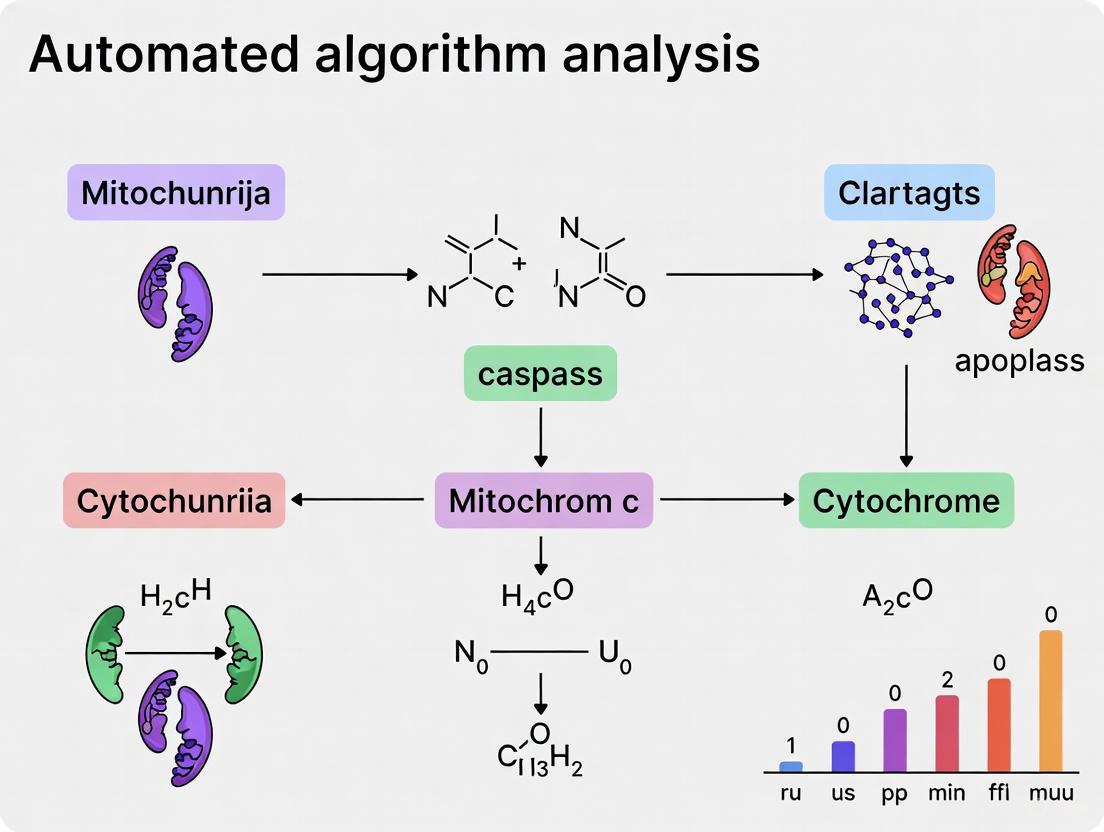
This article provides a comprehensive resource for researchers and drug development professionals on the implementation of automated algorithms for analyzing dynamic apoptotic event translocation.
Automated Algorithms for Apoptotic Biomarker Translocation Analysis: Advancing High-Throughput Drug Discovery
Abstract
This article provides a comprehensive resource for researchers and drug development professionals on the implementation of automated algorithms for analyzing dynamic apoptotic event translocation. It covers the foundational biology of intrinsic and extrinsic apoptosis pathways, explores the development and tunable parameters of vision-based algorithms like those implemented in MATLAB for robust single-cell or high-throughput analysis, and addresses common troubleshooting and optimization challenges to achieve high precision and sensitivity. Finally, it outlines rigorous validation protocols and comparative analyses with traditional methods, presenting a complete framework for integrating these automated systems into efficient drug screening workflows to accelerate therapeutic discovery.
Understanding Apoptotic Pathways and the Critical Role of Biomarker Translocation
Apoptosis, or programmed cell death, is a genetically programmed, ATP-dependent, enzyme-driven mechanism that eliminates cells deemed unnecessary or potentially harmful to the organism [1]. This process was first identified in the 1970s and plays an essential role in maintaining a balance with mitosis by regulating cell populations during development and preserving tissue homeostasis in adults [1]. The term "apoptosis" is derived from the Latin meaning "to fall off," analogous to a leaf falling from a tree, reflecting the natural, controlled nature of this cellular process [2].
Apoptosis is characterized by distinct morphological and biochemical features including cell shrinkage, chromatin condensation, membrane blebbing, DNA fragmentation, and the production of apoptotic bodies [3] [4]. Unlike necrosis, which triggers inflammation, apoptosis is an immunologically silent and non-lytic process where dying cells are quickly removed by phagocytes without causing damage to surrounding tissues [1]. This programmed cell death mechanism is crucial for various biological processes including tissue homeostasis, development, and regulation of the immune system [5].
Molecular Mechanisms of Apoptosis
Signaling Pathways
Apoptosis occurs through two main signaling pathways that converge on a common execution mechanism. The table below summarizes the key characteristics of these pathways:
Table 1: Key Apoptosis Signaling Pathways
| Pathway | Activators | Initiator Caspase | Key Regulatory Molecules | Cellular Events |
|---|---|---|---|---|
| Extrinsic | External death signals (e.g., Fas ligand, TNF-α) [1] | Caspase-8 [1] | Death receptors (Fas, TNFR1), FADD [5] | Death receptor trimerization, formation of death-inducing signaling complex (DISC) [5] |
| Intrinsic | Internal stress (DNA damage, hypoxia, chemotherapeutic agents) [1] | Caspase-9 [1] | Bcl-2 family proteins, cytochrome c, Apaf-1 [5] [1] | Mitochondrial membrane permeability, cytochrome c release, apoptosome formation [5] |
| Execution | Activated by both pathways [1] | Caspases-3, -6, -7 [1] | CAD (caspase-activated DNase) [4] | DNA fragmentation, nuclear envelope degradation, membrane blebbing [1] [4] |
Pathway Visualization
Detection Methods and Protocols
Quantitative Comparison of Apoptosis Detection Methods
Table 2: Apoptosis Detection Methods and Their Characteristics
| Method | Detection Principle | Stage Detected | Throughput | Sensitivity | Key Advantages |
|---|---|---|---|---|---|
| Annexin V/PI Staining [6] [7] | Phosphatidylserine exposure on cell membrane [7] | Early apoptosis [7] | High (flow cytometry) [7] | High [7] | Distinguishes live, early apoptotic, and late apoptotic/necrotic cells [6] |
| DNA Fragmentation Analysis [4] | Internucleosomal DNA cleavage [4] | Late apoptosis [4] | Low to medium [4] | Medium [4] | Characteristic ladder pattern provides definitive apoptosis confirmation [4] |
| Caspase Activity Assays [5] [1] | Caspase enzyme activation [1] | Mid-stage apoptosis [1] | Medium to high [5] | High [5] | Specific for apoptosis mechanism; various fluorogenic substrates available [5] |
| Cytochrome c Release [5] | Mitochondrial cytochrome c translocation [5] | Mid-stage apoptosis [5] | Medium [5] | High [5] | Specific for intrinsic pathway; can be monitored in live cells [5] |
| TUNEL Assay [1] | DNA strand break labeling [1] | Late apoptosis [1] | Medium [1] | Very high [1] | Highly sensitive; applicable to tissue sections [1] |
| Automated Algorithm Analysis [5] | Fluorescent signal translocation patterns [5] | Multiple stages [5] | Very high [5] | >85% sensitivity, >90% precision [5] | Enables live monitoring of dynamic apoptotic events without dyes [5] |
Detailed Experimental Protocols
Annexin V/FITC Apoptosis Detection Protocol
The Annexin V assay is a widely used method for early apoptosis detection due to its specificity and ease of use [7]. This protocol leverages the high affinity of Annexin V for phosphatidylserine, a hallmark of early apoptotic cells [7].
Table 3: Research Reagent Solutions for Annexin V Assay
| Reagent | Composition/Type | Function | Application Notes |
|---|---|---|---|
| Annexin V-FITC [7] | 35-36 kDa protein conjugated to fluorescein isothiocyanate [7] | Binds externalized phosphatidylserine on apoptotic cells [7] | Calcium-dependent binding; use fresh reagents [7] |
| Propidium Iodide (PI) [6] [7] | DNA intercalating dye [6] | Distinguishes late apoptotic/necrotic cells with compromised membranes [6] | Penetrates cells only when membrane integrity is lost [7] |
| Annexin V Binding Buffer [7] | Calcium-containing buffer [7] | Provides optimal conditions for Annexin V binding [7] | Critical for specific binding; precise concentration required [7] |
| Formaldehyde [7] | 2% solution [7] | Optional fixative for microscopy [7] | Cells must be stained before fixation [7] |
Protocol Steps [7]:
- Cell Preparation: Harvest 1-5 × 10⁵ cells by centrifugation. For adherent cells, gently trypsinize and wash with serum-containing media.
- Staining: Resuspend cells in 500 µL of 1X Annexin V binding buffer. Add 5 µL of Annexin V-FITC and 5 µL of propidium iodide (if desired).
- Incubation: Incubate at room temperature for 5 minutes in the dark to prevent fluorochrome bleaching.
- Analysis:
- For flow cytometry: Analyze using FITC signal detector (Ex = 488 nm, Em = 350 nm) and phycoerythrin emission signal detector for PI.
- For microscopy: Place cell suspension on glass slide, cover with coverslip, and observe with dual filter set for FITC and rhodamine.
- Annexin V⁻/PI⁻: Viable, non-apoptotic cells
- Annexin V⁺/PI⁻: Early apoptotic cells
- Annexin V⁺/PI⁺: Late apoptotic or necrotic cells
DNA Fragmentation Analysis Protocol
This protocol provides a reliable method for detecting DNA fragmentation, a hallmark of programmed cell death, through the characteristic ladder pattern formed by internucleosomal cleavage [4].
Protocol Steps [4]:
Cell Lysis:
- Pellet cells and lyse in 0.5 mL detergent buffer (10 mM Tris pH 7.4, 5 mM EDTA, 0.2% Triton X-100)
- Vortex and incubate on ice for 30 minutes
- Centrifuge at 27,000 × g for 30 minutes
DNA Precipitation:
- Divide supernatant into two 250 µL aliquots
- Add 50 µL ice-cold 5 M NaCl to each aliquot and vortex
- Add 600 µL ethanol and 150 µL 3 M sodium-acetate (pH 5.2)
- Incubate at -80°C for 1 hour
- Centrifuge at 20,000 × g for 20 minutes and discard supernatant
DNA Purification:
- Pool DNA extracts in 400 µL extraction buffer (10 mM Tris, 5 mM EDTA)
- Add 2 µL of 10 mg/mL DNase-free RNase and incubate for 5 hours at 37°C
- Add 25 µL proteinase K (20 mg/mL) and 40 µL buffer (100 mM Tris pH 8.0, 100 mM EDTA, 250 mM NaCl)
- Incubate overnight at 65°C
- Extract DNA with phenol/chloroform/isoamyl alcohol (25:24:1) and precipitate with ethanol
Gel Electrophoresis:
- Air-dry pellet and resuspend in 20 µL Tris-acetate EDTA buffer with 2 µL sample buffer (0.25% bromophenol blue, 30% glycerol)
- Separate DNA on 2% agarose gel containing 1 µg/mL ethidium bromide
- Visualize by ultraviolet transillumination
Expected Results: Apoptotic samples display a characteristic DNA ladder pattern with fragments approximately 200 base pairs in size, while necrotic cells show a DNA smear [4].
Automated Algorithm Analysis for Biomarker Translocation
Recent advances in apoptosis detection involve automated algorithms to analyze biomarker translocation in reporter cells, enabling high-throughput screening of dynamic apoptotic events [5].
Reporter Cell Line Development [5]:
- Cytochrome C-GFP Reporter: GFP tagging allows visualization of cytochrome c release from mitochondria without affecting biological kinetics
- Caspase-3 Reporter: Contains DEVD cleavage site bridging NES to NLS tagged to EYFP; cleavage allows EYFP transport to nucleus
- Caspase-8 Reporter: Contains IETD cleavage site with similar mechanism to caspase-3 reporter
Algorithm Implementation [5]: The automated algorithm forgoes simple image statistics for more robust analytics capable of identifying fluorescent signal translocation patterns. The workflow includes:
Key Advantages [5]:
- Enables live monitoring of apoptotic events without need for additional dyes or fixatives
- Uses single fluorophore, leaving room for other fluorophores in secondary assays
- Achieves precision >90% and sensitivity >85%
- Suitable for high-throughput drug screening workflows
Applications in Drug Development and Disease Research
Therapeutic Applications
Apoptosis research has significant implications for drug development, particularly in oncology. Researchers are investigating medications that can block apoptosis when it occurs excessively or stimulate it when needed [8]. For example:
- Cancer Therapy: Many chemotherapeutic agents induce apoptosis in cancer cells [1]. Drugs that block anti-apoptotic proteins (e.g., Bcl-2 inhibitors) allow apoptosis to occur in tumor cells [8].
- Neurodegenerative Diseases: In conditions like Alzheimer's, Parkinson's, and Huntington's disease, excessive apoptosis contributes to neuronal loss [2]. Therapeutic approaches aim to inhibit apoptosis in these contexts.
- Autoimmune Diseases: Defective apoptosis can lead to autoimmune disorders when self-reactive lymphocytes are not properly eliminated [8] [3].
High-Throughput Screening Applications
The development of automated algorithms for apoptosis detection has significant potential in high-throughput drug screening [5] [9]. These approaches allow for:
- Dynamic Monitoring: Real-time tracking of apoptotic events in response to potential therapeutic compounds
- Pathway Specificity: Identification of which apoptotic pathway (intrinsic or extrinsic) is activated by specific drugs
- Toxicology Assessment: Evaluation of compound safety by detecting unwanted apoptotic effects on healthy cells
- Personalized Medicine: Screening of patient-specific cells to identify most effective apoptosis-inducing therapies
Automated algorithms combined with reporter cell lines bearing single-color fluorophores are expected to become integral components in high-throughput drug screening workflows, addressing limitations of traditional methods that rely on proprietary software, manual procedures, or multiple fluorophores [5].
Apoptosis, or programmed cell death, is a genetically regulated process essential for embryonic development, tissue homeostasis, and the elimination of damaged or infected cells in multicellular organisms [10] [11]. The two primary apoptosis initiation pathways—the intrinsic (mitochondrial) pathway and the extrinsic (death receptor) pathway—activate caspase cascades that execute cell death through specific cleavage events, leading to characteristic morphological changes including cell shrinkage, chromatin condensation, DNA fragmentation, and formation of apoptotic bodies [12] [10] [11]. Dysregulation of these pathways contributes to numerous diseases, including cancer, autoimmune disorders, and neurodegenerative conditions, making them critical targets for therapeutic intervention and automated analysis in drug discovery research [10].
Molecular Mechanisms of the Intrinsic Pathway
The intrinsic apoptotic pathway, also known as the mitochondrial pathway, is primarily activated by intracellular stress signals such as DNA damage, oxidative stress, hypoxia, cytokine deprivation, and oncogene activation [12] [11]. These stimuli converge on mitochondria, triggering mitochondrial outer membrane permeabilization (MOMP), which represents a critical commitment point in the cell death process [12] [13].
Key Regulatory Proteins and Events
Cellular Stress Sensing: The tumor suppressor protein p53 serves as a critical sensor and mediator of cellular stress in the intrinsic pathway. Upon activation by stress signals, p53 functions as a transcription factor that induces expression of pro-apoptotic Bcl-2 family members such as Bax, Noxa, and PUMA, while repressing anti-apoptotic Bcl-2 proteins and cellular inhibitor of apoptosis proteins (cIAPs) [12].
Bcl-2 Family Dynamics: Proteins of the Bcl-2 family constitute the crucial regulatory checkpoint controlling MOMP. This family includes both pro-apoptotic (e.g., Bax, Bak, Bid, Bad, Bim, Puma, Noxa) and anti-apoptotic members (e.g., Bcl-2, Bcl-xL, Bcl-w, Mcl-1) [12] [14]. In response to apoptotic stimuli, activated BH3-only proteins (such as Bid, Bim) either directly activate Bax/Bak or neutralize anti-apoptotic Bcl-2 proteins, enabling Bax/Bak oligomerization and pore formation in the mitochondrial outer membrane [12] [14].
Mitochondrial Permeabilization and Factor Release: MOMP enables the release of several mitochondrial intermembrane space proteins into the cytosol, including cytochrome c, Smac/DIABLO, Omi/HtrA2, AIF, and EndoG [12] [15]. Cytochrome c binds to Apaf-1 and procaspase-9 in the presence of dATP/ATP to form the apoptosome complex, which activates caspase-9 [12] [11]. Simultaneously, Smac/DIABLO and Omi/HtrA2 promote caspase activation by neutralizing inhibitor of apoptosis proteins (IAPs) such as XIAP, cIAP1, and cIAP2 [12] [15].
Caspase Activation and Execution: Activated caspase-9 from the apoptosome cleaves and activates executioner caspases-3 and -7, which then systematically dismantle the cell by cleaving hundreds of cellular substrates, including structural proteins and DNA repair enzymes [12] [14]. Caspase-3 also activates the caspase-activated DNase (CAD) by cleaving its inhibitor ICAD, leading to internucleosomal DNA fragmentation, a hallmark of apoptosis [12].
Table 1: Key Components of the Intrinsic Apoptotic Pathway
| Component Category | Key Elements | Primary Function |
|---|---|---|
| Stress Sensors | p53, ATM, Chk2 | Detect DNA damage and cellular stress; initiate transcriptional responses |
| Pro-apoptotic Bcl-2 | Bax, Bak, Bid, Bim, Puma, Noxa | Promote MOMP; initiate cytochrome c release |
| Anti-apoptotic Bcl-2 | Bcl-2, Bcl-xL, Mcl-1 | Inhibit Bax/Bak activation; prevent MOMP |
| Mitochondrial Factors | Cytochrome c, Smac/DIABLO, Omi/HtrA2, AIF | Activate caspases; neutralize IAPs; promote DNA fragmentation |
| Apoptosome Components | Apaf-1, Caspase-9, Cytochrome c | Form activation platform for caspase-9 |
| Effector Caspases | Caspase-3, Caspase-7, Caspase-6 | Execute cell death via proteolytic cleavage of cellular substrates |
Molecular Mechanisms of the Extrinsic Pathway
The extrinsic apoptotic pathway is initiated by extracellular death ligands binding to cell surface death receptors (DRs) belonging to the tumor necrosis factor receptor (TNFR) superfamily [12] [11]. This pathway represents a critical mechanism for immune-mediated cell elimination and tissue homeostasis maintenance.
Death Receptor Activation and DISC Formation
Death Ligands and Receptors: Key death ligands include FasL (CD95L), TNF-α, TRAIL (Apo2L), and their corresponding receptors Fas (CD95/APO-1), TNFR1, DR4 (TRAIL-R1), and DR5 (TRAIL-R2) [12] [15]. These receptors characteristically contain a conserved intracellular protein interaction module known as the death domain (DD) [12].
Death-Inducing Signaling Complex (DISC) Assembly: Ligand binding induces receptor trimerization and recruitment of adaptor proteins including FADD (Fas-associated via death domain) and TRADD (TNFR1-associated death domain), which then recruits procaspase-8 (and in some cases procaspase-10) through interactions between death effector domains (DEDs) [12] [15]. This multi-protein complex, known as the DISC, serves as the activation platform for initiator caspases in the extrinsic pathway [12].
Caspase Activation Cascades: Within the DISC, procaspase-8 molecules undergo proximity-induced dimerization and autocatalytic activation [12] [15]. The activated caspase-8 then initiates apoptosis through two distinct mechanisms depending on cell type. In Type I cells, caspase-8 directly cleaves and activates executioner caspases-3 and -7 [15] [16]. In Type II cells, the apoptotic signal requires amplification through the mitochondrial pathway via caspase-8-mediated cleavage of the BH3-only protein Bid to generate truncated Bid (tBid), which translocates to mitochondria and induces MOMP [12] [15] [16].
Regulatory Mechanisms: The DISC is subject to tight regulation by several proteins. Cellular FLICE-inhibitory protein (c-FLIP) can bind to FADD and procaspase-8, inhibiting caspase-8 activation [12]. Additionally, certain decoy receptors (DcRs) that lack functional death domains can sequester death ligands, thereby modulating apoptotic signaling sensitivity [12].
Table 2: Key Components of the Extrinsic Apoptotic Pathway
| Component Category | Key Elements | Primary Function |
|---|---|---|
| Death Ligands | FasL, TNF-α, TRAIL | Activate death receptors by inducing trimerization |
| Death Receptors | Fas, TNFR1, DR4, DR5 | Transduce extracellular death signals intracellularly |
| Adaptor Proteins | FADD, TRADD | Bridge death receptors to initiator caspases |
| Initiator Caspases | Caspase-8, Caspase-10 | Initiate caspase cascade upon DISC recruitment |
| Regulatory Proteins | c-FLIP, Decoy Receptors | Modulate sensitivity to death receptor signaling |
| Bidirectional Signalers | Bid | Connect extrinsic and intrinsic pathways |
Pathway Integration and Crosstalk
Although the intrinsic and extrinsic pathways represent distinct initiation mechanisms, they exhibit significant crosstalk and converge on common executioner caspases [15]. The BH3-only protein Bid serves as the critical molecular link between these pathways, with caspase-8-mediated cleavage generating tBid, which then translocates to mitochondria to promote MOMP in Type II cells [12] [15] [16]. This amplification mechanism ensures robust apoptotic signaling even when direct caspase activation is insufficient.
The classification of cells as Type I or Type II reflects their differential reliance on mitochondrial amplification. Type I cells (e.g., thymocytes) exhibit strong DISC formation and sufficient caspase-8 activation to directly trigger executioner caspases without mitochondrial involvement [15] [16]. In contrast, Type II cells (including many tumor cells) require mitochondrial amplification through Bid cleavage and MOMP to achieve full caspase activation [15] [16]. This distinction has important implications for cancer therapy, as Type II cells may be resistant to death receptor-targeted therapies that fail to engage the mitochondrial pathway.
Beyond the core pathways, additional regulatory mechanisms influence apoptotic commitment. The PI3K/Akt pathway promotes cell survival by phosphorylating and inhibiting pro-apoptotic proteins like Bad, while NF-κB activation by complex I of TNFR1 signaling induces expression of anti-apoptotic genes including c-FLIP and cIAPs [12] [17]. Furthermore, recent evidence reveals sub-lethal apoptotic signaling through "minority MOMP," where limited mitochondrial permeabilization and caspase activation can drive inflammation, cellular differentiation, and genomic instability without triggering immediate cell death [13].
Experimental Protocols for Apoptosis Analysis
Protocol 1: Discriminating Intrinsic versus Extrinsic Pathway Activation
This protocol provides methodology for determining the primary apoptotic pathway activated in response to specific stimuli, essential for automated algorithm development in apoptotic event translocation research.
Materials:
- Cell culture system of interest
- Intrinsic pathway inducers: Staurosporine (1-5 μM), Etoposide (50-100 μM), UV irradiation (10-100 J/m²)
- Extrinsic pathway inducers: Recombinant TRAIL (50-100 ng/mL), Anti-Fas agonist antibody (100-500 ng/mL)
- Caspase inhibitors: Z-VAD-FMK (pan-caspase, 20-50 μM), Z-IETD-FMK (caspase-8, 20-50 μM), Z-LEHD-FMK (caspase-9, 20-50 μM)
- Lysis buffer for immunoblotting
- Antibodies: Anti-caspase-8, Anti-caspase-9, Anti-caspase-3, Anti-PARP, Anti-Bid, Anti-cytochrome c
Procedure:
- Experimental Setup: Seed cells in 6-well plates (3×10⁵ cells/well) and allow to adhere overnight. Pre-treat replicate wells with caspase inhibitors for 1 hour before apoptotic inducer treatment.
- Stimulation: Treat cells with intrinsic or extrinsic inducers for 2-16 hours (time-course dependent on cell type).
- Protein Extraction: Harvest cells at designated time points, lyse in appropriate buffer, and quantify protein concentration.
- Immunoblot Analysis: Separate proteins (20-50 μg) by SDS-PAGE, transfer to membranes, and probe with specific antibodies:
- Monitor caspase-8 processing (55/54 kDa → 43/41 kDa and 18 kDa fragments)
- Monitor caspase-9 processing (47 kDa → 35/37 kDa fragments)
- Monitor caspase-3 processing (35 kDa → 17/19 kDa fragments) and PARP cleavage (116 kDa → 89 kDa fragment)
- Assess Bid cleavage (22 kDa → 15 kDa tBid fragment)
- Cytochrome c Release Assay: Fractionate cells into cytosolic and mitochondrial fractions, then immunoblot for cytochrome c in cytosolic fractions.
- Data Interpretation: Extrinsic pathway activation demonstrates early caspase-8 processing preceding caspase-9 activation. Intrinsic pathway activation shows caspase-9 processing and cytochrome c release without early caspase-8 activation. Bid cleavage indicates cross-talk between pathways.
Protocol 2: Quantitative Assessment of Mitochondrial Outer Membrane Permeabilization (MOMP)
This protocol details quantitative methods for measuring MOMP, a pivotal event in intrinsic apoptosis and Type II extrinsic apoptosis, using imaging and biochemical approaches compatible with automated analysis platforms.
Materials:
- Cells stably expressing cytochrome c-GFP or Smac-GFP
- MitoTracker Red CMXRos (100-500 nM)
- Digitonin (0.005-0.05%) for selective membrane permeabilization
- Paraformaldehyde (4%) for fixation
- Anti-cytochrome c antibody (for non-transfected cells)
- TMRE (tetramethylrhodamine ethyl ester) for mitochondrial membrane potential assessment
- Image acquisition system with high-resolution fluorescence or confocal capabilities
Procedure:
- Cell Preparation: Seed cells expressing mitochondrial fluorescent markers on glass-bottom dishes or plates. For non-transfected cells, plate at appropriate density for subsequent immunostaining.
- Stimulation and Staining: Treat cells with apoptotic inducers. For live-cell imaging, maintain cells at 37°C with 5% CO₂. Add MitoTracker Red (100 nM) 30 minutes before imaging.
- Time-Lapse Imaging: Acquire images every 5-15 minutes for 2-16 hours post-stimulation using appropriate channels for GFP (cytochrome c/Smac) and RFP (MitoTracker). For fixed-time point analysis, process cells at specific intervals post-induction.
- Immunofluorescence (for endogenous proteins): At designated times, fix cells with 4% PFA for 15 minutes, permeabilize with 0.1-0.5% Triton X-100, block with 5% BSA, and incubate with anti-cytochrome c antibody (1:200-1:500) overnight at 4°C. Then incubate with appropriate fluorescent secondary antibody (1:500-1:1000) for 1 hour at room temperature.
- Image Analysis: Quantify the percentage of cells showing punctate (mitochondrial) versus diffuse (cytosolic) fluorescence patterns for cytochrome c or Smac. For automated algorithms, establish thresholding parameters for fluorescence distribution patterns.
- Mitochondrial Membrane Potential Assessment: In parallel experiments, load cells with TMRE (50-200 nM) for 20-30 minutes before imaging. Monitor fluorescence intensity decrease as indicator of mitochondrial depolarization.
- Data Quantification: Calculate MOMP kinetics by determining the time from stimulus addition to complete cytochrome c/Smac redistribution in individual cells. Correlate with caspase activation markers for pathway validation.
Visualization of Apoptotic Signaling Pathways
Diagram 1: Integrated Apoptotic Signaling Network. This diagram illustrates the molecular components and regulatory interactions of the intrinsic (green) and extrinsic (red) apoptotic pathways, their convergence on executioner caspases (blue), and key regulatory checkpoints. Pathway cross-talk occurs primarily through Bid cleavage, while inhibitor proteins (gray) provide negative regulation at multiple levels.
The Scientist's Toolkit: Research Reagent Solutions
Table 3: Essential Research Reagents for Apoptosis Analysis
| Reagent Category | Specific Examples | Research Application | Detection Methodology |
|---|---|---|---|
| Caspase Activity Assays | Fluorogenic substrates (DEVD-AFC for caspase-3, IETD-AFC for caspase-8, LEHD-AFC for caspase-9), Caspase-Glo assays | Quantitative measurement of caspase activation kinetics; pathway-specific activity profiling | Fluorometry, Luminescence |
| MOMP Detection Reagents | Cytochrome c-GFP constructs, MitoTracker dyes, TMRE, JC-1 | Dynamic visualization of mitochondrial permeability transitions; membrane potential quantification | Live-cell imaging, Flow cytometry, Fluorescence microscopy |
| Death Receptor Agonists | Recombinant TRAIL, Anti-Fas agonist antibodies (CH11), TNF-α | Specific activation of extrinsic apoptotic pathway; Type I/Type II cell discrimination | Cell viability assays, Immunoblotting |
| Pathway-Specific Inducers | Staurosporine, Etoposide, UV irradiation, Actinomycin D | Selective activation of intrinsic apoptotic pathway; stress response studies | Cell viability assays, Immunoblotting |
| Apoptosis Inhibitors | Z-VAD-FMK (pan-caspase), Q-VD-OPh, Bcl-2 inhibitors (Venetoclax), cIAP antagonists | Pathway validation; therapeutic target assessment | Rescue experiments, Dose-response studies |
| Antibody-Based Detection | Anti-cleaved caspase-3, Anti-cleaved PARP, Anti-cytochrome c, Anti-Bid, Phospho-specific antibodies | Specific detection of apoptotic markers; pathway activation assessment | Immunoblotting, Immunofluorescence, Flow cytometry |
| Membrane Alteration Markers | Annexin V conjugates, Propidium iodide, 7-AAD | Early/late apoptosis discrimination; membrane asymmetry changes | Flow cytometry, Fluorescence microscopy |
| DNA Fragmentation Assays | TUNEL assay kits, DNA laddering detection | Late-stage apoptosis confirmation; nuclear fragmentation analysis | Fluorescence microscopy, Gel electrophoresis |
Implications for Automated Algorithm Development in Apoptosis Research
The quantitative analysis of apoptotic signaling pathways presents unique challenges and opportunities for automated algorithm development. The complex spatiotemporal dynamics of protein translocations—particularly cytochrome c release from mitochondria, caspase activation cascades, and Bid cleavage—require sophisticated image analysis pipelines capable of tracking multiple molecular events simultaneously.
For automated analysis of apoptotic event translocations, researchers should prioritize algorithms that can:
- Discriminate between punctate (mitochondrial) and diffuse (cytosolic/nuclear) fluorescence patterns for pathway-specific markers
- Quantify kinetics of protein translocations with single-cell resolution to identify heterogeneous responses within populations
- Integrate data from multiple pathway nodes to classify cells based on specific pathway activation patterns
- Correlate early apoptotic events (e.g., phosphatidylserine exposure) with late execution phases (e.g., nuclear fragmentation)
The experimental protocols and reagent solutions detailed in this Application Note provide a foundation for generating standardized datasets necessary for training and validating such automated analysis platforms, ultimately accelerating drug discovery and functional genomics research in apoptosis.
Programmed cell death, or apoptosis, is a fundamental cellular process critical for maintaining tissue homeostasis and eliminating damaged or dangerous cells. At the heart of the intrinsic apoptotic pathway lie two crucial, interconnected translocation events: the release of cytochrome c from the mitochondrial intermembrane space into the cytosol, and the subsequent activation of caspase proteases. These events represent a commitment to cell death and are tightly regulated by the Bcl-2 family of proteins [18] [19]. The release of cytochrome c serves as a decisive molecular switch that transitions a cell from survival to destruction. Once in the cytosol, cytochrome c nucleates the formation of the apoptosome complex, which activates initiator caspase-9, leading to a proteolytic cascade that executes cell death [19] [20]. Understanding the mechanisms, regulation, and detection of these events is paramount for both basic biological research and the development of novel therapeutics for cancer, neurodegenerative disorders, and other diseases.
This application note details the experimental methodologies for investigating these key translocation events, framed within the context of automated algorithm analysis for apoptotic event research. We provide comprehensive protocols for assaying cytochrome c release, summarize quantitative data on release kinetics, and visualize the core apoptotic signaling pathways. Furthermore, we outline essential reagents and computational tools that form the foundation of a modern approach to studying programmed cell death.
Molecular Mechanisms and Signaling Pathways
Cytochrome c Release from Mitochondria
Cytochrome c is a vital component of the mitochondrial electron transport chain, normally localized in the intermembrane space where it is loosely associated with the inner mitochondrial membrane via cardiolipin, a phospholipid unique to mitochondria [20]. During apoptosis, pro-death Bcl-2 family proteins such as Bax and Bak oligomerize to form pores in the outer mitochondrial membrane (OMM) [18] [20]. This process is often facilitated by activated, truncated Bid (tBid), which targets mitochondria following death receptor engagement [20]. The current model suggests that cytochrome c release is a multi-step process involving its detachment from cardiolipin followed by translocation through OMM pores.
A critical insight is that cytochrome c release is a controlled process that can, under certain conditions, be reversed. Seminal work on sympathetic neurons demonstrated that although cytochrome c is released upon NGF deprivation, the mitochondria remain structurally intact. Upon re-addition of NGF, these mitochondria can re-accumulate cytochrome c in a process requiring de novo protein synthesis, suggesting the potential for recovery from an apoptotic insult [18]. The release itself can occur without mitochondrial swelling, indicating that passive rupture due to permeability transition is not always required [18]. In mitochondria, an estimated 85% of cytochrome c is tightly bound to cardiolipin on the inner membrane, while the remainder exists in a free or loosely-bound state within the intermembrane space [20]. The oxidation of the cytochrome c-cardiolipin complex by reactive oxygen species like H₂O₂ is a key step in liberating the bound fraction, making it available for release [20].
Caspase Activation Cascade
Caspases are a family of cysteine-dependent aspartate-specific proteases that serve as the primary executioners of apoptosis. They are synthesized as inactive zymogens (procaspases) and become activated through specific cleavage and/or dimerization events [19] [21]. The apoptotic caspases are categorized based on their function in the signaling hierarchy.
Initiator caspases (caspase-8, -9, -10, and -2) possess long prodomains and are activated by induced proximity dimerization upon recruitment to specific adapter protein complexes [19] [21]. For example, cytosolic cytochrome c binds to Apaf-1, triggering the formation of a heptameric complex called the apoptosome, which then recruits and activates caspase-9 [19]. Conversely, death receptor ligation leads to the formation of the Death-Inducing Signaling Complex (DISC), which activates caspase-8 [19]. A key regulatory concept is that cleavage of initiator caspases is not the activating event but rather serves to stabilize the active dimer [21].
Effector caspases (caspase-3, -6, and -7), which carry out the dismantling of the cell by cleaving hundreds of cellular substrates, exist as inactive dimers in the cell. They are activated by cleavage at specific aspartate residues between their large and small subunits, an event primarily catalyzed by active initiator caspases [21]. This cleavage allows the catalytic sites to snap into their active conformations, unleashing their proteolytic activity on cellular targets [21].
The pathway diagram below illustrates the logical relationships and sequence of these key events in the intrinsic apoptotic pathway.
Experimental Protocols and Methodologies
Protocol: Subcellular Fractionation for Cytochrome c Release
This protocol allows for the quantitative assessment of cytochrome c translocation from the mitochondria to the cytosol by Western blotting, adapted from Martinou et al. (1999) [18].
Step 1: Cell Harvesting and Homogenization
- Harvest approximately 2 × 10⁵ cells (e.g., sympathetic neurons or other cell lines of interest) in 100 µL of ice-cold isotonic buffer (210 mM mannitol, 70 mM sucrose, 1 mM EDTA, 10 mM HEPES, pH 7.5) supplemented with a protease inhibitor cocktail.
- Gently homogenize the cell suspension using a Dounce homogenizer (20-30 strokes). Confirm cell rupture (>90%) by microscopy using Trypan Blue staining.
Step 2: Differential Centrifugation
- Transfer the homogenate to a microcentrifuge tube and centrifuge at 900 × g for 5 minutes at 4°C to pellet nuclei and unbroken cells.
- Carefully transfer the supernatant (post-nuclear fraction) to a new tube.
- Centrifuge the supernatant at 10,000 × g for 30 minutes at 4°C. The resulting pellet represents the heavy membrane (HM) fraction, enriched with mitochondria.
- The supernatant from this step is the soluble cytosolic fraction (S-100).
Step 3: Protein Quantitation and Western Blotting
- Resuspend the HM pellet in 20 µL of PBS containing 0.2% Triton X-100.
- Determine the protein concentration of both the HM and cytosolic fractions using the Bradford assay.
- Load equal protein amounts (e.g., 5 µg for HM, 8 µg for cytosolic fraction) onto an SDS-PAGE gel.
- Perform Western blotting using anti-cytochrome c antibodies. Monitor fraction purity by probing for compartment-specific markers (e.g., COX IV for mitochondria, α-tubulin for cytosol).
Troubleshooting Note: Incomplete homogenization will lead to an underestimation of cytochrome c release. Over-homogenization can damage mitochondria, causing artifactual release. Optimization of homogenization intensity and validation of fraction purity are critical.
Protocol: Quantitative Assay for Cytochrome c Release
While subcellular fractionation is common, it can be difficult to quantitate the percentage of cells with released cytochrome c. Waterhouse and Trapani (2003) describe an adapted immunocytochemistry protocol for this purpose [22].
Step 1: Cell Fixation and Permeabilization
- Culture cells on glass coverslips.
- After treatment, wash cells with PBS and fix with 4% paraformaldehyde in PBS for 15 minutes at room temperature.
- Wash fixed cells with PBS and permeabilize with 0.2% Triton X-100 in PBS for 10 minutes.
Step 2: Immunostaining
- Block cells with 5% normal goat serum in PBS for 1 hour.
- Incubate with an anti-cytochrome c monoclonal antibody (diluted in blocking serum) for 2 hours at room temperature or overnight at 4°C.
- Wash thoroughly with PBS and incubate with a fluorophore-conjugated secondary antibody for 1 hour.
Step 3: Analysis and Quantification
- Visualize using fluorescence microscopy. Healthy cells display a punctate, mitochondrial staining pattern. Cells that have undergone cytochrome c release show a diffuse, cytosolic pattern.
- Count at least 200 cells per condition to determine the percentage of cells with cytosolic cytochrome c. This can be automated using image analysis software to enhance throughput and objectivity [22] [23].
Protocol: Automated Detection of Apoptosis via Apoptotic Bodies
Modern, label-free approaches leverage computer vision to detect apoptosis based on morphological changes. The following workflow is based on the method described by Wu et al. (2023) [23].
Step 1: Image Acquisition
- Acquire time-lapse bright-field (phase-contrast) images of cells (e.g., in nanowell arrays) every 5 minutes using an automated microscope.
Step 2: Apoptotic Body Detection with Deep Learning
- Process image sequences using a pre-trained convolutional neural network (CNN), such as a ResNet50 architecture, to identify frames containing apoptotic bodies (ApoBDs). These are membrane-bound vesicles (0.5–2.0 µm in diameter) released during apoptotic cell disassembly.
- The network is trained to detect these subtle, label-free visual cues with high accuracy (reported at 92%).
Step 3: Determination of Apoptosis Onset
- Apply a temporal constraint to filter noise. The onset of apoptosis is assigned to the first frame of a sequence where ApoBDs are detected in three consecutive frames. This method has been shown to detect apoptosis events earlier and with high sensitivity (70% of which were not detected by concurrent Annexin-V staining) [23].
Data Presentation and Analysis
Quantitative Data on Cytochrome c Release Kinetics
Mathematical modeling and experimental studies have provided key quantitative parameters for the process of cytochrome c release. The following table summarizes critical data points for researchers to reference when designing experiments or building predictive models.
Table 1: Key Quantitative Parameters of Cytochrome c Release
| Parameter | Value | Experimental Context / Significance |
|---|---|---|
| Bound Cytochrome c Fraction | ~85% of total [20] | Tightly bound to cardiolipin on the inner mitochondrial membrane; requires oxidation for liberation. |
| Free Cytochrome c Fraction | ~15% of total [20] | Free or loosely-bound in the intermembrane space; more readily released. |
| Crista Junction Diameter (Normal) | 18.6 ± 2.5 nm [20] | The narrow tubular connections between cristae and the intermembrane space. |
| Crista Junction Diameter (Post-tBid) | 56.6 ± 7.7 nm [20] | tBid can induce cristae remodelling, widening the junctions. Modeling suggests this has a negligible effect on the rate of cytochrome c transport, which is diffusion-limited [20]. |
| Diffusivity of Cytochrome c | 10⁻⁶ cm²/s [20] | The diffusion coefficient within the mitochondrial intermembrane space. |
| Onset of Cytochrome c Release | 8-15 hours [18] | Observed in NGF-deprived sympathetic neurons. Timing is cell type and stimulus-dependent. |
A curated collection of key reagents, tools, and models used in the study of cytochrome c release and caspase activation is provided below to assist in experimental planning.
Table 2: Essential Research Tools for Apoptosis Translocation Studies
| Reagent / Tool | Function / Application | Specific Example |
|---|---|---|
| Boc-aspartyl(Ome)-fluoromethylketone (BAF) | Broad-spectrum, cell-permeable caspase inhibitor. Used to block apoptotic execution and study reversible cytochrome c release events [18]. | Rescues NGF-deprived sympathetic neurons, allowing mitochondrial recovery upon NGF re-addition [18]. |
| Recombinant tBid / Bax Protein | Directly induce mitochondrial outer membrane permeabilization (MOMP) and cytochrome c release in in vitro or cell-based systems. | Used in isolated mitochondrial assays to study pore formation and cytochrome c release kinetics [20]. |
| Anti-Cytochrome c Antibody | Detect subcellular localization of cytochrome c via Western blotting (after fractionation) or immunocytochemistry. | Monoclonal antibody (e.g., from PharMingen) used to distinguish punctate (mitochondrial) vs. diffuse (cytosolic) staining [18] [22]. |
| Iso tonic Homogenization Buffer | Maintain mitochondrial integrity during cell fractionation, preventing artifactual release of cytochrome c. | 210 mM mannitol, 70 mM sucrose, 1 mM EDTA, 10 mM HEPES, pH 7.5 [18]. |
| Convolutional Neural Network (CNN) Models | Automated, label-free detection of apoptosis and apoptotic bodies in time-lapse imaging data. | ResNet50 model trained to identify ApoBDs with 92% accuracy, predicting apoptosis onset with high temporal resolution [23]. |
| Granzyme B | Serine protease from cytotoxic lymphocytes that can directly cleave and activate effector caspases (e.g., caspase-3), bypassing the intrinsic pathway initiators [21]. | Used to study death receptor-independent apoptosis and the final common pathway of caspase execution. |
Visualization of Caspase Activation
The activation of caspases is a cascade of sequential proteolytic events. The diagram below details the specific mechanisms for both initiator and effector caspases, highlighting the critical difference between activation by dimerization versus cleavage.
Application Notes & Protocols
For Automated Algorithm Analysis in Apoptotic Event Translocation Research
The translocation of phosphatidylserine (PS) from the inner to the outer leaflet of the plasma membrane is a fundamental event in apoptosis, serving as a critical "eat-me" signal for phagocytic cells. While traditionally viewed as a consequence of caspase-mediated apoptosis, emerging research reveals PS externalization as a complex membrane translocation event regulated by specific lipid transport machinery and occurring in various physiological and pathological contexts beyond classical apoptosis. This protocol details methodologies for investigating PS externalization as a dynamic membrane translocation process, with particular emphasis on integration with automated algorithm analysis for high-throughput apoptotic event screening in drug discovery applications. The framework supports the broader thesis that advanced computational analysis of biomarker translocation can accelerate therapeutic development by providing robust, quantitative metrics of cell death mechanisms.
Background and Significance
2.1 Phospholipid Asymmetry and Its Regulation In viable eukaryotic cells, membrane phospholipid asymmetry is strictly maintained, with anionic phosphatidylserine (PS) predominantly restricted to the inner leaflet of the plasma membrane. This topological organization creates a more negatively charged cytosolic membrane surface that serves as a scaffold for intracellular signaling proteins including c-Src, Ras, Raf, Akt, PDK1, and various PKC isoforms [24]. The maintenance of PS asymmetry is dynamically regulated by three primary classes of lipid transport enzymes: (1) P4-ATPase flippases that catalyze ATP-dependent transfer of PS toward the cytosolic leaflet; (2) scramblases (including Xkr8 and TMEM16F) that facilitate bidirectional, ATP-independent movement of PS between membrane leaflets; and (3) floppases (ABC transporters) that mediate ATP-dependent transport away from the cytosol [24].
2.2 PS Externalization as a Regulated Translocation Event During apoptosis, PS externalization occurs through a coordinated process involving caspase-mediated proteolytic activation of scramblases and simultaneous inactivation of flippases. Specifically, caspases cleave and activate Xkr8 scramblase while proteolytically inactivating ATP11A and ATP11C flippases, thereby irreversibly establishing PS on the outer membrane leaflet [24]. However, PS externalization is not exclusive to apoptosis; it also occurs reversibly during cell activation and persistently in pathological states such as cancer, where it facilitates immune evasion [24]. This diversity of contexts positions PS externalization as a versatile membrane translocation event with significant implications for both basic cell biology and therapeutic development.
Experimental Protocols
3.1 Protocol 1: Detection and Quantification of PS Externalization Using Annexin V
Principle: Annexin V binds with high affinity to externalized PS in a calcium-dependent manner, allowing fluorescence-based detection.
Materials:
- Fluorescently labeled Annexin V (FITC, PE, or Alexa Fluor conjugates)
- Binding buffer: 10 mM HEPES (pH 7.5), 140 mM NaCl, 2.5 mM CaCl₂
- Propidium iodide or 7-AAD for viability staining
- Appropriate cell culture reagents
- Apoptosis-inducing agents (e.g., actinomycin D, staurosporine)
- Flow cytometer or fluorescence microscope
Procedure:
- Induce apoptosis in target cells (e.g., 1-5 μM staurosporine for 4-6 hours) [9].
- Harvest cells by gentle trypsinization or non-enzymatic dissociation.
- Wash cells twice with cold PBS and resuspend in binding buffer at 1×10⁶ cells/mL.
- Add fluorescent Annexin V (per manufacturer's recommended concentration) and viability dye.
- Incubate for 20 minutes at 4°C in the dark [25].
- Analyze by flow cytometry within 1 hour or fix cells for microscopy.
- For microscopy, plate cells on coverslips, induce apoptosis, then stain with Annexin V and fix with 10% neutral formalin [25].
Data Analysis:
- Flow cytometry: Determine percentage of Annexin V-positive/PI-negative (early apoptotic) and Annexin V-positive/PI-positive (late apoptotic/necrotic) populations.
- Automated image analysis: Implement algorithms to quantify fluorescence translocation to cell surface.
3.2 Protocol 2: Dissociation of PS Externalization from Apoptosis Using Constitutive PS-Externalizing Cell Lines
Principle: Certain engineered cell lines externalize PS constitutively, independent of apoptosis, allowing researchers to distinguish PS externalization from other apoptotic events.
Materials:
- Parental cell line (e.g., W3-I1dm murine T cells)
- Derived constitutive PS-externalizing cell line
- Apoptosis-inducing agents (e.g., actinomycin D)
- Annexin V labeling reagents as in Protocol 1
- Caspase inhibitor (e.g., Q-VD-OPh)
Procedure:
- Culture parental and constitutive PS-externalizing cell lines under identical conditions.
- Treat parental cells with apoptosis-inducing agent (e.g., actinomycin D).
- Treat parallel samples with caspase inhibitor (e.g., 20 μM Q-VD-OPh) to confirm caspase-dependence [26].
- Perform Annexin V staining as described in Protocol 1.
- Analyze by flow cytometry or fluorescence microscopy.
- Compare PS externalization patterns between apoptotic parental cells and constitutive PS-externalizing cells.
Data Interpretation:
- Constitutive PS externalizers demonstrate that PS exposure alone is insufficient for full apoptotic immunomodulation [26].
- This approach validates that PS externalization represents a distinct translocation event separable from other apoptotic processes.
3.3 Protocol 3: Automated Algorithm Analysis of PS Translocation
Principle: Computer vision algorithms can robustly quantify dynamic PS translocation events in live cells, enabling high-throughput screening.
Materials:
- PS translocation reporter cell lines
- Live-cell imaging compatible plates
- High-content imaging system with environmental control
- MATLAB or similar analytical software
- Optimization reagents for algorithm validation
Procedure:
- Implement reporter systems that signal PS externalization (e.g., PS-binding domains coupled to fluorescent proteins).
- Seed cells in imaging plates and treat with experimental compounds.
- Acquire time-lapse images at appropriate intervals (e.g., every 15-30 minutes).
- Apply automated algorithm with the following processing steps:
- Cell segmentation using membrane markers
- Background subtraction and signal normalization
- Fluorescence translocation quantification from cytosol to membrane
- Classification of translocation events using machine learning
- Validate algorithm performance against manual scoring.
- Output quantitative metrics including translocation kinetics, percentage of responding cells, and signal intensity ratios.
Algorithm Optimization:
- Train algorithms to achieve >90% precision and >85% sensitivity [9].
- Implement robust analytics that surpass simple image statistics through advanced pattern recognition.
Quantitative Data Analysis
Table 1: Quantitative Profiles of PS Externalization Across Cellular Contexts
| Cell Type/Context | Externalization Trigger | Time Course | % PS Positive Cells | Caspase Dependence | Key Regulatory Proteins |
|---|---|---|---|---|---|
| Apoptotic cells | Staurosporine (1-5 μM) | 4-6 hours | 60-80% [9] | Yes [24] | Caspase-3, Xkr8, ATP11A/C |
| Constitutive PS externalizers | Genetic modification | Constitutive | 40-60% [26] | No [26] | Modified flippases/scramblases |
| Stressed cells (FGF1 export) | Heat shock/oxidative stress | 30-90 min | 20-40% [25] | Variable | PLSCR1, calcium flux |
| Cancer cells (immune evasion) | Oncogenic stress | Persistent | 15-50% [24] | No [24] | TMEM16F, altered flippases |
| Activated platelets | Physiological activation | Minutes | 10-30% | No [24] | TMEM16F, calcium flux |
Table 2: Research Reagent Solutions for PS Externalization Studies
| Reagent/Category | Specific Examples | Function/Application | Key Features |
|---|---|---|---|
| PS Detection Agents | Fluorescent Annexin V | PS binding and quantification | Calcium-dependent, widely validated |
| Bavituximab (chimeric Ab) | PS targeting for therapy/research | Binds PS via β2GP1 cofactor [25] | |
| Betabodies (fusion proteins) | High-affinity PS targeting | β2GP1 domain V-Fc fusion, ~1nM affinity [27] | |
| Cell Lines/Models | Constitutive PS externalizers | Dissociate PS exposure from apoptosis | Uncouples PS from cell death [26] |
| Apoptosis reporter cells | Caspase activity monitoring | Express fluorescent caspase substrates [9] | |
| Inhibitors/Modulators | Caspase inhibitors (Q-VD-OPh) | Caspase activity blockade | Validates caspase-dependent PS externalization [26] |
| Calcium chelators (EGTA/BAPTA) | Calcium signaling inhibition | Blocks calcium-dependent scramblase activity [25] | |
| Algorithmic Tools | MATLAB-based translocation algorithms | Automated image analysis | Quantifies signal translocation patterns [9] |
| Machine learning classifiers | Cell state identification | Distinguishes apoptosis from other PS exposure |
Signaling Pathway Visualization
Discussion and Applications
The experimental approaches outlined herein position PS externalization as a dynamic membrane translocation event that can be systematically investigated using both classical biochemical techniques and emerging computational methodologies. The integration of automated algorithm analysis addresses critical bottlenecks in high-throughput screening by providing robust, quantitative analysis of spatial fluorescent signal translocation patterns without dependence on simple image statistics [9].
In drug discovery applications, these protocols enable distinction between desired on-target apoptotic effects and off-target PS externalization, which is particularly relevant for kinase inhibitors and other targeted therapies. Furthermore, the recognition that PS externalization occurs in both apoptotic and non-apoptotic contexts [24] [26] underscores the importance of comprehensive assessment in therapeutic development. The tools and methodologies described facilitate the identification of compounds that specifically modulate PS translocation pathways for therapeutic benefit, such as in cancer immunotherapy where PS targeting agents like bavituximab and novel betabodies are showing promise for reversing immune suppression in the tumor microenvironment [25] [27].
Future directions in this field will likely involve increased integration of machine learning approaches for multi-parametric analysis of PS externalization in conjunction with other apoptotic markers, enabling more precise classification of cell death mechanisms and enhanced predictive value in preclinical drug screening.
In apoptotic research, the point at which a cell irreversibly commits to death is a fundamental biological event. This "point of no return" is not an abstract concept but is frequently defined by the compartmental translocation of key protein biomarkers from one subcellular location to another [28]. Monitoring the movement of proteins such as cytochrome c (from mitochondria to cytosol) or the activation-associated redistribution of caspases provides a direct, visual readout of commitment to the apoptotic cascade [9]. This Application Note details how quantifying these translocation events, particularly through automated algorithm-based analysis, offers researchers a robust and high-throughput methodology for investigating cell death mechanisms and screening potential therapeutic compounds.
The Role of Translocation in Apoptotic Commitment
The Point of No Return: Mitochondrial Outer Membrane Permeabilization (MOMP)
The irreversible decision to die in apoptosis is commonly held to be the moment of Mitochondrial Outer Membrane Permeabilization (MOMP) [28]. MOMP is a decisive event regulated by the Bcl-2 family of proteins, where the balance of pro- and anti-apoptotic members determines the cell's fate. Following MOMP, cytochrome c is released from the mitochondrial intermembrane space into the cytosol [1]. This translocation is rapid, complete, and kinetically invariant, marking a committed step in the cell death pathway [28]. The released cytochrome c then binds to APAF-1, forming the "apoptosome" and triggering the activation of the initiator caspase, caspase-9, which in turn activates effector caspases like caspase-3 [1].
Key Translocation Events as Apoptotic Reporters
The following table summarizes the critical translocation events that serve as primary readouts for apoptotic commitment.
Table 1: Key Biomarker Translocation Events in Apoptosis
| Biomarker | Origin | Destination | Associated Pathway | Significance |
|---|---|---|---|---|
| Cytochrome c | Mitochondrial intermembrane space | Cytosol | Intrinsic | Marks MOMP; activates caspase-9 via apoptosome formation [1] [28]. |
| Caspase-3 | Inactive cytosolic zymogen | Active enzyme at specific subcellular sites | Execution (Both Intrinsic & Extrinsic) | Key effector caspase; cleavage of cellular targets [1] [9]. |
| Caspase-8 | Inactive cytosolic zymogen | Active enzyme complex (DISC) | Extrinsic | Key initiator caspase in death receptor-mediated pathways [1] [9]. |
| Bax/Bak | Cytosol / Mitochondria | Mitochondrial membrane (forming oligomers) | Intrinsic | Pro-apoptotic Bcl-2 proteins that directly mediate MOMP [28]. |
The spatial fluorescent signal translocation patterns of these biomarkers, especially cytochrome c and the caspases, serve as robust reporters for the activation of specific apoptotic events [9].
Automated Algorithm for Apoptotic Translocation Analysis
Protocol: Automated Analysis of Biomarker Translocation
This protocol outlines the use of a vision-based, tunable automated algorithm implemented in MATLAB for the quantitative analysis of fluorescent signal translocation in reporter cell lines.
I. Materials and Reagents
Table 2: Research Reagent Solutions for Translocation Assays
| Reagent / Tool | Function / Description | Application in Protocol |
|---|---|---|
| Cytochrome c Reporter Cell Line | Engineered cells (e.g., PC9, T47D) where fluorescent protein serves as a reporter for Cyt-C release. | Enables live monitoring of Cyt-C release without need for fixation or additional dyes [9]. |
| Caspase-3/-8 Reporter Cell Line | Engineered cells with fluorescent reporters for caspase-3/-8 activation. | Allows live, real-time imaging of caspase activation dynamics [9]. |
| Staurosporine (STS) | A broad-spectrum protein kinase inhibitor; common apoptotic inducer. | Used at 200 nM for 12 hours to induce apoptosis in experimental setups [29]. |
| Fluorescence Microscope | Equipped for live-cell imaging and high-throughput screening. | For acquiring time-lapse or endpoint images of reporter cells. |
| MATLAB Software | With Image Processing Toolbox. | Platform for running the custom automated translocation analysis algorithm [9]. |
II. Experimental Procedure
Cell Seeding and Treatment:
- Seed appropriate cytochrome c or caspase reporter cell lines (e.g., lung PC9 or breast T47D) into multi-well plates suitable for high-throughput imaging [9].
- Allow cells to adhere and reach desired confluency (e.g., 60-70%).
- Treat cells with the experimental apoptotic stimulus (e.g., 200 nM staurosporine) or vehicle control. Incubate for the required duration.
Image Acquisition:
- Using a fluorescence microscope, acquire images of the reporter cells at relevant time points post-treatment. For live monitoring, use a time-lapse setup.
- Ensure consistent imaging parameters (exposure time, gain, etc.) across all experimental conditions.
Algorithmic Analysis (MATLAB):
- Input: Load the fluorescence microscopy images.
- Cell Segmentation: The algorithm identifies and segments individual cells or multiple cells within the image field.
- Signal Translocation Analysis: The algorithm forgoes simple image statistics. Instead, it robustly analyzes the spatial fluorescent signal pattern within each segmented cell. For cytochrome c, this involves quantifying the shift from a punctate (mitochondrial) pattern to a diffuse (cytosolic) pattern. For caspases, it detects the activation-associated change in subcellular localization.
- Output Quantification: The algorithm outputs a quantitative score for the degree of translocation or activation for each cell, allowing for statistical comparison between conditions.
III. Performance Metrics
The optimized algorithm can achieve a precision greater than 90% and a sensitivity higher than 85% in identifying apoptotic events based on translocation, making it suitable for high-throughput screening workflows [9].
Apoptotic Signaling Pathways and Workflow
The following diagrams, generated using Graphviz DOT language, illustrate the core signaling pathways and the experimental workflow described in this note.
Apoptotic Commitment Signaling Pathways
Translocation Assay Workflow
The translocation of key proteins like cytochrome c and effector caspases provides a definitive, spatially resolved signature of a cell's commitment to apoptosis. The integration of engineered reporter cell lines with robust, automated algorithms for image analysis transforms this biological phenomenon into a quantifiable, high-throughput readout. This approach provides researchers and drug development professionals with a powerful tool for dissecting cell death pathways and identifying novel modulators of apoptosis for therapeutic benefit.
Building and Implementing Vision-Based Algorithms for Automated Translocation Analysis
The transition from population-level, end-point biochemical assays to single-cell, dynamic analyses represents a paradigm shift in cell biology. This is particularly true in apoptosis research, where the sequence of molecular events is highly heterogeneous and transient. The engineering of single-fluorophore reporter cell lines provides a powerful tool for visualizing these processes in live cells, enabling the application of automated algorithms to analyze the translocation of key apoptotic biomarkers. This approach moves beyond traditional snapshot methods to capture the precise spatiotemporal dynamics of cell death, offering unprecedented insights for drug discovery and basic biological research. By integrating molecular biology, microscopy, and computational analysis, researchers can now decode the complex signaling networks governing programmed cell death with high precision in physiologically relevant models.
Reporter System Engineering and Design Principles
Core Design Considerations for Fluorescent Fusion Proteins
The engineering of physiologically relevant reporter systems requires careful consideration of multiple factors to ensure that the fluorescent fusion protein accurately reports on endogenous protein behavior without perturbing the native molecular network.
Expression Level Control: Traditional strong promoters (e.g., CMV) often lead to non-physiological overexpression that can rewire regulatory networks due to nonlinear interactions and feedback loops. Systems biology studies require expression levels comparable to the native protein, achievable through the use of endogenous promoters, BAC transgenesis, or knock-in strategies. Expression levels should be validated via snapshot single-cell measurements (e.g., immunofluorescence) or population-level western blots comparing transgene and endogenous protein levels [30].
Regulatory Element Preservation: For stimulus-responsive systems, constitutive promoters fail to capture critical regulatory dynamics. The fluorescent transgene should include native promoter elements and upstream regulatory sequences that confer appropriate responsiveness to the relevant apoptotic stimuli. BAC-based constructs and genome-editing knock-in approaches are preferred as they more closely mimic natural gene regulation [30].
Fluorophore Positioning and Functionality: The fusion protein must preserve the subcellular localization, oligomerization, degradation, and interaction profiles of the native protein. Fluorophores can themselves form oligomers, potentially inducing artifactual clustering. Using structural knowledge, the fluorophore should be positioned away from critical functional domains. Each key property of the fusion protein requires empirical confirmation against the endogenous protein's behavior [30].
Apoptosis Reporter Construct Design Strategies
Reporter cells for apoptosis detection leverage the characteristic translocation events of specific biomarkers during programmed cell death. The following table summarizes key design approaches for single-fluorophore apoptosis reporters:
Table 1: Design Strategies for Apoptosis Reporter Constructs
| Biomarker | Translocation Event | Reporter Design | Key Applications |
|---|---|---|---|
| Cytochrome c | Mitochondria to cytosol | C-terminal fusion of fluorophore to cytochrome c with mitochondrial targeting sequence | Early apoptosis detection, intrinsic pathway activation [9] |
| Caspase-3/-8 | Cytosolic activation/cleavage | Fluorophore fused to caspase substrate sequence or cleavage-dependent translocation domain | Executioner caspase activity, distinguishing apoptosis pathways [9] |
| Phosphatidylserine (PS) | Inner to outer leaflet of plasma membrane | Fluorescent Annexin-V or lactadherin-based probes | Mid-stage apoptosis detection, flow cytometry and imaging [23] |
The cytochrome c reporter exemplifies the single-fluorophore approach, where the fusion protein localizes to mitochondria in healthy cells due to its endogenous targeting sequence. Upon apoptotic induction and mitochondrial outer membrane permeabilization (MOMP), cytochrome c translocates to the cytosol, producing a diffuse fluorescence pattern detectable via automated imaging [9].
Experimental Protocols and Methodologies
Protocol: Generation and Validation of Cytochrome c-GFP Reporter Cell Lines
This protocol details the creation of lung (PC9) and breast (T47D) cancer reporter cell lines for monitoring cytochrome c translocation, as implemented in published apoptosis detection studies [9].
Materials
- Cell Lines: PC9 (lung cancer) or T47D (breast cancer) cells
- Expression Vector: Plasmid containing cytochrome c-GFP fusion gene with endogenous promoter
- Transfection Reagent: Lipofectamine 3000 or similar
- Selection Antibiotic: Appropriate antibiotic for selection plasmid (e.g., puromycin, G418)
- Culture Media: RPMI-1640 (PC9) or DMEM (T47D) with 10% FBS
- Apoptosis Inducers: Staurosporine (1 μM) or other inducers for validation
Step-by-Step Procedure
Vector Construction:
- Clone full-length human cytochrome c cDNA with its endogenous promoter into mammalian expression vector containing GFP sequence.
- Place GFP at C-terminus of cytochrome c, preserving the N-terminal mitochondrial targeting sequence.
- Include appropriate restriction sites and ensure reading frame preservation.
- Verify construct sequence through full-length sequencing.
Cell Transfection and Selection:
- Culture cells to 70-80% confluence in 6-well plates.
- Transfect with cytochrome c-GFP construct using lipofection according to manufacturer protocol.
- 48 hours post-transfection, begin selection with appropriate antibiotic.
- Maintain selection pressure for 2-3 weeks, replacing antibiotic-containing media every 3-4 days.
Single-Cell Cloning and Validation:
- Isolate single cells by serial dilution or fluorescence-activated cell sorting (FACS) into 96-well plates.
- Expand clones and characterize expression levels via western blotting and fluorescence microscopy.
- Select clones with expression levels comparable to endogenous cytochrome c (validated by western).
- Confirm proper mitochondrial localization in unstressed cells using co-staining with Mitotracker Red.
Functional Validation:
- Treat validated clones with apoptosis inducers (e.g., 1 μM staurosporine for 2-6 hours).
- Monitor translocation from punctate mitochondrial pattern to diffuse cytosolic fluorescence.
- Correlate translocation timing with other apoptosis markers (e.g., caspase activation).
- Confirm absence of spontaneous translocation in untreated controls.
Protocol: Live-Cell Imaging of Apoptotic Translocation Events
This protocol outlines the procedure for time-lapse imaging of apoptosis using reporter cell lines, optimized to maintain cell health while capturing dynamic translocation events.
Materials
- Imaging System: Automated microscope with environmental control (e.g., ImageXpress systems) [31]
- Imaging Chambers: Glass-bottom dishes or plates compatible with live-cell imaging
- Environmental Control: System maintaining 37°C, 5% CO₂, and humidity
- Image Acquisition Software: Compatible with hardware (e.g., CellReporterXpress) [31]
Step-by-Step Procedure
Sample Preparation:
- Plate cytochrome c-GFP reporter cells in glass-bottom 96-well plates at 5,000-10,000 cells/well.
- Culture for 24-48 hours until 60-70% confluence is reached.
- Replace media with pre-warmed, phenol-free imaging medium.
Microscope Configuration:
- Pre-warm environmental chamber to 37°C and stabilize CO₂ at 5% for at least 1 hour before imaging.
- Use 40× or 60× oil-immersion objective with high numerical aperture (≥1.2).
- Configure GFP filter set with minimal exposure to reduce phototoxicity.
- Implement reliable autofocus system (e.g., hardware-based or software autofocus) to maintain focus over extended durations [30].
Image Acquisition Parameters:
- Set temporal resolution based on process kinetics: every 5-10 minutes for early apoptosis (cytochrome c release), more frequent for rapid events.
- Determine spatial resolution balancing needs with phototoxicity: 2×2 binning may be acceptable for translocation studies.
- Set exposure time to achieve sufficient signal-to-noise while minimizing light exposure (typically 50-200 ms).
- Program acquisition for 12-24 hours depending on experiment.
Experimental Execution:
- Acquire baseline images for 1-2 hours before treatment to establish pre-apoptosis state.
- Add apoptosis inducer without moving plate using pre-programmed fluidics or careful manual addition.
- Continue time-lapse acquisition according to programmed schedule.
- Include control wells with vehicle treatment only.
Post-Acquisition Processing:
- Export images in standardized format (e.g., TIFF) for analysis.
- Correct for background fluorescence and uneven illumination if necessary.
- Curate data, excluding imaging artifacts or unhealthy cells from analysis.
Automated Analysis of Apoptotic Translocation
Computational Framework for Translocation Analysis
The development of automated algorithms for quantifying biomarker translocation addresses the bottleneck in analyzing high-content live-cell imaging data. A robust computational pipeline typically includes the following components:
Table 2: Automated Algorithm Performance for Apoptosis Detection
| Algorithm Type | Detection Accuracy | Key Metrics | Applications |
|---|---|---|---|
| Vision-based translocation analysis | >90% precision, >85% sensitivity | Signal redistribution between compartments | Cytochrome c release, caspase activation [9] |
| Deep learning (ResNet50) for apoptotic bodies | 92% accuracy, IoU of 75% | Detection of membrane-bound vesicles | Label-free apoptosis detection in melanoma cells [23] |
| CNN-based instance segmentation | 47.9% average precision (AP) | Cell segmentation and tracking | Multi-parametric single-cell analysis [32] |
The automated algorithm for analyzing cytochrome c translocation typically employs a vision-based approach implemented in environments like MATLAB. The algorithm quantifies the redistribution of fluorescence signal from punctate mitochondrial patterns to diffuse cytosolic distribution using these key steps [9]:
Cell Segmentation: Identify individual cells within the field of view using edge detection or machine learning-based segmentation.
Subcellular Compartment Identification: Distinguish mitochondrial regions from cytosolic regions within each cell.
Intensity Ratio Calculation: Compute the ratio of fluorescence intensity in cytosolic versus mitochondrial compartments over time.
Translocation Event Detection: Apply thresholding or change-point detection algorithms to identify the timing of significant redistribution events.
Kinetic Parameter Extraction: Calculate key parameters such as time to translocation, rate of release, and synchronization within cell populations.
Workflow Visualization
The following diagram illustrates the integrated experimental and computational workflow for apoptosis detection using engineered reporter cell lines:
The Scientist's Toolkit: Essential Research Reagents and Materials
Successful implementation of single-fluorophore reporter systems requires specific reagents and tools. The following table catalogues essential components for developing and applying these systems in apoptosis research:
Table 3: Essential Research Reagents and Tools for Single-Fluorophore Apoptosis Imaging
| Category | Specific Examples | Function/Purpose | Implementation Notes |
|---|---|---|---|
| Expression Vectors | BAC transgenes, CRISPR knock-in constructs | Precise genomic integration | Preserve endogenous regulation; BAC constructs ideal for complex regulatory regions [30] |
| Fluorescent Proteins | GFP, YFP, mCherry variants | Biomarker fusion partners | Optimize for brightness, oligomerization state; monomeric variants preferred [30] |
| Cell Culture | Low-autofluorescence media, glass-bottom dishes | Maintain cell health during imaging | Phenol-free medium reduces background; specialized dishes optimize optical quality [31] |
| Microscopy Systems | Automated live-cell imagers with environmental control | Maintain physiological conditions during imaging | Systems must provide stable focus, temperature, and gas control [30] [31] |
| Analysis Software | MATLAB, Python with OpenCV, CellProfiler | Automated image analysis | Custom algorithms for translocation quantification; deep learning for subtle morphology changes [9] [23] |
| Apoptosis Inducers | Staurosporine, TRAIL, chemotherapeutics | Positive controls for system validation | Include both intrinsic and extrinsic pathway activators [9] |
Apoptotic Signaling Pathway Visualization
The following diagram maps the key apoptotic signaling pathways and corresponding translocation events detectable with single-fluorophore reporter systems:
This application note has outlined comprehensive methodologies for engineering single-fluorophore reporter systems specifically designed for live-cell imaging of apoptotic events. The integration of carefully validated reporter cell lines with automated analytical algorithms creates a powerful platform for quantifying the dynamics of cell death, providing researchers with robust tools for both basic biological investigation and drug discovery applications. As imaging technologies and computational methods continue to advance, these approaches will enable increasingly precise dissection of the complex molecular events governing cellular fate decisions.
The quantitative analysis of apoptotic events, particularly the translocation of key proteins, is a cornerstone of modern cell biology and drug discovery. Traditional methods relying on simple image statistics and manual thresholds are increasingly inadequate, failing to capture the spatial, temporal, and quantitative complexity of cell death pathways. These legacy approaches are prone to user bias, low throughput, and an inability to resolve subtle, yet biologically critical, heterogeneities within cell populations [33]. The transition to a sophisticated core algorithmic architecture is therefore not merely an incremental improvement but a fundamental necessity for advancing translational apoptosis research.
This application note details a paradigm shift towards automated, high-content frameworks for analyzing apoptotic event translocation. We provide explicit protocols and data processing workflows designed to empower researchers in the robust quantification of fundamental apoptotic processes, such as Bax pore formation, cytochrome c release, and apoptosome assembly. By moving beyond manual thresholds, this new architecture leverages machine learning and high-performance image analysis to provide deeper, more reproducible insights from complex biological systems, directly supporting the demands of contemporary drug development pipelines [34] [33].
Quantitative Market & Technology Context
The urgent need for advanced analytical solutions is reflected in the growing apoptosis assay market, which was valued at USD 6.5 billion in 2024 and is projected to reach USD 14.6 billion by 2034, expanding at a CAGR of 8.5% [34]. This growth is fueled by the rising incidence of chronic diseases and a corresponding demand for sophisticated, cell-based tools for research and therapeutic development.
Table 1: Global Apoptosis Assay Market Size and Forecast
| Year | Market Size (USD Billion) | Key Trends Influencing Growth |
|---|---|---|
| 2024 | 6.5 | Base year valuation |
| 2025 | 7.0 | Increasing adoption of high-throughput flow cytometry and AI-powered platforms |
| 2034 | 14.6 | Workflow optimization and integration of real-time data analytics [34] |
A dominant trend within this market is the move towards high-content screening technologies and AI-powered platforms featuring automated gating, real-time image analysis, and predictive modeling [34]. These technologies are becoming standard because they enable researchers to detect early apoptotic events with greater sensitivity and specificity, directly addressing the limitations of manual, low-content methods.
Core Experimental Protocols for Apoptotic Translocation Assays
The following protocols are foundational for generating high-quality, algorithm-ready data on key translocation events in apoptosis.
Protocol 1: Real-Time Analysis of MOMP and Bax Translocation using FRET
This protocol measures Mitochondrial Outer Membrane Permeabilization (MOMP), a critical binary event in the intrinsic apoptotic pathway, and the associated translocation of Bax.
Workflow Overview:
Key Materials & Reagents:
- Cell Line: Mammalian cells (e.g., HeLa, MCF-7) stably expressing FRET-based Bid (Bid fused to CFP and YFP) or dsRed-Bax [33].
- Microscopy System: Video-rate confocal microscopy (VRCM) or multi-beam confocal microscopy (MBCM) system equipped with environmental control (37°C, 5% CO₂) to minimize photodamage during rapid imaging [33].
- Apoptotic Inducer: Staurosporine (1 µM) or another relevant chemotherapeutic agent.
Detailed Procedure:
- Cell Preparation: Seed cells onto glass-bottom 96-well plates at a density of 20,000 cells/well and culture for 24 hours.
- Image Acquisition: Place the plate on the confocal microscope. For FRET-Bid, acquire CFP and FRET (YFP) channel images every 2 minutes for up to 12 hours following the addition of the apoptotic stimulus. For dsRed-Bax, acquire dsRed and a mitochondrial marker (e.g., MTG) simultaneously.
- Data Processing:
- For FRET-Bid: Calculate the FRET efficiency ratio (YFP/CFP emission) on a per-pixel basis. A sudden decrease in FRET efficiency indicates caspase-8-mediated cleavage of Bid and its translocation to mitochondria [33].
- For Bax Translocation: Use a spot detection algorithm to quantify the formation and size of Bax-Bak complexes (visible as bright puncta) from the dsRed channel. Monitor the shift from a diffuse cytosolic signal to a punctate mitochondrial pattern.
Protocol 2: CRISPR-Cas-Mediated Tagging for Endogenous Protein Localization
This protocol uses genome editing to tag endogenous apoptotic proteins with fluorescent tags, allowing for the study of their native localization and translocation without overexpression artifacts.
Workflow Overview:
Key Materials & Reagents:
- Biological Model: C. elegans or mammalian cell lines.
- CRISPR Components: Cas9/gRNA ribonucleoprotein complexes and a donor plasmid containing the mNeonGreen (mNG) fluorescent protein sequence flanked by homologous arms [35].
- Dye: Tetramethylrhodamine ethyl ester (TMRE) at 100 nM for mitochondrial staining [35].
- Imaging System: Super-resolution microscope (e.g., Zeiss LSM 980 with AiryScan 2 detector).
Detailed Procedure:
- Strain Generation: Generate genetically modified worms or cells where the target gene (e.g., CED-9, CED-4, CED-3) is endogenously tagged with mNG using standard CRISPR-Cas9 protocols [35].
- Functional Validation: Quantitatively assess the functionality of the tagged protein. For example, in C. elegans, count the number of extra cells in the anterior pharynx of L4 stage hermaphrodites to ensure the apoptosis pathway remains functional (average of <0.3 extra cells indicates no major alteration) [35].
- Sample Preparation & Imaging: For live C. elegans embryos, stain with TMRE and immobilize on agar pads. Acquire simultaneous mNG and TMRE channels using super-resolution microscopy.
- Colocalization Analysis: Use image analysis software (e.g., Image J with JaCoP plugin) to calculate the Pearson’s Coefficient (PC) between the mNG-tagged protein signal and the TMRE signal. A PC of ~0.8 for CED-9 indicates strong mitochondrial localization, while a lower PC for CED-4 (~0.53) suggests a more heterogeneous distribution with bright, enriched puncta [35].
Protocol 3: Multiparametric Flow Cytometry for Apoptotic Phenotyping in PBMCs
This protocol is designed for high-throughput, quantitative analysis of apoptotic markers in heterogeneous cell populations, such as Peripheral Blood Mononuclear Cells (PBMCs).
Key Materials & Reagents:
- Biological Sample: Human PBMCs isolated via density gradient centrifugation.
- Antibodies & Probes: Annexin V-FITC, Propidium Iodide (PI), anti-Bax antibody, anti-Bcl-2 antibody, and MitoPotential dye (e.g., JC-1) for assessing mitochondrial membrane potential (ΔΨm) [36].
- Instrument: Flow cytometer equipped with at least 3 lasers and corresponding fluorescence detectors.
Detailed Procedure:
- Cell Staining: Split the PBMC sample (1x10⁶ cells) into aliquots for different staining panels.
- Early Apoptosis: Stain with Annexin V-FITC and PI in binding buffer for 15 minutes in the dark.
- Mitochondrial Health: Stain with MitoPotential dye and anti-Bax/Bcl-2 antibodies according to manufacturer protocols.
- Data Acquisition: Acquire a minimum of 50,000 events per sample on the flow cytometer.
- Automated Gating & Analysis:
- Use an algorithm to first gate on the lymphocyte population based on FSC-A and SSC-A.
- Apply a doublet discrimination gate (FSC-H vs FSC-A).
- Within the singlet gate, use an unsupervised clustering algorithm (e.g., t-SNE or PhenoGraph) to identify cell subsets.
- Quantify the percentage of Annexin V+/PI- (early apoptotic), Annexin V+/PI+ (late apoptotic), and MitoPotential low cells.
- Calculate the Bax/Bcl-2 mean fluorescence intensity (MFI) ratio within defined clusters as a metric of apoptotic propensity [36].
The Scientist's Toolkit: Research Reagent Solutions
Table 2: Essential Reagents and Tools for Apoptotic Translocation Research
| Item Name | Function/Brief Explanation | Example Use Case |
|---|---|---|
| mNeonGreen (mNG) Tag | A bright, photostable fluorescent protein for endogenous tagging via CRISPR. | Visualizing subcellular localization of CED-9, CED-4, and CED-3 in live C. elegans embryos [35]. |
| FRET-Bid Recombinant Protein | A sensor (Bid fused to CFP and YFP) that reports caspase-8 cleavage and tBid translocation. | Real-time, single-cell monitoring of extrinsic apoptotic pathway initiation [33]. |
| Annexin V-FITC/PI Kit | Labels phosphatidylserine exposure (early apoptosis) and membrane integrity (necrosis). | Differentiating between viable, early apoptotic, and late apoptotic/necrotic PBMCs by flow cytometry [34] [36]. |
| Magic Red Caspase-3/7 Probe | A cell-permeable, fluorogenic substrate that becomes fluorescent upon caspase cleavage. | Live-cell imaging of executioner caspase activation kinetics without requiring wash steps [33]. |
| TMRE Dye | A potentiometric dye that accumulates in active mitochondria based on membrane potential (ΔΨm). | Staining mitochondria to validate the localization of fluorescently tagged apoptotic proteins [35]. |
| dsRed-Bax Plasmid | Encodes a fusion protein to track Bax translocation and oligomerization in real time. | Imaging the shift from cytosolic to mitochondrial Bax and the formation of pro-apoptotic complexes [33]. |
Automated Algorithmic Analysis Workflow
The data generated from the protocols above must be processed through a unified computational architecture to move beyond simple thresholds.
Core Analytical Workflow:
Key Steps:
- Pre-processing: Apply deconvolution algorithms to improve resolution and correct for background fluorescence.
- Segmentation & Feature Extraction: Use machine learning-based tools (e.g., CellPose, U-Net) for highly accurate cell and nucleus identification. From each object, extract hundreds of features, including intensity, texture, and morphological descriptors.
- Single-Cell Tracking: For time-lapse data, implement algorithms to link the same cell across frames, enabling the analysis of dynamic processes like the timing of cytochrome c release or caspase activation.
- Multiparametric Classification: Instead of manual gating, employ supervised (Random Forest) or unsupervised (UMAP) machine learning to identify distinct cell states (e.g., healthy, early apoptotic, late apoptotic) based on the entire feature set.
- Dynamic Model Fitting: Integrate quantitative single-cell data with mathematical models, such as systems of Ordinary Differential Equations (ODEs), to predict system behavior and infer kinetic parameters of apoptosome formation or caspase activation cascades [37].
This core algorithmic architecture transforms raw pixel data into predictive biological insights, enabling the precise, unbiased, and high-throughput analysis required for foundational research and drug development.
The automated, quantitative analysis of dynamic apoptotic events is a critical component of modern high-throughput drug screening workflows. A significant bottleneck in this process has been the accurate identification and interpretation of spatial signal translocation patterns, which serve as reporters for key apoptotic events such as cytochrome-C (Cyt-C) release and caspase activation [5]. Traditional methods that rely on simple image statistics often prove insufficient for robust analytics, leading to misinterpretation of data [5]. This application note establishes rigorous criteria for extracting robust features from spatial translocation patterns, enabling researchers to develop vision-based, tunable algorithms capable of achieving precision greater than 90% and sensitivity higher than 85% in apoptosis detection [5] [9]. By framing these feature extraction principles within the context of automated algorithmic analysis, we provide a standardized framework for advancing apoptotic event translocation research.
Spatial Translocation Biosensor Systems
Genetically encoded biosensors that exhibit subcellular translocation during apoptosis provide the foundation for spatial pattern analysis. The table below summarizes the primary biosensor systems used for detecting apoptotic events via spatial translocation.
Table 1: Spatial Translocation Biosensor Systems for Apoptosis Detection
| Biosensor Type | Apoptotic Pathway | Translocation Pattern | Molecular Basis | Detection Capabilities |
|---|---|---|---|---|
| Cytochrome C-GFP [5] | Intrinsic | Mitochondrial to cytosolic dispersion | GFP tagged cytochrome C release from mitochondria | Early intrinsic pathway activation |
| Caspase-3 Reporter [5] | Execution Phase | Cytosolic to nuclear accumulation | NES-DEVD-NLS-EYFP cleavage by caspase-3 | Executioner caspase activation |
| Caspase-8 Reporter [5] | Extrinsic | Cytosolic to nuclear accumulation | NES-IETD-NLS-EYFP cleavage by caspase-8 | Initiator caspase activation |
| VC3AI (SFCAI) [38] | Execution Phase | Non-fluorescent to fluorescent transition | Cyclized Venus with DEVDG cleavage site | Caspase-3/7 activation via fluorescence switch |
The fundamental principle underlying these translocation biosensors involves the spatial redistribution of fluorescent signals in response to specific biochemical events during apoptosis. For cytochrome C, this entails movement from mitochondria to the cytosol following mitochondrial outer membrane permeabilization (MOMP) [5]. For caspase reporters, cleavage of the linker sequence separates a nuclear export signal (NES) from a nuclear localization signal (NLS), resulting in nuclear accumulation of the fluorescent protein [5]. Alternative designs like the Venus-based caspase-3-like protease activity indicator (VC3AI) employ cyclized fluorescent proteins that become fluorescent only after caspase-mediated cleavage [38].
Experimental Protocols for Translocation Assays
Reporter Cell Line Generation and Validation
Primary Materials:
- PC9 non-small cell lung cancer cells or T47D ductal carcinoma cells [5]
- Plasmid constructs: Cyt-C-GFP, caspase-3 reporter (NES-DEVD-NLS-EYFP), caspase-8 reporter (NES-IETD-NLS-EYFP) [5]
- Transfection reagents (e.g., Lipofectamine)
- Selection antibiotics (e.g., G418, puromycin)
Methodology:
- Construct Design: For cytochrome C reporter, tag full-length cytochrome C with GFP at either N- or C-terminus. Prior studies confirm this tagging does not affect biological kinetics of cytochrome C [5]. For caspase reporters, create fusion proteins containing NES, caspase-specific cleavage sequences (DEVD for caspase-3, IETD for caspase-8), NLS, and EYFP [5].
- Cell Transfection: Transduce target cells (PC9 or T47D) with reporter constructs using appropriate transfection methods.
- Selection and Cloning: Apply selection antibiotics for 2-3 weeks to establish stable polyclonal populations. Isolate single-cell clones by limiting dilution.
- Validation: Confirm proper subcellular localization using organelle-specific dyes (e.g., MitoTracker for cytochrome C-GFP). Validate functionality by treating with apoptotic inducers (e.g., TRAIL, doxorubicin) and caspase-specific inhibitors [5].
Live-Cell Imaging of Translocation Events
Primary Materials:
- Confluent reporter cell monolayers
- Apoptotic inducers: TRAIL (100 ng/mL), doxorubicin (1-5 µM), TNF-α (5 ng/mL) with IFN-γ (1 ng/mL) pre-stimulation [5] [39]
- Caspase inhibitors: Z-DEVD-fmk (caspase-3, 200 µM), Z-IETD-fmk (caspase-8), Q-VD-Oph (pan-caspase, 10-20 µM) [38] [39]
- Live-cell imaging chamber with environmental control (37°C, 5% CO₂)
- Epifluorescence or confocal microscope with time-lapse capability
Methodology:
- Preparation: Plate reporter cells in imaging-compatible dishes (e.g., µ-Slide 8-well chambers) and culture until 70-80% confluent.
- Baseline Imaging: Acquire baseline images (1 frame/5-10 minutes) for minimum 1 hour to establish pre-stimulation localization patterns.
- Apoptosis Induction: Add apoptotic stimuli directly to media without removing from microscope. For TNF-α-induced apoptosis, pre-stimulate with IFN-γ for 72 hours [39].
- Inhibitor Controls: Pre-treat cells with caspase inhibitors 18 hours before and during apoptotic stimulation [38] [39].
- Image Acquisition: Continue time-lapse imaging for 6-24 hours depending on apoptotic stimulus and cell type. For cytochrome C release, focus on early time points (1-4 hours); for caspase reporter nuclear accumulation, monitor 2-8 hours post-induction.
Image Analysis and Feature Extraction
Primary Materials:
- MATLAB with Image Processing Toolbox [5]
- Fiji/ImageJ with suitable plugins
- Custom algorithms for translocation quantification
Methodology:
- Pre-processing: Apply flat-field correction, background subtraction, and noise reduction to raw images.
- Segmentation: Identify individual cells using watershed algorithms or machine learning-based segmentation (e.g., Trainable Weka Segmentation).
- Subcellular Compartment Identification:
- For cytochrome C: Segment mitochondrial and cytosolic regions using intensity-based thresholding.
- For caspase reporters: Segment nuclear and cytoplasmic regions using DAPI staining or intensity-based nuclear detection.
- Feature Extraction: Calculate the following parameters for each cell at each time point:
- Cytosolic-to-nuclear ratio (for caspase reporters)
- Mitochondrial-to-cytosolic ratio (for cytochrome C)
- Signal dispersion metrics (standard deviation of intensity distribution)
- Spatial entropy of signal distribution
- Temporal Analysis: Track feature changes over time to determine translocation kinetics.
Computational Analysis of Translocation Patterns
Feature Selection Criteria
Robust feature extraction requires identification of parameters that accurately distinguish authentic translocation events from experimental artifacts. The table below outlines key features and their quantitative interpretation.
Table 2: Quantitative Features for Spatial Translocation Analysis
| Feature Category | Specific Metrics | Calculation Method | Interpretation in Apoptosis |
|---|---|---|---|
| Intensity Distribution | Cytosolic-to-Nuclear Ratio (CNR) | Mean cytosolic intensity / Mean nuclear intensity | Decreasing for cytochrome C; Increasing for caspase reporters |
| Mitochondrial-to-Cytosolic Ratio (MCR) | Mean mitochondrial intensity / Mean cytosolic intensity | Sharp decrease indicates cytochrome C release | |
| Spatial Organization | Signal Dispersion Index | Standard deviation of pixel intensities | Increase indicates loss of compartmentalization |
| Spatial Entropy | -Σ(pi × log2(pi)) where p_i is probability of intensity i | Increase reflects more uniform distribution | |
| Temporal Dynamics | Translocation Rate | Maximum slope of CNR or MCR over time | Faster rates indicate more synchronous apoptosis |
| Time to Half-Maximal Translocation | Time from stimulus to 50% complete translocation | Measures apoptosis initiation delay | |
| Morphological Context | Nuclear Morphology | Nuclear area, circularity, texture | Condensation and fragmentation in late apoptosis |
| Cell Area | Pixel area of segmented cell | Decrease indicates cell shrinkage |
Algorithm Implementation
The automated algorithm for analyzing translocation patterns should implement the following logical workflow:
Apoptotic Signaling Pathways and Translocation Triggers
Understanding the molecular pathways that trigger spatial translocation is essential for interpreting pattern changes. The following diagram illustrates the key apoptotic pathways and their connection to translocation events:
The Scientist's Toolkit: Research Reagent Solutions
Table 3: Essential Research Reagents for Translocation Assays
| Reagent Category | Specific Examples | Function/Application | Working Concentration |
|---|---|---|---|
| Reporter Plasmids | Cyt-C-GFP [5] | Monitors mitochondrial cytochrome C release | N/A (stable expression) |
| Caspase-3 Reporter (NES-DEVD-NLS-EYFP) [5] | Detects caspase-3 activation via nuclear translocation | N/A (stable expression) | |
| Caspase-8 Reporter (NES-IETD-NLS-EYFP) [5] | Detects caspase-8 activation via nuclear translocation | N/A (stable expression) | |
| VC3AI/SFCAI [38] | Switch-on fluorescence upon caspase-3/7 cleavage | N/A (stable expression) | |
| Apoptotic Inducers | TRAIL [5] | Activates extrinsic apoptosis via death receptors | 50-100 ng/mL |
| Doxorubicin [5] | Triggers intrinsic apoptosis via DNA damage | 1-5 µM | |
| TNF-α [38] [39] | Induces extrinsic apoptosis with IFN-γ pre-sensitization | 5 ng/mL (with 1 ng/mL IFN-γ) | |
| Caspase Inhibitors | Z-DEVD-fmk [38] | Specific irreversible caspase-3/7 inhibitor | 50-200 µM |
| Z-IETD-fmk | Specific irreversible caspase-8 inhibitor | 20-100 µM | |
| Q-VD-Oph [39] | Broad-spectrum caspase inhibitor (reversible) | 10-20 µM | |
| Cell Lines | PC9 [5] | Non-small cell lung cancer cells | N/A |
| T47D [5] | Breast ductal carcinoma cells | N/A | |
| MCF-7 [38] | Caspase-3 deficient breast cancer cells | N/A |
Experimental Workflow for Translocation Studies
A comprehensive experimental workflow for spatial translocation studies integrates both wet-lab and computational components:
The identification of robust criteria for spatial signal translocation patterns represents a significant advancement in apoptotic event detection. By implementing the standardized protocols, biosensor systems, and computational approaches outlined in this application note, researchers can achieve highly precise and sensitive quantification of apoptosis in high-throughput screening environments. The integration of specific feature extraction criteria with automated algorithmic analysis addresses previous limitations in image-based apoptosis assessment, particularly the reliance on simple statistical measures that fail to capture the complex spatial and temporal dynamics of translocation events. This framework establishes a foundation for more accurate drug screening and mechanistic studies of cell death regulation.
The analysis of apoptotic events, specifically the translocation of key biomarkers, is a critical component in high-throughput drug screening and cancer research. Traditional methods for detecting apoptosis often rely on fluorescent dyes or proprietary software, which introduce bottlenecks including limitations in available fluorophores for downstream assays and misinterpretation of statistical image data. To address these challenges, a tunable, automated algorithm was developed in MATLAB to implement robust and accurate analysis of signal translocation in single or multiple cells. This algorithm forgoes the use of simple image statistics for more robust analytics, achieving a precision greater than 90% and a sensitivity higher than 85% [5] [9]. When combined with reporter cells bearing a single-color fluorophore, this approach becomes an integral component in the high-throughput drug screening workflow, allowing live monitoring of apoptotic events without the need for additional dyes or fixatives [5].
The Role of Apoptosis in Biomedical Research
Apoptosis, or programmed cell death, is a fundamental biological process essential for tissue homeostasis, development, and immune system regulation. Dysregulation of apoptotic controls can lead to pathological conditions including cancer, autoimmune diseases, and developmental defects [5] [40]. Apoptosis occurs through two main pathways: the intrinsic (mitochondrial) pathway activated by internal cellular stress such as DNA damage, and the extrinsic (death receptor) pathway activated by external ligands binding to death receptors on the cell membrane [40] [41]. Both pathways converge on the activation of caspases, cysteine-aspartic proteases that execute the cell death program through a proteolytic cascade [41]. The ability to accurately detect and quantify apoptotic events is therefore crucial for understanding disease mechanisms and developing effective therapeutics.
Algorithm Implementation and Performance Metrics
Core Algorithmic Framework
The tunable MATLAB algorithm was specifically designed to analyze spatial fluorescent signal translocation patterns that serve as reporters of apoptotic events, such as cytochrome-C (Cyt-C) release and caspase-3/8 activation [5] [9]. Unlike conventional methods that rely on potentially biased manual procedures or faulty statistical variables, this implementation identifies extractable features and criteria that provide robust information coinciding with the human perspective of identifying biomarker translocation.
The algorithm utilizes vision-based automated analysis to detect these translocation events in reporter cell lines constructed using lung (PC9) and breast (T47D) cancer cells. These reporter cell lines express fluorescently tagged biomarkers: Cyt-C conjugated with green fluorescent protein (Cyt-C-GFP) for the intrinsic pathway, and caspase-specific reporters with EYFP tagged to nuclear localization sequences (NLS) for the extrinsic pathway [5]. When apoptosis is induced, the spatial distribution of these fluorescent markers changes—Cyt-C-GFP translocates from mitochondria to cytosol, while the caspase reporters are cleaved, allowing EYFP-NLS to transport to the nucleus.
Performance Quantification
The algorithm's performance was rigorously validated through comparison with established molecular biomarkers and manual assessment. The following table summarizes the key performance metrics achieved:
Table 1: Performance Metrics of the Tunable MATLAB Algorithm for Apoptosis Detection
| Performance Parameter | Achieved Value | Assessment Method |
|---|---|---|
| Precision | >90% | Comparison with molecular biomarkers |
| Sensitivity | >85% | Comparison with molecular biomarkers |
| Application Scope | Single cells to high-throughput batches | Scalable analysis implementation |
| Key Advantage | Eliminates need for additional dyes/fixatives | Live monitoring capability |
The algorithm demonstrates particular strength in its precision, exceeding 90%, which minimizes false positive detections in apoptosis analysis. Its sensitivity of over 85% ensures that the majority of genuine apoptotic events are correctly identified [5] [9]. This performance is maintained across different scales of analysis, from detailed single-cell studies to high-throughput screening of hundreds to thousands of samples.
Experimental Protocols for Apoptosis Detection
Reporter Cell Line Construction and Validation
Purpose: To establish cell lines that enable live monitoring of apoptotic events without additional dyes or fixatives.
Materials:
- PC9 (human lung cancer cells) and T47D (ductal carcinoma cells)
- Plasmid constructs: Cyt-C-GFP, caspase-3 reporter, caspase-8 reporter
- Cell culture media: Roswell Park Memorial Institute (RPMI) 1640 or DMEM with 10% FBS
- Transfection reagents
- Fluorescence microscope
Methodology:
- Culture PC9 and T47D cells in appropriate media supplemented with 10% FBS under standard conditions (37°C, 5% CO₂) [5].
- Transfect cells with reporter constructs:
- For intrinsic pathway monitoring: Cyt-C-GFP construct
- For extrinsic pathway monitoring: Caspase-3 or caspase-8 reporter constructs
- Validate reporter localization using mitochondria-specific dyes for Cyt-C-GFP constructs [5].
- Confirm functionality by applying apoptotic stimuli and verifying expected translocation patterns.
Validation Notes: Prior studies established that GFP tagging onto Cyt-C does not affect biological kinetics of Cyt-C. Caspase reporters should remain cytosolic until caspase activation triggers cleavage and nuclear translocation [5].
Apoptosis Induction and Imaging Protocol
Purpose: To induce apoptotic events and capture images for algorithm analysis.
Materials:
- Established reporter cell lines
- Apoptosis-inducing agents:
- Etoposide (for intrinsic pathway)
- TNF-α + cycloheximide (for extrinsic pathway)
- Cisplatin (alternative inducer)
- Phase contrast or fluorescence microscope
- Imaging chambers or multi-well plates
Methodology:
- Plate reporter cells in appropriate vessels for live-cell imaging.
- Induce apoptosis using optimized concentrations:
- Acquire time-lapse images using phase contrast or fluorescence microscopy.
- Maintain cells at 37°C with 5% CO₂ during imaging for live monitoring.
Critical Parameters: Determine optimal drug concentrations via titration to maximize apoptotic cells while minimizing non-specific effects. Include untreated controls for baseline measurements.
Image Analysis Using the Tunable MATLAB Algorithm
Purpose: To analyze acquired images for apoptotic event quantification.
Materials:
- MATLAB software with image processing toolbox
- Custom algorithm implementation
- Acquired cell images (fluorescence or phase contrast)
- High-performance computing workstation (recommended for large datasets)
Methodology:
- Preprocess images to enhance signal-to-noise ratio and correct for background fluorescence.
- Implement segmentation to identify individual cells or regions of interest.
- Apply feature extraction to quantify spatial distribution patterns of fluorescent biomarkers.
- Utilize trained classification models to identify translocation events indicative of apoptosis.
- Generate quantitative outputs including:
- Percentage of cells undergoing apoptosis
- Timing of apoptotic events
- Spatial patterns of biomarker translocation
Tunable Parameters: The algorithm allows adjustment of detection sensitivity, segmentation thresholds, and classification criteria to optimize performance for specific experimental conditions [5].
Signaling Pathways in Apoptosis
The following diagram illustrates the key apoptotic signaling pathways detected by the algorithm:
Apoptosis Signaling Pathways Diagram
The diagram illustrates the two main apoptotic pathways: the extrinsic pathway initiated by death ligands binding to cell surface receptors, and the intrinsic pathway triggered by internal cellular stress. Both pathways converge on the activation of executioner caspases (caspase-3/7) that mediate the final apoptotic events, including the characteristic morphological changes and biomarker translocations detected by the algorithm [40] [41].
Experimental Workflow for Apoptosis Analysis
The complete workflow for implementing the tunable MATLAB algorithm in apoptosis detection is visualized below:
Experimental Workflow for Apoptosis Analysis
This workflow begins with the establishment of reporter cell lines that enable live monitoring of apoptotic events without the need for additional dyes or fixatives. Following apoptosis induction with therapeutic compounds, cells are imaged using fluorescence or phase contrast microscopy. The acquired images are then processed through the tunable MATLAB algorithm, which performs segmentation, feature extraction, and classification of apoptotic events. The final output provides quantitative analysis of biomarker translocation, which is validated against molecular biomarkers before implementation in high-throughput drug screening applications [5] [9].
Research Reagent Solutions
The following table details essential materials and reagents used in the implementation of the tunable MATLAB algorithm for apoptosis detection:
Table 2: Essential Research Reagents for Apoptosis Detection Studies
| Reagent/Cell Line | Function/Purpose | Application Context |
|---|---|---|
| PC9 Cells | Human lung cancer cell line for reporter construction | Intrinsic and extrinsic pathway analysis [5] |
| T47D Cells | Breast ductal carcinoma cell line for reporter construction | Intrinsic and extrinsic pathway analysis [5] |
| Cyt-C-GFP Construct | Reports mitochondrial cytochrome-C release | Intrinsic apoptosis pathway monitoring [5] |
| Caspase-3/8 Reporters | Reports caspase activation via nuclear translocation | Extrinsic apoptosis pathway monitoring [5] |
| Etoposide | Chemotherapeutic agent, induces DNA damage | Intrinsic apoptosis activation [42] |
| TNF-α + CHX | Death receptor ligand + protein synthesis inhibitor | Extrinsic apoptosis activation [42] |
| Cisplatin | Platinum-based chemotherapeutic agent | Alternative apoptosis inducer [42] |
| SA-β-Gal Assay | Senescence-associated β-galactosidase detection | Validation of senescence induction [42] |
These research reagents form the foundation for implementing the apoptosis detection protocol. The cell lines provide the biological context, while the reporter constructs enable specific monitoring of different apoptotic pathways. The apoptosis-inducing agents allow controlled initiation of cell death, and the validation assays ensure accurate interpretation of results [5] [42].
The tunable MATLAB algorithm for analyzing apoptotic biomarker translocation represents a significant advancement in high-throughput drug screening methodologies. By combining reporter cell lines with a robust, automated image analysis algorithm, researchers can achieve precise, sensitive detection of apoptotic events without the limitations of traditional endpoint assays or complex staining procedures. The implementation detailed in this application note provides a framework for researchers to adopt this approach in various biomedical contexts, particularly in oncology drug development where understanding cellular responses to therapeutic compounds is paramount. As the field moves toward more personalized medicine approaches, such tunable algorithms will play an increasingly important role in efficiently characterizing drug responses across diverse cell types and experimental conditions.
Automated algorithm analysis of apoptotic event translocation is revolutionizing the quantification of programmed cell death, enabling a seamless transition from detailed single-cell investigations to high-throughput batch processing in drug screening. The integration of live-cell imaging, genetically encoded fluorescent reporters, and sophisticated computer vision algorithms provides an unprecedented capacity to deconstruct heterogeneous cellular responses and define the temporal sequence of key events like cytochrome-C release and caspase activation. This Application Note details standardized protocols and analytical workflows that leverage these technologies to scale apoptosis analysis, offering researchers robust methods to quantify dynamic cell death pathways for therapeutic development.
Apoptosis is a fundamental biological process, and its accurate quantification is essential in oncology and drug discovery. Traditional endpoint assays often fail to capture the dynamic heterogeneity of cell death, creating a demand for live-cell, real-time analysis methods. Recent advances have addressed this through genetically encoded reporters and vision-based automated algorithms that track the translocation of apoptotic biomarkers, such as cytochrome-C release from mitochondria and caspase activation. These methods facilitate the shift from single-cell observational studies to high-throughput, quantitative screening by providing temporal resolution and single-cell fidelity within a batch-processing framework. This document outlines the application of these integrated technologies, providing detailed protocols for scaling the analysis of apoptotic event translocation.
Research Reagent Solutions
The following table catalogs key reagents and tools essential for experiments in automated apoptosis translocation analysis.
| Reagent/Tool | Primary Function | Application Context |
|---|---|---|
| Cyt-C-GFP Reporter Cell Line | Reports mitochondrial cytochrome-C release via fluorescence translocation [5] [9]. | Live-cell imaging of intrinsic apoptosis pathway initiation. |
| Caspase-3/7 Reporter (e.g., CellEvent) | Fluorescently labels activated caspase-3/7; non-fluorescent until cleaved [43]. | Detection of executioner caspase activity in live cells. |
| FRET-Based Caspase Sensor (ECFP-DEVD-EYFP) | Genetically encoded probe; caspase activation causes FRET loss, measurable as a fluorescence ratio change [44]. | Real-time, high-sensitivity detection of apoptosis vs. necrosis. |
| LysoTracker | pH-dependent dye accumulating in acidic compartments; fluorescence breakdown indicates Lysosomal Membrane Permeabilization (LMP) [45]. | Tracking lysosomal involvement in nanoparticle-induced cell death. |
| TMRM | Cell-permeant dye that accumulates in active mitochondria; fluorescence loss indicates Mitochondrial Outer Membrane Permeabilization (MOMP) [45]. | Probing mitochondrial membrane potential and integrity. |
| CellROX | Cell-permeant dye that becomes fluorescent upon oxidation, detecting reactive oxygen species (ROS) [45]. | Measuring oxidative burst during cell death. |
| Micropillar/Microwell Chip | Miniaturized 3D cell culture platform for high-throughput apoptosis assays with reagent volumes as low as 1 µL [43]. | High-content screening in a physiologically relevant 3D model. |
Automated Algorithm Workflow for Signal Translocation Analysis
A cornerstone of scalable apoptosis analysis is a robust, automated algorithm capable of interpreting fluorescent signal translocation in single or multiple cells. The following workflow, developed for MATLAB, forgoes simple image statistics for a more nuanced, vision-based approach, achieving a precision >90% and sensitivity >85% [5] [9].
Protocol: Automated Analysis of Biomarker Translocation
Objective: To automatically and quantitatively analyze the translocation of fluorescent biomarkers (e.g., Cyt-C-GFP, caspase-cleaved probes) from the cytoplasm to other cellular compartments.
Materials:
- Reporter cell lines (e.g., PC9 lung cancer, T47D breast cancer) stably expressing the apoptotic biomarker of interest (e.g., Cyt-C-GFP, caspase reporter) [5].
- High-content imager or fluorescence microscope with live-cell capabilities.
- MATLAB software with Image Processing Toolbox.
Method:
- Cell Preparation and Imaging:
- Plate reporter cells in an appropriate vessel (e.g., 96-well plate, micropillar chip).
- Apply the apoptotic stimulus (e.g., drug, nanoparticle).
- Acquire time-lapse fluorescence images at regular intervals (e.g., every 15-30 minutes) for up to 24-48 hours using a high-content imaging system.
Image Pre-processing:
- Segmentation: Apply a segmentation algorithm (e.g., based on edge detection or machine learning) to identify individual cell boundaries.
- Background Subtraction: Correct for uneven illumination and background fluorescence.
Feature Extraction:
- For each cell and time point, calculate the fluorescence intensity within different cellular compartments. For a cytochrome-C reporter, this involves defining the mitochondrial (punctate) and cytosolic regions.
- Compute a translocation metric. A common metric is the Coefficient of Variation (CV), calculated as the ratio of the standard deviation of pixel intensities to the mean intensity within a cell. A punctate signal (pre-translocation) yields a high CV, while a diffuse signal (post-translocation) yields a low CV [5].
- Alternative metrics include the Fourier Feature Score or Manders' Overlap Coefficient, which can be tuned based on the specific translocation pattern.
Event Classification & Quantification:
- Set a threshold for the translocation metric to classify each cell as "translocated" or "not translocated" at each time point.
- The algorithm outputs quantitative data, including the percentage of cells with translocation over time and the time-to-event for individual cells.
Data Aggregation for Batch Processing:
- Apply the above analysis pipeline to all images from all experimental conditions.
- Aggregate single-cell data to generate population-level statistics (e.g., dose-response curves, kinetic parameters) for high-throughput screening.
Workflow Diagram
The following diagram visualizes the logical flow of the automated image analysis algorithm for detecting apoptotic biomarker translocation.
Title: Automated Apoptosis Analysis Workflow
High-Throughput Applications & Protocols
Single-Cell Event-Time Correlation Analysis
This method extracts precise event times from fluorescence traces of individual cells on micro-patterned arrays, revealing the order and correlation of apoptotic events.
Protocol: Single-Cell Analysis of Event-Times on Micro-Arrays (LISCA) [45]
Objective: To infer the sequence and delay times of early apoptotic events (LMP, MOMP, oxidative burst) at the single-cell level.
Materials:
- A549 or Huh7 cancer cells.
- 58 nm amino-functionalized polystyrene nanoparticles (PS-NH2).
- Fluorescent markers: LysoTracker (LMP), TMRM (MOMP), CellROX (Oxidative Burst).
- Micro-patterned single-cell array slides (e.g., fabricated via µPIP).
Method:
- Fabricate single-cell arrays using plasma-initiated patterning to create defined cell-adhesive sites.
- Seed cells and allow them to adhere for 6 hours.
- Treat cells with PS-NH2 nanoparticles (e.g., 25 µg mL⁻¹ or 100 µg mL⁻¹) premixed with a serum-containing medium to form a biomolecular corona.
- Add fluorescent markers (LysoTracker, TMRM, CellROX) simultaneously without washing.
- Acquire time-lapse fluorescence microscopy data at single-cell resolution.
- Extract event times automatically by fitting fluorescence time traces with phenomenological model functions (e.g., step functions combined with algebraic/exponential decays).
- For LysoTracker and TMRM, define the event time (
t_LMP,t_MOMP) as the time of fluorescence breakdown.
- For LysoTracker and TMRM, define the event time (
- Perform correlation analysis by generating 2D event-time scatter plots (e.g.,
t_LMPvs.t_MOMP) for pairwise marker combinations. - Infer signaling pathways via cluster analysis of the scatter plots to identify dominant sequences of events (e.g., lysosomal vs. mitochondrial pathway).
Quantitative Data from Single-Cell Analysis
The table below summarizes quantitative findings from applying the LISCA method, demonstrating its power to uncover heterogeneous cell responses [45].
| Cell Line | Nanoparticle Dose | Inferred Pathway(s) | Key Observation |
|---|---|---|---|
| A549 (Lung) | 25 µg mL⁻¹ | Lysosomal | A single, dominant lysosomal signal pathway was observed at this low dose. |
| A549 (Lung) | 100 µg mL⁻¹ | Lysosomal & Mitochondrial | A subpopulation of cells underwent cell death via a mitochondrial pathway, indicating coexisting mechanisms at high dose. |
| Huh7 (Liver) | 25 µg mL⁻¹ & 100 µg mL⁻¹ | Lysosomal | Only a lysosomal pathway was inferred, highlighting cell-line-specific differences in apoptotic response. |
Apoptosis vs. Necrosis Discrimination with FRET Reporters
This protocol uses a dual-reporter system to unambiguously distinguish apoptosis from necrosis in real time.
Protocol: Real-Time Discrimination of Apoptosis and Necrosis [44]
Objective: To visualize and quantify apoptotic and necrotic cells simultaneously at single-cell resolution.
Materials:
- U251 or other cancer cells stably co-expressing:
- A FRET-based caspase sensor (ECFP-DEVD-EYFP).
- A mitochondria-targeted DsRed (Mito-DsRed).
- Apoptotic and necrotic inducers (e.g., doxorubicin, H₂O₂).
- Confocal or high-throughput fluorescence imager.
Method:
- Treat dual-reporter cells with the agent of interest in a multi-well plate.
- Perform real-time imaging every 15-45 minutes for 24-48 hours. Acquire images for:
- ECFP and EYFP channels (to calculate the ECFP/EYFP FRET ratio).
- DsRed channel (to visualize mitochondria).
- Classify cell death fate for each cell over time:
- Apoptotic: Displays an increase in ECFP/EYFP ratio (FRET loss due to caspase cleavage) while retaining Mito-DsRed fluorescence.
- Necrotic: Shows a sudden loss of both ECFP and EYFP fluorescence (due to membrane rupture and probe leakage) while retaining Mito-DsRed fluorescence.
- Live: Shows no FRET ratio change and retains all fluorescence.
- Quantify populations by counting cells in each category over time to generate kinetic profiles of cell death.
High-Throughput Apoptosis Assay in 3D Cultures
This protocol adapts apoptosis detection to a miniaturized 3D cell culture platform, ideal for high-throughput drug screening.
Protocol: Miniaturized Apoptosis Assay on a Micropillar/Microwell Chip [43]
Objective: To identify apoptosis-inducing drugs in 3D cultured cells with minimal reagent use.
Materials:
- Micropillar/microwell chip platform (e.g., 532 micropillars on a 75x25 mm chip).
- Cells for 3D culture (e.g., cancer cell lines).
- Alginate for 3D encapsulation.
- CellEvent Caspase-3/7 Green reagent.
Method:
- Spot cells mixed with alginate onto micropillars to form 3D cell culture spots.
- Treat with drugs by exposing the micropillar chip to a microwell chip containing drug solutions.
- Stain for caspase-3/7 after a defined period (e.g., 1 day of drug treatment) by transferring the micropillar chip to a microwell chip containing the caspase-3/7 reagent.
- Crucially, include control spots without caspase-3/7 reagent for every drug to account for drug autofluorescence.
- Image the entire chip using a high-content scanner to detect green fluorescence (activated caspase-3/7).
- Quantify apoptosis by measuring the green fluorescent area in each spot. Compare stained vs. unstained controls for each drug; only drugs showing a statistically significant increase (p-value < 0.05) in the stained spots are considered positive for inducing apoptosis.
Signaling Pathway Diagram
The following diagram synthesizes the key apoptotic events and pathways that can be investigated using the described methods, particularly in the context of nanoparticle-induced cell death [45] [5].
Title: Apoptotic Pathways & Detection Markers
Achieving High Precision and Sensitivity: Overcoming Technical Challenges in Automated Analysis
The accurate detection and quantification of apoptotic events is fundamental to biomedical research, particularly in oncology and drug discovery. Automated algorithm analysis of apoptotic event translocation represents a significant advancement, enabling high-throughput, single-cell resolution of dynamic cell death processes. However, researchers frequently encounter three major pitfalls that can compromise data integrity: fluorophore limitations, inadequate handling of baseline variation, and misinterpretation of statistical data. These challenges are particularly pronounced in studies employing fluorescent reporters that monitor subcellular translocation events, such as cytochrome-C release from mitochondria or caspase-mediated nuclear translocation. This Application Note details these common pitfalls and provides validated protocols to enhance the reliability of apoptosis imaging data, with particular emphasis on automated analysis workflows essential for robust drug screening pipelines.
Pitfall 1: Fluorophore Limitations and Imaging Constraints
Spectral and Photophysical Challenges
Fluorophore limitations present significant constraints in apoptosis translocation studies, particularly in high-throughput screening environments. A primary bottleneck is the limitation in available fluorophores for downstream assays, which restricts multiparameter analysis [5]. Many commercial apoptosis assays rely on fluorescently labeled inhibitors of caspases (FLICA) or annexin-based probes, which can be problematic for long-term live-cell imaging due to phototoxicity and photobleaching. Furthermore, conventional apoptosis imaging often requires multiple fluorophores—one to mark cell organelles for image registration and another to track the apoptotic biomarker—which consumes valuable spectral channels needed for secondary assays [5].
The evolution of fluorogenic probes has provided solutions to some traditional limitations. Environmentally-sensitive probes such as Apo-15, a cyclic amphipathic peptide incorporating Trp-BODIPY, display significant fluorescence enhancement (approximately 10-fold brighter than pSIVA) upon binding to phosphatidylserine exposed on apoptotic membranes, enabling wash-free imaging [46]. Similarly, genetically encoded reporters using EYFP (Enhanced Yellow Fluorescent Protein) fused to nuclear localization sequences (NLS) via caspase cleavage sites (DEVD for caspase-3, IETD for caspase-8) enable monitoring of caspase activation through signal translocation from cytosol to nucleus without additional staining [5].
Optimized Protocol: Fluorophore Selection and Validation
Protocol: Validation of Fluorophore Performance for Apoptosis Translocation Studies
- Objective: To select and validate appropriate fluorophores for robust, quantitative imaging of apoptosis-related translocation events.
Materials:
- Reporter cell lines (e.g., Cyt-C-GFP, caspase-3/8-EYFP) [5]
- Apoptosis inducers (e.g., staurosporine, H2O2, TRAIL)
- Live-cell imaging medium
- High-content imaging system with environmental control
- Appropriate filter sets (e.g., FITC/GFP for EYFP)
Procedure:
- Fluorophore Selection: Prioritize single-fluorophore systems to conserve spectral channels. For caspase activation, employ constructs where EYFP is anchored in the cytosol by a NES and linked to a NLS via a caspase-cleavable sequence (DEVDG) [47] [5].
- Validation of Specificity: Treat reporter cells with apoptosis inducers and caspase inhibitors. Confirm that fluorescence translocation (e.g., from membrane/cytoplasm to nucleus) is abolished by pre-treatment with pan-caspase inhibitors (e.g., Z-VAD-FMK) [47].
- Photostability Testing: Perform continuous illumination at typical exposure times and intervals. Quantify signal-to-noise ratio over time; acceptable fluorophores should maintain >80% initial intensity over the experiment duration.
- Dynamic Range Assessment: Compare fluorescence distribution in untreated versus induced cells. The optimal reporter should show >5-fold increase in nuclear-to-cytoplasmic ratio upon apoptosis induction [47] [5].
Troubleshooting:
- High Background: Optimize expression levels; high levels may cause nonspecific localization.
- Incomplete Translocation: Verify cleavage efficiency via Western blot for caspase-3.
- Phototoxicity: Reduce exposure time or use lower laser power with more sensitive detectors.
Table 1: Comparison of Fluorophores for Apoptosis Translocation Studies
| Fluorophore Type | Example | Detection Method | Advantages | Limitations |
|---|---|---|---|---|
| Genetically Encoded | Caspase-3-EYFP [5] | Translocation (Cytosol→Nucleus) | Live-cell, no dyes, single-color | Requires genetic manipulation |
| Genetically Encoded | Cytochrome-C-GFP [5] | Translocation (Mitochondria→Cytosol) | Live-cell, monitors intrinsic pathway | Potential perturbation of electron transport |
| Fluorogenic Peptide | Apo-15 [46] | Membrane PS binding | Wash-free, calcium-independent, high brightness (~25,000 M⁻¹cm⁻¹) | Cannot monitor initiator caspases |
| FRET-Based | DEVD FRET pair [47] | Cleavage-induced FRET loss | Direct caspase activity measurement | Requires ratiometric imaging, specialized filters |
Pitfall 2: Baseline Variation in Longitudinal Studies
Understanding and Controlling for Baseline Heterogeneity
Baseline variation presents a substantial challenge in longitudinal apoptosis studies where translocation events are tracked over time. This heterogeneity stems from intrinsic biological factors (cell cycle stage, expression heterogeneity) and technical variations (plating density, imaging plane). In randomized trials measuring continuous variables at baseline and follow-up, simple comparison of follow-up scores or change scores is statistically inefficient and can be biased by regression to the mean, especially when baseline imbalance exists between treatment groups [48].
Analysis of covariance (ANCOVA) is the preferred statistical approach to address this pitfall. ANCOVA adjusts each subject's follow-up measurement for their baseline value, providing an unbiased treatment effect estimate regardless of baseline imbalances. The model follows the equation: follow up score = constant + a × baseline score + b × group, where coefficient b represents the treatment effect [48]. This method not only controls for baseline variation but also increases statistical power; a trial requiring 85 patients for follow-up score analysis may only need 54 with ANCOVA when correlation between baseline and follow-up is 0.6 [48].
Optimized Protocol: Accounting for Baseline Variation
Protocol: ANCOVA for Apoptosis Translocation Studies with Baseline Imaging
- Objective: To properly account for baseline variation in studies quantifying apoptosis-induced translocation over time.
- Materials:
- Cells with fluorescent apoptosis reporters
- High-content imaging system
- Statistical software (e.g., R, Prism)
Procedure:
- Baseline Imaging: Plate cells and allow to adhere. Acquire baseline images (t=0) for all wells, measuring the initial subcellular distribution of fluorescence (e.g., cytoplasmic intensity, nuclear intensity).
- Treatment and Follow-up: Apply treatments immediately after baseline imaging. Acquire follow-up images at predetermined intervals (e.g., every 2-4 hours).
- Image Analysis: Use automated algorithms to quantify translocation metrics (e.g., nuclear-to-cytoplasmic ratio) for each cell at all timepoints.
- Data Analysis with ANCOVA:
- For each follow-up timepoint, perform ANCOVA with the follow-up translocation metric as the dependent variable, baseline metric as a covariate, and treatment group as a fixed factor.
- Validate model assumptions: linear relationship between baseline and follow-up, homogeneity of regression slopes.
- Report the estimated treatment effect (coefficient b) with 95% confidence interval.
Example Interpretation: In a study of caspase-3 activation, ANCOVA might yield: Follow-up nuclear/cytoplasmic ratio = 0.2 + 0.71 × Baseline ratio + 0.41 × Treatment. This indicates that, after adjusting for baseline, the treatment increases the nuclear-to-cytoplasmic ratio by 0.41 units on average [48].
Troubleshooting:
- Non-parallel slopes: If interaction between baseline and group is significant, the treatment effect differs by baseline level. Consider stratified analysis.
- Non-linear relationships: Apply transformations (e.g., log) to the dependent variable.
Pitfall 3: Misinterpretation of Statistical Data
Beyond P-value Dichotomies
Misinterpretation of statistical data, particularly P values, remains rampant in biological research. A P value is often mistakenly viewed as the probability that the null hypothesis is true, when it actually represents the probability of obtaining the observed data (or more extreme) if all assumptions in the statistical model—including the null hypothesis—are correct [49]. This misconception leads to the problematic practice of dichotomizing results into "statistically significant" and "non-significant" based on an arbitrary P < 0.05 threshold.
This dichotomy is especially problematic in automated image analysis, where algorithms may generate hundreds of comparisons from multiple features (e.g., translocation timing, magnitude, percentage of responding cells). Focusing solely on P values without considering effect sizes, confidence intervals, and multiple testing inflation can lead to both false positives and biologically significant findings being overlooked. Furthermore, small P values can arise from violations of study protocols or data-driven selection of analyses, not just genuine treatment effects [49].
Optimized Protocol: Robust Statistical Analysis for Automated Algorithms
Protocol: Statistically Sound Analysis for High-Content Apoptosis Screening
- Objective: To implement statistically rigorous analysis and interpretation of high-content apoptosis translocation data.
- Materials:
- Output data from automated image analysis algorithms
- Statistical software with multiple testing correction capabilities
Procedure:
- Pre-specification: Define primary endpoints (e.g., % cells with nuclear translocation) and analysis methods before data collection to avoid data dredging [49].
- Effect Size Estimation: For each comparison, report effect sizes (e.g., mean differences between groups) with 95% confidence intervals rather than just P values.
- Multiple Testing Correction: When making multiple comparisons across timepoints, features, or concentrations, apply appropriate corrections (e.g., Benjamini-Hochberg for false discovery rate control).
- Report Comprehensive Results: Present both positive and negative findings with equal emphasis, avoiding selective reporting of only "significant" results.
Key Reporting Standards:
- Always pair P values with effect sizes and confidence intervals.
- Report the specific statistical test used, whether assumptions were met, and if any data were excluded.
- For automated algorithms, document all tuning parameters and segmentation thresholds.
Table 2: Statistical Pitfalls and Solutions in Apoptosis Translocation Analysis
| Pitfall | Consequence | Recommended Solution |
|---|---|---|
| Dichotomizing P values (e.g., P<0.05 = "significant") | False positives/negatives, neglect of effect magnitude | Report effect sizes with confidence intervals; interpret P values continuously [49] |
| Ignoring multiple comparisons | Inflated Type I error from testing multiple hypotheses | Use False Discovery Rate (FDR) correction; pre-specify primary endpoints |
| Using change scores without baseline adjustment | Biased treatment effects due to regression to the mean | Use Analysis of Covariance (ANCOVA) with baseline measurement as covariate [48] |
| Selective reporting of analyses | Publication bias, overestimation of effects | Pre-register analysis plan; report all analyses conducted |
Integrated Workflow for Robust Apoptosis Translocation Analysis
Comprehensive Experimental Pathway
The following diagram illustrates an integrated workflow that incorporates the solutions to the three major pitfalls discussed in this Application Note:
Integrated Workflow for Apoptosis Translocation Analysis
The Scientist's Toolkit: Essential Research Reagents and Materials
Table 3: Research Reagent Solutions for Apoptosis Translocation Studies
| Reagent/Material | Function | Example Application |
|---|---|---|
| Caspase-3-EYFP Reporter Construct [5] | Genetically encoded sensor for executioner caspase activity; shows translocation from cytosol to nucleus upon cleavage of DEVD sequence. | Live-cell imaging of caspase-3 activation in response to chemotherapeutic agents. |
| Cytochrome-C-GFP Reporter Cell Line [5] | Monitors intrinsic apoptosis pathway via mitochondrial release of cytochrome-C. | Studying mitochondrial involvement in drug-induced apoptosis. |
| Apo-15 Fluorogenic Peptide [46] | Calcium-independent phosphatidylserine binder; enables wash-free detection of early apoptosis. | Quantification of drug-induced apoptosis in vivo and in vitro without washing steps. |
| pCasFSwitch Reporter [47] | Caspase-3 sensor with GFP translocation from membrane to nucleus upon apoptosis induction. | High-throughput screening of anticancer agents; achieved 22.6% apoptosis detection vs 20.3% with commercial agent. |
| Automated Translocation Algorithm [5] | MATLAB-based image analysis for robust quantification of signal translocation in single cells. | High-throughput analysis of caspase activation; achieves >90% precision and >85% sensitivity. |
Automated algorithm analysis of apoptotic event translocation offers powerful insights into cell death mechanisms, but requires careful attention to technical and statistical challenges. By implementing the protocols outlined in this Application Note—selecting optimal fluorophore systems, controlling for baseline variation using ANCOVA, and adhering to robust statistical reporting standards—researchers can significantly enhance the reliability and interpretability of their apoptosis studies. These refined approaches are particularly valuable in drug development pipelines where accurate quantification of apoptosis induction is essential for evaluating therapeutic efficacy and mechanism of action.
In the context of automated algorithm analysis for apoptotic event translocation research, optimizing algorithm parameters is not merely a technical exercise but a critical scientific imperative. Apoptosis, or programmed cell death, involves complex translocation events including mitochondrial outer membrane permeabilization and cytochrome c release, processes that manifest as subtle, multi-scale patterns in quantitative imaging data. Tunable and adaptive thresholds provide the mathematical framework necessary to transform qualitative biological observations into quantitative, reproducible metrics essential for drug development. These optimization strategies enable researchers to distinguish genuine apoptotic events from background noise, account for cell-to-cell heterogeneity, and accurately quantify dynamic processes across diverse experimental conditions. For researchers and scientists in pharmaceutical development, mastering these computational techniques is paramount for high-content screening, mechanism-of-action studies, and validating therapeutic efficacy of novel compounds targeting cell death pathways.
The fundamental challenge in apoptotic event analysis stems from the inherent variability in biological systems combined with the technical limitations of imaging platforms. Adaptive thresholding addresses this challenge by dynamically adjusting detection parameters based on local context and temporal patterns, moving beyond the limitations of static, one-size-fits-all thresholds. This approach is particularly valuable for tracking progressive events like phosphatidylserine externalization or caspase activation, where signal intensities evolve throughout the experimental timeline. By implementing the optimization strategies detailed in these application notes, researchers can achieve significantly improved accuracy in event detection, classification, and quantification, ultimately enhancing the reliability of conclusions drawn from apoptotic translocation studies.
Theoretical Foundations: Optimization Algorithms for Parameter Tuning
Core Optimization Concepts in Machine Learning
In machine learning, optimization refers to the process of adjusting model parameters to minimize (or maximize) an objective function, which is typically a measure of model performance such as error on training data [50]. The fundamental goal is to find the optimal set of parameters that result in the best performance of the model for a given task. In the context of apoptotic event detection, the objective function might represent the discrepancy between algorithm-predicted events and expert-annotated ground truth, or the statistical separation between positive and negative control populations.
Hyperparameters represent a higher level of configuration that control the learning process itself and must be set before training begins [51]. These include parameters such as learning rates, threshold values, and architectural decisions that govern how the algorithm adapts to the data. Unlike model parameters that are learned directly from data, hyperparameters are not automatically updated during training and require explicit optimization strategies. The distinction is crucial: while model parameters might define the weights in a neural network classifying apoptotic cells, hyperparameters control the detection threshold applied to the network's output or the learning rate used during training.
Multiple classes of optimization algorithms have been developed, each with distinct strengths and applicability to different aspects of apoptotic event analysis:
Gradient-based methods form the foundation of many parameter optimization approaches. Gradient Descent is a first-order iterative optimization algorithm that minimizes a differentiable cost or loss function by iteratively adjusting parameters in the direction of the negative gradient [50] [52]. The core update equation is:
[w = w - \alpha \cdot \frac{\partial \text{loss}}{\partial w}]
where (w) represents the parameters, (\alpha) is the learning rate, and (\frac{\partial \text{loss}}{\partial w}) is the gradient of the objective function [50]. The learning rate is a critical hyperparameter that determines the step size taken in the parameter space during each iteration. Extensions like Stochastic Gradient Descent (SGD) compute gradients using single examples or mini-batches, providing computational efficiency for large datasets [50].
Adaptive learning rate algorithms dynamically adjust effective learning rates for each parameter. Adam (Adaptive Moment Estimation) combines ideas from both momentum optimization and RMSprop, maintaining exponentially decaying averages of past gradients (first moment) and past squared gradients (second moment) [50]. This approach provides individual adaptive learning rates for different parameters, making it particularly suitable for problems with noisy or sparse gradients, common in biological image analysis.
Evolutionary algorithms take inspiration from natural selection, maintaining a population of candidate solutions that undergo selection, recombination, and mutation [52]. Genetic Algorithms represent solutions as individuals in a population, using fitness-based selection and genetic operators to explore complex parameter spaces [52]. These methods are particularly valuable for optimizing non-differentiable objective functions or when searching for multiple diverse solutions.
Table 1: Comparison of Optimization Algorithm Classes
| Algorithm Class | Key Characteristics | Advantages | Limitations | Apoptosis Research Applications |
|---|---|---|---|---|
| Gradient-Based | Uses gradient information to guide parameter updates | Efficient for convex problems; theoretical guarantees | Sensitive to learning rate; may get stuck in local minima | Continuous parameter optimization in deep learning models |
| Adaptive Methods | Dynamically adjusts learning rates per parameter | Reduced need for manual tuning; robust to noisy gradients | Additional hyperparameters to tune; more complex implementation | Adaptive thresholding for varying image quality conditions |
| Evolutionary | Population-based stochastic search | Global optimization; handles non-differentiable problems | Computationally intensive; slower convergence | Multi-objective optimization for balancing precision/recall |
| Bayesian | Builds probabilistic model of objective function | Data-efficient; balances exploration/exploitation | Complex implementation; poor scaling to high dimensions | Optimizing expensive experimental protocols |
Adaptive Thresholding: Concepts and Biological Applications
Theoretical Framework for Adaptive Thresholding
Adaptive thresholding dynamically adjusts alert thresholds based on historical data patterns, allowing for more accurate detection of anomalies in environments with fluctuating data behavior [53]. In the context of apoptotic event analysis, this approach enables algorithms to accommodate variations in staining intensity, cell density, background fluorescence, and temporal dynamics that occur across experimental conditions and timepoints. Unlike static thresholds that apply the same cutoff value universally, adaptive methods learn the expected range of normal behavior and adjust detection criteria accordingly, significantly reducing both false positives and false negatives.
The mathematical foundation of adaptive thresholding often involves calculating local statistics within a defined neighborhood or temporal window. For spatial analysis in microscopy images, this might include computing mean and standard deviation of pixel intensities within sliding windows, then setting thresholds as a multiple of the local standard deviation above the local mean. For temporal analysis in live-cell imaging, adaptive thresholds might track signal baselines and variations over time, accounting for photobleaching or progressive dye loading. These methods essentially transform the absolute thresholding problem into a relative one, where detection criteria are continuously updated based on the local or recent context.
Implementation in Apoptotic Event Detection
In apoptotic translocation research, several key applications benefit from adaptive thresholding approaches:
Caspase activation kinetics present a classic scenario where adaptive thresholds outperform static methods. As caspase reporter signals evolve over time, an absolute threshold that works well early in the experiment may become inappropriate later due to changing baseline signals or increasing heterogeneity within the cell population. An adaptive approach can track the distribution of signals across the population and set thresholds based on percentiles or statistical outliers, effectively identifying the subpopulation undergoing activation at each timepoint.
Mitochondrial membrane potential analysis requires careful thresholding to distinguish genuine depolarization events from normal fluctuations. By implementing adaptive thresholds that account for cell-to-cell variations in dye loading and baseline fluorescence, researchers can achieve more consistent event calling across heterogeneous cell populations. This is particularly important when comparing treatment effects across different cell lines or experimental conditions with intrinsically different fluorescence properties.
Multi-parametric apoptosis assessment often involves correlating multiple readouts (e.g., membrane integrity, caspase activity, mitochondrial potential). Adaptive thresholding enables the creation of multi-dimensional gating strategies that adjust based on control population distributions, similar to flow cytometry analysis approaches but adapted for high-content imaging data.
Experimental Protocols and Implementation
Protocol 1: Establishing Adaptive Thresholds for Translocation Events
This protocol details the implementation of adaptive thresholding for quantifying cytochrome c translocation from mitochondria to cytosol, a key apoptotic event.
Research Reagent Solutions:
- Fluorescent reporters: Genetically encoded fluorescent protein tags (e.g., GFP-cytochrome c) or immunostaining with fluorophore-conjugated antibodies
- Live-cell imaging media: Phenol-free medium supplemented with appropriate stressors and viability markers
- Fixation and permeabilization reagents: Paraformaldehyde solution (4%) and Triton X-100 (0.1%) for endpoint assays
- Counterstains: MitoTracker for mitochondrial visualization, Hoechst for nuclear identification
- Positive controls: Staurosporine (1-2 μM) or other known apoptosis inducers
- Negative controls: Vehicle-treated cells and caspase inhibitors (e.g., Z-VAD-FMK)
Experimental Workflow:
Image Acquisition: Acquire time-lapse images at appropriate intervals (5-15 minutes) using high-content imaging systems or confocal microscopy. Include both treatment and control conditions in each experimental run.
Preprocessing: Apply flat-field correction to compensate for uneven illumination, followed by background subtraction using cell-free regions.
Segmentation: Identify individual cells using nuclear markers and cytoplasm segmentation. For mitochondrial analysis, create a mitochondrial mask using intensity thresholding or machine learning-based segmentation.
Feature Extraction: For each cell and timepoint, calculate the following features:
- Cytosolic fluorescence intensity (mean, median)
- Mitochondrial fluorescence intensity (mean, median)
- Ratio of cytosolic to mitochondrial fluorescence
- Texture features (entropy, contrast) within each compartment
Baseline Establishment: Using the first 3-5 timepoints (pre-treatment), calculate baseline statistics (mean, standard deviation) for each feature for each cell.
Adaptive Threshold Calculation: Set translocation thresholds for each cell as: [ \text{Threshold} = \mu{\text{baseline}} + k \cdot \sigma{\text{baseline}} ] where (k) is optimized using control datasets (typically 2-5 standard deviations).
Event Detection: Identify translocation events when features exceed their adaptive thresholds for consecutive timepoints (typically ≥2).
Validation: Compare automated event calling with manual annotation on a subset of images to optimize parameters and assess accuracy.
Protocol 2: Hyperparameter Optimization for Event Classification
This protocol describes systematic approaches for optimizing hyperparameters in machine learning models for classifying apoptotic stages based on multiple translocation features.
Research Reagent Solutions:
- Reference datasets: Curated image sets with expert-annotated apoptotic events across multiple stages
- Data augmentation tools: Synthetic data generation pipelines incorporating realistic variations
- Computational environment: GPU-accelerated computing resources for efficient model training
- Validation frameworks: Cross-validation partitioning that maintains temporal relationships
Experimental Workflow:
Problem Formulation: Define the classification task (e.g., early vs. late apoptosis) and establish evaluation metrics (precision, recall, F1-score).
Search Space Definition: Identify critical hyperparameters to optimize (learning rate, batch size, network architecture, threshold values) and define reasonable ranges for each.
Optimization Algorithm Selection: Choose appropriate optimization methods based on computational budget and problem characteristics:
Table 2: Hyperparameter Optimization Methods Comparison
Method Mechanism Best For Implementation Grid Search Exhaustive search over specified parameter values [51] Small parameter spaces (<5 parameters) scikit-learn GridSearchCVRandom Search Random sampling from parameter distributions [51] Moderate parameter spaces; faster than grid search scikit-learn RandomizedSearchCVBayesian Optimization Probabilistic model guiding parameter selection [51] [54] Expensive evaluations; limited computational budget scikit-optimizeorOptunaEvolutionary Algorithms Population-based stochastic search [52] Complex, non-differentiable search spaces DEAPorTPOTEvaluation Framework: Implement nested cross-validation to prevent overfitting, with inner loops for hyperparameter optimization and outer loops for performance estimation.
Parallel Implementation: Distribute evaluations across multiple computing nodes to reduce wall-clock time.
Convergence Monitoring: Track performance metrics across iterations to determine when further optimization provides diminishing returns.
Final Model Selection: Choose the best-performing hyperparameter set and retrain on the complete training data.
Independent Validation: Assess final model performance on completely held-out test datasets.
Successful implementation of tunable and adaptive threshold strategies requires both wet-lab reagents and computational resources. The following table details essential components for apoptotic translocation studies:
Table 3: Research Reagent Solutions for Apoptotic Translocation Studies
| Category | Specific Reagents/Tools | Function | Implementation Notes |
|---|---|---|---|
| Fluorescent Reporters | GFP-cytochrome c constructs, MitoTracker dyes, caspase substrates (e.g., NucView 488) | Visualize translocation events in live or fixed cells | Validate specificity with appropriate controls; optimize concentration to minimize toxicity |
| Apoptosis Inducers/Inhibitors | Staurosporine, ABT-263 (Navitoclax), Z-VAD-FMK, Q-VD-OPh | Positive controls and mechanism interrogation | Titrate concentrations to achieve submaximal response for better dynamic range |
| Image Analysis Software | CellProfiler, ImageJ/FIJI, commercial high-content analysis platforms | Image preprocessing, segmentation, and feature extraction | Standardize analysis pipelines across experiments; maintain version control |
| Machine Learning Frameworks | PyTorch [55], TensorFlow, scikit-learn | Implement adaptive algorithms and classification models | Utilize transfer learning when annotated data is limited |
| Optimization Libraries | Optuna, scikit-optimize, DEAP | Hyperparameter tuning and algorithm optimization | Parallelize evaluations to reduce optimization time |
| Validation Tools | Expert-annotated benchmark datasets, synthetic data generators | Method validation and performance assessment | Ensure annotation consistency between multiple experts |
Data Presentation and Quantitative Analysis
Effective communication of results from optimization experiments requires clear presentation of quantitative data. The following tables provide templates for reporting key performance metrics:
Table 4: Performance Comparison of Optimization Algorithms for Apoptotic Event Detection
| Optimization Method | Precision | Recall | F1-Score | Computational Time (hours) | Parameter Stability |
|---|---|---|---|---|---|
| Grid Search | 0.89 ± 0.03 | 0.82 ± 0.05 | 0.85 ± 0.03 | 24.5 ± 3.2 | High |
| Random Search | 0.91 ± 0.02 | 0.85 ± 0.04 | 0.88 ± 0.02 | 8.7 ± 1.5 | Medium |
| Bayesian Optimization | 0.93 ± 0.02 | 0.88 ± 0.03 | 0.90 ± 0.02 | 5.2 ± 0.8 | High |
| Genetic Algorithm | 0.92 ± 0.02 | 0.87 ± 0.03 | 0.89 ± 0.02 | 12.3 ± 2.1 | Medium |
| Manual Tuning | 0.85 ± 0.04 | 0.79 ± 0.06 | 0.82 ± 0.04 | 16.8 ± 4.2 | Low |
Table 5: Adaptive vs. Static Thresholding for Cytochrome c Translocation Detection
| Threshold Method | Early Apoptosis Sensitivity | Late Apoptosis Specificity | Temporal Accuracy (min) | Inter-experiment Consistency |
|---|---|---|---|---|
| Static Threshold | 0.76 ± 0.05 | 0.88 ± 0.03 | 45 ± 12 | 0.82 ± 0.06 |
| Adaptive (Global) | 0.85 ± 0.04 | 0.91 ± 0.02 | 32 ± 8 | 0.89 ± 0.04 |
| Adaptive (Per-cell) | 0.92 ± 0.03 | 0.94 ± 0.02 | 18 ± 5 | 0.95 ± 0.02 |
| Adaptive (Multi-feature) | 0.94 ± 0.02 | 0.96 ± 0.02 | 15 ± 4 | 0.97 ± 0.02 |
The implementation of tunable and adaptive thresholds represents a paradigm shift in apoptotic event analysis, moving from rigid, predetermined criteria to dynamic, context-aware detection strategies. The optimization protocols and methodologies detailed in these application notes provide researchers with robust frameworks for adapting computational approaches to the inherent variability of biological systems. As the field progresses toward increasingly complex multi-parametric assays and higher-temporal resolution imaging, these adaptive strategies will become increasingly essential for extracting meaningful biological insights from complex data.
Future developments in this area will likely include the integration of deep reinforcement learning for fully autonomous parameter optimization during live-cell imaging experiments, enabling real-time experimental adjustments based on ongoing results. Additionally, transfer learning approaches will allow optimization knowledge gained from one experimental system to accelerate optimization in related but distinct biological contexts. For drug development professionals, these advanced optimization strategies promise to enhance the reliability of high-content screening data, improve the classification of compound mechanisms of action, and ultimately accelerate the identification of novel therapeutic agents targeting apoptotic pathways.
The integration of artificial intelligence (AI) in drug discovery has revolutionized the structural modification of natural products (NPs), enabling the generation of novel compounds with optimized properties [56]. Concurrently, advances in quantitative imaging and single-cell analysis have provided unprecedented insights into apoptotic kinetics, a critical process in programmed cell death [57] [58]. This Application Note establishes a unified framework that bridges these domains, ensuring both chemical validity in molecular generation and biological validity in the analysis of apoptotic events. We present standardized protocols for researchers and drug development professionals working at the intersection of computational chemistry and cell biology, with particular emphasis on automated algorithm analysis for apoptotic event translocation research.
Computational Framework for Chemically Valid Molecular Generation
Molecular Generation Models with Embedded Chemical Rules
AI-driven molecular generation employs various strategies to ensure the creation of chemically valid and synthetically accessible compounds, categorized into target-interaction-driven and molecular activity-data-driven approaches [56].
Target-Interaction-Driven Strategy: These models utilize protein-ligand interaction data to guide molecular generation, particularly valuable for NPs with known targets.
- Fragment Splicing Methods: Models including DeepFrag, FREED, and DEVELOP select fragments from predefined chemical libraries and splice them onto scaffolds, ensuring chemical authenticity and synthesizability [56].
- Molecular Growth Methods: Models such as 3D-MolGNNRL and DiffDec generate molecules directly within the 3D space of target pockets through atom-by-atom or substructure autoregressive generation or global generation based on diffusion models [56].
Molecular Activity-Data-Driven Strategy: Applicable when disease target proteins are unknown, these models optimize molecules based on experimental activity data or predicted properties.
Latent Reinforcement Learning: The MOLRL framework combines powerful pre-trained latent space generative models with reinforcement learning, utilizing Proximal Policy Optimization (PPO) for continuous space optimization [59]. This approach bypasses the need for explicit chemical rules by operating in a continuous latent space where validity is maintained by the generative model.
Quantitative Metrics for Latent Space and Model Validation
The effectiveness of latent space optimization depends critically on the properties of the underlying generative model. Key metrics for validation include:
- Reconstruction Performance: The ability of a model to retrieve a molecule from its latent representation, measured by average Tanimoto similarity between original and decoded molecules. High-performing models achieve Tanimoto similarities >0.7 [59].
- Validity Rate: The ratio of valid decoded molecules from randomly sampled latent vectors, indicating how likely the model is to generate syntactically valid chemical structures. State-of-the-art models achieve validity rates >0.9 [59].
- Latent Space Continuity: Evaluated by measuring structural similarity (Tanimoto) between original molecules and those generated from perturbed latent variables. Continuous spaces show smooth decline in similarity with increasing perturbation variance [59].
Table 1: Performance Metrics of Generative Models for Molecular Optimization
| Model Architecture | Reconstruction Rate (Tanimoto) | Validity Rate | Latent Space Continuity (σ=0.1) |
|---|---|---|---|
| VAE (Logistic Annealing) | <0.3 | >0.9 | Sharp decrease in similarity |
| VAE (Cyclical Annealing) | >0.7 | >0.9 | Smooth continuity |
| MolMIM | >0.8 | >0.9 | High continuity |
Experimental Framework for Apoptotic Kinetics Analysis
Subcellular Fractionation for Caspase Translocation Analysis
The redistribution of caspases between cellular compartments during apoptosis serves as a critical biomarker. This protocol enables efficient separation of cytoplasmic and nuclear components for subsequent analysis [60].
Materials:
- HeLa or Caov-4 cells
- Cisplatin (35 μM) for apoptosis induction
- NP-40 lysis buffer (0.1% and 0.3% in appropriate osmotic conditions)
- Protease inhibitor cocktail
- PBS-EDTA (PBS 1X, EDTA 0.4 g/L)
- Dounce homogenizer
- Centrifuge with cooling capability
- Western blot apparatus and reagents
- Primary antibodies: caspase-2, -3, -8, -9; lamin B; PARP1; GAPDH
Procedure:
- Cell Culture and Apoptosis Induction: Culture cells in appropriate medium. Induce apoptosis by treating with 35 μM cisplatin for 16 hours.
- Cell Harvesting: Gently dissociate adherent cells using PBS-EDTA supplemented with 20% trypsin-EDTA for 5 minutes at 37°C.
- Cytoplasmic Fraction Extraction:
- Pellet cells by centrifugation at 1500 rpm for 5 minutes at 4°C.
- Resuspend cell pellet in hypotonic lysis buffer containing 0.1% NP-40 and protease inhibitors.
- Incubate on ice for 15 minutes with occasional gentle mixing.
- Nuclear Fraction Purification:
- Centrifuge lysate at 3000 × g for 10 minutes at 4°C.
- Collect supernatant as cytoplasmic fraction.
- Wash nuclear pellet with isotonic buffer containing 0.3% NP-40.
- Centrifuge again and collect purified nuclei.
- Validation and Analysis:
- Verify fraction purity by Western blotting using compartment-specific markers (lamin B for nucleus, GAPDH for cytoplasm).
- Analyze caspase redistribution via Western blot using specific antibodies.
- Measure caspase activity in fractions using fluorogenic substrates.
Single-Particle Tracking for Intracellular Transport Dynamics
This protocol measures changes in intracellular transport dynamics during early apoptosis using quantum dot-labeled vesicles [57].
Materials:
- Epidermal Growth Factor (EGF)
- Biotin-EGF and streptavidin-quantum dots (QD)
- Tetramethylrhodamine ethyl ester (TMRE) for mitochondrial membrane potential assessment
- Hoechst 33342 for nuclear staining
- Live-cell imaging chamber with temperature control (37°C)
- Microscope capable of single-particle tracking with 10 Hz acquisition
- Nocodazole (for microtubule disruption control)
Procedure:
- Receptor Labeling:
- Label EGFR molecules on cell membrane by sequential incubation with biotin-EGF and streptavidin-QD at 4°C.
- Elevate temperature to 37°C to initiate endocytosis of EGFR-EGF-QD complexes.
- Early Apoptosis Identification:
- Identify early apoptotic cells using TMRE staining (loss of signal indicates mitochondrial membrane potential dissipation).
- Confirm nuclear morphology changes using Hoechst 33342.
- Image Acquisition:
- Perform continuous imaging of QD-labeled endocytic vesicles at 10 Hz between 20-40 minutes after endocytosis initiation.
- Maintain focal plane at 1.5 μm above the glass surface.
- Trajectory Analysis:
- Extract vesicle trajectories from movies.
- Apply algorithm to identify directed motion segments using a moving window of 20 points to determine local dynamic parameters:
- Exponent α indicating nonlinear relationship of mean square displacement (MSD) with time.
- Directional persistence
- Data Interpretation:
- Compare directed motion parameters between control and apoptotic cells.
- Validate acceleration mechanism by measuring ATP concentration changes.
Quantitative Phase Imaging for Label-Free Apoptosis Detection
This protocol utilizes quantitative phase imaging (QPI) to monitor apoptotic kinetics without labels, based on morphological and dynamic cellular changes [58].
Materials:
- Prostate cancer cell lines (DU145, LNCaP) or benign cell line (PNT1A)
- QPI microscope (e.g., Q-PHASE)
- Apoptosis inducers: staurosporine (0.5 μM), doxorubicin (0.1 μM)
- Caspase inhibitor: z-VAD-FMK (10 μM)
- Live-cell imaging chamber with controlled environment (37°C, 5% CO₂)
Procedure:
- Cell Preparation and Treatment:
- Culture cells in appropriate medium under standard conditions.
- Induce apoptosis using staurosporine or doxorubicin with or without caspase inhibitor.
- Image Acquisition:
- Place cells in imaging chamber maintaining standard cultivation conditions.
- Acquire time-lapse QPI images at regular intervals (e.g., every 20 minutes for 24-48 hours).
- Use 10× objective to capture sufficient cells in field of view.
- Cell Tracking and Feature Extraction:
- Apply customized tracking algorithm capable of handling touching cells in QPI data.
- Extract the following parameters for each cell over time:
- Cell density (pg/pixel)
- Cell Dynamic Score (CDS) - average intensity change of cell pixels
- Morphological features (cell mass distribution, membrane blebbing, nuclear shape)
- Cell Death Classification:
- Train machine learning models (e.g., LSTM neural network) using extracted features.
- Classify cell death modalities based on dynamical changes.
- Determine point-of-no-return using morphological criteria (membrane rupture, complete fragmentation).
Table 2: Key Parameters for Apoptosis Detection via Quantitative Phase Imaging
| Parameter | Definition | Measurement Technique | Significance in Apoptosis |
|---|---|---|---|
| Cell Density | Dry mass per pixel (pg/pixel) | QPI signal calibration | Decreases during apoptosis |
| Cell Dynamic Score (CDS) | Average intensity change of cell pixels | Time-lapse QPI analysis | Distinguishes apoptosis subtypes |
| Directed Motion Velocity | Speed of motor-protein driven transport | Single-particle tracking | Accelerates in early apoptosis |
| Caspase Nuclear Translocation | Accumulation in nuclear fraction | Subcellular fractionation + WB | Marker of apoptosis execution |
Integrated Workflow for Automated Algorithm Analysis
Diagram 1: Integrated workflow for molecular optimization with chemical and biological validity assessment. QPI: Quantitative Phase Imaging; CDS: Cell Dynamic Score.
Research Reagent Solutions
Table 3: Essential Research Reagents for Apoptotic Kinetics and Molecular Validation Studies
| Reagent/Category | Specific Examples | Function/Application |
|---|---|---|
| Apoptosis Inducers | Cisplatin (35 μM), Staurosporine (0.5 μM), Doxorubicin (0.1 μM) | Induction of programmed cell death for experimental studies |
| Caspase Inhibitors | z-VAD-FMK (10 μM) | Pan-caspase inhibitor for mechanism validation |
| Viability & Apoptosis Markers | TMRE, Annexin V, Propidium iodide, Hoechst 33342, CellEvent Caspase-3/7 Green | Detection of apoptosis-specific events (MMP loss, PS exposure, DNA fragmentation, caspase activation) |
| Molecular Generation Tools | DeepFrag, FREED, DEVELOP, MOLRL | AI-driven generation and optimization of molecular structures with embedded chemical rules |
| Imaging & Analysis Platforms | QPI Microscopy (Q-PHASE), Single-particle tracking systems, Quantella smartphone platform | Label-free apoptosis detection, intracellular dynamics measurement, accessible cell analysis |
| Subcellular Fractionation Reagents | NP-40 detergent (0.1-0.3%), Protease inhibitor cocktails, Compartment-specific antibodies | Isolation of cellular compartments for translocation studies |
This Application Note establishes an integrated framework ensuring both chemical and biological validity in drug discovery research. By combining AI-driven molecular generation with rigorous apoptotic kinetics analysis, researchers can accelerate the development of optimized natural product derivatives with validated mechanisms of action. The protocols and methodologies presented here provide reproducible approaches for automated algorithm analysis in apoptotic event translocation research, creating a critical bridge between computational predictions and experimental validation in pharmaceutical development.
In the field of apoptotic event translocation research, the ability to accurately quantify dynamic cellular processes is paramount for advancing our understanding of cell death mechanisms and their application in drug discovery. Automated image analysis algorithms represent a transformative approach for high-throughput screening, yet their performance must be rigorously benchmarked against established biological ground truths. This application note establishes a framework for validating such algorithms, with explicit performance targets of >90% precision and >85% sensitivity [5]. These metrics ensure reliable detection of key apoptotic events—cytochrome-C (Cyt-C) release and caspase-3/8 activation—while minimizing false positives, a crucial consideration for robust drug screening pipelines. The integration of reporter cell lines with tunable, vision-based algorithms provides a powerful system for achieving these benchmarks, enabling precise, single-cell analysis of apoptosis progression in response to various stimuli.
Key Performance Metrics and Experimental Rationale
Defining Algorithm Performance Goals
In the context of automated apoptosis analysis, precision and sensitivity are complementary metrics that together define the accuracy and reliability of an algorithm. Precision, also known as positive predictive value, measures the proportion of correctly identified apoptotic events among all events flagged by the algorithm. A high precision rate (>90%) is critical for minimizing false positives, which is essential in drug screening to avoid misidentifying ineffective compounds as successful [5]. Sensitivity, or recall, measures the proportion of actual apoptotic events correctly identified by the algorithm. A high sensitivity (>85%) ensures that the vast majority of true biological events are captured, preventing false negatives that could lead to promising compounds being overlooked [5] [61].
The relationship between these metrics and their derivation from a confusion matrix is fundamental to performance benchmarking. The confusion matrix categorizes algorithmic predictions against ground truth as True Positives (TP), True Negatives (TN), False Positives (FP), and False Negatives (FN) [61]. From these, precision is calculated as TP/(TP+FP), while sensitivity is calculated as TP/(TP+FN) [61]. Achieving the target benchmarks of >90% precision and >85% sensitivity requires careful optimization of the algorithm's analytical approach, particularly in distinguishing subtle translocation patterns that characterize early apoptosis.
Advantages Over Conventional Apoptosis Assays
Traditional apoptosis assays face several limitations that the automated algorithm approach aims to overcome. Conventional methods often rely on proprietary software with heavily manual and biased threshold adjustments, lack mathematical accuracy, or require multiple fluorophores that limit experimental flexibility for secondary assays [5]. Furthermore, many commercially available assays are endpoint measurements lacking temporal resolution for dynamic drug response monitoring [5]. Flow cytometry-based approaches, while powerful, can produce anomalous results due to shear stress on cells and often require expensive, cytotoxic dyes [62].
The integration of reporter cell lines with automated algorithms addresses these limitations by enabling live monitoring of apoptotic events without additional dyes or fixatives [5]. This approach provides both spatial and temporal resolution of apoptotic events at the single-cell level, offering a more nuanced understanding of drug effects compared to population-averaged measurements. The methodology's compatibility with conventional epifluorescence microscopy makes it accessible to most research laboratories, while its algorithmic core ensures unbiased, reproducible analysis across experiments and operators.
Experimental Protocols and Workflows
Reporter Cell Line Engineering and Validation
The foundation of robust apoptosis detection lies in the development of specialized reporter cell lines that visually signal key apoptotic events through fluorescent protein translocation.
A. Cytochrome-C GFP Reporter Construction:
- Cell Lines: Human lung cancer cells (PC9) and breast cancer cells (T47D) are cultured in RPMI-1640 medium supplemented with 10% fetal bovine serum, 2 mM L-glutamine, and 1% penicillin-streptomycin [5].
- Transfection: Cells are transfected with Cyt-C-GFP construct using appropriate transfection methods. Prior studies have established that GFP tagging does not affect the biological kinetics of Cyt-C [5].
- Validation: Confirm mitochondrial localization of Cyt-C-GFP using mitochondria-specific dyes (e.g., MitoTracker). Validate functionality by confirming apoptosis induction upon exposure to known inducers (e.g., doxorubicin) [5].
- Culture Conditions: Maintain transfected cells in appropriate selective medium to ensure reporter stability over passages.
B. Caspase-3/8 Reporter Construction:
- Caspase-3 Reporter: Utilize commercially available plasmid containing DEVD (caspase-3 cleavage site) bridging nuclear export signal (NES) to nuclear localization sequence (NLS) tagged with EYFP [5].
- Caspase-8 Reporter: Generate by modifying caspase-3 plasmid to contain IETD (caspase-8 cleavage site) in place of DEVD [5].
- Mechanism: In unstimulated cells, EYFP-NLS remains cytosolic due to NES. Upon caspase activation, cleavage releases EYFP-NLS, allowing nuclear translocation [5].
- Validation: Treat with specific caspase activators (e.g., TRAIL for caspase-8) and confirm nuclear EYFP accumulation via fluorescence microscopy.
Apoptosis Induction and Sample Preparation
Consistent apoptosis induction is critical for algorithm validation and performance benchmarking.
A. Apoptosis Induction Protocols:
- Intrinsic Pathway Activation:
- Extrinsic Pathway Activation:
- Reagent: TRAIL (TNF-related apoptosis-inducing ligand) at concentrations specific to cell line sensitivity.
- Procedure: Incubate for 2-8 hours, monitoring caspase-8 activation via nuclear EYFP translocation [5].
- Time-Course Experiments: Collect samples at multiple time points (0.5, 2, 4, 8, 16, 24 hours) to capture dynamic apoptosis progression [62].
B. Sample Preparation for Imaging:
- Harvesting: For adherent cells, detach using Accutase (shown to not significantly alter cell properties) [62].
- Washing: Centrifuge at 259g for 6 minutes and wash in iso-osmotic experimental medium [62].
- Resuspension: Resuspend in experimental medium at 10⁶ cells/mL ±15% for consistent imaging density [62].
- Quality Control: Assess viability using trypan blue exclusion (0.4% solution) before imaging [62].
Image Acquisition and Algorithm Implementation
Standardized image acquisition ensures consistent input for algorithmic analysis.
A. Image Acquisition Parameters:
- Microscopy: Conventional epifluorescence microscope with appropriate filter sets for GFP/EYFP.
- Magnification: 20x or 40x objective for sufficient spatial resolution of translocation events.
- Field Selection: Acquire multiple random fields (≥10 per condition) to ensure representative sampling.
- Timing: For live-cell imaging, acquire images at regular intervals (15-30 minutes) to track dynamics.
- Controls: Include positive and negative controls in each imaging session.
B. Automated Algorithm Execution:
- Platform: Implement algorithm in MATLAB environment as described [5].
- Feature Extraction: Algorithm identifies extractable features and criteria that coincide with human perspective of biomarker translocation [5].
- Analysis Modes:
- Single-cell analysis: Tracks translocation events in individual cells over time.
- Population analysis: Provides average translocation metrics across cell populations.
- High-throughput mode: Automated analysis of multiple images for screening applications.
- Output: Quantitative metrics of translocation progression, including timing, extent, and population heterogeneity.
Results and Data Presentation
Performance Benchmarking Data
The following tables summarize quantitative performance data for the apoptosis detection algorithm compared to conventional methods, providing clear benchmarking targets.
Table 1: Algorithm Performance Metrics for Apoptosis Detection
| Detection Method | Precision (%) | Sensitivity (%) | Time to Detection | Key Advantages |
|---|---|---|---|---|
| Automated Algorithm [5] | >90 | >85 | 30 minutes - 4 hours | Live-cell, single-cell resolution, no additional dyes |
| Annexin-V Assay [62] | 85-95 | 80-90 | 1-4 hours | Early apoptosis marker, widely validated |
| Dielectrophoresis (DEP) [62] | N/R | N/R | 30 minutes | Label-free, rapid detection |
| MTT Assay [62] | N/R | N/R | 4-24 hours | Metabolic activity measure, inexpensive |
| Trypan Blue [62] | 70-85 | 75-88 | 1-4 hours | Membrane integrity, simple protocol |
Table 2: Comparison of Apoptosis Detection Technologies
| Technology Platform | Throughput | Cost | Complexity | Primary Application |
|---|---|---|---|---|
| Automated Algorithm + Reporter Cells [5] | High | Medium | Medium | Drug screening, mechanistic studies |
| Flow Cytometry [34] | High | High | High | Population analysis, multiparameter |
| Fluorescence Microscopy [5] | Medium | Medium | Medium | Spatial analysis, live-cell imaging |
| Dielectrophoresis [62] | Low | Low | Medium | Rapid screening, label-free detection |
| Spectrophotometry [62] | Medium | Low | Low | End-point analysis, population average |
N/R = Not reported in detail in the cited sources
Experimental Reagent Solutions
Table 3: Essential Research Reagents for Apoptosis Translocation Studies
| Reagent/Cell Line | Function | Key Features | Application Context |
|---|---|---|---|
| PC9-Cyt-C-GFP [5] | Monitors mitochondrial cytochrome-C release | Lung cancer background, GFP tag does not affect kinetics | Intrinsic pathway studies, chemotherapeutic screening |
| T47D-Caspase-3 Reporter [5] | Detects caspase-3 activation | Nuclear translocation readout, breast cancer context | Executioner caspase monitoring, therapy response |
| Caspase-8 Reporter [5] | Detects caspase-8 activation | IETD cleavage site, nuclear translocation | Extrinsic pathway studies, death receptor signaling |
| Doxorubicin [5] [62] | Induces intrinsic apoptosis | DNA intercalation, topoisomerase inhibition | Positive control, chemotherapeutic mechanism studies |
| Staurosporine [62] | Broad-spectrum apoptosis inducer | Protein kinase inhibition, rapid effect | Positive control, apoptosis timing studies |
| Annexin-V-FITC [34] | Phosphatidylserine exposure detection | Early apoptosis marker, flow cytometry compatible | Validation studies, comparative benchmarking |
Signaling Pathways and Experimental Workflows
Apoptosis Signaling Pathways
Apoptosis Pathway Convergence
Experimental Workflow for Algorithm Validation
Algorithm Validation Workflow
The integration of apoptosis reporter cell lines with automated analysis algorithms represents a significant advancement in high-throughput screening capabilities. By establishing rigorous performance benchmarks of >90% precision and >85% sensitivity, researchers can ensure reliable detection of apoptotic events critical to drug discovery and mechanistic studies. The methodologies outlined provide a comprehensive framework for implementing this approach, from reporter cell engineering to algorithmic validation. As the apoptosis assay market continues to grow—projected to reach USD 14.6 billion by 2034—the demand for robust, automated analysis tools will only intensify [34]. The approach described here addresses key limitations of conventional assays while providing the temporal resolution, single-cell sensitivity, and analytical objectivity required for next-generation apoptosis research and therapeutic development.
The automated quantification of subcellular translocation events during apoptosis is a cornerstone of high-content screening in drug development. This process, which tracks the movement of critical proteins like cytochrome c from mitochondria to the cytosol, provides a quantifiable metric for programmed cell death. However, the journey from image acquisition to interpreted result is fraught with potential technical failures that can compromise data integrity. This guide provides a systematic troubleshooting workflow to identify, diagnose, and resolve these common obstacles, ensuring the reliability of your findings in apoptotic research.
A typical automated analysis workflow for apoptotic event translocation consists of several sequential stages, each with unique vulnerabilities. Understanding this complete pathway is essential for effective troubleshooting.
The visualization above outlines the core workflow stages and highlights typical failure points. According to workflow optimization principles, each stage represents a critical handoff where data moves from one expert process to another, creating potential bottlenecks if not properly managed [63]. Inefficient workflows at any stage can lead to significant delays and compromised data quality [64].
Troubleshooting by Workflow Stage
Image Acquisition Troubleshooting
The initial acquisition phase establishes the fundamental quality of your data. Problems introduced at this stage propagate through the entire analysis pipeline.
Table 1: Image Acquisition Troubleshooting Guide
| Problem | Possible Causes | Diagnostic Steps | Solutions |
|---|---|---|---|
| Poor image focus | Incorrect autofocus settings, mechanical drift, plate tilt | Check Z-stack profiles, inspect edge sharpness | Use hardware autofocus, validate focal plane, ensure plate stability |
| Low signal-to-noise ratio | Insufficient exposure, photobleaching, improper filter sets | Measure intensity histograms, compare to background | Optimize exposure time, use antifade reagents, validate filter compatibility |
| Uneven illumination | Lamp aging, misaligned optics, dirty objectives | Acquire flatfield images, analyze background uniformity | Perform flatfield correction, clean optics, align light source |
| Cell morphology artifacts | Over-confluence, poor plating, treatment toxicity | Check confluence metrics, monitor control wells | Optimize seeding density, validate treatment conditions, include controls |
Image Processing Troubleshooting
Image processing transforms raw pixel data into quantifiable biological information. Errors here directly impact feature extraction accuracy.
Table 2: Image Processing Troubleshooting Guide
| Problem | Symptoms | Diagnostic Methods | Resolution Protocols |
|---|---|---|---|
| Failed cell segmentation | Merged objects, fragmented cells, missed cells | Visualize segmentation borders, count accuracy | Adjust segmentation parameters, try alternative algorithms (watershed, U-Net) |
| Incorrect organelle identification | Misclassified compartments, poor boundary definition | Check co-localization with markers, validate morphology | Optimize thresholding methods, use machine learning classifiers |
| Background contamination | High cytoplasmic background in translocation assays | Measure background intensity in cell-free regions | Implement background subtraction, optimize washing protocols |
| Channel misalignment | Poor co-localization of markers known to associate | Test with control samples with known localization | Apply registration algorithms, correct for chromatic aberration |
Data Analysis Troubleshooting
The analysis phase converts processed images into quantitative measurements. Statistical validity and biological relevance are determined at this stage.
Table 3: Data Analysis Troubleshooting Guide
| Problem | Detection Methods | Root Causes | Corrective Actions |
|---|---|---|---|
| Inconsistent translocation scoring | High well-to-well variability, poor Z' factors | Improper threshold settings, batch effects | Normalize to controls, implement robust thresholding, account for batch effects |
| Poor classification accuracy | Low concordance with manual scoring, high false positives | Suboptimal feature selection, inadequate training data | Optimize feature sets, expand training data, use ensemble methods |
| Unexpected statistical results | Non-normal distributions, outliers skewing results | Violated test assumptions, experimental artifacts | Transform data, use non-parametric tests, implement outlier detection |
| Low reproducibility | High intra-assay variability between replicates | Technical errors, biological variability | Standardize protocols, increase replicates, implement quality controls |
Comprehensive Experimental Protocols
Standardized Apoptosis Induction and Staining Protocol
This protocol outlines a optimized procedure for inducing apoptosis and preparing samples for translocation imaging studies.
Materials Required:
- Cell line of interest (e.g., HeLa, MCF-7)
- Apoptosis inducer (e.g., 1µM Staurosporine, 100nM Camptothecin)
- Mitochondrial dye (e.g., MitoTracker Deep Red, 100nM)
- Cytochrome c antibody (primary and fluorescently conjugated secondary)
- Fixation solution (4% paraformaldehyde in PBS)
- Permeabilization buffer (0.1% Triton X-100 in PBS)
- Blocking solution (5% BSA in PBS)
- Imaging-compatible microplates (e.g., µ-Slide 96 well)
Procedure:
- Cell Seeding: Seed cells at optimal density (e.g., 10,000 cells/well) in imaging plates and culture for 24 hours.
- Treatment: Apply apoptosis inducer for predetermined time course (e.g., 0, 2, 4, 6 hours).
- Staining with Live-Cell Dyes: Incubate with MitoTracker Deep Red (100nM) for 30 minutes at 37°C.
- Fixation: Aspirate media, wash with PBS, and fix with 4% PFA for 15 minutes at room temperature.
- Permeabilization: Wash twice with PBS, then permeabilize with 0.1% Triton X-100 for 10 minutes.
- Blocking: Incubate with blocking solution (5% BSA) for 1 hour at room temperature.
- Antibody Staining:
- Incubate with anti-cytochrome c primary antibody (1:500) overnight at 4°C
- Wash 3× with PBS (5 minutes each)
- Incubate with fluorescent secondary antibody (1:1000) for 1 hour at room temperature
- Wash 3× with PBS (5 minutes each)
- Storage: Add PBS with antimicrobial agent and store at 4°C in darkness until imaging.
Quality Control Checkpoints:
- Verify cell confluence and morphology before treatment
- Confirm staining specificity with isotype controls
- Include untreated controls for baseline translocation assessment
Image Acquisition Protocol for High-Content Translocation Analysis
Consistent image acquisition is critical for quantitative comparison across experimental conditions.
Equipment Setup:
- High-content imaging system (e.g., ImageXpress, Operetta, or CellInsight)
- 40× or 60× objective (high numerical aperture ≥1.2)
- Appropriate filter sets for fluorophores used
- Environmental control (37°C, 5% CO₂) if live-cell imaging
Acquisition Parameters:
- Sites per well: 9-25 (depending on cell density)
- Resolution: 1024×1024 pixels
- Bit depth: 12-bit or 16-bit
- Exposure times: Optimized for each channel without saturation
- Z-stack: 5-7 slices with 0.5µm spacing (if using confocal)
Quality Assessment Metrics:
- Focus quality score >0.8 (system-specific algorithms)
- Signal-to-background ratio >5:1 for each channel
- <5% of images rejected for focus or contamination issues
The Scientist's Toolkit: Essential Research Reagents and Materials
Table 4: Research Reagent Solutions for Apoptotic Translocation Studies
| Reagent/Material | Function | Example Products | Optimization Tips |
|---|---|---|---|
| Mitochondrial dyes | Label mitochondria for localization reference | MitoTracker Deep Red, TMRM | Use at 50-200nM concentration; validate with CCCP control |
| Cytochrome c antibodies | Detect cytochrome c release | Clone 6H2.B4 (BD Biosciences) | Validate specificity with siRNA knockdown |
| Apoptosis inducers | Positive controls for translocation | Staurosporine, Camptothecin | Titrate for sub-maximal response (EC70-80) |
| Caspase substrates | Confirm apoptosis activation | NucView 488 caspase-3 substrate | Use multiplexed with translocation markers |
| Nuclear stains | Cell segmentation and viability | Hoechst 33342, DAPI | Optimize concentration to avoid cytotoxicity |
| Live-cell imaging media | Maintain cell health during imaging | FluoroBrite DMEM, CO₂-independent media | Pre-equilibrate to appropriate pH and temperature |
| High-content microplates | Optimized optical quality for imaging | CellCarrier-96 Ultra, µ-Slide | Select black-walled plates to reduce crosstalk |
Validation and Quality Control Framework
Establishing a robust validation framework ensures that your troubleshooting efforts effectively resolve issues without introducing new biases.
Key Quality Metrics for Automated Apoptosis Analysis
Implement these quantitative measures to validate your optimized workflow:
Statistical Quality Assessments:
- Z'-factor: >0.4 indicates excellent assay quality (calculated from positive and negative controls)
- Coefficient of variation (CV): <20% for replicate measurements
- Signal-to-noise ratio: >5:1 for translocation readouts
- Correlation with manual scoring: >90% concordance for classification
Biological Validation Checkpoints:
- Dose-dependent response to known inducers
- Appropriate temporal progression of translocation events
- Specific inhibition by caspase inhibitors (e.g., Z-VAD-FMK)
- Correlation with complementary apoptosis assays (e.g., annexin V staining)
A systematic approach to troubleshooting the automated analysis of apoptotic event translocation ensures data reliability and experimental reproducibility. By addressing failures at each workflow stage—acquisition, processing, and analysis—researchers can overcome technical challenges and generate robust, publication-quality data. The protocols and guidelines provided here establish a framework for diagnosing and resolving common issues encountered in high-content screening of apoptosis, ultimately accelerating drug discovery research in this critical area.
Validating Automated Analysis and Comparing it Against Traditional Apoptosis Assays
In the field of apoptotic event translocation research, the accurate and robust quantification of dynamic cell death processes is essential for high-throughput drug screening and basic biological investigation [5]. For decades, traditional biochemical assays such as TUNEL, Annexin V binding, and caspase activity measurements have served as gold standards for apoptosis detection [65] [41] [66]. However, with advancements in imaging technology and computational power, vision-based automated algorithms are emerging as powerful alternatives that overcome several limitations of conventional methods [5]. This application note provides a systematic comparison of these emerging algorithmic approaches against established biochemical assays, offering detailed protocols and performance metrics to guide researchers in selecting appropriate methodologies for their specific applications in drug development and mechanistic studies.
Established Gold Standard Apoptosis Assays
Biochemical Principles and Detection Methodologies
Table 1: Fundamental Characteristics of Traditional Apoptosis Assays
| Assay Method | Biomarker Target | Detection Principle | Primary Readout | Cell Death Stage Detected |
|---|---|---|---|---|
| TUNEL Assay | DNA strand breaks | Terminal deoxynucleotidyl transferase (TdT) adds labeled dUTP to 3'-OH DNA ends [66] | Fluorescence microscopy or flow cytometry [66] | Late apoptosis (DNA fragmentation) |
| Annexin V Assay | Phosphatidylserine (PS) exposure | Annexin V protein binds to externalized PS on cell membrane outer leaflet [65] | Fluorescence or luminescence [65] | Early apoptosis (before membrane rupture) |
| Caspase Activity Assay | Caspase-3/7 activity | Cleavage of DEVD peptide sequence linked to reporter molecules [65] | Luminescence, fluorescence, or colorimetry [65] | Mid-stage apoptosis (execution phase) |
Technical Limitations of Conventional Approaches
Traditional apoptosis assays present several bottlenecks for high-throughput screening applications. TUNEL assays require cell fixation, making them end-point measurements incapable of monitoring dynamic apoptotic events in live cells [5]. Annexin V assays struggle with trypsinized cells and require careful washing steps to remove unbound probe, complicating automated workflows [65] [66]. Caspase activity assays, while highly sensitive, lack spatial information and context about individual cells within heterogeneous populations [5]. Additionally, these conventional methods typically utilize single-parameter detection, which may lead to misinterpretation of complex biological events where multiple cell death pathways intersect [41].
Automated Algorithmic Approaches for Apoptosis Detection
Fundamental Principles and Technical Advantages
Vision-based automated algorithms represent a paradigm shift in apoptosis detection by analyzing spatial fluorescent signal translocation patterns in live cells [5]. These computational approaches employ single-cell or population-level image analysis to track the movement of key apoptotic biomarkers in real-time, forgoing simple image statistics for more mathematically robust analytics [5]. The methodology typically involves engineering reporter cell lines where critical apoptotic proteins (e.g., cytochrome-C, caspase-3/8) are fused with fluorescent tags, enabling live monitoring of apoptotic events without additional dyes or fixatives [5].
Key advantages of algorithmic approaches include:
- Dynamic kinetic monitoring: Capable of tracking temporal progression of apoptosis in individual cells [5]
- Multiplexing capabilities: Compatible with downstream assays using limited fluorophores [5]
- Spatial context preservation: Maintains information about heterogeneous responses within cell populations [5]
- Reduced reagent requirements: Utilizes single-color fluorophores, minimizing costs and spectral overlap issues [5]
Algorithm Performance Metrics and Validation
Advanced algorithmic implementations have demonstrated robust performance characteristics in direct comparison studies. When optimized, these approaches can achieve precision greater than 90% and sensitivity higher than 85% in identifying biomarker translocation events associated with apoptosis [5]. The tunable nature of these algorithms allows researchers to balance detection thresholds based on specific experimental requirements, whether conducting high-throughput batch analysis or detailed single-cell investigations [5].
Comparative Performance Analysis
Table 2: Quantitative Comparison of Apoptosis Detection Methods
| Performance Parameter | TUNEL Assay | Annexin V Assay | Caspase Activity Assay | Automated Algorithm |
|---|---|---|---|---|
| Temporal Resolution | End-point only [5] | Limited (requires washing) [65] | Kinetic possible (lytic assays) [65] | Real-time kinetic monitoring [5] |
| Spatial Resolution | Single-cell (microscopy) | Single-cell (flow cytometry/microscopy) | Population average [65] | Single-cell to population [5] |
| Throughput Capacity | Medium (manual steps) | Medium (washing steps) | High (homogeneous format) [65] | High (automated imaging) [5] |
| Detection Sensitivity | High (direct DNA labeling) | Medium (membrane dependent) | High (20-50x more sensitive than fluorescent versions) [65] | High (>85% sensitivity) [5] |
| Multiplexing Potential | Low (fixation required) | Medium (with viability dyes) | High (different fluorophores) [65] | High (single fluorophore needed) [5] |
| Live Cell Compatibility | No (requires fixation) [66] | Yes (with caution) | Yes (lytic or live-cell probes) | Yes (engineered reporter lines) [5] |
Apoptosis Signaling Pathways and Algorithm Detection Logic
Pathway Detection Comparison
Detailed Experimental Protocols
Automated Algorithm Implementation for Apoptosis Detection
Protocol: Vision-Based Algorithm Analysis of Apoptotic Translocation Events
Principle: This protocol utilizes reporter cell lines and automated image analysis to detect spatial translocation of apoptotic biomarkers in live cells, enabling high-throughput, kinetic analysis of apoptosis [5].
Materials:
- Reporter cell lines (e.g., Cyt-C-GFP, caspase-3/8 reporters) [5]
- Apoptosis-inducing compounds (e.g., TRAIL, doxorubicin, staurosporine) [5]
- MatLab platform with custom algorithm [5]
- Epifluorescence microscope with environmental control
- 96-well or 384-well imaging plates
Procedure:
- Cell Preparation and Seeding:
- Culture reporter cells in appropriate medium (e.g., PC9 lung cancer cells in RPMI, T47D breast cancer cells in specific medium) [5]
- Seed cells in imaging-compatible microplates at optimized density (e.g., 5,000-10,000 cells/well for 384-well format)
- Incubate for 24 hours to allow cell attachment and recovery
Treatment and Image Acquisition:
- Apply apoptotic stimuli at various concentrations alongside vehicle controls
- Place plates in temperature/CO₂-controlled imaging system
- Acquire time-lapse images at regular intervals (e.g., every 30-60 minutes) for 24-72 hours
- Maintain consistent imaging parameters across all experimental conditions
Algorithm Execution and Data Analysis:
- Input image stacks into MatLab-based algorithm [5]
- Execute feature extraction focusing on spatial translocation patterns:
- For Cyt-C-GFP: Monitor signal movement from mitochondria to cytosol
- For caspase reporters: Track cleavage-induced nuclear translocation
- Apply tunable thresholds to distinguish authentic translocation from background
- Generate quantitative output including:
- Percentage of cells with translocation events over time
- Timing of apoptotic initiation
- Single-cell kinetic profiles
Validation:
- Compare algorithm output with parallel runs of traditional assays (TUNEL, Annexin V)
- Establish precision (>90%) and sensitivity (>85%) benchmarks [5]
- Verify linear range and limit of detection using positive controls
Traditional Assay Protocols for Comparative Validation
TUNEL Assay Protocol (Click-iT Technology):
- Fix cells with 4% paraformaldehyde for 15 minutes at room temperature [66]
- Permeabilize with 0.25% Triton X-100 for 20 minutes [66]
- Apply TdT enzyme and alkyne-modified dUTP for 60 minutes at 37°C [66]
- Detect incorporated nucleotide using click reaction with azide-derivatized Alexa Fluor dye [66]
- Counterstain with Hoechst 33342 and image via fluorescence microscopy [66]
Annexin V Assay Protocol (No-Wash Method):
- Harvest cells gently without trypsin to preserve membrane integrity [65]
- Resuspend in binding buffer containing recombinant annexin V fusion protein with luciferase subunits [65]
- Add propidium iodide or 7-AAD to distinguish late apoptotic/necrotic cells [66]
- Incubate for 15 minutes at room temperature protected from light
- Analyze via plate reader luminescence or flow cytometry [65]
Caspase-3/7 Activity Protocol (Luminescent Method):
- Culture cells in opaque-walled white plates for optimal signal detection [65]
- Prepare Caspase-Glo 3/7 reagent according to manufacturer specifications [65]
- Add equal volume of reagent to each well containing cells in culture medium
- Mix contents gently using a plate shaker for 30 seconds
- Incubate at room temperature for 1-3 hours to develop signal
- Measure luminescence using plate-reading luminometer [65]
Research Reagent Solutions
Table 3: Essential Reagents for Apoptosis Detection assays
| Reagent/Cell Line | Specific Function | Application Context |
|---|---|---|
| Cyt-C-GFP Reporter Cell Lines | Live monitoring of cytochrome C release from mitochondria [5] | Algorithm-based translocation analysis |
| Caspase-3/8 Reporter Constructs | Detection of caspase activation via nuclear translocation [5] | Live-cell kinetic apoptosis studies |
| Click-iT TUNEL Alexa Fluor Assays | Fluorogenic detection of DNA fragmentation [66] | Fixed-cell end-point apoptosis validation |
| Caspase-Glo 3/7 Assay | Luminescent measurement of caspase-3/7 activity [65] | High-throughput screening applications |
| Annexin V-Luciferase Fusion Proteins | No-wash detection of phosphatidylserine exposure [65] | Early apoptosis detection in suspension cells |
| YO-PRO-1/PI Staining Kit | Membrane permeability-based apoptosis discrimination [66] | Flow cytometry analysis of apoptosis progression |
| Hoechst 33342/Propidium Iodide | Chromatin condensation and viability assessment [66] | Multiplexed apoptosis and necrosis detection |
Experimental Workflow for Comparative Analysis
Comparative Analysis Workflow
Automated algorithms for apoptosis detection represent a significant advancement over traditional methods, particularly for applications requiring dynamic kinetic information, single-cell resolution, and high-throughput compatibility. While TUNEL, Annexin V, and caspase activity assays remain valuable for specific applications and validation studies, algorithmic approaches offer unparalleled capabilities for live-cell monitoring of apoptotic event translocation. The implementation of these computational methods, complemented by traditional assays for orthogonal validation, provides researchers and drug development professionals with a comprehensive toolkit for advancing apoptosis research in both basic science and therapeutic discovery contexts.
In the field of apoptotic research, a significant challenge remains in accurately quantifying the dynamic and heterogeneous cellular events that define programmed cell death. The spatial translocation of biomarkers, such as the release of cytochrome-c (Cyt-C) from mitochondria and the activation of caspases, serves as a critical indicator of apoptosis initiation and progression [5] [41]. Traditional endpoint assays often fail to capture the kinetic heterogeneity and cell-to-cell variability inherent in these processes, creating a pressing need for analytical methods that are both quantitative and adaptable to high-throughput workflows [33] [5].
The integration of automated vision-based algorithms with live-cell reporter systems represents a transformative approach for the quantitative analysis of apoptotic events. This protocol details the methodology for applying a tunable automated algorithm to analyze fluorescence signal translocation patterns corresponding to key biochemical hallmarks of apoptosis, specifically Cyt-C release and caspase-3/8 activation [5]. By providing a robust, unbiased, and high-throughput compatible framework, this application note establishes a standardized pipeline for correlating computational outputs with definitive biochemical hallmarks, thereby enhancing the reliability of apoptotic analysis in basic research and drug discovery.
Background: Apoptotic Signaling and Reportable Hallmarks
The Biochemical Hallmarks of Apoptosis
Apoptosis proceeds primarily through two signaling pathways: the intrinsic (mitochondrial) and the extrinsic (death receptor) pathways [67] [41]. The intrinsic pathway is activated by internal cellular stress signals, such as DNA damage, leading to mitochondrial outer membrane permeabilization (MOMP). This crucial event facilitates the release of apoptogenic factors, including cytochrome c (Cyt-C), from the mitochondrial intermembrane space into the cytosol [33] [68]. Once in the cytosol, Cyt-C binds to Apaf-1, forming the apoptosome complex, which activates caspase-9 and subsequently the executioner caspase-3 [68] [69]. The extrinsic pathway is initiated by the ligation of death receptors on the cell surface, which leads to the assembly of the Death-Inducing Signaling Complex (DISC) and the activation of initiator caspases, such as caspase-8 [5] [41]. In many cell types, the extrinsic pathway can amplify the apoptotic signal through caspase-8-mediated cleavage of Bid, a pro-apoptotic Bcl-2 family protein, which subsequently triggers the intrinsic mitochondrial pathway [5] [70].
Table 1: Key Apoptotic Biomarkers and Their Significance in Translocation Assays
| Biomarker | Localization (Resting State) | Localization (Apoptotic State) | Significance in Apoptosis |
|---|---|---|---|
| Cytochrome c | Mitochondrial intermembrane space | Cytosol | Initiates apoptosome formation; point of no return [33] [68] |
| Caspase-3 | Cytosol (inactive zymogen) | Cytosol/Nucleus (active) | Key executioner caspase; cleaves multiple cellular substrates [5] [69] |
| Caspase-8 | Cytosol (inactive zymogen) | Death Receptor Complex/Cytosol (active) | Initiator caspase in extrinsic pathway; can cleave and activate Bid [5] [41] |
| Smac/DIABLO | Mitochondrial intermembrane space | Cytosol | Antagonizes IAPs, thereby promoting caspase activation [33] |
The Rationale for Automated Algorithmic Analysis
Static, population-level measurements often obscure the cell-to-cell variability in the timing and commitment to apoptosis, which is a dynamic, single-cell process [33] [71]. Live-cell imaging using reporter cell lines allows for the continuous tracking of these events in individual cells. However, manual analysis of the resulting image data is time-consuming, low-throughput, and subject to investigator bias [5].
An automated algorithm addresses these limitations by:
- Enabling High-Throughput Analysis: The algorithm can process hundreds to thousands of cells simultaneously, providing statistically robust data sets suitable for drug screening [5].
- Reducing Bias: Automated feature extraction and criteria-based classification remove subjective judgment, enhancing reproducibility [5].
- Capturing Heterogeneity: Single-cell analysis preserves information on the distribution of cellular responses within a population, which is often critical for understanding drug efficacy and resistance [71].
Experimental Protocols
Generation and Validation of Apoptosis Reporter Cell Lines
This section outlines the protocol for creating stable reporter cell lines that enable live-cell imaging of Cyt-C release and caspase activation.
Reporter Constructs and Cell Lines
- Cytochrome-c-GFP Reporter: Fuse the GFP gene to the gene encoding human Cyt-C. Prior studies confirm that the GFP tag does not interfere with Cyt-C's biological function or its incorporation into the mitochondrial membrane [5]. Validate proper mitochondrial localization via co-staining with a mitochondria-specific dye (e.g., MitoTracker Red) in untreated cells.
- Caspase-3/8 Reporter: Utilize a plasmid construct where a caspase-specific cleavage site (DEVD for caspase-3, IETD for caspase-8) bridges a Nuclear Export Signal (NES) to a Nuclear Localization Sequence (NLS) tagged with EYFP [5]. In healthy cells, the EYFP is actively exported from the nucleus, resulting in cytosolic fluorescence. Upon caspase activation and cleavage of the linker, the EYFP-NLS fragment is transported into the nucleus, serving as a clear readout for activation.
Cell Culture and Transfection
- Cell Lines: Human lung cancer cells (PC9) and breast cancer cells (T47D) are suitable for this protocol [5].
- Culture Conditions: Maintain cells in Roswell Park Memorial Institute (RPMI) medium supplemented with 10% fetal bovine serum (FBS) and 1% penicillin-streptomycin at 37°C in a 5% CO₂ atmosphere.
- Transfection: Transfect cells with the reporter constructs using a standard method (e.g., lipofection). Select stable transfectants using an appropriate antibiotic (e.g., G418) for 2-3 weeks.
- Validation: Clone and expand stable colonies. Validate the reporter response by treating cells with a known apoptotic inducer (e.g., 1 µM Staurosporine or 250 ng/mL TRAIL) and confirming the expected translocation pattern via live-cell imaging [5].
Live-Cell Imaging of Apoptotic Translocation
This protocol describes the setup for capturing time-lapse images of reporter cells upon apoptotic induction.
Materials:
- Validated reporter cell lines (Cyt-C-GFP or caspase-3/8-EYFP)
- Apoptotic inducer: e.g., recombinant TRAIL, Doxorubicin, or Staurosporine
- Microscope chamber slides or multi-well plates suitable for live-cell imaging
- Epifluorescence or confocal microscope with environmental control (37°C, 5% CO₂)
- Appropriate filter sets for GFP/EYFP
Procedure:
- Plate Cells: Seed reporter cells into imaging chambers at a density of 50-70% confluence and allow them to adhere overnight.
- Establish Baseline: Acquire initial images of the fluorescence signal in multiple fields of view to establish the pre-stimulus baseline localization.
- Induce Apoptosis: Carefully add the apoptotic stimulus directly to the culture medium. Gently mix to ensure uniform distribution.
- Time-Lapse Imaging: Initiate time-lapse imaging immediately after stimulus addition. Acquire images at 5-10 minute intervals for a duration of 6-24 hours, depending on the stimulus and cell type. Use low-light exposure settings to minimize phototoxicity.
- Data Export: Save time-lapse image sequences in a standardized format (e.g., .tiff stacks) for subsequent algorithmic analysis.
Automated Algorithm for Signal Translocation Analysis
The following methodology is adapted from the algorithm developed by [5], which can be implemented in environments such as MATLAB.
Algorithm Workflow and Implementation
The core logic of the automated analysis involves segmenting the cell, defining relevant cellular compartments, and quantifying signal distribution changes over time.
Implementation Steps:
- Image Pre-processing: Load the image series. Apply background subtraction and flat-field correction if necessary.
- Cellular Segmentation:
- Input: Fluorescence channel showing the reporter signal.
- Process: Use an edge-detection or watershed algorithm to accurately delineate the boundary of each cell in the frame.
- Nuclear Segmentation (for Caspase Reporters):
- Input: Separate nuclear stain channel (e.g., Hoechst or DAPI).
- Process: Threshold the nuclear channel to create a binary mask defining the nuclear region.
- Compartmental Intensity Quantification:
- For Cyt-C-GFP: Quantify signal intensity in the mitochondrial network (punctate pattern) versus the cytosol (diffuse pattern) over time.
- For Caspase-EYFP: Calculate the mean fluorescence intensity within the nuclear mask (Inuc) and within the cytosolic mask (Icyto), defined as the whole-cell mask minus the nuclear mask.
- Feature Extraction:
- Compute the Nuclear-to-Cytoplasmic (N/C) ratio for each cell at each time point:
N/C Ratio = I_nuc / I_cyto. - Normalize the N/C ratio to the baseline period (e.g., first 5 frames) for each cell individually.
- Compute the Nuclear-to-Cytoplasmic (N/C) ratio for each cell at each time point:
- Event Classification:
- A translocation event is registered when the normalized N/C ratio crosses a pre-defined threshold (e.g., a 50% increase from baseline) and sustains this increase for a minimum number of consecutive frames.
- The frame number at which the threshold is crossed is recorded as the time of activation.
Algorithm Performance Metrics
When optimized, this algorithm has been reported to achieve a precision greater than 90% and a sensitivity higher than 85% in accurately identifying biomarker translocation events compared to manual curation [5].
Table 2: Key Quantitative Outputs from Automated Analysis
| Output Parameter | Description | Biological Interpretation |
|---|---|---|
| Time to Event | The elapsed time from stimulus addition to the classified translocation event for each cell. | Measures the delay in apoptotic initiation; reflects heterogeneity in commitment to death [70]. |
| Activation Percentage | The proportion of cells in a population that undergo a translocation event within the experiment timeframe. | Indicates the overall efficacy of the apoptotic stimulus. |
| Event Kinetics | The rate of change of the N/C ratio before and after the threshold crossing. | Can reflect the speed of caspase activation or Cyt-C release. |
The Scientist's Toolkit: Research Reagent Solutions
Table 3: Essential Reagents and Tools for Apoptosis Translocation Research
| Item | Function/Description | Example Use Case |
|---|---|---|
| Cyt-C-GFP Reporter Cell Line | Stably expresses GFP-tagged cytochrome c for monitoring MOMP. | Visualize the timing and heterogeneity of mitochondrial cytochrome c release in live cells [5]. |
| Caspase-3/8-EYFP Reporter Cell Line | Stably expresses a cleavable EYFP construct for monitoring caspase activation via nuclear translocation. | Differentiate between intrinsic and extrinsic apoptosis initiation by tracking specific caspase activity [5]. |
| Recombinant TRAIL | Death receptor ligand that specifically induces the extrinsic apoptotic pathway. | Selective activation of the extrinsic pathway to study caspase-8 initiation and crosstalk to mitochondria [5]. |
| Doxorubicin | Chemotherapeutic agent that causes DNA damage, inducing the intrinsic apoptotic pathway. | Trigger the intrinsic pathway to study Cyt-C release and caspase-9 activation [5]. |
| Magic Red Caspase Assay | Cell-permeable fluorogenic substrate for caspase-3/7 activity. | Independent validation of caspase activation in fixed or live cells [33]. |
| MATLAB with Image Processing Toolbox | Software environment for implementing and running the custom automated translocation algorithm. | High-throughput, unbiased analysis of time-lapse imaging data [5]. |
Appendix: Signaling Pathway Visualizations
The following diagrams summarize the key biochemical pathways and experimental workflows described in this application note.
The quantitative analysis of apoptotic events, a cornerstone of biomedical research and drug discovery, has been historically constrained by the limitations of manual methodologies. This application note details how modern automated algorithm analysis directly addresses these constraints by delivering order-of-magnitude improvements in throughput, objectivity, and robustness. We present quantitative data and validated protocols demonstrating that automated systems like the CellApop framework and the Quantella platform achieve >10,000-cell analysis capacity, inter-observer concordance exceeding 90%, and statistical performance (e.g., Dice scores of 0.754 for apoptotic cells) comparable to senior biological experts. This document provides a rigorous framework for integrating these automated solutions into apoptotic translocation research, enabling scalable, reproducible, and data-driven experimental outcomes.
Quantitative Performance of Automated Analysis
Automation transforms key metrics in cell analysis. The following tables synthesize performance data from automated platforms, providing a benchmark for expectations in apoptotic event analysis.
Table 1: Throughput and Efficiency Gains of Automated Cell Analysis
| Metric | Manual Method | Automated Method | Gain | Source/Platform |
|---|---|---|---|---|
| Cells Analyzed per Test | ~100-500 (hemocytometer) | >10,000 | >20x | Quantella [72] |
| Analysis Time | Hours (visual counting) | Minutes (automated imaging & processing) | ~90% Reduction | Industry Standard [73] |
| Labeling Effort | 100% (manual annotation) | ~20% (via distillation) | ~80% Reduction | CellApop KDD Framework [74] |
| Task Time Savings | N/A | 2+ hours/day saved on repetitive tasks | N/A | Sales Automation Data [75] |
Table 2: Objectivity and Accuracy Metrics in Automated Segmentation
| Parameter | Performance | Benchmark/Context | Source/Platform |
|---|---|---|---|
| Dice Score (General Cells) | 0.843 | Segmentation Accuracy vs. Ground Truth | CellApop [74] |
| Dice Score (Apoptotic Cells) | 0.754 | Segmentation Accuracy vs. Ground Truth | CellApop [74] |
| Viability/Density Deviation | < 5% | Deviation from flow cytometry gold standard | Quantella [72] |
| Concordance with Experts | High | Outperformed junior/intermediate experts; comparable to senior expert | CellApop Observer Study [74] |
| Accuracy in Complex Tasks | > 99.5% | Document processing, data analysis | Advanced AI Systems [76] |
Application Protocols
Protocol: Automated, Label-Free Apoptotic Cell Segmentation and Quantification
This protocol utilizes the CellApop deep learning framework for bright-field microscopy images, eliminating the need for fluorescent staining and enabling dynamic, long-term analysis.
I. Experimental Setup and Pre-imaging
- Cell Culture & Preparation: Plate adherent or suspension cells in appropriate culture vessels (e.g., multi-well plates, imaging dishes) according to standard protocols for your cell line.
- Treatment: Apply the experimental stimulus (e.g., drug candidate, cytotoxic agent) at the desired concentrations and time points. Include vehicle controls.
- Imaging: Acquire time-lapse bright-field images using an automated microscopy system. Ensure consistent focus and illumination across all wells and time points. No fluorescent staining is required.
II. System Configuration and Model Application
- Software Environment: Set up a Python environment with deep learning libraries (e.g., PyTorch). Load the pre-trained CellApop model [74].
- Model Inference:
- Input: A time-series stack of bright-field cell images.
- Process: The CellApop framework, using its Knowledge-guided Decoupled Distillation (KDD), will automatically perform image segmentation.
- Output: The model generates binary masks identifying general cells and classifying apoptotic cells based on morphological features learned during training.
III. Data Analysis and Output
- Quantification: The software automatically calculates key metrics from the segmentation masks:
- Apoptotic Rate: (Number of apoptotic cells / Total number of cells) * 100.
- Cell Density: Total cells per unit area.
- Dynamic Kinetics: Track the rate of apoptosis onset and progression over time.
- Validation: For initial validation, compare the automated counts and apoptotic rates with manual counts from a senior biological expert on a subset of images to confirm concordance [74].
Protocol: High-Throughput Cell Viability and Confluency Analysis
This protocol describes the use of an integrated smartphone-based platform (e.g., Quantella) for rapid, multi-parameter cell analysis, ideal for rapid screening in resource-constrained environments [72].
I. System Preparation
- Hardware Assembly: Connect the optofluidic flow cell, Bluetooth-enabled piezoelectric pump, and LED illumination source to the smartphone module.
- Software Launch: Open the dedicated mobile application (e.g., Qtouch). Establish a Bluetooth connection with the pump.
- System Priming: Use the application to run a cleaning cycle through the flow cell with an appropriate buffer (e.g., PBS) to prime the system and remove air bubbles.
II. Sample Loading and Analysis
- Sample Preparation: Harvest and re-suspend cells in a suitable medium. Mix the cell suspension with trypan blue stain at a defined ratio (e.g., 1:1) for viability assessment.
- Sample Introduction: Load the cell-stain mixture into the system's sample reservoir. Using the mobile app, activate the pump to introduce the sample into the flow cell at a calibrated, linear flow rate.
- Image Acquisition & Analysis: The smartphone camera automatically captures high-resolution images (~1.55 µm resolution) of cells within the flow cell. The embedded adaptive image-processing pipeline performs the following in real-time:
- Multi-exposure fusion to enhance image quality.
- Morphology-independent segmentation to identify individual cells.
- Viability Classification: Live cells (unstained) are encircled in green; dead cells (trypan blue-positive) are encircled in red.
- Confluency Calculation: For adherent cells, the area covered by cells is calculated as a percentage of the total field of view.
III. Results and Data Management
- Data Review: Processed results, including cell counts, viability percentage, and confluency, are displayed in the mobile application alongside the labeled images for user verification.
- Data Export: Results are automatically synced to a cloud server for secure storage, further analysis, and export to standard data formats.
Workflow Visualization
The following diagrams, generated with Graphviz, illustrate the core logical pathways and experimental workflows described in this document.
Diagram 1: Manual vs. Automated Analysis Pathways. This diagram contrasts the sequential, human-intensive manual workflow with the streamlined, integrated automated pathway, highlighting the points where key advantages are realized.
Diagram 2: Automated Image Analysis Pipeline. This flowchart details the core computational steps in an automated analysis algorithm, showing how raw image data is transformed into quantitative results and where key advantages are embedded.
The Scientist's Toolkit: Research Reagent Solutions
Table 3: Essential Materials and Computational Tools for Automated Apoptosis Analysis
| Item | Function/Description | Relevance to Automated Analysis |
|---|---|---|
| Bright-field Microscope | High-quality image acquisition without mandatory fluorescence. | The primary data source for label-free platforms like CellApop. Enables long-term, dynamic imaging. |
| Quantella Platform | Integrated smartphone-based optofluidic analysis platform [72]. | Provides all-in-one solution for viability, density, and confluency with high throughput (>10,000 cells/test). |
| CellApop Software | Knowledge-guided decoupled distillation framework for segmentation [74]. | Enables accurate, label-free apoptotic cell segmentation, reducing manual labeling by ~80%. |
| Trypan Blue Stain | Conventional vital dye for distinguishing live/dead cells. | Used with platforms like Quantella for viability analysis. Not required for label-free methods like CellApop. |
| Pre-trained AI Models | Deep learning models trained on large datasets (e.g., 16,000+ images) [74]. | Core to automated classification; provides the analytical intelligence, ensuring objectivity and robustness. |
| Cloud Data Server | Remote server for data storage, backup, and processing. | Facilitates data management from mobile platforms (e.g., Qtouch app) and enables collaborative analysis. |
In the rapidly evolving field of apoptotic event translocation research, the integration of automated algorithm analysis represents a transformative advancement. However, a comprehensive understanding of its limitations and the contexts in which traditional methods remain indispensable is crucial for research integrity. Automated, high-throughput systems, including AI-powered platforms, have demonstrated remarkable capabilities in data processing, with some areas achieving performance improvements of 3-4x compared to traditional methods [77]. Despite these advances, traditional methodologies maintain critical relevance in scenarios requiring deterministic outcomes, high interpretability, and stringent regulatory compliance. This application note provides a structured analysis of these limitations and offers detailed protocols for integrating traditional methods within a modern research framework for studying apoptosis in drug development.
Comparative Analysis: Traditional vs. Automated Methods in Apoptosis Research
The selection of appropriate methodologies requires careful consideration of technical requirements, regulatory context, and research objectives. The quantitative data and contextual factors below facilitate informed decision-making.
Table 1: Quantitative Comparison of Apoptosis Research Methods
| Parameter | Traditional/Bench Methods | Automated Algorithm Analysis | Research Context for Preference |
|---|---|---|---|
| Data Output Nature | Deterministic, consistent results with specific inputs [78] | Probabilistic, adaptive outputs; "black box" characterization [78] | Traditional methods are required for regulated, validated assays. |
| Throughput & Efficiency | Lower throughput; manual processes can be time-consuming [34] | High throughput; processes data rapidly (e.g., AI-powered flow cytometry) [34] | Automated methods are superior for large-scale screening. |
| Technical Transparency | High interpretability; structured logic and clear, defined rules [78] | Low interpretability; complex model internals are often opaque [78] | Traditional methods are essential for mechanistic studies and regulatory submissions. |
| Error Profile | Prone to human error and manual entry inconsistencies [78] | Reduced human error but vulnerable to flawed outcomes from incomplete/low-quality training data [78] | Error profiles differ; choice depends on the most acceptable risk for the experiment. |
| Cost & Accessibility | Lower initial cost for basic protocols; established in labs [34] | High initial setup cost for advanced technologies (e.g., AI-integrated platforms) [34] | Traditional methods are more accessible for labs with budget constraints. |
Table 2: Methodological Selection Guide Based on Experimental Goals
| Experimental Goal | Recommended Primary Approach | Rationale & Key Considerations |
|---|---|---|
| Validated Assay for Clinical Diagnostics | Traditional Methods | Predictability and transparency are paramount for regulatory compliance (e.g., FDA, EMA). The deterministic nature of traditional methods ensures consistent, auditable results [78]. |
| High-Content Drug Screening | Automated Analysis | Speed and ability to manage massive datasets are critical. Automation can process thousands of data points, significantly accelerating discovery [34]. |
| Novel Mechanistic Pathway Investigation | Hybrid Approach | Use traditional methods to establish and validate core pathways (e.g., p53 signaling). Use automation for subsequent high-throughput validation across multiple cell lines [79]. |
| Toxicology & Drug Safety Assessment | Hybrid Approach | Use automated assays for initial high-volume screening of compound libraries. Rely on traditional, well-characterized assays (e.g., MTT, Annexin V) for confirmatory studies on flagged compounds [34]. |
Experimental Protocols for Integrated Apoptosis Analysis
The following protocols detail a hybrid workflow that leverages the strengths of both traditional and automated methods for robust apoptosis analysis.
Protocol 1: Traditional Gene Expression Analysis for Apoptotic Pathway Validation
This protocol outlines the traditional, wet-lab methodology for quantifying gene expression changes in key apoptotic markers (p21, p27, p53) in response to a therapeutic agent, based on research in glioblastoma (GBM) cell lines [79].
1. Cell Culture & Treatment
- Cell Line: Maintain human U118 GBM cell line in Dulbecco’s Modified Eagle’s Medium (DMEM) supplemented with 10% Fetal Bovine Serum (FBS) and 1% penicillin/streptomycin at 37°C with 5% CO₂ [79].
- Agent Preparation: Prepare stock solutions of the therapeutic agent (e.g., 100 mM Resveratrol in DMSO) and store at -20°C protected from light [79].
- Treatment: Seed cells in culture plates and allow to adhere. Treat with a range of agent concentrations (e.g., 5-500 μM) for defined periods (e.g., 24 and 48 hours). Include a vehicle control (DMSO only).
2. RNA Extraction & Reverse Transcription
- Extraction: Lyse treated cells using a commercial RNA extraction kit (e.g., TRIzol) to isolate total RNA. Quantify RNA purity and concentration using a spectrophotometer.
- cDNA Synthesis: Using a reverse transcription kit, synthesize complementary DNA (cDNA) from 1 μg of total RNA.
3. Quantitative Real-Time PCR (RT-qPCR)
- Reaction Setup: Prepare a qPCR reaction mix containing cDNA template, gene-specific primers for p21, p27, p53, and a reference gene (e.g., GAPDH), and a fluorescent dye (e.g., SYBR Green).
- Amplification & Detection: Run the reactions in a real-time PCR cycler. Use the following cycling conditions: initial denaturation (95°C for 2 min), followed by 40 cycles of denaturation (95°C for 15 sec) and annealing/extension (60°C for 1 min).
- Data Analysis: Calculate the fold change in gene expression using the 2^(-ΔΔCq) method, normalizing to the reference gene and comparing to the vehicle control.
Protocol 2: Automated, High-Throughput Apoptosis Assay & Data Analysis
This protocol describes the integration of automated instrumentation and algorithm-based analysis for scalable apoptosis detection.
1. High-Throughput Cell Preparation & Staining
- Preparation: Seed and treat cells in a 96-well or 384-well microplate format using an automated liquid handler to ensure precision and reproducibility.
- Staining: Using the liquid handler, add apoptosis detection reagents to the wells. For example, use an Annexin V-FITC Apoptosis Detection Kit. Add Annexin V-FITC and Propidium Iodide (PI) to distinguish between viable (Annexin-/PI-), early apoptotic (Annexin+/PI-), and late apoptotic/necrotic (Annexin+/PI+) cells [34] [79].
2. Automated Data Acquisition via Flow Cytometry
- Instrumentation: Use a high-throughput flow cytometer (e.g., from Becton, Dickinson and Company or Danaher) capable of automated plate sampling.
- Acquisition: Load the stained microplate into the cytometer. Set the instrument to acquire a predefined number of events per well automatically. Export data files for analysis.
3. Algorithm-Driven Data Analysis
- Software Platform: Use analysis software (e.g., Bio-Rad’s Image Lab, FCS Express) that supports automated gating and AI-powered analysis.
- Automated Gating: Implement an algorithm to automatically identify cell populations based on Annexin V and PI fluorescence. The algorithm should be trained to exclude debris and aggregate cells.
- Quantification & Reporting: The software automatically calculates the percentage of cells in each apoptotic stage for every well in the plate, generating a comprehensive data report (e.g., CSV or Excel file). This process eliminates manual gating bias and increases throughput exponentially.
Visualizing the Integrated Experimental Workflow
The following diagram illustrates the logical relationship and data flow between the traditional and automated protocols described above, highlighting points of integration.
Integrated Workflow for Apoptosis Research
The Scientist's Toolkit: Key Research Reagent Solutions
A successful hybrid research strategy relies on a foundation of validated reagents and tools. The following table details essential materials for the protocols featured in this note.
Table 3: Essential Research Reagents and Materials for Apoptosis Analysis
| Item Name | Function/Application | Example Use Case |
|---|---|---|
| Annexin V-FITC/PI Apoptosis Kit | Fluorescence-based detection of phosphatidylserine externalization (early apoptosis) and membrane integrity (late apoptosis/necrosis) [34] [79]. | Distinguishing stages of apoptosis in U118 GBM cells treated with Resveratrol and Temozolomide via Tali cytometry or flow cytometry [79]. |
| MTT Assay Kit | Colorimetric measurement of cell viability and metabolic activity. Tetrazolium salt is reduced to purple formazan by living cells [79]. | Initial assessment of cytotoxic effects of novel compounds on cancer cell lines before detailed apoptotic analysis [79]. |
| qPCR Reagents & Primers | Quantitative measurement of gene expression levels for apoptotic markers (e.g., p53, p21, p27) [79]. | Validating the upregulation or downregulation of key genes in the apoptotic pathway following drug treatment [79]. |
| High-Throughput Flow Cytometer | Automated, multi-parameter analysis of individual cells in a suspension at high speed. | Acquiring data from 96-well plates for Annexin V/PI assays, enabling rapid screening of multiple experimental conditions [34]. |
| AI-Integrated Analysis Software | Automated gating, population identification, and data visualization for complex flow cytometry or imaging data. | Objectively analyzing high-content screening data from apoptosis assays, improving reproducibility and throughput [34]. |
High-throughput screening (HTS) represents a cornerstone in modern oncology drug discovery, enabling the rapid testing of thousands of compounds for anti-cancer activity [80]. The integration of automated algorithmic analysis has revolutionized this field, particularly in the quantitative assessment of apoptotic events—a critical mechanism of action for many cancer therapeutics. Apoptosis, or programmed cell death, features characteristic biochemical events including caspase activation, mitochondrial transmembrane potential dissipation, and plasma membrane alterations [81]. This application note details established and emerging protocols for HTS campaigns focused on apoptotic event detection, with particular emphasis on automated image analysis and algorithmic quantification of key apoptotic markers.
The convergence of advanced cell culture models, fluorescent reporter systems, and sophisticated analysis algorithms has created a powerful paradigm for identifying novel cancer therapeutics. This case study examines the application of these technologies within the context of a broader thesis on automated algorithm analysis of apoptotic event translocation research, providing detailed methodologies suitable for researchers, scientists, and drug development professionals.
Experimental Protocols
Caspase Activation Detection via FLICA Staining and Flow Cytometry
Caspase activation serves as a definitive early marker of apoptosis and can be quantitatively measured using fluorochrome-labeled inhibitors of caspases (FLICA) in a flow cytometry format [81] [82].
Materials:
- Cell suspension (2.5×10⁵ – 2×10⁶ cells/mL)
- 1× PBS
- Poly-caspases FLICA reagent (FAM-VAD-FMK; Immunochemistry Technologies LLC)
- Propidium iodide (PI) stock solution (50 µg/mL in PBS)
- DMSO
- 1.5 mL Eppendorf tubes
- 12×75 mm Falcon FACS tubes
- Flow cytometer equipped with 488 nm excitation laser
Procedure:
- Collect cell suspension in FACS tubes and centrifuge at 1100 rpm for 5 minutes at room temperature.
- Discard supernatant and resuspend cell pellet in 1–2 mL PBS.
- Repeat centrifugation and discard supernatant.
- Add 100 µL PBS to resuspend cell pellet and add 3 µL FLICA working solution (prepared by 5× dilution of reconstituted FLICA stock in PBS).
- Incubate for 60 minutes at +37°C, protected from direct light. Gently agitate cells every 20 minutes to ensure homogeneous loading.
- Add 2 mL PBS and centrifuge at 1100 rpm for 5 minutes at room temperature.
- Repeat wash step with PBS.
- Discard supernatant and add 100 µL PI staining mix (prepared by 10× dilution of PI stock in PBS).
- Incubate for 3–5 minutes and add 500 µL PBS. Keep samples on ice.
- Analyze samples on flow cytometer using 488 nm excitation with emission collected at 530/30 nm for FLICA and 690/50 nm for PI.
Technical Notes:
- FLICA reagents form covalent bonds with active caspase enzymes, providing specific labeling of apoptotic cells [81].
- Multiparametric analysis combining FLICA with viability stains like PI allows discrimination of early apoptotic (FLICA+/PI-) and late apoptotic/necrotic (FLICA+/PI+) populations [82].
- Processing should be performed gently as vortex mixing, washing, and centrifugation may accelerate apoptosis or damage fragile apoptotic cells [82].
Automated Algorithmic Analysis of Cytochrome C Translocation
The translocation of cytochrome C (Cyt-C) from mitochondria to cytosol represents a critical apoptotic event that can be monitored using reporter cell lines and automated image analysis algorithms [9].
Materials:
- Cytochrome C reporter cell lines (e.g., PC9 lung cancer or T47D breast cancer cells)
- Apoptotic inducing agents (e.g., staurosporine, camptothecin)
- Appropriate cell culture media and reagents
- Multi-well plates suitable for high-content imaging
- MATLAB software with custom algorithm [9]
- Fluorescence microscope with automated stage
Procedure:
- Seed reporter cells in multi-well plates at optimal density (e.g., 5×10³ – 1×10⁴ cells/well for 384-well format) and incubate overnight.
- Treat cells with test compounds for predetermined time periods.
- Acquire fluorescence images without fixation using automated microscopy.
- Apply automated translocation algorithm implemented in MATLAB featuring:
- Single or multiple cell analysis capacity
- Signal translocation pattern recognition
- Tunable parameters for different experimental conditions
- Quantify Cyt-C redistribution using algorithm output metrics.
- Validate results against positive (e.g., 10 µM camptothecin) and negative (DMSO) controls.
Technical Notes:
- The vision-based algorithm forgoes simple image statistics for more robust analytics, achieving >90% precision and >85% sensitivity in validation studies [9].
- Reporter cell construction allows live monitoring of apoptotic events without additional dyes or fixatives, enabling kinetic studies [9].
- This method overcomes limitations of traditional fluorophore-based assays, specifically bottlenecks in available fluorophores for downstream assays [9].
3D Morphological Screening for Epithelial Re-polarization Compounds
Conventional 2D screening methods often fail to capture morphologically complex phenotypes relevant to cancer biology. The following protocol adapts 3D collagen cultures for HTS of compounds that induce epithelial polarity in colorectal cancer models [83].
Materials:
- SC colorectal cancer cells (or other appropriate cell line)
- Type I collagen solution
- 384-well plates
- FDA-approved compound library (1059 compounds)
- Calcein AM stain
- Automated liquid handling equipment
- Confocal imaging system
- InCarta or MetaXpress image analysis software
Procedure:
- Prepare 3D type I collagen cultures in 384-well format using automated liquid handling.
- Seed SC cells in collagen matrix at optimized density.
- Add compound library (typically 1-10 µM final concentration) using automated dispensers.
- Incubate for 8 days to allow colony formation in 3D environment.
- Stain colonies with Calcein AM and acquire confocal images automatically.
- Quantify morphological parameters using InCarta software including:
- Colony area and perimeter
- Lumen formation
- Texture features (energy, entropy, kurtosis, skewness)
- Identify hits using fold-change and B-score calculations relative to DMSO controls.
- Validate hits in secondary assays for epithelial markers (E-cadherin, ZO-1).
Technical Notes:
- This method identified azithromycin as a hit that increased colony circularity, enhanced E-cadherin membrane localization, and elevated sensitivity to chemotherapy [83].
- Principal component analysis of multiple morphological parameters revealed five distinct clusters of drug-induced morphologies separate from controls [83].
- 3D cultures better recapitulate features of epithelial polarity compared to traditional 2D systems, providing more physiologically relevant screening data [83].
Data Analysis and Visualization
Quantitative Analysis of Apoptotic Parameters
Table 1: Key Apoptotic Parameters Quantifiable via Automated Analysis
| Parameter | Detection Method | Measurement Type | Biological Significance | Typical Assay Duration |
|---|---|---|---|---|
| Caspase Activation | FLICA staining + flow cytometry | Fluorescence intensity | Early apoptotic marker; execution phase initiation | 60-90 minutes [81] |
| Mitochondrial Potential (Δψm) | TMRM staining + flow cytometry | Fluorescence intensity | Early apoptosis; mitochondrial membrane integrity | 20-30 minutes [81] |
| Phosphatidylserine Externalization | Annexin V conjugate + flow cytometry | Fluorescence intensity | Early-mid apoptosis; membrane asymmetry loss | 30-45 minutes [81] |
| DNA Fragmentation | Sub-G1 analysis + flow cytometry | DNA content | Late apoptosis; endonuclease activation | 24 hours (includes fixation) [81] |
| Cytochrome C Translocation | Reporter cells + automated imaging | Signal localization | Mid apoptosis; mitochondrial apoptosis pathway | 3-6 hours [9] |
Table 2: Multiparameter Assessment of Cell Death States
| Cell State | Caspase Activity | Mitochondrial Potential | Membrane Integrity | DNA Integrity | Typical Gating Profile |
|---|---|---|---|---|---|
| Viable | Negative (FLICA-) | High (TMRM+) | Intact (Annexin V-/PI-) | Normal (G1/S/G2) | FLICA-/PI- [82] |
| Early Apoptotic | Positive (FLICA+) | Diminished (TMRM±) | Intact (Annexin V+/PI-) | Normal | FLICA+/PI- [81] [82] |
| Late Apoptotic | Positive (FLICA+) | Lost (TMRM-) | Compromised (Annexin V+/PI+) | Fragmented (Sub-G1) | FLICA+/PI+ [81] |
| Necrotic | Negative (FLICA-) | Lost (TMRM-) | Compromised (Annexin V-/PI+) | Normal | FLICA-/PI+ [82] |
Signaling Pathway Visualization
High-Throughput Screening Workflow
Research Reagent Solutions
Table 3: Essential Reagents for Apoptosis-Focused HTS
| Reagent/Category | Specific Examples | Function/Application | Detection Method | Key Considerations |
|---|---|---|---|---|
| Caspase Detection | FAM-VAD-FMK (FLICA) [81] | Binds active caspase enzymes | Flow cytometry, microscopy | Cell-permeable; covalent binding |
| CellEvent Caspase-3/7 Green [82] | Activated caspase substrate | Flow cytometry | Requires compromised membrane for retention | |
| Mitochondrial Probes | TMRM [81] | Δψm-sensitive dye | Flow cytometry, fluorescence | Concentration-dependent accumulation |
| Membrane Integrity | Annexin V conjugates [81] | Binds externalized PS | Flow cytometry | Requires calcium buffer |
| Propidium iodide [81] | DNA intercalation in dead cells | Flow cytometry | Non-cell-permeable; carcinogenic | |
| DNA Content Analysis | PI with RNAse [81] | Sub-G1 peak detection | Flow cytometry | Requires ethanol fixation |
| Reporter Cell Lines | Cytochrome C-GFP [9] | Mitochondrial translocation | Live-cell imaging | Enables kinetic studies |
| Viability Stains | SYTOX Dead Cell Stains [82] | Membrane integrity assessment | Flow cytometry | Impermeant to live cells |
| 3D Culture Matrices | Type I collagen [83] | 3D microenvironment | High-content imaging | Enables morphological screening |
The integration of automated algorithmic analysis with high-throughput screening platforms has significantly advanced the discovery of apoptosis-inducing cancer therapeutics. The protocols and methodologies detailed in this application note provide a comprehensive framework for researchers engaged in automated analysis of apoptotic event translocation. Several critical considerations emerge from these approaches:
First, multiparametric assessment is essential for comprehensive apoptosis characterization. No single assay fully captures the complexity of cell death pathways, and combining multiple parameters (caspase activation, membrane integrity, mitochondrial potential) provides more reliable classification of cell death states [81] [82]. The synergistic combination of flow cytometry-based methods with high-content imaging approaches offers particularly powerful insights.
Second, technological advances in 3D culture models and automated image analysis have enabled more physiologically relevant screening paradigms. The 3D collagen-based HTS platform described in Section 2.3 demonstrates how morphological features previously inaccessible in conventional 2D screening can identify compounds with unique mechanisms, such as azithromycin's ability to induce epithelial repolarization and enhance chemotherapy response [83].
Third, reporter cell lines combined with sophisticated algorithms represent a growing trend in apoptosis research. The cytochrome C and caspase reporter systems enable live monitoring of dynamic apoptotic events without additional processing, while automated algorithms overcome limitations of traditional image statistics through robust pattern recognition [9].
These methodologies collectively provide a powerful toolkit for identifying and characterizing novel cancer therapeutics within high-throughput screening environments. The continued refinement of these approaches—particularly through advances in artificial intelligence, 3D model systems, and multiparametric analysis—promises to further accelerate oncology drug discovery with improved physiological relevance and predictive power.
Conclusion
The integration of automated algorithms for analyzing apoptotic biomarker translocation represents a paradigm shift in cell death research and drug discovery. By providing a robust, high-throughput, and unbiased method to quantify dynamic events like cytochrome-c release and caspase activation, this technology overcomes critical bottlenecks of traditional assays. The synthesis of foundational biology, sophisticated algorithmic design, rigorous troubleshooting, and comprehensive validation creates a powerful framework that enhances the efficiency and accuracy of therapeutic screening. Future directions will involve the deeper integration of artificial intelligence to improve predictive modeling, the application of these systems in complex 3D organoid and organs-on-chips models for more physiologically relevant data, and their expanded use in personalized medicine to tailor drug regimens based on patient-specific apoptotic responses. Ultimately, the continued refinement of these automated tools promises to significantly accelerate the pace of biomedical discovery from the bench to the clinic.
References
- 1. Apoptosis - StatPearls - NCBI Bookshelf [https://www.ncbi.nlm.nih.gov/books/NBK499821/]
- 2. Apoptosis [https://www.genome.gov/genetics-glossary/apoptosis]
- 3. Current trends in luminescence-based assessment of ... [https://pmc.ncbi.nlm.nih.gov/articles/PMC10613953/]
- 4. Apoptosis DNA fragmentation analysis protocol [https://www.abcam.com/en-us/technical-resources/protocols/apoptosis-dna-fragmentation]
- 5. Apoptosis detection via automated algorithms to analyze ... [https://pmc.ncbi.nlm.nih.gov/articles/PMC7703573/]
- 6. Flow cytometry-based quantitative analysis of cellular ... [https://www.sciencedirect.com/science/article/pii/S2405844024096968]
- 7. Annexin V staining assay protocol for apoptosis | Abcam [https://www.abcam.com/en-us/technical-resources/protocols/annexin-v-for-apoptosis]
- 8. Apoptosis (Programmed Cell Death) [https://my.clevelandclinic.org/health/articles/apoptosis]
- 9. Apoptosis detection via automated algorithms to analyze ... [https://pubmed.ncbi.nlm.nih.gov/31956989/]
- 10. Apoptosis: A Comprehensive Overview of Signaling Pathways ... [https://pmc.ncbi.nlm.nih.gov/articles/PMC11592877/]
- 11. Apoptosis [https://en.wikipedia.org/wiki/Apoptosis]
- 12. Intrinsic and Extrinsic Pathways of Apoptosis [https://www.thermofisher.com/us/en/home/life-science/antibodies/antibodies-learning-center/antibodies-resource-library/cell-signaling-pathways/cellular-apoptosis-pathway.html]
- 13. Sub-lethal signals in the mitochondrial apoptosis apparatus [https://www.nature.com/articles/s41418-022-01058-0]
- 14. Mechanisms of Cell Death: Apoptosis | Intrinsic & Extrinsic ... [https://blog.cellsignal.com/mechanisms-of-cell-death-apoptosis]
- 15. Death Receptor Signals to Mitochondria - PubMed Central - NIH [https://pmc.ncbi.nlm.nih.gov/articles/PMC2941887/]
- 16. Caught in the act between death receptors and mitochondria [https://www.sciencedirect.com/science/article/pii/S0167488911000346]
- 17. Boolean model of growth signaling, cell cycle and apoptosis ... [https://journals.plos.org/ploscompbiol/article?id=10.1371/journal.pcbi.1006402]
- 18. The Release of Cytochrome c from Mitochondria during ... [https://pmc.ncbi.nlm.nih.gov/articles/PMC2148194/]
- 19. Cellular Mechanisms Controlling Caspase Activation and ... [https://pmc.ncbi.nlm.nih.gov/articles/PMC3660825/]
- 20. Elucidating Cytochrome c Release from Mitochondria [https://pmc.ncbi.nlm.nih.gov/articles/PMC2980706/]
- 21. Caspase Activation and Inhibition - PMC - PubMed Central - NIH [https://pmc.ncbi.nlm.nih.gov/articles/PMC9341465/]
- 22. A new quantitative assay for cytochrome c release in ... [https://www.nature.com/articles/4401263]
- 23. Automated detection of apoptotic bodies and cells in label-free ... [https://pmc.ncbi.nlm.nih.gov/articles/PMC10563152/]
- 24. Dys-regulated phosphatidylserine externalization as a cell ... [https://biosignaling.biomedcentral.com/articles/10.1186/s12964-025-02090-6]
- 25. Phosphatidylserine externalization and membrane ... [https://pmc.ncbi.nlm.nih.gov/articles/PMC3264788/]
- 26. Phosphatidylserine externalization by apoptotic cells is ... [https://pmc.ncbi.nlm.nih.gov/articles/PMC9234239/]
- 27. The next generation of phosphatidylserine targeting agents [https://www.sciencedirect.com/science/article/pii/S0021925824021823]
- 28. translating survival signals into decisions on mitochondria [https://www.nature.com/articles/cr2007101]
- 29. USP5‐Rich Apoptotic Extracellular Vesicles Regulate Nucleus ... [https://pmc.ncbi.nlm.nih.gov/articles/PMC12365387/]
- 30. A Checklist for Successful Quantitative Live Cell Imaging in ... [https://pmc.ncbi.nlm.nih.gov/articles/PMC3972678/]
- 31. Live Cell Imaging, Live Cell Applications, Time-Lapse ... [https://www.moleculardevices.com/applications/live-cell-imaging]
- 32. LIVECell—A large-scale dataset for label-free live cell ... [https://www.nature.com/articles/s41592-021-01249-6]
- 33. Technological advances in real-time tracking of cell death - PMC [https://pmc.ncbi.nlm.nih.gov/articles/PMC3037440/]
- 34. Apoptosis Assay Market Size Report, 2025 – 2034 [https://www.gminsights.com/industry-analysis/apoptosis-assay-market]
- 35. Fluorescent protein tagging of C. elegans core apoptosis ... [https://www.nature.com/articles/s41418-025-01567-8]
- 36. Investigating apoptosis in peripheral blood mononuclear cells ... [https://pmc.ncbi.nlm.nih.gov/articles/PMC12577001/]
- 37. Mathematical modeling of the formation of apoptosome in ... [https://pmc.ncbi.nlm.nih.gov/articles/PMC2671592/]
- 38. Visualization of caspase-3-like activity in cells using a ... [https://www.nature.com/articles/ncomms3157]
- 39. Tumour necrosis factor-α induces macromolecule ... [https://www.frontiersin.org/journals/immunology/articles/10.3389/fimmu.2025.1563702/full]
- 40. Insights on the crosstalk among different cell death ... [https://www.nature.com/articles/s41420-025-02328-9]
- 41. Programmed cell death detection methods: a systematic ... [https://link.springer.com/article/10.1007/s10495-022-01735-y]
- 42. D-MAINS: A Deep-Learning Model for the Label-Free ... [https://www.mdpi.com/2073-4409/13/12/1004]
- 43. A High Throughput Apoptosis Assay using 3D Cultured Cells [https://www.mdpi.com/1420-3049/24/18/3362]
- 44. A quantitative real-time approach for discriminating ... [https://www.nature.com/articles/cddiscovery2016101]
- 45. A high-throughput microscopy method for single-cell ... [https://www.nature.com/articles/s42003-019-0282-0]
- 46. A fluorogenic cyclic peptide for imaging and quantification ... [https://www.nature.com/articles/s41467-020-17772-7]
- 47. Development of a fluorescence-based cellular apoptosis ... [https://pmc.ncbi.nlm.nih.gov/articles/PMC6372133/]
- 48. Analysing controlled trials with baseline and follow up ... [https://pmc.ncbi.nlm.nih.gov/articles/PMC1121605/]
- 49. Statistical tests, P values, confidence intervals, and power [https://pmc.ncbi.nlm.nih.gov/articles/PMC4877414/]
- 50. Optimization Algorithms in Machine Learning [https://medium.com/@koushikkushal95/optimization-algorithms-in-machine-learning-a-comprehensive-guide-to-understand-the-concept-and-3db1df7a2f59]
- 51. Hyperparameter optimization [https://en.wikipedia.org/wiki/Hyperparameter_optimization]
- 52. Optimization Algorithms in Machine Learning [https://www.geeksforgeeks.org/machine-learning/optimization-algorithms-in-machine-learning/]
- 53. What Is Adaptive Thresholding? [https://www.splunk.com/en_us/blog/learn/adaptive-thresholding.html]
- 54. Exploring parameters optimization algorithms [https://www.linkedin.com/pulse/exploring-parameters-optimization-algorithms-overview-ang%C3%A9lique-pdocf]
- 55. Optimizing Model Parameters [https://docs.pytorch.org/tutorials/beginner/basics/optimization_tutorial.html]
- 56. Bridging chemical space and biological efficacy: advances ... [https://link.springer.com/article/10.1007/s13659-025-00521-y]
- 57. Intracellular transport is accelerated in early apoptotic cells [https://pmc.ncbi.nlm.nih.gov/articles/PMC6275518/]
- 58. The Quantitative-Phase Dynamics of Apoptosis and Lytic ... [https://www.nature.com/articles/s41598-020-58474-w]
- 59. Targeted molecular generation with latent reinforcement ... [https://www.nature.com/articles/s41598-025-99785-0]
- 60. Apoptosis regulation by subcellular relocation of caspases [https://www.nature.com/articles/s41598-018-30652-x]
- 61. Sensitivity ,Specificity, and Accuracy [https://www.analyticsvidhya.com/blog/2021/06/classification-problem-relation-between-sensitivity-specificity-and-accuracy/]
- 62. Accurate quantification of apoptosis progression and toxicity ... [https://pubs.rsc.org/en/content/articlehtml/2016/an/c6an01596d]
- 63. Best Practices for Improving Radiology Workflow in 2025 [https://www.rad365.com/blogs/best-practices-for-improving-radiology-workflow-in-2025]
- 64. Understanding and Navigating Imaging Workflow ... [https://dcmsys.com/project/enterprise-imaging-workflow-challenges/]
- 65. Apoptosis Marker Assays for HTS - NCBI [https://www.ncbi.nlm.nih.gov/books/NBK572437/]
- 66. Assays for Apoptosis and Autophagy—Section 15.5 [https://www.thermofisher.com/us/en/home/references/molecular-probes-the-handbook/assays-for-cell-viability-proliferation-and-function/assays-for-apoptosis.html]
- 67. Apoptosis-Mechanisms, Regulation in Pathology, and ... [https://www.intechopen.com/chapters/1210078]
- 68. Cytochrome c speeds up caspase cascade activation by ... [https://www.nature.com/articles/s41419-018-0408-1]
- 69. Apoptosis: A Comprehensive Overview of Signaling ... [https://www.mdpi.com/2073-4409/13/22/1838]
- 70. Modeling a Snap-Action, Variable-Delay Switch Controlling ... [https://journals.plos.org/plosbiology/article?id=10.1371/journal.pbio.0060299]
- 71. Quantitative single cell analysis uncovers the life/death ... [https://journals.plos.org/ploscompbiol/article?id=10.1371/journal.pcbi.1006368]
- 72. Automated smartphone based cell analysis platform [https://www.nature.com/articles/s44303-025-00093-z]
- 73. Automation Statistics 2025: Comprehensive Industry Data ... [https://thunderbit.com/blog/automation-statistics-industry-data-insights]
- 74. CellApop: A knowledge-guided decoupled distillation ... [https://pubmed.ncbi.nlm.nih.gov/41223808/]
- 75. 70 Business Automation Statistics Driving Growth in 2025 [https://www.venasolutions.com/blog/automation-statistics]
- 76. Top 10 Benefits of Business Process Automation in 2025 ... [https://www.bitcot.com/benefits-of-business-process-automation/]
- 77. AI vs Traditional Surveys: A Comparative Analysis of ... [https://superagi.com/ai-vs-traditional-surveys-a-comparative-analysis-of-automation-accuracy-and-user-engagement-in-2025/]
- 78. AI vs Traditional Algorithms: Choosing the Right Approach [https://www.zignuts.com/blog/ai-vs-traditional-algorithms]
- 79. Resveratrol and temozolomide induce apoptosis and ... [https://pmc.ncbi.nlm.nih.gov/articles/PMC12333572/]
- 80. Accessing the High Throughput Screening Data Landscape [https://pmc.ncbi.nlm.nih.gov/articles/PMC5613246/]
- 81. Flow cytometry-based apoptosis detection - PMC [https://pmc.ncbi.nlm.nih.gov/articles/PMC3863590/]
- 82. Measurement and Characterization of Apoptosis by Flow ... [https://www.thermofisher.com/us/en/home/references/newsletters-and-journals/bioprobes-journal-of-cell-biology-applications/bioprobes-75/bioprobes-75-journal-club-apoptosis-flow-cytometry.html]
- 83. 3D collagen high-throughput screen identifies drugs that ... [https://www.nature.com/articles/s42003-025-08699-0]