Beyond a Simple Cleavage: The 89 kDa and 24 kDa PARP-1 Fragments as Critical Switches in Cell Fate and Disease
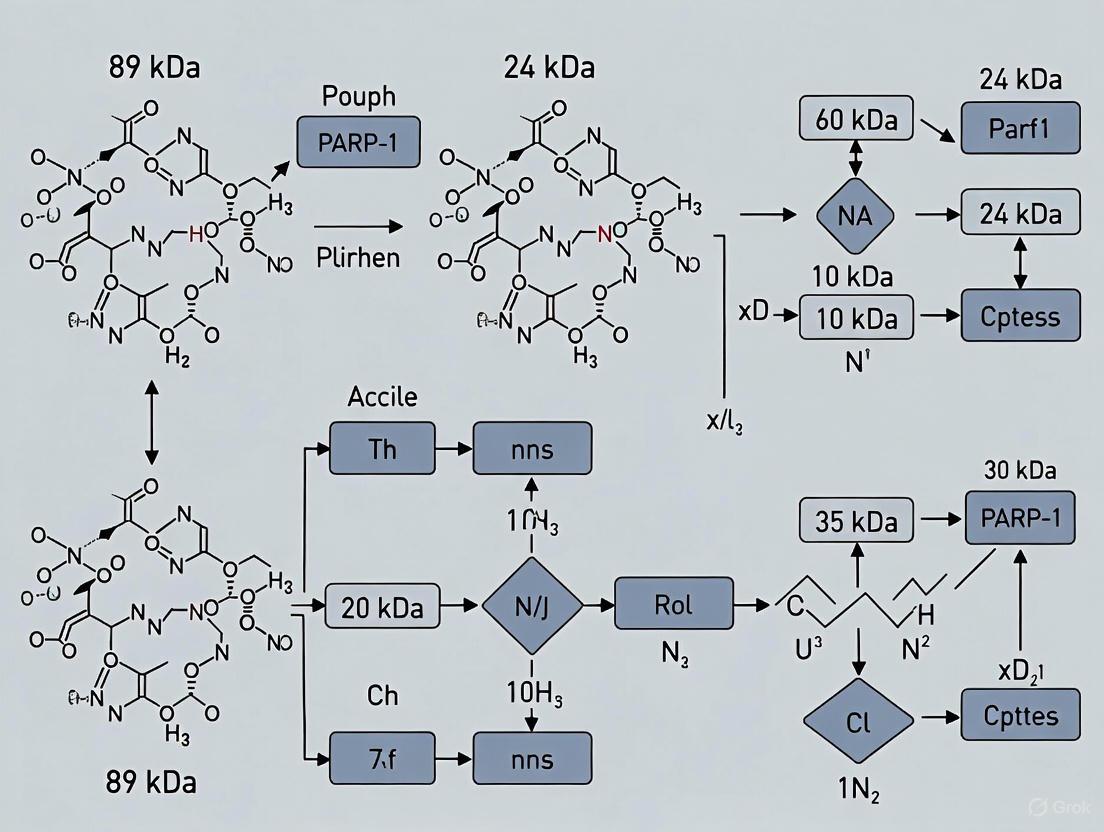
This article provides a comprehensive analysis of the 89 kDa and 24 kDa fragments generated by the caspase-mediated cleavage of PARP-1, a key event in cellular stress response.
Beyond a Simple Cleavage: The 89 kDa and 24 kDa PARP-1 Fragments as Critical Switches in Cell Fate and Disease
Abstract
This article provides a comprehensive analysis of the 89 kDa and 24 kDa fragments generated by the caspase-mediated cleavage of PARP-1, a key event in cellular stress response. Aimed at researchers and drug development professionals, we explore the foundational biology of these fragments, detailing their distinct roles in apoptosis and parthanatos. The content covers advanced methodologies for their detection and analysis, addresses common experimental challenges, and validates their significance as biomarkers and therapeutic targets in cancer and neurodegenerative diseases. By integrating current research, this review synthesizes how these cleavage products dictate the balance between cell survival and death, offering insights for novel therapeutic strategies.
The Genesis and Fate of PARP-1 Fragments: From Caspase Cleavage to Divergent Cellular Pathways
Poly(ADP-ribose) polymerase-1 (PARP-1) is a ubiquitous 116-kDa nuclear enzyme that serves as a critical molecular sensor for DNA damage [1] [2]. Upon detecting DNA strand breaks, PARP-1 catalyzes the synthesis of poly(ADP-ribose) (PAR) chains on target proteins using NAD+ as a substrate, thereby initiating DNA repair pathways [3] [4]. However, during the execution phase of apoptosis, PARP-1 becomes one of the primary cleavage targets for caspase proteases [1] [5]. This proteolytic event between Asp214 and Gly215 severs the protein into two principal fragments: a 24-kDa DNA-binding fragment and an 89-kDa catalytic fragment [6] [7]. This cleavage was historically viewed simply as a mechanism to inactivate DNA repair during cell death; however, contemporary research reveals a far more complex picture where the resulting fragments acquire novel signaling functions that significantly influence cell fate, inflammatory responses, and potential therapeutic targeting [3] [8] [9]. This technical guide deconstructs the molecular architecture of PARP-1, the biochemical consequences of its cleavage, and the pathophysiological significance of its fragments within modern cell death research.
Molecular Architecture of PARP-1
The PARP-1 protein is organized into four key functional domains that coordinate its DNA damage response and catalytic activities.
Domain Organization and Function
Table 1: Functional Domains of the 116-kDa PARP-1 Protein
| Domain Name | Location | Key Structural Features | Primary Functions |
|---|---|---|---|
| DNA-Binding Domain (DBD) | N-terminal (aa 1-372) | Three zinc finger motifs (Zn1, Zn2, Zn3) [1] [2] | Detects and binds to DNA single-strand and double-strand breaks [10] [2] |
| Automodification Domain (AMD) | Central (aa 373-522) | BRCT fold; rich in glutamate residues and acceptor sites [1] | Serves as the primary acceptor for covalent auto-poly(ADP-ribosyl)ation [1] |
| WGR Domain | Central (aa 524-656) | Trp-Gly-Arg motif [2] | Critical for inter-domain communication and catalytic activation [2] |
| Catalytic Domain (CAT) | C-terminal (aa 657-1014) | NAD+-binding pocket with a conserved catalytic triad [1] [2] | Catalyzes the transfer of ADP-ribose units from NAD+ to target proteins [2] |
The Caspase Cleavage Site
The primary caspase cleavage site (DEVD↑G) is situated within a nuclear localization signal (NLS) near the C-terminal end of the DNA-binding domain [3] [8]. Cleavage at Asp214 by effector caspases-3 and -7 precisely separates the full-length protein, generating the 24-kDa N-terminal fragment (containing the DBD) and the 89-kDa C-terminal fragment (containing the AMD, WGR, and CAT domains) [6] [7].
Figure 1: Domain Architecture of PARP-1 and the Caspase Cleavage Event. The 116-kDa full-length PARP-1 is cleaved by caspase-3/7 at Asp214, generating the 24-kDa and 89-kDa fragments.
Fate and Function of the Cleavage Fragments
The caspase-mediated cleavage of PARP-1 does not merely inactivate the enzyme but generates two distinct fragments with unique and biologically significant functions.
The 24-kDa DNA-Binding Fragment
The 24-kDa fragment, comprising almost the entire DBD, retains the ability to bind tightly to DNA strand breaks. However, lacking the catalytic domain, it cannot initiate repair [3] [1]. Its key functions include:
- Trans-dominant Inhibition of DNA Repair: By irreversibly occupying DNA damage sites, the 24-kDa fragment acts as a competitive inhibitor, blocking access for intact, functional PARP-1 and other DNA repair proteins [3] [1]. This facilitates the apoptotic process by preventing energy-consuming DNA repair attempts.
- Nuclear Retention: The fragment contains the nuclear localization signal and remains firmly associated with nuclear DNA lesions after cleavage [3] [9].
The 89-kDa Catalytic Fragment
The 89-kDa fragment contains the automodification and catalytic domains but is liberated from its nuclear tether due to the loss of the DBD and the cleavage of its NLS [3] [9]. Its roles are more complex:
- Cytoplasmic Translocation: The fragment translocates from the nucleus to the cytoplasm during apoptosis [3] [9].
- PAR Carrier Function: When the 89-kDa fragment is poly(ADP-ribosyl)ated prior to cleavage, it can carry PAR polymers to the cytoplasm. These PAR polymers then bind to Apoptosis-Inducing Factor (AIF), facilitating AIF's release from mitochondria and its subsequent translocation to the nucleus, where it triggers caspase-independent DNA fragmentation [3] [9]. This pathway represents a crucial molecular bridge between caspase-dependent apoptosis and AIF-mediated parthanatos.
- Modulation of Inflammatory Signaling: Expression of the 89-kDa fragment has been shown to potentiate NF-κB activity and increase the expression of pro-inflammatory proteins like iNOS and COX-2, while decreasing anti-apoptotic proteins like Bcl-xL [8]. This suggests a role in amplifying inflammatory responses during cell death.
Figure 2: Divergent Cellular Fates of the 24-kDa and 89-kDa PARP-1 Fragments. The fragments execute distinct pro-death pathways: the 24-kDa fragment inhibits DNA repair in the nucleus, while the 89-kDa fragment can propagate death signaling to the cytoplasm and mitochondria.
Quantitative Analysis of PARP-1 Fragments
Table 2: Quantitative and Functional Profile of PARP-1 Cleavage Fragments
| Parameter | 24-kDa Fragment | 89-kDa Fragment |
|---|---|---|
| Molecular Weight | 24 kDa [6] | 89 kDa [6] |
| Domains Contained | DNA-Binding Domain (Zn1, Zn2, Zn3) [3] | Automodification Domain, WGR Domain, Catalytic Domain [3] |
| Primary Localization | Nucleus (bound to DNA) [3] | Cytoplasm (translocates from nucleus) [3] |
| Key Functions | - Trans-dominant inhibitor of DNA repair [1]- Blocks active PARP-1 [3] | - Serves as a cytoplasmic PAR carrier [3]- Induces AIF-mediated death [3] [9]- Enhances NF-κB activity [8] |
| Impact on Cell Viability | Cytoprotective in ischemia models [8] | Cytotoxic in ischemia models [8] |
Experimental Analysis of PARP-1 Cleavage
Key Research Reagents and Methodologies
The study of PARP-1 cleavage relies on a suite of well-characterized reagents and robust experimental protocols.
Table 3: Essential Research Reagents for Studying PARP-1 Cleavage
| Reagent / Assay | Specification / Function | Research Application |
|---|---|---|
| PARP Antibody #9542 | Rabbit mAb; detects both full-length (116 kDa) and cleaved 89-kDa fragment [6] | Standard Western Blot detection of PARP-1 cleavage in human, mouse, rat, and monkey cells [6] |
| Cleaved PARP (Asp214) Antibody #9544 | Rabbit mAb; specific to the 89-kDa fragment, does not recognize full-length PARP-1 [7] | Confirmation of caspase-specific cleavage in human and mouse samples via Western Blot [7] |
| Caspase Inhibitor (zVAD-fmk) | Pan-caspase inhibitor [3] | Validates caspase-dependence of PARP-1 cleavage and cell death [3] |
| PARP Inhibitors (PJ34, ABT-888, 3-AB) | Small molecule inhibitors of PARP catalytic activity [3] [2] | Dissects the role of PARylation in cell death pathways and its interaction with cleavage [3] |
| Staurosporine / Actinomycin D | Conventional apoptosis inducers [3] [9] | Standard stimuli to trigger caspase activation and subsequent PARP-1 cleavage in cell models [3] |
Detailed Experimental Protocol: Inducing and Detecting Cleavage
A standard workflow for analyzing PARP-1 cleavage in vitro is outlined below.
Figure 3: Standard Experimental Workflow for Detecting PARP-1 Cleavage by Western Blot.
Key Experimental Observations from Literature:
- Time Course: In HeLa cells treated with staurosporine, PAR synthesis is detectable at 1 hour, peaking at 4 hours, with PARP-1 cleavage fragments appearing concurrently [3].
- Inhibitor Controls: Co-treatment with zVAD-fmk abolishes cleavage, confirming caspase-dependence. PARP inhibitors like PJ34 can block PAR synthesis and subsequent AIF translocation, but not the cleavage itself [3].
- Fragment Stability: The 89-kDa fragment, especially when automodified, is stable enough to be detected in the cytoplasmic fraction via subcellular fractionation protocols [3].
Implications for Drug Development and Disease
The functional dichotomy of PARP-1 fragments has profound implications for therapeutic strategy, particularly in oncology and neurodegenerative diseases.
- PARP Inhibitors in Cancer Therapy: PARP inhibitors (PARPi) like olaparib are approved for cancers with BRCA deficiencies, exploiting synthetic lethality [2]. Understanding cleavage is vital, as it represents a terminal downstream event in apoptosis induced by many chemotherapeutics. Furthermore, the cytotoxic nature of the 89-kDa fragment suggests that strategies promoting its formation or stability could enhance cell death, potentially overcoming treatment resistance [8] [2].
- Therapeutic Resistance: Mechanisms of PARPi resistance include increased drug efflux, restoration of homologous recombination, and stabilization of replication forks [2]. The role of PARP-1 fragments in these processes is an active area of investigation.
- Dual-Targeting Strategies: Next-generation therapeutic approaches are exploring dual-target inhibitors that combine PARP inhibition with other targets, such as HDACs or PI3Ks, to enhance efficacy and counter resistance mechanisms [2].
- Neurodegenerative Disorders: In conditions like cerebral ischemia, Parkinson's, and Alzheimer's disease, cell death often involves parthanatos. The 89-kDa fragment's role as a PAR carrier linking caspase activation to AIF release identifies it and its associated pathways as potential neuroprotective targets [3] [1].
The caspase cleavage of the 116-kDa PARP-1 structure is a definitive event in cell death that transcends the simple inactivation of DNA repair. The generation of the 24-kDa and 89-kDa fragments initiates a sophisticated division of labor: the 24-kDa fragment ensures the irreversibility of the death commitment by halting nuclear repair efforts, while the 89-kDa fragment actively propagates and amplifies the death signal into the cytoplasm and mitochondria. This deconstruction of PARP-1 reveals a multi-functional signaling module whose components regulate the intricate crosstalk between apoptosis, parthanatos, and inflammation. Future research, particularly focusing on the non-canonical functions of these stable cleavage fragments, will undoubtedly yield novel insights and therapeutic opportunities for a wide spectrum of human diseases.
Poly(ADP-ribose) polymerase-1 (PARP-1) is a critical nuclear enzyme with fundamental roles in maintaining genomic integrity through its involvement in DNA repair processes, particularly base excision repair (BER) and single-strand break repair (SSBR) [11]. This highly abundant chromatin-associated protein functions as a molecular sensor for DNA damage, binding to various DNA lesions including single-strand breaks, double-strand breaks, and crossovers through its N-terminal DNA-binding domain (DBD) [11] [12]. Upon binding to DNA damage sites, PARP-1 becomes catalytically activated and catalyzes poly(ADP-ribosyl)ation (PARylation) of acceptor proteins including itself, facilitating the recruitment of DNA repair machinery [11] [3].
PARP-1's functional architecture comprises three primary domains: an N-terminal DNA-binding domain containing two zinc fingers (F1 and F2) essential for DNA damage recognition, a central auto-modification domain (AMD), and a C-terminal catalytic domain (CD) responsible for PAR synthesis [11] [12]. A critical regulatory aspect of PARP-1 function involves its proteolytic cleavage by various "suicidal proteases," particularly caspases-3 and -7, during programmed cell death processes [12]. This cleavage occurs at the highly conserved DEVD214 site within the nuclear localization signal, generating two signature fragments: an 89-kDa C-terminal fragment containing the automodification and catalytic domains, and a 24-kDa N-terminal fragment comprising the DNA-binding domain with its two zinc fingers [3] [12] [8]. While both fragments have distinct cellular fates and functions, this review focuses specifically on the 24-kDa fragment's role as a trans-dominant inhibitor of DNA repair, framed within the broader significance of PARP-1 fragment research for understanding cell death pathways and developing therapeutic interventions.
Molecular Mechanism of the 24-kDa Fragment as a Trans-Dominant Inhibitor
Structural Basis of DNA Binding
The 24-kDa PARP-1 fragment (amino acids 1-214) constitutes the complete DNA-binding domain of PARP-1 and retains the full DNA damage recognition capabilities of the intact protein. Structural studies reveal that this fragment contains two zinc fingers (F1 and F2) that are structurally independent in the absence of DNA but cooperate in DNA damage recognition [11]. Biophysical characterization demonstrates that these zinc fingers share a highly similar structural fold and dynamics, with recognition of DNA single-strand breaks primarily achieved through F2, which interacts much more strongly with nicked or gapped DNA ligands than F1 [11]. The F1+F2 fragment recognizes DNA single-strand breaks as a monomer and in a single orientation, binding DNA lesions with essentially identical affinity and footprint (7 ± 1 nucleotides on each side of the break) as full-length PARP-1 [11].
The 24-kDa fragment binds irreversibly to DNA strand breaks through its zinc finger domains, occupying damage sites that would normally be bound and processed by full-length PARP-1 and other DNA repair enzymes [12]. This irreversible binding creates a physical blockade at DNA damage sites, preventing access by functional DNA repair machinery. Research indicates that different DNA lesions are recognized by the PARP-1 DNA-binding domain in a highly similar conformation, explaining how the 24-kDa fragment can effectively compete for various types of DNA damage sites [11].
Mechanisms of DNA Repair Inhibition
The 24-kDa fragment exerts its trans-dominant inhibitory effect through multiple complementary mechanisms that collectively suppress DNA repair capacity and facilitate apoptotic progression:
Competitive Binding: The fragment competes with intact PARP-1 and other DNA repair proteins for binding to DNA strand breaks, effectively sequestering damage sites without initiating repair [12]. This competitive inhibition prevents the activation of endogenous PARP-1's catalytic activity, which is essential for recruiting downstream repair factors.
Dominant-Negative Suppression: By occupying DNA damage sites without catalytic activity, the 24-kDa fragment functions as a dominant-negative inhibitor that blocks the assembly of functional DNA repair complexes [12] [8]. This suppression is particularly critical for base excision repair pathways where PARP-1 serves as an essential scaffold protein.
Energy Conservation: Unlike full-length PARP-1, the 24-kDa fragment lacks catalytic activity and does not consume cellular NAD+ pools through PAR synthesis [12]. This conservation of cellular energy resources (NAD+ and ATP) during apoptosis represents an evolutionarily adaptive mechanism that facilitates efficient cell death execution without energy depletion.
Table 1: Functional Properties of the 24-kDa PARP-1 Fragment Compared to Full-Length PARP-1
| Property | 24-kDa Fragment | Full-Length PARP-1 |
|---|---|---|
| DNA Binding | High affinity, irreversible | High affinity, reversible |
| Catalytic Activity | None | PARylation activity |
| Cellular Localization | Nuclear retention | Nuclear, with cytoplasmic translocation after cleavage |
| Effect on DNA Repair | Inhibition | Promotion |
| NAD+ Consumption | None | High during activation |
| Role in Cell Death | Facilitates apoptosis | Context-dependent (repair vs. cell death) |
Methodologies for Studying the 24-kDa Fragment
Experimental Models and Detection Methods
Research on the 24-kDa PARP-1 fragment employs diverse experimental approaches across multiple model systems. Key methodologies include:
In Vitro Cleavage Assays: Purified PARP-1 is incubated with active caspases-3 or -7 to generate the 24-kDa and 89-kDa fragments, which can be separated and analyzed using SDS-PAGE and Western blotting with PARP-1 antibodies specific for epitopes in the DNA-binding domain [12].
Cell Culture Models: Apoptosis is induced in various cell lines (e.g., HeLa, SH-SY5Y neuroblastoma cells) using staurosporine, actinomycin D, or other apoptotic inducers. PARP-1 cleavage is monitored over time through Western blot analysis, with the 24-kDa fragment detected using antibodies targeting the N-terminal region [3] [8].
Subcellular Localization Studies: Immunofluorescence and cell fractionation techniques demonstrate the nuclear retention of the 24-kDa fragment, contrasting with the cytoplasmic translocation of the 89-kDa fragment following cleavage [3].
Functional DNA Binding Assays: Electrophoretic mobility shift assays (EMSAs) and DNase I footprinting analyses characterize the DNA binding properties of the isolated 24-kDa fragment, confirming its identical footprint (7 ± 1 nucleotides on each side of breaks) compared to full-length PARP-1 [11].
Viability and DNA Repair Assessments: Cellular viability under DNA damage conditions is measured using MTT assays, trypan blue exclusion, or colony formation assays. DNA repair capacity is evaluated through comet assays, γH2AX foci formation, and host cell reactivation assays in cells expressing the 24-kDa fragment [8].
Key Research Reagents and Solutions
Table 2: Essential Research Reagents for Studying the 24-kDa PARP-1 Fragment
| Reagent/Solution | Function/Application | Key Features |
|---|---|---|
| Anti-PARP-1 Antibodies (N-terminal) | Detection of 24-kDa fragment in Western blot, immunofluorescence | Specific epitopes in DNA-binding domain (aa 1-214) |
| Recombinant Caspases-3/7 | In vitro cleavage of PARP-1 to generate fragments | High purity, activity verification required |
| PARP-1 siRNA/shRNA | Knockdown of endogenous PARP-1 | Enables study of expressed fragments without background |
| PARP Inhibitors (PJ34, ABT888) | Pharmacological inhibition of PARP catalytic activity | Control for catalytic-dependent effects |
| Caspase Inhibitor (zVAD-fmk) | Inhibition of caspase-mediated PARP-1 cleavage | Negative control for cleavage-dependent phenomena |
| DNA Damage Inducers | Induction of strand breaks for binding studies | Etoposide, H₂O₂, N-methyl-N'-nitro-N-nitrosoguanidine |
| Recombinant 24-kDa Fragment | Structural and biophysical studies | Purified DNA-binding domain (aa 1-214) |
| Tet-inducible Expression Systems | Controlled expression of PARP-1 variants | Regulatable expression of wild-type and mutant PARP-1 |
Broader Context: Differential Roles of PARP-1 Cleavage Fragments
Contrasting Functions of the 24-kDa and 89-kDa Fragments
The caspase-mediated cleavage of PARP-1 generates two fragments with strikingly different cellular functions and fates, creating a coordinated biological response that promotes apoptotic execution:
The 24-kDa fragment remains nuclear-localized and actively inhibits DNA repair through its trans-dominant inhibitory mechanism, effectively committing the cell to death by preventing DNA damage resolution [12]. In contrast, the 89-kDa fragment undergoes cytoplasmic translocation and can function as a carrier for poly(ADP-ribose) (PAR) polymers, facilitating the release of apoptosis-inducing factor (AIF) from mitochondria and contributing to parthanatos, a caspase-independent cell death pathway [3]. This differential partitioning and function represent an elegant mechanism for ensuring efficient cell death execution while preventing unnecessary energy expenditure on DNA repair in doomed cells.
Research demonstrates that these fragments exert opposing effects on cellular viability. Expression of the 24-kDa fragment or an uncleavable PARP-1 mutant (PARP-1UNCL) confers protection from oxygen/glucose deprivation damage in neuronal models, whereas expression of the 89-kDa fragment is cytotoxic [8] [13]. This protective effect of the 24-kDa fragment appears independent of PAR formation or NAD+ levels, suggesting alternative protective mechanisms beyond simply inhibiting energy depletion.
Regulation of Inflammatory Signaling
Beyond their roles in DNA repair inhibition and cell death, PARP-1 cleavage fragments differentially modulate inflammatory signaling pathways, particularly NF-κB-dependent transcription. The 89-kDa fragment significantly enhances NF-κB activity and NF-κB-dependent iNOS promoter binding activity, accompanied by increased expression of inflammatory mediators like COX-2 and iNOS, and decreased expression of the anti-apoptotic protein Bcl-xL [8] [13]. Conversely, the 24-kDa fragment and uncleavable PARP-1 reduce iNOS and COX-2 expression while increasing Bcl-xL, creating an anti-inflammatory and pro-survival cellular environment [8].
These differential effects on inflammatory signaling highlight the complex interplay between PARP-1 cleavage, cell death pathways, and inflammation. The 89-kDa fragment appears to promote both cytotoxicity and inflammatory activation, while the 24-kDa fragment supports cell survival and limits inflammatory responses, suggesting distinct roles for these fragments in various pathological conditions including cerebral ischemia, neurodegenerative diseases, and cancer.
Figure 1: PARP-1 Cleavage Fragment Signaling Pathways. Apoptotic stimuli activate caspases that cleave PARP-1 into 24-kDa and 89-kDa fragments with distinct downstream effects. The 24-kDa fragment inhibits DNA repair, while the 89-kDa fragment promotes AIF release and inflammatory responses, collectively driving cell death.
Technical Appendix: Experimental Workflows and Visualization
Experimental Workflow for PARP-1 Cleavage Studies
Figure 2: Experimental Workflow for PARP-1 Cleavage Fragment Analysis. Standardized approach for inducing, detecting, and characterizing PARP-1 cleavage fragments and their functional consequences in experimental systems.
Structural and Functional Relationships
Table 3: Structural Domains and Functional Consequences of PARP-1 Cleavage
| PARP-1 Form | Structural Domains Present | Primary Function | Cellular Localization | Impact on Viability |
|---|---|---|---|---|
| Full-Length PARP-1 | DBD, AMD, CD | DNA damage sensing and repair | Nuclear | Context-dependent |
| 24-kDa Fragment | DBD (ZF1, ZF2) | DNA repair inhibition | Nuclear retention | Protective |
| 89-kDa Fragment | AMD, CD | PAR carrier, AIF release | Cytoplasmic translocation | Cytotoxic |
| Uncleavable PARP-1 | DBD (mutated cleavage site), AMD, CD | Resistance to cleavage | Nuclear | Protective |
The 24-kDa DNA-binding fragment of PARP-1 represents a critical molecular switch in cell fate determination, functioning as a trans-dominant inhibitor of DNA repair that commits cells to apoptotic death. Its irreversible binding to DNA damage sites, coupled with its competitive inhibition of functional PARP-1 and other repair proteins, provides an efficient mechanism for suppressing DNA repair in cells destined for elimination. When considered within the broader context of PARP-1 fragment research, the opposing functions of the 24-kDa and 89-kDa fragments reveal an elegant biological system for coordinating DNA damage response with cell death execution, balancing repair attempts with programmed elimination of damaged cells.
The significance of PARP-1 fragment research extends beyond fundamental biology to therapeutic applications. Understanding the distinct roles of these fragments provides insights for developing novel cancer therapies that exploit PARP-1 inhibition, as well as neuroprotective strategies for conditions like cerebral ischemia, Parkinson's disease, and other pathologies involving PARP-1-mediated cell death. The differential effects of these fragments on inflammatory signaling further suggest potential applications in inflammatory and autoimmune conditions. Future research elucidating the precise structural determinants of the 24-kDa fragment's DNA binding specificity and its interactions with other DNA repair components will undoubtedly yield new therapeutic opportunities for manipulating this critical cell death switch in human disease.
Poly(ADP-ribose) polymerase 1 (PARP-1) is a 116-kDa nuclear enzyme that plays a dual role in cellular stress response. As a primary DNA damage sensor, it coordinates DNA repair mechanisms, but under conditions of excessive damage, it becomes a central mediator of cell death pathways. The proteolytic cleavage of PARP-1 by various cell death proteases generates signature fragments that serve as biochemical markers and active participants in distinct cell death programs. Research on the 89-kDa and 24-kDa PARP-1 fragments has revealed their contrasting functions—while the 24-kDa fragment remains nuclear and inhibits DNA repair, the 89-kDa fragment translocates to the cytoplasm where it functions as a poly(ADP-ribose) (PAR) carrier, initiating amplification of cell death signals. Understanding the precise mechanisms of these fragments provides critical insights into programmed cell death and reveals potential therapeutic targets for cancer and neurodegenerative diseases.
Molecular Anatomy of PARP-1 and Its Cleavage Products
Domain Architecture of PARP-1
PARP-1 is a modular protein consisting of three primary functional domains:
- DNA-binding domain (DBD): Located at the N-terminus, this 46-kDa domain contains two zinc finger motifs that recognize DNA strand breaks, resulting in PARP-1 dimerization and catalytic activation [12]. A third zinc finger motif located between the second zinc finger and the automodification domain plays a crucial role in inter-domain interactions [12].
- Automodification domain (AMD): This 22-kDa central domain contains a BRCT fold (a motif found in many DNA repair proteins) that facilitates protein-protein interactions and serves as the primary target for PARP-1 auto-poly(ADP-ribosyl)ation [12].
- Catalytic domain (CD): Located at the C-terminus, this 54-kDa domain catalyzes the polymerization of ADP-ribose units from NAD+ onto target proteins, generating linear or branched PAR chains [12].
PARP-1 also contains a nuclear localization signal (NLS) near the DNA-binding domain and a caspase-cleavage site between the DNA-binding domain and the automodification domain [3].
Proteolytic Cleavage Generates Distinct Functional Fragments
During caspase-dependent apoptosis, PARP-1 is cleaved by caspases-3 and -7 at its caspase-cleavage site (within the NLS near the DNA-binding domain), resulting in the formation of 24-kDa N-terminal and 89-kDa C-terminal PARP-1 fragments [3] [12]. The table below summarizes the key characteristics of these fragments:
Table 1: Characteristics of PARP-1 Cleavage Fragments
| Fragment | Molecular Weight | Domains Contained | Localization | Primary Functions |
|---|---|---|---|---|
| 24-kDa Fragment | 24 kDa | DNA-binding domain (DBD) with 2 zinc finger motifs | Remains nuclear | Irreversibly binds to DNA breaks; acts as trans-dominant inhibitor of active PARP-1; inhibits DNA repair [3] [12] |
| 89-kDa Fragment | 89 kDa | Automodification domain (AMD) and catalytic domain (CD) | Translocates to cytoplasm | Serves as PAR carrier to cytoplasm; induces AIF release from mitochondria; facilitates parthanatos-apoptosis crosstalk [3] [9] |
Other proteases also cleave PARP-1 under different conditions. During necrosis, lysosomal proteases (cathepsins B and G) cleave PARP-1, generating a characteristic 50-kDa fragment that serves as a marker for necrotic cell death [14]. This cleavage is not inhibited by broad-spectrum caspase inhibitors like zVAD-fmk, distinguishing it from apoptotic cleavage [14].
Experimental Evidence: Tracking the 89-kDa Fragment
Key Methodologies for Studying PARP-1 Fragments
Research elucidating the role of the 89-kDa PARP-1 fragment has employed sophisticated cellular and molecular techniques:
Table 2: Key Experimental Methods for PARP-1 Fragment Research
| Methodology | Application | Key Findings |
|---|---|---|
| Western Blot Analysis | Detection of PARP-1 cleavage fragments using PARP-1 antibodies | Confirmed caspase-3 mediated generation of 89-kDa and 24-kDa fragments after staurosporine treatment; showed PAR synthesis peaks at 4 hours [3] |
| Immunofluorescence Microscopy | Subcellular localization of PARP-1 fragments | Demonstrated nuclear translocation of AIF and cytoplasmic accumulation of 89-kDa fragments in HeLa cells after staurosporine exposure [3] |
| Pharmacological Inhibition | Using PARP inhibitors (PJ34, ABT-888) and caspase inhibitor (zVAD-fmk) | PARP inhibition reduced AIF translocation and nuclear shrinkage; caspase inhibition prevented PARP-1 cleavage completely [3] |
| shRNA Knockdown | Stable PARP-1 knockdown in HeLa cells | PARP-1 deficient cells showed reduced staurosporine-induced cytotoxicity, absent PAR synthesis, and no AIF translocation [3] |
| Live Cell Imaging | Tracking PARP-1-EGFP translocation in real-time | Revealed vesicular translocation of nuclear PARP-1 to cytoplasm upon LPS stimulation in microglia; inhibited by ABT-888 and U0126 [15] |
Research Reagent Solutions
Table 3: Essential Research Reagents for PARP-1 Fragment Studies
| Reagent | Function/Application | Example Use in Research |
|---|---|---|
| Staurosporine | Apoptosis inducer | Activated caspases leading to PARP-1 autopoly(ADP-ribosyl)ation and fragmentation in HeLa cells [3] |
| PJ34 & ABT-888 | PARP-1/2 inhibitors | Blocked PAR synthesis, AIF translocation, and nuclear shrinkage; increased viable cell count after apoptotic challenge [3] |
| zVAD-fmk | Broad-spectrum caspase inhibitor | Completely suppressed cell death, PAR synthesis, and PARP-1 cleavage fragments formation [3] |
| PARP-1 shRNA | Gene silencing | Reduced PARP-1 protein to 10% of control levels, enabling study of PARP-1-dependent cell death mechanisms [3] |
| PARP-1-GFP Plasmid | Live-cell tracking of PARP-1 | Visualized vesicular translocation of PARP-1 from nucleus to cytoplasm in microglia upon LPS stimulation [15] |
| Anti-PAR Antibody | Detection of poly(ADP-ribose) polymers | Confirmed PAR attachment to 89-kDa fragment and its role as PAR carrier [3] |
| Anti-AIF Antibody | Tracking AIF localization | Demonstrated AIF release from mitochondria and nuclear translocation during parthanatos [3] |
Experimental Workflow for PARP-1 Cleavage Analysis
The following diagram illustrates a typical experimental workflow for investigating PARP-1 cleavage and fragment localization:
The 89-kDa Fragment as a Cytoplasmic PAR Carrier in AIF-Mediated Apoptosis
Mechanism of PARP-1 Cleavage and Fragment Translocation
Upon caspase activation by apoptotic stimuli such as staurosporine or actinomycin D, PARP-1 undergoes autopoly(ADP-ribosyl)ation and subsequent cleavage by caspases-3 and -7. This cleavage occurs within a nuclear localization signal near the DNA-binding domain, resulting in the separation of the 24-kDa DNA-binding fragment from the 89-kDa catalytic fragment [3]. The 24-kDa fragment remains tightly bound to DNA breaks in the nucleus, acting as a trans-dominant inhibitor of DNA repair processes. Meanwhile, the 89-kDa fragment, with covalently attached PAR polymers, is translocated from the nucleus to the cytoplasm [3] [16].
Recent research has identified that PARP-1 can also translocate to the cytoplasm via vesicular structures independent of cleavage. In microglia activated by LPS, PARP-1 moves from the nucleus to the cytoplasm in vesicles that show colocalization with Lamin A/C, suggesting they might be derived from the nuclear envelope through nuclear envelope budding [15]. This translocation mechanism is inhibited by PARP inhibitors (ABT-888) and MAPK pathway inhibitors (U0126) [15].
Signaling Pathway from PARP-1 Cleavage to AIF-Mediated DNA Fragmentation
The following diagram illustrates the complex signaling pathway involving the 89-kDa PARP-1 fragment in AIF-mediated apoptosis:
Cross-Talk Between Apoptosis and Parthanatos
The 89-kDa fragment serves as a critical molecular link between caspase-dependent apoptosis and PAR-dependent parthanatos. In the cytoplasm, the PAR polymers attached to the 89-kDa fragment bind to apoptosis-inducing factor (AIF), which is anchored to the mitochondrial membrane [3] [16]. This binding facilitates AIF release from mitochondria—a step typically associated with parthanatos, a caspase-independent programmed cell death pathway [3]. Since AIF possesses its own nuclear localization signal, the released AIF translocates to the nucleus where it associates with DNAase, resulting in large-scale DNA fragmentation [3].
This mechanism demonstrates significant cross-talk between different cell death pathways, where the initial caspase activation in apoptosis leads to PARP-1 cleavage, and the resulting 89-kDa fragment subsequently activates aspects of the parthanatos pathway through AIF release and translocation. This pathway amplification ensures efficient cell death execution even when initial apoptotic signals are moderate [3] [16].
Functional Dichotomy of PARP-1 Cleavage Fragments
Contrasting Biological Activities
The 24-kDa and 89-kDa PARP-1 fragments exhibit strikingly different and often opposing biological activities:
Table 4: Functional Comparison of PARP-1 Cleavage Fragments
| Functional Aspect | 24-kDa Fragment | 89-kDa Fragment |
|---|---|---|
| Subcellular Localization | Remains nuclear [3] | Translocates to cytoplasm [3] |
| DNA Binding | Irreversibly binds to DNA breaks [12] | Greatly reduced DNA binding capacity [12] |
| Effect on DNA Repair | Inhibits DNA repair by blocking access of repair enzymes [12] | Removed from DNA damage sites, eliminating PAR synthesis at lesions [3] |
| Role in Cell Death | Prevents energy depletion by inhibiting excessive PARP activation [12] | Activates mitochondrial AIF release, promoting cell death [3] |
| Effect on Cell Viability | Expression confers protection from oxygen/glucose deprivation [13] | Expression is cytotoxic [13] |
| Influence on NF-κB Signaling | Decreases iNOS and COX-2, increases Bcl-xL [13] | Increases NF-κB activity, iNOS and COX-2 expression [13] |
Pathophysiological Implications
The opposing functions of PARP-1 fragments have significant implications for various pathological conditions. In cerebral ischemia, traumatic brain injury, and neurodegenerative diseases like Parkinson's and Alzheimer's disease, PARP-1 cleavage fragments contribute to neuronal cell death [12]. The 89-kDa fragment's role in AIF-mediated cell death makes it particularly relevant in acute neurological injuries where parthanatos is a prominent cell death mechanism [3].
Interestingly, the uncleavable PARP-1 (PARP-1UNCL) and the 24-kDa fragment both confer protection from ischemic damage in vitro models, whereas the 89-kDa fragment is cytotoxic [13]. This protective effect is not accompanied by decreased PAR formation or higher NAD+ levels, suggesting alternative protective mechanisms [13]. The 24-kDa fragment may exert its protective effects by competing with full-length PARP-1 for DNA damage sites, thus limiting excessive PARP activation while still allowing baseline DNA repair.
Therapeutic Implications and Research Applications
PARP Inhibitors in Cancer Therapy
The understanding of PARP-1 biology and cleavage fragments has directly translated into therapeutic advances, particularly in oncology. PARP inhibitors (PARPi) selectively target cancer cells with homologous recombination repair deficiencies, such as those with BRCA1/2 mutations, through synthetic lethality [17] [18]. These inhibitors trap PARP-DNA complexes on endogenous DNA breaks, leading to replication fork collapse and double-strand break accumulation that proves lethal in repair-deficient cells [17].
Clinical trials have demonstrated the efficacy of PARP inhibitors in various cancers, including breast, ovarian, prostate, and pancreatic cancers [17] [18]. Olaparib, niraparib, talazoparib, and rucaparib are among the PARP inhibitors approved or in advanced clinical development. The table below summarizes key clinical trial findings:
Table 5: Clinical Trial Insights for PARP Inhibitor Combinations
| Trial Finding | Details | Clinical Significance |
|---|---|---|
| Gapped Dosing Schedule | 48-hour delay between CRLX101 (TOP1 inhibitor) and olaparib enabled higher dosing [17] | Mitigated dose-limiting hematological toxicities while maintaining efficacy |
| Maximum Tolerated Dose | CRLX101 12 mg/m² every two weeks + olaparib 250 mg BID on days 3-13 and 17-26 [17] | Established recommended Phase 2 dose for combination therapy |
| Tumor-Targeted Delivery | CRLX101 nanoparticle preferentially accumulates in tumor tissue [17] | Enhances therapeutic index through improved tumor targeting |
| Pharmacodynamic Effects | Elevated γH2AX kinetics demonstrated increased DNA damage with combination vs monotherapy [17] | Confirmed mechanistic synergy between TOP1 inhibition and PARP inhibition |
Research Applications and Future Directions
The 89-kDa PARP-1 fragment serves as both a biomarker and a active mediator in cell death pathways, with several research applications:
- Biomarker Development: Detection of the 89-kDa fragment can serve as a specific marker for caspase-mediated apoptosis in pathological specimens [12] [14].
- Therapeutic Target Inhibition: The cytoplasmic PAR carrier function of the 89-kDa fragment represents a potential therapeutic target for conditions where excessive cell death contributes to pathology, such as neurodegenerative diseases and acute organ injury [3] [16].
- Combination Therapy Strategies: Understanding PARP-1 fragment biology informs rational combination therapies, such as combining PARP inhibitors with DNA-damaging agents while implementing scheduling strategies to minimize toxicity [17].
Future research directions include developing more specific inhibitors targeting the PAR carrier function of the 89-kDa fragment, exploring the role of alternative PARP-1 translocation mechanisms in inflammation, and investigating cell-type specific differences in PARP-1 fragment functions.
The 89-kDa PARP-1 cleavage fragment represents a critical molecular switch that transitions the PARP-1 enzyme from its DNA repair function to a pro-death signaling role. By serving as a cytoplasmic PAR carrier, this fragment bridges caspase-dependent apoptosis and AIF-mediated parthanatos, creating an amplification loop that ensures efficient cell death execution. The functional dichotomy between the nuclear 24-kDa fragment (which inhibits DNA repair) and the cytoplasmic 89-kDa fragment (which activates mitochondrial death pathways) illustrates the sophisticated mechanisms cells employ to regulate life-death decisions. Continued research on these fragments and their interactions promises to yield novel therapeutic strategies for cancer, neurodegenerative diseases, and other conditions characterized by dysregulated cell death.
Poly(ADP-ribose) polymerase-1 (PARP-1) is a 116-kDa nuclear enzyme that serves as a primary sensor of DNA damage. Upon activation by DNA strand breaks, PARP-1 catalyzes the synthesis of poly(ADP-ribose) (PAR) chains using NAD+ as a substrate, facilitating DNA repair machinery recruitment [9] [19]. Beyond its repair function, PARP-1 plays a decisive role in directing cell fate through its cleavage fragments, which channel cellular responses toward distinct death pathways. The 89-kDa and 24-kDa fragments generated by caspase cleavage during apoptosis were historically viewed as mere inhibitors of DNA repair, but emerging research reveals these fragments actively regulate cross-talk between apoptotic and parthanatos pathways [9] [3] [16]. Within the broader context of PARP-1 fragment research, understanding the specialized functions of these cleavage products provides critical insights for developing targeted therapeutic interventions in cancer, neurodegeneration, and other pathological conditions.
PARP-1 Cleavage Fragment Generation and Characteristics
PARP-1 cleavage occurs through specific proteolytic actions by different enzymes in distinct cell death pathways. The table below summarizes the key cleavage fragments, their origins, and primary functions.
Table 1: PARP-1 Cleavage Fragments in Cell Death Pathways
| Fragment Size | Generating Protease | Cell Death Context | Domain Composition | Primary Function |
|---|---|---|---|---|
| 89 kDa | Caspases-3 and -7 | Apoptosis | Automodification + Catalytic domains | PAR carrier to cytoplasm; induces AIF release [9] [3] |
| 24 kDa | Caspases-3 and -7 | Apoptosis | DNA-binding domain (with NLS) | Binds irreversibly to DNA breaks; dominant-negative inhibitor of DNA repair [3] [12] |
| 50 kDa | Cathepsins B and G (lysosomal proteases) | Necrosis | Not fully characterized | Necrotic cell death marker; caspase-independent [14] |
Structural Determinants of PARP-1 Cleavage
PARP-1 contains three functional domains: an N-terminal DNA-binding domain (DBD) containing two zinc finger motifs and a nuclear localization signal (NLS), a central automodification domain (AMD) that serves as the target for PAR attachment, and a C-terminal catalytic domain (CD) responsible for PAR synthesis [12] [19]. Caspase cleavage occurs at a specific site (DEVD) between the DBD and AMD, separating the DNA-binding function from the catalytic function [12]. This precise cleavage site explains the generation of the 24-kDa (DBD) and 89-kDa (AMD+CD) fragments and determines their subsequent localization and functions.
Apoptosis: Caspase-Mediated PARP-1 Cleavage and Traditional Understanding
The Canonical Apoptotic Pathway
Apoptosis represents a caspase-dependent, programmed cell death pathway characterized by cellular shrinkage, chromatin condensation, and formation of membrane-bound apoptotic bodies. Executioner caspases-3 and -7 are activated through either intrinsic (mitochondrial) or extrinsic (death receptor) pathways and mediate the systematic dismantling of cellular components, including the cleavage of PARP-1 [12]. Traditionally, PARP-1 cleavage during apoptosis was viewed as a protective mechanism to prevent excessive NAD+ and ATP consumption, thereby facilitating the efficient clearance of damaged cells [12].
Evolving Understanding of Fragment Functions in Apoptosis
Recent research has revealed more nuanced functions for the PARP-1 cleavage fragments in apoptosis:
- The 24-kDa fragment not only inhibits DNA repair by blocking access to DNA strand breaks but may also influence gene expression through its retained DNA-binding capability [12] [13].
- The 89-kDa fragment, previously considered largely inert, actively translocates to the cytoplasm while carrying covalently attached PAR polymers, providing a novel bridge between apoptotic and parthanatos pathways [9] [3].
Parthanatos: PARP-1 Hyperactivation-Mediated Cell Death
Core Mechanisms of Parthanatos
Parthanatos is a caspase-independent programmed cell death pathway initiated by PARP-1 hyperactivation in response to severe DNA damage. The key biochemical events in parthanatos include:
- PARP-1 overactivation following excessive DNA damage, leading to substantial PAR polymer synthesis [20] [19]
- NAD+ and ATP depletion due to relentless PAR synthesis and attempted resynthesis of NAD+ [20]
- PAR translocation to the cytoplasm [9] [3]
- Mitochondrial release of AIF following PAR binding [9] [20] [19]
- AIF nuclear translocation and large-scale DNA fragmentation (>50 kb) [20] [19]
Unlike apoptosis, parthanatos does not involve caspase activation and exhibits morphological features including loss of membrane integrity, mitochondrial membrane potential dissipation, and nuclear condensation without typical apoptotic bodies [20] [19].
Key Mediators and Signaling Components
The following diagram illustrates the core parthanatos pathway:
Molecular Cross-Talk: The 89-kDa Fragment as a Bridge Between Pathways
Novel Signaling Interface
Recent research has identified crucial molecular cross-talk between apoptosis and parthanatos, fundamentally challenging the traditional view of these pathways as strictly independent. The 89-kDa PARP-1 fragment serves as a key molecular bridge:
- Caspase activation during apoptosis triggers both PARP-1 cleavage and PAR synthesis prior to fragmentation [9] [3]
- The 89-kDa fragment carries covalently attached PAR polymers to the cytoplasm [9] [16]
- In the cytoplasm, PAR polymers on the 89-kDa fragment bind to mitochondrial AIF, facilitating AIF release and nuclear translocation [9] [3]
- This mechanism recruits an AIF-mediated cell death component within the context of caspase-dependent apoptosis [9]
Integrated Pathway Signaling
The following diagram illustrates the cross-talk between apoptosis and parthanatos:
Experimental Approaches and Methodologies
Key Experimental Models and Reagents
Research into PARP-1 cleavage fragments utilizes specific experimental models, inducing agents, and detection methods, as summarized below.
Table 2: Experimental Models and Methodologies for PARP-1 Cleavage Research
| Experimental Component | Specific Examples | Function/Application |
|---|---|---|
| Cell Lines | HeLa cells, Jurkat T cells, SH-SY5Y neuroblastoma, U2OS osteosarcoma | Model systems for studying cell death mechanisms [3] [20] [14] |
| Apoptosis Inducers | Staurosporine, Actinomycin D, Etoposide (VP-16) | Activate caspase-dependent apoptosis [9] [3] [12] |
| Parthanatos Inducers | MNNG (alkylating agent), H₂O₂, Glutamate (excitotoxicity) | Cause severe DNA damage and PARP-1 hyperactivation [20] [19] |
| PARP Inhibitors | PJ34, ABT-888 | Inhibit PARP catalytic activity; used to dissect pathway dependence [3] |
| Caspase Inhibitor | zVAD-fmk | Broad-spectrum caspase inhibitor; distinguishes caspase dependence [3] [14] |
| Detection Methods | Western blot (PARP-1 fragments), PAR immunofluorescence, AIF localization | Monitor fragment generation, PAR accumulation, and AIF translocation [3] [20] |
Detailed Experimental Protocol
A representative methodology for investigating PARP-1 cleavage fragments in apoptosis-parthanatos cross-talk includes:
1. Cell Treatment and Inhibition:
- Culture HeLa or SH-SY5Y cells under standard conditions
- Pre-treat with either vehicle, PARP inhibitor (PJ34, 10-20 µM), or caspase inhibitor (zVAD-fmk, 20-50 µM) for 1-2 hours [3]
- Induce apoptosis with staurosporine (0.5-1 µM) or actinomycin D (1-5 µM) for 1-6 hours [9] [3]
2. PARP-1 Cleavage Detection:
- Harvest cells at various time points (1, 2, 4, 6 hours)
- Prepare whole-cell lysates using RIPA buffer with protease inhibitors
- Perform Western blotting with PARP-1 antibodies recognizing both full-length (116-kDa) and cleavage fragments (89-kDa, 24-kDa) [3] [12]
3. PAR Polymer Analysis:
- Fix cells for immunofluorescence using anti-PAR antibodies
- Quantify PAR accumulation over time via fluorescence intensity or Western blot [3]
- Note: PAR accumulation typically peaks around 4 hours post-staurosporine treatment [3]
4. AIF Translocation Assessment:
- Perform subcellular fractionation to separate nuclear and cytoplasmic components
- Detect AIF redistribution via Western blot or immunofluorescence [9] [3]
- AIF nuclear translocation typically observed by 6 hours post-treatment [3]
5. Functional Validation:
- Utilize PARP-1 shRNA knockdown cells to confirm PARP-1 dependence [3]
- Assess cell viability via MTT or similar assays in presence of pathway-specific inhibitors [3]
Research Reagent Solutions Toolkit
The following table provides essential research tools for investigating PARP-1 cleavage and related cell death pathways.
Table 3: Essential Research Reagents for PARP-1 Cleavage Studies
| Reagent Category | Specific Examples | Research Application |
|---|---|---|
| PARP Inhibitors | PJ34, ABT-888 (Veliparib), 3-AB | Inhibit PARP catalytic activity; distinguish PARP-dependent cell death [3] |
| Caspase Inhibitors | zVAD-fmk (pan-caspase), DEVD-CHO (caspase-3 specific) | Determine caspase dependence of cell death; validate apoptotic components [3] [14] |
| Cell Death Inducers | Staurosporine (apoptosis), MNNG (parthanatos), H₂O₂ (necrosis/parthanatos) | Activate specific cell death pathways for mechanistic studies [9] [3] [14] |
| Antibodies | Anti-PARP-1 (full length and fragments), Anti-PAR, Anti-AIF | Detect PARP-1 cleavage, PAR accumulation, and AIF localization [3] [12] |
| Genetic Tools | PARP-1 shRNA, PARP-1 KO cells, AIF mutant cells | Validate protein functions and establish pathway requirements [3] [20] |
Discussion and Research Implications
Therapeutic Applications and Future Directions
The delineation of PARP-1 cleavage fragment functions, particularly the role of the 89-kDa fragment as a cytoplasmic PAR carrier, opens several promising research avenues:
- Cancer Therapeutics: PARP inhibitors already represent a significant advancement in treating BRCA-mutant cancers. Understanding fragment-mediated pathway cross-talk may inform combination therapies and overcome treatment resistance [20] [21].
- Neuroprotection: In neurodegenerative conditions (Parkinson's disease, stroke, traumatic brain injury) where parthanatos contributes to neuronal loss, targeting the 89-kDa fragment/AIF interaction may provide neuroprotective strategies [20] [19].
- Inflammatory Regulation: The opposing effects of PARP-1 fragments on NF-κB signaling and inflammatory gene expression suggest novel anti-inflammatory approaches [13].
Concluding Perspectives
The 89-kDa and 24-kDa PARP-1 cleavage fragments represent more than mere biomarkers of apoptotic engagement—they function as active directors of cell fate decisions at the interface of apoptosis and parthanatos. The emerging paradigm of cross-talk between these pathways, mediated by PAR-laden 89-kDa fragments, enriches our understanding of programmed cell death and highlights new potential therapeutic targets. Future research focusing on the structural determinants of fragment functions and their disease-specific roles will undoubtedly yield valuable insights for manipulating these pathways in human health and disease.
Poly(ADP-ribose) polymerase-1 (PARP-1) is a 116 kDa nuclear enzyme that serves as a primary sensor of DNA damage, playing crucial roles in maintaining genomic integrity through its involvement in DNA repair pathways [22] [2]. As the most abundant member of the PARP family, PARP-1 accounts for approximately 90% of cellular poly(ADP-ribose) (PAR) synthesis in response to DNA damage [22] [2] [23]. This multifunctional enzyme contains six structural domains that facilitate its damage-sensing and catalytic activities [22] [24]. Beyond its DNA repair functions, PARP-1 also participates in critical cell death pathways. Through specific proteolytic cleavage by caspases, PARP-1 generates two principal fragments of 89 kDa and 24 kDa, which serve as molecular signatures in programmed cell death and have become significant biomarkers in cancer research and therapeutic development [3] [12] [9]. This whitepaper provides a comprehensive analysis of the structural domains and key residues that define the functional anatomy of these fragments, framing their significance within the broader context of PARP-1 research and targeted cancer therapy.
Structural Domains of Full-Length PARP-1
PARP-1 is a modular protein comprising multiple functional domains that work in concert to detect DNA damage and initiate appropriate cellular responses. The structural organization of these domains facilitates the enzyme's transition from an autoinhibited state to an activated DNA repair catalyst.
Domain Architecture and Organization
The domain architecture of PARP-1 follows a specific sequential arrangement that enables its function as a DNA damage sensor and responder:
- DNA-Binding Domain (DBD): Located at the N-terminus, this domain contains three zinc finger subdomains (Zn1, Zn2, and Zn3) that directly interact with DNA lesions [22] [2] [10]. Zn1 and Zn2 recognize DNA strand breaks through a "base-stacking loop" and "backbone grip" mechanism, with Zn2 demonstrating higher DNA affinity, while Zn3 facilitates interdomain contacts essential for activation [22] [10].
- Automodification Domain (AMD): This central domain contains a BRCT (BRCA1 C-terminal) fold that mediates protein-protein interactions and serves as the primary target for PARP-1's automodification activity [12] [2].
- WGR Domain: Named for its conserved Trp-Gly-Arg motif, this domain contributes to DNA binding and participates in the allosteric activation of the enzyme [22] [24].
- Catalytic Domain (CAT): Located at the C-terminus, this domain comprises the helical domain (HD) and the ADP-ribosyltransferase (ART) subdomain, which contains the NAD+-binding site and catalytic machinery [22] [2].
Table 1: Structural Domains of Full-Length PARP-1
| Domain | Molecular Weight | Key Structural Features | Primary Functions |
|---|---|---|---|
| DNA-Binding Domain (DBD) | ~24 kDa | Three zinc fingers (Zn1, Zn2, Zn3); zinc finger F1 has lower DNA affinity but essential for activation; F2 has higher DNA affinity for localization | Damage recognition; DNA binding; initial activation trigger |
| Automodification Domain (AMD) | ~22 kDa | BRCT fold motif; glutamate/aspartate residues for PAR attachment | Protein-protein interactions; target for auto-PARylation; recruitment of repair factors |
| WGR Domain | ~14 kDa | Trp-Gly-Arg conserved motif; structural bridge between DBD and CAT | DNA binding; allosteric regulation; interdomain communication |
| Catalytic Domain (CAT) | ~54 kDa | Helical domain (HD) and ART subdomain; NAD+ binding pocket; catalytic triad residues | PAR chain synthesis; post-translational modification; effector recruitment |
Allosteric Activation Mechanism
The activation of PARP-1 involves a sophisticated allosteric mechanism triggered by DNA damage recognition. In the autoinhibited state, the folded helical domain blocks NAD+ access to the active site [22]. Upon binding to DNA breaks through its zinc fingers, PARP-1 undergoes dramatic conformational changes, resulting in a "collapsed" structure where the zinc fingers, WGR, and CAT domains collectively engage with damaged DNA [22]. This restructuring causes local unfolding within the helical domain, particularly destabilizing three of its seven helices, which relieves autoinhibition and allows full NAD+ access to the catalytic site [22]. This allosteric switch enhances PARP-1 activity by up to 1000-fold, enabling rapid response to genomic insults [22].
Proteolytic Cleavage and Fragment Generation
PARP-1 serves as a key substrate for several proteases during distinct cell death pathways. The generation of specific cleavage fragments represents a commitment to different modes of cellular demise and has significant implications for diagnostic and therapeutic applications.
Caspase-Mediated Cleavage in Apoptosis
During caspase-dependent apoptosis, PARP-1 is cleaved by effector caspases-3 and -7 at a specific recognition site (DEVD214↓G215) located between the DNA-binding domain and the automodification domain [3] [12] [25]. This proteolytic event produces two well-characterized fragments:
- 24-kDa Fragment: Comprises the entire DNA-binding domain containing Zn1, Zn2, and Zn3 [3] [12]
- 89-kDa Fragment: Contains the automodification domain, WGR domain, and catalytic domain [3] [12] [9]
This cleavage event serves as a biochemical hallmark of apoptosis and facilitates the apoptotic process by inactivating DNA repair capacity while conserving cellular ATP [12].
Alternative Proteolytic Events
Beyond caspase-mediated cleavage, PARP-1 is susceptible to processing by other proteases during different cell death modalities:
- Calpain: Generates a 55-kDa fragment during calcium-mediated cell death [12]
- Granzyme A: Produces a 50-kDa fragment in cytotoxic T-cell-mediated apoptosis [12]
- Cathepsins: Generate various fragments during lysosome-mediated cell death [12]
- Matrix Metalloproteinases: Produce distinct fragments in specific pathological contexts [12]
Each cleavage event generates signature fragments that serve as molecular indicators of the specific cell death pathway activated, providing valuable diagnostic information in pathological conditions.
Functional Anatomy of the 24-kDa Fragment
The 24-kDa N-terminal fragment generated by caspase cleavage retains critical functional domains that determine its biological activity in apoptotic cells.
Structural Domains and Key Residues
The 24-kDa fragment encompasses the entire DNA-binding domain of PARP-1, including:
- Zinc Fingers F1 and F2: These domains maintain their DNA-binding capability despite the cleavage event [10]. Structural studies reveal that F1 and F2 are structurally independent in the absence of DNA and share highly similar structural folds, though F2 demonstrates significantly stronger interaction with nicked or gapped DNA [10].
- Zinc Finger F3: Although this domain doesn't directly bind DNA, it contains key residues that mediate interdomain contacts and is essential for DNA-dependent stimulation of PARP-1 activity in the full-length enzyme [22].
- Nuclear Localization Signal (NLS): The fragment contains an NLS near the DNA-binding domain, which ensures its nuclear retention following cleavage [3] [9].
Biological Functions and Mechanisms
The 24-kDa fragment executes several critical functions in apoptotic cells:
- Dominant-Negative Inhibition of DNA Repair: The fragment irreversibly binds to DNA strand breaks, acting as a trans-dominant inhibitor of any remaining full-length PARP-1 and other DNA repair enzymes [3] [12]. This blockade prevents energy depletion through futile repair attempts in doomed cells.
- DNA Damage Retention: Due to its high affinity for DNA breaks and nuclear localization, the fragment remains tightly associated with damaged DNA, creating a physical barrier to repair complex assembly [3] [12].
- Caspase Activation Amplification: By inhibiting DNA repair, the fragment promotes genomic instability that potentially amplifies caspase activation, creating a feed-forward loop that reinforces the commitment to apoptosis.
Functional Anatomy of the 89-kDa Fragment
The 89-kDa C-terminal fragment contains the catalytic machinery of PARP-1 and plays surprisingly active roles in cell death pathways beyond simply representing an inactive cleavage product.
Structural Domains and Key Residues
The 89-kDa fragment comprises three key domains from the parent protein:
- Automodification Domain (AMD): This domain contains the BRCT fold and serves as the primary acceptor site for auto-poly(ADP-ribosyl)ation [3] [12]. When PARylated, this domain facilitates protein-protein interactions.
- WGR Domain: This domain maintains its ability to interact with DNA and contributes to the allosteric regulation of the catalytic domain [22] [24].
- Catalytic Domain (CAT): Although the fragment's catalytic activity is substantially reduced compared to full-length PARP-1, the domain retains structural integrity [12].
Novel Functions as a Cytoplasmic PAR Carrier
Recent research has revealed unexpectedly active roles for the 89-kDa fragment in coordinating cell death pathways:
- Cytoplasmic Translocation: Following caspase cleavage, the 89-kDa fragment translocates from the nucleus to the cytoplasm, a process facilitated by the loss of its nuclear localization signal which remains with the 24-kDa fragment [3] [9].
- PAR Polymer Carrier: The fragment can carry covalently attached PAR polymers to the cytoplasm, serving as a vehicle for nuclear-cytoplasmic communication of DNA damage signals [3] [9].
- Mitochondrial Apoptosis Induction: In the cytoplasm, PAR polymers attached to the 89-kDa fragment bind to apoptosis-inducing factor (AIF), facilitating AIF release from mitochondria and its translocation to the nucleus, where it contributes to large-scale DNA fragmentation [3] [9].
- Cross-Talk Between Apoptosis and Parthanatos: This pathway represents a novel intersection between caspase-dependent apoptosis and PARP-1-dependent parthanatos, expanding the cell death signaling network [3] [9].
Research Methods and Experimental Approaches
The study of PARP-1 fragments employs sophisticated methodological approaches that enable detailed characterization of their structure, function, and cellular dynamics.
Detection and Visualization Techniques
- Western Blotting: Specific antibodies, such as the PARP (46D11) Rabbit mAb, can distinguish full-length PARP-1 (116 kDa) from the 89-kDa fragment, enabling detection of caspase activation in cell death experiments [25].
- Immunofluorescence Microscopy: Allows spatial localization of PARP-1 fragments within cells, particularly useful for tracking the cytoplasmic translocation of the 89-kDa fragment [3].
- Live-Cell Imaging: Employed with fluorescently tagged PARP-1 constructs to visualize real-time fragment generation and trafficking in response to apoptotic stimuli.
Structural Characterization Methods
- X-ray Crystallography: Has provided high-resolution structures of PARP-1 domains, including the DNA-binding domain in complex with DNA [22] [10].
- Nuclear Magnetic Resonance (NMR) Spectroscopy: Reveals solution dynamics of individual domains, such as the structural independence of zinc fingers F1 and F2 in the absence of DNA [10].
- Hydrogen/Deuterium Exchange Mass Spectrometry (HXMS): Uncovers conformational changes and allosteric regulation by measuring polypeptide backbone dynamics [22].
Diagram 1: Experimental Workflow for PARP-1 Fragment Research. This flowchart outlines the key methodological approaches for studying PARP-1 cleavage fragments, from sample preparation through functional characterization.
Functional Assessment Protocols
- Electrophoretic Mobility Shift Assay (EMSA): Demonstrates DNA binding capacity of the 24-kDa fragment and its dominant-negative effects [10].
- Enzyme Activity Assays: Measure catalytic competence of the 89-kDa fragment compared to full-length PARP-1 using NAD+ as substrate [24].
- Protein-Protein Interaction Studies: Co-immunoprecipitation and surface plasmon resonance to characterize interactions between the 89-kDa fragment and AIF [3] [9].
Table 2: Key Research Reagents for PARP-1 Fragment Studies
| Reagent/Category | Specific Examples | Function in Research | Experimental Applications |
|---|---|---|---|
| PARP Antibodies | PARP (46D11) Rabbit mAb #9532 | Detects full-length (116 kDa) and 89-kDa fragment; does not cross-react with PARP-2/3 | Western blot, immunoprecipitation, Simple Western |
| Caspase Inhibitors | zVAD-fmk | Pan-caspase inhibitor; blocks PARP-1 cleavage | Apoptosis inhibition controls; pathway validation |
| PARP Inhibitors | PJ34, ABT-888, Olaparib | Catalytic inhibitors; chemopotentiators | DNA repair studies; synthetic lethality experiments |
| Apoptosis Inducers | Staurosporine, Actinomycin D, Etoposide | Activate caspases-3/7; induce PARP-1 cleavage | Fragment generation; cell death models |
| Cell Lines | HeLa, HEK293, HCT116, Jurkat | Model systems with endogenous PARP-1 | Mechanistic studies; drug screening |
| PARP1 shRNA | Lentiviral constructs | PARP-1 knockdown; controls for specificity | Validation of PARP-1-dependent phenomena |
Significance in Cancer Therapy and Drug Development
The research on PARP-1 fragments has profound implications for cancer therapy, particularly in the development and application of PARP inhibitors (PARPis) that exploit synthetic lethality in BRCA-deficient cancers.
PARP Trapping and Therapeutic Mechanisms
PARP inhibitors function not only by catalytic inhibition but also through "PARP trapping," where the inhibitor stabilizes PARP-1 on damaged DNA, creating cytotoxic lesions that require repair [23]. This trapping phenomenon is influenced by the structural domains of PARP-1 and represents a key mechanism underlying the efficacy of PARP inhibitors in cancer treatment [22] [23]. The development of fragment-specific antibodies has facilitated pharmacodynamic monitoring of PARP inhibitor efficacy in clinical trials, as caspase-generated fragments serve as biomarkers for apoptotic response to therapy [25].
Next-Generation PARP Inhibitors
Current research focuses on developing PARP-1 selective inhibitors that minimize toxicity associated with PARP-2 inhibition [23]. Structure-based drug design leverages detailed knowledge of the catalytic domain to create compounds with improved selectivity profiles [24]. These next-generation inhibitors include:
- Dual-Targeted Inhibitors: Combining PARP inhibition with other anticancer targets such as HDACs, PI3Ks, or topoisomerases [2] [23]
- Selective PARP-1 Inhibitors: Compounds like the recently identified compound-5, which demonstrates high potency (IC50 = 0.07 ± 0.01 nM) and selectivity for PARP-1 over other kinases [24]
The comprehensive understanding of PARP-1's structural domains and cleavage fragments continues to inform the development of novel therapeutic strategies with improved efficacy and reduced toxicity profiles.
The structural domains and key residues of the 89-kDa and 24-kDa PARP-1 fragments represent critical elements in the interface between DNA repair and cell death pathways. Their functional anatomy reveals sophisticated mechanisms through which cells coordinate life-death decisions in response to genomic stress. The continued investigation of these fragments not only advances our fundamental understanding of cellular homeostasis but also drives innovation in cancer therapeutics through improved biomarkers and targeted inhibitors. As research progresses, the integration of structural biology, chemical biology, and cell death research will undoubtedly yield new insights into PARP-1 fragment biology and its translational applications in human health and disease.
Detecting and Deciphering PARP-1 Fragments: Techniques and Translational Applications
The cleavage of Poly(ADP-ribose) polymerase 1 (PARP-1) into specific fragments, notably the 89 kDa and 24 kDa fragments, serves as a critical biochemical signature in cell death research. These fragments are more than mere byproducts of cleavage; they actively regulate disparate cellular pathways, influencing outcomes from inflammatory gene expression to programmed cell death. This whitepaper provides a consolidated technical guide for researchers aiming to detect these fragments accurately. It details the biological significance of PARP-1 cleavage, presents optimized Western blot protocols, and offers a definitive framework for selecting fragment-specific antibodies, thereby establishing a gold standard for analysis in research and drug development.
The Biological Significance of PARP-1 Cleavage Fragments
PARP-1 is a 116 kDa nuclear enzyme that plays a central role in the cellular response to DNA damage [26] [1]. Upon activation by DNA strand breaks, it catalyzes the addition of poly(ADP-ribose) (PAR) chains onto itself and other nuclear proteins, facilitating DNA repair [3]. However, PARP-1 is also a primary substrate for several proteases activated during different forms of cell death. The specific cleavage of PARP-1 serves as a key diagnostic marker and its fragments actively participate in downstream pathological events.
The most well-characterized cleavage event occurs during caspase-dependent apoptosis. Executioner caspases-3 and -7 cleave PARP-1 at the conserved sequence DEVD214-G215, located within its nuclear localization signal [3] [1] [8]. This proteolysis generates two primary fragments:
- A 24 kDa Fragment: Contains the DNA-binding domain (DBD). This fragment retains a high affinity for DNA breaks, where it acts as a trans-dominant inhibitor of DNA repair by blocking access to remaining full-length PARP-1 and other repair enzymes [3] [1].
- An 89 kDa Fragment: Comprises the automodification and catalytic domains. Recent research has revealed that this fragment, particularly when poly(ADP-ribosyl)ated, can translocate to the cytoplasm and function as a PAR carrier [3]. In the cytoplasm, it facilitates the release of Apoptosis-Inducing Factor (AIF) from mitochondria, promoting caspase-independent cell death (parthanatos) even within an apoptotic context [3].
It is critical to recognize that PARP-1 is also a substrate for other "suicidal proteases" activated in alternative cell death pathways, including calpains, cathepsins, and granzymes [1]. These proteases generate distinct signature cleavage fragments (e.g., a 50 kDa fragment in necrosis), which can be differentiated from the apoptotic 89/24 kDa pattern using well-validated antibodies [14] [1]. Therefore, accurate detection of these specific fragments is not just a confirmatory test for apoptosis but a essential tool for delineating the precise mode of cell death, which has profound implications for understanding disease mechanisms and therapeutic responses.
The diagram below illustrates the domain structure of PARP-1 and the cleavage events by different proteases.
Gold-Standard Western Blot Protocol for PARP-1 Fragment Detection
A robust Western blot protocol is fundamental for the unambiguous detection of PARP-1 fragments. The following methodology has been optimized for resolving the full-length protein and its cleavage products.
Sample Preparation
- Cell Lysis: Use RIPA buffer supplemented with a broad-spectrum protease inhibitor cocktail to prevent post-lysis degradation. Include PARP inhibitors (e.g., PJ34) only if measuring basal cleavage, but omit them when studying PARP activation induced by DNA damage.
- Protein Quantification: Perform a standardized assay (e.g., BCA) to ensure equal loading of 20-40 µg of total protein per lane.
- Loading Dye: Prepare samples with Laemmli buffer containing 2% SDS and 5% β-mercaptoethanol. Denature at 95-100°C for 5-10 minutes to ensure complete denaturation.
Gel Electrophoresis
- Gel Type: Precise separation is achieved using 4-20% gradient or 10% Tris-Glycine SDS-PAGE gels.
- Electrophoresis: Run at constant voltage (100-150V) until the dye front reaches the bottom. Include a pre-stained protein ladder for accurate molecular weight determination.
- Positive Controls: Crucially, include a lysate from cells treated with a known apoptosis inducer, such as 1 µM Staurosporine or 1 µM Etoposide for 16 hours, to serve as a positive control for the 89 kDa fragment [27].
Membrane Transfer and Blocking
- Transfer: Use standard wet or semi-dry transfer systems to move proteins onto a PVDF membrane.
- Blocking: Block the membrane with 5% non-fat dry milk in TBST for 1 hour at room temperature to prevent non-specific antibody binding.
Antibody Incubation
The following table provides a detailed, step-by-step protocol for primary and secondary antibody incubation.
Table 1: Antibody Incubation Protocol for PARP-1 Western Blot
| Step | Reagent | Dilution | Incubation Conditions | Notes |
|---|---|---|---|---|
| Primary Antibody | Anti-PARP-1 (e.g., CST #9542) or Anti-Cleaved PARP-1 (e.g., ab4830) | 1:1000 in 5% BSA in TBST | Overnight at 4°C with gentle agitation | Using BSA as a diluent can reduce background. |
| Wash | TBST Buffer | - | 3 x 10 minutes at room temperature | Thorough washing is critical for a clean signal. |
| Secondary Antibody | HRP-conjugated Anti-Rabbit IgG | 1:2000 - 1:10000 in 5% milk in TBST | 1 hour at room temperature | Match the host species of the primary antibody. |
| Wash | TBST Buffer | - | 3 x 10 minutes at room temperature | Ensures removal of unbound secondary antibody. |
Detection and Analysis
- Chemiluminescence: Use a high-sensitivity ECL substrate. Expose the membrane to X-ray film or capture images with a digital imager. Multiple exposure times may be necessary to visualize both strong (full-length) and weak (fragments) signals on the same blot.
- Analysis: The presence of the 89 kDa fragment and/or the disappearance of the 116 kDa full-length band are indicative of apoptosis. The 24 kDa fragment is often more difficult to detect due to its small size and potential loss during transfer.
Critical Guide to Antibody Selection and Validation
The cornerstone of specific PARP-1 fragment detection is the choice of a well-validated antibody. Researchers must select antibodies based on the specific experimental question.
Types of PARP-1 Antibodies
- Total PARP-1 Antibodies: These antibodies, such as Cell Signaling Technology's PARP Antibody #9542, are typically raised against an epitope near the caspase cleavage site and recognize both the full-length (116 kDa) protein and the large 89 kDa fragment [26]. They are ideal for assessing the overall cleavage ratio.
- Cleavage-Specific Antibodies: These antibodies, such as Abcam's Anti-Cleaved PARP1 (ab4830), are engineered to recognize the novel N-terminus of the 89 kDa fragment created by caspase cleavage [27]. They are highly specific markers for apoptosis and do not cross-react with full-length PARP-1.
Key Validation Criteria for Antibody Selection
When choosing an antibody, consider the following criteria to ensure reliability and specificity:
- Specificity and Knock-Out (KO) Validation: The most robust validation comes from testing the antibody in a PARP-1 knockout cell line [28]. A specific antibody will show no signal in the KO lysate but a clear signal in the wild-type control.
- Clonality: Monoclonal or recombinant monoclonal antibodies are preferred for their high specificity to a single epitope and minimal batch-to-batch variation, ensuring experimental reproducibility [28].
- Application-Specific Validation: Only rely on antibodies that have been explicitly validated for Western blotting in the datasheet. Cross-reactivity with other PARP isoforms should also be investigated [28].
- Immunogen Alignment: If the immunogen sequence is available, verify that it corresponds to the region of the protein you wish to detect. For cleavage-specific antibodies, the immunogen should span the caspase cleavage site [27] [28].
Table 2: Commercially Available Antibodies for PARP-1 Fragment Detection
| Antibody Name | Specificity | Reported Band Sizes | Key Feature | Ideal Use Case |
|---|---|---|---|---|
| PARP Antibody #9542 (CST) [26] | Full-length & 89 kDa fragment | 116 kDa, 89 kDa | Targets caspase cleavage site; broad species reactivity. | General apoptosis detection; quantifying full-length to fragment ratio. |
| Anti-Cleaved PARP1 (ab4830) (Abcam) [27] | 89 kDa fragment only | ~85 kDa (observed) | Specific to new N-terminus after Asp214; purified to remove full-length reactivity. | Confirming caspase-mediated apoptosis with high specificity; multiplex assays. |
The Scientist's Toolkit: Essential Research Reagents
Successful detection of PARP-1 fragments relies on a suite of carefully selected reagents. Below is a list of essential tools for this research.
Table 3: Essential Research Reagent Solutions for PARP-1 Fragment Analysis
| Reagent / Tool | Function / Specificity | Example |
|---|---|---|
| Caspase Inhibitor | Broad-spectrum caspase inhibitor; validates caspase-dependency of cleavage. | zVAD-fmk [3] [14] |
| PARP Inhibitor | Validates PARP-1 activation and its role in cell death pathways. | PJ34, ABT-888 [3] |
| Apoptosis Inducer (Positive Control) | Induces caspase-3 activation and PARP-1 cleavage for use as a positive control in Western blots. | Staurosporine, Etoposide, Actinomycin D [3] [27] |
| PARP-1 shRNA | Knockdown control to confirm antibody specificity and study fragment function in isolation. | PARP-1 shRNA [3] |
| Secondary Antibody (HRP-conjugated) | Enables detection of primary antibody through chemiluminescence. | Anti-Rabbit IgG (H+L) [27] |
Advanced Experimental Design: Integrating Fragment Detection into Signaling Pathways
To frame PARP-1 cleavage within a broader research context, it is essential to design experiments that connect fragment detection to functional outcomes. The diagram below outlines a logical workflow for investigating the role of PARP-1 fragments in cell death, integrating key experimental manipulations and expected outcomes.
This integrated approach, combining precise detection with functional investigation, allows researchers to move beyond simple confirmation of cleavage and towards a mechanistic understanding of PARP-1's role in disease and therapy. The consistent and accurate application of the protocols and guidelines outlined in this document will ensure the generation of reliable, reproducible, and biologically meaningful data in the critical field of PARP-1 research.
The cleavage of PARP-1 into specific 89-kDa and 24-kDa fragments represents a critical event in cellular stress response pathways, serving as a molecular switch between DNA repair and cell death. While Western blotting has been instrumental in identifying these fragments, it lacks the spatial resolution to reveal their distinct subcellular localizations and functions. This technical guide details how immunofluorescence (IF) methodologies can overcome this limitation, enabling researchers to visualize the nuclear retention of the 24-kDa DNA-binding fragment and the cytoplasmic translocation of the 89-kDa catalytic fragment. By providing detailed protocols and analytical frameworks, this review underscores how spatial localization data enriches our understanding of PARP-1's role in apoptosis and parthanatos, offering valuable insights for drug development targeting cell death pathways.
Poly(ADP-ribose) polymerase-1 (PARP-1) is a 113-kDa nuclear enzyme that plays a central role in the DNA damage response [29] [30]. Upon activation by DNA lesions, it catalyzes the addition of poly(ADP-ribose) (PAR) chains to itself and other nuclear proteins, recruiting DNA repair machinery [3]. However, in response to irreversible cellular damage, PARP-1 becomes a substrate for proteolytic cleavage, a hallmark of programmed cell death.
Caspase-3 and -7 cleave PARP-1 at the DEVD214 motif, generating two primary fragments: a 24-kDa N-terminal fragment containing the DNA-binding domain (DBD) and a 89-kDa C-terminal fragment containing the automodification and catalytic domains [3] [12]. The 24-kDa fragment remains tightly bound to DNA breaks in the nucleus, acting as a trans-dominant inhibitor of DNA repair by blocking access to remaining full-length PARP-1 [12] [31]. Conversely, the 89-kDa fragment can be translocated to the cytoplasm, where it functions as a carrier of PAR polymers, facilitating the release of Apoptosis-Inducing Factor (AIF) from mitochondria and precipitating a caspase-independent cell death pathway known as parthanatos [3] [9].
Table 1: Characteristics of Major PARP-1 Cleavage Fragments
| Fragment Size | Domains Contained | Primary Localization | Functional Role |
|---|---|---|---|
| 24-kDa | DNA-Binding Domain (Two Zinc Fingers) | Nuclear | Irreversibly binds DNA breaks; inhibits DNA repair and PAR synthesis [12] [31] |
| 89-kDa | Automodification Domain, Catalytic Domain | Cytoplasmic (after translocation) | Serves as PAR carrier; induces AIF release from mitochondria [3] [9] |
| 50-kDa (Necrotic) | Not Specified | Nuclear (presumed) | Generated by lysosomal proteases (e.g., cathepsins) during necrosis [14] |
The distinct subcellular fates of these fragments are critical to their function. Therefore, moving beyond Western blotting to techniques like immunofluorescence that provide spatial context is essential for a complete understanding of PARP-1 biology in cell death.
Experimental Design and Workflows
A well-designed immunofluorescence experiment for localizing PARP-1 fragments requires careful planning of cell models, treatments, and staining strategies. The core workflow for such an investigation is outlined below.
Cell Culture and Apoptosis Induction
- Cell Lines: HeLa cells are a commonly used model. Studies have successfully demonstrated PARP-1 cleavage and fragment localization in this line [3]. Glioblastoma lines (U87 MG, U251 MG) are also relevant, particularly for cancer therapy research [32].
- Apoptosis Inducers: Treat cells with established apoptosis inducers to trigger PARP-1 cleavage.
- Pharmacological Inhibitors: Include control groups with inhibitors to confirm the mechanism.
Immunofluorescence Staining Protocol
- Fixation: Fix cells with 4% paraformaldehyde (PFA) in PBS for 15 minutes at room temperature to preserve cellular architecture.
- Permeabilization: Permeabilize cells with 0.1% Triton X-100 in PBS for 10 minutes to allow antibody access to the nucleus.
- Blocking: Incubate cells in a blocking solution (e.g., 5% Bovine Serum Albumin (BSA) or serum from the host species of the secondary antibody) for 1 hour to reduce non-specific binding.
- Primary Antibody Incubation: Incubate with primary antibodies diluted in blocking solution overnight at 4°C. A multi-target approach is recommended (see Table 2).
- Secondary Antibody Incubation: Incubate with fluorophore-conjugated secondary antibodies (e.g., Alexa Fluor 488, 555, 647) for 1 hour at room temperature, protected from light.
- Nuclear Counterstaining and Mounting: Stain DNA with DAPI (1 µg/mL) for 10 minutes to visualize nuclei. Mount slides with an anti-fade mounting medium.
Table 2: Key Research Reagent Solutions for PARP-1 Fragment Localization
| Reagent / Assay | Function / Target | Example & Key Detail |
|---|---|---|
| Anti-PARP-1 Antibody | Detects full-length and 89-kDa fragment | Antibody recognizing C-terminal catalytic domain [3] |
| Anti-PARP-1 p24 Fragment | Specifically detects 24-kDa DBD fragment | Antibody against N-terminal epitopes; confirms cleavage [12] |
| Anti-Poly(ADP-ribose) (PAR) | Detects PAR polymers | Indicator of PARP-1 enzymatic activity; co-localizes with 89-kDa fragment in cytoplasm [3] [9] |
| Anti-AIF Antibody | Labels Apoptosis-Inducing Factor | Tracks AIF release from mitochondria and translocation to nucleus [3] |
| Caspase Inhibitor (zVAD-fmk) | Pan-caspase inhibitor | Control to confirm caspase-dependent cleavage and fragment phenotypes [3] |
| PARP Inhibitor (PJ34) | PARP-1 enzymatic inhibitor | Control to confirm PAR-dependent AIF release [3] |
| MitoTracker Probes | Labels intact mitochondria | Counterstain to visualize AIF release upon apoptosis [3] |
Data Interpretation: Relating Spatial Localization to Function
Interpreting the multi-channel fluorescence images is the final, critical step. The expected spatial dynamics and their functional implications in different cell death scenarios are summarized in the following pathway diagram.
In healthy cells or when apoptosis is inhibited, PARP-1 is predominantly nuclear. Full-length PARP-1 may show a diffuse or faintly punctate nuclear pattern. AIF is localized to the mitochondria, showing a tubular or punctate cytoplasmic pattern.
During caspase-dependent apoptosis, a clear spatial separation of the fragments is observed:
- The 24-kDa fragment is retained in the nucleus due to its DNA-binding capability [12] [31]. Its presence confirms successful cleavage.
- The 89-kDa fragment, often modified by PAR polymers, translocates from the nucleus to the cytoplasm [3] [9]. Co-staining for PAR and the 89-kDa fragment will show significant co-localization in the cytoplasm.
- This cytoplasmic PAR, carried by the 89-kDa fragment, binds to AIF, causing its release from mitochondria. Subsequently, AIF translocates to the nucleus, leading to large-scale DNA fragmentation and nuclear condensation (pyknosis), which is visually distinct from the DNA fragmentation in pure apoptosis [3].
This integrated view demonstrates how the spatial localization of these fragments connects caspase activity to the amplification of cell death via parthanatos.
Immunofluorescence provides an indispensable tool for moving beyond the mere detection of PARP-1 cleavage to a functional understanding of the resulting fragments. By enabling precise subcellular localization, IF reveals that the 24-kDa and 89-kDa fragments are not just inert byproducts of cleavage but active players with distinct compartmentalized functions. The 24-kDa fragment acts as a nuclear-based inhibitor of DNA repair, while the 89-kDa fragment serves as a cytoplasmic PAR carrier that amplifies the death signal via AIF. For researchers and drug developers, leveraging these techniques is crucial for accurately classifying cell death pathways, evaluating the efficacy of PARP inhibitors, and developing novel therapeutic strategies that target the intricate balance between cell survival and death.
The cleavage of poly(ADP-ribose) polymerase-1 (PARP-1) into specific fragments, particularly the 89 kDa and 24 kDa species, has evolved from a mere hallmark of apoptosis to a critical indicator of cellular fate and treatment efficacy. This technical guide explores the significant potential of these cleavage fragments as biomarkers for correlating with treatment response in cancer therapy and other pathologies. We provide a comprehensive analysis of the molecular mechanisms governing PARP-1 cleavage, detailed methodologies for detection and quantification, and advanced frameworks for interpreting fragment patterns within therapeutic contexts. By integrating current research findings and experimental protocols, this review serves as an essential resource for researchers and drug development professionals seeking to leverage PARP-1 cleavage patterns as predictive biomarkers in treatment monitoring and drug development pipelines.
PARP-1 is a nuclear enzyme with well-established roles in DNA damage repair, transcriptional regulation, and cell death pathways. The protease-specific cleavage of PARP-1 into distinctive fragments serves as a biochemical signature that can identify specific cellular processes and death modalities [12]. The 89 kDa and 24 kDa fragments resulting from caspase-mediated cleavage have become particularly significant in both basic research and clinical applications, offering a window into treatment-induced cellular responses.
The broader significance of 89 kDa and 24 kDa PARP-1 fragment research extends across multiple domains of biomedicine. These fragments serve as precise indicators of apoptotic activation in response to therapeutic agents, provide mechanistic insights into treatment efficacy and resistance mechanisms, and represent potential biomarkers for monitoring patient response to cancer therapies, including PARP inhibitors (PARPis) and other DNA-damaging agents [12] [33] [34]. Furthermore, research into PARP-1 cleavage fragments has revealed unexpected biological functions beyond their traditional roles, including participation in innate immune responses and transcription-replication conflict resolution [35] [36].
Molecular Signatures: PARP-1 Cleavage Fragments as Death Pathway Indicators
PARP-1 cleavage fragments serve as specific signatures for distinct cell death pathways, providing researchers with critical biomarkers for differentiating cellular responses to therapeutic interventions.
Apoptotic Signatures: The Classic 89 kDa and 24 kDa Fragments
During apoptosis, PARP-1 is cleaved by caspases-3 and -7 at the conserved DEVD214 site, generating the characteristic 89 kDa and 24 kDa fragments [12] [37]. The 24 kDa fragment contains the DNA-binding domain (DBD) with two zinc finger motifs and remains nuclear localized, where it acts as a trans-dominant inhibitor of DNA repair by irreversibly binding to DNA strand breaks [12]. This fragment prevents access of DNA repair enzymes to damaged DNA, thereby facilitating the apoptotic process. The 89 kDa fragment containing the auto-modification domain (AMD) and catalytic domain (CAT) is liberated from the nucleus to the cytosol, where it has been recently found to participate in novel biological functions [12] [36].
Table 1: PARP-1 Fragments in Different Cell Death Pathways
| Cell Death Pathway | Cleaving Protease(s) | Resulting Fragments | Functional Consequences |
|---|---|---|---|
| Apoptosis | Caspase-3, -7 | 24 kDa (DBD) + 89 kDa (AMD+CAT) | Inhibition of DNA repair; Energy conservation; Novel cytoplasmic functions |
| Necrosis | Cathepsins B, G (lysosomal) | 50 kDa + other fragments | Unregulated cellular destruction |
| Ferroptosis | Caspase-3 (during apoptosis crosstalk) | 24 kDa + 89 kDa | Enhanced apoptotic signaling via PARP1 depletion |
The biological significance of PARP-1 cleavage during apoptosis is substantiated by studies using caspase-resistant PARP-1 knockin mice (PARP-1KI/KI), where mutation of the DEVD214 site to render PARP-1 resistant to caspase cleavage resulted in altered responses to endotoxic shock and ischemia-reperfusion injury [37]. This demonstrates the functional importance of PARP-1 cleavage in pathophysiological contexts.
Alternative Cleavage Patterns in Non-Apoptotic Cell Death
Beyond apoptosis, PARP-1 undergoes distinct cleavage patterns in other cell death modalities. During necrosis, lysosomal proteases (cathepsins B and G) cleave PARP-1 to generate a predominant 50 kDa fragment, which is not inhibited by broad-spectrum caspase inhibitors [14]. This alternative cleavage signature provides a biochemical marker to differentiate necrotic from apoptotic cell death in experimental and potentially clinical settings.
Recent research has also revealed PARP-1 cleavage in the context of ferroptosis-apoptosis crosstalk. RSL3, a classical ferroptosis inducer, triggers caspase-dependent PARP-1 cleavage alongside reduced full-length PARP-1 expression through inhibition of METTL3-mediated m6A modification [34]. This dual mechanism enhances apoptotic signaling and demonstrates the complex regulation of PARP-1 in cell fate decisions.
Detection and Quantification Methodologies
Accurate detection and quantification of PARP-1 cleavage fragments are essential for correlating these biomarkers with treatment response. This section details established and emerging methodological approaches.
Western Blotting Protocols for PARP-1 Fragment Detection
Western blotting remains the gold standard for detecting PARP-1 cleavage fragments. The following protocol has been optimized for clear resolution of the 89 kDa and 24 kDa fragments:
Sample Preparation:
- Harvest cells and wash with ice-cold PBS
- Lyse cells in RIPA buffer (50 mM Tris-HCl pH 7.4, 150 mM NaCl, 1% NP-40, 0.5% sodium deoxycholate, 0.1% SDS) supplemented with protease inhibitors (including caspase inhibitors if specifically analyzing non-apoptotic cleavage)
- Incubate on ice for 30 minutes, then centrifuge at 14,000 × g for 15 minutes at 4°C
- Collect supernatant and determine protein concentration using BCA assay
Gel Electrophoresis and Blotting:
- Use 4-12% Bis-Tris gradient gels for optimal separation of full-length PARP-1 (113 kDa) and its fragments (89 kDa, 24 kDa)
- Load 20-50 μg of protein per lane alongside pre-stained molecular weight markers
- Transfer to PVDF membrane using standard wet transfer systems
- Block with 5% non-fat milk in TBST for 1 hour at room temperature
Antibody Detection:
- Incubate with primary antibodies specific for PARP-1 fragments:
- For full-length and 89 kDa fragment: Anti-PARP-1 antibody (e.g., Cell Signaling #9542) at 1:1000 dilution
- For 24 kDa fragment: Antibody specific to the N-terminal domain (e.g., Santa Cruz sc-8007) at 1:500 dilution
- Incubate with appropriate HRP-conjugated secondary antibodies
- Develop using enhanced chemiluminescence substrate
Validation and Controls:
- Include positive controls (e.g., cells treated with 1 μM staurosporine for 4-6 hours to induce apoptosis)
- Use PARP-1-deficient cells or siRNA knockdown as negative controls
- Normalize to loading controls (e.g., GAPDH, β-actin)
Table 2: Key Research Reagents for PARP-1 Cleavage Analysis
| Reagent/Category | Specific Examples | Function/Application |
|---|---|---|
| Cell Lines | MHCC97H, HCCLM3, Kuramochi, HCC1395 [34] | Models for studying PARP1 cleavage in different cancer types |
| PARP Inhibitors | Olaparib, Talazoparib, Veliparib, Saruparib [35] | Induce PARP1 trapping and synthetic lethality in HR-deficient cells |
| Apoptosis Inducers | Staurosporine, Etoposide (VP-16), Dexamethasone [12] [37] | Positive controls for caspase-mediated PARP1 cleavage |
| Necrosis Inducers | H₂O₂, Ethanol, HgCl₂ [14] | Induce lysosomal protease-mediated PARP1 cleavage |
| Ferroptosis Inducers | RSL3 [34] | Trigger PARP1 cleavage through ROS-mediated pathways |
| Primary Antibodies | Anti-PARP1 (full length/89 kDa), Anti-PARP1 (24 kDa fragment) [12] [14] | Detect specific PARP1 fragments by Western blot |
| Caspase Inhibitors | zVAD-fmk [14] | Distinguish caspase-dependent vs. independent cleavage |
| Detection Kits | Annexin V-FITC/PI apoptosis detection [34] [36] | Quantify apoptotic cells by flow cytometry |
Complementary Assays for Fragment Validation
To complement Western blot analysis, several additional methodologies provide validation and functional context:
Immunofluorescence and Confocal Microscopy:
- Allows subcellular localization of PARP-1 fragments (nuclear for 24 kDa, cytoplasmic for 89 kDa)
- Can be combined with TUNEL staining for apoptosis confirmation
- Enables single-cell analysis of heterogeneity in treatment response
Flow Cytometry with Fragment-Specific Antibodies:
- Permits quantification of PARP-1 cleavage in large cell populations
- Can be combined with cell cycle analysis or surface marker staining
- Enables sorting of cells based on cleavage status for downstream analysis
Activity-Based Assays:
- Measure PARP-1 enzymatic activity changes following cleavage
- NAD+ consumption assays track PARP-1 activation preceding cleavage
- PAR polymer detection using specific antibodies
Diagram 1: PARP-1 Cleavage Pathways in Cell Death. This diagram illustrates the proteolytic processing of PARP-1 through different cell death pathways, generating distinct fragment signatures that serve as biochemical biomarkers.
Correlating Cleavage Patterns with Treatment Response
The analysis of PARP-1 cleavage patterns provides valuable insights into treatment mechanisms and efficacy across various therapeutic contexts.
PARP Inhibitor Therapy and Synthetic Lethality
PARP inhibitors (PARPis) have demonstrated significant clinical success in treating homologous recombination (HR)-deficient cancers, particularly those with BRCA mutations. The correlation between PARP-1 cleavage and treatment response involves complex mechanisms:
PARP Trapping and Replication Stress: Traditional models suggested that PARPi cytotoxicity resulted from PARP trapping on DNA, blocking replication fork progression. However, recent research indicates that PARP1 functions with TIMELESS and TIPIN to protect the replisome in early S phase from transcription-replication conflicts (TRCs) [35]. PARP inhibition induces TRCs specifically in early S phase, leading to DNA damage that requires HR for repair.
Cleavage as an Apoptotic Indicator: In HR-deficient cells, PARPi-induced DNA damage leads to irreversible genomic instability, triggering caspase activation and PARP-1 cleavage. The appearance of the 89 kDa fragment serves as a marker of successful apoptosis induction in response to PARPi therapy [33] [35].
Predictive Value of Cleavage Patterns: The timing and extent of PARP-1 cleavage following PARPi treatment can predict long-term response. Early and robust cleavage often correlates with sensitivity, while delayed or diminished cleavage may indicate emerging resistance mechanisms.
Chemotherapy and Targeted Agent Response Monitoring
Beyond PARPi therapy, PARP-1 cleavage fragments serve as valuable biomarkers for various cancer treatments:
Platinum-Based Chemotherapy: Oxaliplatin, cisplatin, and carboplatin induce DNA crosslinks that activate PARP-1 and subsequently trigger apoptosis. Monitoring PARP-1 cleavage provides early evidence of treatment efficacy before morphological changes become apparent.
Combination Therapy Assessment: In regimens combining DNA-damaging agents with targeted therapies, PARP-1 cleavage patterns can help identify synergistic effects and optimal dosing schedules. For example, the sequence of PARPi administration with platinum agents affects the magnitude and kinetics of PARP-1 cleavage.
Resistance Mechanism Identification: Altered PARP-1 cleavage patterns can reveal specific resistance mechanisms. For instance, reduced cleavage may indicate upregulation of anti-apoptotic proteins, caspase mutations, or enhanced DNA repair capacity.
Advanced Research Applications and Novel Functions
Recent research has revealed unexpected dimensions of PARP-1 biology that expand the potential applications of cleavage fragments as biomarkers.
Non-Apoptotic Functions of PARP-1 Fragments
The 89 kDa PARP-1 fragment, generated during apoptosis, exhibits biological activities beyond its traditional role:
Innate Immune Activation: Truncated PARP-1 (tPARP1) translocates to the cytoplasm where it recognizes and mono-ADP-ribosylates RNA polymerase III (Pol III) complex, facilitating IFN-β production during poly(dA-dT)-stimulated apoptosis [36]. This reveals a novel function for PARP-1 cleavage in bridging apoptosis and innate immunity.
Transcriptional Regulation: PARP-1 cleavage fragments can influence gene expression patterns through interactions with transcription factors like NF-κB. The 24 kDa and 89 kDa fragments differentially modulate NF-κB-mediated transcription, potentially influencing inflammatory responses in pathological conditions [13].
Tissue-Specific and Pathological Contexts
PARP-1 cleavage fragments have significance beyond oncology:
Neurodegenerative Diseases: In cerebral ischemia, Alzheimer's disease, and other neurological conditions, PARP-1 cleavage correlates with disease progression and neuronal cell death, offering potential diagnostic and therapeutic monitoring applications [12].
Inflammatory Conditions: Studies in PARP-1KI/KI mice demonstrate that PARP-1 cleavage influences inflammatory responses in endotoxic shock, intestinal ischemia-reperfusion, and renal injury, suggesting potential utility in monitoring anti-inflammatory therapies [37].
Meat Science Applications: Interestingly, PARP-1 cleavage has been investigated in post-mortem muscle tenderization, where it regulates apoptosis and necrosis pathways affecting meat quality, demonstrating the breadth of applications for this biomarker [38].
Experimental Design Considerations for Treatment Response Studies
When designing studies to correlate PARP-1 cleavage patterns with treatment response, several methodological considerations are essential:
Temporal Dynamics and Dose Response
PARP-1 cleavage is a dynamic process that requires careful temporal analysis:
- Establish time-course experiments (0-72 hours) post-treatment to capture initiation, amplification, and resolution phases
- Include multiple dose levels to determine threshold effects and maximal response
- Consider cell cycle-specific effects, particularly for S-phase active agents
Contextual Pathway Analysis
PARP-1 cleavage should be interpreted within broader signaling contexts:
- Analyze parallel death pathways (apoptosis, necrosis, ferroptosis) to identify dominant mechanisms
- Assess upstream initiators (caspase activation, cytochrome c release) and downstream effectors
- Evaluate DNA damage response markers (γH2AX, 53BP1 foci) to establish mechanistic links
Technical Validation and Reproducibility
Ensure robust and reproducible findings through:
- Multiple detection methodologies (Western blot, immunofluorescence, activity assays)
- Biological replicates accounting for population heterogeneity
- Orthogonal apoptosis assays (Annexin V staining, caspase activity, morphological assessment)
Diagram 2: PARP-1 Cleavage in Treatment Response Assessment. This workflow illustrates the strategic integration of PARP-1 cleavage analysis into therapeutic response evaluation, from initial treatment to clinical decision-making.
The systematic analysis of PARP-1 cleavage fragments, particularly the 89 kDa and 24 kDa species, provides invaluable insights into treatment mechanisms and cellular responses across therapeutic domains. As research continues to evolve, several promising directions emerge:
Standardization of Detection Assays: Development of standardized, quantitative assays for PARP-1 fragments will enhance reproducibility and clinical translation potential.
Single-Cell Analysis Technologies: Application of single-cell proteomics and imaging mass cytometry will reveal heterogeneity in PARP-1 cleavage patterns within complex tumor microenvironments.
Liquid Biopsy Applications: Investigation of PARP-1 fragments as circulating biomarkers in plasma or other biofluids could enable non-invasive treatment monitoring.
Multiplexed Biomarker Panels: Integration of PARP-1 cleavage data with other molecular markers (γH2AX, caspase activation, mitochondrial membrane potential) will provide comprehensive response signatures.
The significance of 89 kDa and 24 kDa PARP-1 fragment research continues to expand, offering increasingly sophisticated approaches for correlating molecular events with treatment outcomes. By leveraging these cleavage patterns as biomarkers, researchers and clinicians can refine therapeutic strategies, identify resistance mechanisms earlier, and ultimately improve patient outcomes across multiple disease contexts.
Poly(ADP-ribose) polymerase 1 (PARP-1) is a critical nuclear enzyme involved in DNA damage repair, and its proteolytic cleavage into distinct 89-kDa and 24-kDa fragments represents a pivotal molecular switch between cell survival and death pathways. These fragments are not merely inactive degradation products but serve specific and biologically significant functions in programmed cell death. The 89-kDa fragment, containing the automodification and catalytic domains, can translocate to the cytoplasm and function as a poly(ADP-ribose) (PAR) carrier, inducing apoptosis-inducing factor (AIF)-mediated cell death. Meanwhile, the 24-kDa fragment, retaining the DNA-binding domain, remains nuclear and acts as a trans-dominant inhibitor of DNA repair [9] [3] [16]. This cleavage event occurs within a nuclear localization signal near the DNA-binding domain, executed by caspases-3 and -7 during apoptosis [3]. The distinct roles of these fragments position them as meaningful biomarkers and promising therapeutic targets for cancer treatment and other diseases involving dysregulated cell death. Research elucidating these mechanisms extends our understanding of the complex interplay between apoptosis and parthanatos (a PARP-1-dependent form of cell death) and may lead to novel therapeutic strategies for manipulating cell death pathways in human disease [9] [16].
Biological Significance of 89-kDa and 24-kDa PARP-1 Fragments
Molecular Origins and Functional Consequences of PARP-1 Cleavage
PARP-1 cleavage represents a point of crosstalk between different cell death pathways. During caspase-dependent apoptosis, PARP-1 is cleaved by caspases-3 and -7, resulting in inactivation of its DNA repair function and facilitation of apoptotic dismantling of the cell [3]. In contrast, during parthanatos - a caspase-independent programmed cell death pathway - PARP-1 overactivation leads to substantial PAR polymer formation and nuclear-to-cytoplasmic translocation of PAR, which triggers AIF release from mitochondria [9] [3]. Recent research has revealed a novel interaction between these pathways, demonstrating that caspase activation can induce PARP-1 autopoly(ADP-ribosyl)ation and fragmentation, generating poly(ADP-ribosyl)ated 89-kDa and 24-kDa PARP-1 fragments [3] [16].
The table below summarizes the key characteristics and functions of the primary PARP-1 cleavage fragments:
Table 1: Characteristics and Functions of PARP-1 Cleavage Fragments
| Fragment Size | Domains Contained | Subcellular Localization | Primary Functions |
|---|---|---|---|
| 24-kDa | DNA-binding domain (zinc fingers F1 and F2) [10] | Nuclear - remains associated with DNA lesions [3] | - Irreversibly binds DNA breaks [3]- Acts as trans-dominant inhibitor of active PARP-1 [3]- Recognizes DNA single-strand breaks primarily through zinc finger F2 [10] |
| 89-kDa | Automodification domain and catalytic domain [3] | Translocates from nucleus to cytoplasm [9] | - Serves as cytoplasmic PAR carrier [9]- Binds AIF via PAR polymers, facilitating AIF release from mitochondria [9] [3]- Induces AIF-mediated nuclear shrinkage and DNA fragmentation [3] |
It is noteworthy that PARP-1 is also cleaved during necrosis, but this process generates different fragments (including a 50-kDa fragment) through the action of lysosomal proteases such as cathepsins B and G, rather than caspases [14]. This distinct cleavage pattern provides a useful diagnostic tool for differentiating between apoptotic and necrotic cell death.
Signaling Pathways Involving PARP-1 Cleavage Fragments
The following diagram illustrates the key signaling pathways involving PARP-1 cleavage fragments and their role in cell death processes:
High-Throughput Screening Strategies for PARP-1 Cleavage Modulators
Screening Methodologies and Assay Platforms
High-throughput screening (HTS) approaches for identifying PARP-1 cleavage modulators employ various technological platforms, each with distinct advantages and applications. The selection of appropriate screening methodology depends on the specific screening objectives, available instrumentation, and desired throughput.
Table 2: High-Throughput Screening Assay Platforms for PARP-1 Cleavage Modulators
| Assay Type | Detection Method | Measurement Readout | Key Advantages | Therapeutic Context |
|---|---|---|---|---|
| FRET-Based Protein-Protein Interaction | Fluorescence resonance energy transfer (FRET) between tagged proteins [39] | rFRET (ratio of emissions at 527 nm/477 nm) [39] | - Homogeneous format- Suitable for automation- Real-time binding measurements | Targeting PARP1-HPF1 interaction to block serine ADP-ribosylation in DNA repair [39] |
| Reporter Gene Assay | Luminescence detection of tagged endogenous proteins (HiBiT system) [40] | Luminescence intensity proportional to protein expression [40] | - Sensitive measurement of endogenous protein levels- Preserves normal regulatory environment | Identifying BRCA1 downregulating agents to sensitize cells to PARP inhibitors [40] |
| Western Blot/ Immunoassay | Electrophoretic separation and antibody detection [3] | Fragment presence and size determination (24-kDa, 89-kDa, 50-kDa) [3] [14] | - Direct fragment detection- Differentiation between apoptosis and necrosis | Validating PARP-1 cleavage patterns in different cell death contexts [3] [14] |
| Cellular Viability/Phenotypic | Multiparametric assays (viability, caspase activation, etc.) [3] | Cell survival, caspase activity, nuclear morphology [3] | - Functional assessment in cellular context- Identification of phenotypic effects | Confirming functional consequences of PARP-1 cleavage modulation [3] |
Experimental Protocol: FRET-Based Screening for PARP-HPF1 Interaction Inhibitors
The following detailed protocol describes a robust FRET-based screening approach for identifying inhibitors of the PARP-HPF1 interaction, which represents an alternative strategy to conventional catalytic PARP inhibitors:
1. Protein Expression and Purification:
- Construct expression vectors for CFP-PARP2 (ART domain fused to CFP at N-terminus) and YFP-HPF1 (HPF1 fused to YFP at N-terminus) [39].
- Express recombinant proteins in appropriate expression system (e.g., E. coli).
- Purify proteins using affinity chromatography followed by size exclusion chromatography.
- Determine protein concentrations and aliquots for storage at -80°C.
2. FRET Assay Optimization:
- Prepare FRET buffer: 10 mM Bis-Tris-Propane (BTP), 0.01% Triton X-100, 0.5 mM TCEP, 3% PEG 20,000, pH 7.0 [39].
- Optimize protein concentrations (typically 1 μM CFP-PARP2 and 5 μM YFP-HPF1) [39].
- Validate FRET signal by measuring emission spectra with excitation at 410 nm.
- Calculate rFRET ratio (emission at 527 nm/477 nm) as the primary readout.
3. High-Throughput Screening Implementation:
- Dispense 1 μM CFP-PARP2 in FRET buffer into 384-well plates.
- Add compound library (typically 0.1-10 μM final concentration).
- Add 5 μM YFP-HPF1 to initiate reaction.
- Incubate for 30-60 minutes at room temperature.
- Measure fluorescence with excitation at 410 nm and dual emissions at 477 nm and 527 nm.
- Calculate rFRET ratio for each well.
- Include controls: no compound (maximal FRET), and unlabeled competitive protein (minimal FRET).
4. Hit Validation:
- Confirm dose-response relationships for initial hits.
- Exclude fluorescent/quenching compounds through counter-screening.
- Validate functional effects in cellular models of PARP-1 function.
This assay platform has demonstrated robustness with Z' factors >0.7, making it suitable for HTS campaigns [39]. During validatory screening, compounds such as Dimethylacrylshikonin and Alkannin were identified as µM inhibitors of PARP1/2-HPF1 interaction.
Experimental Protocol: Reporter Gene Assay for BRCA1 Modulation
An alternative approach focuses on identifying compounds that modulate DNA repair pathways synthetically lethal with PARP inhibition:
1. Reporter Cell Line Generation:
- Employ CRISPR/Cas9-mediated genome editing to insert HiBiT tag at the C-terminus of endogenous BRCA1 gene [40].
- Validate correct integration via PCR and Sanger sequencing.
- Confirm expression of full-length BRCA1-HiBiT fusion protein by Western blotting.
- Establish clonal cell lines (e.g., HEK293T BRCA1-HiBiT) with stable HiBiT expression.
2. Screening Implementation:
- Seed reporter cells in 384-well plates (3.5 × 10³ cells/well).
- Treat with compound library for 24 hours.
- Measure HiBiT luminescence using commercial detection reagent.
- Perform simultaneous viability assays to exclude cytotoxic compounds.
- Normalize luminescence to viability measurements.
3. Hit Confirmation:
- Validate BRCA1 protein reduction by Western blotting.
- Assess synergy with PARP inhibitors (e.g., olaparib) in viability assays.
- Confirm functional HR deficiency through RAD51 focus formation assays.
This approach successfully identified compounds including N-acetyl-N-acetoxy chlorobenzenesulfonamide (NANAC), A-443654, and CHIR-124 that reduce BRCA1 protein levels and synergize with PARP inhibitor toxicity [40].
The Scientist's Toolkit: Essential Research Reagents and Materials
Successful investigation of PARP-1 cleavage and its modulation requires specific research tools and reagents. The following table details essential materials for studying PARP-1 cleavage and conducting related high-throughput screens:
Table 3: Essential Research Reagents for PARP-1 Cleavage Studies
| Reagent/Category | Specific Examples | Function/Application | Experimental Notes |
|---|---|---|---|
| PARP Inhibitors | PJ34, ABT-888 (Veliparib), Olaparib [3] [40] | Catalytic PARP inhibition; induce synthetic lethality in HR-deficient cells [3] [40] | PJ34 used at 10-50 μM for in vitro studies [3]; Olaparib used clinically for BRCA-mutant cancers |
| Caspase Inhibitors | zVAD-fmk (pan-caspase inhibitor) [3] [14] | Inhibition of caspase-mediated PARP-1 cleavage; distinguishes apoptosis from necrosis [3] | Used at 20-100 μM; prevents PARP-1 cleavage and AIF translocation in apoptosis [3] |
| Cell Death Inducers | Staurosporine, Actinomycin D, Hydrogen Peroxide, Etoposide [3] [14] | Induce apoptosis or necrosis; trigger PARP-1 cleavage through different mechanisms | Staurosporine (caspase-dependent) vs. H₂O₂ (necrosis) produce different PARP-1 fragments [3] [14] |
| Antibodies | Anti-PARP-1 (full length), Anti-89-kDa fragment, Anti-24-kDa fragment, Anti-cleaved caspase-3 [3] [14] | Detection of PARP-1 and its cleavage fragments by Western blot, immunofluorescence | Differentiates between apoptotic (89/24-kDa) and necrotic (50-kDa) cleavage patterns [14] |
| Expression Constructs | CFP-PARP1/2 (ART domains), YFP-HPF1 [39] | FRET-based screening for PARP-HPF1 interaction inhibitors | N-terminal tags avoid interference with complex formation [39] |
| Reporter Cell Lines | BRCA1-HiBiT knock-in cells [40] | Sensitive measurement of endogenous BRCA1 protein levels | Enables screening for BRCA1 downregulators to enhance PARPi efficacy [40] |
The study of PARP-1 cleavage fragments represents a dynamically evolving field with significant implications for drug discovery. The 89-kDa and 24-kDa fragments serve not merely as cell death biomarkers but as active participants in critical cell fate decisions. High-throughput screening approaches leveraging FRET-based interaction assays, reporter gene systems, and phenotypic cellular assays provide powerful tools for identifying novel modulators of these processes. These screening methodologies, coupled with a growing understanding of PARP biology in DNA repair and cell death, continue to expand the therapeutic landscape for cancer treatment and other human diseases. The continued elucidation of the complex interplay between PARP-1 cleavage fragments and cell death pathways will undoubtedly yield new therapeutic targets and screening paradigms in the coming years.
Poly(ADP-ribose) polymerase 1 (PARP1) is a nuclear enzyme with well-established roles in DNA damage repair and cellular homeostasis. Beyond its function in DNA repair, PARP1 is a critical substrate for proteolytic cleavage by various cell death proteases. Caspase-3 and -7 cleave PARP1 at a specific site within a nuclear localization signal near the DNA-binding domain, generating characteristic 24-kDa and 89-kDa fragments [3] [1]. These fragments are not merely inactive degradation products but have emerged as active mediators with distinct functions in divergent cell death pathways. Research into these specific cleavage fragments provides critical insights into cellular fate decisions between survival, apoptosis, and other forms of programmed cell death. This whitepaper examines the applications of 89 kDa and 24 kDa PARP-1 fragment research in disease models, spanning cancer therapy resistance and neurodegenerative pathways, framing this discussion within the broader thesis that understanding these fragments is essential for developing novel therapeutic strategies.
Molecular Characteristics and Generation of PARP-1 Cleavage Fragments
Domain Architecture and Cleavage Sites
PARP1 is a 116-kDa protein comprising three primary functional domains:
- DNA-binding domain (DBD): Located at the N-terminus, contains three zinc finger motifs (ZI, ZII, ZIII) responsible for recognizing DNA strand breaks [41] [1].
- Auto-modification domain (AMD): Central domain that serves as a target for covalent auto-modification with poly(ADP-ribose) (PAR) chains [41].
- Catalytic domain (CAT): C-terminal domain that catalyzes the polymerization of ADP-ribose units from NAD+ onto acceptor proteins [41].
Caspase-mediated cleavage occurs between the DNA-binding domain and the automodification domain, specifically within a nuclear localization signal (NLS) [3]. This proteolytic event produces two major fragments:
- The 24-kDa fragment: Contains the DNA-binding domain with two zinc-finger motifs and the compromised NLS [3] [1].
- The 89-kDa fragment: Comprises the auto-modification domain and the catalytic domain [3] [1].
Table 1: Characteristics of PARP1 Cleavage Fragments
| Fragment | Molecular Weight | Domains Contained | Cellular Localization After Cleavage | Primary Functions |
|---|---|---|---|---|
| 24-kDa Fragment | 24 kDa | DNA-binding domain (ZI, ZII) | Remains nuclear | Irreversibly binds DNA breaks; acts as trans-dominant inhibitor of PARP1; conserves cellular ATP |
| 89-kDa Fragment | 89 kDa | Auto-modification domain, Catalytic domain | Translocates to cytoplasm | Serves as PAR carrier to cytoplasm; facilitates AIF release from mitochondria |
Proteolytic Activation in Cell Death Pathways
The cleavage of PARP1 is executed by different proteases in specific cell death contexts. Caspase-3 and -7 are the primary proteases responsible for generating the 89 kDa and 24 kDa fragments during apoptosis [1]. This cleavage event serves as a well-established biomarker for apoptosis in numerous pathological conditions, including cerebral ischemia, Alzheimer's disease, and traumatic brain injury [1]. The specificity of this cleavage generates fragments with altered functions and cellular localization, effectively reprogramming PARP1 from a DNA repair enzyme to a mediator of cell death.
Figure 1: Caspase-Mediated Cleavage of PARP1 and Fragment Generation. PARP1 is cleaved by activated caspase-3/7 during apoptosis, generating 24 kDa and 89 kDa fragments with distinct cellular localizations and functions. DBD: DNA-binding domain; AMD: Auto-modification domain; CAT: Catalytic domain; NLS: Nuclear localization signal.
Roles in Disease Models and Therapeutic Applications
Cancer Therapy Resistance and PARP Inhibitor Mechanisms
PARP1 cleavage fragments play significant roles in cancer therapy response and resistance mechanisms. In BRCA-mutated cancers, PARP inhibitors (PARPis) exploit synthetic lethality by inhibiting DNA repair while simultaneously trapping PARP1 on DNA, creating cytotoxic lesions [42]. The formation of PARP1 fragments influences this therapeutic dynamic in several ways:
The 24-kDa fragment as a repair inhibitor: The 24-kDa fragment generated during apoptosis irreversibly binds to DNA breaks and acts as a trans-dominant inhibitor of DNA repair by blocking access of functional PARP1 and other repair enzymes to damage sites [1]. This function conserves cellular ATP pools that would otherwise be depleted by hyperactive PARP1, facilitating the efficient execution of apoptosis [1].
PARP1 fragmentation and therapy resistance: Cancer cells may develop resistance to PARP inhibitors through various mechanisms, including restoration of homologous recombination capability. In this context, the balance between full-length PARP1 and its cleavage fragments may influence therapeutic outcomes, as the 24-kDa fragment's persistent DNA binding might mimic PARP trapping effects.
Table 2: PARP1 Fragments in Cancer and Neurodegenerative Disease Models
| Disease Context | Primary Proteases Involved | Key Fragments Generated | Pathological Consequences | Therapeutic Implications |
|---|---|---|---|---|
| Cancer Therapy (Apoptosis) | Caspase-3, Caspase-7 | 24-kDa, 89-kDa | 24-kDa fragment inhibits DNA repair; 89-kDa fragment promotes parthanatos | PARP inhibitors induce synthetic lethality in BRCA-mutant cancers; Fragment balance may influence resistance |
| Neurodegenerative Diseases (Parthanatos) | Calpains, other non-caspase proteases | 50-kDa, 40-kDa (alternative fragments) | AIF-mediated cell death; Energy depletion via hexokinase inhibition | PARP1 inhibition neuroprotective in cerebral ischemia, Parkinson's, excitotoxicity |
| Cerebral Ischemia, Trauma, Excitotoxicity | Multiple proteases (context-dependent) | Fragment pattern indicates protease activation | Caspase-3 cleavage indicates apoptotic component; Calpain cleavage indicates alternative death pathways | PARP inhibition attenuates injury; Fragment signatures as diagnostic biomarkers |
Neurodegenerative Pathways and Parthanatos
In neurodegenerative diseases, PARP1 fragments contribute to cell death through parthanatos, a caspase-independent programmed cell death pathway distinct from apoptosis [3] [9]. The 89-kDa fragment plays a particularly crucial role in this process:
Cytoplasmic translocation of the 89-kDa fragment: During parthanatos, the 89-kDa PARP1 fragment with covalently attached PAR polymers translocates from the nucleus to the cytoplasm [3] [16]. This fragment serves as a PAR carrier, facilitating the movement of PAR polymers that would otherwise be confined to the nucleus.
AIF release and nuclear translocation: In the cytoplasm, PAR polymers attached to the 89-kDa fragment bind to apoptosis-inducing factor (AIF) anchored to mitochondrial membranes [3] [41]. This binding triggers AIF release and its subsequent translocation to the nucleus, where it associates with a DNase, resulting in large-scale DNA fragmentation [3] [41].
Energy depletion mechanisms: PAR polymers also interact with hexokinase 1, inhibiting its activity and leading to glycolytic disruption and energy depletion, further promoting cell death [3].
Research has demonstrated that PARP1 inhibition provides neuroprotection in models of cerebral ischemia, Parkinson's disease, and excitotoxicity [3] [1], highlighting the significance of PARP1 activation and fragmentation in these pathological conditions.
Figure 2: PARP1 Fragments in Parthanatos and Apoptosis Cross-Talk. Excessive DNA damage triggers PARP1 overactivation, leading to parthanatos through PAR translocation or apoptosis through caspase-mediated cleavage, with the 89-kDa fragment facilitating AIF release in both pathways. PARG: Poly(ADP-ribose) glycohydrolase; AIF: Apoptosis-inducing factor.
Experimental Analysis of PARP-1 Fragments
Key Methodologies for Fragment Detection and Characterization
The study of PARP1 cleavage fragments relies on specific experimental approaches that enable detection, quantification, and functional characterization:
Western Blot Analysis: The most common method for detecting PARP1 fragments uses antibodies targeting different PARP1 domains. Antibodies recognizing the N-terminal region detect the 24-kDa fragment, while those targeting the C-terminal region detect the 89-kDa fragment [3]. This allows differentiation between full-length PARP1 and its cleavage products.
Immunofluorescence and Cellular Localization: Subcellular localization of PARP1 fragments is visualized using domain-specific antibodies combined with fluorescent microscopy. This technique demonstrated the nuclear retention of the 24-kDa fragment and cytoplasmic translocation of the 89-kDa fragment [3].
Pharmacological Inhibition Studies: PARP inhibitors (e.g., PJ34, ABT-888) and caspase inhibitors (e.g., zVAD-fmk) are used to dissect the contributions of PARP1 activity and caspase activation to cell death pathways [3]. These tools help establish causal relationships between fragment generation and phenotypic outcomes.
Gene Knockdown Approaches: Stable expression of PARP1 shRNA validates the specificity of PARP1-dependent phenomena and rules off-target effects of pharmacological inhibitors [3].
Detailed Experimental Protocol: Induction and Detection of PARP1 Fragments
Based on the methodology from Mashimo et al. [3], the following protocol details the induction and detection of 89-kDa and 24-kDa PARP1 fragments:
Cell Culture and Treatment
- Culture HeLa cells in DMEM supplemented with 10% fetal bovine serum at 37°C in 5% CO₂.
- At 70-80% confluence, treat cells with apoptosis inducers:
- Staurosporine: 1 μM for 1-6 hours
- Actinomycin D: 1 μg/mL for 1-6 hours
- Include control groups with:
- PARP inhibitor pre-treatment: PJ34 (10 μM) or ABT-888 (10 μM) for 1 hour before apoptosis inducer
- Caspase inhibitor pre-treatment: zVAD-fmk (20 μM) for 1 hour before apoptosis inducer
Sample Preparation and Western Blot
- Lyse cells in RIPA buffer (25 mM Tris-HCl pH 7.6, 150 mM NaCl, 1% NP-40, 1% sodium deoxycholate, 0.1% SDS) supplemented with protease and phosphatase inhibitors.
- Quantify protein concentration using BCA assay.
- Separate 30-50 μg of total protein on 4-12% Bis-Tris polyacrylamide gels.
- Transfer to PVDF membranes using standard wet transfer protocols.
- Block membranes with 5% non-fat milk in TBST for 1 hour.
- Incubate with primary antibodies:
- Anti-PARP1 antibody (recognizing full-length and 89-kDa fragment): 1:1000 dilution, overnight at 4°C
- Anti-PAR antibody (for detecting PARylated proteins): 1:1000 dilution
- Anti-AIF antibody: 1:1000 dilution
- Anti-β-actin antibody (loading control): 1:5000 dilution
- Wash membranes and incubate with appropriate HRP-conjugated secondary antibodies.
- Develop using enhanced chemiluminescence substrate and image with digital imaging system.
Immunofluorescence and Microscopy
- Culture cells on glass coverslips in 12-well plates.
- After treatments, fix cells with 4% paraformaldehyde for 15 minutes.
- Permeabilize with 0.1% Triton X-100 for 10 minutes.
- Block with 3% BSA in PBS for 1 hour.
- Incubate with primary antibodies (as above) in blocking buffer overnight at 4°C.
- Incubate with fluorescent-conjugated secondary antibodies (e.g., Alexa Fluor 488, 594) for 1 hour at room temperature.
- Counterstain nuclei with DAPI (0.5 μg/mL) for 5 minutes.
- Mount slides and image using confocal microscopy.
Functional Assays
- Assess cytotoxicity using MTT assay or similar viability dyes.
- Quantify nuclear shrinkage and AIF translocation by morphological analysis of DAPI-stained nuclei and AIF immunoreactivity.
The Scientist's Toolkit: Key Research Reagents
Table 3: Essential Research Reagents for PARP1 Fragment Studies
| Reagent/Category | Specific Examples | Function/Application | Experimental Context |
|---|---|---|---|
| PARP Inhibitors | PJ34, ABT-888, Olaparib, Niraparib | Inhibit PARP catalytic activity; distinguish PARP-dependent effects | Cancer therapy models; Neuroprotection studies |
| Apoptosis Inducers | Staurosporine, Actinomycin D, Etoposide phosphate (VP-16) | Activate caspase cascade; induce PARP1 cleavage | Generating 89-kDa/24-kDa fragments in cellular models |
| Caspase Inhibitors | zVAD-fmk (pan-caspase inhibitor) | Block caspase-mediated PARP1 cleavage; distinguish apoptosis from other death pathways | Determining caspase-dependence of fragment generation |
| Selective Protease Inhibitors | Calpain inhibitors, Cathepsin inhibitors | Target specific protease classes; identify cleavage pathways | Neurodegenerative disease models with alternative proteases |
| PARP1 Antibodies | Domain-specific antibodies (N-terminal, C-terminal, full-length) | Detect full-length PARP1 and specific fragments (24-kDa, 89-kDa) | Western blot, immunofluorescence, immunoprecipitation |
| PAR Antibodies | Anti-poly(ADP-ribose) antibodies | Detect PARylation status; identify auto-modified PARP1 | Assessing PARP1 activation and PAR carrier function |
| AIF Antibodies | Anti-AIF (N-terminal, C-terminal) | Monitor AIF localization and release | Evaluating parthanatos activation |
| Gene Silencing Tools | PARP1 shRNA, siRNA | Knock down PARP1 expression; validate specificity | Control experiments; establishing PARP1-dependent phenomena |
Research on the 89-kDa and 24-kDa PARP1 cleavage fragments provides critical insights into cell fate decisions across diverse pathological contexts. These fragments serve as more than mere biomarkers of proteolytic activity—they actively participate in regulating cell death pathways with significant implications for cancer therapy resistance and neurodegenerative disease mechanisms. The 89-kDa fragment functions as a PAR carrier that facilitates the cross-talk between nuclear DNA damage signals and cytoplasmic death effectors, while the 24-kDa fragment acts as a dominant-negative inhibitor of DNA repair. Understanding these functions within the broader thesis of PARP1 fragment research opens new avenues for therapeutic intervention, from optimizing PARP inhibitor strategies in oncology to developing neuroprotective approaches that target specific cell death pathways. Future research directions should focus on elucidating the precise structural determinants of fragment function and exploring the therapeutic potential of modulating their generation or activity in disease-specific contexts.
Resolving Experimental Ambiguity: A Guide to Optimizing PARP-1 Fragment Analysis
Troubleshooting Non-Specific Bands and Incomplete Cleavage in Western Blots
Western blot analysis of Poly (ADP-ribose) polymerase-1 (PARP-1) cleavage serves as a critical biomarker for detecting apoptotic events in cellular responses to DNA damage and chemotherapeutic agents. The appearance of the characteristic 89 kDa and 24 kDa fragments confirms caspase-mediated apoptosis, yet researchers frequently encounter analytical challenges including non-specific bands and incomplete cleavage detection. This technical guide provides comprehensive, evidence-based troubleshooting methodologies to enhance assay specificity and reliability, framed within the significant biological context of PARP-1 fragment research in drug development and disease mechanisms.
The Biological Significance of PARP-1 Cleavage Fragments
PARP-1, a 116 kDa nuclear enzyme, plays a fundamental role in DNA repair, genomic stability, and programmed cell death. During apoptosis, caspases-3 and -7 cleave PARP-1 at the conserved DEVD214 site, generating signature fragments of 89 kDa and 24 kDa [43] [1]. This cleavage event represents a definitive biochemical hallmark of apoptosis, serving to inactivate DNA repair processes while facilitating cellular disassembly [43] [3].
The 89 kDa fragment contains the automodification and catalytic domains and translocates to the cytoplasm, where recent research has revealed it functions as a poly(ADP-ribose) (PAR) carrier that facilitates apoptosis-inducing factor (AIF) release from mitochondria, creating a critical link between caspase-dependent apoptosis and parthanatos [3]. Conversely, the 24 kDa DNA-binding domain fragment remains nuclear, where it irreversibly binds to DNA strand breaks and acts as a trans-dominant inhibitor of DNA repair enzymes [1]. This strategic cleavage conserves cellular energy pools by preventing excessive NAD+ and ATP consumption while simultaneously promoting cell death execution.
Table 1: Characteristics and Functions of PARP-1 Cleavage Fragments
| Fragment | Molecular Weight | Domains Contained | Cellular Localization | Primary Functions |
|---|---|---|---|---|
| Full-length PARP-1 | 116 kDa | DNA-binding, Auto-modification, Catalytic | Nucleus | DNA repair, genomic stability, transcription regulation |
| N-terminal Fragment | 24 kDa | DNA-binding domain (zinc fingers) | Nucleus | Irreversibly binds DNA breaks, inhibits DNA repair |
| C-terminal Fragment | 89 kDa | Auto-modification domain, Catalytic domain | Cytoplasm | Serves as PAR carrier, facilitates AIF release |
Research utilizing caspase-resistant PARP-1 (PARP-1KI/KI) with a D214N mutation has demonstrated that preventing PARP-1 cleavage confers significant resistance to endotoxic shock and ischemia-reperfusion injury, highlighting the pathophysiological importance of this cleavage event in inflammatory responses and cell death pathways [37]. Furthermore, distinct cleavage patterns emerge in different cell death contexts—while caspases generate the 89/24 kDa fragments during apoptosis, necrosis induces a different 50 kDa fragment through lysosomal proteases like cathepsins B and G [14]. These differential cleavage signatures provide valuable diagnostic information about the specific cell death mechanism activated under experimental conditions.
Troubleshooting Common Western Blotting Challenges
Non-Specific Bands
Non-specific bands represent a frequent challenge in PARP-1 Western blotting that can compromise data interpretation. These extraneous bands typically arise from three primary sources:
Incomplete Blocking: Traditional blocking buffers like milk or BSA may insufficiently mask non-specific epitopes, allowing antibodies to bind off-target proteins. Switching to engineered blocking buffers specifically formulated to enhance specific antibody-antigen interactions while reducing non-specific binding can substantially improve signal-to-noise ratios [44].
Low Antibody Specificity: Many commercial PARP-1 antibodies exhibit varying degrees of cross-reactivity with other proteins or PARP isoforms. Optimizing antibody dilution is crucial—empirically determine the optimal concentration that provides strong specific signal while minimizing off-target binding. Incubating primary antibodies at 4°C rather than room temperature can enhance binding specificity [44].
High Antibody Concentration: Excessive primary or secondary antibody concentrations saturate specific binding sites and promote non-specific interactions with structurally similar epitopes on other proteins. Titrating both primary and secondary antibodies with appropriate dilution series is essential for establishing optimal conditions [44].
Incomplete or Faint Cleavage Fragment Detection
The reliable detection of PARP-1 cleavage fragments, particularly the 89 kDa fragment, necessitates optimized experimental conditions:
Apoptosis Induction Validation: Ensure apoptosis induction is robust and consistent. Utilize positive controls such as Staurosporine (1 μM, 4 hours) or Actinomycin D, which reliably generate the characteristic 89 kDa fragment [3] [45]. Always include both induced and non-induced controls to validate antibody performance.
Antibody Selection: Employ cleavage-specific antibodies that exclusively recognize the neo-epitopes generated by caspase cleavage. For example, the Cleaved PARP (Asp214) Antibody (#9541) from Cell Signaling Technology specifically detects the 89 kDa fragment without cross-reacting with full-length PARP-1 [43]. Similarly, the Anti-Cleaved PARP1 antibody [4B5BD2] (ab110315) recognizes the apoptosis-specific 89 kDa fragment but not full-length PARP-1 [45].
Protein Loading and Transfer Optimization: Load sufficient protein (20-50 μg) to detect cleavage fragments that may be present in low abundance. Verify transfer efficiency using pre-stained molecular weight markers and confirm membrane uniformity with Ponceau S staining.
Table 2: Troubleshooting Guide for PARP-1 Western Blotting
| Problem | Potential Causes | Recommended Solutions | Expected Outcomes |
|---|---|---|---|
| Non-specific bands at unexpected molecular weights | Incomplete blocking, excessive antibody concentration, low antibody specificity | Use engineered blocking buffers, optimize antibody dilution (1:1000-1:2000), incubate at 4°C | Clean blot with specific bands only at 116 kDa, 89 kDa, and 24 kDa |
| Faint or absent 89 kDa fragment signal | Inadequate apoptosis induction, low antibody sensitivity, insufficient protein loading | Validate apoptosis with positive controls (Staurosporine), use cleavage-specific antibodies, increase protein load to 30-50 μg | Clear detection of 89 kDa fragment in apoptotic samples |
| High background interference | Non-optimized blocking, excessive secondary antibody, incomplete washing | Extend blocking time to 2 hours, titrate secondary antibody, increase wash stringency (e.g., add 0.1% Tween-20) | Reduced background with maintained specific signal |
| Inconsistent cleavage detection between experiments | Variable apoptosis induction, uneven protein transfer, antibody lot variability | Standardize apoptosis induction protocol, validate transfer efficiency with Ponceau S, use same antibody lot | Reproducible fragment detection across experiments |
Experimental Protocols for PARP-1 Cleavage Detection
Standard Western Blot Protocol for PARP-1 Cleavage
Materials:
- Cell Lysates: Prepare using RIPA buffer supplemented with protease and phosphatase inhibitors
- Antibodies:
- Primary: Cleaved PARP (Asp214) Antibody (#9541, Cell Signaling Technology) at 1:1000 dilution [43]
- Secondary: HRP-conjugated anti-rabbit IgG at appropriate dilution
- Blocking Buffer: Azure Chemi Blot Blocking Buffer or similar engineered blocking buffer [44]
Methodology:
- Sample Preparation: Harvest cells after apoptosis induction (e.g., 1μM Staurosporine for 4 hours). Lysate cells in RIPA buffer, quantify protein concentration, and prepare samples in Laemmli buffer.
- Electrophoresis: Load 20-50 μg protein per lane on 4-12% Bis-Tris gels. Run at constant voltage (120-150V) until adequate separation.
- Membrane Transfer: Transfer to PVDF membrane using wet or semi-dry transfer systems.
- Blocking: Incubate membrane with engineered blocking buffer for 2 hours at room temperature.
- Primary Antibody Incubation: Incubate with cleaved PARP-1 antibody diluted in blocking buffer overnight at 4°C with gentle agitation [43] [44].
- Washing: Wash membrane 3×10 minutes with TBST.
- Secondary Antibody Incubation: Incubate with HRP-conjugated secondary antibody for 1 hour at room temperature.
- Detection: Develop with enhanced chemiluminescence substrate and image with appropriate system.
Flow Cytometry Protocol for PARP-1 Cleavage Detection
Intracellular flow cytometry enables quantitative assessment of PARP-1 cleavage in individual cells, providing complementary data to Western blotting:
Materials:
- Antibodies: FITC-conjugated anti-cleaved PARP-1 (Asp214) antibody (e.g., clone F21-852) [46]
- Fixation/Permeabilization Solution: Cytofix/Cytoperm kit (BD Biosciences)
- Staining Buffer: PBS with 1% BSA
Methodology:
- Cell Preparation: Harvest cells, wash with PBS, and resuspend at 1×10^6 cells/mL.
- Fixation and Permeabilization: Fix cells with Cytofix solution for 20 minutes, then permeabilize with Cytoperm solution for 20 minutes [46].
- Antibody Staining: Incubate cells with FITC-conjugated anti-cleaved PARP-1 antibody for 45 minutes at 4°C.
- Analysis: Wash cells, resuspend in staining buffer, and analyze by flow cytometry, gating on the cleaved PARP-1 positive population.
Signaling Pathways and Experimental Workflows
PARP-1 Cleavage in Apoptosis Signaling Pathway
Western Blot Troubleshooting Workflow
Research Reagent Solutions
Table 3: Essential Research Reagents for PARP-1 Cleavage Studies
| Reagent | Specific Example | Function/Application | Key Features |
|---|---|---|---|
| Cleavage-Specific PARP-1 Antibody | Cleaved PARP (Asp214) Antibody #9541 (Cell Signaling Technology) [43] | Detects 89 kDa fragment in Western blot | Rabbit monoclonal, 1:1000 dilution, does not recognize full-length PARP-1 |
| Cleavage-Specific PARP-1 Antibody | Anti-Cleaved PARP1 [4B5BD2] (ab110315) [45] | Detects 89 kDa fragment in WB, Flow Cytometry, ICC | Mouse monoclonal, recognizes N-terminal after Asp214 cleavage |
| PARP-1 Antibody (Full-length and Cleaved) | PARP1 Antibody (F-2) (sc-8007) [47] | Detects full-length and C-terminal 89 kDa fragment | Mouse monoclonal, C-terminal epitope (aa 764-1014) |
| Apoptosis Inducer | Staurosporine (1μM, 4 hours) [3] [45] | Positive control for caspase activation | Reliably induces PARP-1 cleavage at Asp214 |
| Flow Cytometry Antibody | FITC-conjugated anti-cleaved PARP-1 (Asp214) (clone F21-852) [46] | Flow cytometry detection of cleaved PARP-1 | Enables quantitative analysis in individual cells |
| Blocking Buffer | Azure Chemi Blot Blocking Buffer [44] | Reduces non-specific binding | Engineered specifically to minimize background |
| PARP Inhibitor | ABT-888 (Veliparib) [46] | PARP enzymatic inhibition control | Confirms PARP-1 specific signals |
The detection and accurate interpretation of PARP-1 cleavage fragments, particularly the 89 kDa and 24 kDa fragments, provides crucial insights into apoptotic signaling pathways and cellular responses to genotoxic stress. The troubleshooting approaches detailed in this guide address the most prevalent technical challenges in PARP-1 Western blotting, enabling researchers to distinguish specific cleavage events from experimental artifacts. As research continues to reveal the multifaceted roles of PARP-1 fragments in cell death, inflammation, and transcriptional regulation, optimized detection methodologies become increasingly vital for advancing both basic research and drug development efforts targeting PARP-1 in cancer and other diseases.
Differentiating Caspase-Dependent Fragments from Other Proteolytic Cleavage Products (e.g., Calpain, Cathepsins)
The 89 kDa and 24 kDa cleavage fragments of Poly(ADP-ribose) polymerase 1 (PARP-1) serve as critical signature biomarkers for differentiating programmed cell death pathways. PARP-1, a 116 kDa nuclear protein involved in DNA repair, becomes a primary target for several "suicidal" proteases during cell death initiation [1]. The specific cleavage pattern of PARP-1 produces fragments of defined molecular weights that act as molecular signatures, revealing which protease pathways are active in particular physiological and pathological contexts [1]. Research into these fragments provides crucial insights for understanding neurodegenerative diseases, cancer therapeutics, and inflammatory conditions where dysregulated cell death plays a fundamental role.
The caspase-generated 89 kDa and 24 kDa PARP-1 fragments represent more than mere degradation products; they exhibit distinct cellular fates and biological activities that actively shape the cell death process. The 24 kDa fragment, containing the DNA-binding domain, remains nuclear and acts as a trans-dominant inhibitor of DNA repair, while the 89 kDa fragment translocates to the cytoplasm and can participate in amplification of death signals [9] [3] [16]. This fragment differentiation provides researchers with a powerful toolkit for identifying specific cell death mechanisms and developing targeted therapeutic interventions.
Protease-Specific PARP-1 Cleavage Signatures
Characteristic Proteolytic Fragments of PARP-1
Various proteases cleave PARP-1 at specific sites, generating unique fragment patterns that serve as identifiable signatures for different cell death pathways.
Table 1: Protease-Specific PARP-1 Cleavage Fragments
| Protease | Cleavage Fragments | Cleavage Site/Motif | Primary Function |
|---|---|---|---|
| Caspase-3/7 | 24 kDa + 89 kDa | DEVD²¹⁴↓G²¹⁵ (human) | Apoptosis execution; DNA repair inhibition |
| Calpain | 40-45 kDa + 55-62 kDa | Variable, non-specific | Necrotic cell death; excitotoxicity |
| Cathepsin L | 35-40 kDa + 50-55 kDa | Not fully characterized | Lysosomal-mediated cell death |
| Granzyme A | 50 kDa + 65 kDa | Not caspase-like | Caspase-independent apoptosis |
| MMP | 28-32 kDa + 50-55 kDa | Not caspase-like | Tissue remodeling; inflammation |
Comparative Analysis of Cleavage Fragment Properties
The biochemical properties and cellular localization of the cleavage fragments further aid in differentiating protease activities.
Table 2: Properties of PARP-1 Cleavage Fragments
| Fragment | Cellular Localization | Functional Domains | Biological Consequences |
|---|---|---|---|
| 24 kDa (Caspase) | Nuclear retention | DNA-binding domain (DBD) with zinc fingers | Inhibits DNA repair; blocks PARP-1 activity |
| 89 kDa (Caspase) | Cytoplasmic translocation | Automodification domain (AMD) + Catalytic domain (CD) | Potential PAR carrier; may facilitate AIF release |
| 55-62 kDa (Calpain) | Nuclear and cytoplasmic | Variable depending on cleavage site | Contributes to necrotic cell death |
| 50 kDa (Granzyme A) | Nuclear | Not fully characterized | Caspase-independent apoptosis |
| 40-45 kDa (Calpain) | Nuclear | DNA-binding domain fragments | Disrupted DNA repair capacity |
Molecular Mechanisms and Experimental Differentiation
Caspase-Mediated PARP-1 Cleavage and Fragment Functions
Caspase-3 and -7 cleave PARP-1 at the DEVD²¹⁴↓G²¹⁵ site located between the DNA-binding domain and automodification domain, generating the characteristic 24 kDa and 89 kDa fragments [1]. The 24 kDa fragment contains two zinc-finger motifs that enable it to bind irreversibly to DNA strand breaks, acting as a trans-dominant inhibitor of both full-length PARP-1 and DNA repair processes [1]. This conservation of cellular ATP pools supports the efficient execution of apoptosis.
The 89 kDa fragment, containing the automodification and catalytic domains, undergoes translocation from the nucleus to the cytoplasm [9] [3]. Recent research reveals that this fragment can serve as a carrier for poly(ADP-ribose) (PAR) polymers, facilitating their movement to the cytoplasm where they bind to apoptosis-inducing factor (AIF) and promote its release from mitochondria [9] [3] [16]. This mechanism represents a crucial point of crosstalk between caspase-dependent apoptosis and parthanatos, a caspase-independent cell death pathway [9].
Figure 1: Caspase-Mediated PARP-1 Cleavage and Downstream Consequences
Calpain-Mediated PARP-1 Cleavage
Calpain, a calcium-activated cysteine protease, cleaves PARP-1 at multiple sites, generating a more complex fragmentation pattern dominated by 40-45 kDa and 55-62 kDa fragments [1]. This cleavage pattern occurs during calcium dyshomeostasis, particularly in excitotoxic and ischemic conditions. Unlike the precise caspase cleavage, calpain-mediated proteolysis of PARP-1 appears more random and produces variable fragments depending on cellular context and calpain isoform activation [1].
The interplay between caspases and calpains represents an important regulatory mechanism in cell death. Research demonstrates that caspase-3 can promote calpain activation by degrading the endogenous calpain inhibitor calpastatin [48]. This creates a feed-forward loop where initial caspase activation amplifies calpain activity, potentially shifting the cell death modality from apoptosis to more necrotic-like death.
Cathepsin-Mediated PARP-1 Cleavage
Cathepsins, particularly cathepsin L, cleave PARP-1 into 35-40 kDa and 50-55 kDa fragments [1]. These lysosomal proteases gain access to PARP-1 during lysosomal membrane permeabilization, which occurs in various cell death contexts. Cathepsin D, while not directly cleaving PARP-1 in most studies, can initiate caspase activation through a novel pathway observed in neutrophil apoptosis [49].
In neutrophils, cathepsin D is released from azurophilic granules in a caspase-independent but reactive oxygen species-dependent manner and directly activates caspase-8, initiating the apoptotic cascade [49]. This pathway represents an alternative mechanism for caspase activation that begins with lysosomal protease release rather than traditional death receptor or mitochondrial pathways.
Experimental Protocols for Differentiation
Western Blot Analysis for PARP-1 Fragments
Protocol Objective: To differentiate protease-specific PARP-1 cleavage fragments by Western blot.
Materials:
- Cell lysates from experimental conditions
- Primary antibodies: Anti-PARP-1 (multiple clones recommended)
- Secondary antibodies: HRP-conjugated
- SDS-PAGE gels: 8-12% gradient gels
- Electroblotting apparatus
- ECL or similar detection reagent
Procedure:
- Prepare cell lysates using RIPA buffer with protease inhibitors (omit for some calpain/cathepsin studies)
- Quantify protein concentration and load 20-50 μg per lane on SDS-PAGE
- Transfer to PVDF membrane using standard protocols
- Block with 5% non-fat milk in TBST for 1 hour
- Incubate with primary anti-PARP-1 antibody (1:1000 dilution) overnight at 4°C
- Wash and incubate with HRP-conjugated secondary antibody (1:5000) for 1 hour
- Develop using ECL reagent and image
Interpretation:
- Caspase activation: Distinct bands at 89 kDa and 24 kDa
- Calpain activation: Bands at 40-45 kDa and 55-62 kDa
- Cathepsin activation: Bands at 35-40 kDa and 50-55 kDa
- Mixed cleavage: Multiple bands indicating simultaneous protease activities
Pharmacological Inhibition Studies
Protocol Objective: To identify specific proteases responsible for PARP-1 cleavage using selective inhibitors.
Table 3: Research Reagent Solutions for Protease Differentiation
| Reagent | Target | Concentration | Mechanism | Experimental Use |
|---|---|---|---|---|
| z-VAD-fmk | Pan-caspase | 20-50 μM | Irreversible caspase inhibitor | Apoptosis induction models |
| Ac-DEVD-CHO | Caspase-3/7 | 10-100 μM | Competitive caspase-3 inhibitor | Specific caspase-3 inhibition |
| Calpeptin | Calpain | 10-100 μM | Calpain inhibitor | Necrosis/excitotoxicity models |
| Pepstatin A | Cathepsin D | 50-100 μM | Aspartic protease inhibitor | Lysosomal cell death models |
| CA-074-Me | Cathepsin B | 10-50 μM | Cathepsin B inhibitor | Lysosomal pathway studies |
| PJ34 | PARP-1 | 1-10 μM | PARP catalytic inhibitor | Parthanatos models |
Procedure:
- Pre-treat cells with protease-specific inhibitors for 1-2 hours before applying death stimuli
- Include DMSO vehicle controls for all conditions
- Harvest cells at appropriate time points post-stimulation
- Analyze PARP-1 cleavage by Western blot as described above
- Confirm inhibitor efficacy with additional protease activity assays
Subcellular Localization Studies
Protocol Objective: To determine fragment localization using cell fractionation and immunofluorescence.
Cell Fractionation Protocol:
- Harvest cells and fractionate into nuclear and cytoplasmic components
- Validate fraction purity with compartment-specific markers (e.g., Lamin B for nucleus, GAPDH for cytoplasm)
- Analyze PARP-1 fragments in each fraction by Western blot
Immunofluorescence Protocol:
- Culture cells on coverslips and apply experimental treatments
- Fix with 4% paraformaldehyde, permeabilize with 0.1% Triton X-100
- Block with 5% BSA, incubate with anti-PARP-1 antibody overnight
- Incubate with fluorescent secondary antibody, counterstain with DAPI
- Image using confocal microscopy
Expected Results:
- Caspase cleavage: 89 kDa fragment cytoplasmic; 24 kDa fragment nuclear
- Calpain cleavage: Variable localization depending on fragment size
- Full-length PARP-1: Exclusively nuclear
Cross-Talk Between Proteolytic Pathways
The interplay between different proteolytic systems creates a complex regulatory network in cell death. Several key interaction points have been identified:
Caspase-Calpain Interactions
Caspase-3 promotes calpain activation by degrading the endogenous calpain inhibitor calpastatin [48]. This creates a positive feedback loop where initial caspase activation removes calpain inhibition, leading to amplified proteolytic activity. Additionally, in some cellular contexts, calpain can process and activate caspases, further blurring the lines between these pathways.
Caspase-Cathepsin Interactions
Caspase-3 enhances the breakdown of lysosomal membranes, promoting the release of cathepsins into the cytosol [48]. This mechanism was demonstrated in fish fillets during postmortem storage, where caspase-3 activity reduced lysosomal membrane protein 1 (LAMP-1) expression, facilitating cathepsin L release [48]. Conversely, as noted earlier, cathepsin D can directly activate caspase-8 in neutrophils [49].
Integrated Protease Network
The emerging paradigm reveals an integrated protease network rather than isolated pathways. The specific cell death outcome depends on the magnitude, timing, and subcellular localization of these protease activities.
Figure 2: Protease Network Interactions in Cell Death Pathways
The differentiation of caspase-dependent fragments from other proteolytic products, particularly through the analysis of PARP-1 cleavage signatures, provides critical insights into cell death mechanisms. The 89 kDa and 24 kDa fragments serve as specific biomarkers for caspase activation, while distinct fragment patterns reveal calpain, cathepsin, and other protease activities. The emerging understanding of cross-talk between proteolytic pathways demonstrates that cell death execution involves coordinated networks rather than isolated pathways.
These findings have significant implications for therapeutic development. In neurodegenerative diseases where parthanatos predominates, inhibiting PARP-1 or preventing the cytoplasmic translocation of the 89 kDa fragment may provide neuroprotection [9] [13]. In cancer, promoting specific cleavage patterns could enhance cell death in resistant tumors. Future research focusing on the functional consequences of specific cleavage events and the structural basis of fragment interactions will continue to reveal new opportunities for targeted interventions in cell death-related pathologies.
Optimizing Cell Lysis and Fractionation for Nuclear-Cytosolic Separation of Fragments
The cleavage of poly(ADP-ribose) polymerase-1 (PARP-1) into distinct 89-kDa and 24-kDa fragments serves as a critical molecular switch in cell fate decisions, transitioning from DNA repair to programmed cell death. Efficient separation and analysis of these fragments across nuclear and cytoplasmic compartments present significant technical challenges that, when overcome, provide profound insights into cellular stress responses. This technical guide details optimized protocols for the subcellular fractionation of PARP-1 cleavage fragments, contextualized within their biological significance for researchers and drug development professionals. We present standardized methodologies, reagent solutions, and analytical frameworks to enhance reproducibility in capturing these transient proteolytic events, thereby enabling more precise investigation of PARP-1's dual roles in cell survival and death pathways.
PARP-1 is a 116-kDa nuclear enzyme that functions as a primary sensor of DNA damage, playing crucial roles in DNA repair, chromatin remodeling, and transcriptional regulation [50]. During apoptotic signaling, PARP-1 becomes a key substrate for executioner caspases-3 and -7, leading to its proteolytic cleavage into two characteristic fragments: a 24-kDa DNA-binding fragment and an 89-kDa catalytic fragment [9] [12]. This cleavage event represents a fundamental commitment to cell death, simultaneously inactivating the DNA repair function while generating fragments with distinct subcellular localization patterns and biological activities.
The 24-kDa fragment, containing the DNA-binding domain with two zinc finger motifs, remains tightly associated with DNA strand breaks in the nucleus where it acts as a trans-dominant inhibitor of DNA repair by blocking access of additional DNA repair factors to damage sites [12] [31]. Conversely, the 89-kDa fragment, comprising the automodification and catalytic domains, can translocate to the cytoplasm under specific conditions, where it functions as a carrier of poly(ADP-ribose) (PAR) polymers to induce parthanatos - a caspase-independent programmed cell death pathway [9] [16].
Recent research has revealed that these fragments participate in complex cross-talk between different cell death pathways. The 89-kDa fragment facilitates apoptosis-inducing factor (AIF) release from mitochondria and its subsequent nuclear translocation, thereby bridging caspase-dependent apoptosis and AIF-mediated parthanatos [9]. This interplay has significant implications for cancer therapy, neurodegenerative diseases, and other pathological conditions, making the precise subcellular localization of these fragments a critical parameter for understanding disease mechanisms and therapeutic responses.
Technical Challenges in Fragment Separation
The distinct subcellular localization patterns of PARP-1 cleavage fragments present unique challenges for researchers attempting to isolate and analyze them:
- Differential compartmentalization: The 24-kDa fragment remains nuclear while the 89-kDa fragment can translocate to the cytoplasm
- Transient nature of fragments: Rapid generation and degradation requires precise timing of experiments
- Protease sensitivity: Additional cleavage by other proteases (calpains, cathepsins, granzymes) can generate confounding fragments
- Post-translational modifications: PARylation and phosphorylation affect fragment mobility and antibody recognition
- Cross-contamination risks: Incomplete separation leads to misinterpretation of fragment localization
Table 1: Characterization of PARP-1 Cleavage Fragments
| Fragment | Molecular Weight | Domains Contained | Primary Localization | Biological Functions |
|---|---|---|---|---|
| 24-kDa | 24 kDa | DNA-binding domain (DBD) with two zinc fingers | Nuclear | Irreversible binding to DNA breaks; trans-dominant inhibitor of DNA repair |
| 89-kDa | 89 kDa | Automodification domain (AMD) and catalytic domain (CD) | Nuclear and cytoplasmic | PAR carrier to cytoplasm; induces AIF-mediated parthanatos |
Optimized Protocols for Nuclear-Cytosolic Separation
Sequential Extraction Methodology
The following protocol has been optimized for maximal recovery of PARP-1 fragments with minimal cross-contamination between compartments:
Reagents Required:
- Extraction Buffer 1: 0.4 M sucrose, 10 mM Tris-HCl (pH 8.0), 5 mM β-mercaptoethanol, 0.1 mM PMSF, protease inhibitors
- Extraction Buffer 2: 0.25 M sucrose, 10 mM Tris-HCl (pH 8.0), 10 mM MgCl₂, 1% Triton X-100, 5 mM β-mercaptoethanol, 0.1 mM PMSF, protease inhibitors
- Extraction Buffer 3: 1.7 M sucrose, 10 mM Tris-HCl (pH 8.0), 0.15% Triton X-100, 2 mM MgCl₂, 5 mM β-mercaptoethanol, protease inhibitors
- Nuclear Lysis Buffer: 50 mM Tris-HCl (pH 8.0), 10 mM EDTA, 1% SDS, protease inhibitors
Procedure:
- Cell Harvesting: Collect treated cells by gentle scraping or trypsinization followed by centrifugation at 500 × g for 5 minutes at 4°C.
- Plasma Membrane Permeabilization: Resuspend cell pellet in ice-cold Extraction Buffer 1 (1 mL per 10⁷ cells) and incubate on ice for 15 minutes with occasional gentle mixing.
- Cytosolic Fraction Isolation: Centrifuge at 3,000 × g for 10 minutes at 4°C. Transfer supernatant to a fresh tube - this constitutes the cytosolic fraction containing the 89-kDa PARP-1 fragment.
- Nuclear Wash: Resuspend pellet in Extraction Buffer 2 and incubate on ice for 10 minutes. Centrifuge at 4,000 × g for 10 minutes at 4°C.
- Nuclear Purification: Resuspend pellet in Extraction Buffer 3 and layer over a cushion of the same buffer. Centrifuge at 10,000 × g for 20 minutes at 4°C.
- Nuclear Solubilization: Solubilize the purified nuclear pellet in Nuclear Lysis Buffer with brief sonication (3 × 5-second pulses at 20% amplitude) to extract the 24-kDa DNA-bound fragment.
Validation of Fraction Purity
Critical quality control measures must be implemented to verify successful separation:
- Western Blot Analysis: Probe cytosolic fractions with anti-α-tubulin (cytosolic marker) and anti-lamin A/C (nuclear marker) antibodies
- Fragment-Specific Detection: Use antibodies targeting the N-terminal region (24-kDa fragment) and C-terminal region (89-kDa fragment) of PARP-1
- PAR Polymer Detection: Monitor PAR levels in both fractions using anti-PAR antibodies to track 89-kDa fragment translocation
The Scientist's Toolkit: Essential Research Reagents
Table 2: Key Research Reagent Solutions for PARP-1 Fragment Studies
| Reagent | Function/Application | Example Sources |
|---|---|---|
| Anti-PARP-1 antibodies (N-terminal specific) | Detection of 24-kDa DNA-binding fragment | Abcam, Santa Cruz Biotechnology |
| Anti-PARP-1 antibodies (C-terminal specific) | Detection of 89-kDa catalytic fragment | BD Pharmingen |
| Anti-PAR antibodies | Monitoring PARylation and PAR translocation | Millipore |
| Caspase-3/7 inhibitors (e.g., Z-DEVD-FMK) | Confirming caspase-dependent cleavage patterns | Calbiochem |
| PARP inhibitors (e.g., NU1025, 3-aminobenzamide) | Controlling PARP-1 activation levels | Santa Cruz Biotechnology |
| Protease Inhibitor Cocktail (PIC) | Preventing nonspecific proteolysis during fractionation | Roche |
| Apoptosis inducers (e.g., staurosporine, actinomycin D) | Generating PARP-1 cleavage fragments | Sigma-Aldrich |
Experimental Workflows for PARP-1 Fragment Analysis
Apoptosis Induction and Fragment Analysis
The following workflow diagram illustrates the key steps in inducing, separating, and analyzing PARP-1 cleavage fragments:
PARP-1 Fragments in Cell Death Pathways
The complex interplay between PARP-1 fragments and cell death pathways can be visualized as follows:
Troubleshooting and Technical Considerations
Common Optimization Challenges
- Incomplete nuclear-cytosolic separation: Increase centrifugation time or optimize detergent concentrations in extraction buffers
- Fragment degradation: Fresh protease inhibitors are essential; consider adding caspase inhibitors post-lysis if studying pre-formed fragments
- Poor antibody specificity: Validate antibodies with PARP-1 knockout cells or recombinant fragments
- Variable fragment recovery: Include positive controls (e.g., staurosporine-treated cells) in each experiment
Quantitative Assessment
Table 3: Expected Fragment Distribution Under Different Conditions
| Experimental Condition | 24-kDa Fragment Localization | 89-kDa Fragment Localization | PAR Accumulation |
|---|---|---|---|
| Healthy Cells | Undetectable | Undetectable | Minimal |
| Early Apoptosis | Nuclear | Predominantly Nuclear | Low |
| Established Apoptosis | Nuclear | Nuclear and Cytoplasmic | Moderate |
| Parthanatos | Nuclear | Predominantly Cytoplasmic | High (Cytoplasmic) |
Mastering the technical challenges of nuclear-cytosolic separation of PARP-1 cleavage fragments provides researchers with a powerful tool for investigating critical cell fate decisions. The optimized protocols presented here enable precise discrimination between the distinct biological roles of the 24-kDa and 89-kDa fragments, facilitating deeper understanding of their contributions to DNA damage response, apoptosis, and parthanatos. As research in this field advances, particularly in the context of PARP inhibitor therapies for cancer and neurodegenerative diseases, these methodological approaches will continue to provide valuable insights into the complex interplay between DNA repair and cell death pathways.
Poly(ADP-ribose) polymerase-1 (PARP-1) plays a decisive role in cellular fate following DNA damage, functioning as a molecular switch between survival, apoptosis, and necrosis. This technical guide examines the critical balance between apoptotic and necrotic cell death pathways mediated by PARP-1 activation, with particular focus on the significance of the 89-kDa and 24-kDa PARP-1 fragments as biomarkers and functional mediators. We explore how hyperactivation of PARP-1 drives energy depletion via NAD+ and ATP consumption, potentially shifting programmed apoptosis toward inflammatory necrosis. Within the context of broader PARP-1 research, understanding the distinct roles of its cleavage fragments provides crucial insights for developing targeted therapeutic strategies in cancer and neurodegenerative diseases where regulated cell death is paramount.
PARP-1 is a 113-116 kDa nuclear enzyme that functions as a primary DNA damage sensor [3] [12]. Upon detecting DNA strand breaks, PARP-1 catalyzes the synthesis of poly(ADP-ribose) (PAR) chains using NAD+ as a substrate, modifying itself and other nuclear proteins to initiate DNA repair [3] [12]. However, the intensity and duration of PARP-1 activation determine cellular fate: mild activation promotes DNA repair and survival, while excessive activation triggers cell death through either caspase-dependent apoptosis or caspase-independent necrosis [3] [14].
The pivotal factor steering this decision is cellular energy status. Hyperactivation of PARP-1 consumes NAD+, leading to ATP depletion in a futile effort to regenerate NAD+ [51]. When energy levels are maintained, caspase-mediated apoptosis proceeds efficiently with characteristic PARP-1 cleavage. Under conditions of severe energy depletion, the apoptotic program is suppressed, and uncontrolled necrotic death ensues [14] [51]. The 89-kDa and 24-kDa PARP-1 fragments generated during apoptosis thus serve as critical molecular signatures distinguishing regulated apoptosis from necrotic cell death.
Molecular Mechanisms: PARP-1 Cleavage Fragments as Biomarkers and Mediators
Domain Architecture and Cleavage Signatures
PARP-1 contains three functional domains: a DNA-binding domain (DBD) with two zinc finger motifs at the N-terminus, an automodification domain (AMD) in the central region, and a catalytic domain (CD) at the C-terminus [12]. The protease cleavage sites within PARP-1 determine the resulting fragments and their cellular functions, serving as specific signatures for different cell death pathways.
Table 1: PARP-1 Cleavage Fragments in Different Cell Death Pathways
| Cell Death Pathway | Protease Responsible | Cleavage Fragments | Functional Consequences |
|---|---|---|---|
| Apoptosis | Caspases-3 and -7 | 24-kDa (DBD) and 89-kDa (AMD+CD) | Inhibition of DNA repair; 24-kDa fragment acts as trans-dominant inhibitor of PARP-1; 89-kDa fragment translocates to cytoplasm [3] [12] |
| Necrosis | Lysosomal proteases (Cathepsins B and G) | 50-kDa major fragment | Not inhibited by zVAD-fmk; occurs after lysosomal membrane permeabilization [14] |
| Parthanatos | Caspase-independent | No specific fragmentation | PAR translocation to cytoplasm; AIF release from mitochondria [3] |
Functional Roles of Apoptotic PARP-1 Fragments
During apoptosis, caspases-3 and -7 cleave PARP-1 at a specific site within the nuclear localization signal near the DNA-binding domain, generating 24-kDa and 89-kDa fragments [3] [12]. Each fragment possesses distinct functions:
The 24-kDa fragment contains the DNA-binding domain with two zinc finger motifs and the nuclear localization signal. This fragment remains tightly bound to DNA breaks, acting as a trans-dominant inhibitor of DNA repair by blocking access of additional PARP-1 molecules to DNA damage sites [12]. This irreversible binding conserves cellular ATP pools that would otherwise be consumed by PARP-1 hyperactivation [12] [51].
The 89-kDa fragment comprises the automodification and catalytic domains but has reduced DNA binding capacity due to separation from the DBD. Recent research has revealed that this fragment, when modified with PAR polymers, translocates from the nucleus to the cytoplasm [3]. There, it serves as a PAR carrier, facilitating apoptosis-inducing factor (AIF) release from mitochondria—a critical step in certain apoptotic pathways [3].
The cleavage mechanism effectively inactivates PARP-1's catalytic function while generating fragments with new signaling roles, creating an irreversible commitment to the apoptotic pathway.
The Energy Depletion Pitfall: PARP-1 Hyperactivation
PARP-1 hyperactivation represents a critical pitfall in cell death regulation. Excessive DNA damage triggers overactivation of PARP-1, leading to substantial NAD+ consumption [51]. The cell attempts to regenerate NAD+ through ATP-dependent mechanisms, ultimately depleting both NAD+ and ATP pools [51]. This energy collapse has profound consequences:
- Suppression of Apoptosis: Caspase activation and the apoptotic program are energy-dependent processes. ATP depletion prevents execution of regulated apoptosis [51].
- Shift to Necrosis: In the absence of sufficient energy to complete apoptosis, cells default to necrotic death, characterized by loss of membrane integrity and release of inflammatory cellular contents [14].
- Loss of PARP-1 Cleavage: Energy depletion prevents caspase-mediated PARP-1 cleavage, maintaining full-length PARP-1 activity that further exacerbates NAD+ consumption in a vicious cycle [14] [51].
Experimental evidence demonstrates that cells expressing caspase-3-resistant PARP-1 mutants exhibit accelerated apoptosis, suggesting that preventing PARP-1 cleavage prolongs its catalytic activity, depleting NAD+ and promoting energy crisis [51].
Experimental Approaches for PARP-1 Research
Methodologies for Inducing and Detecting PARP-1 Cleavage
Table 2: Experimental Protocols for PARP-1 Cell Death Studies
| Method Category | Specific Protocol | Key Reagents | Expected Outcomes |
|---|---|---|---|
| Cell Death Induction | Staurosporine treatment (0.1-1 μM for 2-8 h) | Staurosporine dissolved in DMSO | Caspase-3 activation; PARP-1 cleavage to 89-kDa/24-kDa fragments; PAR synthesis [3] |
| Cell Death Induction | Actinomycin D treatment (0.5-5 μg/mL for 4-12 h) | Actinomycin D dissolved in methanol | Similar to staurosporine but with transcription inhibition [3] |
| Cell Death Induction | H₂O₂ treatment (0.1% for necrosis induction) | H₂O₂ in aqueous solution | PARP-1 cleavage to 50-kDa fragment; caspase-independent death [14] |
| Pathway Inhibition | PARP pharmacological inhibition | PJ34, ABT-888 (1-10 μM) | Reduced PAR synthesis; prevention of AIF translocation [3] |
| Pathway Inhibition | Caspase inhibition | zVAD-fmk (20-50 μM) | Suppression of 89-kDa/24-kDa fragment formation; inhibition of apoptosis [3] [14] |
| Detection Methods | Western Blot Analysis | Anti-PARP-1 antibody (recognizing full-length and 89-kDa fragment) | Detection of 116-kDa full-length and 89-kDa fragment [3] |
| Detection Methods | Immunofluorescence | Anti-AIF antibody; PAR antibody | Visualization of AIF and PAR translocation [3] |
| Detection Methods | Viability Assays | MTT, LDH release | Quantification of cell death; distinction between apoptosis and necrosis [3] |
The Scientist's Toolkit: Essential Research Reagents
Table 3: Key Research Reagent Solutions for PARP-1 Studies
| Reagent | Function/Application | Experimental Context |
|---|---|---|
| PJ34 | Potent PARP-1/2 inhibitor; prevents PAR synthesis | Used at 1-10 μM to block PARP-1 activity; demonstrates PARP-1-dependent cell death [3] |
| ABT-888 (Veliparib) | PARP-1/2 inhibitor with blood-brain barrier penetration | Used at 1-10 μM; similar applications to PJ34 [3] |
| zVAD-fmk | Pan-caspase inhibitor; broad-spectrum caspase blockade | Used at 20-50 μM to distinguish caspase-dependent vs independent death [3] [14] |
| Staurosporine | Protein kinase inhibitor; potent apoptosis inducer | Used at 0.1-1 μM for 2-8 hours; induces caspase-3-mediated PARP-1 cleavage [3] |
| Actinomycin D | Transcription inhibitor; apoptosis inducer | Used at 0.5-5 μg/mL for 4-12 hours; alternative to staurosporine [3] |
| Anti-PARP-1 Antibody | Detects full-length and cleaved PARP-1 fragments | Western blot analysis; identifies 116-kDa full-length and 89-kDa fragment [3] |
| Anti-PAR Antibody | Detects poly(ADP-ribose) polymers | Immunofluorescence; visualizes PAR translocation to cytoplasm [3] |
| Anti-AIF Antibody | Detects apoptosis-inducing factor | Tracks AIF release from mitochondria and nuclear translocation [3] |
Protocol: Assessing PARP-1 Cleavage in Apoptosis vs. Necrosis
Objective: Distinguish between apoptotic and necrotic cell death by analyzing PARP-1 cleavage patterns.
Procedure:
- Cell Treatment: Expose HeLa cells or other appropriate cell lines to:
- Apoptotic inducers: Staurosporine (0.5 μM) or Actinomycin D (1 μg/mL) for 6 hours
- Necrotic inducers: H₂O₂ (0.1%) for 2-4 hours
- Include pretreatment with PJ34 (10 μM) or zVAD-fmk (50 μM) for 1 hour before apoptotic inducers
Protein Extraction and Western Blot:
- Harvest cells and lyse in RIPA buffer
- Separate proteins (20-30 μg) by SDS-PAGE (8-12% gradient gel)
- Transfer to PVDF membrane and block with 5% non-fat milk
- Incubate with primary anti-PARP-1 antibody (1:1000 dilution) overnight at 4°C
- Incubate with HRP-conjugated secondary antibody (1:5000) for 1 hour at room temperature
- Develop with ECL substrate and visualize
Immunofluorescence Analysis:
- Culture cells on glass coverslips and treat as above
- Fix with 4% paraformaldehyde for 15 minutes and permeabilize with 0.1% Triton X-100
- Block with 3% BSA for 1 hour
- Incubate with anti-AIF antibody (1:500) and anti-PAR antibody (1:250) overnight at 4°C
- Incubate with fluorescent secondary antibodies (1:1000) for 1 hour at room temperature
- Mount with DAPI-containing medium and image by confocal microscopy
Expected Results:
- Apoptotic stimuli: 89-kDa and 24-kDa PARP-1 fragments on Western blot; nuclear shrinkage and AIF translocation
- Necrotic stimuli: 50-kDa PARP-1 fragment; zVAD-fmk insensitive
- PARP inhibitors: Block PAR synthesis and AIF translocation
- Caspase inhibitors: Prevent 89-kDa/24-kDa fragment formation
Therapeutic Implications and Research Applications
Cancer Therapeutics and PARP Inhibitors
PARP-1 cleavage fragments serve as important biomarkers for assessing therapeutic efficacy in cancer treatment. PARP inhibitors have shown significant promise in oncology, particularly in tumors with DNA repair deficiencies [52]. The presence of the 89-kDa PARP-1 fragment in tumor tissues can indicate successful induction of apoptosis by chemotherapeutic agents, serving as a pharmacodynamic biomarker [3] [12]. Furthermore, PARP-1 expression levels correlate with immune cell infiltration and response to immune checkpoint inhibitors, suggesting a role in modulating the tumor microenvironment [52].
Recent pan-cancer analyses reveal that PARP-1 alterations are associated with higher tumor mutation burden (TMB) and improved overall survival in patients treated with immune checkpoint inhibitors [52]. This highlights the potential of PARP-1 status as a predictive biomarker for immunotherapy response, extending beyond its established role in DNA repair-targeted therapies.
Neurodegenerative Disorders
In neurological conditions such as Parkinson's disease, cerebral ischemia, and excitotoxicity, PARP-1 hyperactivation drives parthanatos—a caspase-independent programmed cell death pathway [3]. Inhibition of PARP-1 activity attenuates neuronal injury in these pathological conditions [3] [12]. The 89-kDa PARP-1 fragment generated during apoptosis may play a protective role by limiting PARP-1 hyperactivation and energy depletion, suggesting that strategies to promote apoptotic PARP-1 cleavage could have therapeutic benefits in neurodegenerative diseases.
The 89-kDa and 24-kDa PARP-1 cleavage fragments represent more than mere biomarkers of apoptosis; they are active participants in cell fate decisions that distinguish controlled apoptosis from inflammatory necrosis. PARP-1 hyperactivation and subsequent energy depletion constitute a critical pitfall in cell death regulation, with significant implications for cancer therapy, neurodegenerative diseases, and ischemic injuries. Future research focusing on the precise molecular mechanisms governing PARP-1 cleavage and fragment function will enable more targeted therapeutic interventions, potentially allowing researchers to steer cell death toward the less inflammatory apoptotic pathway and avoid the detrimental consequences of necrotic cell death. The study of these PARP-1 fragments continues to provide invaluable insights into the complex regulation of cellular life and death decisions.
Best Practices for Quantifying Fragment Ratios and Interpreting Biological Significance
The cleavage of poly(ADP-ribose) polymerase-1 (PARP-1) into specific fragments, particularly the 89 kDa and 24 kDa fragments, serves as a critical signature in cellular stress responses and death pathways. As a nuclear protein with approximately 1-2 million copies per cell, PARP-1 accounts for roughly 85% of total cellular PARP activity and functions as a primary DNA damage sensor [1] [38]. Upon activation by DNA damage, PARP-1's catalytic activity can increase 10- to 500-fold, resulting in rapid synthesis of poly(ADP-ribose) (pADPr) chains [53]. The proteolytic processing of this abundant enzyme generates stable fragments with distinct biological activities that extend beyond the nucleus, making their quantification essential for understanding cell fate decisions in physiological and pathological contexts, including cancer therapy and neurodegenerative diseases [9] [1].
The 89 kDa and 24 kDa fragments are not merely degradation products but represent functionally active entities with specific roles in apoptotic and necrotic pathways. Research has revealed that the 89 kDa fragment can translocate to the cytoplasm, acting as a carrier for poly(ADP-ribose) polymers to induce apoptosis-inducing factor (AIF)-mediated cell death (parthanatos), while the 24 kDa DNA-binding domain remains nuclear and may inhibit DNA repair [9] [1]. This technical guide outlines best practices for quantifying these fragment ratios and interpreting their biological significance within the broader context of PARP-1 research, providing researchers with standardized methodologies for consistent analysis across experimental systems.
PARP-1 Structure, Cleavage Sites, and Fragment Functions
Structural Domains and Proteolytic Processing
PARP-1 is a modular protein comprising three primary functional domains that determine the characteristics of its cleavage fragments [53] [38]:
DNA-binding domain (DBD): N-terminal domain containing three zinc finger motifs (Zn1, Zn2, Zn3) that recognize DNA strand breaks. Zn1 and Zn2 specifically bind to DNA damage sites, while Zn3 facilitates inter-domain communication and catalytic activation [53] [38]. This domain also contains a nuclear localization signal (NLS) and the aspartate-glutamate-valine-aspartic acid (DEVD) motif recognized by caspases [38].
Automodification domain (AMD): Central domain containing a BRCT (BRCA1 C-terminal) fold that mediates protein-protein interactions and serves as an acceptor for ADP-ribose units during automodification [53] [38]. Key modification sites include glutamate residues 488 and 491, and serine residues 499, 507, and 519 [38].
Catalytic domain (CAT): C-terminal domain that cleaves NAD+ to catalyze poly(ADP-ribose) synthesis. Comprises the α-helical subdomain (HD) and ADP-ribosyl transferase (ART) subdomain with NAD+ binding and PAR catalytic sites [38]. The WGR domain links this region to other domains and DNA [38].
Table 1: PARP-1 Domains and Their Functions
| Domain | Size | Key Features | Functions |
|---|---|---|---|
| DNA-binding Domain (DBD) | 46 kDa | Three zinc fingers (Zn1, Zn2, Zn3), NLS, DEVD caspase cleavage site | DNA damage recognition, nuclear localization, caspase targeting |
| Automodification Domain (AMD) | 22 kDa | BRCT fold, glutamate and serine modification sites | Protein-protein interactions, auto-poly(ADP-ribosyl)ation |
| Catalytic Domain (CAT) | 54 kDa | WGR, HD, and ART subdomains, NAD+ binding site | PAR synthesis, energy consumption, inter-domain communication |
Cleavage Sites and Fragment Generation
PARP-1 serves as a substrate for multiple proteases, with each generating characteristic fragment patterns that serve as biomarkers for specific cell death pathways [1]:
Caspase-3 and -7: Cleave PARP-1 at the DEVD²¹⁴↓G²¹⁵ site within the DBD, generating 89 kDa (AMD+CAT) and 24 kDa (DBD) fragments [1] [38]. This cleavage is considered a hallmark of apoptosis and occurs between Zn2 and Zn3 of the DBD [1].
Calpain: Generates a 55 kDa fragment and other degradation products through cleavage at distinct sites [1].
Cathepsins: Produce 50 kDa and 35-40 kDa fragments [1].
Granzyme A: Generates a 70 kDa fragment and smaller degradation products [1].
Matrix Metalloproteinases (MMPs): Cleave PARP-1 to generate specific fragments, though exact sizes vary by protease [1].
Table 2: PARP-1 Cleavage Fragments by Protease Family
| Protease | Primary Fragments | Cell Death Context | Functional Consequences |
|---|---|---|---|
| Caspase-3/7 | 89 kDa, 24 kDa | Apoptosis | 89 kDa fragment translocates to cytoplasm; 24 kDa fragment inhibits DNA repair |
| Calpain | 55 kDa, others | Necrosis, excitotoxicity | Various degradation patterns depending on stimulus |
| Cathepsin | 50 kDa, 35-40 kDa | Lysosomal cell death | Context-dependent outcomes |
| Granzyme A | 70 kDa, others | Immune-mediated killing | Unique fragment patterns from cytotoxic T-cells |
| MMP | Varies | Tissue remodeling, inflammation | Extracellular PARP-1 degradation |
Diagram 1: PARP-1 cleavage by caspases and fragment functions
Quantitative Methodologies for Fragment Analysis
Sample Preparation and Protein Extraction
Proper sample preparation is critical for accurate fragment quantification. The nuclear localization of PARP-1 requires optimized extraction protocols:
Nuclear Extraction Buffer: 20 mM HEPES (pH 7.9), 400 mM NaCl, 1 mM EDTA, 1 mM EGTA, 1 mM DTT, 0.5% NP-40, plus protease inhibitors (including 10 μM PARP inhibitors to prevent post-lysis cleavage) and 20 μM caspase inhibitors to halt further proteolysis [9] [1].
Fractionation Protocol: Separate nuclear and cytoplasmic fractions using differential centrifugation. Confirmed by monitoring distribution of 24 kDa (nuclear) and 89 kDa (initially nuclear, potentially cytoplasmic) fragments [9].
Denaturing Conditions: Use Laemmli buffer with 2% SDS and boiling for 5 minutes to ensure complete denaturation and prevent protein aggregation [9].
Reducing Environment: Maintain 50-100 mM DTT or 5% β-mercaptoethanol to disrupt disulfide bonds [9].
Immunodetection and Quantification Techniques
Western Blotting: The primary method for PARP-1 fragment detection and quantification:
- Gel System: 4-12% Bis-Tris gradient gels for optimal separation of 113 kDa full-length, 89 kDa, and 24 kDa fragments
- Transfer Conditions: PVDF membrane, 100V for 60 minutes at 4°C
- Antibody Selection: Use antibodies targeting specific epitopes: N-terminal for 24 kDa fragment, C-terminal for 89 kDa fragment, or catalytic domain for 89 kDa fragment [9]
- Loading Controls: Lamin A/C (nuclear), GAPDH (cytoplasmic), and total protein staining for normalization
Chemiluminescent Detection: Enhanced chemiluminescence with HRP-conjugated secondary antibodies and CCD-based imaging for linear quantification range [9].
Densitometric Analysis: Use ImageJ or specialized software with background subtraction and lane normalization algorithms. Calculate fragment ratios as:
- 89 kDa/113 kDa ratio: Indicator of apoptotic progression
- 24 kDa/113 kDa ratio: Marker of caspase activation
- 89 kDa/24 kDa ratio: Validation of complete cleavage
Experimental Controls and Standardization
Include appropriate controls in every experiment:
- Positive Controls: Cells treated with 1-2 μM staurosporine for 4-6 hours to induce caspase-dependent PARP-1 cleavage [9]
- Negative Controls: Untreated cells or cells pre-treated with 20-50 μM Z-VAD-FMK (pan-caspase inhibitor)
- Specificity Controls: siRNA knockdown of PARP-1 to confirm antibody specificity
- Calibration Curve: Recombinant PARP-1 fragments for quantification standardization
Interpretation of Fragment Ratios in Biological Contexts
Correlation with Cell Death Modalities
The ratio and localization of PARP-1 fragments provide critical insights into cell death mechanisms:
Apoptosis Signature: 89 kDa/113 kDa ratio >0.5 with concurrent 24 kDa fragment detection indicates caspase-mediated apoptosis. The 89 kDa fragment may be detected in cytoplasmic fractions during later stages [9] [1].
Parthanatos Induction: Poly(ADP-ribosyl)ated 89 kDa fragments in cytoplasm facilitate AIF release from mitochondria, representing a caspase-independent death pathway [9].
Necrotic Transition: Loss of 89 kDa fragment with smeared degradation pattern suggests secondary necrosis or alternative protease activation (calpain, cathepsins) [1] [38].
Incomplete Cleavage: 89 kDa fragment without corresponding 24 kDa fragment may indicate alternative cleavage sites or experimental artifacts.
Table 3: Interpretation of PARP-1 Fragment Patterns
| Fragment Pattern | 89 kDa/113 kDa Ratio | 24 kDa Detection | Localization | Biological Interpretation |
|---|---|---|---|---|
| 113 kDa dominant | <0.2 | Absent | Nuclear | Healthy cells, minimal apoptosis |
| 89 kDa + 24 kDa | 0.5-2.0 | Present | Nuclear (both) | Early to mid-apoptosis |
| 89 kDa dominant | >1.5 | Weak/Absent | Nuclear + Cytoplasmic | Late apoptosis, parthanatos |
| 89 kDa (PARylated) + 24 kDa | Variable | Present | Cytoplasmic (89 kDa) | AIF-mediated parthanatos |
| Degraded/smeared | Not quantifiable | Variable | Multiple | Necrosis, alternative proteolysis |
| 55 kDa fragment | N/A | Absent | Nuclear | Calpain activation |
Temporal Dynamics of Fragment Appearance
The kinetics of PARP-1 cleavage fragments follow a predictable sequence in response to apoptotic stimuli:
- 0-2 hours: Full-length PARP-1 (113 kDa) predominates; possible initial detection of 89 kDa fragment
- 2-4 hours: 89 kDa fragment accumulation with simultaneous 24 kDa fragment appearance
- 4-8 hours: 89 kDa/113 kDa ratio peaks (>1.0); potential cytoplasmic translocation of 89 kDa fragment
- 8-24 hours: Fragment degradation secondary to widespread proteolysis
Monitoring these temporal patterns helps distinguish primary cleavage events from secondary degradation.
Signaling Pathways and Experimental Workflows
PARP-1 in Cell Death Pathways
PARP-1 integrates into multiple cell death pathways through its cleavage fragments:
Caspase-Dependent Apoptosis: DNA damage → caspase-3/7 activation → PARP-1 cleavage → 89 kDa and 24 kDa fragments → inhibition of DNA repair → apoptotic execution [1].
Parthanatos: Excessive DNA damage → PARP-1 hyperactivation → PAR synthesis → energy depletion → 89 kDa-PAR cytoplasmic translocation → AIF release → chromatin condensation → cell death [53] [9].
Necrosis: Severe DNA damage → PARP-1 overactivation → NAD+ and ATP depletion → loss of energy homeostasis → necrotic cell death [53] [38].
Diagram 2: PARP-1 cleavage in cell death pathways
Experimental Workflow for Fragment Analysis
A standardized workflow ensures reproducible quantification of PARP-1 fragments:
Diagram 3: Experimental workflow for PARP-1 fragment analysis
Research Reagent Solutions for PARP-1 Fragment Studies
Table 4: Essential Reagents for PARP-1 Fragment Research
| Reagent Category | Specific Examples | Function/Application |
|---|---|---|
| PARP-1 Antibodies | Anti-PARP-1 C-terminal, Anti-PARP-1 N-terminal, Anti-cleaved PARP-1 (Asp214) | Fragment detection, localization, and quantification |
| Protease Inhibitors | Z-VAD-FMK (caspase inhibitor), MDL-28170 (calpain inhibitor), E64 (cysteine protease inhibitor) | Pathway dissection, prevention of post-lysis cleavage |
| PARP Inhibitors | Olaparib, Veliparib, 3-AB, PJ-34 | PARP activity modulation, tool compounds |
| Apoptosis Inducers | Staurosporine, Actinomycin D, Etoposide, TNF-α + Cycloheximide | Positive controls, cell death induction |
| Recombinant Proteins | Full-length PARP-1, 89 kDa fragment, 24 kDa fragment | Standard curves, antibody validation, in vitro assays |
| Cell Lines | PARP-1 wild-type, PARP-1 knockout, Caspase-3 deficient | Genetic validation, pathway analysis |
| Detection Systems | HRP-conjugated secondary antibodies, ECL reagents, fluorescent secondaries | Fragment visualization and quantification |
Technical Considerations and Pitfalls in Fragment Analysis
Common Technical Challenges
Incomplete Extraction: Nuclear retention of fragments leads to underestimation, particularly for the 24 kDa DNA-binding fragment [9]. Optimize salt concentration in extraction buffers (350-500 mM NaCl).
Post-Lysis Cleavage: Protease activity continues during sample preparation, generating artifactual fragments [1]. Implement rapid processing and include appropriate protease inhibitors in all buffers.
Antibody Specificity: Commercial antibodies vary in specificity for cleaved versus full-length PARP-1. Validate using recombinant fragments or PARP-1 knockout cells.
Signal Saturation: Overexposure during chemiluminescent detection compresses dynamic range and prevents accurate ratio calculation. Use multiple exposure times.
Loading Normalization: Housekeeping proteins may degrade during cell death. Use total protein staining (Sypro Ruby, Coomassie) as a supplementary normalization method.
Validation Strategies
Genetic Knockdown: siRNA or CRISPR-mediated PARP-1 knockdown confirms antibody specificity and fragment identity.
Pharmacological Inhibition: Caspase inhibitors (Z-VAD-FMK) should prevent 89/24 kDa fragment formation, while PARP inhibitors may modulate fragment patterns indirectly.
Mass Spectrometry: Confirm fragment identities through LC-MS/MS analysis of excised gel bands, verifying cleavage sites.
Multiple Antibody Approach: Use both N-terminal and C-terminal specific antibodies to confirm complete cleavage fragment detection.
Quantification of PARP-1 cleavage fragments, particularly the 89 kDa and 24 kDa fragments, provides critical insights into cell death mechanisms with implications for cancer therapy, neurodegenerative disease, and drug development. The biological significance of these fragments extends beyond mere markers of caspase activation to include active roles in parthanatos and other death pathways. Standardized methodologies for fragment quantification, coupled with appropriate controls and validation strategies, enable researchers to accurately interpret these proteolytic events within broader cellular contexts.
Future directions in PARP-1 fragment research include developing multiplexed assays that simultaneously quantify fragments, PAR polymers, and death pathway activation; establishing standardized reference materials for cross-laboratory comparison; and exploring the functional significance of fragment modifications beyond cleavage. As research continues to elucidate the complex roles of PARP-1 fragments in cellular physiology and pathology, the methodologies outlined in this guide will provide a foundation for consistent, reproducible analysis across diverse experimental systems.
Validating PARP-1 Fragment Functions: From Mechanistic Insights to Cross-Pathway Comparisons
Poly(ADP-ribose) polymerase-1 (PARP-1) is a 116-kDa nuclear protein that plays critical roles in DNA repair, genomic stability, and transcriptional regulation. A pivotal event in PARP-1 biology is its proteolytic cleavage during cell death, which generates 24-kDa and 89-kDa fragments. This cleavage occurs at the conserved caspase recognition site DEVD214 within the nuclear localization signal near the DNA-binding domain, executed by activated caspases-3 and -7 during apoptosis [16] [8]. The 24-kDa fragment contains the DNA-binding domain and nuclear localization signal, while the 89-kDa fragment contains the automodification and catalytic domains [3]. Research into these fragments extends beyond their role as mere apoptosis biomarkers, revealing their significant and distinct functions in cellular fate decisions, inflammatory responses, and potential therapeutic applications. The 89-kDa fragment has been identified as a cytoplasmic poly(ADP-ribose) (PAR) carrier that induces apoptosis-inducing factor (AIF)-mediated cell death, providing a crucial link between caspase-dependent apoptosis and parthanatos [16] [3]. Meanwhile, the 24-kDa fragment acts as a transdominant inhibitor of DNA repair by irreversibly binding to DNA breaks [3]. Understanding the functional consequences of PARP-1 cleavage fragment formation and their distinct roles provides critical insights for targeted therapeutic interventions in cancer, neurodegenerative diseases, and inflammatory conditions.
Biological Significance of PARP-1 Cleavage Fragments
Distinct Roles of 89-kDa and 24-kDa Fragments
The cleavage of PARP-1 into 89-kDa and 24-kDa fragments represents a strategic cellular switch that redirects biological function from DNA repair toward programmed cell death. The 24-kDa N-terminal fragment, which retains the DNA-binding domain but lacks the catalytic domain, irreversibly binds to DNA lesions and functions as a transdominant inhibitor of DNA repair by blocking access of intact PARP-1 and other repair factors to damage sites [3]. This effectively halts DNA repair activities and facilitates the apoptotic process. Meanwhile, the 89-kDa C-terminal fragment, which contains the automodification and catalytic domains but lacks the nuclear localization signal, undergoes translocation to the cytoplasm where it serves as a PAR carrier [16] [3].
Recent research has revealed a novel function of the 89-kDa fragment in facilitating crosstalk between different cell death pathways. Once in the cytoplasm, the PAR polymers attached to the 89-kDa fragment bind to apoptosis-inducing factor (AIF), facilitating its release from mitochondria and subsequent translocation to the nucleus, where it contributes to chromatin condensation and large-scale DNA fragmentation [16] [3]. This mechanism represents a crucial point of convergence between caspase-mediated apoptosis and AIF-mediated parthanatos, expanding our understanding of programmed cell death networks.
Functional Consequences in Pathophysiological Contexts
Table 1: Functional Consequences of PARP-1 Cleavage Fragments in Cellular Processes
| Cellular Process | Full-length PARP-1 | 24-kDa Fragment | 89-kDa Fragment |
|---|---|---|---|
| DNA Repair | Promotes through recruitment of repair machinery | Inhibits by blocking DNA damage access | Disrupted due to cytoplasmic translocation |
| Cell Death | Limited role when moderately activated | Facilitates apoptosis | Induces AIF-mediated death; cytotoxic when overexpressed |
| Transcription/Inflammation | Modulates NF-κB activity | Reduces inflammatory response; cytoprotective | Enhances NF-κB activity; pro-inflammatory |
| Subcellular Localization | Nuclear | Nuclear | Cytoplasmic with PAR carriers |
The functional significance of PARP-1 cleavage extends to various pathophysiological conditions. In ischemic stress models, expression of the 89-kDa fragment demonstrates inherent cytotoxicity, while the 24-kDa fragment and noncleavable PARP-1 mutants provide cytoprotective effects [8]. This protective function occurs despite similar levels of PAR formation and NAD+ depletion, suggesting that the cytoprotection stems from altered transcriptional regulation rather than metabolic conservation.
The role of PARP-1 cleavage in inflammatory regulation is particularly noteworthy. Studies utilizing caspase-resistant PARP-1 (PARP-1UNCL) have demonstrated that prevention of PARP-1 cleavage provides significant protection against endotoxic shock and ischemia-reperfusion injury, associated with reduced production of specific inflammatory mediators such as TNF-α and IL-1β [37]. This protection correlates with impaired NF-κB transcriptional activity despite normal DNA binding, indicating that PARP-1 cleavage fragments function as important modulators of the inflammatory response independent of their roles in cell death.
siRNA Knockdown Methodologies for Functional Validation
Experimental Design and Optimization
siRNA knockdown represents a powerful approach for validating PARP-1 function and its cleavage fragments. Effective siRNA-mediated PARP-1 knockdown has been demonstrated using target-specific sequences, with one validated sequence being 5'-ACGGTGATCGGTAGCAACAAA-3' [8]. This approach typically achieves significant protein reduction, with studies reporting knockdown efficiency of approximately 90% in various cell models, including HeLa and SH-SY5Y cells [16] [8].
For optimal results, transfection is performed using lipid-based reagents such as Lipofectamine RNAiMAX, with siRNA concentrations typically ranging from 25-50 nM [8]. The knockdown efficiency peaks around 48-72 hours post-transfection, after which cells can be subjected to various treatments to assess functional consequences. Proper controls are essential, including scrambled siRNA and mock transfection controls, to account for off-target effects and transfection-induced stress responses.
Functional Assessment Post-Knockdown
Following PARP-1 knockdown, comprehensive functional assessments should include:
- Viability assays using MTS, MTT, or similar methods to quantify cell survival under basal and stress conditions
- Western blot analysis to confirm PARP-1 reduction and detect cleavage fragments using antibodies specific for full-length PARP-1 (116-kDa) and the 89-kDa fragment
- PAR immunodetection to evaluate poly(ADP-ribose) formation under DNA damage conditions
- Subcellular localization studies using immunofluorescence to monitor AIF translocation and nuclear shrinkage
- DNA damage assessment through γH2AX foci quantification or comet assays
Studies implementing this approach have revealed that PARP-1 knockdown cells exhibit reduced sensitivity to apoptotic inducers like staurosporine and demonstrate impaired PAR synthesis and AIF-mediated nuclear shrinkage [16] [3]. Furthermore, the role of PARP-1 in transcriptional regulation can be investigated through reporter assays, as PARP-1 knockdown has been shown to affect the promoter activity of various genes, including itself, suggesting autoregulatory mechanisms [54].
Site-Directed Mutagenesis of Cleavage Sites
Designing Caspase-Resistant PARP-1 Mutants
Site-directed mutagenesis of the caspase cleavage site represents a complementary approach to siRNA knockdown for dissecting PARP-1 functions independent of its cleavage. The most well-characterized mutation involves substituting aspartic acid with asparagine at position 214 (D214N) within the DEVD214 caspase recognition motif, rendering PARP-1 resistant to caspase-mediated cleavage [37]. This single amino acid change prevents the generation of 89-kDa and 24-kDa fragments during apoptosis while preserving the DNA damage recognition and catalytic functions of PARP-1.
The experimental workflow for creating and validating cleavage-resistant PARP-1 involves:
- Mutagenesis of the PARP-1 gene at the DEVD site using site-directed mutagenesis techniques
- Cloning into appropriate expression vectors, often with selectable markers for stable cell line generation
- Generation of knock-in mouse models for in vivo studies, as demonstrated by Wang et al. [37]
- Functional validation of the mutant protein's resistance to cleavage and retained enzymatic activity
Characterization of Mutant PARP-1 Function
Rigorous characterization of caspase-resistant PARP-1 mutants should include:
- Cleavage resistance verification by treating cells with apoptotic inducers (e.g., staurosporine, dexamethasone) and monitoring fragment formation via Western blot
- Enzymatic activity assessment through in vitro PARP assays and in vivo PAR formation in response to DNA damage
- Cell death sensitivity profiling in response to various cytotoxic agents
- Subcellular localization tracking to ensure proper nuclear targeting despite the mutation
Studies with PARP-1D214N knock-in mice have confirmed that this mutation effectively prevents cleavage without affecting PARP-1 expression levels, enzymatic activity, or poly(ADP-ribose) formation in response to DNA damage [37]. These mice develop normally but exhibit remarkable resistance to endotoxic shock and ischemia-reperfusion injury, highlighting the significant role of PARP-1 cleavage in inflammatory pathologies.
Research Reagent Solutions
Table 2: Essential Research Reagents for PARP-1 Cleavage Studies
| Reagent Category | Specific Examples | Application Notes |
|---|---|---|
| siRNA Sequences | 5'-ACGGTGATCGGTAGCAACAAA-3' (Human PARP-1) | Validated sequence; 25-50 nM concentration optimal [8] |
| PARP Inhibitors | PJ34, ABT-888 (Veliparib) | PJ34 used at 2-10 μM; specificity for PARP-1 over tankyrase [16] [55] |
| Apoptosis Inducers | Staurosporine, Actinomycin D | Staurosporine: 0.5-2 μM for 6h; induces PARP-1 cleavage and PAR synthesis [16] |
| Antibodies | Anti-PARP-1 (full-length and cleaved), Anti-PAR, Anti-AIF | Critical for detecting 89-kDa and 24-kDa fragments; PAR antibodies monitor activation [16] [55] |
| Expression Constructs | PARP-1WT, PARP-1D214N (UNCL), PARP-124, PARP-189 | Site-directed mutagenesis at DEVD214 site; tetracycline-inducible systems available [8] [37] |
| Cell Lines | HeLa, SH-SY5Y, MEFs, mpkCCDc14 | Cell-type specific responses; neuronal models for parthanatos studies [16] [8] [55] |
Experimental Workflows and Signaling Pathways
PARP-1 Cleavage and Fragment Signaling Pathways
siRNA Knockdown Experimental Workflow
Site-Directed Mutagenesis Workflow
Technical Considerations and Troubleshooting
Optimization and Validation Strategies
Successful functional validation of PARP-1 cleavage fragments requires careful optimization and multiple validation approaches. For siRNA experiments, titration of siRNA concentrations is crucial to achieve maximal knockdown while minimizing off-target effects. Including multiple siRNA sequences targeting different regions of PARP-1 mRNA strengthens the validity of findings. Rescue experiments with cleavage-resistant PARP-1 mutants can confirm specificity of observed phenotypes.
For mutagenesis studies, comprehensive characterization of mutant PARP-1 should include:
- Enzymatic kinetics to ensure catalytic competence similar to wild-type PARP-1
- DNA binding affinity measurements to confirm undisturbed damage recognition
- Subcellular localization verification to ensure proper nuclear import despite NLS modification
- Protein interaction profiling to identify potential alterations in binding partners
Common Technical Challenges and Solutions
Common challenges in PARP-1 cleavage studies include:
- Incomplete knockdown despite optimized siRNA protocols: Consider using shRNA for sustained suppression or combinatorial approaches
- Variable cleavage efficiency across cell types: Optimize apoptotic inducer concentrations and treatment durations
- Compensatory effects from PARP-2 or other family members: Assess expression changes of related proteins
- Antibody specificity issues for detecting fragments: Validate antibodies with overexpression of individual fragments
Technical reproducibility is enhanced through careful normalization of protein loading in Western blots, inclusion of appropriate cleavage controls (e.g., staurosporine-treated samples), and parallel assessment of multiple cell death markers to confirm apoptotic engagement.
The functional validation of PARP-1 cleavage fragments through siRNA knockdown and site-directed mutagenesis has revealed profound insights into cell fate decisions, inflammatory regulation, and potential therapeutic strategies. The 89-kDa and 24-kDa fragments are not merely apoptotic biomarkers but active players with distinct functions that extend beyond their roles in cell death. The experimental approaches outlined in this technical guide provide robust methodologies for continued investigation into PARP-1 biology.
Future research directions should focus on exploiting the differential functions of PARP-1 cleavage fragments for therapeutic benefit, particularly in cancer and inflammatory diseases. The development of fragment-specific modulators and the exploration of tissue-specific consequences of PARP-1 cleavage represent promising avenues for translational applications. As our understanding of these fragments deepens, so too will our ability to strategically manipulate this proteolytic switch for therapeutic purposes.
Recent research has revolutionized our understanding of programmed cell death by revealing intricate crosstalk between canonical apoptotic pathways and caspase-independent processes. This technical review examines the critical role of the 89-kDa PARP-1 cleavage fragment in bridging these cell death modalities. We explore how caspase-mediated cleavage of PARP-1 generates this fragment, which subsequently functions as a cytoplasmic poly(ADP-ribose) carrier to initiate AIF-mediated cell death—a novel pathway intersecting apoptosis and parthanatos. Within the broader context of PARP-1 fragment research, this 89-kDa fragment represents a crucial molecular switch that converts caspase-dependent signaling into amplification of parthanatos, revealing unexpected complexity in cell fate decisions. The implications for targeted cancer therapies, particularly in the context of PARP inhibitor mechanisms and synthetic lethality approaches, are substantial and warrant detailed investigation.
Poly(ADP-ribose) polymerase 1 (PARP-1) is a nuclear enzyme with well-established roles in DNA damage repair and maintenance of genomic stability. As a primary DNA damage sensor, PARP-1 catalyzes the transfer of ADP-ribose units from NAD+ to target proteins, forming poly(ADP-ribose) (PAR) chains that facilitate repair complex recruitment [9] [19]. While intact PARP-1 supports cell survival through DNA repair functions, proteolytic cleavage of PARP-1 generates specific fragments with distinct and often opposing biological activities.
The 89-kDa and 24-kDa PARP-1 fragments have emerged as significant players in cell death pathways, with their generation serving as biomarkers for specific protease activities and signaling cascades [12]. Caspase-3 and caspase-7 cleavage of PARP-1 occurs at a specific aspartic acid residue (DEVD216↓G) within the nuclear localization signal, producing the 24-kDa DNA-binding domain fragment and the 89-kDa fragment containing the automodification and catalytic domains [9] [12] [16]. Traditionally, PARP-1 cleavage was viewed primarily as an apoptotic hallmark that inactivated DNA repair to facilitate cell death. However, recent studies demonstrate more complex functions for these fragments, particularly regarding the 89-kDa species, which actively participates in coordinating cell death execution through parthanatos—a caspase-independent programmed cell death pathway mediated by PAR polymer and apoptosis-inducing factor (AIF) [9] [16].
This whitepaper examines the validated mechanism whereby the 89-kDa PARP-1 fragment serves as a cytoplasmic PAR carrier, facilitating AIF release from mitochondria and subsequent nuclear translocation. This pathway represents a significant convergence point between caspase-dependent apoptosis and caspase-independent parthanatos, expanding our understanding of programmed cell death and revealing new therapeutic opportunities for cancer and other diseases.
Molecular Mechanisms: The 89-kDa Fragment as a PAR Carrier
PARP-1 Domains and Cleavage Fragments
PARP-1 contains three major functional domains: a 46-kDa DNA-binding domain (DBD) at the N-terminus featuring two zinc finger motifs, a 22-kDa automodification domain (AMD) in the central region, and a 54-kDa catalytic domain (CD) at the C-terminus [12] [19]. The DBD facilitates detection of and binding to DNA strand breaks, while the CD catalyzes PAR synthesis using NAD+ as substrate. The AMD serves as a target for auto-poly(ADP-ribosyl)ation, which modulates PARP-1 activity and interactions [12].
During apoptosis, caspase cleavage at position 216 separates the DBD (24-kDa fragment) from the combined AMD and CD (89-kDa fragment). The 24-kDa fragment retains DNA-binding capacity through its zinc finger motifs and remains nuclear, potentially acting as a trans-dominant inhibitor of DNA repair by blocking access of intact PARP-1 and other repair factors to DNA damage sites [12]. Meanwhile, the 89-kDa fragment, which contains the nuclear export signal but lacks a functional nuclear localization signal, translocates to the cytoplasm [9] [16].
The 89-kDa Fragment in Parthanatos Activation
Beyond its traditional role in apoptosis, the 89-kDa fragment actively contributes to parthanatos. Research by Mashimo et al. demonstrated that caspase activation by staurosporine and actinomycin D induces not only PARP-1 cleavage but also its auto-poly(ADP-ribosyl)ation prior to fragmentation [9] [16]. This results in generation of poly(ADP-ribosyl)ated 89-kDa fragments that translocate to the cytoplasm while carrying covalently attached PAR polymers.
In the cytoplasm, PAR polymers attached to the 89-kDa fragment bind to AIF, which contains a specific PAR-binding motif [9] [16] [56]. This binding facilitates AIF release from mitochondria, although the precise mechanism of release remains under investigation. Once liberated, AIF translocates to the nucleus, where it induces large-scale DNA fragmentation (approximately 50 kb) and chromatin condensation, culminating in cell death [57] [19] [56]. This process represents a novel pathway where caspase activity initiates a cascade that amplifies cell death through parthanatos mechanisms.
Table 1: Key Characteristics of PARP-1 Cleavage Fragments
| Fragment | Molecular Weight | Domains Contained | Localization | Primary Functions |
|---|---|---|---|---|
| 24-kDa Fragment | 24 kDa | DNA-binding domain (zinc fingers) | Nuclear | Binds irreversibly to DNA breaks; inhibits DNA repair |
| 89-kDa Fragment | 89 kDa | Automodification domain, Catalytic domain | Cytoplasmic (after cleavage) | Serves as PAR carrier to cytoplasm; facilitates AIF release |
| Full-length PARP-1 | 116 kDa | DNA-binding, automodification, and catalytic domains | Nuclear | DNA damage sensing and repair; gene regulation |
Signaling Pathway Integration
The 89-kDa fragment-mediated cell death pathway represents a sophisticated integration of caspase-dependent and -independent mechanisms. This crosstalk provides a fail-safe mechanism to ensure cell death execution even when primary apoptotic pathways are compromised. The following diagram illustrates this integrated pathway:
Experimental Validation: Methodologies and Protocols
Key Experimental Evidence
The role of the 89-kDa PARP-1 fragment in AIF-mediated cell death was rigorously validated through multiple experimental approaches. Mashimo et al. utilized staurosporine (a broad-spectrum kinase inhibitor) and actinomycin D (a transcription inhibitor) to induce caspase activation and PARP-1 cleavage in cell culture models [9] [16]. Immunoblot analysis with PAR-specific antibodies demonstrated that the 89-kDa fragment undergoes auto-poly(ADP-ribosyl)ation prior to cleavage, confirming it carries PAR polymers as it translocates to the cytoplasm.
Subcellular fractionation combined with immunoprecipitation experiments confirmed the association between the PAR-carrying 89-kDa fragment and AIF in the cytoplasmic compartment [16]. Furthermore, immunofluorescence microscopy visualized the temporal sequence of PARP-1 cleavage, fragment translocation, and subsequent AIF nuclear accumulation, providing spatial validation of the proposed pathway.
Detailed Experimental Protocol
For researchers seeking to replicate these findings, the following protocol provides a methodological framework:
Cell Treatment and PARP-1 Cleavage Induction:
- Culture appropriate cell lines (e.g., HeLa, HEK293, or primary neurons) in standard conditions
- Treat cells with 1μM staurosporine or 500nM actinomycin D for 4-8 hours to induce apoptosis
- Include control groups with PARP inhibitors (e.g., 10μM olaparib) or caspase inhibitors (e.g., 20μM Z-VAD-FMK) for mechanistic studies
Subcellular Fractionation:
- Harvest cells and resuspend in hypotonic buffer (10mM HEPES, 1.5mM MgCl₂, 10mM KCl, protease inhibitors)
- Dounce homogenize and centrifuge at 1,000 × g to collect nuclear fraction
- Centrifuge supernatant at 100,000 × g to separate cytoplasmic and mitochondrial fractions
- Validate fraction purity using compartment-specific markers (e.g., Lamin B1 for nucleus, GAPDH for cytoplasm, COX IV for mitochondria)
Immunoprecipitation and Detection:
- Immunoprecipitate 89-kDa fragment from cytoplasmic fractions using PARP-1 antibodies targeting the C-terminal region
- Detect PAR polymers using PAR-specific antibodies (e.g., 10H antibody)
- Probe for AIF co-immunoprecipitation using AIF-specific antibodies
- Analyze samples by SDS-PAGE and western blotting with appropriate secondary antibodies
Imaging and Visualization:
- Fix cells at various time points post-treatment with 4% paraformaldehyde
- Perform immunofluorescence staining for PARP-1 fragments (C-terminal antibodies), PAR polymers, and AIF
- Use confocal microscopy to track spatial localization and translocation events
- Employ image analysis software to quantify fluorescence intensity in different cellular compartments
Table 2: Key Research Reagents for Studying 89-kDa Fragment Function
| Reagent/Category | Specific Examples | Function/Application | Experimental Use |
|---|---|---|---|
| Inducing Agents | Staurosporine, Actinomycin D | Apoptosis induction, PARP-1 cleavage triggers | Pathway activation (1μM staurosporine, 4-8h) |
| Inhibitors | Olaparib (PARPi), Z-VAD-FMK (caspase inhibitor) | Pathway inhibition, mechanistic studies | Confirm specific pathway dependence (10μM PARPi, 20μM Z-VAD) |
| Antibodies | Anti-PARP-1 (C-terminal), Anti-PAR (10H), Anti-AIF | Detection, immunoprecipitation, visualization | Western blot, IP, immunofluorescence (1:1000 dilution) |
| Cell Lines | HeLa, HEK293, Primary neurons | Model systems for cell death studies | Variable based on research focus |
| Assay Kits | Subcellular fractionation kits, Caspase activity assays | Methodological support | Protocol standardization |
Comparative Analysis of Cell Death Pathways
Understanding the distinct features of parthanatos relative to other cell death modalities is essential for appreciating the significance of the 89-kDa PARP-1 fragment pathway. The following table highlights key characteristics:
Table 3: Comparative Analysis of Cell Death Pathways
| Feature | Parthanatos | Apoptosis | Necrosis |
|---|---|---|---|
| Initiating Stimuli | Extreme DNA damage, PARP-1 hyperactivation | Death receptor activation, developmental cues | Cellular injury, ATP depletion |
| Key Mediators | PAR polymer, AIF, 89-kDa PARP-1 fragment | Caspases, cytochrome c, Apaf-1 | RIP kinases, MLKL (in regulated necrosis) |
| PARP-1 Role | Central player through PAR synthesis | Substrate for caspase cleavage | Limited role |
| Caspase Dependence | Caspase-independent | Caspase-dependent | Caspase-independent |
| Nuclear Morphology | Large-scale (≈50 kb) DNA fragmentation | Internucleosomal DNA fragmentation (≈180 bp) | Random DNA degradation |
| Mitochondrial Events | AIF release, membrane depolarization | Cytochrome c release, membrane potential loss | Severe swelling, membrane rupture |
| Cellular Morphology | Loss of membrane integrity without swelling | Membrane blebbing, apoptotic bodies | Cell swelling, organelle damage |
| 89-kDa Fragment Role | Essential PAR carrier for AIF translocation | Inactivation of DNA repair | Not involved |
The unique positioning of parthanatos as a caspase-independent yet regulated cell death pathway, coupled with the specific role of the 89-kDa fragment as a signaling bridge, highlights its significance in cell death research and therapeutic development.
Therapeutic Implications and Future Directions
Cancer Therapy and PARP Inhibitors
The discovery of the 89-kDa fragment's role in cell death signaling has significant implications for cancer therapy, particularly regarding PARP inhibitors (PARPi). PARPi have demonstrated clinical efficacy in BRCA-mutated cancers through synthetic lethality, where simultaneous disruption of PARP function and homologous recombination repair proves fatal to cancer cells [42]. Understanding the 89-kDa fragment pathway provides insights into PARPi mechanisms and potential resistance patterns.
Current PARPi trap PARP-1/2 on DNA, preventing their release and causing replication fork collapse [42]. This trapping phenomenon represents a key cytotoxic mechanism beyond catalytic inhibition. The 89-kDa fragment pathway suggests additional therapeutic opportunities for leveraging the intersection between apoptosis and parthanatos to enhance cancer cell killing, particularly in resistant malignancies.
Next-Generation Therapeutic Approaches
Several promising therapeutic approaches emerge from understanding the 89-kDa fragment pathway:
PARP-1 Selective Inhibitors: Next-generation PARPi with enhanced selectivity for PARP-1 over PARP-2 may improve therapeutic efficacy while reducing hematological toxicity associated with PARP-2 inhibition [42]. These selective inhibitors could more precisely modulate the 89-kDa fragment pathway.
PARG Inhibition: Poly(ADP-ribose) glycohydrolase (PARG) reverses PARylation by degrading PAR polymers. PARG inhibition represents an alternative strategy to increase PAR levels and promote parthanatos, potentially synergizing with agents that induce PARP-1 cleavage [58].
AIF Modulation: Developing compounds that modulate AIF release or nuclear translocation could provide additional points of intervention in the parthanatos pathway, either to enhance cell death in malignancies or to protect healthy cells in degenerative conditions.
Combination Therapies: Rational combination strategies leveraging the 89-kDa fragment pathway could include PARPi with DNA-damaging agents that induce caspase activation, simultaneously initiating both apoptotic and parthanatos signaling for enhanced cytotoxicity.
The following diagram illustrates potential therapeutic intervention points:
The 89-kDa PARP-1 fragment represents a crucial molecular switch that connects caspase-mediated apoptosis with AIF-dependent parthanatos, revealing unexpected complexity in programmed cell death pathways. Beyond its traditional role as a marker of apoptosis, this fragment actively participates in cell death execution by serving as a cytoplasmic PAR carrier that facilitates AIF release and nuclear translocation. Within the broader context of PARP-1 fragment research, these findings significantly advance our understanding of how cells integrate different death signals and execute fate decisions through sophisticated molecular crosstalk.
The implications for targeted cancer therapies are substantial, particularly for enhancing PARP inhibitor efficacy and developing novel combination approaches. Future research should focus on further elucidating the structural determinants of PAR-AIF interactions, exploring tissue-specific variations in this pathway, and developing more precise pharmacological tools to manipulate this cell death pathway for therapeutic benefit. As our understanding of the 89-kDa fragment continues to evolve, it promises to reveal new dimensions of cell death regulation and unlock innovative approaches for treating cancer and other diseases characterized by dysregulated cell survival.
The study of poly(ADP-ribose) polymerase-1 (PARP-1) fragmentation has emerged as a critical area of investigation in cell death research and therapeutic development. As a nuclear enzyme with fundamental roles in DNA repair and genomic stability, PARP-1 serves as a substrate for multiple proteases activated during distinct cell death programs. The specific cleavage patterns of PARP-1 generate signature fragments that serve as biochemical hallmarks for differentiating apoptosis, necrosis, and parthanatos. This review provides a comprehensive analysis of PARP-1 fragments, with particular emphasis on the 89 kDa and 24 kDa fragments, within the context of different cell death paradigms and their implications for human diseases, including cancer and neurodegenerative disorders. The precise characterization of these fragments and their underlying mechanisms offers significant potential for advancing diagnostic biomarkers and targeted therapeutic strategies.
PARP-1 Structure and Domains
PARP-1 is a 116-kDa nuclear protein consisting of three primary functional domains that dictate its activity and fate upon proteolytic cleavage [3] [1].
DNA-Binding Domain (DBD): Located at the N-terminus, this domain contains two zinc finger motifs (F1 and F2) that recognize and bind to DNA strand breaks. A third zinc finger motif facilitates inter-domain interactions essential for PARP-1 enzymatic activity [1] [10]. This domain also houses the nuclear localization signal (NLS) and the caspase-cleavage site [3].
Automodification Domain (AMD): The central domain contains a BRCT fold (a motif found in many DNA repair proteins) that facilitates protein-protein interactions and serves as the primary target for auto-poly(ADP-ribosyl)ation [1].
Catalytic Domain (CAT): The C-terminal domain catalyzes the transfer of ADP-ribose units from NAD+ to acceptor proteins, generating poly(ADP-ribose) (PAR) chains [1]. This domain includes the α-helical subdomain (HD) and the ADP-ribosyl transferase (ART) subdomain [38].
Table 1: PARP-1 Structural Domains and Their Functions
| Domain | Location | Molecular Weight | Key Features | Function |
|---|---|---|---|---|
| DNA-Binding Domain (DBD) | N-terminus | ~46 kDa | Contains three zinc fingers, nuclear localization signal (NLS), caspase-cleavage site (DEVD) | Recognizes and binds DNA strand breaks |
| Automodification Domain (AMD) | Central | ~22 kDa | BRCT fold, glutamate and serine modification sites | Target for auto-poly(ADP-ribosyl)ation, facilitates protein-protein interactions |
| Catalytic Domain (CAT) | C-terminus | ~54 kDa | WGR domain, NAD+ binding site, PAR catalytic site | Catalyzes poly(ADP-ribose) polymer formation |
The modular architecture of PARP-1 enables its multifunctional capabilities in DNA damage response, while also making it susceptible to proteolytic processing by different cell death proteases, yielding fragments with distinct biological activities.
PARP-1 Cleavage Fragments in Cell Death Pathways
Caspase-Dependent Apoptosis
During caspase-dependent apoptosis, PARP-1 is cleaved by effector caspases-3 and -7 at the conserved DEVD216-G motif located between the DBD and AMD domains [3] [1]. This cleavage generates two well-characterized fragments:
24-kDa Fragment: Comprises the N-terminal DBD containing zinc fingers 1 and 2. This fragment retains DNA-binding capability but lacks catalytic activity. It remains tightly bound to DNA breaks, acting as a trans-dominant inhibitor of DNA repair by blocking access of other repair proteins to damage sites [3] [1].
89-kDa Fragment: Contains the AMD and CAT domains. This fragment has reduced DNA binding capacity and is translocated from the nucleus to the cytoplasm [3] [9]. Recent research has revealed that when this fragment carries covalently attached PAR polymers, it serves as a cytoplasmic PAR carrier that induces apoptosis-inducing factor (AIF) release from mitochondria, facilitating a cross-talk between apoptotic and parthanatic pathways [3] [9].
The cleavage of PARP-1 during apoptosis serves to inactivate DNA repair processes, conserve cellular energy (ATP and NAD+), and facilitate the systematic dismantling of the cell.
Caspase-Independent Parthanatos
Parthanatos represents a caspase-independent programmed cell death pathway initiated by PARP-1 overactivation in response to excessive DNA damage [3]. In this pathway, extensive PARP-1 activation leads to substantial PAR polymer synthesis. Rather than caspase-mediated cleavage, PAR polymers are released and translocate to the cytoplasm where they interact with AIF, triggering its release from mitochondria and subsequent nuclear translocation. The 89-kDa PARP-1 fragment generated during apoptosis can also contribute to parthanatos when it carries PAR polymers to the cytoplasm [3] [9].
Necrosis and Lysosomal Protease Cleavage
During necrotic cell death, PARP-1 undergoes cleavage by lysosomal proteases, particularly cathepsins B and G, resulting in a characteristic 50-kDa fragment [14]. This cleavage pattern differs significantly from the caspase-mediated fragments observed in apoptosis and serves as a biochemical marker to distinguish necrosis from other cell death modalities. The necrotic cleavage of PARP-1 is not inhibited by broad-spectrum caspase inhibitors like zVAD-fmk, further distinguishing it from apoptotic processing [14].
Cleavage by Other Proteases
Beyond caspases and lysosomal proteases, PARP-1 serves as a substrate for additional cell death-associated proteases:
- Calpains: Calcium-activated proteases that cleave PARP-1 during certain cell death contexts
- Granzymes: Serine proteases delivered by cytotoxic T-cells that cleave PARP-1 in targeted cells
- Matrix Metalloproteinases (MMPs): Extracellular proteases that can process PARP-1 in specific pathological conditions [1]
Each protease generates distinctive PARP-1 cleavage fragments that serve as "signature" biomarkers for identifying the specific cell death pathway activated in particular physiological or pathological contexts [1].
Diagram 1: PARP-1 Cleavage Pathways in Different Cell Death Paradigms
Experimental Analysis of PARP-1 Fragments
Detection Methodologies
The identification and characterization of PARP-1 fragments rely on several well-established laboratory techniques:
Western Blot Analysis: The most common method for detecting PARP-1 fragments uses antibodies targeting different epitopes of the protein. Full-length PARP-1 (116-kDa) and the 89-kDa fragment are typically detected with antibodies against the C-terminal catalytic domain, while the 24-kDa fragment requires antibodies specific to the N-terminal DNA-binding domain [3] [14]. The appearance of the 89-kDa and 24-kDa fragments serves as a biochemical hallmark of apoptosis, while the 50-kDa fragment indicates necrosis.
Immunofluorescence and Microscopy: Cellular localization of PARP-1 fragments can be visualized using domain-specific antibodies combined with fluorescent labeling. This technique has been instrumental in demonstrating the nuclear retention of the 24-kDa fragment and the cytoplasmic translocation of the PAR-bound 89-kDa fragment [3] [9].
Activity-Western Blot Technique: This non-isotopic method allows simultaneous detection of PARP-1 fragments and their enzymatic activity, providing functional insights beyond mere protein identification [14].
Key Experimental Models
Several experimental systems have been crucial for elucidating the functional consequences of PARP-1 fragmentation:
Staurosporine and Actinomycin D Treatments: These conventional apoptosis inducers trigger caspase-3 activation, leading to PARP-1 cleavage into 89-kDa and 24-kDa fragments. Studies using these compounds demonstrated that the 89-kDa fragment can carry PAR polymers to the cytoplasm, facilitating AIF release from mitochondria [3] [9].
DNA-Alkylating Agents (e.g., N-methyl-N'-nitro-N-nitrosoguanidine): These agents induce PARP-1-dependent, caspase-independent cell death (parthanatos), allowing researchers to study PARP-1 overactivation and PAR polymer-mediated cell death [3].
PARP-1 Inhibitors (PJ34, ABT-888, DPQ): Pharmacological inhibition of PARP-1 activity helps delineate its role in different cell death pathways. For example, PJ34 pretreatment reduces staurosporine-induced cytotoxicity but does not augment the protective effects of caspase inhibition [3].
PARP-1 shRNA Knockdown: Stable suppression of PARP-1 expression validates the specificity of PARP-1-dependent phenomena. HeLa cells expressing PARP-1 shRNA show reduced staurosporine-induced cytotoxicity, PAR synthesis, AIF translocation, and nuclear shrinkage [3].
Table 2: PARP-1 Fragments Across Cell Death Paradigms
| Cell Death Pathway | Protease Mediator | PARP-1 Fragments | Fragment Localization | Biological Consequences |
|---|---|---|---|---|
| Apoptosis | Caspases-3/7 | 24-kDa (DBD) and 89-kDa (AMD+CAT) | 24-kDa: Nuclear89-kDa: Cytoplasmic | Inhibition of DNA repair,energy conservation,AIF-mediated DNA fragmentation |
| Parthanatos | None (PARP-1 overactivation) | PAR polymers | Cytoplasmic and nuclear | AIF release, large-scale DNA fragmentation, energy depletion |
| Necrosis | Cathepsins B/G (lysosomal) | 50-kDa | Nuclear | Loss of genomic integrity, uncontrolled cell death |
| Cytotoxic T-cell Killing | Granzyme A | 50-60 kDa fragments | Nuclear | Disruption of DNA repair in target cells |
The Scientist's Toolkit: Research Reagent Solutions
Table 3: Essential Research Reagents for PARP-1 Fragment Studies
| Reagent/Category | Specific Examples | Function/Application | Experimental Notes |
|---|---|---|---|
| PARP-1 Antibodies | Anti-C-terminal, Anti-N-terminal, Anti-PAR | Fragment detection via Western blot, immunofluorescence | C-terminal antibodies detect full-length and 89-kDa fragment; N-terminal antibodies detect 24-kDa fragment |
| PARP Inhibitors | PJ34, ABT-888, DPQ, XAV939 (tankyrase-specific) | Differential inhibition of PARP activity | PJ34 and ABT-888 target PARP1; XAV939 shows specificity for tankyrase (PARP5) |
| Cell Death Inducers | Staurosporine, Actinomycin D, H₂O₂, EtOH, HgCl₂ | Activation of specific cell death pathways | Staurosporine and Actinomycin D induce apoptosis; H₂O₂, EtOH, and HgCl₂ induce necrosis |
| Protease Inhibitors | zVAD-fmk (caspase), Cathepsin inhibitors | Pathway-specific inhibition | zVAD-fmk inhibits apoptosis but not necrotic PARP-1 cleavage |
| Cell Culture Models | HeLa, HEK293T, PARP1-/- lines, Neuronal cultures | Context-specific death studies | PARP1-/- cells validate PARP1-specific effects; neuronal models study parthanatos |
| Activity Assays | NAD+ consumption, PAR formation, Caspase-3/7 activity | Functional assessment of PARP-1 and proteases | Correlate fragmentation with enzymatic activities |
Disease Implications and Therapeutic Opportunities
Neurodegenerative Disorders
PARP-1 activation and fragmentation play significant roles in various neurological conditions. In cerebral ischemia, trauma, and excitotoxicity, PARP-1 hyperactivation contributes to neuronal death through parthanatos [1]. Research in status epilepticus models reveals region-specific PARP-1 responses: hippocampal neurons (CA1 and CA3) exhibit PARP-1 hyperactivation-dependent death, while piriform cortex neurons show PARP-1 degradation-mediated neurodegeneration [59]. These differential responses highlight the complex regulation of PARP-1 in neurological injuries and suggest that therapeutic strategies must be tailored to specific neuropathological contexts.
Cancer Biology and Therapy
PARP-1 fragments have significant implications in cancer biology and treatment. PARP inhibitors are clinically approved for treating HR-deficient cancers, particularly those with BRCA1/2 mutations, through synthetic lethality [60]. The fragmentation patterns of PARP-1 may serve as biomarkers for predicting chemotherapy response, as cancer cells with different death pathway activation profiles will generate distinct PARP-1 fragments upon treatment with DNA-damaging agents.
Therapeutic Targeting Strategies
Understanding PARP-1 fragmentation has opened several therapeutic avenues:
PARP Inhibitors in Cancer: Clinical PARP inhibitors (olaparib, rucaparib, niraparib) bind the catalytic pocket, directly interfering with ADP-ribosylation. Some inhibitors may further enhance potency by "trapping" PARP-1 on DNA, preventing its release and inhibiting DNA repair progression [60].
Inhibition of Parthanatos: For neurodegenerative conditions, PARP inhibition may attenuate injury by preventing PAR-mediated AIF release. However, the regional-specific effects observed in epilepsy models indicate that therapeutic outcomes may vary depending on cellular context [59].
Modulation of Fragment Functions: Novel approaches may target the specific functions of PARP-1 fragments, such as developing compounds that prevent the cytoplasmic translocation of the 89-kDa fragment or disrupt its interaction with AIF.
The comprehensive analysis of PARP-1 fragments across different cell death paradigms reveals a sophisticated regulatory system that integrates DNA damage response with cell fate decisions. The 89-kDa and 24-kDa fragments generated during caspase-dependent apoptosis not only serve as biomarkers but also execute specific functions that distinguish apoptotic death from other modalities like parthanatos and necrosis. The ongoing characterization of these fragments in disease contexts, particularly neurodegeneration and cancer, continues to provide valuable insights for diagnostic and therapeutic development. Future research focusing on the precise molecular interactions of PARP-1 fragments and their disease-specific alterations will likely yield novel targets for therapeutic intervention across a spectrum of human disorders.
Correlating Fragment Presence with Clinical Outcomes in Cancer and Neurodegenerative Samples
Poly(ADP-ribose) polymerase-1 (PARP-1) is a critical nuclear enzyme involved in DNA damage repair, transcriptional regulation, and cell death pathways. As the founding member of the PARP superfamily, PARP1 is responsible for over 90% of cellular poly(ADP-ribosyl)ation (PARylation) activity [61]. This highly abundant enzyme (approximately 1-2 million copies per cell) becomes activated upon binding to DNA strand breaks, initiating a DNA repair response through PARylation of itself and target proteins [1]. However, PARP-1 also serves as a key substrate for several proteases during cell death processes, generating characteristic cleavage fragments that serve as biomarkers for specific modes of cellular demise.
The 89 kDa and 24 kDa PARP-1 fragments result from caspase-mediated cleavage at the conserved DEVD214 motif located within the nuclear localization signal of PARP-1's DNA-binding domain [8] [61] [1]. This proteolytic event represents a fundamental switch point in cellular fate, transitioning from DNA repair to programmed cell death. These fragments are not merely inert byproducts of proteolysis but possess distinct biological activities that influence disease pathogenesis across cancer and neurodegenerative contexts. This technical guide provides researchers with a comprehensive framework for investigating these fragments, with emphasis on methodological approaches, clinical correlations, and therapeutic implications.
PARP-1 Fragment Biology and Significance
Structural and Functional Characteristics of PARP-1 Fragments
PARP-1 cleavage by caspase-3 and caspase-7 produces two primary fragments with divergent cellular functions:
The 24 kDa DNA-binding domain (DBD) fragment contains two zinc-finger motifs that enable irreversible binding to DNA strand breaks [10] [1]. This fragment acts as a trans-dominant inhibitor of DNA repair by blocking access of intact PARP-1 and other DNA repair enzymes to damage sites, thereby conserving cellular ATP pools and facilitating the apoptotic process [1]. Structural analyses reveal that the second zinc finger (F2) primarily mediates DNA damage recognition, with the DBD fragment forming a 1:1 monomeric complex with DNA single-strand breaks [10].
The 89 kDa catalytic fragment comprises the auto-modification domain and C-terminal catalytic domain but exhibits greatly reduced DNA binding capacity [1]. This fragment can translocate from the nucleus to the cytoplasm, where it may acquire gain-of-function properties. Recent research indicates that the 89 kDa fragment demonstrates significantly higher NF-κB activation compared to wild-type PARP-1, potentially exacerbating inflammatory responses in disease states [8].
Table 1: Structural Domains and Functions of PARP-1 Fragments
| Fragment | Molecular Weight | Structural Domains | Cellular Localization | Primary Functions |
|---|---|---|---|---|
| 24 kDa DBD Fragment | 24 kDa | Zinc fingers 1 and 2 (DNA-binding domain) | Nuclear retention | Irreversible DNA end-binding; trans-dominant inhibition of DNA repair; apoptosis promotion |
| 89 kDa Catalytic Fragment | 89 kDa | Auto-modification domain + C-terminal catalytic domain | Nuclear export with cytoplasmic translocation | Reduced DNA binding; potential gain-of-function in inflammatory signaling; possible cytosolic pro-apoptotic functions |
Proteases Generating PARP-1 Fragments
While caspases represent the most extensively characterized proteases that cleave PARP-1, additional proteases can generate distinctive PARP-1 fragment signatures:
- Caspases-3 and -7: Primary executioner caspases generating the classic 24/89 kDa fragment signature during apoptosis [1]
- Caspase-1: Inflammatory caspase capable of PARP-1 cleavage in vitro [1]
- Calpains: Calcium-activated proteases generating alternate fragment patterns during excitotoxicity and calcium-mediated cell death [1]
- Granzymes: Serine proteases from cytotoxic T-cells and natural killer cells that cleave PARP-1 during immune-mediated cell killing [1]
- Matrix Metalloproteinases (MMPs): Extracellular proteases that can generate unique PARP-1 fragments in specific pathological contexts [1]
The specific protease activity profile in different disease states produces characteristic PARP-1 fragment signatures that can serve as diagnostic biomarkers and therapeutic indicators.
Detection and Quantification Methodologies
Core Experimental Workflow
The following diagram illustrates the standard experimental workflow for detecting and correlating PARP-1 fragments with clinical outcomes:
Detailed Methodological Protocols
Sample Preparation and Subcellular Fractionation
Cell Culture and Treatment:
- Culture human neuroblastoma SH-SY5Y cells or relevant cancer cell lines in complete DMEM at 37°C with 5% CO₂ [8]
- Induce PARP-1 cleavage using DNA-damaging agents (e.g., H₂O₂, etoposide) or receptor-mediated apoptosis inducers
- For primary neurons, isolate cortical neurons from postnatal day 2 Sprague-Dawley rats and culture in Neurobasal Medium-A supplemented with B27 [8]
- Implement oxygen/glucose deprivation (OGD) models for in vitro ischemia studies: replace medium with deoxygenated, glucose-free balanced salt solution and place in anaerobic chamber (1-2% O₂) for 2-6 hours [8]
Subcellular Fractionation Protocol:
- Harvest cells and wash with ice-cold PBS
- Resuspend pellet in hypotonic buffer (10 mM HEPES, 1.5 mM MgCl₂, 10 mM KCl, protease inhibitors) and incubate 15 minutes on ice
- Add NP-40 to 0.5% final concentration, vortex vigorously, and centrifuge at 3,000 × g for 10 minutes
- Collect supernatant as cytoplasmic fraction
- Resuspend nuclear pellet in high-salt RIPA buffer (50 mM Tris-HCl, 500 mM NaCl, 1% NP-40, 0.5% sodium deoxycholate, 0.1% SDS) and rotate for 30 minutes at 4°C
- Centrifuge at 12,000 × g for 15 minutes and collect supernatant as nuclear fraction [62]
Chromatin-Bound Protein Extraction:
- Following cytoplasmic and nuclear fractionation, extract chromatin-bound proteins using benzonase nuclease treatment or acid extraction [62]
- Validate fractionation purity using compartment-specific markers: histone H3 (chromatin/nuclear), vinculin (cytoplasmic) [62]
Fragment Detection Techniques
Western Blot Analysis:
- Separate proteins using 4-12% Bis-Tris gradient gels (20-50 μg protein per lane)
- Transfer to PVDF membranes and block with 5% non-fat milk in TBST
- Incubate with primary antibodies: anti-PARP-1 (specific for full-length and fragments), anti-cleaved PARP-1 (Asp214) for specific fragment detection
- Use HRP-conjugated secondary antibodies and enhanced chemiluminescence detection
- Quantify band intensity using densitometry software, normalizing to loading controls (β-actin, GAPDH, lamin A/C) [8] [63]
Immunofluorescence and Imaging:
- Culture cells on poly-L-lysine coated coverslips and treat as required
- Fix with 4% paraformaldehyde, permeabilize with 0.2% Triton X-100, and block with 5% normal goat serum
- Incubate with primary antibodies against PARP-1 fragments and cell type-specific markers (e.g., MAP2 for neurons, GFAP for astrocytes)
- Use Alexa Fluor-conjugated secondary antibodies and counterstain with DAPI
- Acquire images using high-content imaging systems or confocal microscopy
- Quantify fragment localization and intensity using image analysis software (e.g., ImageJ, CellProfiler) [8] [62]
High-Throughput Immunofluorescence (HT-IF):
- Plate cells in 96-well or 384-well imaging plates
- Automate staining procedures using liquid handling systems
- Acquire images using high-throughput microscopes (20X or 40X objectives)
- Quantify γH2AX foci (DNA damage marker) and PARP-1 fragment localization using automated image analysis pipelines [62]
ELISA and Meso Scale Discovery (MSD) Assays:
- Use commercial PARP-1 cleavage kits or develop custom assays using fragment-specific antibodies
- For cerebrospinal fluid (CSF) analysis, concentrate samples if necessary using centrifugal filters
- Perform measurements in duplicate or triplicate with appropriate standards and controls [64]
Correlation with Clinical and Experimental Outcomes
PARP-1 Fragments in Neurodegenerative Diseases
PARP-1 cleavage fragments demonstrate distinct patterns across neurodegenerative conditions, reflecting different underlying disease mechanisms:
Table 2: PARP-1 Fragment Profiles in Neurodegenerative Diseases
| Disease | Sample Type | PARP-1 Fragments / PAR Signaling | Clinical/Experimental Correlation | Reference |
|---|---|---|---|---|
| Alzheimer Disease | Brain tissue, fibroblasts, lymphoblasts | Increased PARP1 and PAR levels | Associated with DNA damage accumulation and tau pathology | [64] |
| Parkinson Disease | CSF, fibroblasts | Increased PAR in CSF; decreased PAR in fibroblasts | Potential biomarker for disease monitoring | [64] |
| Amyotrophic Lateral Sclerosis | Spinal cord astroglia and motor neurons | Increased PARP1 in astroglia; decreased in motor neurons | Cell-type specific vulnerability | [64] |
| Cerebellar Ataxias (SCA7) | Cerebellar neurons | Increased PAR | Correlates with disease progression | [64] |
| Huntington Disease | CSF, fibroblasts, iPSC-derived neurons | Decreased PAR levels and impaired PARP1 activity | Unique pattern distinguishing HD from other neurodegenerative conditions | [64] |
Experimental Models of Neurodegeneration: In vitro ischemia models using oxygen/glucose deprivation (OGD) demonstrate that PARP-1 cleavage fragments directly influence neuronal survival and inflammatory responses:
- Expression of uncleavable PARP-1 (PARP-1UNCL) or the 24 kDa fragment confers protection from OGD damage [8]
- Expression of the 89 kDa fragment is cytotoxic and increases NF-κB activity and pro-inflammatory gene expression (iNOS, COX-2) [8]
- The 89 kDa fragment reduces expression of anti-apoptotic protein Bcl-xL, promoting cell death pathways [8]
PARP-1 Fragments in Cancer Biology and Therapy Response
PARP-1 fragments serve as important biomarkers for treatment response and resistance mechanisms in oncology:
Therapeutic Applications:
- PARP inhibitors (PARPi) trap PARP-1 at DNA damage sites, preventing auto-modification and release [65]
- PARP1 hyperactivation in TNBC models creates metabolic vulnerabilities targetable through IMPDH2 modulation [62]
- RSL3 (ferroptosis inducer) triggers dual PARP1 regulation: caspase-dependent cleavage and METTL3-mediated translational suppression [63]
PARP Inhibitor Resistance Mechanisms:
- PARPi-resistant cells maintain sensitivity to RSL3-induced apoptosis via PARP1 cleavage pathways [63]
- YBX1/ysRNA complexes modulate PARP1 auto-modification and residency at DNA breaks, influencing repair efficiency [66]
- Nuclear IMPDH2 restriction depletes NAD+ pools, leading to PARP1 cleavage and cell death in resistant models [62]
Table 3: PARP-1 Fragments in Cancer Therapy Response
| Cancer Context | PARP-1 Fragment Dynamics | Functional Consequences | Therapeutic Implications |
|---|---|---|---|
| PARP Inhibitor Treatment | Trapped PARP1 complexes with reduced auto-modification | Synthetic lethality in HR-deficient cells; replication fork destabilization | Biomarker for PARPi efficacy; target for combination therapies |
| PARPi Resistance | Altered cleavage patterns; YBX1-mediated regulation of auto-modification | Enhanced DNA repair capacity; continued cell survival | Indicator of resistance development; guide for subsequent treatment |
| Ferroptosis-Apoptosis Crosstalk (RSL3) | Caspase-3 mediated cleavage; reduced full-length PARP1 via translational suppression | Dual cell death pathway activation; bypass of conventional resistance | Strategy for overcoming PARPi resistance |
| Triple-Negative Breast Cancer | IMPDH2-modulated PARP1 cleavage under nuclear NAD+ depletion | Cell death induction in aggressive subtypes | Metabolic targeting approach |
The Scientist's Toolkit: Essential Research Reagents
Table 4: Essential Research Reagents for PARP-1 Fragment Studies
| Reagent/Category | Specific Examples | Application & Function | Technical Notes |
|---|---|---|---|
| Cell Lines | SH-SY5Y neuroblastoma, MDA-MB-231 (TNBC), HEK293T (wild-type and PARP1-/-), Primary cortical neurons | Disease modeling, PARP1 function studies, transfection experiments | Authenticate lines regularly; use appropriate differentiation protocols for neuronal models |
| PARP-1 Constructs | PARP-1WT, PARP-1UNCL (uncleavable), PARP-124 (24 kDa), PARP-189 (89 kDa) | Functional studies of cleavage fragments; viral transduction | Use tet-inducible systems for controlled expression; validate fragment localization |
| Detection Antibodies | Anti-PARP-1 (full-length), anti-cleaved PARP-1 (Asp214), anti-γH2AX (Ser139) | Western blot, immunofluorescence, IHC for fragment detection and DNA damage assessment | Optimize dilution for specific applications; validate specificity with knockout controls |
| Inducers/Inhibitors | RSL3 (ferroptosis), H2O2 (oxidative stress), Z-VAD-FMK (pan-caspase inhibitor), Olaparib (PARPi) | Modulating PARP1 cleavage in experimental systems | Titrate concentrations carefully; include appropriate vehicle controls |
| Assay Kits | FITC Annexin V Apoptosis Detection, MTT Cell Viability, Mitochondrial Membrane Potential (JC-1) | Correlating fragment presence with functional outcomes | Follow manufacturer protocols; establish standard curves for quantification |
Signaling Pathways and Molecular Interactions
The following diagram illustrates the key signaling pathways involving PARP-1 cleavage fragments in cell fate decisions:
The detection and quantification of 89 kDa and 24 kDa PARP-1 fragments provides critical insights into disease mechanisms and treatment responses across cancer and neurodegenerative contexts. The distinct fragment patterns observed in different conditions reflect underlying pathological processes and cellular fate decisions. As research advances, several emerging areas warrant particular attention:
Single-Cell Fragment Analysis: Development of techniques to detect PARP-1 fragments at single-cell resolution will illuminate cell-type-specific responses in complex tissues, particularly relevant for neurodegenerative diseases with selective vulnerability patterns.
Metabolic Regulation of Cleavage: Further investigation of the interplay between nuclear metabolism (NAD+ availability, IMPDH2 localization) and PARP-1 cleavage will uncover new therapeutic opportunities for both cancer and neurodegeneration [62].
Extracellular Fragment Signaling: Research into the potential extracellular signaling functions of PARP-1 fragments, particularly their presence in exosomes and other extracellular vesicles, may reveal novel cell-cell communication mechanisms in disease pathogenesis [66].
Standardized methodologies for fragment detection and quantification, as outlined in this technical guide, will enable more consistent correlation of PARP-1 cleavage signatures with clinical outcomes, accelerating therapeutic development and personalized medicine approaches.
Poly(ADP-ribose) polymerase-1 (PARP-1) is a 116-kDa nuclear enzyme traditionally recognized for its crucial role in the DNA damage response, particularly in the repair of single-strand breaks via the base excision repair pathway [67] [68]. However, emerging evidence has revealed that PARP-1 serves functions extending far beyond DNA repair, participating in transcription regulation, inflammation, cell death pathways, and energy metabolism [1] [68]. A pivotal mechanism controlling this functional diversity is the proteolytic cleavage of PARP-1 by various "suicidal" proteases, generating specific fragments with distinct biological activities [1].
Among these fragments, the 89-kDa and 24-kDa PARP-1 fragments—generated primarily by caspase cleavage—have garnered significant research interest. While historically considered mere biomarkers of apoptosis, these fragments are now recognized as active players in non-canonical cellular processes, including novel cell death pathways and the regulation of inflammatory responses [3] [8] [1]. This paradigm shift underscores the importance of understanding the full functional repertoire of PARP-1 fragments, particularly in the context of replication stress and cancer therapy. This review synthesizes emerging evidence on the non-canonical functions of PARP-1 cleavage fragments and their implications for therapeutic development.
PARP-1 Cleavage Fragment Generation and Characteristics
PARP-1 is a substrate for several proteases activated in different cell death pathways. The specific cleavage pattern varies depending on the protease involved, generating signature fragments that serve as biomarkers for particular forms of cell death [1].
Caspase-Mediated Cleavage
During caspase-dependent apoptosis, PARP-1 is cleaved by caspases-3 and -7 at the DEVD214 site located within the nuclear localization signal near the DNA-binding domain [3] [8]. This cleavage produces two well-characterized fragments:
- 24-kDa Fragment: Contains the DNA-binding domain (DBD) with two zinc-finger motifs [3] [1]. This fragment remains tightly bound to DNA strand breaks, acting as a trans-dominant inhibitor of DNA repair by blocking access of intact PARP-1 and other repair factors to DNA damage sites [3] [1].
- 89-kDa Fragment: Comprises the automodification domain (AMD) and the catalytic domain [3]. This fragment loses its strong nuclear localization capability due to cleavage within the NLS and can translocate to the cytoplasm under certain conditions [3] [1].
Table 1: PARP-1 Domains and Their Distribution in Caspase-Generated Fragments
| Domain | Molecular Weight | Function | Location in Fragments |
|---|---|---|---|
| DNA-Binding Domain (DBD) | 46 kDa | Recognizes and binds to DNA strand breaks; contains zinc fingers | 24-kDa fragment |
| Automodification Domain (AMD) | 22 kDa | Serves as target for auto-poly(ADP-ribosyl)ation; BRCT fold for protein-protein interactions | 89-kDa fragment |
| Catalytic Domain | 54 kDa | Catalyzes poly(ADP-ribose) formation from NAD+ | 89-kDa fragment |
| Nuclear Localization Signal | N/A | Directs nuclear import; contains caspase cleavage site | Cleaved; distributed between fragments |
Cleavage by Other Proteases
Beyond caspases, PARP-1 is susceptible to cleavage by other proteases activated in alternative cell death pathways:
- Necrosis: Lysosomal proteases (cathepsins B, D, and G) cleave PARP-1 during necrosis, generating a characteristic 50-kDa fragment not observed in apoptosis [14].
- Calpains: Ca2+-activated proteases that contribute to AIF release from mitochondria and may generate different PARP-1 fragments [1].
- Granzymes and MMPs: Cytotoxic lymphocyte granule proteases and matrix metalloproteinases can also process PARP-1, creating additional signature fragments [1].
Table 2: PARP-1 Cleavage by Different Proteases in Cell Death Pathways
| Protease | Cell Death Context | Characteristic Fragments | Functional Consequences |
|---|---|---|---|
| Caspases-3/7 | Apoptosis | 24-kDa and 89-kDa | Inhibition of DNA repair; potential signaling functions |
| Cathepsins B, D, G | Necrosis | 50-kDa | Distinct from apoptotic cleavage; mechanism not fully defined |
| Calpains | Various death pathways | Variable fragments | Contributes to AIF release; may synergize with other proteases |
| Granzyme A | Immune-mediated killing | Not specified | Link between cytotoxic lymphocytes and target cell death |
| MMPs | Tissue remodeling pathologies | Not specified | Potential role in extracellular signaling |
Non-Canonical Functions of PARP-1 Fragments
The 89-kDa Fragment as a Cytoplasmic PAR Carrier in Cell Death
Recent research has revealed a novel function for the 89-kDa PARP-1 fragment in facilitating crosstalk between nuclear DNA damage and cytoplasmic cell death effectors. Mashimo et al. (2020) demonstrated that caspase activation by staurosporine and actinomycin D induces not only PARP-1 cleavage but also PARP-1 autopoly(ADP-ribosyl)ation prior to fragmentation [3] [9]. The resulting 89-kDa fragment retains covalently attached PAR polymers and translocates from the nucleus to the cytoplasm, whereas the 24-kDa fragment remains nuclear [3].
In the cytoplasm, the PAR polymers on the 89-kDa fragment serve as a docking site for apoptosis-inducing factor (AIF), facilitating AIF's release from mitochondria and subsequent translocation to the nucleus [3] [9]. This process represents a convergence point between caspase-dependent apoptosis and PARP-1-dependent parthanatos, as nuclear AIF, in complex with macrophage migration inhibitory factor (MIF), induces large-scale DNA fragmentation [3] [69]. This pathway exemplifies how the 89-kDa fragment functions as a PAR carrier that amplifies cell death signals from the nucleus to cytoplasmic compartments.
Figure 1: 89-kDa PARP-1 Fragment Mediates AIF-Dependent Cell Death Pathway
Regulation of Inflammatory Responses by PARP-1 Fragments
PARP-1 fragments play significant roles in modulating inflammatory responses, primarily through regulation of NF-κB activity. Research using transfected neuronal cells demonstrated that different PARP-1 constructs have opposing effects on cell viability and inflammatory pathways during ischemic stress [8]:
- PARP-1UNCL (uncleavable PARP-1) and PARP-124 (24-kDa fragment) were cytoprotective in oxygen/glucose deprivation models [8].
- PARP-189 (89-kDa fragment) was cytotoxic and induced significantly higher NF-κB activity compared to wild-type PARP-1 [8].
At the molecular level, these PARP-1 fragments differentially regulate NF-κB-dependent gene expression. PARP-189 expression increased protein levels of inflammatory mediators COX-2 and iNOS while decreasing the anti-apoptotic protein Bcl-xL [8]. In contrast, PARP-1UNCL and PARP-124 decreased iNOS and COX-2 while increasing Bcl-xL expression [8]. These findings establish that PARP-1 cleavage fragments can actively regulate the inflammatory response independent of PARP-1's catalytic activity in DNA repair.
Impact on Replication Stress and Synthetic Lethality
PARP-1 fragments play crucial yet complex roles in cellular responses to replication stress, particularly in the context of cancer therapy. The interplay between PARP-1 cleavage and replication stress is exemplified by the mechanism of PARP inhibitors in BRCA-deficient cancers:
- PARP inhibition traps PARP-1 on DNA at single-strand breaks, causing replication fork collapse and generating double-strand breaks [70] [17].
- In BRCA1/2-deficient cells with compromised homologous recombination, this leads to synthetic lethality [70] [17].
- PARP-1 cleavage during apoptosis may represent an abortive attempt to resolve replication stress by inactivating PARP-1 and conserving cellular ATP [1].
The 24-kDa fragment's role as a trans-dominant inhibitor of DNA repair may exacerbate replication stress by preventing proper resolution of DNA lesions at replication forks [1]. This function could potentially be exploited therapeutically in DNA repair-deficient cancers.
Research Methods and Experimental Approaches
Key Experimental Models and Protocols
Cell Death Induction and PARP-1 Cleavage Analysis
Studies investigating PARP-1 fragment functions typically employ specific inducers of cell death followed by western blot analysis to detect cleavage fragments:
- Staurosporine and Actinomycin D: Used to induce caspase-dependent apoptosis and PARP-1 cleavage into 89-kDa and 24-kDa fragments [3].
- N-methyl-N'-nitro-N-nitrosoguanidine (MNNG): DNA-alkylating agent that induces PARP-1-dependent, caspase-independent cell death (parthanatos) [3].
- Oxygen/Glucose Deprivation (OGD): In vitro model of ischemia used to study PARP-1 cleavage in neuronal cells [8].
Western blot protocols typically use antibodies recognizing different PARP-1 epitopes to distinguish full-length PARP-1 (116-kDa) from its cleavage fragments (89-kDa, 24-kDa, or 50-kDa in necrosis) [3] [8] [14]. Subcellular fractionation is often employed to track fragment localization [3].
PARP-1 Construct Expression Studies
To delineate functions of specific fragments, researchers have developed expression constructs for:
- Wild-type PARP-1 (PARP-1WT)
- Uncleavable PARP-1 (PARP-1UNCL) with mutated caspase cleavage site
- 24-kDa fragment (PARP-124)
- 89-kDa fragment (PARP-189) [8]
These constructs are transfected into cell lines (e.g., SH-SY5Y neuroblastoma cells) or primary neurons, allowing comparison of their effects on viability, NF-κB activation, and gene expression under stress conditions [8].
The Scientist's Toolkit: Essential Research Reagents
Table 3: Key Research Reagents for Studying PARP-1 Fragments
| Reagent/Category | Specific Examples | Function/Application | Key Findings Enabled |
|---|---|---|---|
| PARP Inhibitors | PJ34, ABT-888, Olaparib | Pharmacological inhibition of PARP catalytic activity | PJ34 reduced staurosporine-induced cytotoxicity; PARP inhibitors block PAR synthesis and AIF translocation [3] |
| Caspase Inhibitors | zVAD-fmk | Broad-spectrum caspase inhibitor | Blocked PARP-1 cleavage and AIF-mediated nuclear shrinkage in staurosporine-treated cells [3] |
| Cell Death Inducers | Staurosporine, Actinomycin D, H2O2, EtOH, HgCl2 | Activate specific cell death pathways | Staurosporine induced caspase-mediated PARP-1 cleavage; H2O2 induced necrotic cleavage [3] [14] |
| PARP-1 Constructs | PARP-1WT, PARP-1UNCL, PARP-124, PARP-189 | Expression vectors for specific PARP-1 forms | Revealed opposing effects of fragments on viability and NF-κB activity [8] |
| siRNA/shRNA | PARP-1 targeted sequences | Knockdown of endogenous PARP-1 | PARP-1 shRNA reduced staurosporine-induced cytotoxicity to extent similar to PJ34 [3] |
| Detection Antibodies | PAR antibodies, PARP-1 fragment-specific antibodies | Detect PAR formation and specific fragments | Confirmed PAR synthesis and fragment generation after staurosporine treatment [3] |
Figure 2: Experimental Workflow for PARP-1 Fragment Research
Therapeutic Implications and Future Directions
Cancer Therapy and PARP Inhibitor Development
The evolving understanding of PARP-1 fragments has significant implications for cancer therapy, particularly for PARP inhibitors:
- PARP Trapping: The cytotoxic effect of PARP inhibitors is now attributed not merely to catalytic inhibition but to "PARP trapping" - stabilizing PARP-DNA complexes that collapse replication forks [17]. The 24-kDa fragment's dominant-negative inhibition of DNA repair may mimic this effect.
- Combination Therapies: Clinical trials are exploring PARP inhibitors with topoisomerase I inhibitors (e.g., CRLX101), though toxicity challenges necessitate innovative scheduling approaches [17].
- Inflammatory Modulation: The role of PARP-1 fragments in regulating NF-κB suggests potential for targeting fragments in inflammation-driven cancers [8] [68].
CNS Injury and Neurodegenerative Disorders
PARP-1 cleavage fragments play significant roles in central nervous system (CNS) injury and neurodegeneration:
- Parthanatos: PARP-1 overactivation triggers parthanatos, a programmed cell death pathway involving PAR translocation, AIF release, and large-scale DNA fragmentation [69].
- Therapeutic Targeting: Specifically blocking parthanatos represents a promising strategy for CNS injuries, with PARP-1 fragments serving as potential biomarkers and therapeutic targets [69].
Future Research Directions
Key areas for future investigation include:
- Elucidating the structural determinants of PARP-1 fragment functions
- Developing fragment-specific modulators for therapeutic applications
- Exploring fragment roles in replication stress response in different genetic backgrounds
- Investigating cross-talk between PARP-1 fragments and other cell death regulators
The 89-kDa and 24-kDa PARP-1 fragments, once considered mere biomarkers of apoptotic progression, are now recognized as active participants in diverse cellular processes beyond DNA repair. These fragments regulate inflammatory responses, modulate cell death pathways, and potentially influence replication stress responses. Their roles in facilitating crosstalk between different cell death modalities and regulating transcription factor activity represent paradigm-shifting concepts in cell biology. As research continues to unravel the non-canonical functions of these fragments, new therapeutic opportunities will likely emerge for cancer, neurodegenerative disorders, and other conditions characterized by dysregulated cell death and inflammation. The ongoing investigation of PARP-1 fragments stands as a compelling example of how revisiting established biological concepts can yield unexpected insights with significant basic and translational implications.
Conclusion
The caspase-mediated cleavage of PARP-1 into 89 kDa and 24 kDa fragments is far from a mere inactivation mechanism. It is a critical regulatory node that actively steers cellular fate. The 24-kDa fragment acts as a 'dominant-negative' sentinel at DNA damage sites, ensuring the irreversibility of the cell death commitment by halting repair. Meanwhile, the 89-kDa fragment emerges as a dynamic signaling molecule, translocating to the cytoplasm and, as a PAR carrier, amplifying death signals by facilitating AIF release—a striking intersection of apoptotic and parthanatic pathways. For biomedical research, these fragments serve as invaluable biomarkers for discerning the mode of cell death and predicting therapeutic responses. Future research must focus on exploiting these fragments therapeutically, such as by developing agents that can selectively manipulate their formation or function to direct cancer cells toward death or protect neurons in degenerative conditions, heralding a new era in targeted disease intervention.
References
- 1. PARP-1 cleavage fragments: signatures of cell-death ... [https://biosignaling.biomedcentral.com/articles/10.1186/1478-811X-8-31]
- 2. Role of PARP-1 structural and functional features in ... [https://www.sciencedirect.com/science/article/abs/pii/S0045206825000689]
- 3. The 89-kDa PARP1 cleavage fragment serves as a ... [https://pmc.ncbi.nlm.nih.gov/articles/PMC7948984/]
- 4. Insight into DNA substrate specificity of PARP1-catalysed ... [https://www.nature.com/articles/s41598-020-60631-0]
- 5. Cleavage of Automodified Poly(ADP-ribose) Polymerase ... [https://www.sciencedirect.com/science/article/pii/S0021925819520610]
- 6. PARP Antibody #9542 [https://www.cellsignal.com/products/primary-antibodies/parp-antibody/9542?srsltid=AfmBOop0EuTYFhQxQXsAudM25iWVCO_d_d2BnhGu_rFxAJWPUbSa2HKI]
- 7. Cleaved PARP (Asp214) Antibody #9544 [https://www.cellsignal.com/products/primary-antibodies/cleaved-parp-asp214-antibody/9544?srsltid=AfmBOooDcVTRmo60kqKQN0aIoQRH2DeozknNrmIha_ss2HgKbDEjppl0]
- 8. Poly(ADP-ribose) polymerase-1 and its cleavage products ... [https://pmc.ncbi.nlm.nih.gov/articles/PMC4013233/]
- 9. The 89-kDa PARP1 cleavage fragment serves as a ... - PubMed [https://pubmed.ncbi.nlm.nih.gov/33168626/]
- 10. The DNA-Binding Domain of Human PARP-1 Interacts with ... [https://www.sciencedirect.com/science/article/pii/S0022283611000635]
- 11. The DNA-Binding Domain of Human PARP-1 Interacts with ... [https://pmc.ncbi.nlm.nih.gov/articles/PMC3094755/]
- 12. PARP-1 cleavage fragments: signatures of cell-death ... [https://pmc.ncbi.nlm.nih.gov/articles/PMC3022541/]
- 13. Poly(ADP-ribose) polymerase-1 and its cleavage products ... [https://www.sciencedirect.com/science/article/pii/S0167488913004242]
- 14. Characterization of the necrotic cleavage of poly(ADP- ... [https://www.nature.com/articles/4400851]
- 15. Vesicular translocation of PARP-1 to cytoplasm causes ... [https://www.frontiersin.org/journals/cellular-neuroscience/articles/10.3389/fncel.2024.1363154/full]
- 16. The 89-kDa PARP1 cleavage fragment serves as a ... [https://www.sciencedirect.com/science/article/pii/S0021925820000320]
- 17. Tumor-targeted top1 inhibitor delivery with optimized parp ... [https://www.nature.com/articles/s41467-025-64509-5]
- 18. PARP Inhibitors in the Treatment of Prostate Cancer [https://pmc.ncbi.nlm.nih.gov/articles/PMC12573472/]
- 19. Parthanatos: mitochondrial-linked mechanisms and ... [https://pmc.ncbi.nlm.nih.gov/articles/PMC3976618/]
- 20. Molecular Mechanisms of Parthanatos and Its Role in Diverse ... [https://pmc.ncbi.nlm.nih.gov/articles/PMC9266317/]
- 21. [PDF] The 89-kDa PARP1 cleavage fragment serves as a ... [https://www.semanticscholar.org/paper/The-89-kDa-PARP1-cleavage-fragment-serves-as-a-PAR-Mashimo-Onishi/6918af09cc8da92c9431651b4bc5db0ae1aed95c]
- 22. Rapid Detection and Signaling of DNA Damage by PARP-1 [https://pmc.ncbi.nlm.nih.gov/articles/PMC8364484/]
- 23. Targeting PARP1: A Promising Approach for Next- ... [https://link.springer.com/article/10.1007/s12609-025-00582-5]
- 24. Structure-based design of new potent and highly selective ... [https://pmc.ncbi.nlm.nih.gov/articles/PMC12344681/]
- 25. PARP (46D11) Rabbit mAb (#9532) Datasheet With Images [https://www.cellsignal.com/products/9532/datasheet?images=1&protocol=0&srsltid=AfmBOor-PXcN67bPkgpaVBJFdaQlqujfdFbWmaAwP8Ex5YZKYENRHbnJ]
- 26. PARP Antibody #9542 [https://www.cellsignal.com/products/primary-antibodies/parp-antibody/9542?srsltid=AfmBOoqRG9iq5ZzN8cqmTfH-zt13hp9Oqo4sQZf70gusgSOYJM0dE5VJ]
- 27. Anti-Cleaved PARP1 antibody (ab4830) [https://www.abcam.com/en-us/products/primary-antibodies/cleaved-parp1-antibody-ab4830]
- 28. How to choose and use antibodies [https://www.abcam.com/en-us/technical-resources/guides/antibody-basics/how-to-choose-and-use-antibodies]
- 29. The Enigmatic Function of PARP1: From PARylation ... [https://www.mdpi.com/2073-4409/8/12/1625]
- 30. PARP-1, a determinant of cell survival in response to DNA ... [https://www.sciencedirect.com/science/article/pii/S0301472X03000833]
- 31. Functional Competition between Poly(ADP-ribose ... [https://www.sciencedirect.com/science/article/pii/S0021925819345764]
- 32. PARPi-FL - a Fluorescent PARP1 Inhibitor for Glioblastoma ... [https://pmc.ncbi.nlm.nih.gov/articles/PMC4198695/]
- 33. PARP and DDR Pathways: Targeting the DNA Damage ... [https://www.promegaconnections.com/parp-and-ddr-pathways-targeting-the-dna-damage-response-for-cancer-treatment/]
- 34. RSL3 promotes PARP1 apoptotic functions by distinct ... [https://cmbl.biomedcentral.com/articles/10.1186/s11658-025-00785-9]
- 35. Transcription–replication conflicts underlie sensitivity to ... [https://www.nature.com/articles/s41586-024-07217-2]
- 36. Truncated PARP1 mediates ADP-ribosylation of RNA ... [https://www.nature.com/articles/s41421-021-00355-1]
- 37. Noncleavable poly(ADP-ribose) polymerase-1 regulates ... [https://pmc.ncbi.nlm.nih.gov/articles/PMC522248/]
- 38. Biological function, mediate cell death pathway and their ... [https://www.frontiersin.org/journals/nutrition/articles/10.3389/fnut.2022.1093939/full]
- 39. High-throughput screening assay for PARP-HPF1 ... [https://www.nature.com/articles/s41598-024-54123-8]
- 40. A high-throughput approach to identify BRCA1- ... [https://pmc.ncbi.nlm.nih.gov/articles/PMC11238136/]
- 41. Pleiotropic role of PARP1: an overview - PMC - PubMed Central [https://pmc.ncbi.nlm.nih.gov/articles/PMC8643375/]
- 42. Targeting PARP1: A Promising Approach for Next- ... [https://pmc.ncbi.nlm.nih.gov/articles/PMC12162764/]
- 43. (Asp214) Antibody | Cell Signaling Technology Cleaved PARP [https://www.cellsignal.com/products/primary-antibodies/cleaved-parp-asp214-antibody/9541]
- 44. What to do about Non - specific - Bands Western Blotting [https://azurebiosystems.com/blog/western-blot-troubleshooting-what-to-do-about-non-specific-bands/]
- 45. Anti- Cleaved antibody [4B5BD2] (ab110315) | Abcam PARP 1 [https://www.abcam.com/en-us/products/primary-antibodies/cleaved-parp1-antibody-4b5bd2-ab110315]
- 46. New Insights into the Significance of PARP-1 Activation [https://www.mdpi.com/2073-4409/10/3/599]
- 47. Antibody (F-2) | SCBT - Santa Cruz Biotechnology PARP 1 [https://www.scbt.com/p/parp-1-antibody-f-2]
- 48. Caspase-3 interactions with calpain and cathepsin L [https://www.sciencedirect.com/science/article/abs/pii/S2212429224011398]
- 49. Caspase-8 is activated by cathepsin D initiating neutrophil ... [https://pmc.ncbi.nlm.nih.gov/articles/PMC2275389/]
- 50. The PARP Side of the Nucleus - PubMed Central - NIH [https://pmc.ncbi.nlm.nih.gov/articles/PMC2923840/]
- 51. Role of Poly(ADP-ribose) Polymerase (PARP) Cleavage in ... [https://www.sciencedirect.com/science/article/pii/S0021925819652385]
- 52. Pan-Cancer Analysis of PARP1 Alterations as Biomarkers ... [https://pmc.ncbi.nlm.nih.gov/articles/PMC8438309/]
- 53. PARP inhibition: PARP1 and beyond - PMC - PubMed Central [https://pmc.ncbi.nlm.nih.gov/articles/PMC2910902/]
- 54. PARP1 gene expression is downregulated by knockdown ... [https://pmc.ncbi.nlm.nih.gov/articles/PMC3658849/]
- 55. Poly(ADP-ribose) polymerase-1 affects vasopressin ... [https://pmc.ncbi.nlm.nih.gov/articles/PMC11194055/]
- 56. Apoptosis-inducing factor (AIF) at the crossroad of cell survival ... [https://biosignaling.biomedcentral.com/articles/10.1186/s12964-025-02272-2]
- 57. Apoptosis-Inducing Factor: Structure, Function, and Redox ... [https://pmc.ncbi.nlm.nih.gov/articles/PMC3096518/]
- 58. Parthanatos [https://en.wikipedia.org/wiki/Parthanatos]
- 59. activation/expression modulates regional-specific neuronal and... PARP 1 [https://www.nature.com/articles/cddis2014331?error=cookies_not_supported&code=9249d1b3-87b7-4e27-a8ef-728ff0c5d580]
- 60. PARP1: Structural Insights and Pharmacological Targets ... [https://pmc.ncbi.nlm.nih.gov/articles/PMC8206044/]
- 61. "Yin-Yang" of PARP1 in genotoxic and inflammatory ... [https://www.sciencedirect.com/science/article/abs/pii/S1568786425000540]
- 62. Nuclear IMPDH2 controls the DNA damage response by ... [https://www.nature.com/articles/s41467-024-53877-z]
- 63. RSL3 promotes PARP1 apoptotic functions by distinct ... [https://pmc.ncbi.nlm.nih.gov/articles/PMC12492750/]
- 64. Tipping the PARylation scale: Dysregulation of PAR ... [https://pmc.ncbi.nlm.nih.gov/articles/PMC12602731/]
- 65. PARP1 auto-modification promotes faithful Okazaki ... [https://www.sciencedirect.com/science/article/pii/S1097276525007476]
- 66. Non-coding Y RNA fragments in a complex with YBX1 ... [https://pmc.ncbi.nlm.nih.gov/articles/PMC12203914/]
- 67. Signaling Mechanism of Poly(ADP-Ribose) Polymerase-1 ... [https://pmc.ncbi.nlm.nih.gov/articles/PMC3069822/]
- 68. Beyond DNA Repair: Additional Functions of PARP-1 in ... [https://www.frontiersin.org/journals/oncology/articles/10.3389/fonc.2013.00290/full]
- 69. Exploring the role of parthanatos in CNS injury [https://www.sciencedirect.com/science/article/pii/S2090123224001747]
- 70. Computational Chemistry Advances in the Development of ... [https://pmc.ncbi.nlm.nih.gov/articles/PMC12655458/]