Beyond the Membrane Potential: How Surface-to-Volume Ratios Impact JC-1 Aggregate Formation and Data Interpretation
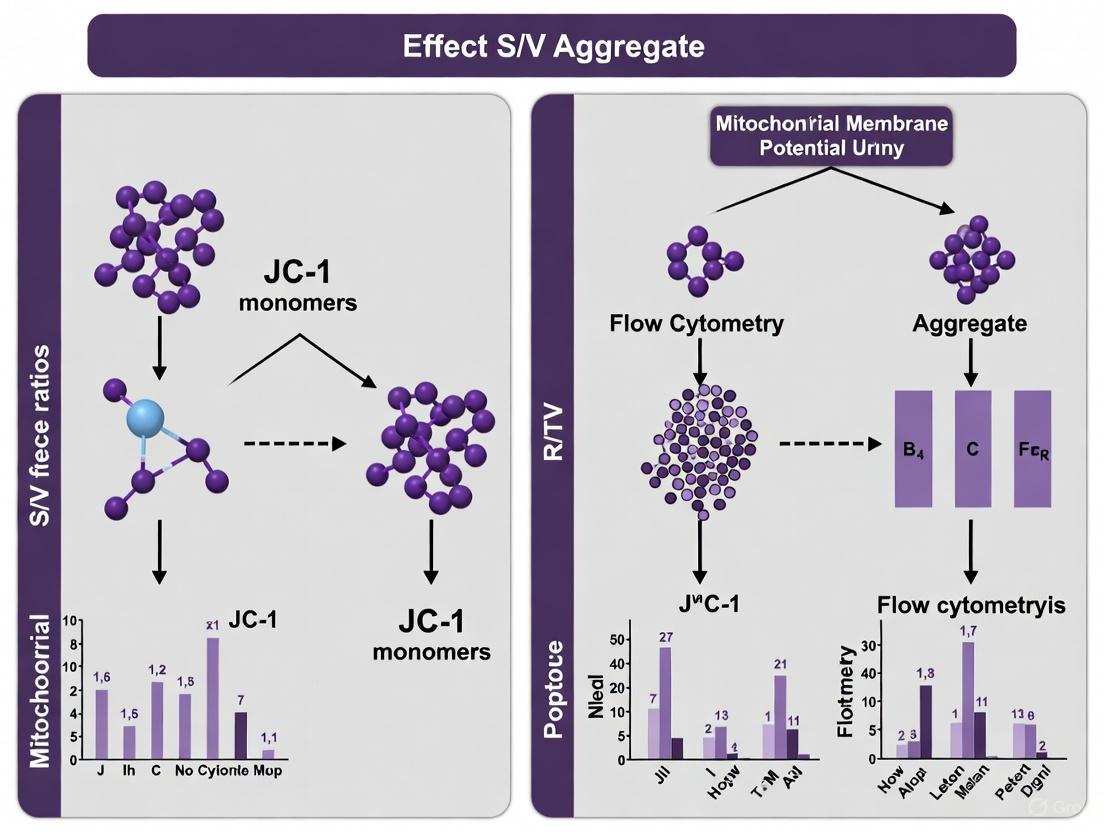
This article provides a comprehensive analysis of a critical yet often overlooked variable in mitochondrial research: the effect of surface-to-volume (S/V) ratios on JC-1 dye behavior.
Beyond the Membrane Potential: How Surface-to-Volume Ratios Impact JC-1 Aggregate Formation and Data Interpretation
Abstract
This article provides a comprehensive analysis of a critical yet often overlooked variable in mitochondrial research: the effect of surface-to-volume (S/V) ratios on JC-1 dye behavior. Aimed at researchers, scientists, and drug development professionals, we dissect the fundamental biophysics of JC-1 J-aggregate formation, which is not solely dependent on mitochondrial membrane potential (ΔΨm) but is also sensitive to physical constraints. The content explores methodological best practices for accurate ratiometric measurement, outlines common pitfalls and troubleshooting strategies for data optimization, and offers a comparative validation against alternative dyes like TMRM. By synthesizing foundational knowledge with advanced application guidelines, this resource empowers scientists to refine their protocols, enhance data reliability, and make more confident conclusions in studies of cellular health, apoptosis, and drug mechanisms.
The Biophysics of JC-1: Unraveling the Dual Dependence on Membrane Potential and Physical Confinement
JC-1 Dye FAQ: Core Principles and Mechanism
What is JC-1 and what does it measure? JC-1 (5,5',6,6'-tetrachloro-1,1',3,3'-tetraethylbenzimidazolylcarbocyanine iodide) is a lipophilic, cationic fluorescent dye used to monitor mitochondrial membrane potential (ΔΨM), a key indicator of mitochondrial health and function [1] [2]. It is widely used in apoptosis studies and for screening pharmacological agents [1].
What is the fundamental mechanism behind JC-1's function? The dye selectively enters the mitochondria due to the relative negative charge of the mitochondrial matrix [2]. Its unique property is its potential-dependent accumulation, which causes it to form different fluorescent complexes based on the membrane potential [1]:
- At low membrane potentials or low internal concentrations, JC-1 exists as a monomer that emits green fluorescence (emission max ~529 nm) [1].
- At high membrane potentials, the dye accumulates to a higher concentration within the mitochondria and forms "J-aggregates" that emit red fluorescence (emission max ~590 nm) [1].
Consequently, a decrease in the red/green fluorescence intensity ratio indicates mitochondrial depolarization, a common early event in apoptosis [1] [2].
Why is the red/green fluorescence ratio important? This ratio is a robust measure because it depends only on the membrane potential and is not influenced by other factors like mitochondrial size, shape, or density, which can affect single-component fluorescence signals [1]. It allows for comparative measurements and the determination of the percentage of mitochondria responding to a stimulus [1].
Troubleshooting Guide: Common Experimental Issues
| Problem | Possible Cause | Solution |
|---|---|---|
| High background or nonspecific staining | Formation of dye aggregates in aqueous solution due to poor solubility [3]. | Ensure JC-1 is properly dissolved in DMSO or DMF. Vortex well during addition to the cell suspension to ensure even distribution and prevent localized aggregation [3]. |
| Weak or absent red fluorescence (J-aggregates) in healthy cells | 1. JC-1 concentration is too low.2. Staining incubation time is too short.3. Mitochondrial membrane potential is compromised. | 1. Optimize dye concentration (e.g., 2-10 µM is common) and incubation time (e.g., 15-30 min at 37°C) for your specific cell type [2] [3].2. Include a healthy, untreated control. Validate protocol with a control that collapses ΔΨM, like CCCP or valinomycin [2]. |
| Poor separation between populations in flow cytometry | Significant spectral spillover of the green monomer fluorescence into the red (J-aggregate) detection channel when using 488 nm excitation [4]. | Apply fluorescence compensation (~12-30% of green signal subtracted from red channel is typical) [4] [3]. Consider using a flow cytometer with a 405 nm laser for J-aggregate excitation, which produces less spillover [4]. |
| Unexpected fluorescence changes not related to treatment | Changes in mitochondrial mass, not just membrane potential [3]. | Perform a parallel experiment using a mitochondrial mass-sensitive dye like Nonyl Acridine Orange (NAO), which binds mitochondria independently of their energization state, to confirm that observed effects are due to changes in ΔΨM and not organelle loss [3]. |
| Low signal-to-noise ratio | Cells are not healthy or staining is performed in suboptimal buffers. | Use a warm, complete culture medium (e.g., RPMI 1640 with 10% FCS) during the staining procedure. A small amount of serum is recommended to keep cells healthy during staining [3]. |
Essential Protocols and Controls
This protocol is designed for cells in suspension.
- Preparation: Reconstitute lyophilized JC-1 in DMSO to create a 200 µM stock solution immediately before use.
- Cell Preparation: Harvest and wash cells. Suspend cell pellet in 1 ml of warm culture medium or PBS at a density not exceeding 1 x 10⁶ cells/ml.
- Staining: Add 10 µl of the 200 µM JC-1 stock to 1 ml of cell suspension (final concentration: 2 µM). Incubate for 15-30 minutes at 37°C in the dark.
- Washing: Wash cells by adding 2 ml of warm PBS and centrifuge at 400 × g for 5 minutes. Remove the supernatant.
- Analysis: Resuspend the cell pellet in 400 µL of PBS and analyze immediately on a flow cytometer. Use 488 nm excitation and collect green fluorescence with a 530/30 nm bandpass filter (FITC channel) and red fluorescence with a 585/42 nm bandpass filter (PE channel) [1] [3].
Mandatory Controls for Valid Interpretation
- Negative Control (Unstained Cells): To assess cellular autofluorescence.
- Positive Control for Depolarization: Treat a separate sample of cells with a mitochondrial uncoupler such as 50 µM Carbonyl cyanide m-chlorophenyl hydrazone (CCCP) or 100 nM Valinomycin for 5-10 minutes at 37°C prior to JC-1 staining [2] [3]. This collapses the membrane potential, resulting in a loss of red fluorescence and an increase in green fluorescence, confirming the dye is functioning properly.
Experimental Workflow and Data Interpretation
JC-1 Staining and Analysis Workflow
The following diagram outlines the key steps for a JC-1 experiment, from sample preparation to data analysis.
| Parameter | Specification | Application Notes |
|---|---|---|
| Excitation (Monomer & J-aggregate) | 514 nm / 585 nm [1] | Standard 488 nm laser is commonly used, but 405 nm excitation reduces spectral spillover [4]. |
| Emission (Monomer) | 529 nm (Green) [1] | Detected in FITC/FL1 channel. |
| Emission (J-aggregate) | 590 nm (Red) [1] | Detected in PE/FL2 channel. |
| Typical Working Concentration | 2 - 10 µM [2] [3] | Must be optimized for different cell types. |
| Stock Solution Solvent | DMSO [2] | Vortex well when adding to aqueous solution. |
| Compatibility with Fixation | No [1] | Must be used on live cells. |
The Scientist's Toolkit: Key Reagents and Materials
| Item | Function / Purpose |
|---|---|
| JC-1 Dye | The core fluorescent probe for detecting changes in mitochondrial membrane potential [1]. |
| Dimethyl Sulfoxide (DMSO) | Standard solvent for preparing a concentrated stock solution of JC-1 [2]. |
| Carbonyl cyanide m-chlorophenyl hydrazone (CCCP) | A mitochondrial uncoupler used as a positive control to collapse the mitochondrial membrane potential and validate the assay [2]. |
| Valinomycin | A K⁺ ionophore used as a positive control to induce mitochondrial depolarization [4] [3]. |
| Nonyl Acridine Orange (NAO) | A mitochondrial dye that binds cardiolipin independently of membrane potential; used as a control to measure mitochondrial mass [3]. |
| MitoProbe JC-1 Assay Kit | An optimized kit from Thermo Fisher Scientific that includes JC-1 dye, CCCP, and buffers, pre-optimized for flow cytometry [1]. |
Defining Surface-to-Volume (S/V) Ratios in Cellular and Mitochondrial Contexts
FAQs: Fundamental Concepts of S/V Ratios
Q1: What is a Surface-to-Volume (S/V) Ratio and why is it a critical parameter in biological research? The Surface-to-Volume (S/V) Ratio is the ratio between the surface area and volume of an object or a collection of objects [5]. In biology, this ratio is a fundamental concept that governs the efficiency of processes occurring across surfaces, such as nutrient uptake, waste expulsion, heat exchange, and diffusion rates [5] [6]. A high S/V ratio (more surface per unit volume) facilitates faster diffusion and more efficient exchange of materials and energy with the environment [5].
Q2: How does the S/V ratio change with the size of an object? For a given shape, the S/V ratio is inversely proportional to its size [5]. As an object grows larger, its volume increases faster than its surface area. This is why smaller objects, like small cells or mitochondria, have a higher S/V ratio, which supports more rapid metabolic exchange. The table below illustrates this principle using cubes of increasing size.
Table: Effect of Object Size on Surface-to-Volume Ratio
| Length of a Side (mm) | Surface Area (mm²) | Volume (mm³) | S/V Ratio (mm⁻¹) |
|---|---|---|---|
| 1 | 6 | 1 | 6.00 |
| 2 | 24 | 8 | 3.00 |
| 3 | 54 | 27 | 2.00 |
| 4 | 96 | 64 | 1.50 |
| 5 | 150 | 125 | 1.20 |
Q3: What is the specific relevance of the S/V ratio in mitochondrial biology? The mitochondrial S/V ratio is a key indicator of the organelle's structural and functional state [7]. The inner mitochondrial membrane houses the protein complexes responsible for oxidative phosphorylation (OXPHOS). The total cristae surface area, determined by both the mitochondrial volume and its internal S/V ratio, sets the maximal capacity for aerobic ATP production [8]. A decrease in the S/V ratio, often due to swelling, is a recognized parameter of mitochondrial dysfunction and a hallmark of ischemic injury in conditions like myocardial infarction [7].
Troubleshooting Guide: S/V Ratios and JC-1 Assays
Problem 1: Inconsistent or Weak JC-1 J-Aggregate (Red) Fluorescence Signal
- Potential Cause: Suboptimal mitochondrial S/V ratio or swelling. Mitochondrial swelling decreases the internal dye concentration, favoring the monomeric (green) form over J-aggregates [7] [1].
- Solution:
- Validate Mitochondrial Integrity: Use independent methods, such as electron microscopy, to assess mitochondrial morphology and confirm that swelling is not occurring under your experimental conditions [7].
- Optimize Staining Concentration: Titrate the JC-1 concentration (typically 2-5 µM) to ensure it is sufficient to form J-aggregates in healthy, polarized mitochondria without causing background or self-quenching [9] [1].
- Include Controls: Always run a positive control with a mitochondrial uncoupler like FCCP or CCCP to confirm the loss of red fluorescence is due to depolarization [10] [1].
Problem 2: Excessive Spillover of Green Fluorescence into the Red Detection Channel
- Potential Cause: Spectral overlap is a known challenge when using 488 nm excitation, as JC-1 monomers excited at this wavelength have significant emission at 585 nm, which can be mistaken for J-aggregate signal [10].
- Solution:
- Use Alternative Excitation Wavelengths: If your instrument is equipped with a 405 nm violet laser, use it to excite JC-1. Excitation at 405 nm produces J-aggregate signals with considerably less spillover from monomer fluorescence [10].
- Apply Accurate Compensation: When using 488 nm excitation, you must perform fluorescence compensation. Use a valinomycin or FCCP-treated sample (containing only monomers) to determine the correct percentage of green signal to subtract from the red channel [10].
Problem 3: High Background or Non-Specific Staining
- Potential Cause: JC-1 dye can form non-specific aggregates or precipitate in aqueous solution, or the dye concentration may be too high [11].
- Solution:
- Prepare Fresh Working Solutions: Always prepare JC-1 dye immediately before use from a concentrated DMSO stock. Do not store diluted dye solutions.
- Optimize Loading and Washing: After the staining incubation (typically 15-30 minutes at 37°C), gently wash the cells with buffer to remove excess dye that has not entered the mitochondria [1].
Essential Experimental Protocols
Protocol 1: Calculating S/V Ratios for Basic Geometries
This protocol is essential for modeling and understanding S/V principles.
- Calculate Surface Area (SA): Use the geometric formula for the object.
- Sphere: SA = 4πr²
- Cube: SA = 6 * side²
- Cylinder: SA = (2πr²) + (2πr*height)
- Calculate Volume (V): Use the corresponding volume formula.
- Sphere: V = (4/3)πr³
- Cube: V = side³
- Cylinder: V = πr²*height
- Compute Ratio: Divide the Surface Area by the Volume (SA/V) [5] [6].
Protocol 2: Flow Cytometric Analysis of Mitochondrial Membrane Potential using JC-1
This is a standard method for quantifying mitochondrial health in cell populations.
- Cell Preparation: Harvest and wash cells in PBS or appropriate buffer. Adjust cell concentration to 1-5 x 10⁶ cells/mL.
- Staining: Resuspend cells in pre-warmed culture medium or buffer. Add JC-1 dye to a final concentration of 2-5 µM. Incubate for 15-30 minutes at 37°C in the dark [10] [1].
- Washing: Centrifuge cells to remove supernatant and gently resuspend in fresh, pre-warmed buffer.
- Flow Cytometry Analysis:
- Excitation: Use 488 nm laser.
- Emission Detection: Collect green (monomer) fluorescence with a ~530 nm filter (e.g., FITC) and red (J-aggregate) fluorescence with a ~590 nm filter (e.g., PE) [1].
- Gating and Analysis: Analyze the population using a dot plot of Red (PE) vs. Green (FITC) fluorescence. Healthy cells with high ΔΨm will have high red and moderate green fluorescence. Depolarized cells will show low red and high green fluorescence [1].
Diagram 1: Workflow for JC-1 Assay by Flow Cytometry.
The Scientist's Toolkit: Key Research Reagent Solutions
Table: Essential Reagents for Mitochondrial Membrane Potential Studies
| Reagent / Kit Name | Function / Application | Key Features |
|---|---|---|
| JC-1 Dye (Bulk Chemical) [1] | Ratiometric indicator for mitochondrial membrane potential (ΔΨm) in imaging and flow cytometry. | Forms red fluorescent J-aggregates in energized mitochondria; emits green fluorescence as monomer when depolarized. |
| MitoProbe JC-1 Assay Kit [1] | Optimized kit for flow cytometric analysis of ΔΨm. | Includes JC-1, DMSO, CCCP (uncoupler control), and buffer for standardized protocols. |
| Valinomycin / CCCP / FCCP [10] [1] | Chemical uncouplers that collapse the proton gradient and depolarize mitochondria. | Essential controls for validating JC-1 assay specificity and for setting fluorescence compensation. |
| Rhodamine 123 (Rh123) [9] | Single-emission, non-ratiometric fluorescent dye for ΔΨm. | Qualitative indicator; less sensitive to ΔΨm changes and prone to self-quenching compared to JC-1. |
| MitoTracker Probes [8] | Cell-permeant probes that label mitochondria regardless of membrane potential. | Useful for assessing mitochondrial mass, localization, and abundance. |
Data Presentation: Quantitative S/V and JC-1 Reference Tables
Table: Mitochondrial S/V Ratio as an Indicator of Structural Integrity [7]
| Surface to Volume Ratio (SVratioMi) (µm²/µm³) | Associated Mitochondrial Morphology |
|---|---|
| ~5.8 | Loss of matrix structure and fragmentation of cristae begin. |
| 5.5 to 5.6 | Cristolysis (breakdown of cristae) occurs. |
| <5.5 | Formation of amorphous matrix densities. |
Table: Spectral Properties of JC-1 Dye [10] [1] [11]
| JC-1 Form | Excitation Max (nm) | Emission Max (nm) | Fluorescence Color | Indicates |
|---|---|---|---|---|
| Monomer | 514 (488 common) | 529 | Green | Low ΔΨm / Depolarization |
| J-Aggregate | 585 (488, 405 common) | 590 | Red | High ΔΨm / Polarized |
Diagram 2: Relationship between S/V Ratio, Membrane Potential, and JC-1 Signal.
Technical Support & Troubleshooting Hub
Frequently Asked Questions (FAQs)
FAQ 1: My positive control (e.g., CCCP-treated cells) shows a weaker red fluorescence decrease than expected. What could be wrong? This is a common issue often linked to dye concentration and S/V ratios. First, ensure you are using a freshly prepared JC-1 stock solution and that the final working concentration is optimized for your specific cell type. Adherent cells with large cytoplasmic volumes or elongated mitochondria may require a higher JC-1 concentration to achieve the critical threshold for J-aggregate formation in the mitochondrial matrix. If the initial JC-1 concentration is too low, even healthy, polarized mitochondria may not accumulate enough dye to form red fluorescent J-aggregates, leading to a false positive for depolarization [12] [10].
FAQ 2: I observe heterogeneous JC-1 staining within a single cell population—some cells are bright red, while others are mostly green. Does this always indicate a difference in health? Not necessarily. While this can indicate true physiological heterogeneity in mitochondrial membrane potential (ΔΨm) [9] [13], it can also be an artifact of variable S/V ratios within your population. Cells that are smaller or have a more compact morphology have a higher S/V ratio, which can lead to more efficient efflux of the JC-1 dye if they express transporters like P-glycoprotein (P-gp). This can prevent the dye from reaching the critical concentration needed for aggregation, falsely suggesting depolarization [14]. Always confirm findings using an alternative assay or a P-gp inhibitor like Tariquidar if MDR activity is suspected [14].
FAQ 3: When I switch from a suspension cell line to a primary adherent cell culture, my JC-1 red/green ratio drops significantly. Is my primary culture unhealthy? Not necessarily. This is a classic sign of S/V ratio influence. Primary adherent cells are often larger and flatter, resulting in a lower S/V ratio and a larger cytoplasmic volume. The same JC-1 concentration that worked for suspension cells might now be insufficient to reach the critical concentration for J-aggregate formation in the enlarged mitochondrial matrix of the primary cells. We recommend performing a JC-1 concentration gradient experiment to re-optimize the dye loading for the new cell type [9] [12].
Troubleshooting Guide
| Problem | Potential Cause | Solution |
|---|---|---|
| Weak or No Red J-Aggregate Signal | JC-1 concentration too low for the cell type's S/V ratio. | Titrate JC-1 concentration (e.g., test 1-10 µM); increase incubation time (15-60 min) [9] [2]. |
| High Background Green Fluorescence | JC-1 concentration is too high, leading to non-specific monomer accumulation. | Reduce JC-1 loading concentration; ensure thorough washing after staining [1] [2]. |
| Inconsistent Staining Between Cell Lines | Differing S/V ratios or expression of multidrug transporters (e.g., P-gp). | Re-optimize protocol for each cell line; use P-gp inhibitors (e.g., Tariquidar) for MDR-positive cells [14]. |
| Poor Response to Uncoupler (e.g., CCCP) | Dye has not reached equilibrium; J-aggregates are slow to dissipate. | Confirm uncoupler potency; allow sufficient time after uncoupler addition (15-30 min) for dye redistribution [12] [10]. |
| Significant Spectral Overlap in Flow Cytometry | Spillover of green monomer fluorescence into the red detection channel. | Use 405 nm excitation if available [10]; or apply fluorescence compensation (e.g., 18-30%) [10] [14]. |
Core Scientific Principles: S/V Ratios and the JC-1 Aggregation Threshold
The fundamental principle is that the formation of red fluorescent J-aggregates is a concentration-dependent phenomenon within the mitochondria. The S/V ratio is a critical, often overlooked, variable that directly controls the local concentration that JC-1 can achieve.
- The Aggregation Threshold: JC-1 exists as a green fluorescent monomer at low concentrations. Only when its local concentration inside a mitochondrion exceeds a critical threshold (reported in aqueous solutions above ~0.1 µM) does it form red fluorescent J-aggregates [1].
- S/V Ratio as a Driver: The S/V ratio impacts the kinetics and efficiency of JC-1 uptake. A higher S/V ratio (e.g., in small or rounded cells) typically allows for faster dye accumulation, potentially leading to an overestimation of ΔΨm if the dye concentration is not carefully controlled. Conversely, a low S/V ratio (e.g., in large, flat cells) can slow accumulation and prevent the dye from reaching the aggregation threshold, even in fully energized mitochondria, leading to a false depolarization signal [12].
- Impact on Data Interpretation: The table below summarizes how S/V-related issues can manifest and be corrected.
Table: Interpreting and Correcting for S/V Ratio Effects in JC-1 Assays
| Observation | Incorrect Interpretation | Correct Interpretation & Action |
|---|---|---|
| Peripheral mitochondria appear red, perinuclear ones appear green. | Peripheral mitochondria are "healthier." | Dye concentration may be sub-optimal; perinuclear mitochondria may have different S/V or less dye access. Titrate JC-1 [9]. |
| Small cells in a population show brighter red fluorescence than larger cells. | Small cells have a higher ΔΨm. | S/V ratio is higher in small cells, concentrating the dye more efficiently. Use ratiometric measurement and control for size [12]. |
| A new cell type shows only green fluorescence despite viability. | The cells are apoptopic/unhealthy. | The JC-1 protocol is not optimized for the new cell's S/V. Re-optimize dye concentration and loading time [2]. |
Standardized Experimental Protocols
Protocol 1: Optimizing JC-1 Staining for Adherent Cells with Low S/V Ratios
This protocol is designed for challenging cells like primary neurons or astrocytes, which are large and flat.
- Cell Preparation: Plate cells on Matrigel-coated glass coverslips and culture until they display fully pronounced processes [9].
- JC-1 Stock Solution: Prepare a fresh 200 µM JC-1 stock solution in DMSO. Mix until clear and fully dissolved [2].
- Staining Optimization: Create a JC-1 working concentration gradient. For low S/V ratio cells, test a range of 5-10 µM. Add the dye to pre-warmed cell culture medium and incubate cells for 30-45 minutes at 37°C, 5% CO₂ [9].
- Washing: Gently rinse cells twice with warm PBS or serum-free culture medium to remove non-specific monomer fluorescence.
- Image Acquisition: Image cells immediately using a ratiometric high-resolution imaging system. Excite at 490 nm and collect emissions at ~529 nm (green, monomers) and ~590 nm (red, aggregates) using an optical splitter [9].
Protocol 2: Flow Cytometry Protocol with P-gp Inhibition
This protocol is crucial for accurate analysis of cell populations with potential MDR activity.
- Harvest Cells: Gently trypsinize and harvest adherent cells. Suspend in warm PBS at a density of ~1 x 10⁶ cells/ml [2] [14].
- Inhibition (if needed): Pre-incubate cell samples with 0.5 µM Tariquidar (a high-affinity P-gp inhibitor) or a vehicle control for 15-30 minutes [14].
- Staining: Add JC-1 dye to a final concentration of 2 µM. Incubate for 15-30 minutes at 37°C [2] [14].
- Positive Control: Treat one sample with 50 µM CCCP for 5 minutes to depolarize mitochondria [2].
- Wash and Analyze: Wash cells once with warm PBS, centrifuge, and resuspend in fresh buffer. Analyze on a flow cytometer using 488 nm excitation and standard FITC (530/30 nm) and PE (585/42 nm) filters. Apply necessary fluorescence compensation (typically 18-30%) as determined using the CCCP-treated sample [10] [14].
Visualization of Core Concepts
Diagram: S/V Ratio Impact on JC-1 Aggregate Formation
The Scientist's Toolkit: Essential Research Reagents
Table: Key Reagents for JC-1 Assays and Their Functions
| Reagent | Function/Description | Key Consideration |
|---|---|---|
| JC-1 Dye | Cationic, lipophilic fluorescent dye used as the primary ΔΨm sensor. | Form J-aggregates (red) at high potentials/concentrations and monomers (green) at low potentials/concentrations [1]. |
| Carbonyl cyanide m-chlorophenyl hydrazone (CCCP) | Protonophore and mitochondrial uncoupler. Used as a positive control for complete mitochondrial depolarization. | Collapses ΔΨm, causing a shift from red J-aggregates to green monomers [2]. |
| Tariquidar | High-affinity, non-competitive inhibitor of the P-glycoprotein (P-gp/ABCB1) drug transporter. | Prevents P-gp mediated efflux of JC-1, ensuring proper mitochondrial loading in MDR-positive cells [14]. |
| Valinomycin | Potassium ionophore that collapses the mitochondrial membrane potential. | An alternative positive control uncoupler; useful for flow cytometry optimization and compensation [10]. |
| Dimethyl Sulfoxide (DMSO) | Standard solvent for preparing stock solutions of JC-1 and other reagents. | Ensure final concentration in culture medium is ≤0.2% to avoid cellular toxicity [9]. |
| SB216763 | Glycogen synthase kinase-3β (GSK-3β) inhibitor studied for its mitoprotective effects. | Note: This compound has intrinsic fluorescence that can interfere with JC-1's green channel and requires spectral deconvolution [15]. |
JC-1 (5,5′,6,6′-tetrachloro-1,1′,3,3′-tetraethylbenzimidazolylcarbocyanine iodide) is a lipophilic, cationic fluorescent dye widely used for monitoring mitochondrial membrane potential (ΔΨm) [9] [2]. Its unique potential-dependent behavior allows for a ratiometric readout, which is a significant advantage over single-wavelength dyes. In energized mitochondria with high ΔΨm (typically more negative than -140 mV), JC-1 accumulates in the mitochondrial matrix and forms J-aggregates that emit red fluorescence (∼590 nm) [9]. In depolarized mitochondria with low ΔΨm, JC-1 exists predominantly as monomers that emit green fluorescence (∼529 nm) [2] [1]. Consequently, the red/green fluorescence intensity ratio provides a quantitative measure of ΔΨm that is theoretically independent of mitochondrial size, shape, and density [9] [1].
Table 1: Key Spectral Properties of JC-1 Fluorescent Forms
| Fluorescent Form | Excitation Maxima (nm) | Emission Maxima (nm) | Associated ΔΨm State |
|---|---|---|---|
| Monomer | ~514/490 [1] [9] | ~529 [1] | Low (Depolarized) |
| J-aggregate | ~485-585 [1] | ~590 [9] [1] | High (Polarized) |
The Problem: Surface-to-Volume (S/V) Ratios and Aggregate Kinetics
The central issue is that the formation of JC-1 J-aggregates is not solely dependent on ΔΨm; it is also a concentration-dependent process that occurs at high intra-mitochondrial dye concentrations [12] [1]. The dye accumulates in the mitochondrial matrix driven by the electrical potential, and once a critical concentration threshold is surpassed, J-aggregates form.
The kinetics of JC-1 accumulation and aggregation are slow relative to other dyes [12]. Crucially, a mitochondrion's surface-to-volume (S/V) ratio directly influences how quickly this critical concentration is achieved, independent of the underlying ΔΨm. Mitochondria with a low S/V ratio (large, swollen) have a larger volume. Even with a robust ΔΨm driving dye influx, it takes longer for the dye to reach the critical concentration required for aggregation in a larger volume. Conversely, mitochondria with a high S/V ratio (small, fragmented) have a smaller volume. Here, the dye can reach the critical concentration for J-aggregation much more rapidly [12].
Therefore, in an experiment comparing heterogeneous mitochondrial populations, a mitochondrion with a high S/V ratio might display a higher red/green ratio not because it has a more negative ΔΨm, but simply because its smaller volume allows for faster J-aggregate formation. This can lead to a systematic misrepresentation of the true ΔΨm, falsely implying hyperpolarization in smaller mitochondria [12].
Figure 1: How S/V Ratio Artificially Alters JC-1 Signal. Mitochondria with identical ΔΨm can show different fluorescence due to volume-dependent aggregation kinetics.
Troubleshooting Guide: Identifying and Mitigating S/V Artifacts
Problem: Inconsistent or misleading red/green ratios between different cell types or mitochondrial populations.
| Observed Issue | Potential Root Cause | Recommended Solutions & Verification Experiments |
|---|---|---|
| Smaller mitochondria consistently show higher red/green ratios without a corresponding bioenergetic explanation. | Dye accumulation and J-aggregate formation kinetics are biased by S/V ratio differences [12]. | 1. Validate with a kinetic assay: Monitor the JC-1 signal over an extended period (e.g., 30-60 minutes). If the ratio differences diminish with longer incubation times, it suggests a kinetic artifact [12]. 2. Use a concentration control: Titrate the JC-1 concentration. Artifacts are more pronounced at sub-optimal or high concentrations. 3. Correlate with morphology: Use a ΔΨm-independent mitochondrial stain (e.g., MitoTracker Green) to quantify and correlate S/V ratios with the JC-1 signal. |
| High background green fluorescence or weak red signal, even in control cells. | JC-1 concentration may be too low, preventing J-aggregate formation even in polarized mitochondria. Alternatively, incubation time may be insufficient for equilibrium [16]. | 1. Optimize dye loading: Increase JC-1 concentration or incubation time. Follow established protocols (e.g., 2-10 µM for 15-30 min at 37°C) [2] [1]. 2. Include a positive control: Always treat a sample with a depolarizing agent like CCCP/FCCP (10-50 µM) to confirm the loss of red fluorescence and increase in green [2] [17]. |
| Red particulate crystals in the JC-1 working solution. | JC-1 has limited solubility in aqueous buffers. Precipitation prevents proper cellular uptake [16]. | 1. Ensure proper preparation: Always prepare a fresh stock solution in DMSO first, then dilute in buffer [16]. 2. Promote dissolution: Warm the working solution in a 37°C water bath or briefly use a sonicator to fully dissolve the dye before application [16]. |
Detailed Experimental Protocol for Validating JC-1 Measurements
This protocol is designed to specifically control for S/V ratio effects and ensure accurate ΔΨm assessment.
A. Cell Staining and Imaging [9] [1] [17]
- Culture and Prepare Cells: Use live cells, as fixation is not compatible with JC-1 [16]. Grow adherent cells on glass-bottom dishes or prepare cells in suspension.
- Prepare JC-1 Working Solution:
- Create a 200 µM stock solution by reconstituting lyophilized JC-1 in high-quality DMSO.
- Dilute the stock in pre-warmed (37°C) cell culture medium or PBS to a final concentration of 2-5 µM. Protect from light.
- Dye Loading:
- Washing and Imaging:
- Gently wash cells twice with warm assay buffer to remove non-specific dye.
- Keep cells in a dye-free buffer for imaging. For some applications, the dye can be kept in the bath to prevent redistribution [12].
- Image immediately using a fluorescence microscope equipped with FITC/TRITC filter sets or a confocal/two-photon microscope. Capture green and red channels simultaneously or sequentially.
B. Controls and Parallel Assays [2] [12] [17]
- Positive Control (Depolarization): Treat a separate sample with 10-50 µM CCCP (or FCCP) for 5-20 minutes at 37°C after JC-1 loading. This uncouples oxidative phosphorylation and collapses ΔΨm, resulting in a loss of red J-aggregate fluorescence and a strong increase in green monomer fluorescence [2] [17].
- Negative Control (Viable Cells): Untreated, healthy cells should display a punctate red fluorescence pattern (mitochondrial) with minimal diffuse green cytosolic signal.
- Morphological Correlation: Co-stain cells with a ΔΨm-independent mitochondrial marker (e.g., MitoTracker Green) in a separate experiment to quantify mitochondrial volume and S/V ratios.
Figure 2: JC-1 Experimental Workflow with Key Controls. The workflow highlights the critical staining and control steps needed for reliable results.
Frequently Asked Questions (FAQs)
Q1: My JC-1 working solution has red particulate crystals. What should I do? A: This indicates JC-1 precipitation due to its limited solubility in aqueous solutions. To resolve this, ensure the working solution is prepared by first dissolving JC-1 in DMSO before diluting in buffer. Gently warm the solution in a 37°C water bath or use brief sonication to promote dissolution before use [16].
Q2: Can I use JC-1 on tissue samples or fixed cells? A: JC-1 requires live, metabolically active cells for accurate ΔΨm measurement. It is not compatible with fixed cells, as fixation permeabilizes membranes and dissipates ΔΨm [16]. For tissues, you must first prepare a single-cell suspension, being cautious that the dissociation process itself can artifactually alter ΔΨm. Alternatively, mitochondria can be extracted from the tissue prior to JC-1 staining [16].
Q3: After JC-1 staining, I cannot analyze my samples immediately. Can I fix them for later analysis? A: No. JC-1 is a live-cell dye. Fixation will kill the cells, cause dye leakage, and destroy the potential-dependent signal. You must analyze the samples immediately (ideally within 30 minutes) after staining and washing [16].
Q4: Are there alternative dyes to JC-1 that are less susceptible to S/V ratio artifacts? A: Yes. Dyes like TMRM and TMRE are less prone to concentration-dependent aggregation and may be preferable for detecting acute, dynamic changes in ΔΨm, especially in systems with heterogeneous mitochondrial populations [12]. Rhodamine 123 is another option, particularly useful in quenching mode for fast-resolution studies [12].
Table 2: Comparison of Common ΔΨm Probes
| Probe Name | Best Use Case | Key Advantages | Key Limitations/Vulnerabilities |
|---|---|---|---|
| JC-1 | Apoptosis studies; "Yes/No" discrimination of polarization state by flow cytometry or microscopy [12]. | Ratiometric (red/green) measurement; reduces artifacts from dye loading & mitochondrial density [9] [1]. | Vulnerable to S/V ratio artifacts; slow equilibration; sensitive to concentration and load time [12]. |
| TMRM / TMRE | Measuring pre-existing ΔΨm; slow, acute studies in non-quenching mode [12]. | Low mitochondrial binding; minimal inhibition of electron transport chain (ETC); fast equilibration [12]. | Single-emission (non-ratiometric); signal depends on mitochondrial density and dye loading. |
| Rhodamine 123 | Fast, acute studies in quenching mode [12]. | Slow permeation makes quenching/unquenching easier to observe; slightly less ETC inhibition than TMRE [12]. | Fluorescence response is highly non-linear; qualitative rather than quantitative [9]. |
The Scientist's Toolkit: Key Research Reagent Solutions
Table 3: Essential Reagents and Kits for JC-1-based ΔΨm Analysis
| Reagent / Kit Name | Supplier Examples | Function & Application Notes |
|---|---|---|
| JC-1 (bulk chemical) | Thermo Fisher Scientific (Cat. T3168) [1] | The core dye for custom assay development. Suitable for both imaging and flow cytometry. |
| MitoProbe JC-1 Assay Kit | Thermo Fisher Scientific (Cat. M34152) [2] [1] | Optimized for flow cytometry. Includes JC-1, DMSO, CCCP (depolarizing control), and buffer. |
| JC-1 Mitochondrial Membrane Potential Assay Kit | Abcam (Cat. ab113850) [17] | Designed for fluorescence microplate readers. Includes FCCP as a control for depolarization. |
| Carbonyl Cyanide m-chlorophenyl hydrazone (CCCP/FCCP) | Various (e.g., Tocris, Sigma-Aldrich) [9] [2] [17] | Protonophore uncoupler of oxidative phosphorylation. Critical positive control for collapsing ΔΨm. |
| Dimethyl Sulfoxide (DMSO) | Cell culture tested grade from various suppliers [2] | High-quality solvent for preparing JC-1 stock solutions. Essential for proper dye dissolution. |
| MitoTracker Green FM | Thermo Fisher Scientific | A ΔΨm-insensitive green-fluorescent mitochondrial stain. Useful for quantifying mitochondrial mass and morphology independently of potential. |
Distinguishing True Depolarization from Artifacts Caused by Morphological Changes
FAQs
1. What is the fundamental principle that allows JC-1 to distinguish between energized and depolarized mitochondria? JC-1 is a lipophilic, cationic dye that accumulates in mitochondria in a membrane potential (ΔΨM)-dependent manner. In healthy, energized mitochondria with a high ΔΨM, the dye accumulates and forms "J-aggregates," which fluoresce red (emission maximum ~590 nm). In depolarized mitochondria, the dye concentration is insufficient for aggregation, remaining as monomers that fluoresce green (emission maximum ~527 nm). The red/green fluorescence intensity ratio is a direct measure of ΔΨM and is independent of mitochondrial size, shape, or density [2] [1].
2. How can changes in cell or mitochondrial morphology be mistaken for true depolarization? While the JC-1 ratio is robust against morphological changes, any experimental factor that physically prevents the dye from reaching its optimal intra-mitochondrial concentration can mimic depolarization. A primary concern is an increase in the surface-to-volume (S/V) ratio of the cells or mitochondria in a sample. A higher S/V ratio can lead to an overall dilution of the JC-1 dye, preventing the formation of red fluorescent J-aggregates even if the ΔΨM is normal. This results in a lower red/green ratio, creating a false-positive readout for mitochondrial depolarization [2] [1].
3. What are the critical controls to include in an experiment to rule out artifact-induced depolarization? Every experiment must include a positive control using a mitochondrial uncoupler to confirm that a measured decrease in the red/green ratio is due to genuine depolarization. Treating cells with agents like Carbonyl cyanide m-chlorophenyl hydrazone (CCCP) or Carbonyl cyanide-4-phenylhydrazone (FCCP) (typically at 50 µM) should collapse the ΔΨM, resulting in a definitive loss of red fluorescence and an increase in green fluorescence. If the uncoupler treatment does not produce a more significant change in the ratio than your experimental condition, the result is likely an artifact [2] [1] [18].
4. My positive control with CCCP still shows a red signal. What could be wrong? A persistent red signal after CCCP treatment often indicates incomplete depolarization. This can be due to an insufficient concentration of the uncoupler, an inadequate incubation time, or the re-establishment of the membrane potential during the washing steps. Re-optimize your protocol by preparing a fresh stock of CCCP, increasing the incubation time (e.g., from 5 to 15 minutes), and analyzing the cells immediately after staining without a wash step [2] [10].
5. I suspect fluorescence spillover (bleed-through) is affecting my ratio measurement. How can I address this? Spillover, where the green monomer signal is detected in the red channel, is a common issue, especially with 488 nm excitation. You can resolve this in two ways. First, on a flow cytometer, apply fluorescence compensation; use a sample treated with CCCP (which contains only monomers) to set the appropriate compensation level [10]. Second, if your instrument is equipped, use alternative excitation. Exciting JC-1 at 405 nm produces a red J-aggregate signal with considerably less spillover from the green monomer, eliminating the need for compensation and providing more accurate data [10].
6. Can other reagents in my experiment interfere with the JC-1 signal? Yes. Some pharmacological inhibitors can have intrinsic fluorescence that contaminates the JC-1 channels. For example, the GSK-3β inhibitor SB216763 emits fluorescence across a broad spectrum (500-650 nm), which can lead to a false depolarization signal. In such cases, advanced techniques like spectral deconvolution are required to unmix the individual fluorescence contributions and obtain a clean JC-1 signal [15].
Troubleshooting Guide
Common Experimental Artifacts and Solutions
| Artifact/Symptom | Possible Cause | Recommended Solution |
|---|---|---|
| High background or low signal | Excessive dye concentration; inner filter effect; photobleaching [19] [20]. | Titrate JC-1 concentration (start at 2 µM); ensure dye is fully dissolved in DMSO; protect samples from light. |
| Unexpectedly low red/green ratio | True depolarization; Artifact from high S/V ratio; Unoptimized dye loading [2] [1]. | Include a CCCP positive control; standardize cell density and preparation; confirm staining incubation time/temperature (15-30 min, 37°C). |
| Poor separation in flow cytometry | Fluorescence spillover from green into red channel [10]. | Apply electronic compensation using a CCCP-treated control; switch excitation to 405 nm if available. |
| Inconsistent results between replicates | Inconsistent cell handling; Dye precipitation; Variable CCCP activity [2]. | Use fresh, warm buffers; vortex JC-1 stock before use; aliquot and freeze CCCP stocks; avoid repeated freeze-thaw cycles. |
| False red signal in controls | Inhibitor fluorescence (e.g., SB216763) [15]. | Perform spectral deconvolution or use a control stained with the inhibitor but without JC-1. |
Quantitative Data for Experimental Parameters
Table 1: Key Reagent Concentrations and Properties
| Reagent | Function | Typical Working Concentration | Spectral Properties (Ex/Em) | Key Note |
|---|---|---|---|---|
| JC-1 Dye | ΔΨM-dependent fluorescent probe | 2 - 5 µM [2] [1] | Monomer: 514/529 nm [1]J-aggregate: 514/590 nm [1] | Prepare fresh stock in DMSO for each experiment. |
| CCCP | Mitochondrial uncoupler (Positive Control) [2] [18] | 50 µM [2] | N/A | Use to validate depolarization; prepare fresh. |
| FCCP | Mitochondrial uncoupler (Positive Control) [18] | 1 - 10 µM [18] | N/A | Functionally similar to CCCP. |
| Valinomycin | K+ ionophore (Positive Control) [10] | 1 µM [10] | N/A | Collapses ΔΨM by K+ transport. |
| SB216763 | GSK-3β Inhibitor (Interfering Compound) [15] | 12 µM [15] | Broad emission (500-650 nm) [15] | Intrinsic fluorescence requires spectral deconvolution. |
Table 2: Optimized Protocol Parameters for Different Platforms
| Step / Parameter | Flow Cytometry | Fluorescence Microscopy | Fluorescence Plate Reader |
|---|---|---|---|
| JC-1 Concentration | 2 µM [2] [1] | 5 µM [1] | 2 - 5 µM |
| Staining Duration | 15-30 min at 37°C [2] [1] | 15-30 min at 37°C [1] | 15-30 min at 37°C |
| Excitation Wavelength | 488 nm or 405 nm [10] | 488 nm (FITC/TRITC filters) [1] | 485-510 nm (Monomer)540-570 nm (Aggregate) |
| Emission Detection | 530 nm (Green)585 nm (Red) [2] [1] | 527 nm (Green)590 nm (Red) [2] [1] | 530 nm (Green)590 nm (Red) |
| Critical Control | CCCP-treated cells for compensation & gating [10] | CCCP-treated cells to confirm signal loss [1] | CCCP-treated wells to define baseline ratio |
The Scientist's Toolkit: Research Reagent Solutions
Table 3: Essential Reagents and Kits for JC-1-Based Research
| Item | Function / Description | Example Catalog Number |
|---|---|---|
| JC-1 Dye (bulk) | Ratiometric, ΔΨM-sensitive dye for imaging and flow cytometry [1]. | T3168 (Thermo Fisher) [1] |
| MitoProbe JC-1 Assay Kit | Optimized kit for flow cytometry, includes JC-1, DMSO, and CCCP [2] [1]. | M34152 (Thermo Fisher) [2] [1] |
| Carbonyl cyanide m-chlorophenyl hydrazone (CCCP) | Protonophore used as a positive control to depolarize mitochondria fully [2]. | M34152 (included in kit) [2] |
| Tetramethylrhodamine, Methyl Ester (TMRM) | Single-emission, ΔΨM-sensitive dye; alternative for dynamic studies [18]. | N/A |
| Annexin V Conjugates | Used in multiplex assays to correlate ΔΨM loss with early apoptosis markers [15] [1]. | N/A |
Experimental Protocols
Protocol 1: Standard JC-1 Staining for Flow Cytometry
This protocol is designed for cells in suspension and includes steps to control for artifacts [2] [1].
Preparation:
- Harvest and wash cells, resuspending them in warm culture medium or PBS at a density not exceeding 1 x 10^6 cells/mL.
- Prepare a fresh 200 µM JC-1 stock solution by reconstituting lyophilized dye with DMSO. Mix until the solution is clear.
Staining:
- Add 10 µL of the 200 µM JC-1 stock per 1 mL of cell suspension (final concentration 2 µM).
- Vortex gently and incubate for 15-30 minutes at 37°C in the dark.
Positive Control Preparation:
- To a separate sample, add CCCP to a final concentration of 50 µM.
- Incubate for 5 minutes at 37°C before proceeding with JC-1 staining as above.
Washing and Analysis:
- Wash all samples by adding 2 mL of warm PBS and centrifuging at 400-500 x g for 5 minutes. Note: Some protocols recommend analysis without washing to prevent potential loss of signal.
- Resuspend the cell pellet in fresh, warm buffer and analyze immediately on a flow cytometer.
- Use 488 nm excitation and collect green fluorescence at ~530 nm and red fluorescence at ~585 nm. Apply compensation using the CCCP-treated (monomer-only) sample [10].
Protocol 2: Verification of S/V Ratio Artifacts
This protocol helps confirm whether an observed depolarization is genuine or an artifact of cell morphology.
Induce Morphological Change: Treat a sample of cells with an agent that is known to alter cellular or mitochondrial morphology (e.g., a cytoskeletal disruptor) but is not a mitochondrial toxin. Include a vehicle control.
Split Samples: Divide both the treated and control cell samples into two parts.
JC-1 Staining: Stain one part of the treated sample and one part of the control sample with JC-1 per the standard protocol.
CCCP Control: Treat the second part of both the treated and control samples with CCCP, followed by JC-1 staining.
Analysis and Interpretation: Analyze all samples by flow cytometry.
- If the JC-1-stained, morphology-altered cells show a similar red/green ratio to the CCCP-treated controls, the effect is likely true depolarization.
- If the morphology-altered cells show an intermediate ratio that is distinct from the fully depolarized (CCCP) control, the signal may be an artifact of the increased S/V ratio. The extent of the artifact can be quantified by comparing the ratios.
Workflow and Signaling Pathways
This diagram illustrates the logical pathways that lead to different JC-1 fluorescence outcomes. A genuine loss of mitochondrial membrane potential (ΔΨM) and an artifact caused by morphological changes can both result in an identical experimental readout: a low red/green fluorescence ratio. The critical step for distinguishing between these possibilities is the use of a positive control (e.g., CCCP) to define the profile of true depolarization.
Optimized Protocols for Ratimetric JC-1 Imaging and Flow Cytometry Across Diverse Cell Models
The accurate assessment of mitochondrial membrane potential (ΔΨm) using the JC-1 dye is fundamentally dependent on the dye loading process. Proper loading ensures that the resulting fluorescence signal accurately reflects the physiological state of the mitochondria rather than experimental artifacts. Within the context of investigating surface-to-volume (S/V) ratios, standardized loading becomes even more critical, as variations can significantly impact dye accumulation and subsequent J-aggregate formation independent of actual membrane potential [12]. This guide details the established best practices for JC-1 dye loading to ensure reliable and interpretable results in your research.
Core Dye Loading Protocol
The following section provides a standardized, step-by-step protocol for loading JC-1 dye into cell cultures, applicable to a wide range of cell types.
- Preparation of Stock Solution: Prepare a fresh 200 µM JC-1 dye stock solution by reconstituting lyophilized JC-1 in high-quality, anhydrous DMSO. Vortex the solution until it is clear and free of aggregates [2].
- Cell Harvesting and Washing:
- Dye Loading and Incubation:
- Post-Incubation Washing: After incubation, wash the cells once with 2 mL of warm PBS to remove excess, non-specific dye [2].
- Analysis: Resuspend the final pellet in a suitable buffer for immediate analysis via flow cytometry, fluorescence microscopy, or plate reading.
Workflow Diagram: JC-1 Staining and Analysis
The diagram below illustrates the key stages of the JC-1 staining protocol and the resulting fluorescence outcomes based on mitochondrial health.
Optimizing Key Loading Parameters
Optimizing the core parameters of concentration, incubation time, and temperature is essential for a successful assay. The table below summarizes established values from the literature and highlights critical considerations.
Table 1: Optimization of JC-1 Dye Loading Parameters
| Parameter | Recommended Range | Key Considerations & Rationale | Supporting Research Context |
|---|---|---|---|
| Dye Concentration | 2 - 10 µM [2] [21] | Lower end (~2 µM): Preferred for flow cytometry to avoid non-specific binding and artifacts [2].Higher end: May be needed for specific cell types or microscopy. Critical: Concentration directly influences J-aggregate formation independent of ΔΨm, a key concern in S/V ratio studies [12]. | Cossarizza et al. (1997); Prado et al. (2012) |
| Incubation Time | 15 - 30 minutes [2] | A 15-minute incubation is often sufficient for many mammalian cell lines [2]. Note: Some protocols suggest that longer load times than commonly reported may be required for full equilibration, especially in non-standard cell types [12]. | Onizuka et al. (2010) |
| Incubation Temperature | 37°C [2] | Essential for maintaining normal cellular physiology and mitochondrial function during the dye loading process. Lower temperatures can slow down dye uptake and esterase activity. | Standard cell culture practice |
| Solvent & Handling | Anhydrous DMSO [2] [21] | JC-1 stock solutions in DMSO should be stored desiccated at -20°C, protected from light and moisture. Aliquot to avoid freeze-thaw cycles. DMSO concentration in working solution should be minimized (typically <0.5-1%). | Aksmann et al. (2019) |
The Scientist's Toolkit: Essential Research Reagents
A successful JC-1 assay relies on a specific set of reagents and equipment. The following table details these essential components.
Table 2: Key Reagents and Equipment for JC-1 Assays
| Item | Function / Role | Specific Example / Note |
|---|---|---|
| JC-1 Dye | Cationic, lipophilic fluorescent probe that accumulates in active mitochondria in a potential-dependent manner. | Available as bulk chemical or in optimized kits (e.g., MitoProbe JC-1 Assay Kit) [1]. |
| Carbonyl cyanide 3-chlorophenylhydrazone (CCCP) | Protonophore and mitochondrial uncoupler. Serves as a essential positive control for mitochondrial depolarization. | Used at a final concentration of 50 µM to collapse ΔΨm, validating the dye's response [2]. |
| Dimethyl Sulfoxide (DMSO) | High-quality, anhydrous solvent for preparing stable stock solutions of JC-1 and CCCP. | Water content should be minimized (≤0.1%) to prevent dye hydrolysis [21]. |
| Buffers (PBS, HEPES) | Provide a stable ionic and pH environment for cells during staining and analysis. | HEPES-based buffers designed to mimic cytoplasmic conditions may offer advantages for certain cell types like algae [21]. |
| Flow Cytometer / Fluorescence Plate Reader | Instrumentation for detecting and quantifying JC-1 fluorescence signals. | Requires 488 nm excitation and detection filters for FITC (530 nm, monomers) and PE (585 nm, aggregates) [2] [1]. |
Troubleshooting Guide: Common Dye Loading Issues
Even with a standard protocol, researchers can encounter challenges. This troubleshooting guide addresses common problems related to dye loading.
Table 3: Troubleshooting Common JC-1 Loading and Staining Issues
| Problem | Potential Causes | Recommended Solutions |
|---|---|---|
| Weak or No Fluorescence Signal |
|
|
| High Background/Non-Specific Cytoplasmic Staining |
|
|
| Inconsistent Red/Green Ratios (High Variance) |
|
|
| Failure of CCCP Positive Control |
|
|
Frequently Asked Questions (FAQs)
Q1: Why is the red/green fluorescence ratio so important, and why can't I just use the intensity of one color? The ratio is crucial because it is largely independent of mitochondrial size, shape, and density, as well as factors like dye loading efficiency. These factors can influence the absolute fluorescence intensity of either channel, but the ratio between them is a more reliable and quantitative indicator of the membrane potential itself [1].
Q2: My cell type has a cell wall (e.g., plants, algae). Can I still use JC-1? Yes, but it requires optimization. The cell wall can hinder dye penetration. Research on Chlamydomonas reinhardtii has shown that with proper buffer selection and potentially longer incubation times, JC-1 can be used effectively in walled cells [21]. The core principles of concentration and temperature still apply, but the specific parameters may need adjustment.
Q3: How does surface-to-volume (S/V) ratio specifically affect my JC-1 results? JC-1 is a concentration-dependent dye. In cells with different S/V ratios, the same ΔΨm can lead to different final intra-mitochondrial dye concentrations. Since J-aggregate formation is concentration-dependent, a cell with a higher S/V ratio might falsely appear more polarized simply because it concentrates the dye to a critical aggregation level faster, even if the underlying potential is the same [12]. This underscores the need for careful controls and standardized loading.
Q4: Can I fix cells after JC-1 staining? No. JC-1 staining is not compatible with fixation. The assay must be performed on live cells, as fixation disrupts mitochondrial membranes and the membrane potential, causing the dye to leak out and the signal to be lost [1].
Core Principles of Ratiometric JC-1 Imaging
What is the fundamental principle behind using JC-1 for ratiometric imaging?
JC-1 is a cationic dye that exhibits potential-dependent accumulation in mitochondria. Its key property is the formation of two distinct fluorescent species depending on the mitochondrial membrane potential (ΔΨm). At low membrane potentials, JC-1 exists as a monomer that produces green fluorescence (emission ~529 nm). At high membrane potentials, it forms J-aggregates that emit red fluorescence (emission ~590 nm). The ratio of red to green fluorescence is independent of mitochondrial mass and dye concentration, providing a quantitative measure of ΔΨm [9] [22].
How does this relate to S/V ratios and aggregate formation?
The formation of J-aggregates is not only dependent on ΔΨm but also on the local concentration of JC-1 within mitochondria. Mitochondria with different surface-to-volume (S/V) ratios may exhibit variations in JC-1 accumulation and subsequent aggregate formation, even at similar membrane potentials. Higher S/V ratios in smaller or more convoluted mitochondria could potentially facilitate different aggregation kinetics, making ratiometric measurement essential for accurate interpretation [9].
Troubleshooting Guides
FAQ: We observe heterogeneous JC-1 staining patterns in our astrocyte cultures. Is this normal?
Yes, heterogeneous staining reflects biological reality. Research has demonstrated that mitochondrial density is typically highest in the perinuclear region, while ΔΨm tends to be higher in peripheral mitochondria. Spontaneous ΔΨm fluctuations can occur in individual mitochondria or synchronized clusters, representing episodes of increased energization. This heterogeneity confirms that specialized mitochondrial subpopulations coexist even in less structurally polarized cells like astrocytes [9] [22].
FAQ: Our JC-1 ratio images show unexpected fluctuations at cell edges. Are these real biological signals?
Edge artifacts are common in ratiometric imaging due to low signal-to-noise ratios in regions with small cellular volumes. Before interpreting these as biological, apply a noise correction factor (NCF). Rather than subtracting background from both channels, subtract a single NCF from the numerator (FRET/aggregate channel) only. This approach prevents artificial ratio inflation caused by division by noisy, low-intensity denominator values [23].
Table: Troubleshooting Common JC-1 Imaging Issues
| Problem | Possible Cause | Solution |
|---|---|---|
| Poor J-aggregate formation | Low ΔΨm, incorrect dye concentration, excessive bleaching | Validate with mitochondrial uncoupler (FCCP), optimize loading concentration [9] |
| Uneven illumination across image | Light source misalignment, old liquid light guide, filter issues | Realign light source, replace light guide if >2 years old, check filter seating [24] |
| High background fluorescence | Over-development, improper washing, dye precipitation | Include controls, ensure fresh wash buffers, warm probes to 40°C to dissolve precipitates [25] |
| Excessive photobleaching | High intensity/ exposure time, unstable fluorophores | Reduce exposure time (<200-300ms), improve tissue preparation, use anti-fade mounting media [24] |
FAQ: Our positive and negative controls work, but target signal is weak. How can we improve this?
This often indicates suboptimal sample pretreatment. For fixed samples, ensure fixation in fresh 10% NBF for 16-32 hours. Systematically adjust pretreatment conditions: increase epitope retrieval time in 5-minute increments and protease treatment in 10-minute increments while monitoring positive control signals. The goal is to achieve a score ≥2 for moderate-copy genes while maintaining a negative control score <1 [25].
Experimental Protocols
Standardized JC-1 Staining Protocol for Mitochondrial Membrane Potential Imaging
Materials Required:
- JC-1 stock solution (2 mg/mL in DMSO)
- Artificial cerebrospinal fluid (ACSF) or appropriate imaging buffer
- Matrigel-coated glass cover slips
- 35mm imaging dishes
Procedure:
- Cell Preparation: Culture hippocampal astrocytes on Matrigel-coated cover slips until 70% confluent. Use cells within 2-3 days after full process development [9].
- Dye Loading: Dilute JC-1 stock in pre-warmed culture medium to final working concentration (typically 2-5 μM). Incubate cells for 15-30 minutes at 37°C in a humidified, 5% CO2 atmosphere.
- Washing: Rinse cells twice with ACSF to remove extracellular dye.
- Image Acquisition:
- For wide-field microscopy: Use excitation at 490 nm with emission splits at ~530 nm (green) and ~590 nm (red) [9].
- For two-photon microscopy: Optimize for high-resolution imaging of individual mitochondria.
- Maintain continuous superfusion with oxygenated ACSF at 32-33°C during recording.
- Ratiometric Analysis: Calculate red/green fluorescence ratio for each mitochondrion or region of interest.
Validating Mitochondrial Heterogeneity
Calcium Dependence Testing: To investigate the mechanism behind ΔΨm fluctuations, apply pharmacological agents:
- Dantrolene (ryanodine receptor antagonist) or 2-APB (IP3 receptor antagonist) should antagonize spontaneous ΔΨm fluctuations.
- Calcium-free medium can be used to test extracellular Ca2+ dependence.
- Metabolic impairment (cyanide/azide) should abolish fluctuations and may evoke heterogeneous depolarizations [9].
Table: Quantitative Assessment of JC-1 Fluorescence Under Different Conditions
| Condition | Expected Red/Green Ratio | Biological Interpretation | Validation Method |
|---|---|---|---|
| High ΔΨm | >1.0 (Higher red signal) | Normal mitochondrial function | FCCP reversal test [9] |
| Low ΔΨm | <1.0 (Higher green signal) | Mitochondrial depolarization | Metabolic inhibition [9] |
| Spatial heterogeneity | Variable within same cell | Functional subpopulations | Correlation with Ca2+ transients [9] |
| Temporal fluctuations | Oscillating ratio | Local Ca2+ release from ER | Dantrolene/2-APB sensitivity [9] |
The Scientist's Toolkit: Essential Research Reagents
Table: Key Reagents for Ratiometric JC-1 Imaging Experiments
| Reagent | Function | Application Notes |
|---|---|---|
| JC-1 (5,5',6,6'-tetrachloro-1,1',3,3'-tetraethylbenzimidazolylcarbocyanine iodide) | ΔΨm-sensitive fluorescent dye | Dissolve in DMSO as 2mg/ml stock; less sensitive to membrane potential changes than rhodamine 123 [9] |
| FCCP (Carbonyl cyanide 4-(trifluoromethoxy)phenylhydrazone) | Mitochondrial uncoupler | Positive control for depolarization; use as 10-20mM stock in DMSO [9] |
| Dantrolene | Ryanodine receptor antagonist | Tests ER calcium release dependence of ΔΨm fluctuations [9] |
| 2-APB (2-aminoethoxydiphenylborate) | IP3 receptor antagonist | Complementary to dantrolene for calcium signaling inhibition [9] |
| Matrigel-coated surfaces | Cell attachment substrate | Essential for proper astrocyte growth and process formation [9] |
| Fluo-3 AM | Cytosolic calcium indicator | Parallel monitoring of Ca2+ transients with similar kinetics to ΔΨm fluctuations [9] |
Advanced Technical Considerations
Optimizing Two-Photon Microscopy for JC-1
For high-resolution imaging of individual mitochondria, two-photon microscopy offers significant advantages. Custom-built systems can be extended with:
- IR-optimized high-NA objectives (20×, 0.95NA)
- Non-descanned single-photon counting photomultiplier tubes
- Appropriate filter sets for separating green and red emission signals [9]
Addressing S/V Ratio Effects in Experimental Design
When investigating surface-to-volume ratio effects on JC-1 aggregate formation:
- Correlate morphology and function: Precisely measure mitochondrial dimensions and correlate with local red/green ratios.
- Control for potential differences: Use pharmacological agents to ensure ratio differences reflect true S/V effects rather than potential variations.
- Standardize imaging parameters: Maintain consistent laser power, detector gain, and image analysis algorithms across experiments.
Frequently Asked Questions (FAQs)
Q1: Why should I consider using 405 nm excitation for JC-1 instead of the standard 488 nm? Using 405 nm excitation significantly improves the discrimination between JC-1 monomers and J-aggregates. While 488 nm excitation efficiently excites both forms, it causes considerable spillover of monomer fluorescence into the J-aggregate detection channel, requiring substantial electronic compensation (often around 30%) to correct [10]. Excitation at 405 nm produces J-aggregate signals with "considerably less spillover from dye monomer fluorescence" [10]. This simplifies data acquisition by reducing or eliminating the need for compensation and provides more accurate measurement of mitochondrial membrane potential.
Q2: My flow cytometer has a 561 nm laser. Can it be used for JC-1? Yes, a 561 nm laser is highly suitable for exciting JC-1 J-aggregates. In fact, a dual-laser approach using a 488 nm laser to excite monomers and a 561 nm laser to excite J-aggregates allows for uncompensated detection of both forms [26]. This method leverages the specific excitation preferences of each form to physically separate their signals, eliminating spectral overlap issues and simplifying your setup.
Q3: What is the main advantage of reducing spillover and compensation? Reducing spillover and the need for compensation leads to more accurate and reliable data [10]. It provides a clearer separation between cell populations with energized and de-energized mitochondria, minimizing potential misinterpretation. This is particularly crucial for detecting subtle changes in mitochondrial membrane potential during early apoptosis or in response to drug treatments [26].
Q4: Does using 405 nm excitation affect the emission spectrum of JC-1? No, the emission spectrum of JC-1 remains the same regardless of whether 488 nm or 405 nm excitation is used. J-aggregates emit at approximately 595 nm (red), and monomers emit at approximately 530 nm (green) [10]. The key difference is in the relative excitation efficiency and the amount of monomer signal detected in the J-aggregate channel.
Troubleshooting Guide
| Problem | Possible Cause | Recommendation |
|---|---|---|
| Poor separation between high and low Δψm populations with 488 nm excitation. | High spillover of monomer fluorescence into the J-aggregate (red) detector. | Switch to 405 nm excitation for J-aggregates or implement a dual-laser setup (488 nm & 561 nm). If using 488 nm only, apply correct fluorescence compensation using a valinomycin-treated control [10]. |
| Weak J-aggregate signal when using 405 nm excitation. | 405 nm laser power may be too low, or JC-1 concentration may be suboptimal. | Ensure the 405 nm laser is powered appropriately. Titrate the JC-1 concentration to ensure sufficient dye uptake and aggregate formation in healthy, control cells [27]. |
| High background in negative controls. | Non-specific binding or dead cells contributing to autofluorescence. | Include a viability dye to gate out dead cells. Use FBS or serum to block Fc receptors and prevent non-specific antibody binding [28]. |
| Unexpected loss of JC-1 signal or J-aggregate formation. | Activity of multidrug resistance (MDR) transporters like ABCG2 or ABCB1 actively effluxing the dye. | Use specific MDR transporter inhibitors (e.g., FTC for ABCG2) during staining to confirm this effect [27]. |
The following table summarizes key spectral and performance characteristics of JC-1 under different excitation wavelengths, based on experimental data [10].
Table 1: Comparison of JC-1 Fluorescence Properties with 488 nm vs. 405 nm Excitation
| Parameter | 488 nm Excitation | 405 nm Excitation | Experimental Context |
|---|---|---|---|
| J-Aggregate Emission Peak | 595 nm | 595 nm | Cell-free system (spectrofluorimetry) |
| Monomer Emission Peak | 530 nm | 530 nm | Cell-free system (spectrofluorimetry) |
| Relative J-Aggregate Emission Intensity | ~16-fold higher | 1x (Baseline) | Normalized intensity in solution |
| Spillover from Monomers | High | Considerably less | Flow cytometry in L1210 cells |
| Compensation Required | Yes (~30%) | Eliminated or minimal | Flow cytometry with valinomycin control |
This protocol provides a detailed methodology for analyzing mitochondrial membrane potential (Δψm) in cells using JC-1 with 405 nm excitation to minimize spectral spillover.
Key Research Reagent Solutions
| Reagent/Material | Function in the Experiment |
|---|---|
| JC-1 Dye (5,5′,6,6′-tetrachloro-1,1′,3,3′-tetraethylbenzimidazolylcarbocyanine iodide) | Fluorescent potentiometric probe that forms green-fluorescent monomers at low concentrations/depolarized membranes and red-fluorescent J-aggregates at high concentrations/energized membranes [10]. |
| Valinomycin (1 μM) | Potassium ionophore used as a positive control to collapse Δψm and dissipate J-aggregates [10]. |
| Dimethyl Sulfoxide (DMSO) | Solvent for preparing JC-1 stock solution [10]. |
| Flow Cytometer | Instrument equipped with a 405 nm (violet) laser and appropriate filters (e.g., 525/50 nm for monomers, 585/42 nm or 595 nm for J-aggregates) [10]. |
Step-by-Step Procedure:
Cell Preparation and Staining:
- Harvest and wash the cells in an appropriate buffer (e.g., PBS or culture medium without serum).
- Resuspend the cell pellet at a density of 0.5-1 x 10^6 cells/mL in buffer.
- Add JC-1 dye to a final concentration of 2.5 μM from a stock solution prepared in DMSO [10].
- Incubate the cells for 15-30 minutes at 37°C in the dark.
Control Preparation:
- Unstained Control: A sample of cells not stained with JC-1.
- Δψm-Depleted Control: Treat a separate aliquot of cells with 1 μM valinomycin for 15-20 minutes at 37°C prior to JC-1 staining. This sample will contain mostly monomers and is used to set up the cytometer and confirm the lack of spillover [10].
Data Acquisition on Flow Cytometer:
- Use a flow cytometer equipped with a 405 nm laser.
- Excite the JC-1-stained cells with the 405 nm laser line.
- Collect the green fluorescence from JC-1 monomers using a filter around 530 nm (e.g., 525/50 nm BP filter).
- Collect the red fluorescence from J-aggregates using a filter around 595 nm (e.g., 585/42 nm or 595 nm BP filter) [10].
- Acquire data for at least 10,000 events per sample.
Data Analysis:
- Plot the green fluorescence (JC-1 monomer) against the red fluorescence (J-aggregate) for all samples.
- Cells with energized mitochondria (high Δψm) will show high red and low green fluorescence.
- Cells with depolarized mitochondria (low Δψm) will show low red and high green fluorescence.
- With 405 nm excitation, the valinomycin-treated control (depolarized) should appear in the high-green/low-red quadrant with minimal compensation needed.
Experimental Workflow and JC-1 Spectral Signatures
The following diagrams illustrate the experimental workflow for optimal JC-1 use and the principle behind its Δψm-dependent spectral response.
Protocol Adaptation for Cells with Inherently Different S/V Ratios (e.g., Neurons vs. Glia)
Troubleshooting Guides & FAQs
Q1: My JC-1 staining shows predominantly monomers (green) in both neuron and glia cultures, even in healthy controls. What could be causing this?
A: This typically indicates insufficient JC-1 aggregate formation due to protocol incompatibility with cell S/V ratios. For high S/V ratio cells like neurons:
- Increase JC-1 incubation concentration to 8-10 µM (vs. standard 2-5 µM)
- Extend incubation time to 30-45 minutes at 37°C
- Verify loading buffer contains energy substrates (10 mM glucose)
- Confirm mitochondrial polarization with CCCP control (see Table 1)
Q2: Why do I observe different red/green fluorescence ratios between neurons and glia under identical JC-1 staining conditions?
A: This reflects inherent S/V ratio differences affecting dye uptake and aggregation:
- Neurons (high S/V): Limited dye uptake per volume, requiring optimized loading
- Glia (low S/V): Rapid dye accumulation, potentially causing precipitation
- Solution: Implement cell-type-specific protocols (Table 2)
Q3: My JC-1 aggregates rapidly dissipate during imaging. How can I stabilize the signal?
A: This indicates photobleaching or mitochondrial depolarization:
- Add mitochondrial preservation agents (1 mM pyruvate, 0.5 mM malate)
- Reduce illumination intensity and exposure time
- Use antifade reagents in imaging medium
- Maintain temperature at 37°C throughout imaging
Table 1: JC-1 Staining Optimization Parameters for Different S/V Ratios
| Parameter | Standard Protocol | High S/V (Neurons) | Low S/V (Glia) | Validation Control |
|---|---|---|---|---|
| JC-1 Concentration | 2-5 µM | 8-10 µM | 1-2 µM | CCCP (10 µM) |
| Incubation Time | 15-20 min | 30-45 min | 10-15 min | FCCP (5 µM) |
| Loading Temperature | 37°C | 37°C | 25°C | Oligomycin (1 µM) |
| Buffer Composition | Basic buffer | +10 mM glucose | +1% BSA | Rotenone (1 µM) |
| Optimal Red/Green Ratio | 3-5 | 2.5-4 | 4-6 | Valinomycin (1 µM) |
Table 2: Cell-Specific Protocol Adaptation Metrics
| Metric | Neuronal Cultures | Glial Cultures | Mixed Cultures |
|---|---|---|---|
| Optimal JC-1 Loading (µg/mg protein) | 1.8-2.2 | 0.8-1.2 | 1.2-1.8 |
| Aggregate Formation Time (min) | 25-35 | 8-12 | 15-25 |
| Signal Stability (half-life, min) | 45-60 | 25-35 | 30-45 |
| Minimum Cell Density (cells/cm²) | 5×10⁴ | 1×10⁴ | 3×10⁴ |
| Recommended Imaging Interval | Every 10 min | Every 5 min | Every 7 min |
Experimental Protocols
Protocol 1: S/V Ratio-Adjusted JC-1 Staining for Neuronal Cultures
- Prepare JC-1 working solution: 10 µM in neuronal maintenance medium supplemented with 10 mM glucose
- Wash cells twice with warm PBS + 10 mM glucose
- Incubate with JC-1 solution for 35 minutes at 37°C, 5% CO₂
- Replace with fresh maintenance medium without dye
- Image within 20 minutes using standard FITC/TRITC filter sets
- Include CCCP-treated controls (10 µM, 10 min pre-incubation)
Protocol 2: S/V Ratio-Adjusted JC-1 Staining for Glial Cultures
- Prepare JC-1 working solution: 1.5 µM in glial medium with 1% BSA
- Wash cells twice with warm PBS
- Incubate with JC-1 solution for 12 minutes at 25°C
- Replace with dye-free medium immediately
- Image within 15 minutes using reduced illumination
- Include oligomycin controls (1 µM, 15 min pre-incubation)
Protocol 3: Quantitative S/V Ratio Determination
- Seed cells at known density on calibrated imaging dishes
- Stain with membrane dye (e.g., DiI, 5 µM, 10 min)
- Acquire z-stack images at 0.5 µm intervals
- Reconstruct 3D surface using Imaris or equivalent software
- Calculate surface area and volume from reconstructed models
- Determine S/V ratio for protocol optimization
Signaling Pathways & Workflows
JC-1 Protocol Selection Workflow
JC-1 Aggregation Mechanism
JC-1 Signal Troubleshooting
The Scientist's Toolkit
Table 3: Research Reagent Solutions for S/V Ratio JC-1 Studies
| Reagent | Function | Application Notes |
|---|---|---|
| JC-1 (Mitochondrial Dye) | ΔΨm-sensitive fluorescent probe | Stock: 1 mg/mL in DMSO; Working: 1-10 µM |
| CCCP (Carbonyl cyanide m-chlorophenyl hydrazone) | Mitochondrial uncoupler (positive control) | Use at 10 µM for 10 min pre-incubation |
| Oligomycin | ATP synthase inhibitor (hyperpolarization control) | Use at 1 µM for 15 min pre-incubation |
| Glucose-free Medium | Energy substrate control | Validates energy-dependent ΔΨm |
| BSA (Bovine Serum Albumin) | Reduces non-specific dye binding | Critical for low S/V ratio cells |
| Pyruvate/Malate | Mitochondrial substrate support | Enhances signal stability in neurons |
| CellMask Plasma Membrane Stain | S/V ratio quantification | Use at 5 µg/mL for 10 min |
| MitoTracker Deep Red | Mitochondrial mass control | Confirm equal loading between cell types |
Data Normalization Strategies to Account for Cell Size and Mitochondrial Density
Frequently Asked Questions (FAQs)
FAQ 1: Why is it crucial to normalize JC-1 fluorescence data for cell size and mitochondrial density? The JC-1 dye exhibits potential-dependent accumulation in mitochondria. Larger cells or cells with higher mitochondrial density may naturally accumulate more dye, not due to a higher membrane potential (ΔΨm), but simply due to greater biomass. Normalization is essential to ensure that the red/green fluorescence ratio accurately reflects the true ΔΨm, independent of these confounding factors. The ratiometric nature of JC-1 is its key advantage, as this ratio depends only on the membrane potential and not on other factors such as mitochondrial size, shape, and density, which may influence single-component fluorescence signals [9] [1] [2].
FAQ 2: What are the primary methods for measuring mitochondrial density for normalization purposes? Two common and reliable methods are:
- Fluorescent Staining with MitoTracker Probes: This method involves using dyes like MitoTracker Red in combination with retrograde labeling of specific cells. Confocal microscopy images are analyzed to determine the volume of mitochondria relative to the cell volume (mitochondrial volume density) [29]. This method allows for a larger sample size and unambiguous identification of specific cell types.
- Electron Microscopy (EM): This is considered the "gold standard" for ultrastructural analysis, providing superior nano-scale resolution of individual mitochondria. However, it is more labor-intensive and typically results in a smaller sample size compared to fluorescent methods [29].
FAQ 3: My JC-1 red/green ratio is low, but my cells appear healthy. Could this be a normalization issue? Yes, this is a classic symptom of a confounding effect from cell size or mitochondrial density. A low ratio might indicate true mitochondrial depolarization. However, it could also result from a technical artifact if smaller cells or cells with lower mitochondrial density are not properly accounted for, leading to an underestimation of the J-aggregate (red) signal. Implementing the normalization strategies outlined below can resolve this ambiguity.
FAQ 4: Can I use flow cytometry for normalized JC-1 assays? Absolutely. Flow cytometry is an excellent platform for JC-1 assays [1] [30] [2]. The key is to use the ratiometric measurement (e.g., PE vs. FITC channels) rather than relying on the absolute fluorescence intensity of a single channel. Furthermore, cell size parameters (like forward scatter, FSC) can be recorded for each cell and used as a covariate in downstream analysis to account for size-dependent dye uptake [31].
FAQ 5: We are studying a heterogeneous cell population. How can we ensure our normalization is robust? For heterogeneous samples, a per-cell normalization strategy is strongly recommended. This involves:
- Using flow cytometry to measure JC-1 red and green fluorescence on a per-cell basis.
- Simultaneously measuring a proxy for cell size (e.g., FSC) and/or mitochondrial mass (e.g., with a non-potential-sensitive dye like MitoTracker Green) for each cell.
- Using computational analysis to apply normalization and gating strategies that account for this heterogeneity, ensuring that comparisons are made between biologically similar subpopulations [31].
Troubleshooting Common JC-1 Experimental Issues
Problem: High variability in red/green fluorescence ratio between technical replicates.
- Potential Cause: Inconsistent cell loading or dye concentration.
- Solution: Standardize the JC-1 staining protocol meticulously. Use a fresh JC-1 stock solution and ensure consistent dye concentration, incubation time (typically 15-30 minutes at 37°C), and temperature across all samples [2]. Include a positive control (e.g., cells treated with the uncoupler CCCP) to define the fully depolarized state in every experiment.
Problem: Unexpectedly low red (J-aggregate) signal.
- Potential Cause 1: True biological effect (loss of ΔΨm).
- Investigation: Check cell viability using a complementary assay (e.g., Annexin V/PI staining) [30].
- Potential Cause 2: Over-incubation or excessive dye concentration leading to self-quenching or toxicity.
- Solution: Titrate the JC-1 dye concentration and optimize incubation time for your specific cell type. Refer to established protocols, which often use 2 μM JC-1 for 15-30 minutes [2].
- Potential Cause 3: Inadequate normalization for cell size or mitochondrial density.
- Solution: Implement the mitochondrial density measurement and data normalization strategies detailed in Section 3.
Problem: Poor signal-to-noise ratio in fluorescence imaging.
- Potential Cause: Dye leakage or photobleaching.
- Solution: Perform imaging immediately after staining and washing. Use an anti-fade mounting medium if compatible with live-cell imaging. For fixed cells, note that JC-1 staining is generally not compatible with fixation [1]. Consider using high-resolution techniques like two-photon microscopy for improved signal detection in individual mitochondria [9].
Data Normalization Strategies & Experimental Protocols
This section outlines specific methods to generate data that can be normalized for cell size and mitochondrial density.
Protocol: Measuring Mitochondrial Density for Normalization
This protocol allows you to quantify mitochondrial volume density, which can be used as a normalization factor.
A. Materials & Reagents
- MitoTracker Red CMXRos: A cell-permeant dye that labels active mitochondria and is well-retained after staining [29].
- Cell Type-Specific Marker (e.g., Alexa 488-conjugated CTB): For retrograde labeling of specific neuronal populations [29].
- Confocal Microscope
- Image Analysis Software (e.g., ImageJ/FIJI)
B. Step-by-Step Procedure [29]
- Label Target Cells: Introduce a cell-specific marker (e.g., via intrapleural injection for motor neurons).
- Stain Mitochondria: Apply MitoTracker Red (e.g., 300 nM) to the cells. For tissues, this can be done via intrathecal infusion.
- Prepare Samples: Fix tissue, section, and mount on slides.
- Acquire Images: Use confocal microscopy to capture high-resolution z-stack images of the labeled cells and their mitochondria.
- Process Images:
- Convert images to binary format using thresholding.
- The binarized image accounts for pixels positive for mitochondria.
- Calculate Mitochondrial Volume Density:
- Mitochondrial Volume Density = (Number of MitoTracker-Positive Pixels) / (Total Number of Cytoplasmic Pixels in the Cell of Interest).
- This value represents the percentage of the cell's volume occupied by mitochondria.
Protocol: Integrated JC-1 Flow Cytometry Assay with Cell Size Data
This protocol is designed for a multiparametric assay where cell size data is collected simultaneously with JC-1 data.
A. Materials & Reagents [30] [2]
- JC-1 Dye: e.g., MitoProbe JC-1 Assay Kit (Thermo Fisher, M34152).
- Carbonyl cyanide m-chlorophenyl hydrazone (CCCP): Uncoupler for positive control.
- Flow Cytometer equipped with 488 nm excitation and filters for FITC (~530 nm) and PE (~585 nm).
B. Step-by-Step Procedure [2]
- Prepare Cells: Harvest and wash cells in PBS or culture medium. Adjust concentration to ~1 x 10^6 cells/mL.
- Stain with JC-1: Add JC-1 to the cell suspension (2 μM final concentration). Incubate at 37°C, 5% CO2 for 15-30 minutes.
- Prepare Positive Control: Treat a separate sample with CCCP (50 μM final concentration) for 5 minutes before or during JC-1 staining.
- Wash and Analyze: Wash cells to remove excess dye and resuspend in warm buffer. Analyze immediately by flow cytometry.
- Flow Cytometry Data Acquisition:
- Collect data for FITC (JC-1 monomer) and PE (JC-1 J-aggregate) fluorescence.
- Simultaneously, collect forward scatter (FSC) as a proxy for cell size.
Data Normalization and Analysis Workflow
The following diagram illustrates the logical workflow for integrating the collected data to reach a normalized, biologically relevant conclusion.
Quantitative Data & Normalization Strategies
The table below summarizes different normalization strategies based on the experimental parameters you can measure.
Table 1: Data Normalization Strategies for JC-1 Assays
| Measurable Parameter | Measurement Technique | Normalization Strategy | Application Context |
|---|---|---|---|
| Mitochondrial Volume Density | Confocal microscopy with MitoTracker dyes [29] | Normalize the JC-1 red/green ratio of a cell population by its average mitochondrial volume density. | Best for studies comparing different cell types or treatments that drastically alter mitochondrial biogenesis. |
| Cell Size (Forward Scatter) | Flow cytometry [31] | Use FSC as a covariate in statistical analysis. Gate out extreme FSC subpopulations to reduce heterogeneity. | A quick, initial normalization suitable for homogeneous cell populations where size is the primary variable. |
| Mitochondrial Mass | Flow cytometry with MitoTracker Green (non-potential-sensitive) [30] | For each cell, calculate the JC-1 red/green ratio and use the MitoTracker Green signal as a normalizing factor. | The most robust method for heterogeneous cell samples analyzed by flow cytometry. Directly accounts for variations in mitochondrial content. |
Essential Research Reagent Solutions
Table 2: Key Reagents for JC-1 and Mitochondrial Density Assays
| Reagent / Kit | Function | Key Considerations |
|---|---|---|
| JC-1 Dye (T3168) [1] | Ratiometric fluorescent indicator of mitochondrial membrane potential (ΔΨm). | Can be used for imaging and flow cytometry. Not compatible with fixation. |
| MitoProbe JC-1 Assay Kit (M34152) [1] [2] | Optimized kit for flow cytometry, includes JC-1 and the uncoupler CCCP. | Ideal for standardized assays and for users new to JC-1 staining. |
| MitoTracker Red CMXRos [29] | Fluorescent dye for labeling and quantifying mitochondrial volume density. | Well-retained in fixed cells, allowing for flexible experimental timing after staining. |
| Carbonyl cyanide m-chlorophenyl hydrazone (CCCP) [2] | Protonophore uncoupler that dissipates ΔΨm. | Critical for use as a positive control to define the baseline for depolarized mitochondria. |
| Annexin V / Propidium Iodide (PI) [30] | Assay for detecting apoptosis and cell death. | Important control to ensure that changes in ΔΨm are not secondary to cell death. |
Troubleshooting JC-1 Artifacts: A Practical Guide to Resolving S/V-Related Challenges
This technical support guide addresses frequent challenges in JC-1-based mitochondrial membrane potential (ΔΨm) assays, framed within research on the effects of surface-to-volume (S/V) ratios on JC-1 aggregate formation.
▎Troubleshooting Guide: Common JC-1 Artifacts and Solutions
| Artifact/Problem | Possible Causes | Recommended Solutions | Underlying Principle / Connection to S/V Ratios |
|---|---|---|---|
| High Background Signal | • Spillover of green monomer fluorescence into the red detection channel [10]• Out-of-focus fluorescence and scattered light [32]• Incomplete washing steps or excessive dye concentration | • Use 405 nm excitation instead of 488 nm to significantly reduce monomer spillover into the red channel [10]• Apply post-processing software (e.g., WBNS) to subtract low-frequency background [32]• Adhere to optimized staining and washing protocols [2] | High cytosolic monomer concentration increases background. Optimal S/V ratios ensure dye accumulation in mitochondria, not the cytosol. |
| Signal Variation & Inconsistent Ratios | • Uneven dye loading/cell contact (in adherent cells) [33]• Fluctuations in ΔΨm or local Ca²⁺ transients [9]• Mitochondrial heterogeneity within a single cell [9] | • For adherent cells, detach and suspend cells evenly after trypsinization before JC-1 incubation [33]• Ensure a stable cellular environment (temperature, CO₂).• Use ratiometric (red/green) analysis to normalize for mitochondrial density [9] [1] | Peripheral mitochondria can have higher ΔΨm [9]. Consistent S/V ratios during staining are critical for uniform dye uptake. |
| Poor J-Aggregate Retention & Formation | • Use of fixed or dead cells [33]• Incorrect JC-1 working solution preparation, leading to precipitation [33]• Incorrect dye structure; side chains that are too long can hamper J-aggregate formation [34] | • Use live cells only; fixation kills cells and prevents potential-dependent accumulation [33]• Prepare working solution in the correct order: first dilute JC-1 stock in distilled water, then add assay buffer; use a 37°C water bath or sonication to dissolve crystals [33]• Use dyes with validated structures (e.g., JC-1, J-mito) [34] | J-aggregate formation is concentration-dependent. A low local S/V ratio within the mitochondrial matrix prevents the critical concentration from being reached. |
| Particulate Crystals in Solution | • JC-1's limited solubility in aqueous buffers [33]• Incorrect order of reagent preparation | • Follow the correct preparation order strictly [33].• Promote dissolution by placing the solution in a 37°C water bath or using ultrasound [33] | The hydrophobicity of the dye molecule dictates its solubility. Preparation protocol ensures a metastable aqueous solution for cellular uptake. |
▎Frequently Asked Questions (FAQs)
Q1: How can I improve the separation between the red and green fluorescence signals in flow cytometry?
A fundamental improvement is to use violet (405 nm) excitation instead of the traditional 488 nm laser line. When excited at 488 nm, JC-1 monomers have significant emission spillover into the 585 nm detector. Excitation at 405 nm produces J-aggregate signals with considerably less spillover from monomer fluorescence, resulting in more accurate data and eliminating the necessity for complex fluorescence compensation [10].
Q2: My cells are adherent. What is the best way to prepare them for a JC-1 assay to ensure uniform staining?
It is not recommended to stain cells while they are adherent in a well plate, as cell-to-cell contact can cause uneven dye exposure [33]. The optimal method is to first gently detach the cells using trypsin, then collect and incubate them in suspension with the JC-1 working solution. This ensures every cell has equal access to the dye, leading to much more uniform staining and reproducible results [33].
Q3: Can I fix cells after JC-1 staining and image them later?
No. JC-1 assays must be performed on live cells. Cell fixation results in cell death and the loss of mitochondrial membrane potential, which causes the release of the JC-1 dye from mitochondria and destroys the potential-dependent signal. Prolonged storage after staining can also lead to fluorescence quenching. Detection should be completed within 30 minutes of staining [33].
Q4: Why is the proper formation of J-aggregates critical, and what can prevent it?
The reversible formation of red-fluorescent J-aggregates in energized mitochondria is the basis for JC-1's ratiometric capability [9] [1]. This formation is not guaranteed for all cyanine dyes; it is highly dependent on the dye's molecular structure and its local environment. Research shows that if the side chain of the dye is too long, it can physically hinder the close molecular stacking required for J-aggregation [34]. Furthermore, the dye must be sufficiently lipophilic to partition into the mitochondrial inner membrane and reach the high local concentration needed for aggregation, a process governed by the local S/V ratios and the ΔΨm [34].
▎Experimental Workflow for Robust JC-1 Assays
The following diagram outlines a standardized protocol to minimize artifacts.
Standardized JC-1 Experimental Workflow
▎The Scientist's Toolkit: Essential Reagents and Materials
| Item | Function / Role in the Assay |
|---|---|
| JC-1 Dye | The core fluorescent, cationic probe that accumulates in mitochondria in a potential-dependent manner, forming green monomers (low ΔΨm) or red J-aggregates (high ΔΨm) [2] [1]. |
| CCCP (Carbonyl cyanide m-chlorophenyl hydrazone) | A chemical uncoupler of oxidative phosphorylation that collapses ΔΨm. Serves as an essential positive control for mitochondrial depolarization [2] [1]. |
| Dimethyl Sulfoxide (DMSO) | High-quality solvent for preparing JC-1 stock solutions. Ensure final DMSO concentration is low (e.g., ≤0.2%) to avoid cellular toxicity [9] [2]. |
| JC-1 Assay Buffer / PBS | An isotonic aqueous buffer used to dilute the JC-1 stock into a working solution and for washing cells to remove excess, unincorporated dye [2] [33]. |
| MitoProbe JC-1 Assay Kit | A commercially available kit (e.g., from Thermo Fisher, M34152) that provides optimized concentrations of JC-1, CCCP, and buffers, ensuring reproducibility and ease of use [1]. |
In research investigating the effects of S/V (Surface/Volume) ratios on JC-1 aggregate formation, employing robust technical controls is paramount for validating your findings and ensuring that observed fluorescence shifts genuinely reflect changes in mitochondrial membrane potential (ΔΨm), rather than experimental artifacts. The cationic dye JC-1 exhibits potential-dependent accumulation in mitochondria: at high ΔΨm, it forms J-aggregates that emit red fluorescence (~590 nm), while at low ΔΨm, it remains in a monomeric state emitting green fluorescence (~529 nm) [9] [2] [35]. The core measurement is the ratio of red to green fluorescence, which is independent of mitochondrial shape, density, and size [2] [14]. This guide details the use of uncouplers and other inhibitors as essential controls to confirm the specificity of your JC-1 assay, particularly within the context of S/V ratio studies.
Frequently Asked Questions (FAQs) & Troubleshooting
Q1: Our JC-1 assay shows a low red/green fluorescence ratio in our test conditions. How can we be sure this is due to a genuine loss of mitochondrial membrane potential and not an artifact caused by other factors?
A1: A low red/green ratio can indeed stem from multiple factors. To confirm it is specifically due to mitochondrial depolarization, you must include a control using a known uncoupler, such as CCCP or FCCP [2] [21]. These protonophores dissipate the proton gradient across the inner mitochondrial membrane, collapsing the ΔΨm [36]. If your test condition shows a similar ratio to the uncoupler-treated sample, it strongly indicates true depolarization. Furthermore, you should rule out other specific issues:
- P-gp Interference: In cells expressing the ABCB1 drug transporter (P-glycoprotein), JC-1 can be actively extruded from the cell, preventing its accumulation in mitochondria and leading to a false-positive depolarization signal [14]. Including a high-affinity P-gp inhibitor like tariquidar (TQR) can restore proper JC-1 loading [14].
- Optimized Staining: Ensure your JC-1 staining protocol is optimized for your specific cell type, including buffer composition, dye concentration, and incubation time [21].
Q2: We are working with a cell line known to express drug efflux transporters. How does this affect our JC-1 assay, and what is the best control to address this?
A2: Efflux transporters, particularly P-glycoprotein (P-gp/ABCB1), recognize JC-1 as a substrate and pump it out of the cell [14]. This reduces the intracellular JC-1 concentration below the threshold needed for J-aggregate formation in the mitochondria, resulting in a false low red/green ratio that mimics depolarization [14].
Solution: Pre-treat your cells with a potent and specific P-gp inhibitor. Research shows that while verapamil and cyclosporine A are common inhibitors, they may not fully restore JC-1 loading. Tariquidar (TQR) at 0.5 µM has been demonstrated to effectively block JC-1 efflux, allowing for accurate ΔΨm measurement in P-gp-positive cells [14]. Always include an inhibitor control (cells + JC-1 + TQR) alongside your untreated and uncoupler-treated controls.
Q3: What is the recommended concentration and procedure for using CCCP as a positive control in our JC-1 experiments?
A3: A standard approach is to use CCCP at a final concentration of 50 µM [2]. The protocol involves incubating the cells with CCCP at 37°C for approximately 5 minutes before loading with JC-1 or, alternatively, adding CCCP after JC-1 loading to observe the real-time dissipation of the red signal [2] [21]. A stock solution of CCCP (e.g., 50 mM) is typically prepared in DMSO and then diluted in your cell culture buffer to the final working concentration [2].
Experimental Protocols for Key Controls
Protocol 1: Using CCCP to Induce Mitochondrial Depolarization
This protocol is adapted for cells in suspension and analysis by flow cytometry or fluorescence plate readers [2].
Materials:
- Carbonyl cyanide 3-chlorophenylhydrazone (CCCP), e.g., from MitoProbe JC-1 Assay Kit (Thermo Fisher, M34152) [2]
- JC-1 dye (lyophilized) [2]
- Dimethyl sulfoxide (DMSO) [2]
- Phosphate-buffered saline (PBS) or appropriate cell culture medium [2]
Procedure:
- Prepare a 50 mM CCCP stock solution in DMSO. Aliquot and store at -20°C [2].
- Prepare your cell suspension at a density not exceeding 1 x 10⁶ cells/ml in warm culture medium or PBS [2].
- For the positive control tube, add 1 µl of 50 mM CCCP stock per 1 ml of cell suspension (to achieve a 50 µM final concentration). Note: A vehicle control (DMSO only) should be included.
- Incubate at 37°C for 5 minutes [2].
- Proceed with JC-1 staining according to your standard protocol (e.g., add 2 µM JC-1 and incubate for 15-30 min at 37°C) [2].
- Wash cells, resuspend in buffer, and analyze fluorescence. Expect a significant decrease in the red/green fluorescence ratio compared to untreated cells.
Protocol 2: Validating JC-1 Assay in Cells with Efflux Transporters
This protocol ensures that JC-1 is not being exported from cells expressing P-gp [14].
Materials:
- Tariquidar (TQR) (a high-affinity P-gp inhibitor) [14]
- JC-1 dye
- DMSO
Procedure:
- Prepare a TQR stock solution in DMSO (e.g., 0.5-1 mM) [14].
- Pre-incubate your P-gp-positive cells with a range of TQR concentrations (e.g., 0.05 µM to 0.5 µM) for 15-30 minutes at 37°C prior to JC-1 staining [14].
- Add JC-1 dye directly to the medium and continue incubation for the required time without washing out the inhibitor.
- Analyze fluorescence. Successful inhibition of P-gp will be indicated by a restoration of the red JC-1 aggregate signal, yielding a red/green ratio comparable to that of P-gp-negative control cells [14].
The table below summarizes the critical reagents used for validating JC-1 findings.
Table 1: Research Reagent Solutions for JC-1 Assay Validation
| Reagent | Function & Role in Validation | Recommended Working Concentration | Key Consideration |
|---|---|---|---|
| CCCP / FCCP [2] [21] | Uncoupler; positive control for collapsing ΔΨm. Validates that a low red/green ratio indicates genuine depolarization. | 50 µM (CCCP) [2] | Use fresh stock solutions. A concentration curve is recommended for new cell types. |
| Tariquidar (TQR) [14] | High-affinity P-gp inhibitor. Used to block JC-1 efflux in cells expressing the ABCB1 transporter, preventing false depolarization signals. | 0.05 - 0.50 µM [14] | More effective than verapamil or cyclosporine A for JC-1 in some cell models [14]. |
| JC-1 Dye [9] [2] | Cationic, fluorescent ΔΨm indicator. Forms J-aggregates (red) in energized mitochondria and monomers (green) in depolarized mitochondria. | 2 µM [2] | Prepare fresh stock solutions in DMSO and protect from light. |
| DMSO [2] [21] | Solvent for JC-1, CCCP, and inhibitors. | Varies (as vehicle control) | Final concentration in assays should typically be ≤0.2% to avoid cytotoxicity [9]. |
Workflow and Mechanism Diagrams
Diagram 1: Experimental Workflow for JC-1 Assay Validation
This diagram illustrates the key steps and decision points in a robust JC-1 experiment that incorporates the necessary technical controls.
Diagram 2: Mechanism of Action: Uncouplers vs. P-gp Interference
This diagram contrasts the two primary mechanisms that can cause a low JC-1 red/green ratio, highlighting why specific controls are essential.
In fluorescence microscopy, a significant challenge is the presence of blurry haze from out-of-focus planes, which reduces image contrast and obscures critical details, particularly in thicker specimens [37] [38]. Optical sectioning refers to the ability to generate clear images of the focal plane by selectively detecting light from this plane while suppressing out-of-focus background light [39]. Confocal microscopy is specifically designed to provide this capability, revolutionizing biological imaging by enabling high-resolution visualization within thick tissues [38].
The core principle of confocal microscopy involves focusing both illumination and detection onto a single, diffraction-limited spot within the sample. A pinhole placed in front of the detector blocks light originating from outside the focal plane, thus rejecting the out-of-focus blur [40] [38] [39]. By scanning this spot across the sample, a crisp, optical section is built up point-by-point. This fundamental principle is shared by different confocal modalities, including Confocal Laser Scanning Microscopy (CLSM) and Spinning Disk Confocal Microscopy (SDCM), each with distinct advantages and trade-offs [37].
Technology Deep Dive: CLSM vs. SDCM
How CLSM Works
The Confocal Laser Scanning Microscope (CLSM) operates by using scanning galvanometer mirrors to move a single focused laser beam across the specimen in a raster pattern [38]. The emitted fluorescence from each illuminated point is directed through a confocal pinhole onto a detector, typically a photomultiplier tube (PMT). Only light from the focal plane passes efficiently through the pinhole; out-of-focus light is blocked [40] [38]. This point-scanning, serial method builds a digital image with high contrast and excellent optical sectioning capability [37].
How SDCM Works
The Spinning Disk Confocal Microscope (SDCM) employs a parallel scanning approach. It uses a Nipkow disk—a spinning disk containing thousands of pinholes arranged in spirals [41]. In modern implementations, like Yokogawa's Confocal Scanner Unit (CSU), a second disk of microlenses is paired with the pinhole disk. The microlenses focus excitation light efficiently through the pinholes, creating thousands of moving illumination spots on the sample [40] [41]. The fluorescence emitted from these spots passes back through the same pinholes and is separated from the excitation light by a dichroic mirror before being imaged onto a camera [37] [40]. This allows for the simultaneous illumination and detection of multiple points, drastically increasing imaging speed.
Direct Comparison Table
The table below summarizes the key operational differences between CLSM and SDCM.
Table 1: Technical and Performance Comparison of CLSM and SDCM
| Feature | Confocal Laser Scanning Microscopy (CLSM) | Spinning Disk Confocal Microscopy (SDCM) |
|---|---|---|
| Scanning Method | Single-point serial scanning [38] | Multi-point parallel scanning [41] |
| Illumination | Single focused laser beam [38] | Thousands of moving light spots [40] |
| Detection | Photomultiplier Tube (PMT) [38] | Camera (e.g., EMCCD, sCMOS) [37] [41] |
| Pinhole Mechanism | Adjustable single pinhole [38] | Fixed pinholes on a spinning disk [37] |
| Imaging Speed | Slow (seconds per image) [41] | Very fast (hundreds to thousands of frames per second) [41] |
| Light Efficiency | Low (most light blocked by pinhole) [42] | High (parallel detection) [40] |
| Photobleaching & Phototoxicity | Higher (intense point illumination) [40] | Lower (light dose spread over many points) [40] [41] |
| Best For | High-resolution 3D reconstruction of fixed samples, spectral imaging [37] [38] | Live-cell imaging, rapid dynamic processes [37] [41] |
Figure 1: Operational workflows of CLSM (green) and SDCM (blue). CLSM relies on serial point scanning with a single pinhole and PMT detection, while SDCM uses a spinning disk for parallel excitation and a camera for rapid image capture.
Troubleshooting Guide: FAQs and Solutions
General Confocal Imaging Issues
Q1: My images have low signal-to-noise ratio (SNR), especially when trying to image quickly. What can I do?
- Potential Cause: Insufficient light collection or detector noise. This is a common challenge when imaging dim signals or rapid events.
- Solutions:
- For SDCM: Ensure you are using a highly sensitive camera, such as an EMCCD or sCMOS camera, which have high quantum efficiency and low read noise [41].
- For CLSM:
- Increase the pinhole size. While this compromises optical sectioning thickness, it allows more signal to reach the detector, improving SNR for dim samples [38].
- Increase the laser power or PMT gain, but be cautious of accelerating photobleaching and phototoxicity [38].
- Slow down the scan speed to increase the pixel dwell time, allowing more signal to be collected per pixel [41].
- For both: Use the brightest, most photostable fluorescent probes compatible with your system and sample.
Q2: I am observing significant photobleaching and phototoxicity in my live cells, limiting my experiment duration.
- Potential Cause: The sample is being exposed to excessive excitation light energy.
- Solutions:
- Technology Choice: If possible, switch to SDCM. The parallel scanning strategy of SDCM spreads the light energy over thousands of points, significantly reducing the peak power on the sample and thus minimizing photodamage [40] [41].
- CLSM-specific: Use the lowest laser power and shortest scan time possible to acquire a usable image. Employ resonant scanners if available, but be aware of the associated signal-to-noise trade-offs [37].
- General: Utilize efficient light paths with high-quality mirrors and filters. Consider using antifade reagents for fixed samples.
Application-Specific Issues in JC-1 Imaging
Q3: When imaging JC-1 for mitochondrial membrane potential (ΔΨm), I struggle with spectral spillover; the monomer (green) signal bleeds into the J-aggregate (red) channel with 488 nm excitation.
- Potential Cause: The standard 488 nm laser efficiently excites both JC-1 monomers and J-aggregates, leading to significant crosstalk in the emission detection channels [10].
- Solutions:
- Excitation Wavelength Optimization: Use a 405 nm violet laser for excitation. Research shows that while 405 nm excites J-aggregates less efficiently than 488 nm, it excites monomers even less so. This results in a much higher relative signal from J-aggregates, minimizing the spillover of monomer fluorescence into the red channel and improving the accuracy of the ratiometric measurement [10].
- Software Compensation: If 488 nm must be used, apply digital fluorescence compensation after acquisition. This requires collecting control samples with depolarized mitochondria (e.g., treated with valinomycin or CCCP) to determine the precise amount of green signal to subtract from the red channel [10].
Q4: The dynamic ΔΨm fluctuations I want to capture in my astrocytes are too fast for my current microscope.
- Potential Cause: The image acquisition speed is insufficient to capture rapid biological processes, which can occur on millisecond timescales [9].
- Solutions:
- Technology Choice: SDCM is the superior tool for this application. Its high-speed parallel acquisition (up to hundreds of frames per second) is ideal for capturing rapid mitochondrial dynamics and local cytosolic Ca²⁺ transients [9] [41].
- CLSM Alternative: If only a CLSM is available, use a resonant scanning system (RS-CLSM). RS-CLSM can achieve video-rate imaging, though it may suffer from lower signal-to-noise due to ultra-short pixel dwell times [37].
Essential Protocols for JC-1-based Mitochondrial Imaging
Ratiometric JC-1 Imaging Protocol for ΔΨm Analysis
This protocol is designed for high-resolution functional analysis of individual mitochondria in live cells, such as astrocytes [9].
Cell Culture and Staining:
Microscope Setup:
- Microscope: Upright or inverted microscope equipped with a high numerical aperture (NA) water-immersion objective (e.g., 63x or 100x) [9].
- Excitation: Use a 490 nm light source (e.g., Xenon arc lamp with monochromator or 488 nm laser). For reduced spillover, a 405 nm laser is highly recommended [10].
- Emission Detection: Use an optical image splitter (e.g., Dual-View) to simultaneously capture green (emission ~530 nm) and red (emission ~590 nm) channels on a sensitive, high-quantum-efficiency camera [9].
- Configuration Validation: Include a control with a mitochondrial uncoupler like FCCP (1-10 µM) or valinomycin (1 µM) to collapse ΔΨm and confirm the loss of red J-aggregate signal [10].
Image Acquisition:
- Acquire time-lapse image sequences of both green and red channels simultaneously.
- Keep exposure times and light intensity as low as possible to minimize phototoxicity while maintaining a sufficient signal.
- For 3D analysis, acquire z-stacks by moving the objective lens incrementally and capturing optical sections at each depth [38].
Data Analysis:
- Perform ratiometric analysis by dividing the red (J-aggregate) channel intensity by the green (monomer) channel intensity on a pixel-by-pixel or region-of-interest (ROI) basis.
- A higher red/green ratio indicates a more hyperpolarized (energized) mitochondrion, while a lower ratio indicates depolarization [9].
Figure 2: JC-1 imaging and analysis workflow for mitochondrial membrane potential. The process involves staining, dual-channel image acquisition, and ratiometric analysis to quantify functional states.
The Scientist's Toolkit: Key Reagents and Materials
Table 2: Essential Reagents and Materials for JC-1 Mitochondrial Imaging
| Item | Function/Description | Example/Note |
|---|---|---|
| JC-1 Dye | Cationic cyanine dye that exhibits potential-dependent accumulation in mitochondria, forming green-fluorescent monomers (~530 nm) at low concentrations and red-fluorescent J-aggregates (~590 nm) at higher concentrations indicative of high ΔΨm [9] [10]. | Available from suppliers like Invitrogen; prepare stock in DMSO [9]. |
| Mitochondrial Uncouplers | Positive controls used to collapse the mitochondrial membrane potential, validating the specificity of the JC-1 signal. | FCCP or Valinomycin (1-10 µM) [9] [10]. |
| Cultureware | Provides a growth surface compatible with high-resolution microscopy. | Matrigel-coated glass coverslips [9]. |
| Imaging Medium | A physiologically balanced salt solution that maintains cell health during live-cell imaging. | Artificial Cerebrospinal Fluid (ACSF) [9]. |
| Mounting Medium | For fixed samples, a medium that preserves fluorescence and is compatible with the objective lens. | Use an antifade mounting medium if samples are to be fixed. |
The choice between CLSM and SDCM is fundamentally dictated by the specific biological question and sample type.
Choose CLSM when your priority is high-resolution, multi-dimensional imaging (e.g., 3D reconstructions of fixed tissues, spectral imaging) and when imaging speed and extreme phototoxicity are not the primary constraints. Its adjustable pinhole offers flexibility in optical sectioning thickness [37] [38].
Choose SDCM when your primary application is live-cell imaging of rapid dynamic processes (e.g., mitochondrial dynamics, calcium signaling). Its key advantages are high speed and significantly reduced photobleaching and phototoxicity, which are crucial for maintaining cell viability over extended periods [37] [40] [41].
For research focused on mitochondrial membrane potential using JC-1, where capturing rapid fluctuations and maintaining cell health are often critical, SDCM generally holds a distinct advantage. Furthermore, leveraging an excitation wavelength of 405 nm can dramatically improve the quality of ratiometric measurements by minimizing spectral spillover, providing more accurate and reliable data on ΔΨm for both technologies [10].
Strategies for Repetitive Imaging and Live-Cell Assays to Ensure Signal Stability
For researchers investigating mitochondrial membrane potential (ΔΨm) using the JC-1 dye, maintaining signal stability across repetitive imaging sessions is crucial for generating reliable, quantitative data. The JC-1 dye exhibits a unique concentration-dependent fluorescence shift, forming green-fluorescent monomers (∼529 nm emission) at low concentrations or depolarized potentials and red-fluorescent "J-aggregates" (∼590 nm emission) at higher concentrations within energized mitochondria. A decrease in the red/green fluorescence intensity ratio indicates mitochondrial depolarization. This technical guide addresses key challenges in live-cell imaging and provides targeted troubleshooting strategies to ensure data integrity, with particular attention to how experimental conditions like surface-to-volume (S/V) ratios can influence JC-1 aggregate formation and stability.
FAQs: Addressing Common JC-1 Imaging Challenges
1. Why does my JC-1 signal appear weak or fade quickly during time-lapse imaging?
Weak or fading signals typically result from photobleaching or dye loss. JC-1, especially the J-aggregate form, can be sensitive to prolonged or intense illumination [9] [43]. To mitigate this:
- Optimize Illimation: Reduce light intensity and exposure time to the minimum required for a clear signal.
- Minimize Imaging Frequency: Increase the interval between image acquisitions to match the timescale of your biological process, reducing cumulative photodamage [44].
- Confirm Dye Retention: JC-1 can sometimes be less well retained in cells over long experiments. Using a ratiometric approach helps negate the impact of gradual dye loss [9].
2. How can I reduce high background fluorescence in my JC-1 assays?
High background often stems from cellular autofluorescence or non-specific dye binding [43] [45].
- Use Appropriate Microplates: For fluorescence assays, use black microplates to reduce background noise and autofluorescence, which provides better signal-to-blank ratios [45].
- Review Media Components: Culture media supplements like Fetal Bovine Serum and phenol red are common sources of autofluorescence. Consider switching to media optimized for microscopy or performing measurements in PBS with calcium and magnesium (PBS+) [45].
- Validate Staining Protocol: Ensure you are using the correct JC-1 concentration and adequate washing steps to remove unincorporated dye.
3. My cells show signs of stress or altered morphology during imaging. What could be the cause?
Photo toxicity is a common culprit in live-cell imaging, where intense light exposure generates cellular stress, potentially altering the very biological processes you are observing [44] [43].
- Balance Resolution and Health: Higher spatial resolution requires more intense illumination. Find an optimal setting that provides sufficient data while minimizing photo-toxicity [44].
- Implement Reliable Autofocus: Manually adjusting focus over long-term experiments is impractical. A reliable hardware-based autofocus mechanism prevents repeated exposure of cells to intense light while searching for focus [44].
- Maintain Culture Conditions: Ensure cells are kept in a stable, uncompromised microenvironment (e.g., correct temperature, humidity, and CO₂ levels) throughout the entire imaging session, from the moment the chamber is taken from the incubator [44].
4. What is the best way to distinguish the JC-1 monomer and aggregate signals to avoid bleed-through?
Spectral overlap (bleed-through) between the green and red channels can complicate ratiometric analysis [43] [10].
- Use Optimal Excitation: While 488 nm is the standard, excitation at 405 nm produces J-aggregate signals with considerably less spillover from monomer fluorescence, leading to more accurate data and eliminating the need for software compensation in flow cytometry [10].
- Employ Image Splitting: Use an optical image splitter device to simultaneously capture the green and red emission channels, ensuring perfect pixel registration for accurate ratio calculation [9].
Troubleshooting Guide for JC-1 Assays
| Problem | Possible Causes | Recommendations |
|---|---|---|
| Weak or No Signal | • Low mitochondrial membrane potential• Inadequate JC-1 concentration or loading time• Photobleaching | • Include a positive control (e.g., cells treated with uncoupler like FCCP/CCCP) [1]• Titrate JC-1 dye concentration and incubate for 30 mins at 37°C [1]• Reduce light exposure and use anti-fade reagents if compatible with live cells [43] |
| High Background Fluorescence | • Autofluorescence from media/cells• Incomplete washing after staining• Non-specific dye binding | • Use black-walled microplates and review media components [45]• Increase number of wash steps post-staining• Ensure proper cell health and seeding density |
| Unstable Signal (Drift) | • Photo-toxicity stressing cells• Focus drift during acquisition• Dye leaching from cells | • Minimize light intensity and acquisition frequency [44]• Use a robust autofocus system [44]• Confirm JC-1 retention; consider ratiometric analysis to correct for gradual loss [9] |
| Poor Separation of High/Low ΔΨm Populations | • Spectral bleed-through between channels• Over- or under-compensation in flow cytometry• Heterogeneous cell population | • Try 405 nm excitation to reduce monomer spillover into the red channel [10]• Use mitochondrial uncouplers like valinomycin to set proper compensation [10]• Gate cells based on size and granularity to analyze a uniform population |
Experimental Protocols for Signal Stability
Protocol 1: Optimizing JC-1 Staining for Repetitive Live-Cell Imaging
This protocol is designed to maximize signal-to-noise ratio while preserving cell viability for longitudinal studies.
Key Materials:
- JC-1 dye (e.g., Thermo Fisher Scientific, T3168) [1]
- Culture medium without phenol red and reduced serum
- Black-walled, clear-bottom imaging microplates
- Live-cell imaging system with environmental chamber and autofocus
Methodology:
- Cell Seeding: Seed cells in an imaging-optimized microplate at a density that prevents over-confluence during the experiment. Allow cells to adhere for at least 24 hours.
- Dye Loading: Replace medium with pre-warmed, phenol-red-free medium containing 2-5 µM JC-1. Incubate for 30 minutes at 37°C in a cell culture incubator [1].
- Washing: Gently wash cells twice with PBS+ or dye-free imaging medium to remove excess JC-1.
- Microscope Setup:
- Maintain cells at 37°C and 5% CO₂ throughout imaging.
- Use the lowest light intensity and exposure time that yields a usable signal.
- Set a reliable autofocus system to combat focus drift.
- For kinetic experiments, set time intervals to the maximum permissible by the biological process (e.g., every 5-10 minutes instead of every 30 seconds) [44].
- Image Acquisition: Acquire images using filter sets appropriate for JC-1 monomers (FITC channel: Ex/Em ~514/529 nm) and J-aggregates (TRITC channel: Ex/Em ~514/590 nm) [1].
Protocol 2: Validating JC-1 Response and S/V Ratio Effects
This protocol uses controls to validate the dye's performance and investigates the impact of cell morphology on aggregate formation.
Methodology:
- Control Groups:
- Untreated Control: Cells with healthy, polarized mitochondria.
- Depolarized Control: Cells treated with a mitochondrial uncoupler (e.g., 10-50 µM FCCP or 1 µM valinomycin) for 10-20 minutes prior to or during staining to collapse ΔΨm [10].
- S/V Ratio Investigation:
- Seed cells at different densities or use cell lines with inherently different morphologies (e.g., spread fibroblasts vs. rounded lymphocytes).
- Perform JC-1 staining and imaging as in Protocol 1.
- Quantify the mean fluorescence intensity for both green and red channels in individual cells and calculate the red/green ratio.
- Correlate the ratio with a metric of S/V ratio (e.g., cell circularity or surface area calculated from transmitted light images).
- Data Interpretation: Cells with a lower S/V ratio (larger, more spread out) may display different JC-1 uptake kinetics and aggregate formation dynamics compared to cells with a high S/V ratio (small, rounded), potentially affecting the absolute red/green ratio. Using internal controls for each condition is critical.
Essential Diagrams and Workflows
JC-1 Experimental Workflow and Data Interpretation
Mitochondrial Signaling and JC-1 Mechanism
The Scientist's Toolkit: Key Research Reagent Solutions
| Item | Function/Application in JC-1 Assays |
|---|---|
| JC-1 Dye | Ratiometric fluorescent indicator for mitochondrial membrane potential. Forms green monomers at low potentials and red J-aggregates at high potentials [1]. |
| MitoProbe JC-1 Assay Kit | Optimized kit for flow cytometry, includes JC-1 and a mitochondrial membrane disrupter (CCCP) for validation [1]. |
| FCCP/CCCP | Mitochondrial uncouplers; used as positive controls to depolarize mitochondria and validate JC-1 signal decrease [1] [10]. |
| Valinomycin | K⁺ ionophore; used as an alternative mitochondrial uncoupler to collapse ΔΨm in control experiments [10]. |
| Black/Walled Microplates | Reduces background noise and autofluorescence for improved signal-to-noise ratio in fluorescence imaging [45]. |
| Phenol-Red-Free Media | Minimizes cellular autofluorescence during live-cell imaging, leading to clearer JC-1 signals [45]. |
| Two-Photon Microscopy | Advanced imaging technique that reduces phototoxicity and allows for deeper tissue penetration, suitable for high-resolution ratiometric JC-1 analysis [9]. |
Addressing Dye Toxicity and Inhibition of the Electron Transport Chain
Within the broader investigation into the effects of surface-to-volume (S/V) ratios on JC-1 aggregate formation, a critical technical challenge emerges: the confounding effects of dye toxicity and its potential to inhibit the electron transport chain (ETC). JC-1 (5,5',6,6'-tetrachloro-1,1',3,3'-tetraethylbenzimidazolylcarbocyanine iodide) is a ratiometric, cationic fluorescent dye widely used to monitor mitochondrial membrane potential (ΔΨm), a key indicator of mitochondrial health and function [2] [1]. Its application, however, is not without potential pitfalls. This guide addresses specific, complex issues that researchers may encounter, providing targeted troubleshooting advice and detailed protocols to ensure the integrity of experimental data, particularly in the context of how S/V ratios influence dye uptake and subsequent J-aggregate formation.
Troubleshooting Guides
Problem 1: Suspected JC-1 Toxicity or Altered Cellular Function
Issue: Post-experiment cell analysis reveals unexpected reductions in cell proliferation, changes in metabolic activity, or an unanticipated loss of mitochondrial membrane potential, leading to concerns that JC-1 itself is adversely affecting cell physiology.
Background: While JC-1 is generally considered a viable dye, some fluorescent probes can interfere with cellular processes. A comparative study highlighted that unlike nuclear dyes like Hoechst 33342, which can cause mitochondrial toxicity and suppress cell proliferation, JC-1 demonstrated a notably benign profile. Cells stained with JC-1 showed no adverse effects on mitochondrial membrane potential or proliferation rate, even after 24 hours [27].
Solution:
- Confirmatory Viability Assay: Perform a parallel viability assay (e.g., trypan blue exclusion or an ATP-based assay) on a separate aliquot of cells subjected to the exact same JC-1 staining protocol but not used for fluorescence measurement.
- Proliferation Check: If possible, track the proliferation rate of cells after they have been stained and analyzed to ensure no long-term cytotoxic effects.
- Use Appropriate Controls: Always include a negative control (unstained cells) and a positive control for depolarization (e.g., cells treated with CCCP) to benchmark your results against known healthy and compromised states [2] [1].
Problem 2: Inaccurate ΔΨm Measurement in Cells with High MDR Activity
Issue: A consistently low red-to-green fluorescence ratio is observed, suggesting mitochondrial depolarization. However, this result is not corroborated by other viability assays, and the cell line is known to express high levels of multidrug resistance (MDR) transporters.
Background: JC-1 is a substrate for plasma membrane drug exporters, particularly P-glycoprotein (ABCB1) and the breast cancer resistance protein (ABCG2) [14] [27]. In cells with high MDR activity, JC-1 is actively pumped out of the cell before it can accumulate sufficiently in the mitochondria to form J-aggregates, leading to a false positive for depolarization [14].
Solution:
- Identify MDR Expression: Check the literature or perform assays to confirm the expression of ABCB1 or ABCG2 in your cell line.
- Use MDR Inhibitors: Incorporate a high-affinity, non-competitive MDR inhibitor during the staining procedure.
- Validate with Inhibitor Control: Always run a parallel sample with the inhibitor alone to control for any potential effects of the inhibitor on ΔΨm.
Problem 3: Spectral Interference from Pharmacological Inhibitors
Issue: The application of small-molecule inhibitors, such as the GSK-3β inhibitor SB216763, causes a high background green fluorescence that interferes with the accurate ratiometric measurement of JC-1.
Background: Some pharmacological compounds have intrinsic fluorescence that overlaps with the emission spectrum of the JC-1 monomer, leading to an artificially elevated green signal and an incorrectly low red/green ratio [15].
Solution:
- Spectral Deconvolution: Employ spectral imaging and mathematical deconvolution algorithms to separate the contribution of the inhibitor's fluorescence from the true JC-1 monomer and J-aggregate signals. This technique allows for the precise calculation of the correct 540/595 nm fluorescence intensity ratio [15].
- Control for Autofluorescence: Include a sample of cells treated with the inhibitor but not stained with JC-1 to quantify the background signal, which can then be subtracted during analysis.
Frequently Asked Questions (FAQs)
FAQ 1: What is the mechanism behind JC-1's ratiometric measurement of ΔΨm? JC-1 is a lipophilic, cationic dye that accumulates in the mitochondrial matrix in a potential-dependent manner. In healthy mitochondria with a high ΔΨm (more negative inside), JC-1 accumulates to a high concentration and forms J-aggregates, which emit red fluorescence (∼590 nm). In depolarized mitochondria, the dye concentration remains low, and JC-1 exists as monomers that emit green fluorescence (∼529 nm). The ratio of red to green fluorescence is therefore a direct measure of the ΔΨm, independent of mitochondrial size, shape, and density [2] [1] [46].
FAQ 2: Does JC-1 itself inhibit the electron transport chain? Current evidence suggests JC-1 is not toxic and does not inhibit the ETC. Studies directly comparing JC-1 to other dyes (e.g., Hoechst 33342) found that JC-1 did not alter the mitochondrial membrane potential or affect cell proliferation, even with prolonged exposure. In contrast, Hoechst dyes induced changes resembling ETC uncouplers [27]. However, proper controls are essential to confirm this in any new experimental system.
FAQ 3: What are the critical controls for a robust JC-1 experiment?
- Unstained Cells: To account for cellular autofluorescence.
- Viability Control: To confirm staining results are not due to cell death.
- Depolarization Control: Treat cells with a mitochondrial uncoupler like CCCP (50 µM) or FCCP. This should collapse the ΔΨm, resulting in a loss of red J-aggregates and a dominant green fluorescence [2] [1] [14].
- MDR Inhibition Control: In susceptible cell lines, use an inhibitor like tariquidar to ensure JC-1 is not being exported [14].
FAQ 4: How does cell surface-to-volume (S/V) ratio impact JC-1 staining? The S/V ratio is a critical, though often overlooked, parameter. Cells with a high S/V ratio (e.g., small, non-polarized cells) have a larger plasma membrane area relative to their cytoplasmic volume. This can influence the kinetics of JC-1 uptake and its subsequent availability for mitochondrial accumulation. In the context of MDR activity, a high S/V ratio could theoretically exacerbate dye efflux, potentially leading to an underestimation of ΔΨm if not properly controlled with inhibitors.
The following tables consolidate key quantitative information from the literature for experimental planning and validation.
Table 1: Standard JC-1 Staining and Control Conditions
| Parameter | Recommended Concentration | Incubation Conditions | Purpose |
|---|---|---|---|
| JC-1 Working Solution | 2 - 3 µM [2] [21] | 15-30 min at 37°C, 5% CO₂ | Optimal staining for ΔΨm detection |
| Positive Control (CCCP) | 50 µM [2] [14] | 5 min pre-incubation at 37°C | Induces mitochondrial depolarization |
| MDR Inhibitor (Tariquidar) | 0.5 µM [14] | Co-incubation with JC-1 | Blocks JC-1 efflux in P-gp+ cells |
| Inhibitor Control (SB216763) | 12 µM [15] | As per experimental design | Indicates need for spectral deconvolution |
Table 2: Optical Properties and Instrument Settings for JC-1
| Property | JC-1 Monomer | JC-1 J-Aggregate |
|---|---|---|
| Excitation (nm) | 514 / 488 [1] [46] | 585 / 488 [1] [46] |
| Emission (nm) | 529 / 527-530 [2] [1] | 590 / 585-590 [2] [1] |
| Flow Cytometry Filters | FITC / 530 nm BP [2] [1] | PE / 585 nm BP [2] [1] |
| Microscopy Filter Sets | FITC & TRITC [1] [46] | FITC & TRITC [1] [46] |
Experimental Protocols
Detailed Protocol: JC-1 Staining for Flow Cytometry with MDR Inhibition
This protocol is adapted for cell suspensions and includes a critical step for addressing multidrug resistance [2] [14].
Materials:
- JC-1 dye (lyophilized, e.g., MitoProbe JC-1 Assay Kit, M34152)
- DMSO (cell culture grade)
- Phosphate-buffered saline (PBS), pre-warmed to ~37°C
- Carbonyl cyanide 3-chlorophenylhydrazone (CCCP)
- Tariquidar (TQR)
- Cell culture medium (serum-free, pre-warmed to ~37°C)
- Sterile centrifuge tubes
Procedure:
- Preparation:
- Reconstitute lyophilized JC-1 in DMSO to prepare a 200 µM stock solution. Mix thoroughly until clear. Prepare fresh before each experiment.
- Prepare 50 mM CCCP in DMSO.
- Prepare 0.5 mM TQR in DMSO.
Cell Staining:
- Harvest and wash cells. Suspend cell pellet in pre-warmed, serum-free medium or PBS at a density not exceeding 1 x 10⁶ cells/mL [2].
- For MDR-inhibited sample: Add TQR to the cell suspension at a final concentration of 0.5 µM. Incubate for 5-10 minutes at 37°C.
- Add the 200 µM JC-1 stock solution to all samples to achieve a final concentration of 2 µM.
- Incubate cells for 15-30 minutes at 37°C in the dark.
Controls:
- Positive Control: Treat one sample with 50 µM CCCP for 5 minutes before adding JC-1.
- Unstained Control: A sample of cells without JC-1.
- Inhibitor Control: A sample with TQR but no JC-1.
Post-Staining:
- Wash all samples by adding 2 mL of warm PBS and centrifuging at 400 x g for 5 minutes at 25°C.
- Remove the supernatant and resuspend the cell pellet in 0.5 - 1 mL of fresh, pre-warmed PBS.
- Keep samples on ice and in the dark until analysis by flow cytometry using 488 nm excitation and standard FITC (530/30 nm) and PE (585/42 nm) filters [2] [1].
Protocol: Spectral Deconvolution for Resolving Inhibitor Interference
This method is used when experimental compounds fluoresce in the JC-1 emission range [15].
Procedure:
- Acquire Reference Spectra:
- Obtain the fluorescence emission spectrum (500-650 nm, Ex=470 nm) for cells stained with JC-1 alone (monomer and aggregate reference).
- Obtain the fluorescence emission spectrum for cells treated with the inhibitor alone (e.g., SB216763) but not stained with JC-1.
Acquire Experimental Data:
- Collect the full emission spectrum from the sample containing both JC-1 and the inhibitor.
Mathematical Deconvolution:
- Use analytical software (e.g., Mathcad, MATLAB, or built-in spectrometer tools) with an algorithm for least-squares minimization.
- Fit the experimental spectrum from the dual-stained sample as a linear combination of the pre-acquired JC-1 and inhibitor reference spectra.
- The software will output the unmixed, contribution-corrected spectra for JC-1.
Ratiometric Calculation:
- Calculate the mitochondrial membrane potential from the deconvoluted spectra using the standard intensity ratio at 540 nm (green, monomer) and 595 nm (red, J-aggregate) [15].
Signaling Pathways and Experimental Workflows
JC-1 Mechanism and Experimental Workflow
Impact of MDR Transporters on JC-1 Signal
The Scientist's Toolkit: Research Reagent Solutions
Table 3: Essential Reagents for JC-1-based Mitochondrial Research
| Reagent / Kit | Supplier Example | Function & Application Notes |
|---|---|---|
| JC-1 Dye (bulk) | AAT Bioquest (Cat. #22200) [46] | Flexible format for imaging and plate reader assays. Prepare stock solutions in DMSO. |
| MitoProbe JC-1 Assay Kit | Thermo Fisher Scientific (Cat. #M34152) [2] [1] | Optimized for flow cytometry; includes JC-1, DMSO, CCCP, and buffer. |
| Carbonyl Cyanide m-Chlorophenylhydrazone (CCCP) | Sigma-Aldrich / Included in Kits [2] [14] | Protonophore and mitochondrial uncoupler. Used as a positive control for depolarization (typical final conc. 50 µM). |
| Tariquidar (TQR) | Multiple Specialty Suppliers | High-affinity, non-competitive P-gp inhibitor. Critical for accurate ΔΨm measurement in MDR+ cells (effective at 0.5 µM) [14]. |
| Fumitremorgin C (FTC) / Ko143 | Multiple Specialty Suppliers | Specific inhibitors of the ABCG2 (BCRP) transporter. Alternative to TQR for cells expressing primarily ABCG2 [27]. |
| Dimethyl Sulfoxide (DMSO) | Sigma-Aldrich (Cell Culture Grade) [2] | Standard solvent for preparing stock solutions of JC-1 and other reagents. Keep final concentration low (<0.1-1%) to avoid cytotoxicity. |
Beyond JC-1: Validating Findings with TMRM and Other Probes in Integrated Assays
Mitochondrial membrane potential (ΔΨm) is a key indicator of mitochondrial function and cellular health, reflecting the cell's capacity to generate ATP via oxidative phosphorylation [12] [47]. Accurate measurement of ΔΨm is crucial for research in cell biology, toxicology, and drug development. Among the various tools available, the fluorescent cationic dyes JC-1 and TMRM (Tetramethylrhodamine methyl ester) are widely employed. However, these probes differ significantly in their photophysical properties, operational mechanisms, and susceptibility to experimental artifacts. This technical guide provides a comparative analysis focused on their background signals, photostability, and quantification approaches, with particular emphasis on how surface-to-volume (S/V) ratios can critically influence JC-1 aggregate formation and data interpretation.
Dye Characteristics and Working Principles
Core Properties and Spectral Profiles
JC-1 (5,5',6,6'-tetrachloro-1,1',3,3'-tetraethylbenzimidazolylcarbocyanine iodide) is a ratiometric carbocyanine dye that exhibits concentration-dependent fluorescence emission shifts. At low concentrations or in depolarized mitochondria, it exists as a monomer emitting green fluorescence (~525 nm). In energized mitochondria with high ΔΨm, it accumulates and forms J-aggregates emitting red fluorescence (~590 nm) [48] [9] [49]. The red-to-green fluorescence ratio provides a relative measure of ΔΨm that is largely independent of mitochondrial mass, dye loading efficiency, and photobleaching [9].
TMRM (Tetramethylrhodamine methyl ester) is a single-wavelength, lipophilic cationic dye that distributes across membranes in a Nernstian fashion according to the ΔΨm [12] [50]. Its accumulation in the mitochondrial matrix results in increased fluorescence intensity, which decreases upon depolarization. TMRM is typically used in either non-quenching mode (low concentrations: ~1-30 nM) to measure pre-existing ΔΨm or in quenching mode (higher concentrations: >50-100 nM) where fluorescence is quenched at high intramitochondrial concentrations [12] [18].
Table 1: Spectral Characteristics and Key Properties of JC-1 and TMRM
| Property | JC-1 | TMRM |
|---|---|---|
| Excitation Maxima | 498 nm (monomer), 593 nm (aggregate) [49] | ~561 nm [50] |
| Emission Maxima | 525 nm (monomer), 595 nm (aggregate) [49] | 590-610 nm [50] |
| Measurement Type | Ratiometric (Red/Green) | Intensity-based or Quenching |
| ΔΨm Sensitivity | ~-140 mV threshold for J-aggregate formation [9] | Linear across physiological range [12] |
| Best Applications | "Yes/No" discrimination of polarization state (e.g., apoptosis) [12] | Acute/chronic studies, kinetic measurements [12] [50] |
Fundamental Mechanisms and Signaling Pathways
The following diagram illustrates the fundamental differences in how JC-1 and TMRM report on mitochondrial membrane potential:
Diagram 1: Fundamental mechanisms of JC-1 and TMRM in reporting mitochondrial membrane potential. Note how JC-1 response is binary (monomer vs. J-aggregate) while TMRM shows graded response. The dashed line indicates the susceptibility of JC-1 to S/V ratio artifacts.
Critical Experimental Considerations
The S/V Ratio Effect on JC-1 Aggregate Formation
A crucial consideration for JC-1 interpretation is that J-aggregate formation depends not only on ΔΨm but also on local dye concentration, which is influenced by mitochondrial geometry and volume. In compartments with high surface-to-volume (S/V) ratios, such as mitochondrial cristae or the cortical regions of oocytes, JC-1 can reach the critical concentration required for J-aggregate formation more readily, potentially indicating higher ΔΨm where none exists [12] [51].
This artifact was demonstrated in oocyte studies where JC-1 reported highly polarized cortical mitochondria, while TMRM measurements in the same cell type showed no such cortical polarization [51]. The discrepancy was attributed to the high S/V ratio in the oocyte cortex facilitating J-aggregate formation independently of actual ΔΨm differences.
Table 2: Quantitative Comparison of Performance Parameters
| Parameter | JC-1 | TMRM |
|---|---|---|
| Background Signal | Moderate to High (cellular retention issues) [9] | Low (especially in non-quenching mode) [12] |
| Photostability | Moderate (aggregates more stable than monomers) | High in non-quenching mode [12] [18] |
| S/V Ratio Sensitivity | High - Major confound [12] | Low - Minimal influence [50] |
| Equilibration Time | Slow (requires careful optimization) [12] [9] | Fast (ideal for kinetic studies) [12] |
| Quantitative Reliability | Semiquantitative (best for population assessment) [12] [9] | High (suited for absolute quantification) [50] |
| Optimal Use Context | Apoptosis detection, flow cytometry [12] | Live-cell imaging, kinetic studies, high-resolution mapping [12] [50] |
Experimental Workflow for Comparative Analysis
The following diagram outlines a recommended experimental workflow for properly comparing and validating these dyes in mitochondrial membrane potential assessment:
Diagram 2: Experimental workflow for comparative analysis of JC-1 and TMRM, highlighting parallel processing streams and the critical validation step to control for dye-specific artifacts.
Troubleshooting Guides and FAQs
Frequently Encountered Experimental Issues
Q: My JC-1 staining shows high background outside of cells. How can I reduce this? A: High extracellular background is a common issue with JC-1. Consider using background suppressor reagents specifically designed for membrane potential indicators. Additionally, ensure proper washing after dye loading (typically 2-3 washes with dye-free buffer) and optimize loading concentration and time to minimize non-specific binding [48].
Q: I'm observing unexpected JC-1 red fluorescence in presumably depolarized mitochondria. What could explain this? A: This could result from several factors:
- S/V ratio artifacts: In compartments with high surface-to-volume ratios, JC-1 may form J-aggregates even at moderate ΔΨm [12]
- Inadequate loading time: JC-1 requires sufficient time to reach equilibrium distribution; shorter load times than required can cause misinterpretation [12]
- Concentration effects: Too high JC-1 concentration can promote nonspecific J-aggregate formation [12] [9]
- Oxidative stress: J-aggregate formation can be sensitive to factors other than ΔΨm, including reactive oxygen species [12]
Q: Which dye is better for long-term time-lapse imaging of mitochondrial membrane potential? A: TMRM is generally preferred for long-term imaging due to its superior photostability, especially when used in non-quenching mode at low concentrations (1-30 nM) [12] [18]. JC-1 is less well retained within cells over time and its J-aggregates can be sensitive to photobleaching [9].
Q: How can I validate that my JC-1 results accurately reflect mitochondrial membrane potential rather than dye concentration artifacts? A: Employ complementary validation approaches:
- Cross-validate with TMRM in parallel experiments [51]
- Use pharmacological controls: FCCP (1-5 μM) for depolarization, oligomycin (1-5 μM) for hyperpolarization [12] [51]
- Perform concentration titration to ensure results are concentration-independent [12] [9]
- Measure mitochondrial morphology parameters to account for S/V ratio variations [18]
Research Reagent Solutions
Table 3: Essential Reagents for Mitochondrial Membrane Potential Studies
| Reagent | Function/Application | Example Usage |
|---|---|---|
| JC-1 Dye | Ratiometric ΔΨm indicator for screening applications | 0.5-5 μg/mL in appropriate buffer; 30-60 min loading [48] [51] |
| TMRM | Quantitative ΔΨm measurement for kinetic studies | 1-200 nM in imaging buffer; 20-30 min loading [50] [18] |
| FCCP | Protonophore for mitochondrial depolarization (positive control) | 1-5 μM application to collapse ΔΨm [50] [51] |
| Oligomycin | ATP synthase inhibitor for hyperpolarization (positive control) | 1-5 μM to induce maximal ΔΨm [12] [47] |
| Carbonyl Cyanide 3-Chlorophenylhydrazone (CCCP) | Alternative uncoupler for depolarization | 1 μM for complete depolarization [50] |
| BackDrop Background Suppressor | Reduces extracellular background fluorescence | Use according to manufacturer's instructions [48] |
| MitoTracker Green FM | ΔΨm-independent mitochondrial mass marker | 100 nM for 30 min to visualize mitochondrial morphology [18] [51] |
Best Practices for Quantification and Data Interpretation
Reliable Quantification Methods
For JC-1, the recommended quantification approach is rationetric analysis of red (J-aggregate) to green (monomer) fluorescence intensity on a per-mitochondrion or per-cell basis [9] [51]. This approach minimizes artifacts from variable dye loading, mitochondrial density, and photobleaching. Avoid using absolute intensity measurements with JC-1.
For TMRM, multiple approaches are valid:
- Non-quenching mode (low dye concentration): Fluorescence intensity directly reflects ΔΨm [12] [50]
- Quenching mode (high dye concentration): Depolarization causes dye redistribution and fluorescence dequenching [12]
- Absolute calibration: Combining TMRM with ΔΨp measurements allows calculation of absolute ΔΨm values in millivolts [50]
Minimizing Artifacts and Technical Variability
- Always include controls: Include parallel samples treated with FCCP/CCCP (depolarized control) and oligomycin (hyperpolarized control) in every experiment [12] [51]
- Validate dye concentration ranges: Perform pilot experiments to determine optimal concentrations for your specific cell type and experimental conditions [12] [9]
- Account for mitochondrial morphology: When using JC-1, consider parallel staining with ΔΨm-independent mitochondrial dyes (e.g., MitoTracker Green) to assess potential S/V ratio effects [18]
- Maintain consistent experimental conditions: Temperature, pH, and nutrient availability significantly impact ΔΨm measurements [12] [50]
Both JC-1 and TMRM offer valuable approaches for monitoring mitochondrial membrane potential, yet they present distinct advantages and limitations. JC-1 provides convenient rationetric measurements ideal for screening applications and apoptosis detection but is susceptible to S/V ratio artifacts that can compromise data interpretation. TMRM offers superior quantification capabilities, reduced geometry-dependent artifacts, and better performance for kinetic studies but requires more careful calibration and controls. The choice between these probes should be guided by specific experimental needs, with cross-validation recommended when investigating novel biological contexts or when S/V ratio effects may confound results.
Why TMRM? Advantages for Specific Applications
TMRM (Tetramethylrhodamine, Methyl Ester) is a cationic, fluorescent dye used to measure mitochondrial membrane potential (ΔΨm). Its characteristics make it particularly suited for applications where low background fluorescence and the ability to take repeated measurements are critical [12] [52].
The table below summarizes the core advantages of TMRM over other common dyes, such as JC-1, especially in the context of surface-to-volume (S/V) ratio effects [12] [51].
| Feature | TMRM | JC-1 (for comparison) |
|---|---|---|
| Primary Use Case | Slow-resolution acute studies; measuring pre-existing ΔΨm; long-term kinetic studies [12]. | "Yes or No" discrimination of polarization state (e.g., apoptosis studies) [12]. |
| Measurement Mode | Typically used in non-quenching mode; fluorescence intensity decreases upon depolarization [12]. | Ratiometric (monomer/aggregate); depolarization causes a shift from red (J-aggregates) to green (monomers) [53]. |
| Response to S/V Ratios | Unaffected. Accumulation is governed by the Nernst equation and is not artifactually influenced by cell size or geometry [12]. | Highly Sensitive. J-aggregate formation is sensitive to S/V ratios and local dye concentration, which can imply ΔΨm differences where none exist [12] [51]. |
| Dye Dynamics & Background | Reversible equilibration; low binding to cellular components minimizes non-specific background [12] [54] [55]. | Pseudo-irreversible binding; J-aggregates can be retained, leading to potential artifacts and higher background [12]. |
| Best for Repetitive Measurements | Yes. Its reversible nature and low toxicity allow for long-term time-lapse imaging without disrupting mitochondrial function [12] [55]. | No. Often loaded post-treatment and not ideal for monitoring real-time kinetics in live cells [12]. |
Experimental Protocol: Quantitative ΔΨM Assay in Single Cells
This protocol is optimized for quantifying both plasma membrane potential (ΔψP) and mitochondrial membrane potential (ΔψM) in absolute millivolts (mV) in intact, adherent cells, allowing for unbiased comparisons between different cell types [56].
Reagent and Solution Preparation
- TMRM Stock Solution: Prepare a 50 µM stock in DMSO. Aliquot and store at -20°C [56].
- Plasma Membrane Potential Indicator (PMPI): Use the FLIPR Membrane Potential Assay Explorer Kit. Reconstitute one vial in 10 mL H₂O. Aliquot and store at -20°C [56].
- Assay Medium (2x Potentiometric Medium - 2xPM): 7 mM KCl, 2 mM MgCl₂, 0.8 mM KH₂PO₄, 40 mM TES, 1 mM NaHCO₃, 2.4 mM Na₂SO₄, pH to 7.4 with NaOH at 37°C. Sterile filter before use [56].
- Control Reagents:
Cell Staining and Imaging
- Dye Loading: Incubate cells with a low, non-quenching concentration of TMRM (e.g., 5-30 nM) and the anionic PMPI probe in pre-warmed assay medium for 15-30 minutes at 37°C [56] [51].
- Microscopy Setup: Use an inverted fluorescence microscope (widefield, confocal, or two-photon) with environmental control (37°C). For TMRM, ideal filters are excitation 586/20 nm and emission 641/73 nm [56].
- Time-Lapse Recording: Record fluorescence time-courses in both channels. The paradigm should include internal calibration points, typically achieved by adding a cocktail of ionophores at the end of the experiment to clamp the membrane potentials to known values [56].
Data Analysis and Conversion to Millivolts
- Computational Conversion: Use specialized software (e.g., Image Analyst MKII) to convert the fluorescence intensity time-courses into absolute mV values for both ΔψP and ΔψM, using the internal calibration points established during the recording [56].
- Interpretation: Healthy, polarized mitochondria will accumulate TMRM, resulting in bright orange fluorescence. A collapse in ΔΨm (depolarization) causes the dye to disperse throughout the cytosol, leading to a dramatic decrease in fluorescence intensity [55] [57].
Experimental Workflow for Quantitative TMRM Assay
Frequently Asked Questions (FAQ) & Troubleshooting
Q1: I am seeing high background fluorescence outside of my cells with TMRM. How can I reduce this? A: High background is often due to non-specific binding of the dye to serum components or cellular membranes.
- Solution A: If staining in media with serum, you may need to titrate and use a slightly higher working concentration of TMRM to compensate for serum binding [52]. Alternatively, if possible, stain cells in a serum-free buffer.
- Solution B: Consider using a background suppressor reagent, such as BackDrop Background Suppressor, which is designed to reduce this problem [58].
Q2: My untreated control cells are fluorescing, and I don't see a significant difference in my test sample. Is this expected? A: Yes, this is expected. Healthy, non-apoptotic cells with intact ΔΨm will fluoresce brightly as TMRM accumulates in their mitochondria [58].
- Solution: It is the degree of change that is important. Always include both untreated controls and a positive control treated with a depolarizing agent like CCCP or FCCP. The FCCP-treated sample should show a strong decrease in fluorescence, validating your assay's functionality [58] [57].
Q3: Can I use TMRM for long-term, repetitive measurements without damaging my cells? A: Yes, this is one of TMRM's key strengths.
- Solution: Use the lowest possible effective concentration (in the non-quenching mode, ~1-30 nM) to minimize phototoxicity and inhibition of the electron transport chain (ETC). TMRM has the lowest mitochondrial binding and ETC inhibition among rhodamine dyes, making it preferred for chronic studies [12] [54]. For dynamic time-lapse, a low concentration (e.g., 5 nM) can be included in the imaging medium throughout the experiment [51].
Q4: How is TMRM different from MitoTracker dyes? A: The key difference is reversibility.
- TMRM is a dynamic, reversible stain. It freely distributes across membranes according to the potential. If ΔΨm collapses, the dye will leave the mitochondria [52].
- MitoTracker dyes (e.g., CMXRos) contain a thiol-reactive chloromethyl group that leads to covalent attachment to mitochondrial proteins. Once loaded, they are retained even after mitochondrial depolarization, making them unsuitable for monitoring dynamic changes in ΔΨm [52].
The Scientist's Toolkit: Essential Reagent Solutions
| Item | Function/Description | Example Product/Catalog |
|---|---|---|
| TMRM Reagent | Lipophilic cationic dye used as the core potentiometric probe. | Image-iT TMRM Reagent (I34361) [52]; TMRM powder (T668) [58]. |
| FLIPR Membrane Potential Assay Explorer Kit | Anionic dye used in multiplexed assays to simultaneously measure plasma membrane potential (ΔψP). | #R8042, Molecular Devices [56]. |
| Mitochondrial Depolarizer (CCCP/FCCP) | Protonophore uncoupler used as a positive control to collapse ΔΨm and validate the assay. | Often included in commercial kits (e.g., ab228569) [57]. |
| BackDrop Background Suppressor | Reagent used to reduce non-specific background fluorescence. | Cat. No. R37603, Thermo Fisher Scientific [58]. |
| Oligomycin | ATP synthase inhibitor; used as a control to induce mitochondrial hyperpolarization. | N/A [12]. |
| 5X Live Cell Imaging Buffer | Optimized buffer for maintaining cell health during live-cell imaging. | Included in TMRM Assay Kit (ab228569) [57]. |
The Rationale for Combining JC-1 with Other Assays
Correlating mitochondrial membrane potential (ΔΨm) with calcium signaling and metabolic parameters provides a more comprehensive understanding of cellular bioenergetics, particularly within the context of studying surface-to-volume (S/V) ratio effects on JC-1 aggregate formation. The S/V ratio can significantly influence dye loading, equilibrium, and aggregate formation kinetics, potentially causing artifacts in ΔΨm measurements. Multimodal integration helps control for these variables by providing internal validation through complementary data streams.
JC-1 exhibits potential-dependent accumulation in mitochondria, forming red fluorescent J-aggregates at high membrane potentials and green fluorescent monomers at depolarized potentials [17] [1]. This property enables quantitative assessment of mitochondrial health, but can be influenced by S/V ratio effects on dye uptake and distribution. Combining JC-1 with calcium imaging and metabolic assays controls for these variables while providing a systems-level view of bioenergetics.
Technical Foundations
JC-1 Fundamental Principles and S/V Ratio Considerations
JC-1 (tetraethylbenzimidazolylcarbocyanine iodide) is a cationic dye that accumulates in energized mitochondria in a membrane potential-dependent manner [17]. The formation of J-aggregates is concentration-dependent and can be influenced by local dye concentration effects related to mitochondrial size and density – factors directly tied to S/V ratios [59].
Key Mechanism:
- High ΔΨm: JC-1 accumulates, forms aggregates emitting at 590±17.5 nm (red)
- Low ΔΨm: JC-1 remains monomeric, emitting at 530±15 nm (green) [17]
- S/V Consideration: Cells with different surface-to-volume ratios may show varying dye uptake kinetics and equilibrium concentrations, potentially affecting the monomer-to-aggregate ratio independent of actual ΔΨm changes
Quantitative Detection Parameters
Table: JC-1 Spectral Properties and Detection Methods
| Parameter | JC-1 Monomer | JC-1 Aggregate | Detection Method |
|---|---|---|---|
| Excitation | 514/475 nm | 514/535 nm | Laser/Filters for FITC/TRITC |
| Emission | 529 nm | 590 nm | FITC channel (flow) |
| Fluorescence | Green | Red/Orange | TRITC/PE channel |
| Optimal Platform | Fluorescence microscopy, Plate reader, Flow cytometry | Flow cytometry (MitoProbe kit) | |
| Compatible Fixation | No (live cells only) | No (live cells only) | [17] [1] |
Experimental Design and Workflows
Integrated Experimental Workflow for Multimodal Assessment
Sequential Staining Protocol for Combined JC-1 and Calcium Imaging
For direct correlation in the same cells, follow this optimized sequence:
Cell Preparation Considerations:
Calcium Dye Loading First:
- Load with cell-permeant calcium indicator (e.g., Fluo-4 AM, 2-5 μM, 30 min, 37°C)
- Rinse with assay buffer to remove extracellular dye
- Acquire baseline calcium imaging if required
JC-1 Staining Second:
- Add JC-1 (2-5 μM in culture media or assay buffer)
- Incubate 30 minutes at 37°C for suspension cells, 10 minutes for adherent cells [17]
- Wash twice with warm buffer or culture media
Im Acquisition:
- Image within 30 minutes post-staining [60]
- Acquire calcium signals first to minimize phototoxicity effects on ΔΨm
- Follow immediately with JC-1 dual-channel acquisition
Table: Optimized Imaging Parameters for Multimodal Acquisition
| Parameter | Calcium Imaging | JC-1 Monomer | JC-1 Aggregate |
|---|---|---|---|
| Excitation | 488 nm (for Fluo-4) | 475/514 nm | 535 nm |
| Emission | 515-530 nm | 525-550 nm | 575-625 nm |
| Exposure Time | 50-200 ms | 100-500 ms | 100-500 ms |
| Acquisition Rate | 4-10 Hz (for kinetics) | Single timepoint or slow time-lapse | Single timepoint or slow time-lapse |
| Dichroic/Filter | FITC/GFP filter set | FITC/GFP filter set | TRITC/TRITC filter set |
Troubleshooting Common Integration Challenges
FAQ: Addressing Multimodal Experimental Issues
Q1: We observe inconsistent JC-1 aggregate formation between cell types with different morphologies. Could this be related to S/V ratio effects?
Yes, S/V ratio differences can significantly impact JC-1 loading and aggregate formation. Cells with higher S/V ratios (smaller, more complex morphology) may accumulate dye differently than larger cells with lower S/V ratios. Solution:
- Normalize cell size and density across experiments when possible
- Include internal controls with mitochondrial uncouplers (FCCP/CCCP) for each cell type
- Consider using ratio-metric analysis (red/green) rather than absolute intensity [1]
- Validate with alternative ΔΨm probes (TMRE, TMRM) that are less concentration-dependent [17]
Q2: How can we minimize spectral overlap between JC-1 and calcium indicators?
Spectral crossover can be addressed through:
- Careful dye selection: Use red-shifted calcium indicators (e.g., Rhod-2, X-Rhod-1) when possible
- Sequential acquisition with specific filter sets
- Physical controls: Include single-stained samples to establish bleed-through parameters
- Computational unmixing: Use linear unmixing algorithms if available [61]
Q3: Our calcium imaging requires perfusion systems, but JC-1 staining is sensitive to disturbance. How can we reconcile these requirements?
This is a common challenge in multimodal experiments. Optimize by:
- Using stable imaging chambers with minimal flow turbulence
- Implementing a post-staining rest period (10-15 minutes) after solution changes
- Validating that perfusion alone doesn't alter JC-1 signal in control experiments
- Considering endpoint JC-1 measurements after calcium imaging completion
Q4: When extracting mitochondria for JC-1 assays, how does the isolation procedure affect subsequent metabolic measurements?
Mitochondrial isolation disrupts native cellular architecture and S/V relationships. For integrated assessment:
- Use digitonin-permeabilized cells instead of isolated mitochondria when possible
- If isolation is necessary, validate functional coupling with substrate oxidation assays
- Process samples in parallel rather than sequentially from the same preparation [62]
Q5: We need to fix cells for later analysis, but JC-1 requires live cells. What alternatives exist for correlative measurements?
JC-1 is incompatible with fixation [60]. Alternative strategies include:
- Parallel samples from same treatment condition
- Using fixable ΔΨm probes (not JC-1)
- Implementing live-cell imaging followed by fixation for immunostaining of metabolic markers
- Computational integration of separate experiments using validated reference standards
Advanced Integration with Metabolic Assays
Seahorse XF Analyzer Integration: For correlating ΔΨm with metabolic flux, use a sequential approach:
- Perform Seahorse analysis for OCR/ECAR measurements
- Immediately process parallel plates for JC-1 staining
- Correlate bioenergetic parameters with ΔΨm across treatment conditions
ATP/ADP Ratio Correlation:
- Measure ATP/ADP ratios using luciferase-based assays
- Process replicate plates for JC-1 analysis
- Account for S/V effects on nucleotide pools by normalizing to protein content
Research Reagent Solutions
Table: Essential Reagents for Integrated JC-1 Experiments
| Reagent/Category | Specific Examples | Function & Application Notes |
|---|---|---|
| ΔΨm Probes | JC-1 (Abcam ab113850), MitoProbe JC-1 Assay Kit (Thermo Fisher M34152), TMRE | Potential-sensitive dyes; JC-1 provides ratio-metric capability [17] [1] |
| Calcium Indicators | Fluo-4 AM, Fura-2 AM, Rhod-2 AM | Ca2+ sensing; choose based on spectral compatibility with JC-1 |
| Metabolic Modulators | FCCP (50-100 μM), CCCP (10-50 μM), Oligomycin (1-5 μM) | Uncouplers and inhibitors for control experiments and assay validation [17] |
| Validation Reagents | Carbonyl cyanide 4-(trifluoromethoxy)phenylhydrazone (FCCP), Valinomycin | Depolarization controls; essential for quantifying S/V ratio effects [17] [59] |
| Buffers & Media | JC-1 Assay Buffer, Extracellular recording solutions (ACSF) | Maintain physiological conditions during imaging [61] |
| Analysis Tools | CaPTure MATLAB toolbox, FluoroSNNAP, ImageJ with JaCoP | Specialized software for calcium peak detection and colocalization analysis [61] |
Data Analysis and Interpretation Framework
Quantitative Analysis Pipeline
Key Correlation Metrics and Interpretation
Table: Quantitative Parameters for Multimodal Correlation Analysis
| Parameter Category | Specific Metrics | Biological Interpretation | S/R Ratio Considerations |
|---|---|---|---|
| ΔΨm Parameters | Red/Green ratio, Aggregate:Monomer ratio | Mitochondrial polarization state | Normalize to cell volume or protein content |
| Calcium Parameters | Peak amplitude, Frequency, Rise time, Decay τ | Calcium homeostasis, Signaling dynamics | Account for cell size in absolute fluorescence |
| Metabolic Parameters | ATP production, OCR, ECAR, ROS production | Bioenergetic capacity, Metabolic phenotype | Normalize to mitochondrial content |
| Cross-Correlation | ΔΨm vs Ca2+ peak timing, Metabolic rate vs ΔΨm | Energetic-cost signaling, Feedback regulation | Use ratio-metric rather than absolute values |
Validation and Quality Control
Essential Control Experiments
- Dye Interaction Controls: Test whether calcium dyes affect JC-1 aggregation or vice versa
- Phototoxicity Validation: Ensure imaging parameters don't artificially perturb ΔΨm or calcium signaling
- S/R Ratio Standardization: Include size-matched cells or normalization protocols
- Uncoupler Validation: Always include FCCP/CCCP controls to define depolarized baseline [17]
Data Quality Assessment Metrics
- JC-1 signal-to-background ratio: >3:1 for both channels
- Calcium response reproducibility: CV <15% for peak amplitudes
- Cross-experiment normalization: Reference to daily controls
- Mitochondrial specificity: Pearson's coefficient >0.7 with mitochondrial markers
By implementing this comprehensive framework, researchers can effectively correlate ΔΨm measurements from JC-1 with calcium imaging and metabolic parameters while accounting for technical variables like S/V ratio effects that impact JC-1 aggregate formation and interpretation.
JC-1 (5,5',6,6'-Tetrachloro-1,1',3,3'-tetraethylbenzimidazolylcarbocyanine iodide) is a cationic fluorescent dye widely used for monitoring mitochondrial membrane potential (ΔΨM), a key parameter of mitochondrial health and function [2]. The unique property of JC-1 is its ability to form J-aggregates within mitochondria, enabling ratiometric measurement that is independent of mitochondrial shape, density, or size [14] [30].
In healthy cells with normal ΔΨM, JC-1 accumulates in the energized, negatively-charged mitochondria and forms red fluorescent J-aggregates (emission maximum ~590 nm). In apoptotic or unhealthy cells with diminished ΔΨM, JC-1 enters mitochondria to a lesser extent and remains as green fluorescent monomers (emission maximum ~529 nm) [2]. The red/green fluorescence ratio provides a quantitative measure of mitochondrial polarization state, with higher ratios indicating healthier mitochondrial populations [14].
Troubleshooting Common JC-1 Experimental Issues
FAQ: What causes unexpectedly low red fluorescence (J-aggregates) in my experiments?
Issue: Researchers frequently observe insufficient red fluorescence formation despite healthy cell conditions.
Potential Causes and Solutions:
P-glycoprotein Interference: JC-1 is a known substrate of the multidrug transporter P-glycoprotein (P-gp/ABCB1), which actively exports JC-1 from cells, reducing intracellular concentrations below the threshold needed for J-aggregate formation [14]. Solution: Use specific P-gp inhibitors like tariquidar (0.5 μM) rather than less effective inhibitors like verapamil or cyclosporine A [14].
Incorrect Dye Concentration: Suboptimal JC-1 concentration prevents proper J-aggregate formation. Solution: Use 2 μM final JC-1 concentration with 15-30 minute incubation at 37°C, 5% CO₂ [2].
Insufficient Washing: Incomplete removal of excess dye causes high background fluorescence. Solution: Wash cells with warm PBS (~37°C) and centrifuge at 400 × g for 5 minutes after staining [2].
FAQ: Why do I observe discordant results between JC-1 and alternative mitochondrial dyes?
Issue: Inconsistent findings between JC-1 and other dyes like rhodamine-123 or DiOC₆.
Explanation: Different dyes have distinct chemical properties and cellular interactions:
Efflux Transport Specificity: JC-1 is particularly susceptible to P-gp mediated efflux, while other dyes may be affected by different transporters (MRP1-3, BCRP) [14].
Measurement Principles: JC-1 provides rationetric measurements, whereas rhodamine-123 exhibits nonlinear responses and is more qualitative [9].
Retention Properties: JC-1 is less well retained within cells than rhodamine-123, potentially affecting time-course experiments [9].
Solution: Include appropriate transporter inhibitors based on your cell model and use multiple detection methods for validation.
FAQ: How does staining time and cell concentration affect JC-1 results?
Issue: Variability in fluorescence ratios between experiments.
Optimization Guidelines:
Cell Concentration: Maintain cell density at ≤1 × 10⁶ cells/ml during staining [2].
Staining Duration: 15-30 minutes at 37°C, 5% CO₂ provides optimal results [2].
Positive Controls: Always include CCCP (50 μM) treated samples as a depolarization control [2] [14].
Table 1: Comparison of JC-1 Fluorescence in P-gp Negative and Positive Cells
| Cell Type | P-gp Status | Double-stained Cells (%) | Effect of Tariquidar (0.5 μM) | Effect of VER/CSA |
|---|---|---|---|---|
| L1210 (S) | Negative | 80.5% | No significant change | No significant change |
| L1210 (R) | Positive | 3.1% | Restores to ~80% | Minimal improvement |
| L1210 (T) | Positive | 4.3% | Restores to ~80% | Minimal improvement |
Table 2: JC-1 Fluorescence Properties Under Different Mitochondrial Conditions
| Mitochondrial Status | J-aggregate Formation | Red/Green Ratio | Fluorescence Pattern |
|---|---|---|---|
| Healthy (High ΔΨM) | Extensive | High (>1) | Predominantly red |
| Depolarized (Low ΔΨM) | Minimal | Low (~1) | Predominantly green |
| Heterogeneous Population | Variable | Intermediate | Mixed red and green |
Table 3: Key Research Reagents for JC-1 Experiments
| Reagent | Function | Recommended Concentration | Notes |
|---|---|---|---|
| JC-1 dye | ΔΨM indicator | 2 μM final concentration | Prepare fresh stock in DMSO |
| CCCP | Positive control | 50 μM | Induces mitochondrial depolarization |
| Tariquidar | P-gp inhibitor | 0.5 μM | More effective than VER/CSA |
| Verapamil | P-gp inhibitor | 50-100 μM | Less effective for JC-1 |
| Cyclosporine A | P-gp inhibitor | 10-20 μM | Variable efficacy |
Experimental Protocols
Materials:
- JC-1 dye (lyophilized, MitoProbe JC-1 Assay Kit)
- Phosphate-buffered saline (PBS)
- Dimethyl sulfoxide (DMSO)
- Carbonyl cyanide 3-chlorophenylhydrazone (CCCP)
- Flow cytometer with 488 nm excitation and appropriate filters
Procedure:
- Prepare fresh 200 μM JC-1 stock solution in DMSO.
- Harvest cells and wash with warm PBS (~37°C).
- Suspend cell pellet at 1 × 10⁶ cells/ml in warm culture medium or PBS.
- Add 10 μl of 200 μM JC-1 dye per 1 ml cell suspension (2 μM final concentration).
- Incubate at 37°C, 5% CO₂ for 15-30 minutes.
- For positive control, treat separate sample with 50 μM CCCP at 37°C for 5 minutes.
- Wash cells with 2 ml warm PBS and centrifuge at 400 × g for 5 minutes.
- Resuspend in fresh buffer and analyze by flow cytometry.
- Use 488 nm excitation with emission filters at 530 nm (green) and 590 nm (red).
Procedure:
- Divide cell suspension into four aliquots:
- Untreated control
- CCCP-treated (50 μM)
- Tariquidar-treated (0.5 μM)
- CCCP + Tariquidar treated
- Pre-incubate with tariquidar for 10-15 minutes before JC-1 staining.
- Proceed with standard JC-1 protocol as above.
- Compare fluorescence patterns across conditions.
Signaling Pathways and Experimental Workflows
Diagram 1: JC-1 Experimental Workflow and Troubleshooting Pathway
Diagram 2: JC-1 Mechanism and P-gp Interference Pathway
Advanced Technical Considerations
For high-resolution imaging, JC-1 enables ratiometric analysis that reveals mitochondrial heterogeneity:
Simultaneous Detection: Use image splitters or sequential imaging with 490 nm excitation and dual emission detection at 530 nm (green) and 590 nm (red).
Two-Photon Microscopy: Provides improved spatial resolution and reduced photobleaching for long-term imaging.
Fluctuation Analysis: Spontaneous ΔΨM fluctuations in individual mitochondria indicate normal function and can be synchronized within mitochondrial clusters.
JC-1 can be combined with other probes for comprehensive cellular analysis:
Cell Death Assessment: Annexin V/PI staining for apoptosis detection.
Proliferation Markers: BrdU incorporation or CellTrace Violet for cell cycle analysis.
Multiparametric Panels: Enable simultaneous assessment of ΔΨM, cell death, and proliferation from single samples.
Successful JC-1 experiments require careful attention to potential sources of discordance:
Always validate P-gp expression in your cell models and use appropriate inhibitors.
Include comprehensive controls: CCCP-depolarized cells, untreated healthy cells, and transporter-inhibited samples.
Optimize staining conditions for your specific cell type, as uptake kinetics vary.
Use ratiometric analysis rather than absolute fluorescence intensities for reliable ΔΨM assessment.
Consider multiparametric approaches to contextualize mitochondrial function within broader cellular states.
Proper implementation of these protocols and attention to potential interference factors will significantly improve data concordance and experimental reproducibility in JC-1 based mitochondrial assessments.
Establishing a Multi-Parameter Framework for Robust Assessment of Mitochondrial Function
Mitochondria are fundamental to cellular health, serving as primary energy producers and key regulators of apoptosis. In research areas ranging from neurogenerative diseases to drug development, robust assessment of mitochondrial function is paramount [63] [64]. A multi-parameter framework is essential because mitochondrial quality control encompasses interconnected processes including bioenergetics, dynamics, and mitophagy [63]. This technical support center provides standardized protocols and troubleshooting guidance to help researchers implement a comprehensive mitochondrial assessment strategy, with particular attention to methodological challenges such as the effects of surface-to-volume (S/V) ratios on JC-1 aggregate formation.
Core Concepts: Mitochondrial Membrane Potential and JC-1 Dye
JC-1 Dye Mechanism and S/V Ratio Considerations
What is JC-1 and how does it work? JC-1 (5,5',6,6'-tetrachloro-1,1',3,3'-tetraethylbenzimidazolylcarbocyanine iodide) is a lipophilic, cationic dye that accumulates in mitochondria in a membrane potential-dependent manner [1]. The unique property of JC-1 is its ability to form reversible complexes called J-aggregates at higher concentrations achieved in polarized mitochondria [2]. The dye exhibits two distinct fluorescence emissions:
- Green monomers (emission ~529 nm) in depolarized mitochondria
- Red J-aggregates (emission ~590 nm) in polarized mitochondria [9] [1]
How do S/V ratios affect JC-1 aggregate formation? The formation of J-aggregates is highly dependent on local dye concentration, which is influenced by mitochondrial volume and membrane potential. Mitochondria with high S/V ratios (smaller or more tubular) may exhibit different aggregation kinetics compared to those with low S/V ratios (larger or swollen). This is critical because:
- Higher S/V ratios can lead to faster accumulation and potentially higher local dye concentration
- The threshold for J-aggregate formation (~0.1 µM in aqueous solutions) may be reached differently across mitochondrial subpopulations [1]
- Heterogeneous S/V ratios across mitochondrial populations can cause variable JC-1 responses even at identical membrane potentials
Table 1: JC-1 Spectral Properties and Detection Setup
| Parameter | Monomer Form | J-Aggregate Form |
|---|---|---|
| Excitation Maximum | 514 nm | 585 nm |
| Emission Maximum | 529 nm | 590 nm |
| Typical Filters | FITC/Fluorescein | TRITC/Rhodamine |
| Membrane Potential | Depolarized (Low ΔΨm) | Polarized (High ΔΨm) |
| Optimal Detection | 515-545 nm emission | 575-625 nm emission |
Visualizing the JC-1 Mechanism and S/V Ratio Effects
Diagram 1: JC-1 mechanism showing S/V ratio impact on aggregate formation
Troubleshooting Guide: JC-1 Assays and S/V Ratio Challenges
Common JC-1 Experimental Issues and Solutions
Why is my JC-1 signal weak or inconsistent? Weak signals can result from several factors:
- Insufficient dye loading: Ensure proper incubation time (15-30 minutes at 37°C) and concentration (typically 2-5 µM) [2]
- Dye precipitation: Prepare fresh JC-1 stock solutions in DMSO and avoid freeze-thaw cycles
- Incorrect filter sets: Use FITC filters for monomers and TRITC/rhodamine filters for J-aggregates [1]
- Excessive background: Include proper washing steps after incubation to remove excess dye
How can I address heterogeneous JC-1 staining within cell populations? Heterogeneous staining may reflect biological reality or technical artifacts:
- Biological heterogeneity: Mitochondrial membrane potential naturally varies between individual mitochondria and cellular subpopulations [9]
- S/V ratio effects: Smaller mitochondria (high S/V) may show brighter staining due to higher dye concentration
- Solution: Always include controls with mitochondrial uncouplers (e.g., CCCP, FCCP) to confirm potential-dependent staining [2]
What causes unexpected green fluorescence in presumably healthy cells? Unexpected monomer fluorescence may indicate:
- Mitochondrial depolarization: Validate with positive controls using uncouplers
- Overloading with dye: Excessive JC-1 concentration can lead to nonspecific monomer fluorescence
- S/V ratio limitations: Small mitochondria may not reach critical concentration for aggregation even when polarized
- Solution: Titrate JC-1 concentration and use ratiometric measurements (red/green ratio) rather than absolute intensities [9]
Why is JC-1 not suitable for fixed cells? JC-1 is a live-cell dye because:
- Fixation disrupts mitochondrial membrane potential, eliminating the driving force for JC-1 accumulation
- Aldehyde-based fixatives can alter dye fluorescence properties
- The dye leaks out of mitochondria after membrane integrity is compromised [1]
Optimizing for S/V Ratio Considerations
How can I minimize S/V ratio artifacts in JC-1 imaging?
- Use ratiometric quantification: The red/green fluorescence ratio is less dependent on mitochondrial size and shape than single-channel intensities [9]
- Validate with complementary assays: Correlate JC-1 results with TMRM or TMRE staining when possible
- Employ high-resolution imaging: Use confocal or two-photon microscopy to resolve individual mitochondria and their morphology [9]
- Control for mitochondrial size: Include morphological analysis to account for S/V ratio variations between experimental conditions
Table 2: Troubleshooting JC-1 Assay Problems
| Problem | Possible Causes | Solutions |
|---|---|---|
| Poor Red/Green Separation | Incorrect dye concentration; Improvised filter sets | Titrate JC-1 (1-10 µM); Use standardized FITC/TRITC filters [1] |
| High Background Fluorescence | Incomplete washing; Non-specific binding | Increase wash steps; Use serum-free buffers during staining |
| Variable Staining Between Replicates | Inconsistent cell density; Dye precipitation | Standardize cell seeding density; Filter dye solution before use |
| Rapid Signal Fading | Photobleaching; Dye leakage | Reduce illumination intensity; Image immediately after staining |
| Inconsistent CCCP Response | Uncoupler concentration; Exposure time | Use fresh 50 µM CCCP; Pre-incubate 5-10 min before reading [2] |
Experimental Protocols: Standardized Methodologies
JC-1 Staining Protocol for Flow Cytometry
This protocol is adapted from established methodologies [1] [2]:
Reagents and Equipment:
- JC-1 dye (commercial kits available or bulk powder)
- DMSO (cell culture grade)
- Carbonyl cyanide m-chlorophenyl hydrazone (CCCP) for depolarization control
- Phosphate-buffered saline (PBS)
- Flow cytometer with 488 nm excitation and FITC/PE detection filters
Procedure:
- Prepare JC-1 working solution (2 µM final concentration):
- Reconstitute lyophilized JC-1 in DMSO to make 200 µM stock
- Dilute stock in pre-warmed cell culture medium or PBS
Cell staining:
- Harvest cells and adjust concentration to 1×10⁶ cells/ml
- Add JC-1 working solution and incubate 15-30 minutes at 37°C, 5% CO₂
- Include a positive control with CCCP (50 µM, 5-minute pre-treatment)
Washing and analysis:
- Centrifuge cells at 400×g for 5 minutes
- Resuspend in fresh pre-warmed buffer
- Analyze immediately using flow cytometry with 488 nm excitation
- Collect green fluorescence at 530±15 nm (FITC channel)
- Collect red fluorescence at 585±21 nm (PE channel)
Data analysis:
- Calculate red/green fluorescence ratio for each sample
- Compare treated samples to CCCP-depolarized controls
- Express results as percentage of mitochondrial polarization
High-Resolution JC-1 Imaging Protocol
For ratiometric imaging of individual mitochondria [9]:
Specialized Equipment:
- Epifluorescence or confocal microscope with stable illumination
- Dual-view imaging system or capability for sequential imaging
- 63× or 100× oil or water immersion objectives
- Temperature-controlled stage (37°C)
Imaging Procedure:
- Cell preparation:
- Plate cells on glass-bottom dishes at appropriate density
- Culture for sufficient time to allow attachment and spreading
Dye loading and imaging:
- Load with 2-5 µM JC-1 for 20-30 minutes at 37°C
- Replace with fresh imaging buffer
- For ratiometric imaging, excite at 490 nm and collect simultaneous emissions at 530±15 nm and 590±20 nm
- For two-photon microscopy, excite at 890 nm and collect emissions as above
Image analysis:
- Generate ratio images (red/green) using image analysis software
- Measure individual mitochondrial intensities
- Account for background fluorescence in both channels
Integrated Multi-Parameter Assessment Workflow
A comprehensive mitochondrial assessment extends beyond membrane potential [63]:
Diagram 2: Multi-parameter mitochondrial assessment workflow
Research Reagent Solutions: Essential Materials for Mitochondrial Assessment
Table 3: Essential Research Reagents for Mitochondrial Function Studies
| Reagent/Category | Specific Examples | Function/Application | Key Considerations |
|---|---|---|---|
| Membrane Potential Dyes | JC-1, TMRM, TMRE, Rhodamine 123 | Measure ΔΨm; JC-1 allows ratiometric measurements | JC-1 not suitable for fixed cells; Concentration critical for J-aggregate formation [1] [2] |
| OXPHOS Complex Activity Assays | MitoTox Series, Complex I-V Activity Kits | Measure individual electron transport chain complex function | Requires mitochondrial isolation; Can use immunocapture for specificity [65] |
| Mitophagy Markers | LC3 antibodies, p62/SQSTM1 antibodies, Mitophagy dyes | Assess mitochondrial autophagy and turnover | LC3-II/LC3-I ratio indicates autophagosome formation [63] |
| Metabolic Assays | Seahorse XF Analyzer reagents, Metabolite kits | Measure oxygen consumption, extracellular acidification | Provides real-time bioenergetic profiling in live cells [66] |
| Morphological Tools | MitoTracker dyes, Anti-TOMM20, Anti-COX4 antibodies | Visualize mitochondrial network structure | MitoTrackers useful for live-cell imaging; Antibodies for fixed cells |
| Apoptosis Indicators | Annexin V, Caspase substrates, Bax activation antibodies | Measure programmed cell death pathways | Mitochondrial membrane potential loss often precedes apoptosis [1] |
Advanced Multi-Parameter Integration and Data Analysis
Correlation Across Mitochondrial Parameters
Establishing a multi-parameter framework requires understanding how different measurements interrelate:
How do JC-1 measurements correlate with other mitochondrial parameters?
- Oxygen consumption rate (OCR): High ΔΨm typically correlates with elevated OCR, except in uncoupled conditions
- Mitochondrial morphology: Fragmented networks often show more heterogeneous JC-1 staining [67]
- Reactive oxygen species (ROS) production: Hyperpolarization can increase ROS generation
- Calcium handling: ΔΨm drives calcium uptake into mitochondria [9]
What statistical approaches support multi-parameter analysis?
- Hierarchical clustering: Identifies patterns in drug response profiles across multiple parameters [66]
- Principal component analysis (PCA): Reduces dimensionality while preserving data structure
- Correlation networks: Maps relationships between different functional measurements
- Machine learning classification: Automates identification of mitochondrial subpopulations [67]
Quality Control and Validation Measures
Essential controls for JC-1 experiments:
- CCCP/FCCP treatment: Complete depolarization control (should maximize green signal)
- Cell viability assessment: Confirm plasma membrane integrity (e.g., propidium iodide exclusion)
- Dye concentration titration: Ensure linear response range
- Time controls: Account for dye leakage or photoconversion during imaging
Validation across model systems:
- Primary vs. immortalized cells: Primary neurons show more physiological mitochondrial responses [64]
- Species considerations: Rodent vs. human mitochondrial differences may affect assay sensitivity
- Tissue-specific profiles: Mitochondrial function varies by cell type and metabolic specialization
Frequently Asked Questions (FAQs)
Can JC-1 be used with high-throughput screening systems? Yes, JC-1 is compatible with plate readers and automated imaging systems. For high-throughput applications:
- Optimize dye concentration and incubation time for your specific cell type
- Use black-walled plates to minimize cross-talk between wells
- Include CCCP controls on every plate to normalize between runs
- Consider JC-10 as a more water-soluble alternative with similar properties [65]
How does JC-1 compare to other mitochondrial membrane potential dyes? JC-1 offers unique advantages and limitations:
- Advantages: Ratiometric measurement, bright J-aggregate signal, less sensitive to mitochondrial density
- Limitations: Concentration-dependent aggregation, potential precipitation, more complex interpretation
- TMRE/TMRE alternatives: Single-emission, quantitative but sensitive to loading conditions
- Rhodamine 123: Qualitative, prone to self-quenching, non-linear response [9]
What are the key applications of JC-1 in drug development?
- Mitochondrial toxicity screening: Early detection of drug-induced mitochondrial damage
- Apoptosis research: Monitoring early apoptotic events through ΔΨm loss
- Metabolic profiling: Characterizing bioenergetic adaptations in disease models
- Compound mechanism studies: Classifying drugs by their effects on mitochondrial function [66] [65]
How can I normalize JC-1 data for publication? Recommended normalization strategies:
- Ratiometric approach: Express as red/green fluorescence ratio
- Percentage of control: Normalize to untreated cells within each experiment
- CCCP baseline: Calculate as percentage depolarization relative to CCCP-treated samples
- Cell number normalization: For population measurements, normalize to cell count or protein content
What emerging technologies complement JC-1 assays?
- Seahorse XF Analyzers: Provide real-time metabolic profiling alongside membrane potential
- High-content imaging systems: Enable single-organelle analysis in context of cellular morphology
- Genetically-encoded sensors: Allow cell-type specific targeting and long-term tracking
- Multi-omics integration: Combine with transcriptomic and proteomic approaches for systems-level understanding [63] [66]
Conclusion
The formation of JC-1 J-aggregates provides a powerful, ratiometric readout of mitochondrial membrane potential, but its interpretation is inherently complicated by the influence of surface-to-volume ratios. A thorough understanding of this duality is paramount for accurate data analysis. By adopting the optimized methodologies and rigorous validation frameworks outlined in this article—from leveraging advanced imaging techniques and alternative excitation wavelengths to incorporating complementary dyes like TMRM—researchers can significantly enhance the reliability of their mitochondrial assessments. Future directions should focus on the development of next-generation dyes with reduced S/V sensitivity and the integration of JC-1 assays with other real-time metabolic sensors. For drug development, this refined understanding is crucial for accurately screening compounds that affect mitochondrial function, thereby de-risking the pipeline and contributing to the development of safer, more effective therapeutics.
References
- 1. JC-1 Dye for Mitochondrial Membrane Potential [https://www.thermofisher.com/us/en/home/life-science/cell-analysis/cell-viability-and-regulation/apoptosis/mitochondria-function/jc-1-dye-mitochondrial-membrane-potential.html]
- 2. Analysis of the Mitochondrial Membrane Potential Using ... [https://pmc.ncbi.nlm.nih.gov/articles/PMC6343665/]
- 3. Figure 1. JC-1 staining of peripheral blood lymphocytes ... [http://www.cyto.purdue.edu/sites/default/files/__subsites__/archive/flowcyt/research/cytotech/amfc/data/page13.htm]
- 4. JC-1: alternative excitation wavelengths facilitate ... [https://pmc.ncbi.nlm.nih.gov/articles/PMC3542606/]
- 5. Surface-area-to-volume ratio [https://en.wikipedia.org/wiki/Surface-area-to-volume_ratio]
- 6. surface-to-volume ratios in biology [https://www.employees.csbsju.edu/ssaupe/biol115/surface-volume.htm]
- 7. The surface to volume ratio of mitochondria, a suitable ... [https://link.springer.com/article/10.1007/BF01605291]
- 8. Mitochondrial Volume - an overview [https://www.sciencedirect.com/topics/immunology-and-microbiology/mitochondrial-volume]
- 9. Ratiometric high-resolution imaging of JC-1 fluorescence ... [https://pmc.ncbi.nlm.nih.gov/articles/PMC3192276/]
- 10. JC-1: alternative excitation wavelengths facilitate ... [https://www.nature.com/articles/cddis2012171]
- 11. J-aggregate formation behavior of a cationic cyanine dye ... [https://www.sciencedirect.com/science/article/abs/pii/S0040403915007303]
- 12. Mitochondrial membrane potential probes and the proton ... [https://pmc.ncbi.nlm.nih.gov/articles/PMC3115691/]
- 13. Stable Differences in Intrinsic Mitochondrial Membrane ... [https://pmc.ncbi.nlm.nih.gov/articles/PMC3132547/]
- 14. Detection of the Mitochondrial Membrane Potential by the ... [https://www.mdpi.com/1422-0067/19/7/1985]
- 15. Monitoring mitochondrial depolarization with JC-1 and ... [https://pmc.ncbi.nlm.nih.gov/articles/PMC3695757/]
- 16. JC-1 Experiment Common Questions and Solutions [https://www.elabscience.com/resources/cell-function-technical-topics/1845?srsltid=AfmBOorw6MVAZ7KEcelfDtu_rIgT9etBY_lH-VX9Ir19DYvteNwkc6g9]
- 17. JC-1 - Mitochondrial Membrane Potential Assay Kit [https://www.abcam.com/en-us/products/assay-kits/jc-1-mitochondrial-membrane-potential-assay-kit-ab113850]
- 18. Performance of TMRM and Mitotrackers in mitochondrial ... [https://www.sciencedirect.com/science/article/pii/S0005272823000737]
- 19. Troubleshooting Measurements of Fluorescence Spectra [https://www.edinst.com/blog/fluorescence-spectra-measurements/]
- 20. Troubleshooting | Thermo Fisher Scientific - US [https://www.thermofisher.com/us/en/home/life-science/cell-analysis/cell-analysis-learning-center/molecular-probes-school-of-fluorescence/imaging-basics/protocols-troubleshooting/troubleshooting.html]
- 21. Optimization of a microplate reader method for the analysis ... [https://link.springer.com/article/10.1007/s10811-019-01860-3]
- 22. Ratiometric high-resolution imaging of JC-1 fluorescence ... [https://pubmed.ncbi.nlm.nih.gov/21881871/]
- 23. Correcting Artifacts in Ratiometric Biosensor Imaging [https://pmc.ncbi.nlm.nih.gov/articles/PMC8418531/]
- 24. Slide scanning: Troubleshooting for fluorescence microscopy [https://www.mbfbioscience.com/help/neurolucida/Content/Ribbons/Acquire/SlideScanLegacy/SlideScan_TroubleshootFluo.htm]
- 25. RNAscope Troubleshooting Guide and FAQ [https://acdbio.com/technical-support/solutions]
- 26. Multiparameter Detection of Early Apoptosis Markers ... [https://www.thermofisher.com/us/en/home/references/newsletters-and-journals/bioprobes-journal-of-cell-biology-applications/bioprobes-71/bioprobes-71-early-apoptosis-no-compensation.html]
- 27. Application of JC1 for non-toxic isolation of cells with MDR ... [https://journals.plos.org/plosone/article?id=10.1371/journal.pone.0174905]
- 28. Flow Cytometry Troubleshooting Guide [https://www.cellsignal.com/learn-and-support/troubleshooting/flow-cytometry-troubleshooting-guide?srsltid=AfmBOorSbCudEK3h-UE5ywltVVWh1scSh-lKheNNjGutm5HdxLUacw3P]
- 29. Quantifying Mitochondrial Volume Density in Phrenic Motor ... [https://pmc.ncbi.nlm.nih.gov/articles/PMC7990712/]
- 30. From proliferation to mitochondrial membrane potential ... [https://www.nature.com/articles/s41420-025-02391-2]
- 31. Per-channel basis normalization methods for flow ... [https://pmc.ncbi.nlm.nih.gov/articles/PMC3648208/]
- 32. Wavelet-based background and noise subtraction for ... [https://pmc.ncbi.nlm.nih.gov/articles/PMC7901331/]
- 33. JC-1 Experiment Common Questions and Solutions [https://www.elabscience.com/resources/cell-function-technical-topics/1845?srsltid=AfmBOooXnaPNvWnI6vnJiFeDoHX1FsGegugyUEiXj1ppU9dPpI14bdqc]
- 34. Chain-controlled strategy for ratiometric evaluation of ... [https://www.sciencedirect.com/science/article/abs/pii/S0925400523007347]
- 35. Analysis of the Mitochondrial Membrane Potential Using ... [https://en.bio-protocol.org/en/bpdetail?id=3128&type=0]
- 36. AOP Report: Uncoupling of Oxidative Phosphorylation ... [https://pmc.ncbi.nlm.nih.gov/articles/PMC10620627/]
- 37. Any Way You Slice It—A Comparison of Confocal ... [https://pmc.ncbi.nlm.nih.gov/articles/PMC4365987/]
- 38. Confocal Microscopy: Principles and Modern Practices - PMC [https://pmc.ncbi.nlm.nih.gov/articles/PMC6961134/]
- 39. Optical sectioning, or: tackling the background problem [https://abberior.rocks/knowledge-base/optical-sectioning-or-how-to-get-rid-of-the-background/]
- 40. What Is Confocal Microscopy? A Clear Explanation of Its ... [https://www.yokogawa.com/ph/library/documents-downloads/technical-information/lsc-what-is-confocal-microscopy/]
- 41. Introduction to Spinning Disk Microscopy - Zeiss Campus [https://zeiss-campus.magnet.fsu.edu/articles/spinningdisk/introduction.html]
- 42. Fluorescence microscopy [https://www.laser2000.com/en/content/187-fluorescence-microscopy]
- 43. Troubleshooting | Thermo Fisher Scientific - IO [https://www.thermofisher.com/io/en/home/life-science/cell-analysis/cell-analysis-learning-center/molecular-probes-school-of-fluorescence/imaging-basics/protocols-troubleshooting/troubleshooting.html]
- 44. A Checklist for Successful Quantitative Live Cell Imaging in ... [https://pmc.ncbi.nlm.nih.gov/articles/PMC3972678/]
- 45. The Ultimate Guide to Troubleshooting Microplate Assays [https://bitesizebio.com/81249/troubleshooting-microplate-assays/]
- 46. JC-1 Mitochondrial Membrane Potential Dye [https://www.aatbio.com/products/jc-1]
- 47. Measuring mitochondrial function in intact cardiac myocytes [https://pmc.ncbi.nlm.nih.gov/articles/PMC3246130/]
- 48. JC-1 Dye (Mitochondrial Membrane Potential Probe) 5 mg [https://www.thermofisher.com/order/catalog/product/T3168]
- 49. Table 23.1 Spectral characteristics of Molecular Probes dyes. [https://www.thermofisher.com/us/en/home/references/molecular-probes-the-handbook/tables/spectral-characteristics-and-recommended-bandpass-filter-sets-for-molecular-probes-dyes.html]
- 50. Quantitative analysis of mitochondrial membrane potential ... [https://pmc.ncbi.nlm.nih.gov/articles/PMC7871195/]
- 51. The spatio-temporal dynamics of mitochondrial membrane ... [https://pmc.ncbi.nlm.nih.gov/articles/PMC6884418/]
- 52. Image-iT™ TMRM Reagent (mitochondrial membrane ... [https://www.thermofisher.com/store/v3/products/faqs/I34361]
- 53. Slow-Response Probes—Section 22.3 [https://www.thermofisher.com/us/en/home/references/molecular-probes-the-handbook/probes-for-membrane-potential/slow-response-probes.html]
- 54. Measurement of Mitochondrial Membrane Potential Using ... [https://www.sciencedirect.com/science/article/pii/S0006349599772140]
- 55. TMRM - Orange Fluorescent Mitochondrial Membrane Assay [https://www.antibodiesinc.com/products/mitopt-tmrm-assay-9105?srsltid=AfmBOorf5cbT4h3UDULoS4Ycwj_NG5B0IYtgR-m5vWIDzAGzkAzSIovr]
- 56. Unbiased millivolts assay of mitochondrial membrane ... [https://pmc.ncbi.nlm.nih.gov/articles/PMC9377305/]
- 57. TMRM Assay Kit (Mitochondrial Membrane Potential) [https://www.abcam.com/en-us/products/assay-kits/tmrm-assay-kit-mitochondrial-membrane-potential-ab228569]
- 58. Tetramethylrhodamine, Methyl Ester, Perchlorate (TMRM) [https://www.thermofisher.com/store/v3/products/faqs/T668]
- 59. J- aggregate of a carbocyanine as a quantitative fluorescent... formation [https://pubmed.ncbi.nlm.nih.gov/2021638/]
- 60. - JC Experiment Common Questions and Solutions 1 [https://www.elabscience.com/resources/cell-function-technical-topics/1845]
- 61. CaPTure: Calcium PeakToolbox for analysis of in vitro calcium ... [https://bmcneurosci.biomedcentral.com/articles/10.1186/s12868-022-00751-7]
- 62. Mitochondrial membrane potential - PMC [https://pmc.ncbi.nlm.nih.gov/articles/PMC5792320/]
- 63. Methods for assessing mitochondrial quality control ... [https://pmc.ncbi.nlm.nih.gov/articles/PMC6006680/]
- 64. Guidelines on experimental methods to assess mitochondrial ... [https://pmc.ncbi.nlm.nih.gov/articles/PMC5864235/]
- 65. Mitochondrial assay selection guide [https://www.abcam.com/en-us/products/selection-guides/mitochondrial-assay-selection-guide]
- 66. Mitochondrial function parameters as a tool for tailored ... [https://www.nature.com/articles/s41598-020-69207-4]
- 67. Multi-Parametric Analysis and Modeling of Relationships ... [https://journals.plos.org/plosone/article?id=10.1371/journal.pone.0028694]