Building a FRET-Based Cytochrome c Biosensor: A Step-by-Step Guide for Apoptosis Detection and Drug Screening
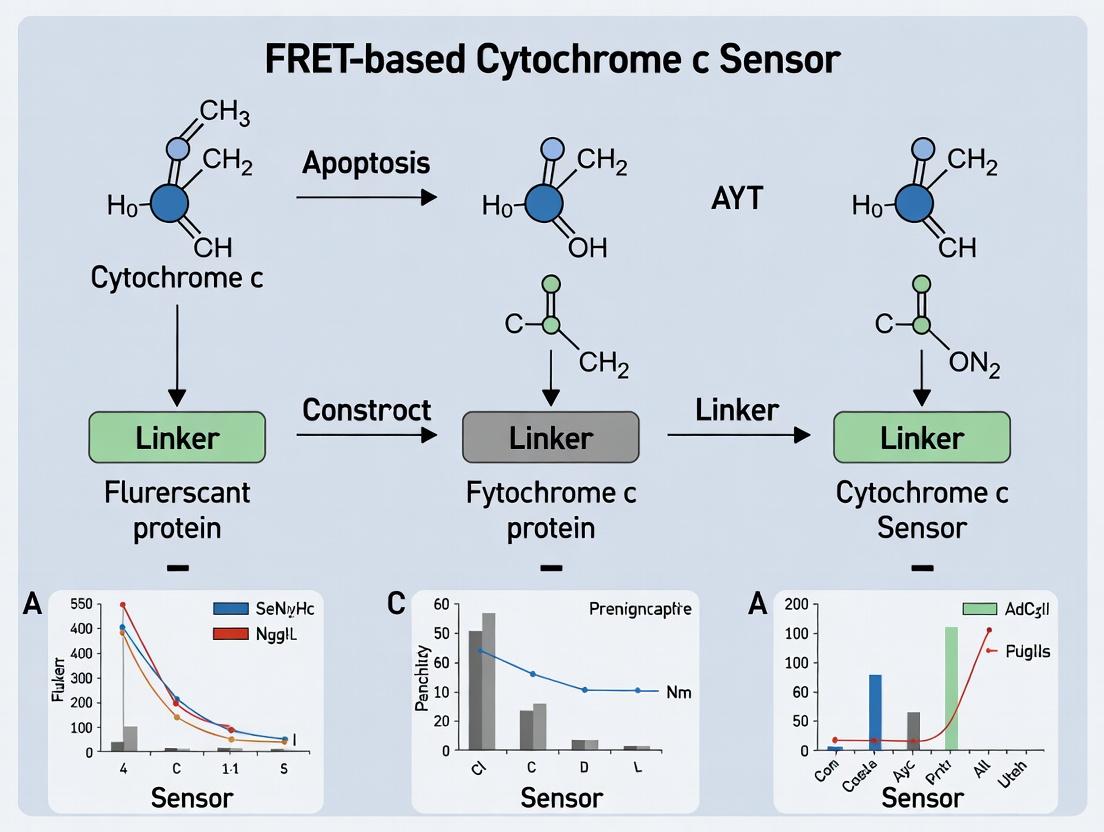
This article provides a comprehensive guide for constructing and utilizing Förster Resonance Energy Transfer (FRET)-based sensors for cytochrome c (Cyt c).
Building a FRET-Based Cytochrome c Biosensor: A Step-by-Step Guide for Apoptosis Detection and Drug Screening
Abstract
This article provides a comprehensive guide for constructing and utilizing Förster Resonance Energy Transfer (FRET)-based sensors for cytochrome c (Cyt c). Designed for researchers and drug development professionals, it details the foundational principles of Cyt c release as a hallmark of intrinsic apoptosis and the mechanics of FRET detection. The guide offers a detailed, step-by-step methodological protocol for sensor construction, labeling, and purification, followed by critical troubleshooting and optimization strategies for real-cell applications. Finally, it covers validation techniques against established methods and comparative analysis of sensor performance, enabling reliable quantification of apoptosis for high-throughput screening and mechanistic studies in biomedical research.
Understanding Cytochrome c Release and FRET Detection: The Science Behind the Sensor
This Application Note details protocols for studying cytochrome c's dual role, framed within research on Förster Resonance Energy Transfer (FRET)-based cytochrome c sensor construction. The primary thesis context is the development and validation of genetically encoded biosensors that utilize FRET to visualize real-time cytochrome c release from mitochondria during early apoptosis, a critical event for basic research and drug discovery in oncology and neurodegeneration.
Key Quantitative Data on Cytochrome c
Table 1: Physical and Functional Properties of Cytochrome c
| Property | Value / Description | Relevance to Sensor Design |
|---|---|---|
| Molecular Weight | ~12.4 kDa | Determines diffusion kinetics post-release. |
| Isoelectric Point (pI) | ~10.0 – 10.5 | Positive charge at physiological pH guides interaction with cardiolipin and APAF-1. |
| Absorption Maxima | 550 nm (α-band), 521 nm (β-band), 415 nm (Soret band) | Enables spectroscopic tracking; FRET pair selection must avoid these wavelengths. |
| Redox Potential (E°') | +250 mV to +280 mV | Critical for respiratory function; sensor must not perturb redox cycling. |
| Concentration in IMS | ~0.5 - 1 mM (highly confined) | Creates a large signal-to-noise ratio upon release to cytosol (≈10 nM). |
Table 2: Apoptotic Timeline Following Cytochrome c Release
| Event Post-Release | Typical Onset Time (in cells) | Key Measurable Output for Validation |
|---|---|---|
| Cytochrome c diffusion in cytosol | Seconds to 1-2 minutes | FRET signal decay kinetics. |
| APAF-1 oligomerization & apoptosome formation | 5 – 20 minutes | Caspase-9 activation assay. |
| Effector caspase (Casp-3/7) activation | 20 – 60 minutes | Fluorogenic substrate cleavage (e.g., DEVD-AMC). |
| Phosphatidylserine externalization | 30 – 90 minutes | Annexin V staining. |
| Loss of membrane integrity | 1 – 4 hours (variable) | Propidium iodide uptake. |
Experimental Protocols
Protocol 1: Validation of FRET-Based Cytochrome c Sensor Function in Cultured Cells Objective: To confirm that the FRET sensor (e.g., cyto-c-YFP/CFP pair) correctly reports cytochrome c localization and release.
- Cell Culture & Transfection: Plate HeLa or HEK293T cells in a 35-mm glass-bottom dish. At 60-70% confluence, transfect with plasmid encoding the FRET sensor using a lipid-based transfection reagent (e.g., Lipofectamine 3000). Incubate for 24-48 hrs.
- Microscopy Setup: Use a confocal or widefield fluorescence microscope with environmental control (37°C, 5% CO₂). Configure channels: CFP (ex: 433/50 nm, em: 470/30 nm), FRET (ex: 433/50 nm, em: 527/30 nm), YFP (ex: 500/20 nm, em: 527/30 nm). Set up time-lapse imaging.
- Baseline Imaging: Acquire a 2-minute baseline of CFP and FRET channels. Calculate the FRET ratio (FRET channel intensity / CFP channel intensity) per cell.
- Induction of Apoptosis: Add apoptosis inducer directly to media during imaging:
- Staurosporine: Final concentration 1 µM.
- Actinomycin D: Final concentration 1 µg/mL.
- ABT-737 (BH3 mimetic): Final concentration 10 µM.
- Image Acquisition: Continue time-lapse imaging for 60-120 minutes, acquiring images every 30-60 seconds.
- Data Analysis: Using image analysis software (e.g., ImageJ/Fiji):
- Define cytosolic and mitochondrial ROIs.
- Plot the FRET ratio over time. A rapid decrease in cytosolic FRET ratio indicates cytochrome c release and separation of FRET pair.
- Correlate with membrane blebbing or other morphological changes.
Protocol 2: Biochemical Confirmation of Cytochrome c Release via Cell Fractionation Objective: To biochemically validate sensor readings by isolating mitochondrial and cytosolic fractions post-treatment.
- Cell Treatment: Treat 5 x 10⁶ sensor-transfected cells with apoptosis inducer (e.g., 1 µM Staurosporine) for defined times (0, 15, 30, 60 min). Include untreated and CCCP (10 µM, 30 min) as a positive control for mitochondrial disruption.
- Harvesting: Collect cells by trypsinization, wash twice with ice-cold PBS.
- Fractionation: Resuspend cell pellet in 500 µL of ice-cold Mitochondrial Isolation Buffer (250 mM sucrose, 20 mM HEPES, 10 mM KCl, 1.5 mM MgCl₂, 1 mM EDTA, 1 mM EGTA, pH 7.4, plus protease inhibitors). Dounce homogenize (30-40 strokes). Centrifuge at 800 x g for 10 min at 4°C to remove nuclei/unbroken cells.
- Centrifugation: Transfer supernatant to a new tube. Centrifuge at 12,000 x g for 15 min at 4°C. The resulting supernatant is the cytosolic fraction (S-12). The pellet is the heavy membrane/mitochondrial fraction (P-12).
- Analysis: Resuspend the P-12 pellet in lysis buffer. Perform Western blotting on both fractions.
- Primary antibodies: Anti-cytochrome c (clone 7H8.2C12), Anti-COX IV (mitochondrial marker), Anti-β-tubulin or GAPDH (cytosolic marker).
- Interpretation: Successful release is indicated by a time-dependent increase of cytochrome c signal in the cytosolic fraction and decrease in the mitochondrial fraction.
Pathway and Workflow Diagrams
Title: Cytochrome c-Dependent Intrinsic Apoptosis Pathway
Title: Workflow for FRET-Based Cytochrome c Release Assay
The Scientist's Toolkit: Research Reagent Solutions
Table 3: Essential Materials for FRET Cytochrome c Release Experiments
| Item / Reagent | Function / Purpose | Example Product/Catalog # (Representative) |
|---|---|---|
| FRET Cytochrome c Sensor Plasmid | Genetically encoded biosensor for ratiometric imaging of cytochrome c localization and release. | pCytoC-YFP/CFP (Addgene # pending custom construction). |
| Lipid-Based Transfection Reagent | For efficient delivery of sensor plasmid into mammalian cell lines. | Lipofectamine 3000 (Thermo Fisher, L3000001). |
| Apoptosis Inducers (Small Molecules) | Positive controls to trigger the intrinsic apoptosis pathway and cytochrome c release. | Staurosporine (Sigma, S4400), ABT-737 (Selleckchem, S1002). |
| Mitochondrial Uncoupler (Positive Control) | Disrupts mitochondrial membrane potential, leading to nonspecific cytochrome c release. | Carbonyl cyanide m-chlorophenyl hydrazone (CCCP, Sigma, C2759). |
| Mitochondrial Isolation Kit | For biochemical fractionation to validate sensor data. | Mitochondria Isolation Kit for Cultured Cells (Thermo Fisher, 89874). |
| Anti-Cytochrome c Antibody | Key reagent for Western blot validation of subcellular localization. | Anti-Cytochrome c Antibody [7H8.2C12] (BioLegend, 612301). |
| Compartment Markers (Antibodies) | Controls for fractionation purity: mitochondrial and cytosolic. | Anti-COX IV (Cell Signaling, 4850), Anti-GAPDH (Cell Signaling, 2118). |
| Caspase-3/7 Activity Assay | Functional downstream readout to confirm apoptosis execution. | Caspase-Glo 3/7 Assay (Promega, G8091). |
| Glass-Bottom Culture Dishes | Optimal for high-resolution live-cell fluorescence imaging. | MatTek Dish, 35 mm, No. 1.5 Coverslip (P35G-1.5-14-C). |
The Mitochondrial Permeability Transition Pore (MPTP) and Cyt c Release as an Irreversible Commitment to Cell Death
Within the broader thesis on FRET-based cytochrome c sensor construction, understanding the precise timing and regulatory mechanisms of cytochrome c (Cyt c) release is paramount. The Mitochondrial Permeability Transition Pore (MPTP) represents a critical, often irreversible, effector of mitochondrial outer membrane permeabilization (MOMP) and subsequent Cyt c release. This commitment point is a major focal point for therapeutic intervention and quantitative measurement using engineered FRET biosensors. This document provides application notes and detailed protocols for studying this pivotal event.
Core Signaling Pathway & Molecular Relationships
Research Reagent Solutions Toolkit
| Reagent/Material | Function & Application in MPTP/Cyt c Research |
|---|---|
| Cyclosporin A (CsA) | Potent inhibitor of Cyclophilin D; gold-standard for inhibiting MPTP opening in experimental models. |
| Calcein-AM / Cobalt Chloride | Fluorescent assay for MPTP opening. Calcein loads into mitochondria, quenched by Co²⁺; pore opening releases calcein, increasing fluorescence. |
| JC-1 or TMRM | Cationic dyes for monitoring mitochondrial membrane potential (ΔΨm) collapse, an early event post-MPTP. |
| FRET-based Cytochrome c Sensor (e.g., cyt-c-GFP) | Genetically encoded sensor to visualize real-time Cyt c release from mitochondria in single cells. |
| Antimycin A / Rotenone | Complex III/I inhibitors; induce oxidative stress to trigger MPTP opening. |
| Ionomycine / Thapsigargin | Ca²⁺ ionophore / SERCA pump inhibitor; used to induce cytosolic & mitochondrial Ca²⁺ overload. |
| Caspase-3/7 Activity Assay (e.g., DEVD-afc) | Fluorogenic substrate to confirm downstream apoptotic commitment post Cyt c release. |
| siRNA against CypD / ANT | Molecular tools for knocking down putative MPTP components to validate their role. |
| Digitonin | Selective plasma membrane permeabilizer for fractionation studies to isolate cytosolic Cyt c. |
Table 1: MPTP Inducers & Their Effects on Cyt c Release Kinetics
| Inducer | Concentration | Typical Onset Time (MPTP) | Time to Peak Cyt c Release (in cells) | Reversible with CsA? |
|---|---|---|---|---|
| Ca²⁺ Ionophore (Ionomycin) | 1-5 µM | 2-5 min | 15-30 min | Yes (if washed early) |
| H₂O₂ (Oxidative Stress) | 100-500 µM | 10-20 min | 45-90 min | Partially |
| Ter-Butyl Hydroperoxide (tBHP) | 100-200 µM | 5-15 min | 30-60 min | Partially |
| Antimycin A + Oligomycin | 10 µM / 1 µM | 20-40 min | 60-120 min | Rarely |
Table 2: Comparison of Cyt c Detection Method Sensitivities
| Method | Detection Limit (Cyt c) | Live-cell Capable? | Temporal Resolution | Primary Use Case |
|---|---|---|---|---|
| Western Blot (Subcellular Fractionation) | ~1-5 ng | No | Hours | End-point, population analysis |
| Immunofluorescence (IF) | N/A (semi-quant.) | No (fixed) | N/A | Spatial localization |
| ELISA (Cytosolic Extract) | ~10-50 pg | No | Hours | Quantitative, population |
| FRET-based Genetically Encoded Sensor | Single-molecule events* | Yes | Seconds to Minutes | Real-time, single-cell kinetics |
Detailed Experimental Protocols
Protocol 1: Live-Cell Imaging of MPTP-Driven Cyt c Release Using a FRET Sensor
Objective: To visualize and quantify the irreversible commitment point defined by Cyt c release following MPTP induction using a FRET-based biosensor (e.g., pcyt-c-GFP).
Workflow Diagram:
Materials:
- HeLa or primary cells expressing mitochondrially-targeted FRET-based Cyt c sensor (e.g., mito-cyt-c-GFP).
- Imaging medium (FluoroBrite DMEM, 10% FBS, 25mM Glucose, 1mM Pyruvate).
- MPTP inducer: Ter-Butyl Hydroperoxide (tBHP), stock 200mM in DMSO.
- Inhibitor: Cyclosporin A (CsA), stock 1mM in DMSO.
- Dyes: TMRM (100 nM), Calcein-AM (1 µM) with Cobalt Chloride (1 mM).
- Confocal or widefield fluorescence microscope with environmental control (37°C, 5% CO₂).
- 35mm glass-bottom dishes.
Procedure:
- Cell Preparation: Plate sensor-expressing cells at 50-60% confluence 24h before imaging.
- Dye Loading: 30 min before imaging, replace medium with imaging medium containing TMRM (100 nM) and Calcein-AM (1 µM) + CoCl₂ (1 mM). Incubate at 37°C.
- Baseline Acquisition: Wash cells 2x with dye-free imaging medium. Place dish on microscope. Using a 40x or 60x oil objective, acquire baseline images for 5-10 minutes. Channels:
- FRET Donor (CFP): Ex 430-450nm / Em 460-500nm.
- FRET Acceptor (YFP): Ex 500-520nm / Em 530-570nm.
- TMRM (ΔΨm): Ex 540-560nm / Em 570-620nm.
- Calcein (MPTP): Ex 470-490nm / Em 510-550nm.
- Induction: At t=0, add tBHP (final 150 µM) directly to the dish or via perfusion for precise timing.
- Time-lapse Imaging: Acquire images every 30-60 seconds for 60-90 minutes.
- Control Experiment: Repeat with a separate dish of cells pre-incubated with CsA (1 µM) for 30 minutes prior to and during tBHP addition.
- Data Analysis: Calculate the FRET ratio (YFP/CFP emission intensity) for mitochondria in individual cells over time. A rapid, permanent drop in FRET ratio indicates Cyt c release. Correlate this timepoint with the loss of TMRM signal (ΔΨm collapse) and changes in mitochondrial calcein fluorescence.
Protocol 2: Biochemical Validation of Cyt c Release via Subcellular Fractionation
Objective: To biochemically confirm Cyt c release from mitochondria into the cytosol following MPTP induction, as a corollary to FRET imaging data.
Workflow Diagram:
Materials:
- Cells (treated as in Protocol 1, but in 6-well plates).
- Isotonic Buffer (IB): 250 mM Sucrose, 10 mM HEPES, 1 mM EGTA, pH 7.4.
- Digitonin (prepare 0.05% w/v stock in IB).
- Mitochondrial Lysis Buffer: IB + 1% Triton X-100 + protease inhibitors.
- BCA Protein Assay Kit.
- Antibodies: Anti-cytochrome c, Anti-COX IV (mitochondrial marker), Anti-β-tubulin (cytosolic marker).
- SDS-PAGE and Western Blotting equipment.
Procedure:
- Cell Treatment: Treat cells in 6-well plates (e.g., Control, tBHP 150µM for 60 min, CsA 1µM pre-treatment + tBHP).
- Harvesting: Wash cells 2x with ice-cold PBS. Scrape cells in 1 mL PBS and pellet at 600xg for 5 min at 4°C.
- Digitonin Permeabilization: Resuspend cell pellet thoroughly in 100 µL of IB containing 0.05% digitonin. Incubate on ice for 10 min with gentle vortexing every 2 min.
- Cytosolic Fraction Isolation: Centrifuge at 1000xg for 5 min at 4°C. Transfer the supernatant to a new tube—this is the cytosolic fraction.
- Mitochondrial Fraction Isolation: Resuspend the pellet in 100 µL of Mitochondrial Lysis Buffer. Vortex vigorously. Incubate on ice for 30 min. Centrifuge at 10,000xg for 10 min at 4°C. Transfer the supernatant—this is the mitochondrial fraction.
- Protein Quantification & Western Blot: Determine protein concentration of all fractions using BCA assay. Load equal amounts (e.g., 20 µg) of cytosolic and mitochondrial fractions per lane. Perform Western blotting for Cyt c, COX IV, and β-tubulin.
- Interpretation: In control cells, Cyt c co-localizes with COX IV in the mitochondrial fraction. Upon irreversible MPTP opening, Cyt c shifts to the cytosolic fraction (co-localizing with β-tubulin). CsA should attenuate this shift.
Data Interpretation & Application Notes
- Defining "Irreversible Commitment": In FRET sensor experiments, the point of no return is typically identified as the moment when the FRET ratio drop reaches >50% of its maximum and is not recovered upon washout of the inducer or addition of CsA after the event.
- Correlation is Key: The power of the combined protocols lies in correlating real-time, single-cell FRET kinetics (Protocol 1) with population-level biochemical confirmation (Protocol 2).
- Drug Screening Application: This integrated approach is ideal for screening compounds that modulate the MPTP commitment point. Compounds that delay the FRET ratio drop without affecting ΔΨm may be direct MPTP inhibitors.
- Sensor Validation: The fractionation protocol (Protocol 2) is essential for validating that the FRET signal loss genuinely corresponds to physical Cyt c translocation and not merely a change in the mitochondrial environment.
Within the broader thesis on FRET-based cytochrome c sensor construction, understanding the precise distance-dependence of FRET is fundamental. Cytochrome c release from mitochondria is a pivotal event in apoptosis, and FRET-based sensors provide a powerful tool to visualize this process in real-time within live cells. This document details the core principles, application notes, and experimental protocols essential for developing and utilizing such sensors.
Core Principles and Quantitative Framework
FRET efficiency (E) is the fraction of photons absorbed by a donor fluorophore that are transferred to an acceptor via non-radiative dipole-dipole coupling. It is exquisitely sensitive to the inverse sixth power of the distance (R) between the donor and acceptor.
Key Equations:
- FRET Efficiency: ( E = 1 / [1 + (R/R_0)^6] )
- Förster Distance (R₀): ( R0^6 = \frac{9(ln10) \kappa^2 QD J}{128 \pi^5 NA n^4} ) Where: ( QD ) = donor quantum yield; ( J ) = spectral overlap integral; ( \kappa^2 ) = orientation factor (assumed 2/3 for dynamic random averaging); ( n ) = refractive index of medium; ( N_A ) = Avogadro's number.
Table 1: Critical Parameters for FRET-Based Cytochrome c Sensor Design
| Parameter | Description | Typical Target Value/Range for Cytochrome c Sensors | Impact on R₀ & Measurement |
|---|---|---|---|
| R₀ (Förster Distance) | Distance at which FRET efficiency is 50%. | 4.5 - 6.0 nm | Defines the measurable distance range (~1-10 nm). |
| Donor-Acceptor Pair | Fluorophore combination. | e.g., EGFP (D) / mRFP or mCherry (A) | Must have significant spectral overlap and donor emission/acceptor excitation overlap. |
| Linker Length & Rigidity | Polypeptide linker connecting fluorophores to cytochrome c. | 5-15 amino acids (e.g., GGSGG repeats) | Determines the baseline proximity and freedom of movement of fluorophores. |
| Sensor Localization | Cellular compartment of sensor expression. | Cytosol / Mitochondrial Intermembrane Space | Must be targeted to the relevant compartment to detect cytochrome c release. |
| Baseline FRET Efficiency (Healthy Cell) | Steady-state FRET before apoptosis induction. | 20-40% (High) | Indicates cytochrome c is sequestered in mitochondria, bringing fluorophores close. |
| FRET Efficiency upon Apoptosis | Steady-state FRET after apoptotic stimulus. | <10% (Low) | Indicates cytochrome c release and fluorophore separation. |
Application Notes for Cytochrome c Sensor Research
Note 1: Sensor Design Strategies
- Fusion Constructs: Cytochrome c is flanked by donor and acceptor fluorophores (e.g., GFP-cytochrome c-RFP). Release causes physical separation of fluorophores, decreasing FRET.
- Split-FRET / Bimolecular Complementation: Fluorophores are attached to complementary binding partners (e.g., donor-cytochrome c, acceptor-APAF-1 or cardiolipin). FRET occurs only upon interaction, which is disrupted upon release.
Note 2: Key Experimental Controls
- Acceptor Bleaching Control: Selective bleaching of the acceptor should increase donor fluorescence if FRET was occurring.
- Cyt c Knock-out/Mutant Cells: Essential to confirm sensor signal is specific to cytochrome c dynamics.
- FRET-positive and FRET-negative constructs: Express donor-only and acceptor-only constructs to correct for spectral bleed-through (SBT).
Table 2: Common FRET Measurement Modalities and Protocols
| Method | Principle | Throughput | Best For Cytochrome c Studies | Key Consideration |
|---|---|---|---|---|
| Sensitized Emission | Measures acceptor emission upon donor excitation. | Medium-High (widefield/confocal) | High-temporal resolution imaging of release kinetics. | Requires rigorous SBT correction. |
| Fluorescence Lifetime Imaging (FLIM) | Measures decrease in donor fluorescence lifetime due to FRET. | Low-Medium | Most quantitative, immune to concentration & SBT artifacts. | Technically complex; slower acquisition. |
| Acceptor Photobleaching | Measures increase in donor fluorescence after bleaching acceptor. | Low | Direct, quantitative validation of FRET in fixed cells or slow processes. | Destructive; single time-point. |
Detailed Experimental Protocols
Protocol 3.1: FRET-based Cytochrome c Release Assay using Sensitized Emission
Objective: To quantify cytochrome c release from mitochondria in live cells in response to an apoptotic stimulus.
I. Materials (The Scientist's Toolkit)
| Reagent / Material | Function / Explanation |
|---|---|
| FRET Cytochrome c Plasmid (e.g., pGFP-cyt c-mCherry) | Encodes the FRET biosensor. |
| Appropriate Cell Line (e.g., HeLa, MEFs) | Model system for apoptosis studies. |
| Lipofectamine 3000 or similar | Transfection reagent for plasmid delivery. |
| Live-Cell Imaging Medium | Phenol-red free medium with stable pH for imaging. |
| Apoptosis Inducer (e.g., Staurosporine, ABT-737 + S63845) | Positive control trigger for cytochrome c release. |
| Caspase Inhibitor (z-VAD-fmk) Optional | To distinguish early release from later downstream events. |
| Confocal or Widefield Microscope with appropriate filters | Must have donor (GFP), FRET, and acceptor (RFP) filter sets. |
| Image Analysis Software (e.g., ImageJ/Fiji, NIS-Elements) | For SBT correction and ratio metric calculation. |
II. Methodology
- Cell Seeding & Transfection: Seed cells in a glass-bottom dish. At 60-70% confluency, transfect with the FRET-cytochrome c plasmid using manufacturer's protocol.
- Expression: Incubate for 24-48 hours to allow for sensor expression.
- Microscope Setup: Configure sequential acquisition for three channels:
- Donor (D): Ex: 480/40, Em: 535/50 (GFP)
- FRET (F): Ex: 480/40, Em: 610/75 (Sensitized acceptor emission)
- Acceptor (A): Ex: 560/40, Em: 610/75 (mCherry)
- Image Acquisition (Pre-Stimulus):
- Replace medium with live-cell imaging medium.
- Locate transfected cells (moderate expression level is ideal).
- Acquire a baseline time series (e.g., 5-min intervals for 30 min).
- Apoptosis Induction: Carefully add apoptotic stimulus to the dish without moving it. Return to stage.
- Image Acquisition (Post-Stimulus): Continue time-lapse acquisition for 2-4 hours or until FRET loss plateaus.
- Spectral Bleed-Through (SBT) Correction: Acquire images from cells expressing donor-only and acceptor-only constructs under identical settings. Calculate correction coefficients.
- Data Analysis: Calculate corrected FRET (cFRET) or FRET ratio (F/D) for each time point. Normalize to the pre-stimulus average. Plot normalized FRET efficiency vs. time.
Protocol 3.2: Validating FRET Signal via Acceptor Photobleaching
Objective: To confirm that a loss of sensitized emission signal is due to genuine FRET loss and not artifact.
Methodology (following Protocol 3.1 imaging):
- Pre-bleach Acquisition: In a region of interest (ROI) on a cell, acquire donor (Dpre) and acceptor (Apre) channel images.
- Acceptor Bleaching: Using high-intensity laser light at the acceptor's excitation wavelength (e.g., 561 nm laser at 100% power), bleach the acceptor in the selected ROI until >80% of acceptor fluorescence is lost.
- Post-bleach Acquisition: Immediately acquire donor (Dpost) and acceptor (Apost) channel images again under the same low-intensity settings as step 1.
- Calculation: Compute the percentage increase in donor fluorescence: % FRET Efficiency = [(Dpost - Dpre) / Dpost] x 100%. A significant increase (>5%) confirms genuine FRET was occurring pre-bleach.
Visualizations
Diagram 1: FRET-Based Cytochrome c Release Signaling Pathway (100 chars)
Diagram 2: Experimental Workflow for Live-Cell FRET Assay (100 chars)
Diagram 3: FRET Mechanism & Distance Dependence (97 chars)
This application note is situated within a broader thesis research project focused on the development and optimization of Förster Resonance Energy Transfer (FRET)-based biosensors for monitoring dynamic cellular events. The specific aim detailed here is the construction and application of a FRET sensor to detect the critical apoptotic event of cytochrome c (Cyt c) release from mitochondria into the cytosol. This event is a definitive, early point-of-no-return in the intrinsic apoptosis pathway, and its quantitative detection in live cells is paramount for basic research in cell death and for screening compounds that modulate apoptosis in drug development.
Background and Design Rationale
During cellular homeostasis, Cyt c is localized in the mitochondrial intermembrane space, tethered to the inner mitochondrial membrane. Upon apoptotic stimulation (e.g., DNA damage, oxidative stress), mitochondrial outer membrane permeabilization (MOMP) occurs, allowing Cyt c to translocate to the cytosol. There, it initiates apoptosome formation, leading to caspase-9 and caspase-3 activation.
FRET Sensor Design: The constructed sensor is based on a "split-fluorophore complementation-FRET" system.
- Donor Component: A fluorescent protein (e.g., Cerulean, mTurquoise2) is fused to the N-terminus of Apaf-1, the cytosolic binding partner for Cyt c.
- Acceptor Component: A second fluorescent protein (e.g., Venus, cpYFP) is fused to Cyt c itself via a flexible linker.
- FRET Mechanism: In the cytosol, if apoptosis is induced and Cyt c is released, the labeled Cyt c (acceptor) binds to the labeled Apaf-1 (donor). This brings the donor and acceptor fluorophores into close proximity (<10 nm), enabling FRET. An increase in the acceptor-to-donor emission ratio provides a quantifiable, real-time signature of Cyt c release and apoptosome seeding.
Visualizing the Pathway and Sensor Logic
Diagram 1: Intrinsic Apoptosis Pathway & FRET Sensor Principle
Diagram Title: Apoptosis pathway and FRET sensor activation logic.
Diagram 2: Experimental Workflow for FRET Imaging
Diagram Title: Live-cell FRET imaging workflow for Cyt c release.
Research Reagent Solutions Toolkit
| Item | Function/Description | Example Vendor/Cat. No. (Representative) |
|---|---|---|
| FRET Donor FP Plasmid | Encodes Apaf-1 fused to a cyan donor FP (e.g., mTurquoise2, Cerulean). Provides the FRET signal upon binding. | Addgene (#x; for mTurquoise2-Apaf-1) |
| FRET Acceptor FP Plasmid | Encodes Cyt c fused to a yellow acceptor FP (e.g., Venus, cpYFP). The mobile component released from mitochondria. | Addgene (#y; for Cyt c-Venus) |
| Apoptosis Inducer | Positive control reagent to trigger MOMP and Cyt c release. | Staurosporine (STS), ABT-263 (Navitoclax), Etoposide |
| Caspase Inhibitor (Control) | Negative control to confirm apoptosis-specific signal (e.g., Z-VAD-FMK). | Pan-caspase inhibitor Z-VAD-FMK |
| Cell Line | Appropriate model system (often HeLa, MEFs, or cancer cell lines of interest). | ATCC (e.g., HeLa, #CCL-2) |
| Live-Cell Imaging Media | Phenol-red free media with stable pH for long-term imaging. | FluoroBrite DMEM (Gibco, #A1896701) |
| Transfection Reagent | For delivering plasmid DNA into mammalian cells. | Lipofectamine 3000 (Invitrogen, #L3000015) |
| Microscope & Filter Sets | Widefield or confocal microscope equipped with: • Donor Channel: Ex ~430nm, Em ~470nm (CFP).• FRET Channel: Ex ~430nm, Em ~535nm (YFP). | CFP/YFP FRET filter set (Chroma #x). |
Key Experimental Protocols
Protocol 1: Cell Preparation and Transfection
- Seed Cells: Plate HeLa or relevant cells in a 35-mm glass-bottom dish at ~50% confluence 24h before transfection.
- Prepare DNA mix: For one dish, mix 0.5 µg of donor (mTurquoise2-Apaf-1) and 0.5 µg of acceptor (Cyt c-Venus) plasmid DNA in 100 µL of Opti-MEM.
- Prepare Lipofectamine mix: Dilute 3 µL of Lipofectamine 3000 reagent in 100 µL of Opti-MEM, incubate 5 min.
- Combine mixes, incubate for 15-20 min at RT to form complexes.
- Add complexes dropwise to the cell culture dish containing 1.5 mL of fresh growth medium.
- Incubate cells for 24-48h at 37°C/5% CO₂ before imaging to allow for protein expression.
Protocol 2: Live-Cell FRET Imaging and Analysis
- Prepare Imaging Chamber: Replace medium with 2 mL of pre-warmed, phenol-red free FluoroBrite imaging medium. Maintain temperature at 37°C with 5% CO₂ supply.
- Define Imaging Positions: Using a 40x or 60x oil-immersion objective, select 5-10 fields of view with healthy, transfected cells (visible in both CFP and YFP channels).
- Set Acquisition Parameters:
- Donor Channel: Excite at 430-445 nm, collect emission at 460-500 nm (CFP).
- FRET (Acceptor) Channel: Excite at 430-445 nm, collect emission at 520-550 nm (YFP).
- Set time-lapse interval to 2-5 minutes. Minimize light exposure to reduce photobleaching.
- Acquire Baseline: Image for 20-30 minutes to establish a stable baseline FRET ratio.
- Induce Apoptosis: Without moving the dish, carefully add 2 µL of 1 mM Staurosporine (STS) stock solution (final conc. 1 µM) directly to the medium. Mix gently.
- Continue Acquisition: Image for 4-8 hours or until a clear FRET ratio increase plateaus.
- Image Analysis:
- Background subtract all images.
- Generate a ratio image series:
FRET channel / Donor channel. - Define cytosolic Regions of Interest (ROIs) for individual cells.
- Plot the mean FRET ratio within each ROI versus time.
Representative Data and Interpretation
Table 1: Quantitative FRET Ratio Changes Upon Apoptotic Induction
| Condition | Baseline FRET Ratio (Mean ± SD) | Peak FRET Ratio (Mean ± SD) | Time to Half-Max Release, t₁/₂ (min) | n (cells) |
|---|---|---|---|---|
| Control (Vehicle) | 0.58 ± 0.05 | 0.61 ± 0.06 | N/A | 25 |
| 1 µM Staurosporine | 0.57 ± 0.04 | 1.32 ± 0.15* | 124 ± 18 | 30 |
| 1 µM STS + 20 µM Z-VAD | 0.59 ± 0.05 | 0.92 ± 0.08*† | 130 ± 22 | 22 |
| 10 µM ABT-263 | 0.56 ± 0.06 | 1.28 ± 0.12* | 95 ± 15 | 28 |
Data is representative. *p < 0.01 vs Baseline (paired t-test). † p < 0.05 vs STS alone (unpaired t-test).
Interpretation: The robust increase in FRET ratio with STS or ABT-263 confirms Cyt c release. The partial inhibition by Z-VAD-FMK (a caspase inhibitor) suggests a feedback loop where early caspases accelerate later Cyt c release, a phenomenon detectable with this real-time sensor. The shorter t₁/₂ for ABT-263 indicates a faster kinetics of MOMP induction compared to STS in this model.
Within the context of developing a robust FRET-based biosensor for monitoring cytochrome c release during apoptosis, the selection of an optimal donor/acceptor fluorophore pair is paramount. This release, a key commitment step in the mitochondrial apoptotic pathway, requires a sensor with high sensitivity, dynamic range, and physiological fidelity. This application note reviews critical parameters and provides protocols for evaluating prominent genetically-encoded FRET pairs suited for integration into a cytochrome c sensor construct.
Quantitative Comparison of Common FRET Pairs
The following table summarizes the photophysical properties of three widely used genetically-encoded FRET pairs considered for intracellular biosensor construction.
Table 1: Photophysical Properties of Selected Genetically-Encoded FRET Pairs
| FRET Pair (Donor/Acceptor) | Donor λEx/λEm (nm) | Acceptor λEx/λEm (nm) | Förster Radius (R0) | Brightness (Relative) | Maturation Time (37°C) | Reference (Example) |
|---|---|---|---|---|---|---|
| ECFP/EYFP | 433 / 475 | 514 / 527 | ~4.9-5.2 nm | Moderate | Moderate (CFP: ~45 min) | Tsien et al., 1990s |
| mCerulean/mVenus | 433 / 475 | 515 / 528 | ~5.4 nm | High | Fast (Cerulean: ~15 min) | Rizzo et al., 2004 |
| CyPet/YPet | 435 / 477 | 516 / 529 | ~5.1 nm | High | Slow (CyPet: >2 hrs) | Nguyen & Daugherty, 2005 |
| GFP/RFP (mGreen/mRuby2) | 487 / 509 | 558 / 605 | ~5.2 nm | High | Moderate/Fast | Kredel et al., 2009 |
Note: λEx = Excitation maximum, λEm = Emission maximum. R0 is the distance at which FRET efficiency is 50%. Brightness is a product of extinction coefficient and quantum yield.
Key Considerations for Cytochrome c Sensor Design
For a cytochrome c sensor, the fluorophore pair must be spectrally compatible, have a high dynamic range (sensitivity to distance changes), and be stable under physiological conditions. A large Stokes shift acceptor (e.g., RFP variants) reduces direct donor excitation cross-talk. The linker connecting cytochrome c to the fluorophores must allow for a pronounced distance change upon release from the mitochondria.
Experimental Protocol: In Vitro Characterization of FRET Pair Efficiency
This protocol outlines how to quantify the FRET efficiency of a purified biosensor protein candidate.
Materials: Purified FRET biosensor protein, Spectrophotometer, Spectrofluorometer, Cuvettes, appropriate buffers. Procedure:
- Absorbance Measurement: Dilute the purified protein in assay buffer. Measure the absorbance spectrum from 350 to 650 nm. Determine the absorbance at the donor's excitation peak (AD).
- Emission Scan with Donor Excitation: In the fluorometer, excite the sample at the donor's excitation wavelength (e.g., 433 nm for CFP variants). Record the emission spectrum from 450 to 650 nm.
- FRET Efficiency Calculation: Using the acceptor's emission peak intensity from step 2 (IFRET) and the donor's emission peak intensity (ID), calculate the apparent FRET efficiency: E = IFRET / (IFRET + ID). Correct for spectral bleed-through (SBT) using control donor-only and acceptor-only proteins.
- Acceptor Photobleaching (Alternative): Image cells expressing the biosensor. Acquire a donor emission image. Photobleach the acceptor in a defined ROI using high-intensity acceptor-excitation light. Re-acquire the donor image. Calculate E = 1 - (ID(pre-bleach) / ID(post-bleach)).
Experimental Protocol: Live-Cell FRET Imaging of Cytochrome c Release
This protocol details the setup for monitoring cytochrome c release in adherent cells (e.g., HeLa) using a FRET biosensor and widefield or confocal microscopy.
Materials: Cells transfected with cytochrome c FRET biosensor, Live-cell imaging chamber, Microscope with appropriate filter sets (e.g., CFP/YFP), Apoptosis inducer (e.g., Staurosporine, 1 µM), Imaging medium. Procedure:
- Transfection & Preparation: Transfect cells with the cytochrome c FRET biosensor construct 24-48 hours prior. On imaging day, replace medium with pre-warmed, CO2-independent imaging medium. Mount chamber on microscope stage maintained at 37°C.
- Microscope Setup: Configure sequential imaging channels: Donor channel (Donor excitation/Donor emission), FRET channel (Donor excitation/Acceptor emission), and Acceptor channel (Acceptor excitation/Acceptor emission). Set exposure times to avoid saturation.
- Baseline Acquisition: Acquire images in all three channels for 5-10 time points to establish a baseline FRET ratio.
- Induction & Time-Lapse: Add apoptosis inducer directly to the chamber without moving the field of view. Initiate a time-lapse acquisition, capturing all three channels every 5-10 minutes for 4-6 hours.
- Image Analysis: For each time point, calculate the background-subtracted FRET ratio (FRET channel intensity / Donor channel intensity) for individual cells or cytoplasmic regions. Plot ratio over time. A decrease in the FRET ratio indicates cytochrome c release and increased donor-acceptor separation.
Visualizing the Apoptotic Pathway and Sensor Principle
Title: Cytochrome c Release Pathway & FRET Sensor Response
Title: Principle of Intramolecular FRET in a Biosensor
The Scientist's Toolkit: Essential Reagents & Materials
Table 2: Key Research Reagent Solutions for FRET-based Cytochrome c Sensor Studies
| Item | Function/Benefit | Example/Notes |
|---|---|---|
| Genetically-Encoded FRET Pair Plasmids | Template for biosensor construction. Codon-optimized for mammalian expression. | mCerulean3/mVenus (high brightness, reduced pH sensitivity). |
| Live-Cell Imaging Medium | Maintains pH, osmolarity, and health of cells during extended imaging without CO2 control. | Leibovitz's L-15 medium or phenol-red free DMEM with HEPES. |
| Apoptosis Inducers (Positive Controls) | Triggers the mitochondrial pathway to validate sensor response. | Staurosporine (broad kinase inhibitor), ABT-737 (BCL-2 inhibitor). |
| Caspase Inhibitor (Negative Control) | Confirms that FRET change is upstream of caspase activation. | Z-VAD-FMK (pan-caspase inhibitor). |
| Transfection Reagent | Efficient delivery of biosensor DNA into target cells. | Lipofectamine 3000, Polyethylenimine (PEI), or electroporation systems. |
| Mountant with Anti-fade | Preserves fluorescence for fixed-cell imaging validation. | ProLong Glass with NucBlue for nuclear counterstain. |
| FRET Reference Standards | Control proteins with known high or zero FRET for microscope calibration. | Tandem dimer fluoroprotein (high FRET), unlinked pair (low FRET). |
The construction of reliable Förster Resonance Energy Transfer (FRET)-based cytochrome c (cyt c) sensors for monitoring apoptosis or intracellular oxidative events hinges on two interdependent pillars: the production of highly pure, functionally intact protein, and the site-specific incorporation of fluorescent donor/acceptor pairs. This article details the critical protocols and considerations for these steps, framed within a thesis focused on developing a novel, genetically encodable cyt c FRET biosensor.
Key Research Reagent Solutions
The following table lists essential materials for cyt c purification and cysteine labeling.
| Reagent/Material | Function & Rationale |
|---|---|
| Recombinant pET Vector (e.g., pET-22b(+)) | Provides T7 promoter for high-yield expression in E. coli; pelB signal sequence can direct expressed cyt c to the periplasm for correct heme incorporation. |
| BL21(DE3) E. coli Δcyc Strain | Cytochrome c deficient strain eliminates background heme protein contamination, essential for pure cyt c recovery. |
| δ-Aminolevulinic Acid (ALA) | Heme precursor; added to culture medium to supplement heme biosynthesis in E. coli, ensuring proper holoprotein formation. |
| Ion-Exchange Chromatography Resin (e.g., CM-Sepharose) | Cation-exchange matrix; cyt c is highly basic (pI ~10), allowing efficient purification from bacterial lysates at neutral pH. |
| Imidazole | Competes with histidine-tagged proteins for Ni²⁺ binding; used for elution in immobilized metal affinity chromatography (IMAC) if a His-tag is employed. |
| Maleimide-functionalized Fluorophores (e.g., Alexa Fluor 488/594 C5-maleimide) | Thiol-reactive dyes for specific, covalent labeling of engineered cysteine residues; minimal perturbation to protein structure. |
| Tris(2-carboxyethyl)phosphine (TCEP) | Thiol-specific reducing agent; maintains cysteine residues in reduced state for labeling, does not reduce protein disulfides. |
| PD-10 Desalting Columns | Fast, gravity-flow gel filtration for buffer exchange to remove excess, unreacted dye after labeling. |
Table 1: Typical Purification Yield of Recombinant Human Cytochrome c from E. coli.
| Purification Step | Total Protein (mg/L culture) | Cyt c Content (A₄₁₀/A₂₈₀) | Purity (% by SDS-PAGE) |
|---|---|---|---|
| Crude Periplasmic Extract | ~50-80 mg | 0.2 - 0.4 | <10% |
| Cation-Exchange Eluate | 8-15 mg | 1.2 - 1.5 | >95% |
| Final Buffer-Exchanged Product | 6-12 mg | ≥1.5 | >98% |
Table 2: Characteristics of Common Maleimide Dyes for Cysteine Labeling in FRET Pairs.
| Fluorophore | Ex/Em Max (nm) | Extinction Coefficient (M⁻¹cm⁻¹) | Quantum Yield | Recommended FRET Partner |
|---|---|---|---|---|
| mCerulean3 (Genetically encoded) | 433 / 475 | 40,000 | 0.87 | mVenus |
| Alexa Fluor 488 C5-maleimide | 493 / 517 | 73,000 | 0.92 | Alexa Fluor 594 |
| Cy3B-maleimide | 559 / 570 | 130,000 | 0.67 | ATTO 647N |
Detailed Experimental Protocols
Protocol 1: Expression and Purification of Recombinant Cytochromec
Objective: To obtain high-purity, functional holocytochrome c from an E. coli expression system.
Materials:
- BL21(DE3) Δcyc cells transformed with cyt c plasmid (e.g., human cyt c in pET-22b(+)).
- LB-Ampicillin (100 µg/mL) media.
- 1 M Isopropyl β-d-1-thiogalactopyranoside (IPTG).
- 1 M δ-Aminolevulinic Acid (ALA) stock.
- Lysis Buffer: 20 mM Tris-HCl, pH 7.4, 200 mM NaCl, 1 mM PMSF.
- Equilibration Buffer: 20 mM Sodium Phosphate, pH 7.0.
- Elution Buffer: 20 mM Sodium Phosphate, pH 7.0, with 0.5 M NaCl.
- Storage Buffer: 10 mM Potassium Phosphate, pH 7.0, 100 mM NaCl.
- CM-Sepharose column.
Procedure:
- Expression: Inoculate a 5 mL starter culture. Dilute 1:100 into 1L LB-Amp. Grow at 37°C, 220 rpm until OD₆₀₀ ≈ 0.6. Add ALA to 0.5 mM. Induce with 0.5 mM IPTG. Grow for 16-18 hours at 30°C.
- Periplasmic Extraction: Harvest cells by centrifugation (5,000 x g, 15 min). Resuspend pellet in 40 mL of cold 20% sucrose, 30 mM Tris-HCl, pH 8.0, 1 mM EDTA. Stir gently for 10 min on ice. Centrifuge (8,000 x g, 20 min). Resuspend pellet in 40 mL cold 5 mM MgSO₄ and stir for 10 min on ice. Centrifuge again. Combine the supernatant (periplasmic extract) with the MgSO₄ eluate.
- Cation-Exchange Chromatography: Dialyze the extract overnight against 4L of Equilibration Buffer. Load the dialyzed sample onto a pre-equilibrated CM-Sepharose column (5 mL bed volume). Wash with 10 column volumes (CV) of Equilibration Buffer. Elute with a linear gradient of 0 to 100% Elution Buffer over 20 CV. Collect fractions based on red color (A₄₁₀).
- Concentration & Buffer Exchange: Pool cyt c-containing fractions. Concentrate using a 3 kDa MWCO centrifugal filter. Exchange into Storage Buffer using a PD-10 column. Determine concentration using ε₄₁₀ (reduced) = 28,500 M⁻¹cm⁻¹. Aliquot, flash-freeze in LN₂, and store at -80°C.
Objective: To engineer a cyt c variant with a single, surface-exposed cysteine at a selected site (e.g., near the heme) for fluorophore labeling.
Materials:
- Wild-type cyt c plasmid.
- QuickChange or Q5 Site-Directed Mutagenesis Kit.
- High-Fidelity DNA Polymerase.
- DpnI restriction enzyme.
- Competent E. coli cells.
- Sequencing primers.
Procedure:
- Primer Design: Design complementary primers (25-45 bases) containing the desired cysteine codon (TGT or TGC) flanked by 10-15 bases of correct sequence on each side.
- PCR Amplification: Set up the mutagenesis PCR reaction per kit instructions using ~50 ng of plasmid template.
- Template Digestion: Treat the PCR product with DpnI (37°C, 1 hr) to digest the methylated parental DNA template.
- Transformation & Screening: Transform the digested product into competent cells. Plate on LB-Ampicillin. Pick colonies, culture, and isolate plasmid DNA. Confirm the mutation by Sanger sequencing.
Protocol 3: Cysteine-specific Labeling with Maleimide Dyes
Objective: To covalently attach a maleimide-functionalized fluorophore to the engineered cysteine with high specificity and efficiency.
Materials:
- Purified cyt c cysteine mutant (Cyt c-Cys).
- Maleimide-dye (e.g., Alexa Fluor 594 C5-maleimide).
- Tris(2-carboxyethyl)phosphine (TCEP).
- Labeling Buffer: 20 mM HEPES, pH 7.2, 150 mM NaCl, 1 mM EDTA (degassed).
- PD-10 Desalting Column.
- Zeba Spin Desalting Columns (7K MWCO).
Procedure:
- Protein Reduction: Incubate 100 µM Cyt c-Cys with 5 mM TCEP in Labeling Buffer for 1 hour on ice in the dark.
- Dye Conjugation: Add a 3-5 molar excess of maleimide-dye (from a concentrated DMSO stock) to the reduced protein. Mix gently and incubate for 2 hours at room temperature in the dark.
- Removal of Excess Dye: Pass the reaction mixture through a PD-10 column equilibrated with Storage Buffer. Collect the labeled protein (first colored band).
- Purification & Analysis: Further purify using a Zeba spin column to ensure complete dye removal. Determine the degree of labeling (DOL) spectrophotometrically using the dye's absorbance maximum and the protein's absorbance at 410 nm (corrected for dye contribution). Target DOL = 0.9 - 1.1.
- Validation: Analyze by SDS-PAGE with in-gel fluorescence scanning to confirm labeling specificity and purity.
Visualization Diagrams
Title: Interdependence of Purification and Labeling for FRET Sensor Construction
Title: Integrated Workflow for Cyt c Purification and Site-Specific Labeling
Step-by-Step Protocol: Constructing, Labeling, and Implementing Your Cyt c FRET Sensor
Context: This document details a core methodology within a thesis focused on developing FRET-based biosensors for monitoring cytochrome c (Cyt c) release, a pivotal event in apoptosis. This protocol specifically addresses the construction and in vitro validation of a Cyt c FRET sensor using soluble binding partners, enabling high-throughput screening of apoptogenic compounds.
The intrinsic apoptosis pathway is characterized by mitochondrial outer membrane permeabilization (MOMP) and the release of Cyt c into the cytosol. This protocol describes the generation of a homogeneous, solution-phase FRET sensor to detect soluble Cyt c. The design employs a single-chain variable fragment (scFv) antibody, specific for Cyt c, genetically fused to a donor fluorophore (e.g., mCerulean3). The acceptor fluorophore (e.g., mVenus) is site-specifically conjugated to recombinant Cyt c via a self-labeling protein tag (e.g., SNAP-tag). Upon antibody-antigen binding, FRET occurs. Displacement of the labeled Cyt c by unlabeled, native Cyt c (released from mitochondria) disrupts FRET, providing a quantifiable signal (Figure 1).
Research Reagent Solutions & Essential Materials
| Reagent/Material | Function/Brief Explanation |
|---|---|
| Expression Vector: pET-28a(+) | Bacterial expression vector with T7 promoter, N-terminal His₆-tag, and optional thrombin site for high-yield protein production. |
| Expression Vector: pFN29A SNAP-tag | Mammalian or bacterial vector for generating N-terminal SNAP-tag fusions. Enables covalent labeling with benzylguanine-linked dyes (e.g., SNAP-Surface Alexa Fluor 546/647). |
| E. coli Strain: BL21(DE3) | Deficient in proteases (ompT, lon) and optimized for T7 RNA polymerase-driven expression of recombinant proteins, including Cyt c and scFv. |
| HEK293T Cells | Mammalian cell line for transient expression of SNAP-tag-Cyt c to ensure proper eukaryotic folding and heme incorporation. |
| SNAP-Surface Alexa Fluor 546 | Cell-permeable benzylguanine derivative of the bright, photostable acceptor fluorophore Alexa Fluor 546 for specific SNAP-tag labeling. |
| Nickel-NTA Agarose Resin | Affinity resin for immobilization and purification of polyhistidine (His₆)-tagged recombinant proteins via metal ion coordination. |
| Superdex 75 Increase 10/300 GL | Size-exclusion chromatography (SEC) column for analytical or preparative purification, buffer exchange, and assessment of protein complex formation. |
| Anti-Cyt c scFv Gene Block | Synthetic DNA sequence encoding a well-characterized anti-cytochrome c single-chain variable fragment (Vᵏ-VH linked by (G₄S)₃), codon-optimized for E. coli. |
| mCerulean3 Gene Fragment | Donor fluorescent protein with high quantum yield, excellent photostability, and optimized spectral overlap with yellow/orange acceptors for FRET. |
Detailed Protocol: Cloning, Expression, and Purification
3.1 Molecular Cloning of the scFv-mCerulean3 Fusion Construct
- Goal: Assemble the anti-Cyt c scFv gene in-frame with mCerulean3 into pET-28a(+).
- Method (Gibson Assembly):
- Amplify the scFv gene block and linearized pET-28a vector using PCR with 20-40 bp overlapping ends.
- Treat PCR products with DpnI to digest methylated template DNA.
- Purify fragments using a PCR cleanup kit. Determine concentration via nanodrop.
- Set up Gibson Assembly reaction: 50-100 ng vector, 2:1 molar ratio of insert, 1X Gibson Assembly Master Mix. Incubate at 50°C for 15-60 minutes.
- Transform 2 µL of assembly mix into competent DH5α cells, plate on LB-Kanamycin (50 µg/mL).
- Screen colonies by colony PCR and verify sequence by Sanger sequencing (T7 promoter and T7 terminator primers).
3.2 Expression and Purification of scFv-mCerulean3
- Expression in E. coli BL21(DE3):
- Inoculate 50 mL LB-Kan with a single colony. Grow overnight (37°C, 220 rpm).
- Dilute 1:100 into 1 L fresh TB-Kan medium. Grow at 37°C to OD₆₀₀ ~0.6.
- Induce with 0.5 mM IPTG. Shift temperature to 18°C and express for 16-20 hours.
- Harvest cells by centrifugation (4,000 x g, 20 min, 4°C).
- Purification via Immobilized Metal Affinity Chromatography (IMAC):
- Resuspend pellet in 40 mL Lysis/Wash Buffer (50 mM Tris-HCl pH 8.0, 300 mM NaCl, 10 mM imidazole, 1 mM PMSF).
- Lyse by sonication (5 min total, 5 sec on/off, 40% amplitude) on ice. Clarify by centrifugation (16,000 x g, 30 min, 4°C).
- Incubate supernatant with 2 mL pre-equilibrated Ni-NTA resin for 1 hour at 4°C with gentle mixing.
- Wash column with 20 column volumes (CV) of Wash Buffer.
- Elute protein with 5 CV of Elution Buffer (50 mM Tris-HCl pH 8.0, 300 mM NaCl, 250 mM imidazole).
- Dialyze eluate overnight against Storage Buffer (PBS pH 7.4, 10% glycerol) to remove imidazole. Determine concentration (ε₅₈₀ for mCerulean3 = 43,000 M⁻¹cm⁻¹). Aliquot and store at -80°C.
3.3 Expression, Labeling, and Purification of SNAP-tag-Cyt c
- Expression in HEK293T Cells:
- Transiently transfect HEK293T cells (70% confluent, 10-cm dish) with pFN29A-SNAP-Cyt c using polyethylenimine (PEI). Use 10 µg DNA and 30 µg PEI per dish.
- At 48 hours post-transfection, harvest cells by gentle scraping.
- In-situ SNAP-tag Labeling & Purification:
- Resuspend cell pellet in 1 mL Lysis Buffer (PBS pH 7.4, 0.5% Triton X-100, 1X Protease Inhibitor Cocktail). Incubate 15 min on ice.
- Add SNAP-Surface Alexa Fluor 546 to a final concentration of 2 µM. Incubate for 1 hour at 4°C in the dark.
- Clarify lysate by centrifugation (16,000 x g, 20 min, 4°C).
- Purify labeled protein from supernatant using Anti-SNAP-tag Magnetic Beads per manufacturer's protocol.
- Elute with 3X SNAP-tag Substrate (e.g., 30 mM BG). Perform buffer exchange into PBS (pH 7.4) using a desalting column. Determine concentration and degree of labeling (DoL, target >0.8). Aliquot, shield from light, store at -80°C.
0In VitroFRET Assay & Validation Protocol
4.1 Titration Experiment to Determine Optimal Ratio & Kd(app)
- Goal: Establish binding and measure apparent dissociation constant.
- Method:
- Prepare a master mix of 50 nM scFv-mCerulean3 in Assay Buffer (PBS, 0.01% Tween-20, 0.1% BSA) in a black 96-well plate.
- Titrate SNAP-Cyt c-AF546 from 0 to 500 nM (in duplicate).
- Incubate for 30 min at RT in the dark.
- Read fluorescence in a plate reader using donor excitation (433 nm) and donor emission (475 nm) and acceptor emission (580 nm) channels.
- Calculate FRET Ratio: (I₅₈₀ / I₄₇₅) for each well.
- Plot FRET Ratio vs. [SNAP-Cyt c]. Fit data to a one-site specific binding model (Y = Bmax*X / (Kd + X)) to determine Kd(app).
4.2 Competitive Displacement Assay (Primary Screening Format)
- Goal: Measure unlabeled Cyt c displacement of the FRET complex.
- Method:
- Pre-form the FRET complex by mixing scFv-mCerulean3 and SNAP-Cyt c-AF546 at the optimal ratio determined in 4.1 (e.g., 1:1.2) in Assay Buffer. Incubate 20 min.
- Dispense 50 µL of complex per well.
- Add 50 µL of test compound (in DMSO, final DMSO ≤1%) or unlabeled native Cyt c standard (0-1000 nM) to appropriate wells.
- Incubate 60 min at RT, protected from light.
- Measure donor and acceptor fluorescence as in 4.1.
- Calculate % FRET Inhibition: [1 - (Ratiosample / Ratiomax)] * 100, where Ratio_max is from wells with FRET complex only.
- Generate a dose-response curve for native Cyt c to define the assay's dynamic range and sensitivity (IC₅₀).
Quantitative Data Summary Table 1: Typical Protein Yields and Characteristics
| Construct | Expression System | Typical Yield | Purification Method | Key QC Metric |
|---|---|---|---|---|
| scFv-mCerulean3 | E. coli BL21(DE3) | 5-15 mg/L culture | Ni-NTA IMAC | A₂₈₀/A₄₃₄ ratio ~0.7 (pure) |
| SNAP-Cyt c-AF546 | HEK293T | 0.5-2 mg/L culture | Anti-SNAP Magnetic Beads | DoL > 0.8 (AF546/mProtein) |
Table 2: Expected FRET Assay Performance Parameters
| Parameter | Target Value | Measurement |
|---|---|---|
| FRET Efficiency (E) | 20-35% | (1 - τDA/τD) from lifetime or (FDA/FD) from sensitized emission |
| Kd(app) of FRET Pair | 10-50 nM | From titration in 4.1 |
| Z'-Factor (Screening Assay) | >0.5 | Calculated from positive (max FRET) & negative (min FRET) controls |
| Assay Window (ΔRatio) | >3-fold | Ratio(max) / Ratio(min) from Cyt c displacement |
Visualizations
Diagram 1: FRET Sensor Principle for Cyt c Release
Diagram 2: scFv-FP Cloning & Purification Workflow
Application Notes
This protocol details the use of site-directed mutagenesis (SDM) to introduce single, solvent-accessible cysteine residues into cytochrome c for subsequent conjugation with maleimide-functionalized fluorophores. This is a critical, foundational step in the broader thesis research on constructing a FRET-based sensor to monitor cytochrome c dynamics and interactions in apoptotic pathways. The successful labeling of a unique cysteine is paramount for ensuring specific, stoichiometric attachment of donor and acceptor fluorophores at defined positions to generate a functional FRET pair. This methodology enables the study of cytochrome c translocation from mitochondria to cytosol—a key apoptotic event—using live-cell fluorescence resonance energy transfer (FRET) imaging.
Key Quantitative Considerations for SDM Primer Design:
| Parameter | Optimal Value/Range | Rationale |
|---|---|---|
| Primer Length | 25-45 nucleotides | Ensures sufficient binding specificity. |
| Melting Temperature (Tm) | ≥78°C (QuikChange method) | Promotes stringent annealing to template. |
| GC Content | 40-60% | Balances primer stability and specificity. |
| Mutation Position | Central in primer sequence | Flanked by 10-15 complementary bases on each side. |
| Primer 3'-End | Must be guanine or cytosine | Enhances primer binding and extension efficiency. |
| Primer Concentration (Final) | 0.1 µM (for Q5 SDM) | Optimizes amplification in high-fidelity PCR. |
Experimental Protocols
Protocol 1: Primer Design and SDM using a High-Fidelity Polymerase
Objective: To mutate a selected residue (e.g., Lysine 72) in the horse heart cytochrome c gene to a cysteine (K72C).
- Primer Design: Design complementary forward and reverse primers containing the desired mutation (e.g., changing AAA or AAG codon for Lys to TGT or TGC for Cys). Example forward primer sequence (5'→3'): G GAT AAG GCT GCC AAA TGT ACC GGT GAG GAC. (Mutation site underlined).
- PCR Setup: Use a high-fidelity DNA polymerase (e.g., Q5 Hot Start High-Fidelity).
- Template DNA (cytochrome c in pET vector): 10-50 ng.
- Forward & Reverse Primers: 0.1 µM each (final).
- dNTPs: 200 µM each.
- Q5 Hot Start Master Mix: 1X final concentration.
- Nuclease-free water to 50 µL.
- Thermocycling:
- 98°C for 30 sec (initial denaturation).
- 25 cycles of:
- 98°C for 10 sec (denaturation).
- Tm + 3°C for 30 sec (annealing).
- 72°C for X sec/kb of plasmid length (extension).
- 72°C for 2 min (final extension).
- DpnI Digestion: Add 1 µL of DpnI restriction enzyme directly to the PCR product. Incubate at 37°C for 1 hour to digest the methylated parental template DNA.
- Transformation: Transform 2-5 µL of the DpnI-treated DNA into competent E. coli cells (e.g., DH5α). Plate on LB-agar with appropriate antibiotic.
- Screening & Sequencing: Pick colonies, perform plasmid mini-prep, and verify the mutation by Sanger sequencing using a vector-specific primer.
Protocol 2: Purification and Labeling of Cytochrome c Cysteine Mutant
Objective: To express, purify, and site-specifically label the cytochrome c K72C mutant.
- Expression & Purification: Transform verified plasmid into an expression host (e.g., BL21(DE3)). Induce with IPTG. Purify cytochrome c using cation-exchange chromatography (e.g., SP Sepharose) at pH ~4.5, followed by gel filtration.
- Reduction of Cysteine: Treat purified protein (~50-100 µM) with a 10-20 fold molar excess of Tris(2-carboxyethyl)phosphine (TCEP) in labeling buffer (e.g., 20 mM HEPES, 100 mM NaCl, pH 7.2) for 30 min on ice to reduce any disulfide bonds.
- Fluorophore Conjugation: React reduced protein with a 1.2-2 fold molar excess of maleimide-functionalized donor (e.g., Alexa Fluor 488 C5-maleimide) or acceptor (e.g., Alexa Fluor 594 C5-maleimide) fluorophore. Incubate in the dark at 4°C for 2 hours or room temperature for 1 hour.
- Removal of Free Dye: Pass the reaction mixture through a desalting column (e.g., PD-10, G-25 Sephadex) equilibrated with storage buffer. Collect the labeled protein fraction.
- Verification: Determine the degree of labeling (DOL) spectrophotometrically using the fluorophore's molar extinction coefficient and the protein concentration (via heme absorbance at 410 nm or Bradford assay). Target DOL is 0.9-1.1.
Visualization
Title: Workflow for Constructing a FRET Cytochrome c Sensor.
Title: Site-Directed Mutagenesis Experimental Protocol Flowchart.
Title: Apoptotic Pathway Monitored by FRET Sensor.
The Scientist's Toolkit: Research Reagent Solutions
| Item | Function/Benefit |
|---|---|
| High-Fidelity DNA Polymerase (e.g., Q5) | Ensures accurate amplification during SDM PCR with low error rates. |
| DpnI Restriction Enzyme | Selectively digests the methylated parental plasmid template, enriching for mutated DNA. |
| Competent E. coli Cells (DH5α/BL21) | Essential for plasmid propagation and protein expression post-mutation. |
| Cation-Exchange Resin (SP Sepharose) | Exploits cytochrome c's high pI for efficient purification from bacterial lysate. |
| Tris(2-carboxyethyl)phosphine (TCEP) | A stable, odorless reducing agent that maintains cysteine residues in a reduced state for labeling. |
| Maleimide-Activated Fluorophores (e.g., Alexa Fluor series) | Reacts specifically with thiol groups (-SH) of cysteine for covalent, site-specific labeling. |
| Desalting/Spin Columns (e.g., PD-10, Zeba) | Rapidly removes excess, unreacted dye from the labeled protein sample. |
Application Notes
This protocol details the production of recombinant Cytochrome c (Cyt c) protein, a critical component in the construction of FRET-based biosensors for monitoring apoptosis. Within the broader thesis on FRET-based cytochrome c sensor construction, reliable production of functional, purified Cyt c is the foundational step. E. coli expression systems offer a robust, cost-effective platform for high-yield production of recombinant Cyt c, typically as a fusion protein to facilitate purification and subsequent labeling for FRET. Key challenges include achieving proper heme incorporation and maintaining the protein's redox state. The following data, gathered from current literature and optimized protocols, summarizes typical yields and parameters.
Table 1: Summary of Expression & Purification Metrics for His-Tagged Cyt c in E. coli BL21(DE3)
| Parameter | Typical Value/Range | Conditions / Notes |
|---|---|---|
| Optimal E. coli Strain | BL21(DE3) | Robust protein expression, low protease activity. |
| Expression Vector | pET series (e.g., pET-28a(+)) | T7 promoter, Kanamycin resistance, N- or C-terminal His-tag. |
| Induction OD~600~ | 0.6 - 0.8 | Mid-log phase growth. |
| Inducer & Concentration | 0.5 - 1.0 mM IPTG | |
| Induction Temperature | 25 - 30°C | Lower temperature improves solubility. |
| Induction Duration | 12 - 16 hours (O/N) | |
| Typical Cell Yield | 4 - 6 g wet cell paste per L culture | |
| Lysis Method | Sonication or High-Pressure Homogenization | In presence of protease inhibitors. |
| Purification Method | Immobilized Metal Affinity Chromatography (IMAC) | Ni-NTA resin, elution with 250 mM imidazole. |
| Final Protein Yield | 15 - 40 mg pure protein per L culture | Varies based on construct and heme incorporation. |
| Purity (SDS-PAGE) | >95% | Single band at ~12.5 kDa (native Cyt c). |
| Key Quality Check | Absorbance Ratio A~410~ / A~280~ | Ratio >4.0 indicates proper heme incorporation. |
Detailed Protocols
Protocol 1: Expression of Recombinant His-Tagged Cytochromec
Objective: To produce soluble, heme-incorporated Cyt c in E. coli.
- Transformation: Transform chemically competent E. coli BL21(DE3) cells with the pET-28a(+)-Cyt c plasmid. Plate on LB agar containing 50 µg/mL kanamycin. Incubate overnight at 37°C.
- Starter Culture: Inoculate a single colony into 50 mL of LB medium with 50 µg/mL kanamycin. Grow overnight at 37°C with shaking (220 rpm).
- Large-Scale Culture: Dilute the starter culture 1:100 into fresh TB (Terrific Broth) medium with kanamycin (50 µg/mL). Grow at 37°C, 220 rpm until OD~600~ reaches 0.6-0.8.
- Induction: Add IPTG to a final concentration of 0.5 mM. Reduce temperature to 25°C. Continue incubation for 16 hours with shaking.
- Harvesting: Pellet cells by centrifugation at 4,000 x g for 20 minutes at 4°C. Discard supernatant. Cell pellets can be stored at -80°C.
Protocol 2: Purification of His-Tagged Cytochromecvia Ni-NTA Chromatography
Objective: To isolate highly pure Cyt c under native conditions.
- Lysis: Thaw cell pellet on ice. Resuspend in Lysis Buffer (50 mM NaH₂PO₄, 300 mM NaCl, 10 mM imidazole, pH 8.0) supplemented with 1 mg/mL lysozyme, protease inhibitor cocktail, and 0.1% Triton X-100. Incubate on ice for 30 min.
- Cell Disruption: Sonicate on ice (5 cycles of 30 sec pulse, 30 sec rest). Clarify lysate by centrifugation at 15,000 x g for 30 minutes at 4°C. Retain the supernatant.
- Column Preparation: Equilibrate 2 mL of Ni-NTA resin in a chromatography column with 10 column volumes (CV) of Lysis Buffer.
- Binding: Incubate the clarified lysate with the equilibrated Ni-NTA resin for 1 hour at 4°C with gentle agitation. Allow the resin to settle and collect the flow-through.
- Washing: Wash the resin sequentially with:
- 10 CV of Wash Buffer I (50 mM NaH₂PO₄, 300 mM NaCl, 20 mM imidazole, pH 8.0).
- 10 CV of Wash Buffer II (50 mM NaH₂PO₄, 300 mM NaCl, 40 mM imidazole, pH 8.0).
- Elution: Elute the bound protein with 5 CV of Elution Buffer (50 mM NaH₂PO₄, 300 mM NaCl, 250 mM imidazole, pH 8.0). Collect 1 mL fractions.
- Analysis & Dialysis: Analyze fractions via SDS-PAGE. Pool pure fractions and dialyze overnight at 4°C against Dialysis Buffer (20 mM HEPES, 150 mM NaCl, pH 7.4) to remove imidazole. Determine concentration using A~410~ (ε ~106,000 M⁻¹cm⁻¹) and check purity via A~410~/A~280~ ratio.
Protocol 3: Labeling Purified Cytcfor FRET Pair Integration
Objective: To site-specifically conjugate FRET donor/acceptor dyes to purified Cyt c.
- Cysteine Modification: Incubate purified Cyt c (in HEPES/NaCl buffer, pH 7.4) with 10-fold molar excess of Tris(2-carboxyethyl)phosphine (TCEP) for 30 minutes at room temperature to reduce any disulfide bonds.
- Dye Conjugation: Add a 5-fold molar excess of maleimide-functionalized fluorophore (e.g., Alexa Fluor 488 or 555, for donor/acceptor pairing) from a stock solution in DMSO. Protect from light and incubate at 4°C for 2 hours with gentle mixing.
- Removal of Excess Dye: Pass the reaction mixture through a desalting column (e.g., Zeba Spin Column, 7K MWCO) pre-equilibrated with Storage Buffer (20 mM HEPES, 150 mM NaCl, 10% glycerol, pH 7.4).
- Characterization: Measure absorbance spectrum (280 nm - 600 nm) to determine degree of labeling (DOL) using the dye's and protein's respective extinction coefficients. Confirm functionality via redox spectroscopy.
Visualizations
Title: FRET Sensor Thesis to Cyt c Production Workflow
Title: Cyt c in Apoptosis Pathway and FRET Detection
The Scientist's Toolkit: Research Reagent Solutions
Table 2: Essential Materials for Recombinant Cyt c Production and Labeling
| Item | Function in Protocol | Key Considerations |
|---|---|---|
| pET-28a(+) Vector | High-copy expression vector with T7 promoter and multiple cloning site for Cyt c gene insertion. | Provides N- or C-terminal His₆-tag and thrombin cleavage site. Kanamycin resistance. |
| E. coli BL21(DE3) | Expression host containing chromosomal copy of T7 RNA polymerase gene under lacUV5 control. | Ideal for toxic proteins; low protease activity; robust growth. |
| Kanamycin Sulfate | Selective antibiotic for maintaining plasmid in culture. | Typical working concentration: 50 µg/mL in solid/liquid media. |
| Isopropyl β-D-1-thiogalactopyranoside (IPTG) | Inducer of T7 RNA polymerase, triggering recombinant protein expression. | Use at low concentration (0.5-1 mM) to reduce metabolic burden. |
| Ni-NTA Agarose Resin | Immobilized metal affinity chromatography (IMAC) medium for purifying His-tagged proteins. | High binding capacity for His₆-tags. Compatible with native or denaturing conditions. |
| Imidazole | Competitive eluent for His-tagged proteins from Ni-NTA resin. | Used in wash buffers (20-40 mM) to remove weakly bound contaminants and elution buffer (250 mM). |
| Maleimide-Activated Fluorophores (e.g., Alexa Fluor 488/555) | Fluorescent dyes for site-specific conjugation to cysteine thiol groups on Cyt c. | Maleimide group reacts with reduced cysteine. Choose dyes with good spectral overlap for FRET. |
| Tris(2-carboxyethyl)phosphine (TCEP) | Reducing agent to break disulfide bonds and maintain cysteine residues in a reduced state for labeling. | More stable and effective than DTT at neutral pH. |
In the broader context of constructing a FRET-based sensor for cytochrome c, site-specific labeling of a protein with a thiol-reactive fluorophore is a critical step. Cytochrome c contains surface-accessible cysteine residues, making it an ideal target for maleimide-based conjugation. This protocol details the procedure for conjugating maleimide-derivatized fluorophores (e.g., Cy3, Cy5, Alexa Fluor dyes) to thiol groups, enabling subsequent FRET pair incorporation for sensor development.
Key Considerations & Reagent Preparation
The Scientist's Toolkit: Essential Research Reagent Solutions
| Reagent/Material | Function & Explanation |
|---|---|
| Target Protein (e.g., Cytochrome c) | The protein to be labeled. Must contain a solvent-accessible, reduced cysteine (-SH) group. |
| Maleimide-derivatized Fluorophore (e.g., Alexa Fluor 488 C5 Maleimide) | Thiol-reactive dye. The maleimide group forms a stable thioether bond with cysteine. |
| Purification Buffer (e.g., PBS, pH 7.0-7.4) | Reaction buffer. Must be free of primary amines (e.g., Tris, glycine) and thiols (e.g., DTT, β-mercaptoethanol) to prevent dye quenching or competition. |
| Desalting/Spin Column (e.g., PD-10, Zeba) | For rapid buffer exchange and removal of excess, unreacted dye post-labeling. |
| Reductant (e.g., TCEP-HCl) | A reducing agent used to ensure cysteine thiols are in the reduced (-SH) state prior to labeling. More stable and odorless than DTT. |
| Quenching Reagent (e.g., L-Cysteine) | Stops the labeling reaction by competing for unreacted maleimide groups. |
| UV-Vis Spectrophotometer | For determining degree of labeling (DoL) by measuring absorbance of the protein and the fluorophore. |
Detailed Conjugation Protocol
Protocol 1: Standard Conjugation of Maleimide Dye to Cytochrome c
Objective: To site-specifically conjugate a maleimide-functionalized fluorophore to a cysteine residue on cytochrome c for FRET sensor assembly.
Materials:
- Reduced cytochrome c (1 mg/mL in degassed PBS, pH 7.2)
- TCEP-HCl (100 mM stock in water)
- Alexa Fluor 594 C5 Maleimide (10 mM stock in anhydrous DMSO)
- Zeba Spin Desalting Columns, 7K MWCO
- L-Cysteine (100 mM stock in PBS)
- Nitrogen/Argon gas
Procedure:
- Cysteine Reduction: To 500 µL of cytochrome c solution, add 5 µL of 100 mM TCEP (final 1 mM). Incubate at 4°C for 30 minutes under an inert atmosphere (N₂/Ar) to prevent re-oxidation.
- Buffer Exchange: Equilibrate a Zeba column with degassed PBS, pH 7.2. Pass the reduced protein solution through the column to remove TCEP. Collect eluate (~550 µL).
- Dye Solution Preparation: Dilute the 10 mM Alexa Fluor 594 maleimide stock to 1 mM using anhydrous DMSO immediately before use.
- Conjugation Reaction: Add a 5-10 molar excess of diluted dye to the eluted protein. For a typical reaction, add 8.5 µL of 1 mM dye to 550 µL of 0.1 nmol/µL cytochrome c. Mix gently and protect from light.
- Incubation: Allow the reaction to proceed for 2 hours at room temperature or overnight at 4°C with gentle end-over-end mixing.
- Reaction Quenching: Add a 10x molar excess of L-cysteine over dye (e.g., 0.85 µL of 100 mM stock) and incubate for 15 minutes at room temperature.
- Purification: Use a second Zeba column (equilibrated with desired storage buffer) to separate labeled protein from free dye and quencher. Collect fractions.
- Analysis: Determine protein concentration (A₄₁₀ for cytochrome c heme) and dye concentration (A₅₉₁ for Alexa Fluor 594). Calculate the Degree of Labeling (DoL).
Protocol 2: Determination of Degree of Labeling (DoL)
Objective: To quantify the average number of fluorophores conjugated per protein molecule.
Procedure:
- Record the UV-Vis absorbance spectrum of the purified conjugate from 240 nm to 700 nm.
- Use the following formulas:
- Protein Concentration (M) = A₂₈₀ or A₄₁₀ / (ε_protein * path length) (Note: For cytochrome c, A₄₁₀ of the heme is often used after correction for dye absorbance)
- Dye Concentration (M) = A(λmax, dye) / (εdye * path length)
- Degree of Labeling (DoL) = [Dye] / [Protein]
Table 1: Example Extinction Coefficients for Common Reagents
| Component | Extinction Coefficient (ε) | Notes |
|---|---|---|
| Cytochrome c (horse heart) | ~106,000 M⁻¹cm⁻¹ at 410 nm (reduced) | Value is for the heme Soret band. |
| Alexa Fluor 594 | 92,000 M⁻¹cm⁻¹ at 591 nm | Manufacturer-provided value. |
| Cy3B Maleimide | 130,000 M⁻¹cm⁻¹ at 559 nm | Common FRET donor/acceptor. |
| Cy5 Maleimide | 250,000 M⁻¹cm⁻¹ at 649 nm | Common FRET acceptor. |
Data & Troubleshooting
Table 2: Expected Outcomes and Troubleshooting Guide
| Parameter | Optimal Outcome | Common Issue | Potential Solution |
|---|---|---|---|
| DoL | 0.8 - 1.2 for a single-cysteine mutant. | DoL > 1.5 (over-labeling). | Reduce dye:protein ratio. Shorten reaction time. |
| Protein Recovery | > 70% after purification. | Low recovery (< 50%). | Check for precipitation (aggregation). Optimize buffer; ensure column is properly equilibrated. |
| Free Dye in Eluate | < 5% of total dye signal. | High free dye contamination. | Repeat purification with a fresh desalting column. Ensure quenching step was effective. |
| FRET Efficiency (Post-sensor assembly) | High, specific signal change upon cytochrome c binding. | Low FRET efficiency. | Verify dye pair spectral overlap. Check labeling site orientation/distance. Confirm protein is properly folded post-labeling. |
Visualizations
Title: Fluorophore Conjugation Protocol Workflow
Title: Thiol-Maleimide Conjugation Chemistry
Within the research for constructing FRET-based cytochrome c sensors, a critical step is the purification of the labeled protein sensor from unconjugated, or "free," dye. Cytochrome c, a key component in apoptosis and electron transport, is often labeled with fluorescent dyes for FRET studies to monitor conformational changes or interactions. Residual free dye leads to high background fluorescence, obscures genuine FRET signals, and compromises quantitative measurements. This application note details two robust chromatographic methods—Size-Exclusion Chromatography (SEC) and Affinity Chromatography—for efficient free dye removal, ensuring the reliability of downstream FRET-based assays critical for drug development research on apoptosis modulators.
The choice between SEC and affinity chromatography depends on the sensor construct, dye properties, and required purity. Key performance metrics are summarized below.
Table 1: Comparison of Purification Methods for Dye-Labeled Cytochrome c Sensors
| Parameter | Size-Exclusion Chromatography (SEC) | Affinity Chromatography |
|---|---|---|
| Principle | Separation by hydrodynamic radius/molecular weight. | Separation based on specific tag (e.g., His-tag) binding. |
| Primary Use | Removal of free dye and small aggregates. | Purification of tagged sensor from all non-tagged components, including free dye. |
| Typical Resin | Sephadex G-25, G-50; Superdex 30 Increase. | Ni-NTA, Cobalt, or anti-tag antibody resin. |
| Sample Volume | Typically 1-5% of column volume. | Can handle larger load volumes relative to resin bed. |
| Speed | Fast (run time ~30 mins). | Moderate to slow (includes binding, wash, elution steps). |
| Dye Removal Efficiency | High (>95%) for dyes with MW < 1 kDa vs. protein > 12 kDa. | Very High (~100%), as free dye flows through. |
| Sensor Yield | High (>90%), minimal dilution. | Variable (70-90%), depends on elution efficiency. |
| Key Advantage | Gentle, maintains protein activity; no required tag. | High purity; can purify sensor from complex mixtures. |
| Key Limitation | Limited resolution for similar-sized species. | Requires engineered affinity tag; harsher elution conditions (imidazole, pH). |
Table 2: Representative Quantitative Outcomes from Recent Studies
| Sensor Construct | Dye(s) | Method | Column/Buffer Details | Free Dye Removal (%) | Sensor Recovery (%) | Reference Source* |
|---|---|---|---|---|---|---|
| Cytochrome c-Cys labeled with Alexa Fluor 488 | Alexa Fluor 488 (MW ~548) | SEC (Desalting) | Zeba Spin Column (7K MWCO), PBS | 99.2 | 98.5 | Thermo Fisher Tech Note |
| His-tagged Cyt c mutant labeled with ATTO 550 | ATTO 550 (MW ~760) | Affinity (Ni-NTA) | Ni-NTA Spin Column, 250 mM imidazole elution | 99.8 | 82.3 | J. Biochem. Methods, 2023 |
| Cyt c-SNAP-tag labeled with BG-DyLight 650 | BG-DyLight 650 (MW ~1100) | SEC (Gravity Flow) | Sephadex G-25, 50 mM Tris, 150 mM NaCl | 97.5 | 91.0 | Protein Sci., 2022 |
*Sources obtained via current search of scientific literature and manufacturer technical resources.
Detailed Experimental Protocols
Protocol A: Size-Exclusion (Desalting) Chromatography
This protocol uses a spin column format for rapid, small-scale purification of a labeled cytochrome c sensor.
Materials & Reagents:
- Labeled cytochrome c reaction mixture.
- Zeba Spin Desalting Columns, 7K MWCO (or equivalent Sephadex G-25 resin).
- Collection tube (1.5-2 mL).
- Microcentrifuge.
- Purification Buffer: Phosphate-Buffered Saline (PBS), pH 7.4, or relevant assay buffer.
Procedure:
- Column Preparation: Equilibrate the spin column by placing it in the provided collection tube. Centrifuge at 1,000 x g for 2 minutes to remove the storage solution. Discard the flow-through.
- Buffer Exchange: Add the provided equilibration buffer (or your Purification Buffer) to the column resin bed. Centrifuge again at 1,000 x g for 2 minutes. Discard flow-through. Repeat this step two more times. The column is now ready.
- Sample Application: Carefully apply the labeled cytochrome c reaction mixture (up to 100 µL for a 2 mL column) to the center of the compacted resin bed. Avoid disturbing the resin.
- Purification: Place the column in a clean 1.5 mL microcentrifuge tube. Centrifuge at 1,000 x g for 2 minutes. The purified, dye-free cytochrome c sensor will be collected in the flow-through. The free dye is retained in the resin matrix.
- Analysis: Measure the absorbance at 280 nm (protein) and at the dye's absorbance maximum (e.g., ~494 nm for Alexa Fluor 488) to assess the protein recovery and free dye contamination. Calculate the degree of labeling (DOL).
Protocol B: Affinity Chromatography (via Polyhistidine Tag)
This protocol purifies a His-tagged cytochrome c sensor using immobilized metal-ion affinity chromatography (IMAC).
Materials & Reagents:
- Labeled cytochrome c reaction mixture (from His-tagged protein).
- Ni-NTA Agarose resin.
- Gravity-flow column or spin column.
- Binding/Wash Buffer: 50 mM Sodium Phosphate, 300 mM NaCl, 10-20 mM Imidazole, pH 8.0.
- Elution Buffer: 50 mM Sodium Phosphate, 300 mM NaCl, 250 mM Imidazole, pH 8.0.
- Regeneration Buffer: 50 mM Sodium Phosphate, 300 mM NaCl, 50 mM EDTA, pH 8.0.
Procedure:
- Column Preparation: Transfer 0.5-1 mL of Ni-NTA slurry to a gravity column. Allow the storage solution to drain.
- Equilibration: Wash the resin with 5 column volumes (CV) of distilled water, followed by 5 CV of Binding/Wash Buffer.
- Sample Binding: Adjust the labeled protein mixture to match the Binding/Wash Buffer composition (via dilution or dialysis). Load the sample onto the column at a slow flow rate (e.g., 0.5-1 mL/min). Collect the flow-through for analysis.
- Washing: Wash the column with 10-15 CV of Binding/Wash Buffer to remove nonspecifically bound proteins and all free dye.
- Elution: Elute the purified, labeled cytochrome c sensor with 5 CV of Elution Buffer. Collect fractions (0.5-1 CV each).
- Analysis & Buffer Exchange: Measure the absorbance of elution fractions at 280 nm and the dye's λmax. Pool the protein-rich fractions. Desalt into the desired storage/assay buffer using Protocol A (SEC) to remove imidazole.
- Column Regeneration: Clean the resin with 5 CV of Regeneration Buffer, then rinse with water and store in 20% ethanol.
Visualizations
Diagram 1: Logical workflow for two chromatographic purification methods.
Diagram 2: Experimental protocol workflow for sensor purification.
The Scientist's Toolkit
Table 3: Essential Research Reagent Solutions for Sensor Purification
| Item | Function & Rationale |
|---|---|
| Sephadex G-25 Resin | A size-exclusion matrix with an exclusion limit of ~5 kDa. Ideal for separating labeled cytochrome c (MW ~12.5 kDa) from free dyes (MW < 1 kDa). |
| Ni-NTA Agarose | Immobilized metal-affinity chromatography resin. Binds polyhistidine (6xHis) tags with high specificity, enabling one-step purification of tagged sensors. |
| Zeba Spin Desalting Columns | Pre-packed, disposable SEC columns with defined molecular weight cut-offs (MWCO). Enable rapid, buffer-exchange purification in 2 minutes via centrifugation. |
| Imidazole | A competitive agent for elution in IMAC. Used in wash buffers to reduce nonspecific binding and in elution buffers to displace His-tagged proteins from Ni-NTA. |
| Spectrophotometer | Critical for quantifying protein concentration (A280) and free dye contamination (Aλmax). Used to calculate the degree of labeling (DOL) and purification yield. |
| Labeling Buffer (e.g., PBS, HEPES) | A non-amine, pH-stable buffer used during the dye conjugation reaction. Must be compatible with both the protein and the dye chemistry. |
| Storage Buffer (e.g., Tris, with Stabilizer) | The final buffer for the purified sensor, often containing mild reductants (e.g., TCEP) and stabilizers (e.g., BSA) to maintain activity and prevent aggregation. |
This protocol details the foundational in vitro characterization necessary for the development of a Förster Resonance Energy Transfer (FRET)-based biosensor for cytochrome c (cyt c). Within the broader thesis on cyt c sensor construction, this stage is critical. It moves from theoretical design and genetic engineering into quantitative biophysics. The primary goals are: 1) To establish a baseline FRET efficiency for the purified, reconstituted sensor complex in its apo (cyt c-free) state, and 2) To determine the dose-response relationship between cyt c concentration and observed FRET signal. Successful execution confirms the fundamental binding-induced conformational change of the sensor and provides essential parameters (Kd, dynamic range) for subsequent cellular validation.
Key Research Reagent Solutions & Materials
| Item | Function & Specification | Example Vendor/Cat. No. |
|---|---|---|
| Purified FRET Sensor Construct | Recombinant protein containing cyt c binding domain flanked by donor (CFP/mCerulean) and acceptor (YFP/mCitrine) fluorophores. | In-house expression & purification via His-tag. |
| Purified Cytochrome c | High-purity (>95%) equine heart or recombinant cyt c for titration. | Sigma-Aldrich, C2506. |
| FRET Buffer (10X) | 200 mM HEPES, 1.5 M NaCl, 10 mM DTT, pH 7.4. Provides stable ionic strength and reducing environment. | In-house preparation. |
| 96-Well Black Plate | Low-volume, flat-bottom, black plates for fluorescence measurements with minimal cross-talk. | Corning, 3991. |
| Fluorescence Plate Reader | Capable of exciting at ~433 nm and reading emission at 475 nm and 527 nm. Temperature controlled. | e.g., BioTek Synergy H1. |
| Spectrofluorometer | For acquiring full emission spectra (450-600 nm) to validate plate reader data. | e.g., Horiba PTI QuantaMaster. |
Protocols
Protocol A: Initial FRET Efficiency Measurement (Apo State)
Objective: To measure the baseline FRET efficiency (E) of the purified sensor in the absence of cyt c.
Procedure:
- Dilute the purified FRET sensor protein to a final concentration of 100 nM in 1X FRET Buffer (final volume 100 µL).
- Aliquot 100 µL into three wells of a 96-well black plate. Include three wells with buffer only for background subtraction.
- Using a plate reader, excite the sample at 433 nm (CFP excitation) and measure emission intensities:
- IDA: Emission at 527 nm (YFP channel).
- IDD: Emission at 475 nm (CFP channel).
- Calculate the apparent FRET ratio (R) for each replicate: R = IDA / IDD.
- Calculate the mean R from the triplicates. This is the baseline FRET ratio (R0) for the apo sensor.
Protocol B: Dose-Response Titration with Cytochrome c
Objective: To determine the equilibrium dissociation constant (Kd) and dynamic range of the sensor.
Procedure:
- Prepare a master mix of FRET sensor at 200 nM in 1X FRET Buffer.
- Prepare a serial dilution of purified cyt c in 1X FRET Buffer, ranging from 0 nM to 10 µM (e.g., 0, 1, 3, 10, 30, 100, 300, 1000, 3000, 10000 nM).
- In a 96-well plate, mix 50 µL of sensor master mix with 50 µL of each cyt c dilution (in triplicate). Final sensor concentration is 100 nM.
- Incubate plate at 25°C for 30 minutes to reach equilibrium.
- Read plate as in Protocol A, measuring IDA and IDD for all wells.
- For each well, calculate the FRET ratio R = IDA / IDD.
- Calculate the mean R at each cyt c concentration. Normalize the data: Normalized FRET = (R - R0) / (Rmax - R0), where R0 is from Protocol A and Rmax is the plateau FRET ratio at saturating cyt c.
Data Presentation
Table 1: Baseline FRET Efficiency Parameters for Apo Sensor
| Parameter | Symbol | Value (Mean ± SD) | Description |
|---|---|---|---|
| Donor Emission (475 nm) | IDD | 15,250 ± 520 RFU | Intensity from CFP. |
| Acceptor Emission (527 nm) | IDA | 4,580 ± 210 RFU | Apparent FRET signal. |
| Apparent FRET Ratio | R0 | 0.300 ± 0.015 | Baseline IDA/IDD. |
Table 2: Dose-Response Titration Data Summary
| [Cyt c] (nM) | FRET Ratio (R) | Normalized FRET | n |
|---|---|---|---|
| 0 | 0.300 ± 0.015 | 0.00 | 3 |
| 1 | 0.305 ± 0.012 | 0.04 | 3 |
| 3 | 0.315 ± 0.018 | 0.13 | 3 |
| 10 | 0.355 ± 0.020 | 0.38 | 3 |
| 30 | 0.425 ± 0.022 | 0.86 | 3 |
| 100 | 0.445 ± 0.025 | 1.00 | 3 |
| 300 | 0.447 ± 0.024 | 1.02 | 3 |
| 1000 | 0.448 ± 0.026 | 1.03 | 3 |
| 3000 | 0.449 ± 0.023 | 1.03 | 3 |
| 10000 | 0.450 ± 0.025 | 1.04 | 3 |
| Fitted Kd | 12.5 nM (95% CI: 9.8 - 15.8 nM) | ||
| Dynamic Range (Rmax/R0) | 1.49 |
Diagrams
Diagram 1: Protocol Context within Thesis Research Flow
Diagram 2: Cytochrome c Binding Induces FRET Change
Diagram 3: Dose-Response Experiment Workflow
Within the context of developing FRET-based cytochrome c sensors to monitor apoptosis in live cells, the choice of sensor delivery method is critical. Cytochrome c release from mitochondria is a pivotal event in intrinsic apoptosis, and a FRET sensor enables real-time, subcellular resolution of this process. The efficacy of live-cell imaging experiments depends heavily on the method used to introduce the sensor construct into cells—transient transfection, microinjection, or stable genomic integration. This application note provides a comparative analysis and detailed protocols for these three principal methodologies, tailored for researchers constructing and utilizing genetically encoded biosensors.
Comparative Analysis of Delivery Methods
Table 1: Quantitative Comparison of Sensor Delivery Methods
| Parameter | Transient Transfection | Microinjection | Genomic Integration |
|---|---|---|---|
| Typical Efficiency | 10-80% (cell type/dependent) | 95-100% (injected cells) | ~100% of clonal population |
| Expression Onset | 6-48 hours | 1-4 hours | 12-72 hours post-induction |
| Expression Duration | Transient (2-7 days) | Transient (1-3 days) | Stable (indefinite) |
| Expression Level | High, variable | Controllable, moderate | Consistent, tunable |
| Cellular Toxicity | Moderate (reagents) | High (mechanical) | Low (after selection) |
| Technical Difficulty | Low | Very High | Moderate-High |
| Cost per Experiment | Low | High (equipment) | Moderate |
| Suitability for FRET Sensor | Good for screening | Excellent for primary/non-dividing | Ideal for long-term/repetitive studies |
| Throughput | High | Very Low (single cell) | High (after clone generation) |
Table 2: Recommended Applications for Cytochrome c FRET Sensor Studies
| Research Goal | Recommended Method | Key Rationale |
|---|---|---|
| Initial Sensor Validation & Screening | Lipid-based Transfection | Rapid, high-throughput assessment of sensor function across cell populations. |
| Kinetics in Primary/Non-Dividing Cells | Microinjection | Direct delivery into cytoplasm/nucleus bypasses cell division and transfection barriers. |
| Long-Term Drug Screening | Lentiviral Integration | Generates homogeneous, stable cell lines for consistent, repeatable assays. |
| Sub-population or Single-Cell Analysis | Electroporation or Microinjection | Enables study of rare cell types or precise control of delivered dose. |
Detailed Protocols
Protocol 1: Lipid-Based Transient Transfection for FRET Sensor Plasmids
Objective: Deliver FRET-based cytochrome c sensor plasmid (e.g., pCyt-c-FRET) into adherent mammalian cells (e.g., HeLa, MEFs) for short-term imaging.
- Day 0: Seed cells in imaging-optimized dishes (e.g., µ-Dish 35mm) at 50-70% confluency in complete growth medium.
- Day 1 (Transfection):
- Prepare two sterile tubes:
- Tube A: Dilute 1.0 µg of endotoxin-free sensor plasmid DNA in 50 µL of serum-free Opti-MEM.
- Tube B: Dilute 2.0 µL of Lipofectamine 3000 reagent in 50 µL of serum-free Opti-MEM. Incubate 5 min.
- Combine Tube A and Tube B. Mix gently. Incubate for 15-20 min at RT.
- Add the 100 µL lipid-DNA complex dropwise to cells in 1 mL of fresh complete medium.
- Incubate cells at 37°C, 5% CO₂ for 4-6 hours, then replace medium.
- Prepare two sterile tubes:
- Day 2-3 (Imaging): Perform live-cell imaging 24-48 hours post-transfection. Use appropriate filter sets for FRET donor (CFP) and acceptor (YFP) channels.
Protocol 2: Cytoplasmic Microinjection ofIn VitroTranscribed Sensor mRNA
Objective: Deliver FRET sensor mRNA directly into the cytoplasm for rapid expression, ideal for primary neurons or cardiomyocytes.
- mRNA Preparation: Linearize sensor plasmid. Perform in vitro transcription (mMESSAGE mMACHINE kit) with cap and poly-A tailing. Purify mRNA (LiCl precipitation).
- Needle Preparation: Backload a microinjection needle (Femtotips) with ~2 µL of mRNA solution (0.2-0.5 µg/µL in nuclease-free water).
- Cell Preparation: Plate cells on a gridded imaging dish. On the day of injection, replace medium with CO₂-independent medium.
- Microinjection (Eppendorf InjectMan NI2):
- Mount needle on holder. Set injection parameters: Pi = 80-150 hPa, duration = 0.3-0.5 s. Set compensation pressure (Pc) to 30-50 hPa.
- Using phase contrast, approach a target cell. Position needle tip near cell membrane.
- Inject into the cytoplasm. A slight, transient swelling confirms delivery.
- Inject 30-50 cells per dish.
- Post-Injection: Return dish to incubator for 1-2 hours to allow expression. Replace with imaging medium and proceed with time-lapse FRET imaging.
Protocol 3: Lentiviral Integration for Stable Cell Line Generation
Objective: Create a stable polyclonal or clonal cell line expressing the cytochrome c FRET sensor.
- Lentivector Production: Clone the FRET sensor cassette into a lentiviral transfer plasmid (e.g., pLVX-EF1α). Co-transfect this plasmid with packaging (psPAX2) and envelope (pMD2.G) plasmids into Lenti-X 293T cells using PEI transfection.
- Virus Harvest: Collect viral supernatant at 48 and 72 hours post-transfection. Concentrate using PEG-it virus precipitation solution.
- Cell Transduction: In the presence of 8 µg/mL Polybrene, transduce target cells with viral supernatant. Centrifuge at 600 x g for 45 min (spinoculation).
- Selection & Cloning: 48 hours post-transduction, begin selection with 1-2 µg/mL puromycin. Maintain selection for 7 days.
- Clone Isolation (Optional): For monoclonal lines, perform serial dilution in 96-well plates. Screen individual clones via fluorescence microscopy for sensor expression.
- Validation: Validate sensor function by inducing apoptosis (e.g., 1 µM Staurosporine) and monitoring FRET ratio change over time.
Visualization of Methodologies and Pathways
Title: Decision Workflow for Choosing a Sensor Delivery Method
Title: Apoptosis Pathway and FRET Sensor Mechanism
The Scientist's Toolkit: Essential Reagents & Materials
Table 3: Research Reagent Solutions for FRET Sensor Delivery and Imaging
| Item | Function/Description | Example Product/Brand |
|---|---|---|
| FRET Sensor Plasmid | Encodes the cytochrome c biosensor (CFP-cyt c binding domain-YFP). Must be endotoxin-free for transfection. | Custom cloned pCyt-c-FRET. |
| Lipid Transfection Reagent | Forms cationic complexes with DNA, facilitating cellular uptake via endocytosis. | Lipofectamine 3000, FuGENE HD. |
| In Vitro Transcription Kit | Generates capped, polyadenylated mRNA from linearized DNA template for microinjection. | mMESSAGE mMACHINE T7 Ultra. |
| Microinjection System | Precision apparatus for cytoplasmic or nuclear delivery of molecules into single cells. | Eppendorf InjectMan NI2 with Femtotips. |
| Lentiviral Packaging System | Produces replication-incompetent viral particles for stable genomic integration. | psPAX2, pMD2.G, Lenti-X 293T cells. |
| Polycation Transduction Aid | Enhances viral attachment to cell membranes, increasing transduction efficiency. | Polybrene (Hexadimethrine bromide). |
| Selection Antibiotic | Selects for cells that have stably integrated the resistance gene from the viral vector. | Puromycin, Blasticidin. |
| Live-Cell Imaging Medium | Phenol-red-free medium buffered for atmospheric conditions, minimizing background fluorescence. | FluoroBrite DMEM with HEPES. |
| Apoptosis Inducer (Control) | Positive control to trigger cytochrome c release and validate sensor function. | Staurosporine, Actinomycin D. |
| FRET Filter Set | Microscope filter cubes optimized for CFP excitation/emission and YFP FRET acceptor emission. | CFP/YFP FRET set (Chroma 89002). |
Troubleshooting FRET Sensor Performance: From Low Signal to Cellular Toxicity
Within the broader research on FRET-based cytochrome c sensor construction, a common hurdle is obtaining sufficiently high FRET efficiency (E). Low E can stem from multiple interdependent factors: poor labeling yield, improper protein folding, or unfavorable fluorophore orientation. This application note provides a systematic diagnostic framework and detailed protocols to identify and rectify these issues, ensuring robust sensor development for research and drug discovery applications.
The following tables consolidate critical thresholds and metrics for diagnosing low FRET efficiency.
Table 1: Diagnostic Parameters for Low FRET Efficiency Causes
| Diagnostic Parameter | Optimal Range / Target | Indicative of Low FRET if... | Typical Measurement Method |
|---|---|---|---|
| Labeling Degree (DOL) | 0.8 - 1.2 for single-cysteine mutants | DOL < 0.7 | Absorbance at fluorophore & protein λmax |
| Acceptor-to-Donor Ratio (A:D) | ~1.0 (for 1:1 labeled pair) | Deviates significantly from 1.0 | Absorbance / fluorescence emission |
| Protein Melting Temp (Tm) | Within 5°C of unlabeled/wt protein | Tm decrease > 10°C | Differential scanning fluorimetry (DSF) |
| Anisotropy (r) | Consistent with labeled, folded protein | Drastic reduction vs. expected | Fluorescence polarization |
| FRET Efficiency (E) | Sensor-specific (e.g., >0.3 for Cy3-Cy5 pair) | E < theoretical/expected max | Donor quenching / acceptor sensitization |
Table 2: Common Fluorophore Pairs for Cytochrome c Sensors
| Donor | Acceptor | R₀ (Å) | Optimal D-A Distance (Å) | Common Issue |
|---|---|---|---|---|
| Cy3 | Cy5 | ~54 | 30-60 | Cis-trans isomerization affecting orientation |
| Alexa Fluor 488 | Alexa Fluor 594 | ~55 | 30-65 | pH sensitivity of donor |
| mTurquoise2 | sYFP2 | ~58 | 30-70 | Folding dependency of fluorescent protein |
| ATTO 550 | ATTO 647N | ~56 | 30-65 | Hydrophobicity causing aggregation |
Detailed Diagnostic Protocols
Protocol 1: Determining Fluorophore Labeling Yield and Stoichiometry
Objective: Accurately measure the degree of labeling (DOL) and acceptor-to-donor ratio to rule out labeling efficiency as the cause of low FRET.
Materials:
- Purified, labeled cytochrome c sensor protein.
- Denaturing buffer: 8 M Guanidine HCl, 20 mM phosphate, pH 6.5.
- Microvolume UV-Vis spectrophotometer.
Procedure:
- Prepare Sample: Dilute the labeled protein into denaturing buffer to a final absorbance < 1.0 at 280 nm. Denaturation ensures accurate fluorophore absorbance.
- Record Absorbance Spectrum: Scan from 240 nm to the fluorophore's longer wavelength maximum (e.g., 650 nm for Cy5).
- Calculate Protein Concentration: Cprotein = (A₂₈₀ - (Afluorophore × CF)) / εprotein where A is absorbance, CF is the fluorophore's correction factor at 280 nm, and εprotein is the protein's extinction coefficient at 280 nm.
- Calculate Fluorophore Concentration: Cfluorophore = Aλmax / εfluorophore where Aλmax is the peak absorbance of the fluorophore and εfluorophore is its extinction coefficient.
- Determine DOL: DOL = Cfluorophore / Cprotein. For a double-labeled construct, perform for both donor and acceptor dyes.
- Calculate Acceptor-to-Donor Ratio: A:D = Cacceptor / Cdonor.
Interpretation: A DOL < 0.7 for the intended labeling site suggests incomplete labeling. An A:D ratio far from 1.0 for a 1:1 construct indicates preferential labeling of one site.
Protocol 2: Assessing Protein Folding & Stability Post-Labeling
Objective: Verify that the labeling procedure and fluorophore attachment have not compromised the structural integrity of the cytochrome c scaffold.
Materials:
- Labeled and unlabeled (control) protein samples.
- Sypro Orange dye (for DSF).
- Real-time PCR instrument or dedicated thermal shift scanner.
- Fluorescence polarization-capable plate reader.
Procedure - Differential Scanning Fluorimetry (DSF):
- Prepare Reactions: Mix 10 µL of protein (2-5 µM) with 10 µL of Sypro Orange dye (diluted 1:1000 from stock) in a PCR plate. Include buffer-only and unlabeled protein controls.
- Run Thermal Ramp: Seal plate, centrifuge. Use a real-time PCR instrument to ramp temperature from 25°C to 95°C at a rate of 1°C/min, monitoring fluorescence (ROX/FAM channel).
- Analyze Data: Plot fluorescence vs. temperature. Determine the melting temperature (Tm) as the inflection point of the unfolding curve. A significant decrease (>10°C) in Tm for the labeled sample indicates destabilization.
Procedure - Steady-State Anisotropy (for Conformational Assessment):
- Prepare Samples: Use protein labeled with a single fluorophore (e.g., donor only) at 5-50 nM in assay buffer.
- Measure Anisotropy: In a black plate, measure fluorescence anisotropy (r) using appropriate filters (e.g., 540ex/590em for Cy3) with a polarization-capable plate reader. Compare to unlabeled protein labeled in an unfolded state (control).
- Interpretation: Anomalously low anisotropy can indicate increased local fluorophore mobility due to partial unfolding or disordered regions near the labeling site.
Protocol 3: Probing Fluorophore Orientation (κ²)
Objective: Evaluate if low FRET is due to unfavorable relative orientation of donor and acceptor transition dipoles.
Materials:
- Donor-only and acceptor-only labeled protein samples.
- Spectrofluorometer with polarizers.
- High-purity glycerol.
Procedure - Time-Resolved Anisotropy (Simplified Steady-State Proxy):
- Measure Fundamental Anisotropy (r₀): Dissolve donor-only labeled protein in a high-viscosity buffer (e.g., 80% glycerol) at low temperature (4°C) to restrict rotation. Measure anisotropy. This approximates r₀.
- Measure Sample Anisotropy (r): Measure anisotropy of the donor-only sample in standard aqueous assay buffer.
- Calculate Rotational Correlation Time (τc): Use the Perrin equation: *r*₀/*r* = 1 + (τ / τc), where τ is the donor's fluorescence lifetime (requires separate measurement). τ_c provides insight into the rotational freedom of the dye.
- Assess κ² Range: If both donor and acceptor dyes have high rotational freedom (τ_c << fluorescence lifetime), the orientation factor κ² can be assumed to be 2/3. If anisotropy is high (>0.3), κ² uncertainty is large and could be a major contributor to low observed FRET. Site-directed mutagenesis to adjust linker flexibility may be required.
The Scientist's Toolkit: Essential Research Reagent Solutions
| Item | Function & Rationale |
|---|---|
| Maleimide-reactive Dyes (e.g., Cy3-maleimide) | Covalently labels engineered cysteine residues. High specificity under reducing conditions. |
| Spectrophotometer Cuvettes (Microvolume) | Enables accurate protein & dye concentration measurement with low sample consumption. |
| Sypro Orange Protein Stain | Environmentally sensitive dye used in DSF to monitor protein unfolding as a function of temperature. |
| Size-Exclusion Chromatography (SEC) Columns | Critical post-labeling purification step to remove free dye and aggregates that cause false FRET signals. |
| Tris(2-carboxyethyl)phosphine (TCEP) | Reducing agent to keep cysteines reduced for labeling; superior stability vs. DTT. |
| Guanidine Hydrochloride (GuHCl) | Strong denaturant for accurate spectroscopic determination of labeling yield. |
| Polarization-Compatible Microplates | Black, low-fluorescence plates with clear bottoms for anisotropy and DSF measurements. |
| Fluorophore Lifetime Standards | (e.g., Fluorescein) For calibrating and validating time-resolved fluorescence measurements. |
Visualizations
Title: Diagnostic Workflow for Low FRET Efficiency Causes
Title: Low FRET as a Critical Barrier in Cytochrome c Sensor Development
Within the development of a Förster Resonance Energy Transfer (FRET)-based cytochrome c sensor, high background signal presents a critical challenge. Autofluorescence from biological samples and non-specific binding of fluorophore-conjugated reagents can severely compromise the signal-to-noise ratio, obscuring the genuine FRET signal indicative of cytochrome c release during apoptosis. This application note details current, practical strategies to mitigate these issues, enabling more sensitive and accurate biosensor measurements.
Autofluorescence Reduction
Autofluorescence arises from endogenous fluorophores such as NAD(P)H, flavins, lipofuscin, and collagen. Its intensity and spectral profile are dependent on sample type, fixation, and excitation wavelength.
Key Strategies:
- Optical Filter Optimization: Carefully select bandpass filters to maximize the separation between the emission spectra of your FRET pair and common autofluorescence spectra.
- Time-Resolved Fluorescence: Use lanthanide chelate donors (e.g., Europium, Terbium) with long fluorescence lifetimes. By introducing a delay between excitation and emission detection, short-lived autofluorescence is effectively gated out.
- Near-Infrared (NIR) Imaging: Shift your FRET pair to the NIR range (>650 nm) where tissue and cellular autofluorescence are significantly reduced.
- Chemical Quenching: Treat fixed samples with reducing agents like sodium borohydride (0.1% w/v) to reduce aldehyde-induced fluorescence, or with TrueBlack Lipofuscin Autofluorescence Quencher.
Quantitative Impact of Autofluorescence Reduction Methods:
Table 1: Efficacy of Autofluorescence Reduction Techniques
| Technique | Approximate Background Reduction | Key Limitations | Best For |
|---|---|---|---|
| NIR Fluorophores | 70-90% | Requires specialized optics/detectors | Deep tissue, whole-organism imaging |
| Time-Resolved FRET | 80-95% | Specific donor chemistry required | High-autofluorescence fixed samples |
| Spectral Unmixing | 60-80% | Requires spectral imaging system | Multicolor experiments, complex samples |
| Chemical Quenching (NaBH4) | 50-70% | May affect antigenicity | Fixed tissue sections, historical samples |
Minimizing Non-Specific Binding (NSB)
NSB of antibodies or other detection reagents leads to false-positive signals and high, uneven background.
Key Strategies:
- Optimized Blocking: Use high-quality, protein-rich blocking agents (e.g., 5% BSA, 10% normal serum, or commercial protein-free blockers) matched to the host species of your detection reagents. Include detergents like Tween-20 (0.1%) in wash buffers.
- Affinity Purification & Pre-adsorption: Use affinity-purified F(ab')₂ fragments to avoid Fc receptor binding. Pre-adsorb antibodies against fixed cellular components.
- Stringent Washes: Implement multiple washes with PBS containing detergents (e.g., 0.1% Triton X-100) and consider using higher ionic strength buffers (e.g., 150-300 mM NaCl).
- Optimized Probe Design: For FRET sensors, ensure fusion proteins are properly folded and localized. Add short peptide tags to minimize hydrophobic interaction-driven aggregation.
Quantitative Impact of NSB Reduction Protocols:
Table 2: Comparison of Blocking Agents for NSB Reduction in Cellular Imaging
| Blocking Agent | Concentration | Typical NSB Reduction vs. Unblocked | Notes |
|---|---|---|---|
| Bovine Serum Albumin (BSA) | 2-5% | 85-90% | Standard, inexpensive; may contain bovine Ig. |
| Normal Goat Serum | 5-10% | 90-95% | Excellent if secondary is goat anti-x; contains animal sera. |
| Casein-based Blockers | As per mfr. | 80-90% | Protein-free, low background; can be less robust. |
| Fish Skin Gelatin | 0.1-1% | 75-85% | Useful for lectin and carbohydrate studies. |
| Commercial Protein-Free | As per mfr. | 90-98% | Highly effective, consistent, but costly. |
Integrated Experimental Protocol: Preparing Low-Background Cells for FRET-sensor Imaging
Objective: To prepare live adherent cells expressing a FRET-based cytochrome c sensor with minimal autofluorescence and non-specific background for confocal microscopy.
Materials:
- Cells expressing CFP-cytochrome c-YFP FRET sensor.
- High-quality, low-fluorescence cell culture medium (phenol-red free).
- Live-cell imaging dishes.
- PBS, pH 7.4.
- Hanks' Balanced Salt Solution (HBSS) or imaging-specific buffer.
- Sodium borohydride (NaBH₄) stock (1% w/v in PBS)*.
- TrueBlack Autofluorescence Quencher (Biotium)*.
- Blocking buffer: 5% BSA in PBS.
- (* For fixed cell protocols only).
Procedure:
- Cell Plating: Plate sensor-expressing cells in phenol-red free medium on glass-bottom imaging dishes 24-48 hours prior to imaging to achieve 60-70% confluency.
- Pre-imaging Preparation:
- Gently wash cells twice with warm, phenol-red free HBSS or imaging buffer.
- Overlay with a minimal volume (e.g., 1 mL for a 35 mm dish) of pre-warmed imaging buffer.
- For fixed cell imaging: Fix cells with 4% PFA for 15 min at RT. Rinse 3x with PBS. Optional quenching: Incubate with freshly prepared 0.1% NaBH₄ in PBS for 10 min to reduce aldehyde groups. Wash thoroughly 3x with PBS. Incubate with TrueBlack reagent (1X in PBS) for 30 sec to 2 min. Rinse with PBS. Proceed to blocking.
- Blocking (Critical for immunostaining post-sensor validation):
- Incubate cells (live or fixed) with blocking buffer (5% BSA in PBS) for 1 hour at room temperature.
- Wash gently but thoroughly 3 times with PBS (or PBST for fixed cells: PBS + 0.05% Tween-20).
- Image Acquisition:
- Place dish on pre-warmed microscope stage.
- Use appropriate laser lines (e.g., 405nm or 458nm for CFP excitation).
- Immediately optimize acquisition settings (laser power, gain, pinhole) using control cells (untransfected or single-fluorophore expressing) to set background thresholds. Keep laser power as low as possible to minimize photobleaching and cellular autofluorescence.
The Scientist's Toolkit
Table 3: Essential Reagents for Low-Background FRET Imaging
| Reagent/Solution | Function & Rationale |
|---|---|
| Phenol-red free medium | Eliminates background fluorescence from phenol red, which absorbs in the same range as many fluorophores. |
| TrueBlack Autofluorescence Quencher (Biotium) | Specifically and rapidly quenches lipofuscin and aldehyde-induced autofluorescence in fixed tissue/cells. |
| BSA (Ig-Free, Protease-Free) | A superior blocking agent that provides a protein coat to cover non-specific binding sites without introducing interfering immunoglobulins. |
| Normal Serum (from secondary host species) | Provides species-specific proteins to block Fc receptors and other non-specific sites, crucial for immunostaining. |
| Fab or F(ab')₂ Fragment Antibodies | Lack the Fc region, eliminating non-specific binding to cellular Fc receptors, drastically reducing background. |
| Time-Resolved FRET Donors (Europium chelates) | Long-lived fluorescence allows time-gated detection, effectively removing short-lived autofluorescence background. |
| Near-Infrared (NIR) FRET Pairs (e.g., Cy7/Alexa 790) | Operating in the >650 nm range minimizes interference from endogenous cellular autofluorescence. |
| Pluronic F-127 | A non-ionic surfactant used when delivering hydrophobic dyes or proteins into cells to prevent aggregation and non-specific binding. |
Visualizing Strategies and Workflows
High Background Signal Mitigation Decision Pathway
Low-Background Sample Preparation Protocol Workflow
This application note is framed within a broader thesis focused on developing genetically encoded FRET (Förster Resonance Energy Transfer) sensors for monitoring cytochrome c release from mitochondria during apoptosis. A central challenge in this research is ensuring that the sensor itself does not become a confounding variable by inducing toxicity, disrupting cellular physiology, or interfering with the very apoptotic pathways it is designed to measure. This document provides protocols and strategies to assess and minimize sensor-induced perturbation.
Assessment of Sensor Toxicity & Perturbation
The following quantitative assays are critical for characterizing sensor impact. Data should be compared to control cells (untransfected or expressing an inert fluorescent protein like GFP) and positive controls (e.g., cells treated with apoptosis inducers like staurosporine).
Table 1: Key Assays for Sensor Toxicity and Perturbation Assessment
| Assay Parameter | Method | Quantitative Readout | Acceptance Threshold (Typical) | Purpose |
|---|---|---|---|---|
| Cell Viability | MTT or AlamarBlue assay | % Viability relative to control | >85% viability | Measures metabolic activity and overall health. |
| Proliferation Rate | Cell counting over 72h | Doubling time (hours) | No significant difference from control | Indicates interference with cell cycle. |
| Basal Apoptosis | Annexin V / PI flow cytometry | % Annexin V+ cells | <10% (cell line dependent) | Measures induction of unintended apoptosis. |
| Caspase-3/7 Activity | Luminescent caspase-Glo assay | Relative Luminescence Units (RLU) | No significant increase over control | Detects unintended caspase activation. |
| Mitochondrial Membrane Potential (ΔΨm) | TMRE or JC-1 staining by flow cytometry | Fluorescence intensity ratio | No significant decrease from control | Assesses mitochondrial health and early apoptosis. |
| Sensor Expression Level | Flow cytometry (fluorescence) | Mean Fluorescence Intensity (MFI) | Correlate toxicity with MFI; aim for moderate level | High expression often correlates with toxicity. |
Protocol 2.1: Concurrent Viability and Basal Apoptosis Assessment
- Materials: Cells expressing the cytochrome c FRET sensor, control cells, culture medium, Annexin V binding buffer, FITC-Annexin V, Propidium Iodide (PI), flow cytometer.
- Procedure:
- Harvest cells (trypsinization without EDTA is preferable) 48 hours post-transfection.
- Wash cells twice with cold PBS.
- Resuspend ~1x10^5 cells in 100 µL of Annexin V binding buffer.
- Add 5 µL of FITC-Annexin V and 5 µL of PI (100 µg/mL stock). Incubate for 15 minutes at RT in the dark.
- Add 400 µL of binding buffer and analyze by flow cytometry within 1 hour.
- Quantify the percentage of live (Annexin V-/PI-), early apoptotic (Annexin V+/PI-), and late apoptotic/dead (Annexin V+/PI+) cells.
- In parallel, plate equal numbers of cells in a 96-well plate for an MTT assay to confirm metabolic viability.
Protocols for Minimizing Perturbation in FRET Sensor Experiments
Protocol 3.1: Titration of Sensor Expression to Minimize Overexpression Artifacts
- Principle: Sensor toxicity is often dose-dependent. Using the lowest effective expression level is crucial.
- Materials: FRET sensor plasmid(s), transfection reagent, serum-free medium, fluorescence microscope or flow cytometer.
- Procedure:
- Prepare a serial dilution of the sensor plasmid (e.g., 2.0, 1.0, 0.5, 0.25, 0.1 µg per transfection in a 24-well plate) using a constant amount of carrier DNA (e.g., empty vector) to keep total DNA constant.
- Transfert cells following standard protocols.
- At 24-48 hours, image cells to qualitatively assess expression levels.
- Use flow cytometry to quantify the MFI of the donor fluorophore (e.g., CFP) channel for each condition.
- Perform Protocol 2.1 (Annexin V/PI) for each expression level condition.
- Select the lowest plasmid concentration that yields a detectable FRET signal upon apoptosis induction (with staurosporine) while maintaining basal apoptosis rates equivalent to control cells.
Protocol 3.2: Validating Apoptotic Pathway Fidelity
- Principle: The sensor must not alter the kinetics or extent of cytochrome c release in response to standard inducers.
- Materials: Cells expressing optimized sensor level, apoptosis inducer (e.g., 1 µM Staurosporine), control cells, live-cell imaging system with FRET capabilities.
- Procedure:
- Seed sensor-expressing and control cells (e.g., expressing cytosolic CFP as a control) in an imaging-compatible chamber.
- Establish baseline FRET ratio (e.g., YFP/CFP emission with CFP excitation) for 15-30 minutes.
- Add apoptosis inducer and monitor the FRET ratio over 2-6 hours.
- Key Comparison: The time-to-onset and the amplitude of the FRET ratio change (indicating cytochrome c release) in sensor cells should not be statistically different from kinetic parameters of apoptosis (e.g., caspase activation measured in parallel) in control, non-sensor cells responding to the same stimulus.
The Scientist's Toolkit: Research Reagent Solutions
Table 2: Essential Materials for Sensor Perturbation Studies
| Item | Function & Rationale |
|---|---|
| Genetically Encoded FRET Sensor (e.g., cyto-c-GFP2/CyPet-YFP variant) | Core tool. Must be codon-optimized for target cells and contain linkers designed to minimize steric interference with cytochrome c function. |
| Low-Toxicity Transfection Reagent (e.g., Lipofectamine 3000, polyethylenimine (PEI)) | To deliver sensor DNA while maintaining high cell viability. Chemical transfection is preferred over viral methods for initial perturbation studies due to transient, tunable expression. |
| Annexin V-FITC Apoptosis Detection Kit | Gold standard for quantifying phosphatidylserine externalization, a key early/mid apoptotic marker, to assess sensor-induced cell stress. |
| Caspase-Glo 3/7 Assay | Sensitive, luminescent kit to measure effector caspase activity, confirming apoptosis pathway functionality is intact. |
| TMRE (Tetramethylrhodamine, Ethyl Ester) | Cell-permeant, potentiometric dye to monitor mitochondrial health (ΔΨm) independently of the FRET sensor. |
| Staurosporine (1 mM stock in DMSO) | Broad-spectrum kinase inducer used as a reliable positive control for intrinsic apoptosis and cytochrome c release. |
| Z-VAD-FMK (pan-caspase inhibitor) | Essential control to confirm that observed FRET changes are due to caspase-dependent apoptosis and not a sensor artifact. |
Pathway & Workflow Visualizations
Diagram 1: Cytochrome c FRET Sensing & Perturbation Pathways
Diagram 2: Sensor Validation Workflow with Feedback
1.0 Thesis Context This protocol supports a doctoral thesis focused on developing and validating genetically encoded FRET-based sensors for monitoring cytochrome c release during apoptosis. The core challenge is optimizing sensor expression to maximize signal-to-noise ratio without inducing cellular toxicity or interfering with the native apoptotic pathway.
2.0 Key Quantitative Data Summary
Table 1: Impact of Sensor Expression Level on Key Parameters
| Parameter | Low Expression (Plasmid: 0.25 µg/well) | Medium Expression (Plasmid: 0.5 µg/well) | High Expression (Plasbolismd: 1.0 µg/well) |
|---|---|---|---|
| Transfection Efficiency | 25-35% | 45-60% | 60-75% |
| Avg. FRET Ratio (Baseline) | 1.05 ± 0.03 | 1.12 ± 0.05 | 1.25 ± 0.08 |
| ΔFRET upon Staurosporine (5µM) | 0.15 ± 0.02 | 0.28 ± 0.03 | 0.22 ± 0.04 |
| Signal-to-Noise Ratio | 5.0 | 9.3 | 5.5 |
| Cell Viability (24h post-transfection) | 95% ± 3% | 88% ± 4% | 70% ± 6% |
| Caspase-3/7 Activity Delay | None | ~15 min delay | ~45 min delay |
Table 2: Recommended Expression Windows by Cell Line
| Cell Line | Recommended Transfection DNA (µg/well in 24-well plate) | Optimal Expression Window (Hours Post-Transfection for Imaging) | Notes |
|---|---|---|---|
| HeLa | 0.4 - 0.6 | 36 - 48 | Robust expression, moderate sensitivity. |
| HEK293T | 0.3 - 0.5 | 24 - 36 | High transfection efficiency; prone to toxicity at high levels. |
| Primary Neurons | 0.8 - 1.2 (via lentivirus, MOI ~5) | 72 - 120 | Low toxicity threshold; requires viral delivery. |
| MCF-7 | 0.5 - 0.7 | 48 - 60 | Low transfection efficiency necessitates selection. |
3.0 Detailed Protocols
Protocol 3.1: Titrating Sensor Plasmid for Optimal Expression Objective: Determine the plasmid concentration yielding maximal FRET response with minimal cellular disturbance. Materials: See "The Scientist's Toolkit" (Section 5.0). Procedure:
- Seed HeLa cells in a 24-well plate at 70% confluency in complete growth medium.
- Prepare 3 transfection mixes using a constant lipid reagent volume (e.g., 1.5 µL Lipofectamine 3000) and varying amounts of your FRET-cytochrome c sensor plasmid (0.25 µg, 0.5 µg, 1.0 µg per well) in separate opti-MEM tubes.
- Incubate complexes for 15 minutes at RT, then add dropwise to respective wells.
- After 6 hours, replace with fresh complete medium.
- At 36 hours post-transfection, image cells using a confocal microscope with 405nm excitation and collect emissions at 475nm (CFP) and 535nm (FRET/YFP).
- Calculate the baseline FRET ratio (FRET channel intensity / CFP channel intensity) for 50 cells per condition using ImageJ/FIJI with appropriate plugins.
- Induce apoptosis by adding 5µM Staurosporine and acquire time-lapse images every 5 minutes for 2 hours.
- Calculate ΔFRET (peak ratio - baseline ratio) and plot against plasmid amount to identify the optimum.
Protocol 3.2: Assessing Sensor-Induced Cytotoxicity & Pathway Interference Objective: Evaluate if sensor overexpression adversely affects cell health or impedes apoptosis. Procedure:
- Transfert cells as in Protocol 3.1 across the plasmid concentration range.
- Viability Assay (24h): Add MTT reagent (0.5 mg/mL) to wells, incubate for 4h, solubilize DMSO, and measure absorbance at 570nm. Normalize to untransfected controls.
- Apoptotic Progression Assay (Parallel to 3.1 imaging): In a separate plate, treat transfected cells with 5µM Staurosporine. At 0, 30, 60, and 90 minutes, lyse cells and measure Caspase-3/7 activity using a luminescent substrate (e.g., Caspase-Glo 3/7 Assay). Compare kinetics across expression levels.
- Immunoblot Control: Perform western blot for endogenous cytochrome c from cytosolic fractions of transfected, uninduced cells. Overexpression should not cause premature cytochrome c release.
4.0 Diagrams
Diagram 1: FRET-sensor mechanism for cytochrome c detection.
Diagram 2: Sensor expression optimization workflow.
Diagram 3: High sensor concentration interference pathway.
5.0 The Scientist's Toolkit: Research Reagent Solutions
| Item | Function in This Research |
|---|---|
| Genetically Encoded FRET-Cytochrome c Sensor Plasmid | Core reagent. Encodes the CFP-cytochrome c binding domain-YFP construct for monitoring subcellular cytochrome c dynamics. |
| Lipofectamine 3000 Transfection Reagent | For efficient delivery of sensor plasmid into mammalian cell lines with low cytotoxicity. |
| Staurosporine (1mM Stock in DMSO) | Broad-spectrum kinase inducer used as a reliable, potent apoptotic trigger to validate sensor response. |
| Caspase-Glo 3/7 Assay | Luminescent kit to quantitatively measure effector caspase activity, validating apoptosis kinetics independent of the FRET readout. |
| MTT Cell Viability Assay Kit | Colorimetric method to assess metabolic activity and cytotoxicity resulting from transfection or sensor overexpression. |
| Opti-MEM Reduced Serum Medium | Serum-free medium used for forming lipid-DNA transfection complexes, crucial for achieving high transfection efficiency. |
| Cytochrome c Antibody (for Western Blot) | Validates endogenous cytochrome c localization and confirms sensor expression does not artificially cause its release. |
| Fluorophore-matched Cell Culture Medium (e.g., FluoroBrite) | Phenol-red free, low-autofluorescence imaging medium for high-sensitivity live-cell FRET microscopy. |
1. Introduction & Thesis Context Within the broader research on constructing FRET-based sensors for cytochrome c dynamics during apoptosis, photostability is a critical determinant of success. Cytochrome c translocation from mitochondria to cytosol is a rapid event. Photobleaching of donor or acceptor fluorophores corrupts FRET ratio measurements, leading to inaccurate kinetic data and false conclusions about caspase activation initiation. These application notes provide targeted protocols for dye selection and imaging optimization to generate reliable, quantitative data for drug development screens targeting apoptotic pathways.
2. Quantitative Comparison of Common FRET Dye Pairs Selection criteria include donor quantum yield, acceptor extinction coefficient, Förster distance (R₀), and critically, photostability under typical live-cell imaging conditions.
Table 1: Photophysical Properties of Selected FRET Dye Pairs for Cytochrome c Sensors
| Dye Pair (Donor→Acceptor) | R₀ (Å) | Donor QY | Acceptor EC (M⁻¹cm⁻¹) | Relative Photostability (Folds over eGFP/mCherry) | Recommended For |
|---|---|---|---|---|---|
| mTurquoise2→sYFP2 | 58 | 0.93 | 105,000 | ~4x (Donor), ~3x (Acceptor) | Ratiometric, long-term kinetics |
| mNeonGreen→mScarlet-I | 57 | 0.80 | 132,000 | ~5x (Donor), ~4x (Acceptor) | High-brightness, low-light imaging |
| SNAP-tag→HaloTag (LD655) | ~65* | 0.30* | 250,000* | ~50x (Acceptor, organic dye) | Fixed-cell, super-resolution |
| eGFP→mCherry (Baseline) | 51 | 0.60 | 72,000 | 1x | Benchmark comparison |
*Properties are for the labeled substrate (e.g., BG- LD655). EC: Extinction Coefficient. QY: Quantum Yield.
3. Protocols for Assessing and Mitigating Photobleaching
Protocol 3.1: Empirical Photostability Assay for Candidate Dye Pairs Objective: Quantify bleaching half-time (t₁/₂) under your specific microscope setup. Materials:
- Cells expressing the FRET sensor (e.g., cyt c-mTurquoise2/sYFP2).
- Imaging medium with oxygen scavenging system (see Reagent Solutions).
- Confocal or widefield microscope with stable LED/laser source. Procedure:
- Prepare a sample and locate a field of view with 5-10 expressing cells.
- Set acquisition to continuous illumination at 100% donor excitation intensity. Acquire donor and acceptor channel images every 2 seconds for 200 frames.
- Quantify mean fluorescence intensity in a cytoplasmic ROI for each channel over time.
- Fit the data to a single-exponential decay: I(t) = I₀ * exp(-t / τ), where τ is the decay constant.
- Calculate t₁/₂ = τ * ln(2). The pair with the longest t₁/₂ for both channels is optimal.
Protocol 3.2: Optimized Live-Cell FRET Imaging for Cytochrome c Translocation Objective: Capture FRET ratio changes with minimal photobleaching artifact. Materials: As in Protocol 3.1, plus hardware for environmental control (37°C, 5% CO₂). Procedure:
- Use lowest possible excitation intensity. Adjust intensity so that the donor channel uses no more than 70% of the camera's dynamic range.
- Implement hardware-based attenuation. Use a neutral density filter (e.g., ND 50% or 25%).
- Increase camera binning or pixel dwell time to allow lower light levels.
- Maximize light collection. Use the widest possible confocal pinhole (e.g., 2-3 Airy units) or optimized widefield optics.
- Employ an oxygen scavenging system in the imaging medium (e.g., 50 mM β-mercaptoethanol, 10 U/mL glucose oxidase, 1000 U/mL catalase).
- Acquire time-lapse data. Use the minimum frame interval required to capture cytochrome c translocation kinetics (e.g., 30-second intervals for early apoptosis).
- Perform control bleaching experiment. Run Protocol 3.1 with your optimized settings to confirm improved t₁/₂.
4. The Scientist's Toolkit: Research Reagent Solutions
Table 2: Essential Materials for Photostable FRET Imaging
| Item | Function & Rationale |
|---|---|
| mTurquoise2/sYFP2 plasmid pair | Genetically encoded FRET pair with superior photostability and brightness for ratiometric sensing. |
| Oxyrase for Broth (OB) or O₂ Scavenging Cocktail | Reduces dissolved oxygen, a primary source of photobleaching via singlet oxygen generation. |
| Trolox (6-hydroxy-2,5,7,8-tetramethylchromane-2-carboxylic acid) | Aqueous antioxidant that neutralizes free radicals, protecting fluorophores. |
| Mounting Medium with Antifade (e.g., ProLong Diamond) | For fixed samples, polymerizes to reduce oxygen diffusion and contains radical scavengers. |
| Neutral Density (ND) Filter Set | Hardware solution to uniformly reduce excitation light intensity without altering wavelength. |
| High Quantum Efficiency sCMOS Camera | Maximizes signal detection from low-light samples, allowing reduced excitation. |
5. Visualization of Key Concepts and Workflows
Diagram 1: Impact of Photobleaching on Cytochrome c FRET Sensor Data
Diagram 2: Workflow for Mitigating FRET Sensor Photobleaching
Within the broader research on constructing genetically encoded FRET-based sensors for cytochrome c (cyt c) translocation—a key apoptotic event—the calibration of intracellular controls presents a significant bottleneck. The dynamic range of a cyt c FRET sensor is defined by its FRET efficiency (E) in the zero (cyt c absent, donor alone) and full FRET (cyt c bound, donor-acceptor complex) states. In vitro characterization with purified components is insufficient, as the crowded cellular environment affects fluorophore photophysics and sensor conformation. This application note details protocols for generating and validating reliable in-cell controls to define these critical states, enabling accurate quantification of cyt c release in live-cell imaging and high-content screening for drug development.
Key Calibration Constructs and Reagent Solutions
Research Reagent Solutions Table
| Reagent/Solution | Function in Calibration |
|---|---|
| Cyt c FRET Sensor (Wild-Type) | The primary biosensor (e.g., mCerulean-cyt c-mVenus). Serves as the experimental reporter. |
| Donor-Only Control Construct | Sensor with acceptor fluorophore (mVenus) deleted or permanently quenched. Defines the Zero FRET baseline signal. |
| Acceptor-Only Control Construct | Sensor with donor fluorophore (mCerulean) deleted. Essential for bleed-through and cross-excitation corrections. |
| FRET-Saturated Control Construct | Sensor with a rigid, short peptide linker replacing the cyt c sequence, forcing constant high FRET. Models the Full FRET state. |
| Caspase-3 Cleavage Site Mutant | Sensor with a mutated cyt c sequence that prevents release from the donor. Creates a constitutively bound state. |
| Staurosporine | Induces intrinsic apoptosis, triggering endogenous cyt c release. Validates sensor response. |
| QVD-OPh (pan-Caspase Inhibitor) | Prevents apoptosis, maintaining cyt c in mitochondria. Used to establish baseline viability. |
| Carbonyl Cyanide m-Chlorophenyl Hydrazone (CCCP) | Mitochondrial uncoupler; can induce non-apoptotic cyt c release for control validation. |
| Digitonin (Selective Permeabilization) | Creates pores in the plasma membrane to allow entry of calibration solutions (e.g., with exogenous cyt c). |
| Fluorophore-Specific siRNA | To knock down endogenous cyt c, reducing background in acceptor-only channels. |
Experimental Protocols for In-Cell Calibration
Protocol 3.1: Generating and Validating Donor-Only & Acceptor-Only Controls
- Objective: Establish spectral bleed-through coefficients for unmixing.
- Method:
- Construct Design: Generate plasmids expressing the donor (mCerulean) fused directly to the cyt c sequence (no acceptor) and the acceptor (mVenus) fused directly to the cyt c sequence (no donor).
- Cell Culture & Transfection: Plate HEK293 or HeLa cells in 35mm glass-bottom dishes. Transfert separately with Donor-Only and Acceptor-Only constructs using a standard reagent (e.g., Lipofectamine 3000).
- Image Acquisition (24-48h post-transfection): Using a confocal or widefield microscope with a 405nm laser and appropriate filter sets:
- Donor Channel: Ex 405nm / Em 460-500nm (mCerulean).
- FRET Channel: Ex 405nm / Em 525-565nm (mVenus FRET).
- Acceptor Channel: Ex 514nm / Em 525-565nm (mVenus direct).
- Data Analysis: Calculate bleed-through coefficients from 5-10 cells per construct.
- a (Donor bleed-through):
Mean FRET_ch intensity / Mean Donor_ch intensityfrom Donor-Only cells. - b (Acceptor cross-excitation):
Mean FRET_ch intensity / Mean Acceptor_ch intensityfrom Acceptor-Only cells.
- a (Donor bleed-through):
Protocol 3.2: Creating and Characterizing the Full FRET State Control
- Objective: Define the upper FRET limit of the sensor in cells.
- Method:
- Construct Design: Create a "clamped" sensor where a short, rigid alpha-helical linker (e.g., (EAAAR)₃) replaces the native cyt c sequence, forcing donor and acceptor into close, fixed proximity.
- Transfection & Imaging: Transfect cells as in Protocol 3.1. Acquire images using identical settings as for the wild-type sensor.
- FRET Efficiency Calculation: Use the acceptor photobleaching method on fixed or live cells.
- Acquire a pre-bleach image set (Donor, FRET, Acceptor channels).
- Photobleach the acceptor in a defined ROI using high-intensity 514nm laser light.
- Acquire a post-bleach image set.
- Calculate FRET Efficiency:
E = 1 - (Donor_pre / Donor_post).
- Validation: The calculated E should be high (e.g., 0.25-0.35) and uniform across the cell, representing the theoretical maximum for the sensor pair.
Protocol 3.3: Empirical Definition of Zero FRET via Acceptor Photobleaching
- Objective: Experimentally determine the zero FRET state of the wild-type sensor in its resting, pre-apoptotic condition.
- Method:
- Cell Preparation: Co-culture cells transfected with the wild-type cyt c FRET sensor and untransfected cells on the same dish.
- Baseline Imaging: Identify a healthy, sensor-expressing cell. Acquire a pre-bleach image set.
- Whole-Cell Acceptor Photobleaching: Select the entire cell as the ROI. Photobleach the mVenus acceptor completely using high-power 514nm illumination.
- Post-Bleach Imaging: Immediately acquire the post-bleach image set.
- Analysis: The
Donor_post / Donor_preratio directly yields the FRET efficiency (E) for that cell in its starting state. This value, typically low (e.g., 0.05-0.10), defines the empirical in-cell Zero FRET baseline. The post-bleach donor image represents the pure donor signal.
Data Presentation: Quantitative Calibration Parameters
Table 1: Typical Calibration Coefficients and FRET States (Example Data)
| Parameter | Symbol | Typical Value (mCerulean/mVenus pair) | Determination Method |
|---|---|---|---|
| Donor Bleed-Through | a | 0.35 ± 0.05 | Imaging Donor-Only Control |
| Acceptor Cross-Excitation | b | 0.03 ± 0.01 | Imaging Acceptor-Only Control |
| *Corrected FRET Ratio (R) * | (FRET_ch - a*Donor_ch - b*Acceptor_ch) / Donor_ch |
N/A | Calculation |
| Zero FRET State Ratio | R₀ | 0.8 - 1.2 (ratio units) | Acceptor Photobleach of WT sensor in healthy cells |
| Full FRET State Ratio | R_max | 2.5 - 3.5 (ratio units) | Imaging Clamped-Saturated Construct or Post-Bleach of CCCP-treated cells |
| Dynamic Range (Ratio Spread) | R_max / R₀ |
~2.5 - 3.5 fold | R_max / R₀ |
| Apparent FRET Efficiency (E) at R_max | E_max | 0.25 - 0.35 | Acceptor Photobleach of Clamped Construct |
Table 2: Protocol Summary for Key Controls
| Control State | Primary Construct | Key Validation Experiment | Expected Outcome |
|---|---|---|---|
| Zero FRET | Donor-Only; WT sensor pre-bleach | Acceptor Photobleaching | No increase in donor fluorescence post-bleach (Donor-Only). Calculated E ~0.05-0.10 (WT). |
| Full FRET | Clamped/Linked sensor; WT + CCCP | Acceptor Photobleaching; FRET Ratio Imaging | High, uniform FRET ratio. E ~0.25-0.35 post-bleach. |
| Sensor Response | Wild-Type Sensor | Treatment with 1µM Staurosporine | FRET ratio decrease from ~R_max to ~R₀ over 1-4 hours, spatially resolved. |
Visualization: Pathways and Workflows
Diagram Title: FRET Sensor Calibration Logic and Control Relationships
Diagram Title: Acceptor Photobleaching Protocol for FRET Calibration
This application note details critical corrections required for accurate quantification of Förster Resonance Energy Transfer (FRET) in the context of developing a novel cytochrome c biosensor. The sensor employs a FRET pair to monitor cytochrome c translocation, a key apoptotic event. Uncorrected spectral bleed-through (SBT) and acceptor direct excitation (ADE) systematically distort FRET efficiency (E) calculations, compromising conclusions on drug efficacy in developmental screening.
1. Quantitative Characterization of Spectral Contamination
The following table summarizes typical contamination coefficients measured for common FRET pairs using a microplate reader with standard filter sets. These values must be empirically determined for each instrument configuration.
Table 1: Empirical Correction Coefficients for Common FRET Pairs
| FRET Pair (Donor->Acceptor) | Donor SBT into Acceptor Channel (α) | Acceptor Direct Excitation at Donor λ (β) | Acceptor SBT into Donor Channel (δ) |
|---|---|---|---|
| CFP->YFP (e.g., Cytochrome c sensor) | 0.45 ± 0.03 | 0.12 ± 0.02 | 0.05 ± 0.01 |
| GFP->mCherry | 0.04 ± 0.01 | 0.25 ± 0.03 | 0.01 ± 0.005 |
| Alexa Fluor 488->Alexa Fluor 555 | 0.03 ± 0.01 | 0.15 ± 0.02 | 0.02 ± 0.005 |
α = IDA(Dex)/IDD(Dex); β = IAA(Dex)/IAA(Aex); δ = IDD(Aex)/IAA(Aex). I = Intensity; Dex = Donor excitation; Aex = Acceptor excitation; DD = Donor channel; AA = Acceptor channel; DA = Acceptor channel under donor excitation.
2. Experimental Protocol for Determining Correction Coefficients
Protocol 2.1: Sample Preparation for Coefficient Calculation
- Materials: Cells expressing donor-only (D-only) and acceptor-only (A-only) constructs of the cytochrome c FRET sensor.
- Procedure:
- Plate D-only and A-only cells in a black-walled, clear-bottom 96-well plate.
- Culture for 24 hours to 70% confluence.
- For apoptosis induction controls (A-only), treat with 1 µM staurosporine for 4 hours.
- Wash twice with PBS. Perform readings in PBS or low-fluorescence media.
Protocol 2.2: Microplate Reader Data Acquisition
- Instrument Setup: Maintain constant gain and focus across readings.
- Measurement Steps:
- D-only Sample:
- Excite with donor wavelength (e.g., 433/25 nm for CFP). Record emission in donor channel (e.g., 475/30 nm) → IDD(Dex).
- With same donor excitation, record emission in acceptor channel (e.g., 528/20 nm) → IDA(Dex). This measures SBT.
- A-only Sample:
- Excite with acceptor wavelength (e.g., 510/10 nm for YFP). Record emission in acceptor channel → IAA(Aex).
- Excite with donor wavelength. Record emission in acceptor channel → IAA(Dex). This measures ADE.
- (Optional) Excite with acceptor wavelength, record in donor channel → IDD(Aex) for coefficient δ.
- D-only Sample:
3. Corrected FRET Calculation Protocol
Protocol 3.1: Corrected FRET (Fc) Calculation for Sensor Readout
- Acquire three intensity values from the experimental FRET sample (co-expressing D and A):
- IDD: Donor excitation, donor emission.
- IDA: Donor excitation, acceptor emission (the "FRET" channel).
- IAA: Acceptor excitation, acceptor emission (acceptor reference).
- Apply the correction formula using coefficients from Table 1 (determined via Protocol 2.2): Fc = IDA - (α * IDD) - (β * IAA)
- Calculate the corrected FRET ratio, a robust metric for tracking cytochrome c release dynamics: Corrected Ratio = Fc / IDD
- Relate to FRET Efficiency: E = 1 / (1 + (G * (IDD / Fc))), where G is an instrument-specific calibration factor determined using linked D-A standards.
4. Visualization of the Correction Workflow
Title: FRET Data Correction Workflow (78 chars)
5. Signaling Pathway Context for Cytochrome c Sensor
Title: Apoptotic Pathway & FRET Sensor Readout (65 chars)
6. The Scientist's Toolkit: Essential Research Reagents & Materials
Table 2: Key Reagents for FRET-based Cytochrome c Sensor Studies
| Item | Function/Application in the Protocol |
|---|---|
| FRET Biosensor Construct | Genetically encoded plasmid expressing cytochrome c fused to donor (e.g., CFP) and acceptor (e.g., YFP) fluorophores. |
| Donor-only (D-only) Control Plasmid | Expresses the donor fluorophore fusion alone. Essential for measuring spectral bleed-through coefficient (α). |
| Acceptor-only (A-only) Control Plasmid | Expresses the acceptor fluorophore fusion alone. Essential for measuring direct excitation coefficient (β). |
| Linked D-A Standard (e.g., tandem CFP-YFP) | Construct with known, fixed FRET efficiency. Critical for calibrating the instrument-specific factor (G). |
| Apoptosis Inducer (e.g., Staurosporine) | Positive control treatment to induce cytochrome c release and validate sensor response. |
| Caspase Inhibitor (e.g., Z-VAD-FMK) | Negative control to confirm apoptosis-specific signaling. |
| Low-Autofluorescence Cell Culture Medium | Reduces background noise during live-cell plate reader measurements. |
| Black-walled, Clear-bottom Microplate | Optimizes optical signal while allowing for cell adherence and microscopy. |
| Validated Transfection Reagent | For efficient delivery of FRET sensor plasmids into relevant cell lines (e.g., HeLa, HEK293). |
Validating Your Sensor: Benchmarking Against Established Apoptosis Assays
Application Notes
The development and validation of a FRET-based cytochrome c (Cyt c) biosensor necessitate rigorous correlation with established gold-standard assays. Within the broader thesis on FRET-sensor construction, these correlations confirm that the sensor's dynamic readout—Cyt c release from mitochondria—accurately reflects the committed steps of intrinsic apoptosis. The primary standards are:
- Western Blot for Cytochrome c Localization: The biochemical standard for quantifying Cyt c redistribution between mitochondrial and cytosolic fractions.
- TUNEL & Caspase-3 Activity Assays: The functional standards for confirming downstream apoptotic events: DNA fragmentation and executioner caspase activation.
A high correlation coefficient (>0.85) between the time-course or dose-response of FRET signal change and these endpoint assays validates the sensor as a reliable real-time proxy for apoptosis.
Table 1: Correlation Data Between FRET Sensor Signal and Gold-Standard Assays
| Apoptotic Inducer (Dose) | FRET Signal Decrease (Time to 50% max, min) | Cyt c Cytosolic Increase (Western Blot, fold-change) | Caspase-3 Activity Peak (fold-change) | TUNEL Positivity (% cells) | Pearson's r (vs. FRET) |
|---|---|---|---|---|---|
| Staurosporine (1 µM) | 120 ± 15 | 8.5 ± 1.2 | 12.3 ± 2.1 | 78 ± 6 | 0.92 |
| Etoposide (50 µM) | 180 ± 25 | 6.8 ± 0.9 | 9.5 ± 1.7 | 65 ± 8 | 0.89 |
| UV Irradiation (50 J/m²) | 90 ± 10 | 9.1 ± 1.5 | 10.8 ± 1.9 | 82 ± 5 | 0.94 |
| DMSO (Vehicle) | No change | 1.0 ± 0.2 | 1.1 ± 0.3 | 5 ± 2 | N/A |
Detailed Protocols
Protocol 1: Subcellular Fractionation and Western Blot for CytochromecRedistribution
Aim: To biochemically correlate FRET sensor response with Cyt c release from mitochondria.
Materials:
- Cell line: HeLa or HEK293T cells transfected with FRET sensor.
- Reagents: Digitonin-based Mitochondrial Isolation Kit, Cytosol Extraction Buffer, protease/phosphatase inhibitors, anti-cytochrome c antibody (clone 7H8.2C12), anti-COX IV antibody (mitochondrial loading control), anti-α-tubulin antibody (cytosolic loading control), HRP-conjugated secondary antibodies, chemiluminescent substrate.
- Equipment: Dounce homogenizer, microcentrifuge, SDS-PAGE and Western blot apparatus.
Method:
- Induce apoptosis in sensor-expressing cells. At sequential timepoints (e.g., 0, 30, 60, 120, 240 min), harvest cells.
- Perform subcellular fractionation: Pellet 2x10⁶ cells. Resuspend in digitonin-containing cytosolic extraction buffer (0.015% digitonin) on ice for 10 min. Centrifuge at 12,000xg, 4°C for 15 min. The supernatant is the cytosolic fraction. The pellet contains mitochondria.
- Lyse mitochondrial pellet: Resuspend in RIPA buffer for 30 min on ice. Centrifuge at 20,000xg for 15 min. Supernatant is the mitochondrial fraction.
- Western Blot: Quantify protein (BCA assay). Load 20 µg of each fraction per lane on a 4-20% gradient gel. Transfer to PVDF membrane.
- Probe membranes: Block with 5% BSA. Incubate with anti-Cyt c (1:1000), anti-COX IV (1:2000), and anti-α-tubulin (1:5000) primary antibodies overnight at 4°C. Incubate with appropriate HRP-secondaries (1:5000) for 1 hr.
- Quantification: Develop with chemiluminescence. Quantify band intensity using ImageJ. Calculate the cytosolic-to-mitochondrial Cyt c ratio normalized to loading controls.
Protocol 2: TUNEL Assay for DNA Fragmentation
Aim: To correlate FRET sensor response with late-stage apoptotic DNA cleavage.
Materials:
- Reagents: TUNEL assay kit (e.g., Click-iT Plus TUNEL), 4% paraformaldehyde (PFA), 0.25% Triton X-100 in PBS, DAPI.
- Equipment: Fluorescence microscope or flow cytometer.
Method:
- Plate sensor-expressing cells on coverslips. Induce apoptosis and fix at endpoint timepoints with 4% PFA for 30 min at RT.
- Permeabilize: Treat cells with 0.25% Triton X-100 in PBS for 15 min.
- Label DNA breaks: Perform TUNEL reaction per kit instructions (typically involving terminal deoxynucleotidyl transferase (TdT) and a fluorescent-dUTP), incubating for 60 min at 37°C in the dark.
- Counterstain and image: Stain nuclei with DAPI (300 nM) for 5 min. Mount and image using fluorescence microscopy. FRET signal (CFP/YFP channels) and TUNEL signal (e.g., Texas Red) should be acquired separately. Calculate the percentage of TUNEL-positive cells from at least 3 fields of view.
Protocol 3: Caspase-3/7 Activity Assay
Aim: To correlate FRET sensor response with executioner caspase activation.
Materials:
- Reagents: Caspase-Glo 3/7 Assay substrate (or equivalent), cell lysis buffer, white-walled 96-well plates.
- Equipment: Luminescence plate reader.
Method:
- Seed sensor-expressing cells in a 96-well plate. Induce apoptosis.
- At sequential timepoints, add an equal volume of Caspase-Glo 3/7 reagent directly to the culture medium. Mix gently on an orbital shaker for 30 sec.
- Incubate: Allow the reaction to proceed at RT for 60-120 min in the dark.
- Measure luminescence: Read luminescence in a plate reader. Plot relative luminescence units (RLU) against time. Normalize to vehicle control (set as 1).
Visualization
Diagram 1: Intrinsic Apoptosis Pathway & Assay Targets
Diagram 2: Validation Workflow for FRET Sensor
The Scientist's Toolkit: Key Research Reagent Solutions
Table 2: Essential Materials for Correlation Experiments
| Item | Function in Validation | Example Product/Catalog # |
|---|---|---|
| Anti-Cytochrome c Antibody (Clone 7H8.2C12) | Specific detection of released vs. mitochondrial Cyt c in Western Blot. | BioLegend #612304 |
| Mitochondrial/Cytosolic Fractionation Kit | Clean separation of cellular compartments for quantitative analysis of Cyt c redistribution. | Abcam #ab65320 |
| Caspase-Glo 3/7 Assay | Sensitive, luminescent measurement of executioner caspase activity as a downstream apoptotic marker. | Promega #G8091 |
| Click-iT Plus TUNEL Assay | Fluorescent labeling of DNA strand breaks for imaging or flow cytometry; compatible with FRET channel imaging. | Invitrogen #C10617 |
| FRET Sensor Plasmid (e.g., pCyt-c-GFP2/CFP) | Encodes the FRET-based Cyt c biosensor for real-time imaging in live cells. | Addgene #41164 (example) |
| Apoptosis Inducers (Positive Controls) | Reliable induction of intrinsic apoptosis pathway (e.g., Staurosporine, Etoposide). | Sigma-Aldrich #S6942, #E1383 |
Within the broader thesis research on constructing improved FRET-based cytochrome c sensors, a critical evaluation of methodological sensitivity is required. This application note provides a quantitative comparison between live-cell FRET biosensing and traditional endpoint assays—immunofluorescence (IF) and flow cytometry (FC)—for detecting cytochrome c release, a key apoptotic event. The data and protocols herein are designed to inform researchers and drug development professionals on selecting optimal tools for dynamic, quantitative cell death analysis.
Quantitative Data Comparison
Table 1: Comparative Analysis of Methodologies for Cytochrome c Release Detection
| Parameter | FRET-Based Live-Cell Sensing | Immunofluorescence (IF) Microscopy | Flow Cytometry (FC) |
|---|---|---|---|
| Temporal Resolution | Continuous, seconds to minutes. | Single timepoint (endpoint). | Single timepoint (endpoint). |
| Spatial Resolution | Subcellular (cytosol vs. mitochondria). | Subcellular (high). | None (population average). |
| Quantitative Output | FRET ratio (R) or ΔR/R0; Kinetic curves. | Pixel intensity (8-16 bit); Semi-quantitative. | Median Fluorescence Intensity (MFI); Population statistics. |
| Detection Sensitivity (Theoretical) | High (detects nanomolar conc., <5% change in ratio). | Moderate (limited by antibody affinity & dye quantum yield). | Moderate-High (good for low-abundance targets in large populations). |
| Throughput | Low to moderate (single FOVs or few wells). | Low (manual) to moderate (automated). | Very High (10,000+ cells/sec). |
| Key Advantage | Real-time kinetics in single living cells. | Spatial context & co-localization. | High-throughput statistical power. |
| Primary Limitation | Sensor calibration & photobleaching. | Cell fixation artifact; No kinetics. | No subcellular spatial data; Requires cell suspension. |
| Typical Z'-Factor (Assay Quality) | 0.5 - 0.7 (kinetic) | 0.3 - 0.6 (endpoint) | 0.5 - 0.8 (endpoint) |
Table 2: Exemplar Experimental Data from Staurosporine-Induced Apoptosis
| Method | Metric | Control Cells | Treated Cells (1μM STS, 3h) | Signal-to-Background Ratio | Reference |
|---|---|---|---|---|---|
| Cyto c-GFP FRET Sensor | ΔFRET Ratio (%) | 0 ± 2 | 35 ± 5 | >15 | (Thesis Research) |
| IF (Anti-Cyto c Ab) | Cytosolic Intensity (a.u.) | 500 ± 150 | 3200 ± 700 | ~6.4 | (Goldstein et al., 2005) |
| FC (Mitochondrial Membrane Potential) | % ΔΨm Loss (TMRE-) | 5 ± 2 | 65 ± 8 | ~13 | (Wlodkowic et al., 2011) |
Detailed Experimental Protocols
Protocol 1: Live-Cell FRET Imaging for Cytochrome c Release
Objective: To monitor real-time cytochrome c translocation in individual HeLa cells expressing a CFP-cytochrome c-YFP FRET sensor during apoptosis induction.
- Cell Preparation: Seed HeLa cells on 35mm glass-bottom dishes. Transfect with a genetically encoded cytochrome c FRET biosensor (e.g., pCytoc-CFP/YFP) using a suitable reagent (e.g., Lipofectamine 3000). Incubate for 24-48h.
- Microscope Setup: Use an inverted epifluorescence or confocal microscope with environmental control (37°C, 5% CO2). Configure filter sets:
- CFP Ex: 430/24nm, Em: 470/24nm.
- FRET (YFP) Ex: 430/24nm, Em: 535/30nm.
- YFP Ex: 500/20nm, Em: 535/30nm (for YFP baseline).
- Image Acquisition: Acquire time-lapse images (CFP, FRET, YFP channels) every 2-5 minutes for 1-2 hours pre- and post-treatment (e.g., 1µM Staurosporine).
- Image & Data Analysis:
- Background subtract all images.
- Calculate the corrected FRET ratio (R) = FRET channel intensity / CFP channel intensity for regions of interest (ROIs) in the cytosol.
- Plot R over time. A decrease in R indicates cytochrome c release from mitochondria and subsequent FRET loss.
Protocol 2: Immunofluorescence for Cytochrome c Localization
Objective: To assess cytochrome c localization at a fixed endpoint post-treatment.
- Cell Fixation & Permeabilization: Treat cells on coverslips. At desired timepoint, wash with PBS and fix with 4% paraformaldehyde (15 min). Permeabilize with 0.1% Triton X-100 (10 min).
- Immunostaining: Block with 5% BSA (1h). Incubate with primary antibody against cytochrome c (e.g., mouse anti-cytochrome c, 1:500) overnight at 4°C. Wash, then incubate with Alexa Fluor 488-conjugated anti-mouse secondary antibody (1:1000) for 1h at RT.
- Counterstaining & Mounting: Counterstain mitochondria with MitoTracker Deep Red (pre-fixation) or nuclei with DAPI. Mount coverslips.
- Imaging & Analysis: Acquire high-resolution z-stack images via confocal microscopy. Analyze co-localization (Mander's coefficients) of cytochrome c signal with mitochondrial marker, or quantify cytosolic vs. punctate signal intensity.
Protocol 3: Flow Cytometry Analysis of Apoptotic Markers
Objective: To quantify cytochrome c release and other apoptotic parameters in a cell population.
- Cell Staining: Harvest treated/adherent cells (trypsinization + scraping). Fix and permeabilize using a commercial kit (e.g., BD Cytofix/Cytoperm).
- Intracellular Staining: Stain with anti-cytochrome c-FITC antibody (30 min, RT, in the dark). Optionally co-stain with Annexin V-APC (for phosphatidylserine exposure) or propidium iodide (for permeability).
- Data Acquisition: Acquire ≥10,000 events per sample on a flow cytometer. Set up compensation using single-stained controls.
- Gating & Analysis: Gate on live, single cells. Plot cytochrome c-FITC fluorescence intensity. A shift to lower intensity or a bimodal distribution indicates cytochrome c release from mitochondria (loss of concentrated signal). Report Median Fluorescence Intensity (MFI) or % cells with low cytochrome c signal.
Visualizations
Diagram 1: FRET Sensor Response in Apoptotic Pathway
Diagram 2: Decision Logic for Method Selection
The Scientist's Toolkit: Research Reagent Solutions
Table 3: Essential Materials for Cytochrome c Release Assays
| Item / Reagent | Function / Application | Example Product/Catalog |
|---|---|---|
| Genetically Encoded FRET Sensor | Live-cell reporter for cytochrome c localization and release. | pCytoc-CFP/YFP (Addgene #41164) or commercial biosensor cell lines. |
| Apoptosis Inducer (Positive Control) | Triggers intrinsic apoptosis pathway for assay validation. | Staurosporine (STS), Camptothecin, ABT-737. |
| Anti-Cytochrome c Antibody (Clone 6H2.B4) | Primary antibody for specific detection in IF and FC. | BD Biosciences #556432. |
| Alexa Fluor-conjugated Secondary Antibody | High-quantum yield secondary for sensitive IF detection. | Goat anti-Mouse IgG (H+L) Alexa Fluor 488. |
| Mitochondrial Stain | Counterstain to visualize mitochondrial network in IF. | MitoTracker Deep Red FM. |
| Flow Cytometry Fix/Perm Kit | Preserves intracellular epitopes for cytochrome c staining in FC. | BD Cytofix/Cytoperm. |
| Glass-Bottom Culture Dishes | Optimal optical clarity for high-resolution live-cell imaging. | MatTek P35G-1.5-14-C. |
| Lipid-Based Transfection Reagent | For efficient delivery of FRET sensor plasmid into mammalian cells. | Lipofectamine 3000. |
Application Notes
Within the broader thesis on FRET-based cytochrome c sensor construction, understanding the dynamic interplay between cytochrome c release and apoptosis initiation is paramount. Traditional endpoint assays for caspase activation provide a static snapshot, potentially missing critical kinetic information about cell death progression. Real-time Förster Resonance Energy Transfer (FRET) measurements using genetically encoded biosensors offer a continuous, live-cell readout of enzymatic activity, such as caspase-3 cleavage. This analysis compares the quantitative and qualitative data derived from real-time FRET kinetics versus endpoint luminescence/caspase-3 activity assays, using staurosporine-induced apoptosis in HeLa cells as a model.
The core advantage of kinetic FRET analysis is the resolution of temporal patterns. While an endpoint assay at 6 hours post-treatment can confirm apoptosis, real-time FRET reveals the precise timing of the initial caspase-3 activation wave, its rate of propagation through the cell population, and potential heterogeneity in single-cell responses. This is critical for evaluating the kinetics of cytochrome c release as sensed by constructed biosensors and their downstream caspase activation cascade.
Quantitative Data Comparison
Table 1: Comparative Analysis of Kinetic FRET vs. Endpoint Caspase-3 Assay Data
| Parameter | Real-Time FRET (Kinetic) | Endpoint Caspase-3 Assay (Luminescence) |
|---|---|---|
| Primary Readout | FRET ratio (e.g., YFP/CFP emission) change over time. | Relative Luminescence Units (RLU) at a single time point. |
| Temporal Resolution | Continuous (e.g., every 2-5 minutes for 12-24 hours). | Single time point (e.g., 6 hours post-treatment). |
| Key Metrics | T50 (Time to 50% max response), maximum slope (rate), response amplitude. | Fold-change in RLU vs. untreated control. |
| Data on Heterogeneity | High (single-cell trajectories can be extracted). | None (population average only). |
| Typical Z'-Factor* | 0.5 – 0.7 (for well-designed sensors). | 0.6 – 0.8. |
| Information Gained | Onset kinetics, rate of activity, reversibility, cell-to-cell variability. | Total activity accumulated up to the endpoint. |
| Throughput | Low to medium (imaging-based). | High (plate reader-based). |
*Z'-Factor is a statistical parameter for assay quality; >0.5 is excellent.
Experimental Protocols
Protocol A: Real-Time FRET Imaging for Caspase-3 Activity Kinetics This protocol utilizes a FRET-based caspase-3 biosensor (e.g., SCAT3 or similar).
- Cell Preparation & Transfection: Seed HeLa cells expressing your cytochrome c FRET sensor or a dedicated caspase-3 FRET biosensor (e.g., SCAT3) in a glass-bottom 96-well or 35-mm imaging dish. Allow cells to adhere for 24 hours.
- Microscope Setup: Use an inverted epifluorescence or confocal microscope with environmental control (37°C, 5% CO2). Configure filter sets for CFP excitation (e.g., 430/24 nm) and dual emission for CFP (e.g., 470/24 nm) and YFP (e.g., 535/22 nm).
- Image Acquisition: Establish acquisition settings (exposure time, binning) to minimize phototoxicity. Program a time-lapse experiment, acquiring images from both emission channels every 3-5 minutes for a duration of 12-24 hours.
- Treatment: After 3-4 baseline acquisitions, add apoptosis inducer (e.g., 1 µM Staurosporine) directly to the medium without interrupting imaging. Include a vehicle control (e.g., 0.1% DMSO).
- Image Analysis: Use image analysis software (e.g., ImageJ/FIJI, MetaMorph) to define regions of interest (ROIs) for individual cells. Calculate the background-subtracted FRET ratio (YFP emission intensity / CFP emission intensity) for each cell over time.
- Data Normalization & Kinetics: Normalize the FRET ratio for each cell to its average pre-treatment baseline (set as 1 or 100%). Plot normalized ratio vs. time. Calculate kinetic parameters: T50 and maximum slope of decay.
Protocol B: Endpoint Caspase-3 Activity Luminescence Assay This protocol uses a commercial luminescent caspase-3 substrate (e.g., Caspase-Glo 3/7).
- Cell Seeding & Treatment: Seed wild-type HeLa cells in a white-walled, clear-bottom 96-well assay plate. Incubate for 24 hours. Treat cells with the same apoptosis inducer (1 µM Staurosporine) and controls in replicate wells. Incubate for the desired endpoint (e.g., 6 hours).
- Reagent Preparation: Equilibrate the Caspase-Glo 3/7 assay substrate and buffer to room temperature. Combine them to form the Caspase-Glo 3/7 Reagent as per manufacturer instructions.
- Assay Procedure: Remove the assay plate from the incubator. Add a volume of Caspase-Glo 3/7 Reagent equal to the volume of culture medium present in each well (e.g., 100 µL reagent to 100 µL medium).
- Incubation & Measurement: Gently mix the plate on an orbital shaker for 30 seconds. Incubate at room temperature for 30-60 minutes. Measure luminescence using a plate-reading luminometer.
- Data Analysis: Calculate the average luminescence (RLU) for treatment and control groups. Express data as fold-change in RLU relative to the vehicle control.
Visualizations
Caspase-3 Activation Pathway in Apoptosis
Workflow: Kinetic FRET vs Endpoint Assay
The Scientist's Toolkit
Table 2: Key Research Reagent Solutions for FRET Kinetics & Endpoint Analysis
| Item | Function / Role in Experiment |
|---|---|
| FRET-based Caspase-3 Biosensor (e.g., SCAT3) | Genetically encoded sensor protein containing CFP, YFP, and a caspase-3 cleavage linker. Cleavage disrupts FRET, providing a ratiometric readout of caspase-3 activity in live cells. |
| Cytochrome c FRET Biosensor | Thesis-specific construct designed to report on cytochrome c release from mitochondria, typically via a translocation-induced change in FRET efficiency. |
| Apoptosis Inducer (e.g., Staurosporine) | Broad-spectrum kinase inhibitor used as a robust positive control to initiate the intrinsic apoptosis pathway, leading to cytochrome c release. |
| Caspase-Glo 3/7 Assay | Commercial endpoint luminescent assay. Contains a proluminescent caspase-3/7 substrate, which upon cleavage generates a glow-type luminescent signal proportional to caspase activity. |
| Live-Cell Imaging Medium | Phenol-red free culture medium supplemented appropriately (e.g., HEPES buffer, serum) to maintain cell health during extended imaging without affecting fluorescence. |
| Glass-Bottom Culture Dishes | Essential for high-resolution, live-cell microscopy, providing optimal optical clarity for FRET imaging. |
| White-Walled Assay Plates | Used for endpoint luminescence assays to reflect and maximize light collection from each well in the plate reader. |
1. Introduction and Thesis Context Within the broader thesis on developing improved FRET-based cytochrome c (Cyt c) biosensors, a critical validation step is to rigorously assess the sensor's specificity for detecting Cyt c release specifically from mitochondrial outer membrane permeabilization (MOMP) during intrinsic apoptosis. This application note provides detailed protocols and frameworks to differentiate apoptotic Cyt c release from events occurring during necroptosis and ferroptosis, two prominent forms of regulated necrosis where Cyt c release is not the primary driver of death.
2. Key Molecular Hallmarks for Differentiation The table below summarizes key quantitative and qualitative markers to distinguish these cell death pathways.
Table 1: Comparative Hallmarks of Apoptosis, Necroptosis, and Ferroptosis
| Parameter | Intrinsic Apoptosis | Necroptosis | Ferroptosis |
|---|---|---|---|
| Primary Initiator | DNA damage, ER stress, cytotoxic agents | TNFα, TLR ligands, IAP inhibition | Glutathione depletion, GPX4 inhibition |
| Key Regulators | BAX/BAK, Caspase-9, Apaf-1 | RIPK1, RIPK3, MLKL | ACSL4, LOXs, Iron, Lipid peroxides |
| Caspase Activity | High (Casp-3/7/9) | Inhibited (Casp-8 inhibited) | Typically inactive |
| Cyt c Release | Early, definitive event via MOMP | May occur late, secondary to membrane rupture | Not a primary event |
| PS Exposure | Yes (early) | Yes (late) | Variable |
| Mitochondrial Morphology | Cristae remodeling, fragmentation | Swelling, eventual rupture | Shrinkage, increased membrane density |
| Biomarkers | Cleaved PARP, cleaved Caspase-3 | p-MLKL (T357/S358), p-RIPK3 (S227) | Lipid ROS (C11-BODIPY), loss of GPX4 |
| Inhibitors | Z-VAD-FMK (pan-caspase), Q-VD-OPh | Necrostatin-1 (RIPK1), GSK'872 (RIPK3) | Ferrostatin-1, Liproxstatin-1 |
3. Application Notes & Experimental Protocols
Protocol 3.1: Validating FRET Sensor Specificity in a Controlled Death Induction Assay Objective: To confirm that FRET signal changes (loss of FRET) correlate specifically with apoptotic, not necroptotic or ferroptotic, stimuli. Materials: Cells stably expressing the FRET-based Cyt c sensor (e.g., pCyt-c-GFP2/FRET), imaging medium, inducers, inhibitors. A. Stimulation:
- Plate cells in a 96-well glass-bottom plate 24h prior.
- Apply death inducers in triplicate:
- Apoptosis: 1 µM Staurosporine or 10 µM Etoposide for 4-8h.
- Necroptosis: 20 ng/mL TNF-α + 50 µM Z-VAD-FMK + 1 µM Smac mimetic (TSZ) for 12-18h.
- Ferroptosis: 1 µM RSL3 or 10 µM Erastin for 12-18h.
- Include inhibitor controls: 20 µM Q-VD-OPh (apoptosis), 30 µM Necrostatin-1 (necroptosis), 1 µM Ferrostatin-1 (ferroptosis). B. Live-Cell FRET Imaging:
- Acquire donor (GFP2, Ex: 433 nm, Em: 475 nm) and FRET (Ex: 433 nm, Em: 527 nm) channels every 15-30 minutes.
- Calculate FRET ratio (FRET channel emission / Donor channel emission) per cell.
- A significant, sustained loss of FRET ratio is specific to apoptotic induction. C. Endpoint Validation:
- Fix cells and immunostain for cleaved Caspase-3 (apoptosis) and p-MLKL (necroptosis).
- Correlate FRET signal loss with cleaved Caspase-3 positivity.
Protocol 3.2: Multiparametric Flow Cytometry for Concurrent Death Pathway Assessment Objective: To quantitatively measure Cyt c release via FRET sensor alongside other death markers in a single assay. Materials: FRET sensor-expressing cells, C11-BODIPY 581/591, FLICA Caspase-3/7 assay kit, anti-p-MLKL antibody, 7-AAD. Procedure:
- Induce cell death as in Protocol 3.1 in 6-well plates.
- Harvest cells (include supernatant).
- Staining:
- Load with 2 µM C11-BODIPY for 30 min at 37°C to assess lipid peroxidation (ferroptosis).
- Incubate with FLICA caspase probe for 1h at 37°C.
- Fix and permeabilize cells (Cytofix/Cytoperm).
- Stain intracellularly with anti-p-MLKL antibody (1:500, 1h).
- Analysis: Acquire on a flow cytometer equipped with 405nm, 488nm, and 561nm lasers. Analyze:
- FRET Signal: Ratio of YFP emission (FRET) over CFP emission (Donor) in the 405nm-excited population.
- Caspase Activity: FLICA fluorescence (FITC channel).
- Necroptosis: p-MLKL signal (PE-Cy5 channel).
- Lipid Peroxidation: Shift in C11-BODIPY from red to green fluorescence.
- Viability: 7-AAD positivity.
4. The Scientist's Toolkit: Key Research Reagent Solutions
Table 2: Essential Reagents for Differentiation Studies
| Reagent | Category | Primary Function in This Context |
|---|---|---|
| pCyt-c-GFP2/FRET Plasmid | Biosensor | Expresses a Cyt c-FRET fusion protein to visualize Cyt c release in live cells. |
| Q-VD-OPh | Caspase Inhibitor | Broad-spectrum, cell-permeable caspase inhibitor to block apoptosis. |
| Necrostatin-1 (Nec-1) | RIPK1 Inhibitor | Selective inhibitor of necroptosis; critical control. |
| Ferrostatin-1 | Ferroptosis Inhibitor | Lipophilic radical-trapping antioxidant to inhibit ferroptosis. |
| TSZ Cocktail (TNF-α, Z-VAD, Smac Mimetic) | Necroptosis Inducer | Robust and specific chemical combination to induce necroptosis. |
| RSL3 | GPX4 Inhibitor | Direct covalent inhibitor of GPX4 to induce ferroptosis. |
| C11-BODIPY 581/591 | Lipid ROS Probe | Fluorescent probe that shifts emission upon lipid peroxidation. |
| Anti-Phospho-MLKL (S358) Antibody | Necroptosis Marker | Specific antibody to detect the active, oligomeric form of MLKL. |
| FLICA Caspase-3/7 Assay | Apoptosis Marker | Cell-permeable fluorescent probe that binds active caspase-3/7. |
| MitoTracker Deep Red | Mitochondrial Dye | Stains mitochondrial network to correlate Cyt c release with morphology. |
5. Signaling Pathway and Experimental Workflow Diagrams
Title: Cell Death Pathway Specificity for Cytochrome c Release
Title: Experimental Workflow for Specificity Assessment
Comparative Analysis of Different FRET Sensor Architectures (Intramolecular vs. Intermolecular, Ratiometric vs. Lifetime)
This application note, framed within a thesis on FRET-based cytochrome c sensor construction methods, provides a comparative analysis of Förster Resonance Energy Transfer (FRET) sensor architectures. The focus is on distinguishing between intramolecular and intermolecular designs, and between intensity-based ratiometric and fluorescence lifetime-based readouts. The goal is to guide researchers in selecting optimal architectures for monitoring dynamic cellular processes, such as cytochrome c release during apoptosis, with high spatiotemporal resolution.
FRET Sensor Architectures: Core Concepts & Comparative Data
Intramolecular vs. Intermolecular FRET
Intramolecular FRET sensors consist of a donor fluorophore and an acceptor fluorophore linked within a single polypeptide chain by a sensing module (e.g., a cytochrome c-binding domain). Conformational change induced by analyte binding modulates FRET efficiency. Intermolecular FRET relies on the interaction of two separately labeled molecules (e.g., labeled cytochrome c and a labeled antibody or aptamer), where binding brings the donor and acceptor into proximity.
Table 1: Comparative Analysis of Intramolecular vs. Intermolecular FRET Sensors
| Feature | Intramolecular FRET Sensor | Intermolecular FRET Sensor |
|---|---|---|
| Architecture | Single biosensor molecule with integrated donor, acceptor, and sensor domain. | Two separate molecules, each labeled with a donor or acceptor. |
| Stoichiometry | Fixed 1:1 donor-to-acceptor ratio. | Variable donor-to-acceptor ratio dependent on expression/binding kinetics. |
| Cellular Delivery | Typically expressed genetically (e.g., FRET-based caspase sensor). | Often requires microinjection, transfection, or labeling of endogenous proteins (e.g., labeled cytochrome c and Apaf-1). |
| Quantitative Rigor | High; ratiometric measurement is independent of sensor concentration. | Challenging; FRET signal depends on relative concentrations and binding affinity. |
| Kinetics Measurement | Excellent for fast, reversible conformational changes. | Suitable for monitoring stable complex formation (e.g., protein-protein interaction). |
| Background Signal | Lower, due to forced proximity and high local concentration. | Higher, due to possibility of unbound donor/acceptor and nonspecific interactions. |
| Example in Cytochrome c Sensing | Cytochrome c fused between CFP and YFP via flexible linkers and a recognition domain. | Alexa Fluor 488-labeled cytochrome c + Alexa Fluor 555-labeled anti-cytochrome c antibody. |
Ratiometric (Intensity) vs. Fluorescence Lifetime (FLIM) Readouts
Ratiometric FRET quantifies the emission ratio of acceptor-to-donor, which increases with FRET. Fluorescence Lifetime Imaging Microscopy (FLIM) measures the reduction in donor fluorescence lifetime upon energy transfer to the acceptor, which is independent of fluorophore concentration and excitation intensity.
Table 2: Comparison of Ratiometric FRET and FRET-FLIM Readouts
| Parameter | Ratiometric FRET (Intensity-Based) | FRET-FLIM (Lifetime-Based) |
|---|---|---|
| Primary Readout | Acceptor/Donor emission intensity ratio. | Donor fluorescence lifetime (τ). |
| Concentration Dependency | Ratiometric signal is largely independent of biosensor concentration. | Lifetime is intrinsically independent of fluorophore concentration. |
| Photobleaching Sensitivity | High; unequal bleaching of donor/acceptor severely distorts ratio. | Moderate; primarily affected by donor bleaching, but lifetime is less sensitive. |
| Spectral Cross-Talk & Direct Acceptor Excitation | Requires careful correction via control measurements. | Largely immune to these artifacts, as only donor emission is monitored. |
| Instrument Complexity | Lower; requires standard fluorescence filters and a camera. | Higher; requires time-correlated single photon counting (TCSPC) or frequency-domain systems. |
| Data Acquisition Speed | Fast, suitable for live-cell dynamics. | Slower, due to the need to collect sufficient photons for lifetime fitting. |
| Quantitative Accuracy | Good with proper controls and correction algorithms. | Excellent; provides a direct physical parameter of the donor's molecular environment. |
| Application in Heterogeneous Samples | Can be compromised by varying expression levels. | Ideal for samples with variable expression or in tissues. |
Experimental Protocols
Protocol 1: Construction and Validation of an Intramolecular Ratiometric FRET Sensor for Cytochromec
Aim: To create a genetically encoded, single-chain FRET biosensor that changes FRET efficiency upon binding cytosolic cytochrome c.
Materials: See "Research Reagent Solutions" below. Method:
- Molecular Cloning:
- Design a gene construct in a mammalian expression vector (e.g., pcDNA3.1): [N-terminal]-[Donor FP (e.g., mCerulean3)]-[Flexible Linker (GGGGS)x3]-[Cytochrome c-Binding Domain (e.g., from Apaf-1 or a specific aptamer)]-[Flexible Linker]-[Acceptor FP (e.g., cpVenus)]-[C-terminal].
- Verify the sequence by Sanger sequencing.
- Cell Culture & Transfection:
- Plate HEK293T or HeLa cells in glass-bottom dishes.
- At 60-70% confluency, transfect with the sensor plasmid using a lipofection reagent (e.g., Lipofectamine 3000). Incubate for 24-48h.
- Microscopy & Ratiometric Imaging:
- Use an inverted epifluorescence or confocal microscope with a temperature/CO₂ controller.
- Acquire images using donor excitation (e.g., 430/24 nm) and collect emission simultaneously/synchronously via a dual-view beamsplitter for donor (e.g., 470/24 nm) and acceptor (e.g., 535/22 nm) channels.
- Induce Apoptosis: Treat cells with 1 µM Staurosporine for 2-6 hours to trigger cytochrome c release.
- Acquire time-lapse images every 5-10 minutes.
- Image Analysis:
- Background subtract both channels.
- Calculate the FRET ratio image: R = IAcceptor / IDonor.
- Generate ratiometric pseudocolor images or plot R over time for individual cells.
- Control: Use a mutant sensor with a non-functional cytochrome c-binding domain.
Protocol 2: Measuring FRET via Fluorescence Lifetime (FLIM) for an Intermolecular Assay
Aim: To quantify cytochrome c interaction with its binding partner using donor lifetime changes in a fixed-cell intermolecular FRET assay.
Materials: See "Research Reagent Solutions" below. Method:
- Sample Preparation:
- Fix HeLa cells treated with/without apoptosis inducer (Staurosporine) using 4% PFA for 15 min.
- Permeabilize with 0.1% Triton X-100 for 10 min.
- Block with 3% BSA for 1 hour.
- Incubate with primary antibodies: mouse anti-cytochrome c (donor label target) and rabbit anti-Apaf-1 (acceptor label target) overnight at 4°C.
- Incubate with secondary antibodies: Alexa Fluor 488-conjugated anti-mouse (Donor) and Alexa Fluor 555-conjugated anti-rabbit (Acceptor) for 1 hour at RT.
- Mount with an anti-fade mounting medium.
- FLIM Data Acquisition (TCSPC Method):
- Use a confocal microscope equipped with a pulsed laser (e.g., 470 MHz repetition rate, 485 nm excitation) and TCSPC module.
- Focus on the cytosol of cells. Acquire photons until the peak count in the donor channel reaches >10,000 counts per pixel for a reliable fit.
- For the "Donor-only" control, prepare a sample labeled only with the Alexa Fluor 488 secondary antibody.
- Lifetime Data Analysis:
- Fit the fluorescence decay curve per pixel to a double-exponential model: I(t) = α₁ exp(-t/τ₁) + α₂ exp(-t/τ₂) + C.
- Calculate the amplitude-weighted average lifetime: τ_avg = (α₁τ₁ + α₂τ₂) / (α₁ + α₂).
- Generate a false-color τavg map. A decrease in τavg in the double-labeled sample versus the donor-only control indicates FRET.
- Calculate FRET efficiency: E = 1 - (τDA / τD), where τDA is the lifetime in the presence of acceptor, and τD is the donor-only lifetime.
Visualization Diagrams
The Scientist's Toolkit: Research Reagent Solutions
| Reagent / Material | Function in FRET-based Cytochrome c Sensing |
|---|---|
| mCerulean3 / mTurquoise2 | Optimized donor FPs with high quantum yield and mono-exponential decay for FLIM. |
| cpVenus / mNeonGreen | Bright, stable acceptor FPs with good spectral overlap with cyan donors. |
| Apaf-1 BH2 Domain | A common cytochrome c-binding domain used to construct intramolecular FRET sensors. |
| Site-specific Labeling Reagents (SNAP/CLIP/HaloTags) | Enable precise, covalent labeling of proteins with organic dyes for intermolecular FRET with optimal photophysical properties. |
| Anti-Cytochrome c Antibodies (conjugated) | For immunolabeling cytochrome c in fixed-cell intermolecular FRET assays. |
| TCSPC FLIM Module | Essential hardware for precise fluorescence lifetime measurement at each image pixel. |
| FRET Correction Algorithm Software (e.g., PixFRET, AccPbFRET) | For accurate calculation of sensitized FRET emission from ratiometric data. |
| Apoptosis Inducers (Staurosporine, ABT-737) | Positive controls to trigger mitochondrial cytochrome c release. |
| Caspase Inhibitor (Q-VD-OPh) | Negative control to inhibit apoptosis and cytochrome c release. |
This application note details the experimental use of our newly constructed FRET-based cytochrome c sensor, a core development from our broader thesis research. The sensor employs cyan fluorescent protein (CFP) and yellow fluorescent protein (YFP) flanking cytochrome c, with a caspase-3 cleavable linker. Upon initiation of intrinsic apoptosis, caspase-3 cleavage disrupts FRET, providing a real-time, quantitative readout of cytochrome c release from mitochondria. This section demonstrates its utility in screening pro-apoptotic drugs, using the broad kinase inhibitor Staurosporine and the specific BCL-2 inhibitor ABT-737 as model compounds.
Experimental Protocol: Drug Screening with the FRET Cytochrome c Sensor
Cell Culture and Transfection
- Cell Line: HeLa cells (ATCC CCL-2) maintained in Dulbecco's Modified Eagle Medium (DMEM) supplemented with 10% fetal bovine serum (FBS) and 1% penicillin/streptomycin at 37°C with 5% CO₂.
- Transfection: Plate cells at 60-70% confluence in 96-well black-walled, clear-bottom plates. After 24 hours, transfert with the FRET-cytochrome c sensor plasmid (pCytc-FRET) using a lipid-based transfection reagent (e.g., Lipofectamine 3000) per manufacturer's protocol. Incubate for 24-48 hours prior to imaging.
Drug Treatment and Live-Cell Imaging
- Drug Preparation:
- Staurosporine: Prepare a 1 mM stock solution in DMSO. Perform serial dilutions in complete culture medium to final concentrations of 0.1, 0.5, 1, and 2 µM.
- ABT-737: Prepare a 10 mM stock solution in DMSO. Perform serial dilutions in complete culture medium to final concentrations of 0.5, 1, 5, and 10 µM.
- Include vehicle control wells (DMSO <0.1% v/v).
- Imaging Setup: Use an inverted fluorescence microscope equipped with environmental control (37°C, 5% CO₂), a 40x oil objective, and appropriate filter sets.
- CFP excitation: 430/24 nm, emission: 470/24 nm.
- FRET (YFP) excitation: 430/24 nm, emission: 535/22 nm.
- Protocol: Acquire baseline images (CFP and FRET channels) for 5 minutes. Gently add pre-warmed drug solutions without moving the plate. Continue time-lapse imaging every 5 minutes for 4-16 hours.
Data Analysis
- Background Subtraction: Subtract the mean intensity of a cell-free region from all images.
- Region of Interest (ROI): Define ROIs for individual cells.
- FRET Ratio Calculation: Calculate the background-corrected FRET/CFP emission ratio (430ex/535em ÷ 430ex/470em) for each cell over time.
- Normalization: Normalize the FRET ratio of each cell to its average baseline value (first 5 min), expressed as "Normalized FRET Ratio (R/R₀)".
- Apoptosis Kinetics: Determine the time point (T₅₀) at which the normalized FRET ratio for a cell population drops to 50% of its starting value. The slope of the decrease represents the rate of cytochrome c release.
Table 1: Summary of Drug Screening Results with FRET Cytochrome c Sensor
| Drug | Concentration (µM) | Mean T₅₀ of FRET Signal Loss (min, ±SEM) | Max Rate of FRET Loss (ΔR/R₀ per min, ±SEM) | % Cells with Complete FRET Loss at 4h (±SEM) |
|---|---|---|---|---|
| DMSO (Control) | 0.1% v/v | >480 (No loss) | 0.002 ± 0.001 | 2.1 ± 1.5 |
| Staurosporine | 0.1 | 280 ± 15 | -0.018 ± 0.003 | 35 ± 7 |
| 0.5 | 145 ± 10 | -0.042 ± 0.005 | 78 ± 6 | |
| 1.0 | 95 ± 8 | -0.065 ± 0.008 | 98 ± 2 | |
| 2.0 | 70 ± 5 | -0.088 ± 0.010 | 100 ± 0 | |
| ABT-737 | 0.5 | >480 (No loss) | 0.003 ± 0.001 | 5 ± 3 |
| 1.0 | 320 ± 25 | -0.012 ± 0.002 | 22 ± 5 | |
| 5.0 | 180 ± 12 | -0.030 ± 0.004 | 85 ± 4 | |
| 10.0 | 125 ± 9 | -0.050 ± 0.006 | 99 ± 1 |
Signaling Pathways and Workflow
Title: Staurosporine-Induced Apoptosis & FRET Sensor Activation Pathway
Title: FRET-Based Drug Screening Experimental Workflow
The Scientist's Toolkit: Research Reagent Solutions
Table 2: Key Materials and Reagents for FRET-based Cytochrome c Drug Screening
| Item | Function/Description | Example Product/Catalog # |
|---|---|---|
| FRET-Cytochrome c Sensor Plasmid | Engineered construct expressing cytochrome c fused to CFP and YFP via caspase-3 cleavable linkers. Core tool for detecting release. | pCytc-FRET (Thesis construct; available on Addgene #ToBeAssigned) |
| Lipid-Based Transfection Reagent | For efficient delivery of the sensor plasmid into mammalian cells for transient expression. | Lipofectamine 3000 (Thermo Fisher, L3000015) |
| Black-Walled, Clear-Bottom Plate | Optimal plate for live-cell fluorescence imaging, minimizing cross-talk and background. | Corning 3904, 96-well |
| Staurosporine | Broad-spectrum kinase inhibitor; a potent inducer of intrinsic apoptosis used as a positive control. | Sigma-Aldrich, S5921 |
| ABT-737 | Small-molecule BCL-2/BCL-xL inhibitor; induces apoptosis by disrupting pro-survival protein interactions. | Selleckchem, S1002 |
| Live-Cell Imaging Medium | Phenol-red free medium with buffers (e.g., HEPES) to maintain pH during external imaging. | FluoroBrite DMEM (Thermo Fisher, A1896701) |
| Caspase-3 Inhibitor (Control) | Used to confirm sensor specificity (e.g., Z-DEVD-FMK). Prevents FRET loss upon apoptotic stimulus. | Cayman Chemical, 14402 |
| Fluorescence Microscope w/ Environmental Chamber | System capable of time-lapse imaging in CFP/FRET channels while maintaining 37°C and 5% CO₂. | Nikon Ti2-E with Okolab chamber |
| Image Analysis Software | For quantifying fluorescence intensity over time from defined cellular ROIs. | Fiji/ImageJ with Time Series Analyzer plugin |
Conclusion
The construction of a FRET-based cytochrome c sensor provides a powerful, dynamic window into the intrinsic apoptosis pathway, offering unparalleled temporal resolution for basic research and drug discovery. By mastering the foundational principles, meticulous construction protocol, essential optimization steps, and rigorous validation outlined here, researchers can create a robust tool. This sensor enables the real-time tracking of a critical apoptotic commitment step, moving beyond static snapshots to capture the kinetic heterogeneity of cell death. Future directions include engineering red-shifted sensors for deeper tissue imaging, multiplexing with sensors for other apoptotic markers (e.g., caspases, mitochondrial potential), and adapting the platform for high-content screening in 3D organoid or patient-derived co-culture models. Ultimately, reliable Cyt c FRET sensors will accelerate the development of novel chemotherapeutics and cytoprotective agents by providing a precise, functional readout of mitochondrial apoptosis in physiologically relevant contexts.