Cleaved Caspase-3 Immunohistochemistry: A Comprehensive Guide from Detection to Clinical Application
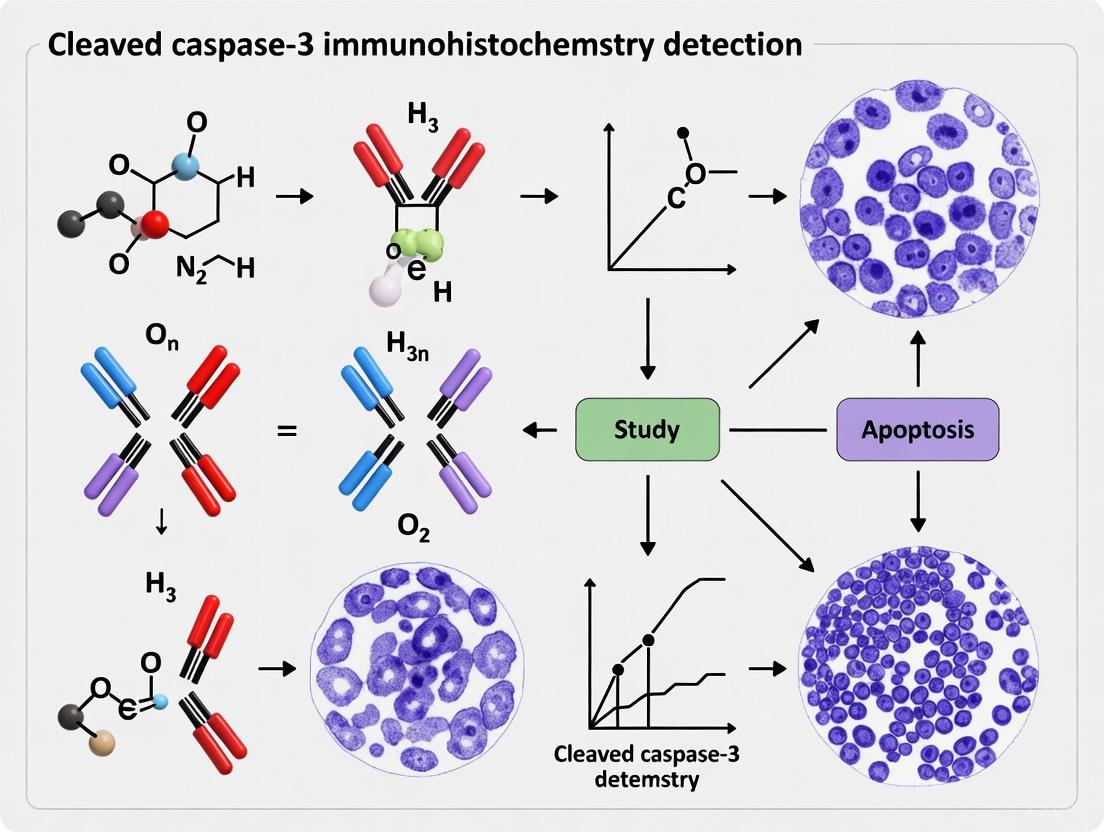
This article provides a comprehensive resource for researchers and drug development professionals on cleaved caspase-3 immunohistochemistry (IHC), a critical technique for detecting apoptotic cells in tissue specimens.
Cleaved Caspase-3 Immunohistochemistry: A Comprehensive Guide from Detection to Clinical Application
Abstract
This article provides a comprehensive resource for researchers and drug development professionals on cleaved caspase-3 immunohistochemistry (IHC), a critical technique for detecting apoptotic cells in tissue specimens. It covers the foundational biology of caspase-3 as a key executioner protease, detailed standardized IHC protocols for formalin-fixed paraffin-embedded tissues, and solutions for common technical challenges. The scope extends to the validation of cleaved caspase-3 as a specific apoptosis marker against other methods like TUNEL and its significant, albeit complex, role as a prognostic biomarker in various cancers, including glioma, colorectal, and head and neck squamous cell carcinoma. The content synthesizes methodological precision with clinical research applications to empower robust experimental design and data interpretation.
The Executioner Protease: Understanding Caspase-3 Biology and Its Role in Apoptosis
Caspase-3 as the Central Executioner in Apoptotic Pathways
Caspase-3 is a cysteine-aspartic acid protease that serves as the crucial executioner protein in the apoptotic pathway, responsible for orchestrating the systematic dismantling of cellular components during programmed cell death [1]. As a member of the caspase family, it is synthesized as an inactive zymogen and becomes activated through proteolytic cleavage by upstream initiator caspases such as caspase-8 and caspase-9 [1]. This activation exposes its active site, enabling it to cleave a broad range of cellular substrates, leading to the hallmark morphological changes of apoptosis, including chromatin condensation, DNA fragmentation, and formation of apoptotic bodies [1]. Caspase-3's function is indispensable for normal development and tissue homeostasis, with its dysregulation implicated in various diseases, including cancer and neurodegenerative disorders [2] [1]. Within research contexts, particularly in immunohistochemistry detection, caspase-3 activation serves as a key biomarker for identifying apoptotic cells in both developmental and pathological states [3].
Quantitative Profiling of Caspase-3 Activity and Substrates
Caspase-3 exhibits stringent substrate specificity, recognizing tetra-peptide sequences and hydrolyzing peptide bonds after aspartic acid residues [1]. It shares similar substrate specificity with caspase-7, primarily recognizing the Asp-x-x-Asp motif, where the C-terminal aspartate is absolutely required [1]. The enzymatic activity of caspase-3 is efficient over a broad pH range, allowing full functionality under normal and apoptotic cell conditions [1].
Quantitative studies of caspase-3 catalyzed αII-spectrin cleavage provide critical insights into its kinetic properties and the generation of specific spectrin breakdown products (SBDPs), which are important biomarkers in brain injury and neurodegenerative diseases [4]. The table below summarizes the key kinetic parameters and characteristics of the primary cleavage sites in αII-spectrin.
Table 1: Kinetic Parameters of Caspase-3 Mediated αII-Spectrin Cleavage
| Cleavage Site | Resulting SBDP | kcat/KM Value (M⁻¹sec⁻¹) | Catalytic Efficiency | Dependence on Other Sites |
|---|---|---|---|---|
| After D1185 | SBDP150 (45 kDa fragment in model proteins) | 40,000 | Unusually rapid | Independent of cleavage at D1478 |
| After D1478 | SBDP120 (37 kDa fragment from intact αII-spectrin) | 3,000 | Similar to most other caspase-3 substrates | Independent of cleavage at D1185 |
Research confirms that caspase-3 cleaves αII-spectrin after residues D1185 and D1478, but not after D888, D1340, or D1475 [4]. The cleavage at these two confirmed sites occurs independently, and the significant difference in their catalytic efficiency (with D1185 cleavage being approximately 13-fold more efficient) underscores the complexity of caspase-3 regulation and substrate selection [4]. The mutation of D1185 to glutamic acid (D1185E) substantially reduces the catalytic efficiency, confirming the importance of the aspartic acid residue at the P1 position [4].
Beyond αII-spectrin, caspase-3 cleaves numerous other vital cellular substrates. A critical target is poly-ADP-ribose polymerase (PARP), an DNA repair enzyme whose inactivation contributes to apoptotic dismantling [2] [3]. During pyroptosis, an inflammatory form of cell death, caspase-3 cleaves gasdermin E (GSDME) to release its active N-terminal fragment, which forms pores in the plasma membrane [2] [5].
Molecular Mechanisms of Caspase-3 Activation and Function
Caspase-3 integrates signals from both the extrinsic (death receptor) and intrinsic (mitochondrial) apoptotic pathways, serving as a convergence point that ensures the coordinated execution of cell death [1] [6].
Structural Activation Mechanism
Caspase-3 is expressed as an inactive 32 kDa zymogen (pro-caspase-3) [1]. Upon apoptotic signaling, initiator caspases cleave the zymogen at specific aspartic residues, generating p17 and p12 subunits [1]. These subunits assemble into an active heterotetrameric enzyme composed of two p17 and two p12 chains, forming a structure with a central 12-stranded beta-sheet surrounded by alpha-helices that is characteristic of caspases [1]. The catalytic site in each active pocket is formed by residues from both subunits, crucially involving the Cys-163 and His-121 residues from the p17 subunit, which function as a catalytic dyad [1].
Diagram 1: Caspase-3 Activation and Execution Pathway. Caspase-3 integrates signals from extrinsic and intrinsic apoptotic pathways, becoming activated through proteolytic cleavage and mediating the final dismantling of the cell.
Key Functional Roles in Apoptosis
As the central executioner caspase, activated caspase-3 cleaves a wide array of structural and regulatory proteins [1]. The cleavage of structural proteins like αII-spectrin leads to the disintegration of the cytoskeleton and nuclear envelope [2] [4]. The cleavage of DNA repair enzymes like PARP prevents futile repair attempts and contributes to DNA fragmentation [2] [3]. Caspase-3 also activates other caspases, such as caspase-6 and -7, creating an amplifying cascade that ensures efficient apoptosis [1]. Furthermore, it can initiate inflammatory lytic cell death (pyroptosis) under certain conditions by cleaving gasdermin E [2] [5].
Detailed Experimental Protocols for Detection
The accurate detection of active caspase-3 is fundamental for apoptosis research. The following protocols provide methodologies for immunohistochemistry/immunocytochemistry (IHC/ICC) and immunofluorescence (IF), optimized for fixed samples.
Immunohistochemistry/Immunocytochemistry (IHC/ICC) for Active Caspase-3
This protocol allows for the visualization of active caspase-3 in fixed cells or tissue sections using enzymatic detection, yielding a chromogenic signal observable under a standard bright-field microscope [7].
Table 2: Key Reagents for IHC/ICC Detection of Active Caspase-3
| Reagent / Solution | Function / Purpose | Example / Specification |
|---|---|---|
| Primary Antibody | Binds specifically to active caspase-3 | Anti-active caspase-3 antibody (e.g., AF835) [7] |
| Proteinase K | Antigen retrieval to expose epitopes | In 10 mM Tris pH 8.0 [7] |
| Blocking Buffer | Reduces non-specific antibody binding | PBS/0.1% Tween 20 + 5% serum [7] |
| Hydrogen Peroxide (H₂O₂) | Blocks endogenous peroxidase activity | 3% solution in methanol [7] |
| Biotinylated Secondary Antibody | Binds to primary antibody | Host-specific (e.g., anti-rabbit) [7] |
| Streptavidin-HRP Conjugate | Binds to biotin; catalyzes chromogen reaction | HSS-HRP [7] |
| Chromogen (DAB or AEC) | Enzymatic conversion yields visible precipitate | DAB (brown) or AEC (red); prepare immediately before use [7] |
Step-by-Step Procedure [7]:
- Sample Preparation and Fixation: Prepare and fix cells or tissue sections using standard procedures (e.g., 4% formaldehyde). Do not let samples dry out.
- Antigen Retrieval: Cover specimen with 100 µL Proteinase K solution and incubate at room temperature (5 min for cells, 10 min for frozen sections, 20 min for paraffin-embedded sections).
- Endogenous Peroxidase Blocking: Rinse with PBS. Incubate specimen with 100 µL of 3% H₂O₂ for 10 minutes at room temperature. Rinse again with PBS.
- Blocking: Cover specimen with 100 µL of Blocking Buffer for 10 minutes at room temperature.
- Primary Antibody Incubation: Apply the anti-active caspase-3 antibody solution (e.g., 5-15 µg/mL) and incubate overnight at 2-8°C.
- Secondary Antibody and HRP Incubation: Wash slides 3 times in PBS for 15 minutes. Apply biotinylated secondary antibody for 30-60 minutes at room temperature. Wash again. Apply Streptavidin-HRP conjugate for 30 minutes at room temperature.
- Chromogen Development and Counterstaining: Incubate tissue section with chromogen (DAB for up to 15 min or AEC for 2-5 min). Monitor staining development under a microscope. Rinse and counterstain (e.g., with Methyl Green).
- Mounting and Imaging: Rinse slide, mount using an aqueous mounting medium, and image with a bright-field microscope.
Diagram 2: IHC/ICC Workflow for Active Caspase-3. The protocol involves sequential steps from antigen retrieval to chromogenic detection for visualizing caspase-3 in fixed samples.
Immunofluorescence (IF) Staining Protocol
Immunofluorescence provides superior spatial resolution for localizing active caspase-3 within individual cells, allowing for co-localization studies with other markers [8].
Step-by-Step Procedure [8]:
- Permeabilization: Incubate fixed samples in PBS/0.1% Triton X-100 (or NP-40) for 5 minutes at room temperature. Wash three times in PBS.
- Blocking: Drain the slide and add 200 µL of blocking buffer (PBS/0.1% Tween 20 + 5% serum from the secondary antibody host species). Incubate in a humidified chamber for 1-2 hours at room temperature. Rinse once in PBS.
- Primary Antibody Incubation: Apply 100 µL of primary antibody (e.g., diluted 1:200 in blocking buffer). Incubate in a humidified chamber overnight at 4°C. Include a no-primary-antibody control.
- Secondary Antibody Incubation: The next day, wash slides three times for 10 minutes each in PBS/0.1% Tween 20. Apply 100 µL of fluorophore-conjugated secondary antibody (e.g., diluted 1:500 in PBS). Incubate protected from light for 1-2 hours at room temperature.
- Final Wash and Mounting: Wash three times in PBS/0.1% Tween 20 for 5 minutes, protected from light. Drain liquid, mount with an aqueous mounting medium, and observe with a fluorescence microscope.
The Scientist's Toolkit: Essential Research Reagents
Successful detection of caspase-3 relies on a suite of well-validated reagents. The table below catalogs essential solutions for researchers.
Table 3: Research Reagent Solutions for Caspase-3 Detection
| Reagent Category | Specific Example | Function & Application Note |
|---|---|---|
| Validated Antibodies | Anti-active Caspase-3 (Rabbit Monoclonal) [8] | Specifically recognizes the cleaved, active form of caspase-3; ideal for IHC, IF, and Western blot. |
| Detection Kits | Apo-BrdU-IHC Kit [7] | Provides optimized reagents for simultaneous detection of DNA fragmentation (TUNEL) and caspase-3 activity. |
| Positive Control | DNase I-treated sample [7] | Used to generate a positive control for TUNEL assay, ensuring proper experimental conditions. |
| Fluorescent Secondaries | Goat anti-Rabbit Alexa Fluor 488 [8] | High-sensitivity, fluorophore-conjugated secondary antibody for immunofluorescence detection. |
| Key Substrate | Recombinant αII-Spectrin fragments [4] | Defined substrate for in vitro kinetic studies of caspase-3 activity and SBDP generation. |
Caspase-3 stands as the undisputed central executioner of apoptosis, with its activation serving as a definitive point of commitment to cell death. Its role in cleaving critical cellular substrates like αII-spectrin and PARP, and its potential to drive other forms of cell death like pyroptosis via GSDME cleavage, highlight its multifaceted importance in cellular physiology and pathology [2] [4] [5]. The quantitative understanding of its kinetics and the availability of robust, detailed protocols for its detection in fixed samples—ranging from chromogenic IHC to high-resolution immunofluorescence—provide researchers with powerful tools to investigate apoptotic events in development, homeostasis, and disease. These methodologies are indispensable for advancing a broader thesis on cleaved caspase-3 immunohistochemistry detection, enabling precise mapping of apoptotic pathways in both basic research and drug development contexts.
Caspase-3 serves as a crucial executioner protease in the apoptotic pathway, responsible for the systematic dismantling of the cell through cleavage of key structural and regulatory proteins [9] [10]. This enzymatic activity is tightly regulated through a zymogen activation process involving precise proteolytic cleavage events. The transition from inactive procaspase-3 to its activated form represents a commitment to apoptotic cell death and serves as a definitive biomarker for detecting programmed cell death in both research and clinical contexts [3] [11]. Understanding the molecular mechanism of caspase-3 activation is therefore fundamental to apoptosis research, drug development, and therapeutic monitoring in diseases ranging from cancer to neurodegeneration.
Molecular Mechanism of Caspase-3 Activation
Structural Transformation Through Proteolytic Cleavage
Caspase-3 exists as an inactive zymogen (procaspase-3) composed of an N-terminal prodomain, a large subunit (p20), and a small subunit (p10) [10]. Activation occurs through a carefully orchestrated two-step cleavage process that induces conformational changes essential for catalytic function.
Initial Interdomain Linker Cleavage: The first activation step involves cleavage at the interdomain linker between the p20 and p10 subunits by initiator caspases, primarily caspase-9 in the intrinsic apoptotic pathway [9]. This cleavage event facilitates a structural reorganization that partially exposes the enzyme's active site.
Prodomain Removal: The second crucial step involves removal of the N-terminal prodomain at aspartic acid position 28 (D28) [9]. Recent research has revealed that this process is more complex than previously understood, requiring an initial cleavage event at aspartic acid position 9 (D9) within the prodomain to enable subsequent cleavage at D28. Mutation studies demonstrate that specific point mutations at D9 (e.g., D9A) completely abolish prodomain removal and caspase-3 function, indicating this residue is vital for proper activation [9].
Table 1: Key Cleavage Sites in Caspase-3 Activation
| Cleavage Site | Position | Cleaving Enzyme | Functional Consequence |
|---|---|---|---|
| D9 | Prodomain | Not fully characterized | Enables subsequent prodomain removal |
| D28 | Prodomain | Not fully characterized | Complete prodomain removal |
| D175 | Interdomain linker | Caspase-9 | Separation of p20 and p10 subunits |
| D179 | Interdomain linker | Caspase-9 | Facilitates active site formation |
Functional Consequences of Prodomain Removal
The prodomain of caspase-3 plays a critical regulatory role rather than merely serving as an inhibitory peptide. Studies using caspase-3 mutants lacking the entire prodomain (∆28) reveal that these cells exhibit heightened susceptibility to apoptotic signals, though the caspase is not constitutively active [9]. This suggests the prodomain functions as a molecular gatekeeper that raises the activation threshold, preventing inadvertent cell death under basal conditions.
Interestingly, partial deletions within the prodomain (e.g., ∆10 and ∆19) produce dramatically different effects than complete prodomain removal. Removal of the first 10 N-terminal amino acids renders caspase-3 completely inactive, with the interdomain linker being cleaved following serum withdrawal but the remaining prodomain failing to be removed [9]. This highlights the essential nature of specific residues within the prodomain for the complete activation process.
Diagram 1: Caspase-3 Activation Pathway. This diagram illustrates the sequential proteolytic events leading from inactive procaspase-3 to the fully active enzyme capable of executing apoptotic programming.
Detection Methodologies and Applications
Immunohistochemical Detection of Activated Caspase-3
Immunohistochemistry (IHC) for cleaved caspase-3 provides spatial context for apoptotic events within tissue architecture, making it invaluable for both research and diagnostic applications [12] [8] [11]. The protocol leverages antibodies specific to the activated form of caspase-3, which only recognize the protease after cleavage-induced conformational changes.
Standard IHC Protocol:
- Tissue Preparation: Fix tissues in 4% formaldehyde for 16 hours, then embed in paraffin [11].
- Sectioning and Deparaffinization: Cut 4μm sections and deparaffinize using standard protocols.
- Antigen Retrieval: Heat slides (94-96°C) for 30 minutes in citrate buffer (pH 6.0) [11].
- Endogenous Peroxidase Blocking: Incubate in 3% hydrogen peroxide for 30 minutes [11].
- Blocking: Apply blocking buffer (PBS/0.1% Tween 20 + 5% serum) for 1-2 hours [8].
- Primary Antibody Incubation: Incubate with anti-cleaved caspase-3 antibody (dilution 1:200-1:600) overnight at 4°C [8] [11].
- Secondary Antibody Incubation: Apply appropriate biotinylated secondary antibody for 45 minutes [12].
- Signal Detection: Use streptavidin-HRP with DAB chromogen for 8-30 minutes [12] [11].
- Counterstaining and Mounting: Counterstain with hematoxylin, dehydrate, and mount [11].
Troubleshooting Considerations:
- High background staining: Ensure thorough washing and use appropriate blocking serum
- Weak signal: Optimize primary antibody concentration and antigen retrieval conditions
- Non-specific staining: Include negative controls (omission of primary antibody) and validate antibody specificity [8]
Diagram 2: Immunohistochemistry Workflow for Cleaved Caspase-3 Detection. This diagram outlines the key steps in detecting activated caspase-3 in formalin-fixed, paraffin-embedded tissue sections, highlighting critical steps for optimal results.
Advanced Detection Technologies
Beyond conventional IHC, several advanced methodologies enable dynamic and quantitative assessment of caspase-3 activity:
Live-Cell Imaging Reporters: Genetically encoded fluorescent reporters (e.g., FRET-based SCAT3 probe, ZipGFP-based biosensors) allow real-time monitoring of caspase-3 activation dynamics in living cells [13] [14]. These systems typically employ a caspase cleavage motif (DEVD) positioned between two fluorescent proteins. Before cleavage, fluorescence is quenched; upon caspase-3 activation, cleavage separates the fluorophores, generating a detectable signal [13].
Fluorogenic Substrate Assays: Biochemical assays using synthetic substrates (e.g., zDEVD-afc) provide quantitative measurement of caspase-3 activity in tissue homogenates [15]. In these assays, cleavage releases a fluorescent moiety (afc), with fluorescence intensity proportional to caspase-3 activity.
Research Reagent Solutions
Table 2: Essential Reagents for Caspase-3 Detection
| Reagent Category | Specific Examples | Application and Function |
|---|---|---|
| Primary Antibodies | Anti-cleaved caspase-3 (Asp175); Rabbit mAb (ab32351) [8] | Specifically recognizes the large fragment (p17) of activated caspase-3 after cleavage at Asp175; essential for IHC and Western blot |
| Secondary Detection | Goat anti-rabbit biotin (E043201-8); Goat anti-rabbit Alexa Fluor 488 (ab150077) [12] [8] | Enables visualization of primary antibody binding; available in enzymatic (HRP) or fluorescent formats for different applications |
| Fluorescent Reporters | pSCAT3 FRET probe; ZipGFP-DEVD caspase reporter [13] [14] | Genetically encoded biosensors for real-time monitoring of caspase-3 activation in live cells via FRET or fluorescence reconstitution |
| Activity Assays | zDEVD-afc fluorogenic substrate [15] | Synthetic caspase-3 substrate that releases fluorescent afc upon cleavage; enables quantitative activity measurement in homogenates |
| Inhibitors | zDEVD-fmk; Ac-DEVD-CMK [15] [14] | Irreversible caspase-3 inhibitors used as negative controls to confirm specificity of detection methods |
Quantitative Analysis in Pathological Contexts
Cleaved caspase-3 immunohistochemistry provides valuable quantitative data for assessing apoptotic indices in various pathological conditions, particularly in cancer research and diagnostic pathology.
Table 3: Cleaved Caspase-3 Expression Across Oral Lesions
| Lesion Type | Location | Positive Cases | Apoptotic Area Index (Average) | Biological Significance |
|---|---|---|---|---|
| Inflammatory Fibrous Hyperplasia | Intraoral | 4/20 (20%) | 0.00011 | Baseline apoptosis in benign reactive lesions |
| Oral Leukoplakia with Dysplasia | Intraoral | 6/16 (37.5%) | 0.00045 | Moderate increase reflecting early malignant transformation |
| Actinic Cheilitis without Dysplasia | Lower Lip | 3/5 (60%) | 0.00026 | Sun damage-induced apoptosis in premalignant states |
| Squamous Cell Carcinoma | Intraoral | 20/20 (100%) | 0.00362 | Significantly elevated apoptosis in malignant tissue |
| Squamous Cell Carcinoma | Lower Lip | 15/20 (75%) | 0.00055 | Substantially lower than intraoral SCC, suggesting etiopathogenetic differences |
Data adapted from [11], demonstrating distinct apoptotic profiles across oral lesions with different malignant potential and etiologies.
The significant difference in apoptotic indices between intraoral and lower lip squamous cell carcinomas (0.00362 vs. 0.00055) highlights distinct biological behaviors influenced by anatomical site and etiology [11]. These quantitative differences may reflect variations in tumor aggressiveness, response to treatment, or underlying molecular mechanisms of carcinogenesis.
The proteolytic cleavage event that transforms procaspase-3 into its activated form represents a critical commitment point in the apoptotic pathway. The molecular mechanism involves precisely regulated sequential cleavages, first in the interdomain linker and subsequently within the prodomain at specific aspartic acid residues. The development of highly specific detection methods, particularly immunohistochemistry for cleaved caspase-3, has enabled researchers and clinicians to precisely identify and quantify apoptotic cells within tissue contexts. These applications provide valuable insights into physiological cell turnover, pathological processes, and treatment responses across diverse disease states, making caspase-3 activation not only a fundamental biochemical process but also an essential biomarker in both basic research and translational medicine.
Poly (ADP-ribose) polymerase (PARP), particularly the PARP-1 isoform, is a 116 kDa nuclear enzyme that plays a critical role in DNA repair and maintenance of genomic integrity [16] [17]. During apoptosis, PARP-1 serves as a primary substrate for executioner caspases, with its cleavage representing a definitive molecular marker of programmed cell death commitment. Caspase-mediated cleavage of PARP-1 occurs at aspartic acid 214, separating the 24 kDa DNA-binding domain from the 89 kDa catalytic domain, thereby inactivating its DNA repair function and facilitating cellular disassembly [17]. This cleavage event serves as a crucial co-marker that complements cleaved caspase-3 detection in apoptosis research, providing enhanced specificity and reliability in identifying genuine apoptotic events.
The integration of PARP cleavage detection with caspase-3 immunohistochemistry establishes a powerful methodological framework for apoptosis assessment. While caspase-3 activation represents a key step in the apoptotic cascade, PARP cleavage confirms the functional execution of the cell death program. This combination is particularly valuable for distinguishing apoptosis from other cell death mechanisms and for verifying the efficacy of caspase activation in experimental models. The concurrent detection of both markers provides researchers with a robust toolset for evaluating therapeutic responses in cancer research, neurodegenerative diseases, and drug development pipelines.
PARP and Caspase-3 as Complementary Apoptotic Markers
Biological Rationale for PARP as a Co-marker
The cleavage of PARP represents a point of no return in the apoptotic cascade, serving as a definitive commitment to cell death. As a major substrate of executioner caspases, including caspase-3, PARP cleavage confirms the functional activation of the apoptotic machinery beyond mere caspase activation. The biological significance of PARP cleavage lies in its role in cellular disassembly – by inactivating DNA repair mechanisms, the cell ensures irreversible progression toward death [17]. This makes PARP cleavage a valuable complementary marker to caspase-3 activation, together providing a more comprehensive assessment of apoptosis.
From a technical perspective, combining PARP cleavage detection with caspase-3 immunohistochemistry addresses critical limitations of single-marker approaches. Research demonstrates that apoptosis can occasionally proceed through caspase-7 activation in caspase-3-deficient systems, potentially leading to false negatives if relying solely on caspase-3 detection [3]. PARP serves as a common substrate for both caspase-3 and caspase-7, making its cleavage a more universal indicator of executioner caspase activity. Furthermore, the persistence of the 89 kDa PARP fragment provides a stable detection window that may extend beyond the transient activation period of caspases, offering greater flexibility in experimental timing.
Comparative Detection Efficiencies in Research Models
Table 1: Comparison of Apoptosis Marker Detection Across Experimental Models
| Experimental Model | Treatment | Active Caspase-3 Detection | Cleaved PARP Detection | Key Findings | Reference |
|---|---|---|---|---|---|
| HT29 monolayer cells | Paclitaxel (0.1 μM, 48h) | Efficient detection | Efficient detection | Comparable apoptosis quantification between markers | [3] |
| HT29 spheroids | Foscan-PDT (4.5 μM, 650 nm laser) | Efficient detection | Efficient detection | Both markers reliably detected apoptosis in 3D culture | [3] |
| HT29 xenografts | Foscan-PDT (0.3 mg/kg, 650 nm laser) | Higher baseline detection | Treatment-dependent increase | PARP cleavage more specific for therapy-induced apoptosis | [3] |
| MDA-MB-231 cells | Foscan-PDT (1.45 μM, 24h) | Efficient detection | Reduced detection in some cells | Revealed caspase-7 mediated apoptosis in caspase-3 negative cells | [3] |
The data presented in Table 1 illustrates how the combined assessment of PARP cleavage and caspase-3 activation enables more accurate apoptosis quantification across diverse research models. Notably, in MDA-MB-231 cells subjected to photodynamic therapy, the discovery of caspase-3 negative cells that nonetheless showed apoptotic morphology underscored the importance of PARP cleavage detection in identifying alternative caspase activation pathways [3]. This complementary approach is particularly valuable in preclinical therapeutic evaluation, where confirming mechanism of action is essential for drug development.
Detection Methodologies and Protocols
Immunohistochemistry Protocol for Cleaved PARP Detection
The detection of cleaved PARP via immunohistochemistry requires specific protocols optimized for different sample types. Below is a comprehensive protocol adapted from methodologies successfully employed in recent research:
Sample Preparation and Fixation:
- Culture cells: Fix in 4% formaldehyde (pH 7.4) for 16 hours following treatment [3]
- Tissue specimens: Fix in 4% formaldehyde for 16-24 hours depending on tissue density
- Embed in paraffin and section at 4μm thickness
- Mount sections on silanized slides to ensure adhesion
Immunohistochemistry Procedure:
- Deparaffinize sections and rehydrate through graded alcohols
- Perform antigen retrieval using citrate buffer (pH 6.0) in a steam cooker
- Block endogenous peroxidase with 3% hydrogen peroxide for 15 minutes
- Apply protein block for 10 minutes to reduce non-specific binding
- Incubate with primary anti-cleaved PARP antibody (dilution 1:200) for 18 hours at 4°C in a humidified chamber [18]
- Wash with phosphate-buffered saline (PBS)
- Incubate with appropriate secondary antibody conjugated with horseradish peroxidase
- Develop using DAB chromogenic substrate for 3-10 minutes
- Counterstain with Harris Hematoxylin for 40 seconds
- Dehydrate, clear, and mount with permanent mounting medium
Controls and Validation:
- Include positive control tissues (human spleen) to validate antibody performance [18]
- Process negative controls without primary antibody concurrently
- Validate specificity using caspase-3 knockout models where appropriate
Flow Cytometry Protocol for Apoptosis Assessment
For quantitative analysis of apoptosis in cell populations, flow cytometry detection of cleaved PARP provides robust quantitative data:
Cell Processing:
- Harvest cells and wash with PBS
- Fix in 1% paraformaldehyde in PBS for 15 minutes
- Permeabilize with appropriate detergent-based buffer
Antibody Staining:
- Incubate cells with HLNC4 antibody conjugated with Alexa Fluor 488 for 30 minutes at 37°C in darkness [19]
- Use camptothecin (10 μM) treated cells as positive control for apoptosis induction
- Analyze samples using flow cytometer (e.g., LSR II) with excitation/emission maxima of 494/519 nm for Alexa Fluor 488
- Record data for a minimum of 10,000 events per sample to ensure statistical reliability
Data Interpretation:
- Gate on target cell population based on forward and side scatter properties
- Quantify cleaved PARP-positive population compared to untreated controls
- Combine with caspase-3 staining for dual parameter analysis
Research Reagent Solutions
Table 2: Essential Reagents for PARP Cleavage Detection
| Reagent/Category | Specific Examples | Research Application | Technical Considerations |
|---|---|---|---|
| Anti-Cleaved PARP Antibodies | Cleaved PARP (Asp214) (19F4) Mouse mAb #9546 [17] | Western Blot (1:2000 dilution), IHC | Detects 89 kDa fragment; specific for caspase cleavage site |
| Anti-Caspase-3 Antibodies | Active Caspase-3 Antibodies [3] | IHC, Western Blot | Detects activated form; essential for co-detection studies |
| Apoptosis Inducers | Paclitaxel (0.1 μM) [3], Camptothecin (10 μM) [19] | Positive controls, therapy studies | Validated concentrations for reproducible apoptosis induction |
| Detection Systems | DAB Chromogen [18], Alexa Fluor 488 conjugates [19] | IHC, Flow Cytometry | Enable visualization and quantification |
| Validation Tools | Human spleen tissue (PARP+), Caspase-3 deficient models [3] | Protocol optimization, Specificity testing | Critical for assay validation and troubleshooting |
The reagents outlined in Table 2 represent core components for establishing robust PARP cleavage detection assays. The Cleaved PARP (Asp214) (19F4) antibody is particularly valuable due to its well-characterized specificity for the caspase-generated 89 kDa fragment, providing high confidence in experimental results [17]. When establishing new protocols, inclusion of multiple apoptosis inducers at validated concentrations ensures consistent positive controls across experiments.
Signaling Pathway Integration
Apoptotic Signaling and PARP Cleavage Pathway
The diagram illustrates the central role of PARP cleavage in the apoptotic cascade. Following caspase-3 activation, PARP-1 is cleaved at the conserved Asp214-Gly215 site, separating its DNA-binding domain from the catalytic domain [17]. This cleavage event serves as an amplification step in apoptosis by preventing DNA repair while promoting DNA fragmentation and cellular disassembly. The detection of both active caspase-3 and the 89 kDa PARP fragment provides complementary verification of apoptosis at different points in the signaling pathway, enhancing experimental reliability.
Concluding Perspectives
The integration of PARP cleavage detection with caspase-3 immunohistochemistry represents a methodological gold standard in apoptosis research. This dual-marker approach provides researchers with enhanced specificity and reliability in identifying genuine apoptotic events, particularly in the context of therapeutic response assessment. The well-characterized cleavage site at Asp214 and the availability of highly specific antibodies make PARP an ideal co-marker for validating caspase-3 activation across diverse experimental systems.
Future methodological developments will likely focus on multiplexed detection platforms that simultaneously quantify PARP cleavage, caspase activation, and other cell death markers within single samples. The continued validation of PARP cleavage as a key apoptotic marker reinforces its essential role in the molecular toolkit for cell death research, drug discovery, and therapeutic efficacy studies.
Caspase-3, a cysteine-aspartic protease and executioner caspase, has traditionally been characterized as a critical mediator of apoptotic cell death, functioning as a potent tumor suppressor [2]. However, emerging research has revealed a paradoxical role for this enzyme, where its activity under specific contexts can facilitate oncogenic processes. This duality presents a significant challenge for therapeutic strategies aimed at modulating caspase-3 activity in cancer. Within cleaved caspase-3 immunohistochemistry (IHC) detection research, understanding these opposing functions is essential for accurate interpretation of staining patterns in tumor specimens. The subcellular localization, intensity, and context of cleaved caspase-3 immunopositivity may provide clues to its functional role, necessitating sophisticated experimental approaches to delineate its complex contributions to tumor biology.
Molecular Mechanisms of Tumor Suppression
The canonical tumor-suppressive function of caspase-3 is executed through its central role in apoptotic pathways. As an executioner caspase, it proteolytically cleaves numerous cellular substrates, leading to the systematic dismantling of the cell.
CAD Cleavage in Chemotherapy-Induced Apoptosis
Recent research has identified a specific mechanism through which caspase-3 mediates tumor cell death during chemotherapy. The multifunctional enzyme CAD (Carbamoyl-phosphate synthetase II, Aspartate transcarbamylase, and Dihydroorotase), which serves as the rate-limiting enzyme for de novo pyrimidine synthesis, has been identified as a crucial substrate for caspase-3 [20]. During chemotherapy-induced apoptosis, caspase-3 cleaves CAD at its Asp1371 residue, leading to subsequent degradation of CAD and disruption of pyrimidine synthesis [20] [21]. This cleavage event is a necessary step for efficient cancer cell death following chemotherapeutic intervention. The critical nature of this interaction is demonstrated by the fact that overexpression of CAD or mutation of the Asp1371 cleavage site confers significant chemoresistance in xenograft and Cldn18-ATK gastric cancer models [20].
Table 1: Quantitative Evidence for Caspase-3-Mediated Tumor Suppression
| Experimental Context | Key Finding | Biological Impact | Citation |
|---|---|---|---|
| Chemotherapy-treated GC/CRC cells | CAD protein levels significantly decrease post-treatment | Disruption of pyrimidine synthesis leads to apoptosis | [20] |
| CAD Asp1371 mutation | Blocked caspase-3 cleavage confers chemoresistance | Enhanced tumor survival in xenograft models | [20] [21] |
| Ionizing radiation | Reduction of CAD and increase of c-PARP in dose-dependent manner | Restoration of CAD protein rescues from IR-induced apoptosis | [20] |
Protocol: Detecting CAD Cleavage by Caspase-3
Purpose: To investigate caspase-3-mediated CAD cleavage as a mechanism of chemotherapy-induced cell death.
Materials and Reagents:
- Cancer cell lines (e.g., HGC27, MKN45, HCT116, SW480)
- Chemotherapeutic agents (5-FU, oxaliplatin, doxorubicin, paclitaxel)
- Anti-CAD antibody
- Anti-cleaved caspase-3 antibody
- Anti-c-PARP antibody (apoptosis positive control)
- Nucleoside supplements (uridine, deoxythymidine, deoxycytidine)
- Caspase-3 inhibitor (e.g., Z-VAD-FMK)
Procedure:
- Culture cancer cells and treat with chemotherapeutic agents at apoptosis-inducing concentrations (e.g., 5-FU at 10-50µM for 24-48 hours).
- For rescue experiments, supplement culture media with nucleosides (uridine, dT, dC) or transfect cells with CAD overexpression plasmids.
- Harvest cells at various time points post-treatment (0, 6, 12, 24 hours).
- Perform Western blot analysis to monitor CAD protein levels, caspase-3 activation, and c-PARP formation.
- Confirm caspase-3-specific cleavage using caspase-3 inhibitors or CRISPR/Cas9-mediated caspase-3 knockout controls.
- For IHC detection in tumor samples, use anti-cleaved caspase-3 and anti-CAD antibodies on formalin-fixed, paraffin-embedded sections.
Expected Results: Successful detection of decreasing CAD levels coinciding with increasing cleaved caspase-3 and c-PARP in treatment-responsive cells. Nucleoside supplementation should partially rescue apoptosis, while CAD overexpression confers resistance.
Molecular Mechanisms of Pro-Tumorigenic Functions
Contrary to its traditional role, substantial evidence now demonstrates that caspase-3 can promote malignant transformation and tumor progression through several non-apoptotic mechanisms.
Facilitation of Oncogenic Transformation
In oncogene-induced transformation models, caspase-3 activation promotes rather than suppresses malignant progression. When human fibroblasts were transduced with an oncogenic cocktail (c-Myc, p53DD, Oct-4, and H-Ras), caspase-3 activity progressively increased during the transformation process [22]. Notably, cells with higher (but sub-lethal) caspase-3 activity formed colonies at significantly greater frequencies than those with low activity. Genetic ablation of caspase-3 significantly attenuated oncogene-induced transformation in vitro and delayed breast cancer progression in MMTV-PyMT transgenic mice [22].
EndoG-Dependent Src-STAT3 Activation
The pro-tumorigenic mechanism of caspase-3 involves triggering the translocation of endonuclease G (EndoG) from mitochondria to the nucleus, where it facilitates phosphorylation of the Src-STAT3 signaling pathway to promote oncogenic transformation [22]. This pathway represents a completely different functional outcome compared to its apoptotic function, highlighting the context-dependent nature of caspase-3 signaling.
Table 2: Quantitative Evidence for Caspase-3-Mediated Pro-Tumorigenic Effects
| Experimental Model | Key Finding | Biological Impact | Citation |
|---|---|---|---|
| mPOR-transduced fibroblasts | Cells with higher caspase-3 activity showed greater transformation | ~80% of emerged colonies were caspase-3 reporter positive | [22] |
| Casp3KO;Pymt mice | Delayed tumor development (median 100 days vs 47.7 days in wild-type) | Significant reduction in tumor numbers and weight | [22] |
| MMTV-PyMT mouse model | Caspase-3 deficiency limited lung metastasis | Pronounced metastasis in Casp3WT;Pymt vs limited in Casp3KO;Pymt | [22] |
Protocol: Investigating Pro-Tumorigenic Caspase-3 Activity
Purpose: To evaluate the role of caspase-3 in facilitating oncogenic transformation through non-apoptotic pathways.
Materials and Reagents:
- Primary human fibroblasts
- Oncogenic factors (c-Myc, p53DD, Oct-4, H-Ras)
- Caspase-3 Luc-GFP reporter
- Caspase-3 knockout cells (CRISPR/Cas9 generated)
- Anti-EndoG antibody
- Anti-phospho-Src and anti-phospho-STAT3 antibodies
- Sublethal doses of apoptotic inducers (for comparison)
Procedure:
- Establish caspase-3 reporter cell lines stably expressing Luc-GFP caspase-3 activity sensor.
- Transduce cells with oncogenic cocktail and monitor caspase-3 activation weekly via fluorescence and luciferase activity.
- Sort cells into subpopulations based on caspase-3 activity levels using FACS.
- Assess transformation capability through colony formation assays in soft agar.
- Evaluate EndoG translocation via subcellular fractionation and Western blot.
- Monitor Src-STAT3 phosphorylation under conditions of caspase-3 activation.
- Validate findings in vivo using xenograft models with caspase-3 proficient and deficient cells.
Expected Results: Cells with moderate caspase-3 activity show enhanced transformation capability. Caspase-3 activation triggers EndoG translocation and subsequent Src-STAT3 phosphorylation. Caspase-3 deficient cells exhibit significantly delayed tumor formation in vivo.
The Scientist's Toolkit: Essential Research Reagents
Table 3: Key Reagents for Studying Caspase-3 Dualality in Cancer
| Reagent/Category | Specific Examples | Research Application | Considerations |
|---|---|---|---|
| Caspase-3 Activity Detectors | Anti-cleaved caspase-3 IHC antibodies, Caspase-3 Luc-GFP reporter, FLICA caspase-3 assays | Detecting and quantifying caspase-3 activation in cells and tissues | Subcellular localization may indicate functional differences; intensity correlates with activity level |
| Caspase-3 Inhibitors | Z-VAD-FMK (pan-caspase), Q-VD-OPh (broad-spectrum), IDN-6556 (emricasan) | Determining caspase-3 dependency in biological processes | Vary in specificity, potency, and cellular permeability; potential off-target effects |
| Genetic Manipulation Tools | CRISPR/Cas9 for caspase-3 knockout, siRNA/shRNA for knockdown, Caspase-3 overexpression vectors | Establishing causal relationships in caspase-3 functions | Complete knockout vs. partial knockdown produces different phenotypes; consider compensatory mechanisms |
| Pathway Reporters | Phospho-STAT3 biosensors, Src activity reporters, Mitochondrial membrane potential dyes | Monitoring downstream consequences of caspase-3 activation | Distinguish between apoptotic and non-apoptotic signaling outcomes |
| Animal Models | MMTV-PyMT transgenic mice, Casp3KO;Pymt mice, Patient-derived xenografts | Investigating caspase-3 roles in tumor development and therapy response in vivo | Tissue-specific and developmental context influences outcomes; stromal contributions important |
Signaling Pathways and Experimental Framework
Integrated Experimental Workflow
Discussion and Research Implications
The dual nature of caspase-3 in cancer biology presents both challenges and opportunities for diagnostic and therapeutic development. In cleaved caspase-3 IHC detection research, these findings necessitate a more nuanced interpretation of staining patterns. Rather than simply equating caspase-3 activation with apoptosis, researchers must consider the context, including the intensity of staining, subcellular localization, co-localization with other markers, and the overall tumor microenvironment.
The opposing functions of caspase-3 appear to be determined by multiple factors, including the intensity and duration of activation, cellular context, genetic background, and metabolic state. Sublethal caspase-3 activation may promote pro-tumorigenic signaling, while robust activation drives apoptosis [22]. This threshold effect complicates therapeutic strategies aimed at modulating caspase-3 activity.
For drug development professionals, these insights suggest that caspase-3 inhibition—while potentially beneficial for preventing treatment-induced metastasis or pro-tumorigenic effects—might inadvertently compromise chemotherapy efficacy by disrupting CAD-mediated apoptotic pathways [20]. Conversely, strategies that enhance caspase-3 activation must be carefully calibrated to avoid the pro-tumorigenic window and achieve full apoptotic commitment.
Future research should focus on identifying biomarkers that can predict which functional outcome will predominate in specific tumor contexts, enabling more personalized therapeutic approaches. Additionally, developing strategies to selectively modulate specific caspase-3 functions or substrates represents a promising avenue for novel cancer therapeutics that can exploit the complex biology of this multifaceted protease.
A Practical IHC Protocol: From Antibody Selection to Staining Interpretation
Within the framework of cleaved caspase-3 immunohistochemistry (IHC) detection research, the selection of an antibody with precise specificity for the Asp175 cleavage site is a critical determinant of experimental success. Caspase-3, a central executioner protease in apoptosis, becomes activated through proteolytic cleavage at specific aspartic acid residues, most notably after Asp175 in the human protein [23]. This cleavage event separates the large and small subunits, leading to the formation of the active enzyme comprising p17 and p12 fragments [24] [23]. The antibody targeting the neo-epitope created by cleavage adjacent to Asp175, specifically the Cleaved Caspase-3 (Asp175) Antibody (#9661) from Cell Signaling Technology, has become an indispensable tool for identifying apoptotic cells in formalin-fixed, paraffin-embedded (FFPE) tissue samples [23] [25]. This application note details the importance of this specificity, provides validated protocols, and outlines a rigorous framework for antibody validation to ensure reliable detection of apoptosis in both research and drug development contexts.
The Critical Role of Asp175 Cleavage and Antibody Specificity
Biological Significance of Asp175 Cleavage
The proteolytic activation of caspase-3 is a pivotal event in the apoptotic cascade. The cleavage at Asp175 occurs between the large and small subunits, a step essential for the formation of the active heterotetrameric enzyme [23]. This activation is a point of convergence for both the intrinsic (mitochondrial) and extrinsic (death receptor) apoptotic pathways. The resulting active caspase-3 is responsible for the proteolytic degradation of numerous key cellular proteins, such as poly (ADP-ribose) polymerase (PARP), leading to the characteristic biochemical and morphological hallmarks of apoptosis [3] [23]. Consequently, the detection of the p17/p19 fragments containing the newly exposed C-terminus adjacent to Asp175 serves as a definitive biomarker for cells undergoing apoptosis [25].
Specificity of the Asp175 Antibody
The Cleaved Caspase-3 (Asp175) Antibody (e.g., #9661) is a rabbit polyclonal antibody generated against a synthetic peptide corresponding to amino-terminal residues adjacent to Asp175 in human caspase-3 [23]. A critical feature of this antibody is its high specificity:
- It detects endogenous levels of the large fragment (17/19 kDa) of activated caspase-3 but does not recognize the full-length, unprocessed caspase-3 zymogen [23] [25].
- This specificity allows researchers to confidently distinguish apoptotic cells from those that merely express the inactive precursor, a crucial distinction for accurate apoptosis assessment.
- It is important to note that while this antibody is highly specific for the cleaved form of human caspase-3, cross-reactivity studies in other models, such as Drosophila, suggest it may detect other DRONC-dependent cleavage events, highlighting the importance of appropriate controls and model system validation [24].
Comparative Analysis of Apoptosis Detection Methods
While IHC for cleaved caspase-3 is widely recommended for apoptosis detection, understanding its position among other techniques is vital for method selection.
Table 1: Comparison of Key Apoptosis Detection Methods
| Method | Principle | Key Advantage | Key Limitation | Suitability for Cleaved Caspase-3 Detection |
|---|---|---|---|---|
| IHC / Immunofluorescence | Antibody-based detection in situ. | Spatial resolution within tissue architecture and single-cell level analysis [8]. | Requires fixed samples; semi-quantitative. | Excellent. The primary recommended method for visualizing cleaved caspase-3 in FFPE tissues [25]. |
| Western Blotting | Antibody-based detection after protein separation. | Confirms antibody specificity via molecular weight (17/19 kDa) [23] [26]. | Loses spatial and cellular information. | Excellent for validation. Confirms the antibody binds the correct cleaved fragment. |
| Flow Cytometry | Antibody-based detection in cell suspensions. | Single-cell, quantitative analysis of large cell populations [26]. | Requires single-cell suspensions; loses tissue context. | Good. Useful for quantifying the percentage of apoptotic cells in culture [23]. |
| Live-Cell Imaging (Biosensors) | Genetically encoded fluorescent indicators [27] or fluorogenic substrates (e.g., NucView 488) [28]. | Real-time, kinetic analysis in live cells. | Requires transfection/special reagents; complex setup. | Good for activity. Detects caspase-3-like enzymatic activity, not the protein itself. |
| PARP Cleavage Detection | Detects cleavage of a key caspase-3 substrate (e.g., 89 kDa fragment) [3]. | Valuable marker of functional caspase activation [3]. | Indirect measure of caspase-3 activity. | Complementary. Used alongside cleaved caspase-3 detection to confirm functional apoptosis. |
Research Reagent Solutions
A successful cleaved caspase-3 IHC experiment relies on a suite of specific, high-quality reagents.
Table 2: Essential Reagents for Cleaved Caspase-3 IHC Detection
| Reagent | Function / Description | Example Product & Specification |
|---|---|---|
| Primary Antibody | Binds specifically to the neo-epitope of cleaved caspase-3 after Asp175. | Cleaved Caspase-3 (Asp175) Antibody #9661 (Cell Signaling Technology) [23]. Reactivity: Human, Mouse, Rat, Monkey. Applications: IHC, WB, IF, FC. |
| IHC Detection Kit | Provides a complete system for HRP-based detection and chromogenic development in tissue sections. | SignalStain Apoptosis (Cleaved Caspase-3) IHC Detection Kit #12692 (Cell Signaling Technology). Includes optimized antibody, detection reagent, and DAB chromogen [25]. |
| Positive Control Tissue | Tissue with known apoptosis to verify antibody and protocol performance. | Human tonsil or rodent mammary gland (involuting) are commonly used. Essential for assay validation. |
| Isotype Control Antibody | Controls for non-specific binding of the primary antibody. | Concentration-matched rabbit IgG monoclonal antibody (e.g., included in #12692 kit) [25]. |
| Caspase Inhibitor (Functional Control) | A peptide-based inhibitor used to confirm specificity in cell-based assays. | Z-DEVD-fmk: A cell-permeable, irreversible inhibitor of caspase-3-like activity (DEVDases) [27]. Used to block caspase-3 activation and demonstrate loss of signal. |
Detailed Experimental Protocols
Protocol: Immunohistochemistry for Cleaved Caspase-3 in FFPE Tissues
The following protocol is adapted for the SignalStain Apoptosis (Cleaved Caspase-3) IHC Detection Kit (#12692) and represents a standard workflow for FFPE tissues [25].
Materials:
- SignalStain Apoptosis IHC Detection Kit (#12692) [25]
- Deparaffinized and rehydrated FFPE tissue sections
- Antigen retrieval solution (e.g., Citrate Buffer, pH 6.0)
- Hydrogen Peroxide Block (3% H₂O₂ in methanol)
- Blocking Buffer (e.g., Normal Goat Serum)
- Wash Buffer (PBS with 0.1% Tween 20)
- Hematoxylin counterstain
- Mounting medium
Method:
- Deparaffinization and Hydration: Follow standard procedures to deparaffinize and rehydrate FFPE tissue sections.
- Antigen Retrieval: Perform heat-induced epitope retrieval in appropriate buffer (e.g., Citrate, pH 6.0) for 20-40 minutes. Allow slides to cool.
- Peroxidase Blocking: Incubate slides with Hydrogen Peroxide Block for 10 minutes to quench endogenous peroxidase activity. Wash with Wash Buffer.
- Blocking: Incubate sections with 100-400 µL of Blocking Buffer for 1 hour at room temperature to reduce non-specific binding.
- Primary Antibody Incubation:
- Drain the Blocking Buffer from the slides.
- Apply the Cleaved Caspase-3 (Asp175) (D3E9) Rabbit mAb (provided in the kit) at the recommended dilution (typically 1:400-1:800 in Antibody Diluent) to the tissue sections.
- Incubate overnight at 4°C in a humidified chamber. Note: Include a control slide stained with a concentration-matched Rabbit IgG Isotype Control.
- Detection:
- Wash slides thoroughly with Wash Buffer.
- Apply the HRP-conjugated SignalStain Boost IHC Detection Reagent (Anti-Rabbit IgG) to the sections.
- Incubate for 30 minutes at room temperature. Wash with Wash Buffer.
- Chromogenic Development:
- Prepare the SignalStain DAB Chromogen by adding one drop of DAB Concentrate to 1 mL of DAB Diluent.
- Apply 100-400 µL of the DAB solution to each section and monitor development for 3-10 minutes under a microscope.
- Immerse slides in distilled water to stop the reaction.
- Counterstaining and Mounting:
- Counterstain with Hematoxylin.
- Dehydrate, clear, and mount the slides with a permanent mounting medium.
Protocol: Immunofluorescence Staining for Caspase-3
This protocol is ideal for detecting cleaved caspase-3 in fixed cells or frozen sections, allowing for multiplexing with other markers [8].
Materials:
- Primary antibody (e.g., Anti-Caspase 3 antibody [ab32351])
- Fluorescently conjugated secondary antibody (e.g., Goat Anti-Rabbit IgG Alexa Fluor 488 [ab150077])
- Prepared, fixed samples on slides
- Permeabilization buffer (PBS with 0.1% Triton X-100)
- Blocking buffer (PBS/0.1% Tween 20 + 5% serum from the secondary antibody host species)
- Mounting medium with DAPI
Method:
- Permeabilization: Incubate fixed samples in PBS/0.1% Triton X-100 for 5 minutes at room temperature. Wash 3x with PBS.
- Blocking: Drain the slide and apply 200 µL of blocking buffer. Incubate for 1-2 hours in a humidified chamber.
- Primary Antibody Incubation:
- Apply 100 µL of the primary antibody (e.g., diluted 1:200 in blocking buffer).
- Incubate slides overnight at 4°C in a humidified chamber, protected from light.
- Secondary Antibody Incubation:
- Wash slides 3x for 10 minutes each with PBS/0.1% Tween 20.
- Apply 100 µL of the appropriate fluorescently conjugated secondary antibody (e.g., diluted 1:500 in PBS).
- Incubate for 1-2 hours at room temperature, protected from light.
- Mounting: Wash slides 3x for 5 minutes with PBS/0.1% Tween 20, protected from light. Drain liquid, mount with an anti-fade medium containing DAPI, and image with a fluorescence microscope.
Validation and Troubleshooting
Essential Validation Controls
To ensure the specificity of the cleaved caspase-3 IHC signal, the following controls are mandatory:
- Positive Control: A tissue or cell sample with known apoptosis (e.g., involuting mammary gland, treated cell lines). This validates the entire protocol.
- Negative Control: Use of the isotype control antibody at the same concentration as the primary antibody. Any staining here indicates non-specific binding [25].
- Biological Negative Control: Tissue or cells not expected to be undergoing apoptosis.
- Pre-absorption Control: For peptide-affinity purified antibodies, pre-incubation of the antibody with an excess of the immunizing peptide should abolish the specific signal.
- Functional Control (for cell culture): Treat parallel samples with a caspase-3 inhibitor like Z-DEVD-fmk (e.g., 50-200 µM). This should significantly reduce cleaved caspase-3 signal upon apoptotic stimulation [27].
Troubleshooting Common Issues
- High Background: Ensure thorough washing after each step. Use an appropriate blocking serum from the host species of the secondary antibody. Titrate the primary and secondary antibody concentrations to find the optimal dilution [8].
- Weak or No Signal: The primary antibody concentration may be too low. Re-optimize the dilution. Check antigen retrieval efficiency and try different retrieval methods or pH. Verify that the positive control tissue stains correctly.
- Non-specific Nuclear Staining: This can be observed in specific healthy cell types (e.g., pancreatic alpha-cells) and is noted in the manufacturer's data sheet [23]. Careful interpretation and use of the isotype control are critical to distinguish this from true apoptotic signal.
Visualizing the Workflow and Specificity
The following diagram illustrates the molecular specificity of the Asp175 antibody and the key steps in the IHC workflow, highlighting critical control points.
Diagram 1: Antibody Specificity and IHC Workflow. This diagram illustrates the specific binding of the Asp175 antibody to the neo-epitope exposed only upon caspase-3 activation and aligns it with the key steps of the IHC protocol. The critical validation controls are integrated to highlight their importance at specific stages.
The precise detection of cleaved caspase-3 via IHC is a cornerstone of apoptosis research. The specificity for the Asp175 cleavage site is paramount, as it directly reports on the proteolytic activation of this key executioner caspase. By selecting a well-validated antibody, such as the #9661 or the kit #12692, and adhering to a rigorous experimental and validation protocol that includes essential controls, researchers and drug development professionals can generate reliable, interpretable, and reproducible data. This disciplined approach is essential for accurately assessing apoptotic indices in physiological studies, disease models, and preclinical therapeutic efficacy evaluations.
The accurate detection of cleaved caspase-3 via immunohistochemistry (IHC) in formalin-fixed paraffin-embedded (FFPE) tissues is a cornerstone methodology for identifying apoptotic cells in diverse research contexts, ranging from basic cancer biology to preclinical drug development. Caspase-3, a key executioner protease in the apoptotic pathway, becomes enzymatically active upon proteolytic cleavage and serves as a definitive marker of programmed cell death. Its detection is frequently employed to assess the efficacy of chemotherapeutic agents and targeted therapies in inducing tumor cell death [29]. However, the formalin fixation process, while essential for preserving tissue morphology, creates methylene bridges that cross-link proteins and mask antigenic epitopes, including those on cleaved caspase-3. Consequently, robust and well-optimized antigen retrieval protocols are not merely beneficial but essential to reverse these cross-links and ensure high-specificity, high-sensitivity detection of this critical biomarker [30] [3]. This application note provides detailed protocols and data-driven guidance for tissue processing and antigen retrieval, framed within the specific context of cleaved caspase-3 IHC detection research.
The Critical Role of Caspase-3 in Apoptosis and Cancer Research
Caspase-3 is a cysteine-aspartic protease that exists as an inactive zymogen in cells. Upon initiation of apoptosis via either the extrinsic (death receptor) or intrinsic (mitochondrial) pathway, caspase-3 is cleaved into activated fragments. This cleaved, active caspase-3 is responsible for the proteolytic degradation of numerous cellular substrates, such as poly (ADP-ribose) polymerase (PARP), leading to the characteristic biochemical and morphological hallmarks of apoptosis [29] [3]. Given its pivotal role as a central executioner, the detection of cleaved caspase-3 by IHC has become a gold standard for identifying apoptotic cells in situ within tissue architecture. In translational research and drug development, this assay is indispensable for validating the on-target activity of therapeutic agents designed to induce apoptosis in cancer cells [31]. It is important to note that apoptosis may also involve other executioner caspases, such as caspase-7, which can sometimes substitute for caspase-3. However, cleaved caspase-3 remains the most specific and widely used marker for this form of cell death [3].
The diagram below illustrates the position of caspase-3 activation within the apoptotic signaling pathways and the subsequent IHC detection workflow.
Principles of Tissue Fixation and Processing
Optimal tissue fixation is the foundational step for preserving cellular morphology and antigen integrity, including that of cleaved caspase-3. Inadequate fixation can lead to protein degradation or poor structural preservation, while over-fixation can exacerbate antigen masking.
Fixation Protocol for FFPE Tissues
The following protocol is recommended for the preparation of FFPE tissue blocks [32] [31]:
- Fixation: Immerse freshly collected tissue specimens in 10% neutral-buffered formalin promptly after dissection. The volume of fixative should be 50-100 times the volume of the tissue.
- Fixation Duration: Fix for 24-48 hours at room temperature. Prolonged fixation (exceeding 48 hours) should be avoided, as it can lead to excessive cross-linking and significant antigen masking, making subsequent retrieval of sensitive epitopes like cleaved caspase-3 more challenging.
- Processing: After fixation, process tissues through a series of graded alcohols (70%, 80%, 95%, 100%) for dehydration, followed by clearing with xylene or a xylene-substitute.
- Embedding: Infiltrate tissues with molten paraffin wax and embed in blocks using a standard embedding center.
Antigen Retrieval Methodologies
Antigen retrieval is a critical step to reverse formaldehyde-induced cross-links and unmask epitopes. The two primary methods are Heat-Induced Epitope Retrieval (HIER) and enzymatic retrieval.
Heat-Induced Epitope Retrieval (HIER)
HIER is the most common and effective method for retrieving cleaved caspase-3 epitopes. It involves heating tissue sections in a specific buffer at high temperature [30] [32].
Table 1: Common HIER Buffers for Cleaved Caspase-3 Immunodetection
| Buffer | Composition | pH | Mechanism | Suitability for Cleaved Caspase-3 |
|---|---|---|---|---|
| Sodium Citrate | 10 mM Tri-sodium citrate, 0.05% Tween 20 | 6.0 | Hydrolytic cleavage of cross-links | Widely used; a standard first choice for many antigens [30] [32]. |
| Tris-EDTA | 10 mM Tris base, 1 mM EDTA, 0.05% Tween 20 | 9.0 | Calcium chelation and hydrolysis | Often superior for nuclear antigens and some phosphorylated epitopes; recommended if citrate fails [30]. |
| EDTA | 1 mM EDTA | 8.0 | Calcium chelation | Similar to Tris-EDTA; effective for many difficult-to-retrieve antigens [30]. |
Detailed HIER Protocol Using a Pressure Cooker
This method is highly effective due to the high temperature achieved under pressure, ensuring uniform retrieval [30].
- Deparaffinization and Rehydration:
- Devax slides in xylene (or substitute), 3 x 5 minutes.
- Rehydrate through graded alcohols: 100% Ethanol (2 x 5 mins), 90% Ethanol (1 x 5 mins), 70% Ethanol (1 x 5 mins).
- Rise in distilled water for 5 minutes.
- Retrieval:
- Add the chosen antigen retrieval buffer (e.g., Sodium Citrate, pH 6.0) to a domestic pressure cooker. Place on a hot plate at full power without securing the lid.
- Once boiling, transfer the slides into the buffer.
- Secure the lid. Once full pressure is reached, time for 3 minutes.
- After 3 minutes, place the pressure cooker in a sink, activate the pressure release valve, and run cold water over it to depressurize and cool.
- Open the lid and run cold tap water into the cooker for 10 minutes to cool the slides further.
- Proceed with Staining: Continue with the standard IHC staining protocol, beginning with peroxidase blocking and serum blocking steps.
Alternative HIER methods using a microwave (20 minutes at full power after reaching a boil, monitoring for evaporation) or a vegetable steamer (20 minutes at 95-100°C) are also valid, though the pressure cooker method is often preferred for its consistency and efficiency [30].
Enzymatic Antigen Retrieval
Enzymatic retrieval uses proteases like Proteinase K or Trypsin to digest proteins and unmask epitopes. However, this method can be harsher on tissue morphology and is generally not the first choice for cleaved caspase-3 detection. It should be used when HIER methods are ineffective [32].
Protocol: Submerge deparaffinized and rehydrated slides in Proteinase K (20 µg/mL) or a 0.05% Trypsin solution for 10-20 minutes at 37°C [32].
Immunohistochemical Staining for Cleaved Caspase-3
The following protocol details the steps for visualizing cleaved caspase-3 after successful antigen retrieval, using a standard 3-step detection system with 3,3'-Diaminobenzidine (DAB) as the chromogen [32] [31].
Detailed IHC Staining Protocol
- Endogenous Peroxidase Blocking: Incubate slides in 0.3% H₂O₂ in distilled water for 15-40 minutes at room temperature to quench endogenous peroxidase activity, particularly critical in tissues like spleen and liver [32].
- Washing: Wash slides 3 times in Phosphate Buffered Saline (PBS) for 5 minutes each.
- Protein Blocking: Incubate sections with 10% normal serum (from the species in which the secondary antibody was raised) for 1 hour at room temperature to block non-specific binding sites.
- Primary Antibody Incubation: Apply the anti-cleaved caspase-3 primary antibody, diluted in blocking serum or antibody diluent, onto the sections. Incubate for 2 hours at room temperature or overnight at 4°C for low-abundance antigens.
- Washing: Wash slides 3 times in PBS for 5 minutes each.
- Secondary Antibody Incubation: Apply the biotinylated secondary antibody (e.g., anti-rabbit) for 1 hour at room temperature.
- Washing: Wash slides 3 times in PBS for 5 minutes each.
- Amplification: Incubate with an avidin-biotin-horseradish peroxidase (HRP) complex (e.g., ABC reagent) for 30 minutes at room temperature.
- Washing: Wash slides 3 times in PBS for 5 minutes each.
- Visualization: Prepare the DAB solution according to the manufacturer's instructions (e.g., 500 µL of 1% DAB stock, 2.5 µL of 30% H₂O₂ in 50 mL PBS). Apply to the tissue and monitor development under a microscope until brown staining is visible. Immerse slides in distilled water to stop the reaction.
- Counterstaining: Counterstain with Hematoxylin to visualize nuclei, then rinse in tap water.
- Dehydration and Mounting: Dehydrate sections through graded alcohols (70%, 90%, 100%) and clearing agent (e.g., Histoclear), then mount with a permanent mounting medium [32].
The Scientist's Toolkit: Key Reagents for Cleaved Caspase-3 IHC
Table 2: Essential Research Reagent Solutions for Cleaved Caspase-3 IHC
| Reagent / Kit | Function / Application | Specific Examples / Notes |
|---|---|---|
| Anti-Cleaved Caspase-3 Antibody | Primary antibody for specific detection of the activated form of caspase-3 in apoptotic cells. | Validate for IHC on FFPE tissues. Use antibodies specifically validated for cleaved (not total) caspase-3. |
| HIER Buffer Kits | Pre-formulated buffers for heat-induced antigen retrieval. | Citrate buffer (pH 6.0), Tris-EDTA buffer (pH 9.0). Essential for unmasking the cleaved caspase-3 epitope [30]. |
| Biotinylated Secondary Antibody | Links the primary antibody to the amplification system. | Species-specific (e.g., anti-rabbit). |
| Avidin-Biotin-HRP Complex (ABC) | Enzyme-based signal amplification system for enhanced detection sensitivity. | Increases signal-to-noise ratio for detecting low levels of cleaved caspase-3. |
| DAB Chromogen Kit | Enzyme substrate producing an insoluble brown precipitate at the antigen site. | A suspected carcinogen; handle with appropriate personal protective equipment and dispose of according to safety guidelines [32]. |
| Hematoxylin Counterstain | Stains nuclei blue, providing morphological context. | Allows for visualization of tissue architecture and localization of cleaved caspase-3 positive cells. |
Troubleshooting and Optimization
Optimization is critical for successful cleaved caspase-3 IHC. Key parameters to test include:
- Antigen Retrieval: Empirically test different buffers (Citrate vs. Tris-EDTA) and retrieval times if background is high or signal is weak [30].
- Antibody Dilution: Perform a dilution series of the primary antibody to find the optimal concentration that maximizes specific signal while minimizing background.
- Controls: Always include a positive control (e.g., a tissue known to have apoptotic cells) and a negative control (omission of the primary antibody) to ensure the validity of the staining [31].
- Visualization: Consider that the conventional blue (Hematoxylin) and brown (DAB) color scheme may not be optimally distinguishable for the human visual system. For digital image analysis, color deconvolution and re-staining with optimized color maps can improve perceptual contrast and quantitative assessment [33].
Step-by-Step Staining Protocol and Positive Control Selection
Within the broader thesis research on apoptosis detection methodologies, cleaved caspase-3 immunohistochemistry (IHC) stands as a critical technique for identifying programmed cell death in diverse experimental and pathological contexts. As a central executioner caspase, caspase-3 requires proteolytic processing at specific aspartic acid residues (including Asp175) to become enzymatically active, generating cleaved fragments that serve as definitive markers of apoptotic activation [34] [31]. This application note provides a comprehensive framework for detecting this activated form in tissue sections and cell preparations, enabling researchers and drug development professionals to accurately visualize and quantify apoptosis in their experimental systems. The protocols outlined herein have been optimized for robustness and reliability across multiple platforms, incorporating essential validation steps to ensure specific detection of the cleaved caspase-3 while minimizing background staining and false-positive results.
The fundamental principle underlying this methodology involves the use of antibodies specifically developed to recognize the neoepitopes exposed after proteolytic cleavage at Asp175, thereby distinguishing activated caspase-3 from its inactive zymogen precursor [34] [35]. When implemented with appropriate controls and optimization, this technique provides spatial information about apoptotic events within tissue architecture that cannot be obtained through bulk biochemical methods like western blotting, making it particularly valuable for understanding heterogeneous cellular responses in complex biological systems, including tumor tissues, developing embryos, and neurodegenerative specimens [8] [31].
Apoptosis Signaling and Caspase-3 Activation Pathway
The following diagram illustrates the key apoptotic signaling pathway that leads to caspase-3 activation, providing essential context for the detection method.
Diagram 1: Apoptosis signaling and caspase-3 activation pathway. This schematic outlines the key molecular events leading to caspase-3 activation, beginning with apoptotic stimuli that trigger mitochondrial cytochrome c release, followed by initiator caspase-9 activation, which then cleaves and activates the executioner caspase-3, culminating in apoptotic execution through substrate cleavage.
Essential Reagents and Materials
The following table comprehensively lists the critical reagents required for successful cleaved caspase-3 immunohistochemical detection, along with their specific functions in the protocol.
Table 1: Essential Research Reagent Solutions for Cleaved Caspase-3 IHC
| Reagent/Category | Specific Examples | Function & Importance |
|---|---|---|
| Primary Antibodies | Cleaved Caspase-3 (Asp175) (D3E9) Rabbit mAb #9579 [34]Cleaved Caspase 3 Polyclonal Antibody #25128-1-AP [36] | Specifically recognizes the activated form cleaved at Asp175; does not recognize full-length caspase-3 [34] [36] |
| Positive Controls | Caspase-3 Control Cell Extracts #9663 (Jurkat +Cytochrome c) [37]Nuclease-treated samples [7] | Verify antibody performance and protocol effectiveness; essential for validation [37] |
| Negative Controls | Caspase-3 Control Cell Extracts (Jurkat Untreated) [37]No primary antibody control [8] | Assess non-specific binding and background staining [8] [37] |
| Detection System | ABC Rabbit Kit [38]Biotinylated secondary antibodies [7] | Amplifies signal and enables visualization of antibody binding |
| Chromogens | DAB (3,3'-Diaminobenzidine) [38] [7]AEC (3-Amino-9-Ethylcarbazole) [7] | Produces visible precipitate at antigen location for microscopic visualization |
| Antigen Retrieval | Citric acid buffer (pH 6.8) [38]Sodium citrate buffer (pH 6.0) [31] | Reverses formaldehyde cross-linking and exposes hidden epitopes |
| Blocking Buffers | PBS/0.1% Tween 20 + 5% appropriate serum [8]5% BSA in PBS-T [31] | Reduces non-specific antibody binding and minimizes background |
Step-by-Step Staining Protocol
Sample Preparation and Fixation
Proper sample preparation establishes the foundation for successful cleaved caspase-3 detection. For tissue specimens, immediate fixation following collection is critical to preserve antigen integrity and prevent post-mortem degradation. The recommended fixative is 10% neutral-buffered formalin, with an optimal fixation duration of 16-24 hours to ensure adequate tissue preservation while maintaining antigenicity [3]. Prolonged fixation should be avoided as it may mask epitopes and reduce antibody binding efficiency. For cell cultures and spheroids, similar fixation protocols apply, with 4% formaldehyde in PBS (pH 7.4) for 15-30 minutes typically sufficient for cell monolayers [3]. Following fixation, tissues must be processed through standard dehydration series and embedded in paraffin using conventional histological protocols. Sectioning should produce 3-5 μm thick sections mounted on charged slides to ensure tissue adhesion throughout the rigorous staining procedure [38] [31].
Deparaffinization and Antigen Retrieval
For paraffin-embedded sections, complete deparaffinization is essential for antibody penetration. Slides should be incubated at 37°C for 45 minutes followed by rehydration through graded alcohols [38]. The critical antigen retrieval step reverses formaldehyde-induced cross-links that obscure the cleaved caspase-3 epitope. Two effective antigen retrieval methods have been validated:
- Citric acid-based retrieval: Microwave slides in 0.01 M citric acid buffer (pH 6.8) twice for 5 minutes each, followed by a 20-minute cooling period before proceeding [38].
- Sodium citrate-based retrieval: Heat slides in 10 mM sodium citrate buffer (pH 6.0) with 0.05% Tween-20 using a microwave or steam cooker [31].
The choice of retrieval method may require optimization for specific tissue types or fixation conditions. After retrieval, slides should be washed in phosphate-buffered saline (PBS) for 15 minutes to prepare for subsequent steps [38].
Immunohistochemical Staining Procedure
The core staining protocol involves sequential incubations with specific reagents to visualize cleaved caspase-3 expression. The workflow below summarizes the complete staining procedure:
Diagram 2: Cleaved caspase-3 IHC staining workflow. This flowchart outlines the sequential steps in the immunohistochemical detection of cleaved caspase-3, from initial peroxidase blocking through final mounting and analysis.
- Endogenous Peroxidase Blocking: Apply 3% H₂O₂ in methanol for 10 minutes at room temperature to quench endogenous peroxidase activity, particularly important in tissues with abundant red blood cells [7].
- Serum Blocking: Incubate sections with blocking buffer containing 5% serum from the host species of the secondary antibody for 1-2 hours at room temperature to reduce non-specific binding [8].
- Primary Antibody Incubation: Apply optimized dilution of anti-cleaved caspase-3 antibody diluted in blocking buffer and incubate overnight at 4°C in a humidified chamber. Optimal dilutions vary by antibody source:
- Secondary Antibody Incubation: After thorough washing, apply species-appropriate biotinylated secondary antibody (e.g., 1:500 dilution) for 30-60 minutes at room temperature [38].
- Detection System: Incubate with avidin-biotin complex (ABC) reagent for 30 minutes at room temperature to amplify the signal [38] [7].
- Chromogen Development: Apply DAB substrate for 6-8 minutes, monitoring staining development microscopically until optimal signal-to-background ratio is achieved [38].
- Counterstaining and Mounting: Counterstain briefly with hematoxylin (approximately 2 seconds), dehydrate through graded alcohols, clear in xylene, and mount with permanent mounting medium [38].
Antibody Dilution Optimization
The following table provides specific dilution ranges for commonly used cleaved caspase-3 antibodies across different applications, compiled from manufacturer specifications and published protocols.
Table 2: Cleaved Caspase-3 Antibody Dilutions for Various Applications
| Antibody Source/Clone | IHC (Paraffin) | Immunofluorescence | Western Blot | Flow Cytometry |
|---|---|---|---|---|
| Cell Signaling #9579(D3E9 Rabbit mAb) | 1:250 [34] | 1:1600 - 1:6400 [34] | Not recommended due to non-specific substrates [34] | 1:200 [34] |
| Proteintech #25128-1-AP(Rabbit Polyclonal) | 1:50 - 1:500 [36] | 1:50 - 1:500 [36] | 1:500 - 1:2000 [36] | Not specified |
| Invitrogen #PA5-114687(Rabbit Polyclonal) | Recommended [35] | Recommended [35] | Recommended [35] | Not specified |
Positive Control Selection and Validation
Appropriate positive controls are indispensable for validating cleaved caspase-3 IHC results and confirming technical proficiency. Several well-established positive control options are available:
Prepared Control Materials
- Commercial Control Extracts: Caspase-3 Control Cell Extracts (#9663) containing cytochrome c-treated Jurkat cell cytoplasmic fractions provide reliable western blot positive controls and can guide tissue control selection [37].
- Nuclease-treated Samples: DNase I treatment (1 μg/ml in PBS with 1mM MgSO₄ for 20 minutes at room temperature) induces DNA fragmentation in control specimens, creating a positive TUNEL control that typically correlates with caspase activation [7].
Biological and Tissue Controls
- Induced Apoptosis Models: Jurkat cells or other lymphocyte populations treated with cytochrome c [37], paclitaxel (0.1 μM for 48 hours) [3], or photodynamic therapy [3] provide robust positive controls with predictable caspase-3 activation kinetics.
- Tissues with Constitutive Apoptosis: Developing embryonic tissues, involuting mammary gland, intestinal crypt epithelium, and thymus following glucocorticoid treatment naturally contain apoptotic cells and serve as excellent tissue-positive controls [31].
Control Strategy Implementation
For rigorous validation, each staining run should include:
- Positive control section: A tissue or cell preparation with known cleaved caspase-3 expression.
- Negative control section: The same tissue type processed without primary antibody or with isotype-matched immunoglobulin.
- Biological negative control: Tissue or cells not expected to undergo apoptosis (e.g., untreated Jurkat cells) [37].
This comprehensive control strategy controls for both technical performance and biological specificity, enabling accurate interpretation of experimental results.
Troubleshooting and Optimization
Successful cleaved caspase-3 IHC requires careful attention to potential technical challenges. The following common issues and solutions represent consolidated expertise from multiple sources:
High Background Staining: Ensure thorough washing between steps (particularly after primary antibody incubation), use appropriate blocking serum from the secondary antibody host species, and titrate primary antibody concentration to optimal dilution [8]. For persistent background, increase serum concentration in blocking buffer to 5-10% or include 0.1% Triton X-100 in blocking buffer [31].
Weak or Absent Signal: Verify antigen retrieval efficiency by testing different pH buffers (pH 6.0 vs. pH 9.0) [36] and increasing primary antibody concentration if under-detection is suspected. Ensure proper fixation timing, as under-fixation can lead to antigen loss while over-fixation can mask epitopes [3].
Non-specific Staining: Include negative controls without primary antibody to identify non-specific secondary antibody binding [8]. Validate antibody specificity using caspase-3 knockout cells or tissues if available, and confirm expected staining patterns with established positive controls.
Nuclear Background in Specific Species: Note that some antibodies may exhibit nuclear background in rat and monkey samples [34], requiring additional optimization for these species.
Methodological Limitations and Complementary Approaches
While cleaved caspase-3 IHC provides valuable spatial information about apoptosis, researchers should recognize its limitations. The method requires fixed samples, precluding live-cell analysis or real-time monitoring of apoptotic dynamics [8]. Additionally, cleaved caspase-3 detection does not directly assess upstream events like mitochondrial membrane potential changes or other early apoptotic indicators [8]. Perhaps most importantly, antibodies specific for cleaved caspase-3 will not detect apoptosis mediated primarily by other executioner caspases, particularly caspase-7, which can substitute for caspase-3 in certain cellular contexts [3].
For comprehensive apoptosis assessment, researchers should consider complementary techniques:
- TUNEL Staining: Detects DNA fragmentation, a late apoptotic event [7].
- Cleaved PARP Detection: Identifies proteolytic cleavage of PARP-1, a key caspase-3/7 substrate [3].
- Caspase-7 Activation Status: Determines if alternative executioner caspases contribute to apoptotic signaling [3].
- Western Blot Analysis: Provides confirmation of caspase-3 cleavage and allows quantification of activation levels [31].
Method validation studies demonstrate that employing at least two complementary apoptosis detection methods provides the most reliable assessment of programmed cell death, particularly in complex experimental systems or when evaluating novel therapeutic agents [31] [3].
This application note provides a comprehensive framework for implementing cleaved caspase-3 immunohistochemistry within apoptosis research programs. The detailed protocols, control strategies, and troubleshooting guidelines enable researchers to generate reliable, reproducible data regarding apoptotic activity in diverse experimental systems. Proper validation and implementation of this technique, complemented by other apoptosis detection methods where appropriate, offers powerful insights into cell death regulation with significant implications for basic research, drug development, and clinical translation.
Within the framework of cleaved caspase-3 immunohistochemistry (IHC) detection research, the accurate quantification of apoptotic indices is paramount for assessing physiological homeostasis, disease progression, and therapeutic efficacy. Cleaved caspase-3, the activated form of the key executioner caspase, serves as a definitive biochemical marker of cells committed to apoptotic death [29] [39]. This application note provides detailed protocols and scoring methodologies for the robust quantitative and semi-quantitative analysis of cleaved caspase-3 IHC, equipping researchers with standardized procedures to generate reliable, reproducible data for basic research and drug development.
The Central Role of Caspase-3 in Apoptosis
Caspase-3 is a cysteine-aspartic protease that functions as a critical executioner of apoptosis. It is synthesized as an inactive zymogen and, upon activation via proteolytic processing, cleaves a broad range of structural and regulatory proteins, leading to the systematic dismantling of the cell [29] [39]. The detection of the cleaved, active form of caspase-3 (p17/p19 fragments) provides a specific and reliable indicator of apoptotic engagement, making it a superior biomarker compared to general morphological assessments [20].
The diagram below illustrates the position of caspase-3 within the core apoptotic signaling pathways.
Experimental Protocol: Cleaved Caspase-3 Immunohistochemistry
This section provides a standardized protocol for detecting cleaved caspase-3 in formalin-fixed, paraffin-embedded (FFPE) tissue sections, optimized for sensitivity and specificity [40] [39].
Materials and Reagents
The following reagents are critical for successful cleaved caspase-3 IHC. Ready-to-use kits, such as the SignalStain Apoptosis IHC Detection Kit (#12692) or the IHCeasy Cleaved Caspase 3 Ready-To-Use IHC Kit (KHC2513), provide all necessary components in pre-optimized formulations [39] [41].
Table 1: Essential Reagents for Cleaved Caspase-3 IHC
| Reagent Category | Specific Example | Function and Importance |
|---|---|---|
| Primary Antibody | Cleaved Caspase-3 (Asp175) (D3E9) Rabbit mAb #9661 [40] | Specifically binds the activated p17/p19 fragment of caspase-3; does not recognize full-length protein. |
| Antigen Retrieval Buffer | 1 mM EDTA Buffer, pH 8.0 [40] | Unmasks the caspase-3 epitope altered by formalin fixation, critical for antibody binding. |
| Blocking Buffer | PBS with 5% Normal Serum [8] | Reduces non-specific binding of antibodies, minimizing background staining. |
| Detection System | HRP-conjugated Secondary Antibody + DAB Chromogen [40] [39] | Generates a visible, insoluble brown precipitate at the site of antigen-antibody binding. |
| Counterstain | Mayer's Hematoxylin [40] | Provides blue nuclear contrast, allowing for visualization of tissue architecture. |
Step-by-Step Workflow
The flowchart below outlines the complete IHC procedure from sample preparation to imaging.
Detailed Procedural Notes
- Sectioning and Deparaffinization: Cut FFPE tissue sections at a thickness of 3–5 μm. Deparaffinize in a sequence of xylene, followed by alcohol gradients, and finally rehydrate in water [40].
- Antigen Retrieval: Perform heat-induced epitope retrieval using 1 mM EDTA buffer (pH 8.0) to expose the cleaved caspase-3 epitope effectively [40].
- Blocking and Antibody Incubation:
- Block endogenous peroxidase activity with 0.3% H₂O₂ in phosphate-buffered saline for 30 minutes [40].
- Incubate sections with a cleaved caspase-3-specific primary antibody (e.g., Cell Signaling #9661, diluted 1:100 in 1% BSA/PBS) overnight at 4°C [40].
- Use an indirect immunoperoxidase technique with a horseradish peroxidase (HRP)-conjugated secondary antibody (e.g., goat anti-rabbit IgG) for 30 minutes at room temperature [40].
- Visualization and Counterstaining:
- Develop the signal using 3,3'-Diaminobenzidine (DAB) as a chromogen with H₂O₂ as a substrate. This produces a brown precipitate at the site of caspase-3 activation.
- Counterstain lightly with Mayer's hematoxylin to visualize nuclei and tissue morphology [40].
- Controls: Always include a negative control where the primary antibody is omitted or replaced with an isotype-matched non-immune IgG to verify staining specificity [39].
Scoring Methodologies and Data Analysis
Accurate scoring is critical for translating IHC staining into meaningful apoptotic indices. The methodologies below are widely employed in research and clinical settings.
Semi-Quantitative Analysis: H-Scoring
H-Score is a semi-quantitative method that incorporates both the intensity of staining and the percentage of positive cells, providing a more nuanced assessment than percentage positivity alone [40].
Calculation Formula: H-Score = Σ (Pi × i) = (Percentage of weak intensity cells × 1) + (Percentage of moderate intensity cells × 2) + (Percentage of strong intensity cells × 3)
Where Pi is the percentage of cells in each intensity category, and i is the intensity value. The theoretical range is 0 to 300.
Table 2: H-Score Intensity Criteria and Calculation Example
| Intensity Category | Staining Appearance | Assigned Value (i) | Hypothetical Field (Pi%) | Calculation (Pi × i) |
|---|---|---|---|---|
| Negative | No visible staining | 0 | 60% | 0 |
| Weak | Faint brown staining | 1 | 20% | 20 |
| Moderate | Distinct brown staining | 2 | 15% | 30 |
| Strong | Intense dark brown staining | 3 | 5% | 15 |
| Total H-Score | 65 |
Quantitative Analysis: Positively Stained Cells per Field
This method involves direct counting of immunopositive cells within a defined area, offering a straightforward quantitative apoptotic index [40].
Standardized Protocol for Quantification:
- Microscopy: Use a light microscope at a standard magnification (e.g., 10x or 20x objective).
- Counting: A blinded researcher counts cleaved caspase-3-positive cells in ten representative microscopic fields per tissue section.
- Reporting: Results are expressed as the mean number of positive cells per field ± standard deviation [40].
Comparison of Scoring Methods
Table 3: Comparison of Apoptotic Index Scoring Methodologies
| Feature | Semi-Quantitative H-Score | Quantitative (Cells/Field) |
|---|---|---|
| Measures | Staining intensity & distribution | Absolute number of positive cells |
| Data Output | Single numerical value (0-300) | Positive cells per microscopic area |
| Advantages | Captures heterogeneity in protein activity; widely accepted. | Intuitive; directly reflects cell death count. |
| Disadvantages | Subject to scorer interpretation; requires training. | Does not account for staining intensity variation. |
| Best For | Assessing graded activation levels; heterogeneous tissues. | Rapid screening; tissues with uniform staining intensity. |
Advanced Applications and Integrated Analysis
Multiplexed Detection and Correlation Studies
Cleaved caspase-3 IHC can be integrated with other markers to provide deeper biological insights. For example, co-detection of cleaved caspase-3 and the pyrimidine synthesis enzyme CAD can reveal mechanistic links between metabolism and apoptosis, where caspase-3-mediated cleavage of CAD at Asp1371 is a prerequisite for apoptosis execution in certain cancer models [20].
Emerging Technologies and Future Directions
While IHC remains a cornerstone for spatial analysis in tissue contexts, emerging technologies offer complementary insights.
- Live-Cell Imaging: Fluorescent reporters (e.g., ZipGFP-based DEVD biosensors) enable real-time, dynamic tracking of caspase-3/7 activation at single-cell resolution in 2D and 3D culture systems, including organoids [13].
- Activity-Based Probes (ABPs): Novel ABPs like [¹⁸F]MICA-316 are being developed for non-invasive apoptosis imaging via positron emission tomography (PET), aiming to monitor treatment response in vivo [42].
- Non-Apoptotic Roles: Research in neuroscience has revealed that caspase-3 activation is required for activity-dependent synapse elimination in the developing mouse visual pathway, a process distinct from classical apoptosis [43].
The Scientist's Toolkit: Key Research Reagent Solutions
Table 4: Essential Reagents and Kits for Cleaved Caspase-3 Detection
| Product Name | Host & Clonality | Key Applications | Specificity Notes |
|---|---|---|---|
| Cleaved Caspase-3 (Asp175) (D3E9) Rabbit mAb #9661 [40] | Rabbit Monoclonal | IHC, WB, IF | Detects endogenous p17/p19 fragments; does not recognize full-length caspase-3. |
| SignalStain Apoptosis IHC Detection Kit #12692 [39] | Rabbit Monoclonal | IHC (FFPE) | Complete kit with antibody, detection reagents, and controls for human/mouse tissue. |
| IHCeasy Cleaved Caspase-3 Ready-To-Use IHC Kit KHC2513 [41] | Mouse Monoclonal | IHC (FFPE) | Ready-to-use kit for streamlined workflow; reactivity for human tissue. |
| Cleaved-Caspase-3 p17 (D175) Polyclonal Antibody [44] | Rabbit Polyclonal | WB, IHC-P, IF | Detects the p17 subunit; reactivity across human, mouse, and rat. |
Resolving Common Pitfalls: Ensuring Specificity and Sensitivity in Detection
Addressing Non-Specific Background and Nuclear Staining
In cleaved caspase-3 immunohistochemistry (IHC), non-specific background and nuclear staining present significant challenges to data interpretation and reproducibility. These artifacts can obscure genuine apoptotic signaling, leading to false positives or an overestimation of apoptosis, particularly in critical applications like preclinical drug development. A foundational understanding of caspase-3 biology is essential for troubleshooting; the activated enzyme is generated through proteolytic cleavage of its zymogen, producing large (17/19 kDa) and small (12 kDa) fragments, and is classically known to translocate into the nucleus during apoptosis to dismantle cellular components [45] [46]. This article details the sources of these staining artifacts and provides validated, actionable protocols to mitigate them, ensuring precise and reliable detection of apoptosis.
Biological Basis for Nuclear Staining
A primary challenge in cleaved caspase-3 IHC is differentiating specific, apoptosis-related signal from non-specific nuclear background. Evidence suggests this complication arises from several biological and technical factors:
- Constitutive Nuclear Localization: Some research indicates that the pro-caspase-3 zymogen can be constitutively present in the nucleus of certain non-apoptotic cells [47]. Furthermore, upon activation, active caspase-3 facilitates its own nuclear entry. Its nuclear export signal (NES) becomes inactivated upon proteolytic activation and recognition of specific substrate-like proteins, thereby promoting nuclear accumulation [46].
- Antibody Cross-Reactivity: The Cleaved Caspase-3 (Asp175) Antibody (#9661) is designed to detect the endogenous large fragments of activated caspase-3. However, the manufacturer's datasheet explicitly notes that "nuclear background may be observed in rat and monkey samples" and that the antibody "detects non-specific caspase substrates by western blot," indicating a potential for cross-reactivity in IHC [45].
- Non-Apoptotic Roles: Emerging research in aggressive cancers like melanoma reveals that caspase-3 can localize to the cytoskeleton and regulate cell motility independently of its apoptotic function. This non-canonical distribution, particularly at the cell cortex with F-actin, could be a source of atypical staining patterns that are not linked to cell death [48].
Technical Pitfalls in IHC Workflow
The IHC technique is multi-step, and each stage introduces potential variables that can contribute to artifacts [49].
- Fixation and Antigen Retrieval: Improper or prolonged fixation in formaldehyde can mask epitopes or create new ones, leading to non-specific binding. While antigen retrieval techniques aim to reverse this, over-retrieval can damage tissue morphology and increase background [49].
- Endogenous Enzymes and Non-Specific Binding: Inadequately blocked endogenous peroxidase activity will generate false-positive signals in systems using HRP-based detection. Similarly, non-specific binding of the primary or secondary antibody to charged sites on tissues or cells (e.g., in collagen or necrotic areas) is a common cause of high background [49].
Troubleshooting Protocols and Optimization Strategies
The following table summarizes the primary artifacts and their respective solutions.
Table 1: Troubleshooting Guide for Non-Specific and Nuclear Staining
| Artifact Type | Potential Cause | Recommended Solution |
|---|---|---|
| High Nuclear Background | Non-specific antibody cross-reactivity in nucleus [45] | Titrate antibody to the lowest effective concentration; use a mouse monoclonal antibody instead of rabbit polyclonal if possible. |
| Constitutive presence of procaspase-3 or active enzyme in nucleus [47] [46] | Include a biological negative control (non-apoptotic tissue); validate with an alternative apoptotic marker (e.g., c-PARP). | |
| Cytoplasmic Background | Incomplete blocking of non-specific sites | Optimize blocking serum concentration and incubation time; use species-matched serum or proprietary blocking buffers. |
| Over-retrieval of antigens | Optimize antigen retrieval time and pH; perform a retrieval time course. | |
| General High Background | Endogenous peroxidase activity | Apply peroxidase blocking reagent (e.g., 3% H₂O₂) for sufficient time and verify activity is quenched. |
| Antibody concentration too high | Perform a primary antibody dilution curve (e.g., test from 1:50 to 1:1000) [45]. | |
| Non-specific binding of secondary antibody | Include a no-primary control; switch to a high-purity, pre-adsorbed secondary antibody. |
Detailed Optimized Protocol for Cleaved Caspase-3 IHC
This protocol is optimized for the Cleaved Caspase-3 (Asp175) Antibody #9661 from Cell Signaling Technology and is designed to minimize artifacts in formalin-fixed, paraffin-embedded (FFPE) tissues [45] [49] [3].
Reagent Preparation:
- 10 mM Sodium Citrate Buffer (pH 6.0): For antigen retrieval.
- Blocking Solution: 5% normal serum (from the species of the secondary antibody) in Tris-Buffered Saline with Tween (TBST).
- Antibody Diluent: Primary and secondary antibodies should be diluted in a commercial antibody diluent or 1% BSA in TBST.
Procedure:
- Deparaffinization and Rehydration: Process slides through xylene and a graded series of ethanol to water.
- Antigen Retrieval: Heat slides in 10 mM Sodium Citrate Buffer (pH 6.0) using a pressure cooker or microwave for 15-20 minutes. Allow slides to cool to room temperature in the buffer.
- Peroxidase Blocking: Incubate slides with 3% H₂O₂ for 10-15 minutes at room temperature to quench endogenous peroxidase activity. Rinse with TBST.
- Protein Blocking: Apply enough blocking solution to cover the tissue section. Incubate for 1 hour at room temperature in a humidified chamber. Do not rinse; just tap off excess buffer.
- Primary Antibody Incubation: Apply the anti-cleaved caspase-3 antibody at a 1:400 dilution [45]. Incubate overnight at 4°C in a humidified chamber. Note: A no-primary control is essential.
- Secondary Antibody Incubation: Rinse slides with TBST and apply an HRP-conjugated secondary antibody appropriate for the host species of the primary antibody. Incubate for 1 hour at room temperature.
- Detection: Visualize using a chromogen like DAB according to the manufacturer's instructions. Monitor the development closely under a microscope to prevent over-staining.
- Counterstaining and Mounting: Counterstain lightly with hematoxylin, dehydrate, clear, and mount with a permanent mounting medium.
Validation and Controls:
- Positive Control: Include a tissue with known apoptosis (e.g., involuting mammary gland, treated tumor xenograft).
- Negative Controls: Always run a no-primary antibody control and a biological negative control (non-apoptotic tissue).
- Alternative Markers: Correlate cleaved caspase-3 staining with another apoptotic marker, such as cleaved PARP (c-PARP), to confirm the activation of the apoptotic cascade, as this can help differentiate specific from non-specific signals [3].
The Scientist's Toolkit: Key Research Reagent Solutions
Table 2: Essential Reagents for Cleaved Caspase-3 IHC
| Reagent | Function & Rationale | Example & Specification |
|---|---|---|
| Anti-Cleaved Caspase-3 (Asp175) | Primary antibody targeting activated caspase-3; specificity for the 17/19 kDa fragment is critical [45]. | Cell Signaling Technology #9661 (Rabbit Polyclonal); Reacts with Human, Mouse, Rat. |
| HRP-Conjugated Secondary Antibody | Binds to primary antibody and catalyzes chromogenic reaction; pre-adsorbed antibodies reduce cross-species reactivity. | Species-specific F(ab')₂ fragments, pre-adsorbed against human serum proteins. |
| Antigen Retrieval Buffer | Unmasks the target epitope cross-linked by formalin fixation; pH is critical for optimal results [49]. | 10 mM Sodium Citrate, pH 6.0, or 1 mM EDTA, pH 8.0. |
| Peroxidase Blocking Solution | Eliminates background from endogenous peroxidases in red blood cells and myeloid cells. | 3% Hydrogen Peroxide (H₂O₂) in aqueous solution. |
| Protein Blocking Serum | Reduces non-specific binding of antibodies to charged tissue sites and Fc receptors. | Normal serum from the host species of the secondary antibody. |
| Chromogen Substrate | Produces an insoluble, visible precipitate at the antigen site. | DAB (3,3'-Diaminobenzidine), which yields a brown precipitate. |
Visualizing Caspase-3 Activation and Staining Challenges
The following diagram illustrates the lifecycle of caspase-3, from its activation to its nuclear translocation, and pinpoints where non-specific staining artifacts can arise, linking biology to technical challenges.
Figure 1: Caspase-3 Activation Pathway and Staining Artifacts. This diagram traces the canonical activation and nuclear translocation of caspase-3 during apoptosis, highlighting two key points where non-specific staining artifacts commonly originate, complicating the interpretation of IHC results.
Accurate detection of cleaved caspase-3 is paramount for valid apoptosis research. By recognizing that nuclear staining can be either a specific biological event or a problematic artifact, researchers can apply the systematic troubleshooting and optimized protocols outlined here. Diligent validation, rigorous controls, and careful optimization of the IHC workflow are fundamental to generating reliable, interpretable data that can confidently inform scientific conclusions and drug development decisions.
Optimizing Antibody Dilution and Incubation Conditions
Within the framework of cleaved caspase-3 immunohistochemistry (IHC) detection research, the reliability of experimental outcomes is critically dependent on the precise optimization of antibody dilution and incubation conditions. Cleaved caspase-3 serves as a definitive marker for apoptotic cells, and its accurate detection is paramount in diverse fields, from basic cancer research to pre-clinical drug development [50] [3]. The recommended dilutions provided by antibody manufacturers are valuable starting points, but they are derived from specific conditions and biological systems. Consequently, these recommendations may not translate directly to every experimental setup, necessitating rigorous in-house optimization to achieve an optimal signal-to-noise ratio, maximize specificity, and ensure the reproducible detection of this key executioner caspase [51].
This application note provides detailed protocols and data-driven strategies for researchers to systematically optimize antibody parameters for cleaved caspase-3 IHC. The focus is on practical, actionable methods to establish robust and validated staining conditions, thereby enhancing the quality and interpretability of data related to apoptosis.
Core Principles of Antibody Optimization
The Criticality of Antibody Titration
A primary challenge in immunohistochemistry is that an antibody's performance is influenced by a multitude of factors beyond its intrinsic affinity. These include the fixation method, the antigen retrieval technique, the cellular context, and the abundance of the target protein [51]. For cleaved caspase-3, which can be present at varying levels in treated versus control samples, using a single, non-optimized antibody concentration can lead to false negatives or high background staining.
Therefore, a recommended dilution should be treated as a reference point for a titration experiment. The core principle is to test a series of antibody dilutions bracketing the vendor's suggestion to identify the dilution that provides the strongest specific signal with minimal background [51]. For instance, if the recommended dilution is 1:500, a comprehensive titration would include dilutions such as 1:100, 1:250, 1:500, 1:1000, and 1:2000.
The Impact of Incubation Parameters
Alongside dilution, incubation conditions are a powerful tool for optimization.
- Time and Temperature: Standard protocols often suggest overnight incubation at 4°C. However, recent studies demonstrate that incubations at room temperature for shorter durations can be equally effective and significantly accelerate the workflow. For example, the "sheet protector" (SP) strategy for western blotting has shown that incubations on the order of minutes can achieve comparable sensitivity and specificity to conventional methods, a principle that can be adapted for IHC to reduce procedural time [52].
- Volume and Agitation: The conventional use of large antibody volumes (e.g., 1-5 mL) to cover a slide is often wasteful. Innovative approaches indicate that minimal volumes, provided they form a consistent thin layer over the specimen, are sufficient for effective binding, thereby conserving precious antibody stocks [52]. While agitation can promote mixing, it is not always essential for efficient antigen-antibody interaction, especially in minimal-volume formats [52].
Recommended Optimization Workflow
The following workflow provides a logical sequence for optimizing antibody dilution and incubation conditions for cleaved caspase-3 IHC.
Experimental Protocol for Cleaved Caspase-3 IHC Optimization
Materials and Reagents
- Tissue Sections: Formalin-fixed, paraffin-embedded (FFPE) tissue sections known to express cleaved caspase-3 (e.g., from a xenograft model treated with a known apoptotic inducer) and negative control tissues [3].
- Primary Antibody: Anti-cleaved Caspase-3 (Asp175) antibody [50].
- Detection System: HRP-conjugated secondary antibody and compatible chromogen (e.g., DAB).
- Blocking Solution: 1-5% normal serum or BSA in TBST. Ensure the serum is from a species different from the host of the primary antibody [53].
- Antigen Retrieval Buffer: Appropriate buffer (e.g., citrate-based, pH 6.0).
- Diluent: Antibody diluent, typically a solution containing a protein base (e.g., 1% BSA) in a buffered saline.
Step-by-Step Procedure
- Deparaffinization and Rehydration: Process FFPE slides through xylene and a graded series of alcohols to water.
- Antigen Retrieval: Perform heat-induced epitope retrieval using a pre-optimized method and buffer.
- Peroxidase Blocking: Incubate slides with 3% hydrogen peroxide to quench endogenous peroxidase activity.
- Protein Blocking: Apply a sufficient volume of blocking solution for 1 hour at room temperature to reduce non-specific binding.
- Primary Antibody Incubation:
- Prepare a checkerboard of conditions as outlined in Table 1.
- Apply the primary antibody dilutions to the tissue sections.
- Incubate under the varying conditions of time and temperature.
- Washing: Wash slides thoroughly with TBST buffer.
- Detection: Incubate with the appropriate HRP-labeled secondary antibody, followed by application of the chromogenic substrate (e.g., DAB) according to the manufacturer's instructions.
- Counterstaining and Mounting: Counterstain with hematoxylin, dehydrate, clear, and mount with a permanent mounting medium.
- Imaging and Analysis: Acquire digital images of all sections using consistent microscope settings. Score the intensity of specific staining and the level of background.
Data Presentation and Analysis
The results from the optimization experiment should be compiled into a summary table for easy comparison. The goal is to identify the condition that yields the highest specific signal with the lowest non-specific background.
Table 1: Example Data Sheet for Cleaved Caspase-3 Antibody Optimization
| Antibody Dilution | Incubation Time | Incubation Temperature | Specific Signal Intensity (0-3+) | Background Staining (0-3+) | Notes |
|---|---|---|---|---|---|
| 1:100 | 1 hour | Room Temperature | 3+ | 3+ | High background, non-specific staining |
| 1:100 | Overnight | 4°C | 3+ | 2+ | Strong signal but persistent background |
| 1:250 | 1 hour | Room Temperature | 2+ | 1+ | Good signal, acceptable background |
| 1:250 | Overnight | 4°C | 3+ | 0.5+ | Optimal Condition: Strong signal, minimal background |
| 1:500 | 1 hour | Room Temperature | 1+ | 0 | Weak specific signal |
| 1:500 | Overnight | 4°C | 2+ | 0 | Good signal, clean background |
| Secondary Only | - | - | 0 | 0 | Validates specificity of secondary antibody |
The Scientist's Toolkit: Essential Reagent Solutions
The following table details key reagents and their critical functions in a cleaved caspase-3 IHC protocol.
Table 2: Key Research Reagent Solutions for Cleaved Caspase-3 IHC
| Reagent | Function & Importance in Optimization |
|---|---|
| Anti-Cleaved Caspase-3 (Asp175) Antibody | The core reagent that specifically binds the activated fragment of caspase-3. Lot-to-lot variability, especially in polyclonal antibodies, makes re-optimization upon receiving a new lot essential [51]. |
| Antigen Retrieval Buffer | Reverses formaldehyde-induced cross-links to expose epitopes. The pH and buffer composition (e.g., citrate pH 6.0, EDTA pH 9.0) can dramatically impact antibody binding and must be optimized for the specific antibody-epitope pair. |
| Blocking Solution (BSA/Serum) | Reduces non-specific binding of antibodies to the tissue, thereby minimizing background. The blocking protein should be inert and not cross-react with the primary or secondary antibodies [53]. |
| Antibody Diluent | A stable buffer used to dilute the antibody. It often contains proteins (BSA) and preservatives to maintain antibody stability during incubation. Matching the sample matrix as closely as possible can improve performance [54]. |
| HRP-Conjugated Secondary Antibody & DAB Chromogen | Enables visualization of the primary antibody binding. The concentration of the secondary antibody must be optimized to prevent high background. The sensitivity of the chromogen directly affects the detectability of low-abundance targets [50] [54]. |
Advanced Strategies: Resource Conservation and Workflow Acceleration
Building on the core principles, researchers can adopt advanced strategies to enhance efficiency.
- Minimal Volume Incubation: Techniques adapted from western blotting, such as using a sheet protector to create a thin, uniform layer of antibody solution over the tissue section, can reduce antibody consumption by up to 90% (e.g., using 20-150 µL instead of several mL) without compromising staining quality [52]. This is particularly valuable for rare or expensive antibodies.
- Rapid Incubation Protocols: Testing shorter incubation times at room temperature, as opposed to traditional overnight protocols at 4°C, can drastically reduce the experimental timeline. Studies have shown that for some antibodies, incubations on the order of minutes can yield excellent results, accelerating high-throughput studies [52].
The relationship between antibody concentration, incubation parameters, and final staining quality is summarized below.
Systematic optimization of antibody dilution and incubation conditions is a non-negotiable step in establishing a reliable and reproducible cleaved caspase-3 IHC protocol. By moving beyond manufacturer recommendations and employing a structured titration approach—exploring variables such as dilution, time, and temperature—researchers can significantly improve the quality of their apoptosis data. The adoption of resource-efficient techniques, such as minimal volume incubations, further enhances the sustainability and cost-effectiveness of this critical research workflow. A meticulously optimized protocol ensures that the detection of cleaved caspase-3 is a true and sensitive reflection of apoptotic activity, thereby strengthening conclusions in basic research and pre-clinical drug development.
Strategies for Detecting Apoptosis in Caspase-3 Independent Scenarios
Within the broader scope of cleaved caspase-3 immunohistochemistry detection research, it is crucial to recognize that apoptosis can proceed via pathways that bypass caspase-3 activation. Caspase-3 is a key executioner caspase, but its absence or deficiency does not preclude programmed cell death. Cells can utilize alternative executioner caspases, primarily caspase-7, or activate entirely different programmed cell death pathways such as caspase-1-mediated pyroptosis or RIPK1/RIPK3-mediated necroptosis [13] [2]. This application note details robust strategies and protocols for researchers, scientists, and drug development professionals to accurately detect and quantify apoptosis in these caspase-3 independent scenarios, ensuring comprehensive analysis of cell death mechanisms in experimental and therapeutic contexts.
Scientific Rationale and Key Pathways
Compensatory Mechanisms and Alternative Pathways
In caspase-3 deficient settings, several compensatory mechanisms maintain apoptotic capability. Caspase-7, which shares substrate specificity with caspase-3 (including cleavage of PARP), often acts as the primary executioner [13] [2]. Furthermore, research using MCF-7 cells, which are naturally caspase-3 deficient, confirms that significant apoptosis still occurs through caspase-7-mediated cleavage of shared substrates [13]. Beyond classical apoptosis, other programmed cell death pathways can be activated. These include pyroptosis, an inflammatory form of cell death mediated by caspases-1, -4, -5, -8, and -11 via gasdermin protein cleavage, and necroptosis, a programmed necrosis pathway initiated when caspase-8 is inhibited [2].
The table below summarizes the key caspases and alternative pathways involved in caspase-3 independent cell death.
Table 1: Key Effectors in Caspase-3 Independent Cell Death
| Effector Molecule/Pathway | Type of Cell Death | Key Readouts/Detectable Events |
|---|---|---|
| Caspase-7 | Apoptosis | Cleavage of PARP, DNA fragmentation, activation of DEVD-based substrates [13] [2] |
| Caspase-6 | Apoptosis | Activation of caspase-8; BID-dependent apoptosis [2] |
| Caspase-8 | Apoptosis, Pyroptosis, Necroptosis | Molecular switch between pathways; cleaves GSDMC (pyroptosis); inhibits necroptosis [2] |
| Gasdermin Proteins (GSDMB, GSDMD, GSDME) | Pyroptosis | Pore formation in plasma membrane; release of HMGB1, LDH, and IL-1β [2] |
| RIPK1, RIPK3, MLKL | Necroptosis | Phosphorylation and oligomerization of MLKL; plasma membrane rupture [2] |
Visualizing Key Pathways
The following diagram illustrates the complex interplay of caspase-3 independent cell death pathways, highlighting key molecules and potential detection points.
Detection Strategies and Methodologies
Detecting apoptosis in the absence of caspase-3 requires a multi-faceted approach that targets universal apoptotic features, alternative caspases, and pathway-specific markers.
Direct Detection of Alternative Caspase Activity
Caspase-7 Activity: While specific substrates uniquely cleaved by caspase-7 are an area of active research, caspase-7 can cleave the common DEVD peptide sequence used in many caspase activity assays. This makes fluorescent reporters based on DEVD cleavage a valuable tool, as they can detect activity from both caspase-3 and caspase-7 [13] [55].
Protocol: Using DEVD-Based Reporters for Caspase-3/7 Activity
- Principle: Fluorogenic substrates (e.g., CellEvent Caspase-3/7) contain the DEVD peptide conjugated to a nucleic acid-binding dye. Cleavage by caspase-3 or -7 releases the dye, allowing it to bind DNA and produce a bright nuclear fluorescence signal [55].
- Workflow:
- Cell Staining: Add the CellEvent Caspase-3/7 Green reagent (diluted to 5-7.5 µM in complete culture medium) directly to live cells.
- Incubation: Incubate for 30 minutes at 37°C. No wash steps are required, preserving fragile apoptotic cells.
- Imaging/FACS: Analyze using fluorescence microscopy or flow cytometry with standard FITC/GFP filter sets. Apoptotic cells display bright green nuclei.
- Specificity Control (Optional): Pre-treat cells with a pan-caspase inhibitor (e.g., zVAD-FMK) or a specific Caspase-3/7 Inhibitor to confirm the signal is caspase-dependent [13] [55].
- Note for Caspase-3 Deficient Models: A positive signal in a caspase-3 deficient context (e.g., MCF-7 cells) confirms functional activity of caspase-7 [13].
Caspase-8 Activity: For detecting initiator caspase activity, particularly in death receptor-mediated apoptosis.
- Principle: Use fluorogenic substrates containing the caspase-8 specific peptide sequence, IETD.
- Workflow: Similar to the protocol above, but using an IETD-based fluorescent reagent. This can be multiplexed with other probes to correlate caspase-8 activation with downstream events.
Detection of Universal Apoptotic Hallmarks
DNA Fragmentation: A hallmark of late-stage apoptosis detectable by methods beyond the classical TUNEL assay.
Protocol: In Situ Hybridization Chain Reaction (isHCR) for DNA Fragmentation
- Principle: The sticky ends of apoptotic DNA fragments non-specifically initiate a hybridization chain reaction (HCR) using specific, labeled DNA hairpins. This amplifies the signal, allowing sensitive detection of DNA breaks in situ [56].
- Workflow:
- Sample Preparation: Fix and permeabilize cells or tissue sections on slides.
- HCR Initiation: Apply the initiator hairpins to the sample. Apoptotic DNA fragments will bind to the hairpins.
- Signal Amplification: Add a mixture of fluorescently labeled DNA hairpins. The HCR cascade leads to the formation of a large, fluorescent polymer at the site of DNA damage.
- Imaging and Analysis: Visualize using fluorescence microscopy. This method often detects cytoplasmic DNA fragments in early apoptosis, which TUNEL may miss [56].
- Advantage: This method is enzyme-independent (does not require terminal deoxynucleotidyl transferase like TUNEL), making it more cost-effective for large-scale studies [56].
Mitochondrial Membrane Permeabilization: A key event in intrinsic apoptosis.
- Principle: Use potentiometric dyes like TMRM or JC-1 to measure the loss of mitochondrial membrane potential (ΔΨm).
- Workflow: Load live cells with the dye, then treat with an apoptotic stimulus. Monitor the fluorescence intensity over time using live-cell imaging or flow cytometry. A collapse in ΔΨm is indicated by a drop in TMRM signal or a shift in JC-1 fluorescence from red to green [55].
Phosphatidylserine Externalization:
- Principle: In early apoptosis, phosphatidylserine (PS) is translocated from the inner to the outer leaflet of the plasma membrane, where it can be detected by Annexin V binding.
- Workflow: Stain live cells with fluorescently conjugated Annexin V and a viability dye (e.g., Propidium Iodide, PI). Analyze by flow cytometry or imaging flow cytometry. Early apoptotic cells are Annexin V-positive and PI-negative.
Detection of Alternative Programmed Cell Death
Pyroptosis Readouts:
- Gasdermin Cleavage: Detect cleaved, active gasdermin proteins (e.g., GSDMD, GSDME) by western blot using specific antibodies [2].
- Plasma Membrane Poration: Measure the release of lactate dehydrogenase (LDH) into the cell culture supernatant using a colorimetric assay.
- Inflammatory Cytokine Release: Quantify extracellular levels of pro-inflammatory cytokines like IL-1β via ELISA [2].
Necroptosis Readouts:
- MLKL Phosphorylation: Detect phosphorylated MLKL (p-MLKL) by western blot or immunofluorescence, a key step in necroptosis execution [2].
- Cellular Morphology: Use high-resolution imaging (e.g., with imaging flow cytometry) to identify necroptotic cells based on organelle swelling and eventual plasma membrane rupture without apoptotic body formation.
The Scientist's Toolkit: Essential Reagents and Materials
The following table compiles key reagents for implementing the protocols described in this application note.
Table 2: Research Reagent Solutions for Caspase-3 Independent Apoptosis Detection
| Reagent / Assay Kit | Function / Target | Key Features | Example Application |
|---|---|---|---|
| CellEvent Caspase-3/7 Green [55] | Detects activated caspase-3 and caspase-7 | No-wash, live-cell compatible; signal survives fixation; for HCS | Quantifying caspase-3/7 activity in live cells via imaging or flow cytometry. |
| ZipGFP Caspase-3/7 Reporter [13] | Stable reporter for caspase-3/7 activity | Lentiviral delivery; stable cell lines; low background; for 2D & 3D models | Real-time, long-term tracking of apoptosis in organoids or spheroids. |
| In Situ HCR Assay [56] | Detects DNA fragmentation | Enzyme-free; cost-effective; high sensitivity for early fragments | Identifying apoptotic cells in large tissue specimen cohorts. |
| TMRM / JC-1 Dyes [55] | Measures mitochondrial membrane potential (ΔΨm) | Live-cell compatible; ratiometric (JC-1); for multiplexing | Correlating loss of ΔΨm with caspase activation in time-course studies. |
| Annexin V Conjugates | Binds externalized phosphatidylserine | Multiple fluorophores available; requires Ca²⁺ buffer | Distinguishing early apoptotic (Annexin V+/PI-) cells by flow cytometry. |
| Anti-Gasdermin D (Cleaved) Antibodies | Detects active pyroptosis executor | Specific for N-terminal fragment; for WB, IF, IHC | Confirming activation of the pyroptotic pathway. |
| Anti-phospho-MLKL Antibodies | Detects key necroptosis signal | Specific for phosphorylated form; for WB, IF | Validating necroptosis induction in experimental models. |
| Pan-Caspase Inhibitor (zVAD-FMK) [13] | Broad-spectrum caspase inhibitor | Cell-permeable; confirms caspase-dependence | Control experiment to verify if cell death is caspase-mediated. |
Integrated Workflow and Advanced Technologies
For a comprehensive analysis, integrating multiple techniques is recommended. The following diagram outlines a potential workflow for characterizing cell death when caspase-3 is absent or inactive.
Leveraging Imaging Flow Cytometry (IFC): IFC is a powerful tool for this research, as it combines the high-throughput, quantitative capabilities of flow cytometry with the morphological detail of microscopy [57]. It allows for:
- Morphological Confirmation: Distinguishing between apoptotic bodies (apoptosis), ballooning cells (pyroptosis), and necrotic morphology (necroptosis) in a high-throughput manner.
- Multiplexing: Simultaneously measuring caspase activation (via fluorescent reporters), phosphatidylserine exposure (Annexin V), and nuclear morphology in single cells.
- Rare Event Detection: Identifying and characterizing heterogenous cell death responses within a population [57].
Data Integration and AI-Driven Analysis: The complex, multi-parametric data generated from these workflows, especially from IFC, can be effectively analyzed with machine learning. Convolutional Neural Networks (CNNs) like VGG-net can be trained to automatically classify cell death modalities based on morphological features in images with high accuracy and speed (>260 cells/second) [58]. This enables robust, unbiased classification of apoptosis, pyroptosis, and necroptosis in caspase-3 independent scenarios.
The detection of apoptosis in the absence of caspase-3 requires a shift from a single-marker approach to a multi-parametric strategy. By combining direct activity assays for alternative caspases like caspase-7, sensitive detection of universal hallmarks like DNA fragmentation, and specific readouts for parallel death pathways like pyroptosis and necroptosis, researchers can achieve a comprehensive and accurate assessment of cell death. The protocols and tools detailed herein provide a robust framework for advancing research in caspase biology, drug discovery, and therapeutic efficacy studies where caspase-3 may not be the central player.
Within cleaved caspase-3 immunohistochemistry (IHC) research, confirming the presence of authentic apoptosis is paramount. While cleaved caspase-3 is a central executioner protease, its detection alone does not conclusively demonstrate the irreversible commitment to apoptotic cell death. This application note details a robust validation strategy that combines cleaved caspase-3 IHC with the detection of its canonical substrate, cleaved Poly (ADP-ribose) Polymerase (PARP), coupled with standard morphological assessment. This multi-parametric approach provides researchers and drug development professionals with a higher confidence level in interpreting apoptosis assay results, ensuring that observed caspase-3 activation translates into the execution of the apoptotic program.
Scientific Rationale and Key Apoptotic Markers
The Central Role of Caspase-3 and PARP Cleavage in Apoptosis
Apoptosis, or programmed cell death, is a tightly regulated process essential for development and tissue homeostasis. Caspase-3 is a key effector caspase that, upon activation, cleaves a multitude of cellular substrates, leading to the systematic disassembly of the cell [59]. One of the most well-characterized and early substrates of active caspase-3 is PARP-1, a 116 kDa nuclear enzyme involved in DNA repair [60] [61] [62]. During apoptosis, caspase-3 cleaves PARP-1 at the Asp214-Gly215 site, separating its N-terminal DNA-binding domain (24 kDa) from its C-terminal catalytic domain (89 kDa) [60] [62]. This cleavage event inactivates PARP-1's DNA repair function, which is thought to prevent cellular energy depletion and facilitate the dismantling of the nucleus, thus serving as a committed step in apoptosis [61] [63].
Table 1: Key Proteolytic Events in Apoptosis
| Marker | Full-Length Size | Cleaved Fragment(s) | Cleaving Protease | Biological Consequence of Cleavage |
|---|---|---|---|---|
| PARP-1 | 116 kDa | 89 kDa (C-terminal) and 24 kDa (N-terminal) [61] [62] | Caspase-3 and -7 [60] [61] | Inactivation of DNA repair; conservation of cellular ATP; promotion of cellular disassembly [60] [63] [62] |
| Caspase-3 | 32-35 kDa (inactive precursor) | ~17 kDa and ~12 kDa (active subunits) | Upstream caspases (e.g., Caspase-9) | Activation of the protease; cleavage of downstream substrates like PARP [59] |
Advantages of a Multi-Parameter Validation Approach
Relying on a single marker for apoptosis detection can lead to false positives or an incomplete picture. Cleaved caspase-3 IHC indicates the enzyme's activation, but does not confirm the engagement of downstream lethal pathways. Detecting the caspase-cleaved 89 kDa fragment of PARP provides direct evidence of a crucial downstream apoptotic event. Furthermore, since PARP can also be cleaved by other proteases (e.g., calpains, cathepsins) in non-apoptotic cell death, correlating its cleavage with caspase-3 activation adds specificity [61]. Finally, morphological assessment (e.g., nuclear condensation, cell shrinkage) serves as the ultimate confirmation of the apoptotic phenotype. This layered strategy overcomes the limitations of any single method.
Figure 1: Logical relationship in apoptotic validation. Caspase-3 activation triggers PARP cleavage, leading to morphological changes and irreversible cell death.
Detailed Experimental Protocols
Protocol 1: Immunohistochemical Detection of Cleaved Caspase-3
This protocol is designed for the detection of activated caspase-3 in formalin-fixed, paraffin-embedded (FFPE) tissue sections, providing spatial context within a tissue sample.
- Tissue Preparation and Sectioning: Generate 4-5 µm thick sections from FFPE tissue blocks and mount them on charged slides. Dry slides overnight at 37°C or for 1 hour at 60°C.
- Deparaffinization and Rehydration:
- Immerse slides in xylene (or xylene substitute), 3 changes, 5 minutes each.
- Rehydrate through a graded ethanol series: 100% ethanol (twice), 95% ethanol, 70% ethanol, for 2 minutes each.
- Rinse slides in distilled water.
- Antigen Retrieval: Perform heat-induced epitope retrieval (HIER) using a citrate-based (pH 6.0) or EDTA-based (pH 9.0) buffer in a pressure cooker or water bath, as optimized for the specific antibody.
- Immunostaining:
- Block endogenous peroxidase activity with 3% hydrogen peroxide for 10-15 minutes.
- Rinse with PBS-T (PBS with 0.025% Tween-20).
- Apply a protein block (e.g., 5% normal serum) for 30 minutes at room temperature.
- Incubate with a primary antibody specific for cleaved caspase-3 (e.g., Cell Signaling Technology #9661) at the recommended dilution (typically 1:100 to 1:500) overnight at 4°C.
- The next day, wash with PBS-T and apply a species-appropriate HRP-polymer secondary antibody for 30-60 minutes at room temperature.
- Visualize using a chromogen like DAB and counterstain with hematoxylin.
- Dehydrate, clear, and mount with a permanent mounting medium.
Protocol 2: Western Blot Analysis for Cleaved PARP
Western blotting allows for the specific identification of the caspase-cleaved 89 kDa fragment of PARP, distinguishing it from the full-length protein.
- Cell Lysis and Protein Extraction:
- Harvest cells, wash with PBS, and lyse using RIPA buffer supplemented with protease and phosphatase inhibitors.
- Incubate on ice for 15-30 minutes, then centrifuge at 14,000 x g for 15 minutes at 4°C to pellet debris.
- Protein Quantification and Separation:
- Determine protein concentration of the supernatant using a Bradford or BCA assay.
- Dilute samples in Laemmli buffer, denature by boiling at 95°C for 5-10 minutes.
- Load 20-40 µg of total protein per well and separate by SDS-PAGE on a 4-12% Bis-Tris gel.
- Membrane Transfer and Blocking:
- Transfer proteins from the gel to a PVDF or nitrocellulose membrane using a wet or semi-dry transfer system.
- Block the membrane with 5% non-fat milk or BSA in TBST for 1 hour at room temperature.
- Antibody Incubation and Detection:
- Incubate the membrane with a primary antibody specific for cleaved PARP (Asp214) (e.g., Cell Signaling Technology #5625, dilution 1:1000) overnight at 4°C [62].
- Wash the membrane with TBST and incubate with an HRP-conjugated secondary antibody for 1 hour at room temperature.
- Detect the signal using a sensitive chemiluminescent substrate and image with a digital imager. The cleaved PARP fragment should be visible at ~89 kDa, while full-length PARP is at ~116 kDa.
- Loading Control: Always re-probe the membrane with an antibody against a housekeeping protein like β-actin to ensure equal loading.
Table 2: Key Reagent Solutions for Apoptosis Validation
| Reagent / Material | Function / Target | Example Product / Specification |
|---|---|---|
| Anti-Cleaved Caspase-3 Antibody | Detects activated caspase-3 in IHC | Rabbit monoclonal (e.g., Cell Signaling #9661); validates caspase pathway initiation [59]. |
| Anti-Cleaved PARP (Asp214) Antibody | Specifically detects 89 kDa fragment in WB/IHC | Rabbit monoclonal (e.g., Cell Signaling #5625); confirms downstream apoptotic substrate cleavage [62]. |
| PathScan Cleaved PARP Sandwich ELISA Kit | Quantitative measurement of cleaved PARP | Cell Signaling Technology #; useful for precise quantification in cell lysates [64]. |
| Caspase 3/7 Assay Substrate | Measures enzymatic activity of caspases-3/7 | Fluorogenic or luminogenic substrate (e.g., from BD Pharmingen); functional activity readout [65]. |
| RIPA Lysis Buffer | Protein extraction for Western Blot | Contains detergents and inhibitors for efficient protein solubilization and stabilization. |
Protocol 3: Morphological Assessment by Microscopy
Morphology remains the gold standard for confirming apoptosis.
- Nuclear Staining: After IHC or on parallel sections, stain nuclei using hematoxylin or a fluorescent DNA dye like DAPI (0.5 µM) or Hoechst [66].
- Microscopy and Evaluation: Examine stained cells or tissue sections under a high-power light microscope or a fluorescence microscope. For a more detailed analysis, a confocal laser scanning microscope can be used [66].
- Scoring Apoptotic Morphology: Systematically scan the slides and score for characteristic features of apoptosis:
- Nuclear condensation: Bright, pyknotic, and fragmented nuclei.
- Cell shrinkage: Reduced cytoplasmic volume.
- Membrane blebbing: Formation of bulges on the cell surface.
- Formation of apoptotic bodies.
Figure 2: Experimental workflow for apoptotic validation, integrating IHC, Western blot, and morphological assessment.
Data Integration, Interpretation, and Troubleshooting
A comprehensive validation requires the integration of all three datasets. The table below outlines the expected results for a true positive apoptotic response and potential alternative interpretations.
Table 3: Integrated Data Interpretation Guide
| Experimental Readout | Result Supporting Apoptosis | Alternative Interpretation / Pitfall |
|---|---|---|
| Cleaved Caspase-3 IHC | Positive nuclear and/or cytoplasmic staining in morphologically abnormal cells. | Isolated positive staining without morphological change may indicate transient, non-lethal caspase activation. |
| Cleaved PARP Western Blot | Clear band at ~89 kDa; full-length PARP (116 kDa) may be reduced. | Bands at other molecular weights may indicate non-caspase protease activity or non-specific binding [61]. |
| Morphological Assessment | Presence of chromatin condensation, nuclear fragmentation, and cell shrinkage. | Necrotic cells show swelling and disrupted membranes; autophagic cells show vacuolization. |
Common Issues and Troubleshooting
- Weak or No Signal in IHC/WB:
- Cause: Inefficient antigen retrieval, antibody concentration too low, or insufficient protein transfer.
- Solution: Optimize antigen retrieval method and pH. Perform an antibody titration curve. Verify transfer efficiency with Ponceau S staining.
- High Background in IHC:
- Cause: Over-fixation, insufficient blocking, or primary antibody concentration too high.
- Solution: Optimize fixation time. Increase blocking serum concentration and duration. Titrate the primary antibody.
- Discrepancy between Caspase-3 and PARP Cleavage:
- Cause: PARP may be cleaved by proteases other than caspase-3 (e.g., in necrosis) [61].
- Solution: Ensure the use of a caspase-specific cleaved PARP antibody. Correlate closely with morphology to distinguish death modalities.
Concluding Remarks
The combination of cleaved caspase-3 detection, cleaved PARP analysis, and classical morphological assessment forms a robust and orthogonal framework for validating apoptosis in research and pre-clinical drug development. This multi-parameter approach mitigates the risk of false positives/negatives inherent in single-method assays and provides a more comprehensive understanding of cell death mechanisms. The detailed protocols and integration strategy outlined here will empower scientists in the field of cleaved caspase-3 IHC research to generate highly reliable and reproducible data, ultimately strengthening conclusions drawn from their experimental models.
Beyond Specificity: Clinical Validation and Prognostic Significance in Oncology
Within cell death research, a fundamental challenge lies in specifically identifying apoptotic cells amidst other death modalities in complex tissue environments. While the Terminal deoxynucleotidyl transferase dUTP nick-end labeling (TUNEL) assay has been a long-standing histological method for detecting cell death, it lacks specificity for apoptosis and presents technical limitations in multiplexed analyses. This application note details the superior specificity of cleaved caspase-3 immunohistochemistry (IHC) as a definitive marker for caspase-dependent apoptosis. We present quantitative comparisons and detailed protocols that underscore its advantage in specificity, compatibility with advanced spatial proteomics, and reliable correlation with apoptosis-specific morphological changes, providing researchers and drug development professionals with a robust framework for precise cell death detection.
Programmed cell death is a critical regulator of tissue homeostasis, embryonic development, and immune function, with its dysregulation implicated in numerous disease states including cancer, neurodegenerative disorders, and ischemic injury [67]. Among the various forms of cell death, apoptosis is characterized by a tightly regulated caspase cascade culminating in the activation of executioner caspases, primarily caspase-3 and caspase-7 [68] [13]. The accurate detection and spatial localization of apoptotic cells within tissues is therefore paramount for both basic research and therapeutic development.
For decades, the TUNEL assay has been a widely adopted method for detecting cell death in situ, leveraging the labeling of DNA fragmentation—a late-stage event in apoptosis. However, TUNEL's significant limitation stems from its inability to distinguish between apoptosis, necrosis, and other forms of DNA damage, as it simply identifies DNA strand breaks [69]. This lack of specificity can lead to misinterpretation of cell death mechanisms, particularly in pathological contexts where multiple death modalities may coexist. In contrast, detection of cleaved caspase-3, the activated form of this key executioner caspase, serves as a direct and specific readout of the apoptotic cascade, offering researchers a more precise tool for investigating caspase-dependent apoptosis.
Comparative Analysis: Cleaved Caspase-3 IHC vs. TUNEL
Specificity and Mechanistic Relevance
The core advantage of cleaved caspase-3 immunohistochemistry lies in its direct targeting of a central apoptotic effector mechanism. Caspase-3 is a cysteine-aspartic protease that, upon activation by initiator caspases, systematically cleaves numerous cellular substrates to orchestrate the morphological hallmarks of apoptosis [67]. Its detection therefore specifically indicates an active apoptotic process.
- TUNEL Limitations: TUNEL detects DNA fragmentation, which can occur in multiple contexts beyond apoptosis, including necrosis, autolysis, and cellular damage from oxidative stress or ischemia [69]. Furthermore, TUNEL can produce false positives in tissues with high proliferative activity or undergoing DNA repair.
- Caspase-3 Specificity: Cleaved caspase-3 is a definitive marker for the execution phase of apoptosis. Its activation is an ATP-dependent process, further distinguishing it from passive necrotic events [59]. Studies have confirmed that caspase-3 expression is significantly elevated in confirmed apoptotic contexts, such as the ligature marks in premortem hanging, where it serves as a reliable marker of supravitality due to its ATP dependence [59].
Technical and Compatibility Advantages
Recent advancements in multiplexed spatial proteomics have highlighted further practical advantages of caspase-3 IHC over TUNEL.
- Compatibility with Multiplexed Imaging: A critical incompatibility exists between standard TUNEL protocols and modern spatial proteomic methods like Multiple Iterative Labeling by Antibody Neodeposition (MILAN) and cyclic Immunofluorescence (CycIF). This is primarily because the proteinase K (ProK) digestion used in TUNEL for antigen retrieval "vastly diminishes protein antigenicity in situ," destroying the epitopes needed for subsequent multiplexed protein detection [70] [71]. In contrast, cleaved caspase-3 IHC, using standard heat-induced antigen retrieval (e.g., pressure cooker), is fully compatible with these iterative staining techniques, allowing for rich spatial contextualization of apoptosis within complex tissue microenvironments [70].
- Protocol Simplicity and Robustness: Image analysis comparisons suggest that cleaved caspase-3 staining can be more sensitive to image processing parameters, but it also provides a highly specific signal. When processed carefully, it allows for accurate quantification, whereas TUNEL, while robust, may not always detect subtle differences in apoptotic rates [69].
Table 1: Quantitative Comparison of Cleaved Caspase-3 IHC and TUNEL Assay
| Feature | Cleaved Caspase-3 IHC | TUNEL Assay |
|---|---|---|
| Specificity for Apoptosis | High (detects key apoptotic effector) | Low (detects any DNA fragmentation) |
| Detection Target | Activated caspase-3 protein | DNA single/double-strand breaks |
| Compatibility with Spatial Proteomics (MILAN/CycIF) | Fully compatible [70] | Incompatible with standard ProK-based protocol [70] |
| Association with Chemotherapy Response | High expression linked to poor response in cervical cancer NACT [72] | Non-specific; does not differentiate death modalities |
| Key Limitation | Limited to caspase-dependent apoptosis | Cannot distinguish between apoptosis and necrosis [69] |
Correlation with Functional Outcomes
The biological relevance of cleaved caspase-3 extends beyond mere detection, correlating with critical functional outcomes in both research and clinical contexts.
- Predictive Value in Oncology: In clinical research, high caspase-3 expression has been identified as a significant risk factor for a poor response to paclitaxel-carboplatin neoadjuvant chemotherapy in cervical cancer stages IB3, IIA2, and IIB. This suggests that the mere presence of an executable apoptotic pathway is not synonymous with therapeutic success and that its baseline levels may have prognostic value [72].
- Dynamic Live-Cell Imaging: The development of fluorescent reporters based on the caspase-3/-7-specific DEVD cleavage motif enables real-time visualization of apoptosis dynamics in 2D and 3D culture systems, including organoids. This technology, which is fundamentally based on caspase activation, allows for tracking single-cell fate decisions and asynchronous death kinetics, which are impossible with endpoint TUNEL staining [68] [13].
Table 2: Evidence Supporting Cleaved Caspase-3 as a Specific Apoptosis Marker
| Experimental Context | Findings | Implication |
|---|---|---|
| Forensic Science (Hanging) | Caspase-3 significantly overexpressed in compressed skin of ligature mark vs. healthy skin (p < 0.005) [59]. | Serves as a reliable supravitality marker; confirms specificity for antemortem injury. |
| Cancer Chemotherapy | High caspase-3 expression associated with poor response (OR = 2.61) to NACT in cervical cancer [72]. | Basal apoptotic potential may not guarantee therapy effectiveness. |
| In Vivo Imaging | Caspase-activatable biosensors (DEVD-based) enable real-time tracking of apoptosis [68]. | Allows for kinetic studies of cell death, superior to endpoint TUNEL. |
| Spatial Proteomics | Antibody-based caspase detection is compatible with MILAN; TUNEL requires protocol modification [70]. | Enables multiplexed analysis of apoptosis in a full tissue context. |
Experimental Protocols
Protocol 1: Cleaved Caspase-3 Immunohistochemistry on FFPE Tissue Sections
This protocol is optimized for formalin-fixed paraffin-embedded (FFPE) tissues, typical for clinical pathology samples [70] [59] [72].
Key Reagent Solutions:
- Primary Antibody: Rabbit monoclonal anti-cleaved caspase-3 (Asp175)
- Detection System: Labeled polymer (e.g., HRP-conjugated) detection system
- Antigen Retrieval Buffer: Citrate-based or EDTA-based buffer, pH 6.0
- Chromogen: 3,3'-Diaminobenzidine (DAB)
- Counterstain: Mayer's Hematoxylin
Detailed Methodology:
- Sectioning and Deparaffinization: Cut 4-5 µm thick sections from FFPE blocks. Mount on slides, dry, and incubate at 60°C for 30 minutes. Deparaffinize in xylene and rehydrate through a graded ethanol series (100%, 95%, 70%) to distilled water.
- Antigen Retrieval: Perform heat-induced epitope retrieval using a pressure cooker or decloaking chamber. Immerse slides in preheated antigen retrieval buffer (pH 6.0) and process at high pressure for 15-20 minutes. Allow slides to cool to room temperature in the buffer.
- Endogenous Peroxidase Blocking: Incubate slides in 3% hydrogen peroxide solution for 10 minutes to quench endogenous peroxidase activity. Rinse gently with wash buffer (e.g., PBS with 0.025% Triton X-100).
- Protein Blocking: Apply a protein block (e.g., 2.5% normal horse serum) for 30 minutes to reduce non-specific background staining.
- Primary Antibody Incubation: Apply anti-cleaved caspase-3 antibody at a predetermined optimal dilution (e.g., 1:100 to 1:500) and incubate overnight at 4°C in a humidified chamber.
- Secondary Detection: Apply a labeled polymer-HRP secondary antibody for 30 minutes at room temperature.
- Chromogen Development: Incubate with DAB substrate solution for 5-10 minutes, monitoring stain development under a microscope. Terminate the reaction by immersing slides in distilled water.
- Counterstaining and Mounting: Counterstain with Mayer's Hematoxylin for 1-2 minutes. "Blue" the sections in running tap water, dehydrate through graded alcohols, clear in xylene, and mount with a permanent mounting medium.
Protocol 2: Multiplexed Immunofluorescence Combining Cleaved Caspase-3 and Other Markers
This protocol leverages the compatibility of caspase-3 IHC with iterative staining methods like MILAN for spatial proteomics [70].
Key Reagent Solutions:
- Antibody Elution Buffer: 2-Mercaptoethanol (2-ME) / Sodium Dodecyl Sulfate (SDS) solution
- Primary Antibodies: Anti-cleaved caspase-3 and other targets of interest (e.g., Glul, Cytokeratin)
- Secondary Antibodies: Species-specific fluorescently conjugated antibodies
Detailed Methodology:
- Initial Staining Round: Perform steps 1-5 from Protocol 1 on FFPE sections. Instead of an HRP-based system, use a fluorescently conjugated secondary antibody to detect cleaved caspase-3.
- Image Acquisition: Acquire high-resolution fluorescence images of the stained tissue section.
- Antibody Elution: Incubate the slide in 2-ME/SDS erasure buffer at 66°C for 1-2 hours to remove the primary and secondary antibodies while preserving tissue integrity and other epitopes.
- Validation of Elution: Re-image the slide to confirm the complete removal of the caspase-3 fluorescence signal.
- Subsequent Staining Rounds: Proceed with the next cycle of immunofluorescence for a different protein target (e.g., anti-Glul), repeating the antibody incubation and elution steps as needed.
- Image Registration and Analysis: Use computational tools to align images from all staining cycles, enabling the creation of a multiplexed protein expression map where cleaved caspase-3 positivity can be contextualized within the tissue architecture.
The Scientist's Toolkit: Essential Research Reagents
Table 3: Key Reagent Solutions for Cleaved Caspase-3 Research
| Reagent / Solution | Function / Role | Example & Notes |
|---|---|---|
| Anti-Cleaved Caspase-3 Antibody | Primary antibody for IHC/IF; specifically binds the activated form of caspase-3. | Rabbit monoclonal (e.g., Cell Signaling Technology #9661). Validated for IHC on FFPE tissue. |
| Pressure Cooker / Decloaking Chamber | Heat-induced epitope retrieval (HIER). Critical for unmasking the caspase-3 epitope in FFPE tissue without protein degradation. | Preferred over proteinase K, which destroys antigenicity for multiplexing [70]. |
| Fluorescently-Conjugated Secondary Antibody | Detection for immunofluorescence; allows for multiplexing and high-resolution imaging. | Species-specific (e.g., anti-rabbit). Use different fluorophores for multiplex panels. |
| DEVD-based Fluorescent Biosensor | Real-time, live-cell imaging of caspase-3/7 activity. | ZipGFP-based reporter; irreversible fluorescence upon DEVD cleavage [68] [13]. |
| 2-ME/SDS Erasure Buffer | Antibody elution for iterative staining (MILAN). Enables multiple rounds of staining on the same sample. | Allows harmonization of caspase-3 detection with spatial proteomics [70]. |
| DAB Chromogen | Enzyme substrate for colorimetric IHC detection. Produces an insoluble brown precipitate at the antigen site. | Standard for bright-field microscopy; permanent stain. |
Signaling Pathway and Experimental Workflow
Caspase-3 Activation and Detection Pathway This diagram illustrates the central role of caspase-3 in the apoptotic signaling cascade and the standard workflow for its specific detection via IHC. The pathway begins with cellular death stimuli, leading to the activation of initiator caspases, which in turn cleave and activate the executioner protein, pro-caspase-3. The resulting cleaved caspase-3 directly orchestrates the biochemical and morphological changes of apoptosis. The parallel workflow shows the corresponding experimental steps to specifically detect this activated form in tissue samples, culminating in imaging and analysis.
Cleaved caspase-3 immunohistochemistry represents a definitive methodological advancement over TUNEL for the specific identification of caspase-dependent apoptosis. Its superior specificity, derived from targeting the core apoptotic machinery, combined with its proven compatibility with cutting-edge multiplexed spatial proteomics, makes it an indispensable tool for modern cell death research. The detailed protocols and reagent solutions provided herein offer a robust foundation for researchers to implement this specific and powerful technique, enabling more precise mechanistic insights in both basic research and preclinical drug development.
Correlation with Other Apoptosis Markers and Proliferation Indices
Within the broader scope of cleaved caspase-3 immunohistochemistry (IHC) detection research, understanding its relationship with other biomarkers is paramount. As a central executioner protease, cleaved caspase-3 serves as a critical indicator of apoptotic commitment; however, its full diagnostic and prognostic power is often realized only when correlated with other apoptotic markers and cellular proliferation indices [73] [31]. These correlations provide a more comprehensive view of tissue homeostasis, which is fundamentally governed by the dynamic balance between cell death and cell division [74]. In pathological states, particularly in cancer, this balance is disrupted. The ratio of proliferation to apoptosis has been demonstrated as a significant prognostic marker in various malignancies, offering insights into tumor aggressiveness and potential response to therapy [74]. This application note details the protocols and analytical frameworks for integrating cleaved caspase-3 IHC with other key biomarkers to yield a nuanced understanding of cellular kinetics in tissue samples.
Correlations with Key Apoptotic Markers
Cleaved caspase-3 is a definitive marker for the execution phase of apoptosis, but its expression should be interpreted within the broader context of the apoptotic cascade. Correlations with other apoptosis detection methods strengthen experimental conclusions and provide temporal context.
Cleaved Caspase-3 and TUNEL Assay
The TUNEL (Terminal deoxynucleotidyl transferase dUTP nick end labeling) assay detects DNA fragmentation, a late-stage event in apoptosis [75]. Studies comparing these markers in human tissues reveal their respective niches:
- In human atherosclerotic plaques, a tissue type characterized by impaired clearance of apoptotic cells (AC), a high frequency of non-phagocytized TUNEL-positive AC is observed [75].
- Conversely, in human tonsils, which exhibit highly efficient phagocytosis, nearly all AC are rapidly engulfed by macrophages, resulting in fewer free TUNEL-positive cells despite ongoing apoptosis [75].
This discrepancy highlights that while TUNEL labels late-stage apoptotic cells that have not been cleared, cleaved caspase-3 immunostaining can identify cells in an earlier phase of apoptosis, before DNA fragmentation is complete [75]. Therefore, the combined use of both markers can differentiate between apoptosis induction (cleaved caspase-3 positive) and clearance efficiency (TUNEL positive in non-phagocytosed cells).
Cleaved Caspase-3 and Cleaved PARP-1
Poly (ADP-ribose) polymerase-1 (PARP-1) is a nuclear enzyme and a well-characterized substrate for executioner caspases, including caspase-3 [31]. Cleavage of PARP-1 inactivates it and is considered a hallmark of apoptosis. Immunohistochemical detection of the cleaved p85 fragment of PARP-1 serves as a complementary marker to cleaved caspase-3.
- Research on tonsils and atherosclerotic plaques shows numerous cells positive for both cleaved caspase-3 and cleaved PARP-1, confirming the activation of the executioner pathway [75].
- However, it is crucial to note that the cleavage of caspase-3 and its substrates like PARP-1 can occur in cells that have not yet been phagocytized. Therefore, these markers are less reliable for assessing phagocytosis efficiency compared to TUNEL [75].
Table 1: Correlation of Cleaved Caspase-3 with Other Apoptosis Markers in Human Tissues
| Apoptosis Marker | Detects | Correlation with Cleaved Caspase-3 | Interpretation and Caveats |
|---|---|---|---|
| TUNEL Assay [75] | DNA fragmentation (late apoptosis) | High numbers of non-phagocytized TUNEL-positive AC indicate poor clearance, even with cleaved caspase-3 activity. | Cleaved caspase-3 is an earlier event. Combined use assesses both apoptosis induction and phagocytic efficiency. |
| Cleaved PARP-1 [75] [31] | Caspase substrate cleavage (execution phase) | Strong correlation; cells are often positive for both. | Validates the activation of the downstream executioner pathway. Not a marker for phagocytosis. |
| Annexin V [73] | Phosphatidylserine exposure (early apoptosis) | Annexin V binding occurs prior to caspase-3 activation in some pathways. | Typically used on cell suspensions (flow cytometry), not standard IHC. Provides very early apoptosis signal. |
Correlation with Proliferation Indices and Clinical Prognosis
Tumor growth is not merely a function of increased proliferation but is determined by the net balance between cell division and cell death. The ratio of proliferation to apoptosis has emerged as a powerful prognostic tool.
The Proliferation-to-Apoptosis Ratio
A study on cervical adenocarcinoma directly investigated this balance by calculating the Mitotic Index (MI) and Apoptotic Index (AI) from hematoxylin and eosin-stained sections, followed by immunohistochemical confirmation of proliferation (e.g., with Ki-67) [74].
- Key Findings: Both MI and AI showed statistically significant increases from normal endocervical glands to adenocarcinoma in situ (AIS) and invasive adenocarcinoma [74].
- Prognostic Significance: A high ratio of proliferation (MI) to apoptosis (AI) was correlated with less favorable clinical outcomes. Conversely, a high apoptosis-to-proliferation ratio was associated with improved survival after radiotherapy for cervical adenocarcinoma [74].
This underscores the clinical relevance of simultaneously assessing both processes. Cleaved caspase-3 IHC serves as a robust and specific method for determining the Apoptotic Index in such studies, providing a more accurate measure than morphology alone.
Proliferation Marker: Ki-67
The Ki-67 protein is a canonical marker for cellular proliferation, expressed in all active phases of the cell cycle (G1, S, G2, M) but absent in quiescent cells (G0) [73]. Its expression is frequently used as a proliferation index.
- In histopathology, Ki-67 immunostaining has proven value for diagnostic and prognostic applications in a broad spectrum of malignancies [73].
- Combining cleaved caspase-3 and Ki-67 staining on sequential sections or, ideally, via multiplex immunohistochemistry allows for the direct visualization and quantification of proliferating and apoptotic cells within the same tumor microenvironment [76]. This can reveal intratumoral heterogeneity and specific regions where the balance is disrupted.
Table 2: Proliferation and Apoptosis Indices in Cervical Carcinogenesis
| Tissue Type | Mitotic Index (MI) | Apoptotic Index (AI) | Proliferation-to-Apoptosis Ratio (MI/AI) | Prognostic Implication |
|---|---|---|---|---|
| Normal Glands [74] | Low | Low | Low (Homeostatic balance) | Baseline reference |
| Adenocarcinoma in situ (AIS) [74] | Intermediate ↑ | Intermediate ↑ | Similar to Invasive* | Indicates pre-malignant transformation |
| Invasive Adenocarcinoma [74] | High ↑↑ | High ↑↑ | High | High ratio correlates with worse prognosis |
The study found no significant difference in the MI/AI ratio between AIS and invasive adenocarcinoma, suggesting the balance is established early in carcinogenesis [74].
Experimental Protocols for Correlative Studies
To ensure reliable and reproducible data when correlating cleaved caspase-3 with other markers, standardized protocols are essential.
Protocol: Sequential IHC for Cleaved Caspase-3 and Ki-67
This protocol is adapted for bright-field microscopy on formalin-fixed, paraffin-embedded (FFPE) tissue sections, using chromogenic development [49] [77] [78].
Key Reagent Solutions:
- Primary Antibody: Anti-Cleaved Caspase-3 (Asp175) (e.g., Rabbit Monoclonal D3E9) [79]
- Primary Antibody: Anti-Ki-67 (e.g., Mouse Monoclonal MIB-1) [73]
- Detection System: HRP-based polymer system (e.g., SignalStain Boost IHC Detection Reagent) and AP-based polymer system [79] [76]
- Chromogens: DAB (brown) for the first stain and Fast Red/Vector Red (red) or Vector Blue (blue) for the second [76].
Methodology:
- Tissue Preparation: Cut 4-5 µm sections from FFPE tissue blocks. Mount on charged slides and dry.
- Deparaffinization and Rehydration: Pass slides through xylene and graded alcohols.
- Antigen Retrieval: Perform heat-induced epitope retrieval (HIER) using a citrate-based (pH 6.0) or Tris-EDTA (pH 9.0) buffer in a pressure cooker or steamer [78].
- First Immunostaining (Cleaved Caspase-3):
- Block endogenous peroxidase with 3% H₂O₂.
- Apply protein block (e.g., 5% BSA or normal serum) for 10-20 minutes.
- Incubate with anti-cleaved caspase-3 primary antibody (optimized dilution, e.g., 1:200) for 60 minutes at room temperature or overnight at 4°C [78].
- Apply HRP-conjugated polymer secondary antibody for 30 minutes.
- Develop with DAB chromogen to produce a brown precipitate.
- Wash thoroughly.
- Second Immunostaining (Ki-67):
- Apply a second protein block.
- Incubate with anti-Ki-67 primary antibody (optimized dilution) for 60 minutes.
- Apply an alkaline phosphatase (AP)-conjugated polymer secondary antibody for 30 minutes.
- Develop with Fast Red or Vector Blue chromogen to produce a red or blue precipitate.
- Counterstaining and Mounting: Counterstain lightly with hematoxylin. Aqueous mount for red chromogen or permanent mount for blue chromogen.
Workflow for Multiplexed Analysis
For a more advanced, single-cell level co-expression analysis, multiplex immunofluorescence (mIF) is the preferred method. The following diagram illustrates the core workflow for such an analysis.
The Scientist's Toolkit: Essential Research Reagents
Successful execution of these correlative studies depends on high-quality, specific reagents.
Table 3: Key Research Reagent Solutions for Apoptosis and Proliferation Staining
| Reagent / Kit | Function | Specific Example |
|---|---|---|
| Cleaved Caspase-3 IHC Kit [79] [77] | Ready-to-use kit for specific detection of activated caspase-3 in FFPE tissue. Includes antibody, buffer, and detection reagents. | SignalStain Apoptosis (Cleaved Caspase-3) IHC Detection Kit #12692; IHCeasy Cleaved Caspase 3 Ready-To-Use IHC Kit |
| Validated Primary Antibodies | Core reagents for specifically binding target antigens. Specificity and optimal dilution must be validated. | Anti-Cleaved Caspase-3 (HMV307 clone) [78]; Anti-Ki-67 (MIB-1 clone) [73] |
| Tyramide Signal Amplification (TSA) Kits [76] | Enables highly sensitive multiplex immunofluorescence by amplifying weak signals, allowing many markers on one slide. | Opal TSA-based Multiplex Kits |
| Multispectral Imaging System [76] | Microscope and software for acquiring multiplex IF images and performing spectral unmixing to separate overlapping signals. | Vectra/Polaris Imaging Systems (Akoya Biosciences) |
| Image Analysis Software [76] | Software for advanced analysis of multiplex images, including cell segmentation, phenotyping, and spatial analysis. | HALO (Indica Labs), inForm (Akoya Biosciences), QuPath (Open Source) |
Integrating cleaved caspase-3 immunohistochemistry with other apoptotic and proliferation markers transforms it from a standalone detection tool into a powerful component of a dynamic cellular analysis. The correlations between these biomarkers provide critical insights into the kinetics of tumor growth, treatment response, and overall tissue health. As multiplexing technologies advance, the ability to simultaneously visualize cleaved caspase-3, proliferation markers, immune cell populations, and other targets within the spatial context of the tumor microenvironment will undoubtedly uncover new biological relationships and fuel the development of more effective therapeutic strategies. The protocols and analytical frameworks outlined here provide a foundation for researchers to conduct robust, correlative studies that deepen our understanding of apoptosis in both basic research and clinical drug development.
Within the broader scope of cleaved caspase-3 immunohistochemistry (IHC) detection research, a complex and sometimes counterintuitive narrative is emerging regarding the prognostic significance of this key apoptotic effector across different cancer types. Canonically, caspase-3 is recognized as an executioner caspase, whose activation commits the cell to apoptosis. Consequently, high levels of its cleaved, active form have traditionally been associated with favorable treatment responses and better patient outcomes. However, recent evidence compellingly demonstrates that the biological role of cleaved caspase-3 extends beyond apoptosis, encompassing pro-tumorigenic functions such as stimulating angiogenesis, promoting tumor repopulation, and facilitating oncogene-induced transformation. This application note synthesizes current research findings on the prognostic value of cleaved caspase-3 in glioma, colorectal, and head & neck cancers, providing structured data comparisons, detailed experimental protocols, and essential resource guidance to support research and diagnostic assay development in this evolving field.
Contrasting Prognostic Outcomes by Cancer Type
The prognostic significance of cleaved caspase-3 varies dramatically across different malignancies, as summarized in the table below.
Table 1: Prognostic Significance of Cleaved Caspase-3 and Caspase-3 Activity Across Cancers
| Cancer Type | Prognostic Association | Key Correlations & Proposed Mechanisms | Supporting Evidence |
|---|---|---|---|
| Glioma | Unfavorable [80] | - Associated with lower Karnofsky Performance Score, higher WHO grade, wild-type IDH status [80]- Promotes surrounding angiogenesis and tumor cell repopulation via COX-2 signaling [80] | Tissue microarrays & CGGA database analysis |
| Colorectal Cancer | Unfavorable [81] | - High enzymatic activity correlates with higher risk of recurrence [81]- Preferentially found in right-sided tumors [81]- Correlates with CD57+ tumor-infiltrating cells [81] | Biochemical caspase-3 activity assay |
| Head & Neck Cancer | Not Significant [82] [83] | - Expression is linked to malignancy progression from OPMD to HNC [82] [83]- No significant correlation with OS, DFS, or DSS in established HNC [82] [83] | Systematic Review & Meta-Analysis |
This divergence underscores that the biological context—including tumor microenvironment, genetic mutations, and non-apoptotic signaling pathways—critically determines whether caspase-3 activation serves its traditional tumor-suppressive role or is co-opted to drive tumor aggression.
Key Signaling Pathways and Mechanisms
The following diagrams illustrate the contrasting mechanisms through which caspase-3 influences tumor progression in different contexts.
Pro-Tumorigenic Pathways in Glioma
Non-Apoptotic Transformation Pathway
Detailed Experimental Protocols
Cleaved Caspase-3 Immunohistochemistry Protocol
This standardized protocol is adapted from methods used in multiple cited studies for detecting cleaved caspase-3 in formalin-fixed, paraffin-embedded (FFPE) tissue sections [80] [11].
Table 2: Key Reagents for Cleaved Caspase-3 IHC
| Reagent | Specification/Clone | Function in Protocol |
|---|---|---|
| Primary Antibody | Rabbit monoclonal anti-cleaved caspase-3 (Asp175) [11] | Specifically binds the activated form of caspase-3 |
| Antigen Retrieval Buffer | Citrate Buffer (pH 6.0) [11] | Unmasks the epitope modified by formalin fixation |
| Detection System | Streptavidin-Biotin-Peroxidase Complex [11] | Amplifies signal for visualization |
| Chromogen | 3,3'-Diaminobenzidine (DAB) [11] | Produces brown precipitate at antigen site |
| Counterstain | Harris's Hematoxylin [11] | Provides blue nuclear contrast |
Procedure:
- Sectioning: Cut FFPE tissue blocks into 4 µm sections and mount on silane-pre-treated glass slides.
- Deparaffinization and Rehydration: Deparaffinize slides in xylene and rehydrate through a graded ethanol series to water.
- Antigen Retrieval: Immerse slides in pre-heated 1 mM citrate buffer (pH 6.0). Perform heat-induced epitope retrieval for 30 minutes at 94–96°C. Cool slides to room temperature.
- Endogenous Peroxidase Blocking: Incubate sections with 3% hydrogen peroxide solution for 30 minutes to quench endogenous peroxidase activity.
- Primary Antibody Incubation: Apply polyclonal rabbit anti–cleaved caspase-3 antibody (e.g., Asp175) at a predetermined optimal dilution (e.g., 1:600) and incubate for 16–18 hours at 4°C.
- Detection: Use a streptavidin-biotin-peroxidase detection system according to the manufacturer's instructions. Incubate with the appropriate biotinylated secondary antibody, followed by the streptavidin-biotin-peroxidase complex.
- Visualization: Apply DAB chromogen substrate for a controlled duration to develop the brown reaction product.
- Counterstaining and Mounting: Counterstain with Harris's hematoxylin, dehydrate, clear in xylene, and mount with a permanent mounting medium.
Validation and Controls:
- Positive Control: Include a known positive tissue control (e.g., oral lichen planus, tonsil, or a pre-validated tumor sample with known caspase-3 expression) in each run [11].
- Negative Control: Omit the primary antibody and replace it with an antibody diluent or an isotype-matched non-immune IgG [11].
- Quantification: Use computer-assisted image analysis systems (e.g., Image-Pro Plus) to quantify the apoptotic area index (positive area/total area) by capturing multiple representative fields (e.g., five 20x fields from hot-spot areas) [11].
Protocol for Biochemical Caspase-3 Activity Assay
This protocol outlines a method for quantifying enzymatic caspase-3 activity in fresh or frozen tumor tissues, as applied in colorectal cancer research [81].
Principle: The assay measures the cleavage of a specific colorimetric or fluorogenic substrate (e.g., DEVD-pNA or DEVD-AFC) by active caspase-3 in tissue lysates. The release of the chromophore or fluorophore is proportional to the enzymatic activity.
Procedure:
- Tissue Homogenization: Homogenize approximately 50–100 mg of frozen tumor tissue in a cold cell lysis buffer.
- Protein Extraction: Centrifuge the homogenate at high speed (e.g., 10,000 × g) for 10 minutes at 4°C. Collect the supernatant containing the cytosolic proteins.
- Protein Quantification: Determine the protein concentration of the supernatant using a standard method (e.g., Bradford or BCA assay).
- Reaction Setup: In a 96-well plate, combine a volume of lysate containing 50–200 µg of total protein with the reaction buffer containing the caspase-3 substrate (e.g., Ac-DEVD-pNA).
- Incubation and Measurement: Incubate the plate at 37°C for 1–4 hours. Measure the absorbance (for pNA) at 405 nm or fluorescence (for AFC) at excitation/emission ~400/505 nm at regular intervals using a plate reader.
- Data Analysis: Calculate caspase-3 activity based on the slope of the absorbance/fluorescence increase over time, normalized to the total protein content. Compare to a standard curve if available.
The Scientist's Toolkit
Table 3: Essential Research Reagent Solutions
| Product Category | Specific Example | Critical Function & Application Note |
|---|---|---|
| Validated IHC Antibodies | Rabbit Monoclonal Anti-Cleaved Caspase-3 (Asp175) [11] | The Asp175 clone is critical for specific detection of the activated form; essential for prognostic IHC staining on FFPE tissues. |
| Activity Assay Kits | Caspase-3 Colorimetric or Fluorometric Assay Kits (e.g., using DEVD-pNA/AFC) [81] | Provides a quantitative, biochemical measure of enzymatic activity in tissue lysates or cell extracts, complementing IHC data. |
| Validated Positive Control Tissues | Tissue Microarrays (TMAs) with pre-characterized tumors [80] or Oral Lichen Planus sections [11] | Crucial for assay validation and daily quality control of IHC runs to ensure staining consistency and reliability. |
| Image Analysis Software | Image-Pro Plus, QuPath, or other morphometry software [11] | Enables objective, quantitative assessment of the apoptotic area index or positive cell count from IHC slides, reducing observer bias. |
Discussion and Research Implications
The contrasting prognostic outcomes associated with cleaved caspase-3 underscore a paradigm shift in cancer biology: the functional consequences of protein activation are not absolute but are dictated by cellular context. In gliomas, the unfavorable prognosis linked to high cleaved caspase-3 levels is mechanistically driven by its non-apoptotic role in promoting angiogenesis and tumor repopulation via COX-2 signaling [80]. Similarly, in colorectal cancer, high enzymatic activity may reflect a complex interplay with the tumor immune microenvironment, correlating with CD57+ cells and increased recurrence risk [81]. Conversely, the lack of a significant prognostic association in Head & Neck Cancer, despite increased expression in malignant versus premalignant tissues, suggests that its role may not be a dominant independent driver of outcome in this disease [82] [83].
These findings have critical implications for both basic research and drug development. They caution against the simplistic interpretation of cleaved caspase-3 as a universal marker of cell death and highlight its potential as a biomarker for tumor aggressiveness in specific contexts. Furthermore, they suggest that therapeutic strategies aimed at broadly inhibiting or activating caspase-3 may have unintended consequences, necessitating a more nuanced, cancer-type-specific approach. Future research should focus on delineating the precise molecular switches that determine whether caspase-3 activation leads to apoptosis or pro-tumorigenic signaling, which could reveal new, more selective therapeutic targets.
The tumor microenvironment (TME) represents a complex ecosystem where neoplastic cells coexist with various stromal components, including cancer-associated fibroblasts (CAFs), immune cells, vascular cells, and extracellular matrix (ECM). Traditionally viewed as a passive barrier, the stroma is now recognized as an active participant in tumor progression. However, emerging evidence reveals a paradoxical relationship between stromal composition and patient outcomes, where similar biological processes in distinct tissue compartments exert opposing effects on tumor behavior. This paradox is particularly evident in the assessment of apoptotic activity, where the prognostic significance of cleaved caspase-3 (CC3) expression differs dramatically between epithelial and stromal compartments. This Application Note explores this compartmental dichotomy and provides detailed protocols for its investigation within the broader context of cleaved caspase-3 immunohistochemistry detection research.
Quantitative Evidence of the Stroma-Tumor Paradox
Compartmental Prognostic Significance of Apoptosis
Table 1: Prognostic Significance of Cleaved Caspase-3 in Colorectal Cancer [84]
| Tissue Compartment | Prognostic Significance | Hazard Ratio | Statistical Significance | Proposed Biological Mechanism |
|---|---|---|---|---|
| Tumor Cells | High CC3 associated with good prognosis | Not specified | P < 0.05 | Direct elimination of malignant cells |
| Tumor-Associated Stroma | High CC3 associated with good prognosis, independent marker | Independent prognostic factor | P < 0.05 | Disruption of tumor-promoting stromal functions |
Prognostic Impact of Tumor-Stroma Ratio Across Cancers
Table 2: Tumor-Stroma Ratio as a Prognostic Indicator Across Multiple Cancers
| Cancer Type | Prognostic Impact of High Stromal Content | Cohort Size | Statistical Strength | References |
|---|---|---|---|---|
| Prostate Adenocarcinoma | Predicts biochemical recurrence | TCGA: 453 patients LUSH: 320 patients | Independent predictor in multivariable analysis | [85] |
| Breast Cancer | Associated with poor prognosis | 574 patients | HR 1.97 for RFP, P < 0.001 | [86] |
| Triple-Negative Breast Cancer | Most pronounced prognostic effect | Multiple studies | Strong association with poor outcome | [86] |
| Colon Adenocarcinoma | Poor patient outcomes | 335 patients (TCGA) | Consistent across multiple studies | [87] |
Experimental Protocols
Protocol 1: Tumor-Stroma Ratio Assessment on H&E Slides
Principle: Visual quantification of stromal abundance in primary tumors using routine hematoxylin and eosin-stained sections provides rapid, cost-effective prognostic information [86].
Materials:
- Formalin-fixed, paraffin-embedded tumor tissue sections (4μm)
- Standard H&E staining reagents
- Light microscope with 2.5×, 5×, 10×, and 40× objectives
- Digital slide scanning system (optional)
Procedure:
- Slide Preparation: Cut 4μm sections from FFPE tissue blocks and perform standard H&E staining.
- Initial Screening: Using a 2.5× or 5× objective, identify the area with the most abundant stroma at the invasive tumor front.
- Field Selection: Select image fields with tumor cells at all borders at 10× magnification. Exclude areas with extensive necrosis, normal tissue, or significant inflammation [85].
- Stroma Estimation: Estimate stromal percentage in 10% increments across multiple representative fields at 40× magnification.
- Categorization: Classify tumors as "stroma-high" (>50% stroma) or "stroma-low" (≤50% stroma) based on the highest stromal percentage from at least three fields [85].
- Quality Control: Have a second observer independently assess a subset of cases (recommended: 33%). Resolve discrepancies through consensus or third observer consultation [87].
Technical Notes:
- Inter-observer agreement typically ranges from κ=0.68-0.85, indicating substantial to good agreement [86]
- Digital image analysis systems (e.g., Aperio Imagescope, TissueFAXS PLUS) can improve standardization [85] [87]
- Training is available through the UNITED study E-learning module for standardized assessment [87]
Protocol 2: Immunohistochemical Detection of Cleaved Caspase-3
Principle: Antibody-based detection of activated caspase-3 serves as a specific marker of apoptosis execution phase, with distinct prognostic implications in different tissue compartments [84].
Materials:
- Primary antibody: Monoclonal rabbit anti-cleaved caspase-3 (Asp175)
- Antigen retrieval buffer: EDTA buffer (pH 9.0)
- Detection system: Streptavidin-biotin peroxidase or polymer-based detection kit
- Counterstain: Hematoxylin
Procedure:
- Section Preparation: Cut 4μm sections from FFPE tissue blocks and mount on charged slides.
- Deparaffinization and Rehydration: Standard xylene and ethanol series.
- Antigen Retrieval: Heat-mediated retrieval in EDTA buffer (pH 9.0) for 20 minutes.
- Primary Antibody Incubation: Incubate with anti-CC3 antibody (1:200 dilution) overnight at 4°C [84].
- Detection: Apply appropriate secondary antibody and detection system according to manufacturer instructions.
- Counterstaining: Counterstain with hematoxylin, dehydrate, and mount.
- Evaluation: Assess staining separately in tumor epithelial cells and tumor-associated stroma.
Validation:
- Antibody specificity confirmed by western blot showing binding to cleaved fragment but not full-length protein [84]
- Correlate with cleavage of PARP, a caspase-3 substrate, to confirm apoptotic activity [84]
- Recommended positive and negative controls included in each run
Protocol 3: Dual-Color Fluorescent Imaging of Tumor-Stroma Interactions
Principle: Genetic labeling of cancer and stromal cells enables real-time visualization of tumor-stroma dynamics and recombination events [88] [89].
Materials:
- RFP-expressing cancer cells (e.g., colon cancer 26-RFP)
- GFP transgenic nude mice (for stromal cell labeling)
- Telomerase-dependent GFP adenovirus (OBP-401)
- Confocal microscope (e.g., Olympus FV1000)
- Dino-Lite handheld fluorescence imaging system
Procedure:
- Stromal Labeling: Implant tumor fragments into GFP transgenic nude mice to generate stroma-labeled tumors [88].
- Cancer Cell Labeling: Infect tumors with OBP-401 adenovirus (1×10^8 PFU/tumor) to label cancer cells with GFP [88].
- Metastasis Model: Inject labeled cells into spleen or orthotopic site to establish metastatic models.
- Imaging: Use confocal microscopy to visualize RFP cancer cells, GFP stromal cells, and recombinant yellow-fluorescent cells at primary and metastatic sites.
- Analysis: Document recruitment of stromal cells, formation of recombinant cells, and pre-metastatic niche formation.
Signaling Pathways and Molecular Mechanisms
Figure 1: Compartmental Signaling in the Tumor Microenvironment. The diagram illustrates paradoxical signaling pathways in stromal (red) and tumor (blue) compartments, with their interaction zones (gray) highlighting mechanisms like the SARIFA phenomenon and metabolic reprogramming. Green nodes indicate apoptotic processes with divergent prognostic impacts based on location [85] [84] [90].
The Scientist's Toolkit: Essential Research Reagents
Table 3: Key Reagents for Stroma-Tumor Microenvironment Research
| Reagent/Category | Specific Example | Research Application | Function/Mechanism |
|---|---|---|---|
| Apoptosis Detection Antibodies | Anti-cleaved caspase-3 (Asp175) | IHC detection of apoptosis | Binds activated caspase-3 fragment; prognostic marker [84] |
| Stromal Markers | Anti-BGN (Biglycan) | CAF identification and targeting | ECM protein promoting tumor growth; potential therapeutic target [85] |
| Genetic Reporters | RFP/GFP transgenic models | Cell lineage tracing | Color-coded imaging of cancer/stromal cell dynamics [88] [89] |
| Selective Viral Vectors | OBP-401 telomerase-dependent adenovirus | Cancer-specific labeling | GFP expression restricted to telomerase-positive cancer cells [88] |
| Digital Analysis Tools | Aperio Imagescope, CIBERSORTx | Quantitative pathology, immune deconvolution | TSR assessment, tumor purity estimation, immune cell quantification [85] [87] |
Implications for Drug Development
The stromal-tumor paradox has significant implications for therapeutic development and biomarker strategy. Stroma-high tumors demonstrate altered therapeutic responses, with evidence suggesting potential benefit from specific anti-cancer agents like Ki8751 in prostate cancer [85]. Gene-expression-based drug sensitivity predictions indicate that SARIFA-positive colorectal cancers may exhibit differential treatment responses [90]. Furthermore, high stromal content has been associated with poor immunotherapy response, possibly due to altered immune contexture with increased T regulatory cell infiltration [85] [87]. These findings underscore the necessity of compartment-specific biomarker assessment in clinical trials and routine pathology practice.
The stroma-tumor paradox represents a critical consideration in cancer biology and prognostic assessment. The compartment-specific interpretation of biological processes like apoptosis, coupled with quantitative assessment of tumor-stroma interactions, provides powerful insights into tumor behavior with direct clinical applicability. The protocols and analytical frameworks presented herein enable researchers and drug development professionals to systematically investigate this phenomenon and develop more effective, compartment-aware therapeutic strategies.
Conclusion
Cleaved caspase-3 immunohistochemistry stands as a specific, sensitive, and robust method for detecting apoptosis in biomedical research. Its validation against other techniques and its strong prognostic value in numerous cancers underscore its clinical relevance. However, the interpretation of results requires nuance, as the biological implications of apoptosis can vary significantly between cancer types and even between tumor cells and the associated stroma. Future directions should focus on standardizing scoring methods across laboratories, further elucidating the paradoxical pro-tumorigenic roles of caspase-3, and exploring its potential as a predictive biomarker for response to novel anti-cancer therapies that target cell death pathways.
References
- 1. Caspase 3 [https://en.wikipedia.org/wiki/Caspase_3]
- 2. Caspases as master regulators of programmed cell death [https://pmc.ncbi.nlm.nih.gov/articles/PMC12229594/]
- 3. Assessment of Apoptosis by Immunohistochemistry to Active ... [https://pmc.ncbi.nlm.nih.gov/articles/PMC2664986/]
- 4. Quantitative Studies of Caspase-3 Catalyzed αII-Spectrin ... [https://pmc.ncbi.nlm.nih.gov/articles/PMC3786445/]
- 5. structural and molecular mechanisms and functions in cell ... [https://www.nature.com/articles/s41421-025-00791-3]
- 6. The secret stem cell life of caspase-3 [https://www.sciencedirect.com/science/article/abs/pii/S1084952125000278]
- 7. TUNEL and Active Caspase-3 Detection by IHC/ICC Protocol [https://www.bio-techne.com/resources/protocols-troubleshooting/apoptosis-ihc-icc-tunel-caspase-3-protocol]
- 8. Protocol for detection of caspases using immunofluorescence [https://www.abcam.com/en-us/technical-resources/protocols/immunofluorescence-protocol-to-detect-caspases]
- 9. The prodomain of caspase-3 regulates its own removal ... [https://www.nature.com/articles/s41420-019-0142-1]
- 10. A Comprehensive Exploration of Caspase Detection Methods [https://pmc.ncbi.nlm.nih.gov/articles/PMC11121653/]
- 11. Immunoexpression of cleaved caspase-3 shows lower ... [https://pmc.ncbi.nlm.nih.gov/articles/PMC4990365/]
- 12. Immunohistochemistry for activated caspase-3 [https://bio-protocol.org/exchange/minidetail?id=5103118&type=30]
- 13. Integrated real-time imaging of executioner caspase ... [https://www.nature.com/articles/s41420-025-02662-y]
- 14. Ex vivo imaging of active caspase 3 by a FRET-based ... [https://molecularneurodegeneration.biomedcentral.com/articles/10.1186/s13024-016-0101-8]
- 15. Activation and Cleavage of Caspase-3 in Apoptosis Induced ... [https://pmc.ncbi.nlm.nih.gov/articles/PMC6793169/]
- 16. Poly(ADP-ribose) polymerase-1 in breast cancers: expression ... [https://pmc.ncbi.nlm.nih.gov/articles/PMC12480196/]
- 17. Cleaved PARP (Asp214) (19F4) Mouse Monoclonal Antibody [https://www.cellsignal.com/products/primary-antibodies/cleaved-parp-asp214-19f4-mouse-monoclonal-antibody/9546?srsltid=AfmBOorXc7sjsvxFsFpO1p5y2PLX_OPpDBGzgpvkWWswICEJISO0QiEP]
- 18. Immunohistochemical Evaluation of PARP and Caspase-3 ... [https://www.clinmedres.org/content/19/4/183]
- 19. 5.2.6. PARP-1 Cleavage [https://bio-protocol.org/exchange/minidetail?id=17483286&type=30]
- 20. Cleavage of CAD by caspase-3 determines the cancer cell ... [https://www.nature.com/articles/s41467-025-60144-2]
- 21. Cleavage of CAD by caspase-3 determines the cancer cell ... [https://pubmed.ncbi.nlm.nih.gov/40442064/]
- 22. Caspase-3 promotes oncogene-induced malignant ... [https://www.nature.com/articles/s41419-024-06884-3]
- 23. Cleaved Caspase-3 (Asp175) Antibody #9661 [https://www.cellsignal.com/products/primary-antibodies/cleaved-caspase-3-asp175-antibody/9661?srsltid=AfmBOopJsm3ZU0H3JDIf5rkvIHR6jTVRy34Jf3rWP28jgvp_yGDFeiu_]
- 24. The cleaved-Caspase-3 antibody is a marker of ... [https://pmc.ncbi.nlm.nih.gov/articles/PMC2822068/]
- 25. SignalStain ® Apoptosis (Cleaved Caspase-3) IHC ... [https://www.cellsignal.com/products/primary-antibodies/apoptosis-cleaved-caspase-3-ihc-detection-kit/12692?srsltid=AfmBOopeVY3chibVZr5UqwgkBz5AntnCbVHYkqltozPSQK2oaOTd1Sd5]
- 26. ELISA, Flow, Western: Choosing the Right Assay for Your ... [https://precisionantibody.com/elisa-flow-western-choosing-the-right-assay-for-your-antibody/]
- 27. Visualization of caspase-3-like activity in cells using a ... [https://www.nature.com/articles/ncomms3157]
- 28. Monitoring Cleaved Caspase-3 Activity and Apoptosis of ... [https://pmc.ncbi.nlm.nih.gov/articles/PMC3462581/]
- 29. A Comprehensive Exploration of Caspase Detection Methods [https://www.mdpi.com/1422-0067/25/10/5460]
- 30. IHC antigen retrieval protocol [https://www.abcam.com/en-us/technical-resources/protocols/ihc-antigen-retrieval]
- 31. Caspase Protocols in Mice - PMC - PubMed Central - NIH [https://pmc.ncbi.nlm.nih.gov/articles/PMC4084876/]
- 32. Immunohistochemical Staining of Formalin-Fixed Paraffin- ... [https://www.thermofisher.com/us/en/home/references/protocols/cell-and-tissue-analysis/protocols/ihc-staining-formalin-fixed-paraffin-embedded-tissues.html]
- 33. New Colors for Histology: Optimized Bivariate Color Maps ... [https://pmc.ncbi.nlm.nih.gov/articles/PMC4696851/]
- 34. Cleaved Caspase-3 (Asp175) (D3E9) Rabbit Monoclonal ... [https://www.cellsignal.com/products/primary-antibodies/cleaved-caspase-3-asp175-d3e9-rabbit-monoclonal-antibody/9579?srsltid=AfmBOor2qToomtG1dFIsJQf6kElnxv8KQk-O507KCtHfFdPwKFeIRLTc]
- 35. Anti-Caspase 3 (cleaved Asp175) Antibodies | Invitrogen [https://www.thermofisher.com/antibody/primary/target/caspase%203%20(cleaved%20asp175)]
- 36. Cleaved Caspase 3 antibody (25128-1-AP) [https://www.ptglab.com/products/cleaved-Caspase-3-Antibody-25128-1-AP.htm?srsltid=AfmBOornX7-I-O0NreS0bPKSgVCvoXiM3bped1seD6vsQiX-TlxwOGIs]
- 37. Caspase-3 Control Cell Extracts #9663 [https://www.cellsignal.com/products/experimental-controls/caspase-3-control-cell-extracts/9663?srsltid=AfmBOooMSX18lLTsYuvlt7c-mt7tVtvzXOoagc8Iq65heqYxLQ4GKK9P]
- 38. Cleaved caspase-3 staining assay. [https://bio-protocol.org/exchange/minidetail?id=8059978&type=30]
- 39. SignalStain ® Apoptosis (Cleaved Caspase-3) IHC ... [https://www.cellsignal.com/products/primary-antibodies/apoptosis-cleaved-caspase-3-ihc-detection-kit/12692?srsltid=AfmBOor_FzrkuZkqWc7eZXN849MFy1PMMMhl5EnCmpj_X_JL5HsILDsF]
- 40. Cleaved caspase-3 staining [https://bio-protocol.org/exchange/minidetail?id=463565&type=30]
- 41. IHCeasy® Cleaved Caspase 3 Ready-To-Use IHC Kit [https://www.ptglab.com/products/IHCeasy-Cleaved-Caspase-3-Ready-To-Use-IHC-Kit-KHC2513.htm?srsltid=AfmBOoq1HMX65n0oIix_oa24yE9SaoAyYxwdqawOT6vJNdhT9dcChDq_]
- 42. Development of caspase-3-selective activity-based probes ... [https://pmc.ncbi.nlm.nih.gov/articles/PMC11310375/]
- 43. Activity-dependent synapse elimination requires caspase-3 ... [https://elifesciences.org/articles/101779]
- 44. Cleaved-Caspase-3 p17 (D175) Polyclonal Antibody [https://www.abcepta.com/products/AP63081-Cleaved-Caspase-3-p17-D175-Polyclonal-Antibody]
- 45. - Cleaved (Asp175) Antibody... | Cell Signaling Technology Caspase 3 [https://www.cellsignal.com/products/primary-antibodies/cleaved-caspase-3-asp175-antibody/9661]
- 46. Nuclear entry of active caspase-3 is facilitated by its p3- ... [https://www.nature.com/articles/cr20109]
- 47. Constitutive nuclear localization and initial cytoplasmic ... [https://pmc.ncbi.nlm.nih.gov/articles/PMC2517548/]
- 48. Atypical contribution of caspase-3 to melanoma cancer cell ... [https://www.nature.com/articles/s41419-025-07952-y]
- 49. Immunohistochemistry as an Important Tool in Biomarkers ... [https://pmc.ncbi.nlm.nih.gov/articles/PMC2832341/]
- 50. SignalStain ® Apoptosis (Cleaved Caspase-3) IHC ... [https://www.cellsignal.com/products/primary-antibodies/apoptosis-cleaved-caspase-3-ihc-detection-kit/12692?srsltid=AfmBOoqd5ZfiDlH4nhgLpAMB5a3eMxeB2m0TBaHnGR3raJYlhihDqw5t]
- 51. Antibody Dilution Recommendations | PhosphoSolutions [https://www.antibodiesinc.com/blogs/news/antibody-dilution-recommendations-what-you-need-to-know?srsltid=AfmBOopSCWTlbB5zt2GLs4hkfxAfedKiUNt24ThywhfXHLvpwuvsdRIw]
- 52. Sheet Protector Strategy for Western Blot to Reduce ... [https://pmc.ncbi.nlm.nih.gov/articles/PMC12462392/]
- 53. 9 Tips to optimize your IF experiments [https://www.ptglab.com/news/blog/9-tips-to-optimize-your-if-experiments/?srsltid=AfmBOooJQ4h4PS16qGJXYA6OyWEXkYgzeVgpIvTBW5VKTKFOJHO0UkQm]
- 54. How To Optimize Your ELISA Experiments [https://www.ptglab.com/news/blog/how-to-optimize-your-elisa-experiments/?srsltid=AfmBOoqG0imlpBEWht0-5oQ_aTr8grPwd3lJoycYvqVHf1-v-R--P2GH]
- 55. No-Wash Imaging of Apoptosis: CellEvent Caspase 3/7 ... [https://www.thermofisher.com/us/en/home/references/newsletters-and-journals/bioprobes-journal-of-cell-biology-applications/bioprobes-issues-2011/bioprobes-64-april-2011/cellevent-caspase-3-7-green-detection-reagent-april-2011.html]
- 56. Detection of apoptotic cells based on in situ hybridization ... [https://pubmed.ncbi.nlm.nih.gov/36322209/]
- 57. Imaging flow cytometry: from high - resolution ... [https://www.frontiersin.org/journals/bioengineering-and-biotechnology/articles/10.3389/fbioe.2025.1580749/full]
- 58. Fusion of microscopic and diffraction images with VGG net ... [https://www.nature.com/articles/s41598-025-09320-4]
- 59. Evaluation of Apoptotic Caspase-3 Immunopositivity in Human ... [https://pmc.ncbi.nlm.nih.gov/articles/PMC11989430/]
- 60. Activation and Caspase-mediated Inhibition of PARP [https://pmc.ncbi.nlm.nih.gov/articles/PMC99613/]
- 61. PARP-1 cleavage fragments: signatures of cell-death ... [https://pmc.ncbi.nlm.nih.gov/articles/PMC3022541/]
- 62. Cleaved PARP (Asp214) (D64E10) Rabbit Monoclonal ... [https://www.cellsignal.com/products/primary-antibodies/cleaved-parp-asp214-d64e10-rabbit-monoclonal-antibody/5625?srsltid=AfmBOoq00DYFhawBfEW1Q6ITfzTjuU4DO52lPnFYEpgZJK-NAkwTkXiV]
- 63. Role of Poly(ADP-ribose) Polymerase (PARP) Cleavage in ... [https://www.sciencedirect.com/science/article/pii/S0021925819652385]
- 64. PARP Cleavage Assay [https://bio-protocol.org/exchange/minidetail?id=10629949&type=30]
- 65. 4.7. Caspase 3/7 Assay and PARP Cleavage [https://bio-protocol.org/exchange/minidetail?id=7033620&type=30]
- 66. 2.20. Poly (ADP-Ribose) Polymerase-1 (PARP- ... [https://bio-protocol.org/exchange/minidetail?id=8382907&type=30]
- 67. Programmed cell death detection methods: a systematic ... [https://link.springer.com/article/10.1007/s10495-022-01735-y]
- 68. Integrated real-time imaging of executioner caspase dynamics ... [https://pmc.ncbi.nlm.nih.gov/articles/PMC12328661/]
- 69. Apoptosis Quantification in Tissue: Development of a Semi- ... [https://www.mdpi.com/2218-273X/11/10/1523]
- 70. Harmonizing TUNEL with multiplexed iterative ... [https://pmc.ncbi.nlm.nih.gov/articles/PMC12146639/]
- 71. Harmonizing TUNEL with multiplexed iterative ... [https://www.sciencedirect.com/science/article/pii/S2667237525000839]
- 72. High Caspase-3 Expression is the Risk Factor of Poor ... [https://www.ej-med.org/index.php/ejmed/article/view/2422]
- 73. The potential of proliferative and apoptotic parameters in ... [https://pmc.ncbi.nlm.nih.gov/articles/PMC8045496/]
- 74. Proliferation to apoptosis ratio as a prognostic marker in ... [https://www.sciencedirect.com/science/article/abs/pii/S009082580300862X]
- 75. Comparison of Apoptosis Detection Markers Combined ... [https://pmc.ncbi.nlm.nih.gov/articles/PMC2716774/]
- 76. Society for Immunotherapy of Cancer - PubMed Central - NIH [https://pmc.ncbi.nlm.nih.gov/articles/PMC11749220/]
- 77. IHCeasy® Cleaved Caspase 3 Ready-To-Use IHC Kit [https://www.ptglab.com/products/IHCeasy-Cleaved-Caspase-3-Ready-To-Use-IHC-Kit-KHC2513.htm?srsltid=AfmBOoruSTa5HQw18ppPVCjtCbmybz_2whqm7HvXIv-Q0u_zZirQooRL]
- 78. Caspase-3 (HMV307) [https://ms-validatedantibodies.com/product/caspase-3-hmv307/]
- 79. SignalStain ® Apoptosis (Cleaved Caspase-3) IHC ... [https://www.cellsignal.com/products/primary-antibodies/apoptosis-cleaved-caspase-3-ihc-detection-kit/12692?srsltid=AfmBOorQC9tY3AUakK4PaLUQCcniD8O5uOIcDII7L66PRQ9zBN3vEeXp]
- 80. Caspase-3 in glioma indicates an unfavorable prognosis ... [https://pubmed.ncbi.nlm.nih.gov/37195411/]
- 81. Caspase-3 Activity as a Prognostic Factor in Colorectal ... [https://www.sciencedirect.com/science/article/pii/S0023683722019572]
- 82. Caspase 3 and Cleaved Caspase 3 Expression in ... [https://www.mdpi.com/1422-0067/23/19/11937]
- 83. A Systematic Review and Meta-Analysis [https://pubmed.ncbi.nlm.nih.gov/36233242/]
- 84. High levels of cleaved caspase-3 in colorectal tumour ... [https://www.nature.com/articles/bjc2013166]
- 85. Association of High Tumor-Stroma Ratio with Prostate ... [https://pmc.ncbi.nlm.nih.gov/articles/PMC12103176/]
- 86. The prognostic value of tumour–stroma ratio in primary ... [https://link.springer.com/article/10.1007/s10549-018-4987-4]
- 87. Combined Assessment of the Tumor–Stroma Ratio and ... [https://pmc.ncbi.nlm.nih.gov/articles/PMC8616493/]
- 88. Color-coding cancer and stromal cells with genetic reporters ... [https://pmc.ncbi.nlm.nih.gov/articles/PMC4523223/]
- 89. Color-coded Imaging Distinguishes Cancer Cells, Stromal ... [https://pubmed.ncbi.nlm.nih.gov/30061205/]
- 90. Novel biomarker SARIFA in colorectal cancer [https://www.nature.com/articles/s41417-023-00695-y]