Death Receptors in Extrinsic Apoptosis: Molecular Mechanisms, Research Tools, and Therapeutic Targeting in Cancer
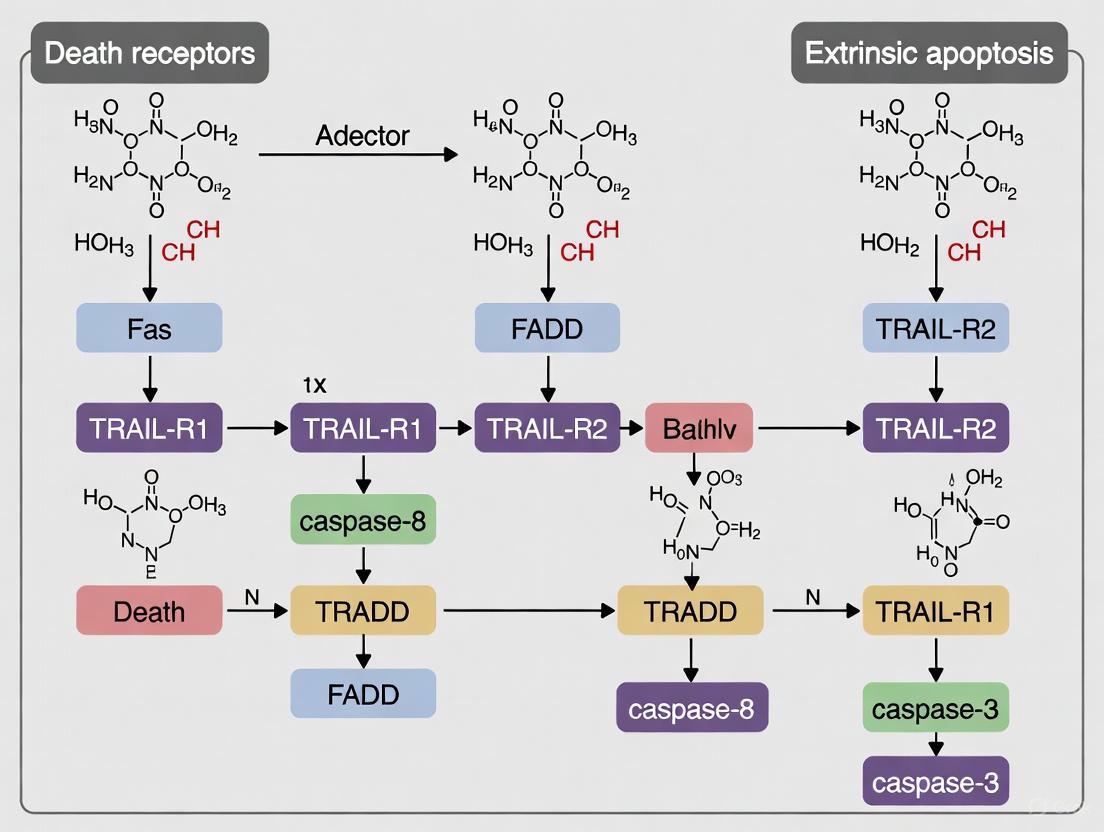
This article provides a comprehensive overview of the extrinsic apoptosis pathway, with a focused examination of death receptors as critical regulators of programmed cell death.
Death Receptors in Extrinsic Apoptosis: Molecular Mechanisms, Research Tools, and Therapeutic Targeting in Cancer
Abstract
This article provides a comprehensive overview of the extrinsic apoptosis pathway, with a focused examination of death receptors as critical regulators of programmed cell death. Tailored for researchers, scientists, and drug development professionals, it synthesizes foundational knowledge of receptor-ligand interactions and DISC formation with advanced methodological approaches for studying these pathways. The content further explores current challenges in targeting death receptors for cancer therapy, including resistance mechanisms and toxicity, and offers a comparative analysis of emerging therapeutic modalities—from DR5-targeting agents and bispecific antibodies to novel combinations with immunotherapies. By integrating troubleshooting insights with validation strategies, this review serves as a strategic resource for advancing both basic research and clinical translation in death receptor biology.
The Death Receptor Pathway: Core Components and Signaling Mechanisms in Extrinsic Apoptosis
Death receptors are a subset of cell surface receptors belonging to the Tumor Necrosis Factor Receptor Superfamily (TNFRSF) characterized by a conserved intracellular protein-protein interaction motif known as the "death domain" (DD) [1] [2]. This domain is essential for initiating apoptosis, a form of programmed cell death, upon receptor activation. The TNF receptor superfamily comprises 29 known members in humans, with the term "death receptor" specifically referring to those containing this death domain, such as TNFR1, Fas receptor (CD95), DR4, and DR5 [1]. These receptors play pivotal roles in orchestrating extrinsic apoptotic signaling, a crucial mechanism for maintaining cellular homeostasis and eliminating damaged or harmful cells [3] [2]. While they are named for their pro-apoptotic function, it is now recognized that they can also activate other signaling pathways, including those leading to inflammation, survival, and differentiation [1] [4].
Classification of TNF Receptor Superfamily Members
The TNF receptor superfamily can be broadly classified into three functional categories based on their cytoplasmic domains and signaling capabilities [5]. This classification helps in understanding their diverse biological roles.
Table 1: Functional Classification of TNF Receptor Superfamily Members
| Group | Defining Feature | Primary Signaling Pathways | Example Receptors |
|---|---|---|---|
| Death Receptors | Contains a cytoplasmic Death Domain (DD) | Apoptosis, Inflammation | TNFR1, Fas (CD95), DR4 (TRAILR1), DR5 (TRAILR2) [1] [5] |
| TRAF-Interacting Receptors | Recruits TNF Receptor-Associated Factors (TRAFs) | Cell Survival, Proliferation, Non-canonical NF-κB | TNFR2, CD40, CD27, RANK, 4-1BB [5] |
| Decoy Receptors | Lacks or has a truncated functional cytoplasmic domain | Ligand Sequestration (Inhibition of signaling) | DcR3, DcR1 (TRAILR3), DcR2 (TRAILR4), Osteoprotegerin [1] [5] |
The following table provides a detailed overview of key death receptors and their corresponding ligands, illustrating the specificity of these interactions.
Table 2: Key Death Receptors and Their Ligands
| Receptor | Systematic Name | Common Aliases | Gene | Ligand(s) |
|---|---|---|---|---|
| TNFR1 | TNFRSF1A | CD120a, p55 | TNFRSF1A | TNF-α, Lymphotoxin-alpha [1] [2] |
| Fas | TNFRSF6 | CD95, Apo-1 | FAS | Fas Ligand (FasL) [1] [2] |
| DR4 | TNFRSF10A | TRAILR1, Apo-2, CD261 | TNFRSF10A | TRAIL (Apo2L) [1] [2] |
| DR5 | TNFRSF10B | TRAILR2, CD262 | TNFRSF10B | TRAIL (Apo2L) [1] [2] |
| DR3 | TNFRSF25 | Apo-3, TRAMP, LARD | TNFRSF25 | TL1A [1] [2] |
Molecular Mechanism of Death Receptor Signaling
Receptor Activation and the Death-Inducing Signaling Complex (DISC)
The extrinsic apoptotic pathway initiates when a trimeric death ligand binds to its cognate death receptor [6] [7]. Efficient signaling requires that the receptors pre-assemble on the cell surface into hexagonal honeycomb clusters, a configuration that facilitates downstream signal amplification [5]. Upon ligand binding, the conformational change in the receptor's death domain enables the recruitment of intracellular adaptor proteins.
The core signaling event is the formation of the Death-Inducing Signaling Complex (DISC) [6] [7]. The adaptor protein FADD (Fas-Associated protein with Death Domain) is recruited via homophilic death domain interactions. FADD then recruits procaspase-8 through a second homophilic interaction module, the Death Effector Domain (DED). This aggregation leads to the autocatalytic activation of caspase-8 within the DISC [8] [9]. A key regulator of this step is c-FLIP, which can compete with caspase-8 for binding to FADD and inhibit its activation [7].
The Execution Phase and Crosstalk with Intrinsic Apoptosis
Active caspase-8 released from the DISC initiates the execution phase of apoptosis by cleaving and activating downstream effector caspases, primarily caspase-3, -6, and -7 [8] [7]. These effector caspases then systematically proteolyze hundreds of cellular substrates, leading to the characteristic morphological changes of apoptosis, such as chromatin condensation, DNA fragmentation, and membrane blebbing [8].
Crosstalk between the extrinsic and intrinsic pathways is mediated by the caspase-8-mediated cleavage of the Bcl-2 family protein Bid [9] [7]. Truncated Bid (tBid) translocates to the mitochondria, promoting mitochondrial outer membrane permeabilization (MOMP) and the release of pro-apoptotic factors like cytochrome c and SMAC. Cytochrome c, with Apaf-1, forms the apoptosome to activate caspase-9, which further amplifies the caspase cascade. SMAC neutralizes Inhibitor of Apoptosis Proteins (IAPs), thereby relieving their inhibition on caspases [8] [7].
Experimental Protocols for Studying Death Receptor Signaling
Assessing Cell Surface Receptor Expression and Clustering
The expression and oligomerization state of death receptors on the cell surface are critical for their function. Flow cytometry is the standard method for quantifying receptor presence, while advanced microscopy can visualize receptor clustering.
Protocol: Flow Cytometry for Death Receptor Surface Expression
- Harvest and Wash: Harvest cells and wash twice with ice-cold FACS buffer (e.g., PBS with 1% BSA).
- Antibody Staining: Resuspend 1x10^6 cells in 100 µL FACS buffer containing a fluorochrome-conjugated antibody against the death receptor of interest (e.g., anti-CD95 (Fas), anti-DR5). Include an isotype control antibody.
- Incubation: Incubate on ice for 30-60 minutes, protected from light.
- Wash and Analyze: Wash cells twice with FACS buffer to remove unbound antibody. Resuspend in buffer and analyze using a flow cytometer. The median fluorescence intensity (MFI) is proportional to receptor surface expression.
To study the higher-order clustering essential for signaling, techniques such as Fluorescence Resonance Energy Transfer (FRET) and super-resolution microscopy (e.g., STORM, STED) are employed. These methods can detect when receptors are in close proximity (within 10 nm), indicating cluster formation [5].
Probing DISC Formation and Caspase Activation
Direct biochemical analysis of the DISC provides definitive evidence of death receptor engagement.
Protocol: DISC Immunoprecipitation
- Stimulation and Lysis: Stimulate cells (e.g., 10-20x10^6 per condition) with the relevant death ligand (e.g., FasL, TRAIL) or an agonist antibody for a short time (e.g., 0-30 minutes). Immediately lyse cells in a mild, non-denaturing lysis buffer (e.g., 1% Triton X-100, 20 mM Tris-HCl pH 7.5, 150 mM NaCl) supplemented with protease and phosphatase inhibitors.
- Immunoprecipitation: Clarify the lysate by centrifugation. Incubate the supernatant with an antibody specific to the death receptor (e.g., anti-Fas) pre-coupled to protein A/G sepharose beads. Rotate at 4°C for 2-4 hours or overnight.
- Washing and Elution: Wash the beads extensively with lysis buffer to remove non-specifically bound proteins. Elute the immunoprecipitated proteins by boiling in 2X Laemmli sample buffer.
- Analysis: Analyze the eluates by SDS-PAGE and Western blotting to detect co-precipitated components of the DISC, including FADD, caspase-8, and c-FLIP.
Caspase activity is a key functional readout for apoptosis. This can be measured using:
- Western Blotting: Detecting the cleavage of full-length caspases (e.g., procaspase-8 at 55/57 kDa to active fragments of 43/41 and 18 kDa) and substrates like PARP.
- Fluorometric Assays: Using synthetic substrates conjugated to fluorescent reporters (e.g., IETD-AFC for caspase-8). Cleavage by the active caspase releases the fluorochrome, which can be quantified.
Functional Viability and Apoptosis Assays
To determine the biological consequence of death receptor activation, viability and apoptosis assays are performed.
Protocol: Measuring Sensitivity to Death Receptor-Mediated Apoptosis
- Plate Cells: Seed cells in a 96-well plate at a density that will be 70-90% confluent at the time of assay.
- Treatment: Treat cells with a titration of the death ligand (e.g., recombinant TRAIL, FasL) or agonist antibody for a defined period (e.g., 16-24 hours). Include a positive control (e.g., Staurosporine) and a negative control (vehicle).
- Viability Quantification:
- MTT/XTT Assay: Add MTT tetrazolium salt to wells. Metabolically active cells reduce MTT to purple formazan crystals. Solubilize crystals and measure absorbance at 570 nm. Viability is expressed as a percentage of the untreated control.
- ATP-based Luminescence: Add a reagent containing luciferase and its substrate D-luciferin. The amount of light produced (measured as RLU) is proportional to the ATP concentration and thus the number of viable cells.
- Apoptosis-Specific Detection:
- Annexin V/Propidium Iodide (PI) Staining: Stain cells with fluorochrome-conjugated Annexin V (which binds phosphatidylserine exposed on the outer leaflet of apoptotic cells) and PI (which stains DNA in late apoptotic/necrotic cells with compromised membranes). Analyze by flow cytometry to distinguish early apoptotic (Annexin V+/PI-), late apoptotic (Annexin V+/PI+), and viable (Annexin V-/PI-) populations.
The Scientist's Toolkit: Key Research Reagents
Table 3: Essential Reagents for Death Receptor Research
| Reagent Category | Specific Examples | Function & Application |
|---|---|---|
| Recombinant Ligands | Recombinant human TRAIL (rhTRAIL/Dulanermin), FasL | Activate their cognate death receptors to induce apoptosis in experimental settings [8]. |
| Agonist Antibodies | Anti-Fas (Clone CH11), Anti-DR4 (Mapatumumab), Anti-DR5 (Lexatumumab, Conatumumab) | Mimic ligand binding to cluster and activate specific death receptors; used in vitro and in clinical trials [8]. |
| Inhibitors | c-FLIP overexpression, z-VAD-FMK (pan-caspase inhibitor) | Block caspase activity to confirm the apoptotic mechanism or study non-apoptotic outcomes [7]. |
| Detection Antibodies | Anti-caspase-8, Anti-FADD, Anti-PARP, Cleaved Caspase-3 Antibodies | Detect protein expression and activation (cleavage) in Western blotting or immunoprecipitation to monitor DISC formation and apoptosis execution. |
| Viability/Proliferation Assays | MTT, XTT, CellTiter-Glo Luminescent Assay | Quantify the number of metabolically active/viable cells after death receptor stimulation [8]. |
| Apoptosis Detection Kits | Annexin V Staining Kits, TUNEL Assays | Specifically label and quantify apoptotic cells via flow cytometry or microscopy [9]. |
Therapeutic Targeting and Clinical Outlook
Targeting death receptor pathways, particularly the TRAIL receptors DR4 and DR5, has been a major focus in oncology due to their potential to selectively induce apoptosis in cancer cells [8]. First-generation therapeutics included recombinant human TRAIL (dulanermin) and agonist antibodies against DR4 and DR5. While showing promise preclinically, they exhibited limited efficacy in clinical trials due to short half-life (TRAIL) and an inability to efficiently drive higher-order receptor clustering (antibodies) [8].
Current strategies are focused on overcoming these limitations:
- Engineered TRAIL variants like TLY012, a PEGylated version with a prolonged half-life, show enhanced antitumor activity in models of colorectal cancer and fibrosis [8].
- Combination therapies are being explored to overcome resistance. For example, combining TRAIL receptor agonists with SMAC mimetics (which antagonize IAPs) or BCL-2 inhibitors (like Venetoclax) can sensitize resistant cancer cells, such as those in pancreatic cancer, to apoptosis [8].
- Understanding receptor clustering is informing the rational design of new agonists, such as tetravalant DR5-specific scFv antibodies, that can more effectively drive the receptor aggregation needed for potent DISC formation [5].
Death Receptor 5 (DR5, also known as TRAIL-R2, TNFRSF10B, or CD262) is a critical member of the tumor necrosis factor receptor superfamily that serves as a key initiator of the extrinsic apoptosis pathway [10] [11]. Along with its cognate ligand TNF-related apoptosis-inducing ligand (TRAIL/Apo2L), DR5 forms a selective cytotoxic system that can induce programmed cell death in transformed cells while typically sparing normal cells [11] [12]. This selective toxicity profile has generated substantial interest in targeting the TRAIL-DR5 pathway for cancer therapy, leading to the development of various DR5-targeting agonists currently under clinical investigation [10] [13]. This technical guide comprehensively examines the structure, activation mechanisms, and specific signaling pathways of DR5, providing researchers with essential information for ongoing death receptor research and therapeutic development.
Structural Organization of DR5
Domain Architecture and Isoforms
DR5 is a type I transmembrane protein characterized by specific structural domains that facilitate its apoptotic function [13]. The full-length DR5 cDNA spans 1,146 base pairs, encoding a protein of 381 amino acids with a predicted molecular weight of approximately 45-50 kDa [13]. The receptor is organized into distinct functional domains:
- Extracellular Domain: Contains two cysteine-rich domains (CRD1 and CRD2) that mediate ligand binding [14]. This region also features a preligand assembly domain (PLAD) that promotes receptor oligomerization prior to ligand binding [14].
- Transmembrane Domain: A hydrophobic alpha-helical segment that anchors the receptor in the plasma membrane.
- Intracellular Domain: Contains a conserved ~80 amino acid death domain (DD) essential for initiating apoptotic signaling by recruiting adaptor proteins [10] [15].
DR5 exists in two primary isoforms generated by alternative splicing [11]. The long isoform contains an additional 29 amino acids in the extracellular domain rich in threonine, alanine, proline, and glutamine (TAPE domain), while the short isoform lacks this insertion [11] [13]. These isoforms may exhibit differential signaling properties and regulatory mechanisms.
Comparative Analysis of TRAIL Receptors
TRAIL interacts with five distinct receptors with varying functions and structural features, as summarized in Table 1.
Table 1: TRAIL Receptors and Their Characteristics
| Receptor | Alternative Names | Type | Intracellular Domain | Function |
|---|---|---|---|---|
| DR4 | TRAIL-R1, TNFRSF10A | Death Receptor | Complete death domain | Apoptosis induction |
| DR5 | TRAIL-R2, TNFRSF10B, CD262 | Death Receptor | Complete death domain | Apoptosis induction |
| DcR1 | TRAIL-R3, TNFRSF10C | Decoy Receptor | GPI-anchored (no intracellular domain) | Apoptosis inhibition |
| DcR2 | TRAIL-R4, TNFRSF10D | Decoy Receptor | Truncated death domain | Apoptosis inhibition |
| OPG | Osteoprotegerin | Soluble Receptor | Soluble circulating receptor | Apoptosis inhibition |
Despite significant homology in their extracellular cysteine-rich domains and intracellular death domains (58% sequence similarity between DR4 and DR5), these two death receptors exhibit distinct expression patterns and potentially different apoptotic signaling capabilities [11] [13]. DR5 demonstrates the highest affinity for TRAIL under physiological conditions (37°C), which may contribute to its predominant role in apoptosis signaling in many cellular contexts [13].
DR5 Activation Mechanisms
Ligand-Induced Oligomerization
TRAIL, the natural ligand for DR5, exists as a homotrimeric type II transmembrane protein that can be proteolytically cleaved to form a soluble trimer [11] [14]. The trimeric structure is stabilized by a unique zinc atom coordinated by cysteine residue 230 (Cys230) in each monomer, a feature distinguishing TRAIL from other TNF family members [11] [14]. TRAIL binding induces DR5 trimerization and subsequent higher-order clustering through two potential mechanisms:
- Trimerization between trimers forming extended signaling complexes
- Hexameric honeycomb-like structures created by crosslinking neighboring trimers via ligand-opposing receptor interfaces [11]
This receptor clustering is essential for forming competent signaling platforms that initiate apoptotic signaling.
Death-Inducing Signaling Complex (DISC) Formation
Upon TRAIL binding and receptor clustering, DR5 undergoes conformational changes that facilitate the assembly of the Death-Inducing Signaling Complex (DISC) through homotypic interactions [10] [14]. The core DISC assembly process occurs sequentially:
- FADD Recruitment: The adaptor protein FADD (Fas-Associated protein with Death Domain) binds to the clustered death domains of activated DR5 via its own death domain [10] [15].
- Procaspase-8/10 Recruitment: FADD then recruits initiator procaspases-8 and/or -10 through interactions between death effector domains (DEDs) [12] [14].
- DED Chain Formation: Procaspase-8 molecules form filamentous DED chains that facilitate dimerization and autoactivation through proximity-induced transactivation [14] [16].
The fully assembled DR5 DISC thus contains DR5, FADD, procaspase-8/10, and regulatory proteins including cellular FLICE-inhibitory protein (c-FLIP) [14] [16].
Table 2: Core Components of the DR5 DISC
| Component | Function | Regulatory Role |
|---|---|---|
| DR5 | Signal initiation receptor | Death domain-mediated platform assembly |
| FADD | Adaptor protein | Bridges DR5 and procaspase-8/10 via homotypic domain interactions |
| Procaspase-8 | Initiator caspase | Autoactivates via dimerization at DISC, initiates caspase cascade |
| Procaspase-10 | Initiator caspase | Alternative initiator caspase, function partially overlaps with caspase-8 |
| c-FLIP | Regulatory protein | Modulates caspase-8 activation; can be anti- or pro-apoptotic depending on isoform |
The following diagram illustrates the core DR5 signaling pathway and DISC formation process:
Diagram 1: DR5 Signaling Pathway and DISC Formation. TRAIL binding induces DR5 trimerization and clustering, leading to DISC assembly through sequential recruitment of FADD and procaspase-8/10. Active caspase-8 directly activates effector caspases or amplifies the signal through mitochondrial engagement via Bid cleavage.
DR5-Mediated Signaling Pathways
Core Apoptotic Signaling
DR5 activation initiates apoptosis through two interconnected pathways that converge on effector caspase activation:
Type I (Direct) Apoptotic Signaling
In Type I signaling, robust caspase-8 activation at the DISC directly cleaves and activates effector caspases-3, -6, and -7, sufficient to execute apoptosis without mitochondrial amplification [14] [16]. Activated effector caspases then cleave numerous cellular substrates including:
- CAD/DFF: Caspase-activated DNase that mediates DNA fragmentation
- Cytoskeletal proteins (actin, lamins) leading to morphological changes
- Cellular organelles and structural components [14]
This direct pathway predominates in cells with high DISC formation capacity and efficient caspase-8 activation.
Type II (Mitochondrial-Amplified) Apoptotic Signaling
In Type II signaling, limited caspase-8 activation at the DISC requires mitochondrial amplification to achieve apoptotic commitment [14] [16]. Key events in this pathway include:
- Bid Cleavage: Caspase-8 cleaves the Bcl-2 family protein Bid to generate truncated Bid (tBid)
- Mitochondrial Permeabilization: tBid translocates to mitochondria and activates Bax/Bak, inducing mitochondrial outer membrane permeabilization (MOMP)
- Cytochrome c Release: MOMP facilitates cytochrome c release into the cytosol
- Apoptosome Formation: Cytochrome c, Apaf-1, and caspase-9 form the apoptosome complex
- Caspase Cascade Amplification: Active caspase-9 further activates effector caspases-3/7 [14]
The relative contribution of Type I versus Type II signaling depends on cellular context, including DISC formation efficiency and expression levels of anti-apoptotic regulators.
Non-Apoptotic Signaling Pathways
Beyond its well-established apoptotic function, DR5 can activate multiple non-apoptotic signaling pathways that influence cellular survival, proliferation, and migration [17]. These non-apoptotic pathways include:
- NF-κB Pathway: Activated through recruitment of RIPK1 and TRAF2 to DR5 complexes [17]
- MAPK Pathways: Including Erk1/2, p38, and JNK signaling modules [17]
- PI3K/Akt Pathway: Promoting survival and metabolic regulation [17]
These non-apoptotic pathways can be simultaneously activated with apoptotic signaling in clonal cell populations, leading to "fractional survival" where a subset of cells survives initial TRAIL exposure and develops resistance [17]. The balance between apoptotic and non-apoptotic signaling is influenced by cellular context, including the composition of DR5 signaling complexes and expression of regulatory proteins like c-FLIP.
Experimental Methodology for DR5 Research
Research Reagent Solutions
Table 3: Essential Research Reagents for DR5 Investigation
| Reagent Category | Specific Examples | Research Application | Key Function |
|---|---|---|---|
| Recombinant TRAIL | Human TRAIL, Mouse TRAIL (Sino Biological) [18] | Apoptosis induction studies | Natural DR5 ligand for pathway activation |
| DR5 Agonistic Antibodies | Tigatuzumab (CS-1008) [10], Drozitumab [13], INBRX-109 [13] | Therapeutic targeting studies | Selective DR5 activation for apoptosis induction |
| Soluble DR5 Receptors | sDR5-Fc fusion protein [18] | Pathway inhibition studies | Competitive TRAIL antagonist for blocking DR5 signaling |
| Detection Antibodies | Anti-DR5 (abcam ab8416) [18], Anti-TRAIL (abcam ab231265) | Expression analysis | Immunodetection of DR5 and TRAIL in experimental systems |
| Apoptosis Assay Kits | FITC Annexin V Apoptosis Detection Kit [18], TUNEL Apoptosis Detection Kit [18] | Apoptosis quantification | Measurement of apoptotic response to DR5 activation |
| Caspase Activity Assays | Anti-caspase-8 (abcam ab25901) [18], Caspase-Glo Assays | DISC activity assessment | Detection of caspase activation downstream of DR5 |
| Pathway Inhibitors | zVAD.fmk (pan-caspase inhibitor) [17], z-IETD.fmk (caspase-8 inhibitor) [17] | Mechanism studies | Specific pathway blockade for functional analysis |
Key Experimental Protocols
DR5 DISC Immunoprecipitation and Analysis
This protocol enables the isolation and characterization of native DR5 signaling complexes to study DISC composition and regulation [17].
Materials:
- Lysis Buffer: 1% Triton X-100, 20 mM Tris-HCl (pH 7.4), 150 mM NaCl, 10% glycerol, protease inhibitors
- DR5-specific antibodies for immunoprecipitation
- Protein A/G agarose beads
- Wash Buffer: 0.1% Triton X-100, 20 mM Tris-HCl (pH 7.4), 150 mM NaCl
- SDS-PAGE and Western blotting equipment
Procedure:
- Cell Stimulation: Treat cells (1-5 × 10^7) with TRAIL (100-500 ng/mL) or DR5 agonistic antibodies for specified durations (typically 0-60 minutes)
- Cell Lysis: Harvest cells and lyse in ice-cold lysis buffer (1 mL per 10^7 cells) for 30 minutes at 4°C
- Clarification: Centrifuge lysates at 16,000 × g for 15 minutes at 4°C to remove insoluble material
- Immunoprecipitation: Incubate supernatant with DR5-specific antibody (2-5 μg) for 2-4 hours at 4°C with gentle rotation
- Bead Capture: Add protein A/G agarose beads and incubate for an additional 1-2 hours
- Washing: Pellet beads and wash 3-4 times with wash buffer
- Elution: Resuspend beads in 2× SDS sample buffer and boil for 5 minutes
- Analysis: Separate proteins by SDS-PAGE and detect DISC components (FADD, caspase-8, c-FLIP) by Western blotting
Technical Notes:
- Include isotype control antibodies to confirm specific interactions
- Optimize TRAIL concentration and stimulation time for specific cell types
- Consider crosslinking with membrane-permeable crosslinkers (e.g., DSP) before lysis to stabilize transient interactions
Assessment of DR5-Mediated Apoptosis
This multiparametric approach quantitatively measures DR5-induced cell death using complementary techniques [18] [17].
Materials:
- Annexin V-binding buffer
- Propidium iodide (PI) or 7-AAD staining solution
- FITC Annexin V Apoptosis Detection Kit I [18]
- TUNEL Apoptosis Detection Kit [18]
- Flow cytometer with appropriate laser and filter configurations
Procedure:
Flow Cytometric Analysis of Phosphatidylserine Externalization:
- Cell Preparation: Harvest both adherent and floating cells after TRAIL or DR5 agonist treatment
- Staining: Resuspend 1-5 × 10^5 cells in Annexin V-binding buffer containing FITC-conjugated Annexin V (1:20 dilution) and PI (0.5-1 μg/mL)
- Incubation: Incubate for 15 minutes at room temperature in the dark
- Analysis: Acquire data on flow cytometer within 1 hour using FITC (530/30 nm) and PI (585/42 nm) channels
- Quantification: Calculate percentage of apoptotic cells (Annexin V+/PI- for early apoptosis; Annexin V+/PI+ for late apoptosis/necrosis)
Caspase Activation Analysis:
- Cell Lysis: Prepare whole cell lysates from treated cells
- Western Blotting: Detect caspase cleavage using specific antibodies (e.g., cleaved caspase-8, cleaved caspase-3, PARP cleavage)
- Activity Assays: Use fluorogenic caspase substrates (e.g., IETD-AFC for caspase-8) to measure enzymatic activity
DNA Fragmentation Assessment (TUNEL Assay):
- Cell Fixation: Fix cells with 4% paraformaldehyde for 30 minutes at room temperature
- Permeabilization: Treat with 0.1% Triton X-100 in sodium citrate for 2 minutes on ice
- Labeling: Incubate with TUNEL reaction mixture for 60 minutes at 37°C in the dark
- Analysis: Analyze by flow cytometry or fluorescence microscopy
The following diagram illustrates the experimental workflow for analyzing DR5-mediated apoptosis:
Diagram 2: Experimental Workflow for DR5-Mediated Apoptosis Analysis. Comprehensive approach for assessing DR5 signaling includes multiple complementary techniques to measure different aspects of the apoptotic response, from early phosphatidylserine externalization to late DNA fragmentation and mechanistic studies of DISC assembly.
Regulation of DR5 Expression and Signaling
Transcriptional Regulation
DR5 expression is regulated by multiple transcription factors in response to various stimuli, providing mechanisms for enhancing TRAIL sensitivity in therapeutic contexts [12] [13]. Key regulatory mechanisms include:
- p53 Pathway: The tumor suppressor p53 directly transactivates the DR5 gene through specific response elements in its promoter region [13]
- ER Stress Response: Activating Transcription Factor 4 (ATF4) and C/EBP homologous protein (CHOP) form complexes that bind the DR5 promoter following endoplasmic reticulum stress [12]
- NF-κB Signaling: The p65 subunit of NF-κB can increase DR5 expression by binding to the first intronic region of the DR5 gene [13]
- MAPK Pathways: ERK1/2 and RSK2 signaling leads to ATF4 activation, which promotes CHOP induction and subsequent DR5 expression [13]
- JNK/AP-1 Pathway: JNK activation promotes CHOP expression through AP-1 binding sites in the CHOP promoter [13]
- Sp1 Regulation: The Sp1 transcription factor binds TATA-minor promoter elements to regulate basal DR5 transcription [13]
- YY1 Repression: The transcriptional repressor YY1 negatively regulates DR5 transcription by binding specific sites in the DR5 promoter [13]
Resistance Mechanisms and Modulation Strategies
Despite the theoretical promise of DR5-targeted therapies, multiple resistance mechanisms limit their clinical efficacy [11] [12] [14]. Key resistance mechanisms and corresponding modulation strategies include:
- Decoy Receptor Expression: Elevated DcR1/DcR2 expression can sequester TRAIL and prevent DR5 activation [11] [12]
- c-FLIP Overexpression: High levels of c-FLIP inhibit procaspase-8 activation at the DISC [14] [16]
- Bcl-2 Family Imbalance: Anti-apoptotic Bcl-2 proteins (Bcl-2, Bcl-xL, Mcl-1) inhibit mitochondrial amplification in Type II cells [14]
- IAP Family Overexpression: Inhibitor of apoptosis proteins (XIAP, cIAP1/2) directly inhibit effector caspases [14] [16]
- Reduced DR5 Surface Expression: Impaired trafficking or enhanced internalization can limit DR5 availability [12]
Sensitization strategies to overcome resistance include combination therapies with conventional chemotherapeutics, targeted agents (e.g., CDK9 inhibitors, proteasome inhibitors), and natural compounds that modulate DR5 expression or downstream apoptotic regulators [11] [12] [13].
Therapeutic Applications and Clinical Outlook
DR5-Targeted Cancer Therapeutics
The selective expression of DR5 in transformed cells and its potent apoptosis-inducing capability make it an attractive therapeutic target [10] [11] [13]. Several DR5-targeting approaches have entered clinical development:
- Recombinant TRAIL: Engineered forms of TRAIL designed for improved stability and receptor selectivity
- Agonistic Anti-DR5 Antibodies: Monoclonal antibodies that mimic TRAIL activity (e.g., Tigatuzumab, Drozitumab) [10] [13]
- DR5-Targeted Peptide Agonists: Phage display-derived peptides containing conserved tripeptide motifs that activate DR5 [19]
- Small Molecule Agonists: Synthetic compounds that promote DR5 clustering and activation
Clinical trials with first-generation TRAIL receptor agonists demonstrated limited single-agent activity, prompting development of next-generation agents with improved agonistic activity and safety profiles [11]. Current research focuses on optimizing combination strategies to overcome resistance mechanisms prevalent in solid tumors.
Non-Oncological Applications
Beyond oncology, modulation of the TRAIL-DR5 pathway shows therapeutic potential in various pathological conditions:
- Acute Radiation Syndrome: sDR5-Fc fusion protein acts as a competitive antagonist to block TRAIL-DR5 signaling, significantly improving survival in irradiated mice by inhibiting excessive apoptosis in radiation-sensitive tissues [18]
- Ischemia-Reperfusion Injury: sDR5-Fc treatment alleviates tissue damage following cardiac and hepatic ischemia-reperfusion by reducing apoptosis and inflammation [18]
- Autoimmune Disorders: DR5 modulation may help eliminate aberrant immune cells while preserving normal immune function
- Viral Infections: Some viruses modulate the TRAIL-DR5 pathway to facilitate persistence, suggesting therapeutic targeting opportunities [12]
These diverse applications highlight the broader physiological significance of DR5 signaling beyond its established role in cancer biology.
DR5 represents a critical node in the extrinsic apoptosis pathway with specialized structural features, activation mechanisms, and signaling capabilities that distinguish it from other death receptors. Its ability to selectively induce apoptosis in transformed cells while sparing normal tissues provides a compelling therapeutic rationale for targeted cancer therapy. However, the complexity of DR5 signaling—including its capacity to simultaneously activate apoptotic and non-apoptotic pathways—presents both challenges and opportunities for therapeutic intervention. Future research directions should focus on elucidating the structural basis of DR5 activation, understanding context-dependent signaling outcomes, developing improved agonists with enhanced efficacy, and identifying optimal combination strategies to overcome resistance. The continued investigation of DR5 biology promises to yield important insights into death receptor function and advance the development of effective, targeted therapies for cancer and other diseases characterized by dysregulated apoptosis.
The Death-Inducing Signaling Complex (DISC) is a pivotal trigger of extrinsic apoptosis, forming a receptor platform that initiates programmed cell death upon assembly. This whitepaper elucidates the molecular architecture of the DISC, integrating recent structural biology breakthroughs that have revealed its precise stoichiometry and oligomeric organization. We detail the core components—Fas receptor, FADD, and caspase-8—and their interactions via death domains (DD) and death effector domains (DED). Furthermore, we provide validated experimental methodologies for studying DISC assembly and a curated toolkit of research reagents. Understanding this complex's architecture is paramount for developing novel cancer therapeutics that target death receptor signaling pathways.
Death receptors, members of the tumor necrosis factor (TNF) receptor superfamily, are transmembrane proteins that initiate the extrinsic apoptotic signaling pathway, crucial for maintaining lymphocyte homeostasis and eliminating damaged cells [20]. Among them, Fas (CD95/APO-1) is one of the most extensively studied. The formation of the Death-Inducing Signaling Complex (DISC) begins when the Fas ligand (FasL) binds to and trimerizes the Fas receptor [21]. This event triggers the recruitment of the adaptor protein FADD (Fas-associated death domain protein) and the initiator protease procaspase-8 (or -10) to the receptor's intracellular tail, forming the DISC [22].
The DISC acts as a cellular switch, existing in an "off" state in the absence of sufficient stimulus and rapidly forming an active ("on") oligomeric platform upon ligand binding [23]. Within the DISC, procaspase-8 undergoes activation through proximity-induced dimerization and autoprocessing. Active caspase-8 then triggers a cascade of downstream caspase activation, ultimately leading to the controlled dismantling of the cell—apoptosis [20] [24]. The core of the DISC interaction network is a highly oligomeric web of homotypic protein interactions mediated by two types of protein interaction domains: the Death Domain (DD) and the Death Effector Domain (DED) [23].
Core Molecular Components of the DISC
The DISC is a multi-protein complex with three essential components [22]:
- Fas (CD95/APO-1): A death receptor characterized by a cytoplasmic Death Domain (DD). This domain is responsible for transmitting the death signal from the extracellular environment into the cell interior following ligand binding.
- FADD: An adaptor protein containing a C-terminal Death Domain (DD) that binds to the DD of Fas, and an N-terminal Death Effector Domain (DED) that recruits downstream effectors.
- Caspase-8/-10: Initiator caspases that each possess two N-terminal Death Effector Domains (DEDs). These domains facilitate recruitment to the complex, where the caspases are activated.
The assembly is driven by homotypic interactions: Fas DD binds FADD DD, and FADD DED binds caspase-8 DEDs [22]. Besides these core components, the DISC can include regulatory proteins like cellular FLICE-inhibitory proteins (c-FLIPs), which share structural similarity with procaspase-8 but lack catalytic activity and can modulate DISC activity [21].
Table 1: Core Protein Components of the DISC
| Protein | Domain Architecture | Function in DISC |
|---|---|---|
| Fas (CD95) | Transmembrane receptor; cytoplasmic Death Domain (DD) | Binds extracellular Fas ligand; nucleates complex assembly via its DD |
| FADD | C-terminal DD; N-terminal Death Effector Domain (DED) | Adaptor; connects activated Fas to caspase-8 via DD-DD and DED-DED interactions |
| Caspase-8 | Two N-terminal DEDs; C-terminal protease domain | Initiator caspase; recruited to complex and activated via proximity-induced dimerization |
Structural Architecture and Stoichiometry
Recent advances in structural biology, particularly cryo-electron microscopy (cryo-EM), have provided high-resolution insights into the oligomeric state and organization of the DISC, moving beyond earlier contradictory models.
The Fas-FADD Death Domain Complex
The central interaction initiating DISC formation is between the Death Domains of Fas and FADD. A landmark 2025 cryo-EM study revealed that the Fas-FADD DD complex forms an asymmetric 7:5 oligomer [20]. This structure exhibits a three-layered architecture measuring approximately 80 × 90 × 60 Å:
- The top and middle layers are composed of seven Fas DD protomers (two in the top, five in the middle).
- The bottom layer consists of five FADD DD molecules [20].
This 7:5 complex is stabilized by three characteristic DD interaction interfaces dominated by hydrophilic or charged residues [20]:
- Type I: Mediated by interactions between H2 and H3 helices with H1 and H4 helices.
- Type II: Involves H4 and the H4-H5 loop interacting with H6 and the H5-H6 loop.
- Type III: Formed by interactions between H3 and the H1-H2 and H3-H4 loops.
This 7:5 structure aligns well with the PIDDosome complex (composed of seven RAIDD and five PIDD molecules), which activates caspase-2, suggesting a conserved mechanism for death domain signaling across different apoptotic pathways [20].
An earlier crystal structure published in Nature showed a different, tetrameric arrangement of four Fas DDs bound to four FADD DDs [23]. This study revealed a crucial conformational change termed "Fas opening," where helix six of the Fas DD shifts and fuses with helix five to form a long "stem helix," thereby exposing a hydrophobic FADD-binding site [23]. The discrepancy in observed stoichiometries may result from different experimental conditions, such as crystallization versus solution studies, or the use of solubility-enhancing fusion proteins [20]. The 5:5 to 7:5 stoichiometry is supported by prior mass spectrometry data, with the 7:5 model potentially representing a more complete, physiologically relevant assembly [20].
FADD DED Filament Assembly and Caspase-8 Recruitment
Following the initial DD-driven assembly, the FADD DED domain forms helical filaments that serve as a nucleation scaffold for caspase-8 assembly [20]. Full-length FADD can form large oligomers, and its isolated DED domain assembles into filaments in a concentration-dependent manner [20].
The cryo-EM structure of the FADD DED filament, resolved to 3.07 Å, shows a hollow helical structure with an outer diameter of 90 Å and a central cavity of 20 Å. It exhibits C3 symmetry with an axial rise of ~14 Å and a helical twist of 49° [20]. This filament closely resembles the filament structure formed by the tandem DEDs (tDED) of caspase-8 [20].
The FADD DED filament is stabilized by three distinct interaction interfaces that align with those in caspase-8 tDED filaments [20]:
- Type I Interface: Predominantly hydrophobic.
- Type II & III Interfaces: Mediated by charged and hydrophilic residues.
The structural resemblance between FADD DED and caspase-8 tDED filaments provides the mechanistic basis for caspase-8 recruitment and activation. The FADD DED filament acts as a template, nucleating the assembly of caspase-8 tDED filaments. This polymerization brings the caspase-8 protease domains into close proximity, promoting their dimerization, autoprocessing, and full activation, which ultimately triggers the apoptotic cascade [20].
The following diagram illustrates the overall assembly process of the DISC, from ligand binding to caspase activation.
Detailed Experimental Protocols
This section outlines key methodologies for reconstituting and analyzing the DISC and its components, based on protocols from recent structural studies.
Reconstitution and Purification of the Fas-FADD DD Complex
Objective: To produce a stable, soluble Fas-FADD Death Domain complex for structural analysis via cryo-EM or X-ray crystallography [20] [23].
Protocol Steps:
Protein Expression:
- Clone the human Fas DD (residues as defined in source material, e.g., UniProt) and FADD DD (e.g., residues G93 to G191) into appropriate expression vectors [20] [23].
- To enhance solubility of the Fas DD, fuse a solubility-enhancing tag (e.g., Bril protein) to its N-terminus [20].
- Co-express the proteins in Escherichia coli. Some studies combine lysates of individually expressed Fas DD and FADD DD prior to purification to facilitate complex formation [23].
Complex Purification:
- Purify the complex using affinity chromatography (e.g., Ni-NTA if proteins are His-tagged), followed by size-exclusion chromatography (SEC) [20] [23].
- Analyze the oligomeric state of the complex by monitoring its elution profile on SEC and using multi-angle light scattering (MALS) if available. The Fas-FADD DD complex exhibits tetrameric behavior in solution and a tendency to form higher oligomers [23].
Validation:
Cryo-EM Analysis of FADD DED Filaments
Objective: To determine the high-resolution structure of FADD DED filaments [20].
Protocol Steps:
Sample Preparation:
- Express and purify full-length FADD or the isolated FADD DED domain from HEK293 cells or E. coli [20].
- To induce filament formation, concentrate the protein to 2-4 mg/mL. Monitor the concentration-dependence of polymerization via SEC, where filament formation is indicated by elution in the void volume [20].
Grid Preparation and Data Collection:
- Apply the protein sample to Quantifoil grids, followed by vitrification (rapid freezing in liquid ethane) [20].
- Collect cryo-EM micrographs using a high-end cryo-electron microscope (e.g., Titan Krios). In raw images, FADD filaments appear as long strands, sometimes with additional "blobs" from the surrounding DD domains [20].
Image Processing and Reconstruction:
- Use single-particle analysis or helical reconstruction software (e.g., RELION, cryoSPARC) to process the image data [20].
- For helical filaments, determine the helical symmetry parameters (e.g., axial rise and twist). For FADD DED, these are ~14 Å and 49°, respectively, with C3 symmetry [20].
- Reconstruct a 3D density map and build an atomic model into the density, refining it to achieve a final resolution (e.g., 3.07 Å for FADD DED) [20].
Table 2: Key Structural Models of the DISC Core
| Complex / Structure | Technique | Resolution | Key Finding / Stoichiometry |
|---|---|---|---|
| Fas-FADD DD | Cryo-EM | 3.51 Å | Revealed an asymmetric three-layered complex with a 7:5 (Fas:FADD) stoichiometry [20] |
| Fas-FADD DD | X-ray Crystallography | 2.7 Å | Revealed a tetrameric 4:4 complex and the "Fas opening" conformational change [23] |
| FADD DED Filament | Cryo-EM | 3.07 Å | Showed FADD DED forms a hollow helical filament that nucleates caspase-8 assembly [20] |
| Caspase-8 tDED Filament | Cryo-EM | ~3-4 Å | Closely resembles FADD DED filament, confirming conserved helical polymerization mechanism [20] |
The Scientist's Toolkit: Research Reagent Solutions
The following table catalogs essential reagents, tools, and materials critical for experimental research on the DISC.
Table 3: Essential Research Reagents for DISC Investigation
| Reagent / Tool | Specifications / Example | Primary Function in DISC Research |
|---|---|---|
| Recombinant Proteins | Solubility-enhanced Fas DD (e.g., Bril-Fas DD), FADD DD, FADD DED, Caspase-8 tDED | For in vitro reconstitution of complexes, structural studies (cryo-EM, crystallography), and biochemical binding assays [20] [23] |
| Expression Systems | E. coli (for DD domains), HEK293 cells (for full-length or DED proteins) | High-yield production of target proteins and complexes. HEK293 cells are suitable for correctly folded, post-translationally modified proteins [20] |
| Cryo-EM Workflow | Quantifoil grids, Cryo-Electron Microscope (e.g., Titan Krios), Processing Software (e.g., RELION) | High-resolution structure determination of large, oligomeric complexes and filaments like the Fas-FADD DD complex and FADD DED filaments [20] |
| Functional Antibodies | Anti-Fas (agonistic), Anti-FADD, Anti-Caspase-8 (cleaved) | To stimulate DISC formation (agonistic anti-Fas), immunoprecipitate the DISC, and detect component recruitment/activation via Western blot [23] [21] |
| Caspase Inhibitors | zVAD-fmk (pan-caspase), c-FLIP expression constructs | To inhibit caspase-8 activity and dissect apoptotic versus non-apoptotic functions; c-FLIP modulates DISC assembly and can inhibit apoptosis [21] [9] |
| Mutant Cell Lines | Caspase-8 knockout, FADD-deficient, RIPK3/Caspase-8 DKO cells | To study the specific roles of individual DISC components and their crosstalk with other cell death pathways like necroptosis [25] |
The molecular architecture of the DISC is characterized by a sophisticated, multi-stage assembly process. Initiation begins with an asymmetric 7:5 oligomer of Fas and FADD Death Domains, which provides the platform for signal amplification via the helical polymerization of FADD Death Effector Domains. This DED filament, in turn, serves as a structural template that nucleates the helical assembly and activation of caspase-8. This model, underpinned by recent high-resolution structural data, reveals how receptor clustering is translated into a powerful and processive apoptotic signal. A precise understanding of this architecture, including the stoichiometry and conformational changes involved, provides a robust framework for the future development of therapeutic agents designed to modulate death receptor signaling in diseases such as cancer and autoimmune disorders.
In the context of death receptor-mediated extrinsic apoptosis, initiator caspases serve as the molecular gatekeepers of cellular fate. The signaling pathways triggered by death receptors such as CD95 (Fas/Apo-1) and TNF-related apoptosis-inducing ligand (TRAIL) receptors converge on the activation of two key homologous initiator caspases: caspase-8 and caspase-10 [26] [27]. These cysteine-aspartic proteases share structural similarities and are both recruited to the death-inducing signaling complex (DISC), a multi-protein platform that forms upon receptor activation [28] [29]. For decades, it was assumed that these caspases served redundant functions in cell death signaling. However, emerging research has revealed surprising functional distinctions, with caspase-8 acting as the primary driver of apoptotic signaling, while caspase-10 has been discovered to negatively regulate caspase-8-mediated cell death and promote alternative signaling outcomes, including NF-κB activation and cell survival [26]. This whitepaper provides an in-depth technical analysis of the molecular mechanisms governing caspase-8 and caspase-10 activation, their complex interplay within the DISC, and the experimental approaches used to delineate their distinct functions.
Molecular Mechanisms of Activation
Death-Inducing Signaling Complex (DISC) Architecture
The DISC serves as the central activation platform for initiator caspases in the extrinsic apoptotic pathway. Its formation begins when extracellular death ligands (e.g., CD95L, TRAIL) bind to and trimerize their cognate death receptors [26]. This ligand-receptor interaction triggers the recruitment of the adaptor protein FADD (Fas-associated death domain) through homotypic death domain (DD) interactions [29]. FADD subsequently recruits procaspase-8 and procaspase-10 via interactions between its death effector domain (DED) and the N-terminal DEDs of the caspases [26] [28].
Table 1: Core Components of the Death-Inducing Signaling Complex (DISC)
| Component | Structure | Function in DISC | Regulatory Role |
|---|---|---|---|
| Death Receptor | Trimeric transmembrane protein | Binds extracellular death ligand; initiates DISC assembly | Determines cellular sensitivity to specific death ligands |
| FADD | Adaptor protein with DD and DED | Recruits caspase-8/10 via DED interactions | Essential scaffolding function; required for DISC formation |
| Caspase-8 | Initiator caspase with two N-terminal DEDs | Primary initiator of apoptotic signaling; scaffold for other components | Homodimerizes and auto-activates; cleaves downstream substrates |
| Caspase-10 | Initiator caspase with two N-terminal DEDs | Regulates caspase-8 activation; promotes NF-κB signaling | Negatively regulates caspase-8; rewires DISC toward survival |
| cFLIP | Caspase-8 homolog lacking catalytic activity | Modulates caspase-8 activation | Dual role: inhibits or promotes activation depending on concentration |
The current model of DISC assembly suggests a more complex stoichiometry than initially proposed, with a single FADD molecule capable of recruiting multiple caspase-8 molecules through DED chain assembly [26]. This assembly facilitates the proximity-induced dimerization and auto-activation of the initiator caspases, a process critically regulated by the caspase-8 homolog cFLIP (cellular FLICE-inhibitory protein) [26] [29].
Diagram 1: DISC Assembly and Caspase Activation. Death ligand binding induces receptor trimerization and recruitment of FADD, which subsequently recruits procaspase-8, procaspase-10, and cFLIP via DED interactions. Proximity-induced dimerization leads to caspase activation. Caspase-10 negatively regulates caspase-8 activation, while cFLIP modulates caspase-8 activity through heterodimerization.
Proximity-Induced Dimerization and Activation
Both caspase-8 and caspase-10 follow the proximity-induced dimerization model characteristic of initiator caspases [27]. In their inactive zymogen state, these caspases exist as monomers. Recruitment to the DISC facilitates their concentration at the membrane, promoting dimerization and subsequent auto-activation [27] [28]. The dimerization interface is formed primarily by interactions between the large and small subunits of adjacent caspase molecules.
Following dimerization, inter-domain autoprocessing occurs at specific aspartic acid residues between the large and small catalytic subunits [27]. For caspase-8, this processing stabilizes the active dimer and enhances its proteolytic activity. Research indicates that the catalytic activity of dimerized caspase-8 is remarkably efficient, with studies showing that less than 1% of total cellular caspase-8 is sufficient to initiate the apoptotic program once activated [30].
Hierarchical Binding Model and Regulation by cFLIP
The cooperative/hierarchical binding model provides a refined understanding of caspase recruitment and regulation at the DISC [26] [29]. According to this model, procaspase-8 initially binds to the FL motif of FADD through its DED1 hydrophobic pocket. Subsequently, the DED2 of caspase-8 interacts with the DED1 of cFLIP, forming procaspase-8:cFLIP heterodimers [29]. The composition of these heterodimers critically determines the activity of caspase-8 and subsequent cell fate decisions.
cFLIP exists in multiple splice variants (primarily cFLIPL and cFLIPS) that exert distinct regulatory effects [29]. At low concentrations, cFLIPL heterodimerizes with caspase-8 and promotes its limited activation, potentially facilitating non-apoptotic functions. At high concentrations, cFLIPL competes with caspase-8 homodimerization and inhibits full activation. In contrast, cFLIPS lacks catalytic domains and primarily functions as a dominant-negative inhibitor of caspase-8 activation by preventing DED filament formation and oligomerization [29].
Functional Divergence Between Caspase-8 and Caspase-10
Caspase-8 as the Primary Apoptotic Initiator
Caspase-8 serves as the principal initiator of extrinsic apoptosis through two parallel signaling cascades [31]. In "type I" cells, active caspase-8 directly cleaves and activates executioner caspases-3 and -7, sufficient to induce apoptosis [32]. In "type II" cells, caspase-8 cleaves the BH3-only protein Bid, generating truncated Bid (tBid) which translocates to mitochondria and triggers mitochondrial outer membrane permeabilization (MOMP) [32]. This leads to cytochrome c release and activation of the intrinsic apoptotic pathway through caspase-9, amplifying the death signal [33] [32].
Beyond its well-established role in apoptosis, caspase-8 also functions as a molecular switch between different cell death pathways, including pyroptosis and necroptosis [34] [28]. When caspase-8 is inhibited or absent, cells may default to RIPK1/RIPK3-mediated necroptosis, a form of programmed necrosis [28] [29]. Additionally, caspase-8 can cleave gasdermin family members (GSDMC), potentially linking it to inflammatory forms of cell death [34].
Caspase-10 as a Negative Regulator of Apoptosis
Contrary to historical assumptions of functional redundancy with caspase-8, recent research has revealed that caspase-10 negatively regulates caspase-8-mediated cell death [26]. Knockdown experiments demonstrate that depletion of caspase-10 enhances CD95L-induced cell death, while combined knockdown of caspase-8 and caspase-10 provides complete protection from death induction [26]. This protective function is observed across multiple cell lines, including HeLa cells and SK-Mel melanoma cells.
The molecular mechanism underlying this regulation involves caspase-10 reducing DISC association and activation of caspase-8 [26]. Interestingly, caspase-10 does not compete with caspase-8 for FADD binding, but instead appears to modulate caspase-8 activation through more complex mechanisms that remain under investigation. Remarkably, DISC recruitment of caspase-10 and subsequent NF-κB activation critically depend on the scaffold function of caspase-8, revealing a hierarchical relationship where caspase-8 enables the regulatory functions of caspase-10 [26].
Survival Signaling and NF-κB Activation
Beyond its inhibitory role in apoptosis, caspase-10 promotes alternative signaling outcomes, particularly NF-κB activation and cell survival [26]. The DISC is capable of initiating both death and survival signaling, with caspase-10 acting as a key determinant in this fate decision. Caspase-10 rewires DISC signaling toward NF-κB activation and subsequent pro-survival gene induction.
Table 2: Functional Comparison of Caspase-8 and Caspase-10 in Death Receptor Signaling
| Feature | Caspase-8 | Caspase-10 |
|---|---|---|
| Primary Function | Apoptosis initiation | Negative regulation of caspase-8; survival signaling |
| DISC Recruitment | Direct binding to FADD; scaffold function | Depends on caspase-8 scaffold |
| Effect on Cell Death | Promotes apoptosis | Inhibits apoptosis in multiple cell lines |
| NF-κB Signaling | Limited role; context-dependent | Promotes DISC-mediated NF-κB activation and gene induction |
| Catalytic Activity Requirement | Essential for apoptosis | Redundant with caspase-8 in gene induction |
| Role in Non-Apoptotic Pathways | Regulates pyroptosis, necroptosis, inflammation | Emerging roles in pyroptosis and necroptosis |
| Expression Conservation | Conserved in rodents | Absent in rodents |
Notably, the catalytic activity of caspase-10 appears redundant with caspase-8 in gene induction, suggesting that the structural presence of caspase-10 at the DISC, rather than its proteolytic function, may be sufficient for its role in NF-κB activation [26]. This functional divergence between caspase-8 and caspase-10 illustrates the sophisticated regulatory mechanisms that balance cell death and survival decisions in response to death receptor activation.
Experimental Approaches and Methodologies
Key Research Techniques
The molecular functions and regulatory relationships between caspase-8 and caspase-10 have been elucidated through a combination of sophisticated experimental approaches:
Gene Silencing and Functional Assays: siRNA- and shRNA-mediated knockdown have been instrumental in defining the distinct roles of these caspases [26]. Caspase-10 knockdown sensitizes cells to CD95L-induced death, while caspase-8 knockdown provides protection. Combined knockdown demonstrates that caspase-8 requirement is upstream of both cFLIP and caspase-10. Cell death is typically quantified using viability assays (MTT, WST-1), flow cytometry with Annexin V/propidium iodide staining, and measurement of caspase activation.
DISC Immunoprecipitation and Analysis: The composition and stoichiometry of the DISC are analyzed through co-immunoprecipitation experiments following death receptor stimulation [26]. Cells are treated with death receptor agonists (e.g., CD95L, TRAIL), followed by lysis and immunoprecipitation using receptor-specific antibodies. Co-precipitating proteins (FADD, caspase-8, caspase-10, cFLIP) are detected by Western blotting, revealing recruitment dynamics and interactions. This approach demonstrated that caspase-10 recruitment depends on caspase-8 scaffold function.
In Vitro Dimerization and Activation Assays: Biochemical characterization of caspase activation mechanisms employs recombinant caspase proteins with in vitro dimerization induction [27]. Techniques include:
- Kosmotropic salt (sodium citrate) treatment to induce dimerization
- Artificial dimerization systems using FKBP-Fv domains and dimerizer ligands (AP20187)
- Activity monitoring with fluorogenic substrates (Ac-IETD-AFC)
- Positional scanning substrate combinatorial libraries (PS-SCL) to determine cleavage preferences
Structural and Biophysical Analysis: Homology modeling based on caspase-8 structures, size-exclusion chromatography to examine oligomeric states, and active site titration with irreversible inhibitors (z-VAD-fmk) provide insights into molecular mechanisms [27].
Research Reagent Solutions
Table 3: Essential Research Reagents for Caspase-8 and Caspase-10 Studies
| Reagent Category | Specific Examples | Research Application | Technical Considerations |
|---|---|---|---|
| Gene Silencing Tools | siRNA, shRNA targeting CASP8/CASP10 | Functional characterization of caspase requirements | Use multiple distinct sequences to control for off-target effects; inducible systems for temporal control |
| Activity Probes | Fluorogenic substrates (Ac-IETD-AFC, Ac-DEVD-AMC), FRET-based biosensors | Real-time monitoring of caspase activation in vitro and in live cells | IETD-based substrates show preference for caspase-8/10; DEVD-based for effector caspases |
| Inhibitors | z-IETD-fmk (caspase-8 inhibitor), z-VAD-fmk (pan-caspase inhibitor), z-AEVD-fmk (caspase-10 inhibitor) | Functional validation of caspase-dependent processes | Titrate carefully as high concentrations may have off-target effects; use in combination with genetic approaches |
| Activation Inducers | Recombinant death ligands (CD95L, TRAIL), anti-CD95 antibodies (e.g., APO-1) | DISC formation and caspase activation studies | Consider cell type-specific sensitivity (type I/type II classification); receptor expression levels |
| Detection Antibodies | Caspase-8 (specific for proform and cleaved forms), caspase-10, FADD, CD95 | Western blot, immunoprecipitation, immunofluorescence | Validate specificity, especially for caspase-10 which has multiple isoforms |
| Expression Constructs | Wild-type and catalytic mutants of caspase-8/10, cFLIP isoforms | Mechanistic studies through overexpression/complementation | Consider endogenous expression levels and potential artifacts from overexpression |
Diagram 2: Experimental Workflow for Caspase Function Analysis. A comprehensive approach combining gene silencing, biochemical analysis of DISC composition, in vitro activation assays, and functional readouts enables the delineation of caspase-8 and caspase-10 functions. This integrated methodology revealed the hierarchical relationship between these caspases and their opposing effects on cell fate.
The activation mechanisms and functional relationships between caspase-8 and caspase-10 represent a sophisticated regulatory network that determines cellular fate in response to death receptor engagement. Rather than serving redundant functions, these homologous initiator caspases play opposing roles: caspase-8 acts as the primary driver of apoptotic signaling, while caspase-10 negatively regulates this cell death pathway and promotes alternative signaling outcomes including NF-κB activation. The hierarchical relationship between them, with caspase-8 scaffold function being required for caspase-10 recruitment, adds an additional layer of complexity to DISC signaling. These insights have profound implications for understanding disease pathogenesis and developing targeted therapeutic strategies, particularly in cancer, autoimmune disorders, and neurodegenerative diseases where dysregulated apoptosis contributes to pathology. Future research will continue to elucidate the precise molecular mechanisms governing the balance between these two caspases and their context-dependent functions in cell fate determination.
Programmed cell death, or apoptosis, is executed via two primary signaling cascades: the extrinsic (death receptor) pathway and the intrinsic (mitochondrial) pathway. A critical nexus connecting these two distinct apoptosis signaling routes involves the pro-apoptotic BH3-only protein, BID. In the context of death receptor signaling research, BID-mediated amplification represents a fundamental crosstalk mechanism wherein a death receptor-initiated signal is amplified through mitochondrial involvement to ensure efficient cell death execution. This process is particularly vital in so-called "Type II" cells, where the direct activation of executioner caspases by the initial death-inducing signaling complex (DISC) is insufficient to overcome cellular apoptotic thresholds, necessitating mitochondrial amplification to complete the apoptotic program [35] [33]. The molecular events centering on BID cleavage, translocation, and function thus constitute an essential pathway intersection that determines cellular commitment to death in response to extrinsic stimuli.
Molecular Mechanisms of BID Activation and Function
The Caspase-8/Cardiolipin Platform and BID Cleavage
The activation of BID is a meticulously regulated process initiated at the mitochondrial membrane. Following death receptor engagement (e.g., Fas), caspase-8 is activated at the DISC. In Type II cells, a significant portion of activated caspase-8 translocates to the mitochondrial surface, where it interacts with a platform comprising the mitochondrial phospholipid cardiolipin [35]. This cardiolipin/caspase-8 platform serves as a critical activation site where caspase-8 undergoes further activation. The proximity of full-length BID to this platform allows for its direct cleavage by caspase-8, generating the active truncated form, tBID [35].
tBID Integration and BAX/BAK Oligomerization
Newly formed tBID possesses a high affinity for the mitochondrial outer membrane (MOM), primarily mediated through its interaction with cardiolipin. The insertion of tBID at the mitochondrial contact site, a region orchestrated by the mitochondrial contact site and cristae organizing system (MICOS), profoundly destabilizes mitochondrial bioenergetics [35]. A key consequence of this insertion is the inhibition of the electron transfer chain, leading to the generation of superoxide anions, which are essential for the subsequent oligomerization of BAX and BAK [35]. tBID directly activates the pro-apoptotic multidomain proteins BAX and BAK, prompting their delocalization and oligomerization at the MOM [35]. This oligomerization forms pores, leading to mitochondrial outer membrane permeabilization (MOMP) [35] [36].
Post-MOMP Events and Apoptosis Execution
MOMP represents a point of no commitment in the apoptotic cascade. It triggers the release of several apoptogenic factors from the mitochondrial intermembrane space into the cytosol, including cytochrome c and Smac/DIABLO [35] [33]. Cytochrome c binds to APAF-1, forming the "apoptosome" complex, which activates caspase-9. Caspase-9, in turn, cleaves and activates the executioner caspases-3 and -7 [35] [33]. Simultaneously, Smac/DIABLO neutralizes inhibitor of apoptosis proteins (XIAP), thereby relieving the inhibition on caspases and permitting unfetted apoptotic progression [35] [33]. This mitochondrial amplification step ensures robust activation of the caspase cascade, leading to the systematic dismantling of the cell.
Experimental Analysis of BID-Mediated Amplification
Key Methodologies and Workflows
Investigating BID-mediated crosstalk requires a multi-faceted experimental approach to capture the sequence of molecular events, from initial cleavage to functional outcomes. Key methodologies center on detecting protein localization, interactions, and functional sequelae.
Table 1: Core Experimental Protocols for Studying BID-Mediated Amplification
| Experimental Objective | Detailed Methodology | Key Readouts and Interpretations |
|---|---|---|
| Detecting BID Cleavage and tBID Formation | Immunoblotting of cell lysates using antibodies specific for full-length BID and the truncated tBID form. Cells are treated with a death receptor agonist (e.g., FasL). | Loss of full-length BID signal and appearance of a lower molecular weight tBID band indicate successful cleavage. Cleavage is abrogated by caspase-8 inhibition [35] [36]. |
| Visualizing Mitochondrial Translocation | Immunofluorescence (IF) co-staining for tBID and a mitochondrial marker (e.g., TOM20, Cytochrome c, or MitoTracker dye). Confocal microscopy analysis pre- and post-death receptor stimulation. | Co-localization of tBID signal with the mitochondrial marker, quantified by Pearson's correlation coefficient, confirms mitochondrial translocation [36]. |
| Confirming BAX/BAK Oligomerization | Crosslinking of mitochondrial fractions followed by immunoblotting for BAX or BAK. Blue Native PAGE can also be used to separate high molecular weight protein complexes. | Appearance of high molecular weight oligomers on the immunoblot indicates successful BAX/BAK activation, a key downstream event of tBID action [35]. |
| Measuring MOMP and Cytochrome c Release | IF microscopy to assess cytochrome c localization, or fractionation of cytosolic and mitochondrial fractions post-stimulation, followed by immunoblotting for cytochrome c. | A punctate-to-diffuse pattern change for cytochrome c in IF, or its appearance in the cytosolic fraction via blotting, confirms MOMP [33] [36]. |
| Functional Apoptosis Assessment | Flow cytometry using Annexin V/PI staining to detect phosphatidylserine externalization (early apoptosis) and membrane integrity (late apoptosis/necrosis). Caspase-3/7 activity assays. | Annexin V+/PI- population indicates early apoptosis. Increased caspase-3/7 activity confirms successful progression through the apoptotic cascade [36]. |
The following workflow diagram summarizes the logical sequence of these key experiments:
Quantitative Data and Molecular Interactions
The BID-mediated amplification pathway is governed by specific molecular interactions and quantitative parameters. The table below summarizes key quantitative data and interaction dynamics central to this crosstalk mechanism.
Table 2: Quantitative Data and Interaction Dynamics in BID-Mediated Amplification
| Parameter / Component | Quantitative Data / Interaction Dynamics | Functional Significance |
|---|---|---|
| Caspase-8 Activation | Dimerization at the DISC triggers autoproteolytic processing. Binds cardiolipin for full activation [35]. | Generates the active protease responsible for BID cleavage. |
| BID Cleavage | Caspase-8 cleaves BID at a specific site, generating tBID (p15/p13 fragments) [35] [36]. | Converts inactive cytosolic BID into its active, mitochondrial-targeted form. |
| tBID-Membrane Interaction | tBID insertion into the MOM is mediated by its interaction with cardiolipin at mitochondrial contact sites [35]. | Anchors tBID at the MOM, facilitating its interaction with BAX/BAK and disrupting bioenergetics. |
| BCL-2 Family Regulation | tBID (activator BH3-only) directly activates BAX/BAK. Anti-apoptotic proteins (e.g., BCL-2, BCL-xL) sequester activators or directly inhibit BAX/BAK [35] [36]. | The balance between pro- and anti-apoptotic members determines MOMP commitment. |
| Superoxide Anion Generation | tBID insertion inhibits the electron transfer chain, generating superoxide anions [35]. | Serves as an essential signal for promoting BAX oligomerization. |
| MOMP Consequences | Release of cytochrome c, Smac/DIABLO, and other IMS proteins. Cytochrome c facilitates apoptosome formation with APAF-1, activating caspase-9 [35] [33]. | Irreversibly commits the cell to death by activating executioner caspases. |
| XIAP Inhibition | Smac/DIABLO released during MOMP binds to and neutralizes XIAP, relieving caspase inhibition [35] [33]. | Ensures robust caspase-3 and caspase-7 activity by removing a key endogenous brake. |
Visualization of the BID-Mediated Crosstalk Pathway
The integrated molecular mechanism of BID-mediated amplification between the extrinsic and intrinsic apoptotic pathways is depicted in the following signaling diagram:
The Scientist's Toolkit: Essential Research Reagents
The following table catalogues critical reagents for the experimental dissection of the BID-mediated amplification pathway.
Table 3: Essential Research Reagents for Investigating BID-Mediated Crosstalk
| Research Reagent | Function and Application in BID Research |
|---|---|
| Recombinant Death Ligands (e.g., FasL, TRAIL) | Used to specifically activate the extrinsic apoptotic pathway and initiate the signaling cascade leading to caspase-8 activation [35] [36]. |
| Caspase-8 Inhibitors (e.g., z-IETD-fmk) | Pharmacological tools to inhibit caspase-8 activity; used to confirm the dependency of BID cleavage and downstream amplification on caspase-8 [35]. |
| Anti-BID / Anti-tBID Antibodies | Essential for immunoblotting to detect BID cleavage and for immunofluorescence to visualize tBID translocation to mitochondria [36]. |
| Anti-Cytochrome c Antibodies | Used in immunofluorescence and cellular fractionation studies to visually and biochemically confirm MOMP following BID activation [33] [36]. |
| Anti-BAX / Anti-BAK Antibodies | Critical for detecting the activation and oligomerization of BAX/BAK via crosslinking assays or Blue Native PAGE [35] [36]. |
| BH3 Mimetics (e.g., Venetoclax) | Small molecule inhibitors that antagonize anti-apoptotic BCL-2 proteins; used to study the regulatory interplay between tBID and other BCL-2 family members [36]. |
| Annexin V Staining Kits | A standard flow cytometry or microscopy-based assay to detect phosphatidylserine externalization, a hallmark of early apoptosis resulting from successful pathway activation [36]. |
| Caspase-3/7 Activity Assays | Luminescent or fluorescent assays to quantitatively measure the activity of executioner caspases, confirming the final stages of apoptotic signaling [36]. |
| MitoTracker Dyes & Mitochondrial Membrane Potential Probes (e.g., TMRE) | Fluorescent dyes used to label mitochondria for co-localization studies and to measure the loss of mitochondrial membrane potential (ΔΨm), an early event in MOMP [36]. |
Physiological Roles of Extrinsic Apoptosis in Development and Tissue Homeostasis
Extrinsic apoptosis, a form of programmed cell death initiated by extracellular signals, is a fundamental biological process essential for multicellular life. This pathway is critically mediated by death receptors on the cell surface that belong to the tumor necrosis factor receptor superfamily (TNFRSF). Upon activation by their cognate trimeric ligands, these receptors initiate a carefully orchestrated signaling cascade that ultimately leads to the dismantling of the cell with minimal inflammatory consequences [37]. The precision of this elimination mechanism makes it indispensable for shaping tissues during embryonic development and maintaining cellular equilibrium in adult organisms.
The significance of extrinsic apoptosis extends far beyond mere cell elimination. It serves as a critical tool for immune surveillance, removing infected, damaged, or potentially cancerous cells while preserving tissue architecture. Dysregulation of this pathway contributes to various pathological conditions, including cancer, autoimmune disorders, and neurodegenerative diseases, highlighting its importance in physiological homeostasis [24] [8]. This technical review examines the molecular mechanisms, physiological functions, and experimental methodologies central to understanding extrinsic apoptosis's role in development and tissue homeostasis, framed within the broader context of death receptor signaling research.
Molecular Mechanisms of Extrinsic Apoptosis
Core Signaling Pathway
The canonical extrinsic apoptosis pathway initiates when specific death ligands bind to their corresponding transmembrane death receptors. Key receptor-ligand pairs include FasL/Fas, TNF-α/TNFR1, and TRAIL/DR4 or DR5 [24] [37]. These receptors characteristically contain an intracellular protein-protein interaction domain known as the "death domain" (DD), which is approximately 80 amino acids long and serves as a critical docking site for downstream adaptor proteins [37].
Upon ligand-induced trimerization of death receptors, the intracellular death domains recruit adaptor proteins such as FADD (Fas-associated death domain) through homologous death domain interactions. FADD then recruits procaspase-8 via death effector domain (DED) interactions, forming a multi-protein complex known as the death-inducing signaling complex (DISC) [37] [9]. Within the DISC, procaspase-8 molecules are brought into close proximity, enabling their autocatalytic activation through dimerization and cleavage [25].
Activated caspase-8, an initiator caspase, subsequently proteolytically cleaves and activates executioner caspases, primarily caspase-3, -6, and -7. These executioner caspases then systematically dismantle the cell by cleaving hundreds of cellular substrates, including structural proteins, DNA repair enzymes, and cell cycle regulators, leading to the characteristic morphological changes of apoptosis such as cell shrinkage, chromatin condensation, DNA fragmentation, and formation of apoptotic bodies [8] [9].
Diagram 1: Core extrinsic apoptosis signaling pathway
Crosstalk with Intrinsic Pathway and Regulatory Mechanisms
The extrinsic apoptosis pathway exhibits significant crosstalk with the intrinsic (mitochondrial) apoptosis pathway, particularly in certain cell types classified as "Type II" cells. In these cells, the initial death receptor signal requires amplification through the mitochondrial pathway to achieve sufficient caspase activation for cell death execution [8]. This amplification occurs through caspase-8-mediated proteolytic cleavage of the Bcl-2 family protein Bid, generating truncated Bid (tBid), which translocates to mitochondria and promotes mitochondrial outer membrane permeabilization (MOMP) [25]. MOMP leads to the release of pro-apoptotic factors such as cytochrome c and SMAC/DIABLO into the cytosol, further amplifying the apoptotic signal through the intrinsic pathway [24] [8].
Several regulatory mechanisms fine-tune the extrinsic apoptosis pathway to ensure appropriate cellular responses:
- Cellular FLICE-inhibitory protein (c-FLIP): Competes with caspase-8 for binding to FADD at the DISC, thereby inhibiting caspase-8 activation [8].
- Inhibitor of Apoptosis Proteins (IAPs): A family of proteins that bind to and inhibit active caspases, promoting cell survival. SMAC/DIABLO, released from mitochondria during MOMP, counteracts IAPs by binding to them and preventing caspase inhibition [24] [8].
- Decoy Receptors: Non-signaling membrane-bound receptors such as DcR1 and DcR2 that compete with functional death receptors for ligand binding, acting as molecular sinks that attenuate death receptor signaling [8].
Physiological Roles in Development
Neural Development
The developing nervous system undergoes extensive remodeling through precisely regulated cell elimination, with extrinsic apoptosis playing a more significant role than previously appreciated. Recent single-cell mass cytometry studies of the mouse telencephalon reveal that combined deletion of RIPK3 and Caspase-8 (key regulators of necroptosis and extrinsic apoptosis, respectively) leads to a 12.6% increase in total cell count, challenging the historical notion that intrinsic apoptosis exclusively governs developmental cell elimination [25]. This finding demonstrates the substantial contribution of extrinsic apoptosis to cell number regulation during neural development.
Detailed subpopulation analysis in the developing telencephalon shows selective enrichment of Tbr2⁺ intermediate progenitors and endothelial cells in Caspase-8/RIPK3 double knockout mice, underscoring distinct, cell type-specific roles for extrinsic apoptotic pathways [25]. The precise elimination of specific neuronal populations through death receptor signaling is essential for proper circuit formation and functional connectivity in the mature nervous system. Furthermore, the interplay between extrinsic apoptosis and necroptosis appears crucial for vascular homeostasis during embryogenesis, with Caspase-8 deficiency resulting in embryonic lethality due to uncontrolled necroptotic signaling that causes hyperaemia and vascular defects [25].
Immune System Development
Extrinsic apoptosis is fundamental to immune system development and function, playing indispensable roles in both central and peripheral tolerance. During T lymphocyte development in the thymus, self-reactive thymocytes that bind too strongly to self-antigens presented by thymic antigen-presenting cells are eliminated through negative selection, a process dependent on death receptor signaling and caspase activation [37]. This deletion of autoreactive T cells is essential for establishing central tolerance and preventing autoimmune diseases.
In the periphery, extrinsic apoptosis continues to maintain immune homeostasis through activation-induced cell death (AICD). Repeated stimulation of self-reactive T cells leads to upregulated Fas expression, rendering them susceptible to apoptosis by FasL-expressing cells [37]. A similar process eliminates self-reactive B cells, providing a crucial backup mechanism for removing autoreactive lymphocytes that escape central tolerance. Extrinsic apoptosis also contributes to the contraction phase of immune responses, eliminating the majority of clonally expanded antigen-specific lymphocytes after pathogen clearance while preserving memory populations for future encounters [37].
Table 1: Key Death Receptor-Ligand Systems in Physiological Processes
| Death Receptor | Ligand | Primary Physiological Roles | Cell Types/Tissues Involved |
|---|---|---|---|
| Fas (CD95) | FasL | Peripheral tolerance, immune privilege, activation-induced cell death | Mature T lymphocytes, immune-privileged tissues |
| TNFR1 | TNF-α | Immune regulation, inflammation control, tissue homeostasis | Immune cells, various somatic tissues |
| DR4/DR5 | TRAIL | Immune surveillance, elimination of transformed cells | Natural Killer cells, Cytotoxic T lymphocytes |
| TNFRSF members | Various TNF superfamily ligands | Lymphocyte homeostasis, contraction after immune responses | Activated lymphocytes |
Physiological Roles in Tissue Homeostasis
Immune Surveillance and Elimination of Damaged Cells
The extrinsic apoptosis pathway serves as a principal mechanism for immune surveillance, enabling the specific elimination of virally infected, transformed, or otherwise compromised cells while preserving healthy neighboring cells. Natural Killer (NK) cells and Cytotoxic T Lymphocytes (CTLs) are the primary effectors of this protective function, utilizing distinct but complementary recognition strategies to identify target cells [37].
CTLs recognize target cells through the T cell receptor (TCR) engaging with antigenic peptides presented by MHC class I molecules, a system designed to identify cells expressing altered or foreign proteins, such as those produced during viral infection or cellular transformation. Upon recognition, CTLs rapidly induce extrinsic apoptosis in target cells through two principal mechanisms: Fas/FasL interaction and release of perforin and granzymes [37]. NK cells, components of the innate immune system, identify stressed or altered cells through a balance of activating and inhibitory receptors, including recognition of stress ligands such as MICA and MICB via NKG2D receptors [37]. This complementary recognition system ensures that cells downregulating MHC class I to evade CTL detection become susceptible to NK cell-mediated elimination.
Tissue Turnover and Homeostatic Maintenance
In addition to its immune surveillance functions, extrinsic apoptosis contributes to physiological tissue turnover and homeostatic maintenance across multiple organ systems. The pathway is particularly important in tissues with high cellular turnover rates, where it facilitates the orderly removal of senescent or damaged cells without provoking inflammatory responses that would disrupt tissue architecture [24].
Immunologically privileged sites, including the eyes, brain, and testes, constitutively express FasL as a mechanism to protect their vulnerable tissues from immune-mediated damage. Infiltrating lymphocytes expressing Fas receptor encounter FasL in these tissues and undergo apoptosis, thereby maintaining the immune-privileged status and preventing destructive inflammation in these critical anatomical locations [37]. This mechanism represents a sophisticated adaptation of extrinsic apoptosis for tissue protection.
In skeletal muscle, apoptosis selectively removes damaged myonuclei and maintains myofiber structural integrity [38]. The balanced regulation of apoptotic pathways is essential for muscle homeostasis, with dysregulation contributing to pathological conditions such as muscular dystrophy and sarcopenia. Similar homeostatic functions of extrinsic apoptosis have been documented in epithelial tissues, the hematopoietic system, and various glandular organs, highlighting its broad significance in tissue maintenance.
Experimental Analysis of Extrinsic Apoptosis
Key Methodologies and Reagents
Advanced methodologies are essential for investigating the molecular mechanisms and physiological functions of extrinsic apoptosis. The following experimental protocols represent current standards in the field:
Flow Cytometry-Based Apoptosis Detection in Immune Cells: This protocol enables quantitative assessment of extrinsic apoptosis in peripheral blood mononuclear cells (PBMCs) and specific lymphocyte subsets [39].
- Cell Preparation: Isolate PBMCs from fresh blood samples using density gradient centrifugation (Ficoll-Paque). Wash cells twice with phosphate-buffered saline (PBS) containing 1% bovine serum albumin (BSA).
- Staining for Surface Markers: Resuspend cells in flow cytometry staining buffer and incubate with fluorochrome-conjugated antibodies against CD4 (for helper T cells) and CD8 (for cytotoxic T cells) for 30 minutes at 4°C in the dark.
- Annexin V/Propidium Iodide Staining: Wash cells and resuspend in Annexin V binding buffer. Add FITC-conjugated Annexin V and propidium iodide (PI), then incubate for 15 minutes at room temperature in the dark.
- Analysis: Analyze samples immediately using a flow cytometer with appropriate laser and filter configurations. Viable cells are Annexin V⁻/PI⁻, early apoptotic cells are Annexin V⁺/PI⁻, and late apoptotic/necrotic cells are Annexin V⁺/PI⁺.
- Additional Parameters: For enhanced mechanistic insight, include staining for activated caspase-3, mitochondrial membrane potential (using JC-1 or TMRM dyes), and Bax/Bcl-2 ratios through intracellular staining following permeabilization.
Death Receptor Activation and DISC Analysis: This methodology examines the initial signaling events in extrinsic apoptosis following death receptor engagement [8] [37].
- Receptor Stimulation: Treat cells with recombinant death ligands (FasL, TRAIL, or TNF-α) at concentrations typically ranging from 10-100 ng/mL for varying timepoints (0 minutes to 24 hours). Include controls with Fc-receptor blocking antibodies when using cross-linked ligands.
- DISC Immunoprecipitation: Lyse cells in mild lysis buffer (1% Triton X-100, 20 mM Tris-HCl pH 7.4, 150 mM NaCl, supplemented with protease and phosphatase inhibitors). Incubate cell lysates with antibodies specific to the death receptor of interest and capture with protein A/G beads.
- Complex Analysis: Analyze immunoprecipitated complexes by SDS-PAGE and Western blotting for DISC components including FADD, caspase-8, and c-FLIP.
- Caspase Activation Assessment: Monitor processing of caspase-8 and downstream caspases (caspase-3, -7) in whole cell lysates by Western blotting. Use caspase-specific fluorogenic substrates for functional activity measurements.
- Viability Assessment: Parallel to molecular analyses, assess cell viability using MTT, ATP-based, or dye exclusion assays to correlate biochemical events with physiological outcomes.
Diagram 2: Experimental workflow for apoptosis analysis
Research Reagent Solutions
Table 2: Essential Research Reagents for Studying Extrinsic Apoptosis
| Reagent Category | Specific Examples | Research Application | Key Functions |
|---|---|---|---|
| Recombinant Death Ligands | Recombinant human TRAIL (rhTRAIL), FasL, TNF-α | Pathway activation studies | Induce specific death receptor trimerization and initiation of extrinsic apoptosis |
| Agonistic Antibodies | Lexatumumab (anti-DR5), Mapatumumab (anti-DR4) | Receptor-specific activation | Activate specific death receptors; useful for mechanistic studies |
| Pharmacologic Inhibitors | zVAD-fmk (pan-caspase), c-FLIP inhibitors, IAP antagonists | Pathway modulation studies | Inhibit specific components of apoptotic signaling cascades |
| Detection Reagents | Annexin V conjugates, caspase substrates, JC-1 dye | Apoptosis assessment | Detect hallmark biochemical and morphological features of apoptosis |
| Antibodies for Immunodetection | Anti-caspase-8, anti-FADD, anti-DR4/5, anti-cleaved caspase-3 | DISC analysis and signaling assessment | Detect protein expression, localization, and activation states |
Quantitative Analysis of Extrinsic Apoptosis
Key Parameters and Measurements
Table 3: Quantitative Parameters in Extrinsic Apoptosis Research
| Parameter | Measurement Approach | Typical Values/Baselines | Significance |
|---|---|---|---|
| Apoptotic Index | Flow cytometry (Annexin V/PI) | Varies by cell type and stimulus; typically <5% in untreated controls | Quantifies proportion of cells undergoing apoptosis in a population |
| Caspase Activation | Western blot (cleavage), fluorogenic substrates | Caspase-8 processing visible within 15-30 minutes of receptor engagement | Indicates initiation and progression of apoptotic signaling |
| Mitochondrial Membrane Potential (ΔΨm) | Fluorescent dyes (JC-1, TMRM) | Depolarization indicates intrinsic pathway involvement | Measures mitochondrial involvement in apoptosis amplification |
| Bax/Bcl-2 Ratio | Western blot, flow cytometry | Increased ratio favors apoptosis execution | Indicates balance between pro- and anti-apoptotic regulators |
| Death Receptor Expression | Flow cytometry, qPCR | Varies by cell type; can be upregulated by stress and inflammatory signals | Determines cellular susceptibility to extrinsic apoptosis |
Extrinsic apoptosis represents an evolutionarily refined mechanism for precise cell elimination that is indispensable for proper embryonic development and maintenance of tissue homeostasis in adult organisms. Through death receptor-mediated signaling, this pathway enables the selective removal of specific cell populations without provoking damaging inflammatory responses or compromising tissue integrity. The physiological significance of extrinsic apoptosis is particularly evident in neural development, immune system regulation, and cellular surveillance mechanisms that protect against transformed or infected cells.
Ongoing research continues to reveal unexpected complexities in extrinsic apoptosis regulation, including its intricate crosstalk with other cell death modalities and the cell type-specific variations in its implementation. A comprehensive understanding of these mechanisms provides not only fundamental biological insights but also promising therapeutic avenues for manipulating cell survival and death decisions in human diseases. As technical methodologies advance, particularly in single-cell analysis and real-time signaling visualization, our appreciation of the nuanced physiological roles of extrinsic apoptosis will undoubtedly expand, offering new opportunities for therapeutic intervention in cancer, autoimmune disorders, and degenerative conditions.
The extrinsic apoptotic pathway, initiated by death receptors (DRs) such as CD95 (Fas/APO-1) and TRAIL receptors (TRAILR-1/2), represents a critical mechanism for maintaining cellular homeostasis and eliminating malignant cells [40]. This pathway is orchestrated through the assembly of multi-protein signaling complexes, the formation and activity of which are decisively regulated by a limited set of adapter and modulator proteins [41]. Among these, Fas-associated protein with death domain (FADD) and cellular FLICE-inhibitory protein (c-FLIP) stand as pivotal regulators determining cellular life-or-death decisions [40]. FADD serves as the essential adaptor that physically bridges activated death receptors with downstream effector molecules, while c-FLIP functions as a master regulatory switch with the capacity to either promote or inhibit cell death pathways [40]. The precise stoichiometry, spatial organization, and temporal dynamics of FADD-c-FLIP interactions ultimately dictate whether a cell undergoes apoptotic death, survives, or activates alternative inflammatory pathways [42]. Within the context of cancer, dysregulation of these proteins represents a common mechanism by which tumor cells evade programmed cell death, making them attractive targets for therapeutic intervention [8]. This review comprehensively examines the structure, interactions, and modulatory functions of c-FLIP and FADD within the death receptor signaling network, with particular emphasis on recent structural insights and their implications for targeted cancer therapy.
Molecular Architecture and Isoform Diversity
FADD: The Death Domain Adaptor Protein
FADD is a multifunctional adapter protein that contains two critical protein-interaction modules: a C-terminal death domain (DD) and an N-terminal death effector domain (DED) [23]. The death domain facilitates homotypic interactions with the corresponding DD in activated death receptors such as CD95, while the death effector domain enables recruitment of DED-containing proteins including procaspase-8 and c-FLIP to the signaling complex [23]. The structural basis for FADD's adaptor function was elucidated through crystallographic studies of the Fas/FADD DD complex, which revealed a tetrameric arrangement of four FADD DDs bound to four Fas DDs [23]. This complex forms through an opening of the Fas DD that exposes the FADD binding site while simultaneously generating a Fas/Fas bridge, creating a regulatory switch that prevents accidental DISC assembly yet allows for highly processive complex formation upon sufficient stimulus [23].
c-FLIP: Master Regulator of Extrinsic Apoptosis
c-FLIP exists as three principal protein isoforms generated by alternative splicing: the long form (c-FLIPL, 55 kDa), short form (c-FLIPS, 26 kDa), and Raji form (c-FLIPR, 24 kDa) [40]. All isoforms contain two N-terminal DEDs that enable interaction with FADD and procaspase-8, but differ significantly in their C-terminal regions and consequent functional capabilities [40]. c-FLIPL possesses a C-terminal domain structurally homologous to caspase-8 but lacking catalytic activity due to critical amino acid substitutions in the active site, most notably the replacement of the essential cysteine residue required for protease function [41]. In contrast, the short isoforms (c-FLIPS and c-FLIPR) contain distinct C-terminal regions of approximately 20 amino acids that are crucial for their ubiquitination and proteasomal degradation [41]. The human FLIP gene is located on chromosome 2q33-q34 and spans approximately 48 kb, consisting of 14 exons [40]. The incorporation of exon 7 into mRNA results in c-FLIPL, while its exclusion leads to c-FLIPS, and a single nucleotide polymorphism (rs10190751 A/G) in a 3' splice site determines whether c-FLIPS or c-FLIPR is produced [41].
Table 1: c-FLIP Isoforms and Their Characteristics
| Isoform | Molecular Weight | Domain Structure | Key Features | Primary Function |
|---|---|---|---|---|
| c-FLIPL | 55 kDa | 2 DEDs + caspase-like domain | Structurally similar to caspase-8 but catalytically inactive | Dual role: pro- or anti-apoptotic depending on expression level |
| c-FLIPS | 26 kDa | 2 DEDs + short C-tail | C-terminal region crucial for ubiquitination and degradation | Predominantly anti-apoptotic; strong apoptosis inhibitor |
| c-FLIPR | 24 kDa | 2 DEDs + distinct C-tail | Generated via splice site polymorphism (rs10190751) | Anti-apoptotic; supports immune response against infections |
Structural Mechanisms of Complex Assembly and Regulation
Death-Inducing Signaling Complex (DISC) Assembly
The formation of the Death-Inducing Signaling Complex (DISC) represents the initial commitment step in death receptor-mediated apoptosis [40]. Upon ligand binding, death receptors such as CD95 undergo conformational changes that facilitate the recruitment of FADD via homotypic death domain interactions [23]. FADD subsequently serves as a platform for the recruitment of procaspase-8 and c-FLIP through homotypic death effector domain interactions [42]. Recent structural insights have revealed that procaspase-8 molecules form linear filaments through their tandem DEDs (DED1 and DED2), creating a platform referred to as DED filaments or death effector filaments that facilitate caspase-8 dimerization, activation, and subsequent proteolytic auto-processing [40]. These filaments comprise three linear DED chains that provide the structural framework for proximity-induced activation of this initiator caspase [40].
The molecular architecture of the DISC is strongly regulated by c-FLIP isoforms, which incorporate into the DED filaments and dramatically alter their signaling output [42]. Short c-FLIP isoforms (c-FLIPS and c-FLIPR) form heterodimers with procaspase-8 within the DED filaments that disrupt chain growth, thereby preventing subsequent dimerization and activation of procaspase-8 [40]. In contrast, c-FLIPL can form a heterodimer with procaspase-8 that exhibits restricted catalytic activity, capable of cleaving certain substrates like RIPK1 but insufficient to initiate full-blown apoptosis [42]. The structural basis for these regulatory interactions has been elucidated through recent cryo-EM and crystallographic studies of ternary FADD-procaspase-8-c-FLIP complexes, which reveal how c-FLIP molecules incorporate into the DED filaments and modulate their signaling capabilities [42].
Figure 1: DISC Assembly and Cell Fate Decisions. Death receptor activation initiates formation of the death-inducing signaling complex (DISC) through sequential recruitment of FADD, procaspase-8, and c-FLIP. The composition and stoichiometry of these components, particularly the c-FLIP-to-caspase-8 ratio, determines subsequent cell fate decisions.
Structural Basis of DED Interactions and Filament Formation
Recent structural studies have provided unprecedented insights into the atomic-level organization of DED complexes [42]. The cryo-EM structure of human FADD-procaspase-8-c-FLIP complexes reveals that these proteins assemble through specific utilization of distinct interaction surfaces on their DED domains [42]. Each DED domain typically features six surfaces for homotypic interactions (type Ia, Ib, IIa, IIb, IIIa, and IIIb), which enable the formation of specific signaling complexes [42]. FADD contains a single DED, while procaspase-8 and c-FLIP both possess tandem DEDs (tDED), increasing the combinatorial complexity of possible interactions [42].
The structures demonstrate that FADD and c-FLIP collaboratively orchestrate the assembly of caspase-8-containing complexes through specific surface interactions [42]. FADD interacts with the type Ib surface of caspase-8 DED2, while c-FLIP engages caspase-8 through distinct interfaces [42]. Mutagenesis studies have confirmed that mutations in the FL motif (F122G/L123G) of caspase-8 DED2 affect caspase-8 self-filamentation but not its interactions with FADD or c-FLIP, enabling the reconstitution of multiprotein DED complexes for structural analysis [42]. The resulting structures reveal a helical procaspase-8-c-FLIP hetero-double layer that appears to promote limited caspase-8 activation sufficient for cleaving substrates like RIPK1 but inadequate for full apoptotic activation [42].
Table 2: Key Structural Features and Interaction Surfaces in DED Complexes
| Protein Domain | Key Structural Features | Interaction Surfaces | Functional Consequences |
|---|---|---|---|
| FADD DED | Single death effector domain | Type Ia, IIa for upstream interactions; type IIb for downstream interactions | Nucleates DED filament formation; recruits procaspase-8 and c-FLIP |
| Caspase-8 tDED | Two DEDs in tandem (DED1, DED2) | FL motif (F122/L123) on type Ib surface for self-association | Forms DED filaments for proximity-induced activation |
| c-FLIP tDED | Two DEDs similar to caspase-8 | Competes with caspase-8 for FADD binding; forms heterodimers with caspase-8 | Modulates caspase-8 activation; determines life/death decisions |
| FADD DD | Six-helix bundle death domain | Hydrophobic patch formed by helix 1 and 6 | Binds opened Fas DD; forms tetrameric complex |
Regulatory Functions in Cell Death and Survival Signaling
Modulation of Apoptotic Signaling
c-FLIP proteins function as the master regulators of death receptor-induced apoptosis through their concentration-dependent incorporation into the DISC [40]. The ratio of c-FLIP to procaspase-8 at the DISC fundamentally determines the signaling output, with low ratios permitting apoptosis and high ratios inhibiting cell death [40]. The short c-FLIP isoforms (c-FLIPS and c-FLIPR) function as dominant-negative inhibitors of caspase-8 activation by forming heterodimers that disrupt the DED filament architecture essential for caspase-8 activation [40]. c-FLIPL exhibits a more complex, concentration-dependent behavior: at low concentrations, it can promote caspase-8 activation, while at high concentrations, it strongly inhibits apoptosis [40] [42]. The regulatory function of c-FLIP is further modulated by its short half-life, which enables cells to rapidly switch between resistant and sensitive phenotypes in response to changing extracellular signals [40].
Regulation of Non-Apoptotic Pathways
Beyond their well-established roles in apoptosis regulation, c-FLIP proteins participate in multiple non-apoptotic signaling pathways [41]. c-FLIPL has been demonstrated to regulate necroptosis through its involvement in the ripoptosome, a signaling platform that contains RIP1, caspase-8, caspase-10, FADD, and c-FLIP isoforms and serves as a switch between apoptotic and necroptotic cell death [41]. Additionally, c-FLIPL attenuates autophagy by directly interacting with the autophagy machinery, where it competes with Atg3 for binding to LC3, thereby decreasing LC3 processing and inhibiting autophagosome formation [41]. c-FLIP also plays important roles in NF-κB activation through multiple mechanisms, including direct interaction with regulatory subunits of the IKK complex [43] [44]. The C-terminal domain of c-FLIPL inhibits the interaction of the caspase-8 prodomain with the RIP1 death domain, thereby regulating caspase-8-dependent NF-κB activation [43]. Structural homology modeling suggests that c-FLIP can interact with NEMO (NF-κB essential modulator) through mechanisms analogous to those employed by viral FLIP proteins, providing a structural basis for c-FLIP-mediated NF-κB regulation [44].
Figure 2: Multifunctional Roles of c-FLIP in Cell Death and Survival Pathways. c-FLIP isoforms regulate multiple cellular processes beyond apoptosis inhibition, including necroptosis, autophagy, and NF-κB activation, through distinct molecular mechanisms.
Experimental Approaches and Methodologies
Structural Biology Techniques for Studying DED Complexes
Elucidating the three-dimensional architecture of DED complexes has been instrumental in understanding the molecular basis of their regulatory functions [42]. Several key methodological approaches have enabled these advances:
Complex Reconstitution and Mutagenesis: Initial challenges in studying these complexes included the tendency of caspase-8 tDED to form insoluble filaments when overexpressed [42]. This was overcome through strategic mutations (e.g., F122G/L123G in the FL motif of caspase-8 DED2) that reduced self-filamentation while preserving interactions with FADD and c-FLIP [42]. These mutations enabled the reconstitution of stable ternary complexes for structural studies while maintaining biological relevance, as they specifically affect caspase-8 self-assembly but not its interactions with binding partners [42].
X-ray Crystallography: Crystallographic studies of the Fas/FADD death domain complex provided the first atomic-level insights into death domain interactions, revealing a tetrameric arrangement of four FADD DDs bound to four Fas DDs [23]. The structure demonstrated that Fas opening is central to forming the Fas/Fas bridge and recruiting FADD, with the complex functioning as a mechanistic switch that prevents accidental DISC assembly yet allows highly processive complex formation upon sufficient stimulus [23].
Cryo-Electron Microscopy: Recent cryo-EM structures of ternary FADD-procaspase-8-c-FLIP complexes have provided unprecedented insights into DED assembly mechanisms [42]. These structures revealed how FADD and c-FLIP collaboratively orchestrate the assembly of caspase-8-containing complexes and provided mechanistic explanations for their roles in promoting or inhibiting apoptotic and necroptotic signaling [42]. The cryo-EM approach was essential for capturing the architecture of these flexible multi-protein complexes.
Nuclear Magnetic Resonance (NMR) Spectroscopy: Solution NMR studies have been employed to determine the structure of engineered DED1 domains of c-FLIP, revealing a canonical DED fold characterized by six α helices and defining its interactions with FADD and calmodulin [45]. This approach provided insights into domain dynamics and binding interfaces under near-physiological conditions.
The Scientist's Toolkit: Essential Research Reagents
Table 3: Key Research Reagents for Studying c-FLIP and FADD Functions
| Reagent/Tool | Type | Key Features | Research Applications |
|---|---|---|---|
| Caspase-8 tDED mutants (C8FGLG) | Mutant protein | F122G/L123G mutations reduce self-filamentation | Enables reconstitution of stable ternary complexes for structural studies |
| NEMO-derived peptides | Synthetic peptides | Designed based on c-FLIP/NEMO interaction interface | Inhibit CD95-mediated NF-κB activation; probe c-FLIP-NEMO interactions |
| Recombinant c-FLIP DED1ch | Engineered protein | Soluble, well-folded DED1 domain with graft from FADD DED | NMR studies of domain structure and interactions |
| Fas I313D mutant | Mutant receptor | Hyperactive Fas variant that promotes opening | Validates role of Fas opening in DISC formation and apoptosis induction |
| Structural biology constructs | Recombinant proteins | Combinatorial complexes of FADD, caspase-8, c-FLIP tDEDs | Cryo-EM and crystallography studies of DED assembly mechanisms |
Figure 3: Experimental Workflow for Structural and Functional Studies of DED Complexes. A typical research pipeline for investigating FADD-caspase-8-c-FLIP interactions involves protein complex reconstitution, strategic mutagenesis to enhance solubility, multi-step purification, structural analysis using complementary biophysical techniques, and functional validation in cellular systems.
Therapeutic Targeting and Cancer Clinical Implications
c-FLIP as a Therapeutic Target in Cancer
The critical role of c-FLIP in regulating apoptosis resistance has made it an attractive target for cancer therapy [40]. Upregulation of c-FLIP expression has been documented in various human cancers, including hematological malignancies and solid tumors, where it contributes to resistance against death receptor-mediated apoptosis and chemotherapy-induced cell death [40] [41]. Several strategic approaches have been developed to target c-FLIP for therapeutic purposes:
Transcriptional Downregulation: Multiple agents have been identified that reduce c-FLIP expression at the transcriptional level, including synthetic compounds and natural products that modulate signaling pathways controlling c-FLIP gene expression [40].
Post-translational Degradation: Proteasomal degradation of c-FLIP can be enhanced using specific compounds that promote its ubiquitination and destruction, effectively lowering intracellular c-FLIP levels and sensitizing cancer cells to apoptosis [40].
Pharmacological Inhibition: Direct inhibition of c-FLIP function represents another strategic approach, though developing specific small-molecule inhibitors of protein-protein interactions remains challenging [40].
Combination Therapies and Clinical Perspectives
The therapeutic potential of targeting c-FLIP is particularly promising in combination approaches [8]. Preclinical studies have demonstrated that c-FLIP downregulation can sensitize cancer cells to TRAIL receptor agonists and conventional chemotherapeutic agents [8]. For instance, the combination of ONC201 (a TRAIL- and DR5-inducing compound) with TLY012 (a PEGylated recombinant human TRAIL with extended half-life) synergistically induces apoptosis in pancreatic cancer cell lines and significantly delays tumor xenograft growth in vivo [8]. Similarly, the combination of TLY012 with PD-1 immune checkpoint inhibition reduces pancreatic tumor growth and promotes tumor infiltration of CD8+ T cells, suggesting potential for enhancing immunotherapy efficacy [8].
Clinical development of agents targeting the extrinsic apoptotic pathway has faced challenges, with first-generation TRAIL receptor agonists and recombinant TRAIL demonstrating limited single-agent activity in clinical trials [8]. However, next-generation approaches focusing on combination therapies, improved pharmacokinetics, and enhanced receptor clustering show renewed promise [8]. The recognition that c-FLIP represents a key resistance mechanism to these agents has stimulated interest in developing rational combination therapies that simultaneously target c-FLIP while activating death receptor signaling [40] [8].
FADD and c-FLIP represent the core regulatory apparatus governing life-or-death decisions in death receptor signaling pathways. Through their structured interactions within multimolecular complexes such as the DISC and ripoptosome, these proteins integrate diverse cellular signals to determine cell fate [40] [42]. The precise stoichiometry and spatial organization of these complexes, elucidated through recent advances in structural biology, reveal sophisticated regulatory mechanisms that control the switch between apoptotic, necroptotic, and survival signaling outputs [42]. The deregulation of these proteins in cancer underscores their physiological importance and highlights their potential as therapeutic targets [8]. Future research directions will likely focus on exploiting the structural insights gained from recent studies to develop more specific and effective therapeutic strategies that modulate these critical regulatory nodes in cell death signaling pathways [40] [42]. The integration of structural biology with chemical biology and drug discovery holds particular promise for developing next-generation cancer therapeutics that target the FADD-c-FLIP regulatory axis to overcome apoptosis resistance in malignant cells.
Research Tools and Assays: Detecting and Quantifying Death Receptor Activity
Apoptosis, or programmed cell death, is an energy-dependent, biochemically-mediated process fundamental to maintaining cellular homeostasis, enabling the elimination of damaged, infected, or superfluous cells without eliciting an inflammatory response [15]. In the context of death receptor-mediated extrinsic apoptosis, this process is initiated by the binding of extracellular ligands (e.g., FasL, TRAIL, TNF-α) to cell surface death receptors (e.g., Fas, DR4/DR5, TNFR1). This ligand-receptor interaction triggers the assembly of the Death-Inducing Signaling Complex (DISC), leading to the activation of initiator caspases, such as caspase-8 and caspase-10 [15] [46].
A critical and near-universal event in the early phases of apoptosis, irrespective of the initiating pathway, is the rapid loss of plasma membrane asymmetry. In viable cells, the phospholipid phosphatidylserine (PS) is predominantly confined to the inner (cytoplasmic) leaflet of the plasma membrane through the activity of ATP-dependent translocases. During early apoptosis, this enzymatic activity is suppressed, and scramblases are activated, resulting in the translocation of PS to the outer leaflet of the membrane [47] [48]. This externalized PS serves as a definitive "eat-me" signal for phagocytes to clear the dying cell. The Annexin V and Propidium Iodide (PI) staining method is a gold-standard technique designed to detect this very event, providing researchers with a powerful tool to quantify cells in the early and late stages of apoptosis [47] [49].
The Extrinsic Apoptosis Pathway: A Death Receptor Primer
The extrinsic apoptosis pathway is primarily activated by death receptors, which are members of the tumor necrosis factor receptor superfamily (TNFRSF). These receptors are characterized by a conserved cytoplasmic sequence known as the death domain (DD) [15] [46]. The following diagram illustrates the key molecular events in the extrinsic apoptosis pathway, from initial death receptor ligation to the execution of apoptosis.
The canonical extrinsic pathway begins with the binding of a trimeric death ligand to its corresponding death receptor, inducing receptor trimerization and conformational change. This event leads to the recruitment of adaptor proteins, such as FADD (Fas-Associated protein with Death Domain) or TRADD (TNFR1-Associated Death Domain protein), via homophilic death domain interactions [15] [46]. The adaptor protein then recruits procaspase-8 molecules, forming the DISC. Within the DISC, procaspase-8 undergoes dimerization and autocleavage, becoming active caspase-8 [46].
Once activated, caspase-8 can propagate the death signal through two distinct routes:
- Direct Pathway: In so-called "type I" cells, caspase-8 directly cleaves and activates effector caspases, such as caspase-3 and caspase-7. These executioner caspases then proceed to cleave numerous cellular substrates, including structural proteins like nuclear lamins and enzymes like PARP, leading to the characteristic morphological changes of apoptosis [46].
- Amplification Loop via the Intrinsic Pathway: In "type II" cells, the signal from caspase-8 is amplified through the mitochondrial (intrinsic) pathway. This occurs via the cleavage of the Bcl-2 family protein Bid into its truncated, active form, tBid. tBid translocates to the mitochondria, promoting mitochondrial outer membrane permeabilization (MOMP), which leads to the release of pro-apoptotic factors like cytochrome c, further amplifying the caspase cascade [15] [46].
A critical downstream consequence of caspase activation is the externalization of phosphatidylserine, a key event this protocol is designed to detect. It is important to note that the extrinsic pathway can be counter-regulated by endogenous inhibitors like c-FLIP, which competes with procaspase-8 for binding to the DISC, thereby suppressing apoptosis [46].
Annexin V/PI Staining: Principles and Workflow
The Annexin V/PI staining method is a powerful, flow cytometry-based technique that distinguishes cells based on two key parameters: PS exposure and plasma membrane integrity.
- Annexin V Principle: Annexin V is a 35-36 kDa human protein that binds with high affinity to phosphatidylserine (PS) in a calcium-dependent manner [50] [48]. By conjugating Annexin V to a fluorochrome (e.g., FITC, PE, Alexa Fluor dyes), researchers can use it as a sensitive probe to detect PS on the outer leaflet of the cell membrane, a hallmark of early apoptosis [47].
- Propidium Iodide (PI) Principle: PI is a membrane-impermeant DNA intercalating dye that fluoresces red. In viable and early apoptotic cells with an intact plasma membrane, PI is excluded. However, in late apoptotic and necrotic cells, where the membrane integrity is compromised, PI can enter the cell, bind to DNA, and mark these populations [47] [49].
The combination of these two markers allows for the discrimination of different cell states within a heterogeneous population. The following diagram outlines the step-by-step experimental workflow, from cell preparation to final flow cytometric analysis.
The Scientist's Toolkit: Essential Reagents and Materials
Table 1: Key Research Reagent Solutions for Annexin V/PI Staining.
| Item | Function/Description | Critical Notes |
|---|---|---|
| Fluorochrome-conjugated Annexin V [50] [51] | Protein that binds externalized phosphatidylserine for detection. | Available in multiple conjugates (FITC, PE, APC, Alexa Fluor dyes) for flow cytometry panel compatibility. |
| Propidium Iodide (PI) [47] [51] | Membrane-impermeant viability dye that stains nucleic acids in cells with compromised membranes. | Distinguishes late apoptotic/necrotic cells. Alternative viability dyes include 7-AAD [51]. |
| Binding Buffer (10X) [52] [53] | Provides the optimal calcium-containing environment (e.g., 2.5 mM CaCl₂) necessary for Annexin V binding to PS. | Must be diluted to 1X for use. Avoid buffers containing EDTA or other calcium chelators [53]. |
| Phosphate-Buffered Saline (PBS) [52] [54] | Isotonic buffer for washing cells to remove residual media and serum without damaging cells. | Should be cold to slow metabolic processes. |
| Apoptosis Inducer (e.g., Camptothecin, Staurosporine) [47] [50] | Used to generate a reliable positive control for assay validation. | Treat cells for a predetermined time (e.g., 4-6 hours) before staining. |
Experimental Protocol: A Detailed Methodology
This protocol provides a standardized procedure for detecting apoptosis via Annexin V/PI staining and flow cytometry, optimized for use with commercially available kits [52] [53] [51].
Materials and Reagent Preparation
- Cells: A single-cell suspension of the population of interest (e.g., Jurkat T-cells treated with a death receptor agonist like recombinant TRAIL or an anti-Fas antibody).
- Staining Reagents: Annexin V conjugated to a fluorochrome (e.g., Annexin V-FITC) and Propidium Iodide (PI) solution.
- Buffers: 1X PBS (cold) and 1X Annexin Binding Buffer. Crucially, the binding buffer must contain calcium (typically 2.5 mM CaCl₂) and be free of EDTA, which chelates calcium and inhibits Annexin V binding [53].
- Equipment: Flow cytometer, centrifuge, and 5 ml polystyrene round-bottom tubes.
Step-by-Step Staining Procedure
- Induce Apoptosis and Harvest Cells: Treat cells with the death receptor ligand or other apoptotic stimulus for the desired duration. Include an untreated negative control and a vehicle-treated control. For a positive control, treat cells with a known apoptosis inducer like 10 µM camptothecin for 4 hours [50].
- Adherent Cells: Gently detach using a non-enzymatic dissociation buffer (e.g., EDTA) or mild trypsinization to preserve membrane integrity [47] [48]. Collect both the supernatant (which may contain detached apoptotic cells) and the trypsinized adherent cells.
- Suspension Cells: Collect cells directly from culture.
- Wash and Resuspend: Pellet cells by centrifugation at 300–500 × g for 5 minutes. Wash the cell pellet once with cold PBS to remove any residual media, serum, or EDTA. Carefully aspirate the supernatant and resuspend the cells in 1X Annexin Binding Buffer at a density of 1 × 10⁶ cells/mL [47] [51].
- Stain Cells: Aliquot 100 µL of the cell suspension (containing ~1 × 10⁵ cells) into flow cytometry tubes. Add the recommended volume of fluorochrome-conjugated Annexin V (typically 5 µL) and PI (2–5 µL) to each experimental tube [52] [51]. Gently vortex or tap the tubes to mix.
- Incubate: Incubate the tubes at room temperature for 15 minutes in the dark to protect the light-sensitive fluorochromes from photobleaching [47] [52].
- Prepare for Analysis: After incubation, add 300–400 µL of 1X Binding Buffer to each tube. Keep the samples on ice and in the dark, and analyze them within 1 hour on a flow cytometer to prevent deterioration of the staining profile [47] [51]. Do not wash the cells after adding PI.
Controls and Instrument Setup
Appropriate controls are non-negotiable for accurate data interpretation and compensation [47] [51]:
- Unstained Cells: For setting fluorescence baselines.
- Annexin V Single-Stained Control: For compensating fluorescence spillover into the PI channel.
- PI Single-Stained Control: For compensating fluorescence spillover into the Annexin V channel.
- Induced Positive Control: Cells treated with a known apoptosis inducer to validate the assay.
- Uninduced Negative Control: Healthy, untreated cells to establish baseline apoptosis/necrosis.
Data Interpretation and Analysis
Flow cytometric analysis of Annexin V/PI-stained cells generates a two-dimensional dot plot that separates the cell population into four distinct quadrants, each representing a specific cellular state.
Table 2: Interpretation of Annexin V/PI Flow Cytometry Quadrants.
| Quadrant | Annexin V Signal | PI Signal | Cell Population | Interpretation |
|---|---|---|---|---|
| Lower Left (Q3) | Negative | Negative | Viable/Healthy Cells | Cells with intact membranes and no PS externalization. |
| Lower Right (Q4) | Positive | Negative | Early Apoptotic Cells | Cells with PS externalization but an intact membrane that excludes PI. This is the key population for detecting early apoptosis. |
| Upper Right (Q2) | Positive | Positive | Late Apoptotic Cells | Cells that have lost membrane integrity, allowing PI entry, but were previously apoptotic (Annexin V+). |
| Upper Left (Q1) | Negative | Positive | Necrotic Cells | Cells that have undergone primary necrosis (or are very late-stage apoptotic); their membranes are permeable, but they did not show PS externalization. |
The data is interpreted by quantifying the percentage of cells in each quadrant. In death receptor research, a successful activation of the extrinsic pathway will manifest as a significant increase in the percentage of cells in the early apoptotic quadrant (Annexin V+/PI-) compared to the negative control [50]. Over time or with intense death signaling, these cells will progress into the late apoptotic quadrant (Annexin V+/PI+).
Troubleshooting Common Issues
- High Background in Negative Controls: Ensure thorough washing after harvesting to remove serum and contaminants. Verify that buffers are fresh and calcium-containing [48].
- Weak Annexin V Signal: Confirm the binding buffer contains sufficient calcium (2.5 mM). Check the expiration date of reagents and ensure the apoptosis induction was effective [48].
- Unexpectedly High Necrosis (Annexin V-/PI+): This can result from overly harsh cell harvesting techniques (e.g., vigorous scraping or prolonged trypsinization). Use gentler detachment methods [47].
- Fixation Artifacts: Annexin V staining is generally performed on live, unfixed cells because fixation can permeabilize the membrane, allowing Annexin V to access internal PS and cause false positives [50] [48]. If fixation is unavoidable, specific, optimized protocols must be followed [53].
Annexin V/PI staining remains an indispensable technique in cell biology, offering a robust and quantitative method for detecting early apoptotic membrane changes. When applied within the framework of death receptor signaling research, it provides direct functional readouts of pathway activation downstream of caspase activity. Its ability to distinguish between viable, early apoptotic, late apoptotic, and necrotic cell populations makes it particularly valuable for screening the efficacy and mechanisms of novel therapeutic agents designed to modulate the extrinsic apoptosis pathway in diseases like cancer. By following the detailed protocols, controls, and data interpretation guidelines outlined in this guide, researchers can obtain reliable and insightful data on cellular fate.
Terminal deoxynucleotidyl transferase dUTP nick end labeling (TUNEL) is a cornerstone method for detecting DNA fragmentation, a key event in the final stages of the cell death process. Since its development in 1992, the assay has become an essential tool for identifying and quantifying cell death in situ within fixed cells and tissues [55]. Initially marketed as an assay specific for apoptosis, further research has revealed that TUNEL detects DNA strand breaks resulting from multiple cell death mechanisms, making it a universal marker for irreversible cell death rather than a pathway-specific one [55]. In the context of death receptor-mediated extrinsic apoptosis, TUNEL provides a critical readout for the culmination of caspase-activated DNase (CAD) activity, which is triggered by initiator caspase-8 upon death receptor activation [56] [57]. This capability to spatially localize cell death within complex tissues makes TUNEL particularly valuable for researchers investigating the orchestration of extrinsic apoptosis signaling in development, homeostasis, and disease.
Principles of the TUNEL Assay
Fundamental Mechanism
The TUNEL assay operates on the principle of enzymatically labeling DNA strand breaks within the cell nucleus. The core component of the assay is the enzyme terminal deoxynucleotidyl transferase (TdT), which catalyzes the template-independent addition of deoxynucleotides to the 3'-hydroxyl (3'-OH) termini of DNA fragments [58]. In a typical TUNEL reaction, TdT incorporates labeled nucleotides into DNA breaks, which are subsequently detected through various methods depending on the label used. These 3'-OH ends represent a common denominator of DNA damage and are produced by various DNA enzymes, including apoptotic endonucleases, DNA repair endonucleases, exonucleases, and topoisomerases [55]. The sensitivity of TUNEL stems from its direct detection of DNA termini rather than DNA fragments, allowing it to identify initial DNA fragmentation events with high sensitivity and linearity compared to methods like DNA laddering or comet assays [55].
Specificity for Cell Death-Associated DNA Fragmentation
While TUNEL detects DNA breaks regardless of origin, its application in cell death research capitalizes on the characteristic, widespread DNA fragmentation that occurs during the execution phase of regulated cell death. During extrinsic apoptosis, this fragmentation is primarily executed by caspase-activated DNase (CAD), which is activated by caspase-8 following death receptor engagement [56]. CAD cleaves DNA into oligonucleosomal fragments of 180-200 base pairs, generating an abundance of 3'-OH ends that are efficiently detected by TUNEL [55] [57]. It is crucial to note that TUNEL positivity has been documented in various forms of regulated cell death beyond apoptosis, including necroptosis, pyroptosis, and ferroptosis, affirming its status as a universal marker of irreversible cell death rather than an apoptosis-specific assay [55].
TUNEL Methodology and Technical Considerations
Detection Strategies and Workflow
TUNEL staining employs several detection strategies, each with distinct advantages and procedural requirements. The most common approaches, based on a survey of recent literature, include: direct conjugation of nucleotides to fluorescent dyes (50% of publications), biotin-dUTP with streptavidin-HRP (15%), FITC-dUTP with anti-FITC-HRP (15%), digoxigenin-dUTP with anti-digoxigenin antibodies (12%), and BrdU-based methods with anti-BrdU antibodies (8%) [58]. The direct fluorescent methods are faster with fewer steps, while indirect methods employing antibody detection or streptavidin-biotin complexes can provide signal amplification, which may be beneficial for samples with low levels of DNA fragmentation [58]. BrdU-based methods can produce a brighter signal as BrdU is typically more easily incorporated by the TdT enzyme [58].
A generalized TUNEL protocol involves the following key steps:
- Sample Preparation: Cells or tissues are fixed, typically with formaldehyde-based fixatives, to preserve morphology.
- Permeabilization: Treatment with detergents (e.g., Triton X-100) or proteases to allow TdT enzyme access to nuclear DNA.
- Labeling Reaction: Incubation with TdT enzyme and labeled nucleotides in an appropriate reaction buffer.
- Detection: Visualization of incorporated labels through fluorescence microscopy, chromogenic development, or flow cytometry.
- Counterstaining: Staining with DNA dyes (DAPI, Hoechst) or histochemical stains (methyl green, hematoxylin) to identify all nuclei.
Table 1: Comparison of Major TUNEL Detection Methods
| Method | Key Reagents | Detection | Advantages | Disadvantages |
|---|---|---|---|---|
| Direct Fluorescence | FITC-dUTP | Fluorescence microscopy/flow cytometry | Fast, minimal steps | Less signal amplification |
| Biotin-Streptavidin | Biotin-dUTP, Streptavidin-HRP | Chromogenic (DAB) or fluorescence | High sensitivity | Endogenous biotin interference |
| Antibody-based | Digoxigenin-dUTP, Anti-digoxigenin-HRP | Chromogenic or fluorescence | Good sensitivity | Additional incubation steps |
| BrdU-based | BrdU-dUTP, Anti-BrdU antibody | Fluorescence | Bright signal | Potential background |
Critical Technical Considerations
Several technical factors significantly impact TUNEL assay performance and interpretation. Antigen retrieval method profoundly affects both TUNEL signal and protein antigenicity for multiplexing. Traditional proteinase K treatment, while effective for TUNEL, dramatically reduces protein antigenicity, limiting compatibility with subsequent immunofluorescence. Pressure cooker-based antigen retrieval effectively exposes DNA breaks while preserving protein epitopes, enabling successful integration with multiplexed spatial proteomic methods like MILAN (multiple iterative labeling by antibody neodeposition) and CycIF (cyclic immunofluorescence) [59]. This compatibility allows rich spatial contextualization of cell death within complex tissues.
Appropriate controls are essential for valid TUNEL interpretation. These should include:
- Positive controls: DNase I treatment to introduce uniform DNA breaks [58]
- Negative controls: Omission of TdT enzyme to assess nonspecific labeling [58]
- Method controls: Tissue or cell samples with known apoptosis induction
The interpretation of TUNEL staining patterns can provide insights into cell death mechanisms. While quantitative assessment typically focuses on the presence or absence of signal, additional information can be gleaned from analyzing staining patterns, including nuclear distribution and intensity heterogeneity [55].
TUNEL in Death Receptor Apoptosis Research
Connecting Extrinsic Apoptosis to DNA Fragmentation
Death receptors, including Fas (CD95), TNFR1, and TRAIL receptors (DR4/DR5), initiate the extrinsic apoptosis pathway upon ligand binding [56]. This triggers the formation of the death-inducing signaling complex (DISC), leading to activation of caspase-8, the initiator caspase in extrinsic apoptosis [56]. Active caspase-8 then cleaves and activates effector caspases (caspase-3/7), which in turn activate CAD by cleaving its inhibitor ICAD [56]. CAD subsequently translocates to the nucleus and cleaves chromosomal DNA, generating the 3'-OH DNA ends that are detected by TUNEL [55] [57]. Thus, while TUNEL does not directly detect death receptor activation or early signaling events, it serves as a definitive marker for the execution phase of extrinsic apoptosis.
The following diagram illustrates the position of TUNEL detection within the death receptor-mediated apoptosis pathway:
Research Applications in Death Receptor Signaling
TUNEL has been instrumental in characterizing death receptor function across diverse biological contexts. In neurodevelopment, combined deletion of RIPK3 and Caspase-8 (key regulators of necroptosis and extrinsic apoptosis) resulted in a 12.6% increase in total cell count in the mouse telencephalon, demonstrating the significant role of these pathways in developmental cell elimination [25]. Detailed analysis revealed selective enrichment of Tbr2⁺ intermediate progenitors and endothelial cells, highlighting cell type-specific roles for extrinsic apoptotic pathways [25].
In cancer research, TUNEL has been employed to validate therapeutic activation of death receptor pathways. Recent investigations of MDM2 inhibitor Nutlin-3a in colon cancer cells demonstrated induction of caspase-8-dependent extrinsic apoptosis via DR5 upregulation, independent of p53 status [60]. ER stress and CHOP activation mediated DR5 induction, revealing a novel p53-independent apoptotic mechanism that enhances sensitivity to TRAIL, a death receptor ligand [60]. Such findings highlight TUNEL's utility in delineating novel death receptor-mediated apoptotic mechanisms and screening combinatorial therapeutic approaches.
In infectious disease and inflammation, TUNEL has helped elucidate how pathogens manipulate host cell death. Helicobacter pylori infection induces apoptosis through virulence factors (CagA and VacA) that engage both intrinsic and extrinsic pathways, with VacA directly facilitating cytochrome c release and CagA activating death receptor signaling pathways [56]. TUNEL-based detection of DNA fragmentation has been critical in mapping the spatial distribution and temporal progression of H. pylori-induced gastric epithelial damage [56].
Advanced Applications and Integration with Contemporary Technologies
Compatibility with Multiplexed Spatial Proteomics
Recent methodological advances have successfully harmonized TUNEL with cutting-edge spatial proteomic techniques, enabling unprecedented contextualization of cell death within complex tissue microenvironments. Traditional TUNEL protocols using proteinase K for antigen retrieval severely compromise protein antigenicity, limiting multiplexing capacity [59]. Replacing proteinase K with pressure cooker-based retrieval preserves both TUNEL sensitivity and protein epitope integrity, enabling seamless integration with multiplexed iterative staining techniques [59].
This compatibility allows researchers to simultaneously map:
- Cell death localization via TUNEL
- Cell phenotype through lineage markers
- Death receptor expression (e.g., Fas, DR5)
- Pathway activation (e.g., cleaved caspase-8)
- Microenvironmental context via stromal and immune markers
Such multidimensional analysis is particularly powerful for investigating death receptor signaling in heterogeneous tissues, where spatial relationships between ligand-expressing cells, death receptor distribution, and subsequent apoptosis execution can be directly visualized and quantified.
Quantitative Analysis and Comparison with Other Methods
TUNEL represents one of several approaches for assessing DNA fragmentation, each with distinct strengths and applications. When compared with other sperm DNA fragmentation detection methods (SCSA, SCD test, COMET assay), TUNEL demonstrated superior sensitivity in detecting cryopreservation-induced DNA damage, revealing higher amounts of fragmentation than other techniques [61]. This enhanced sensitivity positions TUNEL as a valuable tool for detecting subtle perturbations in cell death execution.
Table 2: Comparison of DNA Fragmentation Detection Methods
| Method | Principle | Detection Focus | Advantages | Limitations |
|---|---|---|---|---|
| TUNEL | Enzymatic labeling of 3'-OH ends | Direct detection of DNA breaks | High sensitivity, spatial context, quantifiable | Doesn't distinguish apoptosis from necrosis |
| COMET Assay | Electrophoretic migration of DNA fragments | DNA fragment size and migration | Sensitive to early damage, quantitative | No spatial context, technically demanding |
| SCSA | Acid-induced DNA denaturation | Chromatin susceptibility to denaturation | High throughput, standardized | Indirect measure of DNA damage |
| SCD Test | Halos of dispersed DNA loops | Chromatin dispersion capacity | Simple, no specialized equipment | Subjective scoring, indirect measure |
For accurate quantification, digital image analysis systems coupled with rigorous morphological assessment significantly enhance TUNEL reliability. Quantitative histomorphometric computer imaging allows simultaneous assessment of immunohistochemical positivity and surrounding cell histology, reducing false-positive and false-negative interpretations [62]. This approach enables technologists to review equivocal staining patterns collaboratively, improving analytical consistency.
Table 3: Key Research Reagent Solutions for TUNEL Assay
| Reagent/Category | Function | Examples/Specifications |
|---|---|---|
| TdT Enzyme | Catalyzes nucleotide addition to 3'-OH DNA ends | Recombinant terminal deoxynucleotidyl transferase |
| Labeled Nucleotides | Substrates for incorporation at DNA breaks | FITC-dUTP, Biotin-dUTP, Digoxigenin-dUTP, BrdU-dUTP |
| Detection Reagents | Visualize incorporated labels | Streptavidin-HRP, Anti-FITC-HRP, Anti-digoxigenin antibodies |
| Chromogenic Substrates | Produce visible signal for microscopy | DAB (brown precipitate), NBT/BCIP (purple precipitate) |
| Counterstains | Identify all nuclei for normalization | DAPI (fluorescence), Methyl Green (brightfield), Hematoxylin |
| Positive Control Reagents | Validate assay performance | DNase I (induces DNA breaks) |
| Blocking Solutions | Reduce non-specific background | BSA, normal serum, endogenous biotin blocking kits |
Limitations and Future Perspectives
Despite its widespread utility, TUNEL assay interpretation requires careful consideration of several limitations. The assay cannot definitively distinguish between different modes of cell death, as DNA fragmentation occurs in apoptosis, necrosis, and other regulated death processes [55]. This underscores the necessity of correlating TUNEL findings with morphological assessment and complementary pathway-specific markers, such as cleaved caspase-8 for extrinsic apoptosis or phospho-MLKL for necroptosis [25] [57]. Technical variations across commercial kits and laboratory-developed protocols can also impact results, highlighting the need for standardized procedures and appropriate controls [62] [58].
Future developments in TUNEL methodology will likely focus on enhanced multiplexing capabilities, improved quantification algorithms, and integration with emerging spatial biology platforms. The recent successful harmonization of TUNEL with MILAN and CycIF represents a significant advancement, preserving precious clinical specimens while generating rich multidimensional data from single tissue sections [59]. As death receptor research evolves toward understanding complex tissue contexts and heterogeneous cellular responses, these integrated approaches will prove increasingly valuable for deciphering the spatial regulation of extrinsic apoptosis in development, homeostasis, and disease.
The extrinsic pathway of apoptosis is a crucial mechanism for maintaining cellular homeostasis, initiated when external death signals activate specific cell surface receptors. This programmed cell death process is essential for eliminating infected, damaged, or potentially cancerous cells without inducing inflammation, unlike necrotic cell death [15]. Central to this pathway are caspases, a family of cysteine-dependent aspartate-specific proteases that act as primary executors of the apoptotic program. These enzymes are synthesized as inactive zymogens (procaspases) and undergo proteolytic activation in a cascade manner, ultimately leading to the controlled dismantling of cellular components [63].
The canonical extrinsic pathway initiates when death ligands such as FasL (CD95L) bind to their corresponding death receptors belonging to the tumor necrosis factor receptor superfamily (TNFRSF). This interaction triggers receptor oligomerization and recruitment of the adaptor protein FADD (Fas-associated death domain protein), which in turn recruits procaspase-8 via shared death effector domain (DED) interactions [64] [15]. This multimolecular complex, known as the death-inducing signaling complex (DISC), serves as the platform for procaspase-8 activation. Within the DISC, procaspase-8 molecules form DED filaments, leading to their auto-proteolytic activation [64]. Once activated, caspase-8 can directly cleave and activate downstream effector caspases-3 and -7, which then proceed to cleave numerous cellular substrates, resulting in the characteristic morphological changes associated with apoptosis [15] [63].
Understanding and accurately detecting caspase activation is paramount for researchers investigating death receptor signaling, particularly in cancer biology and therapeutic development, where modulating apoptotic pathways represents a promising strategic approach [63].
Key Methodologies for Detecting Caspase Activation
Western Blot Analysis
Western blotting remains a cornerstone technique for apoptosis research, offering high specificity for detecting protein expression and post-translational modifications during caspase activation [65].
Protocol for Western Blot Analysis
The standard protocol begins with preparation of cell lysates from samples of interest, followed by protein quantification to ensure equal loading across samples. Proteins are separated by SDS-PAGE according to molecular weight and subsequently transferred to a membrane (typically nitrocellulose or PVDF). The membrane is blocked to prevent non-specific antibody binding before incubation with primary antibodies targeting specific apoptotic markers. After washing, the membrane is incubated with enzyme-conjugated or fluorophore-conjugated secondary antibodies. Finally, target proteins are visualized using chemiluminescent, colorimetric, or fluorescent detection methods [65].
Key apoptotic markers detectable by western blot include:
- Caspases: Both initiator (caspase-8, -9) and effector (caspase-3, -7) caspases can be detected. The cleavage of procaspases to their active forms is a definitive indicator of apoptosis [65].
- PARP Cleavage: Poly (ADP-ribose) polymerase (PARP) is a well-characterized caspase substrate. Its cleavage from a 116 kDa full-length form to an 89 kDa fragment serves as a reliable apoptotic marker [64] [65].
- Bcl-2 Family Proteins: The balance between pro-apoptotic (Bax, Bid, Bad) and anti-apoptotic (Bcl-2, Bcl-xL) proteins regulates apoptotic commitment and can be assessed through western blotting [65].
To enhance efficiency, researchers often employ apoptosis antibody cocktails—pre-mixed solutions containing multiple antibodies targeting key apoptosis-related markers. These cocktails streamline the workflow, improve reproducibility, and reduce costs while providing comprehensive apoptotic profiling [65].
Table 1: Key Apoptotic Markers for Western Blot Analysis
| Marker | Function/Role | Detection Pattern |
|---|---|---|
| Caspase-8 | Initiator caspase in extrinsic pathway | Cleavage from 55/57 kDa proform to 43/41 kDa intermediate and 18 kDa active subunit |
| Caspase-3 | Key executioner caspase | Cleavage from 35 kDa proform to 17/19 kDa active subunits |
| PARP | DNA repair enzyme, caspase substrate | Cleavage from 116 kDa to 89 kDa fragment |
| Bcl-2 | Anti-apoptotic regulator | Decreased expression in apoptosis |
| Bax | Pro-apoptotic regulator | Increased expression or conformational change |
Data Interpretation and Analysis
When analyzing western blot results for apoptosis, researchers should examine the conversion of pro-caspases to their cleaved, active forms. The signal intensity of cleaved forms should be compared to both the uncleaved forms and appropriate loading controls (e.g., β-actin, GAPDH). Densitometry software such as ImageJ is commonly used for band quantification. The ratio of cleaved to total protein provides information about the activation level of apoptotic pathways [65].
Caspase Activity Assays
While western blotting detects caspase presence and processing, activity assays directly measure the enzymatic function of activated caspases, offering complementary information about apoptotic progression.
Immunoprecipitation-Based DISC Activity Assay
For studying the initial events in extrinsic apoptosis, measuring caspase-8 activity directly at the DISC provides crucial insights. This protocol involves several key steps [64]:
- Cell Culture and Stimulation: Culture apoptosis-sensitive cells (e.g., HeLa-CD95) and induce apoptosis using appropriate death ligands (e.g., CD95L).
- Immunoprecipitation: Harvest cells and perform immunoprecipitation using antibodies against death receptor components (e.g., anti-CD95) to isolate the native DISC complex.
- Caspase-8 Activity Measurement: Incubate immunoprecipitated complexes with caspase-specific substrates containing the DEVD sequence. Cleavage of these substrates generates a detectable signal proportional to caspase-8 activity.
- Western Blot Analysis: Analyze parallel samples by western blot to confirm immunoprecipitation efficiency and protein expression.
This approach enables researchers to analyze caspase-8 activation within its native signaling complex and assess the efficacy of pharmacological inhibitors targeting this process [64].
Homogeneous Caspase Activity Assays
Commercial assay systems like the Caspase-Glo 3/7 Assay provide simplified, high-throughput methods for measuring effector caspase activity. These systems utilize proluminescent caspase substrates containing the DEVD sequence. When cleaved by active caspases-3 or -7, the substrate liberates aminoluciferin, which serves as a substrate for luciferase, generating a glow-type luminescent signal proportional to caspase activity. The "add-mix-measure" format requires no washing or sample transfer, making these assays particularly suitable for high-throughput screening applications [66].
Table 2: Comparison of Caspase Activity Assay Methods
| Method Type | Principle | Advantages | Limitations |
|---|---|---|---|
| DISC Immunoprecipitation Assay | Measures caspase-8 activity in native receptor complex | Studies initial activation events in context; Can test pharmacological inhibitors | Technically complex; Lower throughput |
| Caspase-Glo 3/7 Assay | Luminescent detection of caspase-3/7 activity | Simple "add-mix-measure" protocol; High sensitivity; Suitable for high-throughput screening | Does not distinguish between caspase-3 and -7 |
| Fluorogenic Substrates (CellEvent) | Fluorescent detection of caspase-3/7 activity in live cells | Allows real-time monitoring in live cells; No wash steps; Can be fixed for endpoint analysis | Requires fluorescence detection equipment |
| Fluorescent Inhibitor Probes (CaspaTag) | Fluorescent-labeled inhibitors bind active caspases | Labels all cells that have undergone apoptosis during assay period; Works in unfixed tissue | Cumulative signal may not reflect current activity only |
Live-Cell Caspase Activity Monitoring
Fluorogenic caspase substrates like CellEvent Caspase-3/7 Green enable real-time monitoring of caspase activation in live cells. These cell-permeant reagents consist of the DEVD peptide conjugated to a nucleic acid-binding dye. In apoptotic cells with active caspases-3/7, the cleavage of the DEVD sequence allows the dye to bind DNA, producing a bright fluorescent signal. This no-wash approach is particularly valuable for tracking the temporal dynamics of apoptosis and avoids losing fragile apoptotic cells during washing steps [67].
Comparative Analysis of Detection Methods
Each caspase detection method offers distinct advantages and limitations, making them suitable for different experimental contexts. Western blotting provides information about protein processing and expression changes but offers limited temporal resolution and requires cell lysis. In contrast, activity assays can monitor caspase activation in real-time using live cells but provide less information about specific protein isoforms [68] [63].
Antibody-based methods (including western blot) typically label only cells currently undergoing apoptotic death, providing a "snapshot" of apoptosis at a specific time point. Conversely, fluorogenic caspase substrates like CaspaTag tend to label all cells that have undergone apoptotic death during the assay period, in addition to those currently dying, making them ideal for showing overall patterns of cell death over time [68].
The Scientist's Toolkit: Essential Research Reagents
Table 3: Key Research Reagent Solutions for Caspase Analysis
| Reagent/Category | Specific Examples | Function/Application |
|---|---|---|
| Antibodies for Western Blot | Anti-caspase-3 (Cell Signaling #9662); Anti-caspase-8 (clone C15); Anti-PARP1 (Cell Signaling #9542); Anti-CD95 (Santa Cruz sc-8009) | Detect protein expression, cleavage, and activation status of key apoptotic markers |
| Caspase Activity Assay Kits | Caspase-Glo 3/7 Assay System; CellEvent Caspase-3/7 Green Detection Reagent; Image-iT LIVE Caspase Detection Kits | Measure enzymatic activity of caspases using luminescent or fluorescent detection |
| Caspase Inhibitors | Caspase 3/7 Inhibitor I; Z-VAD-FMK (pan-caspase inhibitor) | Pharmacological tools to confirm caspase-dependent apoptosis |
| Apoptosis Inducers | Recombinant CD95L/FasL; Staurosporine; Camptothecin | Positive controls for inducing extrinsic or intrinsic apoptosis pathways |
| Cell Lines | HeLa-CD95; Jurkat cells; HT29 | Model systems with well-characterized apoptotic responses |
Signaling Pathways and Experimental Workflows
Extrinsic Apoptosis Pathway
Experimental Workflow for Caspase Analysis
The comprehensive analysis of caspase activation through complementary techniques—western blotting and activity assays—provides researchers with powerful tools to dissect the molecular mechanisms of extrinsic apoptosis. Western blotting offers specific detection of caspase processing and protein expression changes, while activity assays deliver functional information about enzymatic activation with potentially higher temporal resolution. The choice of method depends on the specific research questions, with many investigators employing multiple approaches to obtain a complete picture of apoptotic signaling. As research in death receptor biology advances, particularly in therapeutic contexts targeting apoptotic pathways, these methodologies continue to evolve with improvements in sensitivity, throughput, and applicability to complex physiological systems.
Monitoring Mitochondrial Outer Membrane Permeabilization (MOMP)
Mitochondrial Outer Membrane Permeabilization (MOMP) is a decisive event in the mitochondrial pathway of apoptosis, serving as a critical control point where cellular stress signals converge to initiate programmed cell death [69] [70]. While the extrinsic apoptotic pathway is initiated by death receptor activation at the cell surface, it frequently converges with the intrinsic pathway at the level of MOMP, especially in type II cells where death receptor signaling alone is insufficient for full apoptosis commitment [70] [16]. In these cells, engagement of death receptors like CD95 (Fas/APO-1) or TRAIL receptors leads to caspase-8 activation, which subsequently cleaves the BH3-only protein Bid to generate truncated Bid (tBid) [69] [70]. This activated form then translocates to mitochondria, where it triggers Bax/Bak-mediated MOMP, effectively amplifying the initial death receptor signal through mitochondrial involvement [70] [16]. The permeabilization of the mitochondrial outer membrane allows the release of various pro-apoptotic proteins from the intermembrane space into the cytosol, culminating in the activation of executioner caspases and cellular demolition [69] [71]. This central positioning makes MOMP monitoring essential for research focused on death receptor-mediated apoptosis and the development of therapeutic agents that modulate cell survival.
Key Methodologies for Monitoring MOMP
The release of mitochondrial intermembrane space proteins following MOMP provides multiple observable endpoints for experimental detection. The table below summarizes the primary methodological approaches for monitoring this pivotal event.
Table 1: Key Methodologies for Monitoring MOMP
| Method Category | Specific Assay/Technique | Key Readout | Information Provided |
|---|---|---|---|
| Cytochrome c Release | Immunofluorescence Microscopy | Relocalization of cytochrome c from mitochondria to cytosol [71] | Spatial distribution and timing of release at single-cell level |
| Subcellular Fractionation + Western Blot | Cytochrome c appearance in cytosolic fractions [71] | Biochemical confirmation of release in cell populations | |
| Mitochondrial Membrane Integrity | TMRE/TMRM Staining | Loss of fluorescent dye retention [36] | Dissipation of mitochondrial membrane potential (ΔΨm) |
| Bcl-2 Protein Dynamics | Immunofluorescence Colocalization | Bax/Bak oligomerization and mitochondrial translocation [36] | Activation of pro-apoptotic effectors upstream of MOMP |
| Apoptotic Caspase Activation | Western Blot / Cleaved Caspase-3 IHC | Caspase-3/7 cleavage and PARP cleavage [36] | Downstream enzymatic consequences of MOMP |
| DNA Fragmentation | TUNEL Assay | Labeling of DNA strand breaks [36] | Late-stage apoptotic marker following caspase activation |
Cytochrome c Release Assays
The release of cytochrome c from the mitochondrial intermembrane space into the cytosol is a hallmark molecular consequence of MOMP and serves as a definitive indicator for its occurrence [71]. This release can be detected through two principal techniques, each offering complementary information:
- Immunofluorescence Microscopy: This approach allows for the visualization of cytochrome c relocalization at the single-cell level [71]. In healthy cells, cytochrome c displays a punctate pattern coinciding with the mitochondrial network. Following MOMP, this pattern is lost, and a diffuse cytosolic staining appears. This method is ideal for capturing heterogeneity in MOMP timing between cells and can be combined with other markers.
- Subcellular Fractionation with Western Blotting: This biochemical method involves separating cytosolic fractions from mitochondrial fractions after inducing apoptosis [71]. The subsequent appearance of cytochrome c in the cytosolic fraction, as detected by Western blot, provides population-level confirmation of MOMP. This quantitative approach is well-suited for time-course experiments to track the kinetics of release.
Mitochondrial Membrane Potential Detection
The loss of mitochondrial membrane potential (ΔΨm) is an early event associated with MOMP and can be monitored using cationic, lipophilic fluorescent dyes such as TMRE (tetramethylrhodamine ethyl ester) or TMRM [36]. These dyes accumulate in the mitochondrial matrix in a ΔΨm-dependent manner. Healthy, polarized mitochondria exhibit intense fluorescence, while upon MOMP and the consequent dissipation of ΔΨm, the dye is released into the cytosol, leading to a marked decrease in fluorescence intensity [36]. This assay is typically performed using flow cytometry or fluorescence microscopy. It is crucial to note that ΔΨm loss can also occur in other forms of cell death, such as necrosis; therefore, it should be used in conjunction with other MOMP-specific assays for conclusive interpretation [36].
Analysis of Bcl-2 Family Protein Activation
Monitoring the activation and oligomerization of the pro-apoptotic Bcl-2 effector proteins Bax and Bak provides critical insight into the molecular events immediately preceding and during MOMP [70] [36]. In response to apoptotic signals, including the tBid generated from death receptor signaling, cytosolic Bax translocates to the mitochondria, and both proteins undergo conformational changes and oligomerization to form the pores responsible for MOMP [69] [70]. This can be visualized by immunofluorescence microscopy, where activated Bax and Bak show a distinct clustered pattern on the mitochondria, which can be confirmed by co-staining with a mitochondrial marker like MitoTracker [36].
Experimental Protocols for Key MOMP Assays
Protocol: Cytochrome c Release by Immunofluorescence
This protocol enables the visualization of MOMP in individual cells, preserving spatial and temporal information.
- Cell Seeding and Treatment: Plate cells on sterile glass coverslips in a culture dish. Grow to 50-70% confluency and treat with the desired death receptor ligand (e.g., FasL, TRAIL) or other apoptotic stimuli.
- Fixation and Permeabilization: At appropriate time points post-treatment, rinse cells with PBS and fix with 4% paraformaldehyde for 15 minutes. Permeabilize cells with 0.1% Triton X-100 in PBS for 10 minutes.
- Immunostaining: Block non-specific sites with 5% BSA in PBS for 1 hour. Incubate with a primary antibody against cytochrome c for 1-2 hours, followed by extensive washing. Then incubate with a fluorescently-labeled secondary antibody (e.g., Alexa Fluor 488) for 1 hour in the dark.
- Counterstaining and Mounting: Stain nuclei with DAPI and mitochondrial networks with MitoTracker Red (if desired) according to manufacturer's instructions. Mount coverslips onto glass slides using an anti-fade mounting medium.
- Imaging and Analysis: Visualize using a fluorescence or confocal microscope. In healthy cells, cytochrome c signal (green) will overlap with the mitochondrial network (red). Upon MOMP, the green signal becomes diffuse and cytoplasmic, losing its punctate pattern [71].
Protocol: Mitochondrial Membrane Potential Assay using TMRE
This functional assay measures the loss of ΔΨm, an early consequence of MOMP.
- Dye Loading: Following experimental treatments, load cells with 100-500 nM TMRE in pre-warmed culture medium for 20-30 minutes at 37°C in the dark.
- Washing and Incubation: Carefully remove the TMRE-containing medium and wash the cells twice with PBS to remove excess dye. Add fresh, dye-free medium.
- Analysis:
- Flow Cytometry: Harvest cells by trypsinization, resuspend in PBS, and analyze immediately on a flow cytometer using the appropriate excitation/emission wavelengths (e.g., 549/575 nm). A shift to lower fluorescence intensity indicates loss of ΔΨm [36].
- Live-Cell Imaging: Image live cells on a temperature-controlled microscope stage. A time-dependent decrease in TMRE fluorescence intensity indicates mitochondrial depolarization. The uncoupler CCCP (e.g., 10-50 µM), which collapses ΔΨm completely, should be used as a positive control [36].
- Interpretation: A significant decrease in TMRE fluorescence is indicative of MOMP. This should be correlated with other apoptotic markers, as ΔΨm loss is not exclusive to apoptosis.
Signaling Pathway and Experimental Workflow Visualizations
Death Receptor Signaling to MOMP
The following diagram illustrates the molecular pathway linking death receptor activation to MOMP, highlighting the key proteins and processes involved.
Diagram 1: Death receptor pathway converging on MOMP.
Integrated MOMP Monitoring Workflow
The diagram below outlines a logical workflow for experimentally monitoring MOMP, integrating the key methodologies described in this guide.
Diagram 2: Experimental workflow for MOMP monitoring.
The Scientist's Toolkit: Essential Research Reagents
Successful monitoring of MOMP relies on a suite of specific reagents and tools. The following table details key solutions for researchers in this field.
Table 2: Essential Research Reagent Solutions for MOMP Studies
| Reagent / Assay Kit | Primary Function | Key Application in MOMP Research |
|---|---|---|
| TMRE / TMRM Dyes [36] | ΔΨm-sensitive fluorescent probes | Detect early loss of mitochondrial membrane potential associated with MOMP via flow cytometry or microscopy. |
| MitoTracker Probes [36] | Mitochondrial-selective stains | Label the mitochondrial network regardless of membrane potential, used for colocalization studies. |
| Anti-Cytochrome c Antibodies | Specific protein detection | Visualize or quantify cytochrome c release via immunofluorescence, western blot, or subcellular fractionation [71]. |
| Anti-Bax / Anti-Bak Antibodies [36] | Detect pro-apoptotic effectors | Monitor Bax/Bak conformational activation and mitochondrial translocation via immunofluorescence. |
| Anti-Cleaved Caspase-3 Antibodies [36] | Apoptosis execution marker | Confirm downstream caspase activation following MOMP and cytochrome c release. |
| TUNEL Assay Kit [36] | Detect DNA fragmentation | Identify late-stage apoptotic cells resulting from MOMP and subsequent caspase activation. |
| Annexin V Staining Kits [36] | Detect phosphatidylserine exposure | Mark early apoptosis, often coinciding with MOMP, typically used in combination with viability dyes. |
| BH3 Mimetics (e.g., Venetoclax) [70] [36] | Bcl-2 family protein inhibitors | Tool compounds to directly induce or sensitize to MOMP by inhibiting anti-apoptotic proteins like Bcl-2. |
ELISA and Western Blot Applications for DR5 Protein Quantification
Death Receptor 5 (DR5), also known as TRAIL-R2 or TNFRSF10B, is a critical cell surface receptor belonging to the tumor necrosis factor receptor superfamily. It plays a pivotal role in the extrinsic apoptosis pathway by binding to its physiological ligand, TNF-related apoptosis-inducing ligand (TRAIL) [72] [73]. Under physiological conditions, DR5 demonstrates the strongest affinity for TRAIL among its receptors [72]. This TRAIL-DR5 signaling pathway represents a major regulatory mechanism when the body responds to various exogenous stimuli, including viruses, chemicals, and radiation [72]. The fundamental importance of DR5 in apoptotic signaling makes its accurate quantification essential for research in oncology, immunology, and therapeutic development.
The activation of DR5 initiates a carefully orchestrated signaling cascade. Upon TRAIL binding, DR5 recruits the adapter protein FADD (Fas-associated death domain), which in turn promotes the binding of initiator procaspases (-8 and/or -10), thereby assembling the Death-Inducing Signaling Complex (DISC) [74] [17]. This leads to the dimerization and activation of caspase-8, which subsequently activates effector caspases such as caspase-3, ultimately executing apoptosis [74]. However, research has revealed that DR5 signaling exhibits remarkable complexity, with the receptor capable of simultaneously propagating both death and survival signals, leading to phenomena such as fractional survival and TRAIL resistance in cancer cells [17].
Quantifying DR5 protein levels is crucial for understanding its role in both physiological and pathological contexts. DR5 is expressed at very low levels across various normal human tissues but is significantly upregulated in numerous cancer types, including breast, ovarian, pancreatic, and hepatocellular carcinomas, as well as in hematological malignancies and bone sarcomas [72]. This differential expression profile, combined with its central role in apoptosis, has positioned DR5 as a promising target for cancer therapeutics, with ongoing research into DR5 agonists for tumor-selective apoptosis induction [72] [73]. Furthermore, DR5 expression is modulated in response to viral infections, cellular stress, and radiation exposure, highlighting the importance of accurate DR5 quantification across diverse research areas [74] [72] [73].
Technical Comparison of ELISA and Western Blot for DR5 Analysis
Fundamental Principles and Workflows
The Enzyme-Linked Immunosorbent Assay (ELISA) and Western blot represent two cornerstone techniques for protein detection and quantification, each with distinct advantages for DR5 analysis. ELISA is a plate-based technique designed for sensitive detection and quantification of proteins in complex biological samples such as blood serum, plasma, or tissue extracts [75] [76]. The fundamental principle relies on the specific interaction between DR5 and antibodies immobilized on a solid surface, typically a 96-well plate [76]. The subsequent addition of an enzyme-linked detection antibody and specific substrate generates a measurable colorimetric, chemiluminescent, or fluorescent signal proportional to the amount of DR5 present in the sample [77] [76].
In contrast, Western blot is a technique that combines size-based protein separation through gel electrophoresis with antibody-based detection [77] [76]. For DR5 analysis, proteins from cell or tissue lysates are first denatured and separated according to molecular weight using SDS-PAGE (sodium dodecyl sulfate-polyacrylamide gel electrophoresis) [77]. The separated proteins are then transferred to a membrane, where DR5 is specifically detected using primary antibodies against DR5 and labeled secondary antibodies [77] [76]. This process provides information not only about the presence of DR5 but also about its molecular weight, which is valuable for verifying protein identity and detecting potential isoforms or processing events [76] [78].
Comparative Analysis of Technical Parameters
The choice between ELISA and Western blot for DR5 quantification depends heavily on the specific research objectives, as each technique offers distinct advantages and limitations across key parameters (Table 1).
Table 1: Technical Comparison of ELISA and Western Blot for DR5 Protein Quantification
| Parameter | ELISA | Western Blot |
|---|---|---|
| Primary Application | High-throughput quantification of soluble DR5 [76] [78] | Protein characterization, validation, and size verification [76] [79] |
| Sensitivity | High (0.01-0.06 ng/mL) [77] [80] | Moderate (nanogram range) [76] [78] |
| Quantitative Capability | Fully quantitative with standard curve [76] [78] | Semi-quantitative at best [76] [78] |
| Molecular Weight Information | No [76] [78] | Yes, confirms protein size [76] [78] |
| Detection of Post-Translational Modifications | No [78] | Yes, can detect modifications like phosphorylation [78] |
| Throughput | High (96-well plate format, automatable) [76] [78] | Low to moderate (typically 10-15 samples per gel) [76] [78] |
| Time Required | 4-6 hours [78] | 1-2 days [78] |
| Sample Type | Serum, plasma, cell culture supernatants, tissue lysates [75] [80] | Cell and tissue lysates [76] [79] |
ELISA offers superior sensitivity, with commercial DR5 ELISA kits demonstrating detection limits as low as 0.06 ng/mL [80]. This high sensitivity, combined with its fully quantitative nature and excellent throughput, makes ELISA ideal for studies requiring precise measurement of DR5 concentration across many samples, such as screening applications, clinical biomarker analysis, or monitoring DR5 levels in response to therapeutic interventions [75] [76]. The availability of commercial DR5 ELISA kits, including species-specific variants like the Mouse DR5 ELISA Kit (KE10154), provides researchers with standardized, optimized tools for consistent DR5 quantification [80].
Western blot, while less sensitive and quantitative than ELISA, provides unique advantages for DR5 characterization. Its ability to determine molecular weight (approximately 42-48 kDa for full-length DR5) allows researchers to confirm protein identity, detect cleavage products, and identify isoforms [76] [78]. This is particularly valuable when studying DR5 activation and processing, as the receptor undergoes proteolytic cleavage in response to certain stimuli [74]. Additionally, Western blot can be adapted to detect post-translational modifications of DR5, such as phosphorylation, which may regulate its function [78]. The technique is especially well-suited for initial validation of DR5 antibodies and confirming specificity in a new experimental system [79].
Methodological Protocols for DR5 Quantification
DR5 ELISA Protocol
The sandwich ELISA format is typically employed for DR5 quantification due to its enhanced specificity and sensitivity [76] [80]. The following protocol outlines the key steps for measuring DR5 levels in biological samples:
Coating: Dilute the capture antibody specific to DR5 in coating buffer and add to the 96-well microplate. Incubate overnight at 4°C or for 1-2 hours at room temperature to allow passive adsorption to the plate surface. Wash the plate 2-3 times with PBS or another suitable biological buffer to remove unbound antibody [76] [78].
Blocking: Add a protein-based blocking solution (such as 1% bovine serum albumin or 5% non-fat dry milk in PBS) to all wells and incubate for 1-2 hours at room temperature. This critical step prevents nonspecific binding of proteins to the plate in subsequent steps, thereby reducing background signal [76] [78].
Sample and Standard Incubation: Prepare serial dilutions of the DR5 standard protein to generate a standard curve. Add samples (serum, plasma, or tissue lysates) and standards to appropriate wells in duplicate or triplicate. Incubate for 2 hours at room temperature or overnight at 4°C to allow DR5 present in samples to be captured by the immobilized antibody. Wash thoroughly to remove unbound materials [76] [80].
Detection Antibody Incubation: Add the detection antibody (specific to a different epitope of DR5 than the capture antibody) conjugated to an enzyme such as horseradish peroxidase (HRP). Incubate for 1-2 hours at room temperature, followed by washing to remove unbound detection antibody [80].
Signal Development and Quantification: Add the enzyme-specific substrate (e.g., TMB for HRP) and incubate for 15-30 minutes, during which a colorimetric reaction occurs. Stop the reaction by adding a stop solution (typically acidic). Measure the absorbance of each well using a plate reader at the appropriate wavelength (450 nm for TMB). Generate a standard curve from the DR5 standards and calculate the concentration of DR5 in unknown samples by interpolation from this curve [76] [80].
For tissue lysate samples, recovery rates of approximately 99% (range 94%-104%) have been reported for mouse DR5 ELISA, indicating excellent accuracy [80]. Both intra-assay and inter-assay precision should be monitored, with typical coefficients of variation below 8% for well-optimized assays [80].
DR5 Western Blot Protocol
The Western blot protocol for DR5 analysis involves multiple steps that require careful execution to ensure accurate results:
Protein Extraction and Quantification: Lyse cells or tissue samples using RIPA buffer supplemented with protease and phosphatase inhibitors [73]. Centrifuge to remove insoluble debris and quantify protein concentration using a standardized method such as bicinchoninic acid (BCA) assay [73].
SDS-PAGE Separation: Dilute protein lysates in Laemmli sample buffer containing SDS and a reducing agent (e.g., β-mercaptoethanol or DTT). Denature samples by heating at 95-100°C for 5-10 minutes. Load equal amounts of protein (typically 20-50 μg) into the wells of a polyacrylamide gel (10-12% acrylamide suitable for DR5). Include a pre-stained protein molecular weight marker. Perform electrophoresis at constant voltage until the dye front reaches the bottom of the gel [77] [76].
Protein Transfer: Assemble a transfer stack with the gel and a PVDF or nitrocellulose membrane. Transfer proteins from the gel to the membrane using wet or semi-dry transfer systems. The transfer efficiency should be verified by staining the membrane with Ponceau S or using reversible protein stains [77] [76].
Blocking and Antibody Incubation: Block the membrane with 5% non-fat dry milk or BSA in TBST for 1 hour at room temperature. Incubate with primary antibody against DR5 (e.g., ab8416 from Abcam) [73] diluted in blocking buffer overnight at 4°C. Wash the membrane multiple times with TBST, then incubate with appropriate HRP-conjugated secondary antibody for 1-2 hours at room temperature [77] [76].
Signal Detection and Analysis: Detect bound antibodies using enhanced chemiluminescence (ECL) substrates and visualize using X-ray film or a digital imaging system [77] [76]. Include loading controls such as β-actin or GAPDH to normalize for potential variations in protein loading and transfer efficiency [73]. Analyze band intensity using densitometry software to obtain semi-quantitative data on DR5 expression levels.
Figure 1: DR5 Signaling Pathway in Extrinsic Apoptosis. This diagram illustrates the dual role of DR5 in both apoptotic and survival signaling. TRAIL binding to DR5 triggers the formation of the Death-Inducing Signaling Complex (DISC) through recruitment of FADD and procaspase-8, leading to caspase activation and apoptosis. Simultaneously, DR5 can activate non-apoptotic signaling pathways such as NF-κB and MAPK, contributing to survival and potential therapeutic resistance [74] [17].
DR5 in Research Contexts: Experimental Applications and Findings
Viral Infection Studies
DR5 has emerged as a significant factor in viral pathogenesis and host response. Recent research on Porcine Epidemic Diarrhea Virus (PEDV) infection revealed a biphasic upregulation of DR5 expression in both Vero cells and piglets in response to viral challenge [74]. Knockdown experiments demonstrated that DR5 facilitates viral entry, with incubation with DR5 antibody reducing PEDV binding to host cells [74]. Furthermore, DR5 was shown to promote viral replication by regulating caspase-8-dependent apoptosis, establishing a direct link between DR5-mediated apoptosis and viral propagation mechanisms [74]. In such virology applications, ELISA provides a valuable tool for quantifying dynamic changes in DR5 expression throughout the infection cycle, while Western blot can verify DR5 integrity and confirm the absence of viral protein interactions that might alter DR5 mobility.
Radiation Injury and Protection Research
The TRAIL-DR5 pathway plays a critical role in radiation-induced tissue injury. Studies have shown that both DR5 and its ligand TRAIL are significantly upregulated following irradiation in mice subjected to 6 Gy γ-ray single radiation [73]. This elevated DR5 expression contributes to excessive apoptosis in radiation-sensitive tissues such as the spleen and thymus. Researchers have utilized soluble DR5 fusion protein (sDR5-Fc) as a competitive antagonist to block TRAIL-DR5 signaling, resulting in significantly inhibited apoptosis and mitigated radiation-induced damage [73]. Survival studies demonstrated that administration of sDR5-Fc after 9 Gy γ-ray whole-body radiation effectively increased 30-day survival in a dose-dependent manner [73]. In such experimental settings, ELISA enables precise quantification of DR5 upregulation in response to radiation, providing biomarkers for radiation exposure and therapeutic response.
Cancer Research and Therapeutic Development
DR5 represents a promising target for cancer therapy due to its selective overexpression in malignant versus normal cells [72]. This differential expression profile has spurred the development of DR5-targeted therapeutics, including TRAIL receptor agonists and DR5-specific monoclonal antibodies [72] [17]. However, the dual role of DR5 in both death and survival signaling presents challenges, as it can lead to TRAIL resistance in cancer cells through fractional survival mechanisms [17]. In this context, Western blot analysis is invaluable for characterizing DR5 expression patterns across different cancer cell lines and investigating receptor processing and post-translational modifications that may influence therapeutic response. Meanwhile, ELISA facilitates high-throughput screening of compounds that modulate DR5 expression and monitoring soluble DR5 levels in patient sera as a potential biomarker.
Figure 2: Experimental Workflow for DR5 Analysis. This diagram outlines the parallel pathways for DR5 quantification using ELISA and Western blot techniques. While both methods begin with sample collection and protein extraction, they diverge in their analytical approaches, with ELISA providing quantitative concentration data and Western blot offering protein characterization and validation [76] [78] [79].
Essential Research Reagent Solutions for DR5 Studies
Table 2: Essential Research Reagents for DR5 Protein Analysis
| Reagent Category | Specific Examples | Application and Function |
|---|---|---|
| DR5 ELISA Kits | Mouse DR5 ELISA Kit (KE10154) [80] | Species-specific quantification of DR5 in tissue lysates; sensitivity 0.06 ng/mL, range 0.313-20 ng/mL |
| Primary Antibodies | Anti-DR5 (ab8416) [73] | Western blot detection of DR5 protein; used for immunization and detection |
| Ligands and Proteins | Human TRAIL (10409-HNAE) [73] | Recombinant protein for DR5 pathway activation; used in functional assays |
| Detection Systems | HRP-conjugated secondary antibodies [76] | Signal generation in both ELISA and Western blot through enzyme-substrate reactions |
| Apoptosis Assay Kits | FITC Annexin V Apoptosis Detection Kit [73] | Functional validation of DR5 activity through apoptosis measurement |
| Caspase Inhibitors | z-IETD-fmk (caspase-8 inhibitor) [74] | Investigation of caspase-dependent apoptosis pathways downstream of DR5 |
| SDR5-Fc Fusion Protein | Soluble DR5-Fc [73] | Competitive antagonist to block TRAIL-DR5 signaling in functional studies |
The selection of appropriate reagents is critical for obtaining reliable DR5 data. Commercial DR5 ELISA kits provide standardized, optimized systems for quantitative analysis and are particularly valuable for studies requiring precise concentration measurements across multiple samples [75] [80]. For Western blot applications, antibodies such as ab8416 from Abcam have been successfully employed in DR5 research [73]. Functional studies often require additional reagents including recombinant TRAIL for pathway activation, caspase inhibitors to dissect signaling mechanisms, and apoptosis detection kits to validate physiological outcomes [74] [73]. The soluble DR5-Fc fusion protein serves as a valuable tool for blocking TRAIL-DR5 interactions, enabling researchers to investigate the specific contribution of this pathway to broader biological processes [73].
ELISA and Western blot offer complementary approaches for DR5 protein quantification, each with distinct strengths that make them suitable for different research scenarios. ELISA provides superior sensitivity, throughput, and quantitative capabilities, making it ideal for screening applications, biomarker quantification, and studies requiring precise measurement of DR5 concentration across many samples [76] [78]. In contrast, Western blot excels in protein characterization, providing essential information about molecular weight, integrity, and post-translational modifications that is unavailable through ELISA alone [76] [78].
The choice between these techniques should be guided by specific research objectives. For studies focused on quantifying DR5 levels in serum, plasma, or tissue extracts for diagnostic or screening purposes, ELISA is generally the preferred method [75] [76]. When investigating DR5 processing, verifying antibody specificity, or detecting isoforms and modifications, Western blot remains indispensable [76] [79]. In many cases, the most comprehensive understanding of DR5 biology comes from employing both techniques in a complementary manner—using ELISA for initial quantification and Western blot for subsequent validation and characterization [78] [79].
As research on DR5 continues to evolve, particularly in the contexts of cancer therapeutics, viral pathogenesis, and radiation biology, the accurate quantification and characterization of this important death receptor will remain fundamental to advancing our understanding of extrinsic apoptosis signaling and developing novel therapeutic strategies that target this pathway.
Death Receptor 5 (DR5), also known as TRAIL-Receptor 2, is a key cell surface protein belonging to the tumor necrosis factor receptor superfamily. It plays a critical role in the extrinsic apoptosis signaling pathway, a fundamental biological process essential for maintaining tissue homeostasis and eliminating damaged or malignant cells [81] [6]. When the TRAIL (TNF-Related Apoptosis-Inducing Ligand) binds to DR5, it triggers receptor trimerization and the assembly of the Death-Inducing Signaling Complex (DISC). This complex recruits the adaptor protein FADD (Fas-Associated Death Domain) and initiator caspase-8, leading to caspase activation and the execution of programmed cell death [81] [82]. Given that this pathway can be selectively activated in cancer cells, DR5 has emerged as a promising therapeutic target for oncology research and drug development [81] [83].
The critical need for high-purity recombinant DR5 proteins stems from their extensive applications in basic research and preclinical development. They are indispensable tools for screening DR5-targeting therapeutics, such as agonistic antibodies and recombinant TRAIL variants, and for studying resistance mechanisms in cancer cells [81] [84]. The global market for DR5 proteins is projected to grow significantly, driven by escalating oncology R&D, underscoring their importance in the scientific community [84]. The reliability and reproducibility of these research outcomes are profoundly dependent on the quality and purity of the recombinant DR5 protein used, making informed selection a cornerstone of rigorous science.
Key Selection Criteria for Recombinant DR5 Proteins
Choosing the appropriate recombinant DR5 protein requires a multi-faceted assessment of several critical parameters. The following criteria ensure the reagent is fit for its intended experimental purpose.
Purity and Identity
Purity is arguably the most crucial characteristic, directly influencing experimental outcomes by minimizing background noise and ensuring that observed effects are due to DR5 itself and not contaminating proteins.
- Purity Grades: Commercial recombinant DR5 proteins are typically available in several purity tiers, including >90%, >95%, and >97% as assessed by SDS-PAGE [84]. For most sensitive applications, such as binding affinity measurements, high-throughput screening, or in vitro functional assays, a purity of >95% is recommended [84].
- Analytical Methods: Reputable manufacturers provide certificates of analysis (CoA) detailing the methods used to assess purity. The most common techniques are SDS-PAGE and chromatographic methods like size-exclusion chromatography (SEC-HPLC) [84] [85]. Orthogonal methods, such as combining SEC-HPLC and Protein A chromatography (for Fc-fusion proteins), provide higher confidence in purity assessments [85].
Biological Activity and Functional Validation
A protein can be pure but inactive. Therefore, verifying biological activity is non-negotiable.
- Binding Assays: The primary validation often involves demonstrating specific binding to its natural ligand, TRAIL, or to agonist antibodies. Enzyme-Linked Immunosorbent Assay (ELISA) is the dominant application segment for DR5 proteins and serves as a key functional test [84]. Surface Plasmon Resonance (SPR) can provide quantitative data on binding kinetics (Kon, Koff, KD).
- Cell-Based Assays: For the most physiologically relevant validation, proteins can be tested in cell-based apoptosis assays. The ability of a recombinant DR5-Fc fusion protein to inhibit TRAIL-induced apoptosis in sensitive cell lines is a strong indicator of functional activity, as it confirms ligand binding and receptor blockade.
Formulation and Stability
The storage buffer composition and recommended storage conditions are practical considerations that impact protein shelf-life and experimental consistency.
- Buffer Components: Proteins are typically supplied in a buffered solution, often containing stabilizers like albumin or glycerol, and cryoprotectants. The presence of carrier proteins can interfere with certain applications, such as concentration determination or fluorescence labeling, so carrier-free options may be preferable for some studies.
- Stability Data: Manufacturers should provide data on protein stability under recommended storage conditions (e.g., -80°C) and upon reconstitution or thawing. Stability is a key parameter that must be validated according to international guidelines to ensure reagent performance over time [85].
Species and Isoforms
- Species Source: Research models dictate the required species. Recombinant human DR5 is most common, but proteins from mouse, rat, and non-human primates are also available for translational studies.
- Protein Isoforms and Tags: DR5 proteins are offered in various formats, including the extracellular domain (ECD) alone, or as Fc-fusion proteins (e.g., with human IgG1 Fc tag). Fc-tagged proteins often have enhanced stability and simpler detection in immunoassays. The presence and type of affinity tags (e.g., His-tag, GST-tag) should be considered for purification or detection strategies.
Table 1: Key Selection Criteria for Recombinant DR5 Proteins
| Criterion | Key Considerations | Impact on Research |
|---|---|---|
| Purity Level | >90% (basic), >95% (standard), >97% (high-stringency) [84] | Reduces background interference; ensures result specificity and reproducibility. |
| Biological Activity | Validated by TRAIL/ligand binding (ELISA, SPR) [84]; functional cell-based assays. | Confirms the protein is not denatured and retains physiological function. |
| Formulation | Carrier protein (e.g., BSA) vs. carrier-free; buffer composition; pH. | Affects compatibility with downstream applications; influences stability and shelf-life. |
| Species & Format | Human, mouse, rat; extracellular domain only vs. Fc-fusion. | Must match the experimental model system; Fc-fusions aid in detection and improve stability. |
| Validation Data | Certificate of Analysis (CoA) with purity, concentration, and activity data. | Provides assurance of quality and consistency between lots. |
Experimental Protocols for DR5 Protein Analysis
This section outlines detailed methodologies for key experiments utilizing recombinant DR5 proteins.
Protocol: Analyzing DR5/TRAIL Binding Interaction via ELISA
This protocol is adapted from common practices in the field and market analyses that identify ELISA as a primary application [84].
- Coating: Dilute the recombinant DR5 protein (typically an Fc-fusion or His-tagged format) in a carbonate/bicarbonate coating buffer (pH 9.6) to a concentration of 1-2 µg/mL. Add 100 µL per well to a 96-well microtiter plate and incubate overnight at 4°C.
- Washing and Blocking: Aspirate the coating solution and wash the plate three times with PBS containing 0.05% Tween-20 (PBST). Block non-specific binding sites by adding 200 µL of a blocking buffer (e.g., 3-5% BSA or non-fat dry milk in PBST) per well and incubate for 1-2 hours at room temperature.
- Ligand Incubation: Wash the plate three times with PBST. Prepare serial dilutions of biotinylated TRAIL ligand in blocking buffer. Add 100 µL of each dilution to the wells, including a zero-concentration control (blocking buffer only). Incubate for 2 hours at room temperature.
- Detection: Wash the plate three times. Add 100 µL of a streptavidin-Horseradish Peroxidase (HRP) conjugate diluted in blocking buffer. Incubate for 1 hour at room temperature in the dark.
- Signal Development and Quantification: Wash the plate thoroughly. Add 100 µL of a chromogenic HRP substrate (e.g., TMB). Allow color to develop and then stop the reaction with 50 µL of 1M H2SO4. Measure the absorbance immediately at 450 nm using a microplate reader. Plot the absorbance against TRAIL concentration to generate a binding curve.
Protocol: Quantifying Protein Purity via Size-Exclusion HPLC (SEC-HPLC)
This method is critical for assessing the aggregation state and purity of the recombinant protein, based on chromatographic validation methods [85].
- Sample Preparation: Reconstitute or dilute the recombinant DR5 protein in the SEC mobile phase to a final concentration of 1.0 mg/mL. Centrifuge at 14,000 x g for 10 minutes to remove any particulate matter.
- Chromatographic Conditions:
- Column: TSKgel G3000SWXL (7.8 x 300 mm) or equivalent.
- Guard Column: TSKgel SWXL guard column (6.0 x 40 mm).
- Mobile Phase: 0.1 M sodium phosphate, 0.2 M sodium chloride buffer, pH 6.80.
- Flow Rate: 0.5 mL/min.
- Detection: UV absorbance at 280 nm.
- Injection Volume: 20 µL.
- Column Temperature: 25°C [85].
- Analysis: Inject the sample and run an isocratic elution for 35 minutes. The main monomeric protein peak should elute at a consistent retention time (e.g., ~16.6 minutes as reported in one validation study [85]). Integrate the chromatogram to determine the percentage of the main peak relative to the total peak area, which corresponds to monomeric purity. Earlier-eluting peaks indicate aggregates, while later-eluting peaks may represent fragments or degradants.
The Scientist's Toolkit: Research Reagent Solutions
Successful research with recombinant DR5 requires a suite of reliable reagents and tools. The following table details essential materials for key experimental workflows.
Table 2: Essential Research Reagents for DR5 Signaling Studies
| Reagent / Tool | Function / Application | Key Characteristics |
|---|---|---|
| High-Purity DR5 Protein | Ligand binding studies (ELISA, SPR), antibody screening, standard for assays. | Purity >95%; validated biological activity (TRAIL binding); carrier-free if needed. |
| Recombinant TRAIL | The natural ligand for DR5; used to stimulate the apoptosis pathway in functional assays. | Soluble, trimeric form; high activity; low endotoxin. |
| DR5 Agonistic Antibodies | Tool compounds for inducing DR5-mediated apoptosis in cellular models. | Cross-linking or multivalent antibodies for efficient receptor activation. |
| Caspase-8 Antibody | Detection of initiator caspase activation and DISC formation via Western Blot. | Specific for full-length and cleaved (active) forms of caspase-8. |
| FADD-Deficient Cell Line | Control cell line to confirm the specificity of DR5 signaling through the canonical pathway. | Genetically engineered to lack FADD, preventing DISC assembly [82]. |
| c-FLIP Inhibitors | Tool compounds to sensitize cells to TRAIL-induced apoptosis by blocking the inhibitory protein c-FLIP [82]. | Pharmacological inhibitors or siRNA targeting c-FLIP. |
Quality Control and Validation in DR5 Protein Production
The production of recombinant DR5 proteins, often in mammalian systems like CHO or HEK293 cells, is a complex process where culture medium optimization significantly impacts yield and quality. Advanced methods like Bayesian Optimization (BO) are now being applied to efficiently design cell culture media, balancing multiple nutrients and components to maximize protein titers and quality with fewer experiments than traditional Design of Experiments (DoE) approaches [86]. This results in more consistent and scalable production of the recombinant protein.
Rigorous quality control is paramount. As per International Council for Harmonisation (ICH) guidelines, bioanalytical methods used for protein quantification and characterization must be fully validated [85]. This includes establishing parameters such as:
- Linearity across a defined concentration range (e.g., 10-500 nmol/L for an HPLC assay) [87].
- Accuracy and Precision (trueness) to ensure reliable and reproducible measurements.
- Limits of Detection (LOD) and Quantification (LOQ), which for a sensitive HPLC-fluorescence method were reported as 0.2 nmol/L and 0.5 nmol/L, respectively [87].
These validation steps provide researchers with confidence in the specified concentration and purity of the DR5 protein reagent, forming the foundation for trustworthy experimental data.
The selection of high-purity recombinant DR5 protein is a critical decision that underpins the validity of research into the extrinsic apoptosis pathway. By meticulously evaluating criteria such as purity grade (>95%), validated biological activity, and comprehensive formulation data, researchers can ensure the reliability of their findings. Adherence to robust experimental protocols and the use of well-characterized tools from the "Scientist's Toolkit" further enhance the rigor of DR5-related studies. As the development of DR5-targeted cancer therapies progresses [83], the demand for high-quality recombinant proteins, driven by a market emphasizing purity and application-specific performance [84], will only intensify. A disciplined approach to selection and validation is therefore essential for advancing both basic science and therapeutic innovation in this promising field.
Diagram: DR5-Mediated Extrinsic Apoptosis Signaling Pathway
This diagram illustrates the core molecular events triggered by TRAIL binding to Death Receptor 5 (DR5).
Diagram Title: DR5-Mediated Extrinsic Apoptosis Pathway
Pathway Logic: The process initiates when the TRAIL Ligand binds to and trimerizes the DR5 Receptor [81] [82]. This leads to the recruitment of the adaptor protein FADD and the initiator Caspase-8, forming the Death-Inducing Signaling Complex (DISC) [81]. Within the DISC, Caspase-8 is activated. The inhibitor protein c-FLIP can compete with Caspase-8 for binding to FADD, thereby modulating this activation step [82]. In some cells (Type I), active Caspase-8 directly cleaves and activates downstream Effector Caspases (e.g., Caspase-3 and -7), leading directly to Apoptosis [81]. In other cells (Type II), the signal is amplified via the mitochondrial pathway, where Caspase-8 cleaves Bid to generate tBid, which triggers mitochondrial outer membrane permeabilization, further promoting caspase activation and cell death [81].
Cell-Based Functional Assays for Therapeutic Agent Screening
The extrinsic apoptosis pathway, initiated by the binding of death ligands to cell surface death receptors (DRs), represents a promising target for cancer therapy due to its ability to selectively induce programmed cell death in malignant cells [88]. Cell-based functional assays are indispensable tools for screening and characterizing therapeutic agents designed to reactivate this pathway in cancers where it has been inactivated. The core death receptors include Fas (CD95), TRAIL-R1 (DR4), and TRAIL-R2 (DR5), which upon activation by their respective ligands, initiate a cascade of intracellular signaling events culminating in apoptosis [88] [36]. This technical guide provides a comprehensive overview of contemporary assay methodologies, experimental protocols, and key considerations for screening therapeutic agents targeting death receptor-mediated extrinsic apoptosis, framed within the context of modern drug discovery workflows.
Molecular Mechanisms of Death Receptor Signaling
Core Signaling Pathway
Ligand binding to death receptors induces receptor trimerization and recruitment of intracellular adaptor proteins, forming the Death-Inducing Signaling Complex (DISC). The core mechanism involves:
- Ligand-Receptor Binding: Extracellular death ligands (FasL, TRAIL) bind to their cognate receptors, inducing conformational changes and trimerization [88].
- DISC Formation: The adaptor protein FADD (Fas-associated death domain) is recruited, which in turn binds procaspase-8 and/or procaspase-10 via death effector domain (DED) interactions [88] [24].
- Caspase Activation: At the DISC, procaspase-8 undergoes autocatalytic activation to form caspase-8, which then activates downstream executioner caspases-3, -6, and -7 [36] [24].
- Apoptosis Execution: Executioner caspases cleave hundreds of cellular substrates, leading to characteristic morphological changes including cell shrinkage, chromatin condensation, DNA fragmentation, and membrane blebbing [8] [36].
Regulatory Checkpoints and Therapeutic Targets
Death receptor signaling is subject to multiple layers of regulation, which represent key targets for therapeutic intervention:
- Glycosylation Checkpoints: N-linked and O-linked glycosylation of death receptor extracellular domains can dramatically influence ligand binding affinity and receptor activation. Altered glycosylation patterns in cancer cells can confer resistance to death receptor-mediated apoptosis [88].
- Inhibitor of Apoptosis Proteins (IAPs): Proteins including XIAP, cIAP1, and cIAP2 bind to and inhibit active caspases, functioning as critical negative regulators of apoptosis [8] [89].
- Cellular FLICE-Inhibitory Protein (c-FLIP): c-FLIP competes with caspase-8 for binding to FADD at the DISC, effectively inhibiting caspase-8 activation and apoptosis initiation [8].
- Bcl-2 Family Proteins: In type II cells, death receptor signaling requires mitochondrial amplification via the Bcl-2 family, providing an additional regulatory layer [36].
Cell-Based Assay Platforms for Death Receptor-Targeted Screening
Viability and Cytotoxicity Assays
Cell viability assays provide a primary readout for therapeutic efficacy in death receptor-targeted screening campaigns.
Table 1: Viability and Cytotoxicity Assays for Death Receptor Screening
| Assay Type | Measurement Principle | Key Reagents | Applications in DR Screening | Advantages/Limitations |
|---|---|---|---|---|
| MTT/MTS Assay | Mitochondrial reductase activity reduces tetrazolium dyes to formazan | MTT, MTS reagents | High-throughput screening of TRAIL sensitizers | Advantages: Simple, scalableLimitations: Indirect viability measure |
| LDH Release Assay | Measures lactate dehydrogenase release from damaged cells | LDH assay kit | Quantifying necroptosis contribution | Advantages: Direct membrane integrity measureLimitations: Cannot distinguish apoptosis from necrosis |
| ATP-based Luminescence | Quantifies cellular ATP levels via luciferase reaction | CellTiter-Glo reagent | Secondary confirmation of cell death | Advantages: Highly sensitive, linear dynamic rangeLimitations: Cost-intensive for HTS |
| Crystal Violet Staining | Dye binds cellular proteins and DNA | Crystal violet solution | Long-term growth inhibition studies | Advantages: Cost-effective, suitable for adherent cellsLimitations: Low throughput, endpoint only |
Apoptosis-Specific Detection Assays
Apoptosis-specific assays enable mechanistic confirmation of death receptor engagement and caspase activation.
Table 2: Apoptosis-Specific Detection Assays
| Assay Method | Target/Principle | Key Reagents | Detection Platform | Information Obtained |
|---|---|---|---|---|
| Caspase Activity Assay | Cleavage of fluorescent caspase substrates | DEVD-AFC (caspase-3), IETD-AFC (caspase-8) | Fluorometry, flow cytometry | Specific caspase activation, kinetics |
| Annexin V/PI Staining | Phosphatidylserine externalization (Annexin V) and membrane integrity (PI) | Fluorescent Annexin V, propidium iodide | Flow cytometry, fluorescence microscopy | Early vs. late apoptosis distinction |
| TUNEL Assay | DNA fragmentation labeling | Terminal deoxynucleotidyl transferase, labeled dUTP | Fluorescence microscopy, flow cytometry | Late apoptosis confirmation |
| Mitochondrial Membrane Potential | Loss of ΔΨm in intrinsic pathway | TMRE, JC-1 dyes | Fluorometry, flow cytometry | Mitochondrial amplification involvement |
High-Content and Automated Screening Platforms
Advanced screening approaches leverage automated imaging and analysis for multiparametric cell death assessment:
- Live-Cell Imaging and Analysis: Systems like the Incucyte enable real-time kinetic monitoring of cell death processes without manual intervention, using label-free morphological analysis or specific fluorescent probes [90].
- Deep Transfer Learning for Cell Death Classification: Recent advances enable automated classification of cell death modalities based on brightfield microscopy images alone. Trained neural networks (e.g., ResNet50) can distinguish apoptosis, necroptosis, and ferroptosis with >95% accuracy based on subtle morphological differences [90].
- High-Content Analysis (HCA): Multiplexed staining combined with automated microscopy enables simultaneous assessment of multiple death pathway markers (e.g., caspase activation, mitochondrial membrane potential, membrane integrity) at single-cell resolution.
Experimental Protocols for Key Assays
Protocol 1: Caspase-8 Activation Assay (DISC Immunoprecipitation)
Purpose: Direct measurement of death receptor engagement and early signaling events through DISC analysis.
Materials:
- Lysis buffer (20mM Tris-HCl pH 7.5, 150mM NaCl, 2mM EDTA, 1% Triton X-100, 10% glycerol, protease inhibitors)
- Protein A/G agarose beads
- Anti-FADD antibody or receptor-specific antibody (e.g., anti-DR5)
- TRAIL or other death ligand (100-500 ng/mL)
- Western blot equipment and caspase-8 antibodies
Procedure:
- Treat cells (1-5×10^7) with death ligand for specified time (typically 5-30 minutes)
- Wash cells with ice-cold PBS and lyse in lysis buffer (30 minutes, 4°C)
- Clarify lysates by centrifugation (14,000×g, 15 minutes, 4°C)
- Pre-clear supernatant with protein A/G beads (30 minutes, 4°C)
- Incubate with specific antibody (1-2 μg) overnight at 4°C
- Add protein A/G beads (2 hours, 4°C)
- Wash beads 3-4 times with lysis buffer
- Elute proteins with 2× Laemmli buffer and analyze by Western blot for caspase-8 processing
Data Interpretation: Cleavage of procaspase-8 (55/57 kDa) to intermediate forms (43/45 kDa) and active subunits (18/10 kDa) indicates successful DISC formation and activation.
Protocol 2: Multiparametric Cell Death Analysis by Flow Cytometry
Purpose: Simultaneous assessment of multiple apoptotic markers for mechanistic characterization of cell death.
Materials:
- Annexin V binding buffer (10mM HEPES, 140mM NaCl, 2.5mM CaCl_2, pH 7.4)
- Fluorescent Annexin V conjugate (e.g., FITC, APC)
- Propidium iodide (PI) solution (1-5 μg/mL)
- Cell-permeable caspase inhibitor (e.g., z-VAD-fmk, 20μM) as control
- Flow cytometer with appropriate laser/filter configuration
Procedure:
- Treat cells with death receptor-targeted therapeutic agents for predetermined time
- Harvest cells (both adherent and floating) by gentle trypsinization or scraping
- Wash cells twice with ice-cold PBS
- Resuspend ~1×10^5 cells in 100μL Annexin V binding buffer
- Add fluorescent Annexin V (per manufacturer's recommendation) and incubate 15 minutes in dark
- Add PI solution immediately before analysis
- Analyze by flow cytometry within 1 hour
- Include unstained, single-stained, and inhibitor-treated controls for compensation and specificity
Data Interpretation:
- Viable cells: Annexin V-negative, PI-negative
- Early apoptotic: Annexin V-positive, PI-negative
- Late apoptotic/necrotic: Annexin V-positive, PI-positive
Protocol 3: High-Content Analysis of Death Receptor Activation
Purpose: Automated quantification of caspase activation and morphological changes in adherent cells.
Materials:
- Cell-permeable fluorescent caspase substrate (e.g., CellEvent Caspase-3/7 Green)
- Nuclear stain (e.g., Hoechst 33342)
- Multiplexed death receptor antibody (e.g., anti-DR5 with fluorescent conjugate)
- 96-well or 384-well imaging plates
- High-content imaging system (e.g., ImageXpress, Operetta)
Procedure:
- Seed cells in imaging-optimized plates and incubate overnight
- Treat with death receptor-targeted compounds for predetermined time
- Add caspase substrate and nuclear stain according to manufacturer protocols
- Incubate 30-60 minutes at 37°C
- Image plates using 10x or 20x objective, acquiring multiple fields per well
- Analyze images using integrated software to quantify:
- Caspase-positive cells (green fluorescence)
- Nuclear morphology (condensation, fragmentation)
- Cell count and confluence
Data Interpretation: Increased caspase-positive cells with characteristic nuclear condensation confirms apoptotic induction. Dose-response curves can be generated for EC_50 determination.
Therapeutic Targeting and Screening Applications
Classes of Death Receptor-Targeted Therapeutics
Several therapeutic classes targeting death receptor pathways are currently in development and suitable for screening in cell-based assays:
- TRAIL Receptor Agonists: Including recombinant TRAIL (dulanermin) and receptor-specific agonist antibodies (conatumumab, lexatumumab). Second-generation variants like TLY012 (PEGylated TRAIL) show improved pharmacokinetics with half-life extended to 12-18 hours [8].
- SMAC Mimetics: Small molecules that antagonize IAP proteins, sensitizing cells to death receptor-mediated apoptosis. Examples include birinapant and LCL161 [89].
- BH3 Mimetics: Compounds like venetoclax that target Bcl-2 family proteins, particularly important for apoptosis in type II cells requiring mitochondrial amplification [8] [36].
- DR5 Agonists with Enhanced Clustering: Next-generation antibodies like eftozanermin alfa (ABBV-621) engineered for improved receptor clustering and apoptotic activity [8].
Screening Workflow for Death Receptor-Targeted Agents
A systematic screening approach enables comprehensive evaluation of therapeutic candidates:
The Scientist's Toolkit: Essential Research Reagents
Table 3: Key Reagents for Death Receptor Research and Screening
| Reagent Category | Specific Examples | Function/Application | Commercial Sources |
|---|---|---|---|
| Recombinant Death Ligands | TRAIL/Apo2L, FasL | Direct pathway activation | PeproTech, R&D Systems |
| Receptor Agonist Antibodies | Anti-DR5 (lexatumumab), Anti-DR4 (mapatumumab) | Receptor-specific activation | Multiple suppliers |
| Caspase Substrates | DEVD-AMC (caspase-3), IETD-AFC (caspase-8) | Enzyme activity quantification | Thermo Fisher, BioVision |
| Caspase Inhibitors | z-VAD-fmk (pan-caspase), z-IETD-fmk (caspase-8) | Pathway inhibition controls | Cayman Chemical, Selleckchem |
| Fluorescent Annexin V | Annexin V-FITC, Annexin V-APC | Phosphatidylserine exposure detection | Thermo Fisher, BD Biosciences |
| Mitochondrial Dyes | TMRE, JC-1 | Membrane potential assessment | Abcam, Thermo Fisher |
| Death Receptor Antibodies | Anti-FADD, Anti-DR4, Anti-DR5 | Western blot, flow cytometry | Cell Signaling Technology, Abcam |
| IAP Antagonists | Birinapant, LCL161 (SMAC mimetics) | Sensitization studies | Selleckchem, MedChemExpress |
Advanced Considerations and Future Directions
Addressing Technical Challenges
Successful screening campaigns must account for several technical challenges specific to death receptor biology:
- Cell Line Heterogeneity: Response to death receptor activation varies significantly between cell lines. Type I cells (e.g., lymphocytes) undergo direct DISC-mediated caspase activation, while Type II cells (e.g., pancreatic cancer cells) require mitochondrial amplification and are more frequently resistant [8].
- Resistance Mechanisms: Cancer cells employ multiple resistance strategies including decoy receptor overexpression (DcR1/2), c-FLIP upregulation, and IAP protein overexpression. Combination screening approaches are essential to identify effective resistance-overcoming strategies [8] [89].
- Glycosylation Status: N-linked and O-linked glycosylation of death receptors significantly influences ligand binding and activation capacity. Screening in models with relevant glycosylation patterns is critical for translational predictive value [88].
Emerging Technologies and Approaches
The field of death receptor screening continues to evolve with several promising technological advances:
- Deep Learning Morphological Classification: Convolutional neural networks can now accurately classify cell death modalities based solely on brightfield morphology, enabling label-free screening approaches [90].
- CRISPR Screening: Genome-wide knockout screens can identify novel regulators of death receptor signaling and potential resistance mechanisms.
- Microphysiological Systems: 3D organoid and tumor spheroid models provide more physiologically relevant contexts for evaluating death receptor-targeted therapeutics.
- Multiplexed Pathway Activation Mapping: High-parameter mass cytometry (CyTOF) enables simultaneous monitoring of multiple cell death pathways and their interactions in single cells.
The continued refinement of cell-based functional assays for death receptor-targeted therapeutic screening promises to accelerate the development of novel cancer therapeutics that successfully reactivate extrinsic apoptosis in resistant malignancies.
Overcoming Research and Therapeutic Challenges in Death Receptor Targeting
Addressing Variable Purity in Recombinant Death Receptor Proteins
Recombinant death receptor proteins, such as DR4 (TRAIL-R1) and DR5 (TRAIL-R2), are indispensable tools for researching the extrinsic apoptosis pathway and developing cancer therapeutics [8] [24]. These receptors, when activated by ligands like TRAIL (TNF-related apoptosis-inducing ligand), initiate a caspase cascade that leads to programmed cell death, offering a targeted mechanism for eliminating malignant cells [9] [8]. However, the translational potential of this research is critically dependent on the purity and quality of the recombinant protein reagents used. Variable purity, characterized by inconsistencies in structural integrity, oligomeric state, and the presence of contaminants, directly compromises experimental reproducibility and the reliability of data generated in both basic research and drug development pipelines [91].
The challenge of producing homogenous, functional death receptor proteins is nontrivial. Common issues include low soluble expression, improper folding, aggregation, and co-purification of host cell contaminants such as endotoxins [92] [93]. These impurities can have profound and confounding effects; for instance, endotoxin contamination alone can activate immune cells, leading to the production of inflammatory cytokines and ultimately skewing experimental outcomes in cell-based assays [93]. Consequently, a rigorous and standardized approach to quality control is not merely beneficial but essential for advancing our understanding of death receptor biology and for the successful development of receptor-targeted therapies like TRAIL analogues and DR5 agonist antibodies [8] [91]. This guide provides a detailed technical framework for assessing, improving, and validating the purity of recombinant death receptor proteins to ensure data integrity and reproducibility.
Death Receptor Biology and Signaling
Death receptors are transmembrane proteins belonging to the TNF receptor superfamily. They are characterized by a conserved extracellular cysteine-rich domain and an intracellular "death domain" (DD) that is essential for transmitting the apoptotic signal [8] [24]. The core pathway is initiated when a trimeric death ligand, such as FasL or TRAIL, binds to and trimerizes its cognate receptor on the cell surface.
Following ligand binding, the intracellular DDs recruit adaptor proteins like FADD (Fas-associated death domain), which in turn recruits initiator procaspase-8 molecules via death effector domain (DED) interactions. This assembly forms the Death-Inducing Signaling Complex (DISC), where caspase-8 undergoes autocatalytic activation [9] [8]. Active caspase-8 then cleaves and activates downstream effector caspases (e.g., caspase-3, -7), leading to the proteolytic cleavage of numerous cellular substrates and the hallmark morphological changes of apoptosis, including cell shrinkage, chromatin condensation, and DNA fragmentation [24]. The diagram below illustrates the core extrinsic apoptosis pathway initiated by death receptor activation.
The production of recombinant death receptors is fraught with technical challenges that introduce variability. A primary bottleneck is low soluble expression. When overexpressed in systems like E. coli, complex eukaryotic membrane proteins often fail to fold correctly, accumulating as inactive aggregates within inclusion bodies [92]. While these can be solubilized with denaturants, the subsequent refolding process is inefficient and highly empirical, often yielding a heterogeneous mixture of monomeric, multimeric, and misfolded species [92] [94].
Even with soluble expression, protein aggregation and incorrect oligomerization are common. Death receptors function as trimers, and their recombinant production must preserve this native quaternary structure. Non-physiological oligomers or higher-order aggregates not only reduce the effective concentration of active protein but can also lead to aberrant signaling [91]. Furthermore, co-purification of contaminants is a major concern. Host cell proteins, nucleic acids, and particularly endotoxins (lipopolysaccharides from Gram-negative bacterial walls) are potent biologically active molecules that can elicit strong immune responses in mammalian cell cultures, thereby confounding experimental results [93]. The table below summarizes these key sources of variability and their potential impacts on research.
Table 1: Major Sources of Purity Variability in Recombinant Death Receptor Production
| Source of Variability | Description | Impact on Research |
|---|---|---|
| Low Soluble Expression & Misfolding | Target protein aggregates in inclusion bodies; requires denaturation and refolding, leading to heterogeneity [92]. | Reduced functional yield; inconsistent activity between preparations; unreliable dose-response data [91]. |
| Protein Aggregation & Oligomerization | Formation of non-native oligomers or higher-order aggregates instead of physiological trimers [91]. | Altered receptor avidity and signaling potency; overestimation of active protein concentration [92] [91]. |
| Endotoxin Contamination | Co-purification of lipopolysaccharides (LPS) from Gram-negative bacterial hosts (e.g., E. coli) [93]. | Activation of immune cells; induction of cytokine release; false positives in cell-based assays and in vivo toxicity [93]. |
| Proteolytic Degradation | Cleavage of the receptor protein by host proteases during expression or purification, leading to truncated forms [91]. | Loss of functional domains (e.g., death domain); generation of non-functional or dominant-negative fragments [91]. |
Assessing Protein Purity and Quality
A multi-analytical approach is mandatory for comprehensively characterizing recombinant death receptor preparations. The following minimal set of quality control (QC) tests is recommended to ensure reagent integrity and functionality [91].
Minimal Quality Control Tests
- Purity Analysis: SDS-PAGE under both reducing and non-reducing conditions is the fundamental first step for assessing protein purity and apparent molecular weight. However, to detect minor contaminants, proteolytic clips, or truncations, more sensitive techniques like Reversed-Phase Liquid Chromatography (RPLC) or Mass Spectrometry (MS) are highly recommended [91].
- Homogeneity and Oligomeric State Assessment: It is critical to determine whether the protein exists primarily as a trimer. Size Exclusion Chromatography (SEC) is a standard method for this purpose. Coupling SEC with Multi-Angle Light Scattering (SEC-MALS) provides an absolute measurement of molecular weight and size distribution in solution, unequivocally identifying monomers, trimers, and aggregates [91].
- Identity Confirmation: The protein's identity and primary structure must be verified. Intact Mass Spectrometry (top-down MS) is the gold standard, confirming the molecular weight of the full-length protein and detecting any post-translational modifications or proteolytic degradation [91].
- Endotoxin Testing: Given the profound effects of endotoxins on cell-based assays, quantification using a Limulus Amebocyte Lysate (LAL) assay is essential. For sensitive in vitro work, endotoxin levels should typically be below 1.0 EU/μg of protein [93].
Extended and Functional QC Tests
- Folding and Structural Integrity: While biophysical techniques like Circular Dichroism (CD) can provide secondary structure information, the most relevant assessment is functional.
- Functional Activity Assay: The ultimate validation of a death receptor preparation is its biological activity. A cell-based apoptosis assay using a sensitive cell line (e.g., certain colorectal cancer lines) is definitive. Activity can be quantified by measuring caspase-3/7 activation using a luminescent or fluorescent substrate, or by assessing cell viability via assays like MTT or CellTiter-Glo [8] [24]. Dose-response curves should be generated to determine the EC50, which provides a benchmark for batch-to-batch consistency.
The following workflow integrates these QC assessments into a coherent pipeline.
Strategies for Improving Protein Purity
Several strategic approaches can be employed during the expression and purification stages to enhance the purity and quality of recombinant death receptors.
Expression Optimization
The choice of fusion tags is a powerful tool for improving both solubility and purification. Tags like Thioredoxin (Trx) and Maltose-Binding Protein (MBP) are particularly effective at enhancing the soluble expression of challenging proteins in E. coli by acting as solubility enhancers [92]. For death receptors, using a tag that can be cleaved off after purification (e.g., with TEV protease) is advisable to obtain a native protein. Furthermore, optimizing expression conditions—such as lowering the induction temperature, using specific bacterial strains, or switching to a more suitable eukaryotic system like insect or mammalian cells for proper post-translational folding—can significantly reduce aggregation [92].
Advanced Purification Techniques
A typical purification workflow involves multiple chromatographic steps to achieve high purity.
- Primary Capture via Affinity Chromatography: The first step leverages the fusion tag for rapid and specific capture. For instance, a His-tagged receptor can be purified using Immobilized Metal Affinity Chromatography (IMAC) on a nickel-chelating resin, while an MBP-fusion protein binds to an amylose resin [92] [94]. This step also serves as an initial removal of host cell proteins and nucleic acids.
- Polishing and Aggregate Removal: The affinity-eluted protein is rarely pure enough for sensitive applications. A subsequent Ion Exchange Chromatography (IEX) step, such as using a Q or SP column, is highly effective at separating the target protein from remaining contaminants based on charge differences [94]. This is often followed by Size Exclusion Chromatography (SEC) as a final polishing step to isolate the correctly formed trimer from higher-order aggregates or lower molecular weight fragments [94] [91].
- Endotoxin Removal: Specific endotoxin removal strategies can be incorporated, such as using chromatography resins designed to bind endotoxins (e.g., polymyxin B affinity) or including a wash step with non-ionic detergents like Triton X-114 during purification [93].
Table 2: Key Research Reagent Solutions for Death Receptor Protein Production
| Reagent / Material | Function in Production & Purification | Specific Examples & Notes |
|---|---|---|
| Solubility-Enhancing Fusion Tags | Enhances soluble expression in E. coli; provides affinity handle for purification [92]. | Thioredoxin (Trx), Maltose-Binding Protein (MBP), SUMO. MBP is a strong solubilizing agent (~42.5 kDa) [92]. |
| Affinity Chromatography Resins | Primary capture step for rapid purification based on the fusion tag [94]. | Ni-NTA resin (for His-tag), Amylose resin (for MBP-tag), Glutathione resin (for GST-tag). |
| Ion Exchange Resins | Polishing step to separate proteins based on surface charge; removes host contaminants and isoforms [94]. | Cation Exchange (SP Sepharose), Anion Exchange (Q Sepharose). Choice depends on protein's pI. |
| Size Exclusion Chromatography Resins | Final polishing step to isolate correct oligomer (trimer), remove aggregates, and perform buffer exchange [94] [91]. | Sephacryl S-200, Superdex 200. Provides a gentle, non-adsorptive separation based on size. |
| Protease for Tag Removal | Cleaves the fusion tag to yield a native death receptor protein after purification. | TEV Protease, HRV 3C Protease. Choose based on cleavage specificity and efficiency. |
| Endotoxin Testing Kit | Quantifies lipopolysaccharide contamination in the final protein preparation [93]. | LAL (Limulus Amebocyte Lysate) assay kit (chromogenic or gel-clot). Essential for cell-based work. |
Detailed Experimental Protocols
Protocol: Purification of a His-Tagged DR5 Ectodomain from E. coli
This protocol outlines the purification of the soluble extracellular domain of human DR5 fused to a cleavable N-terminal His-tag.
Materials:
- Lysis Buffer: 50 mM Tris-HCl pH 8.0, 300 mM NaCl, 10 mM Imidazole, 10% Glycerol, 1 mM PMSF.
- Wash Buffer: 50 mM Tris-HCl pH 8.0, 300 mM NaCl, 25 mM Imidazole.
- Elution Buffer: 50 mM Tris-HCl pH 8.0, 300 mM NaCl, 250 mM Imidazole.
- SEC Buffer: 20 mM HEPES pH 7.5, 150 mM NaCl.
- Ni-NTA Superflow resin.
- ÄKTA pure or FPLC system.
- HiLoad 16/600 Superdex 200 pg SEC column.
Method:
- Cell Lysis and Clarification: Resuspend the cell pellet from a 1L culture in 40 mL of cold Lysis Buffer. Lyse cells using a high-pressure homogenizer or sonication on ice. Centrifuge the lysate at 20,000 x g for 45 minutes at 4°C to remove insoluble debris and collect the clear supernatant.
- Immobilized Metal Affinity Chromatography (IMAC): Load the clarified supernatant onto a column packed with 5 mL of Ni-NTA resin pre-equilibrated with Lysis Buffer. Wash the column with 10-15 column volumes (CV) of Wash Buffer until the UV baseline stabilizes. Elute the bound protein with 5 CV of Elution Buffer, collecting 2 mL fractions.
- Tag Cleavage (Optional): Analyze the eluted fractions by SDS-PAGE. Pool fractions containing the target protein. Dialyze the pool against SEC Buffer overnight at 4°C in the presence of His-tagged TEV protease (at a 1:50 w/w protease:protein ratio) to cleave off the His-tag.
- Reverse IMAC and Size Exclusion Chromatography: Pass the dialyzed sample over a fresh 2 mL Ni-NTA column. The cleaved DR5 ectodomain (without the His-tag) will flow through, while the His-tagged tag and protease bind. Collect the flow-through and concentrate it using a centrifugal concentrator (10 kDa MWCO) to 2-5 mL. Inject the concentrated sample onto the HiLoad 16/600 Superdex 200 pg column pre-equilibrated with SEC Buffer. Elute the protein isocratically at 1 mL/min, collecting fractions.
- Analysis and Storage: Analyze SEC fractions by SDS-PAGE. The trimeric fraction of DR5 will elute at a characteristic volume corresponding to its native molecular weight. Pool the pure, trimeric fractions. Concentrate, aliquot, flash-freeze in liquid nitrogen, and store at -80°C.
Protocol: Cell-Based Apoptosis Assay for Functional Validation
This protocol describes a method to test the biological activity of purified death receptor proteins by measuring caspase activation.
Materials:
- Sensitive cell line (e.g., HCT-116 colorectal carcinoma cells).
- Recombinant TRAIL (positive control).
- Purified death receptor protein (DR4 or DR5) or agonist antibody.
- Caspase-Glo 3/7 Assay kit (Promega).
- White-walled 96-well tissue culture plates.
- Luminometer or plate reader capable of measuring luminescence.
Method:
- Cell Plating: Seed HCT-116 cells in a 96-well plate at a density of 5,000 - 10,000 cells per well in 100 μL of complete growth medium. Incubate the plate for 16-24 hours at 37°C, 5% CO₂ to allow cell attachment.
- Treatment: Prepare a serial dilution of your purified death receptor sample (e.g., from 0.1 nM to 100 nM) in assay medium. Include a negative control (assay medium only) and a positive control (e.g., 10-100 ng/mL recombinant TRAIL). Remove the growth medium from the cells and add 100 μL of each treatment dilution to the wells in triplicate. Incubate the plate for 4-6 hours at 37°C, 5% CO₂.
- Caspase Activity Measurement: Equilibrate the Caspase-Glo 3/7 substrate and buffer to room temperature. Reconstitute the substrate as per the manufacturer's instructions. Add 100 μL of the Caspase-Glo 3/7 reagent directly to each well containing the 100 μL of treated cells. Mix the contents gently on a plate shaker for 30 seconds. Incubate the plate at room temperature for 1 hour to allow the luminescent signal to develop.
- Measurement and Analysis: Measure the luminescence of each well using a luminometer. Plot the relative luminescence units (RLU) against the log of the protein concentration. Calculate the EC₅₀ value using non-linear regression (sigmoidal dose-response) analysis in software like GraphPad Prism. A potent, active death receptor preparation will show a clear, reproducible dose-response curve with low batch-to-batch variance in EC₅₀.
The integrity of research on death receptors and the development of related therapeutics are fundamentally linked to the quality of the recombinant protein tools used. Variable purity, arising from aggregation, misfolding, and contamination, is a significant source of experimental irreproducibility that can derail scientific progress and drug development efforts [91]. By adopting the rigorous quality control framework and optimization strategies outlined in this guide—including the strategic use of fusion tags, multi-step chromatographic purification, and mandatory functional validation—researchers can significantly enhance the consistency and reliability of their recombinant death receptor proteins. Implementing these standardized practices across laboratories will not only improve the reproducibility of individual experiments but also accelerate the translation of basic death receptor biology into effective clinical therapies.
Strategies to Mitigate Off-Target Effects in DR5-Targeted Therapies
Death Receptor 5 (DR5), a key member of the tumor necrosis factor receptor superfamily, plays a pivotal role in the extrinsic apoptosis signaling pathway. As a death receptor, DR5 activates programmed cell death upon binding with its ligand, TNF-related apoptosis-inducing ligand (TRAIL), making it an attractive therapeutic target for cancer treatment. However, the TRAIL-DR5 signaling axis exhibits a pronounced "double-edged sword" nature, embodying both deleterious and protective roles depending on cellular context [95]. This functional dichotomy presents a significant challenge for therapeutic development, as off-target effects can manifest not only through unintended cellular damage but also through the paradoxical activation of pro-survival pathways in malignant cells.
The complexity of DR5 signaling stems from its ability to initiate both apoptotic and non-apoptotic signaling cascades. While DR5 activation typically triggers the classic extrinsic apoptosis pathway through formation of the death-inducing signaling complex (DISC), it can simultaneously activate multiple non-apoptotic pathways including NF-κB, MAPK, PI3K/Akt, and JNK under certain conditions [95] [17]. This dual signaling capacity means that therapeutic targeting of DR5 must be precisely controlled to avoid fractional survival—a phenomenon where only a portion of targeted cells undergo apoptosis while the remainder develop resistance through survival pathway activation [17]. Understanding these mechanistic complexities is essential for developing effective strategies to mitigate off-target effects in DR5-targeted therapies.
Molecular Mechanisms of DR5 Signaling and Off-Target Effects
Core DR5 Signaling Pathways
The DR5 receptor, when bound by its natural ligand TRAIL, initiates a complex interplay of signaling events that ultimately determine cellular fate. The canonical apoptotic pathway begins with TRAIL binding-induced receptor trimerization, which triggers conformational changes in the intracellular death domain (DD) of DR5. This enables recruitment of the adaptor protein FADD (Fas-associated death domain), which in turn recruits initiator procaspases-8/10 to form the DISC [95]. Within the DISC, caspase-8 undergoes proximity-induced self-cleavage and activation, subsequently triggering a cascade of effector caspases (caspase-3, -6, -7) that execute apoptosis through cleavage of key cellular components [95].
In some cell types, activated caspase-8 cleaves the BH3-only protein Bid to generate truncated tBid, which translocates to mitochondria and induces oligomerization of Bax/Bak, resulting in mitochondrial outer membrane permeabilization (MOMP) [95]. This mitochondrial amplification step releases cytochrome c and other pro-apoptotic factors, leading to formation of the apoptosome and activation of caspase-9, which further amplifies the apoptotic signal [95].
Alongside this well-characterized apoptotic pathway, DR5 activates several non-apoptotic signaling cascades that contribute to off-target effects. The recruitment of receptor-interacting protein kinase 1 (RIPK1) to the DR5 complex serves as a central event in non-apoptotic signaling, potentially triggering pro-survival and pro-inflammatory pathways [95]. Additionally, DR5 activation can stimulate MAPK, PI3K/Akt, and NF-κB pathways, which promote cell survival, proliferation, migration, and inflammatory responses [17]. These competing pathways create a delicate balance that determines whether DR5 activation results in intended apoptosis or unintended survival signaling.
Figure 1: DR5 Signaling Pathways Showing Apoptotic and Non-Apoptotic Branches
Mechanisms of Off-Target Effects
Off-target effects in DR5-targeted therapies arise through multiple mechanisms that compromise therapeutic specificity and efficacy. The primary mechanisms include:
Receptor Hetero-oligomerization: DR5 forms hetero-oligomeric complexes with other TRAIL receptors (DR4, DcR2) in response to ligand binding [17]. These complexes create composite platforms that simultaneously propagate both apoptotic and survival signaling, with key apoptotic proteins like FADD and caspase-8 participating in both death and survival transduction [17]. This molecular promiscuity means that even successfully engaged DR5 receptors may trigger unintended pro-survival outcomes.
Decoy Receptor Interference: The TRAIL receptor family includes decoy receptors (DcR1, DcR2) that compete with DR5 for TRAIL binding but lack functional death domains [95]. DcR2 contains an incomplete intracellular death domain that suppresses caspase activation while activating pro-survival pathways such as NF-κB [95]. Differential expression of decoy receptors across cell types creates variability in DR5 signaling outcomes, leading to tissue-specific off-target effects.
Cellular Fractional Survival: In clonal populations of cancer cells, TRAIL treatment typically induces apoptosis in only a fraction of cells while leaving a surviving subset that develops resistance [17]. This fractional survival stems from heterogeneous activation of non-apoptotic kinase signaling (Erk1/2, p38, Akt) in response to DR5 engagement [17]. The surviving fraction subsequently propagates resistance through adaptive signaling rewiring.
Pathway Cross-Talk: DR5 signaling exhibits extensive cross-talk with other critical cellular pathways. In apoptosis-resistant cells, TRAIL strongly induces expression of proinflammatory cytokines like interleukin-8 and enhances invasion through upregulation of urokinase-type plasminogen activator expression [82]. Oncogenic signaling pathways, particularly K-Ras and its effector Raf1, can convert DR5 from an apoptosis inducer to an invasion-promoting receptor by suppressing the ROCK/LIM kinase pathway [82].
Experimental Approaches for Detecting DR5 Off-Target Effects
In Vitro Assessment Methods
Comprehensive profiling of DR5-targeted therapies requires multifaceted in vitro approaches to quantify both on-target efficacy and off-target consequences. The following methodologies provide robust frameworks for characterizing DR5 therapeutic behavior:
Flow Cytometry-Based Apoptosis and Signaling Analysis: Multi-parameter flow cytometry enables simultaneous assessment of apoptosis initiation and survival pathway activation in heterogeneous cell populations. This approach can detect subpopulations with 'low' or 'high' levels of apoptosis markers (e.g., cleaved caspase-8, PARP) in response to TRAIL challenge, revealing fractional survival patterns [17]. Concurrent measurement of phospho-Erk1/2, phospho-p38, phospho-Akt, and IκBα phosphorylation provides insight into non-apoptotic pathway activation [17]. Protocol: Cells are treated with DR5 agonists for 4-16 hours, followed by staining with viability dyes, antibody cocktails for apoptosis markers (cleaved caspase-8, cleaved PARP), and phospho-specific antibodies for survival pathway markers. Analysis should include both attached and detached cell populations to capture complete response profiles.
DISC Immunoprecipitation and Composition Analysis: Characterization of the molecular composition of TRAIL-induced signaling complexes reveals the protein platforms that stream into tumoricidal versus tumor-promoting cascades. Immunoprecipitation of DR5, DR4, or DcR2 followed by western blotting for DISC components (FADD, caspase-8, c-FLIP) and non-canonical complex members (RIPK1, TRAF2) identifies receptors and adaptors contributing to off-target signaling [17]. Protocol: Cells are treated with TRAIL or DR5 agonists for 15-120 minutes, followed by lysis in mild detergent buffer. Complexes are immunoprecipitated using receptor-specific antibodies, separated by SDS-PAGE, and probed for candidate proteins. Quantitative comparison of complex composition between sensitive and resistant cell lines identifies factors correlated with off-target effects.
Live-Cell Imaging for Temporal Dynamics: Real-time monitoring of cell fate decisions following DR5 engagement captures the dynamic balance between apoptosis initiation and survival signaling. Fluorescent reporters for caspase activation (e.g., FRET-based caspase substrates), mitochondrial membrane potential, and kinase activity (e.g., ERK/KTR) enable single-cell tracking of signaling trajectories. Protocol: Cells expressing appropriate biosensors are treated with DR5 agonists and imaged continuously for 24-48 hours using automated microscopy systems. Single-cell tracking algorithms quantify the timing and correlation of apoptotic and survival events, identifying divergent fate decisions.
Table 1: In Vitro Methods for Detecting DR5 Off-Target Effects
| Method | Key Readouts | Detection Capability | Limitations |
|---|---|---|---|
| Multi-parameter Flow Cytometry | Cleaved caspases, phospho-kinases, viability markers | Heterogeneous responses, fractional survival | Fixed timepoints, population averages |
| DISC Immunoprecipitation | Complex composition, RIPK1 recruitment, c-FLIP incorporation | Molecular mechanism of divergent signaling | Low abundance complexes, artificial assembly conditions |
| Live-Cell Imaging | Caspase activation kinetics, cell fate decisions, mitochondrial permeabilization | Temporal dynamics, single-cell heterogeneity | Technical complexity, limited multiplexing |
| 3D Spheroid Invasion | Invasion metrics, viability in context | Microenvironmental influences on DR5 signaling | Limited physiological relevance |
| Patient-Derived Organoids | Tissue-specific responses, biomarker discovery | Clinical relevance, personalized assessment | Limited availability, inter-patient variability |
In Vivo and Clinical Assessment Strategies
Translational assessment of DR5-targeted therapies requires sophisticated in vivo models and clinical monitoring approaches that account for tissue-specific signaling contexts and long-term adaptive responses:
Patient-Derived Xenograft (PDX) Models: PDX models retain the molecular characteristics of original tumors and provide clinically relevant platforms for evaluating DR5 therapeutic efficacy and toxicity. These models capture inter-patient heterogeneity in DR5 expression, decoy receptor profiles, and intrinsic signaling biases that influence off-target effects [96] [97]. Protocol: Fresh tumor specimens are implanted into immunodeficient mice, followed by treatment with DR5-targeted agents once engraftment is established. Monitoring includes tumor volume measurements, serial biopsies for molecular analysis, and assessment of normal tissue toxicity. Multi-omics analysis of pre- and post-treatment samples identifies resistance mechanisms and off-target pathway activation.
Molecular Imaging of DR5 Expression and Activation: Non-invasive imaging of DR5 receptor density and activation status enables longitudinal monitoring of target engagement and potential normal tissue exposure. DR5-targeted imaging probes using antibody fragments, affibodies, or small molecules labeled with positron-emitting radionuclides or near-infrared fluorophores provide quantitative assessment of receptor expression in tumors and normal tissues [97]. Protocol: Imaging agents are administered systemically, followed by PET, SPECT, or optical imaging at predetermined timepoints. Image-guided biopsies validate imaging findings and enable correlation with molecular signaling status.
Circulating Biomarker Profiling: Analysis of soluble DR5, cytokines, and damage-associated molecular patterns in blood samples provides minimally invasive monitoring of on-target activity and off-target toxicity. Elevated soluble DR5 levels may indicate receptor shedding as a resistance mechanism, while inflammatory cytokines suggest non-apoptotic NF-κB activation [95]. Protocol: Serial blood collection before, during, and after treatment, with analysis using ELISA, multiplex immunoassays, or proteomic platforms. Correlation with clinical outcomes identifies biomarkers predictive of efficacy and toxicity.
Strategic Approaches to Mitigate DR5 Off-Target Effects
Engineering Selective DR5 Agonists
The first generation of DR5-targeted therapies suffered from limited efficacy due to poor receptor clustering and unintended signaling activation. New engineering approaches address these limitations through precise control of receptor engagement:
Tetravalent DR5 Agonists: Conventional bivalent DR5 antibodies often demonstrate insufficient activity due to suboptimal receptor clustering. Tetravalent designs, such as IGM-8444 currently in phase 2 trials, induce superior DR5 clustering and apoptotic signaling through increased valency, while minimizing pro-survival pathway activation through optimized spatial organization [97]. These agents demonstrate enhanced potency and reduced off-target signaling in preclinical sarcoma and colorectal cancer models [97].
Antibody-Drug Conjugates (ADCs): ADCs like Oba01 target DR5 for precise delivery of potent cytotoxic payloads (e.g., monomethyl auristatin E) directly to DR5-expressing cells [96]. This approach bypasses variable apoptotic signaling competence by introducing a defined cytotoxic mechanism, while sparing DR5-negative normal tissues. Oba01 shows superior efficacy in colorectal cancer patient-derived xenografts and organoids, with reduced off-target toxicity compared to conventional DR5 agonists [96].
TRAIL Fusion Proteins and Targeted Delivery: Genetic fusion of TRAIL extracellular domains to tumor-targeting moieties (e.g., scFv-TRAIL fusions against tumor-associated antigens) enhances tumor specificity and reduces normal tissue exposure [97]. These bispecific molecules localize TRAIL activity to the tumor microenvironment, increasing local concentration while minimizing systemic off-target effects. Combination with immune checkpoint inhibitors further enhances specificity through immune-mediated targeting [97].
Combination Strategies to Block Survival Signaling
Rational combination therapies prevent the emergence of resistance and off-target survival signaling by concurrently targeting apoptotic and pro-survival pathways:
CDK Inhibition Combinations: The combination of DR5-targeted therapies with CDK inhibitors (e.g., abemaciclib) demonstrates synergistic efficacy in colorectal cancer models by targeting complementary survival pathways [96]. Functional multi-omics analysis reveals that cell cycle pathway and CDK inhibition prevents compensatory proliferation following DR5 activation, reducing fractional survival and resistance development [96].
IAP Antagonist Combinations: Second mitochondria-derived activator of caspase (SMAC) mimetics sensitize resistant cells to DR5-mediated apoptosis by eliminating inhibitor of apoptosis protein (IAP)-mediated caspase inhibition [97]. This combination shifts the signaling balance toward apoptosis by lowering the threshold for caspase activation, particularly in cells with high c-FLIP expression or other anti-apoptotic adaptations.
Kinase Pathway Interdiction: Preemptive inhibition of non-apoptotic signaling pathways (MEK1/2, PI3 kinase, p38 MAP kinase) during DR5 agonist treatment significantly increases apoptosis and reduces fractional survival in model systems [17]. This approach requires careful timing and dosing to block survival signaling without completely antagonizing apoptotic initiation, which shares some overlapping components.
Table 2: Combination Strategies to Mitigate DR5 Off-Target Effects
| Combination Approach | Mechanistic Rationale | Experimental Evidence | Clinical Development |
|---|---|---|---|
| CDK Inhibitors (e.g., abemaciclib) | Prevents compensatory proliferation; enhances cytotoxicity | Synergy in CRC PDX models; functional multi-omics validation [96] | Preclinical development |
| SMAC Mimetics | Antagonizes IAP-mediated caspase inhibition; lowers apoptosis threshold | Enhanced DR5 agonist efficacy in sarcoma models [97] | Early phase clinical trials |
| MEK/PI3K Inhibitors | Blocks survival signaling cascades activated by DR5 engagement | Reduced fractional survival in fibroblast transformation models [17] | Preclinical optimization |
| Immune Checkpoint Inhibitors | Modulates tumor microenvironment; enhances immune-mediated killing | scFv-PD-L1:TRAIL derivatives show multi-fold therapeutic effects [97] | Phase 1/2 trials ongoing |
| BCL-2/BCL-xL Inhibitors | Prevents mitochondrial resistance; enhances apoptotic amplification | Synergy with DR5 activation in MYC-overexpressing models [98] | Preclinical investigation |
Biomarker-Driven Patient Stratification
Predictive biomarkers enable selective application of DR5-targeted therapies to patient populations most likely to benefit, minimizing off-target effects in non-responsive individuals:
DR5 Expression and Localization Profiling: Comprehensive assessment of DR5 receptor density, cell surface localization, and isoform expression patterns identifies tumors with competent apoptotic signaling machinery. Immunohistochemical analysis of DR5 in advanced colorectal cancer cohorts reveals variable expression patterns, with 13.95% of MSS cases showing high DR5 expression [96]. Membrane localization rather than total cellular expression better predicts signaling competence, as internalized receptors may contribute to non-apoptotic signaling.
Decoy Receptor Ratio Quantification: The relative expression of death receptors versus decoy receptors significantly influences DR5 signaling outcomes. Assessment of DR5:DcR1/DcR2 ratios in tumor biopsies predicts susceptibility to DR5-targeted therapies, with high ratios favoring apoptotic signaling. In head and neck squamous cell carcinoma, loss of DR5 expression in metastatic lesions correlates with resistance to death receptor signaling [82].
MYC and KRAS Status Evaluation: Oncogenic drivers significantly modulate DR5 signaling outcomes. MYC overexpression sensitizes cells to DR5 agonists through upregulation of DR5 cell surface levels and stimulation of autocatalytic processing of procaspase-8 [98]. Conversely, oncogenic K-Ras converts DR5 into an invasion-inducing receptor by suppressing the ROCK/LIM kinase pathway [82]. Molecular profiling of these oncogenic contexts enables appropriate patient selection.
Figure 2: Strategic Framework for Mitigating DR5 Off-Target Effects
Research Reagents and Methodological Toolkit
Table 3: Essential Research Reagents for DR5 Off-Target Effect Studies
| Reagent Category | Specific Examples | Research Applications | Key Considerations |
|---|---|---|---|
| DR5 Agonists | IGM-8444 (tetravalent), INBRX-109, Conatumumab (AMG655) | Apoptosis induction studies, signaling pathway analysis | Valency impacts clustering efficiency; cross-reactivity with other TRAIL receptors |
| DR5 Antibodies for Detection | Zaptuzumab (non-agonist), commercial IHC antibodies | Receptor expression profiling, localization studies | Agonist vs. antagonist properties affect experimental outcomes |
| ADC Constructs | Oba01 (DR5-MMAE), other toxin conjugates | Targeted cytotoxicity assessment, therapeutic window determination | Payload mechanism should align with biological context; linker stability critical |
| Pathway Inhibitors | zVAD.fmk (pan-caspase), z.IETD.fmk (caspase-8), kinase inhibitors | Signaling pathway dissection, combination therapy optimization | Specificity varies; off-target kinase effects may confound results |
| Apoptosis Detection Reagents | Cleaved caspase antibodies, Annexin V, viability dyes | Apoptosis quantification, fractional survival assessment | Timing critical for accurate measurement; multiple markers recommended |
| TRAIL Receptor Profiling Panels | DR4, DR5, DcR1, DcR2 antibodies with different labels | Receptor co-expression analysis, decoy receptor impact studies | Validation for specific applications required; species cross-reactivity varies |
| 3D Culture Systems | ECM matrices, spheroid formation plates | Microenvironmental influence on DR5 signaling, invasion studies | Matrix composition significantly influences signaling outcomes |
| PDX/Organoid Models | Patient-derived systems across cancer types | Clinical relevance assessment, biomarker discovery | Maintain original tumor heterogeneity; passage number affects stability |
The mitigation of off-target effects in DR5-targeted therapies requires a multifaceted approach that addresses the inherent complexities of death receptor signaling. The dual nature of DR5 as both an apoptosis inducer and a potential activator of survival pathways necessitates sophisticated therapeutic designs that maximize desired apoptotic outcomes while minimizing unintended consequences. Through engineered agonists with optimized receptor clustering properties, rational combination therapies that preempt resistance mechanisms, and biomarker-driven patient stratification, the therapeutic index of DR5-targeted approaches can be significantly enhanced.
Future directions in the field should prioritize the development of highly specific biomarkers that predict both efficacy and toxicity, the refinement of targeted delivery systems that restrict DR5 activation to malignant cells, and a deeper mechanistic understanding of cellular and disease-stage heterogeneity in DR5 signaling outcomes [95]. Advances in structural biology revealing the precise mechanisms of DR5 clustering and activation will enable next-generation agonists with improved specificity. Additionally, the integration of DR5-targeted approaches with emerging modalities in cancer therapy, particularly immunotherapy, represents a promising avenue for enhancing antitumor immunity while minimizing systemic toxicity. As these strategies mature, DR5-targeted therapies may finally realize their potential as effective and selective cancer treatments within the broader context of death receptor research.
Overcoming Resistance Mechanisms in Cancer Cell Populations
The extrinsic apoptosis pathway, initiated by death receptors on the cell surface, represents a crucial mechanism for eliminating malignant cells. Death receptors such as Fas (CD95), TRAIL receptors (DR4, DR5), and TNFR1 activate caspase-8 through the formation of the Death-Inducing Signaling Complex (DISC), triggering a proteolytic cascade that leads to programmed cell death [99] [33]. This pathway is a key mediator of immune-mediated cancer cell destruction and a important target for cancer therapeutics, including TRAIL receptor agonists and other death receptor-targeting agents. However, cancer cells exhibit remarkable plasticity in evading these death signals through a multitude of resistance mechanisms.
Overcoming resistance to extrinsic apoptosis represents a critical challenge in oncology. Resistance can arise from genetic, epigenetic, and microenvironmental factors that collectively impair death receptor signaling [100] [101]. These include reduced death receptor expression, impaired DISC formation, upregulation of anti-apoptotic proteins, and activation of compensatory survival pathways. A comprehensive understanding of these resistance mechanisms, coupled with advanced experimental approaches for their investigation, is essential for developing effective therapeutic strategies that restore cancer cell sensitivity to extrinsic apoptosis.
Core Resistance Mechanisms in Cancer Cell Populations
Molecular Alterations in Death Receptor Signaling
Cancer cells develop numerous molecular adaptations that directly compromise death receptor signaling and execution of extrinsic apoptosis:
Dysregulated Death Receptor Expression and Function: Downregulation of death receptors, particularly TRAIL-R1/DR4 and TRAIL-R2/DR5, through epigenetic silencing or mutations represents a primary resistance mechanism. Some cancer types also express decoy receptors (DcR1, DcR2) that sequester death ligands without initiating signaling [101].
Impaired DISC Formation and Caspase-8 Activation: Elevated expression of cellular FLICE-inhibitory protein (c-FLIP), which competes with caspase-8 for binding to FADD at the DISC, prevents proper caspase-8 activation. c-FLIP exists in multiple isoforms (c-FLIPL, c-FLIPS) that form heterodimers with caspase-8 but lack catalytic activity, effectively inhibiting initiation of the apoptotic cascade [101] [33].
Defective Mitochondrial Amplification: In type II cells, which require mitochondrial amplification of death signals, resistance can occur through overexpression of anti-apoptotic Bcl-2 family proteins (Bcl-2, Bcl-xL, Mcl-1). These proteins prevent mitochondrial outer membrane permeabilization (MOMP), thereby blocking cytochrome c release and effective caspase activation [25] [33].
Alternative Cell Death Pathway Activation
When extrinsic apoptosis is compromised, cancer cells may become dependent on alternative cell death pathways, creating therapeutic vulnerabilities:
Necroptosis Pathway: When caspase-8 is inhibited or absent, death receptor signaling can shift toward RIPK1/RIPK3/MLKL-mediated necroptosis. This programmed necrosis involves RIPK3 phosphorylation of MLKL, leading to MLKL oligomerization and plasma membrane disruption [25] [99]. Many cancers downregulate necroptosis components, suggesting selective pressure against this pathway during tumor evolution.
Crosstalk with Intrinsic Apoptosis: The extrinsic and intrinsic pathways converge through caspase-8-mediated cleavage of Bid to tBid, which translocates to mitochondria and promotes MOMP. Overexpression of anti-apoptotic Bcl-2 proteins can disrupt this connection, conferring resistance specifically in type II cells [25] [33].
Table 1: Key Resistance Mechanisms in Extrinsic Apoptosis
| Resistance Mechanism | Molecular Components | Functional Consequence |
|---|---|---|
| Reduced Death Receptor Expression | TRAIL-R1/DR4, TRAIL-R2/DR5, Fas | Diminished death ligand binding and signal initiation |
| DISC Inhibition | c-FLIP isoforms, FADD, caspase-8 | Impaired initiation of caspase activation cascade |
| Anti-apoptotic Bcl-2 Family Upregulation | Bcl-2, Bcl-xL, Mcl-1 | Blocked mitochondrial amplification (Type II cells) |
| IAP Family Overexpression | XIAP, cIAP1/2 | Direct caspase inhibition and NF-κB pathway activation |
| Altered Death Receptor Trafficking | Internalization defects, lipid raft composition | Abnormal receptor distribution and signaling |
Experimental Approaches for Investigating Resistance
Single-Cell Analysis of Death Receptor Signaling
Advanced single-cell technologies enable detailed characterization of heterogeneous resistance mechanisms within cancer cell populations:
Mass Cytometry (CyTOF) Protocol:
- Cell Preparation: Harvest cancer cells from culture or dissociated tumor tissue. Preserve native signaling states using specific metabolic inhibitors.
- Staining Panel Design: Conjugate antibodies targeting key signaling molecules: death receptors (DR4, DR5, Fas), DISC components (FADD, caspase-8, c-FLIP), apoptotic markers (cleaved caspase-3, cleaved PARP), and cell identity markers.
- Data Acquisition: Acquire data on a CyTOF instrument, measuring metal-tagged antibodies at single-cell resolution.
- Analysis: Use dimensionality reduction (UMAP, t-SNE) and clustering algorithms to identify cell subpopulations with distinct resistance signatures. Analyze signaling dynamics across treatment conditions [25].
This approach revealed selective enrichment of Tbr2+ intermediate progenitors and endothelial cells in RIPK3/Caspase-8 double knockout models, demonstrating cell type-specific roles for extrinsic apoptotic and necroptotic pathways [25].
Quantitative Analysis of Cell Death Dynamics
Quantitative Phase Imaging (QPI) Methodology:
- Cell Culture and Treatment: Plate cells in imaging-compatible chambers and treat with death receptor agonists (e.g., TRAIL, Fas ligand) alone or in combination with investigational compounds.
- Image Acquisition: Collect time-lapse quantitative phase images using systems such as Q-PHASE. Maintain physiological conditions (37°C, 5% CO₂) throughout imaging.
- Feature Extraction: Quantify morphological parameters including cell density (pg/pixel), dry mass distribution, membrane dynamics, and nuclear morphology.
- Cell Death Classification: Train machine learning classifiers using parameters like Cell Dynamic Score (CDS) to distinguish apoptosis from primary lytic death with approximately 75% accuracy [102].
QPI enables label-free discrimination between caspase-dependent and caspase-independent cell death modalities based on distinct dynamical morphological changes, providing insights into alternative death pathways when canonical apoptosis is blocked [102].
Modeling Protein Fluctuations and Fractional Killing
Stochastic Model of TRAIL-Induced Apoptosis:
- Model Structure: Integrate ordinary differential equations describing DISC formation, caspase activation, and MOMP with stochastic equations representing protein turnover.
- Parameterization: Constrain model parameters using experimentally measured protein half-lives, expression variability, and death kinetics.
- Simulation Framework: Implement using stochastic simulation algorithms that account for both biochemical reactions and protein synthesis/degradation noise.
- Validation: Compare model predictions with experimental observations of fractional killing and reversible resistance in HeLa cells treated with TRAIL [103].
This modeling approach demonstrated that constitutive fluctuations in short-lived anti-apoptotic proteins like Mcl-1 can explain fractional killing and reversible resistance without requiring TRAIL-induced survival pathway activation [103].
Therapeutic Strategies to Overcome Resistance
Targeted Agents and Combination Approaches
Several targeted therapeutic strategies have been developed to overcome specific resistance mechanisms in extrinsic apoptosis:
Death Receptor Agonists: Monoclonal antibodies targeting TRAIL receptors (e.g., conatumumab, lexatumumab) and recombinant TRAIL formulations seek to directly activate extrinsic apoptosis. Clinical efficacy has been limited by frequent resistance, necessitating combination approaches [33].
SMAC Mimetics: These small molecules antagonize IAP proteins, promoting caspase activation and sensitizing cancer cells to death receptor agonists. They demonstrate particular promise in combination with TNF-α signaling [99].
Bcl-2 Family Inhibitors: Venetoclax (ABT-199) and other BH3 mimetics selectively inhibit anti-apoptotic Bcl-2 proteins, restoring mitochondrial amplification in type II cells. Navitoclax (ABT-263) targets both Bcl-2 and Bcl-xL but shows platelet toxicity due to Bcl-xL inhibition [33].
c-FLIP Inhibitors: Approaches to downregulate c-FLIP include transcriptional repression, protein degradation, and direct targeting, though clinical development remains early-stage [101].
Table 2: Therapeutic Approaches Targeting Resistance Mechanisms
| Therapeutic Class | Representative Agents | Target Resistance Mechanism | Development Status |
|---|---|---|---|
| TRAIL Receptor Agonists | Dulanermin, Conatumumab | Inadequate death receptor activation | Clinical trials (Phases I-III) |
| SMAC Mimetics | Birinapant, LCL161 | IAP-mediated caspase inhibition | Clinical trials (Phases I-II) |
| Bcl-2 Inhibitors | Venetoclax, Navitoclax | Anti-apoptotic Bcl-2 protein overexpression | FDA-approved (CLL), clinical trials |
| HDAC Inhibitors | Vorinostat, Romidepsin | Epigenetic silencing of death receptors | FDA-approved (CTCL), combination trials |
| PROTAC Degraders | c-FLIP degraders | c-FLIP-mediated DISC inhibition | Preclinical development |
Emerging Concepts and Future Directions
Recent advances in understanding resistance mechanisms have revealed several promising therapeutic concepts:
Cell Death Pathway Plasticity: Cancer cells exhibit dynamic adaptation in cell death pathway usage during evolution and treatment. Simultaneous targeting of multiple death pathways (e.g., apoptosis and necroptosis) may prevent escape mechanisms and overcome resistance [101].
Tumor Microenvironment Modulation: The TME significantly influences death receptor signaling efficacy. Combining death receptor agonists with immunotherapy or microenvironment-modifying agents may enhance antitumor activity [100] [99].
Dynamic Biomarker Development: Protein fluctuation models suggest that temporal changes in resistance markers, rather than static measurements, may better predict therapeutic response. Monitoring Mcl-1 dynamics or caspase-8 activation patterns could guide treatment scheduling [103].
The Scientist's Toolkit: Essential Research Reagents
Table 3: Key Research Reagents for Studying Extrinsic Apoptosis Resistance
| Reagent Category | Specific Examples | Research Application |
|---|---|---|
| Recombinant Death Ligands | Recombinant TRAIL/SuperKiller TRAIL, Fas Ligand | Direct activation of death receptor pathways |
| Agonistic Antibodies | Anti-DR4/DR5 antibodies, Anti-Fas antibodies | Specific receptor activation without decoy receptor engagement |
| Caspase Inhibitors | z-VAD-FMK (pan-caspase), IETD-FMK (caspase-8) | Determining caspase dependence of cell death |
| Cell Death Detection Reagents | CellEvent Caspase-3/7 Green, Annexin V probes, Propidium Iodide | Apoptosis quantification and kinetic analysis |
| Pathway Modulators | SMAC Mimetics (birinapant), Bcl-2 inhibitors (venetoclax), Necrostatin-1 (RIPK1 inhibitor) | Specific pathway inhibition/activation studies |
| Protein Synthesis Inhibitors | Cycloheximide (CHX) | Distinguishing pre-existing vs. newly synthesized resistance factors |
Signaling Pathway Diagrams
Extrinsic Apoptosis and Resistance Mechanisms
Diagram 1: Extrinsic Apoptosis Signaling and Resistance Mechanisms
Experimental Workflow for Resistance Analysis
Diagram 2: Experimental Workflow for Resistance Mechanism Analysis
Overcoming resistance to extrinsic apoptosis in cancer cells requires a multifaceted approach that addresses the diverse molecular adaptations developed by malignant cells. The integration of advanced experimental methodologies, including single-cell analysis, quantitative imaging, and computational modeling, provides unprecedented insights into the dynamic nature of resistance mechanisms. Therapeutic strategies that simultaneously target multiple nodes in death receptor signaling pathways, while accounting for tumor heterogeneity and plasticity, hold significant promise for restoring apoptosis sensitivity and improving patient outcomes in cancers resistant to conventional therapies.
Within the complex landscape of programmed cell death, discriminating between apoptosis and necroptosis is paramount for basic research and therapeutic development. Both pathways can be initiated by the same death receptors, such as Tumor Necrosis Factor Receptor 1 (TNFR1) and Fas, creating a critical need for precise discrimination methods [104] [105]. This guide provides researchers with a comprehensive framework for distinguishing these fundamentally distinct cell death modalities through integrated morphological, biochemical, and pharmacological profiling.
Core Signaling Pathways and Molecular Mechanisms
Death Receptor-Mediated Apoptosis Signaling
The extrinsic apoptosis pathway initiates when death ligands (e.g., TNF-α, FasL) engage their cognate receptors, leading to the formation of a death-inducing signaling complex (DISC) [24]. At the DISC, receptors recruit adapter proteins including FADD (Fas-associated protein with death domain) and procaspase-8 through homotypic death domain interactions. This complex facilitates caspase-8 autoactivation, which subsequently activates executioner caspases-3, -6, and -7, culminating in controlled cellular dismantlement [106] [24]. Caspase-8 activation represents the critical commitment point in death receptor-mediated apoptosis.
Death Receptor-Mediated Necroptosis Signaling
Necroptosis represents a caspase-independent programmed necrosis that typically activates under conditions of caspase inhibition or deficiency [104] [105]. When caspase-8 activity is compromised, RIPK1 (Receptor Interacting Protein Kinase 1) engages RIPK3 through RIP homotypic interaction motif (RHIM) domain interactions, forming the necrosome complex [104]. This complex phosphorylates the terminal necroptosis effector MLKL (Mixed Lineage Kinase Domain-Like), inducing MLKL oligomerization and translocation to the plasma membrane where it executes membrane disruption [104] [105]. The RIPK1-RIPK3-MLKL axis defines the core necroptotic signaling pathway.
Table 1: Key Molecular Distinctions Between Apoptosis and Necroptosis
| Feature | Apoptosis | Necroptosis |
|---|---|---|
| Initiation | Death ligand binding to TNFR1, Fas, TRAILR | Same receptors when caspases inhibited |
| Key Adaptors | FADD, TRADD, procaspase-8 | RIPK1, RIPK3, MLKL |
| Central Enzymes | Caspase-8, caspase-3 | RIPK1 kinase, RIPK3 kinase |
| Execution Mechanism | Caspase-mediated proteolysis | MLKL-mediated membrane permeabilization |
| Metabolic Dependencies | ATP-dependent | Can occur when ATP depleted |
| Morphological Outcome | Membrane blebbing, nuclear condensation | Organelle swelling, plasma membrane rupture |
Critical Regulatory Crossroads
The decision between apoptosis and necroptosis following death receptor engagement is primarily determined by caspase-8 activity [104]. Functional caspase-8 cleaves and inactivates RIPK1 and RIPK3, thereby suppressing necroptosis and promoting apoptotic signaling. When caspase-8 is inhibited genetically or pharmacologically (e.g., by zVAD-fmk), the cell defaults to RIPK1-RIPK3-MLKL-mediated necroptosis [104] [24]. This molecular switch represents a key regulatory mechanism ensuring appropriate cell death modality selection.
Experimental Discrimination Methodologies
Morphological Assessment
Protocol: Transmission Electron Microscopy (TEM)
- Fix cells in 2.5% glutaraldehyde in 0.1 M sodium cacodylate buffer (pH 7.4) for 2 hours at 4°C
- Post-fix in 1% osmium tetroxide for 1 hour
- Dehydrate through graded ethanol series (50%-100%)
- Embed in EPON resin and polymerize at 60°C for 48 hours
- Section at 70-90 nm thickness using an ultramicrotome
- Stain with uranyl acetate and lead citrate
- Image using TEM at 80 kV
Interpretation Criteria:
- Apoptotic cells display chromatin condensation, nuclear fragmentation, cytoplasmic shrinkage, and intact organelles with plasma membrane blebbing into apoptotic bodies [24]
- Necroptotic cells exhibit organelle swelling, plasma membrane rupture, and loss of cytoplasmic content without apoptotic body formation, while maintaining a relatively intact nuclear structure initially [104]
Biochemical and Molecular Profiling
Protocol: Western Blot Analysis for Pathway Activation
- Lyse cells in RIPA buffer supplemented with protease and phosphatase inhibitors
- Resolve 30-50 μg protein by SDS-PAGE and transfer to PVDF membrane
- Block with 5% BSA in TBST for 1 hour at room temperature
- Incubate with primary antibodies overnight at 4°C:
- Apoptosis markers: Cleaved caspase-8 (18-20 kDa), cleaved caspase-3 (17-19 kDa), cleaved PARP (89 kDa)
- Necroptosis markers: Phospho-RIPK1 (S166), phospho-RIPK3 (S227), phospho-MLKL (S358)
- Incubate with HRP-conjugated secondary antibodies for 1 hour at room temperature
- Develop using enhanced chemiluminescence substrate
Protocol: Live-Cell Imaging with ERK Biosensor
- Transfect cells with EKAR4.0 FRET biosensor using appropriate method (lipofection, electroporation)
- Seed transfected cells in glass-bottom dishes 24 hours before stimulation
- Stimulate with death receptor agonists (TNF-α, FasL) in presence or absence of pathway inhibitors
- Monitor FRET ratio changes over time using confocal microscopy (excitation 405 nm, emission 475/535 nm)
- Analyze temporal dynamics: Apoptosis shows rapid, sustained ERK activation, while necroptosis displays delayed, oscillatory ERK patterns [107]
Table 2: Pharmacological Profiling for Pathway Discrimination
| Treatment | Target | Apoptosis Outcome | Necroptosis Outcome |
|---|---|---|---|
| zVAD-fmk | Pan-caspase inhibitor | Inhibition | Potentiation |
| Necrostatin-1 | RIPK1 kinase | No effect | Inhibition |
| SCH772984 | ERK1/2 inhibitor | Sensitization | Delay [107] |
| GSK'872 | RIPK3 kinase | No effect | Inhibition |
| NSA | MLKL inhibitor | No effect | Inhibition |
Functional Assays for Membrane Integrity
Protocol: Lactate Dehydrogenase (LDH) Release Assay
- Seed cells in 96-well plate at optimal density 24 hours before treatment
- Apply experimental treatments and incubate for designated timepoints
- Collect culture supernatant (50 μL) from each well
- Mix with LDH assay reagent according to manufacturer's protocol
- Incubate for 30 minutes at room temperature protected from light
- Measure absorbance at 490 nm with reference at 680 nm
- Calculate percentage LDH release: (Experimental LDH - Spontaneous LDH)/(Maximum LDH - Spontaneous LDH) × 100
Interpretation Guidelines:
- Apoptotic cells maintain membrane integrity until late stages, showing minimal LDH release initially
- Necroptotic cells exhibit significant LDH release due to plasma membrane rupture, correlating with MLKL activation [104]
Protocol: Propidium Iodide (PI) Uptake by Flow Cytometry
- Harvest treated cells by gentle trypsinization or direct scraping
- Resuspend in PBS containing 1-2 μg/mL PI
- Incubate for 5-10 minutes at room temperature protected from light
- Analyze immediately by flow cytometry (FL2 or FL3 channel)
- Gate on PI-positive population representing cells with compromised membranes
Interpretation Guidelines:
- Early apoptotic populations are typically PI-negative with Annexin V-positive staining
- Necroptotic populations show strong PI positivity coincident with cell death execution
The Scientist's Toolkit: Essential Research Reagents
Table 3: Key Research Reagent Solutions for Apoptosis and Necroptosis Studies
| Reagent | Function/Application | Specificity |
|---|---|---|
| Recombinant TNF-α | TNFR1 agonist to initiate both pathways | Death receptor activation |
| zVAD-fmk | Irreversible pan-caspase inhibitor | Forces necroptosis when caspases blocked |
| Necrostatin-1 (Nec-1) | Allosteric RIPK1 kinase inhibitor | Specific necroptosis inhibition |
| Anti-Fas agonist antibody | Fas receptor activation | Direct apoptosis induction |
| EKAR4.0 biosensor | Live-cell ERK activity monitoring | Distinguishes signaling dynamics [107] |
| Cytochrome c antibody | Mitochondrial outer membrane permeabilization detection | Apoptosis confirmation |
| Phospho-MLKL (S358) antibody | Necrosome activation readout | Specific necroptosis detection |
| Annexin V conjugates | Phosphatidylserine externalization detection | Early apoptosis marker |
| CellTiter-Glo Assay | ATP quantification for viability assessment | Metabolic capacity measurement |
Signaling Pathway Visualization
Diagram 1: Death receptor signaling divergence to apoptosis or necroptosis.
Integrated Experimental Workflow
Diagram 2: Integrated experimental workflow for discriminating apoptosis and necroptosis.
Precise discrimination between apoptosis and necroptosis requires a multi-parametric approach integrating morphological, biochemical, pharmacological, and functional analyses. The molecular decision point at caspase-8 activation creates a toggle switch that can be exploited experimentally using specific inhibitors. As therapeutic interventions targeting these pathways advance, particularly in oncology and inflammatory diseases, rigorous discrimination methodologies will remain essential for accurate mechanistic understanding and drug development. The integrated framework presented here provides researchers with a comprehensive toolkit for optimizing specificity in cell death research.
Managing Hepatotoxicity and Systemic Toxicity in Clinical Development
Drug-induced liver injury (DILI) represents a significant challenge in clinical development, accounting for nearly one-third of project suspensions and market withdrawals [108]. The liver's central role in drug metabolism makes it particularly vulnerable to toxic reactions, with DILI identified as the primary cause of acute liver failure in studies from Europe and the United States [108]. Within the complex mechanisms of hepatotoxicity, the extrinsic apoptosis pathway—mediated through death receptors—plays a critical role in drug-induced cellular damage. This pathway, initiated by ligands such as tumor necrosis factor (TNF)-α and Fas ligand binding to their respective death receptors on the cell surface, triggers a cascade of caspase activation that ultimately executes programmed cell death [24] [9]. Understanding the intersection between hepatotoxicity management and death receptor signaling provides a crucial framework for developing safer therapeutic agents while balancing oncological efficacy with hepatic preservation in cancer treatment [109].
Death Receptors in Extrinsic Apoptosis Signaling
Molecular Mechanisms of Extrinsic Apoptosis
The extrinsic apoptosis pathway constitutes a meticulously orchestrated cellular suicide program initiated by external death signals. This pathway begins when specific extracellular death ligands bind to their corresponding transmembrane death receptors, which belong to the TNF receptor superfamily. Key ligand-receptor pairs include FasL/Fas, TNF-α/TNFR1, and TRAIL/DR4 or DR5 [24] [8]. Upon ligand binding, the receptors undergo trimerization and recruit intracellular adaptor proteins through their death domains, most notably FADD (Fas-associated death domain), which then recruits initiator caspases (primarily caspase-8 and caspase-10) to form the death-inducing signaling complex (DISC) [9] [8].
Within the DISC, caspase-8 undergoes autocatalytic activation, subsequently triggering a proteolytic cascade that activates executioner caspases (caspase-3, -6, and -7). These executioner caspases then systematically dismantle the cell by cleaving hundreds of cellular substrates, resulting in the characteristic morphological changes of apoptosis, including chromatin condensation, DNA fragmentation, membrane blebbing, and formation of apoptotic bodies [24] [9] [8]. Additionally, in certain cell types, activated caspase-8 can cleave the Bcl-2 family protein Bid to its truncated form (tBid), which translocates to mitochondria and amplifies the apoptotic signal through the intrinsic pathway, thereby bridging both apoptotic mechanisms [9].
Therapeutic Targeting of Death Receptors
The selective propensity of TRAIL receptors (DR4/DR5) to induce apoptosis in transformed cells while sparing normal cells has made them attractive therapeutic targets in oncology [8]. Several therapeutic classes have been developed to exploit this pathway:
- Recombinant TRAIL analogs: Soluble versions of the natural TRAIL ligand designed to activate DR4/DR5.
- Agonistic antibodies: Monoclonal antibodies that specifically target and activate DR4 (e.g., mapatumumab) or DR5 (e.g., lexatumumab, conatumumab).
- Second-generation TRAIL receptor agonists: Engineered compounds with improved pharmacokinetic properties, such as TLY012 (PEGylated recombinant human TRAIL) with an extended half-life of 12-18 hours [8].
Despite promising preclinical data, first-generation TRAIL pathway therapeutics demonstrated limited efficacy in clinical trials due to challenges such as short plasma half-life (0.56-1.02 hours for dulanermin) and insufficient receptor clustering [8]. Ongoing research focuses on overcoming these limitations through novel engineering approaches and combination therapies.
Table 1: Therapeutic Agents Targeting Death Receptor Pathways
| Therapeutic Agent | Target | Mechanism | Development Status | Key Features/Limitations |
|---|---|---|---|---|
| Dulanermin (rhTRAIL) | DR4/DR5 | Recombinant human TRAIL ligand | Clinical trials | Short half-life (0.56-1.02 hours); limited efficacy |
| Mapatumumab | DR4 | Agonistic monoclonal antibody | Clinical trials | Limited efficacy due to insufficient receptor clustering |
| Lexatumumab | DR5 | Agonistic monoclonal antibody | Clinical trials | Limited efficacy due to insufficient receptor clustering |
| TLY012 | DR4/DR5 | PEGylated recombinant TRAIL | Preclinical/Orphan Drug Designation | Extended half-life (12-18 hours); enhanced antitumor effect |
| ABBV-621 | DR4/DR5 | TRAIL receptor agonist | Clinical trials | Second-generation agent designed to overcome resistance |
| ONC201 | N/A | TRAIL and DR5-inducing compound | Clinical investigation | Synergistic with TLY012; overcomes TRAIL resistance |
Figure 1: Extrinsic Apoptosis Pathway and Therapeutic Targeting
Hepatotoxicity Evaluation Models and Methodologies
Advanced In Vitro Hepatotoxicity Models
Accurate prediction of DILI remains challenging in drug development, with approximately 20% of developed drugs withdrawn from the market due to hepatotoxicity concerns [110]. Traditional two-dimensional (2D) hepatic models, including primary human hepatocytes (PHHs) and immortalized cell lines (HepG2, HepaRG), have limitations in metabolic functionality and physiological relevance. To address these challenges, advanced three-dimensional (3D) models have emerged that better recapitulate the liver's complex architecture and cellular interactions.
Hepatic Organoid Co-culture Model: A sophisticated hepatotoxicity evaluation system employs hepatic organoids (HOs) derived from human pluripotent stem cells (hPSCs) co-cultured with hepatic stellate cells (HSCs) and THP-1-derived macrophages in Matrigel domes [110]. This multicellular system mimics the human liver's cellular environment more comprehensively than traditional monocultures. The model evaluates multiple hepatotoxicity endpoints, including oxidative stress markers (reactive oxygen species ROS, glutathione GSSH, catalase), proinflammatory cytokines (IL-1, IL-6, IL-10), and liver function markers (ALT, AST, ALB) [110]. Validation with 12 hepatotoxic reference compounds demonstrated that drugs in the severe DILI category significantly increased oxidative stress and inflammation markers compared to no and mild DILI groups [110].
Organ-on-a-Chip and Microphysiological Systems: These advanced platforms incorporate fluid flow and mechanical cues to better simulate the liver's physiological environment. While not described in detail in the provided search results, these systems are recognized as emerging technologies with potential to enhance hepatotoxicity prediction [111] [108].
Table 2: Comparison of Hepatotoxicity Assessment Models
| Model Type | Examples | Advantages | Limitations | Predictive Reliability |
|---|---|---|---|---|
| 2D Cell Cultures | PHHs, HepG2, HepaRG | Standardized, cost-effective, high-throughput | Limited metabolic function, lack tissue context | Moderate to high for specific endpoints |
| 3D Spheroids/Organoids | Hepatic organoids with NPCs | Enhanced functionality, cell-cell interactions, better metabolic capacity | Technical complexity, higher cost, variability | High for mechanistic studies |
| Animal Models | Rodent models (mice, rats) | Whole-organism physiology, integrated responses | Species differences in metabolism, ethical concerns | Variable, often poor human translation |
| Organ-on-a-Chip | Liver-chip microphysiological systems | Physiological fluid flow, mechanical cues, multi-tissue integration | Early development stage, standardization challenges | Emerging evidence promising |
| In Silico Models | AI/ML-based prediction models | High-throughput, rapid screening, reduces animal use | Dependent on quality training data, limited mechanistic insight | Improving with advanced algorithms |
Experimental Protocol: Hepatic Organoid-based Hepatotoxicity Assessment
Methodology for Hepatic Organoid Co-culture System [110]:
Hepatic Organoid Culture:
- Culture HOs derived from hPSCs in Matrigel domes submerged in Advanced DMEM supplemented with specialized hepatic medium containing N2 Supplement, B27 Supplement with Vitamin A, penicillin-streptomycin, Glutamax, HEPES, insulin-transferrin-selenium, and growth factors (EGF, HGF, FGF, oncostatin M).
- Include additional supplements: 5 μM A83-01, 10.5 μM forskolin, 1 mM N-acetylcysteine, 10 nM [Leu15]-gastrin 1 human, 10 mM nicotinamide, and 100 nM dexamethasone.
- Replace medium every 3 days and passage organoids every 7 days using Gentle Cell Dissociation Reagent.
Non-parenchymal Cell Culture:
- Culture THP-1 human macrophages in RPMI medium supplemented with 10% FBS and penicillin-streptomycin.
- Differentiate THP-1 cells into macrophage-like cells using 200 nM phorbol 12-myristate 13-acetate (PMA) for 72 hours, followed by 24-hour recovery in PMA-free medium before co-culture.
- Maintain HSCs in Stellate Cell Medium (SteCM) on poly L-lysine coated dishes according to manufacturer's instructions.
Co-culture Establishment:
- Collect HOs by washing with cold medium to remove Matrigel, followed by centrifugation.
- Treat HOs with 0.05% Trypsin-EDTA and incubate at 37°C for 5 minutes to dissociate into single cells.
- Mix HO cells (5×10^5 cells) with differentiated THP-1 cells (1.5×10^5) and HSCs (0.5×10^5), then centrifuge to pellet.
- Suspend cell mixture in Matrigel and dispense 10 μL aliquits into 96-well U-bottom plates.
- Incubate plates at 37°C for 15 minutes for dome formation, then gently add 200 μL hepatic medium per well.
Compound Treatment and Sampling:
- Prepare test compounds at 20 mM concentration in DMSO, maintaining final DMSO concentration at 0.01% in culture medium.
- On day 3 post-seeding, remove 100 μL medium from each well and add 100 μL of test compound diluted to 40 μM (2× final concentration).
- After 9 hours incubation, collect 150 μL medium for oxidative stress analysis.
- Dilute compounds to 20 μM in fresh hepatic medium and add 150 μL to each well.
- After additional 39 hours incubation (48 hours total), collect medium for cytokine analysis and hepatic function markers.
Figure 2: Hepatic Organoid Hepatotoxicity Assessment Workflow
The Scientist's Toolkit: Key Research Reagents and Materials
Table 3: Essential Research Reagents for Hepatotoxicity and Apoptosis Studies
| Reagent/Category | Specific Examples | Function/Application | Experimental Notes |
|---|---|---|---|
| Cell Sources | hPSC-derived hepatic organoids, Primary human hepatocytes (PHHs), HepaRG cells, HepG2 cells | Provide biologically relevant cellular models for toxicity assessment | hPSC-derived organoids show superior metabolic function; PHHs remain gold standard but have limited availability |
| Non-parenchymal Cells | THP-1 macrophages, Hepatic stellate cells (HSCs), Kupffer cells | Recapitulate liver microenvironment and immune-mediated toxicity | Co-culture models enhance physiological relevance of toxicity responses |
| Culture Matrices | Matrigel, Collagen, Poly L-lysine | Provide 3D scaffolding for organoid formation and cell attachment | Matrigel domes support complex 3D structures with cell-cell interactions |
| Death Receptor Ligands | Recombinant TRAIL (TLY012), TNF-α, FasL | Activate extrinsic apoptosis pathway for mechanistic studies | PEGylated TRAIL (TLY012) shows extended half-life and enhanced efficacy |
| Cytokine Analysis | IL-1, IL-6, IL-10 ELISA kits, Multiplex cytokine arrays | Quantify inflammatory responses in hepatotoxicity | Severe DILI compounds significantly increase proinflammatory cytokines |
| Oxidative Stress Markers | ROS assays, GSSH/GSH kits, Catalase activity assays | Measure oxidative stress mechanisms in DILI | Drugs in severe DILI group significantly increase ROS, GSSH, catalase |
| Liver Function Markers | ALT, AST, ALB detection kits | Assess hepatocellular damage and synthetic function | ALT/AST activities significantly increased in mild and severe DILI groups |
| Apoptosis Detection | Caspase activity assays, Annexin V staining, TUNEL assays | Quantify apoptotic cell death in toxicity studies | Executioner caspase-3/7 activation indicates commitment to apoptosis |
Regulatory Considerations and Future Directions
The regulatory landscape for hepatotoxicity assessment is evolving, with agencies like the FDA implementing initiatives to advance alternative methods. The FDA's New Alternative Methods Program, supported by $5 million in funding, aims to spur adoption of methods that can replace, reduce, and refine animal testing while improving predictivity of nonclinical testing [112]. Key programs include the Drug Development Tool (DDT) Qualification Programs, the Innovative Science and Technology Approaches for New Drugs (ISTAND) Program, and the Medical Device Development Tools (MDDT) program, which provide pathways for qualification of alternative methods for specific contexts of use [112].
Computational approaches and artificial intelligence are gaining traction in predictive toxicology, with the FDA establishing the Modeling and Simulation Working Group and the Alternative Methods Working Group to foster development and evaluation of emerging toxicological methods [111] [112]. These initiatives recognize that traditional animal models often fail to fully replicate human hepatotoxicity, as significant discrepancies exist between rodent and human physiological characteristics, particularly in liver metabolism [108]. The qualification of alternative methods, such as those based on OECD Test Guidelines No. 437 (reconstructed human cornea-like epithelium) and No. 439 (3D reconstructed human epidermis), provides regulatory accepted pathways for non-animal testing approaches [112].
Future directions in hepatotoxicity management emphasize the integration of advanced microphysiological systems, computational models, and biomarker development to enhance predictive accuracy while reducing reliance on animal testing. The growing understanding of death receptor signaling in hepatotoxicity mechanisms will continue to inform both toxicity assessment and targeted therapeutic development, potentially enabling more effective management of the delicate balance between oncological efficacy and hepatic preservation in vulnerable patient populations [109].
Troubleshooting Common Pitfalls in DISC Isolation and Analysis
The Death-Inducing Signaling Complex (DISC) is a critical supramolecular assembly formed at activated death receptors of the extrinsic apoptosis pathway. Its precise composition and stoichiometry are fundamental for the initiation of caspase activation and the controlled elimination of cells. Research into DISC-mediated signaling, particularly through receptors such as Fas (CD95) and TRAIL-R1/DR4 and TRAIL-R2/DR5, holds significant promise for cancer therapy, as it offers a potential means to selectively induce apoptosis in malignant cells [81] [33]. However, the isolation and quantitative analysis of the native DISC are technically challenging, often leading to inconsistencies and a lack of reproducibility. This guide details common pitfalls encountered in DISC research and provides standardized protocols and troubleshooting strategies to ensure reliable and accurate data, thereby advancing our understanding of this pivotal complex in cell death signaling.
DISC Composition and Stoichiometry: A Quantitative Perspective
A critical reassessment of the DISC's architecture has overturned the traditional 1:1:1 stoichiometric model. Quantitative mass spectrometry analysis of the native TRAIL DISC reveals a more complex assembly where FADD is present in substoichiometric amounts relative to the death receptors and DED-containing proteins. Strikingly, the ratio of procaspase-8 to FADD can be as high as 9:1 [113]. This finding supports a revised model where FADD acts as a nucleator, recruiting multiple procaspase-8 molecules that then interact sequentially via their Death Effector Domains (DEDs) to form a caspase-8 activation chain [113].
The following table summarizes the key quantitative findings and their implications for DISC analysis.
Table 1: Key Quantitative Findings in Native DISC Composition
| DISC Component | Traditional Model | Revised Model (Based on LC-MS/MS) | Technical Implication |
|---|---|---|---|
| FADD | Stoichiometric with receptors | Substoi chiometric relative to receptors and DED-proteins [113] | Immunoblotting may underestimate FADD; use highly sensitive detection. |
| Procaspase-8 | 1:1 with FADD | Up to 9-fold more abundant than FADD [113] | The majority of caspase-8 may not be directly bound to FADD. |
| Overall Complex | Fixed, symmetric assembly | Soluble complex >700 kDa, indicative of a variable assembly [113] | Biochemical isolation must be capable of preserving large, labile complexes. |
Common Pitfalls and Technical Challenges in DISC Analysis
Inefficient Complex Immunoprecipitation
The first major hurdle is the efficient pull-down of the intact DISC. A primary mistake is the use of non-optimized or low-affinity antibodies for the death receptor, leading to low yield and a failure to capture the complete complex. Furthermore, the use of overly harsh lysis buffers containing strong ionic detergents like SDS can disrupt weak but critical protein-protein interactions within the DISC, resulting in an incomplete picture of its composition [113].
Disruption of Weak Protein Interactions
The DED-chain assembly driving caspase-8 activation is maintained by weak hydrophobic interactions. Standard co-immunoprecipitation (co-IP) wash buffers can be sufficiently disruptive to dissociate these chains, leading to the loss of procaspase-8 and its regulatory proteins like c-FLIP from the analysis. This often manifests as an artificially low recovery of caspase-8 relative to other components [113].
Failure to Account for Pre-Assembled Complexes and Dynamics
Death receptors and their partners can exist in pre-assembled complexes before ligand binding. Conventional endpoint analyses provide a static snapshot, missing the dynamic and variable delay that occurs between receptor engagement and the commitment to apoptosis. This pre-MOMP (Mitochondrial Outer Membrane Permeabilization) phase involves low-level initiator caspase activity that is often undetected but critical for fate decisions [114]. Furthermore, post-translational modifications such as the glycosylation of DR4 and DR5, or the ubiquitination of procaspase-8, are frequently overlooked; these modifications are now known to be crucial for efficient ligand-induced clustering and full caspase-8 activation [81].
Optimized Experimental Protocols
Reliable DISC Immunoprecipitation
This protocol is optimized for the isolation of the native TRAIL or CD95 DISC.
Cell Stimulation & Lysis:
- Stimulate cells (e.g., 5-10 x 10⁶ per condition) with a cross-linked ligand (e.g., FLAG-TRAIL followed by anti-FLAG M2 antibody) or an agonist antibody for 2-30 minutes on ice to initiate complex formation without internalization.
- Immediately terminate stimulation by washing with ice-cold PBS.
- Lyse cells for 30 minutes on ice in 1 ml of a mild, non-ionic lysis buffer (e.g., 1% Triton X-100 or Brij-97, 30 mM Tris-HCl pH 7.4, 150 mM NaCl, 10% glycerol, plus fresh protease and phosphatase inhibitors). Avoid SDS or sodium deoxycholate at this stage.
Complex Capture:
- Clarify the lysate by centrifugation at 16,000 x g for 15 minutes at 4°C.
- Incubate the supernatant with 1-5 µg of a high-affinity, biotinylated anti-receptor antibody or an antibody suitable for cross-linking (e.g., anti-FLAG) for 2 hours at 4°C with gentle rotation.
- Add a 50% slurry of streptavidin-conjugated sepharose beads or protein A/G beads (if using a non-biotinylated antibody) and incubate for an additional 1-2 hours.
Washing and Elution:
- Pellet beads and wash gently three times with a large volume (e.g., 1 ml) of the same lysis buffer. Do not use high-salt or RIPA-based buffers, as they will disrupt the DED chain.
- Elute the captured proteins by boiling in 2X Laemmli SDS-sample buffer for 5-10 minutes.
Analyzing DISC Stoichiometry by Quantitative Immunoblotting
To accurately determine the ratios of components within the isolated DISC, standard immunoblotting must be made quantitative.
Standard Curve Generation:
- Create a dilution series of a known quantity of the total cell lysate used for the IP.
- Run these lysate standards alongside the IP eluates on the same SDS-PAGE gel.
Detection and Quantification:
- Transfer to a membrane and probe with antibodies against key DISC components: the death receptor (e.g., DR5), FADD, procaspase-8, and c-FLIP.
- Use fluorescently labeled secondary antibodies and a laser-based imaging system (e.g., Li-COR Odyssey) or chemiluminescence with a highly linear CCD camera. Ensure that the signal for each component is within the linear range of detection.
- Quantify band intensities. Plot the standard curve for each protein to convert the signal intensity of the IP sample into relative mass or molar amounts. This allows for the direct comparison of FADD to caspase-8 levels in the complex [113].
Functional Reconstitution Assay for DED Chain Assembly
This assay tests the functional requirement of specific residues for procaspase-8 chain assembly and activation.
Reconstitution System:
- Use a cell line deficient in a key DISC component (e.g., FADD-deficient Jurkat cells).
Mutagenesis:
- Introduce point mutations into the caspase-8 DED2 domain (e.g., based on structural modeling, such as L230E or F254E) to abrogate critical hydrophobic interactions [113].
Transfection and Stimulation:
- Transfect the wild-type and mutant caspase-8 constructs into the deficient cells.
- Stimulate the cells with a death receptor ligand for a defined time (e.g., 30-120 minutes).
Output Analysis:
- IP: Immunoprecipitate the DISC and analyze co-recruitment of wild-type vs. mutant caspase-8.
- Apoptosis Assay: Measure caspase-3/7 activation using a fluorescent substrate or assess phosphatidylserine exposure via Annexin V staining by flow cytometry. Abrogation of apoptosis by the DED2 mutation provides direct functional evidence for the role of chain assembly in cell death [113].
Research Reagent Solutions
A carefully selected toolkit is essential for rigorous DISC analysis. The following table catalogizes key reagents and their critical functions.
Table 2: Essential Research Reagents for DISC Analysis
| Reagent Category | Specific Examples | Function & Application Note |
|---|---|---|
| Ligands/Agonists | Recombinant TRAIL (cross-linked), Agonistic anti-Fas (CD95), Agonistic anti-DR4/DR5 antibodies | Initiate DISC assembly. Cross-linking is often required for robust signaling. |
| Inhibitors | z-VAD-fmk (pan-caspase), Bortezomib (proteasome inhibitor), SMAC mimetics | z-VAD prevents caspase feedback; Bortezomib is a common TRAIL sensitizer; SMAC mimetics antagonize IAPs [81] [114]. |
| Cell Lines | FADD-deficient Jurkat cells, Caspase-8-deficient cells, BIM/BAK/BAX triple knockout cells | Essential for genetic reconstitution assays to define protein function without background. |
| Antibodies (IP) | High-affinity anti-FLAG (M2), Biotinylated anti-TRAIL-R1/R2, Anti-Fas | Critical for efficient and specific immunoprecipitation of the receptor and its associated complex. |
| Antibodies (WB) | Anti-caspase-8, Anti-FADD, Anti-DR4/DR5, Anti-c-FLIP, Anti-Ubiquitin | For component detection. Must be validated for immunoblotting specificity and high affinity. |
| Specialized Reagents | DISC Lysis Buffer (1% Brij-97, 30 mM Tris, 150 mM NaCl), Streptavidin Beads, Quantitative Blotting Standards | Mild detergents preserve interactions; standardized reagents enable quantitative analysis. |
Visualizing DISC Signaling and Workflows
Death Effector Domain Chain Model in DISC
DISC Isolation and Analysis Workflow
The reliable isolation and analysis of the DISC require a move away from traditional, qualitative methods toward a quantitative and biochemically rigorous approach. Key success factors include the use of mild lysis conditions to preserve the fragile DED chain, highly specific antibodies for efficient immunoprecipitation, and quantitative techniques like immunoblotting with standard curves to define true stoichiometries. Furthermore, functional validation through mutagenesis of critical interaction domains, such as the caspase-8 DED2, is essential to link biochemical findings to apoptotic output. By adhering to these optimized protocols and being mindful of the common pitfalls detailed in this guide, researchers can achieve a more accurate and profound understanding of the molecular mechanisms governing extrinsic apoptosis, thereby accelerating the development of targeted therapies that modulate this critical cell death pathway.
Improving Bioavailability and Delivery of Apoptosis-Inducing Agents
The targeted induction of apoptosis via the extrinsic pathway, particularly through death receptors (DRs), represents a promising strategy for cancer therapy. A primary focus within this field is Death Receptor 5 (DR5, also known as TRAIL-R2), which demonstrates a high affinity for TNF-related apoptosis-inducing ligand (TRAIL) and is frequently overexpressed on cancer cells while maintaining minimal presence in most normal tissues, thus offering a valuable therapeutic window [13] [11]. However, the clinical translation of DR5-targeting agents and other apoptosis-inducing compounds has been significantly hampered by inherent limitations, including poor aqueous solubility, inadequate bioavailability, rapid systemic clearance, and the development of multidrug resistance (MDR) in tumor cells [115] [116]. Nanotechnology provides sophisticated solutions to these challenges by enabling the design of advanced delivery systems that enhance the pharmacokinetics, biodistribution, and target specificity of therapeutic agents [117] [118]. This technical guide examines the core principles and methodologies for improving the bioavailability and delivery of apoptosis-inducing agents, with a specific emphasis on DR5-targeted therapies within the context of extrinsic apoptosis signaling research.
Nanoparticle Platforms for Enhanced Delivery
Nanoparticle (NP)-based drug delivery systems are engineered to address the physicochemical limitations of apoptosis-inducing agents. Their nanoscale size, high surface-area-to-volume ratio, and customizable surface chemistry allow for improved drug solubility, prolonged circulation half-life, and enhanced tumor accumulation, primarily through the Enhanced Permeability and Retention (EPR) effect [117] [116]. The selection of an appropriate nanocarrier is critical and depends on the nature of the therapeutic agent (e.g., small molecule, protein, nucleic acid) and the intended release profile.
Table 1: Classification and Characteristics of Nanoparticles for Apoptosis Induction
| Nanoparticle Type | Core Composition | Key Advantages | Common Apoptosis-Inducing Cargos |
|---|---|---|---|
| Liposomes | Phospholipid bilayers enclosing an aqueous core [119] [120] | High biocompatibility; co-delivery of hydrophilic/hydrophobic drugs; facile surface functionalization [119] [120] | Doxorubicin, Paclitaxel, TRAIL protein, small molecule sensitizers [120] |
| Polymeric NPs | Biodegradable polymers (e.g., PLGA, Chitosan) [117] | Controlled and sustained release kinetics; high drug loading capacity [117] | PI3K/AKT/mTOR inhibitors, gene editing tools (siRNA, CRISPR/Cas9) [117] [116] |
| Lipid Nanoparticles (LNPs) | Ionizable lipids, phospholipids, cholesterol [120] | High efficiency in encapsulating nucleic acids; proven clinical success for mRNA delivery [120] | siRNA against anti-apoptotic proteins (e.g., Bcl-2, c-FLIP), mRNA vaccines [120] |
| Inorganic NPs | Gold, silica, iron oxide [117] [118] | Unique optical/magnetic properties; stimuli-responsive release; potential for photothermal therapy [118] | Not explicitly listed, but used for drug delivery and hyperthermia-induced apoptosis [118] |
Targeting the Extrinsic Apoptotic Pathway via Death Receptors
The extrinsic apoptotic pathway is initiated by the binding of ligands such as TRAIL to their cognate death receptors, DR4 and DR5. Between the two, DR5 is often the preferred target for drug development due to its higher affinity for TRAIL at physiological temperature (37°C) and its frequent overexpression in a wide array of tumor cells, including those from breast, ovarian, pancreatic, and bone cancers [13] [11]. TRAIL binding to DR5 induces receptor trimerization and the assembly of the Death-Inducing Signaling Complex (DISC), where the adaptor protein FADD recruits and activates procaspase-8. Active caspase-8 then initiates a cascade that activates executioner caspases (e.g., caspase-3), leading to programmed cell death [115] [13].
A significant challenge in leveraging this pathway is the frequent development of resistance in cancer cells, which can arise from the overexpression of anti-apoptotic proteins like c-FLIP (which inhibits DISC formation) or Bcl-2 (which blocks the mitochondrial amplification loop) [11]. Consequently, a prominent strategy involves using nanoparticle systems to co-deliver DR5 agonists (e.g., recombinant TRAIL or agonistic antibodies) with small-molecule sensitizers that downregulate these anti-apoptotic proteins. This approach has been shown to synergistically restore cancer cell sensitivity to TRAIL-induced apoptosis [13] [11].
The following diagram illustrates the signaling cascade initiated by TRAIL-DR5 binding and the strategic points for nanoparticle-based intervention to overcome resistance.
Experimental Protocols for Evaluating Efficacy
Robust in vitro and in vivo protocols are essential for validating the efficacy of nanoparticle-delivered, apoptosis-inducing agents.
In Vitro Protocol: Assessing DR5-Mediated Apoptosis
This protocol outlines the steps to evaluate the potency of a NP-formulated DR5 agonist, alone or in combination with a sensitizing agent, in a cancer cell line.
- Cell Culture and Seeding: Culture appropriate cancer cells (e.g., HCT116 colon carcinoma or A549 lung adenocarcinoma) [13]. Seed cells in 96-well plates (5,000-10,000 cells/well) and allow to adhere overnight in a standard culture medium.
- Treatment Regimen:
- Group 1: Vehicle control (PBS).
- Group 2: Free DR5 agonist (e.g., recombinant TRAIL) at a range of concentrations (e.g., 10-500 ng/mL).
- Group 3: NP-encapsulated DR5 agonist (equivalent concentrations).
- Group 4: NP co-delivering DR5 agonist + c-FLIP siRNA (or another sensitizer like 5,7-dimethoxyflavone) [13].
- Group 5: Empty NP control.
- Treat cells for 24-48 hours.
- Viability and Apoptosis Assays:
- MTT/WST-1 Assay: Measure cell viability spectrophotometrically after adding the reagent. Calculate % viability relative to the control.
- Annexin V/Propidium Iodide (PI) Staining: Harvest treated cells, stain with Annexin V-FITC and PI, and analyze via flow cytometry to distinguish live (Annexin V-/PI-), early apoptotic (Annexin V+/PI-), and late apoptotic/necrotic (Annexin V+/PI+) populations.
- Western Blot Analysis: Lyse cells from each treatment group. Separate proteins by SDS-PAGE, transfer to a membrane, and probe for key markers: Cleaved Caspase-8, Cleaved Caspase-3, PARP cleavage, and c-FLIP levels. GAPDH or β-actin should be used as a loading control.
- Data Analysis: Determine IC50 values for viability. Use statistical tests (e.g., one-way ANOVA) to compare the significance of differences between treatment groups in viability assays and Western blot band intensities.
In Vivo Protocol: Evaluating Anti-Tumor Efficacy
This protocol describes a xenograft mouse model study to assess the pharmacokinetics and anti-tumor activity of the lead NP formulation.
- Tumor Inoculation: Subcutaneously inject immunodeficient mice (e.g., BALB/c nude or NOD-SCID) with human cancer cells (e.g., 5 x 10^6 HCT116 cells) into the flank. Allow tumors to establish until they reach a palpable size of ~50-100 mm³.
- Treatment Groups & Administration: Randomize tumor-bearing mice into groups (n=5-8):
- Group A: Saline control (IV or IP).
- Group B: Free DR5 agonist (IV).
- Group C: NP-encapsulated DR5 agonist (IV).
- Group D: NP co-delivering DR5 agonist + sensitizer (IV).
- Administer treatments every 3-4 days for a total of 4-5 cycles.
- Monitoring and Analysis:
- Tumor Volume: Measure tumor dimensions 2-3 times per week with calipers. Calculate volume as (length × width²)/2.
- Body Weight: Monitor as an indicator of systemic toxicity.
- Biodistribution: For a separate cohort, inject Cy5.5-labeled NPs and image mice at various time points using an in vivo imaging system (IVIS) to track NP accumulation in tumors and major organs.
- Terminal Analysis: At the end of the study, harvest tumors and key organs (heart, liver, spleen, lungs, kidneys). Process tumors for immunohistochemistry (IHC) staining of Cleaved Caspase-3 to confirm apoptosis induction in situ. Analyze organ tissues for signs of toxicity.
The workflow for this comprehensive evaluation, from formulation to in vivo analysis, is summarized in the following diagram.
The Scientist's Toolkit: Research Reagent Solutions
The table below catalogues essential reagents and materials for conducting research on nanoparticle-mediated delivery of apoptosis-inducing agents.
Table 2: Essential Research Reagents for Apoptosis and Nanoparticle Research
| Reagent/Material | Function/Application | Specific Example(s) |
|---|---|---|
| Recombinant TRAIL | Canonical ligand for activating DR4/DR5 and initiating extrinsic apoptosis [11]. | Soluble His-tagged TRAIL; Fc-fusion TRAIL trimers for enhanced stability [11]. |
| DR5 Agonistic Antibodies | Activate DR5 independently of TRAIL; can be conjugated to NP surfaces [13] [11]. | Drozi-tumab; INBRX-109 (clinical-stage humanized antibodies) [13]. |
| c-FLIP siRNA | Silences the key inhibitory protein of the DISC, sensitizing cells to DR-mediated apoptosis [11]. | Commercially available siRNA pools targeting human CFLAR gene. |
| PEGylated Lipids | Used in liposome/LNP formulation to create a hydrophilic "stealth" coating, reducing opsonization and extending circulation half-life [119] [120]. | DSPE-PEG(2000); DMG-PEG used in clinical formulations like Doxil [120]. |
| Ionizable Lipids | Critical component of LNPs for efficient encapsulation and intracellular delivery of nucleic acids (siRNA, mRNA) [120]. | ALC-0315 (used in COVID-19 mRNA vaccines). |
| Annexin V Apoptosis Kit | Standard flow cytometry-based assay for detecting phosphatidylserine externalization, a hallmark of early apoptosis. | Annexin V-FITC / PI apoptosis detection kits. |
| Caspase Activity Assays | Colorimetric or fluorimetric kits to measure the enzymatic activity of key caspases (e.g., Casp-3, -8) in cell lysates post-treatment. | Caspase-Glo 3/7 Assay systems. |
The strategic application of nanoparticle-based delivery systems markedly advances the therapeutic potential of apoptosis-inducing agents that target the extrinsic pathway. By overcoming the formidable challenges of poor bioavailability, non-specific toxicity, and cellular resistance, these engineered platforms enable the precise and potent activation of DR5 signaling in cancer cells. The continued refinement of NP designs—including the development of sophisticated co-delivery strategies for agonists and sensitizers, and the integration of stimuli-responsive release mechanisms—holds significant promise for translating this approach into effective clinical therapies. This synergy between death receptor biology and cutting-edge nanomedicine is paving the way for a new generation of targeted, effective, and safer cancer treatments.
Therapeutic Validation and Comparative Analysis of Death Receptor-Targeting Agents
The extrinsic apoptosis pathway, initiated by the binding of death ligands to cell surface death receptors (DRs), represents a critical mechanism for programmed cell elimination essential for maintaining physiological homeostasis [121]. This pathway has emerged as a promising therapeutic target, particularly in oncology, due to its ability to selectively induce apoptosis in malignant cells while sparing most normal cells [81] [72]. The tumor necrosis factor-related apoptosis-inducing ligand (TRAIL) and its receptors, especially Death Receptor 5 (DR5, also known as TRAIL-R2), have become a focal point for drug development because TRAIL can preferentially trigger apoptosis in transformed cells without the severe toxicity associated with other death ligands like FasL or TNF [81]. This in-depth technical guide examines the current clinical landscape of FDA-approved agents and late-stage candidates targeting death receptor signaling pathways, with a specific focus on their mechanisms, clinical applications, and experimental methodologies relevant to researchers and drug development professionals.
FDA-Approved Death Receptor-Targeting Therapies
The following table summarizes key FDA-approved therapies that directly or indirectly modulate death receptor signaling pathways, particularly in the context of cancer and autoimmune diseases.
Table 1: FDA-Approved Therapies Related to Death Receptor Signaling Pathways
| Drug Name | Target/Mechanism | Indication | Approval Date | Key Clinical Trial Findings |
|---|---|---|---|---|
| Penpulimab-kcqx [122] [123] | PD-1 blocking antibody | Metastatic non-keratinizing nasopharyngeal carcinoma | April 23, 2025 | Phase III AK105-304: Median PFS 9.6 months vs 7.0 months with placebo; 31% vs 11% progression-free at 12 months [122] |
| Imaavy (nipocalimab-aahu) [122] [123] | FcRn blocker (reduces pathogenic IgG antibodies) | Generalized myasthenia gravis | April 29, 2025 | Pivotal Vivacity-MG3 study demonstrated 20 months of lasting disease control and symptom relief [122] |
| Dostarlimab (Jemperli) [124] | PD-1 blocking antibody | dMMR/MSI-H rectal cancer | 2024 (Breakthrough Designation) | 100% clinical complete response rate in 42 patients; all participants cancer-free with mild side effects [124] |
While few approved drugs directly activate death receptors, several leverage related immune pathways. Penpulimab-kcqx and dostarlimab are PD-1 blocking antibodies that modulate immune signaling rather than directly activate death receptors, but they ultimately engage the apoptotic machinery in tumor cells [122] [124]. Imaavy represents an alternative approach by targeting the neonatal Fc receptor (FcRn) to reduce circulating immunoglobulin G (IgG) antibodies, which play a role in autoimmune pathology like that seen in generalized myasthenia gravis [122].
Late-Stage Clinical Candidates Targeting DR5
The TRAIL-DR5 signaling pathway has garnered significant interest for cancer therapy due to DR5's high affinity for TRAIL and its preferential expression on transformed cells [72]. Multiple DR5-targeting agents are currently in advanced clinical development.
Table 2: Late-Stage Clinical Candidates Targeting Death Receptor 5 (DR5)
| Candidate | Mechanism | Developer | Indication | Clinical Stage | Key Findings |
|---|---|---|---|---|---|
| INBRX-109 [72] | DR5 agonist | - | Unresectable/metastatic chondrosarcoma | Phase I | Encouraging antitumor activity and favorable safety profile |
| BNT327 [125] | Bispecific antibody (PD-L1 x VEGF-A) | BioNTech | Multiple solid tumors | Phase 3 (ROSETTA Lung-01) | Manageable safety profile and anti-tumor activity in combo with ADCs |
| Drozitumab [72] | Human monoclonal agonistic antibody against DR5 | - | Bone and soft tissue sarcomas | Preclinical/Early Clinical | Novel therapeutic avenue for targeted treatment |
INBRX-109 has demonstrated promising activity in chondrosarcoma, a tumor type known for high DR5 expression [72]. The candidate exhibited encouraging antitumor activity with a favorable safety profile in Phase I studies, supporting further clinical development [72]. BNT327 represents a next-generation approach combining PD-L1 checkpoint inhibition with VEGF-A neutralization [125]. Recent data presented at the American Association for Cancer Research (AACR) Annual Meeting 2025 showed interim results from an ongoing Phase 1/2 trial evaluating BNT325 in combination with BNT327 in patients with advanced solid tumors [125]. The combination demonstrated a manageable safety profile and early signs of anti-tumor activity, particularly in platinum-resistant ovarian cancer, where seven of thirteen efficacy-evaluable patients achieved partial response and three showed stable disease [125].
Molecular Mechanisms of Death Receptor Signaling
The Extrinsic Apoptosis Pathway
The extrinsic apoptosis pathway initiates when extracellular death ligands bind to their corresponding death receptors, leading to receptor oligomerization and formation of signaling complexes that activate caspase cascades [121] [126]. The core death receptors include Fas, TNFR1, DR3, DR4, and DR5, all characterized by a cytoplasmic death domain (DD) essential for apoptotic signaling [127]. TRAIL (Apo2L), a key death ligand, binds to DR4 and DR5, triggering receptor clustering and recruitment of the adaptor protein FADD (Fas-associated death domain) through death domain interactions [81]. FADD then recruits procaspase-8 (and in some cases procaspase-10), forming the death-inducing signaling complex (DISC) [81] [127]. Within the DISC, procaspase-8 undergoes autocatalytic activation to caspase-8, which then initiates apoptosis through two parallel cascades: directly cleaving and activating executioner caspase-3, or cleaving the BH3-only protein Bid to generate truncated Bid (tBid) that engages the mitochondrial apoptotic pathway [81] [126].
Figure 1: DR5-Mediated Extrinsic Apoptosis Signaling Pathway
DR5 Structure and Regulation
DR5 (also known as TRAIL-R2, TNFRSF10B, CD262, Apo2, Killer/Ly98, TRICK2A, and TRICKB) is a type I transmembrane protein consisting of a signal peptide, extracellular domain, transmembrane domain, and intracellular death domain [72]. The full-length DR5 cDNA is 1,146 bp, encoding 381 amino acids, with gene transcription occurring at 8q21.3 [72]. While DR4 and DR5 share relatively high homology in their cysteine-rich and death domains, their distribution and physiological functions differ significantly [72]. DR4 is distributed and highly expressed in immune-related tissues and some specific tumor cells, while DR5 is widely distributed in normal tissues at very low levels but highly expressed in many different tumor types [72]. Multiple transcription factors regulate DR5 expression, including CHOP, p53, ERK, JNK, Sp1, and NF-κB, which can be leveraged therapeutically to enhance DR5-mediated apoptosis [72].
Experimental Protocols for Death Receptor Research
Assessing DR5 Expression and Activation
Protocol: DR5 Cell Surface Expression Analysis via Flow Cytometry
- Cell Preparation: Harvest cells and wash twice with ice-cold FACS buffer (PBS with 1% BSA and 0.1% sodium azide). Adjust cell concentration to 1-5×10^6 cells/mL [72].
- Antibody Staining: Aliquot 100μL cell suspension per tube. Add fluorochrome-conjugated anti-DR5 antibody (e.g., mouse anti-human DR5 IgG) or isotype control. Incubate 30-60 minutes on ice protected from light [72].
- Washing and Analysis: Wash cells twice with FACS buffer, resuspend in 300-500μL FACS buffer, and analyze immediately using flow cytometry. Include compensation controls for multicolor experiments [72].
- Data Interpretation: Compare DR5-stained sample with isotype control to determine specific DR5 expression. Mean fluorescence intensity (MFI) correlates with receptor density [72].
Protocol: DISC Immunoprecipitation and Analysis
- Cell Stimulation: Treat cells with TRAIL (100ng/mL) or DR5-specific agonist antibody for specified durations (typically 0-30 minutes) [81].
- Cell Lysis: Lyse cells in DISC immunoprecipitation buffer (1% Triton X-100, 20mM Tris-HCl pH7.4, 150mM NaCl, 10% glycerol, protease inhibitors) for 30 minutes on ice [81].
- Immunoprecipitation: Clarify lysates by centrifugation (14,000×g, 15 minutes). Incubate supernatant with anti-DR5 antibody or isotype control (1-2μg) with rotation at 4°C for 2 hours. Add protein A/G agarose beads and incubate additional 1-2 hours [81].
- Western Blot Analysis: Wash beads 3-4 times with lysis buffer, elute proteins in 2× Laemmli buffer by boiling 5 minutes, and separate by SDS-PAGE. Transfer to PVDF membrane and probe for DISC components (FADD, caspase-8, c-FLIP) using specific antibodies [81].
Synergistic Combination Strategies
Many cancer cells demonstrate resistance to TRAIL-induced apoptosis alone, necessitating combination approaches [81] [72]. The following protocol outlines a standardized method for evaluating synergistic interactions between DR5 agonists and sensitizing agents:
Protocol: Assessment of Combinatorial Apoptosis Induction
- Cell Plating: Plate cells in 96-well plates at optimal density (typically 5,000-20,000 cells/well depending on growth rate) and incubate overnight [81] [72].
- Drug Treatment: Prepare serial dilutions of DR5 agonist (TRAIL or DR5 agonist antibody) and sensitizing agent (e.g., bortezomib, chemotherapeutic agents). Treat cells with single agents or combinations for 24-48 hours [81] [72].
- Viability/Apoptosis Assessment:
- MTT Assay: Add MTT solution (0.5mg/mL final concentration), incubate 2-4 hours at 37°C, solubilize formazan crystals with DMSO or acidified SDS, measure absorbance at 570nm [72].
- Caspase Activity: Measure caspase-3/7 activity using luminescent or fluorescent substrates according to manufacturer protocols [81].
- Annexin V Staining: Harvest cells, stain with Annexin V-FITC and propidium iodide in binding buffer, and analyze by flow cytometry within 1 hour [81].
- Data Analysis: Calculate combination indices using Chou-Talalay method with CompuSyn software. Values <1 indicate synergy, =1 additive effect, and >1 antagonism [81] [72].
The Scientist's Toolkit: Essential Research Reagents
Table 3: Essential Research Reagents for Death Receptor Signaling Studies
| Reagent Category | Specific Examples | Research Applications | Key Functions |
|---|---|---|---|
| Recombinant Ligands [81] [72] | TRAIL (Apo2L), FasL, TNF-α | Apoptosis induction, receptor activation studies | Activate specific death receptor pathways |
| Agonistic Antibodies [81] [72] | Anti-DR5 monoclonal antibodies, Anti-DR4 antibodies | Specific receptor activation, therapeutic studies | Trigger receptor oligomerization and DISC formation |
| Caspase Substrates [81] [121] | DEVD-pNA (caspase-3), IETD-pNA (caspase-8) | Caspase activity measurements, apoptosis quantification | Colorimetric/fluorimetric detection of caspase activation |
| Flow Cytometry Antibodies [72] | Anti-DR5-FITC, Anti-DR4-PE, Annexin V conjugates | Receptor expression analysis, apoptosis detection | Quantify surface receptor levels and early apoptotic markers |
| Sensitizing Agents [81] [72] | Bortezomib, 5-fluorouracil, Doxorubicin, HDAC inhibitors | Combination studies, resistance mechanism analysis | Enhance DR-mediated apoptosis through multiple mechanisms |
| Western Blot Antibodies [81] [127] | Anti-FADD, Anti-caspase-8, Anti-Bid, Anti-DR5 | DISC analysis, signaling pathway mapping | Detect protein expression, cleavage, and complex formation |
The targeting of death receptors, particularly DR5, continues to represent a promising therapeutic strategy with multiple agents in advanced clinical development. The current clinical landscape includes both direct receptor agonists and immune-modulating approaches that engage the extrinsic apoptosis pathway. The remarkable success of agents like dostarlimab in dMMR/MSI-H rectal cancer demonstrates the potential of strategically engaging immune-mediated cell death pathways, even if indirectly [124]. Future directions include optimizing combination strategies with conventional chemotherapeutics and targeted agents, developing more effective DR5 agonists with enhanced receptor clustering capabilities, and identifying predictive biomarkers for patient selection. The ongoing clinical trials of candidates like INBRX-109 and BNT327, along with continued mechanistic research into death receptor signaling and regulation, will further advance this promising field toward more effective and selective cancer therapies.
This whitepaper provides a comparative analysis of two distinct classes of pro-apoptotic cancer therapeutics: Death Receptor 5 (DR5) agonists and B-cell lymphoma 2 (Bcl-2) inhibitors. While DR5 agonists activate the extrinsic apoptosis pathway through cell surface death receptors, Bcl-2 inhibitors target the intrinsic apoptosis pathway by disrupting protein-protein interactions at the mitochondria. Both modalities demonstrate potent anti-tumor activity with unique efficacy and safety profiles. We examine their mechanisms of action, clinical progress, combination potential, and technical considerations for research and development, providing a framework for strategic therapeutic application in oncology.
Apoptosis, or programmed cell death, is a critical process for maintaining tissue homeostasis and eliminating damaged or malignant cells. The two principal pathways for initiating apoptosis are the extrinsic (death receptor) pathway and the intrinsic (mitochondrial) pathway [81] [99]. The extrinsic pathway is activated by extracellular ligands binding to death receptors on the cell surface, while the intrinsic pathway is triggered by intracellular stress signals such as DNA damage or oxidative stress. Both pathways converge on the activation of executioner caspases that mediate the terminal phases of cell death [9] [7].
DR5 agonists and Bcl-2 inhibitors represent two targeted therapeutic approaches that leverage these distinct apoptosis pathways. DR5 agonists are biologics that activate the extrinsic pathway, while Bcl-2 inhibitors are small molecules that promote intrinsic apoptosis by neutralizing anti-apoptotic proteins [128] [129]. Understanding their differential mechanisms, efficacy profiles, and therapeutic applications is essential for optimizing their use in cancer treatment.
Mechanistic Foundations
DR5 Agonists and the Extrinsic Pathway
Death Receptor 5 (DR5), also known as TRAIL-R2, is a member of the tumor necrosis factor (TNF) receptor superfamily that is highly expressed on various cancer cells while showing minimal expression in most normal tissues [13]. This selective expression pattern makes it an attractive therapeutic target. The natural ligand for DR5 is TNF-related apoptosis-inducing ligand (TRAIL), which induces apoptosis upon receptor binding [81].
The mechanism of DR5-mediated apoptosis involves a well-defined signaling cascade:
- Receptor clustering: Agonist ligands bind to DR5, inducing receptor clustering and formation of higher-order oligomeric complexes [128].
- DISC formation: The clustered receptors recruit the adaptor protein FADD (Fas-associated death domain) and procaspase-8/10 to form the Death-Inducing Signaling Complex (DISC) [99] [130].
- Caspase activation: Within the DISC, procaspase-8 undergoes autocatalytic activation to caspase-8, which then activates downstream effector caspases (caspase-3, -6, -7) [9].
- Apoptosis execution: Activated effector caspases cleave cellular substrates, leading to the characteristic morphological changes of apoptosis [7].
In some cell types (designated Type II cells), the extrinsic pathway requires amplification through the intrinsic pathway via caspase-8-mediated cleavage of the Bcl-2 family protein Bid to truncated Bid (tBid), which engages the mitochondrial apoptosis pathway [81] [130].
Figure 1: DR5 Agonist Signaling Pathway. DR5 agonists trigger extrinsic apoptosis through DISC formation and caspase-8 activation. In Type II cells, pathway amplification occurs via BID cleavage and mitochondrial engagement (dashed arrows).
Bcl-2 Inhibitors and the Intrinsic Pathway
The Bcl-2 protein family comprises key regulators of the intrinsic apoptosis pathway, consisting of anti-apoptotic members (BCL-2, BCL-XL, MCL-1), pro-apoptotic effectors (BAX, BAK), and BH3-only sensitizers (BIM, BID, PUMA, BAD) [131] [129]. In healthy cells, anti-apoptotic proteins bind and neutralize pro-apoptotic members, maintaining mitochondrial integrity and preventing apoptosis.
BH3-mimetic drugs, such as venetoclax, function as small molecule inhibitors that specifically bind to the hydrophobic groove of anti-apoptotic Bcl-2 proteins, disrupting their interaction with pro-apoptotic proteins [131]. The mechanism proceeds as follows:
- BH3-mimetic binding: BH3-mimetic drugs bind with high affinity to anti-apoptotic Bcl-2 family members, particularly BCL-2, BCL-XL, or MCL-1 [129].
- Pro-apoptotic protein liberation: This binding displaces sequestered pro-apoptotic BH3-only proteins, allowing them to activate BAX and BAK [131].
- Mitochondrial outer membrane permeabilization (MOMP): Activated BAX and BAK oligomerize to form pores in the mitochondrial outer membrane, leading to cytochrome c release [99] [7].
- Apoptosome formation: Released cytochrome c binds to APAF-1, forming the apoptosome complex which activates caspase-9 [9].
- Caspase cascade activation: Caspase-9 activates effector caspases-3, -6, and -7, executing apoptosis [7].
Figure 2: Bcl-2 Inhibitor Mechanism of Action. BH3-mimetics displace pro-apoptotic proteins from anti-apoptotic BCL-2 members, leading to BAX/BAK activation, MOMP, and caspase-mediated apoptosis.
Comparative Efficacy Analysis
Clinical Development Status
Table 1: Clinical Development Status of DR5 Agonists and Bcl-2 Inhibitors
| Therapeutic Class | Representative Agents | Key Molecular Targets | Clinical Status | Primary Indications |
|---|---|---|---|---|
| DR5 Agonists | IGM-8444 (IgM antibody) | DR5 | Phase 2 | Solid tumors, hematologic malignancies [132] [128] |
| INBRX-109 (Tetravalent antibody) | DR5 | Phase 2 | Chondrosarcoma, other solid tumors [128] [13] | |
| Drozitumab (IgG antibody) | DR5 | Phase 1 (discontinued) | Solid tumors [13] | |
| Bcl-2 Inhibitors | Venetoclax (ABT-199) | BCL-2 | FDA Approved (2016) | CLL, AML [131] [129] |
| Navitoclax (ABT-263) | BCL-2, BCL-XL, BCL-w | Phase 2 | NHL, SCLC, other hematologic malignancies [131] | |
| Sonrotoclax | BCL-2 | Clinical Evaluation | Hematologic malignancies [131] | |
| Lisaftoclax | BCL-2 | Clinical Evaluation | Hematologic malignancies [131] |
Therapeutic Efficacy and Safety Profiles
Table 2: Comparative Efficacy and Safety Profiles
| Parameter | DR5 Agonists | Bcl-2 Inhibitors |
|---|---|---|
| Mechanism of Action | Activation of extrinsic apoptosis pathway via death receptor clustering [128] | Inhibition of anti-apoptotic Bcl-2 proteins, promoting intrinsic apoptosis [131] |
| Primary Tumor Sensitivity | Broad panel of solid and hematologic cancer cell lines [132] [128] | Primarily hematologic malignancies (CLL, AML, NHL) [131] [129] |
| Resistance Mechanisms | Reduced DR5 surface expression, decoy receptor overexpression, high c-FLIP levels, caspase-8 mutations [81] [128] | Mutations in BAX/BAK, upregulation of alternative anti-apoptotic proteins (MCL-1, BCL-XL) [131] [129] |
| Primary Toxicities | Limited hepatotoxicity (improved with newer agents) [132] [130] | Tumor lysis syndrome (particularly in CLL), thrombocytopenia (BCL-XL inhibitors) [131] |
| Combination Synergy | Chemotherapy (irinotecan, 5-FU), BCL-2 inhibitors (venetoclax) [132] | Chemotherapy, targeted therapies, DR5 agonists [131] [132] |
Biomarkers and Patient Selection
DR5 Agonist Biomarkers:
- DR5 expression: High cell surface DR5 expression correlates with increased sensitivity [132] [13].
- Caspase-8 status: Functional caspase-8 is essential for DISC-mediated apoptosis [81].
- Discordant receptor expression: Low decoy receptor (DcR1/DcR2) expression relative to DR5 favors response [128].
Bcl-2 Inhibitor Biomarkers:
- BCL-2 dependence: High BCL-2 expression and BCL-2:BCL-XL ratio predict sensitivity [131] [129].
- BCL-2 family profiling: BH3 profiling can identify functional dependence on specific anti-apoptotic proteins [131].
- TP53 status: Bcl-2 inhibitors can overcome p53 dysfunction in hematologic malignancies [129].
Experimental Protocols and Research Methodologies
DR5 Agonist Efficacy Assessment
In Vitro Cytotoxicity Assay Protocol:
- Cell seeding: Plate cancer cell lines (e.g., Colo205, H-EMC-SS) at 3,000 cells/well in 96-well plates and incubate overnight at 37°C [132].
- Treatment: Apply serial dilutions of DR5 agonists (IGM-8444, TRAIL) alone or in combination with chemotherapeutic agents or BCL-2 inhibitors.
- Viability measurement: After 24-72 hours incubation, measure cell viability using CellTiter-Glo luminescent assay to quantify ATP content [132].
- Data analysis: Calculate IC50 values using four-parameter curve fitting in GraphPad Prism [132].
Apoptosis Detection Methods:
- Caspase activation: Use Caspase-Glo 3/7, 8, or 9 assays to measure pathway-specific caspase activity [132].
- Phosphatidylserine exposure: Detect using Annexin V-APC staining with flow cytometry [132].
- Membrane integrity: Assess using propidium iodide exclusion concurrently with Annexin V [132].
Bcl-2 Inhibitor Sensitivity Profiling
BH3 Profiling Protocol:
- Mitochondrial isolation: Prepare mitochondria from target cells or tissues.
- BH3 peptide exposure: Incubate mitochondria with synthetic peptides representing different BH3-only proteins (BIM, BAD, NOXA, etc.).
- MOMP measurement: Quantify cytochrome c release or mitochondrial membrane potential depolarization.
- Dependence determination: Identify which anti-apoptotic proteins (BCL-2, BCL-XL, MCL-1) the cells primarily depend on for survival based on response patterns to specific BH3 peptides [131].
Combination Synergy Screening:
- Matrix design: Create dose-response matrices combining Bcl-2 inhibitors with other agents (chemotherapy, targeted therapies, DR5 agonists).
- Viability assessment: Measure cell viability after 72-hour treatment using standardized assays.
- Synergy calculation: Analyze data using Bliss Independence model or similar approaches to quantify synergistic interactions [132].
The Scientist's Toolkit: Essential Research Reagents
Table 3: Key Research Reagents for Apoptosis Pathway Investigation
| Reagent Category | Specific Examples | Research Application | Key Features |
|---|---|---|---|
| DR5 Agonists | Recombinant TRAIL/Apo2L | Extrinsic pathway activation | Native ligand; activates both DR4 and DR5 [130] |
| IGM-8444 (IgM antibody) | DR5 clustering studies | Multivalent; induces efficient receptor clustering without crosslinking [132] | |
| INBRX-109 (Tetravalent antibody) | DR5 signaling studies | Engineered valency; enhanced agonistic activity [128] | |
| Bcl-2 Inhibitors | Venetoclax (ABT-199) | BCL-2 selective inhibition | First FDA-approved BCL-2 inhibitor; high specificity [131] [129] |
| Navitoclax (ABT-263) | Pan-BCL-2 family inhibition | Targets BCL-2, BCL-XL, BCL-w; causes thrombocytopenia [131] | |
| A-1331852 (BCL-XL specific) | BCL-XL selective studies | Tool compound for investigating BCL-XL-specific biology [131] | |
| Detection Assays | Caspase-Glo Assays | Caspase activity measurement | Luminescent; pathway-specific (caspase-3/7, -8, -9) [132] |
| Annexin V/Propidium Iodide | Apoptosis quantification | Flow cytometry-based; distinguishes early/late apoptosis [132] | |
| CellTiter-Glo | Viability assessment | ATP-based luminescence; high sensitivity [132] | |
| Cell Line Models | Hematologic malignancy lines (MV-4-11) | Bcl-2 inhibitor studies | BCL-2 dependent; venetoclax-sensitive [132] |
| Solid tumor lines (Colo205, H-EMC-SS) | DR5 agonist studies | DR5-expressing; TRAIL-sensitive [132] |
Combination Therapy Strategies
Rationale for Combination Approaches
Both DR5 agonists and Bcl-2 inhibitors demonstrate enhanced efficacy in combination with other therapeutic modalities. The convergence of extrinsic and intrinsic apoptosis pathways provides a strong mechanistic rationale for combining these two classes of agents [132].
DR5 Agonist Combinations:
- With chemotherapy: Synergistic cytotoxicity observed with irinotecan, 5-fluorouracil, carboplatin, and paclitaxel [81] [132].
- With Bcl-2 inhibitors: IGM-8444 combined with venetoclax shows enhanced tumor cell killing in vitro and in vivo without augmenting hepatotoxicity [132].
- With proteasome inhibitors: Bortezomib sensitizes cancer cells to TRAIL-induced apoptosis [81].
Bcl-2 Inhibitor Combinations:
- With standard chemotherapy: Venetoclax combinations with hypomethylating agents (azacitidine, decitabine) in AML [131].
- With targeted therapies: Combinations with BTK inhibitors in CLL, IDH inhibitors in AML [129].
- With DR5 agonists: Dual pathway activation to overcome resistance mechanisms [132].
Technical Considerations for Combination Studies
Experimental Design:
- Use matrix dosing designs to comprehensively explore combination effects.
- Include appropriate monotherapy and vehicle controls.
- Assess sequence dependence when relevant.
Synergy Analysis Methods:
- Bliss Independence Model: Calculates expected additive effects based on probability independence [132].
- Combination Index (CI) Method: Uses median-effect principle to quantify synergy/additivity/antagonism.
- Response Surface Methodology: Models response across continuous dose ranges.
DR5 agonists and Bcl-2 inhibitors represent distinct yet complementary approaches to activating apoptosis in cancer cells. While Bcl-2 inhibitors have demonstrated transformative efficacy in hematologic malignancies, DR5 agonists offer promise for broad applicability across solid and hematologic tumors. The differential mechanisms of action, resistance patterns, and toxicity profiles support their contextual application and rational combination.
Future directions include:
- Biomarker refinement: Developing robust predictive biomarkers for patient selection.
- Next-generation agents: Engineering improved DR5 agonists with enhanced clustering capability and Bcl-2 inhibitors with better therapeutic indices.
- Novel targeting approaches: Exploring PROTACs, antibody-drug conjugates, and selective delivery strategies to overcome toxicity limitations [131].
- Mechanistic combinations: Rational pairing based on apoptotic pathway dependencies and resistance mechanisms.
The continued investigation of both therapeutic classes, both individually and in combination, holds significant promise for expanding the armamentarium against apoptosis-resistant cancers.
The development of companion diagnostics (CDx) for therapies targeting the extrinsic apoptosis pathway represents a critical frontier in precision oncology. Biomarker validation ensures that these diagnostic tests accurately identify patients who will benefit from treatments that reactivate programmed cell death in cancer. The extrinsic apoptotic pathway, initiated by death receptors (DRs) on the cell surface, provides specific molecular targets for both therapeutic intervention and companion diagnostic development. This pathway is triggered when extracellular ligands such as Tumor Necrosis Factor (TNF)-related apoptosis-inducing ligand (TRAIL) or Fas ligand (FasL) bind to death receptors including Fas, DR4 (TNFRSF10A), and DR5 (TNFRSF10B) [9] [133]. Upon receptor ligation, the intracellular death domains recruit adaptor proteins like FADD (Fas-associated death domain), which then recruits and activates caspase-8 through death effector domain (DED) interactions [133]. This cascade initiates the formation of the death-inducing signaling complex (DISC), ultimately leading to caspase activation and programmed cell death [8] [9].
The validation of biomarkers within this pathway presents unique technical and regulatory challenges. Biomarkers must not only detect the presence of death receptors but also assess functional pathway integrity and identify resistance mechanisms that cancer cells employ to evade apoptosis [8]. Current approaches integrate multiple technologies—from genomic sequencing to protein expression analysis and functional assays—to develop robust companion diagnostics that can reliably stratify patients for targeted therapies against death receptor signaling pathways [134] [135]. This guide examines the key considerations, methodologies, and emerging trends in validating companion diagnostics for extrinsic apoptosis-targeted therapies, with particular focus on death receptors as stratification biomarkers.
Death Receptor Signaling: Foundation for Stratification Biomarkers
Core Components of the Extrinsic Apoptosis Pathway
The extrinsic apoptosis pathway is initiated through specific death receptors belonging to the tumor necrosis factor receptor (TNFR) superfamily. These receptors are characterized by a cytoplasmic death domain (DD) that is essential for transmitting apoptotic signals [133]. The key death receptors include Fas (CD95), DR4 (TNFRSF10A), and DR5 (TNFRSF10B), which primarily mediate apoptosis, though they can trigger alternative signaling pathways under certain contexts where apoptosis is circumvented [133]. These receptors are activated by corresponding death ligands such as FasL, Apo2L/TRAIL, and TNF-α, which are often expressed on immune cells or can function in soluble form [9] [133].
The molecular architecture of the death receptor signaling complex reveals critical biomarker targets for companion diagnostics. Upon ligand binding and receptor trimerization, the intracellular death domains recruit the adaptor protein FADD through homotypic interactions [133]. FADD then recruits initiator caspases (primarily caspase-8) through death effector domain (DED) interactions, forming the death-inducing signaling complex (DISC) [9] [133]. Within the DISC, caspase-8 undergoes dimerization and activation, initiating a proteolytic cascade that executes apoptosis through effector caspases such as caspase-3, -6, and -7 [8] [9].
Key Biomarker Candidates in Death Receptor Signaling
Table 1: Death Receptor Pathway Biomarkers for Patient Stratification
| Biomarker Category | Specific Targets | Biological Function | Therapeutic Significance |
|---|---|---|---|
| Death Receptors | DR4 (TNFRSF10A), DR5 (TNFRSF10B), Fas | Initiate extrinsic apoptosis upon ligand binding | Overexpression may predict response to DR-targeted therapies |
| Ligands | TRAIL (TNFSF10), FasL (FASLG) | Activate death receptors through paracrine or autocrine signaling | Engineered versions used as therapeutics; levels may predict response |
| Adaptor Proteins | FADD, TRADD | Transduce signals from activated death receptors | Essential for pathway function; expression patterns may affect therapy response |
| Initiator Caspases | Caspase-8 (CASP8) | Key protease that initiates apoptotic cascade | Genetic mutations or epigenetic silencing can cause therapeutic resistance |
| Regulatory Proteins | c-FLIP (CFLAR), Bcl-2, Bcl-xL | Modulate strength of death receptor signaling | Overexpression confers resistance; targets for combination therapies |
| Inhibitor of Apoptosis Proteins (IAPs) | XIAP, cIAP1, cIAP2 | Suppress caspase activity and block apoptosis execution | Overexpression common in resistant cancers; predictive for IAP antagonists |
The validation of these biomarkers requires careful consideration of biological context. The specific biophysical context in which death ligands interact with their cognate receptors significantly influences signaling outcomes. Membrane-bound ligands often demonstrate superior apoptotic activity compared to soluble forms due to their ability to induce higher-order receptor clustering [133]. Furthermore, cancer cells frequently develop resistance through multiple mechanisms, including decreased DR4/5 expression, DISC inhibition by FLICE-like inhibitory protein (c-FLIP), overexpression of antiapoptotic Bcl-2 family proteins, and defects in caspase function [8]. A comprehensive biomarker validation strategy must therefore account for this complexity by assessing multiple nodes within the pathway.
Biomarker Validation Framework and Methodologies
Analytical Validation of Death Receptor Biomarkers
Analytical validation ensures that companion diagnostic tests measure death receptor pathway biomarkers accurately, reliably, and reproducibly. This process establishes the technical performance characteristics of the assay through rigorous assessment of key parameters including sensitivity, specificity, precision, and reproducibility [135]. For death receptor biomarkers, validation approaches must account for both quantitative expression levels and functional activity of pathway components.
Table 2: Analytical Validation Parameters for Death Receptor Biomarkers
| Validation Parameter | Assessment Method | Acceptance Criteria | Technical Considerations for Death Receptor Assays |
|---|---|---|---|
| Accuracy | Comparison with reference method or standard | >90% agreement | Standardized controls for receptor quantification |
| Precision | Repeatability (within-run) and reproducibility (between-run) | CV <15% | Account for biological and technical variability |
| Sensitivity | Limit of detection (LOD) for low-abundance targets | Detect biomarkers at clinically relevant levels | Especially important for circulating biomarkers |
| Specificity | Ability to distinguish target from related proteins | >95% specificity | Address cross-reactivity with decoy receptors |
| Linearity/Range | Assay response across biomarker concentrations | R² >0.95 | Define clinically relevant dynamic range |
| Robustness | Performance under varying conditions | Consistent results | Account for pre-analytical variables |
Liquid biopsy technologies represent an emerging approach for analyzing death receptor pathway components through non-invasive means. By 2025, advances in technologies such as circulating tumor DNA (ctDNA) analysis and exosome profiling are expected to increase the sensitivity and specificity of these approaches, making them more reliable for monitoring dynamic changes in apoptosis-related biomarkers during treatment [135]. These technologies facilitate real-time monitoring of disease progression and treatment responses, allowing for timely adjustments in therapeutic strategies [135].
Biological Validation in Model Systems
Biological validation confirms that biomarkers accurately reflect the physiological state of the extrinsic apoptosis pathway and can predict response to targeted therapies. This process employs a range of experimental models and functional assays to establish biomarker significance.
Cell Line Models: Studies using glioblastoma (GBM) cell line U118 demonstrate experimental approaches for validating apoptosis-related biomarkers. Researchers treated cells with resveratrol and temozolomide to investigate expression of genes responsible for the apoptotic pathway (p21, p27, p53) [136]. Cell viability was assessed using MTT assay, where cells were incubated with Yellow tetrazolium MTT solution (5 mg/mL) for 4 hours, followed by dissolution in DMSO and spectrophotometric reading at 490 nm [136].
Apoptosis Detection: Apoptotic activity was evaluated through Tali cytometry using the Tali Apoptosis Kit containing Annexin V AlexaFluor 488 and Propidium Iodide [136]. After treatment, cells were trypsinized, centrifuged, and analyzed using specialized slides read with the Tali apoptosis analysis program [136]. This approach allows simultaneous detection of early apoptotic (Annexin V+/PI-) and late apoptotic/necrotic (Annexin V+/PI+) cells.
Gene Expression Analysis: Changes in apoptotic marker expression (p21, p27, p53) were analyzed using quantitative reverse transcription polymerase chain reaction (RT-qPCR) [136]. This methodology provides quantitative assessment of transcriptional regulation in response to pro-apoptotic stimuli.
Combination Effects: To determine the nature of interaction between therapeutic agents, combination index (CI) analysis can be performed based on the Chou-Talalay method [136]. The formula CI = (D1/Dx1) + (D2/Dx2) calculates whether drug combinations have additive (CI=1), synergistic (CI<1), or antagonistic (CI>1) effects, providing valuable information for combination therapy strategies.
Companion Diagnostic Development for Apoptosis-Targeted Therapies
Technical Platforms for Death Receptor Biomarker Detection
Multiple technology platforms support the development of companion diagnostics for death receptor-targeted therapies, each with distinct advantages and limitations:
Immunohistochemistry (IHC): Remains the gold standard for protein-based detection of death receptors in tumor tissues. Validated antibodies against DR4, DR5, and Fas enable spatial assessment of protein expression while preserving tissue architecture. Quantitative digital pathology approaches enhance reproducibility through automated image analysis [134].
Next-Generation Sequencing (NGS): Captures genomic alterations in extrinsic apoptosis pathway genes, including mutations in caspase-8, FADD, and death receptors. Targeted panels can identify both predictive biomarkers and resistance mechanisms through comprehensive genomic profiling [137].
Flow Cytometry: Enables multiplexed quantification of death receptor expression at the single-cell level, revealing heterogeneity within tumor populations. Advanced cytometric platforms can simultaneously measure multiple pathway components alongside functional readouts [134].
Liquid Biopsy Platforms: Emerging technologies for analyzing ctDNA and exosomes provide non-invasive approaches for monitoring death receptor pathway alterations during treatment. Digital PCR and NGS-based methods detect genetic and epigenetic changes with increasing sensitivity [135].
Multi-Omics Integration: By 2025, approaches combining genomics, proteomics, metabolomics, and transcriptomics will enable comprehensive biomarker signatures that reflect the complexity of apoptotic regulation in cancer [135]. These integrated profiles facilitate improved diagnostic accuracy and treatment personalization.
Clinical Validation and Regulatory Considerations
Clinical validation establishes the association between biomarker test results and therapeutic outcomes, providing evidence that the companion diagnostic reliably identifies patients likely to benefit from specific treatments. This process requires carefully designed clinical trials that incorporate biomarker assessment into patient selection and stratification.
Key considerations for clinical validation of death receptor biomarkers include:
Prospective-Blinded Design: Using predefined biomarker thresholds and blinded assessment minimizes bias and provides robust evidence of clinical utility [138].
Analytical Rigor: Establishing reproducibility across multiple laboratories through ring trials ensures consistent performance in diverse clinical settings [138].
Diverse Population Representation: Including patients from various demographic backgrounds helps ensure biomarker performance across different genetic backgrounds and reduces health disparities [138].
Regulatory frameworks for companion diagnostics continue to evolve, with agencies increasingly recognizing real-world evidence in evaluating biomarker performance [135]. By 2025, streamlined approval processes for biomarkers validated through large-scale studies and standardization initiatives across industry stakeholders are expected to enhance reproducibility and reliability [135].
Therapeutic Landscape and Companion Diagnostic Applications
Approved and Emerging Therapies Targeting Death Receptors
The therapeutic targeting of extrinsic apoptosis pathways has yielded several clinically validated approaches, with more in development:
Venetoclax: A BCL-2 inhibitor that promotes intrinsic apoptosis by mimicking BH3-only proteins. While not directly targeting death receptors, it demonstrates the clinical potential of apoptosis-targeting therapies [8]. Venetoclax received FDA approval for chronic lymphocytic leukemia (CLL) and acute myeloid leukemia (AML) [8].
TRAIL Receptor Agonists: Early-generation TRAIL receptor agonists showed limited clinical efficacy due to short half-life and insufficient receptor clustering [8]. Second-generation agents including TLY012 (PEGylated rhTRAIL) address these limitations with prolonged half-life (12-18 hours) and enhanced capacity to induce higher-order receptor clustering [8].
DR5 Agonist Antibodies: Agents such as eftozanermin alfa (ABBV-621) represent optimized DR5-targeting therapies designed to overcome limitations of earlier generations [8]. These agents demonstrate potent antitumor effects in various tumor xenograft models.
Combination Approaches: Therapies that target both intrinsic and extrinsic apoptosis pathways show promise in overcoming resistance mechanisms. For instance, the combination of ONC201 (a TRAIL- and DR5-inducing compound) with TLY012 demonstrates synergistic apoptosis in pancreatic cancer models [8].
Companion Diagnostic Strategies for Specific Therapeutics
Table 3: Companion Diagnostic Applications for Apoptosis-Targeted Therapies
| Therapeutic Agent | Therapeutic Class | Biomarker Target | CDx Technology | Clinical Context |
|---|---|---|---|---|
| Venetoclax | BCL-2 inhibitor (intrinsic pathway) | BCL-2 expression | IHC, gene expression profiling | CLL, AML |
| TLY012 | PEGylated TRAIL receptor agonist | DR4/DR5 expression | IHC, flow cytometry | CRC, pancreatic cancer |
| Eftozanermin alfa (ABBV-621) | DR5 agonist antibody | DR5 expression, caspase-8 status | IHC, genomic sequencing | Solid tumors |
| ONC201 + TLY012 | DR5 inducer + TRAIL agonist | DR5 expression, IAP profiles | Multiplex IHC, gene expression | Pancreatic cancer |
| Navitoclax | BCL-2/BCL-xL inhibitor | BCL-2 family expression | IHC, functional assays | Solid tumors, hematologic malignancies |
The development of companion diagnostics for these therapies requires consideration of both the direct targets (e.g., DR5 expression) and modulators of pathway activity (e.g., caspase-8 mutation status, c-FLIP expression). Multiplexed assays that simultaneously evaluate multiple biomarkers provide a more comprehensive assessment of pathway functionality and increase predictive power.
Research Reagents and Experimental Tools
Table 4: Essential Research Reagents for Death Receptor Biomarker Studies
| Reagent Category | Specific Examples | Research Application | Technical Considerations |
|---|---|---|---|
| Recombinant Ligands | rhTRAIL, FasL | Activate death receptors in vitro | Bioactivity varies by preparation; membrane-bound vs. soluble |
| Agonistic Antibodies | Anti-DR4, anti-DR5, anti-Fas | Receptor activation and detection | Cross-linking often required for efficient apoptosis induction |
| Cell Lines | U118 (GBM), various cancer panels | In vitro modeling of apoptosis | Variable baseline sensitivity to death receptor activation |
| Apoptosis Detection Kits | Annexin V/PI, caspase activity assays | Quantify apoptotic response | Distinguish early vs. late apoptosis; caspase-specific substrates |
| Gene Expression Assays | RT-qPCR panels, RNA-seq | Measure transcriptional regulation | Analyze pathway components simultaneously |
| Protein Analysis Tools | Western blot, IHC antibodies | Detect expression and activation | Phospho-specific antibodies for activation status |
| Small Molecule Inhibitors | z-VAD-fmk (caspase inhibitor) | Pathway modulation experiments | Confirm caspase-dependent apoptosis |
Signaling Pathway Visualization
Death Receptor Signaling Pathway: This diagram illustrates the core extrinsic apoptosis pathway initiated by death receptor engagement, highlighting key biomarker targets and regulatory mechanisms. The pathway demonstrates how death ligands binding to their cognate receptors initiate a caspase activation cascade, ultimately executing programmed cell death. Critical regulatory nodes include c-FLIP competition with caspase-8 at the DISC level and mitochondrial amplification through Bid cleavage, representing potential resistance mechanisms that companion diagnostics must assess.
Future Directions and Emerging Trends
The field of biomarker validation for apoptosis-targeted therapies continues to evolve with several emerging trends shaping future development:
Artificial Intelligence Integration: By 2025, AI-driven algorithms will revolutionize biomarker data processing and analysis, enabling more sophisticated predictive models that forecast disease progression and treatment responses based on biomarker profiles [135]. These capabilities will enhance clinical decision-making and optimize patient management strategies for death receptor-targeted therapies.
Multi-Omics Approaches: The integration of genomics, proteomics, metabolomics, and transcriptomics will enable comprehensive biomarker signatures that reflect the complexity of apoptotic regulation [135]. This systems biology approach will promote deeper understanding of how different biological pathways interact in cell death decisions, identifying novel therapeutic targets and biomarkers.
Single-Cell Analysis Technologies: Sophisticated single-cell analysis methods will uncover insights into tumor microenvironment heterogeneity, identifying rare cell populations that drive disease progression or resistance to therapy [135]. This approach will facilitate development of more targeted interventions against death receptor signaling pathways.
Digital Pathology and AI: AI-enabled digital pathology tools are emerging as critical enablers in identifying, validating, and operationalizing biomarkers that drive patient stratification and therapeutic success [134]. These technologies improve accuracy, reproducibility, and efficiency in biomarker analysis through standardized digital imaging analyses [134] [138].
Liquid Biopsy Advancements: As liquid biopsy technologies mature, they will expand beyond oncology into other areas of medicine, offering non-invasive methods for monitoring dynamic changes in apoptosis-related biomarkers during treatment [135]. Enhanced sensitivity and specificity will make these approaches more reliable for clinical decision-making.
These advancements will collectively address current challenges in biomarker validation, particularly for rare biomarkers where trial enrollment often depletes available samples, limiting those available for diagnostic validation studies [138]. Continued innovation in biomarker analysis will play a pivotal role in shaping the future of personalized medicine, ultimately leading to improved patient outcomes and enhanced therapeutic strategies for cancer treatment.
Bispecific T-cell engagers (TCEs) represent a transformative class of immunotherapy that redirects host T cells to eliminate cancer cells by simultaneously binding a tumor-associated antigen (TAA) and the CD3ε subunit of the T-cell receptor complex. This review elaborates on the molecular mechanisms of TCEs, emphasizing their ability to activate T cells independently of MHC-mediated antigen presentation, trigger potent cytotoxic responses, and modulate the tumor microenvironment. We delve into the clinical outcomes demonstrating TCE efficacy across hematologic malignancies and solid tumors, alongside challenges such as cytokine release syndrome, antigen heterogeneity, and resistance mechanisms. Recent advances in TCE design, including multispecific constructs, conditional activation strategies, and the application of artificial intelligence, are discussed. Furthermore, we frame TCE development within the broader context of death receptor research, highlighting how engineered engagement of T-cell cytotoxic machinery parallels native extrinsic apoptosis signaling pathways. This comprehensive analysis aims to inform researchers, scientists, and drug development professionals about the current landscape and future directions of TCEs in oncology.
T-cell engagers (TCEs) are engineered immunotherapeutic molecules designed to direct the body’s immune system against tumour cells by physically bridging T cells and their targets, triggering potent cytotoxic responses [139]. Over the past decade, TCE-based therapies have gained substantial momentum in oncology, resulting in several FDA approvals for haematologic malignancies and showing growing promise in solid tumours [139] [140]. The fundamental concept behind TCEs is to create an artificial immunological synapse that bypasses the need for T-cell receptor specificity and major histocompatibility complex (MHC)-mediated antigen presentation, thereby overcoming key mechanisms of tumor immune evasion [140].
The first approved TCE, blinatumomab (targeting CD19 and CD3), demonstrated the profound clinical potential of this technology for treating B-cell acute lymphoblastic leukemia (B-ALL) [139]. This success ignited a wave of research to extend TCE therapies beyond haematologic malignancies. The field has witnessed rapid technological advancement from simple bispecific formats to sophisticated multispecific constructs designed to address key limitations of early-generation TCEs, including toxicity, short half-life, and antigen escape [139] [141]. These advancements, coupled with an expanding repertoire of target antigens, position TCEs to play an increasingly central role in precision cancer medicine [139].
Molecular Mechanisms of Action
Core Signaling Pathway and Synapse Formation
TCEs function by simultaneously binding to a TAA on cancer cells and the CD3ϵ subunit of the TCR complex on T lymphocytes [140]. This engagement redirects T cells to cancer cells, with TCEs bridging an effective immune synapse independently of the epitope specificity of the lymphocyte [140]. As a result, T cells are activated and promoted to proliferate, produce cytokines, and selectively kill tumor cells through the release of perforin (which induces pores in the plasma membrane) and granzymes (a family of serine proteases that cleave intracellular proteins to induce apoptosis) [140].
The formation of this cytolytic synapse triggers activation signals that lead to the polarization of T cells toward target cells, reorganization of the actin and tubulin cytoskeleton, and clustering of TCRs at the contact site [142]. Upon engagement, the T cell releases perforin and granzymes to kill the tumour cell and secretes cytokines to amplify the immune response [139]. A key feature of this process is that, unlike natural antitumor immune responses or those induced by immune checkpoint inhibitors, it does not depend on antigen recognition on MHC molecules [140]. This enables T cells to attack cancer cells that do not express MHC molecules or whose TAAs are not efficiently presented on MHC, both of which are common mechanisms of tumor immune evasion [140].
The following diagram illustrates the core mechanism of TCE-mediated synapse formation and subsequent T-cell activation:
Structural Formats and Engineering Strategies
TCEs can be broadly classified into two categories according to the presence of a fragment crystallizable (Fc) domain [141]. The basic structure of a TCE consists of a bispecific antibody (BsAb) engineered to simultaneously bind two different antigens [140].
IgG-like TCEs contain an Fc domain that confers a longer half-life through FcRn recycling, higher stability, and the potential for interactions with complement proteins and Fc receptors on innate immune cells [139] [140]. These interactions may enhance the antitumor effect through antibody-dependent cell-mediated cytotoxicity (ADCC), complement-dependent cytotoxicity (CDC), and antibody-dependent cell-mediated phagocytosis (ADCP) [140]. However, this design also carries disadvantages, such as larger size (which may limit tissue penetration) and potential adverse events due to TAA-independent T-cell activation [140]. Fc-containing TCEs are typically engineered with Fc mutations or IgG4 isotypes to abrogate Fcγ receptor and complement binding, thereby preventing off-target immune activation [139].
Non-IgG-like TCEs (lacking Fc regions) include formats such as bispecific T-cell engagers (BiTEs), nanobodies, and diabodies [140]. These molecules exhibit better tissue penetration at the cost of lower stability and shorter plasma half-life [140]. They also lack the potential antitumor effects related to ADCC, CDC, and ADCP [140]. For instance, BiTEs are composed of tandem single-chain variable fragments (scFvs) connected via a flexible peptide linker [141]. Their small size, improved tissue penetration, high flexibility, and high-affinity connection between effector and target cells are considered responsible for their excellent efficacy [141].
Table 1: Comparison of TCE Structural Formats
| Format | Size | Half-Life | Tissue Penetration | Fc-Mediated Effector Functions | Example |
|---|---|---|---|---|---|
| IgG-like | Large (~150 kDa) | Long (days to weeks) | Moderate | Yes (unless engineered out) | Mosunetuzumab, Glofitamab |
| Non-IgG-like | Small (~55 kDa) | Short (hours) | High | No | Blinatumomab |
| ImmTAC | Intermediate | Intermediate | Intermediate | No | Tebentafusp |
Advanced engineering strategies have evolved from simple 1+1 formats to more sophisticated designs:
- 1+1 Format: The foundational bispecific design with one binding arm for a TAA and one for CD3 [139]. This creates a pseudo-immunological synapse but binds the target antigen monovalently, forfeiting the avidity advantage of dual-antigen binding [139].
- 2+1 Format: Comprises two binding domains for the tumour antigen and one binding domain for CD3 [139]. By engaging two antigen molecules, a 2+1 TCE achieves stronger binding to cells with high antigen density while weakly binding cells with low antigen density, improving tumor selectivity [139]. Glofitamab (CD20×CD3) exemplifies this format [139].
- 1+1+1 Trispecific Formats: Contain three distinct binding domains, enabling recognition of three different antigens simultaneously [139]. These can target two different tumour antigens plus CD3 (to prevent antigen escape) or one tumour antigen plus CD3 plus an additional T cell co-stimulatory receptor [139].
TCEs in the Context of Death Receptor Signaling
The therapeutic action of TCEs mirrors and enhances the natural extrinsic apoptosis pathway initiated by death receptors (DRs). Understanding this relationship provides valuable insights into TCE mechanisms and resistance patterns.
The Native Extrinsic Apoptosis Pathway
The extrinsic apoptosis pathway is activated by binding of death ligands to their cognate death receptors on the cell surface [24]. Key death receptors include CD95/Fas, TRAIL-R1/DR4, TRAIL-R2/DR5, and TNFR1 [88] [24]. Upon activation of CD95 or TRAIL-Rs, interactions between death domains (DDs) of DD-containing adaptor proteins such as Fas-associated protein with death domain (FADD) and the DR initiate formation of the death-inducing signaling complex (DISC) [88]. DR-bound FADD then recruits Death Effector Domain (DED) proteins: procaspase-8a/b, -10a/d, or c-FLIP, leading to DISC assembly [88]. At the DISC, procaspase-8 assembles into DED filaments essential for caspase-8 activation [88]. Activated caspase-8, in turn, cleaves and activates executioner caspases (caspase-3 and -7), leading to proteolytic cleavage of cellular substrates and apoptotic cell death [88] [24].
The following diagram illustrates the native extrinsic apoptosis pathway and parallels with TCE mechanism:
Parallels and Divergences Between TCE and Death Receptor Signaling
While both TCEs and death receptors ultimately trigger apoptosis in target cells, their mechanisms show important parallels and divergences. Both systems initiate a caspase activation cascade that leads to apoptotic death of the target cell [24] [143]. However, TCEs achieve this through redirected T-cell cytotoxicity rather than direct activation of the target cell's intrinsic apoptosis machinery [140]. The death receptor pathway relies on intracellular caspase activation within the target cell itself, while TCEs work through immune-mediated cytotoxicity where the T cell supplies the lethal hit [140]. This distinction has important therapeutic implications: TCEs can overcome common resistance mechanisms in cancer cells, such as defects in caspase activation or overexpression of anti-apoptotic proteins, by leveraging the intact apoptosis machinery of effector T cells [142].
Clinical Progress and Applications
Approved TCEs and Clinical Efficacy
Several TCEs have received regulatory approval for hematologic malignancies, demonstrating significant clinical impact:
- Blinatumomab (CD19×CD3): Approved for B-cell acute lymphoblastic leukemia (B-ALL) [139]. In a recent Phase 3 clinical trial, adding blinatumomab to standard chemotherapy significantly improved disease-free survival in pediatric patients with newly diagnosed B-ALL [139].
- Teclistamab (BCMA×CD3): Approved for multiple myeloma [142].
- Mosunetuzumab (CD20×CD3): Approved for follicular lymphoma [142].
- Glofitamab (CD20×CD3): Approved for relapsed/refractory diffuse large B-cell lymphoma. In a Phase III trial, patients who received glofitamab plus gemcitabine-oxaliplatin achieved better median overall survival (25.5 months) compared to 12.9 months with rituximab plus chemotherapy [139].
- Tebentafusp (gp100×CD3): An ImmTAC approved for metastatic uveal melanoma, representing the first approved TCE for solid tumors [142].
- Tarlatamab (DLL3×CD3): Approved for small cell lung cancer (SCLC) [144]. A phase 3 trial comparing second-line tarlatamab versus standard-of-care chemotherapy in extensive-stage SCLC demonstrated prolonged overall survival (13.6 vs 8.3 months; HR, 0.60) [144].
TCEs in Solid Tumors: Current Landscape
The development of TCEs for solid tumors has proven more challenging than for hematologic malignancies, attributed to the lack of highly tumor-specific antigens absent in normal tissues, higher tumor heterogeneity, and a more immunosuppressive tumor microenvironment [140] [142]. Despite these challenges, numerous TCEs are undergoing clinical evaluation for solid tumors, targeting a diverse range of antigens including tissue differentiation antigens, cancer-testis antigens, and overexpressed proteins [140].
Table 2: Selected TCEs in Clinical Development for Solid Tumors
| TCE Name | Target Antigen(s) | Clinical Trial Phase | Indication | Status |
|---|---|---|---|---|
| Tebentafusp | gp100 | Phase 1/2 | Cutaneous and uveal melanoma | Recruiting [140] |
| REGN4336 | PSMA | Phase 1/2 | Metastatic castration-resistant prostate cancer (mCRPC) | Recruiting [140] |
| Xaluritamig (AMG 509) | STEAP1 | Phase 1 | Prostate cancer (various stages) | Recruiting [140] |
| JNJ-79032421 | MSLN | Phase 1 | Mesothelioma, ovarian cancer, pancreatic ductal adenocarcinoma | Active [140] |
| JNJ-78278343 | KLK2 | Phase 1 | mCRPC | Recruiting [140] |
Resistance Mechanisms to TCE Therapies
Resistance to TCEs can be primary (existing prior to treatment) or acquired (developing during treatment), and involves both tumor-intrinsic and extrinsic factors [142].
Tumor-Intrinsic Resistance Mechanisms
Tumor antigen-related resistance encompasses heterogeneous antigen expression, genetic aberrations, transcriptional downregulation, improper antigen processing/presentation, alternative splicing, lineage switch, and altered antigen glycosylation [142]. Tumor heterogeneity is a fundamental challenge, with differential antigen expression across tumor subpopulations leading to immune escape [142].
Expression of immune modulators such as checkpoint inhibitory ligands (e.g., PD-L1) on tumor cells can dampen T cell activity [142]. Conversely, the lack of co-stimulatory signals on tumor cells can hinder effective T cell activation [142].
Resistance to apoptosis induction represents another key mechanism. Tumor cells can develop insensitivity towards T cell-mediated cytotoxicity through various means, including overexpression of anti-apoptotic proteins (e.g., BCL-2 family members), acquisition of caspase gene mutations, and defects in apoptotic signaling pathways [142].
Tumor-Extrinsic Resistance Mechanisms
The immunosuppressive tumor microenvironment (TME) is characterized by cellular components such as regulatory T cells (Tregs), tumor-associated macrophages (TAMs), myeloid-derived suppressor cells (MDSCs), and cancer-associated fibroblasts (CAFs), which collectively suppress T cell functionality [142]. These cells secrete inhibitory cytokines (e.g., IL-10 and TGF-β), metabolically starve effector T cells, and express inhibitory ligands [142].
Physical barriers in solid tumors, including dense stroma and abnormal vasculature, limit TCE penetration and T cell infiltration [142]. Metabolic features of the TME such as nutrient starvation, hypoxia, and acidity further contribute to resistance [142].
T cell-intrinsic dysfunction, indicated by upregulation of inhibitory receptors (e.g., PD-1, TIM-3, TIGIT), also contributes to resistance [142]. T cell exhaustion can develop following persistent antigen exposure, impairing TCE efficacy [142].
Management of TCE-Related Toxicities
TCE therapies are associated with characteristic toxicities that require careful management to ensure patient safety and treatment continuation.
Cytokine Release Syndrome (CRS)
CRS is the most frequent toxicity of TCEs, resulting from powerful, on-target T-cell activation and subsequent overproduction of proinflammatory cytokines [144]. When the drug physically links T cells with tumor cells, it triggers MHC-independent T-cell activation, proliferation, and cytokine overproduction [144]. Clinical manifestations range from fever, tachycardia, and hypotension to vasopressor-dependent shock, respiratory failure, and multiorgan dysfunction in severe cases [144].
CRS typically occurs with initial drug administrations, often during the step-up dosing phase [144]. Management includes supportive care (antipyretics, intravenous fluids, supplemental oxygen) and targeted intervention with IL-6 inhibition using tocilizumab for grades 2-4 CRS [144]. Corticosteroids are also administered for moderate to severe cases [144].
Immune Effector Cell-Associated Neurotoxicity Syndrome (ICANS)
ICANS is believed to be driven by endothelial activation and blood-brain barrier disruption from systemic inflammation [144]. It can present with subtle signs such as word-finding difficulty (anomia) or confusion and progress to seizures or coma in severe cases [144]. ICANS may occur alongside CRS, follow its resolution, or present in isolation [144].
Bedside tools like the Immune Effector Cell-Associated Encephalopathy (ICE) score help standardize detection and grading [144]. Management includes supportive care and corticosteroids for grade 2 or higher ICANS [144]. Most ICANS episodes emerge in cycle 1, resolve within 48-72 hours, and do not preclude rechallenge once symptoms have improved [144].
On-Target, Off-Tumor Toxicities
Expression of target antigens on healthy tissues can lead to on-target, off-tumor toxicities [144]. The ideal target antigen would be exclusively expressed on tumor cells, but such antigens are rare [144]. For instance, DLL3 is also expressed in normal neuroendocrine cells, potentially contributing to neurological and endocrine toxicities observed with tarlatamab therapy [144]. Management is typically supportive and depends on the affected organ system [144].
The Scientist's Toolkit: Key Research Reagents and Experimental Approaches
Essential Research Reagents
Table 3: Key Research Reagent Solutions for TCE Development
| Reagent Category | Specific Examples | Research Application |
|---|---|---|
| Recombinant TCEs | Anti-CD3×TAA bispecifics | In vitro and in vivo functional assays |
| TAA Proteins | Recombinant CD19, BCMA, PSMA, DLL3 | Binding assays, target validation |
| T Cell Markers | Anti-CD3, CD4, CD8 antibodies | Flow cytometry, immunophenotyping |
| Activation Markers | Anti-CD69, CD25, CD137 antibodies | T-cell activation assays |
| Cytokine Detection | IL-2, IFN-γ, TNF-α ELISA/MSD | Cytokine release assays |
| Cytotoxicity Assays | LDH release, Caspase-3/7 activation | Measurement of tumor cell killing |
| Apoptosis Detection | Annexin V, PI staining | Assessment of cell death mechanisms |
Experimental Protocols for TCE Evaluation
In Vitro Cytotoxicity Assay Protocol
- Effector Cell Preparation: Isolate peripheral blood mononuclear cells (PBMCs) from healthy donors using density gradient centrifugation. Isolate T cells using negative selection kits.
- Target Cell Preparation: Culture tumor cell lines expressing the target antigen of interest. Label cells with fluorescent dye (e.g., CFSE) for tracking.
- Co-culture Setup: Plate target cells in 96-well plates and add T cells at various effector-to-target ratios (e.g., 10:1, 5:1, 1:1).
- TCE Treatment: Add serial dilutions of the TCE molecule to co-cultures. Include controls (T cells alone, target cells alone, isotype control).
- Incubation: Culture for 24-48 hours at 37°C, 5% CO₂.
- Cytotoxicity Measurement: Quantify cell death using LDH release assay, caspase activation assays, or flow cytometry with Annexin V/propidium iodide staining.
- Cytokine Analysis: Collect supernatants for multiplex cytokine analysis (IL-2, IFN-γ, TNF-α) using ELISA or MSD platforms.
In Vivo Efficacy Study Protocol
- Animal Model Establishment: Implant human tumor cell lines or patient-derived xenografts (PDX) expressing the target antigen into immunodeficient mice (e.g., NSG mice).
- Human Immune System Reconstitution: For humanized models, engraft human PBMCs or CD34+ hematopoietic stem cells.
- Treatment Groups: Randomize animals into groups (n=5-10) receiving: TCE treatment, isotype control, vehicle control, and/or standard of care comparator.
- Dosing Regimen: Administer TCE via appropriate route (intravenous, subcutaneous) at predetermined doses and schedules based on pharmacokinetic data.
- Tumor Monitoring: Measure tumor dimensions 2-3 times weekly using calipers. Calculate tumor volume using formula: (length × width²)/2.
- Endpoint Analysis: At study endpoint, collect tumors for immunohistochemistry analysis (CD3, CD8, granzyme B staining) and evaluate T-cell infiltration. Process blood for cytokine analysis and pharmacokinetic assessment.
The TCE field continues to evolve rapidly, with several promising directions emerging. Next-generation TCE designs include conditionally active TCEs that are activated specifically in the tumor microenvironment, dual-targeting TCEs that require recognition of two antigens for activation (improving specificity), and TCEs incorporating costimulatory signals to enhance T-cell function and persistence [139] [141].
Combination strategies represent another key frontier, with TCEs being evaluated alongside immune checkpoint inhibitors, cancer vaccines, targeted therapies, and conventional chemotherapy [139] [142]. These combinations aim to overcome resistance mechanisms and enhance antitumor efficacy.
Expansion beyond oncology is also being explored, with TCE platforms being adapted for autoimmune diseases, infectious diseases, and other conditions where targeted immune modulation is therapeutic [139].
The application of artificial intelligence has accelerated TCE discovery by identifying favourable epitope interactions, reducing immunogenicity risks, and enhancing overall design efficiency [139]. AI-driven approaches are helping optimize TCE properties including affinity, stability, and manufacturability.
In conclusion, TCEs represent a powerful therapeutic modality that harnesses the body's immune system to specifically target and eliminate cancer cells. By bridging the innate specificity of antibodies with the potent cytotoxicity of T cells, TCEs have demonstrated remarkable efficacy in hematologic malignancies and are showing increasing promise in solid tumors. While challenges remain regarding toxicity management, resistance mechanisms, and optimal patient selection, continued advances in TCE engineering, combination strategies, and biomarker development are poised to expand the clinical impact of these transformative therapies. Framed within the context of death receptor research, TCE development exemplifies how understanding fundamental biological pathways can inspire innovative therapeutic approaches that leverage and enhance native immune mechanisms for cancer therapy.
Targeted protein degradation (TPD) represents a groundbreaking strategy in drug discovery, moving beyond simple inhibition to the complete elimination of disease-causing proteins [145]. This approach shows particular promise for treating conditions driven by pathogenic proteins previously considered "undruggable" due to their lack of canonical ligand binding sites [145]. Within this landscape, molecular glues have emerged as a compelling therapeutic modality that leverages the body's natural protein disposal systems. When framed within death receptor and extrinsic apoptosis signaling research, these compounds offer innovative approaches to manipulating programmed cell death pathways for therapeutic benefit, potentially enabling direct targeting of core apoptosis components.
Molecular Glues: Core Concepts and Mechanisms
Defining Molecular Glues and Their Advantages
Molecular glues are typically small, monovalent molecules (<500 Da) that induce or stabilize protein-protein interactions (PPIs) by reshaping the surface of protein receptors [145] [146]. Most often, this approach enhances interactions between a target protein and an E3 ubiquitin ligase, leading to ubiquitination and subsequent proteasomal degradation of the target [147]. Their primary mechanism involves tightening and simplifying the connection between an E3 ligase and a disease-causing protein, prompting ubiquitin transfer and destruction via the ubiquitin-proteasome pathway [145].
Compared to traditional pharmacological inhibitors and newer bivalent degraders like PROTACs, molecular glues offer distinct advantages [145] [148]:
- Catalytic Efficiency: As degraders act via transient binding rather than competitive occupancy, a single molecule can destroy multiple copies of a pathogenic protein
- Comprehensive Target Inhibition: Degraders ablate all functions of pathogenic proteins, providing higher sensitivity to drug-resistant targets
- Superior Pharmacological Properties: Their smaller size contributes to higher membrane permeability and better cellular uptake compared to bulkier PROTAC molecules
- Expanded Druggable Space: They can target proteins lacking conventional binding pockets, dramatically expanding therapeutic possibilities
Molecular Glue Classification Systems
Clinically approved molecular glues can be classified into three primary mechanistic types [149]:
Table 1: Molecular Glue Classification by Mechanism of Action
| Type | Mechanism | Key Examples | Functional Consequence |
|---|---|---|---|
| Type I: Shielding | Induces non-native PPI to physically block target protein's endogenous activity | Tacrolimus (FK506), Cyclosporine A, Rapamycin | Endogenous PPI inhibition |
| Type II: Redirecting | Reprograms E3 ligase specificity to degrade novel protein targets | Thalidomide, Lenalidomide, Pomalidomide | Targeted protein degradation |
| Type III: Novel Activity | Confers entirely new biological functions beyond degradation | Paclitaxel (Taxol), Dexrazoxane | Altered protein function/stabilization |
Note: Several molecular glues, including IMiDs, exhibit hybrid mechanisms and may function as both Type II and Type III [149].
Molecular Glues in Death Receptor and Extrinsic Apoptosis Signaling
The Extrinsic Apoptosis Pathway: Key Components
The extrinsic apoptosis pathway initiates when extracellular pro-death signals activate death receptors on the cell surface [15]. This canonical pathway begins with members of the tumor necrosis factor receptor superfamily (TNFRSF) binding to their trimeric ligands [15]. Key components include:
- Death Receptors: Transmembrane receptors including FAS (CD95), TNFR1 (TNFRSF1A), and TRAIL-R (TNFRSF10A) that contain intracellular "death domains" [15] [150]
- Ligands: FasL, TNF-α, and TRAIL that trigger receptor oligomerization [150]
- Adaptor Proteins: FADD and TRADD that scaffold death-inducing signaling complex (DISC) formation [15]
- Initiator Caspases: Caspase-8 and caspase-10 that activate upon DISC recruitment [150]
- Executioner Caspases: Caspase-3, -6, and -7 that execute the cell death program [150]
Upon receptor activation, the intracellular death domain serves as a docking site for pro-apoptotic proteins like FADD, forming a membrane-bound death-inducing signaling complex (DISC) [15]. Caspase-8, an initiator caspase, is recruited to the DISC and activated, subsequently cleaving multiple substrates including executioner caspase-3 [15]. Activated caspase-3 then triggers the execution phase of apoptosis through cleavage of structural and regulatory proteins like actin and nuclear components [15].
Diagram 1: Extrinsic Apoptosis Signaling Pathway
Molecular Glue Opportunities in Apoptosis Regulation
Molecular glues offer unique opportunities to modulate extrinsic apoptosis signaling through several potential mechanisms:
- Death Receptor Complex Stabilization: Enhancing assembly or stability of DISC components to potentiate apoptosis in resistant cells
- Receptor Oligomerization Modulation: Influencing death receptor trimerization dynamics to sensitize cells to extrinsic signals
- Caspase Activation Enhancement: Promoting initiator caspase activation through optimized proximity within signaling complexes
- Regulatory Protein Degradation: Targeting anti-apoptotic proteins that inhibit death receptor signaling (e.g., FLIP, IAPs)
The immunomodulatory imide drugs (IMiDs) like lenalidomide and pomalidomide represent clinically validated examples of molecular glues that indirectly influence apoptotic pathways through degradation of transcription factors like IKZF1/3, ultimately modulating immune cell survival and proliferation [145] [146].
Experimental Approaches for Molecular Glue Discovery
Screening Methodologies and Platforms
Systematic discovery of molecular glues presents unique challenges due to their tri-partite nature, where conventional binary screening approaches often fail [151]. Recent platforms like GlueSEEKER address this by engineering effector protein surfaces to identify gain-of-function activities [151] [152]. This platform applies high-throughput screening of engineered E3 ligase surfaces to identify mutations that confer neomorphic degradation activities against therapeutic targets [152].
Table 2: Molecular Glue Discovery Methods and Applications
| Method Type | Key Features | Therapeutic Targets Demonstrated | Considerations |
|---|---|---|---|
| GlueSEEKER Platform | Deep mutational scanning of E3 ligases; phenotypic screening; structure-based modeling | GSPT1, various oncology targets | Generalizable across E3 ligases; enables computational design |
| Ternary Complex Assays | Measures cooperativity between E3, glue, and substrate; biophysical characterization | CRBN/IKZF1, VHL/BET | Direct measurement of glue efficacy; requires known interactions |
| Cellular Degradation Screening | Phenotypic readouts of protein degradation; high-content imaging | BRD4, RBM39, CK1α | Function-first approach; target identification required post-hit |
| Computational Interface Prediction | AI-driven prediction of glue-induced interfaces; virtual screening | Cyclin K, IKZF2 | Data-intensive; benefits from structural databases |
The GlueSEEKER workflow exemplifies a modern approach: it begins with deep mutational scanning of E3 ligases like CRBN to generate neomorphic variants, identifies degradation events against therapeutic targets through phenotypic screening, uses structural data to model the engineered interface, and finally performs virtual screening of compound libraries to identify small molecules that mimic the engineered interaction [152]. This process recently identified 11 active degraders from 1,500 compounds screened over three months, with lead molecule PMC-066 showing potent activity against GSPT1 [152].
Key Research Reagents and Experimental Tools
Table 3: Essential Research Reagents for Molecular Glue Discovery
| Reagent Category | Specific Examples | Research Application |
|---|---|---|
| E3 Ligase Components | CRBN, VHL, DCAF15, MDM2 | Primary effector proteins for targeted degradation |
| Detection Systems | NanoBRET, MASPIT, Alpha | Measuring protein-protein interactions and degradation |
| Cellular Models | Engineered cell lines with degradation reporters | Phenotypic screening and glue efficacy assessment |
| Apoptosis Assays | Caspase activity kits, Annexin V staining, DISC immunoprecipitation | Functional assessment of apoptosis modulation |
| Structural Biology Tools | Crystallography, Cryo-EM, Surface Plasmon Resonance | Characterizing ternary complex formation |
| Gene Expression Analysis | Apoptosis PCR arrays (e.g., PAHS-012Z) | Profiling apoptotic pathway gene expression |
Current Landscape and Future Directions
Clinical Validation and Research Trends
Molecular glue research has demonstrated substantial growth, with 388 papers published since 2000 and an increase to an annual average of 43 articles post-2018 [146]. The United States and China lead research output with 122 and 104 articles respectively [146]. This expanding field has yielded several FDA-approved therapeutics, including:
- Immunomodulatory Imide Drugs (IMiDs): Thalidomide (approved 1998), lenalidomide (2005), pomalidomide (2013) that reprogram CRBN E3 ligase activity [149]
- Natural Product-Derived Glues: Rapamycin (1999), cyclosporine A (2000), tacrolimus (2005) that inhibit calcineurin via immunophilin recruitment [149]
- Stabilization Agents: Tafamidis (2019) that stabilizes transthyretin tetramers [149]
Bibliometric analysis reveals 19 distinct research clusters within the molecular glue domain, reflecting diverse mechanistic and therapeutic explorations [146].
Emerging Applications in Apoptosis Research
Future applications of molecular glues in death receptor research include:
- Direct Death Receptor Modulation: Creating glues that enhance receptor clustering or DISC stability to overcome apoptosis resistance in cancer
- Selective Apoptosis Induction: Developing tumor-specific glues that activate extrinsic pathway components preferentially in malignant cells
- Inflammatory Pathway Regulation: Modulating TNF receptor signaling to treat autoimmune and inflammatory conditions
- Combination Therapy Sensitization: Restoring apoptosis competence in resistant cancers to enhance conventional therapy efficacy
Diagram 2: Molecular Glue Discovery Workflow
Molecular glues represent a transformative therapeutic modality with particular relevance for targeting death receptors and extrinsic apoptosis signaling. Their ability to induce novel protein-protein interactions and degrade specific targets offers unprecedented opportunities to modulate programmed cell death pathways with precision. As systematic discovery platforms like GlueSEEKER mature and combine with advanced computational approaches, the rational design of molecular glues targeting apoptosis components promises to expand the druggable landscape for cancer, autoimmune diseases, and other conditions characterized by dysregulated cell survival. The integration of these emerging modalities with traditional apoptosis research creates a powerful framework for developing next-generation therapeutics that directly target the core machinery of cell death.
Combination Strategies with Immunotherapies and Targeted Agents
The convergence of immunotherapy and targeted agents represents a paradigm shift in oncology, moving beyond empirical combination strategies toward a new era of precision medicine. Immune checkpoint inhibitors (ICIs) have demonstrated unprecedented durable responses across multiple cancer types; however, primary and acquired resistance remain significant challenges [153] [154]. Simultaneously, the intricate role of death receptors in extrinsic apoptosis signaling provides a critical mechanistic foundation for understanding how targeted therapies can potentiate immune-mediated tumor elimination [15] [16]. This whitepaper examines the current landscape of combination strategies that integrate immunotherapies with targeted agents, with particular emphasis on biomarker-driven approaches, experimental methodologies for evaluating efficacy, and the underlying biological mechanisms centered around death receptor signaling networks.
Death Receptor Signaling in Extrinsic Apoptosis: Fundamental Mechanisms
The Core Death Receptor Pathway
The extrinsic apoptotic pathway initiates when extracellular death ligands bind to cell surface death receptors, members of the tumor necrosis factor (TNF) receptor superfamily [15]. This interaction triggers the assembly of multi-protein signaling platforms that activate caspase cascades, ultimately leading to programmed cell death. Key death receptors include CD95 (Fas/APO-1), TNF-R1, TRAIL-R1, and TRAIL-R2, all characterized by an intracellular death domain (DD) essential for downstream signaling [16].
The CD95-mediated pathway serves as a prototypic death receptor signaling mechanism. Upon stimulation with CD95 ligand (CD95L), the receptor recruits the adaptor protein FADD (Fas-associated death domain protein) through death domain interactions. FADD then recruits procaspase-8 and procaspase-10 via death effector domain (DED) interactions, forming the Death-Inducing Signaling Complex (DISC) [16]. At the DISC, procaspase-8 undergoes activation through dimerization and subsequent cleavage, initiating the apoptotic cascade.
Table 1: Core Components of the Death Receptor Signaling Pathway
| Component | Structure/Features | Function in Pathway |
|---|---|---|
| Death Receptors | Intracellular death domain (∼80 amino acids) | Initiate signaling by binding death ligands |
| CD95 (Fas/APO-1) | Type I transmembrane protein | Forms DISC upon ligand binding; primary apoptosis initiator |
| FADD | Contains death domain and death effector domain | Adaptor protein linking death receptors to initiator caspases |
| Procaspase-8 | Zymogen with prodomain and catalytic domain | Key initiator caspase activated at DISC |
| c-FLIP | Caspase-like domain without catalytic activity | Critical regulator of caspase-8 activation |
| Caspase-3, -6, -7 | Executioner caspases | Mediate proteolytic cleavage of cellular components during apoptosis |
Regulatory Mechanisms and System Dynamics
The activation of procaspase-8 at the DISC is precisely regulated by cellular FLICE-like inhibitory proteins (c-FLIP), which exist in multiple isoforms (c-FLIPL, c-FLIPS, and c-FLIPR) [16]. These isoforms competitively inhibit procaspase-8 recruitment and activation through distinct mechanisms. Interestingly, c-FLIPL can both inhibit and promote caspase-8 activation depending on its concentration—at high concentrations it acts as an inhibitor, while at lower concentrations it forms heterodimers with procaspase-8 that enhance catalytic activity [16].
Systems biology approaches have revealed that death receptor networks exhibit non-linear dynamics, including bistability and positive feedback loops [16]. Mathematical modeling demonstrates that the interplay between procaspase-8 and c-FLIP creates a stoichiometric switch that determines cell fate decisions, where subtle changes in the initial conditions can lead to dramatically different outcomes (apoptosis versus survival).
Figure 1: Death Receptor Signaling in Extrinsic Apoptosis. This diagram illustrates the core pathway from death ligand binding to apoptotic execution and subsequent immune activation, highlighting key regulatory points such as c-FLIP-mediated control of caspase-8 activation.
Current Landscape of Immunotherapy-Targeted Agent Combinations
Biomarker-Driven Combination Approaches
The integration of comprehensive biomarker strategies represents the most significant advancement in combination therapy development. A landmark analysis of clinical trials revealed that only 1.3% (4/314) of registered trials investigating ICI-targeted agent combinations employed biomarkers for both therapeutic modalities [155]. This underscores a critical gap in current clinical development approaches.
Real-world evidence from Molecular Tumor Board (MTB) implementations demonstrates the potential of dual-matched therapy. In a study of 17 patients with advanced cancers treated with both targeted agents and ICIs matched to distinct genomic and immune biomarkers, the disease control rate was 53%, with a median progression-free survival (PFS) of 6.1 months and median overall survival (OS) of 9.7 months despite 29% of patients having undergone ≥3 prior therapies [155]. Notably, three patients (~18%) achieved prolonged PFS and OS exceeding 23 months across diverse cancer types (B-cell lymphoma, ovarian, and gastroesophageal cancers).
Table 2: Clinical Outcomes of Dual-Matched Combination Therapy [155]
| Parameter | Result | Clinical Significance |
|---|---|---|
| Patient Population | 17 advanced cancer patients | Heavily pretreated (29% with ≥3 prior therapies) |
| Disease Control Rate | 53% (9/17 patients) | Includes stable disease ≥6 months + objective response |
| Median PFS | 6.1 months (95% CI: 2.9-NE) | Superior to historical controls in refractory setting |
| Median OS | 9.7 months (95% CI: 6.7-NE) | Meaningful survival extension in advanced disease |
| Durable Responders | 3 patients (~18%) | PFS: 23.4+, 33.0, 59.7 monthsOS: 23.4+, 43.6, 62.1+ months |
| Grade 3-4 SAEs | 24% (4/17 patients) | Manageable toxicity profile |
Rationale for Strategic Combinations
The biological rationale for combining immunotherapies with targeted agents stems from their complementary mechanisms of action that address different components of the cancer-immunity cycle [156] [153]. Targeted agents can enhance tumor immunogenicity through multiple mechanisms:
- Inducing immunogenic cell death: Certain targeted therapies promote apoptosis or other forms of cell death that stimulate immune recognition [150]
- Remodeling the tumor microenvironment: Targeted agents can reduce immunosuppressive cells (Tregs, MDSCs) while enhancing antigen presentation and T-cell infiltration [153]
- Modulating immune checkpoint expression: Oncogenic pathways regulate PD-L1 expression and other checkpoint molecules [155]
- Reversing T-cell exhaustion: Targeted therapies can mitigate exhaustion pathways in tumor-reactive T-cells [153]
The intersection with death receptor signaling is particularly relevant, as many targeted agents modulate the intrinsic apoptotic pathway, which intersects with extrinsic apoptosis through Bid cleavage and mitochondrial amplification [150] [16]. This crosstalk creates synergistic opportunities for enhancing tumor cell elimination.
Key Methodologies for Evaluating Combination Strategies
Preclinical Assessment Frameworks
Comprehensive evaluation of immunotherapy-targeted agent combinations requires multifaceted experimental approaches. The following methodologies provide critical insights into mechanism of action and potential efficacy:
Immune-Competent Murine Models
- Utilize syngeneic models with intact immune systems
- Evaluate tumor growth kinetics and immune cell infiltration via flow cytometry
- Assess cytokine profiles and immune checkpoint expression
- Include depletion studies (CD8+, CD4+, NK cells) to determine mechanism
In Vitro Co-culture Systems
- Establish tumor-immune cell co-cultures (T cells, NK cells, macrophages)
- Measure target cell killing via real-time cytotoxicity assays
- Evaluate T-cell activation markers (CD69, CD25) and cytokine production
- Assess antigen presentation machinery components (MHC classes I/II)
Molecular Profiling
- Perform RNA sequencing to identify gene expression signatures
- Utilize multiplex immunofluorescence for spatial analysis of immune infiltration
- Conduct phospho-proteomics to map signaling network perturbations
- Implement high-parameter flow cytometry (14+ colors) for immune phenotyping
Clinical Translation and Biomarker Development
Successful translation of combination strategies requires robust clinical trial designs with embedded biomarker correlatives [155] [157]:
Patient Selection Approaches
- Comprehensive genomic profiling (NGS panels) to identify actionable mutations
- Immune biomarker assessment (PD-L1 IHC, TMB, MSI status)
- Multiplexed immunohistochemistry for tumor microenvironment characterization
- Peripheral immune monitoring (cytokine levels, immune cell populations)
Dose Optimization Strategies
- Implement rolling six designs or modified toxicity probability interval (mTPI) methods
- Evaluate pharmacokinetic/pharmacodynamic relationships
- Assess target engagement and pathway modulation
- Utilize lower doses of targeted agents (median 50% of FDA-approved dose) when combined with full-dose ICIs to mitigate toxicity [155]
Figure 2: Comprehensive Framework for Clinical Evaluation of Combination Therapies. This workflow outlines the integrated approach from patient selection through biomarker development essential for successful clinical translation of immunotherapy-targeted agent combinations.
Emerging Frontiers and Future Directions
Novel Therapeutic Platforms
Next-generation combination strategies are exploring innovative platforms that extend beyond conventional ICIs and small molecule inhibitors:
Radiopharmaceutical Therapy Combinations α-emitting radiopharmaceuticals (e.g., ²²⁵Ac-PSMA) cause high-energy DNA damage irrespective of cell cycle stage and may elicit immunogenic cell death through multiple mechanisms [157]. The high linear energy transfer of α-therapy generates more DNA damage and potentially higher levels of tumor neoantigen presentation that could activate critical pathways such as the STING pathway to augment antitumor activity in combination with ICIs [157]. Early clinical trials (PRINCE, EVOLUTION) combining ¹⁷⁷Lu-PSMA-617 with pembrolizumab or dual checkpoint blockade have shown provocative activity in metastatic castration-resistant prostate cancer [157].
Bispecific T-cell Engagers Various heterodimeric T-cell engagers are currently being developed, inducing T-cell-mediated cancer cell killing by binding the CD3 receptor on T cells while simultaneously binding specific antigens expressed on tumor cells [157]. The potential synergy of isotopes and T-cell engagers presents an exciting opportunity for dual-target and dual-modality combinations.
Microbiome-Targeted Interventions Emerging evidence indicates that gut microbiome composition influences response to immunotherapy. Microbiome-targeted interventions represent a novel approach to modulating therapeutic efficacy [156].
Technology-Enabled Advancements
Artificial intelligence and digital tools are being deployed to sharpen target identification, accelerate drug discovery, and optimize trial design [158]. Emerging AI models trained on routine labs, imaging, and spatial "omics" now outperform PD-L1 in predicting response and could potentially be embedded directly into hospital electronic medical records [158].
Additionally, nanotechnology and in vivo immune engineering approaches are advancing to enhance specificity, reduce toxicity, and broaden applicability of combination therapies [156]. These platforms enable targeted delivery of immunomodulatory payloads while minimizing systemic exposure.
The Scientist's Toolkit: Essential Research Reagents and Platforms
Table 3: Key Research Reagent Solutions for Investigating Combination Therapies
| Category/Reagent | Specific Examples | Research Application |
|---|---|---|
| Apoptosis Assays | Caspase-3/7, -8, -9 activity assays; Annexin V/propidium iodide staining; TUNEL assay | Quantify apoptotic cell death in response to combinations |
| Immune Monitoring Panels | Multiplex cytokine arrays (Luminex); high-parameter flow cytometry panels (14+ colors); MHC multimer staining | Comprehensive immune profiling in preclinical models and clinical samples |
| Gene Expression Analysis | RNA sequencing platforms; Nanostring PanCancer IO 360 panel; RT² Profiler PCR Array Human Apoptosis | Transcriptomic analysis of immune and cell death pathways |
| Spatial Biology Platforms | Multiplex immunofluorescence (CODEX, Phenocycler); GeoMx Digital Spatial Profiler; multiplexed IHC | Spatial characterization of immune cell infiltration and functional states |
| Live Cell Imaging | Incucyte immune cell killing assays; real-time cytotoxicity assays; impedance-based systems | Dynamic assessment of immune-mediated killing |
| Protein Interaction Tools | Co-immunoprecipitation kits; proximity ligation assays; surface plasmon resonance | Study death receptor complex formation and signaling interactions |
| Animal Models | Syngeneic murine models; humanized mouse models; genetically engineered mouse models (GEMMs) | In vivo evaluation of combination efficacy and mechanism |
The strategic integration of immunotherapies with targeted agents represents a transformative approach in oncology, with death receptor-mediated apoptosis providing a critical mechanistic link between these modalities. The future success of combination strategies will depend on biomarker-driven patient selection, rational combination design based on complementary mechanisms of action, and sophisticated clinical trial designs that incorporate robust translational components. As the field advances, next-generation platforms including radiopharmaceutical therapy combinations, bispecific engagers, and AI-guided treatment optimization will further expand the therapeutic landscape. By unifying innovation in immunology, cell death biology, and systems medicine, next-generation cancer immunotherapy is poised to transition from a transformative intervention to a curative paradigm across malignancies.
Market Analysis and Growth Projections for DR5-Targeted Therapeutics
Death Receptor 5 (DR5), also known as TRAIL-R2 or TNFRSF10B, is a critical component of the extrinsic apoptosis signaling pathway and has emerged as a promising therapeutic target for cancer treatment [72] [13]. As a death receptor with the highest affinity for TNF-related apoptosis-inducing ligand (TRAIL) under physiological conditions, DR5 activation selectively induces apoptosis in malignant cells while sparing normal cells, providing a unique therapeutic window [72]. This whitepaper provides a comprehensive market analysis and technical assessment of DR5-targeted therapeutics, framed within the broader context of death receptor research, to guide researchers, scientists, and drug development professionals in this rapidly advancing field.
The therapeutic potential of targeting DR5 lies in its fundamental biology. DR5 is a type I transmembrane protein consisting of a signal peptide, extracellular domain, transmembrane domain, and intracellular death domain [72] [13]. Under physiological conditions, DR5 demonstrates the strongest affinity for TRAIL at 37°C compared to other TRAIL receptors [72]. While DR5 is expressed at low levels across various normal tissues, it is significantly upregulated in numerous cancer types, including breast, endometrial, cervical, ovarian, pancreatic, hepatocellular, and rectal cancers, as well as bone sarcomas and hematological malignancies [72] [13]. This differential expression pattern provides the foundational rationale for targeted therapy development.
Market Landscape and Growth Projections
Current Market Assessment
The global DR5 antibody market represents a rapidly expanding segment within the biotechnology and pharmaceutical industries, driven by increasing investment in cancer research and development of targeted therapies [159] [160] [161]. The market encompasses various therapeutic modalities, including monoclonal antibodies, bispecific antibodies, and antibody-drug conjugates (ADCs), all targeting the DR5 receptor to activate apoptotic signaling in malignant cells.
Table 1: DR5-Targeted Therapeutics Market Projections Comparison
| Report Source | Base Year Value | Projection Year | Projected Value | CAGR | Key Market Drivers |
|---|---|---|---|---|---|
| Data Insights Market [159] | - | 2033 | ~$1.2 billion | ~18% | Rising cancer incidence, demand for targeted therapies, pipeline advancements |
| OpenPR/Exactitude Consultancy [160] | $1.2 billion (2024) | 2034 | $3.5 billion | 12.2% | Technological advancements, combination therapies, increasing R&D investment |
Market analyses indicate varying projections based on methodology and scope. The market is characterized by vigorous competition among established biopharmaceutical companies and emerging biotechnology firms, all vying to maintain and expand their market share through innovative approaches [161]. Strategic moves including mergers, acquisitions, partnerships, and new product developments are shaping the competitive landscape as organizations seek to bolster their oncology portfolios with promising DR5-targeting assets [159] [161].
Market Segmentation Analysis
The DR5 antibody market can be segmented by product type, application, technology, end-user, and distribution channel, each contributing differently to market growth and evolution.
Table 2: DR5-Targeted Therapeutics Market Segmentation
| Segmentation Category | Subcategories | Dominant Segment & Market Share Rationale |
|---|---|---|
| Product Type [160] [161] | Monoclonal Antibodies, Polyclonal Antibodies | Monoclonal antibodies dominate due to specificity, reproducibility, and therapeutic efficacy |
| Application [159] [160] [161] | Cancer Treatment, Immunotherapy, Research (Flow Cytometry, ELISA, Western Blot, Immunoprecipitation, Immunofluorescence) | Cancer therapy segment leads, driven by DR5's apoptotic function in transformed cells |
| Technology [160] | Recombinant Technology, Hybridoma Technology | Recombinant technology gaining prominence for engineered antibodies with enhanced properties |
| End User [159] [160] | Pharmaceutical Companies, Academic Research Institutions, Contract Research Organizations | Pharmaceutical companies represent largest segment due to extensive R&D investments |
| Distribution Channel [160] | Direct Sales, Distributors | Direct sales model predominates for specialized therapeutic antibodies |
The cancer therapy segment dominates the application landscape, rooted in the inherent biological function of DR5 as a critical mediator of apoptosis [159]. This segment's dominance is amplified by the widespread application of DR5 antibodies across a broad spectrum of malignancies, including colorectal cancer, non-small cell lung cancer (NSCLC), breast cancer, pancreatic cancer, melanoma, and hematological malignancies [159]. Within cancer therapy, DR5 antibodies are being explored in various modalities: monoclonal antibodies as direct receptor agonists, antibody-drug conjugates for targeted payload delivery, and bispecific antibodies engaging multiple targets simultaneously [159].
Regional Market Analysis
North America, particularly the United States, is expected to maintain leadership in the DR5 antibody market throughout the forecast period [159]. This dominance is attributed to several factors: high cancer prevalence, advanced healthcare infrastructure with sophisticated diagnostic and treatment capabilities, significant R&D investment from both public and private sectors, and the presence of major pharmaceutical and biotechnology companies [159] [160]. Europe and the Asia-Pacific regions are also expected to exhibit substantial growth, driven by increasing healthcare expenditure, rising cancer incidence, and growing adoption of advanced therapeutic approaches [160] [161].
Technical Analysis of DR5 Biology and Signaling
DR5 Signaling Pathways
The TRAIL-DR5 signaling pathway represents a crucial regulatory mechanism when the body responds to various exogenous interference factors, including viruses, chemicals, and radiation [72] [13]. Understanding the complexity of this signaling is essential for developing effective therapeutic strategies.
The diagram above illustrates the dual signaling capacity of DR5. Upon TRAIL binding, DR5 undergoes oligomerization and recruits the adaptor protein FADD (Fas-associated protein with death domain), which then recruits multiple procaspase-8 molecules through death effector domain (DED) interactions [162] [17]. This assembly forms the death-inducing signaling complex (DISC), where caspase-8 undergoes activation through proximity-induced autocleavage [162]. Activated caspase-8 then initiates a cascade of effector caspase activation (caspase-3, -6, -7), ultimately leading to apoptotic cell death [162] [163].
Beyond the canonical apoptotic pathway, DR5 also activates non-apoptotic signaling cascades through the formation of composite plasma membrane-proximal platforms that stream into tumor-promoting pathways [17]. This secondary complex includes RIPK1 (receptor-interacting serine/threonine-protein kinase 1) and TRAF2 (TNF receptor-associated factor 2), which activate NF-κB, MAPK, PI3K/Akt, and JNK pathways [162] [17]. These non-apoptotic pathways support cell survival, proliferation, and migration, contributing to fractional survival and resistance development in cancer cell populations [17]. Notably, key apoptotic proteins including FADD and procaspase-8 are also involved in transducing non-apoptotic signaling, highlighting the complexity of TRAIL/DR5 biology [17].
Resistance Mechanisms and Modulation Strategies
Despite the theoretical promise of DR5 targeting, resistance mechanisms present significant challenges in clinical translation. Cancer cells may develop resistance through multiple mechanisms: downregulation of DR4/DR5 expression, overexpression of decoy receptors (DcR1, DcR2) that compete for TRAIL binding, elevated expression of anti-apoptotic proteins (c-FLIP, Bcl-2, Bcl-xL, Mcl-1), or reduced expression of pro-apoptotic proteins (Bax, Bim, PUMA) [164] [163]. The intracellular localization of DR5 also impacts sensitivity, with nuclear localization associated with TRAIL resistance [162].
Multiple strategies are being explored to overcome resistance, including DR5 upregulation through various mechanisms. Several transcription factors and signaling pathways can modulate DR5 expression: CHOP (which forms heterodimers with C/EBP proteins on the DR5 promoter), ERK signaling (leading to ATF4 activation and subsequent CHOP induction), p53 (directly transactivating the DR5 gene), JNK (activating CHOP through AP-1 binding sites), Sp1 (binding to TATA-minor promoter elements), NF-κB (p65 subunit binding to the first intronic region), and YY1 (negatively regulating DR5 transcription) [72] [13].
Experimental Models and Methodologies
In Vitro Models for DR5 Therapeutic Evaluation
The evaluation of DR5-targeted therapeutics employs various experimental models, each with distinct advantages and limitations in predicting clinical efficacy.
2D Monolayer Cultures: Traditional two-dimensional cell culture systems provide initial screening platforms for DR5-targeted therapies. These models demonstrate that ionizing radiation (IR) enhances TRAIL-induced apoptosis in 2D monolayer cancer cells by upregulating both DR4 and DR5 receptors [165]. For example, in H460 and DLD-1 monolayer cells, combined treatment with TRAIL and IR resulted in significantly greater decreases in cell viability compared to either treatment alone [165].
3D Tumor Spheroids: More physiologically relevant 3D tumor spheroids better simulate cellular interactions, architecture, and characteristic properties of solid tumors, including hypoxia and drug resistance [165]. Interestingly, research reveals critical differences between 2D and 3D models. While IR upregulates both DR4 and DR5 in 2D cultures, it specifically enhances DR5-mediated cell death but attenuates DR4-mediated cell death in 3D spheroids due to a lack of DR4 overexpression [165]. This finding has important clinical implications, suggesting that DR5-specific agonists may show superior efficacy in combination with radiotherapy compared to pan-TRAIL receptor agonists [165].
Key Experimental Protocols
Combination Therapy with TRAIL Sensitizers
Objective: To evaluate the synergistic effect of TRAIL combined with sensitizing agents (e.g., trans-cinnamaldehyde) on apoptosis induction in cancer cells.
Methodology:
- Cell Culture: Maintain colorectal cancer cell lines (e.g., SW620, HCT116, DLD-1) and normal colon epithelial cells (e.g., CCD-18Co, FHC) in appropriate media [164].
- Treatment Protocol:
- Apoptosis Assessment:
- Analyze cell morphology changes via light microscopy [164].
- Detect apoptosis markers (cleaved PARP, caspase-9, caspase-3) by western blotting [164].
- Quantify apoptotic cells by FACS analysis using Annexin V/propidium iodide staining [164].
- Measure caspase-9 and caspase-3/7 activities using specific substrates [164].
- Confirm caspase dependence using pan-caspase inhibitor z-VAD-fmk (20 μM) [164].
- DR5 Expression Analysis:
- ER Stress Pathway Investigation:
Ionizing Radiation Combination Studies
Objective: To investigate the combined effect of ionizing radiation and receptor-specific TRAIL variants on cell death in 2D versus 3D models.
Methodology:
- Cell Culture Models:
- Irradiation Protocol: Expose cells to ionizing radiation (dose-dependent, typically 2-10 Gy) [165].
- TRAIL Treatment: Apply TRAIL wild-type (TRAIL-WT), DR5-specific variant (TRAIL-DHER), and DR4-specific variant (TRAIL-4C7) at concentrations ranging from 5-50 ng/mL [165].
- Viability Assessment: Measure cell viability using appropriate assays (e.g., MTT, CellTiter-Glo) [165].
- Death Receptor Expression Analysis:
The Scientist's Toolkit: Essential Research Reagents
Table 3: Key Research Reagents for DR5-Targeted Therapy Development
| Reagent Category | Specific Examples | Research Application | Key Functions & Rationale |
|---|---|---|---|
| DR5 Agonists [72] [165] | TRAIL-WT, TRAIL-DHER (DR5-specific), INBRX-109, Drozitumab | Apoptosis induction studies | Activate DR5 signaling; selective variants determine receptor-specific effects |
| DR4 Agonists [165] | TRAIL-4C7 (DR4-specific) | Comparative receptor studies | Enable discrimination between DR4 vs. DR5 mediated apoptosis |
| Sensitizing Compounds [164] [163] | Trans-cinnamaldehyde (TCA), Ibuprofen, Aclarubicin, Casticin, Low extracellular pH conditions | Combination therapy research | Enhance TRAIL sensitivity through DR5 upregulation or Mcl-1 downregulation |
| Pathway Inhibitors [17] | z-VAD-fmk (pan-caspase), z-IETD-fmk (caspase-8), MEK1/2 inhibitors, PI3K inhibitors, p38 MAPK inhibitors | Signaling pathway dissection | Elucidate contribution of specific pathways to apoptosis vs. survival |
| Detection Antibodies [161] | Anti-DR5 antibodies, Anti-DR4 antibodies, Anti-cleaved PARP, Anti-caspase antibodies | Analytical applications | Flow cytometry, Western blot, ELISA, immunofluorescence for mechanism study |
| siRNA/shRNA [164] [17] | DR5-targeting siRNA, CHOP-targeting siRNA, CRISPR/Cas9 for DR5 knockout | Functional validation | Establish causal relationships between targets and phenotypic effects |
Clinical Development Landscape and Future Directions
Current Clinical Status
The clinical development of DR5-targeted therapies has faced challenges despite promising preclinical results. Early clinical trials involving recombinant TRAIL or receptor agonists demonstrated limited efficacy, attributed to various resistance mechanisms and suboptimal patient stratification [162] [17]. However, more recent approaches focusing on DR5-specific agonists and combination strategies show renewed promise.
For instance, the DR5 agonist INBRX-109 has shown encouraging antitumor activity and a favorable safety profile in patients with unresectable/metastatic chondrosarcoma in a Phase I study [72] [13]. Similarly, drozitumab, a human monoclonal agonistic antibody against DR5, has been evaluated as a novel therapeutic avenue for the targeted treatment of bone and soft tissue sarcomas [72] [13]. These developments highlight the continued interest in DR5 as a therapeutic target and the importance of selecting appropriate cancer types with high DR5 expression.
Emerging Trends and Future Perspectives
Several emerging trends are shaping the future development of DR5-targeted therapeutics:
Bispecific Antibodies: Development of bispecific antibodies that enhance DR5 activation and specificity by simultaneously engaging DR5 and other tumor-associated antigens or immune cell receptors [159]. These innovative constructs offer novel mechanisms of action and potentially overcome immune evasion strategies employed by tumors.
Antibody-Drug Conjugates (ADCs): Engineering DR5 antibodies with enhanced payload delivery capabilities for targeted delivery of potent cytotoxic agents directly to cancer cells expressing DR5, minimizing systemic toxicity and improving therapeutic outcomes [159].
Combination Therapy Strategies: Rational combination approaches represent the most promising direction for DR5-targeted therapies. Based on mechanistic insights, several combination strategies show particular promise:
- With ER stress inducers: Compounds like trans-cinnamaldehyde that enhance DR5 expression through ER stress pathways [164].
- With conventional therapies: Ionizing radiation and chemotherapy agents that upregulate DR5 expression [165].
- With microenvironment modulators: Approaches that target the acidic tumor microenvironment to enhance TRAIL sensitivity through Mcl-1 downregulation [163].
- With pathway inhibitors: Agents that block survival signaling pathways (e.g., MEK, PI3K/Akt) to counterbalance non-apoptotic TRAIL signaling [17].
Biomarker-Driven Approaches: Advances in understanding DR5 biology and regulation are enabling more targeted patient selection strategies. Identification of biomarkers associated with DR5 expression and its role in drug response is expected to improve the precision of DR5-based treatments [159].
The future outlook for DR5-targeted therapeutics remains optimistic, driven by advancing understanding of DR5 biology, technological innovations in antibody engineering, and more sophisticated clinical trial designs that incorporate biomarker stratification and rational combination strategies. As research continues to unravel the complexities of DR5 signaling and resistance mechanisms, the translation of this knowledge into effective clinical therapies holds significant promise for advancing cancer treatment.
Conclusion
Death receptors, particularly DR5, represent validated and promising targets for cancer therapy, with multiple therapeutic modalities showing clinical potential. The integration of robust research methodologies with sophisticated troubleshooting approaches is essential for advancing our understanding of extrinsic apoptosis signaling. Future directions include developing more specific agonists with improved safety profiles, identifying predictive biomarkers for patient selection, and creating innovative combination regimens that overcome therapeutic resistance. The continued elucidation of death receptor biology, coupled with advances in drug delivery and personalized medicine, promises to unlock new therapeutic frontiers in oncology and beyond, ultimately translating fundamental research into improved patient outcomes.
References
- 1. TNF receptor superfamily [https://en.wikipedia.org/wiki/TNF_receptor_superfamily]
- 2. The Tumor Necrosis Factor Family - PubMed Central - NIH [https://pmc.ncbi.nlm.nih.gov/articles/PMC6169814/]
- 3. Gene Set - extrinsic apoptotic signaling pathway via death ... [https://maayanlab.cloud/Harmonizome/gene_set/extrinsic+apoptotic+signaling+pathway+via+death+domain+receptors/GO+Biological+Process+Annotations+2025]
- 4. Editorial: TNFR Superfamily Oligomerization and Signaling [https://pmc.ncbi.nlm.nih.gov/articles/PMC8093801/]
- 5. The benefits of clustering in TNF receptor superfamily ... [https://www.frontiersin.org/journals/immunology/articles/10.3389/fimmu.2023.1225704/full]
- 6. Apoptosis signaling pathways and lymphocyte homeostasis [https://www.nature.com/articles/cr200752]
- 7. Comprehensive landscape of cell death mechanisms [https://www.frontiersin.org/journals/cell-and-developmental-biology/articles/10.3389/fcell.2025.1611055/full]
- 8. Targeting apoptotic pathways for cancer therapy - PMC [https://pmc.ncbi.nlm.nih.gov/articles/PMC11245162/]
- 9. Insights on the crosstalk among different cell death ... [https://www.nature.com/articles/s41420-025-02328-9]
- 10. - Wikipedia Death receptor 5 [https://en.wikipedia.org/wiki/Death_receptor_5]
- 11. Harnessing TRAIL-induced cell death for cancer therapy [https://www.nature.com/articles/s41418-022-01059-z]
- 12. Developing TRAIL/TRAIL-death receptor-based cancer ... [https://pmc.ncbi.nlm.nih.gov/articles/PMC6138568/]
- 13. Advances in the study of death receptor 5 [https://www.frontiersin.org/journals/pharmacology/articles/10.3389/fphar.2025.1549808/full]
- 14. The Role of TRAIL in Apoptosis and Immunosurveillance ... [https://pmc.ncbi.nlm.nih.gov/articles/PMC10216286/]
- 15. Biochemistry, Extrinsic Pathway of Apoptosis - StatPearls - NCBI [https://www.ncbi.nlm.nih.gov/books/NBK560811/]
- 16. Systems biology of death receptor networks: live and let die [https://www.nature.com/articles/cddis2014160]
- 17. Dual role of DR5 in death and survival signaling leads to ... [https://www.nature.com/articles/cddis2017423]
- 18. Blocking TRAIL-DR5 signaling pathway with soluble death ... [https://pmc.ncbi.nlm.nih.gov/articles/PMC10232792/]
- 19. of the proapoptotic Activation by oligomeric... death receptor DR 5 [https://pubmed.ncbi.nlm.nih.gov/16859704/]
- 20. Assembly and activation of the death-inducing signaling ... [https://pmc.ncbi.nlm.nih.gov/articles/PMC12168016/]
- 21. Death-inducing signaling complex [https://en.wikipedia.org/wiki/Death-inducing_signaling_complex]
- 22. Death-Inducing Signaling Complex - an overview [https://www.sciencedirect.com/topics/biochemistry-genetics-and-molecular-biology/death-inducing-signaling-complex]
- 23. The Fas/FADD death domain complex structure unravels ... [https://pmc.ncbi.nlm.nih.gov/articles/PMC2661029/]
- 24. Apoptosis: A Comprehensive Overview of Signaling ... [https://www.mdpi.com/2073-4409/13/22/1838]
- 25. Extrinsic apoptosis and necroptosis in telencephalic ... [https://www.nature.com/articles/s41418-025-01594-5]
- 26. Caspase-10 Negatively Regulates Caspase-8-Mediated Cell ... [https://pmc.ncbi.nlm.nih.gov/articles/PMC5413585/]
- 27. Activation and Specificity of human Caspase-10 - PMC [https://pmc.ncbi.nlm.nih.gov/articles/PMC2943529/]
- 28. structural and molecular mechanisms and functions in cell ... [https://www.nature.com/articles/s41421-025-00791-3]
- 29. Caspase-8 in inflammatory diseases: a potential therapeutic ... [https://cmbl.biomedcentral.com/articles/10.1186/s11658-024-00646-x]
- 30. The molecular mechanism of apoptosis upon caspase-8 ... [https://www.sciencedirect.com/science/article/pii/S0167488912001991]
- 31. Cell Death Pathways [https://www.cellsignal.com/pathways/by-research-area/cell-death-pathways?srsltid=AfmBOoru3q-XJy7u3_2T47gm1lpKvX0IZhc3o1LXxb638mqjYmKRcW22]
- 32. Caught in the act between death receptors and mitochondria [https://www.sciencedirect.com/science/article/pii/S0167488911000346]
- 33. Apoptosis: A Comprehensive Overview of Signaling Pathways ... [https://pmc.ncbi.nlm.nih.gov/articles/PMC11592877/]
- 34. Caspases as master regulators of programmed cell death [https://pmc.ncbi.nlm.nih.gov/articles/PMC12229594/]
- 35. Multiple entanglements of different cell death pathways, in ... [https://pmc.ncbi.nlm.nih.gov/articles/PMC12644007/]
- 36. Mechanisms of Cell Death: Apoptosis - CST Blog [https://blog.cellsignal.com/mechanisms-of-cell-death-apoptosis]
- 37. Biochemistry, Extrinsic Pathway of Apoptosis - StatPearls - NCBI [https://www.ncbi.nlm.nih.gov/sites/books/NBK560811/]
- 38. The role of cell death in the physiological and pathological ... [https://www.frontiersin.org/journals/physiology/articles/10.3389/fphys.2025.1717233/full]
- 39. Investigating apoptosis in peripheral blood mononuclear cells ... [https://pmc.ncbi.nlm.nih.gov/articles/PMC12577001/]
- 40. Review Regulation of extrinsic apoptotic signaling by c-FLIP [https://www.sciencedirect.com/science/article/abs/pii/S2405803321002508]
- 41. Roles of c-FLIP in Apoptosis, Necroptosis, and Autophagy [https://pmc.ncbi.nlm.nih.gov/articles/PMC4219646/]
- 42. Deciphering DED assembly mechanisms in FADD ... [https://www.nature.com/articles/s41467-024-47990-2]
- 43. The C-terminal Domain of the Long Form of Cellular FLICE ... [https://www.sciencedirect.com/science/article/pii/S0021925820441766]
- 44. Delineating the role of c-FLIP/NEMO interaction in the CD95 ... [https://bmcgenomics.biomedcentral.com/articles/10.1186/s12864-019-5539-y]
- 45. Article An engineered construct of cFLIP provides insight ... [https://www.sciencedirect.com/science/article/pii/S0969212621003798]
- 46. Extrinsic Apoptosis Pathway [https://www.creative-diagnostics.com/extrinsic-apoptosis-pathway.htm]
- 47. Annexin V PI Staining Guide for Apoptosis Detection [https://www.bosterbio.com/blog/post/methods/flow-cytometry-with-annexin-v-pi-staining?srsltid=AfmBOordPUY8L9UePR1KhKDC1kfZG8J4iaaU1RQop1IlzeZD6WPZPs3W]
- 48. Annexin V staining assay protocol for apoptosis [https://www.abcam.com/en-us/technical-resources/protocols/annexin-v-for-apoptosis]
- 49. Apoptosis Detection: Methods, Assays & Analysis ... [https://www.revvity.com/ask/apoptosis]
- 50. Annexin V Staining | Thermo Fisher Scientific - US [https://www.thermofisher.com/us/en/home/life-science/cell-analysis/cell-viability-and-regulation/apoptosis/annexin-v-staining.html]
- 51. Annexin V Staining Protocol [https://www.bdbiosciences.com/en-us/resources/protocols/annexin-v-staining-protocol]
- 52. Annexin V and PI Staining for Apoptosis by Flow Cytometry [https://www.bio-techne.com/resources/protocols-troubleshooting/apoptosis-flow-annexin-v-protocol]
- 53. Annexin V Staining Protocol for Flow Cytometry [https://www.thermofisher.com/us/en/home/references/protocols/cell-and-tissue-analysis/protocols/annexin-v-staining-flow-cytometry.html]
- 54. Protocol for Apoptosis Assay by Flow Cytometry Using ... [https://pmc.ncbi.nlm.nih.gov/articles/PMC4943750/]
- 55. TUNEL Assay: A Powerful Tool for Kidney Injury Evaluation [https://pmc.ncbi.nlm.nih.gov/articles/PMC7795088/]
- 56. Helicobacter Pylori-Induced Apoptosis in Gastric Diseases [https://pmc.ncbi.nlm.nih.gov/articles/PMC12168956/]
- 57. Current trends in luminescence-based assessment of ... [https://pmc.ncbi.nlm.nih.gov/articles/PMC10613953/]
- 58. TUNEL staining [https://www.abcam.com/en-us/technical-resources/guides/cell-health-guide/tunel-staining-or-tunel-assay]
- 59. Harmonizing TUNEL with multiplexed iterative ... [https://pmc.ncbi.nlm.nih.gov/articles/PMC12146639/]
- 60. MDM2 inhibitor induces apoptosis in colon cancer cells ... [https://www.frontiersin.org/journals/pharmacology/articles/10.3389/fphar.2025.1508421/full]
- 61. Comparison of TUNEL, SCSA, SCD Test and COMET Assay [https://www.mdpi.com/1422-0067/26/18/8978]
- 62. Article Identifying and Quantifying Apoptosis [https://www.sciencedirect.com/science/article/pii/S0893395222050360]
- 63. A Comprehensive Exploration of Caspase Detection Methods [https://pmc.ncbi.nlm.nih.gov/articles/PMC11121653/]
- 64. Protocol for measuring the caspase-8 activity at the DED ... [https://pmc.ncbi.nlm.nih.gov/articles/PMC12539301/]
- 65. Apoptosis western blot guide [https://www.abcam.com/en-us/knowledge-center/western-blot/western-blot-analysis-of-apoptosis]
- 66. Caspase-Glo® 3/7 Assay System [https://www.promega.com/products/cell-health-assays/apoptosis-assays/caspase_glo-3_7-assay-systems/]
- 67. Caspase Assays | Thermo Fisher Scientific - US [https://www.thermofisher.com/us/en/home/life-science/cell-analysis/cell-viability-and-regulation/apoptosis/caspase-assays.html]
- 68. Comparison of activated caspase detection methods in the ... [https://pmc.ncbi.nlm.nih.gov/articles/PMC2430666/]
- 69. Mitochondrial outer membrane permeabilization: a focus on ... [https://pmc.ncbi.nlm.nih.gov/articles/PMC5578938/]
- 70. MOMP, cell suicide as a BCL-2 family business [https://www.nature.com/articles/cdd2017179]
- 71. The Mitochondrial Pathway of Apoptosis: Part I: MOMP and ... [https://pmc.ncbi.nlm.nih.gov/articles/PMC9159267/]
- 72. Advances in the study of death receptor 5 - PubMed Central [https://pmc.ncbi.nlm.nih.gov/articles/PMC11936945/]
- 73. Blocking TRAIL-DR5 signaling pathway with soluble death ... [https://www.frontiersin.org/journals/pharmacology/articles/10.3389/fphar.2023.1171293/full]
- 74. Death Receptor DR5 as a Proviral Factor for Viral Entry ... [https://pmc.ncbi.nlm.nih.gov/articles/PMC9783156/]
- 75. What is Death Receptor 5 (DR5) ELISA Kit? Uses, How It ... [https://www.linkedin.com/pulse/what-death-receptor-5-dr5-elisa-kit-uses-how-works-top-companies-jknoe]
- 76. Western blotting vs. ELISA [https://www.abcam.com/en-us/knowledge-center/western-blot/elisa-vs-western-blot]
- 77. ELISA vs western blot | INTEGRA [https://www.integra-biosciences.com/united-states/en/blog/article/elisa-vs-western-blot]
- 78. ELISA vs. Western Blot: Choosing the Best Immunoassay ... [https://www.metwarebio.com/elisa-vs-western-blot-comparison/]
- 79. ELISA, Flow, Western: Choosing the Right Assay for Your ... [https://precisionantibody.com/elisa-flow-western-choosing-the-right-assay-for-your-antibody/]
- 80. Mouse DR5 ELISA Kit [https://www.ptgcn.com/products/Mouse-DR5-ELISA-Kit-KE10154.htm]
- 81. Targeting the extrinsic apoptosis signaling pathway for ... [https://pmc.ncbi.nlm.nih.gov/articles/PMC11028721/]
- 82. Understanding the Role of the Death Receptor 5/FADD ... [https://pmc.ncbi.nlm.nih.gov/articles/PMC3066014/]
- 83. Multivalent fusion protein targeting VEGFR2 and DR5 receptors [https://translational-medicine.biomedcentral.com/articles/10.1186/s12967-025-06859-8]
- 84. Death Receptor 5 (DR5) Protein 2025-2033 Market Analysis [https://www.datainsightsmarket.com/reports/death-receptor-5-dr5-protein-1167944]
- 85. Validation of Protein A chromatography: orthogonal method... [https://www.degruyterbrill.com/document/doi/10.1515/tjb-2024-0186/html?lang=en&srsltid=AfmBOooOe0OeW_CBzlRNtPgFJD3aPeG9fWKMf7Gd7c5OEIfna_CFR79-]
- 86. Accelerating cell culture media development using ... [https://www.nature.com/articles/s41467-025-61113-5]
- 87. Development and validation of a high-performance liquid ... [https://www.sciencedirect.com/science/article/pii/S1570023225000273]
- 88. Glycans on death receptors as sweet markers and ... [https://www.frontiersin.org/journals/cell-death/articles/10.3389/fceld.2025.1585989/full]
- 89. Reactivating apoptotic pathways in cancer: A review of ... [https://www.sciencedirect.com/science/article/abs/pii/S0014299925007198]
- 90. Deep transfer learning approach for automated cell death ... [https://pmc.ncbi.nlm.nih.gov/articles/PMC12085637/]
- 91. Quality control of protein reagents for the improvement ... [https://www.nature.com/articles/s41467-021-23167-z]
- 92. Beyond Purification: Evolving Roles of Fusion Tags in ... [https://pmc.ncbi.nlm.nih.gov/articles/PMC12468823/]
- 93. Purity of Recombinant Proteins: Research Effects ... [https://listlabs.com/purity-recombinant-proteins/]
- 94. Ultimate Guide to Protein Purification Methods [https://chromtech.com/blog/ultimate-guide-to-protein-purification-methods/]
- 95. The Dual Role of the TRAIL-DR5 Signaling Axis in ... [https://pmc.ncbi.nlm.nih.gov/articles/PMC12570989/]
- 96. Combined therapy with DR5-targeting antibody-drug ... [https://pmc.ncbi.nlm.nih.gov/articles/PMC12208337/]
- 97. Targeting Death Receptor 5 (DR5) for the imaging and ... [https://www.frontiersin.org/journals/molecular-biosciences/articles/10.3389/fmolb.2024.1384795/full]
- 98. Synthetic lethal targeting of MYC by activation of the DR5 ... [https://www.sciencedirect.com/science/article/pii/S1535610804001138]
- 99. Specific signaling pathways mediated programmed cell death ... [https://pmc.ncbi.nlm.nih.gov/articles/PMC12084487/]
- 100. Understanding and targeting resistance mechanisms in cancer [https://pmc.ncbi.nlm.nih.gov/articles/PMC10203373/]
- 101. a driver of clonal evolution in cancer? | Cell Death Discovery [https://www.nature.com/articles/s41420-022-01251-7]
- 102. The Quantitative-Phase Dynamics of Apoptosis and Lytic ... [https://pmc.ncbi.nlm.nih.gov/articles/PMC6994697/]
- 103. Modeling Dynamics of Cell-to-Cell Variability in TRAIL ... [https://journals.plos.org/ploscompbiol/article?id=10.1371/journal.pcbi.1003893]
- 104. Necroptosis, pyroptosis and apoptosis: an intricate game of ... [https://www.nature.com/articles/s41423-020-00630-3]
- 105. Necroptosis in cancer: insight from epigenetic, post ... [https://jhoonline.biomedcentral.com/articles/10.1186/s13045-025-01726-x]
- 106. Cell death signaling and immune regulation - PubMed Central [https://pmc.ncbi.nlm.nih.gov/articles/PMC12355773/]
- 107. Characteristic ERK1/2 signaling dynamics distinguishes ... [https://pmc.ncbi.nlm.nih.gov/articles/PMC8449238/]
- 108. Advancing hepatotoxicity assessment: current ... [https://link.springer.com/article/10.1007/s43188-025-00289-w]
- 109. Navigating liver toxicity in the age of novel oncological ... [https://www.sciencedirect.com/science/article/pii/S258955592500151X]
- 110. Hepatotoxicity evaluation method through multiple-factor ... [https://www.nature.com/articles/s41598-025-95071-1]
- 111. Advancing predictive toxicology: overcoming hurdles and ... [https://pubs.rsc.org/en/content/articlehtml/2025/dd/d4dd00257a]
- 112. Implementing Alternative Methods [https://www.fda.gov/science-research/advancing-alternative-methods-fda/implementing-alternative-methods]
- 113. A Death Effector Domain Chain DISC Model Reveals ... [https://www.sciencedirect.com/science/article/pii/S1097276512003875]
- 114. Quantitative Analysis of Pathways Controlling Extrinsic ... [https://www.sciencedirect.com/science/article/pii/S1097276508001317]
- 115. Overcoming cancer drug resistance: insights into Apoptotic ... [https://pmc.ncbi.nlm.nih.gov/articles/PMC12583045/]
- 116. Nanoparticle-Based Delivery Strategies for Combating ... [https://www.mdpi.com/2072-6694/17/16/2628]
- 117. A Comprehensive Review of Nanoparticle-Based Drug ... [https://pmc.ncbi.nlm.nih.gov/articles/PMC11899884/]
- 118. Nanomedicine-induced programmed cell death in cancer ... [https://www.nature.com/articles/s41420-024-02121-0]
- 119. Liposomes: recent progress on nanoparticles production ... [https://www.sciencedirect.com/science/article/pii/S2772950825004121]
- 120. Applications of liposomes and lipid nanoparticles in cancer ... [https://ehoonline.biomedcentral.com/articles/10.1186/s40164-025-00602-1]
- 121. Intrinsic and Extrinsic Pathways of Apoptosis [https://www.thermofisher.com/us/en/home/life-science/antibodies/antibodies-learning-center/antibodies-resource-library/cell-signaling-pathways/cellular-apoptosis-pathway.html]
- 122. Monthly News Roundup - April 2025 - Drugs .com MedNews [https://www.drugs.com/news/monthly-news-roundup-april-2025-124801.html]
- 123. Novel Drug for Approvals | 2025 FDA [https://www.fda.gov/drugs/novel-drug-approvals-fda/novel-drug-approvals-2025]
- 124. "100% successful" cancer drug gets landmark FDA approval [https://newatlas.com/cancer/cancer-drug-fda-approval/]
- 125. BioNTech Announces First Quarter 2025 Financial Results ... [https://investors.biontech.de/news-releases/news-release-details/biontech-announces-first-quarter-2025-financial-results-and]
- 126. Death Receptor Signaling [https://www.cellsignal.com/pathways/death-receptor-signaling?srsltid=AfmBOora3ONV1cwhN5qh5P9Fl1mocFB-rBgmuX-280CQig50TOajoydx]
- 127. Death Receptor Pathway [https://www.thermofisher.com/us/en/home/life-science/antibodies/antibodies-learning-center/antibodies-resource-library/cell-signaling-pathways/apoptosis-death-receptors.html]
- 128. Targeting Death Receptor 5 (DR5) for the imaging and ... [https://pmc.ncbi.nlm.nih.gov/articles/PMC11402684/]
- 129. Targeting BCL-2 family proteins using BH3 mimetic drugs ... [https://www.sciencedirect.com/science/article/pii/S2590098624000241]
- 130. Targeting the extrinsic apoptosis pathway in cancer [https://www.sciencedirect.com/science/article/abs/pii/S1359610108000336]
- 131. The BCL2 family: from apoptosis mechanisms to new ... [https://www.nature.com/articles/s41392-025-02176-0]
- 132. Multimeric Anti-DR5 IgM Agonist Antibody IGM-8444 Is a ... [https://pmc.ncbi.nlm.nih.gov/articles/PMC9398157/]
- 133. Apoptosis Initiation Through the Cell-Extrinsic Pathway [https://www.sciencedirect.com/science/article/abs/pii/B9780124171589000054]
- 134. Biomarkers 2025 [https://www.labcorp.com/education-events/events/biomarkers-2025]
- 135. Challenges and Future Trends in Biomarker Analysis for ... [https://blog.crownbio.com/challenges-and-future-trends-in-biomarker-analysis-for-clinical-research-whats-ahead-in-2025]
- 136. Resveratrol and temozolomide induce apoptosis and ... [https://pmc.ncbi.nlm.nih.gov/articles/PMC12333572/]
- 137. 16th World Clinical Biomarkers & CDx Summit [https://world-cdx.com/]
- 138. Meeting Recap | 2025 Diagnostics and Regulatory ... [https://friendsofcancerresearch.org/blog/meeting-recap-advancing-the-future-of-diagnostics-and-regulatory-innovations-meeting-recap-sharing-next-steps-and-opportunities-with-advocates/]
- 139. T cell engagers: expanding horizons in oncology and beyond [https://www.nature.com/articles/s41416-025-03125-y]
- 140. Current landscape of T-cell engagers in early-phase ... [https://pmc.ncbi.nlm.nih.gov/articles/PMC12536262/]
- 141. Bispecific antibodies: unleashing a new era in oncology ... [https://molecular-cancer.biomedcentral.com/articles/10.1186/s12943-025-02390-y]
- 142. Mechanistic insights into resistance mechanisms to T cell ... [https://www.frontiersin.org/journals/immunology/articles/10.3389/fimmu.2025.1583044/full]
- 143. Significance of TRAIL/Apo-2 ligand and its death receptors ... [https://www.sciencedirect.com/science/article/abs/pii/S0006295224000248]
- 144. T-Cell Engager Toxicities in Solid Tumors: Recognition and ... [https://www.targetedonc.com/view/t-cell-engager-toxicities-in-solid-tumors-recognition-and-management]
- 145. Molecular Glues: The Adhesive Connecting Targeted Protein ... [https://pmc.ncbi.nlm.nih.gov/articles/PMC9910052/]
- 146. Evolution and impact of molecular glue research [https://pmc.ncbi.nlm.nih.gov/articles/PMC11138103/]
- 147. Screening for molecular glues – Challenges and ... [https://www.sciencedirect.com/science/article/pii/S2472555223000989]
- 148. Advances in molecular glues: exploring chemical space ... [https://www.sciencedirect.com/science/article/pii/S1359644624003301]
- 149. Molecular Glue Discovery: Current and Future Approaches [https://pmc.ncbi.nlm.nih.gov/articles/PMC10805529/]
- 150. Apoptosis Signaling Pathway: Stages, Types and Key ... [https://geneglobe.qiagen.com/us/knowledge/pathways/apoptosis-signaling]
- 151. The science behind the systematic discovery of molecular ... [https://www.drugtargetreview.com/article/187071/the-science-behind-the-systematic-discovery-of-molecular-glues/]
- 152. How to systematically discover novel molecular glues [https://www.drugdiscoverynews.com/how-to-systematically-discover-novel-molecular-glues-16560]
- 153. Combinational therapeutic strategies to overcome ... [https://www.frontiersin.org/journals/immunology/articles/10.3389/fimmu.2025.1546717/full]
- 154. Clinical development of immuno-oncology therapeutics [https://www.sciencedirect.com/science/article/pii/S0304383525001806]
- 155. Gene- and immune-targeted therapy combinations using ... [https://www.nature.com/articles/s41698-025-01038-w]
- 156. Reprogramming cancer immunity with next-generation ... [https://pubmed.ncbi.nlm.nih.gov/40950404/]
- 157. α-Therapy and Combination Strategies to Overcome ... [https://jnm.snmjournals.org/content/early/2025/10/03/jnumed.125.270940]
- 158. Immuno-Oncology 2025: Expert Panel Weighs in on AI, ... [https://www.cancerresearch.org/blog/immuno-oncology-2025-expert-panel]
- 159. death receptor 5 dr5 antibody 2025-2033 Market Analysis [https://www.datainsightsmarket.com/reports/death-receptor-5-dr5-antibody-1220173]
- 160. Death Receptor 5 (DR5) Antibody Market is expected to ... [https://www.openpr.com/news/4053193/death-receptor-5-dr5-antibody-market-is-expected-to-reach-usd]
- 161. Global Death Receptor 5 (DR5) Antibody Market Future ... [https://www.statsndata.org/report/death-receptor-5-dr5-antibody-market-188136]
- 162. Intracellular localization of DR5 and related regulatory ... [https://pmc.ncbi.nlm.nih.gov/articles/PMC11107773/]
- 163. Low extracellular pH enhances TRAIL-induced apoptosis ... [https://www.sciencedirect.com/science/article/abs/pii/S0014482725000771]
- 164. Trans cinnamaldehyde enhances TRAIL induced ... [https://www.nature.com/articles/s41598-025-20306-0]
- 165. Ionizing Radiation Increases Death Receptor 5 (DR5) [https://www.mdpi.com/1422-0067/26/10/4635]