Detecting Apoptosis: A Comprehensive Guide to PARP-1 Cleavage Western Blot Assay
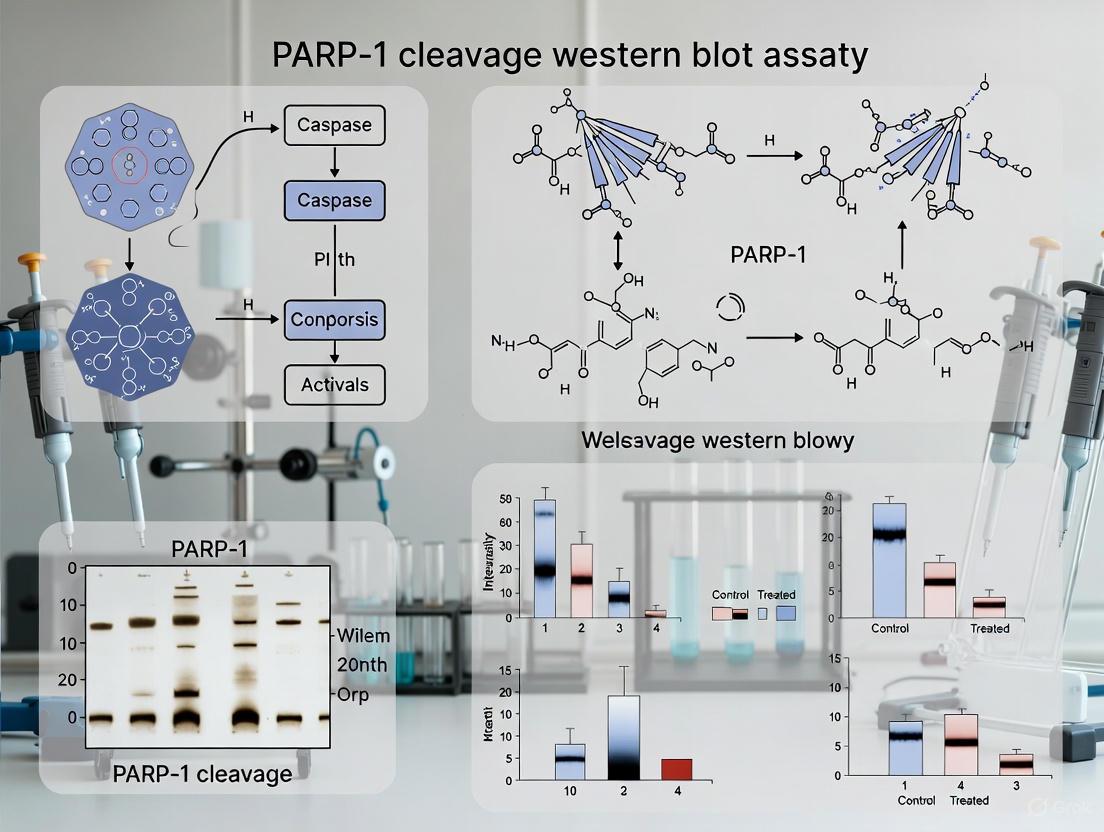
This article provides researchers, scientists, and drug development professionals with a complete guide to using Western blotting for detecting apoptosis through PARP-1 cleavage analysis.
Detecting Apoptosis: A Comprehensive Guide to PARP-1 Cleavage Western Blot Assay
Abstract
This article provides researchers, scientists, and drug development professionals with a complete guide to using Western blotting for detecting apoptosis through PARP-1 cleavage analysis. It covers the foundational biology of PARP-1 and its role as an apoptotic hallmark, detailed methodological protocols for assay execution, common troubleshooting and optimization strategies for challenging scenarios, and advanced techniques for data validation and comparative analysis with other cell death pathways. The content synthesizes current knowledge to enable accurate detection and interpretation of the characteristic 89 kDa and 24 kDa PARP-1 cleavage fragments, supporting applications in cancer research, neurodegenerative disease studies, and therapeutic drug screening.
PARP-1 Cleavage: The Biochemical Hallmark of Apoptosis
Poly (ADP-ribose) polymerase 1 (PARP1) is a critical nuclear enzyme and DNA damage sensor that plays essential roles in DNA repair pathways, genome maintenance, and cellular stress response [1] [2]. As a 116 kDa protein comprising 1014 amino acids, PARP1 catalyzes the transfer of ADP-ribose units from NAD+ to target proteins, a process known as poly(ADP-ribosyl)ation (PARylation) [2] [3]. This enzyme is responsible for more than 90% of total cellular PARylation activity and serves as a key regulator of cell fate decisions in response to genomic damage [2]. PARP1's function extends beyond DNA repair to include transcription regulation, chromatin modification, and cell death signaling, making it a pivotal molecule in both physiological processes and pathological conditions, including cancer and neurodegeneration [4]. The cleavage of PARP1 by caspases and other proteases during apoptosis and other forms of cell death generates specific signature fragments that serve as important biomarkers in cell death research and drug development [4].
Structural Organization of PARP1
PARP1 possesses a modular architecture consisting of multiple structured domains that work in concert to detect DNA damage and initiate repair responses [1] [2].
Domain Architecture and Functions
Table 1: PARP1 Structural Domains and Their Functions
| Domain | Location | Size | Key Functions | Structural Features |
|---|---|---|---|---|
| DNA Binding Domain (DBD) | N-terminus | 46 kDa | Recognizes and binds DNA strand breaks | Contains three zinc finger (ZnF) subdomains |
| Zinc Finger 1 (Zn1) | Within DBD | ~ | Binds to 5' end of DNA break | Classic zinc finger motif [1] |
| Zinc Finger 2 (Zn2) | Within DBD | ~ | Binds to 3' end of DNA break | Classic zinc finger motif [1] |
| Zinc Finger 3 (Zn3) | Within DBD | ~ | Essential for DNA-dependent stimulation | Third zinc finger motif [2] |
| Auto-Modification Domain (AMD) | Central region | 22 kDa | Target for covalent auto-modification | BRCT fold for protein-protein interactions [1] [4] |
| WGR Domain | Central region | ~ | DNA binding and allosteric regulation | Named for conserved Trp-Gly-Arg motif [1] [2] |
| Catalytic Domain (CAT) | C-terminus | 54 kDa | Catalyzes PARylation using NAD+ | Comprises helical (HD) and ART subdomains [1] |
The three zinc finger domains (Zn1, Zn2, and Zn3) in the DNA-binding domain enable PARP1 to recognize and bind various DNA lesions with high affinity [1] [2]. The auto-modification domain contains a BRCT fold that facilitates protein-protein interactions and recruitment of DNA repair enzymes to damage sites [4]. The WGR domain serves as both a DNA-binding module and an allosteric regulator, while the catalytic domain executes the PARylation function through its ADP-ribosyl transferase (ART) activity [1] [2].
Figure 1: Domain Architecture of PARP1
DNA Recognition Mechanism
PARP1 employs multiple domains to detect DNA damage with high specificity. The zinc finger domains Zn1 and Zn2 cooperate to recognize DNA breaks, with Zn1 binding to the 5' end and Zn2 to the 3' end of DNA strand breaks [1] [2]. Structural studies reveal that Zn1 and Zn2 contact DNA at two locations in the phosphate backbone grip, with key residues like R18 in Zn1 facilitating these interactions [1]. The WGR domain also contributes to DNA binding and plays a crucial role in allosteric activation of the catalytic domain [1] [3]. This multi-domain DNA recognition system allows PARP1 to rapidly localize to sites of DNA damage and initiate repair responses.
PARP1 in DNA Damage Response and Repair Pathways
PARP1 serves as a primary sensor of DNA damage and coordinates multiple repair pathways through its PARylation activity and scaffolding functions.
DNA Damage Sensing and Activation
When DNA damage occurs, PARP1 binds to strand breaks through its zinc fingers and WGR domain, inducing conformational changes that activate its catalytic function [1] [3]. This activation triggers autoPARylation, where PARP1 modifies itself with extensive PAR chains, leading to the recruitment of various DNA repair proteins [2] [3]. The auto-modification also promotes the dissociation of PARP1 from DNA, allowing access for repair machinery, though excessive PARP1 activation can lead to PARP1 trapping on DNA - a mechanism exploited by some PARP inhibitors [3].
Table 2: PARP1 Involvement in DNA Repair Pathways
| Repair Pathway | Type of Damage | PARP1 Functions | Key Interacting Partners |
|---|---|---|---|
| Base Excision Repair (BER) | Single-strand breaks, base damage | Early damage sensor, recruits repair factors | XRCC1, DNA ligase III, DNA polymerase β [2] [4] |
| Single-Strand Break Repair (SSBR) | Single-strand breaks | Initiates repair, facilitates chromatin relaxation | XRCC1, PNK, APE1 [5] |
| Homologous Recombination (HR) | Double-strand breaks | Promotes MRE11 recruitment to stalled replication forks | MRE11, NBS1, RAD51 [1] |
| Non-Homologous End Joining (NHEJ) | Double-strand breaks | Facilitates alternative NHEJ pathway | DNA-PKcs, Ku70/80 [1] [2] |
| Alternative NHEJ | Double-strand breaks | Scaffold with DNA ligase III | DNA ligase III, XRCC1 [4] |
Repair Protein Recruitment and Chromatin Remodeling
Through its PARylation activity, PARP1 modifies various nuclear proteins and creates a PAR-dependent signaling platform that recruits additional repair factors to damage sites [1] [3]. This function is particularly important for single-strand break repair (SSBR), where PARP1 recruits XRCC1 and other essential repair proteins [5]. PARP1 also contributes to chromatin relaxation through PARylation of histones and chromatin-associated proteins, making damaged DNA more accessible to repair machinery [1]. Recent structural insights from cryo-EM studies have revealed how PARP1 interacts with nucleosomes and how its activity is modulated by partners like histone PARylation factor 1 (HPF1) [1].
Figure 2: PARP1 Activation and DNA Repair Signaling Pathway
PARP1 Cleavage as a Biomarker in Apoptosis
PARP1 cleavage by caspases and other proteases serves as a critical biomarker for different forms of cell death, particularly apoptosis, and provides valuable insights into cellular stress responses.
Caspase-Mediated Cleavage in Apoptosis
During apoptosis, PARP1 is cleaved by executioner caspases (primarily caspase-3 and caspase-7) at the conserved sequence DEVD↓G between amino acids Asp214 and Gly215 [6] [4]. This proteolytic cleavage separates the N-terminal DNA-binding domain (24 kDa) from the C-terminal catalytic domain (89 kDa), effectively inactivating PARP1's DNA repair function and conserving cellular ATP for the apoptotic process [6] [4]. The 24-kD fragment retains the zinc finger motifs and remains tightly bound to DNA breaks, where it acts as a trans-dominant inhibitor of DNA repair by blocking access of intact PARP1 and other repair enzymes to damage sites [4]. Meanwhile, the 89-kD catalytic fragment translocates from the nucleus to the cytoplasm, where it may acquire pro-apoptotic functions [7] [4].
Cleavage by Other Proteases
Beyond caspases, PARP1 is susceptible to cleavage by other proteases that generate distinct signature fragments associated with different cell death modalities. Calpains produce 55-kD and 62-kD fragments during calcium-mediated cell death; granzymes generate 50-kD, 55-kD, and 64-kD fragments in cytotoxic lymphocyte-mediated killing; cathepsins create 50-kD fragments in lysosome-mediated cell death; and matrix metalloproteinases (MMPs) yield 55-kD, 62-kD, and 89-kD fragments in various pathological conditions [4]. The specific PARP1 cleavage fragments therefore serve as molecular signatures that can identify the particular proteases activated and the forms of cell death occurring in physiological and pathological contexts.
Table 3: PARP1 Cleavage Fragments by Different Proteases
| Protease | Cleavage Fragments | Associated Cell Death | Biological Consequences |
|---|---|---|---|
| Caspase-3/7 | 24 kDa + 89 kDa | Apoptosis | Inactivates DNA repair, conserves ATP, promotes cell death [6] [4] |
| Calpain | 55 kDa, 62 kDa | Calcium-mediated cell death | Contributes to necrotic cell death pathways [4] |
| Granzyme A | 50 kDa, 55 kDa, 64 kDa | Cytotoxic lymphocyte killing | Induces caspase-independent cell death [4] |
| Granzyme B | 24 kDa, 89 kDa | Cytotoxic lymphocyte killing | Caspase-like apoptosis induction [4] |
| Cathepsins | 50 kDa | Lysosome-mediated cell death | Contributes to tissue injury and remodeling [4] |
| MMPs | 55 kDa, 62 kDa, 89 kDa | Various pathologies | Tissue damage and inflammation [4] |
Figure 3: PARP1 Cleavage Pathway in Apoptosis
Research Reagent Solutions
Table 4: Key Research Reagents for PARP1 Cleavage Studies
| Reagent | Specificity | Applications | Key Features |
|---|---|---|---|
| Cleaved PARP (Asp214) Antibody #9541 [6] | 89 kDa fragment (human, mouse) | Western Blot, Simple Western | Does not recognize full-length PARP1; specific for caspase-cleaved fragment |
| Cleaved PARP1 Antibody (60555-1-Ig) [8] | Cleaved PARP1 (human, mouse, rat) | WB, IHC, IF/ICC, FC, ELISA | Monoclonal antibody (4G4C8); detects multiple cleavage fragments |
| Anti-PARP1 (#9532) [5] | Full-length PARP1 | Western Blot, IP | Recognizes full-length protein; useful for comparing cleaved vs intact PARP1 |
| Olaparib [7] [9] | PARP1 catalytic inhibitor | Cell culture, in vivo studies | FDA-approved PARP inhibitor; induces synthetic lethality in HR-deficient cells |
| RSL3 [7] | GPX4 inhibitor, PARP1 modulator | Ferroptosis studies, apoptosis research | Induces PARP1 cleavage via ROS; effective in PARPi-resistant cells |
| Z-VAD-FMK [7] | Pan-caspase inhibitor | Apoptosis inhibition studies | Validates caspase-dependent PARP1 cleavage |
Detailed Experimental Protocols
Western Blot Analysis for PARP1 Cleavage
Purpose: To detect and quantify PARP1 cleavage fragments as a biomarker of apoptosis in cell cultures or tissue samples.
Materials:
- RIPA lysis buffer (50 mM Tris-HCl pH 7.4, 150 mM NaCl, 1% NP-40, 0.25% sodium deoxycholate, 1 mM EDTA) with protease inhibitors [5]
- Primary antibodies: Cleaved PARP (Asp214) Antibody (#9541) [6] and full-length PARP1 antibody for comparison
- Secondary antibodies: HRP-conjugated anti-rabbit or anti-mouse IgG
- Precast SDS-PAGE gels (4-20% gradient recommended)
- PVDF or nitrocellulose membranes
- Enhanced chemiluminescence (ECL) detection reagents
Procedure:
- Sample Preparation:
- Harvest cells by centrifugation at 500 × g for 5 minutes.
- Wash cell pellets with ice-cold PBS.
- Lyse cells in RIPA buffer (100 μL per 10^6 cells) for 30 minutes on ice.
- Centrifuge lysates at 13,500 rpm for 20 minutes at 4°C.
- Collect supernatants and determine protein concentration using BCA assay [5].
Gel Electrophoresis:
- Load 20-30 μg protein per lane onto SDS-PAGE gel.
- Run gel at constant voltage (100-120V) until dye front reaches bottom.
- Transfer proteins to membrane using wet or semi-dry transfer systems.
Immunoblotting:
- Block membrane with 5% non-fat milk in TBST for 1 hour.
- Incubate with primary antibody (1:1000 dilution for #9541) [6] in blocking buffer overnight at 4°C.
- Wash membrane 3× with TBST for 10 minutes each.
- Incubate with HRP-conjugated secondary antibody (1:2000-1:5000) for 1 hour at room temperature.
- Wash 3× with TBST for 10 minutes each.
- Develop with ECL reagent and image using chemiluminescence detection system.
Interpretation:
- Full-length PARP1 appears at ~116 kDa.
- Caspase-cleaved PARP1 fragment appears at ~89 kDa.
- The ratio of cleaved to full-length PARP1 indicates the extent of apoptosis.
Troubleshooting Tips:
- Include positive control (e.g., staurosporine-treated cells) [8] to validate antibody specificity.
- Optimize antibody dilution if background is high or signal is weak.
- For quantitative comparisons, ensure equal protein loading using housekeeping proteins (e.g., β-actin, α-tubulin) [5].
PARP1 Cleavage Assay in Drug Response Studies
Purpose: To evaluate the efficacy of PARP inhibitors or other chemotherapeutic agents in inducing apoptosis through PARP1 cleavage.
Materials:
- Cancer cell lines of interest (e.g., breast cancer, ovarian cancer)
- PARP inhibitors (olaparib, talazoparib) or other DNA-damaging agents
- Caspase inhibitor (Z-VAD-FMK) for mechanism validation [7]
- Apoptosis detection kit (Annexin V/PI)
- Cell culture reagents and equipment
Procedure:
- Treatment Setup:
- Seed cells in 6-well plates at 2-5 × 10^5 cells/well and incubate overnight.
- Treat cells with varying concentrations of PARP inhibitors or other agents for 24-72 hours.
- Include control groups: untreated cells, solvent control, and positive control for apoptosis induction.
Sample Collection:
- Harvest both adherent and floating cells to capture all apoptotic populations.
- Prepare cell lysates as described in protocol 6.1.
Parallel Assays:
- Perform Western blot analysis for PARP1 cleavage as described above.
- Conduct Annexin V/PI staining to quantify apoptosis by flow cytometry.
- Assess caspase-3 activation using specific antibodies or activity assays.
Data Analysis:
- Quantify band intensities using densitometry software.
- Calculate the ratio of cleaved PARP1 to total PARP1 or housekeeping proteins.
- Correlate PARP1 cleavage with apoptosis percentage from flow cytometry.
- Determine IC50 values for drug treatments.
Validation:
- Use caspase inhibitors (Z-VAD-FMK, 20-50 μM) to confirm caspase-dependence of PARP1 cleavage [7].
- Test multiple cell lines with different PARP1 expression levels or drug sensitivities.
- Include time-course experiments to track cleavage kinetics.
This comprehensive approach enables researchers to reliably detect PARP1 cleavage as a key apoptotic biomarker and assess therapeutic responses in various experimental models, providing valuable insights for drug development and mechanistic studies in cancer research and beyond.
The cleavage of Poly(ADP-ribose) polymerase-1 (PARP-1) at aspartate 214 (Asp214) represents a critical biochemical event in the execution of apoptosis. This proteolytic cleavage, specifically mediated by the effector caspases-3 and -7, serves as a well-established biomarker for programmed cell death and plays a functional role in the apoptotic cascade. The cleavage separates the DNA-binding domain from the catalytic domain of PARP-1, effectively preventing futile DNA repair cycles during apoptosis and facilitating cellular dismantling. This application note details the significance, detection methodologies, and experimental protocols for studying caspase-3/7-mediated PARP-1 cleavage at Asp214, providing researchers with practical tools for apoptosis research in various contexts, including cancer biology and neurodegenerative diseases.
Biological Significance of PARP-1 Cleavage at Asp214
The Cleavage Event and Fragment Generation
PARP-1 is a 113-116 kDa nuclear enzyme involved in DNA repair and cellular homeostasis. During apoptosis, effector caspases-3 and -7 recognize and cleave PARP-1 at the specific amino acid sequence DEVD located between Asp214 and Gly215 [10] [4]. This proteolytic event generates two characteristic fragments:
- An 89 kDa fragment (also referred to as p85) containing the automodification and catalytic domains
- A 24 kDa fragment containing the DNA-binding domain [10] [11] [4]
The 24 kDa fragment retains the ability to bind DNA strand breaks but cannot initiate repair, thereby acting as a trans-dominant inhibitor of intact PARP-1 and potentially other DNA repair enzymes [4]. This irreversible binding to DNA breaks inhibits the DNA repair process while conserving cellular ATP pools that would otherwise be depleted by PARP-1 activation [12] [4].
Functional Consequences in Apoptosis and Beyond
The cleavage of PARP-1 at Asp214 serves multiple functional roles in cell death pathways:
- Prevents energy depletion: By inactivating PARP-1's catalytic activity, cells avoid NAD+ and ATP depletion, preserving energy for the ordered execution of apoptosis [12].
- Facilitates cellular dismantling: The separation of functional domains disrupts DNA repair mechanisms, allowing for the systematic fragmentation of DNA and cellular components [4].
- Regulates inflammatory responses: Research indicates that the cleavage fragments themselves may regulate cellular viability and inflammatory responses, with the 89 kDa fragment exhibiting cytotoxic properties in some experimental models [11].
Table 1: PARP-1 Cleavage Fragments and Their Characteristics
| Fragment Size | Domains Contained | Cellular Localization | Functional Consequences |
|---|---|---|---|
| 24 kDa | DNA-binding domain (DBD) with two zinc finger motifs | Retained in nucleus | Irreversibly binds to damaged DNA, acts as trans-dominant inhibitor of DNA repair |
| 89 kDa | Auto-modification domain (AMD) and catalytic domain (CD) | Liberated into cytosol | Greatly reduced DNA binding capacity, potential signaling functions |
Detection Methodologies and Reagent Solutions
Western Blot Detection
Western blotting remains the most widely employed technique for detecting PARP-1 cleavage. The standard protocol involves:
Sample Preparation and Electrophoresis:
- Extract proteins using RIPA buffer (25 mM Tris-HCl pH 7.6, 150 mM NaCl, 1% NP-40, 1% sodium deoxycholate, 0.1% SDS) supplemented with protease inhibitors [13].
- Determine protein concentration using BCA or Bradford assays with a standard curve R² ≥ 0.99 [13].
- Load 15-30 μg of protein per lane on 4-12% Bis-Tris gradient gels for optimal resolution of both full-length PARP-1 (116 kDa) and the cleavage fragment (89 kDa) [13].
- Perform electrophoresis at 80V for 4 minutes, then increase to 180V for approximately 50 minutes using MES or MOPS running buffer [13].
Transfer and Immunoblotting:
- Transfer proteins to nitrocellulose or PVDF membranes using standard wet or semi-dry transfer systems.
- Block membranes with 5% non-fat dry milk or commercial blocking buffers.
- Incubate with primary antibodies specific for either full-length PARP-1 or the cleaved form (see Table 2 for recommended antibodies).
- Use fluorescently-labeled secondary antibodies for quantitative detection on systems such as the LI-COR Odyssey, which provides a linear detection profile superior to chemiluminescence for quantification [13].
Normalization and Quantification:
- Implement total protein normalization (TPN) rather than housekeeping proteins (HKP) for more accurate quantification, as HKP expression can vary experimentally [14].
- Acquire images at a minimum resolution of 300 DPI for publication, ensuring unprocessed images are retained for supplementary materials as required by most journals [14] [15].
HTRF-Based Detection
The HTRF (Homogeneous Time-Resolved Fluorescence) PARP cleaved-Asp214 detection kit provides a sensitive, quantitative alternative to Western blotting. This sandwich immunoassay uses two specific anti-PARP-1 p85 fragment monoclonal antibodies - one labeled with Eu³⁺ Cryptate (donor) and the other with d2 (acceptor) [16]. When these antibodies are in proximity bound to the cleaved PARP-1 fragment, a FRET signal is generated that is proportional to the amount of cleaved PARP-1 present.
Key advantages of HTRF:
- Higher sensitivity: Detects cleaved PARP-1 in as few as 3,125 cells, compared to 12,500 cells required for Western blot detection [16].
- Homogeneous format: No washing steps required, simplifying the protocol and reducing handling time.
- Excellent for screening: Ideal for assessing apoptosis in multiple samples, such as during drug screening campaigns.
Protocol summary:
- Plate cells in 96-well or 384-well plates and apply experimental treatments.
- Remove medium and lyse cells with 50 μL of supplemented lysis buffer for 30 minutes at room temperature with gentle shaking.
- Transfer 16 μL of lysate to a 384-well low-volume white microplate.
- Add 4 μL of the HTRF Cleaved PARP Asp214 detection reagents.
- Incubate for 2 hours and read the HTRF signal on a compatible plate reader [16].
Table 2: Key Research Reagents for Detecting PARP-1 Cleavage at Asp214
| Reagent/Solution | Specificity | Application | Key Features | Example Product |
|---|---|---|---|---|
| Anti-cleaved PARP (Asp214) antibody | Recognizes the 89 kDa fragment generated by caspase cleavage | Western Blot, IF, IHC | Does not recognize full-length PARP-1; specific apoptosis marker | HTRF PARP Cleaved-Asp214 Kit [16] |
| Anti-caspase-3 antibody | Detects both full-length (35 kDa) and cleaved fragments (17/19 kDa) of caspase-3 | Western Blot, IF, IHC | Confirms activation of upstream effector caspases | Cleaved Caspase-3 (Asp175) Antibody #9661 [17] |
| Caspase inhibitor | Broad-spectrum caspase inhibitor (zVAD-fmk) | Functional studies | Validates caspase-dependence of PARP-1 cleavage | zVAD-fmk [10] [12] |
| Total protein stain | Labels all proteins for normalization | Western Blot quantification | More reliable than housekeeping proteins for loading controls | No-Stain Protein Labeling Reagent [14] |
Experimental Protocols for Apoptosis Induction and Detection
Staurosporine-Induced Apoptosis in Jurkat or HeLa Cells
Materials:
- Jurkat T-cells or HeLa cells
- Staurosporine (0.1-1 μM working concentration)
- Complete cell culture medium
- RIPA lysis buffer with protease inhibitors
- HTRF PARP Cleaved-Asp214 Detection Kit or Western blot reagents
Procedure:
- Culture Jurkat cells in T175 flasks or plate HeLa cells in 96-well plates at 37°C with 5% CO₂. For HeLa cells, plate at 50,000 cells/well and incubate for 24 hours [16].
- Prepare staurosporine dilutions in culture medium. For initial experiments, use a concentration range of 0.1-1 μM.
- Treat cells with staurosporine or vehicle control for 4 hours [16].
- For Jurkat cells: harvest by centrifugation, remove medium, and lyse pellet with 3 mL of supplemented lysis buffer for 30 minutes at room temperature. Collect soluble fraction after 10-minute centrifugation [16].
- For HeLa cells: remove medium and lyse cells directly in the plate with 50 μL of lysis buffer for 30 minutes at RT with gentle shaking [16].
- Analyze cleaved PARP-1 levels by HTRF (transfer 16 μL lysate to 384-well plate, add 4 μL detection reagents, incubate 2h, read TR-FRET signal) or by Western blotting [16].
TNF-α-Induced Necrosis and the Role of Caspase Inhibition
This protocol demonstrates how caspase inhibition can shift cell death from apoptosis to necrosis, highlighting the significance of PARP-1 cleavage in determining cell death mode.
Materials:
- L929 fibrosarcoma cells
- Recombinant TNF-α
- zVAD-fmk (caspase inhibitor, 20-50 μM)
- PARP inhibitor (e.g., 3-aminobenzamide, 1-5 mM)
Procedure:
- Culture L929 cells in DMEM supplemented with 10% FCS, penicillin/streptomycin, and 2 mM L-glutamine.
- Pre-treat cells with either zVAD-fmk (20-50 μM), PARP inhibitor (1-5 mM 3-aminobenzamide), or combination for 1 hour.
- Stimulate cells with TNF-α (10-100 ng/mL) for 6-24 hours.
- Monitor cell death morphology and collect cells for PARP-1 cleavage analysis by Western blotting.
- Expected results: TNF-α alone induces PARP-1 activation and necrosis; with zVAD-fmk, PARP-1 cleavage is inhibited, potentiating TNF-induced necrosis; PARP inhibitors suppress this effect [12].
Data Interpretation and Troubleshooting
Expected Results and Controls
Positive results: Successful detection of the 89 kDa fragment indicates caspase-3/7 activation and apoptosis. The appearance of this fragment should correlate with:
- Detection of cleaved caspase-3 (17/19 kDa fragments) [17]
- Presence of other apoptotic markers (DNA fragmentation, phosphatidylserine externalization)
- Loss of full-length PARP-1 signal in later stages of apoptosis
Essential controls:
- Untreated cells (negative for cleaved PARP-1)
- Staurosporine-treated cells (positive control) [16]
- zVAD-fmk pre-treatment (should inhibit cleavage) [10] [12]
- Molecular weight markers to confirm fragment sizes
Troubleshooting Common Issues
- Weak or no signal: Increase cell number or apoptosis induction time; verify antibody specificity; check cell line sensitivity to apoptosis inducers.
- High background in HTRF: Optimize cell lysis conditions; ensure proper plate reading settings.
- Non-specific bands in Western blot: Optimize antibody dilution; include peptide competition controls; switch to more specific antibodies.
- Inconsistent results between technical replicates: Use fresh reagents; standardize cell culture conditions; implement total protein normalization for Western blots [14] [13].
Signaling Pathway and Experimental Workflow
The following diagrams illustrate the caspase-3/7-mediated PARP-1 cleavage pathway and the experimental workflow for its detection.
Caspase Activation and PARP-1 Cleavage Pathway
(Caspase Activation and PARP-1 Cleavage Pathway)
Experimental Detection Workflow
(Experimental Detection Workflow)
The cleavage of PARP-1 at Asp214 by caspases-3 and -7 serves as both a reliable biomarker for apoptosis and a functionally significant event in the cell death process. The detection methodologies outlined here, particularly the quantitative Western blot and HTRF approaches, provide researchers with robust tools for investigating apoptotic pathways in various experimental contexts. The protocols and troubleshooting guidance offered in this application note will assist researchers in consistently detecting this key apoptotic event, contributing to advancements in understanding cell death mechanisms across diverse fields from cancer therapeutics to neurodegenerative disease research.
Poly(ADP-ribose) polymerase-1 (PARP-1) is a nuclear enzyme with a fundamental role in the cellular response to DNA damage. As a key substrate for apoptotic proteases, its cleavage serves as a critical biochemical hallmark of programmed cell death [4]. During apoptosis, executioner caspases-3 and -7 specifically cleave the 116-kDa PARP-1 protein into characteristic fragments of 89 kDa and 24 kDa [18] [4]. The detection and interpretation of these signature fragments via western blotting provide researchers with a powerful tool for confirming apoptotic activity in experimental models, from cancer research to neurodegenerative diseases [19]. This application note details the biological significance, detection methodologies, and analytical protocols for identifying these characteristic PARP-1 cleavage fragments within the context of apoptosis assay research.
Biological Significance of PARP-1 Cleavage Fragments
Fragment Generation and Functional Consequences
The cleavage of PARP-1 by caspases occurs at a specific aspartic acid residue (DEVD214) located within the nuclear localization signal near the DNA-binding domain [11] [4]. This proteolytic event produces two fragments with distinct cellular fates and functions:
The 24-kDa Fragment: This N-terminal fragment contains the DNA-binding domain with two zinc-finger motifs and the nuclear localization signal [18] [4]. After cleavage, it remains tightly bound to DNA strand breaks, where it acts as a trans-dominant inhibitor of DNA repair by blocking access for intact PARP-1 and other repair enzymes [18] [4]. This irreversible binding conserves cellular ATP pools that would otherwise be depleted by PARP-1 activation [4].
The 89-kDa Fragment: This C-terminal fragment contains the automodification domain and the catalytic domain responsible for poly(ADP-ribose) polymerization [18] [20]. Following cleavage, this fragment is translocated from the nucleus to the cytoplasm [18] [20]. Recent research has revealed that the 89-kDa fragment can serve as a carrier for poly(ADP-ribose) (PAR) polymers, facilitating their movement to the cytoplasm where they bind to apoptosis-inducing factor (AIF) and promote AIF-mediated DNA fragmentation [18] [20].
Table 1: Characteristics of PARP-1 Cleavage Fragments
| Fragment | Molecular Weight | Domains Contained | Cellular Localization After Cleavage | Primary Functions |
|---|---|---|---|---|
| 24-kDa | 24 kDa | DNA-binding domain (zinc fingers) | Remains nuclear, bound to DNA | Inhibits DNA repair; acts as trans-dominant inhibitor of PARP-1 |
| 89-kDa | 89 kDa | Automodification domain, Catalytic domain | Translocates to cytoplasm | Serves as PAR carrier; promotes AIF-mediated DNA fragmentation |
The cleavage of PARP-1 serves a dual purpose in the apoptotic cascade: it inactivates the DNA repair function of PARP-1 to prevent futile repair attempts in doomed cells, and the generated fragments actively participate in promoting cell death through distinct mechanisms [18] [4] [20].
PARP-1 Cleavage in Different Cell Death Pathways
While caspase-mediated cleavage generating the 89 kDa and 24 kDa fragments is a hallmark of apoptosis, PARP-1 is also a substrate for other proteases in alternative cell death pathways. During necrosis, lysosomal proteases such as cathepsins B and G cleave PARP-1, producing a different characteristic fragment of 50 kDa [10]. Calpains, granzymes, and matrix metalloproteinases can also process PARP-1 into distinct signature fragments, making the specific cleavage pattern a valuable indicator of the particular cell death pathway activated [4]. This underscores the importance of accurate fragment identification in determining the mechanism of cell death in experimental systems.
Detection Methodologies and Protocols
Western Blot Protocol for PARP-1 Cleavage Detection
The following protocol provides a standardized approach for detecting PARP-1 cleavage fragments in apoptotic cells:
Sample Preparation:
- Cell Lysis: Lyse cells using RIPA buffer or another appropriate lysis buffer supplemented with protease inhibitors to prevent protein degradation.
- Protein Quantification: Determine protein concentration using a standardized method such as the BCA assay [7] to ensure equal loading across samples.
- Sample Preparation: Mix protein lysates with Laemmli buffer, denature at 95°C for 5 minutes, and place on ice.
Gel Electrophoresis and Transfer:
- SDS-PAGE: Load 20-30 μg of protein per well on a 4-12% Bis-Tris polyacrylamide gel. Include a pre-stained protein molecular weight marker. Run the gel at constant voltage (120-150V) until the dye front reaches the bottom.
- Protein Transfer: Transfer proteins from the gel to a PVDF or nitrocellulose membrane using wet or semi-dry transfer systems.
Antibody Incubation and Detection:
- Blocking: Block the membrane with 5% non-fat dry milk or BSA in TBST for 1 hour at room temperature.
- Primary Antibody Incubation: Incubate with primary antibodies against PARP-1 (capable of detecting both full-length and cleaved fragments) diluted in blocking buffer overnight at 4°C. Optimal dilution should be determined empirically but typically ranges from 1:500 to 1:2000.
- Washing: Wash membrane 3 times for 5 minutes each with TBST.
- Secondary Antibody Incubation: Incubate with appropriate HRP-conjugated secondary antibody diluted in blocking buffer (typically 1:2000 to 1:5000) for 1 hour at room temperature.
- Detection: Develop using enhanced chemiluminescence (ECL) substrate and image with a digital imaging system.
Controls and Normalization:
- Include both untreated (negative control) and apoptosis-induced (positive control) samples.
- Normalize signals using housekeeping proteins such as β-actin or GAPDH [19].
- Use densitometry software (e.g., ImageJ) to quantify band intensities and calculate cleaved to full-length PARP-1 ratios [19].
Apoptosis Induction and Validation Methods
To study PARP-1 cleavage in apoptosis, researchers can employ various apoptosis inducers:
- Staurosporine and Actinomycin D: These conventional apoptosis inducers trigger caspase activation and subsequent PARP-1 cleavage, as demonstrated in HeLa cell models [18].
- RSL3: This ferroptosis activator has been shown to exert pro-apoptotic effects through dual mechanisms: caspase-dependent PARP-1 cleavage and regulation of PARP-1 translation via m6A modification [7].
- DNA-damaging agents: Etoposide and other chemotherapeutic agents induce apoptosis through DNA damage pathways, resulting in PARP-1 cleavage [4].
Validation of apoptosis should include complementary methods such as:
- Annexin V/propidium iodide staining by flow cytometry [7] [21]
- Caspase-3/7 activity assays
- Detection of other apoptotic markers (e.g., cleaved caspases) [19]
Table 2: Key Reagents for PARP-1 Cleavage Detection
| Reagent Category | Specific Examples | Function/Application |
|---|---|---|
| Primary Antibodies | Anti-PARP-1 antibody (recognizing both full-length and cleaved fragments) [21] | Detection of PARP-1 and its cleavage products |
| Secondary Antibodies | HRP-conjugated anti-rabbit or anti-mouse IgG | Signal amplification and detection |
| Apoptosis Inducers | Staurosporine, Actinomycin D, RSL3 [7] [18] | Induction of apoptotic pathways |
| Caspase Inhibitors | zVAD-fmk (pan-caspase inhibitor) [18] [10] | Validation of caspase-dependent cleavage |
| Detection Reagents | ECL substrate, fluorescent secondary antibodies | Visualization of protein bands |
| Loading Controls | β-actin, GAPDH antibodies [19] | Normalization of protein loading |
Data Interpretation and Analytical Considerations
Expected Band Patterns and Their Significance
In a typical western blot analyzing PARP-1 cleavage during apoptosis:
- Non-apoptotic cells: Display a predominant band at approximately 116 kDa, corresponding to full-length PARP-1.
- Early apoptotic cells: Show both the 116 kDa band and the appearance of the 89 kDa fragment.
- Late apoptotic cells: Exhibit a strong 89 kDa band with diminished or absent 116 kDa full-length PARP-1.
The 24 kDa fragment is often more challenging to detect due to its smaller size and potential transfer issues, or because it may remain bound to DNA in the insoluble fraction [4]. Specialized extraction protocols or antibodies specifically targeting this fragment may be necessary for its consistent detection.
Technical Considerations and Troubleshooting
Optimization and Validation:
- Antibody Specificity: Ensure antibodies specifically recognize the PARP-1 fragments of interest. Some commercial antibodies may preferentially detect either full-length or cleaved forms.
- Sample Quality: Prevent protein degradation through proper sample handling and use of protease inhibitors.
- Fragment Stability: The 89-kDa fragment may be subject to further degradation, potentially complicating interpretation.
- Experimental Controls: Always include appropriate positive and negative controls to validate the assay.
- Alternative Cleavage Patterns: Be aware that different cell death inducers or cell types may produce varying ratios of cleavage fragments.
Normalization and Quantification: Normalize the signal intensity of cleaved PARP-1 fragments to both the full-length PARP-1 and housekeeping proteins. Calculate the ratio of cleaved to full-length PARP-1 to assess the extent of apoptotic activity [19]. This quantitative approach allows for comparative analysis across experimental conditions.
Research Applications and Therapeutic Implications
The detection of PARP-1 cleavage fragments has significant applications across multiple research domains:
Cancer Research and Drug Development: PARP-1 cleavage serves as a key biomarker for evaluating the efficacy of chemotherapeutic agents and targeted therapies. Recent studies have demonstrated that RSL3 retains pro-apoptotic functions in PARP inhibitor-resistant cells and effectively inhibits PARP inhibitor-resistant xenograft tumor growth in vivo [7]. This highlights the value of PARP-1 cleavage detection in developing strategies to overcome therapy resistance in malignancies.
Neurodegenerative Disease Research: In conditions such as cerebral ischemia, Alzheimer's disease, and Parkinson's disease, PARP-1 cleavage has been implicated in the neuronal death pathways [11] [4]. Monitoring PARP-1 processing provides insights into disease mechanisms and potential therapeutic interventions.
Basic Cell Death Mechanism Studies: The analysis of PARP-1 cleavage fragments helps elucidate the complex crosstalk between different cell death pathways, including the interplay between apoptosis, ferroptosis, and parthanatos [7] [18].
The identification of the characteristic 89 kDa and 24 kDa PARP-1 cleavage fragments remains a cornerstone method for apoptosis detection in biomedical research. The standardized protocols and analytical frameworks presented in this application note provide researchers with robust methodologies for investigating apoptotic pathways across diverse experimental systems. As research continues to unveil the complex roles of PARP-1 fragments in cell death signaling and their implications in therapeutic resistance, the accurate detection and interpretation of these cleavage fragments will maintain their critical importance in both basic research and drug development endeavors.
Visual Appendix
PARP-1 Cleavage Pathway
Experimental Workflow
Poly (ADP-ribose) polymerase-1 (PARP-1), a 113-116 kDa nuclear enzyme, plays a central role in maintaining genomic integrity by detecting DNA strand breaks and initiating the base excision repair pathway [4]. During the early stages of apoptosis, PARP-1 becomes a primary target for cleavage by a specific group of cysteine proteases known as caspases [4]. This proteolytic event is considered a biomarker of apoptosis and serves two critical biological functions: the inactivation of DNA repair pathways to prevent cellular rescue and the facilitation of cellular disassembly [22] [23]. Cleavage occurs at a conserved aspartic acid residue (Asp214 in human PARP-1, within the DEVD motif), separating the N-terminal DNA-binding domain (DBD) from the C-terminal catalytic domain [23]. This generates two signature fragments: a 24 kDa DNA-binding fragment and an 89 kDa catalytic fragment [11] [4]. This application note details the mechanisms and consequences of PARP-1 cleavage, providing validated protocols for its detection in apoptosis research and drug discovery.
Key Mechanistic Consequences of PARP-1 Cleavage
The cleavage of PARP-1 during apoptosis initiates several consequential mechanisms that actively promote cell death, as illustrated in the signaling pathway below.
The cleavage of PARP-1 has several definitive biological consequences, which are quantified in the table below.
Table 1: Biological Consequences of PARP-1 Cleavage During Apoptosis
| Consequence | Molecular Mechanism | Functional Outcome | Experimental Evidence |
|---|---|---|---|
| Inactivation of DNA Repair | The 24 kDa fragment remains tightly bound to DNA strand breaks, acting as a trans-dominant inhibitor that blocks further recruitment and activation of full-length PARP-1 and other repair factors [4] [24]. | Prevents cellular energy (NAD+, ATP) depletion in a doomed cell, channeling the cell towards an orderly apoptotic death instead of necrosis [4]. | Expression of the 24 kDa fragment conferred protection from oxygen/glucose deprivation damage in neuronal models [11]. |
| Facilitation of Cellular Disassembly | Separation of DNA-binding and catalytic domains permanently inactivates PARP-1's DNA repair function, removing a key pro-survival mechanism and allowing the apoptotic process to proceed [23]. | Serves as a committed step in the dismantling of the cell, a hallmark of apoptosis [4]. | Detection of the 89 kDa fragment is a widely accepted biochemical marker for apoptosis [22] [23]. |
| Modulation of Inflammatory Response | Cleavage products differentially regulate NF-κB activity. The 89 kDa fragment can enhance the expression of a subset of NF-κB target genes, such as iNOS and COX-2, potentially amplifying the inflammatory response during cell death [11]. | Fine-tunes the cellular response to stress, influencing the tissue microenvironment during apoptosis [11]. | In models of ischemia, the 89 kDa fragment significantly increased NF-κB and iNOS promoter activity compared to wild-type PARP-1 [11]. |
| Gain of Novel Cytotoxic Functions | The 89 kDa fragment translocates to the cytoplasm where it can mediate ADP-ribosylation of non-nuclear targets. For example, it modifies RNA Polymerase III to facilitate innate immune signaling and apoptosis [25]. | Converts a nuclear repair protein into a cytoplasmic effector that actively promotes cell death [25]. | Truncated PARP1 (tPARP1) was found to interact with and mono-ADP-ribosylate the Pol III complex in the cytosol, enhancing IFN-β production and apoptosis [25]. |
Detailed Experimental Protocol: Western Blot Detection of Cleaved PARP-1
A standard method for confirming apoptosis in experimental models is the detection of the 89 kDa PARP-1 fragment via western blotting. The workflow below outlines this process, and the subsequent sections provide a detailed protocol.
Reagents and Materials
Table 2: Key Research Reagent Solutions for PARP-1 Cleavage Detection
| Reagent / Material | Specification / Function | Example Product (Citation) |
|---|---|---|
| Anti-Cleaved PARP (Asp214) Antibody | A primary antibody that specifically recognizes the neo-epitope at the C-terminal end of the 89 kDa fragment created by caspase cleavage. It does not recognize full-length PARP-1 [23]. | Cleaved PARP (Asp214) Antibody #9541 (Cell Signaling Technology) [23] |
| Anti-Cleaved PARP1 Monoclonal Antibody | A conjugation-ready monoclonal antibody pair (capture antibody) specific for the cleaved form of PARP1, suitable for WB, IHC, IF, and FC [22]. | Cleaved PARP1 Monoclonal Antibody, PBS Only (Capture) (PTGlab) [22] |
| Cell Lysis Buffer | A RIPA-based buffer supplemented with protease inhibitors to prevent post-lysis protein degradation and preserve cleavage fragments. | |
| Positive Control Lysate | Lysate from cells treated with a known apoptosis inducer (e.g., 1 µM Staurosporine for 4-6 hours) to validate the assay. |
Step-by-Step Methodology
Sample Preparation:
- Harvest treated and control cells by centrifugation.
- Lyse cell pellets in ice-cold RIPA lysis buffer (e.g., 150 mM NaCl, 1% NP-40, 0.5% sodium deoxycholate, 0.1% SDS, 25 mM Tris, pH 7.4) supplemented with a protease inhibitor cocktail and 1 mM PMSF.
- Incubate on ice for 15-30 minutes, then centrifuge at 14,000 x g for 15 minutes at 4°C to pellet cell debris.
- Transfer the supernatant to a new tube.
Protein Quantification and Denaturation:
- Determine the protein concentration of each lysate using a standard assay (e.g., BCA or Bradford).
- Mix 50-100 µg of total protein with Laemmli sample buffer (contain β-mercaptoethanol).
- Denature samples by heating at 95-100°C for 5-10 minutes.
Gel Electrophoresis and Transfer:
- Load denatured samples onto a 4-12% Bis-Tris polyacrylamide gel.
- Perform electrophoresis at constant voltage (e.g., 120-150V) until the dye front reaches the bottom of the gel.
- Transfer proteins from the gel to a PVDF membrane using a wet or semi-dry transfer system.
Immunoblotting:
- Block the membrane with 5% non-fat dry milk in TBST (Tris-Buffered Saline with 0.1% Tween-20) for 1 hour at room temperature.
- Incubate the membrane with a primary antibody specific for cleaved PARP-1 (e.g., Anti-Cleaved PARP (Asp214) #9541) at a 1:1000 dilution in 5% BSA/TBST overnight at 4°C with gentle agitation [23].
- Wash the membrane 3 times for 5-10 minutes each with TBST.
- Incubate with an HRP-conjugated secondary antibody (e.g., anti-rabbit IgG) at a 1:2000-1:5000 dilution in 5% milk/TBST for 1 hour at room temperature.
- Wash the membrane 3 times for 5-10 minutes each with TBST.
Detection:
- Develop the blot using a chemiluminescent substrate according to the manufacturer's instructions.
- Image the membrane using a chemiluminescence-compatible imaging system.
- A successful assay will show a strong band at approximately 89 kDa in apoptotic samples, with little to no signal in viable control samples.
Protocol Notes and Troubleshooting
- Membrane Stripping and Re-probing: To confirm equal loading, the membrane can be stripped and re-probed with an antibody against a housekeeping protein (e.g., GAPDH, β-Actin).
- Specificity: The use of antibodies that specifically recognize the cleaved form of PARP-1 (like #9541) is crucial, as they will not cross-react with the full-length 116 kDa protein, providing a cleaner and more definitive result [23].
- Lysate Quality: Ensure fresh protease inhibitors are used in the lysis buffer to prevent artifactual protein degradation that could generate misleading bands.
The Scientist's Toolkit: Essential Research Reagents
Table 3: Essential Research Reagents for PARP-1 Apoptosis Assays
| Category | Specific Item | Function in Assay |
|---|---|---|
| Key Antibodies | Anti-Cleaved PARP (Asp214) (e.g., #9541) [23] | Highly specific detection of the 89 kDa apoptotic fragment in Western Blot. |
| Anti-PARP1 (full-length) | Detects both full-length and cleaved PARP1; useful for assessing cleavage ratio. | |
| Anti-β-Actin or Anti-GAPDH | Loading control for data normalization. | |
| Cell Culture & Treatment | Staurosporine | A broad-spectrum kinase inhibitor used as a positive control for inducing apoptosis. |
| Caspase Inhibitor (e.g., zVAD-fmk) | Used as a negative control to confirm caspase-dependent PARP-1 cleavage. | |
| Critical Assay Kits | Enhanced Chemiluminescence (ECL) Substrate | For sensitive detection of HRP-conjugated antibodies on Western blots. |
| Annexin V-FITC / Propidium Iodide Apoptosis Kit | For flow cytometry-based confirmation of apoptosis, complementary to Western blot data. |
Poly(ADP-ribose) polymerase-1 (PARP-1), a 113-116 kDa nuclear enzyme, plays a fundamental role in the cellular response to stress, particularly in DNA damage repair and the maintenance of genomic integrity. Beyond its physiological functions, PARP-1 has emerged as a critical substrate for proteolytic cleavage during various forms of cell death. The specific cleavage patterns of PARP-1 serve as biochemical signatures that distinguish between different cell death modalities, most notably apoptosis and necrosis. In apoptosis, caspase-mediated cleavage generates characteristic 89 kDa and 24 kDa fragments, while during necrosis, lysosomal proteases produce distinct cleavage products, including a prominent 50 kDa fragment. This application note provides detailed methodologies and analytical frameworks for researchers to accurately detect and interpret PARP-1 cleavage patterns within the context of cell death research and drug development.
PARP-1 Cleavage Signatures Across Cell Death Pathways
Biochemical Characterization of Cleavage Fragments
Table 1: PARP-1 Cleavage Patterns in Apoptosis vs. Necrosis
| Parameter | Apoptosis | Necrosis |
|---|---|---|
| Primary Cleavage Fragments | 89 kDa (catalytic domain) & 24 kDa (DNA-binding domain) [10] [4] | 50 kDa (55 kDa reported in some systems) & 62 kDa fragments [10] [26] |
| Responsible Proteases | Caspase-3 and Caspase-7 [12] [4] | Cathepsins B and G (lysosomal proteases) [10] |
| Inhibition Profile | Inhibited by zVAD-fmk (broad-spectrum caspase inhibitor) [10] | Not inhibited by zVAD-fmk [10] |
| Functional Consequences | Inactivation of DNA repair; prevention of ATP depletion [12] [27] | Potential activation of inflammatory responses [11] |
| Molecular Weight of Full-length PARP-1 | 113-116 kDa [10] [12] | 113-116 kDa [10] [26] |
The differential cleavage of PARP-1 in apoptosis versus necrosis represents more than just a biochemical curiosity—it serves as a critical molecular switch that determines cellular energy fate and inflammatory outcomes. During apoptosis, caspase-mediated cleavage separates the DNA-binding domain from the catalytic domain, effectively shutting down PARP-1 activity and preventing catastrophic NAD+ and ATP depletion, thereby allowing the energy-dependent apoptotic process to proceed efficiently [12] [27]. In contrast, during necrosis, alternative cleavage by lysosomal proteases may generate fragments with potentially novel functions that could contribute to the inflammatory nature of this cell death pathway [10] [11].
Functional Consequences of PARP-1 Cleavage Fragments
Research has revealed that the cleavage fragments themselves possess distinct biological activities that influence cell fate decisions. The 24 kDa fragment, containing the DNA-binding domain, remains tightly bound to DNA strand breaks and acts as a trans-dominant inhibitor of DNA repair by blocking access of intact PARP-1 and other repair factors to damage sites [4]. The 89 kDa fragment, comprising the automodification and catalytic domains, translocates from the nucleus to the cytoplasm where it can directly participate in amplification of the apoptotic cascade [7].
Experimental evidence demonstrates that these fragments exert opposing effects on cell viability. Expression of the 24 kDa fragment or an uncleavable PARP-1 mutant (PARP-1UNCL) confers protection from ischemic damage in neuronal models, while expression of the 89 kDa fragment (PARP-189) is cytotoxic [11] [28]. These fragments also differentially regulate inflammatory responses, with PARP-189 significantly enhancing NF-κB and iNOS promoter activity compared to the protective effects of PARP-124 [11] [28].
Experimental Protocols for PARP-1 Cleavage Analysis
Western Blot Protocol for PARP-1 Cleavage Detection
Protocol: Detection of PARP-1 Cleavage Fragments by Western Blot
Sample Preparation: Lyse cells in RIPA buffer (50 mM Tris-HCl pH 7.4, 150 mM NaCl, 1% NP-40, 0.5% sodium deoxycholate, 0.1% SDS) supplemented with protease inhibitors (e.g., 1 mM PMSF, 10 μg/mL aprotinin, 10 μg/mL leupeptin) and caspase inhibitors (e.g., 20 μM zVAD-fmk) when analyzing necrotic cleavage [10]. For tissue samples, use mechanical homogenization followed by centrifugation at 12,000 × g for 15 minutes at 4°C. Determine protein concentration using BCA assay.
Gel Electrophoresis: Load 20-50 μg of protein per lane on 8-12% SDS-PAGE gels. Include pre-stained molecular weight markers spanning 20-116 kDa to accurately identify cleavage fragments. Run gels at 100-120 V for approximately 90 minutes until the dye front reaches the bottom.
Protein Transfer and Blocking: Transfer proteins to nitrocellulose or PVDF membranes at 100 V for 60-90 minutes in ice-cold transfer buffer. Block membranes with 5% non-fat dry milk in TBST (Tris-buffered saline with 0.1% Tween-20) for 1 hour at room temperature.
Antibody Incubation: Incubate with primary antibodies against PARP-1 (specific for epitopes in both N-terminal and C-terminal regions) diluted in blocking buffer overnight at 4°C. Optimal dilutions (typically 1:1000) should be determined empirically. Wash membranes 3×10 minutes with TBST, then incubate with appropriate HRP-conjugated secondary antibodies (1:2000-1:5000) for 1 hour at room temperature.
Detection and Analysis: Develop blots using enhanced chemiluminescence substrate and image with a digital imaging system. Key bands to identify: full-length PARP-1 (113-116 kDa), apoptotic fragments (89 kDa and 24 kDa), and necrotic fragments (50-55 kDa and 62 kDa) [10] [26]. Normalize to housekeeping proteins (β-actin, GAPDH) for quantification.
Experimental Design for Cell Death Pathway Discrimination
Table 2: Experimental Conditions for Inducing and Discriminating Cell Death Pathways
| Treatment | Expected PARP-1 Cleavage | Inhibitor Controls | Morphological Correlates |
|---|---|---|---|
| Staurosporine (1 μM, 4-6h) [10] | Apoptotic (89/24 kDa) [10] | zVAD-fmk (20-50 μM) [10] | Cell shrinkage, membrane blebbing |
| Hydrogen Peroxide (0.1%, 2-4h) [10] | Necrotic (50 kDa) [10] | Cathepsin inhibitors (e.g., E-64d) | Loss of membrane integrity, swelling |
| Etoposide (50-100 μM, 16-24h) [26] | Predominantly apoptotic (89 kDa) [26] | zVAD-fmk | Apoptotic body formation |
| Doxorubicin (1-5 μM, 24-48h) [26] | Both apoptotic and necrotic fragments [26] | zVAD-fmk + Cathepsin inhibitors | Mixed morphology |
To definitively establish the cell death pathway involved, researchers should implement a combination of PARP-1 cleavage analysis with complementary techniques including:
- Annexin V/PI staining by flow cytometry to detect phosphatidylserine externalization and membrane integrity [19]
- Caspase-3/7 activity assays using fluorogenic substrates (e.g., DEVD-AFC) [7]
- Nuclear morphology assessment using Hoechst 33342 or DAPI staining
- ATP level measurement to corroborate metabolic consequences [12]
Signaling Pathways and Molecular Mechanisms
The following diagrams illustrate the distinct proteolytic events in PARP-1 cleavage during apoptosis versus necrosis, highlighting key proteases and fragment generation.
The Scientist's Toolkit: Essential Research Reagents
Table 3: Key Reagents for PARP-1 Cleavage Studies
| Reagent | Function/Application | Example Usage |
|---|---|---|
| zVAD-fmk | Broad-spectrum caspase inhibitor; distinguishes caspase-dependent apoptosis from other death forms [10] | 20-50 μM pretreatment to confirm caspase-dependent PARP-1 cleavage [10] |
| PARP-1 Antibodies | Detect full-length and cleavage fragments; epitope mapping determines fragment identification | Western blot, immunocytochemistry; recommend antibodies recognizing both N-terminal and C-terminal epitopes |
| Cathepsin Inhibitors (E-64d, CA-074-Me) | Inhibit lysosomal proteases; confirm cathepsin-mediated cleavage in necrosis [10] | 10-50 μM to inhibit necrotic PARP-1 cleavage [10] |
| Etoposide | Topoisomerase II inhibitor; induces DNA damage and apoptotic PARP-1 cleavage [26] | 50-100 μM for 16-24h to induce apoptosis [26] |
| Hydrogen Peroxide | Oxidative stress inducer; triggers necrotic cell death with characteristic PARP-1 cleavage [10] | 0.1% for 2-4h to induce necrosis [10] |
| 3-Aminobenzamide | PARP enzyme activity inhibitor; prevents NAD+ depletion and necrosis [12] [27] | 1-5 mM to study metabolic consequences of PARP activation [12] |
Data Interpretation and Technical Considerations
Troubleshooting PARP-1 Cleavage Detection
Researchers should be aware of several technical challenges when interpreting PARP-1 cleavage data:
- Multiple cleavage fragments: Some cell death inducers, particularly DNA-damaging agents like doxorubicin, can produce both apoptotic and necrotic PARP-1 cleavage fragments simultaneously, reflecting heterogeneous cell death responses within the population [26].
- Cell-type specific variations: The relative abundance of different proteases can vary between cell types, potentially leading to alternative cleavage patterns.
- Temporal dynamics: The appearance of cleavage fragments is time-dependent, with necrotic cleavage often occurring later than apoptotic cleavage in response to stimuli.
- Alternative proteases: Beyond caspases and cathepsins, other proteases including calpains, granzymes, and matrix metalloproteinases can cleave PARP-1 under specific conditions, generating additional fragments that require careful characterization [4].
Quantitative Analysis and Normalization
For accurate quantification of PARP-1 cleavage:
- Normalize the intensity of cleavage fragments to both full-length PARP-1 and housekeeping proteins
- Calculate cleavage ratios (e.g., 89 kDa / full-length for apoptosis; 50 kDa / full-length for necrosis)
- Use high-sensitivity chemiluminescent substrates for detection of lower abundance fragments
- Ensure linear range of detection by testing different protein loading concentrations
Research Applications and Concluding Remarks
The precise characterization of PARP-1 cleavage patterns provides invaluable insights across multiple research domains. In cancer biology, determining whether chemotherapeutic agents induce primarily apoptotic or necrotic cell death has implications for both efficacy and potential inflammatory side effects. In neurodegenerative disease research, understanding the balance between different PARP-1 cleavage events can illuminate disease mechanisms, particularly given the opposing effects of the 24 kDa and 89 kDa fragments on neuronal survival [11] [28]. For drug development, PARP-1 cleavage serves as a crucial biomarker for evaluating the mechanism of action of novel therapeutic compounds.
The methodologies outlined in this application note provide a robust framework for researchers to accurately detect and interpret PARP-1 cleavage events, enabling more precise characterization of cell death pathways in their experimental systems. As research advances, the continuing investigation of PARP-1 cleavage fragments and their specific functions promises to reveal new therapeutic opportunities for manipulating cell fate decisions in disease contexts.
Step-by-Step Protocol for PARP-1 Cleavage Western Blot Detection
The reliability of any western blot assay is fundamentally dependent on the quality of the starting material, making optimized sample preparation a critical first step in biochemical analysis. This application note details specialized methodologies for the preparation of high-quality nuclear protein extracts, framed within the context of apoptosis detection via PARP-1 cleavage. PARP-1, a 116 kDa nuclear enzyme, is a key substrate cleaved by executioner caspases during apoptosis, generating a characteristic 89 kDa fragment that serves as a definitive biochemical marker of programmed cell death [29] [4]. Accurately detecting this cleavage event requires a robust lysis protocol that efficiently releases intact nuclear proteins while preserving post-translational modifications and preventing protease degradation. The following sections provide a comprehensive protocol and key considerations for researchers aiming to study nuclear proteins like PARP-1 in apoptosis, cancer, and drug development research.
The Critical Role of PARP-1 Cleavage in Apoptosis Assays
PARP-1 is a nuclear DNA repair enzyme that becomes cleaved in response to apoptotic signals. During apoptosis, caspases-3 and -7 cleave PARP-1 at the Asp214-Gly215 bond, separating its DNA-binding domain (24 kDa) from its catalytic domain (89 kDa) [29] [30]. This cleavage event inactivates the DNA repair function of PARP-1, facilitating cellular disassembly and serving as a recognized hallmark of apoptosis [4]. The 89 kDa fragment is the most widely detected marker for this event, and specific antibodies are available that distinguish this cleaved form from the full-length protein, making it a valuable readout in apoptosis assays [30] [31]. Efficient and specific extraction of nuclear proteins is therefore paramount for the sensitive detection of this key apoptotic signature.
Optimized Cell Lysis Strategy for Nuclear Protein Extraction
To specifically analyze nuclear proteins like PARP-1 and its cleaved fragments, a sequential extraction protocol that separates cytoplasmic and nuclear components is recommended. This method minimizes cytoplasmic contamination and provides a cleaner nuclear fraction for downstream western blot analysis. The table below outlines the core components of the cytoplasmic and nuclear extraction buffers and their functions.
Table 1: Composition and Function of Cytoplasmic and Nuclear Extraction Buffers
| Component | Cytoplasmic Extraction Buffer | Function |
|---|---|---|
| Buffer | 10 mM HEPES, pH 7.9 | Maintains a stable pH [32] |
| Salts | 60 mM KCl, 1.5 mM MgCl₂ | Hypotonic lysis; stabilizes polar species [32] |
| Reducing Agent | 0.5-1.0 mM DTT | Prevents damaging oxidation [32] |
| Chelating Agent | 0.1-0.5 mM EDTA | Protects samples by chelating divalent cations [32] |
| Detergent | 0.05% NP-40 | Solubilizes membrane fractions and lipids [32] |
Table 2: Nuclear Extraction Buffer Components
| Component | Nuclear Extraction Buffer | Function |
|---|---|---|
| Buffer | 20 mM HEPES, pH 7.9 | Maintains a stable pH [32] |
| Salts | 420-450 mM NaCl, 1.5 mM MgCl₂ | High ionic strength lyses nuclei; balances DNA charge [32] |
| Reducing Agent | 0.5-1.0 mM DTT | Prevents damaging oxidation [32] |
| Chelating Agent | 0.2-0.5 mM EDTA | Protects DNA from degradation [32] |
| Glycerol | 25% | Acts as an antifreeze agent to preserve function [32] |
Detailed Sequential Extraction Protocol
- Cell Harvesting and Washing: Grow adherent cells to 70-80% confluence. Harvest cells by trypsinization or scraping and pellet by centrifugation (e.g., 500 × g for 5 minutes). Wash the cell pellet gently with ice-cold Phosphate-Buffered Saline (PBS). Keep samples on ice at all times [32].
- Cytoplasmic Extraction: Resuspend the cell pellet thoroughly in a chilled cytoplasmic extraction buffer (e.g., 500 µL for a pellet from a 100 mm culture dish) supplemented with protease and phosphatase inhibitors. Incubate on ice for 10-15 minutes. The hypotonic buffer causes cells to swell and burst, but keeps the nuclear membrane intact [32].
- Separation of Cytoplasm: Add a non-ionic detergent like 0.05% NP-40 and vortex briefly. Centrifuge the lysate at ~10,000 × g for 5-10 minutes at 4°C. Carefully transfer the supernatant (cytoplasmic fraction) to a fresh, pre-chilled tube [32].
- Nuclear Extraction: Resuspend the insoluble pellet (which contains the nuclei) in a chilled nuclear extraction buffer (e.g., 200-400 µL for a pellet from a 100 mm dish) with inhibitors. The high salt concentration (420 mM NaCl) disrupts nuclear membranes and releases nuclear contents. Vortex the suspension vigorously every 5-10 minutes for a total of 30-60 minutes on ice to maximize yield [32].
- Clarification of Nuclear Lysate: Centrifuge the nuclear suspension at high speed (e.g., ~25,000 × g) for 15-30 minutes at 4°C. Collect the supernatant (nuclear protein fraction) and aliquot for storage at -80°C. Discard the final pellet of insoluble debris [32].
Diagram 1: Nuclear Protein Extraction Workflow
The Scientist's Toolkit: Essential Reagents for Apoptosis Detection
Successful detection of PARP-1 cleavage relies on specific, high-quality reagents. The following table catalogues essential tools for this application.
Table 3: Key Research Reagent Solutions for PARP-1 Apoptosis Assays
| Reagent / Tool | Function / Specificity | Example Application Notes |
|---|---|---|
| Cleaved PARP (Asp214) Antibodies | Specifically detects the 89 kDa caspase-cleaved fragment; does not recognize full-length PARP1 [29] [30]. | Ideal for confirming apoptosis via Western Blot (1:1000 dilution) [30]. |
| Caspase-3 Antibodies | Detects executioner caspase responsible for PARP-1 cleavage; can detect both pro- and cleaved forms [19]. | Used in antibody cocktails to provide complementary evidence of apoptotic pathway activation. |
| PARP-1 Cocktail Antibodies | Pre-mixed antibodies targeting multiple apoptosis markers (e.g., pro/p17-caspase-3, cleaved PARP1) [19]. | Streamlines workflow, saves time/resources, and enhances detection reproducibility [19]. |
| Protease & Phosphatase Inhibitor Cocktails | Added to lysis buffers to prevent protein degradation and preserve post-translational modifications [33]. | Critical step: Protects labile apoptotic signatures like PARP-1 cleavage fragments during extraction. |
| Enhanced RIPA Lysis Buffer | A robust, whole-cell lysis buffer effective for membrane proteins and complex samples [33]. | An alternative for total PARP-1 extraction; contains multiple detergents (NP-40, deoxycholate, SDS). |
| Cytoplasmic & Nuclear Extraction Kits | Provide optimized, pre-formulated buffers for sequential fractionation [32] [33]. | Ensures high purity of nuclear fractions, minimizing cross-contamination for cleaner results. |
Troubleshooting and Validation of Nuclear Extracts
Even with optimized protocols, challenges in nuclear extraction can arise. If lysis efficiency is low, especially for the resilient nucleus, consider shearing the cellular material with a fine-gauge needle (e.g., 25-gauge) during the nuclear extraction step [32]. Furthermore, scaling down the volume of nuclear extraction buffer relative to the cytoplasmic buffer will concentrate the nuclear proteins, helping to balance the typically lower total protein yield from the nucleus compared to the cytoplasm [32].
Validation of fraction purity is essential for correct data interpretation. This is achieved by probing fractions with antibodies against compartment-specific markers:
- Nuclear Markers: Histones or TATA-Binding Protein (TBP) should be enriched in the nuclear fraction and absent from the cytoplasmic fraction.
- Cytoplasmic Markers: Heat shock proteins (e.g., HSP90) or cytoskeletal components (e.g., Vimentin) should be present only in the cytoplasmic fraction [32].
The diagram below illustrates the key regulatory pathways and the central role of PARP-1 cleavage in apoptosis.
Diagram 2: PARP-1 Cleavage in the Apoptotic Pathway
In a successful western blot for apoptosis detection, the nuclear fraction should show a clear band for full-length PARP-1 (116 kDa) in healthy cells. Upon induction of apoptosis, a strong band at 89 kDa, corresponding to the cleaved fragment, should appear, often with a concomitant decrease in the full-length band [19] [4]. It is critical to normalize the signal intensity of the cleaved PARP-1 to a nuclear loading control (e.g., TBP or histones) and to compare the ratio of cleaved to full-length PARP-1 to accurately assess the level of apoptotic activity [19].
In conclusion, the careful optimization of cell lysis for nuclear proteins, as outlined in this application note, is a foundational step for obtaining reliable and interpretable data in PARP-1 cleavage apoptosis assays. The sequential extraction method ensures the specific enrichment of nuclear proteins, minimizing background and enhancing the sensitivity of detecting this key apoptotic marker. By integrating this optimized protocol with validated reagents and appropriate controls, researchers can robustly investigate apoptotic pathways in contexts ranging from fundamental cancer biology to the evaluation of novel therapeutic agents in drug development.
Poly(ADP-ribose) polymerase 1 (PARP-1) is a 113-116 kDa nuclear enzyme that plays a critical role in DNA repair and maintenance of genomic integrity [4] [34]. During apoptosis, PARP-1 serves as a primary substrate for executioner caspases-3 and -7, which cleave the protein at the conserved aspartic acid residue 214 (within the DEVD sequence), generating characteristic 24 kDa and 89 kDa fragments [18] [4] [34]. This cleavage event separates the N-terminal DNA-binding domain (24 kDa) from the C-terminal catalytic domain (89 kDa), effectively inactivating the DNA repair function of PARP-1 and facilitating cellular disassembly [4] [34]. The detection of these cleavage fragments, particularly the 89 kDa fragment, has become a established biomarker for identifying apoptotic cells in research contexts [35] [36].
Technical Comparison: Total PARP-1 vs. Cleaved-Specific Antibodies
The selection between total PARP-1 and cleaved-specific antibodies depends on the specific research question and experimental context. Each antibody type provides distinct information about cellular states.
Table 1: Comparison of Total PARP-1 and Cleaved-Specific PARP-1 Antibodies
| Feature | Total PARP-1 Antibodies | Cleaved-Specific PARP-1 Antibodies |
|---|---|---|
| Epitope Recognition | Recognizes both full-length and cleaved PARP-1 [36] | Specifically targets the neo-epitope created by caspase cleavage at Asp214 [36] [34] |
| Primary Application | Assessing overall PARP-1 expression levels; loading control for Western blotting [4] | Specific detection of apoptosis via identification of the 89 kDa fragment [36] [34] |
| Information Provided | Total PARP-1 protein levels; cleavage indicated by disappearance of full-length band and/or appearance of cleavage fragments [4] | Direct, specific evidence of caspase-mediated apoptosis through detection of the 89 kDa fragment [34] |
| Advantages | Provides reference for protein loading and expression changes; indicates cleavage through band pattern shifts [4] | Higher specificity for apoptosis; reduced background from full-length protein; more definitive apoptosis marker [36] |
| Limitations | Cannot distinguish between full-length and cleaved protein without clear band separation; less specific for apoptosis confirmation [4] | Does not detect full-length protein; may not detect cleavage by non-caspase proteases [35] [10] |
Beyond caspase-mediated cleavage during apoptosis, PARP-1 can be processed by other proteases in alternative cell death pathways. During necrosis, lysosomal proteases such as cathepsins B and G cleave PARP-1, generating a characteristic 50 kDa fragment [10]. Other proteases including calpains, granzymes, and matrix metalloproteinases (MMPs) can also cleave PARP-1, producing fragments ranging from 42-89 kDa [35] [4]. These alternative cleavage events represent distinct proteolytic signatures associated with different cell death programs.
PARP-1 Cleavage Signaling Pathway and Detection Workflow
The following diagram illustrates the key steps in caspase-mediated PARP-1 cleavage and its subsequent detection via Western blotting.
Detailed Experimental Protocol for Detecting PARP-1 Cleavage by Western Blot
Sample Preparation from Cultured Cells
Cell Treatment and Lysis: Treat cells with apoptosis inducers (e.g., 1-3 µM Staurosporine for 3-24 hours [37] or 1 µM Etoposide for 16 hours [36]). Include untreated controls. Wash cells with cold PBS and lyse using RIPA buffer supplemented with protease and phosphatase inhibitors. Incubate on ice for 15-30 minutes, then centrifuge at 14,000 × g for 15 minutes at 4°C to collect the supernatant [36] [37].
Protein Quantification: Determine protein concentration using the Pierce BCA Protein Assay Kit or equivalent method. Adjust samples to equal concentrations with lysis buffer and Laemmli sample buffer to achieve 1× final concentration [7].
Western Blot Procedure
Gel Electrophoresis: Load 20-40 µg of total protein per lane onto 4-12% Bis-Tris polyacrylamide gels [36] [37]. Include a pre-stained protein molecular weight marker. Run gels at constant voltage (120-150V) until the dye front reaches the bottom.
Protein Transfer and Blocking: Transfer proteins to nitrocellulose or PVDF membranes using wet or semi-dry transfer systems. Block membranes with 5% non-fat dry milk or BSA in TBST for 1 hour at room temperature with gentle agitation [37].
Antibody Incubation:
- Incubate membrane with primary antibody diluted in blocking buffer overnight at 4°C with gentle agitation. Recommended dilutions: cleaved PARP-1 (Asp214) antibody at 1:1000 [34] or as specified by manufacturer.
- Wash membrane 3× for 5 minutes each with TBST.
- Incubate with appropriate HRP-conjugated secondary antibody (1:2000-1:10000 dilution) in blocking buffer for 1 hour at room temperature [37].
- Wash membrane 3× for 5 minutes each with TBST.
Detection: Develop blots using enhanced chemiluminescence (ECL) substrate according to manufacturer's instructions. Image using a digital imaging system with appropriate exposure times [37].
Expected Results and Interpretation
- Apoptotic Samples: Strong band at approximately 89 kDa corresponding to the cleaved PARP-1 fragment [36] [34]. May also observe a band at 24-27 kDa corresponding to the DNA-binding domain fragment with specific antibodies [37]. Full-length PARP-1 (113-116 kDa) may be reduced or absent.
- Non-apoptotic Controls: Band primarily at 113-116 kDa (full-length PARP-1) with minimal or no detection at 89 kDa [36] [34].
Table 2: Troubleshooting PARP-1 Cleavage Detection
| Problem | Potential Cause | Solution |
|---|---|---|
| Weak or no cleaved PARP-1 signal | Insufficient apoptosis induction; low protein loading; improper antibody dilution | Optimize apoptosis induction time/concentration; verify equal protein loading; validate antibody dilution [36] |
| High background | Insufficient blocking; excessive antibody concentration | Optimize blocking conditions; titrate primary and secondary antibodies [37] |
| Non-specific bands | Antibody cross-reactivity; overexposure during detection | Include knockout controls; optimize exposure time; use fresh buffers [37] |
| Multiple cleaved bands | Cleavage by non-caspase proteases (e.g., cathepsins, calpains) | Characterize cell death pathway; use specific protease inhibitors [35] [10] |
Research Reagent Solutions
Table 3: Essential Reagents for PARP-1 Cleavage Detection
| Reagent | Specific Example | Application & Function |
|---|---|---|
| Cleaved PARP-1 Antibodies | Cleaved PARP (Asp214) (D64E10) Rabbit mAb #5625 [34] | Detects 89 kDa fragment in WB, IHC, IF; caspase activity specific |
| Anti-Cleaved PARP1 antibody [E51] (ab32064) [37] | Recombinant rabbit monoclonal; detects 25-27 kDa fragment; KO validated | |
| Anti-Cleaved PARP1 antibody (ab4830) [36] | Rabbit polyclonal; detects 85 kDa fragment; recognizes cleavage site | |
| Apoptosis Inducers | Staurosporine (0.1-3 µM) [18] [37] | Protein kinase inhibitor; induces intrinsic apoptosis pathway |
| Etoposide (1 µM) [36] | Topoisomerase II inhibitor; causes DNA damage-induced apoptosis | |
| Actinomycin D [18] | Transcription inhibitor; activates caspase-dependent apoptosis | |
| Caspase Inhibitors | zVAD-fmk [18] | Pan-caspase inhibitor; negative control for caspase-dependent cleavage |
| Detection Kits | Pierce BCA Protein Assay Kit [7] | Protein quantification for equal loading |
| HRP-conjugated secondary antibodies [7] [37] | Signal generation in Western blot detection | |
| ECL Substrate [37] | Chemiluminescent detection of target proteins |
Advanced Research Applications
Beyond Apoptosis: PARP-1 Cleavage in Alternative Cell Death Pathways
PARP-1 cleavage serves as a signature for various cell death programs beyond classical apoptosis. During necrosis, PARP-1 is cleaved by lysosomal proteases (cathepsins B and G) to generate a 50 kDa fragment, distinct from caspase-generated fragments [10]. Cathepsins and other proteases including calpains, granzymes, and matrix metalloproteinases can also cleave PARP-1, producing fragments ranging from 42-89 kDa [35] [4]. These distinct proteolytic signatures can help researchers identify specific cell death pathways activated in different pathological conditions.
Functional Consequences of PARP-1 Cleavage
The biological consequences of PARP-1 cleavage extend beyond inactivation of DNA repair. The 89 kDa fragment, when translocated to the cytoplasm, can bind apoptosis-inducing factor (AIF) via attached PAR polymers, facilitating AIF release from mitochondria and contributing to caspase-independent cell death (parthanatos) [18]. Additionally, PARP-1 cleavage fragments regulate inflammatory responses by modulating NF-κB activity, with the 89 kDa fragment increasing NF-κB transcriptional activity and pro-inflammatory gene expression [11]. These findings highlight the multifaceted roles of PARP-1 fragments in cell death and inflammation.
Therapeutic Implications in Cancer Research
Detection of PARP-1 cleavage has significant therapeutic implications, particularly in cancer research. PARP inhibitors are used therapeutically in BRCA-mutant cancers, and resistance to these inhibitors remains a major clinical challenge [7]. Recent research demonstrates that the ferroptosis inducer RSL3 can trigger PARP-1 cleavage and apoptosis even in PARP inhibitor-resistant cells, suggesting alternative approaches to target resistant malignancies [7]. Monitoring PARP-1 cleavage patterns can therefore provide insights into treatment efficacy and mechanisms of resistance.
{ article }
Electrophoresis and Transfer: Resolving and Blotting the 116 kDa and 89 kDa Fragments
The detection of Poly(ADP-ribose) polymerase-1 (PARP-1) cleavage, specifically the conversion of the full-length 116 kDa protein into an 89 kDa fragment, is a well-established biochemical hallmark of apoptosis [38] [4]. This application note provides a detailed protocol for resolving and identifying these key PARP-1 fragments via Western blot. Within the broader context of apoptosis assay research, we elucidate the significance of these cleavage events, document the involvement of specific proteases, and provide a standardized methodological framework. This guide is designed to ensure reproducibility and accuracy for researchers and drug development professionals investigating cell death mechanisms.
PARP-1 is a 116 kDa nuclear enzyme that plays a critical role in the cellular response to DNA damage, primarily by facilitating DNA repair processes [4]. During the execution phase of apoptosis, executioner caspases-3 and -7 cleave PARP-1 at a specific aspartic acid residue (Asp214) [38] [39]. This proteolytic event separates the DNA-binding domain (retained as a 24 kDa fragment) from the catalytic domain, generating a characteristic 89 kDa fragment [18] [38]. The cleavage inactivates PARP-1's DNA repair function, preventing futile energy consumption and facilitating the dismantling of the cell, thus serving as a reliable marker for apoptotic cell death [38] [4]. It is crucial to distinguish this caspase-mediated cleavage from PARP-1 fragments generated by other proteases, such as calpains or cathepsins, which are associated with alternative cell death pathways like necrosis and produce different fragment sizes, including a prominent 50 kDa band [10] [4]. The protocol detailed herein is specifically optimized for the unambiguous resolution of the 116 kDa and 89 kDa fragments, providing a key tool for research in cancer biology, neurodegenaration, and therapeutic development.
PARP-1 Cleavage in Cell Death Signaling
PARP-1 serves as a molecular node integrating various cell death pathways. Its cleavage by different proteases results in signature fragments that can be used as diagnostic biomarkers.
Diagram 1: PARP-1 Cleavage in Cell Death Pathways. Caspase-mediated cleavage of PARP-1 is a hallmark of apoptosis, while lysosomal proteases generate distinct fragments during necrosis.
The 89 kDa fragment is not merely an inert byproduct of cleavage. Recent studies have revealed that it can be poly(ADP-ribosyl)ated and translocated from the nucleus to the cytoplasm, where it acts as a carrier of poly(ADP-ribose) (PAR) polymers [18]. In the cytoplasm, PAR polymers bound to the 89 kDa fragment can facilitate the release of Apoptosis-Inducing Factor (AIF) from mitochondria, contributing to caspase-independent aspects of cell death [18]. This underscores the multifaceted pro-apoptotic role of PARP-1 cleavage beyond the simple inactivation of DNA repair.
Key Reagent Solutions
The following table catalogues essential reagents and materials required for the successful execution of a PARP-1 cleavage Western blot assay.
Table 1: Key Research Reagents for PARP-1 Cleavage Detection
| Reagent / Material | Function / Specificity | Example & Catalog Notes |
|---|---|---|
| Anti-PARP-1 Antibody | Detects endogenous levels of full-length (116 kDa) and the large cleavage fragment (89 kDa) [38]. | PARP Antibody #9542 (Cell Signaling Technology) [38]. |
| Anti-Cleaved PARP-1 Antibody | Monoclonal antibody specifically detecting the cleaved form of PARP-1; often binds to the 24 kDa fragment [37]. | Anti-Cleaved PARP1 antibody [E51] (ab32064) [37]. |
| Apoptosis Inducer (Positive Control) | To induce caspase activation and generate PARP-1 cleavage in experimental cells for assay validation. | Staurosporine (e.g., 0.1-1 µM, 3-24 h) or Camptothecin [18] [37]. |
| Caspase Inhibitor (Negative Control) | To confirm caspase-dependent cleavage; should prevent the appearance of the 89 kDa fragment. | Z-VAD-FMK (a broad-spectrum caspase inhibitor) [7] [18]. |
| HRP-Conjugated Secondary Antibody | For chemiluminescent detection of the primary antibody. | Species-specific anti-rabbit or anti-mouse IgG HRP conjugate. |
| Protein Ladder | To accurately determine the molecular weights of detected protein bands, critical for identifying the 116 kDa and 89 kDa fragments. | Pre-stained protein standard, broad range (e.g., 10-250 kDa). |
| Chemiluminescent Substrate | For visualization of the antibody-bound protein bands on the membrane. | Enhanced chemiluminescence (ECL) or similar substrates. |
Detailed Experimental Protocol
Sample Preparation
- Cell Lysis: Harvest treated and control cells. Lyse cells using a RIPA buffer or similar, supplemented with protease and phosphatase inhibitors to prevent protein degradation and preserve post-translational modifications. Keep samples on ice throughout the process.
- Protein Quantification: Determine the protein concentration of each lysate using a colorimetric assay, such as the BCA or Bradford assay, according to the manufacturer's protocol.
- Sample Preparation: Normalize all lysates to an equal protein concentration (e.g., 1-2 µg/µL) with lysis buffer. Dilute the normalized lysates with 2X or 4X Laemmli sample buffer. A standard reducing agent such as β-mercaptoethanol or DTT should be included. Heat denature samples at 95-100°C for 5-10 minutes before loading onto the gel.
Electrophoresis and Transfer
This section details the core procedures for resolving and transferring the PARP-1 fragments.
- Gel Electrophoresis: Use a Tris-Glycine or Bis-Tris mini-gel system. A 4-12% or 4-20% gradient polyacrylamide gel is recommended for optimal resolution of both the 116 kDa and 89 kDa proteins.
- Load 20-30 µg of total protein per well [37].
- Include a pre-stained protein ladder in one well for molecular weight calibration.
- Run the gel in 1X SDS running buffer. Begin electrophoresis at 80V until the samples have entered the resolving gel, then increase to 120V until the dye front approaches the bottom of the gel.
- Protein Transfer (Wet/Tank Transfer Method):
- Following electrophoresis, equilibrate the gel and PVDF or nitrocellulose membrane in transfer buffer for 15 minutes.
- Assemble the transfer stack carefully to avoid air bubbles. The stack should be (cathode to anode): sponge, filter paper, gel, membrane, filter paper, sponge.
- For a standard wet transfer system, transfer at a constant voltage of 100V for 60-75 minutes at 4°C. Ensure the apparatus is placed in an ice bath or cold room to prevent overheating. The 89 kDa fragment must be efficiently transferred for detection.
Immunoblotting
- Blocking: Following transfer, block the membrane in a 5% (w/v) non-fat dry milk (NFDM) or BSA solution in TBST (Tris-Buffered Saline with 0.1% Tween-20) for 1 hour at room temperature with gentle agitation [37].
- Primary Antibody Incubation: Dilute the primary antibody (e.g., PARP Antibody #9542 at 1:1000) in 5% BSA or NFDM in TBST [38] [37]. Incubate the membrane with the antibody solution overnight at 4°C with gentle shaking.
- Washing: Wash the membrane three times for 5-10 minutes each with ample TBST to remove unbound primary antibody.
- Secondary Antibody Incubation: Incubate the membrane with an HRP-conjugated secondary antibody (e.g., Goat anti-Rabbit IgG) diluted 1:2000 to 1:10000 in 5% NFDM/TBST for 1 hour at room temperature [37].
- Washing: Repeat the washing step as after the primary antibody incubation.
- Detection: Develop the blot using an enhanced chemiluminescence (ECL) substrate according to the manufacturer's instructions. Image the membrane using a digital imager or X-ray film, using varying exposure times to ensure the signal is within the linear range.
Data Interpretation and Analysis
The table below summarizes the key bands to identify and how to interpret their presence in the context of experimental controls.
Table 2: PARP-1 Cleavage Fragment Analysis and Interpretation
| Observed Band(s) | Molecular Weight | Biological Significance | Expected Context & Controls |
|---|---|---|---|
| Full-length PARP-1 | 116 kDa [38] | Intact, functional PARP-1; indicates healthy cells or absence of caspase activation. | Predominant band in healthy, untreated control cells. |
| Full-length + 89 kDa | 116 kDa & 89 kDa [38] | Active apoptosis; cleavage by caspases-3/7 is ongoing. | Expected in cells treated with apoptotic inducers (e.g., Staurosporine). Should be absent in Z-VAD-FMK pre-treated controls [7]. |
| Other Fragments (e.g., 50 kDa, 25 kDa) | ~50 kDa or ~25 kDa [10] [37] | Potential cleavage by non-caspase proteases (e.g., cathepsins, calpains), indicative of alternative cell death pathways like necrosis [10] [4]. | May appear in models of necrosis; not inhibited by Z-VAD-FMK [10]. The 24-27 kDa band is the DNA-binding domain and a specific caspase cleavage product [37]. |
Diagram 2: PARP-1 Western Blot Workflow. A step-by-step visual guide of the experimental procedure from sample preparation to data analysis.
For quantification, use densitometry software (e.g., ImageJ) to measure the band intensity of both the full-length (116 kDa) and cleaved (89 kDa) fragments. The ratio of cleaved PARP-1 to total PARP-1 (cleaved + full-length) provides a semi-quantitative measure of the extent of apoptosis in the sample population. Always normalize your data to a housekeeping protein (e.g., GAPDH, α-Tubulin) to account for any variations in protein loading and transfer efficiency [19].
Advanced Research Context
The PARP-1 cleavage assay is not limited to basic apoptosis confirmation. It holds significant value in advanced research applications. For instance, the ferroptosis inducer RSL3 has been shown to trigger apoptosis through dual mechanisms involving PARP-1: it promotes caspase-3-mediated cleavage of PARP-1 into the 89 kDa fragment and also suppresses the translation of full-length PARP-1 via inhibition of METTL3-mediated m6A mRNA modification [7]. This underscores the utility of the Western blot assay in dissecting complex, overlapping cell death pathways. Furthermore, detecting PARP-1 cleavage is crucial in evaluating the efficacy of novel chemotherapeutic agents and in studying mechanisms of resistance, such as in PARP inhibitor (PARPi)-resistant malignancies, where inducers like RSL3 have been shown to retain pro-apoptotic function [7].
Troubleshooting Guide
- Weak or No Signal: Confirm antibody specificity and dilution. Ensure efficient transfer by verifying the transfer of pre-stained ladder to the membrane. Check the activity of the ECL substrate.
- High Background: Increase the number and duration of washes after antibody incubations. Ensure an adequate concentration of blocking agent and consider switching from milk to BSA.
- Non-Specific Bands: Verify the antibody's specificity using a PARP-1 knockout cell lysate as a negative control if possible [37]. Optimize antibody concentration to reduce off-target binding.
- Poor Resolution between 116 kDa and 89 kDa Bands: Optimize the acrylamide gel concentration. Ensure the gel is run for a sufficient duration to achieve proper separation. Avoid overloading the gel with protein.
The Western blot protocol for resolving the 116 kDa and 89 kDa PARP-1 fragments remains a cornerstone technique in cell death research. The meticulous execution of electrophoresis and transfer steps, as detailed in this application note, is fundamental to obtaining clear, interpretable results. When performed correctly, this assay provides robust and reliable data on caspase activation and apoptotic progression, making it an indispensable tool for advancing our understanding of cellular pathophysiology and for screening potential therapeutic compounds in drug development.
{ /article }
Within apoptosis research, the detection of specific protein cleavage events is a critical metric for programmed cell death. The cleavage of Poly(ADP-ribose) polymerase-1 (PARP-1) by executioner caspases is a well-established hallmark of apoptosis, generating a signature 89 kDa fragment from the full-length 113 kDa protein [7] [40]. Western blotting is the predominant technique for monitoring this event, relying heavily on the detection method chosen. Chemiluminescent and fluorescent detection are the two primary methodologies, each with distinct advantages and limitations. This application note provides detailed protocols and best practices for employing these detection techniques within the context of PARP-1 cleavage apoptosis assays, framed to support research and drug development, particularly in investigating PARP inhibitor (PARPi)-resistant malignancies [7].
Detection Methodologies: A Comparative Analysis
Selecting an appropriate detection system is paramount for accurate, sensitive, and quantitative analysis. The table below summarizes the core characteristics of chemiluminescent and fluorescent detection.
Table 1: Quantitative Comparison of Chemiluminescent and Fluorescent Detection Methods
| Feature | Chemiluminescent Detection | Fluorescent Detection (QFWB) |
|---|---|---|
| Detection Principle | Enzyme-mediated light emission | Direct fluorescence of labeled antibodies |
| Signal Profile | Non-linear; signal saturates with high antigen abundance [13] | Linear; signal is directly proportional to antigen quantity [13] |
| Dynamic Range | Limited, especially for highly expressed proteins [13] | Wide and linear, enabling accurate quantification across a broad concentration range [13] |
| Sensitivity | High | High, with potential for greater sensitivity [13] |
| Multiplexing Capability | Low; requires stripping and reprobing | High; simultaneous detection of multiple targets (e.g., PARP-1 cleavage fragments and loading control) [13] |
| Primary Application | Semi-quantitative analysis, presence/absence checks [13] | Truly quantitative comparative expression analysis [13] |
| Best Suited For | Initial, rapid apoptosis screening | Validating subtle expression differentials, detailed mechanistic studies, and high-throughput drug screening [13] |
Detailed Experimental Protocols
Quantitative Fluorescent Western Blotting (QFWB) for PARP-1 Cleavage
This protocol is optimized for the quantitative detection of full-length and cleaved PARP-1, incorporating best practices from established methodologies [13].
I. Sample Preparation
- Lysis: Homogenize tissue or cell samples in RIPA buffer (25 mM Tris-HCl pH 7.6, 150 mM NaCl, 1% NP-40, 1% sodium deoxycholate, 0.1% SDS) supplemented with a protease inhibitor cocktail at a 1:10 (w/v) ratio [13].
- Clarification: Centrifuge homogenates at 20,000 x g for 20 minutes at 4°C. Collect the supernatant containing solubilized proteins.
- Protein Quantification: Determine protein concentration using a BCA or Bradford assay. Ensure the standard curve has an R-squared value ≥ 0.99 for accuracy [13].
- Sample Preparation: Dilute samples to the desired concentration. A standard load for neuronal isolates is 15 μg. Add loading buffer, vortex, and heat at 98°C for 2 minutes.
II. Electrophoresis and Transfer
- Gel Preparation: Use 4-12% Bis-Tris gradient gels for optimal separation across a broad molecular weight range (full-length PARP-1 at ~113 kDa and cleaved fragment at ~89 kDa).
- Buffer Selection: Use MES running buffer for superior resolution of proteins between 3.5-160 kDa.
- Electrophoresis: Load samples and molecular weight standards. Run gels at 80 V for 4 minutes, then increase to 180 V for approximately 50 minutes.
- Membrane Transfer: Transfer proteins to a nitrocellulose or PVDF membrane. The protocol can be effectively performed using a fast transfer system like the I-Blot.
III. Fluorescent Detection and Imaging
- Blocking: Block the membrane with an Odyssey Blocking Buffer (LI-COR) or equivalent for 1 hour at room temperature.
- Antibody Incubation: Prepare primary antibodies (e.g., anti-PARP-1 that recognizes both full-length and cleaved forms) in blocking buffer. Incubate with the membrane overnight at 4°C with gentle agitation. Wash the membrane thoroughly.
- Fluorescent Secondary Antibody: Incubate with IRDye-conjugated secondary antibodies (e.g., 800CW goat anti-rabbit) diluted in blocking buffer for 1 hour at room temperature, protected from light. Wash thoroughly.
- Imaging: Scan the membrane using a fluorescence imaging system like the LI-COR Odyssey. Use the 700 nm and 800 nm channels for multiplexing. Set the scanning resolution and intensity to ensure signals are within the linear range.
Chemiluminescent Detection Protocol
I. & II. Sample Preparation, Electrophoresis, and Transfer
- Follow the same steps as the QFWB protocol (Sections 3.1.I and 3.1.II).
III. Chemiluminescent Detection
- Blocking: Block the membrane with 5% non-fat dry milk in TBST for 1 hour.
- Primary Antibody: Incubate with anti-PARP-1 primary antibody diluted in blocking buffer overnight at 4°C.
- HRP-Conjugated Secondary Antibody: Incubate with a Horseradish Peroxidase (HRP)-conjugated secondary antibody for 1 hour at room temperature.
- Signal Development: Incubate the membrane with a chemiluminescent substrate (e.g., ECL). Capture the signal using a digital imager or X-ray film. Ensure multiple exposure times are captured to avoid signal saturation.
PARP-1 in Apoptosis Signaling and Detection Workflow
The following diagrams illustrate the role of PARP-1 cleavage in apoptosis and the experimental workflow for its detection.
PARP-1 Cleavage in Apoptosis
PARP-1 Western Blot Workflow
The Scientist's Toolkit: Research Reagent Solutions
Table 2: Essential Reagents and Materials for PARP-1 Cleavage Apoptosis Assays
| Item | Function / Application | Specific Example / Note |
|---|---|---|
| Anti-PARP-1 Antibody | Primary antibody for detecting both full-length (113 kDa) and cleaved (89 kDa) PARP-1 on western blots. | Select antibodies validated for apoptosis; available from Cell Signaling Technology, Abcam [7] [21]. |
| Fluorescent Secondary Antibody | For QFWB; conjugated to a fluorophore (e.g., IRDye 800CW) for direct, quantitative detection. | Enables multiplexing and linear quantification [13]. |
| HRP-Conjugated Secondary Antibody | For chemiluminescent detection; catalyzes the ECL reaction to produce light. | Standard for semi-quantitative analysis. |
| Chemiluminescent Substrate (ECL) | Enzyme substrate for HRP; produces light upon reaction for film or digital imaging. | Varies in sensitivity; choose based on antigen abundance. |
| RSL3 | Ferroptosis inducer and pro-apoptotic agent; used to trigger PARP-1 cleavage in experimental models. | Useful for studying ferroptosis-apoptosis crosstalk and PARPi-resistant cells [7]. |
| PARP Inhibitor (e.g., Olaparib) | Small molecule inhibitor of PARP enzymatic activity; used as a control and in resistance studies. | Olaparib is an FDA-approved PARP inhibitor [7] [41]. |
| Protease Inhibitor Cocktail | Added to lysis buffer to prevent proteolytic degradation of proteins, including PARP-1 fragments, during sample preparation. | Critical for preserving cleavage signatures. |
| LI-COR Odyssey Imaging System | Scanner for detecting and quantifying fluorescent signals from QFWB membranes. | The protocol is optimized for this system [13]. |
The choice between chemiluminescent and fluorescent detection for PARP-1 cleavage apoptosis assays hinges on the specific research objectives. Chemiluminescent detection remains a robust, sensitive, and accessible method for initial confirmatory studies. In contrast, Quantitative Fluorescent Western Blotting (QFWB) offers superior linearity, multiplexing capability, and true quantitation, making it the method of choice for detailed mechanistic studies, validating subtle expression changes, and high-throughput drug screening, particularly in complex models like PARPi-resistant cancers [7] [13]. By adhering to these detailed protocols and best practices, researchers can ensure the generation of high-quality, reproducible data to advance our understanding of apoptotic signaling.
Poly(ADP-ribose) polymerase-1 (PARP-1) is a nuclear enzyme with multifaceted roles in cellular homeostasis, most notably in the detection and repair of DNA single-strand breaks [11] [4]. Beyond its DNA repair function, PARP-1 is a critical substrate for various "suicidal" proteases activated during different forms of cell death [4]. The proteolytic cleavage of PARP-1 by caspases, particularly during apoptosis, is a well-established hallmark event, generating specific fragments that serve as recognizable biomarkers [10] [42] [43]. This cleavage occurs primarily at the Asp214-Gly215 site, producing a 24 kDa DNA-binding domain fragment and an 89 kDa catalytic domain fragment [42] [43]. The detection of these fragments, especially the 89 kDa segment, via Western blot analysis has become a gold-standard method for identifying apoptotic cells in diverse research fields [4] [44]. This application note details the methodologies and significance of PARP-1 cleavage detection within the broader context of cancer research, neurodegenerative disease studies, and drug efficacy screening.
PARP-1 Cleavage Fragments as Signatures of Protease Activity
The cleavage pattern of PARP-1 serves as a "signature" that can indicate not only that cell death is occurring but also which specific proteases are active, thereby helping to distinguish between different cell death modalities [4].
- Apoptosis: During caspase-dependent apoptosis, executioner caspases-3 and -7 cleave PARP-1 at Asp214, yielding the characteristic 89 kDa and 24 kDa fragments [11] [4] [43]. The 24 kDa fragment, which contains the DNA-binding domain, remains tightly bound to damaged DNA and can act as a trans-dominant inhibitor of intact PARP-1, potentially conserving cellular ATP during the death process [4].
- Other Cell Death Modalities: PARP-1 is also a substrate for other proteases, including calpains, cathepsins, granzymes, and matrix metalloproteinases (MMPs), each generating distinct cleavage fragments (ranging from 42-89 kDa) associated with unique pathological conditions [4] [44]. For instance, during necrosis, lysosomal proteases such as cathepsins B and G can cleave PARP-1, producing a major 50 kDa fragment, a process not inhibited by broad-spectrum caspase inhibitors [10].
Table 1: PARP-1 Cleavage Fragments and Associated Cell Death Processes
| Cleavage Fragment | Molecular Weight | Primary Protease | Associated Cell Death Process |
|---|---|---|---|
| Catalytic Fragment | 89 kDa | Caspase-3, Caspase-7 | Apoptosis [42] [4] [43] |
| DNA-Binding Fragment | 24 kDa | Caspase-3, Caspase-7 | Apoptosis [11] [4] |
| Necrotic Fragment | 50 kDa | Cathepsins B and G | Necrosis [10] |
| Various Fragments | 42-89 kDa | Calpains, Granzymes, MMPs | Other Death Programs (e.g., Necroptosis) [4] [44] |
PARP-1 in Cancer Research and Therapy
In oncology, the PARP-1 cleavage assay is indispensable for evaluating the mechanisms of action and efficacy of chemotherapeutic agents.
Assessing Drug Toxicity and Mechanism of Action
Research demonstrates that a combination of cell viability assays and PARP-1 cleavage detection is crucial for distinguishing between cytostatic (growth-arresting) and cytotoxic (cell-killing) effects of drugs. For example, a study on SW620 colorectal adenocarcinoma cells treated with cisplatin showed a significant decrease in cell viability. Western blot analysis confirmed the activation of the apoptotic pathway through the presence of cleaved caspase-3 and the 89 kDa PARP-1 fragment [45]. This specific cleavage confirmed that the reduction in viable cells was due to apoptosis and not merely proliferation arrest [45].
Synergy with PARP Inhibitors
Beyond being a biomarker, PARP-1 itself is a prime therapeutic target. The discovery of synthetic lethality between PARP inhibition and BRCA mutations has revolutionized cancer treatment. While the search results provided do not delve deeply into this mechanism, the critical role of PARP-1 in DNA repair means that detecting its cleavage can be used to monitor the efficacy of PARP inhibitor drugs, which force cancer cells with DNA repair defects into cell death.
PARP-1 in Neurodegeneration
The role of PARP-1 and its cleavage in neuronal health and disease is complex and context-dependent, involving a fine balance between protection and destruction.
Dual Roles in Neuronal Survival and Death
PARP-1 activation and cleavage can have opposing outcomes in neurons, largely dependent on the intensity and duration of the stressor. Under conditions of severe oxidative stress (e.g., ischemia-reperfusion injury), excessive PARP-1 activation leads to depletion of NAD+ and ATP, culminating in necrotic or parthanatos cell death [11] [46]. In these scenarios, cleavage of PARP-1 by caspases can be a protective event, inactivating the enzyme and conserving energy [11]. Conversely, in models of mild, progressive oxidative stress—more akin to the chronic damage in neurodegenerative diseases—PARP-1 activation has been shown to play a neuroprotective role by facilitating DNA repair. Knocking down PARP-1 in such models actually enhanced neuronal vulnerability to apoptosis [46].
Regulating Inflammation via NF-κB
PARP-1 also influences neurodegeneration through its role as a transcriptional cofactor for NF-κB, a key regulator of inflammation. The cleavage products of PARP-1 can differentially modulate this inflammatory response. Studies using in vitro models of ischemia (oxygen/glucose deprivation) showed that expression of the cytotoxic 89 kDa PARP-1 fragment (PARP-189) significantly increased NF-κB activity and protein levels of pro-inflammatory mediators like iNOS and COX-2. In contrast, the expression of the 24 kDa fragment (PARP-124) or an uncleavable PARP-1 mutant decreased these inflammatory markers and was cytoprotective [11]. This suggests that PARP-1 cleavage products may regulate cellular viability and inflammatory responses in opposing ways.
Diagram: The dual role of PARP-1 and its cleavage products in determining neuronal fate in response to oxidative stress.
PARP-1 Cleavage Western Blot Protocol
This section provides a detailed protocol for detecting PARP-1 cleavage via Western blotting, a fundamental technique in the cited research [11] [47] [45].
Sample Preparation and Nuclear Extraction
- Cell Lysis: Detach adherent cells with trypsin-EDTA. Pellet cells and wash with PBS.
- Hypotonic Buffer Incubation: Resuspend the cell pellet in 10 mM HEPES (pH 8.0), 10 mM KCl, 1.5 mM MgCl₂, 0.5 mM DTT, and a complete EDTA-free protease inhibitor cocktail. Incubate on ice for 10 minutes [47].
- Membrane Disruption: Add 0.1% NP-40 to lyse the cell membranes. Vortex vigorously.
- Nuclear Pellet Isolation: Centrifuge the lysate at 1,500 × g for 10 minutes at 4°C. The supernatant constitutes the cytoplasmic fraction. The pellet contains the nuclei.
- Nuclear Protein Extraction: Resuspend the nuclear pellet in RIPA buffer (50 mM Tris-HCl, pH 8.0, 150 mM NaCl, 1% NP-40, 0.5% sodium deoxycholate, 0.1% SDS) containing protease inhibitors. Incubate on ice for 30 minutes with occasional vortexing [47].
- Clarification: Centrifuge at 1,500 × g for 30 minutes at 4°C. Collect the supernatant, which is the nuclear protein extract.
- Quantification: Measure the protein concentration using the Bradford method [47].
Gel Electrophoresis and Western Blotting
- SDS-PAGE: Load 30-50 µg of nuclear protein extract per well and separate by 10% SDS-PAGE [47].
- Transfer: Electrophoretically transfer proteins from the gel to a nitrocellulose or PVDF membrane.
- Blocking: Incubate the membrane in a blocking buffer (e.g., 5% BSA in TBS with 0.1% Tween 20) for 1 hour at room temperature.
- Primary Antibody Incubation: Incubate the membrane with a primary antibody specific for cleaved PARP-1 (e.g., Cleaved PARP (Asp214) Antibody #9541) at a dilution of 1:1000 in blocking buffer, overnight at 4°C [42]. To confirm equal loading, probe for a nuclear loading control such as B23/nucleophosmin [47].
- Washing and Secondary Antibody Incubation: Wash the membrane and incubate with an HRP-conjugated secondary antibody (e.g., goat anti-rabbit IgG) for 1 hour at room temperature.
- Detection: Develop the blot using a chemiluminescent substrate and image with a digital imager.
Table 2: Key Reagent Solutions for PARP-1 Cleavage Detection
| Reagent / Material | Function / Specificity | Example Products / Citations |
|---|---|---|
| Anti-Cleaved PARP-1 (Asp214) | Primary antibody specifically detecting the 89 kDa fragment; does not recognize full-length PARP-1 [42] [43]. | Cleaved PARP (Asp214) Ab #9541 [42]; Cleaved PARP (Asp214) (D64E10) Rabbit mAb #5625 [43] |
| Anti-PARP-1 (Full Length) | Primary antibody detecting both full-length and cleaved PARP-1; useful for assessing cleavage ratio. | PARP-1 mAb (C2-10) [47] |
| Nuclear Loading Control Antibody | Antibody against a constitutively expressed nuclear protein to verify equal loading of nuclear extracts. | B23 mAb [47] |
| Protease Inhibitor Cocktail | Prevents non-specific protein degradation during sample preparation. | Complete EDTA-free protease inhibitor cocktail (Roche) [47] |
| Caspase Inhibitor (Positive Control) | Chemical to induce apoptosis and generate PARP-1 cleavage as a positive control for the assay. | Staurosporine [44] |
Data Interpretation and Integration
Quantitative Analysis of PARP-1 Cleavage
The Western blot data allows for semi-quantitative analysis of PARP-1 cleavage. Densitometric measurement of the band intensities for the full-length (116 kDa) and cleaved (89 kDa) PARP-1 can be performed. The ratio of cleaved to full-length PARP-1, or the ratio of cleaved PARP-1 to a loading control (e.g., B23), provides a quantifiable metric of apoptotic induction that can be compared across experimental conditions [47]. This is particularly valuable in drug screening, where dose-response relationships can be established.
Correlative Assays for Cell Death
To draw robust conclusions, PARP-1 cleavage analysis should be integrated with other complementary assays:
- Viability/Cytotoxicity Assays: MTS or MTT assays measure metabolic activity and can indicate overall reduction in viable cells, helping to distinguish cytostatic from cytotoxic effects [45].
- Flow Cytometry: Annexin V/PI staining can quantify the percentages of cells in early apoptosis, late apoptosis, and necrosis, providing a complementary view of the cell death population [45].
- Caspase Activity Assays: Detecting the activity of executioner caspases (e.g., caspase-3/7) confirms the upstream activators of PARP-1 cleavage [45].
The detection of PARP-1 cleavage via Western blot remains a cornerstone technique in biomedical research. Its utility spans from confirming the apoptotic mechanism of action of chemotherapeutics in cancer studies to elucidating the complex, dual role of PARP-1 in neuronal survival and death in neurodegenerative contexts. The specificity of the cleavage fragments as biomarkers for particular proteases provides a window into the molecular mechanisms of cell death. By following standardized protocols, using highly specific antibodies, and integrating PARP-1 cleavage data with other cell death and viability readouts, researchers and drug developers can gain deep insights into disease pathophysiology and the efficacy of therapeutic interventions.
Solving Common Challenges in Apoptotic Protein Detection
Addressing Weak or Absent Cleaved PARP-1 Signal
Poly(ADP-ribose) polymerase-1 (PARP-1) is a 116 kDa nuclear enzyme that plays a critical role in DNA repair and maintenance of genomic integrity [48] [4]. During apoptosis, PARP-1 serves as a primary substrate for executioner caspases-3 and -7, which cleave the protein at the conserved DEVD214↓G215 motif, generating characteristic 24 kDa and 89 kDa fragments [48] [4]. This cleavage event is considered a biochemical hallmark of apoptosis and serves as a widely used indicator in cell death research [4] [49]. The 89 kDa fragment (cPARP-1) contains the auto-modification and catalytic domains, while the 24 kDa fragment comprises the DNA-binding domain [48] [4]. Detection of cleaved PARP-1, particularly the 89 kDa fragment, via Western blotting provides researchers with a crucial metric for establishing apoptotic activity in experimental models. However, inconsistent or absent detection of this signature cleavage fragment presents a significant technical challenge that can compromise experimental interpretations in apoptosis research and drug development studies.
Biological Significance of PARP-1 Cleavage Fragments
The cleavage of PARP-1 during apoptosis serves multiple physiological functions beyond serving as a mere marker of cell death. The 24 kDa fragment remains tightly bound to DNA strand breaks, acting as a trans-dominant inhibitor that blocks DNA repair processes and prevents cellular energy depletion [4]. Meanwhile, the 89 kDa fragment (cPARP-1) translocates to the cytoplasm where it participates in additional signaling events [50] [25]. Recent research has revealed that truncated PARP-1 (tPARP-1) can recognize and mono-ADP-ribosylate the RNA polymerase III (Pol III) complex in the cytosol, facilitating IFN-β production and enhancing apoptotic responses [25]. This discovery reveals a novel biological function for the 89 kDa fragment beyond its traditional role as an apoptosis marker.
Different PARP-1 cleavage fragments exhibit opposing effects on cellular viability. Studies using oxygen/glucose deprivation (OGD) models demonstrate that expression of the uncleavable PARP-1 (PARP-1UNCL) or the 24 kDa fragment (PARP-124) confers protection from ischemic damage, while expression of the 89 kDa fragment (PARP-189) is cytotoxic [11] [28]. These differential effects are mediated through modulation of NF-κB transcriptional activity and subsequent regulation of downstream effectors including iNOS, COX-2, and Bcl-xL [11] [28].
Table 1: PARP-1 Cleavage Fragments and Their Characteristics
| Fragment | Size | Domains Contained | Cellular Localization | Biological Functions |
|---|---|---|---|---|
| Full-length PARP-1 | 116 kDa | DNA-binding domain (DBD), auto-modification domain (AMD), catalytic domain (CD) | Nucleus | DNA repair, transcription regulation |
| cPARP-1 (N-terminal) | 24 kDa | Two zinc-finger DNA-binding motifs | Nucleus | Irreversibly binds DNA breaks, inhibits DNA repair |
| cPARP-1 (C-terminal) | 89 kDa | Auto-modification domain, catalytic domain | Cytoplasm | Binds Pol III, facilitates IFN-β production, promotes cell death |
It is important to note that PARP-1 can be cleaved by other proteases besides caspases, generating different fragment patterns that correspond to distinct cell death pathways. During necrosis, lysosomal proteases (cathepsins B and G) generate a 50 kDa PARP-1 fragment, providing a differential signature for distinguishing apoptotic versus necrotic cell death [10]. Calpains, granzymes, and matrix metalloproteinases can also cleave PARP-1 at unique sites, producing signature fragments that serve as biomarkers for specific protease activation patterns in various pathological conditions [4].
Troubleshooting Weak or Absent cPARP-1 Signal
Common Technical Challenges and Solutions
When facing weak or absent cleaved PARP-1 signals in Western blot experiments, researchers should systematically evaluate both biological and technical factors that may affect detection.
Antibody Selection and Validation: The choice of antibody is critical for successful cPARP-1 detection. Antibodies such as Cleaved PARP (Asp214) Antibody #9541 from Cell Signaling Technology specifically recognize the 89 kDa fragment produced by caspase cleavage at Asp214 without detecting full-length PARP-1 [48]. Ensure your selected antibody has been validated for the specific application (Western blot) and species in your experimental system. Always include appropriate positive controls (e.g., apoptotic cell lysates) to confirm antibody functionality.
Sample Preparation Considerations: The timing of sample collection is crucial since cPARP-1 fragments may be transient. Apoptosis induction time courses should be established to capture the peak of PARP-1 cleavage. Use fresh protein extracts or properly stored samples to prevent degradation. Include protease inhibitors in lysis buffers, but note that caspase activity should be preserved if detecting caspase-mediated cleavage. Protein loading amounts should be optimized—typically 20-50 μg of total protein per lane—as insufficient protein can lead to weak signals.
Electrophoresis and Transfer Conditions: The 89 kDa fragment may not be efficiently transferred with standard protocols. Verify transfer efficiency using pre-stained molecular weight markers. Consider using PVDF membranes which generally provide better retention of larger proteins. Prolonged transfer times or higher current may improve detection of the 89 kDa fragment.
Biological Factors Affecting cPARP-1 Detection
Alternative Cell Death Pathways: Not all apoptotic stimuli trigger PARP-1 cleavage with equal efficiency. Some death pathways may utilize caspase-independent mechanisms or involve other proteases. For example, PARP-1-independent apoptosis inducing factor (AIF) release can occur in response to certain stimuli like α-eleostearic acid, bypassing PARP-1 cleavage entirely [51]. Cell-type specific differences in caspase expression or activity can also affect PARP-1 cleavage efficiency.
Non-Apoptotic PARP-1 Cleavage: PARP-1 cleavage by proteases other than caspases produces different fragments that may not be detected by antibodies specific for caspase-cleaved PARP-1. Necrotic cell death induces a 50 kDa PARP-1 fragment via lysosomal proteases (cathepsins B and G) [10]. Similarly, calpain cleavage generates distinct PARP-1 fragments of 55 kDa and 62 kDa [4].
Table 2: Troubleshooting Guide for Weak/Absent cPARP-1 Signal
| Problem | Potential Causes | Recommended Solutions |
|---|---|---|
| Weak or absent 89 kDa signal | Insufficient apoptosis induction | Extend treatment time; increase inducer concentration; include positive control (e.g., staurosporine-treated cells) |
| Suboptimal antibody specificity | Use validated antibodies (e.g., Cleaved PARP (Asp214) Antibody #9541); check species reactivity [48] | |
| Inefficient protein transfer | Verify transfer with MW markers; extend transfer time; use PVDF membrane | |
| Low protein abundance | Increase protein loading (up to 50 μg); concentrate samples if needed | |
| High background noise | Non-specific antibody binding | Optimize antibody dilution; increase blocking time; include secondary-only control |
| Incomplete washing | Increase wash number/duration; include detergent in wash buffers | |
| Multiple unexpected bands | Protease degradation | Use fresh protease inhibitors; prepare samples on ice |
| Alternative cleavage pathways | Characterize fragment sizes; consider cell death mechanism |
Recommended Experimental Protocols
Western Blot Analysis for cPARP-1 Detection
Sample Preparation:
- Culture cells under experimental conditions and induce apoptosis using an appropriate stimulus (e.g., 1 μM staurosporine for 4-6 hours as a positive control).
- Harvest cells by centrifugation and wash with cold PBS.
- Lyse cells in RIPA buffer (50 mM Tris-HCl pH 7.4, 150 mM NaCl, 1% NP-40, 0.5% sodium deoxycholate, 0.1% SDS) supplemented with complete protease inhibitor cocktail and 1 mM PMSF.
- Incubate on ice for 30 minutes with occasional vortexing, then centrifuge at 14,000 × g for 15 minutes at 4°C.
- Collect supernatant and determine protein concentration using BCA assay.
Electrophoresis and Immunoblotting:
- Separate 20-50 μg of total protein on 4-12% Bis-Tris polyacrylamide gels using MOPS or MES running buffer.
- Transfer to PVDF membrane using wet transfer system at 100 V for 90 minutes at 4°C.
- Block membrane with 5% non-fat dry milk in TBST (Tris-buffered saline with 0.1% Tween-20) for 1 hour at room temperature.
- Incubate with primary antibody (e.g., Cleaved PARP (Asp214) Antibody #9541 at 1:1000 dilution) in 5% BSA/TBST overnight at 4°C [48].
- Wash membrane 3 times for 10 minutes each with TBST.
- Incubate with HRP-conjugated secondary antibody (1:2000-1:5000) in 5% milk/TBST for 1 hour at room temperature.
- Wash membrane 3 times for 10 minutes each with TBST.
- Detect using enhanced chemiluminescence substrate and visualize with imaging system.
Controls and Validation:
- Include both untreated and apoptosis-induced cells as negative and positive controls, respectively.
- Probe for full-length PARP-1 (116 kDa) to demonstrate cleavage efficiency.
- Assess caspase activation by probing for cleaved caspase-3.
- Verify equal protein loading by probing for housekeeping proteins (e.g., GAPDH, β-actin).
Complementary Assays to Verify Apoptosis
When cPARP-1 signal is weak or absent despite evidence of cell death, implement complementary assays to confirm apoptosis and identify potential alternative cell death pathways:
Caspase Activity Assays: Measure caspase-3/7 activity using fluorogenic substrates (e.g., DEVD-AFC) to confirm executioner caspase activation.
Annexin V/Propidium Iodide Staining: Perform flow cytometry analysis with Annexin V-FITC and PI to detect phosphatidylserine externalization and membrane integrity, distinguishing early apoptosis from late apoptosis/necrosis [25].
Nuclear Morphology Assessment: Stain cells with Hoechst 33342 or DAPI to visualize chromatin condensation and nuclear fragmentation, hallmarks of apoptotic nuclei.
AIF Translocation Studies: For suspected caspase-independent apoptosis, examine subcellular localization of apoptosis-inducing factor (AIF) by immunofluorescence or cell fractionation followed by Western blotting [51].
Research Reagent Solutions
Table 3: Essential Reagents for PARP-1 Cleavage Studies
| Reagent | Specification | Application | Example Product |
|---|---|---|---|
| Anti-cleaved PARP-1 antibody | Rabbit monoclonal, recognizes 89 kDa fragment cleaved at Asp214 | Western blot detection of apoptotic PARP-1 cleavage | Cleaved PARP (Asp214) Antibody #9541 (Cell Signaling Technology) [48] |
| Caspase-3 antibody | Rabbit monoclonal, detects both full-length and cleaved caspase-3 | Verification of caspase activation | Cleaved Caspase-3 (Asp175) Antibody #9661 (Cell Signaling Technology) |
| PARP-1 inhibitor | Potent, selective PARP-1 enzymatic inhibitor | Control for PARP-1 specific effects | 3,4-dihydro-5-[4-(1-piperidinyl)butoxyl]-1(2H)-isoquinoline (DPQ) [51] |
| Apoptosis inducers | Chemical inducers of apoptosis | Positive controls for PARP-1 cleavage | Staurosporine (0.5-1 μM, 4-6 h) [50], Actinomycin D (0.5-1 μg/mL, 16-24 h) [50] |
| Caspase inhibitor | Broad-spectrum caspase inhibitor | Negative control for caspase-dependent cleavage | Z-VAD-FMK (20-50 μM, pre-treatment 1-2 h) [51] |
PARP-1 Cleavage Pathway and Experimental Workflow
Successful detection of cleaved PARP-1 requires both technical optimization and understanding of the biological context. When facing weak or absent signals, researchers should systematically evaluate antibody specificity, sample preparation methods, and experimental timing. Additionally, consideration of alternative cell death pathways that may involve different PARP-1 cleavage patterns or bypass PARP-1 cleavage entirely is essential for accurate interpretation of results. Implementation of the standardized protocols and troubleshooting approaches outlined in this application note will enhance reliability and reproducibility in apoptosis research, ultimately strengthening investigations into cell death mechanisms and therapeutic interventions.
Optimizing Antibody Dilutions and Incubation Conditions
Within the framework of PARP-1 cleavage western blot apoptosis assay research, the reliability of experimental outcomes is critically dependent on the precise optimization of immunodetection parameters. The cleavage of poly (ADP-ribose) polymerase-1 (PARP-1) is a established hallmark of apoptosis, serving as a key biomarker for researchers and drug development professionals studying cell death mechanisms in cancer biology and therapeutic efficacy [7] [19]. The detection of its signature 89 kDa cleavage fragment by western blot is a foundational technique; however, inconsistent antibody dilution or suboptimal incubation conditions are frequent sources of variability, leading to compromised data, false negatives, or high background. This application note provides detailed, evidence-based protocols to standardize these critical steps, ensuring specific and sensitive detection of PARP-1 cleavage for robust apoptosis research.
The Critical Role of PARP-1 Cleavage in Apoptosis Detection
Apoptosis, or programmed cell death, is orchestrated by a cascade of caspases that cleave specific cellular substrates, with PARP-1 being one of the most prominent. During apoptosis, executioner caspases, primarily caspase-3, cleave the 116 kDa full-length PARP-1 into fragments of approximately 89 kDa and 24 kDa [7] [19]. The 89 kDa fragment, which contains the DNA-binding domain, is detected on western blots and serves as a definitive indicator of apoptotic commitment. Its presence confirms the activation of the cell death machinery, making it an essential readout for:
- Cancer Research: Evaluating the pro-apoptotic effects of novel chemotherapeutic agents and targeted therapies, including ferroptosis inducers like RSL3 [7].
- Drug Screening: Quantifying the efficacy of pro-apoptotic compounds in inducing cell death in target cells.
- Mechanistic Studies: Understanding the crosstalk between different cell death pathways, such as ferroptosis-apoptosis interplay [7].
Workflow for PARP-1 Cleavage Detection
The following diagram illustrates the core workflow for detecting PARP-1 cleavage via western blot, from sample preparation to result interpretation.
Optimization of Antibody Dilutions
A critical factor for a successful western blot is using the primary antibody at an appropriate concentration. Suboptimal dilution is a major source of high background or weak signal.
Quantitative Antibody Dilution Guide
Table 1: Recommended antibody dilutions for PARP-1 apoptosis analysis. Optimal working dilutions can vary by manufacturer and should be determined empirically.
| Antibody Specificity | Recommended Starting Dilution | Incubation Time & Temperature | Key Consideration |
|---|---|---|---|
| PARP-1 (Full-length & Cleaved) | 1:1,000 | Overnight at 4°C | Detects both intact (116 kDa) and apoptotic (89 kDa) fragments [19]. |
| Cleaved Caspase-3 | 1:1,000 | Overnight at 4°C | Confirms activation of the key executioner caspase [19]. |
| β-Actin / GAPDH | 1:5,000 | 1 hour at Room Temperature | Loading control for data normalization [19]. |
Antibody Conservation Strategy
Conventional western blotting can consume 10-15 mL of diluted antibody per membrane. Recent research demonstrates that the Sheet Protector (SP) strategy can drastically reduce antibody consumption to 20-150 µL per mini-gel membrane without compromising sensitivity [52]. This method involves placing the blocked membrane on a sheet protector leaflet, applying a minimal volume of antibody solution, and overlaying with another leaflet to form a sealed unit, allowing for efficient incubation even without agitation [52].
Optimized Incubation Conditions and Protocol
Quantitative Incubation Condition Comparison
Table 2: Comparison of conventional and optimized antibody incubation methods.
| Condition | Conventional Method | Optimized Sheet Protector (SP) Method [52] |
|---|---|---|
| Volume per Mini-Gel | 10 mL | 20 - 150 µL |
| Incubation Time | Overnight (18 h) | 1 - 2 hours (or overnight) |
| Incubation Temperature | 4°C | Room Temperature |
| Agitation | Required (on a rocker) | Not required |
| Sensitivity & Specificity | Standard | Comparable to conventional method |
Detailed Step-by-Step Protocol
Title: Optimized Immunodetection for PARP-1 Cleavage Using the Sheet Protector Strategy
Principle: This protocol utilizes a minimal antibody volume distributed as a thin layer between sheet protectors, ensuring efficient binding to antigenic epitopes on the membrane while conserving precious reagents [52].
Materials:
- Nitrocellulose or PVDF membrane with transferred proteins
- Primary antibodies (e.g., anti-PARP-1, anti-cleaved Caspase-3, anti-β-Actin)
- HRP-conjugated secondary antibody
- Blocking buffer (e.g., 5% skim milk in TBST)
- TBST wash buffer
- Sheet protectors (standard stationery item)
- Chemiluminescent substrate
Method:
- Blocking: After transfer, incubate the membrane in 5% skim milk buffer with gentle agitation for 1 hour at room temperature [53].
- Membrane Preparation: Briefly immerse the blocked membrane in TBST to remove excess milk. Blot the membrane gently on a clean paper towel to absorb residual moisture. Critical Step: The membrane should be semi-dry, not dripping wet.
- Primary Antibody Application:
- Place the membrane on the bottom leaflet of a cropped sheet protector.
- Pipette the pre-determined minimal volume of primary antibody solution (e.g., 100 µL for a 4.5 cm x 6 cm membrane) directly onto the membrane.
- Gently lower the top leaflet of the sheet protector over the membrane. The antibody solution will spread by surface tension to form a thin, even layer. This creates an "SP unit."
- Primary Antibody Incubation:
- Incubate the SP unit for 1-2 hours at room temperature. For maximum sensitivity, the unit can be placed on a wet paper towel, sealed in a zipper bag to prevent evaporation, and incubated overnight at 4°C [52].
- Washing: Open the SP unit and transfer the membrane to a container. Wash the membrane three times for 5 minutes each with TBST under agitation.
- Secondary Antibody Incubation: Incubate the membrane with HRP-conjugated secondary antibody diluted in 5-10 mL of blocking buffer for 1 hour at room temperature with agitation. The larger volume ensures even coverage for the less costly secondary antibody.
- Washing and Detection: Wash the membrane three times for 5 minutes with TBST. Proceed with chemiluminescent detection according to the substrate manufacturer's instructions.
The Scientist's Toolkit: Research Reagent Solutions
Table 3: Essential reagents and materials for PARP-1 cleavage western blot analysis.
| Item | Function / Description | Example |
|---|---|---|
| Anti-PARP-1 Antibody | Primary antibody for detecting full-length (116 kDa) and cleaved (89 kDa) PARP-1. | Antibodies from CST, Abcam, etc. |
| RIPA Lysis Buffer | A denaturing buffer effective for extracting total cellular and nuclear proteins, including PARP-1 [54]. | Thermo Fisher Scientific, 89900 [52] |
| Protease Inhibitor Cocktail | Prevents protein degradation during cell lysis and sample preparation, preserving the cleavage signature [54]. | ab65621 [53] |
| Phosphatase Inhibitor Cocktail | Crucial if studying phosphorylation-dependent apoptosis pathways; prevents dephosphorylation [53]. | ab201112 [53] |
| HRP-conjugated Secondary Antibody | Enzyme-linked antibody for chemiluminescent detection of the primary antibody. | GenDEPOT, SA001/SA002 [52] |
| Sheet Protector | Stationery item used to create a sealed incubation unit, enabling massive antibody volume reduction [52]. | Common office supply |
Data Interpretation and Analysis
Successful detection of apoptosis is indicated by the appearance of the 89 kDa PARP-1 cleavage fragment. The signal intensity of the cleaved fragment should be compared to the full-length PARP-1 and normalized to a loading control like β-actin or GAPDH [19]. Densitometry software (e.g., ImageJ) should be used to quantify the ratio of cleaved to full-length PARP-1, providing a quantitative measure of apoptotic activity [19]. The simultaneous detection of cleaved caspase-3 can provide further confirmation of apoptosis pathway activation.
Preventing Non-Specific Bands and High Background
In PARP-1 cleavage western blot apoptosis assays, preventing non-specific bands and high background is not merely a technical concern but a fundamental prerequisite for generating reliable, interpretable data. The detection of PARP-1 cleavage, a well-established hallmark of apoptosis, relies on specific immunodetection of the full-length (113 kDa) protein and its characteristic caspase-derived fragments (89 kDa and 24 kDa) [19] [4]. However, the nuclear abundance of PARP-1, its susceptibility to various proteases, and the prevalence of antibody-related issues frequently generate confounding signals that can obscure critical results. For researchers and drug development professionals investigating cell death mechanisms or screening novel therapeutic compounds, compromised blot quality can lead to misinterpretation of apoptotic induction. This application note provides detailed, actionable protocols and quantitative data to systematically troubleshoot and eliminate common detection problems, ensuring high-fidelity results in PARP-1 cleavage analysis.
The Scientist's Toolkit: Essential Reagents for PARP-1 Cleavage Detection
Selecting appropriate reagents is the first critical step in optimizing PARP-1 western blotting. The table below catalogues key research reagent solutions with specific functions in apoptosis detection.
Table 1: Key Research Reagents for PARP-1 Cleavage Western Blotting
| Reagent | Function/Application | Specification Notes |
|---|---|---|
| Anti-Cleaved PARP-1 Antibody [E51] | Specifically detects the 24 kDa and/or 89 kDa caspase-cleaved fragments of PARP-1; hallmark apoptosis marker [37]. | Rabbit monoclonal antibody (e.g., ab32064); validated for WB; recognizes cleaved epitope not present in full-length PARP-1 [37]. |
| Anti-PARP-1 Antibody (Full-Length) | Detects the intact 113 kDa PARP-1 protein; used to assess the cleavage ratio [19]. | Should be specific and not cross-react with cleavage fragments. |
| HRP-Conjugated Secondary Antibodies | Enables chemiluminescent detection of primary antibody binding [52]. | Goat anti-rabbit IgG H&L; pre-adsorbed for reduced species cross-reactivity. |
| Caspase Inhibitors (e.g., Z-VAD-FMK) | Negative control; pan-caspase inhibitor used to confirm caspase-dependent PARP-1 cleavage is apoptosis-specific [7]. | Validates that observed cleavage fragments result from apoptotic signaling. |
| Chemiluminescent Substrate | Generates light signal for HRP-mediated detection on blot membranes [52]. | WesternBright Quantum or equivalent; provides high sensitivity and dynamic range. |
| Protease Inhibitor Cocktails | Prevents nonspecific protein degradation during sample preparation that can create artifactual bands [4]. | Must be added fresh to lysis buffer to preserve PARP-1 integrity. |
| Sheet Protector (Stationery Material) | Novel method for minimal-volume antibody incubation, conserving reagent and reducing background [52]. | Creates a thin, evenly distributed antibody layer over the nitrocellulose membrane. |
Quantitative Troubleshooting: Identifying and Resolving Common Issues
Effective troubleshooting requires a systematic approach to diagnose the root causes of poor blot quality. The following table summarizes common problems, their potential causes, and evidence-based solutions.
Table 2: Troubleshooting Guide for Non-Specific Bands and High Background in PARP-1 Blots
| Problem | Potential Causes | Recommended Solutions & Optimization Data |
|---|---|---|
| Non-specific bands at unexpected molecular weights | Antibody cross-reactivity with non-target proteins or degraded PARP-1 fragments. | - Antibody Validation: Use knockout-validated antibodies (e.g., ab32064 shows no signal in PARP-1 KO cell lysates) [37].- Blocking Optimization: Increase blocking stringency with 5% non-fat dry milk (NFDM) in TBST [37].- Antibody Dilution: Titrate primary antibody; cleaved PARP-1 antibodies can be highly specific at 1:10,000 dilution [37]. |
| High background across the membrane | Inadequate blocking or non-optimized antibody concentration. | - Sheet Protector (SP) Method: Incubate with 20-150 µL antibody volume (vs. conventional 10 mL) to reduce unused antibody residue causing background [52].- Blocking Time: Extend blocking time to 1 hour at room temperature with gentle rocking [52].- Enhanced Washes: Perform three 5-minute washes with TBST at 200 RPM post-antibody incubation [52]. |
| Weak or absent signal for cleaved PARP-1 | Insufficient apoptotic induction or suboptimal detection conditions. | - Apoptosis Induction Control: Use staurosporine (e.g., 1µM, 3 hours) or camptothecin-treated Jurkat/HeLa cell lysates as a positive control [37].- Antibody Incubation: For SP strategy, incubate at room temperature for 15 minutes to several hours without agitation [52]. |
| Multiple bands near 113 kDa or 89 kDa | PARP-1 cleavage by non-caspase proteases (e.g., calpains, cathepsins, granzymes, MMPs) [4]. | - Protease Inhibition: Include specific protease inhibitors in lysis buffer (e.g., calpain inhibitor for necrosis).- Experimental Context: Correlate band patterns with cell death triggers; different proteases create signature PARP-1 fragments [4]. |
Optimized Experimental Protocols for PARP-1 Immunodetection
Detailed Protocol: Conventional PARP-1 Cleavage Western Blotting
This standard protocol is adapted from established methodologies [52] [19] and serves as a baseline from which to implement optimizations.
I. Sample Preparation
- Lysis: Harvest cells and lyse using RIPA buffer supplemented with fresh protease inhibitor cocktail and 1 mM PMSF to prevent nonspecific proteolysis [52] [4].
- Quantification: Determine protein concentration using a BCA assay kit. Normalize samples to a consistent concentration (e.g., 1-2 µg/µL) using lysis buffer [52].
- Preparation: Prepare samples with 2X Laemmli buffer, heat denature at 95°C for 5 minutes, and load 10-30 µg of total protein per well for SDS-PAGE [52].
II. Gel Electrophoresis and Transfer
- Gel Selection: Use 8-12% Tris-Glycine gels for optimal resolution of full-length PARP-1 (113 kDa) and its major cleavage fragment (89 kDa) [52].
- Electrophoresis: Run gel at constant voltage (e.g., 100-120V) until the dye front reaches the bottom.
- Membrane Transfer: Transfer proteins to a 0.2 µm nitrocellulose membrane using standard wet or semi-dry transfer methods [52]. Verify transfer efficiency and equal loading with Ponceau S staining.
III. Immunoblotting
- Blocking: Incubate membrane in 5% non-fat dry milk (NFDM) in TBST for 1 hour at room temperature with gentle agitation [52] [37].
- Primary Antibody Incubation:
- Conventional Method: Dilute primary antibody (e.g., anti-cleaved PARP-1 [E51] at 1:10,000) in 5% NFDM/TBST. Incubate membrane with 10 mL of antibody solution overnight at 4°C with gentle agitation [37].
- Sheet Protector Method (Recommended): Following blocking, briefly blot membrane on filter paper. Place membrane on a sheet protector leaflet. Apply a minimal volume of antibody solution (20-150 µL, calculated based on membrane size) directly onto the membrane. Overlay with the top leaflet to distribute the solution evenly. Incubate at room temperature for 15 minutes to 2 hours without agitation. For longer incubations, seal the assembly in a humidified chamber to prevent evaporation [52].
- Washing: Wash membrane three times for 5 minutes each with TBST at 200 RPM on an orbital shaker [52].
- Secondary Antibody Incubation: Incubate with HRP-conjugated secondary antibody (diluted 1:2,000 to 1:20,000 in 5% NFDM/TBST) for 1 hour at room temperature with agitation [52] [37].
- Detection: Wash membrane as before. Develop using a sensitive chemiluminescent substrate (e.g., WesternBright Quantum) according to manufacturer instructions. Image using a chemiluminescence-compatible system [52].
Advanced Protocol: Sheet Protector Strategy for Enhanced Specificity
The Sheet Protector (SP) strategy is a recently developed innovation that offers significant advantages in reagent conservation and background reduction [52]. The workflow and its benefits are illustrated below.
Data Interpretation: Validating PARP-1 Cleavage Specificity
Accurate interpretation of PARP-1 western blots requires correlating band patterns with specific experimental conditions and protease activities. The following diagram and table guide the identification of specific cleavage signatures.
Table 3: PARP-1 Cleavage Fragments and Their Interpretations
| Observed Band(s) | Protease Responsible | Biological Context & Interpretation | Validation Strategy |
|---|---|---|---|
| 89 kDa and 24 kDa | Caspase-3/7 [4] | Classical Apoptosis: Executioner caspase activation. The 24 kDa fragment irreversibly binds DNA, inhibiting repair [4]. | Inhibit with Z-VAD-FMK (pan-caspase inhibitor); cleavage should be abolished [7]. |
| 50 kDa and 55 kDa | Calpain I [4] | Excitotoxicity, Necrosis: Calcium-activated cell death, often in neurological injury. | Use calpain-specific inhibitors (e.g., ALLN) to confirm. |
| 40 kDa and 55 kDa | Granzyme A [4] | Immune-Mediated Cytotoxicity: T-cell and natural killer cell granule-induced death. | Analyze in relevant immune cell co-culture models. |
| 40 kDa and 50 kDa | Cathepsins [4] | Lysosomal-Mediated Cell Death. | Use cathepsin inhibitors (e.g., E-64) for validation. |
| 55 kDa | Matrix Metalloproteinases (MMPs) [4] | Tissue Remodeling, Inflammation. | Correlate with MMP activity assays. |
| No Cleavage | N/A | No Apoptosis, or presence of caspase-resistant PARP-1 mutant (D214N) [49]. | Ensure apoptosis induction with positive control; check caspase activity. |
Achieving clean, specific results in PARP-1 cleavage western blotting is critical for accurate apoptosis research. By implementing the detailed protocols, troubleshooting guides, and validation strategies outlined in this application note, researchers can systematically overcome the challenges of non-specific bands and high background. The integration of innovative techniques like the sheet protector method not only enhances data quality but also improves reagent efficiency and experimental workflow. These optimized approaches provide a robust framework for generating reliable, publication-quality data in the study of apoptotic cell death and therapeutic development.
Distinguishing Apoptotic Cleavage from Necrotic Fragments
The cleavage of poly (ADP-ribose) polymerase 1 (PARP1) serves as a fundamental biomarker in cell death research, providing critical insights into cellular fate decisions under pathological and experimental conditions. As a nuclear enzyme orchestrating DNA repair, PARP1 becomes a primary substrate for proteolytic cleavage upon the initiation of programmed cell death. The specific cleavage patterns and resulting fragments function as molecular signatures that allow researchers to distinguish between different modes of cell death, particularly apoptosis versus necrosis. Within the context of drug development and cancer research, accurately interpreting these cleavage events is paramount for evaluating therapeutic efficacy and understanding mechanisms of action, especially with the emergence of novel compounds like RSL3 that demonstrate dual ferroptotic and apoptotic activity [7]. This application note provides a comprehensive framework for distinguishing apoptotic from necrotic PARP1 cleavage through western blot methodologies, complete with detailed protocols, data interpretation guidelines, and technical considerations tailored for research scientists and drug development professionals.
PARP1 Cleavage Signatures in Cell Death
PARP1 undergoes proteolytic processing by different classes of proteases activated in distinct cell death pathways, generating characteristic fragments that serve as definitive biochemical markers.
Apoptotic Cleavage of PARP1
During apoptosis, executioner caspases (primarily caspase-3 and -7) cleave PARP1 at a specific aspartic acid residue (Asp214) located within the nuclear localization signal, separating the N-terminal DNA-binding domain (DBD) from the C-terminal catalytic domain [55] [4]. This proteolytic event generates two definitive fragments:
- 89 kDa fragment: Contains the auto-modification and catalytic domains
- 24 kDa fragment: Comprises the DNA-binding domain [4]
The 24 kDa fragment retains strong affinity for DNA strand breaks and functions as a trans-dominant inhibitor of intact PARP1, preventing DNA repair and conserving cellular ATP to facilitate the apoptotic process [4]. The 89 kDa fragment translocates from the nucleus to the cytoplasm during apoptosis, where it may participate in amplifying caspase-mediated DNA fragmentation [7]. This specific cleavage signature is considered a hallmark of apoptotic execution and is routinely detected using antibodies specifically recognizing the cleaved form of PARP1, such as those targeting the Asp214 cleavage site [55].
PARP1 Processing in Non-Apoptotic Cell Death
In contrast to the precise caspase-mediated cleavage in apoptosis, non-apoptotic cell death pathways engage different proteases that process PARP1 into alternative fragments, creating distinguishable western blot patterns:
- Calpain-mediated cleavage: Generates fragments of approximately 55 kDa and 62 kDa
- Granzyme A-mediated cleavage: Produces a 50 kDa fragment
- Cathepsin-mediated cleavage: Yields fragments ranging from 42-56 kDa
- Matrix Metalloproteinase (MMP) cleavage: Creates various fragments including 35-40 kDa species [4]
These alternative cleavage events occur in necrotic cell death and other non-apoptotic pathways, presenting a fragment size distribution that differs significantly from the characteristic 89/24 kDa apoptotic signature. The presence of multiple proteolytic fragments across a broader molecular weight range often indicates simultaneous activation of several cell death pathways, a phenomenon observed in complex processes like PANoptosis [56].
Table 1: PARP1 Cleavage Fragments Across Cell Death Pathways
| Cell Death Pathway | Primary Proteases | Characteristic PARP1 Fragments | Biological Consequences |
|---|---|---|---|
| Apoptosis | Caspase-3, Caspase-7 | 89 kDa, 24 kDa | Inactivation of DNA repair, promotion of apoptotic body formation |
| Necrosis | Calpains, Cathepsins | 55-62 kDa, 42-56 kDa | Uncontrolled disintegration of cellular structures |
| Immunity-mediated | Granzyme A | 50 kDa | Cytotoxic lymphocyte-induced cell death |
| Inflammation-mediated | Matrix Metalloproteinases | 35-40 kDa | Tissue remodeling and inflammatory response |
Experimental Design and Workflow
Sample Preparation Considerations
Proper sample preparation is critical for accurate detection and discrimination of PARP1 cleavage fragments. Cells should be harvested at appropriate densities (70-80% confluency) and lysed using RIPA buffer supplemented with protease inhibitors to prevent post-lysis protein degradation [56]. For apoptosis induction, staurosporine (1 μM for 3 hours) serves as a reliable positive control [57]. When investigating novel cell death inducers like RSL3, researchers should include both positive and negative controls, with caspase inhibitors (Z-VAD-FMK) and ferroptosis inhibitors (ferrostatin-1, liproxstatin-1) to delineate the contribution of different pathways [7]. Protein quantification should be performed using BCA assay with equal loading (typically 20-30 μg per lane) confirmed through housekeeping proteins like GAPDH or β-actin [56] [19].
Western Blot Protocol for PARP1 Detection
The following protocol outlines the standardized procedure for detecting PARP1 cleavage fragments:
Gel Electrophoresis: Separate proteins using 8-12% SDS-PAGE gels to achieve optimal resolution for both full-length (116 kDa) and cleaved PARP1 fragments. Include pre-stained molecular weight markers to verify fragment sizes [19].
Protein Transfer: Transfer to PVDF membranes using wet or semi-dry transfer systems at constant current (400 mA for 60-90 minutes) [56].
Blocking: Incubate membrane with 5% non-fat dry milk or BSA in TBST for 1 hour at room temperature to prevent non-specific antibody binding [19].
Primary Antibody Incubation:
- For total PARP1: Use antibodies recognizing both full-length and cleaved forms (e.g., Cell Signaling Technology #9542) at 1:1000 dilution overnight at 4°C [21]
- For apoptotic cleavage-specific detection: Use cleaved PARP1 (Asp214) antibodies (e.g., Cell Signaling Technology #9541 or PTGLab 60555-1-Ig) at 1:1000-1:5000 dilution [55] [57]
Secondary Antibody Incubation: Apply species-appropriate HRP-conjugated secondary antibodies at 1:2000-1:5000 dilution for 1 hour at room temperature [19].
Detection: Develop blots using enhanced chemiluminescence (ECL) substrates and image with digital imaging systems. Ensure non-saturating exposure conditions for accurate quantification [19].
Data Interpretation and Quantification
When analyzing results, researchers should examine the ratio of cleaved to full-length PARP1 while normalizing to housekeeping proteins [19]. Densitometry analysis using software such as ImageJ provides quantitative assessment of cleavage extent. The appearance of the 89 kDa fragment with corresponding decrease in full-length PARP1 indicates apoptotic cleavage, while multiple fragments across different molecular weights suggest alternative protease activity or concurrent cell death pathways [4]. In the context of drug development, this distinction is particularly relevant when evaluating compounds like RSL3, which simultaneously induces caspase-dependent PARP1 cleavage and full-length PARP1 depletion through METTL3-mediated translational suppression [7].
Research Reagent Solutions
Table 2: Essential Reagents for PARP1 Cleavage Analysis
| Reagent Category | Specific Examples | Application Purpose | Key Features |
|---|---|---|---|
| PARP1 Antibodies | Cleaved PARP1 (Asp214) #9541 (CST) | Specific detection of apoptotic 89 kDa fragment | Rabbit monoclonal, validated for WB, recognizes only cleaved form |
| PARP1 Antibodies | Cleaved PARP1 60555-1-Ig (PTGLab) | Detection of cleaved PARP1 across multiple applications | Mouse monoclonal, works in WB, IHC, IF/ICC, FC (Intra) |
| Apoptosis Inducers | Staurosporine | Positive control for apoptosis induction | Consistent PARP1 cleavage at 1 μM within 3 hours |
| Caspase Inhibitors | Z-VAD-FMK | Caspase activity inhibition | Confirms caspase-dependent PARP1 cleavage |
| Detection Kits | ECL Western Blotting Substrate | Signal detection | High sensitivity for low-abundance fragments |
| Housekeeping Antibodies | β-actin, GAPDH | Loading controls | Ensure equal protein loading and transfer |
Technical Considerations and Optimization
Troubleshooting Common Challenges
Several technical challenges may arise when distinguishing apoptotic from necrotic PARP1 fragments:
Weak or absent signals: Potential causes include insufficient cell death induction, incomplete protein transfer, or antibody dilution issues. Optimize by titrating apoptosis inducers, verifying transfer efficiency with Ponceau S staining, and performing antibody dilution curves [19] [57].
Non-specific bands: Antibodies may detect non-target proteins or alternative PARP1 fragments. Include appropriate controls (caspase inhibitor-treated, unstressed cells) and validate with antibodies from different suppliers [19].
Multiple fragment patterns: Complex fragment profiles may indicate simultaneous activation of multiple cell death pathways. Employ pathway-specific inhibitors and complementary assays (annexin V staining, DNA fragmentation analysis) to clarify the predominant mechanism [56] [58].
Complementary Assay Integration
Western blot analysis of PARP1 cleavage should be corroborated with complementary techniques to validate cell death mechanisms:
Annexin V/PI staining: Distinguishes early apoptotic (Annexin V+/PI-) from late apoptotic/necrotic (Annexin V+/PI+) populations by flow cytometry [59] [21]
DNA fragmentation analysis: Detects internucleosomal DNA cleavage characteristic of apoptosis through laddering patterns on agarose gels [58]
Caspase activity assays: Measures executioner caspase activation using fluorometric or colorimetric substrates [19]
Integrating these approaches provides a comprehensive assessment of cell death modality, particularly when investigating complex scenarios such as RSL3-induced ferroptosis-apoptosis crosstalk or TNF-α-mediated PANoptosis [7] [56].
Visualizing PARP1 Cleavage Pathways
The following diagram illustrates the proteolytic cleavage of PARP1 in different cell death pathways, highlighting the characteristic fragments generated by specific proteases:
Accurate discrimination between apoptotic and necrotic PARP1 cleavage fragments provides invaluable insights into cell death mechanisms, with significant implications for basic research and drug development. The distinct proteolytic signatures generated by caspases versus other cell death proteases enable researchers to identify dominant cell death pathways activated under experimental conditions. This understanding is particularly relevant when investigating novel therapeutic agents like RSL3, which demonstrates the capacity to engage multiple cell death pathways simultaneously, including caspase-dependent PARP1 cleavage in PARP inhibitor-resistant malignancies [7]. By implementing the standardized protocols, reagent recommendations, and interpretation guidelines outlined in this application note, researchers can confidently characterize PARP1 cleavage patterns to advance our understanding of cell death biology and therapeutic intervention strategies.
Using Antibody Cocktails for Multi-Marker Apoptosis Detection
Apoptosis, or programmed cell death, is a fundamental process for maintaining cellular homeostasis, and its detection is crucial in diverse fields from cancer research to neurodegenerative disease studies. Western blot analysis stands as a powerful technique for detecting specific protein markers of apoptosis, offering high specificity and the ability to quantify protein levels. Within this context, the cleavage of Poly(ADP-ribose) polymerase 1 (PARP-1) is a well-established and critical hallmark of apoptosis. During the execution phase of apoptosis, activated executioner caspases-3 and -7 cleave the 116 kDa full-length PARP-1 into characteristic 24 kDa and 89 kDa fragments [60] [11]. This cleavage event serves to inactivate PARP-1's DNA repair functions, thereby facilitating the dismantling of the cell and preventing energy depletion [60] [50]. While detecting PARP-1 cleavage alone provides valuable information, relying on a single marker can lead to incomplete or misleading conclusions due to the complexity and cross-talk of cell death pathways. The use of antibody cocktails for multi-marker apoptosis detection offers a more robust and comprehensive approach, enabling researchers to simultaneously interrogate key nodes within the apoptotic signaling network and obtain a definitive picture of the cell death mechanism.
The Scientific Rationale for Multi-Marker Detection
Apoptosis is orchestrated through a tightly regulated proteolytic cascade, primarily driven by caspases, which in turn cleave specific cellular substrates like PARP-1. Employing an antibody cocktail that targets multiple key components of this cascade provides several significant advantages over single-marker detection:
- Pathway Specificity: Simultaneous detection of initiator caspases (e.g., caspase-8 for the extrinsic pathway, caspase-9 for the intrinsic pathway) and executioner caspases (caspase-3/7) allows researchers to determine which specific apoptotic pathway has been activated in response to a given stimulus [19].
- Confirmation of Commitment to Apoptosis: The cleavage of PARP-1 is a definitive marker that the cell has passed the "point of no return" and is committed to apoptotic death [60] [19]. Correlating PARP-1 cleavage with caspase activation provides a more reliable confirmation of apoptosis than caspase activation alone.
- Functional Insight: Different PARP-1 cleavage fragments may have distinct biological roles. While the 24 kDa fragment can bind DNA damage sites and inhibit repair, the 89 kDa fragment has been reported to translocate to the cytoplasm and participate in amplifying cell death signals [11] [50] [7]. Detecting these fragments can offer deeper functional insights.
- Cross-Pathway Investigation: Evidence suggests that PARP-1 cleavage can occur in contexts beyond classical apoptosis, such as in the crosstalk with other cell death forms like parthanatos [50] or ferroptosis [7]. Multi-marker panels are essential for untangling these complex interactions.
Table 1: Key Apoptosis Markers for a Comprehensive Multi-Marker Cocktail
| Marker | Full Length (kDa) | Cleaved Fragment(s) (kDa) | Primary Function in Apoptosis |
|---|---|---|---|
| PARP-1 | 116 [60] | 89 & 24 [60] | DNA repair enzyme; cleavage inactivates repair and facilitates cellular disassembly [60] |
| Caspase-3 | 32-35 [19] | 17 & 19 [19] | Executioner caspase; cleaves PARP-1 and other key substrates [19] |
| Caspase-7 | 35 | 20 & 11 (approx.) | Executioner caspase; redundant functions with caspase-3 [7] |
| Caspase-9 | 45-49 [19] | 35/37 [19] | Initiator caspase for the intrinsic (mitochondrial) pathway [19] |
| Caspase-8 | 55 [19] | 43/41 & 18 [19] | Initiator caspase for the extrinsic (death receptor) pathway [19] |
The following diagram illustrates the key apoptotic signaling pathways and the specific markers targeted by a multi-antibody cocktail, highlighting the central role of PARP-1 cleavage.
Detailed Protocol: Multi-Marker Apoptosis Detection via Western Blot
This protocol details the steps for detecting PARP-1 cleavage and other apoptotic markers using a western blot approach with an antibody cocktail.
Sample Preparation and Protein Extraction
- Cell Lysis: Harvest treated and control cells. Wash with cold PBS and lyse using a RIPA buffer or similar, supplemented with protease and phosphatase inhibitors to prevent protein degradation and dephosphorylation.
- Protein Quantification: Determine the protein concentration of each lysate using a BCA or Bradford assay. This is a critical step for ensuring equal loading across gels [19].
Gel Electrophoresis and Protein Transfer
- SDS-PAGE: Load an equal amount of protein (typically 20-50 µg) per well on a 4-12% or 10% Bis-Tris polyacrylamide gel. The gradient gel is ideal for resolving proteins across a wide molecular weight range, from caspases (~15-50 kDa) to full-length PARP-1 (116 kDa). Include a pre-stained protein ladder for molecular weight reference.
- Electroblotting: Transfer the separated proteins from the gel to a nitrocellulose or PVDF membrane using a wet or semi-dry transfer system.
Membrane Blocking and Antibody Incubation
- Blocking: Incubate the membrane in a blocking buffer (e.g., 5% non-fat dry milk or BSA in TBST) for 1 hour at room temperature to prevent non-specific antibody binding.
- Primary Antibody Incubation: Incubate the membrane with a pre-mixed apoptosis antibody cocktail overnight at 4°C with gentle agitation. A typical cocktail might contain antibodies against:
- Cleaved Caspase-3
- Cleaved PARP
- Total Caspase-9
- Bax (as a pro-apoptotic Bcl-2 family marker)
- Secondary Antibody Incubation: Wash the membrane and incubate with species-appropriate HRP-conjugated secondary antibodies for 1 hour at room temperature.
Detection and Analysis
- Chemiluminescent Detection: Develop the blot using a sensitive ECL substrate and image with a digital imager.
- Stripping and Reprobing (Optional): If the cocktail does not contain an antibody for a loading control, the membrane can be stripped and re-probed with an antibody for a housekeeping protein like β-actin or GAPDH [19].
Table 2: Troubleshooting Common Issues in Apoptosis Western Blot
| Problem | Potential Cause | Solution |
|---|---|---|
| High Background | Non-specific antibody binding or insufficient blocking. | Optimize blocking conditions; increase wash stringency; titrate antibody concentrations. |
| Weak or No Signal | Insufficient protein loading, inefficient transfer, or inactive antibodies. | Confirm protein quantification; check transfer efficiency with Ponceau S staining; validate antibodies. |
| Multiple Non-specific Bands | Antibody cross-reactivity or protein degradation. | Use high-specificity, validated antibodies; ensure fresh protease inhibitors in lysis buffer. |
| Inconsistent Cleaved-PARP Signal | Sample collection too early/late in apoptotic process. | Perform a time-course experiment to capture the peak of cleavage. |
The Scientist's Toolkit: Research Reagent Solutions
The following table lists essential reagents and their functions for successfully implementing a multi-marker apoptosis detection assay.
Table 3: Essential Research Reagents for Apoptosis Detection
| Reagent / Kit | Function / Application | Example Product Notes |
|---|---|---|
| PARP Antibody | Detects endogenous levels of full-length (116 kDa) and cleaved (89 kDa) PARP1 [60]. | Antibodies like CST #9542 are validated for WB; specific for caspase-cleavage site [60]. |
| Apoptosis Western Blot Cocktail | Pre-mixed antibodies for simultaneous detection of multiple apoptosis markers (e.g., caspase-3, PARP, actin) [19]. | Streamlines workflow, ensures consistent antibody ratios, and is cost-effective for screening [19]. |
| Caspase Antibodies (Cleaved Form) | Specific detection of activated caspase fragments (e.g., cleaved caspase-3 at 17/19 kDa) [19]. | Provides direct evidence of caspase activation, more specific than total caspase antibodies. |
| Annexin V Apoptosis Detection Kit | Flow cytometry-based method to detect phosphatidylserine externalization on the cell surface, an early marker of apoptosis [61]. | Used to complement western blot data; requires calcium and viable cells for staining [61]. |
| ECL Substrate | Chemiluminescent reagent for visualizing HRP-conjugated secondary antibodies on western blots. | Use a high-sensitivity substrate for low-abundance targets like cleaved caspase fragments. |
| Protease Inhibitor Cocktail | Added to lysis buffer to prevent protein degradation during sample preparation. | Critical for preserving cleaved fragments which can be rapidly turned over. |
Data Interpretation and Analysis
Interpreting results from a multi-marker apoptosis assay requires a systematic approach:
- Confirm Apoptosis: The hallmark signature of apoptosis is the appearance of cleaved caspase bands (e.g., cleaved caspase-3 at 17/19 kDa) concurrent with the conversion of full-length PARP-1 (116 kDa) to its cleaved fragment (89 kDa) [60] [19].
- Pathway Deduction: Strong activation of caspase-8 suggests dominance of the extrinsic pathway, while activation of caspase-9 points to the intrinsic pathway. Co-activation indicates cross-talk.
- Quantification: Use densitometry software (e.g., ImageJ) to quantify band intensities. Calculate the ratio of cleaved protein to its full-length form (e.g., cleaved PARP / full-length PARP) or to a loading control (e.g., cleaved PARP / β-actin) for statistical comparison across conditions [19].
- Context is Key: The 89 kDa PARP-1 fragment has been shown to have pro-apoptotic functions and can be involved in amplifying death signals [11] [7]. Its detection is not merely a passive marker but can be an active participant in cell fate.
Application Workflow for Multi-Marker Apoptosis Analysis
The following diagram summarizes the integrated experimental workflow, from initial stimulus to final data interpretation, emphasizing how multi-parameter data converges to provide a conclusive result.
The integration of antibody cocktails for multi-marker detection represents a significant advancement in the study of apoptosis. By moving beyond single-marker analysis to a multiplexed approach centered on PARP-1 cleavage and its regulatory caspases, researchers can achieve a higher degree of accuracy, gain deeper mechanistic insights, and effectively investigate the complex cross-talk between different cell death pathways. This comprehensive protocol and framework provide scientists and drug development professionals with the tools necessary to confidently characterize apoptotic events, ultimately accelerating research in cancer biology, neurobiology, and therapeutic development.
Ensuring Specificity and Correlating with Complementary Apoptosis Assays
Poly (ADP-ribose) polymerase-1 (PARP-1) is a nuclear enzyme that functions as a primary sensor of DNA damage, playing a crucial role in the base excision repair (BER) pathway [62]. During apoptosis, a form of programmed cell death, PARP-1 is cleaved by activated caspases, making this cleavage event a recognized biomarker for apoptotic cell death [19] [4]. The cleavage of PARP-1 is considered a hallmark of apoptosis because it inactivates the DNA repair function of the enzyme, facilitating the dismantling of the cell and preventing unnecessary energy consumption on DNA repair in a cell destined to die [4]. Western blot analysis is a highly specific and quantitative method for detecting this key event, allowing researchers to distinguish between the full-length protein and its signature cleavage fragments [19].
The analysis of the cleaved to full-length PARP-1 ratio provides a reliable metric for assessing the extent of apoptosis in a cell population. This data is vital in diverse research areas, from understanding disease mechanisms in neurodegeneration and cancer to evaluating the efficacy of pro-apoptotic drugs in therapeutic development [19]. Accurate interpretation of this ratio is therefore essential for drawing meaningful conclusions from experimental data.
Significance of PARP-1 Cleavage Fragments
Molecular Signature of Apoptosis
PARP-1 is a preferred substrate for several "suicidal" proteases, most notably the effector caspases-3 and -7, which are executioners of the apoptotic cascade [4]. These caspases cleave the 116 kDa full-length PARP-1 at a specific amino acid sequence (DEVD), generating two signature fragments: an 89 kDa catalytic fragment and a 24 kDa DNA-binding domain (DBD) fragment [4]. The 24-kD fragment, which contains two zinc-finger motifs, is retained in the nucleus and binds irreversibly to damaged DNA. This binding acts as a trans-dominant inhibitor of intact PARP-1, thereby preventing DNA repair and conserving cellular ATP for the apoptotic process [4]. The 89-kD fragment, containing the auto-modification and catalytic domains, has a greatly reduced DNA binding capacity and is liberated from the nucleus into the cytosol [4].
Functional Consequences of Cleavage
The biological consequences of PARP-1 cleavage extend beyond the simple inactivation of DNA repair. Research indicates that the cleavage fragments themselves can actively regulate cell viability and inflammatory responses in opposing ways. Studies expressing individual fragments in neuronal cells have shown that the 24 kDa fragment can be protective, conferring increased resistance to ischemic challenge in vitro [28]. Conversely, expression of the 89 kDa fragment was cytotoxic and associated with increased activity of the pro-inflammatory transcription factor NF-κB and its downstream targets, such as iNOS [28]. This underscores that the cleavage of PARP-1 is not merely a passive marker but an active step in regulating cell fate.
Quantitative Data Interpretation Guide
Interpreting western blot data for PARP-1 cleavage involves a systematic comparison of the band intensities corresponding to the full-length protein and its cleavage products. The table below summarizes the key protein species, their molecular weights, and their biological significance.
Table 1: Key PARP-1 Species in Western Blot Analysis
| Protein Species | Molecular Weight | Biological Significance | Interpretation |
|---|---|---|---|
| Full-Length PARP-1 | 116 kDa | Active DNA repair enzyme; indicates healthy or early-stage stressed cells. | High levels suggest minimal apoptosis. |
| Cleaved PARP-1 (Catalytic Fragment) | 89 kDa | Primary cleavage product generated by caspases-3 and -7; marks committed apoptosis. | Presence and intensity are direct evidence of ongoing apoptosis. |
| Cleaved PARP-1 (DNA-Binding Fragment) | 24 kDa | Binds DNA and inhibits repair; can have independent signaling functions. | Confirms caspase-mediated cleavage; its presence alone may indicate specific regulatory roles. |
The core of data interpretation lies in calculating the Cleaved to Full-Length PARP-1 Ratio. This quantitative approach normalizes the extent of cleavage to the total amount of PARP-1 protein present, allowing for more accurate comparisons across different experimental conditions.
Calculation Method:
- Measure the band intensity for the 89 kDa cleaved fragment and the 116 kDa full-length PARP-1 using densitometry software (e.g., ImageJ).
- Calculate the ratio using the formula: Cleaved (89 kDa) / Full-Length (116 kDa).
- Normalize this ratio to a loading control (e.g., β-actin or GAPDH) to account for variations in total protein loaded per lane.
Interpretation of Ratio Values:
- A low ratio indicates that most PARP-1 is intact, suggesting minimal apoptotic activity.
- An increasing ratio signifies the activation of caspases and the initiation of apoptosis.
- A high ratio, where the signal from the cleaved fragment is strong and the full-length band is diminished, indicates widespread and advanced apoptosis in the cell population.
Table 2: Functional Consequences of PARP-1 Cleavage Fragments
| PARP-1 Species | Effect on Cell Viability | Effect on NF-κB/iNOS Activity | Proposed Mechanism |
|---|---|---|---|
| Uncleavable PARP-1 | Protective [28] | Not Augmented [28] | Prevents inactivation of DNA repair and inhibits pro-death signaling. |
| 24 kDa Fragment | Protective [28] | Not Augmented [28] | Acts as a trans-dominant inhibitor of PARP-1; may modulate survival pathways. |
| 89 kDa Fragment | Cytotoxic [28] | Significantly Increased [28] | May possess gain-of-function properties that promote inflammation and cell death. |
PARP-1 Cleavage Signaling Pathway
The cleavage of PARP-1 is a downstream event in the caspase activation cascade. The following diagram illustrates the key signaling pathways that lead to PARP-1 cleavage and the fates of its resulting fragments.
Detailed Western Blot Protocol for Detection
This protocol provides a standardized method for detecting PARP-1 cleavage via western blotting, ensuring reliable and reproducible results.
Sample Preparation and Protein Extraction
- Lyse Cells: Harvest cells and lyse them using an appropriate ice-cold lysis buffer (e.g., RIPA buffer) supplemented with protease and phosphatase inhibitors to prevent protein degradation and preserve post-translational modifications.
- Quantify Protein: Determine the protein concentration of each sample using a colorimetric assay, such as the BCA or Bradford assay.
- Prepare Samples: Normalize all samples to the same protein concentration. Mix the normalized lysates with 4x Laemmli sample buffer containing β-mercaptoethanol. Boil the samples at 95-100°C for 5 minutes to denature the proteins.
Gel Electrophoresis and Transfer
- Load Gel: Load equal amounts of protein (e.g., 20-30 µg) into the wells of a pre-cast or hand-cast 8-12% SDS-PAGE gel. Include a pre-stained protein molecular weight marker.
- Electrophorese: Run the gel at a constant voltage (e.g., 100-120V) until the dye front reaches the bottom of the gel, allowing for sufficient separation of the 116 kDa full-length and 89 kDa cleaved PARP-1 bands.
- Transfer to Membrane: Transfer the separated proteins from the gel onto a PVDF or nitrocellulose membrane using a wet or semi-dry transfer system.
Immunoblotting
- Block Membrane: Incubate the membrane in a blocking buffer (e.g., 5% non-fat dry milk or BSA in TBST) for 1 hour at room temperature to prevent non-specific antibody binding.
- Incubate with Primary Antibody: Dilute the primary anti-PARP-1 antibody (capable of detecting both full-length and cleaved fragments) in the blocking buffer according to the manufacturer's instructions. Incubate with the membrane overnight at 4°C with gentle agitation.
- Wash: Wash the membrane several times with TBST to remove unbound primary antibody.
- Incubate with Secondary Antibody: Incubate the membrane with an appropriate horseradish peroxidase (HRP)-conjugated secondary antibody for 1 hour at room temperature.
- Wash: Perform multiple washes with TBST to remove excess secondary antibody.
Detection and Analysis
- Visualize: Detect the protein bands using a chemiluminescent substrate and image the membrane with a digital imager or by exposing to X-ray film.
- Strip and Re-probe (Optional): If analyzing multiple proteins from the same sample, the membrane can be stripped and re-probed with an antibody for a loading control, such as β-actin or GAPDH.
Experimental Workflow for PARP-1 Cleavage Assay
The entire process, from experimental setup to data interpretation, is summarized in the workflow below.
The Scientist's Toolkit: Research Reagent Solutions
The following table lists essential reagents and their specific functions for successfully performing and interpreting a PARP-1 cleavage western blot assay.
Table 3: Essential Reagents for PARP-1 Cleavage Analysis
| Reagent / Kit | Specific Function / Application | Key Considerations |
|---|---|---|
| Anti-PARP-1 Antibody | Detects both full-length (116 kDa) and cleaved (89 kDa) PARP-1. | Select an antibody that recognizes an epitope C-terminal to the caspase cleavage site. Validate for western blot application. |
| Caspase-3 Antibody | Detects both pro-caspase-3 (inactive) and cleaved caspase-3 (active). | Serves as a complementary marker to confirm apoptosis activation upstream of PARP-1 cleavage. |
| Apoptosis Western Blot Cocktail | Pre-mixed antibodies targeting multiple apoptosis markers (e.g., caspase-3, cleaved PARP-1, Bcl-2) [19]. | Increases workflow efficiency, ensures consistent antibody ratios, and provides a comprehensive apoptotic profile. |
| Annexin V Apoptosis Detection Kit | Used with flow cytometry to detect phosphatidylserine externalization, an early marker of apoptosis [21]. | Correlate western blot results with an independent apoptosis detection method for validation. |
| Protease & Phosphatase Inhibitors | Added to lysis buffer to prevent protein degradation and dephosphorylation during sample preparation. | Critical for preserving the integrity of protein targets, including cleavage fragments. |
| Chemiluminescent Substrate | Enzyme substrate for HRP that produces light signal for protein band detection. | Choose a high-sensitivity substrate for optimal detection of low-abundance cleaved fragments. |
| Loading Control Antibodies (β-actin, GAPDH) | Detect constitutively expressed proteins to normalize for protein loading across all lanes. | Essential for accurate quantification and comparison of band intensities between samples. |
In Western blotting, normalization is a critical step to ensure that variations in protein loading and transfer efficiency do not lead to the misinterpretation of results. The primary goal is to distinguish true biological changes in protein expression from technical artifacts. Historically, housekeeping proteins (HKPs)—such as GAPDH and β-actin—have been the default choice for this purpose. These proteins are involved in fundamental cellular processes and were traditionally assumed to be expressed at constant levels across various cell types and experimental conditions. However, a growing body of scientific literature challenges this assumption, demonstrating that the expression of common HKPs can vary significantly due to factors like experimental treatments, cell type, and disease states. Within the specific context of apoptosis research, and particularly in studies investigating PARP-1 cleavage, accurate normalization is paramount for correctly interpreting the cleavage fragments that serve as hallmarks of cell death. This application note provides a contemporary framework for employing HKPs, outlining their inherent challenges, presenting robust alternative strategies, and detailing protocols tailored for apoptosis assays.
The Challenge: Variability of Housekeeping Proteins
The conventional reliance on HKPs is under increasing scrutiny due to substantial evidence of their inconsistent expression. Key sources from the scientific literature highlight several critical limitations:
- Response to Experimental Conditions: The expression of common HKPs, including β-actin and GAPDH, can be significantly altered by drug treatments, hypoxia, and other common experimental interventions [63].
- Biological Variability: HKP levels are not constant across different cell lines, tissues, or during processes like cellular development and differentiation [64] [63]. For instance, GAPDH expression can fluctuate under conditions affecting glycolysis or oxidative stress [64].
- Disease-Specific Regulation: The expression of HKPs can be directly regulated with disease progression. β-Actin, for example, is involved in cancer, cardiovascular, and neurodegenerative diseases, and its expression can be influenced by cellular stress and cytoskeletal rearrangements [64].
Relying on a single, variable protein for normalization poses a significant risk. It can lead to the masking of true biological effects or the exaggeration of artifactual findings, ultimately compromising the reliability of experimental data [63]. This is especially critical in apoptosis research, where subtle changes in the ratio of cleaved to full-length PARP-1 can be biologically meaningful.
Table 1: Common Housekeeping Proteins and Their Potential Pitfalls
| Housekeeping Protein | Molecular Weight | Primary Function | Reported Variability and Considerations |
|---|---|---|---|
| GAPDH | 36 kDa | Glycolysis, energy production | Levels vary with cell proliferation, oxidative stress, and metabolic interventions [64] [63]. |
| β-Actin | 42 kDa | Cell structure, motility, and integrity | Expression can change during cellular differentiation and in response to cytoskeletal stress [64] [63]. |
| α-Tubulin | 55 kDa | Structural support, intracellular transport | Subject to regulation during cell cycle progression [64]. |
Superior Normalization Strategies
To overcome the limitations of single HKPs, the field is moving towards more robust normalization methods.
Total Protein Normalization (TPN)
Total Protein Normalization (TPN) is increasingly recognized as a superior alternative. Instead of relying on one protein, TPN uses the total protein content in each lane as the loading control. This approach accounts for pipetting errors and variations in sample preparation by normalizing the target protein signal to the entire proteome [65] [63].
Advantages of TPN:
- Direct Measurement: Quantifies the actual amount of protein loaded, correcting for pipetting inaccuracies and transfer efficiency [63].
- Global Reference: Uses the entire protein population as a reference, mitigating the impact of fluctuations in any single protein [63].
- Visual Confirmation: Allows for verification of uniform protein transfer across the membrane before antibody incubation [63].
- Increased Reliability: Studies have demonstrated that TPN provides more accurate and reproducible results compared to single HKP normalization, particularly in complex experimental settings [65] [63]. One study in human adipocytes concluded that TPN "exhibited the lowest variance among technical replicates" and was a "superior normalization reference" [65].
The Role of HKPs in a Modern Workflow
Despite the advantages of TPN, HKPs remain useful in specific scenarios. They can provide valuable information as markers of specific cellular compartments (e.g., cytosol, nucleus, mitochondria). For example, in a PARP-1 cleavage assay, using a nuclear HKP can confirm equal loading of nuclear fractions. The key is to validate the stability of the chosen HKP for each specific experimental condition through preliminary Western blots [64]. When using HKPs, it is best practice to use more than one to increase confidence in the results.
Experimental Protocol for Apoptosis Western Blot Normalization
This protocol is designed for the detection of PARP- cleavage in apoptosis assays, incorporating best practices for normalization.
Sample Preparation and Protein Quantification
- Lyse Cells: Prepare cell lysates using RIPA buffer supplemented with protease and phosphatase inhibitors to prevent protein degradation and preserve post-translational modifications.
- Quantify Protein: Determine protein concentration for all samples using a colorimetric assay, such as the Pierce BCA Protein Assay [7]. This step ensures you begin with known and comparable protein amounts.
- Prepare Samples: Dilute samples in Laemmli buffer containing a reducing agent (e.g., 2-Mercaptoethanol) [7]. Heat denature at 95°C for 5 minutes.
Gel Electrophoresis and Transfer
- Load Protein: Load an equal mass of protein (e.g., 10-30 µg) for each sample onto a pre-cast SDS-PAGE gel. Include a pre-stained protein molecular weight marker.
- Run Gel: Perform electrophoresis at constant voltage (e.g., 200V) until the dye front reaches the bottom of the gel [65].
Membrane Staining for Total Protein Normalization
- Activate and Transfer: Use stain-free technology gels or a standard PVDF membrane. If using stain-free, activate the gel post-electrophoresis to visualize total protein [65].
- Image Total Protein: After transfer, image the membrane to capture the signal for total protein. For non-stain-free methods, use a reversible total protein stain like Azure TotalStain Q [63].
- This initial image serves as the normalization control.
- Destain (if necessary): If using a reversible stain, follow the manufacturer's protocol to completely remove the stain before proceeding to immunodetection.
Immunodetection
- Block Membrane: Incubate the membrane in a blocking solution (e.g., 5% non-fat milk or BSA in TBST) for 1 hour at room temperature.
- Incubate with Primary Antibodies: Probe the membrane with antibodies against your target apoptotic markers.
- Key Apoptosis Markers:
- Tip: Use pre-mixed apoptosis antibody cocktails to detect multiple markers simultaneously, saving time and reagents [19].
- Wash and Incubate with Secondary Antibody: Wash the membrane and incubate with an appropriate HRP- or fluorophore-conjugated secondary antibody.
- Visualize: Detect the signal using chemiluminescent or fluorescent substrates and image the membrane.
Diagram 1: Western Blot Workflow with TPN
Data Analysis and Interpretation
Quantification and Normalization
- Measure Band Intensity: Use densitometry software (e.g., ImageJ) to quantify the intensity of all relevant bands: full-length PARP-1, cleaved PARP-1 (89 kDa), and your normalization standard (total protein or HKP).
- Calculate Normalized Values:
- For Total Protein Normalization: Normalize the intensity of each target band (full-length and cleaved PARP-1) to the total protein signal for the entire lane or a relevant section of the lane.
- For Housekeeping Protein Normalization: Normalize the intensity of each target band to the HKP (e.g., GAPDH) band.
Interpretation of PARP-1 Cleavage
- Apoptosis Activation: The presence of the 89 kDa PARP-1 fragment is a hallmark of apoptosis [25] [4]. An increase in the ratio of cleaved PARP-1 to full-length PARP-1 indicates activation of apoptotic pathways.
- Pathway Insight: PARP-1 is primarily cleaved by executioner caspases-3 and -7 [4]. Therefore, correlating PARP-1 cleavage with caspase-3 activation strengthens the conclusion that cells are undergoing caspase-dependent apoptosis.
Table 2: Key Research Reagents for PARP-1 Apoptosis Assays
| Reagent / Assay | Function / Target | Application in Apoptosis Research |
|---|---|---|
| Anti-PARP-1 Antibody | Detects full-length and cleaved PARP-1 | Primary marker for identifying apoptotic cells via cleavage fragment detection [19] [21]. |
| Anti-Caspase-3 Antibody | Detects pro-form and cleaved active form | Confirms activation of the executive apoptotic protease cascade [19]. |
| Apoptosis Western Blot Cocktail | Pre-mixed antibodies against multiple markers (e.g., caspase-3, PARP, actin) | Streamlines workflow and ensures consistent detection of multiple apoptotic markers in a single assay [19]. |
| Total Protein Stain (e.g., TotalStain Q) | Stains all transferred proteins on the membrane | Provides a robust and reliable method for normalization, superior to single housekeeping proteins [63]. |
| Annexin V / Propidium Iodide | Binds to phosphatidylserine (externalized in apoptosis) / membrane integrity | Used in flow cytometry as a complementary method to validate Western blot findings [21] [25]. |
Diagram 2: PARP-1 Cleavage in Apoptosis
The choice of normalization strategy is a critical determinant of data quality in Western blotting, especially in sensitive applications like apoptosis detection. While housekeeping proteins like GAPDH and β-actin can be used, researchers must be aware of their significant potential for variability, which can introduce bias and inaccuracy. For the most reliable results in PARP-1 cleavage assays and broader apoptosis research, Total Protein Normalization is the recommended best practice. This method provides a direct, global measure of protein load, enhancing the accuracy, reproducibility, and scientific rigor of your findings. By adopting this robust normalization strategy and following the detailed protocol outlined above, researchers can generate more confident and interpretable data to drive discoveries in cell death mechanisms and drug development.
Quantitative Densitometry with Software like ImageJ
In the field of cell death research, particularly in the study of apoptosis, the cleavage of Poly(ADP-ribose) polymerase 1 (PARP-1) serves as a critical biochemical marker. PARP-1 is a 116-kDa nuclear enzyme that is activated by DNA lesions and plays a central role in DNA repair mechanisms [18]. During the early stages of apoptosis, executioner caspases-3 and -7 specifically cleave PARP-1 into two characteristic fragments: a 24-kDa DNA-binding fragment and an 89-kDa catalytic fragment [18]. This cleavage event serves as a definitive indicator of caspase-dependent apoptotic commitment, as it inactivates the DNA repair function of PARP-1, thereby facilitating the dismantling of the cell.
The 89-kDa fragment has gained particular research interest as it translocates to the cytoplasm with attached poly(ADP-ribose) (PAR) polymers, where it can promote the release of apoptosis-inducing factor (AIF) from mitochondria—a step crucial in certain cell death pathways [18]. Consequently, accurate detection and quantification of PARP-1 cleavage fragments via western blotting, followed by densitometric analysis, has become an essential methodology for researchers and drug development professionals evaluating therapeutic efficacy, mechanistic toxicology, and cell death pathways.
Key Principles of Quantitative Western Blot Densitometry
Theoretical Foundations of Densitometry
Quantitative western blotting relies on densitometry, a method that measures the integrated pixel intensity of a protein band. The fundamental principle assumes that within a linear range of detection, darker bands contain more protein [66]. Accurate quantification depends on three critical factors: (1) the signal must be within the linear detection range of the imaging system, avoiding saturation; (2) appropriate background correction must be applied to subtract non-specific signal; and (3) proper normalization must be performed to account for variations in sample loading and transfer efficiency [66].
The linear range represents the concentration interval where band intensity directly correlates with protein amount. Signals outside this range, particularly saturated bands where pixel intensities reach maximum values, cannot be accurately quantified and must be avoided through appropriate exposure optimization [14].
Normalization Strategies
Normalization distinguishes experimental variability from true biological changes in protein expression. While housekeeping proteins (HKPs) like GAPDH, β-actin, and β-tubulin have been traditionally used for this purpose, they are increasingly falling out of favor with major journals due to significant expression variability under different experimental conditions, cell types, and developmental stages [14].
Total protein normalization (TPN) is now considered the gold standard for accurate quantitation. TPN normalizes the target protein signal to the total amount of protein in each lane, providing a larger dynamic range for detection and being less affected by experimental manipulations [14]. TPN can be achieved through total protein stains or fluorescent labeling technologies performed before antibody probing [14].
Table 1: Comparison of Western Blot Normalization Methods
| Method | Principle | Advantages | Limitations |
|---|---|---|---|
| Housekeeping Protein (HKP) | Normalization to constitutively expressed proteins | Familiar methodology; requires no additional steps | High expression variability; potential saturation; narrow linear range |
| Total Protein Normalization (TPN) | Normalization to total protein in lane | Not affected by experimental manipulations; larger dynamic range; journal-preferred | Requires additional staining/labeling step |
PARP-1 Cleavage Detection: Experimental Design & Workflow
Sample Preparation and Western Blot Protocol
For apoptosis detection via PARP-1 cleavage, begin with preparation of cell lysates from treated samples using appropriate lysis buffers containing protease inhibitors to prevent protein degradation. Perform protein quantification using standardized methods (e.g., BCA assay) to ensure equal loading across samples [19].
For electrophoresis, load 20-50 µg of total protein per lane on an SDS-PAGE gel, alongside pre-stained molecular weight markers to verify proper separation and fragment identification. After electrophoresis, transfer proteins to a PVDF or nitrocellulose membrane, followed by blocking with 5% non-fat milk or BSA in TBST to prevent non-specific antibody binding [19].
Incubate membranes with primary antibodies specific for PARP-1 and its cleavage fragments. Critical antibody targets include:
- Anti-PARP-1 antibody recognizing full-length PARP-1 (116-kDa)
- Antibodies specific to the 89-kDa fragment
- Antibodies specific to the 24-kDa fragment [18] [19]
After incubation with appropriate HRP-conjugated or fluorescently-labeled secondary antibodies, visualize bands using chemiluminescent, colorimetric, or fluorescent detection methods [19]. For quantitative analyses, ensure image capture occurs within the linear detection range, which may require multiple exposures with different durations.
PARP-1 Specific Apoptosis Signaling Pathway
The following diagram illustrates the caspase-mediated cleavage of PARP-1 during apoptosis and the subsequent cellular events, particularly the role of the 89-kDa fragment in parthanatos.
Quantitative Densitometry Using ImageJ: Step-by-Step Protocol
Image Preparation and Optimization
Software Preparation: Download and install ImageJ/FIJI from the NIH website [66]. Launch the software before beginning analysis.
Image Acquisition: Capture western blot images using a digital imager in lossless formats (TIFF or PNG preferred; avoid JPEG compression) [66]. Ensure bands are not saturated by checking image histograms or capturing multiple exposures.
Image Preprocessing: Open the image in ImageJ. Convert to 8-bit grayscale if necessary (Image > Type > 8-bit). Adjust brightness and contrast uniformly if needed (Process > Enhance Contrast), using the "Auto" function only when bands are not saturated [66] [67].
Band Quantification Methods
ImageJ provides two primary methods for band quantification, each with specific applications:
Method 1: Gel Analyzer Method (Ideal for complete lane analysis)
- Select the rectangular tool and draw a box around the first entire lane from top to bottom
- Navigate to Analyze > Gels > Select First Lane
- Move the ROI to subsequent lanes and choose Analyze > Gels > Select Next Lane for each
- After selecting all lanes, choose Analyze > Gels > Plot Lanes to generate density profiles
- Using the straight line tool, draw baselines between adjacent peaks
- Click inside each peak with the Wand Tool to measure area under the curve [67]
Method 2: Static ROI Method (Preferred for specific band quantification)
- Draw rectangular or oval regions of interest (ROIs) around each specific band
- Measure each ROI using Analyze > Measure (shortcut: M), recording Mean Gray Value, Area, and Integrated Density
- For consistent measurements, copy and paste the same ROI dimensions to equivalent bands across lanes
- Measure a nearby background ROI and subtract using the formula: Corrected Integrated Density = Integrated Density - (Mean_background × Area) [66] [67]
Data Normalization and Analysis
For PARP-1 cleavage quantification, calculate the following values:
Cleavage Ratio: (Intensity of 89-kDa fragment) / (Intensity of full-length PARP-1 + Intensity of 89-kDa fragment)
Normalized Values: Divide target band intensities by loading control values (housekeeping protein or total protein stain)
Statistical Analysis: Export results to spreadsheet software for statistical analysis and graphical representation. Perform appropriate statistical tests based on experimental design.
Table 2: PARP-1 Cleavage Quantification Data Table
| Sample Condition | Full-length PARP-1 Intensity (116 kDa) | 89-kDa Fragment Intensity | Cleavage Ratio | Normalized to Loading Control | Statistical Significance |
|---|---|---|---|---|---|
| Control | |||||
| Treatment 1 | |||||
| Treatment 2 | |||||
| Positive Control |
ImageJ Densitometry Workflow
The following workflow diagram outlines the key steps in the quantitative densitometry process for analyzing PARP-1 cleavage fragments.
Research Reagent Solutions for PARP-1 Cleavage Detection
Table 3: Essential Reagents for PARP-1 Cleavage Western Blot Analysis
| Reagent/Category | Specific Examples | Function/Application |
|---|---|---|
| PARP-1 Antibodies | Anti-PARP-1 (full length), Anti-cleaved PARP-1 (89 kDa fragment), Anti-cleaved PARP-1 (24 kDa fragment) | Detection of full-length and cleaved PARP-1 fragments; specific identification of apoptotic cleavage |
| Apoptosis Inducers | Staurosporine, Actinomycin D | Positive controls for inducing caspase-dependent apoptosis and PARP-1 cleavage [18] |
| Caspase Inhibitors | zVAD-fmk | Caspase inhibition to confirm caspase-dependent PARP-1 cleavage mechanism [18] |
| PARP Inhibitors | PJ34, ABT-888 (Veliparib) | PARP activity inhibition to investigate PARP-1's role in cell death pathways [18] [68] |
| Loading Controls | GAPDH, β-actin, α-Tubulin antibodies | Traditional housekeeping proteins for normalization (with limitations) [14] |
| Total Protein Stains | No-Stain Protein Labeling Reagent, Coomassie-based stains | Total protein normalization for more accurate quantification [14] |
| Detection Systems | HRP-conjugated secondary antibodies, chemiluminescent substrates, fluorescent secondary antibodies | Signal generation and detection for protein band visualization |
Troubleshooting and Technical Considerations
Common Challenges in PARP-1 Cleavage Detection
Researchers often encounter several challenges when detecting and quantifying PARP-1 cleavage:
Multiple bands: Non-specific bands may appear due to antibody cross-reactivity, proteolytic degradation, or alternative cleavage sites. Optimize antibody concentrations and include appropriate controls.
Weak or absent cleavage signals: This may indicate insufficient apoptosis induction. Include positive controls (e.g., staurosporine-treated cells) and optimize treatment conditions [18].
High background: Improve blocking conditions, optimize antibody concentrations, and increase wash stringency.
Saturated bands: Rescan or re-image blots with lower exposure times to ensure signals remain within linear detection range [67].
Publication Guidelines for Western Blots
Major journals have implemented specific requirements for western blot data presentation:
Image Integrity: Avoid inappropriate manipulations. Adjustments to brightness/contrast should be applied uniformly across the entire image [15].
Cropping Guidelines: Avoid excessive cropping; retain molecular weight markers and important bands [15].
Data Availability: Many journals require unprocessed images as supplementary information [15].
Normalization Reporting: Clearly describe normalization methods in figure legends [14].
Quantitative densitometry of PARP-1 cleavage fragments using ImageJ provides researchers with a robust method for assessing apoptotic commitment in experimental systems. By following this detailed protocol—paying particular attention to linear detection range, appropriate background subtraction, and validated normalization strategies—researchers can generate reliable, reproducible data suitable for high-impact publications and drug development applications. The integration of PARP-1 cleavage analysis into apoptosis research continues to offer valuable insights into cell death mechanisms and therapeutic interventions.
Correlating PARP-1 Cleavage with Other Apoptosis Markers (Caspases, Bcl-2)
Within the framework of a broader thesis on apoptosis assay research, the cleavage of Poly(ADP-ribose) polymerase-1 (PARP-1) stands as a critical and definitive biochemical event marking programmed cell death. During apoptosis, PARP-1 is specifically cleaved by activated caspases, generating signature fragments that serve as a reliable mechanistic biomarker [69] [70]. This application note details the methodology for correlating PARP-1 cleavage, detected via western blotting, with the activity of other key apoptosis markers, namely caspases and Bcl-2 family proteins. A robust protocol for this multiplexed analysis is essential for researchers and drug development professionals to accurately dissect cell death pathways, particularly when evaluating the efficacy of novel chemotherapeutic agents or exploring mechanisms of drug resistance in cancers [7] [19]. The following sections provide a comprehensive guide, from theoretical background to experimental protocols and data interpretation, to facilitate rigorous research in this field.
Background and Significance
PARP-1 Cleavage as an Apoptosis Hallmark
PARP-1 is a nuclear enzyme with a foundational role in the DNA damage response, facilitating base excision repair [69]. Its role in apoptosis is dualistic; initial activation upon sensing DNA damage can promote cell survival through repair mechanisms, while its subsequent cleavage commits the cell to death [70]. The executioner caspases-3 and -7 are the primary proteases responsible for cleaving the 116 kDa full-length PARP-1 at a specific DEVD216 motif [69] [71]. This proteolysis produces two main fragments: a 24 kDa N-terminal DNA-binding domain (DBD) and an 89 kDa C-terminal fragment containing the auto-modification and catalytic domains [69] [70]. The 24 kDa fragment remains bound to DNA, acting as a trans-dominant inhibitor of DNA repair by blocking further PARP-1 activation, thereby conserving cellular ATP and preventing aberrant DNA repair during cellular dismantling [69]. The appearance of these cleavage products is thus a hallmark of irreversible commitment to apoptosis.
The Apoptotic Signaling Cascade
Apoptosis proceeds primarily through two pathways: the extrinsic (death receptor) pathway and the intrinsic (mitochondrial) pathway [19]. Both converge on the activation of executioner caspases-3 and -7.
- Intrinsic Pathway: Triggered by cellular stress (e.g., DNA damage, oxidative stress), this pathway is regulated by the Bcl-2 protein family. The balance between pro-apoptotic (e.g., Bax, Bak) and anti-apoptotic (e.g., Bcl-2, Bcl-xL) members determines mitochondrial outer membrane permeabilization (MOMP), leading to cytochrome c release, apoptosome formation, and caspase-9 activation [72].
- Extrinsic Pathway: Initiated by ligand binding to death receptors (e.g., Fas, TNF-R1), this leads to the formation of the death-inducing signaling complex (DISC) and activation of caspase-8 [19].
Crosstalk between these pathways exists, and both can result in PARP-1 cleavage, making it a universal marker for apoptosis detection [7].
Correlative Power of a Multi-Marker Approach
Relying on a single apoptosis marker can lead to misinterpretation. Correlating PARP-1 cleavage with other markers provides a more comprehensive and confident assessment:
- PARP-1 & Caspases: The presence of cleaved PARP-1 confirms that caspase activation has progressed to the execution phase. Detecting cleaved caspase-3 provides direct evidence of the protease responsible for PARP-1 cleavage [19].
- PARP-1 & Bcl-2 Family: Analyzing Bcl-2 or Bcl-xL levels alongside PARP-1 cleavage can help identify the initiating pathway. For instance, downregulation of Bcl-2 suggests intrinsic pathway engagement [28]. Phosphorylation of Bcl-2 can also inactivate its anti-apoptotic function, promoting cell death [19].
This multi-parametric approach is indispensable for mechanistic studies, such as investigating the pro-apoptotic effects of novel compounds like RSL3, which has been shown to induce PARP-1 cleavage through both caspase-dependent and DNA damage-related pathways [7].
The diagram below illustrates the core apoptotic pathways and the central role of PARP-1 cleavage as a convergence point.
Key Reagents and Experimental Setup
Research Reagent Solutions
The following table catalogues essential reagents required for the simultaneous detection of PARP-1 cleavage, caspases, and Bcl-2 family proteins.
Table 1: Key Research Reagents for Apoptosis Marker Analysis
| Reagent / Assay | Specific Target / Function | Application Notes |
|---|---|---|
| Anti-PARP-1 Antibody | Detects full-length (116 kDa) and cleaved fragments (89 kDa, 24 kDa). | A hallmark of apoptosis; the 89 kDa fragment is the most commonly reported [19] [70]. |
| Anti-Cleaved Caspase-3 Antibody | Specifically recognizes the activated large fragment (~17/19 kDa) of caspase-3. | Confirms executioner caspase activation; more specific than pan-caspase-3 antibody [19]. |
| Caspase-Glo 3/7 Assay | Luminescent measurement of caspase-3/7 activity in live cells. | Highly sensitive, HTS-compatible. Provides functional data complementary to western blot [71]. |
| Anti-Bcl-2 / Bcl-xL Antibody | Detects levels of key anti-apoptotic proteins. | Downregulation or phosphorylation indicates intrinsic pathway engagement [19] [28]. |
| Anti-Bax Antibody | Detects levels of a major pro-apoptotic protein. | Upregulation or conformational activation promotes MOMP [72]. |
| Annexin V Binding Assay | Detects phosphatidylserine (PS) externalization on the cell surface. | Marker for early/mid-stage apoptosis; often used with flow cytometry [19] [71]. |
| Secondary Antibodies (HRP-conjugated) | For chemiluminescent detection of primary antibodies in western blot. | Enable multiplexing by stripping and re-probing the same membrane. |
Sample Preparation and Experimental Workflow
A standardized workflow is crucial for generating reproducible and comparable data. The following protocol outlines the key steps from cell treatment to data acquisition.
Detailed Protocol Steps:
Cell Treatment and Harvesting:
- Seed cells and treat with the apoptosis inducer of interest (e.g., RSL3 at varying doses [7], staurosporine, chemotherapeutic agents). Include a vehicle control (e.g., DMSO) and a positive control (e.g., cells treated with a known inducer like anti-Fas antibody for lymphoid cells).
- Harvest cells at multiple time points (e.g., 0, 6, 12, 24, 48 hours) to capture the dynamics of apoptosis signaling. Collect both adherent and floating cells to ensure a complete representation of the cell population.
Cell Lysis and Protein Quantification:
- Lyse cells in a suitable RIPA buffer supplemented with protease and phosphatase inhibitors to preserve protein integrity and phosphorylation states.
- Quantify protein concentration using a standardized method like the BCA assay to ensure equal loading across all wells for western blot analysis [7].
SDS-PAGE and Western Blotting:
- Separate 20-30 µg of total protein per sample by SDS-PAGE on a 4-12% Bis-Tris gradient gel, which optimally resolves proteins across a wide molecular weight range (including the 116 kDa full-length PARP-1 and the 89 kDa fragment).
- Transfer proteins from the gel to a PVDF membrane using a wet or semi-dry transfer system.
Immunoblotting and Detection:
- Block the membrane with 5% non-fat milk or BSA in TBST for 1 hour at room temperature.
- Incubate with primary antibodies diluted in blocking buffer overnight at 4°C. A typical panel includes: Anti-PARP-1, Anti-Cleaved Caspase-3, Anti-Bcl-2/Bcl-xL, and a loading control (e.g., β-Actin or GAPDH).
- After washing, incubate with appropriate HRP-conjugated secondary antibodies for 1 hour at room temperature.
- Detect the signal using a enhanced chemiluminescence (ECL) substrate and image the membrane with a CCD camera-based imager.
Data Interpretation and Correlation
Quantitative Data Analysis
Following western blot detection, band intensities should be quantified using densitometry software (e.g., ImageJ). The data should be normalized to a housekeeping protein to account for loading variations. The table below summarizes the expected molecular weights and trends for key apoptosis markers.
Table 2: Key Apoptosis Marker Profiles for Data Interpretation
| Marker | Full-Length / Inactive Form (kDa) | Cleaved / Active Form (kDa) | Expected Change During Apoptosis |
|---|---|---|---|
| PARP-1 | 116 | 89 (and 24) | Decrease in full-length; Appearance/Increase in 89 kDa fragment [70]. |
| Caspase-3 | 32-35 | 17/19 | Decrease in pro-form; Appearance/Increase in cleaved forms [19]. |
| Caspase-7 | 35 | 20 | Decrease in pro-form; Appearance/Increase in cleaved forms. |
| Bcl-2 | 26 | - | Decrease in protein level or phosphorylation (band shift) [28]. |
| Bcl-xL | 30 | - | Decrease in protein level [28]. |
| Bax | 20 | - | Increase in protein level or conformational change. |
Case Study: Correlative Analysis in a Time-Course Experiment
The power of this correlative approach is best demonstrated with time-course data. The idealized results in the table below illustrate the sequential activation of apoptotic events.
Table 3: Idealized Time-Course Densitometry Data Following Apoptosis Induction (Normalized Band Intensity)
| Time Post-Treatment (h) | Full-length PARP-1 | Cleaved PARP-1 (89 kDa) | Cleaved Caspase-3 | Bcl-2 | Caspase-3/7 Activity (RLU) |
|---|---|---|---|---|---|
| 0 (Control) | 1.00 | 0.00 | 0.05 | 1.00 | 1,000 |
| 6 | 0.85 | 0.15 | 0.45 | 0.90 | 5,500 |
| 12 | 0.45 | 0.65 | 1.00 | 0.55 | 22,000 |
| 24 | 0.10 | 0.95 | 0.80 | 0.20 | 18,500 |
Interpretation of Correlative Data:
- Early Stage (6h): The initial decrease in Bcl-2 and appearance of cleaved caspase-3 indicate the initiation of the intrinsic apoptotic pathway. This is followed by the first signs of PARP-1 cleavage and a measurable increase in caspase-3/7 activity.
- Mid Stage (12h): All markers show peak changes. The strong correlation between the peak of cleaved caspase-3, maximal caspase-3/7 activity, and the concurrent cleavage of the majority of PARP-1 demonstrates the execution phase of apoptosis.
- Late Stage (24h): The decline in cleaved caspase-3 signal, while PARP-1 cleavage remains maximal, is consistent with the transient nature of active caspases and the stability of the PARP-1 cleavage fragments, which serve as a lasting marker of the apoptotic event.
This integrated analysis provides a powerful and validated method for confirming apoptosis and elucidating the underlying signaling dynamics, which is fundamental for rigorous research in cell death and drug discovery.
Poly(ADP-ribose) polymerase-1 (PARP-1) cleavage is a well-established biochemical hallmark of apoptosis, serving as a critical marker in cell death research and drug development. This proteolytic event, mediated by executioner caspases, generates characteristic 24 kDa and 89 kDa fragments and represents a molecular switch that influences cellular fate. While several laboratory techniques can detect apoptosis, a multi-method approach provides the most comprehensive understanding of cell death mechanisms. This application note delineates the synergistic relationship between PARP-1 western blotting, flow cytometry, and TUNEL assays, demonstrating how their integrated application offers complementary data on apoptotic processes. We provide detailed protocols and a comparative framework to guide researchers in leveraging the unique strengths of each technique, thereby enabling more nuanced interpretation of experimental outcomes in basic research and pharmaceutical development.
PARP-1, a 116 kDa nuclear enzyme, is a key DNA repair protein that becomes an early target of caspase-3 and caspase-7 during apoptosis. Cleavage occurs at the conserved DEVD214 site, separating the N-terminal DNA-binding domain (24 kDa fragment) from the C-terminal catalytic domain (89 kDa fragment) [11]. This event is biologically significant as it inactivates the DNA repair function of PARP-1, preventing futile DNA repair cycles and facilitating the dismantling of the nucleus during apoptosis [12]. Beyond its role as a mere marker, the cleavage of PARP-1 is now understood to be functionally important, with recent evidence suggesting the truncated 89 kDa product (tPARP1) may actively participate in apoptotic signaling by mediating ADP-ribosylation of cytoplasmic targets like RNA Polymerase III, thereby influencing the innate immune response [25].
The detection of PARP-1 cleavage is particularly valuable in distinguishing apoptosis from other forms of cell death, such as necrosis or parthanatos, a PARP-1-dependent, caspase-independent form of cell death [73]. In necrosis, PARP-1 is hyperactivated by severe DNA damage, leading to catastrophic NAD+ and ATP depletion, whereas in apoptosis, its timely cleavage prevents this energy collapse [12]. Furthermore, the use of cleavage-resistant PARP-1 mutants (PARP-1UNCL) has elucidated how blocking this specific proteolytic event can shift the mode of cell death, underscoring its role as a molecular switch [11] [12]. Consequently, accurate detection of PARP-1 cleavage is indispensable for definitive apoptosis confirmation.
Technical Comparison of Apoptosis Detection Methods
The following table summarizes the core characteristics, strengths, and limitations of PARP-1 western blotting, flow cytometry, and the TUNEL assay.
Table 1: Comparative Analysis of PARP-1 Western Blotting, Flow Cytometry, and TUNEL Assays
| Feature | PARP-1 Western Blotting | Flow Cytometry (PAR/Cleaved PARP) | TUNEL Assay |
|---|---|---|---|
| Primary Readout | Presence of full-length (116 kDa) and cleaved (89 kDa, 24 kDa) PARP-1 protein fragments [11] | Intracellular PAR polymer levels or cleaved PARP-1 antigen in individual cells [74] [75] | DNA strand breaks (3'-OH ends) in individual cell nuclei [76] |
| Information Provided | Confirmation of apoptosis via specific proteolytic event; semi-quantitative | Quantitative, single-cell data on PARP activity or cleavage; can correlate with early/late apoptotic markers | Identification of late-stage apoptotic cells with extensive DNA fragmentation |
| Key Strength | Specificity for apoptotic caspase activity; provides direct molecular evidence of cleavage [11] | Quantification & Multiplexing; can measure PARP-1 cleavage, caspase activation, and cell death markers simultaneously in heterogeneous populations [74] | High Sensitivity for detecting end-stage nuclear apoptosis [73] |
| Main Limitation | Semi-quantitative; lacks single-cell resolution; requires cell lysis | Requires specific antibodies and expertise in intracellular staining; can be expensive | Does not specify the protease pathway involved (caspase-independent DNA fragmentation can occur) [73] |
| Complementary Role | Gold standard for validating that apoptosis occurred via caspase-mediated PARP-1 cleavage. | Ideal for quantifying the percentage of cells undergoing PARP-1-related events and correlating it with other parameters. | Excellent for confirming the final nuclear degradation stage of apoptosis. |
Detailed Experimental Protocols
Protocol for PARP-1 Cleavage Analysis by Western Blotting
This protocol is adapted from methodologies used in recent studies to detect PARP-1 cleavage in cell cultures [11] [7].
Key Research Reagent Solutions
- Cell Lysis Buffer: RIPA buffer supplemented with protease inhibitors (e.g., PMSF, aprotinin) and a caspase inhibitor (e.g., Z-VAD-FMK) to prevent artifactual cleavage during sample preparation.
- Antibodies: Primary antibodies: Anti-PARP-1 antibody that detects both full-length and the 89 kDa cleavage fragment (e.g., from Cell Signaling Technology). Secondary antibody: HRP-conjugated anti-rabbit or anti-mouse IgG.
- Positive Control: Cell lysate from cells treated with a known apoptosis inducer (e.g., 1 μM Staurosporine for 4-6 hours). Crucially, a lysate from cells expressing a cleavage-resistant PARP-1 (PARP-1UNCL) can serve as a negative control to confirm the specificity of the cleavage event [11].
Workflow Steps
- Cell Treatment and Lysis: Treat cells with the experimental agent. Harvest cells by centrifugation and lyse in an appropriate volume of ice-cold lysis buffer for 30 minutes. Clarify the lysate by centrifugation at 14,000 x g for 15 minutes at 4°C.
- Protein Quantification and Electrophoresis: Determine the protein concentration of the supernatant using a BCA or Bradford assay. Load equal amounts of protein (20-30 μg) onto a 7-10% SDS-polyacrylamide gel and separate by electrophoresis.
- Membrane Transfer and Blocking: Transfer proteins from the gel to a PVDF or nitrocellulose membrane. Block the membrane with 5% non-fat milk in TBST (Tris-Buffered Saline with Tween-20) for 1 hour at room temperature.
- Antibody Incubation: Incubate the membrane with a primary anti-PARP-1 antibody (diluted as per manufacturer's instructions) overnight at 4°C. Wash the membrane with TBST and incubate with an HRP-conjugated secondary antibody for 1 hour at room temperature.
- Detection and Analysis: Detect the signal using enhanced chemiluminescence (ECL) substrate and visualize with a digital imager. The apoptotic samples will show a decrease in the 116 kDa full-length PARP-1 band and the appearance of the 89 kDa cleavage fragment.
Protocol for Flow Cytometric Analysis of PAR and Cleaved PARP-1
This protocol outlines the procedure for detecting PAR polymer formation or cleaved PARP-1 in fixed cells, as utilized in studies of inflammation and parthanatos [73] [74].
Key Research Reagent Solutions
- Fixation/Permeabilization Solution: Commercially available kits (e.g., Cytofix/Cytoperm from BD Biosciences) are recommended for optimal results [74].
- Antibodies: Primary antibody: Mouse anti-PAR antibody (e.g., clone 10H) or an antibody specific for the cleaved form of PARP-1 (e.g., anti-cleaved PARP-1 (Asp214)) [74] [75]. Secondary antibody: AlexaFluor 488-conjugated goat anti-mouse IgG.
- Staining Controls: Include an isotype control antibody to set the negative population and a positive control (e.g., cells treated with a PARP activator like H₂O₂ or an apoptosis inducer).
Workflow Steps
- Cell Harvest and Fixation: Harvest cells (adherent cells should be trypsinized gently) and wash with PBS. Fix the cells with the fixation solution for 20 minutes at 4°C.
- Permeabilization and Staining: Permeabilize the cells with the permeabilization buffer for 20 minutes on ice. Wash and incubate the cell pellet with the primary antibody for 45 minutes at 4°C.
- Secondary Staining and Analysis: Wash the cells and incubate with the fluorochrome-conjugated secondary antibody for 30 minutes at 4°C in the dark. Wash the cells again and resuspend in flow cytometry buffer. Analyze the cells using a flow cytometer, reporting the results as the percentage of positive cells or the mean fluorescence intensity (MFI) [74].
- Multiplexing: This assay can be combined with Annexin V/propidium iodide staining to correlate PARP-1 cleavage or PAR formation with early and late apoptotic stages, or with active caspase-3 staining to confirm the involvement of caspase pathways [73] [74].
Protocol for TUNEL Assay
The TUNEL (TdT-mediated dUTP Nick-End Labeling) assay detects DNA fragmentation, a late-stage event in apoptosis [76].
Key Research Reagent Solutions
- TUNEL Reaction Mixture: Contains terminal deoxynucleotidyl transferase (TdT) and fluorescein-dUTP. Commercial kits are widely available (e.g., from Roche Applied Science).
- Positive Control: Treat cells with DNase I to induce DNA strand breaks artificially.
Workflow Steps
- Sample Preparation: For cells, fix with 4% paraformaldehyde and permeabilize with 0.1% Triton X-100 in sodium citrate. For tissue sections, deparaffinize and rehydrate.
- Labeling: Incubate samples with the TUNEL reaction mixture for 60 minutes at 37°C in a humidified chamber.
- Detection and Analysis: Wash the samples and analyze by fluorescence microscopy or flow cytometry. TUNEL-positive nuclei will exhibit green fluorescence [76].
Integrated Signaling Pathways and Workflows
The following diagram illustrates the central role of PARP-1 in cell fate decisions and how the different detection assays map onto these molecular events.
Diagram Title: PARP-1 in Cell Death and Corresponding Detection Assays
The strategic integration of PARP-1 western blotting, flow cytometry, and TUNEL assays provides a powerful, multi-faceted toolkit for dissecting cell death pathways. Western blotting serves as the foundational confirmatory test for caspase-mediated PARP-1 cleavage, offering high specificity. Flow cytometry builds upon this by quantifying the proportion of cells undergoing this event and can be multiplexed to investigate related processes like PAR accumulation in parthanatos or caspase activation [73] [74]. The TUNEL assay confirms the downstream nuclear consequences of these initial proteolytic events.
This complementary approach is vital for advanced research. For instance, in studying the efficacy of chemotherapeutic agents, one can use flow cytometry to quickly screen for PARP-1 cleavage-positive populations, confirm the specific cleavage fragment by western blotting, and finally use TUNEL to validate the terminal stage of cell death [73] [77]. Furthermore, this integrated methodology is crucial for identifying non-canonical cell death pathways, such as distinguishing caspase-dependent apoptosis (cleaved PARP-1 positive, TUNEL positive) from parthanatos (high PAR positive, TUNEL positive, but cleaved PARP-1 negative) [73].
In conclusion, while each technique has its place in the researcher's arsenal, their combined application delivers a robust and comprehensive analysis of apoptosis. The protocols and framework provided here empower scientists to design rigorous experiments, leading to more accurate interpretations and accelerating discovery in cell biology and drug development.
Conclusion
The PARP-1 cleavage Western blot assay remains a cornerstone technique for specific and reliable apoptosis detection in biomedical research. Its value extends beyond mere confirmation of cell death to providing insights into the specific pathways and proteases involved. Proper execution and interpretation of this assay, including accurate identification of the characteristic 89 kDa fragment and differentiation from necrotic cleavage patterns, are crucial for drawing meaningful biological conclusions. Future directions will likely focus on further elucidating the distinct biological functions of PARP-1 cleavage fragments and developing more sensitive detection methods. As research continues to uncover the complex roles of PARP-1 in various diseases, this assay will maintain its critical position in therapeutic development, particularly for cancer treatments and neuroprotective strategies, enabling more precise evaluation of treatment efficacy and mechanistic studies of cell death.
References
- 1. PARP Power: A Structural Perspective on PARP1, PARP2 ... [https://pmc.ncbi.nlm.nih.gov/articles/PMC8150716/]
- 2. Role of PARP-1 structural and functional features in ... [https://www.sciencedirect.com/science/article/abs/pii/S0045206825000689]
- 3. PARP1: Structural insights and pharmacological targets for ... [https://www.sciencedirect.com/science/article/pii/S1568786421000811]
- 4. PARP-1 cleavage fragments: signatures of cell-death ... [https://biosignaling.biomedcentral.com/articles/10.1186/1478-811X-8-31]
- 5. The deubiquitination-PARylation positive feedback loop of ... [https://www.nature.com/articles/s41388-025-03428-7]
- 6. Cleaved PARP (Asp214) Antibody #9541 [https://www.cellsignal.com/products/primary-antibodies/cleaved-parp-asp214-antibody/9541?srsltid=AfmBOoqnsyRXyeodsYhKVc5tBsItU3i5O_9bkpQSlWot6QYFijGt5gMB]
- 7. RSL3 promotes PARP1 apoptotic functions by distinct ... [https://pmc.ncbi.nlm.nih.gov/articles/PMC12492750/]
- 8. Cleaved PARP1 antibody (60555-1-Ig) [https://www.ptglab.com/products/Cleaved-PARP1-Antibody-60555-1-Ig.htm?srsltid=AfmBOooo6xexDeDmr8X_wmHhb8mmDKFi4EkZy_0CDai000AxlT5AErdn]
- 9. Targeting PCNA/PARP1 axis inhibits the malignant ... [https://www.frontiersin.org/journals/pharmacology/articles/10.3389/fphar.2025.1571786/full]
- 10. Characterization of the necrotic cleavage of poly(ADP- ... [https://www.nature.com/articles/4400851]
- 11. Poly(ADP-ribose) polymerase-1 and its cleavage products ... [https://pmc.ncbi.nlm.nih.gov/articles/PMC4013233/]
- 12. Activation and Caspase-mediated Inhibition of PARP [https://pmc.ncbi.nlm.nih.gov/articles/PMC99613/]
- 13. A Guide to Modern Quantitative Fluorescent Western ... [https://pmc.ncbi.nlm.nih.gov/articles/PMC4354265/]
- 14. 2024 Guide to Quantitative Western Blot Publication [https://www.thermofisher.com/blog/life-in-the-lab/2023-guide-to-quantitative-western-blot-publication/]
- 15. 2024 Scientific Publication Requirements for Western Blots ... [https://azurebiosystems.com/blog/publication-requirements-for-western-blots-and-gels/]
- 16. HTRF Human and Mouse PARP cleaved-Asp214 ... [https://www.revvity.com/product/htrf-parp-cleaved-asp214-kit-500-pts-64parpeg]
- 17. Cleaved Caspase-3 (Asp175) Antibody #9661 [https://www.cellsignal.com/products/primary-antibodies/cleaved-caspase-3-asp175-antibody/9661?srsltid=AfmBOoqvFxECb4Xt1fcY3DOod28T45Fk3mjs0o_bcf-S_X_dBbXY6jGJ]
- 18. The 89-kDa PARP1 cleavage fragment serves as a ... [https://pmc.ncbi.nlm.nih.gov/articles/PMC7948984/]
- 19. Apoptosis western blot guide [https://www.abcam.com/en-us/knowledge-center/western-blot/western-blot-analysis-of-apoptosis]
- 20. The 89-kDa PARP1 cleavage fragment serves as a ... - PubMed [https://pubmed.ncbi.nlm.nih.gov/33168626/]
- 21. 2.8. Apoptosis assays [https://bio-protocol.org/exchange/minidetail?id=1066726&type=30]
- 22. Cleaved PARP1 antibody (60555-1-PBS) [https://www.ptglab.com/products/Cleaved-PARP1-Antibody-60555-1-PBS.htm?srsltid=AfmBOoqX33IsqIdoMFz50lja8LU9DB6Lut-BnI5zgF0KpwlS-irZ_big]
- 23. Cleaved PARP (Asp214) Antibody #9541 [https://www.cellsignal.com/products/primary-antibodies/cleaved-parp-asp214-antibody/9541?srsltid=AfmBOooy9l1_e85Q8l3ttKIwLWTszT1s2DmwboA8q4vMx5IJESkP6_44]
- 24. Regulatory apoptotic fragment of PARP1 complements ... [https://www.sciencedirect.com/science/article/abs/pii/S1568786423001477]
- 25. Truncated PARP1 mediates ADP-ribosylation of RNA ... [https://www.nature.com/articles/s41421-021-00355-1]
- 26. Doxorubicin-induced necrosis is mediated by poly-(ADP ... [https://www.nature.com/articles/srep15798]
- 27. Failure of Poly(ADP-Ribose) Polymerase Cleavage by ... [https://pmc.ncbi.nlm.nih.gov/articles/PMC84355/]
- 28. Poly(ADP-ribose) polymerase-1 and its cleavage products ... [https://www.sciencedirect.com/science/article/pii/S0167488913004242]
- 29. Cleaved PARP (Asp214) Antibody #9541 [https://www.cellsignal.com/products/primary-antibodies/cleaved-parp-asp214-antibody/9541?srsltid=AfmBOooWJDGcLr1BSSEe9Ci1OiA9BT-uWDNpKwjGf86DCuMVgyjf-0_4]
- 30. Cleaved PARP (Asp214) (D64E10) Rabbit Monoclonal ... [https://www.cellsignal.com/products/primary-antibodies/cleaved-parp-asp214-d64e10-rabbit-monoclonal-antibody/5625?srsltid=AfmBOooe8LOfZzmPh2qPQ_kp7iuRlF-4c4zk-05J-fhSmZGWoGr-KODm]
- 31. Cleaved PARP1 antibody (60555-1-Ig) [https://www.ptglab.com/products/Cleaved-PARP1-Antibody-60555-1-Ig.htm?srsltid=AfmBOop_6kmYHyURlI4DX4RyF2DZSPnQU5QIkKfr1LEU0zu8cxfe-CCw]
- 32. Nuclear Extraction: A Reliable Method in 6 Easy Steps [https://bitesizebio.com/25661/nuclear-extraction-protocol/]
- 33. Cell Lysis Methods: A Guide to Efficient Protein Extraction [https://www.bosterbio.com/blog/post/cell-lysis-the-first-and-crucial-step-in-molecular-biology?srsltid=AfmBOorP1eVe5vnu8EC2CGvR5Xj_iY5Osn1emP2StcO__xsj0hWVJRif]
- 34. Cleaved PARP (Asp214) (D64E10) Rabbit Monoclonal ... [https://www.cellsignal.com/products/primary-antibodies/cleaved-parp-asp214-d64e10-rabbit-monoclonal-antibody/5625?srsltid=AfmBOoov_r6jq9MOr313cozFshcKnstrwMF9tNFoNfNKrRErxkA6hOMv]
- 35. Cleaved PARP1 antibody (60555-1-PBS) [https://www.ptglab.com/products/Cleaved-PARP1-Antibody-60555-1-PBS.htm?srsltid=AfmBOooAIDc9LkViSVMcQB_NUDwwPwfo17aXjvCuZvtc5DyiiW8LykaF]
- 36. Anti-Cleaved PARP1 antibody (ab4830) [https://www.abcam.com/en-us/products/primary-antibodies/cleaved-parp1-antibody-ab4830]
- 37. Anti-Cleaved PARP1 antibody [E51] (ab32064) [https://www.abcam.com/en-us/products/primary-antibodies/cleaved-parp1-antibody-e51-ab32064]
- 38. PARP Antibody #9542 [https://www.cellsignal.com/products/primary-antibodies/parp-antibody/9542?srsltid=AfmBOorjUnjZ6EYqJgYQ9kWB_qvG_AP5qKPPNxaB0aeo88kJchPXPwoO]
- 39. Cleavage of Automodified Poly(ADP-ribose) Polymerase ... [https://www.sciencedirect.com/science/article/pii/S0021925819520610]
- 40. Colorimetric method for PARP-1 detection based on ... [https://www.sciencedirect.com/science/article/abs/pii/S0925400520311539]
- 41. Fluorescent detection of PARP activity in unfixed tissue - PMC [https://pmc.ncbi.nlm.nih.gov/articles/PMC7822349/]
- 42. Cleaved PARP (Asp214) Antibody #9541 [https://www.cellsignal.com/products/primary-antibodies/cleaved-parp-asp214-antibody/9541?srsltid=AfmBOor1hbBsDJYO8Z7bd7TBKwY_40p__I0T_l7MY19C3PHMlK4PGhva]
- 43. Cleaved PARP (Asp214) (D64E10) Rabbit Monoclonal ... [https://www.cellsignal.com/products/primary-antibodies/cleaved-parp-asp214-d64e10-rabbit-monoclonal-antibody/5625?srsltid=AfmBOoq7r4AwZcmDKQFRaE1v46FXv4bhP3yPIaNAHTWaaWtu-HeW_TLU]
- 44. Cleaved PARP1 antibody (60555-1-Ig) [https://www.ptglab.com/products/Cleaved-PARP1-Antibody-60555-1-Ig.htm?srsltid=AfmBOopGrZ_ndPIQjKKFhHKZFRYJ9IQm6_cBimGmUMVKWnBHGIvwh0YF]
- 45. Drug toxicity assessment: cell proliferation versus cell death [https://www.nature.com/articles/s41420-022-01207-x]
- 46. Poly(ADP-ribose) polymerase-1 protects neurons against ... [https://www.nature.com/articles/4402117]
- 47. 2.10. PARP-1 Cleavage [https://bio-protocol.org/exchange/minidetail?id=622538&type=30]
- 48. Cleaved PARP (Asp214) Antibody #9541 [https://www.cellsignal.com/products/primary-antibodies/cleaved-parp-asp214-antibody/9541?srsltid=AfmBOopyWzaY4phK-pwc0ciD-FgCI2gEPbjPThbb0JtiQuqhJOVQ1QkB]
- 49. Noncleavable poly(ADP-ribose) polymerase-1 regulates ... [https://pmc.ncbi.nlm.nih.gov/articles/PMC522248/]
- 50. The 89-kDa PARP1 cleavage fragment serves as a ... [https://www.sciencedirect.com/science/article/pii/S0021925820000320]
- 51. 1-independent Apoptosis-inducing Factor (AIF) Release ... [https://pmc.ncbi.nlm.nih.gov/articles/PMC2857103/]
- 52. Sheet Protector Strategy for Western Blot to Reduce ... [https://pmc.ncbi.nlm.nih.gov/articles/PMC12462392/]
- 53. Western blot protocol [https://www.abcam.com/en-us/technical-resources/protocols/western-blot]
- 54. Western Blot: The Complete Guide [https://www.antibodies.com/applications/western-blotting]
- 55. Cleaved PARP (Asp214) Antibody #9541 [https://www.cellsignal.com/products/primary-antibodies/cleaved-parp-asp214-antibody/9541?srsltid=AfmBOoosealDbc0BR9YS2LhnEwddVvWnGMRxO2zFjmvL4xR3YyWbQvoI]
- 56. Identification of the pyroptosis, apoptosis, and necroptosis ... [https://pmc.ncbi.nlm.nih.gov/articles/PMC12211273/]
- 57. Cleaved PARP1 antibody (60555-1-Ig) [https://www.ptglab.com/products/Cleaved-PARP1-Antibody-60555-1-Ig.htm?srsltid=AfmBOortozMdJRDDFANVEvk5UfQczMNksFx2OjUf_I09LDVaInZVXEQB]
- 58. Apoptosis DNA fragmentation analysis protocol [https://www.abcam.com/en-us/technical-resources/protocols/apoptosis-dna-fragmentation]
- 59. Chapter 16 Methods for Distinguishing Apoptotic from ... [https://www.sciencedirect.com/science/chapter/bookseries/abs/pii/S007668790801416X]
- 60. PARP Antibody #9542 [https://www.cellsignal.com/products/primary-antibodies/parp-antibody/9542?srsltid=AfmBOooVZ3df-7Pl9c_1rXLMskZlUCxSYve0apXRFOZzhsy00oTtLbD_]
- 61. Annexin V Staining Protocol for Flow Cytometry [https://www.thermofisher.com/us/en/home/references/protocols/cell-and-tissue-analysis/protocols/annexin-v-staining-flow-cytometry.html]
- 62. Rapid Detection and Signaling of DNA Damage by PARP-1 [https://www.sciencedirect.com/science/article/abs/pii/S0968000421000281]
- 63. Verify Transfer & Normalize Western Blots for Reliable Data [https://azurebiosystems.com/blog/the-key-to-consistent-western-blots-totalstain-q-for-reliable-data/]
- 64. Resolving the Current Controversy of Use and Reuse ... [https://pmc.ncbi.nlm.nih.gov/articles/PMC11384260/]
- 65. Superior normalization using total protein for western blot ... [https://journals.plos.org/plosone/article?id=10.1371/journal.pone.0328136]
- 66. How to Quantify Western Blot Results Using ImageJ [https://www.betalifesci.com/blogs/technical-protocols-and-qc/how-to-quantify-western-blot-results-using-imagej?srsltid=AfmBOoooQUi6tY5Uk_PtaY2xdGD4tqiLEzfUZ2MmQL6O60RJs4Prrnyc]
- 67. Protein quantification in SDS‑PAGE gels by densitometry ... [https://www.protocols.io/view/protein-quantification-in-sds-page-gels-by-densito-g8aubzsex.html]
- 68. New Insights into the Significance of PARP-1 Activation [https://pmc.ncbi.nlm.nih.gov/articles/PMC8001672/]
- 69. PARP-1 cleavage fragments: signatures of cell-death ... [https://pmc.ncbi.nlm.nih.gov/articles/PMC3022541/]
- 70. Poly(ADP-ribose) polymerase-1 cleavage during apoptosis [https://link.springer.com/article/10.1023/A:1016119328968]
- 71. Apoptosis Marker Assays for HTS - NCBI [https://www.ncbi.nlm.nih.gov/books/NBK572437/]
- 72. The BCL-2 family protein BCL-RAMBO interacts and ... [https://www.nature.com/articles/s41598-023-41196-0]
- 73. PARP-1 improves leukemia outcomes by inducing ... [https://pmc.ncbi.nlm.nih.gov/articles/PMC10518631/]
- 74. New Insights into the Significance of PARP-1 Activation [https://www.mdpi.com/2073-4409/10/3/599]
- 75. STING directly interacts with PAR to promote apoptosis ... [https://www.nature.com/articles/s41418-025-01457-z]
- 76. PARP cleavage, DNA fragmentation, and pyknosis during ... [https://www.sciencedirect.com/science/article/abs/pii/S0014488603003662]
- 77. Article PARP-1 improves leukemia outcomes by inducing ... [https://www.sciencedirect.com/science/article/pii/S2666379123003580]