DEVDase vs. PARP Cleavage: A Comprehensive Guide to Cross-Validating Caspase Activity in Apoptosis Research
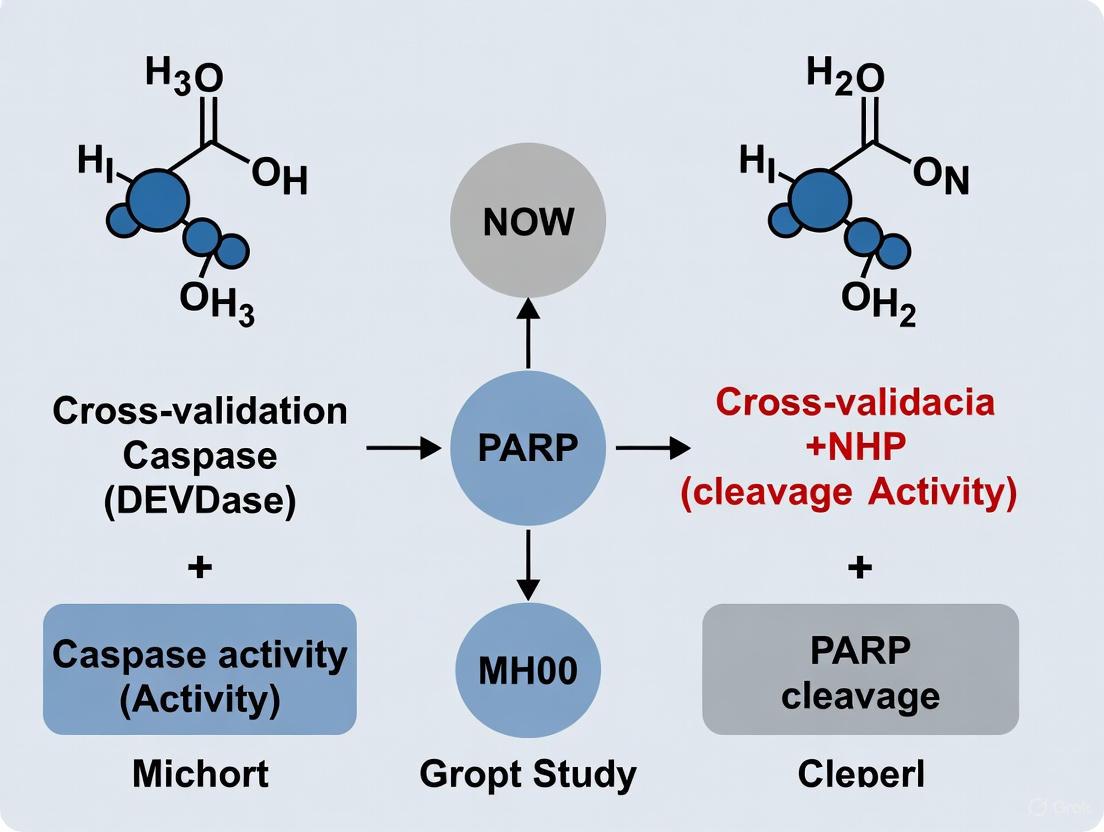
This article provides researchers, scientists, and drug development professionals with a detailed framework for cross-validating caspase activity measurements by comparing the widely used DEVDase assay with PARP cleavage analysis.
DEVDase vs. PARP Cleavage: A Comprehensive Guide to Cross-Validating Caspase Activity in Apoptosis Research
Abstract
This article provides researchers, scientists, and drug development professionals with a detailed framework for cross-validating caspase activity measurements by comparing the widely used DEVDase assay with PARP cleavage analysis. We explore the foundational biology of these apoptotic markers, present methodological protocols for their application, address common troubleshooting scenarios, and establish a rigorous comparative validation framework. By synthesizing current research, this guide aims to enhance the accuracy and reliability of apoptosis detection in experimental and high-throughput screening settings, ultimately supporting robust data interpretation in basic research and therapeutic development.
The Molecular Biology of Apoptosis: Understanding DEVDase and PARP as Caspase Substrates
Caspases are a family of cysteine proteases that play central roles in coordinating and executing programmed cell death (PCD). Among them, caspase-3 and caspase-7 are considered the primary executioner caspases responsible for the proteolytic demolition phase of apoptosis [1] [2]. These enzymes cleave their substrates after specific aspartic acid residues, with a well-characterized preference for the DEVD sequence (Asp-Glu-Val-Asp) in both synthetic peptides and natural protein substrates [2] [3]. This DEVD-cleaving activity, commonly referred to as DEVDase activity, serves as a fundamental biomarker for detecting and quantifying executioner caspase function in experimental and clinical contexts [4] [3].
Despite their similar structural features and overlapping activation pathways, emerging evidence reveals that caspase-3 and caspase-7 are functionally distinct proteases with different substrate specificities, cellular functions, and efficiency in propagating apoptotic signals [2] [5]. This guide provides a comprehensive comparison of these key executioner caspases, focusing on the relationship between their DEVDase activity and the cleavage of biologically significant substrates such as PARP, with direct implications for apoptosis research and therapeutic development.
Comparative Analysis of Caspase-3 and Caspase-7 Function
Structural and Functional Distinctions
Although caspase-3 and caspase-7 share significant sequence identity (56%) and structural similarity, they exhibit crucial functional differences that impact their roles in apoptotic signaling [2] [5]. Research has identified specific amino acid regions that confer different protease activities within cells, with caspase-3 generally demonstrating stronger cleaving activity against most cellular substrates compared to caspase-7 [5]. These functional distinctions arise from structural variations that affect their interaction with protein substrates, despite nearly identical activity toward simple DEVD-containing peptides [2].
Table 1: Fundamental Characteristics of Caspase-3 and Caspase-7
| Characteristic | Caspase-3 | Caspase-7 |
|---|---|---|
| Primary Role | Major executioner caspase | Executioner caspase |
| DEVDase Activity | High efficiency | High efficiency |
| Substrate Promiscuity | High (more promiscuous) | Lower (more restricted) |
| Structural Features | Distinct interfacial regions | Different homodimer-forming activity |
| Cellular Localization | Cytoplasmic, nuclear upon activation | Primarily cytoplasmic, peripheral nuclear |
Substrate Specificity and Cleavage Efficiency
The functional distinction between caspase-3 and caspase-7 becomes particularly evident when examining their activity toward natural protein substrates. While both enzymes cleave certain substrates such as PARP, RhoGDI, and ROCK I with similar efficiency, they display marked differences against other critical apoptotic proteins [2].
Table 2: Comparative Substrate Cleavage Profiles of Caspase-3 and Caspase-7
| Substrate | Caspase-3 Efficiency | Caspase-7 Efficiency | Functional Consequences |
|---|---|---|---|
| PARP | High | High | DNA repair disruption |
| Bid | Efficient cleavage | Minimal cleavage | Amplification of apoptotic signaling |
| XIAP | Efficient cleavage | Reduced cleavage | Counteraction of IAP inhibition |
| Gelsolin | Efficient cleavage | Reduced cleavage | Cytoskeletal reorganization |
| Caspase-6 | Efficient processing | Limited processing | Propagation of caspase cascade |
| Caspase-9 | Efficient feedback processing | Limited processing | Amplification of intrinsic pathway |
| Cochaperone p23 | Reduced cleavage | Efficient cleavage | Unfolded protein response |
| ICAD | Potent cleavage | Potent cleavage | CAD activation, DNA fragmentation |
The differential substrate specificity has significant biological implications. Caspase-3's broader substrate range and more efficient propagation of the caspase activation cascade position it as the principal executioner caspase in most cellular contexts [2]. This is corroborated by in vivo evidence showing that caspase-3 deficiency causes more severe developmental defects in mice compared to caspase-7 deficiency, though combinatorial deletion of both proves lethal, indicating both overlapping and unique functions [6] [7].
Figure 1: Apoptotic Signaling Pathway Highlighting Caspase-3/7 Activation and Substrate Cleavage
DEVDase Activity Versus PARP Cleavage: A Critical Cross-Validation
The DEVDase Activity Measurement Paradigm
DEVDase activity serves as the standard biochemical assay for detecting executioner caspase activation in apoptosis research. This assay typically utilizes synthetic fluorogenic or colorimetric substrates containing the DEVD sequence, with DEVD-AFC (7-amino-4-trifluoromethylcoumarin) being a commonly used substrate that releases the fluorescent AFC moiety upon cleavage [2]. The detection of DEVDase activity provides a quantitative measure of executioner caspase function that correlates with apoptotic progression across diverse experimental systems [2] [4].
Methodologically, DEVDase activity assays can be performed on cell lysates or, under specific conditions such as secondary necrosis, even in extracellular media where active caspases may be released [4]. In cell-free systems immunodepleted of specific caspases, removal of caspase-3 substantially reduces cytochrome c/dATP-induced proteolysis of most caspase substrates, whereas caspase-7 depletion has minimal impact, suggesting that caspase-3 is the primary contributor to DEVDase activity in many cellular contexts [2].
PARP Cleavage as a Biological Validation Marker
PARP cleavage serves as a well-established marker of apoptosis execution, with the 116 kDa full-length PARP protein being cleaved into characteristic 89 kDa and 24 kDa fragments during cell death [8]. This cleavage event disrupts PARP's DNA repair capacity and represents a biologically significant endpoint of executioner caspase activity rather than merely an enzymatic measurement.
While both caspase-3 and caspase-7 can cleave PARP in vitro, evidence suggests that caspase-7 may be preferentially responsible for PARP cleavage under certain physiological conditions. In caspase-3-deficient MCF-7 cells, PARP cleavage still occurs in response to staurosporine treatment, coinciding with caspase-7 activation [8]. Furthermore, biochemical studies demonstrate that PARP cleavage by caspase-7, but not caspase-3, is stimulated by automodification of PARP with long and branched poly(ADP-ribose) chains, with caspase-7 exhibiting specific affinity for poly(ADP-ribose) [8].
Experimental Discrepancies and Contextual Considerations
The relationship between DEVDase activity and PARP cleavage reveals important complexities in apoptosis signaling. While DEVDase activity provides a sensitive quantitative measure of executioner caspase activation, PARP cleavage represents a specific biological consequence that may be preferentially executed by different caspases depending on cellular context.
Several factors contribute to the differential relationship between these markers:
- Cellular context: Cell type-specific expression patterns of caspase-3 and caspase-7 influence which enzyme predominantly executes PARP cleavage
- Subcellular localization: Differential compartmentalization of caspase-3 (which can translocate to nuclei) and caspase-7 (primarily cytoplasmic) affects access to nuclear PARP
- Regulatory modifications: Post-translational modifications of either caspases or their substrates can alter cleavage efficiency
- Experimental conditions: Apoptotic stimuli and timing significantly impact which executioner caspase predominates
These considerations highlight the importance of cross-validating apoptotic markers rather than relying on a single readout, as discrepancies between DEVDase activity and PARP cleavage may provide insights into which executioner caspase is primarily active in a given experimental system.
Figure 2: Experimental Workflow for Cross-Validation of DEVDase Activity and PARP Cleavage
Experimental Approaches and Methodologies
Standard Protocols for DEVDase Activity Assessment
The measurement of DEVDase activity typically involves the following methodological steps:
Sample Preparation: Cells are lysed in appropriate buffer (e.g., containing 1% Triton X-100, 50 mM HEPES pH 7.4, 10% sucrose) or cell culture media is collected for extracellular caspase activity detection [4]. Protease inhibitors are typically omitted to preserve caspase activity.
Reaction Setup: Cell lysates or media are incubated with DEVD-AFC substrate (typically 50-100 μM final concentration) in caspase assay buffer [2]. For kinetic measurements, reactions are set up in multiwell plates suitable for fluorescence detection.
Fluorescence Measurement: AFC fluorescence (excitation ~400 nm, emission ~505 nm) is measured over time (30-120 minutes) using a plate reader [2] [4]. Enzyme activity is calculated from the linear portion of the reaction curve.
Data Normalization: DEVDase activity is normalized to total protein concentration (for lysates) or cell number, and expressed as fold-increase over untreated controls.
This protocol can be adapted for high-throughput screening of caspase activators or inhibitors and provides quantitative data on executioner caspase activation kinetics.
PARP Cleavage Analysis Methodology
Assessment of PARP cleavage typically follows these experimental steps:
Protein Extraction: Cells are lysed in RIPA or similar buffer containing complete protease inhibitors to preserve cleavage fragments [8].
Electrophoresis and Western Blotting: Proteins are separated by SDS-PAGE (6-12% gels) and transferred to PVDF or nitrocellulose membranes [8].
Immunodetection: Membranes are probed with anti-PARP antibodies that recognize both full-length (116 kDa) and cleaved (89 kDa) fragments [8]. Densitometric analysis quantifies the ratio of cleaved to full-length PARP.
Contextual Validation: For specific attribution to caspase-7 activity, researchers may employ caspase-3-deficient cell lines (e.g., MCF-7) or assess caspase-7 activation and nuclear translocation [8].
Advanced Methodologies for Specific Detection
Recent technological advances have enabled more specific detection of individual executioner caspases:
Caspase-3-selective activity-based probes (ABPs): Novel probes like Ac-ATS010-KE incorporate specialized warheads and recognition sequences that provide >150-fold selectivity for caspase-3 over caspase-7 [3]
Mutagenesis-based fluorescent reporters: Engineered GFP variants containing caspase-3 cleavage motifs enable real-time monitoring of specific caspase activation in live cells [9]
CRISPR/Cas9 knockout models: Isogenic cell lines lacking caspase-3, caspase-7, or both enable definitive attribution of specific apoptotic functions [7]
The Scientist's Toolkit: Essential Research Reagents
Table 3: Key Research Reagents for Studying Caspase-3/7 Activity
| Reagent/Category | Specific Examples | Research Applications | Technical Considerations |
|---|---|---|---|
| Fluorogenic Substrates | DEVD-AFC, DEVD-AMC | Quantification of DEVDase activity | Measures combined caspase-3/7 activity; does not distinguish between them |
| Selective Inhibitors | Ac-DEVD-CHO, Ac-ATS010-KE | Selective caspase-3 inhibition | Newer generation inhibitors offer improved selectivity profiles |
| Activity-Based Probes | [18F]MICA-316, Ac-DW3-KE | Molecular imaging of caspase-3 activity | Enables in vivo detection; useful for treatment response monitoring |
| Antibodies | Anti-PARP, anti-cleaved PARP, anti-caspase-3, anti-caspase-7 | Western blot, immunohistochemistry for apoptosis detection | Cleavage-specific antibodies distinguish active caspases |
| Genetic Models | Caspase-3 KO, Caspase-7 KO, CAD KO cells | Functional attribution of specific caspases | CRISPR/Cas9 models provide definitive evidence of specific roles |
| Fluorescent Reporters | DEVD-inserted GFP mutants | Live-cell imaging of caspase activation | Bright-to-dark systems offer sensitivity advantages |
Implications for Research and Therapeutic Development
The distinct roles of caspase-3 and caspase-7, coupled with the complex relationship between DEVDase activity and specific substrate cleavage events, have significant implications for both basic research and drug development.
In preclinical drug evaluation, understanding that DEVDase activity primarily reflects caspase-3-like activity rather than overall executioner caspase function is crucial for accurate interpretation of pharmacodynamic biomarkers. The development of caspase-3-selective probes for PET imaging represents a promising approach for non-invasive monitoring of treatment response in cancer patients [3].
In mechanistic studies of cell death, researchers should employ a multi-parameter approach that assesses both DEVDase activity and specific substrate cleavage events (particularly PARP) to accurately characterize the apoptotic machinery at work. This is particularly important in cellular contexts where caspase-3 may be deficient or poorly expressed, and caspase-7 assumes the dominant executioner role [8] [7].
Furthermore, the emerging understanding that executioner caspases can be released extracellularly during secondary necrosis and retain activity in the tumor microenvironment suggests potential roles in extracellular proteolytic signaling that warrant further investigation [4]. This extracellular caspase activity may contribute to tumor microenvironment modification and represent a previously unappreciated aspect of caspase biology with therapeutic implications.
Caspase-3 and caspase-7, while sharing common activation pathways and DEVDase activity, serve non-redundant functions as executioners of apoptosis. The cross-validation of DEVDase activity with specific biological endpoints such as PARP cleavage reveals a complex regulatory landscape where cellular context, subcellular localization, and substrate specificity determine apoptotic outcomes. Advanced research tools including selective activity-based probes, genetic models, and real-time reporters continue to refine our understanding of these crucial mediators of cell death, with significant implications for both basic research and therapeutic development across a spectrum of human diseases including cancer, neurodegenerative disorders, and ischemic conditions.
Poly(ADP-ribose) polymerase-1 (PARP-1) is a nuclear enzyme with well-characterized roles in DNA repair and maintenance of genome integrity. Beyond its DNA damage response functions, PARP-1 has emerged as a critical signaling molecule in cell death pathways, most notably as a classical caspase substrate during apoptosis. The proteolytic cleavage of PARP-1 by caspases represents one of the most established biochemical hallmarks of apoptotic cell death, serving as a key indicator for researchers distinguishing apoptosis from other forms of cell death. This review provides a comprehensive comparison of PARP-1 cleavage as an apoptosis marker within the broader context of caspase activity research, examining experimental methodologies, fragment characterization, and functional consequences to guide research and drug development professionals in validating caspase-dependent mechanisms.
PARP-1 Structure and Cleavage Mechanism
Domain Architecture and Caspase Recognition Sites
PARP-1 is a 113 kDa nuclear enzyme composed of several functional domains that dictate its cellular functions [10]. The N-terminal DNA-binding domain (DBD) contains three zinc finger motifs (Zn1, Zn2, Zn3) that recognize DNA damage. The Zn1 and Zn2 domains specifically identify DNA strand breaks, while Zn3 facilitates domain interactions and activation [10] [11]. Adjacent to the DBD lies the nuclear localization signal (NLS) and the aspartate-glutamate-valine-aspartic acid (DEVD) motif, which contains the primary caspase cleavage site [10]. The central auto-modification domain (AMD) features a BRCT (BRCA1 C-terminal) domain that catalyzes PARP-1-mediated synthesis of poly(ADP-ribose) chains. The C-terminal catalytic domain (CAT) contains the NAD+ binding site and is responsible for poly(ADP-ribose) synthesis [10].
The caspase cleavage site within the DEVD motif is strategically positioned between the DNA-binding domain and the auto-modification/catalytic domains. This location ensures that cleavage effectively separates the DNA-recognition capabilities from the enzymatic functions of the protein [10] [12].
Caspase-Mediated Cleavage and Fragment Generation
During apoptosis, executioner caspases-3 and -7 recognize and cleave PARP-1 at the DEVD site (located between amino acids 214 and 215 in human PARP-1) [13]. This proteolytic event generates two characteristic fragments: a 24 kDa N-terminal fragment containing the DNA-binding domain, and an 89 kDa C-terminal fragment encompassing the auto-modification and catalytic domains [14] [12]. The 24 kDa fragment retains the nuclear localization signal and remains nuclear, while the 89 kDa fragment translocates to the cytoplasm under certain conditions [12] [13].
Comparative Analysis of PARP-1 Cleavage Across Cell Death Pathways
The fate of PARP-1 differs significantly between apoptotic and necrotic cell death, providing researchers with critical diagnostic markers for distinguishing these pathways. The table below summarizes the key characteristics of PARP-1 processing across different cell death contexts.
Table 1: Comparative Analysis of PARP-1 Processing in Different Cell Death Pathways
| Parameter | Apoptosis | Necrosis | Parthanatos |
|---|---|---|---|
| Primary Cleavage Fragments | 89 kDa and 24 kDa | 50 kDa | 89 kDa and 24 kDa |
| Key Proteases Involved | Caspases-3 and -7 | Cathepsins B and G (lysosomal proteases) | Caspases-3 and -7 |
| Caspase Dependence | Dependent (inhibited by zVAD-fmk) | Independent (not inhibited by zVAD-fmk) | Dependent |
| Functional Consequence | Inactivation of DNA repair, promotion of apoptotic dismantling | Non-specific degradation | Alternative signaling functions |
| Fragment Localization | 24 kDa nuclear, 89 kDa cytoplasmic | Multiple fragments | 89 kDa cytoplasmic PAR carrier |
Apoptotic Versus Necrotic Cleavage Patterns
The distinction between apoptotic and necrotic PARP-1 cleavage provides one of the most reliable experimental markers for differentiating these cell death pathways. During apoptosis, the stereotypic 89/24 kDa fragment pattern emerges through precise caspase-mediated cleavage at the DEVD site [14]. This process is inhibited by broad-spectrum caspase inhibitors like zVAD-fmk, confirming its caspase dependence [14].
In contrast, necrotic cell death induces a completely different PARP-1 cleavage pattern characterized by a primary 50 kDa fragment and other non-specific degradation products [14]. This necrotic cleavage is not inhibited by zVAD-fmk, indicating caspase-independent mechanisms [14]. Research indicates that lysosomal proteases, particularly cathepsins B and G, liberated during necrotic membrane disruption, mediate this alternative cleavage pattern [14].
Cross-Validation with Other Caspase Activity Markers
In caspase activity research, PARP-1 cleavage validation should be complemented with other apoptotic markers to confirm the cell death mechanism. The DNA fragmentation factor (DFF-45/ICAD) serves as another crucial caspase substrate that works in concert with PARP-1 cleavage [15]. While PARP-1 cleavage inactivates DNA repair, DFF-45/ICAD cleavage activates the caspase-activated DNase (CAD) responsible for internucleosomal DNA fragmentation [15].
Notably, caspase-3 is essential for the carboxyl-terminal cleavage of DFF-45/ICAD necessary for CAD activation, while other caspases can cleave the amino-terminal region [15]. This hierarchical processing parallels the caspase specificity observed in PARP-1 cleavage and provides a complementary validation pathway in apoptosis research.
Experimental Methodologies and Technical Approaches
Standardized Detection Protocols
Western Blot Analysis remains the gold standard for detecting PARP-1 cleavage. Researchers should use antibodies targeting both the N-terminal (for detecting the 24 kDa fragment) and C-terminal regions (for detecting the 89 kDa fragment) of PARP-1. Proper controls including caspase inhibitors (zVAD-fmk) and necrotic inducers (H₂O₂) should be included to confirm the specific apoptotic cleavage pattern.
Immunofluorescence microscopy enables spatial resolution of PARP-1 fragments, particularly useful for detecting the cytoplasmic translocation of the 89 kDa fragment, which occurs in certain apoptotic contexts [12] [13]. This technique provides visual confirmation of cleavage and subcellular redistribution.
Quantitative Assessment and Validation
For quantitative analysis, densitometric measurement of full-length versus cleaved PARP-1 bands in Western blots provides a reliable metric for apoptosis progression. Researchers should normalize PARP-1 cleavage to housekeeping proteins and express results as a ratio of cleaved to full-length PARP-1.
Cross-validation with other apoptosis assays strengthens experimental conclusions. The DEVDase activity assay directly measures caspase-3/7 activity using fluorogenic or colorimetric substrates. Additional validation methods include:
- Annexin V/propidium iodide staining for membrane changes
- DNA fragmentation assays (TUNEL) for nuclear apoptosis
- Cellular morphology assessment by microscopy
Table 2: Essential Research Reagents for PARP-1 Cleavage Studies
| Reagent/Category | Specific Examples | Research Application | Experimental Function |
|---|---|---|---|
| Caspase Inhibitors | zVAD-fmk | Apoptosis inhibition | Broad-spectrum caspase inhibitor to confirm caspase-dependent cleavage |
| Necrotic Inducers | H₂O₂, HgCl₂, Ethanol | Necrosis induction | Positive control for necrotic PARP-1 cleavage pattern |
| Apoptotic Inducers | Staurosporine, Actinomycin D | Apoptosis induction | Positive control for apoptotic PARP-1 cleavage |
| PARP-1 Antibodies | N-terminal specific, C-terminal specific | Cleavage detection | Western blot, immunofluorescence detection of specific fragments |
| Activity Assays | DEVDase activity kits | Caspase activity measurement | Fluorometric/colorimetric caspase-3/7 activity quantification |
Functional Consequences of PARP-1 Cleavage
Classical Model: Inactivation of DNA Repair
The traditional understanding of PARP-1 cleavage centers on the functional inactivation of DNA repair during apoptosis. By separating the DNA-binding domain from the catalytic domain, caspase cleavage prevents PARP-1 from responding to DNA damage and executing its repair functions [12]. This ensures that the apoptotic process proceeds without interference from DNA repair mechanisms, facilitating efficient cell dismantling and removal.
Emerging Roles: Signaling Functions of Cleavage Fragments
Recent research has revealed that PARP-1 cleavage fragments may possess gain-of-function activities beyond the simple inactivation of DNA repair. The 89 kDa fragment has been identified as a cytoplasmic PAR carrier that can induce apoptosis-inducing factor (AIF) release from mitochondria, potentially amplifying the cell death signal [12].
Additionally, truncated PARP-1 generated during apoptosis can mono-ADP-ribosylate RNA Polymerase III in the cytosol, facilitating interferon-β production and potentially linking apoptosis to innate immune responses [13]. These findings suggest that PARP-1 cleavage may actively participate in signaling events rather than simply terminating DNA repair capabilities.
Research Applications and Therapeutic Implications
PARP-1 Cleavage as a Biomarker in Drug Development
In pharmaceutical development, PARP-1 cleavage serves as a critical biomarker for evaluating the efficacy and mechanism of action of chemotherapeutic agents and targeted therapies. The detection of PARP-1 cleavage confirms that experimental treatments successfully induce apoptosis through caspase activation, providing mechanistic insight beyond simple viability measurements.
For PARP inhibitor development, monitoring PARP-1 cleavage helps distinguish between cytotoxic effects (inducing apoptosis with consequent PARP-1 cleavage) versus synthetic lethality (specific killing of homologous recombination-deficient cells without direct apoptosis induction). This distinction is crucial for understanding drug mechanisms and optimizing therapeutic strategies.
Technical Considerations for Experimental Design
Researchers should consider several technical aspects when designing experiments involving PARP-1 cleavage:
Temporal dynamics: PARP-1 cleavage typically occurs during the execution phase of apoptosis, following caspase activation but prior to complete cellular disintegration. Time-course experiments are essential for capturing this transient event.
Cell type variability: Different cell lines may exhibit varying kinetics and extent of PARP-1 cleavage. Preliminary experiments should establish the appropriate timing and conditions for each model system.
Complementary assays: As with any single parameter, PARP-1 cleavage should not be used as the sole indicator of apoptosis. Multiple complementary assays provide a more comprehensive assessment of cell death mechanisms.
PARP-1 cleavage remains a cornerstone biomarker for apoptosis research, providing researchers with a specific and mechanistically informative indicator of caspase activation. The distinctive 89/24 kDa cleavage pattern differentiates apoptosis from other cell death pathways, while emerging research continues to reveal novel signaling functions for the resulting fragments. When properly validated with complementary caspase activity assays and integrated within a comprehensive experimental framework, PARP-1 cleavage analysis delivers robust insights into cell death mechanisms that support both basic research and drug development applications.
The Asp-Glu-Val-Asp (DEVD) sequence represents a cornerstone in the study of programmed cell death. Initially identified as the caspase-3 cleavage site in poly(ADP-ribose) polymerase (PARP), it has been universally adopted as a synthetic substrate for measuring caspase activity, termed "DEVDase" activity. This guide objectively compares the performance of DEVD-based reagents against alternative substrates and detection methods. We provide a structured analysis of quantitative data, detailed experimental protocols, and essential research tools, framed within the critical context of cross-validating caspase activity with physiological markers like PARP cleavage to ensure biologically relevant apoptosis assessment.
Caspases, or cysteine-aspartic proteases, are crucial mediators of apoptosis and other cellular processes. Their activity is absolutely dependent on cleavage after aspartic acid (Asp, D) residues at the P1 position [16] [17]. The DEVD sequence was established as a key motif when caspase-3 was identified as the protease that cleaves PARP after the DEVD(^ {87})G sequence during apoptosis [18] [19]. This discovery transformed DEVD from a physiological cleavage site into a versatile synthetic tool for detecting apoptosis.
The term "DEVDase activity" specifically refers to the enzymatic activity of caspases-3 and -7, which recognize the DEVD tetrapeptide [18] [20]. These executioner caspases are downstream effectors that cleave protein substrates to execute the apoptotic program. DEVD-based assays have become the most popular method for detecting apoptosis in high-throughput screening (HTS) formats because when a cell has active executioner caspase activity, it is typically beyond the point of no return [18].
DEVD as a Recognition Motif: Specificity and Limitations
Substrate Specificity Across Caspases
While DEVD is optimally recognized by caspase-3, its specificity is not absolute. The similar structures of caspase-3 and -7 lead to overlapping substrate recognition [21]. Furthermore, commercial DEVD-based inhibitors like Ac-DEVD-CHO can inhibit multiple caspases, including caspases-1, -6, -7, -8, -9, and -10, albeit with varying efficiencies [21]. This cross-reactivity is a critical consideration when interpreting DEVDase activity data.
Table 1: Inhibitory Profile (Kiapp) of DEVD-CHO Compared to Other Peptide Inhibitors [21]
| Inhibitor | Caspase-3 | Caspase-7 | Caspase-8 | Caspase-9 |
|---|---|---|---|---|
| Ac-DEVD-CHO | 0.288 ± 0.087 nM | 4.48 ± 0.21 nM | 0.597 ± 0.095 nM | 1.35 ± 0.31 nM |
| Ac-DNLD-CHO | 0.680 ± 0.163 nM | 55.7 ± 6.0 nM | >200 nM | >200 nM |
| Ac-DQTD-CHO | 1.27 ± 0.11 nM | 21.8 ± 1.1 nM | 9.75 ± 1.09 nM | 14.5 ± 0.7 nM |
The Emergence of Alternative Sequences
Research into caspase specificity has yielded alternative peptide sequences designed for greater selectivity. As shown in Table 1, Ac-DNLD-CHO exhibits superior specificity for caspase-3 over caspase-7 (approximately 80-fold) compared to Ac-DEVD-CHO [21]. The selectivity of DNLD is attributed to an interaction between the substrate Asn (N) and the caspase-3 residue Ser209 in the S3 subsite, a feature not conserved in other caspases [21]. This makes DNLD an attractive alternative for studies requiring precise caspase-3 inhibition.
DEVD-Based Assay Platforms and Performance Comparison
DEVD sequences are conjugated to various reporting molecules to create substrates for different detection modalities. The choice of reporter significantly impacts sensitivity, dynamic range, and applicability to HTS.
Common Detection Formats and Reagents
Table 2: Comparison of DEVD-Based Assay Platforms and Reagents
| Format/Reagent | Detection Mode | Readout | Key Features & Applications | Representative Data |
|---|---|---|---|---|
| Colorimetric (e.g., DEVD-pNA) [22] | Spectrophotometry | Absorbance at 405 nm | Low cost; lower sensitivity; suitable for endpoint analysis in cell lysates. | Protocol: 20 μg lysate, 5 μM DEVD-pNA, 37°C for 2h [22]. |
| Fluorogenic (e.g., DEVD-AMC/AFC, (Z-DEVD)₂-R110) [18] | Fluorescence | AMC/AFC: Ex/Em ~340/440 nm; R110: Ex/Em ~495/520 nm | Higher sensitivity than colorimetric; R110 has two cleavage sites. Potential for compound interference from UV excitation [18]. | Widely used in plate readers; R110 cleavage requires interpretation of double peptide cleavage [18]. |
| Luminogenic (e.g., Caspase-Glo 3/7, Z-DEVD-aminoluciferin) [18] [23] | Luminescence | Luminescence (RLU) | Highest sensitivity (20-50x fluorogenic); low background; amenable to 1536-well HTS; "no-wash" homogeneous format [18]. | Validated in Jurkat, HepG2, etc.; linear signal in murine brain post-stroke [18] [23]. |
| Cell-Permanent Probes (e.g., CellEvent Caspase-3/7) [20] | Live-Cell Imaging / Flow Cytometry | Fluorescence (Green/Red) | No-wash, real-time monitoring in live cells. Cleaved product binds DNA, staining nuclei. Signal survives fixation [20]. | HeLa cells + 0.5 μM staurosporine show clear nuclear signal vs. vehicle control [20]. |
| Fluorescent Inhibitor Probes (e.g., FAM-DEVD-FMK) [20] | Flow Cytometry / Microscopy | Fluorescence (Green/Red) | Irreversibly binds active caspases; allows for washing and fixation; end-point analysis. | Image-iT kits use this approach to label active enzymes in fixed cells [20]. |
This is a standard protocol for a colorimetric DEVDase assay, easily adaptable to fluorometric formats.
- Step 1: Lysate Preparation. Harvest cells after treatment by centrifugation. Wash with PBS and lyse in an appropriate ice-cold lysis buffer (e.g., containing 1% NP-40, 20 mM Tris-HCl [pH 7.5], 137 mM NaCl, 10% glycerol). Clarify the lysate by centrifugation at top speed (>10,000 x g) for 10 minutes at 4°C. Determine the protein concentration of the supernatant.
- Step 2: Reaction Setup. In a 96-well plate, combine 20 μg of total cell lysate protein with reaction buffer to a final volume of 100 μL. Add the DEVD-pNA substrate to a final concentration of 5 μM. Include a negative control with lysate but no substrate and a blank with reaction buffer and substrate only.
- Step 3: Incubation and Measurement. Incubate the plate at 37°C for 2 hours. Measure the absorbance at 405 nm using a spectrophotometric plate reader. The change in absorbance, relative to controls, is proportional to the DEVDase activity in the lysate.
Diagram: DEVDase Activity Assay Workflow. This flowchart outlines the key steps for performing a colorimetric DEVDase activity assay in cell lysates.
Cross-Validation: Integrating DEVDase Activity with PARP Cleavage Analysis
Relying solely on DEVDase activity can be misleading, as caspases have non-apoptotic functions [19] [17]. Cross-validation with direct markers of apoptotic execution, such as PARP cleavage, is essential for confirming the commitment to cell death.
The DEVD-PARP Axis in Apoptosis Signaling
The intrinsic link between DEVDase activity and PARP cleavage is a key strength of this assay system. During apoptosis, activated executioner caspases-3 and -7 cleave the DNA repair enzyme PARP1 at its DEVD(^ {87})G site [18] [19]. This cleavage inactivates PARP1's DNA repair function and is considered a definitive marker of apoptotic commitment. The simultaneous detection of DEVDase activity and the appearance of the ~89 kDa PARP cleavage fragment provides powerful, complementary evidence for apoptosis.
Diagram: DEVD-PARP Axis in Apoptosis. This signaling pathway shows the central role of caspase-3/7 activation, leading to both measurable DEVDase activity and PARP cleavage, which should be cross-validated.
Protocol: Western Blot for PARP Cleavage
This protocol is used to confirm apoptosis biochemically.
- Step 1: Protein Extraction and Quantification. Prepare cell lysates using RIPA buffer supplemented with protease and phosphatase inhibitors. Determine protein concentration to ensure equal loading.
- Step 2: Gel Electrophoresis and Transfer. Separate 20-30 μg of total protein by SDS-PAGE on a 4-12% Bis-Tris gel. Transfer proteins to a PVDF or nitrocellulose membrane.
- Step 3: Immunoblotting. Block the membrane with 5% non-fat milk in TBST for 1 hour. Incubate with primary antibodies against PARP (which detect both full-length ~116 kDa and the large cleavage fragment ~89 kDa) overnight at 4°C. Wash the membrane and incubate with an HRP-conjugated secondary antibody for 1 hour at room temperature.
- Step 4: Detection and Analysis. Develop the blot using enhanced chemiluminescence (ECL) reagent. The presence of the p89 fragment is a definitive indicator of caspase-mediated apoptosis. A loading control (e.g., GAPDH, Actin) must be used.
The Scientist's Toolkit: Essential Reagents for DEVDase and Apoptosis Research
Table 3: Key Research Reagent Solutions for DEVDase and Cross-Validation Studies
| Reagent / Kit Name | Type | Primary Function in Research | Key Features |
|---|---|---|---|
| Ac-DEVD-CHO [21] [24] | Cell-permeable peptide aldehyde inhibitor | Potent, reversible inhibition of caspases-3 and -7 to confirm the role of these enzymes in a biological process. | Used to suppress PCD in plant pollen tubes [24]; Kiapp for caspase-3 is 0.288 nM [21]. |
| Caspase-Glo 3/7 Assay [18] | Luminogenic substrate kit | High-sensitivity, "no-wash" measurement of caspase-3/7 activity in HTS formats (96- to 1536-well plates). | 20-50x more sensitive than fluorogenic assays; minimal compound interference; validated in PubChem AIDs [18]. |
| CellEvent Caspase-3/7 [20] | Fluorogenic, cell-permeant substrate | Real-time, no-wash imaging and tracking of caspase-3/7 activation in live cells over time. | Signal is fixable; available in green (502/530 nm) and red (590/610 nm) emission; DNA-binding dye provides nuclear localization. |
| Anti-PARP Antibody | Primary antibody for Western Blot | Detects full-length PARP1 (~116 kDa) and its caspase-derived cleavage fragment (~89 kDa) to confirm apoptosis. | Essential for cross-validation; multiple commercial vendors offer well-validated clones. |
| FAM-DEVD-FMK (Image-iT Kits) [20] | Fluorescent-labeled inhibitor probe (FLI) | Irreversibly labels active caspases in cells for flow cytometry or end-point microscopy; cells can be fixed. | Provides a snapshot of activity at the time of reagent addition; compatible with antibody staining after fixation. |
The DEVD sequence remains an indispensable tool for life science research, bridging a specific physiological event—PARP cleavage—with a robust, quantifiable assay for caspase activity. While DEVD-based substrates, particularly modern luminogenic and live-cell probes, offer unparalleled sensitivity and convenience for HTS, researchers must acknowledge their limited absolute specificity. The power of DEVDase assays is fully realized not in isolation, but when integrated into a multi-parametric approach. Cross-validation with direct markers of apoptosis like PARP cleavage is a fundamental practice to distinguish true apoptotic commitment from non-apoptotic caspase activation, thereby ensuring the biological relevance of experimental findings in basic research and drug discovery.
Poly (ADP-ribose) polymerase-1 (PARP-1) is a 116 kDa nuclear enzyme that plays a central role in DNA damage repair and serves as a critical marker in cell death pathways. As a preferred substrate for caspase proteases during apoptosis, PARP-1 undergoes specific proteolytic cleavage that separates its DNA-binding domain from its catalytic domain, generating characteristic 89 kDa and 24 kDa fragments. This cleavage event represents a fundamental molecular switch that not only inactivates DNA repair but also actively directs cell death progression. Within the context of cross-validation research for caspase activity, PARP-1 cleavage serves as a crucial biomarker that complements DEVDase activity measurements, providing researchers with a validated approach for apoptosis detection. This review examines the biochemical fate of these PARP-1 fragments, their functional significance in cell death pathways, and their utility in experimental applications for basic research and drug development.
Biochemical Mechanism of PARP-1 Cleavage
Domain Architecture and Cleavage Site
PARP-1 consists of three primary functional domains: a 46-kDa DNA-binding domain (DBD) containing two zinc finger motifs at the N-terminus, a 22-kDa automodification domain (AMD) in the central region, and a 54-kDa catalytic domain (CD) at the C-terminus [25]. Caspase-3 and caspase-7 recognize and cleave PARP-1 at a specific aspartic acid residue located between the DNA-binding domain and the automodification domain, specifically after Asp214 in human PARP-1 [26]. This proteolytic event produces two distinct fragments: a 24-kDa fragment containing the DNA-binding domain and a 89-kDa fragment comprising the automodification and catalytic domains [25] [27].
Table 1: PARP-1 Domains and Cleavage Products
| Component | Molecular Weight | Functional Domains | Biological Function |
|---|---|---|---|
| Full-length PARP-1 | 116 kDa | DNA-binding domain (2 zinc fingers), Automodification domain, Catalytic domain | DNA damage repair, transcriptional regulation |
| 24 kDa Fragment | 24 kDa | DNA-binding domain (2 zinc fingers), Nuclear localization signal | Irreversibly binds DNA strand breaks, acts as trans-dominant inhibitor of PARP-1 |
| 89 kDa Fragment | 89 kDa | Automodification domain, Catalytic domain | Translocates to cytoplasm, functions as PAR carrier, mediates novel signaling functions |
Cleavage as an Apoptosis Marker
PARP-1 cleavage is considered a hallmark of apoptosis and serves as a well-established biochemical marker for programmed cell death [25] [26]. The cleavage event occurs early in the apoptosis cascade and can be detected using antibodies specifically designed to recognize the cleaved fragments, such as those targeting the Asp214 cleavage site [26]. This makes PARP-1 cleavage a valuable indicator in experimental systems for validating caspase activation and apoptosis induction.
Functional Consequences of PARP-1 Cleavage
Inactivation of DNA Repair
The separation of PARP-1's DNA-binding domain from its catalytic domain through caspase-mediated cleavage serves to suppress DNA repair during apoptosis [25] [27]. The 24-kDa fragment retains the zinc finger motifs that confer DNA-binding capability and remains tightly bound to DNA strand breaks, where it functions as a trans-dominant inhibitor of DNA repair by blocking access to DNA damage sites [25]. This irreversible binding prevents the recruitment of DNA repair machinery and conserves cellular ATP pools that would otherwise be depleted by PARP-1 activation [25] [28]. Simultaneously, the 89-kDa fragment loses its strong affinity for DNA due to the separation from the DNA-binding domain, leading to its translocation from the nucleus to the cytoplasm [27].
Novel Signaling Functions of PARP-1 Fragments
The 89-kDa Fragment as a Cytoplasmic PAR Carrier
Recent research has revealed that the 89-kDa PARP-1 fragment is not merely an inactive cleavage product but serves active biological functions. This fragment can be poly(ADP-ribosyl)ated before cleavage or retain catalytic activity afterward, enabling it to function as a carrier for poly(ADP-ribose) (PAR) polymers from the nucleus to the cytoplasm [27] [29]. Once in the cytoplasm, the PAR polymers attached to the 89-kDa fragment facilitate apoptosis-inducing factor (AIF)-mediated apoptosis by binding to AIF anchored to mitochondrial membranes, leading to AIF release and translocation to the nucleus [27] [29]. This process represents a crucial intersection between caspase-dependent apoptosis and parthanatos, a caspase-independent programmed cell death pathway [27].
Truncated PARP-1 in Innate Immune Signaling
Beyond its role in AIF-mediated cell death, the 89-kDa truncated PARP-1 (tPARP-1) fragment has been found to recognize and interact with the RNA polymerase III (Pol III) complex in the cytoplasm during apoptosis induced by cytosolic DNA [13]. This interaction enables tPARP-1 to catalyze mono-ADP-ribosylation of Pol III, which facilitates interferon-β (IFN-β) production and enhances apoptosis during innate immune responses to pathogen infection [13]. This discovery reveals a novel biological function for tPARP-1 in connecting apoptosis with innate immunity.
PARP-1 Cleavage in Cross-Validation of Caspase Activity
DEVDase Activity vs. PARP Cleavage
In apoptosis research, caspase activity is commonly measured using synthetic substrates containing the DEVD peptide sequence, which corresponds to the cleavage site in PARP-1 and other caspase-3 substrates. While DEVDase activity assays provide quantitative data on caspase enzymatic function, PARP-1 cleavage serves as a complementary validation method that confirms the biological consequence of caspase activation [30]. This cross-validation approach is particularly important when studying atypical cell death pathways or when caspase-independent PARP-1 cleavage mechanisms may be involved.
Experimental Considerations
Several factors must be considered when utilizing PARP-1 cleavage as a caspase activity marker:
- Temporal dynamics: PARP-1 cleavage occurs at specific stages of apoptosis and may not detect very early or late caspase activation
- Alternative cleavage mechanisms: Some studies report PARP-1 cleavage in contexts with inhibited caspase activity, suggesting involvement of other proteases such as serine proteases in certain cell types [30]
- Fragment stability: The 89-kDa fragment may undergo further degradation or modification in certain experimental conditions
Research Reagent Solutions
Table 2: Essential Research Reagents for PARP-1 Cleavage Studies
| Reagent Type | Specific Example | Research Application | Key Features |
|---|---|---|---|
| Cleavage-Specific Antibodies | Cleaved PARP (Asp214) Antibody [26] | Western blot detection of apoptosis | Specifically recognizes 89 kDa fragment; does not detect full-length PARP-1 |
| Caspase Inhibitors | zVAD-fmk (pan-caspase inhibitor) [28] | Caspase inhibition controls | Broad-spectrum caspase inhibition; validates caspase-dependent cleavage |
| PARP Inhibitors | PJ34, ABT-888 [27] | PARP activity inhibition studies | Tool compounds for investigating PARP-1 function in cell death pathways |
| Apoptosis Inducers | Staurosporine, Actinomycin D, Etoposide [27] [31] | Induction of caspase-dependent apoptosis | Established agents for triggering PARP-1 cleavage via intrinsic apoptosis pathway |
Signaling Pathway Integration
Experimental Methodologies
Detection of PARP-1 Cleavage
Western blot analysis represents the most widely used method for detecting PARP-1 cleavage. The protocol typically involves:
- Cell lysis using RIPA or similar buffer supplemented with protease inhibitors
- Protein separation by SDS-PAGE (8-12% gels optimal for resolving 116 kDa full-length and 89 kDa fragment)
- Transfer to membrane and blocking with 5% non-fat milk or BSA
- Immunoblotting with primary antibodies specific for either total PARP-1 or cleaved PARP-1 (Asp214)
- Detection using HRP-conjugated secondary antibodies and chemiluminescent substrates
Quantitative Assessment
For quantitative analysis, researchers can employ:
- Densitometry of Western blot bands to calculate cleavage ratios (89 kDa/116 kDa)
- Flow cytometry with cleaved PARP-1 antibodies for single-cell analysis
- Immunofluorescence to visualize spatial distribution of PARP-1 fragments
The caspase-mediated cleavage of PARP-1 into 89 kDa and 24 kDa fragments represents a critical commitment step in apoptotic cell death, serving both to inactivate DNA repair mechanisms and to activate novel signaling functions that promote cell death. The 89-kDa fragment functions as a cytoplasmic PAR carrier that facilitates AIF-mediated apoptosis and participates in innate immune signaling through interactions with RNA polymerase III, while the 24-kDa fragment acts as a trans-dominant inhibitor of DNA repair. In research applications, PARP-1 cleavage provides a valuable biomarker for cross-validation of caspase activity that complements DEVDase assays. The continued investigation of these PARP-1 fragments and their diverse cellular functions offers promising insights for therapeutic development in cancer, neurodegenerative diseases, and inflammatory conditions where programmed cell death pathways are disrupted.
The integrity of the genome is fundamental to cellular survival, preserved by an intricate network of DNA repair pathways that continuously rectify DNA lesions [32] [33]. However, in the context of cancer therapy, this survival mechanism presents a significant obstacle. The strategic inactivation of DNA repair processes is emerging as a powerful therapeutic approach to push damaged cells beyond their capacity for recovery, thereby facilitating cell death [34] [33].
This paradigm is particularly relevant for targeting cancer cells, which often exhibit heightened reliance on specific DNA repair pathways to manage replication stress and genomic instability [32]. When these crucial pathways are compromised, the accumulated DNA damage can trigger programmed cell death. A critical aspect of validating the successful induction of cell death in research and therapy development involves monitoring key biochemical events, primarily through caspase activity assays and the detection of specific cleavage substrates such as Poly (ADP-ribose) polymerase (PARP) [28] [35]. The cross-validation of caspase activity, often measured by DEVDase assays, with PARP cleavage provides a robust framework for confirming apoptotic engagement, forming a cornerstone of mechanistic cell death analysis [36] [35].
DNA Repair Pathways and Their Inactivation
Major DNA Repair Mechanisms
Cells employ several major, evolutionarily conserved pathways to repair DNA damage, each specialized for different types of lesions [32] [33]. The table below summarizes these key pathways, their functions, and strategies for their inhibition.
Table 1: Major DNA Repair Pathways and Therapeutic Inhibition Strategies
| Repair Pathway | Primary Function | Key Protein Components | Inhibition Strategies/Therapeutic Agents |
|---|---|---|---|
| Base Excision Repair (BER) | Repairs small base lesions, single-strand breaks (SSBs) | PARP-1, POLβ, XRCC1 [32] | PARP inhibitors (e.g., Olaparib) [28] [33] |
| Nucleotide Excision Repair (NER) | Removes bulky, helix-distorting adducts | XPA, XPC, ERCC1 [32] [33] | — |
| Mismatch Repair (MMR) | Corrects base-base mismatches, insertion/deletion loops | MSH2, MSH6, MLH1, PMS2 [32] | — |
| Homologous Recombination (HR) | Repairs double-strand breaks (DSBs) in S/G2 phase | BRCA1, BRCA2, RAD51 [32] [33] | — |
| Non-Homologous End Joining (NHEJ) | Repairs double-strand breaks (DSBs) throughout cell cycle | Ku70/80, DNA-PKcs, XRCC4 [32] [33] | DNA-PK inhibitors [33] |
Consequences of Repair Pathway Inhibition
Inhibiting these pathways, particularly in cancer cells with pre-existing repair deficiencies, leads to the accumulation of DNA damage. For instance, PARP inhibition in cells with defective HR (such as those with BRCA1/2 mutations) leads to the persistence of single-strand breaks that collapse into lethal double-strand breaks during replication [28] [33]. This concept, known as synthetic lethality, is a prime example of how inactivating a specific DNA repair process can selectively kill cancer cells while sparing healthy ones [33]. The failure to repair this catastrophic damage activates robust DNA damage response (DDR) signaling, ultimately triggering programmed cell death pathways [32] [34].
Cross-Validation of Apoptosis: DEVDase Activity vs. PARP Cleavage
A critical step in evaluating the efficacy of DNA-damaging agents or repair inhibitors is the confirmation of apoptosis induction. Two widely used and complementary methods for this are the measurement of caspase activity and the detection of PARP cleavage.
The Apoptotic Signaling Cascade
The intrinsic apoptotic pathway, often initiated by irreparable DNA damage, involves mitochondrial outer membrane permeabilization (MOMP) and the release of cytochrome c. This leads to the formation of the apoptosome and activation of the initiator caspase, caspase-9 [1] [34]. Caspase-9 then activates the executioner caspases, primarily caspase-3 and -7 [1]. These executioner caspases are responsible for the proteolytic cleavage of numerous cellular substrates, including PARP, which culminates in the organized dismantling of the cell [1] [37].
Diagram 1: DNA Damage-Induced Intrinsic Apoptosis Pathway
Key Methodologies for Detecting Apoptosis
DEVDase Activity Assay (Caspase-3/7 Activity)
This is a functional assay that measures the catalytic activity of caspase-3 and -7. These enzymes cleave a specific tetrapeptide sequence, DEVD (Asp-Glu-Val-Asp) [36] [38].
- Experimental Protocol:
- Cell Lysis: Prepare lysates from treated and control cells using a non-denaturing lysis buffer (e.g., containing 0.5% NP-40) to preserve enzyme activity [38].
- Reaction Setup: Incubate cell lysate with a fluorogenic or chromogenic substrate, such as Ac-DEVD-AMC (N-acetyl-Asp-Glu-Val-Asp-amido-methylcoumarin) or Ac-DEVD-pNA (p-nitroaniline) [36] [38].
- Measurement: For Ac-DEVD-AMC, measure the release of fluorescent AMC (aminomethylcoumarin) over time using a fluorometer (excitation ~360 nm, emission ~460 nm). The rate of fluorescence increase is proportional to caspase activity [38].
- Data Analysis: Normalize activity to total protein concentration. Results are often expressed as fold-change in activity relative to untreated controls.
PARP Cleavage Detection by Immunoblotting
This is a structural assay that detects the physical cleavage of the PARP-1 protein, a hallmark substrate of executioner caspases [28] [35].
- Experimental Protocol:
- Protein Extraction: Lyse cells in a denaturing buffer (e.g., RIPA buffer) to fully extract proteins.
- Gel Electrophoresis: Separate proteins by SDS-PAGE (sodium dodecyl sulfate–polyacrylamide gel electrophoresis).
- Protein Transfer: Electrotransfer proteins from the gel to a nitrocellulose or PVDF membrane.
- Immunodetection:
- Block the membrane with 5% non-fat milk or BSA.
- Incubate with a primary antibody specific for PARP. A good antibody recognizes both the full-length (116 kDa) and the large cleaved fragment (89 kDa).
- Incubate with a horseradish peroxidase (HRP)-conjugated secondary antibody.
- Visualization: Develop the blot using enhanced chemiluminescence (ECL) reagents. Cleavage is indicated by the disappearance of the 116 kDa band and the appearance of the 89 kDa band [28] [35].
Table 2: Comparison of DEVDase Activity and PARP Cleavage as Apoptosis Markers
| Parameter | DEVDase Activity Assay | PARP Cleavage (Immunoblot) |
|---|---|---|
| What It Measures | Functional enzymatic activity of caspase-3/7 | Physical cleavage of a specific caspase substrate |
| Key Reagent | Synthetic tetrapeptide (e.g., Ac-DEVD-AMC) | Anti-PARP antibody |
| Output | Kinetic, quantitative data (fluorescence/absorbance) | Semi-quantitative, snapshot of cleavage status |
| Advantages | High sensitivity, kinetic data, suitable for HTS | Direct evidence of a key apoptotic event, highly specific |
| Disadvantages | Does not confirm downstream substrate cleavage | Not kinetic, more labor-intensive, requires optimization |
| Role in Cross-Validation | Confirms activation of executioner caspases | Confirms that active caspases are engaging a critical downstream target |
Integrated Interpretation of Results
Cross-validating these two readouts provides a more complete and reliable confirmation of apoptosis. A robust apoptotic response is characterized by a significant increase in DEVDase activity coupled with the clear appearance of the 89 kDa PARP cleavage fragment [36] [35]. Disparate results, such as high caspase activity with minimal PARP cleavage, can occur due to various factors, including the presence of caspase inhibitors or disparate recognition of substrates in different cellular contexts, underscoring the need for this multi-faceted approach [36].
Diagram 2: Experimental Workflow for Apoptosis Cross-Validation
The Scientist's Toolkit: Essential Research Reagents
Successful execution of these experiments relies on key reagents. The table below details essential materials and their functions.
Table 3: Key Research Reagents for Apoptosis Analysis
| Reagent / Assay Kit | Specific Example | Primary Function in Apoptosis Research |
|---|---|---|
| Caspase Inhibitor | zVAD-fmk (pan-caspase) [39] [28] | Validates caspase-dependent death; negative control. |
| Fluorogenic Caspase Substrate | Ac-DEVD-AMC (for caspase-3/7) [38] | Measures DEVDase activity in cellular lysates. |
| Primary Antibody (PARP) | Anti-PARP (cleavage-specific or total) [35] | Detects full-length and cleaved PARP by Western blot. |
| Primary Antibody (Caspase-3) | Anti-Caspase-3 [38] | Detects procaspase-3 (~32 kDa) and cleaved fragments (~17/19 kDa). |
| Primary Antibody (Caspase-8) | Anti-Caspase-8 [38] | Detects initiator caspase-8 activation (e.g., p18 fragment). |
| Annexin V Staining Kit | Annexin V-PE/7-AAD [39] | Detects phosphatidylserine externalization, an early apoptotic marker. |
| Cell Death Inducer (Positive Control) | Anti-Fas Antibody [36], TRAIL/5-FU [35] | Induces robust, predictable apoptosis for assay validation. |
| Neo-Epitope Antibodies | DXXD-pattern antibodies [35] | Broadly detects multiple caspase-cleaved proteins. |
The strategic inactivation of DNA repair pathways represents a powerful and evolving strategy in targeted cancer therapy, pushing cells with compromised genomic integrity toward apoptotic death. The rigorous assessment of this cell death, through the cross-validation of DEVDase activity and PARP cleavage, provides a robust and reliable framework for researchers and drug developers. This multi-parametric approach not only confirms the engagement of the apoptotic machinery but also strengthens the mechanistic link between DNA damage and cell fate, guiding the development of next-generation anti-cancer therapeutics.
Apoptosis, or programmed cell death, is a fundamental biological process essential for maintaining tissue homeostasis and eliminating damaged or unnecessary cells. The sophisticated regulation of apoptosis occurs through two principal signaling pathways—the extrinsic and intrinsic pathways—that ultimately converge on a common execution phase. The extrinsic pathway is initiated by extracellular death ligands binding to cell surface death receptors, while the intrinsic pathway is activated by internal cellular stressors such as DNA damage or oxidative stress. Although these pathways originate from distinct triggers and involve different initiator caspases, they integrate through key molecular interactions to ensure the precise execution of cell death. Understanding this integration is critical for both basic biological research and the development of therapeutic strategies for diseases characterized by dysregulated apoptosis, particularly cancer.
The integration of these pathways represents a crucial regulatory node that determines cellular fate. Cross-talk between the extrinsic and intrinsic pathways occurs primarily through specific proteolytic events, most notably the caspase-8-mediated cleavage of the BID protein, which translates death receptor signals into mitochondrial engagement. This review comprehensively examines the molecular mechanisms underlying this integration, with particular emphasis on the cross-validation of caspase activity through DEVDase assays versus PARP cleavage analysis, providing researchers with a framework for methodological verification in apoptosis research.
Molecular Mechanisms of Extrinsic and Intrinsic Apoptosis
The Extrinsic Apoptotic Pathway
The extrinsic apoptosis pathway begins outside the cell when specific death ligands from the tumor necrosis factor (TNF) family bind to their corresponding death receptors on the cell surface. Key death receptors include Fas (CD95), TNFR1 (Tumor Necrosis Factor Receptor-1), and TRAIL receptors. Upon ligand binding, these receptors undergo oligomerization and recruit adapter proteins such as FADD (Fas-Associated via Death Domain) through shared death domains. The resulting multi-protein complex, known as the Death Inducing Signaling Complex (DISC), facilitates the auto-activation of initiator caspase-8 [1] [40].
Within the DISC, procaspase-8 molecules are brought into close proximity, enabling their autocatalytic cleavage and activation. Once activated, caspase-8 can directly cleave and activate executioner caspases-3 and -7, initiating the proteolytic cascade that leads to cell death. This direct route to caspase activation represents one arm of the extrinsic pathway. The formation and function of the DISC are critically regulated by cellular FLICE-inhibitory protein (c-FLIP), which can modulate the activation of caspase-8 and determine cellular sensitivity to death receptor-mediated apoptosis [40].
The Intrinsic Apoptotic Pathway
The intrinsic apoptosis pathway, also known as the mitochondrial pathway, is initiated by internal cellular distress signals including DNA damage, oxidative stress, hypoxia, or growth factor deprivation. These stimuli activate the tumor suppressor protein p53, which transcriptionally upregulates pro-apoptotic Bcl-2 family members such as BAX, PUMA, and NOXA. The core event in intrinsic apoptosis is Mitochondrial Outer Membrane Permeabilization (MOMP), a process tightly regulated by the balance between pro-apoptotic (e.g., BAX, BAK, BID) and anti-apoptotic (e.g., Bcl-2, Bcl-xL) Bcl-2 family proteins [41] [40].
Upon MOMP, several proteins are released from the mitochondrial intermembrane space into the cytosol, including cytochrome c, SMAC/DIABLO, and Omi/HTRA2. Cytochrome c binds to Apaf-1 (Apoptotic Protease Activating Factor-1) and procaspase-9 in the presence of dATP, forming a multi-protein complex known as the apoptosome. The apoptosome facilitates the activation of caspase-9, which then cleaves and activates the executioner caspases-3 and -7. Simultaneously, SMAC/DIABLO and Omi/HTRA2 promote apoptosis by neutralizing Inhibitor of Apoptosis Proteins (IAPs), which normally suppress caspase activity [41] [40].
Integration of Apoptotic Pathways
The extrinsic and intrinsic apoptotic pathways converge through molecular cross-talk that amplifies the apoptotic signal. The primary integration point involves the caspase-8-mediated cleavage of the BID protein, a member of the Bcl-2 family. When cleaved by caspase-8, BID is converted into its active truncated form (tBID), which translocates to mitochondria and induces MOMP through activation of BAX and BAK. This mitochondrial amplification step connects the initial death receptor signal to the intrinsic pathway, ensuring robust caspase activation even in cells where direct caspase-8-mediated activation of executioner caspases is insufficient [1] [40].
This integration mechanism is particularly important in certain cell types classified as "Type II" cells, where the mitochondrial amplification loop is essential for effective apoptosis execution. In contrast, "Type I" cells undergo efficient apoptosis primarily through direct caspase-8-mediated activation of executioner caspases without requiring mitochondrial amplification. The balance between these pathways varies by cell type and cellular context, adding another layer of regulation to apoptosis control.
Figure 1: Integration of Extrinsic and Intrinsic Apoptotic Pathways. The diagram illustrates how the extrinsic and intrinsic pathways converge through caspase-8-mediated BID cleavage, leading to mitochondrial amplification and execution of apoptosis via caspase-3 activation.
Comparative Analysis of Apoptosis Detection Methodologies
DEVDase Activity Assays
Caspase-3/7 activity detection, often referred to as DEVDase assay, is one of the most widely used methods for apoptosis assessment in high-throughput screening formats. This approach leverages the specific cleavage of the DEVD (Asp-Glu-Val-Asp) amino acid sequence, which represents the preferred recognition site for executioner caspases-3 and -7. The assay principle involves synthetic DEVD peptides conjugated to various reporting molecules, including chromophores (p-nitroaniline, pNA), fluorophores (aminomethylcoumarin-AMC, aminofluorocoumarin-AFC, rhodamine 110-R110), or luminogenic substrates (aminoluciferin) [18].
When executioner caspases are activated during apoptosis, they cleave the peptide-reporter conjugate, releasing the reporting molecule and generating a detectable signal. The luminogenic version of this assay provides exceptional sensitivity (approximately 20-50-fold more sensitive than fluorogenic versions), enabling miniaturization to high-density plate formats (1536-well) for ultra-high-throughput screening. This assay can be applied to cells grown as monolayers, in suspension, or as 3D culture models, making it exceptionally versatile for various research contexts. The homogeneous "add-mix-measure" format of commercially available caspase-3/7 assays facilitates easy implementation without requiring wash steps, further enhancing its utility for high-throughput applications [18].
PARP Cleavage Analysis
Poly (ADP-ribose) polymerase (PARP) cleavage represents another well-established marker of apoptosis, particularly as it signifies the irreversible commitment to cell death. PARP-1, a 116-kDa nuclear enzyme involved in DNA repair, is one of the first substrates identified as cleaved by caspases during apoptosis. Executioner caspases, primarily caspase-3, cleave PARP at the C-terminal end of a DEVD amino acid sequence, generating characteristic ~89-kDa and ~24-kDa fragments. This cleavage event inactivates PARP's DNA repair function, preventing futile repair attempts in doomed cells and facilitating the disassembly of cellular components [18].
PARP cleavage is typically detected through Western blot analysis using antibodies that recognize both the full-length and cleaved fragments. More recently, immunofluorescence-based methods and cleavage-specific antibodies have been developed to enable spatial resolution of PARP cleavage within cells. Unlike DEVDase activity assays which measure enzymatic activity, PARP cleavage analysis provides a snapshot of specific substrate proteolysis, representing a downstream event in the apoptotic cascade. This method is particularly valuable for confirming apoptosis execution, as PARP cleavage is considered a hallmark of committed cell death [18].
Comparative Performance Data
The table below summarizes the key characteristics and performance metrics of DEVDase activity assays and PARP cleavage analysis for apoptosis detection:
Table 1: Comparison of DEVDase Activity Assays versus PARP Cleavage Analysis for Apoptosis Detection
| Parameter | DEVDase Activity Assay | PARP Cleavage Analysis |
|---|---|---|
| Target | Caspase-3/7 enzymatic activity | PARP protein cleavage fragment |
| Detection Principle | Cleavage of DEVD-peptide reporter conjugate | Immunodetection of 89-kDa cleavage fragment |
| Sensitivity | High (detection of ~1,000 cells in 384-well format) | Moderate (requires sufficient protein loading) |
| Throughput | High (amenable to 1536-well format) | Low to moderate (gel-based, limited multiplexing) |
| Temporal Resolution | Early to mid-apoptosis (caspase activation) | Mid to late apoptosis (substrate cleavage) |
| Quantification | Highly quantitative (kinetic or endpoint) | Semi-quantitative (densitometry) |
| Key Advantage | Homogeneous format, high sensitivity, kinetic measurements | Specific apoptosis confirmation, molecular weight verification |
| Key Limitation | Potential interference from caspase-independent processes | Not suitable for real-time monitoring |
The luminometric caspase-3/7 assay demonstrates approximately 20-fold greater sensitivity compared to fluorometric approaches, as evidenced by studies using Jurkat cells treated with apoptotic stimuli. This exceptional sensitivity enables detection of apoptosis in small cell numbers, making it particularly suitable for primary cells or precious samples. Additionally, the caspase-3/7 activity assay is minimally affected by DMSO concentrations up to 1%, which is crucial for compound screening applications where DMSO is commonly used as a vehicle solvent [18].
Cross-Validation in Apoptosis Research
Cross-validation using both DEVDase activity and PARP cleavage analysis provides a robust approach for confirming apoptosis induction and execution. While DEVDase assays offer superior quantification and temporal monitoring of caspase activation, PARP cleavage analysis provides specific evidence of downstream apoptotic substrate proteolysis. This multi-parameter verification is particularly important in complex biological systems or when investigating novel cell death inducers, as it helps distinguish classical apoptosis from caspase-independent cell death mechanisms.
The sequential relationship between these events—where caspase activation precedes PARP cleavage—enables researchers to establish not only the occurrence of apoptosis but also its progression through the execution phase. In research settings where caspase activation is detected without subsequent PARP cleavage, alternative caspase functions or sublethal caspase activity should be considered. Conversely, PARP cleavage in the absence of significant caspase-3/7 activity might suggest non-apoptotic processes or alternative protease involvement [9] [18].
Experimental Protocols for Apoptosis Assessment
Luminescent Caspase-3/7 Activity Assay Protocol
The following protocol details the steps for performing a luminescent caspase-3/7 activity assay using commercially available reagents, adaptable for 96-, 384-, or 1536-well plate formats:
Cell Plating and Treatment: Plate cells in opaque-walled white plates (clear bottom optional for microscopy) at an optimized density determined by cell growth characteristics and treatment duration. Include appropriate controls (untreated, vehicle, and positive control such as staurosporine-treated cells). Incubate cells under standard culture conditions for the desired treatment period [18].
Reagent Preparation: Equilibrate the Caspase-Glo 3/7 reagent to room temperature. The lytic nature of the reagent eliminates the need for separate cell lysis steps. For homogeneous assay performance, ensure complete thawing and mixing of all components according to manufacturer specifications [18].
Reagent Addition: Add an equal volume of Caspase-Glo 3/7 reagent to each well containing cells and culture medium. For 96-well plates, typical volumes are 100 µL cells + 100 µL reagent; for 384-well plates, 25 µL cells + 25 µL reagent; for 1536-well plates, 5 µL cells + 5 µL reagent [18].
Incubation and Signal Development: Mix plates gently using a plate shaker for 30 seconds to ensure homogeneous distribution. Incubate plates at room temperature for 30-60 minutes (optimize incubation time based on cell type and expected caspase activity) to allow caspase cleavage and luciferase reaction [18].
Signal Detection: Measure luminescence using a plate-reading luminometer with integration times appropriate for signal intensity. Record results as relative luminescence units (RLU) [18].
Data Analysis: Normalize data to vehicle control and positive control treatments. Calculate fold-increase in caspase activity relative to untreated controls. Perform statistical analyses appropriate for experimental design [18].
This protocol enables rapid, homogeneous assessment of caspase-3/7 activity without wash steps or intermediate manipulations, making it ideal for high-throughput applications. The extended half-life of the luminescent signal (typically >3 hours) provides flexibility in processing multiple plates.
PARP Cleavage Analysis by Western Blotting
The following protocol details the steps for detecting PARP cleavage by Western blot analysis:
Sample Preparation: Harvest cells by scraping or trypsinization and wash with cold PBS. Lyse cells in RIPA buffer (or similar) supplemented with protease and phosphatase inhibitors. Incubate on ice for 15-30 minutes, then centrifuge at 14,000 × g for 15 minutes at 4°C to remove insoluble material [18].
Protein Quantification: Determine protein concentration of supernatants using a compatible protein assay (e.g., BCA, Bradford). Normalize samples to equal protein concentrations using lysis buffer [18].
Gel Electrophoresis: Prepare samples with Laemmli buffer, denature at 95-100°C for 5 minutes, and load equal protein amounts (typically 20-50 µg) onto 8-12% SDS-PAGE gels. Include molecular weight markers and appropriate controls (untreated and apoptotic positive control). Run electrophoresis at constant voltage until adequate separation is achieved [18].
Protein Transfer: Transfer proteins from gel to PVDF or nitrocellulose membrane using wet or semi-dry transfer systems. Confirm efficient transfer using Ponceau S staining if desired [18].
Blocking and Antibody Incubation: Block membrane with 5% non-fat milk or BSA in TBST for 1 hour at room temperature. Incubate with primary antibody (anti-PARP recognizing both full-length and cleaved fragments) diluted in blocking buffer overnight at 4°C. Wash membrane thoroughly with TBST (3 × 10 minutes), then incubate with appropriate HRP-conjugated secondary antibody for 1 hour at room temperature [18].
Detection and Analysis: Develop blots using enhanced chemiluminescence (ECL) substrate and image with a digital imaging system. Identify full-length PARP (116 kDa) and cleaved PARP fragment (89 kDa). Densitometric analysis can be performed to quantify the ratio of cleaved to full-length PARP [18].
Figure 2: Experimental Workflow for Apoptosis Detection. The diagram illustrates the parallel protocols for DEVDase activity measurement and PARP cleavage analysis, highlighting the complementary nature of these approaches for cross-validation of apoptosis.
Research Reagent Solutions for Apoptosis Studies
The following table details essential research reagents and materials for studying apoptotic pathway integration, with particular emphasis on caspase activity and substrate cleavage analysis:
Table 2: Essential Research Reagents for Apoptosis Pathway Analysis
| Reagent/Material | Function/Application | Key Features |
|---|---|---|
| Caspase-Glo 3/7 Assay | Luminescent detection of caspase-3/7 activity | Homogeneous "add-mix-measure" format, high sensitivity (detection of ~1,000 cells), suitable for 96-, 384-, and 1536-well formats |
| Anti-PARP Antibody | Detection of full-length (116 kDa) and cleaved (89 kDa) PARP | Western blot validation of apoptosis execution, distinguishes apoptotic cleavage fragments |
| Z-DEVD-FMK | Cell-permeable caspase-3/7 inhibitor | Specific inhibition of executioner caspases for mechanism confirmation |
| Recombinant Active Caspase-3 | Positive control for caspase activity assays | Verification of assay performance and standard curve generation |
| Staurosporine | Broad-spectrum kinase inducer of intrinsic apoptosis | Reliable positive control for apoptosis induction in most cell types |
| Anti-Fas Antibody | Activator of extrinsic apoptosis pathway | Specific induction of death receptor-mediated apoptosis |
| Cytochrome c Release Assay Kit | Detection of mitochondrial membrane permeabilization | Assessment of intrinsic pathway activation upstream of caspase activation |
| Annexin V Binding Assay | Detection of phosphatidylserine externalization | Complementary early apoptosis marker, can be combined with caspase assays |
These reagents represent core tools for comprehensive apoptosis analysis, particularly for investigating the integration between extrinsic and intrinsic pathways. Selection of appropriate reagents should be guided by specific research questions, cell models, and required throughput. The combination of caspase activity assays with specific substrate cleavage analysis and complementary apoptosis markers provides the most robust approach for verifying apoptotic mechanisms.
The integration of extrinsic and intrinsic apoptotic pathways represents a critical regulatory mechanism that ensures appropriate cellular responses to diverse death signals. The molecular cross-talk between these pathways, primarily through caspase-8-mediated BID cleavage and subsequent mitochondrial amplification, provides both signal specificity and amplification capacity. Methodologically, the cross-validation of caspase activity through DEVDase assays coupled with PARP cleavage analysis offers researchers a robust framework for confirming apoptosis execution and distinguishing it from alternative cell death mechanisms.
The comparative data presented in this review highlights the complementary strengths of these detection methods—with DEVDase assays providing superior sensitivity and throughput for dynamic monitoring of caspase activation, while PARP cleavage analysis offers specific confirmation of apoptotic substrate proteolysis. The experimental protocols and reagent solutions detailed herein provide practical guidance for implementing these approaches in diverse research contexts. As apoptosis research continues to evolve, particularly in the therapeutic targeting of apoptotic pathways in cancer, this methodological framework will remain essential for rigorous mechanistic investigation and therapeutic development.
From Theory to Bench: Practical Protocols for DEVDase and PARP Cleavage Assays
DEVDase activity refers to the catalytic function of the effector caspases-3 and -7, which are pivotal executioners of apoptosis, or programmed cell death. These enzymes recognize and cleave target proteins after aspartic acid residues within a specific four-amino-acid sequence (Asp-Glu-Val-Asp, or DEVD) [18]. During apoptosis, initiator caspases activate these executioner caspases, which then systematically dismantle the cell by cleaving key structural and repair proteins, such as poly ADP ribose polymerase (PARP) [18] [42]. The cleavage of PARP, an enzyme involved in DNA repair, is a well-established early biochemical hallmark of apoptosis and serves as a crucial marker for cross-validation in cell death studies [18] [43]. Consequently, measuring the appearance of DEVDase activity provides a direct and quantifiable means to detect the onset of apoptosis, making it a cornerstone assay in fundamental cell biology research, toxicology screening, and drug discovery programs aimed at modulating cell survival [18] [44].
The development of assays centered on synthetic DEVD-containing substrates has allowed researchers to quantify caspase-3/7 activity with high specificity. These substrates are typically conjugated to various reporting molecules, leading to the classification into three main detection platforms: chromogenic, fluorogenic, and luminogenic [18]. Each platform operates on a similar principle: the DEVD-peptide moiety serves as a specific caspase-3/7 recognition site, and its cleavage physically separates the reporter group from its quenching moiety. This separation generates a detectable signal—a color change, a fluorescent glow, or a luminescent flash—that is proportional to the amount of active caspase present in the sample [18] [20]. The choice among these platforms significantly impacts the sensitivity, dynamic range, throughput, and overall experimental workflow of apoptosis detection.
Comparison of Detection Platforms
The three primary platforms for detecting DEVDase activity—chromogenic, fluorogenic, and luminogenic—differ fundamentally in their detection mechanisms, which directly translates to distinct performance characteristics and practical applications.
Detection Mechanisms and Workflows
Chromogenic Detection relies on enzymes like Horseradish Peroxidase (HRP) or Alkaline Phosphatase (AP) conjugated to a secondary antibody. These enzymes convert a colorless chromogenic substrate (e.g., TMB, DAB, or BCIP/NBT) into a colored, insoluble precipitate that deposits on the membrane [45] [46] [47]. The intensity of the color can be visualized directly and, for quantification, measured with a spectrophotometer.
Fluorogenic Detection utilizes cell-permeant substrates where the DEVD peptide is linked to a fluorophore (e.g., AMC, AFC, or R110). In the uncleaved state, the fluorescence is quenched. Upon cleavage by active caspase-3/7, the fluorophore is released and emits a bright fluorescent signal upon excitation by light of a specific wavelength [18] [20]. This signal is detectable using fluorescence microscopes, plate readers, or flow cytometers.
Luminogenic Detection is based on a two-step reaction. The reagent contains a DEVD peptide linked to aminoluciferin. First, caspase cleavage releases aminoluciferin. Second, the free aminoluciferin serves as a substrate for firefly luciferase, generating a luminescent signal (light) quantified as Relative Luminescence Units (RLU) using a luminometer [18] [48]. This "add-mix-measure" protocol is often homogenous, requiring no wash steps.
The diagram below illustrates the core logical relationship and workflow differences between these three detection methods.
Performance Data and Comparative Analysis
The choice of detection platform profoundly impacts experimental outcomes. Quantitative comparisons reveal clear differences in sensitivity, dynamic range, and suitability for high-throughput applications. The table below summarizes a direct comparison of the key performance metrics for the three DEVDase activity detection platforms.
Table 1: Performance Comparison of DEVDase Activity Detection Platforms
| Feature | Chromogenic | Fluorogenic | Luminogenic |
|---|---|---|---|
| Detection Mechanism | Colorimetric change [46] | Fluorescence emission [46] | Luminescence emission [18] |
| Typical Readout | Absorbance (e.g., 405 nm for pNA, 650 nm for TMB) [47] | Relative Fluorescence Units (RFU) (e.g., AMC: 340Ex/440Em) [18] | Relative Luminescence Units (RLU) [18] |
| Sensitivity | Low [18] [46] | Moderate [18] | High (20-50x more sensitive than fluorogenic) [18] |
| Dynamic Range | Narrow | Moderate | Wide |
| HTS Compatibility | Low (multiple steps, washing) [18] | Moderate (potential for compound interference) [18] | High (homogeneous, "add-mix-measure") [18] [48] |
| Multiplexing Potential | Low (color overlap) [49] | High (with multiple fluorophores) [46] | Possible with multiplexed luminescent assays |
| Key Advantage | Low cost, simple visualization, no special equipment [45] [46] | Spatial information (microscopy/imaging) [20] | Highest sensitivity, best for low cell numbers, minimal compound interference [18] |
| Key Limitation | Low sensitivity, not for low-abundance targets, multi-step [45] [46] | Fluorescent compound interference, photobleaching [18] [49] | Luciferase inhibitors can interfere, requires luminometer [18] [20] |
Supporting these comparisons, experimental data from the Assay Guidance Manual indicates that luminogenic caspase-3/7 assays are about 20-50 fold more sensitive than their fluorogenic counterparts [18]. This superior sensitivity is graphically demonstrated in a study comparing the detection of caspase activity in Jurkat cells, where the luminescent assay could detect signal from far fewer cells than the fluorescent assay [18]. Furthermore, fluorometric assays can suffer from interference from library compounds that are either auto-fluorescent or quench fluorescence, whereas luminescent assays are less prone to such optical interference, though they can be affected by specific luciferase inhibitors [18] [46].
DEVDase Activity in the Context of Apoptosis Signaling
Understanding the biological context of DEVDase activity is essential for its accurate measurement and interpretation. Caspase-3/7 activation is a central event in the execution phase of apoptosis, positioned downstream of both intrinsic (mitochondrial) and extrinsic (death receptor) pathways [42].
The intrinsic pathway is triggered by internal cellular stresses like DNA damage or oxidative stress, leading to mitochondrial outer membrane permeabilization and the release of cytochrome c. In the cytosol, cytochrome c, along with APAF-1, forms the "apoptosome," which activates initiator caspase-9. The extrinsic pathway is initiated by the binding of extracellular death ligands (e.g., FasL) to their cognate death receptors, recruiting adaptor proteins and activating initiator caspase-8. Both pathways converge on the activation of executioner caspases-3 and -7 [42]. Once activated, these enzymes cleave a myriad of cellular proteins, including PARP. The cleavage of PARP inactivates its DNA repair function and serves as a definitive biochemical marker of apoptosis, often used alongside DEVDase activity assays for cross-validation [18] [43]. The following diagram illustrates this signaling cascade and the point of detection for DEVDase assays.
Experimental Protocols for Key Assays
Detailed and reproducible protocols are fundamental for obtaining reliable DEVDase activity data. Below are standardized methodologies for performing each type of assay.
Luminogenic DEVDase Activity Assay (Caspase-Glo 3/7)
This homogeneous, no-wash protocol is ideal for high-throughput screening and is highly sensitive [18] [48].
- Cell Plating: Seed cells in an opaque-walled, white multi-well plate (96-, 384-, or 1536-well format). Clear-bottom plates can be used if microscopic monitoring is required. Include untreated and compound-treated controls.
- Treatment and Induction: Apply the apoptotic stimulus (e.g., chemotherapeutic agent) to the cells and incubate for the desired duration.
- Reagent Preparation: Equilibrate the Caspase-Glo 3/7 reagent to room temperature. Protect from light.
- Reagent Addition: Add a volume of Caspase-Glo 3/7 reagent equal to the volume of medium present in each well.
- Incubation: Mix the contents of the plate gently on a plate shaker for 30 seconds. Incubate the plate at room temperature for 30 minutes to 3 hours (optimal time should be determined empirically).
- Signal Measurement: Measure the luminescent signal using a plate-reading luminometer. The signal, reported in Relative Luminescence Units (RLU), is proportional to caspase-3/7 activity.
Fluorogenic DEVDase Activity Assay (CellEvent Caspase-3/7)
This protocol is suitable for both end-point measurement and real-time imaging of caspase activity in live cells [20].
- Cell Preparation: Plate cells in a suitable culture dish or plate. After treatment with an apoptotic agent, proceed to staining.
- Staining Solution Preparation: Prepare a working solution of the CellEvent Caspase-3/7 reagent (e.g., 2-5 µM) in PBS or culture medium.
- Staining: Add the working solution directly to the cells. No washing of cells prior to addition is needed.
- Incubation: Incubate the cells for 30-60 minutes at 37°C, protected from light.
- Detection:
- For live-cell imaging: Visualize the cells directly using a fluorescence microscope with a FITC filter (for the green reagent; Ex/Em ~502/530 nm). Apoptotic cells will display bright fluorescent nuclei.
- For flow cytometry: After incubation, harvest the cells (if adherent, use a gentle dissociation method) and analyze using a flow cytometer with a standard FITC channel.
- Optional Fixation: The signal is stable and can survive formaldehyde fixation, allowing for immunocytochemistry to probe other targets.
Cross-Validation with PARP Cleavage
To confirm apoptosis, DEVDase activity can be cross-validated by detecting PARP cleavage, typically via Western blotting [18] [43].
- Cell Lysis: Lyse control and treated cells in RIPA buffer supplemented with protease inhibitors.
- Protein Separation and Transfer: Separate equal amounts of protein by SDS-PAGE and transfer to a nitrocellulose or PVDF membrane.
- Blocking: Block the membrane with 5% non-fat milk or BSA in TBST for 1 hour at room temperature.
- Antibody Probing: Incubate the membrane with a primary antibody specific for the cleaved fragment of PARP (e.g., p89 fragment) or an antibody that detects both full-length and cleaved PARP overnight at 4°C.
- Washing and Secondary Incubation: Wash the membrane and incubate with an HRP-conjugated secondary antibody for 1 hour at room temperature.
- Signal Detection: Develop the blot using a chemiluminescent substrate (e.g., based on the same luminol chemistry used in DEVDase assays) and expose to X-ray film or a digital imager. The appearance of the ~89 kDa cleavage product, concomitant with the decrease in full-length PARP (116 kDa), confirms apoptosis.
The Scientist's Toolkit: Essential Research Reagents
Selecting the appropriate reagents is critical for successful DEVDase activity detection. The following table catalogs key solutions and their applications in caspase and apoptosis research.
Table 2: Key Research Reagent Solutions for DEVDase and Apoptosis Assays
| Reagent / Assay Name | Detection Platform | Core Function | Example Application Context |
|---|---|---|---|
| Caspase-Glo 3/7 Assay [18] [48] | Luminogenic | Homogeneous, lytic assay to quantify caspase-3/7 activity via luciferase-generated light. | High-throughput screening of compound libraries for pro-apoptotic agents in 2D or 3D cultures. |
| CellEvent Caspase-3/7 Detection Reagent [20] | Fluorogenic | No-wash, cell-permeant reagent for real-time imaging and quantification of caspase-3/7 activity in live cells. | Time-course studies to track apoptosis onset via fluorescence microscopy or flow cytometry. |
| FAM-DEVD-FMK (Image-iT LIVE Kit) [20] | Fluorogenic | Irreversible, cell-permeant caspase-3/7 inhibitor conjugated to a fluorophore (FAM) for end-point detection. | Flow cytometric analysis of caspase activation; signal is retained after fixation. |
| Anti-PARP (Cleaved) Antibody [43] | Immuno-based | Primary antibody that specifically recognizes the caspase-cleaved fragment of PARP (p89). | Western blot validation of apoptosis, cross-verifying DEVDase activity results. |
| Bodipy-FL-L-Cystine (BFC) [44] | Fluorogenic | Fluorescent marker for xCT transporter activity and cellular stress, serving as an early indicator of apoptosis. | Measuring oxidative stress and early apoptotic events via flow cytometry, independent of caspases. |
| Annexin V Binding Probes [18] | Fluorogenic / Luminogenic | Detects phosphatidylserine (PS) exposure on the outer leaflet of the cell membrane, an early apoptosis marker. | Multiplexing with caspase assays to stage apoptosis (e.g., Annexin V+/Caspase-3/7- for early phase). |
| Propidium Iodide (PI) [44] | Fluorogenic | Cell-impermeant DNA dye that stains cells with compromised membranes (late apoptosis/necrosis). | Distinguishing late apoptotic/necrotic cells (PI+) from early apoptotic cells (PI-) in flow cytometry. |
The objective comparison of fluorogenic, chromogenic, and luminogenic DEVDase activity assays reveals a clear trade-off between sensitivity, throughput, and experimental flexibility. Luminogenic assays, with their superior sensitivity, wide dynamic range, and homogenous "add-mix-measure" format, are unequivocally the best choice for high-throughput screening and quantifying low levels of caspase activity [18] [48]. Fluorogenic assays provide invaluable spatial and temporal resolution for live-cell imaging and kinetic studies, despite being more susceptible to compound interference [20]. Chromogenic assays, while low in cost and requiring minimal equipment, are best reserved for situations where protein abundance is high and sensitivity is not a primary concern [45] [46].
Within the broader thesis of cross-validating caspase activity with PARP cleavage, this guide underscores that DEVDase assays are a direct, quantitative, and high-throughput compatible measure of executioner caspase function. PARP cleavage, typically detected via Western blot, serves as a downstream, definitive biochemical confirmation of apoptosis [18] [43]. For a robust analysis of cell death, a multi-parametric approach is highly recommended. This could involve coupling a luminogenic DEVDase assay for initial screening with Western blot analysis for PARP cleavage on select hits, or using a fluorogenic DEVDase reagent in conjunction with other markers like Annexin V or viability dyes to gain a more comprehensive understanding of the apoptotic cascade and its timing [44] [20] [42].
Poly(ADP-ribose) polymerase-1 (PARP-1) is a 116 kDa nuclear enzyme that plays a central role in detecting and repairing DNA damage [50] [51]. Beyond its DNA repair functions, PARP-1 has emerged as a critical substrate for multiple cell death proteases, making its cleavage fragments valuable biomarkers for identifying specific cell death pathways [51]. During apoptosis, PARP-1 is cleaved by caspase proteases at the canonical DEVD214/G215 site, generating signature fragments of 89 kDa and 24 kDa [50] [52]. This cleavage event serves as a crucial molecular switch that inactivates DNA repair capacity and facilitates cellular disassembly [28] [52]. The detection of the 89 kDa fragment via Western blot has become a gold standard technique for identifying caspase-dependent apoptotic activity in experimental models, particularly in cancer research and neurodegeneration studies [52] [51]. This guide provides a comprehensive comparison of methodologies for detecting PARP-1 cleavage, with emphasis on validating caspase activity through the signature 89 kDa fragment.
Biological Significance of PARP-1 Cleavage
Domain Architecture and Cleavage Consequences
PARP-1 contains three functionally distinct domains: a DNA-binding domain (DBD) with two zinc finger motifs at the N-terminus, an automodification domain (AMD) in the central region, and a catalytic domain (CD) at the C-terminus [51]. Caspase-mediated cleavage occurs at Asp214 within the nuclear localization signal, separating the DBD (24 kDa fragment) from the combined AMD and CD (89 kDa fragment) [53] [52]. This cleavage event has two primary consequences: first, it inactivates PARP-1's DNA repair function by separating the DNA-binding capability from the catalytic activity; second, it generates fragments with distinct biological activities that can influence cell death pathways [28] [53].
The 24 kDa fragment retains the zinc finger motifs and remains tightly bound to DNA strand breaks, where it acts as a trans-dominant inhibitor of intact PARP-1 and other DNA repair enzymes [27] [51]. Meanwhile, the 89 kDa fragment containing the automodification and catalytic domains translocates to the cytoplasm under certain conditions, where it can participate in alternative cell death signaling pathways [27].
Cross-Talk Between Cell Death Pathways
PARP-1 cleavage fragments serve as molecular signatures that can distinguish between different cell death programs. While caspase-mediated cleavage generates the characteristic 89 kDa fragment during apoptosis, other proteases produce distinct cleavage patterns during alternative cell death pathways [51]. For instance, during necrosis, lysosomal proteases such as cathepsins B and G cleave PARP-1 to produce a dominant 50 kDa fragment [50]. Calpain, granzyme, and matrix metalloproteinases also cleave PARP-1 at different sites, yielding unique fragment sizes that serve as identifiers of specific protease activities [51].
Recent research has revealed intriguing cross-talk between cell death pathways through PARP-1 cleavage fragments. The 89 kDa fragment generated by caspases can function as a carrier of poly(ADP-ribose) (PAR) polymers to the cytoplasm, where it facilitates apoptosis-inducing factor (AIF) release from mitochondria - a key step in parthanatos, a caspase-independent cell death pathway [27]. This demonstrates how PARP-1 cleavage fragments can bridge different cell death mechanisms.
Figure 1: PARP-1 Cleavage in Cell Death Pathways. Caspase-mediated cleavage during apoptosis generates 89 kDa and 24 kDa fragments, while lysosomal proteases during necrosis produce a dominant 50 kDa fragment.
Comparative Analysis of PARP-1 Cleavage Patterns
Protease-Specific Cleavage Signatures
Different proteases target PARP-1 at specific cleavage sites, generating signature fragments that serve as biomarkers for particular cell death pathways. The table below summarizes the characteristic cleavage fragments produced by major cell death proteases.
Table 1: PARP-1 Cleavage Signatures Across Cell Death Pathways
| Protease | Cleavage Site | Signature Fragments | Cell Death Context | Functional Consequences |
|---|---|---|---|---|
| Caspase-3/7 | DEVD214↓G215 [52] | 89 kDa + 24 kDa [50] | Apoptosis [51] | Inactivation of DNA repair; conservation of ATP; facilitation of cellular disassembly [28] |
| Lysosomal Proteases | Multiple alternative sites [50] | 50 kDa (major fragment) [50] | Necrosis [50] | Unregulated PARP activity contributing to energy depletion [50] |
| Calpain | Not at DEVD site [51] | 55-62 kDa fragments [51] | Excitotoxicity, calcium-mediated death [51] | Alternative cell death signaling pathways [51] |
| Granzyme A | Not at DEVD site [51] | 50 kDa fragment [51] | Immune-mediated cytotoxicity [51] | Caspase-independent cell death [51] |
| Matrix Metalloproteinases | Not at DEVD site [51] | 35-42 kDa fragments [51] | Inflammation-associated death [51] | Tissue remodeling contexts [51] |
Quantitative Assessment of Cleavage Fragments
The detection efficiency of PARP-1 cleavage fragments varies by experimental context and detection method. The following table provides comparative data on fragment detection across different apoptosis inducers and cell lines.
Table 2: Detection Efficiency of 89 kDa PARP-1 Fragment Across Experimental Conditions
| Apoptosis Inducer | Cell Line | Time to 89 kDa Detection | Caspase Inhibitor Sensitivity | Additional Fragments Detected |
|---|---|---|---|---|
| Staurosporine [27] | HeLa | 1-4 hours [27] | zVAD-fmk sensitive [27] | 24 kDa fragment [27] |
| Anti-Fas Antibody [54] | Jurkat | 3-6 hours [54] | zVAD-fmk sensitive [54] | 24 kDa fragment [54] |
| Etoposide (VP-16) [50] [51] | HL-60 | 4-8 hours [51] | zVAD-fmk sensitive [50] | 24 kDa fragment [51] |
| TNF-α + Cycloheximide [28] | L929 | 6-12 hours [28] | zVAD-fmk sensitive [28] | 24 kDa fragment [28] |
| Actinomycin D [27] | HeLa | 2-6 hours [27] | zVAD-fmk sensitive [27] | 24 kDa fragment [27] |
Methodological Guide: Detecting PARP-1 Cleavage via Western Blot
Standard Western Blot Protocol
Cell Lysis and Protein Extraction
- Harvest cells and wash with ice-cold PBS [54]
- Lyse cells in RIPA buffer (50 mM Tris-HCl pH 7.5, 150 mM NaCl, 5 mM EDTA, 1% Triton X-100, 0.5% sodium deoxycholate) supplemented with protease inhibitor cocktail [54]
- Incubate on ice for 15-30 minutes with occasional vortexing
- Centrifuge at 15,000 × g for 15 minutes at 4°C to remove insoluble material [54]
- Determine protein concentration using Bradford or BCA assay
Gel Electrophoresis and Transfer
- Prepare 8-12% SDS-polyacrylamide gels for optimal resolution of PARP-1 fragments
- Load 20-50 μg of total protein per lane alongside prestained molecular weight markers
- Run electrophoresis at 100-120V until proper separation is achieved
- Transfer to PVDF or nitrocellulose membrane using wet or semi-dry transfer systems
Immunoblotting and Detection
- Block membrane with 5% non-fat milk or BSA in TBST for 1 hour at room temperature
- Incubate with primary antibody (diluted according to manufacturer's recommendation) overnight at 4°C
- Anti-cleaved PARP (Asp214) antibody (#9541, Cell Signaling) specifically detects the 89 kDa fragment at 1:1000 dilution [52]
- Pan-PARP antibodies can detect both full-length and cleavage fragments
- Wash membrane 3× with TBST for 5-10 minutes each
- Incubate with appropriate HRP-conjugated secondary antibody for 1 hour at room temperature
- Develop using enhanced chemiluminescence (ECL) substrate and image with digital imaging system
Optimization Strategies for Enhanced Detection
Troubleshooting Poor Signal
- For weak 89 kDa signal: Increase protein loading to 50-100 μg; try different ECL substrates with higher sensitivity; extend primary antibody incubation time
- For high background: Optimize blocking conditions (try different blocking agents); increase wash stringency (add Tween-20 to 0.1%); optimize antibody concentrations
- For non-specific bands: Include peptide competition controls; validate with PARP-1 knockout/shRNA cells [27]
Validation of Specificity
- Include caspase inhibitor controls (zVAD-fmk, 50-100 μM) to confirm caspase-dependence of cleavage [50] [27]
- Use positive control lysates from apoptotic cells (staurosporine-treated Jurkat or HeLa cells)
- Confirm equal loading with housekeeping proteins (actin, GAPDH, tubulin)
Figure 2: Western Blot Workflow for PARP-1 Cleavage Detection. Standardized protocol for detecting the signature 89 kDa PARP-1 fragment with key optimization points.
Research Reagent Solutions
Table 3: Essential Reagents for PARP-1 Cleavage Studies
| Reagent Category | Specific Products | Application Notes | Validation Criteria |
|---|---|---|---|
| Primary Antibodies | Cleaved PARP (Asp214) #9541 (Cell Signaling) [52] | Specifically detects 89 kDa fragment; does not recognize full-length PARP-1 [52] | Loss of signal with caspase inhibition; appropriate molecular weight [50] |
| Caspase Inhibitors | zVAD-fmk (broad-spectrum) [50]; zDEVD-fmk (caspase-3/7 specific) [55] | Confirm caspase-dependent cleavage; typical working concentration: 50-100 μM [50] [55] | Inhibition of 89 kDa fragment generation [50] |
| Apoptosis Inducers | Staurosporine [27]; Anti-Fas CH-11 [54]; Etoposide [50] | Positive controls for PARP-1 cleavage; concentration and time optimization required | Dose- and time-dependent appearance of 89 kDa fragment [27] |
| Cell Lines | HeLa [27] [54]; Jurkat [50] [54]; HL-60 [51] | Well-characterized models for apoptosis studies; consistent PARP-1 cleavage response | Baseline PARP-1 expression; cleavage efficiency [27] |
| Detection Systems | HRP-conjugated secondary antibodies; ECL substrates | Sensitivity sufficient for endogenous PARP-1 detection | Linear detection range; minimal background [52] |
Advanced Applications: Cross-Validation of DEVDase Activity
Integrating PARP Cleavage with DEVDase Assays
The detection of PARP-1 cleavage should be complemented with direct measurements of caspase-3/7 activity (DEVDase activity) for comprehensive validation of apoptotic signaling. Colorimetric or fluorometric assays using DEVD-p-nitroanilide (pNA) or DEVD-fluorogenic substrates provide quantitative data on caspase activation [54] [55]. The temporal relationship between DEVDase activation and PARP-1 cleavage should be established for each experimental system, as caspase activation typically precedes detectable PARP-1 cleavage by 30-60 minutes [27] [54].
Advanced biosensors such as the cyclized caspase-3-like activity indicator (VC3AI) enable real-time monitoring of DEVDase activity in live cells [55]. This genetically encoded sensor becomes fluorescent only after cleavage by caspase-3/7, allowing parallel confirmation of protease activity in systems being analyzed for PARP-1 cleavage by Western blot [55].
Functional Consequences of PARP-1 Cleavage
Beyond serving as a biomarker, PARP-1 cleavage fragments have functional significance that can be investigated experimentally. The 89 kDa fragment translocates to the cytoplasm under certain conditions, where it can bind to apoptosis-inducing factor (AIF) and facilitate its nuclear translocation, amplifying cell death signals [27]. This phenomenon demonstrates the cross-talk between apoptotic and parthanatos pathways.
Experimental approaches to study these functional consequences include:
- Subcellular fractionation to track fragment localization [27]
- Expression of cleavage-resistant PARP-1 (PARP-1UNCL) to assess functional outcomes [53]
- Co-immunoprecipitation to identify fragment-binding partners [27]
Cells expressing cleavage-resistant PARP-1 (D214N mutation) show enhanced sensitivity to TNF-induced necrosis, demonstrating the protective function of PARP-1 cleavage in maintaining ATP levels during apoptosis [28]. This highlights the importance of PARP-1 cleavage as a molecular switch between apoptotic and necrotic cell death fates.
The detection of PARP-1 cleavage, particularly the signature 89 kDa fragment, remains a cornerstone method for identifying caspase-dependent apoptosis in biomedical research. When properly optimized and combined with complementary DEVDase activity assays, Western blot analysis of PARP-1 cleavage provides robust validation of apoptotic signaling across diverse experimental systems. The expanding understanding of PARP-1's roles in multiple cell death pathways underscores the importance of precise fragment detection and interpretation. Researchers should implement the standardized protocols and controls outlined in this guide to ensure accurate identification of PARP-1 cleavage fragments, while remaining mindful of the complex biological contexts that influence their generation and functional consequences.
In caspase activity research, particularly within the context of cross-validating DEVDase activity with PARP cleavage, the choice between cell-based and lysate-based assay configurations is pivotal. These approaches represent fundamentally different experimental philosophies: one preserving the intact, physiological context of the living cell, and the other offering controlled, reductionist analysis. Apoptosis, a programmed cell death mechanism crucial for development and homeostasis, is executed by caspases, cysteine proteases that cleave after aspartic acid residues [1]. Key executioners caspase-3 and -7 recognize the DEVD sequence, while one of their primary substrates, PARP-1, is cleaved from a 116 kDa full-length protein into specific 89 kDa and 24 kDa fragments, a hallmark of apoptosis [56] [25]. This guide objectively compares cell-based and lysate-based methodologies for investigating these events, providing supporting experimental data to inform researchers and drug development professionals in selecting the optimal configuration for their specific research needs.
Fundamental Principles and Key Biomarkers
Caspase-Mediated Apoptosis Signaling
The extrinsic and intrinsic apoptosis pathways converge on the activation of executioner caspases-3 and -7. These proteases then cleave a multitude of cellular substrates, including PARP-1. Cleavage of PARP-1 between Asp214 and Gly215 separates its DNA-binding domain (24 kDa) from its catalytic domain (89 kDa), inhibiting DNA repair and facilitating cellular disassembly [56] [25]. This specific cleavage serves as a definitive biomarker for apoptosis.
Key Research Reagent Solutions
Table 1: Essential Reagents for Caspase and PARP Apoptosis Assays
| Reagent / Assay Type | Specific Example | Function / Application |
|---|---|---|
| Caspase Activity Assay | DEVD-based luminogenic/fluorogenic substrate [57] | Quantifies caspase-3/7 activity; cleavage releases detectable signal. |
| PARP Cleavage Detection | Cleaved PARP (Asp214) ELISA Kit [56] | Sandwich ELISA specifically detects endogenous PARP cleaved at Asp214. |
| Cell Viability Assay | Resazurin-based fluorescent assay [57] | Measures metabolically active cells; fluorescence proportional to viable cell count. |
| Cell Lysis Buffer | Cells-to-cDNA II Cell Lysis Buffer [58] | Lyses cultured mammalian cells while protecting RNA and proteins for lysate-based assays. |
| Caspase Inhibitor | zVAD-FMK (pan-caspase inhibitor) [59] | Confirms caspase-dependent apoptosis in control experiments. |
| Apoptosis Inducer | Staurosporine (STS) [59] | Broad-spectrum kinase trigger used to induce apoptosis in experimental models. |
Cell-Based Assay Configurations
Methodology and Workflow
Cell-based assays measure caspase activity or PARP cleavage within the context of intact, living cells. A common multiplex approach allows simultaneous measurement of cell viability and caspase-3/7 activity from the same well [57]. The workflow typically involves:
- Cell Plating and Treatment: Seed cells (e.g., 6,000 cells/well in a 96-well plate) and culture for 24 hours. Expose cells to apoptotic inducers (e.g., staurosporine, palmitic acid) [57] [59].
- Cell Viability Measurement: Incubate with resazurin reagent for 10 minutes. Metabolically active cells convert resazurin to fluorescent resorufin, measured at 560Ex/590Em [57].
- Caspase-3/7 Activity Measurement: Add a luminogenic DEVD substrate to the same well. Active caspase-3/7 cleaves the substrate, releasing a luminescent signal proportional to activity after ~2 hours incubation [57].
- Data Normalization: Caspase-3/7 activity (RLU) is normalized to cell viability (RFU) to account for cell number differences.
For PARP cleavage detection in cells, immunocytochemistry followed by microscopy or flow cytometry is standard. Cells are fixed, permeabilized, and stained with antibodies specific for cleaved PARP, allowing quantification via fluorescence intensity or counting of positive cells [60].
Advantages and Limitations
Table 2: Characteristics of Cell-Based Assays for Apoptosis Detection
| Parameter | Cell-Based Assays |
|---|---|
| Physiological Relevance | High. Preserves cellular complexity, compartmentalization, and natural enzyme/substrate ratios [59]. |
| Multiplexing Capability | Excellent. Allows simultaneous measurement of viability, caspase activity, and other markers in one well [57]. |
| Throughput | High. Amenable to 96-well and 384-well formats for drug screening [57]. |
| Temporal Resolution | Good. Enables real-time or kinetic monitoring of caspase activation using live-cell reporters [9]. |
| Detection of Secondary Necrosis | Possible. Can detect extracellular caspase activity upon loss of membrane integrity [59]. |
| Key Limitations | - Permeability of reagents/substrates can be variable.- Signal reflects a complex average across a cell population.- Less suitable for manipulating individual pathway components. |
Lysate-Based Assay Configurations
Methodology and Workflow
Lysate-based assays analyze caspase activity or PARP cleavage in cell-free extracts, providing a controlled environment for mechanistic studies.
Caspase Activity (DEVDase) from Lysates:
- Cell Lysis: Apoptotic cells are lysed using specialized buffers (e.g., Cells-to-cDNA II Lysis Buffer) to release intracellular contents [58].
- Activity Measurement: Lysate is incubated with DEVD substrate. Cleavage generates a luminescent or fluorescent signal read by a plate reader [59].
- Inhibition Control: Specificity is confirmed by pre-treating cells with caspase inhibitors like zVAD-FMK [59].
PARP Cleavage Detection from Lysates:
- Sample Preparation: Cells are lysed in SDS sample buffer and boiled [60].
- Immunoblotting: Proteins are separated by SDS-PAGE, transferred to a membrane, and probed with antibodies against PARP and cleaved PARP (Asp214). The 89 kDa fragment is a definitive apoptosis marker [25].
- ELISA: As a higher-throughput alternative, a sandwich ELISA specifically quantifies endogenous levels of PARP cleaved at Asp214 from lysates [56].
Advantages and Limitations
Table 3: Characteristics of Lysate-Based Assays for Apoptosis Detection
| Parameter | Lysate-Based Assays |
|---|---|
| Experimental Control | High. Allows direct manipulation of reaction conditions (pH, ions, inhibitors) [61]. |
| Sensitivity | High. Can concentrate analytes and is not limited by cell permeability [60]. |
| Biochemical Resolution | Excellent. Techniques like immunoblotting provide direct visual confirmation of specific cleavage fragments (e.g., PARP 89 kDa) [25]. |
| Sample Stability | Good. Lysates can be stored for later batch analysis, reducing inter-assay variability. |
| Throughput | Medium. ELISA is high-throughput; immunoblotting is lower-throughput and more labor-intensive [56] [60]. |
| Key Limitations | - Loses cellular context and spatial information.- May underestimate activity due to protease inactivation during lysis.- Requires careful normalization to total protein. |
Comparative Analysis and Cross-Validation Strategy
Side-by-Side Performance Comparison
Table 4: Direct Comparison of Cell-Based vs. Lysate-Based Assay Configurations
| Research Need | Recommended Assay Configuration | Supporting Experimental Data |
|---|---|---|
| High-Throughput Drug Screening | Cell-Based Multiplex Assay | A resazurin/caspase-3/7 multiplex assay in a 96-well format enabled testing of palmitic acid effects in under 3 hours, saving samples and reagents [57]. |
| Mechanistic Studies & Pathway Dissection | Lysate-Based (Immunoblotting/ELISA) | Immunoblotting definitively identified the 89 kDa PARP cleavage fragment in apoptotic cells, a specific signature of caspase-3/7 action [25]. The FastScan ELISA kit specifically detects PARP cleaved at Asp214 [56]. |
| Real-Time Kinetics of Caspase Activation | Cell-Based with Live-Cell Reporters | A GFP mutant containing a DEVD cleavage sequence showed a time- and concentration-dependent decrease in fluorescence upon apoptosis induction, allowing real-time tracking [9]. |
| Working with Limited Cell Numbers | Lysate-Based (Sensitive Immunoassays) | The Cells-to-cDNA technology successfully generated gene expression data from less than 10,000 cells by avoiding RNA loss during isolation, demonstrating sensitivity suitable for scarce samples [58]. |
| Detecting Extracellular Caspase Activity | Conditioned Media from Cell-Based Assays | In Jurkat cells progressing to secondary necrosis, DEVDase activity was detected in the cell medium, indicating release of active caspases-3/7 [59]. |
A Framework for Cross-Validation
Cross-validating DEVDase activity with PARP cleavage is critical for confirming apoptosis. A robust strategy often employs a combination of both cell-based and lysate-based techniques.
- Initial Screening: Use a cell-based multiplex assay to simultaneously monitor cell viability and caspase-3/7 activity in real-time across treatment conditions [57].
- Confirmatory Analysis: Follow up with lysate-based immunoblotting to visually confirm the presence of the characteristic 89 kDa PARP cleavage fragment in samples showing high DEVDase activity [25]. This combination links enzymatic activity with a definitive downstream biochemical event.
- Specificity Confirmation: Include controls using caspase inhibitors (e.g., zVAD-FMK). A reduction in both DEVDase signal and PARP cleavage upon inhibitor treatment confirms the dependence on caspase activation [59].
This integrated approach leverages the strengths of both configurations: the physiological context and throughput of cell-based assays with the specificity and molecular resolution of lysate-based methods.
Caspase-3 and caspase-7 are key executioner proteases in apoptosis, responsible for the cleavage of cellular proteins such as poly ADP ribose polymerase (PARP), leading to programmed cell death. [18] Their activity, often referred to as DEVDase activity due to their recognition of the Asp-Glu-Val-Asp (DEVD) amino acid sequence, serves as a critical biomarker for apoptosis in chemical biology and drug discovery research. [18] Detecting this activity reliably in a high-throughput format is essential for screening compounds that modulate cell death pathways, such as in cancer research where inducing apoptosis is a key therapeutic strategy. [62] [63] The homogeneous Caspase-Glo 3/7 Assay system exemplifies a bioluminescent solution designed to meet this need with an "add-mix-measure" protocol, seamlessly integrating into automated HTS workflows. [64] [65] This guide objectively compares its performance with alternative methodologies, providing experimental data and protocols to support researchers in cross-validation studies, particularly those investigating the correlation between DEVDase activity and downstream PARP cleavage.
Comparison of Caspase Activity Detection Assays
Performance Metrics and Experimental Data
The following table summarizes key performance characteristics of different caspase-3/7 detection methods, highlighting their suitability for HTS.
Table 1: Comparison of Caspase-3/7 Activity Detection Assays
| Assay Method | Detection Principle | Readout | HTS Suitability (Well Formats) | Key Advantages | Reported Limitations |
|---|---|---|---|---|---|
| Caspase-Glo 3/7 (Homogeneous, Luminescent) | DEVD-aminoluciferin cleavage by caspase-3/7, generating light via luciferase. [64] [18] | Glow-type luminescence | 96-, 384-, 1536-well [64] |
|
|
| Fluorogenic Assays (e.g., Apo-ONE) | DEVD-fluorophore (e.g., R110, AMC) cleavage. [18] [67] | Fluorescence | 96-, 384-well |
|
|
| Colorimetric Assays | DEVD-p-nitroaniline (pNA) cleavage. [18] | Absorbance | 96-well |
|
|
| PARP Cleavage Analysis (Western Blot/ELISA) | Immunodetection of cleaved PARP fragments. [18] | Chemiluminescence / Colorimetry | Not HTS-suited |
|
|
Quantitative data demonstrates the superior sensitivity of the luminescent Caspase-Glo assay. In a direct comparison using Jurkat cells, the luminescent assay was approximately 20-fold more sensitive than a fluorescent assay, enabling the use of fewer cells and miniaturization to 1536-well formats. [18] Furthermore, the assay robustness is confirmed by its excellent Z´-factor values, a statistical measure of assay quality, often exceeding 0.5 in validated HTS campaigns, indicating a large separation between positive and negative controls. [64] [66]
Cross-Validation with PARP Cleavage
For a comprehensive analysis of apoptosis, researchers often cross-validate caspase activity with PARP cleavage. The following diagram illustrates the logical relationship between these key apoptotic events.
The Caspase-Glo 3/7 assay measures the enzymatic activity that directly leads to PARP cleavage. [18] While Western blotting for PARP cleavage provides a snapshot of a specific downstream biochemical event, the Caspase-Glo assay offers a functional, quantitative, and rapid assessment of the initiating protease activity, making it the preferred method for HTS. In a research context, these methods are complementary: the homogeneous assay identifies hits in a large-scale screen, while PARP immunoblotting can be used for secondary confirmation on a smaller subset of promising compounds. [18]
Experimental Protocols for HTS Application
Core Caspase-Glo 3/7 Assay Protocol
The homogeneous nature of the Caspase-Glo 3/7 Assay enables a simple workflow suitable for automation. [64] [65]
Table 2: Key Research Reagent Solutions for Caspase-Glo 3/7 Assay
| Item | Function / Description | Example Catalog Numbers |
|---|---|---|
| Caspase-Glo 3/7 Buffer | Proprietary buffer system optimized for caspase activity, luciferase activity, and cell lysis. [64] | G8090, G8091, G8092, G8093 [64] |
| Caspase-Glo 3/7 Substrate (DEVD-aminoluciferin) | Proluminescent substrate cleaved by caspase-3/7 to release aminoluciferin. [64] | Included in above kits. [64] |
| Opaque-walled White Plates | Prevents cross-talk between wells; optimal for luminescence detection. [18] | N/A |
| Plate Reading Luminometer | Instrument to measure glow-type luminescent signal (RLU). [18] | MyGlo Reagent Reader [64] |
Step-by-Step Procedure:
- Plate Cells: Seed cells in culture medium in an opaque-walled white multiwell plate (e.g., 96-, 384-, or 1536-well format). Include negative (vehicle-treated) and positive control (e.g., staurosporine-treated) wells. [64] [18]
- Compound Treatment: Add experimental compounds and incubate for the desired period to induce apoptosis.
- Equilibrate Reagents: Allow the Caspase-Glo 3/7 Reagent (a prepared mixture of Buffer and Substrate) and the plate to reach room temperature. [65]
- Add Reagent: Add a volume of Caspase-Glo 3/7 Reagent equal to the volume of culture medium present in each well. [65]
- Mix and Incubate: Mix gently on a plate shaker for 30 seconds to lyse cells and initiate the reaction. Incubate at room temperature for 30 minutes to 1 hour (optimal time may require empirical determination). [64] [65]
- Measure Luminescence: Record the glow-type luminescent signal (Relative Luminescence Units, RLU) using a plate-reading luminometer. The signal is proportional to caspase-3/7 activity. [64] [18]
Workflow for HTS and Cross-Validation
The integration of HTS and secondary validation creates a powerful pipeline for apoptosis research. The following diagram outlines the complete experimental workflow.
Key Experimental Considerations
- Cell Number Titration: Performance is cell-type dependent. A titration experiment (e.g., from 1,000 to 50,000 cells/well in a 96-well plate) should be conducted to determine the optimal cell number that provides a strong signal-to-background ratio without exceeding the linear range of the assay. [64] [18]
- Kinetics: The luminescent signal is stable, typically lasting for several hours. However, the time course of caspase activation should be considered, and a single endpoint measurement may need to be optimized for each cell line and apoptotic inducer. [64]
- Multiplexing: The Caspase-Glo 3/7 Assay can be multiplexed with other cell-based assays, such as cell viability or cytotoxicity assays, by performing sequential measurements after the caspase read. [64] It is crucial to account for potential volume changes and reagent interactions during multiplexing.
The homogeneous Caspase-Glo 3/7 Assay represents a robust and sensitive solution for detecting caspase activity in high-throughput screening environments. Its simple protocol, superior sensitivity over fluorescent and colorimetric alternatives, and minimal susceptibility to compound interference make it an ideal primary screen for identifying apoptosis modulators. While methods like PARP cleavage immunoblotting remain invaluable for secondary, mechanism-of-action confirmation, the Caspase-Glo system provides the speed, scalability, and quantitative data required for modern drug discovery. By leveraging this assay within a structured workflow that includes cross-validation, researchers can efficiently and reliably advance their research in cell death and therapeutic development.
The accurate quantification of cell death is a cornerstone of biological research and drug development. For decades, detection of caspase activity via DEVDase assays and the monitoring of PARP cleavage have served as central methodologies for identifying apoptotic cells. However, the discovery of alternative cell death modalities—such as necroptosis, pyroptosis, and ferroptosis—has revealed substantial limitations in relying on single-parameter assays [68]. The emerging paradigm in cell necrobiology emphasizes that no single biochemical marker can definitively identify a specific mode of cell death [68] [1]. For instance, phosphatidylserine externalization, detected by Annexin V binding, is not an absolute marker of apoptosis, as it can occur in other cell death processes [68]. Similarly, extensive DNA fragmentation, often considered specific to apoptosis, does not always occur in all apoptotic scenarios [68].
This recognition has driven the development and adoption of multiplexing strategies that simultaneously measure DEVDase activity, PARP cleavage, and complementary viability markers within the same experimental system. Such integrated approaches provide a powerful solution to overcome the limitations of single-parameter assays, enabling researchers to distinguish between different cell death pathways with greater confidence and contextual understanding. This guide objectively compares current multiplexing methodologies, their performance characteristics, and practical implementation strategies to empower researchers in selecting optimal approaches for their specific applications.
Technical Comparison of Core Apoptosis Assays
Understanding the fundamental principles, advantages, and limitations of key apoptosis assays is essential for effective multiplex experimental design.
Table 1: Comparison of Core Apoptosis Detection Assays
| Assay Type | Detection Target | Key Features | Throughput | Information Gained | Major Limitations |
|---|---|---|---|---|---|
| DEVDase Activity | Caspase-3/7 enzymatic activity | Measures cleavage of DEVD peptide sequence; highly specific for executioner caspases [18] | High (adaptable to 1536-well format) [18] | Activation of executioner caspase cascade; point of no return in apoptosis [18] | Does not detect caspase-independent cell death [68] |
| PARP Cleavage | 89-kD PARP-1 fragment | Signature cleavage product of caspase-3/7; creates neo-epitopes [25] [35] | Medium (typically Western blot, but adaptable to immunoassays) | Direct evidence of caspase-mediated proteolytic activity [25] | Conventional detection methods are labor-intensive [25] |
| PS Externalization (Annexin V) | Phosphatidylserine on outer membrane leaflet | Early apoptosis marker; can be detected with fluorescent tags or luciferase complementation [68] [18] | Medium to High (flow cytometry or plate-based) | Early indicator of apoptosis initiation [68] | Not apoptosis-specific; can occur in other death processes [68] |
| Membrane Integrity | Propidium iodide, DRAQ7, CellTox dyes | Distinguishes live/dead cells based on membrane permeability [69] [70] | High (compatible with image cytometry and flow cytometry) [69] | Definitive marker of necrotic death or late apoptosis [70] | Cannot identify early apoptotic stages [70] |
Advanced Multiplexing Methodologies and Platforms
Integrated Workflows for Multiplexed Cell Death Assessment
Advanced cytometric platforms now enable simultaneous assessment of multiple cell death parameters, providing unprecedented analytical depth.
Table 2: Comparison of Multiplexing Platforms for Cell Death Analysis
| Platform | Multiplexing Capacity | Key Advantages | Typical Applications | Reference |
|---|---|---|---|---|
| Imaging Flow Cytometry | 6+ parameters with morphological context | Combines statistical power of flow cytometry with visual confirmation of cellular morphology [68] | Analysis of heterogeneous cell populations; verification of apoptotic morphology [68] | [68] |
| Multiplex Electrochemiluminescence | 3-10 protein targets simultaneously | Broad dynamic range; minimal sample volume; quantitative measurements [71] [72] | Cytokine profiling; phosphorylation signaling; biomarker validation [71] [72] | [71] [72] |
| Image Cytometry | 4+ fluorescence channels with cell counting | Direct visualization with high-content analysis; no loss of rare cells [69] | Spatial analysis of biomarker expression; cell cycle and DNA damage response [69] | [69] |
| Microfluidic Lab-on-a-Chip | Variable based on design | Minimal reagent consumption; potential for single-cell analysis in controlled environments [68] | High-throughput drug screening; analysis of precious primary cells [68] | [68] |
Experimental Protocol: Multiplexed DEVDase/PARP/Cell Viability Assessment
Methodology for Triplex Apoptosis Assessment Using Image Cytometry
This protocol enables simultaneous quantification of DEVDase activity, PARP cleavage, and cell viability in a 384-well plate format, adapted from validated methodologies [18] [69]:
Cell Seeding and Treatment:
- Seed cells in black-walled, clear-bottom 384-well plates at optimal density (e.g., 5-10,000 cells/well depending on cell type).
- Incubate for 24 hours, then treat with experimental compounds and appropriate controls (including caspase inhibitor controls such as QVD-OPH).
Viability Staining:
- After treatment period, add viability markers directly to culture medium without washing:
- Calcein-AM: 1 µM final concentration (viable cell marker)
- Propidium iodide: 1 µg/mL final concentration (dead cell marker) [69]
- Incubate for 30 minutes at 37°C.
- After treatment period, add viability markers directly to culture medium without washing:
Fixation and Permeabilization:
- Aspirate medium and fix cells with 4% paraformaldehyde for 15 minutes at room temperature.
- Wash twice with PBS, then permeabilize with 0.1% Triton X-100 in PBS for 10 minutes.
Immunofluorescence Staining:
- Block with 3% BSA in PBS for 1 hour.
- Incubate with primary antibodies targeting:
- After PBS washes, incubate with species-appropriate fluorescent secondary antibodies (e.g., Alexa Fluor 647, 555).
Image Acquisition and Analysis:
- Acquire images using an image cytometer (e.g., Celigo, ImageXpress) with appropriate filter sets.
- Analyze using integrated software to quantify:
- Viable cells: Calcein-AM positive, PI negative
- Dead cells: PI positive
- PARP-cleaved cells: Positive for PARP p89 fragment
- Co-localization: Cells positive for multiple markers
Caspase Signaling Pathways and Detection Methodology
Diagram 1: Caspase activation cascades in apoptosis. Executioner caspase-3 cleaves PARP and other substrates, leading to apoptotic hallmarks. Based on content from [1] [25].
Multiplex Experimental Workflow for Cell Death Analysis
Diagram 2: Integrated workflow for multiplexed cell death analysis. Simultaneous assessment of viability, PARP cleavage, and DDR markers enables comprehensive cell death characterization. Based on protocols from [18] [69].
Research Reagent Solutions for Multiplexed Cell Death Analysis
Table 3: Essential Research Reagents for Multiplex Apoptosis Detection
| Reagent Category | Specific Examples | Function in Multiplex Assays | Detection Method | Key Considerations |
|---|---|---|---|---|
| Caspase Substrates | DEVD-AMC, DEVD-AFC, DEVD-R110, DEVD-aminoluciferin [18] | Fluorogenic or luminogenic substrates for caspase-3/7 activity | Fluorescence (AMC/AFC: Ex/Em ~340/440-505 nm; R110: ~496/520 nm) or luminescence [18] | Luminogenic substrates offer ~20-50x higher sensitivity than fluorogenic versions [18] |
| PARP Cleavage Detection | Anti-PARP p89 fragment antibodies, anti-cleaved PARP neo-epitope antibodies [25] [35] | Specific detection of caspase-cleaved PARP (89-kD fragment) | Western blot, immunofluorescence, immunoprecipitation [25] | Neo-epitope antibodies specifically recognize caspase-cleaved forms without cross-reactivity [35] |
| Viability Stains | Propidium iodide, DRAQ7, CellTox Green, SYTOX dyes [69] [70] | Membrane integrity assessment to identify dead/dying cells | Fluorescence microscopy, flow cytometry, image cytometry [69] | Propidium iodide must be combined with live cell stain (e.g., calcein-AM) for differential assessment [69] |
| Metabolic Viability Indicators | Calcein-AM, resazurin, MTT, WST-1 [70] | Esterase activity or mitochondrial function in viable cells | Fluorescence (calcein: Ex/Em ~495/515 nm) or absorbance | Can be affected by cellular metabolism changes unrelated to viability [70] |
| Multiplex Immunoassay Platforms | MSD U-Plex, Luminex xMAP, SimplePlex [71] [72] | Simultaneous quantification of multiple biomarkers from single sample | Electrochemiluminescence, fluorescence | MSD platform offers broad dynamic range (4+ logs) and requires minimal sample volume [71] |
The integration of DEVDase activity measurements with PARP cleavage detection and complementary viability markers represents a fundamental advancement in cell death analysis. This multiplexed approach directly addresses the biological complexity of cell death pathways by providing cross-validated datasets that minimize misinterpretation from single-parameter assays. The experimental data and methodologies presented demonstrate that while individual assays like DEVDase activity provide excellent sensitivity for caspase activation, and PARP cleavage offers high specificity for caspase-mediated execution, their combination with viability markers creates a robust analytical system capable of distinguishing between apoptosis, necrosis, and alternative cell death modalities.
For researchers implementing these strategies, the choice of specific multiplexing platforms should be guided by experimental priorities: imaging cytometers for morphological context and population heterogeneity, electrochemiluminescence for quantitative biomarker profiling, and microfluidic systems for high-throughput applications with limited sample availability. As cell death research continues to evolve toward increasingly complex model systems and therapeutic applications, these multiplexed approaches will be essential for generating comprehensive, reliable data that accurately reflects the multifaceted nature of cell death biology.
The accurate measurement of caspase activity is fundamental to apoptosis research, drug discovery, and understanding cell death pathways. The peptide substrate DEVD, designed to be cleaved by caspase-3 and -7, has become a cornerstone assay for monitoring effector caspase activity. However, its reliability is potentially compromised by a critical issue: cross-reactivity. This guide objectively compares the performance of DEVDase activity assays with an alternative method—detection of cleaved PARP (Asp214)—for cross-validating caspase activation. The core thesis is that while DEVDase assays are powerful tools, their standalone data can be misleading due to the potential for off-target cleavage by other proteases; a multi-parametric approach that includes PARP cleavage is essential for generating robust, specific, and reliable data on apoptotic events. This is particularly crucial in drug development, where the accurate assessment of compound efficacy and mechanism of action depends on specific biomarkers.
Fundamental Mechanisms: DEVDase Activity and PARP Cleavage in Apoptosis
Caspases, a family of cysteine-dependent proteases, are the central executioners of apoptosis. They are categorized into initiators (e.g., caspase-8, -9) and effectors (e.g., caspase-3, -6, -7). Effector caspases are responsible for the proteolytic dismantling of the cell by cleaving key structural and repair proteins, such as Poly (ADP-ribose) Polymerase (PARP) [73]. The canonical hierarchy involves initiator caspases activating effector caspases, which then cleave cellular substrates like PARP [20].
- The DEVDase Assay: This assay uses a synthetic peptide containing the DEVD (Asp-Glu-Val-Asp) sequence, which mimics the cleavage site in native caspase-3/7 substrates. In its most common format, the DEVD sequence is conjugated to a fluorogenic group (e.g., AFC) or a chromogenic group (e.g., pNA). Upon cleavage by active caspase-3 or -7, the fluorescent or chromogenic tag is released, producing a signal proportional to enzyme activity [74]. This provides a direct, and often quantitative, readout of enzymatic function.
- PARP Cleavage as a Marker: PARP-1, a nuclear enzyme involved in DNA repair, is a well-characterized endogenous substrate of effector caspases. During apoptosis, caspases-3 and -7 cleave PARP-1 at Asp214 into a characteristic 24 kDa N-terminal fragment and an 89 kDa C-terminal fragment (p85). This cleavage inactivates PARP's DNA repair function, facilitating cellular disassembly [75]. Detecting this p85 fragment serves as a definitive, downstream marker of caspase-mediated apoptosis.
The relationship between these two markers forms the basis for cross-validation. The diagram below illustrates the apoptotic pathways and where DEVDase activity and PARP cleavage occur in this cascade.
Performance Comparison: DEVDase Activity vs. PARP Cleavage Detection
A direct, side-by-side comparison of the DEVDase assay and cleaved PARP detection reveals critical differences in performance, specificity, and practical application. The following table summarizes the key characteristics of each method.
| Feature | DEVDase Activity Assays | PARP Cleavage (Asp214) Detection |
|---|---|---|
| Target | Enzymatic activity of Caspases-3/7 | Presence of cleaved PARP-1 (p85) fragment |
| Principle | Cleavage of synthetic DEVD peptide substrate | Immunoassay (e.g., Western Blot, ELISA, HTRF) |
| Specificity Concern | Potential cross-reactivity with other proteases (e.g., caspase-6, -8) [76] | High specificity for caspase-mediated cleavage event [77] |
| Directness | Direct measure of enzyme activity | Indirect, downstream marker of activity |
| Quantification | Highly quantitative (kinetic readout) | Semi-quantitative to quantitative (ELISA/HTRF) |
| Sensitivity | High (can detect activity in small sample volumes) [74] | High (HTRF can detect cleaved PARP in as few as 3,125 cells) [78] |
| Temporal Resolution | Early event in caspase activation | Slightly later, downstream of caspase-3/7 activation |
| Key Advantage | Provides functional, kinetic data | High specificity confirms caspase-mediated apoptosis |
Experimental Evidence Highlighting Specificity Issues
Research demonstrates that DEVD is not absolutely specific for caspases-3 and -7. A pivotal study in human breast cancer cell lines (MCF-7 and T47D) revealed that staurosporine-induced apoptosis led to DNA fragmentation and PARP cleavage even in MCF-7 cells, which do not express caspase-3. This indicates that other caspases can execute apoptosis and cleave PARP, challenging the assumption that DEVDase activity exclusively reflects caspase-3 [76]. Furthermore, DEVDase activity was detected in T47D cells (suggesting caspase-3/7 involvement), yet PARP cleavage was only partial and significantly delayed compared to MCF-7 cells. This temporal disconnect underscores the complexity of apoptotic signaling and the risk of relying on a single readout [76].
Experimental Protocols for Cross-Validation
To ensure robust conclusions, researchers should implement protocols that allow for the cross-validation of DEVDase activity with PARP cleavage. Below are detailed methodologies for key experiments.
Fluorometric DEVDase Activity Assay
This protocol is adapted for a microplate reader to measure caspase-3/7 activity in cell lysates [74].
- Reagents:
- DEVD-AFC Substrate: Resuspend in DMSO to make a stock solution (e.g., 10 mM).
- Assay Buffer: 20 mM PIPES, 0.1 M NaCl, 5% sucrose, 0.1% CHAPS, 10 mM DTT, pH 7.4. (Note: DTT should be added fresh).
- Cell Lysis Buffer: A compatible buffer such as 50 mM Tris-HCl, 150 mM NaCl, 1% NP-40, with protease inhibitors.
- Procedure:
- Prepare Assay Mix: Dilute the DEVD-AFC substrate in assay buffer to a final working concentration of 40 µM.
- Prepare Samples: Harvest and lyse cells. Clarify the lysate by centrifugation (e.g., 10,000 × g for 10 min at 4°C). Keep samples on ice.
- Run Reaction: In a 96-well plate, combine 2 µL of cell lysate with 200 µL of the assay mix. For a blank, use lysis buffer instead of lysate.
- Measurement: Immediately read the plate on a fluorometric microplate reader with excitation at 400 nm and emission at 505 nm. Take kinetic readings every 5-10 minutes for 1-2 hours at room temperature.
- Data Analysis: Calculate the rate of fluorescence increase (slope) for each sample after subtracting the blank. Express activity as relative fluorescence units (RFU) per minute per µg of protein.
HTRF-Based Detection of Cleaved PARP (Asp214)
This homogeneous, no-wash assay provides a quantitative and high-throughput alternative to Western blotting [78].
- Reagents:
- HTRF Cleaved PARP (Asp214) Detection Kit (e.g., Revvity #64PARPEG).
- Lysis Buffer: (Typically supplied with the kit, supplemented as per instructions).
- Procedure (Two-Plate Protocol):
- Cell Treatment: Plate and treat cells in a 96-well culture plate.
- Lysis: Remove the culture medium and lyse cells with a recommended volume of supplemented lysis buffer (e.g., 50 µL/well) for 30 minutes at room temperature with gentle shaking.
- Lysate Transfer: Transfer 16 µL of the cell lysate from each well to a 384-well low-volume, white assay plate.
- Add Detection Reagents: Add 4 µL of the pre-mixed HTRF detection reagents (anti-cleaved PARP-Eu³⁺ Cryptate and anti-cleaved PARP-d2) to each well.
- Incubation and Reading: Incubate the plate for 2 hours at room temperature protected from light. Measure the TR-FRET signal at 620 nm and 665 nm upon excitation at 337 nm.
- Data Analysis: Calculate the HTRF ratio (665 nm / 620 nm × 10,000). The signal is proportional to the amount of cleaved PARP present.
Workflow for Cross-Validation
The following diagram outlines a recommended experimental workflow that integrates both methods to troubleshoot specificity and confirm apoptotic activity.
The Scientist's Toolkit: Essential Research Reagents
Successful cross-validation requires specific reagents. The table below lists key materials for the experiments described in this guide.
| Reagent / Kit | Function / Specificity | Key Feature |
|---|---|---|
| DEVD-AFC / DEVD-pNA [74] | Fluorogenic/Chromogenic substrate for Caspases-3/7 | Direct measurement of enzymatic activity; suitable for kinetics |
| CellEvent Caspase-3/7 Green/Red [20] | Cell-permeant, fluorogenic substrate for live-cell imaging of Caspases-3/7 | No-wash; signal is fixable; allows real-time monitoring |
| Image-iT LIVE Kits (FAM-DEVD-FMK) [20] | Irreversible, fluorescent-labeled inhibitor for Caspases-3/7 | Binds active enzyme; useful for flow cytometry and microscopy |
| bVAD(Ome)-fmk [74] | Biotinylated, pan-caspase inhibitor (cell-permeant) | Activity-based probe; allows pull-down and identification of active caspases |
| Human PARP (Cleaved) [214/215] ELISA Kit [77] | Sandwich ELISA for quantitative detection of cleaved PARP (Asp214) in cell lysates | High sensitivity (<0.062 ng/mL); specific for cleavage site |
| HTRF Cleaved PARP Asp214 Kit [78] | Homogeneous TR-FRET immunoassay for cleaved PARP p85 fragment | No-wash, high-throughput; superior sensitivity to Western Blot |
The comparison between DEVDase activity and PARP cleavage detection underscores a critical principle in apoptosis research: no single assay is infallible. While DEVDase assays offer unparalleled convenience and kinetic data, their vulnerability to cross-reactivity poses a significant risk of data misinterpretation.
- DEVDase activity alone is suggestive, but not conclusive, for caspase-3/7-mediated apoptosis.
- PARP cleavage at Asp214 serves as a highly specific, downstream validation marker for effector caspase activation.
- A multi-parametric approach is non-negotiable for high-quality research, particularly in contexts like drug screening, mechanistic studies, and working with cell models having aberrant caspase expression (e.g., MCF-7).
For researchers troubleshooting specificity in their peptide-based substrates, the strategic integration of both a functional activity assay (DEVDase) and a specific substrate cleavage assay (PARP Asp214) provides a robust framework for generating reliable, publication-quality data on apoptosis.
Resolving Discrepancies: A Troubleshooting Guide for Inconsistent DEVDase and PARP Data
In the canonical apoptotic pathway, cleavage of poly (ADP-ribose) polymerase (PARP) by executioner caspases serves as a definitive biochemical hallmark of programmed cell death. However, accumulating evidence reveals paradoxical scenarios where PARP cleavage occurs in the absence of significant DEVDase activity, a term denoting the catalytic function of caspase-3/7 measured using substrates like DEVD-AMC or DEVD-pNA. This guide objectively compares the experimental evidence for these alternative cleavage mechanisms, providing researchers with a framework for interpreting apoptotic biomarkers. We present summarized quantitative data, detailed methodologies, and mechanistic diagrams to elucidate the protease networks beyond caspases that can process PARP, a critical consideration for accurate data cross-validation in drug development and basic research.
PARP-1, a nuclear enzyme crucial for DNA repair, is a classic substrate for effector caspases, primarily caspase-3 and -7. During apoptosis, these caspases cleave PARP-1 at a specific aspartic acid residue (DEVD214↓G215), generating signature 89-kD catalytic and 24-kD DNA-binding fragments [51] [79]. This event irreversibly inactivates PARP-1's DNA repair function, facilitating the dismantling of the cell. The enzymatic activity of caspase-3/7 is often quantified in high-throughput screening (HTS) formats using synthetic tetrapeptide substrates containing the DEVD sequence, hence the term "DEVDase activity" [18].
The discrepancy—cleaved PARP in the presence of low DEVDase activity—indicates the involvement of non-canonical, caspase-independent cell death pathways. Several proteases have been identified that can cleave PARP-1 at distinct sites, producing unique fragments that serve as "signature cleavage products" for specific death programs [51]. Understanding these pathways is essential for correctly diagnosing modes of cell death in experimental models, particularly in neurodegenerative diseases and cancer therapy.
Comparative Data: Proteases Capable of Cleaving PARP-1
The following table summarizes the key proteases beyond caspase-3/7 that mediate PARP-1 cleavage, their specific cleavage sites, and the resulting fragments.
Table 1: Proteases Causing PARP-1 Cleavage and Their Signature Fragments
| Protease | Cleavage Site(s) | Signature PARP-1 Fragment(s) | Associated Cell Death Context |
|---|---|---|---|
| Caspase-3/7 | DEVD(^{214})↓G [51] [79] | 89-kD (catalytic) + 24-kD (DBD) [51] | Classical Apoptosis |
| Calpain | Not specified (distinct from caspase site) [51] | 55-kD (DBD+AMD) + 42-kD (Catalytic) [51] | Excitotoxicity, Ca2+ overload |
| Cathepsin | Not specified [51] | 50-kD (N-terminal) + 42-kD (C-terminal) [51] | Lysosomal-mediated death |
| Granzyme A | Not specified [51] | 70-kD + 50-kD fragments [51] | Immune-mediated cytotoxicity |
| MMP | Not specified [51] | 55-kD + 42-kD fragments [51] | Inflammation-associated death |
| Other Caspases (e.g., -1, -6) | Various [51] | ~85-kD fragment [51] | Alternative caspase pathways |
The biological consequences of these alternative cleavage events differ significantly. While caspase-mediated cleavage produces a 24-kD fragment that irreversibly binds DNA and acts as a trans-dominant inhibitor of DNA repair, the functional outcomes of other fragments are an area of active research [51]. Furthermore, the discovery that calpain-1 can directly cleave and activate caspase-7 introduces an additional layer of complexity, creating a potential intersection between calpain and caspase pathways that could lead to PARP cleavage even when direct DEVDase activity is low or atypical [80].
Experimental Evidence and Key Case Studies
Caspase-Independent Apoptosis Induced by Ceramide
A seminal study investigating ceramide-induced apoptosis in Jurkat leukemia cells found that cell death proceeded with characteristic apoptotic morphology—including phosphatidylserine externalization and DNA fragmentation—even in the presence of the broad-spectrum caspase inhibitor zVAD-fmk. Critically, PARP cleavage was observed despite the absence of detectable DEVDase activity. This provided direct evidence for a caspase-independent pathway that can still process key apoptotic substrates like PARP [81].
Oxidative Stress and Retinal Apoptosis
Research on oxidative stress-induced retinal cell death demonstrated a clear dissociation between apoptotic markers and caspase activity. While apoptosis occurred with phosphatidylserine externalization and DNA nicking, inhibitors like zVAD-fmk, DEVD-CHO, and BD-fmk failed to alter the death kinetics. The study concluded that oxidative stress can trigger an oxidative inactivation of caspases, leading to a cell death pathway that retains key apoptotic features, including PARP cleavage, but operates independently of canonical DEVDase activity [82].
Table 2: Summary of Experimental Models with PARP Cleavage and Low DEVDase Activity
| Experimental Model | Inducer/Context | Evidence for PARP Cleavage | Measured DEVDase Activity | Key Inhibitor Findings |
|---|---|---|---|---|
| Jurkat Leukemia Cells [81] | Ceramide | Observed | Low / Absent | Not inhibited by zVAD-fmk (caspase inhibitor) |
| Retinal Cells in vitro [82] | Oxidative Stress | Implied by apoptotic features | Low / Absent | Not inhibited by zVAD-fmk, DEVD-CHO |
| Cortical Neurons [80] | Ca2+ Dysregulation | Contextual | N/A | Calpain activity generates novel caspase-7 forms |
| Microglia Activation [83] | LPS-induced Inflammation | PARP-1 vesicular translocation | Not primary focus | PARP inhibition blocks downstream events |
Essential Methodologies for Cross-Validation
To accurately investigate scenarios of context-dependent PARP cleavage, researchers must employ a multi-pronged experimental approach that moves beyond single-parameter assays.
Detecting PARP Cleavage Fragments
Western Blotting with Specific Antibodies is the gold standard. The key is to use antibodies that can distinguish the classic caspase-generated 89-kD fragment from alternative fragments (e.g., 55-kD, 50-kD, 42-kD) [51] [83].
- Protocol Outline:
- Harvest cells and lyse using RIPA buffer supplemented with protease inhibitor cocktail [83].
- Separate proteins via SDS-PAGE (recommended gradient: 4-12% Bis-Tris gel).
- Transfer to a PVDF membrane.
- Block with 5% non-fat milk or BSA in TBST.
- Incubate with primary anti-PARP-1 antibody (e.g., #9542 from Cell Signaling Technology [83]) overnight at 4°C.
- Incubate with an HRP-conjugated secondary antibody.
- Visualize bands using an enhanced chemiluminescence (ECL) system and imager.
Measuring DEVDase (Caspase-3/7) Activity
Luminescent Caspase-Glo 3/7 Assay is highly sensitive and amenable to HTS. This homogeneous, no-wash assay is superior to fluorescent assays for miniaturization (1536-well plates) and avoids fluorescent compound interference [18].
- Protocol Outline [18]:
- Plate cells in opaque-walled, white microplates.
- Treat with experimental compounds (ensure DMSO concentration is ≤1% to avoid interference).
- Add an equal volume of Caspase-Glo 3/7 reagent to each well.
- Mix gently and incubate at room temperature for 30-60 minutes.
- Measure luminescence (Relative Luminescence Units, RLU) using a plate-reading luminometer.
Assessing Alternative Protease Activity
- Calpain Activity Assays: Use fluorogenic substrates like Ac-LLY-AFC. Monitor activity in the presence of Ca2+ and confirm specificity with calpain-specific inhibitors (e.g., MDL-28170).
- Cathepsin Activity Assays: Use substrates like Z-FR-AMC in a lysosomal-stabilizing buffer at low pH. Inhibitors like E-64d or CA-074Me can confirm cathepsin involvement.
Visualizing the Signaling Pathways
The following diagram illustrates the complex network of proteases that can lead to PARP cleavage, highlighting the pathways that operate with low DEVDase activity.
The Scientist's Toolkit: Key Research Reagents
Table 3: Essential Reagents for Investigating Alternative PARP Cleavage
| Reagent / Assay | Function / Specificity | Example Product/Catalog Number |
|---|---|---|
| Anti-PARP-1 Antibody | Detects full-length and cleavage fragments by Western Blot | Cell Signaling Technology #9542 [83] |
| Caspase-Glo 3/7 Assay | Sensitive, luminescent measurement of DEVDase activity | Promega Technical Bulletin #323 [18] |
| Broad-Spectrum Caspase Inhibitor | Inhibits multiple caspases to test caspase-dependence | z-VAD-fmk (benzyloxycarbonyl-Val-Ala-Asp-fluoromethylketone) [82] |
| Calpain Inhibitor | Specifically inhibits calpain activity | MDL-28170 |
| Cathepsin Inhibitor | Specifically inhibits cathepsin activity | E-64d |
| PARP-1 Selective Inhibitor | Inhibits PARP-1 enzymatic activity for functional studies | ABT-888 (Veliparib) [83] |
| Calpain Activity Assay Kit | Fluorometric measurement of calpain activity | Various (e.g., using Ac-LLY-AFC substrate) |
The phenomenon of PARP cleavage in the absence of high DEVDase activity is not an experimental artifact but a validated indicator of diverse cell death programs. Relying solely on a single apoptotic marker, such as caspase-3/7 activity, can lead to misinterpretation of cell death mechanisms, particularly in pathological contexts like neurodegeneration, inflammation, and certain cancer therapies. Rigorous cross-validation using the outlined methodologies—Western blotting for specific PARP fragments, sensitive DEVDase activity assays, and investigation of alternative proteases—is essential. This comprehensive approach ensures accurate characterization of cell death pathways, which is fundamental for basic research and the development of effective therapeutic strategies.
Caspases, an evolutionarily conserved family of cysteine-dependent aspartate-specific proteases, function as pivotal mediators of programmed cell death (PCD), including apoptosis and pyroptosis, and are essential regulators of inflammation [1] [17] [16]. Their activity is crucial for maintaining cellular homeostasis, development, and immune responses, with dysregulation implicated in cancer, neurodegenerative disorders, and inflammatory diseases [1] [17] [84]. In research and drug discovery, accurately interpreting caspase activity relies heavily on the use of pharmacological inhibitors, which are broadly classified into pan-caspase inhibitors that target multiple caspases and specific inhibitors designed for individual caspase members [85] [84].
However, achieving true specificity remains a significant challenge due to the high degree of structural and sequential homology among caspase family members [66] [17] [84]. This guide objectively compares the performance of pan-caspase and specific caspase inhibitors, providing experimental data and methodologies to aid in the critical cross-validation of caspase activity, particularly between common readouts like DEVDase activity and PARP cleavage. The fundamental thesis is that robust interpretation of caspase-dependent phenomena requires a multi-faceted experimental approach, employing both inhibitor classes and complementary detection methods to draw accurate conclusions.
Caspase Classification and Molecular Mechanisms
Caspases are typically synthesized as inactive zymogens (procaspases) that undergo proteolytic activation at specific aspartic acid residues [73] [17]. They are historically categorized by function into inflammatory caspases (caspase-1, -4, -5, -11), which drive cytokine maturation and pyroptosis, and apoptotic caspases, which are further subdivided into initiators (caspase-2, -8, -9, -10) and executioners (caspase-3, -6, -7) [85] [1] [17]. More recent classifications based on pro-domain structure group them into CARD-domain-containing (caspase-1, -2, -4, -5, -9, -11, -12), DED-domain-containing (caspase-8, -10), and short/no pro-domain-containing caspases (caspase-3, -6, -7) [17].
The following diagram illustrates the core apoptotic signaling pathways and the central role of caspases.
Figure 1: Core Apoptotic Signaling Pathways. The extrinsic pathway is initiated by death ligands, leading to caspase-8 activation. The intrinsic (mitochondrial) pathway is triggered by cellular stress, resulting in caspase-9 activation. Both converge on the executioner caspases-3 and -7, which cleave cellular substrates like PARP to execute apoptosis. In some cells (Type II), crosstalk occurs via caspase-8 cleavage of Bid to tBid [85] [1] [17].
Comparative Analysis of Caspase Inhibitors
Caspase inhibitors are invaluable tool compounds for dissecting apoptotic pathways and validating caspase-specific functions. They can be broadly classified into peptide-based inhibitors, peptidomimetics, and non-peptidic small molecules, with further division into pan-caspase and target-selective categories [84]. Their mechanism typically involves covalent binding to the catalytic cysteine residue within the conserved pentapeptide active-site motif (QACXG) [73] [84].
Pan-Caspase Inhibitors
Pan-caspase inhibitors are designed to target a broad spectrum of caspases and are particularly useful for confirming the general involvement of caspases in a cell death process.
Table 1: Characteristics of Common Pan-Caspase Inhibitors
| Inhibitor Name | Mechanism | Key Caspases Targeted | Reported IC₅₀ or Effective Doses | Primary Applications & Notes |
|---|---|---|---|---|
| Q-VD-OPh | Irreversible; broad-spectrum | Caspases-1, -3, -8, -9 (IC₅₀: 25-400 nM) [85] | 5 µM (cell culture); 20 mg/kg (in vivo) [85] | Superior toxicity profile; crosses blood-brain barrier; gold standard for in vivo studies [85] [84]. |
| Z-VAD-FMK | Irreversible; broad-spectrum | Multiple caspases | Higher doses required (e.g., 50-100 µM) [85] [84] | High toxicity in vivo; can produce toxic metabolite (fluoroacetate) [85] [84]. |
| Emricasan (IDN-6556) | Irreversible; peptidomimetic | Pan-caspase | Low nanomolar range [84] | Advanced to clinical trials for liver diseases; development terminated due to side effects [84]. |
Specific Caspase Inhibitors
Specific inhibitors aim to target individual caspases, a significant challenge given high homology. Innovative strategies, such as targeting the less-conserved zymogen (pro-caspase) form, are being explored to achieve selectivity [66].
Table 2: Characteristics of Specific Caspase Inhibitors and Tool Compounds
| Inhibitor/Target | Mechanism / Screening Approach | Selectivity Profile | Experimental Data & Notes |
|---|---|---|---|
| Caspase-1 Inhibitors(e.g., VX-765, Ac-YVAD-CHO) | Peptide-based and peptidomimetic reversible inhibitors [84]. | Selective for caspase-1 over executioner caspases [84]. | VX-765 showed potency in inflammatory disease models; clinical trials terminated due to liver toxicity [84]. |
| Caspase-2 Inhibitors | Targeted zymogen inhibition strategy [66]. | Selective for procaspase-2 [66]. | Identification demonstrates feasibility of zymogen-directed selectivity [66]. |
| Caspase-8/-10 Inhibitors(e.g., KB7) | Engineered TEV-activatable caspase screening platform [66]. | Dual procaspase-8/-10 inhibitor [66]. | KB7 compound used to validate activity of engineered procaspase-10 protein [66]. |
| Caspase-10 Inhibitors(e.g., SO265) | High-throughput screen of ~100,000 compounds [66]. | Preferential zymogen inhibition; requires rearrangement for activity. | Hit compound from HTS; a thiadiazine-containing compound that isomerizes/oxidizes to become cysteine-reactive [66]. |
Experimental Protocols for Inhibitor Validation
Robust experimental design is paramount when using caspase inhibitors to avoid misinterpretation. The following protocols outline key methodologies for cross-validation.
Protocol A: DEVDase Activity Assay with Inhibitor Cross-Testing
This fluorometric assay measures the cleavage of the DEVD-AFC substrate by caspase-3-like enzymes, a common surrogate for executioner caspase activity [66].
- Cell Lysis and Incubation: Prepare cell lysates from treated and control samples. Incubate lysates with the preferred caspase inhibitor (e.g., Q-VD-OPh at 5-20 µM or a specific inhibitor at its determined IC₅₀) or vehicle control (DMSO) for 30 minutes at 37°C [66] [85].
- Substrate Addition: Add the fluorogenic substrate Ac-DEVD-AFC (10-50 µM final concentration) to the lysate-inhibitor mixture.
- Kinetic Measurement: Monitor the release of the fluorescent AFC moiety (emission ~505 nm) over 60-120 minutes using a plate reader. The rate of fluorescence increase is proportional to caspase activity.
- Data Interpretation: Compare activity in inhibitor-treated samples to vehicle controls. A pan-caspase inhibitor should abrogate >90% of activity in a caspase-dependent process, while a specific inhibitor will show a partial reduction depending on the pathway involved [66] [30].
Protocol B: Western Blot Analysis of PARP Cleavage
PARP cleavage is a hallmark biochemical event of apoptosis, catalyzed predominantly by caspase-3 [1] [30].
- Sample Preparation: Treat cells under study conditions with and without caspase inhibitors. Lyse cells and quantify protein concentration.
- Gel Electrophoresis and Transfer: Separate equal protein amounts (20-40 µg) by SDS-PAGE and transfer to a PVDF membrane.
- Immunoblotting: Probe the membrane with antibodies against full-length PARP (∼116 kDa) and its caspase-generated cleavage fragment (∼89 kDa). An antibody against a loading control (e.g., β-actin) is essential.
- Data Interpretation: The appearance of the 89 kDa fragment indicates caspase-mediated cleavage. Loss of this fragment upon co-treatment with a pan-caspase inhibitor confirms caspase dependence. Discrepancies between DEVDase inhibition and PARP cleavage inhibition can indicate alternative protease involvement or assay artifacts [30].
Protocol C: Validation of Putative Caspase Substrates
This in vitro assay verifies if a protein is a direct caspase substrate, distinct from cleavage by other proteases [86].
- Substrate Generation: Generate the putative substrate protein radiolabeled with ³⁵S-Methionine using an in vitro transcription/translation system.
- In Vitro Cleavage Reaction: Incubate the radiolabeled substrate with purified, active caspase (e.g., 100-500 nM) in caspase activity buffer for 1-2 hours at 37°C.
- Reaction Control: Include a control reaction with the pan-caspase inhibitor Q-VD-OPh (10 µM) to demonstrate specificity.
- Analysis: Resolve the reaction products by SDS-PAGE and visualize cleavage fragments by autoradiography. The generation of specific, smaller fragments that is blocked by the caspase inhibitor confirms a bona fide caspase substrate [86].
The logical workflow for cross-validating caspase activity using these methods is summarized below.
Figure 2: Experimental Workflow for Cross-Validating Caspase Activity. A decision-tree logic for employing pan-caspase inhibitors and multiple readouts to confirm the role of caspases in a biological process. Discordant results between DEVDase activity and PARP cleavage, for instance, warrant further investigation with specific inhibitors and substrate validation protocols [66] [86] [30].
The Scientist's Toolkit: Key Research Reagents
Table 3: Essential Reagents for Caspase Inhibition and Activity Studies
| Reagent / Tool | Function & Application | Example Products / Components |
|---|---|---|
| Pan-Caspase Inhibitors | Confirm broad caspase involvement in a process; protect cells in in vivo models. | Q-VD-OPh, Z-VAD-FMK [85] [84]. |
| Specific Caspase Inhibitors | Delineate roles of individual caspases; validate specific caspase-substrate relationships. | Ac-YVAD-CHO (caspase-1), KB7 (caspase-8/10) [66] [84]. |
| Fluorogenic Substrates | Quantify caspase activity in cell lysates or in vitro assays. | Ac-DEVD-AFC (for caspases-3/7), Ac-VDVAD-AFC (for caspase-2) [66] [73]. |
| Antibodies for Apoptosis Markers | Detect cleavage events as indicators of caspase activation via Western blot or immunofluorescence. | Anti-cleaved PARP, Anti-cleaved Caspase-3 [73] [30]. |
| Active Recombinant Caspases | For in vitro cleavage assays; validate direct substrates and inhibitor efficacy. | Active Caspase-3, Active Caspase-8, etc. [86]. |
| Engineed Protease Systems | Screen for zymogen-selective inhibitors with reduced background activity. | TEV-activatable caspase-10 (proCASP10TEV Linker) [66]. |
The objective comparison of caspase inhibitors reveals a critical trade-off: while pan-caspase inhibitors like Q-VD-OPh are invaluable for confirming the general requirement of caspases in a biological process with high efficacy and lower toxicity, achieving true single-caspase specificity remains a formidable challenge [66] [85] [84]. The development of novel screening platforms, such as engineered TEV-activatable caspases, represents a promising strategy to discover more selective inhibitors, particularly those targeting the less-conserved zymogen states [66].
For researchers engaged in cross-validation of caspase activity, the evidence strongly supports a combinatorial experimental approach. Relying on a single readout (e.g., DEVDase activity) or a single inhibitor class is insufficient. Robust conclusions require correlating data from multiple lines of evidence: pharmacological inhibition (using both pan and specific inhibitors where available), direct measurement of substrate cleavage (e.g., PARP), and when possible, genetic validation [66] [30]. As our understanding of non-apoptotic caspase functions and caspase crosstalk in pathways like PANoptosis deepens [1] [17], the need for highly specific chemical tools will only grow, driving continued innovation in the field of caspase inhibitor discovery.
The sequential activation of caspases and the subsequent cleavage of key cellular substrates represent a fundamental biochemical cascade in programmed cell death. Understanding the precise temporal dynamics of this process is not just of academic interest but is crucial for interpreting experimental data, validating cell death assays, and developing therapeutic interventions. Within this context, the relationship between DEVDase activity (a common measure of effector caspase function) and the cleavage of Poly (ADP-ribose) polymerase (PARP) serves as a critical benchmark for apoptosis research. This guide objectively compares these two established methodologies for detecting caspase activity, cross-validating their results with supporting experimental data to provide a clear framework for researchers and drug development professionals. The central thesis posits that while both methods are robust, disparities in their cleavage kinetics and contextual dependence necessitate a combined, cross-validated approach for accurate interpretation of apoptotic dynamics, especially in complex experimental or disease models.
Core Concepts: DEVDase Activity and PARP Cleavage
Executioner Caspases and the DEVD Motif
Effector caspases, primarily caspase-3 and -7, are the key enzymes that execute the apoptotic program by cleaving a vast array of cellular proteins. Their activity is frequently measured using synthetic substrates containing the DEVD (Asp-Glu-Val-Asp) amino acid sequence, which mirrors the native cleavage site in many caspase targets. DEVDase activity is thus a functional readout of effector caspase enzymatic capability [87].
PARP-1 as a Signature Caspase Substrate
PARP-1 is a nuclear enzyme involved in DNA repair. During apoptosis, it is cleaved by effector caspases into a characteristic 89-kD catalytic fragment and a 24-kD DNA-binding fragment. This cleavage event inactivates PARP-1's DNA repair function, conserving cellular energy for the apoptotic process and preventing aberrant DNA repair during cell dismantling. This specific cleavage has long been considered a biochemical hallmark of apoptosis [51].
Comparative Analysis: DEVDase Activity vs. PARP Cleavage
The following table summarizes the core characteristics of these two key apoptotic markers, highlighting their comparative strengths and contextual limitations.
Table 1: Comparative Analysis of DEVDase Activity and PARP Cleavage as Apoptosis Markers
| Feature | DEVDase Activity | PARP Cleavage |
|---|---|---|
| What is Measured | Enzymatic activity of effector caspases (primarily caspase-3/7) [87] | Proteolytic cleavage of the native substrate PARP-1, typically detected by Western blot [51] |
| Key Reagents | Fluorogenic or chromogenic DEVD-conjugated substrates (e.g., Ac-DEVD-AFC) [36] | Antibodies specific for full-length and cleaved PARP-1 [51] |
| Temporal Resolution | Provides real-time or near-real-time kinetics of caspase activation [87] | An endpoint or semi-quantitative snapshot of substrate cleavage |
| Key Advantage | High sensitivity; allows for kinetic studies in live cells [87] | Highly specific "signature" of apoptosis; provides visual confirmation of specific cleavage fragments [51] |
| Key Limitation | May not always correlate perfectly with cleavage of all native substrates [36] | Less suitable for real-time kinetic analysis in live cells |
| Evidence of Disparity | Apoptotic J-E6 cells cleaved endogenous PARP but failed to efficiently cleave the synthetic DEVD tetrapeptide [36] | Cleavage of PARP to its 89-kD fragment is a specific event, but its timing relative to peak DEVDase activity can vary [88] |
Experimental Validation: Protocols for Cross-Validation
Protocol 1: Measuring DEVDase Activity Using Fluorescent Reporters
This protocol leverages stable fluorescent reporter cell lines for real-time, single-cell analysis of caspase dynamics.
- Principle: Cells express a biosensor where a fluorescent protein (e.g., ZipGFP) is split and linked by a sequence containing the DEVD motif. Upon caspase-3/7 activation, cleavage at DEVD allows the fluorescent protein to reconstitute, generating a quantifiable signal [87].
- Key Reagents:
- Stable reporter cell line (e.g., expressing ZipGFP-DEVD-mCherry)
- Apoptosis inducer (e.g., carfilzomib, oxaliplatin)
- Pan-caspase inhibitor (e.g., Z-VAD-FMK) for validation
- Live-cell imaging system
- Methodology:
- Seed reporter cells into multi-well plates suitable for imaging.
- Treat with the apoptotic stimulus and/or caspase inhibitor.
- Acquire time-lapse images using a live-cell imaging system (e.g., IncuCyte) over a period of 24-80 hours, tracking both the caspase-dependent GFP signal and the constitutive mCherry signal for normalization.
- Quantify fluorescence intensity over time using integrated software to generate kinetic curves of caspase activation [87].
- Data Interpretation: A steady increase in GFP/mCherry ratio indicates caspase-3/7 activation. The point of exponential increase in the signal denotes the onset of robust effector caspase activity. Co-treatment with Z-VAD-FMK should abrogate the signal, confirming caspase dependence [87].
Protocol 2: Detecting PARP Cleavage by Immunoblotting
This classic endpoint method provides biochemical confirmation of apoptosis through the detection of specific PARP-1 cleavage fragments.
- Principle: Cellular proteins are separated by gel electrophoresis, transferred to a membrane, and probed with antibodies that distinguish full-length PARP-1 (116-kD) from its characteristic caspase-derived cleavage fragment (89-kD) [88] [51].
- Key Reagents:
- Cell lysis buffer (e.g., containing NP-40)
- SDS-PAGE gel system
- Anti-PARP-1 antibody that detects both full-length and cleaved forms
- HRP-conjugated secondary antibody and chemiluminescence detection reagents
- Methodology:
- Harvest cells at various time points after apoptotic induction.
- Lyse cells, quantify protein concentration, and separate equal amounts of protein by SDS-PAGE.
- Transfer proteins to a nitrocellulose or PVDF membrane.
- Block the membrane and incubate with a primary anti-PARP antibody.
- Incubate with an HRP-conjugated secondary antibody and develop using enhanced chemiluminescence (ECL).
- Image the blot to visualize the loss of full-length PARP-1 and the appearance of the 89-kD fragment [88].
- Data Interpretation: The presence of the 89-kD fragment is a definitive marker of caspase-mediated apoptosis. The timing of its appearance relative to other events (e.g., morphological changes, DEVDase activity) can be assessed by analyzing multiple time points [88].
Integrated Workflow for Cross-Validation
The diagram below illustrates a recommended experimental workflow that integrates both DEVDase and PARP cleavage assays to provide a comprehensive and validated analysis of caspase activation dynamics.
The Scientist's Toolkit: Key Research Reagents
Successful cross-validation requires a set of well-characterized reagents. The following table outlines essential tools for studying caspase dynamics.
Table 2: Essential Reagents for Caspase Activity and Substrate Cleavage Research
| Reagent Category | Specific Examples | Function and Application |
|---|---|---|
| Caspase Activity Probes | Fluorogenic DEVD-based substrates (e.g., Ac-DEVD-AFC, Z-DEVD-AFC) [36] | Provide a spectrophotometric or fluorometric readout of caspase-3/7 enzyme kinetics in cell lysates. |
| Live-Cell Caspase Reporters | Stable cell lines expressing DEVD-based biosensors (e.g., ZipGFP-DEVD, Caspase-3/7 FRET reporters) [87] [89] | Enable real-time, kinetic monitoring of caspase activation in live cells and complex 3D models like spheroids and organoids. |
| PARP Cleavage Detection | Antibodies against PARP-1 (detecting full-length ~116 kDa and cleaved ~89 kDa fragment) [88] [51] | Serve as a gold-standard biochemical validation of apoptosis via immunoblotting. |
| Caspase Inhibitors | Pan-caspase inhibitor (e.g., Z-VAD-FMK) [88] [87] | Act as essential experimental controls to confirm the caspase-dependence of an observed phenotype or signal. |
| Apoptosis Inducers | Chemical inducers (e.g., Carfilzomib, Oxaliplatin) [87] | Provide a controlled, reproducible stimulus to trigger the intrinsic apoptotic pathway for experimental study. |
Discussion and Data Interpretation
The temporal relationship between DEVDase activity and PARP cleavage can be context-dependent. A foundational study on Coxsackievirus B3 (CVB3) infection in HeLa cells demonstrated that degenerative morphological changes occurred first (around 6-7 hours post-infection), followed by the processing of pro-caspase-3 (beginning at 7-8 hours), with PARP cleavage becoming evident at 9 hours post-infection [88]. This establishes a clear sequence of events in this model.
However, the assumption that DEVDase activity and cleavage of native DEVD-containing substrates like PARP are always perfectly coupled can be misleading. Research on a Jurkat cell variant (J-E6) showed that these cells could efficiently cleave endogenous PARP during anti-Fas antibody-induced apoptosis but failed to cleave a synthetic DEVD tetrapeptide efficiently [36]. This critical observation demonstrates that active caspases can have disparate characteristics for recognizing substrates presented in different contexts, highlighting the necessity of a multi-assay approach.
Therefore, cross-validation is paramount. A positive DEVDase signal confirms the presence of active enzyme, while the detection of the characteristic PARP cleavage fragment confirms that the activated caspases are effectively targeting a key physiological substrate. Relying on a single method risks false negatives or misinterpretation of the apoptotic stage, particularly in systems with altered caspase regulation or in response to non-canonotic death stimuli.
For researchers and drug development professionals, the cleavage of poly (ADP-ribose) polymerase-1 (PARP1) is a well-established hallmark of caspase-mediated apoptosis, typically resulting in the characteristic 89-kDa and 24-kDa fragments. However, focusing solely on caspases risks significant experimental oversight. PARP1 is a preferred substrate for multiple "suicidal" proteases, each generating specific signature cleavage fragments that serve as biomarkers for unique cell death programs [51]. Recognizing these alternative cleavage patterns is essential for accurate interpretation of experimental results, particularly in the context of cross-validating caspase activity (DEVDase) assays against PARP cleavage data. This guide provides a comparative analysis of PARP1 cleavage by calpains, granzymes, and matrix metalloproteinases (MMPs), detailing their distinct mechanisms, experimental identification, and implications for therapeutic development.
Comparative Analysis of PARP-Cleaving Proteases
The following table summarizes the key characteristics of major PARP1-cleaving proteases, providing a quick reference for experimental differentiation.
Table 1: Comparative Analysis of Proteases Mediating PARP1 Cleavage
| Protease | Primary Cleavage Fragments | Direct Physiological Consequence | Cell Death Pathway | Key Activators/Context |
|---|---|---|---|---|
| Caspase-3/7 [51] [90] | 89 kDa (AMD + CD), 24 kDa (DBD) | Inactivation of DNA repair; conservation of ATP for apoptotic execution [28] | Apoptosis (non-inflammatory) | Death receptor activation, DNA damage, developmental signals [1] |
| Calpains [51] [91] | 55-62 kDa (Multiple fragments, e.g., 55 kDa) | Incomplete inactivation; potential dysregulation of PARP1 activity, promoting energy depletion [51] | Necrosis, Parthanatos, Neurodegeneration | Calcium dysregulation, excitotoxicity, oxidative stress [91] |
| Granzyme B (via caspase-3) [92] | 89 kDa, 24 kDa | Induction of apoptotic-like nuclear damage; can also trigger pyroptosis in certain contexts [92] | Apoptosis, Pyroptosis | Cytotoxic T lymphocyte (CTL) and NK cell-mediated immune response [92] |
| MMPs [51] | ~50 kDa (N-terminal fragment) | Not fully characterized; may generate persistent DNA-binding fragments [51] | Inflammation, Pathological tissue remodeling | Extracellular matrix disruption, chronic inflammatory disease [93] |
Detailed Protease Mechanisms and Experimental Detection
Calpain-Mediated Cleavage
Mechanism and Biological Role: Calpains are cytosolic calcium-activated cysteine proteases that function at neutral pH. Unlike caspases, they are considered "modulator proteases" due to their limited proteolytic activity, which alters the structure and function of their substrates rather than completely degrading them [91]. In the context of neurodegeneration and polyglutamine disorders, calpain-mediated proteolysis of PARP1 has been linked to the generation of harmful breakdown products, formulating the "toxic fragment hypothesis" [91]. Calpain-1 requires micromolar concentrations of calcium for activation, while Calpain-2 requires millimolar amounts [94]. Their activity is tightly regulated by the endogenous inhibitor calpastatin (CAST) [91].
Experimental Protocol for Detection:
- Induction: Treat cells with a calcium ionophore (e.g., A23187) to elevate intracellular calcium levels and activate calpains. Alternative inducters include oxidative stress agents (e.g., H₂O₂) or excitotoxins like NMDA in neuronal cultures [94] [91].
- Inhibition: Use cell-permeable calpain inhibitors (e.g., MDL-28170, ALLN) or deplete calpain expression via CRISPR-Cas9 (e.g., in THP-1 monocytes) to confirm calpain-specific cleavage [94]. Note that many calpain inhibitors have poor selectivity and may also inhibit other cysteine proteases like cathepsins [94].
- Detection & Distinction: Perform Western blot analysis using anti-PARP1 antibodies. Calpain cleavage generates a distinct fragment pattern, including a prominent ~55 kDa fragment, which is clearly different from the caspase-derived 89 kDa fragment [51]. This can be used to differentiate calpain-mediated cell death from apoptosis.
Granzyme B-Mediated Cleavage
Mechanism and Biological Role: Granzyme B is a serine protease secreted by cytotoxic T lymphocytes (CTLs) and natural killer (NK) cells to eliminate virus-infected and cancerous cells. It primarily activates the apoptotic cascade by directly cleaving and activating caspase-3, which in turn cleaves PARP1 to generate the classic 89/24 kDa fragments [92]. Furthermore, in specific cellular contexts, particularly in GSDME-expressing tumor cells, granzyme B can directly activate caspase-3, leading to GSDME cleavage and pyroptosis, demonstrating a direct link to an inflammatory cell death pathway [92].
Experimental Protocol for Detection:
- Induction: Treat target cells with purified granzyme B along with a pore-forming agent like perforin or adenovirus to facilitate granzyme B cytosolic delivery. Co-culture assays of target cells with activated CTLs or NK cells can model physiological conditions [92].
- Inhibition: Use the pancaspase inhibitor Z-VAD-FMK. If Z-VAD-FMK blocks PARP cleavage in this context, it confirms that cleavage is indirect and dependent on caspase activation [95].
- Detection & Distinction: The PARP cleavage fragments (89/24 kDa) are identical to those in classic apoptosis. Therefore, differentiation relies on context and additional markers. Immunoblotting for active caspase-3 and cleaved GSDME can help distinguish granzyme B-induced pyroptosis from classical apoptosis [92].
MMP-Mediated Cleavage
Mechanism and Biological Role: Matrix metalloproteinases (MMPs) are typically associated with extracellular matrix remodeling but can also localize to the nucleus under specific conditions. Some MMPs possess a nuclear localization signal (NLS) that facilitates their nuclear translocation [93]. Nuclear MMPs can cleave PARP1, generating a signature fragment of approximately 50 kDa [51]. The exact pathological role of this cleavage is less defined but is associated with inflammatory conditions and pathological tissue remodeling.
Experimental Protocol for Detection:
- Induction: Cellular stress or inflammatory signals can trigger nuclear translocation of MMPs. Treatment with broad-spectrum MMP activators like phorbol esters (PMA) can be used in specific cell models [93].
- Inhibition: Use broad-spectrum MMP inhibitors (e.g., GM6001, Ilomastat) or more specific inhibitors to confirm MMP involvement.
- Detection & Distinction: Detect the unique ~50 kDa PARP1 fragment via Western blot. This fragment is a clear diagnostic marker for MMP activity, as it is not produced by caspases, calpains, or granzyme B [51].
Signaling Pathways in Alternative PARP Cleavage
The following diagram integrates the pathways of calpain, granzyme B, and MMP-mediated PARP1 cleavage, highlighting their distinct triggers and downstream consequences.
The Scientist's Toolkit: Essential Research Reagents
Table 2: Key Reagents for Studying Alternative PARP Cleavage
| Reagent / Tool | Function / Specificity | Example Application |
|---|---|---|
| Z-VAD-FMK (Pan-caspase Inhibitor) [28] [95] | Irreversible inhibitor of a broad range of caspases. | To distinguish caspase-dependent vs. independent PARP cleavage. If Z-VAD does not prevent cleavage, it suggests a non-caspase protease is involved. |
| MDL-28170 (Calpain Inhibitor III) [91] | Cell-permeable calpain inhibitor. | To confirm the role of calpains in PARP cleavage, especially in models of calcium overload or neurodegeneration. |
| GM6001 (Ilomastat) | Broad-spectrum hydroxamate inhibitor of MMPs. | To inhibit MMP activity and investigate its contribution to PARP cleavage in inflammatory or cancer models. |
| Calcium Ionophore (A23187, Ionomycin) [94] | Increases intracellular calcium concentration. | To directly activate calpains and induce calpain-mediated PARP cleavage in experimental settings. |
| Recombinant Granzyme B + Perforin [92] | Delivers active Granzyme B directly into the cytosol of target cells. | To model cytotoxic lymphocyte-induced cell death and study Granzyme B-mediated (caspase-dependent) PARP cleavage. |
| Anti-PARP1 Antibodies (Multiple Clones) | Detect full-length and cleaved fragments of PARP1 via Western blot. | Essential for identifying the specific cleavage pattern (e.g., 89 kDa, 55 kDa, 50 kDa) to infer the responsible protease. |
| CRISPR-Cas9 KO Cells (e.g., CAPN2 −/−) [94] | Genetic knockout of specific proteases or their regulatory subunits. | Provides a definitive model to study the unique roles of specific proteases (e.g., Calpain-2) without relying on pharmacological inhibitors. |
Cross-validating DEVDase (caspase) activity with PARP cleavage data is a cornerstone of accurate cell death assessment. However, as this guide demonstrates, the assumption that PARP cleavage is exclusively a caspase-mediated event is a critical oversimplification. The distinct signature fragments generated by calpains (~55 kDa), granzymes (via caspase-3, 89/24 kDa), and MMPs (~50 kDa) are diagnostic biomarkers for diverse physiological and pathological processes, from immune surveillance to neurodegenerative cascades. For researchers in drug development, particularly those investigating cancer therapeutics, neurodegenerative diseases, or inflammatory disorders, incorporating the analysis of these alternative cleavage pathways is essential. It not only prevents misinterpretation of experimental data but also unveils novel therapeutic targets and biomarkers within the complex network of regulated cell death.
Apoptosis, or programmed cell death, is a fundamental process crucial for maintaining tissue homeostasis and eliminating damaged cells [96]. The molecular machinery of apoptosis is highly conserved, yet the response to identical death stimuli can vary significantly between different cell types. This variability presents a critical challenge in biomedical research, particularly in drug development, where predicting therapeutic efficacy and toxicity depends on accurately modeling the cell death response [97]. Understanding cell line-specific differences in apoptotic signaling is therefore not merely an academic exercise but a essential prerequisite for translating basic research into clinical applications. Central to this endeavor is the cross-validation of different apoptotic markers, such as caspase activity (DEVDase) and PARP cleavage, to ensure accurate interpretation of cell death mechanisms across diverse experimental models [98] [51]. This guide provides a objective comparison of apoptotic signaling pathways in well-characterized human cell lines, synthesizing experimental data to highlight model-specific variations and their implications for research and drug discovery.
Core Apoptotic Signaling Pathways
Apoptosis proceeds primarily via two well-defined pathways: the extrinsic (death receptor) pathway and the intrinsic (mitochondrial) pathway. Both converge on the activation of executioner caspases, which dismantle the cell through proteolytic cleavage of key structural and regulatory proteins [96] [17].
- Extrinsic Pathway: This pathway is initiated by the binding of extracellular death ligands (e.g., TRAIL, FasL) to their cognate cell surface receptors. This binding triggers the formation of the Death-Inducing Signaling Complex (DISC), leading to the activation of initiator caspase-8. Caspase-8 can then directly cleave and activate executioner caspases like caspase-3 [16] [17].
- Intrinsic Pathway: Internal cellular stresses, such as DNA damage or oxidative stress, activate the intrinsic pathway. These signals cause the Bcl-2-associated X (Bax) protein to translocate from the cytosol to the mitochondria, leading to Mitochondrial Outer Membrane Permeabilization (MOMP). This releases cytochrome c into the cytosol, where it binds to Apaf-1 and forms the apoptosome complex. The apoptosome activates initiator caspase-9, which then activates executioner caspase-3 [98] [99].
A critical point of crosstalk between these pathways involves the caspase-8-mediated cleavage of the protein Bid into truncated Bid (tBid), which amplifies the apoptotic signal by promoting further mitochondrial membrane permeabilization [17].
Key Apoptotic Markers: DEVDase Activity and PARP Cleavage
Two of the most widely used biochemical markers for detecting apoptosis are DEVDase activity and PARP cleavage.
- DEVDase Activity: This term refers to the enzymatic activity of caspases-3 and -7, which cleave peptide sequences after the aspartic acid (D) residue in the DEVD (Asp-Glu-Val-Asp) motif. Measuring DEVDase activity, often using colorimetric or fluorescent assays, provides a direct quantification of the activity of these key executioner caspases [98] [9].
- PARP Cleavage: Poly (ADP-ribose) polymerase-1 (PARP-1) is a nuclear enzyme involved in DNA repair. During apoptosis, executioner caspases, primarily caspase-3, cleave the 116-kDa PARP protein into characteristic 89-kDa and 24-kDa fragments. This cleavage inactivates PARP's DNA repair activity and is considered a hallmark of apoptosis [28] [51].
The following diagram illustrates the core intrinsic and extrinsic apoptotic pathways and the position of key markers like DEVDase activity and PARP cleavage.
Comparative Analysis of Apoptotic Signaling in Human Cell Lines
The core apoptotic pathway does not function identically in all cells. Research using specific human cell lines has revealed significant variations in the timing, caspase usage, and mitochondrial events during apoptosis.
Case Study: MCF-7 vs. T47D Breast Cancer Cells
A direct comparative study investigated the apoptotic mechanisms in two human breast cancer cell lines, MCF-7 and T47D, in response to the broad-spectrum kinase inhibitor staurosporine (STS) [98]. The MCF-7 cell line is notably deficient in caspase-3 due to a functional deletion of the CASP-3 gene, whereas T47D cells express caspase-3 normally. This natural difference makes them a powerful model for dissecting the specific roles of caspase-3 and the functional redundancy within the caspase family.
The study revealed that while both cell lines ultimately underwent apoptosis, the underlying mechanisms and their kinetics differed markedly, as summarized in the table below.
Table 1: Comparative Apoptotic Signaling in MCF-7 and T47D Cell Lines Treated with Staurosporine
| Apoptotic Parameter | MCF-7 Cells (Caspase-3 Null) | T47D Cells (Caspase-3 Positive) |
|---|---|---|
| DEVDase Activity | Not detected [98] | Induced, indicating caspase-3 and/or -7 activity [98] |
| Caspase-6 Cleavage | Induced and cleaved [98] | Not detected [98] |
| PARP Cleavage | Detected at 3 hours; caspase-dependent [98] | Only partial cleavage detected after 24 hours [98] |
| Cytochrome c Release | Detected at 2 hours [98] | Detected at 6 hours [98] |
| Bax Translocation | Preceded cytochrome c release [98] | Preceded cytochrome c release [98] |
| DNA Fragmentation | Induced and abrogated by z-VAD-fmk [98] | Induced and abrogated by z-VAD-fmk [98] |
The data demonstrates that apoptosis can proceed via alternative caspases in the absence of caspase-3. In MCF-7 cells, caspase-6 appears to play a more prominent role, and apoptotic events generally occur more rapidly than in T47D cells. This has direct implications for the use of these markers: relying solely on DEVDase activity would lead to the false conclusion that MCF-7 cells are not undergoing apoptosis, while PARP cleavage remains a reliable indicator in this model.
The divergent pathways activated in these two cell lines in response to the same stimulus can be visualized as follows.
Experimental Protocol for Cross-Validation
To reliably assess apoptosis across different cell models, a cross-validation protocol that measures multiple markers is essential. Below is a generalized workflow for simultaneously evaluating DEVDase activity and PARP cleavage.
Table 2: Key Research Reagent Solutions for Apoptosis Detection
| Research Reagent | Function & Application in Apoptosis Research |
|---|---|
| Staurosporine (STS) | A broad-spectrum protein kinase inhibitor commonly used as a potent inducer of intrinsic apoptosis in experimental models [98]. |
| z-VAD-fmk | A pan-caspase inhibitor. Used to confirm the caspase-dependent nature of observed cell death [98]. |
| DEVD-based Assays | Colorimetric or fluorescent substrates (e.g., containing the DEVD sequence) used to quantitatively measure the enzymatic activity of caspases-3 and -7 in cell lysates [98] [9]. |
| PARP Antibodies | Specific antibodies used in Western blotting to detect full-length (116 kDa) PARP and its characteristic apoptotic cleavage fragments (89 kDa and 24 kDa) [98] [51]. |
| Annexin V / Propidium Iodide | Used in flow cytometry to detect phosphatidylserine externalization (early apoptosis) and loss of membrane integrity (late apoptosis/necrosis), respectively [96]. |
Protocol: Cross-Validation of DEVDase Activity and PARP Cleavage
- Cell Treatment and Lysis: Culture the cell lines of interest (e.g., MCF-7, T47D) and treat them with the apoptotic inducer (e.g., 1 μM staurosporine) for a predetermined time course (e.g., 0, 3, 6, 24 hours). Include a control group treated with a pan-caspase inhibitor (e.g., z-VAD-fmk) to confirm caspase dependence. Harvest both adherent and detached cells, and lyse them using an appropriate buffer [98].
- DEVDase Activity Assay:
- Incubate a portion of the cell lysate with a colorimetric or fluorogenic DEVD-conjugated substrate (e.g., Ac-DEVD-pNA).
- Measure the cleavage of the substrate over time using a spectrophotometer or fluorometer. The release of the chromophore or fluorophore is directly proportional to the caspase-3/7 activity in the lysate.
- Normalize the activity to the total protein concentration in the lysate [98].
- PARP Cleavage Analysis by Western Blot:
- Separate the proteins from another portion of the cell lysate by SDS-PAGE gel electrophoresis.
- Transfer the proteins to a nitrocellulose or PVDF membrane.
- Probe the membrane with a specific anti-PARP antibody that can recognize both the full-length and cleaved fragments.
- Detect the bands using a chemiluminescence system. The appearance of the 89 kDa fragment is a definitive indicator of caspase-mediated PARP cleavage [98] [51].
- Data Correlation and Interpretation:
- Correlate the kinetics of DEVDase activity with the appearance of cleaved PARP fragments.
- In caspase-3-positive cells (e.g., T47D), a strong correlation is expected. In caspase-3-deficient cells (e.g., MCF-7), DEVDase activity will be absent or low, yet PARP cleavage may still be evident due to other caspases, underscoring the necessity of a multi-marker approach.
Discussion and Research Implications
The comparative data between MCF-7 and T47D cells underscores a critical principle in apoptosis research: the molecular execution of cell death is cell line-dependent. The choice of cellular model can fundamentally influence the experimental observations and conclusions. The caspase-3 deficiency in MCF-7 cells leads to a compensatory activation of other executioner caspases, such as caspase-6 and -7, which can cleave key substrates like PARP but may not be captured by DEVDase assays [98]. This highlights the risk of relying on a single apoptotic marker.
Furthermore, variations extend beyond caspase-3 status. Differences in the timing of key events like cytochrome c release and Bax translocation suggest underlying variability in the regulation of the Bcl-2 protein family and mitochondrial priming across cell lines [98]. These differences can significantly impact a cell's sensitivity to chemotherapeutic agents and other apoptosis-inducing drugs.
The Critical Role of Cross-Validation
For researchers and drug development professionals, these findings emphasize the imperative of cross-validating apoptotic readouts. DEVDase activity and PARP cleavage are complementary, not redundant, measures.
- DEVDase Activity: Best for quantifying the activation of the main executioner caspases-3 and -7 in cells that express them.
- PARP Cleavage: Serves as a robust downstream marker of executioner caspase activity (from multiple caspases) and is a definitive indicator that the apoptotic process has irreversibly committed to dismantling the cell.
Therefore, a multi-parametric approach that includes both of these markers, along with other techniques like Annexin V staining for membrane changes, provides a comprehensive and accurate assessment of apoptosis, mitigating the risk of misinterpretation due to cell line-specific peculiarities.
The impact of cellular models on the study of apoptotic signaling is profound. As demonstrated by the comparative analysis of MCF-7 and T47D cells, fundamental aspects of the death pathway—including the specific caspases activated, the kinetics of signaling events, and the reliability of common detection methods—can vary significantly. These variations necessitate a rigorous, cross-validated approach in experimental design, particularly in preclinical drug development where the goal is to predict human tissue responses. Relying on a single cellular model or a solitary apoptotic marker can lead to incomplete or misleading conclusions. By systematically comparing signaling pathways across diverse cell lines and employing a panel of complementary detection methods like DEVDase activity and PARP cleavage, researchers can build a more resilient and translatable understanding of cell death mechanisms, ultimately accelerating the development of more effective and targeted therapies.
In the study of programmed cell death, caspase activity serves as a critical biomarker for apoptosis. Research focusing on cross-validation of caspase activity often relies on two principal methods: measuring DEVDase activity (the cleavage of the DEVD peptide sequence by effector caspases-3 and -7) and detecting the cleavage of PARP, a well-characterized downstream substrate. Ensuring the accuracy and reproducibility of these assays demands meticulous optimization of buffer conditions, time points, and controls. This guide provides a structured, data-driven comparison of these methodologies to support researchers and drug development professionals in validating apoptosis induction reliably.
Comparative Analysis of DEVDase Activity and PARP Cleavage Assays
The following table summarizes the core characteristics, advantages, and limitations of the two key apoptotic assays.
| Assay Characteristic | DEVDase Activity Assay | PARP Cleavage Assay |
|---|---|---|
| Target | Enzymatic activity of caspases-3/7 [18] | Cleavage of Poly (ADP-ribose) polymerase (PARP), a specific cellular substrate [18] |
| What is Measured | Protease activity cleaving the DEVD (Asp-Glu-Val-Asp) sequence [18] | Appearance of ~89 kDa fragment (p89) from full-length PARP (116 kDa) [18] [35] |
| Assay Type | Functional, kinetic (can be real-time) | Endpoint, immunoblot or ELISA |
| Key Readout | Luminescence (from released aminoluciferin) or Fluorescence (from AMC, AFC, R110) [18] | Band intensity on Western blot or signal in ELISA |
| Throughput | High (Homogeneous "mix-and-read" format, amenable to 384- and 1536-well plates) [18] | Low to Medium (Multi-step process with washes) |
| Key Advantage | High sensitivity, functional readout, quantifiable, scalable for HTS [18] | Direct evidence of a specific, physiologically relevant apoptotic event [18] |
| Key Limitation | Measures potential, not actual, substrate cleavage | Lower throughput, semi-quantitative (Western blot) |
Experimental Protocols for Cross-Validation
Protocol 1: Luminescent DEVDase Activity Assay
This protocol measures caspase-3/7 activity via a luminogenic DEVD substrate and is optimized for high-throughput screening (HTS) [18].
- Principle: Active caspases-3/7 cleave a DEVD-aminoluciferin substrate, releasing aminoluciferin, which is converted to light by a luciferase reaction [18].
- Cell Preparation: Plate cells in opaque-walled, white-bottom 96-, 384-, or 1536-well plates. Treat with apoptosis-inducing agents and/or experimental compounds.
- Reagent Addition: After treatment, add an equal volume of Caspase-Glo 3/7 reagent directly to each well. The final concentration of DMSO (if used as a vehicle) should be ≤1% to avoid interference [18].
- Incubation and Reading: Mix contents on a plate shaker for 30 seconds. Incubate at room temperature for 30-60 minutes. Measure luminescence (Relative Luminescence Units, RLU) with a plate-reading luminometer [18].
- Key Controls:
- Negative Control: Untreated, healthy cells.
- Positive Control: Cells treated with a known apoptosis inducer (e.g., staurosporine).
- Inhibition Control: Cells co-treated with inducer and a pan-caspase inhibitor (e.g., Q-VD-OPh or Z-VAD-FMK) [35].
Protocol 2: Western Blot for PARP Cleavage
This protocol detects the cleavage of endogenous PARP, providing orthogonal validation for apoptosis.
- Principle: During apoptosis, caspase-3 cleaves full-length PARP (116 kDa) into a characteristic 89 kDa fragment (p89), which is detected by specific antibodies [18] [35].
- Cell Lysis and Protein Extraction: Lyse treated and control cells in RIPA buffer supplemented with protease and phosphatase inhibitors. Centrifuge to clear lysates and determine protein concentration.
- Gel Electrophoresis and Transfer: Separate equal amounts of protein (20-30 µg) by SDS-PAGE (8-10% gel). Transfer proteins to a PVDF or nitrocellulose membrane.
- Immunoblotting:
- Blocking: Block membrane with 5% non-fat milk in TBST for 1 hour.
- Primary Antibody Incubation: Incubate with anti-PARP antibody (capable of detecting both full-length and cleaved fragments) overnight at 4°C.
- Secondary Antibody Incubation: Incubate with an HRP-conjugated secondary antibody for 1 hour at room temperature.
- Detection: Use enhanced chemiluminescence (ECL) substrate to visualize bands. The cleaved p89 fragment should be absent in negative and inhibition controls [35].
- Key Controls:
- Negative Control: Lysate from untreated cells (showing only full-length PARP).
- Positive Control: Lysate from cells treated with a known apoptosis inducer (showing the p89 fragment).
- Loading Control: Re-probe membrane for a housekeeping protein (e.g., GAPDH, β-Actin).
Caspase Signaling and Apoptotic Pathway
The diagram below illustrates the central role of caspase-3/7 in the intrinsic apoptotic pathway, showing the connection between DEVDase activity and PARP cleavage.
The Scientist's Toolkit: Key Research Reagent Solutions
The following table details essential reagents and materials for executing the described apoptotic assays.
| Reagent / Material | Function / Role in Apoptosis Assays |
|---|---|
| Caspase-Glo 3/7 Assay | A homogeneous, luminescent "mix-and-read" reagent for quantifying caspase-3/7 activity (DEVDase) in live cells, ideal for HTS [18]. |
| DEVD-based FluorogenicSubstrates (e.g., DEVD-AMC) | Peptide substrates that release a fluorescent group (e.g., AMC) upon cleavage by caspases-3/7 for fluorescence-based activity measurement [18]. |
| Anti-PARP Antibody | Primary antibody for immunoblotting that detects both full-length (116 kDa) and the caspase-cleaved fragment (89 kDa) of PARP [18] [35]. |
| Pan-Caspase Inhibitor(e.g., Q-VD-OPh, Z-VAD-FMK) | A cell-permeable, broad-spectrum caspase inhibitor used as a critical control to confirm caspase-dependent apoptosis and reduce background in assays [35]. |
| Annexin V (e.g., Recombinant) | Binds to phosphatidylserine (PS) exposed on the outer leaflet of the plasma membrane in early apoptosis; used as a complementary assay (e.g., via no-wash enzyme complementation) [18]. |
| Automated Liquid Handler(e.g., I.DOT) | Non-contact dispenser for precise, high-throughput reagent addition; minimizes well-to-well variability, reagent waste, and human error in assay setup [100]. |
Robust cross-validation of caspase activity in apoptosis research necessitates a strategic combination of functional enzymatic assays and substrate cleavage detection. The DEVDase activity assay offers a highly sensitive, quantitative, and high-throughput method to confirm the presence of active effector caspases. In parallel, monitoring PARP cleavage provides direct, incontrovertible evidence of a key downstream apoptotic event. By systematically optimizing buffer conditions, selecting appropriate time points, and implementing rigorous controls as outlined in this guide, researchers can generate reliable, reproducible, and publication-quality data on caspase activation and apoptotic progression.
Establishing a Robust Apoptosis Signature: A Framework for Cross-Validation
The reliable detection of apoptosis is fundamental to research in cell biology, oncology, and drug development. Within the caspase-dependent apoptotic pathway, the activation of executioner caspases and the subsequent cleavage of key cellular substrates represent critical commitment points to cell death. Two of the most established methods for monitoring these events are the DEVDase activity assay, which measures the proteolytic activity of caspase-3 and -7, and the PARP cleavage assay, which detects the proteolytic inactivation of Poly (ADP-ribose) Polymerase (PARP) by caspase-3. These assays are often used in tandem for cross-validation, yet each possesses distinct strengths, limitations, and specific applications. This guide provides an objective comparison of their performance, supported by experimental data and detailed protocols, to inform researchers and drug development professionals.
The core biological relationship is sequential: upon apoptosis induction, activated executioner caspases (caspase-3/7) cleave a wide range of cellular proteins, with PARP (116 kDa) being one of the first and most characterized substrates. Cleavage by caspase-3 separates PARP's DNA-binding domain from its catalytic domain, generating a characteristic ~89 kDa fragment and inactivating its DNA repair function [18]. This specific cleavage event after a DEVD amino acid sequence also defines the basis for synthetic DEVD-based substrates used to measure caspase-3/7 activity.
Direct Comparison of Assay Methodologies and Performance
The following table summarizes the core characteristics, strengths, and limitations of DEVDase and PARP cleavage assays, providing a clear framework for selection.
Table 1: Core Characteristics and Performance Comparison
| Parameter | DEVDase Activity Assay | PARP Cleavage Assay |
|---|---|---|
| Target Measured | Enzymatic activity of caspase-3/7 [18] | Caspase-mediated cleavage of PARP protein [18] |
| Biological Readout | Early/Mid apoptosis; enzyme kinetics | Early/Mid apoptosis; substrate verification |
| Key Strength | High sensitivity (luminescent); direct activity measure; excellent for HTS [18] | Confirms downstream apoptotic event; standard for mechanistic validation |
| Key Limitation | "DEVDase" activity not exclusive to caspase-3 [101] | Indirect measure of caspase activity; semi-quantitative (Western blot) |
| Optimal Use Case | High-throughput compound screening, kinetic studies | Cross-validation, mechanistic studies in model systems |
| Assay Format & Throughput | Homogeneous (add-measure); High (96- to 1536-well) [18] | Western blot: Multi-step, low. ELISA: Medium. IFA: Medium. |
| Quantitative Nature | Highly quantitative (RLU, RFU over time) | Semi-quantitative (Western) to Quantitative (ELISA) |
| Sensitivity | Luminescent > Fluorescent > Colorimetric [18] | High with specific antibodies |
| Temporal Resolution | Excellent for real-time, kinetic monitoring [87] | Typically endpoint; snapshot in time |
Beyond these core characteristics, a critical consideration is specificity. While the DEVD sequence derives from the caspase-3 cleavage site in PARP, "DEVDase" activity in a complex cellular environment is not exclusive to caspase-3. Other effector caspases, such as caspase-6 and -7, can also contribute to the cleavage of DEVD-based substrates [101]. Therefore, a DEVDase activity assay in cell extracts reflects the combined activity of multiple caspases, and should be accurately referred to as measuring "DEVDase" or "caspase-3/7-like" activity rather than pure caspase-3 activity [101]. PARP cleavage, while a specific hallmark of apoptosis, is also an indirect measure and does not by itself distinguish which executioner caspase was responsible.
Experimental Data and Protocol Details
Experimental Data and Validation
Robust assay validation is crucial for reliable data. DEVDase assays have been extensively validated for high-throughput screening (HTS), with numerous results available in public databases like PubChem (e.g., AID654, AID2462) [18]. A key validation step is the use of specific inhibitors, such as the pan-caspase inhibitor zVAD-FMK or the caspase-3/7 specific inhibitor DEVD-fmk. Abrogation of the DEVDase signal upon inhibitor treatment confirms the specificity of the measured activity for caspases [87] [102]. For PARP cleavage detection by Western blot, validation relies on antibodies specific for the full-length (~116 kDa) and the large cleavage fragment (~89 kDa) of PARP, with the disappearance of the full-length band and appearance of the cleavage fragment serving as the apoptotic indicator [102].
Table 2: Quantitative Performance Data in HTS Context
| Performance Metric | DEVDase (Luminescent) | DEVDase (Fluorescent) | PARP Cleavage (ELISA/IFA) |
|---|---|---|---|
| Detection Sensitivity | ~20-50 fold more sensitive than fluorescent [18] | Lower than luminescent; compound interference possible [18] | Highly dependent on antibody affinity |
| Dynamic Range | High (several logs) | Moderate to High | Moderate |
| Miniaturization | Excellent (1536-well format) [18] | Good (384-well format) | More challenging |
| DMSO Tolerance | Tolerant to routine concentrations (e.g., 1%) [18] | Tolerant, but fluorescence quenching possible | Typically tolerant |
| Z'-Factor (HTS Suitability) | >0.7 (reported in multiple PubChem assays) | Variable | Generally not suitable for uHTS |
Detailed Standard Operating Protocols
To ensure reproducibility, below are generalized protocols for the most common formats of each assay.
Protocol 1: DEVDase Activity Assay (Luminescent, Cell-Based)
- Principle: A luminogenic substrate (e.g., Ac-DEVD-aminoluciferin) is cleaved by caspase-3/7, releasing aminoluciferin, which is converted to light by a luciferase reaction [18].
- Materials: Caspase-Glo 3/7 Reagent or equivalent; opaque-walled white multi-well plates; multimode plate-reading luminometer.
- Procedure:
- Cell Plating: Plate cells in white 96-, 384-, or 1536-well plates. Include a negative control (vehicle) and a positive control (e.g., 1-10 µM Staurosporine for 2-6 hours).
- Treatment: Apply experimental treatments for the desired duration.
- Equilibration: Equilibrate plate and Caspase-Glo reagent to room temperature.
- Assay: Add an equal volume of Caspase-Glo reagent to each well. Mix gently on an orbital shaker for 30 seconds.
- Incubation: Incubate at room temperature for 30-120 minutes (kinetics can be monitored).
- Measurement: Record luminescence (Relative Luminescence Units, RLU) in a plate-reading luminometer.
- Data Analysis: Normalize raw RLU values to positive and negative controls. Results can be expressed as fold-change over control or as normalized activity.
Protocol 2: PARP Cleavage Assay (Western Blot)
- Principle: Cell lysates are separated by SDS-PAGE, and proteins are transferred to a membrane. PARP and its cleavage fragment are detected using specific antibodies.
- Materials: RIPA Lysis Buffer; SDS-PAGE gel system; Nitrocellulose/PVDF membrane; Anti-PARP antibody (detecting full-length and ~89 kDa fragment); HRP-conjugated secondary antibody; ECL detection reagents.
- Procedure:
- Cell Lysis: Lyse treated and control cells in RIPA buffer supplemented with protease inhibitors.
- Protein Quantification: Determine protein concentration (e.g., BCA assay).
- Gel Electrophoresis: Load equal amounts of protein (20-40 µg) onto an SDS-PAGE gel (e.g., 7.5-10%).
- Transfer: Electrophoretically transfer proteins from the gel to a membrane.
- Blocking: Block membrane with 5% non-fat milk or BSA in TBST for 1 hour.
- Primary Antibody Incubation: Incubate with anti-PARP primary antibody diluted in blocking buffer overnight at 4°C.
- Washing: Wash membrane 3-5 times with TBST.
- Secondary Antibody Incubation: Incubate with HRP-conjugated secondary antibody for 1 hour at room temperature.
- Washing: Wash membrane 3-5 times with TBST.
- Detection: Incubate with ECL substrate and visualize using a chemiluminescence imager.
- Data Analysis: The ratio of the cleaved ~89 kDa fragment intensity to the full-length ~116 kDa PARP signal is quantified using densitometry software.
The Scientist's Toolkit: Key Reagent Solutions
Successful implementation of these assays relies on a suite of reliable reagents. The table below details essential tools for apoptosis detection.
Table 3: Essential Research Reagents for Apoptosis Detection
| Reagent / Assay Kit | Function / Specificity | Key Features & Considerations |
|---|---|---|
| Caspase-Glo 3/7 Assay [18] | Measures caspase-3/7 activity via luminescence. | Homogeneous "add-measure" format; highly sensitive; HTS-optimized. |
| Ac-DEVD-pNA / AMC / AFC [101] [102] | Colorimetric/Fluorogenic substrate for caspase-3/7. | Requires cell lysis; lower sensitivity than luminescent; cost-effective. |
| Anti-PARP Antibody (cleavage specific) | Detects caspase-cleaved fragment of PARP. | Essential for Western blot, IFA; confirms specific apoptotic event. |
| zVAD-FMK (pan-caspase inhibitor) [87] | Irreversible inhibitor of most caspases. | Critical control for confirming caspase-dependent apoptosis. |
| DEVD-fmk (caspase-3/7 inhibitor) [102] | Irreversible inhibitor of caspase-3 and -7. | Provides more specific inhibition than zVAD; used to confirm source of DEVDase activity. |
| Annexin V Binding Assays [18] | Detects phosphatidylserine exposure on cell surface. | Early apoptosis marker; often used in multiplex with other assays. |
| Staurosporine [9] [102] | Broad-spectrum kinase inducer of intrinsic apoptosis. | Common positive control for inducing robust apoptosis in validation experiments. |
The choice between DEVDase and PARP cleavage assays is not a matter of selecting a superior method, but rather of applying the right tool for the specific research question and context. The following diagram illustrates a recommended workflow for their application, highlighting points of cross-validation.
For high-throughput screening (HTS) and real-time kinetic studies where throughput, sensitivity, and quantitation are paramount, the DEVDase activity assay is unequivocally the stronger choice. Its homogeneous, luminescent format is robust and easily miniaturized. In contrast, for mechanistic studies in model systems, where confirming the downstream biological consequence of caspase activation is critical, the PARP cleavage assay provides invaluable, direct evidence of a key apoptotic event.
Ultimately, the most powerful approach for cross-validation within a thesis on caspase activity is an integrated one. A common and defensible strategy is to use the DEVDase assay for primary screening and kinetic analysis due to its practicality, and then to confirm key findings using PARP cleavage Western blot analysis. This combination leverages the strengths of both methods, providing both quantitative activity data and direct biochemical evidence of apoptosis, resulting in a comprehensive and validated conclusion.
Within programmed cell death research, a critical thesis has emerged: accurately interpreting apoptosis requires cross-validation between early biochemical events and definitive morphological endpoints. A key validation strategy involves correlating early caspase activity, measured via DEVDase assays, with the downstream cleavage of substrate PARP and the appearance of irreversible morphological markers. This guide provides a structured comparison of these biochemical parameters against the gold standards of nuclear fragmentation and membrane blebbing, equipping researchers with the data and methodologies to rigorously confirm apoptotic mechanisms in experimental models.
The Apoptotic Signaling Pathway: From Caspase Activation to Morphological Demise
The journey from a viable cell to one exhibiting classic apoptotic morphology is a sequential process driven by proteolytic cascades. The following diagram illustrates the core signaling pathway, connecting initial caspase activation to the final morphological outcomes.
Temporal and Functional Correlation of Apoptosis Markers
The following table summarizes the key apoptosis markers, their detection methods, and how they correlate with the terminal morphological events. This integrated view is crucial for experimental cross-validation.
| Apoptosis Marker | Detection Method/Assay | Temporal Relationship to Morphology | Primary Correlation with Nuclear Fragmentation & Membrane Blebbing |
|---|---|---|---|
| Caspase-3/7 Activity (DEVDase) [18] | Luminescent (e.g., Caspase-Glo 3/7) or fluorogenic assays using DEVD- conjugated substrates [18]. | Early event; peaks before or concurrent with the first morphological signs [103]. | Prerequisite: Activity directly enables the proteolytic cleavage that drives nuclear and cytoskeletal disintegration [104] [103]. |
| PARP Cleavage [28] [51] | Western blot (cleavage fragment detection: 89 kDa catalytic + 24 kDa DNA-binding) or microplate spectrophotometry [103]. | Early/Mid event; occurs after caspase-3 activation but before full nuclear collapse [28] [51]. | Direct for Nuclear Fragmentation: Inactivation of DNA repair by cleaved PARP permits DNA degradation [28] [51]. Indirect for membrane blebbing. |
| Nuclear Fragmentation [103] | Fluorescence microscopy (chromatin condensation), DNA laddering, TUNEL assay, or flow cytometry (sub-G1 population) [103]. | Mid/Late event; a definitive terminal marker of apoptosis [103]. | The morphological endpoint itself resulting from caspase-activated DNase (CAD) and inactivation of repair proteins like PARP [103]. |
| Membrane Blebbing [103] | Live-cell phase-contrast microscopy or detection of cleaved cytoskeletal substrates (e.g., ROCK1, gelsolin) by Western blot [103]. | Late event; occurs after significant proteolysis and cellular contraction [103]. | The morphological endpoint itself resulting from caspase-mediated cleavage of cytoskeletal regulators [103]. |
Detailed Experimental Protocols for Key Assays
To ensure reliable and reproducible data, this section outlines standardized protocols for the central assays used in apoptosis cross-validation.
This homogeneous, no-wash assay is highly sensitive and amenable to high-throughput screening.
- Principle: Caspase-3/7 cleaves the DEVD peptide sequence, releasing aminoluciferin, which serves as a substrate for firefly luciferase to generate a luminescent signal.
- Workflow:
- Cell Preparation: Plate cells in opaque-walled, white microplates. Treat with apoptotic inducers and incubate.
- Reagent Addition: Equilibrate Caspase-Glo 3/7 reagent to room temperature. Add an equal volume of reagent to each well.
- Incubation and Signal Measurement: Mix contents gently and incubate at room temperature for 30-120 minutes. Measure luminescence (Relative Luminescence Units, RLU) using a plate-reading luminometer.
- Key Data Interpretation: A significant increase in RLU compared to untreated control indicates caspase-3/7 activation. The luminescent signal is highly sensitive, allowing for miniaturization to 1536-well formats, and is largely unaffected by DMSO concentrations up to 1% [18].
Western blotting provides direct visual confirmation of PARP cleavage and is a standard validation method for caspase activity.
- Principle: Antibodies specific to PARP can distinguish the full-length (116 kDa) protein from its characteristic caspase-derived cleavage fragments (89 kDa and 24 kDa).
- Workflow:
- Cell Lysis: Harvest treated and control cells. Lyse cells in RIPA buffer supplemented with protease inhibitors.
- Protein Separation and Transfer: Separate 20-50 μg of total protein by SDS-PAGE (e.g., 8-12% gel). Transfer proteins to a nitrocellulose or PVDF membrane.
- Immunoblotting: Block the membrane, then incubate with a primary anti-PARP antibody. After washing, incubate with an HRP-conjugated secondary antibody.
- Detection: Develop the blot using enhanced chemiluminescence (ECL) substrate. The appearance of the 89 kDa fragment (and corresponding loss of the 116 kDa band) is a hallmark of caspase-mediated apoptosis [28] [51].
- Key Data Interpretation: The 24 kDa DNA-binding fragment remains bound to damaged DNA and can act as a trans-dominant inhibitor of BER, facilitating nuclear fragmentation [51].
The TUNEL assay is a highly sensitive method for detecting DNA fragmentation, a key feature of nuclear apoptosis.
- Principle: The enzyme Terminal Deoxynucleotidyl Transferase (TdT) catalyzes the addition of fluorescently-labeled dUTP to the 3'-hydroxyl termini of DNA strand breaks.
- Workflow:
- Sample Preparation: Cells can be analyzed in culture, in suspension, or in tissue sections. Fix cells with paraformaldehyde and permeabilize with Triton X-100 or ethanol.
- Labeling: Incubate fixed cells with the TUNEL reaction mixture containing TdT and fluorescent-dUTP.
- Analysis and Detection: Analyze by fluorescence microscopy or flow cytometry. Counterstain with DAPI or PI to visualize total nuclei.
- Key Data Interpretation: A positive TUNEL signal, showing bright nuclear fluorescence, indicates extensive DNA fragmentation. It is more sensitive than detecting DNA ladders by gel electrophoresis but carries a risk of false positives from other types of DNA damage [103].
The Scientist's Toolkit: Essential Research Reagents
A curated list of critical reagents for investigating apoptosis is provided below to assist in experimental planning.
| Reagent / Assay Kit | Primary Function in Apoptosis Research |
|---|---|
| Caspase-Glo 3/7 Assay [18] | Lytic, homogeneous luminescent assay for quantifying caspase-3/7 activity in cultured cells. Ideal for HTS. |
| Fluorogenic Caspase Substrates (e.g., DEVD-AMC/AFC/R110) [18] | Cell-permeable or cell-impermeable substrates used in fluorometric microplate or flow cytometry assays to measure caspase activity. |
| Anti-PARP Antibodies (cleavage-specific) [103] | Detect full-length and cleaved fragments of PARP via Western blot or microplate assays to confirm caspase-mediated cleavage. |
| Annexin V Conjugates (FITC, PE) [103] | Bind to phosphatidylserine (PS) exposed on the outer leaflet of the plasma membrane, an early marker detectable by flow cytometry. |
| TUNEL Assay Kit [103] | Label DNA strand breaks for highly sensitive detection of late-stage nuclear fragmentation via microscopy or flow cytometry. |
| Propidium Iodide (PI) / 7-AAD [103] | Membrane-impermeable DNA dyes used to label dead cells or, in fixed cells, to identify the sub-G1 population by flow cytometry. |
Integrated Data Interpretation and Cross-Validation
Successful apoptosis research relies on synthesizing data from multiple assays to build a compelling narrative.
- Establishing a Timeline: A robust apoptotic response typically shows caspase-3/7 activation first, followed by PARP cleavage, and culminates in the morphological appearance of nuclear fragmentation and membrane blebbing.
- Interpreting Discrepancies:
- Caspase Activity without Morphology: Suggests incomplete apoptosis, potential caspase roles in non-lethal processes [17], or a transient death signal the cell can recover from.
- Morphology without DEVDase/PARP Cleavage: Suggests a caspase-independent cell death pathway (e.g., necroptosis, parthanatos). In such cases, PARP might be cleaved by other proteases like calpains or cathepsins, producing different signature fragments [51].
- Correlation Strength: The link between DEVDase activity/PARP cleavage and nuclear fragmentation is direct and mechanistic. The correlation with membrane blebbing is indirect, as it relies on the cleavage of a separate set of caspase substrates (e.g., ROCK1, gelsolin) that control the cytoskeleton [103].
Cross-validating caspase activity, substrate cleavage, and morphological markers is not merely a best practice—it is fundamental to accurate mechanistic interpretation. DEVDase activity and PARP cleavage serve as early, quantitative, and specific biochemical sentinels of apoptosis. However, their ultimate biological significance is confirmed by their strong correlation with the terminal, irreversible morphological hallmarks of nuclear fragmentation and membrane blebbing. By employing the comparative data, standardized protocols, and reagent toolkit provided herein, researchers can design rigorous experiments to confidently map the execution of cell death, a capability critical for both basic research and therapeutic drug development.
In the study of programmed cell death, particularly within the framework of cross-validating caspase activity (DEVDase) versus PARP cleavage research, reliance on a single methodological approach can yield incomplete or misleading conclusions. Orthogonal validation—the practice of employing multiple, independently-based assays to measure the same biological phenomenon—provides a robust framework for confirming experimental findings and constructing a more comprehensive understanding of apoptotic pathways. Within this context, the combination of Annexin V staining, which detects early plasma membrane alterations, and TUNEL (Terminal deoxynucleotidyl transferase dUTP Nick End Labeling) assays, which identifies late-stage DNA fragmentation, represents a powerful paired approach for apoptosis confirmation [105] [18].
This guide provides an objective comparison of these two foundational techniques, detailing their performance characteristics, optimal applications, and limitations. By presenting integrated experimental protocols and analytical frameworks, we aim to equip researchers, scientists, and drug development professionals with the methodology to implement this orthogonal strategy effectively, thereby enhancing the reliability and depth of apoptosis data in studies focused on caspase-mediated cell death.
Comparative Analysis of Annexin V and TUNEL Assays
The following comparison delineates the technical and application-specific differences between the Annexin V and TUNEL assays, providing a clear rationale for their complementary use.
Table 1: Core Characteristics and Application Profile
| Feature | Annexin V Staining | TUNEL Assay |
|---|---|---|
| Primary Detection Target | Externalized phosphatidylserine (PS) on the outer leaflet of the plasma membrane [105] [106] | DNA fragmentation, specifically 3'-hydroxyl termini in double-strand breaks [18] |
| Stage of Apoptosis Detected | Early-stage apoptosis [105] | Late-stage apoptosis [18] |
| Key Biological Principle | Loss of membrane asymmetry, a hallmark of early apoptosis [105] | Activation of endonucleases that cleave nuclear DNA [18] |
| Cellular Localization | Cell surface / Plasma membrane [105] | Nucleus [18] |
| Typical Readout | Flow cytometry, fluorescence microscopy [105] [106] | Fluorescence microscopy, flow cytometry (with cell permeabilization) [18] |
| Compatibility with Viability Stains | High (routinely combined with PI, 7-AAD, etc.) [105] [106] [107] | Possible, but requires additional staining steps on fixed/permeabilized cells [18] |
| HTS Compatibility | Moderate (flow cytometry limits throughput) [18] | Low (multi-step procedures including wash steps) [18] |
Table 2: Performance Metrics and Practical Considerations
| Consideration | Annexin V Staining | TUNEL Assay |
|---|---|---|
| Speed of Workflow | Rapid (incubation for 5-15 minutes) [105] [107] | Slower, multi-step procedure [18] |
| Quantitative Capability | High, excellent for flow cytometric quantification of populations [105] | Semi-quantitative; can be quantified via flow cytometry or image analysis [18] |
| Key Advantages | - Distinguishes early apoptotic (Annexin V+/PI-), late apoptotic (Annexin V+/PI+), and necrotic (Annexin V-/PI+) cells [105] [106]- Live-cell assay, allows for analysis of intact cells [105] | - Directly labels a definitive hallmark of late apoptosis- Can be used on tissue sections [18] |
| Key Limitations & Pitfalls | - Cannot distinguish apoptosis from other forms of PS-exposing cell death (e.g., necroptosis) [105]- Sensitive to calcium concentration and membrane integrity; risk of false positives from inner leaflet binding in dead cells [106] [108] | - Does not distinguish between apoptosis and other forms of cell death involving DNA fragmentation (e.g., necrosis) [108]- Not suitable for detecting early apoptosis [18] |
| Optimal Application | Ideal for kinetic studies to identify the onset of apoptosis and for sorting live apoptotic populations [105] [109] | Confirming the final stages of apoptotic commitment and for fixed tissue or histological samples [18] |
Integrated Experimental Protocols for Orthogonal Validation
To effectively implement this orthogonal strategy, the following section provides detailed protocols for both assays, designed to be used in a complementary manner on the same experimental sample set.
Annexin V Staining Protocol for Flow Cytometry
This protocol is optimized for suspension cells, with notes provided for adherent cell systems [105] [107].
Reagents & Solutions:
- 1X Annexin V Binding Buffer: 0.1 M HEPES (pH 7.4), 1.4 M NaCl, 25 mM CaCl₂ [107]. The calcium is critical for Annexin V binding [105].
- Fluorescently-conjugated Annexin V (e.g., Annexin V-FITC, Annexin V-PE, Annexin V-Alexa Fluor 488).
- Propidium Iodide (PI) stock solution or alternative viability dye like 7-AAD [106] [107].
- Phosphate-Buffered Saline (PBS), cold.
Procedure:
- Cell Harvest and Wash: After treatment, collect cells by centrifugation (approximately 1–5 x 10⁵ cells). Wash cells once with cold PBS to remove media components [105] [107].
- Resuspension: Resuspend the cell pellet in 1X Annexin V Binding Buffer at a density of ~1 x 10⁶ cells/mL [107].
- Staining: Transfer 100 µL of the cell suspension (~1 x 10⁵ cells) to a flow cytometry tube. Add 5 µL of fluorescent Annexin V conjugate and 2-5 µL of PI (the optimal volume should be determined empirically for your cell type) [107]. Gently vortex the tube to mix.
- Incubation: Incubate the cells for 5-15 minutes at room temperature in the dark [105] [107].
- Analysis: Within 1 hour, add 400 µL of 1X Annexin V Binding Buffer to the tube and analyze by flow cytometry. Use FITC (or equivalent) and PI (PE-Texas Red) channels for detection.
Critical Controls:
- Unstained cells: To set voltage and detect autofluorescence.
- Annexin V only: To adjust fluorescence compensation and gate for Annexin V-positive cells.
- PI only: To adjust compensation and gate for dead cells.
- Induced apoptosis positive control: (e.g., cells treated with 10 µM camptothecin for 4 hours) to ensure assay functionality [106].
- Specificity control: Pre-incubate cells with unlabeled Annexin V to block binding sites, followed by incubation with labeled Annexin V, to demonstrate staining specificity [107].
TUNEL Assay Protocol
This is a generalized protocol; specific steps may vary by commercial kit.
Reagents & Solutions:
- Terminal deoxynucleotidyl transferase (TdT) enzyme.
- Fluorescently-labeled dUTP (e.g., FITC-dUTP).
- TdT Reaction Buffer.
- Phosphate-Buffered Saline (PBS).
- Permeabilization solution (e.g., 0.1% Triton X-100 in 0.1% sodium citrate).
- 4% Paraformaldehyde (PFA) in PBS.
Procedure:
- Cell Preparation and Fixation: Wash cells with PBS and fix with 4% PFA for 30-60 minutes at room temperature. Note: For orthogonal validation, an aliquot of the same cells used for Annexin V staining should be taken and fixed prior to the Annexin V procedure, as Annexin V is a live-cell assay [105].
- Permeabilization: Wash fixed cells twice with PBS. Permeabilize cells by resuspending them in permeabilization solution for 5-15 minutes on ice.
- TUNEL Reaction: Wash cells twice with PBS. Prepare the TUNEL reaction mixture per the manufacturer's instructions, containing TdT enzyme and labeled dUTP. Incubate the fixed and permeabilized cells in the TUNEL reaction mixture for 60 minutes at 37°C in a humidified, dark chamber.
- Washing and Analysis: Rinse cells thoroughly with PBS to stop the reaction. Analyze the cells by flow cytometry or mount on a slide for fluorescence microscopy. A counterstain like DAPI can be used to visualize all nuclei.
Signaling Pathways and Experimental Workflow
The following diagrams illustrate the specific apoptotic events detected by each assay and the integrated workflow for orthogonal validation.
Apoptosis Detection Pathway
Orthogonal Validation Workflow
Research Reagent Solutions
Successful implementation of these assays relies on key reagents and tools. The following table details essential components and their functions.
Table 3: Essential Research Reagents for Apoptosis Detection
| Reagent / Kit | Primary Function | Key Characteristics |
|---|---|---|
| Annexin V, Alexa Fluor 488 Conjugate [106] | Binds externalized phosphatidylserine for flow cytometry or imaging. | High-affinity binding; bright, photostable signal (Ex/Em ~499/521 nm); compatible with 488 nm laser. |
| Propidium Iodide (PI) [105] [107] | Cell-impermeant viability dye to identify late apoptotic/necrotic cells. | DNA intercalator; red fluorescence (Em ~617 nm); excluded by intact plasma membranes. |
| 7-AAD Viability Staining Solution [106] [107] | Alternative cell-impermeant nucleic acid dye for viability assessment. | Red fluorescence (Em ~647 nm); often used in multicolor panels with Annexin V-PE. |
| Annexin V Binding Buffer (5X or 10X) [106] [107] | Provides optimal calcium and salt conditions for Annexin V-PS binding. | Critical for assay performance; must contain Ca²⁺ and be diluted to 1X for use. |
| TUNEL Assay Kit [18] | Labels DNA strand breaks with fluorescent dUTP via TdT enzyme. | Typically includes TdT enzyme, reaction buffer, and labeled dUTP; requires cell fixation/permeabilization. |
| Caspase-Glo 3/7 Assay [18] | Luminescent assay for detecting executioner caspase activity (DEVDase). | Measures cleavage of DEVD-aminoluciferin substrate; highly sensitive and HTS-compatible. |
| Recombinant Unconjugated Annexin V [107] | Used for blocking control to confirm staining specificity. | Competes with labeled Annexin V for PS binding sites, validating signal specificity. |
This guide objectively compares the performance of different cross-validation strategies through experimental data from two distinct biomedical research domains: cancer cell biology and neurodegenerative disease modeling. The content is framed within a broader thesis on cross-validation in caspase activity (DEVDase) versus PARP cleavage research.
Experimental Protocols and Methodologies
Cancer Cell Biology: Apoptotic Signaling Cross-Validation
Objective: To investigate mechanisms of staurosporine-induced apoptosis in human breast cancer cell lines MCF-7 and T47D, specifically comparing DEVDase activity (caspase-3/7) and PARP cleavage. [76]
Key Methodology: [76]
- Cell Lines: MCF-7 (caspase-3 deficient) and T47D human breast cancer cells
- Apoptotic Stimulus: Staurosporine treatment (dose and time-dependent)
- Inhibition: z-VAD-fmk (general caspase inhibitor)
- DEVDase Activity Assay: Measures caspase-3/7 activity
- PARP Cleavage Detection: Western blot analysis
- Mitochondrial Assessment: Cytochrome c release and transmembrane potential
- Bax Translocation Analysis: Immunodetection methods
Neurodegenerative Disease: Machine Learning Model Cross-Validation
Objective: To develop and validate the Florey Fusion Model (FFM) for predicting mild cognitive impairment (MCI) to Alzheimer's dementia (AD) conversion and forecasting cognitive decline. [110]
Key Methodology: [110]
- Data Source: Australian Imaging, Biomarker, and Lifestyle (AIBL) study (n=208 initially, plus 30 for evaluation)
- Predictors: Age, sex, APOE-ε4 status, neuropsychological test results
- Outcome Measures: CDR-SB (Clinical Dementia Rating Sum of Boxes) and MMSE (Mini-Mental State Examination)
- Cross-Validation: Nested stratified three-fold cross-validation
- Algorithms Compared: Support Vector Machine (SVM), Gradient Boosting (GB), Random Forest (RF)
- Validation Trials: Simulation and missing data trials
- Performance Metrics: Area under ROC curve (AUC-ROC), Mean Absolute Error (MAE)
Quantitative Performance Comparison
Cross-Validation Performance in Neurodegenerative Modeling
Table 1: Performance Metrics of Florey Fusion Model Using Different Validation Strategies [110]
| Validation Method | Task | Performance Metric | Result |
|---|---|---|---|
| Nested Stratified 3-Fold CV | MCI-to-AD Prediction | Median AUC-ROC | 0.91 (IQR 0.87-0.93) |
| Nested Stratified 3-Fold CV | 3-year CDR-SB Forecast | Median MAE | 1.32 (IQR 1.30-1.33) |
| Nested Stratified 3-Fold CV | 3-year MMSE Forecast | Median MAE | 1.51 (IQR 1.50-1.52) |
| Simulation Trial | MCI-to-AD Conversion | Accuracy | Up to 94% |
| Missing Data Trial | CDR-SB Prediction | MAE Range | 1.27-2.12 |
Biochemical Assay Performance in Cancer Research
Table 2: Temporal Patterns of Apoptotic Markers in Breast Cancer Cell Lines [76]
| Apoptotic Marker | Cell Line | Detection Time | Key Findings |
|---|---|---|---|
| DEVDase Activity | T47D | Early detection | Caspase-3 and/or -7 involvement |
| DEVDase Activity | MCF-7 | Not detected | Rules out caspase-7 involvement |
| PARP Cleavage | MCF-7 | 3 hours | Caspase-dependent |
| PARP Cleavage | T47D | 24 hours | Partial cleavage only |
| Cytochrome c Release | MCF-7 | 2 hours | Early mitochondrial event |
| Cytochrome c Release | T47D | 6 hours | Delayed compared to MCF-7 |
| Bax Translocation | Both | Pre-cytochrome c | Precedes mitochondrial changes |
Signaling Pathways and Experimental Workflows
Apoptotic Signaling Pathway in Cancer Research
Diagram 1: Apoptotic signaling pathway with cell-specific differences.
Machine Learning Cross-Validation Workflow
Diagram 2: Machine learning cross-validation workflow for neurodegenerative disease modeling.
The Scientist's Toolkit: Research Reagent Solutions
Table 3: Essential Research Reagents and Their Applications [76] [75] [111]
| Reagent/Cell Line | Type | Primary Function | Research Context |
|---|---|---|---|
| z-VAD-fmk | Caspase inhibitor | Broad-spectrum caspase inhibition; blocks apoptotic execution | Validates caspase-dependent mechanisms [76] |
| MCF-7 Cell Line | Human breast cancer cells | Caspase-3 deficient model; reveals caspase-3 independent pathways | Identifies alternative apoptotic mechanisms [76] |
| T47D Cell Line | Human breast cancer cells | Caspase-3 proficient model; shows canonical apoptosis | Compares with caspase-3 deficient models [76] |
| DEVDase Activity Assay | Biochemical assay | Measures caspase-3/7 activity via DEVD sequence cleavage | Quantifies executioner caspase activation [76] |
| PARP Cleavage Assay | Western blot/proteomic | Detects caspase-mediated PARP cleavage (89 kDa fragment) | Confirms apoptotic execution phase [76] [75] |
| Caspase-Resistant PARP Mutant | Genetically modified protein | PARP with mutated DEVD site (D214N); blocks cleavage | Studies consequences of preventing PARP cleavage [75] |
| CAD/DFF40 KO Models | Genetic knockout | Eliminates primary apoptotic nuclease activity | Tests CAD role in DNA fragmentation and mutagenesis [111] |
Cross-Validation Strategic Recommendations
Selection Guidelines for Different Research Contexts
Based on the comparative analysis of these case studies, the following cross-validation strategies are recommended: [110] [112] [113]
Stratified K-Fold Cross-Validation: Preferred for classification problems with imbalanced datasets, such as MCI-to-AD conversion prediction where progression rates vary naturally.
Nested Cross-Validation: Essential for high-dimensional data settings (e.g., transcriptomics, proteomics) where both feature selection and hyperparameter tuning require rigorous validation.
Temporal Validation Strategies: Critical for longitudinal disease progression modeling where temporal relationships must be preserved to prevent data leakage.
Group K-Fold Cross-Validation: Appropriate for data with inherent grouping structure (e.g., multiple samples from same patient, multi-center studies) to ensure generalizability across groups.
The demonstrated success of these cross-validation approaches in both molecular biology and computational modeling contexts underscores their utility across the spectrum of biomedical research, from bench to bedside.
The precise quantification of apoptotic commitment is a cornerstone of modern cell biology, pharmacology, and drug discovery. Apoptosis, or programmed cell death, is not an instantaneous event but a carefully orchestrated cascade involving a series of biochemical milestones [114]. The ability to differentiate early initiator phases from late executioner events provides critical insights into the efficacy of chemotherapeutic agents, the mechanisms of cellular toxicity, and the fundamental biology of cell death [115] [114]. This process is characterized by a precise sequence: the activation of initiator caspases, mitochondrial release of apoptogens, and finally, the activation of effector caspases which dismantle the cell by cleaving structural proteins and activating other enzymes [20] [114].
Within this context, two biomarkers have emerged as particularly valuable for staging apoptosis: the enzymatic activity of effector caspases (specifically, DEVDase activity) and the proteolytic cleavage of Poly(ADP-ribose) Polymerase (PARP) [114] [116]. This guide provides a structured, objective comparison of these two key methodological approaches, framing them within the essential practice of cross-validation to ensure accurate interpretation of apoptotic commitment in experimental models.
The following diagram illustrates the core apoptotic pathways, highlighting the pivotal roles of caspase activation and PARP cleavage in the process. It situates the key biomarkers—DEVDase activity and PARP cleavage—within the broader context of cell death signaling, providing a visual roadmap for the events quantified by the methods discussed in this guide.
Comparative Analysis: DEVDase Activity vs. PARP Cleavage
The following table provides a detailed, side-by-side comparison of the two primary methods for quantifying apoptotic commitment, summarizing their key characteristics and technical applications.
Table 1: Comparative Guide to Key Apoptosis Biomarkers
| Feature | DEVDase (Caspase-3/7) Activity | PARP Cleavage |
|---|---|---|
| Biomarker Type | Enzymatic Activity | Proteolytic Cleavage Fragment |
| Apoptosis Stage | Early execution phase [20] | Late execution phase [116] |
| Biological Role | Effector caspases that execute apoptosis by cleaving cellular substrates [20] [114] | DNA repair enzyme; cleavage inactivates it and prevents futile energy consumption [28] [116] |
| Primary Detection Method | Fluorescent probes (e.g., CellEvent) with DEVD peptide sequence [20] | Western Blot (antibody against full-length and cleaved fragment) [116] [73] |
| Key Advantage | Live-cell, real-time kinetic monitoring; no-wash protocols [20] | Clear, discrete bands (116 kDa full-length, 89 kDa fragment) provide a definitive molecular weight confirmation [116] [73] |
| Key Limitation | Does not confirm substrate cleavage; potential for off-target cleavage in complex lysates [73] | Snapshot in time (end-point); requires cell lysis, no kinetic data from live cells [73] |
| Ideal Application | High-throughput screening of drug-induced apoptosis kinetics in live cells [20] | Confirmatory analysis of late-stage apoptotic commitment and mechanistic studies [116] |
Experimental Protocols for Cross-Validation
To ensure reliable data, cross-validation using both methods is recommended. The following workflows outline standardized protocols for each technique.
Protocol for Real-Time DEVDase Activity Assay
This protocol utilizes fluorescent reagents like CellEvent Caspase-3/7 to detect enzyme activity in live cells.
Key Steps and Considerations:
- Principle: The cell-permeant reagent contains a DEVD peptide coupled to a nucleic acid-binding dye. Activated caspase-3/7 cleaves the DEVD sequence, releasing the dye to bind DNA and produce a bright nuclear fluorescent signal [20].
- No-Wash Advantage: The no-wash protocol preserves fragile apoptotic cells, preventing underestimation of apoptosis [20].
- Fixation Compatibility: The signal survives formaldehyde fixation, allowing for immunocytochemistry co-staining [20].
- Inhibition Control: Specificity should be confirmed using a caspase-3/7 inhibitor, which should abolish the signal in induced cells [20].
Protocol for PARP Cleavage Analysis by Western Blot
This standard protocol provides a snapshot of late-stage apoptosis through the detection of the characteristic PARP cleavage fragment.
Key Steps and Considerations:
- Time-Course: A time-course experiment is crucial to capture the dynamics of PARP cleavage [116].
- Antibody Specificity: Use an antibody that recognizes both the full-length and the 89 kDa cleavage fragment for clear comparison.
- Loading Control: Always re-probe the blot with a loading control (e.g., GAPDH, Actin) to ensure equal protein loading.
- Biological Significance: Cleavage separates PARP's DNA-binding domain from its catalytic domain, inactivating it. This is thought to prevent ATP depletion and ensure an efficient apoptotic process [28] [116].
The Scientist's Toolkit: Essential Research Reagents
The following table catalogs key reagents essential for implementing the apoptotic commitment assays described in this guide.
Table 2: Essential Research Reagents for Apoptosis Quantification
| Reagent Name | Function & Principle | Primary Application |
|---|---|---|
| CellEvent Caspase-3/7 Green/Red [20] | Fluorogenic, cell-permeant substrate. The DEVD peptide inhibits DNA binding until cleaved by caspase-3/7, yielding bright nuclear fluorescence. | No-wash, real-time monitoring of effector caspase activity in live cells via microscopy, HCS, or flow cytometry. |
| Image-iT LIVE Caspase-3/7 Kits [20] | Uses fluorescently-labeled (FAM or SR) inhibitors of caspases (DEVD-FMK) that covalently bind to active enzyme sites. | End-point detection of active caspases in fixed or live cells. Requires a wash step before analysis. |
| Anti-PARP Antibody [116] [73] | Antibody that detects both full-length (116 kDa) and caspase-cleaved (89 kDa) fragments of PARP. | Western Blot analysis to confirm late-stage apoptotic commitment. The gold-standard method for PARP cleavage detection. |
| Caspase-3/7 Inhibitor I [20] | Cell-permeant, reversible aldehyde inhibitor that specifically targets the active site of caspases-3 and -7. | Essential control experiment to confirm the specificity of DEVDase activity signals. |
| zVAD-fmk [28] | Broad-spectrum, cell-permeant caspase inhibitor (pan-caspase inhibitor). Used to confirm caspase-dependent apoptosis. | Tool to inhibit apoptosis and study caspase-dependent vs. -independent cell death pathways. |
The most powerful approach to quantifying apoptotic commitment involves the integrated use of both DEVDase and PARP cleavage assays. A robust apoptotic signal is characterized by a clear temporal sequence: an increase in DEVDase activity precedes the appearance of the 89 kDa PARP cleavage fragment [115] [116]. This cross-validation is crucial, as it confirms that the detected caspase activity is both specific and biologically consequential in executing the cell death program.
Discrepancies between these assays can be highly informative. For instance, the presence of DEVDase activity without subsequent PARP cleavage could indicate caspase activation in a non-apoptotic context, a sub-threshold apoptotic stimulus, or a block in the pathway downstream of effector caspases [115]. Furthermore, research has shown that preventing PARP cleavage, such as by expressing a caspase-resistant PARP mutant, can accelerate ATP depletion and alter the mode of cell death, underscoring the functional importance of this cleavage event [28] [116].
In conclusion, differentiating early from late apoptotic events is not merely an academic exercise but a practical necessity for accurate biological interpretation. By combining the kinetic, live-cell data from DEVDase assays with the definitive, late-stage molecular confirmation from PARP cleavage analysis, researchers can build a comprehensive and validated picture of apoptotic commitment, thereby strengthening conclusions in drug screening, toxicology, and fundamental cell death research.
Guidelines for a Multi-Parameter Apoptosis Assessment Strategy
Programmed cell death research represents a critical frontier in understanding cellular homeostasis, disease pathogenesis, and therapeutic development. Apoptosis, as the most characterized form of programmed cell death, involves a complex cascade of molecular events that proceed through initiation, execution, and termination phases. The inherent complexity of apoptotic signaling, with its redundant pathways, compensatory mechanisms, and cell-type specific variations, necessitates analytical approaches that capture multiple dimensions of the process simultaneously. Multi-parameter apoptosis assessment has emerged as the methodological gold standard, enabling researchers to move beyond simplistic single-endpoint measurements toward comprehensive temporal and spatial understanding of cell death dynamics.
Within this framework, the correlation between caspase activity and substrate cleavage events provides a particularly powerful validation strategy for apoptosis research. Caspases, as cysteine-dependent proteases, represent both regulators and effectors of apoptotic death, with their activation serving as a commitment point to cellular demise. The DEVDase activity (caspase-3/7) and PARP cleavage represent two interconnected biomarkers that, when measured in concert, provide complementary information about apoptosis initiation and progression. This guide examines current methodologies for multi-parameter apoptosis assessment, with particular emphasis on strategies for cross-validating caspase activity with substrate cleavage events to enhance experimental rigor in research and drug development applications.
Apoptosis Signaling Pathways: Molecular Framework for Assay Design
Caspase Activation Pathways and Key Biomarkers
The apoptotic signaling network comprises multiple interconnected pathways that converge on caspase activation. The extrinsic pathway initiates through extracellular ligand binding to death receptors (e.g., Fas, TNF receptors), leading to caspase-8 activation. The intrinsic pathway triggers mitochondrial outer membrane permeabilization in response to cellular stress, resulting in cytochrome c release and caspase-9 activation via the apoptosome complex [73] [1]. Both pathways converge on executioner caspases (caspase-3, -6, and -7), which mediate the proteolytic cleavage of numerous cellular substrates, including structural proteins, DNA repair enzymes, and signaling molecules.
Poly(ADP-ribose) polymerase-1 serves as one of the most biologically significant and frequently measured caspase substrates. PARP-1 functions as a DNA damage sensor that participates in base excision repair through poly(ADP-ribosyl)ation of nuclear proteins [53] [51]. During apoptosis, caspase-3 and -7 cleave PARP-1 at the DEVD214/G215 site, separating its N-terminal DNA-binding domain (24 kDa fragment) from its C-terminal catalytic domain (89 kDa fragment) [53]. This cleavage event inactivates PARP-1's DNA repair function, prevents cellular energy depletion, and facilitates the dismantling of nuclear components. The appearance of the 89 kDa PARP-1 fragment has become established as a biochemical hallmark of apoptosis, widely used to confirm caspase-dependent cell death in experimental systems.
Comparative Analysis of DEVDase and PARP Cleavage Detection Methods
Methodological Platforms and Principal Applications
The complementary analysis of DEVDase activity and PARP cleavage can be accomplished through multiple methodological platforms, each offering distinct advantages and limitations. Flow cytometry enables multiparametric analysis at single-cell resolution, allowing researchers to correlate caspase activation with other apoptotic markers in heterogeneous cell populations. Microscopy-based techniques provide spatial information about subcellular localization and permit time-lapse monitoring of apoptotic progression in live cells. Western blotting remains the gold standard for specific fragment identification, confirming the presence of the characteristic 89 kDa PARP cleavage product while plate-based assays offer advantages for high-throughput screening applications.
Table 1: Comparison of DEVDase Activity Detection Methods
| Method | Principle | Detection Target | Advantages | Limitations | Compatible Multiplexing |
|---|---|---|---|---|---|
| Fluorogenic Substrates (PhiPhiLux, CellEvent) | Caspase cleavage releases fluorescent dye | Active caspase-3/7 enzyme activity | Live-cell compatible, no-wash protocols, real-time kinetics | Potential diffusion from cells, signal not retained after fixation (varies by reagent) | Annexin V, DNA dyes, viability probes |
| FLICA (Fluorochrome-Labeled Inhibitors of Caspases) | Irreversible binding to active caspase enzymatic site | Activated caspase enzymes | Covalent binding retains signal after fixation, works with intracellular staining | Not compatible with functional enzyme studies, may inhibit caspase activity | Immunofluorescence, PARP cleavage detection |
| Antibody-Based Active Caspase Detection | Antibodies recognizing neo-epitopes in activated caspases | Cleaved/activated caspase fragments | High specificity, compatible with standard immunofluorescence | Fixed cells only, detects presence but not activity | PARP cleavage, other intracellular markers |
| FRET-Based Reporters | Caspase cleavage separates FRET pair | Caspase activity in live cells | Real-time monitoring in living cells, subcellular localization | Requires genetic manipulation, complex implementation | Concurrent morphology assessment |
Table 2: Comparison of PARP Cleavage Detection Methods
| Method | Principle | Detection Target | Advantages | Limitations | Compatible Multiplexing |
|---|---|---|---|---|---|
| Western Blot | Antibody detection of cleavage fragments | 89 kDa and 24 kDa PARP fragments | Definitive fragment identification, semi-quantitative, well-established | Population average only, no single-cell resolution | Concurrent caspase detection on separate blots |
| Immunofluorescence/ Cytometry | Antibody staining of cleavage fragments | 89 kDa PARP fragment (most common) | Single-cell resolution, subcellular localization, multiplexing capability | Requires specific antibodies recognizing cleavage neo-epitopes | Active caspase detection, other intracellular markers |
| Cleavage-Specific Reporter Systems | Caspase cleavage restores/reduces fluorescence | PARP cleavage sequence (DEVD) in engineered constructs | Live-cell compatible, real-time monitoring, subcellular localization | Requires genetic manipulation, potential artifacts from overexpression | Concurrent caspase activity sensors |
Temporal Relationship and Detection Sensitivity
The kinetic relationship between DEVDase activation and PARP cleavage represents a critical consideration in experimental design. Caspase-3/7 activation typically precedes PARP cleavage, with the latter serving as a verification of functional caspase activity rather than mere zymogen processing. Studies employing real-time imaging approaches have demonstrated that the interval between caspase activation and detectable PARP cleavage can range from minutes to several hours, depending on cell type, apoptotic stimulus, and environmental conditions [20] [9].
In terms of sensitivity thresholds, fluorogenic caspase substrates can detect enzyme activation before morphological changes become apparent, while PARP cleavage detection typically requires a more substantial commitment to the apoptotic program. The combination of these markers therefore enables researchers to distinguish early apoptotic commitment (caspase activation alone) from intermediate/execution phases (caspase activation plus PARP cleavage). This temporal resolution is particularly valuable for discriminating between apoptotic and non-apoptotic caspase functions, as occurs in cellular processes such as differentiation, where caspase activation may occur without full PARP cleavage and cellular demise.
Integrated Experimental Protocols for Cross-Validation
Multiparametric Flow Cytometry for Concurrent DEVDase and PARP Cleavage Assessment
Simultaneous detection of caspase activity and PARP cleavage by flow cytometry represents a powerful approach for quantifying apoptotic populations and correlating these events at single-cell resolution. The following protocol describes a method for combining fluorogenic caspase substrates with antibody-based PARP cleavage detection:
Reagents Required:
- Cell-permeant fluorogenic caspase-3/7 substrate (e.g., CellEvent Caspase-3/7 Green, PhiPhiLux G1D2)
- Fixation buffer (4% paraformaldehyde in PBS)
- Permeabilization buffer (0.1% Triton X-100 in PBS)
- Antibody specific to cleaved PARP (89 kDa fragment)
- Fluorescently-labeled secondary antibody (if using indirect detection)
- Flow cytometry staining buffer (PBS with 1% BSA)
Procedure:
- Induce apoptosis in experimental cells using appropriate stimulus while including untreated controls and caspase inhibitor-treated conditions as controls.
- Load caspase substrate according to manufacturer's instructions (typically 30-60 minute incubation at 37°C in culture medium).
- Harvest cells gently by non-enzymatic means to preserve membrane integrity and avoid mechanical induction of apoptosis.
- Wash cells once with cold PBS and fix with 4% PFA for 15 minutes at room temperature.
- Permeabilize cells with 0.1% Triton X-100 for 10 minutes on ice.
- Stain with anti-cleaved PARP antibody according to manufacturer's recommended dilution in staining buffer for 30 minutes at room temperature.
- If using indirect detection, wash cells and incubate with fluorescent secondary antibody for 20 minutes protected from light.
- Wash cells twice with staining buffer and resuspend in PBS for flow cytometry analysis.
- Acquire data using appropriate laser and filter configurations for the fluorophores employed.
- Analyze data by gating on single cells and creating bivariate plots comparing caspase activity versus PARP cleavage.
Technical Considerations:
- Fixation compatibility varies among caspase substrates; FLICA reagents generally withstand fixation better than PhiPhiLux substrates [117].
- Signal retention should be validated for each caspase substrate following fixation and permeabilization steps.
- Antibody specificity for the cleaved PARP fragment must be confirmed using apoptotic and non-apoptotic control cells.
- Compensation controls are essential when using multiple fluorophores with overlapping emission spectra.
Live-Cell Imaging for Kinetic Analysis of Caspase Activation and PARP Cleavage
Temporal monitoring of caspase activation and PARP cleavage in live cells provides unique insights into the dynamics and sequence of apoptotic events. The following protocol employs fluorescent reporters for real-time imaging:
Reagents Required:
- Cell line stably expressing PARP cleavage reporter (e.g., CFP-DEVD-YFP construct)
- Fluorogenic caspase substrate compatible with live-cell imaging (e.g., CellEvent Caspase-3/7 Red)
- Live-cell imaging medium (phenol red-free with appropriate supplements)
- Apoptotic inducing agents
- Caspase inhibitors for control conditions
Procedure:
- Seed cells expressing PARP cleavage reporter in glass-bottom imaging dishes at appropriate density 24 hours before experiment.
- Pre-incubate with CellEvent Caspase-3/7 Red reagent according to manufacturer's instructions (typically 30 minutes before imaging).
- Replace medium with fresh imaging medium containing apoptotic inducer at desired concentration.
- Place cells in environmentally-controlled imaging chamber maintaining 37°C and 5% CO₂.
- Acquire time-lapse images at regular intervals (e.g., every 15-30 minutes) using appropriate filter sets for each fluorescent reporter.
- Continue imaging for duration of experiment (typically 8-24 hours depending on apoptotic stimulus).
- Quantify fluorescence changes over time for individual cells or cell populations.
- Calculate temporal relationship between caspase activation (appearance of red nuclear fluorescence) and PARP cleavage (FRET change in CFP/YFP signal).
Technical Considerations:
- Phototoxicity should be minimized by using lowest practical light exposure and appropriate imaging intervals.
- Focus drift must be controlled through hardware autofocus systems or software correction.
- Data normalization to initial fluorescence values accounts for variable expression of reporter constructs.
- Single-cell tracking software enables correlation of caspase activation timing with subsequent PARP cleavage.
Research Reagent Solutions for Multi-Parameter Apoptosis Assessment
Table 3: Essential Research Reagents for Apoptosis Assessment
| Reagent Category | Specific Examples | Primary Function | Key Considerations |
|---|---|---|---|
| Fluorogenic Caspase Substrates | PhiPhiLux G1D2, CellEvent Caspase-3/7 Green/Red, NucView 488 | Detection of caspase-3/7 activity through cleavage-induced fluorescence | Cell permeability, fixation compatibility, fluorescence retention, caspase specificity |
| Covalent Caspase Inhibitors | FLICA reagents, Image-iT LIVE kits | Irreversible binding to active caspase enzymes for fixed-cell analysis | Covalent modification, fixation stability, potential enzyme inhibition |
| PARP Cleavage Antibodies | Anti-cleaved PARP (89 kDa fragment) clones | Specific detection of caspase-cleaved PARP fragments | Specificity for neo-epitope, application compatibility (WB, IF, FC), species cross-reactivity |
| Viability Probes | Propidium iodide, 7-AAD, SYTOX dyes, covalent viability dyes | Discrimination of membrane-intact versus compromised cells | Membrane permeability characteristics, spectral compatibility, fixation stability |
| Phosphatidylserine Detection | Fluorescent Annexin V conjugates | Detection of PS externalization during early apoptosis | Calcium dependence, compatibility with viability dyes, early apoptotic marker |
| Mitochondrial Dyes | TMRE, Rhodamine 123, JC-1, MitoTracker | Assessment of mitochondrial membrane potential changes | Concentration-dependent aggregation, potential toxicity, response time |
| Secondary Detection Reagents | Fluorescent secondary antibodies, streptavidin conjugates | Signal amplification for antibody-based detection | Species specificity, cross-adsorption, spectral properties, labeling efficiency |
Data Interpretation and Technical Considerations
Validation Strategies and Potential Artifacts
Comprehensive cross-validation of DEVDase activity and PARP cleavage requires careful consideration of potential artifacts and confounding factors. Researchers should implement multiple control conditions including untreated cells, caspase inhibitor pretreatments, and known apoptotic inducers to establish assay specificity and dynamic range. The use of caspase-resistant PARP mutants has demonstrated that PARP cleavage is not absolutely required for apoptosis execution, but rather modulates the rate and characteristics of cell death [116]. This finding underscores the importance of not relying exclusively on PARP cleavage as an apoptosis endpoint.
Technical artifacts commonly encountered in multi-parameter apoptosis assessment include false-positive caspase signals due to non-specific protease activity, incomplete antibody specificity for cleaved versus full-length PARP, and confounding signals from non-apoptotic cells in population-based assays. These challenges can be mitigated through inhibitor controls, appropriate gating strategies, and correlation with morphological endpoints. Additionally, researchers should recognize that certain cell types and apoptotic stimuli may engage alternative cell death pathways with variable dependence on canonical caspase activation and PARP cleavage.
Advanced Applications and Emerging Approaches
The integration of DEVDase and PARP cleavage assessment continues to evolve with technological advancements in detection methodologies. Mass spectrometry-based approaches now enable comprehensive identification of caspase cleavage sites and quantitative analysis of PARP fragmentation patterns [73]. High-content screening platforms facilitate the correlation of caspase activation kinetics with PARP cleavage and other apoptotic markers across thousands of individual cells under multiple experimental conditions. Live-cell biosensors with improved dynamic range and subcellular targeting provide unprecedented resolution of the temporal and spatial relationship between caspase activation and substrate cleavage.
Emerging evidence also suggests important non-apoptotic functions for both caspases and PARP fragments, including roles in cellular differentiation, synaptic plasticity, and inflammatory signaling [1] [51]. These findings highlight the importance of contextual interpretation when employing DEVDase and PARP cleavage as apoptosis biomarkers, particularly in experimental systems where partial or limited caspase activation may occur without commitment to full apoptotic death. The multi-parameter assessment strategy outlined in this guide provides a framework for distinguishing these context-dependent functions while robustly quantifying apoptotic responses in research and drug development applications.
Conclusion
Cross-validating caspase activity through DEVDase assays and PARP cleavage analysis is not merely a best practice but a necessity for generating reliable apoptosis data. The foundational understanding of these markers, combined with robust methodological application and systematic troubleshooting, creates a powerful framework for interpreting complex cell death signaling. Discrepancies between these readouts are not simply artifacts but can reveal crucial biological insights, including alternative protease activities, context-dependent substrate cleavage, and the precise staging of apoptotic commitment. For the future of biomedical research, particularly in drug discovery, embracing this multi-parameter validation strategy will be paramount for accurately assessing therapeutic efficacy, understanding disease mechanisms involving dysregulated apoptosis, and advancing targeted treatments for cancer and neurodegenerative disorders. The integration of these established markers with emerging technologies and novel caspase substrates will further refine our ability to dissect the intricate choreography of programmed cell death.
References
- 1. Caspases as master regulators of programmed cell death [https://www.nature.com/articles/s12276-025-01470-9]
- 2. Executioner caspase-3 and caspase-7 are functionally distinct ... [https://pmc.ncbi.nlm.nih.gov/articles/PMC2529079/]
- 3. Development of caspase-3-selective activity-based probes ... [https://pmc.ncbi.nlm.nih.gov/articles/PMC11310375/]
- 4. Apoptotic Caspases-3 and -7 Cleave Extracellular ... [https://pmc.ncbi.nlm.nih.gov/articles/PMC12026882/]
- 5. Cell Biology Identification of Functional Regions Defining ... [https://www.sciencedirect.com/science/article/pii/S0021925820599262]
- 6. Caspase-3 deficiency reveals a physiologic role for Smac/ ... [https://pmc.ncbi.nlm.nih.gov/articles/PMC3190114/]
- 7. Executioner caspases and CAD are essential for ... [https://www.nature.com/articles/cddis2017454]
- 8. Cleavage of Automodified Poly(ADP-ribose) Polymerase ... [https://www.sciencedirect.com/science/article/pii/S0021925819520610]
- 9. Designing an apoptosis reporter by mutagenesis-based ... [https://www.sciencedirect.com/science/article/pii/S2090123225004795]
- 10. Biological function, mediate cell death pathway and their ... [https://www.frontiersin.org/journals/nutrition/articles/10.3389/fnut.2022.1093939/full]
- 11. Multifaceted Role of PARP1 in Maintaining Genome Stability ... [https://pmc.ncbi.nlm.nih.gov/articles/PMC11552663/]
- 12. The 89-kDa PARP1 cleavage fragment serves as a ... - PubMed [https://pubmed.ncbi.nlm.nih.gov/33168626/]
- 13. Truncated PARP1 mediates ADP-ribosylation of RNA ... [https://www.nature.com/articles/s41421-021-00355-1]
- 14. Characterization of the necrotic cleavage of poly(ADP- ... [https://pubmed.ncbi.nlm.nih.gov/11536009/]
- 15. Cleavage of DFF-45/ICAD by multiple caspases is ... - PubMed [https://pubmed.ncbi.nlm.nih.gov/9786842/]
- 16. Caspases as master regulators of programmed cell death [https://pmc.ncbi.nlm.nih.gov/articles/PMC12229594/]
- 17. structural and molecular mechanisms and functions in cell ... [https://www.nature.com/articles/s41421-025-00791-3]
- 18. Apoptosis Marker Assays for HTS - NCBI [https://www.ncbi.nlm.nih.gov/books/NBK572437/]
- 19. Caspase 3 and caspase 7 promote cytoprotective autophagy ... [https://journals.plos.org/plosbiology/article?id=10.1371/journal.pbio.3003034]
- 20. Caspase Assays | Thermo Fisher Scientific - US [https://www.thermofisher.com/us/en/home/life-science/cell-analysis/cell-viability-and-regulation/apoptosis/caspase-assays.html]
- 21. Structural and functional definition of the specificity of a novel ... [https://pmc.ncbi.nlm.nih.gov/articles/PMC1931592/]
- 22. 4.4. DEVDase (Caspase-3) Activity Assay [https://bio-protocol.org/exchange/minidetail?id=7488298&type=30]
- 23. Validation and application of caged Z-DEVD-aminoluciferin ... [https://www.sciencedirect.com/science/article/pii/S1011134424000319]
- 24. Ac-DEVD-CHO (caspase-3/DEVDase inhibitor) suppresses ... [https://www.nature.com/articles/s41420-024-01821-x]
- 25. PARP-1 cleavage fragments: signatures of cell-death ... [https://pmc.ncbi.nlm.nih.gov/articles/PMC3022541/]
- 26. Cleaved PARP (Asp214) Antibody #9541 [https://www.cellsignal.com/products/primary-antibodies/cleaved-parp-asp214-antibody/9541?srsltid=AfmBOophqeUbJrULsSWIVgQe-mKBz-Ivc67Nx1-y8Zf_96utfQYSfm5b]
- 27. The 89-kDa PARP1 cleavage fragment serves as a ... [https://pmc.ncbi.nlm.nih.gov/articles/PMC7948984/]
- 28. Activation and Caspase-mediated Inhibition of PARP - PMC [https://pmc.ncbi.nlm.nih.gov/articles/PMC99613/]
- 29. The 89-kDa PARP1 cleavage fragment serves as a ... [https://www.sciencedirect.com/science/article/pii/S0021925820000320]
- 30. A serine protease is involved in the initiation of DNA ... [https://www.nature.com/articles/4401296]
- 31. Caspase-3-mediated Processing of Poly(ADP-ribose) ... [https://www.sciencedirect.com/science/article/pii/S0021925818466495]
- 32. Mechanisms of DNA damage, repair and mutagenesis - PMC [https://pmc.ncbi.nlm.nih.gov/articles/PMC5474181/]
- 33. DNA damage repair: historical perspectives, mechanistic ... [https://www.nature.com/articles/s41392-021-00648-7]
- 34. DNA damage-induced cell death - PubMed Central - NIH [https://pmc.ncbi.nlm.nih.gov/articles/PMC2626635/]
- 35. Generation and characterization of antibodies specific for ... [https://www.nature.com/articles/cddis201191]
- 36. polymerase (PARP) and a synthetic tetrapeptide, DEVD, by ... [https://pubmed.ncbi.nlm.nih.gov/11388664/]
- 37. Molecular mechanisms of cell death: recommendations ... [https://www.nature.com/articles/s41418-017-0012-4]
- 38. Absence of Toll-Like Receptor 4 Signaling Results in ... [https://pmc.ncbi.nlm.nih.gov/articles/PMC1828399/]
- 39. Caspase Dependent Programmed Cell Death in ... [https://pmc.ncbi.nlm.nih.gov/articles/PMC3172199/]
- 40. Intrinsic and Extrinsic Pathways of Apoptosis [https://www.thermofisher.com/us/en/home/life-science/antibodies/antibodies-learning-center/antibodies-resource-library/cell-signaling-pathways/cellular-apoptosis-pathway.html]
- 41. Apoptosis: A Comprehensive Overview of Signaling ... [https://www.mdpi.com/2073-4409/13/22/1838]
- 42. Programmed cell death detection methods: a systematic ... [https://link.springer.com/article/10.1007/s10495-022-01735-y]
- 43. Fluorescent detection of PARP activity in unfixed tissue - PMC [https://pmc.ncbi.nlm.nih.gov/articles/PMC7822349/]
- 44. Comparison of cell-based assays to quantify treatment ... [https://www.nature.com/articles/s41598-018-34696-x]
- 45. Chromogenic Western Blotting Substrates [https://www.thermofisher.com/us/en/home/life-science/protein-biology/protein-biology-learning-center/protein-biology-resource-library/pierce-protein-methods/chromogenic-western-blotting-substrates.html]
- 46. Detection Assays for Proteins: Chromogenic vs ... [https://www.goldbio.com/blogs/articles/proten-detection-chromogenic-chemiluminescent-fluorometric?srsltid=AfmBOor_9vvKPP7Q40b3NAoCZ3pMKw_I4WTWJEaz_Dl1bWdzISXZ6eGd]
- 47. Chromogenic Substrates Overview [https://www.goldbio.com/blogs/articles/chromogenic-substrates-overview?srsltid=AfmBOoofO8FSJ0X9OF6diwIyNR_UA7iayidqwqOV_2HjQMzlk7b5ehPs]
- 48. Caspase-Glo® 3/7 3D Assay [https://www.promega.com/products/cell-health-assays/apoptosis-assays/caspase-glo-3-7-3d-assay/]
- 49. Fluorescent vs. Chromogenic Detection in ... [https://www.biossusa.com/blogs/news/fluorescent-vs-chromogenic-detection-ihc?srsltid=AfmBOopRi2WfaZOcl4IXqzfNHG31SUdidwknJbF-0T88yD76ecd0ymZX]
- 50. Characterization of the necrotic cleavage of poly(ADP- ... [https://www.nature.com/articles/4400851]
- 51. PARP-1 cleavage fragments: signatures of cell-death ... [https://biosignaling.biomedcentral.com/articles/10.1186/1478-811X-8-31]
- 52. Cleaved PARP (Asp214) Antibody #9541 [https://www.cellsignal.com/products/primary-antibodies/cleaved-parp-asp214-antibody/9541?srsltid=AfmBOopFTV35ESGSOqDAVr_znhJImkiDkqjlgauU4bVYy1-l9pFuYmoK]
- 53. Poly(ADP-ribose) polymerase-1 and its cleavage products ... [https://pmc.ncbi.nlm.nih.gov/articles/PMC4013233/]
- 54. Identification of Functional Regions Defining Different Activity ... [https://pmc.ncbi.nlm.nih.gov/articles/PMC2919105/]
- 55. Visualization of caspase-3-like activity in cells using a ... [https://www.nature.com/articles/ncomms3157]
- 56. FastScan ™ Cleaved PARP (Asp214) ELISA Kit #67032 [https://www.cellsignal.com/products/elisa-kits/fastscan-cleaved-parp-asp214-elisa-kit/67032?srsltid=AfmBOorhkvLTa8kMbD7kUOFsHtOuOX_2xJMQ9LXg9WCsoFTpPWtFa-oV]
- 57. Use of a Caspase Multiplexing Assay to Determine ... [https://pmc.ncbi.nlm.nih.gov/articles/PMC4172056/]
- 58. Quantitating Gene Expression Directly from Cell Using... Lysates [https://www.thermofisher.com/us/en/home/references/ambion-tech-support/rtpcr-analysis/tech-notes/quantitating-gene-expression-directly-from-cell-lysates-using-taqman-real-time-pcr-analysis.html]
- 59. Apoptotic Caspases-3 and -7 Cleave Extracellular ... [https://www.mdpi.com/1422-0067/26/8/3466]
- 60. of different immunoassays for γH2AX quantification Comparison [https://jlpm.amegroups.org/article/view/4521/5544]
- 61. and Lysate - cell to probe the translational role of RNA... based assays [https://pubmed.ncbi.nlm.nih.gov/35965005/]
- 62. NADPH oxidase 1/4 dual inhibition impairs transforming ... [https://pmc.ncbi.nlm.nih.gov/articles/PMC12358586/]
- 63. Unraveling the mechanism of cell death induced by ... [https://pmc.ncbi.nlm.nih.gov/articles/PMC4201873/]
- 64. Caspase-Glo® 3/7 Assay System [https://worldwide.promega.com/products/cell-health-assays/apoptosis-assays/caspase_glo-3_7-assay-systems/]
- 65. Caspase-Glo® 3/7 Assay Protocol [https://www.promega.com/resources/protocols/technical-bulletins/101/caspase-glo-37-assay-protocol/]
- 66. An activation-based high throughput screen identifies caspase ... [https://pubs.rsc.org/en/content/articlehtml/2025/cb/d5cb00017c]
- 67. Interactive Cell Analysis Compressed | PPT [https://www.slideshare.net/slideshow/interactive-cell-analysis-compressed-1464672/1464672]
- 68. Cytometry in Cell Necrobiology Revisited. Recent Advances ... [https://pmc.ncbi.nlm.nih.gov/articles/PMC2975392/]
- 69. Multiplexed-Based Assessment of DNA Damage ... [https://www.mdpi.com/1422-0067/23/10/5701]
- 70. An Overview of the Current State of Cell Viability ... [https://www.mdpi.com/1422-0067/26/1/220]
- 71. Validation and performance of a multiplex serology assay ... [https://pmc.ncbi.nlm.nih.gov/articles/PMC9040421/]
- 72. Development and validation of a multiplex ... [https://www.nature.com/articles/s41598-023-39397-8]
- 73. A Comprehensive Exploration of Caspase Detection Methods [https://pmc.ncbi.nlm.nih.gov/articles/PMC11121653/]
- 74. Caspase Assay - an overview | ScienceDirect Topics [https://www.sciencedirect.com/topics/medicine-and-dentistry/caspase-assay]
- 75. Failure of Poly(ADP-Ribose) Polymerase Cleavage by ... [https://pmc.ncbi.nlm.nih.gov/articles/PMC84355/]
- 76. Apoptotic mechanisms in T47D and MCF-7 human breast cancer cells [https://pubmed.ncbi.nlm.nih.gov/12373608/]
- 77. Human PARP (Cleaved) [214/215] ELISA Kit (KHO0741) [https://www.thermofisher.com/elisa/product/Human-PARP-Cleaved-214-215-ELISA-Kit/KHO0741]
- 78. HTRF Human and Mouse PARP cleaved-Asp214 ... [https://www.revvity.com/product/htrf-parp-cleaved-asp214-kit-500-pts-64parpeg]
- 79. Poly (ADP-ribose) polymerase - Wikipedia [https://en.wikipedia.org/wiki/Poly_(ADP-ribose)_polymerase]
- 80. Calpain-1 Cleaves and Activates Caspase-7 [https://www.sciencedirect.com/science/article/pii/S002192582030630X]
- 81. CDDPre6_8 5..5 [https://www.nature.com/articles/4400552.pdf]
- 82. Oxidative stress induces caspase-independent retinal ... [https://www.nature.com/articles/4400646]
- 83. Frontiers | Vesicular translocation of PARP -1 to cytoplasm causes... [https://www.frontiersin.org/journals/cellular-neuroscience/articles/10.3389/fncel.2024.1363154/full]
- 84. A long way to go: caspase inhibitors in clinical use [https://www.nature.com/articles/s41419-021-04240-3]
- 85. Inhibition of Apoptosis and Efficacy of Pan Caspase Inhibitor ... [https://pmc.ncbi.nlm.nih.gov/articles/PMC4395138/]
- 86. Verification of a Putative Caspase Substrate - PubMed - NIH [https://pubmed.ncbi.nlm.nih.gov/25086017/]
- 87. Integrated real-time imaging of executioner caspase ... [https://www.nature.com/articles/s41420-025-02662-y]
- 88. Caspase Activation and Specific Cleavage of Substrates after ... [https://pmc.ncbi.nlm.nih.gov/articles/PMC110038/]
- 89. The molecular mechanism of apoptosis upon caspase-8 ... [https://www.sciencedirect.com/science/article/pii/S0167488912001991]
- 90. RSL3 promotes PARP1 apoptotic functions by distinct ... [https://pmc.ncbi.nlm.nih.gov/articles/PMC12492750/]
- 91. Calpain-mediated proteolysis as driver and modulator of ... [https://www.frontiersin.org/journals/molecular-neuroscience/articles/10.3389/fnmol.2022.1020104/full]
- 92. Pyroptosis in health and disease: mechanisms, regulation ... [https://www.nature.com/articles/s41392-024-01958-2]
- 93. New Perspectives on the Role of Nuclear Proteases in Cell ... [https://www.mdpi.com/2079-7737/12/6/797]
- 94. N‐terminomics and proteomics analysis of Calpain‐2 ... [https://pmc.ncbi.nlm.nih.gov/articles/PMC12023407/]
- 95. Cysteine Cathepsins Trigger Caspase-dependent Cell ... [https://www.sciencedirect.com/science/article/pii/S0021925820815130]
- 96. Apoptosis: A Comprehensive Overview of Signaling Pathways ... [https://pmc.ncbi.nlm.nih.gov/articles/PMC11592877/]
- 97. Apoptotic cell death in disease—Current understanding of ... [https://www.nature.com/articles/s41418-023-01153-w]
- 98. Apoptotic mechanisms in T47D and MCF-7 human breast ... [https://pmc.ncbi.nlm.nih.gov/articles/PMC2376174/]
- 99. Modeling heterogeneous responsiveness of intrinsic ... [https://bmcsystbiol.biomedcentral.com/articles/10.1186/1752-0509-7-65]
- 100. Assay Optimization 101: Enhancing Sensitivity, Specificity, ... [https://dispendix.com/blog/assay-optimization-101-enhancing-sensitivity-specificity-and-reproducibility]
- 101. Tetrapeptide Caspase Substrates: Their Uses and Limitations [https://www.bioprocessonline.com/doc/tetrapeptide-caspase-substrates-their-uses-an-0001]
- 102. Executioner caspases degrade essential mediators of ... [https://www.nature.com/articles/s41419-025-07365-x]
- 103. Apoptosis [https://www.abcam.com/en-us/technical-resources/guides/cell-health-guide/apoptosis]
- 104. Cellular Mechanisms Controlling Caspase Activation and ... [https://pmc.ncbi.nlm.nih.gov/articles/PMC3660825/]
- 105. protocol for apoptosis | Abcam Annexin V staining assay [https://www.abcam.com/en-us/technical-resources/protocols/annexin-v-for-apoptosis]
- 106. | Thermo Fisher Scientific - RU Annexin V Staining [https://www.thermofisher.com/ru/ru/home/life-science/cell-analysis/cell-viability-and-regulation/apoptosis/annexin-v-staining.html]
- 107. Protocol Annexin V Staining [https://www.bdbiosciences.com/en-us/resources/protocols/annexin-v-staining-protocol]
- 108. Apoptosis assays with lymphoma cell lines: problems and ... [https://www.nature.com/articles/6603663]
- 109. Analysis of Protein Phosphorylation in Cisplatin-Treated ... [https://cgp.iiarjournals.org/content/7/5/279]
- 110. Development and validation of a model to predict ... [https://pmc.ncbi.nlm.nih.gov/articles/PMC12288498/]
- 111. Executioner caspases and CAD are essential for mutagenesis induced... [https://www.nature.com/articles/cddis2017454?error=cookies_not_supported&code=84772095-e936-4c1c-96ac-dd89806c9cc1]
- 112. K-Fold Comparing - Cross Methods: Strategies for... | Medium Validation [https://medium.com/@eskandar.sahel/comparing-k-fold-cross-validation-methods-strategies-for-effective-model-evaluation-in-diverse-2300b850df3e]
- 113. Internal validation strategy for high dimensional prognosis ... [https://www.sciencedirect.com/science/article/pii/S2001037025003563]
- 114. Biomarkers of apoptosis - PMC [https://pmc.ncbi.nlm.nih.gov/articles/PMC2538762/]
- 115. Quantitative analysis of pathways controlling extrinsic ... [https://pmc.ncbi.nlm.nih.gov/articles/PMC2858979/]
- 116. Role of Poly(ADP-ribose) Polymerase (PARP) Cleavage in ... [https://www.sciencedirect.com/science/article/pii/S0021925819652385]
- 117. Multiparametric Analysis of Apoptosis by Flow Cytometry - PMC [https://pmc.ncbi.nlm.nih.gov/articles/PMC8063493/]