Ensuring Specificity in Apoptosis Detection: A Comprehensive Guide to Cleaved PARP-1 Antibody Validation for Western Blot
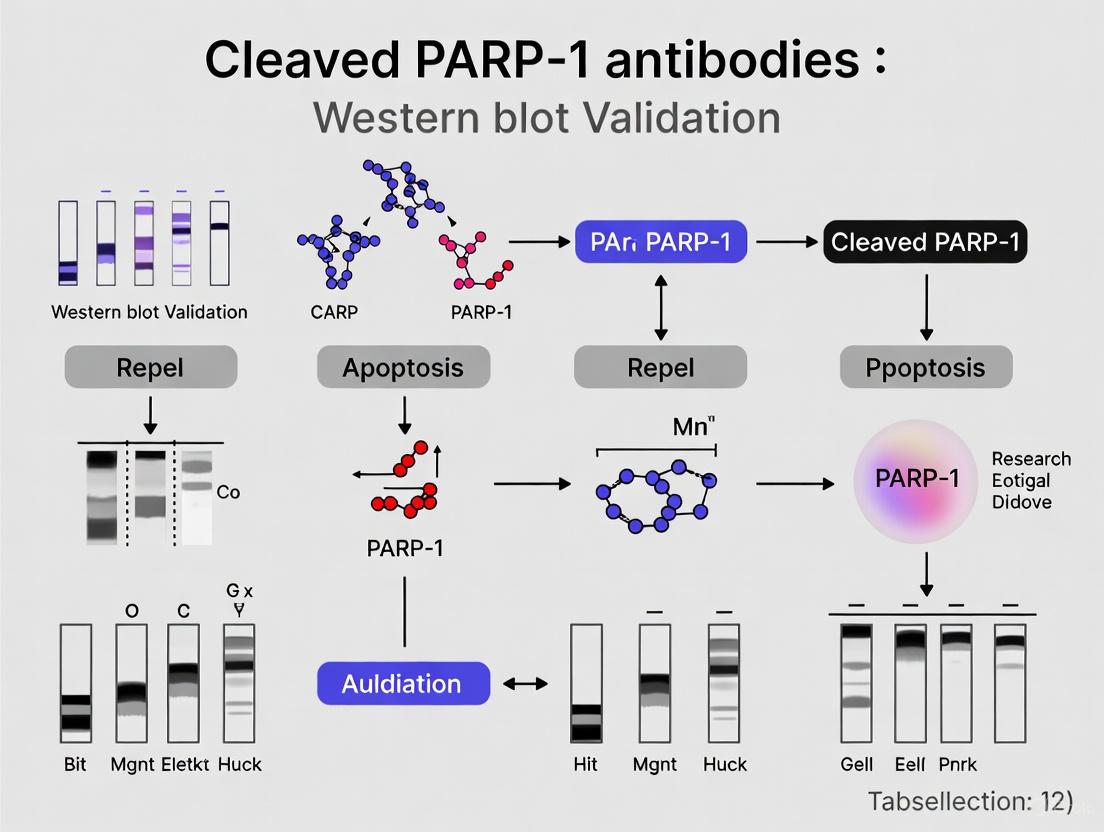
This article provides a detailed framework for researchers, scientists, and drug development professionals to validate the specificity of cleaved PARP-1 antibodies in Western blot analysis.
Ensuring Specificity in Apoptosis Detection: A Comprehensive Guide to Cleaved PARP-1 Antibody Validation for Western Blot
Abstract
This article provides a detailed framework for researchers, scientists, and drug development professionals to validate the specificity of cleaved PARP-1 antibodies in Western blot analysis. It covers the foundational biology of PARP-1 and its role as an apoptosis marker, established methodological protocols for detection, strategic troubleshooting for common pitfalls, and rigorous validation techniques to ensure reliable and reproducible results. The content synthesizes current methodologies and emerging trends to support high-quality research in cancer biology, toxicology, and therapeutic development, with a focus on optimizing antibody performance and confirming target specificity.
PARP-1 Biology and Cleavage: Understanding the Key Apoptosis Marker
The Dual Role of PARP-1 in DNA Repair and Apoptosis Signaling
Poly(ADP-ribose) polymerase-1 (PARP-1) is a ubiquitous nuclear enzyme that functions as a critical molecular switch, determining cellular fate in response to genotoxic stress. As the predominant member of the PARP superfamily, PARP-1 accounts for approximately 85% of cellular PARylation activity and possesses a unique ability to sense DNA damage through its zinc-finger DNA-binding domain [1] [2]. Upon activation, PARP-1 catalyzes the transfer of ADP-ribose units from NAD+ to target proteins, forming complex branched polymers that serve as recruitment signals for DNA repair machinery [1]. However, beyond its well-established role in DNA repair, PARP-1 activation can also trigger cell death pathways through multiple mechanisms, creating a fascinating duality in its biological functions. The precise factors that determine whether PARP-1 activation promotes survival or death remain a subject of intense investigation, with recent evidence suggesting that the formation of specific PARP-1 cleavage fragments serves as critical signatures in these fate decisions [3] [2]. This review examines the complex interplay between PARP-1's repair and apoptotic functions, with particular emphasis on the utility of cleaved PARP-1 antibodies as specific biomarkers in western blot validation for research and drug development applications.
Structural Domains and Activation Mechanisms of PARP-1
PARP-1 is a modular protein comprising three primary functional domains that dictate its activity and proteolytic fate. The DNA-binding domain (DBD) located at the N-terminus contains two zinc finger motifs that enable recognition of DNA strand breaks, with a third zinc finger facilitating inter-domain interactions crucial for enzymatic activation [2]. The central auto-modification domain (AMD) features a BRCT fold that mediates protein-protein interactions and serves as the primary acceptor site for PAR chains during automodification [2]. The C-terminal catalytic domain (CD) executes the poly(ADP-ribosyl)ation reaction using NAD+ as substrate [2].
PARP-1 activation occurs through at least two distinct mechanisms. The canonical DNA-dependent pathway is triggered when the DBD detects DNA lesions, inducing conformational changes that unleash the catalytic domain [4]. More recently, a histone-dependent pathway has been identified wherein histone H4 can directly activate PARP-1 independently of DNA damage, suggesting alternative regulatory mechanisms for transcriptional regulation [4]. Following activation, PARP-1 synthesizes poly(ADP-ribose) (PAR) chains on itself and various nuclear proteins, creating a recruitment platform for DNA repair factors such as XRCC1 [1] [2]. The automodification reaction eventually leads to PARP-1 dissociation from DNA, allowing repair to proceed. This PAR synthesis is rapidly reversed by poly(ADP-ribose) glycohydrolase (PARG), maintaining dynamic control over this post-translational modification [1].
Figure 1: PARP-1 Activation Pathways and Functional Outcomes
PARP-1's Central Role in DNA Repair Pathways
PARP-1 serves as an essential coordinator of multiple DNA repair mechanisms, acting as a molecular sensor that rapidly responds to DNA insults. Beyond its classical role in base excision repair (BER), PARP-1 participates in virtually all major DNA repair pathways [1]. The enzyme facilitates nucleotide excision repair (NER) through protein PARylation that enhances repair complex assembly [1]. In double-strand break repair, PARP-1 contributes to both classical non-homologous end joining (cNHEJ) and alternative NHEJ (aNHEJ) pathways, with particular importance in microhomology-mediated end joining (MMEJ) [1]. Additionally, PARP-1 supports homologous recombination (HR) repair through its interactions with key recombinase enzymes and helps maintain replication fork stability during DNA replication [1].
The critical importance of PARP-1 in DNA damage response is exploited therapeutically through PARP inhibitors in cancer treatment. These inhibitors trap PARP-1 on DNA, preventing its dissociation and creating cytotoxic lesions that are particularly deleterious in homologous recombination-deficient cancers (e.g., those with BRCA mutations) [1]. This synthetic lethality approach demonstrates how understanding PARP-1's repair functions can be leveraged for targeted therapies.
Table 1: PARP-1 Involvement in DNA Repair Pathways
| Repair Pathway | Type of DNA Damage Addressed | Key PARP-1 Functions | Therapeutic Implications |
|---|---|---|---|
| Base Excision Repair (BER) | Single-strand breaks, base modifications | Early damage sensor, XRCC1 recruitment | Target for chemopotentiation |
| Nucleotide Excision Repair (NER) | Bulky DNA adducts, UV-induced damage | Enhancement of repair complex assembly | Potential combination therapies |
| Homologous Recombination (HR) | Double-strand breaks | Regulation of recombinase activity | Synthetic lethality in HR-deficient cancers |
| Non-Homologous End Joining (NHEJ) | Double-strand breaks | Classical and alternative pathway support | Radiation sensitization |
| Replication Fork Stability | Replication stress | Fork stabilization and restart | Target in high-replication cancers |
PARP-1 Cleavage Fragments as Hallmarks of Cell Death Pathways
PARP-1 serves as a preferred substrate for multiple proteases activated during different forms of cell death, generating specific cleavage fragments that serve as biochemical signatures for distinct death programs [2]. These proteolytic events not only inactivate PARP-1's catalytic function but also generate fragments with potential dominant-negative functions that can influence death signaling.
Caspase-Mediated Cleavage in Apoptosis
During apoptosis, executioner caspases-3 and -7 cleave PARP-1 at the conserved DEVD214 site located within the nuclear localization signal of the DNA-binding domain [3] [2]. This proteolysis produces a characteristic 24 kDa DNA-binding fragment and an 89 kDa catalytic fragment [2]. The 24 kDa fragment retains DNA-binding capability through its zinc finger motifs and may act as a trans-dominant inhibitor of intact PARP-1 by occupying DNA break sites and blocking recruitment of functional PARP-1 and other repair proteins [2]. This irreversible binding conserves cellular ATP pools by preventing excessive PARP-1 activation while simultaneously ensuring the irreversibility of the apoptotic process by inhibiting DNA repair [2]. The 89 kDa fragment, containing the automodification and catalytic domains, exhibits reduced DNA binding and may be liberated into the cytosol [2].
Necrotic Cleavage by Lysosomal Proteases
In contrast to apoptotic cleavage, necrosis induces a different PARP-1 proteolytic pattern characterized by a 50 kDa fragment [5]. This cleavage is not inhibited by caspase inhibitors like zVAD-fmk but instead involves lysosomal proteases released during necrotic cell death [5]. Cathepsins B and G have been identified as responsible for this necrotic cleavage pattern, with in vitro assays demonstrating their ability to generate fragments corresponding to those observed in cells treated with necrotic inducers such as H2O2, ethanol, or HgCl2 [5].
Additional Proteolytic Events
Beyond caspases and cathepsins, PARP-1 is susceptible to cleavage by other proteases including granzymes and matrix metalloproteinases (MMPs), each generating distinctive fragments that serve as biomarkers for specific death programs in various pathological contexts [2]. This diversity of cleavage patterns underscores PARP-1's role as a central integrator of cell death signals across multiple death modalities.
Table 2: PARP-1 Cleavage Fragments in Cell Death Pathways
| Cell Death Pathway | Responsible Proteases | PARP-1 Cleavage Fragments | Functional Consequences |
|---|---|---|---|
| Apoptosis | Caspases-3 and -7 | 24 kDa (DBD) + 89 kDa (AMD+CD) | Inhibition of DNA repair, energy conservation, apoptotic progression |
| Necrosis | Cathepsins B and G | 50 kDa fragment | Distinct signature of lysosomal protease involvement |
| Granzyme-mediated death | Granzyme A | Unknown specific fragments | Role in immune cell-mediated killing |
| Other death programs | MMPs, calpains | Various fragments | Context-specific death signatures |
The Dual Role of PARP-1 in Regulating Apoptosis
PARP-1 exhibits seemingly paradoxical functions in cell death regulation, acting as both a promoter and suppressor of apoptotic pathways depending on the cellular context and extent of DNA damage.
Pro-Apoptotic Functions
Under conditions of severe genotoxic stress, PARP-1 hyperactivation leads to substantial NAD+ and ATP depletion, potentially triggering a necrotic cell death program due to energy collapse [6] [1]. However, PARP-1 also participates directly in apoptosis signaling through multiple mechanisms. In HL-60 cells treated with the benzene metabolite TGHQ, PARP-1 activation contributes to caspase-dependent apoptosis through promotion of cytochrome c release from mitochondria and subsequent activation of caspases-9, -3, and -7 [6]. Interestingly, PARP-1 inhibition in this model attenuated caspase-3, -7, and -9 activation while paradoxically potentiating caspase-8 activation, suggesting opposing effects on intrinsic (mitochondrial) and extrinsic (death receptor) apoptotic pathways [6].
PARP-1 also promotes apoptosis through apoptosis-inducing factor (AIF) translocation. Following PARP-1 activation, AIF is released from mitochondria and translocates to the nucleus where it triggers chromatin condensation and large-scale DNA fragmentation in a caspase-independent manner [6]. This AIF-mediated death pathway represents an important alternative cell death mechanism when caspase activation is compromised.
Anti-Apoptotic Functions
In contrast to its pro-death functions, PARP-1 cleavage during apoptosis may serve an anti-apoptotic role by conserving cellular energy stores. The 24 kDa fragment generated by caspase cleavage irreversibly binds to DNA strand breaks, preventing further PARP-1 activation and subsequent NAD+/ATP depletion [2]. This energy conservation may ensure that apoptotic cells maintain sufficient ATP for the ordered execution of the apoptotic program, including membrane blebbing and formation of apoptotic bodies [2].
The functional consequences of PARP-1 cleavage extend beyond energy conservation to include modulation of transcriptional regulation. PARP-1 cleavage fragments have been implicated in regulating NF-κB activity, with different fragments exerting opposing effects on inflammatory gene expression [3]. Expression of the 89 kDa fragment enhances NF-κB activity and increases expression of pro-inflammatory mediators like iNOS and COX-2, while the 24 kDa fragment and uncleavable PARP-1 mutants exhibit cytoprotective effects with reduced inflammatory signaling [3].
Figure 2: PARP-1's Dual Role in Apoptosis Regulation
Experimental Approaches for Studying PARP-1 Function and Cleavage
Western Blot Analysis of PARP-1 Cleavage
Western blot analysis remains the gold standard for detecting PARP-1 cleavage fragments and validating antibody specificity. Well-validated antibodies are essential for accurate interpretation of PARP-1 cleavage patterns in different experimental contexts [7].
Protocol for PARP-1 Cleavage Detection by Western Blot:
- Cell Lysis and Protein Extraction: Lyse cells in RIPA buffer (50 mM Tris-HCl pH 7.5, 150 mM NaCl, 1% NP-40, 0.5% sodium deoxycholate, 0.1% SDS) supplemented with protease inhibitors [6]. For separation of cytosolic and nuclear fractions, use differential centrifugation with digitonin and NP-40-containing buffers [6].
- Protein Quantification: Determine protein concentration using detergent-compatible assay (e.g., Bio-Rad DC Protein Assay) [6].
- Gel Electrophoresis: Separate 20-50 μg of protein by SDS-PAGE on 4-12% Bis-Tris gradient gels using MOPS or MES running buffer [4].
- Protein Transfer: Transfer to nitrocellulose membrane (0.45 μm pore size) using standard wet or semi-dry transfer systems [4].
- Blocking and Antibody Incubation: Block membranes with 5% non-fat dry milk in PBST (PBS with 0.1% Tween-20) [6] [4]. Incubate with primary antibodies against PARP-1 (specific for full-length and/or cleavage fragments) overnight at 4°C, followed by appropriate HRP-conjugated secondary antibodies [4].
- Detection: Develop blots using enhanced chemiluminescence (ECL) reagents and visualize on X-ray film or digital imaging systems [4].
PARP Activity Assays
Colorimetric and immuno-based assays enable quantification of PARP-1 enzymatic activity. The high-throughput colorimetric assay involves coating ELISA plates with protein activators (histone H4 or DNA), setting up PARP reactions in wells, and quantifying PAR polymer formation using anti-PAR antibodies [4]. This approach allows screening of PARP inhibitors and can distinguish between DNA-dependent and histone-dependent PARP activation pathways [4].
Assessment of Cell Death Modalities
Combined analysis of PARP-1 cleavage patterns with other cell death markers provides comprehensive characterization of death pathways:
- Apoptosis detection: Annexin V/propidium iodide staining, caspase activity assays, DNA laddering [6]
- Necrosis assessment: Propidium iodide uptake, LDH release, TUNEL staining [8] [5]
- Mitochondrial alterations: Cytochrome c release, AIF translocation, mitochondrial membrane potential measurements [6]
Table 3: Research Reagent Solutions for PARP-1 Studies
| Reagent Category | Specific Examples | Research Applications | Key Features |
|---|---|---|---|
| PARP-1 Antibodies | Anti-PARP1 pAb (HPA045168), Clone 10H | Western blot, IHC, ICC-IF | Detection of full-length and cleaved PARP-1 |
| PARP Activity Assays | Colorimetric PARP Assay Kit | High-throughput inhibitor screening | Quantification of PAR formation |
| PARP Inhibitors | PJ-34, 3-aminobenzamide, 4-amino-1,8-naphtalimide | Mechanistic studies, therapeutic applications | Specificity for PARP-1 catalytic activity |
| Cell Death Assays | Annexin V/PI kit, caspase substrates, TUNEL assay | Discrimination of apoptosis vs. necrosis | Multiparameter cell death assessment |
| Positive Control Lysates | PARP-1-overexpressing cell lysates | Antibody validation, assay controls | Verification of antibody performance |
Validation of Cleaved PARP-1 Antibodies in Western Blot Applications
The specificity of cleaved PARP-1 antibodies is paramount for accurate interpretation of experimental results, particularly when distinguishing between different cell death modalities. Rigorous validation should include multiple complementary approaches [7].
Specificity Controls
Genetic controls represent the gold standard for antibody validation, using PARP-1 knockout cells or tissues to confirm absence of signal in null backgrounds [7]. Knockdown approaches with PARP-1-specific siRNA provide additional validation, demonstrating reduced signal following target depletion [3]. Orthogonal validation using independent-epitope antibodies or alternative detection methods further confirms specificity [7].
Selectivity Assessment
Antibody selectivity should be evaluated across multiple biological contexts, including different cell lines and tissue types that exhibit varying expression levels of PARP-1 and its cleavage fragments [7]. This approach confirms that the antibody recognizes its target specifically across diverse biological backgrounds and detects the appropriate fragments in response to specific death inducers.
Functional Validation
Functional validation involves demonstrating that the antibody detects increased cleavage fragments in response to apoptotic inducers (e.g., staurosporine, etoposide) while showing different cleavage patterns in response to necrotic stimuli [5]. Caspase inhibitor pretreatment should prevent the appearance of the characteristic 89 kDa fragment during apoptosis, while necrotic cleavage should be insensitive to caspase inhibition but sensitive to cathepsin inhibitors [5].
PARP-1 stands as a critical molecular switchboard, integrating DNA damage signals and directing cellular fate decisions through its dual roles in DNA repair and apoptosis signaling. The specific cleavage fragments generated by different proteases provide valuable biochemical signatures that distinguish between various cell death pathways. The rigorous validation of cleaved PARP-1 antibodies for western blot applications remains essential for accurate interpretation of experimental results in both basic research and drug development contexts. As PARP inhibitors continue to show promise in cancer therapy and other diseases, understanding the nuanced relationships between PARP-1 activation, cleavage, and cell fate decisions will be crucial for optimizing therapeutic strategies and developing robust biomarker assays for clinical applications.
Poly(ADP-ribose) polymerase-1 (PARP-1) cleavage at the Asp214-Gly215 site represents a definitive biochemical event in programmed cell death, generating an 89 kDa fragment that serves as a critical biomarker for apoptosis. This proteolytic cleavage, primarily executed by caspase-3 and -7, separates PARP-1's DNA-binding domain from its catalytic domain, fundamentally altering cellular fate decisions between apoptosis and necrosis. This guide provides a comprehensive comparison of experimental approaches for detecting and validating PARP-1 cleavage, with emphasis on antibody specificity, methodological considerations, and functional consequences. We present standardized protocols and quantitative data to enable researchers to objectively assess reagent performance across different experimental systems, supporting rigorous validation in both basic research and drug development contexts.
PARP-1 is a 116 kDa nuclear enzyme that plays essential roles in DNA repair, genomic stability, and transcriptional regulation [9]. During apoptosis, PARP-1 undergoes selective proteolytic cleavage at the highly conserved DEVD214↓G215 motif, generating characteristic 24 kDa and 89 kDa fragments [10] [9]. This cleavage event represents a commitment step in programmed cell death, serving both practical and mechanistic functions in cellular demise.
The 89 kDa fragment resulting from this cleavage contains the automodification and catalytic domains but is liberated from the DNA-binding domain, effectively preventing PARP-1 from responding to DNA damage [9]. This proteolytic inactivation conserves cellular ATP pools that would otherwise be depleted in attempts to resynthesize NAD+ during excessive PARP-1 activation [10]. Detection of this 89 kDa fragment has become a gold standard biomarker for apoptosis across diverse research applications, from basic mechanistic studies to drug development screening.
Table 1: Key Domains of PARP-1 and Cleavage Products
| Domain/Fragment | Molecular Weight | Functional Characteristics | Cellular Localization After Cleavage |
|---|---|---|---|
| Full-length PARP-1 | 116 kDa | Contains DNA-binding, automodification, and catalytic domains | Nuclear |
| DNA-binding domain (DBD) | 24 kDa | Contains two zinc-finger motifs; binds irreversibly to DNA breaks | Retained in nucleus |
| Catalytic fragment | 89 kDa | Contains automodification and catalytic domains; minimal DNA binding | Liberated to cytosol |
| Automodification domain (AMD) | 22 kDa | Target for auto-ADP-ribosylation; contains BRCT fold | Nuclear/Cytosol |
| Catalytic domain (CD) | 54 kDa | Polymerizes ADP-ribose units from NAD+ | Nuclear/Cytosol |
Mechanistic Insights: From Cleavage to Functional Consequences
The Caspase-PARP-1 Axis in Cell Fate Determination
PARP-1 cleavage functions as a molecular switch directing cellular responses toward apoptosis rather than necrosis. When PARP-1 remains intact during death receptor activation or DNA damage, it becomes hyperactivated, depleting NAD+ and ATP through excessive poly(ADP-ribose) synthesis [10] [11]. This energy crisis pushes cells toward necrotic death, characterized by membrane disruption and inflammatory response. In contrast, caspase-mediated cleavage of PARP-1 during apoptosis inactivates the enzyme, conserves cellular energy stores, and facilitates the apoptotic program [11].
The critical nature of this cleavage event has been demonstrated through expression of caspase-resistant PARP-1 mutants (D214N), which results in accelerated cell death with both apoptotic and necrotic features due to NAD+ and ATP depletion [10]. This death can be prevented by PARP inhibitors like 3-aminobenzamide, confirming the metabolic basis of this phenomenon [10].
Structural Consequences of Asp214-Gly215 Cleavage
Proteolysis at the Asp214-Gly215 site fundamentally alters PARP-1's structural organization and function. The cleavage separates the N-terminal DNA-binding domain (24 kDa) from the C-terminal catalytic portion (89 kDa), creating two fragments with distinct properties and cellular fates [9]. The 24 kDa fragment retains the zinc-finger motifs that enable tight binding to DNA strand breaks, where it functions as a trans-dominant inhibitor of DNA repair by blocking access of intact PARP-1 and other repair factors to damage sites [9]. Meanwhile, the 89 kDa fragment, containing the automodification and catalytic domains, exhibits dramatically reduced DNA binding capacity and relocalizes to the cytosol [9] [3].
Figure 1: PARP-1 Cleavage Directs Cell Fate Decisions. Caspase-mediated cleavage at Asp214-Gly215 generates distinct fragments that promote apoptotic execution while preventing energy depletion that leads to necrosis.
Experimental Approaches for Detecting PARP-1 Cleavage
Standardized Western Blot Protocol for PARP-1 Cleavage Detection
Cell Lysis and Preparation:
- Harvest cells and wash with ice-cold PBS
- Lyse cells in modified RIPA buffer (50 mM Tris-HCl pH 7.4, 150 mM NaCl, 1% NP-40, 0.5% sodium deoxycholate, 0.1% SDS) supplemented with protease inhibitors (0.5 mM PMSF, 2 μg/ml aprotinin, 0.5 μg/ml leupeptin, 1 μM pepstatin) [10]
- Incubate on ice for 30 minutes with occasional vortexing
- Centrifuge at 14,000 × g for 15 minutes at 4°C
- Collect supernatant and determine protein concentration using BCA assay
Electrophoresis and Immunoblotting:
- Load 50 μg of protein per lane on 10% SDS-polyacrylamide gels [10]
- Electrophorese at 100-120 V until dye front reaches bottom of gel
- Transfer to nitrocellulose membrane using wet transfer system at 100 V for 1 hour
- Block membrane with 5% non-fat dry milk in TBST (Tris-buffered saline with 0.1% Tween-20) for 1 hour at room temperature
- Incubate with primary antibody (diluted in blocking solution) overnight at 4°C with gentle agitation
- Wash membrane 3× for 10 minutes each with TBST
- Incubate with species-appropriate HRP-conjugated secondary antibody (1:2000-1:5000) for 1 hour at room temperature
- Wash membrane 3× for 10 minutes each with TBST
- Develop using ECL chemiluminescence system and image
Antibody Considerations:
- For full-length PARP-1 detection: Use antibodies recognizing epitopes in the catalytic domain (C-terminal)
- For cleaved PARP-1 detection: Use cleavage-specific antibodies targeting the neo-epitope created after Asp214 cleavage
- Always include apoptosis-induced positive controls (e.g., etoposide-treated Jurkat cells) and molecular weight markers
Quantitative Comparison of PARP-1 Detection Antibodies
Table 2: Performance Comparison of PARP-1 Antibodies in Western Blot Applications
| Antibody Reference | Specificity | Recommended Dilution | Reactivity | Band Pattern | Experimental Validation |
|---|---|---|---|---|---|
| Cell Signaling #9542 [12] | Full-length (116 kDa) and large fragment (89 kDa) | 1:1000 | Human, Mouse, Rat, Monkey | 116 kDa (full-length)89 kDa (cleaved) | Caspase-3 cleavage in apoptotic cells |
| Abcam ab4830 [13] | Cleaved PARP-1 (85 kDa fragment) | 1:1000-1:2000 | Human | 85 kDa (cleaved) | Apoptosis-induced Jurkat and HeLa cells; peptide competition |
| ThermoFisher MA3-950 [14] | PARP1 | 1:1000 (est.) | Human, Mouse, Rat, Bovine, Non-human primate | Not specified | Multiple applications including WB, IHC, ICC/IF |
| In-house Caspase-resistant Mutant [10] | Non-cleavable PARP-1 | N/A | Human (transfected) | 116 kDa (full-length only) | Site-directed mutagenesis (D214N); caspase-3 resistance |
Validation Using Caspase-Resistant PARP-1 Mutants
A critical approach for validating antibody specificity involves using caspase-resistant PARP-1 mutants. Site-directed mutagenesis of the DEVD214 sequence to render PARP-1 resistant to caspase cleavage provides a powerful control for cleavage-specific antibodies [10]:
Mutagenesis Protocol:
- Use eukaryotic-prokaryotic expression vector containing full-length human PARP-1 cDNA
- Introduce point mutation (G→A at nucleotide 640) into the DEVD box using site-directed mutagenesis
- Verify introduction of mutation by DNA sequencing
- Transfert PARP-1 null fibroblasts (A11) with mutant plasmid (D214N) or wild-type control
- Select stable clones using hygromycin resistance
- Confirm expression by Western blot and resistance to caspase cleavage in vitro
This approach demonstrates that cells expressing caspase-resistant PARP-1 do not generate the 89 kDa fragment upon apoptotic stimulation, providing definitive validation of cleavage-specific antibodies [10].
Functional Consequences of PARP-1 Cleavage Fragments
Comparative Analysis of Cleavage Fragment Functions
The cleavage of PARP-1 produces fragments with distinct and sometimes opposing biological activities. Understanding these functional differences is essential for interpreting experimental results involving PARP-1 cleavage.
Table 3: Functional Properties of PARP-1 and Its Cleavage Products
| PARP-1 Form | Impact on Cell Viability | Effect on DNA Repair | NF-κB Regulation | Key Experimental Findings |
|---|---|---|---|---|
| Full-length PARP-1 | Context-dependent | Promotes repair through BER | Moderate activation | Hyperactivation leads to necrosis via energy depletion [10] [11] |
| Caspase-resistant PARP-1 (D214N) | Decreased viability | Enhanced repair capacity | Similar to wild-type | Accelerates TNF-α-induced cell death; increases necrosis [10] |
| 24 kDa Fragment | Protective in ischemia models | Inhibits repair (trans-dominant) | Reduces inflammation | Decreases iNOS and COX-2; increases Bcl-xL [3] |
| 89 kDa Fragment | Cytotoxic | Minimal repair function | Enhances pro-inflammatory response | Increases NF-κB activity and iNOS expression [3] |
Alternative Proteolytic Processing of PARP-1
Beyond caspase-mediated cleavage, PARP-1 serves as a substrate for other proteases during different cell death programs, generating signature fragments that can distinguish among cell death mechanisms [9]:
Calpain-mediated Cleavage:
- Generates 55 kDa and 62 kDa fragments
- Associated with excitotoxicity and calcium-mediated cell death
- Occurs during necrotic-like cell death processes
Granzyme A-mediated Cleavage:
- Generates 50 kDa and 64 kDa fragments
- Occurs in cytotoxic T lymphocyte-mediated cell death
- Cleaves at different sites than caspases
Matrix Metalloproteinase Cleavage:
- Generates 55-65 kDa fragments
- Associated with inflammatory conditions
- May contribute to PARP-1 inactivation in specific pathologies
These alternative cleavage events highlight the importance of using well-validated, cleavage-specific antibodies that can distinguish caspase-mediated PARP-1 cleavage from other proteolytic events.
Research Reagent Solutions Toolkit
Table 4: Essential Reagents for PARP-1 Cleavage Research
| Reagent Category | Specific Examples | Research Application | Key Considerations |
|---|---|---|---|
| PARP-1 Antibodies | CST #9542; Abcam ab4830; ThermoFisher MA3-950 | Western blot, Immunocytochemistry, Flow Cytometry | Verify specificity for full-length vs. cleaved forms; check species reactivity |
| Apoptosis Inducers | TNF-α + Actinomycin D; Staurosporine; Etoposide | Positive controls for PARP-1 cleavage | Use time-course and dose-response to optimize cleavage detection |
| Caspase Inhibitors | zVAD-fmk; DEVD-CHO | Mechanistic studies of caspase dependence | Confirm inhibition of PARP-1 cleavage as control |
| PARP Inhibitors | 3-Aminobenzamide; Olaparib | Studies of PARP enzymatic function | Distinguish between cleavage and catalytic activity effects |
| Cell Lines | PARP-1 -/- fibroblasts; Caspase-resistant PARP-1 transfectants | Specificity controls | Validate absence of endogenous PARP-1 or resistance to cleavage |
| Expression Vectors | Wild-type PARP-1; D214N mutant | Mechanistic studies | Use appropriate empty vector controls |
The caspase-mediated cleavage of PARP-1 at Asp214-Gly215 to generate the 89 kDa fragment represents a critical commitment step in apoptotic execution, serving as both a reliable biomarker and an active regulator of cell fate decisions. Through comparative analysis of detection methods, reagent performance, and functional outcomes, this guide provides a framework for rigorous experimental validation of PARP-1 cleavage in research applications. The consistent use of appropriate controls, including caspase-resistant PARP-1 mutants and well-validated cleavage-specific antibodies, remains essential for accurate interpretation of PARP-1 cleavage in the context of cell death research and drug development. As research advances, understanding the complex roles of different PARP-1 fragments continues to provide insights into cellular fate decisions and potential therapeutic interventions.
Significance of the 89 kDa Fragment as a Specific Apoptosis Biomarker
In the field of cell death research, the cleavage of Poly(ADP-ribose) polymerase 1 (PARP-1) serves as a definitive biochemical hallmark of apoptosis. The ensuing 89 kDa fragment has emerged as a critical biomarker, providing researchers with a specific indicator of caspase-dependent apoptotic pathways. This fragment's detection is paramount for validating apoptosis in experimental models, from basic research to pre-clinical drug development. The specificity of this cleavage event makes it an invaluable tool, particularly when detected with highly specific antibodies in western blot analyses. This guide objectively compares the role of this fragment against other biomarkers and details the experimental protocols for its validation, providing a essential resource for scientists requiring rigorous proof of apoptotic mechanisms.
PARP-1 Biology and Cleavage Fragments
PARP-1 is a 116 kDa nuclear protein primarily involved in the detection and repair of DNA single-strand breaks [15] [2]. Its structure comprises three key domains: an N-terminal DNA-binding domain (DBD), a central automodification domain (AMD), and a C-terminal catalytic domain (CD).
During the execution phase of apoptosis, activated effector caspases-3 and -7 cleave PARP-1 at a specific amino acid sequence (DEVD214↓G), located within the DBD [16] [17] [2]. This proteolytic event results in two distinct fragments:
- A 24 kDa fragment containing the DBD, which remains bound to DNA and acts as a trans-dominant inhibitor of DNA repair.
- An 89 kDa fragment containing the automodification and catalytic domains, which translocates to the cytoplasm [15] [2].
The table below summarizes the key characteristics of these fragments.
Table 1: PARP-1 Cleavage Fragments Generated During Apoptosis
| Fragment Size | Domains Contained | Cellular Localization Post-Cleavage | Primary Function |
|---|---|---|---|
| 24 kDa | DNA-Binding Domain (DBD) | Retained in nucleus | Irreversibly binds DNA breaks; inhibits DNA repair. |
| 89 kDa | Automodification Domain (AMD), Catalytic Domain (CD) | Translocates to cytoplasm | Serves as a carrier for poly(ADP-ribose) (PAR) polymers; induces AIF-mediated cell death. |
The following diagram illustrates the caspase cleavage process of PARP-1 and the fate of the resulting 89 kDa fragment.
The 89 kDa Fragment in Apoptosis Signaling
The generation of the 89 kDa fragment is not merely a passive consequence of apoptosis but an active contributor to the cell death cascade. Research by Mashimo et al. (2021) revealed a novel role where the 89 kDa fragment, often with poly(ADP-ribose) (PAR) polymers still covalently attached, is shuttled from the nucleus to the cytoplasm [15] [18] [19]. In the cytoplasm, this PARylated fragment binds to Apoptosis-Inducing Factor (AIF), a protein anchored to the mitochondrial membrane. This binding facilitates the release of AIF, which then translocates to the nucleus and works with other factors to trigger large-scale DNA fragmentation and nuclear shrinkage, a point of no return for the cell [15]. This pathway represents a critical intersection between classic caspase-dependent apoptosis and the caspase-independent cell death pathway known as parthanatos [15] [2].
Experimental Validation & Comparative Data
The detection of the 89 kDa fragment via western blotting is a cornerstone experiment for confirming apoptosis. The following table summarizes key experimental findings from the literature that validate its specificity and role.
Table 2: Experimental Evidence for the 89 kDa PARP-1 Fragment as an Apoptosis Biomarker
| Experimental Context | Inducing Agent / Condition | Key Findings Related to 89 kDa Fragment | Citation |
|---|---|---|---|
| HeLa Cells | Staurosporine | Caspase activation induced PARP-1 cleavage; 89 kDa fragment translocated to cytoplasm, facilitating AIF release. | [15] |
| In Vitro "Ischemia" Models | Oxygen/Glucose Deprivation (OGD) | Expression of the isolated 89 kDa fragment (PARP-189) was directly cytotoxic to neurons, unlike the 24 kDa fragment. | [3] |
| Apoptosis Research | Various (General Hallmark) | Cleavage of PARP-1 by caspases into 24 kDa and 89 kDa fragments is widely accepted as a biochemical hallmark of apoptosis. | [20] [2] |
Detailed Experimental Protocol for Western Blot Detection
The following step-by-step protocol is synthesized from standard methodologies used in the cited research and commercial antibody datasheets [16] [17].
1. Cell Lysis and Protein Extraction
- Harvest cells and lyse using a RIPA buffer supplemented with protease and phosphatase inhibitors.
- Centrifuge lysates at 14,000 x g for 15 minutes at 4°C to remove insoluble debris.
- Determine the protein concentration of the supernatant using a standardized assay (e.g., BCA assay).
2. Gel Electrophoresis and Western Blotting
- Load 20-30 μg of total protein per lane onto a 4-20% gradient SDS-PAGE gel.
- Separate proteins by electrophoresis (constant voltage of 120-150V).
- Transfer proteins from the gel to a PVDF or nitrocellulose membrane using a wet or semi-dry transfer system.
3. Immunoblotting
- Block the membrane with 5% non-fat milk or BSA in TBST for 1 hour at room temperature.
- Incubate with a primary antibody specific for cleaved PARP (Asp214) at a 1:1000 dilution overnight at 4°C with gentle agitation. These antibodies are engineered to recognize the neo-epitope created by caspase cleavage and do not recognize full-length PARP-1, ensuring high specificity [16] [17].
- Wash the membrane 3 times for 5 minutes each with TBST.
- Incubate with an appropriate HRP-conjugated secondary antibody (e.g., anti-rabbit IgG) at a 1:2000-1:5000 dilution for 1 hour at room temperature.
- Wash the membrane 3 times for 5 minutes each with TBST.
4. Detection and Analysis
- Develop the blot using a chemiluminescent substrate and expose to X-ray film or capture image with a digital chemiluminescence imaging system.
- The 89 kDa band is the positive signal for apoptosis. For a loading control, the membrane should be stripped and re-probed for a housekeeping protein like β-actin or GAPDH.
Research Reagent Solutions
The reliable detection of the 89 kDa fragment is dependent on high-quality, specific reagents. The table below lists key materials and their functions as derived from the cited sources.
Table 3: Essential Research Reagents for Detecting the 89 kDa PARP-1 Fragment
| Reagent / Resource | Specific Function / Role | Research Context |
|---|---|---|
| Cleaved PARP (Asp214) Antibodies (e.g., #5625, #9541) | Highly specific monoclonal antibodies that detect the caspase-cleaved 89 kDa fragment without cross-reacting with full-length PARP-1. | Western Blot, Immunofluorescence, Immunohistochemistry [16] [17] |
| Caspase-3/7 Activity Assays (e.g., Caspase-Glo 3/7) | Luminescent assays to measure the activity of the initiator caspases, providing functional correlation for PARP-1 cleavage. | In vitro validation of apoptosis induction [21] |
| PARP Pharmacological Inhibitors (e.g., PJ34, ABT-888) | Small molecule inhibitors used to confirm PARP-1's role in specific cell death pathways and to probe the interplay between apoptosis and parthanatos. | Functional studies in cell culture models [15] |
| Caspase Inhibitor (zVAD-fmk) | A pan-caspase inhibitor used as a control to confirm the caspase-dependence of the observed PARP-1 cleavage and cell death. | Specificity and pathway validation [15] |
The 89 kDa PARP-1 fragment stands as a specific and functionally significant biomarker for caspase-dependent apoptosis. Its detection, particularly through western blot analysis with highly specific antibodies, provides researchers with a reliable and interpretable readout of programmed cell death activation. Beyond being a mere marker, its role in shuttling PAR to the cytoplasm to engage the AIF-mediated pathway underscores its functional importance in the apoptotic cascade. For scientists in drug development and basic research, targeting the detection and understanding of this fragment is indispensable for validating the efficacy of pro-apoptotic therapies and deciphering complex cell death mechanisms.
Navigating PARP-1 Isoforms and Avoiding Cross-Reactivity
Poly(ADP-ribose) polymerase-1 (PARP-1) is a critical nuclear enzyme involved in DNA repair, transcriptional regulation, and cell death signaling. As a prominent target in cancer research and drug development, accurate detection of PARP-1 and its cleavage products is essential for understanding cellular responses to genotoxic stress. The primary challenge researchers face is the existence of multiple PARP-1 forms—including full-length (116 kDa), caspase-cleaved fragments (89 kDa and 24 kDa), and various post-translationally modified versions—within the broader context of a 17-member PARP superfamily. This biological complexity, combined with antibody cross-reactivity issues, creates significant experimental pitfalls in Western blot validation that can compromise data interpretation and research reproducibility. This guide provides a structured framework for selecting appropriate antibodies and validation strategies to ensure specific detection of PARP-1 isoforms while minimizing cross-reactivity with unrelated proteins and PARP family members.
Table 1: PARP-1 Isoforms and Their Characteristics
| Isoform/Form | Molecular Weight | Structural Features | Biological Context |
|---|---|---|---|
| Full-length PARP-1 | 116 kDa | Contains DNA-binding, automodification, and catalytic domains | Active in DNA repair and transcription |
| Caspase-cleaved fragment | 89 kDa | C-terminal catalytic domain | Apoptosis marker; lacks DNA-binding domain |
| Caspase-cleaved fragment | 24 kDa | N-terminal DNA-binding domain | Apoptosis marker; retains zinc fingers |
| AutoPARylated form | >116 kDa | Modified with poly(ADP-ribose) chains | Activated state; altered electrophoretic mobility |
PARP-1 Biology and Cleavage Significance
PARP-1 functions as a primary DNA damage sensor that catalyzes the transfer of ADP-ribose units from NAD+ to target proteins, a process known as PARylation. This post-translational modification recruits DNA repair proteins and alters chromatin structure in response to single-strand breaks [22] [23]. During apoptosis, caspase-3 and caspase-7 cleave PARP-1 between Asp214 and Gly215, separating the N-terminal DNA-binding domain (24 kDa) from the C-terminal catalytic domain (89 kDa). This cleavage event serves as a well-established biochemical marker for programmed cell death and inactivates PARP-1's DNA repair function, facilitating cellular disassembly [24] [25]. The 24 kDa fragment retains the DNA-binding capability through its zinc finger domains, while the 89 kDa fragment contains the catalytic site but cannot localize to DNA damage sites effectively. Understanding these distinct biological roles and structural characteristics is fundamental for interpreting Western blot results and selecting appropriate detection strategies.
Diagram 1: PARP-1 Cleavage Pathway during Apoptosis. Caspase-mediated cleavage separates functional domains, creating distinct fragments that serve as apoptosis markers.
Antibody Specificity Challenges and Cross-Reactivity Risks
The PARP superfamily comprises 17 enzymes in humans, with PARP-1 and PARP-2 sharing overlapping functions in DNA repair. This structural and functional conservation creates significant challenges for antibody specificity. Common cross-reactivity issues include detection of PARP-2 (62 kDa), recognition of unrelated proteins with similar epitopes, and false detection of degradation products or splice variants. Additional complications arise from the tendency of PARP-1 to undergo autoPARylation, which modifies its electrophoretic mobility and can create smearing patterns or higher molecular weight bands on Western blots [22]. Well-characterized antibodies should demonstrate no cross-reactivity with other PARP family members when tested using siRNA against 18 PARP family members [26]. Commercial antibodies often target specific PARP-1 regions, with common epitopes including the caspase cleavage site, N-terminal DNA-binding domain, or C-terminal catalytic region. Understanding these potential cross-reactivity pitfalls is essential for appropriate antibody selection and validation.
Comparative Analysis of PARP-1 Antibodies
Table 2: Commercial PARP-1 Antibodies for Western Blot Applications
| Antibody Name/Reference | Specificity | Reactivities | Key Features | Validation Approach |
|---|---|---|---|---|
| PARP Antibody #9542 [24] | Cleavage site (Asp214-Gly215) | Human, Mouse, Rat, Monkey | Detects full-length (116 kDa) and large fragment (89 kDa) | Caspase cleavage specificity confirmed |
| Anti-PARP1 (A11205) [27] | PARP1 internal epitopes | Human, Mouse, Rat | Suitable for WB, ICC/IF | Multiple application testing |
| Anti-PARP1 (A87972) [27] | PARP1 internal epitopes | Human, Mouse, Rat | Validated for WB, IHC, ICC/IF | Broad validation across techniques |
| Anti-PARP (cleaved Asp214) (A94925) [27] | Cleaved Asp214 site | Human, Mouse | Specific for apoptotic fragment | Cleavage-specific validation |
| PARP1 (internal) (200-401-X51) [26] | C-terminus autocatalytic domain | Human | No cross-reactivity with other PARP members | Specificity testing against 18 PARP family members |
Experimental Validation Protocols
Genetic Controls for Specificity Confirmation
The most rigorous method for validating PARP-1 antibody specificity involves using PARP-1 knockout (PARP-1-/-) cells or tissues as negative controls. As demonstrated in studies with embryonic fibroblasts from PARP-1 knockout mice, the absence of signal in PARP-1-/- cells confirms antibody specificity, while detection in PARP-1+/+ cells provides a positive control [22]. When knockout cells are unavailable, siRNA-mediated PARP-1 knockdown represents a viable alternative. Researchers should compare samples with scrambled control siRNA to PARP-1-specific siRNA treatments. A significant reduction in band intensity with specific siRNA confirms target engagement. This approach simultaneously validates antibody specificity while controlling for potential off-target effects.
Independent Epitope Verification
Utilizing multiple antibodies targeting different PARP-1 epitopes provides complementary verification of specificity. For instance, combining an antibody against the caspase cleavage site with one recognizing the C-terminal catalytic domain can confirm the identity of cleavage fragments. When both antibodies detect the full-length protein at 116 kDa, but only the cleavage-specific antibody detects the 89 kDa fragment following apoptotic stimuli, this provides strong evidence of specific detection [24] [27]. This strategy is particularly valuable for distinguishing true PARP-1 cleavage from nonspecific degradation, which typically produces irregular banding patterns rather than discrete fragments.
Cell Line and Tissue Panel Profiling
Testing antibodies across multiple cell lines with known PARP-1 expression profiles builds confidence in detection specificity. Lysates from positive control cell lines with high PARP-1 expression (e.g., HeLa, HEK293) should show strong bands at expected molecular weights, while negative controls (e.g., PARP-1 knockout cells) should show no signal. Researchers can consult protein expression databases such as the Human Protein Atlas or Cancer Cell Line Encyclopedia to identify appropriate control cell lines [7]. Including cell lines treated with apoptosis inducers (e.g., staurosporine, camptothecin) provides additional validation by demonstrating the appearance of the characteristic 89 kDa cleavage fragment.
The Scientist's Toolkit: Essential Research Reagents
Table 3: Key Reagents for PARP-1 Western Blot Validation
| Reagent/Category | Specific Examples | Research Function | Considerations |
|---|---|---|---|
| Positive Control Lysates | HeLa, HEK293, MCF-7 | Verify antibody performance in known PARP-1 expressing systems | Select based on documented expression profiles |
| Apoptosis Inducers | Staurosporine, Camptothecin, Etoposide | Generate cleaved PARP-1 for specificity validation | Optimize concentration and treatment duration |
| PARP-1 Knockout Cells | PARP-1-/- MEFs, HeLa PARP1 KO | Gold standard negative control for specificity testing | Confirm knockout by genomic sequencing |
| Loading Controls | GAPDH, Vinculin, Tubulin | Normalize protein loading and transfer efficiency | Select based on molecular weight separation from target |
| Reference Antibodies | Commercial validated PARP-1 antibodies | Comparison standards for validation studies | Include different epitope targets for confirmation |
Troubleshooting Common Cross-Reactivity Issues
Unexpected bands on Western blots frequently complicate PARP-1 detection interpretation. Bands at approximately 62 kDa may indicate PARP-2 cross-reactivity, while smearing above 116 kDa often represents autoPARylated PARP-1. Discrete bands at molecular weights other than 116 kDa, 89 kDa, or 24 kDa may suggest detection of unrelated proteins or splice variants. To address these issues, researchers should optimize antibody dilution to minimize off-target binding while retaining specific signal intensity. Including knockout controls is essential for identifying nonspecific bands. For persistent cross-reactivity, switching to antibodies validated against the caspase cleavage site or recombinant antibodies with defined specificity profiles often resolves these challenges.
Diagram 2: Troubleshooting PARP-1 Antibody Cross-Reactivity. Systematic approach to address non-specific banding patterns in Western blot experiments.
Best Practices for Reproducible PARP-1 Detection
Consistent, reproducible PARP-1 detection requires standardized protocols and thorough documentation. Researchers should implement the following practices: (1) Always include appropriate positive and negative controls on each blot; (2) Document antibody lot numbers and validation data; (3) Standardize sample preparation to minimize PARP-1 degradation; (4) Optimize and document blocking conditions, as these significantly impact antibody performance [7]; (5) Validate any protocol changes with established controls. For apoptosis studies, include both untreated and induced samples to confirm cleavage detection specificity. When working with tissue samples, be aware that PARP-1 expression varies by tissue type and disease state, necessitating appropriate matched controls. Following these practices significantly enhances experimental reproducibility and data reliability in PARP-1 research.
Optimized Western Blot Protocols for Reliable Cleaved PARP-1 Detection
Standard Western Blot Protocol for Cleaved PARP-1 Detection
Poly(ADP-ribose) polymerase-1 (PARP-1) is a 116 kDa nuclear enzyme that plays a critical role in DNA repair and cellular homeostasis [28] [13]. During the early stages of apoptosis, PARP-1 is specifically cleaved by caspase-3 and caspase-7 at a conserved DEVD214 site located within its nuclear localization signal, generating two characteristic fragments: an 89 kDa C-terminal fragment containing the catalytic domain and a 24 kDa N-terminal fragment containing the DNA-binding domain [3] [29]. This proteolytic cleavage serves as an irreversible commitment to programmed cell death by inactivating PARP-1's DNA repair function and preventing cellular energy depletion [29] [28]. The detection of the 89 kDa cleaved PARP-1 fragment has become a gold standard biomarker for identifying apoptotic cells in diverse research areas including cancer biology, neurodegenaration, and drug discovery [29] [13].
The specificity of cleaved PARP-1 antibodies in Western blot validation presents a significant challenge in experimental design. These antibodies must reliably distinguish the 89 kDa cleavage product from full-length PARP-1 and other PARP isoforms while maintaining consistent performance across different cell types and treatment conditions [28] [13]. This guide provides a comprehensive comparison of commercially available cleaved PARP-1 antibodies, detailed experimental protocols, and validation methodologies to ensure accurate apoptosis detection in research applications.
Commercially Available Cleaved PARP-1 Antibodies: A Comparative Analysis
Key Antibody Specifications and Performance Data
| Antibody Product | Host Species & Clonality | Reactivity | Applications | Specificity | Recommended Dilution | Size Detection |
|---|---|---|---|---|---|---|
| Cleaved PARP (Asp214) Antibody #9541 [28] | Rabbit Polyclonal | Human, Mouse | WB, Simple Western | Detects only 89 kDa fragment; does not recognize full-length PARP-1 | 1:1000 (WB), 1:10-1:50 (Simple Western) | 89 kDa |
| Anti-Cleaved PARP1 antibody (ab4830) [13] | Rabbit Polyclonal | Human | WB | Specifically recognizes 85 kDa fragment; pre-adsorbed against full-length PARP-1 | 1:1000-1:2000 | 85 kDa |
| PARP1 Antibody (194C1439) [29] | Mouse Monoclonal IgG2b | Human, Mouse, Rat | WB, IP | Epitope mapping near C-terminal cleavage site; detects cleaved product | Not specified | 89 kDa |
| Anti-PARP1 antibody [EPR18461] (ab191217) [30] | Rabbit Monoclonal | Human, Mouse, Rat | WB, IHC-P, ICC/IF | Recognizes both full-length (113 kDa) and cleaved (89 kDa) PARP-1 | 1:1000-1:10000 (WB) | 113 kDa and 89 kDa |
Critical Selection Criteria for Apoptosis Detection
When selecting an antibody specifically for cleaved PARP-1 detection, researchers must consider several critical factors. Cleavage-site specific antibodies such as Cell Signaling Technology's #9541 and Abcam's ab4830 offer the highest specificity for apoptosis detection as they are specifically designed to recognize the novel epitope created by caspase cleavage at Asp214 [28] [13]. These antibodies undergo specialized purification processes, including negative pre-adsorption using peptides spanning the cleavage site to remove antibodies reactive with full-length PARP-1 [13].
In contrast, general PARP-1 antibodies like ab191217 recognize both full-length and cleaved PARP-1, which can be advantageous for simultaneously assessing total PARP-1 expression and cleavage efficiency [30]. However, for dedicated apoptosis quantification, cleavage-specific antibodies provide superior signal-to-noise ratio and unambiguous interpretation. Researchers should also verify species reactivity, with most commercial antibodies validated for human samples, while fewer options are available for mouse and rat models [29] [28] [30].
Standard Western Blot Protocol for Cleaved PARP-1 Detection
Sample Preparation and Optimization
Cell Lysis and Protein Extraction
- Use RIPA buffer or 1% SDS lysis buffer for efficient protein extraction [30] [13]
- Include protease inhibitors (e.g., PMSF) and phosphatase inhibitors to prevent protein degradation and preserve phosphorylation states
- Protein concentration quantification using BCA or Bradford assay is essential for equal loading
- Prepare samples in 2X Laemmli buffer containing β-mercaptoethanol and heat at 95-100°C for 5-10 minutes to denature proteins
Apoptosis Induction Controls
- Include positive controls for apoptosis: Treat cells with 1µM staurosporine for 4 hours [30] or 1µM etoposide for 16 hours [13]
- Untreated cells serve as negative controls for baseline PARP-1 cleavage
- Caspase inhibition controls: Pre-treat cells with zVAD-fmk (pan-caspase inhibitor) to confirm caspase-dependent cleavage
Electrophoresis and Transfer Conditions
Gel Electrophoresis
- Use 8-12% SDS-PAGE gels for optimal separation of full-length (113-116 kDa) and cleaved (85-89 kDa) PARP-1 fragments
- Load 20-50 µg of total protein per lane, depending on cell type and apoptosis level
- Include pre-stained protein molecular weight markers for accurate size determination
- Run gels at 100-120V for 1-2 hours until proper separation is achieved
Membrane Transfer
- PVDF membranes are recommended for better protein retention and higher sensitivity
- Transfer at 100V for 1 hour or 30V overnight at 4°C
- Confirm transfer efficiency with Ponceau S staining before blocking
Antibody Incubation and Detection
Blocking and Antibody Incubation
- Block membranes with 5% non-fat dry milk (NFDM) in TBST for 1 hour at room temperature [30]
- Incubate with primary antibody diluted in blocking buffer overnight at 4°C with gentle agitation
- Primary antibody dilutions typically range from 1:1000 to 1:2000 for cleaved PARP-1 specific antibodies [28] [13]
- Wash membranes 3 times for 10 minutes each with TBST
- Incubate with HRP-conjugated secondary antibody (e.g., Goat Anti-Rabbit IgG) at 1:5000-1:50000 dilution for 1 hour at room temperature [30] [13]
Detection and Imaging
- Use enhanced chemiluminescence (ECL) substrate for signal development
- Optimize exposure times from 5 seconds to 5 minutes to avoid saturation [30] [13]
- Ensure detection of both cleaved fragment (85-89 kDa) and full-length PARP-1 (113-116 kDa) when using general PARP-1 antibodies
Experimental Validation and Troubleshooting
Specificity Verification Methods
Knockout Validation
- Use PARP-1 knockout cell lines (e.g., HAP1 PARP1 KO) to confirm antibody specificity [30]
- Compare signals in wild-type versus knockout lysates to identify non-specific bands
- CRISPR-Cas9 generated knockout cells provide the most reliable validation
Peptide Competition Assays
- Pre-incubate antibody with immunizing peptide (if available) to compete binding
- Significant signal reduction confirms antibody specificity
- Particularly important for custom-generated or polyclonal antibodies
Apoptosis Induction Time Course
- Treat cells with apoptosis inducers and harvest at multiple time points (0, 2, 4, 8, 16, 24 hours)
- Cleaved PARP-1 should appear progressively with simultaneous decrease in full-length PARP-1
- Caspase inhibitor pre-treatment should prevent cleavage
Common Technical Issues and Solutions
| Problem | Potential Causes | Solutions |
|---|---|---|
| No cleaved PARP-1 signal | Insufficient apoptosis induction; inappropriate antibody dilution | Include positive control (staurosporine/etoposide-treated cells); optimize antibody concentration |
| High background | Incomplete blocking; insufficient washing | Extend blocking time to 2 hours; increase TBST washes to 5x10 minutes; include 0.1% Tween-20 |
| Multiple non-specific bands | Antibody cross-reactivity; protein degradation | Validate with knockout controls; use fresh protease inhibitors; avoid repeated freeze-thaw cycles |
| Weak full-length PARP-1 signal | Over-transfer; inefficient cell lysis | Reduce transfer time; use fresh lysis buffer with 1% SDS; verify protein concentration |
| Inconsistent results | Variable sample preparation; membrane drying | Standardize lysis protocol; ensure membrane remains wet throughout the procedure |
PARP-1 Cleavage in Apoptosis Signaling Pathway
The following diagram illustrates the central role of PARP-1 cleavage in the apoptosis signaling cascade, highlighting key regulatory points and detection methods:
This pathway illustrates how PARP-1 cleavage serves as a critical commitment step in apoptosis, with caspase-mediated proteolysis generating the characteristic 85-89 kDa fragment that is detectable by Western blot using cleavage-specific antibodies. The process represents an irreversible transition from DNA repair attempts to programmed cell death execution.
Essential Research Reagent Solutions
The following table catalogues essential reagents and their specific functions in cleaved PARP-1 detection workflows:
| Reagent Category | Specific Product/Type | Function in Cleaved PARP-1 Detection |
|---|---|---|
| Apoptosis Inducers | Staurosporine (1µM, 4h) [30], Etoposide (1µM, 16h) [13] | Positive control induction; essential for protocol validation |
| Cell Lysis Buffers | RIPA buffer, 1% SDS lysis buffer [30] [13] | Efficient protein extraction while maintaining protein integrity |
| Primary Antibodies | Cleaved PARP (Asp214) #9541 [28], Anti-Cleaved PARP1 (ab4830) [13] | Specific detection of 85-89 kDa apoptotic fragment |
| Secondary Antibodies | HRP-conjugated Goat Anti-Rabbit IgG (1:50000) [30] | Signal amplification for enhanced detection sensitivity |
| Detection Substrates | Enhanced Chemiluminescence (ECL) reagents | Visualize antibody binding with high sensitivity and dynamic range |
| Validation Tools | PARP1 knockout HAP1 cells [30], Caspase inhibitors (zVAD-fmk) | Confirm antibody specificity and caspase-dependent cleavage |
The detection of cleaved PARP-1 by Western blot remains a cornerstone methodology for apoptosis research across diverse fields including cancer biology, neurodegenaration, and toxicology. The critical importance of antibody specificity in these applications cannot be overstated, as it directly impacts experimental validity and interpretation. Cleavage-site specific antibodies such as Cell Signaling Technology's #9541 and Abcam's ab4830 offer superior performance for dedicated apoptosis detection due to their engineered specificity for the caspase-generated neoepitope [28] [13].
Researchers should implement comprehensive validation strategies including knockout controls, apoptosis induction time courses, and caspase inhibition experiments to confirm antibody specificity and experimental conditions. The standardized protocol outlined in this guide provides a robust framework for reliable cleaved PARP-1 detection, while the troubleshooting recommendations address common technical challenges encountered in practice. As PARP-1 cleavage continues to serve as a fundamental apoptosis marker across research and drug development, adherence to these rigorous detection and validation standards ensures the generation of reliable, reproducible data that advances our understanding of programmed cell death mechanisms and therapeutic interventions.
Antibody Titration and Dilution Optimization for Maximum Signal-to-Noise Ratio
Within the context of western blot validation research, achieving optimal specificity for detecting cleaved Poly (ADP-ribose) polymerase 1 (PARP-1) is paramount. PARP-1 is a nuclear enzyme central to DNA repair, and its cleavage by caspases during apoptosis into characteristic 89 kDa and 24 kDa fragments serves as a definitive biochemical hallmark of programmed cell death [3] [31] [32]. The accurate detection of these fragments is crucial for researchers and drug development professionals studying mechanisms of cell death, particularly in cancer research where therapeutics are designed to induce apoptotic pathways. However, this detection is often compromised by non-specific antibody binding and high background noise, leading to unreliable data. A primary strategy to overcome these challenges is the systematic optimization of antibody titration and dilution, which directly enhances the signal-to-noise ratio—a critical determinant for obtaining clean, interpretable, and publication-quality western blot results for cleaved PARP-1.
PARP-1 Cleavage: Biology and Detection Challenges
The Biology of PARP-1 Cleavage
PARP-1, a 113 kDa protein, functions as a DNA damage sensor. During the early stages of apoptosis, executioner caspases-3 and -7 cleave PARP-1 at the DEVD214 site within its nuclear localization signal [3]. This cleavage event results in the separation of the 24 kDa DNA-binding domain from the 89 kDa catalytic domain, inactivating the enzyme and preventing futile DNA repair cycles in a dying cell [31] [32]. It is important to note that besides caspases, other proteases like calpains, cathepsins, and granzymes can also cleave PARP-1, sometimes yielding different fragments, such as a 50 kDa fragment observed in necrosis [31] [5]. This underscores the necessity for highly specific antibodies that can distinguish the classic apoptotic fragments from other cleavage products.
Key Challenges in Western Blot Detection
Detecting cleaved PARP-1 with high specificity presents several common challenges in the lab:
- Non-Specific Bands: Antibodies may detect other protein fragments or unrelated proteins with similar epitopes, creating a confusing band pattern [33].
- High Uniform Background: Often caused by insufficient blocking or antibody overconcentration, which obscures the target bands [34] [33].
- Weak or Absent Signal: This can result from under-concentration of the primary antibody, poor protein transfer, or protein degradation [33] [35].
- Distinguishing Full-Length from Cleaved PARP-1: Some antibodies recognize both the full-length (113-116 kDa) and cleaved (89 kDa) forms, making quantification of cleavage efficiency difficult without careful optimization [32].
The following diagram illustrates the PARP-1 cleavage process and the resultant fragments that antibodies must specifically detect.
Comparative Antibody Performance Data
To objectively compare reagent performance, we summarize the key characteristics of two commercial PARP-1 antibodies, highlighting their distinct advantages for specific experimental goals.
Table 1: Comparative Analysis of PARP-1 Antibodies for Western Blotting
| Feature | Cleaved PARP-1 Antibody (60555-1-PBS) [31] | PARP-1 Antibody (66520-1-Ig) [32] |
|---|---|---|
| Specificity | Exclusively for cleaved form; does not recognize full-length PARP-1 | Both full-length and cleaved forms; recognizes an N-terminal epitope (1-327 aa) |
| Detected Bands | 89 kDa | 113-116 kDa (full-length), 85-89 kDa (cleaved) |
| Clone | 4G4C8 | 1D7D4 |
| Host/Isotype | Mouse / IgG1 | Mouse / IgG1 |
| Applications | WB, IHC, IF/ICC, FC, ELISA | WB, IHC, IF/ICC, IP, FC, ELISA |
| Best For | Confirming apoptosis without interference from full-length PARP-1 | Total PARP-1 load and monitoring the cleavage ratio simultaneously |
Experimental Protocols for Titration and Optimization
Core Protocol: Antibody Titration for Maximum Signal-to-Noise Ratio
The following step-by-step protocol is designed to systematically determine the optimal working concentration for primary and secondary antibodies.
Materials & Reagents:
- Primary Antibodies: Cleaved PARP-1 Antibody (e.g., 60555-1-PBS) and/or PARP-1 Antibody (e.g., 66520-1-Ig) [31] [32].
- Blocking Agents: 5% Non-fat dry milk or Bovine Serum Albumin (BSA) in TBST. For phosphoprotein detection or if background is high, BSA is often preferred [34] [33].
- Wash Buffer: Tris-buffered saline with 0.1% Tween-20 (TBST).
- Detection System: Enhanced chemiluminescence (ECL) or fluorescent substrate, compatible with your secondary antibody.
Methodology:
- Sample Preparation: Use a validated control cell lysate known to undergo apoptosis (e.g., Jurkat cells treated with staurosporine). This provides a positive control for the cleaved 89 kDa PARP-1 fragment. Prepare samples with protease inhibitors to prevent degradation [35].
- Gel Electrophoresis and Transfer: Load equal amounts of protein (e.g., 20-30 µg) across multiple lanes. Perform SDS-PAGE and transfer to a PVDF or nitrocellulose membrane using a wet transfer system for efficient movement of larger proteins [34].
- Blocking: Incubate the membrane in 5% blocking agent for 1 hour at room temperature or overnight at 4°C to minimize non-specific binding [33].
- Primary Antibody Titration:
- Cut the membrane into strips, each containing all protein lanes.
- Prepare a series of primary antibody dilutions in blocking buffer. For example, test dilutions of 1:500, 1:1,000, 1:5,000, 1:10,000, and 1:20,000. The recommended range for PARP-1 antibody (66520-1-Ig) is 1:5,000-1:50,000 [32].
- Incubate each strip with a different antibody dilution for 1 hour at room temperature or overnight at 4°C.
- Wash all strips 3-5 times for 5 minutes each with TBST.
- Secondary Antibody Optimization:
- Incubate each strip with a matched HRP-conjugated or fluorescent secondary antibody. A typical starting dilution is 1:2,000 to 1:10,000.
- Perform washes as in the previous step.
- Detection: Develop the blot using your chosen ECL or fluorescent detection system. Ensure exposures are not saturated.
Analysis: Identify the dilution that produces the strongest specific band (89 kDa for cleaved PARP-1) with the cleanest background. This is your optimal dilution.
Troubleshooting Common Issues
- High Background: Increase blocking time or concentration, titrate down antibody concentration, increase number/duration of washes, or switch blocking agents [33].
- Weak Signal: Ensure the antibody concentration is not too low, check protein transfer efficiency with a reversible stain, and use a fresh, high-sensitivity detection substrate [35].
- Non-Specific Bands: Re-titrate the primary antibody. If using milk, try BSA as it lacks phosphoproteins that can cause interference [34].
The workflow below summarizes the key steps and decision points in the optimization process.
The Scientist's Toolkit: Essential Research Reagent Solutions
A successful Western blot experiment depends on the quality and appropriate use of key reagents. The following table details essential solutions for optimizing cleaved PARP-1 detection.
Table 2: Essential Research Reagents for Cleaved PARP-1 Western Blotting
| Reagent / Solution | Function & Importance | Optimization Tips |
|---|---|---|
| Validated PARP-1 Antibodies | Core reagent for specific detection of full-length and/or cleaved fragments. | Select based on specificity needs (see Table 1). Always perform lot-to-lot validation. |
| Protease Inhibitor Cocktail | Prevents non-apoptotic proteolysis of PARP-1 by cellular proteases during sample prep, which can generate confounding fragments [5]. | Add fresh to lysis buffer. Keep samples on ice. |
| PVDF Membrane | High protein-binding capacity membrane, ideal for detecting low-abundance proteins like cleaved PARP-1 fragments. | Pre-wet in 100% methanol before use. Do not let the membrane dry out during the procedure [34] [33]. |
| BSA (Bovine Serum Albumin) | A superior blocking agent for reducing background, especially when detecting phosphoproteins or when non-fat milk yields high noise [34] [33]. | Use at 3-5% in TBST. Particularly effective for phospho-specific antibodies. |
| Enhanced Chemiluminescence (ECL) Substrate | A highly sensitive detection reagent that generates light upon reaction with HRP-conjugated secondary antibodies. | Use an "enhanced" substrate for low-abundance targets. Avoid saturation during image capture [34] [35]. |
In the critical context of cleaved PARP-1 antibody validation for western blotting, there is no universal dilution that guarantees success. The rigorous, systematic titration of antibodies, as outlined in this guide, is not merely a suggestion but a fundamental requirement for achieving the high specificity and signal-to-noise ratio demanded in rigorous apoptosis research. By objectively comparing antibody characteristics, meticulously following optimized protocols, and leveraging essential research tools, scientists can generate reliable, reproducible, and quantitatively accurate data on PARP-1 cleavage—a cornerstone biomarker for advancing our understanding of cell death and the development of novel therapeutics.
For researchers in western blot validation, particularly those working with specific targets like cleaved PARP-1, membrane selection is a critical parameter that directly influences assay sensitivity, specificity, and reproducibility. While often overlooked in experimental design, the choice between Polyvinylidene fluoride (PVDF) and nitrocellulose membranes significantly impacts protein retention efficiency, especially for low-abundance targets and cleavage products. Within the specific context of apoptosis research utilizing cleaved PARP-1 antibodies, optimal membrane performance is paramount for accurate validation. This guide provides an objective comparison of PVDF and nitrocellulose membranes, supported by experimental data and tailored to the needs of drug development professionals and research scientists.
Membrane Core Properties and Performance Comparison
Western blotting membranes serve as a stable platform to immobilize proteins after electrophoretic separation, enabling specific antibody detection and quantification. The material properties of the membrane directly influence its protein-binding mechanism, capacity, and compatibility with downstream detection methods [36] [37].
The table below summarizes the fundamental characteristics of nitrocellulose and PVDF membranes:
| Property | Nitrocellulose (NC) | PVDF | Low Fluorescence PVDF |
|---|---|---|---|
| Protein-binding Capacity | 80–100 µg/cm² [36] | 150–200 µg/cm² [36] | Similar to PVDF [37] |
| Primary Binding Mechanism | Nitrogen dipole, H-bond, ionic, and hydrophobic interactions [37] | Hydrophobic interactions [36] [37] | Hydrophobic interactions [37] |
| Durability & Chemical Resistance | Fragile, brittle when dry [36] | High durability, chemically resistant [36] | High durability [37] |
| Methanol Activation Required | No [36] [37] | Yes [36] [37] | Yes [37] |
| Suitability for Stripping/Re-probing | Possible but with significant signal loss [36] | Better suited for repeated probing [36] | Better suited for repeated probing [37] |
| Autofluorescence | Low [36] | Higher [36] | Very Low (Designed to reduce background) [37] |
Performance by Detection Method and Application
The optimal membrane choice is further dictated by the specific detection methodology and experimental goals.
| Application | Nitrocellulose | PVDF | Low Fluorescence PVDF |
|---|---|---|---|
| Chemiluminescent Detection | +++ [37] | +++ [37] | +++ [37] |
| Standard Fluorescent Detection | ++ [37] | + [37] | +++ [37] |
| Total Protein Normalization | ++ [37] | + [37] | +++ [37] |
| Low-Abundance or High MW Proteins | Less optimal [36] | Good [36] | Ideal [37] |
Membrane Selection for PARP-1 Western Blotting
PARP1 is a 116 kDa nuclear enzyme that is cleaved by caspases during apoptosis into a characteristic 89 kDa fragment (and a 24 kDa fragment not typically detected by western blot) [38]. Detecting this cleavage event is a common method for validating apoptosis in research models.
Experimental Considerations for Cleaved PARP-1 Detection
- Antibody Specificity: The primary antibody is critical. For example, PARP Antibody #9542 (Cell Signaling Technology) is raised against a synthetic peptide corresponding to the caspase cleavage site and detects both full-length (116 kDa) and the large cleaved fragment (89 kDa) [38]. Other antibodies may be specific only to the cleaved form.
- Membrane and Transfer Recommendations:
- Protein Size: The 89 kDa fragment is a mid-to-high molecular weight target. PVDF membranes are often preferred for high molecular weight proteins due to their higher binding capacity and stronger retention, reducing the risk of blow-through during transfer [36].
- Sensitivity: As a cleavage product, the 89 kDa fragment may be less abundant than the full-length protein. PVDF's higher binding capacity can improve sensitivity for this lower-abundance target [36] [37].
- Re-probing: Experiments often require membrane stripping and re-probing for loading controls (e.g., GAPDH, β-Actin). PVDF's superior durability makes it more suitable for multiple rounds of antibody stripping and probing without significant protein loss or membrane damage [36].
- Detection: While chemiluminescence is standard, fluorescence-based detection and total protein normalization are becoming more common for quantification. For these methods, low-fluorescence PVDF is the optimal choice due to its low background autofluorescence [37].
Detailed Experimental Protocol for PVDF
The following protocol is optimized for detecting cleaved PARP-1 using a PVDF membrane.
- Membrane Activation: Cut the PVDF membrane to the appropriate size. Immerse it in 100% methanol for 15-30 seconds until the membrane changes from opaque to semi-transparent. Briefly rinse the membrane in deionized water to remove excess methanol [36] [37].
- Equilibration: Soak the activated PVDF membrane, filter papers, and gel in transfer buffer for at least 15 minutes. For high molecular weight proteins like PARP1 (116 kDa and 89 kDa), consider using a transfer buffer with low methanol content (e.g., 10%) or adding 0.1% SDS to prevent precipitation and improve transfer efficiency [36].
- Electrophoretic Transfer: Assemble the gel-membrane sandwich. For wet-tank transfer, perform at constant voltage (e.g., 100V) for 1 hour on ice. For semi-dry transfer, use constant current (e.g., 0.25 A) for 30 minutes [36].
- Post-Transfer Staining (Optional): After transfer, stain the membrane with Ponceau S to visually confirm uniform protein transfer and successful PARP-1 transfer [36].
- Blocking: Incubate the membrane in a blocking solution (e.g., 5% non-fat dry milk or BSA in TBST) for 1 hour at room temperature with gentle agitation.
- Antibody Probing: Incubate with primary antibody (e.g., PARP Antibody at 1:1000 dilution [38]) in blocking solution overnight at 4°C. Wash the membrane 3 times for 5 minutes each with TBST. Incubate with an HRP- or fluorophore-conjugated secondary antibody for 1 hour at room temperature. Wash again 3 times for 5 minutes each with TBST.
- Detection: Develop the blot using chemiluminescent substrate for HRP or by direct imaging on a fluorescence-compatible imager if using a fluorescent secondary.
Visualizing the Western Blot Workflow and Key Choice Factors
The following diagrams outline the core western blot workflow and the decision-making process for membrane selection.
Diagram 1: Western Blot Experimental Workflow
Diagram 2: Membrane Selection Decision Pathway
The Scientist's Toolkit: Key Research Reagents for PARP-1 Blotting
The table below lists essential materials and reagents required for successful western blotting of cleaved PARP-1.
| Item | Function / Relevance | Example / Specification |
|---|---|---|
| PVDF Membrane | High-capacity, durable support for protein immobilization; ideal for cleaved PARP-1. | 0.2 µm or 0.45 µm pore size [36]. |
| Primary Antibody | Specifically binds to PARP-1 and/or its cleaved fragment for detection. | PARP Antibody #9542 (CST) or equivalent, verified for specificity [38]. |
| Secondary Antibody (Conjugated) | Binds primary antibody and enables detection via its conjugate. | HRP-conjugated for chemiluminescence or fluorophore-conjugated for fluorescence. |
| Transfer Buffer | Medium for electrophoretic protein transfer from gel to membrane. | Tris-Glycine buffer; methanol content should be optimized for high MW targets [36]. |
| Methanol (100%) | Required for activating hydrophobic PVDF membranes before use. | Laboratory-grade methanol [36] [37]. |
| Blocking Agent | Reduces non-specific antibody binding to the membrane to minimize background. | 5% BSA or non-fat dry milk in TBST. |
| Detection Substrate | Generates signal for visualizing target proteins. | Chemiluminescent substrate for HRP or direct imaging with a fluorescence scanner [37]. |
The choice between PVDF and nitrocellulose is a significant determinant of success in western blotting, especially for precise applications like monitoring PARP-1 cleavage. While nitrocellulose offers a simple, cost-effective solution for abundant targets, PVDF—particularly low-fluorescence PVDF—provides superior protein retention, durability, and versatility across detection methods. For researchers validating apoptosis via cleaved PARP-1 detection, where sensitivity and the potential for re-probing are critical, PVDF emerges as the recommended membrane for optimal protein retention and reliable, publication-quality data.
In western blot validation research, particularly for specific targets like cleaved PARP-1, the selection of an appropriate blocking buffer is a critical experimental step that significantly influences assay specificity, sensitivity, and overall data quality. Blocking buffers prevent non-specific antibody binding by saturating unoccupied protein-binding sites on transfer membranes after protein transfer. The choice between two commonly used protein-based blockers—non-fat dry milk (NFDM) and bovine serum albumin (BSA)—represents a fundamental methodological decision that researchers must optimize for their specific experimental context. Within validation workflows for apoptosis markers such as cleaved PARP-1, this choice becomes especially pertinent as it directly impacts the ability to distinguish specific signal from background noise, thereby affecting experimental conclusions and reproducibility. This guide provides an objective comparison of milk and BSA blocking buffers, supported by experimental data and practical protocols to inform researchers' methodological decisions.
Mechanism of Blocking and Its Importance in Western Blotting
Western blotting membranes, particularly nitrocellulose and PVDF, exhibit high protein-binding affinity which, while excellent for immobilizing transferred proteins, also creates numerous sites for non-specific antibody binding. The blocking process functions by occupying these remaining sites with inert proteins or polymers, creating a neutral background that minimizes non-specific interactions between detection antibodies and the membrane itself. Effective blocking improves the signal-to-noise ratio by reducing background interference without masking the antigen-antibody interaction of interest. Inadequate blocking typically results in excessive background noise, while over-blocking or using inappropriate blockers can mask antigen-antibody interactions or inhibit detection enzymes, ultimately reducing target signal intensity.
The following diagram illustrates the logical decision process for selecting an appropriate blocking buffer based on experimental parameters:
Direct Comparison: Milk vs. BSA Blocking Buffers
The selection between milk and BSA requires careful consideration of their respective advantages and limitations. The following table summarizes the key characteristics of each blocking agent:
| Parameter | Non-Fat Dry Milk (NFDM) | Bovine Serum Albumin (BSA) |
|---|---|---|
| Composition | Heterogeneous mixture of multiple proteins including caseins [39] | Single protein component (≈60 kDa) [39] |
| Typical Concentration | 3-5% (w/v) [40] [41] | 2-10% (w/v), commonly 2-3% [42] [43] |
| Cost Considerations | Inexpensive [40] [44] | More expensive than milk [40] [44] |
| Background Reduction | More complete blocking due to multiple proteins of various sizes [39] [44] | Less complete blocking; potential for higher background [39] [44] |
| Signal Sensitivity | May mask some antigens and lower detection limit [42] | Allows for higher sensitivity detection of low-abundant proteins [42] [44] |
| Compatibility with Phospho-Specific Antibodies | Not recommended (contains phosphoprotein casein) [40] [41] [43] | Recommended (lacks phosphoproteins) [40] [41] |
| Compatibility with Biotin-Streptavidin Systems | Not recommended (contains biotin) [40] [43] | Compatible [42] [45] |
| Optimal Use Cases | General western blotting with non-phospho targets; cost-sensitive applications [40] [41] | Phosphoprotein detection; biotin-streptavidin systems; low-abundance targets [40] [42] [41] |
Experimental Data and Performance Comparison
Case Study: Phospho-Akt Detection
Experimental data comparing blocking buffers in the detection of phosphorylated Akt (pAkt) demonstrates the practical implications of buffer selection. When detecting pAkt in 293T cell lysates, 2% BSA provided higher sensitivity but weaker blocking of non-specific binding, evidenced by non-specific banding patterns at higher lysate loads. In contrast, 5% non-fat milk provided lower background but at the cost of detection sensitivity [42]. This highlights the inherent trade-off between sensitivity and specificity when selecting blocking buffers for phospho-specific targets.
Case Study: Cleaved PARP-1 Detection
In cleaved PARP-1 antibody validation, specific experimental data demonstrates successful application of milk-based blocking buffers. For the Anti-Cleaved PARP1 antibody [E51] (ab32064), western blot protocols consistently utilized 5% non-fat dry milk in TBST for both blocking and antibody dilution, demonstrating specific detection of the cleaved fragment at 27 kDa across multiple cell lines including A549, HAP1, and Jurkat cells [46]. The knockout validation data confirmed antibody specificity, with no signal observed in PARP1 knockout cell lines, indicating that milk blocking effectively reduced non-specific background while maintaining specific signal for this cleaved caspase target [46].
Background Comparison Data
Visual comparison of blocking efficiency directly demonstrates that membranes blocked with BSA can exhibit much higher background compared to those blocked with milk, while still maintaining strong and clean phospho-signal [39]. This effect varies by antibody, as some antibodies produce higher background with milk blocking [40]. The presence of multiple proteins in milk provides a broader range of molecular sizes to cover non-specific binding sites on the membrane, potentially explaining its superior background reduction in many applications [39].
Detailed Experimental Protocols
Standard Blocking Protocol for Western Blotting
Buffer Preparation:
- For milk buffer: Dissolve 3-5 g of non-fat dry milk in 100 mL of TBST or PBST. Mix thoroughly until completely dissolved [41] [44].
- For BSA buffer: Dissolve 2-3 g of bovine serum albumin in 100 mL of TBST or PBST. Mix thoroughly until completely dissolved [42] [41].
- Filter solutions if particulates are present to prevent speckled background [40] [41].
Blocking Procedure:
Post-Blocking Washes:
Specialized Protocol for Phosphoprotein Detection
Buffer Selection: Use 2-3% BSA in TBS (not PBS) as phosphate buffers can interfere with phospho-specific detection [41] [43].
Blocking Conditions:
- Prepare BSA in TBS with 0.1% Tween-20.
- Block for 1 hour at room temperature or overnight at 4°C for difficult targets [41].
- Use identical BSA concentration in antibody dilution buffer.
Control Considerations:
- Include both positive and negative controls for phosphorylation status.
- Use total protein antibodies to confirm equal loading after phospho-protein detection [7].
The Scientist's Toolkit: Essential Research Reagents
| Reagent/Tool | Function/Purpose | Specific Examples/Formats |
|---|---|---|
| Non-Fat Dry Milk | Economical protein mixture for general blocking; effective for reducing background with non-phospho targets [40] [44] | 3-5% solution in TBST or PBST; commercial clarified formulations available [42] |
| Bovine Serum Albumin (BSA) | Purified single-protein blocker; essential for phosphoprotein detection and biotin-streptavidin systems [42] [41] | 2-3% solution in TBST; various purity grades available [42] |
| Casein-Based Blockers | Single-protein alternative to milk; reduces cross-reactivity potential [42] | Commercial purified casein preparations [42] |
| Tween-20 Detergent | Non-ionic detergent added to blocking and wash buffers to reduce non-specific binding [41] [43] | Typically 0.05-0.2% in blocking and wash buffers [42] [41] |
| Tris-Buffered Saline (TBS) | Preferred buffer for phosphoprotein detection and AP-conjugated antibodies [41] [44] | 10X concentrates for dilution; with/without 0.1% Tween-20 (TBST) [41] |
| Phosphate-Buffered Saline (PBS) | General buffer for non-phospho targets; avoid with AP-conjugated antibodies [41] [43] | 10X concentrates for dilution; with/without 0.1% Tween-20 (PBST) [41] |
| Commercial Specialty Blockers | Optimized formulations for specific applications (fluorescent detection, high-sensitivity) [42] [45] | Protein-free blockers; fluorescent-compatible formulations; serum-free options [42] [41] |
Troubleshooting Common Blocking Issues
High Background Signal
- Cause: Incomplete blocking or antibodies binding to proteins in blocking buffer [41].
- Solutions: Increase blocking buffer concentration (up to 5% for milk, 10% for BSA); extend blocking time to 1-2 hours; increase temperature to 37°C; switch blocking agent (e.g., from BSA to milk for non-phospho targets) [41] [43].
Poor Signal or Faint Bands
- Cause: Blocking buffer interfering with protein-antibody interactions [41].
- Solutions: Reduce blocking buffer concentration (as low as 1% for milk, 0.3% for BSA); eliminate detergents from blocking buffer; switch blocking agent (e.g., from milk to BSA if milk components mask epitopes) [40] [41].
Non-Specific Bands
- Cause: Insufficient blocking allowing non-specific antibody binding [41].
- Solutions: Increase blocking buffer concentration; extend blocking time; add Tween-20 (0.05-0.2%) to enhance blocking efficiency; try alternative blocking agents like casein or fish gelatin [41].
The selection between milk and BSA blocking buffers represents a critical methodological decision in western blot validation research for cleaved PARP-1 and other protein targets. While milk provides economical and effective background reduction for general applications, BSA offers distinct advantages for phosphoprotein detection and biotin-streptavidin systems. Experimental evidence demonstrates that buffer performance is highly dependent on the specific antibody-epitope interaction, emphasizing the need for empirical optimization in each experimental context. By understanding the mechanistic basis of blocking and applying the systematic comparison data presented herein, researchers can make informed decisions that enhance assay specificity, sensitivity, and overall data quality in antibody validation workflows.
Innovative Low-Volume Techniques like the Sheet Protector Strategy
Western blotting remains a cornerstone technique in biochemical research, yet its conventional methodology is characterized by significant consumption of costly reagents and lengthy incubation times. The sheet protector (SP) strategy emerges as an innovative, low-volume approach that addresses these inefficiencies. This technique utilizes common stationery materials to create a minimal-reaction environment, drastically reducing antibody consumption and accelerating incubation periods. Framed within the critical context of cleaved PARP-1 antibody validation—a key apoptosis biomarker—this guide objectively compares the performance of the SP strategy against traditional methods, providing researchers with experimental data and protocols to implement this accessible, efficiency-enhancing technique.
Western blotting is one of the most routinely conducted biochemical assays due to its technical ease and relatively low cost, yet it faces significant efficiency challenges [47]. The conventional (CV) method typically requires large antibody volumes (often 10 mL per mini-gel) to ensure complete membrane coverage during incubation periods that can extend overnight [47]. This practice becomes particularly problematic when working with rare, expensive, or limited-quantity antibody stocks. For researchers validating specific biomarkers like cleaved PARP-1—a crucial indicator of apoptosis—these limitations can constrain experimental scope and reproducibility [48].
The sheet protector strategy represents a paradigm shift in Western blot procedural efficiency. By leveraging a common stationery item, this method creates a spatially constrained reaction environment where a minimal volume of antibody solution (20-150 μL) forms a thin layer over the nitrocellulose membrane [47]. This approach capitalizes on the fundamental principle that antibody-antigen binding occurs primarily at the membrane-solution interface, rendering the conventional large antibody reservoir largely superfluous. The technique offers multiple advantages: dramatically reduced antibody consumption, elimination of agitation requirements, compatibility with room temperature incubation, and potential for significantly faster detection timelines [47].
Technical Comparison: Sheet Protector vs. Conventional Method
Performance Metrics and Experimental Outcomes
Table 1: Quantitative Performance Comparison Between Conventional and Sheet Protector Methods
| Parameter | Conventional Method | Sheet Protector Strategy |
|---|---|---|
| Primary Antibody Volume | 10 mL | 20-150 μL (adjustable based on membrane size) |
| Incubation Time | Typically overnight (18 hours) | As little as 15 minutes to 2 hours |
| Incubation Temperature | 4°C with agitation | Room temperature without agitation |
| Agitation Requirement | Required (orbital shaker at 60 RPM) | Not required |
| Sensitivity & Specificity | Standard | Comparable to conventional method |
| Special Equipment Needed | Dedicated containers, rockers, cold room | Sheet protector, common stationery |
Table 2: Antibody Concentration Optimization for Sheet Protector Method
| Target Protein | Conventional Method Antibody Concentration | Sheet Protector Strategy Equivalent Signal Intensity |
|---|---|---|
| GAPDH | 0.1 μg/mL | 0.2-0.5 μg/mL |
| α-tubulin | 0.1 μg/mL | 0.2-0.5 μg/mL |
| β-actin | 0.1 μg/mL | 0.2-0.5 μg/mL |
Experimental data confirms that the SP strategy produces sensitivity and specificity comparable to conventional methods despite the dramatically reduced reagent volumes [47]. Research demonstrates that the SP method successfully detected cleaved PARP—an 89 kDa fragment resulting from caspase cleavage during apoptosis—using significantly less antibody than conventional protocols [47]. This detection capability is crucial for apoptosis research, where cleaved PARP serves as a definitive biomarker [48].
Visual Workflow Comparison
The following diagram illustrates the key differences in workflow between the conventional Western blot method and the sheet protector strategy:
Detailed Experimental Protocols
Sheet Protector Strategy Implementation
Materials Required:
- Sheet protector (standard office variety)
- Nitrocellulose membrane with transferred proteins
- Primary antibody at appropriate concentration
- TBST (Tris-buffered saline with Tween 20) washing buffer
- Paper towels
- Zipper bag (for incubations >2 hours)
- Wet paper towel (for incubations >2 hours)
Step-by-Step Protocol:
Membrane Preparation: After protein transfer and blocking, briefly immerse the blocked membrane in TBST to remove excess skim milk. Thoroughly blot the membrane using a paper towel to absorb residual moisture, achieving a semi-dried state [47].
SP Unit Assembly: Place the prepared membrane on a leaflet of a cropped sheet protector. Apply the pre-determined minimal volume of primary antibody working solution directly to the membrane surface. The volume can be calculated using the formula ( V_{cover} = 10n ), where ( n ) represents the total lane number for a 15-well comb [47].
Antibody Distribution: Gently place the upper leaflet of the sheet protector over the membrane. The antibody solution will disperse across the membrane surface, forming a thin liquid layer maintained by surface tension between the SP leaflets [47].
Incubation Conditions: For incubations under 2 hours, the SP unit can be placed directly on the benchtop at room temperature. For extended incubations (up to 18 hours), place the SP unit on a wet paper towel and seal it inside a zipper bag to prevent evaporation [47].
Post-Incubation Processing: Following incubation, carefully open the SP unit and transfer the membrane to a washing container. Proceed with standard washing (three times with TBST for 5 minutes each at 200 RPM) and secondary antibody incubation according to conventional protocols [47].
Conventional Method Protocol
For comparative purposes, the standard conventional protocol is outlined below:
Membrane Preparation: After blocking, transfer the membrane to an appropriately sized container.
Antibody Incubation: Add 10 mL of primary antibody working solution to completely cover the membrane. Seal the container and place it on an orbital shaker set to 60 RPM inside a refrigerator (4°C) for overnight incubation (typically 18 hours) [47].
Post-Incubation Processing: Remove the membrane from the primary antibody solution and proceed with standard washing and secondary antibody incubation steps.
Application in Cleaved PARP-1 Antibody Validation
Significance of Cleaved PARP-1 Detection
PARP-1 (poly(ADP-ribose) polymerase 1) is a 116 kDa nuclear enzyme crucial for DNA repair and cellular viability [49]. During apoptosis, caspase-3 cleaves PARP-1 at a specific aspartic acid residue (Asp214), generating characteristic 24 kDa and 89 kDa fragments [48]. The appearance of the 89 kDa cleaved PARP-1 fragment serves as a definitive biochemical marker of apoptosis, making it invaluable in cancer research, neurodegeneration studies, and therapeutic development [29] [48].
The specificity of cleaved PARP-1 antibodies is paramount for accurate apoptosis assessment. Some antibodies, like the F21-852 clone, are specifically designed to recognize only the 89 kDa fragment containing the caspase cleavage site (Asp214), without cross-reacting with the full-length PARP-1 protein [48]. This high specificity makes cleaved PARP-1 an ideal model for validating the sheet protector strategy's performance in detecting specific proteolytic fragments with minimal antibody consumption.
Reagent Solutions for PARP-1 Research
Table 3: Key Research Reagents for Cleaved PARP-1 Detection
| Reagent | Specifications | Research Application |
|---|---|---|
| PARP Antibody #9542 [49] | Rabbit source, detects full-length (116 kDa) and cleaved (89 kDa) PARP, 1:1000 dilution for WB | Western blot detection of apoptosis |
| PARP1 Antibody (194C1439) [29] | Mouse monoclonal IgG2b, detects cleaved PARP-1, validated for WB and IP | Apoptosis detection in human, mouse, rat samples |
| Purified Mouse Anti-Cleaved PARP (Asp214) [48] | Clone F21-852, specific for 89 kDa fragment, does not react with full-length PARP | Specific detection of caspase-cleaved PARP |
| PARP1 Polyclonal Antibody [50] | Rabbit polyclonal, detects both full-length (113-116 kDa) and cleaved (89 kDa) PARP | Apoptosis marker detection across multiple applications |
The sheet protector strategy represents a significant advancement in Western blot methodology, offering dramatic reductions in antibody consumption and incubation time without compromising detection sensitivity or specificity. For researchers validating critical biomarkers like cleaved PARP-1, this technique provides an accessible, cost-effective alternative to conventional protocols. The method's simplicity—utilizing common stationery items rather than specialized equipment—makes it universally implementable across laboratory settings. As research budgets face increasing constraints and the need for rapid results intensifies, innovative approaches like the sheet protector strategy will play an increasingly vital role in advancing biochemical research efficiency and sustainability.
Solving Common Challenges in Cleaved PARP-1 Western Blot Analysis
Addressing Non-Specific Bands and High Background Signal
In western blot validation research, addressing non-specific bands and high background signal is particularly crucial when studying proteins like cleaved PARP-1, a well-established marker of apoptosis. Poly(ADP-ribose) polymerase 1 (PARP-1) is a 113 kDa nuclear enzyme that plays key roles in DNA repair, transcriptional regulation, and cell death signaling [51]. During apoptosis, caspase-3 cleaves PARP-1 into characteristic 89 kDa and 24 kDa fragments, and reliable detection of this cleavage event provides critical information about cell death mechanisms in experimental and drug development contexts. However, researchers frequently encounter analytical challenges including non-specific bands that may obscure the cleaved fragment, high background signal that reduces quantitative accuracy, and variable performance across antibody products. This guide objectively compares the performance of commercially available PARP-1 antibodies and provides supporting experimental data to inform selection and optimization strategies.
PARP-1 Biology and Detection Significance
PARP-1 Functions and Cell Death Pathways
PARP-1 participates in multiple cellular processes beyond its well-characterized DNA repair function. The enzyme catalyzes the transfer of ADP-ribose units from NAD+ to target proteins, forming poly(ADP-ribose) (PAR) polymers [52] [22]. This PARylation activity serves as a damage signal and recruitment platform for DNA repair proteins. Beyond its DNA repair role, PARP-1 activation contributes to various cell death pathways:
- Apoptosis: Caspase-mediated cleavage inactivates PARP-1 to prevent energy depletion and facilitate controlled cell death [51]
- Parthanatos: Excessive PARP-1 activation leads to PAR polymer accumulation, which acts as a death signal through mitochondrial release of apoptosis-inducing factor (AIF) [52]
- Necroptosis: In some contexts, PARP-1 contributes to programmed necrosis pathways
The diagram below illustrates PARP-1's role in key cell death pathways:
Figure 1: PARP-1 in Cell Death Pathways. PARP-1 activation leads to different cellular outcomes based on stimulus severity.
Clinical and Research Significance
PARP-1 has emerged as a critical therapeutic target in oncology, particularly in homologous recombination-deficient cancers such as those with BRCA1/2 mutations [53]. PARP inhibitors exploit the concept of synthetic lethality, where inhibition of both PARP function and homologous recombination repair proves fatal to cancer cells while sparing healthy cells. The accurate detection of full-length and cleaved PARP-1 is therefore essential both for basic research understanding cell death mechanisms and for drug development evaluating therapeutic efficacy and mechanisms of action.
Comparative Analysis of PARP-1 Antibodies
Key Antibody Characteristics and Performance Metrics
We evaluated seven commercially available PARP-1 antibodies across multiple performance parameters relevant to western blot specificity and signal clarity. The following table summarizes quantitative and qualitative data collected from product specifications and validation reports:
Table 1: Commercial PARP-1 Antibody Comparison for Western Blot Applications
| Supplier Product No. | Host Species | Clonality | Reported Specificity | Reactivity | Band Pattern in Western Blot | Non-Specific Bands Reported | Optimal Dilution |
|---|---|---|---|---|---|---|---|
| 436400 [14] | Mouse | Monoclonal | PARP-1 | Human, Mouse, Rat, Dog, Horse, Rhesus monkey | Primary band at ~113 kDa | Limited data | Manufacturer's recommendation |
| MA3-950 [14] | Mouse | Monoclonal | PARP-1 | Human, Mouse, Rat, Bovine, Hamster, Non-human primate | Primary band at ~113 kDa | Limited data | Manufacturer's recommendation |
| MA5-15031 [14] | Rabbit | Monoclonal | PARP-1 | Human, Mouse, Non-human primate, Rat | Primary band at ~113 kDa | Limited data | Manufacturer's recommendation |
| PA5-34803 [14] | Rabbit | Polyclonal | PARP-1 | Human, Mouse | Primary band at ~113 kDa | Limited data | Manufacturer's recommendation |
| PA3-951 [14] | Rabbit | Polyclonal | PARP-1 | Human, Mouse, Rat, Bovine | Primary band at ~113 kDa | Limited data | Manufacturer's recommendation |
| 200-401-x51 [51] | Rabbit | Polyclonal | PARP-1 (C-Terminal) | Human | Single band at ~113 kDa | No significant non-specific bands | 1:1000 |
| MA5-41125 [14] | Rabbit | Recombinant Monoclonal | PARP-1 | Human, Mouse, Rat | Primary band at ~113 kDa | Limited data | Manufacturer's recommendation |
Specificity Validation Data
Independent verification of antibody specificity is crucial for interpreting western blot results. The following table summarizes available validation data for these antibodies:
Table 2: Specificity Validation of PARP-1 Antibodies
| Supplier Product No. | Knockout Validation | Independent Antibody Verification | Applications Beyond Western Blot | Key Recognition Domain |
|---|---|---|---|---|
| 436400 [14] | Yes (Knockout) | Yes | IHC, ICC/IF, Flow, IP | Not specified |
| MA3-950 [14] | Yes (Knockout) | Yes | IHC, ICC/IF, ELISA | Not specified |
| MA5-15031 [14] | Yes (Knockout) | Yes | ICC/IF, IP, ChIP | Not specified |
| PA5-34803 [14] | Yes (Knockout) | Yes | IHC, ICC/IF, IP, ChIP | Not specified |
| PA3-951 [14] | Not specified | Not specified | ELISA | Not specified |
| 200-401-x51 [51] | Not specified | Not specified | 2D-PAGE | C-terminal region |
| MA5-41125 [14] | Yes (Knockout) | Yes | IHC, ICC/IF, Flow | Not specified |
Experimental Protocols for Specificity Optimization
Standardized Western Blot Protocol for PARP-1 Detection
Sample Preparation:
- Lyse cells in RIPA buffer supplemented with protease inhibitors (including PARP-specific inhibitors)
- Quantify protein concentration using BCA assay
- Prepare samples in Laemmli buffer with 5% β-mercaptoethanol
- Denature at 95°C for 5 minutes
Gel Electrophoresis:
- Use 4-12% Bis-Tris gradient gels for optimal separation of full-length (113 kDa) and cleaved (89 kDa) PARP-1
- Run at 120-150V for 60-90 minutes in MOPS or MES buffer
- Include molecular weight marker and appropriate controls (e.g., apoptotic cell lysate)
Membrane Transfer:
- Transfer to PVDF membrane using wet or semi-dry transfer systems
- For cleaved PARP-1 detection, consider longer transfer times (90 minutes at 100V) to ensure efficient 89 kDa fragment transfer
Blocking and Antibody Incubation:
- Block with 5% non-fat dry milk in TBST for 1 hour at room temperature
- Incubate with primary antibody diluted in blocking buffer overnight at 4°C
- Wash 3×10 minutes with TBST
- Incubate with HRP-conjugated secondary antibody (1:5000-1:10000) for 1 hour at room temperature
- Wash 3×10 minutes with TBST
Detection:
- Use enhanced chemiluminescence (ECL) substrate with optimal signal-to-noise properties
- Image with digital imaging system capable of capturing multiple exposure times
Troubleshooting Protocol for High Background
Based on systematic analysis of western blot artifacts, we recommend the following stepwise approach to address high background signals:
- Buffer Preparation (Step 1): Prepare fresh blotting and wash buffers; filter to remove particulates [54]
- Blocking Optimization (Step 2): Test alternative blocking agents (BSA, non-fat milk, or commercial specialty blockers); protein-based blockers may interfere with antiphosphoprotein antibodies [54]
- Wash Stringency (Step 3): Increase wash buffer volume, extend wash time to 10-15 minutes per wash, and ensure adequate agitation; consider increasing detergent concentration (0.1-0.5% Tween-20) [54]
- Antibody Concentration Optimization (Step 5): Titrate primary and secondary antibody concentrations; excessive antibody increases non-specific binding [54]
- Incubation Conditions: Perform primary antibody incubation at 4°C instead of room temperature to reduce non-specific binding [54]
The experimental workflow for troubleshooting problematic western blots is summarized below:
Figure 2: Western Blot Troubleshooting Workflow. Systematic approach to address high background signals.
Protocol for Specificity Verification
Knockout Validation:
- Utilize PARP-1 knockout cell lines (available commercially or through CRISPR engineering)
- Process knockout and wild-type cells in parallel
- Confirm absence of signal in knockout lysates
Competition Assay:
- Pre-incubate antibody with immunogen peptide (5-10× excess) for 1 hour at room temperature
- Use peptide-blocked antibody alongside untreated antibody
- Significant signal reduction confirms specificity
Multi-Antibody Comparison:
- Probe parallel blots with antibodies targeting different PARP-1 epitopes
- Consistent band patterns across antibodies increase confidence in specificity
Research Reagent Solutions
Table 3: Essential Reagents for PARP-1 Western Blot Analysis
| Reagent Category | Specific Product Examples | Function in PARP-1 Detection | Optimization Notes |
|---|---|---|---|
| PARP-1 Antibodies | Mouse monoclonal [14], Rabbit monoclonal [14], Rabbit polyclonal [51] | Specific detection of target epitopes | C-terminal antibodies preferred for apoptosis detection |
| Secondary Antibodies | HRP-conjugated anti-mouse/rabbit | Signal amplification | Titrate to minimize background; use at 1:5000-1:10000 |
| Blocking Agents | Non-fat dry milk, BSA, Commercial blockers [54] | Reduce non-specific binding | Milk may interfere with phospho-specific detection |
| Transfer Membranes | Nitrocellulose, PVDF [54] | Immobilize separated proteins | Low-fluorescence PVDF reduces background in fluorescent WB |
| Detection Reagents | ECL substrates, Fluorescent tags [54] | Visualize target proteins | Stable ECL allows multiple exposures; avoid overexposure |
| Positive Controls | Apoptotic cell lysates, PARP-1 recombinant protein | Verify assay performance | Staurosporine-treated cells provide cleaved PARP-1 positive control |
| Specificity Controls | PARP-1 knockout lysates, Competing peptides [14] | Confirm antibody specificity | Essential for validating novel antibody lots |
Discussion and Technical Recommendations
Interpreting PARP-1 Western Blot Patterns
When analyzing PARP-1 western blots, researchers should expect to see a predominant band at approximately 113 kDa corresponding to full-length PARP-1. In apoptotic samples, an additional band at 89 kDa represents the caspase-cleaved fragment. The presence of non-specific bands at other molecular weights suggests antibody cross-reactivity requiring optimization. Common problematic patterns include:
- Bands above 113 kDa: May represent PARP-1 modification or non-specific binding
- Bands between 113-89 kDa: Often indicate degradation products or alternative splicing isoforms
- Bands below 89 kDa: Frequently result from over-cleavage or non-specific antibody binding
Strategic Approach to Antibody Selection
Based on our comparative analysis, we recommend the following strategic approach for PARP-1 antibody selection:
- Prioritize knockout-validated antibodies to ensure specificity [14]
- Select antibodies with C-terminal epitopes for apoptosis studies to ensure detection of the 89 kDa cleavage fragment
- Consider monoclonal antibodies for consistency across experiments, particularly for longitudinal studies
- Verify species reactivity matching the experimental model system
- Utilize multiple validation approaches including competition assays and independent antibody verification
Emerging Detection Technologies
Recent technological advances offer promising alternatives to conventional western blotting for PARP-1 detection. Homogeneous detection methods using aggregation-induced emission (AIE) fluorogens demonstrate potential for quantifying PARP-1 activity with low background signals [55]. Similarly, innovative electrochemical biosensors utilizing silver nanoparticles as signal labels achieve detection limits down to 0.7 mU while minimizing background interference through avidin-biotin interactions rather than electrostatic binding [56]. While these methods currently serve specialized applications, they represent the evolving landscape of protein detection technologies that may address longstanding challenges with non-specific signals.
Addressing non-specific bands and high background signals in PARP-1 western blotting requires a systematic approach encompassing antibody selection, protocol optimization, and appropriate controls. Our comparative analysis demonstrates that researchers have multiple well-validated antibody options, with knockout-validated monoclonal antibodies generally providing the most consistent performance. The experimental protocols and troubleshooting guidelines presented here offer actionable strategies for optimizing signal-to-noise ratio and verifying antibody specificity. As PARP-1 continues to be a critical biomarker in cell death research and a key therapeutic target in oncology, employing these best practices will enhance data reliability and experimental reproducibility in both basic research and drug development contexts.
In molecular biology, the accuracy of protein detection techniques like western blotting is paramount. A critical, yet often overlooked, aspect of the western blot protocol is the washing step. Effective washing removes non-specifically bound antibodies and excess reagents, reducing background noise and enhancing the signal-to-noise ratio for clearer, more reliable results. This guide provides a structured comparison of washing detergents and protocols, specifically contextualized for high-sensitivity applications such as validating the specificity of cleaved PARP-1 antibodies. PARP-1 is a 116 kDa nuclear enzyme with critical roles in DNA repair and gene regulation, and its cleaved form is a key marker of apoptosis [57]. Its detection often requires precise conditions to distinguish it from non-specific bands or other PARP family members.
Detergent Types and Properties
The choice of detergent is a fundamental decision in designing a western blot wash protocol. Below is a comparative analysis of common detergent types.
Table: Comparison of Common Detergents in Western Blot Washing
| Detergent Type | Common Formulations & Concentrations | Key Mechanisms of Action | Impact on Western Blot Results | Best Use Cases in PARP-1 Research |
|---|---|---|---|---|
| Ionic (e.g., SDS) | 0.01% - 0.1% in Tris-Buffered Saline (TBS) | Disrupts protein-lipid and protein-protein interactions; confers a strong negative charge. | High Stringency. Effectively reduces background but can elute weakly bound antibodies, potentially diminishing specific signal. | Verifying antibody specificity; distinguishing full-length (116 kDa) from cleaved PARP1 fragments (89 kDa) under high-stringency conditions [58]. |
| Non-Ionic (e.g., Tween-20, Triton X-100) | 0.05% - 0.5% in TBS or PBS | Solubilizes proteins by disrupting hydrophobic interactions; milder than ionic detergents. | Standard Stringency. Effectively minimizes non-specific binding for a clean background with good signal retention. | Routine washing for PARP-1 blots; ideal for most immunodetection protocols following standard antibody validation [58]. |
| Zwitterionic (e.g., CHAPS) | 0.1% - 2.0% in aqueous buffers | Maintains protein solubility while being less denaturing than ionic detergents. | Intermediate Stringency. Can preserve protein activity and protein-protein interactions better than other types. | A specialized alternative for studying PARP-1 in complex with interaction partners, though less common for standard western blotting. |
Quantitative Comparison of Washing Conditions
Optimization involves fine-tuning detergent concentration and wash duration. The following table summarizes experimental data from model systems, which can serve as a starting point for protocol development.
Table: Experimental Data on Wash Condition Optimization
| Condition Variable | Tested Parameters | Quantitative Outcome Measure | Optimal Range for Cleaved PARP-1 Detection | Notes & Trade-offs |
|---|---|---|---|---|
| Detergent Concentration (Tween-20 in TBST) | 0.01%, 0.05%, 0.1%, 0.5% | Signal-to-Noise Ratio (S/N) | 0.05% - 0.1% | Concentrations <0.05% may yield high background; >0.1% can begin to attenuate specific signal intensity. |
| Wash Duration per Step | 1 min, 5 min, 10 min, 15 min | Background Intensity (Pixel Density) | 5 - 10 minutes | Shorter durations (<5 min) may be insufficient; prolonged washing (>15 min) does not typically offer further benefit and risks signal loss. |
| Number of Wash Cycles | 1x, 3x, 5x, 7x | Coefficient of Variation (CV) for Replicate Samples | 3 - 5 cycles | Fewer than 3 cycles often leaves residual reagent, leading to high background and blot artifacts. |
Detailed Experimental Protocols
Protocol for Standard Western Blot Washing
This protocol is adapted from common practices in cell biology and underpins the quantitative comparisons listed above [58] [59].
- Primary Solution Preparation: Prepare 1X Tris-Buffered Saline with Tween-20 (TBST). For a 1-liter solution, combine 100 mL of 10X Tris-Buffered Saline (TBS), 900 mL of distilled water, and 0.5 to 1 mL of Tween-20 (for a final concentration of 0.05% to 0.1%). Mix thoroughly and store at room temperature.
- Post-Transfer Membrane Equilibration: After protein transfer, carefully remove the membrane from the transfer apparatus and place it in a small, clean tray or 50 mL conical tube.
- Blocking: Incubate the membrane with 5% non-fat dry milk or BSA in TBST for 1 hour at room temperature on an orbital shaker.
- Primary Antibody Incubation: Dilute the primary anti-PARP1 antibody (e.g., Rabbit Monoclonal, validating its specificity for the cleaved fragment is crucial) in the chosen blocking solution [14]. Incubate with the membrane for the recommended time (often overnight at 4°C).
- Wash Steps (Key Phase): Remove the primary antibody solution. Add enough fresh TBST to cover the membrane. Place the container on an orbital shaker for the designated wash duration.
- Perform 3-5 wash cycles, each for 5-10 minutes, with fresh TBST for each cycle.
- Secondary Antibody Incubation: Incubate the membrane with an HRP-conjugated secondary antibody, diluted in blocking solution, for 1 hour at room temperature.
- Final Wash Steps: Repeat the washing process as performed after the primary antibody (3-5 washes of 5-10 minutes each with TBST) to ensure complete removal of unbound secondary antibody.
- Detection: Proceed with chemiluminescent or fluorescent detection according to the manufacturer's instructions.
Protocol for High-Stringency Washing
This protocol is recommended when troubleshooting non-specific bands or validating a new PARP-1 antibody.
- Modification to Standard Protocol: Replace the standard TBST wash buffer with a high-stringency buffer.
- High-Stringency Buffer Formulation: 1X TBS, 0.1% (v/v) Tween-20, and 0.1% (w/v) Sodium Dodecyl Sulfate (SDS). Note: SDS is an ionic detergent and requires careful handling.
- Application: Use this buffer for the wash steps following both primary and secondary antibody incubations.
- Adjustment of Parameters: Start with shorter wash durations (3-5 minutes) and fewer cycles (2-3) when first implementing a high-stringency wash, as the SDS can strip antibodies from the membrane more aggressively. Monitor the specific signal intensity closely.
The Scientist's Toolkit: Research Reagent Solutions
Table: Essential Reagents for PARP-1 Western Blotting
| Item | Function/Description | Specific Example in PARP-1 Research |
|---|---|---|
| PARP1 Primary Antibodies | Binds specifically to the PARP-1 protein target. | Validated rabbit monoclonal antibodies (e.g., Cat# MA5-15031) are essential for distinguishing full-length and cleaved PARP1 [14]. |
| HRP-Conjugated Secondary Antibodies | Facilitates detection by binding to the primary antibody. | Anti-rabbit IgG, HRP-linked, is used for chemiluminescent detection of the primary antibody. |
| Chemiluminescent Substrate | Generates light upon reaction with HRP, enabling film or digital imaging. | A sensitive substrate is crucial for detecting low-abundance proteins like cleaved PARP1. |
| Non-Ionic Detergent (Tween-20) | The standard detergent for washing buffers, reducing non-specific binding. | Used in TBST for routine washing steps to minimize background [58]. |
| Ionic Detergent (SDS) | A high-stringency detergent for removing stubborn non-specific interactions. | Added in small quantities (0.01-0.1%) to wash buffer to resolve non-specific bands [58]. |
| Blocking Agent (BSA/Non-Fat Milk) | Saturates unused binding sites on the membrane to prevent non-specific antibody adsorption. | 5% BSA or non-fat dry milk in TBST; BSA is often preferred for phospho-specific antibodies. |
| Protease Inhibitor Cocktails | Prevents proteolytic degradation of protein samples during extraction. | Critical for preserving intact PARP1 and its cleavage fragments in cell lysates [58]. |
| PARP Inhibitors (e.g., Olaparib) | Small molecule inhibitors of PARP enzymatic activity, used as research tools. | Used in cell treatment controls to study PARP1 function and its role in DNA damage response [58] [59]. |
Visualizing the Workflow and PARP-1 Context
The following diagram illustrates the placement of the washing protocol within the broader western blot workflow and its connection to PARP-1 biology.
Western Blot Workflow in PARP-1 Research. This diagram outlines the key steps in a western blot experiment, highlighting the critical and repeated role of the washing phase. The process begins with protein extraction from cells, which, in the context of PARP-1 research, may involve treatments that induce DNA damage and apoptosis, leading to PARP-1 cleavage [57]. After separation by gel electrophoresis and transfer to a membrane, the membrane is blocked and probed with a primary antibody specific to PARP-1. The washing steps (in blue) are crucial after both primary and secondary antibody incubations to remove unbound antibodies and reduce background, ensuring a clean and specific detection of the target PARP-1 bands.
Troubleshooting Weak or Absent Cleaved PARP-1 Signal
In the study of programmed cell death, the cleavage of Poly (ADP-ribose) polymerase 1 (PARP-1) serves as a definitive biochemical hallmark of apoptosis. The enzyme, normally involved in DNA repair, is inactivated by caspases-3 and -7, which cleave the 116 kDa full-length protein into signature 24 kDa and 89 kDa fragments [29] [60]. Detection of the 89 kDa cleaved fragment (cPARP) by western blot provides a critical metric for researchers validating the efficacy of pro-apoptotic cancer therapies and investigating cell death mechanisms in neurodegeneration and immunology [29]. However, the accuracy of this detection hinges entirely on the specificity of the antibody used. Non-specific antibodies that cross-react with unrelated proteins or the full-length PARP-1 can yield false positives, while antibodies with low affinity for the cleaved epitope may miss apoptotic events, leading to flawed data interpretation. This guide objectively compares the performance of leading cPARP antibodies and provides a systematic troubleshooting framework to resolve the common challenge of weak or absent signal.
Comparative Analysis of Commercial Cleaved PARP-1 Antibodies
The following tables summarize key performance characteristics and experimental data for widely cited antibodies against cleaved PARP-1.
Table 1: Key Characteristics of Commercial Cleaved PARP-1 Antibodies
| Antibody Name & Vendor | Clonality & Host | Reported Reactivity | Recommended Dilution (WB) | Cited Publications | Specificity for Cleaved Form |
|---|---|---|---|---|---|
| PARP Antibody #9542 (Cell Signaling Technology) [61] | Polyclonal, Rabbit | Human, Mouse, Rat, Monkey | 1:1000 | Information Missing | Detects both full-length (116 kDa) and large fragment (89 kDa) |
| Anti-Cleaved PARP1 [Y34] (ab32561) (Abcam) [62] | Recombinant Monoclonal, Rabbit | Human | 1:1000 | 77 | Specific for p85 cleaved form (85 kDa observed) |
| Anti-Cleaved PARP1 [E51] (ab32064) (Abcam) [46] | Recombinant Monoclonal, Rabbit | Human, Mouse, Rat | 1:1000 - 1:10000 | 402 | Specific for ~25 kDa fragment (cleavage product) |
| PARP1 Antibody (194C1439) (Santa Cruz Biotechnology) [29] | Monoclonal, Mouse | Human, Mouse, Rat | Manufacturer Recommended | 131 | Detects cleaved product (epitope near C-terminus) |
Table 2: Experimental Performance Data from Vendor Publications
| Antibody | Observed Band Size(s) in WB | Validated Applications (per vendor) | Key Experimental Observation |
|---|---|---|---|
| #9542 [61] | 89 kDa, 116 kDa | Western Blot | Detects endogenous levels of full-length and cleaved PARP1. |
| ab32561 [62] | ~85 kDa | WB, IP, ICC/IF, Flow Cyt (Intra) | Bands appear in camptothecin-treated Jurkat cells, absent in untreated controls [62]. |
| ab32064 [46] | ~25-27 kDa | WB, IHC-P | In knockout-validated WB, signal appears at 27 kDa in apoptotic cells (e.g., staurosporine-treated A549) and is absent in PARP1 KO lysates [46]. |
| sc-56196 [29] | 89 kDa (cleaved) | Western Blot, Immunoprecipitation | Epitope maps near the C-terminal cleavage site; recommended for detecting cleaved PARP-1. |
Troubleshooting Weak or Absent Signal: A Step-by-Step Guide
A weak or absent cPARP signal can stem from issues at multiple stages of the western blotting process. The following workflow outlines a systematic approach to diagnose and resolve this problem.
Detailed Protocol and Solutions
1. Confirm Apoptosis Induction (Positive Control)
- Protocol: Treat cells (e.g., HeLa, Jurkat) with a known apoptogenic agent. A commonly used positive control is 1µM Staurosporine for 3-4 hours [62] [46]. Simultaneously, prepare an untreated control from the same cell line.
- Validation: Corroborate apoptosis induction by probing the same membrane for caspase-3 cleavage. The presence of active caspase-3 increases confidence that PARP-1 cleavage should have occurred.
2. Verify Protein Transfer and Loading
- Protocol for Transfer Efficiency: After electrophoretic transfer, stain the polyacrylamide gel with a total protein stain (e.g., Coomassie Blue) to confirm proteins have been transferred out. Alternatively, stain the nitrocellulose or PVDF membrane with Ponceau S or a reversible protein stain kit to visualize total protein and confirm uniform transfer across all lanes [63].
- Protein Load: For whole-cell lysates, a load of 10-20 µg per lane is commonly used in validated protocols [62] [46]. Insufficient antigen is a primary cause of no signal. If the signal is weak, incrementally increase the protein load.
3. Optimize Antibody Conditions
- Antibody Titration: The recommended dilution is a starting point. If using antibody #9542 at 1:1000 yields no signal, test a range of dilutions (e.g., 1:500 to 1:2000) to find the optimal concentration for your specific experimental setup [61].
- Incubation Time and Temperature: While overnight incubation at 4°C is standard [46], for a stronger signal, you can extend the primary antibody incubation to 24-48 hours at 4°C with gentle agitation.
- Buffer Compatibility: Ensure that no sodium azide is present in buffers when using HRP-conjugated secondary antibodies, as it inhibits HRP activity [63].
4. Check the Detection System
- Substrate Freshness: Chemiluminescent substrates can degrade. Always use a fresh, non-expired aliquot. For low-abundance targets, consider switching to a higher-sensitivity substrate [63].
- Membrane Handling: Ensure the membrane does not dry out at any step after transfer, as this can permanently denature the protein and abolish antibody binding.
5. Evaluate Sample Integrity
- Sample Preparation: Add a broad-spectrum protease inhibitor cocktail to lysis buffers to prevent non-apoptotic protein degradation. Avoid over-boiling samples, as this can destroy epitopes; heating at 70°C for 10 minutes is a gentler alternative [63].
- Sample Age: Repeated freeze-thaw cycles can degrade proteins. Aliquot lysates and avoid using samples that have been thawed multiple times.
The Scientist's Toolkit: Essential Research Reagents
Table 3: Key Reagents for cPARP Western Blot Analysis
| Reagent / Material | Function / Application | Example Product / Note |
|---|---|---|
| Apoptosis Inducer | Positive control for caspase and PARP-1 activation. | Staurosporine, Camptothecin [62] [46] |
| Protease Inhibitor Cocktail | Prevents nonspecific proteolysis during sample prep. | Essential for maintaining protein integrity. |
| HRP-Conjugated Secondary Antibody | Detection of primary antibody binding. | Must be specific to host of primary antibody (e.g., anti-rabbit). |
| Chemiluminescent Substrate | Generates light signal for HRP-mediated detection. | Use high-sensitivity substrates for low-abundance targets. |
| Ponceau S Stain | Rapid, reversible method to check protein transfer. | Confirms even transfer and loading before blocking [64]. |
| Nitrocellulose Membrane | Matrix for protein immobilization after transfer. | 0.2 µm pore size is commonly used [64]. |
| Sheet Protector | Enables antibody incubation with minimal volume. | Conserves precious antibody stocks [64]. |
Achieving a robust and specific cleaved PARP-1 signal is contingent upon a dual strategy: selecting a well-validated, highly specific antibody and executing a meticulously optimized and controlled western blot protocol. Antibodies such as Abcam's [E51] (ab32064) and CST's #9542 are backed by extensive publication records and clear validation data, providing a reliable foundation for your apoptosis research. When confronted with a weak signal, a systematic investigation—beginning with confirming that apoptosis has indeed been induced and verifying protein transfer—is crucial. By adhering to the detailed protocols and troubleshooting framework outlined in this guide, researchers can confidently validate the specificity of their cleaved PARP-1 detection, thereby ensuring the accuracy and reliability of their findings in cell death research and therapeutic development.
Secondary Antibody Optimization and Detection Method Selection
Secondary antibodies are indispensable tools in biomedical research and diagnostics, specifically designed to bind to primary antibodies for the detection and quantification of target antigens. The global secondary antibodies market is experiencing significant growth, projected to reach an estimated USD 2,500 million by 2025 and expand at a compound annual growth rate (CAGR) of approximately 7.5% through 2033 [65]. This growth is largely propelled by escalating demand for advanced diagnostic tools and therapeutics, particularly in areas such as infectious disease detection and oncology research [65].
Within this market landscape, several key application segments drive consumption, with Western blotting representing a fundamental technique for protein detection and characterization. When conducting Western blot analysis for specific protein targets such as cleaved PARP-1—a crucial marker of apoptosis—researchers must make informed decisions regarding secondary antibody selection to ensure optimal specificity and sensitivity in their experimental outcomes.
Secondary Antibody Market and Application Analysis
Market Segmentation and Growth Drivers
The secondary antibodies market can be segmented by type, application, and geography, each with distinct characteristics and growth patterns:
Table 1: Secondary Antibodies Market Segmentation and Projections
| Segment Type | Category | Market Characteristics / Growth Drivers |
|---|---|---|
| By Type | Animal Antibodies | Traditional segment with established protocols and widespread use |
| Human Antibodies | Growing segment driven by therapeutic antibody development | |
| By Application | ELISA (including HIV tests) | Substantial segment due to widespread diagnostic use [65] |
| Western Blot | Core research application for protein characterization [66] | |
| Immunohistochemistry | Expanding with cancer research and diagnostic pathology | |
| Immunostaining | Broad research applications across multiple disciplines | |
| Immunocytochemistry | Important for cell biology and drug discovery studies | |
| By Region | North America | Largest market share; well-established research infrastructure [65] |
| Europe | Significant market with high R&D expenditure | |
| Asia Pacific | Fastest-growing region; burgeoning biopharmaceutical industry [65] |
Key growth drivers for the secondary antibody market include rising demand for immunoassays in diagnostic techniques, expanding biotechnology and pharmaceutical industries, and growing emphasis on protein and cell biology research [66]. The increasing prevalence of chronic diseases worldwide necessitates more sensitive and accurate diagnostic methods, with ELISA and Western Blot applications leading this charge [65].
Key Market Players and Innovation Trends
The secondary antibody market features moderate to high concentration, with several established players holding significant market share. Leading companies include Jackson ImmunoResearch Laboratories, BD Biosciences, Santa Cruz Biotechnology, LI-COR Biosciences, and Cell Signaling Technology, among others [66]. These companies collectively generate hundreds of millions of dollars in revenue from secondary antibody products [65].
Innovation in the secondary antibody sector is primarily driven by advancements in conjugation technologies, including:
- Improved fluorescent dyes: Offering enhanced sensitivity and multiplexing capabilities
- Enzyme substrates: Providing robust signal detection for various applications
- Nanoparticle labeling: Enabling novel detection methodologies
- Recombinant secondary antibodies: Produced through genetic engineering to offer superior lot-to-lot consistency and reduced batch variations [65]
The market is also seeing a shift toward highly specific and validated secondary antibodies to minimize non-specific binding and improve assay reliability, a crucial factor in both research and clinical diagnostics [65].
Experimental Protocols for Western Blot Optimization
Sample Preparation for Cleaved PARP-1 Detection
Proper sample preparation is critical for successful detection of cleaved PARP-1, which appears as an 89 kDa fragment during apoptosis [67] [13] [68]. The following protocol outlines key considerations:
Cell Lysis: Use RIPA (radioimmunoprecipitation assay) buffer for preparing whole cell extracts, membrane-bound extracts, and nuclear extracts, as it effectively solubilizes PARP-1, a nuclear protein [69]. The buffer should contain:
Protein Concentration Determination: Use BCA assay for compatibility with detergents and denaturing reagents present in RIPA buffer [69]. Avoid assays incompatible with detergents, such as Bradford.
Sample Preparation for Electrophoresis:
Gel Electrophoresis and Transfer
Gel Selection: Use discontinuous polyacrylamide gel electrophoresis (PAGE) with appropriate acrylamide concentration to resolve proteins in the range of 89 kDa (cleaved PARP-1) and 116 kDa (full-length PARP-1) [69].
Electrophoresis Conditions:
- Load 20-40 µg of total protein per lane for cleaved PARP-1 detection [13]
- Include molecular weight markers for accurate size determination
- Run gel at constant voltage until adequate separation is achieved
Protein Transfer:
- Transfer proteins to PVDF or nitrocellulose membrane using wet or semi-dry transfer systems
- Confirm successful transfer with Ponceau S staining if necessary
Immunoblotting with Primary and Secondary Antibodies
Blocking: Incubate membrane with 5% non-fat dry milk or BSA in TBST for 1 hour at room temperature to prevent non-specific binding [69].
Primary Antibody Incubation:
- Use cleaved PARP-1 specific primary antibodies (e.g., Cell Signaling Technology #9541, Abcam ab4830, or Proteintech 60555-1-PBS) [67] [13] [68]
- Dilute antibody in blocking solution according to manufacturer's recommendations (typically 1:1000 for cleaved PARP-1 antibodies) [67] [13]
- Incubate overnight at 4°C with gentle agitation
Membrane Washing: Wash membrane 3-5 times for 5 minutes each with TBST to remove unbound primary antibody
Secondary Antibody Incubation:
Final Washes: Wash membrane thoroughly with TBST to reduce background signal
Detection and Optimization for Low Abundance Targets
For detecting low abundance proteins like cleaved PARP-1 in early apoptosis:
Enhanced Chemiluminescence (ECL):
- Use high-sensitivity ECL substrates for improved detection
- Optimize exposure time to capture signal without saturation
Alternative Detection Methods:
Signal Optimization:
- Adjust primary and secondary antibody concentrations
- Extend incubation times for low abundance targets
- Ensure proper blocking conditions to minimize background [70]
Figure 1: Western Blot Workflow for Cleaved PARP-1 Detection. This diagram illustrates the sequential steps in Western blot analysis, highlighting the critical antibody-based detection phase where secondary antibody optimization occurs.
The Scientist's Toolkit: Research Reagent Solutions
Table 2: Essential Research Reagents for Cleaved PARP-1 Western Blotting
| Reagent Category | Specific Examples | Function in Experimental Workflow |
|---|---|---|
| Primary Antibodies | Cleaved PARP (Asp214) Antibody #9541 (CST) [67]Anti-Cleaved PARP1 antibody (ab4830) [13]Cleaved PARP1 Antibody (60555-1-PBS) [68] | Specifically binds to 89 kDa fragment of PARP-1 produced by caspase cleavage at Asp214 |
| Secondary Antibodies | Goat Anti-Rabbit HRP [13]Anti-Rabbit IgG (H+L) Superclonal Recombinant Secondary Antibody, HRP [13] | Binds to primary antibody; enzyme conjugate enables signal generation |
| Lysis Buffers | RIPA Buffer [69]NP-40 Buffer [69] | Solubilizes proteins while maintaining antigen integrity |
| Protease Inhibitors | PMSF (1 mM) [69]Aprotinin (2 µg/ml) [69]Leupeptin (1-10 µg/ml) [69] | Prevents protein degradation during sample preparation |
| Detection Substrates | Enhanced Chemiluminescence (ECL) reagentsFluorescent substrates | Generates detectable signal from enzyme-conjugated secondary antibodies |
| Membrane Blockers | Non-fat dry milk (5%)BSA (3-5%) | Reduces non-specific antibody binding to membrane |
Cleaved PARP-1 Biology and Detection Significance
PARP-1 Function in DNA Repair and Apoptosis
PARP-1 (poly(ADP-ribose) polymerase 1) is a 116 kDa nuclear enzyme that plays critical functions in DNA repair and maintenance of genomic integrity [22]. Its primary function involves catalyzing the transfer of ADP-ribose units from nicotinamide adenine dinucleotide (NAD+) to target proteins, a process known as ADP-ribosylation [22] [13]. This post-translational modification facilitates the recruitment of DNA repair machinery to sites of damage.
During apoptosis, PARP-1 is cleaved by caspases (primarily caspase-3) between Asp214 and Gly215, separating the amino-terminal DNA-binding domain (24 kDa) from the carboxy-terminal catalytic domain (89 kDa) [67] [22]. This cleavage event inactivates PARP-1's DNA repair function and facilitates cellular disassembly, serving as a critical marker of cells undergoing programmed cell death [67].
Regulatory Pathways Involving PARP-1
PARP-1 participates in complex regulatory networks, both as a regulator and as a regulated protein:
Transcriptional Regulation: PARP-1 regulates gene expression through multiple mechanisms, including:
- Direct binding to regulatory DNA elements
- Poly(ADP-ribosyl)ation of transcription factors such as Sp1, NFκB, and others [22]
- Modulation of chromatin structure through histone modification
Auto-regulation: PARP-1 transcription is autoregulated through its interaction with transcription factor Sp1. PARP-1 physically associates with Sp1 and can catalyze the addition of poly(ADP-ribose) to this transcription factor, restricting its positive regulatory influence on PARP-1 gene transcription [22].
Apoptosis Pathway Integration: PARP-1 cleavage serves as a commitment step in apoptosis, marking the point where DNA repair efforts are abandoned in favor of programmed cell death.
Figure 2: PARP-1 Role in DNA Damage Response and Apoptosis Pathway. This diagram illustrates the dual role of PARP-1 in DNA repair and apoptosis, highlighting the cleavage event that generates the 89 kDa fragment detected by cleaved PARP-1 specific antibodies.
Comparative Performance Analysis of Detection Methods
Secondary Antibody Conjugates and Detection Systems
The choice of secondary antibody conjugate significantly impacts detection sensitivity, dynamic range, and applicability for multiplexing:
Table 3: Secondary Antibody Conjugate Comparison for Cleaved PARP-1 Detection
| Conjugate Type | Detection Method | Sensitivity | Dynamic Range | Multiplexing Capability | Best Use Scenarios |
|---|---|---|---|---|---|
| HRP | Chemiluminescence | High (pg range) | 3-4 logs | Limited | Standard detection; publication work |
| HRP | Chromogenic | Moderate (ng range) | 2-3 logs | Limited | Educational; quick assessment |
| Fluorescent Dyes | Fluorescence Imaging | Moderate-high | 3-4 logs | High (multiple targets) | Multiplexing; phospho-protein detection |
| Biotin | Streptavidin-HRP | Very high (fg-pg) | 4-5 logs | Moderate | Low abundance targets; signal amplification |
| Alkaline Phosphatase | Colorimetric | Moderate | 2-3 logs | Limited | Educational applications |
Optimization Strategies for Enhanced Specificity
Achieving optimal signal-to-noise ratio in cleaved PARP-1 detection requires careful optimization:
Antibody Validation:
Blocking Optimization:
- Compare different blocking agents (BSA vs. non-fat milk)
- Optimize blocking time and temperature
- Consider adding mild detergents (0.1% Tween-20) to reduce non-specific binding
Washing Strategies:
- Implement stringent washing conditions (high salt, detergent concentrations)
- Optimize wash duration and frequency
- Ensure consistent washing across all experiments
Signal Amplification:
- Consider tyramide-based amplification for very low abundance targets
- Evaluate enzyme conjugates with higher turnover rates
- Optimize substrate concentrations and incubation times
Emerging Trends and Future Directions
The field of secondary antibody development continues to evolve with several emerging trends shaping future applications:
Recombinant Secondary Antibodies: The development of recombinant secondary antibodies represents a significant trend. These antibodies, produced through genetic engineering, offer superior lot-to-lot consistency, reduced batch variations, and the potential for customizability in terms of affinity and specificity [65].
Multiplex Detection Systems: There is growing demand for secondary antibodies compatible with multiplex detection systems, allowing simultaneous detection of multiple targets in a single sample. This trend is particularly relevant for signaling pathway analysis where detecting both total and cleaved forms of proteins provides more comprehensive biological insights.
Sustainable Production Methods: The biotechnology sector is increasingly focusing on sustainable and green methods of antibody production, including plant-based systems or cell-free systems with reduced environmental impact [66].
High-Throughput Integration: Secondary antibodies are being optimized for compatibility with high-throughput screening platforms and automated Western blotting systems, supporting the pharmaceutical industry's need for accelerated drug discovery and development pipelines [71].
These advancements in secondary antibody technology, combined with optimized detection methodologies, will continue to enhance the reliability and sensitivity of cleaved PARP-1 detection in apoptosis research and contribute to more robust scientific findings in cell death mechanisms and cancer therapeutics.
A critical challenge in cell biology and drug development research is the accurate confirmation of programmed cell death. Among the various biomarkers, the cleavage of Poly (ADP-ribose) Polymerase 1 (PARP1) stands out as a definitive hallmark of apoptosis. This guide provides a detailed comparison of control strategies, leveraging cleaved PARP-1 antibodies, to ensure specific and reliable detection of apoptosis in Western blot experiments.
The Role of Cleaved PARP1 as an Apoptosis Marker
PARP1 is a 116 kDa nuclear enzyme that plays a key role in DNA repair and cellular homeostasis. During the execution phase of apoptosis, caspases-3 and -7 cleave PARP1 at a specific aspartic acid residue (Asp214 in humans), generating a characteristic 89 kDa C-terminal fragment and a 24 kDa N-terminal fragment [72] [73] [13]. This cleavage event serves a critical biological function: it inactivates PARP1's DNA repair activity, preventing futile energy consumption and facilitating the orderly dismantling of the cell [73] [13]. The appearance of the 89 kDa fragment is thus widely recognized as a definitive biochemical marker of apoptosis [74].
The specificity of this cleavage makes it an invaluable tool for distinguishing apoptosis from other forms of cell death, such as necrosis. Antibodies developed to recognize the neo-epitope at the caspase cleavage site (e.g., Asp214) provide a highly specific means to detect this apoptotic signature without cross-reacting with the full-length PARP1 protein [72] [13].
Experimental Protocols for Apoptosis Validation
A robust validation strategy employs multiple, complementary techniques to confirm apoptosis. Below are detailed protocols for key assays used in conjunction with Western blot analysis for cleaved PARP1.
Propidium Iodide Staining and Flow Cytometry
This quantitative method identifies apoptotic cells by their reduced DNA content.
- Procedure: After inducing apoptosis, harvest both adherent and suspension cells. For adherent cells (e.g., murine astrocytes), a gentle dissociation step using PBS-EDTA and trypsin is required [75]. Fix cells in 70% ethanol at -20°C. Subsequently, treat cells with a DNA extraction buffer (e.g., 0.05 M Na₂HPO₄, 25 mM citric acid, 0.1% Tween 20, pH 7.8) to remove fragmented DNA. Finally, stain cells with a solution containing propidium iodide (50 µg/mL) and RNase (50 IU/mL) [75].
- Analysis: Analyze samples using a flow cytometer. Apoptotic cells, having lost DNA fragments, will display a lower fluorescence intensity, appearing as a distinct sub-G1 peak on the histogram [75].
TUNEL Assay (Terminal deoxynucleotidyl transferase dUTP Nick End Labeling)
This semi-quantitative technique detects DNA fragmentation, another hallmark of apoptosis.
- Procedure: Fix cells (e.g., on coverslips) with paraformaldehyde and permeabilize with Triton X-100. Incubate cells with a reaction mixture containing terminal deoxynucleotidyl transferase (TdT) enzyme and labeled dUTP (e.g., biotinylated or fluorescein-dUTP). The TdT enzyme adds these nucleotides to the 3'-OH ends of fragmented DNA [75].
- Analysis: Visualize and quantify the incorporated label using fluorescence microscopy or flow cytometry. A significant increase in signal indicates extensive DNA fragmentation characteristic of apoptosis.
DAPI Staining for Nuclear Morphology
This method visualizes the classic nuclear changes during apoptosis.
- Procedure: Culture and treat cells on sterile coverslips. Fix cells with 4% paraformaldehyde, permeabilize with 0.1% Triton X-100, and stain with DAPI (4',6-diamidino-2-phenylindole) diluted in an appropriate buffer [76].
- Analysis: Analyze stained nuclei under a fluorescent microscope. Apoptotic cells are identified by chromatin condensation and nuclear fragmentation, which appear as bright, condensed, or fragmented blue structures [76].
Comparative Analysis of Cleaved PARP1 Antibodies
Selecting an appropriate antibody is paramount for specific detection. The table below compares several commercially available cleaved PARP1 antibodies based on supplier information.
Table 1: Comparison of Commercial Cleaved PARP-1 Antibodies
| Supplier / Catalog # | Host & Clonality | Reactivity | Applications | Key Feature / Specificity |
|---|---|---|---|---|
| CST #9541 [72] | Rabbit Polyclonal | Human, Mouse | WB, Simple Western | Specific for large fragment (89 kDa) around Asp214; does not recognize full-length PARP1. |
| Thermo Fisher (44-698G) [74] | Rabbit Polyclonal | Human, Mouse, Rat, Bovine | WB, IHC, ICC/IF | Specific for 85 kDa fragment of cleaved PARP (Asp214/215); validated in Jurkat/HeLa models. |
| Abcam (ab4830) [13] | Rabbit Polyclonal | Human | WB | Specific for 85 kDa fragment of cleaved PARP1 (Asp214/Gly215). |
| Proteintech (60555-1-PBS) [77] | Mouse Monoclonal | Human, Mouse, Rat | WB, IHC, IF/ICC, FC, ELISA | Clone 4G4C8; recognizes cleaved form only, ideal for immunoassays. |
| Santa Cruz (sc-56196) [73] | Mouse Monoclonal (IgG2b) | Human, Mouse, Rat | WB, IP | Clone 194C1439; epitope mapped near C-terminal cleavage site. |
Key Insights from Antibody Comparison
- Species Reactivity: Most antibodies are validated for human, mouse, and rat, which covers the most common model systems. If working with other species, Thermo Fisher's antibody, which also reacts with bovine samples, may be preferable [74].
- Application Flexibility: While all are suitable for Western blot (WB), researchers planning to use other techniques, such as immunohistochemistry (IHC) or flow cytometry (FC), should consider antibodies from Proteintech or Thermo Fisher [77] [74].
- Specificity Confirmation: A critical feature of a good cleaved PARP1 antibody is that it does not recognize the full-length PARP1 protein. This specificity is explicitly stated for several antibodies, including #9541 from CST and the antibody from Abcam [72] [13].
Strategic Planning of Experimental Controls
Including the correct controls is non-negotiable for interpreting Western blot results for cleaved PARP1 accurately. The following strategy outlines the essential positive and negative controls.
Negative Controls
- Untreated Cells: Cells cultured under normal conditions without any apoptosis-inducing agent should show little to no signal for the 89 kDa cleaved PARP1 fragment. A strong signal in this control indicates non-specific antibody binding or spontaneous cell death in your culture.
- Vehicle Control: If the apoptotic inducer is dissolved in a solvent like DMSO, a control treated with the solvent alone must be included to rule out apoptosis induction by the vehicle.
Positive Controls
- Pharmacological Inducers: Treating cells with known apoptosis inducers is the most reliable method to generate a positive control.
- Genetic or Pathogenic Models: In specific research contexts, apoptosis can be induced by factors like a cytotoxic factor found in the cerebrospinal fluid or urine of Multiple Sclerosis patients, as demonstrated in studies on murine astrocytes [75].
Table 2: Summary of Positive Control Treatments for Apoptosis Induction
| Inducing Agent | Mechanism of Action | Example Cell Line | Example Dosage & Duration |
|---|---|---|---|
| Staurosporine [13] | Kinase Inhibitor | HeLa | 3 µM for 16 hours |
| Etoposide [74] [13] | Topoisomerase II Inhibitor | Jurkat, HeLa | 1 µM for 16 hours or 25 µM for 3 hours |
| Bacterial Metabolites [76] | Proteinaceous metabolites inducing apoptosis | HT-29, AGS | 30% (v/v) Cell-Free Supernatant for 24-48 hours |
The following diagram illustrates the strategic workflow for validating apoptosis using cleaved PARP1, integrating both the experimental setup and the necessary control strategies.
The Scientist's Toolkit: Essential Research Reagents
A successful apoptosis validation experiment relies on a set of key reagents and tools. The following table details these essential components.
Table 3: Essential Reagents and Tools for Apoptosis Validation
| Reagent / Tool | Function / Description | Example Use Case |
|---|---|---|
| Cleaved PARP-1 Antibody | Primary antibody specific to the caspase-cleaved fragment (e.g., 89 kDa). | Detecting apoptotic cells in Western blot, IHC, or IF. |
| Apoptosis Inducers (Staurosporine, Etoposide) | Pharmacological agents to reliably trigger apoptosis in positive controls. | Generating a definitive positive signal for cleaved PARP1. |
| Cell Lines (Jurkat, HeLa) | Well-characterized models that respond robustly to apoptotic inducers. | Standardizing apoptosis assays across experiments [74] [13]. |
| Propidium Iodide (PI) | Fluorescent DNA intercalator used in flow cytometry. | Quantifying the sub-G1 population of apoptotic cells [75]. |
| DAPI (4',6-diamidino-2-phenylindole) | Fluorescent nuclear stain. | Visualizing chromatin condensation and nuclear fragmentation [76]. |
| TUNEL Assay Kit | Kit for labeling DNA strand breaks. | Detecting DNA fragmentation in situ [75]. |
| Annexin V Assay Kit | Kit for detecting phosphatidylserine externalization. | Identifying early-stage apoptotic cells. |
By integrating these controlled experimental protocols, selecting a highly specific antibody, and employing a multi-faceted detection strategy, researchers can confidently and accurately validate the induction of apoptosis, strengthening the conclusions of their research in cancer biology, neurobiology, and drug discovery.
Rigorous Validation and Comparative Analysis of PARP-1 Antibodies
For researchers, scientists, and drug development professionals working in cancer research and cell death pathways, the detection of cleaved poly (ADP-ribose) polymerase-1 (PARP-1) serves as a critical apoptotic marker. Western blot analysis for cleaved PARP-1 provides valuable insights into cellular responses to DNA-damaging agents and therapeutic interventions, particularly DNA damage response (DDR) inhibitors [78]. However, the accuracy and reliability of these findings depend entirely on rigorous antibody validation. This guide examines the core validation criteria—specificity, sensitivity, and reproducibility—for cleaved PARP-1 antibodies, providing objective comparisons and methodological frameworks to ensure data integrity in western blot applications.
Core Validation Criteria for Cleaved PARP-1 Antibodies
Specificity
Antibody specificity refers to the ability of an antibody to recognize and bind exclusively to its intended target epitope, which for cleaved PARP-1 is the fragment generated by caspase cleavage during apoptosis [7] [79]. Without confirmed specificity, researchers risk misinterpretation of non-specific bands as true signals, potentially leading to erroneous conclusions about apoptotic activity.
Validation Methodologies:
- Genetic Strategies: Knockout (KO) validation using CRISPR-Cas9 or RNA interference (RNAi) in cell lines is considered the "gold standard" [7] [79]. Specificity is confirmed when the cleaved PARP-1 signal disappears or significantly diminishes in PARP1-knockdown cells compared to controls [7].
- Independent Antibody Strategies: Using two or more antibodies targeting different epitopes on the cleaved PARP-1 protein provides strong confirmation of specificity, especially when their staining patterns correlate [79] [80].
- Orthogonal Validation: Comparing western blot results with antibody-independent methods such as RNA-Seq data or mass spectrometry offers additional verification, though post-transcriptional regulation may affect correlation [79] [80].
Sensitivity
Sensitivity defines the lowest concentration of cleaved PARP-1 that an antibody can reliably detect [78] [79]. This parameter is crucial for identifying early apoptotic events where cleavage fragments may be present at low abundance.
Key Considerations:
- Linear Range Characterization: Establishing the antibody's linear dynamic range through serial dilutions of protein lysate ensures quantification falls within a responsive range, avoiding signal saturation at high concentrations [81].
- Detection System Optimization: Enhanced chemiluminescence (ECL) systems offer sensitivity for many applications, while fluorescent detection methods provide a wider linear quantifiable range and improved stability for precise quantification [81].
- Limit of Detection (LOD) Determination: Identifying the minimum detectable target protein quantity requires testing progressively diluted samples from cell lines known to undergo apoptosis [78].
Reproducibility
Reproducibility ensures consistent antibody performance within and between experiments, across different laboratories, and over time [7] [81]. For cleaved PARP-1 antibodies, this is particularly important for longitudinal studies and multi-center clinical trials.
Critical Factors:
- Batch-to-Batch Consistency: Significant variation between antibody production lots represents a major source of irreproducibility [7]. Recombinant antibodies offer superior consistency compared to traditional polyclonal antibodies [7].
- Standardized Protocols: Implementing consistent sample preparation, electrophoresis, transfer, and detection conditions minimizes technical variability [81].
- Appropriate Controls: Including positive controls (lysates from apoptotic cells) and negative controls (PARP1-knockdown lysates) in every experiment validates protocol success and antibody performance [7] [78].
Experimental Comparison of Cleaved PARP-1 Antibodies
Table 1: Comparison of Key Validation Parameters for Commercial Cleaved PARP-1 Antibodies
| Antibody Supplier | Specificity Validation Method | Sensitivity (LOD) | Band Pattern | Reproducibility Between Lots | Recommended Application |
|---|---|---|---|---|---|
| Supplier A [82] | KO validation, IHC cross-reference | ~15 μg total protein | Cleaved fragment (89 kDa) & full-length (116 kDa) | Not specified | Western blot, IHC |
| Supplier B [78] | Independent antibody strategy | Not specified | Cleaved fragment (89 kDa) | High (recombinant antibody) | Western blot, Flow Cytometry |
| Supplier C [80] | Genetic, orthogonal, and recombinant expression | ~20 μg total protein | Cleaved fragment (89 kDa) | High (recombinant monoclonal) | Western blot, Immunofluorescence |
Table 2: Performance Comparison in Different Sample Types
| Sample Type | Optimal Antibody Concentration | Key Challenges | Recommended Loading Control | Detection Method |
|---|---|---|---|---|
| Cell Lysates [78] | 1:1000 dilution | Non-specific bands from protein degradation | β-actin, GAPDH | Chemiluminescence |
| Tissue Lysates [82] | 1:500 dilution | High background from complex tissue matrix | Total protein staining | Fluorescence |
| Xenograft Tumors [83] | 1:2000 dilution | Variable cleavage across tumor regions | Ponceau S staining | Chemiluminescence |
Methodologies for Validating Cleaved PARP-1 Antibodies
Sample Preparation Protocol
- Lysate Preparation: Prepare lysates from cells or tissues expressing PARP-1 and known to undergo apoptosis (e.g., camptothecin-treated cancer cells) [78] [80]. Use appropriate lysis buffers containing protease inhibitors to prevent protein degradation.
- Protein Quantification: Perform bicinchoninic acid (BCA) or Bradford assay for reliable quantification of total protein using a plate reader with technical replicates [81].
- Sample Loading: Load 15-50 μg of total protein per sample, established through linear range characterization [81] [82]. For cleaved PARP-1 detection, include positive control lysates from apoptotic cells.
Western Blot Execution
- Electrophoresis: Separate proteins using SDS-PAGE (8-12% gels) to resolve full-length PARP-1 (116 kDa) from the cleaved fragment (89 kDa) [78] [82].
- Protein Transfer: Transfer proteins to nitrocellulose or PVDF membranes using standard wet or semi-dry transfer systems.
- Blocking: Block membranes with 5% non-fat milk or BSA in TBST for 1 hour at room temperature to prevent non-specific binding [7].
- Antibody Incubation: Incubate with primary antibody at optimized concentration (typically 1:500 to 1:2000 dilution) for 1 hour at room temperature or overnight at 4°C [80].
- Detection: Use appropriate HRP-conjugated or fluorescent secondary antibodies with enhanced chemiluminescence or fluorescent detection systems [81] [79].
Specificity Confirmation
- Genetic Validation: Perform western blot on parallel samples from control and PARP1-knockdown cells using CRISPR-Cas9 or RNAi [7] [79].
- Band Pattern Analysis: Confirm the presence of the expected 89 kDa cleaved fragment in apoptotic samples alongside the full-length 116 kDa PARP-1 [78].
- Orthogonal Verification: Compare western blot results with alternative apoptosis detection methods such as caspase activation assays or annexin V staining [78] [79].
PARP-1 Cleavage in Apoptosis Signaling Pathway
Apoptosis Signaling via PARP-1 Cleavage
Essential Research Reagent Solutions
Table 3: Key Reagents for Cleaved PARP-1 Western Blot Analysis
| Reagent Category | Specific Product | Function in Experiment | Optimization Tips |
|---|---|---|---|
| Primary Antibodies | Cleaved PARP-1 (89 kDa) specific monoclonal | Detection of apoptotic fragment | Validate using KO lysates; optimize concentration [7] [82] |
| Secondary Antibodies | HRP-conjugated or fluorescent secondaries | Signal amplification and detection | Choose based on detection system; minimize background [79] |
| Loading Controls | β-actin, GAPDH, or total protein stains | Normalization of protein loading | Confirm stable expression across experimental conditions [78] [81] |
| Apoptosis Inducers | Camptothecin, Staurosporine, Etoposide | Positive control generation | Standardize concentration and treatment duration [78] [83] |
| Cell Lines | PARP1-expressing and KO lines | Specificity validation | Use authenticated, low-passage number cells [7] [82] |
| Detection Substrates | ECL or fluorescent substrates | Signal visualization | Select based on sensitivity needs and linear range [81] |
Advanced Validation Techniques
Quantitative Analysis Framework
For rigorous quantification of cleaved PARP-1 signals:
- Normalization Approach: Calculate the ratio of cleaved PARP-1 signal to total PARP-1 or housekeeping proteins (β-actin, GAPDH) to account for loading variations [78] [81].
- Densitometry: Use software such as ImageJ, LI-COR Image Studio Lite, or ThermoFisher ImageQuant Lite for objective band intensity measurement [78] [81].
- Statistical Modeling: Implement linear mixed models (LMM) that treat technical replicates as random effects and loading controls as covariates to improve statistical power and reproducibility [81].
Addressing Common Challenges
- Multiple Bands: Additional bands may represent protein degradation, post-translational modifications, splice variants, or non-specific binding. Genetic validation helps distinguish these possibilities [7].
- Background Staining: Optimize blocking conditions (type and concentration of blocking agent) and antibody dilution to reduce non-specific signal [7] [80].
- Batch Variability: Document antibody lot numbers and perform bridge experiments when switching lots to ensure consistency [7].
Validating cleaved PARP-1 antibodies for western blot analysis demands a systematic approach addressing specificity, sensitivity, and reproducibility. Genetic validation strategies, particularly knockout controls, provide the most compelling evidence for antibody specificity. Sensitivity optimization requires establishing linear dynamic ranges and using appropriate detection systems. Reproducibility hinges on standardized protocols, recombinant antibodies, and appropriate statistical analysis of technical replicates. By implementing these validation frameworks, researchers can generate reliable, interpretable data on apoptotic processes, ultimately advancing drug development efforts targeting DNA damage response pathways.
Utilizing PARP-1 Knockout Cell Lysates as Negative Controls
The specificity of primary antibodies is a foundational pillar of reproducible research, particularly in Western blot analysis. A lack of clear, accepted standards for antibody validation has been a significant contributor to the "reproducibility crisis" in the life sciences [7]. Among the most rigorous methods for confirming antibody specificity is the use of genetic controls, specifically knockout (KO) cell lysates [7]. This guide objectively compares the performance of several cleaved PARP-1 antibodies, demonstrating how PARP-1 knockout cell lysates serve as an essential negative control to verify signal specificity and ensure reliable data interpretation in apoptosis research.
The Critical Role of Knockout Controls in Antibody Validation
Antibody validation is the experimental proof that a reagent is suitable for its intended purpose. For Western blotting, this means demonstrating that an antibody is both specific to its target antigen and selective enough to bind that target within a complex, heterogeneous sample like a cell lysate [7]. A single, distinct band at the expected molecular weight does not automatically confirm specificity, as it could represent the target protein, a cross-reactive protein, or a mixture of different proteins [7].
The International Working Group for Antibody Validation (IWGAV) recommends several validation strategies, with genetic controls (KO validation) being widely considered the "gold standard" for Western blotting [7]. The principle is straightforward: if an antibody is specific, its signal should be absent in lysates derived from a cell line where the target gene has been genetically ablated. The use of PARP-1 knockout lysates provides an unequivocal negative control, allowing researchers to distinguish specific signal from non-specific binding and thus confidently interpret their experimental results.
PARP-1 Biology and Cleavage as an Apoptosis Marker
Poly(ADP-ribose) polymerase-1 (PARP-1) is a nuclear enzyme with critical functions in DNA repair and gene transcription [22]. Its role in apoptosis is particularly important for antibody validation. During apoptosis, executioner caspases (primarily caspase-3 and -7) cleave full-length PARP-1 (approximately 113-116 kDa) at a specific amino acid sequence (DEVD214). This cleavage generates two signature fragments: a large 89 kDa fragment (PARP-189) containing the catalytic domain, and a small 24 kDa fragment (PARP-124) from the DNA-binding domain [3]. The appearance of the 89 kDa cleaved fragment is a well-established biochemical marker of apoptosis. Antibodies developed to detect this event are often called "cleaved PARP-1" antibodies and are crucial for apoptosis research.
The following diagram illustrates the cleavage event and the key tools used to study it.
Comparative Performance Analysis of Cleaved PARP-1 Antibodies
The table below summarizes key experimental data for two well-characterized anti-cleaved PARP-1 antibodies, providing a direct comparison of their performance with and without the critical PARP-1 knockout control.
Table 1: Performance Comparison of Cleaved PARP-1 Antibodies in Western Blot
| Antibody / Property | Anti-Cleaved PARP1 [E51] (ab32064) | Anti-Cleaved PARP1 (ab4830) |
|---|---|---|
| Clonality | Recombinant Rabbit Monoclonal (RabMAb) [46] | Rabbit Polyclonal [13] |
| Reported Reactivity | Human, Mouse, Rat [46] | Human [13] |
| Immunogen | Proprietary (likely around caspase cleavage site) [46] | Synthetic peptide within Human PARP-1 (proprietary, N-terminus of cleavage site) [13] |
| Key Experimental Data | ||
| Observed Band Size (Cleaved) | 25 kDa and 27 kDa (in various cell lines) [46] | 85 kDa [13] |
| KO Validation Data | Yes. No signal in PARP-1 KO A549 and HAP1 cell lysates, confirming specificity for the ~25/27 kDa fragment [46]. | Not explicitly shown in provided data. |
| Positive Control Data | Signal in wild-type A549, HAP1, Jurkat, and PC-12 cells treated with apoptotic inducers (Staurosporine, Camptothecin) [46]. | Signal in Jurkat and HeLa cells treated with apoptotic inducers (Etoposide, Staurosporine) [13]. |
| Supporting Publications | 402+ publications [46] | 56+ publications [13] |
- ab32064 ([E51]): This recombinant monoclonal antibody demonstrates exceptional specificity, which is conclusively proven by its KO validation data. The complete absence of signal in PARP-1 knockout cell lysates provides high confidence that the 25/27 kDa band it detects is the specific cleaved PARP-1 fragment and not a cross-reacting protein [46]. Its recombinant nature also ensures superior batch-to-batch consistency [7] [46].
- ab4830: This polyclonal antibody detects the 85 kDa cleaved fragment and has been cited in numerous publications [13]. While its datasheet provides positive control data from induced cell lines, the absence of explicit KO validation data in the provided information makes it difficult to independently confirm its specificity to the same rigorous standard as ab32064. Researchers would need to perform their own KO validation to rule out non-specific binding.
Detailed Experimental Protocol for Knockout Validation
The following step-by-step protocol is adapted from the methodologies used in the search results to validate cleaved PARP-1 antibodies [46].
A. Cell Culture and Lysate Preparation
- Cell Lines: Maintain wild-type and PARP-1 knockout (e.g., A549, HAP1) cell lines under standard culture conditions.
- Apoptosis Induction: Treat a portion of the wild-type cells with an apoptotic inducer.
- Example: 3 µM Staurosporine for 24 hours [46].
- Positive Control: Treated wild-type cells.
- Negative Control for Cleavage: Untreated wild-type cells.
- Specificity Control (KO): Treated and untreated PARP-1 knockout cells.
- Lysate Preparation: Lyse cells using a suitable lysis buffer (e.g., RIPA buffer). Determine protein concentration and adjust samples to the desired concentration (e.g., 20-40 µg per lane).
B. Western Blotting
- Gel Electrophoresis: Separate equal protein amounts by SDS-PAGE (e.g., 4-12% Bis-Tris gel).
- Membrane Transfer: Transfer proteins onto a nitrocellulose or PVDF membrane.
- Blocking: Block the membrane with 5% non-fat dry milk (NFDM) in TBST for 1 hour at room temperature.
- Primary Antibody Incubation: Incubate membrane with the cleaved PARP-1 antibody diluted in blocking buffer.
- Washing: Wash membrane 3-4 times with TBST for 5 minutes each.
- Secondary Antibody Incubation: Incubate with an HRP-conjugated anti-rabbit IgG secondary antibody (e.g., 1:20,000 dilution) for 1 hour at room temperature [46].
- Detection: Develop the blot using a chemiluminescent substrate and image.
C. Expected Results & Interpretation
- Wild-type (Treated): A clear band at the expected size (e.g., ~25 kDa for ab32064, ~85 kDa for ab4830).
- Wild-type (Untreated): Little to no cleaved PARP-1 signal; dominant band at ~113 kDa for full-length PARP-1.
- PARP-1 KO (Treated & Untreated): Complete absence of the cleaved fragment band. This is the critical result that confirms antibody specificity. A band present in the KO lane indicates non-specific binding.
The Scientist's Toolkit: Essential Research Reagent Solutions
Table 2: Key Reagents for PARP-1 Apoptosis and Specificity Research
| Reagent / Resource | Function / Description | Example Products / Sources |
|---|---|---|
| PARP-1 Knockout Cell Lines | Gold-standard negative control for antibody validation in Western blot [7] [46]. | HAP1 PARP1-KO, A549 PARP1-KO [46]. |
| Cleaved PARP-1 Antibodies | Detect specific caspase-generated fragments of PARP-1, serving as apoptosis markers. | ab32064 (monoclonal, KO-validated), ab4830 (polyclonal) [13] [46]. |
| Apoptosis Inducers | Chemical agents used to trigger the caspase cascade and generate positive control samples. | Staurosporine, Camptothecin, Etoposide [13] [46]. |
| Full-Length PARP-1 Antibodies | Detect both full-length and cleaved PARP-1; useful for monitoring cleavage efficiency. | ab191217 (monoclonal, reacts with 113 kDa and 89 kDa) [30]. |
| Loading Control Antibodies | Verify equal protein loading across lanes. | Anti-GAPDH (ab8245), Anti-alpha-Tubulin (ab7291) [46]. |
| Online Expression Databases | Access gene and protein expression data to inform expected results in cell lines. | Expression Atlas, GeneCards, Human Protein Atlas [7]. |
The integration of PARP-1 knockout cell lysates into Western blot protocols is a non-negotiable practice for rigorous antibody validation. As demonstrated by the comparative data, antibodies like ab32064, which are supported by knockout validation, provide a higher level of confidence in experimental results. This approach moves beyond relying on positive controls alone and actively tests for—and rules out—non-specific binding. For researchers and drug development professionals, adopting this stringent standard is essential for producing reliable, reproducible data on apoptosis and PARP-1 biology, thereby strengthening the foundation of scientific discovery.
Comparative Analysis of Leading Commercial PARP-1 Antibodies
Poly (ADP-ribose) polymerase 1 (PARP-1) is a critical nuclear enzyme involved in DNA repair and the maintenance of genomic integrity. During apoptosis, caspase-3 cleaves PARP-1 at Asp214 into distinctive 24 kDa and 89 kDa fragments, with the 89 kDa cleaved fragment serving as a well-established biochemical marker for programmed cell death. The specificity of antibodies in distinguishing full-length PARP-1 from its cleaved form is paramount in western blot validation research, directly impacting data reliability and experimental conclusions. This guide provides an objective comparison of leading commercial PARP-1 antibodies, focusing on their performance characteristics and specificity in detecting apoptosis.
Product Comparison at a Glance
The table below summarizes key characteristics of seven prominent PARP-1 antibodies, highlighting their specificity, species reactivity, and applications.
Table 1: Comparative Overview of Commercial PARP-1 Antibodies
| Product Name | Vendor | Catalog # | Clonality | Specificity | Species Reactivity | Key Applications |
|---|---|---|---|---|---|---|
| PARP1 Antibody (F-2) | Santa Cruz | sc-8007 | Mouse monoclonal | Full-length & C-terminal fragment [84] | Human [84] | WB, IP, IF, IHC(P), ELISA [84] |
| Cleaved PARP (Asp214) | Cell Signaling | #9541 | Rabbit polyclonal | Cleaved fragment only (89 kDa) [85] | Human, Mouse [85] | WB [85] |
| PARP (46D11) | Cell Signaling | #9532 | Rabbit monoclonal | Total PARP-1 (full-length & 89 kDa) [86] | Human, Mouse, Rat, Monkey [86] | WB, IP, eCLIP [86] |
| Anti-Cleaved PARP1 | Abcam | ab4830 | Rabbit polyclonal | Cleaved fragment only (85 kDa) [13] | Human [13] | WB [13] |
| Cleaved PARP1 | Proteintech | 60555-1-PBS | Mouse monoclonal | Cleaved form only [87] | Human, Mouse, Rat [87] | WB, IHC, IF/ICC, FC, ELISA [87] |
| PARP1 Antibody | Proteintech | 13371-1-AP | Rabbit polyclonal | Full-length & cleavage fragment [88] | Human, Mouse, Rat (7+ others cited) [88] | WB, IHC, IF, IP, FC, ChIP [88] |
| PARP1 (cleaved Asp214) | Thermo Fisher | 44-698G | Rabbit polyclonal | Cleaved fragment only (85 kDa) [74] | Human, Mouse, Rat, Bovine [74] | WB, IHC(P), ICC/IF [74] |
Detailed Performance Data in Western Blotting
Western blotting is the primary application for validating apoptosis. The following table consolidates detailed experimental data for these antibodies.
Table 2: Western Blot Performance and Experimental Data
| Product Name | Target Band(s) | Recommended Dilution | Experimental Support & Key Findings |
|---|---|---|---|
| PARP1 (F-2) | Full-length (116 kDa) & C-terminal fragment [84] | Information not specified | Cited in 893 publications; detects full-length and C-terminal cleavage product [84]. |
| Cleaved PARP (Asp214) #9541 | Cleaved fragment only (89 kDa) [85] | 1:1000 [85] | Specific for the large fragment produced by caspase cleavage; does not recognize full-length PARP1 [85]. |
| PARP (46D11) #9532 | Total PARP-1 (116 kDa & 89 kDa) [86] | 1:1000 [86] | Detects both full-length and the 89 kDa cleaved fragment; does not cross-react with PARP-2 or PARP-3 [86]. |
| Anti-Cleaved PARP1 (ab4830) | Cleaved fragment (85 kDa) [13] | 1/1000 - 1/2000 [13] | Validated in Jurkat and HeLa cells treated with Etoposide or Staurosporine; specific marker for apoptotic cells [13]. |
| Cleaved PARP1 (60555-1-PBS) | Cleaved fragment (89 kDa) [87] | Sample-dependent optimization | Specifically recognizes the cleaved form of PARP1 but not full-length [87]. |
| PARP1 (13371-1-AP) | Full-length (113-116 kDa) & cleaved (89 kDa) [88] | 1:1000 - 1:8000 [88] | Validated in KD/KO experiments; customer reviews confirm detection of full-length and p89 fragment in HEK293T and breast cancer cells [88]. |
| PARP1 (cleaved Asp214) (44-698G) | Cleaved fragment (85 kDa) [74] | 1:1,000 [74] | Positive controls: Jurkat or HeLa cells treated with staurosporine or etoposide; marker for apoptotic cells [74]. |
PARP-1 Cleavage Pathway in Apoptosis
The following diagram illustrates the key steps in PARP-1 cleavage during apoptosis, a central process detected by the antibodies in this comparison.
Essential Protocols for Western Blot Validation
To ensure reproducible and reliable detection of PARP-1 cleavage, follow these consolidated experimental protocols derived from manufacturer datasheets and validated user reviews.
Cell Treatment and Lysate Preparation
- Apoptosis Induction: Treat cells (e.g., Jurkat, HeLa) with 1-3 µM Staurosporine or 25-30 µM Etoposide for 3-16 hours [13] [74]. Include an untreated control.
- Lysate Preparation: Prepare whole cell extracts using RIPA buffer. Load 30-40 µg of total protein per lane for SDS-PAGE [13] [89].
Gel Electrophoresis and Transfer
- Gel Percentage: Use 7.5-10% SDS-PAGE gels for optimal separation of full-length (116 kDa) and cleaved (89 kDa) PARP-1 [89] [88].
- Transfer: Perform semi-dry transfer to nitrocellulose membrane at 18V for 60 minutes [89].
Immunoblotting
- Blocking: Block membrane with 5% non-fat milk in TBST for 60 minutes at room temperature [89].
- Primary Antibody Incubation: Incubate with primary antibody at 4°C overnight. Refer to Table 2 for recommended dilutions [85] [86] [13].
- Secondary Antibody and Detection: Incubate with HRP-conjugated anti-rabbit or anti-mouse IgG (e.g., 1:10,000-1:14,000 dilution). Use enhanced chemiluminescence (ECL) for detection [13] [89].
Validation and Controls
- Essential Controls: Always include:
The Scientist's Toolkit: Key Research Reagent Solutions
Table 3: Essential Reagents for PARP-1 Apoptosis Research
| Reagent | Function in PARP-1 Research | Example & Notes |
|---|---|---|
| Apoptosis Inducers | Induce caspase-mediated PARP-1 cleavage. | Staurosporine (1-3 µM), Etoposide (25-30 µM). Use for positive controls [13] [74]. |
| HRP-Conjugated Secondary Antibodies | Detect primary antibody binding in western blot. | Anti-rabbit or anti-mouse IgG; recommended dilution 1:10,000 [13] [89]. |
| Enhanced Chemiluminescence (ECL) Substrate | Visualize protein bands on western blot membranes. | Essential for detecting endogenous PARP-1 levels [89]. |
| Cell Lines for Validation | Provide standardized models for antibody testing. | Jurkat (human T-cell leukemia), HeLa (human cervical adenocarcinoma). Well-characterized for apoptosis studies [13] [74]. |
| PARP Inhibitors | Tool compounds for studying PARP-1 function. | Used in functional studies to investigate DNA repair mechanisms [88]. |
The choice between total PARP-1 and cleaved PARP-1-specific antibodies is dictated by the specific research question. For studies quantifying apoptosis induction, cleavage-specific antibodies like Cell Signaling #9541, Abcam ab4830, or Thermo Fisher 44-698G provide unambiguous results. For monitoring both DNA repair activity and cell death endpoints in the same experiment, total PARP-1 antibodies such as Cell Signaling #9532 or Proteintech 13371-1-AP are more appropriate. This comparative analysis underscores that rigorous validation, including appropriate positive and negative controls, remains imperative for accurate interpretation of western blot data in PARP-1 research.
Within biomarker research and diagnostic development, the cleaved PARP-1 antibody serves as a critical reagent for detecting apoptotic cells. Its validation across multiple experimental platforms—including Western Blot (WB), Immunohistochemistry (IHC), Immunofluorescence (IF), Immunoprecipitation (IP), and Flow Cytometry (F)—is essential for ensuring data reproducibility and biological accuracy. This guide objectively compares performance data across these applications, framing the analysis within the broader thesis that Western blot validation alone is insufficient to guarantee antibody specificity in other methodological contexts. Cross-application validation is critical; antibodies that perform exceptionally in one technique may demonstrate poor specificity, non-reproducibility, or artifactual staining in another due to differences in antigen presentation, tissue processing, and detection systems [90] [91].
Product Performance Comparison
The table below summarizes key performance characteristics of two commercially available cleaved PARP-1 antibodies, illustrating how validation data differs across applications.
Table 1: Comparative Analysis of Cleaved PARP-1 Antibodies
| Feature | Cleaved PARP (Asp214) (D64E10) Rabbit mAb #5625 | Anti-Cleaved PARP1 antibody (ab4830) |
|---|---|---|
| Supplier | Cell Signaling Technology | Abcam |
| Clonality | Monoclonal [92] | Polyclonal [13] |
| Reactivities | Human, Mouse, Monkey [92] | Human [13] |
| Recommended Applications | WB, IP, IHC, IF, Flow Cytometry [92] | WB [13] |
| Specificity | Detects only the 89 kDa fragment from caspase cleavage; does not recognize full-length PARP1 [92]. | Detects the 85 kDa cleaved fragment; specificity confirmed via peptide pre-adsorption to remove full-length reactivity [13]. |
| Key Validation Data | Specific band at 89 kDa in WB; IHC and IF data provided [92]. | Multiple WB images showing induced cleavage in apoptotic Jurkat and HeLa cells [13]. |
| Cross-Application Correlation | Explicitly validated and protocols provided for multiple applications [92]. | Primarily validated for WB; potential cross-application use requires further end-user validation [13]. |
Experimental Protocols for Cross-Application Validation
To generate reliable data comparable across different techniques, consistent and optimized experimental protocols are essential. The following methodologies are cited from manufacturer datasheets and validation literature.
Western Blot (WB) for Specificity Confirmation
- Sample Preparation: Prepare lysates from cells (e.g., Jurkat, HeLa) treated with an apoptosis inducer (e.g., Etoposide, Staurosporine) and untreated controls [13].
- Gel Electrophoresis: Load 30-40 µg of protein per lane on an SDS-PAGE gel [13].
- Antibody Incubation: Transfer proteins to a membrane and incubate with the primary cleaved PARP-1 antibody (e.g., 1:1000 dilution for #5625, 1:1000-1:2000 for ab4830) followed by an HRP-conjugated secondary antibody [92] [13].
- Expected Result: A specific band at 89 kDa (for #5625) or 85 kDa (for ab4830) should be present only in the induced apoptotic samples, with no band at the full-length ~116 kDa size [92] [13].
Immunohistochemistry (IHC) on FFPE Tissue
- Tissue Preparation: Use formalin-fixed, paraffin-embedded (FFPE) tissue sections. Antigen retrieval is a critical step [90].
- Antibody Incubation: Apply the primary antibody at a predetermined optimal concentration (e.g., 1:50 for #5625) [92].
- Detection: Use a standardized detection system (e.g., DAB chromogen) and counterstain with hematoxylin [91].
- Expected Result: Specific nuclear staining in apoptotic cells. Staining patterns should be consistent with known biology and, ideally, reproducible with other antibodies targeting different PARP-1 epitopes [90] [93].
Immunofluorescence (IF) / Immunocytochemistry
- Cell Preparation: Culture and treat cells on chamber slides, then fix with paraformaldehyde (PFA) [91].
- Staining: Incubate with primary antibody (e.g., 1:400 for #5625 for IF) and a fluorophore-conjugated secondary antibody [92].
- Controls: Include a no-primary-antibody control to identify background from secondary reagents [91].
- Expected Result: Clear nuclear fluorescence in apoptotic cells. Co-staining with established organelle markers (e.g., DAPI for nucleus) confirms correct subcellular localization [91].
Immunoprecipitation (IP)
- IP Step: Incubate cell lysate with the primary antibody (e.g., 1:100 for #5625) conjugated to beads [92] [93].
- Wash and Elute: Wash beads thoroughly to remove non-specifically bound proteins, then elute the immunoprecipitated complex.
- Analysis: Analyze the eluate by Western blotting. Using a second antibody that recognizes a different epitope on PARP-1 for detection provides strong confirmation of specificity (multiple antibody strategy) [93].
Flow Cytometry
- Cell Preparation: Fix and permeabilize cells treated with apoptosis inducers [92].
- Staining: Incubate with primary antibody (e.g., 1:200-1:800 for #5625) followed by a fluorophore-conjugated secondary antibody [92].
- Data Acquisition: Analyze cells using a flow cytometer. A distinct population of cells with higher fluorescence intensity should correspond to the apoptotic fraction positive for cleaved PARP-1.
The Scientist's Toolkit: Research Reagent Solutions
Table 2: Essential Reagents and Resources for Antibody Validation
| Item | Function / Explanation |
|---|---|
| Cleaved PARP-1 Antibodies | Primary reagents for detecting the caspase-cleaved form of PARP-1, a definitive marker of apoptosis. |
| Apoptosis Inducers (e.g., Etoposide, Staurosporine) | Chemical agents used to trigger programmed cell death in positive control cell lines, ensuring the target epitope is present [13]. |
| Validated Positive and Negative Cell Lysates/Tissues | Critical controls. Lysates from induced/uninduced cells or tissues from wild-type/knockout models confirm antibody specificity [91]. |
| Isotype Control Antibodies | Control antibodies that match the host species and immunoglobulin class of the primary antibody but lack specific target binding. They are essential for identifying non-specific signal in IP and Flow Cytometry [93]. |
| HRP or Fluorophore-Conjugated Secondary Antibodies | Detection reagents that bind the primary antibody, enabling visualization or quantification in techniques like WB, IHC, IF, and Flow Cytometry [13]. |
Visualizing the Caspase Cleavage and Antibody Targeting
The following diagram illustrates the proteolytic cleavage of PARP-1 during apoptosis and the strategic approach to validating antibodies against this target.
Validation Strategies and Data Correlation
Robust validation requires strategies that go beyond a single application to build confidence in antibody specificity.
The Multiple Antibody Strategy: This powerful approach involves using two or more antibodies against distinct, non-overlapping epitopes on the same target. Consistent results across different platforms (e.g., IHC staining, WB banding patterns) with multiple antibodies provides strong evidence of specificity [93]. For cleaved PARP-1, this could involve using monoclonal antibody #5625 for IP and a different, validated antibody for WB detection [93].
Knockout/Knockdown Models as a Gold Standard: The most rigorous method for confirming antibody specificity is the use of KO or KD cell lines or tissues. The complete loss of signal in a KO model, as demonstrated in Figure 7 of [91], provides undeniable evidence that an antibody is binding its intended target. This control is crucial for applications like IHC and IF, where non-specific binding can lead to misleading localization data [91].
Understanding Cross-Application Discrepancies: A lack of perfect correlation between different techniques does not automatically invalidate an antibody. Instead, it often reflects the fundamental differences in how the antigen is presented. For instance, an antibody may be excellent for WB (denatured, linear epitope) but fail in IHC (fixed, conformationally altered epitope) or IP (native, folded protein) [90] [91]. Flow cytometry and IHC, in particular, can show poor correlation due to differences in analyzing single-cell suspensions versus intact tissue architecture and the challenges of quantitative analysis in IHC [94] [95].
The journey to a truly validated antibody is application-specific. For cleaved PARP-1 antibodies, while Western blot remains a foundational first step for confirming the presence of the correct molecular weight band, it is an insufficient standalone validation for use in IHC, IF, or Flow Cytometry. A multi-faceted strategy—incorporating knockout controls, leveraging multiple antibodies against independent epitopes, and understanding the technical limitations of each method—is imperative. By adopting these rigorous cross-application validation practices, researchers can mitigate the reproducibility crisis in biomedical research and ensure that their conclusions about apoptosis and cellular health are built upon a reliable foundation.
Assessing Antibody Performance Across Multiple Species and Sample Types
The detection of cleaved poly (ADP-ribose) polymerase 1 (PARP1) is a cornerstone in cellular biology research, serving as a gold-standard biomarker for apoptosis. During programmed cell death, caspases 3 and 7 cleave the full-length 116 kDa PARP1 protein at Asp214, generating a characteristic 89 kDa C-terminal fragment and a 24 kDa N-terminal fragment [15] [96]. The specificity of antibodies in distinguishing this cleaved form from its full-length counterpart is paramount for accurate data interpretation. This guide provides an objective, data-driven comparison of commercially available cleaved PARP1 antibodies, focusing on their performance in Western blot applications across multiple species, to aid researchers in selecting the most appropriate reagent for their experimental needs.
Comparative Analysis of Cleaved PARP1 Antibodies
A detailed comparison of key antibodies against cleaved PARP1 reveals distinct profiles in terms of specificity, species reactivity, and validation rigor.
Table 1: Comparative Performance of Cleaved PARP1 Antibodies in Western Blot
| Product Name / Vendor | Clone / Cat. No. | Host & Isotype | Species Reactivity | Observed Band Size | Key Validation Data |
|---|---|---|---|---|---|
| Anti-Cleaved PARP1 [E51] [46] | E51 / ab32064 | Rabbit Monoclonal | Human, Mouse, Rat | 27 kDa | Knockout (KO) validated in A549 and HAP1 cells; over 400 publications. |
| Cleaved PARP1 Antibody [97] | 4G4C8 / 60555-1-PBS | Mouse IgG1 | Human, Mouse, Rat | 89 kDa | Specific for cleaved form only; not full-length. |
| Cleaved-PARP (Asp214) (E2T4K) [96] | E2T4K / #32563 | Mouse IgG1 | Human | 89 kDa | Specific for large fragment (89 kDa); does not recognize full-length. |
| PARP1 (cleaved Asp214) Portfolio [98] | Multiple | Rabbit & Mouse | Human, Mouse, Rat, Bovine, NHP | Varies by product | Various antibodies verified by knockout and cell treatment. |
The data indicates a notable discrepancy in the observed band size for the Abcam [E51] antibody (ab32064), which detects a 27 kDa fragment [46]. In contrast, the Cell Signaling Technology (#32563) and Proteintech antibodies are reported to detect the expected 89 kDa fragment [97] [96]. This suggests that the [E51] antibody may be engineered to recognize a specific neoeptope on the smaller 24 kDa fragment, a fact critically important for researchers to recognize when designing experiments and interpreting results.
Detailed Experimental Protocols for Antibody Validation
The high-quality data presented in the comparison table are generated through rigorous and standardized experimental workflows. Below is a detailed protocol for Western blot analysis, the primary application for these antibodies.
Western Blot Protocol for Cleaved PARP1 Detection
Sample Preparation:
- Cell Treatment & Lysis: Induce apoptosis in cultured cells (e.g., HeLa, Jurkat, A549) using 1-3 µM Staurosporine for 3-24 hours [46]. Include an untreated control. Lyse cells using a suitable RIPA buffer supplemented with protease and phosphatase inhibitors.
- Protein Quantification: Determine protein concentration of the lysates using a Bradford or BCA assay. Normalize all samples to the same concentration.
Gel Electrophoresis and Transfer:
- SDS-PAGE: Load 20-30 µg of total protein per lane onto a 4-12% Bis-Tris polyacrylamide gel [46]. Include a pre-stained protein ladder. Run the gel at constant voltage until the dye front reaches the bottom.
- Membrane Transfer: Transfer proteins from the gel to a nitrocellulose or PVDF membrane using a wet or semi-dry transfer system.
Immunoblotting:
- Blocking: Incubate the membrane in a blocking buffer, such as 5% non-fat dry milk (NFDM) or BSA in TBST (Tris-Buffered Saline with 0.1% Tween 20), for 1 hour at room temperature [46] [96].
- Primary Antibody Incubation: Incubate the membrane with the primary antibody against cleaved PARP1 diluted in blocking buffer overnight at 4°C. Example dilutions from vendors are:
- Washing: Wash the membrane 3-4 times for 5 minutes each with TBST.
- Secondary Antibody Incubation: Incubate the membrane with an HRP-conjugated or fluorescently-labeled secondary antibody (e.g., Goat anti-Rabbit IgG at 1:20,000 dilution) for 1 hour at room temperature [46].
- Washing: Repeat the washing step as above.
Detection and Analysis:
- Signal Detection: For HRP, use enhanced chemiluminescence (ECL) substrate and expose to X-ray film or a digital imager. For fluorescent antibodies, scan the membrane using an appropriate imaging system.
- Loading Control: Strip and re-probe the membrane, or use a parallel gel, to detect a housekeeping protein like GAPDH or Alpha-Tubulin to ensure equal loading [46].
Knockout Validation Workflow
A critical step in confirming antibody specificity is the use of PARP1 knockout cell lines.
- Generate KO Model: Use CRISPR/Cas9 to create a PARP1 knockout in a relevant cell line (e.g., A549, HAP1).
- Parallel Analysis: Prepare lysates from wild-type and PARP1 knockout cells, both untreated and treated with an apoptosis inducer (e.g., Staurosporine).
- Specificity Confirmation: Perform Western blot as described. A valid antibody will show a band in the apoptotic wild-type sample but no signal in the knockout sample, confirming the absence of non-specific binding [46].
The PARP1 Cleavage Pathway in Apoptosis
The cleavage of PARP1 is a critical event in the execution phase of apoptosis. The following diagram illustrates the key steps in this pathway, from initial DNA damage to the final cleavage event that produces the fragments detected by the antibodies discussed in this guide.
This pathway highlights the functional consequences of PARP1 cleavage: the 24 kDa fragment binds DNA and acts as a dominant-negative inhibitor of DNA repair, while the 89 kDa fragment translocates to the cytoplasm and can participate in other cell death pathways like parthanatos [15]. Antibodies can be designed to target specific neo-epitopes on either of these fragments, as evidenced by the different band sizes observed in commercial products.
The Scientist's Toolkit: Essential Research Reagents
A successful investigation into apoptosis and PARP1 biology relies on a suite of essential reagents and tools.
Table 2: Key Research Reagent Solutions for Apoptosis and PARP1 Detection
| Reagent / Tool | Function & Application | Examples / Notes |
|---|---|---|
| Apoptosis Inducers | Trigger programmed cell death to generate positive controls for cleavage. | Staurosporine, Camptothecin, Actinomycin D [15] [46]. |
| Validated Cleaved PARP1 Antibodies | Specifically detect the caspase-cleaved form of PARP1 in Western Blot, IHC, etc. | See Table 1 for compared products. Knockout validation is crucial [46]. |
| PARP1 Knockout Cell Lines | Essential negative control for confirming antibody specificity. | A549, HAP1 PARP1 KO cells [46]. |
| PARP Inhibitors (for controls) | Pharmacologically inhibit PARP1 activity; used in mechanistic studies. | Olaparib, PJ34, ABT-888 [53] [15]. |
| Caspase Inhibitors | Confirm caspase-dependent cleavage pathway. | zVAD-fmk (pan-caspase inhibitor) [15]. |
| Loading Control Antibodies | Verify equal protein loading and transfer in Western Blot. | Antibodies against GAPDH, Alpha-Tubulin, or Actin [46]. |
| Fluorescent PARP1 Tracers | Enable live-cell imaging and potential in vivo detection of PARP1 expression. | PARPi-FL, a fluorescent derivative of Olaparib [99]. |
The selection of a cleaved PARP1 antibody requires careful consideration of its validated specificity, observed molecular weight, and cross-reactivity with the species in question. Antibodies like the Abcam [E51] (ab32064) offer extensive validation in multiple species and knockout models, making them robust tools for apoptosis detection [46]. Meanwhile, other antibodies, such as Cell Signaling Technology's [E2T4K] (#32563), provide high specificity for the 89 kDa fragment [96]. The experimental protocols and toolkit provided herein offer a framework for researchers to rigorously validate these critical reagents within their own systems, ensuring the reliability and accuracy of their findings in the complex field of cell death research.
Conclusion
The reliable detection of cleaved PARP-1 via Western blot is foundational for accurate apoptosis assessment in biomedical research. Success hinges on a thorough understanding of PARP-1 biology, meticulous protocol optimization, strategic troubleshooting, and rigorous antibody validation. As the PARP-1 antibody market expands, researchers must prioritize antibodies with comprehensive validation data, particularly using PARP-1 knockout controls. Future directions will be shaped by advancements in antibody engineering, the integration of cleaved PARP-1 detection into multiplexed profiling, and its growing importance in evaluating the efficacy of PARP inhibitors and other cancer therapeutics in both research and clinical diagnostics.
References
- 1. Multifaceted Role of PARP-1 in DNA Repair and Inflammation [https://pmc.ncbi.nlm.nih.gov/articles/PMC7017201/]
- 2. PARP-1 cleavage fragments: signatures of cell-death ... [https://biosignaling.biomedcentral.com/articles/10.1186/1478-811X-8-31]
- 3. Poly(ADP-ribose) polymerase-1 and its cleavage products ... [https://pmc.ncbi.nlm.nih.gov/articles/PMC4013233/]
- 4. Small-molecule collection and high-throughput colorimetric ... [https://pmc.ncbi.nlm.nih.gov/articles/PMC3164787/]
- 5. Characterization of the necrotic cleavage of poly(ADP- ... [https://www.nature.com/articles/4400851]
- 6. A Dual Role for Poly(ADP-Ribose) Polymerase-1 During ... [https://pmc.ncbi.nlm.nih.gov/articles/PMC3491962/]
- 7. Antibody validation for Western blot: By the user, for the user [https://pmc.ncbi.nlm.nih.gov/articles/PMC6983856/]
- 8. STING directly interacts with PAR to promote apoptosis ... [https://www.nature.com/articles/s41418-025-01457-z]
- 9. PARP-1 cleavage fragments: signatures of cell-death ... [https://pmc.ncbi.nlm.nih.gov/articles/PMC3022541/]
- 10. Failure of Poly(ADP-Ribose) Polymerase Cleavage by ... [https://pmc.ncbi.nlm.nih.gov/articles/PMC84355/]
- 11. Activation and Caspase-mediated Inhibition of PARP - PMC [https://pmc.ncbi.nlm.nih.gov/articles/PMC99613/]
- 12. PARP Antibody #9542 [https://www.cellsignal.com/products/primary-antibodies/parp-antibody/9542?srsltid=AfmBOop_4LzSFoDJbysTEvFXl8WQAXR-O_dNXyCVu8shJ6Ghe81YPEch]
- 13. Anti-Cleaved PARP1 antibody (ab4830) [https://www.abcam.com/en-us/products/primary-antibodies/cleaved-parp1-antibody-ab4830]
- 14. Anti-PARP1 Antibodies | Invitrogen [https://www.thermofisher.com/antibody/primary/target/parp1]
- 15. The 89-kDa PARP1 cleavage fragment serves as a ... [https://pmc.ncbi.nlm.nih.gov/articles/PMC7948984/]
- 16. Cleaved PARP (Asp214) (D64E10) Rabbit Monoclonal ... [https://www.cellsignal.com/products/primary-antibodies/cleaved-parp-asp214-d64e10-rabbit-monoclonal-antibody/5625?srsltid=AfmBOoqVaucmUYJtHZp28MQxQJU1BZHk7fJd67fOu11hS-gOjbVpJH-A]
- 17. Cleaved PARP (Asp214) Antibody #9541 [https://www.cellsignal.com/products/primary-antibodies/cleaved-parp-asp214-antibody/9541?srsltid=AfmBOoqhcRx1ba8xw-fo125MQ9b2VHGk-89UgBFZTa8EogIq5ZEPVyf-]
- 18. The 89-kDa PARP1 cleavage fragment serves as a ... - PubMed [https://pubmed.ncbi.nlm.nih.gov/33168626/]
- 19. The 89-kDa PARP1 cleavage fragment serves as a ... [https://www.sciencedirect.com/science/article/pii/S0021925820000320]
- 20. Biomarkers of apoptosis - PMC [https://pmc.ncbi.nlm.nih.gov/articles/PMC2538762/]
- 21. Evaluation of apoptosis imaging biomarkers in a genetic ... [https://ejnmmires.springeropen.com/articles/10.1186/s13550-019-0487-8]
- 22. Regulation of poly(ADP-ribose) polymerase-1 (PARP-1) gene ... [https://pmc.ncbi.nlm.nih.gov/articles/PMC2175517/]
- 23. Requirements for PARP-1 covalent crosslinking to DNA ... [https://pmc.ncbi.nlm.nih.gov/articles/PMC7299745/]
- 24. PARP Antibody #9542 [https://www.cellsignal.com/products/primary-antibodies/parp-antibody/9542?srsltid=AfmBOor4kow0n8y6R133Q-cH5ZlTPvaiUzF8ZiJQyB_sDpTkGZoNXNL5]
- 25. Poly(ADP-ribose) polymerase-1 and its cleavage products ... [https://www.sciencedirect.com/science/article/pii/S0167488913004242]
- 26. PARP1 (internal) Polyclonal Antibody (200-401-X51) [https://www.thermofisher.com/order/catalog/product/200-401-X51]
- 27. PARP1 Antibodies [https://www.antibodies.com/products/primary-antibodies/parp1-antibodies]
- 28. Cleaved PARP (Asp214) Antibody #9541 [https://www.cellsignal.com/products/primary-antibodies/cleaved-parp-asp214-antibody/9541?srsltid=AfmBOoq_we_QEWWJkDvKeJxUAarCBBrt-aeKagUjWEE3to9RnLAveLbL]
- 29. (194C1439) | SCBT - Santa Cruz Biotechnology PARP 1 Antibody [https://www.scbt.com/p/cleaved-parp-1-antibody-194c1439]
- 30. Anti-PARP1 antibody [EPR18461] (ab191217) [https://www.abcam.com/en-us/products/primary-antibodies/parp1-antibody-epr18461-ab191217]
- 31. Cleaved PARP1 antibody (60555-1-PBS) [https://www.ptglab.com/products/Cleaved-PARP1-Antibody-60555-1-PBS.htm?srsltid=AfmBOoqpRI7PhNwSSwFVE_B0iyTQL3gBU1ZhDnWDuNvcu2XJqaS4D2fc]
- 32. PARP1 antibody (66520-1-Ig) [https://www.ptglab.com/products/PARP1-Antibody-66520-1-Ig.htm?srsltid=AfmBOopnKMjP9tEDzeeDBB13p5yxFRAKnFljWYppiXVXtkD_kdDX-gGg]
- 33. A Scientist's Guide to Conquering High Background in ... - clyte [https://www.clyte.tech/post/guide-to-conquering-high-background-in-western-blotting?srsltid=AfmBOooZYh9SORunsjGXLR0YHKkmuhSsURkB8RI02mGo38_UWGPDqeEg]
- 34. Optimizing Protein Transfer and Detection in Western Blotting [https://www.labx.com/resources/optimizing-protein-transfer-and-detection-in-western-blotting/5568]
- 35. Increasing Western Blot Sensitivity: 5 Expert Tips [https://synapse.patsnap.com/article/increasing-western-blot-sensitivity-5-expert-tips]
- 36. Nitrocellulose vs PVDF: Choosing the Best Membrane for ... [https://hoeferinc.com/pages/nitrocellulose-vs-pvdf?srsltid=AfmBOooxRGubTYzHVTXuQRHzeLAGWS-qBVg6TcUomenoDSHpDp8e0LcC]
- 37. PVDF vs Nitrocellulose? How to Choose a Blot Membrane [https://www.thermofisher.com/blog/life-in-the-lab/pvdf-vs-nitrocellulose-how-to-choose-a-blot-membrane/]
- 38. PARP Antibody #9542 [https://www.cellsignal.com/products/primary-antibodies/parp-antibody/9542?srsltid=AfmBOopceAxOh_U_-KAthJAvjjpBbGXM15d1S-qnvbwjYDJQJLDMevMs]
- 39. Milk or BSA? How to Choose a Blocking Protein for Western Blot [https://blog.cellsignal.com/tech-tips-video-milk-or-bsa-choosing-a-blocking-protein-for-western-blot]
- 40. Milk vs BSA for blocking - Western blotting [https://blog.citeab.com/milk-bsa-blocking/]
- 41. Western blot blocking: Best practices [https://www.abcam.com/en-us/knowledge-center/western-blot/western-blot-blocking-methods]
- 42. Blocking Buffers for Western Blot and ELISA [https://www.thermofisher.com/us/en/home/life-science/protein-biology/protein-biology-learning-center/protein-biology-resource-library/pierce-protein-methods/blocking-buffers-western-blot-elisa.html]
- 43. Western blotting guide: Part 4, Membrane blocking [https://www.jacksonimmuno.com/secondary-antibody-resource/immuno-techniques/western-blotting-guide-part-4/]
- 44. Western Blot Blocking Buffer Optimization | Boster Bio [https://www.bosterbio.com/protocol-and-troubleshooting/western-blotting-optimization/blocking?srsltid=AfmBOoqeOlCZDiRaHBeak1TqRJTbSsBXVSj81ZjpcM9L4w2ULDnlASMv]
- 45. Getting Rid of the Noise: Western Blot Blocking [https://azurebiosystems.com/blog/getting-rid-of-the-noise-western-blot-blocking/]
- 46. Anti-Cleaved PARP1 antibody [E51] (ab32064) [https://www.abcam.com/en-us/products/primary-antibodies/cleaved-parp1-antibody-e51-ab32064]
- 47. Sheet Protector Strategy for Western Blot to Reduce Antibody Consumption and Incubation Time | Biological Procedures Online | Full Text [https://biologicalproceduresonline.biomedcentral.com/articles/10.1186/s12575-025-00300-6]
- 48. Purified Mouse Anti-Cleaved PARP (Asp214) [https://www.bdbiosciences.com/en-us/products/reagents/western-blotting-and-molecular-reagents/western-blot-reagents/purified-mouse-anti-cleaved-parp-asp214.552596]
- 49. PARP Antibody | Cell Signaling Technology [https://www.cellsignal.com/products/primary-antibodies/parp-antibody/9542]
- 50. PARP1 antibody (13371-1-AP) | Proteintech [https://www.ptglab.com/products/PARP1-Antibody-13371-1-AP.htm]
- 51. anti-PARP1 Antibody [200-401-x51] - Human, WB, 2D-PAGE [https://www.antibodies-online.com/antibody/5596914/anti-Poly+ADP-Ribose+Polymerase+1+PARP1+C-Term+antibody/?srsltid=AfmBOorHgL8KSDLhdd5QOyYPlix-Mw4_31tneHJfu-M1ib6AktL_7dd4]
- 52. Poly(ADP-ribose) (PAR) polymer is a death signal - PMC [https://pmc.ncbi.nlm.nih.gov/articles/PMC1838747/]
- 53. Targeting PARP1: A Promising Approach for Next- ... [https://pmc.ncbi.nlm.nih.gov/articles/PMC12162764/]
- 54. Help! Why do my Western blots look terrible? [https://azurebiosystems.com/blog/help-why-do-my-western-blots-look-terrible/]
- 55. Background-Quenched Aggregation-Induced Emission ... [https://www.mdpi.com/1420-3049/28/12/4759]
- 56. Electrochemical detection of poly(ADP-ribose) polymerase ... [https://www.sciencedirect.com/science/article/abs/pii/S0039914024011755]
- 57. Role of PARP-1 structural and functional features in ... [https://www.sciencedirect.com/science/article/abs/pii/S0045206825000689]
- 58. Mapping the Subtype-Specific PARP1 ADP-ribosylated ... - PMC [https://pmc.ncbi.nlm.nih.gov/articles/PMC12621782/]
- 59. Protocol for quantifying PARP inhibitor-induced changes in ... [https://pmc.ncbi.nlm.nih.gov/articles/PMC12509909/]
- 60. Functional Aspects of PARP1 in DNA Repair and ... [https://pmc.ncbi.nlm.nih.gov/articles/PMC4030864/]
- 61. PARP Antibody #9542 [https://www.cellsignal.com/products/primary-antibodies/parp-antibody/9542?srsltid=AfmBOooBajaM2BfoB5qepMc-WffEE3-l-rLLC-anu3oQ-lW5gWgnF-Pm]
- 62. Anti-Cleaved PARP1 antibody [Y34] (ab32561) [https://www.abcam.com/en-us/products/primary-antibodies/cleaved-parp1-antibody-y34-ab32561]
- 63. Western Blot Troubleshooting [https://www.thermofisher.com/us/en/home/life-science/protein-biology/protein-biology-learning-center/protein-gel-electrophoresis-information/western-blot-troubleshooting.html]
- 64. Sheet Protector Strategy for Western Blot to Reduce ... [https://pmc.ncbi.nlm.nih.gov/articles/PMC12462392/]
- 65. Growth Strategies in Secondary Antibodies Market: 2025- ... [https://www.datainsightsmarket.com/reports/secondary-antibodies-1194755]
- 66. Secondary Antibodies Market Overview and Forecast 2031 [https://www.theinsightpartners.com/reports/secondary-antibodies-market]
- 67. Cleaved PARP (Asp214) Antibody #9541 [https://www.cellsignal.com/products/primary-antibodies/cleaved-parp-asp214-antibody/9541?srsltid=AfmBOooXZ7Py8PKT1YmBGtpekfoFxO9JO7rdqBM7wJIFp02lBodo6ucu]
- 68. Cleaved PARP1 antibody (60555-1-PBS) [https://www.ptglab.com/products/Cleaved-PARP1-Antibody-60555-1-PBS.htm?srsltid=AfmBOooIDf7QQPLKSK1EljAD6_wxGdBvo90--8A3c71JOBcD4CN35hBi]
- 69. Western Blot: The Complete Guide [https://www.antibodies.com/applications/western-blotting]
- 70. Optimization of a Western blot protocol for the detection of ... [https://pubmed.ncbi.nlm.nih.gov/40994889/]
- 71. Accelerating antibody discovery and optimization with high ... [https://jbiomedsci.biomedcentral.com/articles/10.1186/s12929-025-01141-x]
- 72. Cleaved PARP (Asp214) Antibody #9541 [https://www.cellsignal.com/products/primary-antibodies/cleaved-parp-asp214-antibody/9541?srsltid=AfmBOoouasF28Kr3_lvXxNrxIM_fAvfdt-AOVRk6u5HlMDcqi2tli80A]
- 73. PARP1 Antibody (194C1439): sc-56196 [https://www.scbt.com/p/cleaved-parp-1-antibody-194c1439?srsltid=AfmBOoqltSAq7dlsvnj9IYoTcNrY6vlxh3U45Eto3-dHo3nuT4fUJMUy]
- 74. PARP1 (cleaved Asp214, Asp215) Polyclonal Antibody [https://www.thermofisher.com/antibody/product/PARP1-cleaved-Asp214-Asp215-Antibody-Polyclonal/44-698G]
- 75. Comparison of several techniques for the detection ... [https://pmc.ncbi.nlm.nih.gov/articles/PMC6495494/]
- 76. Apoptosis induction in cancer cell lines and anti ... [https://www.nature.com/articles/s41598-023-34894-2]
- 77. Cleaved PARP1 antibody (60555-1-PBS) [https://www.ptglab.com/products/Cleaved-PARP1-Antibody-60555-1-PBS.htm?srsltid=AfmBOooEV1yWUlEmplDUE-jA9dpa_0A2_BXlgnbdTMyPITfyeDaHT0l9]
- 78. Apoptosis western guide | Abcam blot [https://www.abcam.com/en-us/knowledge-center/western-blot/western-blot-analysis-of-apoptosis]
- 79. How and why you should validate your antibodies [https://azurebiosystems.com/blog/quantitative-western-blotting-how-and-why-you-should-validate-your-antibodies/]
- 80. How to Validate Antibodies with Western Blot on a Budget [https://www.neobiotechnologies.com/resources/antibody-validation-western-blot/?srsltid=AfmBOoplB_DY0qjvRsSk8FWeLHXSyKjt89ZWncCBObfGhQHQ-6UPG9MM]
- 81. Improving rigor and reproducibility in western blot ... [https://www.nature.com/articles/s41598-024-70096-0]
- 82. Chemotherapy reduces PARP in cancers of the ovary: implications for... 1 [https://bmcmedicine.biomedcentral.com/articles/10.1186/s12916-015-0454-9]
- 83. Tumor-targeted top1 inhibitor delivery with optimized parp ... [https://www.nature.com/articles/s41467-025-64509-5]
- 84. PARP1 Antibody (F-2) | SCBT - Santa Cruz Biotechnology [https://www.scbt.com/p/parp-1-antibody-f-2]
- 85. Cleaved PARP (Asp214) Antibody #9541 [https://www.cellsignal.com/products/primary-antibodies/cleaved-parp-asp214-antibody/9541?srsltid=AfmBOoq70tCHUZI7z2oIwsJLGFGLYM_Xg5Me_675TwYY0omYVi441wep]
- 86. PARP (46D11) Rabbit Monoclonal Antibody #9532 [https://www.cellsignal.com/products/primary-antibodies/parp-46d11-rabbit-monoclonal-antibody/9532?srsltid=AfmBOoo83XBE8jzef4LadBtGrSJbTH6rTyb0pbx_hDAuHx4r6kfa5kRn]
- 87. Cleaved PARP1 antibody (60555-1-PBS) [https://www.ptglab.com/products/Cleaved-PARP1-Antibody-60555-1-PBS.htm?srsltid=AfmBOopFRzKNcveKNecAfwE3z1EJL_wP-g-QGClS4E9HLSMPxkj_TC9I]
- 88. PARP1 antibody (13371-1-AP) [https://www.ptglab.com/products/PARP1-Antibody-13371-1-AP.htm?srsltid=AfmBOooleL4WXyGDfOq9hJCSm_ZtlLpX_1TYUigtOghrewfLGdXmEesB]
- 89. Anti-PARP1 antibody (ab227244) [https://www.abcam.com/en-us/products/primary-antibodies/parp1-antibody-ab227244]
- 90. Antibody validation - PMC [https://pmc.ncbi.nlm.nih.gov/articles/PMC3891910/]
- 91. Antibody Validation: Ensuring Quality and Reliability [https://www.sysy.com/antibody-validation]
- 92. Cleaved PARP (Asp214) (D64E10) Rabbit Monoclonal ... [https://www.cellsignal.com/products/primary-antibodies/cleaved-parp-asp214-d64e10-rabbit-monoclonal-antibody/5625?srsltid=AfmBOopsSRZq-MUtVZOImwhs_XXCVGMKQxrs3xWD17EuhzMotMaYHlXn]
- 93. Hallmarks of Antibody Validation: Multiple Antibody Strategy [https://www.cellsignal.com/about-us/approach-validation-principles/multiple-antibodies?srsltid=AfmBOoo58jDdi0LboGCx_6hFLr1DMQDJLuR1U2XhoqQBaYt9GXlPxYCJ]
- 94. Comparison of flow cytometry and immunohistochemistry ... [https://pubmed.ncbi.nlm.nih.gov/19879932/]
- 95. Lack of correlation between flow cytometric and ... [https://pubmed.ncbi.nlm.nih.gov/8782208/]
- 96. Cleaved-PARP (Asp214) (E2T4K) Mouse Monoclonal ... [https://www.cellsignal.com/products/primary-antibodies/cleaved-parp-asp214-e2t4k-mouse-monoclonal-antibody/32563?srsltid=AfmBOoqBRrtSrw-DWGzWZnkdN82bCQZMMa4wSN705csphk9TuEu_S6Ao]
- 97. Cleaved PARP1 antibody (60555-1-PBS) [https://www.ptglab.com/products/Cleaved-PARP1-Antibody-60555-1-PBS.htm?srsltid=AfmBOoojecUzMCX_To46xS4mFknM-QM0kv-Z--CPTkro9kJHYR9ZX4f5]
- 98. Anti-PARP1 (cleaved Asp214) Antibodies | Invitrogen [https://www.thermofisher.com/antibody/primary/target/parp1%20(cleaved%20asp214)]
- 99. PARP1: A Potential Molecular Marker to Identify Cancer ... [https://jnm.snmjournals.org/content/62/7/941]