How Annexin V Detects Early Apoptosis: A Comprehensive Guide for Biomedical Researchers
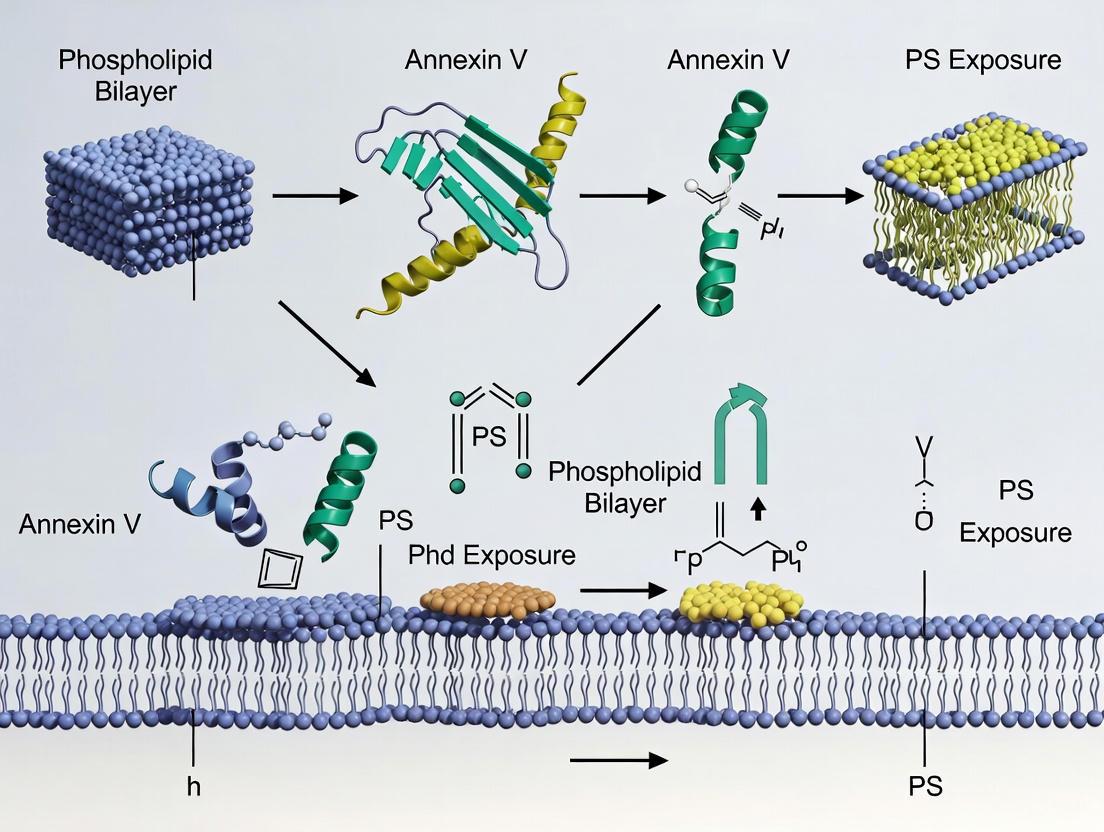
This article provides a comprehensive overview of the Annexin V assay, a cornerstone technique for detecting early-stage apoptosis in biomedical research.
How Annexin V Detects Early Apoptosis: A Comprehensive Guide for Biomedical Researchers
Abstract
This article provides a comprehensive overview of the Annexin V assay, a cornerstone technique for detecting early-stage apoptosis in biomedical research. It covers the foundational mechanism of phosphatidylserine externalization and Annexin V's calcium-dependent binding, detailed flow cytometry and microscopy protocols for application in drug screening and toxicology, common troubleshooting scenarios for optimization, and a comparative analysis with other apoptosis detection methods like TUNEL and caspase assays. Tailored for researchers, scientists, and drug development professionals, this guide synthesizes current methodologies to enable robust, reproducible apoptosis analysis in diverse experimental contexts, from basic research to pre-clinical studies.
The Cellular Mechanism: Unraveling Phosphatidylserine Externalization in Early Apoptosis
The externalization of phosphatidylserine (PS) to the outer leaflet of the plasma membrane is a defining biochemical hallmark of early apoptosis. This loss of membrane asymmetry serves as a universal "eat-me" signal, enabling the specific detection of programmed cell death before other morphological changes occur. Within the context of broader apoptosis research, Annexin V, a 35-36 kDa calcium-dependent phospholipid-binding protein, has emerged as the quintessential molecular probe for identifying this event due to its high affinity for PS. This technical guide details the mechanisms, methodologies, and applications of Annexin V-based detection, providing researchers and drug development professionals with a comprehensive framework for studying early apoptotic processes in diverse experimental settings.
The Biological Basis of Membrane Asymmetry in Apoptosis
Physiological Membrane Organization
In viable, healthy cells, membrane phospholipids are distributed asymmetrically across the lipid bilayer. Sphingomyelin and phosphatidylcholine predominantly reside in the outer leaflet, while the amino-phospholipids phosphatidylserine (PS) and phosphatidylethanolamine are actively maintained on the inner, cytoplasmic surface by specific ATP-dependent translocases [1] [2]. This asymmetric distribution is not merely structural; it has critical functional implications. The sequestration of PS, in particular, is essential for preventing unintended immune recognition and maintaining vascular hemostasis.
Early Apoptotic Signaling and Loss of Asymmetry
The initiation of apoptosis triggers a cascade of intracellular events that converge on the plasma membrane. A critical early event is the disruption of phospholipid asymmetry, characterized by the rapid translocation of PS from the inner to the outer leaflet. This process is mediated by the concerted action of two enzyme families:
- Scramblases that are activated and facilitate the bidirectional movement of phospholipids across the bilayer.
- Inactivation of ATP-dependent translocases (flippases) that normally maintain PS in the inner leaflet.
The resulting exposure of PS on the cell surface acts as a ligand for specific receptors on phagocytic cells, marking the apoptotic cell for prompt recognition and clearance without inciting an inflammatory response—a key feature distinguishing apoptosis from necrotic cell death [1] [2]. It is crucial to note that this loss of asymmetry is an early event, often preceding other classic hallmarks of apoptosis such as cell shrinkage, nuclear fragmentation, and plasma membrane permeabilization [3] [4].
Figure 1: Mechanism of PS Externalization During Early Apoptosis. In a normal cell (top), flippases actively maintain PS on the inner leaflet. During early apoptosis (bottom), an apoptotic signal inactivates flippases and activates scramblases, leading to PS externalization and subsequent Annexin V binding.
Annexin V as a Detection Tool for PS Externalization
Biochemical Properties of Annexin V
Annexin V is a natural human protein with a molecular weight of 35-36 kDa that exhibits high-affinity, calcium-dependent binding to phosphatidylserine [1] [5]. Its utility as a detection probe stems from this specific biochemical property. In the presence of calcium ions (Ca²⁺), Annexin V binds to PS with a dissociation constant (Kd) in the range of 10⁻¹⁰ to 10⁻⁹ M, demonstrating its remarkable specificity and avidity for the phospholipid [5]. When conjugated to a fluorophore or other detectable label, Annexin V serves as a powerful tool for identifying cells that have lost membrane asymmetry, without the need for cellular internalization.
The Critical Role of Viability Staining
A fundamental consideration in Annexin V-based apoptosis detection is the need to distinguish between early apoptotic cells and those in late-stage apoptosis or necrosis. This is achieved through the combined use of Annexin V and a cell-impermeant viability dye, such as propidium iodide (PI) or 7-Aminoactinomycin D (7-AAD) [1] [6].
- Viable, Non-Apoptotic Cells: Annexin V⁻ / Viability Dye⁻
- Early Apoptotic Cells: Annexin V⁺ / Viability Dye⁻ (intact membrane excludes dye)
- Late Apoptotic/Necrotic Cells: Annexin V⁺ / Viability Dye⁺ (compromised membrane allows dye entry)
This differential staining is critical because the compromised plasma membranes of dead or dying cells allow Annexin V to access PS on the inner leaflet, potentially leading to false-positive identification of apoptosis [1]. The combination of these probes enables precise quantification of cell populations at different stages of death.
Quantitative Data and Detection Modalities
Performance Characteristics of Annexin V Assays
The utility of Annexin V in experimental apoptosis research is evidenced by its robust performance metrics across different platforms and applications.
Table 1: Performance Characteristics of Annexin V-Based Apoptosis Detection
| Detection Method | Sensitivity | Key Advantage | Typical Fold-Change (Apoptotic vs. Normal) | Reference |
|---|---|---|---|---|
| Flow Cytometry | High | Quantitative, single-cell resolution | ~100-fold increase in fluorescence | [1] |
| Fluorescence Microscopy | Moderate-High | Spatial context preservation | Visual identification of membrane staining | [6] |
| In Vivo NIRF Imaging | Moderate | Non-invasive, whole-body imaging | 6-10 times higher for apoptotic cells | [5] |
| In Vivo SWIR Imaging | High | Superior tissue penetration & contrast | Clear signal in tumors post-therapy | [7] |
| MRI with V-USPIO | Moderate | Deep tissue penetration, anatomical context | Significant T2 reduction in apoptotic cells | [8] |
Advanced Molecular Probes and Conjugates
The versatility of Annexin V is demonstrated by its successful conjugation to a diverse array of detection moieties, enabling applications from basic research to preclinical imaging.
Table 2: Annexin V Conjugates and Their Research Applications
| Annexin V Conjugate | Excitation/Emission (nm) | Primary Application | Key Feature/Benefit | |
|---|---|---|---|---|
| Alexa Fluor 488 | 490/525 | Flow Cytometry, Microscopy | Bright signal, FITC filter compatibility | [1] |
| Pacific Blue | 410/455 | Flow Cytometry | Suitable for violet laser-equipped cytometers | [1] |
| PE (Phycoerythrin) | 565/578 | Flow Cytometry | High brightness, multi-color panel compatibility | [1] |
| APC (Allophycocyanin) | 650/660 | Flow Cytometry | Far-red emission, minimal autofluorescence | [1] |
| Cy5.5 | 683/707 | In Vivo NIRF Imaging | Deep tissue penetration, low background | [5] |
| ICG-C11 | 800/1030 | In Vivo SWIR Imaging | Emission >1000 nm, highest tissue penetration | [7] |
| Ultrasmall SPIO | N/A (MRI contrast) | Magnetic Resonance Imaging | Enables detection by T2-weighted MRI | [8] |
Experimental Protocols for Apoptosis Detection
Standard Flow Cytometry Protocol Using Annexin V-FITC and PI
This protocol, adapted from Abcam's technical resources and Thermo Fisher Scientific guidelines, provides a robust method for detecting early apoptosis in both suspension and adherent cell cultures [1] [6].
Principle: The calcium-dependent binding of Annexin V-FITC to externalized PS identifies early apoptotic cells, while propidium iodide (PI) stains the DNA of cells with compromised membrane integrity (late apoptotic/necrotic cells).
Reagents Required:
- 1X Annexin V Binding Buffer
- Annexin V-Fluorescent Conjugate
- Propidium Iodide (PI) solution
- Optional: 2% formaldehyde for fixation
Procedure:
- Induce Apoptosis: Treat cells with the desired apoptotic stimulus (e.g., chemotherapeutic agent, UV irradiation, serum starvation).
- Collect Cells:
- For suspension cells: Collect by centrifugation (1-5 × 10⁵ cells).
- For adherent cells: Gently trypsinize, then collect by centrifugation. Wash once with serum-containing media to inhibit trypsin.
- Wash Cells: Resuspend cell pellet in 1X PBS and centrifuge. Carefully aspirate supernatant.
- Staining:
- Resuspend cells in 500 µL of 1X Annexin V Binding Buffer.
- Add 5 µL of Annexin V-FITC.
- Add 5 µL of Propidium Iodide (PI).
- Gently vortex the cells and incubate for 5-15 minutes at room temperature in the dark.
- Analysis by Flow Cytometry:
- Analyze samples within 1 hour using a flow cytometer equipped with a 488 nm laser.
- Detect FITC (Annexin V) fluorescence in the FL1 channel (530/30 nm filter).
- Detect PI fluorescence in the FL2 or FL3 channel (575/26 nm or >670 nm filter).
Figure 2: Experimental Workflow for Annexin V/PI Apoptosis Assay. The standardized protocol for processing and staining cells for the detection of apoptosis by flow cytometry.
Data Interpretation and Gating Strategy
Proper analysis of Annexin V/PI data requires a systematic gating approach to distinguish different cell populations:
Viable Cells (Lower Left Quadrant): Annexin V⁻/PI⁻
- These cells show no significant staining with either dye, indicating intact membranes and no PS externalization.
Early Apoptotic Cells (Lower Right Quadrant): Annexin V⁺/PI⁻
- This population represents cells in early apoptosis, with PS externalization but maintained membrane integrity that excludes PI.
Late Apoptotic/Necrotic Cells (Upper Right Quadrant): Annexin V⁺/PI⁺
- These cells display both PS externalization and membrane permeabilization, characteristic of late-stage apoptosis or necrosis.
Damaged Cells (Upper Left Quadrant): Annexin V⁻/PI⁺
- This rare population typically represents cells that have undergone severe physical damage during processing or have suffered necrotic death without PS externalization.
Table 3: Troubleshooting Common Issues in Annexin V Staining
| Problem | Potential Cause | Solution |
|---|---|---|
| Weak Annexin V Signal | Insufficient calcium in buffer | Verify Ca²⁺ concentration in binding buffer (typically 2.5 mM) |
| High Background Staining | Excessive cell handling, membrane damage | Use gentler pipetting; avoid over-trypsinization of adherent cells |
| Inconsistent Results Between Replicates | Variable incubation times or temperatures | Standardize incubation conditions across all samples |
| Excessive PI⁺ Population | Over-induction of apoptosis leading to secondary necrosis | Titrate apoptotic inducer; reduce treatment duration |
| Poor Viability in Controls | Cell handling issues | Ensure optimal cell culture conditions; use healthy, log-phase cells |
Advanced Applications and Integration in Drug Development
In Vivo Apoptosis Imaging
The principles of Annexin V-based detection have been successfully translated to in vivo imaging applications, enabling non-invasive monitoring of therapeutic responses in real-time.
Near-Infrared Fluorescence (NIRF) Imaging: Cy5.5-labeled Annexin V (Ex/Em: 683/707 nm) allows detection of apoptosis in tumor-bearing mice, with signals 6-10 times higher in apoptotic versus normal tissue [5]. This enables monitoring of chemotherapeutic efficacy, as demonstrated with cyclophosphamide treatment showing 2-3-fold higher signal in treated tumors [5].
Shortwave-Infrared (SWIR) Imaging: Novel probes like ICG-C11-conjugated Annexin V (Ex/Em: 800/1030 nm) provide superior tissue penetration and significantly higher signal-to-background ratios. This technology has enabled long-term imaging of tumor apoptosis over approximately two weeks in living mice, offering unprecedented capabilities for longitudinal studies of treatment response [7].
Magnetic Resonance Imaging (MRI): Annexin V-conjugated ultrasmall superparamagnetic iron oxide (V-USPIO) particles induce detectable T2 signal changes in apoptotic tissues. In pilot studies, the post/pre-signal intensity ratio on T1-weighted imaging was 1.46 for Annexin V-USPIO compared to 1.17 for unconjugated USPIO, confirming specific apoptosis detection [8].
The Scientist's Toolkit: Essential Research Reagents
Table 4: Key Research Reagent Solutions for Annexin V-Based Apoptosis Detection
| Reagent/Category | Function | Example Products/Formats | |
|---|---|---|---|
| Recombinant Annexin V | Core binding protein for PS detection | Stand-alone conjugates (Alexa Fluor, eFluor dyes) | [1] |
| Viability Dyes | Distinguish membrane integrity | Propidium Iodide (PI), 7-AAD, SYTOX Green, Fixable Viability Dyes | [1] [6] |
| Calcium-Containing Binding Buffer | Enables Annexin V-PS interaction | 1X Annexin V Binding Buffer (commercially available as concentrated solution) | [1] [6] |
| Integrated Detection Kits | Optimized reagent combinations | Annexin V Apoptosis Detection Kits (include Annexin V conjugate, viability dye, buffer) | [1] [9] |
| Positive Control Inducers | Validate assay performance | Camptothecin, Cisplatin, Etoposide, Staurosporine | [1] [10] |
Critical Considerations and Limitations
Specificity Challenges and False Positives
While Annexin V staining is a powerful tool for apoptosis detection, researchers must be aware of its limitations and potential confounding factors:
Reversible Nature of PS Externalization: Research by Hammill et al. demonstrated that Annexin V staining due to loss of membrane asymmetry can be reversible and precede commitment to apoptotic death [3] [4]. In B cell lymphoma models, many Annexin V-positive cells remained viable and could resume growth and reestablish phospholipid asymmetry after removal of the apoptotic stimulus. This indicates that PS externalization represents a "point of no return" only in certain cellular contexts.
Non-Apoptotic PS Exposure: Phosphatidylserine externalization can occur under non-apoptotic conditions, including cell activation, platelet stimulation, and in certain pathological states such as widespread cutaneous necrosis from vascular damage [5]. These scenarios require careful experimental design with appropriate controls and complementary assays to confirm apoptotic death.
Membrane Integrity Requirements: The assay is highly sensitive to handling-induced membrane damage, which can cause non-specific Annexin V binding to internally located PS. This underscores the necessity of including viability dyes and handling cells with extreme care throughout the procedure [1].
Comparison with Alternative Apoptosis Detection Methods
The Annexin V assay occupies a specific niche in the apoptosis researcher's toolkit, with complementary strengths and weaknesses compared to other methodologies.
Compared to TUNEL Assay: While TUNEL detects DNA fragmentation (a later apoptotic event), Annexin V identifies earlier stages of apoptosis. Annexin V offers a faster, less complex workflow but does not provide information about the nuclear events of apoptosis [6].
Compared to Caspase Activity Assays: Caspase activation represents an upstream signaling event in apoptosis, while PS externalization is a downstream consequence. The combination of both approaches can provide a more comprehensive understanding of apoptotic progression [10].
Compared to Metabolic Assays (MTT/MTS): Metabolic assays measure cellular redox potential, which can reflect both proliferation arrest and cell death. Annexin V specifically detects the apoptotic process, making it more specific for cell death quantification, though it doesn't assess metabolic status [10].
The loss of plasma membrane asymmetry, marked by phosphatidylserine externalization, remains a definitive hallmark of early apoptosis that continues to provide critical insights into cellular physiology and drug mechanisms. Annexin V-based detection methods have evolved from simple flow cytometry applications to sophisticated in vivo imaging platforms, enabling researchers to interrogate apoptotic processes with increasing precision and in more biologically relevant contexts. As drug development advances toward more targeted therapies, the ability to accurately detect and quantify early apoptotic events becomes increasingly vital for assessing therapeutic efficacy and understanding mechanisms of action. While technical considerations regarding specificity and reversibility must be acknowledged, the Annexin V affinity assay remains an indispensable tool in the apoptosis researcher's arsenal, providing a window into the earliest stages of programmed cell death.
In viable eukaryotic cells, the plasma membrane exhibits a fundamental phospholipid asymmetry [11]. The amine-containing phospholipids, phosphatidylserine (PS) and phosphatidylethanolamine (PtdEtn), are predominantly confined to the inner, cytoplasmic leaflet. In contrast, phosphatidylcholine (PtdCho) and sphingomyelin are more concentrated in the outer, exoplasmic leaflet [11]. This asymmetrical distribution is actively maintained by three classes of phospholipid translocases: flippases, which move PS and PtdEtn from the outer to the inner leaflet in an ATP-dependent manner; floppases, which translocate phospholipids outward; and scramblases, which facilitate bidirectional, non-specific movement of phospholipids without ATP consumption [11].
The exposure of PS on the cell surface is a hallmark of early apoptosis, serving as a universal "eat-me" signal that triggers the phagocytic clearance of dying cells by macrophages [2] [12]. This event is so fundamental and well-conserved that it forms the basis for one of the most reliable methods to detect apoptotic cells: the annexin V-affinity assay [2]. This review details the molecular journey of PS from the inner to the outer leaflet during apoptosis and frames this process within the context of its critical application in early apoptosis detection for biomedical research.
Molecular Mechanisms of Phosphatidylserine Exposure
The externalization of PS is not a passive event but a tightly regulated process orchestrated by the coordinated inactivation and activation of specific enzymes.
Maintenance of Membrane Asymmetry: Flippases
In mammalian cells, the flippase activity responsible for maintaining PS asymmetry at the plasma membrane is primarily attributed to members of the P4-ATPase family, particularly ATP11A and ATP11C [11]. These enzymes, in complex with their obligatory chaperone CDC50A, constitutively translocate PS from the outer to the inner leaflet, thereby confining it to the cytoplasmic side [11]. The critical role of these flippases is demonstrated by the fact that CDC50A-deficient cells completely lose the ability to flip PS and constitutively expose it on their surface [11].
Disruption of Membrane Asymmetry: Inactivation of Flippases and Activation of Scramblases
During apoptosis, the exposure of PS is a caspase-dependent process [11] [13]. Two key molecular events occur:
Caspase-Mediated Inactivation of Flippases: The calcium-dependent phospholipid scramblase activity is activated, while the flippase is inactivated [14]. ATP11A and ATP11C are direct targets of caspase-3, which cleaves them at evolutionarily conserved recognition sites within their large cytoplasmic domains [11]. This cleavage inactivates their flippase function, preventing PS from being continually transported back to the inner leaflet. The importance of this event is underscored by the fact that cells expressing a caspase-resistant mutant of ATP11A/C fail to expose PS during apoptosis and are not engulfed by macrophages [11].
Activation of Scramblases: Concurrently, caspase activation leads to the cleavage and activation of Xkr-family scramblases, such as Xkr8 [11]. These proteins function to non-specifically scramble phospholipids between the two membrane leaflets, facilitating the outward movement of PS. The process also has a critical dependency on extracellular calcium; the presence of calcium is essential for PS appearance, with an ED50 of nearly 100 μM, and it directly inhibits the ATPase activity of flippases like ATP11A and ATP11C [11] [14].
Table 1: Key Molecular Regulators of Phosphatidylserine Exposure
| Molecule | Type | Function in Live Cells | Fate During Apoptosis | Impact on PS |
|---|---|---|---|---|
| ATP11A / ATP11C | P4-ATPase (Flippase) | Translocates PS from outer to inner leaflet [11] | Cleaved and inactivated by caspase-3 [11] | Prevents PS internalization |
| Xkr8 | Scramblase | Inactive [11] | Cleaved and activated by caspases [11] | Promotes PS externalization |
| TMEM16F | Ca²⁺-dependent Scramblase | Regulated by intracellular Ca²⁺ [11] | Activated by elevated Ca²⁺ [11] | Promotes PS externalization |
| Calcium (Ca²⁺) | Ion | Low cytosolic concentration [14] | Influx inhibits flippases, enables scramblases [11] [14] | Essential for PS exposure |
It is important to note that PS exposure can be a cell-type-specific event and does not always correlate perfectly with every apoptotic stimulus, suggesting the existence of alternative or complementary regulatory pathways [13].
The following diagram illustrates the sequential molecular events that lead to PS externalization during apoptosis.
Annexin V as a Detection Tool for Early Apoptosis
The specific, calcium-dependent affinity of annexin V for PS is the cornerstone of a widely used assay for detecting early apoptosis [2] [6].
Principle of the Annexin V Assay
Annexin V is a 35–36 kDa cellular protein that binds with high affinity to PS in a calcium-dependent manner [15]. In healthy, non-apoptotic cells, PS is located on the inner leaflet and is inaccessible to annexin V applied externally. During the early stages of apoptosis, the loss of membrane asymmetry and the externalization of PS allow fluorescently labeled annexin V conjugates (e.g., annexin V-FITC) to bind to the cell surface [6] [15]. This binding event enables the detection and quantification of apoptotic cells by flow cytometry or fluorescence microscopy [2].
To differentiate early apoptosis from late apoptosis or necrosis, the annexin V assay is typically combined with a viability dye, most commonly propidium iodide (PI) [6] [15]. PI is a DNA-binding dye that is excluded by cells with an intact plasma membrane. Therefore:
- Annexin V⁻ / PI⁻: Viable, healthy cells.
- Annexin V⁺ / PI⁻: Cells in early apoptosis (PS exposed, membrane intact).
- Annexin V⁺ / PI⁺: Cells in late apoptosis or necrosis (PS exposed, membrane compromised) [6] [15].
Detailed Experimental Protocol
The following is a standard protocol for detecting apoptosis using annexin V-FITC and PI, suitable for both suspension and adherent cells [6].
Stage 1 - Cell Staining
- Induce Apoptosis: Treat cells with the desired apoptotic stimulus (e.g., drug, radiation).
- Collect Cells: Harvest cells by centrifugation (1–5 x 10⁵ cells recommended). For adherent cells, gentle trypsinization is required, followed by a wash with serum-containing media to inhibit trypsin.
- Resuspend: Resuspend the cell pellet in 500 µL of 1X Annexin V Binding Buffer (typically containing 10 mM HEPES, 150 mM NaCl, 2.5 mM CaCl₂, pH 7.4).
- Stain: Add 5 µL of Annexin V-FITC and, if desired, 5 µL of Propidium Iodide (PI) solution.
- Incubate: Incubate at room temperature for 5 minutes in the dark.
Stage 2 - Analysis
- Flow Cytometry: Analyze the cells immediately using a flow cytometer.
- Annexin V-FITC: Ex/Em = 488 nm / ~516 nm (FL1 detector).
- PI: Ex/Em = 488 nm / ~617 nm (FL2 or FL3 detector).
- Fluorescence Microscopy:
- Place a drop of stained cell suspension on a slide and cover with a coverslip.
- Observe using a fluorescence microscope with a dual filter set for FITC (green) and rhodamine/Texas Red (red).
- Apoptotic cells show green fluorescence on the plasma membrane.
- Necrotic/late apoptotic cells show red nuclear staining and a green plasma membrane halo [6].
Table 2: The Scientist's Toolkit - Key Reagents for Annexin V Assay
| Reagent / Material | Function / Explanation | Critical Parameters |
|---|---|---|
| Annexin V-FITC Conjugate | Fluorescent probe that binds externally exposed PS [6]. | Calcium-dependent binding; must be stored and used in the dark. |
| Propidium Iodide (PI) | Membrane-impermeant nuclear dye to identify dead/necrotic cells [15]. | Distinguishes early apoptosis (Annexin V⁺/PI⁻) from late apoptosis/necrosis (Annexin V⁺/PI⁺). |
| Annexin V Binding Buffer | Provides optimal calcium concentration and pH for specific Annexin V-PS binding [6] [15]. | Must contain CaCl₂ (typically 2.5 mM); absence of calcium abolishes binding [14]. |
| Flow Cytometer / Microscope | Instrumentation for detection and quantification. | Allows multiparametric analysis of large cell populations (flow cytometry) or visual confirmation (microscopy). |
The logical workflow of the assay, from cell preparation to data interpretation, is summarized below.
Comparison with Other Apoptosis Detection Methods
The annexin V assay offers distinct advantages and limitations compared to other common apoptosis detection techniques [6].
Table 3: Comparison of Apoptosis Detection Methods
| Method | Target | Stage of Detection | Key Advantages | Key Limitations |
|---|---|---|---|---|
| Annexin V Staining | Externalized PS [6] | Early apoptosis (before membrane rupture) | Detects early event; live-cell analysis; quantitative with flow cytometry [6]. | Cannot distinguish apoptosis from other PS-exposing death (e.g., necroptosis) [6]; sensitive to calcium levels. |
| TUNEL Assay | DNA fragmentation [15] | Late apoptosis | Highly specific for apoptosis; can be used on fixed tissues. | Later event than PS exposure; requires cell fixation and DNA denaturation [6]. |
| Caspase Activity Assay | Activated caspases [6] | Early/Mid apoptosis | Provides mechanistic insight into apoptotic pathway. | Does not confirm cell death execution; activity may be transient. |
| Western Blot / ELISA | Cleaved caspase substrates (e.g., PARP) | Mid apoptosis | Confirms specific biochemical events in apoptosis. | End-point assay; requires cell lysis; no single cell analysis. |
Advanced Applications and Therapeutic Implications
The role of PS exposure extends far beyond a simple marker for research assays; it has significant therapeutic implications, particularly in oncology.
PS as a Dual-Role Biomarker in Cancer
In many cancer cells, the asymmetry of the plasma membrane is dysregulated, leading to a significant exposure of PS on the outer leaflet, even in the absence of apoptosis [12]. This phenomenon is not uniform; there is heterogeneity in PS exposure even within the same cancer type, which may indicate different susceptibilities to treatments [12]. For instance, cancer cells with low surface PS appear more sensitive to conventional chemotherapy and radiotherapy, whereas cells with higher surface PS are more vulnerable to PS-targeting therapies [12]. Furthermore, PS exposure on tumor cells and the associated vasculature can create an immunosuppressive tumor microenvironment by shifting tumor-associated macrophages toward an anti-inflammatory (M2) phenotype [12].
PS-Targeting Imaging and Therapeutics
The specific exposure of PS on cancer cells and apoptotic tumor endothelial cells makes it an attractive biomarker for both diagnostic imaging and targeted therapy. Several agents are under investigation:
- Bavituximab: A chimeric monoclonal antibody that targets PS-bound complexes, acting as an immunomodulatory agent and currently in clinical trials for various cancers [12].
- SapC-DOPS (BXQ-350): A nanovesicle composed of saposin C and the phospholipid dioleoylphosphatidylserine, which selectively targets PS on tumor cells [12].
- Annexin V-based Imaging: Radiolabeled or fluorescently tagged annexin V has been used in pre-clinical and clinical studies to image tumor apoptosis following chemo- or radiotherapy, providing a non-invasive method to monitor treatment efficacy [12]. However, its short blood half-life (3-7 minutes) has prompted the development of alternatives like PS-targeting antibodies (e.g., PGN635) with longer half-lives for improved imaging [12].
The translocation of phosphatidylserine from the inner to the outer leaflet of the plasma membrane is a pivotal event in the execution of apoptosis, resulting from the precise caspase-mediated inactivation of flippases and concurrent activation of scramblases. This biological phenomenon provides the fundamental basis for the annexin V-binding assay, a cornerstone technique in cell biology that allows for the sensitive and quantitative detection of early apoptotic cells. The utility of understanding this process extends beyond basic research, fueling innovative diagnostic and therapeutic strategies, particularly in cancer, that leverage PS as a unique biomarker on the surface of diseased cells.
Annexin V is a 35-36 kDa calcium-dependent phospholipid-binding protein that has become a cornerstone in biomedical research for detecting early apoptotic cells. Its high affinity for phosphatidylserine (PS), a membrane phospholipid that becomes externalized during early apoptosis, provides researchers with a powerful tool for quantifying programmed cell death. This technical guide explores the biochemical properties of annexin V, its mechanism of action, and its vital applications in flow cytometry-based apoptosis detection. Within the context of a broader thesis on apoptosis detection research, we examine how annexin V-based methodologies have revolutionized our understanding of cell death mechanisms in diverse fields including cancer biology, neurobiology, and drug development. The comprehensive protocols, quantitative data summaries, and technical visualizations presented herein offer researchers and drug development professionals the essential knowledge for implementing and optimizing annexin V-based apoptosis assays in their experimental workflows.
Annexin V is a human vascular anticoagulant protein with a molecular weight of 35-36 kDa that functions as a calcium-dependent phospholipid-binding protein with particular affinity for phosphatidylserine (PS) [16]. Under physiological conditions, PS is predominantly located on the cytoplasmic surface of the plasma membrane, maintaining membrane asymmetry through the action of specific translocases and flippases [17]. However, during the early stages of apoptosis, this membrane asymmetry collapses, and PS becomes translocated to the outer leaflet of the plasma membrane, facing the extracellular environment [16]. This externalized PS serves as an "eat-me" signal to macrophages, facilitating the phagocytic clearance of dying cells without inducing inflammation [17] [18].
The discovery that annexin V could bind with high affinity to this externalized PS, with dissociation constants in the nanomolar range, paved the way for its application as a specific biochemical marker for early apoptosis [18]. The binding is strictly calcium-dependent, requiring Ca²⁺ concentrations typically between 2.5-5 mM in experimental buffers [17] [6]. This calcium dependency stems from structural changes in annexin V where calcium binding exposes tryptophan residues and enhances phospholipid binding capacity [19]. Beyond its research applications, annexin V may have natural functions in membrane-related processes including inhibition of blood coagulation [19].
Biochemical Mechanism of Action
Calcium-Dependent Phospholipid Binding
The molecular interaction between annexin V and phosphatidylserine is fundamentally regulated by calcium ions, which induce conformational changes essential for membrane binding. Biophysical studies utilizing intrinsic tryptophan fluorescence have demonstrated that calcium titration produces a significant red shift in the wavelength of maximal emission to approximately 345 nm, accompanied by increased exposure to aqueous quenchers like acrylamide [19]. This indicates that calcium binding induces structural rearrangements in annexin V that increase solvent accessibility of its tryptophan residues, facilitating interaction with phospholipid membranes.
The Stern-Volmer quenching constant, which quantifies fluorophore exposure to solvent, increases dramatically from 5.2 M⁻¹ for annexin V alone to 36 M⁻¹ for the calcium-bound form, confirming substantial conformational changes that enable phospholipid binding [19]. Half-maximal effects for these calcium-induced changes occur at approximately 3 mM Ca²⁺, highlighting the calcium concentration dependency of this molecular rearrangement [19]. These biophysical properties underlie annexin V's utility as a sensitive probe for detecting apoptosis through PS externalization.
Table 1: Biophysical Properties of Annexin V in Calcium and Phospholipid Binding
| Parameter | Value | Experimental Conditions | Significance |
|---|---|---|---|
| Calcium Concentration for Half-Maximal Effect | ~3 mM | In absence of phospholipid | Indicates calcium sensitivity for conformational change |
| Stern-Volmer Quenching Constant (No Ca²⁺) | 5.2 M⁻¹ | Acrylamide quenching | Limited aqueous exposure of tryptophan |
| Stern-Volmer Quenching Constant (With Ca²⁺) | 36 M⁻¹ | Acrylamide quenching | Full exposure of tryptophan indicating conformational change |
| Dissociation Constant for PS | Nanomolar range | Calcium-dependent binding | High affinity for phosphatidylserine |
| Molecular Weight | 35-36 kDa | Human protein | Optimal size for membrane binding without excessive steric hindrance |
Structural Basis for Phosphatidylserine Recognition
Annexin V recognizes and binds to phosphatidylserine through a specific interaction motif that becomes accessible only in the presence of calcium ions. The protein's structure contains multiple calcium-binding sites that coordinate with the phospholipid head groups, creating a tight association with membranes containing externalized PS. Binding to both negatively charged and zwitterionic phospholipids is accompanied by a very large increase in fluorescence emission intensity, a red shift, and low exposure to acrylamide, indicating insertion into a hydrophobic environment [19].
This specific recognition mechanism allows annexin V to distinguish between apoptotic cells with externalized PS and healthy cells with PS maintained primarily on the inner membrane leaflet. The specificity for PS over other phospholipids makes it an ideal marker for detecting the early stages of apoptosis, before loss of membrane integrity occurs. The calculated concentrations of Ca²⁺ near the surface of negatively charged vesicles suggest that the exposure of tryptophan by Ca²⁺ binding to annexin V is sufficient for binding of the protein to various membrane compositions [19].
Annexin V in Apoptosis Detection
Principle of Early Apoptosis Detection
The application of annexin V for apoptosis detection capitalizes on the fundamental membrane rearrangement that occurs during early programmed cell death. In viable, healthy cells, phosphatidylserine is actively maintained on the inner leaflet of the plasma membrane by ATP-dependent translocases [17] [16]. During early apoptosis, this enzymatic regulation collapses, and scramblases facilitate the translocation of PS to the outer membrane leaflet, while simultaneously, translocase activity decreases [17]. This loss of membrane asymmetry represents one of the earliest detectable events in apoptosis, occurring before DNA fragmentation and loss of membrane integrity [6].
Fluorescently labeled annexin V binds specifically to these externalized PS residues in a calcium-dependent manner, providing a sensitive marker for identifying cells in early apoptosis [16] [6]. The difference in fluorescence intensity between apoptotic and nonapoptotic cells stained with fluorescent annexin V conjugates, as measured by flow cytometry, is typically about 100-fold, enabling clear discrimination between these populations [16]. This robust signal-to-noise ratio makes annexin V-based detection one of the most reliable methods for quantifying early apoptosis in heterogeneous cell populations.
Distinguishing Apoptosis Stages with Propidium Iodide
While annexin V alone can identify early apoptotic cells, its combination with propidium iodide (PI) enables comprehensive discrimination between viable, early apoptotic, late apoptotic, and necrotic cell populations [17]. Propidium iodide is a membrane-impermeable DNA-binding dye that is excluded by intact plasma membranes but penetrates cells with compromised membrane integrity [17]. In viable cells with intact membranes, PI cannot penetrate and therefore does not stain these cells [17].
This dual-staining approach creates a powerful analytical system where researchers can categorize cells into distinct populations based on their annexin V/PI staining profiles:
- Viable Cells: Annexin V negative / PI negative (intact membrane, no PS externalization)
- Early Apoptotic Cells: Annexin V positive / PI negative (PS externalized but membrane intact)
- Late Apoptotic or Necrotic Cells: Annexin V positive / PI positive (PS externalized and membrane compromised)
- Necrotic Cells: Annexin V negative / PI positive (membrane damaged without PS externalization) [17]
This multiparametric analysis provides researchers with a dynamic view of cell death progression, enabling more nuanced interpretation of experimental outcomes in toxicity studies, drug screening, and mechanistic investigations of cell death pathways.
Experimental Protocols and Methodologies
Standard Annexin V/Propidium Iodide Staining Protocol
The following protocol provides a standardized approach for annexin V/PI staining optimized for flow cytometry analysis, compiled from established methodologies [17] [6]:
Materials Needed
- Cells: Cultured cells or cell suspension from tissues (0.5-1 × 10⁶ cells per sample)
- Annexin V Conjugate: Fluorescently labeled annexin V (e.g., Annexin V-FITC, Annexin V-PE, Annexin V-APC)
- Propidium Iodide (PI): Stock solution, typically at 50 µg/mL
- Binding Buffer: Calcium-containing buffer (e.g., 10 mM HEPES, 140 mM NaCl, 2.5 mM CaCl₂, pH 7.4)
- Flow Cytometer: Equipped with appropriate lasers and filters for the chosen fluorochromes
- Controls:
- Unstained cells for setting flow cytometer baseline
- Single-stained controls (cells stained with only annexin V or PI) for compensation
- Positive control (cells treated to induce apoptosis, e.g., with staurosporine or camptothecin)
- Negative control (untreated healthy cells)
Step-by-Step Procedure
Cell Preparation:
- Induce apoptosis using desired method (e.g., chemical inducers, radiation, growth factor withdrawal)
- Harvest cells:
- For adherent cells: Detach gently using non-enzymatic methods (e.g., EDTA) to preserve membrane integrity
- For suspension cells: Collect directly by centrifugation
- Wash cells twice with cold PBS by centrifuging at 300 × g for 5 minutes at room temperature
- Resuspend cells in binding buffer at a concentration of 1 × 10⁶ cells/mL
Staining:
- Transfer 100 µL of cell suspension (1 × 10⁵ cells) into flow cytometry tubes
- Add 5 µL of annexin V conjugate (volume may vary by manufacturer)
- Add 5 µL of PI solution (50 µg/mL stock)
- Gently mix by vortexing or tapping tubes
Incubation:
- Incubate at room temperature for 15 minutes in the dark
- For time-course experiments, keep samples on ice to prevent further apoptosis progression
Analysis:
- Add 400 µL of binding buffer to each tube
- Analyze samples promptly using a flow cytometer within one hour
- Use FITC signal detector (usually FL1) for annexin V-FITC (Ex = 488 nm, Em = 530/30 nm)
- Use phycoerythrin emission signal detector (usually FL2) for PI staining (Ex = 488 nm, Em = 585/42 nm)
Critical Controls and Optimization
Appropriate controls are essential for accurate data interpretation in annexin V/PI assays. The following controls should be included in every experiment:
- Unstained Control: Determines background fluorescence and autofluorescence
- Single-Stained Controls: Cells stained with only annexin V or only PI for compensation settings
- Fluorescence Minus One (FMO) Controls: Helps in setting gates by staining with all fluorochromes except one
- Positive Control: Cells induced to undergo apoptosis (e.g., with 10 µM camptothecin for 4 hours) to validate staining protocol
- Negative Control: Healthy, untreated cells to establish baseline staining
Optimization steps should include:
- Calcium Concentration Verification: Ensure binding buffer contains adequate Ca²⁺ (typically 2.5 mM)
- Time Management: Analyze samples promptly after staining (within 1 hour)
- Photoprotection: Protect fluorochromes from light to prevent photobleaching
- Cell Handling: Use gentle processing methods to avoid mechanical induction of apoptosis or necrosis
Research Reagent Solutions
Table 2: Essential Research Reagents for Annexin V-Based Apoptosis Detection
| Reagent | Function | Key Characteristics | Example Applications |
|---|---|---|---|
| Annexin V Conjugates | Binds externalized PS | Calcium-dependent, multiple fluorophore options (FITC, PE, APC, Alexa Fluor dyes) | Flow cytometry, microscopy [16] |
| Propidium Iodide (PI) | Viability stain | Membrane-impermeant DNA dye, enters cells with compromised membranes | Distinguishing early vs. late apoptosis [17] |
| SYTOX Green | Alternative viability dye | Membrane-impermeant nucleic acid stain, higher fluorescence intensity than PI | Flow cytometry with annexin V-APC conjugates [16] |
| 7-AAD | Viability dye for fixed cells | DNA intercalator, penetrates cells with compromised membranes | Apoptosis detection where fixation is required [16] |
| Annexin Binding Buffer | Provides optimal binding conditions | Contains calcium (typically 2.5 mM CaCl₂), isotonic, appropriate pH | Essential for annexin V-PS binding [17] [6] |
| Fixable Viability Dyes | Cell viability assessment | Covalently bind to amines in dead cells, compatible with fixation | Multiparametric flow cytometry panels [16] |
Advanced Applications and Technical Considerations
Multiparametric Flow Cytometry Applications
The combination of annexin V staining with additional markers enables comprehensive cellular analysis beyond basic apoptosis detection. Recent advances permit simultaneous tracking of protein expression changes in defined cell subpopulations during apoptosis, providing key insights into signaling regulation and mechanisms underlying apoptotic responses to cytotoxic treatments [20]. For example, researchers can combine annexin V-FITC/PI staining with APC-conjugated antibody labeling to simultaneously assess apoptosis induction and track specific protein expression (e.g., CD44 in MDA-MB-231 breast cancer cells) from viable to apoptotic cells [20].
This multiparametric approach holds significant potential for elucidating signaling networks involved in apoptosis and therapeutic resistance across various cellular models. The protocol requires appropriate filter selection, compensation controls, and gating strategies to ensure accurate interpretation of complex data sets [20]. By integrating annexin V staining with immunophenotyping, researchers can investigate cell-type-specific apoptosis responses in heterogeneous populations, such as mixed immune cell cultures or tumor microenvironments.
In Vivo Apoptosis Detection
Annexin V-based apoptosis detection has been successfully adapted for in vivo applications using near-infrared fluorescent probes such as IVISense Annexin-V 750 [18]. This probe consists of annexin V conjugated to a NIR fluorophore (Ex/Em: 755/772 nm), enabling non-invasive visualization and quantification of apoptosis in live animal models [18]. The general procedure involves intravenous injection of the probe followed by imaging 2 hours post-injection, with clearance from tissues occurring after approximately 3 days, allowing for repeat injection and longitudinal studies [18].
This technology facilitates investigation of apoptosis in various pathological conditions including cancer, stroke, atherosclerosis, myocardial ischemia, and liver toxicity [18]. In oncology research, it enables evaluation of chemotherapeutic efficacy through quantification of tumor apoptosis following treatment. For example, studies with CY-treated HT-29 tumor xenograft mice demonstrated significantly higher annexin V signal in treated tumors compared to controls, correlating with increased apoptosis confirmed by ex vivo TUNEL staining [18].
Troubleshooting and Technical Limitations
Despite its widespread utility, researchers should be aware of several technical considerations and limitations associated with annexin V-based apoptosis detection:
- False Positives: Compromised plasma membranes of dead cells provide a path for annexin V protein to pass through to the interior of the cell where it can bind PS in the inner leaflet [16]. Always include viability dyes like PI to distinguish true early apoptosis from false positives.
- Calcium Dependency: The binding is strictly calcium-dependent, requiring precise buffer conditions [6]. Always verify calcium concentration in binding buffers.
- Reversible Binding: Annexin V binding is reversible, which may affect signal stability during extended analysis [6].
- Multiple Cell Death Pathways: The assay cannot distinguish between apoptosis and other forms of PS-exposing cell death, such as necroptosis [6]. Complementary assays may be needed for definitive mechanism identification.
- Limited Pathway Information: The method does not provide information on upstream apoptotic pathways or caspase activation [6].
Common issues and solutions include:
- Weak Fluorescence: May result from insufficient annexin V concentration or expired reagents
- High Background: Often stems from inadequate washing or non-specific binding; optimize washing steps
- Excessive Annexin V+/PI+ Cells: May indicate over-induced apoptosis leading to secondary necrosis; titrate apoptosis induction conditions
Annexin V remains an indispensable tool in apoptosis research, providing researchers with a robust, sensitive method for detecting early programmed cell death through its calcium-dependent binding to externalized phosphatidylserine. The continuous refinement of annexin V-based protocols, including multiparametric flow cytometry applications and in vivo imaging approaches, has significantly expanded our ability to investigate cell death mechanisms in health and disease. When properly implemented with appropriate controls and technical considerations, annexin V staining offers unparalleled insights into cellular responses to diverse stimuli, playing a crucial role in drug development, toxicology, and basic biological research. As our understanding of cell death pathways evolves, annexin V-based methodologies continue to adapt, maintaining their position as a cornerstone technology in cellular biology.
In the fields of cell biology, oncology, and drug development, the accurate differentiation between the various modes of cell death is not merely an academic exercise but a fundamental requirement for interpreting experimental results and developing therapeutic strategies. The physiological context of cell death has profound implications for tissue homeostasis, immune responses, and the efficacy and toxicity of pharmaceutical compounds. Early apoptosis and necrosis represent two distinct forms of cell death with divergent morphological and biochemical characteristics, yet their experimental discrimination posed significant challenges until the exploitation of a key cellular event: the loss of membrane asymmetry. This technical guide delves into the central role of plasma membrane integrity in distinguishing these processes, with a specific focus on the mechanistic basis of Annexin V-based detection methods. Framed within broader apoptosis research, this distinction provides researchers with a powerful tool for quantifying cell death dynamics in response to various stimuli, from chemotherapeutic agents to environmental stressors.
Fundamental Biological Principles
Defining the Pathways of Cell Death
Apoptosis, or programmed cell death, is a highly regulated, energy-dependent process crucial for embryonic development, maintenance of tissue homeostasis, and the elimination of damaged or infected cells [21]. It is characterized by a cascade of molecular events leading to distinctive morphological changes, including cell shrinkage, chromatin condensation, DNA fragmentation, and ultimately, the packaging of cellular contents into membrane-bound vesicles (apoptotic bodies) for phagocytosis by neighboring cells. This orderly disposal prevents the release of cellular contents and avoids an inflammatory response.
In stark contrast, necrosis has traditionally been viewed as an accidental, unregulated form of cell death resulting from overwhelming physical, chemical, or mechanical insult. It is characterized by cellular swelling, rupture of the plasma membrane, and the spilling of intracellular components into the extracellular space, which frequently triggers a potent inflammatory response [22]. Importantly, recent research has elucidated forms of programmed necrosis, such as necroptosis, which blur this simple dichotomy but remain distinguishable by specific molecular pathways.
The Phosphatidylserine "Flip-Flop": A Hallmark of Early Apoptosis
The plasma membrane of viable cells maintains a strict phospholipid asymmetry. The inner leaflet is enriched with phosphatidylserine (PS), a negatively charged phospholipid, while the outer leaflet predominantly presents phosphatidylcholine and sphingomyelin [1] [23]. This asymmetric distribution is actively maintained by ATP-dependent translocases.
A critical and early event in the apoptotic cascade is the collapse of this lipid asymmetry. The activation of scramblases and the inactivation of flippases lead to the rapid translocation of PS from the inner to the outer leaflet of the plasma membrane, a phenomenon often termed the "PS flip-flop" [24] [21]. It is crucial to note that during early apoptosis, the integrity of the plasma membrane remains largely intact. The externalized PS serves as a universal "eat-me" signal for phagocytes, facilitating the clean, immunologically silent removal of the dying cell. This exposure of PS, while the membrane remains impermeable to vital dyes, is the definitive biochemical feature that allows for the specific detection of early apoptotic cells.
Membrane Integrity as the Defining Differential
The condition of the plasma membrane provides the fundamental criterion for distinguishing early apoptosis from necrosis, as summarized in the table below.
Table 1: Key Differential Features of Early Apoptosis and Necrosis
| Feature | Early Apoptosis | Necrosis |
|---|---|---|
| Regulation | Programmed, regulated | Accidental, unregulated (or programmed in necroptosis) |
| PS Externalization | Yes, key early event | Variable; can occur late or due to membrane rupture |
| Plasma Membrane Integrity | Intact | Compromised or ruptured |
| Inflammatory Response | No (non-inflammatory) | Yes (pro-inflammatory) |
| Cell Morphology | Shrinkage, blebbing | Swelling, lysis |
| Primary Detection Signal | PS on cell surface | Loss of membrane integrity |
The following diagram illustrates the critical differences in membrane status between a viable cell, an early apoptotic cell, and a necrotic cell.
Diagram 1: Membrane status across cell states.
The Annexin V Detection Methodology
Mechanistic Basis of Annexin V Binding
The human protein Annexin V is a 35-36 kDa phospholipid-binding protein with a high, calcium-dependent affinity for phosphatidylserine (PS) [1] [24]. Its binding to other membrane phospholipids, such as phosphatidylcholine, is minimal. This specific affinity makes it an ideal molecular probe for detecting the PS externalization that occurs during early apoptosis. In a standard assay, Annexin V is conjugated to a fluorochrome (e.g., FITC, Alexa Fluor 488, PE), allowing for its detection via flow cytometry or fluorescence microscopy.
The binding is strictly Ca²⁺-dependent, necessitating the use of Annexin V binding buffers that provide optimal calcium concentrations to facilitate this interaction [24]. When added to a cell suspension, the fluorescent Annexin V conjugate binds to the PS molecules now exposed on the outer surface of apoptotic cells. The resulting fluorescence signal is a direct measure of PS externalization. The difference in fluorescence intensity between apoptotic and non-apoptotic cells stained in this manner is typically very robust, often around 100-fold as measured by flow cytometry [1].
The Essential Role of Viability Stains for Specificity
A critical caveat of Annexin V staining is that it cannot, by itself, distinguish between early apoptosis and necrosis. This is because any event that compromises the integrity of the plasma membrane—such as necrosis or the late stages of apoptosis—will allow Annexin V to pass through and access the PS on the inner leaflet of the membrane, leading to a positive signal [1]. This potential for false positives is overcome by the simultaneous use of a live cell-impermeant viability stain.
Commonly used viability stains include Propidium Iodide (PI), 7-Aminoactinomycin D (7-AAD), and SYTOX Green [1] [24] [21]. These dyes are normally excluded from cells with intact plasma membranes. However, they readily enter cells with compromised membranes, intercalate into nucleic acids, and produce a strong fluorescent signal.
The power of the assay lies in the bivariate analysis of these two parameters:
- Annexin V indicates the loss of membrane asymmetry (apoptosis).
- Viability Dye indicates the loss of membrane integrity (necrosis or late apoptosis).
This combination allows researchers to resolve four distinct cell populations within a heterogeneous sample.
Experimental Protocol and Workflow
The following section provides a detailed methodology for performing an Annexin V assay, using Annexin V-FITC and Propidium Iodide (PI) as a canonical example.
Detailed Staining Protocol for Flow Cytometry
The protocol below is adapted from established methods [24] and is applicable to both suspension and adherent cell cultures.
Table 2: Key Research Reagent Solutions
| Reagent | Function | Critical Considerations |
|---|---|---|
| Annexin V-Fluorochrome Conjugate | Binds externalized PS to detect apoptosis. | Choice of fluorochrome (e.g., FITC, PE, APC) must be compatible with flow cytometer laser and filter sets [1]. |
| Propidium Iodide (PI) / 7-AAD / SYTOX Green | Viability stain; labels DNA in cells with compromised membranes. | Must be added to live cells; titrate to optimal concentration to avoid background staining [1] [24]. |
| 1X Annexin V Binding Buffer | Provides Ca²⁺ essential for Annexin V-PS binding and maintains physiological pH. | Must contain Ca²⁺; PBS cannot be substituted as it lacks calcium [24]. |
| Cell Culture Media & Washing Buffers | For cell preparation and washing. | Serum should be avoided during staining as it can contain PS and compete for binding. |
Step-by-Step Procedure:
Induction and Harvest:
- Induce apoptosis in your cell population (e.g., using chemotherapeutic agents like camptothecin, UV irradiation, or growth factor withdrawal) [1].
- For suspension cells: Collect 1-5 x 10⁵ cells by centrifugation (e.g., 300 x g for 5 minutes). Gently resuspend the cell pellet in a small volume of PBS.
- For adherent cells: Gently trypsinize the cells, being cautious to avoid mechanical or enzymatic damage that can cause false positives. Quench trypsin with serum-containing media. Collect cells by centrifugation and wash once with PBS [24].
Staining:
- Resuspend the cell pellet thoroughly in 100-500 µL of 1X Annexin V Binding Buffer.
- Add the recommended volume of Annexin V-Fluorochrome conjugate (e.g., 5 µL).
- Add the recommended volume of viability dye (e.g., 5 µL of PI).
- Incubate the cell suspension for 10-15 minutes at room temperature (20-25°C) in the dark to prevent photobleaching of the fluorochromes [24] [21].
Analysis:
- Within 30-60 minutes of staining, analyze the cells using a flow cytometer.
- For FITC and PI, use an excitation wavelength of 488 nm. Measure FITC (Annexin V) emission with a standard FITC detector (e.g., 530/30 nm bandpass filter) and PI emission with a phycoerythrin detector (e.g., 585/42 nm or 617 nm bandpass filter) [1] [24].
- The data is typically presented as a dot plot, analyzing Annexin V fluorescence on one axis (often X) and PI fluorescence on the other (often Y).
The following workflow diagram summarizes the key experimental steps from cell preparation to final data analysis.
Diagram 2: Experimental workflow for Annexin V staining.
Data Interpretation and Gating Strategy
The analysis of the dual-parameter flow cytometry data is fundamental to the assay. Cells are categorized into four distinct populations based on their staining profile:
Table 3: Quantitative Data Interpretation in Annexin V/PI Assay
| Cell Population | Annexin V Signal | PI Signal | Interpretation | Membrane Status |
|---|---|---|---|---|
| Viable/Healthy | Negative | Negative | Healthy, non-apoptotic cells. | Intact, asymmetric. |
| Early Apoptotic | Positive | Negative | Cells undergoing early apoptosis. | Asymmetry lost, integrity intact. |
| Late Apoptotic / Necrotic | Positive | Positive | Late-stage apoptotic or necrotic/necroptotic cells. | Integrity compromised. |
| Necrotic/Damaged | Negative | Positive | Cells damaged during preparation; or primary necrosis. | Integrity compromised, PS not externalized. |
This gating strategy is powerfully illustrated in published research. For example, one study showed Jurkat cells treated with camptothecin exhibited a significant increase in the Annexin V-positive/PI-negative (early apoptotic) population compared to untreated controls [1]. Another study on mouse thymocytes clearly demonstrated these distinct populations, with early apoptotic cells appearing in the Annexin V-positive, viability dye-negative quadrant [1].
Advanced Applications and Research Context
Clinical and Diagnostic Applications
The Annexin V assay has transcended its role as a pure research tool and is finding applications in clinical and diagnostic contexts. Its utility in differentiating disease states based on apoptotic indices is increasingly recognized. A compelling 2025 study on ovarian tumors demonstrated that the Annexin V apoptotic index could effectively discriminate between benign serous cystadenomas and malignant serous cystadenocarcinomas [25]. The study reported that at a cutoff value of 27.65%, the Annexin V index had a sensitivity of 90.0% and a specificity of 93.3% for predicting malignancy (AUC, 0.872). This highlights its potential as a cheap, fast, and easy ancillary method for diagnostic pathology [25].
Limitations and Important Considerations
Despite its widespread use, researchers must be aware of the limitations of the Annexin V assay:
- Primary Necrosis: Some forms of primary necrosis (e.g., necroptosis) can initially present with an Annexin V-positive/PI-negative profile before membrane rupture, mimicking early apoptosis [22]. The use of specific inhibitors, such as necrostatin-1 to inhibit RIP1 in necroptosis, can help discriminate this [22].
- Fixation Artifacts: Cells must be stained prior to fixation, as standard fixation methods permeabilize the membrane, allowing Annexin V to access internal PS and causing false positives [1] [24]. If fixation is necessary, specific alcohol-free, aldehyde-based methods must be used.
- Handling Effects: Overly aggressive trypsinization of adherent cells or mechanical shear stress during processing can damage the plasma membrane, leading to increased false-positive staining for both Annexin V and PI [24].
- Pathway Insensitivity: The assay detects the consequence of PS externalization but provides no direct information about the upstream signaling pathways (e.g., caspase activation, mitochondrial involvement) that led to apoptosis.
The critical distinction between early apoptosis and necrosis hinges on the fundamental biological difference of plasma membrane integrity. The translocation of phosphatidylserine to the outer leaflet, while the membrane remains impermeable to vital dyes, is the definitive hallmark of early apoptosis. The Annexin V binding assay, especially when combined with a viability dye like propidium iodide, provides a robust, relatively simple, and quantitative method to exploit this distinction. By enabling the resolution of viable, early apoptotic, and late apoptotic/necrotic populations, this methodology has become a cornerstone of modern cell death research. Its application, from basic mechanistic studies to emerging diagnostic applications, continues to provide invaluable insights into the dynamics of cell death in health, disease, and therapeutic intervention, solidifying its status as an indispensable tool in the scientist's toolkit.
From Principle to Practice: Annexin V Staining Protocols and Multiparametric Applications
The accurate detection of early apoptosis is a critical requirement in biomedical research, particularly in fields such as cancer biology, immunology, and drug development. Apoptosis, or programmed cell death, is a tightly regulated process essential for maintaining tissue homeostasis and eliminating damaged or harmful cells [26]. During the early phases of apoptosis, a fundamental biochemical event occurs: the loss of phospholipid asymmetry in the plasma membrane. Specifically, phosphatidylserine (PS), a membrane phospholipid normally confined to the inner leaflet of the plasma membrane in healthy cells, becomes translocated to the outer leaflet [1] [6]. This externalization of PS serves as a specific and readily detectable "eat-me" signal for phagocytic cells and provides a key molecular target for laboratory detection [26].
The core technology for identifying this event relies on a set of carefully optimized reagents. Annexin V, a natural human protein, binds with high affinity to PS in a calcium-dependent manner [27] [28]. By conjugating Annexin V to various fluorochromes, researchers can tag and identify cells in the early stages of apoptosis using techniques like flow cytometry and microscopy. This binding reaction requires a specific calcium-containing binding buffer to facilitate the interaction [29]. Furthermore, to distinguish early apoptotic cells from late-stage apoptotic or necrotic cells, a viability dye (such as propidium iodide or 7-AAD) is used concurrently. These dyes are excluded by the intact membranes of live and early apoptotic cells but penetrate cells that have lost membrane integrity, providing a crucial counter-stain for viability assessment [1] [30] [26]. Together, these three reagents form an indispensable toolkit for sensitive and specific detection of early apoptotic events, enabling the evaluation of drug efficacy, disease mechanisms, and cellular responses to various stimuli.
Core Reagent Specifications and Functions
The effective detection of early apoptosis hinges on three specialized reagents working in concert. Each component has a distinct and critical role in the assay system, and their specifications must be carefully considered for experimental success.
Annexin V Conjugates
Annexin V is a 35-36 kDa calcium-binding protein that serves as the primary detection agent in apoptosis assays. Its core function is to bind specifically to phosphatidylserine (PS) residues exposed on the outer leaflet of the cell membrane during early apoptosis [1] [6]. This binding is reversible and requires calcium ions, making it highly dependent on appropriate buffer conditions [28]. The protein itself is derived from the human vascular anticoagulant protein and shows minimal binding to other phospholipids like phosphatidylcholine and sphingomyelin, ensuring specificity for apoptotic cells [21].
For detection purposes, Annexin V is conjugated to various fluorochromes, allowing compatibility with different instrumentation and multi-parametric assays. The table below summarizes common Annexin V conjugates and their spectral properties:
Table 1: Common Annexin V Fluorophore Conjugates and Their Properties
| Fluorophore Conjugate | Excitation (Ex) Maxima (nm) | Emission (Em) Maxima (nm) | Common Laser Lines (nm) | Primary Application Notes |
|---|---|---|---|---|
| FITC | 490 / 494 [1] [6] | 525 / 518 [1] [6] | 488 [1] | Most common, compatible with standard FITC filters [1]. |
| PE | 565 [1] | 578 [1] | 488, 532, 561 [1] | Bright signal, good for low expressers [1]. |
| Alexa Fluor 488 | 490 / 499 [1] | 525 / 521 [1] | 488 [1] | Brighter and more photostable than FITC [1]. |
| APC | 650 [1] | 660 [1] | 633-637 [1] | Good for multicolor panels, requires red laser [1]. |
| Pacific Blue | 410 [1] | 455 [1] | 405 [1] | For violet laser-equipped cytometers [1]. |
| eFluor 450 | 346 [1] | 442 [1] | UV [1] | Not recommended with some fixable viability dyes [29]. |
| PE-Cyanine7 | 488 [1] | 767 [1] | 488 [1] | Good for tandem dyes in complex panels [1]. |
Binding Buffer
The binding buffer is not merely a diluent; it is an essential component that creates the precise chemical environment required for the Annexin V assay to function. Its primary roles are:
- Calcium Provision: It must contain a physiological concentration of calcium ions (Ca²⁺), typically around 2.5 mM, as the binding between Annexin V and phosphatidylserine is absolutely calcium-dependent [26] [28].
- pH Maintenance: It maintains a stable pH, usually 7.4, to preserve protein structure and binding affinity [26].
- Cell Viability: It is isotonic to maintain cell integrity during the staining procedure [29].
A critical technical consideration is that buffers containing EDTA, EGTA, or other calcium chelators must be strictly avoided during the staining steps, as they will sequester calcium and abrogate Annexin V binding [29]. The buffer is often provided as a 5X or 10X concentrate that requires dilution with distilled water before use [29].
Viability Dyes
Viability dyes are membrane-impermeant nucleic acid stains that are used in parallel with Annexin V to differentiate between early apoptosis and late-stage apoptosis or necrosis. Their fundamental property is the inability to cross intact plasma membranes.
Table 2: Common Viability Dyes for Annexin V Assays
| Viability Dye | Excitation (Ex) Maxima (nm) | Emission (Em) Maxima (nm) | Key Characteristics | Compatibility Notes |
|---|---|---|---|---|
| Propidium Iodide (PI) | 535 [1] [6] | 617 [1] [6] | Inexpensive, standard for many kits. Binds to DNA/RNA [27] [26]. | Added just before analysis; no wash step [29]. |
| 7-AAD (7-Aminoactinomycin D) | 546 [1] | 647 [1] | Binds preferentially to GC regions of DNA. Often used as an alternative to PI [30]. | Compatible with FITC- and PE-conjugated Annexin V [30]. |
| SYTOX Green | 503 [1] | 524 [1] | High DNA-binding affinity, >500-fold fluorescence enhancement upon binding [1]. | Useful with APC-conjugated Annexin V [1]. |
| SYTOX AADvanced | 546 [1] | 647 [1] | A proprietary dead cell stain with bright fluorescence [1]. | Used in kits with Pacific Blue Annexin V [1]. |
| Fixable Viability Dyes (FVDs) | Varies by dye (e.g., 506, 660, 780) [29] | Varies by dye [29] | Covalently bind to amines in dead cells; compatible with subsequent fixation/permeabilization [29]. | Must be used before Annexin V staining; FVD eFluor 450 is not recommended [29]. |
The combination of Annexin V and a viability dye allows for the clear discrimination of four cell populations in a single sample, which will be detailed in the experimental protocol section.
Biochemical Mechanism of Annexin V Binding
The detection of early apoptosis by Annexin V is based on a specific and well-characterized molecular interaction at the cell surface. In a viable, healthy cell, membrane phospholipids are distributed asymmetrically across the lipid bilayer. The inner cytoplasmic leaflet is enriched with phosphatidylserine (PS) and phosphatidylethanolamine, while the outer extracellular leaflet is rich in phosphatidylcholine and sphingomyelin [21] [26]. This asymmetry is actively maintained by ATP-dependent enzymes called "flippases" that transport PS from the outer to the inner leaflet [28].
During the initiation of apoptosis, this carefully maintained asymmetry collapses. Key events include:
- Inactivation of Flippases: The energy-dependent flippases become inactivated, halting the inward transport of PS.
- Activation of Scramblases: Concurrently, calcium-sensitive enzymes known as "scramblases" are activated. These enzymes facilitate the bidirectional movement of phospholipids across the membrane, resulting in the rapid translocation of PS to the outer leaflet [28].
This externalized PS serves as an "eat-me" signal for phagocytic cells in vivo, ensuring the clean and non-inflammatory removal of the apoptotic cell [1] [26]. In an experimental context, it provides a specific molecular target. Annexin V, a 35-36 kDa protein, has a high affinity for PS in the presence of physiological concentrations of calcium ions (Ca²⁺) [27] [28]. The calcium ions are believed to form a bridge between the protein and the negatively charged head groups of the PS molecules. When conjugated to a fluorophore, Annexin V effectively "tags" cells that have undergone this early apoptotic event, allowing for their detection and quantification.
It is crucial to note that the plasma membrane of an early apoptotic cell remains intact, preventing viability dyes like propidium iodide (PI) from entering. This forms the basis for the critical distinction between early apoptosis (Annexin V positive, PI negative) and late apoptosis/necrosis (Annexin V positive, PI positive), where the membrane integrity has been lost [27] [6] [26].
Detailed Experimental Protocol for Flow Cytometry
The following section provides a detailed, step-by-step protocol for detecting early apoptosis using Annexin V conjugates and a viability dye in a flow cytometry application. Adherence to this protocol is critical for generating reliable and reproducible data.
Materials and Reagent Preparation
- Cells: A single-cell suspension of the cells under investigation (e.g., cultured cells or primary cells).
- Annexin V Conjugate: Fluorophore-labeled Annexin V (e.g., Annexin V-FITC, Annexin V-PE).
- Viability Dye: Propidium Iodide (PI) or 7-AAD solution.
- Binding Buffer: 1X Annexin V binding buffer, prepared by diluting the provided 10X concentrate with distilled water. Ensure it is at room temperature.
- Phosphate-Buffered Saline (PBS): Ice-cold and without calcium or magnesium.
- Flow Cytometry Tubes: 12 x 75 mm round-bottom tubes.
- Centrifuge and Vortex.
- Ice Bath and light-protective containers (e.g., aluminum foil).
Step-by-Step Staining Procedure
Cell Harvesting and Washing:
- Gently harvest cells to preserve membrane integrity. For adherent cells, use a non-enzymatic dissociation method (e.g., EDTA) or mild trypsinization followed by a wash in serum-containing media to inhibit trypsin activity [6].
- Wash the cells (~1-5 x 10⁵ cells per sample) by centrifuging at 300-400 x g for 5 minutes. Discard the supernatant.
- Resuspend the cell pellet in ice-cold PBS and repeat the wash step to remove any residual media, serum proteins, or calcium-chelating agents like EDTA that can interfere with Annexin V binding [29] [26].
Cell Staining:
- Resuspend the cell pellet in 100 µL of 1X Annexin V Binding Buffer to achieve a concentration of approximately 1 x 10⁶ cells/mL [29] [26].
- Add the recommended volume of the fluorophore-conjugated Annexin V (typically 5 µL per 100 µL cell suspension) [6] [29].
- Gently vortex or tap the tube to mix.
- Incubate at room temperature for 10-15 minutes in the dark to prevent photobleaching of the fluorophore [29].
Viability Dye Addition:
- After the Annexin V incubation, add 2 mL of 1X Binding Buffer to the tube and centrifuge at 400-600 x g for 5 minutes. Discard the supernatant. Note: Some protocols, especially those using PI or 7-AAD, skip this wash step and add the viability dye directly to the stained suspension to avoid loss of signal [29].
- Resuspend the cells in 200 µL of 1X Binding Buffer.
- Add the viability dye (e.g., 5 µL of PI or 7-AAD) [6] [26].
- Incubate on ice or at room temperature for 5-15 minutes, protected from light [29].
Flow Cytometric Analysis:
- Keep the samples on ice and protected from light.
- Analyze the samples by flow cytometry within 1 hour of staining to prevent deterioration of the staining pattern and loss of cell viability [29] [26].
- Use unstained cells, cells stained with Annexin V only, and cells stained with the viability dye only to set up compensation and proper gating on the flow cytometer.
Data Interpretation and Gating Strategy
Once the sample is run on the flow cytometer, the data is typically displayed on a bivariate dot plot with Annexin V fluorescence on one axis (e.g., FITC) and viability dye fluorescence (e.g., PI) on the other. The plot is divided into four quadrants, each representing a distinct cellular state:
- Viable/Normal Cells (Annexin V⁻ / PI⁻): Located in the lower-left quadrant. These cells have not externalized PS and have intact membranes.
- Early Apoptotic Cells (Annexin V⁺ / PI⁻): Located in the lower-right (or upper-left, depending on axis orientation) quadrant. This population is the primary target of the assay, showing PS externalization while maintaining membrane integrity [27] [26].
- Late Apoptotic / Necrotic Cells (Annexin V⁺ / PI⁺): Located in the upper-right quadrant. These cells have externalized PS and have lost membrane integrity. They may be in the late stages of apoptosis or have undergone necrosis [27] [6].
- Necrotic/Damaged Cells (Annexin V⁻ / PI⁺): Located in the upper-left (or upper-right) quadrant. This population typically represents cells that have died via necrosis, losing membrane integrity without undergoing the process of PS externalization [31] [26].
The Scientist's Toolkit: Essential Research Reagent Solutions
Successful execution of an Annexin V apoptosis assay requires a set of core reagents and materials. The following table details the essential components of the researcher's toolkit.
Table 3: Essential Reagents and Materials for Annexin V-Based Apoptosis Detection
| Item | Function / Role | Key Specifications & Notes |
|---|---|---|
| Fluorophore-Conjugated Annexin V | Primary detection reagent that binds to externalized Phosphatidylserine (PS) on apoptotic cells. | Available in multiple fluorophores (FITC, PE, APC, etc.) for flow cytometry and microscopy. Must be stored and used protected from light. |
| Annexin V Binding Buffer (10X or 5X) | Provides the calcium-rich, isotonic environment required for specific Annexin V-PS binding. | Must be diluted to 1X before use. Critical: Avoid buffers containing EDTA or other calcium chelators. |
| Viability Dye | Distinguishes between intact (early apoptotic) and permeabilized (late apoptotic/necrotic) cells. | Propidium Iodide (PI) or 7-AAD are common. Fixable Viability Dyes (FVDs) are used if cell fixation is required post-staining. |
| Apoptosis Inducer (e.g., Camptothecin, Staurosporine) | Positive control. Used to induce apoptosis in a cell population to validate the assay protocol. | Treat cells for 4-6 hours prior to staining. Camptothecin (10 µM for 4 hours) is a common example [1]. |
| Flow Cytometer | Instrument for quantitative, single-cell analysis of fluorescence. | Must be equipped with lasers and filters compatible with the chosen Annexin V conjugate and viability dye. |
| Single-Stained & Unstained Cell Controls | Essential for setting up the flow cytometer, adjusting PMT voltages, and calculating spectral compensation. | Includes cells stained with Annexin V only, viability dye only, and completely unstained cells. |
| Calcium-Free Wash Buffer (e.g., PBS) | Used for initial cell washing steps to remove media and chelators without pre-activating Annexin V binding. | Must be free of Ca²⁺ and Mg²⁺ for the wash steps prior to resuspension in binding buffer. |
Applications in Research and Drug Development
The Annexin V staining assay has become a cornerstone technique in cell biology and translational research due to its ability to provide quantitative data on early apoptotic events. Its applications are widespread and critical for advancing scientific understanding and therapeutic development.
In cancer research and oncology drug discovery, the assay is extensively used to evaluate the efficacy of chemotherapeutic agents, targeted therapies, and radiation. Treatment of cancer cell lines with drugs such as doxorubicin, paclitaxel, or cisplatin typically results in a dose- and time-dependent increase in Annexin V-positive cells, confirming the induction of apoptosis as a primary mechanism of action [28]. This provides a functional readout for screening compound libraries and understanding resistance mechanisms. Furthermore, the ability to sort and analyze specific sub-populations of cells based on their Annexin V staining status allows researchers to investigate heterogeneity in tumor cell responses.
In immunology, the assay is crucial for studying activation-induced cell death (AICD) in T-cells and other immune cells, a fundamental process for maintaining immune tolerance and preventing autoimmunity [26]. It is also employed to monitor the death of target cells killed by cytotoxic T lymphocytes (CTLs) or natural killer (NK) cells.
Beyond in vitro applications, Annexin V technology has been adapted for in vivo imaging. Radiolabeled Annexin V probes (e.g., ⁹⁹ᵐTc-Annexin V) can be used in single-photon emission computed tomography (SPECT) to non-invasively detect and quantify apoptosis within tumors in live animal models or even in patients, offering the potential to monitor therapeutic response early in treatment courses [28].
Finally, the Annexin V assay is frequently integrated into multiparametric flow cytometry panels to provide a more comprehensive view of cellular states. As demonstrated in a recent Nature publication, it can be combined with assays for proliferation (e.g., CellTrace Violet), cell cycle status (BrdU/PI), and mitochondrial health (JC-1) to simultaneously analyze up to eight different parameters from a single sample, thereby elucidating interconnected biological processes that underlie changes in cell numbers [31].
Troubleshooting and Technical Considerations
Despite its relative simplicity, several factors can compromise the results of an Annexin V assay. Awareness and proactive management of these issues are vital for obtaining high-quality data.
False Positives and Membrane Integrity: The most common pitfall arises from damaged cells. Any procedure that compromises the plasma membrane (e.g., harsh trypsinization, excessive centrifugation, freeze-thaw cycles) will allow Annexin V to access PS on the inner leaflet, leading to false-positive staining [1] [6]. This underscores the importance of gentle cell handling throughout the protocol. Similarly, cells undergoing necrosis will also stain positive for both Annexin V and PI. Using a viability dye in combination is, therefore, non-negotiable for accurate interpretation.
Calcium and Chelators: The binding of Annexin V to PS is strictly calcium-dependent. The use of buffers containing calcium chelators like EDTA, EGTA, or citrate (commonly found in cell culture media and trypsin) during the staining step will inhibit binding and cause false-negative results [29]. It is critical to wash cells thoroughly with calcium-free PBS or buffer before resuspending them in the calcium-containing Annexin V Binding Buffer.
Timing and Sample Stability: Apoptosis is a dynamic process. Prolonged incubation times after staining or delays in analysis can lead to shifts in the cell populations, as early apoptotic cells may progress to late apoptosis or secondary necrosis. Samples should be analyzed by flow cytometry promptly, ideally within 1 hour of staining [26]. If a short delay is unavoidable, keeping samples on ice can help stabilize the staining.
Fixation: Standard fixation methods (especially alcohol-based) are generally incompatible with Annexin V staining, as they permeabilize the membrane and destroy the asymmetry it is designed to detect [1]. If fixation is absolutely necessary, specific, mild aldehyde-based methods that transiently retain the signal have been reported, but these require optimization and are not routine [1].
Controls: Inadequate controls are a frequent source of unreliable data. Every experiment must include at a minimum: 1) an unstained control for background fluorescence, 2) single-color controls (Annexin V only and viability dye only) for proper compensation on the flow cytometer, and 3) a positive control (e.g., cells treated with a known apoptosis inducer like camptothecin or staurosporine) to validate the entire staining and analysis workflow [26].
Within the broader investigation of how annexin V detects early apoptosis, this guide presents a standardized flow cytometry protocol to ensure reliable and reproducible detection of phosphatidylserine (PS) externalization—a hallmark of early apoptotic cells. The annexin V assay leverages the high affinity of annexin V for PS, which translocates from the inner to the outer leaflet of the plasma membrane during the initial phases of apoptosis [6] [1]. This document provides researchers, scientists, and drug development professionals with an in-depth technical guide, featuring detailed methodologies for both suspension and adherent cell lines, structured data presentation, and essential visual aids to facilitate the accurate assessment of treatment efficacy, drug screening, and fundamental apoptosis research.
Apoptosis, or programmed cell death, is a critically orchestrated biological process essential for development, immune regulation, and tissue homeostasis. The accurate detection of apoptosis is therefore paramount in fields such as cancer biology, immunology, and drug discovery [6] [32]. A key early event in the apoptotic cascade is the loss of membrane phospholipid asymmetry. Specifically, phosphatidylserine (PS), a phospholipid normally confined to the inner, cytoplasmic leaflet of the plasma membrane, is rapidly translocated to the outer, extracellular leaflet [6] [21]. This externalized PS serves as a definitive "eat-me" signal for phagocytic cells [1].
The annexin V assay is a well-established method for detecting this early PS exposure. Annexin V is a 35-36 kDa human protein that binds to PS with high affinity in a calcium-dependent manner [6] [1]. By conjugating annexin V to a fluorochrome, such as FITC, researchers can identify and quantify apoptotic cells on a single-cell basis using flow cytometry. The protocol's sensitivity is significantly enhanced when combined with a viability dye, such as propidium iodide (PI) or 7-AAD. These dyes are excluded from viable and early apoptotic cells with intact membranes but penetrate late apoptotic and necrotic cells, binding to nucleic acids [6] [29]. This dual-staining strategy allows for the discrimination of four distinct cell populations: viable (annexin V-/PI-), early apoptotic (annexin V+/PI-), late apoptotic (annexin V+/PI+), and necrotic (annexin V-/PI+, though this population can be variable) [33]. This technical guide will detail the step-by-step procedure for conducting this robust assay.
Principles and Significance of the Assay
The Biochemical Basis of Phosphatidylserine Externalization
The flip-flop of PS from the inner to the outer leaflet is a tightly regulated process mediated by enzymes such as flippases and floppases [32]. During apoptosis, this regulation is disrupted, leading to the exposure of PS on the cell surface. This event occurs before the loss of plasma membrane integrity and before morphological changes such as nuclear condensation become pronounced [32] [21]. The binding of fluorescently labeled annexin V to this externally exposed PS thus serves as a sensitive and early indicator of apoptosis, preceding DNA fragmentation detectable by assays like TUNEL [6].
Comparison with Other Apoptosis Detection Methods
While several methods exist for apoptosis detection, the annexin V assay offers distinct advantages and limitations.
Advantages:
- Early Detection: It identifies apoptosis at an earlier stage than methods based on DNA fragmentation (e.g., TUNEL assay) [6].
- Live-Cell Analysis: It can be performed on live cells, unlike western blotting or ELISA, which require cell lysis and are endpoint assays [6].
- Simplicity and Speed: The protocol offers a faster and less complex workflow compared to caspase activity measurements [6].
- High-Throughput Compatibility: It is ideally suited for rapid, quantitative analysis of large cell populations via flow cytometry [6].
Limitations:
- Pathway Agnosticism: The assay does not provide information on the upstream apoptotic pathways or caspase activation [6].
- Specificity Considerations: It cannot always distinguish between apoptosis and other forms of programmed cell death involving PS exposure, such as necroptosis. Furthermore, any disruption of the plasma membrane can lead to false positives, as annexin V can access PS on the inner leaflet [6] [1]. This underscores the critical need for a co-staining viability dye.
Table 1: Key Reagents and Their Functions in the Annexin V Assay
| Reagent | Function/Description | Critical Notes |
|---|---|---|
| Annexin V Conjugate | Fluorescently-labeled protein that binds externally exposed PS. | Common conjugates: FITC, PE, APC, Alexa Fluor dyes [29] [1]. |
| Viability Dye | Distinguishes intact vs. compromised membranes. | Propidium Iodide (PI), 7-AAD, or Fixable Viability Dyes (FVD) [29] [1]. |
| Annexin V Binding Buffer | Provides optimal Ca²⁺ concentration and ionic strength for binding. | Must be calcium-containing and free of EDTA/EGTA, which chelate Ca²⁺ and inhibit binding [29]. |
| Phosphate Buffered Saline (PBS) | Used for washing cells to remove media contaminants. | Should be cold to slow down metabolic processes [34]. |
Materials and Equipment
Research Reagent Solutions
The following reagents are essential for performing the annexin V apoptosis assay. Commercial kits often provide these components optimized for use together.
Table 2: Essential Materials and Equipment
| Category | Item | Specification/Application |
|---|---|---|
| Cells | Suspension or adherent cell lines | 1-5 x 10⁵ cells per sample are typically required [6] [33]. |
| Critical Reagents | Annexin V Fluorochrome Conjugate | e.g., FITC, PE, APC [29]. |
| Viability Stain | Propidium Iodide (PI) solution, 7-AAD, or SYTOX Green [29] [1]. | |
| Binding Buffer (1X) | 10 mM HEPES, 140 mM NaCl, 2.5 mM CaCl₂, pH 7.4 [33]. | |
| PBS | Phosphate-buffered saline, ideally cold. | |
| Labware | Centrifuge Tubes | 12 x 75 mm round-bottom tubes recommended for flow cytometry [29]. |
| Microcentrifuge Tubes | For preparing master mixes. | |
| Pipettes and Tips | For accurate liquid handling. | |
| Equipment | Flow Cytometer | Equipped with lasers and filters appropriate for the fluorochromes used. |
| Centrifuge | Capable of cooling to 4°C. | |
| Incubation Chamber | Dark, room temperature environment for staining. |
Step-by-Step Protocol
Pre-Staining Procedures: Cell Harvesting and Preparation
The initial steps are critical for preserving cell viability and preventing false-positive staining.
A. For Suspension Cells:
- Collect Cells: Transfer the cell culture (including any floating cells) to a centrifuge tube [34].
- Wash: Centrifuge at 500 g for 7 minutes at 4°C. Carefully decant the supernatant.
- Resuspend: Gently resuspend the cell pellet in 3 mL of cold PBS and repeat the centrifugation step. Decant the supernatant completely [34].
B. For Adherent Cells:
- Collect Supernatant: Begin by collecting the culture media, which may contain detached (and potentially apoptotic/dead) cells, into a centrifuge tube [34].
- Gently Detach Cells: Wash the adherent layer gently with cold PBS. Then, use a gentle method like trypsinization (with trypsin-EDTA, but ensure it is inactivated with serum-containing media before proceeding) or gentle scraping to detach the remaining adherent cells [6] [34]. Note: Harsh trypsinization can damage the membrane and cause artifactual annexin V binding.
- Combine and Wash: Combine the detached cells with the previously collected supernatant. Centrifuge the entire cell pool at 500 g for 7 minutes at 4°C and wash once with cold PBS [34].
Staining Procedure
After the final PBS wash, decant the supernatant completely.
- Resuspend in Binding Buffer: Resuspend the cell pellet in 1X Annexin V Binding Buffer at a density of 1-5 x 10⁶ cells/mL. A volume of 100 µL per sample is typical for staining [29] [33].
- Add Staining Reagents: For each 100 µL of cell suspension, add the recommended volume of fluorochrome-conjugated annexin V (typically 5 µL) and the viability dye (e.g., 5 µL of PI) [29] [33]. Include single-stained and unstained controls for proper flow cytometry setup and compensation.
- Incubate: Incubate the cell mixture for 10-15 minutes at room temperature in the dark. Prolonged incubation should be avoided [29] [35].
- Dilute and Analyze: After incubation, add an additional 200-400 µL of 1X Binding Buffer to the tubes [34] [33]. Do not wash the cells after adding PI, as this can disturb the equilibrium and lead to loss of signal. Keep the samples on ice and protected from light, and analyze by flow cytometry within 1 hour [29] [34].
The following workflow diagram summarizes the key procedural steps and decision points.
Flow Cytometry Acquisition and Analysis
- Instrument Setup: Use the unstained and single-stained controls to set photomultiplier tube (PMT) voltages and compensation settings [34].
- Data Acquisition: Acquire a sufficient number of events (e.g., 10,000 events per sample) from the experimental samples.
- Gating Strategy:
- Create a dot plot of Annexin V signal (e.g., FITC, typically FL1 detector) versus viability dye signal (e.g., PI, typically FL2 or FL3 detector).
- Draw quadrants to distinguish the populations:
- Lower Left (Annexin V⁻ / PI⁻): Viable, non-apoptotic cells.
- Lower Right (Annexin V⁺ / PI⁻): Early apoptotic cells.
- Upper Right (Annexin V⁺ / PI⁺): Late apoptotic cells.
- Upper Left (Annexin V⁻ / PI⁺): Often considered necrotic cells, though this can vary.
The logic for interpreting the results of this gating strategy is outlined below.
Data Interpretation and Troubleshooting
Quantitative Analysis and Reporting
The quantitative data derived from flow cytometry is typically presented as the percentage of cells residing in each quadrant. This allows for a direct comparison of apoptosis levels between control and treated samples.
Table 3: Example Data Table for Reporting Apoptosis Results
| Sample Condition | Viable Cells (% , Q1) | Early Apoptotic (% , Q2) | Late Apoptotic (% , Q3) | Necrotic/Debris (% , Q4) |
|---|---|---|---|---|
| Untreated Control | 92.5 ± 2.1 | 4.1 ± 1.5 | 1.8 ± 0.9 | 1.6 ± 0.5 |
| 10 µM Camptothecin (4h) | 45.3 ± 3.5 | 38.7 ± 2.8 | 14.2 ± 1.7 | 1.8 ± 0.6 |
| 1 µM ABT-263 (24h) | 20.1 ± 4.2 | 25.5 ± 3.1 | 52.8 ± 4.5 | 1.6 ± 0.8 |
Troubleshooting Common Issues
- Weak Annexin V Signal: This may result from insufficient annexin V concentration, expired reagents, or buffers containing Ca²⁺ chelators like EDTA. Ensure proper storage of reagents and use fresh, correctly formulated binding buffer [6] [29].
- High Background/Nonspecific Staining: This can be caused by inadequate washing, excessive cell handling leading to membrane damage, or over-trypsinization of adherent cells. Always handle cells gently and optimize washing steps [6] [34].
- Excessive Cell Death in Controls: If untreated control samples show high levels of annexin V+/PI+ cells, the health of the starting cell culture may be poor, or the harvesting process may have been too harsh [6].
Advanced Applications and Future Directions
The basic annexin V protocol can be modified and integrated with other technologies to expand its utility.
- Multiplexing with Surface and Intracellular Stains: The assay can be combined with antibody staining for cell surface markers (e.g., CD19) or, following fixation and permeabilization, with intracellular targets to phenotype apoptotic cells or investigate apoptotic pathways in specific cell subsets [29] [21].
- Integration with Microfluidics and Novel Probes: Emerging platforms incorporate annexin V staining into microfluidic devices for automated, high-throughput drug screening [36]. Furthermore, conjugating annexin V to highly photostable probes like quantum dots (QDs) improves sensitivity and enables long-term imaging studies [36].
- Label-Free Alternatives: Techniques like dielectrophoresis (DEP) can characterize apoptotic cells based on their inherent dielectric properties, such as changes in membrane capacitance and cytoplasmic conductivity, which occur very early in apoptosis, sometimes before PS externalization [32]. These label-free methods can provide complementary insights and faster kinetic data.
Apoptosis, or programmed cell death, is a fundamental biological process critical for development, immune regulation, and tissue homeostasis. Accurate detection of apoptosis, particularly in its early stages, is essential in fields such as cancer research, drug development, and immunology [6]. During early apoptosis, a hallmark event occurs at the plasma membrane: phosphatidylserine (PS), a phospholipid normally confined to the inner (cytoplasmic) leaflet, is rapidly translocated to the outer cell surface [37] [38]. This loss of membrane asymmetry serves as a clear "eat-me" signal, marking the apoptotic cell for recognition and removal by phagocytes [38].
The Annexin V assay exploits this very specific physiological change. Annexin V is a 35–36 kDa natural human protein that binds with high affinity to PS in a calcium-dependent manner [6] [38]. By conjugating Annexin V to a fluorochrome such as FITC, researchers can detect and quantify early apoptotic cells via flow cytometry or fluorescence microscopy [37]. A key advantage of this method is that PS externalization is an early event in the apoptotic cascade, occurring before DNA fragmentation and the loss of plasma membrane integrity, allowing for the identification of apoptosis before irreversible morphological damage occurs [37].
However, the translocation of PS alone is not sufficient to confirm apoptosis, as secondary necrosis and other forms of cell death can also compromise membrane integrity. This limitation is overcome through multiparametric analysis, which combines Annexin V binding with a vital dye, such as Propidium Iodide (PI) or 7-Aminoactinomycin D (7-AAD). These dyes are excluded by the intact membranes of live and early apoptotic cells but enter cells in the late stages of apoptosis and necrosis, binding to nucleic acids and providing a second, critical parameter for distinguishing the stage of cell death [6] [39]. This combination provides a powerful and nuanced tool for dissecting the dynamics of cell death.
Principles of Viability Dyes: PI and 7-AAD
Mechanism of Action and Spectral Properties
The power of the multiparametric assay lies in the complementary mechanisms of Annexin V and viability dyes. While Annexin V reports on the loss of membrane asymmetry, viability dyes like PI and 7-AAD report on the loss of membrane integrity.
- Propidium Iodide (PI) is a popular DNA-binding dye that is impermeant to live and early apoptotic cells with intact plasma membranes. When membrane integrity is compromised in late apoptosis and necrosis, PI enters the cell, binds to DNA and RNA, and exhibits a strong red fluorescence [6] [31]. PI is typically excited by the 488 nm laser, and its emission is detected in the FL2 or FL3 channel (around 617 nm) [40].
- 7-Aminoactinomycin D (7-AAD) is a fluorescent DNA-binding dye that, like PI, cannot cross the intact membranes of viable cells [39]. It stains the DNA of cells with compromised membrane integrity and is excited by the 488 nm laser, with a maximum emission of approximately 647 nm, making it suitable for detection in the far-red channel [40] [39]. A key advantage of 7-AAD is that it is typically used in a "no-wash" protocol, making it a quicker and easier option [39].
Comparative Analysis of PI and 7-AAD
The choice between PI and 7-AAD depends on the experimental setup, the flow cytometer's configuration, and the other fluorochromes used in the panel. The following table provides a direct comparison to guide this decision.
Table 1: Comparison of Viability Dyes for Use with Annexin V
| Feature | Propidium Iodide (PI) | 7-Aminoactinomycin D (7-AAD) |
|---|---|---|
| Mechanism | DNA-binding dye, membrane impermeant | DNA-binding dye, membrane impermeant |
| Excitation | 488 nm [6] | 488 nm [40] |
| Emission | ~617 nm (PE-channel region) [40] | ~647 nm (far-red channel) [39] |
| Staining Protocol | Usually added before acquisition without washing [29] | No-wash; added just before acquisition [39] |
| Fixability | Not fixable | Not fixable |
| Key Advantage | Widely available and well-characterized | Better spectral separation from FITC; preferred for panels including PE [39] |
| Primary Consideration | Emission spectrum overlaps with PE, requiring careful compensation [40] | Broader emission spectrum can spill into other far-red channels [39] |
Experimental Design and Protocols
Core Workflow for Annexin V/PI Staining
A standardized protocol ensures reliable and reproducible results. The following diagram outlines the general workflow for staining suspension cells with Annexin V and PI.
Detailed Step-by-Step Protocol
This protocol is adapted from established methods provided by leading manufacturers and the scientific literature [6] [29] [40].
Materials:
- Annexin V-binding buffer (10 mM HEPES, pH 7.4, 150 mM NaCl, 5 mM KCl, 1 mM MgCl₂, 1.8 mM CaCl₂) [38] [40]. Note: Avoid EDTA as it chelates calcium and inhibits Annexin V binding [29].
- Fluorochrome-conjugated Annexin V (e.g., FITC, PE, APC).
- Propidium Iodide (PI) staining solution or 7-AAD.
- Flow cytometry tubes.
- Centrifuge.
Procedure:
- Cell Preparation: Harvest cells (1-5 x 10⁵ per sample) and wash them once with cold PBS [40]. For adherent cells, use gentle trypsinization and wash with serum-containing media to inactivate trypsin before proceeding [6].
- Buffering: Resuspend the cell pellet in 100 µL of 1X Annexin V-binding buffer [29] [40].
- Annexin V Staining: Add 5 µL of fluorochrome-conjugated Annexin V to the cell suspension. Gently vortex or pipette to mix [6] [40].
- Incubation: Incubate for 10-15 minutes at room temperature, protected from light [29].
- Viability Dye Staining: Without washing, add 2-5 µL of PI or 7-AAD to the tube. Gently mix and incubate for another 5-15 minutes on ice or at room temperature, protected from light. Do not wash after adding PI or 7-AAD, as this can disturb the equilibrium and lead to loss of signal [29].
- Analysis: Add an additional 400 µL of 1X binding buffer to the tubes and analyze by flow cytometry within 1 hour to maintain cell viability and staining integrity [40].
The Scientist's Toolkit: Essential Research Reagent Solutions
Table 2: Key Reagents for Annexin V Multiparametric Assays
| Reagent | Function | Critical Considerations |
|---|---|---|
| Annexin V Conjugates | Binds externalized PS on apoptotic cells. | Available conjugated to FITC, PE, APC, etc. Choose a fluorochrome compatible with your flow cytometer and other dyes/antibodies in the panel [29]. |
| Propidium Iodide (PI) | Membrane-impermeant DNA dye to identify late apoptotic/necrotic cells. | Emission (~617 nm) overlaps with PE; requires careful compensation. Do not wash out after staining [6] [29]. |
| 7-AAD | Membrane-impermeant DNA dye for dead cell discrimination. | Emission (~647 nm) provides better separation from PE than PI. No-wash protocol. Broader emission may spill into other far-red channels [39]. |
| Annexin V Binding Buffer | Provides optimal calcium concentration for Annexin V binding and maintains cell viability. | Must contain 1.8-5 mM CaCl₂. Must be free of EDTA or other calcium chelators [29] [38]. |
| Fixable Viability Dyes (FVD) | Covalently label amine groups in dead cells; signal remains after fixation. | Use when intracellular staining requiring permeabilization is performed after Annexin V staining. Do not use FVD eFluor 450 with Annexin V kits [29]. |
Data Analysis and Interpretation
Gating Strategy and Population Identification
Once the sample is run on a flow cytometer, the data is plotted on a two-dimensional dot plot. The logic for interpreting the quadrant plots is consistent, whether using Annexin V-FITC/PI or another combination.
Quantitative Data Representation and Meaning
The quadrants in the dot plot correspond to distinct cell populations, and quantifying the percentage of cells in each provides a snapshot of the cell death dynamics in the sample.
Table 3: Interpretation of Cell Populations in Annexin V/PI Assay
| Cell Population | Annexin V | PI / 7-AAD | Biological Interpretation |
|---|---|---|---|
| Viable/Live Cells | Negative | Negative | Healthy cells with intact membranes and no PS externalization [6]. |
| Early Apoptotic Cells | Positive | Negative | Cells actively undergoing apoptosis. PS is externalized, but the plasma membrane is still intact, excluding viability dyes [6] [41]. |
| Late Apoptotic Cells | Positive | Positive | Cells in the final stages of apoptosis. The plasma membrane has lost its integrity and becomes permeable to PI/7-AAD [6] [31]. Also referred to as "secondary necrosis." |
| Necrotic/Damaged Cells | Negative | Positive | Cells that have died via necrosis (not apoptosis) or were mechanically damaged during processing. The membrane is permeable, but PS has not been systematically externalized [31]. |
Integration in Broader Apoptosis Research
The Annexin V/PI assay is a cornerstone technique that fits into a broader investigative framework for studying cell death. Its true power is unleashed when combined with other assays to build a comprehensive model of cellular response.
Multiparametric flow cytometry allows for the combination of Annexin V staining with probes for other key apoptotic events. For instance, caspase activation is one of the earliest biochemical markers of apoptosis, preceding PS externalization [42]. Fluorogenic caspase substrates (e.g., PhiPhiLux, FLICA) can be combined with Annexin V and PI in a single tube, allowing researchers to distinguish between caspase-positive/Annexin V-negative (very early apoptosis), caspase-positive/Annexin V-positive (established apoptosis), and caspase-negative/Annexin V-positive (caspase-independent death) populations [42].
Furthermore, this assay can be integrated into even more complex panels to assess mitochondrial membrane potential (using dyes like JC-1), cell proliferation (using dyes like CellTrace Violet), and cell cycle status (using BrdU/PI staining) from a single sample [31]. This holistic approach provides unparalleled insight into the interconnected dynamics of cell death, metabolism, and proliferation, which is crucial for deciphering the mechanism of action of novel drugs in pre-clinical trials [31].
Troubleshooting and Best Practices
- Calcium is Critical: The binding of Annexin V to PS is strictly calcium-dependent. Always ensure your binding buffer contains sufficient CaCl₂ (1.8-5 mM) and is free of chelators like EDTA or EGTA [29] [38].
- Controls are Non-Negotiable: For accurate setup and interpretation, always include the following controls: (1) Unstained cells; (2) Cells stained with Annexin V only; (3) Cells stained with PI/7-AAD only [40]. An Annexin V blocking control (pre-incubation with unconjugated Annexin V) can also be used to confirm staining specificity [40].
- Handle Cells Gently: Harsh trypsinization of adherent cells or vigorous pipetting can cause mechanical damage, leading to false-positive PI/7-AAD staining and non-specific Annexin V binding [6].
- Time is of the Essence: Analyze samples promptly (within 1 hour of staining). Delayed analysis can lead to decreased cell viability and altered staining patterns [29] [40]. Keep samples on ice and protected from light whenever possible.
- Fixation Considerations: Annexin V staining is generally performed on live, unfixed cells because fixation can permeabilize membranes, allowing Annexin V to access internal PS and cause false positives [6]. If fixation is absolutely necessary, it should only be done after Annexin V staining and analysis. Alternatively, use a fixable viability dye in combination with intracellular staining protocols that fix and permeabilize cells after the initial Annexin V staining step [29].
Annexin V is a 35-36 kDa calcium-dependent phospholipid-binding protein that has emerged as a cornerstone in apoptosis detection due to its high affinity for phosphatidylserine (PS). In viable cells, PS is predominantly confined to the inner leaflet of the plasma membrane, but during the earliest stages of apoptosis, this phospholipid undergoes rapid translocation to the outer leaflet, creating a specific molecular marker for programmed cell death initiation [28] [1]. This externalization of PS represents one of the initial biochemical events in the apoptotic cascade, occurring before other morphological changes such as chromatin condensation, DNA fragmentation, and membrane blebbing [28]. The binding of Annexin V to exposed PS is reversible and does not perturb membrane integrity, enabling real-time monitoring of apoptotic cells without compromising cellular function [28].
The fundamental principle of Annexin V-based apoptosis detection has been extensively leveraged in basic research and drug development, particularly in oncology where assessing therapeutic efficacy relies heavily on accurately quantifying cell death responses [43] [28]. When used in conjunction with viability dyes such as propidium iodide (PI) or 7-AAD, Annexin V staining enables discrimination between viable (Annexin V-/PI-), early apoptotic (Annexin V+/PI-), and late apoptotic/necrotic (Annexin V+/PI+) cell populations [44] [6]. This dual-staining approach provides a robust and quantitative method to assess apoptosis kinetics in cancer cells exposed to cytotoxic agents, radiation, or immune effectors, making it an indispensable tool for researchers investigating cell death mechanisms [28] [1].
Multiplexing Annexin V with Protein Detection Assays
Flow Cytometry-Based Multiplexing Approaches
The integration of Annexin V staining with antibody-based protein detection creates a powerful multiparametric approach for simultaneously analyzing apoptosis and specific protein expression changes within individual cell populations. This multiplexing capability enables researchers to correlate apoptotic progression with molecular events, providing unprecedented insights into signaling pathways and regulatory mechanisms. A representative protocol demonstrates this approach using MDA-MB-231 breast cancer cells treated with doxorubicin, combining Annexin V-FITC/PI staining with APC-conjugated antibodies targeting specific markers such as CD44 and CD24 [45].
The experimental workflow begins with cell culture and drug treatment, followed by careful harvesting to preserve membrane integrity—a critical factor for accurate Annexin V staining [45] [34]. Cells are then processed through sequential staining procedures: first with Annexin V-FITC in binding buffer containing calcium, followed by incubation with fluorochrome-conjugated antibodies against target proteins after appropriate fixation and permeabilization steps [45]. For intracellular protein targets, researchers must employ fixation and permeabilization buffers that maintain Annexin V binding while allowing antibody access to intracellular epitopes [29]. This protocol enables both the quantitative assessment of apoptosis induction and the tracking of protein expression changes from viable to apoptotic cells, revealing how specific markers evolve throughout cell death progression [45].
Table 1: Key Research Reagent Solutions for Multiplexed Apoptosis and Protein Analysis
| Reagent Type | Specific Examples | Function in Multiplexed Assays |
|---|---|---|
| Annexin V Conjugates | FITC, PE, APC, Alexa Fluor dyes [29] [1] | Detection of phosphatidylserine externalization during early apoptosis |
| Viability Dyes | Propidium iodide, 7-AAD, SYTOX dyes [29] [1] | Discrimination of membrane-intact vs. membrane-compromised cells |
| Antibody Conjugates | APC-conjugated anti-CD44, anti-CD24 [45] | Simultaneous tracking of protein expression changes in defined cell subpopulations |
| Binding Buffers | Calcium-containing buffers [29] [34] | Facilitation of calcium-dependent Annexin V binding to phosphatidylserine |
| Fixation/Permeabilization Reagents | Methanol, formaldehyde, Triton X-100 [45] [46] | Cell preservation and intracellular access for antibody staining while retaining Annexin V signal |
In Situ Protein Expression Assays
An innovative approach to multiplexed protein expression analysis involves in situ protein quantification directly in 96-well plates after formaldehyde fixation and Triton X-100 permeabilization [46]. This method eliminates the need for cell lysis, denaturation, electrophoresis, and transfer steps required by Western blotting, thereby preserving cellular morphology and enabling high-throughput analysis [46]. In this system, HepG2 cells treated with apoptogenic agents like ochratoxin A (OTA) and staurosporine (STP) can be simultaneously analyzed for multiple protein targets using primary antibodies and HRP-labeled secondary antibodies detected with fluorogenic substrates [46].
This multiplexed in situ assay can simultaneously quantify up to 22 protein antigens in a single plate with four technical replicates, demonstrating interassay imprecision of <10% coefficient of variation [46]. The platform has been successfully applied to measure expression changes in antioxidant enzymes (SOD2, CAT), apoptosis regulators (CASP3, CASP7, CASP9, BCL2, BAX), and key signaling molecules (Nf-kB, phospho-Erk1/2, phospho-Akt, phospho-p38) in response to apoptotic stimuli [46]. This methodology provides a valuable complement to flow cytometry-based approaches, particularly for high-throughput screening applications where multiple protein targets need to be quantified across many experimental conditions.
Diagram 1: Experimental workflow for multiplexed Annexin V and protein detection. This flowchart illustrates the sequential steps for combining apoptosis detection with surface and intracellular protein staining, highlighting critical reagents at each stage.
Quantitative Data Analysis and Interpretation
Flow Cytometry Data Analysis
The analytical power of multiplexed Annexin V/protein detection assays lies in the ability to deconvolute complex populations based on multiple parameters simultaneously. In flow cytometry experiments, proper gating strategies and compensation controls are essential for accurate data interpretation [45]. Single-stained controls must be included to perform compensation and generate a matrix correcting for spectral overlap between detection channels [45]. Once compensation is applied, cell populations can be gated according to well-established criteria: viable cells (Annexin V-FITC negative, PI negative), early apoptotic cells (Annexin V-FITC positive, PI negative), late apoptotic cells (Annexin V-FITC positive, PI positive), and necrotic cells (Annexin V-FITC negative, PI positive) [45].
When analyzing protein expression in conjunction with apoptosis status, researchers can apply a previously generated compensation matrix to all samples and then examine protein marker expression within each apoptotic subpopulation [45]. For example, in studies using MDA-MB-231 cells, this approach has revealed decreased CD44 expression as cells transition from viable to apoptotic states following doxorubicin treatment [45]. This multiparametric analysis provides key insights into signaling regulation and the mechanisms underlying apoptotic responses to cytotoxic treatments, enabling researchers to connect specific molecular changes with discrete stages of cell death.
Table 2: Quantitative Analysis of Cell Populations in Multiplexed Apoptosis Assays
| Cell Population | Annexin V Staining | Viability Dye Staining | Typical Flow Cytometry Profile | Protein Expression Insights |
|---|---|---|---|---|
| Viable Cells | Negative [45] [6] | Negative [45] [6] | Lower left quadrant (FITC-/PI-) | Baseline protein expression patterns |
| Early Apoptotic | Positive [45] [6] | Negative [45] [6] | Lower right quadrant (FITC+/PI-) | Initial protein expression changes signaling apoptosis commitment |
| Late Apoptotic | Positive [45] [6] | Positive [45] [6] | Upper right quadrant (FITC+/PI+) | Protein degradation or modification in advanced apoptosis |
| Necrotic | Negative [45] | Positive [45] | Upper left quadrant (FITC-/PI+) | Non-specific protein leakage or modification |
Advanced Detection Methodologies
Beyond conventional flow cytometry, advanced detection platforms offer complementary approaches for analyzing apoptosis in conjunction with protein expression. Fluorescence plate reader-based assays enable multiplexed in situ protein expression analysis directly in 96-well plates, providing a high-throughput alternative to Western blotting [46]. This method involves formaldehyde fixation and Triton X-100 permeabilization of cells cultured directly in multiwell plates, followed by sequential incubation with primary and HRP-labeled secondary antibodies [46]. The HRP-labeled immune complexes are developed by H2O/Ampliflu Red fluorogenic reagent and measured in a plate reader, with fluorescence signals normalized to total intracellular protein content [46].
Real-time live cell imaging represents another advanced methodology for discriminating apoptosis and necrosis through the use of genetically encoded biosensors. This approach utilizes cells stably expressing FRET-based caspase detection probes alongside fluorescent proteins targeted to specific subcellular compartments such as mitochondria [47]. Caspase activation is visualized by loss of FRET upon cleavage of the FRET probe, while retention of mitochondrial fluorescence without FRET loss indicates necrosis [47]. This system enables temporal analysis of cell death pathways at single-cell resolution, allowing researchers to distinguish primary necrosis from secondary necrosis occurring after caspase activation [47]. The method has been successfully adapted for high-throughput screening applications using automated imaging systems, providing quantitative data on apoptosis and necrosis induction in response to compound libraries [47].
Experimental Protocols and Methodologies
Standardized Annexin V Staining Protocol
The following detailed protocol outlines the recommended procedure for Annexin V staining in combination with antibody-based protein detection, compiled from established methodologies [45] [29] [34]:
Cell Culture and Drug Treatment: Culture cells of interest in appropriate complete medium. Seed cells at optimal density (e.g., 1 × 10^6 cells in T25 flasks) to achieve 70-80% confluence after overnight incubation. Treat cells with apoptosis-inducing agents at optimized concentrations (e.g., IC50 values). Include control wells without drug treatment, seeded at lower density to avoid cell death from over-confluency [45].
Cell Harvesting: Collect culture media containing dead cells into 15 mL tubes. Wash both control and treated cell samples with calcium- and magnesium-free PBS. Harvest by trypsinization with 0.05% trypsin/EDTA for 3 minutes or until cells detach, then neutralize with complete medium. Transfer cells to the 15 mL tubes containing collected media and pellet by centrifugation at 300×g for 5 minutes at room temperature [45].
Staining Controls Preparation: Wash cells by resuspending in 2 mL PBS with 25 mM CaCl2. Allocate control aliquots for unstained cells, PI single stain, FITC single stain, and APC single stain (or other fluorochrome-specific controls). These will serve as compensation controls for flow cytometry setup [45].
Annexin V Staining: Prepare Annexin staining solution by adding 5 μL of Annexin V-FITC conjugate to 1 mL of binding buffer (PBS with 25 mM CaCl2). Resuspend cell pellets in 100 μL Annexin-staining solution and incubate at room temperature in the dark for 15 minutes. Do not add to PI single stained, APC single stained, and unstained control tubes [45].
Viability Staining: Prepare PI staining solution by adding 5 μL of PI to 1 mL of PBS to achieve a concentration of 1 μg/mL. Resuspend appropriate cell pellets in 100 μL PI-staining solution and incubate at room temperature in the dark for 15 minutes [45].
Antibody Staining: Wash cells with PBS, centrifuge at 300×g for 5 minutes, and discard supernatant. Fix cells by resuspending cell pellets with 80% methanol for 10 minutes. For intracellular protein targets, permeabilize with 1% PBS-Triton X-100 for 15 minutes. Resuspend cell pellets in PBS + 5% BSA + 0.3 M glycine as blocking agent to reduce nonspecific binding, and incubate at room temperature in the dark for 30 minutes. Resuspend cell pellets in PBS + 5% BSA containing optimal concentrations of fluorochrome-conjugated antibodies and incubate at room temperature in the dark for 30 minutes [45].
Flow Cytometry Analysis: Filter cell suspensions through 40 μm strainers prior to analysis. Use single-stained controls to perform compensation and generate a compensation matrix. Analyze experimental samples, acquiring at least 10,000 events per sample. Apply the compensation matrix to all samples and analyze protein expression within gated apoptotic subpopulations [45].
Critical Experimental Considerations
Several technical factors are crucial for successful multiplexed Annexin V/protein expression assays:
Calcium Concentration: Due to the calcium dependence of Annexin V binding to PS, it is critical to avoid buffers containing EDTA or other calcium chelators during Annexin V staining steps [29]. Binding buffers must contain sufficient calcium concentrations (typically 2.5 mM) to facilitate optimal Annexin V binding [29] [34].
Membrane Integrity: Annexin V can only be used as a specific marker of apoptosis in cells where the plasma membrane is intact. Destroying membrane integrity will allow Annexin V to access PS on the inner leaflet, resulting in false positive staining [29]. This necessitates gentle cell harvesting procedures to minimize mechanical damage [34].
Fixation Conditions: If samples require fixation post-staining, specific conditions are needed to retain Annexin V signal, including alcohol-free aldehyde-based fixation methods, buffers containing Ca²⁺, and avoidance of surfactants/detergents that might strip Annexin V from membranes [1].
Timing Considerations: Annexin V staining should be analyzed promptly (within 4 hours) after staining due to adverse effects on cell viability over time, which can compromise results [29]. This is particularly important for accurate discrimination of early apoptotic populations.
Titration Requirements: The optimal amount of Annexin V conjugate may vary between cell lines and should be determined empirically to achieve maximum separation between positive and negative populations while minimizing nonspecific binding [34].
Diagram 2: Molecular events in apoptosis and detection points. This diagram illustrates the temporal sequence of apoptotic events, highlighting where Annexin V binding occurs and how protein expression changes can be correlated with specific stages of cell death.
Applications in Drug Development and Cancer Research
Multiplexed Annexin V/protein expression assays have become indispensable tools in preclinical drug development, particularly in oncology where understanding compound mechanisms of action and resistance pathways is paramount. These integrated approaches enable researchers to not only quantify apoptosis induction but also to identify specific molecular changes associated with treatment response, providing a more comprehensive understanding of drug activity [45] [43]. For example, in breast cancer research using MDA-MB-231 cells—a triple-negative model with aggressive phenotype and cancer stem cell markers—multiplexed analysis has revealed how protein expression evolves during apoptosis induced by chemotherapeutic agents like doxorubicin [45].
The ability to track apoptosis concurrently with protein expression changes is particularly valuable for studying cancer stem cells (CSCs), which play major roles in cancer progression, therapeutic resistance, and metastasis [45]. By combining Annexin V staining with CSC marker detection, researchers can determine whether therapeutic agents selectively target these treatment-resistant subpopulations or potentially enrich them through selective survival [45]. Similar approaches can be applied across diverse cancer models to characterize signaling regulation and identify potential therapeutic targets for improving anti-cancer strategies [45].
Beyond oncology, these multiplexed assays find application in neurodegenerative disease research, immunology, toxicology, and stem cell biology [6] [43]. In neurodegenerative conditions such as Alzheimer's or Parkinson's disease, where apoptosis plays a crucial role, simultaneous analysis of cell death and cell-type-specific markers can help elucidate disease mechanisms and identify protective compounds [43]. In immunology, researchers can study activation-induced cell death in specific immune cell subsets by combining Annexin V staining with surface marker detection [6]. The versatility of these approaches across research domains underscores their utility as fundamental tools for cell death research.
Emerging Technologies and Future Directions
The field of apoptosis detection continues to evolve with emerging technologies that offer enhanced capabilities for multiplexed analysis. Recent developments include genetically encoded Annexin V sensors that allow long-term monitoring of apoptosis in live cells, enabling longitudinal studies in cancer biology and drug development [28]. These advanced probes facilitate real-time tracking of PS externalization in conjunction with other molecular events, providing dynamic insights into apoptosis progression that are not possible with endpoint assays.
Novel imaging approaches using FRET-based caspase sensors alongside organelle-targeted fluorescent proteins represent another technological advancement for discriminating apoptosis and necrosis in real-time at single-cell resolution [47]. This method utilizes cells stably expressing a FRET-based caspase detection probe (comprising donor and acceptor fluorophores joined by a caspase-cleavable linker) alongside a non-soluble fluorescent protein targeted to mitochondria [47]. During apoptosis, caspase activation is visualized by loss of FRET, while necrotic cells lose the soluble FRET probe without cleavage due to membrane permeabilization while retaining mitochondrial fluorescence [47]. This system enables temporal analysis of cell death pathways and can distinguish primary necrosis from secondary necrosis occurring after caspase activation [47].
Future directions in Annexin V-based apoptosis detection include the development of more sensitive and specific probes using near-infrared dyes, nanoparticle-based platforms, and advanced molecular imaging approaches [28]. These innovations aim to enhance signal intensity, tissue penetration, and in vivo stability, potentially expanding applications into clinical imaging for monitoring therapeutic responses in patients [28]. As our understanding of apoptosis deepens and detection technologies advance, multiplexed approaches combining Annexin V with protein expression analysis will continue to provide critical insights into cell death mechanisms and their modulation for therapeutic benefit.
The detection of early apoptosis is a cornerstone of cellular research, critical for understanding fundamental biological processes in development, immune regulation, and disease pathogenesis, particularly in cancer and neurodegenerative disorders [6] [48]. For decades, flow cytometry has been the dominant method for Annexin V-based apoptosis detection, valued for its quantitative capabilities and high-throughput nature [45] [31]. However, this approach provides a population-level overview without revealing the morphological context and spatial distribution of apoptotic cells within samples.
This technical guide explores the adaptation of Annexin V staining for fluorescence microscopy and fixed-cell techniques, extending its application beyond traditional flow cytometry. While flow cytometry analyzes individual cells in suspension at high speeds, fluorescence microscopy preserves the architectural context of cells, allowing researchers to observe the spatial distribution of apoptosis within tissues or cultured cells and correlate phosphatidylserine (PS) externalization with morphological changes [6] [31]. These techniques provide complementary insights that are particularly valuable when studying heterogeneous samples or when access to flow cytometry equipment is limited.
The fundamental principle remains consistent across platforms: Annexin V is a 35-36 kDa calcium-dependent phospholipid-binding protein with high affinity for PS [1] [6]. In healthy cells, PS is restricted to the inner leaflet of the plasma membrane, but during early apoptosis, it translocates to the outer leaflet, where it becomes accessible for Annexin V binding [1]. This exposure marks one of the earliest detectable events in the apoptotic cascade, preceding membrane integrity loss and DNA fragmentation [6].
Core Principles of Annexin V Staining Across Platforms
The Molecular Basis of Phosphatidylserine Externalization
The translocation of PS from the inner to the outer leaflet of the plasma membrane represents a fundamental "eat-me" signal that marks apoptotic cells for recognition and phagocytosis by macrophages [1]. This loss of membrane asymmetry is a hallmark of early apoptosis, occurring before the loss of plasma membrane integrity [6]. Annexin V binds specifically to this externalized PS in a calcium-dependent manner, requiring approximately 2.5 mM Ca²⁺ for optimal binding [1] [6]. The binding is reversible and highly specific, making it an excellent marker for early apoptotic cells when combined with appropriate viability indicators.
The difference in fluorescence intensity between apoptotic and non-apoptotic cells stained with fluorescent Annexin V conjugates is typically about 100-fold when measured by flow cytometry, providing a robust signal for detection [1]. This substantial dynamic range enables clear discrimination between healthy and early apoptotic populations across various detection platforms.
Critical Distinctions: Live-Cell vs. Fixed-Cell Applications
A crucial consideration for microscopy applications is that Annexin V staining is fundamentally a live-cell assay. The integrity of the plasma membrane is essential for accurate interpretation because compromised membranes allow Annexin V to access PS on the inner membrane leaflet, potentially causing false-positive results [1]. This limitation necessitates specific handling procedures:
- Staining Before Fixation: Cells must be incubated with Annexin V before any fixation process, as membrane disruption from standard fixation methods can expose internal PS [6].
- Specialized Fixation Protocols: If fixation is required post-staining, specific conditions are necessary for signal retention, including alcohol-free, aldehyde-based fixation methods, buffers containing Ca²⁺, and avoidance of surfactants/detergents [1].
- Viability Assessment: Combining Annexin V with membrane-impermeant viability dyes like propidium iodide (PI) is essential for distinguishing early apoptotic cells (Annexin V+/PI-) from late apoptotic or necrotic cells (Annexin V+/PI+) [1] [6].
Table 1: Key Characteristics of Annexin V Staining for Different Platforms
| Characteristic | Flow Cytometry | Fluorescence Microscopy |
|---|---|---|
| Sample Format | Cell suspensions | Adherent cells or tissue sections |
| Throughput | High (thousands of cells/second) | Lower (field-of-view dependent) |
| Information Type | Quantitative population data | Morphological & spatial context |
| Multiplexing Potential | High (multiple parameters) | Moderate (limited by filter sets) |
| Membrane Integrity | Critical for interpretation | Critical for interpretation |
| Calcium Requirement | 2.5 mM in binding buffer | 2.5 mM in binding buffer |
Fluorescence Microscopy Protocols for Annexin V Staining
Basic Protocol for Adherent Cells
This protocol optimizes Annexin V staining for visualization via fluorescence microscopy, enabling researchers to observe early apoptosis while preserving cellular morphology and spatial relationships [6].
Materials Required:
- Annexin V conjugate (typically FITC-labeled for standard fluorescence microscopes)
- Propidium Iodide (PI) staining solution
- 1X Annexin V binding buffer (containing 2.5 mM CaCl₂)
- 2% formaldehyde (aldehyde-based, alcohol-free for potential fixation)
- Serum-containing media
- Glass coverslips
- Fluorescence microscope with appropriate filter sets (FITC and TRITC/Texas Red)
Experimental Procedure:
Cell Preparation:
- Grow adherent cells directly on sterile glass coverslips placed in culture dishes.
- Apply experimental treatments while cells are attached to coverslips.
Staining Process:
- Gently wash cells once with serum-containing media to remove dead cells and debris.
- Prepare Annexin V staining solution by adding 5 μL of Annexin V-FITC to 500 μL of 1X Annexin V binding buffer.
- Optional: Add 5 μL of PI to the same solution for simultaneous viability assessment.
- Carefully apply the staining solution to cells on coverslips.
- Incubate at room temperature for 5 minutes in the dark to prevent photobleaching [6].
Microscopy Preparation:
- For live-cell imaging: Place the cell-covered coverslip on a glass slide and visualize immediately.
- For fixed samples: Wash cells with 1X Annexin V binding buffer and fix in 2% formaldehyde before visualization [6].
- Note: Cells must be incubated with Annexin V-FITC before fixation since any cell membrane disruption can cause non-specific binding to PS on the inner membrane surface.
Visualization:
- Observe cells under a fluorescence microscope using a dual filter set for FITC and rhodamine.
- Cells with bound Annexin V-FITC will show green staining in the plasma membrane.
- Cells that have lost membrane integrity will show red nuclear staining (PI) and a halo of green staining (FITC) on the cell surface [6].
Multiparametric Staining Integration
Advanced applications can combine Annexin V staining with other fluorescent probes to gain deeper insights into apoptotic pathways. For instance, mitochondrial membrane potential can be assessed using JC-1 staining, while proliferation markers like BrdU or CellTrace Violet can provide context on cellular responses to treatments [31]. This multiparametric approach enables researchers to connect early apoptosis with other critical cellular events within the same sample.
Diagram 1: Annexin V Microscopy Workflow
Quantitative Analysis and Data Interpretation
Microscopy Image Analysis and Quantification
While fluorescence microscopy provides rich morphological data, converting these observations into quantitative metrics requires systematic approaches:
- Apoptotic Index Calculation: Count Annexin V-positive cells and express as a percentage of total cells in multiple representative fields.
- Spatial Distribution Analysis: Note the distribution pattern of apoptotic cells (clustered vs. random) within samples.
- Morphological Correlation: Document characteristic apoptotic morphology such as cell shrinkage, membrane blebbing, and nuclear condensation alongside Annexin V staining.
For robust quantification, analyze a minimum of 200-300 cells across multiple fields to ensure statistical significance, similar to the 10,000 events per sample recommended for flow cytometry [45].
Interpretation Guidelines and Population Discrimination
Accurate interpretation of Annexin V staining requires understanding the distinct staining patterns that differentiate cellular states:
- Viable Cells: Show little to no fluorescence (Annexin V−/PI−) with intact morphology.
- Early Apoptotic Cells: Exhibit green membrane staining (Annexin V+/PI−) with preserved membrane integrity excluding PI.
- Late Apoptotic Cells: Display both green membrane staining and red nuclear staining (Annexin V+/PI+) due to loss of membrane integrity.
- Necrotic Cells: Show red nuclear staining with minimal Annexin V binding (Annexin V−/PI+) [6] [48].
Table 2: Interpretation of Annexin V/PI Staining Patterns
| Cell Population | Annexin V Staining | PI Staining | Morphological Features |
|---|---|---|---|
| Viable/Normal | Negative | Negative | Intact membrane, normal morphology |
| Early Apoptotic | Positive (membrane) | Negative | Cell shrinkage, membrane blebbing |
| Late Apoptotic | Positive (membrane) | Positive (nuclear) | Loss of membrane integrity, condensation |
| Necrotic | Negative | Positive (nuclear) | Swollen appearance, disrupted membrane |
Technical Considerations and Troubleshooting
Optimization Strategies for Microscopy Applications
Successful implementation of Annexin V staining for microscopy requires attention to several critical parameters:
- Calcium Concentration: Maintain consistent calcium levels (2.5 mM) in all buffers, as Annexin V binding is calcium-dependent. Avoid EDTA or other calcium chelators in wash buffers [29].
- Cell Handling: Use gentle detachment methods for adherent cells (preferable to use cells grown directly on coverslips) to prevent mechanical induction of PS externalization [6] [48].
- Timing Considerations: Analyze samples promptly after staining (within 4 hours) due to adverse effects on cell viability over time [29].
- Controls: Always include untreated controls, Annexin V-only stained cells, and PI-only stained cells to establish baseline staining and define gates for positive populations [48].
Troubleshooting Common Challenges
Several issues may arise when adapting Annexin V staining for microscopy applications:
- Weak Fluorescence Signal: May result from insufficient Annexin V concentration, expired reagents, or incorrect calcium concentration. Ensure proper storage and use fresh buffers [6].
- High Background Staining: Often caused by inadequate washing, non-specific binding, or cell membrane damage during processing. Optimize washing steps and verify buffer composition [6].
- Excessive PI Staining: Could indicate over-induction of apoptosis leading to secondary necrosis, or membrane damage from harsh processing. Verify treatment conditions and use gentler handling methods [6].
- Inconsistent Staining Between Samples: May arise from variable cell concentrations, incubation times, or temperature fluctuations. Standardize protocols across experiments [48].
Diagram 2: Troubleshooting Guide
Advanced Applications and Integrated Workflows
Multiplexed Assay Integration
The true power of microscopy-based Annexin V detection emerges when integrated with other cellular probes in multiplexed assays. Recent methodologies enable comprehensive analysis of key cellular parameters from a single sample:
- Proliferation and Cell Cycle Integration: Combine Annexin V with BrdU/PI staining to assess cell cycle progression and DNA synthesis alongside apoptosis [31].
- Mitochondrial Function Assessment: Simultaneously evaluate mitochondrial membrane potential using JC-1 staining, connecting early apoptosis with mitochondrial depolarization [31].
- Cell Lineage Tracking: Incorporate CellTrace Violet or similar CFSE-like dyes to monitor proliferation rates and cell generations in relation to apoptotic events [31].
This integrated approach provides a systems-level view of cellular responses, particularly valuable when studying complex phenomena like chemotherapeutic resistance or stem cell differentiation.
Fixed-Cell Techniques and Limitations
While Annexin V staining is primarily a live-cell technique, certain fixed-cell applications are possible with careful protocol adaptation:
- Post-Staining Fixation: If fixation after Annexin V staining is necessary, use alcohol-free, aldehyde-based fixatives and maintain calcium in buffers to preserve the Annexin V-PS interaction [1].
- Signal Retention: Fixed samples may exhibit reduced signal intensity compared to live-cell imaging, requiring optimization of fixation duration and composition.
- Alternative Approaches: For applications requiring full fixation and permeabilization, consider complementary techniques such as caspase activity assays or TUNEL staining to validate apoptosis findings [6].
The Scientist's Toolkit: Essential Research Reagents
Table 3: Key Research Reagent Solutions for Annexin V Microscopy
| Reagent/Category | Specific Examples | Function & Application Notes |
|---|---|---|
| Annexin V Conjugates | Alexa Fluor 488, FITC, PE, APC [1] | Binds externalized PS; choice depends on microscope filter capabilities |
| Viability Indicators | Propidium Iodide (PI), 7-AAD, SYTOX Green [1] | Identifies membrane-compromised cells; essential for distinguishing apoptosis stages |
| Binding Buffer | 1X Annexin binding buffer with 2.5 mM CaCl₂ [6] [29] | Provides optimal calcium-dependent binding conditions for Annexin V |
| Fixation Reagents | 2% formaldehyde (aldehyde-based, alcohol-free) [1] [6] | Preserves cellular architecture while maintaining Annexin V binding when required |
| Multiplexing Probes | JC-1, CellTrace Violet, BrdU [31] | Enables simultaneous assessment of mitochondrial potential, proliferation, and cell cycle |
| Control Reagents | Apoptosis inducers (staurosporine, camptothecin) [1] [48] | Validates assay performance and establishes positive controls |
Fluorescence microscopy and fixed-cell techniques for Annexin V staining represent powerful complementary approaches to flow cytometry for apoptosis detection. While requiring careful attention to membrane integrity and calcium-dependent binding conditions, these methods provide invaluable spatial and morphological context that enhances our understanding of apoptotic processes in heterogeneous samples and complex biological systems. As multiparametric staining capabilities continue to advance, microscopy-based Annexin V detection will play an increasingly important role in connecting early apoptotic events with other critical cellular functions, ultimately providing more comprehensive insights into cell death mechanisms across research and drug development applications.
Optimizing Your Assay: Troubleshooting Common Pitfalls and Enhancing Reproducibility
Addressing Weak Fluorescence Signal and High Background Staining
The detection of phosphatidylserine (PS) externalization using Annexin V is a cornerstone of early apoptosis research. In viable cells, PS is maintained on the inner leaflet of the plasma membrane by ATP-dependent translocases [49]. During early apoptosis, this membrane asymmetry collapses due to the activation of scramblases and inactivation of flippases, leading to the translocation of PS to the outer leaflet, where it becomes accessible for Annexin V binding [49]. This event occurs before the loss of membrane integrity, making it a specific marker for early, reversible stages of programmed cell death [49]. The reliability of this assay is therefore paramount, and issues such as weak fluorescence signal or high background staining can directly compromise data integrity, leading to inaccurate quantification of apoptotic cells and flawed conclusions in both basic research and drug development.
For professionals in drug development, a robust Annexin V assay is critical for accurately assessing the efficacy of therapeutic compounds designed to induce or inhibit apoptosis, particularly in oncology [50] [51]. Weak signals can lead to an underestimation of a drug's pro-apoptotic effect, while high background can create false positives, misguiding therapeutic pipelines. Understanding and troubleshooting these issues is not merely a technical exercise but a fundamental requirement for generating reliable, reproducible, and translatable data in biomedical research.
Core Principles of Annexin V Staining and Detection
Annexin V is a 35–36 kDa phospholipid-binding protein with a high affinity for PS, a binding that is strictly calcium-dependent [52] [6]. The standard methodology involves staining cells with a fluorochrome-conjugated Annexin V (e.g., FITC, PE, APC) in a calcium-rich binding buffer. To distinguish early apoptotic cells from late apoptotic and necrotic cells, a membrane-impermeant viability dye such as Propidium Iodide (PI) or 7-AAD is almost always used in tandem [29] [53] [51].
- Viable Cells (Annexin V–/PI–): Exhibit an intact membrane, no exposed PS, and exclude the viability dye.
- Early Apoptotic Cells (Annexin V+/PI–): Have exposed PS on their outer leaflet but retain an intact membrane that excludes PI.
- Late Apoptotic/Necrotic Cells (Annexin V+/PI+): Have both exposed PS and a compromised plasma membrane, allowing PI to enter and stain nuclear DNA.
The following diagram illustrates the core workflow and decision-making process for a standard Annexin V assay.
Troubleshooting Weak Fluorescence Signals
A weak or absent Annexin V signal can lead to a significant underestimation of apoptosis. This issue stems from multiple potential failure points, from reagent preparation to instrument configuration. The table below summarizes the primary causes and their respective solutions.
Table 1: Troubleshooting Guide for Weak Fluorescence Signals
| Potential Cause | Underlying Reason | Recommended Solution |
|---|---|---|
| Suboptimal Antibody Titer [54] | Antibody concentration is too low for the specific cell type or experimental conditions. | Titrate the Annexin V conjugate to determine the optimal concentration for your assay [54]. |
| Inadequate Fixation/Permeabilization [54] | Fixation can diminish fluorescence signal; surface staining must precede permeabilization for intracellular targets. | For surface staining only, avoid fixation. If required, use low formaldehyde (0.5-1%) and minimize fixation time [54]. |
| Target Inaccessibility [54] | PS is not adequately exposed or accessible due to cell processing issues. | Keep cells on ice during processing to prevent internalization. Optimize incubation temperature/duration [54]. |
| Instrument Misalignment [54] | Lasers are misaligned or the wrong filter path is used. | Check the instrument's laser alignment and verify that the correct excitation laser and emission filters are selected for the fluorochrome. Use calibration beads [54]. |
| Photobleaching [54] | Fluorochromes degrade due to excessive light exposure. Tandem dyes (e.g., PE-Cy7) are especially sensitive. | Protect samples from light during all staining and incubation steps. Limit exposure to fixation agents [54]. |
| Incorrect Buffer Conditions [29] [6] | Binding buffer lacks sufficient calcium or contains chelators like EDTA. | Use fresh, calcium-rich binding buffer. Avoid buffers containing EDTA or other calcium chelators [29]. |
The following flowchart provides a systematic approach to diagnosing and resolving the problem of a weak signal.
Resolving High Background Staining
High background fluorescence can obscure genuine positive signals, making it difficult to gate accurately and leading to overestimation of apoptosis. This problem is often related to cell status, non-specific binding, or improper instrument compensation.
Table 2: Troubleshooting Guide for High Background Staining
| Potential Cause | Underlying Reason | Recommended Solution |
|---|---|---|
| Cell Autofluorescence [54] [55] | Use of old, stressed, or improperly fixed cells that naturally fluoresce. | Use fresh, healthy cells. Run an unstained control to gauge the level of autofluorescence [54]. |
| Dead Cell Contamination [54] [55] | Dead/dying cells non-specifically bind antibodies and dyes, creating background. | Use viability dyes to gate out dead cells. Improve cell culture health and handling to minimize death [54]. |
| Fc Receptor Binding [54] | Antibodies bind non-specifically to Fc receptors on immune cells. | Use an Fc receptor blocking reagent prior to staining [54]. |
| Insufficient Washing [54] | Unbound antibody remains in the solution. | Increase the number, volume, and/or duration of wash steps after staining [54]. |
| Poor Compensation [54] | Spectral overlap between fluorochromes is not correctly calculated. | Use bright, single-stained compensation controls (beads or cells) and verify compensation matrices [54]. |
| Spillover Spreading [54] | High signal from a bright fluorochrome spreads into adjacent detectors, masking dim populations. | Use our Multicolor Panel Builder to assess spillover. Pair dim markers with bright fluorochromes and vice versa [54]. |
A systematic diagnostic path for high background is outlined below.
Essential Protocols for Optimized Annexin V Staining
Standard Annexin V/Propidium Iodide (PI) Staining Protocol
This protocol is adapted from industry standards for use with suspension and adherent cells [29] [6] [53].
- Cell Preparation: Harvest cells gently. For adherent cells, use non-enzymatic dissociation or gentle trypsinization with a serum wash to minimize damage to surface epitopes [54] [6]. Pellet 1-5 x 10^5 cells by centrifugation (300-400 x g for 5 minutes).
- Washing: Resuspend the cell pellet in cold 1X PBS and centrifuge. Decant the supernatant completely.
- Resuspension: Resuspend the cells in 100 µL of 1X Annexin Binding Buffer at a concentration of ~1 x 10^6 cells/mL.
- Staining: Add 5 µL of fluorochrome-conjugated Annexin V and 5 µL of Propidium Iodide (PI) or 7-AAD solution to the cell suspension.
- Incubation: Gently vortex the tubes and incubate for 15 minutes at room temperature (20-25°C) in the dark.
- Analysis: After incubation, add 400 µL of 1X Annexin Binding Buffer to each tube. Analyze the samples on a flow cytometer within 1 hour.
Protocol for Annexin V Staining with Fixable Viability Dyes (FVD)
This protocol is ideal for multicolor panels or when subsequent fixation is required [29] [52].
- Surface Staining (Optional): If detecting other surface markers, stain the cells first following standard surface staining protocols. Wash twice with PBS.
- Viability Staining: Resuspend the cell pellet in azide-free and serum/protein-free PBS. Add the recommended volume of Fixable Viability Dye (FVD) and incubate for 30 minutes at 2-8°C in the dark.
- Washing: Wash cells twice with Flow Cytometry Staining Buffer or PBS to remove unbound dye.
- Annexin V Staining: Wash cells once with 1X Annexin Binding Buffer. Resuspend in 100 µL of Binding Buffer and add 5 µL of fluorochrome-conjugated Annexin V.
- Incubation and Analysis: Incubate for 15 minutes at room temperature in the dark. Add 400 µL of Binding Buffer and analyze by flow cytometry.
The Scientist's Toolkit: Key Reagents and Materials
Table 3: Essential Reagents for Annexin V Apoptosis Detection
| Item | Function | Critical Notes |
|---|---|---|
| Fluorochrome-conjugated Annexin V [52] [6] | Binds to externalized phosphatidylserine (PS) on apoptotic cells. | Available conjugated to various dyes (FITC, PE, APC, Alexa Fluor). Choose based on your flow cytometer's configuration [52]. |
| Viability Dye (PI, 7-AAD, FVD) [54] [29] [52] | Distinguishes cells with intact (viable, early apoptotic) vs. compromised (late apoptotic/necrotic) membranes. | PI/7-AAD are added last without washing. FVDs allow for subsequent fixation and are better for multicolor panels [29] [52]. |
| Annexin Binding Buffer (10X/5X) [29] [53] | Provides the calcium-rich environment mandatory for Annexin V-PS binding and maintains cell viability. | Must contain CaCl₂ (e.g., 2.5 mM). Avoid buffers with EDTA or other calcium chelators [29]. Dilute to 1X before use. |
| Fc Receptor Blocking Reagent [54] | Blocks non-specific binding of antibodies to Fc receptors on immune cells, reducing background. | Essential for staining immune cells like macrophages and lymphocytes [54]. |
| Compensation Beads [54] | Used to create single-stain controls for accurate flow cytometry compensation. | More consistent than using cells for setting compensation, especially for rare populations [54]. |
| Apoptosis Inducer (e.g., Staurosporine, Anti-Fas Ab) [53] [51] | Provides a reliable positive control for the assay. | Treat cells for 4-6 hours to induce robust, detectable apoptosis. |
Table of Contents
- 1 Introduction: The Role of Critical Controls in Apoptosis Detection
- 2 The Annexin V Assay: Principle and Pitfalls
- 3 The Control Toolkit: Purpose, Preparation, and Application
- 4 Integrated Staining Protocol with Controls
- 5 Troubleshooting Common Issues
- 6 Advanced Applications and Concluding Remarks
The accurate detection of apoptosis is a cornerstone of research in cell biology, oncology, and drug development. The Annexin V staining assay has emerged as a gold standard for identifying early apoptotic cells by detecting the externalization of phosphatidylserine (PS), a definitive early event in the apoptotic cascade [1] [6]. However, the reliability of this assay is entirely dependent on the implementation of appropriate experimental controls. Without proper controls, researchers risk misinterpretation due to false positives, spectral overlap in flow cytometry, and an inability to distinguish between early apoptosis, late apoptosis, and necrosis [56] [57]. This technical guide details the essential controls—untreated, single-stained, and apoptosis-induced cells—framing them not as optional steps, but as fundamental prerequisites for generating quantitatively accurate and scientifically valid data on programmed cell death. These controls are indispensable for defining assay parameters, validating the induction of apoptosis, and ensuring the specificity of the staining, thereby upholding the integrity of research findings [40] [57].
The Annexin V Assay: Principle and Pitfalls
Biochemical Principle of PS Detection
In viable, healthy cells, the phospholipid phosphatidylserine (PS) is selectively maintained on the inner, cytoplasmic leaflet of the plasma membrane by ATP-dependent enzymes [57]. During the initial phases of apoptosis, this membrane asymmetry collapses. The activation of scramblases and inactivation of flippases lead to the rapid translocation of PS to the outer membrane leaflet, exposing it to the external cellular environment [1] [6]. Annexin V is a 35–36 kDa human protein that binds with high affinity to PS in a calcium-dependent manner [1] [34]. By conjugating Annexin V to a fluorochrome such as FITC or PE, cells undergoing early apoptosis can be specifically labeled and detected via flow cytometry or fluorescence microscopy.
The Necessity of Viability Staining
A critical aspect of the assay is the simultaneous use of a viability dye, such as propidium iodide (PI) or 7-AAD. These dyes are impermeant to intact plasma membranes and are thus excluded from viable and early apoptotic cells. However, they readily enter late apoptotic and necrotic cells, which have compromised membrane integrity, and intercalate into DNA, producing a strong fluorescent signal [1] [57]. The combination of Annexin V and a viability dye allows for the clear discrimination of four distinct cell populations:
- Viable Cells: Annexin V negative / PI negative.
- Early Apoptotic Cells: Annexin V positive / PI negative.
- Late Apoptotic/Necrotic Cells: Annexin V positive / PI positive.
- Necrotic Cells: Annexin V negative / PI positive (less common) [58] [57].
Several factors can compromise the accuracy of the Annexin V assay, underscoring the need for rigorous controls:
- False Positives from Membrane Damage: Physical stress during cell harvesting, such as harsh pipetting or trypsinization, can rupture the plasma membrane, allowing Annexin V to access PS on the inner leaflet, leading to false-positive signals [1] [56] [34].
- Calcium Dependence: The binding of Annexin V is Ca²⁺-dependent. The use of buffers containing EDTA or other calcium chelators will abolish staining and invalidate the results [29].
- Cellular Fragments: Apoptosis and other forms of cell death generate subcellular fragments and apoptotic bodies that can be close in size to intact cells and bind Annexin V, potentially leading to overestimation of apoptosis if not gated out correctly during flow cytometry [56].
- Signal Stability: Annexin V binding is reversible, and samples must be analyzed promptly (typically within 1 hour) to prevent shifts in the staining profile [40] [57].
The Control Toolkit: Purpose, Preparation, and Application
A robust Annexin V experiment is built upon a foundation of essential controls. These controls are necessary for setting up the flow cytometer, verifying staining specificity, and correctly interpreting the data. The table below summarizes the core set of required controls.
Table 1: Essential Controls for Annexin V Apoptosis Assays
| Control Type | Primary Purpose | Key Interpretation | Essential for |
|---|---|---|---|
| Untreated Cells | Define baseline apoptosis and autofluorescence. | Sets the baseline for viable (Annexin V-/PI-) cells. | Gating and thresholding. |
| Single-Stain: Annexin V Only | Set fluorescence compensation and detect early apoptosis. | Identifies cells in early apoptosis; used for compensation. | Flow cytometry setup. |
| Single-Stain: Viability Dye Only | Set fluorescence compensation and detect dead cells. | Identifies late apoptotic/necrotic cells; used for compensation. | Flow cytometry setup. |
| Apoptosis-Induced (Positive Control) | Verify assay functionality and staining. | Demonstrates expected shift to Annexin V+ populations. | Assay validation. |
| Unstained Cells | Measure cellular autofluorescence. | Baseline for all fluorescent channels. | Instrument setup. |
| Annexin V Blocking | Confirm binding specificity (optional). | Reduced Annexin V signal confirms specificity for PS. | Specificity verification. |
Untreated Cells
Purpose and Rationale The untreated cell sample serves as the baseline control, establishing the natural levels of viability, early apoptosis, and necrosis in the cell population under standard culture conditions [40]. This is crucial for determining the specific effect of an experimental treatment.
Preparation Protocol
- Culture cells under standard conditions without any apoptotic inducer or treatment.
- Harvest cells in parallel with treated samples, using gentle techniques to avoid mechanical damage.
- Stain the untreated cells with both Annexin V and PI simultaneously, following the same protocol as the experimental samples [40] [57].
Single-Stained Controls
Purpose and Rationale These controls are non-negotiable for flow cytometry experiments. Cells stained with only one fluorochrome (e.g., Annexin V-FITC only or PI only) are used to measure and correct for spectral overlap (spillover) between the fluorescent channels, a process known as compensation [40] [57]. Without proper compensation, the data from different fluorescent probes become intermixed, making it impossible to accurately distinguish cell populations.
Preparation Protocol
- Annexin V Only Control: Start with 0.2-1 x 10⁵ cells in 100 µL of binding buffer. Add the Annexin V conjugate (e.g., 0.3-5 µL, titrated for your cell type) but omit the viability dye. Incubate, then add 200-400 µL of binding buffer [34] [57].
- Viability Dye Only Control: Use a similar number of cells in 100 µL of binding buffer. Do not add Annexin V. Add only the viability dye (e.g., 2-5 µL of PI or 7-AAD) and incubate [40] [57].
Apoptosis-Induced Positive Controls
Purpose and Rationale A positive control definitively demonstrates that the assay reagents and instrumentation are functioning correctly. It provides a reference staining pattern for true apoptotic cells, which is invaluable for validating the protocol and for training purposes [34] [57].
Preparation Protocol
- Induce Apoptosis: Treat cells with a known apoptosis-inducing agent.
- Harvest and Stain: Collect both floating and adherent cells gently. Stain the induced cells with both Annexin V and PI following the standard protocol. The result should show a significant increase in the Annexin V-positive populations compared to the untreated control [1].
The following diagram illustrates the logical workflow for preparing and using these critical controls within an experimental design.
Research Reagent Solutions
The successful execution of an Annexin V assay relies on a set of key reagents. The following table details these essential materials and their functions.
Table 2: Key Reagents for Annexin V Apoptosis Assays
| Reagent | Function | Critical Notes |
|---|---|---|
| Fluorochrome-conjugated Annexin V | Binds externalized PS to detect early apoptosis. | Available conjugated to FITC, PE, APC, etc. [1]. |
| Viability Stain (PI, 7-AAD) | Distinguishes intact vs. compromised membranes. | PI and 7-AAD must not be washed out after staining [40]. |
| Annexin V Binding Buffer | Provides Ca²⁺ for binding and optimal pH/osmolarity. | Must contain Ca²⁺; avoid EDTA-containing buffers [29]. |
| Apoptosis Inducer (e.g., Camptothecin) | Generates positive control cells. | Validates the entire assay system [1] [56]. |
| Cell Preparation Buffers (PBS) | For washing and resuspending cells. | Should be ice-cold and, for some steps, azide- and serum-free [29]. |
Integrated Staining Protocol with Controls
What follows is a generalized, step-by-step protocol for Annexin V staining that integrates the preparation of critical controls, suitable for suspension cells.
Pre-Staining Procedure
- Cell Preparation: Harvest cells gently to minimize mechanical damage. For adherent cells, use a gentle, non-enzymatic dissociation method if possible. Collect both the culture supernatant (containing floating, potentially dead cells) and the adherent cells [34].
- Washing: Centrifuge cells at 300-500 x g for 5 minutes. Discard the supernatant and wash the cell pellet once with cold PBS [57].
- Concentration Adjustment: Resuspend the final cell pellet in 1X Annexin V Binding Buffer at a density of 1-5 x 10⁶ cells/mL [29] [40].
Staining and Control Setup
- Aliquot Cells: Distribute 100 µL of cell suspension (containing 1-5 x 10⁵ cells) into separate flow cytometry tubes for each control and experimental sample [40].
- Add Stains:
- Experimental & Untreated Control: Add 5 µL of Annexin V conjugate and the recommended volume of viability dye (e.g., 2-5 µL PI) [40].
- Single-Stain Controls: Add only one stain to the respective tubes (Annexin V only or PI only).
- Unstained Control: Add only binding buffer.
- Incubate: Gently vortex the tubes and incubate for 10-15 minutes at room temperature in the dark [29] [6].
- Terminate Staining: After incubation, add 400 µL of ice-cold 1X Binding Buffer to each tube. Keep samples on ice and protected from light [40] [57].
- Analyze: Acquire data on a flow cytometer within 1 hour of staining.
Troubleshooting Common Issues
Even with controls, issues can arise. The table below outlines common problems and their solutions.
Table 3: Troubleshooting Annexin V Staining Assays
| Problem | Potential Cause | Solution |
|---|---|---|
| High Background in Untreated Control | Excessive cell death from rough handling. | Optimize harvesting technique; use gentle pipetting [34]. |
| Weak or No Staining in Positive Control | Expired/inactive reagents; incorrect buffer. | Use fresh reagents; ensure binding buffer contains Ca²⁺ [29] [57]. |
| Poor Separation of Populations | Incorrect flow cytometer compensation. | Re-run single-stained controls and adjust compensation [40] [57]. |
| All Cells are Annexin V and PI Positive | Over-induction of apoptosis; sample processing too slow. | Titrate apoptosis inducer; analyze samples immediately after staining [57]. |
| High Viability Dye Stain in "Viable" Gate | Membrane damage during procedure. | Avoid detergents; use azide-free PBS for washes before staining [29]. |
Advanced Applications and Concluding Remarks
The basic Annexin V assay can be powerfully extended into multiparametric analyses. Researchers can combine Annexin V and viability staining with antibody labeling for cell surface markers or intracellular proteins to investigate apoptosis in specific cell subtypes or to correlate cell death with changes in protein expression [29] [20]. For example, a study tracking CD44 expression during doxorubicin-induced apoptosis in breast cancer cells successfully combined Annexin V-FITC, PI, and an APC-conjugated anti-CD44 antibody [20]. When performing such complex staining, the order of operations is critical: stain for surface antigens first, then wash and proceed with the Annexin V staining protocol, as the calcium-containing binding buffer can interfere with antibody binding [29].
In conclusion, the path to reliable and reproducible data in apoptosis research is paved with rigorous experimental controls. The use of untreated, single-stained, and apoptosis-induced controls is not merely a technical recommendation but a scientific imperative. These controls empower researchers to confidently distinguish between viable, early apoptotic, and late apoptotic/necrotic cells, transforming a simple staining procedure into a quantitatively robust and biologically meaningful assay. As the Annexin V protocol continues to be a cornerstone in cell death research and drug discovery, a steadfast commitment to these critical controls will ensure the continued generation of high-quality, trustworthy scientific insights.
Within the framework of apoptosis research, the annexin V assay stands as a cornerstone technique for the specific detection of early programmed cell death. This detection hinges on the precise molecular interaction between annexin V and phosphatidylserine (PS), a phospholipid that becomes exposed on the outer leaflet of the plasma membrane during apoptosis. This in-depth technical guide elucidates the foundational science behind this interaction and provides a rigorous, evidence-based analysis of how buffer composition—specifically calcium concentration and pH—directly governs the assay's specificity, affinity, and overall performance. By synthesizing established protocols and current biochemical principles, this whitepaper aims to equip researchers and drug development professionals with the knowledge to optimize their experimental conditions, thereby ensuring the generation of robust, reliable, and reproducible data in both basic research and preclinical drug efficacy studies.
The annexin V assay is a widely adopted method for the early detection of apoptosis due to its ability to identify the loss of plasma membrane asymmetry before other apoptotic hallmarks, such as DNA fragmentation, become apparent [6]. In viable cells, the phospholipid phosphatidylserine (PS) is meticulously maintained on the inner (cytoplasmic) leaflet of the plasma membrane by ATP-dependent enzymes [59]. During the initial phases of apoptosis, this asymmetric distribution collapses, and PS is translocated to the outer leaflet, serving as a universal "eat-me" signal for phagocytes [6] [59].
Annexin V is a 35-36 kDa endogenous protein that possesses a high affinity for PS [6] [34]. This binding is strictly calcium-dependent, as Ca²⁺ ions act as an essential cofactor that facilitates the interaction between the protein and the phospholipid head group [6] [29]. The conjugation of annexin V to fluorochromes like FITC allows for the sensitive detection of PS-exposing cells via flow cytometry or fluorescence microscopy. When used in conjunction with a membrane-impermeant viability dye such as propidium iodide (PI), the assay can effectively discriminate between viable (annexin V⁻/PI⁻), early apoptotic (annexin V⁺/PI⁻), and late apoptotic or necrotic cells (annexin V⁺/PI⁺) [6] [58] [59]. The integrity of this entire mechanistic readout is critically dependent on the carefully optimized chemical environment provided by the assay buffer.
Core Buffer Components and Their Functions
The binding buffer is not merely a vehicle for cells and reagents; it is a physiomimetic solution designed to maintain cell viability, preserve membrane integrity, and facilitate the specific Ca²⁺-dependent binding of annexin V to externally exposed PS. Deviations from optimal buffer conditions are a primary source of false-positive and false-negative results.
The Critical Role of Calcium
Calcium (Ca²⁺) is the linchpin of the annexin V binding mechanism. It is not a passive component but an active participant that bridges the annexin V protein and the phosphatidylserine phospholipid [6] [29]. The concentration of Ca²⁺ must be carefully titrated. Insufficient calcium leads to weak or absent binding, resulting in an underestimation of apoptosis. Excessively high calcium concentrations can induce non-specific binding and can themselves be pro-apoptotic or damaging to cells, potentially increasing background signal and compromising cell viability [59].
The following table summarizes the role of calcium and other essential buffer components:
Table 1: Key Components of Annexin V Binding Buffer and Their Functions
| Component | Typical Concentration | Critical Function | Consequence of Deviation |
|---|---|---|---|
| Calcium (Ca²⁺) | 2.5 mM [59] | Essential cofactor for annexin V-PS binding; bridges protein and phospholipid. | Low: Weak binding, false negatives. High: Non-specific binding, cell damage, false positives. |
| pH Buffer (e.g., HEPES) | 10 mM, pH 7.4 [59] | Maintains physiological pH to preserve protein structure and cell health. | Acidic pH: Can impair annexin V binding affinity and induce cellular stress. |
| Osmolarity Regulators (e.g., NaCl) | 140 mM [59] | Maintains osmotic balance to prevent cell shrinkage or swelling. | Incorrect Osmolarity: Artifactual membrane damage, increased PI+ cells. |
| Calcium Chelators (to avoid) | 0 mM | EDTA and EGTA are strictly prohibited as they sequester Ca²⁺. | Presence of Chelators: Complete abrogation of annexin V binding [29]. |
The Importance of Correct pH and Osmolarity
A stable physiological pH of 7.4 is crucial for several reasons. First, it maintains the optimal conformation and charge of the annexin V protein's binding pocket, ensuring high-affinity interaction with PS. Second, it supports general cellular homeostasis, preventing acidification-induced stress that could independently trigger apoptosis or necrosis. Buffering agents like HEPES are commonly used to maintain this pH stable outside a CO₂ incubator environment [59].
Osmolarity, maintained primarily by salts like NaCl at around 140 mM, is equally critical. An isotonic environment prevents osmotic stress, which can cause rapid cell shrinkage or swelling, leading to membrane rupture and artifactual positive staining for propidium iodide [59]. The combined stability of pH and osmolarity creates a controlled environment where observed cell death can be confidently attributed to the experimental treatment rather than buffer-induced stress.
Quantitative Optimization Data
While commercial kits provide pre-optimized buffers, researchers developing in-house protocols or working with unique cell models must understand the quantitative aspects of buffer optimization. The following table consolidates key parameters and their optimized ranges from published protocols and technical resources.
Table 2: Quantitative Buffer Optimization Parameters for Annexin V Assays
| Parameter | Optimal Range | Protocol Source / Context | Impact on Assay Outcome |
|---|---|---|---|
| Ca²⁺ Concentration | 2.5 mM [59] | Standardized commercial kit formulation. | Maximizes specific binding; lower concentrations reduce signal intensity. |
| Assay pH | 7.2 - 7.6 [6] | Physiological range for cell viability and protein function. | Drastic deviations can denature annexin V and induce non-apoptotic cell death. |
| Incubation Time | 5 - 15 minutes [6] [29] | Room temperature, in the dark. | Balance between sufficient binding and potential loss of membrane integrity over time. |
| Cell Concentration | 1 - 5 x 10⁶ cells/mL [29] | For clear resolution in flow cytometry. | Too high causes cell aggregation; too low leads to poor statistical analysis. |
| Staining Volume | 100 µL (for 1x10⁵ cells) [59] | Standardized for consistent reagent concentration. | Ensures consistent dye-to-cell ratios for reproducible staining. |
Experimental Protocol for Buffer Preparation and Staining
This section provides a detailed, step-by-step protocol for preparing a standard annexin V binding buffer and performing the staining procedure for flow cytometry, integrating critical steps that ensure buffer integrity.
Buffer Preparation Recipe
To prepare 1 liter of 1X Annexin V Binding Buffer [59]:
- Start with 800 mL of distilled water.
- Add 10 mM HEPES (e.g., 2.38 g).
- Add 140 mM NaCl (e.g., 8.18 g).
- Add 2.5 mM CaCl₂ (e.g., 0.277 g).
- Adjust the pH to 7.4 using 1M NaOH or 1M HCl.
- Add distilled water to bring the final volume to 1 liter.
- Sterile filter the buffer through a 0.2 µm membrane and store at 4°C for short-term use.
Critical Note: Always verify the absence of EDTA or other chelators in any PBS or other solutions used during cell washing prior to resuspension in the binding buffer [29].
Step-by-Step Staining Procedure
- Cell Harvesting: Harvest cells gently using non-enzymatic dissociation buffers (e.g., EDTA) or mild trypsinization followed by a wash with serum-containing media to inactivate the enzyme. Harsh treatment can damage the plasma membrane and cause false-positive annexin V staining [6] [34].
- Cell Washing: Wash the harvested cells (1-5 x 10⁵) by centrifuging at 300-500 x g for 5 minutes. Resuspend the pellet in 1X PBS. Repeat the wash to remove any residual media or serum proteins that could interfere with staining.
- Staining Suspension: Centrifuge the washed cells and thoroughly decant the supernatant. Resuspend the cell pellet in 100 µL of 1X Annexin V Binding Buffer.
- Fluorochrome Addition: Add 5 µL of fluorochrome-conjugated annexin V (e.g., Annexin V-FITC). If performing dual staining, also add 5 µL of propidium iodide (PI) solution (or a viability dye per manufacturer's instructions).
- Incubation: Incubate the cell suspension for 10-15 minutes at room temperature (15-25°C) in the dark to prevent photobleaching of the fluorochromes [29].
- Analysis: After incubation, add 300-400 µL of additional 1X Binding Buffer to the tubes. Do not wash the cells after adding PI, as this can disturb the equilibrium and lead to leakage of the dye from dead cells. Analyze the samples immediately on a flow cytometer, keeping them on ice and protected from light until acquisition [58] [29].
Annexin V/PI Staining Workflow
The Scientist's Toolkit: Essential Research Reagent Solutions
Successful execution of the annexin V assay relies on a suite of carefully selected reagents and materials. The following table details this essential toolkit.
Table 3: Essential Research Reagent Solutions for Annexin V Apoptosis Detection
| Item | Function / Role | Key Considerations |
|---|---|---|
| Recombinant Annexin V | The core detection protein that binds externalized PS. | Available conjugated to various fluorochromes (FITC, PE, APC, etc.) for flow cytometry or microscopy [60] [29]. |
| Propidium Iodide (PI) | Membrane-impermeant viability dye. | Distinguishes early apoptotic (PI-) from late apoptotic/necrotic (PI+) cells; must not be washed out post-staining [6] [58]. |
| 10X Binding Buffer | Concentrated stock for preparing the optimized staining environment. | Contains correct salt and HEPES concentrations; must be diluted with pure water and not PBS (to avoid EDTA) [29]. |
| Fixable Viability Dyes (FVD) | Alternative to PI for complex multicolor panels. | Allows for subsequent cell fixation and intracellular staining without loss of viability signal [29]. |
| Apoptosis Inducer (e.g., Staurosporine) | Positive control reagent. | Essential for validating the assay performance in each cell line; induces robust apoptosis [59] [34]. |
| Flow Cytometer | Instrument for quantitative analysis. | Must be equipped with appropriate lasers and filters for the chosen fluorochromes (e.g., 488 nm laser for FITC/PI) [6]. |
Troubleshooting Common Buffer-Related Issues
Even with a standardized protocol, issues can arise. Many common problems are traceable to suboptimal buffer conditions or handling.
- Weak or No Staining Signal: This is most frequently caused by insufficient calcium. Confirm the final Ca²⁺ concentration in the 1X working buffer. Another common cause is the inadvertent use of PBS containing EDTA for washing cells or diluting the buffer, which chelates the essential Ca²⁺ ions [29]. Always use calcium- and magnesium-free PBS and verify reagent recipes.
- High Background/False Positives: Excessive annexin V binding to healthy cells can result from over-trypsinization or other harsh harvesting methods that disrupt membrane integrity, allowing annexin V to access PS on the inner leaflet [6] [34]. Over-incubation with annexin V or using an excessively high concentration of the protein can also increase non-specific background. Titration of annexin V for each cell type is recommended [34].
- Excessive PI Staining in Control Samples: A high rate of necrosis in untreated controls typically points to cellular stress during processing. This can be due to non-isotonic buffer conditions, extreme pH, mechanical stress from vigorous pipetting, or prolonged delays on ice. Ensuring gentle and rapid processing is key [59].
Troubleshooting Weak Staining Signals
The reliability of the annexin V assay as a tool for detecting early apoptosis is inextricably linked to the meticulous optimization of the binding buffer. The presence of calcium at an optimal concentration of approximately 2.5 mM is non-negotiable for facilitating the specific protein-phospholipid interaction, while a stable physiological pH of 7.4 and correct osmolarity are equally critical for maintaining cell integrity and assay specificity. By understanding the biochemical principles outlined in this guide and adhering to the detailed protocols for buffer preparation and staining, researchers can minimize artifacts, confidently interpret their results, and generate high-quality data. As apoptosis research continues to be pivotal in understanding disease mechanisms and evaluating novel therapeutics, the precise control of these fundamental buffer parameters remains a cornerstone of experimental rigor and reproducibility.
This whitepaper provides an in-depth technical guide for researchers on minimizing artifacts introduced by trypsinization during Annexin V-based apoptosis detection in adherent cells. Accurate detection of early apoptosis is foundational to research in oncology, neurobiology, and drug development, and the cell preparation process is a critical, yet often overlooked, variable.
The Core Challenge: Trypsinization-Induced Artifacts in Apoptosis Assays
The fundamental principle of Annexin V-based apoptosis detection is its high-affinity, calcium-dependent binding to phosphatidylserine (PS), a phospholipid that is externalized from the inner to the outer leaflet of the plasma membrane during early apoptosis [61] [1]. This assay typically uses a viability dye like propidium iodide (PI) or 7-AAD to distinguish intact early apoptotic cells (Annexin V+/PI-) from late apoptotic and necrotic cells (Annexin V+/PI+) [1] [62] [58].
The primary challenge with adherent cells is that standard cell dissociation methods, particularly trypsin-EDTA, can directly interfere with this process. The artifacts arise from two key mechanisms:
- Chelation of Calcium Ions: Annexin V binding to PS is absolutely calcium-dependent [61] [62]. The EDTA present in standard trypsin formulations chelates calcium ions, thereby inhibiting the binding of Annexin V to externalized PS and leading to false-negative results [63].
- Enzymatic and Mechanical Damage: The proteolytic action of trypsin can cleave PS and other membrane proteins, while the mechanical stress of pipetting can physically damage the plasma membrane. This damage can cause non-apoptotic PS exposure or allow Annexin V to access the inner leaflet of the membrane, resulting in false-positive signals [63].
Quantitative Comparison of Cell Dissociation Methods
The table below summarizes the performance and characteristics of different cell dissociation methods relevant to Annexin V assays.
Table 1: Comparison of Cell Dissociation Methods for Annexin V Apoptosis Assays
| Method | Mechanism | Impact on Annexin V Binding | Key Advantages | Key Limitations |
|---|---|---|---|---|
| Trypsin-EDTA | Proteolytic enzyme + Chelator | High Artifact Risk: EDTA inhibits Ca²⁺-dependent binding [63] | Rapid, effective for tough cells | High risk of false negatives/positives, cleaves surface proteins |
| EDTA-Free Trypsin | Proteolytic enzyme only | Moderate Artifact Risk: No EDTA, but enzymatic damage remains [63] | Preserves Ca²⁺-dependent binding | Can still cause mechanical and enzymatic membrane damage |
| Accutase | Enzymatic (less harsh) | Lower Artifact Risk: Gentler protease blend, often EDTA-free [63] | Gentle on cell membranes, maintains PS integrity | Slower dissociation time than trypsin |
| Cell Scrapers | Mechanical Dislodging | Variable Artifact Risk: High potential for membrane rupture [63] | Simple, no enzymatic stress | High risk of necrosis and false-positive PI staining |
Optimized Experimental Protocol for Minimal Artifacts
This detailed protocol integrates best practices from current research to ensure accurate quantification of early apoptosis.
Reagents and Equipment
- Adherent cells of interest
- Apoptosis-inducing agent (e.g., Camptothecin, Staurosporine) for positive control
- Annexin V Apoptosis Detection Kit (e.g., from Thermo Fisher Scientific, BioLegend, or Cell Signaling Technology) [64] [1] [62]. Ensure it includes Annexin V conjugate, viability dye (e.g., PI, 7-AAD), and Annexin Binding Buffer.
- Gentle Dissociation Reagent: EDTA-free Accutase or a similar enzyme [63]
- Calcium-rich Buffer: Dulbecco's Phosphate Buffered Saline (DPBS) with calcium and magnesium
- Flow Cytometer or Fluorescence Microscope
- Centrifuge
Step-by-Step Workflow
Induction and Harvesting:
- Induce apoptosis in cultured adherent cells according to your experimental design.
- Critical Step: Gently rinse cells with pre-warmed, calcium-rich DPBS to remove media and dead floating cells. Always include the supernatant from both treated and control cultures, as it contains cells that have already undergone apoptosis [63].
- Add a gentle, EDTA-free dissociation reagent like Accutase. Monitor cells closely and neutralize the reagent as soon as the majority of cells detach (typically 5-10 minutes) [63].
- Gently pipette cells to dislodge any remaining adherent cells; avoid vigorous pipetting.
Cell Staining:
- Centrifuge the cell suspension (combining both supernatant and dissociated cells) at 670 × g for 5 minutes at room temperature [58].
- Wash the cell pellet once with Annexin Binding Buffer to remove residual enzymes.
- Resuspend the cell pellet (~ 0.5 - 1 x 10⁶ cells) in 100 µL of Annexin Binding Buffer.
- Add the recommended volume of fluorescent Annexin V conjugate (e.g., Annexin V-FITC) and viability dye (e.g., PI). Mix gently.
- Incubate for 15-20 minutes at room temperature in the dark [63].
Analysis and Data Acquisition:
- After incubation, add an additional 200-400 µL of Annexin Binding Buffer. Do not wash the cells, as this can lead to the loss of weakly attached apoptotic cells [58] [63].
- Analyze the samples immediately (within 1 hour) using flow cytometry.
- Essential Controls: Include unstained cells, single-stained controls (Annexin V only, PI only), and a positive control (cells treated with a known apoptosis inducer) for proper instrument compensation and gating [1] [63].
The following workflow diagram visualizes this optimized protocol and the critical decision points to minimize artifacts.
The Scientist's Toolkit: Essential Reagent Solutions
Table 2: Key Reagents for Apoptosis Detection in Adherent Cells
| Item | Function & Importance | Technical Notes |
|---|---|---|
| EDTA-Free Dissociation Reagent (e.g., Accutase) | Gently dissociates cells without chelating Ca²⁺, preserving Annexin V binding capacity and membrane integrity [63]. | Superior to trypsin-EDTA for minimizing false positives/negatives. |
| Annexin Binding Buffer | Provides the optimal calcium-containing environment for specific Annexin V binding to externalized PS [1]. | Never replace with Ca²⁺-free buffers like PBS. |
| Viability Dye (PI, 7-AAD, SYTOX Green) | Distinguishes early apoptotic cells (dye-impermeant) from late apoptotic/necrotic cells (dye-permeant) [1] [62] [43]. | Choose a dye spectrally compatible with your Annexin V conjugate and other fluorophores. |
| Fluorophore-Conjugated Annexin V | Detects externalized phosphatidylserine on the outer membrane leaflet, the hallmark of early apoptosis [61] [1]. | Multiple options available (FITC, PE, APC, Alexa Fluor dyes) for flexibility in panel design. |
| Apoptosis Inducer (e.g., Camptothecin) | Serves as a essential positive control to validate the entire assay protocol and kit performance [1] [63]. | Treat cells for 4-6 hours to generate a clear positive signal. |
Accurate detection of early apoptosis in adherent cell models is compromised by artifacts from standard trypsinization protocols. By understanding the Ca²⁺-dependent mechanism of Annexin V binding and adopting an optimized workflow that utilizes gentle, EDTA-free dissociation reagents and includes critical controls, researchers can significantly enhance the reliability and interpretability of their data. This rigor is fundamental for generating robust findings in drug screening, toxicology studies, and basic research into the mechanisms of cell death.
Within the broader thesis on how annexin V detects early apoptosis, the transition from detecting a biochemical event—phosphatidylserine (PS) externalization—to generating reliable, quantitative data hinges entirely on rigorous data interpretation. Accurate gating and population discrimination are not merely supplementary steps but are fundamental to validating the core premise of the research: that annexin V binding specifically identifies early apoptotic cells. Flow cytometry, the dominant platform for this analysis, provides multiparametric data where the integrity of the final conclusions is directly determined by the strategist's approach to setting controls, compensating for spectral overlap, and defining population boundaries. Misinterpretation at the gating stage can lead to false positives or an inaccurate representation of the apoptotic cascade, thereby undermining the research on PS exposure as an early apoptosis marker. This guide provides a detailed framework for researchers and drug development professionals to execute these critical steps with precision, ensuring that the data generated faithfully represents the underlying biology.
Core Principles of Annexin V and Propidium Iodide Detection
The annexin V/propidium iodide (PI) assay is powerful because it concurrently assesses two distinct cellular properties: the loss of membrane asymmetry and the loss of membrane integrity.
- Annexin V Binding: In healthy cells, the phospholipid phosphatidylserine (PS) is restricted to the inner, cytoplasmic leaflet of the plasma membrane. A key early event in apoptosis is the irreversible loss of this membrane asymmetry, leading to the translocation of PS to the outer leaflet, where it becomes accessible for binding [1] [37]. Annexin V is a 35–36 kDa protein that binds to PS with high affinity in a calcium-dependent manner [20] [6]. By conjugating annexin V to a fluorochrome (e.g., FITC, PE, APC), cells undergoing early apoptosis can be specifically labeled and detected via flow cytometry.
- Propidium Iodide Uptake: Propidium iodide (PI) is a DNA-intercalating dye that is typically excluded from viable and early apoptotic cells due to their intact plasma membranes. However, in late-stage apoptosis and necrosis, the loss of membrane integrity allows PI to enter the cell and stain nuclear DNA [58] [65]. Thus, PI serves as a vital indicator of cell viability and late-stage cell death.
The combination of these two markers allows for the discrimination of four distinct cell populations within a heterogeneous sample. The following diagram illustrates the logical relationship between cellular states and their corresponding flow cytometry signatures.
Diagram: From Cell State to Flow Cytometry Quadrant
Diagram 1: A decision-tree logic for classifying cell states based on annexin V and PI staining patterns.
Comprehensive Experimental Protocol for Annexin V/PI Staining
A robust, reproducible protocol is the foundation of high-quality data. The following detailed methodology is compiled from established sources [58] [6] [65].
Materials and Reagent Preparation
The Scientist's Toolkit: Essential Reagents for Annexin V/PI Assay
| Item | Function & Specification | Critical Notes |
|---|---|---|
| Fluorochrome-conjugated Annexin V | Binds externalized PS. Common conjugates: FITC, PE, APC [1]. | Select a fluorochrome compatible with your flow cytometer's laser and filter setup. |
| Propidium Iodide (PI) | Viability dye; stains DNA in membrane-compromised cells. Stock solution: 50 µg/mL [65]. | Membrane-impermeant; must be used on unfixed cells. |
| Annexin V Binding Buffer | Provides a Ca2+-rich, buffered environment (e.g., 10 mM HEPES, 140 mM NaCl, 2.5 mM CaCl₂, pH 7.4) to facilitate binding [6] [65]. | Calcium is essential for annexin V binding. |
| Cell Preparation Buffers | Phosphate-Buffered Saline (PBS), culture media, potentially non-enzymatic cell dissociation reagents. | Use cold buffers. Avoid harsh trypsinization which can cause false-positive annexin V staining [6]. |
| Flow Cytometer | Analytical instrument for multiparametric cell analysis. | Must be equipped with lasers and filters appropriate for the fluorochromes used. |
Step-by-Step Staining Procedure
Cell Harvesting and Preparation:
- Induce Apoptosis: Treat cells with your chosen apoptotic inducer (e.g., 1-10 µM Doxorubicin [20], 10 µM Camptothecin [1]).
- Harvest Cells: For adherent cells, detach gently using a non-enzymatic dissociation buffer or mild trypsinization followed by a serum-containing media wash to inactivate trypsin [6] [65]. Collect suspension cells directly.
- Wash and Resuspend: Pellet cells by centrifugation at 300 × g for 5 minutes. Wash twice with cold PBS to remove residual serum and proteins. Resuspend the final cell pellet in ice-cold annexin V binding buffer at a density of 1 × 10^6 cells/mL [65].
Staining Reaction:
- Aliquot 100 µL of cell suspension (containing ~1 × 10^5 cells) into flow cytometry tubes.
- Add the recommended volume of fluorochrome-conjugated annexin V (typically 5 µL) [6].
- Add 5 µL of PI stock solution (50 µg/mL) [65].
- Gently vortex or tap the tubes to mix.
- Incubate for 15 minutes at room temperature in the dark [65].
Termination and Analysis:
- After incubation, add 400 µL of additional ice-cold binding buffer to each tube.
- Keep samples on ice and analyze by flow cytometry within 1 hour.
The entire experimental workflow, from cell preparation to data acquisition, is summarized below.
Diagram: Annexin V/PI Assay Workflow
Diagram 2: A step-by-step workflow for performing the annexin V/PI apoptosis assay.
Data Interpretation: Gating Strategies and Population Discrimination
The transition from raw data to quantified populations requires a meticulous, step-wise gating strategy to ensure that the final analysis is performed on a clean, well-defined single-cell population.
Pre-Gating: Establishing the Target Population
- FSC-A vs. SSC-A: Begin by plotting Forward Scatter-Area (FSC-A, indicative of cell size) against Side Scatter-Area (SSC-A, indicative of cell granularity/complexity). Draw a gate (Gate P1) around the main population of cells to exclude small debris and large aggregates [20].
- Singlets Gate: A critical step for accuracy. Plot FSC-Height (FSC-H) against FSC-A. Single cells will form a diagonal population, as their height and area signals are proportional. Gate on this population (Gate P2) to exclude doublets or multiple cells stuck together, which would otherwise be misinterpreted as a single, false-positive event.
Control-Based Gating and Compensation
The integrity of the quadrants in the final plot is established using single-stained controls, not the experimental sample itself.
- Unstained Cells: Used to set the baseline fluorescence and position the quadrants such that >99% of these cells fall into the double-negative (LL) population.
- Annexin V Single-Stained Control: Cells stained with annexin V-FITC only (e.g., untreated or camptothecin-treated cells). This control is used to adjust the FL1 detector and, crucially, to set the compensation between the FITC and PI (FL2) channels, as FITC emission can spill over into the PI detector.
- PI Single-Stained Control: Cells stained with PI only (e.g., heat-killed cells). This control is used to adjust the FL2 detector and set the compensation from PI into the FITC channel.
Defining the Final Quadrants
After applying the singlet gate (P2) to the experimental sample, create a dot plot of Annexin V-FITC (FL1) vs. Propidium Iodide (FL2). Apply the compensation values derived from the single-stained controls. The quadrants are then set based on the unstained and single-stained controls, dividing the cell population into four distinct categories, as summarized in the table below.
Table: Quantitative Interpretation of Annexin V/PI Staining
| Quadrant | Annexin V | Propidium Iodide | Population Status | Key Biochemical & Morphological Characteristics |
|---|---|---|---|---|
| LL (Q3) | Negative | Negative | Viable/Normal | Intact membrane, PS internal. FSC/SSC profile normal [65]. |
| LR (Q4) | Positive | Negative | Early Apoptotic | PS externalized; membrane intact, impermeable to PI [6] [37]. |
| UR (Q2) | Positive | Positive | Late Apoptotic | PS externalized; membrane integrity lost, PI permeable [58] [65]. |
| UL (Q1) | Negative | Positive | Necrotic/Damaged | Membrane integrity lost; PS not externalized (or inaccessible) [65]. |
Table 1: A summary of the cell populations defined by annexin V and PI staining, including their functional characteristics.
Advanced Applications and Integrative Techniques
The basic annexin V/PI assay can be powerfully extended into a multiparametric platform to gain deeper insights into apoptotic signaling networks.
- Multiplexing with Intracellular Markers: Researchers can combine annexin V/PI staining with antibodies against specific intracellular proteins. For example, one protocol successfully combined annexin V-FITC/PI with an APC-conjugated antibody against CD44 to track the decrease of this surface protein from viable to apoptotic cells in doxorubicin-treated breast cancer cells [20]. This requires cell fixation and permeabilization after the initial annexin V/PI staining, a step that must be carefully optimized to retain the PS-binding signal.
- Correlation with Caspase Activation: As a hallmark of apoptosis, caspase activation can be monitored concurrently with PS exposure. One study used cells stably expressing a FRET-based caspase sensor (showing a loss of FRET upon cleavage) and a mitochondrial-targeted DsRed protein. This allowed for real-time discrimination at a single-cell level: cells with caspase activation (loss of FRET) and intact mitochondria were apoptotic, while cells losing the cytosolic FRET probe without caspase activation and retaining mitochondrial fluorescence were necrotic [47].
Troubleshooting and Mitigating Common Artifacts
Even with a sound protocol, several pitfalls can compromise data quality.
- High Background in Unstained Control: This can be caused by autofluorescence or contaminated buffers. Ensure reagents are fresh and use proper controls.
- Unexpectedly High Necrotic Population (UL Quadrant): This is often a result of harsh mechanical or enzymatic treatment during cell harvesting. Switch to gentler detachment methods and process cells quickly on ice [6].
- Loss of Early Apoptotic Signal (LR Quadrant): A common error is delaying analysis or using buffers without sufficient calcium. Analyze samples immediately after staining (within 1 hour) and always verify the calcium concentration in the binding buffer [65].
- Annexin V+/PI+ (UR) Population Interpretation: While this population is typically termed "late apoptotic," it is critical to remember that these cells may have undergone secondary necrosis. The assay provides a snapshot in time and cannot always distinguish between these two states without additional kinetic analysis [47].
Validation and Context: How Annexin V Compares to Other Apoptosis Detection Methods
The accurate detection of apoptosis is fundamental to advancing our understanding of cellular mechanisms in health and disease. This whitepaper provides a comparative analysis of two pivotal apoptosis detection methods: the Annexin V assay and the Terminal Deoxynucleotidyl Transferase dUTP Nick End Labeling (TUNEL) assay. While both are sensitive and specific techniques, they target distinct biochemical events in the apoptotic cascade. The Annexin V assay detects the early externalization of phosphatidylserine (PS), whereas the TUNEL assay identifies late-stage DNA fragmentation. Framed within the context of early apoptosis research, this review delineates the principles, methodologies, and applications of each assay, underscoring how Annexin V serves as a critical tool for identifying the initial phases of programmed cell death, thereby enabling timely intervention and analysis in experimental and drug discovery settings.
Apoptosis, or programmed cell death, is a highly regulated process crucial for normal development, immune function, and tissue homeostasis. Deregulated apoptosis is implicated in numerous diseases, including cancer, neurodegenerative disorders, and autoimmune conditions [66]. The apoptotic process is characterized by a series of defined morphological and biochemical changes. Key early events include loss of plasma membrane asymmetry, resulting in the externalization of phosphatidylserine (PS) from the inner to the outer leaflet, and cell shrinkage. Later stages involve chromatin condensation, nuclear fragmentation, and DNA cleavage into oligonucleosomal fragments [66] [67]. A critical feature distinguishing apoptosis from necrotic cell death is that it occurs without inflammatory sequelae or collateral damage to neighboring cells, making it a "silent" and immunologically inert process [66].
The strategic importance of detecting apoptosis early cannot be overstated, particularly in therapeutic areas like oncology where the efficacy of chemotherapeutic agents is often determined by their ability to induce apoptosis in cancer cells. Early detection allows researchers to identify initiating signals, map upstream pathways, and screen for compounds that can modulate these events. This positions Annexin V, which targets the early PS externalization event, as an indispensable tool in the molecular toolkit for apoptosis research and drug development.
Fundamental Detection Principles
Annexin V Assay: Detecting Early Membrane Alterations
The Annexin V assay is designed for the early detection of apoptosis by targeting the loss of plasma membrane phospholipid asymmetry.
- Target Biomarker: Phosphatidylserine (PS). In viable cells, PS is predominantly located on the inner, cytoplasmic leaflet of the plasma membrane. During the early stages of apoptosis, this phospholipid is rapidly translocated to the outer leaflet, becoming accessible on the cell surface [6].
- Detection Mechanism: Annexin V is a 35-36 kDa cellular protein that has a strong, calcium-dependent affinity for PS. By conjugating Annexin V to a fluorochrome such as Fluorescein Isothiocyanate (FITC), cells that have externalized PS can be specifically labeled and detected via flow cytometry or fluorescence microscopy [6].
- Differentiating Viability: A key strength of this assay is its compatibility with a viability dye, most commonly Propidium Iodide (PI). PI is a DNA-binding dye that is excluded from cells with an intact plasma membrane. This dual-staining approach allows for the discrimination of distinct cell populations:
- Viable cells: Annexin V⁻ / PI⁻
- Early apoptotic cells: Annexin V⁺ / PI⁻
- Late apoptotic or necrotic cells: Annexin V⁺ / PI⁺ [6]
This principle makes the Annexin V assay a powerful tool for identifying cells at the very onset of apoptosis, before the loss of membrane integrity.
TUNEL Assay: Detecting Late-Stage DNA Fragmentation
The TUNEL assay is a well-established method for identifying a later-stage hallmark of apoptosis: DNA fragmentation.
- Target Biomarker: DNA strand breaks. During the execution phase of apoptosis, endonucleases are activated that cleave nuclear DNA at the linker regions between nucleosomes, generating a multitude of double-strand breaks with exposed 3'-hydroxyl (3'-OH) termini [66] [67].
- Detection Mechanism: The TUNEL assay enzymatically labels these 3'-OH ends. The enzyme Terminal Deoxynucleotidyl Transferase (TdT) catalyzes the addition of labeled deoxyuridine triphosphate (dUTP) molecules—such as fluorescein-dUTP or biotin-dUTP—to the 3' ends of the fragmented DNA. The incorporated label is then detected accordingly [67].
- Specificity Considerations: While highly sensitive, the TUNEL assay can sometimes label DNA breaks resulting from other processes, such as necrosis or active gene transcription. Therefore, correlating TUNEL results with morphological analysis is often prudent to confirm apoptotic death [67].
The assay is particularly useful for confirming the terminal stages of apoptosis, where DNA damage is extensive and the cell is irreversibly committed to death.
Comparative Analysis of Key Features
The following table summarizes the core characteristics of the Annexin V and TUNEL assays, highlighting their distinct niches in apoptosis detection.
Table 1: Comparative Analysis of Annexin V and TUNEL Assays
| Feature | Annexin V Assay | TUNEL Assay |
|---|---|---|
| Primary Biomarker | Phosphatidylserine (PS) externalization [6] | DNA strand breaks (3'-OH ends) [67] |
| Stage of Detection | Early apoptosis (can precede DNA fragmentation) [68] | Late apoptosis (after nuclear damage) [68] |
| Key Event Timinge | Prior to loss of membrane integrity [6] | Coincident with or after chromatin condensation [67] |
| Specificity for Apoptosis | High, but PS exposure can occur in other death modes (e.g., necroptosis) [66] | High for DNA fragmentation, but can stain necrotic cells [67] |
| Viability Discrimination | Yes (with Propidium Iodide) [6] | Possible with counterstains, but not inherent to the method |
| Throughput | High (adaptable to flow cytometry) [69] | Lower (can be multi-step) [69] |
| Technical Workflow | Relatively fast, often "no-wash" protocols available [69] | Can be more complex, involving permeabilization and enzymatic steps [69] |
Temporal Relationship in Apoptosis Detection
A critical comparative study monitoring apoptosis progression in plant and HL-60 cells demonstrated that Annexin V binding is an early indicator, occurring prior to the detection of DNA strand breaks by the TUNEL assay [68]. This establishes a clear temporal hierarchy, positioning Annexin V as the superior tool for detecting the initiating phases of the cell death program. Furthermore, a comparative flow cytometry study concluded that both TUNEL and Annexin V methods are sensitive and specific, producing similar data in measurements, though they target different events in the timeline [70] [71].
Detailed Experimental Protocols
Annexin V-FITC / Propidium Iodide Staining Protocol for Flow Cytometry
This protocol is designed for the quantitative detection of early apoptosis in cell suspensions [6].
Table 2: Key Research Reagent Solutions for Annexin V Assay
| Reagent | Function | Critical Considerations |
|---|---|---|
| Annexin V-FITC | Fluorescent probe that binds externalized Phosphatidylserine. | Light-sensitive; requires Ca²⁺ for binding. |
| Propidium Iodide (PI) | DNA intercalating dye that stains cells with compromised membranes. | Distinguishes late apoptotic/necrotic cells; handle with care as it is a potential mutagen. |
| 1X Annexin V Binding Buffer | Provides the optimal calcium concentration and ionic strength for specific Annexin V binding. | Essential for low background and high signal-to-noise ratio. |
| Cell Culture Media & Trypsin | For harvesting and washing cells. | Use serum-containing media to neutralize trypsin after harvesting adherent cells to prevent false-positive staining. |
Workflow Overview:
Step-by-Step Methodology:
Cell Preparation and Staining:
- Harvest cells (approximately 1-5 x 10⁵) by gentle centrifugation. For adherent cells, use gentle trypsinization followed by washing with serum-containing media to neutralize the enzyme [6].
- Resuspend the cell pellet thoroughly in 500 µL of 1X Annexin V Binding Buffer.
- Add 5 µL of Annexin V-FITC and 5 µL of Propidium Iodide (PI) to the cell suspension.
- Vortex the tubes gently and incubate for 5 minutes at room temperature (20-25°C) in the dark to prevent fluorochrome photobleaching.
Analysis by Flow Cytometry:
- Analyze the stained cells promptly (within 30-60 minutes) using a flow cytometer equipped with a 488 nm excitation laser.
- Detect FITC fluorescence (Annexin V) typically with a FL1 detector (530/30 nm bandpass filter) and PI fluorescence with a FL2 or FL3 detector (e.g., 575/26 nm bandpass filter or a long-pass filter >600 nm).
- Establish compensation using single-stained controls to correct for spectral overlap. Analyze unstained cells to set the baseline fluorescence.
Data Interpretation:
- Viable Cells: Annexin V⁻ / PI⁻ (lower left quadrant).
- Early Apoptotic Cells: Annexin V⁺ / PI⁻ (lower right quadrant). These cells have exposed PS but maintain an intact membrane.
- Late Apoptotic or Necrotic Cells: Annexin V⁺ / PI⁺ (upper right quadrant). The membrane integrity is lost in these cells.
TUNEL Assay Protocol for DNA Fragmentation Detection
This protocol outlines the key steps for detecting apoptotic cells via DNA break labeling, adaptable for flow cytometry or microscopy [67].
Workflow Overview:
Step-by-Step Methodology:
Cell Preparation and Fixation:
- Harvest and wash cells as described for the Annexin V protocol.
- Fix cells to preserve morphology. A common method is to resuspend the cell pellet in 1-4% formaldehyde solution in PBS and incubate for 15-30 minutes at room temperature.
- Wash cells to remove the fixative completely.
Cell Permeabilization:
- Permeabilize the fixed cells to allow the TUNEL reagents access to the nucleus. This is typically done by resuspending the cell pellet in a permeabilization solution (e.g., 0.1% Triton X-100 in 0.1% sodium citrate) and incubating on ice for 2-5 minutes.
- Wash cells twice with PBS.
Labeling Reaction:
- Prepare the TUNEL reaction mixture according to the manufacturer's instructions. It contains Terminal Deoxynucleotidyl Transferase (TdT) and nucleotides labeled with a fluorochrome (e.g., FITC-dUTP).
- Resuspend the cell pellet in the TUNEL reaction mixture and incubate in a humidified atmosphere for 60 minutes at 37°C in the dark.
Analysis:
- Wash the cells thoroughly to remove any unincorporated labeled nucleotides.
- Analyze by flow cytometry (if in suspension) or mount on a slide for analysis by fluorescence microscopy. For flow cytometry, use the appropriate filter set for the fluorochrome (e.g., FITC: Ex 488 nm / Em 530 nm).
Applications in Research and Drug Development
The selection between Annexin V and TUNEL assays is driven by the specific research question and the desired stage of apoptotic detection.
- High-Throughput Screening (HTS) in Drug Discovery: The Annexin V assay has been successfully adapted for ultra-HTS using engineered annexin V fusion proteins in "no-wash" enzyme complementation approaches, enabling rapid screening of large chemical libraries for pro-apoptotic compounds [69]. Caspase-3/7 activity assays are also prevalent in HTS, but Annexin V provides an earlier readout of cell death commitment.
- Monitoring Therapeutic Efficacy: In oncology research, both assays are used to evaluate the response of cancer cells to chemotherapeutic agents. Annexin V is ideal for assessing early response and mechanism-of-action studies targeting cell surface events, while TUNEL can confirm the terminal execution of cell death following treatment [72].
- Disease Mechanism Studies: The Annexin V assay has been instrumental in identifying apoptotic events in diverse contexts, such as in male factor infertility, where it correlated apoptotic spermatozoa with reduced semen quality [72], and in studying neurodegenerative diseases like multiple sclerosis [67].
The Annexin V and TUNEL assays are complementary yet distinct tools in the apoptosis detection arsenal. The TUNEL assay remains a gold standard for the definitive identification of late-stage apoptosis marked by irreversible DNA destruction. However, for research framed within the context of early apoptosis detection, the Annexin V assay is unequivocally the more powerful technique. Its ability to detect the initial loss of membrane asymmetry, often before the activation of caspases and certainly before DNA fragmentation, provides researchers with a critical window into the initiating events of programmed cell death. This early detection capability is indispensable for dissecting apoptotic signaling pathways, screening for modulators of cell death, and evaluating the early efficacy of therapeutic interventions, solidifying its role as a cornerstone methodology in modern cell biology and translational drug development.
Apoptosis, or programmed cell death, is a tightly regulated process crucial for development, tissue homeostasis, and disease pathogenesis. Accurate detection of apoptosis is fundamental in biomedical research, particularly in oncology and drug discovery. Among the most established techniques are the Annexin V assay, which detects the loss of plasma membrane asymmetry, and caspase-3/7 activity assays, which measure the activation of key executioner proteases. These methods target distinct biochemical events in the apoptotic timeline. This whitepaper provides an in-depth technical comparison of these two cornerstone methodologies, framing them within the context of detecting early apoptosis and detailing the experimental protocols for their implementation. Understanding the temporal relationship between phosphatidylserine (PS) externalization and caspase activation is essential for selecting the appropriate assay to answer specific biological questions, particularly when investigating the earliest triggers of programmed cell death.
Core Principles and Biochemical Targets
Annexin V Binding: Detecting Loss of Membrane Asymmetry
The Annexin V assay detects an early event in apoptosis: the loss of phospholipid asymmetry in the plasma membrane. In viable cells, the anionic phospholipid phosphatidylserine (PS) is restricted to the inner, cytoplasmic leaflet of the plasma membrane. During early apoptosis, PS is rapidly translocated to the outer leaflet, where it serves as an "eat-me" signal for phagocytes [1] [2]. Annexin V is a 35–36 kDa cellular protein that binds with high affinity to PS in a calcium-dependent manner [1] [6]. By conjugating Annexin V to a fluorophore (e.g., FITC, Alexa Fluor dyes), cells undergoing early apoptosis can be specifically labeled and detected via flow cytometry or fluorescence microscopy [1].
A critical technical consideration is the need to simultaneously use a viability dye, such as propidium iodide (PI) or 7-AAD. Since late apoptotic and necrotic cells have compromised membranes that allow Annexin V to access PS on the inner leaflet, the viability dye helps discriminate early apoptotic cells (Annexin V+/PI-) from late apoptotic or necrotic cells (Annexin V+/PI+) [1] [20] [6]. This dual-staining strategy is the gold standard for quantifying early apoptosis.
Caspase-3/7 Activity: Measuring Executioner Protease Activation
Caspase-3/7 activity assays target a downstream, commitment point in the apoptotic cascade. Caspase-3 and -7 are cysteine-aspartic proteases that function as executioner caspases, activated by both intrinsic and extrinsic apoptotic pathways [69] [73]. Once activated, they cleave a multitude of cellular protein substrates, such as poly ADP ribose polymerase (PARP), leading to the systematic dismantling of the cell [69].
Activity is typically measured using synthetic substrates containing the caspase-3/7 recognition sequence, DEVD (Asp-Glu-Val-Asp) [69] [74]. These substrates are conjugated to a reporting molecule:
- Chromophores (e.g., p-nitroaniline, pNA) for colorimetric detection.
- Fluorophores (e.g., aminomethylcoumarin-AMC, rhodamine 110-R110) for fluorometric detection.
- Aminoluciferin for bioluminescent detection, as used in the highly sensitive "glow-type" Caspase-Glo 3/7 Assay [69] [74].
Upon cleavage by active caspase-3/7, the reporter group is released, generating a signal proportional to enzymatic activity. This indicates that the cell has passed the "point of no return" in the apoptotic process [69].
Temporal Relationship in the Apoptotic Cascade
The following diagram illustrates the sequence of key apoptotic events and the corresponding detection windows for Annexin V binding and caspase-3/7 activity assays.
Figure 1: Sequence of Apoptotic Events and Assay Detection Windows
As visualized, PS externalization is an early event, often preceding caspase activation and the loss of plasma membrane integrity [6]. The Annexin V assay is therefore a marker for the initiation phase of apoptosis. In contrast, significant caspase-3/7 activity typically occurs later, marking a commitment to cell death, though some studies suggest caspase activation can coincide with or even slightly precede PS exposure in certain contexts [75]. The exact timing can be cell-type and stimulus-dependent.
Comparative Analysis: Key Technical Differences
The following table provides a structured comparison of the core characteristics of Annexin V and Caspase-3/7 activity assays.
Table 1: Technical Comparison of Annexin V and Caspase-3/7 Assays
| Feature | Annexin V Assay | Caspase-3/7 Activity Assay |
|---|---|---|
| Biomarker Detected | Externalized phosphatidylserine (PS) [1] [6] | Enzymatic activity of executioner caspases-3 and -7 [69] [74] |
| Stage of Apoptosis | Early (can occur before caspase activation) [6] | Intermediate/Execution phase (point of no return) [69] |
| Key Reagents | Fluorescently-conjugated Annexin V; Viability dye (PI, 7-AAD); Ca²⁺-containing binding buffer [1] [6] | DEVD-peptide substrate (fluorogenic/luminogenic); Assay buffer; Optional lysis buffer [69] [74] |
| Primary Readout | Fluorescence (Flow Cytometry/Imaging) [1] [20] | Luminescence/Fluorescence (Plate Reader/Imaging) [69] [74] |
| Cellular Throughput | Medium (Flow Cytometry) [20] | High (Microplate Readers, HTS compatible) [69] [74] |
| Viability Dye Required | Yes, to distinguish early from late apoptosis/necrosis [1] | No, but often multiplexed with viability assays [74] |
| Key Limitation | Cannot distinguish apoptosis from other PS-exposing death (e.g., necroptosis); false positives from damaged membranes [1] [6] | Misses caspase-independent apoptosis; signal is transient [69] |
Detailed Experimental Protocols
Annexin V/Propidium Iodide Staining for Flow Cytometry
This protocol is adapted for suspension cells (e.g., Jurkat) or trypsinized adherent cells, based on established methods [1] [20] [6].
Reagents and Materials:
- Annexin V conjugate (e.g., Annexin V-FITC, Alexa Fluor 488)
- Propidium Iodide (PI) stock solution or alternative viability dye (e.g., 7-AAD, SYTOX Green)
- 1X Annexin V Binding Buffer (typically 10 mM HEPES, 140 mM NaCl, 2.5 mM CaCl₂, pH 7.4)
- Flow cytometry tubes
- Centrifuge
- Flow cytometer equipped with 488 nm excitation and appropriate filters (e.g., FL1 for FITC, FL2 for PI)
Procedure:
- Induction and Harvest: Induce apoptosis in cells using your chosen stimulus (e.g., 10 µM camptothecin for 4 hours [1]). Collect 1-5 x 10⁵ cells by centrifugation at 300-500 x g for 5 minutes. Gently resuspend the cell pellet in cold 1X PBS.
- Wash and Resuspend: Centrifuge again, aspirate the supernatant, and gently resuspend the cell pellet in 500 µL of 1X Annexin V Binding Buffer.
- Staining: Add the recommended volume of Annexin V conjugate (e.g., 5 µL) and PI (e.g., 5 µL) to the cell suspension [6].
- Incubation: Incubate the cells at room temperature for 15-20 minutes in the dark to prevent fluorophore photobleaching.
- Analysis: Analyze the stained cells by flow cytometry within 1 hour. Use a 488 nm laser for excitation. Measure Annexin V fluorescence with a FITC detector (e.g., FL1, 530/30 nm) and PI fluorescence with a phycoerythrin detector (e.g., FL2, 585/42 nm) [1] [20].
Gating Strategy:
- Viable Cells: Annexin V-negative / PI-negative
- Early Apoptotic Cells: Annexin V-positive / PI-negative
- Late Apoptotic/Necrotic Cells: Annexin V-positive / PI-positive
Luminescent Caspase-3/7 Activity Assay (Caspase-Glo 3/7)
This homogeneous, "add-mix-measure" protocol is designed for high-throughput screening in multiwell plates [69] [74].
Reagents and Materials:
- Caspase-Glo 3/7 Reagent (contains proluminescent DEVD-aminoluciferin substrate and luciferase)
- Opaque-walled white multiwell plate (e.g., 96-well or 384-well)
- Multimode plate reader capable of measuring luminescence
- Cells in culture (adherent or suspension)
Procedure:
- Plate Cells: Seed cells in the culture medium at an optimal density (e.g., 10,000 Jurkat cells/well in a 96-well plate) and treat with apoptotic inducers for a desired duration [74].
- Equilibrate Reagents: Equilibrate the Caspase-Glo 3/7 Reagent and the plate with cells to room temperature for approximately 20-30 minutes.
- Add Reagent: Add a volume of Caspase-Glo 3/7 Reagent equal to the volume of culture medium in each well (e.g., add 100 µL reagent to 100 µL medium in a 96-well plate).
- Mix and Incubate: Mix the contents of the plate gently on a plate shaker for 30-60 seconds to ensure lysis. Incubate the plate at room temperature for 30 minutes to 1 hour to allow the glow-type luminescent signal to develop and stabilize.
- Measure: Record luminescence in Relative Luminescence Units (RLU) using a plate-reading luminometer. The signal is proportional to the amount of caspase-3/7 activity present.
The Scientist's Toolkit: Essential Research Reagents
Table 2: Key Reagent Solutions for Apoptosis Detection
| Reagent / Kit | Core Function | Key Features & Applications |
|---|---|---|
| Recombinant Annexin V Conjugates [1] | Binds externalized PS on apoptotic cells. | Conjugated to various dyes (Alexa Fluor, FITC, PE, APC); flexible for flow cytometry and microscopy. |
| Viability Stains (PI, 7-AAD, SYTOX Green) [1] [20] | Distinguishes early apoptotic from late apoptotic/necrotic cells. | Cell-impermeant DNA dyes; essential for multiplexing with Annexin V. |
| Annexin V Binding Buffer [1] [6] | Provides optimal Ca²⁺ concentration for Annexin V-PS binding. | Critical for assay performance; typically supplied as a 5X or 10X concentrate. |
| Caspase-Glo 3/7 Assay [69] [74] | Lytic, bioluminescent assay for caspase activity. | Homogeneous "add-mix-measure" protocol; highly sensitive; ideal for HTS in 96- to 1536-well formats. |
| CellEvent Caspase-3/7 Reagents [73] | No-wash, fluorogenic assay for live-cell imaging. | Cell-permeant; becomes fluorescent upon cleavage and DNA binding; allows real-time kinetic studies. |
| Image-iT LIVE Kits [73] | Fluorochrome-labeled inhibitors of caspases (FLICA) for end-point detection. | Covalently binds active caspases; fixable; suitable for microscopy and HCS. |
Advanced Applications and Integrated Workflows
Real-Time Imaging and Multiplexing
Advanced reporter systems now enable real-time tracking of caspase activation in live cells. These systems often use genetically encoded biosensors, such as a FRET-based probe where caspase cleavage separates a donor fluorophore (e.g., ECFP) from an acceptor fluorophore (e.g., EYFP), resulting in a measurable loss of FRET [75]. Alternatively, systems employing a split-GFP (ZipGFP) reconstituted upon DEVD cleavage allow for irreversible marking of apoptotic events, ideal for long-term imaging in 2D and 3D culture models [76]. These live-cell imaging approaches can be effectively multiplexed. A common strategy involves simultaneously monitoring caspase-3/7 activation (using a green reporter like CellEvent Caspase-3/7 Green) and mitochondrial membrane potential (using a red dye like TMRM) to dissect the temporal sequence of apoptotic events [73].
Flow Cytometry-Based Multiplexed Phenotyping
Flow cytometry is a powerful platform for multiparametric analysis of apoptosis. The classic Annexin V/PI staining can be extended by incorporating fluorochrome-conjugated antibodies against cell surface or intracellular proteins. This allows for the simultaneous quantification of apoptosis induction and tracking of protein expression changes in defined cell subpopulations (e.g., viable, early apoptotic, late apoptotic) [20]. For instance, this approach can be used to correlate the downregulation of a surface marker like CD44 with the progression of apoptosis in response to a chemotherapeutic agent [20].
The following diagram outlines a generalized workflow for a multiplexed apoptosis experiment.
Figure 2: Multiplexed Apoptosis Analysis Workflow
Both Annexin V binding and caspase-3/7 activity assays are powerful, yet distinct, tools for apoptosis detection. The choice between them depends critically on the research question. The Annexin V assay is the preferred tool for identifying early apoptotic cells and, when combined with a viability dye, provides a snapshot of the entire cell death landscape within a population. In contrast, caspase-3/7 assays confirm the engagement of the core apoptotic execution machinery and are often better suited for high-throughput screening and endpoint quantification. For a more comprehensive understanding of complex or dynamic cell death processes, a multiplexed approach that leverages the strengths of both techniques—potentially alongside other markers like mitochondrial dyes or immunogenic markers such as calreticulin [76]—is highly recommended. This integrated strategy provides the most robust framework for elucidating the mechanisms of apoptotic cell death in research and drug development.
Annexin V-based assays represent a cornerstone technique in cellular biology for the detection of apoptosis. Their utility stems from the specific binding of annexin V to phosphatidylserine (PS), a phospholipid that translocates from the inner to the outer leaflet of the plasma membrane during early apoptosis. This whitepaper details the core advantages of annexin V—its ability for early detection, compatibility with live-cell analysis, and rapid experimental speed—within the context of apoptosis research. Supported by quantitative data and detailed protocols, this guide provides researchers and drug development professionals with a comprehensive technical resource for implementing and leveraging this critical methodology.
Apoptosis, or programmed cell death, is a fundamental biological process critical for maintaining tissue homeostasis, proper embryonic development, and eliminating damaged or infected cells [49] [21]. Dysregulation of apoptotic pathways is a hallmark of numerous diseases, including cancer, neurodegenerative disorders, and autoimmune conditions, making the accurate and timely detection of apoptosis a central focus in biomedical research and therapeutic development [49] [31] [21].
A defining early event in the apoptotic cascade is the loss of plasma membrane phospholipid asymmetry. In viable cells, the anionic phospholipid phosphatidylserine (PS) is restricted to the inner, cytoplasmic leaflet of the membrane. During early apoptosis, PS is rapidly translocated to the outer leaflet, exposing it to the external cellular environment [49] [21]. This externalized PS serves as a specific "eat-me" signal for phagocytic cells to clear the dying cell [49].
Annexin V is a 35-36 kDa human protein that binds with high affinity and specificity to PS in a calcium-dependent manner [77] [78]. When conjugated to a fluorophore or other label, it serves as a powerful probe for detecting this externalization, thereby identifying cells in the early stages of apoptosis before membrane integrity is lost [77] [58]. This article explores the technical advantages of this mechanism, framing it within the broader context of apoptosis research.
The Fundamental Advantage: Early Detection of Apoptosis
The capability of annexin V to detect apoptosis early is its most significant advantage over other methods that rely on later-stage events.
Mechanism of Phosphatidylserine Externalization
The exposure of PS is an early and integrated response to apoptotic stimuli. Research indicates that PS translocation can be observed as early as 5–10 minutes after an apoptotic treatment, a point at which characteristic morphological changes like nuclear condensation are not yet apparent and the cell membrane remains intact [49]. This event precedes the loss of mitochondrial membrane potential, activation of caspases, and DNA fragmentation, positioning it upstream in the apoptotic cascade [49]. The diagram below illustrates this early signaling event.
Quantitative Evidence for Early Detection
The early detection window of annexin V binding is well-documented. The following table summarizes key performance metrics from recent studies.
Table 1: Quantitative Metrics of Annexin V-based Apoptosis Detection
| Metric | Value/Range | Experimental Context | Source |
|---|---|---|---|
| Detection Window | As early as 5-10 minutes | After apoptotic treatment | [49] |
| Calcium Dependence | Critical (Ca²⁺-dependent) | Binding requires ~1-2 mM Ca²⁺ | [78] [79] |
| Assay Kinetics | Binding in 10-15 minutes | Standard incubation at room temperature | [45] [79] |
| Multiplexing | Compatible with 8+ parameters | Combined with cell cycle, proliferation, and mitochondrial potential probes | [31] |
Live-Cell Capability and Multiparametric Analysis
A key strength of annexin V staining is its non-perturbing nature, allowing for the analysis of live cells and integration with other cellular probes.
Principle of Live-Cell Analysis
Because annexin V detects a surface-exposed marker, it does not require cell fixation or permeabilization for primary detection. This allows researchers to identify and study early apoptotic cells (Annexin V-positive, PI-negative) that are still viable and have intact membranes [77] [58]. The use of a viability dye, such as propidium iodide (PI) or 7-AAD, is essential to distinguish these early apoptotic cells from late apoptotic or necrotic cells (Annexin V-positive, PI-positive), whose membranes have become permeable [45] [31]. This creates a powerful bivariate analysis system.
Advanced Live-Cell and Real-Time Applications
Innovations have further expanded the live-cell capabilities of annexin V. Real-time, no-wash assays utilizing annexin V fused to binary subunits of luciferase (NanoBiT) enable continuous monitoring of PS exposure in cell cultures without the need for disruptive washing steps [80]. This homogenous, HTS-compatible format provides detailed kinetic data on the apoptotic response. Furthermore, annexin V staining is readily combined with antibody labeling for surface or intracellular markers, as well as probes for mitochondrial membrane potential (e.g., JC-1), allowing for a comprehensive, multiparametric view of the cellular state in a single sample [45] [31].
Experimental Speed and Workflow Efficiency
The straightforward and rapid nature of annexin V assays makes them a preferred choice for efficient screening and analysis.
Standardized and Rapid Protocol
The core staining procedure is exceptionally fast. As per established protocols, the incubation with fluorochrome-conjugated annexin V typically requires only 10-15 minutes at room temperature [79]. When combined with a viability dye like PI, the entire staining process can be completed in under 30 minutes, after which samples are immediately ready for analysis by flow cytometry [58] [79]. This speed is crucial for capturing transient early apoptotic events.
Comparison of Apoptosis Detection Methods
The following workflow diagram contrasts the streamlined annexin V protocol with other common, but more laborious, apoptosis detection methods.
Detailed Experimental Protocol: Annexin V/PI Staining for Flow Cytometry
This section provides a detailed methodology for a standard annexin V-FITC/propidium iodide (PI) apoptosis assay by flow cytometry, as adapted from current protocols [45] [79].
Materials and Reagents
Table 2: Research Reagent Solutions for Annexin V Assay
| Item | Function/Description | Critical Notes |
|---|---|---|
| Fluorochrome-conjugated Annexin V (e.g., FITC, PE, APC) | Primary probe for exposed Phosphatidylserine | Calcium-dependent binding; avoid EDTA. |
| Propidium Iodide (PI) Staining Solution | Cell-impermeant viability dye. | Distinguishes late apoptotic/necrotic cells. Do not wash after adding. |
| 10X Binding Buffer | Provides optimal calcium concentration and ionic strength for binding. | Always dilute to 1X for use. |
| Phosphate Buffered Saline (PBS) | For washing and resuspending cells. | Must be calcium- and magnesium-free for washing steps. |
| Flow Cytometer | Instrument for quantitative single-cell analysis. | Requires appropriate lasers and filters for fluorophores used. |
Step-by-Step Procedure
Cell Preparation and Staining:
- Harvest cells (including any floating cells in the supernatant) and wash once with cold PBS [45].
- Wash cells once with 1X Binding Buffer and resuspend at a density of 1-5 x 10⁶ cells/mL in 1X Binding Buffer.
- Add 5 µL of fluorochrome-conjugated annexin V to 100 µL of cell suspension. Vortex gently.
- Incubate for 10-15 minutes at room temperature in the dark [79].
Viability Staining and Analysis:
- Add 2 mL of 1X Binding Buffer and centrifuge at 300-600 x g for 5 minutes. Discard the supernatant.
- Resuspend the cell pellet in 200 µL of 1X Binding Buffer.
- Add 5 µL of Propidium Iodide (PI) Staining Solution immediately prior to analysis. Do not wash.
- Analyze cells by flow cytometry within 1 hour to maintain optimal cell viability [79].
Flow Cytometry Gating and Analysis:
- Use single-stained controls (annexin V only, PI only) for proper compensation.
- Gate the cell population and create a bivariate dot plot of annexin V signal vs. PI signal.
- Identify distinct populations:
Annexin V-based assays provide an unparalleled combination of early detection, live-cell compatibility, and speed, making them an indispensable tool in the apoptosis researcher's toolkit. The ability to quantitatively detect PS externalization minutes after an apoptotic insult, coupled with the flexibility for real-time analysis and multiparametric phenotyping, offers profound insights into cell death mechanisms. As research continues to advance, with the development of novel biosensors and real-time probes [78] [80], the fundamental advantages of annexin V ensure its enduring role in basic research, drug discovery, and therapeutic efficacy assessment.
Annexin V binding to externalized phosphatidylserine (PS) is a cornerstone technique for detecting early apoptosis. However, a critical limitation often overlooked in research and drug development is that PS externalization is not an exclusive hallmark of apoptosis. This technical guide delineates the mechanistic basis for this limitation, demonstrating that various other cell death mechanisms and physiological processes can also prompt PS exposure, leading to potential false-positive interpretations in apoptosis assays. We provide an in-depth analysis of the confounding pathways, supported by structured quantitative data and detailed experimental methodologies. Furthermore, the guide offers a robust framework for confirmatory experiments, including caspase activity assays and functional inhibition studies, to validate apoptotic death specifically. Aimed at researchers and drug development professionals, this whitepaper underscores the necessity of multi-parametric assessment within the broader context of apoptosis research to ensure mechanistic accuracy.
The annexin V assay is a widely adopted method for detecting early apoptosis, predicated on a fundamental biochemical event: the loss of plasma membrane phospholipid asymmetry. In viable cells, phosphatidylserine (PS) is restricted to the inner leaflet of the plasma membrane. During the early stages of apoptosis, this PS is rapidly translocated to the outer leaflet, providing an "eat-me" signal for phagocytic cells [81]. Annexin V, a 35–36 kDa calcium-dependent phospholipid-binding protein, has a high affinity for PS and, when conjugated to a fluorochrome like FITC, serves as a sensitive probe for detecting this externalization [82] [6]. The assay is typically combined with a membrane-impermeant dye such as propidium iodide (PI) to distinguish intact early apoptotic cells (Annexin V+/PI-) from late apoptotic or necrotic cells with compromised membranes (Annexin V+/PI+) [63] [6].
Despite its elegance and convenience, a critical pitfall lies in the interpretation of results. The scientific community often erroneously equates a positive annexin V signal with apoptosis [81]. However, the loss of membrane asymmetry is a general consequence of membrane disruption and can occur through pathways independent of apoptotic signaling cascades. Specifically, the scrambling of membrane lipids, including PS externalization, can be activated by multiple mechanisms. The cleavage and activation of the caspase-dependent scramblase Xkr8 is a feature of apoptosis. In contrast, activation of other scramblases, such as the calcium-dependent TMEM16 family, can lead to PS exposure in the absence of apoptotic cell death [81]. Furthermore, any event that compromises plasma membrane integrity, even transiently, allows annexin V to access the inner-membrane PS, leading to positive staining regardless of the cell death pathway involved [81]. This fundamental lack of specificity means that annexin V staining, in isolation, is incapable of distinguishing apoptosis from other forms of PS-exposing cell death, such as necroptosis, ferroptosis, or chemically-induced necrosis.
Core Limitations: Beyond Apoptosis
The externalization of phosphatidylserine is a phenomenon that extends far beyond the confines of apoptotic programmed cell death. Recognizing the specific contexts in which annexin V staining can be misleading is paramount for accurate data interpretation in research and drug development.
Alternative Cell Death Mechanisms
Several regulated cell death pathways can result in PS exposure, confounding results when using annexin V as a standalone apoptosis assay.
- Necroptosis: This form of programmed necrosis, often initiated by death receptors, can lead to PS externalization before complete plasma membrane rupture. The morphological and biochemical features distinct from apoptosis require additional confirmation methods.
- Ferroptosis: An iron-dependent form of cell death characterized by lipid peroxidation, ferroptosis can also involve PS exposure. Relying solely on annexin V staining could lead to misclassifying ferroptotic cells as apoptotic.
- Other Conditions: Treatments involving organic solvents, extreme physical conditions, or mechanical disruption can cause rapid cell death with PS exposure that does not follow the apoptotic pathway [83].
Physiological and Pathological Non-Death PS Exposure
Crucially, PS externalization is not always a death signal. Several vital cellular processes involve a transient exposure of PS on the outer membrane leaflet.
- Cell Activation and Signaling: Healthy monocytes, macrophages, and activated T-cells can exhibit PS exposure following specific stimuli, such as phagocytosis or calcium influx [81].
- Platelet Activation: Platelets constitutively expose PS as part of their coagulation function, which is why their removal is critical when analyzing annexin V binding in blood samples [63].
- Cellular Stress Responses: Stressed tumor cells and tumor vascular endothelium have been documented to bind annexin V in the absence of overt cell death [81].
- Viral Entry and Fertilization: The processes of viral entry into host cells and the fertilization of ova are known to involve transient PS externalization, demonstrating its role in fundamental biology beyond death [81].
Table 1: Confounding Factors in Annexin V Staining
| Confounding Factor | Impact on Annexin V Staining | Recommended Action |
|---|---|---|
| Necroptosis/Ferroptosis | Leads to PS exposure, mimicking apoptosis. | Use specific inhibitors (e.g., Nec-1 for necroptosis) and assess other hallmarks. |
| Physical/Chemical Damage | Causes non-specific membrane damage and PS exposure. | Optimize treatment conditions; avoid harsh dissociation methods. |
| Cell Activation (e.g., T-cells) | Induces transient, non-lethal PS exposure. | Include activation markers in multi-parameter flow cytometry. |
| Platelet Contamination | Platelets are PS-positive and can bind to target cells. | Remove platelets by centrifugation prior to analysis [63]. |
| Compromised Membrane Integrity | Allows annexin V access to inner-leaflet PS. | Always include a viability dye (PI/7-AAD) and focus on Annexin V+/PI- population [81]. |
Essential Confirmatory Experiments
To conclusively attribute cell death to apoptosis, annexin V staining must be supplemented with orthogonal assays that probe the defining biochemical features of the apoptotic pathway.
Caspase Activation Assay
Caspase activation, particularly of executioner caspases-3 and -7, is a defining biochemical event in apoptosis.
- Methodology: Cells are stained for annexin V and PI as described in the protocol above. Subsequently, cells are fixed, permeabilized, and stained intracellularly with a fluorescently labeled antibody specific for the cleaved (active) form of caspase-3. Alternatively, fluorogenic caspase substrates can be used to measure caspase enzyme activity.
- Data Interpretation: Truly apoptotic cells will typically be Annexin V+/PI- and show positive staining for active caspase-3. The absence of caspase-3 activation in Annexin V+ populations strongly suggests a non-apoptotic death mechanism. It is critical to note that some caspase substrates can stain non-specifically, and cleaved product-specific antibodies are more reliable [81].
Functional Inhibition with Pan-Caspase Inhibitors
Functional experiments using pharmacological inhibitors provide compelling evidence for the involvement of caspases, and by extension, apoptosis.
- Methodology: Prior to and during the application of the apoptotic stimulus, treat cells with a pan-caspase inhibitor (e.g., Z-VAD-FMK) at a recommended concentration (e.g., 20-50 µM). A vehicle control (e.g., DMSO) must be included. After the treatment period, analyze cells using the annexin V/PI assay.
- Data Interpretation: A significant reduction in the Annexin V+/PI- cell population in the inhibitor-treated group, compared to the vehicle control, provides functional evidence that the observed cell death is caspase-dependent apoptosis. A lack of reduction suggests a caspase-independent death pathway [81].
Table 2: Summary of Key Confirmatory Assays for Apoptosis
| Assay | Target | Methodology | Interpretation of Positive Result |
|---|---|---|---|
| Caspase-3/7 Activation | Cleaved caspase-3/7 protein or activity | Intracellular staining with anti-cleaved caspase-3 Ab or fluorogenic substrate | Confirms activation of a key executioner caspase in apoptosis. |
| Pan-Caspase Inhibition | Functional caspase activity | Pre-treatment with Z-VAD-FMK, followed by annexin V/PI staining | Reduction in annexin V+ cells confirms caspase-dependence of death. |
| Mitochondrial Depolarization | Mitochondrial membrane potential (ΔΨm) | Staining with JC-1 or TMRE dyes measured by flow cytometry | Loss of ΔΨm indicates intrinsic (mitochondrial) apoptosis pathway engagement. |
| Western Blot for PARP Cleavage | Cleavage of PARP (a caspase substrate) | Protein extraction, gel electrophoresis, and immunoblotting | Detection of ~89 kDa cleavage fragment indicates caspase activity. |
| Anti-apoptotic Protein Overexpression | Bcl-2/Bcl-xL pathway | Genetic overexpression of Bcl-2 | Inhibition of cell death confirms involvement of the mitochondrial apoptosis pathway. |
The Scientist's Toolkit: Essential Reagents and Materials
A successful and interpretable apoptosis assay requires more than just an annexin V conjugate. The following table details key reagents and their critical functions.
Table 3: Research Reagent Solutions for Apoptosis Detection
| Reagent / Material | Function / Explanation |
|---|---|
| Annexin V-FITC Conjugate | Fluorescent probe that binds to externalized phosphatidylserine (PS) in a Ca²⁺-dependent manner, identifying early apoptotic and other PS-exposing cells. |
| Propidium Iodide (PI) | Membrane-impermeant DNA intercalating dye that stains cells with compromised plasma membranes, distinguishing late apoptotic/necrotic cells (PI+) from early apoptotic cells (PI-). |
| 1X Annexin V Binding Buffer | Provides the optimal calcium-containing isotonic environment necessary for efficient and specific binding of annexin V to PS. |
| EDTA-free Cell Dissociation Reagent | Enzymes like trypsin used with EDTA can chelate calcium and damage the cell membrane, causing artifactual annexin V binding. Using EDTA-free enzymes (e.g., Accutase) is gentler and preserves membrane integrity [63] [83]. |
| Pan-Caspase Inhibitor (e.g., Z-VAD-FMK) | A cell-permeable compound that irreversibly binds to the active site of caspases. Used in functional experiments to confirm the caspase-dependence of cell death [81]. |
| Antibody against Cleaved Caspase-3 | Allows for direct detection of the activated form of a key executioner caspase via flow cytometry or microscopy, providing biochemical evidence of apoptosis. |
| JC-1 Dye | A cationic dye used to measure mitochondrial membrane potential (ΔΨm). A shift from red (J-aggregates) to green (J-monomers) fluorescence indicates mitochondrial depolarization, a marker of intrinsic apoptosis. |
Experimental Protocol: A Detailed Workflow
Below is a standardized protocol for performing a dual-staining annexin V/PI assay, incorporating critical steps to minimize artifacts.
Title: Annexin V Apoptosis Assay Workflow
Adherent Cell Protocol:
- Cell Harvesting: A critical and often flawed step. Gently trypsinize adherent cells using an EDTA-free dissociation enzyme like Accutase to minimize membrane damage [63] [83]. Crucially, collect the culture medium supernatant, as it often contains detached apoptotic cells that would otherwise be missed [83]. Combine the supernatant with the trypsinized cells.
- Washing and Preparation: Centrifuge the cell suspension and gently resuspend the pellet in serum-containing media to inhibit trypsin. Pellet the cells again and resuspend in 100 µL of 1X Annexin V Binding Buffer at a density of 1-5 x 10⁵ cells.
- Staining: Add 5 µL of Annexin V-FITC and 5 µL of Propidium Iodide (e.g., from ab14085 kit) to the cell suspension. Mix the components gently by swirling.
- Incubation: Incubate the cells for 15 minutes at room temperature (15-25°C) in the dark, as the fluorochromes are light-sensitive [63] [6].
- Analysis: Within 1 hour of staining, analyze the cells by flow cytometry. Use an excitation wavelength of 488 nm. Measure FITC (Annexin V) fluorescence at ~518 nm and PI fluorescence at >617 nm. Proper single-stained controls (Annexin V-only and PI-only) are mandatory for setting compensation and gating [63].
Troubleshooting Common Artifacts
Even with a robust protocol, technical artifacts can lead to misinterpretation. The table below outlines common problems and their solutions.
Table 4: Common Problems and Solutions in Annexin V Assays
| Problem | Possible Cause | Solution |
|---|---|---|
| High background in untreated control | Spontaneous apoptosis from poor cell health; mechanical damage during processing. | Use healthy, log-phase cells; avoid over-trypsinization and excessive pipetting; ensure proper culture conditions [63] [83]. |
| No Annexin V-positive signal in treated group | Insufficient apoptotic stimulus; loss of apoptotic cells in supernatant; reagent degradation. | Re-optimize treatment dose/duration; collect all supernatant; use a positive control (e.g., UV-treated cells) to verify kit functionality [63] [83]. |
| Only PI-positive (or Annexin V+/PI+) cells | Overly harsh treatment causing direct necrosis or late-stage apoptosis; membrane damage from processing. | Reduce treatment intensity (e.g., lower drug concentration, reduce solvent volume); use gentler cell dissociation methods [83]. |
| Unclear cell population separation | Cellular autofluorescence; poor instrument compensation; over- or under-staining. | Use a fluorophore less affected by autofluorescence (e.g., PE instead of FITC); re-run single-stain controls for compensation; titrate antibody [63] [83]. |
| False positive from trypsinization | Use of trypsin-EDTA chelates Ca²⁺ and damages membrane. | Replace with a gentle, EDTA-free dissociation reagent like Accutase [63]. |
The annexin V assay remains an invaluable tool for identifying one of the earliest morphological features of apoptosis—phosphatidylserine externalization. However, its widespread use has led to a pervasive and often uncritical equating of annexin V positivity with apoptosis. As detailed in this guide, PS exposure is a common endpoint for multiple cell death pathways and even certain physiological processes. Therefore, within the broader context of apoptosis research, it is imperative to recognize this fundamental limitation. Reliable mechanistic conclusions cannot be drawn from annexin V staining alone. The adoption of a multi-parametric approach, incorporating caspase activation assays, functional inhibition, and assessment of mitochondrial integrity, is no longer a luxury but a necessity for scientific rigor. By moving beyond a reliance on a single parameter, researchers and drug developers can ensure accurate characterization of cell death mechanisms, leading to more robust and reproducible scientific outcomes.
Apoptosis, or programmed cell death, is a fundamental biological process crucial for maintaining tissue homeostasis, proper embryonic development, and eliminating damaged or infected cells [21]. The dysregulation of apoptotic pathways is implicated in a wide spectrum of diseases, including cancer, neurodegenerative disorders, autoimmune diseases, and cardiovascular conditions [84] [21]. Consequently, the accurate detection and quantification of apoptosis are of paramount importance in both basic biological research and the development of new therapeutic agents.
A defining early event in the apoptosis cascade is the loss of phospholipid asymmetry in the plasma membrane. In viable cells, the phospholipid phosphatidylserine (PS) is predominantly restricted to the inner (cytoplasmic) leaflet of the membrane. During early apoptosis, PS is rapidly translocated to the outer leaflet, where it serves as an "eat-me" signal for phagocytic cells [1] [21]. Annexin V, a 35-36 kDa human protein, binds to PS with high affinity in a calcium-dependent manner, making it an ideal molecular probe for detecting this early apoptotic event [1] [84] [85].
While fluorescently labeled Annexin V conjugates are well-established for in vitro applications like flow cytometry [1] [21], their use in in vivo imaging is limited by significant challenges. These include high background autofluorescence, poor tissue penetration of light, and significant scattering of emitted photons, which collectively hinder sensitivity and spatial resolution, particularly in deep tissues [84] [86]. To overcome these limitations, the field has turned to bioluminescence, a technology that offers superior sensitivity for in vivo applications due to the virtual absence of background signal in biological systems [84] [87]. This whitepaper explores the development, validation, and application of novel bioluminescent Annexin V probes, framing them within the broader thesis of how Annexin V detects early apoptosis and the technological evolution required to visualize this process within living organisms.
Core Technology: The Principles of Bioluminescent Annexin V Probes
Bioluminescent Annexin V probes represent a fusion of molecular biology and optical imaging. These chimeric proteins are engineered by genetically combining the PS-targeting Annexin V protein with a luciferase enzyme, which generates light through the enzymatic catalysis of a substrate.
The Annexin V Component: Targeting the Apoptotic Signal
The human protein Annexin V is the targeting moiety of these probes. Its function is to specifically localize the probe to cells that have externalized PS. The binding is strictly dependent on the presence of calcium ions (Ca²⁺), which coordinate the interaction between Annexin V and the polar head groups of PS molecules now exposed on the cell surface [1] [21]. It is critical to note that Annexin V is impermeant to intact plasma membranes. Therefore, in an assay that includes a viability dye like propidium iodide (PI) or 7-AAD, it is possible to distinguish:
- Viable cells: Annexin V negative, viability dye negative.
- Early apoptotic cells: Annexin V positive, viability dye negative (intact membrane).
- Late apoptotic/necrotic cells: Annexin V positive, viability dye positive (compromised membrane) [1] [21].
The Luciferase Component: Generating the Light Signal
The light-producing component is a luciferase enzyme. A particularly advanced variant is RLuc8, a engineered mutant of Renilla reniformis luciferase. RLuc8 offers significant advantages over its wild-type counterpart, including a 200-fold increase in serum stability and a 4-fold increase in light output, which are critical for maintaining activity in the bloodstream and achieving detectable signals in vivo [84]. This luciferase uses a small molecule substrate, coelenterazine, which it oxidizes to produce a photon of light [84] [87].
Probe Design and Mechanism
The chimeric fusion protein, often termed ArFP (Annexin-Renilla Fusion Protein), is designed so that the Annexin V and RLuc8 components retain their independent functions [84]. Biochemical characterization confirms that ArFP maintains a high affinity for PS (with a dissociation constant K_D in the micromolar range, similar to native Annexin V) while possessing bioluminescence characteristics nearly identical to native RLuc8 [84]. The mechanism of action is straightforward: upon administration into an organism, the probe circulates and binds to PS on the surface of apoptotic cells. Subsequent injection of the coelenterazine substrate leads to localized light emission precisely where apoptosis is occurring, enabling non-invasive detection.
Figure 1: Mechanism of Bioluminescent Annexin V Probe Detection. The diagram illustrates the sequence from early apoptosis initiation to the generation of a detectable bioluminescent signal, highlighting the key steps of PS exposure and calcium-dependent probe binding.
Quantitative Comparison of Bioluminescent Annexin V Probes
The development of bioluminescent Annexin V probes has progressed to include several distinct constructs, each with unique spectral and functional characteristics optimized for different imaging applications. The following table summarizes the key properties of leading probes described in the literature.
Table 1: Characteristics of Advanced Bioluminescent Annexin V Probes
| Probe Name | Luciferase Component | Emission Maximum | Key Features & Advantages | Primary Application Demonstrated |
|---|---|---|---|---|
| ArFP [84] | RLuc8 | ~480 nm | First bioluminescent Annexin V probe validated in vivo; high serum stability. | Surgery-induced ischemia/reperfusion, corneal injury, retinal degeneration models. |
| iRFP670-RLuc8 [87] | RLuc8 → iRFP670 | 670 nm | BRET-based NIR emission; ~10x increased sensitivity over NIR fluorescence in vivo; enables multicolor imaging. | Subcutaneous and deep-tissue tumor cell detection. |
| iRFP720-RLuc8 [87] | RLuc8 → iRFP720 | 720 nm | BRET-based NIR emission; superior tissue penetration; enables multicolor imaging. | Monitoring tumor growth and metastasis. |
| Annexin V-NanoBiT [80] | LgBiT & SmBiT subunits | ~460 nm | Homogeneous, "no-wash" assay; real-time kinetics in microplates; HTS-compatible. | Real-time apoptosis kinetics in cell culture models. |
A critical innovation for in vivo imaging is the shift of the emission spectrum into the near-infrared (NIR) window (650-900 nm). Within this range, the absorption of light by hemoglobin, water, and melanin is minimal, resulting in significantly deeper tissue penetration and higher sensitivity [87]. Probes like iRFP670-RLuc8 and iRFP720-RLuc8 achieve this through Bioluminescence Resonance Energy Transfer (BRET). In these constructs, the light emitted by RLuc8 (donor) upon substrate conversion is transferred to a fused near-infrared fluorescent protein (iRFP, acceptor), which then re-emits the light at its longer, characteristic wavelength [87].
Table 2: Performance Comparison of Coelenterazine Substrates for RLuc8-based Probes
| Substrate Name | Peak Bioluminescence (nm) | Relative Light Output | Half-Life (in vitro) | Recommended Use |
|---|---|---|---|---|
| PPII [87] | ~400 nm | High | ~217 seconds | In vitro BRET applications |
| PPI (Coelenterazine-native) [87] | ~405 nm (RLuc8) [87] | High (3.2x brighter than PPII in vivo) [87] | ~153 seconds [87] | In vivo imaging (brightest signal) |
| Endurazine [80] | ~460 nm (NanoBiT) | Sustained signal over hours | N/A | Real-time kinetics in live-cell assays |
Detailed Experimental Protocols
To ensure the scientific rigor and reproducibility of research using bioluminescent Annexin V probes, this section outlines detailed methodologies for key in vitro and in vivo applications.
Protocol 1: Validating Apoptosis Detection In Vitro with ArFP
This protocol is adapted from the foundational work characterizing the Annexin V-Rluc8 fusion protein (ArFP) [84].
- Objective: To confirm the specific binding of ArFP to phosphatidylserine exposed on apoptotic cells and quantify the resulting bioluminescent signal.
- Materials:
- Purified ArFP protein [84].
- Apoptotic cell model (e.g., Jurkat T-cells treated with 10 µM camptothecin for 4 hours) [1] [84].
- Control, non-apoptotic cells (untreated).
- Coelenterazine substrate (e.g., PPI) [87].
- Annexin Binding Buffer (containing Ca²⁺) [1].
- Luminescence plate reader or cooled CCD camera.
- Method:
- Induction of Apoptosis: Treat cells with a known apoptosis-inducing agent (e.g., camptothecin, staurosporine) for a predetermined duration. Use an untreated cell population as a negative control.
- Cell Preparation: Harvest both induced and control cells. Wash gently with PBS to remove media components.
- Staining: Resuspend cell pellets (approximately 1x10⁶ cells) in Annexin Binding Buffer. Add ArFP to the cell suspension at a predetermined optimal concentration and incubate for 15-20 minutes at room temperature, protected from light.
- Signal Acquisition: Add the coelenterazine substrate to the cell suspension immediately before measurement. Acquire bioluminescence signals using a plate reader or CCD camera.
- Data Analysis: Compare the luminescence intensity from the apoptosis-induced sample to the control. A significant increase in signal confirms specific detection of apoptosis.
Protocol 2: In Vivo Bioluminescence Imaging of Apoptosis
This protocol details the use of ArFP for detecting apoptosis in live animal models, as demonstrated in disease models of ischemia/reperfusion and age-related macular degeneration [84].
- Objective: To non-invasively image and quantify apoptosis in a living animal subject.
- Materials:
- Animal model of disease (e.g., surgery-induced ischemia, retinal degeneration model).
- Purified ArFP protein.
- Coelenterazine PPI substrate [87].
- In vivo bioluminescence imaging system (IVIS Spectrum or equivalent).
- Anesthesia equipment (e.g., isoflurane vaporizer).
- Method:
- Probe Administration: Inject the ArFP protein intravenously into the animal via the tail vein or retro-orbital sinus. The typical dose ranges from 1-10 µg per mouse, optimized for the specific model.
- Substrate Injection: After allowing sufficient time for the probe to circulate and bind (e.g., 10-30 minutes), inject coelenterazine PPI intravenously. A dose of 2-4 µg per gram of body weight is standard.
- Image Acquisition: Immediately after substrate injection, place the anesthetized animal into the imaging chamber. Acquire a series of bioluminescence images over a period of 1-10 minutes using the instrument's software. Settings should use an open filter to capture the full blue-green emission spectrum of RLuc8.
- Data Analysis: Use the imaging software to define regions of interest (ROIs) over the area of expected apoptosis and over a background region. Quantify the total flux (photons/second) within the ROI. Signal intensity in the target area significantly above background indicates the presence of apoptotic cells.
Figure 2: In Vivo Apoptosis Imaging Workflow. The diagram outlines the key steps for non-invasive apoptosis detection in a live animal, from probe administration to data quantification.
The Scientist's Toolkit: Essential Reagents and Materials
Successful implementation of bioluminescent Annexin V imaging requires a suite of specialized reagents and instruments. The following table catalogs the key components.
Table 3: Essential Research Reagents and Materials for Bioluminescent Annexin V Assays
| Item Category | Specific Examples | Function & Critical Notes |
|---|---|---|
| Core Probes | ArFP (Annexin V-RLuc8) [84] | The foundational fusion protein for in vivo apoptosis detection. |
| iRFP670-RLuc8 / iRFP720-RLuc8 [87] | BRET-based NIR probes for superior tissue penetration and multicolor imaging. | |
| Annexin V-NanoBiT (LgBiT & SmBiT) [80] | Complementation-based probe for real-time, no-wash plate reader assays. | |
| Luciferase Substrates | Coelenterazine PPI [87] | Recommended for in vivo imaging due to high brightness and favorable kinetics. |
| Endurazine [80] | Protected, time-released substrate for sustained signal in live-cell kinetic assays. | |
| Buffers & Assay Components | Annexin Binding Buffer (5x or 10x) [1] | Provides the required calcium ions (Ca²⁺) for Annexin V binding to PS. |
| Viability Stains (PI, 7-AAD, SYTOX Green) [1] [80] | Membrane-impermeant dyes to differentiate early apoptosis from late apoptosis/necrosis. | |
| Key Instrumentation | In Vivo Imaging System (IVIS) [87] | Cooled CCD camera system for sensitive bioluminescence detection in animals. |
| Luminometer / Plate Reader [80] | For endpoint or kinetic readings of bioluminescence in microplates. |
The advent of bioluminescent Annexin V probes represents a significant technological leap in the field of apoptosis research. By coupling the specificity of Annexin V for an early apoptotic marker with the sensitivity and low background of bioluminescence, these probes have unlocked the potential to monitor programmed cell death in real-time within living animals. This capability is transforming our understanding of the role of apoptosis in disease progression and therapeutic response, particularly in cancer, neurodegeneration, and ischemic injury [84].
Future developments in this field are likely to focus on several key areas:
- Multiplexed Imaging: The use of multiple bioluminescent probes with distinct emission spectra, such as iRFP670-RLuc8 and iRFP720-RLuc8, will allow for the simultaneous tracking of different cellular events, such as apoptosis and specific enzymatic activities [87].
- Enhanced Signal-to-Noise and Depth Resolution: Further engineering of luciferases for brighter emission, red-shifted spectra, and the development of novel substrates will push the limits of detection sensitivity and depth. Furthermore, innovative approaches like the BLUsH (Bioluminescence imaging using Hemodynamics) system, which converts bioluminescent signals into hemodynamic changes detectable by MRI, promise to provide unprecedented spatial resolution for deep-tissue apoptosis mapping [86].
- Translation towards Clinical Applications: While currently a preclinical tool, the principles of these probes could inspire the development of novel clinical imaging agents, potentially using radiolabeled Annexin V for positron emission tomography (PET) imaging in patients [84].
In conclusion, bioluminescent Annexin V probes are powerful tools that directly address the core thesis of Annexin V-based apoptosis detection: they provide a specific, sensitive, and non-invasive means to visualize the critical early event of PS externalization. As these technologies continue to evolve, they will undoubtedly yield deeper insights into the dynamics of cell death and survival, accelerating the pace of drug discovery and the development of novel therapeutic strategies.
Conclusion
The Annexin V assay remains a gold standard for the specific and sensitive detection of early apoptosis, leveraging the fundamental biological event of phosphatidylserine externalization. Its power is maximized when combined with a viability dye like propidium iodide, allowing for clear discrimination between live, early apoptotic, and late apoptotic/necrotic cell populations. For the research and drug development community, a deep understanding of its underlying mechanism, rigorous protocol optimization, and awareness of its position within the broader apoptosis detection toolkit are paramount for generating reliable data. Future directions point toward increased multiplexing capabilities, the development of novel probes for in vivo imaging, and the continued integration of this assay into complex, high-throughput screening platforms to advance our understanding of cell death in disease and therapy.
References
- 1. Annexin V Staining | Thermo Fisher Scientific - US [https://www.thermofisher.com/us/en/home/life-science/cell-analysis/cell-viability-and-regulation/apoptosis/annexin-v-staining.html]
- 2. Annexin V-affinity assay: a review on an apoptosis ... [https://pubmed.ncbi.nlm.nih.gov/9450519/]
- 3. Annexin V staining due to loss of membrane asymmetry can ... [https://pubmed.ncbi.nlm.nih.gov/10438567/]
- 4. Annexin V Staining Due to Loss of Membrane Asymmetry ... [https://www.sciencedirect.com/science/article/pii/S0014482799945810]
- 5. Cy5.5-Annexin V - Molecular Imaging and Contrast ... - NCBI [https://www.ncbi.nlm.nih.gov/books/NBK23603/]
- 6. Annexin V staining assay protocol for apoptosis [https://www.abcam.com/en-us/technical-resources/protocols/annexin-v-for-apoptosis]
- 7. Shortwave-infrared (SWIR) emitting annexin V for high ... [https://pmc.ncbi.nlm.nih.gov/articles/PMC9257772/]
- 8. In Vitro and In Vivo Detection of Drug-induced Apoptosis ... [https://pubmed.ncbi.nlm.nih.gov/30282879/]
- 9. Top Annexin Kit Companies & How to... V Apoptosis Detection [https://www.linkedin.com/pulse/top-annexin-v-apoptosis-detection-kit-companies-how-lidzf]
- 10. Drug toxicity assessment: cell proliferation versus cell death [https://www.nature.com/articles/s41420-022-01207-x]
- 11. Exposure of phosphatidylserine on the cell surface [https://www.nature.com/articles/cdd20167]
- 12. Phosphatidylserine: The Unique Dual-Role Biomarker for ... [https://pmc.ncbi.nlm.nih.gov/articles/PMC9139557/]
- 13. Phosphatidylserine Exposure during Apoptosis Is a Cell ... [https://www.sciencedirect.com/science/article/abs/pii/S0006291X9991820X]
- 14. Appearance of Phosphatidylserine on Apoptotic Cells ... [https://www.sciencedirect.com/science/article/pii/S0021925818663999]
- 15. | AAT Bioquest Annexin V [https://www.aatbio.com/resources/application-notes/annexin-v]
- 16. Annexin V Staining | Thermo Fisher Scientific - RU [https://www.thermofisher.com/ru/en/home/life-science/cell-analysis/cell-viability-and-regulation/apoptosis/annexin-v-staining.html]
- 17. Annexin V PI Staining Guide for Apoptosis Detection [https://www.bosterbio.com/blog/post/methods/flow-cytometry-with-annexin-v-pi-staining?srsltid=AfmBOoqYezqlBQeDleP9wGmZ4qJOHOdJBXPwnv0RHIiUqFxUdzywOG5_]
- 18. IVISense Annexin-V Fluorescent Probe [https://www.revvity.com/ask/ivisense-annexin-v-fluorescent-probe]
- 19. Relationship Between Annexin V Tryptophan Exposure ... [https://pubmed.ncbi.nlm.nih.gov/8499444/]
- 20. Flow cytometry-based quantitative analysis of cellular ... [https://www.sciencedirect.com/science/article/pii/S2405844024096968]
- 21. Everything about Annexin V-based apoptosis assays [https://immunostep.com/2022/06/30/everything-about-annexin-v-based-apoptosis-assays/]
- 22. Discrimination between primary necrosis and apoptosis by ... [https://pubmed.ncbi.nlm.nih.gov/21763280/]
- 23. Quantitation of Apoptosis and Necrosis by Annexin V ... [https://pubmed.ncbi.nlm.nih.gov/27803250/]
- 24. Annexin V-FITC staining protocol for apoptosis detection [https://www.abcam.com/protocols/annexin-v-detection-protocol-for-apoptosis]
- 25. A Comparison of the Flow Cytometric Analysis Results ... [https://pubmed.ncbi.nlm.nih.gov/40867320/]
- 26. Annexin V PI Staining Guide for Apoptosis Detection [https://www.bosterbio.com/blog/post/methods/flow-cytometry-with-annexin-v-pi-staining?srsltid=AfmBOorf6Tit2TC1v6pr1M0t2eltyvqhHP0XDO-_UW6xn_i1bpNL7d3j]
- 27. Annexin V-FITC Early Apoptosis Detection Kit #6592 [https://www.cellsignal.com/products/cellular-assay-kits/annexin-v-fitc-early-apoptosis-detection-kit/6592?srsltid=AfmBOopofRTe_QiBRfyTTiGZH3MAu8q-b2LX1TXPaOCmMrW6l1v7vQvm]
- 28. Annexin V as a Real-Time Marker for Early Apoptosis ... [https://www.hilarispublisher.com/open-access/annexin-v-as-a-realtime-marker-for-early-apoptosis-detection-in-cancer-cells-114751.html]
- 29. Annexin V Staining Protocol for Flow Cytometry [https://www.thermofisher.com/us/en/home/references/protocols/cell-and-tissue-analysis/protocols/annexin-v-staining-flow-cytometry.html]
- 30. Annexin V Apoptosis Detection Kit with 7-AAD [https://www.stemcell.com/products/annexin-v-apoptosis-detection-kit-with-7-aad.html]
- 31. From proliferation to mitochondrial membrane potential ... [https://www.nature.com/articles/s41420-025-02391-2]
- 32. Monitoring drug induced apoptosis and treatment ... [https://pmc.ncbi.nlm.nih.gov/articles/PMC5544523/]
- 33. Annexin V and PI Staining for Apoptosis by Flow Cytometry [https://www.bio-techne.com/resources/protocols-troubleshooting/apoptosis-flow-annexin-v-protocol]
- 34. Annexin V Stain Protocol | Flow Cytometry Core | ECU [https://medicine.ecu.edu/flow-core/annexin-v-stain-protocol/]
- 35. Detection of apoptosis by flow cytometry using Annexin V ... [https://bio-protocol.org/exchange/minidetail?id=932463&type=30]
- 36. Rapid on-chip apoptosis assay on human carcinoma cells ... [https://www.sciencedirect.com/science/article/abs/pii/S0956566317301860]
- 37. Early detection of apoptosis using a fluorescent conjugate ... [https://pubmed.ncbi.nlm.nih.gov/9298227/]
- 38. Detection of Apoptosis by Annexin V Labeling [https://www.sciencedirect.com/science/article/abs/pii/S0076687900220041]
- 39. Beyond live/dead gating: What 7AAD staining can tell you ... [https://www.abcam.com/en-us/stories/articles/7-aad-staining-more-than-a-live-dead-marker]
- 40. Annexin V Staining Protocol [https://www.bdbiosciences.com/en-us/resources/protocols/annexin-v-staining-protocol]
- 41. Annexin V-FITC Early Apoptosis Detection Kit #6592 [https://www.cellsignal.com/products/cellular-assay-kits/annexin-v-fitc-early-apoptosis-detection-kit/6592?srsltid=AfmBOoqsC-o_86WFNGK2nvEi1OrLWNnd28neXoaV-9lq1PmKuVbmGbAe]
- 42. Multiparametric Analysis of Apoptosis by Flow Cytometry [https://pmc.ncbi.nlm.nih.gov/articles/PMC8063493/]
- 43. Apoptosis Detection with Immunostep: Advanced Tools for ... [https://immunostep.com/2025/02/28/apoptosis-detection-with-immunostep-advanced-tools-for-cellular-research/]
- 44. Annexin V-FITC Early Apoptosis Detection Kit #6592 [https://www.cellsignal.com/products/cellular-assay-kits/annexin-v-fitc-early-apoptosis-detection-kit/6592?srsltid=AfmBOorT8R0okNQN-1KXpcoHBNvzSwOjz8Xl3X5c-1kdNlrKZldKhr33]
- 45. Flow cytometry-based quantitative analysis of cellular ... [https://pmc.ncbi.nlm.nih.gov/articles/PMC11260931/]
- 46. Multiplexed Fluorescence Plate Reader In Situ Protein ... [https://www.mdpi.com/1422-0067/24/7/6564]
- 47. A quantitative real-time approach for discriminating ... [https://www.nature.com/articles/cddiscovery2016101]
- 48. Annexin V PI Staining Guide for Apoptosis Detection [https://www.bosterbio.com/blog/post/methods/flow-cytometry-with-annexin-v-pi-staining?srsltid=AfmBOorQFtcaLrY2gGh7Ks1TMSI1tD4b4ju7qrh-fjM0Jc0wJLI6J8EE]
- 49. Beyond annexin V: fluorescence response of cellular ... [https://pmc.ncbi.nlm.nih.gov/articles/PMC3560882/]
- 50. North America Apoptosis Assay Market Trends 2025–2034 [https://www.gminsights.com/industry-analysis/north-america-apoptosis-assay-market]
- 51. Annexin V PI Staining Guide for Apoptosis Detection [https://www.bosterbio.com/blog/post/methods/flow-cytometry-with-annexin-v-pi-staining?srsltid=AfmBOormXZEPxR6VlG9Gp4jii2yCXFRuYFTfL24rcUfBtmNbJXH60E6F]
- 52. Annexin V Staining | Thermo Fisher Scientific - BR [https://www.thermofisher.com/br/pt/home/life-science/cell-analysis/cell-viability-and-regulation/apoptosis/annexin-v-staining.html]
- 53. BD Pharmingen™ PE Annexin V [https://www.bdbiosciences.com/en-us/products/reagents/flow-cytometry-reagents/research-reagents/single-color-antibodies-ruo/pe-annexin-v.556422]
- 54. Flow Cytometry Troubleshooting Guide [https://www.bio-techne.com/applications/flow-cytometry/flow-cytometry-troubleshooting-guide]
- 55. Analysis and Solution of Common Problems in Annexin V ... [https://www.elabscience.com/resources/cell-function-guidelines-and-q-a/981?srsltid=AfmBOortgC2snNCj-KMGKhFUD71uT9fZUw4BkPYMjP8To7xg_lkrRGph]
- 56. Apoptosis assays with lymphoma cell lines: problems and ... [https://www.nature.com/articles/6603663]
- 57. Annexin V PI Staining Guide for Apoptosis Detection [https://www.bosterbio.com/blog/post/methods/flow-cytometry-with-annexin-v-pi-staining?srsltid=AfmBOooEuBtDGF0ShCxGk6nrrkg_E84OkzDAq555e3MD7IAG81m_MkMX]
- 58. Protocol for Apoptosis Assay by Flow Cytometry Using ... [https://pmc.ncbi.nlm.nih.gov/articles/PMC4943750/]
- 59. Annexin V PI Staining Guide for Apoptosis Detection [https://www.bosterbio.com/blog/post/methods/flow-cytometry-with-annexin-v-pi-staining?srsltid=AfmBOoqVPBkDsclL5DR2sc5nP9ensi6QwY61qkN3KTk0loAG8b7IWLRU]
- 60. Expression, purification and use of recombinant annexin V ... [https://www.nature.com/articles/nprot.2009.143]
- 61. Annexin V: Innovative Strategies for Early Apoptosis Dete... [https://www.annexin-v-cy3.com/index.php?g=Wap&m=Article&a=detail&id=3]
- 62. Annexin V-PE Early Apoptosis Detection Kit #40295 [https://www.cellsignal.com/products/cellular-assay-kits/annexin-v-pe-early-apoptosis-detection-kit/40295?srsltid=AfmBOoorOzwEPH9J3oaXMe52fDci1NEwB4Mgi_ShyxqcRnhanGF3wIH9]
- 63. Common Problems and Solutions in Annexin V-Based Flow ... [https://www.yeasenbio.com/blogs/cell/common-problems-and-solutions-in-annexin-v-based-flow-cytometry-apoptosis-assays]
- 64. Annexin V Apoptosis Detection Kit in the Real World [https://www.linkedin.com/pulse/annexin-v-apoptosis-detection-kit-real-world-5-uses-kbgrc]
- 65. Annexin V PI Staining Guide for Apoptosis Detection [https://www.bosterbio.com/blog/post/methods/flow-cytometry-with-annexin-v-pi-staining?srsltid=AfmBOorpNse7UZvq-Vh14npeG06By-3scQLQ5wAS7lojXzeOaAq5KGoc]
- 66. Programmed cell death detection methods: a systematic ... [https://link.springer.com/article/10.1007/s10495-022-01735-y]
- 67. Comparison of several techniques for the detection ... [https://pmc.ncbi.nlm.nih.gov/articles/PMC6495494/]
- 68. - Annexin and V use in monitoring the progression of TUNEL ... apoptosis [https://pubmed.ncbi.nlm.nih.gov/9298808/]
- 69. Apoptosis Marker Assays for HTS - NCBI [https://www.ncbi.nlm.nih.gov/books/NBK572437/]
- 70. Comparison of the TUNEL, lamin B and annexin V ... [https://pubmed.ncbi.nlm.nih.gov/12553704/]
- 71. Comparison of the TUNEL, lamin B and annexin V ... [https://www.sciencedirect.com/science/article/abs/pii/S0065128104701403]
- 72. Measuring apoptosis in human spermatozoa: a biological ... [https://www.sciencedirect.com/science/article/pii/S0015028200006233]
- 73. Caspase Assays | Thermo Fisher Scientific - US [https://www.thermofisher.com/us/en/home/life-science/cell-analysis/cell-viability-and-regulation/apoptosis/caspase-assays.html]
- 74. Caspase-Glo® 3/7 Assay System [https://www.promega.com/products/cell-health-assays/apoptosis-assays/caspase_glo-3_7-assay-systems/]
- 75. A quantitative real-time approach for discriminating ... [https://pmc.ncbi.nlm.nih.gov/articles/PMC5253725/]
- 76. Integrated real-time imaging of executioner caspase ... [https://www.nature.com/articles/s41420-025-02662-y]
- 77. Annexin V-FITC Early Apoptosis Detection Kit #6592 [https://www.cellsignal.com/products/cellular-assay-kits/annexin-v-fitc-early-apoptosis-detection-kit/6592?srsltid=AfmBOopFoTCujyeeIGRlhe_3Q8u2IwCy-6G7PZe5TEa_OuJ1HG07K9SC]
- 78. An Annexin V-based biosensor for quantitatively detecting ... [https://www.sciencedirect.com/science/article/abs/pii/S0956566308004090]
- 79. Annexin V Staining Protocol for Flow Cytometry [https://www.thermofisher.com/br/en/home/references/protocols/cell-and-tissue-analysis/protocols/annexin-v-staining-flow-cytometry.html]
- 80. A real-time, bioluminescent annexin V assay for the ... [https://pmc.ncbi.nlm.nih.gov/articles/PMC6373262/]
- 81. Autopsy of a cell - PMC - PubMed Central - NIH [https://pmc.ncbi.nlm.nih.gov/articles/PMC4051218/]
- 82. A novel assay for apoptosis. Flow cytometric detection of ... [https://pubmed.ncbi.nlm.nih.gov/7622868/]
- 83. Analysis and Solution of Common Problems in Annexin V ... [https://www.elabscience.com/resources/cell-function-guidelines-and-q-a/981?srsltid=AfmBOoqU0y-kEtuc0MTmlh5U-CzYwoUfL5GqJxo4FcAFcYgjWYpbiOLL]
- 84. An enhanced bioluminescence-based Annexin V probe for ... [https://www.nature.com/articles/cddis2017141]
- 85. Apoptosis Detection System in Granular Cell Ameloblastoma [https://pmc.ncbi.nlm.nih.gov/articles/PMC3895714/]
- 86. Imaging bioluminescence by detecting localized haemodynamic... [https://pmc.ncbi.nlm.nih.gov/articles/PMC12121613/]
- 87. Near-infrared bioluminescent proteins for two- color multimodal imaging [https://www.nature.com/articles/srep36588?error=cookies_not_supported&code=793112ff-49d5-4221-8113-09e2e19d8dc2]