How to Reduce False Positive TUNEL Assay Results: A Strategic Guide for Researchers
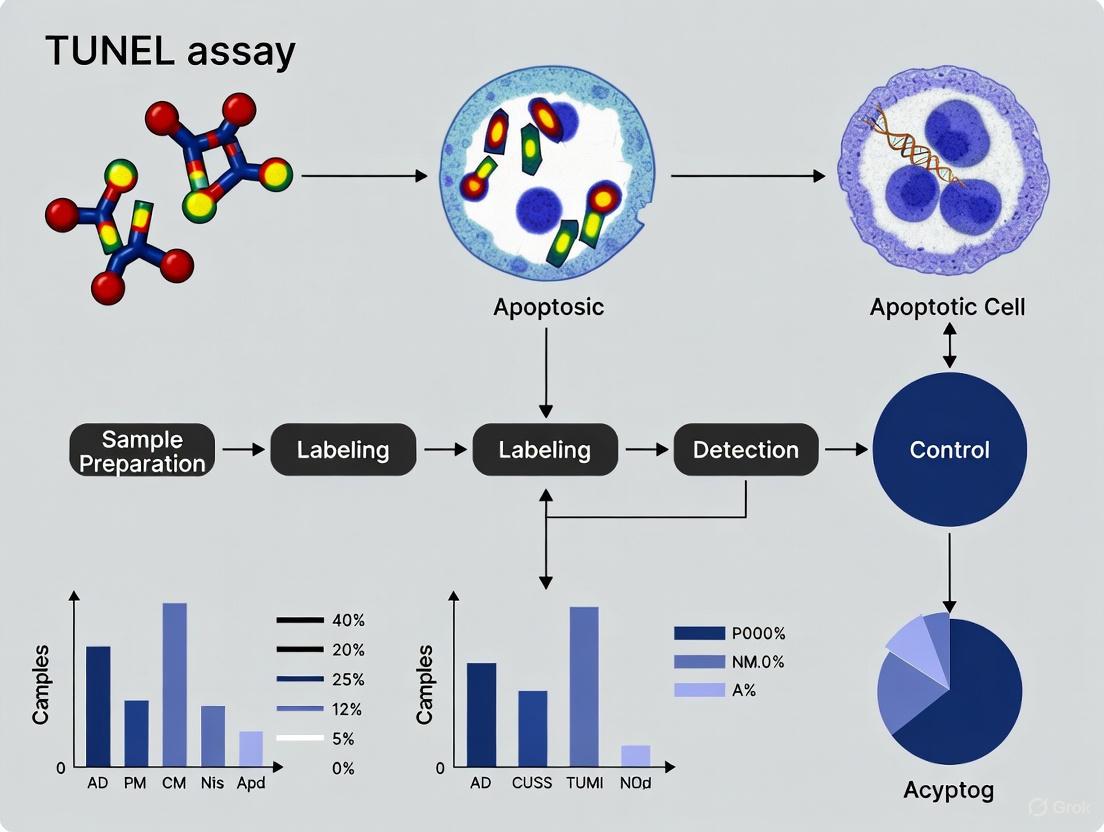
This article provides a comprehensive guide for researchers and drug development professionals on minimizing false positive results in TUNEL assays, a critical yet challenging technique for detecting apoptotic cell death.
How to Reduce False Positive TUNEL Assay Results: A Strategic Guide for Researchers
Abstract
This article provides a comprehensive guide for researchers and drug development professionals on minimizing false positive results in TUNEL assays, a critical yet challenging technique for detecting apoptotic cell death. It covers the foundational causes of false positives, including endogenous nuclease activity and suboptimal fixation, and details advanced methodological improvements such as alternative antigen retrieval and protocol standardization. The guide also offers a systematic troubleshooting framework for common issues like high background and nonspecific staining, and emphasizes the necessity of validation through morphological correlation and complementary assays to ensure accurate, reproducible data in preclinical and clinical research.
Understanding the Roots of False Positives: Why TUNEL Assays Go Wrong
Why is the TUNEL assay prone to false positive results?
The TUNEL (TdT-mediated dUTP Nick-End Labeling) assay is a cornerstone technique for detecting apoptotic cell death by labeling the 3'-hydroxyl ends of fragmented DNA. However, its specificity is frequently compromised by several factors that can lead to false positive signals, potentially jeopardizing research integrity. The primary causes include:
- Endogenous Nuclease Activity: Cellular nucleases, released or activated during sample processing (e.g., by Proteinase K treatment), can create DNA breaks that are nonspecifically labeled, a significant issue in liver and intestinal tissues [1] [2].
- Necrotic Cell Death: Necrosis, characterized by uncontrolled DNA fragmentation, can produce a strong TUNEL signal that is indistinguishable from apoptosis [3] [4].
- Autolysis and Tissue Processing: Tissue self-degradation post-mortem or delays in fixation can cause DNA damage. Furthermore, factors like excessive fixation time or the use of inappropriate fixatives can induce artificial DNA strand breaks [5] [6].
- Active DNA Repair and Cellular Processes: Proliferating cells with high metabolic and DNA repair activity can be falsely labeled, as the assay detects any 3'-OH DNA ends, not just those from apoptosis [3].
Troubleshooting Guide: Resolving False Positives
FAQ 1: My positive control works, but my experimental tissues show widespread, nonspecific staining. What is the cause and how can I fix it?
Potential Causes and Solutions:
| Problem Cause | Evidence-Based Explanation | Recommended Solution | Key References |
|---|---|---|---|
| Endogenous Nucleases | Proteinase K incubation can release endogenous endonucleases that fragment DNA, creating false 3'-OH ends [1]. | Pre-treat fixed tissue sections with Diethyl Pyrocarbonate (DEPC) to inhibit nuclease activity. Critical: Do not use silanised slides, as they abolish DEPC's effect [1] [2]. | [1] [2] |
| Necrosis & Autolysis | Any process causing random DNA fragmentation (e.g., chemical toxicity, hypoxia) will yield a positive TUNEL signal [3] [4]. | Correlate TUNEL findings with morphological assessment (e.g., H&E staining) to identify necrotic features (swelling, loss of structure) versus apoptotic bodies [4] [3]. | [4] [3] |
| Over-fixation | Prolonged fixation can lead to cell self-dissolution (autolysis) and irregular DNA strand breaks [5] [6]. | Fix tissues promptly after collection. For 4% paraformaldehyde, do not exceed 24 hours at 4°C. Optimize fixation time for your tissue type [4] [6]. | [4] [5] [6] |
| Over-digestion with Proteinase K | Excessive concentration or incubation time with Proteinase K damages nucleic acid structure, inducing false positives [5]. | Titrate Proteinase K concentration (e.g., ~20 μg/mL) and limit incubation time (typically 15-30 min at room temperature) [4] [5]. | [1] [4] [5] |
FAQ 2: I observe a strong TUNEL signal in tissues that are morphologically normal and show no other apoptotic markers. Is this a false positive?
Yes, this is a classic indicator of a false positive signal. Independent studies have documented intense TUNEL staining in morphologically normal mouse kidney and liver tissues without corresponding evidence of apoptosis (e.g., lack of DNA laddering or elevated caspase-3 activity) [7]. This underscores that a positive TUNEL signal alone is not sufficient to confirm apoptosis.
Required Confirmatory Steps:
- Morphological Corroboration: Always examine the tissue by H&E staining. True apoptotic cells exhibit characteristic nuclear condensation and fragmentation into apoptotic bodies [3] [8].
- Multi-Parameter Assays: Use at least one independent method to verify apoptosis, such as:
A high fluorescent background obscures specific signals and is often related to technical execution.
| Problem Cause | Evidence-Based Explanation | Recommended Solution |
|---|---|---|
| High TdT/dUTP Concentration | Excessive enzyme or substrate leads to nonspecific binding [4] [9]. | Titrate down the concentration of TdT enzyme and labeled dUTP in the reaction mixture [4]. |
| Prolonged Reaction Time | Extending the TUNEL reaction beyond the optimal window increases nonspecific labeling [5] [6]. | Limit the TdT-mediated labeling reaction to ~60 minutes at 37°C [5] [6]. |
| Inadequate Washing | Unbound fluorescent reagents remain on the slide if not washed thoroughly [4] [5]. | Increase the number of washes after the TUNEL reaction (e.g., 5 times with PBS containing 0.05% Tween 20) [4] [5]. |
| Sample Drying | Allowing the reaction mixture to dry on the slide concentrates reagents nonspecifically [5]. | Ensure the sample is fully covered and kept moist in a humidified chamber during incubation [5]. |
| Tissue Autofluorescence | Endogenous molecules like hemoglobin can emit light in similar channels [4]. | Check a blank (unstained) section for autofluorescence. Use fluorescence quenching agents or choose fluorophores outside the autofluorescence spectrum [4]. |
Experimental Protocols for Validating TUNEL Specificity
Protocol 1: Inhibition of Endogenous Nuclease Activity with DEPC
This protocol is critical for studying apoptosis in sensitive tissues like liver and intestine [1].
- Tissue Preparation: Fix tissue in neutral-buffered 4% paraformaldehyde and embed in paraffin. Section and mount on non-silanised, adhesive glass slides.
- Deparaffinization and Hydration: Deparaffinize slides in xylene and rehydrate through a graded ethanol series to water.
- DEPC Pretreatment: Incubate the slides in a 0.1% (v/v) DEPC solution in PBS or distilled water for 1 hour at room temperature.
- Rinsing: Carefully rinse the slides several times with PBS to remove residual DEPC.
- Standard TUNEL Assay: Proceed with your standard Proteinase K digestion and TUNEL staining protocol.
Protocol 2: Morphological Validation with H&E Staining
Perform this on serial sections adjacent to those used for TUNEL to directly correlate signals with cellular morphology.
- Staining:
- Deparaffinize and hydrate sections as above.
- Stain in Mayer's Hematoxylin for 3-5 minutes to label nuclei.
- Rinse in water and differentiate in 1% acid alcohol if needed.
- "Blue" in Scott's tap water or running tap water.
- Counterstain in Eosin Y solution for 1-2 minutes to label cytoplasm.
- Dehydration and Mounting:
- Dehydrate quickly through graded alcohols, clear in xylene, and mount with a synthetic resin.
- Microscopic Analysis:
The Scientist's Toolkit: Key Research Reagent Solutions
| Reagent / Material | Function in TUNEL Assay | Critical Notes for Preventing False Positives |
|---|---|---|
| Diethyl Pyrocarbonate (DEPC) | Chemical inhibitor of endogenous RNases and DNases. | Essential for nuclease-rich tissues (liver, intestine). Incompatible with silanised slides [1] [2]. |
| Proteinase K | Proteolytic enzyme for permeabilizing fixed tissue and enabling reagent access. | Major source of variability. Requires strict optimization of concentration (~20 µg/mL) and time (10-30 min) to prevent artifact induction [1] [4] [5]. |
| Terminal Deoxynucleotidyl Transferase (TdT) | Core enzyme that catalyzes the addition of labeled dUTP to 3'-OH DNA ends. | Inactivation causes false negatives. High concentrations cause high background. Aliquot and store properly; titrate for optimal signal [4] [5]. |
| Labeled dUTP (e.g., Fluorescein-dUTP) | Substrate for TdT; provides the detectable signal. | Fluorophores are light-sensitive. Avoid freeze-thaw cycles and protect from light during assay. High concentrations increase background [4] [5]. |
| 4% Paraformaldehyde (Neutral pH) | Cross-linking fixative that preserves tissue architecture and nuclear DNA. | Avoid acidic fixatives. Over-fixation (>24h) can mask epitopes and increase cross-linking, requiring harsher digestion that promotes artifacts [6]. |
Experimental Workflow and Decision Pathway
The following diagram illustrates a logical workflow for conducting a robust TUNEL assay, integrating steps to minimize and identify false positives.
Logical Flow for a Robust TUNEL Assay. This workflow emphasizes critical pre-treatment and optimization steps (yellow), the essential inclusion of controls (blue), and the mandatory pathway for morphological correlation to distinguish true apoptosis from false positive signals (green/red).
The integrity of research utilizing the TUNEL assay hinges on a rigorous, multi-faceted approach that acknowledges and mitigates its inherent limitations. By understanding the root causes of false positives—endogenous nucleases, necrosis, and suboptimal processing—and implementing the detailed troubleshooting guides, validation protocols, and reagent management strategies outlined above, researchers can significantly enhance the reliability and interpretability of their data. Ultimately, confirming TUNEL findings with morphological analysis and independent biochemical assays is not merely a best practice but an essential requirement for producing definitive, high-quality scientific evidence in cell death research.
Frequently Asked Questions (FAQs)
Q1: What causes false positive TUNEL staining in my liver and kidney tissue samples? False positive TUNEL staining in tissues like liver and kidney is frequently caused by endogenous nuclease activity. During standard sample preparation steps, particularly incubation with Proteinase K, these latent nucleases can be released and activated. Once active, they create DNA strand breaks that are not related to apoptosis but are nonetheless labeled by the TdT enzyme in the TUNEL assay, leading to a false positive signal [1] [7]. This has been specifically documented in mouse kidney and liver tissues, where intense TUNEL signals can appear in the absence of other apoptotic markers [7].
Q2: How can I confirm that endogenous nucleases are causing my false positive results? A strong indication is observing that the number of TUNEL-positive nuclei is highly dependent on the length of incubation with Proteinase K [1]. If a longer incubation time leads to a significant increase in positive cells, it is likely that endogenous nucleases are being released and fragmenting DNA. For definitive confirmation, you can pre-treat your slides with an inhibitor like diethyl pyrocarbonate (DEPC), which abolishes this nuclease activity [1].
Q3: Besides endogenous nucleases, what other factors can cause nonspecific TUNEL staining? The TUNEL assay can produce false positives from several sources beyond endogenous nucleases. The table below summarizes common culprits and their characteristics.
Table 1: Other Common Causes of False Positive TUNEL Staining
| Cause of False Positive | Underlying Mechanism | Tissues/Conditions Where It Occurs |
|---|---|---|
| Necrosis | Disorganized cellular dismantling generates a high number of DNA single-strand breaks [3]. | Tissues with necrotic cell death due to toxicity or ischemia [3]. |
| Autolysis | Post-mortem self-degradation, including random DNA fragmentation, can label cells [3] [4]. | Poorly preserved or rapidly processed tissues. |
| Active DNA Repair | Proliferating cells with high rates of DNA repair may incorporate labeled dUTP at repair sites [3]. | Rapidly renewing tissues like intestinal lining [3] [10]. |
| Improper Fixation | Over-fixation or use of acidic/alkaline fixatives can damage DNA, creating artifactual breaks [5]. | Any tissue with suboptimal fixation protocols. |
Q4: What is the most effective method to inhibit endogenous nuclease activity? Pre-treatment of tissue slides with diethyl pyrocarbonate (DEPC) is an effective method to inhibit endogenous nucleases. Research has shown that DEPC pretreatment can abolish false positive staining in models of hepatocyte necrosis and block interference in intestinal tissues [1].
Q5: Are there any critical technical considerations for using DEPC? Yes. The method of attaching the tissue section to the glass slide is of utmost importance. The effect of DEPC was found to be abolished on silanised slides, indicating that the adhesive used can impact the efficacy of the nuclease inhibition [1].
Troubleshooting Guide: Resolving Staining Issues
Table 2: Troubleshooting Common TUNEL Assay Problems
| Problem | Possible Reason | Solution |
|---|---|---|
| No or weak positive signal | Degraded DNA, inactivated TdT enzyme, insufficient permeabilization, or excessive washing [4] [5]. | Include a DNase I-treated positive control. Optimize Proteinase K concentration (e.g., 10–20 μg/mL for 15–30 mins). Reduce wash steps and avoid using a shaker [4]. |
| High background fluorescence | Sample autofluorescence (e.g., from hemoglobin), mycoplasma contamination, or inadequate washing [4]. | Check for autofluorescence on a blank section. Use PBS with 0.05% Tween 20 for washing. Test for and eliminate mycoplasma in cell cultures [4]. |
| Non-specific staining outside nucleus | Random DNA fragmentation from necrosis, tissue autolysis, or excessive TdT/dUTP concentrations [4]. | Combine TUNEL with morphological staining (e.g., H&E) to confirm apoptosis. Lower TdT/dUTP concentration or shorten reaction time [4]. |
| False positive staining | Endogenous nuclease activity, necrotic cells, or excessive Proteinase K treatment [1] [5]. | Implement DEPC pre-treatment. Avoid over-digestion with Proteinase K (e.g., do not exceed 30 mins for most tissues) [1] [5]. |
Experimental Protocols for Inhibition of Endogenous Nucleases
Protocol 1: DEPC Pre-treatment for Formalin-Fixed Paraffin-Embedded (FFPE) Tissues
This protocol is adapted from a study that successfully abolished false-positive TUNEL staining in liver and intestine [1].
Key Reagents:
- Diethyl pyrocarbonate (DEPC)
- Appropriate buffer (e.g., PBS), DEPC-treated
- Xylene
- Ethanol (100%, 95%, 70%)
- Proteinase K (optional, for subsequent steps)
Methodology:
- Dewax and Hydrate: Follow standard procedures for FFPE sections. Deparaffinize in xylene and rehydrate through a graded ethanol series (100%, 95%, 70%) to water.
- DEPC Incubation: Pre-incubate the tissue slides with DEPC. Note: The specific concentration and incubation time from the source should be optimized in your lab, as they were critical variables in the original research [1].
- Rinse: Wash slides thoroughly with DEPC-treated buffer to remove residual DEPC.
- Standard TUNEL Assay: Proceed with your standard TUNEL protocol, including subsequent Proteinase K digestion and label incorporation steps [11].
Visual Workflow: DEPC Pre-treatment
Protocol 2: Optimized Proteinase K Digestion to Minimize Nuclease Release
Over-digestion with Proteinase K is a key trigger for releasing endogenous nucleases. This protocol focuses on optimization.
Key Reagents:
- Proteinase K (e.g., 20 μg/mL working concentration)
- Tris-HCl or PBS buffer
- DNase I (for positive control)
Methodology:
- Titrate Concentration and Time: Avoid a one-size-fits-all approach. The optimal Proteinase K concentration and incubation time depend on tissue type, fixation time, and section thickness.
- Standard Starting Point: For many tissues, a concentration of 20 μg/mL for 10-30 minutes at room temperature is a good starting point [4] [5].
- Calibrate for Your Tissue: Use a positive control (DNase I-treated section) and a negative control (no TdT enzyme) to calibrate the digestion. The goal is sufficient permeabilization for TdT entry without inducing background DNA fragmentation.
- Monitor Morphology: Excessive digestion damages cell morphology, so always check tissue integrity under a microscope after treatment [5].
The Scientist's Toolkit: Essential Research Reagents
Table 3: Key Reagents for Investigating Endogenous Nuclease Activity
| Reagent | Function in the Context of Nuclease Inhibition | Key Consideration |
|---|---|---|
| Diethyl pyrocarbonate (DEPC) | Potent inhibitor of enzymatic activity; inactivates endogenous nucleases by covalent modification [1]. | Effectiveness can depend on tissue adhesion method (e.g., less effective on silanised slides) [1]. |
| Proteinase K | Serine protease used to permeabilize samples by digesting proteins, allowing TdT enzyme access to DNA [5]. | Concentration and time must be carefully optimized, as over-digestion releases nucleases and causes false positives [1] [5]. |
| Terminal Deoxynucleotidyl Transferase (TdT) | Enzyme that catalyzes the addition of labeled dUTPs to the 3'-OH ends of fragmented DNA [3] [11]. | Use fresh, active enzyme. Inactivation leads to false negatives. Aliquot and store properly [4]. |
| Labeled dUTP (e.g., Fluorescein-dUTP, EdUTP) | The substrate incorporated into DNA breaks; directly or indirectly generates the detection signal [3] [11]. | Newer, smaller tags (e.g., alkyne-modified dUTP) can improve incorporation efficiency and sensitivity [11]. |
| DNase I (Deoxyribonuclease I) | Enzyme used to intentionally introduce DNA strand breaks in a positive control sample [11]. | Validates the entire TUNEL procedure and helps distinguish true technical failure from biological absence of apoptosis. |
The Terminal deoxynucleotidyl transferase dUTP nick-end labeling (TUNEL) assay is a cornerstone method for detecting programmed cell death in biomedical research. However, its reliability is frequently compromised by tissue-specific pitfalls that generate false positive results, particularly in architecturally complex organs like liver, kidney, and intestinal tract. Within the broader thesis of reducing false positive TUNEL assay results, this technical support center addresses the distinct challenges these tissues present, providing targeted troubleshooting guidance and optimized protocols to enhance data integrity for researchers and drug development professionals.
Tissue-Specific Pitfalls: Identification and Solutions
Liver-Specific Challenges
The liver's high metabolic activity and regenerative capacity create unique challenges for TUNEL specificity.
| Challenge | Root Cause | Solution |
|---|---|---|
| Widespread Non-specific Staining | Pre-fixation DNA strand breaks caused by endogenous nucleases; high metabolic activity [9] | Immediate perfusion fixation after collection; use solution containing dUTP and dAPT to block nuclease activity [9] |
| Necrotic False Positives | Acetaminophen-induced hepatocyte necrosis generating DNA fragments [12] | Combine with morphological analysis (H&E) to distinguish apoptotic nuclear condensation from necrotic patterns [3] [4] |
| High Background Fluorescence | Hemoglobin autofluorescence from abundant red blood cells [4] | Use quenching agents; select fluorophores outside autofluorescence spectrum; optimize washing with PBS containing 0.05% Tween 20 [4] |
Kidney-Specific Challenges
Renal complexity, with multiple specialized segments, demands precise protocol optimization.
| Challenge | Root Cause | Solution |
|---|---|---|
| Tubular Segment Variability | Differential GSDME expression patterns across proximal tubules, parietal cells, and podocytes [13] | Validate tissue-specific antigen retrieval; use pressure cooker instead of proteinase K to preserve protein antigenicity [12] |
| Inflammatory Confounders | Cisplatin-induced STAT3-S100A7A-RAGE signaling driving macrophage infiltration [13] | Correlate TUNEL with inflammation markers (F4/80+ macrophages); employ multiplexed validation methods [13] |
| Fixation Artifacts | Over-fixation causing tissue autolysis and irregular DNA strand breaks [5] [14] | Control fixation time (4% paraformaldehyde at 4°C for 25 min maximum); avoid acidic/alkaline fixatives [5] |
Intestinal Tract Challenges
The rapid cellular turnover of intestinal epithelium creates inherent vulnerability to false positives.
| Challenge | Root Cause | Solution |
|---|---|---|
| Proliferative False Positives | High epithelial turnover rate with DNA repair activity in crypt cells [3] | Strict morphological correlation; accept only strong TUNEL labeling in cells lacking mitotic features [3] |
| GSDME-Mediated Pyroptosis | Caspase-3 cleaved GSDME generating DNA fragmentation distinct from apoptosis [13] | Detect GSDME-N fragments to differentiate pyroptosis from apoptosis [13] |
| Bacterial Contamination | Mycoplasma DNA in intestinal lumen and intercellular spaces [9] [4] | Regular mycoplasma testing; extracellular punctate fluorescence identification [4] |
Quantitative Data Comparison: Tissue-Specific Optimization
Antigen Retrieval Method Efficacy
| Tissue Type | Proteinase K | Pressure Cooker | Protease-Free |
|---|---|---|---|
| Liver | Reduced protein antigenicity; consistent signal [12] | Enhanced protein antigenicity; reliable TUNEL signal [12] | Not tested |
| Kidney | Diminished protein antigenicity [12] | Preserved protein antigenicity; compatible with spatial proteomics [12] | Not tested |
| Intestinal | Tissue detachment risk; over-digestion [9] [5] | Maintains tissue integrity; recommended [12] | Not tested |
DNA Damage Assay Correlation
| Parameter | Comet Assay | TUNEL Assay |
|---|---|---|
| Sensitivity to Double-Strand Breaks | Highest sensitivity [15] | Moderate sensitivity [15] |
| Association with Methylation Disruption | 3,387 differentially methylated sites [15] | 23 differentially methylated sites [15] |
| Biological Pathway Identification | Germline development pathways [15] | No relevant pathways identified [15] |
Experimental Protocols for False Positive Reduction
Harmonized TUNEL-Spatial Proteomics Protocol
Application: Multiplexed protein colocalization with cell death detection in precious tissue specimens [12]
- Tissue Preparation: Formalin-fixed paraffin-embedded (FFPE) sections at 4μm thickness
- Antigen Retrieval: Pressure cooker treatment in citrate buffer (pH 6.0) for 10 minutes at 95°C
- TUNEL Reaction: Antibody-based TUNEL with BrdUTP incorporation at 37°C for 60 minutes
- Erasure Cycle: 2-Mercaptoethanol/SDS (2-ME/SDS) at 66°C for antibody removal
- Immunofluorescence: Conventional IF staining with optimized antibody dilutions
- Imaging and Analysis: Multiplexed imaging with careful registration of morphological features
Key Advantage: This protocol enables 20-80 protein targets colocalization with TUNEL on single specimens, enhancing spatial contextualization while preserving tissue resources [12].
Pressure Cooker Antigen Retrieval Optimization
Rationale: Proteinase K treatment consistently reduces or abrogates protein antigenicity, while pressure cooker treatment enhances it for targets tested [12]
- Deparaffinization: Bake at 60°C for 20 minutes, xylene twice (5-10 minutes each)
- Hydration: Gradient ethanol from high to low concentrations (100% to 70%)
- Antigen Retrieval: Pressure cooker in citrate buffer (pH 6.0) for 10 minutes at 95°C
- Cooling: Natural cool-down to room temperature (approximately 30 minutes)
- Permeabilization: Optional brief Triton X-100 (0.1%) for 10 minutes at room temperature
- TUNEL Reaction: Proceed with standard protocol
Validation: In both acetaminophen-induced hepatocyte necrosis and dexamethasone-induced adrenocortical apoptosis, pressure cooker treatment provided equivalent TUNEL signal to proteinase K while preserving protein epitopes for multiplexing [12].
Signaling Pathways and Experimental Workflows
TUNEL Assay Integration with Spatial Proteomics
Tissue-Specific Cell Death Signaling
The Scientist's Toolkit: Essential Research Reagents
Key Reagents for TUNEL Optimization
| Reagent | Function | Optimization Guidance |
|---|---|---|
| Terminal Deoxynucleotidyl Transferase (TdT) | Catalyzes dUTP incorporation at 3'-OH DNA ends [5] | Concentration critical; too high causes background, too low reduces signal [9] [5] |
| Proteinase K | Permeabilizes membranes for reagent access [5] | Replace with pressure cooker for spatial proteomics; if used, optimize concentration (20μg/mL) and time (10-30min) [12] [5] |
| BrdUTP/Fluorescein-dUTP | Labels fragmented DNA for detection [5] | BrdUTP provides 4x greater sensitivity than biotin-dUTP [3]; avoid light exposure to prevent quenching [14] |
| Equilibration Buffer | Maintains reaction conditions [5] | Mg2+ reduces background; Mn2+ enhances staining efficiency [5] |
| DNase I | Creates positive control by inducing DNA breaks [5] [4] | Essential for validating assay performance; include in every experiment [5] [4] |
Frequently Asked Questions (FAQs)
Q1: How can I distinguish true apoptotic signaling from nonspecific DNA fragmentation in liver studies?
In hepatotoxicity models, combine TUNEL with rigorous morphological analysis using H&E staining to identify classic apoptotic features (nuclear condensation, apoptotic bodies) versus necrotic patterns. Additionally, employ the pressure cooker antigen retrieval method instead of proteinase K to better preserve tissue architecture and reduce artifacts. For multiplexed validation, the harmonized TUNEL-MILAN protocol enables colocalization with cell-type-specific markers, enhancing spatial contextualization in complex liver tissues [12] [3].
Q2: What controls are essential for kidney TUNEL assays given the segment-specific vulnerabilities?
For renal studies, implement a comprehensive control strategy:
- Positive Control: DNase I-treated section to verify assay functionality [5] [4]
- Negative Control: Omit TdT enzyme to identify nonspecific staining [5]
- Tissue-specific Control: Include intestinal sections where GSDME-mediated pyroptosis creates distinct TUNEL patterns [13]
- Morphological Control: H&E-stained sequential sections for nuclear feature correlation [3] This approach is particularly crucial in kidney research where GSDME demonstrates segment-specific expression and non-pyroptotic functions [13].
Q3: Why does intestinal tissue frequently show high background, and how can it be reduced?
The intestinal tract presents multiple background challenges:
- Mycoplasma Contamination: Bacteria in lumen and intercellular spaces cause punctate fluorescence; implement regular testing [9] [4]
- Proliferative Activity: High epithelial turnover increases DNA repair; use morphological correlation [3]
- Fixation Artifacts: Rapid autolysis requires immediate fixation with neutral pH 4% paraformaldehyde [5] [14]
- GSDME Expression: Intestinal GSDME cleavage generates pyroptosis-related DNA fragmentation; detect GSDME-N fragments [13] Optimized washing with PBS containing 0.05% Tween-20 and fluorophore selection outside hemoglobin autofluorescence spectrum further reduce background [4].
Q4: Which DNA damage assay provides the most reliable apoptosis detection in these complex tissues?
While TUNEL remains widely used, the comet assay demonstrates superior performance in multiple dimensions. In direct comparison, comet assay identified 3,387 differentially methylated sites associated with DNA damage versus only 23 for TUNEL, indicating significantly higher association with epigenetic disruptions. Comet also correlated with biologically relevant pathways including germline development, while TUNEL showed no relevant pathway associations. For highest accuracy, combine TUNEL with comet validation in critical studies, particularly in kidney research where multiple cell death pathways coexist [15].
FAQs: Resolving the Apoptosis vs. Necrosis Dilemma
Q1: Why can't I rely solely on a TUNEL assay to confirm apoptosis?
The TUNEL assay detects DNA strand breaks, which are a feature of both apoptosis and necrosis, making it insufficient for definitive differentiation on its own [3]. A positive TUNEL signal simply indicates the presence of DNA fragmentation but does not reveal its underlying cause [16] [3]. Necrosis, autolysis, tissue processing artifacts, and even active DNA repair can generate DNA breaks that lead to false-positive TUNEL staining, erroneously suggesting apoptosis [16] [3]. Therefore, TUNEL results must be corroborated with other methods that assess morphology or specific biochemical events unique to apoptosis [8] [3].
Q2: What are the key morphological differences I should look for?
Apoptosis and necrosis present distinct morphological profiles, best observed using light or electron microscopy. The table below summarizes the critical differences.
Table 1: Morphological Hallmarks of Apoptosis vs. Necrosis
| Feature | Apoptosis | Necrosis |
|---|---|---|
| Cell and Organelle Size | Cell shrinkage, condensed cytoplasm [8] [17] | Cell and organellar swelling [8] |
| Plasma Membrane | Intact, but with membrane blebbing and phosphatidylserine (PS) exposure [17] | Loss of integrity and rupture [8] |
| Nucleus | Chromatin condensation, nuclear fragmentation (pyknosis and karyorrhexis) [8] [17] | Disorganized dismantling, karyolysis [8] |
| Inflammatory Response | No associated inflammation [17] | Frequent associated inflammation [8] |
| DNA Fragmentation | Internucleosomal cleavage (DNA ladder) [17] | Random, diffuse cleavage (DNA smear) [4] |
Q3: My TUNEL stain shows a strong signal, but my caspase activity is low. What does this mean?
This discrepancy strongly suggests a non-apoptotic form of cell death, such as necrosis [3]. Apoptosis is a caspase-dependent process, and the execution phase is characterized by the systematic activation of caspases that activate the DNase responsible for the specific DNA fragmentation pattern [17]. A strong TUNEL signal in the absence of significant caspase activity indicates that the DNA fragmentation likely occurred through a caspase-independent mechanism, which is a hallmark of necrosis or other cell death modalities [3]. You should proceed to examine cellular morphology for signs of necrosis, such as cellular swelling and organelle disintegration [8].
Q4: How can I optimize my TUNEL assay to minimize false positives from necrosis?
Optimizing your protocol is crucial for reducing false positives.
- Control Experiments are Essential: Always include a positive control (e.g., a DNase I-treated sample to induce DNA breaks) and a negative control (omitting the TdT enzyme) to verify the assay's functionality and specificity [4] [18].
- Minimize Artifacts: Reduce tissue autolysis by fixing samples promptly after collection [4]. Avoid over-fixation, as prolonged fixation can cause cross-linking and damage, leading to background noise; 24 hours is generally the maximum recommended fixation time [4].
- Titrate Reagents: Excessive concentrations of TdT enzyme or labeled dUTP, or prolonged reaction times, can increase nonspecific staining. Follow kit instructions carefully and consider titrating these components [4].
Troubleshooting Guide: Abnormal TUNEL Staining Results
Table 2: Troubleshooting Common TUNEL Assay Problems
| Problem | Potential Cause | Solution |
|---|---|---|
| High Background/Non-specific Staining | Tissue autolysis or necrosis [4] [3] | Fix tissues promptly after collection. |
| Excessive TdT enzyme, dUTP, or long reaction time [4] | Titrate reagent concentrations and shorten incubation. | |
| Inadequate blocking or endogenous enzyme activity (for chromogenic detection) [19] | Include appropriate blocking steps (e.g., with H₂O₂) [4]. | |
| No Signal or Weak Signal | Inactivated TdT enzyme or degraded dUTP [4] | Use fresh reagents and include a positive control. |
| Insufficient permeabilization, preventing reagent access [4] [3] | Optimize Proteinase K concentration (e.g., 10–20 μg/mL) and incubation time [4]. | |
| Excessive washing after the TUNEL reaction [4] | Reduce the number and duration of washes. | |
| Signal in Non-Nuclear Compartments | Random DNA fragmentation from necrosis [4] | Combine TUNEL with a nuclear stain (DAPI) and morphological analysis. |
| Over-digestion with Proteinase K, damaging cell structures [4] | Optimize Proteinase K concentration and incubation time. |
Experimental Protocols for Definitive Differentiation
A multi-parametric approach is the gold standard for accurately identifying apoptotic cell death [8]. The following combined protocols allow for the correlation of DNA damage with key apoptotic events.
Combined TUNEL and Caspase-3/7 Activation Assay
This protocol allows for the simultaneous detection of DNA fragmentation and caspase activation, a key biochemical marker of apoptosis.
Principle: The TUNEL reaction labels DNA breaks, while a fluorogenic caspase substrate (e.g., DEVD-AFC) is cleaved by active caspases to release a fluorescent signal.
Materials:
- TUNEL Assay Kit (e.g., Fluorescein-dUTP based) [19]
- Caspase-Glo 3/7 Assay reagent or similar fluorogenic substrate
- Phosphate Buffered Saline (PBS)
- Cell culture or tissue sections
- Flow cytometer or fluorescence microscope
Method:
- Prepare Samples: Harvest cells or prepare tissue sections as per standard protocol.
- Perform TUNEL Staining: Follow the manufacturer's instructions for the TUNEL kit. For fluorescent TUNEL, this typically involves:
- Assay for Caspase Activity:
- For cell lysates: Incubate a portion of the sample with the fluorogenic caspase substrate in a suitable buffer. Measure the release of fluorescence (e.g., at 505 nm for AFC) over time using a microplate reader [17].
- For single cells: Use a FLICA (Fluorochrome-Labeled Inhibitor of Caspases) probe. Incubate cells with the FLICA reagent, which covalently binds to active caspases, then wash and analyze by flow cytometry or microscopy [20].
- Analysis: Analyze samples via flow cytometry to quantify the population that is both TUNEL-positive and caspase-active, confirming apoptosis.
Annexin V/Propidium Iodide (PI) Staining for Flow Cytometry
This protocol assesses plasma membrane integrity and asymmetry, distinguishing early apoptotic, late apoptotic, and necrotic cells.
Principle: Annexin V binds to phosphatidylserine (PS), which is externalized in early apoptosis. Propidium iodide (PI) is a membrane-impermeant dye that only enters cells with compromised membranes, marking late apoptotic and necrotic cells.
Materials:
- Annexin V conjugate (e.g., Annexin V-FITC) [17]
- Propidium Iodide (PI) stock solution (e.g., 50 µg/mL) [20]
- Annexin V Binding Buffer (AVBB): 10 mM HEPES/NaOH pH 7.4, 140 mM NaCl, 2.5 mM CaCl₂ [20]
- Flow cytometer
Method:
- Harvest and Wash Cells: Harvest cells gently to avoid mechanical damage. Wash cells with cold PBS and resuspend in AVBB at a density of ~1x10⁶ cells/mL [20].
- Stain Cells:
- Add Annexin V-FITC and PI to the cell suspension. A typical reaction for one sample uses 100 µL of cell suspension with 3-5 µL of each stain [20].
- Gently vortex and incubate for 15 minutes at room temperature in the dark.
- Analyze by Flow Cytometry:
- Add 400 µL of AVBB to the tube and analyze on a flow cytometer within 1 hour.
- Use 488 nm excitation; measure FITC emission at ~530 nm and PI emission at >575 nm.
- Interpret Results:
Experimental Workflow & Decision Pathway
The following diagrams illustrate a robust experimental strategy and a logical framework for interpreting TUNEL results.
Multi-Parametric Assay Workflow
TUNEL Result Decision Pathway
Research Reagent Solutions
This table details key reagents essential for differentiating apoptotic and necrotic cell death.
Table 3: Essential Reagents for Cell Death Analysis
| Reagent | Function | Key Consideration |
|---|---|---|
| Terminal Deoxynucleotidyl Transferase (TdT) | Enzyme that catalyzes the addition of labeled dUTP to 3'-OH ends of fragmented DNA in the TUNEL assay [3] [19]. | Critical for assay sensitivity; must be active and titrated to avoid high background [4]. |
| Labeled dUTP (e.g., Fluorescein, Biotin) | Provides the detectable signal for DNA breaks in TUNEL. Can be directly fluorescent or require secondary detection [19]. | Fluorophore choice affects sensitivity and compatibility with other labels (e.g., DAPI, PI) [19]. |
| Annexin V Conjugates | Binds to externalized phosphatidylserine (PS) on the outer leaflet of the plasma membrane, a marker of early apoptosis [17]. | Requires calcium-containing buffer. Must be paired with a viability dye like PI to distinguish from necrosis [20]. |
| Propidium Iodide (PI) | Membrane-impermeant DNA intercalating dye. Stains cells with compromised plasma membranes (necrotic/late apoptotic) [20] [21]. | Also binds RNA; requires RNase treatment for DNA-specific cell cycle analysis [21]. |
| FLICA Probes (Fluorochrome-Labeled Inhibitor of Caspases) | Cell-permeable reagents that covalently bind to active caspase enzymes, providing a direct measure of caspase activity in live cells [20]. | Allows for real-time assessment and multiplexing with other probes like PI in flow cytometry [20]. |
| Proteinase K | Proteolytic enzyme used to digest proteins and permeabilize samples, providing TdT enzyme access to nuclear DNA [4] [3]. | Concentration and incubation time must be optimized to avoid over-digestion and loss of morphology [4]. |
In the context of reducing false positive results in TUNEL assays, sample preparation is a critical frontier. The steps of fixation and processing are not merely preparatory; they are a potential source of significant artifacts that can compromise data integrity. Proper execution of these initial stages is paramount for accurately identifying DNA fragmentation associated with apoptosis, while minimizing misleading signals from non-apoptotic cell death or procedural errors. This guide addresses the specific issues arising from fixation and processing to empower researchers in obtaining reliable and interpretable results.
Troubleshooting FAQs: Fixation & Processing Artifacts
Q1: What causes non-specific staining or high false positive rates in my TUNEL assay?
Non-specific staining, where cells that are not apoptotic show TUNEL-positive signals, is frequently a direct result of improper sample handling during fixation and processing.
Cause: Improper Fixation
- Use of Acidic or Alkaline Fixatives: Fixatives with a non-neutral pH can directly cause DNA damage, leading to strand breaks and false-positive signals [5].
- Excessive Fixative Concentration: High concentrations of fixatives can induce cell self-dissolution (autolysis) and irregular DNA strand breaks [5].
- Prolonged Fixation Time: Over-fixation can also lead to autolysis and nonspecific DNA fragmentation. For cells, fixation at 4°C for approximately 25 minutes is often recommended [5].
Cause: Over-digestion with Proteinase K
- Excessive Concentration or Incubation Time: Proteinase K is used for permeabilization, but over-treatment disrupts nucleic acid structure, creating nonspecific DNA breaks detectable by the TUNEL assay [12] [5]. One study noted that proteinase K treatment "consistently reduced or even abrogated protein antigenicity" and is a key incompatibility with multiplexed assays [12].
Cause: Presence of Highly Active Endonucleases
Q2: Why am I getting weak or absent fluorescence signals?
A weak or absent signal, despite the presence of apoptosis, indicates that the assay reagents are not effectively accessing and labeling the DNA breaks.
Cause: Inadequate Permeabilization
- Insufficient Proteinase K: If the concentration of Proteinase K is too low or the incubation time is too short, the TdT enzyme and labeled dUTP cannot penetrate the cellular and nuclear membranes to reach their targets [9] [5]. A typical working concentration is 20 µg/mL, incubated for 10-30 minutes at room temperature, though this requires optimization [4] [5].
Cause: Improper Fixation
- Inadequate Fixative: An unsuitable fixation solution can fail to preserve the cellular material correctly. A solution of 4% paraformaldehyde in PBS (pH 7.4) is widely recommended [9] [5].
- Long-Term Storage: Tissue sections stored at -20°C for extended periods may see reduced staining efficiency. Using fresh slices is recommended for optimal results [5].
Q3: How does tissue morphology damage affect TUNEL results, and how is it linked to preparation?
Damage to tissue morphology directly leads to abnormal and uninterpretable staining patterns.
- Cause: Excessive Fixation: This can make tissues fragile and prone to damage during subsequent handling and staining steps [4].
- Cause: Over-digestion with Proteinase K: This can damage cell structures so severely that the tissue architecture is lost, making it difficult to distinguish specific nuclear staining from general degradation [4]. This can also cause tissue sections to detach from slides [9].
The following workflow summarizes the key steps in sample preparation and the specific artifacts introduced at each stage:
Q4: Are there alternatives to Proteinase K that can reduce artifacts?
Yes, recent research demonstrates that heat-mediated antigen retrieval can effectively replace Proteinase K, preserving both the TUNEL signal and protein antigenicity for multiplexing.
- Pressure Cooker Method: A 2025 study found that using a pressure cooker for antigen retrieval "quantitatively preserves the TUNEL signal without compromising protein antigenicity," whereas proteinase K treatment "consistently reduced or even abrogated protein antigenicity" [12]. This method is fully compatible with advanced spatial proteomic methods like MILAN and CycIF [12].
The table below quantifies the impact of different antigen retrieval methods on TUNEL signal and protein integrity, based on recent findings:
Table 1: Comparative Analysis of Antigen Retrieval Methods for TUNEL Assays
| Retrieval Method | TUNEL Signal Quality | Effect on Protein Antigenicity | Compatibility with Multiplexed Proteomics | Key Characteristics and Recommendations | ||
|---|---|---|---|---|---|---|
| Proteinase K | Reliable signal production [12] | Consistently reduces or abrogates antigenicity [12] | Not compatible [12] | Traditional method; risk of over-digestion leading to high background and tissue damage [12] [5]. | ||
| Pressure Cooker | Preserved signal, quantitatively similar to Proteinase K [12] | Enhances antigenicity for targets tested [12] | Fully compatible [12] | Superior alternative recommended to replace Proteinase K, harmonizing TUNEL with spatial proteomics [12]. |
Optimized Experimental Protocols
Detailed Methodology: Fixation and Processing for Minimal Artifact
This protocol is designed to minimize false positives resulting from sample preparation.
1. Sample Collection and Fixation
- Objective: To preserve tissue architecture and prevent post-collection DNA degradation.
- Procedure:
- For Tissues: Dissect tissue immediately and immerse in a large volume (10-20x tissue volume) of freshly prepared 4% paraformaldehyde (PFA) in PBS (pH 7.4) [9] [5]. Perfusion fixation is optimal for internal tissues.
- For Cells: Culture cells on chamber slides or coverslips. Aspirate media and rinse with PBS. Add 4% PFA for 25 minutes at 4°C [5].
- Critical Step: Do not extend the fixation time beyond what is necessary. For many tissues, 24 hours is a maximum, but shorter durations (6-12 hours) are often sufficient and preferable [4].
2. Post-Fixation Washing and Processing
- Objective: To remove excess fixative and prepare tissue for embedding or staining.
- Procedure: Wash fixed samples thoroughly with PBS (3 x 5 minutes) to remove all PFA. For paraffin embedding, process through graded ethanol and xylene series using standard histological protocols.
3. Sectioning and Deparaffinization (for FFPE tissues)
- Objective: To obtain thin sections and completely remove paraffin without damaging the sample.
- Procedure: Cut sections at 4-5 µm thickness. For deparaffinization, incubate slides at 60°C for 20 minutes, followed by two changes of xylene (5-10 minutes each). Rehydrate through a graded ethanol series (100%, 95%, 70%) to water [5].
4. Antigen Retrieval / Permeabilization
- Objective: To allow assay reagents access to nuclear DNA while minimizing nonspecific DNA damage.
- Procedure (Two Options):
- Option A (Recommended - Heat-Mediated): Perform antigen retrieval using a pressure cooker or microwave in an appropriate buffer (e.g., citrate buffer, pH 6.0). Follow established protocols for your specific tissue type [12].
- Option B (Traditional - Enzymatic): If using Proteinase K, treat sections with a carefully optimized concentration (e.g., 20 µg/mL) for a defined period (typically 10-30 minutes at room temperature). This must be empirically determined for each tissue and fixation condition [4] [5].
- Critical Step: After permeabilization, wash slides gently but thoroughly with PBS to stop the reaction.
5. Positive and Negative Controls
- It is mandatory to include these controls in every experiment [5].
- Positive Control: Treat one sample section with DNase I (after the permeabilization step) to induce DNA strand breaks artificially. This verifies the labeling efficiency of your assay kit and procedure.
- Negative Control: Omit the TdT enzyme from the TUNEL reaction mixture on a duplicate sample section. This controls for nonspecific staining or background fluorescence.
The Scientist's Toolkit: Key Research Reagent Solutions
Table 2: Essential Reagents for Artifact-Free Sample Preparation
| Reagent | Function | Role in Reducing Artifacts | Recommended Specification |
|---|---|---|---|
| Paraformaldehyde (PFA) | Cross-linking fixative that preserves cellular structure. | Using a neutral-pH (7.4), 4% solution in PBS prevents acid/alkaline-induced DNA damage, a key source of false positives [5]. | 4% in PBS, pH 7.4; freshly prepared or aliquots stored at -20°C. |
| Proteinase K | Serine protease that digests proteins for membrane permeabilization. | Must be used at an optimized concentration and duration to avoid over-digestion, which creates nonspecific DNA breaks [12] [5]. | Typical working concentration: 20 µg/mL. Requires titration. |
| Terminal Deoxynucleotidyl Transferase (TdT) | Enzyme that catalyzes the addition of labeled dUTP to 3'-OH DNA ends. | Inactivation of TdT (e.g., from improper storage) causes false negatives. Prepare reaction mix fresh and keep on ice [5]. | Aliquot and store at -20°C. Avoid repeated freeze-thaw cycles. |
| DNase I | Enzyme that cleaves DNA to create intentional strand breaks. | Used to create a mandatory positive control to validate the entire assay system, distinguishing true failure from negative results [5]. | Molecular biology grade. |
| Equilibration Buffer | Provides optimal ionic conditions (Mg²⁺, Mn²⁺) for the TdT enzyme. | Mg²⁺ in the buffer can help reduce background, while Mn²⁺ enhances staining efficiency, improving the signal-to-noise ratio [5]. | Use the buffer supplied with the TUNEL kit. |
Optimized TUNEL Protocols for Enhanced Specificity and Reproducibility
In TUNEL assay research, false positive results pose a significant challenge to data interpretation and experimental validity. Proper fixation serves as the first and most critical defense against these artifacts. This guide addresses how strategic selection of fixatives and optimization of fixation duration can substantially reduce false positive TUNEL staining, ensuring your apoptosis data reflects biological reality rather than technical artifacts.
Troubleshooting Guides and FAQs
Q1: Why does my TUNEL assay show widespread staining in clearly non-apoptotic tissues?
Primary Cause: Improper fixation is a leading cause of nonspecific staining and false positive results. Incomplete fixation can allow endogenous nucleases to remain active, causing DNA fragmentation that is detected as false apoptosis signals [14]. Additionally, using acidic or alkaline fixatives can directly cause DNA damage, leading to nonspecific staining [5].
Solutions:
- Immediate Fixation: Fix tissues immediately after collection or use perfusion fixation to prevent pre-fixation DNA degradation [23] [14].
- Fixative Selection: Use neutral-buffered 4% paraformaldehyde (in PBS pH 7.4) rather than acidic fixatives [5] [14].
- Duration Control: Avoid over-fixation, which can cause cell self-dissolution and irregular DNA strand breaks [5].
Q2: How does fixation time specifically affect TUNEL assay specificity?
Evidence: Research demonstrates that fixation duration directly impacts TUNEL staining specificity. A study comparing immersion and perfusion fixation found significantly more TUNEL-positive cells in immersion-fixed tissues, especially when fixed tissues were stored for extended periods before TUNEL assay [23]. This suggests that suboptimal fixation allows DNA degeneration over time, creating false positive signals.
Recommendations:
- For immersion fixation, process tissues promptly and avoid extended storage before TUNEL assay [23].
- Standardize fixation times across experiments to ensure consistent results.
- For most applications, fixation at 4°C for 25 minutes is recommended, though this should be optimized for specific tissue types [5].
Q3: What specific steps can I take during fixation to reduce high background staining?
Preventive Measures:
- Cross-linking Optimization: Avoid excessive fixation times that create high degrees of chromatin-protein cross-linking, making tissues more fragile and prone to background staining [4] [5].
- Proper Embedding: Ensure complete deparaffinization and hydration before staining [14].
- Controlled Permeabilization: While proteinase K is traditionally used for permeabilization, consider that over-digestion can damage cell structures and increase background [4]. Recent research suggests pressure cooker-based antigen retrieval may be superior for maintaining protein antigenicity while enabling effective TUNEL staining [12].
Table 1: Fixation Parameters and Their Impact on TUNEL Assay Outcomes
| Parameter | Recommended Specification | Effect of Deviation | Reference |
|---|---|---|---|
| Fixative Type | 4% paraformaldehyde in PBS (pH 7.4) | Acidic/alkaline fixatives cause DNA damage and false positives | [5] [14] |
| Fixation Duration | ~25 minutes at 4°C (cell sections); <24 hours (tissues) | Prolonged fixation causes tissue autolysis and DNA strand breaks | [4] [5] |
| Post-fixation Processing | Process promptly after fixation; avoid extended storage | DNA degenerates over time in fixed tissues, increasing false positives | [23] |
| Antigen Retrieval Method | Pressure cooker instead of proteinase K | Proteinase K drastically reduces protein antigenicity | [12] |
Table 2: Troubleshooting Fixation-Related Problems in TUNEL Assays
| Problem | Possible Fixation-Related Causes | Solutions | Reference |
|---|---|---|---|
| No signal | Over-fixation causing excessive cross-linking | Optimize fixation time; use appropriate permeabilization | [14] |
| High background | Tissue autolysis from over-fixation; improper fixative | Control fixation duration; use neutral-buffered fixatives | [5] [14] |
| Non-specific staining | Incomplete fixation; endogenous nuclease activity | Fix immediately after collection; ensure thorough fixation | [14] |
| Tissue morphology damage | Excessive fixation making tissues fragile | Limit fixation to recommended duration | [4] |
Experimental Protocols
Protocol 1: Validated Fixation Protocol for Reducing False Positives
Materials:
- Neutral-buffered 4% paraformaldehyde (prepared in PBS pH 7.4)
- Standard phosphate-buffered saline (PBS)
- Appropriate tissue processing equipment
Procedure:
- Immediate Processing: Place tissue samples in fixative immediately after collection (within minutes).
- Fixation Duration: Fix tissues for approximately 24 hours at 4°C, though this should be determined empirically for specific tissue types.
- Buffer Rinse: Rinse fixed tissues with PBS to remove excess fixative.
- Processing: Process through standard dehydration and embedding protocols.
- Storage: If storage is necessary, process tissues for TUNEL assay promptly rather than storing fixed tissues for extended periods [23].
Validation: Include both positive controls (DNase-treated sections) and negative controls (sections without TdT enzyme) with each experiment [5].
Protocol 2: Alternative Antigen Retrieval Method for Combined Assays
Recent research demonstrates that replacing proteinase K with pressure cooker treatment preserves both TUNEL signal and protein antigenicity, enabling combination with multiplexed spatial proteomic methods [12].
Procedure:
- Deparaffinization: Standard deparaffinization of FFPE sections.
- Antigen Retrieval: Use pressure cooker-based retrieval instead of proteinase K treatment.
- TUNEL Staining: Proceed with standard TUNEL protocol.
- Multiplexing: The preserved protein antigenicity allows subsequent iterative immunofluorescence staining [12].
Fixation Strategy Decision Pathway
Research Reagent Solutions
Table 3: Essential Reagents for Optimal Fixation in TUNEL Assays
| Reagent | Function | Optimization Guidance |
|---|---|---|
| Paraformaldehyde (4%) | Primary fixative that cross-links proteins | Must be neutral-buffered (PBS pH 7.4) to prevent DNA damage |
| Proteinase K | Permeabilization agent | Use 10-30 μg/mL for 15-30 min; over-digestion causes false positives |
| Pressure Cooker | Alternative antigen retrieval | Replaces Proteinase K to preserve protein antigenicity |
| DNase I | Positive control treatment | Verifies assay functionality; use on one sample per experiment |
| TdT Enzyme | Catalyzes dUTP labeling | Omit for negative controls; prepare fresh to prevent inactivation |
For researchers aiming to reduce false positive results in TUNEL assays, the antigen retrieval method is a critical experimental variable. Traditional protocols rely heavily on Proteinase K (ProK) to unmask epitopes. However, recent investigations reveal that ProK treatment consistently reduces or even abrogates protein antigenicity, limiting opportunities for multiplexed spatial proteomics and contributing to false-positive contexts by damaging tissue morphology [12]. This technical support guide details the implementation of heat-induced epitope retrieval (HIER) using a pressure cooker as a superior alternative that preserves tissue structure and enhances protein antigenicity, enabling more reliable and reproducible TUNEL results [12].
FAQ: Pressure Cooker Antigen Retrieval for TUNEL Assays
Q1: Why should I replace Proteinase K with pressure cooker retrieval for my TUNEL assays?
Recent spatial proteomics research demonstrates that Proteinase K digestion vastly diminishes protein antigenicity in situ, which prevents effective multiplexing with immunofluorescence and can damage tissue morphology, potentially contributing to erroneous interpretation [12]. In contrast, pressure cooker treatment quantitatively preserves the TUNEL signal without compromising the antigenicity of co-targeted proteins. This harmonization allows for rich spatial contextualization of cell death within complex tissues [12].
Q2: What are the specific advantages of using a pressure cooker for antigen retrieval?
The pressure cooker method, a form of Heat-Induced Epitope Retrieval (HIER), offers several key advantages [24] [25]:
- Enhanced Protein Antigenicity: It breaks formalin-induced methylene bridges without degrading the protein epitopes themselves, which is crucial for subsequent immunofluorescence [12] [25].
- Superior Morphology Preservation: It maintains tissue structure better than enzymatic digestion, reducing the risk of physical artifacts that can interfere with analysis [24] [25].
- Rapid and Uniform Heating: The pressurized environment allows the retrieval buffer to reach temperatures above 100°C, leading to efficient and consistent epitope unmasking across the sample [24].
Q3: Can pressure cooker retrieval be integrated with iterative staining methods like MILAN?
Yes. Studies have successfully integrated antibody-based TUNEL with pressure cooker retrieval into Multiple Iterative Labeling by Antibody Neodeposition (MILAN) and cyclic immunofluorescence (CycIF) workflows. The TUNEL signal is erasable using standard 2-ME/SDS treatment, allowing for multiple rounds of staining on the same specimen [12].
Q4: How do I choose the right retrieval buffer for my target antigen?
Buffer selection is antigen-dependent. If no datasheet information is available, empirical testing is recommended. The three most popular buffers are summarized in the table below [24]:
| Buffer Name | Composition | pH |
|---|---|---|
| Sodium Citrate Buffer [24] | 10 mM Sodium citrate, 0.05% Tween 20 [24] | 6.0 [24] |
| Tris-EDTA Buffer [24] | 10 mM Tris base, 1 mM EDTA, 0.05% Tween 20 [24] | 9.0 [24] |
| EDTA Buffer [24] | 1 mM EDTA [24] | 8.0 [24] |
A systematic approach is to start with HIER using both a low-pH (e.g., Citrate, pH 6.0) and a high-pH (e.g., Tris-EDTA, pH 9.0) buffer to see which yields the best results for your specific antibody and tissue type [25].
Experimental Data: Pressure Cooker vs. Proteinase K
The following table summarizes quantitative and qualitative findings from a recent study comparing antigen retrieval methods in a harmonized TUNEL-MILAN protocol [12].
| Parameter | Proteinase K (ProK) | Pressure Cooker (PC) |
|---|---|---|
| TUNEL Signal | Reliable signal production [12] | Reliable signal production, independent of retrieval method [12] |
| Protein Antigenicity | Consistently reduced or abrogated [12] | Enhanced for targets tested [12] |
| Compatibility with Multiplexed Proteomics | Incompatible with MILAN [12] | Fully compatible with MILAN and CycIF [12] |
| Effect on Tissue Morphology | Potential for tissue damage and non-specific staining [24] [25] | Superior tissue structure preservation [24] |
| Primary Disadvantage | Permanently degrades protein targets, preventing iterative staining [12] | Requires optimization of time and buffer [24] |
Detailed Protocol: Pressure Cooker Antigen Retrieval for TUNEL
This protocol is adapted from standardized IHC methods and validated for TUNEL compatibility [24] [12].
Materials Required
- Domestic stainless steel pressure cooker
- Hot plate
- Slide rack (metal, suitable for high temperature)
- Antigen retrieval buffer (e.g., Sodium Citrate pH 6.0 or Tris-EDTA pH 9.0)
- Forceps
- Timer
Step-by-Step Method
- Add Buffer: Pour the selected antigen retrieval buffer into the pressure cooker. Use a sufficient volume to cover the slides by at least a few centimeters [24].
- Pre-heat: Place the uncovered pressure cooker on a hot plate set to full power and bring the buffer to a boil. During this time, deparaffinize and rehydrate your tissue sections using standard histology methods [24].
- Load Slides: Once the buffer is boiling, carefully transfer the rehydrated slides from the tap water into the slide rack within the pressure cooker. Use forceps and exercise caution [24].
- Pressurize: Secure the pressure cooker lid according to the manufacturer's instructions. Allow the cooker to reach full pressure [24].
- Time Retrieval: As soon as full pressure is achieved, begin timing. A typical retrieval time is 3 minutes at full pressure, though this may require optimization for specific antigens [24]. For TUNEL assays, this duration has been shown to be effective without compromising protein antigenicity [12].
- Cool Rapidly: After 3 minutes, turn off the hotplate, move the pressure cooker to an empty sink, and activate the pressure release valve. Run cold water over the cooker to depressurize and cool it quickly [24].
- Rinse: Once depressurized, open the lid and run cold tap water into the cooker for an additional 10 minutes to cool the slides further and allow the antigenic sites to re-form [24].
- Continue Staining: The slides are now ready to proceed to the next steps of your TUNEL assay protocol or multiplexed staining workflow [24] [12].
Troubleshooting Guide
| Problem | Potential Cause | Solution |
|---|---|---|
| Weak or No TUNEL Signal | Under-retrieval; insufficient epitope unmasking [24] [25]. | Systematically increase the retrieval time under pressure in 1-minute increments (e.g., 1-5 min) [24]. |
| High Background Staining | Over-retrieval; excessive heating damages tissue [25]. | Reduce the retrieval time. Ensure slides do not dry out during the process [24]. |
| Tissue Detachment from Slide | Over-retrieval or vigorous boiling. | Ensure the pressure cooker is used correctly to avoid violent boiling. For delicate tissues (bone, skin), a water bath at 60°C overnight can be a gentler alternative [24]. |
| Poor Protein Signal in Multiplexing | Incompatible retrieval buffer. | Test different retrieval buffers (e.g., Citrate pH 6.0 vs. Tris-EDTA pH 9.0) to find the optimal one for your target protein [24] [25]. |
| Inconsistent Staining Across Slide | Uneven heating or buffer level. | Use a scientific-grade pressure cooker for uniformity. Ensure slides are fully submerged and not crowded [24]. |
The Scientist's Toolkit: Essential Reagents & Materials
| Item | Function in Protocol |
|---|---|
| Terminal Deoxynucleotidyl Transferase (TdT) | Enzyme that catalyzes the addition of labeled dUTP to the 3'-OH ends of fragmented DNA, the core of the TUNEL reaction [3]. |
| Labeled dUTP (e.g., Fluorescein, Biotin) | The tagged nucleotide incorporated into DNA breaks for detection. Fluorophores allow direct detection, while haptens like biotin require secondary detection [4] [3]. |
| Pressure Cooker | Provides a high-temperature, pressurized environment for rapid and uniform heat-induced epitope retrieval (HIER) [24]. |
| Antigen Retrieval Buffers | Solutions at specific pH (e.g., Citrate pH 6.0, Tris-EDTA pH 9.0) that work with heat to break formalin cross-links and unmask epitopes [24]. |
| Proteinase K | Proteolytic enzyme used in traditional TUNEL protocols for antigen retrieval. Now known to compromise protein antigenicity for multiplexing [12]. |
| 2-Mercaptoethanol/SDS (2-ME/SDS) | Erasure solution used in MILAN and other iterative methods to remove primary and secondary antibodies, enabling multiple rounds of staining on the same sample [12]. |
The TUNEL (TdT-mediated dUTP Nick-End Labeling) assay is a cornerstone technique for detecting programmed cell death (apoptosis) by identifying DNA fragmentation, a hallmark of this process. However, a significant challenge researchers face is the occurrence of false positive results. These inaccuracies often arise not from apoptosis-specific DNA cleavage, but from the activity of endogenous endonucleases that are unintentionally released or activated during sample preparation [1] [22]. This technical brief details the use of Diethyl Pyrocarbonate (DEPC) as a critical tool to suppress these endogenous nucleases, thereby ensuring the specificity and reliability of your TUNEL assay results.
Core Mechanism: How DEPC Prevents False Positive Staining
The Source of the Problem
During the standard TUNEL protocol, the step involving Proteinase K incubation is crucial for permeabilizing tissues and making DNA accessible for labeling. However, in certain tissues with high endogenous nuclease activity, such as the liver, this treatment can inadvertently release these enzymes. Once free, the nucleases cleave chromosomal DNA, creating new DNA strand breaks that are non-specifically labeled by the TdT enzyme, leading to a false positive signal [1].
The DEPC Solution
Diethyl Pyrocarbonate (DEPC) is a potent enzyme inhibitor that functions by modifying histidine residues and other nucleophilic side chains in proteins. Pre-treatment of tissue slides with DEPC before the TUNEL assay effectively inactivates these endogenous endonucleases. By inhibiting the enzymes responsible for non-apoptotic DNA fragmentation, DEPC pretreatment ensures that subsequent TUNEL labeling predominantly reflects the genuine DNA breaks of apoptosis [1].
The diagram below illustrates this protective mechanism.
Experimental Protocol: DEPC Pre-treatment for Tissue Sections
Follow this detailed methodology to integrate DEPC pre-treatment into your TUNEL assay workflow. This protocol is adapted from foundational research demonstrating its efficacy [1].
Materials Required
- Diethyl pyrocarbonate (DEPC) solution
- 0.1 M Tris-HCl buffer, pH 7.5
- Phosphate-Buffered Saline (PBS)
- Absolute ethanol
- Standard TUNEL assay kit (e.g., containing TdT enzyme, labeled-dUTP)
- Proteinase K solution
- Glass slides with tissue sections: Critical Note: The success of DEPC treatment is highly dependent on the slide coating. DEPC's effect is abolished on silanised slides. Use standard glass slides or those coated with a cement-based adhesive [1].
Step-by-Step Procedure
- Sample Fixation: Begin with tissue sections fixed in a cross-linking fixative like 4% paraformaldehyde. Avoid acidic or alcohol-based fixatives, which can contribute to false positives [14].
- DEPC Pre-treatment:
- Prepare a 0.1% (v/v) solution of DEPC in 0.1 M Tris-HCl buffer, pH 7.5.
- Apply the DEPC solution to cover the tissue section on the slide.
- Incubate the slides for 1 hour at room temperature.
- Terminate the reaction by immersing the slides in absolute ethanol and incubating for 10 minutes.
- Wash the slides thoroughly with PBS.
- Proteinase K Digestion: Proceed with the standard Proteinase K incubation step. The DEPC pre-treatment will not interfere with the desired permeabilization effect of Proteinase K but will inhibit the released endonucleases.
- TUNEL Assay: Continue with the remainder of the TUNEL protocol according to your kit's manufacturer instructions, including the incubation with the TdT enzyme and labeled nucleotide, followed by appropriate detection (fluorescent or chromogenic).
Troubleshooting Guide & FAQs
Q1: My positive control (DNase-treated) stains well, but my DEPC-treated experimental samples show no signal. What went wrong?
- Cause: Over-fixation of tissues or incomplete DEPC inactivation can sometimes mask true apoptotic signals.
- Solution:
- Confirm fixation does not exceed 24 hours in paraformaldehyde [4].
- Ensure DEPC is properly quenched with ethanol after incubation.
- Always include a true apoptotic positive control (e.g., tissue known to be undergoing apoptosis) alongside the DEPC-treated samples to confirm genuine apoptotic signals are still detectable.
Q2: I still observe high background staining after DEPC treatment. What are other common causes?
- DEPC specifically targets endonuclease-driven false positives. High background can stem from other factors:
- PBS Washing: Perform three 5-minute washes with PBS containing 0.05% Tween 20 after the TUNEL reaction to remove unbound reagent [4].
- TdT Reaction Time: Prolonged incubation with the TdT enzyme can increase background. Adhere to the recommended time, typically 60 minutes at 37°C [14].
- Autofluorescence: Check for tissue autofluorescence by examining an unstained section. For fluorescent detection, use quenching agents if necessary [4].
Q3: Can DEPC pre-treatment be used for all tissue types?
- While DEPC is broadly effective, its necessity is most pronounced in tissues with high intrinsic nuclease activity, such as the liver, kidney, and intestine [1] [22]. It is a critical step when optimizing the TUNEL assay for a new tissue type where false positives are suspected.
Q4: Why is the choice of microscope slide critical for DEPC treatment?
- Research has shown that the adhesive used to mount tissue sections is of "utmost importance." The inhibitory effect of DEPC on false positives was abolished on silanised slides [1]. For the protocol to work reliably, use standard glass slides or those coated with cement-based adhesives.
Key Experimental Parameters from Literature
The following table summarizes the core conditions validated in the foundational study for effective DEPC-mediated suppression of false positives [1].
| Parameter | Specification | Effect / Note |
|---|---|---|
| DEPC Concentration | 0.1% (v/v) in 0.1 M Tris-HCl | Effective for nuclease inhibition. |
| Incubation Time | 1 hour at room temperature | Sufficient for enzyme inactivation. |
| Slide Adhesive | Cement-based (e.g., not silanised) | Critical for DEPC efficacy. |
| Assay Outcome | Abolished false positive staining in models of necrosis (CCl4-induced) while preserving true apoptotic signal. | Confirms specificity. |
The Scientist's Toolkit: Essential Research Reagents
This table lists key reagents and their primary functions in the DEPC suppression protocol.
| Reagent | Function in the Protocol |
|---|---|
| Diethyl Pyrocarbonate (DEPC) | Potent inhibitor of endogenous endonucleases; prevents non-specific DNA cleavage. |
| Proteinase K | Serine protease for tissue permeabilization; enables TdT enzyme access to nuclear DNA. |
| Terminal Deoxynucleotidyl Transferase (TdT) | Key enzyme that catalyzes the addition of labeled dUTP to 3'-OH ends of fragmented DNA. |
| Labeled-dUTP (e.g., Fluorescein-dUTP, Br-dUTP) | A nucleotide analog that is incorporated into DNA breaks; allows visualization of positive cells. |
| 4% Paraformaldehyde | Cross-linking fixative; preserves tissue architecture and prevents DNA fragment loss. |
For researchers and drug development professionals, the TUNEL (TdT-mediated dUTP Nick End Labeling) assay is an indispensable tool for detecting apoptotic cell death in situ. However, its utility is often compromised by inconsistent results and high false-positive rates between laboratories, potentially jeopardizing experimental conclusions and drug development data. Standardized protocols are not merely a recommendation but a necessity for generating reliable, reproducible data. This technical support center provides a targeted troubleshooting guide and FAQs, framed within the broader thesis of reducing false positives, to help harmonize TUNEL practices across your organization.
Scientist's Toolkit: Essential Reagents and Their Functions
The table below details key reagents used in a typical TUNEL assay and their critical functions for reliable apoptosis detection.
Table 1: Key Research Reagent Solutions for TUNEL Assay
| Reagent | Function & Importance |
|---|---|
| Terminal Deoxynucleotidyl Transferase (TdT) | The key enzyme that catalyzes the addition of labeled nucleotides to the 3'-OH ends of fragmented DNA. Enzyme inactivation is a common cause of weak or absent signals [4] [5]. |
| Labeled dUTP (e.g., Fluorescein-dUTP, Biotin-dUTP) | The substrate incorporated into DNA breaks, enabling visualization. The label type (fluorescent vs. chromogenic) determines detection method [4] [26]. |
| Equilibration Buffer | Prepares the tissue for the enzymatic reaction. The buffer's divalent cations (Mg²⁺, Mn²⁺) are crucial; Mg²⁺ can help reduce background, while Mn²⁺ enhances staining efficiency [5]. |
| Proteinase K | A permeabilization agent that digests proteins to allow reagent access to the nucleus. A major source of variability; over-digestion damages tissue and increases false positives, while under-digestion causes weak signals [12] [4]. |
| Paraformaldehyde | A cross-linking fixative that preserves tissue architecture and prevents post-sampling DNA degradation. Neutral buffered (e.g., 4% in PBS, pH 7.4) is strongly recommended over alcoholic fixatives to avoid false positives [5] [14]. |
Optimized Experimental Workflow for Standardization
The following diagram illustrates a standardized TUNEL assay workflow that incorporates key controls and an optimized antigen retrieval step to minimize false positives.
Troubleshooting Guide: Addressing Common TUNEL Assay Issues
Frequently Asked Questions (FAQs)
Q1: Why is there no positive signal in my TUNEL assay, even though my positive control works? This typically indicates an issue with sample processing, not the reagents [4].
- Cause: Inadequate permeabilization prevents the TdT enzyme and dUTP from accessing the nuclear DNA [14].
- Solution: Optimize the Proteinase K concentration (typically 10–20 μg/mL) and incubation time (15–30 minutes). Over-digestion must be avoided [4]. Alternatively, consider heat-mediated antigen retrieval via pressure cooking, which has been shown to provide robust permeabilization without degrading protein antigens [12].
Q2: Why do I see high background fluorescence? A high fluorescent background obscures specific signals and is often a matter of unbalanced reaction conditions [5].
- Cause: TdT enzyme concentration is too high, reaction time is too long, or unbound dye is not thoroughly washed away [9] [14].
- Solution:
- Titrate down the concentration of the TdT enzyme.
- Ensure the TUNEL reaction time does not exceed 60 minutes at 37°C unless necessary.
- After the reaction, increase the number of PBS washes to 3-5 times [5].
- For imaging, set the exposure time using the negative control to ensure no background light before capturing the experimental group [14].
Q3: How can I reduce non-specific staining (false positives) in my samples? Reducing false positives is central to assay standardization. This often stems from inappropriate sample handling [5].
- Cause: Using acidic or alkaline fixatives, over-fixation, or prolonged Proteinase K treatment can cause non-apoptotic DNA strand breaks and cellular autolysis [5] [14].
- Solution:
- Fixation is critical: Use a neutral pH fixative (e.g., 4% paraformaldehyde in PBS) and control fixation time (e.g., 25 minutes at 4°C for cells) to prevent self-digestion [5].
- Limit Proteolysis: Strictly control Proteinase K incubation time and concentration [12] [5].
- Morphological Correlation: Always correlate TUNEL staining with nuclear morphology (condensation, fragmentation) via DAPI or H&E staining to confirm apoptosis [4] [27].
Q4: Can TUNEL staining be combined with immunofluorescence (IF)? Yes, and this is a powerful approach for spatial contextualization. The key is protocol harmonization [12] [4].
- Recommended Order: It is generally recommended to perform the TUNEL staining first, followed by immunofluorescence [4].
- Key Innovation: Recent research demonstrates that replacing Proteinase K with pressure cooker-based antigen retrieval allows for seamless integration of TUNEL with multiplexed iterative IF techniques (e.g., MILAN), as it preserves protein antigenicity far better than Proteinase K [12].
Troubleshooting Table: Quantitative Data and Solutions
For a quick diagnosis, the following table summarizes common problems, their likely causes, and standardized solutions.
Table 2: TUNEL Assay Troubleshooting Guide for Common Issues
| Problem & Symptoms | Primary Cause | Recommended Solution |
|---|---|---|
| Weak or Absent Signal | Inactivation of TdT enzyme [5]. | Prepare TUNEL reaction mix fresh and store briefly on ice; avoid freeze-thaw cycles. |
| Insufficient permeabilization [4] [14]. | Optimize Proteinase K (e.g., 20 µg/mL, 15-30 min) or use pressure cooker retrieval [12] [4]. | |
| Fluorescence quenching [14]. | Perform all labeling and detection steps protected from light. | |
| High Background / False Positives | Over-digestion with Proteinase K [12] [5]. | Standardize and shorten Proteinase K treatment time; validate with positive control. |
| Over-fixation [5] [14]. | Control fixation time (e.g., 25 min for cells, <24h for tissues). | |
| Endogenous nuclease activity [9]. | Fix tissues immediately after collection; use a blocking solution containing dUTP and dATP [9]. | |
| Non-Specific Staining | Inappropriate fixative [14]. | Use only neutral-buffered paraformaldehyde; avoid acidic/alkaline fixatives. |
| Prolonged TUNEL reaction time [5]. | Do not exceed recommended incubation time (typically 60 min at 37°C). | |
| Necrotic cells in sample [4] [27]. | Combine TUNEL with morphological assessment to distinguish apoptosis from necrosis [4]. | |
| Sample Detachment | Excessive Proteinase K treatment [9]. | Reduce digestion time, especially for thin or fragile sections. |
| Improper slide coating [9]. | Use poly-lysine or other adhesive-coated slides. |
Achieving consistent, reliable TUNEL results across laboratories is challenging but attainable through rigorous standardization. The core principles for reducing false positives and enhancing reproducibility are: 1) strict control of pre-analytical variables, especially fixation and permeabilization; 2) the adoption of improved methods like pressure cooker antigen retrieval over traditional Proteinase K; and 3) the mandatory inclusion of appropriate controls in every experiment. By implementing the detailed protocols and troubleshooting guidance provided here, researchers and drug development professionals can significantly improve the quality of their apoptosis data, ensuring that findings are robust, trustworthy, and comparable across the scientific community.
The Click-iT TUNEL assay represents a significant advancement in the detection of apoptotic cells by leveraging click chemistry to reduce false-positive results common in traditional TUNEL methods. This approach replaces bulky antibody-based detection with a copper-catalyzed reaction between an azide and an alkyne, improving penetration and specificity while lowering background staining. For researchers focused on minimizing false positives, understanding the principles, troubleshooting common issues, and implementing optimized protocols is essential for obtaining reliable data in studies of cancer, neurodegenerative diseases, and drug development.
Technical Support Center
Frequently Asked Questions (FAQs)
1. I am observing high non-specific background when imaging my Click-iT TUNEL-labeled samples. What is causing this and how can I reduce it?
The click reaction itself is highly specific, so non-specific background typically stems from non-covalent binding of the dye to cellular components rather than off-target chemical reactions. To reduce background:
- Increase washes: Perform additional washes with a buffer containing BSA after the click reaction.
- Include proper controls: Always run a no-dye or no-click reaction control to confirm the signal is specific, and a no-TdT enzyme control to verify the apoptosis-specific labeling.
- Avoid signal enhancers: Do not use Select FX Signal Enhancer, as it is not effective for reducing charge-based dye binding in this context [28] [29].
2. I am observing no signal or very low specific signal. What can I do to improve the signal?
Low signal can result from several factors related to reagent activity and sample preparation:
- Ensure copper reactivity: The click reaction requires copper in the appropriate valency. Use the click reaction mixture immediately after preparation. Do not use the Click-iT reaction buffer additive if it has turned yellow; it must be colorless to be active.
- Verify sample permeability: Cells must be adequately fixed and permeabilized to allow the TdT enzyme and click reagents access to the nucleus. For tissue samples, digestion with proteinase K or other proteolytic enzymes is often necessary.
- Eliminate chelators: Do not include any metal chelators (e.g., EDTA, EGTA, citrate) in any buffers used prior to the click reaction, as they bind copper and reduce its effective concentration.
- Repeat the reaction: If signal is low, you can perform a second, 30-minute incubation with fresh click reaction reagents. Simply increasing the initial reaction time beyond 30 minutes is not effective.
- Validate with a positive control: Treat a sample with DNase I to generate DNA strand breaks and verify that both the TdT enzymatic reaction and the click labeling are working correctly [28] [29].
3. Can I combine Click-iT EdU proliferation labeling with TUNEL apoptosis labeling in the same sample?
It is technically possible but requires careful experimental design to avoid false positives. If you have not completely labeled all incorporated EdU in the first click reaction, the remaining EdU will be labeled during the TUNEL click reaction, causing false-positive signals for apoptosis. A simpler alternative is to combine Click-iT EdU labeling with a BrdU-based TUNEL detection method, as BrdU detection will not cross-react with the EdU click chemistry [28].
4. My tissue sections show high background or punctate staining with the original Click-iT TUNEL kit. What should I do?
The Click-iT Plus TUNEL Assay Kits (C10617, C10618, C10619) have been specifically optimized for tissue samples to address this issue. The protocol modifications reduce non-specific binding and punctate staining commonly seen in tissues with the original kit. One effective method is to replace the detergent permeabilization step with proteinase K digestion, followed by refixation in formaldehyde [28].
5. For spatial proteomics, is TUNEL compatible with multiplexed iterative staining methods like MILAN?
Yes, but a key modification is required. Traditional TUNEL uses proteinase K for antigen retrieval, which consistently reduces or abrogates protein antigenicity, making it incompatible with subsequent proteomic staining. Replacing proteinase K with pressure cooker-based antigen retrieval quantitatively preserves the TUNEL signal without compromising the ability to detect protein targets in methods like MILAN or cyclic immunofluorescence (CycIF) [12].
Troubleshooting Guide
The following table summarizes common problems, their potential causes, and solutions to help you quickly resolve experimental issues.
Table 1: Troubleshooting Guide for Click-iT TUNEL Assays
| Problem | Potential Cause | Recommended Solution |
|---|---|---|
| High Background | Non-covalent dye binding | Increase number of BSA washes; run a no-dye control [28] [29] |
| Mycoplasma contamination | Test for and eliminate mycoplasma from cell cultures [9] | |
| Low or No Signal | Inactive copper catalyst | Use click reaction mixture immediately; ensure buffer additive is colorless [28] [29] |
| Inadequate permeabilization | Optimize fixation/permeabilization; use proteinase K for tissues [28] [29] | |
| Metal chelators in buffers | Remove EDTA, EGTA, or citrate from all pre-click reaction buffers [28] | |
| Cells are not apoptotic | Include a DNase I-treated positive control [28] | |
| Sample Detachment | Over-digestion with proteases | Optimize incubation time with proteinase K [28] [9] |
| Natural tissue tendency (e.g., bone) | Avoid direct flushing of liquid onto tissue; use polylysine-coated slides [9] | |
| Reduced DAPI Signal | DNA denaturation by copper | This is common with classic kits; use Click-iT Plus kits with lower copper [28] [29] |
Optimized Experimental Protocols
Standard Workflow for Cells Grown on Coverslips
This protocol is optimized for adherent cells and serves as a foundation for specific applications [11].
Diagram: Click-iT TUNEL Assay Workflow
Materials:
- Click-iT TUNEL Alexa Fluor Imaging Assay Kit (e.g., C10245, C10246, C10247) [29]
- 4% paraformaldehyde (PFA) in PBS
- 0.25% Triton X-100 in PBS
- 3% Bovine Serum Albumin (BSA) in PBS
- Phosphate Buffered Saline (PBS)
Detailed Protocol:
- Cell Fixation and Permeabilization
- Wash cells with PBS.
- Fix cells by adding 4% PFA for 15 minutes at room temperature.
- Remove fixative and permeabilize cells with 0.25% Triton X-100 in PBS for 20 minutes at room temperature.
- Wash twice with deionized water.
TdT Reaction (Labeling DNA Breaks)
- Prepare the TdT reaction buffer according to kit instructions. Caution: This buffer contains potassium cacodylate and cobalt chloride, which are harmful. Wear appropriate PPE [11].
- Apply the TdT reaction buffer to the coverslips and incubate for 60 minutes at 37°C in a humidified chamber.
- Remove the reaction buffer and wash the coverslips with 3% BSA in PBS.
Click Reaction (Detection)
- Prepare the Click-iT reaction mixture from the kit. Use it immediately after preparation.
- Apply the mixture to the coverslips and incubate for 30 minutes at room temperature, protected from light.
- Remove the reaction mixture and wash with 3% BSA in PBS.
Counterstaining and Imaging
- Counterstain nuclei with Hoechst 33342 (provided in the kit) or DAPI.
- Mount coverslips and image using a fluorescence microscope [11].
Modified Protocol for Flow Cytometry
While not formally validated by the manufacturer, the Click-iT TUNEL assay can be adapted for flow cytometry with modifications to account for its higher sensitivity [28] [29].
- Starting Material: Use about 1 x 10^6 suspension cells at a concentration of about 1 x 10^7 cells/mL.
- Procedure: Follow the standard protocol but spin down cells after every step.
- Key Modification: Due to the higher sensitivity of flow cytometry, use only 1/5th to 1/10th of the recommended azide dye detection reagent in the click reaction. The concentrations of all other click reaction reagents should remain the same. The Click-iT Plus TUNEL assays are recommended for this as the detection reagent is supplied separately, allowing for easy modification [28].
Harmonized Protocol for Spatial Proteomics (MILAN)
This protocol modification enables the integration of TUNEL staining with multiplexed spatial proteomics, allowing for rich contextualization of cell death within tissues [12].
Diagram: TUNEL-MILAN Integration Workflow
Key Modification:
- Replace Proteinase K with Pressure Cooker: Substitute the standard proteinase K antigen retrieval step with heat-induced epitope retrieval using a pressure cooker. This step is critical, as proteinase K treatment consistently diminishes protein antigenicity, preventing subsequent high-plex antibody staining. Pressure cooker treatment preserves both TUNEL sensitivity and protein antigenicity [12].
Procedure:
- Perform antigen retrieval on FFPE sections using a pressure cooker instead of proteinase K.
- Continue with an antibody-based (BrdU) TUNEL assay protocol.
- Image the TUNEL signal.
- Erase the TUNEL and IF antibodies by de-coverslipping and incubating slides in 2-mercaptoethanol with SDS (2-ME/SDS) at 66°C.
- Proceed with the standard MILAN iterative staining protocol for multiple protein targets [12].
Research Reagent Solutions
The following table details key reagents and their functions in the Click-iT TUNEL assay system.
Table 2: Essential Reagents for Click-iT TUNEL Assays
| Reagent | Function | Key Feature/Benefit |
|---|---|---|
| Terminal Deoxynucleotidyl Transferase (TdT) | Enzyme that catalyzes the addition of alkyne-modified dUTP to the 3'-OH ends of fragmented DNA. | Essential for initiating the specific labeling of apoptotic cells [11]. |
| Alkyne-modified dUTP (EdUTP) | A nucleotide analog incorporated into DNA breaks. Serves as the "handle" for subsequent detection. | Smaller size than fluorophore-labeled dUTP, enabling more efficient incorporation by TdT [11] [29]. |
| Alexa Fluor Azide | Fluorescent dye that is "clicked" onto the alkyne-modified dUTP. | Small molecular weight (~1,000 Da) allows for better penetration than antibodies (150,000 Da), requiring only mild permeabilization [11] [29]. |
| Click-iT Reaction Buffer & Additive | Contains the copper catalyst necessary for the [3+2] cycloaddition between the azide and alkyne. | Enables the specific, copper-catalyzed "click" reaction for highly specific detection [28] [11]. |
| DNase I (Component G) | Enzyme provided in the kit to intentionally introduce DNA strand breaks in a control sample. | Serves as a essential positive control to verify the entire assay is functioning correctly [11]. |
| Hoechst 33342 or DAPI | Nuclear counterstain. | Allows for visualization of all nuclei in the sample, enabling quantification of the percentage of TUNEL-positive cells [11] [29]. |
| Proteinase K / Pressure Cooker | Used for antigen retrieval in tissue samples to allow TdT enzyme access to DNA. | Pressure cooker is preferred for multiplexing with protein detection, as Proteinase K degrades protein epitopes [28] [12]. |
The performance of the Click-iT TUNEL assay can be quantified against traditional methods. The following table summarizes key comparative data.
Table 3: Performance Comparison of TUNEL Assay Methods
| Assay Method | Approximate Assay Time | Relative Signal Intensity | Key Advantages for Reducing Background |
|---|---|---|---|
| Click-iT TUNEL Assay | ~2 hours [11] [29] | Detects a higher percentage of apoptotic cells under identical conditions [11] | Small Alexa Fluor azide dye reduces non-specific binding; highly specific click chemistry [11]. |
| BrdU-based TUNEL | >3 hours (including antibody incubation) | High (efficiently incorporated by TdT) | Bright signal; useful for direct comparison with EdU in dual assays to avoid cross-reactivity [28] [19]. |
| FITC-dUTP TUNEL | ~2-3 hours | Lower (bulky fluorophore impedes TdT incorporation) | Fewer steps than antibody methods, but potentially lower sensitivity and higher photobleaching [11] [19]. |
| Biotin-dUTP/Streptavidin-HRP | >4 hours | High (signal amplification) | Chromogenic detection; requires careful blocking of endogenous biotin [19]. |
Troubleshooting Guide: Solving Common TUNEL Staining Problems
Diagnosing High Background Fluorescence and Solutions for Reduction
FAQ: Addressing High Background in TUNEL Assays
Q1: What are the primary causes of high background fluorescence in TUNEL assays?
High background fluorescence, which can obscure specific apoptotic signals, typically arises from several key issues:
- Endogenous Biotin: Tissues with high natural biotin content (e.g., liver, kidney) will produce a strong nonspecific signal if using a streptavidin-biotin detection system [19].
- Sample Autofluorescence: Hemoglobin in red blood cells and cellular components like lipofuscin can autofluoresce. Mycoplasma contamination in cell cultures is another common source of punctate extracellular autofluorescence [4].
- Over-optimized Reaction Conditions: Excessive concentrations of the TdT enzyme or fluorescently-labeled dUTP, as well as prolonged reaction times, can lead to nonspecific labeling [4] [5].
- Inadequate Washing: Insufficient washing after the TUNEL reaction step can leave unbound fluorescent dye on the sample, creating a high background [4] [5].
- Improper Sample Fixation: Over-fixation (using high concentrations or prolonged times) can cause tissue autolysis and nonspecific DNA strand breaks, leading to false-positive signals [3] [5].
- Suboptimal Permeabilization: Inadequate permeabilization can trap reagents, while over-digestion with agents like Proteinase K can damage nuclear structures and increase background [3] [4] [12].
Q2: How can I troubleshoot a TUNEL assay with high background fluorescence?
Systematically address the potential causes using the following troubleshooting table.
Table: Troubleshooting Guide for High Background Fluorescence in TUNEL Assays
| Problem Cause | Specific Solutions | Experimental Rationale |
|---|---|---|
| Endogenous Biotin | Use a detection method that does not rely on biotin/streptavidin (e.g., directly conjugated fluorophores) or perform endogenous biotin blocking steps [19]. | Prevents nonspecific binding of streptavidin-HRP or streptavidin-fluorophore conjugates to native tissue biotin. |
| Sample Autofluorescence | Use autofluorescence quenching agents. For mycoplasma, test and decontaminate cell cultures. Visually inspect untreated samples under the fluorescence microscope to identify autofluorescent areas [4]. | Differentiates true positive signal from background tissue fluorescence that occurs independently of the assay. |
| Excessive Reaction | Titrate down the concentration of TdT enzyme and labeled dUTP. Shorten the incubation time for the TUNEL reaction [4] [5]. | Reduces the potential for nonspecific incorporation of nucleotides into DNA, which is not related to apoptosis. |
| Inadequate Washing | Increase the number and duration of washes after the TUNEL reaction. Use PBS with a mild detergent like 0.05% Tween 20 to improve removal of unbound reagent [4] [5]. | Ensures thorough removal of fluorescent molecules that are not specifically bound to DNA breaks. |
| Improper Fixation | Fix tissues or cells with neutral-buffered 4% paraformaldehyde for a recommended 25 minutes to several hours, avoiding prolonged fixation beyond 24 hours [5]. | Preserves tissue architecture and prevents autolysis-induced DNA fragmentation that is not apoptotic. |
| Suboptimal Permeabilization | Optimize the concentration and incubation time for Proteinase K (a typical starting point is 20 µg/mL for 10-30 minutes). Consider alternative permeabilization agents like Triton X-100 or trypsin [3] [5] [12]. | Creates sufficient pores for reagent access without causing extensive DNA or structural damage. |
Q3: My positive control works, but my experimental samples have a weak or absent signal. What should I do?
A functional positive control confirms your reagents are good, so the issue lies with the sample itself or its processing.
- Improper Permeabilization: This is the most common cause. If the TdT enzyme cannot access the nuclear DNA, no labeling will occur. Optimize the Proteinase K or Triton X-100 treatment [4] [5].
- Sample Degradation: Avoid using old, poorly preserved tissue sections. Use fresh, properly fixed samples for optimal results [5].
- Low Level of Apoptosis: The biological reality might be a low rate of apoptosis. Corroborate your findings with another apoptosis detection method, such as caspase-3 activation or morphological analysis [3] [8].
Q4: How can I be sure my TUNEL signal is specific for apoptosis and not another form of cell death?
TUNEL staining labels DNA breaks regardless of origin, so specificity must be confirmed.
- Correlate with Morphology: Always examine the stained samples for classic apoptotic morphology, such as cell shrinkage, chromatin condensation, and apoptotic bodies. Necrotic cells will appear swollen with disorganized nuclei [3] [4] [8].
- Use Independent Assays: Combine TUNEL with other methods like staining for activated caspase-3 to confirm the activation of a key apoptotic pathway [8] [12].
- Interpret Signal Strength: The current consensus is that TUNEL labeling should be accepted as specific for apoptosis only if it is strong compared to the general background and located in cells with the correct morphological features [3].
Experimental Protocols for Background Reduction
Protocol 1: Optimized TUNEL Staining with Reduced Background
This protocol incorporates key steps to minimize nonspecific fluorescence.
Sample Preparation and Fixation:
Permeabilization (Critical Optimization Step):
- Treat samples with a permeabilization reagent. A common and effective method is to use 0.25% Triton X-100 in PBS for 20 minutes at room temperature [11].
- Alternative 1 (Proteinase K): If using Proteinase K, carefully titrate the concentration (e.g., 10-20 µg/mL) and incubation time (10-30 minutes) on test samples to find the optimal balance between signal access and tissue preservation [3] [5].
- Alternative 2 (Heat-Mediated Retrieval): For advanced applications, especially when combining with antibody staining, pressure cooker-based antigen retrieval in citrate buffer can effectively replace Proteinase K and better preserve protein antigenicity [12].
- Wash thoroughly with PBS after permeabilization.
TUNEL Reaction:
- Prepare the TUNEL reaction mixture according to kit instructions, but consider using the lower end of the recommended concentration range for TdT and labeled dUTP.
- Apply the mixture to samples and incubate in a humidified chamber at 37°C for 60 minutes. Avoid extending this time unnecessarily [5].
- Crucially, ensure the samples do not dry out during this incubation, as this will cause severe nonspecific staining.
Stringent Washing:
Counterstaining and Mounting:
- Apply a nuclear counterstain like DAPI according to the manufacturer's protocol.
- Mount with an anti-fade mounting medium and visualize. For long-term storage, protect slides from light.
Protocol 2: Validating Specificity with a Positive Control Workflow
Always include controls to validate your experimental setup.
- Positive Control: Treat a separate sample section with DNase I (e.g., 1 µg/mL for 10-30 minutes) after permeabilization. This enzymatically introduces nicks in all DNA, ensuring every nucleus is TUNEL-positive and confirming the assay is working [5] [11].
- Negative Control: Omit the TdT enzyme from the TUNEL reaction mixture. This sample should show no specific nuclear signal, confirming that the fluorescence is due to enzymatic incorporation of the label and not autofluorescence or nonspecific antibody binding [5].
Visual Guide to Background Reduction Strategy
The following diagram outlines the logical workflow for diagnosing and resolving high background fluorescence.
The Scientist's Toolkit: Key Reagents for Background Reduction
Table: Essential Reagents for Optimizing TUNEL Assays
| Reagent | Function | Considerations for Background Reduction |
|---|---|---|
| Terminal Deoxynucleotidyl Transferase (TdT) | The core enzyme that catalyzes the addition of labeled dUTP to 3'-OH DNA ends. | Titrate to the lowest effective concentration to minimize nonspecific incorporation [4] [5]. |
| Labeled dUTP (e.g., Fluorescein-dUTP, EdUTP) | The substrate that provides the detectable signal. | Directly conjugated fluorophores (e.g., FITC-dUTP) allow faster protocols with fewer steps. BrdU-based methods can offer brighter signals but require an antibody detection step [19]. |
| Permeabilization Agent (Proteinase K, Triton X-100) | Creates pores in the cell and nuclear membranes to allow TdT enzyme access to DNA. | Critical for optimization. Over-digestion with Proteinase K causes high background; under-digestion causes weak signal. Triton X-100 is a gentler alternative [3] [11]. |
| Bovine Serum Albumin (BSA) | Used as a blocking agent to reduce nonspecific binding of detection reagents (especially in antibody-based methods). | A 3% BSA solution is commonly used to block before applying antibody or streptavidin conjugates [11]. |
| DNase I | Enzyme used to create intentional DNA nicks in the positive control sample. | Validates that the entire assay workflow is functioning correctly [5] [11]. |
| Paraformaldehyde (4% in PBS) | A cross-linking fixative that preserves tissue architecture and nuclear DNA. | Preferred over acidic fixatives. Neutral pH and controlled fixation time prevent artifactual DNA damage [5] [11]. |
Addressing Non-Specific Staining and High False Positive Rates in TUNEL Assays
The TUNEL (TdT-mediated dUTP Nick End Labeling) assay is an essential tool for detecting DNA fragmentation characteristic of apoptotic cell death in situ. However, its scientific value can be severely compromised by non-specific staining and high false positive rates, potentially leading to inaccurate data interpretation and flawed research conclusions. For researchers and drug development professionals, optimizing TUNEL specificity is not merely a technical exercise but a fundamental requirement for generating reliable, reproducible data on cell death mechanisms. This technical support guide addresses the most common causes of non-specific staining in TUNEL assays and provides evidence-based troubleshooting methodologies to enhance experimental accuracy within the broader context of reducing false positive results in cell death research.
Understanding TUNEL Assay Fundamentals and Specificity Challenges
Principles and Detection Methods
The TUNEL assay identifies apoptotic cells by leveraging the enzyme Terminal Deoxynucleotidyl Transferase (TdT) to catalyze the addition of labeled dUTP to the 3'-hydroxyl ends of fragmented DNA [3] [4]. The detection of this incorporated label can be achieved through two primary methods:
- Fluorescence Method: Uses fluorescently-tagged dUTP (e.g., FITC-dUTP) for direct visualization under a fluorescence or confocal microscope [4]. This approach offers high sensitivity but requires protection from light throughout the procedure.
- Chromogenic Method: Employs hapten-labeled dUTP (e.g., biotin- or digoxigenin-dUTP) followed by enzyme-conjugated detection reagents (e.g., HRP-streptavidin) and a chromogenic substrate like DAB to generate a colored precipitate observable under a light microscope [30] [4]. This method provides a stable signal but requires blocking of endogenous peroxidases.
Specificity Limitations and Biological Causes of False Positives
A critical understanding of TUNEL assay limitations is essential for proper experimental design and data interpretation. The assay's lack of absolute specificity for apoptosis stems from several biological and technical factors:
- Necrotic Cell Death: Necrosis produces random DNA fragmentation that can be labeled by TdT, generating false positive signals [3] [4].
- Active DNA Repair Processes: Cells engaged in DNA repair activities contain sufficient DNA strand breaks to produce TUNEL positivity unrelated to apoptosis [3].
- Proliferating Cells: Cells with high rates of DNA replication and repair may exhibit false TUNEL positivity due to the presence of DNA nicks during these processes [3].
- Autolysis and Tissue Processing Artifacts: Suboptimal tissue collection, fixation, or processing can induce non-apoptotic DNA fragmentation, while excessive fixation can mask true positive signals [3] [5].
The following diagram illustrates the technical workflow of a standard TUNEL assay and key points where errors can introduce non-specific staining:
Figure 1: TUNEL Assay Workflow and Critical Points for Non-Specific Staining
Troubleshooting Guide: Identifying and Resolving Common Problems
Comprehensive Troubleshooting Table
The following table summarizes the most frequently encountered issues in TUNEL staining, their potential causes, and evidence-based solutions:
| Problem | Potential Causes | Recommended Solutions |
|---|---|---|
| No or weak signal | • Proteinase K concentration too low [4] [5]• Insufficient permeabilization [4]• Inactivated TdT enzyme [5]• Excessive washing [4] | • Optimize Proteinase K (typically 10-20 μg/mL) [4] [5]• Validate enzyme activity with controls• Minimize washing steps; avoid shaking [4] |
| Non-specific staining (high false positives) | • Tissue autolysis [4]• Acidic/alkaline fixatives causing DNA damage [5]• Excessive fixation time [5]• Proteinase K over-digestion [12] [5] | • Fix tissues promptly after collection [4]• Use neutral-buffered formalin [5]• Limit fixation to 24 hours or less [4] [5]• Optimize Proteinase K concentration and time [5] |
| High background staining | • Excessive TdT enzyme or labeled dUTP [4] [5]• Prolonged reaction time [4] [5]• Insufficient washing [4] [5]• Tissue autofluorescence [4] | • Titrate TdT and dUTP concentrations [4]• Limit reaction time to 60 minutes at 37°C [5]• Increase PBS washes to 3-5 times after staining [5]• Use autofluorescence quenching agents [4] |
| Morphological damage | • Over-digestion with Proteinase K [4]• Excessive fixation making tissues fragile [4] | • Optimize Proteinase K treatment duration [4] [5]• Limit fixation to recommended times [4] |
Advanced Technical Solutions: Pressure Cooker Antigen Retrieval
Recent research has identified a significant incompatibility between conventional TUNEL protocols and modern spatial proteomic methods, leading to a groundbreaking solution for reducing false positives. Proteinase K treatment, a standard step in most commercial TUNEL kits, consistently reduces or abrogates protein antigenicity while contributing to non-specific staining [12].
Pressure Cooker-Based Antigen Retrieval Protocol:
- Replace Proteinase K with pressure cooker retrieval using citrate buffer [12]
- Processing: Tissue sections are subjected to heat-induced epitope retrieval in a pressure cooker instead of enzymatic digestion [12]
- Validation: This method has been successfully integrated with multiple iterative labeling by antibody neodeposition (MILAN) and cyclic immunofluorescence (CycIF) while preserving TUNEL signal specificity [12]
- Result: Quantitative preservation of TUNEL signal without compromised protein antigenicity, enabling superior spatial contextualization of cell death [12]
Experimental Design and Controls for Specific Results
Essential Control Experiments
Proper experimental controls are fundamental for validating TUNEL specificity and interpreting results accurately. The following controls should be included in every TUNEL experiment:
- Positive Control: Treat sample with DNase I to induce DNA fragmentation and verify that the assay can detect true positives [30] [4] [5].
- Negative Control: Omit TdT enzyme from the reaction mixture while including all other reagents to identify non-specific binding or background staining [30] [5].
- Morphological Correlation: Combine TUNEL with histological staining (e.g., H&E) to identify characteristic apoptotic morphology including nuclear condensation and apoptotic bodies [4].
- Alternative Apoptosis Detection: Correlate TUNEL results with other apoptosis markers such as activated caspases or Annexin V staining [31].
The relationship between proper controls and accurate result interpretation is illustrated below:
Figure 2: Control Experiments for Validating TUNEL Specificity
Protocol Optimization Guidelines
Based on recent research and established protocols, the following optimization steps are recommended for reducing false positive rates:
Sample Preparation:
- Fix tissues within 20-30 minutes of collection using 4% paraformaldehyde in PBS [5]
- Limit fixation time to 24 hours or less at 4°C [4] [5]
- For FFPE tissues, use 4-5μm sections to ensure optimal reagent penetration [5]
Deparaffinization and Hydration (for FFPE tissues):
- Deparaffinize at 60°C for 20 minutes followed by xylene (2 changes, 5-10 minutes each) [5]
- Hydrate through graded ethanol series (100%, 95%, 85%, 70%) [30] [5]
- Rinse in distilled water and PBS before antigen retrieval [30]
Antigen Retrieval and Permeabilization:
- Consider pressure cooker retrieval instead of Proteinase K [12]
- If using Proteinase K, optimize concentration (typically 10-20μg/mL) and incubation time (15-30 minutes) [4] [5]
- Test different permeabilization agents including Triton X-100 [3]
TUNEL Reaction:
- Prepare TUNEL reaction mixture immediately before use and keep on ice [5]
- Optimize TdT enzyme and labeled dUTP concentrations through titration [4] [5]
- Incubate at 37°C for 60 minutes (can be extended to 2 hours for weak signals) [5]
- Prevent sample drying during incubation by using coverslips or humidified chambers [5]
Detection and Analysis:
- Wash thoroughly with PBS (3-5 changes) after TUNEL reaction [5]
- For fluorescence detection, minimize light exposure and image promptly [4]
- Use appropriate filter sets that don't overlap with autofluorescence spectra [4]
- Always include negative controls for exposure setting and background determination [5]
Research Reagent Solutions
The following table outlines essential reagents and their optimized applications for TUNEL assays:
| Reagent | Function | Optimization Guidelines |
|---|---|---|
| Proteinase K | Permeabilizes membranes; exposes DNA breaks | Concentration: 10-20 μg/mL [4] [5]Time: 15-30 minutes at room temperature [4] |
| Terminal Deoxynucleotidyl Transferase (TdT) | Catalyzes dUTP addition to 3'-OH DNA ends | Titrate concentration; avoid excess [4] [5]Prepare fresh for each use [5] |
| Labeled dUTP | Substrate for detection | Fluorescein-dUTP for direct detection [4]Biotin-dUTP for chromogenic detection [4] |
| Antigen Retrieval Buffers | Unmask hidden epitopes | Citrate buffer (pH 6.0) for heat-induced retrieval [12] |
| Blocking Solutions | Reduce non-specific binding | BLOXALL for endogenous peroxidase (chromogenic) [30]Serum proteins for immunofluorescence |
Addressing non-specific staining and high false positive rates in TUNEL assays requires a systematic approach to protocol optimization and validation. The key strategies include replacing Proteinase K with pressure cooker antigen retrieval where possible, implementing appropriate controls, carefully optimizing reagent concentrations and incubation times, and correlating TUNEL results with morphological assessment and alternative apoptosis detection methods. By applying these evidence-based troubleshooting guidelines, researchers can significantly enhance the specificity and reliability of their TUNEL assays, leading to more accurate interpretation of cell death mechanisms in both basic research and drug development contexts.
FAQs: Addressing Common Issues with Weak or Absent TUNEL Signals
Q1: My TUNEL experiment shows weak or no fluorescence signal, even though my samples are expected to be apoptotic. What are the primary causes?
The lack of a strong TUNEL signal is frequently attributed to inadequate sample permeabilization or issues with reagent activity and concentration [4] [5]. Without proper permeabilization, the TdT enzyme and labeled nucleotides cannot access the fragmented DNA within the nucleus. Furthermore, inactivated enzymes or suboptimal reaction conditions can prevent the labeling reaction from occurring efficiently.
Q2: How can I optimize the permeabilization step to improve signal strength?
Optimizing the Proteinase K treatment is crucial [5]. A typical working concentration is 20 μg/mL [5]. The incubation time should be optimized for your specific tissue and sample thickness; for sections of around 4 μm, incubate for about 10 minutes, while thicker sections (around 30 μm) may require up to 30 minutes at room temperature [5]. Note that recent advancements suggest that heat-mediated antigen retrieval (e.g., using a pressure cooker) can effectively replace Proteinase K, preserving protein antigenicity for subsequent multiplexed assays while maintaining strong TUNEL signals [12].
Q3: What reagent-related issues should I check for if my signal is absent?
First, confirm that the TdT enzyme has not been inactivated [5]. The TUNEL reaction solution should be prepared fresh just before use and kept on ice during setup. Second, ensure that the concentration of the TdT enzyme or fluorescently-labeled dUTP is not too low; you may need to optimize these concentrations [5]. Always include a DNase I-treated positive control to verify that your reagents and procedure are functioning correctly [4] [30].
Q4: My positive control works, but my experimental samples do not show a signal. What does this indicate?
A functioning positive control confirms that your assay reagents and protocol are valid. The lack of signal in experimental samples likely indicates a biological reality—that the expected level of apoptosis is low or absent under your experimental conditions. Alternatively, it could point to sample-specific issues, such as excessive washing or sample degradation over long-term storage, which can reduce staining efficiency [5].
Troubleshooting Data and Optimization Strategies
The following tables summarize critical parameters to examine and adjust when facing weak or absent TUNEL signals.
Table 1: Troubleshooting Weak or Absent TUNEL Signals
| Problem Area | Specific Issue | Recommended Solution |
|---|---|---|
| Sample Handling | Inadequate deparaffinization [5] | Deparaffinize at 60°C for 20 min, then use xylene twice for 5-10 min each [5]. |
| Inadequate permeabilization [4] | Optimize Proteinase K concentration (typically 10–20 μg/mL) and incubate for 15–30 min [4]. | |
| Sample dried during reaction [5] | Cover slides with a coverslip or film and use a humidified chamber to prevent drying. | |
| Staining Procedure | TdT enzyme inactivation [5] | Prepare TUNEL reaction solution immediately before use and avoid prolonged storage. |
| Staining time too short [5] | Extend incubation at 37°C to 60 minutes; can be increased up to 2 hours for low-level damage. | |
| TdT enzyme or dUTP concentration too low [5] | Appropriately increase the concentration of the TdT enzyme or fluorescence-labeled dUTP. | |
| Detection & Washing | Operation without avoiding light [5] | Perform all labeling and detection steps in the dark to prevent fluorescence quenching. |
| Excessive washing [4] | Reduce the number and duration of washes; do not use a shaker during washing steps. |
Table 2: Permeabilization and Antigen Retrieval Method Comparison
| Method | Typical Conditions | Advantages | Considerations |
|---|---|---|---|
| Proteinase K | 10-20 μg/mL, 15-30 min at RT [4] [5] | Well-established, effective for permeabilization. | Over-digestion can damage tissue morphology and increase background [4] [5]. |
| Pressure Cooker | Varies by protocol; used for heat-induced epitope retrieval [12] | Preserves protein antigenicity for multiplexing; avoids protease-related tissue damage [12]. | A modern alternative that is fully compatible with iterative immunofluorescence methods [12]. |
Experimental Protocol for Optimized TUNEL Staining
This protocol incorporates optimized steps for permeabilization and reagent use to mitigate issues with weak signals, drawing from established methodologies [30].
Materials:
- TUNEL Assay Kit (e.g., HRP-DAB or Fluorescence-based)
- Proteinase K (or equipment for pressure cooker retrieval)
- Phosphate-Buffered Saline (PBS)
- PBS with 0.05% Tween 20 (PBS-T)
- Humidified chamber
- DNase I (for positive control)
Procedure:
- Sample Preparation: Start with formalin-fixed, paraffin-embedded (FFPE) tissue sections of appropriate thickness (e.g., 4-5 μm) mounted on charged slides. Bake slides at 60°C for 20 minutes to melt the paraffin.
- Deparaffinization and Rehydration:
- Submerge slides in fresh xylene (3 changes, 5 minutes each).
- Hydrate through a graded ethanol series: 100% ethanol (2 changes, 1 min each), 95% ethanol (1 min), 85% ethanol (1 min), 70% ethanol (1 min).
- Rinse in distilled water for 3 minutes [30].
- Permeabilization and Antigen Retrieval (Choose One Method):
- Proteinase K Method: Drain slides and apply enough 1X Proteinase K solution (e.g., 20 μg/mL in PBS) to cover the tissue. Incubate for 20 minutes at 37°C in a humidified chamber [30]. Proceed to step 4.
- Pressure Cooker Method: Following deparaffinization, perform heat-induced epitope retrieval in a pressure cooker using an appropriate buffer (e.g., citrate buffer). After cooling, wash slides in PBS-T before proceeding [12].
- Washing: Rinse slides by submerging in fresh PBS-T (2 changes, 2 minutes each) to stop the permeabilization reaction [30].
- TUNEL Reaction:
- Prepare the TUNEL reaction mixture according to kit instructions immediately before use.
- Drain slides and apply the reaction mixture to the tissue sections. For negative controls, apply label solution without the TdT enzyme.
- Cover with a coverslip to prevent evaporation and incubate in a dark, humidified chamber at 37°C for 60 minutes [5] [30].
- Washing: Remove the coverslip and wash slides by submerging in fresh PBS-T (3 changes, 2-5 minutes each) in the dark to remove unbound reagent [30].
- Detection and Counterstaining: Perform detection as per your kit's protocol (e.g., apply HRP-conjugated antibody for chromogenic detection or apply fluorescent counterstain like DAPI). For fluorescence, mount with an anti-fade mounting medium.
- Controls:
- Positive Control: Treat one sample with DNase I (e.g., 1-3 μg/mL in DNase buffer, 20 minutes at 37°C) after step 3 to induce DNA breaks, then proceed with the TUNEL reaction [30].
- Negative Control: Omit the TdT enzyme from the reaction mixture for one sample.
The Scientist's Toolkit: Key Research Reagent Solutions
Table 3: Essential Reagents for TUNEL Assay Optimization
| Reagent | Function | Optimization Tips |
|---|---|---|
| Terminal Deoxynucleotidyl Transferase (TdT) | Key enzyme that catalyzes the addition of labeled dUTP to the 3'-OH ends of fragmented DNA [5] [19]. | Aliquot and avoid repeated freeze-thaw cycles. Test activity if signal is weak; concentration may need increase [5]. |
| Labeled-dUTP (e.g., FITC-dUTP, Biotin-dUTP) | Substrate incorporated into DNA breaks; provides detectable signal (fluorescence or chromogenic) [5] [19]. | Ensure the fluorophore is not degraded. Protect from light. Concentration can be optimized for signal-to-noise ratio [5]. |
| Proteinase K | Protease that permeabilizes the cell and nuclear membranes, allowing reagent access to nuclear DNA [5] [30]. | Critical step for signal strength. Titrate concentration (10-20 μg/mL) and incubation time (10-30 min) for each tissue type [4] [5]. |
| DNase I | Enzyme used to intentionally fragment DNA in the positive control sample, verifying the assay is working [30]. | Essential for validating every experiment. Use on a separate control section to confirm the entire workflow [4] [30]. |
| Equilibration Buffer | Provides the optimal ionic environment (e.g., containing Mg2+, Mn2+) for the TdT enzyme reaction [5]. | Mg2+ in the buffer can help reduce background, while Mn2+ can enhance staining efficiency [5]. |
Workflow Diagram: A Systematic Approach to Signal Troubleshooting
The following diagram outlines a logical decision-making process for diagnosing and resolving weak or absent TUNEL signals.
The Terminal deoxynucleotidyl transferase dUTP Nick End Labeling (TUNEL) assay is a cornerstone technique for detecting programmed cell death (apoptosis) by labeling the 3'-hydroxyl termini of fragmented DNA [3] [19]. However, its sensitivity also makes it prone to false positives from various sources, including necrotic cells, autolysis, excessive fixation, and even highly proliferative cells engaged in DNA repair [3] [32]. Without proper validation, TUNEL signals can be misinterpreted, leading to inaccurate conclusions about apoptotic rates. The implementation of rigorous positive and negative controls is therefore not merely good practice—it is a fundamental requirement for generating reliable, interpretable, and publishable data [3] [4] [33]. This guide details the essential control strategies that every researcher should employ to ensure the specificity and accuracy of their TUNEL assay results.
The Control Toolkit: Types and Purposes
A robust TUNEL experiment is built upon a foundation of controls that verify every aspect of the assay, from reagent functionality to signal specificity. The table below summarizes the critical controls and their roles in troubleshooting.
Table 1: Essential Controls for TUNEL Assay Validation
| Control Type | Purpose | How to Implement | Interpretation of Result |
|---|---|---|---|
| Positive Control (DNase I Treatment) | Verifies that all reagents are functional and the assay can detect DNA breaks under optimal conditions [11] [4] [33]. | Treat a separate sample section with DNase I after permeabilization to create abundant DNA strand breaks [11] [12]. | Strong nuclear signal: Assay is working correctly. Weak/No signal: Reagents may be inactive, or permeabilization was insufficient. |
| Negative Control (TdT Omission) | Confirms that observed staining is specific to the TdT enzyme reaction and not due to non-specific binding of antibodies or detection reagents [19] [33]. | Prepare a reaction mixture that excludes the Terminal deoxynucleotidyl Transferase (TdT) enzyme [19]. | No signal: Specific staining. Presence of signal: High background or non-specific binding of detection components. |
| Biological Negative Control (Untreated Cells) | Establishes the baseline, non-apoptotic signal level of your experimental system [4]. | Include cells or tissues from an untreated, healthy population known to have low apoptosis. | Defines the threshold for a positive event and helps set gating parameters in flow cytometry or exposure settings in microscopy. |
| Morphological Correlation | Distinguishes true apoptosis from necrosis or other causes of DNA fragmentation [3] [33]. | Counterstain with dyes like DAPI or H&E and examine nuclear morphology (condensation, fragmentation) [3] [4]. | Apoptosis: TUNEL-positive cells with condensed or fragmented nuclei. Necrosis: TUNEL-positive cells with swollen nuclei and disrupted membranes. |
The logical relationship and purpose of these controls within the experimental workflow can be visualized as a process of validation and exclusion.
Step-by-Step Protocol for Key Controls
DNase I Positive Control Protocol
This protocol is adapted from commercial kit instructions and is typically performed on a separate section of your sample [11] [12].
- Prepare the Sample: After fixing and permeabilizing your cells or tissue sections, wash briefly with deionized or molecular biology-grade water.
- Prepare DNase I Solution: Dilute DNase I (Component G in many kits) in the provided buffer (e.g., 1 µL DNase I in 50 µL of 1X DNase I reaction buffer). Do not vortex, as vigorous mixing can denature the enzyme [11].
- Apply and Incubate: Add 50-100 µL of the DNase I solution to completely cover the sample. Incubate for 30 minutes at room temperature.
- Terminate Reaction: Wash the sample thoroughly with deionized water to stop the reaction.
- Proceed with TUNEL: Continue with the standard TUNEL labeling protocol, starting from the step where you add the TdT reaction mixture.
TdT-Omission Negative Control Protocol
This control is run in parallel with your experimental sample.
- Prepare the Reaction Mixture: Create the TUNEL reaction mixture as usual, but omit the Terminal deoxynucleotidyl Transferase (TdT) enzyme [19]. Replace the enzyme volume with an equivalent amount of distilled water or the buffer in which TdT is suspended.
- Apply and Incubate: Apply this "no-TdT" mixture to your sample and incubate alongside your experimental reaction.
- Detect: Complete all subsequent washing and detection steps identically for both the control and experimental samples.
Troubleshooting FAQs: Addressing Common Control Issues
Q1: My positive control (DNase I treated) shows a weak or absent signal. What went wrong?
- Cause 1: Inactive Reagents. The TdT enzyme or the detection reagents (e.g., fluorescent azide, anti-BrdU antibody) may have degraded. TdT is particularly sensitive to improper storage or repeated freeze-thaw cycles [4].
- Solution: Always include the positive control to catch this issue. Use fresh aliquots of reagents and ensure they are stored at the recommended temperature [4].
- Cause 2: Inadequate Permeabilization. The reagents cannot access the nuclear DNA efficiently.
- Solution: Optimize the permeabilization step. For tissue sections, this often involves titrating the concentration of Proteinase K (typically 10–20 µg/mL) and the incubation time (15–30 minutes). For cells, a detergent like Triton X-100 (0.1-0.25%) is commonly used [3] [4] [32].
Q2: My negative control (no TdT) still has a high background signal. How can I reduce it?
- Cause 1: Non-specific Binding of Detection Antibody. The antibody may be binding to other components in the sample.
- Solution: Include a blocking step with 3% Bovine Serum Albumin (BSA) in PBS before applying the antibody. Ensure that washing buffers contain a mild detergent like Tween-20 (0.05%) to minimize non-specific interactions [4] [32].
- Cause 2: Autofluorescence. Some tissues or cell components naturally fluoresce.
- Solution: Check an unstained sample to assess autofluorescence. Choose fluorophores whose emission spectra do not overlap with the autofluorescence. Commercial quenching agents can also be used [4].
- Cause 3: Overly Long Detection Incubation. The reaction has been allowed to proceed for too long.
- Solution: Strictly adhere to the recommended incubation times for the detection reaction, typically 60 minutes at 37°C [32].
Q3: I have TUNEL-positive cells, but their morphology doesn't look apoptotic. What does this mean?
- Cause: False Positive Signal. This is a critical observation. TUNEL labels any DNA with double-strand breaks, which can also occur in necrotic cell death, during autolysis of poorly preserved tissue, or even in cells with high rates of DNA repair [3] [33].
- Solution: Always correlate TUNEL staining with morphological assessment. Use a nuclear counterstain like DAPI or H&E to look for the classic hallmarks of apoptosis: chromatin condensation, nuclear shrinkage, and nuclear fragmentation into apoptotic bodies. The absence of these features, especially in the context of TUNEL positivity, suggests a non-apoptotic cause of DNA damage [3] [4] [33].
Research Reagent Solutions
The following table lists key reagents essential for implementing the critical controls described in this guide.
Table 2: Essential Reagents for TUNEL Assay Controls
| Reagent | Function in Control Experiments | Key Considerations |
|---|---|---|
| DNase I (Deoxyribonuclease I) | Generates multiple DNA strand breaks in the positive control sample to validate the entire TUNEL workflow [11] [33]. | Avoid vigorous mixing (vortexing) as it can denature the enzyme. Aliquot for single use to maintain activity [11]. |
| Terminal Deoxynucleotidyl Transferase (TdT) | The core enzyme that catalyzes the addition of labeled nucleotides to 3'-OH DNA ends. Its omission is the primary negative control [3] [19]. | Sensitive to improper storage. Must be kept at ≤ -20°C. The reaction often requires cobalt chloride (CoCl₂) as a cofactor [11]. |
| Proteinase K or Triton X-100 | Permeabilization agents that allow TUNEL reagents to access the nuclear DNA. Critical for signal strength [3] [4]. | Concentration and time must be optimized. Over-digestion with Proteinase K can damage tissue morphology and destroy protein antigens for multiplexing [12] [32]. |
| Bovine Serum Albumin (BSA) | Used as a blocking agent to reduce non-specific binding of antibodies in indirect detection methods, lowering background in negative controls [32]. | A concentration of 3% in PBS is commonly used. |
| DAPI (4',6-diamidino-2-phenylindole) | A nuclear counterstain that allows for critical morphological assessment of TUNEL-positive cells to distinguish apoptosis from necrosis [4] [33]. | A known mutagen. Handle with appropriate precautions and dispose of waste properly [11]. |
Advanced Applications: Integrating Controls with Multiplexed Spatial Proteomics
Modern research increasingly demands multiplexing TUNEL with other techniques, such as immunofluorescence (IF) for protein markers. A key challenge has been the use of Proteinase K for antigen retrieval in standard TUNEL protocols, which can destroy protein antigenicity [12]. Recent advances demonstrate that this major incompatibility can be resolved.
- Problem: Proteinase K digestion, while effective for TUNEL, consistently reduces or abrogates protein antigenicity, preventing meaningful multiplexing with spatial proteomic methods like MILAN (Multiple Iterative Labeling by Antibody Neodeposition) or CycIF (Cyclic Immunofluorescence) [12].
- Solution: Replace Proteinase K with heat-mediated antigen retrieval using a pressure cooker. Research shows that this substitution preserves the TUNEL signal while simultaneously enhancing protein antigenicity for the targets tested [12].
- Benefit: This harmonized protocol allows for the rich spatial contextualization of cell death within complex tissues, enabling researchers to determine the cell type and functional state of apoptotic cells in situ, all while preserving precious clinical specimens for multiple rounds of analysis [12].
Troubleshooting Guides
FAQ: Addressing Common TUNEL Assay Challenges
- What is the primary cause of lost antigenicity for multiplexing after TUNEL? The use of proteinase K (ProK) for antigen retrieval is a major source of problem. While ProK effectively unmask DNA for TUNEL labeling, it consistently reduces or abrogates protein antigenicity, making subsequent immunofluorescence for other protein targets unreliable [12].
- How can I perform multiplexed imaging with TUNEL without losing protein signals? Replace proteinase K with heat-mediated antigen retrieval using a pressure cooker. This method quantitatively preserves the TUNEL signal without compromising the antigenicity of co-stained proteins, enabling successful integration with spatial proteomic methods like MILAN and CycIF [12].
- Why is my negative control showing high background fluorescence? High background can stem from several factors. Tissue autofluorescence is a common culprit, which can be mitigated with a high-power LED array bleaching method before staining [34]. Additionally, over-digestion with proteinase K or inadequate fixation can lead to nonspecific labeling and false positives [3].
- How long can I store stained slides before imaging? For fixed cells, it is recommended that samples be analyzed within one week when stored at 4°C and protected from light [35]. For tissue blocks, long-term storage before sectioning is possible; tissue fixed in a mixture of 0.4% glutaraldehyde and 4% formaldehyde and stored at 4°C retains its capacity for electron microscopy analysis for several years, though its capacity for reliable fluorescent labelling is lost [36].
Troubleshooting Table: TUNEL Assay Artifacts and Solutions
| Problem | Potential Cause | Recommended Solution |
|---|---|---|
| High background or false positives | Tissue autofluorescence | Implement a photo-bleaching protocol using a high-power LED array before staining [34]. |
| Necrotic tissue or autolysis | Carefully interpret morphology; TUNEL positivity should only be considered specific for apoptosis if located in cells lacking necrotic features [3]. | |
| Over-digestion with Proteinase K | Titrate Proteinase K concentration and incubation time; replace with pressure-cooker-based antigen retrieval [12]. | |
| Loss of protein antigenicity for multiplexing | Proteinase K treatment degrading protein epitopes | Use pressure-cooker-based antigen retrieval instead of Proteinase K to preserve protein integrity for subsequent antibody staining [12]. |
| Weak or absent TUNEL signal | Inadequate antigen retrieval | For pressure cooker methods, ensure correct buffer (e.g., citrate, pH 6.0) and heating cycle are used [12]. |
| Prolonged fixation causing cross-linking | Optimize fixation time; microwave heating of fixed tissue sections in low-pH citrate buffer can reverse over-fixation and restore signal accessibility [3]. | |
| Sections detaching from slides | Improper slide coating or section thickness | Ensure slides are appropriately coated (e.g., poly-L-lysine). For cryosectioning, use a warmed or slightly moistened slide to aid adhesion [37]. |
Optimized Experimental Protocols
Protocol 1: Pressure-Cooker-Based TUNEL for Multiplexed Immunofluorescence
This protocol harmonizes TUNEL with iterative immunofluorescence, preserving both DNA break signals and protein antigenicity [12].
- Dewax and Rehydrate: Process formalin-fixed paraffin-embedded (FFPE) sections through xylene and a graded ethanol series to water.
- Antigen Retrieval: Perform heat-induced epitope retrieval using a pressure cooker in an appropriate buffer (e.g., 10 mM Sodium Citrate, pH 6.0). Cool slides to room temperature.
- TUNEL Reaction:
- Prepare the TUNEL reaction mixture per manufacturer's instructions (e.g., using terminal deoxynucleotidyl transferase (TdT) and fluorochrome-conjugated dUTP such as BrdUTP for higher sensitivity) [12] [3].
- Apply the mixture to the tissue section and incubate in a humidified chamber at 37°C for 60 minutes.
- Washing: Rinse slides gently in a phosphate-buffered solution to remove unincorporated nucleotides.
- Multiplexed Immunofluorescence:
- Proceed directly with standard immunofluorescence staining protocols for your protein targets of interest.
- If using iterative cycles (e.g., MILAN), the antibody-based TUNEL signal can be erased with 2-mercaptoethanol/SDS (2-ME/SDS) treatment at 66°C to enable subsequent staining rounds [12].
Protocol 2: Long-Term Storage of Fixed Tissue for Fluorescence Microscopy
Proper tissue storage before sectioning is critical for preserving structure and minimizing artifacts [36].
- Primary Fixation: Fix tissue samples by injection or immersion in a fixative solution suitable for your downstream applications. A mixture of 0.4% glutaraldehyde and 4% formaldehyde in a 0.067 M sodium cacodylate buffer is recommended for combined fluorescence and electron microscopy [36].
- Short-Term Storage (For Fluorescence):
- Fixative: For tissues fixed with glutaraldehyde-containing solutions, transfer to a washing buffer (e.g., 0.1 M sodium cacodylate with 1% sucrose) after the initial fixation period. For formaldehyde-only fixed tissues, store in the primary fixative [36].
- Condition: Store at 4°C.
- Duration: Tissue can be stored for up to 2 weeks while still enabling reliable fluorescent labelling [36].
- Long-Term Storage (For Ultrastructure):
- Tissue fixed with 0.4% glutaraldehyde and 4% formaldehyde and stored at 4°C retains excellent ultrastructural integrity for several years, but fluorescent labelling capacity is lost [36].
The Scientist's Toolkit: Key Research Reagent Solutions
| Reagent | Function in TUNEL & Multiplexing |
|---|---|
| Pressure Cooker | Enables heat-mediated antigen retrieval that preserves both TUNEL signal and protein antigenicity, unlike proteinase K [12]. |
| Terminal Deoxynucleotidyl Transferase (TdT) | The core enzyme in the TUNEL assay; catalyzes the addition of labeled dUTP to free 3'-OH ends of fragmented DNA [3]. |
| BrdUTP or Fluorochrome-dUTP | Modified nucleotides incorporated by TdT for detection. BrdUTP immunochemistry offers higher sensitivity than directly fluorochrome-conjugated dUTP [3]. |
| 2-Mercaptoethanol/SDS (2-ME/SDS) | A key solution for iterative staining methods (e.g., MILAN); erases antibody signals without damaging tissue, allowing for multiple rounds of staining on the same sample [12]. |
| Aldehyde Fixative Mixture | A mixture of 0.4% glutaraldehyde and 4% formaldehyde provides a good balance for preserving both tissue ultrastructure and antigenicity for fluorescent labelling over short-term storage [36]. |
Beyond TUNEL: Validating Results with Morphological and Multiplexed Assays
A Technical Support Center for Cell Death Assay Validation
This resource provides troubleshooting guides and FAQs to help researchers and drug development professionals reduce false positive results in TUNEL assays, a critical issue for the accuracy of cell death research. A core strategy for achieving this is the rigorous correlation of TUNEL staining with morphological assessment from Hematoxylin and Eosin (H&E) stained serial sections.
Troubleshooting Guides & FAQs
Q1: Why is there no positive signal in my TUNEL assay?
A lack of positive signal can stem from issues with reagent integrity, tissue processing, or protocol execution [4].
- Recommendations:
- Include a positive control: Treat a sample with DNase I to confirm the assay is functioning correctly. A valid assay should show strong pan-nuclear staining in the DNase-treated section [12] [4].
- Verify reagent activity: Confirm that the terminal deoxynucleotidyl transferase (TdT) enzyme and labeled dUTP are active and not expired [4].
- Optimize permeabilization: The concentration and incubation time of Proteinase K are critical. A typical range is 10–20 μg/mL for 15–30 minutes at room temperature [4]. Note that over-digestion can damage tissue morphology.
- Minimize washing: Excessive washing after the TdT reaction can wash away the signal. Reduce wash steps and avoid using a shaker during these steps [4].
Q2: Why is there high background or nonspecific staining in my TUNEL assay?
Nonspecific staining, especially outside the nucleus, is a common source of false positives and can be caused by several factors [4].
- Differentiate apoptosis from necrosis: Necrotic cells also undergo random DNA fragmentation and will stain TUNEL-positive. Correlation with H&E morphology is essential to distinguish the organized, condensed nuclei of apoptosis from the swollen cells and disrupted nuclei of necrosis [4].
- Address tissue autolysis: Promptly fix fresh tissues to prevent degradation that causes nonspecific staining [4].
- Optimize reaction conditions: Lower the concentrations of TdT and labeled dUTP, or shorten the reaction time to reduce nonspecific incorporation [4].
- Reduce autofluorescence: Check unstained sections for autofluorescence. If present, use fluorescence quenching agents or select fluorophores with emission spectra that do not overlap with the autofluorescence [4].
- Improve washing: Use PBS with a mild detergent like 0.05% Tween 20 for more effective washing [4].
Q3: How can I combine TUNEL with immunofluorescence (IF) for multiplexing?
Yes, TUNEL can be combined with IF, but the standard protocol requires modification to preserve protein antigenicity [4].
- Recommended order: It is generally recommended to perform TUNEL staining first, followed by immunofluorescence [4].
- Critical protocol modification: The standard TUNEL antigen retrieval method using Proteinase K (ProK) consistently reduces or abrogates protein antigenicity, making subsequent IF impossible [12]. Replace ProK with heat-induced epitope retrieval (HIER) using a pressure cooker. This change preserves TUNEL signal sensitivity while maintaining protein integrity for multiplexed iterative staining methods like MILAN and CycIF [12].
Q4: How should TUNEL assay results be analyzed and quantified?
Robust analysis requires both quantitative counts and qualitative morphological correlation.
- Quantification: The apoptotic rate is typically calculated as the percentage of TUNEL-positive cells out of the total number of cells (stained with a nuclear counterstain like DAPI or PI) [4].
- Apoptotic Rate (%) = (Number of TUNEL-positive cells / Total number of cells) × 100
- Morphological Correlation: This is the "gold standard" for reducing false positives. Every TUNEL-positive cell should be confirmed by examining a serial H&E-stained section for classic apoptotic morphology, such as nuclear condensation (pyknosis), nuclear fragmentation (karyorrhexis), and the formation of apoptotic bodies [4].
Experimental Protocols & Data
Detailed Methodology for a Harmonized TUNEL and H&E Workflow
This protocol is optimized for formalin-fixed, paraffin-embedded (FFPE) tissues and allows for subsequent multiplexed protein detection [12].
Workflow Diagram: TUNEL & H&E Correlation
Procedure:
- Sectioning: Cut serial sections (e.g., 4-5 μm thick) from the same FFPE tissue block. Mount on slides.
- H&E Staining: Follow standard H&E staining protocols on one slide for morphological reference.
- TUNEL Staining (on a separate slide):
- Dewax and Rehydrate: Deparaffinize slides in xylene and rehydrate through a graded ethanol series to water.
- Antigen Retrieval (Critical Step): Perform heat-induced epitope retrieval using a pressure cooker in an appropriate buffer (e.g., citrate or EDTA). Do not use Proteinase K [12].
- TUNEL Reaction: Follow the specific protocol for your TUNEL kit (commercial Click-iT or in-house antibody-based). This involves incubating sections with the TdT enzyme and labeled nucleotide (e.g., EdU, BrdU, or fluorescent-dUTP) [12].
- Detection: For non-fluorescent kits, detect the incorporated label with the appropriate conjugate (e.g., HRP-streptavidin) and chromogen (e.g., DAB). For direct fluorescent kits, proceed to counterstaining.
- Counterstain and Mount: Apply a nuclear counterstain (e.g., DAPI for fluorescence, Hematoxylin for chromogenic) and mount with an appropriate medium.
- Imaging and Correlation: Acquire images of the same general fields on the TUNEL-stained and H&E-stained serial sections. Correlate TUNEL-positive cells with the cellular morphology observed in the H&E section.
Quantitative Data from Experimental Models
The table below summarizes TUNEL and proliferation data from an ex vivo study on irradiated healthy oral mucosa, illustrating a dose-dependent response [38].
Table 1: Dose-Dependent Response to X-ray Irradiation in Healthy Oral Mucosa
| Irradiation Dose | Proliferation (EdU+) in Basal Cell Layer | Apoptosis (TUNEL+) | Residual 53BP1 Foci (24h post-IR) |
|---|---|---|---|
| 0 Gy (Control) | 100% | Baseline | Baseline |
| 5 Gy | Decreased (p=0.0081)† | Increased†† | Increased (p<0.0001)‡ |
| 10 Gy | Decreased (p=0.0001)‡ | Increased (p=0.0003)‡ | Increased (p<0.0001)‡ |
†Heterogeneous response between samples (65–1.8% of control). ††All samples showed an increase (0.3–13% absolute increase), though not always statistically significant. ‡All samples showed a consistent increase.
The Scientist's Toolkit
Research Reagent Solutions for TUNEL Assays
Table 2: Essential Reagents for TUNEL and Morphological Correlation
| Item | Function & Application | Key Considerations |
|---|---|---|
| Terminal Deoxynucleotidyl Transferase (TdT) | Enzyme that catalyzes the addition of labeled dUTP to 3'-OH ends of fragmented DNA. Core of the TUNEL reaction. | Enzyme activity is critical. Aliquot and store correctly to prevent inactivation [4]. |
| Labeled dUTP (e.g., Fluorescein-dUTP, Biotin-dUTP, EdU) | The nucleotide analog incorporated into DNA breaks. Provides the detectable signal. | Fluorophores are light-sensitive. Choose a label compatible with your detection system (microscope/spectral filters) [4]. |
| DNase I | Used to intentionally fragment DNA in a positive control sample. Validates the entire TUNEL assay workflow. | A section treated with DNase I should show strong, pan-nuclear staining, confirming the assay worked [12] [4]. |
| Proteinase K | Protease used for antigen retrieval in classical TUNEL protocols. | Damages protein antigenicity. Avoid if planning to combine TUNEL with immunofluorescence. Replace with pressure cooker retrieval [12]. |
| Pressure Cooker & Retrieval Buffer | For heat-induced epitope retrieval. Unmasks DNA ends for TUNEL while preserving protein epitopes for IF. | Essential for harmonizing TUNEL with multiplexed spatial proteomics like MILAN or CycIF [12]. |
| H&E Staining Reagents | Provides the morphological context for distinguishing apoptosis from necrosis and other false positives. | The gold standard for validating TUNEL-positive cells based on nuclear and cellular morphology [4]. |
| 2-Mercaptoethanol/SDS (2-ME/SDS) Buffer | Antibody erasure solution. Used in iterative staining methods (e.g., MILAN) to remove antibodies between staining cycles. | Enables TUNEL signal to be erased, allowing the same slide to be re-used for multiple rounds of protein staining [12]. |
Logical Workflow for False Positive Reduction
This diagram outlines the decision-making process for validating true apoptotic cells and troubleshooting common pitfalls.
Frequently Asked Questions (FAQs)
Q1: What is the primary compatibility issue between TUNEL assays and multiplexed spatial proteomic methods like MILAN? The key incompatibility is the use of proteinase K (ProK) for antigen retrieval in standard TUNEL protocols. Treatment with ProK consistently reduces or abrogates protein antigenicity, which prevents the effective antibody staining required for subsequent iterative immunofluorescence rounds in methods like MILAN or CycIF [12].
Q2: How can this incompatibility be resolved? Research demonstrates that replacing proteinase K treatment with heat-induced antigen retrieval using a pressure cooker quantitatively preserves the TUNEL signal without compromising protein antigenicity. This substitution allows TUNEL to be flexibly integrated into a MILAN staining series [12].
Q3: Besides protocol incompatibilities, what common issue can lead to high background in multiplexed IF? High background can often be attributed to sample autofluorescence or insufficient blocking [39] [40]. Using an unstained control sample helps identify autofluorescence. For mitigation, consider using reagents like TrueBlack Lipofuscin Autofluorescence Reagent, choosing longer-wavelength channels for low-abundance targets, or employing a photobleaching method with a high-power LED array before staining [41] [42].
Q4: What should I do if I observe weak or no fluorescent signal for one marker in my multiplex panel? First, confirm that all reagents for that specific channel were added correctly [42]. Then, check your imaging settings to ensure the correct laser and filter set are used for the fluorophore. The TRITC filter, for example, is not compatible with a Texas Red dye; the specific Texas Red filter set must be used [42].
Q5: How can I reduce false positive results in TUNEL assays? A significant step is to choose a TUNEL assay kit that eliminates potassium or sodium cacodylate from the reaction buffer. Cacodylate is a carcinogenic arsenic derivative that can itself induce apoptosis and cause background signals and distorted results [43].
Troubleshooting Guides
Weak or No Staining
Table: Troubleshooting Weak or No Signal
| Possible Cause | Recommendation |
|---|---|
| Inadequate Antigen Retrieval | For TUNEL with multiplexing, use pressure cooker-based retrieval instead of proteinase K [12]. For standard IF, confirm the method (heat-induced or enzymatic) matches the antibody and target requirements. |
| Insufficient Antibody Concentration or Incubation | Consult the product datasheet for the recommended dilution. Increase antibody concentration or extend primary antibody incubation time (e.g., overnight at 4°C) [39] [40]. |
| Incompatible Primary/Secondary Antibody Pair | Ensure the secondary antibody is raised against the host species of the primary antibody (e.g., Anti-Mouse secondary for a Mouse primary) [40]. |
| Sample Drying Out | Keep samples covered in liquid throughout the entire staining procedure [39] [40]. |
| Fluorophore Bleaching | Store and incubate samples in the dark. Mount slides with an anti-fade reagent and image immediately after staining [39] [42]. |
| Incorrect Microscope Settings | Ensure the microscope is equipped with the correct light source and filter set for your fluorophore. Adjust gain and exposure settings [40]. |
High Background and Autofluorescence
Table: Troubleshooting High Background
| Possible Cause | Recommendation |
|---|---|
| Sample Autofluorescence | Use an unstained control to check levels. Employ autofluorescence reduction techniques such as LED array photobleaching or treatment with sudan black/cupric sulfate [39] [41] [40]. |
| Insufficient Blocking | Increase the blocking incubation time and/or consider changing the blocking agent (e.g., normal serum from the secondary antibody host species) [39] [40]. |
| Antibody Concentration Too High | Titrate and reduce the concentration of the primary and/or secondary antibody [39] [42]. |
| Non-specific Antibody Binding | Include a secondary-only control. Centrifuge secondary antibodies to remove aggregates before use [39] [40]. |
| Spectral Bleed-Through (in Multiplexing) | During panel design, spectrally separate strong phenotypic markers from weakly expressed ones. Use a spectral library to computationally unmix signals if needed [42]. |
Multiplexing-Specific Issues
Table: Troubleshooting Multiplexed Immunofluorescence
| Problem Description | Possible Cause | Recommendation |
|---|---|---|
| Missing Signal in One Channel | Incorrect laser/filter set; Reagent omitted [42]. | Verify imager settings match the fluorophore. Confirm all complementary oligos and amplification solutions were added. |
| Signal Bleed-Through Between Channels | Spectral overlap of fluorophores; Antibody concentration too high [42]. | Redesign panel to ensure spectral separation. Titrate down the antibody concentration for the bright, bleeding channel. |
| Weak Signal After Multiple Rounds | Sample degradation or antibody erasure issues. | Ensure iterative methods like MILAN use a gentle erasure condition (e.g., 2-ME/SDS at 66°C) that preserves tissue antigenicity for multiple cycles [12]. |
Experimental Protocols & Data
Harmonized TUNEL-MILAN Protocol for Spatial Contextualization of Cell Death
This protocol enables the reliable integration of TUNEL-based cell death detection with highly multiplexed spatial proteomics.
Key Steps:
- Tissue Section Preparation: Use formalin-fixed, paraffin-embedded (FFPE) tissue sections mounted on slides.
- Deparaffinization and Rehydration: Follow standard xylene and ethanol series.
- Antigen Retrieval (Critical Step): Perform heat-induced epitope retrieval (HIER) using a pressure cooker in an appropriate buffer (e.g., citrate, EDTA). Do not use proteinase K [12].
- TUNEL Reaction: Perform the TUNEL assay using an antibody-based detection method (e.g., incorporating BrdUTP). Include controls: no TdT enzyme, DNase-treated, and biological negative/positive controls [12] [43].
- Initial Imaging: Capture the TUNEL signal.
- Antibody Erasure for MILAN: Apply the erasure step by incubating specimens in a solution of 2-mercaptoethanol with sodium dodecyl sulfate (2-ME/SDS) at 66°C to remove primary and secondary antibodies [12].
- Iterative Immunofluorescence (MILAN Cycles): Proceed with standard MILAN cycles [12]:
- Blocking
- Primary Antibody Incubation
- Secondary Antibody Incubation
- Imaging
- Antibody Erasure (Step 6)
- Repeat for subsequent protein targets.
Quantitative Comparison of Antigen Retrieval Methods
Table: Impact of Antigen Retrieval Method on TUNEL and Protein Antigenicity
| Antigen Retrieval Method | TUNEL Signal Quality | Effect on Protein Antigenicity | Compatibility with Multiplexed IF |
|---|---|---|---|
| Proteinase K (ProK) | Reliable signal production [12] | Consistently reduced or abrogated [12] | Not Compatible - permanently damages proteins for subsequent IF [12] |
| Pressure Cooker (HIER) | Reliable signal production, qualitatively matches commercial ProK-based kits [12] | Enhanced for the tested targets [12] | Fully Compatible - enables iterative staining in methods like MILAN and CycIF [12] |
The Scientist's Toolkit: Essential Research Reagents
Table: Key Reagents for Multiplexed IF and TUNEL
| Reagent / Material | Function / Explanation |
|---|---|
| Terminal Deoxynucleotidyl Transferase (TdT) | The core enzyme in TUNEL assays; catalyzes the addition of modified nucleotides to the 3'-OH ends of fragmented DNA [43]. |
| BrdUTP or Fluorescent-dUTP | The modified nucleotide incorporated by TdT to label DNA breaks. Can be detected directly (if fluorescent) or indirectly via anti-BrdU antibodies [12] [43]. |
| Pressure Cooker | Critical for heat-induced antigen retrieval that preserves both TUNEL signal and protein epitopes for multiplexing [12]. |
| 2-Mercaptoethanol/SDS (2-ME/SDS) Solution | The erasure buffer used in methods like MILAN to gently remove antibodies between staining cycles without destroying sample integrity [12]. |
| TrueBlack Lipofuscin Autofluorescence Reagent | Used to quench ubiquitous lipofuscin autofluorescence, common in tissues like brain and liver, which can cause high background [42]. |
| Cacodylate-Free TUNEL Buffer | Using a TUNEL assay kit that eliminates this toxic arsenic compound reduces the risk of false-positive results induced by the buffer itself [43]. |
Workflow and Pathway Diagrams
Spatial Contextualization Workflow Integrating TUNEL and Multiplexed IF
Core Problem and Solution for TUNEL Multiplexing
Accurately detecting programmed cell death, or apoptosis, is a cornerstone of biological research and drug development. The TUNEL assay, which detects DNA fragmentation, has long been a popular method for identifying apoptotic cells. However, this technique is prone to false-positive results, as DNA strand breaks can also occur through non-apoptotic mechanisms such as necrosis, autolysis, DNA repair, and even cellular processes in proliferating cells [1] [3]. Relying solely on TUNEL can therefore lead to misinterpretation of cell death mechanisms. To overcome this limitation, researchers increasingly employ complementary assays that detect earlier and more specific apoptotic events. This integrated approach, focusing on caspase activation and phosphatidylserine externalization detected by Annexin V staining, provides a more reliable framework for accurate apoptosis quantification while minimizing the false positives commonly associated with TUNEL methods [44] [3].
Core Apoptosis Detection Assays
Caspase Activation Assays
Caspases, a family of cysteine-aspartic proteases, are central executioners of apoptosis. Their activation represents a committed step in the apoptotic cascade, making them excellent markers for early apoptosis detection [44] [45].
Key Detection Methods:
- Immunoassays for Active Caspases: Antibodies specific to the cleaved, active forms of caspases (particularly caspase-3) enable detection through flow cytometry, western blot, or immunofluorescence in fixed cells [46].
- Fluorochrome-Labeled Inhibitors (FLICA): These cell-permeable reagents covalently bind to active caspase enzymes in live cells. Unbound reagent is washed away, and the retained fluorescence directly correlates with caspase activity, measurable by flow cytometry or microscopy [45].
- Fluorogenic Substrate Assays: Caspase activity can be measured in cell lysates or live cells using synthetic tetrapeptide substrates conjugated to fluorophores. Caspase cleavage releases the fluorophore, generating a detectable signal [46] [47].
- Genetically Encoded Biosensors: Stable cell lines express biosensors where fluorescence activation (e.g., of GFP) is dependent on caspase-mediated cleavage of a specific sequence like DEVD, allowing real-time tracking of apoptosis in live cells, including in 3D cultures [47].
Annexin V Staining Assay
The Annexin V assay detects an early morphological hallmark of apoptosis: the loss of plasma membrane asymmetry. In healthy cells, phosphatidylserine (PS) is restricted to the inner leaflet of the plasma membrane. During early apoptosis, PS is translocated to the outer leaflet, where it can be detected by the calcium-dependent binding of fluorescently conjugated Annexin V protein [46] [48].
Critical Protocol Consideration: This assay is typically combined with a membrane-impermeant DNA dye like Propidium Iodide (PI) or 7-AAD. This allows discrimination between:
- Viable cells: Annexin V⁻ / PI⁻
- Early apoptotic cells: Annexin V⁺ / PI⁻
- Late apoptotic or necrotic cells: Annexin V⁺ / PI⁺ [46] [48]
It is crucial to note that any disruption of the cell membrane can cause nonspecific Annexin V binding to PS on the inner membrane leaflet. Therefore, for microscopy, cells must be incubated with Annexin V before fixation [48].
TUNEL Assay and Its Limitations
The TUNEL (TdT-mediated dUTP Nick-End Labeling) assay identifies DNA fragmentation by using the enzyme Terminal Deoxynucleotidyl Transferase (TdT) to label exposed 3'-hydroxyl ends of DNA breaks with modified nucleotides [1] [3].
Primary Sources of False Positives:
- Necrosis and Autolysis: Generate DNA strand breaks that are labeled identically to apoptotic fragments [3].
- DNA Repair and Cellular Proliferation: Active DNA repair processes and even high rates of transcription can introduce nicks that are labeled by TdT [3].
- Over-optimized Sample Pretreatment: Excessive incubation with proteinase K or other permeabilization agents can release endogenous endonucleases or cause non-apoptotic DNA fragmentation, leading to false-positive signals [1] [5].
- Fixation Artifacts: Prolonged fixation or use of acidic/alkaline fixatives can damage DNA [5].
Integrated Workflow for Robust Apoptosis Detection
Adopting a sequential, multi-parameter approach significantly enhances the specificity of your apoptosis analysis. The workflow below illustrates how complementary assays can be combined for a conclusive diagnosis.
Workflow Execution
- Begin with Live-Cell Assays: Perform Annexin V/PI staining and/or use live-cell caspase probes (FLICA or biosensors) on unfixed samples to capture early events without fixation artifacts [48] [45].
- Fix and Permeabilize: After live-cell analysis, fix and permeabilize cells to allow intracellular staining.
- Perform TUNEL Staining: Apply the TUNEL assay to the fixed cells. Correlate TUNEL positivity with the earlier data from Annexin V and caspase activation [3].
- Correlative Analysis: A cell population positive for Annexin V, active caspases, and TUNEL provides strong, multi-parametric evidence of apoptosis. A population that is TUNEL-positive but negative for early markers may indicate necrosis or a false positive [3].
Troubleshooting Guides and FAQs
Frequently Asked Questions
Q1: My TUNEL assay shows strong staining, but my caspase and Annexin V data are weak. What does this mean? This discrepancy strongly suggests false-positive TUNEL staining. DNA fragmentation detected by TUNEL may result from non-apoptotic events such as necrosis, autolytic cell death, or ongoing DNA repair processes. It is crucial to examine cellular morphology for necrotic features (e.g., cellular swelling) and review your sample pretreatment steps, as over-digestion with proteinase K is a common cause of nonspecific DNA labeling [1] [3] [5].
Q2: Why is my Annexin V staining negative when my other apoptosis markers are positive? This can occur for several technical and biological reasons:
- Technical: The calcium concentration in your binding buffer is critical for Annexin V binding; verify buffer composition. Harsh trypsinization of adherent cells can damage the membrane and cause inaccurate staining.
- Biological: The "window" for PS externalization is transient and can be missed, especially with a single time-point measurement. Furthermore, certain cell types or specific death stimuli may not robustly expose PS [48].
Q3: How can I distinguish early apoptotic cells from late apoptotic/necrotic cells in a flow cytometry experiment? Use a multi-parameter approach with Annexin V combined with a viability dye like PI or 7-AAD:
- Viable, non-apoptotic: Annexin V⁻ / PI⁻
- Early apoptotic: Annexin V⁺ / PI⁻ (PS exposed, membrane intact)
- Late apoptotic/necrotic: Annexin V⁺ / PI⁺ (membrane integrity lost) [46] [48].
Q4: What are the best controls to include for a combined caspase/Annexin V/TUNEL experiment?
- For all assays: Include an untreated (healthy) negative control.
- Induction control: Include a sample treated with a known apoptosis inducer (e.g., staurosporine, camptothecin) as a positive control [49].
- Inhibition control: Treat an induced sample with a pan-caspase inhibitor (e.g., zVAD-FMK). This should abolish caspase activity and Annexin V staining, and typically reduce TUNEL staining [45] [47].
- TUNEL-specific: Run a TUNEL reaction without the TdT enzyme for each sample type as a negative control, and a DNase-treated sample as a positive control [5].
Troubleshooting Common Problems
The table below outlines common issues and solutions for Annexin V and Caspase assays.
Table 1: Troubleshooting Annexin V and Caspase Assays
| Problem | Potential Causes | Solutions |
|---|---|---|
| High Background in Annexin V | Inadequate washing; cell membrane damage from harsh processing; incorrect calcium buffer. | Increase wash steps; use gentler detachment methods for adherent cells; verify binding buffer composition [48]. |
| Weak Caspase Signal | Insufficient apoptosis induction; reagent degradation; suboptimal fixation/permeabilization. | Include a robust positive control (e.g., camptothecin); ensure reagents are fresh and stored correctly; titrate fixation/permeabilization conditions [46] [5]. |
| Low Signal in TUNEL Assay | Inadequate permeabilization; inactive TdT enzyme; insufficient proteinase K treatment. | Optimize permeabilization (Triton X-100 concentration/time); use fresh TUNEL reaction mix; titrate proteinase K concentration and incubation time (often 10-30 min at 20 µg/mL) [5]. |
| Uncompensated Spillover in Flow Cytometry | Spectral overlap between fluorochromes not properly corrected. | Use single-stained compensation controls (cells or beads) for each fluorochrome; prepare controls with the same reagents as the experimental sample [50]. |
Research Reagent Solutions
A successful multi-parametric apoptosis analysis relies on high-quality reagents. The following table lists key tools and their applications.
Table 2: Essential Reagents for Apoptosis Detection
| Reagent / Kit | Function / Target | Key Application Notes |
|---|---|---|
| Fluorochrome-conjugated Annexin V | Detects phosphatidylserine externalization on the outer plasma membrane leaflet. | Must be used in calcium-containing buffer. Always pair with a viability dye (PI, 7-AAD) to discriminate early apoptosis [46] [48]. |
| Caspase Antibodies (Active Form) | Binds specifically to the cleaved, activated form of caspases (e.g., caspase-3). | Used in fixed and permeabilized cells for flow cytometry, microscopy, or western blot. Confirms proteolytic activation [46]. |
| FLICA Probes (e.g., FAM-VAD-FMK) | Cell-permeable, irreversible inhibitor that covalently binds to active caspase enzymes. | Labels live cells; unbound probe is washed away. Signal indicates caspase activity. Compatible with subsequent fixation [45]. |
| TUNEL Assay Kit | Labels 3'-OH ends of fragmented DNA using Terminal Deoxynucleotidyl Transferase (TdT). | Requires careful optimization of proteinase K and TdT concentration to minimize false positives. Always run appropriate controls [1] [5]. |
| Fixable Viability Dyes | Distinguishes live from dead cells based on membrane integrity. | Covalently labels amine groups in dead cells. Superior to PI for fixed cell workflows, as the stain is retained after permeabilization [46]. |
In the context of reducing false-positive TUNEL assay results, integrating caspase activation and Annexin V staining is not just an improvement—it is a necessity. By adopting a multi-parameter strategy that probes different biochemical events in the apoptotic cascade, researchers can move beyond simple DNA fragmentation analysis to achieve a mechanistically grounded and highly specific identification of apoptotic cell death. This rigorous approach is fundamental for generating reliable data in basic research, preclinical drug screening, and the accurate assessment of therapeutic efficacy.
Digital Quantification and Image Analysis for Objective Assessment
The Terminal deoxynucleotidyl transferase dUTP nick-end labeling (TUNEL) assay remains a cornerstone technique for detecting DNA fragmentation associated with cell death in biomedical research. However, its subjective interpretation and technical vulnerabilities have long compromised data reliability across countless studies. Traditional manual analysis introduces substantial inter-observer variability, while improper technique generates false positives that distort experimental conclusions. The integration of digital quantification and image analysis now offers a transformative pathway to objective assessment, providing the precision necessary to distinguish specific apoptosis signals from technical artifacts. This technical support center addresses the most pressing challenges researchers face when implementing these digital approaches, providing evidence-based solutions to enhance assay specificity, reproducibility, and scientific rigor within the broader thesis of reducing false positive outcomes in cell death research.
Troubleshooting Guide: Resolving Common TUNEL Assay Challenges
Weak or Absent Fluorescence Signal
Problem: Expected apoptotic signals fail to appear in samples known to be undergoing cell death.
Solutions:
- Optimize Permeabilization: Proteinase K concentration and incubation time are critical. Use a working concentration of 20 μg/mL, with incubation times typically ranging from 10-30 minutes depending on section thickness [5].
- Verify Enzyme Activity: Prepare TUNEL reaction solution immediately before use and store briefly on ice to prevent TdT enzyme inactivation [5].
- Extend Incubation: Increase TUNEL reaction time from the standard 60 minutes up to 2 hours at 37°C to enhance signal intensity, while monitoring for potential background increases [5] [4].
- Ensure Sample Freshness: Use freshly prepared sections where possible, as prolonged storage at -20°C can reduce staining efficiency [5].
High Background Fluorescence and False Positives
Problem: Non-specific staining appears throughout the sample, obscuring genuine apoptotic signals.
Solutions:
- Modify Fixation Protocol: Use neutral pH 4% paraformaldehyde (dissolved in PBS) and control fixation time to approximately 25 minutes at 4°C to prevent artificial DNA strand breaks [5] [4].
- Optimize Proteinase K Exposure: Excessive Proteinase K concentration or treatment time can disrupt nucleic acid structure, causing false positives. Use recommended concentrations (typically 10-20 μg/mL) and minimize exposure time [12] [5].
- Implement Proper Washing: After TUNEL staining, increase PBS washes to 5 times to remove non-specifically bound dye [5].
- Utilize Divalent Cations: Leverage the Mg2+ in kit buffers to reduce background, while using Mn2+ to enhance specific staining efficiency [5].
- Control Reaction Time: Appropriately adjust TUNEL staining time, typically incubating at 37°C for 60 minutes to avoid background staining [5] [4].
Non-Specific Staining Outside Nuclei
Problem: Fluorescence appears in cytoplasmic regions or non-apoptotic cells.
Solutions:
- Distinguish Apoptosis from Necrosis: Combine TUNEL with morphological assessment methods such as H&E staining to identify nuclear condensation and apoptotic bodies characteristic of genuine apoptosis [4].
- Minimize Processing Time: Fix fresh tissues promptly to prevent tissue autolysis which causes random DNA fragmentation [4].
- Adjust Reaction Components: Lower concentrations of TdT enzyme and labeled dUTP, or shorten reaction time to reduce nonspecific signals [4].
Table 1: Troubleshooting Fluorescence Detection Issues
| Problem | Possible Causes | Recommended Solutions |
|---|---|---|
| Weak or absent signal | TdT enzyme inactivation; insufficient permeabilization; short reaction time | Use fresh enzyme aliquots; optimize Proteinase K concentration (20 μg/mL); extend reaction time to 2 hours [5] [4] |
| High background fluorescence | Excessive TUNEL reaction time; insufficient washing; autofluorescence | Limit reaction to 60 minutes; increase to 5 PBS washes; use quenching agents for autofluorescence [5] [4] |
| Non-nuclear staining | Necrotic cell death; tissue autolysis; excessive reagent concentrations | Combine with morphological confirmation; minimize processing time; reduce TdT/dUTP concentrations [4] |
| Non-specific staining in live cells | Acidic/alkaline fixatives; prolonged fixation; excessive Proteinase K | Use neutral 4% PFA; fix for 25min at 4°C; optimize Proteinase K concentration and time [5] |
Advanced Technical Solutions: Methodological Innovations
Antigen Retrieval Compatibility with Multiplexed Spatial Proteomics
A critical advancement in TUNEL methodology addresses the fundamental incompatibility between conventional proteinase K treatment and modern spatial proteomic approaches. Recent research demonstrates that:
Proteinase K treatment consistently reduces or even abrogates protein antigenicity, severely limiting the ability to perform multiplexed protein detection alongside TUNEL staining [12]. This presents a significant barrier for comprehensive cell death contextualization.
Pressure cooker-based antigen retrieval quantitatively preserves TUNEL signal without compromising protein antigenicity, enabling seamless integration with multiple iterative labeling by antibody neodeposition (MILAN) and cyclic immunofluorescence (CycIF) methods [12]. This harmonization enables rich spatial contextualization of cell death within complex tissue environments by allowing simultaneous detection of numerous protein markers.
The validated pressure cooker approach successfully detected TUNEL signal in both acetaminophen-induced hepatocyte necrosis and dexamethasone-induced adrenocortical apoptosis models, demonstrating its broad applicability across different cell death mechanisms [12].
Digital Pathology Tools for Objective Quantification
Automated image analysis platforms address the critical need for standardized, objective TUNEL quantification:
DigiPath, a color image analysis algorithm, significantly outperforms traditional color thresholding methods in accurately identifying and quantifying areas of interest in histologic sections [51]. When evaluated against hand-traced standards, DigiPath demonstrated superior correlation metrics including Youden's J-statistic, F-score, and Matthew's correlation coefficient compared to standard thresholding approaches [51].
Substantial time efficiency gains represent another advantage of digital quantification. Analysis of five images took approximately 98.5 ± 80.3 minutes by hand tracing versus only 7.6 ± 1.7 minutes using DigiPath, including parameter setting and processing time [51]. This 92% reduction in analysis time enables practical evaluation of large sample sets that would be prohibitive with manual methods.
Table 2: Comparison of TUNEL Quantification Methods
| Method | Accuracy Metrics | Time Requirement | Key Advantages | Limitations |
|---|---|---|---|---|
| Manual Hand Tracing | Subject to ~1-3% overestimation vs. digital [51] | ~19.7 min/image [51] | Intuitive; requires no specialized software | High inter-user variability; impractical for large studies |
| Color Thresholding | Lower J-score, F-score, and MCC vs. DigiPath [51] | ~1.5 min/image [51] | Built into many image analysis packages | Poor discrimination of blended color shades; high false positive/negative tradeoff |
| Machine Learning Classification (DigiPath) | Superior correlation to hand-traced standards [51] | ~1.5 min/image [51] | Adaptable to various stains/features; high reproducibility | Requires initial training; more complex implementation |
Experimental Protocols for Optimal Results
Pressure Cooker-Based TUNEL with Spatial Proteomic Compatibility
Background: This protocol replaces proteinase K with pressure cooker antigen retrieval, enabling seamless TUNEL integration with multiplexed spatial proteomics while maintaining high signal-to-noise ratio [12].
Materials:
- Commercial Click-iT TUNEL assay or antibody-based TUNEL components
- Pressure cooker for antigen retrieval
- Standard TUNEL reagents (Equilibration Buffer, Fluorescein-dUTP, TdT Enzyme)
- 2-mercaptoethanol with sodium dodecyl sulfate (2-ME/SDS) for erasure steps (if performing MILAN)
Procedure:
- Perform standard tissue preparation, deparaffinization, and rehydration.
- Implement pressure cooker antigen retrieval instead of proteinase K treatment.
- Continue with standard TUNEL protocol according to manufacturer instructions.
- For iterative staining: Apply 2-ME/SDS erasure at 66°C to remove antibodies while preserving tissue antigenicity.
- Proceed with subsequent rounds of immunofluorescence staining for spatial proteomic analysis.
Validation: This approach has been quantitatively validated in murine models of acetaminophen-induced hepatocyte necrosis and dexamethasone-induced adrenocortical apoptosis, demonstrating equivalent TUNEL sensitivity to proteinase K-based methods with superior preservation of protein epitopes [12].
Combined Cell Death and Division (CeDaD) Assay Protocol
Background: The CeDaD assay enables simultaneous quantification of cell division and cell death within a single-cell population using flow cytometry, providing comprehensive growth dynamics assessment [31].
Materials:
- Carboxyfluorescein succinimidyl ester (CFSE) or CellTrace Violet for division tracking
- Annexin V-derived staining (e.g., Apotracker Green) for apoptosis detection
- Propidium iodide for viability assessment
- Standard flow cytometry equipment
Procedure:
- Stain cells with CFSE or CellTrace Violet according to standard protocols.
- Culture stained cells under experimental conditions for desired duration (typically 48 hours).
- Harvest cells and stain with annexin V-based detection reagent and propidium iodide.
- Analyze by flow cytometry, gating single cells into division categories based on decreasing dye intensity.
- Quantify both cell division (dye dilution) and cell death (annexin V positivity) within the same population.
Applications: This method has been validated in colorectal carcinoma cell lines treated with compounds targeting p53 and cell cycle pathways (MDM2 inhibitor AMG 232, CDK7 inhibitor YKL-5-124, and PLK1 inhibitor volasertib), successfully differentiating between cell cycle arrest and cell death induction [31].
Essential Research Reagent Solutions
Table 3: Key Reagents for Optimized TUNEL Assays
| Reagent | Function | Optimization Guidelines | Compatibility Notes |
|---|---|---|---|
| Proteinase K | Tissue permeabilization and antigen retrieval | 10-20 μg/mL for 10-30 minutes; concentration and time require tissue-specific optimization [5] [4] | Compromises protein antigenicity; avoid for multiplexed proteomics [12] |
| Terminal Deoxynucleotidyl Transferase (TdT) | Catalyzes dUTP addition to 3'-OH DNA ends | Prepare fresh reaction solution; store briefly on ice to prevent inactivation [5] | Key enzyme; omission serves as negative control [5] |
| Modified dUTPs (Fluorescein, Biotin, Digoxigenin) | Labels DNA breaks for detection | Direct fluorescence or indirect enzymatic detection; adjust concentration to minimize background [4] [11] | Smaller modifications (e.g., alkyne) improve TdT incorporation efficiency [11] |
| Pressure Cooker Retrieval Solution | Antigen retrieval alternative | Citrate-based or EDTA-based buffers; standardized heating conditions [12] | Preserves protein antigenicity for multiplexed spatial proteomics [12] |
| Click Chemistry Reagents | Bio-orthogonal detection of modified nucleotides | Copper(I)-catalyzed azide-alkyne cycloaddition; milder than antibody-based detection [11] | Compatible with organic dyes; incompatible with phalloidin or Qdot nanocrystals until after reaction [11] |
Visualizing Experimental Workflows and Signaling Pathways
TUNEL Experimental Workflow: Standard vs. Optimized Protocols
Frequently Asked Questions (FAQs)
Q1: Can TUNEL staining be reliably combined with immunofluorescence, and what is the recommended order?
Yes, TUNEL can be successfully combined with immunofluorescence. The recommended order is to perform TUNEL staining first, followed by immunofluorescence detection of protein targets [4]. When using pressure cooker antigen retrieval instead of proteinase K, this combination is fully compatible with iterative staining methods like multiple iterative labeling by antibody neodeposition (MILAN), enabling comprehensive spatial contextualization of cell death within complex tissues [12].
Q2: What are the most effective positive and negative controls for validating TUNEL specificity?
Essential controls include:
- Positive Control: Treat samples with DNase I to induce DNA strand breaks, validating that the assay procedure and reagents are functioning correctly [5] [4].
- Negative Control: Omit TdT enzyme from the reaction solution while performing all other steps identically [5]. This control is particularly crucial for identifying non-specific staining and establishing appropriate background thresholds for digital analysis.
- Biological Controls: Include both positive (e.g., tissues with known apoptosis) and negative (healthy tissues) biological controls to account for tissue-specific variations.
Q3: How long can TUNEL-stained samples be preserved before analysis?
Fluorescence signals in stained cell samples typically remain detectable for 1-2 days, while tissue sections mounted with neutral balsam may preserve fluorescence for several days to weeks [4]. Chromogenic signals generally exhibit superior longevity compared to fluorescent detection. For optimal results, image samples as soon as possible after staining completion and store in the dark at 4°C to minimize signal degradation.
Q4: What specific steps can reduce autofluorescence interference in TUNEL imaging?
Effective strategies include:
- Including a blank tissue section to assess autofluorescence levels in specific experimental conditions.
- Using fluorescence quenching agents specifically formulated for histological samples.
- Selecting fluorophores with emission spectra that minimally overlap with tissue autofluorescence profiles.
- Implementing spectral unmixing algorithms in digital analysis platforms to mathematically separate specific signal from autofluorescence [4] [51].
Q5: How does tissue morphology damage affect TUNEL assay results and interpretation?
Excessive fixation (beyond 24 hours) can lead to tissue fragility and abnormal staining patterns [4]. Similarly, overdigestion with Proteinase K damages cellular structures, compromising morphological assessment and potentially generating artifactual signals. These factors highlight the importance of standardized processing protocols and the value of pressure cooker antigen retrieval as a more reproducible alternative to enzymatic retrieval [12].
The Terminal deoxynucleotidyl transferase dUTP Nick-End Labeling (TUNEL) assay is a cornerstone technique for detecting apoptotic cell death in situ by labeling the 3'-OH ends of fragmented DNA. Its high sensitivity allows researchers to visualize and quantify apoptosis within the complex architecture of tissues, making it invaluable for research in neurobiology, oncology, and drug development [3] [33]. However, this very sensitivity is a double-edged sword, as the assay can label DNA breaks not generated by apoptosis, making the reduction of false positives a critical focus for rigorous research [3]. Acknowledging and systematically addressing the sources of these false signals is fundamental to establishing trust in TUNEL data. This guide provides a consolidated framework of troubleshooting guides, FAQs, and verified protocols to empower scientists in this endeavor.
Core Concept: Understanding False Positives
A foundational step in verifying TUNEL data is understanding its inherent limitations. The TUNEL assay is highly sensitive but not universally specific for apoptosis. It detects double-stranded DNA breaks with exposed 3'-OH ends, a hallmark of late-stage apoptosis, but this condition is also present in other biological contexts [3].
The table below summarizes the primary non-apoptotic causes of positive TUNEL signals.
Table 1: Common Causes of False Positive TUNEL Signals
| Cause | Description |
|---|---|
| Necrotic Cell Death | Unprogrammed cell death involving uncontrolled DNA fragmentation, which can be labeled by TdT enzyme [3]. |
| Autolytic Cells | Cells undergoing self-degradation due to prolonged fixation or poor sample handling, leading to nonspecific DNA breaks [52]. |
| Active DNA Repair | Cellular processes that involve the generation of DNA strand breaks can be detected by TUNEL [3]. |
| Proliferating Cells | Cells with high rates of DNA replication and repair may show false TUNEL positivity [3]. |
| Endogenous Nuclease Activity | Certain tissues, like smooth muscle, have high levels of endogenous nuclease activity that can cause DNA breaks if not rapidly fixed after sampling [52] [9]. |
| Improper Fixation | The use of acidic fixatives or excessively long fixation times can damage DNA and lead to artifactual labeling [52] [5]. |
The Critical Role of Morphological Verification
The consensus in the field is that TUNEL labeling should be accepted as specific for apoptosis only when it is strong and located in cells exhibiting classic apoptotic morphology [3]. This requires correlative imaging. A TUNEL-positive cell should also show characteristics such as:
- Nuclear condensation (pyknosis)
- Nuclear fragmentation (karyorrhexis)
- Cell shrinkage
The integration of morphological assessment is a primary and essential strategy for verifying TUNEL data and distinguishing true apoptosis from false positives.
Troubleshooting Guide: FAQs and Solutions
This section addresses the most common experimental challenges, providing targeted solutions to reduce artifacts and improve data fidelity.
FAQ 1: How can I distinguish a true apoptotic signal from a false positive?
Answer: Correlate TUNEL staining with cellular morphology and use specific controls.
- Strategy 1: Morphological Correlation. Use a nuclear counterstain (e.g., DAPI) to examine TUNEL-positive cells for classic apoptotic features like nuclear condensation and fragmentation. The absence of these features suggests a false positive [3].
- Strategy 2: Caspase Activation. Corroborate results with an independent method, such as immunostaining for activated caspase-3, a key enzyme in the apoptotic cascade [3].
- Strategy 3: Control Experiments. Always include a negative control (omitting the TdT enzyme) to identify nonspecific staining or background fluorescence, and a positive control (treating a sample with DNase I) to confirm the assay is working correctly [33] [5].
FAQ 2: My negative control shows high background. What is the cause?
Answer: High background in the negative control indicates nonspecific staining or fluorescent residue.
- Solution A: Optimize Washes. After the TUNEL reaction, increase the number of PBS washes (e.g., up to five times) to ensure complete removal of unincorporated fluorescent-dUTP [5].
- Solution B: Optimize Reaction Conditions. A too-high concentration of TdT enzyme or excessively long reaction time can elevate background. Titrate the enzyme concentration and ensure the reaction time typically does not exceed 60 minutes at 37°C [9] [5].
- Solution C: Check Sample Quality. Mycoplasma contamination in cell cultures can lead to high background, as the bacterial DNA can be stained. Ensure cells are free from contamination [9].
FAQ 3: I get widespread nonspecific staining. How do I resolve this?
Answer: Widespread nonspecific staining often stems from sample preparation or enzymatic over-digestion.
- Solution 1: Validate Fixation. Use a neutral-buffered 4% paraformaldehyde solution. Avoid acidic fixatives and control fixation time (e.g., 25 minutes at 4°C) to prevent cell autolysis and nonspecific DNA breakage [52] [5].
- Solution 2: Titrate Proteinase K. Over-treatment with Proteinase K during permeabilization can disrupt nucleic acid structure, causing false positives. Optimize the concentration (e.g., 20 μg/mL) and incubation time (e.g., 10-30 minutes) for your specific tissue type [52] [5].
- Solution 3: Consider Alternative Antigen Retrieval. Recent evidence shows that Proteinase K treatment can massively diminish protein antigenicity for subsequent multiplexing. Pressure cooker-based antigen retrieval can effectively replace Proteinase K without compromising TUNEL sensitivity, thereby reducing this source of incompatibility and potential damage [12].
FAQ 4: I have weak or no TUNEL signal in my experimental group. What should I do?
Answer: A weak or absent signal suggests issues with reagent penetration, enzyme activity, or detection.
- Solution A: Improve Permeabilization. Inadequate Proteinase K treatment prevents reagents from reaching the nuclear DNA. Optimize the permeabilization time and temperature (e.g., 37°C) [52] [9].
- Solution B: Ensure Reagent Activity. The TdT enzyme is labile. Prepare the TUNEL reaction solution immediately before use and avoid repeated freeze-thaw cycles of reagents [5].
- Solution C: Check for Fluorescence Quenching. Fluorescent signals can quench rapidly under light exposure. Perform all labeling and washing steps protected from light and image samples shortly after preparation [52].
- Solution D: Verify Dewaxing. For FFPE tissues, incomplete dewaxing will prevent aqueous solutions from penetrating the tissue. Ensure thorough dewaxing using fresh xylene and a graded ethanol series [52] [5].
Standardized and Verified Protocols
Adhering to a standardized, optimized protocol is the most effective way to generate reliable and reproducible TUNEL data. The protocol below integrates best practices for reducing false positives.
Optimized Protocol for TUNEL Assay on Formalin-Fixed Paraffin-Embedded (FFPE) Sections
Day 1: Sample Preparation and Permeabilization
- Dewaxing and Hydration:
- Antigen Retrieval (Choose ONE method):
- Pressure Cooker Method (Recommended): Perform heat-induced epitope retrieval in citrate or Tris-EDTA buffer using a pressure cooker. This method enhances signal while preserving protein antigenicity for multiplexing and reduces the risks associated with protease digestion [12].
- Proteinase K Method (Traditional): Treat sections with Proteinase K (20 μg/mL in PBS) for 10-30 minutes at room temperature. Note: Duration must be optimized for each tissue type to avoid over-digestion [5].
- Washing: Rinse slides gently with PBS.
Day 1: TUNEL Reaction
- Equilibration: Incubate sections in equilibration buffer for 10-15 minutes.
- Labeling Reaction:
- Prepare the TUNEL reaction mix according to the kit manufacturer's instructions. Prepare fresh and keep on ice.
- For the negative control, prepare a reaction mix omitting the TdT enzyme.
- Remove equilibration buffer and apply the reaction mix to the tissue sections. Cover with a parafilm or coverslip to ensure even distribution and prevent evaporation.
- Incubate in a humidified dark chamber at 37°C for 60 minutes [33] [5].
- Termination and Washing:
- Stop the reaction by immersing the slides in wash buffer.
- Wash slides thoroughly with PBS, 3-5 times for 5 minutes each, to remove unincorporated nucleotides [5].
Day 1: Detection and Mounting
- Counterstaining and Mounting:
- Counterstain nuclei with DAPI (for fluorescence) or Methyl Green (for colorimetric detection).
- Mount coverslips using an anti-fade mounting medium [33].
- Imaging:
- Image slides as soon as possible. For fluorescence, use the same exposure settings for both negative controls and experimental groups to allow for valid comparison. Set exposure using the negative control to eliminate background [5].
Workflow for TUNEL Assay Verification
The following diagram illustrates the key steps and critical verification points in the optimized TUNEL protocol.
The Scientist's Toolkit: Essential Reagents and Controls
Successful TUNEL experimentation relies on critical reagents and systematic use of controls.
Table 2: Essential Research Reagent Solutions for TUNEL Assay
| Reagent | Function | Critical Consideration |
|---|---|---|
| Fixative | Preserves tissue architecture and cross-links biomolecules. | Use 4% Paraformaldehyde in PBS, pH 7.4. Avoid acidic fixatives and over-fixation to prevent DNA damage and autolysis [52] [9]. |
| Permeabilization Agent | Creates pores in cell membranes to allow reagent entry. | Proteinase K is common; concentration and time must be carefully optimized to avoid false positives [5]. |
| TdT Enzyme | Catalyzes the template-independent addition of labeled dUTP to 3'-OH DNA ends. | Aliquot and avoid repeated freeze-thaw cycles to maintain activity. Prepare reaction mix fresh [5]. |
| Labeled dUTP | The detectable label (e.g., Fluorescein, Biotin) incorporated at DNA break sites. | BrdUTP may offer higher sensitivity than bulkier fluorochrome-conjugated dUTPs [3]. |
| Equilibration Buffer | Provides optimal ionic conditions for the TdT enzyme reaction. | Contains Mg²⁺ (reduces background) and Mn²⁺ (enhances staining efficiency) [5]. |
The Non-Negotiable: Experimental Controls
- Positive Control: Treat a sample with DNase I to intentionally create DNA breaks. This verifies that the TUNEL reagents and detection system are functioning correctly [33] [5].
- Negative Control: Omit the TdT enzyme from the reaction mix. Any remaining signal is due to nonspecific binding or background fluorescence, which must be subtracted from experimental results [33] [5].
- Biological Control: Include a tissue or cell sample with a known level of apoptosis (e.g., from a well-established model) to validate the entire experimental workflow.
Trust in TUNEL data is not given; it is built through rigorous experimental design and systematic verification. The path to reliable data requires moving beyond the assay as a standalone "apoptosis test." The consensus is clear: TUNEL results are most trustworthy when they are:
- Corroborated by morphological evidence of apoptosis.
- Supported by a second, independent method like caspase staining.
- Validated by appropriate positive and negative controls in every experiment.
- Generated from a standardized, optimized protocol that minimizes technical artifacts.
By adopting this multi-faceted verification framework, researchers can confidently use the powerful TUNEL assay to generate accurate, reproducible, and biologically meaningful data, thereby advancing our understanding of cell death in health and disease.
Conclusion
Effectively reducing false positives in TUNEL assays requires a multi-faceted strategy that spans from understanding fundamental biological pitfalls to implementing rigorously optimized and standardized protocols. The key takeaways are the critical need to inhibit endogenous nucleases, replace proteinase K with heat-induced epitope retrieval where possible, and always correlate TUNEL findings with classical morphological features of apoptosis. Furthermore, validation through multiplexed spatial proteomics and complementary functional assays is no longer optional but essential for generating reliable data. For the future of biomedical and clinical research, embracing these harmonized and validated approaches will be paramount in accurately delineating cell death mechanisms in complex tissue environments, thereby strengthening the translational relevance of preclinical findings into therapeutic applications.
References
- 1. False positive staining in the TUNEL assay to detect ... [https://pmc.ncbi.nlm.nih.gov/articles/PMC395637/]
- 2. False positive staining in the TUNEL assay to detect ... [https://pubmed.ncbi.nlm.nih.gov/9893746/]
- 3. TUNEL Assay - an overview [https://www.sciencedirect.com/topics/biochemistry-genetics-and-molecular-biology/tunel-assay]
- 4. How Much Do You Know About TUNEL Staining? A ... - Yeasen [https://www.yeasenbio.com/blogs/cell/how-much-do-you-know-about-tunel-staining-a-troubleshooting-guide-for-abnormal-staining-results]
- 5. Common Problems and Solutions in TUNEL Assay for ... [https://www.arcegen.com/blogs/cell-anti-contamination-assembly/common-problems-and-solutions-in-tunel-assay-for-detecting-cell-apoptosis]
- 6. Analysis and Solution of Common Problems in TUNEL ... [https://www.elabscience.com/resource-cell_function-detail-988?srsltid=AfmBOoon_xVqL_hWVkm33Z4QYuXRv9KZgHyQYAMB0L4Rp7e6i-n9z4QD]
- 7. False-positive apoptosis signal in mouse kidney and liver ... [https://link.springer.com/article/10.1023/A:1009631424351]
- 8. Guidelines for the use and interpretation of assays ... [https://pmc.ncbi.nlm.nih.gov/articles/PMC2757140/]
- 9. TUNEL Experiment Issues? Here's How to Solve Them ... [https://www.linkedin.com/pulse/tunel-experiment-issues-heres-how-solve-them-one-elabscience]
- 10. Emerging Electrochemical Approaches for the Early Detection ... [https://pmc.ncbi.nlm.nih.gov/articles/PMC12355238/]
- 11. Click-iT TUNEL Alexa Fluor Imaging Assay Protocol [https://www.thermofisher.com/us/en/home/references/protocols/cell-and-tissue-analysis/apoptosis-protocol/tunel-protocols/click-it-tunel-alexa-fluor-imaging-assay-protocol.html]
- 12. Harmonizing TUNEL with multiplexed iterative ... [https://pmc.ncbi.nlm.nih.gov/articles/PMC12146639/]
- 13. Renal tubular GSDME protects cisplatin nephrotoxicity by ... [https://www.nature.com/articles/s41467-025-62071-8]
- 14. TUNEL FAQ and Solutions [https://www.linkedin.com/pulse/tunel-faq-solutions-elabscience]
- 15. The correlation between sperm DNA methylation and ... [https://www.frontiersin.org/journals/reproductive-health/articles/10.3389/frph.2025.1523386/full]
- 16. - false apoptosis signal in mouse kidney and liver detected... positive [https://pubmed.ncbi.nlm.nih.gov/11227214/]
- 17. Apoptosis is a form of cell death characterized by several features. [https://www.abcam.com/en-us/technical-resources/guides/cell-health-guide/apoptosis]
- 18. TUNEL Assay to Assess Extent of DNA Fragmentation and ... [https://pmc.ncbi.nlm.nih.gov/articles/PMC8413497/]
- 19. TUNEL staining [https://www.abcam.com/en-us/technical-resources/guides/cell-health-guide/tunel-staining-or-tunel-assay]
- 20. Flow cytometry-based apoptosis detection - PMC [https://pmc.ncbi.nlm.nih.gov/articles/PMC3863590/]
- 21. Cell cycle analysis with flow cytometry and propidium iodide [https://www.abcam.com/en-us/technical-resources/protocols/flow-cytometry-with-propidium-iodide-staining]
- 22. TUNEL Assay: A Powerful Tool for Kidney Injury Evaluation [https://www.mdpi.com/1422-0067/22/1/412]
- 23. Specificity of TUNEL method depends on duration of fixation [https://pubmed.ncbi.nlm.nih.gov/10999571/]
- 24. IHC antigen retrieval protocol [https://www.abcam.com/en-us/technical-resources/protocols/ihc-antigen-retrieval]
- 25. Antigen Retrieval in IHC: Why It Matters and How to Get ... [https://www.atlasantibodies.com/knowledge-hub/blog/antigen-retrieval-in-ihc-why-it-matters-and-how-to-get-it-right/]
- 26. TUNEL staining : The method of choice for measuring cell ... [https://www.assaygenie.com/blog/tunel-staining?srsltid=AfmBOoqeC5lIonFzwRKzN5FTWqza08gQujXWlzf6q9gtEi5zIpq9_B6E]
- 27. TUNEL Assay - an overview | ScienceDirect Topics [https://www.sciencedirect.com/topics/neuroscience/tunel-assay]
- 28. Click-iT™ Plus TUNEL Assay Kits for In Situ Apoptosis Detection, 1 kit - FAQs [https://www.thermofisher.com/order/catalog/product/C10617/faqs]
- 29. Click-iT™ TUNEL Alexa Fluor Imaging Assays for Microscopy & HCS Green | Buy Online [https://www.thermofisher.com/order/catalog/product/C10245]
- 30. TUNEL staining to detect apoptotic cells in formalin-fixed, ... [https://www.protocols.io/view/tunel-staining-to-detect-apoptotic-cells-in-formal-g82ybzyfx.html]
- 31. CeDaD—a novel assay for simultaneous tracking of cell ... [https://www.nature.com/articles/s41420-025-02370-7]
- 32. Analysis and Solution of Common Problems in TUNEL ... [https://www.elabscience.com/resource-cell_function-detail-988?srsltid=AfmBOorlJ2tC5-_2Wmm9R4SU-IifdsF6vXVbMKKwLtQA2Vl64O0yrXdQ]
- 33. TUNEL Apoptosis Detection Kit: Principles, Applications, and ... [https://www.absin.net/article-1550.html]
- 34. Fluorescence Lifetime Multiplexing (FLEX) for ... [https://www.nature.com/articles/s42003-024-06702-8]
- 35. BD Cytofix™ Fixation Buffer [https://www.bdbiosciences.com/en-us/products/reagents/flow-cytometry-reagents/research-reagents/buffers-and-supporting-reagents-ruo/fixation-buffer.554655]
- 36. On the long-term storage of tissue for fluorescence and ... [https://pmc.ncbi.nlm.nih.gov/articles/PMC11602835/]
- 37. Mastering the art of sectioning: a comprehensive guide to ... [https://www.frontiersin.org/journals/veterinary-science/articles/10.3389/fvets.2025.1635706/full]
- 38. Development of an Ex Vivo Functional Assay for Prediction ... [https://www.mdpi.com/1422-0067/25/13/7157]
- 39. Immunofluorescence (IF) Troubleshooting Guide [https://www.cellsignal.com/learn-and-support/troubleshooting/if-troubleshooting-guide?srsltid=AfmBOop901Qt9UPJ8jPD85VQ1Lsu2i-DwvGPdw_xktBkf1Qz6uBRuCMD]
- 40. Immunofluorescence Troubleshooting | Tips & Tricks [https://www.stressmarq.com/support/technical-support/troubleshooting/immunofluorescence-troubleshooting/?srsltid=AfmBOoq8O6EGhp5TiEEHXOBbv3uLGctH_u3XmiHFeod5bYjTJp0S3LYJ]
- 41. Fluorescence Lifetime Multiplexing (FLEX) for simultaneous high... [https://www.nature.com/articles/s42003-024-06702-8?error=cookies_not_supported]
- 42. SignalStar® Multiplex IHC Troubleshooting Guide [https://www.cellsignal.com/applications/signalstar-troubleshooting-guide?srsltid=AfmBOorz3MrQSPZkI8Enth2oLXpYsyKno9EsJhL8s4dUtiVPSqS6BKxT]
- 43. Visualizing Apoptosis with AAT Bioquest's TUNEL Assays [https://resources.biomol.com/biomol-blog/cellular-self-destruction-visualizing-apoptosis-with-aat-bioquests-tunel-assays]
- 44. Programmed cell death detection methods - PubMed Central [https://pmc.ncbi.nlm.nih.gov/articles/PMC9308588/]
- 45. In Situ Activation of Caspases Revealed by Affinity Labeling ... [https://www.ncbi.nlm.nih.gov/books/NBK5977/]
- 46. Apoptosis Detection [https://www.bdbiosciences.com/en-us/learn/research/cell-biology/apoptosis]
- 47. Integrated real-time imaging of executioner caspase ... [https://www.nature.com/articles/s41420-025-02662-y]
- 48. Annexin V staining assay protocol for apoptosis [https://www.abcam.com/en-us/technical-resources/protocols/annexin-v-for-apoptosis]
- 49. Apoptosis Protocols [https://www.bdbiosciences.com/en-us/resources/protocols/apoptosis]
- 50. Compensation in Flow Cytometry [https://fluorofinder.com/compensation-flow-cytometry/]
- 51. A digital pathology tool for quantification of color features in ... [https://pmc.ncbi.nlm.nih.gov/articles/PMC8780932/]
- 52. Analysis and Solution of Common Problems in TUNEL ... [https://www.elabscience.com/resource-cell_function-detail-988?srsltid=AfmBOoo5huY0dTdsdG-tCXPUtlieSalyvJ6XpajlMQMkw2XWa2mqrWnj]