Light Scattering Flow Cytometry: A Robust Approach for Apoptosis Detection in Biomedical Research and Drug Discovery
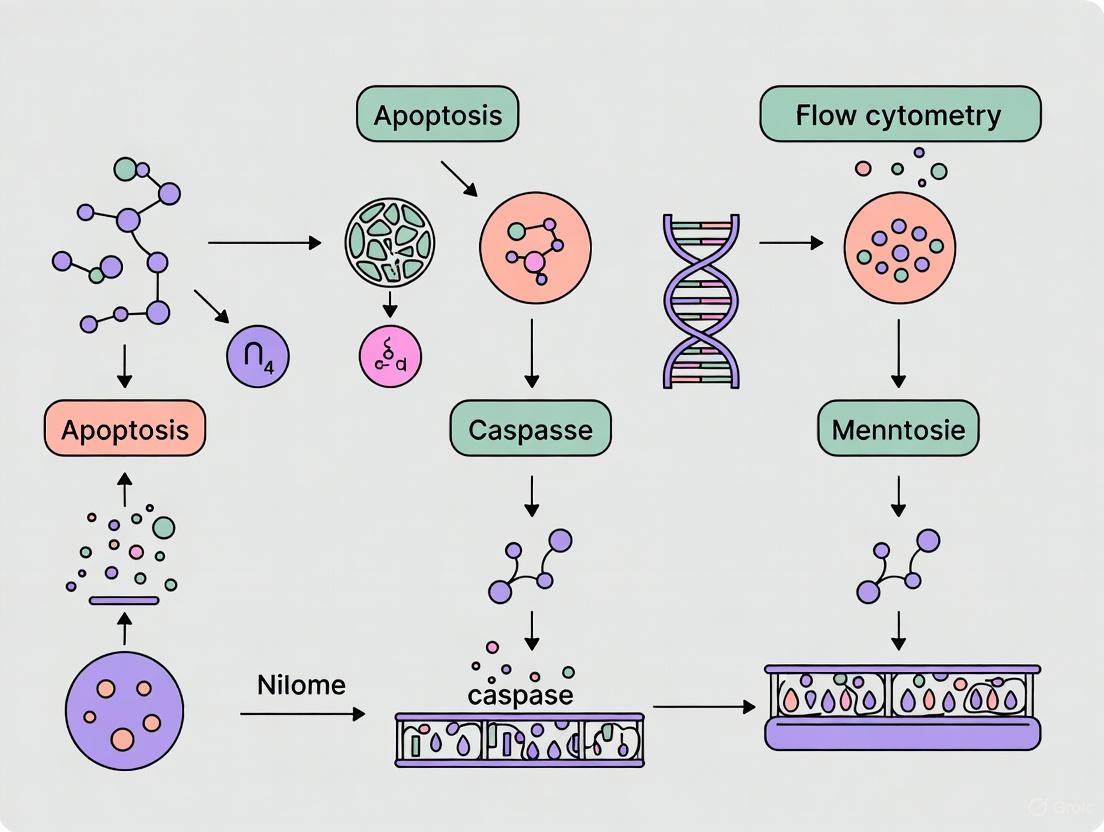
This article provides a comprehensive overview of light scattering flow cytometry for apoptosis detection, tailored for researchers and drug development professionals.
Light Scattering Flow Cytometry: A Robust Approach for Apoptosis Detection in Biomedical Research and Drug Discovery
Abstract
This article provides a comprehensive overview of light scattering flow cytometry for apoptosis detection, tailored for researchers and drug development professionals. It covers the foundational principles of how forward and side scatter signals report on early apoptotic morphological changes. The piece details integrated methodological approaches, including the use of Annexin V/PI and multiparametric panels that combine light scatter with fluorescent viability dyes. A significant focus is given to troubleshooting common experimental pitfalls and optimizing assay protocols. Finally, the article presents a comparative analysis of light scattering flow cytometry against other techniques like fluorescence microscopy, highlighting its superior statistical power, sensitivity, and high-throughput capabilities for pre-clinical and translational research.
The Principles of Light Scatter: Decoding Cellular Morphology in Apoptosis
Fundamentals of Forward Scatter (FSC) and Side Scatter (SSC)
In flow cytometry, the physical characterization of single cells is primarily achieved through the measurement of light scatter. As a cell passes through a laser beam, it scatters light in all directions. This scattered light is captured by two key optical detectors: one along the path of the laser (Forward Scatter or FSC) and another at a ninety-degree angle to it (Side Scatter or SSC). The concurrent measurement of these two parameters forms a foundational scatter plot that allows for the differentiation of major cell populations within a heterogeneous sample based on their physical characteristics [1] [2].
When framed within apoptosis detection research, the analysis of FSC and SSC provides a critical first-pass, label-free method for identifying cells potentially undergoing programmed cell death. Apoptotic cells exhibit characteristic physical changes, and monitoring shifts in a population's location on an FSC vs SSC plot can serve as an initial indicator of this process [3].
Core Principles of FSC and SSC
Forward Scatter (FSC)
- What It Measures: FSC detects light scattered slightly off-axis, but generally in the forward direction, by a cell as it intercepts the laser beam. The intensity of this signal is proportional to the cell's diameter and is largely due to the diffraction of light around the cell [1] [2].
- Underlying Physics: FSC measurement is best described by Mie scatter theory, which applies to particles (like cells) that are larger than the wavelength of the incident laser light. The signal intensity depends on the laser's wavelength, the angle of light collection, and the refractive index difference between the cell and the surrounding sheath fluid [4] [5].
- Detector Technology: Because forward-scattered light is relatively intense, it is typically measured using a photodiode, a less sensitive but robust detector [1] [5].
- Application Note: In apoptosis, cells shrink and a corresponding decrease in FSC signal is a recognized hallmark, making it a useful preliminary screening parameter [3].
Side Scatter (SSC)
- What It Measures: SSC detects light refracted and reflected at a 90-degree angle by internal structures and surface irregularities within the cell. The intensity of the SSC signal is proportional to the internal complexity or granularity of the cell. Cellular components that increase SSC include cytoplasmic granules, the nucleus, and other large organelles [1] [2].
- Detector Technology: Side-scattered light signals are relatively weak and require a more sensitive detector, typically a photomultiplier tube (PMT) [1] [3].
- Application Note: During apoptosis, cells can undergo chromatin condensation and fragmentation, which may alter their internal complexity and lead to measurable changes in SSC. However, this change is less consistent than the decrease in FSC and can be cell-type dependent [3].
Table 1: Core Characteristics of Forward Scatter and Side Scatter
| Parameter | Forward Scatter (FSC) | Side Scatter (SSC) |
|---|---|---|
| Primary Correlation | Cell size / diameter [1] | Internal complexity / granularity [1] |
| Measurement Angle | In-line with the laser path (low angle) [2] | 90 degrees to the laser path [2] |
| Primary Detector Type | Photodiode [1] | Photomultiplier Tube (PMT) [1] |
| Key Influencing Factor | Refractive index, laser wavelength [4] | Number & size of intracellular structures [1] |
| Typical Apoptotic Shift | Decrease (due to cell shrinkage) [3] | Variable (can increase or decrease) [3] |
Quantitative Data and Signal Properties
The electronic signals generated as a cell passes through the laser are processed to record three key characteristics: Height (H), Area (A), and Width (W). While pulse area is most commonly reported, each parameter has distinct advantages for specific applications [1] [6].
Table 2: Quantitative Signal Properties in FSC and SSC Measurement
| Signal Parameter | Definition | Application in Gating & Analysis |
|---|---|---|
| Pulse Height (H or Peak) | The maximum signal strength detected as the cell crosses the laser [6]. | Used in conjunction with Area and Width for pulse processing. |
| Pulse Area (A or Integral) | The total integrated area under the pulse signal curve [6]. | The most commonly used parameter for reporting signal intensity. |
| Pulse Width (W) | The duration of time the cell spends in the laser beam, derived from the pulse signal [1]. | Discriminating single cells from doublets/clumps; indicating cell size [7] [8]. |
| FSC-H vs FSC-A | Plot of pulse height versus area for the forward scatter signal. | Standard method for identifying and excluding cell doublets; single cells fall on a diagonal [7] [6]. |
| SSC-H vs SSC-A | Plot of pulse height versus area for the side scatter signal. | An alternative, and sometimes more sensitive, method for doublet discrimination [7]. |
Experimental Protocols for Apoptosis Detection
Protocol 1: Initial Cell Population Gating Using FSC and SSC
This protocol outlines the foundational gating strategy to isolate viable, single cells for subsequent apoptosis analysis.
- Sample Preparation: Prepare a single-cell suspension in an appropriate buffer. For tissues, use mechanical and/or enzymatic dissociation. Pass the sample through a cell strainer to remove large aggregates [9].
- Instrument Setup: Place the sample on the flow cytometer. Use a low flow rate to minimize the formation of doublets. Adjust the FSC and SSC detector voltages (typically using a photodiode for FSC and a PMT for SSC) to position the main cell population clearly within the scale of a FSC-A vs SSC-A dot plot [6].
- Primary Population Gate:
- Create a dot plot of FSC-A vs SSC-A.
- Draw a gate (often a polygon or ellipse) around the population of intact cells, excluding small debris (low FSC and SSC) and very large events (potential aggregates) [7].
- In apoptosis research, note that a population shifting toward lower FSC may indicate a significant number of shrunken, apoptotic cells.
- Single-Cell Gate (Doublet Exclusion):
- Create a new dot plot of FSC-H vs FSC-A (or SSC-H vs SSC-A) from the events within the primary population gate.
- Draw a gate along the diagonal to select the population where pulse height is proportional to pulse area. This selects for single cells. Events that fall off this diagonal represent two or more cells stuck together (doublets/multiplets), which should be excluded from analysis [7] [6] [8].
- Viability Gating:
- From the single-cell gate, proceed to discriminate live from dead cells using a viability dye (e.g., Propidium Iodide, 7-AAD, or a fixable viability dye).
- Create a histogram or dot plot for the viability dye channel and gate on the negative (dye-excluding) population to select live cells for apoptosis analysis [7] [6].
Protocol 2: Monitoring Apoptotic Shifts via FSC/SSC Profiling
This protocol describes how to use FSC and SSC to track population-level changes indicative of apoptosis over time.
- Experimental Design: Treat cells with an apoptosis-inducing agent (e.g., Staurosporine, Camptothecin) and include an untreated control. Harvest cells at multiple time points (e.g., 0, 2, 6, 24 hours).
- Data Acquisition: For each sample and time point, acquire at least 10,000 events per sample gated on the single, live cell population as defined in Protocol 1.
- Data Analysis:
- For each sample, display the single, live cells on a FSC-A vs SSC-A dot plot.
- Observe and document the position of the cell population. Compare treated samples to the untreated control at each time point.
- A progressive decrease in FSC (leftward shift on the plot) is a classic signature of apoptotic cell shrinkage.
- Note any concurrent changes in SSC, which may increase due to chromatin condensation and nuclear fragmentation or decrease in later stages.
- Define a statistical gate around the main population in the control sample and apply this same gate to all treated samples to quantify the percentage of cells that have shifted out of this "normal" scatter profile [6] [3].
Diagram 1: Gating workflow for apoptosis analysis.
The Scientist's Toolkit: Essential Reagents and Materials
Table 3: Key Research Reagent Solutions for FSC/SSC and Apoptosis Analysis
| Item | Function & Application Note |
|---|---|
| Single-Cell Suspension | The fundamental requirement for flow cytometry. Tissues must be dissociated; cultures should be in a monodisperse state to ensure accurate FSC/SSC measurement [9]. |
| Sheath Fluid | A buffered saline solution that hydrodynamically focuses the sample stream, forcing cells to pass the laser one at a time for consistent FSC/SSC measurement [9]. |
| Viability Dye | Critical for apoptosis studies. Dyes like Propidium Iodide (PI) or 7-AAD are excluded by live cells but penetrate the compromised membranes of dead/late-stage apoptotic cells, allowing their exclusion from analysis [7] [3]. |
| Apoptosis Inducers | Positive controls for assay validation. Examples: Staurosporine (protein kinase inhibitor), Camptothecin (topoisomerase inhibitor), or anti-Fas antibody (for sensitive cell lines). |
| Standardized Beads | Used for instrument calibration and performance tracking. However, note that polystyrene beads have a different refractive index than cells and are not accurate for direct cell size calibration from FSC [5]. |
| Fluorescently Conjugated Antibodies | For multiplexing FSC/SSC analysis with specific apoptotic markers (e.g., Annexin V for phosphatidylserine exposure, antibodies against activated caspases) to confirm apoptosis [3]. |
Diagram 2: Principles of FSC and SSC detection.
Within the broader scope of light scattering flow cytometry apoptosis detection research, correlating specific light scatter changes with classical apoptotic morphology provides a foundational, label-free method for identifying programmed cell death. Apoptosis, a genetically controlled and energy-dependent process of programmed cell death, is characterized by a series of distinctive morphological alterations that directly manifest as changes in how cells scatter light in a flow cytometer [10] [11]. This application note details how the measurable parameters of forward scatter (FSC) and side scatter (SSC) correlate directly with the hallmarks of apoptotic morphology—cell shrinkage and increased granularity—and provides validated protocols for researchers and drug development professionals to integrate this approach into their experimental workflows.
Theoretical Foundation: Light Scatter and Apoptotic Morphology
Principles of Light Scattering
In flow cytometry, when a cell passes through a laser beam, it scatters light. Forward scatter (FSC), which is measured roughly along the path of the laser, is proportional to cell size and cell surface area [12]. Side scatter (SSC), measured at approximately 90 degrees to the laser, is proportional to the internal complexity or granularity of the cell, which is dependent on the presence of intracellular structures that change the refractive index of light [12]. These two simple measurements provide the first non-invasive indication of a cell's state in many cytometric analyses.
Morphological Hallmarks of Apoptosis
Apoptosis is defined by a conserved sequence of morphological events, distinct from necrotic cell death. The key features relevant to light scatter changes include:
- Cell Shrinkage: One of the most ubiquitous early events, involving a reduction in cell volume due to water loss controlled by alterations in osmotically active ions [13] [10].
- Chromatin Condensation (Pyknosis): The compaction of nuclear chromatin, a key diagnostic feature [10].
- Membrane Blebbing: The cell membrane undergoes vigorous blebbing, leading to a characteristically convoluted cell surface [13] [10].
- Formation of Apoptotic Bodies: The cell fragments into small, sealed membrane vesicles containing tightly packed organelles and/or nuclear fragments [10] [11].
In contrast, necrosis is characterized by cell swelling, membrane rupture, and the release of cellular contents, which provokes an inflammatory response [10] [11]. The distinct differences in morphology between apoptosis and necrosis form the basis for their discrimination by light scatter.
Correlation of Scatter Changes with Apoptotic Stages
The sequential morphological changes during apoptosis directly cause specific alterations in FSC and SSC profiles, allowing for the staging of cell death.
Table 1: Correlation of Apoptotic Morphology with Light Scatter Changes
| Apoptotic Stage | Key Morphological Events | Forward Scatter (FSC) | Side Scatter (SSC) | Dominant Scatter Change |
|---|---|---|---|---|
| Viable Cell | Normal size and internal structure. | High | Baseline | N/A |
| Early Apoptosis | Cell shrinkage, chromatin condensation begins. | Decrease [12] | Slight Increase or Unchanged [12] | Reduced FSC (Cell Shrinkage) |
| Late Apoptosis | Advanced shrinkage, nuclear fragmentation, organelle compaction. | Decrease [12] | Variable (often decrease) [12] | Decreased FSC and SSC |
| Necrosis | Cell swelling, loss of membrane integrity. | Initial Increase, then Rapid Decrease [12] | Rapid Decrease [12] | Initial FSC Increase (Swelling) |
Interpretation of Scatter Patterns
- Early Apoptosis: The dominant feature is a decrease in FSC due to the reduction in cell volume (shrinkage) [12]. The SSC may remain relatively constant or show a slight increase, potentially reflecting the increased density of the cytoplasm and the early chromatin condensation [12].
- Late Apoptosis: As the cell continues to condense and fragment, both FSC and SSC typically diminish [12]. The decrease in SSC is attributed to the overall reduction in particle size as the cell breaks down into apoptotic bodies.
- Necrosis: The pattern is distinct. An initial increase in FSC is observed due to cellular swelling, followed by a rapid decrease in both FSC and SSC as the cell loses its structural integrity and releases its contents [12].
The following diagram illustrates the logical progression of a cell through these death pathways as visualized by light scatter.
Experimental Protocols
This section provides a detailed methodology for using light scatter to identify and quantify apoptotic populations.
Protocol: Apoptosis Assessment by Light Scatter
Principle: To distinguish apoptotic, necrotic, and viable cell populations based on their FSC and SSC characteristics.
Materials:
- Cell suspension (approx. 1 x 10^6 cells/mL)
- Apoptosis-inducing agent (e.g., Staurosporine, Camptothecin)
- Appropriate cell culture medium and reagents
- Flow cytometer equipped with a 488 nm laser
- Centrifuge and microcentrifuge tubes
Procedure:
Cell Treatment & Induction:
- Harvest and wash the cells, then resuspend in complete medium.
- Divide the cell suspension into two aliquots:
- Experimental Sample: Treat with a validated apoptosis-inducing agent.
- Control Sample: Treat with an equivalent volume of vehicle (e.g., DMSO).
- Incubate for a predetermined time (e.g., 4-24 hours, depending on cell type and inducer).
Sample Preparation:
- After incubation, collect cells by gentle centrifugation.
- Wash cells once with cold phosphate-buffered saline (PBS).
- Resuspend the cell pellet in cold PBS at a density of 0.5-1 x 10^6 cells/mL. Keep samples on ice until acquisition.
Flow Cytometry Data Acquisition:
- Calibrate the flow cytometer using standard beads according to the manufacturer's instructions.
- Create a dot plot of FSC-A vs. SSC-A.
- Set a threshold on FSC to eliminate small debris.
- Run the control sample first. Adjust the FSC and SSC voltages (or gain) so that the viable cell population is positioned in the center of the plot.
- Without changing the instrument settings, acquire data for the experimental sample, recording at least 10,000 events per sample.
Data Analysis:
- On the FSC vs SSC dot plot, draw polygonal regions (gates) around the distinct cell populations.
- Viable Cells: High FSC, medium SSC.
- Apoptotic Cells: Lower FSC, and potentially higher or lower SSC compared to viable cells.
- Necrotic/Debris: Very low FSC and SSC.
- Record the percentage of cells within the "apoptotic" gate for both control and treated samples.
Protocol Validation and Complementary Assays
Light scatter analysis should be validated with a membrane integrity dye or a specific apoptotic marker due to potential overlap with other cell states (e.g, small viable cells).
Combined Light Scatter and Propidium Iodide (PI) Staining:
- Prepare cells as in the protocol above.
- Prior to flow cytometry analysis, add PI to the cell suspension at a final concentration of 1-2 µg/mL.
- Incubate for 5-10 minutes at room temperature in the dark.
- Acquire data on the flow cytometer. Create an FSC vs SSC plot and a separate fluorescence histogram for PI.
- Gating Strategy: The apoptotic population is typically characterized by low FSC and PI-negative (viable) or dimly positive staining, as early apoptotic cells exclude PI. Late apoptotic and necrotic cells will be PI-bright due to loss of membrane integrity [12].
Table 2: Research Reagent Solutions for Apoptosis Detection
| Reagent / Dye | Excitation (nm) | Emission | Function in Apoptosis Detection |
|---|---|---|---|
| Propidium Iodide (PI) | 488 | Red | Membrane integrity probe; brightly stains necrotic and late apoptotic cells [12]. |
| 7-AAD | 488 | Red | Similar to PI but can discriminate viable cells (negative), apoptotic cells (dim), and necrotic cells (bright) [12]. |
| Hoechst 33342 | ~350 | Blue | Cell-permeant DNA dye; used with PI to distinguish apoptotic chromatin condensation [13]. |
| Annexin V-FITC/PI | 488 | Green/Red | Gold standard for detecting phosphatidylserine externalization (early apoptosis) combined with membrane integrity [11]. |
| DAPI | ~350 | Blue | Cell-impermeant DNA dye; stains nuclei when membrane integrity is lost [12] [13]. |
The following workflow diagram integrates light scatter analysis with a confirmatory staining procedure.
Discussion and Technical Considerations
Advantages and Limitations
Advantages:
- Simplicity and Speed: The method is rapid, does not require expensive fluorescent reagents, and provides immediate information during sample setup [14].
- Preservation of Sample: Cells are not fixed or stained, allowing for subsequent sorting or culture of identified populations.
- Early Indication: Changes in FSC can be one of the earliest detectable signs of apoptosis, preceding DNA fragmentation and phosphatidylserine externalization in some systems.
Limitations and Cautions:
- Lack of Specificity: Cell shrinkage can occur in other conditions, such as quiescence or other forms of RCD. Therefore, light scatter changes alone are not sufficient to conclusively identify apoptosis and should be used as a preliminary screen or in conjunction with more specific assays [13] [15].
- Population Heterogeneity: The scatter changes can be subtle and continuous, making clear gating challenging. Advanced analysis tools like clustering algorithms in software such as FlowJo can help objectively identify these shifting populations [16].
- Context-Dependent Changes: The exact pattern of SSC change (increase or decrease) can vary depending on the cell type and the apoptotic stimulus [12].
Integration with Advanced Flow Cytometry
For complex samples or high-parameter panels, light scatter remains a critical first step. It can be combined with:
- Fluorescent Apoptosis Markers: Such as Annexin V for phosphatidylserine exposure or antibodies against activated caspase-3 [11] [15].
- High-Dimensional Data Analysis: Dimensionality reduction techniques like t-SNE and UMAP can be applied to datasets that include FSC, SSC, and multiple fluorescent parameters to visualize how the apoptotic cluster separates from other populations in an unbiased manner [16].
Correlating light scatter changes with the established morphological hallmarks of apoptosis provides a powerful, label-free tool for the initial assessment of cell death. The decrease in forward scatter is a robust indicator of cell shrinkage, a ubiquitous feature of apoptosis. When integrated into a rigorous experimental workflow that includes confirmatory fluorescent assays, light scatter analysis offers researchers and drug development scientists a reliable, cost-effective, and rapid method for screening and quantifying apoptotic responses in a variety of biological and pharmacological contexts.
The Fundamental Principles of Light Scatter Measurement
Flow cytometry utilizes light scattering, a fundamental physical interaction, to derive essential information about individual cells without the need for fluorescent labeling. As cells pass single-file through a laser beam, they cause the incident light to scatter in various directions [17] [3]. This scattered light is collected by specialized optics and converted into electronic signals that provide immediate data on cellular physical properties [3]. The measurement of light scatter forms the foundational first step in most flow cytometry assays, including apoptosis detection, enabling researchers to quickly distinguish between different cell types, identify debris, and select viable single cells for further analysis [18] [1].
The behavior of scattered light depends critically on the relationship between the laser wavelength and cell size. When the laser emits light at a wavelength shorter than the interrogated particles (typically 488 nm or 405 nm), the scatter behavior produces consistent, measurable signals [1]. The instrument captures this scattered light at two primary angles relative to the incident laser beam: forward scatter (FSC) and side scatter (SSC), with each angle revealing distinct cellular characteristics [17] [3].
Diagram 1: Path of light scatter detection in a flow cytometer. FSC is detected in line with the laser path, while SSC is detected at a 90-degree angle.
Instrumentation and Detection Technologies
Forward Scatter (FSC) Detection
Forward scatter is measured by a detector placed in the path of the laser, directly behind the sample stream [17]. This configuration requires a blocker bar to prevent the intense, unscattered laser light from damaging the detection system [17]. FSC primarily captures light diffracted at low angles (0.5-10 degrees) around the cell, which is a comparatively high-intensity signal [17]. Consequently, most instruments employ photodiodes rather than more sensitive photomultiplier tubes for FSC detection, as photodiodes provide sufficient sensitivity for this strong signal while offering cost and simplicity advantages [17] [3].
The intensity of forward scatter has a strong correlation with cell size, where larger cells produce more intense FSC signals [1]. However, this relationship is not purely deterministic, as the refractive index of the cell, the wavelength of the laser, and the nuclear-to-cytoplasmic ratio also significantly influence the FSC measurement [17]. This means that particles of identical size may display different FSC values if their internal composition differs, and conversely, particles with similar FSC intensities may actually differ in size if their refractive indices vary [17].
Side Scatter (SSC) Detection
Side scatter is collected by a detector positioned at approximately 90 degrees to the laser path, typically through the same collection lens used for fluorescence detection [17]. A dichroic mirror then directs the scattered laser light to a dedicated SSC detector [17]. Compared to FSC, side scatter signals are considerably weaker in intensity, necessitating the use of more sensitive detection technologies [17] [1]. Most flow cytometers employ photomultiplier tubes (PMTs) or avalanche photodiodes (APDs) for SSC detection to amplify these faint signals to measurable levels [17].
SSC intensity provides information about the internal complexity of a cell [3] [1]. Light reflection and refraction from internal structures such as granules, the nucleus, and organelle membranes generate the SSC signal [17] [1]. Consequently, cells with high granularity or complex internal structures (like neutrophils) yield much stronger SSC signals than cells with smooth, simple interiors (like lymphocytes) [1]. The term "granularity" is commonly used to describe this SSC-derived characteristic, though it technically encompasses all internal structural complexity [17].
Table 1: Key Characteristics of Forward Scatter vs. Side Scatter
| Parameter | Forward Scatter (FSC) | Side Scatter (SSC) |
|---|---|---|
| Detection Angle | In-line with laser (0.5-10°) [17] | Perpendicular to laser (90°) [17] [3] |
| Primary Information | Cell size [1] | Internal complexity/granularity [17] [1] |
| Intensity | High [17] | Low [17] [1] |
| Detector Type | Photodiode [17] [1] | Photomultiplier Tube (PMT) or Avalanche Photodiode (APD) [17] |
| Influencing Factors | Cell diameter, refractive index, nuclear:cytoplasmic ratio [17] | Cytoplasmic granules, nucleus, membrane folds [17] |
| Cell Examples | Monocytes (high FSC), Lymphocytes (low FSC) [1] | Granulocytes (high SSC), Lymphocytes (low SSC) [1] |
Technical Considerations in Scatter Measurement
The collection angle of scatter detection significantly impacts measurement sensitivity and application suitability. Instruments with narrow FSC collection angles demonstrate superior sensitivity to size changes in smaller cells (5-10 microns), while systems with wider collection angles better detect size variations in larger cells (10-20 microns) [17]. This principle extends to sub-micron particles, where wide-angle scatter collection enhances detection of platelets, bacteria, viruses, and extracellular vesicles compared to narrow-angle forward scatter [17].
Laser wavelength selection also affects scatter resolution, particularly for small particles. Violet (405 nm) and UV (355 nm) lasers often provide better resolution for minute particles than the traditional 488 nm blue laser due to their shorter wavelengths [17]. Additionally, the pulse characteristics of scatter signals (height, width, and area) provide valuable information for distinguishing single cells from doublets or cell clumps [1]. Analyzing FSC height versus FSC width, for example, enables researchers to gate specifically on single cells, eliminating aggregates that could compromise data interpretation [1].
Application in Apoptosis Detection Research
In apoptosis research, light scatter parameters provide crucial initial screening data that complements specific fluorescent apoptosis markers. During programmed cell death, cells undergo dramatic morphological changes that directly alter their light scattering properties [19]. The early apoptotic stage typically features cell shrinkage, which manifests as decreased forward scatter (indicating reduced size) [19]. Concurrently, nuclear condensation and structural reorganization may initially increase side scatter signals (reflecting heightened internal complexity) [19]. In later apoptotic stages and secondary necrosis, when the cell membrane becomes permeable and internal structures disintegrate, both FSC and SSC signals typically diminish significantly [19].
Diagram 2: Characteristic changes in light scatter properties during apoptotic progression.
This scatter profile evolution provides researchers with an immediate, label-free method to monitor apoptotic progression and gate populations for more detailed analysis with specific fluorescent probes like Annexin V or caspase substrates [19] [20]. When combined with viability dyes and apoptosis-specific stains, light scatter measurements enable comprehensive discrimination of viable, early apoptotic, late apoptotic, and necrotic populations within heterogeneous samples [19] [20].
Table 2: Light Scatter Changes During Apoptotic Stages
| Cell Stage | Forward Scatter (FSC) | Side Scatter (SSC) | Morphological Basis |
|---|---|---|---|
| Viable Cell | High, stable | Normal | Intact structure, normal size [19] |
| Early Apoptosis | Decreased [19] | Increased [19] | Cell shrinkage, chromatin condensation [19] |
| Late Apoptosis | Significantly decreased | Variable (often decreased) | Membrane blebbing, structural disintegration [19] |
| Necrosis | Significantly decreased | Decreased | Loss of membrane integrity, organelle breakdown [19] |
Protocol: Integrating Light Scatter with Annexin V Apoptosis Assay
This protocol details the procedure for assessing apoptosis using light scatter parameters combined with Annexin V and viability staining, adapted from established methodologies [19] [20].
Materials and Reagents
Table 3: Essential Research Reagents for Annexin V Apoptosis Assay
| Reagent | Function | Specific Example |
|---|---|---|
| Annexin V Conjugate | Binds phosphatidylserine exposed on apoptotic cells | Annexin V FITC, PE, APC, or PerCP-eFluor 710 [20] |
| Viability Stain | Distinguishes intact vs. compromised membranes | Propidium Iodide, 7-AAD, or Fixable Viability Dyes [19] [20] |
| Binding Buffer | Provides calcium for Annexin V binding | 10X Binding Buffer (diluted to 1X) [20] |
| Wash Buffer | Removes unbound antibody | PBS with 1% BSA [21] |
| Cell Preparation | Harvest and suspend cells | PBS, centrifuge tubes [21] |
Experimental Procedure
Sample Preparation: Harvest approximately 1×10⁶ cells per condition and transfer to 12×75 mm round-bottom tubes [21] [20]. Wash cells once with PBS containing 1% BSA, then centrifuge at 300-400 × g for 5 minutes at room temperature [21].
Cell Staining:
Viability Staining:
- Add 2 mL of 1X binding buffer and centrifuge at 400-600 × g for 5 minutes [20].
- Resuspend cells in 200 μL of 1X binding buffer.
- Add 5 μL of propidium iodide (PI) or 7-AAD viability staining solution [19] [20].
- Incubate for 5-15 minutes on ice or at room temperature, protected from light [20].
- Critical Note: Do not wash cells after adding PI or 7-AAD, as these dyes must remain in the buffer during acquisition [20].
Flow Cytometry Analysis:
- Analyze samples within 4 hours of staining [20].
- Begin analysis by creating an FSC vs. SSC dot plot to identify the primary cell population and exclude debris [1].
- Gate on single cells using FSC-height vs. FSC-width to exclude aggregates [1].
- Within the single cell population, analyze Annexin V vs. viability dye fluorescence to distinguish viable (Annexin V⁻/PI⁻), early apoptotic (Annexin V⁺/PI⁻), and late apoptotic/necrotic (Annexin V⁺/PI⁺) populations [19] [20].
Diagram 3: Workflow for Annexin V apoptosis assay with light scatter analysis.
Critical Technical Considerations
- Calcium Dependence: The binding of Annexin V to phosphatidylserine is calcium-dependent. Avoid buffers containing EDTA or other calcium chelators during Annexin V staining steps [20].
- Timing: Analyze samples promptly (within 4 hours) after staining, as prolonged exposure to viability dyes can adversely affect cell viability and signal quality [20].
- Fixation: If analysis cannot be performed immediately, fixation with 1-4% paraformaldehyde may preserve staining, but may also affect light scatter properties and subsequent analysis [21].
- Gating Strategy: Always begin with FSC vs. SSC to identify the main cell population, then apply FSC-height vs. FSC-width to select single cells before analyzing fluorescent parameters [1]. This sequential gating ensures accurate population identification and minimizes artifacts from debris or cell clumps.
Light scatter measurement represents a fundamental, powerful component of flow cytometry that provides immediate, label-free information on cellular physical properties. The integration of forward scatter (indicating size) and side scatter (reflecting internal complexity) enables researchers to distinguish cell types, identify apoptotic populations, and establish appropriate gating strategies for more detailed fluorescence analysis. In apoptosis research, monitoring the characteristic changes in light scatter parameters—particularly decreased FSC and initially increased SSC—provides valuable complementary data to specific biochemical markers like Annexin V. When properly executed through standardized protocols and careful technical consideration, light scatter analysis significantly enhances the robustness and interpretability of flow cytometry-based apoptosis detection assays in both research and drug development applications.
The Biological Significance of FSC and SSC Shifts in Early Apoptosis
Within light scattering flow cytometry apoptosis detection research, monitoring changes in Forward Scatter (FSC) and Side Scatter (SSC) provides critical, label-free insights into the initial phases of programmed cell death. As a cell enters apoptosis, it undergoes a characteristic sequence of morphological transformations that directly alter its light-scattering properties [22]. FSC, which is proportional to cell size, and SSC, which indicates internal granularity and complexity, serve as sensitive, real-time indicators of these changes [23] [3]. This application note details the biological significance of these shifts, provides structured quantitative data, and outlines detailed protocols for researchers and drug development professionals to integrate these parameters into robust apoptosis detection workflows.
The Biological Basis of Light Scatter Changes
The progression of apoptosis triggers a well-defined series of cellular events that manifest as distinct signatures in FSC and SSC measurements. These light scatter parameters are foundational to the step-by-step gating strategies essential for accurate flow cytometry analysis [23].
- Cell Shrinkage and FSC Decrease: One of the earliest morphological hallmarks of apoptosis is cell shrinkage, resulting from the activation of caspases and the consequent contraction of the cytoplasm and nucleus [22]. This reduction in cell volume directly leads to a decrease in FSC intensity, as smaller cells scatter less light in the forward direction [23].
- Chromatin Condensation and SSC Increase: Concurrently, the cell undergoes profound internal restructuring. Nuclear chromatin condenses into compact, granular masses, and the cytoplasm becomes denser [22]. This increase in internal complexity results in an increase in SSC intensity, as more light is refracted and reflected at 90 degrees to the laser path [23].
- Late-Stage Changes and Secondary Necrosis: In the later stages of apoptosis, the cell fragments into apoptotic bodies. If these fragments are not cleared, they may undergo secondary necrosis, losing their internal structure. This late-stage degradation typically leads to a pronounced decrease in both FSC and SSC, as the remaining cellular debris is small and relatively non-complex [23] [22].
These sequential changes create a characteristic "trajectory" on an FSC vs. SSC dot plot, allowing researchers to distinguish early apoptotic cells from healthy populations, late-stage apoptotic cells, and cellular debris.
The following tables summarize the characteristic shifts in light scatter properties during different stages of apoptosis and how they compare to other cell states.
Table 1: Characteristic FSC and SSC Shifts During Apoptosis
| Stage of Apoptosis | FSC (Cell Size) | SSC (Internal Complexity) | Morphological Basis |
|---|---|---|---|
| Early Apoptosis | Decreased | Increased | Cytoplasmic shrinkage and nuclear chromatin condensation [22] |
| Late Apoptosis | Decreased | Variable (may peak then decrease) | Formation of apoptotic bodies and membrane blebbing [22] |
| Secondary Necrosis/Debris | Markedly Decreased | Decreased | Loss of structural integrity and cellular fragmentation [23] |
Table 2: Comparison of Light Scatter Properties Across Cell States
| Cell State | FSC Signal | SSC Signal | Distinguishing Features |
|---|---|---|---|
| Viable, Healthy Cell | High (Normal) | Low to Medium (Normal) | Intact morphology, defined population cluster [23] |
| Early Apoptotic Cell | Low | High | Key identifying signature [22] |
| Necrotic Cell | Variable (often decreased) | Variable (often decreased) | Loss of membrane integrity without apoptotic condensation [22] |
| Cellular Debris | Very Low | Very Low | Located near the plot origin [23] |
Integrated Experimental Protocols
Basic Gating Strategy for Apoptosis Analysis
A hierarchical gating strategy is crucial for accurately identifying apoptotic cells based on FSC and SSC properties [23].
Acquisition and Initial Visualization:
- Acquire sample data on the flow cytometer, ensuring the sample is a single-cell suspension.
- Begin by plotting FSC-Area (FSC-A) vs. SSC-Area (SSC-A). The main population of intact cells will typically form a distinct cloud, while debris and smaller particles will appear with lower FSC and SSC values [23].
Exclusion of Debris:
- Draw a gate (e.g., "P1") around the main cell population to exclude events with very low FSC and SSC, which represent subcellular debris and platelets [23].
Exclusion of Doublets and Aggregates:
- From the debris-excluded population (P1), create a new plot of FSC-Height (FSC-H) vs. FSC-Area (FSC-A) or FSC-Width (FSC-W) vs. FSC-A.
- Cells passing singly through the laser will exhibit a linear relationship between these parameters. Draw a gate on this linear population to select "singlets" and exclude cell doublets or aggregates, which deviate from the diagonal [23] [24]. This step is critical for ensuring accurate downstream analysis.
Identification of Apoptotic Populations:
- From the singlets gate, return to or create a new FSC-A vs. SSC-A plot. The population of interest will now be refined.
- On this plot, apoptotic cells will typically appear as a subpopulation with lower FSC and higher SSC compared to the viable, healthy cells. Draw a gate around this population for further analysis (e.g., "Apoptotic Cells") [22].
Annexin V/PI Staining for Apoptosis Confirmation
While FSC/SSC shifts are indicative, confirmation with specific biochemical markers is standard. The Annexin V/Propidium Iodide (PI) assay is a gold standard for validating apoptosis.
Table 3: Research Reagent Solutions for Apoptosis Detection
| Reagent / Assay | Function / Target | Application in Apoptosis Detection |
|---|---|---|
| Annexin V (e.g., FITC conjugate) | Binds phosphatidylserine (PS) | Detects PS externalization on the outer membrane leaflet, an early apoptosis marker [25] [26] |
| Propidium Iodide (PI) | DNA intercalating dye | Assesses plasma membrane integrity; excludes late apoptotic/necrotic cells with permeable membranes [27] [25] |
| 7-AAD | DNA binding dye | Alternative viability dye to PI; used in multicolor panels due to different spectral overlap [23] |
| TUNEL Assay Kit | Labels DNA strand breaks | Detects endonuclease-mediated DNA fragmentation, a mid-late apoptotic event [26] |
| JC-1 Dye | Mitochondrial potential sensor | Detects early mitochondrial membrane depolarization, preceding PS exposure in intrinsic pathway [27] |
| Caspase-3 Assays | Detects active enzyme | Identifies early caspase activation, a key commitment step in apoptosis [26] |
Protocol Steps [25]:
- Cell Preparation: Harvest approximately (0.5-1 \times 10^6) cells per sample. For adherent cells, collect both floating and gently trypsinized attached cells. Wash cells once in 1X PBS.
- Staining Cocktail: For each sample, prepare 100 µL of incubation reagent by combining:
- 10 µL of 10X Binding Buffer
- 1 µL of Annexin V-FITC
- 10 µL of Propidium Iodide (PI) stock solution
- 79 µL of dH₂O
- Staining Incubation: Resuspend the washed cell pellet in the 100 µL staining cocktail. Incubate for 15 minutes at room temperature in the dark.
- Analysis: Add 400 µL of 1X Binding Buffer to each tube. Analyze by flow cytometry within 1 hour.
Data Interpretation:
- Annexin V⁻/PI⁻: Viable, healthy cells.
- Annexin V⁺/PI⁻: Early apoptotic cells (FSC low/SSC high population should be enriched here).
- Annexin V⁺/PI⁺: Late apoptotic or necrotic cells.
- Annexin V⁻/PI⁺: Primarily necrotic cells or late-stage apoptotic bodies.
Visualizing the Workflow and Signaling
The following diagrams illustrate the integrated experimental workflow and the connection between apoptotic signaling and light scatter changes.
Integrated Apoptosis Analysis Workflow
Apoptotic Signaling and Detectable Features
Integrated Assay Protocols: Combining Light Scatter with Fluorescent Apoptosis Markers
Flow cytometry has emerged as the preferred technology for the rapid assessment of apoptotic cell death, enabling multiparameter measurements and single-cell analysis that avoid the limitations of bulk techniques [28]. Among the various cytometric methods available, the Annexin V and propidium iodide (PI) staining assay stands as the gold standard for detecting early and late apoptotic stages based on plasma membrane alterations [28]. This methodology capitalizes on key biochemical events during apoptosis, particularly the externalization of phosphatidylserine (PS) from the inner to the outer leaflet of the plasma membrane, which occurs during the early stages of cell death [20] [29]. The integrity of the plasma membrane serves as a critical distinguishing feature between early and late apoptosis, with Annexin V binding to externalized PS and PI staining DNA only in cells with compromised membrane integrity [30].
The integration of light scatter measurements—forward scatter (FSC) and side scatter (SSC)—with Annexin V/PI staining provides a multidimensional analytical approach that enhances the accuracy of apoptosis detection. FSC correlates with cell size, while SSC provides information about cell granularity and internal complexity [31] [32]. During apoptosis, cells undergo characteristic morphological changes including cell shrinkage (decreased FSC) and increased complexity (increased SSC) due to chromatin condensation and nuclear fragmentation [28]. These light scatter parameters offer valuable preliminary indicators of cellular demise before proceeding to more specific fluorescence-based detection methods.
Theoretical Basis of Annexin V/PI Assay
Biochemical Principles
The Annexin V/PI assay operates on two fundamental biochemical principles that correspond to distinct stages of cell death. First, in viable cells, phosphatidylserine (PS) is predominantly located on the inner leaflet of the plasma membrane, but during early apoptosis, it becomes translocated to the outer leaflet, creating a specific binding site for Annexin V [29]. Annexin V is a 35-36 kDa calcium-dependent phospholipid-binding protein with high affinity for PS, and when conjugated to fluorochromes, it serves as a sensitive probe for detecting early apoptotic cells [20] [29].
Second, the integrity of the plasma membrane serves as a key differentiator between apoptotic stages. Propidium iodide (PI) is a DNA intercalating agent that is excluded from viable and early apoptotic cells with intact membranes but penetrates cells in late apoptosis and necrosis when membrane integrity is compromised [30]. This differential accessibility forms the basis for distinguishing between early apoptotic (Annexin V+/PI-), late apoptotic (Annexin V+/PI+), and necrotic (Annexin V-/PI+) populations [30]. It is important to note that Annexin V can only be used as a marker of apoptosis in cells where the plasma membrane is initially intact; destroying the integrity of the plasma membrane will allow binding of Annexin V to PS inside the cell, potentially leading to false positives [20].
Critical Experimental Considerations
The calcium dependence of the Annexin V-PS interaction necessitates avoiding buffers containing EDTA or other calcium chelators during experiments [20]. The recommended binding buffer typically consists of 10 mM HEPES/NaOH pH 7.4, 140 mM NaCl, and 2.5 mM CaCl₂ [29] [30]. Additionally, the temperature and timing of analysis are critical factors; cells should be analyzed by flow cytometry as soon as possible (within 1 hour) after staining due to adverse effects on cell viability when left in the presence of PI for prolonged periods [20] [29].
Table 1: Critical Reagents for Annexin V/PI Apoptosis Assay
| Reagent | Composition/Preparation | Function |
|---|---|---|
| 1X Binding Buffer | 10 mM HEPES pH 7.4, 140 mM NaCl, 2.5 mM CaCl₂ [29] [30] | Provides optimal calcium-dependent Annexin V binding conditions |
| Annexin V Conjugate | Fluorochrome-conjugated Annexin V (FITC, PE, APC, etc.) [20] | Binds externalized phosphatidylserine on apoptotic cells |
| Propidium Iodide (PI) | DNA intercalating dye (0.5-10 µg/mL working concentration) [29] | Identifies cells with compromised membrane integrity |
| Viability Dyes (Alternative) | 7-AAD, Fixable Viability Dyes [20] | Optional viability markers for specific experimental designs |
Experimental Protocols
Basic Annexin V/PI Staining Protocol
The following protocol is adapted from established methodologies from leading manufacturers and research institutions [20] [29] [30]:
Cell Preparation: Harvest cells and wash twice with cold 1X PBS. Centrifuge at 400-600 × g for 5 minutes between washes. For adherent cells, use gentle enzymatic detachment (e.g., with EDTA-free trypsin) to avoid artificial phosphatidylserine exposure [29].
Buffer Preparation: Prepare 1X binding buffer by diluting 10X binding buffer 1:9 with distilled water. Keep the buffer chilled.
Cell Resuspension: Resuspend cells in 1X binding buffer at a concentration of 1-5 × 10⁶ cells/mL [20].
Staining Mixture: Transfer 100 μL of cell suspension (approximately 1-5 × 10⁵ cells) to a 5 mL culture tube. Add 5 μL of Annexin V conjugate and the appropriate volume of PI (typically 2-5 μL, depending on titration) [29] [30].
Incubation: Gently mix the cells and incubate for 15-20 minutes at room temperature protected from light [20] [30].
Analysis: Add 400 μL of 1X binding buffer to each tube and analyze by flow cytometry within 1 hour [29]. Do not wash cells after the addition of PI, as this would remove the viability dye [20].
Protocol Incorporating Fixable Viability Dyes and Surface Staining
For complex multicolor panels or experiments requiring intracellular staining, the protocol can be modified as follows [20]:
Surface Staining: Begin with staining of cell surface antigens using antibodies diluted in flow cytometry staining buffer.
Viability Staining: Wash cells twice in azide-free and serum/protein-free PBS. Resuspend cells at 1-10 × 10⁶ cells/mL and add Fixable Viability Dye (FVD; 1 μL per 1 mL of cells). Incubate for 30 minutes at 2-8°C protected from light.
Annexin V Staining: Wash cells twice with flow cytometry staining buffer, then once with 1X binding buffer. Resuspend cells in 1X binding buffer and add fluorochrome-conjugated Annexin V. Incubate 10-15 minutes at room temperature protected from light.
Intracellular Staining (if required): After Annexin V staining, wash cells once with 1X binding buffer before proceeding with intracellular staining using appropriate fixation and permeabilization buffers [20].
Essential Controls for Flow Cytometric Analysis
Proper experimental controls are fundamental for accurate data interpretation and compensation setup [29]:
- Unstained Cells: Cells without any dyes to assess autofluorescence.
- Annexin V Single Stain: Cells stained with Annexin V conjugate alone (no PI) for compensation and fluorescence spillover assessment.
- PI Single Stain: Cells stained with PI alone (no Annexin V) for compensation setup.
- Induced Apoptosis Positive Control: Cells treated with apoptosis-inducing agents (e.g., staurosporine, UV irradiation) to establish positive staining patterns [29].
- Annexin V Blocking Control (Optional): Cells pre-incubated with unconjugated Annexin V to block binding sites, followed by stained Annexin V to demonstrate staining specificity [29].
Table 2: Required Experimental Controls and Their Purposes
| Control Sample | Staining Reagents | Purpose in Analysis |
|---|---|---|
| Unstained | No dyes | Measures cellular autofluorescence and background signal |
| Annexin V Single Stain | Annexin V conjugate only | Sets compensation for Annexin V channel and detects spillover |
| PI Single Stain | PI only | Sets compensation for PI channel and detects spillover |
| Positive Control | Annexin V + PI (apoptosis-induced cells) | Verifies assay performance and establishes positive populations |
| Viability Control | Viability dye only (if using FVD) | Sets compensation for viability channel in multicolor panels |
Gating Strategy and Data Interpretation
Sequential Gating Approach for Apoptosis Analysis
A robust gating strategy is essential for accurate identification and quantification of apoptotic populations. The following sequential approach ensures elimination of artifacts and precise population discrimination [33] [32]:
Light Scatter Gate: Plot FSC-A vs. SSC-A to identify the main population of intact cells while excluding debris and dead cells with dramatically reduced FSC. Apoptotic cells typically show decreased FSC (cell shrinkage) and increased SSC (internal complexity) [28] [32].
Singlets Gate: Plot FSC-H vs. FSC-A to exclude cell doublets and aggregates, ensuring analysis of single cells only. This step is critical for accurate quantification as doublets can exhibit aberrant staining patterns [32].
Viability Gate: If using fixable viability dyes, gate on viability dye-negative cells to focus on live and early apoptotic cells before Annexin V/PI analysis [20].
Annexin V/PI Analysis Gate: Create a bivariate plot of Annexin V vs. PI to distinguish the four distinct populations:
- Viable Cells: Annexin V-/PI- (lower left quadrant)
- Early Apoptotic: Annexin V+/PI- (lower right quadrant)
- Late Apoptotic/Necrotic: Annexin V+/PI+ (upper right quadrant)
- Necrotic/Damaged: Annexin V-/PI+ (upper left quadrant) [30]
Interpretation of Apoptotic Populations
The four populations identified in the Annexin V/PI plot represent distinct stages of cellular health and demise [30]:
Annexin V-/PI- (Viable Cells): These cells have intact membranes and no exposed phosphatidylserine, indicating healthy, non-apoptotic cells. In untreated populations, typically >90% of cells should fall in this quadrant under normal culture conditions.
Annexin V+/PI- (Early Apoptotic): This population represents cells in the early stages of apoptosis with externalized phosphatidylserine but maintained membrane integrity. The percentage of cells in this quadrant typically increases following apoptotic stimuli and serves as the most specific indicator of early programmed cell death.
Annexin V+/PI+ (Late Apoptotic): These cells exhibit both phosphatidylserine externalization and loss of membrane integrity, characteristic of late-stage apoptosis or post-apoptotic necrosis. This population often increases with prolonged exposure to apoptotic stimuli.
Annexin V-/PI+ (Necrotic/Damaged): Cells in this quadrant have lost membrane integrity without phosphatidylserine externalization, suggesting primary necrosis or mechanical damage during sample preparation. High percentages in this quadrant may indicate problematic sample handling or acute cytotoxic events.
Quantification and Statistical Analysis
When quantifying results, it is essential to back-calculate percentages through sequential gates to determine the true frequency of each population within the original sample [32]. For example, if 30.1% of the total population are neutrophils, and 14.5% of neutrophils express a marker of interest, then 4.36% (30.1 × 0.145) of the total sample are positive cells [32]. The basal level of apoptosis and necrosis varies considerably within cell populations, so the percentage of apoptotic cells in untreated controls should be subtracted from treated populations to determine induced apoptosis [29].
Troubleshooting and Technical Considerations
Common Pitfalls and Solutions
Several technical challenges can compromise Annexin V/PI assay results:
High Background in Viable Population: This may result from inadequate washing, excessive probe concentration, or cellular autofluorescence. Titrate antibody concentrations and include proper unstained controls [29].
Excessive Necrotic Population: Rough cell handling during harvesting, excessive centrifugation force, or prolonged storage on ice can artificially increase necrotic populations. Use gentle processing techniques and minimize processing time [20].
Low Annexin V Signal: Check calcium concentration in binding buffer and ensure absence of EDTA in wash buffers. Verify antibody activity and storage conditions [20].
Poor Population Resolution: Ensure proper compensation using single-stained controls and check instrument performance with calibration beads [29].
Comparison with Alternative Apoptosis Detection Methods
While Annexin V/PI staining remains the gold standard for flow cytometric apoptosis detection, researchers should be aware of its position within the broader methodological landscape:
Caspase Activation Assays: Fluorochrome-labeled inhibitors of caspases (FLICA) allow estimation of apoptosis by detecting active caspases, providing complementary information to Annexin V staining [28].
Mitochondrial Membrane Potential Assessment: Probes such as TMRM detect dissipation of mitochondrial transmembrane potential (Δψm), an early apoptotic event preceding phosphatidylserine externalization [28].
DNA Fragmentation Analysis: Detection of sub-G1 fraction by PI staining of fixed permeabilized cells identifies late apoptotic stages characterized by DNA breakdown [28].
Novel Fluorescent Reporters: Recently developed biosensors enable real-time visualization of apoptosis inside living cells by incorporating caspase-3 cleavage motifs into fluorescent proteins, though these approaches are not yet widely adopted [34].
Research Reagent Solutions
Table 3: Essential Research Reagents for Annexin V/PI Apoptosis Detection
| Reagent Category | Specific Examples | Function & Application Notes |
|---|---|---|
| Annexin V Conjugates | Annexin V-FITC, Annexin V-PE, Annexin V-APC, Annexin V-eFluor dyes [20] | Fluorochrome-conjugated Annexin V for detection of PS exposure; choice depends on flow cytometer configuration and panel design |
| Viability Probes | Propidium Iodide (PI), 7-AAD, Fixable Viability Dyes (eFluor series) [20] [29] | Distinguish membrane integrity; PI and 7-AAD are incompatible with fixation while fixable dyes permit intracellular staining |
| Binding Buffers | 10X Annexin Binding Buffer (0.1 M HEPES, 1.4 M NaCl, 25 mM CaCl₂) [29] | Provides optimal calcium-dependent binding conditions for Annexin V-PS interaction |
| Blocking Reagents | Fc Receptor Blocking Solution, Brilliant Stain Buffer [35] | Reduce non-specific antibody binding; essential for complex multicolor panels |
| Compensation Controls | UltraComp eBeads, single-stained cells [29] | Critical for proper fluorescence compensation in multicolor flow cytometry |
| Apoptosis Inducers | Staurosporine, Camptothecin, UV irradiation [29] | Generate positive controls for assay validation and optimization |
The Annexin V/PI staining method, when combined with a robust gating strategy incorporating light scatter parameters, remains the gold standard for apoptosis detection by flow cytometry. Its strength lies in the ability to distinguish between viable, early apoptotic, late apoptotic, and necrotic populations in a quantitative manner at the single-cell level. The integration of forward and side scatter measurements provides valuable preliminary information about cellular changes during apoptosis, while the fluorescence parameters offer specific detection of biochemical events characteristic of programmed cell death.
For researchers in drug development and biomedical research, this methodology provides a reliable platform for evaluating therapeutic efficacy and screening potential compounds. The protocols and guidelines presented here address critical technical considerations that ensure reproducible and accurate results. As flow cytometry technology continues to advance with developments in spectral flow cytometry and high-dimensional analysis, the fundamental principles of Annexin V/PI staining and gating strategy remain essential for proper experimental design and data interpretation in apoptosis research.
Flow cytometry stands as a cornerstone of modern biomedical research and clinical diagnostics, enabling high-throughput, multiparametric analysis of single cells within heterogeneous populations [36]. Its application in detecting apoptosis—a fundamental process in development, homeostasis, and disease—is particularly valuable for cancer research and drug development. This application note details a robust multiparametric flow cytometry panel that integrates light scatter properties, the mitochondrial dye JC-1, and cell cycle dyes. Designed within the broader context of light scattering flow cytometry apoptosis detection research, this protocol provides researchers and drug development professionals with a comprehensive method to simultaneously assess early apoptotic events, cell cycle status, and viability.
Principles of Analysis
Light Scatter Parameters
In flow cytometry, light scatter provides initial, label-free information on cell morphology. Forward Scatter (FSC) correlates with cell size, while Side Scatter (SSC) indicates internal complexity or granularity [36]. During apoptosis, cells undergo characteristic morphological changes, including cell shrinkage (decreased FSC) and increased granularity (increased SSC), which can be monitored in real-time.
JC-1 for Mitochondrial Membrane Potential
The cyanine dye JC-1 (5,5',6,6'-tetrachloro-1,1',3,3'-tetraethylbenzimidazolylcarbocyanine iodide) serves as a sensitive probe for mitochondrial health. Its fluorescence emission shifts depending on the mitochondrial membrane potential (ΔΨm). In healthy cells with high ΔΨm, JC-1 forms aggregates that emit red fluorescence (∼590 nm). In apoptotic cells, where ΔΨm collapses, JC-1 remains in its monomeric form, emitting green fluorescence (∼529 nm). The ratio of red to green fluorescence provides a quantitative measure of apoptosis that is independent of mitochondrial mass.
Cell Cycle Dyes for DNA Content
DNA-binding dyes such as Propidium Iodide (PI) or DAPI are used to analyze cell cycle distribution by staining cellular DNA quantitatively. Since apoptotic cells undergo DNA fragmentation, they exhibit a characteristic sub-G1 peak on a DNA content histogram. When combined with JC-1, this allows for direct correlation of the cell's apoptotic status with its position in the cell cycle.
Integrated Multiparametric Approach
Combining these three parameters provides a more comprehensive view of cellular health and death than any single metric. Light scatter identifies morphological changes, JC-1 detects early functional changes in mitochondria (a key initiating event in apoptosis), and cell cycle analysis reveals the resulting genomic fragmentation. This multi-faceted approach is crucial for accurately assessing the effects of chemotherapeutic agents in drug development.
Experimental Protocol
Sample Preparation
- Cell Culture: Grow adherent or suspension cells under standard conditions. Include untreated and induced apoptosis controls (e.g., 1-5 µM Staurosporine for 3-6 hours).
- Harvesting: Collect cells gently. For adherent cells, use mild dissociation methods like trypsinization with minimal incubation time to preserve surface markers and viability.
- Washing: Wash cells once with cold Phosphate-Buffered Saline (PBS) and resuspend in culture medium or a suitable staining buffer at a density of 0.5-1 x 10^6 cells/mL [36]. Keep samples on ice to halt metabolic activity.
Staining Procedure
JC-1 Staining:
- Prepare a 10X JC-1 working solution in PBS or DMSO according to the manufacturer's instructions.
- Add the JC-1 working solution to the cell suspension to achieve a 1X final concentration.
- Incubate cells at 37°C for 15-20 minutes in the dark.
- After incubation, wash cells twice with warm PBS to remove excess dye. Resuspend the pellet in 500 µL of fresh PBS or staining buffer.
Cell Cycle Dye Staining:
- Fix and permeabilize cells if required by the dye. For a combined viability and DNA stain, add Propidium Iodide (PI) to a final concentration of 1-5 µg/mL just before acquisition. PI will stain dead cells and bind to DNA in permeabilized cells. Alternatively, cells can be fixed in 70% ethanol overnight at -20°C, then treated with RNase and PI for DNA content analysis.
- Note: If using a viability dye like PI, it must be added after JC-1 staining and immediately before acquisition, as it is toxic to live cells.
Data Acquisition
- Instrument Setup: Use a flow cytometer equipped with lasers capable of exciting JC-1 (typically 488 nm) and your chosen cell cycle dye.
- Fluorescence Detection:
- JC-1 Monomers (green): Detect in the FITC/GFP channel (e.g., 530/30 nm).
- JC-1 Aggregates (red): Detect in the PE channel (e.g., 585/42 nm).
- Propidium Iodide (DNA content): Detect in the PerCP-Cy5.5 or PI channel (e.g., 670 nm LP).
- Controls: Run unstained cells, cells stained with JC-1 only, and cells stained with PI only to set up compensation and define positive populations.
- Acquisition: Acquire a minimum of 10,000 events per sample to ensure statistical significance for cell cycle analysis.
Data Analysis
- Gating Strategy:
- Create an FSC-A vs. SSC-A plot to gate on the main population of intact cells, excluding debris [36].
- On the gated population, create a dot plot of JC-1 Red (PE) vs. JC-1 Green (FITC).
- Identify populations: Viable cells (JC-1 Red High / JC-1 Green Low), Early Apoptotic cells (JC-1 Red Low / JC-1 Green High), and Late Apoptotic/Dead cells (JC-1 Red Low / JC-1 Green Low, often PI-positive).
- Cell Cycle Analysis:
- On the population of interest (e.g., viable, early apoptotic), create a histogram of PI fluorescence (DNA content).
- Use cell cycle analysis software to quantify the percentage of cells in G0/G1, S, and G2/M phases, as well as the sub-G1 population (apoptotic cells with fragmented DNA).
The Scientist's Toolkit: Research Reagent Solutions
The following table details the key reagents and their functions in this multiparametric assay.
Table 1: Essential Research Reagents for Multiparametric Apoptosis Analysis
| Reagent/Material | Function/Description |
|---|---|
| JC-1 Dye | A cationic carbocyanine dye that exhibits potential-dependent accumulation in mitochondria, indicated by a fluorescence emission shift from green (~529 nm) to red (~590 nm). |
| Propidium Iodide (PI) | A membrane-impermeant DNA intercalating dye. It is used both as a viability marker (excludes live cells) and, in fixed/permeabilized cells, for cell cycle analysis by quantifying DNA content. |
| Staining Buffer (PBS) | An isotonic buffer used to wash and resuspend cells during staining procedures to maintain cell viability and pH [36]. |
| Apoptosis Inducer (e.g., Staurosporine) | A broad-spectrum kinase inhibitor used as a positive control to reliably induce apoptosis in experimental cell cultures. |
| Dimethyl Sulfoxide (DMSO) | A universal solvent for preparing stock solutions of water-insoluble dyes like JC-1. |
Quantitative Data Interpretation
The expected outcomes and their biological interpretations are summarized below for clear comparison and analysis.
Table 2: Interpretation of Multiparametric Flow Cytometry Data
| Parameter | Healthy Cell Profile | Early Apoptotic Profile | Late Apoptotic/Necrotic Profile |
|---|---|---|---|
| FSC/SSC | Normal size and granularity. | Reduced size (↓FSC), increased granularity (↑SSC). | Greatly reduced size (↓↓FSC), variable granularity. |
| JC-1 Signal | High red/green ratio (ΔΨm intact). | Low red/green ratio (ΔΨm lost). | Low red/green ratio (ΔΨm lost). |
| Cell Cycle (PI) | Normal DNA content histogram (G0/G1, S, G2/M). | May appear in any phase before fragmentation. | Distinct sub-G1 peak (hypodiploid DNA). |
| Viability Dye | Negative (viable). | Negative (membrane intact). | Positive (membrane compromised). |
Visualizing the Workflow and Apoptosis Signaling
The following diagram illustrates the integrated experimental workflow for this multiparametric assay.
Figure 1: Multiparametric Apoptosis Assay Workflow.
The intrinsic pathway of apoptosis, which is probed by JC-1, involves key molecular events. The following pathway diagram outlines this process and the point of JC-1 detection.
Figure 2: Apoptosis Pathway and JC-1 Detection Point.
High-Throughput Flow Cytometry (HTFC) has emerged as a powerful platform for multiparametric analysis of single cells or particles in drug discovery, transforming this technology into an attractive tool for screening compound libraries [37]. The technology's capacity to provide high-content, quantitative multi-parameter measurements at single-cell resolution makes it particularly valuable for apoptosis detection and other cell death studies [22] [38]. This application note details the implementation of HTFC for screening compound libraries, with specific focus on apoptosis detection within the context of light scattering flow cytometry research, providing detailed protocols and analytical frameworks for researchers and drug development professionals.
The application of HTFC spans multiple critical areas in drug discovery, from initial screening to mechanistic studies. The technology's growth is reflected in the expanding flow cytometry market, projected to reach USD 12.11 billion by 2034, driven significantly by pharmaceutical applications [39].
Table 1: Key Application Areas of HTFC in Drug Discovery
| Application Area | Primary Utility | Typical Readouts | Throughput Considerations |
|---|---|---|---|
| Small-Molecule HTS | Identification of hit compounds from large libraries [37] | Cell viability, apoptosis markers, surface protein expression [40] | ~40-60 samples/minute with automated systems [38] |
| Structure-Activity Relationship (SAR) | Compound optimization and lead selection [37] | Multiparametric apoptosis hallmarks (caspase activation, mitochondrial potential, DNA fragmentation) [22] | Medium throughput (10-12×384-well plates per run) [40] |
| Phenotypic Screening | Identification of compounds inducing complex phenotypic changes [37] | Cell morphology, granularity, multiparameter cell death analysis [22] [41] | Dependent on assay complexity and multiplexing capacity |
| Antibody Screening | Characterization of therapeutic antibody candidates [37] | Cell surface binding, internalization, functional responses | Enhanced via bead-based multiplexing approaches [38] |
| Immuno-oncology Research | Identification of immunomodulatory compounds [40] | PD-L1 expression, immune cell phenotyping, cytokine production | Adaptable to 384-well formats for screening ~200,000 compounds [40] |
Apoptosis Detection by Light Scattering Flow Cytometry
Light Scattering Principles in Apoptosis Detection
Flow cytometry enables detection of apoptotic cells through changes in light scattering properties resulting from morphological alterations [22] [41]. As cells undergo apoptosis, they exhibit characteristic shrinkage, chromatin condensation, and membrane blebbing, which directly impact their light scattering profiles:
- Forward Scatter (FSC): Measures cell size; decreases during apoptosis due to cell shrinkage and loss of cytoplasmic volume [22] [41].
- Side Scatter (SSC): Indicates cell granularity and internal complexity; often increases during early apoptosis due to chromatin condensation and nuclear fragmentation [22] [41].
These light scattering changes provide a rapid, label-free method for initial apoptosis assessment, though they should be complemented with specific fluorescent markers for conclusive identification [22].
Multiparametric Apoptosis Assessment
Comprehensive apoptosis analysis requires correlation of light scattering changes with specific biochemical hallmarks [22]. The table below outlines key apoptotic parameters measurable by HTFC:
Table 2: Multiparametric Apoptosis Analysis by HTFC
| Parameter Category | Specific Markers/Assays | Detection Method | Biological Significance |
|---|---|---|---|
| Light Scattering | FSC/SSC changes [22] [41] | Laser light scattering | Early morphological changes in apoptosis |
| Mitochondrial Alterations | ΔΨm loss (JC-1, TMRM) [22] | Fluorescence shift | Early apoptotic event, mitochondrial permeability |
| Caspase Activation | Active caspases (FLICA, antibody detection) [22] | Fluorescent inhibitors/antibodies | Execution phase of apoptosis |
| Plasma Membrane Changes | Phosphatidylserine exposure (Annexin V) [22] | Fluorochrome-conjugated Annexin V | Early-mid apoptosis marker |
| DNA Fragmentation | TUNEL, sub-G1 detection [22] | DNA end-labeling, propidium iodide | Late apoptosis marker |
| Cell Viability | Viability dyes (7-AAD, FVD) [40] | Membrane impermeant dyes | Discrimination of viable vs. dead cells |
Diagram 1: HTFC Apoptosis Screening Workflow. This workflow illustrates the sequential multiparametric analysis of apoptotic markers in compound screening.
Detailed HTFC Protocol for Compound Screening
This protocol adapts established high-throughput screening methodologies for apoptosis detection, utilizing THP-1 human monocytic leukemia cells as a model system [40].
Experimental Workflow and Timeline
Diagram 2: Experimental Timeline. Overview of the key procedural stages and their duration.
Materials and Equipment
Research Reagent Solutions
Table 3: Essential Reagents and Materials for HTFC Apoptosis Screening
| Category | Specific Items | Function/Application | Example Sources |
|---|---|---|---|
| Cell Lines | THP-1 human monocytic leukemia cells [40] | Model system for apoptosis induction | ATCC (TIB-202) |
| Culture Media | RPMI 1640 with 10% FBS, antibiotic-antimycotic [40] | Cell maintenance and assay medium | Thermo Fisher Scientific |
| Induction Agents | IFN-γ recombinant human protein [40] | Positive control for PD-L1 induction | Thermo Fisher Scientific |
| Reference Compounds | JAK Inhibitor I [40] | Inhibition control for signaling pathways | Millipore Sigma |
| Viability Detection | Fixable Viability Dye 660 [40] | Discrimination of live/dead cells | Thermo Fisher Scientific |
| Apoptosis Detection | Annexin V conjugates, caspase substrates [22] | Specific apoptosis marker detection | Multiple vendors |
| Antibodies | PE-conjugated anti-PD-L1 [40] | Surface target expression analysis | Thermo Fisher Scientific |
| Consumables | 384-well cell culture microplates [40] | High-throughput assay format | Greiner Bio-One |
| Buffers | FACS buffer (DPBS, 2% FBS, 1mM EDTA) [40] | Cell washing and staining | Prepared in-house |
Specialized Equipment
- Automated Liquid Handler: Biomek FX workstation with pintool attachment for compound transfer (100 nL transfers) [40]
- Plate Washer: BioTek ELx405 or equivalent for automated cell washing [40]
- Reagent Dispenser: BioTek MicroFlo or Thermo Fisher Multidrop Combi [40]
- HTFC System: iQue HTS platform or equivalent with HyperCyt autosampler [42] [38]
- Flow Cytometer: Capable of 384-well plate sampling with multiple laser lines [40]
Step-by-Step Protocol
Preparation of Screening Libraries
Compound Plates: Prepare source compounds in 384-well polypropylene plates at 2 mM concentration in DMSO [40]. Include controls:
- Vehicle controls (DMSO only)
- Reference apoptosis inducers (e.g., staurosporine)
- Inhibitor controls (e.g., JAK Inhibitor I at 500 nM final concentration) [40]
Cell Preparation:
- Culture THP-1 cells in complete RPMI 1640 medium at 37°C, 5% CO₂
- Harvest cells during logarithmic growth phase, count, and resuspend at 2×10⁵ cells/mL in assay medium
- Dispense 50 μL cell suspension (10,000 cells) per well into 384-well assay plates using multidispenser [40]
Compound Treatment and Incubation
- Compound Transfer: Using Biomek FX pintool, transfer 100 nL compound from source plates to assay plates containing cells [40]
- Pintool Cleaning: Between transfers, wash pintool with solvent sequence: DMSO → isopropyl alcohol → methanol, blotting on filter paper between solvents [40]
- Induction: Add IFN-γ (or other apoptosis inducer) at predetermined concentration (e.g., for PD-L1 induction) [40]
- Incubation: Incubate plates for 72 hours at 37°C, 5% CO₂ [40]
Staining and Sample Preparation
- Cell Harvesting: Centrifuge plates at 300×g for 5 minutes
- Washing: Using plate washer, aspirate supernatant to 3.81 mm height, leaving 7-9 μL residual volume [40]
Antibody Staining:
- Prepare staining cocktail in FACS buffer containing:
- FITC-conjugated Annexin V (apoptosis detection)
- PE-conjugated antibody against target protein (e.g., PD-L1)
- Fixable Viability Dye 660 (viability assessment)
- FcR blocking reagent to reduce nonspecific binding [40]
- Dispense 25 μL staining cocktail per well using reagent dispenser
- Incubate 60 minutes at 4°C protected from light
- Prepare staining cocktail in FACS buffer containing:
Fixation (optional): Add 25 μL of 2% paraformaldehyde to stabilize staining [40]
- Resuspension: Add 50 μL FACS buffer to all wells using multidispenser
HTFC Data Acquisition
- Instrument Setup: Prime HTFC system according to manufacturer instructions
- Configure lasers and detectors for fluorochromes used
- Set sample flow rate for 384-well plate acquisition [38]
- Plate Analysis: Load plate into autosampler for automated acquisition
- Typical acquisition: 1,000-2,000 events per well
- Sampling rate: 96-well plate in 5 minutes; 384-well plate in 20 minutes [42]
- Quality Control: Monitor sample carryover (<1%) and ensure stable sample stream [38]
Data Analysis and Informatics
Multivariate Data Analysis Strategies
HTFC generates complex, multiparametric data requiring specialized analytical approaches [43]. Key considerations include:
- Dimensionality Reduction: Techniques such as PCA may be applied but can reduce discrimination between samples [43]
- Population Summarization: Percentile-based summarization of cell populations at well level provides high classification accuracy [43]
- Automated Gating: Integration of AI and machine learning algorithms for population identification enhances objectivity and throughput [39]
Activity Scoring and Hit Identification
Table 4: Quantitative Assessment Parameters for HTFC Screening
| Parameter | Calculation Method | Interpretation | Z'-Factor Benchmark | ||
|---|---|---|---|---|---|
| % Apoptosis | (Annexin V⁺ viable cells / total viable cells) × 100 | Primary efficacy endpoint | Z' > 0.5 indicates excellent assay quality | ||
| Viability Impact | (Viability dye⁻ cells / total events) × 100 | Compound toxicity assessment | Concentration-dependent response | ||
| Target Modulation | Fold-change in target expression vs. controls | Specific pathway engagement | Statistical significance (p < 0.05) | ||
| Light Scattering Index | Multivariate combination of FSC/SSC changes | Early apoptosis indicator | Correlation with biochemical markers | ||
| Assay Quality Metrics | Z' = 1 - (3σ₊ + 3σ₋) / | μ₊ - μ₋ | Screen robustness | Z' > 0.5 acceptable for HTS |
Data Visualization and Interpretation
- Dot Plots: Display FSC vs. SSC to identify apoptotic populations based on light scattering [42] [41]
- Histograms: Compare fluorescence intensity distributions between treated and control samples [42]
- Contour Plots: Visualize population densities and identify subpopulations with differential responses [42]
Technical Considerations and Troubleshooting
Optimization and Validation
- Edge Effects: Exclude perimeter wells (2 rows/columns each side) or use specialized microplates to minimize evaporation effects [40]
- Timing Optimization: For apoptosis timecourse studies, determine peak expression of markers (e.g., PD-L1 peaks at ~3 days in THP-1 cells with IFN-γ) [40]
- Carryover Mitigation: Implement adequate rinse cycles between samples; HyperCyt systems use air bubbles for sample separation [38]
Common Challenges and Solutions
- Cell Loss During Processing: Automated plate washers should leave consistent residual volume (7-9 μL) to prevent complete drying [40]
- Signal Stability: Fixed endpoint assays enable maximum throughput with minimal inter-sample rinse requirements [38]
- Data Complexity: Implement informatics systems capable of processing multiwell plate data where event clusters represent individual wells [38]
HTFC represents a robust platform for high-throughput screening of compound libraries in apoptosis research and drug discovery. The integration of light scattering measurements with multiparametric fluorescent detection provides comprehensive insights into compound effects on cell death pathways. The protocols outlined herein enable researchers to implement HTFC screening campaigns with throughput capabilities of 40-60 samples per minute for endpoint assays [38], facilitating rapid identification and characterization of novel apoptotic modulators for therapeutic development.
The preclinical assessment of biomaterial cytotoxicity is a critical step in the development of safe medical devices and implants. For particulate biomaterials, this evaluation presents unique methodological challenges, including light-scattering interference and potential autofluorescence. This case study, framed within broader thesis research on light scattering flow cytometry for apoptosis detection, provides a detailed comparison of two central techniques: fluorescence microscopy (FM) and flow cytometry (FCM). Using Bioglass 45S5 (BG) and SAOS-2 osteoblast-like cells as a model system, we demonstrate how light scattering parameters—Forward Scatter (FSC) and Side Scatter (SSC)—combined with multiparametric viability staining, can be leveraged to obtain robust, quantitative cytotoxicity data. The protocols and data presented herein are designed to guide researchers and drug development professionals in selecting and implementing the most appropriate methods for their particulate biomaterial studies [31].
Comparative Analysis of Viability Assessment Techniques
Key Characteristics of FM and FCM
The selection of an appropriate viability assay is paramount. The table below summarizes the core characteristics, advantages, and limitations of Fluorescence Microscopy and Flow Cytometry in the context of particulate biomaterial assessment.
Table 1: Comparison of Fluorescence Microscopy and Flow Cytometry for Viability Assessment
| Feature | Fluorescence Microscopy (FM) | Flow Cytometry (FCM) |
|---|---|---|
| Principle | Imaging of fluorescently stained cells on a surface [31] | Quantitative analysis of cells in suspension as they pass a laser [31] |
| Typical Viability Stains | FDA (live) & Propidium Iodide (dead) [31] | Multiparametric: e.g., Hoechst, DiIC1, Annexin V-FITC, PI [31] |
| Data Output | Visual images; manual or software-assisted cell counting [31] | High-throughput, quantitative viability percentages and population statistics [31] |
| Throughput | Low (limited fields of view) [31] | High (thousands of cells per second) [31] |
| Key Advantages | Direct visualization of cell-material interaction [31] | Superior statistical resolution; objective quantification; distinguishes apoptosis from necrosis [31] |
| Limitations with Particulates | Susceptible to background autofluorescence; sampling bias; difficult quantification [31] | Requires single-cell suspension; cannot visualize spatial relationships [31] |
Quantitative Viability Data
A direct comparison under identical experimental conditions, where SAOS-2 cells were treated with BG particles of varying sizes and concentrations, revealed a strong correlation between FM and FCM (r = 0.94). However, FCM demonstrated superior precision, particularly under high cytotoxic stress [31].
Table 2: Quantitative Cell Viability (%) Measured by FM and FCM after BG Exposure [31]
| Particle Size & Concentration | 3-hour FM Viability | 3-hour FCM Viability | 72-hour FM Viability | 72-hour FCM Viability |
|---|---|---|---|---|
| Control | >97% | >97% | >97% | >97% |
| <38 µm at 25 mg/mL | Data from source | Data from source | Data from source | Data from source |
| <38 µm at 50 mg/mL | Data from source | Data from source | Data from source | Data from source |
| <38 µm at 100 mg/mL | 9% | 0.2% | 10% | 0.7% |
Key Observation: The most pronounced cytotoxic effect was observed for the smallest particles (<38 µm) at the highest concentration (100 mg/mL). FCM reported significantly lower viability percentages than FM under these extreme conditions, highlighting its enhanced sensitivity and ability to avoid overestimation of viability in highly cytotoxic environments [31].
Experimental Protocols
Protocol 1: Cell Viability Assessment via Fluorescence Microscopy
This protocol uses FDA and PI to stain live and dead cells, respectively, for visualization and counting under a fluorescence microscope [31].
3.1.1 Materials
- SAOS-2 osteoblast-like cells (or other relevant cell line)
- Bioglass 45S5 particles (or test particulate biomaterial)
- Cell culture medium and standard reagents (PBS, trypsin, etc.)
- Fluorescein Diacetate (FDA) stock solution
- Propidium Iodide (PI) stock solution
- Fluorescence microscope with appropriate filter sets
3.1.2 Staining and Imaging Procedure
- Cell Culture and Treatment: Seed SAOS-2 cells in a multi-well plate and culture until ~80% confluent. Treat cells with particulate biomaterials at desired concentrations (e.g., 25, 50, 100 mg/mL) and time points (e.g., 3h, 72h). Include an untreated control.
- Staining Solution Preparation: Prepare a working staining solution in PBS containing 1-5 µg/mL FDA and 1-5 µg/mL PI. Protect from light.
- Stain Cells: After treatment, carefully remove the culture medium. Gently rinse the cell monolayer with pre-warmed PBS. Add the FDA/PI staining solution to cover the cells and incubate for 5-15 minutes at 37°C, protected from light.
- Image Acquisition: Remove the staining solution and replace with a small volume of fresh PBS. Immediately visualize the cells using the fluorescence microscope.
- FDA (Viable Cells): Green fluorescence (Ex ~490 nm, Em ~520 nm).
- PI (Dead Cells): Red fluorescence (Ex ~535 nm, Em ~617 nm).
- Image Analysis: Capture multiple, random fields of view per well. Count the number of green (live) and red (dead) cells using manual counting or image analysis software. Calculate viability as: % Viability = (Number of Live Cells / Total Number of Cells) × 100.
Protocol 2: Multiparametric Viability and Apoptosis Analysis via Flow Cytometry
This protocol provides a method for a more detailed analysis of cell health, distinguishing viable, apoptotic, and necrotic populations using a panel of fluorescent stains [31].
3.2.1 Materials
- Single-cell suspension of treated and control cells
- Propidium Iodide (PI) stock solution [44]
- Hoechst 33342 stock solution [31]
- Annexin V-FITC conjugate [31]
- DiIC1(5) stock solution [31]
- Binding Buffer (e.g., 10 mM HEPES, 140 mM NaCl, 2.5 mM CaCl2, pH 7.4)
- Flow cytometer equipped with 488 nm (or 355 nm, 405 nm, 488 nm, 638 nm) lasers
3.2.2 Staining and Acquisition Procedure
- Cell Preparation and Treatment: Generate a single-cell suspension from your culture or tissue. Treat cells with particulates as required.
- Annexin V Staining: Pellet 1x10^5 - 1x10^6 cells by centrifugation. Resuspend the cell pellet in 100 µL of Annexin V Binding Buffer. Add 5 µL of Annexin V-FITC, mix gently, and incubate for 15 minutes at room temperature (25°C) in the dark.
- Staining with Other Viability Dyes: After Annexin V staining, add other dyes to the tube. A typical panel might include:
- Hoechst 33342: For DNA content and cell cycle analysis (requires UV laser). [31]
- DiIC1(5): For mitochondrial membrane potential (a marker of early apoptosis). [31]
- Propidium Iodide (PI): To stain late apoptotic and necrotic cells with compromised membranes. [Note: PI binds to DNA, so treatment with RNase (as in the cell cycle protocol) is recommended if used alone, but may be omitted in this multiparametric stain to avoid potential effects on other markers.] [44]
- Acquisition on Flow Cytometer: Add 400 µL of Binding Buffer to the tube and analyze on the flow cytometer within 1 hour.
- Use FSC vs. SSC to gate on single, intact cells and exclude debris and particle aggregates.
- Use pulse processing (e.g., FSC-A vs. FSC-H) to exclude doublets.
- Collect fluorescence signals for all dyes used.
3.2.3 Gating Strategy and Data Analysis
- Viable Cells: Hoechst⁺ / Annexin V⁻ / PI⁻ / DiIC1(5)⁺
- Early Apoptotic Cells: Hoechst⁺ / Annexin V⁺ / PI⁻ / DiIC1(5)⁻
- Late Apoptotic Cells: Hoechst⁺ / Annexin V⁺ / PI⁺
- Necrotic Cells: Hoechst⁺ / Annexin V⁻ / PI⁺
The Scientist's Toolkit: Essential Research Reagents
Successful cytotoxicity assessment relies on a well-defined set of reagents and tools. The following table details key materials and their functions.
Table 3: Essential Research Reagents for Cytotoxicity Flow Cytometry
| Reagent / Material | Function / Principle | Key Considerations |
|---|---|---|
| Propidium Iodide (PI) | DNA-binding dye that is membrane-impermeant. Stains DNA in dead cells with compromised membranes. [44] [45] | Requires fixation or permeabilization for cell cycle analysis; can be used without fixation for viability in combination with Annexin V. Binds to RNA, so RNase treatment is recommended for DNA-specific staining. [44] |
| Annexin V-FITC | Binds to phosphatidylserine (PS), which is externalized in the early stages of apoptosis. [31] | Requires calcium-containing buffer. Not specific to apoptosis alone; can also be positive in necrotic cells. Always use in combination with a viability dye like PI. |
| Hoechst 33342 | Cell-permeant DNA dye that stains live cells. Used for DNA content analysis and identifying nucleated cells. [31] [44] | Can be toxic to cells with prolonged exposure. Excited by UV laser. |
| DiIC1(5) | Carbocyanine dye that accumulates in active mitochondria based on membrane potential. Loss of signal indicates early apoptosis. [31] | Used as a marker of mitochondrial health. |
| Fixable Viability Dyes | Amine-reactive dyes that covalently bind to proteins in dead cells with permeable membranes. The stain is retained after cell fixation. [45] | Ideal for experiments requiring intracellular staining and subsequent fixation, as they prevent leaching of the dye. |
| RNase A | Enzyme that degrades RNA. Used in conjunction with DNA dyes like PI to prevent RNA binding and ensure signal specificity to DNA. [44] | Critical for achieving low background and clean cell cycle profiles when using PI. |
| Buoyancy Activated Cell Sorting (BACS) | A gentle, microbubble-based cell separation method to pre-enrich target cell populations and improve sample viability prior to flow cytometry. [45] | Reduces initial dead cell count and debris, leading to more accurate flow cytometry results, especially with fragile cells. |
This case study demonstrates that while both fluorescence microscopy and flow cytometry are valid for assessing the cytotoxicity of particulate biomaterials, flow cytometry offers significant advantages in sensitivity, throughput, and analytical depth. The integration of light scatter data (FSC/SSC) with multiparametric viability staining allows for precise gating on single cells and the discrimination of complex cell death pathways, including apoptosis and necrosis. The provided protocols and reagent guide offer a robust framework for researchers in biomaterial science and drug development to generate reliable, quantitative data, thereby strengthening the preclinical safety evaluation of particulate-based medical products.
Troubleshooting Guide: Resolving Common Issues in Apoptosis Detection
Addressing False Positives and Negatives in Annexin V Assays
The Annexin V assay is a cornerstone technique in apoptosis detection, leveraging the protein's high affinity for phosphatidylserine (PS), a phospholipid that translocates from the inner to the outer leaflet of the plasma membrane during early apoptosis [46] [47]. This calcium-dependent binding, when coupled with a viability dye like propidium iodide (PI), allows researchers to distinguish between viable (Annexin V-/PI-), early apoptotic (Annexin V+/PI-), late apoptotic (Annexin V+/PI+), and necrotic (Annexin V-/PI+) cell populations [47] [48]. Despite its widespread use in basic research and drug development for evaluating chemotherapeutic efficacy and cellular toxicity, the assay is susceptible to numerous technical and biological pitfalls that can compromise data integrity [49] [50].
False positives and negatives present significant challenges, potentially leading to misinterpretation of a drug's cytotoxic effect or a cell's death pathway [46] [49]. These inaccuracies can arise from improper sample handling, reagent application, or instrument setup. This Application Note systematically addresses the common sources of error in Annexin V-based flow cytometry assays and provides detailed, actionable protocols to mitigate them, ensuring the generation of reliable, publication-quality data within the broader context of light scattering flow cytometry apoptosis detection research.
A critical step in troubleshooting any Annexin V assay is to correctly identify the root cause of aberrant results. The problems can be broadly categorized into issues leading to false positives (staining in cells that are not undergoing apoptosis) and false negatives (failure to stain cells that are apoptotic).
Major Causes of False Positives
False positive signals can mistakenly suggest apoptosis where there is none, potentially overstating the toxicity of a therapeutic agent.
- Mechanical or Enzymatic Cell Damage: Harsh harvesting methods are a primary culprit. Using trypsin that contains EDTA is particularly problematic because Annexin V binding is calcium-dependent, and EDTA chelates calcium ions, which can itself interfere with binding; however, the mechanical disruption of the plasma membrane during over-trypsinization is a major cause of false positivity [46] [20]. This damage exposes PS on the inner leaflet, allowing non-specific Annexin V binding.
- Cellular Conditions Conducive to Spontaneous Apoptosis: Assaying cells that are over-confluent, starved, or in poor health can lead to a high background of spontaneous apoptosis, which may be misinterpreted as a treatment effect [46].
- Improper Flow Cytometry Compensation and Gating: Inadequate compensation for spectral overlap between the Annexin V fluorochrome (e.g., FITC) and PI can cause a spillover signal, making viable cells appear positive for both stains [46] [48]. Poorly set gates can also include debris or aggregated cells in the apoptotic population.
- Platelet Contamination in Primary Samples: When analyzing primary blood samples, platelets must be removed prior to the assay. Platelets are PS-rich and will bind Annexin V, creating a significant source of interference and misleading signals [46].
- Delayed Analysis: Analyzing samples more than one hour after staining can adversely affect cell viability and membrane integrity, leading to increased non-specific staining [46] [20].
Major Causes of False Negatives
Conversely, false negatives can mask a genuine apoptotic response, leading to underestimation of drug effects.
- Loss of Apoptotic Cells: A classic error is failing to collect all cells during harvesting. Apoptotic cells, especially in the later stages, detach more easily and can be lost in the supernatant during washing steps. To capture the entire population, the culture supernatant must be collected and centrifuged alongside the adherent cells [46].
- Insufficient Apoptotic Induction: The chosen drug concentration or treatment duration may be inadequate to trigger a robust apoptotic response above the baseline level [46]. Conducting preliminary time-course and dose-response experiments is essential.
- Reagent and Protocol Errors: Washing cells after Annexin V and PI staining will remove the unbound dyes and can significantly diminish the signal [46] [20]. Furthermore, using degraded reagents due to improper storage or multiple freeze-thaw cycles will result in weak or absent staining.
- Interference from Fluorescent Proteins: In cell lines expressing fluorescent markers like GFP, using Annexin V conjugated to a fluorophore with overlapping emission spectra (e.g., FITC) will cause signal interference and can obscure the true Annexin V signal [46].
Table 1: Troubleshooting Guide for False Positives and Negatives in Annexin V Assays
| Problem Observed | Potential Cause | Recommended Solution |
|---|---|---|
| High background in untreated controls | Cell over-confluence; harsh harvesting; poor cell health | Use healthy, log-phase cells; employ gentle, EDTA-free detachment enzymes like Accutase [46] |
| Unexpected Annexin V+/PI+ staining | Over-induction of apoptosis leading to secondary necrosis; excessive mechanical force during pipetting | Titrate apoptosis-inducing agent; use gentle pipetting techniques; include a viability dye [46] [50] |
| Weak or absent staining in treated group | Loss of apoptotic cells in supernatant; post-staining wash step; expired reagents | Always include supernatant from culture; do not wash after adding PI; use fresh reagents and include a positive control [46] |
| Poor separation of cell populations | Autofluorescence; spectral overlap between dyes | Choose fluorophores with non-overlapping spectra (e.g., APC, PE); use single-stain controls for proper compensation [46] [51] |
| Low cell viability across all samples | Excessive trypsinization; toxic effect of treatment; delayed analysis | Optimize harvesting time; use a viability dye to assess overall health; analyze samples immediately after staining [46] [20] |
Optimized Experimental Protocol for Reliable Apoptosis Detection
The following detailed protocol is designed to minimize the common errors outlined above and ensure accurate quantification of apoptosis.
Materials and Reagent Solutions
Table 2: Essential Research Reagent Solutions for Annexin V Assay
| Reagent/Material | Function/Description | Critical Considerations |
|---|---|---|
| Calcium-Containing Binding Buffer (e.g., 10 mM HEPES, 140 mM NaCl, 2.5 mM CaCl₂, pH 7.4) | Provides the necessary calcium for Annexin V-PS binding and maintains cell viability [47] [20] | Avoid buffers containing EDTA or other calcium chelators [20] |
| Fluorochrome-conjugated Annexin V (e.g., FITC, PE, APC) | Binds externalized phosphatidylserine on apoptotic cells | Select a fluorochrome compatible with your flow cytometer and other labels (e.g., avoid FITC if cells express GFP) [46] |
| Viability Dye (e.g., Propidium Iodide (PI) or 7-AAD) | Distinguishes late apoptotic/necrotic cells (membrane-compromised) from early apoptotic cells (membrane-intact) | Do not wash out after addition; keep in buffer during acquisition [47] [20] |
| EDTA-free Cell Dissociation Agent (e.g., Accutase) | Gently detaches adherent cells while preserving membrane integrity and PS orientation | Preferable to trypsin/EDTA to prevent false positives from membrane damage and calcium chelation [46] |
| Single-Stain and Unstained Controls | Cells stained with only one dye or no dye | Essential for setting up flow cytometer voltages and performing spectral compensation [46] [48] |
| Apoptosis Inducer (e.g., Staurosporine, Doxorubicin) | Provides a reliable positive control for the assay | Validate kit performance and experimental setup [47] [48] |
Step-by-Step Staining Protocol
Step 1: Cell Preparation and Harvesting
- Culture and treat cells as required by the experimental design. For adherent cells, gently detach using an EDTA-free dissociation reagent like Accutase. Avoid using trypsin-EDTA, as EDTA chelates calcium and trypsin can damage the membrane [46].
- Crucial Step: Collect the culture supernatant containing detached/dead cells into a centrifuge tube. Wash the adherent layer gently and combine these washes with the supernatant. Pellet all cells by centrifugation. This ensures the inclusion of late apoptotic/necrotic cells that may have detached prior to harvesting [46] [48].
- Wash the cell pellet once with cold PBS and once with 1X Binding Buffer. Resuspend the final pellet in Binding Buffer at a concentration of 1-5 x 10⁶ cells/mL [20] [50].
Step 2: Staining and Incubation
- Aliquot 100 µL of cell suspension (1-5 x 10⁵ cells) into flow cytometry tubes.
- Add 5 µL of fluorochrome-conjugated Annexin V to each tube. Vortex gently to mix.
- Incubate at room temperature for 15 minutes in the dark, as the fluorophores are light-sensitive [46] [20].
- After incubation, add 2 mL of Binding Buffer to each tube and centrifuge to pellet the cells. Carefully decant the supernatant.
- Resuspend the cell pellet in 200 µL of fresh Binding Buffer.
- Add 5 µL of PI (or 7-AAD) staining solution. Do not wash the cells after this step. The viability dye must remain in the buffer during acquisition [20].
Step 3: Flow Cytometry Acquisition and Analysis
- Analyze the samples on a flow cytometer within 1 hour of staining to prevent deterioration of the results [46].
- Use unstained and single-stain controls (cells stained with Annexin V only or PI only) to set voltages and perform compensation accurately [46] [48].
- Acquire at least 10,000 events per sample for statistically robust data [48].
- Analyze the data using a two-dimensional dot plot (Annexin V on the x-axis, PI on the y-axis). Gate on the intact cell population based on forward and side scatter to exclude debris.
Diagram 1: Annexin V/PI Staining Workflow. This diagram outlines the critical steps for a reliable assay, highlighting key actions like collecting the supernatant and not washing after PI addition.
Data Interpretation and Quality Control
Gating Strategy and Quadrant Analysis
Proper data analysis is paramount. After acquiring the data, a logical gating strategy must be applied. First, gate on the main cell population using forward scatter (FSC-A) versus side scatter (SSC-A) to exclude debris and small particles. Subsequently, plot the gated population on an Annexin V vs. PI dot plot. The quadrants are defined as follows [47] [48]:
- Q3 (Lower Left): Annexin V⁻ / PI⁻ → Viable, healthy cells.
- Q4 (Lower Right): Annexin V⁺ / PI⁻ → Early apoptotic cells.
- Q2 (Upper Right): Annexin V⁺ / PI⁺ → Late apoptotic cells (or secondary necrotic cells).
- Q1 (Upper Left): Annexin V⁻ / PI⁺ → Necrotic cells, or cells that have undergone primary necrosis.
Diagram 2: Flow Cytometry Quadrant Analysis. This standard dot plot illustrates how to identify and quantify different cell states based on Annexin V and PI staining.
Validation and Advanced Multiparametric Analysis
To confirm that cell death is occurring via apoptosis, researchers can integrate additional assays. Western blotting for cleaved caspase-3 and PARP1 can provide biochemical validation of apoptotic pathway activation [49]. Furthermore, the Annexin V assay can be combined with antibody staining for other cell surface or intracellular proteins to analyze protein expression changes specifically within apoptotic subpopulations, offering a more comprehensive view of the cellular response to treatment [51] [48]. This multiparametric approach is powerful for elucidating signaling networks and mechanisms of drug resistance.
The Annexin V assay remains a powerful and widely used method for detecting apoptosis. However, its accuracy is highly dependent on meticulous technique and a thorough understanding of its limitations. By adhering to the optimized protocols outlined here—including gentle cell handling, the use of appropriate controls, careful reagent management, and prompt analysis—researchers can effectively minimize both false positives and false negatives. This rigorous approach ensures the generation of robust, quantitative data on apoptosis induction, which is critical for valid conclusions in drug development and basic cellular research.
The preparation of high-quality single-cell suspensions is a critical prerequisite for successful light scattering flow cytometry, particularly in sensitive applications such as apoptosis detection. The process of tissue dissociation and cell harvesting directly influences cell viability, surface antigen preservation, and light scattering properties—key parameters for distinguishing apoptotic cells in flow cytometric analysis. This application note examines the impact of enzymatic dissociation and chelating agents on sample integrity, providing optimized protocols to support reliable apoptosis detection in research and drug development.
The fundamental challenge lies in disrupting the extracellular matrix and cell-cell junctions while preserving cell viability and minimizing alterations to the cell surface that can distort light scattering measurements. As tissues are complex structures composed of cells embedded in an extracellular matrix containing collagens, proteoglycans, and glycoproteins, the dissociation process must be carefully optimized to balance efficiency with cellular integrity [52]. The choice of dissociation method can significantly impact experimental outcomes in apoptosis research, where subtle changes in cell morphology and membrane integrity serve as key indicators of programmed cell death.
Comparative Analysis of Dissociation Methods
Tissue Composition and Dissociation Targets
Table 1: Key Components of Tissues Targeted During Dissociation
| Component | Composition | Function | Dissociation Target |
|---|---|---|---|
| Extracellular Matrix | Collagens, proteoglycans, glycoproteins (fibronectin, laminin, elastin) | Structural support, biochemical signaling [52] | Collagenase, dispase, hyaluronidase |
| Cell-Cell Junctions | Occluding (tight), communicating (gap), anchoring (adherens, desmosomes) [52] | Cell adhesion, communication, structural integrity [52] | Trypsin, TrypLE, Accutase, chelating agents |
| Cell Membrane | Phospholipid bilayer with membrane proteins | Cell integrity, receptor signaling, transport [52] | Potential damage from prolonged enzyme exposure |
Quantitative Comparison of Dissociation Reagents
Table 2: Performance Metrics of Selected Dissociation Methods
| Dissociation Method | Mechanism of Action | Viability (%) | Efficiency (%) | Time | Impact on Antigens |
|---|---|---|---|---|---|
| Trypsin-EDTA [53] | Proteolytic digestion + cation chelation | 93.2% (MSC) [53] | High | 5-6 min (cell monolayers) [53] | Can cleave surface proteins [52] [54] |
| Enzyme-Free Dissociation Buffer [53] | Chelation of Ca²⁺/Mg²⁺ ions only | 68.7% (MSC) [53] | Moderate | 15-16 min (cell monolayers) [53] | Better surface antigen preservation [53] |
| Collagenase I + Pronase [55] | ECM degradation + proteolysis | >90% (MDA-MB-231) [55] | 37-42% (chemical only); 92±8% (with mechanical) [55] | 15 min | Requires epitope-specific validation |
| TrypLE Express [52] | Recombinant trypsin-like enzyme | High (inferred) | High (inferred) | Varies | Minimal alteration of antigen expression [52] |
| Accutase [52] | Combination of proteolytic, collagenolytic, and DNase enzymes | High (inferred) | High (inferred) | Varies | Gentle on cell surfaces |
(Figure 1: Systematic approach to selecting appropriate dissociation methods for apoptosis detection studies.)
Experimental Protocols
Rapid Chemical-Mechanical Dissociation for Solid Tissues
This 15-minute protocol achieves 93% dissociation efficiency while maintaining >90% viability, making it particularly suitable for apoptosis studies where preservation of native cell state is critical [55].
Reagents Required:
- Type I Collagenase (1%)
- Pronase (1%) or Hyaluronidase (1%)
- HBSS Solution
- Flow Cytometry Staining Buffer
Procedure:
- Tissue Preparation: Begin with thawed bovine liver biopsy cores (2.5mm diameter). Consistently normalize tissue samples by weight and dimension to ensure reproducible dissociation [55].
- Chemical Dissociation: Add collagenase (1%) combined with either pronase (1%) or hyaluronidase (1%) in HBSS (100 U/µL) at a ratio of 1mg tissue per 10µL reagent [55].
- Mechanical Force Application: Apply controlled mechanical force during chemical digestion to significantly enhance dissociation efficiency from 37-42% to 93±8% [55].
- Sample Collection: At 5-minute intervals, gently pipette the suspension and collect 5µL aliquots. Transfer to 45µL of inactivation agent (EDTA or FBS-containing media) [55].
- Cell Processing: Filter through a cell strainer (40µm), centrifuge at 300-400×g for 5 minutes, and resuspend in Flow Cytometry Staining Buffer at 1×10⁷ cells/mL for flow cytometry analysis [56].
Optimized Tissue Processing for Flow Cytometry Apoptosis Detection
Solid Non-Lymphoid Tissue Protocol: [56]
- Mechanical Disruption: Harvest tissue and mince into 2-4mm pieces using sterile scissors or scalpel.
- Enzymatic Digestion: Add appropriate enzymes (collagenase, trypsin, or enzyme cocktails) diluted in PBS and incubate at optimal temperature according to manufacturer instructions.
- Cell Separation: Gently pipette to disperse cells and filter through a cell strainer to remove clumps and debris.
- Washing: Centrifuge at 300-400×g for 5 minutes, discard supernatant, and resuspend in PBS. Repeat twice.
- Final Preparation: Resuspend in Flow Cytometry Staining Buffer at 1×10⁷ cells/mL for apoptosis analysis.
Critical Considerations for Apoptosis Detection:
- Viability Assessment: Include viability dyes to exclude dead cells from analysis, as they exhibit non-specific antibody binding that can distort results [57].
- Antibody Optimization: Titrate antibodies to determine optimal concentrations that maximize signal-to-noise ratio, particularly for apoptosis markers [57].
- Control Samples: Always include unstained and single-stained controls for proper compensation in multicolor apoptosis panels.
The Scientist's Toolkit: Research Reagent Solutions
Table 3: Essential Reagents for Tissue Dissociation in Apoptosis Research
| Reagent | Mechanism | Primary Applications | Considerations for Apoptosis Detection |
|---|---|---|---|
| Collagenase [52] | Degrades native collagen in ECM | Solid tissues, tumor samples [52] | Preserved viability (>90%) with optimized concentrations [55] |
| Trypsin [52] [53] | Serine protease cleaves cell-adhesion proteins | Cell monolayers, primary cells [56] | Can cleave surface antigens; use milder alternatives for sensitive targets [52] |
| TrypLE Express [52] | Recombinant fungal-derived protease | Sensitive cell types, surface antigen preservation [52] | Reduced antigen damage compared to trypsin [52] |
| Accutase [52] [56] | Enzyme mixture with proteolytic, collagenolytic, DNase activity | Difficult-to-dissociate cells, stem cells [56] | Gentle on surface receptors; maintains viability |
| Dispase [52] | Neutral protease targeting fibronectin/collagen IV | Epithelial cells, tissue pieces [52] | Can cleave specific surface molecules (e.g., T-cell markers) [52] |
| EDTA/EGTA [54] | Chelates Ca²⁺/Mg²⁺, disrupts cell adhesion | Enzyme-free dissociation, surface marker studies [53] | Better surface antigen preservation but lower viability (68.7%) [53] |
| Hyaluronidase [52] | Degrades hyaluronan in ECM | Complex tissues, combined with other enzymes [52] | Effective in enzyme cocktails for improved dissociation [55] |
| DNase I [52] | Degrades free DNA released by dying cells | All dissociation protocols, prevents cell clumping [52] | Critical for reducing aggregation in apoptosis samples with secondary necrosis |
Impact on Apoptosis Detection and Data Interpretation
The selection of dissociation method directly influences key parameters in apoptosis detection via light scattering flow cytometry. Viable cells typically exhibit high forward scatter (FSC, indicating cell size) and low side scatter (SSC, indicating granularity), while apoptotic cells show decreased FSC (cell shrinkage) and increased SSC (chromatin condensation). However, dissociation-induced artifacts can mimic these apoptotic changes:
- Enzymatic overtreatment can cause premature phosphatidylserine externalization, leading to false-positive Annexin V staining [54].
- Mechanical stress from harsh dissociation may induce primary necrosis, complicating the distinction between apoptosis and necrosis.
- Chelating agents like EDTA can alter integrin-mediated adhesion signals that influence early apoptotic pathways [54].
(Figure 2: Interrelationship between dissociation methods, cellular effects, and apoptosis detection accuracy in flow cytometry.)
Optimizing sample preparation protocols is essential for generating reliable, reproducible data in light scattering flow cytometry apoptosis detection. The integration of chemical and mechanical dissociation approaches, combined with careful reagent selection based on specific tissue requirements, enables researchers to achieve high cell viability while preserving authentic apoptotic signatures. As single-cell technologies continue to advance, rigorous validation of dissociation methods will remain crucial for accurate interpretation of apoptosis mechanisms in basic research and drug development applications.
Fluorescence Compensation and Spillover Spreading in Multiparametric Panels
In the field of light scattering flow cytometry apoptosis detection research, the ability to accurately resolve multiple fluorescent signals simultaneously is paramount. Multiparametric flow cytometry serves as a powerful quantitative technology that enables the interrogation of single cells among tens of thousands or even millions of cells in minutes [58]. The advantages of multiparameter flow cytometry include the ability to probe single cells with multiple functional markers, correlate protein expression levels using multiple antibodies, and more accurately define cell populations, including apoptotic subpopulations [58]. However, increasing the number of targets and fluorophores also increases experimental complexity, requiring greater attention to detector optimization, panel design, and compensation controls [58]. This application note provides detailed protocols and best practices for managing fluorescence compensation and spillover spreading to ensure data integrity in multiparametric apoptosis studies, with particular relevance to drug discovery and development workflows.
Theoretical Background
Spectral Overlap in Fluorescence Detection
When performing simultaneous, multi-color immunofluorescence analysis using a flow cytometer, intrinsic spectral overlap of different fluorochromes leads to emission of a given fluorochrome into 'inappropriate' detectors [59]. For example, a significant amount of orange fluorescence is present in FITC emission, while some green fluorescence is present in R-PE emission [59]. If uncorrected, this spectral overlap causes false positive populations and artifactual histogram shapes on multi-color contour plots [59]. Compensation is the electronic subtraction of this unwanted signal to remove the effects of spectral spillover [59]. Through proper compensation, the fluorescence measurement of a cell sample stained with one fluorochrome is electronically forced to be identical to that of unstained cells regarding the inappropriate detectors [59].
Spillover Spreading and Its Impact
Spillover spreading represents a more nuanced challenge beyond simple spectral overlap. As the number of dyes in a flow cytometry panel increases, so does the likelihood that spillover spreading will reduce the ability to distinguish the specific signal of one fluorophore in the presence of others [58]. This phenomenon is particularly problematic when detecting dimly expressed apoptotic markers in complex panels. Some fluorophores contribute significantly to spreading error; for instance, tandem fluorophores like PE-Cy7 exhibit significant spreading due to low-energy photons, which negatively impacts the resolution of fluorescent labels in other channels, especially those associated with poorly expressed antigens [58].
Spectral Overlap and Compensation. This diagram illustrates how fluorescence from fluorophore A spills into the detection channel for fluorophore B, and how compensation algorithms mathematically correct for this spectral overlap to generate accurate data.
Quantitative Analysis of Spillover Characteristics
Fluorophore Spillover Profiles
The table below summarizes the spillover characteristics of common fluorophores used in apoptosis detection panels, based on experimental data from single-stained samples run on flow cytometers and analyzed using specialized software [58].
Table 1: Spillover Characteristics of Common Fluorophores in Apoptosis Panels
| Fluorophore | Primary Detector | Major Spillover Channels | Relative Spillover Intensity | Suitability for Apoptosis Markers |
|---|---|---|---|---|
| FITC | FL1 (530 nm) | Minimal | Low | Excellent for Annexin V, dim markers |
| PE | FL2 (575 nm) | FL1 (Green) | Moderate | Good for bright apoptotic markers |
| PerCP-Cy5.5 | FL3 (670 nm) | PE, BV711 | High | Use with caution for dim markers |
| BV711 | BV711 | PerCP-Cy5.5, APC, PE | Noticeable | Moderate, requires careful titration |
| PE-Cy7 | PE-Cy7 | Multiple channels | Extensive | Poor for complex apoptosis panels |
Impact on Apoptosis Detection
In apoptosis detection research, the accurate measurement of phosphatidylserine externalization (via Annexin V binding), caspase activation, and mitochondrial membrane potential changes requires minimal spillover spreading between channels. Undercompensation can lead to false positive apoptosis identification, while overcompensation may mask genuine apoptotic populations. The selection of fluorophores with compatible emission spectra is particularly crucial when detecting dim apoptotic markers alongside brighter immunophenotyping markers [58].
Experimental Protocols
Protocol 1: Voltage Optimization Using Voltage Walk
Proper voltage setting for each flow cytometer detector is essential for resolving dim apoptotic populations while avoiding signal saturation [58].
Materials:
- Dimly fluorescent hard-dyed beads
- Flow cytometer with adjustable voltage settings
- Software capable of calculating %rCV and rSD
Procedure:
- Prepare a sample of dimly fluorescent hard-dyed beads according to manufacturer specifications.
- Set initial voltage settings below expected optimal range.
- Acquire data at each voltage setting increment in a given detector.
- Export the percent robust coefficient of variation (%rCV) and robust standard deviation (rSD) values.
- Plot %rCV and rSD versus voltage to visualize the point of inflection.
- Identify the minimum voltage requirement (MVR) as the lowest voltage on the %rCV curve before the increase in rSD.
- Apply the determined MVR to all subsequent experiments for consistent detection of apoptotic markers.
Validation: Confirm voltage settings using both unstained and brightly stained beads or cells to ensure the brightest signals do not exceed the upper limit of the detector's range, which is particularly important for preserving the dynamic range when measuring markers with varying expression levels in apoptosis studies [58].
Protocol 2: Antibody Titration for Optimal Signal-to-Noise
Antibody titration is essential for minimizing nonspecific binding and increasing signal detection in apoptosis panels [58].
Materials:
- Fluorophore-conjugated antibodies (e.g., APC-conjugated anti-CD8)
- Target cells expressing antigen of interest
- Flow cytometer with appropriate laser configuration
- Software for stain index calculation (e.g., FlowJo)
Procedure:
- Begin with the manufacturer's recommended antibody concentration.
- Perform serial 2-fold dilutions in buffer.
- Incubate cells with each antibody dilution under standard staining conditions.
- Acquire data on flow cytometer using previously optimized voltage settings.
- Analyze data to calculate stain index (SI) using the equation: SI = (Mean (positive cells) - Mean (negative cells)) / (2 × SD (negative cells)).
- Plot SI as a function of antibody dilution.
- Identify the separation concentration (providing good separation of labeled vs. unlabeled cells) and saturation concentration (where antibody has saturated available antigens).
- Select the separation concentration for immunophenotyping experiments or saturation concentration for low-abundance apoptotic antigens.
Table 2: Antibody Titration Results for Apoptosis Marker Panel
| Antibody Target | Fluorophore | Manufacturer Recommended Concentration (μg/mL) | Optimal Experimental Concentration (μg/mL) | Stain Index at Optimal Concentration | Application in Apoptosis Detection |
|---|---|---|---|---|---|
| Annexin V | FITC | 1.0 | 0.5 | 18.5 | Early apoptosis marker |
| Active Caspase-3 | PE | 0.5 | 0.25 | 12.3 | Execution phase apoptosis |
| Bcl-2 | PerCP-Cy5.5 | 0.2 | 0.1 | 8.7 | Anti-apoptotic protein |
| Bax | BV711 | 0.5 | 0.5 | 6.9 | Pro-apoptotic protein |
| 7-AAD | PE-Cy7 | 1.0 | 2.0 | 15.2 | Viability exclusion |
Protocol 3: Compensation Setup Using Single-Stain Controls
Accurate compensation requires careful setup using appropriate controls to eliminate spectral overlap artifacts [59].
Materials:
- Unstained cells
- Single-stained control samples for each fluorophore
- Two-color control samples (optional)
- Compensation beads (e.g., Compbeads for tandem dyes)
- Flow cytometer with compensation capability
Procedure:
- Perform instrument calibration/standardization procedures according to laboratory protocols.
- Run unstained (autofluorescence control) cell sample.
- Adjust FSC and SSC detector settings so cells of interest are displayed on scale.
- Adjust FL detector settings so autofluorescence background is within the first decade of the log scale.
- Run cells stained with each antibody-fluorochrome conjugate individually.
- While monitoring 2-color dot plots, adjust compensation settings so positively stained cells align directly with unstained background cells parallel to the appropriate axis.
- For PE-conjugated mAb stained cells, adjust FL1-%FL2 setting so FL2 positive population is vertically aligned with FL2 negative population on FL2 vs. FL1 dot plot.
- For FITC-conjugated mAb stained cells, adjust FL2-%FL1 setting so FL1 population is horizontally aligned with FL1 negative population.
- Fine-tune compensation by running 2-color control cell samples stained with FITC and PE mAbs, and PE and PE-Cy5 mAbs.
- Verify compensation settings with three-color stained cell population.
Special Considerations for Apoptosis Panels: When working with tandem dyes (e.g., PE-Cy7, APC-Cy7), use Compbeads as they may have distinct spectral characteristics for each conjugate [59]. For apoptosis panels including viability dyes, ensure proper compensation between viability dyes and apoptotic markers to avoid exclusion of late apoptotic cells.
Visualization and Data Analysis
Flow Cytometry Data Display Options
FlowJo provides several different choices for both bivariate and univariate data displays that are essential for proper visualization of apoptosis data [60].
Table 3: Flow Cytometry Data Display Options for Apoptosis Analysis
| Display Type | Category | Key Features | Best Use in Apoptosis Research |
|---|---|---|---|
| Contour Plots | Density | Uses lines to denote density boundaries | Identifying distinct apoptotic subpopulations |
| Density Plots | Density | Utilizes monochromatic shading to show event concentration | Visualizing population distribution in multicolor space |
| Zebra Plots | Density | Hybrid of contour and density plots | Balancing detail and clarity in complex samples |
| Pseudocolor Plots | Dot | Uses rainbow colors as heat map for density information | Standard analysis of apoptosis time courses |
| Monochromatic Dot Plots | Dot | Each dot represents a single event in same color | Precise gating on rare apoptotic events |
| Histograms | Univariate | Displays frequency distribution of flow data | Comparing expression levels of apoptotic markers |
| CDF Plots | Univariate | Shows summed information as fluorescence increases | Quantifying shifts in fluorescence after drug treatment |
Gating Strategy for Apoptosis Detection
Apoptosis Detection Gating Strategy. This workflow outlines the sequential gating approach for distinguishing early apoptotic, late apoptotic, and necrotic populations using Annexin V and viability staining, followed by downstream analysis of apoptotic pathway activation.
The Scientist's Toolkit: Essential Research Reagents
Table 4: Essential Research Reagents for Fluorescence Compensation Studies
| Reagent/Category | Specific Examples | Function in Compensation/Spillover Studies | Application in Apoptosis Research |
|---|---|---|---|
| Compensation Beads | Calibrite Beads, Compbeads | Flow cytometer daily calibration and compensation setup | Essential for standardized apoptosis panel setup |
| Viability Dyes | LIVE/DEAD Fixable Violet Dead Cell Stain | Identification and exclusion of dead cells | Critical for distinguishing apoptotic from necrotic cells |
| Tandem Dyes | PE-Cy7, APC-Cy7 | Enable multicolor panels but require careful compensation | Use with caution in complex apoptosis panels |
| Bright Fluorophores | PE, APC | Pair with low-abundance targets | Detection of dim apoptotic markers like active caspases |
| Dim Fluorophores | FITC, BV421 | Pair with highly expressed antigens | Suitable for bright markers in apoptosis pathways |
| Reference Standards | Rainbow beads | Monitor instrument performance over time | Quality control for longitudinal apoptosis studies |
| Software Tools | FlowJo Panel Builder, Invitrogen Flow Cytometry Panel Builder | Assist in fluorophore selection and panel design | Pre-optimization of apoptosis marker panels |
Applications in Drug Discovery and Development
Flow cytometry plays a significant role throughout the drug discovery process, particularly in apoptosis detection for oncology drug development [61]. The technique enables quantitative assessment of pharmacodynamics (PD) responses to novel therapeutics, establishing crucial relationships between drug exposure (pharmacokinetics, PK) and biological effect [61]. In lead optimization phases, flow cytometric potency assays help rank-order compounds based on their ability to induce apoptosis in target cells while sparing healthy cells [61]. For example, flow cytometry assays have been used to measure CD69 and CD25 activation markers on activated primary T cells, showing dose-dependent increases after treatment with HPK1 small molecule kinase inhibitors [61].
The integration of artificial intelligence and machine learning in flow cytometry addresses challenges in analyzing complex apoptosis data sets. Automated gating algorithms replace manual gating, which becomes increasingly impractical with complex cell populations and exponentially growing data [39]. These AI-powered tools enable dimensionality reduction, cluster analysis, and cell identity interpretation, allowing researchers to glean valuable insights from intricate apoptosis datasets [39].
Proper management of fluorescence compensation and spillover spreading is essential for accurate data interpretation in multiparametric apoptosis studies. Through rigorous voltage optimization, antibody titration, and compensation controls, researchers can minimize artifacts and maximize signal resolution in complex panels. These protocols enable more reliable detection of apoptotic populations and better assessment of therapeutic effects in drug discovery pipelines. As flow cytometry continues to evolve with spectral analyzers and mass cytometry, the fundamental principles of compensation and spillover management remain critical for generating quantitative, reproducible apoptosis data.
Best Practices for Instrument Setup, Controls, and Data Acquisition
This application note details established protocols and best practices for flow cytometry, with a specific focus on detecting apoptosis via light scatter and Annexin V/propidium iodide (PI) staining. The guidance is framed within the context of a broader research thesis on light scattering flow cytometry apoptosis detection, providing researchers and drug development professionals with a structured framework to ensure the generation of high-quality, reproducible data [62] [63]. Proper instrument configuration, the use of appropriate controls, and meticulous data acquisition are foundational to accurately distinguishing between viable, early apoptotic, late apoptotic, and necrotic cell populations [64].
Instrument Setup and Configuration
Correct instrument setup is the first critical step in any flow cytometry experiment. This ensures that the physical and fluorescent properties of cells are accurately measured.
Understanding Light Scatter Parameters
Flow cytometers make two primary measurements of a cell's physical properties: Forward Scatter (FSC) and Side Scatter (SSC) [4] [64].
- Forward Scatter (FSC): This parameter is measured by a detector located in line with the laser. It is largely dependent on the diffraction of light around the cell and is generally considered a measure of relative cell size [4] [64].
- Side Scatter (SSC): This parameter is measured by a detector positioned perpendicular to the laser beam. It results from the refraction and reflection of light by internal structures and granules within the cell, making it a measure of internal complexity or granularity [4] [64].
The combination of these two parameters allows for the initial characterization and differentiation of major cell populations in a heterogeneous sample, such as distinguishing lymphocytes from granulocytes in peripheral blood [4] [64].
Table 1: Interpreting Light Scatter and Fluorescence in Apoptosis Assays
| Parameter | Measurement | Indication in Apoptosis | Healthy Cells | Early Apoptotic Cells | Late Apoptotic/Necrotic Cells |
|---|---|---|---|---|---|
| Forward Scatter (FSC) | Relative Cell Size | Cell shrinkage | High | Decreased | Very Low |
| Side Scatter (SSC) | Internal Complexity | Chromatin condensation | Variable | Often Increased | Variable |
| Annexin V | Phosphatidylserine Exposure | Loss of membrane asymmetry | Negative | Positive | Positive |
| Propidium Iodide (PI) | Membrane Integrity | Loss of membrane integrity | Negative | Negative | Positive |
Optimizing Detector Settings
Proper configuration of the photomultiplier tube (PMT) voltages and gains for FSC, SSC, and fluorescence channels is essential for high-quality data.
- Voltration: Perform detector "voltration" to establish optimal voltage ranges for your instrument, ensuring signals are on-scale without saturation [65].
- Avoiding Saturation: Detectors should be set so that all cell populations of interest are within the plot boundaries. Saturated signals, where a high percentage of events are on the axis, invalidate quantitative analysis and cannot be corrected post-acquisition [66].
- Backgating: Use a technique called backgating to verify settings. Gate on a specific cell population (e.g., CD4+ T cells) and then view their location on the FSC vs. SSC plot. If the population is compressed against an axis, adjust the voltages accordingly [66].
The following workflow outlines the key stages of instrument setup and quality control.
Essential Controls for Apoptosis Detection
The inclusion of proper controls is non-negotiable for the accurate interpretation of flow cytometry data, particularly for apoptosis assays.
Control Samples for Setup and Compensation
The following controls are necessary to configure the instrument and correct for spectral overlap (compensation) between fluorochromes [63] [65].
- Unstained Cells: Determines the level of autofluorescence and is used to set the negative population for all channels [63].
- Single-Stained Controls: Cells stained with Annexin V only and Propidium Iodide (PI) only are mandatory for calculating the compensation matrix that corrects for the spillover of Annexin V fluorescence (e.g., FITC) into the PI detector and vice versa [62] [63]. These controls should be prepared with the same cell type and treated similarly (e.g., fixed or unfixed) as experimental samples to avoid errors [67].
- Viability Stain: While PI can serve as a viability marker, using a dedicated viability dye (e.g., 7-AAD) that is compatible with fixed samples can be beneficial for excluding dead cells from analysis [68].
Experimental Controls for Interpretation
These controls validate the biological assay and aid in setting gates during data analysis.
- Negative Control: Untreated, healthy cells to establish the baseline for viable, non-apoptotic cells (Annexin V-/PI-) [63].
- Positive Control: Cells treated with a known apoptosis inducer (e.g., staurosporine) for a sufficient duration to generate a clear positive population. This control validates the staining protocol and reagents [63].
- Fluorescence Minus One (FMO) Control: This control contains all fluorochromes in the panel except one (e.g., all stains minus Annexin V). It is used to accurately set the gating boundary for that specific channel, which is especially important for dim markers or when dealing with spread error [65].
Table 2: Key Research Reagent Solutions for Apoptosis Detection
| Reagent / Material | Function / Explanation | Example & Notes |
|---|---|---|
| Annexin V Conjugate | Binds to externalized phosphatidylserine (PS) on apoptotic cells. | Annexin V-FITC or Annexin V-PE; requires calcium in binding buffer [62] [63]. |
| Propidium Iodide (PI) | Membrane-impermeant DNA dye identifying late apoptotic/necrotic cells. | Do not use with fixatives that permeabilize cells; analyze promptly [62] [63]. |
| Binding Buffer | Provides optimal calcium concentration and pH for Annexin V binding. | 10 mM HEPES, 140 mM NaCl, 2.5 mM CaCl₂, pH 7.4 [62] [63]. |
| Apoptosis Inducer | Generates a positive control population for assay validation. | Staurosporine; incubate for 2-6 hours to induce apoptosis [63]. |
| Viability Dye | Distinguishes and allows gating out of dead cells. | 7-AAD; useful as an additional viability marker beyond PI [68]. |
| Fc Receptor Block | Reduces non-specific antibody binding. | Important for intracellular staining or with immune cells; use prior to antibody incubation [68]. |
Detailed Experimental Protocol: Annexin V/PI Apoptosis Assay
This step-by-step protocol is adapted from established methodologies for detecting apoptosis via flow cytometry [62] [63].
Materials and Reagents
- Cells (cultured or primary cell suspension)
- Annexin V conjugate (e.g., Annexin V-FITC)
- Propidium Iodide (PI) solution (e.g., 50 µg/mL stock)
- Binding Buffer (calcium-containing, see Table 2)
- PBS (phosphate-buffered saline), ice-cold
- Flow cytometer with appropriate lasers and filters (e.g., 488 nm laser for FITC and PI)
Staining Procedure
Cell Preparation:
- Harvest cells gently. For adherent cells, use a non-enzymatic dissociation method (e.g., EDTA) to preserve membrane integrity [63].
- Wash cells twice with ice-cold PBS by centrifuging at 300 × g for 5 minutes at room temperature [62] [63].
- Resuspend the cell pellet in Binding Buffer at a concentration of 1 × 10^6 cells/mL [63].
Staining:
- Aliquot 100 µL of cell suspension (1 × 10^5 cells) into flow cytometry tubes.
- Add 5 µL of Annexin V conjugate and 5 µL of PI solution to the experimental tubes [63].
- For controls, prepare separate tubes: unstained (cells + buffer), Annexin V only, and PI only [62].
- Gently vortex or tap the tubes to mix.
Incubation:
- Incubate at room temperature for 15 minutes in the dark [63].
Data Acquisition:
Data Acquisition and Quality Assessment
The final phase involves running the samples and verifying data quality in real-time.
Acquiring High-Quality Data
- Threshold Setting: Set the threshold on the FSC parameter to ignore small debris and electronic noise, ensuring you acquire data only from particles of cell size [66] [68].
- Event Rate: Maintain a stable and appropriate event rate, typically by keeping cell concentration around 1 × 10^6 cells/mL. A rate that is too high can cause co-incidence (two cells measured as one), while a rate that is too low is inefficient and may not capture enough cells for statistical power [68].
- Time Parameter: Monitor the "time" parameter during acquisition. A steady, even signal indicates stable fluidics. Gaps or dips in the signal can indicate a clog or air bubble in the system, and data from these periods should be excluded from analysis [66].
- Save All Events: Acquire and save a statistically valid number of events for all populations of interest, including controls. It is good practice to save the data for all events and apply gating during analysis rather than during acquisition.
Identifying and Troubleshooting Common Errors
Be vigilant for common data quality issues during acquisition [67] [66] [68].
- Compensation Errors: Appear as skewed populations or hyper-negative events on dot plots. Always check single-stained controls and re-calculate compensation if necessary. Using automated tools like AutoSpill can improve accuracy [67].
- Saturated Signals: Occur when PMT voltage is too high, forcing the positive population against the top axis. This data cannot be recovered, and the sample must be re-run at a lower voltage [66].
- High Background/Noise: Can be caused by dead cells, antibody aggregates, or bacterial contamination. Use viability dyes, filter samples before acquisition, and practice good sterile technique [68].
- Abnormal Scatter Profiles: May result from cell lysis, excessive fixation, or residual red blood cells. Optimize sample preparation and ensure complete RBC lysis if required [68].
The following diagram summarizes the logical process for analyzing acquired data to distinguish different cell states.
Comparative Analysis: Validating Light Scatter Flow Cytometry Against Other Techniques
Within the field of light scattering flow cytometry apoptosis detection research, selecting the optimal analytical technique is paramount for generating robust, statistically significant data. Flow cytometry (FCM) and fluorescence microscopy (FM) represent two cornerstone technologies for detecting and quantifying programmed cell death, yet they offer distinct trade-offs in sensitivity, throughput, and informational content. This application note provides a direct, data-driven comparison of these two methods, framed within the context of apoptosis detection. It summarizes key quantitative performance metrics into structured tables and provides detailed experimental protocols to guide researchers and drug development professionals in selecting and implementing the most appropriate technology for their specific applications, from high-throughput drug screening to detailed mechanistic studies.
The fundamental difference between these techniques lies in how they gather data. Flow cytometry is a laser-based technology that analyzes cells in suspension as they pass single-file through a laser beam, providing high-speed, quantitative multi-parameter data from thousands of cells per second [31]. In contrast, fluorescence microscopy images cells that are typically adhered to a substrate, providing spatial context and morphological detail at the expense of lower throughput and more complex quantification [31].
For apoptosis research specifically, this translates into a critical trade-off: flow cytometry excels in the high-throughput, quantitative statistical analysis of cell populations, while fluorescence microscopy is superior for observing the spatial localization of apoptotic events and morphological changes within individual cells. A key advancement is the recent development of high-throughput fluorescence lifetime imaging microscopy (FLIM) flow cytometry, which merges the spatial information of microscopy with the speed of traditional flow cytometry, achieving event rates exceeding 10,000 cells per second while being robust to intensity-based artifacts [69].
Quantitative Performance Comparison
The following tables consolidate key performance metrics from recent comparative studies and technological reports to facilitate a direct comparison.
Table 1: Direct Comparison of Flow Cytometry and Fluorescence Microscopy in Apoptosis Detection
| Parameter | Flow Cytometry | Fluorescence Microscopy |
|---|---|---|
| Throughput | High (can analyze >10,000 events/second) [69] | Low to Medium (limited by field of view and imaging speed) [31] |
| Sensitivity & Precision | High precision, particularly under high cytotoxic stress; superior for distinguishing early/late apoptosis and necrosis [31] | Subject to limitations from autofluorescence, photobleaching, and difficulties in accurately distinguishing apoptosis from necrosis [31] |
| Spatial Resolution | No inherent spatial resolution for subcellular events | High, enables subcellular localization of apoptotic events (e.g., phosphatidylserine externalization) |
| Data Output | Quantitative, multi-parametric data for population statistics | Qualitative images with quantitative potential via post-processing |
| Sample Preparation | Requires single-cell suspension | Compatible with adherent cells and more complex 3D models (e.g., spheroids) [70] |
| Key Advantage | High-throughput, quantitative statistical power for heterogeneous populations | Contextual and morphological information from individual cells |
Table 2: Exemplary Throughput and Sensitivity Data from a Direct Comparative Study [31] This study compared viability assessment of SAOS-2 cells treated with cytotoxic Bioglass 45S5 particles.
| Experimental Condition | Viability (Flow Cytometry) | Viability (Fluorescence Microscopy) |
|---|---|---|
| Control (Untreated) | > 97% | > 97% |
| < 38 µm particles, 100 mg/mL, 3h | 0.2% | 9% |
| < 38 µm particles, 100 mg/mL, 72h | 0.7% | 10% |
| Correlation between FCM & FM | r = 0.94 (R² = 0.8879, p < 0.0001) |
Detailed Experimental Protocols for Apoptosis Detection
Protocol: Multiparametric Apoptosis Detection via Flow Cytometry
This protocol uses a panel of fluorescent dyes to distinguish viable, early apoptotic, late apoptotic, and necrotic cells in a single assay [31].
1. Key Research Reagent Solutions:
- Annexin V-FITC: Binds to phosphatidylserine (PS) exposed on the outer leaflet of the plasma membrane in early apoptosis [31] [71].
- Propidium Iodide (PI): A membrane-impermeant DNA dye that stains cells with compromised plasma membrane integrity (late apoptotic and necrotic cells) [31].
- Hoechst Stains: Cell-permeant nuclear dyes used as a viability indicator and for identifying nucleated cells.
- DiIC1 Stain: A potentiometric dye used to assess mitochondrial membrane potential, an early event in apoptosis.
2. Staining and Analysis Workflow:
Protocol: Live-Cell Imaging of Apoptosis Using a Novel Fluorescent Reporter
This protocol utilizes a genetically encoded caspase-3 biosensor for real-time, label-free imaging of apoptosis in live cells [34].
1. Key Research Reagent Solutions:
- Caspase-3 Fluorescent Reporter: A modified GFP containing a caspase-3 cleavage motif (DEVDG). Upon cleavage by activated caspase-3 during apoptosis, the reporter loses fluorescence ("fluorescence switch-off") [34].
- Appropriate Cell Culture Medium.
2. Imaging and Analysis Workflow:
The Scientist's Toolkit: Essential Reagents and Materials
Table 3: Key Reagent Solutions for Apoptosis Detection
| Reagent / Material | Function / Principle | Common Assay Type |
|---|---|---|
| Annexin V Conjugates | Binds externalized phosphatidylserine (PS) to detect early apoptosis. | Flow Cytometry, Microscopy [31] [71] |
| Caspase-3/7 Substrates | Fluorescent or luminescent probes that are cleaved by active executioner caspases. | Microplate Assays, Microscopy [34] |
| Propidium Iodide (PI) | Membrane-impermeant dye staining DNA in dead/necrotic cells. | Flow Cytometry, Microscopy [31] |
| Caspase-3 Fluorescent Reporter | Genetically encoded sensor (e.g., GFP-DEVDG) that loses fluorescence upon caspase-3 activation. | Live-Cell Microscopy [34] |
| Hoechst Stains | Cell-permeant nuclear counterstain for identifying nucleated cells. | Flow Cytometry, Microscopy [31] |
| DiIC1 | Dye for measuring mitochondrial membrane potential loss, an early apoptotic event. | Flow Cytometry [31] |
Discussion and Application Guidance
The data and protocols presented herein clearly delineate the scenarios best suited for each technology. Flow cytometry is the unequivocal choice for high-throughput, quantitative screening where statistical power is the primary objective. Its superior sensitivity and ability to multiplex apoptotic markers make it ideal for drug discovery pipelines, toxicology studies, and profiling heterogeneous cell populations [72] [73] [31]. The recent integration of fluorescence lifetime imaging (FLIM) into flow cytometry further enhances its precision by making measurements independent of confounding factors like fluorescence intensity fluctuations [69].
Conversely, fluorescence microscopy is indispensable when spatial information, morphological context, or real-time kinetic analysis in live cells is required. Its application is crucial for studying complex models like 3D spheroids, tracking the progression of apoptosis within single cells, and validating the subcellular localization of apoptotic events [70]. The development of novel fluorescent reporters, such as the caspase-3-sensitive GFP, expands the toolkit for precise live-cell imaging without the need for additional staining [34].
In conclusion, the decision between flow cytometry and fluorescence microscopy is not a question of which is superior, but which is optimal for the specific research question. For many research programs, these techniques are not mutually exclusive but are powerfully complementary, with flow cytometry providing population-level statistics and microscopy offering deep, contextual insights into cellular mechanisms.
Apoptosis is a dynamic process where characteristic morphological and biochemical events occur over a limited time window. The asynchronous nature of this process means that at any single moment, a cell culture contains varying proportions of cells with blebbed membranes, fragmented DNA, and other apoptotic markers. Consequently, the measured extent of apoptosis can differ substantially depending on the methodological approach used for detection. This application note examines the correlation between kinetic assays, specifically time-lapse video microscopy (TLVM), and the endpoint DNA fragmentation assay, providing researchers with structured data and detailed protocols for implementing these complementary techniques in drug development studies.
Comparative Analysis of Methodological Approaches
Quantitative Comparison of Apoptosis Detection Methods
Table 1: Methodological Characteristics of Kinetic vs. Endpoint Apoptosis Assays
| Method Parameter | Time-Lapse Video Microscopy (TLVM) | DNA Fragmentation Assay |
|---|---|---|
| Assay Type | Kinetic (real-time) | Endpoint |
| Measurement Interval | Multiple consecutive appraisals (e.g., every 2.5 minutes) [74] | Single time point measurement |
| Key Apoptotic Marker Detected | Plasma membrane blebbing [74] | DNA fragmentation [74] |
| Time of Maximum Detection | Earlier detection (baseline) | 8 hours later than Annexin V detection [74] |
| Maximum Apoptotic Response | Correlates with MiCK assay and morphological studies [74] | Higher maximum values (e.g., 72% in etoposide-treated cells) [74] |
| Cell Handling | Non-disturbed cell microcultures [74] | Destructive (requires cell fixation/lysis) |
| Throughput | Lower | Higher |
| Key Advantage | Provides timing and sequence of apoptotic events | High sensitivity for late-stage apoptosis |
Correlation Data from Experimental Studies
Table 2: Experimental Findings from Comparative Apoptosis Assay Study
| Experimental Condition | TLVM Findings | DNA Fragmentation Findings | Correlation and Timing Discrepancies |
|---|---|---|---|
| HL-60 cells + 10 µM Etoposide | Linear increase in cells with plasma membrane blebbing [74] | Maximum apoptotic response: 72% [74] | DNA fragmentation detected apoptotic peaks 8 hours after Annexin V and 4-5 hours after Giemsa-stained preparations [74] |
| HL-60 cells + 5 µM Cisplatin | Linear increase in cells with plasma membrane blebbing [74] | Maximum apoptotic response: 57% [74] | Steep linear increases in MiCK assay (kinetic) correlated with TLVM increases [74] |
| General Observation | Correlated best with microculture kinetic (MiCK) assay and morphological assays for both extent and timing of apoptosis [74] | Values for maximum extent of apoptosis were the greatest among the endpoint methods compared [74] | Both maximum apoptotic response and time at which it was achieved are obligatory for determining apoptosis-inducing potency [74] |
Experimental Protocols
Protocol 1: Time-Lapse Video Microscopy (TLVM) for Kinetic Apoptosis Monitoring
This protocol enables real-time, non-invasive monitoring of morphological changes in apoptosis, such as membrane blebbing.
Materials Required
- Cell Culture: Appropriate cell line (e.g., HL-60 cells) [74]
- Equipment: Time-lapse video microscopy system with environmental control (temperature, CO₂)
- Consumables: Culture dishes or plates compatible with the microscope
- Reagents: Culture medium, drug treatments (e.g., Etoposide, Cisplatin) [74]
Procedure
- Cell Preparation: Seed cells into culture dishes at an optimal density for growth and visualization (e.g., 0.5–1 × 10⁶ cells/mL). Allow cells to adhere and stabilize if using adherent lines [75].
- Treatment Application: Add the apoptotic inducer (e.g., 10 µM Etoposide or 5 µM Cisplatin) to the experimental groups. Include a vehicle control for untreated cells [74].
- Microscope Setup: Place the culture dish on the pre-warmed and gas-equilibrated microscope stage. Set imaging parameters:
- Interval: Acquire images every 2.5 minutes [74]
- Duration: Monitor for the required period (e.g., 24-72 hours)
- Magnification: Use a objective suitable for visualizing cellular details like membrane blebbing
- Data Acquisition: Run the time-lapse experiment. Ensure environmental conditions remain stable throughout.
- Video Analysis: Analyze the acquired images or video to quantify the proportion of cells exhibiting plasma membrane blebbing over time. This can be done manually or with automated image analysis software.
Protocol 2: DNA Fragmentation Assay for Endpoint Apoptosis Quantification
This protocol detects internucleosomal DNA cleavage, a hallmark of late-stage apoptosis.
Materials Required
- Cells: Treated and control cell pellets
- Reagents: Lysis buffer (e.g., containing Triton X-100, EDTA, Tris-HCl), RNase A, Proteinase K, propidium iodide (PI), ethanol, PBS [19]
- Equipment: Centrifuge, water bath, flow cytometer or fluorescent plate reader
Procedure
- Cell Harvest and Lysis:
- Harvest cells by gentle centrifugation (~200 × g for 5 minutes). Wash once with PBS [75].
- Resuspend the cell pellet (approximately 1 × 10⁶ cells) in 500 µL of lysis buffer. Incubate on ice for 30 minutes.
- DNA Extraction and Digestion:
- Centrifuge the lysate at high speed (e.g., 13,000 × g for 10 minutes) to separate fragmented DNA (supernatant) from intact chromatin (pellet).
- Transfer the supernatant to a new tube. Treat the supernatant and the resuspended pellet with RNase A (to digest RNA) and Proteinase K (to digest proteins). Incubate at 37°C for 30-60 minutes.
- DNA Staining:
- Add propidium iodide (PI) to a final concentration of 5-10 µg/mL to both the fragmented and intact DNA samples [19].
- Incubate in the dark for 15-30 minutes at room temperature.
- Analysis by Flow Cytometry:
- Analyze the samples using a flow cytometer with an excitation wavelength of 488 nm and detection in the PI channel (e.g., ~617 nm).
- The percentage of apoptotic cells is indicated by the sub-G1 peak (cells with reduced DNA content due to fragmentation) in the DNA histogram.
Integrated Workflow for Correlative Studies
Diagram 1: Integrated workflow for kinetic and endpoint apoptosis assays.
The Scientist's Toolkit: Research Reagent Solutions
Table 3: Essential Reagents and Kits for Apoptosis Detection Assays
| Reagent/Kits | Function/Application | Key Considerations |
|---|---|---|
| Annexin V Conjugates (e.g., FITC, PE, APC) [20] | Binds to phosphatidylserine (PS) exposed on the outer leaflet of the plasma membrane during early apoptosis. | Critical to avoid buffers containing EDTA or other calcium chelators, as Annexin V binding is Ca²⁺-dependent [20]. |
| Propidium Iodide (PI) / 7-AAD [19] [20] | DNA-binding viability dyes. PI-positive indicates loss of membrane integrity (late apoptosis/necrosis). Used in DNA fragmentation assay to label DNA content [19]. | Do not wash cells after adding PI; analyze samples within 4 hours for accurate viability assessment [20]. |
| Fixable Viability Dyes (FVD) [20] | Distinguish live from dead cells prior to fixation/permeabilization, crucial for excluding dead cells in intracellular staining. | Choose an FVD with an emission spectrum not overlapping with other fluorophores. FVD eFluor 450 is not recommended with certain Annexin V kits [20]. |
| 10X Binding Buffer [20] | Provides the optimal calcium-containing environment for Annexin V binding to PS. | Always prepare and use 1X working solution. |
| Fixation & Permeabilization Buffers (e.g., PFA, Methanol, commercial kits) [75] | Required for intracellular staining (e.g., cell cycle analysis). Fixation preserves structure; permeabilization allows antibody entry. | Methanol can destroy some epitopes; acetone also permeabilizes, making a separate step unnecessary [75]. |
| BrdU (Bromodeoxyuridine) & Anti-BrdU Antibodies [27] | Incorporates into newly synthesized DNA during S-phase, allowing assessment of cell cycle progression and proliferation. | Requires DNA denaturation (e.g., with HCl) for antibody access to incorporated BrdU. |
| JC-1 Dye [27] | Mitochondrial membrane potential sensor. Forms red fluorescent J-aggregates in healthy mitochondria and green monomers upon depolarization. | Shift from red to green fluorescence indicates mitochondrial depolarization, an early apoptotic event. |
The correlation between kinetic assays like TLVM and endpoint DNA fragmentation assays reveals critical insights into the temporal dynamics of apoptosis. While DNA fragmentation provides a highly sensitive measure of late-stage apoptotic commitment, it captures a snapshot that may miss the evolving nature of the cell death process. In contrast, TLVM offers unparalleled real-time observation of early morphological changes but may not confirm the biochemical finality of death.
For comprehensive analysis in drug development, researchers should employ an integrated approach. The strong correlation observed between TLVM, microculture kinetic assays, and morphological assessments underscores the value of kinetic data for understanding the timing of drug-induced apoptotic responses. However, the DNA fragmentation assay remains invaluable for its sensitivity in detecting the terminal phase of apoptosis. The selection and combination of these assays should be guided by the specific research question, with kinetic methods ideal for determining the sequence and timing of events, and endpoint assays providing definitive quantification of apoptotic culmination. This multi-faceted methodology ensures a more complete understanding of a compound's apoptotic potency and mechanism of action.
Advantages of High-Throughput, Objective Quantification and Statistical Power
This application note details the core advantages of employing flow cytometry for apoptosis detection in research and drug development. The technology's capacity for high-throughput analysis, objective multiparametric quantification, and immense statistical power provides unparalleled insights into cell death mechanisms. We present foundational principles, structured experimental protocols, and key reagent solutions to standardize and enhance research in light scattering-based flow cytometry for apoptosis.
Apoptosis, or programmed cell death, is a fundamental biological process characterized by a multitude of well-defined morphological and biochemical events [28]. Flow cytometry has emerged as the preferred technology for investigating these events due to its unique ability to perform quantitative, single-cell analysis at a high-throughput scale [28] [76]. Unlike traditional bulk analysis techniques like fluorimetry or Western blot, flow cytometry can rapidly analyze thousands of cells per second, providing massive statistical datasets while simultaneously correlating multiple apoptotic characteristics for each individual cell within a heterogeneous population [9] [28]. This application note delineates how these advantages are leveraged in the context of apoptosis detection, with a specific focus on light scattering and complementary fluorescent parameters.
Core Technical Advantages
The synergy of high-throughput, objective quantification, and statistical power makes flow cytometry an indispensable tool in modern apoptosis research.
High-Throughput Analysis
Flow cytometers can process and analyze several thousand cells every second, enabling the rapid assessment of extensive cell populations [77]. This speed is crucial for generating statistically robust data in a fraction of the time required by low-throughput techniques like microscopy. This efficiency is invaluable for applications such as compound screening in drug discovery, longitudinal studies of disease progression, and monitoring patient samples in clinical diagnostics [77] [76].
Objective, Multiparametric Quantification
A key strength of flow cytometry is its ability to perform multiparameter measurements on a single-cell level [28]. For apoptosis, this means that multiple hallmarks of cell death can be objectively quantified simultaneously for each cell. Researchers can move beyond simple bulk measurements to correlate, for example, the loss of mitochondrial membrane potential with caspase activation and phosphatidylserine externalization within the same cell population [28] [78]. This objective, data-rich output minimizes interpretive bias and provides a more comprehensive understanding of the apoptotic cascade.
Unmatched Statistical Power
The combination of high-throughput analysis and single-cell resolution provides immense statistical power. By collecting data from millions of cells in a matter of minutes, flow cytometry allows for the precise characterization of cell populations and the confident identification of rare cellular events [9] [77]. This powerful statistical foundation is essential for detecting subtle phenotypic shifts, understanding population heterogeneity, and ensuring the reproducibility of experimental results.
Apoptosis Parameters and Detection Methods
Apoptosis manifests through a series of sequential, yet often overlapping, cellular events. Flow cytometry allows for the discrete quantification of these parameters using specific fluorescent probes. The following table summarizes the key apoptotic hallmarks and their corresponding detection methodologies.
Table 1: Key Apoptotic Parameters Detectable by Flow Cytometry
| Apoptotic Phase | Cellular Parameter / Hallmark | Primary Detection Method(s) | Probe Examples |
|---|---|---|---|
| Early | Mitochondrial Transmembrane Potential (Δψm) Loss | Fluorescent potentiometric dyes | TMRM, JC-1 [28] |
| Early / Executioner | Caspase Enzyme Activation | Fluorochrome-labeled caspase inhibitors (FLICA) or substrates | FAM-VAD-FMK, CellEvent Caspase-3/7 [28] [78] |
| Early / Mid | Phosphatidylserine Externalization | Annexin V conjugate binding | Annexin V-FITC, Annexin V-APC [28] [76] |
| Late | DNA Fragmentation | DNA content analysis (Sub-G1 peak) | Propidium Iodide (PI), DAPI [28] [76] |
| Late / Necrosis | Loss of Plasma Membrane Integrity | Viability dyes (membrane impermeant) | Propidium Iodide (PI), SYTOX dyes [28] [78] |
Experimental Protocols for Apoptosis Detection
The following section provides detailed protocols for key assays that leverage the advantages of flow cytometry for apoptosis detection.
Protocol: Multiparametric Assessment of Caspase Activation and Membrane Integrity
This protocol utilizes the Fluorochrome-Labeled Inhibitors of Caspases (FLICA) assay combined with a viability dye to distinguish between viable, early apoptotic, and late apoptotic/necrotic cells [28] [78].
Workflow Diagram:
Step-by-Step Procedure:
- Cell Preparation: Harvest and wash 2.5×10⁵ – 2×10⁶ cells. Pellet by centrifugation (5 min, ~300×g) and resuspend in 100 µL of 1X PBS [28].
- FLICA Staining: Add 3 µL of the prepared FLICA working solution (e.g., FAM-VAD-FMK for pan-caspase detection). Gently vortex and incubate for 60 minutes at 37°C, protected from light. Agitate cells gently every 20 minutes [28].
- Washing: Add 2 mL of PBS and centrifuge (5 min, ~300×g). Carefully aspirate the supernatant to remove unbound FLICA reagent. Repeat this wash step once more [28].
- Viability Staining: Resuspend the cell pellet in 100 µL of PBS. Add propidium iodide (PI) to a final concentration of 0.5-1 µg/mL. Incubate for 3-5 minutes at room temperature, protected from light [28].
- Analysis: Add 500 µL of PBS and analyze immediately on a flow cytometer. Use 488 nm excitation; collect green fluorescence from FLICA (e.g., 530/30 nm filter) and red fluorescence from PI (e.g., 690/50 nm filter) [28] [78].
Protocol: Annexin V / Propidium Iodide Staining for Phosphatidylserine Exposure
This classic assay distinguishes between healthy (Annexin V-/PI-), early apoptotic (Annexin V+/PI-), and late apoptotic/necrotic (Annexin V+/PI+) cells [28] [76].
Workflow Diagram:
Step-by-Step Procedure:
- Cell Preparation: Gently harvest adherent cells using a non-enzymatic method (e.g., EDTA) to preserve membrane integrity. Wash cells once in 1X PBS [28].
- Buffer Adjustment: Pellet cells and resuspend in 1X Annexin V Binding Buffer (AVBB) at a concentration of 1-5×10⁶ cells/mL.
- Annexin V Staining: Add a fluorochrome-conjugated Annexin V reagent (e.g., Annexin V-FITC or -APC) as per manufacturer's instructions. Typically, 5 µL of conjugate is added per 100 µL of cell suspension. Incubate for 15 minutes at room temperature, protected from light [28].
- Viability Staining: Prior to analysis, add PI to a final concentration of 0.5-1 µg/mL.
- Analysis: Analyze samples on a flow cytometer within 30-60 minutes. Use appropriate laser lines and filters for the chosen Annexin V fluorochrome and PI.
The Scientist's Toolkit: Essential Research Reagent Solutions
The following table catalogues critical reagents and their functions for conducting flow cytometry-based apoptosis assays.
Table 2: Key Research Reagent Solutions for Apoptosis Detection
| Reagent / Assay Kit | Function / Target | Key Application in Apoptosis Research |
|---|---|---|
| FLICA Probes (e.g., FAM-VAD-FMK) | Irreversible binder to active caspase enzymes | Detection of caspase activation in early apoptosis; allows for live cell staining [28]. |
| Annexin V Conjugates | Binds to externalized phosphatidylserine | Gold standard for identifying early and late apoptotic cells when combined with a viability dye [28] [76]. |
| Tetramethylrhodamine Methyl Ester (TMRM) | Cell-permeant dye accumulating in active mitochondria | Measurement of mitochondrial transmembrane potential (Δψm) loss, an early apoptotic event [28]. |
| Propidium Iodide (PI) | Membrane-impermeant DNA intercalator | Discrimination of late apoptotic/necrotic cells with compromised plasma membranes; also used for cell cycle/DNA fragmentation analysis [28]. |
| SYTOX Dead Cell Stains | High-affinity nucleic acid stains impermeant to live cells | Superior alternative to PI for dead cell discrimination, with brighter fluorescence and greater flexibility for multicolor panels [78]. |
| CellEvent Caspase-3/7 Substrate | Cell-permeant peptide substrate cleaved by caspases-3/7 | Non-inhibitory, fluorogenic probe for detecting caspase-3/7 activity in live cells [78]. |
| Annexin V Binding Buffer | Provides optimal calcium concentration for Annexin V binding | Essential buffer for maintaining the calcium-dependent binding of Annexin V to phosphatidylserine [28]. |
Flow cytometry stands as a cornerstone technology in apoptosis research by uniquely integrating high-throughput data acquisition, objective multiparametric quantification, and profound statistical power. The detailed application notes and structured protocols provided herein empower researchers and drug development professionals to robustly apply this technology. The standardized workflows and reagent solutions ensure that data generated is not only statistically significant but also highly reproducible, thereby accelerating the pace of discovery in basic research and therapeutic development.
Imaging flow cytometry (IFC) represents a transformative hybrid technology that combines the high-throughput, quantitative capabilities of conventional flow cytometry with the detailed morphological and spatial analysis of digital microscopy [79]. This synergy allows researchers to conduct multiparametric analysis of single cells at a statistically robust scale while visually confirming subcellular events, a capability critical for advanced apoptosis detection and complex cell death research [80] [81].
The fundamental strength of IFC lies in its ability to simultaneously capture multiple images of each cell - including brightfield, darkfield, and fluorescence channels - as cells flow rapidly through the system [79]. Unlike conventional flow cytometry, which provides only numerical intensity data for light scatter and fluorescence, IFC preserves spatial information, enabling researchers to discriminate between surface binding and internalization, analyze protein translocation, and identify subtle morphological changes characteristic of early apoptosis [82] [83]. With typical acquisition rates of several hundred cells per second and the ability to extract over 250 quantitative features per cell, IFC effectively bridges the gap between microscopic detail and flow cytometric statistical power [79] [81].
Technological Comparison and Market Landscape
The integration of imaging capabilities with traditional flow cytometry addresses significant limitations inherent in both conventional flow cytometry and microscopy when used independently. Table 1 summarizes the key operational differences between these technologies.
Table 1: Comparative Analysis of Cellular Analysis Technologies
| Feature | Conventional Flow Cytometry | Imaging Flow Cytometry | Confocal Microscopy |
|---|---|---|---|
| Throughput | High (5,000-10,000 cells/sec) [3] | Medium (up to 300 cells/sec) [79] | Low (minutes per cell) [79] |
| Spatial Context | Lost [82] | Preserved [82] [79] | Preserved (High Resolution) [79] |
| Data Type | Quantitative fluorescence intensity and light scatter [3] | Quantitative intensity, morphology, and subcellular localization [82] [79] | High-resolution 2D/3D images [79] |
| Key Strength | High-throughput, statistical power [82] | High-throughput with spatial information [83] [79] | Detailed subcellular visualization [79] |
| Apoptosis Detection | Population-based intensity metrics [28] | Single-cell analysis with morphological validation [81] | Detailed single-cell mechanistic studies |
The global market for these technologies reflects their evolving adoption. The broader flow cytometry market, valued at $3.39 billion in 2024, is projected to grow at a CAGR of 7.40%, reaching $7.37 billion by 2035 [84]. Within this sector, the imaging flow cytometry market is experiencing significant growth, driven by advancements in high-throughput imaging, integration of artificial intelligence, and increasing demand in biomedical research and clinical diagnostics [85]. This robust market expansion underscores the scientific community's recognition of the value offered by hybrid technologies like IFC.
IFC Application Note: Apoptosis Detection in HeLa-CD95 Cells
Background and Rationale
Apoptosis, or programmed cell death, is characterized by a multitude of hallmark features, including caspase activation, mitochondrial transmembrane potential (Δψm) dissipation, plasma membrane asymmetry, and DNA fragmentation [28]. Traditional flow cytometry detects these events primarily through fluorescence intensity changes but cannot visually confirm the underlying subcellular morphology, potentially leading to misinterpretation of artifacts or complex cellular states [81]. IFC overcomes this limitation by enabling high-throughput correlation of biochemical markers with morphological gold standards, such as cell shrinkage, nuclear condensation, and apoptotic body formation [28] [81].
Experimental Protocol: Multiparametric Apoptosis Analysis
The following protocol outlines a standardized workflow for detecting apoptosis in HeLa cells overexpressing the death receptor CD95 (HeLa-CD95) using IFC, incorporating machine learning for enhanced classification [81].
Required Reagents and Solutions
Table 2: Key Research Reagent Solutions for IFC Apoptosis Detection
| Reagent | Function | Example |
|---|---|---|
| Fluorochrome-labeled Inhibitors of Caspases (FLICA) | Labels active caspases in viable cells, marker of early apoptosis [28] | FAM-VAD-FMK (Poly-caspases reagent) [28] |
| Tetramethylrhodamine Methyl Ester (TMRM) | Cationic dye that accumulates in active mitochondria; loss indicates Δψm dissipation [28] | TMRM (Invitrogen/Molecular Probes) [28] |
| Annexin V Conjugates | Binds to phosphatidylserine (PS) exposed on the outer leaflet of the plasma membrane in early apoptosis [28] | Annexin V-FITC or Annexin V-APC [28] |
| Propidium Iodide (PI) | DNA intercalator, membrane-impermeant; stains late apoptotic and necrotic cells [28] | PI stock solution (50 µg/mL) [28] |
| Cell Staining and Permeabilization Buffers | For fixation and intracellular staining (e.g., for cytochrome c) [83] | Fixation Buffer, Permeabilization Wash Buffer [83] |
Staining Procedure
- Cell Preparation: Harvest HeLa-CD95 cells, wash with 1-2 mL of PBS, and centrifuge at 1100 rpm for 5 minutes. Adjust cell concentration to 2.5×10^5 – 2×10^6 cells/mL [28].
- Multiparametric Staining:
- Mitochondrial Potential: Resuspend cell pellet in 100 µL of TMRM staining mix (e.g., 1 µM working solution). Incubate for 20 minutes at +37°C, protected from light [28].
- Caspase Activation: Add 3 µL of FLICA working solution to the cell suspension. Incubate for 60 minutes at +37°C, gently agitating every 20 minutes [28].
- Membrane Integrity: Wash cells twice with 2 mL PBS to remove unbound FLICA. Resuspend in 100 µL of PI staining mix. Incubate for 3-5 minutes [28].
- Data Acquisition: Acquire data on an imaging flow cytometer (e.g., Amnis FlowSight). Use the 488 nm laser for excitation of FAM (FLICA), TMRM, and PI. Collect images for brightfield, each fluorescence channel, and side scatter [83] [81].
Data Analysis and Machine Learning Workflow
The high-dimensional data generated requires robust analysis strategies. The following diagram outlines the workflow from data acquisition to automated cell state classification.
- Image Preprocessing and Feature Extraction: Use instrument software (e.g., IDEAS) to preprocess images, excluding artifacts and non-focused cells. Extract over 40 quantitative features per image, encompassing morphology, fluorescence intensity, and texture [81].
- Feature Selection: Apply univariate filter techniques (e.g., Mutual Information Maximization - MIM) to rank features by their correlation to apoptotic classes and reduce dimensionality, selecting the most discriminative features for classification [81].
- Classifier Training and Validation: Train machine learning classifiers (e.g., Support Vector Machines) using a labeled dataset. Validate models using cross-validation to ensure robustness and avoid overfitting [81].
- Automated Classification: Apply the trained model to predict the apoptotic state of new, unseen cells, enabling objective, high-throughput analysis of heterogeneous populations [81].
Advanced IFC Protocols and Future Outlook
Protocol for Quantifying Compound Internalization
IFC is uniquely suited for assessing the internalization of therapeutic agents, a critical step for drugs targeting intracellular pathways. A semi-automated workflow can be implemented on an Amnis FlowSight cytometer [83]:
- Sample Preparation: Treat cells (e.g., MT-4 lymphoid line) with fluorescently labeled compounds (e.g., FAM-labeled antisense oligonucleotides) over a time course.
- Image Analysis: Using IDEAS software, apply image masks to automatically discriminate fluorescence signals on the plasma membrane versus cytoplasmic compartments.
- Quantification: Calculate an internalization coefficient and signal distribution entropy to quantitatively assess the efficiency and uniformity of compound uptake [83]. This protocol overcomes the limitations of confocal microscopy (low throughput) and conventional flow cytometry (inability to distinguish surface binding from true internalization) [83].
The future of IFC is closely tied to ongoing technological advancements. The field is moving toward:
- Increased Integration of AI: Machine learning and deep learning are becoming essential for managing the complexity of IFC data, enabling automated, unbiased analysis of cellular phenotypes [81] [85].
- Spectral Unmixing: Technologies that measure the full emission spectrum of fluorochromes are being integrated to improve multiparametric capabilities and accuracy [3].
- Clinical Translation: As IFC systems become more automated and user-friendly, their application in clinical diagnostics for cancer detection, immunology, and infectious disease monitoring is expected to grow significantly [79] [85].
In conclusion, imaging flow cytometry stands as a powerful hybrid technology that has redefined the landscape of single-cell analysis. By providing a unique combination of statistical power and spatial resolution, it offers an unparalleled platform for sophisticated apoptosis research and drug development, allowing scientists to not only quantify but also visualize the intricate processes of cellular life and death.
Conclusion
Light scattering flow cytometry stands as a powerful, quantitative, and high-throughput methodology for apoptosis detection, integral to modern biomedical research and drug development. Its unique capacity to provide rapid, objective data on early morphological changes, when combined with specific fluorescent probes, offers a comprehensive view of cell death mechanisms. The technique's validated superiority over methods like fluorescence microscopy in sensitivity and statistical robustness, coupled with continuous technological advancements such as imaging flow cytometry and AI-driven data analysis, solidifies its critical role. Future directions will likely see its expanded use in profiling complex pharmacodynamic responses in early clinical trials and personalized medicine, driving the next wave of therapeutic discoveries.
References
- 1. Forward Scatter vs. Side Scatter [https://www.flowjo.com/learn/flowjo-university/flowjo/before-flowjo/forward-scatter-vs-side-scatter]
- 2. What is FSC and SSC in flow cytometry? [https://www.aatbio.com/resources/faq-frequently-asked-questions/What-is-FSC-and-SSC-in-flow-cytometry]
- 3. Flow Cytometry: An Overview - PMC [https://pmc.ncbi.nlm.nih.gov/articles/PMC5939936/]
- 4. What Is Flow Cytometry Light Scatter [https://nanocellect.com/blog/what-is-flow-cytometry-light-scatter/]
- 5. What Is Flow Cytometry Light Scatter And How Cell Size And ... [https://expertcytometry.com/whats-flow-cytometry-light-scatter-how-cell-size-particle-size-affects-it/]
- 6. Antibodies 101: Introduction to Gating in Flow Cytometry [https://blog.addgene.org/antibodies-101-introduction-to-gating-in-flow-cytometry]
- 7. Flow Cytometry Gating for Beginners [https://www.ptglab.com/news/blog/flow-cytometry-gating-for-beginners/?srsltid=AfmBOorgK9I7RoqDfoxVfJZwYj5AvF8GBRA2vh69UrZ06luw6kblyAJ6]
- 8. Gating: First Steps - LearnHaem | Haematology Made Simple [https://www.learnhaem.com/courses/flow-cytometry/lessons/gating-first-steps/]
- 9. How a Flow Cytometer Works [https://www.thermofisher.com/us/en/home/life-science/cell-analysis/cell-analysis-learning-center/molecular-probes-school-of-fluorescence/flow-cytometry-basics/flow-cytometry-fundamentals/how-flow-cytometer-works.html]
- 10. Apoptosis: A Review of Programmed Cell Death - PMC [https://pmc.ncbi.nlm.nih.gov/articles/PMC2117903/]
- 11. Research progress on morphology and mechanism of ... [https://www.nature.com/articles/s41419-024-06712-8]
- 12. and Light - scatter Core Facility Apoptosis Flow Cytometry [http://www.icms.qmul.ac.uk/flowcytometry/uses/apoptosis/lightscatter/]
- 13. Morphological assessment of apoptosis [https://www.sciencedirect.com/science/article/abs/pii/S1046202307002150]
- 14. Methods to detect cell death apoptotic [https://pubmed.ncbi.nlm.nih.gov/28035493/]
- 15. Guidelines for Regulated Cell Death Assays: A Systematic ... [https://www.frontiersin.org/journals/cell-and-developmental-biology/articles/10.3389/fcell.2021.634690/full]
- 16. Advanced flow cytometry data analysis ... [https://www.flowjo.com/advanced_analysis.html]
- 17. Light Scatter in Flow Cytometry [https://www.appliedcytometry.com/light-scatter-in-flow-cytometry/]
- 18. Flow Cytometry Application Examples [https://denovosoftware.com/application-examples/flow-application-examples/]
- 19. Flow Cytometry Protocols for Assessing Membrane ... [https://link.springer.com/protocol/10.1007/978-1-0716-4518-5_32]
- 20. Annexin V Staining Protocol for Flow Cytometry [https://www.thermofisher.com/us/en/home/references/protocols/cell-and-tissue-analysis/protocols/annexin-v-staining-flow-cytometry.html]
- 21. Flow Cytometry Protocols [https://www.antibodies.com/applications/flow-cytometry/flow-cytometry-protocol]
- 22. Apoptosis and Beyond: Cytometry in Studies of ... [https://pmc.ncbi.nlm.nih.gov/articles/PMC3263828/]
- 23. Comprehensive Guide to Gating Strategies in Flow Cytometry [https://www.bosterbio.com/blog/post/comprehensive-guide-to-gating-strategies-in-flow-cytometry?srsltid=AfmBOorpbitoPkOd0hX7krJmd-5pq2pxV8XVyNlUR4l5MLeMlzTqChLm]
- 24. The Gate of Flow Cytometry To Improve Your FACS Data ... [https://expertcytometry.com/3-flow-cytometry-gates-that-will-improve-the-accuracy-of-your-facs-data-analysis/]
- 25. Apoptosis Protocols [https://health.usf.edu/medicine/corefacilities/flowcytometry/methods-apoptosis]
- 26. Go with the Flow - Make the most of this powerful technique [https://www.ptglab.com/news/blog/go-with-the-flow-make-the-most-of-this-powerful-technique/?srsltid=AfmBOopd26YHKT1LD2gFXLDDk-xZiWEnLig3OZzyG4opMlwoGUfePkH_]
- 27. From proliferation to mitochondrial membrane potential ... [https://www.nature.com/articles/s41420-025-02391-2]
- 28. Flow cytometry-based apoptosis detection - PMC [https://pmc.ncbi.nlm.nih.gov/articles/PMC3863590/]
- 29. Annexin V Staining Protocol [https://www.bdbiosciences.com/en-us/resources/protocols/annexin-v-staining-protocol]
- 30. Annexin V and PI Staining for Apoptosis by Flow Cytometry [https://www.bio-techne.com/resources/protocols-troubleshooting/apoptosis-flow-annexin-v-protocol]
- 31. Evaluating cell viability assessment techniques [https://pmc.ncbi.nlm.nih.gov/articles/PMC12492793/]
- 32. Data analysis in flow cytometry [https://www.abcam.com/en-us/technical-resources/guides/flow-cytometry-guide/data-analysis-in-flow-cytometry]
- 33. How to Interpret Flow Cytometry Data [https://www.fortislife.com/resources/antibody-resources/how-to-interpret-flow-cytometry-data]
- 34. "Reading cell death with light: Real-time visualization of ... [https://www.eurekalert.org/news-releases/1096590]
- 35. Spectral Panel Design [https://fluorofinder.com/spectral-panel-design-2/]
- 36. An Update on Flow Cytometry Analysis of Hematological ... [https://pmc.ncbi.nlm.nih.gov/articles/PMC12190783/]
- 37. Application of High-Throughput Flow Cytometry in Early ... [https://www.sciencedirect.com/science/article/pii/S2472555222068903]
- 38. Flow cytometry for high-throughput, high-content screening [https://www.sciencedirect.com/science/article/abs/pii/S1367593104000833]
- 39. Flow Cytometry Market Size and Forecast 2025 to 2034 [https://www.precedenceresearch.com/flow-cytometry-market]
- 40. Protocol for high-throughput compound screening using ... [https://pmc.ncbi.nlm.nih.gov/articles/PMC7985391/]
- 41. Flow Cytometry: Scattering Light to Measure Cells | The Scientist [https://www.the-scientist.com/flow-cytometry-scattering-light-to-measure-cells-71883]
- 42. High Throughput Screening by Cytometry [https://www.sartorius.com/en/products/high-throughput-cytometry]
- 43. Comparison of Multivariate Data Analysis Strategies for ... [https://www.sciencedirect.com/science/article/pii/S2472555222077565]
- 44. Cell cycle analysis with flow cytometry and propidium iodide [https://www.abcam.com/en-us/technical-resources/protocols/flow-cytometry-with-propidium-iodide-staining]
- 45. Flexible Viability Dye for Flow Cytometry [https://www.akadeum.com/technology/flow-cytometry/flexible-viability-dye-for-flow-cytometry-how-does-live-dead-stain-work/?srsltid=AfmBOoqk--FzO5ARmbpylXIv7ZkcDVPbh5UuANgoTpyNOrWgl4URregu]
- 46. Common Problems and Solutions in Annexin V-Based Flow ... [https://www.yeasenbio.com/blogs/cell/common-problems-and-solutions-in-annexin-v-based-flow-cytometry-apoptosis-assays]
- 47. Annexin V PI Staining Guide for Apoptosis Detection [https://www.bosterbio.com/blog/post/methods/flow-cytometry-with-annexin-v-pi-staining?srsltid=AfmBOormm0RbYQ9pqUjqFWqRhoZR17Er_qQ8uGr3hfW09WI1VlUtHHlZ]
- 48. Flow cytometry-based quantitative analysis of cellular ... [https://pmc.ncbi.nlm.nih.gov/articles/PMC11260931/]
- 49. Drug toxicity assessment: cell proliferation versus cell death [https://www.nature.com/articles/s41420-022-01207-x]
- 50. Annexin V staining assay protocol for apoptosis [https://www.abcam.com/en-us/technical-resources/protocols/annexin-v-for-apoptosis]
- 51. Flow cytometry-based quantitative analysis of cellular ... [https://www.sciencedirect.com/science/article/pii/S2405844024096968]
- 52. Best Practices for Preparing a Single Cell Suspension from ... [https://pmc.ncbi.nlm.nih.gov/articles/PMC6375754/]
- 53. Comparison of Enzymatic and Non- ... [https://pmc.ncbi.nlm.nih.gov/articles/PMC3055293/]
- 54. Optical sensor reveals the hidden influence of cell ... [https://www.nature.com/articles/s41598-024-61485-6]
- 55. Optimization of a Clinically Relevant Chemical-Mechanical ... [https://pmc.ncbi.nlm.nih.gov/articles/PMC8175683/]
- 56. BestProtocols: Cell Preparation for Flow Cytometry Protocols [https://www.thermofisher.com/us/en/home/references/protocols/cell-and-tissue-analysis/protocols/cell-preparation-flow-cytometery.html]
- 57. Flow Cytometry Sample Preparation [https://www.ptglab.com/support/flow-cytometry-protocol/flow-cytometry-sample-preparation/?srsltid=AfmBOoqAcKM5f4_AqA17D5YNLamlpmE5i8iDSwFKc0TnSzW4ckbnsV83]
- 58. Best Practices for Multiparametric Flow Cytometry [https://www.thermofisher.com/us/en/home/references/newsletters-and-journals/bioprobes-journal-of-cell-biology-applications/bioprobes-79/best-practices-multiparametric-flow-cytometry.html]
- 59. Setting Compensation Multicolor Flow [https://www.bdbiosciences.com/en-us/resources/protocols/setting-compensation-multicolor-flow]
- 60. Display Comparison - FlowJo Documentation [https://docs.flowjo.com/flowjo/graphs-and-gating/data-visualization-and-display/gw-compare/]
- 61. Applications of Flow Cytometry in Drug Discovery and ... [https://pmc.ncbi.nlm.nih.gov/articles/PMC11011675/]
- 62. Protocol for Apoptosis Assay by Flow Cytometry Using ... [https://pmc.ncbi.nlm.nih.gov/articles/PMC4943750/]
- 63. Annexin V PI Staining Guide for Apoptosis Detection [https://www.bosterbio.com/blog/post/methods/flow-cytometry-with-annexin-v-pi-staining?srsltid=AfmBOoqLncd84BzJ8lOYyoPlEahi58SMfXIORumcIgvwPrAclVGC__hq]
- 64. Flow Cytometry Blood Cell Identification - StatPearls - NCBI [https://www.ncbi.nlm.nih.gov/books/NBK608011/]
- 65. Ten Tips for Successful Flow Cytometry [https://www.biotechniques.com/cell-and-tissue-biology/how-to-10-tips-for-successful-flow-cytometry/]
- 66. How to Identify Bad Flow Cytometry Data – Bad Data Part 1 [https://voices.uchicago.edu/ucflow/2020/09/30/how-to-identify-bad-flow-cytometry-data-part-1/]
- 67. Identifying and fixing errors in flow data [https://www.colibri-cytometry.com/post/identifying-and-fixing-errors-in-flow-data]
- 68. Troubleshooting Flow Cytometry Issues [https://www.bosterbio.com/protocol-and-troubleshooting/flow-cytometry-troubleshooting?srsltid=AfmBOoqW50tkSIYxm4eJFxW5ZvnImRCKXQlULed9v-22tahUmFvWkZyh]
- 69. High-throughput fluorescence lifetime imaging flow cytometry [https://www.nature.com/articles/s41467-024-51125-y]
- 70. Depth-enhanced high-throughput microscopy by compact ... [https://www.nature.com/articles/s41467-024-48502-y]
- 71. Development of Novel Annexin A5 Probes and a ... [https://pubmed.ncbi.nlm.nih.gov/40490949/]
- 72. North America Apoptosis Assay Market Trends 2025–2034 [https://www.gminsights.com/industry-analysis/north-america-apoptosis-assay-market]
- 73. Apoptosis Assay Market Size Report, 2025 – 2034 [https://www.gminsights.com/industry-analysis/apoptosis-assay-market]
- 74. Comparative analysis of different methodological ... - PubMed [https://pubmed.ncbi.nlm.nih.gov/10514415/]
- 75. Flow Cytometry Protocol | Abcam [https://www.abcam.com/en-us/technical-resources/protocols/flow-cytometry-for-intracellular-and-extracellular-targets]
- 76. Flow Cytometry: The Complete Guide [https://www.antibodies.com/applications/flow-cytometry]
- 77. Advantages & Limitations of Flow Cytometry [https://lifesciences.danaher.com/us/en/products/flow-cytometers/topics/non-sorting-flow-cytometry.html]
- 78. Measurement and Characterization of Apoptosis by Flow ... [https://www.thermofisher.com/us/en/home/references/newsletters-and-journals/bioprobes-journal-of-cell-biology-applications/bioprobes-75/bioprobes-75-journal-club-apoptosis-flow-cytometry.html]
- 79. Cellular Image Analysis and Imaging by Flow Cytometry [https://pmc.ncbi.nlm.nih.gov/articles/PMC2034394/]
- 80. Imaging Flow Cytometry: Methods and Protocols | SpringerLink [https://link.springer.com/book/10.1007/978-1-4939-3302-0]
- 81. How to make sense of imaging flow cytometry data | PLOS One [https://journals.plos.org/plosone/article?id=10.1371/journal.pone.0197208]
- 82. Comparing Flow Cytometry with Imaging Cytometry [https://www.labx.com/resources/comparing-flow-cytometry-with-imaging-cytometry/5523]
- 83. A Semi-Automated Imaging Flow Cytometry Workflow for High-Throughput Quantification of Compound Internalization with IDEAS and FluoSta Software [https://www.mdpi.com/2409-9279/8/6/138]
- 84. Flow Cytometry Market Analysis and Forecast, 2025-2035 [https://finance.yahoo.com/news/flow-cytometry-market-analysis-forecast-151100522.html]
- 85. Imaging Flow Cytometry Market Overview 2025 [https://www.linkedin.com/pulse/imaging-flow-cytometry-market-overview-2025-key-trends-ajjkf/]