Minimizing Background in Caspase Immunofluorescence: Mechanisms, Troubleshooting, and Advanced Validation Strategies
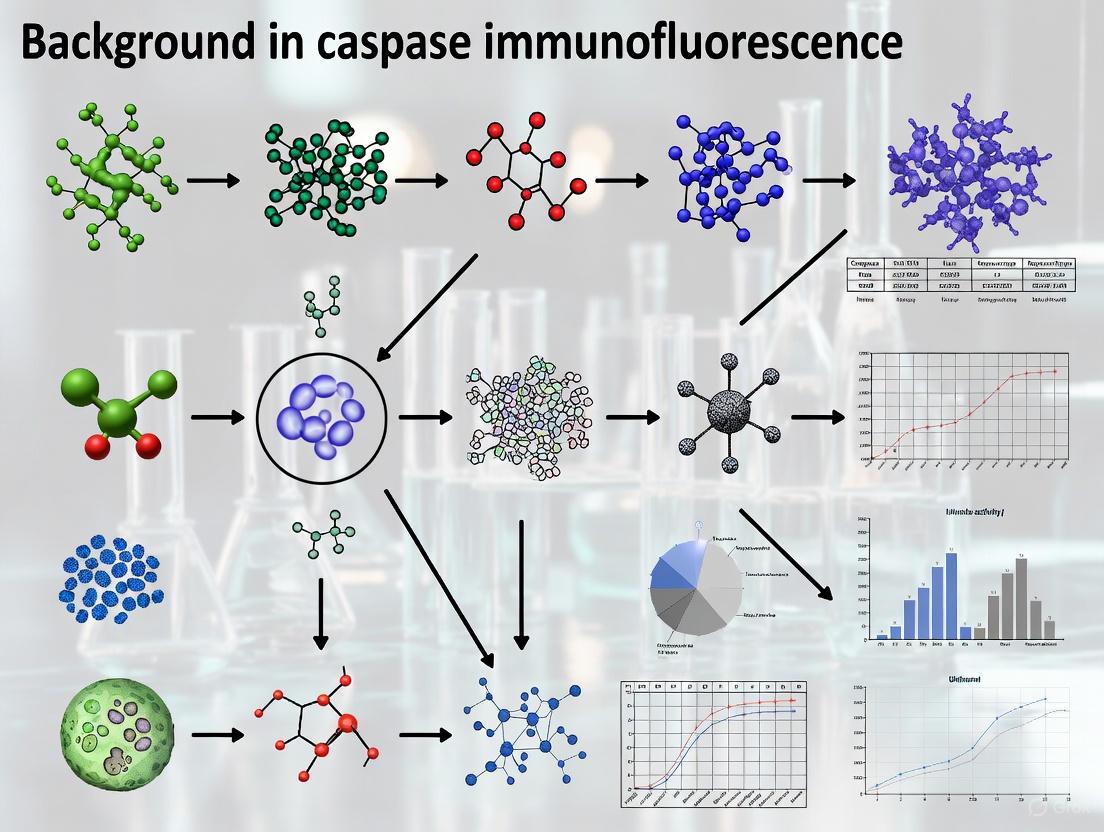
This article provides a comprehensive guide for researchers and drug development professionals on the mechanisms underlying background interference in caspase immunofluorescence.
Minimizing Background in Caspase Immunofluorescence: Mechanisms, Troubleshooting, and Advanced Validation Strategies
Abstract
This article provides a comprehensive guide for researchers and drug development professionals on the mechanisms underlying background interference in caspase immunofluorescence. It explores the foundational causes of non-specific staining, details methodological best practices for reducing noise in both 2D and complex 3D models, and offers a systematic troubleshooting protocol for optimization. Furthermore, it presents advanced validation techniques and compares immunofluorescence with emerging real-time imaging technologies, such as genetically encoded fluorescent reporters and bioluminescence probes, to ensure accurate interpretation of apoptotic signaling in biomedical research.
Understanding the Root Causes: Foundational Mechanisms of Background in Caspase Staining
The Central Role of Caspases in Cell Death and Immunity
Caspases, a family of cysteine-aspartic proteases, function as crucial mediators of programmed cell death, playing indispensable roles in maintaining tissue homeostasis, eliminating damaged cells, and orchestrating immune responses [1] [2]. These enzymes cleave peptide bonds following aspartate residues and are synthesized as inactive zymogens that require proteolytic activation at specific aspartic acid sites to become functional enzymes [2]. The caspase family includes initiator caspases (caspase-2, -8, -9, -10) that commence apoptotic signaling, executioner caspases (caspase-3, -6, -7) that carry out the apoptotic program, and inflammatory caspases (caspase-1, -4, -5, -11, -12, -13, -14) that primarily regulate inflammatory responses [2] [3].
Caspase-3 serves as a key executioner protease responsible for the final stages of apoptosis, cleaving numerous structural and regulatory proteins at the DEVD (aspartate-glutamate-valine-aspartate) amino acid sequence [1] [4]. Beyond their traditional roles in apoptosis, caspases also participate in diverse biological processes including innate immunity, host defense, cellular differentiation, and inflammation [3]. Notably, caspase-8 functions as a molecular switch that can activate both apoptotic pathways through caspase-3 and pyroptotic pathways via cleavage of gasdermin C (GSDMC) [5]. Disruptions in caspase regulation contribute significantly to pathological conditions including cancer, neurodegenerative diseases, and inflammatory disorders [2] [3].
Table 1: Major Caspase Subfamilies and Their Primary Functions
| Caspase Subfamily | Members | Primary Functions | Key Features |
|---|---|---|---|
| Initiator Caspases | Caspase-2, -8, -9, -10 | Initiate apoptotic signaling cascades | Contain long pro-domains (CARD or DED) that facilitate activation in supramolecular complexes |
| Executioner Caspases | Caspase-3, -6, -7 | Execute the apoptotic program by cleaving cellular substrates | Exist as dimers and are activated by initiator caspases via proteolytic cleavage |
| Inflammatory Caspases | Caspase-1, -4, -5, -11, -12, -14 | Regulate inflammatory responses and pyroptosis | Often activated in inflammasome complexes; process pro-inflammatory cytokines |
Caspase Immunofluorescence: Principles and Protocol
Immunofluorescence (IF) provides a powerful method for visualizing caspase activation within individual cells while preserving spatial context and morphological features [6]. This technique leverages the specific binding of antibodies to caspase antigens, particularly targeting the active cleaved forms of these enzymes, such as the p17/19 fragments of caspase-3 [7]. Unlike Western blotting which requires cell lysates, IF enables researchers to pinpoint caspase activation within specific cells or tissue regions, making it invaluable for studying heterogeneous cellular responses to death stimuli [6].
Standard Immunofluorescence Protocol for Caspase Detection
The following protocol outlines a reproducible approach for staining caspases using fluorescent antibodies in fixed samples [6]:
Materials Required:
- Primary antibody against caspase (e.g., anti-Caspase 3 antibody)
- Prepared, fixed cell samples on slides
- Permeabilization solution (PBS with 0.1% Triton X-100 or NP-40)
- Blocking buffer (PBS/0.1% Tween 20 + 5% serum from secondary antibody host species)
- Fluorescently labeled secondary antibody (e.g., Alexa Fluor 488 conjugate)
- Mounting medium
- Humidified chamber
Step-by-Step Procedure:
Permeabilization: Incubate fixed samples in PBS/0.1% Triton X-100 for 5 minutes at room temperature to allow antibody access to intracellular epitopes.
Washing: Wash slides three times in PBS for 5 minutes each at room temperature.
Blocking: Drain slides and apply 200 μL of blocking buffer. Lay slides flat in a humidified chamber and incubate for 1-2 hours at room temperature to reduce non-specific antibody binding.
Primary Antibody Incubation: Apply 100 μL of primary antibody diluted in blocking buffer (typically 1:200 dilution). Incubate slides in a humidified chamber overnight at 4°C.
Secondary Antibody Incubation: The following day, wash slides three times for 10 minutes each in PBS/0.1% Tween 20. Apply 100 μL of appropriate fluorescently conjugated secondary antibody diluted in PBS (typically 1:500 dilution). Incubate in a light-protected humidified chamber for 1-2 hours at room temperature.
Final Washing and Mounting: Wash slides three times in PBS/0.1% Tween 20 for 5 minutes each, protected from light. Drain liquid, mount slides with appropriate mounting medium, and visualize using fluorescence microscopy [6].
Diagram 1: Caspase Immunofluorescence Workflow. This flowchart illustrates the key steps in standard caspase immunofluorescence protocol, highlighting critical stages where background issues commonly arise (blocking and antibody incubation steps).
Background fluorescence represents a significant challenge in caspase immunofluorescence, potentially obscuring specific signals and leading to erroneous interpretation. Understanding the sources and mechanisms of background is essential for optimizing staining quality.
Insufficient Blocking: Inadequate blocking allows secondary antibodies to bind non-specifically to cellular components, particularly in samples with high endogenous immunoglobulin content [6].
Antibody Cross-Reactivity: Poor antibody specificity may result in recognition of unrelated epitopes that share structural similarities with caspase target sequences [6].
Incomplete Washing: Residual unbound antibodies remain in the sample if washing steps are too brief or insufficiently vigorous, contributing to elevated background signal [6].
Autofluorescence: Certain cellular components (e.g., lipofuscin, NADPH) naturally fluoresce, creating signal independent of antibody binding [4].
Over-fixation: Excessive aldehyde fixation can induce autofluorescence through protein cross-linking and create cryptic epitopes that attract non-specific antibody binding [6].
Cellular Compartments: Some subcellular locations (e.g., mitochondria, secretory granules) may exhibit higher non-specific antibody binding due to their biochemical composition [6].
Impact of Background on Data Interpretation
Background interference presents particular challenges in caspase detection because apoptosis often occurs in a small percentage of cells within a heterogeneous population. High background can obscure weakly positive cells, leading to underestimation of caspase activation. Conversely, misattribution of background signal as specific staining can result in false positive identification of apoptotic cells, profoundly impacting experimental conclusions about treatment efficacy or cell death mechanisms.
Table 2: Troubleshooting Common Background Issues in Caspase Immunofluorescence
| Problem | Potential Causes | Solutions | Preventive Measures |
|---|---|---|---|
| High Background Signal | Inadequate blocking, insufficient washing, antibody concentration too high | Increase blocking time, use serum from secondary host, extend washing, titrate antibodies | Validate antibody specificity, include controls, optimize fixation conditions |
| Weak Specific Signal | Low antigen abundance, poor antibody affinity, over-fixation | Antigen retrieval, increase primary antibody concentration, try different fixation methods | Use antibodies validated for IF, check antigen preservation, confirm apoptosis induction |
| Non-specific Staining | Antibody cross-reactivity, endogenous enzyme activity | Include isotype controls, use cross-adsorbed secondary antibodies, validate with knockout cells | Source antibodies from reputable suppliers, confirm target specificity |
| Autofluorescence | Over-fixation, certain cellular components | Use different fluorophores, chemical treatments (e.g., Sudan Black), spectral unmixing | Limit fixation time, choose fixatives with low autofluorescence |
Advanced Techniques: Beyond Conventional Immunofluorescence
While conventional immunofluorescence provides valuable spatial information about caspase activation, several advanced techniques offer enhanced capabilities for real-time monitoring and quantitative analysis of caspase activity in living systems.
Genetically Encoded Fluorescent Reporters
Novel fluorescent reporter systems enable real-time visualization of caspase dynamics without the need for cell fixation and antibody staining. One such system utilizes a ZipGFP-based caspase-3/7 reporter featuring a split-GFP architecture where the GFP molecule is divided into two parts tethered via a flexible linker containing a caspase-3/7-specific DEVD cleavage motif [1]. Under basal conditions, forced proximity of β-strands prevents proper folding, resulting in minimal background fluorescence. During apoptosis, caspase-mediated cleavage at the DEVD site separates the β-strands, allowing spontaneous refolding into functional GFP with efficient chromophore formation and fluorescence recovery [1]. This system provides a highly specific, irreversible, and time-accumulating signal for caspase activation while minimizing background noise.
FRET-FLIM Caspase Sensors
Fluorescence Lifetime Imaging Microscopy (FLIM) of Förster Resonance Energy Transfer (FRET)-based caspase reporters offers significant advantages for quantitative apoptosis measurement, particularly in complex 3D environments [4]. These reporters typically consist of fluorescent protein pairs (e.g., LSSmOrange and mKate2) linked by a caspase-cleavable sequence (DEVD). In viable cells, FRET occurs between the fluorophores, shortening the donor fluorescence lifetime. During apoptosis, caspase cleavage separates the fluorophores, reducing FRET efficiency and lengthening the donor lifetime [4]. Unlike intensity-based measurements, fluorescence lifetime is independent of probe concentration, excitation light intensity, and photon scattering in tissue, making FLIM particularly robust for imaging in thick samples and in vivo.
Diagram 2: FRET-FLIM Caspase Sensing Principle. This diagram illustrates the mechanism of FRET-based caspase reporters where caspase cleavage separates fluorophores, reducing FRET efficiency and increasing donor fluorescence lifetime measurable by FLIM.
Bioluminescence Imaging Probes
Bioluminescence probes represent another innovative approach for caspase detection in live animals and complex 3D models. Recently developed caspase-8-activated bioluminescence probes (e.g., Ac-IETD-Amluc) consist of a tetrapeptide substrate (IETD) specific for caspase-8 linked to a aminoluciferin motif [5]. Upon caspase-8 cleavage during apoptosis or pyroptosis, the released aminoluciferin generates bioluminescence in the presence of luciferase, ATP, and oxygen. Unlike fluorescence imaging, bioluminescence does not require external excitation light, resulting in exceptionally low background and high signal-to-noise ratio for deep-tissue imaging [5].
The Researcher's Toolkit: Essential Reagents and Controls
Key Research Reagent Solutions
Table 3: Essential Reagents for Caspase Immunofluorescence Research
| Reagent Category | Specific Examples | Function/Purpose | Technical Notes |
|---|---|---|---|
| Primary Antibodies | Anti-Caspase 3 (cleaved), Anti-Caspase 8, Anti-Caspase 9 | Specific recognition of caspase epitopes | Validate for immunofluorescence; cleaved-form antibodies detect activation |
| Secondary Antibodies | Goat anti-Rabbit Alexa Fluor 488, Donkey anti-Mouse Cy3 | Signal amplification and detection | Use cross-adsorbed antibodies; match host species to blocking serum |
| Blocking Reagents | Normal Goat Serum, Donkey Serum, BSA | Reduce non-specific antibody binding | Use serum from secondary antibody host species for optimal results |
| Permeabilization Agents | Triton X-100, NP-40, Saponin | Enable antibody access to intracellular targets | Concentration and time critical for balance between access and preservation |
| Mounting Media | Antifade mounting media with DAPI | Preserve fluorescence and provide nuclear counterstain | Choose based on fluorophore stability requirements |
| Positive Controls | Apoptotic cells induced by staurosporine or carfilzomib | Verify assay performance | Include in every experiment to confirm detection capability |
Critical Experimental Controls
Proper experimental controls are essential for validating caspase immunofluorescence results and distinguishing specific signal from background:
No Primary Antibody Control: Incubate with blocking buffer and secondary antibody only to identify non-specific binding of secondary antibodies [6].
Isotype Control: Use an irrelevant immunoglobulin of the same class and concentration as the primary antibody to assess non-specific Fc receptor binding.
Positive Control: Include cells with known caspase activation (e.g., treated with apoptosis inducers like carfilzomib or staurosporine) to verify antibody functionality [1].
Specificity Controls: Where possible, use caspase-deficient cells (e.g., MCF-7 cells lacking caspase-3) or siRNA knockdown to confirm antibody specificity [1].
Inhibitor Controls: Treat cells with pancaspase inhibitors (e.g., zVAD-FMK) to demonstrate caspase-dependent signaling [1].
Caspase immunofluorescence remains an indispensable technique for spatial localization of apoptotic events within individual cells and tissue contexts. However, the critical impact of background interference necessitates rigorous optimization and appropriate controls to ensure data validity. While conventional immunofluorescence provides valuable snapshot information, emerging technologies including genetically encoded fluorescent reporters, FRET-FLIM systems, and bioluminescence probes offer complementary approaches for real-time, dynamic monitoring of caspase activity with reduced background. Understanding the sources and mechanisms of background in caspase detection enables researchers to select the most appropriate methodology for their specific experimental context and draw more reliable conclusions about cell death processes in health and disease.
In caspase immunofluorescence research, the accuracy of data interpretation is fundamentally dependent on the precise and specific binding of antibodies. Antibody-related artifacts, primarily stemming from non-specific binding and cross-reactivity, introduce significant background noise and can lead to erroneous conclusions regarding the spatial and temporal activation of caspases during programmed cell death. These artifacts present a substantial challenge in both academic research and drug development, where the reliable visualization of caspase activation is crucial for validating therapeutic targets and screening novel compounds. Non-specific binding occurs when an antibody interacts with cellular components other than its intended target antigen, often due to hydrophobic, ionic, or Fc-receptor-mediated interactions. Cross-reactivity, a more insidious artifact, arises when an antibody recognizes epitopes on unrelated proteins that share structural homology with the primary target. Within the caspase family, which comprises highly homologous cysteine proteases, the risk of cross-reactivity is particularly pronounced. For instance, an antibody designed to detect cleaved caspase-3 may inadvertently recognize the similarly structured cleaved caspase-7, or even non-caspase proteins, due to shared linear epitopes or conformational similarities [8] [9]. This compromised specificity directly obstructs the clear interpretation of caspase activation dynamics, potentially misleading research outcomes and therapeutic development efforts focused on modulating apoptotic pathways.
Understanding Caspase Signaling and Antibody Targets
Caspases are a family of cysteine-dependent aspartate-specific proteases that play central roles in the execution of apoptosis and the regulation of inflammation. They are synthesized as inactive zymogens (pro-caspases) and undergo proteolytic cleavage at specific aspartate residues to form active enzymes composed of large and small subunits. The human caspase family is categorized into three functional groups: initiator caspases (caspase-2, -8, -9, -10), which initiate the apoptotic cascade; executioner caspases (caspase-3, -6, -7), which carry out the proteolytic dismantling of the cell; and inflammatory caspases (caspase-1, -4, -5, -11, -12, -14), which are involved in cytokine maturation and inflammatory responses [9]. Activation of caspases occurs primarily through two well-defined pathways: the extrinsic pathway, initiated by cell surface death receptors (e.g., Fas, TNF receptors) leading to caspase-8 activation, and the intrinsic pathway, triggered by mitochondrial outer membrane permeabilization and cytochrome c release, resulting in the formation of the apoptosome and activation of caspase-9 [9]. Both pathways converge on the proteolytic activation of executioner caspase-3 and -7, which then systematically cleave key structural and regulatory proteins, culminating in the morphological hallmarks of apoptosis.
The high degree of structural and sequence homology among caspases, especially within their catalytic domains, presents a fundamental challenge for antibody specificity. This homology is illustrated in Table 1, which details the cleavage preferences and functions of key human caspases. Antibodies developed against a specific caspase, particularly those targeting conserved regions, may exhibit cross-reactivity with other caspase family members. For example, the widely used DEVD peptide sequence is a preferred cleavage motif for both caspase-3 and caspase-7, making it difficult to distinguish between these two executioner caspases using antibody-based probes alone [8]. Furthermore, many commercial antibodies are raised against peptide sequences from the cleaved, active form of caspases (e.g., cleaved caspase-3 at Asp175), but if the epitope is not unique to the target, cross-reactivity with other cleaved caspases or unrelated proteins can occur, generating false-positive signals in immunofluorescence experiments [10].
Table 1: Specificity of Key Human Caspases and Associated Antibody Challenges
| Caspase | Primary Function | Preferred Cleavage Motif | Cleaves DEVD? | Key Specificity Challenges |
|---|---|---|---|---|
| Caspase-3 | Executioner Apoptosis | DEVD | +++ (Strong) | High homology with Caspase-7; antibodies may cross-react [8] |
| Caspase-7 | Executioner Apoptosis | DEVD | +++ (Strong) | Often co-detected with Caspase-3; difficult to distinguish [8] |
| Caspase-8 | Initiator (Extrinsic) | LETD | ++ (Weak) | Shares homology with Caspase-10; some inhibitors cross-react [11] |
| Caspase-9 | Initiator (Intrinsic) | LEHD | + (Very Weak) | Specific antibodies must not recognize other CARD-domain caspases |
| Caspase-1 | Inflammatory | WEHD | - (No) | Risk of cross-reactivity in studies of pyroptosis vs. apoptosis |
The following diagram illustrates the core apoptotic signaling pathways and highlights key caspase activation steps where antibody cross-reactivity is a common concern.
Mechanisms of Antibody Artifacts in Caspase Detection
Non-Specific Binding
Non-specific binding constitutes a major source of background noise in caspase immunofluorescence, obscuring genuine signal and complicating image analysis. This phenomenon occurs through several distinct mechanisms. Hydrophobic interactions between antibody surfaces and cellular components can cause aberrant staining, particularly in fixed and permeabilized cells where internal hydrophobic domains become exposed. Ionic interactions between charged residues on the antibody and cellular structures can also lead to non-specific adherence, especially when the antibody is used at high concentrations or the ionic strength of the buffer is suboptimal. A particularly problematic source of non-specificity is Fc receptor-mediated binding, where the constant region (Fc) of the antibody is recognized by Fc receptors expressed on various cell types, including immune cells commonly used in co-culture models. This binding is independent of the antibody's antigen-binding site but can generate strong false-positive signals that are often misinterpreted as specific caspase staining [12].
The chemical fixation and permeabilization steps required for immunofluorescence protocols can exacerbate these issues. Fixation with aldehydes like formaldehyde can create protein cross-links that expose or generate new epitopes recognized non-specifically by antibodies. Permeabilization with detergents such as Triton X-100 or NP-40 removes lipid barriers and can unmask hydrophobic protein regions, further increasing the potential for non-specific antibody binding [6]. Inadequate blocking of non-specific sites following permeabilization represents another common pitfall, as it fails to saturate these interaction sites before antibody application.
Cross-Reactivity
Cross-reactivity represents a more challenging artifact to identify and address, as it involves specific but undesired antibody binding to non-target molecules. In caspase research, this most frequently occurs due to epitope homology between different caspase family members. As illustrated in Table 1, executioner caspases-3 and -7 share significant sequence similarity, particularly in their active sites, making it difficult to generate antibodies that can definitively distinguish between them [8]. This homology extends to their cleavage preferences, with both enzymes efficiently recognizing the DEVD peptide sequence. Similarly, initiator caspases-8 and -10 share structural domains that can confound antibody specificity [11].
A more subtle form of cross-reactivity involves antibody recognition of non-caspase proteins that share minimal linear sequence homology but present similar three-dimensional conformational epitopes. This type of cross-reactivity is particularly difficult to predict during antibody design and validation. Furthermore, post-translational modifications of proteins in certain cell types or under specific experimental conditions can create neo-epitopes that are fortuitously recognized by caspase-targeting antibodies. For example, phosphorylation, nitrosylation, or cleavage of unrelated proteins can generate structures that mimic the antibody's intended target epitope. Antibodies targeting cleaved caspase-3 are particularly vulnerable to artifacts, as the cleavage of the pro-caspase generates new neo-epitopes that might be shared by other proteins upon their proteolytic cleavage during apoptosis [10].
Experimental Protocols for Artifact Mitigation
Optimized Immunofluorescence Protocol for Caspase Detection
This detailed protocol incorporates specific controls and optimization steps to minimize antibody-related artifacts in caspase detection. The procedure is designed specifically for fixed cell samples and should be optimized for each cell type and antibody lot.
Materials Required:
- Primary antibody against caspase (e.g., anti-Cleaved Caspase-3 [Asp175])
- Prepared, fixed samples on slides
- Triton X-100 or NP-40
- Phosphate-buffered saline (PBS)
- Blocking buffer (PBS/0.1% Tween 20 + 5% serum from secondary antibody host species)
- Species-appropriate fluorescently labeled secondary antibody (e.g., goat anti-rabbit Alexa Fluor 488)
- Mounting medium with DAPI (for nuclear counterstaining)
- Humidified chamber
Step-by-Step Procedure:
- Permeabilization: Incubate fixed samples in PBS containing 0.1% Triton X-100 (or 0.1% NP-40) for 5 minutes at room temperature. Note: Concentration and time may require optimization to balance epitope access with cellular structure preservation.
- Washing: Wash slides three times in PBS for 5 minutes each at room temperature with gentle agitation.
- Blocking: Drain excess liquid and apply 200 µL of blocking buffer (PBS/0.1% Tween 20 + 5% serum). Incubate slides flat in a humidified chamber for 1-2 hours at room temperature. Critical: Use serum from the host species of the secondary antibody to block non-specific Fc receptor binding. [6]
- Primary Antibody Incubation: Prepare primary antibody diluted in blocking buffer at the manufacturer's recommended concentration (e.g., 1:200 for many caspase antibodies). Apply 100 µL to the sample and incubate in a humidified chamber overnight at 4°C. Note: Include a no-primary-antibody control (blocking buffer only) and an isotype control for each experimental condition. [6]
- Post-Primary Wash: The following day, wash slides three times for 10 minutes each in PBS/0.1% Tween 20 at room temperature with gentle agitation.
- Secondary Antibody Incubation: Prepare fluorescently labeled secondary antibody diluted in PBS (e.g., 1:500). Apply 100 µL to the sample and incubate in a humidified chamber, protected from light, for 1-2 hours at room temperature.
- Post-Secondary Wash: Wash slides three times in PBS/0.1% Tween 20 for 5 minutes each, protected from light.
- Mounting and Imaging: Drain liquid, apply appropriate mounting medium, and coverslip. Observe with a fluorescence microscope using appropriate filter sets [6].
Essential Control Experiments
Rigorous control experiments are non-negotiable for verifying antibody specificity and interpreting caspase immunofluorescence data accurately. The following controls should be implemented systematically:
- No-Primary Antibody Control: Omit the primary antibody and apply only blocking buffer and secondary antibody. This identifies non-specific binding of the secondary antibody and autofluorescence.
- Isotype Control: Use an irrelevant IgG from the same species and subclass as the primary antibody, applied at the same concentration. This controls for Fc receptor-mediated non-specific binding.
- Pre-absorption Control: Pre-incubate the primary antibody with a 5-10 fold molar excess of the immunizing peptide (if available) before application to the sample. Significant reduction in signal confirms specificity.
- Genetic Knockdown/Knockout Control: Where feasible, use cells with genetic deletion (CRISPR/Cas9) or siRNA-mediated knockdown of the target caspase. This provides the most definitive evidence of antibody specificity.
- Western Blot Correlation: Parallel western blot analysis of samples should show a single band at the expected molecular weight, confirming the antibody does not recognize multiple proteins.
The experimental workflow below outlines the key steps and decision points for implementing these artifact mitigation strategies.
The Scientist's Toolkit: Research Reagent Solutions
Selecting appropriate reagents and implementing validation strategies is crucial for overcoming antibody-related artifacts. The following table details key solutions and their applications for ensuring specific caspase detection.
Table 2: Research Reagent Solutions for Mitigating Caspase Detection Artifacts
| Reagent / Solution | Function / Purpose | Implementation Example |
|---|---|---|
| Species-Specific Serum | Blocks non-specific Fc receptor binding | Use 5% goat serum in blocking buffer when using goat anti-rabbit secondary antibody [6] |
| Peptide Blocking (Pre-absorption) | Confirms antibody specificity by competitive inhibition | Pre-incubate primary antibody with immunizing peptide; signal loss confirms specificity |
| Isoform-Specific Caspase Antibodies | Targets unique epitopes to distinguish homologous caspases | Select antibodies targeting the N-terminus or other non-conserved regions of caspase-3 vs. -7 [9] |
| Cleavage-Site Specific Antibodies | Detects only the active, cleaved form of caspases | Anti-Cleaved Caspase-3 (Asp175) antibody specifically detects the p17 fragment of activated caspase-3 [10] |
| Fluorogenic Caspase Substrates (Live-Cell) | Provides alternative, activity-based detection | CellEvent Caspase-3/7 Green reagent for live-cell imaging; confirms activity, not just presence [13] |
| Genetic Knockout Cell Lines | Definitive negative control for antibody specificity | Use CRISPR/Cas9-generated caspase-3 knockout cells to validate anti-caspase-3 antibody specificity |
| High-Stringency Wash Buffers | Reduces non-specific ionic interactions | Incorporate 0.1% Tween-20 in PBS wash buffers and consider increasing salt concentration (e.g., 300-500 mM NaCl) |
Advanced Techniques and Future Directions
Complementary Caspase Detection Methodologies
To circumvent the limitations of antibody-based caspase detection, researchers are increasingly employing complementary techniques that provide orthogonal validation. Live-cell imaging using fluorogenic caspase substrates offers a powerful alternative by detecting caspase activity rather than mere protein presence. For example, the CellEvent Caspase-3/7 reagent is a four-amino-acid peptide (DEVD) conjugated to a nucleic acid-binding dye. Upon cleavage by caspase-3 or -7, the dye is released and binds to DNA, producing a bright nuclear fluorescence signal that can be tracked over time without fixed sample preparation [13]. This approach eliminates artifacts associated with fixation and permeabilization, though it does not distinguish between caspase-3 and -7 activity.
Genetically encoded biosensors represent another advanced strategy for real-time caspase monitoring. These systems, such as the ZipGFP-based caspase-3/-7 reporter, utilize a split-GFP architecture where the GFP fragments are connected via a linker containing the DEVD cleavage motif. In the absence of caspase activity, the GFP remains dark, but upon caspase-mediated cleavage, the GFP fragments reassemble and fluoresce, providing an irreversible signal of caspase activation [8]. Such systems enable long-term tracking of apoptotic events at single-cell resolution in both 2D and 3D culture systems, offering superior spatiotemporal resolution compared to endpoint immunofluorescence.
Mass spectrometry-based proteomics is emerging as a comprehensive approach for mapping caspase cleavage events and validating antibody specificity. This technique allows for the systematic identification of caspase substrates and cleavage sites in an unbiased manner, providing a global view of caspase signaling networks. Furthermore, proteomic analysis can reveal non-specific antibody binding by identifying all proteins captured by an antibody under native conditions, offering a rigorous method for antibody validation beyond traditional western blotting [9].
Engineering the Next Generation of Caspase Reagents
Future directions in caspase detection are focused on developing reagents with enhanced specificity and functionality. Antibody engineering approaches are being employed to create conformation-specific antibodies that preferentially recognize the active forms of caspases with minimal cross-reactivity. Techniques such as phage display allow for the selection of antibody fragments with exquisite specificity for unique epitopes not accessible through traditional immunization methods [14]. Recent advances in antibody engineering have demonstrated that constraining IgG in unique i-shaped conformations (iAbs) can tune receptor engagement specificity, a principle that could be applied to improve caspase antibody specificity [12].
The integration of multiplexed detection modalities represents another frontier. Combining antibody-based detection with activity-based probes in a single experimental workflow provides complementary information about both caspase expression and function. Additionally, the development of multiplexed imaging mass cytometry enables simultaneous detection of multiple caspases and their substrates in tissue contexts, providing systems-level understanding of caspase activation patterns while controlling for cross-reactivity through computational analysis. As these technologies mature, they will progressively reduce the impact of antibody-related artifacts, leading to more reliable detection and quantification of caspase activity in both basic research and drug discovery applications.
In caspase immunofluorescence research, the accurate detection of specific signal over background is paramount for drawing valid biological conclusions. Caspases, the cysteine-aspartic proteases that are central executors of programmed cell death, require precise localization and activation assessment to understand their roles in apoptosis, inflammation, and disease pathogenesis [2] [3]. The integrity of this research hinges on overcoming two fundamental technical challenges in sample preparation: autofluorescence, which creates false-positive signals, and incomplete permeabilization, which causes false-negative results through inadequate antibody access to intracellular targets.
The growing sophistication of caspase detection methods, including high-content screening, live-cell imaging, and complex 3D model systems, has heightened the importance of optimizing sample preparation [2] [1]. Traditional endpoint analyses are giving way to dynamic, real-time tracking of caspase activation in physiologically relevant systems, making the minimization of technical artifacts more crucial than ever. This technical guide addresses these critical preparation pitfalls within the broader context of optimizing signal-to-noise ratio in caspase research.
Origins and Characteristics of Autofluorescence
Autofluorescence refers to the inherent fluorescent emission from biological structures or chemical entities within cells and tissues, independent of fluorophore labels. This phenomenon creates a pervasive background that can obscure specific antibody-derived signals, leading to misinterpretation of caspase activation states.
The primary sources of autofluorescence in cellular imaging include:
- Intracellular fluorophores: NAD(P)H, flavins, lipofuscin, and collagen exhibit native fluorescence across multiple wavelengths [1]
- Fixative-induced artifacts: Over-fixation with aldehydes like formaldehyde and glutaraldehyde can generate fluorescent protein cross-links
- Culture components: Phenol red, serum components, and certain antibiotics contribute to background signal
- Oxidative processes: Reactive oxygen species generated during stress responses can create fluorescent adducts with cellular components
This background fluorescence is particularly problematic in caspase studies because apoptotic cells frequently exhibit altered metabolism and oxidative states that may further enhance their autofluorescent properties, creating a confounding correlation between the biological phenomenon of interest and the technical artifact.
Quantitative Impact of Autofluorescence on Caspase Detection
Table 1: Autofluorescence Sources and Their Spectral Properties
| Source | Excitation (nm) | Emission (nm) | Relative Intensity | Affected Caspase Detection Methods |
|---|---|---|---|---|
| NAD(P)H | 340-360 | 440-470 | High (metabolism-dependent) | Blue channel detection, CFP-based reporters |
| Flavins | 450-470 | 520-550 | Medium | GFP, FITC-conjugated antibodies |
| Lipofuscin | 340-550 | 540-650 | High (age-dependent) | Broad-spectrum interference |
| Formaldehyde-induced | 340-400 | 420-480 | Variable (fixation-dependent) | Violet/excited fluorophores |
| Extracellular matrix | 340-500 | 420-550 | Medium (tissue-dependent) | 3D culture and tissue imaging |
The data in Table 1 illustrates how different autofluorescence sources compete with common fluorophores used in caspase detection. For instance, flavin autofluorescence directly overlaps with GFP and FITC emission spectra, complicating the interpretation of DEVD-based caspase biosensors that employ GFP readouts [1].
Experimental Protocols for Autofluorescence Reduction
Protocol 1: Chemical Quenching of Aldehyde-Induced Autofluorescence
- Following standard formaldehyde fixation (4%, 15-20 minutes, room temperature), wash samples 3× with PBS
- Prepare fresh quenching solution: 0.1-1.0% sodium borohydride in PBS
- Incubate samples for 10-30 minutes with gentle agitation
- Wash thoroughly with PBS (3×5 minutes) before proceeding with permeabilization and blocking
- Validate quenching efficacy by comparing to non-quenched controls using the same imaging parameters
Protocol 2: Photobleaching for Live-Cell Imaging Preparation
- Culture cells expressing caspase biosensors in phenol-free, autofluorescence-minimized medium
- Subject samples to high-intensity illumination at the wavelengths causing interference
- For widefield systems: expose for 15-30 minutes using mercury or LED illumination
- For confocal systems: perform multiple rapid scans at high laser power
- Confirm autofluorescence reduction by measuring background in non-transfected controls
Protocol 3: Spectral Unmixing Implementation
- Acquire reference emission spectra from untransfected/unstained control samples
- Collect sample data using spectral detection or multiple narrow bandpass filters
- Apply linear unmixing algorithms to computationally separate autofluorescence from specific signals
- Validate separation accuracy using control samples with known fluorescence patterns
Incomplete Permeabilization: The Hidden Compromise to Antibody Access
Consequences for Caspase Detection
Permeabilization creates openings in cellular membranes to allow antibody access to intracellular epitopes. Incomplete permeabilization represents a less apparent but equally damaging preparation artifact that prevents antibody binding to caspase targets, leading to underestimation of caspase expression and activation.
The implications for caspase research are particularly significant because:
- Caspase activation involves translocation between cellular compartments [3]
- Cleavage-specific antibodies require access to occluded epitopes
- Subcellular localization patterns provide critical functional information
- In 3D models, inconsistent permeabilization creates spatial biases in detection
Recent advances in caspase research, including the use of patient-derived organoids and 3D spheroid models, have exacerbated permeabilization challenges due to diffusion barriers in thicker samples [1].
Permeabilization Agent Comparison and Optimization
Table 2: Permeabilization Agents for Caspase Immunofluorescence
| Agent | Mechanism | Optimal Concentration | Time | Target Compatibility | Advantages | Limitations |
|---|---|---|---|---|---|---|
| Triton X-100 | Solubilizes membranes | 0.1-0.5% | 5-15 min | Cytosolic caspases (3,7) | Rapid, comprehensive | Removes some membrane proteins |
| Saponin | Cholesterol complexation | 0.05-0.2% | 20-30 min | Membrane-associated caspases | Reversible, gentler | Incomplete for nuclear targets |
| Digitonin | Cholesterol binding | 50-100 μg/mL | 10-15 min | Mitochondrial caspases (9) | Organelle-selective | Narrow concentration window |
| Tween-20 | Mild detergent | 0.2-0.5% | 15-30 min | Preservation of structures | Minimal disruption | Weak for nuclear antigens |
| Methanol | Precipitation | 100% cold | 10 min | All intracellular targets | Simultaneous fixation | Alters protein conformation |
Experimental Protocols for Permeabilization Validation
Protocol 4: Systematic Permeabilization Optimization
- Prepare identical samples from cells with known caspase activation (e.g., carfilzomib-treated)
- Apply different permeabilization regimens to parallel samples
- Stain with antibodies against a cytosolic antigen (e.g., caspase-3) and a nuclear antigen (e.g., cleaved PARP)
- Quantify fluorescence intensity for both targets
- Select conditions yielding maximal signal for both compartments
- Validate with secondary-only controls to confirm specificity
Protocol 5: Permeabilization Efficiency Assessment
- Include a control antibody against a ubiquitous structural protein (e.g., tubulin, GAPDH)
- Compare signal intensity across test conditions
- Calculate coefficient of variation across the sample to identify heterogeneous access
- For 3D models, measure staining depth profile versus sample thickness
- Establish reference intensity values for properly permeabilized samples
Integrated Methodologies for Pitfall Avoidance
Comprehensive Workflow for Optimal Caspase Imaging
The diagram below illustrates a validated sample preparation workflow that systematically addresses both autofluorescence and permeabilization challenges:
The Scientist's Toolkit: Essential Research Reagents
Table 3: Key Reagents for Optimizing Caspase Detection
| Reagent Category | Specific Examples | Function & Application | Optimization Tips |
|---|---|---|---|
| Fixatives | 4% formaldehyde (freshly prepared) | Protein cross-linking with minimal autofluorescence | Avoid over-fixation beyond 20 minutes; never use glutaraldehyde for fluorescence |
| Permeabilization agents | Triton X-100, saponin, digitonin | Membrane disruption for antibody access | Titrate concentration using control antibodies; validate nuclear and cytoplasmic access |
| Autofluorescence quenchers | Sodium borohydride, Sudan Black B | Reduction of fixative-induced fluorescence | Test cytotoxicity in live-cell applications; optimize concentration for sample type |
| Blocking reagents | BSA, normal serum, commercial blockers | Reduction of non-specific antibody binding | Include same detergent used in permeabilization; extend time for 3D samples |
| Caspase validation reagents | pan-caspase inhibitor (zVAD-FMK), activators | Specificity controls for caspase detection | Use both positive and negative controls in each experiment; validate with known apoptotic inducers |
| Mounting media | Commercial antifade reagents with DAPI | Signal preservation and nuclear counterstaining | Choose compatible with intended fluorophores; check pH for pH-sensitive fluorophores |
Advanced Applications in Complex Model Systems
3D Models and Tissue Imaging
The migration of caspase research into more physiologically relevant model systems presents unique preparation challenges. Organoids and spheroids introduce additional barriers to reagent penetration and create complex light scattering environments [1]. For these applications, consider:
- Extended permeabilization times: 45-90 minutes for 100-200μm structures
- Combination permeabilization agents: Sequential application of saponin followed by Triton X-100
- Passive clearing techniques: Partial refractive index matching with glycerol-based mounting
- Multiphoton imaging: To reduce background from out-of-focus planes
Recent work with patient-derived pancreatic ductal adenocarcinoma (PDAC) organoids demonstrated that optimized permeabilization was critical for detecting heterogeneous caspase activation patterns in response to chemotherapeutic agents [1].
Live-Cell Caspase Imaging Considerations
For dynamic assessment of caspase activation using FRET-based reporters or fluorescent inhibitors, preparation pitfalls differ but remain critical:
- Background minimization: Use phenol-free media and low-autofluorescence plastics
- Viability maintenance: Balance permeabilization with membrane integrity in live-cell applications
- Signal validation: Include caspase inhibition controls (zVAD-FMK) to confirm specificity [1] [15]
The ZipGFP caspase-3/7 reporter system exemplifies how genetic approaches can circumvent some preparation challenges, but still requires careful optimization to minimize background fluorescence in the reconstituted state [1].
The relentless advancement of caspase biology research demands parallel sophistication in sample preparation methodologies. As we move toward increasingly complex model systems and higher-content applications, the foundational practices of autofluorescence management and permeabilization optimization become increasingly critical rather than merely preliminary. The protocols and analytical frameworks presented here provide researchers with validated strategies to overcome these persistent technical challenges, thereby ensuring that biological conclusions about caspase activation and regulation rest on the firmest possible experimental foundation.
Future methodological developments will likely include smart cleavable reagents that reduce background through enzymatic activation, improved tissue clearing methods for intact organ imaging, and computational correction approaches that can retrospectively address certain preparation artifacts. Regardless of these technological advances, the principles of rigorous validation and systematic optimization embodied in this guide will remain essential for distinguishing true caspase biology from preparation artifact.
In caspase immunofluorescence research, the accurate detection of signaling events is fundamentally challenged by two major instrumentation and detection issues: photobleaching and signal heterogeneity. Photobleaching, the photochemical degradation of fluorophores, leads to irreversible loss of signal during imaging, while signal heterogeneity introduces substantial variability in fluorescence measurements within and between cells. These phenomena create significant background interference that can obscure true biological signals, compromise data quantification, and lead to erroneous conclusions about caspase activation dynamics.
Within the broader thesis on mechanisms of background in caspase immunofluorescence research, this technical guide examines the instrumental origins, methodological implications, and technical solutions for these challenges. The focus extends beyond biological mechanisms to address the core physical and technical limitations that researchers must overcome to obtain reliable, reproducible data in studies of apoptotic processes.
Technical Foundations of Detection Challenges
Photobleaching: Mechanisms and Impact on Caspase Imaging
Photobleaching represents a critical barrier to quantification in fluorescence microscopy. The process follows first-order reaction kinetics with rate constants that demonstrate significant spatial heterogeneity within individual cells, varying between 2- and 65-fold depending on the fluorophore used [16]. This decay process is characterized by an exponential decrease in fluorescence intensity over time under constant illumination, fundamentally limiting the temporal window for observing dynamic caspase activation events.
The propensity to photobleach varies substantially between fluorophores. Under standardized cellular conditions, the average rates of photobleaching decrease in this order: NBD-cholenamine > acridine orange > rhodamine-123 > benzo(a)pyrene > fluorescein > tetramethylrhodamine > indocarbocyanine [16]. This hierarchy provides crucial guidance for fluorophore selection in caspase imaging experiments where extended observation is required.
Photobleaching in caspase imaging manifests two primary negative consequences:
- Signal Loss: Progressive fading of fluorescence reduces the detectable signal from caspase activity reporters, potentially causing false negative results in time-lapse experiments.
- Artifactual Heterogeneity: Spatially varying bleaching rates create artificial patterns that may be misinterpreted as biological heterogeneity in caspase activation.
Research indicates that photobleaching is predominantly an oxidation reaction, as demonstrated by experiments where adding saturated solutions of sodium metabisulfite (Na₂S₂O₅) to mineral oil microemulsions completely eliminated photobleaching of NBD-cholenamine and benzo(a)pyrene [16]. This finding suggests that antioxidant strategies may mitigate photobleaching in certain experimental contexts.
Signal heterogeneity in caspase immunofluorescence arises from multiple technical and biological sources, creating challenges in data interpretation and quantification. The heterogeneous and dynamic nature of biological systems, particularly in caspase research, means that cellular functions vary significantly over both space and time [17].
The principal sources of signal heterogeneity include:
- True Biological Variability: Actual differences in caspase activation states between individual cells in a population
- Instrument-Induced Variability: Spatial inconsistencies in excitation light intensity across the imaging field
- Sample-Loading Variability: Differences in reporter concentration or penetration efficiency between cells
- Microenvironment Effects: Local variations in pH, oxygen tension, or metabolic states that influence fluorophore performance
This heterogeneity poses particular challenges for intensity-based quantification methods, as fluorescence intensity becomes an unreliable metric when reporter concentration varies between cells or when light scattering differs in various tissue compartments [4]. The problem is especially pronounced in three-dimensional model systems such as spheroids and organoids, where gradient effects and light attenuation create additional layers of complexity.
Advanced Detection Technologies and Methodologies
Fluorescence Lifetime Imaging (FLIM) and FRET-Based Reporters
Fluorescence Lifetime Imaging Microscopy (FLIM) represents a powerful approach for overcoming limitations of intensity-based measurements in caspase detection. Unlike intensity measurements, fluorescence lifetime is an inherent physical property of a fluorophore that is independent of reporter concentration, excitation light intensity, and scattering of light in tissue [4]. This makes FLIM particularly valuable for imaging in 3D environments and intact animal models where these variables are difficult to control.
The application of FLIM to caspase detection typically employs Förster Resonance Energy Transfer (FRET)-based reporters. One established system utilizes a reporter consisting of fluorescent proteins LSSmOrange and mKate2 linked by a consensus DEVD sequence for caspase-3 [4]. In this configuration:
- Before caspase activation: Intact reporter exhibits FRET, shortening the lifetime of LSSmOrange
- After caspase activation: Cleavage separates donor and acceptor molecules, reducing FRET and lengthening the LSSmOrange lifetime
This lifetime change provides a robust, quantitative measure of caspase-3 activity that is insensitive to many sources of technical variability that plague intensity-based measurements. The methodology enables quantification of apoptosis in systems ranging from 2D culture to spheroids and in vivo murine breast tumor xenografts [4].
Table 1: Comparison of Caspase Detection Technologies
| Technology | Principle | Advantages | Limitations | Best Applications |
|---|---|---|---|---|
| Intensity-based FRET | Cleavage-induced change in emission ratios | Familiar technology, widely available | Affected by concentration, scattering | 2D cultures, endpoint measurements |
| FLIM-FRET [4] | Cleavage-induced change in donor lifetime | Concentration-independent, suitable for 3D/tissue | Specialized equipment, complex analysis | 3D models, in vivo imaging, kinetic studies |
| ZipGFP Reporters [1] | Caspase-induced GFP reconstitution | Low background, high signal stability | Irreversible activation | Long-term tracking, single-cell resolution |
| Fluorogenic Substrates [18] | Cell-permeable peptide substrates with fluorescence quenching | No transfection required, works in primary cells | Potential lack of specificity, concentration-dependent | Primary cells, mixed populations |
| Label-free Microscopy [17] | Native contrast from molecular vibrations/morphology | No labels, non-invasive | Limited molecular specificity, interpretation challenges | Long-term monitoring, sensitive cells |
ZipGFP Caspase Reporter Systems
The ZipGFP-based caspase reporter system represents an innovative approach that minimizes background fluorescence while enabling persistent marking of apoptotic events at the single-cell level [1]. This system utilizes a split-GFP architecture where the GFP molecule is divided into two parts: β-strands 1–10 and the eleventh β-strand, tethered via a flexible linker containing a caspase-3/-7-specific DEVD cleavage motif [1].
The operational mechanism involves:
- Basal State: Forced proximity of the β-strands prevents proper folding and chromophore maturation, resulting in minimal background fluorescence
- Caspase Activation: Cleavage at the DEVD site separates the β-strands, allowing spontaneous refolding into the native β-barrel structure of GFP with efficient chromophore formation and rapid fluorescence recovery
This design offers substantial advantages over conventional single-fluorophore or FRET-based caspase reporters by minimizing background noise, enhancing signal stability, and enabling irreversible marking of apoptotic events [1]. The self-assembling properties of the split-GFP fragments eliminate the need for external cofactors, making the system particularly well-suited for long-term imaging studies in both 2D monolayers and complex 3D culture environments, including patient-derived organoids.
Label-Free Microscopy Approaches
Label-free microscopy techniques provide an alternative pathway that completely avoids photobleaching and signal heterogeneity associated with fluorescent reporters. These methods rely on intrinsic sources of contrast within cells and tissues, including:
- Raman microscopy: Measures vibrational modes of molecular bonds to identify specific biomolecules [17]
- Spectral imaging: Captures endogenous fluorescence spectra of metabolic cofactors [17]
- Quantitative phase imaging (QPI): Utilizes differences in refractive index for contrast [17]
- Second harmonic generation (SHG): Specifically highlights collagen and other non-centrosymmetric molecules [17]
These approaches enable non-invasive monitoring of cellular functions without the experimental perturbations introduced by fluorescent labels. However, challenges remain in image interpretation, molecular specificity, and establishing direct correlations between label-free signals and specific caspase activation events.
Experimental Protocols for Minimizing Technical Artifacts
FLIM-FRET Caspase Detection Protocol
This protocol outlines the procedure for quantifying caspase-3 activity using FLIM-FRET in various model systems, based on established methodologies [4].
Materials Generation:
- Cell Lines: Utilize appropriate cell lines (e.g., HEK-293T, MDA-MB-231) based on experimental requirements
- Reporter Constructs:
- Generate lentiviral vector with LSS-mOrange pLVX IRES blasticidin
- Prepare LSS-mOrange-DEVD-mKate2 in PiggyBac transposon vector
- Stable Cell Line Generation:
- Transiently transfect 293T cells to produce lentiviruses for LSS-mOrange
- Stably transduce target cell lines with generated lentivirus
- Select for stably expressing cells by drug selection with blasticidin (10 μg/mL optimal concentration, requires empirical determination for different cell types)
- For FRET reporter, transfert using PiggyBac transposon system with Super PiggyBac Transposase expression vector
Imaging Procedures:
- System Calibration:
- Measure donor-only controls to establish baseline lifetime values
- Configure FLIM system for LSSmOrange excitation/emission characteristics
- Sample Preparation:
- For 2D cultures: Plate cells at appropriate density (typically 50-70% confluency)
- For spheroids: Allow 3-5 days for spheroid formation before imaging
- For in vivo models: Utilize window chambers or appropriate imaging preparations
- Data Acquisition:
- Acquire lifetime images before and after experimental treatments
- Maintain consistent imaging parameters (laser power, acquisition time) across experiments
- Include appropriate controls (untreated, caspase inhibitor controls)
- Data Analysis:
- Fit fluorescence decay curves to calculate lifetime values pixel-by-pixel
- Generate lifetime maps and quantify population shifts
- Correlate lifetime changes with caspase activation status
Validation Methods:
- Western blot analysis for cleaved PARP and cleaved caspase-3
- Flow cytometric Annexin V/PI staining
- Pharmacological validation with caspase inhibitors (zVAD-FMK)
ZipGFP Caspase Reporter Protocol
This protocol describes the application of the ZipGFP caspase reporter system for real-time apoptosis monitoring in 2D and 3D models [1].
Stable Cell Line Generation:
- Reporter Design: Utilize lentiviral-delivered caspase-3/-7 reporter carrying ZipGFP alongside a constitutive mCherry marker
- Transduction: Generate stable cell lines expressing the dual reporter system
- Validation: Confirm reporter functionality and specificity through:
- Treatment with apoptosis-inducing agents (e.g., carfilzomib, oxaliplatin)
- Inhibition experiments with pan-caspase inhibitor zVAD-FMK
- Specificity assessment in caspase-3 deficient MCF-7 cells
2D and 3D Imaging:
- Time-lapse Imaging:
- Acquire images at regular intervals (30-60 minutes) over extended periods (up to 80-120 hours)
- Maintain physiological conditions (37°C, 5% CO₂) throughout imaging
- Monitor both GFP (caspase activation) and mCherry (cell presence) channels
- 3D Culture Applications:
- Generate spheroids using appropriate extracellular matrix (e.g., Cultrex)
- Extend imaging periods to account for slower diffusion and response kinetics
- Employ optical sectioning techniques to resolve internal structures
- Quantitative Analysis:
- Normalize GFP signal to mCherry intensity to account for cell presence
- Utilize automated analysis modules (e.g., IncuCyte AI Cell Health Module) for objective quantification
- Calculate apoptosis kinetics and population responses
Additional Applications:
- Apoptosis-Induced Proliferation (AIP):
- Combine caspase reporter with proliferation dyes
- Track compensatory proliferation in neighboring cells following apoptotic events
- Immunogenic Cell Death (ICD):
- Correlate caspase activation with surface calreticulin exposure via endpoint flow cytometry
- Establish temporal relationships between apoptosis initiation and immunogenic signaling
Mitigation Strategies for Photobleaching and Heterogeneity
Photobleaching Reduction Protocols:
- Imaging Optimization:
- Reduce excitation light intensity to minimal acceptable levels
- Utilize intelligent illumination strategies (partial field illumination, adaptive exposure)
- Incorporate oxygen scavenging systems where compatible with biological questions
- Fluorophore Selection:
- Choose fluorophores with lower photobleaching propensity (refer to hierarchy in Section 2.1)
- Consider photosensitive variants for specialized applications
- Image Acquisition:
- Limit total exposure time through strategic temporal sampling
- Acquire critical time points with minimal prior exposure
- Use integration of multiple brief exposures rather than continuous illumination
Signal Heterogeneity Management:
- Normalization Strategies:
- Implement ratiometric measurements where possible
- Utilize constitutive fluorescent markers (e.g., mCherry in ZipGFP system) for normalization
- Apply background subtraction protocols specific to imaging platform
- Experimental Design:
- Include internal controls within each experiment
- Implement randomization and blinding to minimize operator bias
- Ensure adequate sample sizes to account for biological variability
- Data Analysis:
- Apply single-cell analysis approaches rather than population averages
- Utilize statistical methods appropriate for heterogeneous distributions
- Implement outlier detection and management protocols
Table 2: Research Reagent Solutions for Caspase Detection
| Reagent/Category | Specific Examples | Function/Application | Technical Considerations |
|---|---|---|---|
| FRET-Based Reporters | LSS-mOrange-DEVD-mKate2 [4] | FLIM-compatible caspase-3 reporter | Lifetime changes indicate cleavage; concentration-independent |
| Split-FP Reporters | ZipGFP (DEVD-based) [1] | Caspase-3/7 activation via GFP reconstitution | Low background, irreversible activation |
| Cell-Permeable Substrates | PhiPhiLux, CaspaLux [18] | Fluorogenic caspase substrates for live cells | No transfection needed; specificity varies |
| Caspase Inhibitors | zVAD-FMK [1] | Pan-caspase inhibitor for control experiments | Confirms caspase-dependent signals |
| Apoptosis Inducers | Carfilzomib, Oxaliplatin [1] | Positive controls for apoptosis induction | Different mechanisms of action |
| Normalization Reporters | Constitutive mCherry [1] | Internal control for cell presence/transduction | Long half-life limits viability assessment |
| 3D Culture Matrices | Cultrex [1] | Support for spheroid/organoid growth | Affects reagent penetration and imaging |
| Advanced Imaging Systems | FLIM microscopy [4] | Fluorescence lifetime measurement | Requires specialized equipment and expertise |
Visualization of Technical Concepts and Methodologies
Photobleaching Mechanisms and Countermeasures
Caspase Reporter Technologies Comparison
Experimental Workflow for Robust Caspase Detection
The challenges of photobleaching and signal heterogeneity represent significant technical barriers in caspase immunofluorescence research that contribute substantially to experimental background. Through advanced technologies such as FLIM-FRET, ZipGFP reporters, and label-free microscopy, researchers now possess powerful tools to overcome these limitations. The experimental protocols and mitigation strategies outlined in this guide provide a systematic approach to minimizing technical artifacts while maximizing biological insight.
As caspase research continues to evolve toward more complex model systems and therapeutic applications, addressing these fundamental detection challenges becomes increasingly critical. The integration of robust reporter systems with careful experimental design and appropriate analytical approaches will enable researchers to distinguish true biological signals from technical artifacts, advancing our understanding of apoptotic mechanisms and their role in health and disease.
Best Practices and Novel Applications: Achieving Clean Caspase Signals in Complex Models
Optimized Immunofluorescence Protocol for Caspase Detection
Caspases, a family of cysteine-dependent aspartate-specific proteases, function as crucial mediators of programmed cell death (apoptosis) and are increasingly recognized for their roles in inflammatory cell death pathways such as pyroptosis [2] [19]. These enzymes are synthesized as inactive zymogens (procaspases) that undergo proteolytic activation at specific aspartic acid residues during apoptosis [20]. The detection of activated caspases serves as a significant biochemical marker for apoptosis, making them valuable indicators in cell death research [20]. Immunofluorescence (IF) provides a powerful method for visualizing caspase activation within individual cells while preserving spatial context and enabling co-localization studies with other markers [6]. However, background fluorescence presents a substantial challenge in obtaining reliable results, potentially obscuring specific signals and leading to misinterpretation [21]. This technical guide presents an optimized immunofluorescence protocol for caspase detection, framed within the context of understanding and mitigating background mechanisms in caspase research.
Caspase Biology and Signaling Pathways
Caspase Classification and Molecular Structure
Caspases are traditionally categorized based on their function and position in apoptotic cascades. Initiator caspases (caspase-2, -8, -9, and -10) contain long prodomains with protein-protein interaction motifs such as the death effector domain (DED) in caspase-8 and -10, or the caspase recruitment domain (CARD) in caspase-2 and -9 [2] [20]. Effector caspases (caspase-3, -6, and -7) possess short prodomains and are activated by initiator caspases [2]. Additionally, inflammatory caspases (caspase-1, -4, -5, and -11) regulate inflammatory responses rather than apoptosis [19]. Structurally, caspase zymogens consist of an N-terminal prodomain followed by large (p20) and small (p10) catalytic subunits [2]. Activation requires proteolytic processing between subunits and heterotetramer formation [20]. Each caspase contains a conserved pentapeptide active-site motif (QACXG) essential for proteolytic function [2].
Caspase Activation Pathways
Caspase activation occurs through two primary pathways that converge on effector caspase activation:
Extrinsic Pathway: Initiated by external signals binding to surface death receptors (e.g., Fas, TNF receptors), leading to formation of the death-inducing signaling complex (DISC) and activation of caspase-8 [2] [20]. Active caspase-8 can directly activate effector caspases or amplify the death signal via mitochondrial engagement [20].
Intrinsic Pathway: Activated by internal cellular stresses (e.g., DNA damage, oxidative stress) that cause mitochondrial outer membrane permeabilization and release of cytochrome c into the cytosol [2]. Cytochrome c interacts with Apaf-1 to form the apoptosome complex, which activates caspase-9 [2].
Both pathways converge on the activation of effector caspases-3, -6, and -7, which execute the apoptotic program by cleaving numerous cellular substrates [19] [20]. Caspase-3 serves as the primary executioner protease responsible for the final stages of apoptosis [2].
Principles of Caspase Immunofluorescence
Methodological Advantages and Limitations
Immunofluorescence detection of caspases offers several advantages over other methods. Unlike Western blotting, which provides population averages but loses spatial information, IF enables visualization of caspase activation at the single-cell level, preserving cellular architecture and subcellular localization [6]. This spatial resolution allows researchers to distinguish heterogenous responses within cell populations and observe caspase translocation between cellular compartments, a critical aspect of apoptotic progression [20]. IF also facilitates co-localization studies with other markers of apoptosis or cell type-specific proteins [6].
However, the method has limitations. It requires fixed samples, precluding real-time analysis of caspase activation dynamics [6]. Antibody specificity is crucial, as poor reagents can yield background staining or false negatives [6]. Additionally, the method does not directly assess enzymatic activity unless using antibodies specific for the active form of caspases [6] [20]. Distinguishing initiator from effector caspases requires antibodies targeting specific caspase isoforms [6].
Critical Reagent Selection
The table below outlines essential reagents for caspase immunofluorescence:
Table 1: Research Reagent Solutions for Caspase Immunofluorescence
| Reagent Category | Specific Examples | Function and Importance |
|---|---|---|
| Primary Antibodies | Anti-caspase-3 [6], Anti-cleaved-caspase-3 [22] | Target-specific caspases; antibodies against cleaved forms detect activated caspases specifically |
| Secondary Antibodies | Goat anti-rabbit Alexa Fluor 488 [6] | Fluorescently-labeled antibodies for signal detection and amplification |
| Permeabilization Agents | Triton X-100, NP-40 [6] | Enable antibody access to intracellular epitopes by dissolving membrane lipids |
| Blocking Buffers | PBS/0.1% Tween 20 + 5% serum [6] | Reduce nonspecific antibody binding through protein competition |
| Mounting Media | Permanent or aqueous mounting media [6] | Preserve samples for microscopy and enhance optical properties |
| Fixation Agents | Paraformaldehyde (typical for IF) [6] | Preserve cellular architecture and antigen availability |
Optimized Immunofluorescence Protocol
Comprehensive Workflow Diagram
Step-by-Step Protocol Specifications
Stage 1: Sample Preparation and Fixation
- Culture cells on glass-bottom dishes or coverslips to minimize background fluorescence from plastic vessels [21].
- Fix cells with freshly prepared 4% paraformaldehyde for 15 minutes at room temperature.
- Rinse three times with phosphate-buffered saline (PBS) to remove residual fixative.
Stage 2: Permeabilization and Blocking
- Permeabilize fixed samples by incubating in PBS/0.1% Triton X-100 (or 0.1% NP-40) for 5 minutes at room temperature [6].
- Wash three times with PBS, 5 minutes each at room temperature.
- Incubate in blocking buffer (PBS/0.1% Tween 20 + 5% serum) for 1-2 hours at room temperature in a humidified chamber [6]. Use serum from the host species of the secondary antibody to maximize blocking efficiency.
Stage 3: Antibody Incubation
- Prepare primary antibody diluted in blocking buffer. For example, dilute anti-caspase-3 antibody 1:200 as a starting concentration [6].
- Add 100 μL of diluted primary antibody to each sample and incubate in a humidified chamber overnight at 4°C.
- The following day, wash slides three times for 10 minutes each in PBS/0.1% Tween 20 at room temperature.
- Prepare fluorescently-labeled secondary antibody diluted 1:500 in PBS. Apply 100 μL to each sample and incubate in a humidified chamber, protected from light, for 1-2 hours at room temperature [6].
- Wash three times in PBS/0.1% Tween 20 for 5 minutes each, protected from light.
Stage 4: Mounting and Imaging
- Drain liquid and mount slides in permanent or aqueous mounting medium according to the manufacturer's protocol [6].
- For live-cell imaging, use optically clear buffered saline solution or specialized media like FluoroBrite DMEM to reduce background fluorescence [21].
- Observe with a fluorescence microscope. For confocal microscopy, ensure proper system calibration and quality control as detailed in Section 6.
Mechanisms and Mitigation of Background Fluorescence
Background fluorescence represents the fluorescent signal not originating from specific antibody binding and can substantially compromise data interpretation [21]. The main sources include:
- Sample autofluorescence: Intrinsic fluorescence from cellular components, often exacerbated by fixation or drug treatments [21].
- Nonspecific antibody binding: Antibody interactions with non-target epitopes or cellular structures [6] [21].
- Unbound fluorophores: Incomplete washing leaving fluorescent dyes in solution [21].
- Vessel fluorescence: Plastic culture dishes emitting fluorescence in detection channels [21].
- Optical system limitations: Light from excitation sources, camera noise, and ambient light contributing to background [21].
Background fluorescence is particularly problematic in caspase detection due to the often-transient nature of caspase activation and the potential for weak signals, especially in early apoptosis.
Quantitative Impact of Background Reduction Strategies
Table 2: Background Reduction Strategies and Their Effectiveness
| Strategy Category | Specific Techniques | Expected Outcome | Limitations/Considerations |
|---|---|---|---|
| Sample-Related | Titrate dye concentrations [21], Switch to red/far-red fluorophores [21], Use glass-bottom vessels [21] | Significantly reduced autofluorescence (30-70%) | Red fluorophores may have lower brightness; glass requires careful handling |
| Assay Optimization | Thorough washing (2-3 times) post-labeling [21], Optimize fixation conditions, Include negative controls [6] | Removal of unbound dye; specific signal enhancement | Over-washing may damage samples; requires optimization for each cell type |
| Imaging Parameters | Use background-specific imaging media [21], Optimize excitation/detection parameters [23] | Enhanced signal-to-background ratio (ΔF/F) | Specialized media may lack nutrients for long-term live imaging |
| Computational Correction | Background subtraction algorithms [24], Intensity thresholding [24] | Post-acquisition signal clarification | May remove legitimate weak signals; requires validation |
Advanced Background Subtraction Techniques
For quantitative analysis, computational background subtraction methods can be implemented:
- Local background subtraction: Measure fluorescence intensity in an area immediately surrounding each cell and subtract from cellular measurements [24].
- Threshold-based detection: Create a simple threshold pixel classifier using background values and create detections around pixels exceeding this threshold [24].
- Intensity feature analysis: Calculate average staining intensity as: ((detectionMeanInt - threshold) × detectionArea) / tileArea [24].
These approaches are particularly valuable when working with multi-channel whole slide images where background heterogeneity may exist across different regions [24].
Microscope Quality Control and Validation
Essential System Performance Metrics
Consistent, reliable caspase detection requires properly calibrated instrumentation. Andor's Installation Qualification/Operational Qualification (IQ/OQ) program provides a framework for quantifying microscope performance [23]. Key parameters include:
- Point Spread Function (PSF): Measures system resolution through imaging of sub-resolution fluorescent microspheres [23].
- Laser power output: Ensures sufficient excitation intensity across channels [23].
- System uniformity: Quantifies illumination homogeneity across the field of view [23].
- Channel registration: Measures alignment between different fluorescence channels [23].
Quantitative Performance Standards
Table 3: Microscope Quality Control Specifications for Caspase Imaging
| Performance Parameter | Acceptable Range | Impact on Caspase Detection |
|---|---|---|
| Laser Power (Blue channel) | ≥ 12.5 mW [23] | Sufficient signal generation for common fluorophores |
| System Uniformity | ≥ 65% (Green/Yellow/Red) [23] | Consistent quantification across entire sample |
| Average Lateral Resolution | ≤ 280 nm (with 60x/1.42NA) [23] | Clear subcellular localization of caspase signals |
| Channel Registration (lateral) | ≤ 150-205 nm (center FOV) [23] | Accurate co-localization studies with organelle markers |
| Detector Intensity Response | R² ≥ 0.96 [23] | Linear quantification across signal intensities |
Regular verification of these parameters ensures that observed variations in caspase signaling reflect biological reality rather than instrument inconsistency [23]. For laboratories without formal IQ/OQ programs, periodic imaging of reference samples (e.g., fluorescent beads) provides valuable performance tracking.
Troubleshooting and Quality Assessment
Common Issues and Solutions
- High background staining: Ensure thorough washing between steps; use appropriate blocking serum from the secondary antibody host species; validate antibody specificity; include negative controls without primary antibody [6].
- Weak signal: Increase primary antibody concentration; optimize fixation method to preserve antigenicity; verify antibody compatibility with sample type [6].
- Non-specific staining: Titrate antibody concentrations; include isotype controls; check for cross-reactivity; optimize permeabilization conditions [6].
- Photo-bleaching: Protect samples from light during staining and imaging; use anti-fade mounting media; minimize exposure times [6] [21].
Experimental Validation and Controls
Rigorous experimental design includes multiple control conditions:
- No primary antibody control: Identifies background from secondary antibody [6].
- Isotype control: Assesses non-specific antibody binding [6].
- Positive control: Cells treated with known apoptosis inducers (e.g., staurosporine) [22].
- Inhibition controls: Caspase inhibitor-treated samples (e.g., Z-VAD-FMK) to confirm specificity.
For quantitative studies, ensure adequate sample sizes and implement blinded analysis when feasible to minimize bias. Correlation with complementary methods such as Western blotting or flow cytometry [22] [25] provides additional validation of immunofluorescence findings.
Optimized immunofluorescence detection of caspases requires integration of multiple factors: understanding caspase biology, implementing validated protocols with appropriate controls, systematically addressing sources of background, and maintaining properly calibrated instrumentation. The protocols and guidelines presented here provide a framework for reliable detection of caspase activation in apoptotic research. As caspase biology continues to evolve with emerging roles in diverse cell death pathways including pyroptosis and PANoptosis [19], refined detection methods will remain essential for advancing our understanding of cell death mechanisms and developing targeted therapeutic interventions.
Advanced Signal Amplification and Blocking Strategies
Caspases, a family of cysteine-aspartic proteases, are critical mediators of apoptosis and inflammation, serving as key biomarkers in cell death research and drug development [3] [2]. Their detection via immunofluorescence (IF) is fundamental to understanding cellular responses to therapeutic agents. However, a significant challenge in caspase immunofluorescence research is the inherent background noise and weak signal intensity, particularly when detecting low-abundance activated caspases or analyzing single extracellular vesicles (EVs) [26]. This background arises from multiple sources, including non-specific antibody binding, limited epitope availability on target proteins, autofluorescence, and the transient nature of caspase activation events. These factors obscure critical data, potentially leading to inaccurate quantification of caspase activation and misinterpretation of therapeutic efficacy in preclinical models. This technical guide explores advanced signal amplification and blocking strategies designed to overcome these limitations, providing researchers with robust methodologies for precise caspase detection across various experimental systems, from 2D cultures to complex 3D organoids and in vivo models.
Caspase Biology and Detection Challenges
Caspase Classification and Activation Pathways
Caspases are synthesized as inactive zymogens and undergo proteolytic processing at specific aspartic acid residues to achieve activation [2]. They are broadly categorized by function: initiator caspases (caspase-2, -8, -9, -10) that initiate apoptotic pathways, executioner caspases (caspase-3, -6, -7) that carry out the apoptotic program, and inflammatory caspases (caspase-1, -4, -5, -11) involved in inflammatory responses [3] [27] [2]. Activation occurs primarily through two pathways: the extrinsic pathway, triggered by external death signals via cell surface receptors like Fas and TNF leading to caspase-8 activation, and the intrinsic pathway, initiated by mitochondrial cytochrome c release and formation of the apoptosome complex, activating caspase-9 [27] [2]. These pathways converge on the activation of executioner caspases, particularly caspase-3 and -7, which cleave multiple cellular substrates to orchestrate apoptotic cell death.
Figure 1: Caspase Activation Pathways in Apoptosis. The extrinsic and intrinsic pathways converge on the activation of executioner caspases-3/7, leading to substrate cleavage and cell death.
The accurate detection of caspase activation is compromised by several sources of background noise and methodological limitations:
- Low Abundance Targets: Activated caspases, particularly in early apoptosis, are present in low copy numbers, generating weak signals that approach the system's detection limit [26].
- Non-Specific Binding (NSB): Antibodies may bind non-specifically to cellular components unrelated to the target epitope, creating false-positive signals that are particularly problematic in fixed cells and tissue sections [26].
- Cellular Autofluorescence: Endogenous fluorophores such as NAD(P)H, flavins, and lipofuscin emit broad-spectrum fluorescence that overlaps with common fluorescent dyes, complicating signal discrimination [2].
- Epitope Inaccessibility: Target epitopes may be obscured in fixed samples or within complex 3D structures like spheroids and organoids, limiting antibody access and reducing signal intensity [1].
- Transient Activation Kinetics: Caspase activation is a dynamic process with rapid kinetics, making it challenging to capture the optimal window for detection without advanced real-time imaging tools [1].
Advanced Signal Amplification Strategies
Tyramide Signal Amplification (TSA)
Tyramide Signal Amplification represents a powerful enzyme-mediated method for significantly enhancing fluorescence signals in caspase detection. The TSA mechanism relies on horseradish peroxidase (HRP) conjugated to a secondary antibody, which catalyzes the activation of fluorescent tyramide derivatives. Upon activation, these tyramide molecules form highly reactive phenolic radicals that covalently bind to electron-rich tyrosine residues on and around the target protein, resulting in substantial signal deposition [26].
A key advantage of TSA is its signal multiplication capability; a single HRP-conjugated secondary antibody can activate numerous tyramide probes, dramatically amplifying the fluorescence signal compared to conventional staining methods. Studies have demonstrated that TSA provides >6× amplified signal intensities and ∼3× broader signal dynamic ranges compared to conventional fluorescence methods, along with more stable signals over time [26]. This is particularly valuable for detecting low-abundance activated caspases in single extracellular vesicles or during early apoptosis.
Table 1: Quantitative Comparison of Caspase Detection Methods
| Method | Signal Amplification Factor | Dynamic Range | Spatial Resolution | Multiplexing Capacity | Best Applications |
|---|---|---|---|---|---|
| Conventional IF | 1× (baseline) | Limited | ~200-300 nm | Moderate (spectral overlap) | High-abundance targets, endpoint analysis |
| TSA | >6× | ∼3× broader than conventional IF | ~200-300 nm | High (with quenching steps) | Low-abundance caspases, single-EV analysis |
| FRET-FLIM | N/A (ratiometric) | Limited by donor-acceptor ratio | ~10 nm (molecular scale) | Moderate | Real-time caspase activation kinetics, 3D models |
| Mass Cytometry | N/A (digital detection) | >4-log range | Single-cell | High (40+ parameters) | Heterogeneous cell populations, phospho-signaling |
| Bioluminescence | High (enzyme-mediated) | 2-3 log range | Tissue/organ level | Low (limited reporters) | In vivo imaging, deep tissue applications |
Fluorescence Lifetime Imaging Microscopy (FRET-FLIM)
Fluorescence Lifetime Imaging Microscopy combined with Förster Resonance Energy Transfer (FRET) represents a sophisticated approach for monitoring caspase activity with high spatial and temporal precision. This method utilizes specialized biosensors consisting of donor and acceptor fluorescent proteins linked by a caspase-cleavable peptide sequence containing the DEVD motif [4]. When caspase-3 is inactive, the close proximity of the donor and acceptor proteins enables FRET, shortening the donor's fluorescence lifetime. Upon caspase activation and cleavage of the DEVD linker, the physical separation of donor and acceptor eliminates FRET, resulting in a measurable increase in the donor's fluorescence lifetime [4].
The significant advantage of FLIM over intensity-based measurements is its independence from fluorophore concentration, excitation light intensity, and photon scattering in tissues, making it particularly robust for 3D cell culture systems and in vivo imaging [4]. This method enables quantitative monitoring of caspase-3 activation kinetics at single-cell resolution, providing unprecedented insight into the dynamics of apoptotic progression in response to therapeutic interventions.
Mass Cytometry with Metal-Tagged Probes
Mass cytometry (CyTOF) represents a revolutionary approach for multiplexed caspase detection that transcends the limitations of fluorescence-based methods. This technology utilizes caspases-selective probes tagged with rare earth metal isotopes instead of fluorophores, enabling simultaneous detection of multiple caspase activities without spectral overlap [28]. The system employs time-of-flight mass spectrometry to precisely quantify metal tags, allowing for the parallel assessment of more than 40 parameters at single-cell resolution.
Metal-tagged activity-based probes (TOF-probes) consist of a caspase-specific recognition sequence, a warhead moiety for covalent binding to active caspases, and a chelator group coordinating stable lanthanide isotopes [28]. These probes enable researchers to create comprehensive "activome" profiles—snapshots of functional caspase activities within complex cell populations. Studies have demonstrated that TOF-probes maintain their binding potency regardless of the metal tag used (Lu, Gd, Tb), enabling flexible panel design and compatibility with antibody-based mass cytometry staining [28]. This approach is particularly valuable for characterizing heterogeneous tumor responses to therapy and identifying rare cell subpopulations based on their caspase activation status.
Experimental Protocols
TSA Protocol for Single Extracellular Vesicle Caspase Detection
Principle: This protocol adapts Tyramide Signal Amplification for enhanced detection of caspase markers on single extracellular vesicles, addressing the challenge of low epitope density on small vesicles [26].
Materials:
- Primary antibodies against caspase targets (e.g., anti-caspase-3)
- HRP-conjugated secondary antibodies
- Alexa Fluor tyramide reagents (e.g., TSA-AF488, TSA-AF594)
- Hydrogen peroxide
- Blocking buffer (e.g., PBS with 1% BSA)
- Quenching buffer (100mM sodium azide, 1% hydrogen peroxide in PBS)
Procedure:
- Sample Preparation: Isolate EVs from cell culture supernatant or patient plasma using ultracentrifugation or size-exclusion chromatography.
- Immobilization: Adhere EVs to poly-L-lysine coated glass-bottom dishes or charged slides.
- Fixation: Fix samples with 4% paraformaldehyde for 15 minutes at room temperature.
- Permeabilization: Permeabilize with 0.1% Triton X-100 for 10 minutes (if intracellular epitopes are targeted).
- Blocking: Incubate with blocking buffer for 1 hour to reduce non-specific binding.
- Primary Antibody Incubation: Apply caspase-specific primary antibodies diluted in blocking buffer overnight at 4°C.
- Washing: Wash 3× with PBS for 5 minutes each.
- HRP-Secondary Antibody Incubation: Apply species-appropriate HRP-conjugated secondary antibodies for 1 hour at room temperature.
- Washing: Wash 3× with PBS for 5 minutes each.
- Tyramide Amplification: Prepare tyramide working solution according to manufacturer's instructions and apply to samples for 5-10 minutes.
- Reaction Termination: Stop the reaction by washing with quenching buffer for 1 minute.
- Multiplexing (Optional): For multiple targets, repeat steps 6-11 with different primary antibodies and tyramide fluorophores, incorporating an additional HRP quenching step between cycles.
- Imaging: Acquire images using fluorescence microscopy with appropriate filter sets.
Technical Notes: Optimize tyramide incubation time to balance signal intensity and background. Include controls without primary antibody to assess non-specific tyramide deposition. For multiplexing, validate antibody compatibility and epitope stability through multiple cycles.
FRET-FLIM Protocol for Live-Cell Caspase-3 Imaging
Principle: This protocol enables quantitative monitoring of caspase-3 activation kinetics in live cells using FLIM measurements of FRET-based caspase reporters [4].
Materials:
- Caspase-3 FRET reporter (e.g., LSS-mOrange-DEVD-mKate2)
- Lentiviral or PiggyBac vector system for stable expression
- Apoptosis inducers (e.g., staurosporine, carfilzomib)
- Caspase inhibitors (e.g., zVAD-FMK) for controls
- FLIM-capable confocal microscope system
Procedure:
- Stable Cell Line Generation:
- Transduce cells with LSS-mOrange-DEVD-mKate2 FRET reporter using lentiviral vectors or PiggyBac transposon system.
- Select stable populations using appropriate antibiotics (e.g., blasticidin) or FACS sorting.
- Validate reporter expression and functionality using known apoptosis inducers.
Sample Preparation:
- Plate reporter cells on glass-bottom dishes at appropriate density.
- For 3D cultures, form spheroids using low-adherence plates or embed in extracellular matrix proteins.
Treatment:
- Apply apoptotic stimuli with or without caspase inhibitors.
- Include control cells treated with vehicle alone.
FLIM Data Acquisition:
- Set up microscope for time-domain or frequency-domain FLIM measurements.
- Excite donor fluorophore (LSS-mOrange) at appropriate wavelength (e.g., 440-460 nm).
- Collect emission from donor channel (500-540 nm) while excluding acceptor emission.
- Acquire lifetime images with sufficient photon counts for reliable fitting (>1000 photons/pixel).
Data Analysis:
- Fit fluorescence decay curves to calculate lifetime values per pixel.
- Generate lifetime maps and histograms for quantitative comparison.
- Identify cells with significantly increased donor lifetime, indicating caspase-3 activation and FRET disruption.
Technical Notes: Maintain consistent environmental conditions (temperature, CO₂) during live imaging. Include donor-only controls (LSS-mOrange without FRET acceptor) to establish baseline lifetime values. Optimize acquisition parameters to minimize phototoxicity during time-lapse experiments.
Figure 2: Advanced Signal Amplification and Detection Mechanisms. TSA utilizes enzymatic amplification for signal enhancement, while FRET-FLIM detects caspase activity through changes in fluorescence lifetime.
The Scientist's Toolkit: Research Reagent Solutions
Table 2: Essential Reagents for Advanced Caspase Detection
| Reagent Category | Specific Examples | Function & Application | Key Considerations |
|---|---|---|---|
| TSA Reagents | Alexa Fluor Tyramide (AF488, AF594) | Enzyme-mediated signal amplification for low-abundance targets | Optimize concentration and incubation time to minimize background |
| FRET Reporters | LSS-mOrange-DEVD-mKate2, CFP-DEVD-YFP | Real-time caspase activity monitoring in live cells | Verify spectral compatibility with microscope system |
| Mass Cytometry Probes | Metal-tagged (Lu, Gd, Tb) AOMK warhead probes | Multiplexed caspase activity profiling at single-cell level | Requires access to CyTOF instrumentation |
| Caspase Inhibitors | zVAD-FMK (pan-caspase), Z-DEVD-FMK (caspase-3) | Specificity controls, pathway modulation | Use appropriate concentrations to avoid off-target effects |
| Apoptosis Inducers | Staurosporine, carfilzomib, TRAIL | Positive controls for caspase activation | Titrate for optimal activation without inducing necrosis |
| Live Cell Reporters | ZipGFP-DEVD-mCherry caspase-3/7 sensor | Dynamic apoptosis tracking in 2D/3D models | Enables longitudinal studies without fixation |
| Validation Antibodies | Anti-cleaved caspase-3, anti-PARP | Orthogonal validation of caspase activation | Confirm species specificity and application suitability |
Integration of Advanced Detection Platforms
Modern caspase research increasingly requires integrated platforms that combine multiple detection modalities to capture the complexity of cell death processes. The combination of fluorescent caspase reporters with constitutive fluorescent markers (e.g., mCherry) enables real-time tracking of apoptosis alongside viability assessment in both 2D and 3D culture systems [1]. These integrated systems facilitate the investigation of complex phenomena such as apoptosis-induced proliferation (AIP), where apoptotic cells stimulate neighboring cell division, and immunogenic cell death (ICD), characterized by calreticulin exposure and other damage-associated molecular patterns [1].
For comprehensive preclinical evaluation, multimodality reporter vectors combining fluorescent, bioluminescent, and PET reporter genes (e.g., mRFP1-DEVD-ttk-DEVD-fl) enable caspase-3 imaging across scales from single cells to living animals [29]. This approach permits longitudinal monitoring of therapeutic response and caspase activation kinetics using the most appropriate imaging modality for each experimental context, bridging the gap between in vitro mechanistic studies and in vivo therapeutic efficacy assessment.
Advanced signal amplification and blocking strategies have fundamentally transformed caspase detection, enabling researchers to overcome the persistent challenge of background interference in immunofluorescence applications. The methodologies detailed in this guide—from enzyme-based tyramide amplification to sophisticated FRET-FLIM and mass cytometry approaches—provide powerful tools for quantifying caspase activation with unprecedented sensitivity, specificity, and temporal resolution. As caspase research continues to evolve toward more physiologically relevant 3D models and therapeutic applications, these advanced detection strategies will play an increasingly critical role in elucidating the nuanced regulation of cell death pathways and accelerating the development of novel caspase-targeted therapies.
The study of caspase activation and function has traditionally relied on two-dimensional (2D) cell cultures, which fail to recapitulate the complex architecture and cellular interactions of in vivo tissues. The transition to three-dimensional (3D) culture systems, including spheroids and patient-derived organoids (PDOs), represents a paradigm shift in cell death research. These models preserve critical aspects of the native tumor microenvironment, such as oxygen and nutrient gradients, cell-cell interactions, and extracellular matrix composition, which significantly influence drug penetration, therapeutic response, and the dynamics of caspase-mediated apoptosis [30] [31]. This technical guide explores the application of advanced caspase imaging techniques within 3D models, providing a framework for researchers to investigate cell death mechanisms in a more physiologically relevant context.
A fundamental challenge in 3D caspase research is the high background signal inherent in traditional immunofluorescence (IF) methods. This background stems from multiple factors, including non-specific antibody binding within dense tissue structures, inadequate reagent penetration leading to partial staining, and autofluorescence from the extracellular matrix. Furthermore, the dynamic and often asynchronous nature of apoptosis in 3D cultures complicates endpoint analyses. This guide outlines specific protocols and technologies designed to overcome these limitations, enabling precise, real-time tracking of caspase dynamics with high spatiotemporal resolution.
Caspase Biology and Technical Challenges in 3D Systems
Caspase Classification and Function in Cell Death
Caspases, or cysteine-dependent aspartate-specific proteases, are central regulators of both non-lytic apoptosis and inflammatory lytic cell death pathways [19]. They are typically categorized by their pro-domain structure and function:
- CARD-domain initiators (Caspase-1, -2, -4, -5, -9, -11): Often involved in innate immune signaling and intrinsic apoptosis.
- DED-domain initiators (Caspase-8, -10): Primarily activate extrinsic apoptosis pathways.
- Short/no pro-domain executioners (Caspase-3, -6, -7): Execute cell death by cleaving hundreds of cellular substrates [19].
Executioner caspases-3 and -7, which recognize the DEVD peptide sequence, are the primary effectors of apoptotic dismantling of the cell. Their activation serves as a definitive marker of apoptotic commitment, making them high-value targets for live-cell imaging in 3D systems [30] [8].
Technical Limitations of Traditional Caspase Detection in 3D Cultures
Traditional caspase detection methods face significant challenges in 3D environments:
- Poor reagent penetration: Antibodies and dyes diffuse unevenly through dense 3D structures, creating staining artifacts [30] [32].
- Loss of spatial and temporal resolution: Endpoint measurements (e.g., Western blot, flow cytometry) destroy 3D architecture and fail to capture single-cell kinetic profiles [30].
- High background signal: Autofluorescence from matrix proteins (e.g., Matrigel, fibrin) and non-specific antibody binding complicate signal quantification [32] [31].
- Inability to track asynchronous death: Apoptosis occurs at different rates and times throughout 3D structures, necessitating continuous monitoring [30].
Table 1: Comparison of Caspase Detection Methods in 3D Culture Systems
| Method | Spatial Resolution | Temporal Resolution | Ease of Use in 3D | Key Limitations |
|---|---|---|---|---|
| Immunofluorescence | High (single cell) | Low (endpoint) | Moderate | Poor antibody penetration, background autofluorescence |
| ZipGFP Live-Cell Reporter | High (single cell) | High (continuous) | High after establishment | Requires genetic modification |
| Flow Cytometry | None (population average) | Low (endpoint) | Low (requires dissociation) | Destroys 3D architecture |
| Western Blot | None (population average) | Low (endpoint) | Low (requires dissociation) | Destroys 3D architecture, masks heterogeneity |
Advanced Tools for Real-Time Caspase Imaging in 3D Models
Fluorescent Reporter Systems for Live-Cell Caspase Imaging
Genetically encoded biosensors represent a breakthrough for dynamic caspase monitoring in 3D systems. The ZipGFP-based caspase-3/-7 reporter is a particularly advanced tool that addresses key limitations of traditional methods [30] [8].
Molecular Mechanism of ZipGFP Reporter: This system utilizes a split-GFP architecture where the eleventh β-strand is tethered to β-strands 1-10 via a flexible linker containing the caspase-3/-7-specific DEVD cleavage motif. Under basal conditions, the forced proximity of the strands prevents proper GFP folding, resulting in minimal background fluorescence. During apoptosis, caspase-mediated cleavage at the DEVD site liberates the eleventh β-strand, allowing spontaneous GFP refolding and chromophore maturation, generating a stable, irreversible fluorescent signal [30].
Dual-Color Normalization: The platform typically incorporates a constitutively expressed mCherry fluorescent protein, which serves as a marker for successful transduction and cell presence. This enables normalization of the caspase-dependent GFP signal against cell density and viability, although the long half-life of mCherry (24-30 hours) limits its utility for real-time viability assessment following acute cell death [30] [8].
Experimental Platform for 3D Caspase Imaging
Stable Reporter Cell Line Generation: The caspase reporter system is delivered via lentiviral transduction to generate stable cell lines. These lines can be adapted to various 3D culture formats, including cancer spheroids, patient-derived organoids (PDOs), and endothelial spheroids [30].
3D Culture Applications: The platform has been successfully validated in:
- MiaPaCa-2 pancreatic cancer spheroids embedded in Cultrex
- Patient-derived pancreatic ductal adenocarcinoma (PDAC) organoids
- HUVEC-derived spheroids [30]
In all models, treatment with apoptosis-inducing agents (e.g., carfilzomib, oxaliplatin) triggered a time-dependent increase in GFP fluorescence, indicating caspase activation. Specificity was confirmed through co-treatment with the pan-caspase inhibitor zVAD-FMK, which abrogated the GFP signal [30] [8].
Optimized Protocols for 3D Caspase Analysis
Immunofluorescence Staining Protocol for Fixed 3D Samples
For endpoint analysis of caspase activation in fixed 3D cultures, this optimized protocol ensures specific staining while minimizing background [32] [6].
Materials and Reagent Preparation:
- Fixative: 3.7% formaldehyde in cytoskeleton buffer (10 mM MES pH 6.1, 138 mM KCl, 3 mM MgCl₂, 1.25 mM EGTA) with 0.144 g/mL sucrose for structural preservation
- Permeabilization Buffer: 0.5% Triton X-100 in Tris-buffered saline (0.5% TBSTX)
- Blocking Buffer: 2% BSA in 0.1% TBSTX
- Antibody Dilution Buffer: 2% BSA in 0.1% TBSTX
- Wash Buffer: 0.1% Triton X-100 in TBS (0.1% TBSTX) [32]
Step-by-Step Procedure:
Fixation:
- Aspirate media from Matrigel disc cultures, leaving the discs intact.
- Add 2 mL of fixative per well and incubate at 4°C for 15 minutes.
- Swirl the plate and return to 4°C for another 15 minutes.
- Gently pipette to break up the Matrigel and transfer to labeled 2 mL microcentrifuge tubes.
- Critical: Use a P1000 tip with the end cut off to prevent mechanical disruption of organoids [32].
Permeabilization:
- Centrifuge organoids at 2300 × g for 5 minutes. Aspirate supernatant carefully.
- Wash by resuspending in 1 mL 0.1% TBSTX, repeat centrifugation.
- Resuspend pellet in 1 mL 0.5% TBSTX.
- Place tubes on a rotator at room temperature for 30 minutes [32].
Blocking:
- Repeat wash step as in permeabilization.
- Resuspend pellets in 1 mL Antibody Dilution Buffer.
- Place on rotator for 1 hour at room temperature for blocking.
- Optional: Blocking can be extended overnight (12-16 hours) for improved signal-to-noise ratio [32].
Primary Antibody Staining:
Secondary Antibody Staining and Imaging:
- Incubate with appropriate fluorophore-conjugated secondary antibodies (1:500 dilution in PBS) for 1-2 hours at room temperature, protected from light.
- Wash three times in PBS/0.1% Tween 20 for 5 minutes each, protected from light.
- Transfer to glass-bottom dishes, mount in antifade medium, and image using confocal microscopy [32] [31].
Live-Cell Imaging Protocol for Caspase Dynamics
For real-time tracking of caspase activation in 3D cultures expressing the ZipGFP reporter:
Establishment of 3D Cultures:
- Seed reporter cells in either poly-HEMA (PH)-coated plates or ultra-low attachment (ULA) plates. Note that ULA plates typically promote larger, more compact spheroids with potentially different drug response profiles [31].
- Culture for ≥3 days to allow for spheroid formation before experiments.
Time-Lapse Imaging:
- Place cultures in a environmentally controlled live-cell imaging system maintained at 37°C with 5% CO₂.
- Acquire images at regular intervals (e.g., every 30-60 minutes) over 48-120 hours.
- Capture both GFP (caspase activity) and mCherry (cell presence) channels [30].
Pharmacological Modulation:
Image Analysis:
- Quantify GFP and mCherry fluorescence intensity using automated image analysis software.
- Normalize GFP signal to mCherry to account for variations in cell number.
- Apply AI-based cell counting modules (e.g., IncuCyte AI Cell Health Module) for simultaneous viability assessment [30].
Quantitative Data and Experimental Outcomes
Caspase Activation Kinetics and Drug Response in 3D Models
Implementation of the ZipGFP reporter in 3D systems has yielded quantitative insights into apoptosis dynamics:
Table 2: Caspase Activation Profiles in Response to Apoptotic Inducers
| Cell Model | Treatment | Time to Initial GFP Detection (h) | Peak Caspase Activity (h) | Inhibition by zVAD-FMK |
|---|---|---|---|---|
| MiaPaCa-2 Spheroids | Carfilzomib (1 μM) | 12-16 | 48-60 | >95% suppression |
| PDAC PDOs | Carfilzomib (1 μM) | 18-24 | 60-72 | >90% suppression |
| HUVEC Spheroids | Carfilzomib (1 μM) | 8-12 | 36-48 | >95% suppression |
| MCF-7 Spheroids | Carfilzomib (1 μM) | 20-26 | 64-76 | >85% suppression [30] |
Notably, caspase-3-deficient MCF-7 cells still exhibited significant GFP signal upon carfilzomib treatment, demonstrating that caspase-7-mediated DEVD cleavage is sufficient for reporter activation [30].
Impact of 3D Culture Platform on Experimental Outcomes
The choice of 3D culture platform significantly influences spheroid morphology, drug response, and molecular profiles:
Table 3: Platform-Dependent Variations in Pancreatic Cancer Spheroids
| Parameter | Poly-HEMA (PH) Coated Plates | Ultra-Low Attachment (ULA) Plates |
|---|---|---|
| Spheroid Morphology | Smaller, less cohesive | Larger, more compact |
| Basal Metabolic Activity | Higher ATP levels | Lower ATP levels |
| Gemcitabine Response in SU.86.86 | More sensitive | More resistant |
| Invasion Pattern | More single-cell migration | Broader matrix degradation, collective invasion |
| E-Cadherin Expression | Lower protein expression | Higher protein expression despite lower transcript levels [31] |
The Scientist's Toolkit: Essential Research Reagents
Table 4: Key Reagents for Caspase Imaging in 3D Culture Systems
| Reagent/Category | Specific Examples | Function/Application |
|---|---|---|
| Caspase Reporters | ZipGFP DEVD-based biosensor | Real-time visualization of caspase-3/7 activity via split-GFP reconstitution |
| Constitutive Markers | mCherry fluorescent protein | Normalization control for cell presence and transduction efficiency |
| 3D Culture Matrices | Matrigel, Cultrex, Fibrin matrices | Provide physiological scaffolding for 3D structure formation |
| Culture Platforms | Poly-HEMA (PH) coating, Ultra-low attachment (ULA) plates | Enable scaffold-free spheroid formation |
| Apoptosis Inducers | Carfilzomib, Oxaliplatin | Activate intrinsic apoptosis pathway and caspase cascade |
| Caspase Inhibitors | zVAD-FMK (pan-caspase inhibitor) | Specificity control for caspase-dependent signals |
| Fixation Reagents | 3.7% Formaldehyde in cytoskeleton buffer + sucrose | Preserve 3D architecture and protein localization |
| Permeabilization Agents | 0.5% Triton X-100 in TBS (TBSTX) | Enable antibody penetration for immunofluorescence |
| Primary Antibodies | Anti-caspase-3, Anti-cleaved caspase-3 | Immunofluorescence detection of caspase expression and activation |
| Detection Reagents | Alexa Fluor-conjugated secondary antibodies | Fluorescent signal generation for microscopy |
Advanced Applications and Multiplexed Assay Platforms
Integrating Caspase Imaging with Complementary Assays
The true power of 3D caspase imaging emerges when combined with complementary techniques:
Apoptosis-Induced Proliferation (AIP) Detection: Using the caspase reporter system alongside proliferation tracking dyes (e.g., CellTrace dyes), researchers can detect compensatory proliferation in neighboring cells following apoptotic events. This phenomenon is particularly relevant in cancer biology, where it may contribute to therapy resistance and tumor repopulation [30].
Immunogenic Cell Death (ICD) Assessment: The platform enables simultaneous detection of caspase activation and immunogenic cell death markers. Endpoint flow cytometric analysis of surface-exposed calreticulin (CALR) - a key "eat me" signal in ICD - can be correlated with real-time caspase dynamics [30] [8]. This integrated approach provides insights into how different cell death pathways influence antitumor immunity.
Multiplexed Cell Death Pathway Analysis: By combining the caspase reporter with complementary markers of pyroptosis (e.g., GSDMD cleavage) and necroptosis (e.g., phosphorylated MLKL), researchers can investigate complex, integrated forms of cell death such as PANoptosis, where multiple death pathways are activated simultaneously [30] [19].
Troubleshooting and Optimization Guidelines
Reducing Background in Immunofluorescence:
- Ensure thorough washing between steps, particularly after secondary antibody incubation.
- Validate antibody specificity using appropriate positive and negative controls.
- Optimize permeabilization conditions (duration, detergent concentration) for specific 3D models.
- Include serum from the secondary antibody host species in blocking buffer [32] [6].
Improving Live-Cell Reporter Performance:
- Confirm consistent reporter expression across the 3D structure before experiments.
- Monitor potential phototoxicity during extended time-lapse imaging.
- Validate caspase specificity using pharmacological inhibitors and genetic approaches [30].
Addressing 3D Culture Variability:
- Standardize spheroid size and cell number across experiments.
- Characterize platform-specific effects on drug response and molecular profiles.
- Utilize multiple 3D models (spheroids, PDOs, tissue explants) to confirm findings [31].
Advanced caspase imaging in 3D culture systems represents a significant technological advancement over traditional 2D approaches. The integration of fluorescent reporter systems like ZipGFP with physiologically relevant models enables unprecedented resolution of apoptosis dynamics in contexts that closely mimic in vivo conditions. While challenges remain in standardization and interpretation, the methodologies outlined in this guide provide a robust framework for investigating cell death mechanisms in their proper architectural context. As these techniques continue to evolve, they will undoubtedly yield deeper insights into fundamental biology and facilitate the development of more effective therapeutic strategies targeting regulated cell death pathways.
Integrating Live-Cell Reporters with Endpoint Immunofluorescence
The investigation of dynamic cellular processes, such as apoptosis, requires analytical techniques that capture both kinetic events and precise molecular endpoints. The integration of live-cell reporters with endpoint immunofluorescence (IF) represents a powerful methodological approach, enabling researchers to track biological processes in real-time within living cells before fixing them and probing for additional markers with high spatial resolution. This integrated strategy is particularly valuable in caspase research, where understanding the temporal activation of these proteases and their relationship to downstream morphological and immunological events is crucial. Framed within a broader thesis on mechanisms of background in caspase immunofluorescence research, this technical guide details the principles, protocols, and analytical frameworks for successfully combining these techniques to generate robust, high-content data.
Core Principles and Advantages of an Integrated Approach
The fundamental principle of this integrated approach is the sequential application of live-cell imaging to monitor dynamic processes, followed by endpoint immunofluorescence to provide high-resolution, multi-parametric snapshot data from the same cell population [1] [33]. This workflow effectively bridges the temporal and spatial dimensions of cellular analysis.
- Temporal Context: Live-cell reporters provide continuous, real-time data on the kinetics of caspase activation, capturing the precise timing and sequence of events in an unbiased manner. This allows researchers to identify transient signaling events and determine the optimal timepoints for endpoint analysis, moving beyond the limitations of single snapshots [33].
- Spatial Resolution and Multiplexing: Endpoint IF preserves cellular architecture and enables the simultaneous detection of multiple targets, such as different caspase isoforms, cleavage products, or damage-associated molecular patterns (DAMPs) like surface-exposed calreticulin [1]. This allows for sophisticated co-localization studies and phenotypic characterization within a precise spatial context.
- Data Correlation and Validation: By analyzing the same cellular population over time and at endpoint, researchers can directly correlate kinetic profiles, such as the timing of caspase-3/7 activation, with subsequent molecular features, such as the presentation of immunogenic cell death markers, thereby strengthening causal inference [1].
- Background Mitigation: Understanding and controlling for background fluorescence is a critical component of this integrated workflow. Background can arise from unbound dyes, sample autofluorescence, imaging media, or the culture vessel itself [34]. The sequential nature of the assay allows for specific strategies to minimize this noise at each stage, leading to a higher signal-to-noise ratio and more reliable quantification.
Technical Workflow and Experimental Design
A successful integrated experiment requires careful planning at each stage, from the selection of reporters to final image analysis. The following workflow outlines the key steps.
Experimental Workflow Diagram
The diagram below illustrates the logical flow of a typical integrated experiment, from initial preparation through to final correlated analysis.
Key Research Reagent Solutions
The table below summarizes the essential reagents and tools required for implementing the integrated live-cell and endpoint IF approach.
Table 1: Key Research Reagent Solutions for Integrated Caspase Imaging
| Reagent/Tool | Function & Description | Example Application |
|---|---|---|
| Genetically-encoded Caspase Reporter | A fluorescent biosensor (e.g., ZipGFP-based) that activates upon caspase-3/7 cleavage at a DEVD motif, enabling real-time tracking of apoptosis [1]. | Lentiviral delivery of a stable ZipGFP-DEVD-mCherry reporter for continuous, background-low monitoring of caspase activity in 2D and 3D cultures [1]. |
| Caspase-Specific Antibodies | Primary antibodies targeting specific caspases (e.g., cleaved caspase-3) or their active forms for precise endpoint localization [6]. | Rabbit monoclonal anti-Caspase-3 antibody (ab32351) used in IF to validate and spatially resolve activation captured by live-cell reporters [6]. |
| Fluorophore-Conjugated Secondaries | Highly specific secondary antibodies conjugated to bright, photostable fluorophores (e.g., Alexa Fluor dyes) for multiplexed endpoint detection [6]. | Goat anti-rabbit IgG (H+L) cross-adsorbed secondary antibody, Alexa Fluor 488 conjugate (ab150077) for high-sensitivity detection [6]. |
| Low-Background Imaging Medium | Specially formulated media (e.g., FluoroBrite DMEM) that minimizes autofluorescence, enhancing the signal-to-noise ratio during live-cell imaging [34]. | Used throughout live-cell imaging phases to reduce background from phenol red and medium components, improving clarity of reporter signals [34]. |
| Automated Live-Cell Imaging System | Microscope systems housed within environmental chambers (e.g., IncuCyte, Cell-IQ) for stable, long-term kinetic imaging across multi-well plates [33]. | IncuCyte-FLR platform used for automated, quantitative tracking of ZipGFP fluorescence dynamics in response to apoptotic stimuli over 80+ hours [1] [33]. |
Detailed Methodologies
Live-Cell Imaging with Caspase Reporters
The foundation of the kinetic phase is a stable, specific caspase reporter system.
- Reporter Design and Cell Line Generation: A highly effective design is a lentiviral-based construct expressing a dual-fluorescence reporter. This consists of a caspase-3/7 sensor (ZipGFP) containing a DEVD cleavage motif and a constitutively expressed marker (mCherry) for cell viability and normalization [1]. The ZipGFP system is a split-GFP design where caspase cleavage allows GFP reconstitution and fluorescence, providing an irreversible, time-accumulating signal with minimal background [1]. Generate stable polyclonal or monoclonal cell lines using standard lentiviral transduction and antibiotic selection.
- Live-Cell Imaging Protocol:
- Plate reporter cells in optically clear, glass-bottom dishes or plates to minimize background fluorescence from plastic [34].
- Replace growth medium with a low-fluorescence live-cell imaging medium [34] and add experimental treatments (e.g., carfilzomib, oxaliplatin). Include controls such as a pan-caspase inhibitor (zVAD-FMK) to confirm signal specificity [1].
- Place the culture vessel into a environmentally controlled live-cell imaging system (e.g., maintained at 37°C with 5% CO₂).
- Acquire images automatically at regular intervals (e.g., every 30-60 minutes) over the desired experimental duration (e.g., 24-120 hours). Capture both the caspase-sensor channel (e.g., GFP) and the constitutive marker channel (e.g., mCherry).
- Kinetic Data Analysis: Use integrated software to quantify the GFP and mCherry fluorescence intensities over time. The GFP/mCherry ratio normalizes for changes in cell mass or viability. Analyze the timing of caspase activation, the rate of signal increase, and the proportion of responsive cells.
Endpoint Immunofluorescence Staining
Following live-cell imaging, cells are fixed and processed for IF to capture additional markers.
- Fixation and Permeabilization: After the final live-cell image is acquired, carefully aspirate the medium and wash cells once with phosphate-buffered saline (PBS). Fix cells for 15-20 minutes at room temperature with 4% paraformaldehyde in PBS. Wash three times with PBS. Permeabilize cells by incubating in PBS containing 0.1% Triton X-100 for 5-10 minutes at room temperature, then wash again three times with PBS [6].
- Blocking and Antibody Incubation:
- Block non-specific binding by incubating samples for 1-2 hours at room temperature in a blocking buffer (e.g., PBS with 5% serum from the secondary antibody host species and 0.1% Tween-20) [6].
- Incubate with primary antibody diluted in blocking buffer (e.g., anti-cleaved caspase-3 at 1:200) overnight at 4°C in a humidified chamber [6].
- The next day, wash the samples three times for 10 minutes each with PBS/0.1% Tween 20.
- Incubate with fluorophore-conjugated secondary antibody (e.g., Alexa Fluor 647-conjugated, diluted 1:500 in PBS) for 1-2 hours at room temperature, protected from light [6].
- Wash three times for 5 minutes each with PBS/0.1% Tween 20, protected from light.
- Mounting and Imaging: Drain excess liquid and mount the samples using an anti-fade mounting medium. Seal the coverslips and acquire high-resolution images using a confocal or epifluorescence microscope. It is critical to image the live-cell reporter fluorescence (e.g., GFP, mCherry) first, as its signal will be preserved, and then capture the IF signals in their respective channels.
Data Integration and Analysis
The final and most critical phase is the correlation of kinetic live-cell data with endpoint IF findings.
Quantitative Data Comparison
Data from both phases should be compiled for a multi-parametric analysis of the same cell population. The table below illustrates the type of quantitative data that can be extracted and correlated.
Table 2: Correlation of Live-Cell and Endpoint Data from an Integrated Caspase-3/7 and Immunogenic Cell Death (ICD) Assay
| Live-Cell Kinetic Data (ZipGFP Reporter) | Endpoint Immunofluorescence Data | Integrated Correlation Insight |
|---|---|---|
| Time of initial Caspase-3/7 activation (e.g., ~8 hours post-treatment) | Intensity of cleaved Caspase-3 signal | Validates reporter specificity and identifies early- vs. late-apoptotic cells. |
| Rate of GFP fluorescence increase (Slope) | Surface Calreticulin (CALR) positivity | Determines if speed of caspase execution is linked to immunogenic potential [1]. |
| Peak Caspase-3/7 activity (Max GFP intensity) | Co-staining with proliferation marker (e.g., EdU) in neighboring cells | Correlates apoptotic intensity with apoptosis-induced proliferation (AIP) [1]. |
| Constitutive mCherry signal loss (Viability) | Propidium Iodide / Membrane Integrity stain | Cross-validates cell death endpoints and distinguishes apoptotic from necrotic phases. |
Addressing Background in Caspase Immunofluorescence
A core challenge in this integrated workflow is managing background fluorescence, which can obscure specific signals and compromise quantification.
- Sources of Background: Background can be instrument-related (camera noise, excitation source) or sample-related. The latter includes autofluorescence from cells, unbound fluorophores, nonspecific antibody binding, and fluorescence from the culture vessel or imaging medium [34].
- Mitigation Strategies:
- For Live-Cell Imaging: Use low-fluorescence imaging medium and glass-bottom dishes [34]. Optimize the concentration of the fluorescent reporter to maximize signal-to-noise. Include control wells to measure the autofluorescence of drugs or treatments.
- For Endpoint Immunofluorescence: Perform thorough washing steps (2-3 times) after labeling to remove unbound dyes and antibodies [34] [6]. Use a blocking buffer with serum from the host species of the secondary antibody to minimize non-specific binding [6]. Titrate all antibodies to find the optimal concentration that maximizes specific signal while minimizing background.
- Image Processing: Apply background subtraction and shading correction algorithms during image analysis. Tools like BaSiC can model and correct for uneven illumination (shading) and temporal background drift, significantly improving quantitative accuracy [35].
Applications in Complex Model Systems
The integrated approach is highly adaptable and extends beyond 2D monocultures.
- 3D Spheroid and Organoid Models: The stable caspase reporter system has been successfully applied to patient-derived organoids (PDOs) and spheroids, where it enables the visualization of apoptotic events within the complex, heterogeneous architecture of these physiologically relevant models [1]. Endpoint IF can then be used to probe for tissue-specific markers or stromal interactions.
- Studying Immunogenic Cell Death (ICD): This integrated platform is ideal for investigating ICD. Live-cell imaging tracks the initial apoptotic trigger (caspase activation), while endpoint IF or flow cytometry quantifies the exposure of DAMPs like calreticulin on the cell surface, a key hallmark of immunogenicity [1].
- High-Content Screening (HCS): When combined with automated imaging platforms, this workflow is well-suited for HCS. It provides rich, multi-parametric datasets for the mechanistic dissection of cell death pathways and for evaluating the efficacy and mode-of-action of novel therapeutics [1] [33].
Logical Workflow for Apoptosis and ICD
The following diagram outlines the biological pathway and experimental readouts for a study linking caspase activation to immunogenic cell death, a prime application for this integrated method.
Integrating live-cell reporters with endpoint immunofluorescence creates a synergistic platform that is greater than the sum of its parts. It provides an unparalleled view of dynamic cellular processes like apoptosis, from the initial molecular triggers to the final phenotypic and immunological outcomes. By carefully implementing the protocols and background-reduction strategies outlined in this guide, researchers can acquire temporally and spatially resolved data that significantly advances our understanding of complex biological mechanisms in fields ranging from cancer biology to drug discovery.
Systematic Troubleshooting: A Step-by-Step Guide to Reduce Background and Enhance Specificity
A persistent high background signal is a significant challenge in caspase immunofluorescence, undermining the specificity and interpretability of experiments aimed at visualizing apoptosis. This issue is particularly critical in drug development, where accurate quantification of caspase activation can directly influence therapeutic candidate evaluation. This guide provides a systematic framework for diagnosing and resolving the common causes of high background, contextualized within the mechanisms that lead to non-specific staining in fixed-cell samples.
In caspase immunofluorescence, "background" refers to any fluorescence signal not originating from the specific binding of the primary antibody to its target caspase epitope. High background can obscure the true signal from activated caspases, leading to false positives or inaccurate quantification of cell death [6]. The underlying mechanisms of this noise can be categorized into three primary areas:
- Protein-Binding Interactions: Non-specific interactions between antibodies and cellular components, often due to inadequate blocking of reactive sites or hydrophobic interactions [6].
- Cellular and Subcellular Morphology: The fixation and permeabilization process can create artificial binding sites or trap antibodies intracellularly, a particular challenge when studying the morphological changes in apoptotic cells [6].
- Signal Amplification Artifacts: Excessive antibody concentrations or inadequate washing can lead to fluorescent secondary antibodies binding indiscriminately, amplifying non-specific noise [6].
Understanding these mechanisms is the first step in diagnosing and resolving background issues, ensuring that the final fluorescence image accurately reflects caspase activation.
Troubleshooting Flowchart: A Systematic Diagnostic Approach
The following flowchart provides a step-by-step guide for diagnosing the root cause of high background in your caspase immunofluorescence experiments. Follow the path based on your observations to identify the most likely cause and its solution.
Detailed Experimental Protocols for Verification and Resolution
Once a potential cause has been identified through the flowchart, the following detailed protocols can be implemented to verify and resolve the issue.
Protocol for Optimizing Blocking and Permeabilization
This protocol is designed to systematically address issues of inadequate blocking and over-permeabilization, which are common sources of high, uniform background.
Materials Required:
- PBS (Phosphate Buffered Saline)
- Triton X-100 or NP-40
- Blocking buffer (PBS/0.1% Tween 20 + 5% serum)
- Serum from the host species of the secondary antibody (e.g., goat serum) [6]
Methodology:
- Permeabilization: After fixation, permeabilize samples by incubating in PBS containing 0.1% Triton X-100 for 5 minutes at room temperature. If background is high and non-uniform, test lower concentrations (e.g., 0.05%) or shorter times [6].
- Washing: Wash the slides three times in PBS, for 5 minutes each at room temperature [6].
- Blocking:
- Drain the slide and add 200 µL of blocking buffer.
- Lay the slides flat in a humidified chamber and incubate for 1-2 hours at room temperature. If background persists, increase the serum concentration to 10% or extend the incubation to 4 hours at 4°C [6].
- Rinse once in PBS before applying the primary antibody.
Protocol for Titrating Antibodies and Controls
Accurate quantification of caspase activation relies on specific antibody binding. This protocol helps optimize signal-to-noise ratio by defining the ideal antibody concentrations and including essential controls.
Materials Required:
- Primary antibody against caspase (e.g., anti-Caspase 3)
- Fluorescently labeled secondary antibody (e.g., goat anti-rabbit Alexa Fluor 488)
- Blocking buffer
- PBS/0.1% Tween 20
Methodology:
- Primary Antibody Titration: Dilute the primary antibody in blocking buffer. A common starting point is 1:200, but this must be optimized. Prepare a series of dilutions (e.g., 1:50, 1:200, 1:500, 1:1000) and apply them to duplicate samples to identify the concentration that gives the strongest specific signal with the lowest background [6].
- Negative Controls: Always prepare a slide with no primary antibody (blocking buffer only) to identify background stemming from the secondary antibody [6].
- Incubation: Add 100 µL of the diluted primary antibody to the sample and incubate in a humidified chamber overnight at 4°C.
- Washing: The next day, wash the slides three times, for 10 minutes each, in PBS/0.1% Tween 20 at room temperature [6].
- Secondary Antibody Application: Drain slides and add 100 µL of the appropriate secondary antibody diluted 1:500 in PBS (or as per manufacturer's recommendation). Incubate for 1-2 hours at room temperature, protected from light [6].
- Final Washes: Wash three times in PBS/0.1% Tween 20 for 5 minutes, protected from light, before mounting [6].
The Scientist's Toolkit: Key Research Reagent Solutions
The table below lists essential reagents used in caspase immunofluorescence, along with their specific functions and role in managing background.
| Research Reagent | Function & Explanation |
|---|---|
| Triton X-100 / NP-40 | A non-ionic detergent used for permeabilization. It dissolves cellular membranes, allowing antibodies to access intracellular caspase targets [6]. |
| Normal Serum (e.g., Goat Serum) | Used in the blocking buffer. Serum proteins occupy non-specific binding sites on the tissue, reducing background caused by sticky antibody interactions [6]. |
| Caspase-Specific Primary Antibody | Binds specifically to the target caspase (e.g., cleaved Caspase-3). The specificity and quality of this antibody are paramount for a clean signal [6]. |
| Fluorophore-Conjugated Secondary Antibody | Binds to the primary antibody and provides the detectable signal. Cross-adsorbed versions minimize cross-reactivity with other species, reducing background [6]. |
| Specific Caspase Inhibitors (e.g., Z-DEVD-fmk) | A cell-permeable inhibitor that specifically targets caspase-3-like proteases (DEVDases). It is used as a functional control to confirm that the observed signal is specific to caspase activity [36]. |
Advanced Methodological Comparisons
While immunofluorescence is a cornerstone technique, understanding its strengths and weaknesses relative to other caspase detection methods is crucial for comprehensive assay validation. The following table compares key methodologies, highlighting how their unique properties can be used to troubleshoot or confirm findings from immunofluorescence.
| Detection Method | Key Principle | Key Advantage for Diagnosis | Key Limitation |
|---|---|---|---|
| Immunofluorescence | Antibody-based detection in fixed cells. | Spatial Resolution: Pinpoints caspase activation within individual cells and subcellular locations [6]. | Requires fixed samples; cannot analyze live cells [6]. |
| FRET-Based Sensors | Cleavage of a sensor separating a FRET pair. | Live-Cell Kinetics: Enables real-time monitoring of caspase activity in living cells [9] [36]. | Requires genetic engineering; small FRET changes can be difficult to detect [36]. |
| Western Blotting | Antibody-based detection from cell lysates. | Specificity & Validation: Confirms antibody specificity by showing bands of the expected molecular weight, ruling off-target binding [6] [2]. | Lacks spatial context; provides population-level, not single-cell, data [6]. |
| Flow Cytometry | Antibody-based detection in a cell suspension. | Quantification: Provides high-throughput, quantitative data on caspase-positive cells in a population [6]. | Does not preserve cellular architecture; lower spatial detail [6]. |
High background in caspase immunofluorescence is a solvable problem through a systematic diagnostic approach. By understanding the underlying mechanisms—from protein-binding interactions to signal amplification artifacts—researchers can effectively use the provided flowchart and detailed protocols to identify and rectify issues. Meticulous optimization of blocking, permeabilization, and antibody conditions, combined with the appropriate use of controls, is essential for generating reliable, quantitative data on caspase activation. This rigor is fundamental for robust research in apoptosis and for making critical decisions in the drug development pipeline.
In caspase immunofluorescence research, the specificity of the signal is paramount. Non-specific background staining can obscure genuine caspase activation, leading to flawed interpretation of apoptotic states. This technical guide details a systematic approach to optimizing three foundational parameters—antibody titration, permeabilization, and blocking buffers—to minimize background and enhance data fidelity. By methodically addressing these sources of experimental noise, researchers can significantly improve the reliability of their findings within the broader investigation of background mechanisms.
Strategic Planning and Reagent Selection
The foundation of a high-quality immunofluorescence experiment is laid during the planning stage. Key considerations include the specific caspase target and the host species of the primary antibody. For best results in blocking non-specific binding, it is crucial to obtain normal sera from the same species as the antibodies being used. A critical precaution is to avoid using serum from the same species as the cells being stained if the experiment involves staining for immunoglobulins, as this will either limit staining or cause erroneous signals [37].
Essential Research Reagent Solutions:
| Reagent Category | Specific Examples | Function in Caspase IF |
|---|---|---|
| Blocking Sera | Normal Rat Serum, Normal Mouse Serum [37] | Reduces non-specific Fc receptor-mediated antibody binding. |
| Tandem Dye Stabilizer | Commercial Tandem Stabilizer [37] | Prevents degradation of tandem fluorophores, reducing erroneous signal. |
| Permeabilization Detergents | 0.1% Saponin, 0.3% Triton X-100 [38] [6] | Enables antibody access to intracellular caspases. |
| Fixatives | 2%–4% Paraformaldehyde [38] | Preserves cellular architecture and immobilizes antigens. |
| Caspase Antibodies | Anti-Caspase-3, Anti-Caspase-7, Anti-Caspase-9 [6] [39] | Primary antibodies for specific caspase detection. |
| Fluorophore-Conjugated Secondaries | Alexa Fluor conjugates [6] | Fluorescently labels bound primary antibodies for detection. |
Optimizing Permeabilization for Caspase Staining
Permeabilization is a critical step for intracellular staining of caspases, as it allows antibodies to access their targets within the cell. An imbalance in this step can lead to poor antibody penetration or the destruction of epitopes and cellular morphology.
Permeabilization Agent Selection and Protocol
The choice of detergent depends on the cellular compartment of the target and the required strength of permeabilization.
- Mild Detergent (0.1% Saponin): This detergent is generally milder and is suitable for many cytoplasmic targets. It is crucial to note that saponin causes reversible permeabilization of the cell membrane. Therefore, it must be included not only during the initial permeabilization step but also in every subsequent antibody incubation and wash buffer to maintain access [38].
- Stronger Detergent (0.3% Triton X-100): This non-ionic detergent is more effective for nuclear targets or other epitopes that are more difficult to access. Unlike saponin, its effects are not reversible [38] [6].
- Alternative Method (Methanol): Cells can be simultaneously fixed and permeabilized by incubation with ice-cold methanol, which can circumvent the need for detergent-based permeabilization entirely [38].
A standard protocol involves fixing cells with 2%–4% paraformaldehyde, followed by permeabilization with 0.1% saponin or 0.3% Triton X-100 for 5 minutes at room temperature [38] [6].
Experimental Optimization Workflow
Determining the optimal permeabilization conditions is an iterative process. The following workflow should be applied:
- Test Multiple Conditions: Begin by evaluating a variety of fixation and permeabilization conditions. Vendor recommendations for antibodies can serve as a starting point [40].
- Run an In-Cell Western or IF Assay: Use the candidate conditions in your detection assay to compare outcomes.
- Evaluate Results: The optimal condition is the one that provides the strongest specific signal for your caspase target while maintaining low background and good cellular morphology. If multiple antibodies are used, a compromise condition that works best overall may be necessary [40].
Blocking Buffer Optimization
Blocking is essential for preventing non-specific binding of antibodies to off-target sites, such as Fc receptors, and other charged or hydrophobic structures on the cell. Inadequate blocking is a primary source of high background.
Blocking Agent Composition and Formula
Different blocking agents address different types of non-specific interactions. A combination of agents often yields the best results.
- Serum-Based Blocking: Using 5–10% serum from the species of the secondary antibody is a common and effective practice. For instance, if using a goat anti-rabbit secondary, use goat serum in the blocking buffer [38] [6]. For complex panels, a cocktail of sera (e.g., mouse and rat serum) can be used to block against a wider range of non-specific interactions [37].
- Protein-Based Blocking: Bovine serum albumin (BSA Fraction V) at 1-5% is also widely used as a blocking agent [38].
- Commercial Blocker Evaluation: It is advisable to test a variety of blocking buffers, including commercial optimized formulations, to determine the best one for a specific assay [40].
The following table outlines a sample blocking solution formulation for a highly multiplexed assay, demonstrating the integration of multiple components to address various sources of noise [37].
Table: Example Blocking Buffer Cocktail for Reducing Non-Specific Signal
| Reagent | Dilution Factor | Volume for 1 mL | Primary Function |
|---|---|---|---|
| Mouse Serum | 3.3 | 300 µL | Blocks non-specific binding to mouse cells/Fc receptors. |
| Rat Serum | 3.3 | 300 µL | Blocks non-specific binding from rat-derived antibodies. |
| Tandem Stabilizer | 1000 | 1 µL | Prevents degradation of tandem fluorophores. |
| Sodium Azide (10%) | 100 | 10 µL | Prevents microbial growth (may be omitted for short-term use). |
| FACS Buffer | Remaining Volume | 389 µL | Diluent and wash buffer. |
Blocking Protocol and Integration
The blocking step is typically performed after permeabilization and before the addition of the primary antibody.
- Prepare Blocking Solution: Create a solution of PBS/0.1% Tween 20 supplemented with 5% appropriate serum or other blocking agent [6].
- Apply and Incubate: Drain the permeabilized slides or wells and add a sufficient volume of blocking buffer to cover the sample. Incubate for 1–2 hours at room temperature in a humidified chamber [6].
- Rinse: After incubation, rinse the sample once with PBS before applying the primary antibody [6].
Antibody Titration for Caspase Detection
Using an antibody at an incorrect concentration is a major contributor to background. A concentration that is too high leads to non-specific binding, while one that is too low yields a weak, undetectable signal.
Titration Experimental Design
A rigorous titration experiment is required to identify the optimal antibody dilution.
- Starting Point: Begin with the dilution recommended on the antibody datasheet for immunofluorescence (e.g., 1:200) [38] [6] [40].
- Dilution Series: Prepare a series of dilutions that bracket the recommended concentration. A typical series includes a two-fold dilution above and one or two below the recommended dilution (e.g., 1:100, 1:200, 1:400, 1:800) [40].
- Include Controls: The experiment must include positive controls (e.g., apoptosis-induced cells) and critical negative controls (e.g., no primary antibody, secondary-only, and cells lacking the caspase antigen if possible) [38] [6] [40].
Data Analysis and Optimal Concentration Determination
After running the titration experiment with the full IF protocol, analyze the results to select the best concentration.
- Quantitative Analysis: The optimal primary antibody concentration is the one that provides the largest fold-change in signal intensity between positive and negative controls, combined with minimal background in the negative controls [40].
- Qualitative Analysis: Using fluorescence microscopy, the optimal dilution should produce a crisp, specific signal with low background staining, allowing for clear identification of caspase-positive cells.
Integrated Caspase Staining Workflow
The following diagram synthesizes the optimized parameters into a complete, sequential workflow for caspase immunofluorescence, from sample preparation to imaging.
The path to robust and reproducible caspase immunofluorescence data is paved by meticulous optimization. By systematically titrating antibodies, validating permeabilization conditions, and employing tailored blocking strategies, researchers can effectively suppress background mechanisms. This rigorous approach reveals the authentic spatial and temporal dynamics of caspase activation, thereby strengthening conclusions drawn in cell death research and drug development.
Solving Non-Specific Staining and Weak Signal Problems
In caspase immunofluorescence research, achieving a high signal-to-noise ratio is paramount for accurate data interpretation. The core challenge of background noise stems from specific, identifiable mechanisms. Non-specific staining typically arises from antibody cross-reactivity with non-target proteins or from non-specific hydrophobic or ionic interactions between the antibody and cellular components [6]. Conversely, weak signal intensity is often a consequence of suboptimal antibody affinity, insufficient antigen retrieval, or poor fluorophore performance [6]. Understanding these root causes is the first step in developing a robust methodological framework to suppress background and enhance specific staining, thereby ensuring the reliability of findings on caspase localization and activation.
Core Principles and Problem Mechanisms
A Framework of Common Problems and Solutions
The following table synthesizes the primary causes and corresponding strategic solutions for the most frequent issues encountered in caspase immunofluorescence.
Table 1: Troubleshooting Guide for Non-Specific Staining and Weak Signals
| Problem Category | Root Cause | Recommended Solution |
|---|---|---|
| High Background Staining | Inadequate blocking of non-specific binding sites [6]. | Use 5% serum from the secondary antibody host species in blocking buffer [6]. |
| Antibody concentration too high, leading to off-target binding [6]. | Titrate the primary antibody to find the optimal working concentration [6]. | |
| Incomplete washing, leaving unbound antibody [6]. | Implement stringent washing with PBS/0.1% Tween 20, with multiple 5-10 minute washes [6]. | |
| Over-fixation, which can mask antigens and require harsh permeabilization [6]. | Optimize fixation time and concentration; use 0.1% Triton X-100 for permeabilization [6]. | |
| Weak or No Specific Signal | Primary antibody concentration is too low [6]. | Increase primary antibody concentration; re-titer using a positive control [6]. |
| Antigen inaccessibility due to poor permeabilization or fixation [6]. | Optimize permeabilization conditions (e.g., concentration/duration of Triton X-100) [6]. | |
| Fluorophore quenching or degradation [6]. | Protect samples from light during staining and storage; use fresh mounting medium [6]. |
Experimental Protocol for Optimized Caspase Immunofluorescence
This detailed protocol incorporates key optimization steps to mitigate background and enhance signal specificity for caspase detection.
Materials Required
- Primary antibody against caspase (e.g., anti-Caspase-3 antibody [6])
- Prepared, fixed cell samples on slides
- Triton X-100 or NP-40 [6]
- Phosphate Buffered Saline (PBS) [6]
- Blocking buffer: PBS/0.1% Tween 20 + 5% appropriate serum (e.g., goat serum for a goat anti-rabbit secondary) [6]
- Fluorescently conjugated secondary antibody (e.g., goat anti-rabbit Alexa Fluor 488) [6]
- Mounting medium
- Humidified chamber
Step-by-Step Method
- Permeabilization: Incubate fixed samples in PBS/0.1% Triton X-100 for 5 minutes at room temperature [6].
- Washing: Wash slides three times in PBS, for 5 minutes each, at room temperature [6].
- Blocking: Drain the slide and apply 200 µL of blocking buffer. Incubate slides flat in a humidified chamber for 1-2 hours at room temperature [6].
- Primary Antibody Incubation:
- Post-Primary Wash: The next day, wash the slides three times for 10 minutes each in PBS/0.1% Tween 20 at room temperature [6].
- Secondary Antibody Incubation:
- Post-Secondary Wash: Wash slides three times in PBS/0.1% Tween 20 for 5 minutes each, protected from light [6].
- Mounting and Imaging: Drain the liquid, mount the slides with an appropriate mounting medium, and observe with a fluorescence microscope [6].
Advanced Strategies and Reagent Solutions
The Scientist's Toolkit: Key Research Reagents
The selection of reagents is critical for success. The following table outlines essential materials and their functions in achieving a clean caspase IF experiment.
Table 2: Key Research Reagent Solutions for Caspase Immunofluorescence
| Item | Function / Rationale | Example / Specification |
|---|---|---|
| Serum for Blocking | Reduces non-specific binding by occupying potential interaction sites. Must match the host species of the secondary antibody [6]. | Goat serum when using a goat anti-rabbit secondary conjugate [6]. |
| Permeabilization Detergent | Creates pores in the cell membrane to allow antibody access to intracellular caspases [6]. | Triton X-100 or NP-40, typically at 0.1% concentration [6]. |
| Washing Buffer Additive | A surfactant that reduces hydrophobic and ionic interactions, lowering background by washing away unbound antibodies [6]. | Tween 20, used at 0.1% in PBS [6]. |
| Validated Primary Antibodies | Specificity is the single most important factor in minimizing off-target staining and false positives. | Anti-Caspase-3, -7, -9 antibodies; check datasheets for validation in IF [6]. |
| High-Performance Secondaries | Bright, photostable fluorophores provide a stronger specific signal, allowing for lower antibody concentrations. | Alexa Fluor conjugates (e.g., ab150077 [6]). |
Complementary Techniques and Innovations
Beyond optimized protocols, the field is advancing with new technologies that offer inherent solutions to background challenges. The development of genetically encoded fluorescent reporters provides an alternative to antibody-based detection, enabling real-time visualization of caspase activity in live cells with high spatiotemporal resolution [1] [9]. Furthermore, innovative strategies like the "GPS" (Genetically Encoded Switchable Protein) method, which uses differential imaging to subtract background signals, showcase a powerful synthetic biology approach to achieving exceptional signal-to-noise ratios in complex imaging environments [41] [42]. For definitive caspase identification, activity-based probes (ABPs) like AB50 and LE22 can be used, as they covalently bind only to active caspases, providing a direct readout of enzymatic activity that complements immunostaining data [43].
Visualizing the Workflow and Problem-Solving Strategy
Optimized Experimental Workflow
Diagram 1: Optimized Caspase Staining Workflow
Troubleshooting Decision Pathway
Diagram 2: Troubleshooting Decision Pathway
In caspase immunofluorescence research, the compelling nature of fluorescent images can be deceptive, making it difficult to discern specific staining from experimental background [44]. Controls and replicates are not merely supplementary; they are fundamental for validating that observed fluorescence signals genuinely represent caspase activation and are not artifacts of autofluorescence, non-specific antibody binding, or other confounding factors. Within the broader thesis context of background mechanisms, proper experimental design becomes the primary tool for differentiating true biological signal from technical noise, thereby ensuring data integrity and reproducibility. This technical guide provides researchers with essential practices for designing, implementing, and interpreting controls and replicates in caspase detection methodologies, with particular emphasis on overcoming background challenges in immunofluorescence.
The activation of caspases, a family of cysteine-dependent proteases, is a crucial event and a key biomarker in apoptosis research [2]. Immunofluorescence (IF) provides a powerful method to visualize this activation within individual cells, preserving valuable spatial context [6]. However, the technique's susceptibility to background interference necessitates a rigorous framework of validation. This guide outlines the essential controls and replication strategies that researchers must employ to generate reliable, publication-quality data on caspase activation, particularly when investigating cell death pathways in cancer biology, neurodegeneration, and drug development [6] [2].
Core Principles of Caspase Biology and Detection
Caspase Classification and Function in Cell Death
Caspases are a family of protease enzymes that play central roles in programmed cell death (apoptosis) and inflammation. They are synthesized as inactive zymogens (procaspases) and undergo proteolytic activation at specific aspartic acid residues [2]. Based on their function and position in the apoptotic cascade, caspases are categorized into:
- Initiator Caspases (caspase-2, -8, -9, -10): These activate the apoptotic signal. Caspase-9, for instance, is activated through the intrinsic (mitochondrial) pathway via the Apaf-1/cytochrome c complex known as the apoptosome [2].
- Executioner Caspases (caspase-3, -6, -7): These carry out the apoptotic program by cleaving vital cellular substrates. Caspase-3 is considered a key effector, sufficient to initiate the morphological changes of apoptosis [2].
- Inflammatory Caspases (caspase-1, -4, -5, -11, -12, -13, -14): These are primarily involved in inflammatory responses rather than apoptosis [2].
Activation occurs primarily through two pathways: the extrinsic pathway, triggered by external death signals binding to surface receptors like Fas and TNF, which initiates caspase-8; and the intrinsic pathway, driven by internal cellular damage, which leads to caspase-9 activation [2]. A critical non-apoptotic function has also been identified for caspase-2 (CASP2), which acts as a deubiquitinase in biomolecular condensates to maintain ubiquitin homeostasis under cellular stress [45].
Common Caspase Detection Methodologies
Multiple methods exist for detecting caspase activity, each with distinct strengths and limitations concerning spatial resolution, temporal monitoring, and quantification.
- Immunofluorescence (IF): Uses antibodies specific to caspases (often the active form) followed by fluorescently-labeled secondary antibodies. It is ideal for visualizing spatial localization and activation within individual cells but requires fixed samples [6].
- Fluorogenic Activity Assays: These assays use synthetic substrates containing caspase-specific cleavage sequences (e.g., DEVD for caspase-3/7) conjugated to a fluorescent dye (e.g., AMC, AFC) or a quencher. Cleavage liberates the fluorophore, producing a measurable increase in fluorescence [46] [47]. These can be performed in cell lysates or adapted for live cells.
- Fluorescent Protein Reporters (FRET): Genetically encoded constructs like SCAT3 contain a donor (e.g., ECFP) and an acceptor (e.g., Venus, a YFP variant) linked by a caspase-cleavable sequence (DEVD). FRET occurs when the proteins are close; caspase cleavage separates them, decreasing FRET efficiency, which can be quantified to monitor activation in real-time in living cells [48] [49] [50].
- Covalent Inhibitor Probes (FAM-VAD-FMK): These cell-permeant, fluorescently-labeled molecules irreversibly bind to active caspase enzymatic sites, allowing detection and quantification in fixed or live cells via microscopy or flow cytometry [51].
The following diagram illustrates the key caspase activation pathways and the corresponding detection methods discussed above.
Essential Controls for Caspase Immunofluorescence
Robust caspase IF requires a panel of controls to verify signal specificity and interpret results correctly. The table below summarizes the five essential controls, their purpose, and interpretation.
Table 1: Essential Controls for Caspase Immunofluorescence
| Control Type | Purpose | Procedure | Interpretation of Results |
|---|---|---|---|
| Positive Control [44] | Verifies the entire staining protocol works. | Use cells/tissue with known high expression of the target caspase (e.g., treated with apoptosis inducer like staurosporine). | No signal: Indicates a failure in the staining protocol (antibodies, buffers, or imaging). |
| No Primary Antibody Control [6] [44] | Detects non-specific binding of the secondary antibody. | Omit the primary antibody; incubate with only blocking buffer and secondary antibody. | Signal present: Indicates non-specific secondary antibody binding or autofluorescence. |
| Isotype Control [44] | Checks for non-specific interactions of the primary antibody. | Use a non-immune antibody of the same isotype and concentration as the primary antibody. | Signal matching test sample: Suggests the observed staining is non-specific. |
| Absorption Control [44] | Demonstrates primary antibody specificity by pre-adsorption. | Pre-incubate the primary antibody with an excess of its immunizing peptide/protein before application. | Significant signal reduction: Confirms antibody specificity for the target antigen. |
| No Secondary Antibody Control [44] | Measures background autofluorescence from the sample itself. | Omit both primary and secondary antibodies. | Signal present: Reveals sample autofluorescence, common in tissues rich in elastin or collagen. |
Implementation and Troubleshooting Based on Controls
The information gleaned from these controls is critical for troubleshooting. A high signal in the "No Primary Antibody Control" suggests issues with the secondary antibody, such as aggregation or inappropriate concentration [44]. Using pre-adsorbed secondary antibodies and optimizing dilution can mitigate this. Persistent background in the "Isotype Control" necessitates titrating the primary antibody or using a different specific antibody. Autofluorescence identified in the "No Secondary Antibody Control" can sometimes be reduced by using different fluorophores whose emission spectra do not overlap with the autofluorescence [44].
For caspase activity assays, a critical control is the inclusion of a specific caspase inhibitor (e.g., Ac-DEVD-CHO for caspase-3) [46]. The assay should show significantly reduced signal in the presence of the inhibitor, confirming that the measured activity is specific to the caspase. In fluorogenic and FRET-based assays, a vehicle control (untreated cells) and an induced control (e.g., staurosporine-treated cells) are essential for establishing the dynamic range of the assay [49] [51].
Experimental Protocols for Key Caspase Detection Methods
Detailed Protocol: Caspase Immunofluorescence
This protocol is adapted from established methods for detecting caspases in fixed cells [6].
Materials:
- Primary antibody against caspase (e.g., anti-Caspase-3 rabbit mAb)
- Fluorescently-labeled secondary antibody (e.g., goat anti-rabbit Alexa Fluor 488)
- Prepared, fixed cell samples on slides
- PBS, Triton X-100, Tween-20
- Blocking buffer (PBS/0.1% Tween 20 + 5% serum from the secondary antibody host species)
- Mounting medium
- Humidified chamber
Method:
- Permeabilization: Incubate fixed samples in PBS containing 0.1% Triton X-100 for 5 minutes at room temperature.
- Washing: Wash slides three times in PBS for 5 minutes each.
- Blocking: Drain the slide and apply 200 µL of blocking buffer. Incubate flat in a humidified chamber for 1-2 hours at room temperature.
- Primary Antibody Incubation: Apply 100 µL of the primary antibody diluted in blocking buffer (e.g., 1:200). Incubate in a humidified chamber overnight at 4°C. Include controls as listed in Table 1.
- Washing: The next day, wash slides three times for 10 minutes each in PBS/0.1% Tween 20.
- Secondary Antibody Incubation: Apply 100 µL of the appropriate secondary antibody diluted in PBS (e.g., 1:500). Incubate in a light-protected humidified chamber for 1-2 hours at room temperature.
- Final Washes: Wash three times in PBS/0.1% Tween 20 for 5 minutes each, protected from light.
- Mounting and Imaging: Drain liquid, mount with an appropriate mounting medium, and observe with a fluorescence microscope [6].
Detailed Protocol: Fluorogenic Caspase Activity Assay
This protocol measures caspase-3/7 activity using a luminescent substrate, suitable for a plate reader format [47].
Materials:
- Caspase-Glo 3/7 Reagent (or similar)
- White-walled multiwell plate
- Plate shaker
- Luminometer
Method:
- Reagent Preparation: Equilibrate the Caspase-Glo Buffer and lyophilized Substrate to room temperature. Transfer the buffer into the substrate vial and mix until dissolved to form the Caspase-Glo 3/7 Reagent.
- Assay Setup: Remove media from wells if desired. For a homogeneous assay, add a volume of Caspase-Glo Reagent equal to the volume of medium in the well (e.g., 100 µL reagent to 100 µL medium).
- Incubation and Detection: Mix contents gently using a plate shaker. Incubate at room temperature for 30 minutes to 3 hours. Measure luminescence in a plate-reading luminometer.
- Normalization: Normalize luminescence values (caspase 3/7 activity) to the total protein concentration of the samples for quantitative comparison [47].
The workflow for a complete caspase immunofluorescence experiment, incorporating the essential controls and replication strategy, is visualized below.
The Scientist's Toolkit: Research Reagent Solutions
Selecting the appropriate reagents is paramount for success in caspase detection. The following table catalogues key materials and their functions.
Table 2: Essential Research Reagents for Caspase Detection
| Reagent Category | Specific Example | Function / Application |
|---|---|---|
| Primary Antibodies | Anti-Caspase-3 antibody [6] | Binds specifically to caspase-3 protein (often the active form) for detection in IF. |
| Secondary Antibodies | Goat anti-rabbit Alexa Fluor 488 conjugate [6] | Fluorescently-labeled antibody that binds to the primary antibody, enabling visualization. |
| Fluorogenic Substrates | Ac-DEVD-AMC (for caspase-3) [46] | Cell-permeant substrate cleaved by caspase-3/7, releasing the fluorescent AMC molecule for activity measurement. |
| Luminescent Assay Kits | Caspase-Glo 3/7 Assay [47] | Homogeneous, luminescent assay for measuring caspase-3/7 activity in a plate-based format; includes cell lysis. |
| Live-Cell Probes | CellEvent Caspase-3/7 Green [51] | Cell-permeant, fluorogenic substrate. Becomes fluorescent and binds DNA upon cleavage, staining nuclei of apoptotic cells. |
| Covalent Inhibitor Probes | FAM-DEVD-FMK (Image-iT Kits) [51] | Fluorescent, cell-permeant inhibitor that irreversibly binds active caspase-3/7, allowing detection in live or fixed cells. |
| FRET-Based Reporters | SCAT3 (CFP-DEVD-YFP) [49] | Genetically encoded biosensor for live-cell imaging. Caspase cleavage decreases FRET, quantified via fluorescence. |
Quantitative Data Analysis and Replication Strategies
Statistical Replication for Robust Data
A comprehensive replication strategy is non-negotiable for reproducible data.
- Biological Replicates (N ≥ 3): Perform experiments on at least three independent biological samples (e.g., different cell passages, primary cultures from different animals) to account for biological variability.
- Technical Replicates: Within each experiment, include multiple technical replicates (e.g., duplicate or triplicate wells for an assay, multiple fields of view for imaging) to control for technical errors.
- Independent Repetition: Repeat the entire experiment independently multiple times to ensure the findings are consistent and reproducible.
Quantification and Data Presentation
For caspase immunofluorescence, quantification should move beyond simple observation. Use image analysis software to measure fluorescence intensity per cell, the percentage of positive cells in a population, or the degree of FRET efficiency change [49]. In activity assays, data is often presented as fold-change in fluorescence or luminescence relative to an untreated control after normalization to total protein [47]. The inclusion of appropriate controls allows for meaningful normalization and background subtraction. For instance, signal from the "No Primary Control" can be subtracted from test samples to correct for non-specific background.
Table 3: Comparison of Caspase Detection Method Quantitation
| Method | Quantitative Readout | Normalization Strategy | Key Advantage |
|---|---|---|---|
| Immunofluorescence | Fluorescence intensity / cell; % positive cells. | Intensity to "No Primary" control; cell count to total DAPI-positive nuclei. | Spatial context within single cells. |
| Fluorogenic Assay (Lysate) | Fluorescence/Luminescence units (RFU/RLU). | Value from inhibitor control; normalize to total protein (e.g., Qubit assay) [46] [47]. | Sensitive, plate-readable activity measure. |
| FRET Imaging (Live Cell) | FRET Efficiency (FES method) [49] or Fluorescence Lifetime (FLIM). | Baseline FRET in untreated cells. | Real-time kinetics in living cells. |
| Flow Cytometry | Median Fluorescence Intensity (MFI) of cell population. | Isotype control or unstained cells for gating. | High-throughput single-cell data. |
In the context of investigating background mechanisms in caspase research, the implementation of a rigorous framework of controls and replicates is the definitive factor that separates reliable, reproducible data from potentially misleading artifacts. This guide has outlined the essential practices—from the foundational biological principles to the detailed protocols and quantitative analysis—that empower researchers to draw confident conclusions. By systematically employing positive, negative, and specificity controls, alongside a solid replication strategy, scientists can effectively minimize background interference, validate their findings, and contribute robust knowledge to the fields of apoptosis research, drug discovery, and beyond. The path to reproducible data is paved with meticulous validation, ensuring that every fluorescent signal truly tells a story of cellular life and death.
Beyond Immunofluorescence: Validation with Complementary Caspase Detection Technologies
Correlating IF with Western Blot and Flow Cytometry Data
In caspase research, accurately interpreting the initiation and execution of apoptosis hinges on the robust correlation of data across multiple experimental platforms. Immunofluorescence (IF), Western blot (WB), and flow cytometry (FCM) each provide unique and complementary insights into caspase activation, localization, and function. However, the path to achieving consistent and reproducible correlation between these techniques is fraught with methodological challenges. These challenges are particularly pronounced when studying caspases, where antibody specificity, cellular compartmentalization, and dynamic activation kinetics can significantly influence experimental outcomes. Within the broader thesis on mechanisms of background in caspase immunofluorescence research, understanding these correlative principles is paramount. Inconsistent data often stems not from biological reality but from technical artifacts and methodological incompatibilities. This guide provides a detailed technical framework for researchers aiming to design, execute, and interpret experiments that successfully correlate IF, WB, and FCM data, thereby generating a more authentic and comprehensive understanding of caspase biology.
Technical Foundations of the Three Methods
The first step toward effective correlation is a deep understanding of the unique information, strengths, and limitations inherent to each technique.
Immunofluorescence (IF) provides spatial resolution within individual cells, allowing researchers to visualize the subcellular localization of active caspases and observe morphological changes characteristic of apoptosis. A standard protocol for caspase detection via IF involves fixation, permeabilization, blocking, and incubation with primary antibodies against the caspase of interest (e.g., active caspase-3), followed by fluorescently-labeled secondary antibodies [6]. A key advantage is the ability to perform multiplex staining to co-localize caspases with other organelle-specific or pathway-specific markers. The main limitation is its semi-quantitative nature and the potential for background fluorescence, which must be carefully controlled through appropriate negative controls and optimized blocking and washing steps [6] [2].
Western Blot (WB) offers quantitative data on caspase expression and processing. It is exceptionally useful for detecting the cleavage of pro-caspases into their active subunits, a definitive hallmark of activation. The current gold standard for quantitative WB is Total Protein Normalization (TPN), which is increasingly required by major journals over the use of traditional housekeeping proteins (HKPs) like GAPDH or β-actin. HKP expression can be variable under experimental conditions such as apoptosis, leading to misleading quantification, whereas TPN accounts for loading variations more accurately by normalizing the target protein signal to the total protein in each lane [52].
Flow Cytometry (FCM) enables the multiparametric analysis of caspase activity at a single-cell level within heterogeneous populations. It can quantify the percentage of cells with active caspases and correlate this activation with other markers, such as cell surface antigens or indicators of cell health. Modern imaging flow cytometers further bridge the gap between conventional FCM and IF by capturing blur-free fluorescence images of individual cells at very high throughput, allowing for sub-cellular analysis of structures down to 500 nm [53]. Critical to reliable FCM data is a rigorous gating strategy that includes light scatter gates, live-dead discriminators, and doublet exclusion gates, with thresholds defined using appropriate controls like unstained cells, isotype controls, or fluorescence-minus-one (FMO) controls [54] [55].
Table 1: Core Characteristics of IF, Western Blot, and Flow Cytometry
| Method | Key Information Provided | Primary Strength | Key Limitation |
|---|---|---|---|
| Immunofluorescence (IF) | Sub-cellular localization, cellular morphology | Spatial context, co-localization studies | Semi-quantitative, lower throughput |
| Western Blot (WB) | Protein size, cleavage status, relative quantification | Confirmation of proteolytic processing, quantitative | Lacks single-cell and spatial resolution |
| Flow Cytometry (FCM) | Population distribution, frequency of positive cells, multiparametric analysis | Single-cell, high-throughput statistical power | No sub-cellular imagery (standard FCM) |
Key Challenges in Data Correlation
Correlating data from these distinct platforms requires navigating several significant technical challenges.
3.1 Antibody-Related Discrepancies The performance of an antibody is highly dependent on the assay context. An antibody that works superbly in WB, which involves denatured proteins, may fail to recognize the native, often conformationally-specific, active form of a caspase in IF or FCM. Antibody clonality is a major factor. A recent study in a stroke model demonstrated that polyclonal antibodies often yielded increased immunofluorescence intensity in ischemic brain areas, while Western blot analyses of the same proteins showed no increase in actual abundance. In contrast, monoclonal antibodies showed no such discrepancy in IF, highlighting that polyclonal antibodies can be more susceptible to detecting non-specific or altered epitopes generated by pathological conditions [56]. Therefore, antibody validation for the specific application (IF, WB, or FCM) and sample type (e.g., cell line, tissue section) is non-negotiable. Validation strategies should include the use of knockout/knockdown controls, correlation with mRNA or proteomic data, and comparison of labeling patterns with multiple independent antibody clones [57].
3.2 Sample Preparation and Tissue Pre-Treatment Inconsistent sample preparation is a prime source of correlative failure. For IF and FCM, fixation and permeabilization conditions must be optimized to allow antibody access while preserving antigenicity and cellular structure. The aforementioned stroke study also found that different tissue pre-treatments, such as paraformaldehyde fixation and antigen retrieval using trypsin, could disproportionately affect immunofluorescence intensity in ischemic versus healthy tissue [56]. This means that a sample processing step might artificially amplify or suppress a signal in one region, creating a false correlation or obscuring a real one. For WB, sample lysis must be efficient and consistent to ensure representative protein extraction. Researchers must develop and adhere to a standardized Sample Preparation Protocol (SPP) across all platforms to minimize these variables.
3.3 Quantification and Dynamic Range The quantitative metrics of each technique measure different things. WB typically reports an aggregate signal from a population of cells, normalized to a total protein load. FCM provides a distribution of signal intensity across thousands of individual cells, often reported as Median Fluorescence Intensity (MFI). IF intensity, while quantifiable, is sensitive to imaging parameters like exposure time and lamp intensity. A more robust metric for integrating intracellular data is the integrated Mean Fluorescence Intensity (iMFI), which is calculated by multiplying the frequency of cytokine-positive cells by their MFI [58]. This concept can be adapted to caspase-positive cells in flow cytometry, as it often correlates better with functional outcomes than either percentage or MFI alone. Ensuring that the dynamic range of detection is linear and comparable across assays is crucial for meaningful correlation.
Experimental Design for Robust Correlation
To overcome these challenges, a carefully considered experimental design is essential.
- Parallel Processing of Samples: Whenever possible, the same biological sample should be split and processed in parallel for IF, WB, and FCM. This controls for biological variation and allows for a direct comparison.
- Temporal Dynamics: Caspase activation is a rapid, dynamic process. A single time-point analysis can be misleading. Experiments should include a time-course analysis to capture the sequence of caspase activation and substrate cleavage across the different platforms.
- Comprehensive Controls: Controls are the foundation of correlation.
- For IF: Include a no-primary-antibody control and use knockout/knockdown cells to confirm signal specificity [6].
- For WB: Use TPN and include positive and negative control lysates to confirm antibody specificity and the position of cleaved and uncleaved caspase bands [52].
- For FCM: Implement FMO controls and live/dead staining to ensure proper gating and compensation [54] [55].
- Orthogonal Validation: Never rely on a single method. Use complementary techniques to confirm key findings. For instance, the activation of executioner caspases like caspase-3 detected by WB can be orthogonally validated by IF showing its nuclear translocation and by FCM quantifying the proportion of cells with active caspase-3.
The following workflow diagram synthesizes the process of designing an experiment for correlative data analysis.
The Scientist's Toolkit: Essential Reagents and Materials
The following table details key reagents and materials critical for successful correlative experiments in caspase research.
Table 2: Research Reagent Solutions for Caspase Detection
| Reagent/Material | Function/Application | Key Considerations |
|---|---|---|
| Anti-Caspase-3 (Active) Antibody | Detects the cleaved, active form of caspase-3 in IF, WB, and FCM. | Validate for application-specific performance; monoclonal antibodies are preferred for IF/FCM to reduce background [56] [57]. |
| No-Stain Protein Labeling Reagent | Fluorescent total protein label for Western blot membranes. | Enables superior Total Protein Normalization (TPN), required by many journals for accurate quantification [52]. |
| Brefeldin A (BFA) | Golgi transport inhibitor used in intracellular staining protocols. | Essential for retaining cytokines and certain proteins inside the cell for detection by IF or FCM [58]. |
| Propidium Iodide or Viability Dye | Live-dead discriminator in flow cytometry. | Critical for gating on live cells and excluding false-positive signals from dead/dying cells [55]. |
| Fluorescence-Minus-One (FMO) Controls | Control samples for flow cytometry panel setup. | Essential for accurate gating when measuring dim populations or in multicolor panels, helping to define positive and negative boundaries [55]. |
| Triton X-100 / NP-40 | Detergent for cell membrane permeabilization in IF and intracellular FCM. | Concentration and incubation time must be optimized to allow antibody penetration without destroying cellular architecture [6]. |
| Validated HLDA Workshop Antibody Clones | Pre-characterized antibody clones for flow cytometry. | Clones listed in the Human Cell Differentiation Molecules (HCDM) workshops provide a trusted resource for antibody selection [57]. |
Data Interpretation and Presentation
When interpreting correlated data, it is vital to look for converging lines of evidence rather than exact numerical matches. For example, a time-course experiment might show the initial cleavage of caspase-9 on a Western blot, followed by an increase in the iMFI for active caspase-3 in flow cytometry, and finally the appearance of strong nuclear-localized caspase-3 signal in IF, coinciding with morphological apoptosis.
For publication, adhere to the specific guidelines of the target journal.
- For Western Blots: Provide original, uncropped images in the supplemental data. Clearly indicate if lanes have been rearranged from different parts of the same gel and report molecular weight markers. Use TPN and describe the quantification method in detail [52].
- For Flow Cytometry: Include representative scatter plots (e.g., contour or density plots) that show the gating strategy, with all axes labeled and percentages displayed in gates. Detail the instrument, software, and all reagents used in a table [55].
- For Immunofluorescence: Include negative controls and specify the microscope and imaging settings used. Avoid over-processing images, and any adjustments must be applied uniformly and disclosed in the figure legend [6].
The complex relationship between caspase activation and the subsequent apoptotic cascade can be visualized as follows.
The correlation of Immunofluorescence, Western Blot, and Flow Cytometry data is a powerful, multi-faceted approach to dissecting the complex biology of caspases. Success in this endeavor is not accidental; it is achieved through meticulous experimental design, rigorous antibody validation, standardized sample processing, and a clear understanding of the quantitative outputs and limitations of each technique. By systematically addressing the sources of background and discrepancy—particularly those related to antibody specificity and sample pre-treatment—researchers can transform contradictory data into a coherent and compelling narrative. Adherence to these principles and to evolving publication standards will enhance the reproducibility and reliability of caspase research, ultimately accelerating progress in drug discovery and our understanding of fundamental cell death mechanisms.
The precise detection of caspase-3 and caspase-7 activity is fundamental to apoptosis research, yet traditional immunofluorescence methods present significant limitations regarding background signal and temporal resolution. Conventional antibody-based approaches require cell fixation, preventing real-time observation of dynamic apoptotic processes and often generating background from non-specific binding [6]. Genetically encoded fluorescent reporters represent a transformative alternative, enabling live-cell imaging of caspase activation dynamics in real time. Among these, the ZipGFP DEVD-sensor and cyclized C3AI (VC3AI) platforms stand out for their innovative approaches to minimizing background fluorescence while providing robust signal upon caspase activation [1] [36] [59]. This technical guide examines the engineering principles, experimental applications, and performance characteristics of these two advanced reporter systems, framing them within the broader context of overcoming background challenges in caspase detection methodologies.
Molecular Design and Engineering Principles
ZipGFP DEVD-Sensor Architecture
The ZipGFP caspase reporter employs a sophisticated "zipping" mechanism to maintain a dark state until specifically activated by executioner caspases. This system builds upon the split-GFP architecture, where the GFP molecule is divided into two fragments: β-strands 1-10 (β1-10) and the eleventh β-strand (β11) [1] [59]. The key innovation lies in flanking both fragments with heterodimerizing E5 and K5 coiled coils that prevent their spontaneous association, effectively "zipping" the binding cavity shut and preventing chromophore formation [59].
Between these coiled coils, researchers incorporate the canonical caspase cleavage sequence DEVD, recognized specifically by executioner caspases-3 and -7 [1] [59]. Upon caspase-mediated cleavage at the DEVD site, the coiled-coil constraints are released, allowing β11 to bind to β1-10. This binding enables proper chromophore maturation and generates a fluorescent signal that increases up to 10-fold compared to the basal state [60] [59]. The system is further optimized through the inclusion of a constitutive mCherry fluorescent marker, which serves as an internal control for transduction efficiency and cell viability assessment [1].
Cyclized C3AI (VC3AI) Biosensor Design
The cyclized C3AI (VC3AI) platform employs a distinct molecular strategy based on protein cyclization to minimize background fluorescence. This biosensor utilizes a circularly permuted Venus fluorescent protein (a YFP variant) with the caspase cleavage sequence DEVDG embedded within a strategically engineered loop [36] [61]. To achieve cyclization, the construct incorporates split Npu DnaE intein fragments fused to the N and C termini, which catalyze a protein splicing reaction that results in the formation of a circular protein structure [36].
In this cyclized conformation, the fluorescent protein remains in a dark state due to structural constraints that prevent proper chromophore formation. When caspase-3 or -7 cleaves the DEVDG sequence, the cyclization constraint is released, allowing the protein to adopt its native functional structure and emit fluorescence [36] [61]. This design effectively eliminates background signal by preventing intermolecular bimolecular fluorescence complementation (BiFC) that can occur in linear constructs, making it particularly valuable for low-signal applications [36].
Table 1: Core Design Characteristics of ZipGFP and Cyclized C3AI Reporters
| Feature | ZipGFP DEVD-Sensor | Cyclized C3AI (VC3AI) |
|---|---|---|
| Structural Basis | Split GFP with coiled-coil constraints | Cyclized circularly permuted Venus |
| Quenching Mechanism | Steric hindrance via E5/K5 coiled coils | Structural constraint from protein cyclization |
| Activation Trigger | Caspase-3/7 cleavage at DEVD site | Caspase-3/7 cleavage at DEVDG site |
| Signal Increase | Up to 10-fold [59] | High (specific fold not quantified) [36] |
| Key Innovation | "Zipping" prevents spontaneous reconstitution | Intein-mediated cyclization prevents background |
| Fluorescent Output | GFP fluorescence | Venus (YFP) fluorescence |
| Cofactor Requirement | None | None |
Experimental Protocols and Validation
Reporter Implementation and Cell Line Generation
Lentiviral Transduction for Stable Cell Lines: Both ZipGFP and C3AI reporters are typically delivered via lentiviral transduction to generate stable cell lines. For the ZipGFP system, researchers clone the caspase-sensor construct into a lentiviral vector containing a constitutive promoter (e.g., EF1α) alongside the mCherry selection marker [1]. Following virus production in HEK293T cells, target cells are transduced and selected based on mCherry fluorescence or antibiotic resistance. Positive populations are then expanded for experimental use [1].
Validation of Caspase Specificity: Specificity validation is crucial for both reporter systems. Researchers treat stable cell lines with apoptosis inducers (e.g., carfilzomib, oxaliplatin, or TNF-α) with and without caspase inhibitors (e.g., zVAD-FMK for pan-caspase inhibition or Z-DEVD-FMK for specific executioner caspase inhibition) [1] [36]. For example, in ZipGFP experiments, co-treatment with zVAD-FMK should completely abrogate GFP signal induction following carfilzomib treatment [1]. Additional validation includes western blot analysis for canonical apoptosis markers like cleaved PARP and cleaved caspase-3 [1].
Specificity Testing in Caspase-3-Deficient Models: Both systems demonstrate functionality in caspase-3-deficient MCF-7 cells, confirming that caspase-7 activation alone is sufficient for reporter cleavage [1] [36]. In C3AI experiments, caspase-7 knockdown via siRNA significantly reduces TNF-α-induced fluorescence, providing additional specificity validation [36].
Experimental Workflow for Live-Cell Apoptosis Imaging
The following diagram illustrates a generalized experimental workflow for using these reporters in live-cell imaging applications:
Application in 3D Model Systems
Both reporter platforms have been successfully adapted for complex 3D culture systems, including tumor spheroids and patient-derived organoids (PDOs). For 3D imaging, researchers embed reporter-expressing cells or organoids in extracellular matrix substitutes like Cultrex and conduct time-lapse imaging using confocal or two-photon microscopy [1]. In MiaPaCa-2-derived spheroids and pancreatic ductal adenocarcinoma (PDAC) PDOs expressing ZipGFP, treatment with carfilzomib induces a time-dependent GFP signal increase, demonstrating the system's efficacy in physiologically relevant models [1]. Fluorescence normalization to the constitutive marker (mCherry for ZipGFP) is particularly important in 3D cultures to account for signal attenuation in deeper layers [1].
Performance Comparison and Technical Specifications
Quantitative Performance Metrics
Table 2: Performance Characteristics of Caspase Fluorescent Reporters
| Parameter | ZipGFP DEVD-Sensor | Cyclized C3AI (VC3AI) | Traditional FRET Reporters |
|---|---|---|---|
| Background Fluorescence | Minimal due to constrained assembly [59] | Negligible in cyclized form [36] | Moderate due to basal FRET |
| Signal-to-Noise Ratio | High (10-fold increase) [59] | High [36] | Low to moderate (small ratio changes) |
| Activation Kinetics (T½) | ~40 minutes in vitro, ~100 minutes in cells [59] | Not fully quantified | Typically faster (minutes) |
| Spatial Resolution | Single-cell in 2D and 3D models [1] | Single-cell in 2D and 3D models [36] | Limited in 3D environments |
| Multiplexing Capacity | High (with mCherry control) [1] | Moderate (requires additional markers) | High (multiple FRET pairs) |
| In Vivo Application | Demonstrated in zebrafish embryos [59] | Not demonstrated | Limited by poor signal-to-noise |
Research Reagent Solutions
Table 3: Essential Research Reagents for Implementation
| Reagent/Category | Specific Examples | Function/Application |
|---|---|---|
| Reporter Constructs | ZipGFP-DEVD plasmid, VC3AI lentiviral vector | Core biosensor for caspase detection |
| Cell Lines | MCF-7 (caspase-3 deficient), HeLa, HEK293 | Validation models and experimental systems |
| Apoptosis Inducers | Carfilzomib, Oxaliplatin, TNF-α, Staurosporine | Activate caspase pathways for reporter validation |
| Caspase Inhibitors | zVAD-FMK (pan-caspase), Z-DEVD-FMK (caspase-3/7) | Specificity controls for caspase-dependent activation |
| Validation Antibodies | Anti-cleaved PARP, Anti-cleaved caspase-3 | Western blot validation of apoptosis induction |
| Imaging Equipment | Confocal microscopy, IncuCyte live-cell imaging systems | Real-time fluorescence monitoring and quantification |
| Specialized Media | Cultrex Basement Membrane Extract, Matrigel | 3D culture support for spheroid and organoid models |
Advanced Applications and Integrated Detection
Multiparameter Live-Cell Imaging
The true power of these advanced reporters emerges in integrated experimental paradigms that capture multiple facets of cell death simultaneously. The ZipGFP platform has been specifically engineered to enable parallel detection of caspase activation, apoptosis-induced proliferation (AIP), and immunogenic cell death (ICD) markers [1]. For AIP detection, researchers combine the caspase reporter with proliferation tracking dyes, allowing simultaneous monitoring of apoptotic cells and the subsequent division of neighboring surviving cells [1]. This approach has revealed clinically relevant phenomena where apoptotic cells actively stimulate tissue repopulation through compensatory proliferation signals.
For ICD assessment, the ZipGFP system enables correlation between caspase activation and surface exposure of calreticulin (CALR) - a key "eat me" signal that promotes phagocytic clearance and antigen presentation [1]. Following live-cell imaging of caspase activation, researchers can perform endpoint flow cytometry analysis of CALR exposure on the same cell population, creating a comprehensive profile of death immunogenicity [1]. This integrated approach provides unprecedented resolution into how specific cell death modalities influence tissue homeostasis and immune activation.
Investigating Cell Death Reversibility
Recent applications of these biosensors have challenged the traditional paradigm of caspase activation as a point-of-no-return in cell death. Using engineered caspase reporters including GC3AI (a GFP-based C3AI variant), researchers have demonstrated that cells can survive transient executioner caspase activation through a process called anastasis [62]. In these elegant experiments, direct caspase-3 activation using optogenetic tools (CaspaseLOV) induces GC3AI fluorescence, yet a significant proportion of cells (up to 51%) recover normal morphology and proliferative capacity following caspase activation [62].
This recovery phenomenon occurs even at caspase activity levels sufficient to kill a substantial fraction of the cell population, suggesting that heterogeneities in cellular state rather than caspase dose alone determine death versus survival decisions [62]. Such findings, enabled by the precise temporal tracking capabilities of these fluorescent reporters, have profound implications for understanding tumor cell repopulation after therapy and developmental survival mechanisms.
Technical Considerations and Implementation Guidelines
Experimental Design and Optimization
Successful implementation of these reporter systems requires careful consideration of several technical factors. First, the choice between ZipGFP and C3AI should be guided by experimental priorities: ZipGFP offers superior signal-to-noise for in vivo applications and straightforward multiplexing with mCherry [1] [59], while C3AI's compact design may be advantageous for certain viral delivery applications [36]. Second, researchers must account for the relatively slow maturation kinetics of both systems (T½ ~40-100 minutes), which limits temporal resolution for rapid caspase activation events [59].
For 3D model systems, optimization of imaging parameters is crucial. Laser power, exposure time, and z-step size must balance sufficient signal detection with minimization of phototoxicity, particularly for long-term time-lapse experiments [1]. Additionally, the constitutive fluorescent marker (mCherry in ZipGFP systems) serves primarily as a transduction control rather than a real-time viability indicator due to the extended fluorescent protein half-life [1].
Comparison to Alternative Methodologies
When contextualized against traditional caspase detection methods, ZipGFP and C3AI reporters offer distinct advantages and limitations. Conventional immunofluorescence provides excellent spatial resolution and multiplexing capability but requires cell fixation, preventing longitudinal studies [6]. FRET-based caspase reporters enable live-cell imaging but suffer from poor signal-to-noise ratios, especially in complex 3D environments [36] [59]. Small-molecule fluorogenic caspase substrates (e.g., PhiPhiLux, NucView) offer rapid signal onset but require reagent delivery and cannot track individual cells over extended durations [63].
The following diagram illustrates the key decision points for selecting appropriate caspase detection methods based on experimental requirements:
The strategic implementation of ZipGFP and cyclized C3AI reporters provides powerful tools to overcome historical background challenges in caspase detection while enabling sophisticated experimental designs that integrate multiple aspects of cell death signaling. As these platforms continue to evolve, they will undoubtedly yield further insights into the complex role of apoptotic regulation in development, homeostasis, and disease.
Bioluminescence Probes for In Vivo Caspase Activity Imaging
The detection of caspase activity serves as a critical biomarker for programmed cell death, including apoptosis and pyroptosis, with significant implications for cancer biology, neurodegenerative disorders, and therapeutic development [2]. Conventional detection methods, such as western blotting, enzyme-linked immunosorbent assay (ELISA), and immunofluorescence, are inherently ex vivo techniques that necessitate tissue extraction and preclude longitudinal monitoring within living organisms [5] [2]. While immunofluorescence provides valuable spatial context for caspase activation within fixed cells, it requires cell permeabilization, antibody incubation, and fluorescence imaging, which limits its application to endpoint analyses [6]. The transition to in vivo imaging represents a paradigm shift, enabling real-time, non-invasive tracking of biological targets within intact living organisms [5]. Among optical imaging techniques, bioluminescence imaging (BLI) offers exceptional advantages for in vivo studies due to its self-illuminating nature, which provides near-zero background, superior signal-to-noise ratio, and high sensitivity for deep-tissue imaging compared to fluorescence techniques that require external excitation and suffer from phototoxicity and autofluorescence [5] [64]. This technical guide explores the development, validation, and application of caspase-specific bioluminescence probes, with a particular focus on their capacity to overcome the background limitations inherent in caspase immunofluorescence research.
Caspase-Activated Bioluminescence Probe Design
Fundamental Operating Principle
Caspase-activated bioluminescence probes function as molecular beacons that remain optically silent ("off" state) until specifically cleaved by target caspase enzymes, triggering light emission ("on" state). The core design consists of two essential components:
- A tetrapeptide substrate (e.g., Ac-IETD) engineered for specific recognition and cleavage by the target caspase (e.g., Caspase-8) [5].
- A luciferin derivative (e.g., D-Aminoluciferin, Amluc) that serves as the light-emitting component upon enzymatic activation by firefly luciferase (fLuc) in the presence of oxygen (O₂) and adenosine triphosphate (ATP) [5].
Upon caspase-mediated cleavage of the peptide substrate, the luciferin motif is released and becomes accessible to fLuc. The enzymatic reaction oxidizes the luciferin, producing an excited-state oxyluciferin intermediate (Oxid-Amluc). As this excited state decays to its ground state, photons are emitted, generating a bioluminescent signal directly proportional to caspase activity [5].
Probe Design Innovations
Recent research has yielded significant advancements in probe design, exemplified by the development of Ac-IETD-Amluc, a Caspase-8-specific bioluminescence probe. This probe addresses limitations of previous strategies, such as a reported approach that required the coincident presence of Caspase-8 and H₂O₂, where intracellular L-cysteine could compete in the reaction, reducing signal output and specificity [5]. The direct caging of Amluc with a specific caspase-cleavable peptide sequence represents a more robust and specific design for monitoring programmed cell death pathways [5].
Table 1: Core Components of Caspase-Activated Bioluminescence Probes
| Component | Description | Function |
|---|---|---|
| Peptide Substrate | Tetrapeptide sequence (e.g., Ac-IETD for Caspase-8) [5] | Serves as a specific recognition and cleavage site for the target caspase enzyme. |
| Luciferin Derivative | Modified luciferin (e.g., D-Aminoluciferin/Amluc) [5] | Acts as the light-emitting molecule upon release and oxidation by luciferase. |
| Enzymatic Trigger | Target caspase (e.g., Caspase-8) [5] | Cleaves the peptide substrate to initiate the signal generation cascade. |
| Reporting Enzyme | Firefly luciferase (fLuc) [5] | Catalyzes the oxidation of released luciferin to produce bioluminescence. |
Quantitative Performance and Validation
In Vitro Characterization
Rigorous in vitro validation is crucial to establish probe sensitivity and specificity. For Ac-IETD-Amluc, incubation with Caspase-8 demonstrated a linear relationship between bioluminescence intensity and enzyme concentration (Y = 1.163 + 2.107X, R² = 0.96), with a calculated limit of detection (LOD) of 0.082 µg/L for Caspase-8 [5]. Selectivity testing against other caspases and enzymes confirmed that the probe is efficiently and specifically cleaved by Caspase-8, minimizing off-target signaling [5].
In Vivo Imaging and Tomography
In vivo applications present challenges such as light scattering and absorption in tissue. Bioluminescence Tomography (BLT) addresses this by using a model of light propagation through tissue combined with an optimization algorithm to reconstruct a 3D map of the underlying bioluminescence source distribution from surface measurements [65]. This allows for quantitative, spatially-resolved assessment of caspase activity. Advanced approaches, such as using the spectral derivative of data acquired at multiple wavelengths, can eliminate errors from variable animal positioning and improve reconstruction accuracy, reducing source intensity error from 49% to 4% in experimental models [65]. Furthermore, automated quantification platforms like InVivoPLOT utilize body-conforming animal molds and statistical mouse atlases to provide data congruency across different animals and time points, enabling operator-independent, quantitative biodistribution analysis of bioluminescent reporters [66].
Table 2: Quantitative Performance of Ac-IETD-Amluc Probe in Cell and Animal Models [5]
| Experimental Model | Induction Method | Peak Signal Time | Signal Fold-Increase vs. Control |
|---|---|---|---|
| fLuc-4T1 Cells (Apoptosis) | Cisplatin | 40 minutes | 3.3-fold |
| fLuc-4T1 Cells (Pyroptosis) | H₂TCPP-sensitized laser irradiation | 10 minutes | 3.7-fold |
| fLuc-4T1 Tumor-Bearing Mice (Apoptosis) | Cisplatin | 10 minutes post-injection | 4.2-fold |
| fLuc-4T1 Tumor-Bearing Mice (Pyroptosis) | H₂TCPP-sensitized laser irradiation | 10 minutes post-injection | 6.8-fold |
Experimental Protocols
Protocol: In Vitro Validation of Caspase-8 Probe
Objective: To assess the sensitivity and specificity of a caspase-activated bioluminescence probe (e.g., Ac-IETD-Amluc) in a controlled cell culture system.
- Cell Preparation: Culture firefly luciferase-transfected cells (e.g., fLuc-4T1) under standard conditions. Include a control group pre-treated with a specific caspase inhibitor (e.g., Z-IETD-FMK for Caspase-8) [5].
- Cell Death Induction: Induce apoptosis or pyroptosis in the experimental groups. For example:
- Probe Application: Add the Ac-IETD-Amluc probe (e.g., 200 µM) to all groups, including induced, inhibitor-control, and untreated control cells [5].
- Bioluminescence Imaging: Immediately place the culture plate in a bioluminescence imaging system. Acquire images sequentially over time (e.g., every 5-10 minutes for 1-2 hours).
- Data Analysis: Quantify the bioluminescence intensity from each group. The signal in induced cells should peak sharply (e.g., at 40 min for cisplatin apoptosis, 10 min for pyroptosis) and be significantly higher than in inhibitor-treated and control groups, confirming caspase-specific activation [5].
Protocol: In Vivo Imaging of Caspase Activity in Tumors
Objective: To non-invasively monitor therapy-induced caspase activation in a live animal model.
- Animal Model Generation: Establish a tumor model by implanting fLuc-4T1 cells into suitable mice [5].
- Therapy Administration: When tumors reach a predetermined volume, administer a therapeutic agent known to induce cell death (e.g., cisplatin) to the treatment group. The control group receives a vehicle solution [5].
- Probe Injection & Imaging: At the optimal post-therapy time point, intravenously inject the Ac-IETD-Amluc probe. Anesthetize the animal and place it in the bioluminescence imaging chamber. Acquire multispectral images starting immediately after injection and at regular intervals thereafter [5] [65].
- Image Reconstruction & Quantification: Use bioluminescence tomography (BLT) software to reconstruct the 3D source distribution within the tumor [65] [66]. Coregister the bioluminescence map with an anatomical atlas to define the tumor region of interest (ROI) and quantify the total photon flux or source strength [66].
- Validation: Post-imaging, excise tumors for validation using classical methods like western blotting for caspase cleavage, correlating the in vivo bioluminescence signal with ex vivo biochemical analysis [5].
Signaling Pathways and Experimental Workflow
The following diagrams illustrate the core signaling pathways involved in caspase activation and the logical workflow for using bioluminescence probes, adhering to the specified color and contrast guidelines.
Caspase Activation Pathways in Cell Death
Bioluminescence Probe Experimental Workflow
The Scientist's Toolkit: Key Research Reagent Solutions
Table 3: Essential Materials and Reagents for Caspase Bioluminescence Imaging
| Item Name | Function/Description | Application Context |
|---|---|---|
| Ac-IETD-Amluc Probe | A Caspase-8-activated bioluminescence probe consisting of an Ac-IETD peptide covalently linked to D-Aminoluciferin [5]. | The core reagent for specifically detecting Caspase-8 activity in vivo and in vitro. |
| Firefly Luciferase (fLuc) | The reporting enzyme that catalyzes the light-producing reaction with the released Amluc substrate [5]. | Typically expressed in the target cells or tissues via transfection (e.g., fLuc-4T1 cells). |
| Caspase Inhibitor (e.g., Z-IETD-FMK) | A cell-permeable, irreversible inhibitor that specifically targets Caspase-8 [5]. | Serves as a critical negative control to confirm the specificity of the bioluminescence signal. |
| Cell Death Inducers | Chemical or physical agents to trigger specific cell death pathways (e.g., Cisplatin for apoptosis; H₂TCPP-sensitized laser irradiation for pyroptosis) [5]. | Used to experimentally induce caspase activation in model systems. |
| Body-Conforming Animal Mold (BCAM) | An optically transparent shuttle that holds the animal in a fixed, defined pose [66]. | Enables data congruency and automated analysis in longitudinal BLI and BLT studies by standardizing geometry. |
| Multispectral Imaging System | A bioluminescence imaging system (e.g., IVIS Spectrum) capable of acquiring data at multiple wavelengths [65]. | Essential for performing advanced bioluminescence tomography (BLT) to resolve 3D source distributions. |
Caspases, as central executioners of programmed cell death, serve as critical biomarkers in biomedical research ranging from fundamental biology to drug development. Accurate detection and quantification of caspase activity are essential for understanding apoptotic and inflammatory pathways. The selection of appropriate methodological approaches presents a significant challenge for researchers, as each technique offers distinct advantages and limitations in sensitivity, specificity, spatial resolution, and temporal dynamics. This technical analysis provides a comprehensive comparison of predominant caspase detection methodologies, with particular emphasis on their performance characteristics within the context of background signal management—a crucial consideration in caspase immunofluorescence research. The framework presented herein aims to guide researchers in selecting optimal detection strategies based on their specific experimental requirements, while providing detailed protocols and reagent solutions to facilitate implementation.
Methodological Approaches: Principles and Applications
Immunofluorescence (IF) Microscopy
Principles and Workflow: Immunofluorescence employs antibody-antigen specificity to visualize caspase activation within individual cells while preserving spatial context [6]. The standard protocol involves sample fixation, permeabilization with detergents like Triton X-100 or NP-40 to allow antibody access, blocking with appropriate serum to reduce non-specific binding, incubation with primary antibodies against caspases, and subsequent detection with fluorophore-conjugated secondary antibodies [6]. A typical protocol recommends diluting primary antibodies 1:200 in blocking buffer with overnight incubation at 4°C, followed by secondary antibody incubation at 1:500 dilution for 1-2 hours at room temperature [6]. The method can be implemented in both direct (single fluorophore-conjugated primary antibody) and indirect (primary antibody followed by fluorescent secondary antibody) formats, with the latter offering signal amplification through multiple secondary antibodies binding to each primary antibody [67].
Applications and Advantages: IF microscopy provides unparalleled spatial resolution for subcellular localization of caspase activation, enabling researchers to visualize morphological changes characteristic of apoptosis within cellular architecture [6]. The technique is particularly valuable when co-localization with other markers or detailed morphological assessment is required [6]. Its compatibility with multiplex immunostaining allows simultaneous detection of multiple apoptotic or cell-type-specific markers, making it applicable across diverse research areas including cancer biology, neurodegeneration studies, and drug screening [6]. The method preserves tissue architecture and cellular relationships, enabling analysis of caspase activation within the context of tissue microenvironments.
Flow Cytometry
Principles and Workflow: Flow cytometry enables high-throughput, multi-parameter analysis of caspase activity in single-cell suspensions [68]. Modern flow cytometers, particularly spectral flow cytometers, use multiple lasers and sensitive detectors to capture full fluorescence emission spectra, allowing simultaneous analysis of numerous parameters [69]. Cells are labeled with fluorophore-conjugated antibodies or fluorescent caspase substrates and passed singly through laser beams, with detectors measuring light scatter and fluorescence characteristics [68]. Advanced instruments can concurrently detect up to 60 parameters, enabling comprehensive immunophenotyping alongside caspase detection [68]. The technology has evolved from conventional filter-based systems to spectral cytometry platforms that capture full emission spectra, enabling higher-parameter analyses and more flexible panel design [70].
Applications and Advantages: Flow cytometry excels in quantifying caspase activation across large cell populations (up to 10,000 cells per second) with statistical robustness [68]. It enables detection of rare cell subpopulations undergoing apoptosis within heterogeneous samples and allows physical isolation of caspase-positive cells through fluorescence-activated cell sorting (FACS) for downstream applications [68]. The recent development of spectral flow cytometry has further enhanced multiplexing capabilities, with applications in minimal residual disease detection, immune monitoring, and comprehensive immunophenotyping in clinical and preclinical settings [69]. Flow cytometry is particularly valuable for kinetic studies of caspase activation and for correlating caspase activity with other cellular parameters such as mitochondrial membrane potential or cell surface markers.
Live-Cell Imaging with Fluorescent Reporters
Principles and Workflow: Live-cell imaging utilizes genetically encoded fluorescent reporters to monitor caspase dynamics in real-time within living cells [1]. A prominent approach employs caspase-activatable biosensors based on split-fluorescent protein architectures, where caspase cleavage separates complementary fragments that subsequently reassemble into functional fluorophores [1]. For instance, the ZipGFP-based caspase-3/-7 reporter incorporates a DEVD cleavage motif between split GFP fragments; caspase-mediated cleavage permits GFP reconstitution and fluorescence emission [1]. These reporter systems can be stably expressed in cells and adapted to both 2D and 3D culture systems, including organoids [1]. The methodology typically involves transduction with lentiviral vectors carrying the caspase reporter construct, selection of stable expression lines, and subsequent time-lapse imaging under controlled environmental conditions.
Applications and Advantages: This approach provides unparalleled temporal resolution for monitoring the kinetics of caspase activation at single-cell resolution, capturing the asynchronous nature of apoptosis within populations [1]. It enables continuous tracking of cell fate decisions and detection of secondary phenomena such as apoptosis-induced proliferation (AIP) in neighboring cells [1]. The method is particularly valuable for long-term studies of caspase dynamics in physiologically relevant 3D model systems and for high-content screening applications assessing therapeutic responses [1]. Furthermore, when combined with endpoint measurements such as calreticulin exposure by flow cytometry, the platform can simultaneously assess immunogenic cell death (ICD) potential alongside caspase activation [1].
Figure 1: Methodological Strengths Visualization. This diagram illustrates the primary strengths associated with each major caspase detection methodology, highlighting their complementary applications in apoptosis research.
Comparative Performance Analysis
Technical Specifications and Performance Metrics
Table 1: Quantitative Comparison of Caspase Detection Methodologies
| Parameter | Immunofluorescence | Conventional Flow Cytometry | Spectral Flow Cytometry | Live-Cell Imaging |
|---|---|---|---|---|
| Spatial Resolution | Subcellular (≤0.2 μm) | Cellular | Cellular | Subcellular (≤0.2 μm) |
| Temporal Resolution | Endpoint | Minutes to hours | Minutes to hours | Real-time (seconds to minutes) |
| Throughput | Low (10²-10³ cells) | High (10,000 cells/sec) | High (10,000 cells/sec) | Medium (10²-10³ cells) |
| Multiplexing Capacity | Moderate (4-8 targets) | Moderate (15-20 targets) | High (30-60 targets) | Low to moderate (2-4 targets) |
| Sensitivity | Moderate | High (0.01-0.1%) | Very high (0.001-0.02%) | Variable |
| Sample Preservation | Fixed only | Single-cell suspension required | Single-cell suspension required | Live cells required |
| Background Concerns | Autofluorescence, non-specific antibody binding | Autofluorescence, spectral overlap | Autofluorescence, unmixing errors | Photobleaching, reporter expression variability |
Strengths and Limitations Analysis
Immunofluorescence offers unparalleled spatial resolution for subcellular localization of caspase activation and preserves tissue architecture, enabling analysis of cellular context [6] [67]. However, it requires fixed samples, precluding live-cell analysis, and provides limited temporal resolution [6]. Background concerns include autofluorescence and non-specific antibody binding, which can be mitigated through optimized blocking conditions and antibody validation [6]. The technique typically has lower throughput compared to flow-based methods and may require specialized instrumentation such as confocal microscopy for optimal three-dimensional resolution [67].
Flow Cytometry, particularly spectral flow cytometry, provides exceptional throughput and multiparameter capability, enabling detection of rare caspase-positive cell populations with sensitivity below 0.02% in minimal residual disease detection [69]. It facilitates quantitative analysis of caspase activation across large cell populations and allows physical sorting of cells based on caspase activity for downstream applications [68]. Limitations include the requirement for single-cell suspensions, which disrupts tissue architecture and cellular interactions, and the inability to provide subcellular spatial information [68]. Spectral flow cytometry also introduces computational complexity through required unmixing algorithms and specialized expertise for panel design and data interpretation [69].
Live-Cell Imaging with fluorescent reporters enables real-time monitoring of caspase activation kinetics at single-cell resolution, capturing the dynamic and asynchronous nature of apoptosis [1]. It preserves cellular viability and allows longitudinal tracking of cell fate decisions within physiologically relevant 3D culture systems [1]. Limitations include potential phototoxicity during extended imaging, reporter expression variability, and the inability to simultaneously assess a large number of parameters compared to spectral flow cytometry [1]. Background considerations include photobleaching effects and the need for careful calibration of reporter expression levels to minimize artifactual signals [1].
Experimental Protocols
Standardized Immunofluorescence Protocol for Caspase Detection
Sample Preparation:
- Culture cells on glass coverslips or prepare tissue cryosections (5 μm thickness)
- Fix with 4% paraformaldehyde for 15 minutes at room temperature
- Permeabilize with PBS/0.1% Triton X-100 for 5 minutes at room temperature [6]
Blocking and Antibody Incubation:
- Incubate with blocking buffer (PBS/0.1% Tween 20 + 5% serum from secondary antibody host species) for 1-2 hours at room temperature [6]
- Incubate with primary antibody against caspase (e.g., anti-Caspase 3 antibody, rabbit mAb) diluted 1:200 in blocking buffer overnight at 4°C in a humidified chamber [6]
- Include negative control without primary antibody to assess non-specific binding
- Wash three times with PBS/0.1% Tween 20 for 10 minutes each
- Incubate with fluorophore-conjugated secondary antibody (e.g., goat anti-rabbit Alexa Fluor 488 conjugate) diluted 1:500 in PBS for 1-2 hours at room temperature, protected from light [6]
Mounting and Imaging:
- Wash three times with PBS/0.1% Tween 20 for 5 minutes each, protected from light
- Mount slides using anti-fade mounting medium
- Image using epifluorescence or confocal microscopy with appropriate filter sets
- For multiplexing, select fluorophores with minimal spectral overlap and sequential imaging to minimize bleed-through
Live-Cell Caspase Reporter Assay Protocol
Cell Line Generation:
- Transduce cells with lentiviral vectors encoding caspase reporter (e.g., ZipGFP with DEVD cleavage motif) and constitutive fluorescent marker (e.g., mCherry)
- Select stable expressing cells using appropriate antibiotics or fluorescence-activated cell sorting [1]
Time-Lapse Imaging:
- Plate reporter cells in appropriate imaging chambers 24 hours before treatment
- Treat with apoptosis-inducing agents (e.g., carfilzomib, oxaliplatin) alongside appropriate controls
- For caspase inhibition controls, co-treat with pan-caspase inhibitor zVAD-FMK (20-50 μM) [1]
- Acquire images at regular intervals (30-60 minutes) over 24-120 hours using live-cell imaging system maintained at 37°C, 5% CO₂
- Maintain constant humidity to prevent evaporation during extended imaging
Data Analysis:
- Quantify GFP fluorescence intensity normalized to mCherry signal
- Calculate timing and percentage of caspase activation
- Track individual cells to determine apoptosis kinetics and correlate with morphological changes
Figure 2: Immunofluorescence Experimental Workflow. This diagram outlines the key steps in a standardized immunofluorescence protocol for caspase detection, highlighting critical parameters at each stage to ensure reproducible results.
Research Reagent Solutions
Table 2: Essential Research Reagents for Caspase Detection Methodologies
| Reagent Category | Specific Examples | Function & Application | Considerations |
|---|---|---|---|
| Primary Antibodies | Anti-Caspase 3 (ab32351), Anti-Caspase 1, Anti-Caspase 6 | Target-specific caspase detection in IF and flow cytometry | Validate species reactivity, application-specific citations [6] [71] |
| Secondary Antibodies | Goat anti-rabbit Alexa Fluor 488 (ab150077), Brilliant Violet conjugates | Signal generation in indirect detection methods | Match host species, optimize dilution (typically 1:500) [6] [67] |
| Fluorescent Reporters | ZipGFP-DEVD, FRET-based sensors (FPy1 for caspase-1) | Real-time caspase activity monitoring in live cells | Consider activation kinetics, brightness, and specificity [72] [1] |
| Fluorophores | Alexa Fluor series, BD Horizon Brilliant dyes, StarBright dyes | Multiplexed detection in flow cytometry and IF | Spectral compatibility, brightness, photostability [73] [67] |
| Caspase Inhibitors | zVAD-FMK (pan-caspase), specific caspase inhibitors | Experimental controls, mechanism studies | Confirm specificity, optimize concentration (typically 20-50 μM) [1] |
| Blocking Reagents | Species-specific serum, BSA | Reduce non-specific antibody binding | Use serum from secondary antibody species [6] |
| Permeabilization Agents | Triton X-100, NP-40, saponin | Enable intracellular antibody access | Concentration optimization critical (typically 0.1%) [6] |
The comparative analysis of caspase detection methodologies reveals a landscape of complementary techniques, each with distinctive strengths and limitations. Immunofluorescence provides superior spatial resolution and subcellular localization but lacks temporal dynamics. Flow cytometry offers exceptional throughput and multiparameter capability at the cost of spatial context. Live-cell imaging with fluorescent reporters enables real-time kinetic analysis but with more limited multiplexing capacity. The optimal methodological approach depends heavily on specific research questions, with many studies benefiting from orthogonal validation using multiple techniques. As caspase research continues to evolve, particularly in the context of complex cell death mechanisms and therapeutic development, the strategic selection and implementation of these methodologies will remain crucial for generating robust, reproducible data with minimal background interference. Emerging technologies such as spectral flow cytometry, advanced fluorescent reporters, and integrated imaging platforms promise to further enhance our capability to detect and quantify caspase activity with increasing precision and biological relevance.
Conclusion
Accurate detection of caspase activity is paramount for valid apoptosis research. This synthesis underscores that minimizing background in immunofluorescence requires a multifaceted approach, starting with a solid understanding of its mechanistic origins in antibody interactions and sample preparation. Adherence to optimized methodological protocols and rigorous troubleshooting is critical for data integrity, especially in physiologically relevant 3D models. Furthermore, validation with complementary live-cell imaging tools—such as the highly specific ZipGFP caspase-3/7 reporter, bright-to-dark GFP mutants, and bioluminescence probes—provides a powerful strategy to confirm findings and capture dynamic caspase activation. Future directions should focus on developing even more specific caspase isoform probes, standardizing protocols for complex tissues, and integrating these advanced imaging techniques to drive discoveries in cancer biology, neurodegeneration, and therapeutic development.
References
- 1. Integrated real-time imaging of executioner caspase ... [https://www.nature.com/articles/s41420-025-02662-y]
- 2. A Comprehensive Exploration of Caspase Detection Methods [https://pmc.ncbi.nlm.nih.gov/articles/PMC11121653/]
- 3. Caspases: structural and molecular mechanisms and ... [https://pmc.ncbi.nlm.nih.gov/articles/PMC12052993/]
- 4. Fluorescence Lifetime Imaging of a Caspase-3 Apoptosis ... [https://pmc.ncbi.nlm.nih.gov/articles/PMC5729923/]
- 5. Caspase 8-activated bioluminescence probe for in vivo ... [https://www.sciencedirect.com/science/article/abs/pii/S0956566325008802]
- 6. Protocol for detection of caspases using immunofluorescence | Abcam [https://www.abcam.com/en-us/technical-resources/protocols/immunofluorescence-protocol-to-detect-caspases]
- 7. staining for cleaved Immunofluorescence -3 (p17/19 active...) caspase [https://figshare.com/articles/figure/_Immunofluorescence_staining_for_cleaved_caspase_3_p17_19_active_fragments_on_NSCs_/368930/1]
- 8. Integrated real-time imaging of executioner caspase dynamics ... [https://pmc.ncbi.nlm.nih.gov/articles/PMC12328661/]
- 9. A Comprehensive Exploration of Caspase Detection Methods [https://www.mdpi.com/1422-0067/25/10/5460]
- 10. Cleaved-Caspase 3 (Asp175), p17 Antibody [https://www.affbiotech.com/goods-2074-AF7022-Cleaved_Caspase_3_Asp175_p17_Antibody.html]
- 11. An activation-based high throughput screen identifies caspase ... [https://pubs.rsc.org/en/content/articlehtml/2025/cb/d5cb00017c]
- 12. i-shaped antibody engineering enables conformational ... [https://www.nature.com/articles/s41467-024-44985-x]
- 13. Live-Cell Imaging | Thermo Fisher Scientific - US [https://www.thermofisher.com/us/en/home/life-science/cell-analysis/cellular-imaging/fluorescence-microscopy-and-immunofluorescence-if/microscopy-reagents-and-media/live-cell-imaging-reagents.html]
- 14. Antibody Engineering for Pursuing a Healthier Future - PMC [https://pmc.ncbi.nlm.nih.gov/articles/PMC5368232/]
- 15. Live Cell Imaging of Caspase Activation for High Content ... [https://pmc.ncbi.nlm.nih.gov/articles/PMC3613133/]
- 16. Digital imaging fluorescence microscopy - PubMed - NIH [https://pubmed.ncbi.nlm.nih.gov/3920227/]
- 17. Perspectives on label-free microscopy of heterogeneous ... [https://www.spiedigitallibrary.org/journals/journal-of-biomedical-optics/volume-29/issue-S2/S22702/Perspectives-on-label-free-microscopy-of-heterogeneous-and-dynamic-biological/10.1117/1.JBO.29.S2.S22702.full]
- 18. Assessment of Caspase Activities in Intact Apoptotic ... [https://pmc.ncbi.nlm.nih.gov/articles/PMC2213522/]
- 19. structural and molecular mechanisms and functions in cell ... [https://www.nature.com/articles/s41421-025-00791-3]
- 20. Chapter Eight Caspases: Determination of Their Activities ... [https://www.sciencedirect.com/science/article/abs/pii/S0076687908014080]
- 21. Background in Fluorescence Imaging [https://www.thermofisher.com/us/en/home/life-science/cell-analysis/cell-analysis-learning-center/molecular-probes-school-of-fluorescence/imaging-basics/protocols-troubleshooting/troubleshooting/background-fluorescence.html]
- 22. Methods for simultaneous measurement of apoptosis and ... [https://pubmed.ncbi.nlm.nih.gov/18546596/]
- 23. 桌面式显微镜的质量控制:安装认证(IQ)/运行认证(OQ) [https://andor.oxinst.cn/iq-oq-quality-control]
- 24. Immunofluorescence background subtraction _ QuPath [https://forum.image.sc/t/immunofluorescence-background-subtraction-qupath/76182]
- 25. Flow cytometry of apoptotic cell death [https://www.sciencedirect.com/science/article/abs/pii/S0022175900002337]
- 26. Signal Amplification for Fluorescent Staining of Single ... [https://pmc.ncbi.nlm.nih.gov/articles/PMC12508258/]
- 27. Crosstalk of the Caspase Family and Mammalian Target of ... [https://pmc.ncbi.nlm.nih.gov/articles/PMC7830632/]
- 28. Multiplexed probing of proteolytic enzymes using mass ... [https://pmc.ncbi.nlm.nih.gov/articles/PMC7595764/]
- 29. Monitoring Caspase-3 Activation with a Multimodality Imaging ... [https://pmc.ncbi.nlm.nih.gov/articles/PMC4155946/]
- 30. Integrated real-time imaging of executioner caspase dynamics... [https://www.nature.com/articles/s41420-025-02662-y?error=cookies_not_supported&code=997d5d12-8110-4bfe-afc4-0e9db0552642]
- 31. Impact of different 3 environments on spheroid morphology... D culture [https://bmcresnotes.biomedcentral.com/articles/10.1186/s13104-025-07524-5]
- 32. Immunofluorescent staining of cancer spheroids and fine-needle... [https://pmc.ncbi.nlm.nih.gov/articles/PMC8182106/]
- 33. Live Cell in Vitro and in Vivo Imaging Applications [https://www.mdpi.com/1999-4923/3/2/141]
- 34. Background in Fluorescence Imaging [https://www.thermofisher.com/es/en/home/life-science/cell-analysis/cell-analysis-learning-center/molecular-probes-school-of-fluorescence/imaging-basics/protocols-troubleshooting/troubleshooting/background-fluorescence.html]
- 35. A BaSiC tool for background and shading correction of ... [https://www.nature.com/articles/ncomms14836]
- 36. Visualization of caspase-3-like activity in cells using a ... [https://www.nature.com/articles/ncomms3157]
- 37. Optimization of the Blocking and Signal Preservation ... [https://pmc.ncbi.nlm.nih.gov/articles/PMC12462741/]
- 38. Tips for Immunofluorescence Microscopy [https://www.rockland.com/resources/tips-for-immunofluorescence-microscopy/?srsltid=AfmBOopErpCbPLZHbGZ9OV4SA0jPr44CkCI-riUYxjO-VoOMzVQ6neJq]
- 39. Preparation and characterization of monoclonal antibodies ... [https://www.sciencedirect.com/science/article/abs/pii/S0145305X25001740]
- 40. In-Cell Western Assay Development Project [https://www.licorbio.com/support/contents/applications/in-cell-western/in-cell-western-assay-development-project.html]
- 41. 我国科学家设计出实现背景噪音抑制的肿瘤靶向光声成像新 ... [https://caivd-org.cn/m//article.asp?id=12756]
- 42. 我国科学家设计出实现背景噪音抑制的肿瘤靶向光声成像新 ... [https://m.instrument.com.cn/news/d-608292.html]
- 43. Detection of Active Caspases During Apoptosis Using ... [https://pmc.ncbi.nlm.nih.gov/articles/PMC6091214/]
- 44. 5 Controls for Immunofluorescence: An Easy Guide [https://bitesizebio.com/44370/controls-for-immunofluorescence-a-beginners-guide/]
- 45. Caspase-2 is a condensate-mediated deubiquitinase in ... [https://www.nature.com/articles/s41556-024-01522-8]
- 46. Caspases activity assay [https://bio-protocol.org/exchange/minidetail?id=3674907&type=30]
- 47. Caspase 3/7 Activity [https://www.protocols.io/view/caspase-3-7-activity-d66n9hde.html]
- 48. Quantitative analysis of fluorescent caspase substrate ... [https://pubmed.ncbi.nlm.nih.gov/11313700/]
- 49. Quantitative analysis of caspase-3 activation by fitting ... [https://www.sciencedirect.com/science/article/abs/pii/S0968432809001103]
- 50. Development of a fluorescence-based cellular apoptosis ... [https://pmc.ncbi.nlm.nih.gov/articles/PMC6372133/]
- 51. Caspase Assays | Thermo Fisher Scientific - BR [https://www.thermofisher.com/br/en/home/life-science/cell-analysis/cell-viability-and-regulation/apoptosis/caspase-assays.html]
- 52. 2024 Guide to Quantitative Western Blot Publication [https://www.thermofisher.com/blog/life-in-the-lab/2023-guide-to-quantitative-western-blot-publication/]
- 53. High-throughput multiparametric imaging flow cytometry [https://www.sciencedirect.com/science/article/pii/S2211124721001388]
- 54. How to Interpret Flow Cytometry Data [https://www.fortislife.com/resources/antibody-resources/how-to-interpret-flow-cytometry-data]
- 55. Publishing flow cytometry data - PMC [https://pmc.ncbi.nlm.nih.gov/articles/PMC2822558/]
- 56. Increasing reproducibility in preclinical stroke research [https://www.frontiersin.org/journals/cellular-neuroscience/articles/10.3389/fncel.2023.1183232/full]
- 57. Antibody Validation for Flow Cytometry [https://blog.addgene.org/antibody-validation-for-flow-cytometry]
- 58. Correlation Analysis of Intracellular and Secreted ... [https://pmc.ncbi.nlm.nih.gov/articles/PMC2930075/]
- 59. Rational design of a GFP-based fluorogenic caspase ... [https://pmc.ncbi.nlm.nih.gov/articles/PMC5026494/]
- 60. Rational Design of a GFP-Based Fluorogenic Caspase ... [https://www.sciencedirect.com/science/article/pii/S2451945616302008]
- 61. Visualization of caspase-3-like activity in cells using a ... [https://pubmed.ncbi.nlm.nih.gov/23857461/]
- 62. Cell survival following direct executioner-caspase activation [https://pmc.ncbi.nlm.nih.gov/articles/PMC9942801/]
- 63. Mechanism of a Genetically Encoded Dark-to-Bright ... [https://pmc.ncbi.nlm.nih.gov/articles/PMC3137071/]
- 64. Current trends in luminescence-based assessment of ... [https://pmc.ncbi.nlm.nih.gov/articles/PMC10613953/]
- 65. Quantitative bioluminescence tomography using spectral ... [https://pmc.ncbi.nlm.nih.gov/articles/PMC6157772/]
- 66. Automated quantification of bioluminescence images [https://www.nature.com/articles/s41467-018-06288-w]
- 67. Immunofluorescence | Immunostaining [https://www.bdbiosciences.com/en-us/learn/applications/immunofluorescence]
- 68. Flow Cytometry: a versatile tool for stem cell research [https://www.sciencedirect.com/science/article/abs/pii/S0006291X25017498]
- 69. Beyond the Limits: How Is Spectral Flow Cytometry ... [https://www.mdpi.com/2073-4409/14/13/997]
- 70. Flow Cytometry: Advances, Challenges and Trends [https://pubmed.ncbi.nlm.nih.gov/41311164/]
- 71. 6 promotes innate immune activation by functional crosstalk... Caspase [https://biosignaling.biomedcentral.com/articles/10.1186/s12964-023-01287-x]
- 72. Design and optimization of caspase-1-responsive fluorescent ... [https://pmc.ncbi.nlm.nih.gov/articles/PMC12598616/]
- 73. Latest Developments in Flow Cytometry [https://fluorofinder.com/latest-developments-in-flow-cytometry/]