Mitochondrial Pathway of Apoptosis: Molecular Mechanisms, Assessment & Therapeutic Targeting
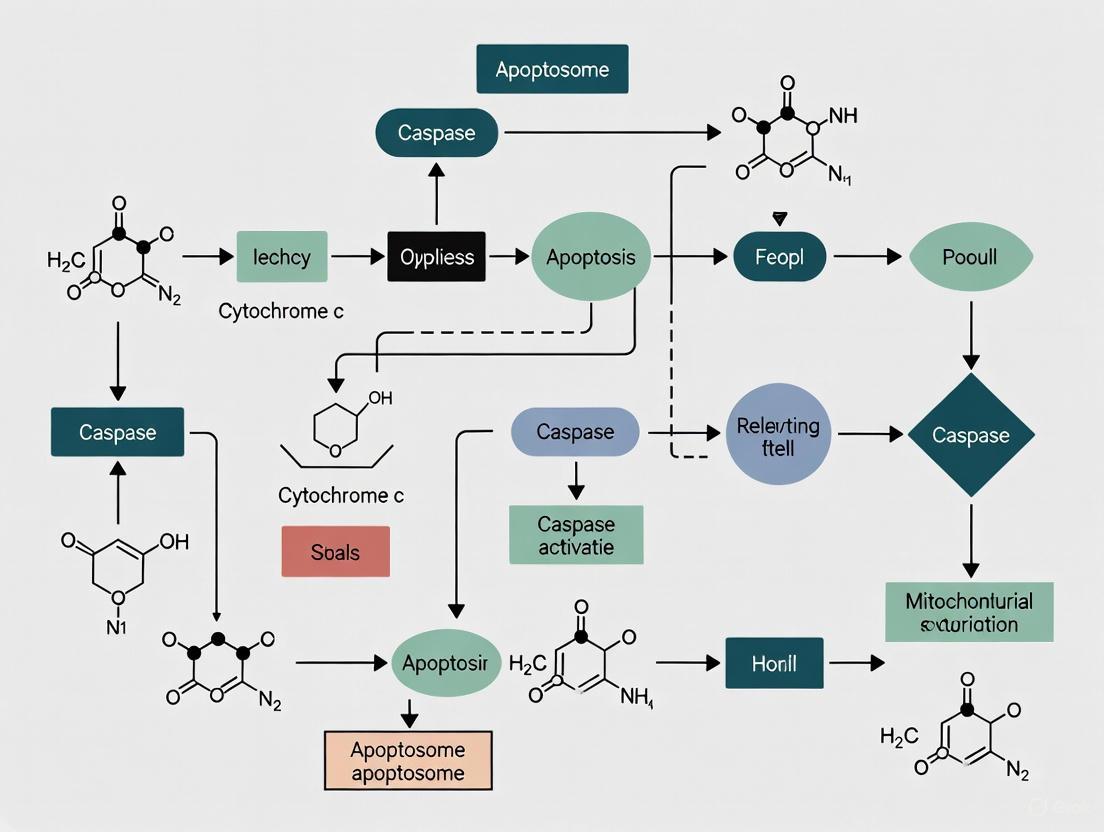
This article provides a comprehensive analysis of the mitochondrial (intrinsic) pathway of apoptosis for researchers and drug development professionals.
Mitochondrial Pathway of Apoptosis: Molecular Mechanisms, Assessment & Therapeutic Targeting
Abstract
This article provides a comprehensive analysis of the mitochondrial (intrinsic) pathway of apoptosis for researchers and drug development professionals. It details the core molecular machinery, including BCL-2 family regulation, MOMP, and apoptosome formation. The content covers established and emerging methodologies for functional assessment, addresses common experimental challenges, and validates the pathway's role through comparative analysis with other cell death forms. Finally, it explores the translational application of this knowledge in developing targeted therapies, such as BH3 mimetics, for cancer and neurodegenerative diseases.
The Core Machinery: Unraveling the Molecular Triggers and Regulators of Mitochondrial Apoptosis
The Molecular Machinery of Intrinsic Apoptosis
The intrinsic apoptotic pathway, also known as the mitochondrial pathway, is a fundamental process of programmed cell death initiated in response to intracellular stress signals [1] [2]. This pathway is characterized by a meticulously orchestrated molecular cascade that culminates in mitochondrial outer membrane permeabilization (MOMP), a decisive event committing the cell to die [1] [3]. Unlike its extrinsic counterpart, which transduces extracellular death signals, the intrinsic pathway monitors internal cellular wellbeing, eliminating cells that have sustained irreparable damage or face severe physiological stress [4].
The core molecular regulators of intrinsic apoptosis belong to the B-cell lymphoma 2 (Bcl-2) protein family, which includes both pro-apoptotic and anti-apoptotic members that determine cellular fate through their intricate interactions [1] [5]. The pro-apoptotic Bcl-2 family members are categorized into two functional classes: (1) effector proteins including Bax and Bak, which directly execute MOMP; and (2) BH3-only proteins (such as Bid, Bim, Bad, Noxa, and PUMA), which sense diverse stress signals and activate the effectors [5] [6]. The anti-apoptotic members (including Bcl-2, Bcl-xL, Bcl-w, Mcl-1) preserve mitochondrial integrity by sequestering pro-apoptotic proteins [7] [5].
When intracellular stresses disrupt the delicate balance between these opposing forces, the pro-apoptotic proteins become dominant, triggering Bax/Bak activation and their subsequent oligomerization within the mitochondrial outer membrane [5]. These oligomers form pores that permit the release of mitochondrial intermembrane space proteins into the cytosol, including cytochrome c, SMAC/DIABLO, and Omi/HtrA2 [1] [4]. Cytochrome c then binds to Apaf-1, forming the apoptosome complex that activates caspase-9, which in turn cleaves and activates executioner caspases-3, -6, and -7, ultimately dismantling the cell through proteolytic degradation of vital cellular components [1] [5].
Cellular Triggers and Stress Signals
The intrinsic apoptosis pathway integrates diverse intracellular danger signals, serving as a critical quality control mechanism that eliminates damaged or stressed cells [4] [5]. The primary triggers include:
Genotoxic stress: DNA damage from radiation (ionizing or UV), chemotherapeutic agents, or reactive oxygen species activates the tumor suppressor p53, which transcriptionally upregulates pro-apoptotic BH3-only proteins like PUMA and Noxa [4]. p53 can also directly activate Bax at the mitochondria, bypassing its transcriptional activity in certain contexts [4] [2].
Oxidative stress: Excessive reactive oxygen species (ROS) damage cellular components and directly promote MOMP by activating Bax and inducing permeability transition pore opening [4] [8].
Hypoxia and nutrient deprivation: Insufficient oxygen or growth factor withdrawal disrupts metabolic homeostasis, activating stress-sensing BH3-only proteins like Bim and Bad [4] [5].
Endoplasmic reticulum (ER) stress: Accumulation of misfolded proteins in the ER triggers the unfolded protein response, which can activate apoptosis through transcriptional upregulation of BH3-only proteins when adaptive responses fail [5].
Oncogenic stress: Unscheduled proliferation driven by oncogenes activates intrinsic apoptosis as a protective anti-tumor mechanism, primarily through p53 and BH3-only protein induction [4] [7].
Cytotoxic insults: Xenobiotics, toxins, and pathogenic infections can directly damage organelles or cellular processes, engaging the mitochondrial pathway [5].
Table 1: Primary Triggers of Intrinsic Apoptosis
| Trigger Category | Specific Stimuli | Key Sensor Molecules | Cellular Outcome |
|---|---|---|---|
| Genotoxic Stress | Ionizing/UV radiation, chemotherapeutics, ROS | p53, ATM, Chk2 | DNA damage response, PUMA/Noxa induction |
| Metabolic Stress | Growth factor withdrawal, hypoxia, nutrient deprivation | Bim, Bad, AMPK | Metabolic stress sensing, Bax/Bak activation |
| Organelle Stress | ER stress, mitochondrial dysfunction | CHOP, Bim, Bax | Unfolded protein response, MOMP |
| Oncogenic Stress | Activated oncogenes (e.g., Myc, Ras) | p53, p19ARF, Bim | Anti-proliferative response, tumor suppression |
| Pathophysiological Stress | Viral infection, protein aggregates, toxins | Various BH3-only proteins | Cellular defense against damage/pathogens |
Key Signaling Events and Mitochondrial Regulation
The commitment to intrinsic apoptosis revolves around mitochondrial outer membrane permeabilization (MOMP), which represents the point of no return in this death pathway [1] [3]. The Bcl-2 protein family governs this critical event through a carefully regulated interplay between its members [7].
In healthy cells, anti-apoptotic proteins like Bcl-2 and Bcl-xL reside at the mitochondrial outer membrane, where they neutralize pro-apoptotic BH3-only proteins and prevent Bax/Bak activation [5] [6]. When cellular stress emerges, BH3-only proteins become activated through transcriptional upregulation (e.g., Puma, Noxa) or post-translational modifications (e.g., Bad dephosphorylation, Bim release from cytoskeletal complexes) [6]. These activated BH3-only proteins then engage in two complementary mechanisms: (1) direct activation of Bax/Bak, and (2) inhibition of anti-apoptotic Bcl-2 proteins, which displaces previously sequestered activators [2] [6].
Once activated, Bax undergoes conformational changes that expose its membrane-targeting domain, leading to mitochondrial translocation and integration into the outer membrane [5]. Bak, normally resident at the mitochondria, similarly undergoes activation. Both proteins then oligomerize to form proteolipid pores that facilitate MOMP [5]. The mitochondrial permeability transition pore (MPTP), comprising VDAC, ANT, and cyclophilin D, may also contribute to MOMP in certain contexts, particularly in response to calcium overload and oxidative stress [4].
Following MOMP, the release of mitochondrial intermembrane space proteins activates downstream apoptotic processes [1] [5]. Cytochrome c nucleates apoptosome formation with Apaf-1 and procaspase-9, leading to caspase-9 activation [5]. Simultaneously, SMAC/DIABLO and Omi/HtrA2 neutralize inhibitor of apoptosis proteins (IAPs), particularly XIAP, thereby relieving their inhibition of caspases and permitting apoptotic execution [4] [5]. Additional mitochondrial factors like apoptosis-inducing factor (AIF) and endonuclease G translocate to the nucleus and contribute to caspase-independent DNA fragmentation [4] [5].
Table 2: Mitochondrial Factors Released During MOMP and Their Functions
| Factor | Release Mechanism | Primary Function | Regulators/Inhibitors |
|---|---|---|---|
| Cytochrome c | Bax/Bak pores, MPTP | Apoptosome formation with Apaf-1, caspase-9 activation | Bcl-2/Bcl-xL (prevent release) |
| SMAC/DIABLO | Caspase-dependent after MOMP | Neutralizes XIAP, cIAP1/2 | Bruce/Apollon (promotes degradation) |
| Omi/HtrA2 | Caspase-dependent after MOMP | Serine protease, inhibits XIAP | XIAP (binds and inhibits) |
| AIF | Bax/Bak pores | Caspase-independent chromatin condensation, DNA fragmentation | None known |
| Endonuclease G | Bax/Bak pores | Caspase-independent DNA fragmentation | None known |
Diagram 1: Intrinsic Apoptotic Pathway Signaling Cascade. This diagram illustrates the sequential molecular events from initial cellular stress to apoptotic execution, highlighting key regulatory points including Bcl-2 family interactions and IAP inhibition.
Experimental Methodologies for Studying Intrinsic Apoptosis
Investigating the intrinsic apoptotic pathway requires multifaceted experimental approaches that assess different aspects of the signaling cascade. The following methodologies represent core techniques employed in the field:
Assessment of Mitochondrial Membrane Potential (ΔΨm)
The loss of mitochondrial membrane potential is an early event in intrinsic apoptosis that precedes caspase activation [6]. JC-1 (5,5',6,6'-tetrachloro-1,1',3,3'-tetraethylbenzimidazolylcarbocyanine iodide) is a lipophilic, cationic dye that exhibits potential-dependent accumulation in mitochondria, indicated by a fluorescence emission shift from green (~529 nm) to red (~590 nm) as it forms J-aggregates in healthy mitochondria [9]. During apoptosis, mitochondrial depolarization prevents JC-1 aggregation, resulting in decreased red fluorescence with preserved green fluorescence [9]. Flow cytometric analysis of this green/red fluorescence ratio provides a quantitative measure of mitochondrial health. Alternative dyes include TMRE (tetramethylrhodamine ethyl ester) and TMRM (tetramethylrhodamine methyl ester), which show decreased fluorescence intensity in depolarized mitochondria [6].
Detection of Phosphatidylserine Externalization
In early apoptosis, phosphatidylserine (PS) translocates from the inner to the outer leaflet of the plasma membrane, serving as an "eat-me" signal for phagocytes [6] [9]. Annexin V, a 35-36 kDa calcium-dependent phospholipid-binding protein, has high affinity for exposed PS and can be conjugated to fluorophores for detection [6] [9]. Since PS externalization also occurs during necrosis, Annexin V staining must be combined with a membrane-impermeant viability dye like propidium iodide (PI) to distinguish apoptotic (Annexin V+/PI-) from necrotic (Annexin V+/PI+) cells [6] [9]. This assay is typically performed using flow cytometry or fluorescence microscopy.
Analysis of Caspase Activation
Caspase activity serves as a central execution node in apoptosis and can be measured through multiple approaches. Active caspase-specific antibodies recognize epitopes exposed only after proteolytic activation and conformational change, enabling detection by flow cytometry, Western blotting, or immunofluorescence [6] [9]. Fluorogenic substrates containing caspase cleavage sequences (e.g., DEVD for caspase-3, IETD for caspase-8, LEHD for caspase-9) release fluorescent products upon cleavage, allowing kinetic measurement of caspase activity in cell lysates or intact cells [6]. Additionally, Western blot analysis can detect caspase cleavage fragments, such as the 17/19 kDa fragments of caspase-3, providing evidence of activation [6].
DNA Fragmentation Analysis
Late-stage apoptosis features internucleosomal DNA cleavage by caspase-activated DNase (CAD), generating fragments of ~180-200 base pairs [6]. The TUNEL (TdT-mediated dUTP Nick-End Labeling) assay detects DNA strand breaks by incorporating modified nucleotides at the 3'-OH ends of fragmented DNA, visualized by fluorescence microscopy or flow cytometry [6]. Conventional DNA laddering can be demonstrated by agarose gel electrophoresis, revealing the characteristic oligonucleosomal pattern [6].
Table 3: Key Research Reagents for Intrinsic Apoptosis Investigation
| Research Tool | Specific Examples | Experimental Application | Detection Method |
|---|---|---|---|
| Mitochondrial Membrane Potential Dyes | JC-1, TMRE, TMRM | Early apoptosis detection, MOMP assessment | Flow cytometry, fluorescence microscopy |
| Phosphatidylserine Detection | Annexin V-FITC/PI | Early vs. late apoptosis discrimination | Flow cytometry, fluorescence microscopy |
| Caspase Activity Assays | Fluorogenic substrates (DEVD-AMC), active caspase antibodies | Execution phase measurement, specific caspase activation | Spectrofluorometry, flow cytometry, Western blot |
| DNA Fragmentation Kits | TUNEL assay reagents | Late apoptosis confirmation | Fluorescence microscopy, flow cytometry |
| Bcl-2 Family Antibodies | Anti-Bax, Anti-Bcl-2, Anti-Bid | Protein expression and localization | Western blot, immunofluorescence, flow cytometry |
| Cytochrome c Release Assays | Subcellular fractionation, immunofluorescence | MOMP confirmation | Western blot, confocal microscopy |
Diagram 2: Experimental Workflow for Intrinsic Apoptosis Detection. This workflow outlines the parallel assessment of temporal events in intrinsic apoptosis, from early mitochondrial changes to late-stage morphological alterations.
Therapeutic Targeting and Research Perspectives
The intrinsic apoptotic pathway represents a promising therapeutic target, particularly in oncology, where its dysregulation contributes to tumorigenesis and treatment resistance [1] [7]. Several targeted approaches have emerged:
BH3 mimetics represent a novel class of small molecules that mimic the function of native BH3-only proteins by binding to and inhibiting anti-apoptotic Bcl-2 family members [7] [6]. Venetoclax (ABT-199), a selective Bcl-2 inhibitor, has received FDA approval for treating chronic lymphocytic leukemia (CLL) and acute myeloid leukemia (AML) [7]. It functions by displacing pro-apoptotic proteins like BIM from Bcl-2, thereby initiating Bax/Bak-mediated MOMP [7]. Additional BH3 mimetics targeting Mcl-1 and Bcl-xL are under clinical development, offering promise for overcoming resistance mechanisms [7].
IAP antagonists, known as SMAC mimetics, replicate the N-terminal tetrapeptide of mature SMAC/DIABLO, thereby antagonizing XIAP, cIAP1, and cIAP2 [7]. These compounds promote caspase activation and can sensitize tumor cells to conventional chemotherapeutics [7]. Several SMAC mimetics are undergoing clinical evaluation, particularly in combination regimens [7].
Emerging research has revealed sophisticated crosstalk between intrinsic apoptosis and other cell death modalities, including necroptosis and pyroptosis, within an integrated network termed PANoptosis [2] [8]. Mitochondria serve as central hubs in this network, coordinating death decisions through shared components like MOMP [8]. Additionally, novel regulatory mechanisms continue to be discovered, such as the mitochondrial apoptotic pathway activated by Nur77, an orphan nuclear receptor that translocates to mitochondria and converts Bcl-2 from anti-apoptotic to pro-apoptotic [10].
Future research directions include developing more specific BH3 mimetics, understanding context-dependent resistance mechanisms, exploring mitochondrial dynamics in cell death regulation, and harnessing emerging knowledge of PANoptosis for therapeutic benefit [7] [8]. The ongoing refinement of experimental methodologies will continue to deepen our understanding of this fundamental cellular process and its translational applications.
The B-cell lymphoma 2 (BCL-2) protein family constitutes a critical regulatory checkpoint that determines cellular life or death decisions by controlling the mitochondrial pathway of apoptosis [11] [12]. This pathway is essential for tissue homeostasis, particularly in the hematopoietic compartment, where its impairment can lead to neoplastic or autoimmune diseases [11]. The "tripartite apoptotic switch" refers to the three distinct functional classes within the BCL-2 family that interact to govern mitochondrial outer membrane permeabilization (MOMP), the point of no return in intrinsic apoptosis [11] [13] [14]. Since the discovery of BCL-2 in 1984 through its involvement in the t(14;18) chromosomal translocation hallmark of follicular lymphoma, this protein family has represented a fascinating paradigm of oncogenes that promote cancer by inhibiting cell death rather than stimulating proliferation [14] [15]. This technical guide comprehensively examines the structure, function, regulatory mechanisms, and therapeutic targeting of the BCL-2 family, providing researchers with both foundational knowledge and contemporary experimental approaches for investigating this crucial apoptotic switch.
Structural and Functional Organization of the BCL-2 Family
The BCL-2 family proteins are characterized by conserved sequence regions known as BCL-2 homology (BH) domains and can be classified into three principal subgroups based on their structure and function [16] [17]. These proteins share extensive sequence and structural similarity as globular α-helical proteins [14].
Table 1: Classification of the BCL-2 Protein Family
| Subfamily Group | Protein Members | BH Domains Present | Molecular Weight | Primary Function |
|---|---|---|---|---|
| Anti-apoptotic | BCL-2, BCL-XL, MCL-1, BCL-W, BFL-1, BCL-B | BH1, BH2, BH3, BH4 | 18-37 kDa | Inhibit MOMP by sequestering pro-apoptotic members |
| Multi-domain Pro-apoptotic | BAX, BAK, BOK | BH1, BH2, BH3 | 21-25 kDa | Execute MOMP through oligomerization |
| BH3-only Pro-apoptotic | BID, BIM, BAD, PUMA, NOXA, BIK, BMF, HRK | BH3 only | 22-26 kDa | Sense cellular stress and initiate apoptosis signaling |
Anti-apoptotic Proteins
The anti-apoptotic proteins, including BCL-2, BCL-XL, MCL-1, BCL-W, BFL-1, and BCL-B, contain four BH domains and a C-terminal transmembrane (TM) domain that anchors them to intracellular membranes, particularly the mitochondrial outer membrane [14] [16] [15]. These proteins maintain mitochondrial integrity by directly binding and inhibiting pro-apoptotic family members. Their globular structure features an eight-helix bundle encoded within the BH1, BH2, and BH3 domains, which forms a hydrophobic surface groove for binding BH3 domains of pro-apoptotic proteins [14]. The BH4 domain is unique to anti-apoptotic proteins and is essential for their survival function [16].
Multi-domain Pro-apoptotic Proteins
BAX, BAK, and BOK constitute the effector proteins that directly mediate MOMP [11] [13]. These proteins contain BH1-3 domains and undergo conformational activation in response to apoptotic stimuli. In healthy cells, BAX predominantly resides in the cytosol or loosely associates with membranes, while BAK is integrated into the mitochondrial outer membrane [13] [17]. Upon activation, both proteins undergo N-terminal conformational changes, insert into the membrane, and form oligomeric pores that permit cytochrome c release [13].
BH3-only Proteins
BH3-only proteins function as sentinels of cellular stress, integrating diverse death signals including DNA damage, growth factor withdrawal, and oncogene activation [13] [14]. They share only the BH3 domain, an amphipathic α-helix that binds the hydrophobic groove of anti-apoptotic proteins [11]. Activation mechanisms vary: PUMA and NOXA are transcriptionally upregulated by p53; BIM is released from cytoskeletal structures; BID is activated by caspase-8 cleavage; and BAD is regulated by phosphorylation [13]. They are further categorized as 'activators' (BIM, tBID, PUMA) that can directly engage effectors, and 'sensitizers' (BAD, NOXA, BIK) that neutralize anti-apoptotic proteins [17].
Molecular Mechanisms of the Apoptotic Switch
Models of BCL-2 Family Regulation
Several models have been proposed to explain how BCL-2 family interactions control MOMP [17]. Each provides a distinct framework for understanding the complex interplay between family members.
Direct Activation Model: This model posits that activator BH3-only proteins (BIM, tBID, PUMA) directly bind and conformationally activate BAX and BAK, while sensitizer BH3-only proteins function by neutralizing anti-apoptotic proteins, thereby freeing activators to engage effectors [17].
Indirect Activation/Displacement Model: This model proposes that BH3-only proteins function solely by binding anti-apoptotic relatives, displacing pre-bound BAX and BAK [11]. In this model, BAX and Bak are constitutively active but restrained by anti-apoptotic proteins. Apoptosis occurs when BH3-only proteins disrupt this inhibition [17]. Supporting this model, cells lacking both BID and BIM remain sensitive to various apoptotic stimuli [11].
Embedded Together Model: This model incorporates membranes as the central locus of action, where interactions cause conformational changes that modulate binding affinities [17]. Membrane embedding alters the conformation and function of both pro- and anti-apoptotic proteins, creating a dynamic equilibrium governed by local concentrations and binding affinities.
Unified Model: Building on the embedded together model, this framework distinguishes two inhibition modes: Mode 1 involves anti-apoptotic proteins sequestering activator BH3 proteins, while Mode 2 involves direct inhibition of activated BAX and BAK [17]. The model also links BCL-2 family function to mitochondrial dynamics.
Diagram 1: The intrinsic apoptotic pathway controlled by the BCL-2 family tripartite switch.
The Hydrophobic Groove as a Critical Interaction Site
Structural studies have revealed that the hydrophobic groove formed by BH1-3 domains of anti-apoptotic proteins serves as the primary interaction site for BH3 domains of pro-apoptotic members [14]. This groove contains four hydrophobic pockets (P1-P4) that accommodate the BH3 α-helix [14]. The specificity of BH3-only proteins for particular anti-apoptotic relatives is determined by amino acid residues within their BH3 domains that differentially engage these pockets [11]. For example, BAD selectively binds BCL-2, BCL-XL, and BCL-W, while NOXA specifically engages MCL-1 and A1 [11]. This binding specificity underlies the requirement for multiple BH3-only proteins to efficiently induce apoptosis in cells expressing various anti-apoptotic proteins.
Experimental Approaches for Studying BCL-2 Family Function
BH3 Profiling Technique
BH3 profiling is a powerful functional assay that measures mitochondrial priming to assess how close a cell is to the apoptotic threshold [13]. This technique applies synthetic BH3 domain peptides to isolated mitochondria or permeabilized cells and measures MOMP-dependent events.
Table 2: BH3 Profiling Peptides and Their Specificities
| BH3 Peptide | Corresponding Protein | Anti-apoptotic Protein Targets | Interpretation of MOMP Induction |
|---|---|---|---|
| BAD peptide | BAD | BCL-2, BCL-XL, BCL-W | Indicates dependence on BCL-2/BCL-XL/BCL-W |
| NOXA peptide | NOXA | MCL-1, A1 | Indicates dependence on MCL-1/A1 |
| HRK peptide | HRK | BCL-XL | Specific for BCL-XL dependence |
| BIM peptide | BIM | All anti-apoptotic proteins | Measures total apoptotic priming |
| MS-1 peptide | - | Selective MCL-1 inhibitor | Confirms MCL-1 dependence |
| PUMA peptide | PUMA | All anti-apoptotic proteins | Alternative pan-priming measurement |
Protocol: Standard BH3 Profiling Assay
Mitochondrial Isolation: Isolate mitochondria from target cells via differential centrifugation. Maintain mitochondria in appropriate isotonic buffer (e.g., Mannitol/Sucrose/HEPES buffer with energy substrates).
Peptide Preparation: Reconstitute synthetic BH3 peptides in DMSO and dilute to working concentrations in assay buffer. Include a negative control (DMSO only) and positive control (e.g., Alamethicin or Triton X-100).
MOMP Detection: Load mitochondria with a fluorescent indicator of membrane integrity (typically JC-1 for membrane potential or cytochrome c immunofluorescence). Incubate with BH3 peptides for 60-120 minutes at appropriate temperature (typically 25-30°C).
Data Analysis: Quantify the percentage of mitochondrial depolarization or cytochrome c release for each peptide. Generate a response profile across the peptide panel to identify dominant anti-apoptotic dependencies.
BH3 profiling can distinguish among three classes of apoptotic block: Class A (low activator availability), Class B (defective BAX/BAK), and Class C (anti-apoptotic protein dominance) [13].
Diagram 2: BH3 profiling experimental workflow for determining apoptotic blocks.
Additional Key Methodologies
Co-immunoprecipitation and Crosslinking: These techniques assess protein-protein interactions between BCL-2 family members. Chemical crosslinkers like DSS or BMH can stabilize transient interactions for subsequent immunoprecipitation and immunoblot analysis [13].
Conformational-Specific Antibodies: Antibodies like 6A7 that recognize exposed N-terminal epitopes of BAX detect activation status [13]. Similar conformation-specific reagents exist for BAK.
Live-Cell Imaging and FRET: Fluorescent protein tags and FRET-based biosensors enable real-time monitoring of BCL-2 protein localization, interactions, and activation dynamics in living cells [15].
Structural Approaches: X-ray crystallography and NMR spectroscopy have been instrumental in elucidating the molecular details of BCL-2 family interactions, including the development of BH3-mimetic drugs [14].
Research Reagent Solutions
Table 3: Essential Research Reagents for BCL-2 Family Studies
| Reagent Category | Specific Examples | Research Application | Key Features |
|---|---|---|---|
| BCL-2 Inhibitors | ABT-737, ABT-263 (Navitoclax), ABT-199 (Venetoclax), Obatoclax (GX15-070) | Functional studies of BCL-2/BCL-XL inhibition; combination therapies | ABT-737: research tool compound; Venetoclax: clinically approved selective BCL-2 inhibitor |
| MCL-1 Inhibitors | S63845, AMG-176, AZD5991 | Selective targeting of MCL-1 dependency | Demonstrate on-target thrombocytopenia for BCL-XL inhibitors and cardiac toxicities for MCL-1 inhibitors |
| BCL-XL Inhibitors | A-1331852, A-1155463, WEHI-539 | Selective BCL-XL inhibition; platelet toxicity studies | Tool compounds for understanding BCL-XL-specific biology |
| BH3 Peptides | Synthetic BIM, BAD, NOXA, HRK, PUMA BH3 domains | BH3 profiling; mechanistic studies of interaction specificity | 20-25 amino acid peptides matching native BH3 sequences |
| Antibodies | Conformation-specific BAX (6A7); total BCL-2 family proteins; cytochrome c | Immunodetection; immunofluorescence; immunoprecipitation | Conformation-specific antibodies distinguish inactive vs. active states |
| Cell Lines | Bax/Bak double knockout MEFs; Bim/Bid double knockout cells; Venetoclax-resistant lines | Genetic validation of protein function; resistance mechanisms | Essential controls for establishing mechanism specificity |
Therapeutic Targeting and Clinical Translation
The mechanistic understanding of BCL-2 family function has enabled the rational development of therapeutic agents, particularly BH3-mimetics that occupy the hydrophobic groove of anti-apoptotic proteins [14].
Approved BCL-2 Inhibitors
Venetoclax (ABT-199) represents the first FDA-approved selective BCL-2 inhibitor, transforming treatment for chronic lymphocytic leukemia (CLL) and acute myeloid leukemia (AML) [14] [16]. Its development followed earlier inhibitors ABT-737 (research tool) and navitoclax (ABT-263), which inhibited both BCL-2 and BCL-XL but caused dose-limiting thrombocytopenia due to platelet BCL-XL dependence [14] [18].
Next-Generation BCL-2 Inhibitors
Recent years have seen the development of novel BCL-2 inhibitors with improved properties:
Lisaftoclax (APG-2575): An orally available BCL-2 inhibitor showing efficacy in hematologic malignancies. Clinical data demonstrate a 62.5% objective response rate in patients with relapsed/refractory CLL/SLL who failed prior BTK inhibitors, with a manageable safety profile and no tumor lysis syndrome reported [19].
Sonrotoclax (BGB-11417): A next-generation BCL-2 inhibitor that has received FDA priority review for relapsed/refractory mantle cell lymphoma. It demonstrates high potency, short half-life, and absence of drug accumulation, potentially offering pharmacokinetic advantages [18].
Novel Chemical Entities: Indolyl-triazole derivatives (e.g., compound R23) show promising BCL-2 inhibitory activity with IC50 values of 0.25-0.63 μM in binding assays, inducing apoptosis and cell cycle arrest [20].
Challenges and Novel Approaches
The development of BH3-mimetics targeting BCL-XL or MCL-1 has proven challenging due to on-target toxicities: thrombocytopenia for BCL-XL inhibitors and cardiac toxicity for MCL-1 inhibitors [14]. Emerging strategies to overcome these limitations include:
PROTACs (Proteolysis Targeting Chimeras): Bifunctional molecules that recruit E3 ubiquitin ligases to target proteins for degradation, potentially enabling transient inhibition that mitigates toxicity [14].
Antibody-Drug Conjugates (ADCs): Tissue-specific delivery of BH3-mimetics to minimize on-target off-tumor effects [14].
BH4 Domain Targeting: Novel approaches targeting the BH4 domain unique to anti-apoptotic proteins represent an alternative strategy [14].
The BCL-2 family constitutes a tripartite apoptotic switch that integrates diverse stress signals to determine cellular fate through regulated mitochondrial membrane permeabilization. The structural and mechanistic insights into BCL-2 family function have not only advanced fundamental understanding of apoptosis regulation but also enabled transformative cancer therapeutics through BH3-mimetic drugs. Current research continues to refine our understanding of the dynamic interactions between BCL-2 family members, their non-apoptotic functions, and resistance mechanisms, while next-generation targeting approaches promise to expand the therapeutic applicability of BCL-2 modulation across diverse diseases.
Mitochondrial Outer Membrane Permeabilization (MOMP) is recognized as the decisive commitment point in the intrinsic pathway of apoptosis, a genetically programmed cell death process essential for development, tissue homeostasis, and eliminating damaged cells [21] [22]. This process represents a fundamental shift in mitochondrial function—from sustaining cellular life through energy production to orchestrating cell death. During MOMP, the outer mitochondrial membrane becomes permeable to proteins normally confined to the intermembrane space, leading to the irreversible activation of the caspase protease cascade that executes cell death [23] [24]. The critical nature of MOMP is underscored by its tight regulation in healthy cells and its frequent dysregulation in diseases such as cancer, where apoptosis is inappropriately inhibited [22]. Understanding the mechanisms, regulation, and consequences of MOMP provides crucial insights for fundamental cell biology and the development of novel therapeutic strategies.
The Molecular Machinery of MOMP
BCL-2 Protein Family: The Key Regulators
The BCL-2 protein family serves as the primary regulatory system governing MOMP. These proteins are classified into three functional groups based on their structure and role in apoptosis [23] [22].
Table 1: The BCL-2 Protein Family Regulating MOMP
| Group | Function | Key Members | Mechanism of Action |
|---|---|---|---|
| Effector Proteins (Multi-domain pro-apoptotic) | Execute MOMP | Bax, Bak, Bok | Form pores in mitochondrial outer membrane upon activation [23] [22] |
| BH3-only Proteins (Pro-apoptotic) | Initiate apoptosis signaling | Bid, Bim, PUMA, Bad, Noxa, Bik, BMF, HRK | Sense cellular stress; directly activate Bax/Bak or inhibit anti-apoptotic proteins [23] [22] |
| Anti-apoptotic Proteins | Inhibit MOMP | Bcl-2, Bcl-xL, Bcl-w, Mcl-1, A1/BFL1, Bcl-B | Bind and sequester BH3-only proteins and activated Bax/Bak [23] [22] |
The structural basis of BCL-2 protein function involves conserved Bcl-2 Homology (BH) domains. Anti-apoptotic proteins typically possess four BH domains (BH1-BH4), while pro-apoptotic effectors contain BH1-BH3 domains [23]. BH3-only proteins, as their name implies, primarily feature only the BH3 domain, which is essential for their death-promoting interactions with other BCL-2 family members [23]. In healthy cells, pro-apoptotic effectors like Bax reside inactive in the cytosol or loosely associated with membranes, while anti-apoptotic proteins are membrane-bound and maintain survival. During apoptosis, BH3-only proteins are activated by diverse stress signals and tip the balance toward death by either directly activating Bax/Bak or neutralizing anti-apoptotic proteins [22].
Pore Formation and Membrane Permeabilization
The precise mechanism by which Bax and Bak permeabilize the mitochondrial outer membrane remains an active research area, with several models proposed. The current consensus indicates that activated Bax and Bak undergo conformational changes and oligomerize within the mitochondrial outer membrane [22]. These oligomers may form proteolipidic pores large enough to allow the passage of proteins such as cytochrome c (approximately 15 kDa) [23]. Alternative models suggest that Bcl-2 proteins may modulate pre-existing channels such as the mitochondrial permeability transition pore complex (mPTP) or voltage-dependent anion channel (VDAC), or cooperate with lipid components to facilitate permeabilization [23] [25]. Regardless of the precise formation mechanism, the functional consequence is a dramatic increase in outer membrane permeability, permitting the efflux of intermembrane space proteins into the cytosol while typically maintaining the integrity of the inner mitochondrial membrane [26].
Consequences of MOMP: Activation of the Apoptotic Cascade
Caspase Activation and the Apoptosome
The release of mitochondrial intermembrane space proteins following MOMP initiates the execution phase of apoptosis. Cytochrome c, once engaged in electron transport, assumes a new lethal function in the cytosol [24]. It binds to the adaptor protein APAF-1 (apoptotic protease activating factor-1), triggering a conformational change that enables APAF-1 to oligomerize into a wheel-like signaling complex known as the apoptosome [24]. This complex recruits and activates the initiator caspase, caspase-9, which in turn cleaves and activates the effector caspases-3 and -7 [24]. These executioner caspases then systematically dismantle the cell by cleaving hundreds of cellular substrates, producing the characteristic morphological hallmarks of apoptosis, including cell shrinkage, chromatin condensation, and formation of apoptotic bodies [23] [24].
Key Proteins Released During MOMP
Table 2: Mitochondrial Intermembrane Space Proteins Released During MOMP and Their Functions in Apoptosis
| Protein | Normal Mitochondrial Function | Role in Apoptosis After MOMP |
|---|---|---|
| Cytochrome c | Electron transport in oxidative phosphorylation | Binds APAF-1 to trigger apoptosome formation and caspase activation [24] |
| SMAC/Diablo | Not well-defined | Neutralizes XIAP inhibition, facilitating caspase-9 and executioner caspase activity [24] [22] |
| Omi/HtrA2 | Serine protease involved in protein quality control | Inhibits XIAP (in some species); possesses proteolytic activity [24] |
The release of SMAC (Second Mitochondrial-derived Activator of Caspases) and Omi following MOMP amplifies the cell death signal by counteracting endogenous caspase inhibitors known as IAPs (Inhibitor of Apoptosis Proteins) [24]. Specifically, the mature forms of these proteins expose N-terminal sequences that bind to and neutralize XIAP, relieving its inhibition of caspases-9, -3, and -7 [24]. This coordinated release of pro-apoptotic factors ensures rapid and irreversible commitment to cell death once MOMP occurs.
Experimental Analysis of MOMP
Key Methodologies and Assays
Research into MOMP employs diverse methodological approaches to detect membrane permeabilization, protein release, and functional consequences. The following experimental protocols represent cornerstone techniques in the field.
Protocol 1: Cytochrome c Release Assay by Subcellular Fractionation and Immunoblotting
This widely used method detects the translocation of cytochrome c from mitochondria to cytosol following MOMP [24] [27].
- Cell Treatment and Harvesting: Induce apoptosis in cells (e.g., with staurosporine or UV irradiation). Include untreated controls. Harvest cells by gentle scraping or trypsinization at specific time points.
- Cell Permeabilization: Resuspend cell pellets in digitonin-containing permeabilization buffer (0.05% digitonin in physiological buffer with sucrose and EGTA). Incubate 5 minutes on ice. Digitonin selectively permeabilizes the plasma membrane while leaving mitochondrial membranes intact.
- Fractionation: Centrifuge at 800 × g for 10 minutes at 4°C. The supernatant contains the cytosolic fraction (including released cytochrome c). The pellet contains mitochondria and other organelles.
- Mitochondrial Lysis: Lyse the pellet fraction with RIPA buffer containing 1% Triton X-100 to release mitochondrial contents.
- Immunoblotting: Separate proteins from both fractions by SDS-PAGE. Transfer to membrane and probe with anti-cytochrome c antibody. Compare signal intensity between treated and control samples.
Protocol 2: MOMP Kinetics Assessment by Live-Cell Imaging
This protocol enables real-time visualization of MOMP in individual cells, capturing its rapid and synchronous nature [24] [27].
- Biosensor Selection: Choose appropriate fluorescent biosensors:
- Cytochrome c-GFP: Fuse GFP to cytochrome c to track its release.
- MOMP Reporters: Use dyes that detect mitochondrial membrane potential (TMRE, JC-1) or membrane integrity.
- Cell Preparation and Imaging: Plate cells on imaging-optimized dishes. Transfert with fluorescent biosensors if necessary. Mount on confocal microscope with environmental control (37°C, 5% CO₂).
- Time-Lapse Acquisition: Acquire images at 30-second to 2-minute intervals before and after apoptotic stimulation.
- Data Analysis: Quantify the timing and synchronicity of MOMP by measuring the sudden loss of mitochondrial fluorescence or change in distribution of mitochondrial markers.
The Scientist's Toolkit: Essential Research Reagents
Table 3: Key Reagents for MOMP Research
| Reagent/Category | Specific Examples | Research Application |
|---|---|---|
| BCL-2 Family Modulators | ABT-199 (Venetoclax), ABT-263 (Navitoclax) | BH3-mimetics that inhibit anti-apoptotic BCL-2 proteins to induce MOMP [22] |
| Caspase Inhibitors | Z-VAD-FMK (pan-caspase inhibitor) | Determines caspase-dependent and independent consequences of MOMP [22] |
| Fluorescent Biosensors | Cytochrome c-GFP, TMRE, JC-1 | Live-cell imaging of MOMP kinetics and mitochondrial membrane potential [27] |
| Antibodies for Detection | Anti-cytochrome c, Anti-SMAC/Diablo, Anti-Bax | Immunodetection of protein localization and activation status [24] [25] |
| Recombinant Proteins | Recombinant tBid, Bax, Bim BH3 peptide | In vitro reconstitution of MOMP in liposomes or isolated mitochondria [23] |
MOMP in Pathophysiology and Therapeutic Targeting
MOMP Dysregulation in Cancer
Cancer cells frequently evade apoptosis by inhibiting MOMP through multiple mechanisms [22]. Common strategies include overexpression of anti-apoptotic BCL-2 family proteins (e.g., BCL-2, BCL-xL, MCL-1), downregulation or mutation of pro-apoptotic proteins (Bax, Bak, BH3-only proteins), and impaired caspase function [22]. The critical role of MOMP inhibition in oncogenesis is demonstrated by the original discovery of BCL-2 as an oncogene in follicular lymphoma, where its overexpression promotes cell survival rather than proliferation [28] [22]. This dysregulation not only facilitates tumor development and progression but also confers resistance to conventional cancer therapies, many of which ultimately require MOMP to eliminate cancer cells [22].
Therapeutic Strategies Targeting MOMP
The understanding of MOMP regulation has inspired novel cancer therapeutic approaches, particularly BH3 mimetics—small molecules that mimic the function of BH3-only proteins by binding to and inhibiting anti-apoptotic BCL-2 proteins [22]. Venetoclax (ABT-199), a selective BCL-2 inhibitor, has demonstrated remarkable efficacy in certain hematological malignancies, validating MOMP induction as a viable therapeutic strategy [22]. Additional approaches under investigation include direct activation of Bax/Bak, combination therapies that sensitize cells to BH3 mimetics by upregulating BH3-only proteins, and agents that target the mitochondrial membrane lipid environment to facilitate pore formation [23] [22]. The therapeutic challenge remains achieving tumor-selective MOMP induction while sparing normal tissues, which may be possible by exploiting the heightened dependence of cancer cells on specific anti-apoptotic proteins due to oncogenic stress—a concept known as "mitochondrial priming" [22].
Mitochondrial Outer Membrane Permeabilization represents an irreversible commitment to cell death and serves as the crucial control point in the mitochondrial pathway of apoptosis. Governed by complex interactions within the BCL-2 protein family, MOMP leads to the release of cytochrome c and other mitochondrial proteins that activate caspases and execute cell death. Its precise regulation is essential for maintaining tissue homeostasis, while its dysregulation contributes to pathologies such as cancer. Continued investigation into the structural mechanisms of pore formation, regulatory networks, and contextual modifications of MOMP will enhance both fundamental understanding and therapeutic targeting of this critical biological process. The development of BH3 mimetics and other MOMP-modulating agents heralds a new era of apoptosis-based therapeutics with significant potential for treating cancer and other diseases characterized by aberrant cell survival.
Cytochrome c Release and the Formation of the Apoptosome
The mitochondrial pathway of apoptosis, or intrinsic apoptosis, is a genetically regulated cell death process essential for development, tissue homeostasis, and the removal of damaged cells [29]. Dysregulation of this pathway is a hallmark of diseases such as cancer and neurodegenerative disorders [30] [14]. A pivotal event in this pathway is the release of cytochrome c from the mitochondrial intermembrane space into the cytosol [29]. Once in the cytosol, cytochrome c triggers the assembly of a signaling platform known as the apoptosome, which initiates the proteolytic cascade that leads to cell dismantling [31] [32]. This technical guide delves into the molecular mechanisms of cytochrome c release and apoptosome formation, providing a detailed resource for researchers and drug development professionals. The content is framed within broader research efforts to understand the mitochondrial pathway of apoptosis, a process whose core mechanisms are conserved from nematodes to humans but exhibit critical species-specific adaptations [29] [32].
The Release of Cytochrome c from Mitochondria
In healthy cells, cytochrome c is localized within the mitochondrial intermembrane and intercristae spaces, where it serves as an essential component of the electron transport chain, shuttling electrons between Complex III and Complex IV [33] [34]. Its transition from a vital respiratory component to a potent pro-apoptotic signal is tightly regulated.
Regulation by the BCL-2 Protein Family
The BCL-2 protein family constitutes the primary regulatory circuit governing mitochondrial outer membrane permeabilization (MOMP), the event leading to cytochrome c release [13] [14]. This family can be functionally divided into three groups:
- Anti-apoptotic proteins (e.g., BCL-2, BCL-XL, MCL-1): These proteins preserve mitochondrial integrity by binding and neutralizing pro-apoptotic members [13] [14].
- Multi-domain pro-apoptotic effectors (BAK, BAX): These are the executioners of MOMP. In response to apoptotic stimuli, they undergo conformational changes, oligomerize, and form pores in the outer mitochondrial membrane [13].
- BH3-only proteins (e.g., BIM, BID, PUMA): These are sentinels of cellular damage. They are activated by diverse stresses (e.g., DNA damage, oncogenic signaling) and initiate apoptosis by either neutralizing anti-apoptotic proteins or directly activating BAX/BAK [13] [14].
The critical role of BAX and BAK is demonstrated by the extreme resistance of bax^-/- bak^-/- double-knockout cells to a wide array of apoptotic stimuli [13].
Molecular Steps of Cytochrome c Release
The release of cytochrome c is not a simple passive diffusion but a multi-step process [33] [34]:
- Activation and Oligomerization of BAX/BAK: In response to pro-apoptotic signals, cytosolic BAX translocates to the mitochondria, while mitochondrial-resident BAK undergoes a conformational change. Both proteins oligomerize, forming putative pores in the outer mitochondrial membrane [13].
- Detachment from Cardiolipin: Approximately 85% of mitochondrial cytochrome c is loosely or tightly bound to the inner membrane phospholipid cardiolipin [33] [34]. For release to occur, cytochrome c must be detached from cardiolipin, a process facilitated by the peroxidation of cardiolipin itself, which reduces its binding affinity [33] [34].
- Traversal of Cristae Junctions: The inner mitochondrial membrane is folded into cristae, connected to the intermembrane space by narrow tubular structures called crista junctions. Most cytochrome c resides within the cristae [33]. During apoptosis, these junctions may widen, though computational models suggest that the fast diffusion of free cytochrome c means this remodeling may have a negligible effect on the overall release kinetics [33].
- Diffusion Through BAX/BAK Pores: Once mobilized and free in the intermembrane space, cytochrome c diffuses through the permeabilized outer membrane via the pores formed by BAX/BAK oligomers into the cytosol [13].
This release disrupts the electron transport chain, causing a decline in ATP production and generating reactive oxygen species, thereby further promoting cell death [30].
Figure 1: The BCL-2 Family Regulates Cytochrome c Release. Apoptotic stimuli activate BH3-only proteins, which neutralize anti-apoptotic members and directly/indirectly activate the pro-apoptotic effectors BAX and BAK. Oligomerized BAX/BAK permeabilize the mitochondrial outer membrane, allowing cytochrome c to escape into the cytosol [13] [14].
The Formation and Function of the Apoptosome
Upon entering the cytosol, cytochrome c initiates the formation of the apoptosome, a complex that serves as an activation platform for initiator caspases.
Core Components and Assembly
The core components required for apoptosome formation are cytochrome c, Apaf-1 (Apoptotic protease-activating factor 1), and a nucleotide, typically dATP or ATP [31] [32].
- Apaf-1 Structure: Apaf-1 is a multi-domain protein comprising:
- An N-terminal CARD (Caspase Recruitment Domain) for recruiting procaspase-9.
- A central NOD (Nucleotide-binding and Oligomerization Domain) that mediates self-association.
- A C-terminal regulatory region of WD40 repeats that binds cytochrome c and keeps Apaf-1 in an autoinhibited state in the absence of an apoptotic signal [31] [32].
- Nucleotide Exchange and Hydrolysis: In its autoinhibited state, Apaf-1 is bound to dATP [31]. The binding of cytochrome c to the WD40 repeats induces the hydrolysis of the bound dATP to dADP. This dADP is then exchanged for exogenous dATP. Both hydrolysis and exchange are required steps that drive a conformational change in Apaf-1, relieving autoinhibition and enabling it to adopt an extended, assembly-competent state [31].
- Oligomerization: Seven activated Apaf-1 molecules oligomerize into a symmetrical, wheel-like structure with a central hub and seven radiating spokes, termed the apoptosome [31] [32]. The central ring is formed by the NOD domains, while the WD40 repeats and bound cytochrome c form the spokes [31].
Caspase Activation
The assembled apoptosome recruits the initiator caspase, procaspase-9, via homophilic CARD-CARD interactions [31] [32]. The precise mechanism of caspase-9 activation has been refined by recent structural insights. The Apaf-1 apoptosome does not recruit a full complement of seven procaspase-9 molecules. Instead, it binds only three to four procaspase-9 molecules, forming an asymmetric CARD disk on the central platform [32]. Once bound, procaspase-9 molecules are activated through a proximity-induced dimerization mechanism. The active apoptosome then functions as a proteolytic platform, where activated caspase-9 cleaves and activates the downstream effector caspases, caspase-3 and caspase-7 [31] [32]. These effector caspases then systematically cleave hundreds of cellular substrates, leading to the characteristic morphological changes of apoptosis [31].
Figure 2: Apoptosome Assembly and Caspase Activation. Cytosolic cytochrome c binds Apaf-1, triggering dATP-dependent conformational changes and oligomerization into a heptameric apoptosome. This platform recruits and activates procaspase-9, which then activates downstream effector caspases to execute cell death [31] [32].
Quantitative Data and Experimental Analysis
Key Parameters in Cytochrome c Release
Table 1: Key quantitative parameters from a spatial computational model of cytochrome c release from mitochondria [33].
| Parameter | Value | Biological Significance |
|---|---|---|
| Crista Junction Diameter (Normal) | ~18.6 ± 2.5 nm | Restricts free diffusion of cytochrome c from cristae to intermembrane space under normal conditions [33]. |
| Crista Junction Diameter (Apoptotic) | ~56.6 ± 7.7 nm | tBid-induced widening may facilitate communication between compartments, though its functional impact on release kinetics may be secondary to solubilization [33]. |
| Fraction of Bound Cytochrome c | ~85% | Majority of cytochrome c is tethered to the mitochondrial inner membrane via cardiolipin, requiring a solubilization step for full release [33]. |
| Diffusivity of Free Cytochrome c | 10⁻⁶ cm²/s | Fast diffusion rate means that once solubilized and the outer membrane is permeabilized, release is rapid and not diffusion-limited [33]. |
Reconstitution of the Apoptosome Pathway
A landmark study successfully reconstituted the intrinsic apoptosis pathway in vitro using purified components, which allowed for a detailed dissection of the molecular requirements [31]. The key reagents and their functions in this experiment are summarized below.
Table 2: Essential research reagents for the reconstitution of apoptosome activity and analysis of cytochrome c release [31].
| Research Reagent / Assay | Function in Experimental Analysis |
|---|---|
| Purified Recombinant Proteins (Apaf-1, procaspase-9, procaspase-3) | Core components for in vitro reconstitution of the caspase activation pathway, allowing control over individual elements [31]. |
| Horse Heart Cytochrome c | Used to trigger apoptosome formation; demonstrates functional conservation across species in in vitro assays [31]. |
| dATP / ATP | Required nucleotide cofactor for Apaf-1 conformational change and oligomerization. dATP is used at lower concentrations [31]. |
| Malachite Green Phosphate Assay | Measures inorganic phosphate release, used to quantitatively monitor dATP hydrolysis by Apaf-1 upon cytochrome c binding [31]. |
| Glycerol Gradient Centrifugation | Separates protein complexes by size and density; used to isolate and analyze the large, assembled apoptosome complex from other components [31]. |
| Fluorogenic Caspase-3 Substrate (e.g., DEVD) | A peptide substrate cleaved by active caspase-3, producing a fluorescent signal. Allows quantitative measurement of apoptosome activity downstream of caspase-9 activation [31]. |
Experimental Protocol: Reconstitution of Caspase Activation
The following detailed methodology is adapted from the seminal reconstitution experiment [31].
Objective: To reconstitute the cytochrome c/Apaf-1 dependent caspase activation pathway in vitro and measure the resulting caspase-3 activity. Key Materials:
- Purified recombinant human Apaf-1, procaspase-9, and procaspase-3.
- Horse heart cytochrome c.
- dATP.
- Fluorogenic caspase-3 substrate (e.g., Ac-DEVD-AMC).
- Equipment: Ultracentrifuge (e.g., with SW60Ti rotor), fluorescence plate reader.
Procedure:
- Assembly Reaction:
- In a suitable buffer (e.g., 20 mM Hepes-KOH, pH 7.5, 10 mM KCl, 5 mM MgCl₂, 1 mM DTT), combine the following components:
- Apaf-1 (e.g., 20 ng)
- Cytochrome c (e.g., 100 nM)
- dATP (e.g., 10 µM)
- Incubate the mixture at 30°C for 1-3 hours to allow for apoptosome formation [31].
- In a suitable buffer (e.g., 20 mM Hepes-KOH, pH 7.5, 10 mM KCl, 5 mM MgCl₂, 1 mM DTT), combine the following components:
Caspase Activation Assay:
- To the assembly reaction, add procaspase-9 (e.g., 50 nM) and procaspase-3 (e.g., 50 nM).
- Add the fluorogenic caspase-3 substrate (e.g., 10 µM).
- Transfer the reaction to a multi-well plate suitable for fluorescence measurement.
Activity Measurement:
- Monitor the increase in fluorescence (e.g., excitation ~380 nm, emission ~460 nm for AMC) over time using a fluorescence plate reader.
- The rate of fluorescence increase is proportional to caspase-3 activity, which serves as a quantitative readout of successful apoptosome assembly and function [31].
Analysis of Apoptosome Assembly (Optional Validation):
- To directly confirm complex formation, the assembly reaction (step 1) can be analyzed by glycerol gradient centrifugation.
- Layer the reaction onto a 10-30% glycerol gradient and centrifuge at 256,000 × g for 3 hours.
- Fractionate the gradient and analyze fractions by Western blotting for Apaf-1. The assembled apoptosome will sediment in heavier fractions compared to monomeric Apaf-1 [31].
Research Applications and Therapeutic Targeting
Understanding the intricacies of cytochrome c release and apoptosome formation has direct implications for cancer therapy. Many cancers evade cell death by overexpressing anti-apoptotic BCL-2 proteins, effectively raising the threshold for cytochrome c release [30] [14]. The strategy of BH3-mimetics, small molecules that bind and inhibit anti-apoptotic BCL-2 proteins, has validated this pathway as a therapeutic target. Venetoclax (ABT-199), a selective BCL-2 inhibitor, has shown remarkable efficacy in treating hematologic malignancies like chronic lymphocytic leukemia (CLL) [14]. Furthermore, the detection of cytochrome c release is a crucial parameter in pre-clinical drug development. A quantitative assay developed by Waterhouse & Trapani [35] improves upon traditional Western blotting by using digitonin permeabilization to selectively extract the cytosol from apoptotic cells, followed by flow cytometric detection of cytochrome c. This allows for precise quantification of the percentage of cells undergoing mitochondrial apoptosis in response to a candidate drug.
The release of cytochrome c and the subsequent formation of the apoptosome represent a critical commitment point in the intrinsic pathway of apoptosis. The process is governed by precise protein-protein interactions and conformational changes: from the BCL-2 family-regulated permeabilization of the mitochondrial membrane to the dATP-dependent assembly of the Apaf-1 apoptosome and the subsequent activation of the caspase cascade. Continued structural and biochemical research, utilizing the experimental approaches outlined in this guide, continues to refine our understanding of these complexes. This deep mechanistic knowledge is already being successfully translated into novel cancer therapeutics, such as BH3-mimetics, highlighting the profound impact of fundamental apoptosis research on clinical practice.
The mitochondrial pathway of apoptosis is a precisely controlled mechanism essential for cellular homeostasis and the elimination of damaged or stressed cells. This process is orchestrated by a cascade of cysteine-aspartic proteases (caspases), initiated at the mitochondria and executed within the cytosol. Central to this pathway is the activation of initiator caspase-9, which occurs upon formation of a multi-protein complex known as the apoptosome. Once active, caspase-9 proteolytically activates the downstream executioner caspases-3 and -7, which then systematically dismantle the cell by cleaving hundreds of cellular substrates. This in-depth technical guide delineates the molecular mechanics of the caspase cascade, details key experimental methodologies for its study, and discusses the therapeutic implications of targeting this pathway in human diseases, particularly cancer.
The intrinsic, or mitochondrial, pathway of apoptosis is a cornerstone of programmed cell death (PCD), activated in response to diverse intracellular stresses including DNA damage, growth factor deprivation, oxidative stress, and cytotoxic insults [36] [37]. This pathway is characterized by a pivotal event known as mitochondrial outer membrane permeabilization (MOMP). MOMP is primarily regulated by the Bcl-2 family of proteins, where the pro-apoptotic effector proteins Bax and Bak oligomerize to form pores in the mitochondrial outer membrane [24] [38]. This permeabilization leads to the release of several proteins from the mitochondrial intermembrane space into the cytosol, most notably cytochrome c and Smac/DIABLO [36] [24].
The release of cytochrome c acts as the molecular trigger for the assembly of the apoptosome, a wheel-like signaling platform that serves as the activation hub for the caspase cascade [24]. Conversely, Smac/DIABLO promotes caspase activation by neutralizing a family of endogenous caspase inhibitors known as Inhibitor of Apoptosis Proteins (IAPs) [24]. The precise and orderly activation of caspases downstream of these events is critical for the controlled demolition of the cell, preventing the release of inflammatory contents and subsequent damage to surrounding tissues [39].
Molecular Architecture of the Caspase Cascade
The Apoptosome: Activation Platform for Caspase-9
The apoptosome is a multi-protein complex composed of cytochrome c, the adapter protein Apoptotic Protease Activating Factor 1 (APAF-1), and the initiator caspase-9. Its assembly is a multi-step process that occurs in the cytosol following MOMP [24].
- APAF-1 Activation: In healthy cells, APAF-1 exists as an inactive monomer. Its activity is auto-inhibited by its C-terminal WD40 domain, which blocks access to its nucleotide-binding site. The binding of cytochrome c to this WD40 domain induces a conformational change in APAF-1, exposing the nucleotide-binding site and allowing it to bind deoxy-ATP (dATP) or ATP [24].
- Complex Oligomerization: Nucleotide binding triggers the oligomerization of APAF-1 into a heptameric, wheel-like structure. This complex exposes the N-terminal Caspase Recruitment Domain (CARD) of each APAF-1 monomer [24].
- Caspase-9 Recruitment and Activation: The exposed CARD domains on the APAF-1 oligomer recruit procaspase-9 molecules via homotypic CARD-CARD interactions. The clustering of multiple caspase-9 monomers on this platform facilitates their activation through proximity-induced dimerization. It is crucial to note that caspase-9 activation within the apoptosome occurs via dimerization rather than proteolytic cleavage; however, cleavage can stabilize the active dimer [24].
This APAF-1–caspase-9 complex is the apoptosome. Once activated, caspase-9 acts as the apical protease in the intrinsic caspase cascade.
The Proteolytic Cascade: From Initiator to Executioner
Caspase-9, the initiator caspase of the intrinsic pathway, proteolytically cleaves and activates the downstream executioner caspases, primarily caspase-3 and caspase-7 [40] [37]. These executioner caspases are expressed as inactive zymogens (pro-caspases) in healthy cells.
- Activation of Executioners: Within the apoptosome, active caspase-9 cleaves caspase-3 and caspase-7 at specific internal aspartic acid residues. This cleavage event separates the large and small subunits of the executioner caspases, which then associate to form the active heterotetrameric enzyme (e.g., (p17/p12)₂ for caspase-3) [40].
- Substrate Cleavage and Cellular Demolition: The active executioner caspases have a broad substrate specificity and systematically cleave over hundreds of cellular proteins, leading to the characteristic morphological and biochemical hallmarks of apoptosis. Key substrates include:
- PARP-1: Cleavage inactivates this DNA repair enzyme, preventing futile repair efforts [40] [37].
- ICAD: Cleavage releases its inhibition of the CAD endonuclease, allowing CAD to enter the nucleus and fragment DNA [37].
- Nuclear Lamins: Cleavage causes disintegration of the nuclear envelope [40].
- Cytoskeletal Proteins: Cleavage leads to loss of cell shape and membrane blebbing [39].
Table 1: Key Caspases in the Mitochondrial Pathway of Apoptosis
| Caspase | Role/Type | Activator/Complex | Primary Downstream Targets | Main Functions |
|---|---|---|---|---|
| Caspase-9 | Initiator | Apoptosome (APAF-1/cytochrome c) | Caspase-3, Caspase-7 | Initiates the proteolytic cascade following mitochondrial stress. |
| Caspase-3 | Executioner | Caspase-9 | PARP, ICAD, Lamins | Principal "executioner"; cleaves majority of apoptotic substrates. |
| Caspase-7 | Executioner | Caspase-9 | PARP, Other substrates | Executioner; often activated concurrently with caspase-3. |
Table 2: Key Regulatory Proteins in the Caspase Cascade
| Protein | Function | Role in Regulation |
|---|---|---|
| Cytochrome c | Mitochondrial protein | Trigers apoptosome formation by binding APAF-1. |
| APAF-1 | Adaptor Protein | Oligomerizes to form the apoptosome platform. |
| Smac/DIABLO | Mitochondrial protein | Counteracts IAP-mediated inhibition of caspases. |
| XIAP | IAP Family Member | Directly inhibits caspases-9, -3, and -7. |
| Bcl-2/Bcl-xL | Anti-apoptotic | Inhibits MOMP, preventing cytochrome c release. |
| Bax/Bak | Pro-apoptotic | Executes MOMP, allowing cytochrome c release. |
The following diagram illustrates the sequential signaling pathway from MOMP to the execution of apoptosis:
Experimental Protocols for Studying the Caspase Cascade
Investigating the caspase cascade requires a multifaceted approach to assess key events from upstream regulation to downstream execution. Below are detailed methodologies for core experiments.
Assessing Cytochrome c Release and MOMP
Objective: To detect the translocation of cytochrome c from the mitochondrial intermembrane space to the cytosol, a definitive marker of MOMP.
Protocol:
Cell Treatment and Fractionation:
- Induce apoptosis in cultured cells (e.g., HeLa, MCF-7) using a relevant stimulus (e.g., UV irradiation, staurosporine, chemotherapeutic agent).
- Harvest cells at various time points post-treatment. Include untreated controls and, optionally, a positive control (e.g., cells treated with a known MOMP inducer).
- Use a commercially available cell fractionation kit. Gently lyse cells in a digitonin-based buffer to selectively permeabilize the plasma membrane without disrupting mitochondrial membranes.
- Centrifuge at a low speed (e.g., 1,000 × g) to pellet nuclei and unbroken cells.
- Transfer the supernatant (containing cytosol and mitochondria) and centrifuge at a high speed (e.g., 12,000 × g) to pellet the heavy membrane fraction (enriched in mitochondria).
- Carefully collect the supernatant as the cytosolic fraction. The pellet is the mitochondrial-enriched fraction.
Detection:
- Subject both cytosolic and mitochondrial fractions to SDS-PAGE and Western Blotting.
- Probe the cytosolic fraction blots with an anti-cytochrome c antibody. The appearance of cytochrome c in the cytosolic fraction indicates MOMP.
- For validation, re-probe the same blot with antibodies against compartment-specific markers:
- Cytosolic marker: Lactate Dehydrogenase (LDH) or α-tubulin (should be present only in the cytosolic fraction).
- Mitochondrial marker: Cytochrome c Oxidase subunit IV (COX IV) or HSP60 (should be present only in the mitochondrial fraction).
Key Reagents: Anti-cytochrome c antibody, anti-COX IV antibody, anti-α-tubulin antibody, digitonin, cell fractionation kit, apoptosis inducer (e.g., staurosporine).
Analyzing Caspase Activation
Objective: To determine the processing and catalytic activity of initiator and executioner caspases.
Protocol:
Western Blot Analysis for Caspase Processing:
- Prepare whole-cell lysates from treated and control cells.
- Perform SDS-PAGE and Western blotting using antibodies specific for:
- Caspase-9: Look for the cleavage product (active large subunit, ~37 kDa).
- Caspase-3: Look for the cleavage products (active large subunit, ~17/19 kDa, and loss of the full-length pro-caspase, ~32 kDa).
- PARP: Look for the characteristic ~89 kDa cleavage fragment as a hallmark of executioner caspase activity.
Caspase Activity Assays:
- Use fluorometric or colorimetric caspase assay kits.
- Prepare cell lysates and incubate them with specific caspase substrates that are conjugated to a fluorophore or chromophore (e.g., AFC or pNA).
- The substrate is cleaved by the active caspase, releasing the fluorophore/chromophore, which can be quantified.
- Specific Substrates:
- Caspase-9: Prefers the sequence LEHD.
- Caspase-3/7: Prefer the sequence DEVD.
- Measure the signal (fluorescence or absorbance) over time using a plate reader. Increased activity in treated samples compared to controls indicates caspase activation.
Key Reagents: Anti-caspase-3, anti-caspase-9, anti-PARP antibodies, fluorogenic substrates (Ac-LEHD-AFC for caspase-9, Ac-DEVD-AFC for caspase-3/7), caspase assay buffer, lysis buffer.
Visualizing Apoptosis and Protein Localization
Objective: To monitor the real-time dynamics of MOMP and confirm protein localization within intact cells.
Protocol:
Live-Cell Imaging of MOMP:
- Transfect cells with a fluorescent protein fusion construct, such as cytochrome c-GFP.
- Using a confocal live-cell imaging system, acquire time-lapse images of cells before and after treatment with an apoptotic stimulus.
- MOMP is observed as a sudden, rapid transition of the punctate mitochondrial cytochrome c-GFP signal to a diffuse, pan-cellular fluorescence pattern.
Immunofluorescence (IF) for Caspase-3 Activation:
- Culture cells on glass coverslips and treat to induce apoptosis.
- Fix cells with paraformaldehyde, permeabilize with Triton X-100, and block with serum.
- Incubate with an antibody that specifically recognizes the active (cleaved) form of caspase-3.
- After washing, incubate with a fluorescently-labeled secondary antibody and counterstain nuclei with DAPI.
- Analyze using fluorescence microscopy. Cells positive for active caspase-3 staining are undergoing apoptosis.
Key Reagents: Cytochrome c-GFP plasmid, expression vector, transfection reagent, live-cell imaging chamber, anti-cleaved caspase-3 antibody, fluorescent secondary antibody, DAPI, confocal/fluorescence microscope.
The Scientist's Toolkit: Essential Research Reagents
Table 3: Key Reagent Solutions for Caspase Cascade Research
| Reagent / Assay Type | Specific Example | Function / Application |
|---|---|---|
| Apoptosis Inducers | Staurosporine, UV Irradiation, Etoposide, ABT-263 (Navitoclax) | Induce intrinsic apoptosis via DNA damage or Bcl-2 inhibition; used to activate the pathway experimentally. |
| Caspase Inhibitors | z-VAD-fmk (pan-caspase), z-LEHD-fmk (caspase-9 specific) | Irreversible peptide-based inhibitors; used to confirm caspase-dependent apoptosis in functional studies. |
| Activity Assay Kits | Fluorometric Caspase-3/7 Assay (e.g., using Ac-DEVD-AFC) | Quantify executioner caspase activity in cell lysates via fluorescence upon substrate cleavage. |
| Antibodies for WB/IF | Anti-Cytochrome c, Anti-Cleaved Caspase-3, Anti-PARP (Cleaved) | Detect protein release (cyto c), activation (casp-3), and downstream cleavage events (PARP) via Western Blot (WB) or Immunofluorescence (IF). |
| Cell Fractionation Kits | Mitochondria/Cytosol Fractionation Kit | Isolate subcellular compartments to monitor cytochrome c translocation during MOMP. |
| Live-Cell Imaging Tools | Cytochrome c-GFP, MitoTracker dyes | Visualize MOMP and mitochondrial dynamics in real-time within living cells. |
Therapeutic Implications and Clinical Outlook
Dysregulation of the mitochondrial apoptotic pathway is a hallmark of numerous diseases, most prominently cancer. Many cancer cells evade apoptosis by overexpressing anti-apoptotic proteins like Bcl-2, Bcl-xL, or IAPs, or by losing pro-apoptotic signals through p53 mutation [36] [37]. Consequently, the core components of the caspase cascade represent attractive targets for therapeutic intervention.
- BH3 Mimetics: Drugs like venetoclax (ABT-199) are selective Bcl-2 inhibitors that mimic the action of pro-apoptotic BH3-only proteins. They displace Bax/Bak from Bcl-2, triggering MOMP, cytochrome c release, and activation of the caspase cascade. Venetoclax is approved for certain types of leukemia and demonstrates the clinical validity of targeting this pathway [36] [37].
- IAP Antagonists: Smac mimetics are small molecules designed to mimic the N-terminal tetrapeptide of Smac/DIABLO. By antagonizing IAPs like XIAP, they relieve the inhibition on caspases-3, -7, and -9, thereby promoting apoptosis, particularly in cancer cells with high IAP expression [24].
- Direct Caspase Modulation: While directly activating caspases therapeutically is challenging, inhibiting caspases is a strategy explored for conditions involving excessive apoptosis, such as neurodegenerative diseases and liver injury [40]. However, the global apoptosis market, valued at USD 4.0 billion, remains heavily focused on oncology, driven by the increasing prevalence of cancer and advancements in drug discovery [41].
The ongoing challenge in the field is to develop agents with high specificity to minimize on-target toxicities and to understand resistance mechanisms that cancer cells develop against these targeted therapies.
The mitochondrial pathway of apoptosis is a fundamental process in vertebrate cell death, engaged by diverse cellular stresses including DNA damage, growth factor deprivation, and developmental signals [24]. For years, the release of cytochrome c from the mitochondrial intermembrane space was considered the central event in this pathway, leading to apoptosome formation and caspase activation [24]. However, the discovery of additional mitochondrial proteins that modulate this process has revealed a more complex regulatory landscape. Among these, SMAC/DIABLO (Second Mitochondria-derived Activator of Caspases/Direct IAP-Binding Protein with Low pI) and OMI/HTRA2 (High-Temperature Requirement Protein A2) have emerged as critical regulators that fine-tune the apoptotic response by counteracting endogenous caspase inhibitors [42] [43] [44]. Their release during mitochondrial outer membrane permeabilization (MOMP) represents a crucial step in ensuring robust apoptosis execution, providing a mechanism to overcome cellular anti-apoptotic defenses [24]. This review examines the molecular mechanisms, experimental methodologies, and therapeutic implications of these key apoptotic regulators for researchers and drug development professionals.
Molecular Characteristics and Mechanisms of Action
SMAC/DIABLO: Structure and IAP Antagonism
SMAC/DIABLO is a nuclear-encoded protein that is imported into the mitochondrial intermembrane space as a precursor with a 55-amino acid N-terminal mitochondrial targeting sequence [45]. Upon mitochondrial import, proteolytic removal of this sequence generates the mature form, exposing a novel N-terminal tetrapeptide motif (Ala-Val-Pro-Ile) known as the IAP-binding motif (IBM) [42] [45]. Mature SMAC functions as a homodimer with a molecular weight of approximately 100 kDa, a structural configuration essential for its pro-apoptotic activity [42].
The primary mechanism of SMAC/DIABLO action involves neutralizing inhibitor of apoptosis proteins (IAPs), particularly XIAP (X-linked IAP) [24]. XIAP suppresses apoptosis by directly binding to and inhibiting caspase-9 (an initiator caspase) and caspase-3/7 (executioner caspases) [43] [24]. Upon release into the cytosol following MOMP, SMAC/DIABLO binds to the BIR2 and BIR3 domains of XIAP through its exposed IBM, displacing caspases from these inhibitory complexes and permitting apoptosis to proceed [24] [45]. This interaction represents a stoichiometric inhibition of IAP function, where SMAC/DIABLO physically occupies the caspase-binding sites on XIAP [43].
OMI/HTRA2: A Serine Protease with Dual Functions
OMI/HTRA2 shares several characteristics with SMAC/DIABLO but possesses distinct structural and functional features. Like SMAC/DIABLO, it is a nuclear-encoded mitochondrial protein that undergoes maturation processing to reveal an N-terminal IAP-binding motif (Ala-Val-Pro-Ser) [43] [44]. However, OMI/HTRA2 functions as a serine protease belonging to the HtrA family, characterized by a trypsin-like protease domain and C-terminal PDZ domains that regulate protease activity [43] [44].
OMI/HTRA2 employs a dual mechanism to promote cell death. First, similar to SMAC/DIABLO, its IBM enables competitive binding to IAPs, particularly XIAP, thereby relieving caspase inhibition [44]. Second, and more distinctively, its serine protease activity enables catalytic cleavage of IAPs, including XIAP, c-IAP1, and c-IAP2, leading to their irreversible inactivation [43]. This proteolytic function represents a more efficient, catalytic mechanism of IAP neutralization compared to the stoichiometric inhibition by SMAC/DIABLO [43]. The protease activity of OMI/HTRA2 is autoinhibited under normal conditions but becomes activated upon apoptosis induction [44].
Table 1: Comparative Features of SMAC/DIABLO and OMI/HTRA2
| Feature | SMAC/DIABLO | OMI/HTRA2 |
|---|---|---|
| Protein Type | Non-proteolytic | Serine protease |
| Active Form | Homodimer (~100 kDa) | Homotrimer |
| Mature N-terminus | AVPI | AVPS |
| Primary Mechanism | Stoichiometric IAP binding | Catalytic IAP cleavage + IAP binding |
| IAP Neutralization | Reversible | Irreversible |
| Cellular Localization | Mitochondrial intermembrane space | Mitochondrial intermembrane space |
Release Mechanisms and Regulatory Controls
Mitochondrial Outer Membrane Permeabilization (MOMP)
The efflux of both SMAC/DIABLO and OMI/HTRA2 from mitochondria occurs during a process known as mitochondrial outer membrane permeabilization (MOMP), which represents the "point of no return" in the intrinsic apoptotic pathway [24]. MOMP is primarily regulated by the Bcl-2 family of proteins, where pro-apoptotic members such as Bax and Bak form channels in the mitochondrial outer membrane, while anti-apoptotic members like Bcl-2 and Bcl-xL inhibit this process [46]. During apoptosis, Bax and Bak oligomerize to create pores that allow the release of soluble proteins from the mitochondrial intermembrane space, including cytochrome c, SMAC/DIABLO, and OMI/HTRA2 [24] [46].
Time-lapse imaging studies have revealed that MOMP is typically rapid and synchronous throughout the cell, with most mitochondria undergoing permeabilization within 5-10 minutes [24]. This sudden release ensures a decisive commitment to the apoptotic program. Real-time single-cell analysis has demonstrated that SMAC/DIABLO release coincides temporally with cytochrome c release and mitochondrial membrane potential depolarization [47].
Differential Regulation of Release
Despite their common release during MOMP, evidence suggests that SMAC/DIABLO and cytochrome c may not escape mitochondria through identical mechanisms. While cytochrome c release is largely caspase-independent, studies indicate that SMAC/DIABLO efflux can be blocked by broad-spectrum caspase inhibitors, suggesting it may be a caspase-catalyzed event that occurs downstream of cytochrome c release [42]. This hierarchical release mechanism potentially represents an additional layer of regulation in apoptosis execution.
The release of both SMAC/DIABLO and OMI/HTRA2 is profoundly inhibited in Bcl-2-overexpressing cells, confirming that their mitochondrial egress is under the control of core apoptotic regulators [42]. Once released into the cytosol, both proteins are subject to degradation by the proteasome, particularly when caspase activity is inhibited, providing a mechanism for limiting their pro-apoptotic effects under sublethal conditions [47].
The following diagram illustrates the sequential process of MOMP and the release of mitochondrial proteins:
Experimental Approaches and Methodologies
Key Experimental Workflows
Research into SMAC/DIABLO and OMI/HTRA2 function employs a range of biochemical, cellular, and imaging techniques. The following diagram outlines a generalized experimental workflow for studying their release and function:
Critical Reagents and Research Tools
Table 2: Essential Research Reagents for Studying SMAC/DIABLO and OMI/HTRA2
| Reagent / Method | Application | Key Findings Enabled |
|---|---|---|
| Digitonin-based Fractionation | Separation of cytosolic and mitochondrial fractions | Confirmation of cytochrome c and SMAC/DIABLO release during apoptosis [42] |
| SMAC/DIABLO-specific Antibodies | Immunoblotting, immunofluorescence | Detection of endogenous SMAC/DIABLO redistribution in response to pro-apoptotic stimuli [42] |
| Caspase Inhibitors (z-VAD-fmk) | Caspase activity inhibition | Demonstration of caspase-dependent SMAC/DIABLO release [42] [47] |
| Proteasome Inhibitors (Lactacystin) | Inhibition of proteasomal degradation | Identification of SMAC/DIABLO degradation after release [47] |
| Fluorescent Protein Fusions (YFP/GFP) | Real-time single-cell imaging | Visualization of release kinetics and relationship to mitochondrial depolarization [47] |
| Recombinant OMI/HTRA2 Proteins | In vitro protease assays | Identification of IAPs as proteolytic substrates [43] |
Quantitative Analysis of Release Kinetics
Single-cell analysis using fluorescently tagged proteins has provided detailed insights into the temporal dynamics of SMAC/DIABLO release. Quantitative studies in MCF-7 cells stably expressing SMAC/DIABLO-YFP revealed that:
- The average duration of SMAC/DIABLO release is longer than that of cytochrome c [47]
- There is no significant difference in the time to onset of release for both proteins [47]
- Both SMAC/DIABLO and cytochrome c release coincide with mitochondrial membrane potential depolarization [47]
- DEVDase (caspase-3/7-like) activation occurs within approximately 10 minutes of release, even in caspase-3-deficient cells [47]
Table 3: Quantitative Dynamics of SMAC/DIABLO Release
| Parameter | Finding | Experimental System |
|---|---|---|
| Onset Timing | Simultaneous with cytochrome c release | MCF-7 cells expressing SMAC/DIABLO-YFP [47] |
| Release Duration | Longer than cytochrome c | Real-time confocal imaging [47] |
| Caspase Dependence | Inhibited by z-VAD-fmk | Jurkat cells with caspase inhibition [42] |
| Bcl-2 Regulation | Profoundly inhibited by Bcl-2 overexpression | Multiple cell lines [42] |
| Post-release Degradation | Proteasomal degradation, enhanced with caspase inhibition | Lactacystin inhibition studies [47] |
Therapeutic Implications and Research Applications
Cancer Research and Prognostic Significance
The expression levels of SMAC/DIABLO have significant prognostic value in various cancers. In oral squamous cell carcinoma (OSCC), low SMAC/DIABLO expression is associated with worse overall survival, relapse-free survival, and disease-specific survival [45]. Multivariate analyses have confirmed SMAC/DIABLO as an independent prognostic factor, predicting poorer outcomes and increased likelihood of lymph node metastasis [45]. Patients with positive SMAC/DIABLO expression exhibited three times higher survival probability, highlighting its clinical relevance [45]. Similar prognostic significance has been observed in gastric, breast, kidney, thyroid, and colorectal cancers [45].
Smac-Mimetics as Therapeutic Agents
The understanding of SMAC/DIABLO and OMI/HTRA2 function has spurred the development of "Smac-mimetic" compounds designed to overcome the apoptosis resistance commonly observed in cancer cells [45]. These small molecules mimic the AVPI N-terminal motif of mature SMAC/DIABLO, enabling them to bind to and neutralize IAP proteins [43] [45]. Such compounds represent a promising therapeutic strategy for promoting apoptosis in malignant cells, particularly those with elevated IAP expression [45].
Neurological Disorders
Beyond cancer, OMI/HTRA2 has been implicated in neurological disorders. Inactivating mutations in OMI/HTRA2 are associated with neurodegenerative conditions such as Parkinson's disease, highlighting its importance in neuronal survival [44]. The protease activity of OMI/HTRA2 is required for mitochondrial homeostasis in mice and humans, with loss of function leading to neuromuscular disorders [44].
SMAC/DIABLO and OMI/HTRA2 represent crucial components of the mitochondrial apoptotic pathway that function to ensure robust apoptosis execution by counteracting IAP-mediated caspase inhibition. While both proteins share the common characteristic of being released from mitochondria during MOMP and neutralizing IAPs through N-terminal interactions, they employ fundamentally distinct mechanisms—SMAC/DIABLO via stoichiometric binding and OMI/HTRA2 through catalytic cleavage. The continued investigation of these proteins not only enhances our understanding of apoptotic regulation but also provides valuable insights for developing novel therapeutic strategies for cancer and other diseases characterized by apoptotic dysregulation. Their prognostic significance in various cancers and potential as therapeutic targets underscore the translational importance of fundamental research into these mitochondrial mediators of cell death.
The mitochondrial pathway of apoptosis represents a cornerstone in cellular fate determination, a process whose origins are deeply rooted in the evolutionary history of eukaryotes. This in-depth technical guide explores the hypothesis that the integral role of mitochondria in apoptosis stems from an ancient endosymbiotic relationship between an α-proteobacterium and an archaeon. We examine the molecular architecture of this pathway, focusing on the critical event of mitochondrial outer membrane permeabilization (MOMP) and its consequences, including cytochrome c release and caspase activation. Within the context of broader thesis research on mitochondrial apoptosis mechanisms, this review synthesizes current understanding of the Bcl-2 protein family's regulatory functions, the formation of the apoptosome complex, and the downstream effector mechanisms. For researchers, scientists, and drug development professionals, we provide comprehensive experimental protocols, quantitative analyses, and visualization tools to advance methodological approaches in this field. The evolutionary perspective illuminates not only fundamental biological principles but also reveals therapeutic vulnerabilities in pathological conditions such as cancer, where apoptotic pathways are frequently dysregulated.
The integration of mitochondria into eukaryotic cellular biology represents one of the most significant events in evolutionary history. Current evidence suggests that approximately 2 billion years ago, an α-proteobacterium invaded an archaeon cell, establishing an endosymbiotic relationship that ultimately gave rise to the first eukaryotic cell [24]. This symbiotic origin provides a compelling framework for understanding why mitochondria play such a central role in regulating cell death. From an evolutionary perspective, the initial relationship may have been far from cooperative, with the infected archaeon potentially triggering a suicide response to prevent pathogen spread—a defense mechanism observed even in single-cell organisms that die altruistically to avoid spreading infection to clone mates [24]. In turn, the infecting bacterium likely evolved mechanisms to prevent this suicidal response, eventually establishing a delicate balance that placed decisions of cellular life and death under mitochondrial control.
This "just-so story," while scientifically untestable in its details, provides a valuable conceptual framework for understanding the paradoxical dual functions of mitochondria in both energy production and death execution [24]. The organelle that evolved to become essential for aerobic life through ATP generation simultaneously became the central executioner of programmed cell death. This evolutionary perspective contextualizes the molecular machinery of apoptosis, explaining why proteins with vital metabolic functions, such as cytochrome c, were co-opted for lethal purposes when released from mitochondria. The compartmentalization of these deadly proteins within mitochondria represents an elegant solution to the problem of maintaining cellular viability while poised to execute death when necessary.
Molecular Mechanisms of the Mitochondrial Apoptotic Pathway
Key Regulatory Proteins and Processes
The mitochondrial pathway of apoptosis, often called the intrinsic pathway, represents the major mode of programmed cell death in vertebrates and is engaged by diverse cellular stresses, including DNA damage, growth factor deprivation, unfolded protein accumulation, and developmental signals [24]. This pathway centers around mitochondrial outer membrane permeabilization (MOMP), a defining event that commits the cell to die [22]. MOMP is highly regulated, primarily by members of the Bcl-2 protein family, which can be functionally divided into three groups:
- Pro-apoptotic effector proteins (BAX and BAK) that directly mediate MOMP
- Pro-apoptotic BH3-only proteins (BID, BIM, PUMA, Noxa, HRK, BIK, BMF, BAD) that act as stress sentinels
- Anti-apoptotic Bcl-2 proteins (BCL-2, BCL-xL, MCL-1, A1, BCL-B, BCL-w) that prevent MOMP [22]
In healthy cells, BAX resides primarily in the cytosol as a monomer, while BAK is integrated into the mitochondrial membrane. During apoptosis, BAX translocates to mitochondria and undergoes conformational changes to form oligomers, appearing as foci on mitochondrial membranes [29]. Similarly, BAK undergoes conformational changes and oligomerization. These oligomers ultimately permeabilize the mitochondrial outer membrane through mechanisms that remain contentious but may involve formation of pores directly by BAX/BAK or indirect induction of lipid pores [22].
Table 1: Bcl-2 Protein Family Classification and Functions
| Category | Representative Members | Function in Apoptosis |
|---|---|---|
| Anti-apoptotic | BCL-2, BCL-xL, MCL-1, A1 | Bind and inhibit pro-apoptotic family members; prevent MOMP |
| Pro-apoptotic effectors | BAX, BAK, BOK | Directly mediate MOMP through oligomerization |
| BH3-only proteins | BIM, BID, PUMA | Direct activators of BAX/BAK |
| BH3-only proteins | BAD, NOXA, BIK, BMF, HRK | Sensitizers that neutralize anti-apoptotic BCL-2 proteins |
Following MOMP, soluble proteins from the mitochondrial intermembrane space are released into the cytosol. Among these, cytochrome c plays a critical role in caspase activation. Once in the cytosol, cytochrome c binds to the adaptor protein APAF-1 (apoptotic protease activating factor-1), leading to conformational changes that expose nucleotide-binding sites and allowing deoxy-ATP (dATP) binding [24]. This triggers APAF-1 oligomerization into a wheel-like complex called the apoptosome, which recruits and activates caspase-9 through caspase-recruitment domains (CARD) [24]. Active caspase-9 then cleaves and activates executioner caspases-3 and -7, which orchestrate the dismantling of the cell by cleaving hundreds of cellular substrates [24] [29].
Other mitochondrial proteins released during MOMP include SMAC (second mitochondrial activator of caspases, also called Diablo) and the serine protease Omi/HtrA2. Both proteins contain amino-terminal sequences that bind to and inhibit XIAP (X-linked inhibitor of apoptosis protein), an endogenous caspase inhibitor that blocks caspase-9 and executioner caspases [24]. By neutralizing XIAP, SMAC and Omi facilitate caspase activation and apoptosis progression.
Visualizing the Mitochondrial Apoptotic Pathway
Diagram 1: Mitochondrial pathway of apoptosis core signaling cascade. This diagram illustrates the key molecular events from apoptotic stimulus to cell death execution, highlighting the central role of MOMP and the regulatory influences of BCL-2 family proteins and IAPs.
Experimental Approaches and Methodologies
Quantitative Analysis of MOMP and Caspase Activation
Advanced live-cell imaging techniques have revolutionized the quantitative analysis of mitochondrial apoptosis, enabling researchers to monitor the dynamics of MOMP and caspase activation in real time at single-cell resolution. Several sophisticated reporter systems have been developed for this purpose:
Fluorescent Reporter Proteins: Genetically encoded FRET (Förster Resonance Energy Transfer)-based reporters allow specific monitoring of initiator and effector caspase activities [48] [49]. The effector caspase reporter protein (EC-RP) contains CFP and YFP connected via a linker with the caspase-3/7 cleavage sequence DEVDR. Upon cleavage, FRET efficiency decreases, increasing the CFP/YFP ratio [48]. Similarly, initiator caspase reporter protein (IC-RP) with IETD linkers monitors caspase-8 activity. To simultaneously track MOMP, researchers have developed IMS-RP, a red fluorescent protein (RFP) fused to the mitochondrial targeting sequence of Smac, which localizes to the mitochondrial intermembrane space and becomes diffuse upon MOMP [48].
Multiparameter Live-Cell Imaging: Combining caspase reporters with mitochondrial markers enables discrimination between apoptosis and necrosis in real time. In one approach, cells stably express both the FRET-based caspase sensor and DsRed targeted to mitochondria [49]. This system identifies three distinct cellular states: (1) viable cells (intact FRET probe + mitochondrial fluorescence), (2) apoptotic cells (loss of FRET + retained mitochondrial fluorescence), and (3) necrotic cells (loss of FRET probe + retained mitochondrial fluorescence but without prior FRET loss) [49].
High-Content Screening Applications: These reporter systems have been adapted for high-throughput screening using automated fluorescence microscopy and image analysis algorithms [49] [50]. The MITOMATICS pipeline combines high-content screening with proprietary software (MitoRadar) for quantitative assessment of mitochondrial morphology as a marker of cellular health or damage [50].
Table 2: Key Research Reagents for Studying Mitochondrial Apoptosis
| Reagent/Category | Specific Examples | Function/Application |
|---|---|---|
| Live-cell Reporters | EC-RP (DEVD), IC-RP (IETD) | FRET-based caspase activity monitoring |
| MOMP Reporters | IMS-RP (Smac-RFP), cytochrome c-GFP | Visualizing mitochondrial membrane permeabilization |
| Mitochondrial Dyes | JC-1, MitoSOX, MitoTracker | Assessing membrane potential, ROS, and localization |
| Caspase Substrates | DEVD-AMC, IETD-AFC | Fluorogenic caspase activity assays |
| BH3 Mimetics | ABT-737, ABT-199, WEHI-539 | Inducing apoptosis by inhibiting anti-apoptotic BCL-2 proteins |
| Antibodies | Anti-cytochrome c, anti-cleaved caspase-3 | Western blot, immunofluorescence for apoptosis detection |
Mathematical Modeling of Mitochondrial Apoptosis
Mathematical modeling provides a systems-level approach to understanding the dynamics of mitochondrial apoptosis. Hong et al. developed a comprehensive model of cisplatin-induced mitochondrial apoptosis consisting of 23 ordinary differential equations based on mass-action kinetics [51]. This model incorporates key processes including:
- Cisplatin uptake and mtDNA damage
- ROS generation and MPTP opening
- Cytochrome c, Smac, and AIF release
- Caspase activation cascades
Parameter estimation using genetic algorithms and validation with experimental data from human mesothelioma H2052 cells and their ρ0 counterparts (lacking mtDNA) demonstrated the model's predictive power for apoptosis levels across various cisplatin concentrations [51]. Sensitivity analysis identified critical control points in the pathway, revealing that apoptosis reaches saturation beyond a specific cisplatin concentration threshold.
Protocol: Quantitative Assessment of MOMP and Caspase Dynamics
Materials:
- Cell line of interest stably expressing EC-RP and IMS-RP (or Mito-DsRed)
- Live-cell imaging medium
- Automated fluorescence microscope with environmental control (37°C, 5% CO₂)
- Apoptosis-inducing agents (e.g., TRAIL, cisplatin, staurosporine)
- Image analysis software (e.g., ImageJ, MetaMorph, or proprietary HCS software)
Procedure:
- Plate cells in 96-well or 384-well imaging plates at appropriate density (e.g., 10,000 cells/well for 96-well format)
- Allow cells to adhere overnight under standard culture conditions
- Replace medium with live-cell imaging medium containing treatments or controls
- Place plate in pre-warmed microscope environmental chamber
- Acquire images every 15-30 minutes for 24-48 hours using appropriate filter sets:
- CFP excitation/emission for donor fluorescence
- YFP excitation/emission for acceptor fluorescence
- RFP excitation/emission for mitochondrial marker
- Analyze images using automated segmentation and tracking algorithms to:
- Calculate CFP/YFP ratio changes over time (caspase activation)
- Monitor redistribution of IMS-RP from punctate to diffuse (MOMP)
- Correlate timing between MOMP and caspase activation
- Classify cell fates based on established criteria [48] [49]:
- Apoptotic: FRET loss followed by MOMP or maintained mitochondrial fluorescence
- Primary necrotic: Loss of FRET probe without ratio change, maintained mitochondrial fluorescence
- Secondary necrotic: FRET loss followed by loss of both probes
Data Interpretation:
- The interval between MOMP and caspase activation reflects efficiency of apoptosome formation
- Cell-to-cell variability in timing reveals population heterogeneity in apoptotic sensitivity
- The percentage of primary necrosis indicates non-apoptotic death mechanisms
Quantitative Analysis of Mitochondrial Apoptosis
Kinetic Parameters of Key Apoptotic Events
Single-cell imaging studies have revealed precise timing relationships between apoptotic events. Upon exposure to death ligands like TRAIL, initiator caspases become active during a variable delay period preceding MOMP [48]. MOMP itself is typically sudden, rapid, and irreversible, with nearly all mitochondria in a cell undergoing permeabilization within 5-10 minutes [24]. Executioner caspase activation follows MOMP within minutes, leading to apoptotic morphology within 30-60 minutes [48].
Table 3: Temporal Dynamics of Mitochondrial Apoptosis Events
| Event | Typical Timing | Measurement Method | Key Regulators |
|---|---|---|---|
| Initiator caspase activation | Variable delay (1-8 hr) after stimulus | IC-RP FRET reporter | Caspase-8, -10 (extrinsic); Caspase-9 (intrinsic) |
| MOMP | 5-10 min (synchronous) | IMS-RP redistribution; cytochrome c release | BAX, BAK, BID, anti-apoptotic BCL-2 proteins |
| Effector caspase activation | Minutes after MOMP | EC-RP FRET reporter; DEVD-ase activity | Caspase-3, -7; inhibited by XIAP |
| Phosphatidylserine exposure | 30-60 min after MOMP | Annexin V binding | Caspase-mediated scramblase activation |
| Apoptotic morphology | 60-120 min after MOMP | Phase-contrast imaging | Caspase-mediated substrate cleavage |
Mathematical Modeling Parameters
The systems biology approach to mitochondrial apoptosis has yielded quantitative parameters for key reactions. In the model developed by Hong et al. for cisplatin-induced apoptosis, critical parameters include [51]:
- Cisplatin uptake rate: 0.0025 min⁻¹
- mtDNA damage rate: 0.00085 min⁻¹
- ROS generation rate: 0.0005 min⁻¹
- MPTP opening rate: 0.001 min⁻¹
- Cytochrome c release rate: 0.003 min⁻¹
- Caspase-3 activation rate: 0.0015 min⁻¹
Sensitivity analysis of this model revealed that the rate of MPTP opening and cytochrome c release exhibit the highest sensitivity coefficients, identifying them as critical control points in the apoptotic cascade [51].
Research Applications and Therapeutic Implications
Cancer Therapy and BH3 Mimetics
The evolutionary perspective on mitochondrial apoptosis provides critical insights for cancer therapy development. Cancer cells frequently upregulate anti-apoptotic BCL-2 proteins to inhibit MOMP, contributing to tumorigenesis and treatment resistance [22]. BH3 mimetics are a class of drugs that mimic sensitiser BH3-only proteins by binding to and inhibiting anti-apoptotic BCL-2 proteins, thereby promoting MOMP and apoptosis [22].
The therapeutic efficacy of BH3 mimetics relies on the concept of "mitochondrial priming" - cancer cells experiencing oncogenic stress are closer to the apoptotic threshold than normal cells, creating a therapeutic window [22]. Venetoclax (ABT-199), a specific BCL-2 inhibitor, has demonstrated remarkable success in treating chronic lymphocytic leukemia, validating mitochondrial apoptosis as a therapeutic target [22].
Experimental Workflow for Therapeutic Development
Diagram 2: Therapeutic development workflow targeting mitochondrial apoptosis. This pipeline outlines the key stages in developing and validating compounds that engage the mitochondrial apoptosis pathway, from initial target identification through clinical biomarker development.
Quantitative Assessment of Therapeutic Efficacy
The development of BH3 mimetics and other apoptosis-targeting therapies requires rigorous quantitative assessment. Several key parameters must be evaluated:
BH3 Profiling: This technique measures mitochondrial sensitivity to BH3 domain peptides, providing a functional assessment of apoptotic priming. Primed mitochondria undergo MOMP when exposed to specific BH3 peptides, indicating dependence on particular anti-apoptotic BCL-2 proteins for survival [22].
Dynamic BH3 Profiling: An extension that measures early changes in apoptotic priming following drug treatment, serving as a predictive biomarker for in vivo response [22].
High-Content Analysis of MOMP: Automated quantification of MOMP in response to therapeutic agents using the reporter systems described in Section 3.1, enabling dose-response and time-course analyses [49] [50].
Correlative Analysis of MOMP and Clonogenic Survival: Establishing the relationship between MOMP induction and long-term cell death is essential, as cells can sometimes survive MOMP, particularly when caspase activity is inhibited [22].
The evolutionary perspective on mitochondrial apoptosis reveals a fascinating narrative of how an ancient endosymbiotic relationship evolved into a sophisticated cellular death mechanism. The molecular machinery of mitochondrial apoptosis—from BCL-2 family regulation to caspase activation—reflects this evolutionary heritage, with proteins originally serving metabolic functions co-opted for lethal purposes when compartmentalization is disrupted.
For researchers investigating the mitochondrial pathway of apoptosis, the experimental approaches and quantitative frameworks outlined in this review provide powerful methodologies to advance our understanding of this fundamental process. Live-cell imaging, mathematical modeling, and high-content screening offer increasingly sophisticated tools to dissect the dynamics and regulation of MOMP and its consequences.
From a therapeutic perspective, targeting mitochondrial apoptosis represents a promising strategy, particularly in oncology, where malignant cells often exploit anti-apoptotic mechanisms for survival. BH3 mimetics and related compounds that directly engage the core apoptotic machinery offer a paradigm shift in cancer therapy, moving beyond traditional cytotoxic agents to specifically target the survival mechanisms of cancer cells.
Future research directions will likely focus on understanding the complex interplay between mitochondrial apoptosis and other cell death pathways, the role of mitochondrial dynamics in regulating apoptotic sensitivity, and the development of more specific and effective apoptosis-targeting therapeutics. The evolutionary perspective continues to provide valuable insights, suggesting that the ancient origins of mitochondrial apoptosis have shaped its modern mechanisms in ways we are only beginning to understand and exploit for therapeutic benefit.
From Bench to Bedside: Techniques for Assessing Mitochondrial Apoptosis and Therapeutic Exploitation
Apoptosis, or programmed cell death, is a fundamental biological process critical for development, immune regulation, and tissue homeostasis. Its detection is essential in fields such as cancer research, drug development, and immunology [52]. The mitochondrial pathway of apoptosis represents the major pathway of physiological apoptosis in vertebrates and is engaged by various cell stresses, including DNA damage, growth factor deprivation, and unfolded protein accumulation [24]. This in-depth technical guide examines three cornerstone assays for detecting apoptosis—TUNEL, Annexin V, and caspase activity—within the context of mitochondrial pathway research. Understanding the principles, applications, and limitations of these assays is crucial for researchers and drug development professionals investigating cellular mechanisms and therapeutic interventions.
The mitochondrial pathway of apoptosis, often referred to as the intrinsic pathway, is characterized by mitochondrial outer membrane permeabilization (MOMP), which represents a critical point in the cell death process [24]. During MOMP, the mitochondrial outer membrane becomes permeable, allowing soluble proteins from the intermembrane space to diffuse into the cytosol. Key molecular events include:
- Cytochrome c Release: Once released into the cytosol, cytochrome c binds to APAF-1 (apoptotic protease activating factor-1), triggering APAF-1 oligomerization into a wheel-like complex known as the apoptosome [24].
- Caspase Activation: The apoptosome recruits and activates the initiator caspase, caspase-9, which in turn activates the executioner caspases (-3, -6, and -7) that orchestrate the biochemical and morphological changes characteristic of apoptosis [24].
- Regulation by Bcl-2 Family: The Bcl-2 family of proteins serves as powerful regulators of apoptosis through mitochondria, with pro-apoptotic members (e.g., Bax, Bak) promoting and anti-apoptotic members (e.g., Bcl-2, Bcl-XL) inhibiting MOMP [53].
- IAP Modulation: Proteins released alongside cytochrome c, such as Smac/DIABLO, counteract endogenous caspase inhibitors known as IAPs (inhibitor of apoptosis proteins), thereby facilitating caspase activation [24].
The following diagram illustrates the key events in the mitochondrial pathway of apoptosis:
Core Apoptosis Detection Assays: Principles and Methodologies
TUNEL Assay
The Terminal deoxynucleotidyl transferase-mediated dUTP nick end labeling (TUNEL) assay detects DNA fragmentation, a hallmark of late-stage apoptosis [54] [55].
Principle: During apoptosis, endonucleases cleave genomic DNA, generating DNA fragments with free 3'-hydroxyl termini. The TUNEL assay exploits the enzyme terminal deoxynucleotidyl transferase (TdT), which catalyzes the addition of modified dUTP (such as BrdUTP, EdUTP, or fluorescently-labeled dUTP) to these 3'-OH ends [55]. The incorporated nucleotides are then detected using various strategies, including antibodies against BrdUTP for indirect detection or directly via fluorescently-modified nucleotides.
Key Methodological Variations:
- Click-iT TUNEL Assays: Utilize an alkyne-modified dUTP (EdUTP) detected via copper-catalyzed azide-alkyne cycloaddition ("click" chemistry) [55].
- Click-iT Plus TUNEL Assays: Feature optimized copper concentrations to preserve fluorescent protein signals and compatibility with phalloidin staining [55].
- APO-BrdU TUNEL Assay: Employs BrdU incorporation detected with Alexa Fluor 488-labeled anti-BrdU monoclonal antibody, often combined with propidium iodide for DNA content analysis [55].
Experimental Workflow:
- Sample Preparation: Fix cells or tissue sections using mild fixation methods (e.g., formaldehyde) to preserve nuclear morphology and prevent loss of apoptotic cells [55].
- Permeabilization: Treat with permeabilization buffer to allow TdT enzyme access to nuclear DNA.
- TUNEL Reaction: Incubate with TdT enzyme and modified dUTP (e.g., EdUTP) in appropriate buffer [55].
- Detection:
- Counterstaining and Analysis: Apply appropriate counterstains (e.g., Hoechst for nuclei) and analyze via fluorescence microscopy, high-content analysis, or brightfield microscopy [55].
Annexin V Staining
Annexin V staining detects the translocation of phosphatidylserine (PS) from the inner to the outer leaflet of the plasma membrane, an early event in apoptosis [52] [56].
Principle: In viable cells, PS is predominantly located on the inner cytoplasmic membrane surface. During early apoptosis, PS is externalized to the outer leaflet while membrane integrity remains intact. Annexin V, a 35-36 kDa calcium-dependent phospholipid-binding protein, has high affinity for PS and binds to externalized PS on apoptotic cells [52] [56]. When combined with a membrane-impermeant DNA dye like propidium iodide (PI) or 7-AAD, the assay can distinguish between early apoptotic (Annexin V+/PI-) and late apoptotic/necrotic cells (Annexin V+/PI+).
Experimental Protocol:
- Cell Preparation: Harvest and wash cells gently to avoid membrane damage. For adherent cells, use gentle trypsinization and wash with serum-containing media [52].
- Staining: Resuspend 1-5 × 10^5 cells in Annexin V binding buffer containing calcium. Add Annexin V conjugate (e.g., FITC, Alexa Fluor) and viability dye (e.g., PI) [52] [56].
- Incubation: Incubate at room temperature for 5-15 minutes in the dark to prevent fluorochrome photobleaching [52].
- Analysis: Analyze by flow cytometry within 1 hour or place on ice for temporary storage. For microscopy, place cell suspension on a glass slide with coverslip and image immediately [52].
Critical Considerations:
- The assay requires calcium for Annexin V binding to PS.
- Avoid fixation before staining as it disrupts membrane integrity and causes false positives.
- Include controls: unstained cells, Annexin V-only, and viability dye-only samples [56].
- False positives can occur with necrotic cells or cells with compromised membranes, necessitating proper viability dye controls [56].
Caspase Activity Assays
Caspase activation represents a central event in the apoptotic cascade, making caspase activity assays a valuable tool for apoptosis detection [24] [53].
Principle: Caspases are cysteine-aspartic proteases synthesized as inactive procaspases that undergo proteolytic activation during apoptosis. Initiator caspases (e.g., caspase-8, -9) activate executioner caspases (-3, -6, -7), which cleave cellular substrates leading to apoptotic morphology [53]. Caspase activity can be measured using fluorogenic, colorimetric, or luminescent substrates that release detectable signals upon cleavage.
Methodological Approaches:
- Immunoblotting: Detect caspase cleavage and activation using antibodies against specific caspases (e.g., cleaved caspase-3).
- Fluorogenic Assays: Use synthetic substrates conjugated to fluorescent tags (e.g., DEVD-AFC, where AFC is 7-amino-4-trifluoromethylcoumarin) that emit fluorescence upon cleavage.
- Luminescent Assays: Employ substrates that generate luminescent signals upon caspase cleavage.
- Flow Cytometry: Use fluorescently-labeled inhibitors of caspases (FLICA) that covalently bind active caspase enzymes.
- Immunohistochemistry: Detect activated caspases in tissue sections using specific antibodies.
Connection to Mitochondrial Pathway: In the mitochondrial pathway, caspase-9 serves as the initiator caspase, activated within the APAF-1 apoptosome complex following cytochrome c release [24]. Activated caspase-9 then processes executioner caspases, particularly caspase-3 and -7, which execute the apoptotic program through cleavage of specific cellular substrates.
Comparative Analysis of Apoptosis Detection Assays
The following table provides a comprehensive comparison of the three key apoptosis detection methods:
| Parameter | TUNEL Assay | Annexin V Staining | Caspase Activity Assays |
|---|---|---|---|
| Detection Principle | DNA fragmentation detection via 3'-OH end labeling [55] | Phosphatidylserine externalization on plasma membrane [52] [56] | Proteolytic activity of caspase enzymes [53] |
| Primary Target | Nuclear DNA strand breaks | Plasma membrane phosphatidylserine | Active caspase enzymes |
| Stage of Detection | Mid to late apoptosis [54] | Early apoptosis (before membrane integrity loss) [52] | Mid apoptosis (during caspase activation) |
| Sample Compatibility | Fixed cells, tissue sections, paraffin-embedded samples [55] | Live cells (requires unfixed samples) [56] | Cell lysates, live cells (depending on method) |
| Throughput Capability | Moderate (imaging), Low (tissue processing) | High (flow cytometry) [52] | High (plate-based assays) |
| Key Advantages | Detects late-stage apoptosis; applicable to archival tissues; single-cell analysis [54] | Identifies early apoptosis; distinguishes apoptotic vs necrotic cells; rapid protocol [52] [56] | Specific to apoptotic pathway; can distinguish initiator vs executioner caspases |
| Key Limitations | May detect non-apoptotic DNA fragmentation; cells can recover (anastasis) [54] | Cannot distinguish apoptosis from other PS-exposing death (e.g., necroptosis); calcium-dependent [52] | Does not confirm completion of apoptosis; activity may be transient |
| Morphological Context | Preserved in tissue sections | Requires additional staining for morphology | No direct morphological information |
| Quantitative Capability | Semi-quantitative (image analysis) | Highly quantitative (flow cytometry) [52] | Highly quantitative (fluorescence/luminescence) |
Quantitative Data Comparison
The table below summarizes key quantitative aspects of these apoptosis detection methods:
| Assay Characteristic | TUNEL Assay | Annexin V Staining | Caspase Activity Assays |
|---|---|---|---|
| Time to Result | 2+ hours (including fixation) [55] | <30 minutes [52] | 1-4 hours (varies by format) |
| Signal Intensity | High (bright fluorescent signals) [55] | ~100-fold difference between apoptotic and non-apoptotic cells [56] | Substrate-dependent |
| Sensitivity | Detects 0.1-1% apoptotic cells (varies with tissue type) | Highly sensitive for early apoptosis [52] | Highly sensitive (femtomole range for activity) |
| Compatibility with Multiplexing | Compatible with some protein markers (Click-iT Plus version) [55] | Compatible with surface and intracellular markers (with fixation after staining) [56] | Compatible with other enzymatic assays |
| Key Technical Considerations | Requires DNA exposure; optimization needed for different tissue types | Calcium concentration critical; must avoid membrane damage during processing | Substrate specificity important; measure at optimal activity time |
Research Reagent Solutions
The following table outlines essential reagents and their functions for apoptosis detection assays:
| Reagent/Category | Specific Examples | Function/Application |
|---|---|---|
| TUNEL Assay Kits | Click-iT TUNEL Assays, APO-BrdU TUNEL Assay [55] | Detect DNA fragmentation via various detection strategies (fluorescence, colorimetric) |
| Annexin V Conjugates | Annexin V, Alexa Fluor conjugates; Annexin V, FITC; Annexin V, APC [56] | Bind externalized phosphatidylserine with high affinity and specificity |
| Viability Stains | Propidium iodide, 7-AAD, SYTOX dyes [52] [56] | Distinguish viable from non-viable cells; identify late apoptotic/necrotic populations |
| Caspase Substrates | DEVD-ase substrates (for caspase-3/7), LEHD-ase substrates (for caspase-9) | Measure specific caspase activities through fluorogenic or colorimetric readouts |
| Binding Buffers | Annexin V binding buffer (5X) [52] [56] | Provide optimal calcium concentration and pH for Annexin V-PS interaction |
| Fixation/Permeabilization Reagents | Formaldehyde, methanol, detergent solutions | Preserve cellular structure while allowing reagent access to intracellular targets |
| Positive Controls | Staurosporine-treated cells, camptothecin-treated cells [55] [56] | Verify assay performance and establish appropriate gating/thresholds |
Methodological Integration in Experimental Design
Assay Selection Guidance
Choosing the appropriate apoptosis assay depends on multiple experimental factors:
- Research Question: For screening therapeutic agents, Annexin V flow cytometry offers high-throughput capability. For mechanistic studies involving DNA damage, TUNEL provides specific information. For pathway analysis, caspase activity assays are ideal [54] [52].
- Sample Type: Adherent cells work well with all three methods. Tissue sections are best analyzed by TUNEL or caspase immunohistochemistry. Suspension cells are ideal for Annexin V flow cytometry [55] [56].
- Timeline of Apoptosis: For early events (minutes to hours), Annexin V is most appropriate. For mid-stage apoptosis (hours), caspase activity is optimal. For late apoptosis (hours to days), TUNEL is most reliable [54] [52].
- Multiplexing Requirements: Click-iT Plus TUNEL assays allow combination with fluorescent proteins and phalloidin. Annexin V can be combined with surface marker staining. Caspase activity can be measured alongside other enzymatic assays [55].
Technical Considerations and Limitations
TUNEL Assay Caveats: While widely used as an apoptosis marker, TUNEL positivity does not always equate to irreversible cell death. Cells can recover from apoptosis through a process called anastasis, even after displaying DNA fragmentation and other apoptotic markers [54]. Additionally, TUNEL may detect DNA fragmentation in non-apoptotic processes such as chromothripsis, necrosis, or DNA repair, potentially leading to false positives [54].
Annexin V Limitations: The assay cannot distinguish between apoptosis and other forms of programmed death involving PS externalization, such as necroptosis. It is also sensitive to handling procedures that may damage the plasma membrane, necessitating careful experimental technique [52].
Caspase Activity Considerations: Caspase activation does not necessarily indicate commitment to cell death, as sublethal caspase activation can occur in processes like differentiation. Additionally, certain apoptotic pathways can proceed independently of caspase activity in some circumstances [57].
The following workflow diagram illustrates a recommended integrated approach to apoptosis detection:
The TUNEL, Annexin V, and caspase activity assays represent complementary approaches for detecting apoptosis, each with distinct advantages and limitations. Annexin V staining offers the earliest detection point, identifying PS externalization while membrane integrity remains intact. Caspase activity assays target the central execution machinery of apoptosis, providing mechanistic insights into the cell death pathway. TUNEL detects later stages of apoptosis marked by DNA fragmentation, offering high specificity particularly in tissue contexts. Within mitochondrial pathway research, these assays allow researchers to map the progression of apoptotic signaling from initial cytochrome c release to final nuclear fragmentation. The optimal experimental approach often involves combining multiple detection methods to obtain a comprehensive understanding of apoptotic processes in response to therapeutic agents or physiological stimuli. As research continues to reveal complexities in cell death pathways, including the potential for apoptotic reversal (anastasis) and cross-talk between different death modalities, appropriate assay selection and interpretation remain critical for accurate conclusions in apoptosis research.
Mitochondria are indispensable organelles that function as central regulators of both cell survival and death decisions. Beyond their canonical role as cellular powerhouses, mitochondria orchestrate complex signaling networks governing apoptosis, necroptosis, and pyroptosis—distinct yet interconnected modes of programmed cell death (PCD) [8]. The nuclear receptor Nur77 exemplifies this regulatory complexity, translocating to mitochondria under stress conditions to promote the conversion of the anti-apoptotic protein Bcl-2 to a pro-apoptotic state, thereby triggering the mitochondrial apoptotic pathway [58] [10]. Understanding mitochondrial health is therefore paramount in fundamental research and drug development, particularly for diseases like cancer, neurodegeneration, and metabolic disorders. This guide details the core techniques for assessing two fundamental aspects of mitochondrial function: membrane potential (ΔΨm) and the production of reactive oxygen species (ROS), providing a technical foundation for research within the broader context of mitochondrial apoptosis.
Measuring Mitochondrial Membrane Potential (ΔΨm)
The mitochondrial membrane potential (ΔΨm) is the major component of the proton motive force that drives ATP synthesis. Its magnitude is a key indicator of mitochondrial fitness and a central mediator in stress signaling [59] [60].
Quantitative Assay of Absolute ΔΨm Using TMRM
The gold standard for quantifying absolute ΔΨm in intact cells involves using the fluorescent potentiometric probe tetramethylrhodamine methyl ester (TMRM) in non-quench mode and a complementary plasma membrane potential (ΔΨP) indicator [59] [61]. This method accounts for ΔΨP-dependent probe distribution, mitochondrial volume density, and probe binding, allowing calculation of ΔΨm in millivolts.
Experimental Workflow:
- Cell Loading: Incubate cells with a low (1-50 nM), non-quenching concentration of TMRM and a bis-oxonol-type ΔΨP indicator.
- Time-Lapse Imaging: Acquire fluorescence time-lapses of both probes under experimental conditions.
- Calibration Paradigm: At the end of the recording, apply a cocktail of inhibitors (e.g., oligomycin to inhibit ATP synthase) and uncouplers (e.g., FCCP to collapse ΔΨm) to establish minimum and maximum fluorescence values.
- Mathematical Modeling: Apply a biophysical model that uses the fluorescence intensities and calibration parameters to deconvolute the time courses of absolute ΔΨP and ΔΨm [59] [61].
Key Quantitative Data: In cultured rat cortical neurons, this method established a resting ΔΨm of -139 mV, which could be regulated between -108 mV and -158 mV by changes in energy demand and calcium-dependent metabolic activation [59].
Ratiometric Measurement with JC-1
JC-1 is a widely used probe that exhibits potential-dependent accumulation in mitochondria, indicated by a fluorescence emission shift. At high ΔΨm, JC-1 forms aggregates emitting red fluorescence (~590 nm), while at low ΔΨm, it remains in a monomeric state emitting green fluorescence (~529 nm). Mitochondrial depolarization is indicated by a decrease in the red/green fluorescence intensity ratio [62].
- Experimental Protocol:
- Incubate cells with JC-1 dye (e.g., 2 µM) for 15-30 minutes.
- Wash cells with buffer to remove excess dye.
- Analyze by flow cytometry or fluorescence microscopy, measuring both green (FITC) and red (PE or TRITC) channels.
- Include a control with an uncoupler like carbonyl cyanide m-chlorophenylhydrazone (CCCP) to confirm the specificity of the response [62].
Critical Caveats and Best Practices
Measuring ΔΨm is fraught with potential artifacts. Adherence to best practices is critical for data integrity.
- ΔΨm is Not a Direct Measure of Flux: ΔΨm reflects the potential for ATP synthesis, not the actual rate. Oxygen consumption rate (OCR) is a more sensitive and direct measure of oxidative phosphorylation flux [60].
- Avoid Uncalibrated Assays: Fluorescence intensity of potentiometric probes is affected by factors independent of ΔΨm, including cell size, mitochondrial density, probe loading efficiency, and autofluorescence. Uncalibrated measurements can be highly misleading [60] [61].
- Probe Selection Matters: Rhodamine 123, for example, can breach assay principles under certain conditions (e.g., with oligomycin), leading to incorrect conclusions. TMRM is generally more reliable [61].
- Consider Mitochondrial Volume: Changes in mitochondrial mass or morphology can profoundly affect probe fluorescence without a true change in ΔΨm [60].
Table 1: Comparison of Key ΔΨm Measurement Techniques
| Method | Principle | Key Probe(s) | Output | Advantages | Limitations |
|---|---|---|---|---|---|
| Absolute Quantification | Nernstian distribution modeling | TMRM, PMPI | Absolute values in millivolts (mV) | Quantitative, accounts for ΔΨP and volume, allows cross-sample comparison [59] [61] | Technically complex, requires specific calibration and modeling |
| Ratiometric | Potential-dependent J-aggregate formation | JC-1 | Ratio of red/green fluorescence | Semi-quantitative, internally controlled, reduces artifacts from probe concentration [62] | Can be non-equilibrium, ratio can be affected by non-potential factors [59] |
| Semi-Quantitative (Intensity) | Nernstian accumulation in quench/non-quench mode | TMRM, Rhodamine 123 | Fluorescence intensity | Experimentally simple | Highly susceptible to artifacts from loading, mitochondrial volume, and ΔΨP [60] [61] |
Detection of Mitochondrial Reactive Oxygen Species (ROS)
Mitochondria are a primary source of reactive oxygen species (ROS), which function as both signaling molecules and mediators of oxidative damage. Different ROS, such as superoxide (O₂•⁻) and hydrogen peroxide (H₂O₂), have distinct chemistries and biological roles, necessitating specific detection methods [63].
Detection of Mitochondrial Superoxide (O₂•⁻)
The most common but often misused probe for O₂•⁻ is dihydroethidium (DHE) or its mitochondria-targeted analog MitoSOX.
- The Critical Pitfall: DHE and MitoSOX can be oxidized to a fluorescent product (ethidium, E+) by various oxidants in a nonspecific manner. More importantly, O₂•⁻ reacts with DHE to form a different, specific product, 2-hydroxyethidium (2-OH-E+). The fluorescence spectra of E+ and 2-OH-E+ overlap significantly, making simple fluorescence microscopy or flow cytometry incapable of distinguishing between general oxidation and specific O₂•⁻ detection [64] [65].
- The Validated Method: To specifically detect O₂•⁻, cells treated with DHE or MitoSOX must be analyzed by high-performance liquid chromatography (HPLC) or LC-MS to separate and quantitatively measure the specific product 2-OH-E+ [64] [65].
Detection of Mitochondrial Hydrogen Peroxide (H₂O₂)
- Extracellular H₂O₂ with Amplex Red: The Amplex Red assay is a highly sensitive and specific method for detecting H₂O₂ released from cells or isolated mitochondria. The assay relies on horseradish peroxidase (HRP)-catalyzed oxidation of non-fluorescent Amplex Red to fluorescent resorufin, with a 1:1 stoichiometry with H₂O₂. A critical caveat is that superoxide can interfere with the HRP cycle; thus, the addition of superoxide dismutase (SOD) is recommended to ensure quantitative H₂O₂ detection [64].
- Intracellular H₂O₂ with Boronate-Based Probes: Boronate-based fluorogenic probes (e.g., Peroxyfluor-6) and their mitochondria-targeted versions (MitoPY1) are popular for detecting H₂O₂ in cells. However, a major caveat is that other oxidants like peroxynitrite (ONOO⁻) and hypochlorous acid (HOCl) react with boronates several orders of magnitude faster than H₂O₂, forming the same fluorescent product. Therefore, fluorescence increases cannot be uniquely attributed to H₂O₂ without additional controls, such as LC-MS analysis to check for specific minor oxidation products [63] [65].
Techniques to Avoid and Why
- Dichlorodihydrofluorescein diacetate (DCFH-DA): This is one of the most widely used but severely criticized ROS probes. DCFH does not react directly with H₂O₂; its oxidation is catalyzed by intracellular peroxidases or metal ions. Furthermore, the oxidized product (DCF) can itself produce O₂•⁻ and H₂O₂, artificially amplifying the signal. The editorial board of Free Radical Biology and Medicine has stated this agent should not be used as a reliable measure of H₂O₂ [64] [63].
- Dihydrorhodamine (DHR) 123: Similar to DCFH, DHR oxidation is not specific to a single ROS and can be influenced by cellular reductants, leading to both false positives and false negatives [64].
- Simple Fluorescence with MitoSOX: As noted above, using MitoSOX without HPLC confirmation measures general oxidation, not specifically O₂•⁻ [65].
Table 2: A Scientist's Toolkit for Mitochondrial ROS Detection
| Research Reagent / Method | Target ROS | Function / Principle | Critical Validation Notes |
|---|---|---|---|
| Dihydroethidium (DHE) / MitoSOX | Superoxide (O₂•⁻) | Selectively oxidized by O₂•⁻ to 2-hydroxyethidium (2-OH-E+) [64] | Requires HPLC/LC-MS to distinguish 2-OH-E+ from nonspecific oxidation products. Simple fluorescence is not specific [65]. |
| Amplex Red | Hydrogen Peroxide (H₂O₂) | HRP-coupled assay detects extracellular H₂O₂ via stoichiometric conversion to fluorescent resorufin [64] | Highly specific for H₂O₂. Add SOD to the assay to prevent interference from O₂•⁻ [64]. |
| Boronate-Based Probes (e.g., MitoPY1) | Hydrogen Peroxide (H₂O₂) | Reacts with H₂O₂ to form a fluorescent phenolic product [63] | Not specific; ONOO⁻ and HOCl react faster. Use with caution and confirm with complementary techniques [65]. |
| Electron Paramagnetic Resonance (EPR) | O₂•⁻, •OH | Unambiguous detection of radical species via spin trapping [65] | The "gold standard" but technically demanding. Spin adducts can be reduced in cells, limiting sensitivity [64]. |
| Glucose Oxidase / d-Amino Acid Oxidase | Hydrogen Peroxide (H₂O₂) | Enzymatic systems for controlled, site-specific generation of H₂O₂ in biological systems [63] | Used for positive controls and to validate probe responses to known H₂O₂ fluxes. |
Visualizing the Experimental Workflow and Apoptotic Pathway
The following diagrams outline the core apoptotic pathway regulated by mitochondria and the general workflows for measuring ΔΨm and ROS.
Mitochondrial Control of Intrinsic Apoptosis
This diagram illustrates the central role of mitochondria in the intrinsic apoptotic pathway, which is directly influenced by ΔΨm collapse and ROS signaling.
Figure 1: The Mitochondrial Pathway of Apoptosis. Cellular stress or Nur77 translocation disrupts the balance of Bcl-2 family proteins, triggering MOMP. This leads to cytochrome c release and collapse of ΔΨm, initiating caspase-dependent apoptosis [58] [8].
Workflow for Quantitative ΔΨm Measurement
This flowchart details the step-by-step process for obtaining absolute measurements of mitochondrial membrane potential using TMRM.
Figure 2: Workflow for Absolute ΔΨm Quantification. The process involves dual-probe loading, live-cell imaging, a critical calibration step, and mathematical modeling to yield quantitative potential values [59] [61].
Workflow for Specific Superoxide Detection
This flowchart contrasts the common but flawed method for MitoSOX detection with the rigorous, specific method required for conclusive results.
Figure 3: Workflow for Specific Superoxide Detection. The flawed, common method measures general oxidation, while the validated method uses chromatography to specifically quantify the superoxide-adduct product, 2-OH-Mito-E+ [64] [65].
Protocols for Assessing Oxygen Consumption Rate (OCR) and Bioenergetic Function
Mitochondria are multifunctional organelles often described as the cellular powerhouses due to their critical role in generating adenosine triphosphate (ATP) through oxidative phosphorylation [66]. However, they are also central players in the intrinsic pathway of apoptosis, acting as a decisive control point for cell survival and death [24] [22]. This pathway is activated by diverse cellular stresses, including DNA damage, growth factor deprivation, and oncogenic signaling [22] [29]. The pivotal event in mitochondrial apoptosis is Mitochondrial Outer Membrane Permeabilization (MOMP), a process tightly regulated by the BCL-2 family of proteins [24] [22]. Following MOMP, proteins normally confined to the mitochondrial intermembrane space, such as cytochrome c, are released into the cytosol [24] [29]. Once in the cytosol, cytochrome c binds to the adapter protein APAF-1, forming a complex called the apoptosome, which activates caspase-9 and, subsequently, the executioner caspases that dismantle the cell [24] [39].
Measuring cellular bioenergetics, specifically the Oxygen Consumption Rate (OCR), provides a powerful, real-time readout of mitochondrial function and cellular health [67]. As mitochondrial dysfunction is a hallmark of the apoptotic process and many other diseases, OCR assessment has become an indispensable tool for researchers and drug development professionals studying cell death, cancer, neurodegeneration, and toxicology [66] [22] [68]. This guide details standardized protocols for assessing OCR to investigate bioenergetic function within the context of mitochondrial apoptosis research.
The Mitochondrial Pathway of Apoptosis: A Visual Guide
The diagram below illustrates the key molecular events in the mitochondrial pathway of apoptosis, from initial stress signals to the execution phase mediated by caspases.
Key Experimental Platforms for Respirometry
The selection of an appropriate respirometry platform depends on the experimental model, required throughput, and specific research questions. The table below compares the two primary types of systems available.
Table 1: Comparison of Respirometry Instrumentation Platforms
| Feature | Chamber-Based Systems (e.g., Oroboros O2k) | Microplate-Based Systems (e.g., Agilent Seahorse XF, Resipher) |
|---|---|---|
| Principle | Solid electrode (polarographic oxygen sensor) [67] | Fluorescent/phosphorescent oxygen-sensitive probes in a microplate [68] [67] |
| Throughput | Low (1-2 samples run in parallel) [69] | High (8 to 96 wells measured simultaneously) [66] [67] |
| Sample Requirement | Larger amounts of biological material [67] | Minimal material; suitable for precious samples (e.g., primary cells, biopsies) [70] [67] |
| Key Strengths | High-resolution data; can be multiplexed with other sensors (e.g., ROS, pH); direct access to raw data [67] [69] | High-throughput screening; user-friendly software; integrated injection ports for compound addition [68] [67] |
| Ideal Use Cases | Deep mechanistic studies on isolated mitochondria or tissue homogenates; low-oxygen measurements [67] | Profiling cellular bioenergetics in intact cells; screening drug effects on metabolism; primary cell analysis [70] [68] |
Core Protocol: OCR Assessment in Cultured Mammalian Cells
This protocol is adapted for microplate-based analyzers (e.g., Agilent Seahorse XF or Resipher), which are widely used for high-throughput assessment of cellular bioenergetics [68] [67].
Pre-experiment Planning and Optimization
- Cell Seeding: Seed cells into the specialized microplate 24-48 hours before the assay. Optimization of seeding density is critical to ensure a confluent, uniform monolayer without overcrowding, which can limit oxygen diffusion [70] [67]. Include control wells without cells for background correction.
- Compound Preparation: Prepare stock solutions of mitochondrial modulators and the drug of interest. Standard modulators used in a Mitochondrial Stress Test include:
- Assay Medium: On the day of the experiment, use an unbuffered, serum-free DMEM-based assay medium (pH 7.4) [68]. Pre-warm the medium to 37°C.
Step-by-Step Experimental Workflow
The following diagram and steps outline the procedure for a typical mitochondrial stress test.
- Cell Preparation: Remove the cell culture plate from the incubator. Carefully aspirate the growth medium and gently wash the cells with pre-warmed assay medium. Add a final volume of assay medium (e.g., 180 µL for a Seahorse XF24 plate) and incubate the plate for 45-60 minutes in a non-CO₂ incubator at 37°C to allow temperature and pH stabilization [68].
- Instrument Calibration & Loading: While the plate is equilibrating, load the drug injection ports (typically ports A, B, C, and D) with the prepared compounds. For a standard stress test, load oligomycin in port A, FCCP in port B, and a mixture of rotenone and antimycin A in port C [68] [69].
- Run the Assay: Place the calibrated cartridge and cell culture plate into the analyzer. The instrument will automatically lower the sensors to create a transient microchamber and begin measuring OCR. Compounds are injected sequentially at user-defined time points, with multiple OCR measurements taken after each injection [68].
- Post-Assay Normalization: After the run, discard the assay medium and lyse the cells for protein quantification using a standard method like the Bradford assay. Normalize the measured OCR values to total cellular protein content in each well to enable accurate comparison between experimental groups [67] [69].
Data Analysis and Interpretation
The sequential injections of modulators allow for the dissection of key parameters of mitochondrial function. The table below defines these parameters and their calculation.
Table 2: Key Bioenergetic Parameters from Mitochondrial Stress Test
| Parameter | Definition and Calculation | Biological Interpretation |
|---|---|---|
| Basal Respiration | OCR measured before any injections. | The total oxygen consumption dedicated to ATP production and proton leak under normal conditions. |
| ATP-Linked Respiration | OCR after oligomycin injection. Calculated as: Basal - Oligomycin OCR [68]. | The portion of basal respiration used to drive ATP synthesis. A drop after oligomycin indicates active ATP turnover. |
| Proton Leak | OCR remaining after oligomycin injection. | The portion of basal respiration not coupled to ATP synthesis, reflecting membrane inefficiency. |
| Maximal Respiration | OCR after FCCP injection. | The maximum respiratory capacity of the electron transport chain when uncoupled from ATP synthesis. |
| Spare Respiratory Capacity (SRC) | Calculated as: Maximal - Basal Respiration [66]. | The extra ATP-producing capacity available to the cell to meet increased energy demands or stress. A low SRC can indicate bioenergetic compromise. |
| Non-Mitochondrial Respiration | OCR after Rotenone/Antimycin A injection. | The oxygen consumption from cellular processes outside the mitochondrial electron transport chain. |
The Scientist's Toolkit: Essential Reagents and Materials
Table 3: Key Research Reagent Solutions for OCR Assays
| Reagent / Material | Function in the Assay | Example Usage & Notes |
|---|---|---|
| Oligomycin | Inhibits ATP synthase (Complex V) [68]. | Used to measure ATP-linked respiration and proton leak. Final concentration typically ~1-2 µM. |
| FCCP | Proton ionophore that uncouples oxygen consumption from ATP synthesis [68]. | Used to collapse the proton gradient and measure maximal respiratory capacity. Concentration must be titrated for different cell types. |
| Rotenone | Inhibits mitochondrial Complex I [68]. | Used in combination with Antimycin A to shut down mitochondrial respiration. |
| Antimycin A | Inhibits mitochondrial Complex III [68]. | Used with Rotenone to reveal non-mitochondrial oxygen consumption. |
| Cell-Based Assay Kits | Provide optimized plates, sensors, and buffers for specific instruments (e.g., Seahorse XF FluxPaks) [68]. | Ensure reproducibility and reduce optimization time. |
| Digitoxin/Permeabilization Agents | Gently permeabilize the cell membrane without damaging mitochondrial function [67]. | Essential for assays on permeabilized cells where specific substrates (e.g., succinate, fatty acids) are provided directly to mitochondria. |
Advanced Applications and Model Systems
OCR measurement protocols can be adapted for diverse biological models relevant to apoptosis and drug discovery research.
- Isolated Mitochondria: This model is ideal for investigating direct effects on mitochondrial machinery. Mitochondria are isolated from tissues or cells and provided with specific substrates (e.g., pyruvate, succinate) to probe different metabolic pathways [67]. Permeabilized cells offer a similar advantage with less disruption to mitochondrial structures.
- 3D Cell Cultures: Protocols have been developed for measuring OCR in more physiologically relevant models, such as brain tumor stem cell spheroids, using the Resipher system [70]. This allows for the study of bioenergetics in a context that better mimics the tumor microenvironment.
- Whole Organisms: Small model organisms like C. elegans are powerful for studying the connection between metabolism, apoptosis, and longevity. Specialized protocols account for factors like animal number, body size, and bacterial food source to obtain accurate OCR measurements [66].
The precise measurement of OCR is a cornerstone of modern bioenergetic research, providing critical insights into mitochondrial health and function. When framed within the context of mitochondrial apoptosis, these protocols allow researchers to quantitatively assess how death signals impair cellular energy metabolism and how potential therapeutic compounds might modulate this process. By following standardized methodologies and understanding the bioenergetic parameters they reveal, scientists can robustly investigate the role of the "enemy within" in cancer and other diseases, accelerating the development of novel therapies that target mitochondrial cell death pathways.
Analyzing BCL-2 Family Protein Interactions and Localization
The B-cell lymphoma 2 (BCL-2) family of proteins constitutes the essential regulatory network governing the intrinsic mitochondrial pathway of apoptosis. These proteins function through a complex balance of protein-protein interactions that determine cellular fate, making them critical targets for therapeutic intervention in cancer and other diseases [14] [71]. The founding member, BCL-2, was first identified in 1984 as the gene involved in the t(14;18)(q32.3;q21.3) chromosomal translocation found in most follicular lymphomas [14] [72]. This discovery revealed a novel oncogenic mechanism—the inhibition of programmed cell death rather than the promotion of cellular proliferation [14] [72].
The BCL-2 protein family operates as a tripartite apoptotic switch, with members classified into three functional subgroups based on their structural domains and roles in apoptosis regulation: multi-domain anti-apoptotic proteins, multi-domain pro-apoptotic effectors, and BH3-only pro-apoptotic sensors [14] [73]. The intricate interactions between these factions occur primarily at the mitochondrial outer membrane (MOM) and other intracellular membranes, ultimately determining whether a cell undergoes mitochondrial outer membrane permeabilization (MOMP)—the point of no return in intrinsic apoptosis [74] [15].
This technical guide provides a comprehensive analysis of BCL-2 family protein interactions and subcellular localization, framed within the broader context of mitochondrial apoptosis research. It synthesizes current structural models, quantitative interaction data, experimental methodologies, and emerging therapeutic strategies for targeting these critical regulatory proteins.
BCL-2 Family Protein Classification and Structure
Structural Features and Domain Organization
BCL-2 family proteins share defining structural elements known as BCL-2 homology (BH) domains, which are evolutionarily conserved α-helical motifs that mediate protein-protein interactions [14] [71]. These globular proteins typically form an eight-helix bundle structure, with a central hydrophobic groove that serves as the primary binding site for BH3 domains of interacting partners [14] [71]. The family is categorized into three functional subgroups:
- Anti-apoptotic multi-domain proteins (BCL-2, BCL-XL, MCL-1, BCL-w, BFL-1, BCL-B): Contain four BH domains (BH1-BH4) and a C-terminal transmembrane (TM) domain for membrane anchoring [14] [75].
- Pro-apoptotic multi-domain effector proteins (BAK, BAX, BOK): Contain three BH domains (BH1-BH3) and undergo conformational activation to permeabilize the MOM [74] [14].
- Pro-apoptotic BH3-only proteins (BIM, BID, PUMA, NOXA, BAD, BIK, BMF, HRK): Share only the BH3 domain and function as damage sensors that initiate apoptotic signaling [14] [73].
The hydrophobic groove of anti-apoptotic proteins contains four pockets (P1-P4) that accommodate specific residues of the BH3 α-helix from pro-apoptotic binding partners [14]. This precise structural complementarity underlies the selectivity of interactions within the BCL-2 family network.
Subcellular Localization and Dynamics
BCL-2 family proteins exhibit dynamic subcellular localization patterns that critically influence their function. While primarily recognized for their mitochondrial role, these proteins localize to multiple intracellular compartments:
- Mitochondria: The principal site of BCL-2 family action, where anti-apoptotic proteins reside at the outer membrane and contact sites between inner and outer membranes [15]. BAX is typically cytosolic but translocates to mitochondria during apoptosis, while BAK is constitutively mitochondrial [74].
- Endoplasmic Reticulum (ER): Multiple BCL-2 family members localize to the ER, where they regulate calcium homeostasis and ER stress responses [14] [15].
- Nucleus: Some BCL-2 proteins, including phosphorylated BCL-2, translocate to the nucleus and participate in complexes regulating cell cycle progression [15].
- Other organelles: BCL-2 family proteins have been identified in the Golgi apparatus, lysosomes, and peroxisomes, suggesting non-apoptotic functions [15].
The C-terminal transmembrane domain present in most multi-domain BCL-2 proteins facilitates their insertion into intracellular membranes [15]. This localization is dynamic and influenced by cellular microenvironment changes, post-translational modifications, and interactions with other proteins.
Table 1: BCL-2 Protein Family Classification and Localization
| Functional Group | Representative Members | BH Domains | Transmembrane Domain | Primary Subcellular Localization |
|---|---|---|---|---|
| Anti-apoptotic | BCL-2, BCL-XL, MCL-1 | BH1-BH4 | Yes | Mitochondria, ER, Nuclear Envelope |
| Pro-apoptotic effectors | BAX, BAK, BOK | BH1-BH3 | Yes (BAK constitutive mitochondrial) | Cytosol (BAX), Mitochondria (BAK) |
| BH3-only activators | BIM, BID, PUMA | BH3 only | Variable | Cytosol, Mitochondria, ER |
| BH3-only sensitizers | BAD, NOXA, BIK | BH3 only | No | Cytosol |
Molecular Mechanisms of BCL-2 Family Interactions
Models of Apoptotic Regulation
The molecular mechanisms by which BCL-2 family proteins regulate MOMP have been elucidated through several evolving models that explain how BH3-only proteins activate the pro-apoptotic effectors BAX and BAK:
- Direct Activation Model: Proposes that "activator" BH3-only proteins (BIM, BID, PUMA) directly bind to and conformationally activate BAX and BAK, while "sensitizer" BH3-only proteins displace activators from anti-apoptotic proteins [74].
- Displacement/Indirect Model: Suggests that BH3-only proteins function primarily by neutralizing anti-apoptotic proteins, thereby unleashing pre-activated BAX and BAK [74].
- Unified/Embedded Model: Incorporates elements of both direct and indirect models, proposing that BH3-only proteins can both directly activate BAX/BAK and inhibit anti-apoptotic proteins, with the specific mechanism dependent on cellular context and interaction affinities [74].
Recent research using Bimolecular Fluorescence Complementation (BiFC) in living cells supports unified models, demonstrating that BH3-only proteins can directly interact with both anti-apoptotic proteins and effectors, forming a complex interaction network [74]. The BiFC technique has visualized interactions between BIM, PUMA, and NOXA with BAX and BAK in live cells, with different BH3-only proteins showing distinct binding preferences—BIM strongly activates BAX, while NOXA shows preferential binding to BAK [74].
Oligomerization of Pro-apoptotic Effectors
BAX and BAK undergo extensive conformational changes and oligomerization to form pores in the MOM. The structural basis for their oligomerization remains controversial, with several proposed models:
- Symmetric Dimer Model: Suggests that BAX and Bak form dimers through insertion of the BH3 domain of one molecule into the hydrophobic groove of another ("BH3-in-groove"), with these dimers then associating into higher-order oligomers through alternative interfaces [74].
- Asymmetric Model: Proposes that the BH3 domain of an activated molecule inserts into a "rear pocket" formed by α1 and α6 helices of another molecule, triggering conformational changes that propagate through the oligomer [74].
- Disordered Cluster Model: Recent evidence suggests that BAK oligomerization may occur through more disordered clustering mechanisms [74].
BiFC studies with BAX and BAK mutants indicate that multiple interfaces, including the BH3 domain, α6 helix, and other regions, contribute to oligomerization, supporting the existence of alternative interaction surfaces beyond the canonical BH3-in-groove mechanism [74].
Diagram 1: BCL-2 Family Regulation of Mitochondrial Apoptosis
Quantitative Analysis of Protein Interactions
Interaction Specificity and Affinity
The network of interactions within the BCL-2 family exhibits remarkable selectivity, with each BH3-only protein demonstrating distinct binding profiles toward anti-apoptotic members. This specificity underlies cellular commitment to apoptosis and has profound implications for therapeutic targeting.
BiFC analysis in living cells has quantified the relative interaction strengths between BH3-only proteins and their binding partners, revealing that BIM shows strongest association with BAX, while NOXA displays preferential binding to BAK [74]. Furthermore, studies using fluorescent protein redistribution assays have demonstrated that cytoplasmic BH3-only proteins (e.g., BAD) relocalize to mitochondria when co-expressed with their specific pro-survival binding partners—BAD with BCL-2, BCL-XL, and BCL-w, but not with MCL-1 or A1 [76].
Table 2: BH3-only Protein Interaction Specificity with Anti-apoptotic BCL-2 Family Members
| BH3-only Protein | BCL-2 | BCL-XL | BCL-w | MCL-1 | A1/BFL-1 | BAX/BAK Activation |
|---|---|---|---|---|---|---|
| BIM | Strong | Strong | Strong | Strong | Strong | Strong (BAX preference) |
| PUMA | Strong | Strong | Strong | Moderate | Moderate | Moderate |
| BID | Strong | Strong | Strong | Weak | Weak | Strong |
| BAD | Strong | Strong | Strong | No binding | No binding | No direct activation |
| NOXA | No binding | No binding | No binding | Strong | Strong | Strong (BAK preference) |
| BMF | Moderate | Moderate | Moderate | Moderate | Weak | Weak |
Dynamics of Subcellular Redistribution
The spatial dynamics of BCL-2 family proteins are critical to their function. Live cell imaging techniques have enabled quantitative analysis of these dynamics:
- BAX Translocation: In healthy cells, BAX is largely cytosolic, but undergoes conformational change and translocates to mitochondria during apoptosis. Fluorescence redistribution assays show this transition can be triggered by activator BH3-only proteins [76].
- BH3-only Protein Recruitment: Cytosolic BH3-only proteins (e.g., BAD) or engineered mutants lacking membrane targeting domains redistribute to mitochondria when co-expressed with their cognate anti-apoptotic binding partners [76].
- Interaction Stability: BiFC experiments demonstrate that BCL-2 family interactions are transient and dynamic, with binding affinities influencing complex stability and apoptotic outcomes [74].
Automated quantification of mitochondrial targeting using compartmental segmentation algorithms has established that proteins with at least partial mitochondrial localization exhibit mitochondrial-to-cytoplasmic fluorescence intensity ratios exceeding 1.2, while cytosolic proteins show ratios below 1.1 [76].
Experimental Methods for Studying Interactions and Localization
Bimolecular Fluorescence Complementation (BiFC)
BiFC has emerged as a powerful technique for visualizing transient and weak protein-protein interactions in living cells, overcoming limitations of traditional immunoprecipitation methods [74].
Protocol Overview:
- Construct Design: Fuse proteins of interest to complementary non-fluorescent fragments of Venus fluorescent protein (VN fragment: aa 1-173; VC fragment: aa 155-238) with appropriate linkers [74].
- Transfection: Co-transfect expression vectors into appropriate cell lines (e.g., HEK293T).
- Interaction Detection: If proteins interact, the Venus fragments reconstitute and fluoresce, allowing visualization of interaction sites.
- Quantification: Measure fluorescence intensity at mitochondria versus cytoplasm using automated segmentation algorithms.
Key Applications:
- Detection of direct interactions between BH3-only proteins and BAX/BAK in living cells [74].
- Mapping interaction specificity within the BCL-2 family network.
- Studying oligomerization of BAX and Bak using deletion mutants.
Advantages and Limitations:
- Advantage: Captures weak/transient interactions in physiological cellular environment.
- Limitation: Potential for false positives from forced proximity; requires careful controls [74].
Live Cell Fluorescent Redistribution Assays
This microscopy-based approach quantitatively measures protein-protein interactions through subcellular relocalization of fluorescently tagged proteins [76].
Protocol Overview:
- Protein Tagging: Fuse proteins of interest to fluorescent proteins (e.g., Venus, mCherry) at N-terminus to preserve C-terminal membrane targeting domains.
- Compartment Segmentation: Use differential dye staining (e.g., MitoTracker Deep Red) and iterative threshold algorithms to segment cellular compartments.
- Expression Control: Apply intensity thresholds to exclude cells with overexpression artifacts.
- Interaction Quantification: Calculate mitochondrial-to-cytoplasmic fluorescence ratio as measure of protein interaction and localization.
Key Applications:
- Validation of BH3-only and anti-apoptotic protein interaction specificities [76].
- Assessment of BH3-mimetic drug activity in cellular context.
- Measurement of BAX translocation kinetics during apoptosis induction.
Structural Studies and Biochemical Approaches
Traditional biochemical and structural methods continue to provide essential insights into BCL-2 family interactions:
- NMR Spectroscopy: Revealed the structure of the hydrophobic groove and facilitated drug discovery through fragment-based screening [14].
- X-ray Crystallography: Determined high-resolution structures of BCL-XL/BAK peptide complex, illuminating the BH3-binding groove [71] [72].
- Peptide Scanning: Systematic analysis of BH3 peptide interactions with anti-apoptotic proteins established interaction specificity profiles [77].
Diagram 2: Experimental Workflow for Interaction Studies
Research Reagent Solutions
Table 3: Essential Research Reagents for BCL-2 Family Protein Studies
| Reagent Category | Specific Examples | Key Applications | Technical Notes |
|---|---|---|---|
| Fluorescent Protein Vectors | Venus/mCherry-BCL-2 fusions, BiFC vectors (VN/VC fragments) | Live cell imaging, interaction studies | N-terminal tagging preserves C-terminal TM domain function |
| Mitochondrial Markers | MitoTracker Deep Red, COX8-GFP | Subcellular localization | Validate mitochondrial targeting; segment compartments |
| BH3-Mimetic Compounds | ABT-737, Venetoclax, Navitoclax, Obatoclax | Functional validation, therapeutic studies | Tool compounds with defined specificity profiles |
| Interaction Mutants | BAX/BAK BH3 domain deletions, MCL-1(3B) mitochondrial enhanced | Mechanism dissection, control experiments | Test specific interaction interfaces |
| Cell Lines | HEK293T, Lymphoid lines with BCL-2 translocations | Interaction studies, pathophysiological relevance | Include appropriate controls for endogenous expression |
| Automated Analysis Tools | MATLAB scripts for compartment segmentation, ImageJ plugins | Quantitative localization analysis | Standardize thresholds for cross-experiment comparison |
Therapeutic Targeting and Clinical Implications
BH3-Mimetic Drug Development
The structural understanding of BCL-2 family interactions has enabled rational design of BH3-mimetic drugs that target the hydrophobic groove of anti-apoptotic proteins:
- First Generation: ABT-737 (inhibits BCL-2, BCL-XL, BCL-w) demonstrated proof-of-concept but poor oral bioavailability [73] [78].
- Second Generation: Navitoclax (ABT-263) offered oral administration but caused dose-limiting thrombocytopenia due to BCL-XL inhibition [73] [78].
- Third Generation: Venetoclax (ABT-199) provides selective BCL-2 inhibition, avoiding thrombocytopenia while maintaining efficacy in hematologic malignancies [14] [73] [78].
The FDA approval of venetoclax in 2016 for chronic lymphocytic leukemia marked the first clinical validation of BH3-mimetic therapy [14] [78]. Subsequent development has focused on MCL-1 inhibitors (e.g., S63845), though cardiac toxicity concerns have complicated clinical advancement [14].
Resistance Mechanisms and Combination Strategies
The efficacy of BH3-mimetics is limited by inherent and acquired resistance mechanisms:
- Alternative Anti-apoptotic Dependence: Tumors may rely on BCL-XL or MCL-1 rather than BCL-2, requiring targeted inhibition of multiple anti-apoptotic proteins [73].
- BCL-2 Mutations: Specific mutations in the BH3-binding groove can reduce venetoclax binding affinity [73].
- Expression Changes: Upregulation of alternative anti-apoptotic family members following single-agent treatment [73].
Combination strategies with conventional chemotherapy, targeted agents, and immunotherapy represent promising approaches to overcome resistance. Preclinical models show enhanced efficacy when BH3-mimetics are combined with DNA-damaging agents, kinase inhibitors, or immune modulators [73].
The intricate network of BCL-2 family protein interactions and their dynamic subcellular localization constitute the core regulatory machinery of intrinsic apoptosis. Advanced techniques including BiFC and live cell redistribution assays have illuminated the complex interplay between family members in physiological cellular environments, supporting unified models of apoptotic regulation. The quantitative interaction data and experimental methodologies detailed in this technical guide provide researchers with essential tools for investigating this critical protein family.
The successful clinical translation of BH3-mimetics represents a landmark achievement in converting basic mechanistic research into effective cancer therapeutics. However, challenges remain in overcoming resistance, managing toxicities, and expanding applications to solid tumors. Future research directions should prioritize elucidating non-apoptotic BCL-2 family functions, developing novel targeting strategies such as PROTACs, and exploring tissue-specific regulation. As our understanding of BCL-2 family biology continues to evolve, so too will opportunities for therapeutic intervention in cancer and other diseases characterized by apoptotic dysregulation.
The BCL-2 family of proteins constitutes the critical regulatory network that governs the mitochondrial pathway of apoptosis, a fundamental process essential for development, tissue homeostasis, and eliminating damaged cells [79] [80]. In cancer, the delicate balance between pro-survival and pro-apoptotic signals is disrupted, with malignant cells frequently overexpressing anti-apoptotic members to evade programmed cell death and sustain survival [79] [81]. This evasion creates a dependency on specific anti-apoptotic proteins, a vulnerability that has been strategically targeted by a novel class of therapeutics known as BH3 mimetics [82].
The foundational understanding of mitochondrial apoptosis has catalyzed the development of these targeted agents, transforming treatment paradigms for specific hematologic malignancies and revealing promising applications across diverse oncologic contexts [79] [82]. This review provides a comprehensive analysis of the mechanism of action, clinical applications, and experimental methodologies surrounding BH3 mimetics, framed within the broader thesis of how research into the mitochondrial pathway of apoptosis has directly enabled therapeutic innovation.
Molecular Mechanisms of the BCL-2 Protein Family
Regulation of Mitochondrial Apoptosis
The BCL-2 protein family integrates diverse cellular stress signals to determine whether a cell survives or undergoes mitochondrial apoptosis [79] [80]. These proteins are categorized functionally and structurally into three groups:
- Anti-apoptotic proteins (BCL-2, BCL-XL, MCL-1, BCL-W, BFL-1): These guardians of cell survival possess four BCL-2 homology (BH) domains (BH1-BH4). They function by sequestering pro-apoptotic family members, thereby preventing mitochondrial outer membrane permeabilization (MOMP) and subsequent caspase activation [79] [81]. Each anti-apoptotic member exhibits selective binding preferences for specific pro-apoptotic partners; for example, BCL-2 preferentially binds BIM and BAD, while MCL-1 binds NOXA and BIM [79].
- Pro-apoptotic BH3-only proteins (BIM, BID, PUMA, BAD, NOXA, BMF, HRK): These sentinel proteins sense cellular damage and initiate apoptosis. They are further divided into activators (BIM, tBID, PUMA) that can directly activate the executioner proteins, and sensitizers (BAD, NOXA, BMF) that neutralize anti-apoptotic proteins by occupying their BH3-binding grooves [79] [80].
- Pro-apoptotic effector proteins (BAX, BAK, BOK): These terminal effectors undergo conformational activation and oligomerize to form pores in the mitochondrial outer membrane, a process known as MOMP. This permits the release of cytochrome c and other apoptogenic factors into the cytosol, triggering caspase activation and irreversible cell death [80] [83].
The following diagram illustrates the interactions and equilibrium within the BCL-2 protein family that determine cellular fate.
Diagram Title: BCL-2 Protein Family Regulates Mitochondrial Apoptosis
Mechanism of Action of BH3 Mimetics
BH3 mimetics are small-molecule drugs designed to mimic the function of native BH3-only proteins [80]. Their primary mechanism involves binding with high affinity to the hydrophobic groove of specific anti-apoptotic BCL-2 family proteins, thereby disrupting protein-protein interactions critical for cell survival [79] [80]. This binding initiates apoptosis through two non-mutually exclusive mechanisms:
- Displacement of Sequestered Activators: BH3 mimetics displace pre-bound pro-apoptotic activators (e.g., BIM, BID) from anti-apoptotic proteins. Once freed, these activators can directly engage and activate BAX and BAK [80].
- Direct Release of Autoactivated BAK/BAX: In some cellular contexts, BAK undergoes constitutive, low-level autoactivation but is restrained through binding to anti-apoptotic proteins. BH3 mimetics can displace this autoactivated BAK, leading to immediate MOMP [80].
The selectivity profile of a BH3 mimetic determines its therapeutic application and toxicity. For instance, venetoclax is highly selective for BCL-2, making it effective in hematologic malignancies without causing profound thrombocytopenia, a dose-limiting toxicity associated with the dual BCL-2/BCL-XL inhibitor navitoclax [80] [82].
Clinical Applications and Clinical Status of BH3 Mimetics
Approved Agents and Clinical Use
The translation of BH3 mimetics from bench to bedside represents a landmark achievement in targeting the mitochondrial apoptosis pathway. The following table summarizes key BH3 mimetics and their clinical status.
Table 1: BH3 Mimetics in Clinical Development and Application
| BH3 Mimetic | Primary Target(s) | Key Clinical Applications | Development Status |
|---|---|---|---|
| Venetoclax (ABT-199) | BCL-2 | CLL, AML, SLL [82] | FDA-approved |
| Navitoclax (ABT-263) | BCL-2, BCL-XL, BCL-W | CLL, SCLC [80] [84] | Clinical Trials |
| S63845 | MCL-1 | AML, Multiple Myeloma [79] [84] | Preclinical/Clinical Trials |
| A-1331852 | BCL-XL | Solid Tumors (e.g., with RB1 loss) [84] [85] | Preclinical/Clinical Research |
| AZD5991 | MCL-1 | AML, Multiple Myeloma [79] [84] | Clinical Trials |
Expanding Therapeutic Horizons
- Hematologic Malignancies: Venetoclax has revolutionized treatment for older or unfit patients with AML. Combinations with hypomethylating agents or low-dose cytarabine are now standard of care, achieving high response rates and improving survival outcomes [82]. In chronic lymphocytic leukemia (CLL), venetoclax is highly effective, particularly in cases with 17p deletion or resistance to prior therapies [80] [81].
- Solid Tumors: Single-agent BH3 mimetics have shown limited activity in most solid tumors, often due to redundant anti-apoptotic dependencies, particularly on MCL-1 [84]. However, rational combinations are emerging. For example, navitoclax demonstrates efficacy in RB1-loss subset of prostate cancers and in combination with thymidylate synthase inhibitors (e.g., raltitrexed) to induce replication stress, leading to marked tumor regression in preclinical models of prostate and breast cancer [84].
- Novel Applications: Research is exploring BH3 mimetics beyond oncology. Their immune-modulating and senolytic (clearing senescent cells) properties show potential in treating autoimmune diseases, fibrosis, and as part of "one-two punch" strategies in cancer where senescence-inducing therapy is followed by a senolytic BH3 mimetic like a BCL-XL inhibitor [79] [85].
Research Tools and Experimental Methodologies
The Scientist's Toolkit
Research into mitochondrial apoptosis and BH3 mimetic efficacy relies on a suite of specialized reagents and functional assays.
Table 2: Key Research Reagent Solutions for Studying BH3 Mimetics
| Research Tool | Function/Description | Application Example |
|---|---|---|
| BH3 Profiling Assay | Functional assay that measures mitochondrial priming by exposing permeabilized cells to synthetic BH3 peptides and quantifying cytochrome c release [85] [81]. | Determine anti-apoptotic dependencies and predict sensitivity to specific BH3 mimetics. |
| Selective BH3 Mimetics (Tool Compounds) | Research-grade inhibitors like A-1331852 (BCL-XL), A-1210477 (MCL-1), WEHI-539 (BCL-XL). | Mechanistic studies to delineate the specific anti-apoptotic protein a cell relies upon for survival. |
| Synthetic BH3 Peptides | Peptides derived from the BH3 domains of native proteins (e.g., BIM, BAD, MS1, HRK). | Used in BH3 profiling to map dependencies; different peptides have specific binding profiles to anti-apoptotic proteins. |
| CRISPR-Cas9 Gene Editing | Genetic knockout or knockdown of specific BCL-2 family genes. | Validate functional dependencies identified by BH3 profiling and study resistance mechanisms. |
Key Experimental Protocols
Protocol 1: BH3 Profiling to Map Anti-Apoptotic Dependencies
BH3 profiling is a powerful functional technique that measures a cell's proximity to the apoptotic threshold, termed "mitochondrial priming," and identifies its specific dependencies on anti-apoptotic proteins [85] [81].
- Sample Preparation: Isolate cells of interest (e.g., primary cancer cells, cell lines). Permeabilize the cell membrane using digitonin to allow BH3 peptides access to mitochondria while retaining intracellular organelles.
- Peptide Incubation: Incubate permeabilized cells with a panel of synthetic BH3 peptides. This panel typically includes:
- Activator peptides (e.g., BIM): To assess overall mitochondrial priming.
- Sensitizer peptides with selective binding (e.g., BAD for BCL-2/BCL-XL/BCL-W; MS1 for MCL-1; HRK for BCL-XL): To map dependencies on specific anti-apoptotic members.
- Cytochrome c Detection: After incubation, quantify the percentage of cells that have released cytochrome c from their mitochondria, usually via flow cytometry or immunoassay.
- Data Interpretation: A high percentage of cytochrome c release after exposure to a selective peptide indicates a functional dependency on the corresponding anti-apoptotic protein. For example, sensitivity to the MS1 peptide signifies MCL-1 dependence.
The workflow of this key experiment is detailed in the following diagram.
Diagram Title: BH3 Profiling Experimental Workflow
Protocol 2: Evaluating Senolytic Response of Therapy-Induced Senescent (TIS) Cells
This protocol is used in the context of "one-two punch" senolytic strategies to test the efficacy of BH3 mimetics in eliminating senescent cancer cells [85].
- Induction of Senescence: Treat cancer cells (e.g., A549 lung adenocarcinoma cells) with sublethal doses of senescence-inducing agents such as palbociclib (CDK4/6 inhibitor), doxorubicin (genotoxic stressor), or alisertib (Aurora A kinase inhibitor) for approximately 7 days.
- Phenotypic Validation: Confirm senescence induction using assays for:
- SA-β-galactosidase Activity: A hallmark histochemical stain for senescent cells.
- Cell Cycle Analysis: Flow cytometry to confirm proliferation arrest (G1 or G2/M phase).
- Western Blotting: Assess markers like hypophosphorylated RB and p21 accumulation.
- Senolytic Challenge: Treat TIS cells with various BH3 mimetics (e.g., venetoclax, A-1331852, S63845) for 24-48 hours in drug-free medium.
- Viability and Apoptosis Assessment: Quantify cell death using:
- Caspase 3/7 Activity: Caspase-Glo luminescent assays.
- Annexin V/Propidium Iodide Staining: Flow cytometry.
- Immunoblotting for Apoptotic Markers: Cleaved PARP and cleaved caspase-3.
Challenges, Resistance Mechanisms, and Future Directions
Despite their clinical success, several challenges persist in the application of BH3 mimetics.
Resistance Mechanisms:
- Genetic Mutations: Mutations in the BH3-binding groove of BCL-2 can disrupt venetoclax binding, leading to clinical resistance [79].
- Upregulation of Alternative Anti-apoptotic Proteins: Upon inhibition of one anti-apoptotic member (e.g., BCL-2), cancer cells may rapidly upregulate others, particularly MCL-1 or BCL-XL, creating a new dependency [79] [84].
- The "Double-Bolt Locking" Mechanism: This emerging structural resistance mechanism involves conformational changes that stabilize anti-apoptotic proteins, making them less accessible to BH3 mimetics [79].
Strategies to Overcome Resistance:
- Rational Combination Therapies: Co-targeting complementary anti-apoptotic proteins (e.g., BCL-2 + MCL-1) is a logical approach, though toxicity concerns require careful management [84] [82].
- Combination with Immunomodulatory Agents: BH3 mimetics can enhance the efficacy of immune checkpoint inhibitors (e.g., anti-PD-1) by promoting antigen release and modulating the tumor microenvironment [79].
- Sequential and Biomarker-Driven Therapy: Using functional assays like BH3 profiling to identify evolving dependencies during treatment can guide dynamic, personalized therapeutic sequences [85] [81].
Table 3: Major Resistance Mechanisms to BH3 Mimetics and Potential Countermeasures
| Resistance Mechanism | Description | Potential Overcoming Strategy |
|---|---|---|
| MCL-1 Upregulation | Compensation and survival reliance shifts to MCL-1 upon BCL-2 inhibition. | Combine BCL-2 and MCL-1 inhibitors [84]. |
| BCL-2 Mutations | Mutations (e.g., G101V) in BCL-2 protein reduce drug binding affinity. | Develop next-generation mimetics effective against mutant forms [79]. |
| Altered Dependency Landscape | Cellular plasticity leads to shifts in anti-apoptotic dependencies post-treatment. | Functional re-profiling during therapy to adapt treatment [81]. |
| Low Mitochondrial Priming | Insufficient pro-apoptotic signal to trigger apoptosis upon anti-apoptotic blockade. | Combine with agents that increase priming (e.g., chemotherapeutics) [84]. |
The journey from fundamental discoveries in mitochondrial apoptosis to the clinical deployment of BH3 mimetics epitomizes the power of translational research. Venetoclax stands as a paradigm-shifting therapy, validating the direct targeting of the BCL-2 family as a potent anticancer strategy. Current research is focused on expanding the utility of these agents into solid tumors, overcoming resistance through rational combinations, and exploiting novel vulnerabilities such as therapy-induced senescence. As functional diagnostic tools like BH3 profiling become more integrated into clinical practice, the future promises a more precise and personalized application of BH3 mimetics, ultimately improving outcomes for a broader spectrum of cancer patients. The continued exploration of the mitochondrial pathway of apoptosis will undoubtedly yield further innovative therapeutic strategies in the years to come.
Targeting Mitochondrial Apoptosis in Neurodegenerative Diseases
The mitochondrial pathway of apoptosis, a genetically regulated form of programmed cell death, serves as a critical convergence point in the pathogenesis of neurodegenerative diseases (NDs) [86] [36]. In vertebrates, this pathway constitutes the major mode of apoptosis and is engaged by a vast array of cellular stresses, including DNA damage, accumulation of unfolded proteins, hypoxia, and deprivation of growth factors [24]. Within the context of NDs such as Alzheimer's disease (AD), Parkinson's disease (PD), Huntington's disease (HD), and amyotrophic lateral sclerosis (ALS), mitochondrial dysfunction emerges as a hallmark feature that directly contributes to progressive neuronal loss [86] [87]. The molecular decision between cellular survival and death hinges upon the integrity of mitochondria and the precise regulation of mitochondrial outer membrane permeabilization (MOMP), a pivotal event that commits the cell to apoptosis [24] [36]. This technical review examines the core mechanisms of mitochondrial apoptosis, explores its specific role in neurodegenerative pathologies, and assesses emerging therapeutic strategies that target this pathway, providing researchers and drug development professionals with a comprehensive framework for investigating and intervening in this critical cell death process.
Core Mechanisms of the Mitochondrial Apoptosis Pathway
Molecular Triggers and Bcl-2 Family Regulation
The mitochondrial pathway of apoptosis, also known as the intrinsic pathway, initiates in response to diverse intracellular stresses including DNA damage, oxidative stress, endoplasmic reticulum stress, and growth factor withdrawal [36] [88]. These stimuli converge upon mitochondria and are primarily regulated by the Bcl-2 protein family, which governs the critical commitment step of MOMP [36]. The Bcl-2 family consists of three functional classes: (1) anti-apoptotic members (e.g., Bcl-2, Bcl-xL) that preserve mitochondrial integrity; (2) pro-apoptotic effector proteins (e.g., Bax, Bak) that directly execute MOMP; and (3) BH3-only proteins (e.g., Bid, Bim, Puma) that sense cellular damage and initiate the signaling cascade [36] [88].
In healthy neurons, anti-apoptotic Bcl-2 proteins bind and sequester pro-apoptotic effectors, maintaining mitochondrial integrity. During cellular stress, activated BH3-only proteins either directly engage and activate Bax/Bak or neutralize anti-apoptotic proteins, thereby unleashing the pro-apoptotic effectors [88]. Once activated, Bax and Bak undergo conformational changes and oligomerize within the outer mitochondrial membrane, forming pores that facilitate MOMP [24] [36]. This intricate balance between pro- and anti-apoptotic Bcl-2 family members functions as a biochemical "rheostat" that determines cellular susceptibility to apoptosis, with disruptions in this equilibrium prominently featured in neurodegenerative disease pathogenesis [36] [88].
Mitochondrial Outer Membrane Permeabilization (MOMP) and Cytochrome c Release
MOMP represents the point of irreversible commitment to apoptotic cell death and constitutes a defining event in the mitochondrial pathway [24]. Through time-lapse imaging of cells expressing fluorescent fusion proteins, researchers have demonstrated that MOMP typically occurs suddenly, rapidly, and irreversibly, with nearly all mitochondria in a cell undergoing permeabilization within a remarkably short timeframe of approximately 5-10 minutes [24]. This permeabilization enables the diffusion of soluble proteins from the mitochondrial intermembrane space into the cytosol [24].
Among the proteins released during MOMP, cytochrome c plays an especially critical role in apoptosis activation. While cytochrome c normally functions in mitochondrial electron transport, its translocation to the cytosol triggers the formation of the apoptosome—a multi-protein complex that activates downstream caspases [24]. The essential nature of this process has been formally demonstrated through genetic studies showing that mice engineered with a specific mutation at lysine 72 of cytochrome c—a residue critical for APAF1 activation but dispensable for electron transport—exhibit developmental defects identical to those lacking APAF1 or caspase-9, confirming the specificity of cytochrome c's apoptotic function [24].
Caspase Activation and Execution Phase
Following MOMP and cytochrome c release, the cytosolic protein APAF1 (apoptotic protease activating factor-1) undergoes a conformational change upon binding cytochrome c and deoxy-ATP (dATP), exposing its oligomerization and CARD (caspase-recruitment domain) domains [24]. These activated APAF1 molecules then assemble into a wheel-like signaling complex known as the apoptosome, which recruits and activates the initiator caspase, caspase-9 [24].
The activation of caspase-9 occurs through induced proximity and dimerization, rather than direct proteolytic cleavage [24]. Once active, caspase-9 proteolytically processes and activates the executioner caspases, primarily caspase-3 and caspase-7, which then systematically dismantle the cell by cleaving hundreds of cellular substrates [36]. This proteolytic cascade leads to the characteristic morphological hallmarks of apoptosis, including chromatin condensation, DNA fragmentation, cell shrinkage, plasma membrane blebbing, and formation of apoptotic bodies [36].
Regulatory Components: IAPs and SMAC/DIABLO
Caspase activation and apoptosis execution are further regulated by inhibitor of apoptosis proteins (IAPs), particularly XIAP, which directly binds to and inhibits caspase-9 and executioner caspases [24]. This inhibitory mechanism is counterbalanced by additional mitochondrial proteins released during MOMP, most notably SMAC/DIABLO (second mitochondrial activator of caspases) [24]. Mature SMAC contains an amino-terminal sequence that binds to the same region of XIAP that interacts with caspase-9, thereby preventing caspase inhibition and permitting apoptosis to proceed [24]. Another mitochondrial protein, the serine protease Omi/HtrA2, also possesses an amino-terminal sequence that can neutralize XIAP, although its conservation across species is variable [24]. This intricate system of checks and balances ensures precise control over the apoptotic cascade, with dysregulation contributing to various pathological states.
Quantitative Assessment of Mitochondrial Apoptosis Components
Table 1: Key Proteins in Mitochondrial Apoptosis Pathway and Their Functions
| Protein Component | Localization | Primary Function | Experimental Evidence |
|---|---|---|---|
| Cytochrome c | Mitochondrial intermembrane space | Activates APAF1/caspase-9; electron transport | K72 mutation abolishes APAF1 binding but not respiratory function [24] |
| APAF1 | Cytosol | Forms apoptosome with cytochrome c/dATP | APAF1-/- mice show brain abnormalities and defective caspase activation [24] |
| Caspase-9 | Cytosol | Initiator caspase activated by apoptosome | Caspase-9-/- mice exhibit neuronal overgrowth and defective apoptosis [24] |
| SMAC/DIABLO | Mitochondrial intermembrane space | Counteracts IAP-mediated caspase inhibition | N-terminal peptide binds XIAP BIR3 domain, relieving caspase inhibition [24] |
| Bax/Bak | Cytosol/Mitochondrial membrane | Pro-apoptotic Bcl-2 effectors that execute MOMP | Double knockout cells are resistant to intrinsic apoptotic stimuli [36] |
| Bcl-2/Bcl-xL | Mitochondrial membrane | Anti-apoptotic; sequester pro-apoptotic proteins | Overexpression inhibits MOMP; implicated in cancer and neurodegeneration [36] [88] |
Table 2: Mitochondrial Apoptosis in Neurodegenerative Diseases
| Disease | Primary Pathological Proteins | Mitochondrial Dysfunction | Apoptosis Markers |
|---|---|---|---|
| Alzheimer's Disease | Amyloid-β, hyperphosphorylated Tau | Synaptic dysfunction, energy disruption | Activated caspase-3, cytochrome c release, Bax upregulation [86] [87] |
| Parkinson's Disease | α-synuclein | Complex I deficiency, oxidative stress | Caspase activation, SMAC release, Bcl-2 dysregulation [86] [87] |
| Huntington's Disease | mutant huntingtin (mHTT) | Bioenergetic defects, calcium dyshomeostasis | Enhanced MOMP susceptibility, caspase-9 activation [86] [87] |
| Amyotrophic Lateral Sclerosis | SOD1, TARDBP mutations | Oxidative stress, ETC dysfunction | Cytochrome c release, apoptosome formation [86] [87] |
Mitochondrial Quality Control and Its Failure in Neurodegeneration
Beyond their role in apoptosis, mitochondria employ sophisticated quality control mechanisms to maintain neuronal viability, with dysfunction in these systems contributing significantly to neurodegenerative pathogenesis [86] [87] [88]. The mitochondrial quality control (MQC) system represents an integrated network of processes that collectively maintain mitochondrial homeostasis, including mitochondrial biogenesis, dynamics (fusion and fission), mitophagy, and the mitochondrial unfolded protein response (UPRmt) [86] [87]. These systems display considerable interdependence, with mitochondrial dynamics balancing continuous fusion and fission events to regulate mitochondrial morphology, content mixing, and segregation of damaged components [88] [89].
In healthy neurons, mitochondrial fusion is mediated by mitofusins (MFN1, MFN2) in the outer membrane and OPA1 in the inner membrane, while fission is primarily executed by DRP1 [89]. Simultaneously, mitophagy—the selective autophagic clearance of damaged mitochondria—occurs through PINK1/Parkin-mediated pathways and receptors like FUNDC1 that target dysfunctional organelles for degradation [89]. When these homeostatic mechanisms are overwhelmed, the cell may initiate mitochondrial apoptosis as a fail-safe mechanism to eliminate damaged cells [88]. In neurodegenerative conditions, progressive failure of MQC systems creates a permissive environment for apoptosis activation, with accumulating mitochondrial damage lowering the threshold for MOMP induction [86] [87].
Experimental Approaches and Research Methodologies
Quantitative Imaging of Mitochondrial Morphology and MOMP
Advanced high-content screening (HCS) approaches now enable quantitative assessment of mitochondrial morphology as a biomarker of cellular health and apoptotic predisposition [90]. The MITOMATICS pipeline, utilizing proprietary MitoRadar software, provides a fully automated platform for analyzing mitochondrial shape and network architecture in live cells through 104 distinct morphological descriptors [90]. This methodology employs confocal fluorescent imaging of cells stained with MitoTracker Deep Red FM, followed by deep learning-based segmentation and multiscale analysis of mitochondrial networks from solitary organelles to population-level clusters [90].
Experimental protocols typically involve:
- Cell culture under physiological and stress conditions: Utilizing neuronal cell lines or patient-derived induced pluripotent stem cells (iPSCs) differentiated into neurons, often in glucose-free medium supplemented with galactose to enhance mitochondrial dependence [90].
- Vital staining with fluorescent dyes: Incubation with 250 nM MitoTracker Deep Red FM for 30 minutes at 37°C, combined with nuclear staining (Hoechst 33342) and plasma membrane markers (CellMask Green) [90].
- High-content imaging: Using systems such as the Opera Phenix High-Content Screening System with a 63x water immersion lens, capturing multiple fields per well to ensure statistical robustness [90].
- Automated image analysis: Employing MitoRadar software to generate specific 'mito-signatures' that can distinguish between healthy, stressed, and apoptotic mitochondrial populations [90].
This approach enables researchers to detect early mitochondrial changes preceding commitment to apoptosis, providing predictive insights into cellular vulnerability in neurodegenerative models.
Assessing MOMP and Caspase Activation
Direct measurement of MOMP and downstream events employs multiple complementary techniques:
- Cytochrome c localization assays: Immunofluorescence staining for cytochrome c together with mitochondrial markers to visualize its release from mitochondria during apoptosis [24] [36].
- Caspase activity assays: Fluorogenic substrates specific for caspase-9, caspase-3, and caspase-7 to quantify activation kinetics [36].
- Western blot analysis: Detection of processed caspase fragments, Bcl-2 family protein expression, and cleavage of apoptotic substrates [36].
- Live-cell imaging of MOMP dynamics: Using fluorescent biosensors to monitor the timing and coordination of mitochondrial permeabilization events across cell populations [24].
Table 3: Research Reagent Solutions for Mitochondrial Apoptosis Studies
| Research Tool | Specific Example | Experimental Function | Application Context |
|---|---|---|---|
| MitoTracker Probes | MitoTracker Deep Red FM | Live-cell mitochondrial staining | Quantitative morphology analysis in HCS [90] |
| Caspase Inhibitors | zVAD-fmk (pan-caspase) | Caspase activity blockade | Distinguishing caspase-dependent/independent death [36] |
| BH3 Mimetics | ABT-199 (Venetoclax) | Bcl-2 inhibition | Testing dependence on anti-apoptotic Bcl-2 proteins [36] |
| MOMP Inducers | CCCP (carbonyl cyanide m-chlorophenyl hydrazone) | Mitochondrial uncoupler | Positive control for mitochondrial dysfunction [90] |
| IAP Antagonists | SMAC-mimetic compounds | XIAP/cIAP inhibition | Overcoming caspase inhibition [24] [36] |
| Metabolic Modifiers | Galactose medium | Forces ATP production via mitochondria | Enhances detection of mitochondrial toxicity [90] |
Therapeutic Targeting Strategies
Pharmacological Intervention Approaches
Current therapeutic strategies targeting mitochondrial apoptosis in neurodegenerative diseases focus on both inhibition of pro-apoptotic pathways and enhancement of mitochondrial resilience [86] [36] [87]. Several approaches show promise in preclinical models:
Caspase inhibition represents a direct strategy to block apoptotic execution, with small-molecule caspase inhibitors and dominant-negative caspase variants demonstrating neuroprotective effects in models of AD, PD, and HD [36]. However, therapeutic application faces challenges related to timing, specificity, and potential interference with non-apoptotic caspase functions [36].
Bcl-2 family modulation offers a more upstream intervention point, with BH3 mimetics designed to inhibit anti-apoptotic Bcl-2 proteins or directly activate pro-apoptotic effectors [36] [88]. In neurodegenerative contexts, the goal is typically to suppress excessive apoptosis by inhibiting Bax/Bak activation or enhancing anti-apoptotic Bcl-2 function, though achieving neuronal specificity remains challenging [36].
Mitochondrial stabilization approaches aim to prevent MOMP by strengthening mitochondrial resistance to apoptotic stimuli, including compounds that maintain mitochondrial membrane potential, reduce oxidative stress, or stabilize cristae architecture [87] [88]. Natural products such as resveratrol, curcumin, and epigallocatechin gallate have demonstrated multi-target effects on mitochondrial pathways, though their clinical efficacy requires further validation [86] [87].
Emerging Clinical Developments
Several apoptosis-targeting agents have advanced to clinical evaluation, primarily in oncology, with potential relevance for neurodegenerative applications [36]. These include ABBV-621 (a TRAIL receptor agonist), MEDI3039 (an engineered TRAIL receptor agent), and HexaBody DR5/DR5 (a death receptor activator) [36]. Additionally, drugs initially developed for other indications, such as the non-opioid analgesic flupirtine (which exhibits mitochondria-dependent antioxidant activity) and statins (which show neuroprotective effects against PD and AD pathologies), may offer unexpected benefits for mitochondrial stabilization in neurodegeneration [91].
Visualizing the Mitochondrial Apoptosis Pathway
The mitochondrial pathway of apoptosis represents both a fundamental vulnerability and a promising therapeutic target in neurodegenerative diseases. Its core machinery—spanning Bcl-2 family regulation, MOMP, caspase activation, and IAP-mediated control—provides multiple nodes for potential intervention. As research methodologies advance, particularly in quantitative live-cell imaging and genetic manipulation, our understanding of how mitochondrial apoptosis contributes to disease-specific neuronal loss continues to refine. The ongoing development of targeted therapies, including caspase inhibitors, BH3 mimetics, and mitochondrial stabilizers, holds significant promise for modifying neurodegenerative disease progression. However, challenges remain in achieving sufficient neuronal specificity, optimal timing of intervention, and navigating the complex interplay between mitochondrial apoptosis and other cell death pathways. Future research directions should focus on patient-specific models using iPSC-derived neurons, advanced delivery strategies to target CNS mitochondria, and combinatorial approaches that address both apoptotic pathways and upstream mitochondrial quality control failures. Through continued elucidation of the precise molecular mechanisms linking mitochondrial dysfunction to apoptosis in neurodegeneration, researchers and drug developers can work toward effective strategies that preserve vulnerable neuronal populations in these devastating disorders.
The mitochondrial pathway of apoptosis, or the intrinsic pathway, is a precisely regulated form of programmed cell death fundamental to human health and disease. This pathway is characterized by Mitochondrial Outer Membrane Permeabilization (MOMP), which leads to the release of cytochrome c and other pro-apoptotic proteins from the mitochondrial intermembrane space into the cytosol [24] [22]. Upon release, cytochrome c binds to the adaptor protein APAF-1, triggering the formation of the apoptosome, a multi-protein complex that activates caspase-9 and the downstream executioner caspases-3 and -7, irrevocably committing the cell to die [24]. As resistance to apoptosis is a hallmark of cancer, this pathway represents a critical therapeutic target [22].
This whitepaper explores two innovative therapeutic modalities—PROteolysis TArgeting Chimeras (PROTACs) and Antibody-Drug Conjugates (ADCs)—that leverage underlying cellular machinery, including apoptotic pathways, to achieve targeted disease intervention. Designed for researchers and drug development professionals, this guide provides a technical examination of their mechanisms, design principles, and experimental approaches.
The Mitochondrial Pathway of Apoptosis: Core Mechanisms
Key Molecular Regulators
The mitochondrial pathway is primarily governed by the BCL-2 protein family, which can be subdivided into three functional groups [22]:
- Pro-apoptotic Effectors (BAX and BAK): These proteins are essential for MOMP. Upon activation, they oligomerize and form pores in the mitochondrial outer membrane.
- Anti-apoptotic Proteins (BCL-2, BCL-xL, MCL-1): They preserve mitochondrial integrity by binding and neutralizing activated BH3-only proteins and effector proteins.
- BH3-only Proteins (BIM, PUMA, BID, BAD, NOXA): These act as cellular stress sentinels. "Activator" BH3-only proteins directly engage and activate BAX/BAK, while "Sensitizer" BH3-only proteins displace activators from anti-apoptotic proteins.
The Point of No Return: MOMP and Caspase Activation
MOMP is the decisive event in the intrinsic pathway. The oligomerization of BAX and BAK causes permeabilization, allowing the efflux of intermembrane space proteins [22]. Key among these is cytochrome c, which is essential for apoptosome formation and caspase activation [24]. Other released proteins, such as SMAC (Diablo) and Omi (HtrA2), promote cell death by neutralizing inhibitor of apoptosis proteins (IAPs) like XIAP, thus removing the brake on caspase activity [24] [22]. Once activated, executioner caspases cleave hundreds of cellular substrates, leading to the organized dismantling of the cell.
Table 1: Key Proteins in the Mitochondrial Apoptotic Pathway
| Protein | Function | Role in Cancer |
|---|---|---|
| BCL-2/BCL-xL/MCL-1 | Anti-apoptotic; inhibits MOMP | Frequently overexpressed, confers survival advantage [22] |
| BAX/BAK | Pro-apoptotic effector; executes MOMP | Genomic loss observed in some cancers [22] |
| Cytochrome c | Electron transport; caspase activation upon release | Its release triggers the point of no return [24] |
| SMAC/Diablo | Antagonizes IAP proteins (e.g., XIAP) | Promotes caspase activation post-MOMP [22] |
| Caspase-9 | Initiator caspase in the mitochondrial pathway | Activated by the apoptosome [24] |
| Caspase-3/7 | Executioner caspases | Directly responsible for proteolytic cleavage during apoptosis [24] |
Figure 1: The Mitochondrial Pathway of Apoptosis. Cellular stress activates BH3-only proteins, which counteract anti-apoptotic proteins and activate BAX/BAK, leading to MOMP, caspase activation, and cell death [24] [22].
Targeted Protein Degradation with PROTACs
Mechanism of Action
PROTACs are heterobifunctional molecules that harness the ubiquitin-proteasome system (UPS) to degrade target proteins [92] [93]. A PROTAC consists of three elements: a warhead that binds the Protein of Interest (POI), a ligand that recruits an E3 ubiquitin ligase, and a linker connecting them [92] [94]. The PROTAC induces the formation of a ternary complex (POI-PROTAC-E3 ligase), bringing the E3 ligase into close proximity with the POI. The E3 ligase then catalyzes the polyubiquitination of the POI, marking it for recognition and degradation by the 26S proteasome [92] [93].
A key advantage of PROTACs over traditional small-molecule inhibitors is their catalytic nature and ability to degrade the entire protein, eliminating all its functions, including scaffolding roles. This makes them particularly suited for targeting proteins previously considered "undruggable" [92] [94].
Design and Optimization
The rational design of effective PROTACs involves careful optimization of each component:
- E3 Ligase Ligands: Commonly used E3 ligases include Cereblon (CRBN) (recruited by thalidomide derivatives like pomalidomide) and Von Hippel-Lindau (VHL) [92] [93].
- Linker Chemistry: The linker's length and composition are critical for stabilizing the ternary complex. Flexible polyethylene glycol (PEG) chains are often used [92].
- Warhead Selection: Any potent and selective ligand for the target protein can serve as a warhead.
Table 2: Selected PROTACs in Clinical Trials (as of 2022) [92]
| PROTAC Name | Target Protein | E3 Ligase | Indication | Clinical Phase |
|---|---|---|---|---|
| ARV-110 | Androgen Receptor (AR) | CRBN | Prostate Cancer | Phase II |
| ARV-471 | Estrogen Receptor (ER) | CRBN | Breast Cancer | Phase II |
| ARV-825 | BRD4 | CRBN | Lymphoma | Preclinical |
| MZ1 | BRD4 | VHL | Cancer | Preclinical |
Figure 2: PROTAC Mechanism of Action. A heterobifunctional PROTAC molecule brings an E3 ubiquitin ligase and a target protein together, leading to ubiquitination and proteasomal degradation of the target [92] [93].
Precision Cytotoxicity with Antibody-Drug Conjugates (ADCs)
Mechanism of Action
ADCs are a class of precision cancer therapies that combine the specificity of a monoclonal antibody with the potent cytotoxicity of a small-molecule drug [95] [96]. Their structure comprises three key elements:
- Antibody: Provides high-affinity binding to a tumor-specific cell surface antigen.
- Payload: A highly potent cytotoxic drug (e.g., auristatin) that kills the cell upon release.
- Linker: Connects the antibody and payload, designed to be stable in circulation but cleavable inside the target cell [95] [96].
The mechanism involves antigen binding, internalization of the ADC-antigen complex via endocytosis, and lysosomal degradation. This process releases the active payload, which then exerts its cell-killing effect, often by disrupting microtubule function or causing DNA damage [95] [96]. Some payloads can also diffuse into neighboring cells, producing a "bystander effect" [96].
ADC Components and Clinical Landscape
The success of an ADC hinges on the optimal combination of its components. Payloads must be exceptionally potent (IC₅₀ in the picomolar to low nanomolar range) [96]. Linkers are either cleavable (e.g., peptide linkers sensitive to cathepsins) or non-cleavable, with the choice impacting stability and efficacy [96].
Table 3: Approved Antibody-Drug Conjugates and Their Components [96]
| ADC (Brand Name) | Target | Payload (Mechanism) | Linker Type | Indication |
|---|---|---|---|---|
| Brentuximab Vedotin (Adcetris) | CD30 | MMAE (Microtubule disruptor) | Cleavable (Peptide) | Lymphoma |
| Trastuzumab Emtansine (Kadcyla) | HER2 | DM1 (Microtubule disruptor) | Non-cleavable (Thioether) | Breast Cancer |
| Trastuzumab Deruxtecan (Enhertu) | HER2 | Deruxtecan (Topoisomerase I inhibitor) | Cleavable (Peptide) | Breast Cancer |
| Sacituzumab Govitecan (Trodelvy) | TROP-2 | SN-38 (Topoisomerase I inhibitor) | Cleavable (pH-sensitive) | Breast Cancer |
Figure 3: ADC Mechanism of Action. The ADC binds a cell-surface antigen, is internalized, and traffics to the lysosome where the payload is released to kill the cancer cell [95] [96].
Experimental Approaches and Research Tools
Assessing Apoptosis in Research
Advanced assays are critical for evaluating the efficacy of therapeutic modalities like PROTACs and ADCs, many of which ultimately induce cell death via the mitochondrial pathway.
- Flow Cytometry: The Annexin V/PI assay is a standard method for detecting early (Annexin V+/PI-) and late (Annexin V+/PI+) apoptosis. Multiparametric flow cytometry can also measure mitochondrial membrane potential (ΔΨm) and expression of pro- and anti-apoptotic proteins like Bax and Bcl-2 [97].
- Fluorescence Lifetime Imaging Microscopy (FLIM): This technique uses genetically encoded FRET reporters to detect caspase-3 activity. When caspase-3 cleaves the linker between two fluorescent proteins, FRET is disrupted, which FLIM detects as a change in fluorescence lifetime. This allows for real-time, single-cell analysis of apoptosis even in 3D environments and living organisms [98].
- High-Throughput Screening: Automated imaging platforms and AI-powered analytics are increasingly used for large-scale apoptosis screening in drug discovery [99].
The Scientist's Toolkit: Key Reagents for Apoptosis and Degradation Research
Table 4: Essential Research Reagents for Apoptosis and Targeted Degradation Studies
| Reagent / Assay | Function / Target | Application in Research |
|---|---|---|
| Annexin V-FITC/PI Apoptosis Kit (Thermo Fisher) | Binds phosphatidylserine (PS) on the outer leaflet of apoptotic cells; PI stains dead cells. | Flow cytometry-based quantification of early and late apoptotic cells [99]. |
| Caspase-3 FRET Reporter (e.g., LSS-mOrange-DEVD-mKate2) | Contains a DEVD sequence cleaved by active caspase-3. | FLIM-based real-time imaging of caspase-3 activation in live cells and animal models [98]. |
| JC-1 Dye | Fluorescent dye that accumulates in mitochondria; ΔΨm loss shifts fluorescence from red to green. | Measuring mitochondrial membrane depolarization, an early event in intrinsic apoptosis [97]. |
| BH3 Profiling Peptides | Synthetic peptides mimicking sensitizer/activator BH3-only proteins (e.g., BIM, BAD). | Assessing mitochondrial priming and dependence on anti-apoptotic BCL-2 proteins for survival [22]. |
| PROTAC Degradation Assays | Custom or commercial PROTAC molecules (e.g., ARV-825, MZ1). | Validating target protein degradation and downstream phenotypic effects (e.g., apoptosis, growth arrest) [92]. |
| Seahorse XF Analyzer Kits | Measures Oxygen Consumption Rate (OCR) and Extracellular Acidification Rate (ECAR). | Profiling cellular metabolic function and detecting therapy-induced metabolic stress [98]. |
Detailed Experimental Protocol: FLIM-FRET for Apoptosis Detection
This protocol outlines the use of FLIM to quantify caspase-3 activity via a FRET reporter in live cells, providing high-resolution, single-cell data on apoptosis induction [98].
1. Cell Line Engineering:
- Stable Transfection: Generate a stable cell line (e.g., MDA-MB-231 breast cancer cells) expressing the caspase-3 FRET reporter (e.g., LSS-mOrange-DEVD-mKate2) using a lentiviral system or PiggyBac transposon vector.
- Validation: Use flow cytometry to sort for a population with uniform, high expression of the reporter.
2. Treatment and Experimental Setup:
- Seed Cells: Plate stably expressing cells at an appropriate density (e.g., 1.4 x 10⁵ cells per well in a 6-well plate) in phenol-red free medium.
- Apply Treatment: Expose cells to the experimental condition (e.g., PROTAC, ADC payload, chemotherapeutic like 1 μM staurosporine) for a predetermined time (e.g., 16-24 hours). Include vehicle control.
3. Image Acquisition via FLIM:
- Microscope Setup: Use a frequency-domain FLIM system equipped with a high-frequency modulated laser and a phase-sensitive detector.
- Acquisition Parameters: Image donor fluorescence (LSS-mOrange) lifetime. Collect a phase stack or perform a rapid lifetime determination at each pixel.
- Environment Control: Maintain cells at 37°C and 5% CO₂ during imaging.
4. Data Analysis with Phasor Plots:
- Phasor Transformation: Transform the fluorescence decay data at each pixel into a phasor plot (sine vs. cosine transforms).
- FRET Efficiency Quantification: On the phasor plot, the position of a pixel corresponds to its fluorescence lifetime. A shift towards shorter lifetimes indicates FRET (reporter intact, caspase-3 inactive). A shift back to the donor's lifetime indicates loss of FRET (caspase-3 cleavage, apoptosis).
- Quantification: Calculate the fraction of cells or pixels exhibiting cleaved reporter to determine the percentage of apoptotic cells.
This method is particularly powerful for detecting heterogeneous treatment responses within a population of cells.
PROTACs and ADCs represent a paradigm shift in targeted therapy, moving beyond simple inhibition to direct protein eradication and precision payload delivery. Their therapeutic effect is often intrinsically linked to the engagement of the mitochondrial apoptotic pathway, either directly or as a downstream consequence of induced cellular stress. The convergence of these advanced modalities with a deep understanding of core cell death mechanisms, supported by sophisticated research tools like FLIM and high-throughput flow cytometry, is accelerating the development of more effective and precise cancer treatments. Future progress will hinge on optimizing drug design, overcoming resistance mechanisms, and identifying novel targets, solidifying the role of these therapies in the next generation of oncology and beyond.
Navigating Experimental Complexities and Overcoming Apoptotic Resistance
Common Pitfalls in Interpreting TUNEL and Annexin V Staining Data
Within the broader investigation of how the mitochondrial pathway of apoptosis works, accurately detecting programmed cell death is paramount. The TUNEL (TdT-mediated dUTP Nick-End Labeling) assay and Annexin V staining have emerged as two cornerstone techniques for identifying apoptotic cells. However, the interpretation of data from these methods is fraught with challenges that can compromise research validity, particularly within the context of intrinsic apoptosis mediated by mitochondrial pathways. This technical guide examines the common pitfalls associated with these widely used assays, providing researchers with strategic approaches to enhance data reliability when studying mitochondrial-regulated cell death.
The mitochondrial pathway of apoptosis, or intrinsic apoptosis, is characterized by mitochondrial outer membrane permeabilization (MOMP), leading to cytochrome c release and activation of executioner caspases. This process creates the biochemical signatures that TUNEL and Annexin V assays detect: DNA fragmentation and phosphatidylserine externalization, respectively. Understanding the technical limitations of these detection methods is thus essential for proper interpretation of mitochondrial apoptosis experiments.
Technical Principles and Methodologies
TUNEL Assay: Principle and Workflow
The TUNEL assay detects double-stranded DNA breaks that occur in the late stages of apoptosis by labeling the 3'-hydroxyl termini of fragmented DNA. The core mechanism involves terminal deoxynucleotidyl transferase (TdT), which catalyzes the addition of fluorescently-labeled dUTP to the 3'-OH ends of DNA fragments [100] [101]. This method is particularly relevant for studying mitochondrial apoptosis as it detects the end-stage nuclear consequences of caspase activation downstream of MOMP.
Experimental Protocol for TUNEL Staining:
- Sample Preparation: Fix cells or tissue sections with 4% paraformaldehyde (pH 7.4) for optimal preservation. Avoid alcoholic fixatives like ethanol or methanol as they can reduce labeling efficiency [102].
- Permeabilization: Treat samples with Proteinase K (recommended working concentration: 20 μg/mL) for 10-30 minutes based on sample thickness to ensure reagent access [100].
- TUNEL Reaction: Apply the TUNEL reaction mixture containing TdT enzyme and fluorescent-dUTP. Incubate at 37°C for 60 minutes, protected from light [100] [101].
- Washing and Detection: Wash samples thoroughly with PBS (recommended: 5 washes) to reduce background signal [100].
- Counterstaining and Visualization: Apply nuclear counterstain (DAPI or PI) and image using fluorescence or confocal microscopy.
Two primary detection approaches exist: direct fluorescence (using fluorescein-dUTP) and indirect chromogenic (using biotin/digoxigenin-dUTP followed by enzyme-conjugate detection) [101].
Annexin V Assay: Principle and Workflow
The Annexin V assay detects the translocation of phosphatidylserine (PS) from the inner to outer leaflet of the plasma membrane, an early event in apoptosis that can precede mitochondrial membrane disruption in some contexts. Annexin V conjugated to fluorophores (e.g., FITC) binds specifically to externalized PS in a calcium-dependent manner [103]. Propidium iodide (PI) or 7-AAD is typically used concurrently to distinguish intact (viable) cells from those with compromised membranes (late apoptotic/necrotic).
Experimental Protocol for Annexin V Staining:
- Cell Harvesting: Gently collect cells, avoiding enzymatic dissociation with trypsin/EDTA which can chelate Ca²⁺ and damage externalized PS [103] [104]. Use gentle dissociation enzymes like Accutase instead.
- Staining: Resuspend cells in Annexin V binding buffer containing calcium. Add Annexin V-FITC and PI (or 7-AAD) and incubate for 15-20 minutes in the dark [103].
- Analysis: Analyze by flow cytometry within 1 hour of staining. Include appropriate controls:
Common Pitfalls and Technical Challenges
TUNEL Assay Pitfalls and Solutions
Table 1: Common Problems and Solutions in TUNEL Assay
| Problem Category | Specific Issue | Possible Causes | Recommended Solutions |
|---|---|---|---|
| Weak or No Signal | Improper sample fixation | Acidic/alkaline fixatives; prolonged fixation causing over-crosslinking | Use neutral 4% paraformaldehyde; fix for recommended duration (25 min at 4°C) [100] [102] |
| Insufficient permeabilization | Proteinase K concentration too low or incubation time too short | Optimize Proteinase K (20 μg/mL); extend incubation (10-30 min based on sample thickness) [100] | |
| Enzyme inactivation | TdT enzyme degradation; improper storage | Prepare TUNEL reaction solution fresh; store briefly on ice [100] | |
| Fluorescence quenching | Exposure to light; prolonged storage | Process samples in dark; image immediately after staining [102] | |
| False Positives | Non-apoptotic DNA damage | Necrosis; tissue autolysis; excessive fixative concentration | Combine with morphological assessment (H&E staining); use fresh samples [101] [102] |
| Excessive enzyme activity | High nuclease levels in certain tissues (e.g., smooth muscle) | Fix tissues immediately after collection [102] | |
| Over-digestion | Excessive Proteinase K concentration or time | Optimize Proteinase K treatment; general working concentration 20 μg/mL [100] | |
| High Background | Incomplete washing | Residual reaction solution | Increase PBS washes to 5 times; use PBS with 0.05% Tween 20 [100] [101] |
| Prolonged reaction time | Excessive TUNEL incubation | Optimize incubation time (typically 60 min at 37°C) [100] | |
| Autofluorescence | Hemoglobin (tissues); mycoplasma contamination (cells) | Use autofluorescence quenching agents; select different fluorophores [101] |
A critical limitation of TUNEL staining is its inability to reliably distinguish between apoptotic and necrotic cells, as both processes can generate DNA strand breaks [105]. This is particularly problematic when studying mitochondrial dysfunction, where the boundary between apoptosis and necrosis can be blurred. Research has demonstrated that "some of the widely used assays for apoptosis do not in fact distinguish between apoptosis and other forms of cell death," including TUNEL [105].
Annexin V Assay Pitfalls and Solutions
Table 2: Common Problems and Solutions in Annexin V Assay
| Problem Category | Specific Issue | Possible Causes | Recommended Solutions |
|---|---|---|---|
| False Positives in Controls | Spontaneous apoptosis | Over-confluent cultures; serum starvation; mechanical damage | Use healthy, log-phase cells; gentle handling [103] [104] |
| Compensation issues | Fluorescence spillover between channels | Use single-stain controls for proper compensation [103] | |
| Cellular impurities | Platelets in blood samples (contain PS) | Remove platelets from blood samples before analysis [103] | |
| Interfering substances | Fluorescent drugs; cellular autofluorescence | Select alternative fluorophores (PE, APC instead of FITC) [103] [104] | |
| No Positive Signal in Treated Group | Insufficient apoptosis induction | Drug concentration too low; treatment duration too short | Optimize treatment conditions; include supernatant cells [103] [104] |
| Procedural errors | Omitted dye addition; washing after staining | Do not wash after staining; confirm dye addition [104] | |
| Reagent degradation | Improper storage of Annexin V conjugates | Verify kit functionality with positive control [103] | |
| Unclear Cell Population Separation | Poor cell condition | Spontaneous PS exposure in unhealthy cells | Use healthy cells; gentle enzymatic dissociation (Accutase) [104] |
| Cellular autofluorescence | Intrinsic fluorescence interfering with detection | Test for autofluorescence; choose non-overlapping fluorophores [103] [104] | |
| Excessive apoptosis | Insufficient dye for high apoptosis levels | Increase dye concentration [104] |
A significant challenge in Annexin V staining is its dependence on plasma membrane integrity for accurate interpretation. During mitochondrial-mediated apoptosis, the maintenance of membrane integrity during early stages allows for specific detection of PS externalization. However, "subcellular fragments that arise from dead cells or from apoptotic bodies can interfere with some assays for apoptosis such as annexin V staining, as they may be close to the size of intact cells" [105], making it difficult to establish appropriate analysis gates.
Mitochondrial Context and Methodological Comparisons
Relationship to Mitochondrial Apoptotic Pathways
The mitochondrial pathway of apoptosis is initiated by diverse intracellular stresses including DNA damage, oxidative stress, and ER stress, leading to Bcl-2 family-mediated MOMP. Following MOMP, cytochrome c release promotes apoptosome formation and caspase activation [8]. The TUNEL and Annexin V assays detect different stages of this cascade, with Annexin V typically detecting earlier events before full mitochondrial commitment to apoptosis.
Mitochondria serve as central hubs integrating apoptotic signals, with "Bcl-2 family proteins and mitochondrial outer membrane permeabilization (MOMP) trigger[ing] Cyt c release and caspase activation" in the intrinsic pathway [8]. This contextual relationship is crucial for proper experimental interpretation, as perturbations to mitochondrial function can directly influence the timing and intensity of signals detected by both assays.
Comparative Analysis of Detection Methods
Table 3: Comparison of TUNEL and Annexin V Apoptosis Detection Methods
| Parameter | TUNEL Assay | Annexin V Assay |
|---|---|---|
| Detection Principle | DNA fragmentation in late apoptosis | Phosphatidylserine externalization in early apoptosis |
| Primary Applications | Tissue sections, cell samples; fluorescence or light microscopy | Cell suspensions; flow cytometry |
| Relation to Mitochondrial Pathway | Detects late nuclear events downstream of caspase activation | Can detect events before mitochondrial commitment in some contexts |
| Advantages | High sensitivity; applicable to tissue sections; permanent record with chromogenic methods | Early detection; ability to distinguish early vs. late apoptosis |
| Limitations | Cannot distinguish apoptotic vs. necrotic DNA fragmentation; false positives from tissue autolysis | Ca²⁺-dependent; affected by mechanical damage; requires single-cell suspensions |
| Timing in Apoptosis | Late stage (after caspase activation) | Early to mid-stage (before membrane permeability changes) |
| Specificity Concerns | DNA breaks in necrosis and some non-apoptotic conditions | PS exposure in necrosis, platelet contamination, mechanical damage |
Comparative studies have evaluated these methods head-to-head, finding that "both TUNEL and annexin V methods are sensitive and specific and produced similar data in all measurements" in some model systems [106]. However, the optimal choice depends heavily on experimental context, with evidence showing that "in our model, we have observed that phosphatydilserine externalization and DNA fragmentation were concomitant after induction of apoptosis" [107], suggesting temporal relationships may vary by cell type and death stimulus.
Essential Controls and Validation Strategies
Critical Experimental Controls
Proper interpretation of TUNEL and Annexin V data requires implementation of comprehensive controls:
For TUNEL Assay:
- Positive Control: Treat sample with DNase I to induce DNA breaks [100] [101]
- Negative Control: Omit TdT enzyme from reaction mixture [100]
- Background Control: Include unstained samples for autofluorescence assessment
For Annexin V Assay:
- Single-Stain Controls: Cells stained with Annexin V-FITC only and PI only for compensation [103] [104]
- Unstained Control: For instrument setup and gating [103]
- Induced Apoptosis Control: Cells treated with known apoptosis inducer (e.g., staurosporine, camptothecin) [104]
orthogonal Validation Methods
Given the limitations of both techniques, confirmation with complementary methods is essential:
- Morphological Assessment: Nuclear condensation and apoptotic bodies via H&E or DAPI staining [101]
- Caspase Activation: Detection of cleaved caspases (especially caspase-3) by Western blot or activity assays
- Mitochondrial Parameters: Assessment of mitochondrial membrane potential (ΔΨm) using JC-1 or TMRM dyes [105]
Research has demonstrated that "loss of mitochondrial membrane potential does not distinguish between apoptotic and necrotic cells, unless combined with an assay for an intact cell membrane" [105], highlighting the importance of multi-parameter assessment when studying mitochondrial apoptosis.
Research Reagent Solutions
Table 4: Essential Research Reagents for Apoptosis Detection
| Reagent Category | Specific Examples | Function and Application |
|---|---|---|
| Detection Kits | TUNEL Assay Kits (with fluorescent or chromogenic detection) | Complete systems for detecting DNA fragmentation in apoptotic cells [100] [101] |
| Annexin V Apoptosis Detection Kits (FITC, PE, APC conjugates) | Ready-to-use kits for flow cytometry-based apoptosis detection [103] [104] | |
| Critical Enzymes | Proteinase K | Permeabilizes cell and nuclear membranes for TUNEL reagent access [100] [102] |
| Terminal deoxynucleotidyl Transferase (TdT) | Core enzyme that catalyzes dUTP addition to 3'-OH DNA ends in TUNEL assay [100] [101] | |
| Viability Indicators | Propidium Iodide (PI) | DNA-binding dye that excludes viable cells with intact membranes [103] |
| 7-AAD | Alternative viability dye with different spectral properties than PI [103] | |
| Buffers and Solutions | Equilibration Buffer (with Mg²⁺/Mn²⁺) | Maintains reaction conditions; Mg²⁺ reduces background in TUNEL [100] |
| Annexin V Binding Buffer (with Ca²⁺) | Provides calcium essential for Annexin V-PS interaction [103] |
When investigating the mitochondrial pathway of apoptosis, researchers must employ TUNEL and Annexin V assays with rigorous attention to their technical limitations. Key recommendations include:
- Employ Multiple Detection Methods: Never rely on a single apoptosis assay, particularly when drawing conclusions about mitochondrial regulation of cell death.
- Implement Comprehensive Controls: Include all recommended positive, negative, and compensation controls with every experiment.
- Correlate with Morphological Assessment: Combine biochemical detection with visual confirmation of apoptotic morphology.
- Consider Temporal Dynamics: Account for the different stages of apoptosis detected by each method, especially when relating mitochondrial events to downstream consequences.
- Validate Specificity: Use orthogonal methods to confirm apoptosis versus other forms of cell death, particularly when studying perturbed mitochondrial function.
Proper implementation of these techniques within the framework of mitochondrial apoptosis research requires acknowledging that "techniques studied in this article would allow an enlarged study of the apoptotic mechanism in several pathologies" [107], but only when their limitations are respected and appropriate controls are implemented. Through careful experimental design and interpretation, researchers can reliably employ these powerful tools to unravel the complexities of mitochondrial-controlled cell death pathways.
Standardizing Protocols for Cross-Laboratory Reproducibility in Bioenergetic Assays
The mitochondrial pathway of apoptosis is a critically regulated form of programmed cell death engaged by diverse cell stresses, including DNA damage, growth factor deprivation, and developmental signals [24]. This pathway is characterized by Mitochondrial Outer Membrane Permeabilization (MOMP), which represents a point-of-no-return in the cell death cascade [22]. Following MOMP, proteins normally confined to the mitochondrial intermembrane space are released into the cytosol, including cytochrome c, which activates caspases through apoptosome formation, and Smac/Diablo, which neutralizes endogenous caspase inhibitors [24] [22].
Bioenergetic assays, particularly measurements of cellular oxygen consumption rates (OCR), provide a powerful experimental technique for identifying mitochondrial mechanisms of action upon pharmacologic and genetic interventions [67]. As research increasingly demonstrates how mitochondrial function interfaces with—and in some cases controls—cell physiology, including apoptosis, the conceptual and practical benefits of respirometry have made it a frontline technique [67]. However, the widespread adoption of these measurements has occurred rapidly, and challenges remain regarding the design, interpretation, and standardization of respirometry studies across different laboratories. This guide addresses these challenges by providing detailed methodologies and standardization protocols to enhance the reputability, transparency, and reliability of bioenergetic assays within the context of apoptosis research.
The Mitochondrial Apoptotic Pathway: Key Mechanisms
Core Signaling Events
The mitochondrial pathway of apoptosis, often referred to as the intrinsic pathway, is primarily regulated by the BCL-2 protein family [22]. This family consists of pro-apoptotic effector proteins (BAX and BAK), pro-apoptotic BH3-only proteins (BID, BIM, PUMA, among others), and anti-apoptotic proteins (BCL-2, BCL-xL, MCL-1) [22]. In response to apoptotic stimuli, activated BH3-only proteins initiate MOMP by either directly activating BAX/BAK or neutralizing anti-apoptotic BCL-2 proteins. Active BAX and BAK oligomerize to form pores in the mitochondrial outer membrane, leading to MOMP [22].
The process of MOMP is typically sudden, rapid, and irreversible, occurring within approximately 5-10 minutes in most cell systems [24]. This permeabilization allows the diffusion of soluble proteins from the mitochondrial intermembrane space into the cytosol. Among these proteins, cytochrome c plays a pivotal role by binding to the adaptor molecule APAF-1, triggering ATP-dependent conformational changes that promote APAF-1 oligomerization into a heptameric structure called the apoptosome [24]. The apoptosome recruits and activates the initiator caspase, caspase-9, which in turn cleaves and activates the executioner caspases-3 and -7, leading to the proteolytic cleavage of hundreds of cellular substrates and the characteristic morphological hallmarks of apoptosis [24].
Other proteins released during MOMP include Smac (Second Mitochondrial-derived Activator of Caspases) and the serine protease Omi/HtrA2 [24]. Both proteins contain amino-terminal sequences that bind to and inhibit XIAP (X-linked Inhibitor of Apoptosis Protein), an endogenous caspase inhibitor, thereby facilitating caspase activation and apoptosis execution.
Visualizing the Pathway
The following diagram illustrates the key regulatory steps and components of the mitochondrial pathway of apoptosis:
Diagram 1: The Mitochondrial Pathway of Apoptosis. This diagram illustrates the key sequence from apoptotic stimulus to caspase activation, highlighting the central role of MOMP and regulatory interactions within the BCL-2 protein family.
Experimental Models for Bioenergetic Assessment
Selecting Appropriate Model Systems
The choice of experimental model is fundamental to experimental design and significantly impacts data interpretation and cross-laboratory reproducibility. Researchers must select the model system most appropriate for their specific scientific questions.
Isolated Mitochondria are ideal when investigating phenotypes intrinsic to mitochondria or examining drug candidates for direct mitochondrial mechanisms of action or toxicity [67]. Mitochondria can be readily isolated from adult rodent tissues such as heart, brain, and skeletal muscle. However, isolation from primary or cultured cells is generally not recommended due to suboptimal yield, purity, and quality. A superior alternative is the use of permeabilized cells, which require less starting material and avoid artifacts generated by isolation procedures [67]. Isolated mitochondria are appropriate for studying alterations in specific rate-controlling enzymes (e.g., electron transport chain complexes, mitochondrial dehydrogenases) or global changes affecting mitochondrial protein abundance and activity.
Intact Cells provide a more physiologically relevant context, preserving cellular architecture, subcellular compartmentalization, and signaling networks. Respiration in intact cells reflects the integrated output of substrate uptake, metabolic pathways, and mitochondrial oxidative phosphorylation. This system is essential for studying processes that would not persist after organelle isolation, such as alterations in substrate import or glycolytic provision of pyruvate to mitochondria [67].
Three-Dimensional Multicellular Models, such as tissue pieces or organoids, offer even greater physiological complexity, maintaining cell-cell interactions and tissue-specific microenvironmental cues. These models are particularly valuable for translational research, though they present challenges for normalization and data interpretation [67] [108].
Comparison of Respirometry Platforms
Selecting the appropriate instrumentation is crucial for experimental success. The two major platforms each offer distinct advantages and limitations, summarized in the table below.
Table 1: Comparison of Respirometry Measurement Platforms
| Feature | Chamber-Based Platinum Electrodes | Microplate-Based Fluorescence/Phosphorescence |
|---|---|---|
| Common Vendors | Oroboros Instruments, Hansatech Instruments, Rank Brothers | Agilent Seahorse XF Analyzer, Cayman OCR Assay |
| Throughput | Low; measures 1-2 technical replicates sequentially | High; allows simultaneous measurement of multiple experimental groups in a 96-well plate |
| Sample Requirement | Higher chamber volumes require more biological material | Dramatically reduced sample material requirements |
| Key Strengths | Multiplexing with other electrodes (ROS, pH); reliable at low oxygen tensions; easy raw data access | Concurrent glycolysis measurement (Seahorse); amenable to small sample sizes (e.g., clinical biopsies) |
| Data Output | Quantitative OCR; manual calculation of rates | Quantitative OCR (Seahorse) or relative, qualitative data (some kits); proprietary automated analysis |
| Best Application | Multiparametric analysis of isolated mitochondria; precise titrations via unlimited manual injections | High-throughput screening; intact cell studies with limited material; complex experimental designs |
Standardizing Methodologies for Reproducibility
Defining Respiratory States and Parameters
Consistent terminology is the foundation of reproducible science. The parameters defining mitochondrial respiration, established by Chance and Williams over six decades ago, remain largely valid today [67]. Standardizing the use of these parameters across laboratories is essential.
Table 2: Defined Respiratory States in Isolated Mitochondria and Permeabilized Cells
| Respiratory State | Definition | Biological Interpretation |
|---|---|---|
| State 2 | Respiration with oxidizable substrates alone. | Basal proton leak and intrinsic activity. |
| State 3 | Maximal ADP-stimulated respiration. | Phosphorylating respiration, reflecting oxidative phosphorylation capacity. |
| State 4 | Respiration following ADP depletion. | Non-phosphorylating respiration due to proton leak. |
| ROUTINE | Respiration in intact cells under physiological conditions. | Cellular ATP demand under basal conditions. |
| LEAK | Respiration in intact cells after ATP synthase inhibition. | Proportion of respiration compensating for proton leak. |
| ET Capacity | Maximum respiration after uncoupler titration. | Electron transport system capacity, independent of ATP synthesis. |
| Reserve Capacity | Difference between ET Capacity and ROUTINE respiration. | Spare respiratory capacity available to meet energetic demands. |
Experimental Workflow for Bioenergetic Assays
A standardized experimental workflow ensures that data collected in different laboratories are comparable. The following diagram outlines a generalized workflow for assessing bioenergetics in the context of apoptotic engagement:
Diagram 2: Standardized Workflow for Bioenergetic Assays. This workflow outlines critical steps from experimental design to data reporting, with key methodological considerations for each stage to ensure reproducibility.
Detailed Methodologies for Key Assays
Substrate-Uncoupler-Inhibitor-Titration (SUIT) Protocols for Isolated Mitochondria: The power of respirometry with isolated mitochondria lies in the ability to probe specific metabolic pathways by providing distinct oxidizable substrates. A well-designed SUIT protocol should test multiple, distinct pathways to identify specific mechanisms of action [67].
- Pyruvate + Malate: Tests the integrated function of pyruvate dehydrogenase (PDH) and Complex I. A reduced rate suggests a defect in one or both of these components.
- Succinate + Rotenone: Bypasses Complex I and tests Complex II function. If respiration with pyruvate/malate is impaired but succinate respiration is normal, the defect likely resides in PDH or Complex I.
- Glutamate + Malate: Another combination for probing Complex I-dependent respiration.
- TMPD + Ascorbate: A donor system that provides electrons directly to Complex IV (cytochrome c oxidase), allowing assessment of the terminal part of the electron transport chain.
After establishing substrate-supported respiration, sequential injections are made:
- ADP: To achieve State 3, phosphorylating respiration.
- Cytochrome c: As a quality control step. A significant increase in respiration after cytochrome c addition indicates damage to the mitochondrial outer membrane during isolation.
- Uncoupler (e.g., FCCP): To titrate to maximum electron transport system capacity, independent of the ATP synthase.
- Inhibitors: Such as rotenone (Complex I inhibitor), antimycin A (Complex III inhibitor), and sodium azide (Complex IV inhibitor) to confirm the mitochondrial origin of respiration.
Cellular Bioenergetics Profiling in Intact Cells: A standard protocol for intact cells using a microplate-based analyzer typically involves sequential injection of modulators:
- Basal Measurement: Records ROUTINE respiration.
- Oligomycin: ATP synthase inhibitor. The resulting respiration represents LEAK respiration. The difference from basal respiration approximates ATP-linked respiration.
- FCCP/CCCP: Uncoupler to induce maximum electron flow and measure ET Capacity. The difference between ET Capacity and basal respiration is the Reserve Capacity.
- Rotenone & Antimycin A: Complex I and III inhibitors, respectively, to shut down mitochondrial respiration. The remaining non-mitochondrial respiration is subtracted from all other rates.
The Scientist's Toolkit: Essential Reagents and Materials
Successful and reproducible bioenergetic assays rely on a core set of high-quality reagents and materials. The following table details essential items and their functions.
Table 3: Essential Research Reagents for Bioenergetic and Apoptosis Assays
| Reagent/Material | Function and Application |
|---|---|
| Digitonin | A mild detergent used for selective plasma membrane permeabilization, allowing controlled access of substrates and ADP to mitochondria in situ. |
| SUIT Protocol Reagents | A panel of substrates (pyruvate, malate, succinate, glutamate), inhibitors (rotenone, antimycin A, oligomycin), and uncouplers (FCCP, CCCP) for dissecting specific metabolic pathway functions [67]. |
| BH3 Mimetics | Small molecule inhibitors (e.g., ABT-199/venetoclax, WEHI-539) that mimic sensitiser BH3-only proteins by binding to and inhibiting anti-apoptotic BCL-2 proteins, used to probe mitochondrial priming for apoptosis [22]. |
| Caspase Activity Probes | Fluorogenic substrates (e.g., DEVD-ase substrates) or FRET-based genetically encoded sensors (e.g., CFP-DEVD-YFP) for detecting caspase-3/7 activation as a downstream marker of apoptosis [109]. |
| Membrane Integrity Probes | Propidium iodide or 7-AAD to label cells that have lost plasma membrane integrity, a hallmark of late-stage apoptosis (secondary necrosis) and primary necrosis [110]. |
| Cytochrome c Antibody | Used in immunoblotting to confirm its release from mitochondria into the cytosol following MOMP, a definitive marker for mitochondrial apoptosis engagement. |
| High-Quality Mitochondrial Isolation Kits | Standardized reagents for the consistent preparation of functional mitochondria from tissues or cells, minimizing artifacts that compromise data. |
Data Normalization, Presentation, and Reporting Standards
Normalization Strategies
Inconsistent normalization is a major source of variability in bioenergetic data. The chosen method should be justified and reported transparently.
- For Isolated Mitochondria: Normalization to protein content (using assays like Bradford or BCA) is the most common and generally recommended method.
- For Intact Cells: Multiple methods should be considered, and the most appropriate one(s) selected based on the experimental question:
- Cell Count: Determined by hemocytometer or automated counters.
- Cellular Protein: Measured from a parallel well plate.
- DNA Content: Useful for 3D structures or tissues where cell counting is difficult.
- Cytochrome a Spectrum: Provides a direct measure of mitochondrial content, which can be valuable when comparing cells with different mitochondrial densities.
Quantitative Data and Reporting
To foster transparency, publications and internal reports should include the following:
- Raw Traces: Representative oxygen consumption rate (OCR) or respiratory flux traces should be presented to show the real-time response to additions.
- Normalization Factors: Explicitly state the normalization method and the absolute values used (e.g., "OCR is expressed as pmol O₂/min/µg protein, with mean protein per well of 15 µg").
- Numerical Data: All summary data should be presented in clearly structured tables or bar graphs with individual data points overlaid to show the distribution of the data.
- Experimental Replication: Clearly state the number of biological replicates (n) and technical replicates used, and ensure statistical tests are appropriate for the experimental design.
Table 4: Example Data Table Structure for Reporting Bioenergetic Parameters in a Cell Model
| Cell Line/Treatment | Basal Respiration(pmol O₂/min/µg protein) | ATP-Linked Respiration(pmol O₂/min/µg protein) | Proton Leak(pmol O₂/min/µg protein) | Maximal Respiration(pmol O₂/min/µg protein) | Spare Respiratory Capacity(pmol O₂/min/µg protein) |
|---|---|---|---|---|---|
| Control (n=5) | 85.2 ± 6.5 | 55.1 ± 4.8 | 30.1 ± 3.2 | 125.8 ± 10.2 | 40.6 ± 8.1 |
| Pro-apoptotic Stimulus (n=5) | 65.3 ± 5.1* | 40.5 ± 3.9* | 24.8 ± 2.5 | 80.4 ± 7.3* | 15.1 ± 5.2* |
| Pro-apoptotic Stimulus + z-VAD-FMK (n=5) | 70.1 ± 6.8 | 43.2 ± 4.1* | 26.9 ± 2.8 | 95.6 ± 8.4* | 25.5 ± 6.8* |
| Data presented as mean ± SD. *p < 0.05 vs. Control (One-way ANOVA). |
The integration of robust, standardized bioenergetic assays with the molecular framework of the mitochondrial apoptotic pathway provides unparalleled insight into cellular health and death decisions. As the field moves toward more therapeutic targeting of mitochondrial apoptosis, exemplified by BH3 mimetics [22], the need for reproducible and reliable assessment of mitochondrial function becomes paramount. By adhering to the guidelines presented herein—thoughtful model system selection, standardized experimental protocols, rigorous data normalization, and comprehensive reporting—researchers can significantly enhance the rigor, transparency, and cross-laboratory reproducibility of their work. This will accelerate our understanding of how bioenergetics controls cell fate and foster the development of novel therapeutic strategies for cancer and other diseases.
Addressing Cell-Type-Specific Variations in Apoptotic Thresholds
The mitochondrial pathway of apoptosis is a precisely regulated cell death process, the core of which involves Bcl-2 family proteins and mitochondrial outer membrane permeabilization (MOMP). However, the susceptibility to undergoing apoptosis—the apoptotic threshold—varies significantly across different cell types. These variations are not merely biological curiosities; they are fundamental to understanding disease pathogenesis and developing effective therapeutics. For instance, cancer cells often exhibit elevated apoptotic thresholds, allowing them to survive and proliferate despite the presence of internal damage or external stressors. Conversely, in neurodegenerative diseases, an abnormally low apoptotic threshold in specific neuronal populations can lead to premature cell loss [111] [1].
At the heart of these differential thresholds is the mitochondrial pathway, governed by a complex interplay of pro-apoptotic (e.g., Bax, Bak) and anti-apoptotic (e.g., Bcl-2, Mcl-1, Bcl-XL) proteins. The core event is MOMP, which leads to the release of cytochrome c and other apoptogenic factors, triggering the irreversible commitment to cell death [1] [112]. The relative levels, interactions, and post-translational modifications of these Bcl-2 family members create a dynamic rheostat that determines a cell's commitment to death. This guide provides an in-depth technical overview of the mechanisms underlying these cell-type-specific variations and details the experimental methodologies used to quantify and target them.
Core Molecular Mechanisms Governing Apoptotic Thresholds
The Bcl-2 Protein Family and MOMP Control
The Bcl-2 protein family is the primary arbitrator of the mitochondrial apoptotic pathway. Its members regulate the critical event of MOMP, and their cell-type-specific expression patterns are a major source of apoptotic threshold variation.
Pro-apoptotic Effectors (Bax and Bak): These multi-domain proteins are essential for MOMP. In healthy cells, Bax is largely cytosolic, while Bak is integrated into the mitochondrial membrane. Upon activation by BH3-only proteins, Bax undergoes a conformational change and translocates to the mitochondria, where both Bax and Bak oligomerize to form pores in the mitochondrial outer membrane, leading to cytochrome c release [112]. The activation of Bax and Bak is a key checkpoint, and their expression levels can vary between cell types.
Anti-apoptotic Guardians (Bcl-2, Bcl-XL, Mcl-1, etc.): These proteins preserve mitochondrial integrity by directly binding and neutralizing activated Bax and Bak, or by sequestering the activator BH3-only proteins. Crucially, different anti-apoptotic members have distinct preferences. For example, Mcl-1 shows a strong preference for binding and suppressing Bak, whereas Bcl-B preferentially inhibits Bax [113]. The specific repertoire of anti-apoptotic proteins expressed in a cell (e.g., high Mcl-1 in hematopoietic cells) thus tailors its resistance profile.
BH3-only Proteins (Sensors and Activators): This diverse group (including Bid, Bim, Puma, Noxa) acts as sentinels for cellular stress. They transmit death signals by either directly activating Bax/Bak ("activators" like Bim and tBid) or by neutralizing specific anti-apoptotic proteins ("sensitizers" like Noxa, which binds Mcl-1). The expression of BH3-only proteins is highly context-dependent, allowing cells to integrate diverse death signals [113] [72].
The following diagram illustrates the core regulatory network of the mitochondrial apoptosis pathway and its role in determining cell fate.
Diagram 1: Core Mitochondrial Apoptotic Pathway. Cellular stress activates BH3-only proteins, which tip the balance by inhibiting anti-apoptotic proteins or directly activating Bax/Bak. Pore formation by Bax/Bak leads to MOMP, cytochrome c release, and irreversible commitment to apoptosis.
The apoptotic threshold is not defined by a single molecule but emerges from the complex interaction of multiple components. The following table summarizes the primary sources of variation and their physiological and pathological consequences.
Table 1: Key Sources of Cell-Type-Specific Apoptotic Thresholds and Their Implications
| Source of Variation | Molecular Mechanism | Exemplary Cell/Tissue Type | Pathological Consequence |
|---|---|---|---|
| Anti-apoptotic Protein Expression | Overexpression of Bcl-2, Bcl-XL, or Mcl-1 raises the threshold by buffering pro-apoptotic signals. | Lymphocytes (Bcl-2), Neurons (Bcl-XL), Myeloid cells (Mcl-1) | Cancer cell resistance to chemotherapy; autoimmune lymphoproliferation [113] [72]. |
| Pro-apoptotic Protein Expression | Low expression or inactivation of Bax/Bak elevates the threshold. | Certain cancer cells with Bax mutations | Tumorigenesis; resistance to targeted therapies like BH3 mimetics [112]. |
| BH3-only Protein Profile | Cell-type-specific expression of BH3-only proteins (e.g., Noxa, Bim) determines response to specific stresses. | Neurons, epithelial cells | Differential sensitivity to toxins, radiation, or growth factor withdrawal [111]. |
| Mitochondrial Dynamics & Metabolism | Fusion/fission balance, metabolic state (e.g., OXPHOS vs. glycolysis), and mtDNA content influence sensitivity. | Cardiomyocytes, neurons, cancer cells (Warburg effect) | Neurodegeneration (e.g., Alzheimer's), ischemia-reperfusion injury, chemoresistance [111] [114]. |
| Post-translational Modifications | Phosphorylation, ubiquitination, and proteasomal degradation of Bcl-2 members fine-tune their activity and stability. | Rapidly dividing vs. quiescent cells | Altered response to survival signals and DNA damage; impacted efficacy of kinase inhibitors [1]. |
Mathematical Modeling of Bistability
The switch-like, all-or-nothing behavior of apoptosis is a classic example of bistability in biological systems. Mathematical models have demonstrated that kinetic cooperativity in the formation of the apoptosome (the cytochrome c/Apaf-1/caspase-9 complex) is a key element ensuring this bistable response [115]. These models reveal that the system can exist in two stable states—"survival" or "death"—and that the transition between them depends on the strength of the apoptotic stimulus relative to the cell's threshold. Simulations predict pathological states: for instance, if the degradation rate of Bax is above a certain threshold, the cell enters a monostable survival state, a hallmark of cancer. Conversely, an excessive number of mitochondrial permeability transition pores (MPTPs) can lead to a monostable apoptotic state, as seen in some degenerative diseases [115]. This theoretical framework is crucial for understanding how subtle variations in protein concentrations and kinetics, which are inherently cell-type-specific, can drastically alter cellular fate.
Experimental Protocols for Quantifying Apoptotic Thresholds
The BH3 Profiling Technique
BH3 profiling is a powerful functional assay that measures a cell's readiness to undergo apoptosis, effectively quantifying its apoptotic threshold. The core principle is to expose isolated mitochondria or permeabilized cells to synthetic peptides derived from the BH3 domains of various BH3-only proteins. The resulting loss of mitochondrial membrane potential (ΔΨm) or cytochrome c release is a surrogate for mitochondrial priming and dependence on specific anti-apoptotic proteins.
Detailed Protocol:
- Cell Preparation: Harvest the cell population of interest (e.g., primary tumor cells, cultured cell lines). Prepare a single-cell suspension. Include controls: an untreated sample (baseline viability) and a sample treated with an inducer of MOMP like Alamethicin (maximum death).
- Permeabilization: Permeabilize the cell membrane using a gentle detergent like digitonin (e.g., 0.002% in assay buffer) to allow the BH3 peptides access to the mitochondria while keeping the mitochondria themselves intact.
- BH3 Peptide Exposure: Incubate the permeabilized cells with a panel of synthetic BH3 peptides. The typical panel includes:
- Positive Control: Alamethicin or BIM peptide (to induce full MOMP).
- Negative Control: DMSO vehicle or a non-functional peptide.
- "Sensitizer" Peptides: Peptides like HRK, BAD, and NOXA, which have selective binding profiles for anti-apoptotic proteins (Bcl-XL, Bcl-2/Bcl-w, and Mcl-1, respectively).
- "Activator" Peptides: PUMA or tBID peptides, which can directly activate Bax/Bak.
- Detection of Mitochondrial Permeabilization:
- Cytochrome c Release: Fix cells at a defined time point post-peptide exposure, stain with an anti-cytochrome c antibody, and analyze via flow cytometry. The percentage of cells that have lost cytochrome c from their mitochondria indicates priming.
- Mitochondrial Membrane Potential (ΔΨm): Use a potentiometric dye like JC-1 or Tetramethylrhodamine Ethyl Ester (TMRE). Add the dye during the peptide incubation. A decrease in fluorescence signal (e.g., shift from red to green in JC-1) indicates mitochondrial depolarization due to pore formation.
- Data Analysis: Calculate the percentage of mitochondrial permeabilization for each peptide. A high response to a specific "sensitizer" peptide (e.g., NOXA) indicates a functional dependence on that specific anti-apoptotic protein (e.g., Mcl-1) for survival.
The following workflow diagram outlines the key steps of the BH3 profiling protocol.
Diagram 2: BH3 Profiling Experimental Workflow. The key steps involve permeabilizing cells to allow BH3 peptide access, followed by detection of mitochondrial permeabilization to generate a functional profile of anti-apoptotic protein dependence.
Monitoring MPTP Opening and Apoptotic Factor Release
The mitochondrial permeability transition pore (MPTP) is a non-specific channel whose sustained opening can trigger apoptosis and necrosis. This protocol, adapted from studies on Eimeria tenella-induced host cell apoptosis, details how to dynamically monitor MPTP opening and the subsequent release of intermembrane space proteins [116].
Detailed Protocol:
- Cell Culture and Treatment: Culture cells on appropriate plates. Establish treatment groups: untreated control, apoptotic inducer (e.g., specific toxin, drug, or pathogen), and MPTP inhibitor (e.g., Cyclosporin A, CsA) as a control.
- MPTP Opening Measurement via Flow Cytometry:
- Load cells with the fluorescent calcein-AM dye in the presence of cobalt chloride. Calcein-AM enters the mitochondria and is de-esterified to fluorescent calcein, which is quenched by Co²⁺ in the cytosol. The fluorescence signal thus originates primarily from the mitochondria.
- Induce apoptosis. The opening of the MPTP allows calcein to leak out into the cytosol, where it is quenched by Co²⁺, resulting in a measurable decrease in fluorescence intensity over time, detectable by flow cytometry.
- Quantification of Apoptotic Factors by ELISA:
- At various time points post-induction (e.g., 24, 48, 72 hours), separate the cytosolic and mitochondrial fractions from the cells using differential centrifugation.
- Use specific Enzyme-Linked Immunosorbent Assays (ELISAs) to quantify the concentration of key mitochondrial apoptotic factors—such as Smac, Endo G, and AIF—in both the cytosolic and mitochondrial fractions.
- Apoptosis is characterized by a significant decrease in the mitochondrial levels of these factors and a concomitant increase in their cytosolic levels. Inhibition of MPTP (e.g., with CsA) should block this redistribution [116].
Protein Interaction Studies: Co-immunoprecipitation (Co-IP)
Understanding the physical interactions between pro- and anti-apoptotic Bcl-2 family members is crucial for dissecting the apoptotic threshold. Co-IP is a standard technique to validate these interactions.
Detailed Protocol:
- Cell Lysis: Lyse cells in a mild, non-denaturing lysis buffer (e.g., containing CHAPS detergent) to preserve protein-protein interactions. Include protease and phosphatase inhibitors.
- Pre-clearance: Incubate the cell lysate with protein A/G agarose beads alone to remove proteins that non-specifically bind to the beads.
- Immunoprecipitation: Incubate the pre-cleared lysate with an antibody specific to your protein of interest (e.g., an anti-Bcl-2 antibody). Then, add protein A/G beads to capture the antibody-antigen complex.
- Washing: Pellet the beads and wash them extensively with lysis buffer to remove non-specifically bound proteins.
- Elution and Analysis: Elute the bound proteins by boiling the beads in SDS-PAGE sample buffer. Separate the proteins by gel electrophoresis and perform Western blotting to probe for the presence of suspected binding partners (e.g., probe for Bax or Bak in a Bcl-2 immunoprecipitate) [113].
Research Reagent Solutions Toolkit
The following table compiles essential reagents and their applications for studying apoptotic thresholds, as cited in the literature.
Table 2: Key Research Reagents for Apoptosis Threshold Studies
| Reagent / Assay | Specific Example | Function in Apoptosis Research |
|---|---|---|
| BH3 Mimetics | ABT-737 / Venetoclax (Bcl-2 inhibitor); A-1331852 (Bcl-XL inhibitor); S63845 (Mcl-1 inhibitor) | Small molecules that bind and inhibit specific anti-apoptotic proteins, used to probe dependencies and kill primed cells [112] [72]. |
| MPTP Inhibitor | Cyclosporin A (CsA) | Binds cyclophilin D to inhibit MPTP opening; used to confirm MPTP involvement in cell death assays [116]. |
| Fluorescent Dyes for MOMP | JC-1, TMRE, Calcein-AM/Cobalt Chloride | Detect loss of mitochondrial membrane potential or MPTP opening as early events in apoptosis via flow cytometry or fluorescence microscopy [116]. |
| Apoptosis Assay Kits | Annexin V-FITC/PI Apoptosis Detection Kit | Widely used to detect phosphatidylserine externalization (Annexin V) and membrane integrity (PI) for quantifying early and late apoptosis by flow cytometry [99]. |
| Co-IP & Protein Interaction | Anti-Bcl-2 Family Antibodies (e.g., anti-Bcl-2, anti-Bax, anti-Mcl-1) | Validate protein-protein interactions between Bcl-2 family members to understand complex formation and regulation [113]. |
| Caspase Activity Assays | Caspase-Glo 3/7 Assay | Luminescent assays to measure the activity of executioner caspases-3 and -7, marking the irreversible commitment to apoptotic death. |
Therapeutic Implications and Drug Development
Understanding and leveraging cell-type-specific apoptotic thresholds is a cornerstone of modern drug development, particularly in oncology. The clinical success of Venetoclax (ABT-199), a selective Bcl-2 inhibitor, validates this approach. It effectively lowers the apoptotic threshold in chronic lymphocytic leukemia (CLL) cells, which are highly dependent on Bcl-2 for survival, leading to tumor cell elimination [72]. Current research focuses on several key areas:
- Targeting Alternative Dependencies: Not all cancers are Bcl-2 dependent. Tumors reliant on Mcl-1 or Bcl-XL are resistant to Venetoclax. Consequently, Mcl-1 inhibitors (e.g., S63845) and Bcl-XL inhibitors are in advanced preclinical and clinical trials. A major challenge is managing on-target toxicities, such as Bcl-XL inhibitor-induced thrombocytopenia [113] [72].
- Rational Combination Therapies: Combining BH3 mimetics with other agents is a primary strategy to overcome resistance. For example, combining Venetoclax with drugs that downregulate Mcl-1 (e.g., certain kinase inhibitors or chemotherapy) can synergistically lower the apoptotic threshold in resistant cancer cells [111] [1].
- Beyond Oncology: Modulating apoptotic thresholds holds promise for treating degenerative diseases. In conditions like amyotrophic lateral sclerosis (ALS) or Alzheimer's, where neuronal apoptosis is excessive, developing BAX inhibitors could raise the apoptotic threshold and promote cell survival, though this area is still in earlier research stages [112].
The following diagram summarizes the strategic approach to targeting apoptotic thresholds for therapeutic intervention.
Diagram 3: Therapeutic Targeting of Apoptotic Thresholds. The core strategy involves using targeted agents like BH3 mimetics, alone or in combination, to lower the apoptotic threshold in diseased cells (e.g., cancer) or raise it in vulnerable cells (e.g., neurons).
Cell-type-specific variations in apoptotic thresholds are a fundamental biological phenomenon with profound implications for human health and disease. The intricate balance of pro- and anti-apoptotic Bcl-2 family proteins, modulated by cellular context and history, defines a cell's commitment to death. Techniques like BH3 profiling have transformed our ability to functionally measure this threshold, moving beyond static protein expression levels to a dynamic understanding of "priming." This knowledge is actively being translated into clinical practice, as evidenced by the success of BH3 mimetics, and drives the development of next-generation therapeutics aimed at overcoming resistance. Future research will focus on further elucidating the regulatory networks controlling Bcl-2 family expression and function, improving the selectivity and safety of apoptotic modulators, and expanding these principles to treat a broader range of diseases beyond cancer.
Strategies to Overcome Chemoresistance Mediated by Anti-Apoptotic BCL-2 Proteins
The mitochondrial pathway of apoptosis is a tightly regulated process fundamental to maintaining tissue homeostasis and eliminating damaged cells. This pathway is primarily controlled by the B-cell lymphoma 2 (BCL-2) family of proteins, which dictate cellular fate by regulating mitochondrial outer membrane permeabilization (MOMP) [24] [117]. Following MOMP, proteins such as cytochrome c are released from the mitochondrial intermembrane space into the cytosol [24]. Cytochrome c then binds to APAF-1, forming the "apoptosome" complex which activates caspase-9 and initiates a cascade of executioner caspases that ultimately lead to programmed cell death [24] [36].
In cancer, the delicate balance between pro-survival and pro-apoptotic signals is disrupted. Overexpression of anti-apoptotic BCL-2 family proteins—including BCL-2 itself, BCL-xL, and MCL-1—is a common mechanism by which tumor cells evade death, rendering them resistant to conventional chemotherapy [118]. This dysregulation allows cancer cells to sequester pro-apoptotic signals and prevent the activation of MOMP, thereby creating a robust barrier to treatment-induced apoptosis. Overcoming this BCL-2-mediated chemoresistance has emerged as a critical frontier in oncology, driving the development of targeted therapeutic strategies to re-sensitize malignant cells to cell death [119] [118].
Established Therapeutic Strategies and Clinical Agents
The most successful strategy to target BCL-2-mediated chemoresistance has been the development of small molecules known as BH3 mimetics. These drugs are designed to mimic the function of native BH3-only proteins by binding to the hydrophobic grooves of anti-apoptotic BCL-2 family proteins, thereby displacing pro-apoptotic partners like BIM and BAK and triggering apoptosis [119] [120].
Table 1: Established and Emerging BCL-2-Targeting Agents
| Agent Name | Molecular Target | Development Stage | Key Clinical Context |
|---|---|---|---|
| Venetoclax (ABT-199) | BCL-2 | FDA-approved | CLL, AML; faces acquired resistance mutations (e.g., G101V, F104C/L/I) [119] [120] |
| Lisaftoclax (APG-2575) | BCL-2 | Clinical Trials (Phase II/III) | R/R CLL/SLL; shows efficacy in BTK-inhibitor failed patients [19] |
| ABT-737 / Navitoclax | BCL-2, BCL-xL | Preclinical / Clinical Trials | Causes thrombocytopenia due to BCL-xL inhibition [119] [121] |
| (-)-Gossypol (AT-101) | Pan-BCL-2 inhibitor (incl. MCL-1) | Preclinical Research | Triggers apoptosis and cytoprotective autophagy; effective in chemoresistant bladder cancer models [122] |
| Stapled BAD BH3 Peptides | BCL-2 and mutants | Preclinical Research | Overcomes venetoclax-resistant mutations; restores native BH3 engagement [119] |
While venetoclax has demonstrated remarkable efficacy, its clinical utility is increasingly limited by acquired resistance. A key mechanism of this resistance involves point mutations (e.g., G101V, F104C/L/I) within the BH3-binding groove of BCL-2. These mutations disrupt the binding of the small-molecule drug but remarkably preserve the protein's ability to engage with native BH3 helices and maintain its anti-apoptotic function [119]. This has spurred the development of next-generation inhibitors, such as lisaftoclax, which is being evaluated in global registrational studies for relapsed/refractory chronic lymphocytic leukemia (CLL) and acute myeloid leukemia (AML) [19].
Emerging and Next-Generation Strategies
Stapled BH3 Helices
To combat the specific challenge of venetoclax-resistant BCL-2 mutants, researchers have developed hydrocarbon-stapled alpha-helices derived from the BAD BH3 motif. These stapled peptides are synthetically reinforced to maintain their bioactive helical structure, which allows them to bind with high affinity to the mutated BCL-2 groove [119]. Structural analyses reveal that these helices reverse the conformational consequences of resistance mutations and, in some cases, benefit from a serendipitous interaction between the hydrocarbon staple and the α3–α4 region of BCL-2. This represents a novel blueprint for designing next-generation inhibitors that are less susceptible to the resistance mechanisms that thwart small molecules [119].
Targeting Resistance Mechanisms and Combination Approaches
Research has uncovered that resistance can be multifaceted, involving non-genetic adaptations. For instance, in diffuse large B-cell lymphoma, a pattern of hyperphosphorylation of BCL-2 family proteins can drive venetoclax resistance. Preclinical studies show that using the drug fingolimod to remove phosphate groups can re-sensitize resistant cells to venetoclax [120]. Furthermore, some cancer cells, including chemoresistant bladder cancer cells, respond to BH3 mimetics by upregulating cytoprotective autophagy as a survival mechanism. Combining BCL-2 inhibitors like (-)-gossypol or ABT-737 with autophagy inhibitors (e.g., 3-MA) or knocking down core autophagy genes like ATG5 significantly increases apoptotic cell death, pointing to a promising synthetic lethal strategy [122].
The following diagram illustrates the core mitochondrial apoptosis pathway and the molecular mechanisms of different strategies to overcome BCL-2-mediated chemoresistance.
Diagram Title: Targeting BCL-2 to Overcome Chemoresistance
The Scientist's Toolkit: Essential Research Reagents and Models
Table 2: Key Reagents and Models for BCL-2 Chemoresistance Research
| Tool / Reagent | Function in Research | Example Application |
|---|---|---|
| Recombinant BCL-2 Proteins | Provide purified target protein for binding and structural studies. | X-ray crystallography, HDX-MS, and FP assays to study drug/protein interactions [119]. |
| Stapled BH3 Peptides (SAHBs) | Act as stabilized, protease-resistant molecular probes or therapeutics. | Investigate groove engagement of BCL-2 mutants; restore apoptosis in venetoclax-resistant models [119]. |
| Chemoresistant Cell Sublines | Model acquired clinical resistance in vitro. | Study enhanced autophagy and altered apoptosis thresholds in bladder cancer lines (e.g., 5637rCDDP1000) [122]. |
| Fluorescence Polarization (FP) Assay | Quantifies binding affinity between a fluorescent ligand and its target. | Determine IC₅₀ values for BAD SAHBs displacing FITC-BIM from BCL-2ΔLΔC [119]. |
| ATG5 Knockdown (shRNA/siRNA) | Genetically inhibits the core autophagy pathway. | Test if blocking cytoprotective autophagy enhances efficacy of BH3 mimetics [122]. |
| Tumor Tissue Assessment for Response to Chemotherapy (TTARC) | Ex vivo platform for testing drug efficacy on fresh human tumor tissue. | Assess combinatorial effect of BCL-2 inhibitors (e.g., ABT-737) with chemotherapy prior to in vivo treatment [121]. |
Detailed Experimental Protocols
Protocol: Evaluating Stapled Peptide Binding via Fluorescence Polarization
This protocol is used to determine the binding affinity of stapled BH3 peptides to recombinant BCL-2 protein, a key step in characterizing novel inhibitors [119].
- Reagent Preparation: Dilute recombinant BCL-2ΔLΔC protein (a common crystallography construct) in assay buffer (e.g., PBS with 0.01% Triton X-100). Prepare a serial dilution of the stapled peptide (e.g., BAD SAHB 4.2) and a positive control (e.g., unmodified BIM BH3 peptide).
- Competitive Binding Setup: In a 96-well plate, add a constant, low concentration of FITC-labeled BIM BH3 peptide to each well. Add the varying concentrations of the unlabeled stapled peptide (the competitor) to the respective wells.
- Initiate Reaction: Add a fixed concentration of BCL-2ΔLΔC protein to each well. The final reaction volume is typically 100 µL. Incubate the plate in the dark at room temperature for 1-2 hours to reach equilibrium.
- Fluorescence Measurement: Read the plate using a fluorescence polarization-compatible plate reader. Excitation is typically at ~485 nm, and emission at ~535 nm. The polarization (in millipolarization units, mP) is measured for each well.
- Data Analysis: Plot the mP value against the logarithm of the competitor (stapled peptide) concentration. The IC₅₀ value—the concentration of competitor that displaces 50% of the fluorescent probe—is calculated by fitting the data to a sigmoidal dose-response curve using appropriate software (e.g., GraphPad Prism).
Protocol: Assessing Synergy with Autophagy Inhibition
This methodology outlines how to investigate the role of autophagy as a resistance mechanism to BH3 mimetics and to test combinatorial strategies [122].
- Model Selection: Use paired chemosensitive (e.g., 5637 bladder cancer) and chemoresistant (e.g., 5637rGEMCI20) cell lines.
- Genetic or Pharmacological Inhibition:
- Genetic Knockdown: Infect cells with lentiviral particles containing shRNA targeting ATG5 or a non-targeting control. Select stable pools with puromycin.
- Pharmacological Inhibition: Pre-treat cells with an autophagy inhibitor such as 3-Methyladenine (3-MA; 5 mM) for 1-2 hours before adding the BH3 mimetic.
- Drug Treatment: Treat cells with the BH3 mimetic (e.g., (-)-Gossypol or ABT-737) at its predetermined IC₅₀ concentration for 24-48 hours.
- Cell Death Quantification:
- Harvest both adherent and floating cells.
- Stain cells with Annexin V-FITC and Propidium Iodide (PI) according to manufacturer instructions.
- Analyze by flow cytometry within 1 hour. Quadrant analysis will distinguish viable (Annexin V⁻/PI⁻), early apoptotic (Annexin V⁺/PI⁻), late apoptotic (Annexin V⁺/PI⁺), and necrotic (Annexin V⁻/PI⁺) populations.
- Data Interpretation: Compare the percentage of total apoptotic cells (Annexin V⁺) between control and ATG5-knockdown or 3-MA treated groups. A statistically significant increase in apoptosis in the combination group indicates that autophagy was acting as a cytoprotective mechanism.
The strategic targeting of anti-apoptotic BCL-2 proteins continues to be a validated and evolving approach to overcome chemoresistance in cancer. While first-generation BH3 mimetics like venetoclax have proven transformative in the clinic, the persistence of resistance mechanisms demands continued innovation. The future of this field lies in the development of novel therapeutic modalities, such as stapled peptides that can bypass common mutations, and rational combination regimens that simultaneously target resistance co-factors like cytoprotective autophagy. As our understanding of the intricate biology of the BCL-2 family deepens, so too will our ability to design ever-more effective strategies to force malignant cells into apoptosis, ultimately improving outcomes for patients with resistant disease.
Optimizing BH3-Mimetic Combinations to Mitigate On-Target Toxicities
The mitochondrial pathway of apoptosis, or the intrinsic pathway, is a genetically controlled process of programmed cell death essential for maintaining tissue homeostasis and eliminating damaged cells [24] [117]. This pathway is regulated by the delicate balance between pro-survival and pro-apoptotic members of the BCL-2 protein family [79] [123]. A critical commitment step is Mitochondrial Outer Membrane Permeabilization (MOMP), which leads to the release of cytochrome c into the cytosol [24]. Cytochrome c then binds to APAF-1, forming the "apoptosome" complex that activates caspase-9, ultimately triggering a cascade of executioner caspases and cell death [24].
Cancer cells often evade this programmed death by overexpressing anti-apoptotic BCL-2 family proteins, such as BCL-2, BCL-XL, and MCL-1, which sequester pro-apoptotic proteins and prevent MOMP [79] [123]. BH3-mimetic drugs represent a groundbreaking class of cancer therapeutics designed to directly counter this survival mechanism. These small molecules mimic the function of native pro-apoptotic BH3-only proteins by binding to the hydrophobic groove of anti-apoptotic BCL-2 family members, thereby displacing pro-apoptotic partners and reactivating the apoptotic process in cancer cells [79] [124] [125].
Despite their significant clinical success, particularly in hematologic malignancies, the use of BH3 mimetics is hampered by on-target toxicities. These adverse effects occur when the drugs inhibit anti-apoptotic proteins in healthy, non-cancerous tissues, a challenge that demands strategic combination therapies to widen the therapeutic window [79] [84].
The Core Challenge: On-Target Toxicities of BH3 Mimetics
The primary dose-limiting toxicities of BH3 mimetics are direct consequences of their intended mechanism of action, highlighting the critical physiological roles of BCL-2 family proteins in normal tissues.
- BCL-2 Inhibition (Venetoclax): The targeting of BCL-2 is associated with tumor lysis syndrome and neutropenia [79] [125]. The efficacy of venetoclax in leukemias underscores the dependency of certain cancer cells on BCL-2, but this dependency is shared by some healthy immune cells.
- BCL-XL Inhibition (e.g., Navitoclax): The most significant on-target effect of BCL-XL inhibition is thrombocytopenia, as BCL-XL is crucial for platelet survival [84] [125]. This toxicity was a major driver for the development of more selective BCL-2 inhibitors.
- MCL-1 Inhibition: MCL-1 is vital for the function of the heart and liver. Consequently, MCL-1 inhibitors have been associated with cardiotoxicity and hepatotoxicity in preclinical models, posing a significant challenge for their clinical development [79].
Table 1: Major On-Target Toxicities of Selective BH3 Mimetics
| Target Protein | Example Drug | Primary On-Target Toxicity | Underlying Cause |
|---|---|---|---|
| BCL-2 | Venetoclax | Neutropenia, Tumor Lysis Syndrome | Dependence of lymphocytes and malignant cells on BCL-2 for survival. |
| BCL-XL | Navitoclax | Thrombocytopenia | Dependence of platelets on BCL-XL for survival. |
| MCL-1 | S63845, AMG-176 | Cardiotoxicity | Critical role of MCL-1 in maintaining cardiac cell homeostasis. |
Strategic Combination Approaches to Mitigate Toxicity
The strategic rationale for combining BH3 mimetics with other agents is twofold: to enhance anticancer efficacy and to suppress toxicities in healthy tissues. The core principle is to selectively increase apoptotic priming in cancer cells while reducing it, or providing a protective mechanism, in vulnerable normal tissues.
Inducing Cancer-Specific Replication Stress
Recent research indicates that tumors with inherent RB1 loss or those subjected to pharmacological induction of replication stress exhibit a heightened dependency on BCL-XL for survival [84]. This provides a rational basis for a combination strategy that selectively sensitizes cancer cells.
A 2025 study demonstrated that thymidylate synthase inhibitors (e.g., raltitrexed, capecitabine) disrupt deoxyribonucleotide pools, inducing replication stress. This stress, in a TP53/CDKN1A-dependent manner, suppresses the expression of BIRC5 (Survivin), thereby increasing the reliance of cancer cells on BCL-XL. This creates a synthetic lethal interaction where the cancer cell, already under replication stress, becomes exquisitely sensitive to BCL-XL inhibition [84]. The combination of navitoclax with these chemotherapeutic agents resulted in marked and prolonged tumor regression in prostate and breast cancer xenograft models, suggesting that lower, less toxic doses of the BH3 mimetic could be effective [84].
Leveraging Differential Protein Dependencies
Another key strategy involves combining BH3 mimetics that target different anti-apoptotic proteins based on the specific dependencies of the tumor. Many solid tumors rely on MCL-1 for survival, which can confer resistance to BCL-2/BCL-XL inhibitors like navitoclax [84]. Combining navitoclax with an MCL-1 inhibitor can lead to profound tumor cell death; however, this combination also risks exacerbating toxicity, particularly to the heart [79] [84].
A safer approach is to use non-BH3-mimetic drugs that indirectly downregulate MCL-1. For instance, certain kinase inhibitors or chemotherapeutic agents can reduce MCL-1 protein levels, thereby sensitizing the tumor to BCL-2/BCL-XL inhibition without the direct toxicities associated with a full MCL-1 inhibitory drug [84].
Exploiting Immunomodulatory Effects
Emerging evidence suggests that BH3 mimetics can enhance the efficacy of cancer immunotherapy. The combination of BH3 mimetics with anti-PD-1 immune checkpoint inhibitors is being explored to overcome resistance to immunotherapy [79]. The proposed mechanism involves BH3 mimetics directly killing tumor cells, which can then be taken up by antigen-presenting cells to prime a more robust T-cell response. Furthermore, by targeting the survival pathways of immunosuppressive cells within the tumor microenvironment, BH3 mimetics may help to foster a more immunologically "hot" tumor, thereby enhancing the activity of checkpoint inhibitors [79].
The following diagram illustrates the logical decision-making process for selecting combination strategies based on tumor genetics and the goal of mitigating specific toxicities.
Detailed Experimental Protocols for Preclinical Evaluation
To validate the efficacy and safety of novel BH3-mimetic combinations, robust preclinical models and assays are required. The following protocols are standard in the field for evaluating apoptotic response and drug interactions.
3D Spheroid Apoptosis Assay Using Patient-Derived Models
This protocol is adapted from a 2025 study that identified RB1 loss as a biomarker for BCL-XL inhibitor sensitivity [84].
Workflow:
- Model Generation: Establish patient-derived xenograft (PDX) cells or cancer cell lines as 3D spheroids in ultra-low attachment plates using appropriate media (e.g., DMEM/F12 supplemented with B27, growth factors).
- Drug Treatment:
- Prepare serial dilutions of the BH3 mimetic (e.g., Navitoclax), the sensitizing agent (e.g., Raltitrexed), and their combinations.
- After spheroids have formed (3-5 days), treat them with the single agents and combinations for a period of 24-72 hours. Include a DMSO vehicle control.
- Viability and Apoptosis Readout:
- Cell Viability: Perform an MTT or CellTiter-Glo 3D assay according to manufacturer instructions to measure ATP levels as a proxy for cell recovery and viability.
- Apoptosis Quantification:
- Harvest spheroids and dissociate into single-cell suspensions.
- Stain cells with Annexin V-FITC and Propidium Iodide (PI) using a commercial apoptosis detection kit.
- Analyze by flow cytometry within 1 hour. Cells positive for Annexin V and negative for PI are in early apoptosis; cells positive for both are in late apoptosis/necrosis.
- Data Analysis: Calculate the percentage of total apoptosis (early + late) for each treatment group. Compare the combination treatment to single agents to identify synergistic effects.
Synergy Analysis via the Chou-Talalay Method
This methodology, used in a 2025 study combining thymoquinone and methotrexate, provides a quantitative measure of drug interaction [126].
Workflow:
- Experimental Design: Treat cells (e.g., MCF-7 breast cancer cells) with a constant ratio of the two drugs (BH3 mimetic and combination agent) across a range of concentrations. A minimum of five data points is recommended.
- Dose-Response Data: Use the MTT assay (or another viability assay) to determine the fraction of cells affected (Fa) at each drug combination dose.
- Software Analysis: Input the dose and effect data into specialized software such as CompuSyn.
- Combination Index (CI) Calculation: The software will generate a CI value for each Fa.
- CI < 1 indicates synergism
- CI = 1 indicates an additive effect
- CI > 1 indicates antagonism
- Interpretation: A CI value significantly less than 1 at effective dose levels confirms a synergistic interaction, justifying further investigation of the combination.
The Scientist's Toolkit: Essential Research Reagents
Table 2: Key Reagents and Tools for BH3-Mimetics Research
| Research Tool | Function/Application | Example Products/Catalog Numbers |
|---|---|---|
| BH3 Mimetics | Inhibit specific anti-apoptotic BCL-2 proteins to induce intrinsic apoptosis. | Venetoclax (ABT-199), Navitoclax (ABT-263), S63845 (MCL-1i) |
| Annexin V Apoptosis Kit | Flow cytometry-based detection of phosphatidylserine externalization, an early marker of apoptosis. | Thermo Fisher Scientific Annexin V-FITC Kit, Merck APOAF Kit [127] |
| Caspase-Glo Assay | Luminescent measurement of caspase-3/7 activity as a mid-stage apoptosis marker. | Promega Caspase-Glo 3/7 Assay System |
| Mitochondrial Membrane Potential Dyes | Detect loss of mitochondrial membrane integrity (ΔΨm), a late pre-apoptotic event. | JC-1, Tetramethylrhodamine (TMRM) |
| 3D Cell Culture Matrix | Supports the growth of spheroids or organoids for physiologically relevant drug testing. | Corning Matrigel, Ultra-Low Attachment Plates |
| CompuSyn Software | Quantifies drug synergy and antagonism via the Chou-Talalay Combination Index method. | CompuSyn (Biosoft) |
The strategic optimization of BH3-mimetic combinations represents a frontier in targeted cancer therapy, moving beyond single-agent use to overcome the fundamental challenge of on-target toxicities. The future of this field lies in the precise identification of tumor-specific dependencies and the rational design of combination regimens that exploit these vulnerabilities. Key areas for continued research include the discovery of predictive biomarkers beyond RB1, the development of novel delivery systems such as nanocarriers to improve tumor-specific drug delivery, and a deeper exploration of the immunomodulatory effects of BH3 mimetics. By integrating mechanistic insights with innovative clinical trial designs, the full potential of this potent drug class can be realized, offering more effective and tolerable treatments for a broader range of cancers.
Challenges in Targeting MCL-1 and BCL-XL and Novel Solutions
The mitochondrial pathway of apoptosis, or intrinsic apoptosis, represents a crucial cellular process for maintaining tissue homeostasis and eliminating damaged cells. This pathway is centrally regulated by the B-cell lymphoma 2 (BCL-2) family of proteins, which determines cellular fate by controlling mitochondrial outer membrane permeabilization (MOMP). Among these regulatory proteins, Myeloid Cell Leukemia 1 (MCL-1) and B-cell lymphoma-extra large (BCL-XL) have emerged as critical anti-apoptotic guardians that are frequently exploited by cancer cells to evade programmed cell death [128] [22]. These proteins function as key resistance mechanisms in various malignancies, making them attractive therapeutic targets. However, their targeting presents substantial challenges, including compensatory interactions, on-target toxicities, and complex regulatory networks [129] [130] [131]. This technical review examines the biological roles of MCL-1 and BCL-XL within the mitochondrial apoptosis pathway, delineates the obstacles to their therapeutic inhibition, and explores innovative strategies currently being developed to overcome these limitations for improved cancer treatment outcomes.
The Mitochondrial Apoptosis Pathway: Molecular Mechanisms and Regulation
Core Components of the Intrinsic Apoptotic Pathway
The mitochondrial pathway of apoptosis initiates in response to diverse cellular stresses, including DNA damage, growth factor deprivation, and oncogenic signaling. The pivotal event in this process is MOMP, which represents an irreversible commitment to cell death [22]. Following MOMP, cytochrome c is released from the mitochondrial intermembrane space into the cytosol, where it binds to the adaptor protein APAF-1, triggering the formation of a multi-protein complex known as the apoptosome [24]. The apoptosome recruits and activates the initiator caspase, caspase-9, which subsequently cleaves and activates the executioner caspases-3 and -7, culminating in the systematic dismantling of the cell [24] [6]. MOMP also results in the release of other pro-apoptotic factors, including SMAC/Diablo and Omi/HtrA2, which counteract the inhibitory effects of XIAP, thereby facilitating caspase activation [24] [22].
Regulatory Control by the BCL-2 Protein Family
The BCL-2 protein family serves as the primary regulator of MOMP, comprising three functional subgroups with opposing effects on apoptosis:
- Anti-apoptotic proteins (including MCL-1, BCL-XL, BCL-2, BCL-w, and A1) that preserve mitochondrial integrity by sequestering pro-apoptotic members.
- Pro-apoptotic effector proteins (BAX, BAK, and BOK) that directly mediate MOMP upon activation.
- BH3-only proteins (BIM, BID, PUMA, BAD, NOXA, among others) that function as stress sensors and initiate apoptosis signaling [128] [22].
The anti-apoptotic proteins, including MCL-1 and BCL-XL, contain a hydrophobic groove that binds with high affinity to the BH3 domains of pro-apoptotic proteins, thereby neutralizing their activity. Each anti-apoptotic protein exhibits distinct binding specificities for particular pro-apoptotic partners. MCL-1 preferentially interacts with BIM, PUMA, BAK, and notably, NOXA, which almost exclusively targets MCL-1 for degradation. In contrast, BCL-XL binds BIM, BAD, BAX, and BAK [128]. This intricate network of selective interactions enables precise control over apoptosis and creates redundant survival mechanisms that cancer cells exploit.
Table 1: Key Anti-apoptotic BCL-2 Family Proteins and Their Characteristics
| Protein | Primary Binding Partners | Cellular Localization | Regulatory Features |
|---|---|---|---|
| MCL-1 | BIM, PUMA, BAK, NOXA | Mitochondria, Cytoplasm | Short half-life; rapidly turned over; transcriptional & post-translational regulation |
| BCL-XL | BIM, BAD, BAX, BAK | Mitochondria | Long half-life; regulates platelet survival |
| BCL-2 | BIM, PUMA, BAD, BAX | Mitochondria, Endoplasmic Reticulum | First discovered; deregulated in follicular lymphoma |
Visualizing the Mitochondrial Apoptosis Pathway
The following diagram illustrates the core components and sequence of events in the mitochondrial apoptosis pathway, highlighting the opposing roles of pro-apoptotic and anti-apoptotic BCL-2 family proteins:
Therapeutic Challenges in Targeting MCL-1 and BCL-XL
Compensatory Mechanisms Between MCL-1 and BCL-XL
A fundamental challenge in targeting individual anti-apoptotic BCL-2 proteins is the functional redundancy and compensatory upregulation observed between family members. Research across multiple cancer types has demonstrated that MCL-1 and BCL-XL operate in a complementary fashion to maintain cell survival. In medulloblastoma, systematic analysis revealed that BCL-XL serves as a primary anti-apoptotic protein, while MCL-1 functions as a secondary defense mechanism that compensates when BCL-XL is inhibited [132]. Similarly, in diffuse mesothelioma, co-targeting of BCL-xL and MCL-1 induced synthetic lethality, indicating that simultaneously inhibiting both proteins produces synergistic apoptosis that cannot be achieved by targeting either protein alone [129]. This compensatory relationship creates a significant obstacle for monotherapy approaches, as cancer cells rapidly adapt by upregulating alternative anti-apoptotic family members to maintain survival.
On-Target Toxicities of MCL-1 and BCL-XL Inhibition
The clinical development of both MCL-1 and BCL-XL inhibitors has been hampered by significant on-target toxicities related to the physiological roles of these proteins in normal tissues:
MCL-1 Inhibitor Cardiotoxicity: Multiple MCL-1 inhibitors (including AMG 397 and AZD5991) have demonstrated cardiotoxicity in clinical trials, evidenced by elevated troponin levels indicating cardiac damage [130] [131]. This toxicity stems from the essential role of MCL-1 in maintaining cardiac function, particularly in cardiomyocytes where MCL-1 accumulation prevents necrosis [131]. The reliance of cardiomyocytes on MCL-1 for survival creates a narrow therapeutic window that has proven challenging to navigate.
BCL-XL Inhibitor Thrombocytopenia: Inhibition of BCL-XL presents a different toxicity profile, primarily characterized by dose-limiting thrombocytopenia due to BCL-XL's critical role in platelet survival [129] [128]. This hematological toxicity has constrained the clinical utility of BCL-XL-targeting agents and necessitated modified dosing strategies or combination approaches to mitigate this adverse effect.
Molecular Complexities in Targeted Inhibition
Beyond compensatory mechanisms and tissue-specific toxicities, several molecular complexities further complicate the therapeutic targeting of MCL-1 and BCL-XL:
Distinct Binding Specificities: The selective binding preferences of MCL-1 and BCL-XL for different BH3-only proteins necessitate precise targeting strategies. For instance, NOXA specifically binds and targets MCL-1 for degradation, while BAD preferentially inhibits BCL-2 and BCL-XL but not MCL-1 [128]. This specificity means that effective BH3 mimetics must be carefully matched to the anti-apoptotic dependency of each cancer type.
Protein Stability and Feedback Loops: MCL-1 possesses an unusually short half-life and is rapidly turned over under normal conditions [128] [22]. Classical inhibition rather than degradation of MCL-1 can lead to protein accumulation, creating a positive feedback loop that necessitates increasingly higher drug doses to maintain efficacy [131]. This phenomenon contributes to the narrow therapeutic index observed with conventional MCL-1 inhibitors.
Differential Expression Patterns: The expression profiles of MCL-1 and BCL-XL vary significantly across tissue types and cancer subtypes. For example, MCL-1 is frequently amplified in hematological malignancies and solid tumors such as non-small cell lung cancer and triple-negative breast cancer, while BCL-XL demonstrates prominence in specific solid tumors and platelet lineages [128] [132]. This heterogeneity necessitates precise diagnostic approaches to identify which anti-apoptotic protein(s) drive survival in specific cancer contexts.
Table 2: Primary Challenges in Targeting MCL-1 and BCL-XL
| Challenge | Impact on Therapy | Clinical Manifestation |
|---|---|---|
| Functional Redundancy | Limited efficacy of single-agent therapy | Compensatory upregulation of non-targeted anti-apoptotic proteins |
| Cardiotoxicity (MCL-1) | Narrow therapeutic window | Elevated troponin, myocardial damage |
| Thrombocytopenia (BCL-XL) | Dose limitations | Reduced platelet counts, bleeding risk |
| Feedback Loops | Diminished drug efficacy over time | Requirement for escalating doses |
| Tissue-Specific Expression | Variable efficacy across cancer types | Inconsistent response rates |
Emerging Solutions and Novel Therapeutic Approaches
MCL-1 Degraders: Overcoming Limitations of Classical Inhibition
A revolutionary approach to targeting MCL-1 involves shifting from protein inhibition to protein degradation. MCL-1 degraders represent a novel class of bifunctional molecules that exploit the endogenous ubiquitin-proteasome system to actively eliminate MCL-1 rather than merely blocking its function [131]. These degraders function as molecular "bridges" that simultaneously bind to MCL-1 and an E3 ubiquitin ligase, facilitating the transfer of ubiquitin chains to MCL-1 and marking it for proteasomal destruction.
Preclinical data for MCL-1 degraders demonstrate several advantages over classical inhibitors:
Mitigated Cardiotoxicity: In non-human primate studies, MCL-1 degraders showed significantly reduced cardiotoxicity compared to traditional inhibitors, with minimal troponin-I elevation even at efficacious doses [131]. This improved safety profile is attributed to the complete removal of the protein rather than creating inactive but accumulated MCL-1.
Sustained Pharmacodynamic Effects: A single dose of MCL-1 degrader produced sustained reduction of MCL-1 levels in blood cells for at least 36 hours, suggesting the potential for intermittent dosing schedules that could enhance patient compliance and reduce cumulative toxicity [131].
Overcoming Feedback Resistance: By eliminating MCL-1 entirely, degraders circumvent the positive feedback loops that necessitate dose escalation with classical inhibitors, potentially creating a more favorable therapeutic index [131].
BH3 Profiling: Functional Assessment for Precision Targeting
BH3 profiling has emerged as a powerful functional assay to identify dependencies on specific anti-apoptotic proteins and predict treatment response [129] [128]. This live-cell technique measures mitochondrial membrane depolarization in response to synthetic BH3 peptides that selectively target individual anti-apoptotic family members. The assay workflow involves:
- Sample Preparation: Generation of single-cell suspensions from fresh tumor samples, patient-derived cells (PDCs), or patient-derived xenografts (PDXs).
- Viability Staining: Discrimination of viable cells using markers such as LIVE/DEAD Fixable Aqua dye.
- Surface Marker Staining: Identification of tumor cells using lineage-specific markers (e.g., PE anti-human Podoplanin for mesothelioma).
- BH3 Peptide Exposure: Incubation with panels of BH3 peptides that specifically target MCL-1, BCL-XL, BCL-2, or other anti-apoptotic proteins.
- Cytochrome c Release Measurement: Fixation and immunostaining for cytochrome c retention, with quantification via flow cytometry.
- Data Analysis: Calculation of "priming" status based on percentage cytochrome c release, indicating dependency on specific anti-apoptotic proteins [129].
BH3 profiling has demonstrated striking consistency between intra-patient fresh tumor samples, PDCs, and PDXs, enabling cross-model comparisons and validating its reliability for predicting sensitivity to BH3 mimetics [129]. Furthermore, dynamic BH3 profiling (DBP), which measures changes in apoptotic priming after drug exposure, can identify effective combination strategies and mechanisms of resistance.
Rational Combination Strategies
The compensatory relationship between MCL-1 and BCL-XL suggests that simultaneous inhibition of both proteins could yield synergistic anti-tumor effects. However, the toxicity profile of such combinations requires careful management. Several promising combination approaches have emerged:
Sequential Administration: Preclinical data suggest that BCL-XL inhibition induces mitochondrial depolarization that increases cellular dependency on MCL-1, creating a therapeutic window for subsequent MCL-1 targeting [129]. This sequential approach may enhance efficacy while mitigating concurrent toxicity.
Chemosensitization: Rather than direct co-targeting, selective inhibition of one anti-apoptotic protein can lower the apoptotic threshold and enhance sensitivity to conventional chemotherapy. For instance, MCL-1 inhibition decreases the mitochondrial threshold for apoptosis and enhances chemosensitivity without significant toxicity in PDX models [129].
Intermittent Dosing Schedules: Exploiting the sustained effects of novel agents like MCL-1 degraders (which maintain reduced MCL-1 levels for over 36 hours after a single dose) enables the development of intermittent dosing schedules that may reduce cumulative toxicity while maintaining efficacy [131].
Visualization of Compensatory Relationship and Targeting Strategy
The following diagram illustrates the compensatory relationship between MCL-1 and BCL-XL and the mechanism of action for novel degraders:
Experimental Approaches and Research Methodologies
The Scientist's Toolkit: Essential Research Reagents
Table 3: Key Reagents for Investigating MCL-1 and BCL-XL Biology
| Reagent / Assay | Specific Example | Primary Research Application |
|---|---|---|
| BH3 Mimetics | AZD5991 (MCL-1i), A-1155463 (BCL-XLi), ABT-199 (BCL-2i) | Selective inhibition of anti-apoptotic proteins; mechanistic studies |
| BH3 Profiling | Custom BH3 peptides (e.g., MS1, HRK) | Functional assessment of anti-apoptotic dependencies |
| Flow Cytometry Apoptosis Detection | Annexin V/PI staining | Quantification of apoptotic cells; distinction between early/late apoptosis |
| Cell Viability Assays | CellTiter-Glo, WST-1 | High-throughput screening of compound efficacy |
| Western Blot Markers | Cleaved Caspase-3, PARP cleavage | Confirmation of apoptosis activation |
| Mitochondrial Function Assays | TMRE, JC-1 dyes | Measurement of mitochondrial membrane potential (ΔΨm) |
Standardized Experimental Protocols
BH3 Profiling Methodology
BH3 profiling provides a functional measurement of apoptotic priming and dependencies on specific anti-apoptotic proteins. The standardized protocol includes:
Sample Preparation:
- Generate single-cell suspensions from tumor tissue using gentleMACS Dissociator with human tumor dissociation kits.
- Filter suspensions through 70-μm cell strainers and wash with PBS.
- Count viable cells and adjust concentration to 1-2×10^6 cells/mL in MEB2 buffer.
Staining and Viability Assessment:
- Stain cells with viability dye (LIVE/DEAD Fixable Aqua) for 30 minutes at 4°C.
- Wash cells and incubate with FcR blocking reagent.
- Perform surface staining with cell-type-specific markers (e.g., PE anti-human Podoplanin for mesothelioma cells) and CD45 to exclude hematopoietic cells.
- Wash and resuspend cells in MEB2 buffer.
BH3 Peptide Exposure:
- Prepare 2X peptide solutions in MEB2 buffer supplemented with 20 μg/mL digitonin.
- Aliquot 50 μL of peptide solutions into 96-well, non-binding plates.
- Add 50 μL of cell suspension (50,000-100,000 cells) to each well.
- Incubate for 1 hour at room temperature.
Cytochrome c Release Measurement:
- Fix cells with formaldehyde (final concentration 4%) for 10 minutes.
- Neutralize with glycine buffer.
- Permeabilize with ice-cold methanol and store at -20°C overnight.
- Stain with anti-cytochrome c antibody (1:2000 dilution) at 4°C overnight.
- Analyze cytochrome c retention via flow cytometry on viable, lineage-positive cells.
- Calculate percentage cytochrome c release normalized to alamethicin-positive control (100% release) [129].
Synergy Assessment for Combination Therapy
Evaluating synergistic interactions between MCL-1 and BCL-XL inhibitors follows a standardized approach:
Experimental Design:
- Plate cells in 96-well plates at optimized densities (3,000-10,000 cells/well depending on growth characteristics).
- Treat with serial dilutions of individual compounds and their combinations using a matrix design.
- Include vehicle controls and reference standards.
- Assess viability after 24-72 hours using CellTiter-Glo 2.0 or similar ATP-based assays.
Data Analysis:
- Calculate half-maximal inhibitory concentration (IC50) values for single agents using nonlinear regression.
- Quantify combination effects using SynergyFinder software with the "inhibition readout" setting.
- Apply reference models such as ZIP (Zero Interaction Potency) or Loewe additivity to identify synergistic, additive, or antagonistic interactions.
- Define strong synergy as synergy scores <0.8, weak synergy as 0.8-1.0, and antagonism as >1.0 [129] [132].
The therapeutic targeting of MCL-1 and BCL-XL represents both a formidable challenge and a promising frontier in cancer therapeutics. The functional redundancy between these anti-apoptotic proteins, coupled with their critical physiological roles in normal tissues, has necessitated increasingly sophisticated approaches to achieve therapeutic efficacy without unacceptable toxicity. Current research directions focus on several innovative strategies:
Novel Degradation Technologies: The success of MCL-1 degraders in preclinical models highlights the potential of targeted protein degradation to overcome limitations of classical inhibition. Extending this approach to BCL-XL and developing dual degraders could further enhance therapeutic efficacy while minimizing toxicities.
Predictive Biomarker Development: Refining BH3 profiling and developing complementary functional assays will enable better patient stratification and identification of tumors with specific dependencies on MCL-1, BCL-XL, or both. Integration of these functional assays with genomic and transcriptomic profiling represents a critical direction for precision medicine.
Advanced Delivery Systems: Technologies such as antibody-drug conjugates, nanoparticles, and tissue-specific targeting approaches may enable more precise delivery of BCL-2 family inhibitors to tumor cells while sparing normal tissues, particularly for targets like BCL-XL where platelet toxicity remains problematic.
As these innovative approaches progress through preclinical and clinical development, the strategic co-targeting of MCL-1 and BCL-XL holds significant promise for overcoming treatment resistance across a spectrum of malignancies, potentially transforming the therapeutic landscape for cancers reliant on mitochondrial survival pathways.
Context and Validation: Placing Mitochondrial Apoptosis in the Broader Cell Death Landscape
Apoptosis, or programmed cell death, is a fundamental process critical for maintaining tissue homeostasis, eliminating damaged or infected cells, and ensuring proper development. Disruption of apoptotic pathways is a hallmark of numerous diseases, including cancer and neurodegenerative disorders. The two main routes to apoptotic cell death are the intrinsic (mitochondrial) pathway and the extrinsic (death receptor) pathway. Both pathways converge to activate a cascade of proteases called caspases, which execute the orderly dismantling of the cell. However, their initiation, regulation, and underlying mechanisms are distinct. This in-depth analysis compares these two pathways, focusing on their molecular mechanisms, key regulators, and experimental approaches for investigation, providing a essential resource for researchers and drug development professionals.
The Intrinsic (Mitochondrial) Apoptotic Pathway
Core Mechanism and Key Regulators
The intrinsic apoptosis pathway is activated in response to internal cellular stressors, including DNA damage, oxidative stress, and growth factor withdrawal. These insults are sensed and integrated at the level of the mitochondria, which acts as the central control point. The key event in this pathway is Mitochondrial Outer Membrane Permeabilization (MOMP), which leads to the release of cytotoxic proteins, such as cytochrome c, from the mitochondrial intermembrane space into the cytosol [14] [133].
The regulation of MOMP is primarily governed by the B-cell lymphoma 2 (BCL-2) protein family. This family can be divided into three functional groups:
- Anti-apoptotic proteins (e.g., BCL-2, BCL-XL, MCL-1): These proteins preserve mitochondrial integrity by binding and neutralizing pro-apoptotic effectors [14] [134].
- Pro-apoptotic effector proteins (BAX, BAK, BOK): Upon activation, these proteins oligomerize in the mitochondrial outer membrane to form pores, leading to MOMP and cytochrome c release [133].
- BH3-only proteins (e.g., BIM, BID, PUMA, NOXA): These are sentinels that respond to cellular damage. They either directly activate BAX/BAK or neutralize anti-apoptotic BCL-2 proteins, thereby promoting MOMP [14] [133].
Once cytochrome c is released into the cytosol, it binds to Apoptotic Protease-Activating Factor 1 (Apaf-1), forming a complex called the apoptosome. The apoptosome recruits and activates caspase-9, which then initiates a cascade of downstream effector caspase activation, culminating in apoptosis [135] [133].
Experimental Analysis of the Intrinsic Pathway
Studying the intrinsic pathway requires methodologies that assess mitochondrial integrity, the activity of BCL-2 family proteins, and caspase activation.
Key Methodologies and Reagents:
- Measurement of MOMP and Cytochrome c Release: This can be visualized experimentally using immunofluorescence to detect the redistribution of cytochrome c from mitochondria to the cytosol. Alternatively, fractionation of cellular components followed by Western blotting can confirm its release.
- Analysis of BCL-2 Family Interactions: Techniques such as co-immunoprecipitation (Co-IP) and surface plasmon resonance (SPR) are used to study protein-protein interactions. Furthermore, the use of BH3-mimetics, small molecules that mimic the function of BH3-only proteins, allows for functional probing of BCL-2 family dependencies. For example, ABT-737 and its derivative venetoclax are potent inhibitors of BCL-2/BCL-XL and BCL-2, respectively [14].
- Assessment of Mitochondrial Membrane Potential (ΔΨm): Fluorescent dyes like Tetramethylrhodamine Methyl Ester (TMRM) and Mitotracker Orange (MTO) accumulate in active mitochondria in a membrane potential-dependent manner. A collapse in ΔΨm is a hallmark of mitochondrial dysfunction and can be an early indicator of intrinsic apoptosis [136] [137].
- Detection of Caspase Activation: Activation of caspase-9 and effector caspases (e.g., caspase-3/7) can be measured using fluorogenic substrate assays or by Western blotting for cleaved (activated) forms.
Table 1: Key Research Reagents for Intrinsic Pathway Analysis
| Research Reagent | Function / Target | Experimental Application |
|---|---|---|
| ABT-737 / Venetoclax | BH3-mimetic; inhibits BCL-2/BCL-XL | Probing anti-apoptotic dependency; inducing intrinsic apoptosis in sensitive cells [14] |
| TMRM / Mitotracker Orange | ΔΨm-sensitive fluorescent dyes | Measuring mitochondrial membrane potential by flow cytometry or fluorescence microscopy [136] |
| Cytochrome c Antibody | Binds cytochrome c | Immunofluorescence or cell fractionation/Western blot to detect release from mitochondria [133] |
| Caspase-9 Fluorogenic Substrate | (e.g., LEHD-afc) | Spectrofluorometric assay to measure caspase-9 activity in cell lysates |
The following diagram illustrates the key molecular events and regulatory network of the intrinsic apoptotic pathway.
The Extrinsic (Death Receptor) Apoptotic Pathway
Core Mechanism and Key Regulators
The extrinsic apoptosis pathway is initiated outside the cell by the binding of specific death ligands to their corresponding transmembrane death receptors. This pathway is crucial for immune regulation and the elimination of infected or cancerous cells. Examples of death ligands include FasL (CD95L), TNF-α, and TRAIL. These ligands trimerize and activate receptors such as Fas (CD95), TNFR1, and TRAIL receptors (DR4/DR5) [133].
Ligand binding induces a conformational change in the receptor, leading to the intracellular recruitment of adaptor proteins like FADD (Fas-Associated protein with Death Domain). FADD then recruits and activates initiator caspase-8 (and in some cases caspase-10) through dimerization, forming the Death-Inducing Signaling Complex (DISC). Activated caspase-8 can then directly cleave and activate downstream effector caspases, such as caspase-3 and caspase-7, to execute cell death.
Cross-Talk and Amplification via the Intrinsic Pathway
In many cell types (designated as Type II cells), the signal from the extrinsic pathway requires amplification through the intrinsic pathway. This cross-talk is mediated by caspase-8-mediated cleavage of the BH3-only protein BID. The truncated form, tBID, translocates to the mitochondria, where it promotes BAX/BAK activation, leading to MOMP, cytochrome c release, and amplification of the apoptotic signal [133]. This integration ensures a robust and irreversible commitment to cell death.
Experimental Analysis of the Extrinsic Pathway
Dissecting the extrinsic pathway involves focusing on receptor-ligand interactions, DISC formation, and caspase-8 activation.
Key Methodologies and Reagents:
- Recombinant Death Ligands: Recombinant forms of FasL, TRAIL, or TNF-α are used to selectively activate the extrinsic pathway in vitro.
- Analysis of DISC Formation: Immunoprecipitation of the activated death receptor (e.g., using an antibody against Fas) allows for the isolation of the DISC complex. Subsequent Western blotting can confirm the recruitment of FADD and caspase-8.
- Detection of Caspase-8 Activation: Similar to other caspases, activation can be measured using fluorogenic substrates (e.g., IETD-afc) or by detecting the cleaved, active fragments via Western blot.
- Assessment of BID Cleavage: The cleavage of full-length BID to generate tBID is a key marker of cross-talk. This can be detected using specific antibodies that distinguish between the two forms.
Table 2: Key Research Reagents for Extrinsic Pathway Analysis
| Research Reagent | Function / Target | Experimental Application |
|---|---|---|
| Recombinant TRAIL/FasL | Death receptor agonists | Specifically activating the extrinsic apoptosis pathway in cultured cells |
| FADD Antibody | Binds adaptor protein FADD | Co-immunoprecipitation to study DISC complex formation |
| Caspase-8 Fluorogenic Substrate | (e.g., IETD-afc) | Spectrofluorometric assay to measure caspase-8 activity |
| Anti-tBID Antibody | Detects activated tBID | Western blot to confirm cross-talk to the mitochondrial pathway |
The following diagram outlines the sequence of events in the extrinsic apoptotic pathway, including its cross-talk with the intrinsic pathway.
Comparative Analysis: Key Differences and Interactions
A clear understanding of the differences and points of convergence between the intrinsic and extrinsic pathways is essential for targeted therapeutic interventions.
Table 3: Comparative Analysis of Intrinsic and Extrinsic Apoptotic Pathways
| Feature | Intrinsic Pathway | Extrinsic Pathway |
|---|---|---|
| Primary Initiators | Internal signals: DNA damage, oxidative stress, ER stress, cytokine deprivation [14] [136] | External signals: Death ligands (FasL, TRAIL, TNF-α) binding to cell surface receptors [133] |
| Key Regulatory Proteins | BCL-2 family (BAX/BAK, BH3-only proteins, anti-apoptotic members) [14] [133] | Death receptors, FADD, caspase-8 [133] |
| Central Signaling Hub | Mitochondria | Death-Inducing Signaling Complex (DISC) |
| Key Initiator Caspase | Caspase-9 | Caspase-8 (and caspase-10) |
| Defining Biochemical Event | Mitochondrial Outer Membrane Permeabilization (MOMP) and cytochrome c release [14] [133] | Formation of the DISC and activation of caspase-8 |
| Cross-Talk Mechanism | - | Caspase-8 cleaves BID to tBID, which activates the intrinsic pathway [133] |
| Therapeutic Targeting Examples | BH3-mimetics (e.g., Venetoclax for BCL-2) [14] | Recombinant TRAIL, agonistic DR5 antibodies |
Experimental Protocols for Pathway Analysis
This section provides a generalized workflow for key experiments used to dissect apoptotic pathways.
Protocol: Assessing Mitochondrial Membrane Potential (ΔΨm)
Objective: To evaluate the early stages of intrinsic apoptosis by measuring the collapse of ΔΨm.
- Cell Treatment & Staining: Seed cells in an appropriate multi-well plate. After treatment with an apoptotic inducer (e.g., etoposide, a DNA-damaging agent), incubate cells with a ΔΨm-sensitive dye (e.g., TMRM, JC-1) in culture medium at 37°C for 20-60 minutes, protected from light [136] [137].
- Washing and Analysis: Gently wash the cells with PBS to remove excess dye. Analyze the cells immediately using a fluorescence plate reader or flow cytometer. A decrease in fluorescence intensity (for TMRM) or a shift from red to green fluorescence (for JC-1) indicates a loss of ΔΨm [136].
Protocol: Measuring Caspase Activity
Objective: To quantify the activation of initiator and effector caspases as a marker of apoptosis commitment.
- Cell Lysis: Harvest treated and control cells. Lyse cells using a chilled, non-denaturing lysis buffer to preserve enzyme activity.
- Reaction Setup: Incubate cell lysates with a caspase-specific fluorogenic substrate (e.g., DEVD-afc for effector caspases, LEHD-afc for caspase-9, IETD-afc for caspase-8) in a reaction buffer.
- Measurement and Quantification: Transfer the reaction mixture to a black-walled 96-well plate. Measure the fluorescence emission (e.g., afc emission at ~505 nm) over time using a fluorescence microplate reader. Caspase activity is proportional to the rate of fluorescence increase.
Protocol: Co-Immunoprecipitation (Co-IP) for Protein Interactions
Objective: To investigate physical interactions between BCL-2 family proteins or components of the DISC.
- Cell Lysis: Lyse cells in a mild, non-denaturing IP lysis buffer.
- Pre-clearing and Incubation: Pre-clear the lysate with a control IgG and protein A/G beads. Incubate the pre-cleared lysate with an antibody specific to your protein of interest (e.g., anti-BCL-2 antibody) overnight at 4°C.
- Bead Capture and Washing: Add protein A/G beads to capture the antibody-protein complex. Wash the beads extensively with lysis buffer to remove non-specifically bound proteins.
- Elution and Analysis: Elute the bound proteins by boiling in SDS-PAGE sample buffer. Analyze the eluates by Western blotting to detect the presence of interacting partners (e.g., probe for BIM or BAX after immunoprecipitating BCL-2).
The intrinsic and extrinsic apoptotic pathways represent two sophisticated and highly regulated cellular suicide programs. While initiated by distinct stimuli and governed by different molecular machinery, their convergence ensures an efficient and irreversible death signal. The BCL-2 family sits at the heart of the intrinsic pathway, making it a prime target for cancer therapy, as evidenced by the clinical success of venetoclax [14]. The continued development of BH3-mimetics targeting other anti-apoptotic proteins like MCL-1 and BCL-XL, alongside strategies to modulate the extrinsic pathway with receptor agonists, holds immense promise.
Future research will continue to unravel the complex non-apoptotic functions of these proteins and the subtle dynamics of pathway cross-talk. Furthermore, the role of mitochondrial dynamics—fission, fusion, and mitophagy—in regulating apoptosis is an emerging frontier with significant therapeutic implications [138] [139] [58]. A deep and nuanced understanding of these comparative pathways remains foundational for developing novel, effective treatments for cancer, neurodegenerative diseases, and other pathologies characterized by dysregulated cell death.
The mitochondrial pathway of apoptosis is a cornerstone of programmed cell death, serving as a critical nexus within the integrated cell death network known as PANoptosis. This intricate cross-talk enables cells to mount robust responses to pathogens, cellular damage, and disease states through the coordinated activation of apoptosis, necroptosis, and pyroptosis. Mitochondria sit at the heart of this network, initiating intrinsic apoptosis through Bcl-2 family protein interactions, mitochondrial outer membrane permeabilization (MOMP), and cytochrome c release, while simultaneously influencing and being influenced by necroptotic and pyroptotic signaling cascades. This whitepaper examines the molecular machinery of mitochondrial apoptosis within the PANoptosis framework, detailing the essential proteins, regulatory mechanisms, and experimental approaches for investigating this complex cell death network. The therapeutic implications of targeting mitochondrial checkpoints in PANoptosis are substantial, offering promising avenues for treating cancer, neurodegenerative disorders, and inflammatory diseases through the restoration of regulated cell death.
Programmed cell death is essential for organismal development, tissue homeostasis, and eliminating damaged or infected cells. The mitochondrial pathway of apoptosis, or intrinsic apoptosis, represents a crucial mechanism for initiating cell death in response to internal stress signals such as DNA damage, oxidative stress, and growth factor withdrawal [36]. This process is characterized by mitochondrial outer membrane permeabilization (MOMP), which triggers the release of pro-apoptotic proteins including cytochrome c from the mitochondrial intermembrane space into the cytosol [140]. Cytochrome c then forms the apoptosome with Apaf-1 and caspase-9, initiating a proteolytic cascade that executes cell death [36] [140].
PANoptosis represents a revolutionary concept in cell death biology, describing a unified inflammatory programmed cell death pathway that integrates components from three key death modalities: apoptosis, necroptosis, and pyroptosis [141]. This integrated pathway is coordinated through multifaceted protein complexes termed PANoptosomes, which simultaneously activate multiple cell death effectors [141] [111]. The PANoptosis framework explains how cells can bypass inhibition of any single death pathway by activating redundant mechanisms, providing a robust defense system against pathogens and cellular damage.
Mitochondria serve as central hubs in PANoptosis, coordinating cross-talk between different death pathways through the release of mitochondrial components that activate inflammatory signaling, and by integrating diverse stress signals into a coordinated cell death response [111]. The interplay between mitochondrial apoptosis and other cell death pathways creates a complex regulatory network with significant implications for health and disease, particularly in neurological disorders, cancer, and infectious diseases [141].
Molecular Mechanisms of Mitochondrial Apoptosis
Bcl-2 Protein Family Regulation
The Bcl-2 protein family serves as the primary regulator of mitochondrial apoptosis, comprising both pro-apoptotic and anti-apoptotic members that determine cellular fate through their interactions [142]. Anti-apoptotic proteins such as Bcl-2, Bcl-xL, and Mcl-1 reside in the outer mitochondrial membrane and prevent MOMP by sequestering pro-apoptotic activators [142] [143]. Pro-apoptotic members include the pore-forming effector proteins Bax and Bak, which directly mediate MOMP, and the BH3-only proteins (Bad, Bid, Bim, Puma, Noxa) that act as sensors of cellular stress and initiate apoptosis signaling [36].
In response to apoptotic stimuli such as DNA damage, BH3-only proteins become activated and neutralize anti-apoptotic Bcl-2 proteins, thereby freeing Bax and Bak to oligomerize and form pores in the mitochondrial outer membrane [36]. The tumor suppressor p53 plays a crucial role in this process by transcriptionally inducing pro-apoptotic BH3-only proteins like Puma and Noxa in response to genotoxic stress [36]. Additionally, cytosolic p53 can directly activate Bax, providing a transcription-independent mechanism for apoptosis induction [142].
Table 1: Key Bcl-2 Family Proteins in Mitochondrial Apoptosis
| Protein | Function | Regulatory Role | Mechanism of Action |
|---|---|---|---|
| Bcl-2, Bcl-xL, Mcl-1 | Anti-apoptotic | Inhibits MOMP | Sequesters pro-apoptotic BH3-only proteins and prevents Bax/Bak activation |
| Bax, Bak | Pro-apoptotic effector | Executes MOMP | Oligomerizes to form pores in mitochondrial outer membrane |
| Bad, Bim, Bid, Puma, Noxa | Pro-apoptotic BH3-only | Initiates apoptosis signaling | Neutralizes anti-apoptotic proteins and/or directly activates Bax/Bak |
| p53 | Transcription factor | Apoptosis regulator | Induces expression of pro-apoptotic genes; directly activates Bax |
Mitochondrial Outer Membrane Permeabilization (MOMP)
MOMP represents the commitment point in mitochondrial apoptosis, constituting a decisive event that typically leads to cell death [144]. This process is primarily mediated by Bax and Bak oligomerization, forming pores that permit the release of intermembrane space proteins into the cytosol [143]. The voltage-dependent anion channel (VDAC1), the main metabolite transit pore in the mitochondrial outer membrane, also contributes to MOMP regulation and can interact with Bcl-2 proteins [143].
Recent structural studies have revealed that VDAC1 oligomerization under apoptotic conditions triggers exposure of its N-terminal α-helix, which can interact with the BH3 binding groove of Bcl-xL [143]. This interaction neutralizes Bcl-xL's anti-apoptotic function, thereby promoting Bak-mediated pore formation and MOMP execution [143]. This mechanism resembles the function of BH3-only sensitizer proteins and provides a direct molecular link between VDAC1 and the core apoptotic machinery.
Following MOMP, the release of cytochrome c into the cytosol triggers apoptosome formation by binding to Apaf-1 and promoting its oligomerization into a wheel-like complex that recruits and activates caspase-9 [140]. The activated caspase-9 then cleaves and activates executioner caspases-3 and -7, initiating the proteolytic cascade that dismantles the cell [36]. Concurrently, other mitochondrial proteins released during MOMP, including Smac/DIABLO and Omi/HtrA2, promote apoptosis by neutralizing inhibitor of apoptosis proteins (IAPs) that would otherwise block caspase activity [140].
Caspase Activation and Execution
The caspase protease family serves as the primary executioner of apoptotic cell death. Initiator caspases (caspase-9 in the intrinsic pathway) are activated through proximity-induced dimerization in multiprotein complexes like the apoptosome [36]. Once activated, these initiator caspases proteolytically process and activate the executioner caspases-3, -6, and -7, which then systematically dismantle the cell by cleaving hundreds of cellular substrates [36].
Executioner caspases target structural nuclear proteins (lamins), DNA repair enzymes (PARP), cytoskeletal components, and signaling molecules, resulting in characteristic apoptotic morphology including chromatin condensation, DNA fragmentation, membrane blebbing, and formation of apoptotic bodies [36]. The timely and controlled nature of this process allows for efficient clearance of dying cells by phagocytes without triggering inflammatory responses, distinguishing apoptosis from necrotic forms of cell death [144].
Mitochondrial Cross-talk in PANoptosis
PANoptosome Complexes and Molecular Integration
PANoptosis is coordinated through the assembly of PANoptosome complexes that serve as molecular platforms for simultaneously activating apoptosis, necroptosis, and pyroptosis [141]. These dynamic complexes vary in composition depending on the activating stimulus but consistently incorporate components from multiple cell death pathways. For instance, in response to viral infections, ZBP1 can recognize viral nucleic acids and recruit RIPK3, caspase-8, and ASC to form the "ZBP1-PANoptosome," which activates caspase-3 (apoptosis), MLKL (necroptosis), and GSDMD (pyroptosis) [141].
In neurodegenerative contexts such as Alzheimer's disease, Aβ and Tau aggregates can activate the "NLRP3-PANoptosome" by promoting ASC oligomerization that recruits both pro-caspase-1 and caspase-8, leading to IL-1β release (pyroptosis) and mitochondrial apoptosis [141]. Key molecules including caspase-8 exhibit dual functions in these complexes, capable of cleaving GSDMD to promote pyroptosis while also activating caspase-3 to execute apoptosis [141]. This molecular integration ensures robust cellular responses to diverse threats, creating redundant death pathways that are difficult for pathogens to suppress.
Mitochondria as Central Signaling Hubs
Mitochondria serve as central hubs for PANoptosis cross-talk by coordinating signals between different death pathways through multiple mechanisms [111]. MOMP functions as a shared execution node that not only mediates cytochrome c release for apoptosis but also amplifies pyroptotic and necroptotic signaling through the release of mitochondrial damage-associated molecular patterns (DAMPs) including mitochondrial DNA (mtDNA), mitochondrial ROS (mtROS), and cardiolipin [111] [144].
These mitochondrial DAMPs activate pattern recognition receptors and inflammasome complexes that drive inflammatory cell death pathways [144]. For example, mtDNA released during MOMP can activate both the NLRP3 inflammasome (promoting pyroptosis) and cGAS-STING signaling (driving type I interferon responses) [144]. Similarly, the N-terminal fragment of GSDMD (GSDMD-NT) generated during pyroptosis can directly target mitochondrial membranes, leading to mtROS release and decreased membrane potential that further promotes MOMP, creating a feed-forward loop that amplifies cell death signaling [111].
Table 2: Mitochondrial Components in PANoptosis Cross-talk
| Mitochondrial Component | Release/Activation Mechanism | Downstream Effects in PANoptosis |
|---|---|---|
| Cytochrome c | Released through MOMP | Activates apoptosome and caspase-9 in apoptosis |
| mtDNA | Released through BAX/BAK pores or GSDMD-mediated membrane damage | Activates cGAS-STING pathway and NLRP3 inflammasome |
| mtROS | Generated by electron transport chain dysfunction | Activates NLRP3 inflammasome and necroptosis signaling |
| Smac/DIABLO | Released through MOMP | Neutralizes IAPs, promoting caspase activation |
| Cardiolipin | Translocates to outer membrane during stress | Activates NLRP3 inflammasome; facilitates BAX pore formation |
Key Molecular Interactions and Regulatory Nodes
Several key molecular nodes facilitate cross-talk between mitochondrial apoptosis and other cell death pathways in PANoptosis. Caspase-8 represents a critical integrator, functioning as a molecular switch that can direct signaling toward apoptosis, necroptosis, or pyroptosis depending on cellular context and activation conditions [141]. When caspase-8 is active, it promotes apoptosis through cleavage of Bid and activation of executioner caspases, while also cleaving GSDMD to drive pyroptosis [141]. When caspase-8 is inhibited, cells default to necroptosis through RIPK1/RIPK3/MLKL activation [111].
The interplay between Bcl-2 proteins and inflammatory cell death pathways provides another key regulatory node. Anti-apoptotic Bcl-2 proteins can inhibit not only apoptosis but also influence necroptosis and pyroptosis through mechanisms that are not fully understood [111]. Similarly, mitochondrial permeability transition pore (MPTP) opening can convert apoptotic death to necrotic death by causing mitochondrial swelling and energy depletion, illustrating how metabolic status influences death modality choice [36].
Experimental Methods for Studying Mitochondrial Apoptosis in PANoptosis
Structural Biology Approaches
Understanding the molecular mechanisms of mitochondrial apoptosis requires detailed structural information about key proteins and complexes. Cryo-electron microscopy (cryo-EM) has proven invaluable for characterizing structures such as VDAC1 oligomers and their conformational changes during apoptosis induction [143]. For VDAC1 structural studies, researchers employ circularized lipid nanodiscs of varying sizes to mimic membrane environments, allowing visualization of different conformational states where the N-terminal α-helix is either bound inside the pore or exposed to the exterior [143].
Nuclear magnetic resonance (NMR) spectroscopy complements cryo-EM by providing information about protein dynamics and interactions at atomic resolution. This approach can characterize the exposure of VDAC1's N-terminal α-helix and its interaction with Bcl-xL [143]. X-ray crystallography remains essential for determining high-resolution structures of complexes such as VDAC1-N terminal peptides bound to the BH3 binding groove of Bcl-xL, revealing precise molecular interactions [143].
Table 3: Key Research Reagents for Mitochondrial Apoptosis Studies
| Research Reagent | Function/Application | Experimental Use |
|---|---|---|
| VDAC1-E73V mutant | Stabilized VDAC1 variant with reduced oligomerization | Control for VDAC1 oligomerization-dependent effects |
| PM40 (Maleimide-PEG 40kDa) | Cysteine-specific chemical modification reagent | Probes exposure of VDAC1 N-terminal helix |
| BS3 (Bis(sulfosuccinimidyl)suberate) | Amino-selective crosslinker | Detects VDAC1 oligomerization under different conditions |
| POPG (1-palmitoyl-2-oleyl-glycero-3-phosphoglycerol) | Negatively charged lipid | Promotes VDAC1 oligomerization in liposome assays |
| Cholate detergent | Negatively charged bile acid detergent | Induces VDAC1 oligomerization in solution studies |
| Z-VAD-FMK | Pan-caspase inhibitor | Distinguishes caspase-dependent and independent death |
| Necrostatin-1 | RIPK1 inhibitor | Specific inhibition of necroptosis pathway |
| MCC950 | NLRP3 inflammasome inhibitor | Selective blockade of pyroptosis signaling |
Biochemical Assays for Cell Death Pathway Analysis
A comprehensive panel of biochemical assays is necessary to dissect the contributions of different death pathways in PANoptosis. VDAC1 oligomerization can be assessed through chemical crosslinking experiments using BS3 followed by SDS-PAGE and immunoblotting to detect higher-order complexes [143]. Helix exposure assays utilizing cysteine-specific modification with maleimide-PEG reagents (e.g., PM40) can monitor conformational changes in VDAC1 that make the N-terminal helix accessible for protein interactions [143].
Liposome-based pore formation assays evaluate the functional consequences of protein interactions by reconstituting purified Bak, Bcl-xL, and VDAC1-N terminal peptides to demonstrate how VDAC1-N can dissociate Bcl-xL/Bak complexes, restoring Bak's pore-forming activity [143]. For comprehensive PANoptosis assessment, simultaneous evaluation of multiple death pathways using specific inhibitors and pathway-selective readouts is essential, including caspase activity assays, MLKL phosphorylation monitoring, and GSDMD cleavage detection [141] [111].
Cellular Models and Functional Assays
Relevant cellular models are crucial for studying mitochondrial apoptosis in physiological contexts. Neuronal models (primary neurons or neuronal cell lines) exposed to Aβ oligomers or α-synuclein fibrils can recapitulate PANoptosis activation in neurodegenerative diseases [141]. Viral infection models (e.g., influenza virus) demonstrate ZBP1-PANoptosome formation and its role in host defense [141]. Cancer cell lines with defined genetic backgrounds help evaluate how oncogenic mutations influence PANoptosis sensitivity.
Key functional assays include live-cell imaging to track real-time death progression using fluorescent markers for mitochondrial membrane potential, caspase activation, and plasma membrane integrity [111]. Cytokine profiling via ELISA or multiplex assays measures IL-1β, IL-18, and other inflammatory mediators released during pyroptosis and inflammatory signaling [141]. mtDNA release can be quantified in cytosolic fractions using qPCR, while mitochondrial DAMPs (ATP, succinate) are measurable via biochemical assays or metabolomics [144].
Pathophysiological Implications and Therapeutic Targeting
Neurological Disorders
PANoptosis plays a significant role in the pathogenesis of major neurological disorders including Alzheimer's disease (AD), Parkinson's disease (PD), and stroke [141]. In AD, β-amyloid oligomers activate TLR4 on neuronal membranes, triggering NLRP3 inflammasome assembly and IL-1β release while simultaneously activating caspase-8-mediated mitochondrial apoptosis [141]. The correlation between GSDMD-NT fragments (pyroptosis markers) and phosphorylated Tau levels in patient cerebrospinal fluid underscores the clinical relevance of PANoptosis in AD progression [141].
In Parkinson's disease, α-synuclein fibrils activate the NLRP3/ASC axis to trigger PANoptosis in dopaminergic neurons, contributing to substantia nigra degeneration [141]. Ischemic stroke injury can activate the RIPK3-MLKL necroptosis pathway through mTOR-ULK1 autophagy imbalance, exacerbating blood-brain barrier disruption and neuroinflammation [141]. The dual role of PANoptosis in neurological diseases—eliminating damaged cells while potentially exacerbating neuroinflammation—highlights the need for precise therapeutic modulation rather than complete inhibition.
Cancer and Therapeutic Resistance
Cancer cells frequently exploit mitochondrial apoptosis regulation to evade cell death, with overexpression of anti-apoptotic Bcl-2 family members being a common mechanism of therapeutic resistance [111]. The emergence of PANoptosis as an integrated death pathway offers promising opportunities to overcome this resistance by engaging redundant death mechanisms that are harder for cancer cells to bypass [141] [111].
Mitochondrial metabolic reprogramming in cancer cells influences PANoptosis sensitivity, with oxidative phosphorylation suppression potentially amplifying BH3 mimetic efficacy [111]. Cancer cells may also manipulate mitochondrial dynamics and mitophagy to inhibit PANoptosis-driven cell death while preserving homeostasis, suggesting these processes as additional therapeutic targets [111].
Therapeutic Strategies and Clinical Translation
Targeting mitochondrial checkpoints in PANoptosis represents a promising therapeutic approach for multiple disease areas. Small-molecule inhibitors targeting key PANoptosis regulators include MCC950 (NLRP3 inflammasome inhibitor), emricasan (pan-caspase inhibitor), and OLT1177 (NLRP3 inhibitor), which have shown efficacy in preclinical models of neurological disorders [141]. Bcl-2 family inhibitors such as venetoclax (ABT-199) have achieved clinical success in hematological malignancies by specifically targeting anti-apoptotic Bcl-2 [36].
Emerging therapeutic approaches include genome editing technologies (CRISPR/Cas9) to modulate expression of PANoptosis components, nanoparticle-based delivery systems for targeted administration of PANoptosis modulators, and mitochondrial-targeted antioxidants that reduce mtROS-driven inflammatory signaling [141] [111]. Combination therapies simultaneously targeting multiple PANoptosis components may provide enhanced efficacy while reducing resistance development.
Visualizing the Core Signaling Pathways
Mitochondrial apoptosis represents an essential component of the integrated PANoptosis network, serving both as an independent death pathway and a contributor to broader inflammatory cell death responses. The molecular machinery of mitochondrial apoptosis—including Bcl-2 family regulation, MOMP, and caspase activation—interacts extensively with necroptosis and pyroptosis pathways through shared components, mitochondrial DAMPs, and coordinated signaling complexes. This cross-talk creates a robust cellular defense system that is difficult for pathogens or diseased cells to completely evade.
Advanced experimental approaches spanning structural biology, biochemical assays, and cellular models are essential for dissecting the complexities of mitochondrial apoptosis within the PANoptosis framework. The therapeutic implications of targeting this integrated network are substantial, particularly for conditions characterized by dysregulated cell death such as neurodegenerative disorders, cancer, and inflammatory diseases. Future research should focus on elucidating the precise molecular composition of different PANoptosomes, developing specific inhibitors for clinical application, and exploring combination therapies that modulate multiple death pathways simultaneously to achieve improved therapeutic outcomes.
The Role of Mitochondrial Dysfunction in Neurodegenerative Disease Pathogenesis
Mitochondrial dysfunction is a recognized hallmark of numerous neurodegenerative diseases (NDDs), including Alzheimer's disease (AD), Parkinson's disease (PD), Huntington's disease (HD), and amyotrophic lateral sclerosis (ALS) [145]. These conditions, while clinically and pathologically distinct, share common pathways of neuronal damage intricately linked to mitochondrial failure [146] [147]. The high metabolic demands of neurons render them particularly vulnerable to even minor mitochondrial deficiencies, which can drive oxidative stress, energy deficits, and aberrant protein processing [145]. Growing evidence from genetic, biochemical, and cellular studies associates impaired electron transport chain (ETC) activity and disrupted mitochondrial quality control (MQC) mechanisms with the initial phases of disease progression [148] [87]. This in-depth technical guide examines the central role of mitochondrial dysfunction in NDD pathogenesis, with a specific focus on the mitochondrial pathway of apoptosis, and provides detailed methodologies for its investigation in a research setting.
Mitochondrial Physiology and Quality Control Systems
Mitochondrial Structure and Core Functions
Mitochondria are dynamic, double-membrane-bound organelles essential for eukaryotic cell survival. Their structure comprises four specialized compartments:
- Outer Mitochondrial Membrane (OMM): A highly permeable membrane that serves as a platform for communication with other organelles and contains voltage-dependent anion channels (VDAC) for metabolite exchange [148] [146].
- Intermembrane Space (IMS): Houses proteins critical for apoptosis activation, including cytochrome c [24].
- Inner Mitochondrial Membrane (IMM): Folded into cristae to maximize surface area, it hosts the ETC and ATP synthase, and is enriched with cardiolipin, which regulates protein function and membrane dynamics [148].
- Mitochondrial Matrix: Contains enzymes, mitochondrial DNA (mtDNA), ribosomes, and metabolites essential for the tricarboxylic acid (TCA) cycle and fatty acid oxidation [146].
The primary functions of mitochondria in neurons extend beyond ATP production through oxidative phosphorylation (OXPHOS) to include:
- Calcium Buffering: Tight regulation of cytosolic calcium levels via uptake through the mitochondrial calcium uniporter (MCU) [145].
- Reactive Oxygen Species (ROS) Management: Generation of ROS as signaling molecules at low levels, but production of damaging oxidative stress at high levels [145].
- Apoptosis Regulation: Integration of death signals through mitochondrial outer membrane permeabilization (MOMP) and release of pro-apoptotic factors [24] [149].
Mitochondrial Quality Control (MQC) Systems
To maintain functional integrity, mitochondria employ a sophisticated MQC system comprising interconnected processes:
Mitochondrial Biogenesis: A self-renewal process regulated by the AMPK/SIRT1/PGC-1α signaling axis, culminating in the activation of mitochondrial transcription factor A (TFAM), which promotes mtDNA replication and transcription [146] [87]. Key markers include mtDNA copy number and the mtDNA/nDNA ratio [146].
Mitochondrial Dynamics: A balance between fusion (mediated by Mfn1, Mfn2, and OPA1) and fission (mediated by Drp1 and its adaptors) allows for content mixing and segregation of damaged components [148] [145]. Neurons are particularly susceptible to disruptions in these processes due to their polarized structure and high energy demands in axons and synapses [145].
Mitophagy: Selective autophagic clearance of damaged mitochondria, crucial for maintaining a healthy network. Dysregulation is strongly implicated in NDD pathogenesis [148] [87].
Table 1: Core Components of the Mitochondrial Quality Control System
| Process | Key Regulators | Primary Function | Dysregulation in NDDs |
|---|---|---|---|
| Biogenesis | PGC-1α, NRF1/2, TFAM, SIRT1, AMPK | Generate new mitochondria to replace damaged ones and meet metabolic demands | Downregulation observed; contributes to mitochondrial depletion [146] [87] |
| Fusion | Mfn1, Mfn2 (OMM), OPA1 (IMM) | Content mixing complementation, distribution of metabolites | Excessive fragmentation due to reduced fusion [148] [145] |
| Fission | Drp1, Fis1, Mff, MiD49/51 | Segregate damaged portions for removal, facilitate distribution | Pathologically excessive fission; increased Drp1 recruitment [148] [145] |
| Mitophagy | PINK1/Parkin, BNIP3, NIX | Selective degradation of damaged mitochondria via autophagy | Impaired clearance leading to accumulation of damaged organelles [148] [87] |
Mitochondrial Dysfunction in Neurodegenerative Pathogenesis
Bioenergetic Deficits and Oxidative Stress
A consistent feature across NDDs is the deficient activity of ETC complexes, leading to reduced ATP production and increased electron leakage, which generates excessive ROS [148] [145].
- Alzheimer's Disease: Deficits in complexes I, III, IV, and V have been documented in the neocortex and hippocampus of AD patients and models [148]. Mitochondrial cytochrome oxidase (COX/complex IV) activity is significantly reduced in brains of young, non-demented APOE4 carriers, suggesting these deficits may precede overt pathology [148].
- Parkinson's Disease: The inhibition of complex I by neurotoxins like MPTP recapitulates parkinsonism, highlighting the particular vulnerability of dopaminergic neurons to complex I dysfunction [145].
The resulting oxidative stress damages proteins, lipids, and nucleic acids, creating a vicious cycle that further impairs mitochondrial function and contributes to neuronal damage [147] [145].
Disrupted Mitochondrial Dynamics
The delicate balance between mitochondrial fusion and fission is profoundly disrupted in NDDs, typically shifting toward excessive fragmentation:
- Aβ and Tau Pathologies: Both Aβ oligomers and hyperphosphorylated tau can disrupt mitochondrial dynamics through dysregulation of fission/fusion proteins, particularly by promoting Drp1-mediated fission, leading to excessive fragmentation [148].
- Impaired Transport: Neurons rely on efficient anterograde (kinesin-mediated) and retrograde (dynein-mediated) transport of mitochondria to distribute them to energy-demanding sites like axons and synapses. Hyperphosphorylated tau can impair this transport, resulting in axonal dysfunction [148].
The Mitochondrial Pathway of Apoptosis
The mitochondrial pathway of apoptosis, a tightly regulated form of programmed cell death, is a major contributor to neuronal loss in NDDs. Its core mechanism involves BCL-2 family proteins and mitochondrial outer membrane permeabilization (MOMP) [24] [149].
BCL-2 Protein Family Regulation:
- Pro-apoptotic Effectors: Bax and Bak are the central mediators that, upon activation, homo-oligomerize to form pores in the OMM [149].
- Pro-apoptotic Activators (BH3-only proteins): Proteins like Bid, Bim, and Puma directly activate Bax/Bak or neutralize anti-apoptotic members [149].
- Anti-apoptotic Members: Proteins like Bcl-2, Bcl-xL, and Mcl-1 sequester activators and effectors to prevent MOMP [149].
In NDDs, cellular stresses (e.g., oxidative stress, proteotoxic stress) shift the balance toward pro-apoptotic signaling, leading to Bax/Bak activation and MOMP [149].
MOMP and Caspase Activation: Upon MOMP, proteins from the mitochondrial intermembrane space, including cytochrome c and Smac/DIABLO, are released into the cytosol [24]:
- Cytochrome c binds to APAF-1, triggering the formation of the heptameric apoptosome complex, which recruits and activates the initiator caspase, caspase-9 [24].
- Active caspase-9 then cleaves and activates executioner caspases (e.g., caspase-3, -7), leading to systematic proteolysis and cell death [24].
- Smac/DIABLO promotes caspase activation by neutralizing inhibitor of apoptosis proteins (XIAP) [24].
This apoptotic pathway is essential for neuronal development and homeostasis, but its dysregulation and excessive activation are central to the progressive neuronal loss characteristic of NDDs [24] [149].
Diagram 1: Mitochondrial Pathway of Apoptosis. Cell death signals activate BH3-only proteins, which directly activate Bax/Bak and neutralize anti-apoptotic Bcl-2 proteins. Activated Bax/Bak form pores in the mitochondrial outer membrane (MOMP), releasing cytochrome c to trigger caspase activation and apoptosis [24] [149].
Impaired Mitophagy and Protein Aggregation
In healthy neurons, damaged mitochondria are removed via mitophagy. Genetic studies confirm that mutations in genes responsible for mitophagy (e.g., PINK1, Parkin in PD) converge on pathways that impair mitochondrial clearance [145]. This failure leads to the accumulation of dysfunctional mitochondria, which produce excessive ROS and release pro-apoptotic factors, creating a feedforward cycle of damage [148] [87].
Furthermore, a pathogenic synergy exists between mitochondrial dysfunction and hallmark protein aggregates in NDDs:
- In AD, mitochondrial dysfunction can exacerbate the aggregation of Aβ and promote tau hyperphosphorylation. In turn, both Aβ and pathological tau can damage mitochondria by disrupting their integrity, transport, and MQC, thereby amplifying the pathological cascade [148].
- Similar vicious cycles are observed with α-synuclein in PD and mutant huntingtin in HD [147] [145].
Quantitative Assessment of Mitochondrial Dysfunction in NDDs
Table 2: Key Quantitative Alterations in Mitochondrial Parameters in Neurodegenerative Diseases
| Parameter | Experimental Method | Alzheimer's Disease | Parkinson's Disease | Huntington's Disease |
|---|---|---|---|---|
| ETC Complex I Activity | Spectrophotometric enzyme assay | ↓↓ in neocortex, hippocampus [148] | ↓↓↓ (Substantia nigra) [145] | ↓ (Striatum) [145] |
| ETC Complex IV Activity | Spectrophotometric enzyme assay; COX staining | ↓↓ in neocortex, young APOE4 carriers [148] | Variable reduction [145] | ↓ [145] |
| mtDNA Copy Number | qPCR (mtDNA/nDNA ratio) | Conflicting reports (↓ or ↑) [148] | ↓ in substantia nigra [145] | ↓ [145] |
| mtDNA Deletion Load | Long-range PCR; NGS | ↑ in cortex [148] | ↑ in substantia nigra [145] | ↑ in striatum [145] |
| ROS Production | DCFDA; MitoSOX staining | ↑↑ [148] [145] | ↑↑ [145] | ↑↑ [145] |
| Mitochondrial Fragmentation | Fluorescence microscopy (shape analysis) | ↑↑ (Aβ/tau-driven) [148] | ↑↑ (α-synuclein/PINK1/Parkin-related) [145] | ↑↑ (mutant huntingtin-related) [145] |
Experimental Protocols for Investigating Mitochondrial Apoptosis
Protocol 1: Assessment of Mitochondrial Membrane Permeabilization
Objective: To detect Bax/Bak oligomerization and cytochrome c release as key indicators of MOMP commitment.
Methodology:
- Cell Fractionation and Cross-linking:
- Lyse cells using mild digitonin buffer (0.05% w/v) to preserve organelle integrity.
- Separate cytosolic and heavy membrane fractions via differential centrifugation (10,000 × g, 15 min, 4°C).
- Treat the heavy membrane fraction (enriched with mitochondria) with the cross-linker Bismaleimidhexane (BMH; 1 mM, 30 min, 25°C) to stabilize protein complexes.
- Terminate cross-linking with β-mercaptoethanol [149].
Detection of Bax/Bak Oligomerization:
- Solubilize cross-linked pellets in RIPA buffer.
- Perform SDS-PAGE and Western blotting under non-reducing conditions (omit DTT/β-mercaptoethanol in loading buffer).
- Probe with anti-Bax (6A7) and anti-Bak (Ab-1) antibodies. High molecular weight oligomers indicate activation [149].
Detection of Cytochrome c Release:
- Use the cytosolic fraction from step 1.
- Perform standard SDS-PAGE and Western blotting under reducing conditions.
- Probe with anti-cytochrome c antibody. Increased cytosolic cytochrome c confirms MOMP [24].
Controls: Include cells treated with a known apoptosis inducer (e.g., Staurosporine, 1 μM, 6 h) as a positive control and cells treated with a caspase inhibitor (e.g., Z-VAD-FMK, 20 μM) as an inhibition control.
Protocol 2: Profiling BCL-2 Family Protein Interactions
Objective: To determine the interaction status and sequestration of pro-apoptotic proteins by anti-apoptotic guardians.
Methodology:
- Co-Immunoprecipitation (Co-IP):
- Lyse cells in CHAPS lysis buffer (1% CHAPS, 150 mM NaCl, 10 mM HEPES, pH 7.4) to preserve native protein interactions.
- Pre-clear the lysate with protein A/G agarose beads.
- Incubate the lysate with an antibody against an anti-apoptotic protein (e.g., Bcl-2, Bcl-xL, Mcl-1) overnight at 4°C.
- Capture immune complexes with protein A/G beads, wash extensively, and elute with 2X Laemmli buffer [149].
- Immunoblotting:
- Resolve immunoprecipitates and total cell lysate (input control) by SDS-PAGE.
- Transfer to PVDF membrane and probe with antibodies against BH3-only proteins (e.g., Bim, Bid, Puma) and the immunoprecipitated anti-apoptotic protein.
- The presence of BH3-only proteins in the immunoprecipitate indicates functional sequestration.
Interpretation: In healthy cells, anti-apoptotic proteins are bound to BH3-only proteins and Bax/Bak. Upon apoptotic stimulation, displacement or degradation of anti-apoptotic proteins, or increased levels of BH3-only proteins, frees Bax/Bak to initiate MOMP [149].
Diagram 2: MOMP Assessment Workflow. Experimental pipeline for detecting key events in mitochondrial apoptosis: cytochrome c release into the cytosol and Bax/Bak oligomerization in mitochondrial membranes [24] [149].
The Scientist's Toolkit: Research Reagent Solutions
Table 3: Essential Research Reagents for Studying Mitochondrial Apoptosis
| Reagent/Category | Specific Examples | Key Function/Application | Technical Notes |
|---|---|---|---|
| BCL-2 Family Antibodies | Anti-Bax (6A7 clone for active conformation), Anti-Bak (Ab-1), Anti-Bcl-2, Anti-Bcl-xL, Anti-Mcl-1, Anti-Bim, Anti-Bid | Detection of protein expression, localization, activation (IHC, WB, IP), and conformational changes | Active conformation-specific antibodies (e.g., 6A7) are crucial for detecting apoptosis initiation [149]. |
| Mitochondrial Dyes & Probes | JC-1, TMRM, TMRE (ΔΨm), MitoSOX Red (mtROS), MitoTracker (mass/localization) | Assess mitochondrial membrane potential, ROS production, and mass | JC-1 aggregate/monomer ratio indicates ΔΨm loss; use with carbonyl cyanide m-chlorophenyl hydrazone (CCCP) as control [145]. |
| Apoptosis Detection Kits | Annexin V/PI staining, Caspase-3/7/9 activity assays, TUNEL assay | Quantify phosphatidylserine exposure, caspase activation, and DNA fragmentation | Annexin V staining (early apoptosis) should be combined with PI (necrosis/late apoptosis) for staging [24]. |
| BH3 Mimetics & Modulators | ABT-199/Venetoclax (Bcl-2), ABT-737 (Bcl-2/Bcl-xL), A-1331852 (Bcl-xL), S63845 (Mcl-1) | Induce apoptosis by selectively inhibiting anti-apoptotic proteins; tools for studying "mitochondrial priming" | Critical for testing dependence on specific anti-apoptotic proteins; cell type-specific toxicity profiles [149]. |
| Genetic Tools | siRNA/shRNA (knockdown), CRISPR/Cas9 (KO), Overexpression plasmids (WT/mutant BCL-2 genes) | Functional validation of specific protein roles in apoptosis signaling | Bax/Bak double knockout cells are essential controls to confirm mitochondrial apoptosis dependence [149]. |
Concluding Perspectives
Mitochondrial dysfunction, particularly the dysregulation of the mitochondrial apoptosis pathway, is a cornerstone of neurodegenerative disease pathogenesis. The intricate interplay between bioenergetic failure, oxidative stress, disrupted MQC, and BCL-2 family-regulated MOMP creates a self-reinforcing cycle of neuronal damage and loss. A deep understanding of these mechanisms, coupled with the robust experimental methodologies and reagent tools outlined in this guide, provides a foundation for advancing therapeutic discovery. Future research must focus on translating this knowledge into targeted interventions that can modulate mitochondrial apoptosis, enhance mitochondrial quality control, and ultimately alter the progression of these devastating disorders.
The mitochondrial pathway of apoptosis is a critical process in mammalian cell death, serving as a fundamental mechanism that researchers can exploit for biomarker discovery. In this pathway, mitochondria play a decisive role in activating caspases through mitochondrial outer membrane permeabilization (MOMP), which releases proteins such as cytochrome c from the intermembrane space into the cytosol [29]. Once in the cytosol, cytochrome c activates the apoptosome complex, comprising APAF1 and caspase-9, which subsequently triggers the executioner caspases that dismantle cellular components [24]. This pathway responds to diverse cellular stresses, including DNA damage, growth factor deprivation, and developmental signals, making it a valuable indicator of cellular health and disease states [24].
Biomarker discovery within this context focuses on identifying measurable indicators of mitochondrial function and apoptosis activation. The Bcl-2 protein family serves as a crucial regulatory node, where pro-apoptotic (e.g., Bax, Bak) and anti-apoptotic (e.g., Bcl-2, Bcl-xL) members determine cellular fate by controlling MOMP [29]. Genetic signatures within these regulatory networks provide rich material for connecting mitochondrial function to disease states, particularly in cancer and neurodegenerative disorders where apoptotic pathways are frequently dysregulated [1]. This technical guide explores methodologies for identifying and validating mitochondrial gene signatures, positioning them within the broader research on the mitochondrial pathway of apoptosis.
Molecular Mechanisms of Mitochondrial Apoptosis
Key Regulatory Components
The mitochondrial pathway of apoptosis centers on the precise regulation of MOMP, an event considered the "point of no return" in committed cell death [29]. The Bcl-2 protein family members serve as central regulators of this process through their interactions at the mitochondrial membrane. Pro-apoptotic proteins Bax and Bak undergo activation and oligomerization to form pores in the mitochondrial outer membrane, while anti-apoptotic proteins Bcl-2 and Bcl-xL prevent this process [29]. A third group, the BH3-only proteins (e.g., Bim, Bid, Puma), sense cellular damage and initiate the activation cascade by neutralizing anti-apoptotic family members or directly activating Bax/Bak [29].
Following MOMP, the release of mitochondrial intermembrane space proteins activates downstream apoptotic machinery. Cytochrome c activates the apoptosome complex, leading to caspase-9 activation [24]. Simultaneously, Smac/DIABLO and Omi/HtrA2 neutralize inhibitor of apoptosis proteins (IAPs), thereby facilitating caspase activation [24]. This coordinated process ensures efficient dismantling of the cell while signaling for phagocytic clearance.
Mitochondrial DNA in Cell Death and Inflammation
Beyond protein-mediated signaling, mitochondrial DNA (mtDNA) release during apoptosis activates innate immune pathways. When mtDNA enters the cytosol, it can activate cGAS-STING signaling, leading to type I interferon responses [150]. This connection positions mitochondria as critical mediators at the intersection of apoptosis and inflammation, expanding their role in disease beyond energy production. Additionally, cytosolic mtDNA can activate the NLRP3 inflammasome and AIM2 receptor, further amplifying inflammatory signaling [150]. This mechanism demonstrates how mitochondrial components can serve as damage-associated molecular patterns (DAMPs), linking mitochondrial dysfunction to inflammatory disease states.
Quantitative Biomarkers in Mitochondrial Apoptosis
Protein Biomarkers and Serological Assays
Biomarkers of apoptosis detection have evolved to include serological assays that enable dynamic monitoring of cell death in clinical settings. The M30 ApotoSense ELISA detects a caspase-cleaved neo-epitope on cytokeratin 18 (CK18), specifically indicating epithelial cell apoptosis [151]. In contrast, the M65 ELISA detects both intact and cleaved soluble CK18, measuring overall cell death including necrotic processes [151]. These assays allow for serial sampling from biological fluids, providing a minimally invasive approach to monitor therapeutic response.
Additional protein biomarkers include circulating nucleosomes, which result from DNA fragmentation during apoptosis, and cleaved caspase substrates such as poly(ADP-ribose) polymerase (PARP) [151]. When utilized in combination, these biomarkers can differentiate between apoptotic and necrotic cell death mechanisms, providing crucial information for therapeutic monitoring in cancer treatment.
Table 1: Protein Biomarkers for Apoptosis Detection
| Biomarker | Detection Method | Biological Significance | Application Context |
|---|---|---|---|
| Caspase-cleaved CK18 (M30) | ELISA | Specific marker of epithelial apoptosis | Therapy response monitoring in epithelial cancers |
| Total CK18 (M65) | ELISA | Marker of overall cell death (apoptosis + necrosis) | Differential diagnosis of cell death mechanisms |
| Circulating nucleosomes | ELISA | Indicator of DNA fragmentation in apoptosis | Monitoring tumor cell death in response to therapy |
| Cleaved caspase-3 | IHC, Western blot | Executioner caspase activation | Proof of mechanism in clinical trials |
| Cytochrome c release | IHC, confocal microscopy | Indicator of MOMP | Preclinical assessment of apoptosis initiation |
Mitochondrial Content as a Determinant of Apoptotic Sensitivity
Recent research has revealed that mitochondrial content significantly influences cellular susceptibility to apoptosis, serving as a quantitative biomarker for predicting treatment response. A 2018 study demonstrated that in genetically identical HeLa cells, individual cells with higher mitochondrial content were more prone to TRAIL-induced apoptosis [152]. This correlation between mitochondrial mass and apoptotic sensitivity was observed across multiple TRAIL concentrations, with mitochondrial content serving as an excellent classifier of cell fate (Area Under the Curve >0.8 in ROC analysis) [152].
Further investigation revealed that mitochondrial content globally modulates the expression of apoptotic proteins, with both pro-apoptotic and anti-apoptotic proteins showing positive correlation with mitochondrial levels [152]. However, the differential scaling of these opposing factors enhances the discriminatory capacity of mitochondrial content in determining apoptotic fate. This relationship was confirmed in colon cancer biopsies, suggesting potential clinical relevance as a prognostic biomarker [152].
Table 2: Mitochondrial Biomarkers in Disease States
| Biomarker Category | Specific Marker | Associated Disease/Condition | Detection Method |
|---|---|---|---|
| Metabolic Biomarkers | Lactate, Pyruvate | Mitochondrial disorders | Blood tests |
| Lipid Peroxidation | Malondialdehyde | Oxidative stress conditions | HPLC, ELISA |
| Mitochondrial Stress | GDF-15, FGF-21 | Mitochondrial diseases | Serum ELISA |
| Neuronal Damage | Neurofilament light-chain | Neurological involvement | Serum ELISA |
| mtDNA Release | Circulating cell-free mtDNA | Inflammatory conditions, cancer | PCR-based methods |
| Apoptotic Signaling | M30/M65 ratio | Epithelial cancer treatment response | Serum ELISA |
Experimental Protocols for Mitochondrial Biomarker Discovery
Analysis of Mitochondrial Morphology and Membrane Potential
Protocol: Quantitative Analysis of Mitochondrial Morphology in Human Induced Pluripotent Stem Cells (hiPSCs)
Cell Culture and Staining:
- Culture hiPSCs under standard conditions. For disease modeling, utilize patient-derived hiPSCs containing mitochondrial DNA mutations associated with conditions such as Leigh Syndrome [153].
- Stain live cells with MitoTracker Red CM-H2Xros (100-200 nM) for 30 minutes at 37°C. This dye localizes to actively respiring mitochondria and enables assessment of membrane potential.
Image Acquisition:
- Acquire high-resolution fluorescence images using confocal microscopy with consistent settings across samples.
- Capture z-stack images to encompass the entire mitochondrial network within cells.
Morphometric Analysis:
- Utilize Mitochondrial Network Analysis (MiNA) toolset in ImageJ for quantitative assessment [153].
- This macro tool enables measurement of key parameters including:
- Network Branch Length: Average length of mitochondrial structures
- Junction Count: Number of branch points in the mitochondrial network
- Individual Mitochondria Count: Number of discrete mitochondrial units
- Classify mitochondrial morphology into categories: fused, intermediate, or fragmented.
Membrane Potential Assessment:
- Analyze fluorescence intensity of MitoTracker Red staining as an indicator of mitochondrial membrane potential (ΔΨm).
- Normalize fluorescence values to control samples for comparative analysis.
- Correlate morphological parameters with membrane potential measurements [153].
Single-Cell Analysis of Apoptotic Heterogeneity
Protocol: Live-Cell Imaging of TRAIL-Induced Apoptosis
Experimental Setup:
- Seed clonal populations of cancer cells (e.g., HeLa) in homogeneous microenvironments to minimize context-dependent variability [152].
- Pre-stain cells with MitoTracker Green FM to quantify mitochondrial content, as this dye faithfully reports mitochondrial mass with negligible phototoxic effects [152].
Treatment and Time-Lapse Imaging:
- Administer varying concentrations of TRAIL (typically 4-63 ng/mL for HeLa cells) to activate the extrinsic apoptosis pathway [152].
- Perform time-lapse imaging at 15-minute intervals for 24 hours using live-cell microscopy systems with environmental control (37°C, 5% CO₂).
Cell Tracking and Fate Mapping:
- Manually track individual cells throughout the imaging period to assess apoptotic fate (survival vs. death) and time to death.
- Record division events to analyze potential coupling between cell cycle and apoptosis.
Data Correlation:
- Correlate initial mitochondrial content (MitoTracker Green intensity) with subsequent apoptotic fate and timing.
- Perform statistical analysis to determine the predictive power of mitochondrial content for apoptosis sensitivity using Receiver Operator Characteristic (ROC) curves [152].
Biomarker Method Validation in Clinical Trials
Protocol: Validation of Apoptosis Biomarker Assays
Pre-Study Method Validation:
- Establish performance parameters including selectivity, sensitivity, calibration response, precision, accuracy, and reproducibility [154].
- Utilize validation samples (VS) with known analyte concentrations in a matrix that mimics patient samples.
Quality Control During Patient Sample Analysis:
- Incorporate quality control (QC) samples to confirm consistent method performance throughout the study.
- Implement standard operating procedures (SOPs) for sample processing, storage, and analysis to maintain integrity.
Multiplex Assay Considerations:
- For biomarker panels, address potential issues of cross-reactivity and interference through comprehensive validation [151].
- Establish certificate of analysis for standards and controls to ensure reproducibility across study sites.
Compliance with Regulatory Standards:
- Adhere to Good Clinical Laboratory Practice (GCLP) guidelines for laboratories conducting biomarker analyses in clinical trials [154].
- Maintain comprehensive documentation for potential regulatory inspection and method qualification.
Research Reagent Solutions
Table 3: Essential Research Reagents for Mitochondrial Apoptosis Studies
| Reagent/Category | Specific Examples | Research Application | Key Features |
|---|---|---|---|
| Mitochondrial Dyes | MitoTracker Green FM, MitoTracker Red CM-H2Xros | Quantification of mitochondrial mass and membrane potential | Cell-permeable, low phototoxicity, compatible with live-cell imaging |
| Apoptosis Induction | TRAIL (TNF-related apoptosis-inducing ligand) | Activation of extrinsic apoptosis pathway | Selective against tumor cells, works through DR4/DR5 receptors |
| Caspase Activity Assays | Fluorogenic caspase substrates, M30 ApotoSense ELISA | Detection and quantification of caspase activation | Specific for different caspase isoforms (3, 8, 9) |
| Mitochondrial Protein Antibodies | Anti-cytochrome c, anti-Smac/DIABLO, anti-Bcl-2 family proteins | Detection of protein localization and release | Confirmation of MOMP by cytochrome c release visualization |
| Gene Expression Analysis | RNAseq reagents, qPCR assays for mitochondrial genes | Assessment of mitochondrial gene signatures | Identification of expression patterns correlated with disease states |
Signaling Pathways in Mitochondrial Apoptosis
Core Apoptotic Signaling Cascade
The following diagram illustrates the principal signaling pathways in mitochondrial-mediated apoptosis, highlighting key regulatory steps and potential biomarker measurement points:
Mitochondrial Content to Apoptosis Sensitivity Relationship
The diagram below illustrates the experimental workflow and mechanistic relationship between mitochondrial content and apoptotic sensitivity:
The discovery of mitochondrial gene signatures as biomarkers for disease states represents a promising frontier in molecular diagnostics and therapeutic monitoring. By leveraging the well-characterized mitochondrial pathway of apoptosis, researchers can identify quantitative relationships between mitochondrial content, apoptotic protein expression, and cellular fate decisions [152]. The experimental protocols outlined in this guide provide a framework for rigorous biomarker discovery and validation, with particular emphasis on single-cell analysis to address cellular heterogeneity.
Future directions in this field will likely focus on multiplexed biomarker panels that capture the complexity of mitochondrial involvement in disease pathogenesis. The integration of mtDNA release markers with protein biomarkers and morphological assessments offers a comprehensive approach to classifying disease states and predicting therapeutic responses [150]. As technologies advance, particularly in single-cell omics and live-cell imaging, our ability to link mitochondrial gene signatures to functional outcomes will continue to improve, enabling more precise diagnostic and therapeutic strategies for cancer, neurodegenerative disorders, and mitochondrial diseases.
The mitochondrial pathway of apoptosis, or the intrinsic pathway, is a precisely regulated process critical for maintaining tissue homeostasis and eliminating damaged cells. Its dysregulation is a hallmark of numerous diseases, including cancer, neurodegenerative disorders, and autoimmune conditions [111] [155]. The core of this pathway involves mitochondrial outer membrane permeabilization (MOMP), a decisive event controlled by the B-cell lymphoma 2 (Bcl-2) protein family, which leads to the release of cytochrome c and other pro-apoptotic factors into the cytosol [111] [38]. This triggers the formation of the apoptosome and activation of executioner caspases, culminating in organized cellular dismantling [155]. Given its central role in cell fate decisions, the mitochondrial apoptosis pathway represents a promising target for therapeutic intervention across a spectrum of human diseases. This whitepaper provides an in-depth technical guide for researchers and drug development professionals, outlining contemporary strategies for validating modulators of this pathway in disease models, spanning from initial cellular systems to conclusive in vivo translation.
Core Molecular Mechanisms of the Mitochondrial Apoptosis Pathway
The mitochondrial pathway of apoptosis is initiated by internal cellular stressors, such as DNA damage, oxidative stress, or growth factor withdrawal. The integrity of the mitochondrial outer membrane is governed by the dynamic interactions between the pro- and anti-apoptotic members of the Bcl-2 protein family [155].
- Bcl-2 Protein Family Dynamics: The Bcl-2 family is categorized into three functional groups:
- Anti-apoptotic proteins (e.g., Bcl-2, Bcl-XL, Mcl-1) that preserve mitochondrial integrity.
- Pro-apoptotic effector proteins (e.g., Bax, Bak) that, upon activation, oligomerize to form pores in the mitochondrial outer membrane.
- BH3-only proteins (e.g., Bid, Bim, Bad, Noxa, Puma) that act as sensors of cellular stress and initiate the apoptotic cascade [155].
- Mitochondrial Outer Membrane Permeabilization (MOMP): BH3-only proteins activate Bax and Bak, leading to their oligomerization and integration into the mitochondrial outer membrane. This forms pores that cause MOMP, the point of no commitment in intrinsic apoptosis [111] [38]. The subsequent release of cytochrome c into the cytosol facilitates the formation of the apoptosome (a complex of cytochrome c, Apaf-1, and procaspase-9), triggering the activation of caspase-9, which then cleaves and activates the effector caspases-3 and -7 [155].
- Mitochondrial Permeability Transition Pore (mPTP): In some contexts, a separate process involving the opening of the mPTP in the inner mitochondrial membrane can occur, leading to mitochondrial swelling, rupture of the outer membrane, and amplification of the apoptotic signal. This pore is regulated by cyclophilin D (CypD) [156].
Table 1: Key Components of the Mitochondrial Apoptosis Pathway and Their Functions
| Component Category | Example Molecules | Primary Function in Apoptosis |
|---|---|---|
| Anti-apoptotic | Bcl-2, Bcl-XL, Mcl-1 | Binds and inhibits pro-apoptotic Bax/Bak; maintains mitochondrial integrity [155] |
| Pro-apoptotic Effectors | Bax, Bak | Oligomerizes to form pores in mitochondrial outer membrane (MOMP) [155] [38] |
| BH3-only Activators | Bim, Bid, Puma | Directly activates Bax/Bak proteins [155] |
| BH3-only Sensitizers | Bad, Noxa | Binds and neutralizes anti-apoptotic proteins (e.g., Bcl-2, Mcl-1) [155] |
| Mitochondrial Intermembrane Proteins | Cytochrome c, SMAC/DIABLO | Released after MOMP; activates caspases and inhibits IAPs [111] [155] |
| Effector Caspases | Caspase-3, Caspase-7 | Executes apoptosis by cleaving cellular substrates [155] |
Figure 1: The Core Mitochondrial Pathway of Apoptosis. Cellular stress activates BH3-only proteins, which counteract anti-apoptotic proteins and promote Bax/Bak oligomerization, leading to MOMP and caspase activation.
In Vitro Validation: Cellular Systems and Detailed Protocols
Initial validation of compounds targeting the mitochondrial apoptosis pathway is performed in controlled in vitro settings. The following protocols outline key experiments for establishing mechanistic proof-of-concept.
Protocol: Assessing Mitochondrial Membrane Permeabilization
Objective: To detect the critical event of MOMP and cytochrome c release in cultured cells treated with a pro-apoptotic stimulus or therapeutic compound.
Materials and Reagents:
- Cell line of interest (e.g., NIH-3T3 fibroblasts, HT22 hippocampal neurons) [157] [156]
- Apoptosis inducer (e.g., Staurosporine, ABT-737)
- Control reagents (e.g., DMSO vehicle)
- Anti-cytochrome c antibody (immunofluorescence grade)
- Mitotracker Red CMXRos (or similar mitochondrial dye)
- Paraformaldehyde (4% in PBS)
- Triton X-100
- Blocking buffer (e.g., 5% BSA in PBS)
- Fluorescently-labeled secondary antibody
- Mounting medium with DAPI
- Confocal fluorescence microscope
Procedure:
- Cell Seeding and Treatment: Seed cells onto glass-bottom confocal dishes at an appropriate density (e.g., 1x10^5 cells/dish) and allow to adhere for 24 hours. Treat cells with the apoptotic inducer and appropriate controls for a predetermined time course (e.g., 2, 4, 8, 16 hours).
- Staining with Mitotracker: Incubate cells with pre-warmed culture medium containing 100-200 nM Mitotracker Red CMXRos for 20-45 minutes at 37°C.
- Cell Fixation and Permeabilization: Wash cells with PBS and fix with 4% paraformaldehyde for 15 minutes at room temperature. Wash again and permeabilize with 0.1% Triton X-100 in PBS for 10 minutes.
- Immunostaining: Block cells with 5% BSA for 1 hour. Incubate with primary anti-cytochrome c antibody diluted in blocking buffer overnight at 4°C. The following day, wash cells and incubate with a fluorescently-labeled secondary antibody (e.g., Alexa Fluor 488) for 1 hour at room temperature in the dark.
- Mounting and Imaging: Wash cells and mount with a medium containing DAPI to stain nuclei. Image using a confocal microscope. Acquire Z-stacks or single optical sections for multiple fields of view.
Data Analysis: In healthy cells, cytochrome c staining will colocalize perfectly with the Mitotracker signal, presenting a punctate mitochondrial pattern. Upon MOMP, cytochrome c is released into the cytosol, resulting in a diffuse, pan-cellular staining pattern that no longer colocalizes with the mitochondrial network. The percentage of cells displaying diffuse cytochrome c staining is quantified for each treatment condition.
Protocol: Quantifying Caspase Activation
Objective: To measure the enzymatic activity of key effector caspases (e.g., Caspase-3/7) as a downstream marker of successful apoptosis initiation.
Materials and Reagents:
- Caspase-Glo 3/7 Assay kit (or similar luminescent assay)
- White-walled 96-well plate
- Luminometer or plate reader capable of measuring luminescence
- Cell culture medium and treatment compounds
Procedure:
- Cell Seeding and Treatment: Seed cells into a white-walled 96-well plate. After treatment, equilibrate the plate and all assay components to room temperature.
- Assay Reagent Addition: Add a volume of Caspase-Glo 3/7 reagent equal to the volume of culture medium present in each well (e.g., add 100μL of reagent to 100μL of medium).
- Incubation and Measurement: Mix the contents of the plate gently using a plate shaker for 30 seconds. Incubate the plate at room temperature for 30-60 minutes to allow the luminescent signal to develop. Measure the luminescence of each well using a plate reader.
Data Analysis: Luminescence is proportional to the amount of caspase activity present. Data are normalized to the vehicle control group and expressed as fold-change in caspase activity. A significant increase confirms the activation of the execution phase of apoptosis downstream of MOMP.
Protocol: Evaluating Bcl-2 Family Protein Interactions
Objective: To determine the interaction status between pro- and anti-apoptotic Bcl-2 family proteins, such as the displacement of a BH3-only protein from Bcl-2/Bcl-XL by a BH3 mimetic compound.
Materials and Reagents:
- Co-Immunoprecipitation (Co-IP) kit
- Lysis buffer (containing protease and phosphatase inhibitors)
- Antibodies against the proteins of interest (e.g., anti-Bcl-2, anti-Bax, anti-Bim)
- Protein A/G agarose beads
- SDS-PAGE and Western blotting equipment
Procedure:
- Cell Lysis: Harvest treated and control cells. Lyse cells in a non-denaturing lysis buffer to preserve protein-protein interactions.
- Immunoprecipitation: Pre-clear the cell lysate by incubating with protein A/G beads. Incubate the pre-cleared lysate with an antibody against the bait protein (e.g., Bcl-2) overnight at 4°C with gentle agitation. Then, add protein A/G beads to capture the antibody-protein complex.
- Washing and Elution: Wash the beads extensively with lysis buffer to remove non-specifically bound proteins. Elute the bound proteins by boiling in SDS-PAGE sample buffer.
- Western Blot Analysis: Resolve the eluted proteins and total cell lysate (input control) by SDS-PAGE. Transfer to a membrane and probe with antibodies against the potential interacting partners (e.g., Bim, Bax). A successful BH3 mimetic compound will reduce the amount of pro-apoptotic partner (like Bim) co-precipitated with Bcl-2.
Table 2: Key In Vitro Assays for Validating Mitochondrial Apoptosis
| Assay Target | Technique | Key Readout | Biological Significance |
|---|---|---|---|
| Cell Viability | MTT, ATP-lite | Reduction in metabolic activity/ATP | Overall cytotoxic effect [157] |
| MOMP / Cytochrome c Release | Immunofluorescence + Confocal Microscopy | Shift from punctate to diffuse cytochrome c | Direct visualization of key commitment step [111] |
| Caspase Activation | Luminescent activity assay (Caspase-Glo) | Increased luminescence (RLU) | Activation of execution phase [155] |
| Bcl-2 Family Interactions | Co-Immunoprecipitation (Co-IP) | Loss of interaction between e.g., Bcl-2 and Bim | Mechanistic evidence of BH3 mimetic function [157] |
| BAX/BAK Oligomerization | Cross-linking + Western Blot | Appearance of high molecular weight bands | Confirmation of pro-apoptotic effector activation [38] |
| Gene Expression Modulation | shRNA/siRNA Knockdown | Altered apoptosis sensitivity | Functional validation of target role [157] |
In Vivo Translation: Disease Models and Validation
Translating in vitro findings into complex biological systems is essential for demonstrating therapeutic efficacy and safety. The following section details the use of relevant disease models.
Neurodegenerative Disease Models (Alzheimer's Disease)
Mitochondrial dysfunction and impaired apoptosis are strongly implicated in neurodegenerative pathologies. The Aβ1-42-induced mouse model is a well-established model for studying Alzheimer's disease (AD) mechanisms and interventions [156].
Experimental Model:
- Animals: C57BL/6 mice (e.g., 8-month-old males).
- AD Model Induction: Anesthetize mice and stereotaxically inject aggregated Aβ1-42 peptide (e.g., 3 μg in 3 μL) into the lateral cerebral ventricle. Control (Sham) animals receive an equal volume of vehicle [156].
- Therapeutic Intervention: Test compounds (e.g., GPR43 agonists) can be administered via various routes (oral gavage, i.p. injection, or intracranial injection of a lentiviral vector for gene-based therapies) following Aβ1-42 injection.
- Behavioral Validation: Assess cognitive function using the Morris water maze or Y-maze to evaluate spatial learning and memory, which are typically impaired in AD mice and should be rescued by effective treatment [156].
Endpoint Biomarker Analysis:
- Synaptic Plasticity Proteins: Analyze hippocampal lysates by Western blot for postsynaptic density protein 95 (PSD95) and synaptophysin (SYP), markers of synaptic integrity that are often downregulated in AD and upregulated by effective therapy [156].
- Mitochondrial Apoptosis Markers: Quantify the levels of key apoptotic regulators in brain tissue homogenates, including Bcl-2, Bax, and cleaved caspase-3. Effective pro-apoptotic interventions in cancer models would increase the Bax/Bcl-2 ratio and cleaved caspase-3, while anti-apoptotic interventions for neurodegeneration would show the opposite.
- Oxidative Stress Markers: Measure activities of antioxidant enzymes like superoxide dismutase (SOD) and levels of lipid peroxidation products like malondialdehyde (MDA) in brain tissue to assess mitochondrial oxidative stress [156].
Cancer Models (Src-Transformed Fibroblasts)
Cancer models are used to validate strategies that aim to reactivate mitochondrial apoptosis in resistant tumors.
Experimental Model:
- Cellular Model: Use parental NIH-3T3 fibroblasts versus Src-transformed NIH-3T3 fibroblasts, which exhibit resistance to apoptosis due to accelerated degradation of the pro-apoptotic protein Bik [157].
- In Vivo Translation: The efficacy of compounds identified in vitro (e.g., Src inhibitors, BH3 mimetics) is typically tested in xenograft models. This involves subcutaneously injecting Src-transformed cancer cells into immunodeficient mice and monitoring tumor growth upon treatment.
Validation and Biomarker Analysis:
- Mathematical Modeling: As demonstrated in Src-transformed cells, data-calibrated mathematical models of Bik kinetics and the mitochondrial pathway can predict optimal therapeutic strategies, such as the counterintuitive use of Bax downregulation to specifically target Src-transformed cells [157].
- Tumor Tissue Analysis: Excised tumors are analyzed for:
- Expression of Apoptotic Regulators: Western blot for Bik, Bax, Bcl-2, and phospho-Erk.
- Apoptosis Index: Terminal deoxynucleotidyl transferase dUTP nick end labeling (TUNEL) staining on tumor sections to quantify in situ DNA fragmentation, a hallmark of apoptosis.
- Histopathology: Hematoxylin and eosin (H&E) staining to assess general tumor morphology and necrosis.
Figure 2: Experimental Workflow for Validating Apoptosis Modulators. A streamlined pathway from initial in vitro screening through mechanistic studies to comprehensive in vivo validation in disease models.
Table 3: Key In Vivo Disease Models for Mitochondrial Apoptosis Research
| Disease Area | Example Model | Induction Method | Key Validation Endpoints |
|---|---|---|---|
| Alzheimer's Disease | Aβ1-42-induced mouse [156] | Stereotaxic intracerebral injection of Aβ1-42 | Morris water maze, PSD95/SYP levels, Bax/Bcl-2 ratio, SOD/MDA [156] |
| Cancer (Apoptosis Resistance) | Src-transformed fibroblast xenograft [157] | Subcutaneous injection of transformed cells | Tumor volume, TUNEL staining, Bik/Bax protein levels [157] |
| Fibrotic Disease | Idiopathic Pulmonary Fibrosis (IPF) model [158] | Bleomycin induction; human tissue snRNA-seq | Single-cell RNA sequencing, histology (Ashcroft score), proteomics [158] |
| Mitochondrial Toxicity | Fluoride-induced cognitive deficit model [159] | Fluoride administration in drinking water | Behavioral tests, mtROS, NLRP3 inflammasome activation [159] |
The Scientist's Toolkit: Essential Research Reagents and Models
Table 4: Research Reagent Solutions for Mitochondrial Apoptosis Investigation
| Reagent / Model | Specific Example | Primary Function in Research |
|---|---|---|
| BH3 Mimetics | ABT-737 (Bcl-2/Bcl-XL/W inhibitor) [157] | Displaces pro-apoptotic BH3-only proteins from anti-apoptotic pockets, promoting MOMP [157] |
| Src Kinase Inhibitors | Dasatinib [157] | Reverses Src-mediated resistance to apoptosis; can restore sensitivity to intrinsic pathway |
| Caspase Activity Assay | Caspase-Glo 3/7 Assay | Provides a luminescent readout for the activity of executioner caspases-3 and -7 [155] |
| Cyclophilin D Inhibitor | Cyclosporin A (CSA) [156] | Inhibits mPTP opening, used to investigate caspase-independent apoptosis and mitochondrial swelling [156] |
| Gene Modulation Tool | Lentiviral shRNA (e.g., GPR43-RNAi) [156] | Enables stable knockdown of target genes (e.g., GPR43) in vitro and in vivo to validate function |
| Immortalized Cell Line | HT22 mouse hippocampal neurons [156] | Model for studying neuronal apoptosis and mitochondrial dysfunction in a controlled in vitro system |
| Engineered Cell Line | Src-transformed NIH-3T3 fibroblasts [157] | Model for studying apoptosis resistance in cancer and mechanisms of Src-mediated Bik degradation |
| Computational Tool | UNAGI [158] | Deep generative model for analyzing time-series single-cell data and in silico drug screening |
The rigorous validation of therapeutic strategies targeting the mitochondrial apoptosis pathway demands a multi-faceted approach, integrating precise cellular assays with physiologically relevant in vivo disease models. From quantifying MOMP and caspase activation in vitro to demonstrating functional recovery and biomarker modulation in animal models, each step provides critical evidence for mechanistic efficacy and translational potential. The continued development of sophisticated tools—including BH3 mimetics, genetic models, and computational frameworks like UNAGI for in silico drug discovery [158]—is empowering researchers to decipher the complex dynamics of cell death with unprecedented clarity. This systematic validation pipeline, bridging cellular systems and in vivo translation, is fundamental for advancing novel therapeutics from the laboratory bench to the patient bedside.
Non-Canonical Functions of BCL-2 Family Proteins in Cellular Signaling
While the BCL-2 protein family is historically recognized for its fundamental role in regulating mitochondrial apoptosis, emerging research has revealed extensive non-canonical functions that influence diverse cellular signaling pathways. This whitepaper synthesizes current understanding of how BCL-2 family members, particularly anti-apoptotic proteins such as BCL-2 and BCL-xL, modulate critical processes including calcium signaling, metabolic regulation, Hippo pathway signaling, and cellular migration. Framed within the broader context of mitochondrial apoptosis research, this review highlights sophisticated experimental methodologies for investigating these non-apoptotic functions and explores their profound implications for targeted cancer therapy development, with special emphasis on mechanisms underlying drug resistance and innovative therapeutic strategies.
The BCL-2 (B-cell lymphoma 2) protein family has been extensively characterized as master regulators of the intrinsic (mitochondrial) apoptotic pathway, determining cellular fate by controlling mitochondrial outer membrane permeabilization (MOMP) [13] [14]. However, accumulating evidence demonstrates that these proteins exhibit diverse functions beyond apoptosis regulation. Non-canonical activities of BCL-2 family members encompass regulation of cellular metabolism, calcium homeostasis, mitochondrial dynamics, and multiple signaling pathways critical for cancer progression and therapeutic resistance [160] [161] [162].
The founding member, BCL-2, was initially identified through its involvement in the t(14;18) chromosomal translocation frequently observed in follicular lymphoma, which results in its constitutive overexpression [72] [14]. This discovery marked the identification of a novel oncogenic mechanism—inhibition of programmed cell death rather than promotion of cellular proliferation [72]. Subsequent research has expanded the BCL-2 family to include both pro-apoptotic and anti-apoptotic members characterized by the presence of BCL-2 homology (BH) domains [13] [128].
This technical review examines the molecular mechanisms underlying non-canonical BCL-2 family functions, with particular emphasis on their roles in cellular signaling pathways. Within the framework of mitochondrial apoptosis research, we explore how these multifaceted activities influence cellular behavior and contribute to pathological conditions, especially cancer, while also discussing advanced methodologies for their investigation and therapeutic targeting.
Canonical Apoptotic Functions: The Foundation
The canonical function of BCL-2 family proteins centers on regulating MOMP, the pivotal commitment step in intrinsic apoptosis [13] [14]. The BCL-2 family comprises three functional subgroups:
- Anti-apoptotic proteins (BCL-2, BCL-xL, MCL-1, BCL-w, BFL-1): Characterized by four BH domains, these proteins preserve mitochondrial integrity by sequestering pro-apoptotic members [13] [128].
- Pro-apoptotic multi-domain effectors (BAX, BAK, BOK): Contain BH1-3 domains and directly execute MOMP [13] [14].
- BH3-only proteins (BIM, BID, PUMA, BAD, NOXA): Function as sentinels for cellular stress and initiate apoptosis by either activating effectors or neutralizing anti-apoptotic proteins [13] [128].
Following MOMP, cytochrome c is released into the cytosol, triggering caspase activation and apoptotic execution [13] [14]. This canonical regulation occurs primarily at the mitochondrial outer membrane, where BCL-2 family proteins interact through complex networks to determine cell survival decisions.
Table 1: Core BCL-2 Family Protein Functions in Canonical Apoptosis
| Protein Category | Representative Members | BH Domains | Primary Canonical Function |
|---|---|---|---|
| Anti-apoptotic | BCL-2, BCL-xL, MCL-1 | BH1-4 | Sequester pro-apoptotic proteins to prevent MOMP |
| Pro-apoptotic effectors | BAX, BAK | BH1-3 | Form pores in mitochondrial membrane to execute MOMP |
| BH3-only proteins | BIM, BID, PUMA, BAD, NOXA | BH3 only | Sense cellular damage and initiate apoptosis signaling |
Non-Canonical Signaling Functions of BCL-2 Proteins
Calcium Signaling Regulation
Anti-apoptotic BCL-2 proteins localize to the endoplasmic reticulum (ER) membrane, where they directly modulate intracellular calcium homeostasis by binding to inositol 1,4,5-trisphosphate receptors (IP3Rs) [162]. This interaction, mediated through the BCL-2 BH4 domain, suppresses excessive calcium release from ER stores, thereby preventing mitochondrial calcium overload and subsequent apoptosis [162]. The regulation of ER-mitochondrial calcium flux represents a critical non-canonical function that influences cellular survival independently of direct MOMP control.
Figure 1: BCL-2 Regulation of ER Calcium Signaling. BCL-2 at the ER membrane binds IP3 receptors via its BH4 domain, suppressing calcium release and preventing mitochondrial calcium overload, thereby promoting cell survival through non-canonical mechanisms.
Metabolic Regulation and Energy Metabolism
Several BCL-2 family members directly influence cellular metabolism through regulation of mitochondrial bioenergetics. BCL-xL localizes to the mitochondrial inner membrane in neurons, where it binds the β-subunit of F1FO ATP synthase to enhance ATP production [15]. Similarly, MCL-1 promotes mitochondrial bioenergetics through its localization to the mitochondrial matrix [15]. Additionally, BCL-2 proteins regulate glycolytic pathways, demonstrating their broad impact on cellular energy production beyond apoptosis regulation [160].
Hippo Pathway Modulation in Cancer Cells
Recent research has identified a novel non-canonical function for BCL-2 in regulating the Hippo signaling pathway, which controls organ size and tissue homeostasis through the transcriptional regulators YAP and TAZ [161]. BCL-2 expression influences the expression and activity of core Hippo pathway components, including LATS1 and MST2, thereby promoting YAP/TAZ nuclear translocation and activation of pro-tumorigenic transcriptional programs [161]. This regulation enhances cancer cell migration, proliferation in high-stiffness environments, and fibroblast activation in the tumor microenvironment.
Table 2: Non-Canonical Functions of BCL-2 Family Proteins
| Non-Canonical Function | Key BCL-2 Proteins | Molecular Mechanisms | Cellular Outcomes |
|---|---|---|---|
| Calcium Signaling | BCL-2, BCL-xL | BH4 domain-mediated IP3R inhibition at ER membrane | Prevents mitochondrial Ca²⁺ overload; promotes survival |
| Metabolic Regulation | BCL-xL, MCL-1 | Enhancement of ATP synthase activity; matrix localization | Increased ATP production; altered bioenergetics |
| Hippo Pathway Modulation | BCL-2 | Regulation of LATS1/MST2; YAP/TAZ activation | Enhanced migration; stiffness adaptation; fibroblast activation |
| Necrotic Cell Death Regulation | BIM, others | Modulation of mitochondrial dynamics and ETC | Regulation of necrosis; response to mitotoxicants |
Additional Non-Canonical Functions
BCL-2 family proteins participate in other non-canonical processes, including:
- Regulation of necrotic cell death: Specific members, particularly BIM, modulate mitochondrial dynamics and electron transport chain function, influencing susceptibility to necrotic cell death induced by mitotoxicants [160].
- ER-mitochondrial tethering and lipid exchange: BCL-2 proteins at both organelles influence the efficiency of inter-organelle communication, affecting calcium, ROS, and lipid exchange [14].
- Nuclear functions: Phosphorylated BCL-2 localizes to the nucleus and participates in complexes with CDK1, PP1, and nucleolin, potentially influencing cell cycle regulation [15].
Experimental Methodologies for Investigating Non-Canonical Functions
Transcriptomic Analysis of BCL-2 Signaling Networks
RNA sequencing (RNAseq) following targeted gene silencing enables comprehensive identification of BCL-2-dependent transcriptional signatures. The experimental workflow involves:
- Transient siRNA-mediated knockdown: Transfect cells with validated siRNA pools targeting BCL-2 or related family members (e.g., BCL-xL) alongside non-targeting control sequences using lipid-based transfection reagents [161].
- RNA extraction and quality control: Isolve total RNA 48 hours post-transfection using silica-membrane based purification methods, with integrity verification via microfluidic electrophoresis.
- Library preparation and sequencing: Prepare stranded cDNA libraries using reverse transcriptase and template switching oligonucleotides, followed by Illumina sequencing to achieve minimum 30 million reads per sample.
- Bioinformatic analysis: Process raw data through alignment to reference genomes, differential expression analysis using negative binomial models, and gene ontology enrichment analysis to identify significantly altered pathways [161].
This approach successfully identified Hippo pathway modulation as a specific BCL-2 function distinct from BCL-xL [161].
Protein Localization and Interaction Studies
Advanced techniques for determining subcellular localization and protein interactions include:
- Subcellular fractionation: Differential centrifugation through density gradients (e.g., sucrose or iodixanol) to separate mitochondrial, ER, nuclear, and cytosolic fractions, followed by immunoblotting with compartment-specific markers [15].
- Co-immunoprecipitation: Extract proteins with non-ionic detergents (e.g., digitonin for membrane protein preservation), incubate with BH domain-specific antibodies, and capture with protein A/G beads. Analyze bound complexes by Western blotting for hypothesized interaction partners [161] [162].
- Proximity ligation assays: Utilize species-specific secondary antibodies conjugated with oligonucleotides to visualize protein-protein interactions in situ when binding partners are in close proximity (<40 nm).
Functional Assays for Non-Apoptotic Activities
Key functional assays to quantify non-canonical BCL-2 activities include:
- Calcium imaging: Load cells with ratiometric calcium indicators (e.g., Fura-2 AM), perfuse with IP3-generating agonists (e.g., ATP or histamine), and measure calcium release kinetics using live-cell fluorescence microscopy [162].
- Metabolic flux analysis: Employ extracellular flux analyzers to measure oxygen consumption rate (OCR) and extracellular acidification rate (ECAR) in real-time following sequential injection of mitochondrial inhibitors (oligomycin, FCCP, rotenone/antimycin A).
- Migration and invasion assays: Perform wound healing assays with high-density silicon inserts or transwell migration assays with/without extracellular matrix coatings, quantifying migration rates in control versus BCL-2 overexpressing cells [161].
Figure 2: Experimental Workflow for Identifying Non-Canonical BCL-2 Functions. Integrated multi-omics approach combines targeted gene silencing with transcriptomic analysis and functional validation to delineate non-apoptotic activities of BCL-2 family proteins.
The Scientist's Toolkit: Essential Research Reagents
Table 3: Key Research Reagents for Studying Non-Canonical BCL-2 Functions
| Reagent/Category | Specific Examples | Function/Application | Key Considerations |
|---|---|---|---|
| siRNA Pools | ON-TARGETplus SMARTpool (siBCL-2, siBCL-xL) | Transient gene knockdown | Horizon Discovery; minimal off-target effects |
| BH3 Mimetics | Venetoclax (ABT-199), ABT-737, Navitoclax (ABT-263) | Inhibit anti-apoptotic BCL-2 proteins | Variable specificity profiles; concentration-dependent effects |
| Calcium Indicators | Fura-2 AM, Fluo-4 AM | Live-cell calcium imaging | Ratiometric vs single-wavelength detection |
| Metabolic Assay Kits | Seahorse XF Cell Mito Stress Test | Mitochondrial function analysis | Requires specialized instrumentation |
| Pathway Inhibitors | Verteporfin (YAP/TAZ inhibitor), Xestospongin C (IP3R inhibitor) | Specific pathway modulation | Confirm specificity through multiple approaches |
| Antibodies | Anti-BCL-2 (clone sc-509), Anti-BCL-xL (clone sc-8392), Phospho-specific antibodies | Protein detection and localization | Validate for specific applications (WB, IF, IP) |
Therapeutic Implications and Future Perspectives
The non-canonical functions of BCL-2 family proteins have profound implications for cancer therapy, particularly in understanding and overcoming resistance to BH3 mimetics such as venetoclax [73] [128]. The clinical success of venetoclax in hematological malignancies has transformed treatment paradigms, but resistance remains a significant challenge [73] [128]. Non-canonical activities, including metabolic adaptation and signaling pathway modulation, contribute to this resistance and represent potential therapeutic targets.
Novel targeting approaches include:
- Dual-targeting strategies: Compounds that simultaneously inhibit canonical and non-canonical BCL-2 functions, such as those targeting both the hydrophobic groove (BH1-3) and BH4 domain [162].
- PROTACs (Proteolysis Targeting Chimeras): Bifunctional molecules that selectively degrade target proteins, potentially overcoming resistance mechanisms [14].
- Combination therapies: Rational drug combinations that target both apoptotic and non-apoptotic BCL-2 functions, such as combining BH3 mimetics with YAP/TAZ or calcium signaling inhibitors [161] [128].
Beyond oncology, non-canonical BCL-2 functions may have therapeutic relevance in autoimmune diseases, fibrosis, and regenerative medicine, where these proteins influence cellular processes independent of apoptosis [128].
The BCL-2 protein family exhibits diverse non-canonical functions that significantly expand their biological roles beyond mitochondrial apoptosis regulation. Through modulation of calcium signaling, cellular metabolism, Hippo pathway activity, and other signaling networks, these proteins influence critical cellular processes in both physiological and pathological contexts. Continued investigation of these non-apoptotic functions will enhance our understanding of cellular signaling networks and inform the development of novel therapeutic strategies for cancer and other diseases. Future research should focus on elucidating the structural basis of these non-canonical activities, their integration with canonical apoptotic functions, and their potential as therapeutic targets in treatment-resistant disease.
Conclusion
The mitochondrial pathway of apoptosis is a precisely regulated process central to tissue homeostasis and a critical factor in diseases ranging from cancer to neurodegeneration. A deep understanding of the BCL-2 protein family and the event of MOMP has been successfully translated into clinical therapies, exemplified by the BH3 mimetic venetoclax. Future directions must focus on overcoming therapeutic resistance, expanding the targeting of anti-apoptotic proteins like MCL-1 and BCL-XL with improved safety profiles, and further elucidating the role of mitochondrial apoptosis in integrated cell death processes like PANoptosis. Continued research into mitochondrial biology promises to unlock novel diagnostic biomarkers and transformative targeted interventions across a wide spectrum of human pathologies.
References
- 1. Apoptosis: A Comprehensive Overview of Signaling ... [https://www.mdpi.com/2073-4409/13/22/1838]
- 2. Insights on the crosstalk among different cell death ... [https://www.nature.com/articles/s41420-025-02328-9]
- 3. Mitochondria and cell death signalling [https://www.sciencedirect.com/science/article/pii/S0955067425000481]
- 4. Intrinsic and Extrinsic Pathways of Apoptosis [https://www.thermofisher.com/us/en/home/life-science/antibodies/antibodies-learning-center/antibodies-resource-library/cell-signaling-pathways/cellular-apoptosis-pathway.html]
- 5. Intrinsic Apoptosis - an overview [https://www.sciencedirect.com/topics/immunology-and-microbiology/intrinsic-apoptosis]
- 6. Mechanisms of Cell Death: Apoptosis - CST Blog [https://blog.cellsignal.com/mechanisms-of-cell-death-apoptosis]
- 7. Targeting apoptotic pathways for cancer therapy - PMC [https://pmc.ncbi.nlm.nih.gov/articles/PMC11245162/]
- 8. Mitochondrial orchestration of PANoptosis: mechanisms, ... [https://www.nature.com/articles/s41420-025-02750-z]
- 9. Investigating apoptosis in peripheral blood mononuclear cells ... [https://bmcimmunol.biomedcentral.com/articles/10.1186/s12865-025-00769-6]
- 10. Harnessing Nur77's mitochondrial apoptotic pathway [https://pubmed.ncbi.nlm.nih.gov/40286599/]
- 11. The Bcl-2-regulated apoptosis switch: mechanism and ... [https://pmc.ncbi.nlm.nih.gov/articles/PMC2754308/]
- 12. Bcl-2 family: Life-or-death switch [https://www.sciencedirect.com/science/article/pii/S0014579399017615]
- 13. Control of mitochondrial apoptosis by the Bcl-2 family - PMC [https://pmc.ncbi.nlm.nih.gov/articles/PMC2714431/]
- 14. The BCL2 family: from apoptosis mechanisms to new ... [https://www.nature.com/articles/s41392-025-02176-0]
- 15. Subcellular Localization and Dynamics of the Bcl-2 Family ... [https://www.frontiersin.org/journals/cell-and-developmental-biology/articles/10.3389/fcell.2018.00013/full]
- 16. The role of BCL-2 family proteins in regulating apoptosis and ... [https://pmc.ncbi.nlm.nih.gov/articles/PMC9597512/]
- 17. Mechanisms of Action of Bcl-2 Family Proteins - PMC [https://pmc.ncbi.nlm.nih.gov/articles/PMC3683897/]
- 18. FDA Grants Priority Review for Next-Gen BCL2 Inhibitor ... [https://www.targetedonc.com/view/fda-grants-priority-review-for-next-gen-bcl2-inhibitor-sonrotoclax-in-mcl]
- 19. Ascentage Pharma to Present Data from Two Clinical ... [https://www.ascentage.com/ascentage-pharma-to-present-data-from-two-clinical-studies-for-bcl-2-inhibitor-lisaftoclax-including-an-oral-report-at-ash-2025/]
- 20. Next-Generation Bcl-2 Inhibitors: Design and Evaluation of ... [https://pubmed.ncbi.nlm.nih.gov/40963496/]
- 21. Mitochondrial outer membrane permeabilization [https://en.wikipedia.org/wiki/Mitochondrial_outer_membrane_permeabilization]
- 22. Mitochondrial apoptosis: killing cancer using the enemy ... [https://www.nature.com/articles/bjc201585]
- 23. Mitochondrial outer membrane permeabilization: a focus on ... [https://pmc.ncbi.nlm.nih.gov/articles/PMC5578938/]
- 24. The Mitochondrial Pathway of Apoptosis: Part I: MOMP and ... [https://pmc.ncbi.nlm.nih.gov/articles/PMC9159267/]
- 25. Mitochondrial Control of Apoptosis [https://www.cellsignal.com/pathways/mitochondrial-control-of-apoptosis?srsltid=AfmBOoqnz9OOm8vCgS_izkR8TrFib_pVxzIq3AAQapXr516Mq1rxOQw5]
- 26. Permeabilization of the outer mitochondrial membrane [https://www.sciencedirect.com/science/article/pii/S0925443924003107]
- 27. Shedding light on mitochondrial outer-membrane ... [https://www.sciencedirect.com/science/article/pii/S1084952123001416]
- 28. Apoptosis and cancer drug targeting - PMC - PubMed Central [https://pmc.ncbi.nlm.nih.gov/articles/PMC409892/]
- 29. The Role of Mitochondria in Apoptosis - PMC - PubMed Central [https://pmc.ncbi.nlm.nih.gov/articles/PMC4762029/]
- 30. The role and application potential of cytochrome c in breast ... [https://pmc.ncbi.nlm.nih.gov/articles/PMC12589747/]
- 31. Formation of apoptosome is initiated by cytochrome c-induced ... [https://pmc.ncbi.nlm.nih.gov/articles/PMC1266161/]
- 32. New insights into apoptosome structure and function - PMC [https://pmc.ncbi.nlm.nih.gov/articles/PMC6030056/]
- 33. Elucidating Cytochrome c Release from Mitochondria [https://pmc.ncbi.nlm.nih.gov/articles/PMC2980706/]
- 34. Mechanisms of cytochrome c release from mitochondria [https://www.nature.com/articles/4401950]
- 35. A new quantitative assay for cytochrome c release in ... [https://www.nature.com/articles/4401263]
- 36. Apoptosis: A Comprehensive Overview of Signaling Pathways ... [https://pmc.ncbi.nlm.nih.gov/articles/PMC11592877/]
- 37. Apoptosis Deregulation and the Development of Cancer ... [https://pmc.ncbi.nlm.nih.gov/articles/PMC8430856/]
- 38. Mitochondrial dynamics and pore formation in regulated ... [https://www.sciencedirect.com/science/article/pii/S0968000425002191]
- 39. Apoptosis [https://en.wikipedia.org/wiki/Apoptosis]
- 40. Caspases as master regulators of programmed cell death [https://www.nature.com/articles/s12276-025-01470-9]
- 41. Global Apoptosis Market | 2019 – 2030 [https://www.kenresearch.com/global-apoptosis-market]
- 42. Apoptosis-associated release of Smac/DIABLO from ... [https://pmc.ncbi.nlm.nih.gov/articles/PMC125329/]
- 43. Omi/HtrA2 catalytic cleavage of inhibitor of apoptosis (IAP) ... [https://pmc.ncbi.nlm.nih.gov/articles/PMC196079/]
- 44. The mitochondrial serine protease HtrA2/Omi: an overview [https://www.nature.com/articles/4402291]
- 45. Smac/DIABLO protein acts as an independent prognostic ... [https://www.nature.com/articles/s41598-024-76962-1]
- 46. Mitochondrial Control of Apoptosis [https://www.cellsignal.com/pathways/mitochondrial-control-of-apoptosis?srsltid=AfmBOor1524jPTJhRV6cJL84aEhpHoK2-vjsWp3wSSPiCk1CR81LZ8iF]
- 47. Real-time single cell analysis of Smac/DIABLO release during ... [https://pmc.ncbi.nlm.nih.gov/articles/PMC2172837/]
- 48. Quantitative analysis of pathways controlling extrinsic ... [https://pmc.ncbi.nlm.nih.gov/articles/PMC2858979/]
- 49. A quantitative real-time approach for discriminating ... [https://www.nature.com/articles/cddiscovery2016101]
- 50. Quantitative assessment of mitochondrial morphology ... [https://www.sciencedirect.com/science/article/pii/S2001037023004300]
- 51. Minimal systems analysis of mitochondria-dependent ... [https://www.kjpp.net/journal/view.html?uid=1252&vmd=Full]
- 52. Annexin V staining assay protocol for apoptosis [https://www.abcam.com/en-us/technical-resources/protocols/annexin-v-for-apoptosis]
- 53. Programmed cell death detection methods - PubMed Central [https://pmc.ncbi.nlm.nih.gov/articles/PMC9308588/]
- 54. Do TUNEL and Other Apoptosis Assays Detect Cell Death ... [https://pmc.ncbi.nlm.nih.gov/articles/PMC7730366/]
- 55. TUNEL Assays | Thermo Fisher Scientific - US [https://www.thermofisher.com/us/en/home/life-science/cell-analysis/cell-viability-and-regulation/apoptosis/tunel-assays.html]
- 56. Annexin V Staining | Thermo Fisher Scientific - US [https://www.thermofisher.com/us/en/home/life-science/cell-analysis/cell-viability-and-regulation/apoptosis/annexin-v-staining.html]
- 57. Caspase-8 Mediates Mitochondrial Release of Pro ... [https://www.sciencedirect.com/science/article/pii/S0021925820708719]
- 58. Review Harnessing Nur77's mitochondrial apoptotic pathway [https://www.sciencedirect.com/science/article/pii/S0753332225002859]
- 59. Quantitative measurement of mitochondrial membrane ... [https://pmc.ncbi.nlm.nih.gov/articles/PMC3448152/]
- 60. How and when to measure mitochondrial inner membrane ... [https://www.sciencedirect.com/science/article/abs/pii/S0006349524001760]
- 61. Measurement of the Absolute Magnitude and Time Courses of ... [https://journals.plos.org/plosone/article?id=10.1371/journal.pone.0159199]
- 62. Measurement of mitochondrial membrane potential (ΔΨm) ... [https://bio-protocol.org/exchange/minidetail?id=850962&type=30]
- 63. Guidelines for measuring reactive oxygen species and ... [https://www.nature.com/articles/s42255-022-00591-z]
- 64. Methods for Detection of Mitochondrial and Cellular ... [https://pmc.ncbi.nlm.nih.gov/articles/PMC3887411/]
- 65. Detection of mitochondria-generated reactive oxygen ... [https://pmc.ncbi.nlm.nih.gov/articles/PMC6028982/]
- 66. Guidelines for the measurement of oxygen consumption ... [https://pmc.ncbi.nlm.nih.gov/articles/PMC12205836/]
- 67. A practical guide for the analysis, standardization, and ... [https://pmc.ncbi.nlm.nih.gov/articles/PMC9618452/]
- 68. Measurement of Oxygen Consumption Rate (OCR) and ... [https://en.bio-protocol.org/en/bpdetail?id=2850&type=0]
- 69. High-Resolution Respirometry to Assess Bioenergetics in ... [https://www.jove.com/v/63000/high-resolution-respirometry-to-assess-bioenergetics-cells-tissues]
- 70. Protocol for real-time measurement of mitochondrial ... [https://www.sciencedirect.com/science/article/pii/S2666166725000577]
- 71. The Bcl - 2 : structures, family and targets for drug discovery interactions [https://link.springer.com/article/10.1007/s10495-014-1051-7]
- 72. The BCL-2 protein family: from discovery to drug ... [https://www.nature.com/articles/s41418-025-01481-z]
- 73. Current Advances and Future Strategies for BCL-2 Inhibitors [https://pmc.ncbi.nlm.nih.gov/articles/PMC10605442/]
- 74. Study of the Bcl-2 Interactome by BiFC Reveals Differences ... [https://pmc.ncbi.nlm.nih.gov/articles/PMC10000386/]
- 75. The role of Bcl‑2 in controlling the transition between ... [https://pmc.ncbi.nlm.nih.gov/articles/PMC12045647/]
- 76. Direct visualization of Bcl-2 family protein interactions ... [https://www.nature.com/articles/cddis201228]
- 77. How the Bcl - 2 of family to regulate proteins interact apoptosis [https://pubmed.ncbi.nlm.nih.gov/16474435/]
- 78. - Bcl - Wikipedia 2 [https://en.wikipedia.org/wiki/Bcl-2]
- 79. Targeting the BCL2 Family: Advances and Challenges in BH3 ... [https://pmc.ncbi.nlm.nih.gov/articles/PMC12563009/]
- 80. Mitochondrial apoptosis and BH3 mimetics - PMC [https://pmc.ncbi.nlm.nih.gov/articles/PMC5133681/]
- 81. The mitochondrial anti-apoptotic dependencies of ... [https://haematologica.org/article/view/haematol.2021.280201]
- 82. Apoptosis-targeting BH3 mimetics: transforming treatment ... [https://www.nature.com/articles/s41571-025-01068-0]
- 83. The Diverse Roles of Mitochondria in Regulating Cancer ... [https://pmc.ncbi.nlm.nih.gov/articles/PMC12468188/]
- 84. BH3 mimetics targeting BCL-XL have efficacy in solid ... [https://www.nature.com/articles/s41467-025-60238-x]
- 85. Mitochondrial priming and response to BH3 mimetics in “ ... [https://www.nature.com/articles/s41420-025-02379-y]
- 86. Mitochondrial quality control in neurodegenerative diseases [https://www.frontiersin.org/journals/physiology/articles/10.3389/fphys.2025.1695681/full]
- 87. Mitochondrial quality control in neurodegenerative diseases [https://pmc.ncbi.nlm.nih.gov/articles/PMC12571580/]
- 88. Mitochondria-associated programmed cell death as a ... [https://www.nature.com/articles/s12276-023-01046-5]
- 89. The molecular mechanisms of mitochondrial dynamics and ... [https://translational-medicine.biomedcentral.com/articles/10.1186/s12967-025-07078-x]
- 90. Quantitative assessment of mitochondrial morphology ... [https://pmc.ncbi.nlm.nih.gov/articles/PMC10690410/]
- 91. Mitochondrial Targets for Pharmacological Intervention in ... [https://pmc.ncbi.nlm.nih.gov/articles/PMC4286170/]
- 92. An overview of PROTACs: a promising drug discovery ... [https://pmc.ncbi.nlm.nih.gov/articles/PMC9763089/]
- 93. Targeted protein degradation: mechanisms, strategies and ... [https://www.nature.com/articles/s41392-022-00966-4]
- 94. The mechanism of action and clinical value of PROTACs [https://www.sciencedirect.com/science/article/pii/S089865682200208X]
- 95. Antibody-drug conjugates (ADCs) fact sheet [https://www.bms.com/media/media-library/scientific-media-resources/antibody-drug-conjugates-fact-sheet.html]
- 96. The Chemistry Behind ADCs - PMC - PubMed Central [https://pmc.ncbi.nlm.nih.gov/articles/PMC8152005/]
- 97. Investigating apoptosis in peripheral blood mononuclear cells ... [https://pmc.ncbi.nlm.nih.gov/articles/PMC12577001/]
- 98. Fluorescence Lifetime Imaging of Apoptosis - PMC [https://pmc.ncbi.nlm.nih.gov/articles/PMC4710058/]
- 99. North America Apoptosis Assay Market Trends 2025–2034 [https://www.gminsights.com/industry-analysis/north-america-apoptosis-assay-market]
- 100. Common Problems and Solutions in TUNEL Assay for ... [https://www.arcegen.com/blogs/cell-anti-contamination-assembly/common-problems-and-solutions-in-tunel-assay-for-detecting-cell-apoptosis]
- 101. How Much Do You Know About TUNEL Staining? A ... - Yeasen [https://www.yeasenbio.com/blogs/cell/how-much-do-you-know-about-tunel-staining-a-troubleshooting-guide-for-abnormal-staining-results]
- 102. Analysis and Solution of Common Problems in TUNEL ... [https://www.elabscience.com/resource-cell_function-detail-988?srsltid=AfmBOorBlFJj4aMdJfzIwtNddvT9j5aqyNKdamjNPZEzVLmbPHBOoA0w]
- 103. Common Problems and Solutions in Annexin V-Based Flow ... [https://www.yeasenbio.com/blogs/cell/common-problems-and-solutions-in-annexin-v-based-flow-cytometry-apoptosis-assays]
- 104. Analysis and Solution of Common Problems in Annexin V ... [https://www.elabscience.com/resources/cell-function-guidelines-and-q-a/981?srsltid=AfmBOooiauJJyU4QHA-R0zhuinvLtrW5QmmNXIBip05qAbUyrwzFiTwI]
- 105. Apoptosis assays with lymphoma cell lines [https://pmc.ncbi.nlm.nih.gov/articles/PMC2360094/]
- 106. Comparison of the TUNEL, lamin B and annexin V ... [https://pubmed.ncbi.nlm.nih.gov/12553704/]
- 107. Comparison of several techniques for the detection ... [https://pmc.ncbi.nlm.nih.gov/articles/PMC6495494/]
- 108. Rigor and reproducibility in human brain organoid research [https://www.sciencedirect.com/science/article/pii/S2213671124001140]
- 109. A quantitative real-time approach for discriminating ... [https://pmc.ncbi.nlm.nih.gov/articles/PMC5253725/]
- 110. The Quantitative-Phase Dynamics of Apoptosis and Lytic ... [https://www.nature.com/articles/s41598-020-58474-w]
- 111. Mitochondrial orchestration of PANoptosis - PubMed Central [https://pmc.ncbi.nlm.nih.gov/articles/PMC12540656/]
- 112. Apoptosis regulator BAX [https://en.wikipedia.org/wiki/Apoptosis_regulator_BAX]
- 113. Differential Regulation of Bax and Bak by Anti-apoptotic Bcl ... [https://pmc.ncbi.nlm.nih.gov/articles/PMC2442277/]
- 114. How mitochondrial dynamics shape cellular commitment to ... [https://www.sciencedirect.com/science/article/pii/S153458072400532X]
- 115. Bistability in Apoptosis: Roles of Bax, Bcl-2, and Mitochondrial ... [https://pmc.ncbi.nlm.nih.gov/articles/PMC1367306/]
- 116. Mechanistic Insights into Eimeria tenella-Induced Host Cell ... [https://pmc.ncbi.nlm.nih.gov/articles/PMC12472518/]
- 117. Deciphering the Molecular Nexus: An In-Depth Review of ... [https://www.mdpi.com/2073-4409/13/10/863]
- 118. - Bcl Antiapoptotic Family 2 and Proteins in Cancer Chemoresistance [https://pubmed.ncbi.nlm.nih.gov/29405977/]
- 119. Structural insights into chemoresistance mutants of BCL - 2 and their... [https://www.nature.com/articles/s41467-025-63657-y?error=cookies_not_supported&code=32e37b04-fc76-4ca5-acef-18ad8c475889]
- 120. BCL2 Inhibitors: What's the Latest Research? [https://blog.dana-farber.org/insight/2024/03/bcl2-inhibitors-whats-the-latest-research/]
- 121. New Bcl-2 Inhibitor Shows Promise in Promoting Tumor ... [https://cinj.org/new-bcl-2-inhibitor-shows-promise-promoting-tumor-cell-death-combination-chemotherapy-prostate]
- 122. is associated with increased cytoprotective... Chemoresistance [https://bmccancer.biomedcentral.com/articles/10.1186/s12885-015-1239-4]
- 123. Mimicking the BH3 domain to kill cancer cells - PMC [https://pmc.ncbi.nlm.nih.gov/articles/PMC3733265/]
- 124. - BH : recent 3 in cancer therapy | Journal of... mimetics developments [https://jeccr.biomedcentral.com/articles/10.1186/s13046-021-02157-5]
- 125. Targeting BCL-2 family proteins using BH3 mimetic drugs ... [https://www.sciencedirect.com/science/article/pii/S2590098624000241]
- 126. Apoptosis, Oxidative Stress, and Pathway Modulation - PMC [https://pmc.ncbi.nlm.nih.gov/articles/PMC12566667/]
- 127. Apoptosis Assay Market Size Report, 2025 – 2034 [https://www.gminsights.com/industry-analysis/apoptosis-assay-market]
- 128. Advances and Challenges in BH3 Mimetic-Based Therapies [https://www.mdpi.com/1422-0067/26/20/9859]
- 129. Co-Targeting BCL-xL with MCL-1 Induces Lethal ... [https://pmc.ncbi.nlm.nih.gov/articles/PMC12475887/]
- 130. Saga of MCL1 inhibitors in multiple myeloma [https://pubmed.ncbi.nlm.nih.gov/41207572/?utm_source=FeedFetcher&utm_medium=rss&utm_campaign=None&utm_content=1HoKZG5k4YSGTrpmxwd9h4jUYVua2toCx3K_3oQCgrtW4k5g1d&fc=None&ff=20251110012312&v=2.18.0.post22+67771e2]
- 131. Captor reports MCL-1 Degraders [https://captortherapeutics.com/news/247/captor-reports-mcl-1-degraders:-what-makes-them-a-game-changer-a-new-era-in-the-fight-against-cancer]
- 132. The identification of BCL-XL and MCL-1 as key anti- ... [https://www.nature.com/articles/s41419-023-06231-y]
- 133. Mitochondria – judges and executioners of cell death sentences [https://pmc.ncbi.nlm.nih.gov/articles/PMC4806554/]
- 134. BCL-2 family members and the mitochondria in apoptosis [https://genesdev.cshlp.org/content/13/15/1899]
- 135. A Diagram of the P53 Apoptosis pathway [https://www.biorender.com/template/a-diagram-of-the-p53-apoptosis-pathway]
- 136. Apoptosis-induced mitochondrial dysfunction causes ... [https://www.nature.com/articles/cdd201234]
- 137. Evidence for cytotoxicity and mitochondrial dysfunction in ... [https://www.sciencedirect.com/science/article/pii/S0269749124018906]
- 138. Regulation of mitochondrial dysfunction induced cell ... [https://pmc.ncbi.nlm.nih.gov/articles/PMC9535092/]
- 139. The emerging role of mitochondria in the pharmacological and ... [https://pmc.ncbi.nlm.nih.gov/articles/PMC12265187/]
- 140. The expanding role of mitochondria in apoptosis [https://genesdev.cshlp.org/content/15/22/2922.long]
- 141. PANoptosis: Cross-Talk Among Apoptosis, Necroptosis, and Pyroptosis in Neurological Disorders - PMC [https://pmc.ncbi.nlm.nih.gov/articles/PMC12184785/]
- 142. Mitochondrial Control of Apoptosis [https://www.cellsignal.com/pathways/mitochondrial-control-of-apoptosis?srsltid=AfmBOoomYLCO11Si_qzI2OcSUhfrNiL2Lt7jgd4sXQI-ectPiTMh3qAk]
- 143. Structural basis of apoptosis induction by the mitochondrial ... [https://www.nature.com/articles/s41467-025-65363-1]
- 144. Mitochondria and cell death-associated inflammation [https://www.nature.com/articles/s41418-022-01094-w]
- 145. Mitochondrial Dysfunction in Neurodegenerative Diseases [https://www.mdpi.com/2073-4409/14/4/276]
- 146. Role of mitochondrial quality control in neurodegenerative ... [https://www.frontiersin.org/journals/cellular-neuroscience/articles/10.3389/fncel.2025.1588645/full]
- 147. Pathogenic synergy: dysfunctional mitochondria and ... [https://www.frontiersin.org/journals/aging/articles/10.3389/fragi.2025.1615764/full]
- 148. The role of mitochondrial dysfunction in the pathogenesis of ... [https://pmc.ncbi.nlm.nih.gov/articles/PMC12125765/]
- 149. Mechanisms of BCL-2 family proteins in mitochondrial ... [https://www.nature.com/articles/s41580-023-00629-4]
- 150. Mitochondrial DNA in cell death and inflammation - PMC [https://pmc.ncbi.nlm.nih.gov/articles/PMC9988000/]
- 151. Biomarkers of apoptosis | British Journal of Cancer [https://www.nature.com/articles/6604519]
- 152. Mitochondrial levels determine variability in cell death by ... [https://www.nature.com/articles/s41467-017-02787-4]
- 153. Quantitative analysis of mitochondrial morphologies in human ... [https://pmc.ncbi.nlm.nih.gov/articles/PMC10332439/]
- 154. Biomarker method validation in anticancer drug development [https://pmc.ncbi.nlm.nih.gov/articles/PMC2259203/]
- 155. Research progress on natural plant metabolites targeting ... [https://pmc.ncbi.nlm.nih.gov/articles/PMC12283756/]
- 156. GPR43 regulates mitochondrial apoptosis through the ... [https://pmc.ncbi.nlm.nih.gov/articles/PMC12135428/]
- 157. Data-Driven Modeling of Src Control on the Mitochondrial ... [https://pmc.ncbi.nlm.nih.gov/articles/PMC3616992/]
- 158. A deep generative model for deciphering cellular dynamics ... [https://www.nature.com/articles/s41551-025-01423-7]
- 159. Mitochondrial translation impairment-triggered ... [https://www.sciencedirect.com/science/article/pii/S0147651325015325]
- 160. Non-canonical functions of BCL-2 family members in ... [https://pubmed.ncbi.nlm.nih.gov/40150937/]
- 161. Bcl-2 dependent modulation of Hippo pathway in cancer cells [https://biosignaling.biomedcentral.com/articles/10.1186/s12964-024-01647-1]
- 162. signaling-related anti-apoptotic Bcl-2 functions and ... [https://www.sciencedirect.com/science/article/pii/S0167488924000569]