Nuclear Fragmentation in Apoptosis: A Stage-by-Stage Timeline from Initiation to Execution
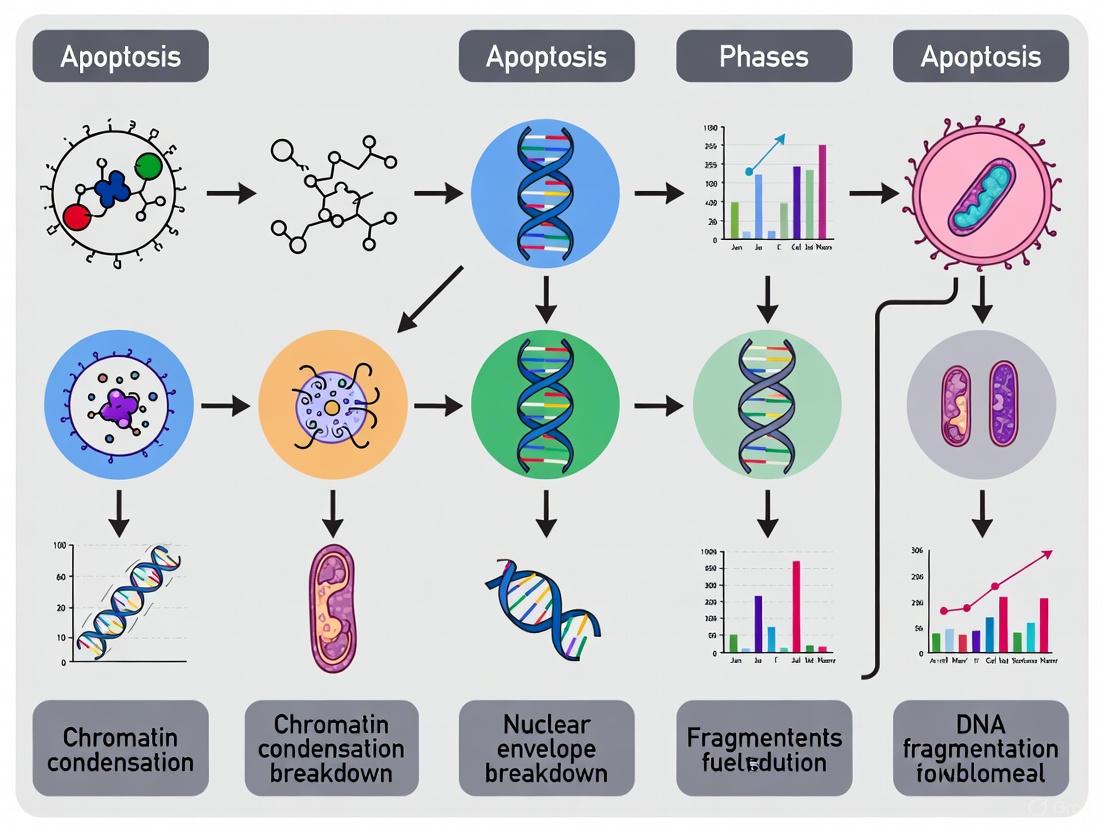
This article provides a comprehensive analysis of the nuclear fragmentation timeline during apoptosis, a hallmark of programmed cell death.
Nuclear Fragmentation in Apoptosis: A Stage-by-Stage Timeline from Initiation to Execution
Abstract
This article provides a comprehensive analysis of the nuclear fragmentation timeline during apoptosis, a hallmark of programmed cell death. Tailored for researchers and drug development professionals, it details the sequential morphological and biochemical events—from initial chromatin condensation to the formation of apoptotic bodies. The content explores the molecular machinery, including caspases and nucleases, that drives these changes; discusses established and emerging methodologies for detection; addresses common experimental challenges; and differentiates apoptotic nuclear events from other cell death modalities. This synthesis aims to serve as a foundational resource for basic research and the development of therapeutics that modulate cell death pathways.
The Sequential Stages of Nuclear Demolition: From Chromatin Condensation to Apoptotic Bodies
Within the regulated process of apoptotic cell death, the activation of caspases and the subsequent dismantling of the nucleus represent critical commitment points. This whitepaper delineates the core biochemical events that initiate the apoptotic cascade, with a specific focus on the mechanisms of caspase activation and the earliest morphological and biochemical insults to the nuclear architecture. Framed within broader research on the nuclear fragmentation timeline, we synthesize current understanding of the intrinsic and extrinsic pathways, the precise cleavage of key nuclear substrates, and the initial stages of chromatin condensation. The document also provides a comprehensive toolkit for researchers, including standardized experimental protocols for detecting these events, quantitative data on caspase activation kinetics, and visual roadmaps of the signaling pathways. This resource aims to facilitate rigorous investigation into the early apoptotic timeline, with implications for drug discovery in cancer and neurodegenerative diseases.
Apoptosis, a form of programmed cell death, is essential for development and tissue homeostasis and is characterized by distinct morphological changes, including the systematic dismantling of the nucleus [1]. The caspase family of cysteine-aspartic proteases serves as the central executioner of this process [2]. These enzymes are synthesized as inactive zymogens and, upon activation, cleave hundreds of cellular substrates, leading to the classic hallmarks of apoptosis [1]. A critical focus in apoptosis research is the "nuclear fragmentation timeline"—the sequence of events from the initial caspase-mediated nuclear insults to the final packaging of chromatin into apoptotic bodies. The initiation of this timeline is marked by the activation of initiator caspases at the apex of signaling cascades, which then trigger the effector caspases responsible for the first proteolytic attacks on nuclear integrity [1] [3]. Understanding the precise order and regulation of these early events is not only fundamental to cell biology but also critical for therapeutic interventions, as dysregulation of apoptosis is a hallmark of cancer and neurodegenerative disorders [1].
Core Mechanisms of Caspase Activation
The activation of caspases is a tightly regulated process that occurs through two primary pathways: the extrinsic (death receptor) pathway and the intrinsic (mitochondrial) pathway. Both pathways converge on the activation of effector caspases, which execute the apoptotic program.
The Extrinsic Pathway
The extrinsic pathway is initiated by the binding of extracellular death ligands (e.g., FasL, TRAIL) to their corresponding transmembrane death receptors (e.g., Fas, DR4/5) [1]. This ligand-receptor interaction induces receptor oligomerization and the recruitment of the adaptor protein FADD (Fas-associated death domain-containing protein). FADD then recruits procaspase-8 (and -10) via death effector domain (DED) interactions, forming a multi-protein complex known as the Death-Inducing Signaling Complex (DISC) [1] [3]. Within the DISC, caspase-8 molecules are brought into close proximity, leading to their activation through a mechanism of "induced proximity" dimerization [1]. Once activated, caspase-8 can directly cleave and activate the downstream effector caspase-3, propagating the death signal [1].
The Intrinsic Pathway
The intrinsic pathway is activated in response to intracellular stress signals, such as DNA damage or oxidative stress [3]. This leads to mitochondrial outer membrane permeabilization (MOMP) and the release of cytochrome c from the mitochondrial intermembrane space into the cytosol [1]. Cytochrome c binds to the adaptor protein Apaf-1 (apoptotic protease activating factor-1), which in the presence of ATP/dATP, oligomerizes to form a wheel-like structure called the apoptosome [1] [2]. The apoptosome recruits and activates procaspase-9, again through induced proximity dimerization [1]. Active caspase-9 then cleaves and activates the effector caspase-3 and -7 [2].
Cross-Talk and Additional Pathways: In some cell types (Type II cells), the extrinsic pathway requires amplification through the intrinsic pathway. This is achieved via caspase-8-mediated cleavage of the protein Bid, a BH3-only protein from the Bcl-2 family. The truncated Bid (tBid) translocates to the mitochondria, promoting cytochrome c release and engaging the intrinsic pathway [1]. Another initiator caspase, caspase-2, can also engage the mitochondrial pathway. Caspase-2 is activated within a complex known as the PIDDosome, comprising the adaptor proteins PIDD and RAIDD, and can cleave Bid to promote MOMP [1].
The following diagram illustrates the sequence of events in these core activation pathways:
The First Nuclear Insults
Upon their activation by initiator caspases, effector caspases, particularly caspase-3, begin the systematic dismantling of the nucleus by cleaving a specific set of key structural and regulatory proteins. These initial events mark the commitment to the nuclear fragmentation timeline.
Key Substrate Cleavage Events
The earliest nuclear insults are primarily mediated by the cleavage of critical substrates:
- Inactivation of ICAD (Inhibitor of Caspase-Activated DNase): In healthy cells, the endonuclease CAD (Caspase-Activated DNase) is kept inactive by its chaperone and inhibitor, ICAD. One of the pivotal early actions of active caspase-3 is the cleavage of ICAD. This releases and activates CAD, which then translocates to the nucleus and begins cleaving DNA at internucleosomal linker regions, producing the characteristic DNA ladder observed in apoptosis [4]. This cleavage is a definitive step that commits the cell to death.
- Cleavage of Nuclear Lamins: The nuclear lamina, a meshwork of lamin proteins underlying the inner nuclear membrane, provides structural integrity to the nucleus. Caspase-6 is responsible for cleaving lamins A, B, and C. This proteolysis disrupts the nuclear lamina, leading to the loss of nuclear structure and facilitating the breakdown of the nuclear envelope, which is a prerequisite for further nuclear fragmentation [1] [2].
- Cleavage of Other Nuclear Proteins: Additional early targets include proteins involved in DNA repair (e.g., PARP), RNA splicing, and chromatin structure. The cleavage of these proteins halts cellular maintenance functions and facilitates chromatin condensation [5].
Initial Stages of Chromatin Condensation
Concurrent with substrate cleavage, the chromatin undergoes a dramatic structural reorganization. Research using cell-free systems has defined distinct, sequential stages for apoptotic chromatin condensation, with the initial stage occurring independently of DNA fragmentation [6]:
- Stage 1 - Ring Condensation: This is the first morphological change observed in the nucleus. Chromatin condenses into a continuous, dense ring at the interior periphery of the nuclear envelope, just beneath the nuclear lamina. Electron microscopy reveals that this stage can occur in the absence of detectable DNase activity, indicating it is a direct result of caspase-mediated proteolysis (e.g., lamin cleavage) rather than DNA digestion [6].
- Stage 2 - Necklace Condensation: The continuous ring of condensed chromatin begins to break up, adopting a beaded or "necklace" appearance. This stage is dependent on DNase activity, specifically that of activated CAD, which introduces double-strand breaks into the DNA [6].
The table below summarizes the key initial events in the nucleus and their dependence on caspase activity.
Table 1: The First Nuclear Insults in Apoptosis
| Event | Key Mediator(s) | Biochemical/Morphological Consequence | Dependence |
|---|---|---|---|
| ICAD Cleavage & CAD Activation | Caspase-3 [4] | Initiation of oligonucleosomal DNA fragmentation; DNA laddering [4] | Required for Stage 2 condensation [6] |
| Lamin Cleavage | Caspase-6 [1] [2] | Collapse of nuclear structural integrity; breakdown of nuclear envelope [1] | Contributes to Stage 1 condensation [6] |
| Stage 1: Ring Condensation | Caspase-mediated proteolysis (e.g., of lamins) [6] | Peripheral chromatin condensation beneath nuclear envelope [6] | DNase-independent [6] |
| Stage 2: Necklace Condensation | Activated CAD (following ICAD cleavage) [6] [4] | Beaded appearance of chromatin; discontinuous ring [6] | DNase-dependent [6] |
The relationship between caspase activation, substrate cleavage, and the resulting nuclear changes is illustrated in the following workflow:
Experimental Analysis and Research Tools
Investigating caspase activation and early nuclear events requires a multifaceted approach. Below are key methodologies and reagents essential for this research.
Detecting Caspase Activation
Several well-established techniques allow researchers to monitor caspase activity, each with distinct advantages.
Immunofluorescence (IF) for Active Caspases: This protocol allows for the spatial visualization of caspase activation within fixed cells or tissues, preserving cellular morphology.
- Protocol Summary: Cells or tissue sections are fixed and permeabilized (e.g., with PBS/0.1% Triton X-100). After blocking non-specific sites, samples are incubated with a primary antibody specific for the active (cleaved) form of a caspase (e.g., caspase-3) overnight at 4°C. Following washes, a fluorophore-conjugated secondary antibody is applied. The slides are then mounted and visualized via fluorescence microscopy [7].
- Key Considerations: This method is ideal for co-localization studies with other markers (e.g., TUNEL) but requires fixed samples and validated, specific antibodies to avoid background staining [7].
Western Blotting for Caspase Cleavage: This traditional method detects the proteolytic processing of caspases and their substrates (e.g., PARP, ICAD) in cell lysates.
- Protocol Summary: Protein lysates are prepared from control and treated cells, separated by SDS-PAGE, and transferred to a membrane. The membrane is probed with antibodies against the protein of interest (e.g., procaspase-3 and its cleaved fragments). A shift in molecular weight or the appearance of cleavage products indicates activation [2] [5].
- Key Considerations: While semi-quantitative and widely used, Western blotting provides population-level data and lacks single-cell resolution [2].
Live-Cell Caspase Activity Probes and FRET Sensors: These tools enable real-time, dynamic monitoring of caspase activity in living cells.
- Protocol Summary: Cells are incubated with cell-permeable fluorogenic substrates or inhibitors. For example, a common approach uses peptides containing the DEVD sequence (caspase-3/7 recognition site) conjugated to a fluorophore like AFC. Cleavage by active caspases releases the fluorophore, resulting in a measurable fluorescent signal [2] [5]. Fluorescence Resonance Energy Transfer (FRET) sensors, which consist of two fluorophores linked by a caspase-cleavable peptide, lose FRET signal upon cleavage, providing a rationetric readout of activity [2].
- Key Considerations: These methods are excellent for kinetic studies and high-throughput screening but may require specialized instrumentation and optimization of loading conditions [2] [5].
Detecting Early Nuclear Insults
DNA Fragmentation Analysis:
- DNA Laddering Assay: Genomic DNA is extracted from apoptotic cells and separated by agarose gel electrophoresis. Apoptotic cells display a characteristic "ladder" pattern of DNA fragments in multiples of ~180 base pairs, resulting from CAD activity [4] [5].
- TUNEL Assay (Terminal deoxynucleotidyl transferase dUTP Nick End Labeling): This assay enzymatically labels the 3'-OH ends of DNA strand breaks generated during apoptosis. It can be performed for flow cytometry, fluorescence microscopy, or light microscopy and is highly sensitive for detecting early DNA fragmentation [4] [5].
Analysis of Nuclear Morphology: Staining with DNA-binding dyes such as DAPI or Hoechst allows for the visualization of chromatin condensation and nuclear fragmentation via fluorescence microscopy. The distinct stages of ring and necklace condensation can be monitored in real-time using time-lapse imaging of cells expressing fluorescent histones [6].
The Scientist's Toolkit: Essential Reagents
The following table catalogues critical reagents for studying caspase activation and early nuclear events.
Table 2: Research Reagent Solutions for Apoptosis Analysis
| Reagent Category | Specific Examples | Function and Application |
|---|---|---|
| Antibodies for Active Caspases | Anti-active Caspase-3 (rabbit mAb) [7] | Detects the cleaved, active form of caspase-3 in IF, Western blot, and flow cytometry. Essential for confirming pathway-specific activation. |
| Caspase Activity Assays | Fluorogenic substrate Ac-DEVD-afc [8] [5]; Live cell caspase probes (e.g., FITC-VAD-FMK) [5] | Provides a quantitative or semi-quantitative measure of caspase enzyme activity in lysates (Ac-DEVD-afc) or intact, unfixed cells (live cell probes). |
| DNA Fragmentation Kits | APO-BrdU TUNEL Assay Kit [5] | Labels DNA strand breaks for detection by flow cytometry or microscopy. A standard method for identifying apoptotic cells in a population. |
| Caspase Inhibitors | Z-VAD(OMe)-fmk (pan-caspase inhibitor) [8]; q-VD-OPh [8] | Used to confirm the caspase-dependence of a cell death process. Added to cell cultures prior to or concurrent with an apoptotic stimulus. |
| Nuclear Stains | DAPI; Hoechst 33342; Propidium Iodide (PI) [5] | DAPI/Hoechst stain DNA to assess nuclear morphology and condensation. PI is a membrane-impermeant dye used with Annexin V to distinguish apoptotic from necrotic cells. |
| Annexin V Conjugates | Annexin V-FITC; Annexin V-PE [5] | Binds to phosphatidylserine (PS) exposed on the outer leaflet of the plasma membrane in early apoptosis. Used in flow cytometry with a viability dye like PI. |
Quantitative Data and Kinetics
The timing and intensity of caspase activation are critical determinants of the apoptotic phenotype. Kinetic studies provide essential data for mapping the nuclear fragmentation timeline.
Table 3: Kinetic Profile of Caspase Activation and Nuclear Events in Model Systems
| Cell Type / Model | Inducing Stimulus | Key Event Measured | Time to Onset/Peak | Citation |
|---|---|---|---|---|
| SH-SY5Y (Human Neuroblastoma) | Staurosporine (1 µM) | Caspase-3 Activation | Detectable after treatment | [8] |
| SH-SY5Y (Human Neuroblastoma) | Chelerythrine (10 µM) | Caspase-3 Activation | Strong, early activation (earlier than Staurosporine) | [8] |
| HeLa S3 (in cell-free system) | S/M Extracts + ATP | Stage 1 (Ring Condensation) | ~15 minutes | [6] |
| HeLa S3 (in cell-free system) | S/M Extracts + ATP | Stage 2 (Necklace Condensation) | 15–30 minutes | [6] |
| HeLa S3 (in cell-free system) | S/M Extracts + ATP | DNA Laddering (pronounced) | 30 minutes | [6] |
| Rat Brain (Hippocampus CA1) | Global Cerebral Ischemia (Cardiac Arrest) | General Caspase Activity | Late activation (peak at 7 days post-ROSC*) | [9] |
| Rat Brain (NRT, Striatum) | Global Cerebral Ischemia (Cardiac Arrest) | General Caspase Activity | Early activation (6 hours to 3 days post-ROSC*) | [9] |
*ROSC: Return of Spontaneous Circulation
The data in Table 3 highlights that the kinetics of caspase activation and downstream nuclear events are highly dependent on the cell type and the nature of the apoptotic stimulus. For instance, chelerythrine can induce an unusually rapid and robust caspase activation that leads to a necrotic-like morphology, challenging the classical apoptosis-necrosis dichotomy and emphasizing the concept of an "apoptosis-necrosis continuum" [8]. Furthermore, in vivo models like cerebral ischemia show distinct temporal patterns of activation in different brain regions, which has profound implications for therapeutic intervention windows [9].
Chromatin Condensation and Early Morphological Landmarks
Within the broader research on the nuclear fragmentation timeline in apoptotic phases, chromatin condensation stands out as a primary morphological landmark, signifying an early and critical commitment to the programmed cell death pathway. Apoptosis, or Type I programmed cell death (PCD), is a genetically controlled, active process crucial for development and homeostasis, and is characterized by a series of distinct morphological changes in the nucleus [10]. The compaction of chromatin and its movement to the nuclear periphery represents a key event in this cascade, preceding the internucleosomal DNA fragmentation that is often considered a hallmark of apoptosis [11]. This technical guide provides an in-depth analysis of the mechanisms, detection methodologies, and quantitative data associated with these early morphological events, framed for researchers and drug development professionals investigating cell death.
Morphological Landmarks of Apoptotic Nuclei
The execution of apoptotic cell death is governed by caspases, which cleave cellular substrates and trigger a defined sequence of structural alterations [12]. The nucleus undergoes a dramatic transformation, the stages of which can be quantified and used to pinpoint the progression of cell death.
- Stage I - Chromatin Condensation: The initial stage involves the condensation of nuclear chromatin and its movement to the nuclear periphery. This is visible as a pronounced compaction of the genetic material against the inner nuclear envelope [10] [11].
- Stage II - Nuclear Fragmentation: This stage is characterized by nuclear pyknosis (shrinkage) and karyorrhexis (nuclear fragmentation). The cell eventually divides into membrane-bound apoptotic bodies containing various fragments of organelles and condensed chromatin [10] [12].
It is critical to note that these morphological changes, particularly chromatin condensation, require ATP, while the DNA fragmentation into oligonucleosomal-length fragments can occur independently of ATP [11].
Table 1: Key Morphological Landmarks in Apoptotic Nuclei
| Stage | Nuclear Morphology | Key Biochemical Feature | Cellular Outcome |
|---|---|---|---|
| Stage I | Chromatin condensation and margination to the nuclear periphery [10] | ATP-dependent process [11] | Commitment to apoptotic pathway; reversible up to a point |
| Stage II | Nuclear pyknosis (shrinkage) and karyorrhexis (fragmentation) [12] | Executioner caspase activation (e.g., caspase-3) [10] | Irreversible formation of apoptotic bodies |
Experimental Protocols for Detection and Quantification
Accurate assessment of chromatin condensation is essential for apoptosis research. The following protocols detail methodologies for visualizing and quantifying these early morphological changes.
Protocol: Fluorescence Microscopy Analysis of Nuclear Morphology
This protocol uses DNA-binding dyes to visualize chromatin structure and assess its condensation state in fixed or live cells [12] [13].
- Cell Staining: Load cells with a cell-permeable DNA stain, such as Hoechst 33342 (2 µg/mL), for 20-30 minutes at standard culture conditions (37°C, 5% CO₂) [13].
- Visualization and Scoring: Visualize the cell nuclei using a fluorescence microscope equipped with a DAPI filter set. Score nuclei based on their staining pattern:
Protocol: Quantification of Chromatin Compaction Using Confocal Microscopy
This methodology provides a quantitative, imaging-based approach to measure changes in chromatin organization in adherent cells [14].
- Sample Preparation: Culture adherent cells on glass coverslips. Fix and stain with an appropriate DNA dye (e.g., Hoechst or DAPI) following standard protocols.
- Confocal Imaging: Acquire high-resolution z-stack images of the nuclei using a confocal microscope with consistent laser power and detector settings across samples.
- Image Analysis: Quantify chromatin compaction using one of the following complementary approaches:
- Analysis of the Coefficient of Variation (CV) of DNA Signal: Calculate the standard deviation divided by the mean intensity of the DNA signal within the nucleus. A higher CV indicates greater heterogeneity in DNA density, corresponding to chromatin condensation [14].
- Measurement of DNA-Free Nuclear Areas: Quantify the area within the nuclear boundary that is devoid of DNA signal, which increases as chromatin condenses and marginates [14].
Quantitative Phase Imaging for Dynamic Analysis
Quantitative Phase Imaging (QPI) is a powerful, label-free technique that enables time-lapse observation of subtle changes in cell mass distribution, making it ideal for tracking the dynamics of cell death.
- Key Parameters: QPI can monitor parameters such as cell density (picograms per pixel) and Cell Dynamic Score (CDS), which measures the average intensity change of cell pixels over time. These parameters are characteristic of individual cell death subroutines [13].
- Application in Apoptosis: This technology allows for the distinction between apoptosis (manifesting a "Dance of Death" morphology) and lytic cell death (characterized by swelling and membrane rupture) based on dynamical, morphological features without the need for staining or fixation [13].
Table 2: QPI Parameters for Distinguishing Cell Death Modalities
| Parameter | Description | Manifestation in Apoptosis | Manifestation in Lytic Death |
|---|---|---|---|
| Cell Density | Dry mass per pixel [13] | Increases during condensation | Decreases due to cell swelling |
| Cell Dynamic Score (CDS) | Average intensity change of cell pixels over time [13] | Characteristic dynamic pattern during membrane blebbing and condensation | Different dynamic pattern associated with swelling and rupture |
| Morphological Endpoint | Final structural outcome | Formation of apoptotic bodies ("Dance of Death") [13] | Swelling and plasma membrane rupture [13] |
The Scientist's Toolkit: Research Reagent Solutions
The following table details essential reagents and kits used in the experimental protocols cited for studying apoptosis and chromatin dynamics.
Table 3: Essential Research Reagents for Apoptosis and Chromatin Analysis
| Research Reagent / Kit | Provider / Example | Function in Apoptosis Research |
|---|---|---|
| CellEvent Caspase-3/7 Green Detection Reagent | Thermo Fisher Scientific [13] | Fluorescent probe that detects the activation of executioner caspases-3 and 7, a key biochemical event in apoptosis. |
| Annexin V-FITC Apoptosis Detection Kit | Thermo Fisher Scientific [15] | Detects phosphatidylserine (PS) exposure on the outer leaflet of the cell membrane, an early marker of apoptosis. |
| Pan-Caspase Inhibitor (q-VD-OPh) | MP Biomedicals [12] | A broad-spectrum caspase inhibitor used to confirm the caspase-dependent nature of cell death. |
| Anti-DFF40/CAD Antibody | Millipore [12] | Detects the endonuclease responsible for oligonucleosomal DNA fragmentation during apoptosis. |
| Hoechst 33342 | ENZO [13] | Cell-permeable DNA dye used to visualize nuclear morphology and assess chromatin condensation. |
| Propidium Iodide (PI) | Sigma-Aldrich [13] | Cell-impermeable DNA dye that identifies cells with a loss of plasma membrane integrity, often used to distinguish late apoptosis/necrosis. |
Molecular Mechanisms and Signaling Pathways
The morphological changes observed during apoptosis are driven by specific, well-defined biochemical pathways.
The Apoptotic DNA Degradation Pathway
Oligonucleosomal DNA degradation is a hallmark of apoptosis and is primarily mediated by the DFF40/CAD endonuclease [12].
Diagram 1: Apoptotic DNA Degradation Pathway
Experimental Workflow for Chromatin Analysis
A logical workflow for analyzing chromatin condensation and fragmentation integrates multiple techniques from cell culture to quantitative analysis.
Diagram 2: Chromatin Analysis Workflow
In conclusion, the systematic analysis of chromatin condensation and its role as an early morphological landmark provides critical insights into the apoptotic timeline. The integration of traditional biochemical methods with advanced label-free imaging and quantitative protocols offers a robust framework for research and drug discovery aimed at modulating programmed cell death.
The disassembly of the nuclear envelope (NE) is a critical early event in the apoptotic process, representing a point of no return in the commitment to cell death. This review focuses on the molecular mechanisms underlying NE breakdown during apoptosis, specifically examining the cleavage of the nuclear lamina and permeabilization of the nuclear pore complex (NPC). These events are central to the broader process of nuclear fragmentation, a hallmark of apoptotic progression. Understanding these mechanisms provides valuable insights for therapeutic interventions in diseases characterized by dysregulated cell death, particularly cancer, where modulating apoptosis can directly impact treatment outcomes.
The Nuclear Envelope Structure and Its Role in Apoptosis
The nuclear envelope serves as the physical boundary separating the nucleoplasm from the cytoplasm in eukaryotic cells. This complex structure consists of several key components:
- Nuclear Membranes: The NE comprises an outer nuclear membrane (ONM) continuous with the endoplasmic reticulum and an inner nuclear membrane (INM), separated by the perinuclear space [16].
- Nuclear Lamina: A meshwork of type V intermediate filament proteins (lamins) and associated proteins underlying the INM, providing structural support and serving as a chromatin organizer [16].
- Nuclear Pore Complexes (NPCs): Large protein complexes composed of approximately 30 different nucleoporins (Nups) that regulate bidirectional transport between the nucleus and cytoplasm [16].
During apoptosis, the NE transitions from a protective barrier to an active participant in the cell death process, functioning as both a target and mediator of apoptotic signaling [16]. The systematic dismantling of the NE enables the coordinated demolition of nuclear components and facilitates the apoptotic cascade.
Molecular Mechanisms of Nuclear Envelope Disassembly
Caspase-Dependent Cleavage of Lamina Proteins
The structural collapse of the NE is initiated largely through caspase-mediated proteolysis of key nuclear components. The nuclear lamina, particularly its constituent lamins, represents a critical caspase target.
Table 1: Caspase-Mediated Cleavage of Nuclear Envelope Proteins
| NE Component | Caspase Involved | Cleavage Effect |
|---|---|---|
| Lamin A/C | Caspase-6 [16] | Depolymerization of lamin network, lamina disassembly |
| Lamin B | Caspase-6 [16] | Disruption of structural nuclear integrity |
| LAP2α, LAP2β | Caspase-3 [16] | Dissociation of chromatin from INM |
| Nup153, Nup214 | Caspase-3 [16] | Disassembly of nuclear basket and cytoplasmic filaments |
| Nup93, Nup96 | Caspase-3 [16] | Alteration of NPC permeability |
Caspase-6 executes the direct cleavage of both A-type and B-type lamins, leading to the depolymerization of the lamin network and subsequent collapse of the nuclear lamina [16]. This dismantling is essential for the structural breakdown of the NE and the access of apoptotic factors to nuclear contents.
Nuclear Pore Complex Permeabilization
Concurrent with lamina disruption, NPCs undergo significant modifications that increase NE permeability through both caspase-dependent and independent mechanisms:
Caspase-Dependent NPC Remodeling:
- Multiple NPC components are cleaved by caspases in a minimalist but effective manner [16].
- Peripheral nucleoporins on both the cytoplasmic and nuclear sides of the NPC are preferentially targeted, while the central core remains largely intact [16].
- Key nucleoporins affected include Nup153, Nup214, Nup93, Nup96, and Nup98 [16].
- This selective cleavage results in the loss of NPC structural elements, particularly the nuclear basket and cytoplasmic filaments, as visualized by atomic force microscopy [16].
Functional Consequences: The caspase-mediated modifications to NPCs increase NE permeability, allowing passive diffusion of cytosolic apoptogenic factors such as caspases and nucleases into the nucleus [16]. This leads to the characteristic nuclear destruction observed in apoptosis, including chromatin condensation and DNA fragmentation.
Alternative Caspase-Independent Mechanisms
Beyond the canonical caspase-dependent pathways, evidence reveals caspase-independent mechanisms of NE disassembly involving the pro-apoptotic protein Bax:
Stress-Induced Generation and Rupture of Nuclear Bubbles (SIGRUNB):
- Bax promotes transient and repetitive localized generation and subsequent rupture of nuclear protein-filled nuclear bubbles (GRUNB) in a caspase-independent manner [16].
- This rupture facilitates the redistribution of nuclear proteins to the cytosol, potentially amplifying the apoptotic process [16].
- The precise molecular triggers and executioners of SIGRUNB remain under investigation, with open questions regarding the role of the LINC complex and potential physiological roles in non-apoptotic contexts [16].
Diagram 1: Signaling pathways in nuclear envelope disassembly during apoptosis. The diagram illustrates both caspase-dependent and Bax-mediated caspase-independent mechanisms leading to nuclear destruction.
Experimental Approaches for Studying NE Disassembly
Quantitative Detection of Nuclear Morphological Changes
Advanced imaging and analytical techniques enable the precise detection and quantification of nuclear changes during apoptosis:
Quantitative Phase Imaging (QPI):
- Enables time-lapse observation of subtle changes in cell mass distribution without fixation or labeling [17].
- Key parameters include cell density (pg/pixel) and Cell Dynamic Score (CDS) [17].
- Allows distinction between caspase-dependent and independent cell death subroutines based on dynamical morphological features [17].
Spectrofluorometric Assay Using Hoechst 33258:
- Quantitatively detects nuclear condensation and fragmentation in intact cells [18].
- Based on increased fluorescence of Hoechst 33258 upon binding to condensed chromatin in apoptotic cells [18].
- Optimal conditions: 2 µg/mL Hoechst 33258, 5-minute incubation, λ(ex,max) = 352 nm, λ(em,max) = 461 nm [18].
- Demonstrates comparable sensitivity to TUNEL assay but with advantages of being faster, lower cost, and higher throughput [18].
Table 2: Key Reagents for Detecting Nuclear Envelope Disassembly
| Research Reagent | Function/Application | Experimental Context |
|---|---|---|
| Hoechst 33258 | Fluorescent DNA dye for quantifying nuclear condensation/fragmentation | Spectrofluorometric detection of apoptotic nuclei [18] |
| CellEvent Caspase-3/7 Green | Fluorogenic substrate for detecting caspase activation | Live-cell imaging of apoptosis [17] |
| Propidium Iodide | Membrane-impermeant dye for detecting loss of membrane integrity | Distinguishing late apoptosis/necrosis [17] |
| z-VAD-FMK | Pan-caspase inhibitor | Distinguishing caspase-dependent and independent pathways [17] |
| Staurosporine | Protein kinase inhibitor, apoptotic inducer | Positive control for apoptosis induction [17] [18] |
| Cisplatin | DNA-damaging agent, apoptotic inducer | Model apoptotic stimulus [18] |
Protocol: Spectrofluorometric Detection of Nuclear Condensation and Fragmentation
This protocol adapts the method described by [18] for quantitative detection of nuclear changes in apoptotic cells:
Reagents and Equipment:
- Cell culture: Appropriate medium and cell line (e.g., HepG2, HK-2)
- Apoptotic inducers: Cisplatin (0.5-100 µM), staurosporine (10-100 nM), or camptothecin (1-5 µM)
- Hoechst 33258 dye: Prepare 2 µg/mL working solution in PBS
- 96-well microplates suitable for fluorescence measurements
- Fluorescence plate reader capable of λ(ex) = 352 nm and λ(em) = 461 nm
Procedure:
- Seed cells in 96-well plates at appropriate density and incubate overnight.
- Treat cells with apoptotic inducers or vehicle control for desired duration (6-48 hours).
- Centrifuge plates (5 min, 8000×g, RT) to sediment cells.
- Carefully replace 70 µL of culture medium with 70 µL of PBS in each well.
- Add 10 µL of Hoechst 33258 working solution to each well (final concentration: 2 µg/mL).
- Incubate for 5 minutes at room temperature protected from light.
- Measure fluorescence at λ(ex) = 352 nm and λ(em) = 461 nm.
- Calculate relative fluorescence units (RFU) after subtracting background fluorescence from blank wells (medium + Hoechst without cells).
Validation and Interpretation:
- Compare with complementary apoptosis assays (WST-1 for viability, TUNEL for DNA fragmentation).
- Significant fluorescence increases indicate nuclear condensation and fragmentation.
- The assay detects changes induced by various apoptotic stimuli but may be less sensitive than metabolic assays for early apoptosis detection [18].
Diagram 2: Experimental workflow for spectrofluorometric detection of nuclear condensation.
Discussion and Research Implications
The disassembly of the nuclear envelope represents a critical commitment point in the apoptotic cascade, with lamina cleavage and NPC permeabilization serving as coordinated events that facilitate nuclear destruction. The dual mechanisms of caspase-dependent proteolysis and caspase-independent Bax-mediated processes provide redundancy that ensures efficient execution of cell death even when specific pathways are compromised.
From a therapeutic perspective, the regulators of NE disassembly present attractive targets for modulating apoptosis in pathological conditions. In cancer therapy, enhancing NE disassembly could potentiate the effectiveness of chemotherapeutic agents, while inhibiting specific components might protect healthy cells in degenerative conditions. The discovery of the SIGRUNB pathway [16] reveals additional complexity in NE dynamics during cell death and opens new avenues for therapeutic intervention.
Future research directions should focus on:
- Elucidating the precise molecular mechanisms of SIGRUNB and its physiological relevance
- Developing more specific inhibitors and activators of lamina cleavage and NPC permeabilization
- Investigating the cross-talk between NE disassembly and other organellar fragmentation events in apoptosis
- Exploring the potential of NE disassembly components as biomarkers for disease progression and treatment response
As our understanding of NE disassembly deepens, so too does our ability to target these processes for therapeutic benefit across a spectrum of human diseases characterized by dysregulated cell death.
Deoxyribonucleic acid (DNA) fragmentation is a biochemical hallmark of apoptosis, or programmed cell death, progressing through a conserved, stepwise process. This demolition phase, characterized by the systematic cleavage of nuclear DNA into first large-scale and then nucleosomal-sized fragments, is orchestrated by a cascade of specific endonucleases. The tightly regulated process yields characteristic DNA ladders—fragments in multiples of approximately 180-200 base pairs—which serve as a definitive apoptotic marker. This whitepaper delineates the molecular mechanisms, from initial nuclease activation to the generation of mononucleosomal and sub-nucleosomal fragments, and details the experimental methodologies essential for its investigation. Framed within research on nuclear fragmentation timelines, this guide provides researchers and drug development professionals with the technical foundation to study and quantify this fundamental biological process.
Apoptosis is a genetically programmed cell death process crucial for development, tissue homeostasis, and disease pathogenesis [4] [19]. A defining biochemical feature of apoptosis is the systematic degradation of chromosomal DNA, which occurs in a specific, staged manner [20]. Initially, the genome is cleaved into large-scale fragments of 50-300 kilobases. This is followed by further internucleosomal cleavage, generating a classic ladder pattern of DNA fragments in multiples of ~180-200 base pairs (bp) upon gel electrophoresis, corresponding to the DNA wrapped around nucleosomes and the linker DNA between them [4] [21]. This morphological signature distinguishes apoptosis from necrotic cell death, where random DNA digestion produces a continuous "smear" [4] [22].
The systematic fragmentation of DNA is believed to preclude cellular division and may facilitate the packaging and disposal of cellular contents by phagocytes, preventing an inflammatory response and autoimmune reactions [22]. Understanding the precise timeline and mechanism of this process is a central focus in nuclear fragmentation research, with implications for cancer biology, neurobiology, and therapeutic development.
Molecular Mechanisms of DNA Fragmentation
The Key Endonucleases and Their Activation
The cleavage of DNA during apoptosis is executed by specific endonucleases, with the Caspase-Activated DNase (CAD), also known as DNA Fragmentation Factor B (DFFB or DFF40), being the most well-characterized [4] [21] [19].
- Activation Pathway: CAD is synthesized and stored in the cytoplasm and nucleus as an inactive complex bound to its inhibitor, ICAD (Inhibitor of CAD, also known as DFFA or DFF45) [4] [19]. Upon initiation of apoptosis, the apoptotic effector caspase-3 is activated. Caspase-3 then cleaves ICAD, dissociating it from CAD. This dissociation activates CAD's DNase activity, allowing it to enter the nucleus and degrade chromosomal DNA [4] [21].
- Cleavage Specificity: CAD cleaves DNA at the internucleosomal linker sites between nucleosomes. This preference arises because the DNA tightly wrapped around the histone core of the nucleosome is protected, leaving the linker regions as the primary accessible sites for cleavage [4]. CAD acts as a dimer and exhibits a sequence preference for cleaving 5′ to purines (Adenine and Guanine), leading to an observed "A-end" preference in its cleavage products [21].
Table 1: Major Nucleases Involved in Apoptotic DNA Fragmentation
| Nuclease | Other Names | Primary Site of Action | Inhibitor | Ion Dependence | Cleavage Product End Preference |
|---|---|---|---|---|---|
| DFFB | CAD, DFF40 | Intracellular | ICAD (DFFA) | Mg²⁺ | A-end (5' to A and G) [21] |
| DNASE1L3 | DNase γ | Intracellular & Extracellular | Zn²⁺, Heparin | Ca²⁺/Mg²⁺ | C-end (5' to C > T) [21] |
| DNASE1 | - | Extracellular | G-actin, Zn²⁺ | Ca²⁺/Mg²⁺ | 5' to T > C [21] |
Other nucleases also contribute to the fragmentation landscape. DNASE1L3 (DNase γ) can cooperate with CAD intracellularly and is crucial for further digesting fragments in the circulation, exhibiting a preference for cytosines (C-end) [21] [20]. DNase I, a secreted waste-management nuclease, primarily functions extracellularly [21].
The Stepwise Fragmentation Process
Recent evidence from model cell systems, such as the human leukemia cell line HL60, demonstrates that apoptotic DNA fragmentation is a stepwise and conserved process [20].
- Intracellular Cleavage (Large-scale to Oligonucleosomal): Activated CAD first cleaves the chromatin into large 50-300 kb fragments, followed by internucleosomal cleavage. This produces a DNA ladder with predominant peaks corresponding to mono- (~167 bp), di- (~360 bp), tri- (~540 bp), and tetra-nucleosomes (~720 bp) as observed by shallow whole-genome sequencing (sWGS) [20]. At this stage, the characteristic 10-bp periodic sub-nucleosomal fragments are not yet present.
- Extracellular Processing (Sub-nucleosomal Fragmentation): Following release from apoptotic cells, the oligonucleosomal fragments can be further digested by extracellular nucleases like DNASE1L3 and DNASE1. This secondary digestion generates a series of shorter fragments with a clear 10-bp periodicity below the 167 bp peak, which reflects the helical turn of DNA around the nucleosome core [20]. This two-step process is conserved across mammals and results in the complex cell-free DNA (cfDNA) profile seen in plasma.
Diagram 1: The stepwise DNA fragmentation pathway in apoptosis. The process is initiated by caspase-3 activation, leading to CAD-mediated intracellular cleavage, followed by extracellular digestion.
Experimental Protocols for Detection
Detecting DNA fragmentation is a cornerstone of apoptosis research. The following are standard protocols for identifying this key event.
DNA Laddering Assay by Agarose Gel Electrophoresis
This classic, semi-quantitative method visualizes the internucleosomal DNA cleavage pattern [23].
Protocol Summary:
- Harvest and Lyse Cells: Pellet approximately 1-5 x 10⁶ cells. Resuspend in lysis buffer (e.g., 0.5 mL of 10 mM Tris pH 7.4, 5 mM EDTA, 0.2% Triton X-100) and incubate on ice for 30 minutes [23].
- Separate Fragmented DNA: Centrifuge the lysate at high speed (e.g., 27,000 x g for 30 min). The fragmented DNA will be in the supernatant, while intact chromatin and nuclei are in the pellet [23].
- Precipitate DNA: To the supernatant, add NaCl and ethanol (e.g., 600 µL ethanol and 150 µL 3M sodium-acetate, pH 5.2). Incubate at -80°C for 1 hour to precipitate the DNA. Centrifuge to pellet the DNA [23].
- Digest RNA and Protein: Dissolve the DNA pellet and treat with DNase-free RNase (e.g., 2 µL of 10 mg/mL, 5h at 37°C) to remove RNA. Then, digest proteins with Proteinase K (e.g., 25 µL of 20 mg/mL, overnight at 65°C) [23].
- Purify and Analyze: Extract DNA with phenol/chloroform, precipitate again with ethanol, and air-dry the pellet. Resuspend the DNA in loading buffer and separate on a 2% agarose gel containing ethidium bromide. Visualize the DNA ladder under UV light [23].
Expected Results: Apoptotic samples will display a characteristic ladder of bands at ~180 bp and multiples thereof. Non-apoptotic samples will show only high molecular weight DNA, while necrotic samples will display a smeared pattern.
TUNEL Assay (TdT-mediated dUTP Nick-End Labeling)
The TUNEL assay is a more sensitive and versatile method that detects the 3'-OH ends of DNA fragments in situ, allowing for the identification of apoptotic cells within tissues or cell populations [4] [22].
Protocol Principle: The enzyme Terminal Deoxynucleotidyl Transferase (TdT) catalyzes the addition of labeled dUTP (e.g., fluorescein- or biotin-labeled) to the 3'-hydroxyl termini of DNA breaks. The labeled DNA can then be detected by fluorescence microscopy, flow cytometry, or colorimetry [4] [22].
Key Considerations:
- It can be applied to tissue sections, fixed cells on slides, or cells for flow cytometry.
- While highly sensitive for apoptosis, it may also label DNA breaks from other sources (e.g., necrosis, active transcription), requiring careful interpretation and controls [23].
Flow Cytometric Analysis of DNA Content
This quantitative method uses DNA-intercalating dyes like propidium iodide (PI) to detect apoptotic cells with reduced DNA content ("sub-G1 peak") [4] [22].
Protocol Summary:
- Fix Cells: Permeabilize and fix cells in ethanol.
- Stain DNA: Treat cells with a DNA stain, such as PI, in the presence of RNase.
- Analyze by Flow Cytometry: Analyze the cellular DNA content. Apoptotic cells, having lost DNA fragments, will exhibit a lower fluorescence intensity than cells in the G1 phase of the cell cycle, appearing as a "sub-G1" population [4] [22].
Limitation: Late-stage apoptotic cells may break into smaller apoptotic bodies, which can be difficult to gate and analyze accurately [4].
Quantitative Methods: Digital PCR (dPCR)
Novel dPCR assays have been developed to quantitatively measure the degree of DNA fragmentation, providing a precise indicator of cytotoxicity [24].
Protocol Principle: Assays are designed to quantify targets of increasing sizes within a single-copy gene locus (e.g., RNase P). The RP fragmentation index is calculated as the ratio between the copy numbers of a short target and a long target. As DNA fragmentation increases, the longer amplicons cannot be efficiently amplified, leading to a higher fragmentation index, which correlates with the degree of cell death [24].
Visualization of Key Concepts
Experimental Workflow for DNA Fragmentation Analysis
The following diagram outlines a logical workflow for analyzing DNA fragmentation, integrating the protocols discussed above.
Diagram 2: A consolidated workflow for detecting DNA fragmentation, showing parallel paths for different analytical methods.
The Scientist's Toolkit: Key Research Reagents
Table 2: Essential Reagents for DNA Fragmentation Research
| Reagent / Assay | Function / Specificity | Key Application Notes |
|---|---|---|
| Camptothecin (CPT) | Topoisomerase I inhibitor; induces apoptosis via DNA damage. | Common positive control for inducing apoptosis in cell cultures (e.g., HL60, NIH3T3) [20]. |
| Caspase-3 Activity Assays | Quantifies activation of the key executioner caspase. | Confirms upstream apoptotic signaling; available as fluorometric or colorimetric kits. |
| Anti-CAD/DFFB & Anti-ICAD/DFFA Antibodies | Detect protein expression and caspase-mediated cleavage of ICAD. | Used in Western blotting to confirm activation of the central fragmentation pathway. |
| Propidium Iodide (PI) | Fluorescent DNA intercalating dye that stains nucleic acids. | Used in flow cytometric sub-G1 analysis and to exclude necrotic cells in Annexin V/PI co-staining [22]. |
| TUNEL Assay Kit | Labels 3'-OH DNA ends for in situ detection. | Ideal for identifying apoptotic cells in tissue sections; available from multiple vendors (e.g., Abcam, Roche) [23]. |
| Annexin V-FITC / PI Apoptosis Kit | Detects phosphatidylserine externalization (early apoptosis) and membrane integrity. | Distinguishes early apoptotic (Annexin V+/PI-), late apoptotic (Annexin V+/PI+), and necrotic (Annexin V-/PI+) cells [22]. |
| DNase I | Enzyme that digests DNA; used in control experiments. | Used to confirm the role of extracellular nucleases in generating sub-nucleosomal fragments [20]. |
| Digital PCR (dPCR) Assay | Quantifies DNA fragmentation index by target size ratio. | Provides a highly quantitative and precise measure of cytotoxicity and DNA degradation [24]. |
Fragmentation Patterns in Research and Diagnostics
The study of DNA fragmentation patterns, or "fragmentomics," has transcended its role as a simple apoptosis marker and become a powerful tool in molecular diagnostics [21] [20].
- Cancer Detection: Research has shown that the size profile of circulating cell-free DNA (cfDNA) in cancer patients differs significantly from that of healthy individuals. Tumor-derived cfDNA (ctDNA) is often shorter and exhibits a lower proportion of fragments with a C-end preference, reflecting altered nuclease activity and chromatin structure in cancer cells [25] [20].
- Novel Biomarkers: The Fragment Dispersity Index (FDI), which integrates information on the distribution of cfDNA fragment ends and coverage variation, has been developed. The FDI reflects chromatin accessibility and has demonstrated robust performance in early cancer diagnosis and subtyping across multiple datasets [25].
Table 3: Characteristic DNA Fragment Sizes in Different Contexts
| Biological Context | Dominant Fragment Sizes | Key Features |
|---|---|---|
| Healthy Plasma cfDNA | ~167 bp (mononucleosome), 333 bp, 527 bp, 719 bp [20] | Strong 10-bp periodicity below 167 bp; C-end preference [21] [20]. |
| Cancer Plasma cfDNA (ctDNA) | Overall shorter fragments; enrichment of sub-nucleosomal sizes [20]. | Attenuated C-end preference; altered fragmentation patterns linked to chromatin accessibility [25] [20]. |
| Intracellular Apoptotic DNA | ~167 bp, ~360 bp, ~540 bp, ~720 bp (mono-, di-, tri-, tetra-nucleosomes) [20] | Lacks 10-bp sub-nucleosomal periodicity; A-end preference from DFFB activity [21] [20]. |
| Apoptotic DNA Ladder (Gel) | ~180-200 bp and integer multiples [4] | Classical "ladder" pattern distinguishing apoptosis from necrosis. |
The journey of DNA from an intact genome to nucleosomal-sized fragments is a complex, multi-step process that serves as a definitive marker of apoptotic cell death. Driven by a cascade of endonucleases, beginning with the caspase-3 mediated activation of CAD/DFFB and refined by extracellular enzymes like DNASE1L3, this fragmentation is both systematic and informative. The detailed experimental protocols outlined—from classical laddering to quantitative dPCR—provide researchers with a robust toolkit for investigating this process. Within the broader timeline of nuclear fragmentation, understanding these mechanisms and their associated biomarkers is paramount. It not only deepens our fundamental knowledge of cell death but also paves the way for advanced diagnostic applications in oncology and beyond, where the "fragmentomics" of cfDNA offers a non-invasive window into human health and disease.
Apoptosis, or programmed cell death, is a fundamental biological process crucial for maintaining organismal homeostasis by eliminating unnecessary or damaged cells [10]. This genetically controlled and orderly process of cellular elimination is characterized by a sequence of distinct morphological changes, culminating in the final stage of nuclear fragmentation and apoptotic body formation [10] [26]. Unlike accidental cell death (necrosis), which involves passive cellular collapse and inflammatory responses, apoptosis represents an active, regulated mechanism essential for embryonic development, tissue turnover, and disease prevention [10]. The nuclear events described in this whitepaper represent a critical "point of no return" in the apoptotic cascade, making them biochemical hallmarks for definitive apoptosis detection in both basic research and drug development contexts [27]. Within the broader thesis on nuclear fragmentation timelines in apoptotic phases, this final stage represents the definitive endpoint of the decision-to-die cascade, with profound implications for diagnostic and therapeutic applications in oncology and neurodegenerative disease research.
Morphological Features of Late-Stage Apoptosis
Nuclear Morphological Transitions
The terminal phase of apoptosis presents a characteristic morphological signature that differentiates it from other forms of cell death. As the apoptotic cascade progresses, the nucleus undergoes sequential, visible transformations that represent key diagnostic markers for researchers.
Table 1: Morphological Transitions During Late-Stage Apoptosis
| Morphological Feature | Biological Process | Functional Consequence | Detection Methods |
|---|---|---|---|
| Nuclear Condensation (Pyknosis) | Irreversible chromatin compaction into dense masses | Chromatin packaging for elimination | Hoechst staining, fluorescence microscopy |
| Nuclear Fragmentation (Karyorrhexis) | Nuclear envelope disintegration and nuclear fragmentation | Dispersion of nuclear material | DNA ladder assay, TUNEL assay |
| Apoptotic Body Formation | Membrane-bound vesicle formation containing nuclear fragments | Safe packaging of cellular debris for phagocytosis | Flow cytometry, electron microscopy |
| Cellular Shrinkage | Reduction in cell volume and organelle compaction | Structural preparation for disintegration | Light microscopy, cell sizing |
| Membrane Blebbing | Cell membrane protrusions without rupture | Formation of apoptotic body precursors | Time-lapse microscopy, membrane dyes |
The process initiates with pyknosis, characterized by irreversible nuclear condensation where chromatin compacts into solid, stainable masses [18]. This is followed by karyorrhexis, where the nuclear envelope disintegrates and the nucleus fragments into discrete particles [26] [18]. The culmination is the formation of apoptotic bodies - membrane-bound vesicles containing tightly packed nuclear fragments and organelles [10]. These morphological changes are not merely degenerative but represent an active, organized packaging system that prevents the release of cellular components and subsequent inflammatory responses, unlike the uncontrolled disintegration seen in necrotic cell death [10].
Comparative Morphology of Cell Death Types
Different forms of regulated cell death exhibit distinct nuclear morphological characteristics that enable their differentiation in experimental settings.
Table 2: Nuclear Morphology Across Different Cell Death Types
| Cell Death Type | Nuclear Morphology | Membrane Integrity | Inflammatory Response | Key Molecular Mediators |
|---|---|---|---|---|
| Apoptosis | Condensation, fragmentation, apoptotic bodies | Maintained until late stages | None (anti-inflammatory) | Caspases, DFF40/CAD |
| Necroptosis | Swelling, minimal condensation | Lost (membrane rupture) | Strong (pro-inflammatory) | RIPK1, RIPK3, MLKL |
| Pyroptosis | Condensation with swelling | Pore formation, eventual rupture | Strong (IL-1β, IL-18 release) | Gasdermin D, Caspase-1 |
| Ferroptosis | Minimal nuclear changes | Lost through lipid peroxidation | Variable | GPX4, lipid ROS |
| Autophagic Cell Death | Vacuolization, minimal fragmentation | Maintained | None to mild | Autophagy-related proteins |
Apoptosis maintains membrane integrity until the final stages, preventing the release of intracellular contents and subsequent inflammation, unlike necroptosis and pyroptosis which involve membrane disruption and provoke strong immune responses [10] [26]. The nuclear changes in apoptosis are executed through specific molecular mediators, primarily caspases and the DNA fragmentation factor (DFF40/CAD), which create the characteristic internucleosomal DNA cleavage pattern [26] [18].
Molecular Mechanisms of Nuclear Fragmentation
Signaling Pathways Executing Nuclear Demolition
The molecular machinery responsible for nuclear fragmentation operates through two principal apoptotic pathways that converge on critical effector mechanisms.
Pathway Integration and Nuclear Demolition Cascade
The extrinsic (death receptor) pathway initiates with extracellular death signals (e.g., FasL/TRAIL) binding to cell surface receptors, leading to caspase-8 activation [10] [26]. The intrinsic (mitochondrial) pathway responds to intracellular damage signals (e.g., DNA damage, oxidative stress) through mitochondrial outer membrane permeabilization (MOMP) and cytochrome c release, activating caspase-9 [10]. Both pathways converge on the activation of executioner caspase-3, which cleaves various cellular substrates, including the DNA Fragmentation Factor (DFF45/ICAD) [27] [18]. DFF45 cleavage activates its catalytic subunit DFF40/CAD, an endonuclease responsible for internucleosomal DNA cleavage, creating the characteristic ~180-200 bp DNA ladder fragments [27] [18]. This specific DNA fragmentation pattern, combined with caspase-mediated degradation of nuclear structural proteins, facilitates the complete nuclear disintegration and repackaging into apoptotic bodies.
Key Molecular Players in Nuclear Disassembly
The execution of nuclear fragmentation involves a coordinated interplay between proteases, nucleases, and structural proteins that dismantle the nuclear architecture.
Caspase-3 and Caspase-7: These effector caspases serve as the central executioners of apoptosis, cleaving over 600 cellular substrates, including key nuclear proteins such as DFF45/ICAD, lamin, and PARP [26] [27]. Their activation represents a commitment to cell death, with caspase-3 cleavage serving as a key biomarker for irreversible apoptosis [10].
DFF45/ICAD and DFF40/CAD Complex: DFF45 functions as a chaperone and inhibitor of the DFF40 endonuclease. Upon caspase-3-mediated cleavage of DFF45, DFF40 is released and forms an active complex that cleaves DNA at internucleosomal regions, generating the characteristic DNA ladder pattern [27] [18]. This specific cleavage pattern distinguishes apoptotic DNA fragmentation from random DNA degradation in necrosis.
Nuclear Envelope Components: Lamins, the structural proteins of the nuclear envelope, are cleaved by caspases, leading to nuclear envelope disintegration and facilitating nuclear fragmentation [10]. This dismantling of nuclear structure allows for the repackaging of nuclear material into apoptotic bodies.
Experimental Methods for Detection and Quantification
Established Methodologies for Nuclear Fragmentation Analysis
The detection and quantification of nuclear fragmentation employs diverse methodological approaches with varying sensitivity, throughput, and informational output, suitable for different research contexts.
Methodological Approaches for Nuclear Fragmentation Analysis
Detailed Experimental Protocols
ApoqPCR for Absolute Quantification of Apoptotic DNA
The ApoqPCR method represents a significant advancement in apoptotic DNA quantification by providing absolute measurements of apoptotic DNA content with high sensitivity and a 1000-fold linear dynamic range [27].
Procedure:
- DNA Isolation: Extract genomic DNA using columns designed to purify nucleic acid fragments ranging from <200 bp to >50 kbp (e.g., QIAamp DNA mini-columns) [27].
- Ligation-Mediated PCR Preparation:
- Prepare annealing/ligation reactions containing test sample gDNA (up to 200 ng maximum) or apoptotic DNA standards [27].
- Add oligonucleotides DHApo1 (24-mer) and DHApo2 (12-mer) to final concentrations of 0.0002 nmol/μL each [27].
- Perform stepwise annealing from 55°C to 15°C in 5°C/8 min increments, then 10°C/20 min [27].
- Add T4 DNA ligase (2.4 U) during the 10°C step and continue incubation at 16°C for 16 hours for ligation [27].
- qPCR Quantification:
- Data Analysis: Calculate absolute amounts of apoptotic DNA by comparing to a standard curve generated from completely apoptotic DNA (e.g., staurosporine-treated Jurkat cells) [27].
Advantages: This method provides absolute quantification rather than relative measurements, requires minimal sample (equivalent to 100 cells or less), enables archival and longitudinal studies, and offers high-throughput capability with superior sensitivity compared to conventional DNA ladder detection [27].
Hoechst 33258 Spectrofluorometric Assay
This assay provides a quantitative method for detecting nuclear condensation and fragmentation in intact cells with high-throughput capability and cost-effectiveness [18].
Procedure:
- Cell Preparation:
- Culture cells in 96-well plates and treat with apoptotic inducers (e.g., cisplatin, staurosporine, camptothecin) for appropriate durations (6-48 hours) [18].
- Centrifuge plates (5 min, 8000g, RT) to sediment all cells on the bottom of wells [18].
- Replace 70 μL of culture medium with 70 μL of PBS 1× in each well [18].
- Staining and Measurement:
- Data Analysis:
Optimization Notes: The 2 μg/mL Hoechst 33258 concentration provides optimal signal-to-noise ratio. Fluorescence intensity stabilizes between 2-10 minutes of incubation, making 5 minutes ideal for measurement [18]. This method demonstrates equivalent sensitivity to TUNEL assay but with faster processing and lower cost [18].
The Scientist's Toolkit: Research Reagent Solutions
The investigation of nuclear fragmentation and apoptotic body formation relies on specific reagents and tools that enable precise detection and quantification of these terminal apoptotic events.
Table 3: Essential Research Reagents for Nuclear Fragmentation Studies
| Reagent/Tool | Function | Application Examples | Commercial Sources |
|---|---|---|---|
| Hoechst 33258 | DNA-binding dye that exhibits enhanced fluorescence with condensed chromatin | Spectrofluorometric detection of nuclear condensation, fluorescence microscopy | Thermo Fisher, Merck, Bio-Rad |
| Annexin V-FITC | Binds to phosphatidylserine externalized on apoptotic cell membranes | Flow cytometry to detect early apoptosis combined with propidium iodide | Thermo Fisher (Detection Kits) |
| Caspase-3 Activity Assays | Fluorogenic or chromogenic substrates for caspase-3 detection | Quantification of executioner caspase activation | Merck, Bio-Rad, Thermo Fisher |
| TUNEL Assay Kits | Labels DNA strand breaks with modified nucleotides | In situ detection of apoptotic DNA fragmentation | Roche, Thermo Fisher, Merck |
| ApoqPCR Components | Oligonucleotides (DHApo1/DHApo2) for ligation-mediated PCR | Absolute quantification of apoptotic DNA | Custom synthesis from suppliers |
| Anti-Cleaved Caspase-3 Antibodies | Detect activated caspase-3 in fixed cells | Immunohistochemistry, Western blotting | Cell Signaling, Abcam |
| DNA Fragmentation Assay Kits | Isolate and detect oligonucleosomal DNA fragments | DNA ladder detection via electrophoresis | Roche, Thermo Fisher |
The selection of appropriate reagents depends on specific research requirements. Hoechst 33258 is ideal for high-throughput screening of nuclear morphological changes, while ApoqPCR provides superior quantification for low-level apoptosis or archival samples [27] [18]. Flow cytometry with Annexin V/propidium iodide allows for multiparametric analysis of apoptosis progression in cell populations, and caspase-3 activity assays provide specific confirmation of apoptotic pathway activation [15] [27]. The expanding apoptosis assay market, valued at USD 2.7 billion in 2024 and projected to reach USD 6.1 billion by 2034, reflects the continued importance and innovation in these research tools, particularly in drug discovery and personalized medicine applications [15].
Research Applications and Therapeutic Implications
The precise characterization of nuclear fragmentation and apoptotic body formation has significant implications across multiple research domains, particularly in oncology and therapeutic development.
In cancer research, the assessment of nuclear fragmentation serves as a critical biomarker for evaluating therapeutic efficacy. Many chemotherapeutic agents (e.g., cisplatin, camptothecin) and targeted therapies ultimately trigger apoptosis in malignant cells [15] [18]. The ability to accurately quantify these terminal events enables researchers to assess drug potency, determine optimal dosing regimens, and identify mechanisms of resistance. Apoptosis assays have become essential tools in pharmaceutical development, with the North American market experiencing significant growth (8.4% CAGR) driven by increased focus on personalized medicine and the need to evaluate patient-specific treatment responses [15].
In toxicology and drug safety assessment, nuclear fragmentation analysis provides sensitive detection of compound-induced cytotoxicity. The hierarchical sensitivity of various assays - where WST-1 and glutathione assays detect earlier cellular stress, while nuclear fragmentation methods confirm irreversible commitment to cell death - enables comprehensive safety profiling [18]. This applications approach supports the pharmaceutical industry's need to identify potentially toxic compounds early in development pipelines.
Emerging technologies are further enhancing these applications. Artificial intelligence and automation are being integrated into apoptosis detection platforms, with AI-powered features such as automated gating in flow cytometry, real-time image processing in microscopy, and predictive analytics improving assay accuracy and laboratory efficiency [15]. These systems are increasingly linked to cloud-based data platforms, enabling remote collaboration and long-term data tracking in multi-center studies, representing the next frontier in apoptotic nuclear fragmentation research.
Detecting the Timeline: Biomarkers and Techniques for Tracking Nuclear Apoptosis
Programmed cell death, or apoptosis, is a genetically controlled process essential for development, tissue homeostasis, and the removal of damaged cells [10]. The meticulous dismantling of a cell during apoptosis is characterized by a precise sequence of biochemical events, culminating in its silent removal without provoking an inflammatory response [28]. Among the most critical events in this process is nuclear fragmentation, a definitive step in the point-of-no-return for a dying cell.
This whitepaper details the three gold-standard biomarkers—cleaved caspases, phosphatidylserine exposure, and DNA fragmentation—that serve as essential experimental pillars for identifying and quantifying apoptotic progression. Framed within the context of investigating the nuclear fragmentation timeline, this guide provides researchers and drug development professionals with the technical foundation to dissect the temporal and mechanistic relationships between key apoptotic events, ultimately accelerating therapeutic discovery in oncology and neurodegenerative diseases.
The Central Dogma of Apoptosis: Signaling Pathways
Apoptosis proceeds via two principal pathways that converge on a common execution phase. The extrinsic (death receptor) pathway is initiated by extracellular signals binding to cell surface receptors, while the intrinsic (mitochondrial) pathway is activated by intracellular stress signals [10] [29]. Both pathways lead to the activation of caspase proteases, the primary executors of apoptosis.
Diagram 1: The core apoptotic signaling pathways. The extrinsic and intrinsic pathways converge on the activation of executioner caspases-3/7, which orchestrate the biochemical and morphological hallmarks of apoptosis, including the key biomarkers discussed in this guide.
Gold-Standard Biomarkers: Mechanisms and Detection
Cleaved Caspases: The Executors of Apoptosis
Caspases are a family of cysteine-aspartic proteases that act as the central executors of apoptosis. They are synthesized as inactive zymogens (pro-caspases) and become activated through proteolytic cleavage [10]. Initiator caspases (e.g., caspase-8, -9) activate executioner caspases (e.g., caspase-3, -7), which in turn cleave over 600 cellular substrates, leading to the characteristic morphological changes of apoptosis [10] [28].
- Key Indicator: Cleavage and activation of caspase-3 is considered the key biomarker that commits the cell to an irreversible death pathway [10].
- Detection Principle: Antibodies specific to the cleaved (active) form of caspases, fluorescently-labeled inhibitors that bind the active site (FLICA), or cleavage-specific fluorescent substrates.
Phosphatidylserine (PS) Exposure: The 'Eat-Me' Signal
In viable cells, phosphatidylserine is restricted to the inner leaflet of the plasma membrane. During early apoptosis, this phospholipid is rapidly translocated to the outer leaflet, serving as a critical "eat-me" signal for phagocytic cells [10]. This event is a hallmark of the early phase of apoptosis, often preceding loss of membrane integrity.
- Key Indicator: Externalized PS is a near-universal signal for phagocytic recognition.
- Detection Principle: The calcium-dependent binding of Annexin V to externalized PS. It is typically used in combination with a membrane-impermeant dye like propidium iodide (PI) to distinguish early apoptotic (Annexin V+/PI-) from late apoptotic or necrotic cells (Annexin V+/PI+) [29] [30].
DNA Fragmentation: The Nuclear Hallmark
A late-stage event in apoptosis is the systematic cleavage of nuclear DNA. This is primarily executed by the Caspase-Activated DNase (CAD), which is activated by caspase-3. CAD cleaves DNA into oligonucleosomal fragments, creating a characteristic "DNA ladder" when separated by gel electrophoresis [28]. This process is a cornerstone for studying the nuclear fragmentation timeline.
- Key Indicator: Internucleosomal DNA cleavage is a definitive marker of late-stage apoptosis.
- Detection Principle: The TUNEL assay (Terminal deoxynucleotidyl transferase dUTP Nick End Labeling) enzymatically labels the 3'-OH ends of DNA fragments, allowing for their detection and quantification in situ or by flow cytometry [28] [31].
Quantitative Biomarker Profiles and Technical Comparison
Table 1: Quantitative Profile of Apoptosis Biomarker Detection Platforms. Data synthesized from recent literature demonstrates the high sensitivity of modern detection methods [32].
| Sensing Platform | Technique | Sensing Range | Detection Limit | Recognitition Element / Nanomaterial |
|---|---|---|---|---|
| Peptide-based | EIS | 0.1–25 pg mL⁻¹ | 0.04 pg mL⁻¹ | Biotin-DEVD peptide on UiO-66-NH₂ MOF |
| Peptide-based | SWV | 100 pM–1 nM | 100 pM | Self-assembled biotin-DEVD on Au film |
| Antibody-based | EIS | 0.1–100 μM | 30 nM | Anti-Cyt c IgG on AuNP/polydopamine |
| Aptamer-based | DPV | 10 nM–100 μM | 0.74 nM | Cytochrome-c DNA aptamer on CNF/GO–Asp |
Table 2: Comparative Analysis of Gold-Standard Apoptosis Detection Methods.
| Parameter | PS Exposure (Annexin V) | Caspase Activation | DNA Fragmentation (TUNEL) |
|---|---|---|---|
| Primary Phase | Early Apoptosis | Early to Mid Apoptosis | Late Apoptosis |
| Key Readout | Membrane asymmetry loss | Protease activity | DNA strand break labeling |
| Common Techniques | Flow cytometry, microscopy | FLICA, Western blot, luminescence | Microscopy, flow cytometry, gel electrophoresis |
| Temporal Relation to Nuclear Fragmentation | Precedes nuclear condensation | Coincides with/initiates nuclear changes | Coincides with/after nuclear fragmentation |
| Key Advantage | Distinguishes early vs. late apoptosis | High specificity, mechanistic insight | Definitive marker of late-stage commitment |
| Main Limitation | Not apoptosis-specific; can occur in other processes | Does not confirm cell death completion | Can label non-apoptotic DNA breaks |
Experimental Workflow for Integrated Biomarker Analysis
To establish a coherent nuclear fragmentation timeline, a multi-parametric approach that simultaneously tracks these biomarkers is essential. The following workflow outlines a protocol for a sequential analysis of the same cell population.
Diagram 2: A proposed integrated experimental workflow for the sequential analysis of all three gold-standard biomarkers from a single cell population, enabling precise correlation of events for timeline studies.
Detailed Protocol: Annexin V / PI Staining for Flow Cytometry
This protocol is adapted from established methods used to demonstrate apoptosis induction, such as in neuroblastoma cells treated with 25-Hydroxycholesterol [29].
Materials:
- Binding Buffer (10mM HEPES, 140mM NaCl, 2.5mM CaCl₂, pH 7.4)
- Recombinant Annexin V conjugated to FITC
- Propidium Iodide (PI) stock solution
- Flow cytometry tubes
Procedure:
- Harvest Cells: Gently collect both adherent and floating cells. Wash cells twice with cold PBS.
- Resuspend: Resuspend ~1x10⁵ cells in 100 µL of Binding Buffer.
- Stain: Add 5 µL of Annexin V-FITC and 5 µL of PI (or a viability dye compatible with other fluorophores in your panel) to the cell suspension. Mix gently.
- Incubate: Incubate for 15 minutes at room temperature (25°C) in the dark.
- Analyze: Within 1 hour, add 400 µL of Binding Buffer to each tube and analyze by flow cytometry.
- Viable cells: Annexin V⁻ / PI⁻
- Early Apoptotic cells: Annexin V⁺ / PI⁻
- Late Apoptotic/Necrotic cells: Annexin V⁺ / PI⁺
The Scientist's Toolkit: Essential Research Reagents
Table 3: Key Reagent Solutions for Apoptosis Biomarker Detection.
| Reagent / Kit | Primary Function | Application Context |
|---|---|---|
| FITC Annexin V Apoptosis Detection Kit | Label externalized PS for flow cytometry or microscopy. | Standardized, ready-to-use kit for early apoptosis detection; widely used in drug screening [15] [31]. |
| Caspase-Glo 3/7 Assay | Luminescent measurement of caspase-3/7 activity. | Homogeneous, high-throughput assay for quantifying executioner caspase activation in multi-well plates. |
| FLICA (Fluorochrome-Labeled Inhibitors of Caspases) | Cell-permeable fluorescent probes bind active caspases. | Live-cell imaging and flow cytometry to identify cells with active caspases before membrane integrity is lost. |
| In Situ Cell Death Detection Kit (TUNEL) | Fluorescently labels DNA strand breaks in fixed cells. | Gold-standard for confirming late-stage apoptosis and nuclear fragmentation in tissue sections or cultured cells [28] [31]. |
| Anti-Cleaved Caspase-3 (Asp175) Antibody | Specific detection of activated caspase-3 by Western blot or IF. | Provides highly specific, mechanistic evidence of apoptosis commitment; essential for immunohistochemistry [10]. |
| MitoPT JC-1 Assay | Detect mitochondrial membrane potential (ΔΨm) loss. | Probe for the intrinsic apoptotic pathway; JC-1 aggregate (red) to monomer (green) shift indicates ΔΨm collapse. |
The triad of cleaved caspases, phosphatidylserine exposure, and DNA fragmentation provides an unambiguous and stage-specific signature of apoptotic progression. For researchers focused on deconstructing the nuclear fragmentation timeline, the integrated and sequential application of these biomarker assays is not merely optional but fundamental. As the apoptosis testing market evolves—driven by personalized medicine and drug discovery—these gold-standard biomarkers will remain the bedrock for validating new technologies, qualifying novel therapeutics, and achieving a deeper, more quantitative understanding of cellular life and death.
The nucleus serves as the central repository of genetic information, and its morphological integrity is a key indicator of cellular health. In the context of programmed cell death, or apoptosis, the nucleus undergoes a characteristic and sequential series of morphological changes, including chromatin condensation, nuclear shrinkage (pyknosis), and ultimately, nuclear fragmentation. Research into the nuclear fragmentation timeline during apoptotic phases provides crucial insights into fundamental biological processes and the mechanisms of action of therapeutic agents. Traditional endpoint assays, while valuable, sacrifice temporal resolution and the ability to observe dynamic processes within individual living cells. The emergence of advanced live-cell and time-lapse microscopy techniques has revolutionized this field by enabling researchers to visualize and quantify these transient morphological events in real time, within the context of a broader cellular environment. This technical guide examines current methodologies for imaging real-time nuclear morphology, with a specific focus on their application in delineating the nuclear fragmentation timeline throughout apoptotic progression. These techniques provide unparalleled windows into dynamic cellular processes, allowing researchers to move beyond static snapshots and observe the precise sequence of events that characterize apoptotic cell death at the nuclear level. The ability to track these changes in living cells is indispensable for validating the efficacy of novel chemotherapeutic agents, understanding mechanisms of drug resistance, and elucidating fundamental cell death pathways.
The Biochemical Timeline of Apoptosis and Associated Nuclear Morphology
Apoptosis is orchestrated through a cascade of biochemical events that culminate in distinctive morphological alterations, many of which are most apparent within the nucleus. The process can be initiated via two principal pathways: the extrinsic (death receptor) pathway and the intrinsic (mitochondrial) pathway. The extrinsic pathway is triggered by external cellular stimuli that activate death receptors on the cell surface, leading to the formation of the Death-Inducing Signaling Complex (DISC) and the activation of initiator caspase-8. The intrinsic pathway, conversely, is activated by internal cellular stress signals—such as DNA damage, endoplasmic reticulum stress, or hypoxia—which cause Mitochondrial Outer Membrane Permeabilization (MOMP) and the release of cytochrome c into the cytoplasm. This leads to the formation of the apoptosome and the activation of initiator caspase-9 [33]. Critically, both pathways converge on the activation of executioner caspases, primarily caspase-3, which initiates the systematic dismantling of the cell, including the cleavage of key nuclear proteins such as lamin proteins that maintain nuclear envelope integrity [33].
The nuclear morphological changes during apoptosis follow a specific, temporally regulated sequence that can be visualized with appropriate imaging techniques. One of the earliest detectable nuclear events is chromatin condensation, where the nuclear chromatin compacts into dense, marginalized masses against the nuclear envelope. This is followed by nuclear shrinkage (pyknosis), a reduction in overall nuclear volume. The culmination of the nuclear apoptosis process is karyorrhexis, or nuclear fragmentation, where the nucleus breaks down into discrete, membrane-bound apoptotic bodies containing condensed chromatin [34]. These nuclear events are accompanied by externalization of phosphatidylserine (PS) on the outer leaflet of the plasma membrane, serving as an "eat-me" signal for phagocytic cells [35]. The following diagram illustrates the key stages of this process and the techniques used to detect them.
Diagram Title: Apoptosis Pathways and Nuclear Morphology Timeline
Advanced Imaging Techniques for Live-Cell Nuclear Analysis
Fluorescence Microscopy with Vital Dyes and Biosensors
Fluorescence microscopy is a cornerstone technique for visualizing nuclear dynamics in live cells, relying on the specific labeling of nuclear components. The most common approach involves the use of membrane-permeant DNA-binding fluorophores such as Hoechst 33342 (a bis-benzimide stain) or DRAQ5. These dyes bind stoichiometrically to DNA, allowing for accurate quantification of DNA content and visualization of nuclear architecture [36]. However, a significant limitation is that prolonged exposure to these dyes, particularly when combined with UV light excitation, can induce phototoxicity and DNA damage responses, potentially confounding apoptosis studies [36].
To circumvent this issue, a strategic timing protocol has been developed. This method involves performing the bulk of the live-cell imaging experiment without the dye, then adding a low concentration of Hoechst 33342 (e.g., 1 μg/mL) approximately 2 hours before the final time-lapse acquisition concludes. This brief exposure allows for sufficient DNA staining for final analysis while minimizing dye-associated toxicity throughout the experiment [36]. For specific detection of apoptosis, fluorogenic peptides such as Apo-15 offer a sophisticated alternative. Apo-15 is a cyclic peptide (c(RKKWFW(BODIPY)G)) that becomes intensely fluorescent upon binding to negatively-charged phospholipids like phosphatidylserine (PS) exposed on the outer membrane of apoptotic cells. Its key advantages include calcium-independent binding (unlike Annexin V), wash-free protocol, and high brightness, making it ideal for detecting early apoptotic events without perturbing the cells [35].
Genetically encoded biosensors represent another powerful tool. Stable expression of fluorescently tagged histones, such as Histone 2B-GFP (H2B-GFP), enables long-term tracking of chromosomal segregation and nuclear morphology without the need for exogenous staining. This method is particularly valuable for investigating mitotic errors and tracking the fate of individual nuclei through multiple cell divisions [36]. The experimental workflow for a typical live-cell fluorescence imaging experiment integrating these tools is shown below.
Diagram Title: Live-Cell Fluorescence Microscopy Workflow
Label-Free Imaging Techniques: QPI and FF-OCT
Label-free imaging techniques are gaining prominence in apoptosis research because they enable non-invasive monitoring of cellular processes without the potential artifacts introduced by fluorescent labels or genetic manipulation. Quantitative Phase Imaging (QPI) is one such technique that measures the optical path difference (OPD) of light passing through cellular structures. The OPD is directly proportional to the dry mass of cellular components, allowing for highly accurate quantification of biomass, including nuclear mass. Using QPI, the dry mass of a single cell can be monitored over several days, with mitosis appearing as a sudden halving of cellular mass [37]. Furthermore, specific phase features, such as "Phase Max" (the maximum phase value inside a cell), exhibit sharp peaks during mitosis, providing a precise, label-free marker for cell division events [37].
For high-resolution, three-dimensional structural analysis, Full-Field Optical Coherence Tomography (FF-OCT) is an emerging powerful modality. FF-OCT is an interferometric technique that uses a broadband light source to generate high-resolution tomographic images of cells without labels. It can simultaneously achieve sub-micrometer axial and transverse resolution, enabling detailed visualization of subcellular structures [38]. In apoptosis studies, FF-OCT has been used to characterize distinct morphological changes such as echinoid spine formation, membrane blebbing, and filopodia reorganization during doxorubicin-induced apoptosis. In contrast, necrotic cells induced by ethanol treatment show rapid membrane rupture and intracellular content leakage, which are clearly distinguishable from apoptotic morphology in FF-OCT images [38]. The technique's capacity for 3D surface topography mapping makes it exceptionally well-suited for quantifying subtle changes in nuclear and cellular volume during the apoptotic process, providing a comprehensive, label-free view of cell death dynamics.
Quantitative Analysis of Nuclear Morphology in Apoptosis
The true power of live-cell imaging is realized through robust quantitative analysis of the acquired data. Automated image analysis algorithms are essential for segmenting individual cells and nuclei, tracking them over time, and extracting quantitative features that define their morphological state [39]. In the context of apoptosis, several key nuclear parameters can be measured and quantified to construct a detailed timeline of nuclear fragmentation.
Table 1: Quantitative Nuclear Morphology Parameters in Apoptosis
| Parameter | Description | Measurement Technique | Change During Apoptosis |
|---|---|---|---|
| Nuclear Area | The two-dimensional cross-sectional area of the nucleus. | Fluorescence microscopy (DAPI/Hoechst) or label-free imaging [34]. | Significant decrease (pyknosis) [34]. |
| Nuclear Perimeter | The length of the outer boundary of the nucleus. | Fluorescence microscopy (DAPI/Hoechst) [34]. | Decreases with shrinkage, may become irregular. |
| Major/Minor Axis | The primary and secondary axes of a best-fit ellipse for the nucleus. | Fluorescence microscopy (DAPI/Hoechst) [34]. | Decrease, indicating loss of volume and rounding. |
| Staining Intensity | Integrated fluorescence intensity of DNA-binding dyes. | Microspectrofluorometry [34]. | Increase due to chromatin condensation [34]. |
| Dry Mass | The non-aqueous mass of the nucleus. | Quantitative Phase Imaging (QPI) [37]. | Decreases during fragmentation (mitosis). |
Research by Mandelkow et al. provides a clear example of this quantitative approach. In their study, they induced apoptosis in LNCaP and MDA-MB-231 cell lines with cycloheximide and used fluorescence microscopy of DAPI-stained nuclei to measure morphological parameters. Their results, summarized in the table below, demonstrated statistically significant reductions in nuclear area, perimeter, and axes, alongside an increase in nuclear staining intensity due to chromatin compaction [34]. This data provides a quantitative profile of the apoptotic nucleus.
Table 2: Exemplar Quantitative Data from Apoptosis Nuclear Morphology Assay (Adapted from Mandelkow et al.)
| Cell Line | Condition | Nuclear Area (μm²) | Nuclear Perimeter (μm) | Major Axis (μm) | Staining Intensity (RFU) |
|---|---|---|---|---|---|
| LNCaP | Control | Baseline | Baseline | Baseline | Baseline |
| LNCaP | CHX-Treated | Significantly Diminished | Significantly Diminished | Significantly Diminished | Elevated [34] |
| MDA-MB-231 | Control | Baseline | Baseline | Baseline | Baseline |
| MDA-MB-231 | CHX-Treated | Significantly Diminished | Significantly Diminished | Significantly Diminished | Elevated [34] |
Furthermore, single-cell analysis via time-lapse microscopy can reveal cell-to-cell variability in the timing of apoptotic events that is masked in population-level bulk assays. Studies on the timing of meiotic events in yeast have shown that variability in the total duration of a process is often dominated by the variability in the duration of specific initial stages, and that the durations of successive stages can be largely uncorrelated [39]. This highlights the importance of single-cell, dynamic tracking for understanding the true regulation and progression of biological processes like apoptosis.
The Scientist's Toolkit: Essential Reagents and Materials
Table 3: Research Reagent Solutions for Live-Cell Nuclear Imaging
| Reagent / Material | Function / Application | Key Features / Considerations |
|---|---|---|
| Hoechst 33342 | Supravital DNA dye for quantifying DNA content and visualizing nuclear morphology [36]. | Membrane-permeant. Add late in experiment to minimize phototoxicity/DNA damage [36]. |
| Apo-15 | Fluorogenic peptide for detecting apoptosis [35]. | Binds externalized PS, calcium-independent, wash-free protocol, high brightness [35]. |
| H2B-GFP Fusion Protein | Genetically encoded fluorescent histone label for long-term chromosome tracking [36]. | Enables stable labeling without exogenous dyes; ideal for lineage tracking. |
| cLac-BODIPY | Control cyclic peptide for apoptosis assay development [35]. | Binds apoptotic bodies but not apoptotic cells; useful for assay validation [35]. |
| FluoroBrite DMEM | Low-fluorescence imaging medium [36]. | Reduces background autofluorescence, improving signal-to-noise ratio. |
| Annexin V (AF647) | Standard marker for phosphatidylserine exposure in apoptosis [35]. | Requires calcium (~2 mM); used here for validation, not live-cell long-term imaging. |
| Doxorubicin | Chemotherapeutic agent to induce intrinsic apoptosis pathway [38]. | Intercalates into DNA, causes double-strand breaks and oxidative stress. |
| Cycloheximide (CHX) | Protein synthesis inhibitor used to induce apoptosis in experimental models [34]. | Potent activator of apoptosis in various epithelial cancer cell lines. |
Live-cell and time-lapse microscopy techniques have fundamentally transformed our ability to investigate the nuclear fragmentation timeline in apoptotic phases. The integration of fluorescence-based methods with vital dyes and biosensors, complemented by the non-invasive capabilities of label-free technologies like QPI and FF-OCT, provides a comprehensive toolkit for researchers. The critical addition of robust, automated image analysis allows for the quantitative tracking of dynamic nuclear events—such as chromatin condensation, pyknosis, and karyorrhexis—at the single-cell level with high temporal resolution. As these imaging technologies continue to advance, offering greater resolution, throughput, and analytical depth, they will undoubtedly yield deeper insights into the precise molecular mechanisms governing cell fate. This progress will be instrumental in accelerating drug discovery and enhancing the evaluation of therapeutic efficacy in diseases like cancer, where apoptosis is a central process.
The systematic dismantling of the nucleus is a hallmark of apoptotic cell death, a critical process in development, homeostasis, and disease. Two key biochemical events in this cascade are the proteolytic cleavage of nuclear structural proteins, particularly lamins, and the subsequent release of nucleosomes into the circulation. This whitepaper provides an in-depth technical guide for studying these events, detailing the use of Western blot to detect lamin cleavage as an early marker of nuclear apoptosis and ELISA to quantify circulating nucleosomes as a downstream consequence. Together, these assays establish a powerful toolkit for mapping the nuclear fragmentation timeline during apoptotic progression, with significant applications in basic research and drug development [40] [41].
Technical Guide: Western Blot for Lamin Cleavage
Background and Principle
The nuclear lamina, a meshwork of lamin proteins situated beneath the inner nuclear membrane, provides structural integrity to the nucleus. During apoptosis, caspases, particularly caspase-6, cleave lamins at a conserved aspartic acid residue (Asp230 in human lamin A), leading to the collapse of the nuclear lamina and facilitating nuclear fragmentation [42] [43]. Cleavage of lamin A/C produces a characteristic small fragment of approximately 28 kDa, which serves as a specific and reliable biochemical marker for apoptosis [43]. This assay is especially valuable for defining the early phases of the nuclear fragmentation timeline, as lamin cleavage often precedes other morphological changes.
Detailed Experimental Protocol
Sample Preparation:
- Cell Lines/Tissues: The protocol has been validated in various models, including human corneal endothelial cells (HCEC-12), keratocytes (HCK), and full-thickness corneal tissue [40]. HeLa cells are also commonly used [43].
- Apoptosis Induction: Treat cells with 1 µM staurosporine for several hours to induce apoptosis [40] [43]. A dose-dependent response can be investigated for quantification.
- Protein Extraction: Lyse cells in a suitable RIPA buffer supplemented with protease and phosphatase inhibitors. Quantify protein concentration using a standardized method (e.g., BCA assay) to ensure equal loading.
Gel Electrophoresis and Transfer:
- Load 20-40 µg of total protein per lane onto a 4-12% Bis-Tris polyacrylamide gel for optimal separation of full-length lamins (70 kDa) and the cleaved fragment (28 kDa).
- Conduct electrophoresis at constant voltage (e.g., 120-150V) until the dye front reaches the bottom.
- Transfer proteins from the gel to a nitrocellulose or PVDF membrane using a wet or semi-dry transfer system.
Immunoblotting:
- Blocking: Incubate the membrane in 5% w/v BSA in TBST (Tris-Buffered Saline with 0.1% Tween 20) for 1 hour at room temperature to prevent non-specific antibody binding [43].
- Primary Antibody Incubation: Probe the membrane with a rabbit polyclonal Lamin A/C Antibody (e.g., Cell Signaling Technology #2032), which detects both total full-length lamin A/C and the 28 kDa cleavage fragment. Use a dilution of 1:1000 in 5% BSA/TBST and incubate overnight at 4°C with gentle shaking [43].
- Washing and Secondary Antibody: Wash the membrane 3 times for 5 minutes each with TBST. Incubate with an appropriate HRP-conjugated secondary antibody (e.g., anti-rabbit IgG) for 1 hour at room temperature.
- Detection: Develop the blot using a chemiluminescent substrate and image with a digital imaging system. Ensure multiple exposure times to capture both strong (full-length) and weak (cleaved fragment) signals without saturation.
Data Interpretation and Analysis
A successful assay will show:
- A strong band at 70 kDa corresponding to full-length lamin A/C.
- The appearance of a 28 kDa band in apoptotic samples, confirming caspase-mediated cleavage [43].
- Data can be quantified by densitometry. The ratio of cleaved lamin to total lamin or to a loading control (e.g., β-actin) provides a quantifiable measure of apoptosis, as demonstrated in studies of staurosporine-induced apoptosis [40].
The following diagram illustrates the key signaling pathway in apoptosis that leads to lamin cleavage, connecting the initial death signal to the final biochemical readout of this assay.
Technical Guide: ELISA for Circulating Nucleosomes
Background and Principle
As apoptosis progresses, the degradation of chromatin leads to the release of nucleosomes—the fundamental structural units of chromatin consisting of DNA wrapped around a histone core—into the extracellular space and circulation. The quantification of circulating cell-free nucleosomes (cf-nucleosomes) in serum or plasma provides a sensitive measure of cell death, particularly in vivo [41]. This assay captures a later phase in the nuclear fragmentation timeline, reflecting the systemic consequences of apoptotic events. Furthermore, specific epigenetic modifications on these circulating nucleosomes (e.g., histone methylation, acetylation) can serve as powerful disease-specific biomarkers, especially in oncology [41].
Detailed Experimental Protocol
Sample Collection and Preparation:
- Collect whole blood via venipuncture into serum separation tubes.
- Allow blood to clot for 30 minutes at room temperature.
- Centrifuge at 3000g for 15 minutes at 4°C to separate serum.
- Aliquot the serum fraction and add 10 mM EDTA (pH 8.0) to stabilize nucleosomes.
- Store samples at -80°C until analysis. Avoid repeated freeze-thaw cycles.
Sandwich ELISA Procedure:
- Coating and Blocking: The 96-well plate is pre-coated with a monoclonal nucleosome capture antibody. Begin by blocking the plate with a protein blocker (e.g., BSA) to minimize non-specific binding.
- Sample and Standard Incubation: Thaw serum samples on ice. Add 10 µL of serum per well (in duplicate) and incubate. Include a standard curve of known nucleosome concentrations for quantification.
- Detection Antibody Incubation: After washing, add a biotinylated antibody specific to a nucleosome epitope. Multiple epitopes can be investigated, such as:
- H4K20me3 (Histone H4 trimethylated at Lys20)
- H3K9me3 (Histone H3 trimethylated at Lys9)
- H3K9Ac (Histone H3 acetylated at Lys9)
- 5mC (Methylated DNA) [41]
- Signal Development and Readout: Incubate with a streptavidin-Horseradish Peroxidase (HRP) conjugate. After a final wash, add a peroxidase substrate (e.g., ABTS). Read the optical density (OD) of each well after 20 minutes using a microplate spectrophotometer [41].
Data Interpretation and Analysis
- Calculate the mean OD for each sample duplicate.
- Generate a standard curve from the standards and use it to interpolate the relative nucleosome levels in the samples.
- In colorectal cancer studies, a panel of four nucleosome biomarkers provided an AUC of 0.97 for discriminating cancer from healthy controls, with a sensitivity of 75% and 86% for stages I and II, respectively, at 90% specificity [41].
- Elevated total nucleosome levels are associated with tumor burden, but the specific epigenetic signatures offer greater diagnostic specificity [41].
The workflow below summarizes the key steps in the ELISA protocol for detecting circulating nucleosomes.
Comparative Data and Application Context
Assay Comparison and Quantitative Data
The following table summarizes the key characteristics and performance metrics of the two featured assays, providing a direct comparison for researchers.
Table 1: Comparative Analysis of Western Blot and ELISA Assays
| Parameter | Western Blot for Lamin Cleavage | ELISA for Circulating Nucleosomes |
|---|---|---|
| Target | Lamin A/C and its 28 kDa cleavage fragment [43] | Circulating cell-free nucleosomes with specific epigenetic marks [41] |
| Biological Significance | Early nuclear event in apoptosis; marker of caspase-6 activation [42] [43] | Late-stage consequence of cell death; surrogate for in vivo tumor burden [41] |
| Key Readout | Presence of 28 kDa band on immunoblot [43] | Optical Density (OD) at specific wavelength |
| Sample Type | Cell lysates, tissue homogenates [40] | Blood-derived serum or plasma [41] |
| Quantification | Semi-quantitative via densitometry (ratio to control) [40] | Highly quantitative via standard curve |
| Throughput | Lower throughput; ~10-20 samples per gel | High throughput; 96 samples per plate [44] |
| Key Performance Metrics | Dose-dependent increase in cleavage with staurosporine [40] | AUC up to 0.97 for CRC detection; sensitivity 86% for stage II CRC [41] |
| Advantages | Provides information on protein size and integrity; confirms specific cleavage event [44] | Higher accuracy, reliability, and dynamic range than Western blot in some comparative studies [45] |
The Scientist's Toolkit: Essential Research Reagents
Table 2: Key Reagent Solutions for Apoptosis Assays
| Reagent / Tool | Function / Application | Example & Specifics |
|---|---|---|
| Lamin A/C Antibody | Detects both full-length (70 kDa) and caspase-cleaved (28 kDa) lamin A/C in Western blot | Rabbit mAb #2032 (CST); raised against peptide surrounding Asp230 [43] |
| Apoptosis Inducer | Positive control for inducing lamin cleavage and nucleosome release | Staurosporine (1 µM treatment for several hours) [40] [43] |
| Nucleosome ELISA Kits | Quantify total and epigenetically modified nucleosomes in serum | NuQ immunoassay platform; antibodies against H4K20me3, H3K9me3, etc. [41] |
| Caspase-6 Assay | Directly measure the upstream protease responsible for lamin cleavage | Available as activity assays or cleavage-specific antibodies |
| HRP-Conjugated Secondary Antibodies | Essential for chemiluminescent detection in Western blot and colorimetric detection in ELISA | Anti-rabbit IgG, HRP-linked antibody |
Integration in Research and Drug Development
Integrating these assays allows researchers to construct a detailed timeline of nuclear fragmentation. The Western blot for lamin cleavage acts as a precise, mechanism-based readout for the initiation phase of nuclear apoptosis within specific cell populations. In contrast, the ELISA for circulating nucleosomes provides a sensitive, systemic measure of the execution and consequence phase, reflecting cumulative cell death in the whole organism [40] [41].
This integrated approach is particularly powerful in preclinical drug development. It can be used to:
- Monitor on-target efficacy of pro-apoptotic cancer therapeutics (e.g., BH3 mimetics) by tracking lamin cleavage in tumor biopsies.
- Assess treatment response and tumor burden non-invasively via serial measurements of circulating nucleosomes, potentially enabling patient stratification.
- Discover novel companion diagnostics by identifying specific nucleosome epigenetic signatures that predict drug sensitivity or resistance [41] [46].
By mastering these techniques, researchers and drug developers can gain a deeper, multi-faceted understanding of cell death dynamics, accelerating the transition from basic research to clinical application.
This technical guide provides researchers and drug development professionals with advanced methodologies for quantifying DNA content and membrane alterations via flow cytometry, with specific application in delineating the nuclear fragmentation timeline in apoptotic research. We detail synergistic multiparametric assays that enable precise discrimination of early and late apoptotic phases, focusing on the sequential loss of membrane integrity and characteristic DNA fragmentation. The protocols herein are designed to integrate seamlessly into broader thesis research on cell death mechanisms, providing robust, reproducible data for preclinical drug discovery and fundamental biological inquiry.
Flow cytometry serves as a cornerstone technique in cell necrobiology, allowing for the quantitative analysis of physical and chemical characteristics of cells or particles in suspension as they pass single-file through a laser beam [47]. In the context of apoptosis, two hallmark events provide critical windows for quantitative detection: the alteration of the plasma membrane and the fragmentation of nuclear DNA.
The alteration of the plasma membrane is an early event, characterized by the loss of phospholipid asymmetry and the externalization of phosphatidylserine (PS) from the inner to the outer leaflet. The quantification of DNA content, typically via intercalating dyes, reveals the late-stage apoptotic signature of nuclear fragmentation and chromatin condensation, manifesting as a distinct "sub-G1" population [47] [48]. This guide outlines the confluence of these assays to map the apoptotic timeline accurately, a crucial endeavor for evaluating the efficacy of chemotherapeutic agents and targeted therapies in oncological research.
Experimental Workflow
The following diagram illustrates the integrated experimental workflow for the simultaneous analysis of membrane alterations and DNA content, leading to the identification of distinct apoptotic phases.
Detailed Experimental Protocols
Sample Preparation and Viability Staining
Proper sample preparation is critical for generating high-quality, interpretable flow cytometry data.
- Harvesting and Washing: Harvest cells and create a single-cell suspension. Transfer the suspension to a suitable container (e.g., a polystyrene round-bottom tube or a 96-well plate) and wash with a cold suspension buffer, such as phosphate-buffered saline (PBS) containing 5-10% fetal calf serum (FCS). Centrifuge at 200 × g for 5 minutes at 4°C to pellet cells, then carefully aspirate the supernatant without disturbing the pellet [49].
- Cell Concentration and Viability: Resuspend the final cell pellet in ice-cold suspension buffer at a recommended concentration of 0.5–1 × 10^6 cells/mL. Determine total cell number and viability; a viability of 90-95% is generally recommended prior to staining [49].
- Live/Dead Discrimination with Viability Dyes: Distinguishing live cells from dead cells is essential, as dead cells bind antibodies non-specifically. Incubate cells with a viability dye (e.g., 7-AAD, DAPI, or TOPRO-3) in the dark at 4°C, following the manufacturer's protocol. These dyes are impermeant to live cells but penetrate the compromised membranes of dead cells, binding to DNA and emitting fluorescence. Wash cells twice with wash buffer after staining [49]. For fixed cells, use amine-reactive fixable viability dyes instead.
Staining for Membrane Alterations (Annexin V)
The externalization of phosphatidylserine (PS) is a key early apoptotic marker detected by Annexin V binding.
- Staining Procedure: Following viability staining, resuspend the cell pellet in a binding buffer. Add a fluorescently conjugated Annexin V reagent and incubate for 15-20 minutes at room temperature in the dark [47] [49]. No fixation is required at this stage if analysis is immediate.
- Control Requirements: Include essential controls for accurate interpretation:
- Unstained cells: To assess autofluorescence.
- Annexin V single-stained control: For compensation and gating.
- Viability dye single-stained control: For compensation.
- Induced apoptotic cells (positive control): To validate the assay.
Staining for DNA Content
Quantifying DNA content allows for identification of the sub-G1 population, indicative of late apoptosis.
- Cell Fixation: To stain intracellular DNA, cells must be fixed. Pellet the cells and resuspend in a fixative such as 1-4% paraformaldehyde (PFA) for 15-20 minutes on ice or 90% methanol for 10 minutes at -20°C [49]. Methanol fixation also permeabilizes cells. After fixation, wash cells twice with suspension buffer.
- Cell Permeabilization: If a cross-linking fixative like PFA is used, a permeabilization step is required. Incubate cells with a detergent solution (e.g., 0.1-1% Triton X-100 in PBS) for 10-15 minutes at room temperature. Note that acetone also acts as a permeabilizing agent [49].
- DNA Staining: Incubate the fixed and permeabilized cells with a DNA-binding dye. 7-AAD (7-amino-actinomycin D) is a common choice, used at a concentration of 10 µg per 10^6 cells for 30 minutes in the dark at room temperature [48]. Alternative dyes include Propidium Iodide (PI) or DAPI.
Data Analysis and Interpretation
Gating Strategy and Apoptotic Phase Identification
Flow cytometry data is interpreted using a combination of scatter plots and histograms [50]. A sequential gating strategy is employed to identify distinct apoptotic phases based on membrane integrity and DNA content.
Table 1: Identification of Apoptotic Phases Based on Membrane and DNA Staining
| Apoptotic Phase | Membrane Integrity (Viability Dye) | Phosphatidylserine (Annexin V) | DNA Content (Sub-G1) | Population in Analysis |
|---|---|---|---|---|
| Viable/Negative | Negative | Negative | Negative (Diploid) | Annexin V-/ Viability Dye- |
| Early Apoptotic | Negative | Positive | Negative (Diploid) | Annexin V+/ Viability Dye- |
| Late Apoptotic | Positive | Positive | Positive (Hypodiploid) | Annexin V+/ Viability Dye+ |
| Necrotic/Damaged | Positive | Negative (or weak) | Variable | Annexin V-/ Viability Dye+ |
Quantitative Data Presentation
After gating, the percentage of cells in each apoptotic phase can be quantified. The following table provides a hypothetical data set from an experiment treating cells with a pro-apoptotic drug, demonstrating the temporal progression through apoptotic stages.
Table 2: Example Quantitative Data from a Time-Course Apoptosis Experiment
| Treatment Condition | Viable Cells (%) | Early Apoptotic (%) | Late Apoptotic (%) | Necrotic/Damaged (%) |
|---|---|---|---|---|
| Untreated Control | 95.5 ± 1.2 | 1.8 ± 0.5 | 0.5 ± 0.2 | 2.2 ± 0.8 |
| Drug X - 6 hours | 75.3 ± 3.1 | 18.4 ± 2.2 | 4.1 ± 1.1 | 2.2 ± 0.9 |
| Drug X - 24 hours | 25.6 ± 4.5 | 15.2 ± 2.8 | 52.8 ± 3.9 | 6.4 ± 1.5 |
| Drug X - 48 hours | 8.9 ± 2.1 | 5.3 ± 1.4 | 70.1 ± 4.2 | 15.7 ± 2.8 |
The Scientist's Toolkit: Essential Reagents
Table 3: Key Research Reagent Solutions for Apoptosis Analysis via Flow Cytometry
| Reagent Category | Specific Examples | Function in the Assay |
|---|---|---|
| Viability Dyes | 7-AAD, DAPI, TOPRO-3, Fixable Viability Dyes | Distinguishes live and dead cells based on membrane integrity; excludes dead cells for accurate analysis [49] [48]. |
| PS-Binding Probes | Fluorescently conjugated Annexin V (e.g., Annexin V-FITC, -PE) | Binds to externalized phosphatidylserine, serving as a marker for early apoptosis [47]. |
| DNA Stains | 7-AAD, Propidium Iodide (PI), DAPI | Intercalates into double-stranded DNA; allows for cell cycle analysis and identification of hypodiploid (sub-G1) apoptotic populations [48]. |
| Fixation & Permeabilization Reagents | Paraformaldehyde (PFA), Methanol, Acetone, Triton X-100, Saponin | Preserves cell structure and creates pores in the membrane, allowing access of DNA dyes and antibodies to intracellular targets [49]. |
| Buffers | Binding Buffer, Wash Buffer (PBS with 5-10% FCS), Blocking Buffer (e.g., 2-10% Goat Serum) | Provides optimal physiological conditions for staining, reduces non-specific antibody binding, and maintains cell integrity [49]. |
Application in Apoptotic Phase Research
Integrating DNA content and membrane alteration analysis is indispensable for constructing a precise nuclear fragmentation timeline. This multiparametric approach allows researchers to:
- Determine the Sequence of Events: Confirm the canonical apoptosis pathway where PS externalization precedes the loss of membrane integrity and nuclear DNA fragmentation [47].
- Identify Aberrant Cell Death: Detect non-canonical cell death pathways, such as caspase-independent apoptosis-like programmed cell death or necrosis-like PCD, where the sequence of membrane and DNA events may be altered or uncoupled [47].
- Evaluate Therapeutic Efficacy: Quantify the specific phases of cell death induced by chemotherapeutics or targeted agents, providing deeper mechanistic insights beyond a simple live/dead count. For instance, a drug might potently induce early apoptosis but fail to drive cells to completion, a nuance captured by this dual-staining method.
The study of nuclear fragmentation, a terminal event in the apoptotic cascade, has entered a transformative phase with the integration of advanced three-dimensional (3D) culture models and cell-free systems. These technologies provide unprecedented contextual analysis capabilities that bridge the critical gap between traditional two-dimensional (2D) cultures and in vivo environments. Within cancer biology and therapeutic development, understanding the precise timeline of nuclear fragmentation during apoptosis is paramount for evaluating drug efficacy, particularly for nucleus-acting chemotherapeutic agents. The tumor microenvironment (TME) exerts profound influence on cellular responses to treatment, including the dynamics of cell death execution. Traditional 2D models often fail to recapitulate these complex interactions, potentially misleading therapeutic assessment.
This technical guide examines how 3D culture systems and cell-free methodologies enable researchers to capture the spatial and temporal complexity of apoptotic events within physiologically relevant contexts. We explore detailed protocols, quantitative analytical frameworks, and integrative approaches that together provide a more comprehensive understanding of nuclear fragmentation dynamics. These advanced models are particularly crucial for investigating cancer stem cells (CSCs), a subpopulation with demonstrated resistance to conventional therapies and distinctive cell death mechanisms, now known to contribute disproportionately to cell-free DNA (cfDNA) pools through active release mechanisms [51] [52]. By framing this discussion within nuclear fragmentation timeline research, we provide researchers with the methodological foundation needed to advance both basic science and therapeutic development.
Nuclear Fragmentation in Apoptosis: Mechanisms and Clinical Relevance
Biochemical Hallmarks and Temporal Sequence
Nuclear fragmentation represents a late-stage, irreversible commitment to apoptotic cell death characterized by specific biochemical and morphological alterations. This process initiates with chromatin condensation, progresses to internucleosomal DNA cleavage, and culminates in nuclear disintegration into discrete apoptotic bodies. The cleavage of DNA into oligonucleosomal fragments (typically 180-200 base pairs) by caspase-activated DNase (CAD) serves as a biochemical hallmark of apoptosis [27]. This DNA fragmentation pattern distinguishes apoptotic cells from other forms of cell death and provides valuable biomarkers for detection.
The timing of nuclear fragmentation within the apoptotic cascade positions it as a critical "point of no return" event. Research demonstrates that nuclear expulsion, a specialized form of fragmentation, occurs in a Padi4-dependent manner following caspase activation [53]. This process generates extracellular DNA-protein complexes that actively influence the tumor microenvironment. The discovery that apoptotic cancer cells enhance metastatic outgrowth of surviving cells through nuclear expulsion products has fundamentally reshaped our understanding of apoptosis in cancer progression and treatment resistance [53].
Implications for Cancer Biology and Therapeutics
The nuclear fragmentation process has direct implications for both diagnostic development and therapeutic assessment. cfDNA released during apoptosis carries genetic and epigenetic information from its cell of origin, serving as a liquid biopsy biomarker for monitoring tumor dynamics and treatment response [51] [52]. Notably, cultures enriched with cancer stem cells (CSCs) release greater amounts of cfDNA with distinct fragment profiles, suggesting subpopulation-specific contributions to the circulating DNA pool [51].
For therapeutic development, the efficiency of nuclear delivery and subsequent fragmentation induction represents a critical determinant of treatment efficacy, particularly for chemotherapeutic agents like camptothecin that target nuclear components [54]. The physical barriers presented by intact nuclei necessitate sophisticated delivery strategies, especially in treatment-resistant malignancies such as pancreatic cancer where the 5-year survival rate remains below 10% [54].
Table 1: Nuclear Fragmentation Characteristics Across Cell Death Modalities
| Cell Death Type | Nuclear Morphology | DNA Fragmentation Pattern | Key Molecular Mediators |
|---|---|---|---|
| Apoptosis | Condensed, fragmented chromatin | Oligonucleosomal ladder (180-200 bp) | Caspases, CAD, Padi4 [53] |
| Necroptosis | Swelling, minimal fragmentation | Random, smeared pattern | pMLKL, RIPK1/3 |
| Pyroptosis | Nuclear condensation | Large fragments | Gasdermin, Inflammasomes |
| Nuclear Expulsion | Extruded chromatin webs | Citrullinated histone-associated | Padi4, Caspases, Calcium [53] |
3D Culture Models: Recapitulating Physiological Context for Apoptosis Research
Scaffold-Based 3D Systems for High-Throughput Screening
Scaffold-based 3D culture systems provide structural support that mimics the extracellular matrix (ECM), enabling more physiologically relevant modeling of apoptotic dynamics. Recent advances in polycaprolactone (PCL) scaffolds demonstrate how scaffold architecture directly influences cellular response to therapeutic interventions. A comparative study of homogeneous versus non-homogeneous PCL fiber networks revealed significant differences in drug sensitivity, with non-homogenous scaffolds more closely resembling the tumor collagen network and exhibiting reduced drug toxicity responses [55].
In cervical cancer models utilizing HeLa cells and cancer-associated fibroblasts (CAFs), the inhibitory concentration (IC50) of paclitaxel was consistently higher in 3D cultures (≥1000 nM) compared to 2D systems (≥100 nM), indicating profoundly different drug response profiles [55]. This has critical implications for apoptosis induction studies, as the same therapeutic agent may demonstrate significantly altered efficacy depending on the culture model employed. The development of high-throughput screening (HTS) compatible 3D systems enables researchers to capture these context-dependent variations at scale, providing more predictive data for clinical translation.
Non-Adhesive Sphere Formation for Cancer Stem Cell Enrichment
The cancer stem cell (CSC) hypothesis posits that a small subpopulation of tumor cells with stem-like properties drives treatment resistance and disease progression. Non-adhesive culture systems enable the enrichment of these critical cellular subsets through sphere formation assays, providing valuable models for studying their distinctive apoptotic profiles. The protocol for CSC enrichment from colon cancer cell lines (e.g., SW480) involves seeding single-cell suspensions on agarose-coated plates, which prevents attachment and promotes sphere growth over 3-9 days [51] [52].
Research comparing adherent (A-SW480) versus sphere-enriched (S-SW480) cultures has revealed that CSC-enriched populations release significantly greater amounts of cfDNA with distinct fragment profiles [51]. This finding has profound implications for both liquid biopsy development and understanding the functional role of CSCs in shaping the tumor microenvironment through horizontal DNA transfer. Furthermore, cfDNA derived from CSC-enriched cultures demonstrates enhanced transforming capacity in NIH3T3 cell assays, suggesting that the apoptotic products of CSCs may actively contribute to oncogenic programming in recipient cells [52].
Diagram 1: 3D Culture Workflow for CSC Enrichment and cfDNA Analysis
Quantitative Phase Imaging for Label-Free Apoptosis Monitoring
Advanced imaging technologies now enable real-time, label-free monitoring of apoptotic dynamics within 3D cultures. Quantitative Phase Imaging (QPI) represents a particularly powerful approach that detects subtle changes in cell mass distribution, morphology, and density during cell death execution. Research demonstrates that parameters such as cell density (pg/pixel) and Cell Dynamic Score (CDS) can effectively distinguish between different cell death subroutines with approximately 76% accuracy compared to manual annotation [13].
This methodology offers significant advantages over traditional endpoint assays by enabling continuous observation of undisturbed cultures throughout the apoptotic process. The ability to track morphological features associated with specific death modalities - such as membrane blebbing for apoptosis versus swelling and rupture for lytic death - provides temporal resolution that is impossible with fixed-timepoint analyses [13]. When applied to 3D culture systems, QPI can capture how spatial relationships and microenvironmental constraints influence the timing and progression of nuclear fragmentation events.
Table 2: Comparative Analysis of Apoptosis Assessment Methodologies
| Methodology | Key Parameters | Temporal Resolution | Throughput Capacity | Key Advantages |
|---|---|---|---|---|
| ApoqPCR [27] | Absolute quantitation of apoptotic DNA | Endpoint | High | 1000-fold dynamic range, archival sample compatibility |
| Quantitative Phase Imaging [13] | Cell density, dynamic score | Real-time (continuous) | Medium | Label-free, non-destructive, morphological tracking |
| Microculture Kinetic Assay [56] | Optical density changes | Near real-time (5-min intervals) | High | Kinetic data, minimal processing required |
| DNA Fragmentation Assay [56] | Oligonucleosomal fragments | Endpoint | Low | Biochemical hallmark, specific for apoptosis |
| Annexin V Binding [56] | Phosphatidylserine exposure | Endpoint | Medium | Early apoptosis detection |
Cell-Free Systems: Analytical Platforms for Apoptotic Products
cfDNA Fragmentomics and Nuclear Expulsion Products
Cell-free systems provide powerful analytical platforms for investigating the products and consequences of nuclear fragmentation. The emerging field of cfDNA fragmentomics examines the size distribution, end motifs, and genomic origins of circulating DNA fragments to infer their cellular origins and underlying biology. Research demonstrates that cfDNA released through different mechanisms exhibits characteristic size profiles: apoptotic cells typically produce fragments of 147-200 bp, while necrotic cells generate larger fragments (~10,000 bp), and actively secreted DNA ranges from 1,000-20,000 bp [51] [52].
A particularly significant discovery is the phenomenon of apoptosis-induced nuclear expulsion, wherein dying tumor cells undergo Padi4-mediated extrusion of chromatin complexes. These nuclear expulsion products (NEPs) contain citrullinated histone H3 (CitH3) and chromatin-bound proteins such as S100a4, which activate RAGE receptors on neighboring cells to promote metastatic outgrowth [53]. This finding fundamentally challenges the traditional view of apoptosis as a purely tumor-suppressive mechanism and highlights the importance of investigating the functional consequences of nuclear fragmentation products within the tumor microenvironment.
ApoqPCR for Absolute Quantification of Apoptotic DNA
The ApoqPCR methodology represents a significant advancement in the quantitative analysis of apoptotic DNA fragments. This technique integrates ligation-mediated PCR with qPCR to generate absolute values for the amount (picograms) of apoptotic DNA per cell population [27]. The protocol involves several key steps: (1) annealing oligonucleotides to form blunt-ended partially double-stranded linkers; (2) ligation with T4 DNA ligase; (3) quantitative PCR amplification with specialized primers; and (4) comparison with standardized apoptotic DNA curves.
ApoqPCR offers a 1000-fold linear dynamic range with sensitivity to distinguish subtle low-level changes, representing a 3-4 log improvement in sample economy compared to traditional methods [27]. This exceptional sensitivity enables detection of apoptotic events in limited clinical samples, including archival tissues and longitudinal study collections. The capacity for absolute quantification rather than relative comparison represents a critical advancement for standardizing apoptosis measurement across laboratories and experimental systems.
Diagram 2: ApoqPCR Workflow for Apoptotic DNA Quantification
Integrative Experimental Protocols
Comprehensive Protocol for cfDNA Analysis from 3D Cultures
This integrated protocol combines 3D culture methodologies with downstream cell-free analysis to investigate nuclear fragmentation dynamics and apoptotic products:
3D Culture Establishment: Seed colon cancer cell lines (e.g., SW480, HCT116, HT29) in 75 cm² culture flasks and maintain in DMEM-F12 medium supplemented with 10% FBS at 37°C with 5% CO₂ until 70-80% confluence [51] [52].
CSC Enrichment (Optional): For sphere formation, dissociate adherent cells with trypsin and seed 2×10⁴ live cells per well in 6-well plates coated with 1.2% agarose. Change medium every other day and harvest spheres at designated timepoints (3, 5, or 9 days) [51].
Supernatant Collection: Wash cells twice with sterile PBS and incubate with medium containing 2% FBS for 48 hours. Collect conditioned medium and clear residual cells/debris by centrifugation at 400×g for 20 minutes. Filter through 0.45 µm membrane and verify absence of cellular growth by aliquot incubation [52].
cfDNA Concentration: Concentrate 120 mL supernatant to 12 mL using ultrafiltration with 10 kDa pore-size membrane [52].
cfDNA Extraction and Quantification: Extract using commercial silica-column methods or phenol-chloroform isolation. Quantify using fluorometric methods suitable for low-concentration samples [51].
Fragment Analysis: Perform capillary electrophoresis or microfluidic analysis to determine size distribution profiles. Compare adherent versus sphere-enriched cultures for CSC-specific signatures [51].
Functional Transformation Assays: Treat NIH3T3 cells with extracted cfDNA (10-100 ng/mL) and monitor transformation characteristics over 2-4 weeks [52].
Nuclear Expulsion Induction and Quantification
For investigating the nuclear expulsion phenomenon and its relationship to metastatic progression:
Cell Treatment: Culture 4T1 or MDA-MB-231-LM3 cells and treat with apoptosis inducers (e.g., 8 µM staurosporine, Raptinal, or calcium ionophore A23187) for 3-24 hours [53].
Time-Lapse Imaging: Transfer cells to imaging chambers and monitor nuclear dynamics using H2B:GFP-labeled chromatin with frame capture every 2.5-5 minutes for 24 hours [53].
Inhibition Studies: Pre-treat cells with caspase inhibitors (Z-LEHD-FMK for caspase-9, Q-VD-OPh pan-caspase inhibitor) or Padi4 inhibitor (GSK-484) 1-2 hours before apoptosis induction [53].
Western Blot Analysis: Detect citrullinated histone H3 (CitH3), cleaved caspase-3, and PARP1 in cell lysates to confirm nuclear expulsion execution [53].
Quantitative Analysis: Use custom MATLAB algorithms to track chromatin area expansion in thousands of single cells simultaneously. Calculate percentage of cells undergoing nuclear expulsion versus standard apoptosis [53].
Functional Metastasis Assays: Iserve NEPs from expelled chromatin and apply to live tumor cells in migration and invasion assays. Monitor activation of RAGE-Erk signaling pathway [53].
The Scientist's Toolkit: Essential Research Reagents and Materials
Table 3: Essential Research Reagents for Advanced Apoptosis Models
| Reagent/Category | Specific Examples | Research Application | Key Functionality |
|---|---|---|---|
| Cell Lines | SW480, HCT116, HT29 (colon cancer); 4T1 (breast cancer); NIH3T3 (transformation assay) [51] [53] | 3D culture, sphere formation, cfDNA release studies | Cancer stem cell enrichment, transformation capacity assessment |
| 3D Culture Materials | Polycaprolactone (PCL) scaffolds; Agarose coating solutions [51] [55] | Tumor microenvironment modeling | Provides physiological spatial organization, cell-ECM interactions |
| Apoptosis Inducers | Staurosporine (8 µM); Raptinal; Calcium ionophore A23187; Doxorubicin (0.1 µM) [27] [13] [53] | Nuclear fragmentation induction | Trigger intrinsic/extrinsic apoptotic pathways |
| Inhibitors | Z-LEHD-FMK (caspase-9); Q-VD-OPh (pan-caspase); GSK-484 (Padi4) [53] | Pathway mechanism studies | Block specific apoptotic steps to elucidate contribution to nuclear dynamics |
| Detection Reagents | CellEvent Caspase-3/7 Green; Propidium iodide; Hoechst 33342; Annexin V conjugates [56] [13] | Apoptosis detection and quantification | Fluorescent markers for specific apoptotic stages |
| Molecular Biology Kits | QIAamp DNA mini-columns; In Situ Cell Death Detection Kit [27] [52] | cfDNA extraction, TUNEL assays | Isolation and quantification of apoptotic nucleic acids |
| Imaging Tools | Quantitative Phase Imaging systems; H2B:GFP constructs [13] [53] | Live-cell apoptosis monitoring | Label-free morphological analysis; chromatin-specific tracking |
The integration of 3D culture models and cell-free analytical systems represents a paradigm shift in apoptosis research, particularly for investigating the timing and consequences of nuclear fragmentation. These advanced methodologies provide the physiological context and analytical precision required to bridge fundamental biology with therapeutic development. The discovery that nuclear expulsion products from apoptotic cells actively promote metastatic outgrowth underscores the critical importance of studying cell death within appropriate microenvironmental contexts [53].
Future directions in this field will likely focus on increasing the throughput of 3D screening platforms while enhancing the molecular resolution of cell-free analyses. The development of standardized protocols for cfDNA fragmentomics will be essential for comparing results across laboratories and establishing clinical correlations. Similarly, advances in live-cell imaging, particularly using label-free modalities like QPI, will enable more comprehensive temporal mapping of nuclear fragmentation events within complex 3D environments [13].
For researchers investigating nuclear fragmentation timelines, we recommend a convergent approach that combines: (1) 3D culture systems for physiological context; (2) real-time imaging for temporal resolution; and (3) cell-free analyses for molecular characterization of apoptotic products. This multi-faceted strategy will advance our understanding of apoptosis as not merely a cell-intrinsic death program, but as an active participant in tumor progression and therapeutic response.
Resolving Ambiguity: Differentiating Apoptosis and Addressing Experimental Pitfalls
Nuclear fragmentation during apoptosis has long been associated with DNA cleavage mediated by the caspase-activated DNase (CAD) and its inhibitor (ICAD). However, emerging evidence reveals a parallel pathway capable of executing nuclear fragmentation independent of the CAD/ICAD system. This in-depth technical guide examines the molecular mechanisms, experimental validation, and technical approaches for studying CAD/ICAD-independent nuclear fragmentation, with particular focus on apoptosis-inducing factor (AIF) and its role in generating distinct nuclear phenotypes. We synthesize key findings from foundational and contemporary research to provide researchers with comprehensive methodologies for investigating this non-canonical apoptotic pathway and its implications for therapeutic development.
Apoptotic nuclear remodeling represents a critical morphological hallmark of programmed cell death, traditionally characterized by chromatin condensation and DNA fragmentation. The established paradigm attributes these changes primarily to the caspase-activated DNase (CAD) system, wherein caspase-3-mediated cleavage of its inhibitor ICAD liberates CAD to execute oligonucleosomal DNA fragmentation [57]. However, seminal work has demonstrated that cells deficient in key components of the canonical apoptotic machinery (Apaf-1-/- or caspase-3-/-) still undergo significant nuclear alterations, including peripheral chromatin condensation and large-scale DNA fragmentation, despite the absence of oligonucleosomal digestion [58]. This observation necessitated the identification of alternative pathways capable of orchestrating nuclear fragmentation.
The discovery of a caspase-independent pathway centered on apoptosis-inducing factor (AIF) has fundamentally expanded our understanding of apoptotic nuclear dynamics [58]. This CAD/ICAD-independent pathway operates through distinct molecular effectors and generates a characteristic nuclear phenotype separable from the canonical pattern. Within the broader context of nuclear fragmentation timeline research, understanding this alternative pathway provides crucial insights into the redundancy and adaptability of apoptotic mechanisms, with significant implications for therapeutic interventions in conditions where the canonical pathway is compromised.
Molecular Mechanisms of CAD/ICAD-Independent Nuclear Fragmentation
Key Effector Molecules and Pathways
The CAD/ICAD-independent pathway centers on AIF, a mitochondrial intermembrane flavoprotein that translocates to the nucleus upon apoptotic induction. Unlike CAD-mediated fragmentation, AIF operates independently of caspase activation, representing a fundamentally distinct mechanism for nuclear dismantling.
Table 1: Comparative Features of Nuclear Fragmentation Pathways
| Feature | CAD/ICAD Pathway | AIF-Mediated Pathway |
|---|---|---|
| Dependence | Caspase-dependent (requires caspase-3) | Caspase-independent |
| Nuclear Phenotype | Advanced chromatin condensation (Stage II) | Peripheral chromatin condensation (Stage I) |
| DNA Fragmentation Pattern | Oligonucleosomal digestion (∼180-200 bp) | Large-scale fragmentation (∼50 kb) |
| Key Effectors | CAD/DFF40, Caspase-3 | Apoptosis-inducing Factor (AIF) |
| Regulatory Mechanisms | ICAD cleavage, nuclear localization signals | Mitochondrial release, nuclear translocation |
| Cellular Context | Wild-type cells | Apaf-1-/- or caspase-3-/- cells |
The AIF-mediated pathway initiates with apoptotic stimuli triggering mitochondrial outer membrane permeabilization (MOMP), followed by AIF translocation from mitochondria to nuclei [58]. Once in the nucleus, AIF induces large-scale (∼50 kb) DNA fragmentation and peripheral chromatin condensation, now classified as Stage I nuclear morphology [58] [59]. This contrasts sharply with the CAD-mediated pathway, which produces advanced chromatin condensation (Stage II) and oligonucleosomal DNA fragmentation through a caspase-dependent cascade [58].
Genetic evidence firmly establishes the independence of these pathways. Apaf-1-/- or caspase-3-/- cells subjected to diverse apoptosis inducers (staurosporine, etoposide, cisplatin, arsenite) maintain the ability to undergo AIF translocation and Stage I chromatin condensation, while failing to develop Stage II morphology [58]. Furthermore, microinjection experiments demonstrate that recombinant AIF alone suffices to induce peripheral chromatin condensation, whereas activated caspase-3 or CAD induces the more pronounced condensation pattern [58].
Integrated Pathway Architecture
The following diagram illustrates the parallel nuclear fragmentation pathways during apoptosis, highlighting the CAD/ICAD-independent route centered on AIF:
This parallel pathway architecture ensures robust nuclear fragmentation through complementary mechanisms, with significant implications for cellular fate decisions and therapeutic targeting.
Experimental Evidence and Validation
Genetic and Molecular Evidence
Foundational research establishing the CAD/ICAD-independent pathway utilized Apaf-1-/- and caspase-3-/- mouse embryonic fibroblasts (MEFs) to dissect the contribution of AIF to nuclear apoptosis. When treated with diverse apoptosis inducers including staurosporine, etoposide, cisplatin, and arsenite, these caspase-deficient cells exhibited several defining characteristics of the alternative pathway [58]:
- Translocation of AIF: AIF reliably translocated from mitochondria to nuclei despite caspase deficiency
- Stage I Nuclear Morphology: Cells developed peripheral chromatin condensation but failed to progress to advanced Stage II condensation
- Selective DNA Fragmentation: Large-scale (∼50 kb) DNA fragmentation occurred without oligonucleosomal digestion
- Caspase-Independence: The pan-caspase inhibitor Z-VAD.fmk did not affect these mitochondrial parameters or chromatin condensation patterns
Microinjection experiments provided direct causal evidence. Microinjection of recombinant AIF into viable cells induced only peripheral chromatin condensation (Stage I), whereas microinjection of activated caspase-3 or CAD caused advanced chromatin condensation (Stage II) [58]. This demonstrated that AIF alone is sufficient to initiate the first stage of nuclear apoptosis but requires additional factors for the full apoptotic nuclear phenotype.
Cell-Free System Validation
Cell-free systems have been instrumental in validating the direct nuclear effects of AIF. When added to purified HeLa nuclei, recombinant AIF specifically induced Stage I chromatin condensation and large-scale DNA fragmentation, while CAD induced Stage II condensation and oligonucleosomal DNA degradation [58]. Furthermore, neutralization experiments revealed that concomitant inhibition of both AIF and CAD is required to suppress nuclear DNA loss caused by cytoplasmic extracts from apoptotic wild-type cells, whereas AIF depletion alone suffices to suppress DNA loss in extracts from apoptotic Apaf-1-/- or caspase-3-/- cells [58].
Additional molecular characterization has clarified that AIF is responsible for Stage I nuclear morphology, while high molecular weight DNA degradation represents a process independent of both CAD and AIF [59]. This suggests the existence of additional, yet-to-be-identified nucleases contributing to the apoptotic nuclear phenotype.
Research Methodologies and Technical Approaches
Experimental Models and System Setup
Table 2: Key Research Reagent Solutions for Studying CAD/ICAD-Independent Nuclear Fragmentation
| Reagent/Cell Line | Function/Application | Key Features |
|---|---|---|
| Apaf-1-/- MEFs | Genetic model of caspase-independent apoptosis | Deficient in apoptosome formation; permits AIF study without canonical pathway interference |
| Caspase-3-/- MEFs | Genetic model of executioner caspase deficiency | Eliminates CAD activation; ideal for studying alternative fragmentation mechanisms |
| Recombinant AIF | Direct pathway activation | Purified protein for microinjection or cell-free systems; establishes causal relationships |
| Padi4KO Cells | Model for nuclear expulsion studies | Lacks peptidylarginine deiminase 4; prevents citrullination-dependent nuclear expulsion |
| Z-VAD.fmk | Pan-caspase inhibitor | Confirms caspase-independent mechanisms; used at 50μM concentration |
| H2B:GFP Reporter | Live imaging of chromatin dynamics | Enables real-time tracking of nuclear morphology changes during apoptosis |
| ICAD Mutants (D117E) | Caspase-resistant ICAD variant | Prevents low molecular weight DNA fragmentation and Stage II morphology |
Establishing robust experimental systems requires careful selection of cellular models and reagents. Genetic models including Apaf-1-/- and caspase-3-/- MEFs provide the foundation for isolating CAD/ICAD-independent phenomena [58]. These should be complemented with appropriate chemical inhibitors such as Z-VAD.fmk (50μM) to confirm caspase-independent mechanisms [58].
For nuclear expulsion studies, particularly relevant in cancer models, Padi4 knockout cells are essential for establishing the dependence on citrullination pathways [53]. Recent research has revealed that metastatic cancer cells can undergo Padi4-dependent nuclear expulsion, resulting in extracellular DNA-protein complexes that influence metastatic outgrowth [53].
Assessment Techniques and Readouts
Comprehensive analysis of CAD/ICAD-independent nuclear fragmentation requires multimodal assessment:
Nuclear Morphology Scoring: Distinct stages of chromatin condensation should be quantified using Sytox-green or Hoechst 33342 staining. Stage I is characterized by rippled nuclear contours and partial chromatin condensation, while Stage II shows pronounced condensation [58].
DNA Fragmentation Analysis: Pulse field gel electrophoresis detects large-scale (∼50 kb) DNA fragmentation, while standard agarose gel electrophoresis identifies oligonucleosomal fragmentation [58].
Subcellular Localization Tracking: Immunofluorescence staining for AIF and cytochrome c reveals translocation patterns. Confocal microscopy on systems like the Leica TC-SP equipped with ArKr lasers provides high-resolution imaging [58].
Live-Cell Imaging: H2B:GFP-tagged chromatin combined with time-lapse imaging allows real-time observation of nuclear dynamics. Custom MATLAB scripts can track chromatin area expansion in thousands of single cells simultaneously [53].
The following workflow diagram outlines a comprehensive experimental approach for investigating CAD/ICAD-independent nuclear fragmentation:
Advanced Technical Considerations
For researchers investigating specific aspects of CAD/ICAD-independent fragmentation, several technical considerations are essential:
Nuclear Expulsion Studies: When investigating nuclear expulsion in tumor cells, as described in recent cancer metastasis research, include Padi4 enzymatic inhibitors like GSK-484 and utilize specific apoptosis inducers such as Raptinal or calcium ionophore A23187 [53]. Time-lapse imaging should track both chromatin expansion (using H2B:GFP) and calcium spikes, as these are hallmarks of the expulsion process.
Cell-Free System Optimization: For cell-free assays, prepare cytosols from cells stimulated for 24 hours with apoptosis inducers (STS 2μM, etoposide 100μM, or cisplatin 150μM) in cell-free system buffer supplemented with 50μM Z-VAD.fmk [58]. Immunodepletion of AIF using specific antiserum and protein A/G agarose allows for functional validation of AIF dependence.
Molecular Tool Selection: Utilize specific ICAD mutants such as D117E, which is resistant to caspase cleavage at residue 117, to prevent low molecular weight DNA fragmentation and Stage II nuclear morphology while preserving Stage I alterations [59].
Implications for Drug Discovery and Therapeutic Development
The existence of CAD/ICAD-independent nuclear fragmentation pathways has significant implications for therapeutic development, particularly in oncology and neurodegenerative diseases. From a drug discovery perspective, this alternative pathway represents both a challenge and opportunity.
Biomarker Development: Imaging biomarkers and molecular diagnostics can leverage the distinct nuclear phenotypes generated by different apoptotic pathways. For instance, Stage I nuclear morphology could serve as a pharmacodynamic biomarker for therapies targeting caspase-independent cell death [60]. The nuclear expulsion phenotype observed in cancer cells presents a novel biomarker opportunity, with nuclear expulsion products detected in patients with breast, bladder, and lung cancer correlating with poor prognosis [53].
Therapeutic Resistance Mechanisms: Tumors often develop resistance to conventional apoptosis-inducing therapies by modulating caspase expression or activity. The AIF-mediated pathway provides an alternative cell death mechanism that could be leveraged to overcome such resistance. Evidence that high apoptotic indices correlate with poor prognosis in certain cancers may reflect the activation of alternative death pathways that promote tumor progression through phenomena like nuclear expulsion [53].
Novel Therapeutic Targets: Components of the CAD/ICAD-independent pathway represent promising therapeutic targets. AIF itself, its regulation of mitochondrial release, and downstream effectors offer intervention points. Similarly, targeting nuclear expulsion through Padi4 inhibition (e.g., with GSK-484) presents a strategy to limit the prometastatic effects of apoptotic tumor cells [53].
The continued elucidation of CAD/ICAD-independent nuclear fragmentation mechanisms will undoubtedly expand our toolkit for diagnosing and treating complex diseases, particularly as we develop more sophisticated biomarkers and targeted therapies that account for the full complexity of apoptotic signaling networks.
The classical view of apoptosis as a immunologically silent and self-contained process is being redefined by the discovery of specialized cell death mechanisms that involve the active expulsion of nuclear content. Within the context of researching the nuclear fragmentation timeline in apoptotic phases, two distinct processes have emerged with significant morphological and functional implications: Apoptosis-Induced Nuclear Expulsion (ANE) in tumor cells and NETosis in neutrophils. While both mechanisms result in the extracellular deposition of chromatin, they originate from different cell types, serve different physiological purposes, and are driven by divergent molecular pathways. Understanding these differences is crucial for researchers and drug development professionals investigating metastatic progression, inflammatory diseases, and the complex role of cell death in pathophysiology. This technical guide provides a comprehensive comparison of these mechanisms, detailing their distinguishing characteristics, experimental methodologies, and research applications.
Core Concepts and Definitions
Classical Apoptosis: The Established Pathway
Apoptosis is a genetically programmed, active cell death process crucial for embryonic development and tissue homeostasis [61] [62]. Morphologically, it is characterized by cell shrinkage, chromatin condensation, nuclear fragmentation, membrane blebbing, and formation of apoptotic bodies that are phagocytosed by other cells without inducing inflammation [61] [10]. Biochemically, apoptosis occurs through two main pathways: the extrinsic pathway initiated by death receptors (e.g., Fas, TNFR1) activating caspase-8, and the intrinsic pathway triggered by mitochondrial outer membrane permeabilization (MOMP) and cytochrome c release, activating caspase-9 [61] [62]. Both pathways converge on executioner caspases (caspase-3/6/7) that cleave cellular substrates, leading to controlled cellular dismantling [62].
Apoptosis-Induced Nuclear Expulsion (ANE): A Tumorigenic Variant
Apoptosis-Induced Nuclear Expulsion (ANE), also termed "exsporosis" in preliminary research, represents a specialized form of apoptotic death observed in cancer cells [53] [63]. This process begins with classical apoptotic signaling but culminates in the Padi4-dependent expulsion of nuclear contents rather than silent phagocytosis. ANE generates tumor cell nuclear expulsion products (TuNEPs) containing citrullinated histones and chromatin-bound factors that actively promote metastatic outgrowth in neighboring surviving tumor cells through the RAGE signaling pathway [53] [64]. This mechanism demonstrates how apoptosis can be co-opted for tumor-promoting functions.
NETosis: An Immune-Specific Mechanism
NETosis is a programmed cell death mechanism unique to neutrophils and other myeloid cells [65]. It results in the release of Neutrophil Extracellular Traps (NETs) - extracellular fibrous structures composed of decondensed chromatin decorated with antimicrobial proteins including histones, neutrophil elastase (NE), myeloperoxidase (MPO), and peptidylarginine deiminase 4 (PAD4) [65]. NETosis occurs through either suicidal (lytic) NETosis, which represents a distinct cell death pathway, or vital NETosis, which allows neutrophils to release NETs while remaining alive and functional [65]. This mechanism primarily functions in host defense against pathogens but can contribute to inflammatory pathology when dysregulated.
Comparative Molecular Mechanisms
Signaling Pathways and Key Regulators
The following diagram illustrates the distinct signaling pathways governing apoptosis, ANE, and NETosis:
Key Distinguishing Molecular Features
Table 1: Molecular Characteristics of Apoptosis, ANE, and NETosis
| Feature | Classical Apoptosis | Apoptosis-Induced Nuclear Expulsion (ANE) | NETosis |
|---|---|---|---|
| Initiating Stimuli | Death receptor ligands, DNA damage, growth factor withdrawal [61] [62] | Calcium ionophores, Raptinal, BH3 mimetics in cancer cells [53] | MSU crystals, pathogens, PMA, LPS [65] |
| Key Enzymatic Activators | Caspase-8, -9, -3 [61] [62] | Caspase-9/3 plus Padi4 [53] | NADPH oxidase, Padi4, neutrophil elastase [65] |
| Histone Modifications | Caspase-mediated cleavage [61] | Padi4-dependent citrullination [53] [64] | Padi4-dependent citrullination [65] |
| Nuclear Changes | Condensation and fragmentation [61] [10] | Citrullination-driven decondensation and expulsion [53] | Citrullination-driven decondensation [65] |
| Calcium Dependence | Not essential | Essential for Padi4 activation [53] | Required in some forms [65] |
| Primary Function | Developmental shaping, homeostasis [61] | Metastatic outgrowth promotion [53] | Pathogen trapping and killing [65] |
Morphological and Functional Comparisons
Temporal Progression and Nuclear Changes
Understanding the nuclear fragmentation timeline is essential for distinguishing these processes. The following table compares their key morphological characteristics:
Table 2: Morphological and Functional Characteristics
| Characteristic | Classical Apoptosis | ANE | NETosis |
|---|---|---|---|
| Cell Type Specificity | Most nucleated cells [61] | Cancer cells (breast, lung, bladder) [53] | Neutrophils, other myeloid cells [65] |
| Nuclear Morphology | Condensation and fragmentation [61] [10] | Expulsion of decondensed chromatin [53] | Extrusion of decondensed chromatin [65] |
| Membrane Integrity | Maintained until late stages [61] | Ultimately compromised during expulsion [53] | Lost in suicidal NETosis; maintained in vital NETosis [65] |
| Resulting Structures | Apoptotic bodies [61] | Tumor nuclear expulsion products (TuNEPs) [53] [64] | Neutrophil extracellular traps (NETs) [65] |
| Inflammatory Response | Anti-inflammatory [61] | Pro-metastatic [53] | Pro-inflammatory [65] |
| Time Course | Hours [61] | Rapid expulsion following apoptosis initiation [53] | 30 minutes to 4 hours [65] |
| Cellular Outcome | Phagocytosis [61] | Cellular destruction [53] | Cell death (suicidal) or survival (vital) [65] |
Composition of Extracellular Products
The following diagram compares the components of the extracellular structures produced in each process:
Experimental Protocols and Research Methodologies
Induction and Detection Methods
Table 3: Experimental Approaches for Studying Each Process
| Methodology | Classical Apoptosis | ANE | NETosis |
|---|---|---|---|
| Induction Agents | Staurosporine, anti-FAS antibody, UV irradiation [61] [62] | Raptinal, calcium ionophore A23187, navitoclax [53] | PMA, MSU crystals, calcium ionophore, pathogens [65] |
| Key Inhibitors | Z-VAD-FMK (pan-caspase), specific caspase inhibitors [53] | Padi4 inhibitors (GSK-484), caspase inhibitors [53] | NADPH oxidase inhibitors, Padi4 inhibitors, DNase I [65] |
| Visualization Methods | Time-lapse microscopy, TUNEL assay, annexin V staining [61] [62] | H2B-fluorescent protein tagging, time-lapse imaging [53] | SYTOX green/orange staining, immunofluorescence [65] |
| Key Biomarkers | Activated caspase-3, cleaved PARP, phosphatidylserine exposure [61] [10] | Citrullinated histone H3 (CitH3), activated caspase-3 [53] | Citrullinated histone H3 (CitH3), MPO-DNA complexes [65] |
| Proteomic Analysis | Caspase cleavage substrates [66] | TuNEP-specific adhesion molecules, RNA binding proteins [64] | NET-associated antimicrobial proteins [64] [65] |
The Scientist's Toolkit: Essential Research Reagents
Table 4: Key Research Reagents for Studying Nuclear Expulsion Mechanisms
| Reagent/Category | Specific Examples | Primary Function | Applications |
|---|---|---|---|
| Induction Compounds | Raptinal, Calcium ionophore A23187, Navitoclax, Venetoclax [53] | Induce ANE in cancer cells | ANE mechanistic studies, metastatic outgrowth models |
| Enzyme Inhibitors | GSK-484 (Padi4 inhibitor), Z-LEHD-FMK (caspase-9 inhibitor), Q-VD-OPh (pan-caspase inhibitor) [53] | Block specific steps in expulsion pathways | Pathway dissection, therapeutic targeting |
| Visualization Tools | H2B-GFP/-RFP constructs, SYTOX Green, Anti-CitH3 antibodies [53] | Label chromatin and detect citrullination | Time-lapse microscopy, immunofluorescence detection |
| Cell Lines | 4T1 (mouse mammary), MDA-MB-231-LM3 (human breast), PC9 (human lung) [53] [64] | Model systems for ANE studies | Cancer biology, metastasis research |
| Analytical Tools | Proteomic analysis (TMT labeling, LC/MS), Custom MATLAB tracking scripts [53] [64] | Characterize protein composition and quantify dynamics | TuNEP composition analysis, single-cell tracking |
Protocol for ANE Induction and Quantification
Step 1: Cell Preparation and Transfection
- Culture appropriate cancer cell lines (e.g., 4T1, MDA-MB-231, PC9) in recommended media [53] [64]
- Transfect with H2B-fluorescent protein construct (GFP/RFP) for chromatin visualization 24-48 hours prior to experimentation [53]
- Seed cells at appropriate density (e.g., 1×10⁷ cells for proteomic studies) in imaging-compatible plates [64]
Step 2: Induction of Nuclear Expulsion
- Treat cells with ANE-inducing agents: 10μM Raptinal for 12 hours or 10μM calcium ionophore A23187 for 4 hours [53] [64]
- Include controls: untreated cells, Padi4 knockout/inhibited cells (GSK-484 treatment) [53]
- For caspase-specific induction: use iCasp9 system with AP1903 dimerizer [53]
Step 3: Time-Lapse Imaging and Analysis
- Image cells using high-resolution time-lapse microscopy at 5-10 minute intervals [53]
- Track chromatin expansion using custom MATLAB scripts that quantify increased nuclear area [53]
- Confirm apoptosis markers: activated caspase-3, cleaved PARP via Western blot [53]
Step 4: Product Collection and Analysis
- Collect TuNEPs by gentle supernatant collection after induction period [64]
- Treat with micrococcal nuclease (10 U/mL) for 15 minutes to release chromatin-bound components [64]
- Process for proteomic analysis using TMT labeling and LC/MS, or analyze specific components via Western blot for CitH3 and S100a4 [53] [64]
Pathophysiological Significance and Research Applications
Disease Associations and Therapeutic Implications
ANE in Cancer Metastasis: Apoptosis-Induced Nuclear Expulsion represents a paradoxical mechanism where dying tumor cells enhance the survival and growth of their neighbors. The TuNEPs generated through ANE activate the RAGE receptor on surviving cancer cells via chromatin-bound S100a4, leading to Erk activation and enhanced metastatic outgrowth [53]. This explains the clinical observation of poor prognosis correlation with high apoptotic indices in certain cancers [53]. Therapeutic strategies targeting ANE may include Padi4 inhibitors or RAGE pathway antagonists to block this pro-metastatic pathway.
NETosis in Inflammatory Diseases: In gouty arthritis, MSU crystals activate NETosis through multiple mechanisms including NADPH oxidase-dependent ROS production, Padi4 activation, and inflammasome pathways [65]. The resulting NETs can either alleviate inflammation by packaging MSU crystals and inflammatory factors or exacerbate tissue damage by activating macrophages and releasing DAMPs [65]. This dual role makes NETosis a complex therapeutic target in inflammatory conditions, with timing and context determining whether inhibition would be beneficial.
Research Applications and Future Directions
The study of ANE and NETosis opens several research avenues:
- Nuclear fragmentation timeline analysis: Comparing the temporal progression of nuclear changes across these processes reveals fundamental differences in how cells execute distinct death programs [53] [10]
- Extracellular chromatin function: Investigating how expelled chromatin functions as a signaling platform in the tumor microenvironment (ANE) or as an antimicrobial trap (NETosis) [53] [65]
- Therapeutic targeting: Developing specific inhibitors that can distinguish between these processes to avoid unintended immunosuppression or prometastatic effects [53] [65]
- Diagnostic applications: Utilizing process-specific markers (e.g., CitH3 plus S100a4 for ANE; CitH3 plus MPO for NETosis) for disease detection and monitoring [53] [64] [65]
Distinguishing between apoptosis, ANE, and NETosis is crucial for researchers investigating cell death mechanisms, particularly within the context of nuclear fragmentation timelines. While these processes share some morphological features and molecular components (notably chromatin extrusion and Padi4 involvement), they represent fundamentally distinct biological phenomena with different initiating signals, regulatory mechanisms, and pathophysiological outcomes. ANE represents a tumor-adapted mechanism that co-opts apoptotic signaling to promote metastasis, while NETosis remains primarily an immune defense mechanism. The experimental approaches and research tools outlined in this guide provide a foundation for investigating these complex processes and developing targeted interventions for cancer, inflammatory diseases, and other conditions where dysregulated cell death plays a pathogenic role.
Within the broader context of nuclear fragmentation timeline research in apoptotic phases, a paradigm shift is occurring. While caspase activation has long been considered the central executioner of apoptotic nuclear destruction, emerging evidence reveals complex, caspase-independent pathways where mitochondrial factors play pivotal roles. This whitepaper examines how Bax, a key Bcl-2 family protein, orchestrates nuclear envelope breakdown through mechanisms operating independently of caspase activation. We detail how Bax, traditionally studied for its mitochondrial permeabilization function, directly targets nuclear envelope components including the LINC complex, initiating a cascade of nuclear structural collapse that precedes classical apoptotic manifestations. The characterization of these caspase-independent mechanisms provides crucial temporal markers for mapping early nuclear fragmentation events and reveals novel therapeutic targets for conditions ranging from neurodegenerative diseases to cancer.
The mitochondrial pathway of apoptosis represents a major cell death mechanism in vertebrates, characterized by mitochondrial outer membrane permeabilization (MOMP) and release of apoptogenic factors [67] [68]. Traditionally, research has focused on caspase-dependent processes following cytochrome c release and apoptosome formation. However, a growing body of evidence demonstrates that substantial nuclear destruction occurs through caspase-independent mechanisms, particularly in the early phases of apoptosis [67] [16].
This technical review examines how Bax, a pro-apoptotic Bcl-2 family protein, initiates nuclear breakdown through mechanisms that bypass canonical caspase activation. We explore the molecular players involved, with particular emphasis on Bax's non-canonical functions at the nuclear envelope (NE) and its collaboration with mitochondrial factors such as Apoptosis-Inducing Factor (AIF). Understanding these caspase-independent pathways is essential for mapping the precise timeline of nuclear fragmentation and has significant implications for therapeutic interventions in pathological conditions where apoptosis is dysregulated.
Molecular Mechanisms of Caspase-Independent Nuclear Breakdown
Bax-Mediated Nuclear Envelope Disruption
Bax, a multi-domain pro-apoptotic Bcl-2 family member, exhibits non-canonical functions at the nuclear envelope that operate independently of its mitochondrial role:
SIGRUNB Process: Bax promotes stress-induced generation and rupture of nuclear bubbles (SIGRUNB), leading to repetitive, transient NE ruptures that discharge nuclear proteins into the cytosol [16]. This process occurs independently of caspase activation and precedes morphological changes of apoptosis.
LINC Complex Disruption: Bax mediates degradation and redistribution of nesprin-1 and nesprin-2, core components of the linker of nucleoskeleton and cytoskeleton (LINC) complex [69]. This Bax/Bak-dependent, caspase-independent redistribution impairs mechanical connections between the nucleus and cytoskeleton.
Structural Requirements: Bax-induced nesprin-2 redistribution requires Bax membrane localization, integrity of α-helices 5/6, and an intact BH3 domain, similar to its MOMP function [69]. However, this process occurs independently of cytochrome c release and caspase activation.
Table 1: Key Features of Bax-Mediated Nuclear Envelope Disruption
| Feature | SIGRUNB | LINC Complex Disruption |
|---|---|---|
| Dependence on Caspases | Independent | Independent |
| Bax Domains Required | Not fully characterized | Membrane localization, α-helices 5/6, BH3 domain |
| Temporal Sequence | Early apoptosis, precedes nuclear fragmentation | Early apoptosis, precedes caspase activation |
| Effect on NE Integrity | Transient, repetitive ruptures | Redistribution of structural components |
| Downstream Consequences | Redistribution of nuclear proteins | Loss of nuclear-cytoskeletal connections |
Mitochondrial Factors in Caspase-Independent Cell Death
Mitochondria release several factors that contribute to caspase-independent cell death pathways:
Apoptosis-Inducing Factor (AIF): This flavoprotein translocates from mitochondria to the nucleus during caspase-independent cell death, where it participates in chromatin condensation and large-scale DNA fragmentation [70]. AIF-mediated cell death is important in multiple neuronal injury pathways, including excitotoxicity and DNA damage-induced death.
Regulation by PARP1: AIF translocation is triggered by PARP1 overactivation, which occurs in various cellular stresses including DNA damage, excitotoxicity, and ischemia-reperfusion injury [70].
Functional Duality: In healthy cells, mitochondrial AIF protects against oxidative stress, but upon death activation, it transforms into a pro-death executor that executes DNA fragmentation [70].
Integration of Bax and Mitochondrial Factors
The caspase-independent nuclear breakdown pathway represents a coordinated process involving both Bax and mitochondrial factors:
Diagram 1: Integrated Pathway of Caspase-Independent Nuclear Breakdown
Experimental Evidence and Key Findings
Quantitative Analysis of Bax-Dependent Nesprin Redistribution
Table 2: Nesprin Redistribution in Response to Apoptotic Stimuli
| Experimental Condition | Nesprin-1 Redistribution | Nesprin-2 Redistribution | Nesprin-3 Redistribution | Caspase Dependence |
|---|---|---|---|---|
| WT MEFs + Cisplatin | Significant increase | Significant increase | Unaffected | Independent |
| WT MEFs + Cisplatin + Q-VD-OPH | Significant increase | Significant increase | Unaffected | Confirmed independent |
| Bax/Bak DKO MEFs + Cisplatin | Minimal redistribution | No redistribution | Unaffected | Bax/Bak-dependent |
| Caspase-9-/- MEFs + Cisplatin | Significant increase | Significant increase | Unaffected | Confirmed independent |
| C16 DKO MEFs + Doxycycline | Significant increase | Significant increase | Unaffected | Bax-reconstitutable |
Temporal Relationship in Nuclear Breakdown Events
Understanding the sequence of events in caspase-independent nuclear breakdown is essential for mapping the nuclear fragmentation timeline:
Initial Phase (0-3 hours): Bax activation and translocation to the nuclear envelope; early nesprin redistribution; initial SIGRUNB events [69] [16].
Intermediate Phase (3-6 hours): Mitochondrial AIF release; progressive LINC complex disruption; increased NE permeability [70] [16].
Advanced Phase (6+ hours): AIF nuclear translocation; chromatin condensation; large-scale DNA fragmentation [70].
This temporal sequence demonstrates that nuclear envelope alterations precede the final nuclear destruction, positioning caspase-independent mechanisms as initiators rather than late-stage executors of nuclear breakdown.
Research Reagent Solutions
Table 3: Essential Research Reagents for Studying Caspase-Independent Nuclear Breakdown
| Reagent/Cell Line | Specific Application | Key Features/Function |
|---|---|---|
| Bax/Bak DKO MEFs | Determining Bax/Bak dependence | Double knockout MEFs resistant to MOMP |
| Caspase-9-/- MEFs | Confirming caspase independence | Lack apoptosome-mediated caspase activation |
| Harlequin (Hq) Mouse Neurons | Studying AIF-mediated death | AIF hypomorphic with >80% reduced expression |
| Q-VD-OPH | Pan-caspase inhibition | Broad-spectrum caspase inhibitor |
| Nesprin-1 HAA12 Antibody | Detecting nesprin-1 redistribution | Recognizes multiple nesprin-1 isoforms |
| Nesprin-2 K23 Antibody | Detecting nesprin-2 redistribution | Recognizes multiple nesprin-2 isoforms |
| Cisplatin | Apoptotic induction | DNA-damaging agent inducing intrinsic pathway |
| Doxycycline-Inducible Bax System | Controlled Bax expression | Enables temporal control of Bax expression |
Detailed Experimental Protocols
Assessing Nesprin Redistribution in Response to Apoptotic Stimuli
Objective: To evaluate Bax-dependent, caspase-independent redistribution of LINC complex nesprins following apoptotic stimulation.
Materials:
- Wild-type (WT), Bax/Bak double knockout (DKO), and caspase-9-/- mouse embryonic fibroblasts (MEFs)
- Cisplatin (500 μM stock) or staurosporine (1 mM stock)
- Pan-caspase inhibitor Q-VD-OPH (10 mM stock)
- Primary antibodies: Nesprin-1 (HAA12), Nesprin-2 (K23), Nesprin-3 specific antibody
- Fixation solution (4% paraformaldehyde)
- Cell culture materials and imaging equipment
Methodology:
- Plate MEFs at 50-60% confluence on glass coverslips and culture for 24 hours
- Pre-treat cells with 20 μM Q-VD-OPH or vehicle control for 1 hour
- Add cisplatin to final concentration 50 μM or staurosporine to 1 μM
- Incubate for 6-16 hours (time course recommended)
- Fix cells with 4% paraformaldehyde for 15 minutes
- Permeabilize with 0.1% Triton X-100 for 5 minutes
- Block with 5% BSA for 1 hour
- Incubate with primary antibodies (1:200-1:500) overnight at 4°C
- Apply fluorescent secondary antibodies (1:1000) for 1 hour at room temperature
- Counterstain with DAPI and mount for microscopy
- Quantify cells showing nesprin redistribution from NE to cytoplasm (count ≥200 cells per condition)
Key Parameters:
- Include Bax-reconstitution controls using inducible systems
- Perform time-course experiments to establish temporal sequence
- Use multiple apoptotic stimuli to confirm generalizability
- Assess mitochondrial membrane potential concurrently using TMRE staining
Evaluating AIF Translocation in Neuronal Cells
Objective: To measure AIF translocation from mitochondria to nucleus in caspase-independent neuronal death.
Materials:
- Primary cortical neurons from Harlequin (Hq) and wild-type mice
- Camptothecin (10 mM stock) for DNA damage induction
- NMDA (100 mM stock) for excitotoxicity studies
- AIF-specific antibodies
- Mitochondrial and nuclear markers (e.g., TOM20, Lamin B1)
- Live-cell imaging equipment if using AIF-GFP constructs
Methodology:
- Culture cortical neurons from E15.5 mice for 14 days in vitro
- Treat with 10 μM camptothecin or 100 μM NMDA + 10 μM glycine
- For caspase inhibition, include 10 μM BAF pretreatment
- At designated time points (0, 1, 2, 4, 8 hours), fix cells and process for immunofluorescence
- Co-stain with AIF antibody and organelle-specific markers
- Use confocal microscopy to quantify AIF localization
- Score cells showing nuclear AIF accumulation (>50% of AIF signal in nucleus)
- For live-cell imaging, transfert with AIF-GFP and monitor real-time translocation
Key Parameters:
- Include PARP inhibition controls (e.g., 10 μM PJ34) to confirm PARP1-dependence
- Assess cell viability concurrently using MTT assay or live/dead staining
- Use Hq mouse neurons as hypomorphic AIF controls
- Evaluate mitochondrial membrane potential loss using Mitotracker CMX-Ros
Discussion and Research Implications
The experimental evidence demonstrates that caspase-independent nuclear breakdown represents a fundamental pathway in apoptotic execution, with particular significance in specific cellular contexts and disease states. The Bax-mediated disruption of nuclear envelope integrity and AIF-driven nuclear destruction provide parallel pathways that ensure cell death execution even when caspase activity is compromised.
From the perspective of nuclear fragmentation timeline research, these findings necessitate a revised model where:
- Initial nuclear envelope perturbations occur independently of and often precede caspase activation
- Bax possesses dual functionality at both mitochondrial and nuclear membranes
- The LINC complex serves as a critical target for early apoptotic disruption
- Mitochondrial factors like AIF can execute nuclear destruction without caspase involvement
These mechanisms have particular relevance for neurodegenerative conditions, where excitotoxic injury engages AIF-mediated, caspase-independent death pathways [70]. Furthermore, cancer cells with caspase mutations or dysfunction may remain vulnerable to these caspase-independent pathways, suggesting potential therapeutic targets.
The research reagents and methodologies detailed herein provide a toolkit for further elucidating the molecular mechanisms and temporal sequence of these alternative nuclear disintegration pathways. Future research should focus on identifying the specific nuclear proteins released during SIGRUNB and their contribution to death amplification, as well as exploring potential physiological roles for these processes in non-apoptotic contexts.
Diagram 2: Experimental Workflow for Studying Caspase-Independent Nuclear Breakdown
Optimizing Assay Specificity and Timing to Capture Transient Nuclear Events
Within the broader timeline of apoptotic phases, the destruction of the nucleus is a terminal event, characterized by nuclear fragmentation, chromatin condensation, and the breakdown of the nuclear envelope (NE) [71] [16]. The NE is not merely a passive target but an active mediator of the apoptotic process, with its compromised integrity serving as a critical marker of the point of no return for the cell [16]. Key initial events include caspase-dependent cleavage of nucleoporins and nuclear lamins, as well as caspase-independent, Bax-mediated mechanisms that can cause transient and repetitive rupture of the NE, leading to the generation and rupture of nuclear bubbles (GRUNB) [16]. Capturing these rapid and transient nuclear events, such as the initial loss of NE permeability or the early stages of chromatin condensation, presents a significant technical challenge. Success depends on the precise optimization of assay specificity, sensitivity, and, most critically, timing. This guide details methodologies to anchor the nuclear fragmentation timeline within the broader apoptotic cascade, providing a framework for researchers to capture these decisive moments.
Key Nuclear Events and Their Detection in the Apoptotic Timeline
The following table summarizes the core nuclear events, their sequence in the apoptotic process, and the recommended detection methodologies for capturing them.
Table 1: Key Nuclear Events in Apoptosis and Their Detection Methods
| Nuclear Event | Approximate Phase | Detection Method | Key Readout | Technical Considerations |
|---|---|---|---|---|
| Phosphatidylserine (PS) Externalization | Early (Pre-Nuclear) | Annexin V binding [72] [73] | PS on outer leaflet of plasma membrane | Requires calcium; use viability dye to exclude necrotic cells [73]. |
| Caspase-3/7 Activation | Early/Executioner | Caspase-Glo 3/7 Assay [72] | Cleavage of DEVD substrate (Luminescent) | Highly sensitive, homogeneous "add-and-read" protocol [72]. |
| Nuclear Envelope Permeabilization | Early/Executioner | Passive diffusion of cytosolic proteins (e.g., caspases) [16] | Leakiness of NE / Altered nucleocytoplasmic transport | Can be caspase-dependent (NPC cleavage) or independent (Bax-mediated) [16]. |
| Chromatin Condensation & Nuclear Fragmentation | Mid/Late | Microscopy (Histology/Electron Microscopy) [71] | Pyknosis, karyorrhexis | A hallmark morphological change visible by light and electron microscopy [71]. |
| DNA Fragmentation | Late | TUNEL Assay [72] | DNA strand breaks (nick end labeling) | Multi-step procedure, not ideal for HTS [72]. |
The following diagram illustrates the temporal relationship between these key apoptotic events, highlighting the critical window for detecting transient nuclear events.
Assay Selection and Optimization for Specificity
Detecting Executioner Caspase Activation
The activation of executioner caspases-3 and -7 is a definitive indicator that a cell is committed to apoptosis and is a key upstream event leading to nuclear disintegration [72]. These proteases cleave after aspartic acid residues in specific sequences, such as DEVD.
- Luminogenic vs. Fluorogenic Substrates: The most sensitive method for HTS utilizes a luminogenic substrate containing the DEVD sequence linked to aminoluciferin. Upon cleavage, the released aminoluciferin is consumed by firefly luciferase, generating a luminescent signal [72]. This format is 20-50 fold more sensitive than fluorogenic versions (using fluorophores like AMC or AFC) and is readily miniaturized for 1536-well plates [72].
- Specificity and Interference: The DEVD sequence provides specificity for caspases-3 and -7. However, researchers must be aware that compound libraries can contain colored compounds that quench signal or luciferase inhibitors [72]. The homogeneous, "add-and-read" nature of the Caspase-Glo assay simplifies protocol and minimizes hands-on time.
Table 2: Comparison of Caspase-3/7 Activity Detection Methods
| Parameter | Luminogenic (Caspase-Glo) | Fluorogenic (e.g., DEVD-AMC) |
|---|---|---|
| Sensitivity | Very High (20-50x fluorogenic) [72] | High |
| HTS Compatibility | Excellent (miniaturizable to 1536-well) [72] | Good |
| Assay Format | Homogeneous, "add-and-read" | Often requires lysis or multiple steps |
| Common Interferences | Luciferase inhibitors, colored compounds [72] | Auto-fluorescent compounds, light scattering |
| Primary Readout | Relative Luminescence Units (RLU) | Relative Fluorescence Units (RFU) |
Detecting Early Membrane Alterations: Phosphatidylserine Exposure
The translocation of phosphatidylserine (PS) from the inner to the outer leaflet of the plasma membrane is an early event in apoptosis, occurring before nuclear collapse [72]. The calcium-dependent binding of Annexin V to externalized PS is the gold standard for its detection.
- From Flow Cytometry to HTS: While traditionally used in flow cytometry, novel annexin V fusion proteins containing subunits of a shrimp-derived luciferase enable a no-wash, homogeneous assay format suitable for ultra-HTS on a multimode plate reader [72].
- Critical Protocol Considerations:
- Calcium Dependence: The binding buffer must contain calcium and be free of EDTA or other calcium chelators [73].
- Membrane Integrity: Annexin V can only access PS in apoptotic cells with an intact membrane. A viability dye like propidium iodide (PI) or 7-AAD is essential to distinguish early apoptotic (Annexin V+/PI-) from late apoptotic/necrotic (Annexin V+/PI+) cells [73]. Note that PI or 7-AAD must remain in the buffer during flow cytometry acquisition and not be washed out [73].
Correlative Assays for Nuclear Envelope and DNA Integrity
- Nuclear Envelope Permeabilization: This event can be inferred by tracking the passive diffusion of cytosolic proteins like caspases or nucleases into the nucleus, or the release of nuclear proteins into the cytosol [16]. Imaging techniques using fluorescently tagged proteins that localize to specific compartments can capture this loss of integrity.
- DNA Fragmentation: The TUNEL (Terminal deoxynucleotidyl transferase dUTP Nick End Labeling) assay detects double-strand DNA breaks, a hallmark of late-stage apoptosis [72] [71]. While highly specific, it is a multi-step procedure that is less amenable to HTS than caspase or annexin V assays [72].
Experimental Protocols for Key Assays
Luminescent Caspase-3/7 Activity Assay
This protocol is adapted for a 96-well plate format using the Caspase-Glo reagent [72].
- Cell Plating: Plate cells in opaque-walled, white 96-well plates. Clear-bottom plates can be used if microscopic monitoring is required.
- Treatment: Apply apoptotic stimuli and incubate for the desired timeframe.
- Equilibration: Equilibrate the plate and Caspase-Glo reagent to room temperature.
- Assay Initiation: Add a volume of Caspase-Glo reagent equal to the volume of cell culture medium containing cells to each well.
- Mixing: Mix contents gently using a plate shaker at 300-500 rpm for 30 seconds.
- Incubation: Incubate at room temperature for 1-2 hours (optimal time should be determined empirically).
- Detection: Measure luminescence in a plate-reading luminometer.
Annexin V Staining Protocol for Flow Cytometry
This protocol uses a fluorochrome-conjugated Annexin V and Propidium Iodide (PI) [73].
- Buffer Preparation: Prepare 1X binding buffer by diluting 10X binding buffer with distilled water.
- Cell Harvesting: Harvest cells (e.g., by trypsinization without EDTA) and wash once with 1X PBS.
- Washing: Wash cells once with 1X binding buffer.
- Resuspension: Resuspend cell pellet in 1X Binding Buffer at a density of 1-5 x 10^6 cells/mL.
- Annexin V Staining: Add 5 μL of fluorochrome-conjugated Annexin V to 100 μL of cell suspension. Mix gently.
- Incubation: Incubate for 10-15 minutes at room temperature, protected from light.
- Buffer Addition: Add 2 mL of 1X binding buffer and centrifuge at 400-600 x g for 5 minutes. Discard supernatant.
- Resuspension and Viability Staining: Resuspend cells in 200 μL of 1X binding buffer. Add 5 μL of PI Staining Solution. Do not wash after this step.
- Analysis: Analyze by flow cytometry within 4 hours, storing samples at 2–8°C and protected from light until acquisition.
The workflow for a multi-parameter apoptosis assay, incorporating both Annexin V and caspase activity, is outlined below.
The Scientist's Toolkit: Research Reagent Solutions
Table 3: Essential Reagents for Apoptosis Assays Focusing on Nuclear Events
| Reagent / Assay | Function / Target | Key Application | Considerations |
|---|---|---|---|
| Caspase-Glo 3/7 Assay [72] | Luciferase-based detection of DEVDase activity. | Sensitive, homogeneous measurement of executioner caspase activity. | Luminogenic; highly sensitive for HTS; susceptible to luciferase inhibitors. |
| Fluorogenic Caspase Substrates (e.g., DEVD-AMC) [72] | Fluorogenic peptide substrate for caspases-3/7. | Fluorometric measurement of caspase activity. | May require cell lysis; potential for fluorescent compound interference. |
| Recombinant Annexin V (Luminescent) [72] | Binds PS in calcium-dependent manner; luciferase complementation. | Homogeneous, no-wash HTS for early apoptosis. | Requires calcium buffer; no good for fixed cells. |
| Annexin V (Fluorochrome-conjugated) [73] | Binds externalized PS for flow cytometry. | Gold standard for PS exposure; allows cell sorting. | Requires viability dye (PI/7-AAD) to exclude late apoptotic/necrotic cells. |
| Propidium Iodide (PI) / 7-AAD [73] | DNA intercalating dyes that are membrane impermeant. | Viability stain to assess plasma membrane integrity. | Must be present during acquisition, not washed out. |
| TUNEL Assay Kits [72] | Labels 3'-OH ends of fragmented DNA. | Specific detection of late-stage apoptotic DNA cleavage. | Multi-step, fixed cells; lower throughput. |
The systematic dissection of the nuclear fragmentation timeline in apoptosis requires a strategic and multi-faceted experimental approach. By understanding the sequence of events—from PS externalization and caspase activation to NE permeabilization and DNA fragmentation—researchers can select and optimize assays for maximum specificity. The critical factor is aligning the detection method's sensitivity and workflow with the kinetic profile of the transient nuclear event of interest. The protocols and tools detailed in this guide provide a foundation for capturing these decisive moments, thereby enabling deeper insights into cell death mechanisms and supporting the development of novel therapeutics that modulate the apoptotic pathway.
In the investigation of apoptotic cell death, the presence of defining morphological and biochemical hallmarks—such as nuclear fragmentation, chromatin condensation, and caspase activation—often provides conclusive evidence of the process. However, within the context of nuclear fragmentation timeline research, the absence of these expected markers can be equally scientifically meaningful, offering critical insights into experimental conditions, biological variability, and pathway-specific perturbations. This technical guide examines the interpretive framework required when key apoptotic hallmarks fail to manifest, providing researchers with methodological approaches to distinguish between technical artifacts, biological truths, and novel discoveries.
The late-stage nuclear fragmentation of genomic DNA into oligonucleosomal-sized fragments has been established as a biochemical hallmark of apoptosis, representing a decisive "point of no return" in both extrinsic and intrinsic apoptotic pathways [27]. When investigating this process within a temporal framework, the non-appearance of expected nuclear fragmentation at hypothesized timepoints demands rigorous validation and analytical consideration. This guide provides methodologies for such validation, contextualized within contemporary apoptosis research.
Critical Apoptotic Hallmarks and Their Temporal Sequence
The Established Apoptotic Cascade
Apoptosis follows a carefully orchestrated sequence of molecular events that culminate in cellular dismantling. The process can be initiated through either the extrinsic (death receptor) pathway or intrinsic (mitochondrial) pathway, which converge on the activation of executioner caspases [74]. These caspases, particularly caspase-3, cleave key cellular substrates including the DNA fragmentation factor (DFF45), leading to the activation of nucleases that execute inter-nucleosomal DNA cleavage [27]. This DNA fragmentation, observed as a characteristic laddering pattern of 180-200 base pair fragments, is a terminal event in the apoptotic cascade.
Table 1: Key Apoptotic Hallmarks and Their Detection Methodologies
| Hallmark Feature | Detection Methods | Temporal Appearance | Biological Significance |
|---|---|---|---|
| Phosphatidylserine Externalization | Annexin-V staining, Synaptotagmin-I probes [75] | Early | "Eat-me" signal for phagocytes; early membrane alteration |
| Caspase Activation (Caspase-3/7) | Fluorogenic substrates, IHC for cleaved caspases, Western blot [74] [76] | Mid-phase | Execution phase of apoptosis; commits cell to death |
| Chromatin Condensation | DAPI/Hoechst staining, electron microscopy [76] [77] | Mid-phase | Nuclear compaction preceding fragmentation |
| Nuclear Fragmentation | DNA laddering, TUNEL, DAPI morphology, ApoqPCR [27] [76] | Late | "Point of no return"; biochemical hallmark of terminal phase |
| Membrane Blebbing | Time-lapse microscopy, phase contrast [78] | Late | Morphological manifestation of cytoskeletal breakdown |
| Apoptotic Body Formation | Live-cell imaging, electron microscopy [78] | Terminal | Final cellular fragmentation for phagocytic clearance |
Nuclear Fragmentation as a Terminal Event
The generation of apoptotic DNA fragments represents a particularly valuable marker for researchers because of its position as a late-stage, irreversible commitment to cell death [27]. Unlike earlier events such as phosphatidylserine externalization, which can sometimes be reversible under certain conditions, nuclear fragmentation typically represents a biochemical "point of no return" [27]. This temporal positioning makes the absence of expected nuclear fragmentation at appropriate timepoints particularly noteworthy, potentially indicating pathway inhibition, cellular resistance, or alternative cell death mechanisms.
Diagram Title: Apoptotic Progression with Negative Result Interpretation
Methodological Framework for Validating Negative Results
Quantitative Nuclear Morphology Assessment
When nuclear fragmentation is absent despite apoptotic stimuli, objective quantification of nuclear morphology provides critical validation data. Research demonstrates that apoptotic cells exhibit measurable alterations in nuclear architecture, including reduced nuclear area (68% ± 5% of control), decreased nuclear circumference (78% ± 3% of control), and increased nuclear form factor (110% ± 1% of control) [76]. These parameters can be quantified using freely available ImageJ software with a customized analytical workflow:
Protocol: Nuclear Morphometric Analysis Using ImageJ
- Cell Culture and Staining: Culture cells on appropriate substrates, apply apoptotic stimuli, and fix at predetermined timepoints. Stain nuclei with DAPI (1 μg/mL) [76].
- Image Acquisition: Capture fluorescent images at consistent magnification (e.g., ×200), maintaining identical exposure and gain settings across all samples [76].
- Image Processing: Convert 16-bit images to 8-bit, apply auto-thresholding using the "Make Binary" function, and separate touching nuclei with the "Watershed" function [76].
- Morphometric Measurement: Use the "Analyze Particles" function to quantify nuclear area, circumference, and form factor (circularity) [76].
- Statistical Correlation: Compare morphological parameters with caspase-3 expression levels using Pearson correlation coefficients to establish biological relevance [76].
This methodology enabled the discovery that the morphological indicator defined as nuclear circumference divided by form factor demonstrated the strongest correlation with caspase-3 expression (r = -0.475; P < 0.001), providing a sensitive measure of apoptotic commitment even in the absence of complete fragmentation [76].
Advanced Detection Methodologies for Apoptotic Validation
Table 2: Advanced Detection Techniques for Apoptosis Assessment
| Technique | Principle | Sensitivity | Applications | Limitations |
|---|---|---|---|---|
| ApoqPCR [27] | Ligation-mediated PCR + qPCR for absolute quantification of apoptotic DNA | 1000-fold linear dynamic range; sensitive to low-level changes | Archival/longitudinal studies; high-throughput capability | Technical complexity; requires DNA extraction |
| ADeS (Deep Learning) [78] | Transformer-based architecture detecting spatiotemporal apoptosis features | >98% classification accuracy; surpasses human performance | Live-cell imaging; intravital microscopy; toxicity assays | Requires extensive training datasets |
| Caspase-3 Activation Assay [76] | Immunofluorescence detection of cleaved caspase-3 | 471% ± 182% increase in apoptotic cells vs control [76] | Fixed cell analysis; correlation with morphology | Single timepoint measurement |
| Annexin-V / C2A Probes [75] | Phosphatidylserine binding in presence of Ca2+ | Nanomolar binding affinity | Early apoptosis detection; in vivo imaging | Suboptimal biodistribution of some probes |
ApoqPCR: Absolute Quantification of Apoptotic DNA
The ApoqPCR method represents a significant advancement for quantifying apoptotic DNA, particularly when fragmentation is subtle or below electrophoretic detection thresholds. This technique integrates ligation-mediated PCR with quantitative PCR to generate an absolute value for the amount (picogram) of apoptotic DNA per cell population [27].
Protocol: ApoqPCR Methodology
- DNA Preparation: Purify genomic DNA using mini-columns designed for nucleic acid sizes from <200 bp to >50 kbp [27].
- Ligation-Mediated PCR:
- qPCR Quantification: Use diluted ligation products in triplicate qPCR reactions to absolutely quantify apoptotic DNA [27].
- Standard Curve Generation: Employ serial dilutions of completely apoptotic DNA (e.g., from staurosporine-treated Jurkat cells) for calibration [27].
This method provides a 3- to 4-log improvement in sample economy compared to conventional methods and can detect subtle low-level changes potentially missed by other techniques [27].
The Researcher's Toolkit: Essential Reagent Solutions
Table 3: Research Reagent Solutions for Apoptosis Detection
| Reagent / Assay | Function | Experimental Context | Key Considerations |
|---|---|---|---|
| Staurosporine [76] | Protein kinase inhibitor; apoptosis inducer | Positive control for apoptosis induction | Typical concentration: 1-8 μM; incubation: 4-24 hours |
| DAPI (4′,6-diamidino-2-phenylindole) [76] [77] | Nuclear counterstain | Nuclear morphology assessment | Concentration: 1 μg/mL; demonstrates decreased intensity in senescence [77] |
| Anti-Cleaved Caspase-3 Antibody [76] | Detection of activated caspase-3 | Mid-phase apoptosis confirmation | Immunofluorescence dilution: 1:400; overnight incubation at 4°C |
| Annexin-V / C2A Probes [75] | Phosphatidylserine binding probes | Early apoptosis detection; in vivo imaging | C2A mutant (C2Am) shows 5-fold lower binding to viable cells vs Annexin-V [75] |
| Apoptotic DNA Standards [27] | Quantitative calibration for ApoqPCR | Absolute quantification of apoptotic DNA | Generated from staurosporine-treated Jurkat cells; serial 4-fold dilutions |
Interpretation Framework for Absent Expected Hallmarks
When investigating the nuclear fragmentation timeline in apoptotic phases, the absence of expected fragmentation can be interpreted through several validated analytical frameworks:
Technical and Methodological Considerations
Before attributing biological significance to absent nuclear fragmentation, researchers must systematically exclude technical artifacts:
- Temporal Missynchronization: Apoptosis is frequently asynchronous within populations. The absence of fragmentation at a single timepoint may reflect population heterogeneity rather than true biological phenomenon. Solution: Implement longitudinal sampling or continuous live-cell imaging [78].
- Detection Limit Insensitivity: Conventional DNA laddering assays may fail to detect fragmentation occurring at low levels (<5% of population). Solution: Employ ApoqPCR with its 1000-fold dynamic range for superior sensitivity [27].
- Alternative Death Pathways: Cells may undergo caspase-independent death or alternative pathways (necroptosis, autophagy) without characteristic nuclear fragmentation. Solution: Implement multiplexed assessment of multiple death pathways [75].
Biological Significance of Delayed or Absent Fragmentation
When technical artifacts are excluded, absent nuclear fragmentation may reflect meaningful biological states:
- Cellular Senescence: Senescent cells display enlarged nuclei and express p16Ink4a and p21Cip1 without nuclear fragmentation. Deep learning models can distinguish senescence from apoptosis with 95% accuracy based on nuclear morphology alone [77].
- Differentiation States: Certain differentiated cell types may execute apoptosis with modified nuclear dismantlement programs.
- Pathway-Specific Inhibition: Specific inhibition of the DNA fragmentation factor (DFF45) or its activators can block nuclear fragmentation while permitting other apoptotic events [27].
The accurate interpretation of absent hallmarks requires this multi-faceted validation approach, positioning researchers to distinguish between technical limitations and biologically significant findings within the nuclear fragmentation timeline.
In apoptosis research, particularly concerning the nuclear fragmentation timeline, negative results—the absence of expected hallmarks—demand rigorous methodological validation and interpretive sophistication. By implementing the quantitative morphological analyses, advanced detection methodologies, and analytical frameworks presented in this guide, researchers can transform potentially dismissible negative results into biologically meaningful insights. This approach ensures that the absence of evidence is not misinterpreted as evidence of absence, but rather contextualized within a comprehensive understanding of apoptotic progression and its biologically plausible variations.
Beyond Apoptosis: Contrasting Nuclear Morphology Across Cell Death Pathways
Within the paradigm of programmed cell death (PCD), the nucleus serves as a central organelle whose morphological alterations provide definitive signatures for distinguishing the underlying death mechanism. The timeline of nuclear fragmentation is a critical research focus, particularly for delineating the sequential phases of apoptosis. In contrast, necroptosis presents a starkly different nuclear phenotype. This whitepaper provides an in-depth technical comparison of the condensed nucleus of apoptosis versus the swollen nucleus of necroptosis, framing this discussion within the context of advanced research methodologies and their application in drug discovery. Understanding these distinct morphological hallmarks and their associated molecular triggers is paramount for developing targeted therapies, especially in oncology and neurodegenerative diseases, where selective induction or inhibition of specific cell death pathways is a key therapeutic objective [10] [79].
Morphological and Molecular Hallmarks
The morphological differences between apoptosis and necroptosis are extensive, with nuclear changes being the most diagnostic.
Table 1: Comparative Morphology of Apoptosis and Necroptosis
| Feature | Apoptosis | Necroptosis |
|---|---|---|
| Nuclear Morphology | Chromatin condensation, nuclear fragmentation (karyorrhexis), pyknosis [10] [62] [28] | Nuclear dehydration (pyknosis) and disintegration, without prominent fragmentation; ultimately leads to karyolysis [28] [79] |
| Cell Size | Cell shrinkage and contraction [38] [62] | Cell swelling (oncosis) [80] [28] |
| Plasma Membrane | Blebbing and formation of apoptotic bodies; integrity maintained until late stages [10] [81] | Rupture and disintegration, leading to release of cellular contents [80] [82] [81] |
| Organelles | Generally intact mitochondria; ribosome dissociation [10] | Organelle swelling (e.g., mitochondria, Golgi, ER) [10] [28] |
| Inflammatory Response | No (immunologically silent) [28] | Yes (release of DAMPs and proinflammatory signals) [80] [82] [28] |
| Elimination | Phagocytosis by neighboring cells [10] | Cell lysis in situ; no phagocytic clearance [10] |
Table 2: Key Molecular Biomarkers and Detection Targets
| Aspect | Apoptosis | Necroptosis |
|---|---|---|
| Key Regulators | Caspase-3, -8, -9; Bcl-2 family proteins; Cytochrome c [10] [62] | RIPK1, RIPK3, phosphorylated MLKL (pMLKL) [80] [81] [79] |
| Gold-Standard Biomarkers | Cleaved caspase-3/8; Phosphatidylserine (PS) eversion [10] | Phosphorylation of MLKL (Thr357/Ser358) [80] [81] |
| Primary Triggers | Death receptor activation (Fas, TNFR); DNA damage; growth factor withdrawal [10] [62] | Death receptor activation (e.g., TNF-α) when caspase-8 is inhibited; viral infection [80] [81] [28] |
The Apoptotic Nucleus: A Study in Controlled Dismantling
The defining nuclear event in apoptosis is a meticulously orchestrated process of condensation and fragmentation. This begins with chromatin condensation, where the nuclear material aggregates into dense, marginalized masses, followed by nuclear fragmentation (karyorrhexis), where the nucleus breaks into discrete bodies [62] [28]. The timeline of this nuclear fragmentation is caspase-dependent. Initiator caspases (e.g., caspase-8 in the extrinsic pathway, caspase-9 in the intrinsic pathway) activate executioner caspases, primarily caspase-3. Active caspase-3 then cleaves and activates the Caspase-Activated DNase (CAD), which systematically degrades nuclear DNA into oligonucleosomal fragments, a biochemical hallmark observable via DNA laddering assays [81] [28]. This process ensures the nuclear contents are neatly packaged within apoptotic bodies for silent disposal.
The Necroptotic Nucleus: A Case of Catastrophic Failure
In stark contrast, the nucleus in necroptosis does not undergo systematic fragmentation. The initial change is often pyknosis, a dehydration and condensation of the nucleus, but this quickly progresses to disintegration without the formation of discrete apoptotic bodies [28]. The primary driver is not a DNAase but massive cellular swelling (oncosis) triggered by plasma membrane perforation. The key executioner is the phosphorylated Mixed Lineage Kinase Domain-Like (pMLKL) protein. Upon activation by receptor-interacting serine/threonine-protein kinase 3 (RIPK3), pMLKL oligomerizes and translocates to the plasma membrane, forming pores [80] [82]. This leads to osmotic imbalance, cytoplasmic swelling, and eventual rupture of the plasma membrane and organelle membranes, including the nuclear envelope. The resultant release of damage-associated molecular patterns (DAMPs) like HMGB1 from the nucleus and other compartments drives a potent inflammatory response [80] [79].
Signaling Pathways: From Trigger to Nuclear Fate
The distinct nuclear outcomes are determined by divergent upstream signaling pathways.
Diagram 1: Apoptosis and necroptosis signaling pathways lead to distinct nuclear outcomes.
Advanced Detection and Experimental Methodologies
High-Resolution Imaging of Nuclear Morphology
Advanced label-free imaging techniques like Full-Field Optical Coherence Tomography (FF-OCT) enable real-time, high-resolution monitoring of nuclear and cellular morphological changes during cell death.
Table 3: Quantitative Morphological Parameters from FF-OCT Imaging [38]
| Parameter | Apoptotic Cell (Doxorubicin-Induced) | Necrotic Cell (Ethanol-Induced) |
|---|---|---|
| Nuclear/Cellular Volume | Progressive decrease (shrinkage) | Rapid increase (swelling) |
| Membrane Dynamics | Echinoid spine formation, membrane blebbing, filopodia reorganization | Abrupt membrane rupture, loss of adhesion |
| Cellular Adhesion | Gradual detachment | Rapid and abrupt loss of adhesion |
| Internal Structure | Condensation and packaging | Organelle edema, content leakage |
| Timeline | Gradual over hours | Rapid, often within minutes |
Experimental Protocol: FF-OCT for Live-Cell Death Imaging [38]
- Cell Preparation: Culture adherent cells (e.g., HeLa cells) on imaging dishes. For apoptosis induction, treat with 5 μmol/L doxorubicin. For necrosis induction, treat with a high concentration (e.g., 99%) of ethanol.
- Image Acquisition: Use a custom-built time-domain FF-OCT system with a broadband halogen light source (e.g., center wavelength 650 nm) and high-NA water immersion objectives (e.g., 40x, NA=0.8). Place the culture dish on the sample stage and maintain at 37°C and 5% CO₂ during imaging.
- Data Collection: Initiate time-lapse imaging immediately after drug application. Acquire en face (x-y) cross-sectional images at regular intervals (e.g., every 20 minutes) for up to 3 hours. Use phase-shifting techniques to isolate sample reflection information and generate 3D surface topography maps by stacking z-axis scans.
- Data Analysis: Reconstruct 3D cellular volume and surface morphology. Quantify changes in cell height, volume, and membrane texture. Identify specific events like membrane blebbing (apoptosis) or rupture (necrosis).
Biochemical and Molecular Detection
Differentiating Apoptosis from Necroptosis in Research [81] [28]
A combination of assays is required to unambiguously identify the cell death modality.
- Ruling Out Apoptosis:
- Caspase-3/7 Activity Assay: Use fluorogenic substrates (e.g., DEVD-aminoluciferin) in cell lysates or live cells. Absence of significant activity argues against classic apoptosis.
- Western Blot for Cleaved Caspases: Detect the cleaved (activated) forms of caspase-3, -8, or -9 in cell lysates. Their absence suggests a non-apoptotic pathway.
- Confirming Necroptosis:
- Phospho-MLKL Detection: The most reliable biomarker. Use phospho-specific antibodies (e.g., against pThr357/pSer358) for Western blot, immunohistochemistry, or flow cytometry.
- Inhibition by Chemical Inhibitors: Use specific inhibitors to block the pathway. Necrostatin-1 (Nec-1s) targets RIPK1, and GSK'872 targets RIPK3. A significant reduction in cell death upon inhibition confirms necroptosis.
- Genetic Knockdown/Knockout: Using siRNA/shRNA against RIPK1, RIPK3, or MLKL, or cells from knockout animals, provides the most specific confirmation.
The Scientist's Toolkit: Essential Reagents and Assays
Table 4: Key Research Reagent Solutions for Cell Death Analysis
| Reagent / Assay | Function / Application | Key Utility in Distinction |
|---|---|---|
| Anti-phospho-MLKL Antibody [81] | Detects activated MLKL via Western Blot, Flow Cytometry, IHC. | Gold-standard confirmatory test for necroptosis. |
| Caspase-3 Activity Assay Kits [81] | Fluorometric/colorimetric detection of caspase-3 cleavage activity. | Positive signal strongly indicates apoptosis. |
| Propidium Iodide (PI) / 7-AAD [81] | Membrane-impermeant DNA dyes marking late-stage apoptosis (secondary necrosis) and primary necrosis. | Used with Annexin V to stage cell death; homogenous nuclear staining suggests necrosis. |
| Necrostatin-1 (Nec-1s) [81] | Specific RIPK1 kinase inhibitor. | Chemical inhibition of necroptosis; used for pathway validation. |
| In situ TUNEL Assay Kit [81] | Labels DNA strand breaks in fixed cells/sections. | Strong signal indicates apoptotic DNA fragmentation. |
| LDH Cytotoxicity Assay Kit [81] | Measures lactate dehydrogenase released from damaged cells. | Quantifies plasma membrane rupture, a feature of necrosis/necroptosis. |
| Annexin V Conjugates | Binds to phosphatidylserine (PS) everted on the outer membrane leaflet. | Early marker of apoptosis (when PI-negative). |
The journey of the nucleus from controlled fragmentation in apoptosis to catastrophic disintegration in necroptosis is a direct manifestation of fundamentally different underlying molecular programs. For researchers, the critical takeaway is the necessity of a multi-parametric approach. Relying on a single parameter, such as just cell membrane permeability, is insufficient. A robust experimental design must integrate high-resolution morphological analysis (e.g., FF-OCT), specific molecular biomarkers (e.g., cleaved caspase-3 vs. pMLKL), and pharmacological or genetic validation with pathway-specific inhibitors. As the development of therapeutics aimed at modulating cell death intensifies—particularly in cancer and neurodegenerative diseases—precise discrimination between these pathways based on their core morphological and biochemical signatures, with the nucleus as a central sentinel, becomes not just a methodological preference but a fundamental requirement for success [10] [79].
Within the broader context of nuclear fragmentation timeline research in apoptotic phases, distinguishing between different programmed cell death modalities is crucial for accurate experimental interpretation. Apoptosis and pyroptosis represent two fundamentally distinct pathways that, despite sharing some morphological features such as nuclear condensation, diverge significantly in their mechanisms, physiological consequences, and methodological detection requirements. Apoptosis is an immunologically silent process essential for development and tissue homeostasis, whereas pyroptosis is inherently inflammatory and functions as a host defense mechanism [83] [28]. This technical guide provides researchers and drug development professionals with a comprehensive framework for differentiating these pathways, with particular emphasis on their structural outcomes—specifically, the phenomenon of nuclear condensation in the context of membrane pore formation.
The historical classification of these processes has evolved substantially. Pyroptosis was initially misinterpreted as apoptotic death due to the presence of DNA fragmentation, but was later reclassified upon discovery of its unique caspase-1 dependence and inflammatory nature [83] [84]. The landmark identification of gasdermin proteins as the executioners of pyroptosis further clarified the molecular distinction between these pathways [83]. Apoptosis maintains membrane integrity until late stages, packaging cellular contents into apoptotic bodies, while pyroptosis features gasdermin-mediated pore formation that leads to osmotic lysis and release of pro-inflammatory mediators [83] [85]. Understanding these differences is paramount for research into cancer therapeutics, where inducing pyroptosis in apoptosis-resistant tumors shows promising immunogenic potential [84] [86], and for inflammatory disease management, where inhibiting pyroptosis may mitigate damaging inflammation.
Molecular Mechanisms and Key Distinctions
Core Signaling Pathways
The initiation and execution of apoptosis and pyroptosis follow distinct molecular cascades involving different caspase families and effector proteins. The table below summarizes the fundamental characteristics of each process.
Table 1: Fundamental Characteristics of Apoptosis and Pyroptosis
| Feature | Apoptosis | Pyroptosis |
|---|---|---|
| Initiating Caspases | Caspase-2, -8, -9, -10 [28] | Caspase-1 (canonical), Caspase-4/5/11 (non-canonical) [83] [85] |
| Executioner Caspases | Caspase-3, -6, -7 [28] | Caspase-1 (also cleaves IL-1β/IL-18) [85] |
| Key Effector Proteins | Bax/Bak, cytochrome c, Apaf-1 [29] [28] | Gasdermin family proteins (GSDMD, GSDME, etc.) [83] |
| Pore Formation | Not typical; maintained membrane integrity | Gasdermin-N-terminal domains form plasma membrane pores [83] |
| Nuclear Changes | Chromatin condensation, DNA fragmentation, nuclear shrinkage [87] [28] | Chromatin condensation, but less DNA fragmentation; nuclear condensation [88] [85] |
| Membrane Integrity | Maintained until late stages (apoptotic bodies) [28] | Disrupted by gasdermin pores, followed by NINJ1-mediated rupture [83] |
| Immunogenicity | Immunologically silent ("non-inflammatory") [28] | Highly inflammatory; releases DAMPs and cytokines (IL-1β, IL-18) [83] [84] |
| Primary Physiological Role | Development, tissue homeostasis, elimination of damaged cells [27] [28] | Host defense against pathogens, inflammation [83] |
The following pathway diagrams illustrate the key molecular events in each cell death process.
Figure 1: Comparative Signaling Pathways in Apoptosis and Pyroptosis. The diagram illustrates the distinct molecular initiators and executioners of each cell death pathway, highlighting the key role of gasdermin proteins in pyroptosis execution.
Morphological Hallmarks and Nuclear Changes
Despite superficial similarities in nuclear condensation patterns, apoptosis and pyroptosis exhibit distinct morphological trajectories that can be discriminated through careful observation.
In apoptosis, nuclear condensation progresses through well-defined stages: chromatin condenses and margins at the nuclear periphery, followed by nuclear fragmentation (karyorrhexis) and eventual packaging of nuclear material into apoptotic bodies [87] [28]. This occurs alongside cytoplasmic condensation, cell shrinkage, and preservation of plasma membrane integrity until phagocytosis. Critically, the nuclear envelope disassembles in a controlled manner, and DNA undergoes systematic internucleosomal cleavage, producing the characteristic DNA laddering pattern [27].
In pyroptosis, nuclear condensation occurs without the extensive DNA fragmentation seen in apoptosis [85]. The nucleus condenses while the cell undergoes swelling rather than shrinkage—a key distinguishing feature. This process, described as a "ballooning effect," occurs due to gasdermin pore formation in the plasma membrane that disrupts ionic gradients, leading to water influx and cellular swelling [83] [84]. The plasma membrane develops pores approximately 10-20 nm in diameter, through which IL-1β and IL-18 are selectively released before eventual membrane rupture mediated by NINJ1 protein oligomerization [83]. This comprehensive rupture releases DAMPs that amplify inflammatory responses in neighboring cells.
Table 2: Morphological and Nuclear Changes in Cell Death
| Characteristic | Apoptosis | Pyroptosis |
|---|---|---|
| Cell Size | Shrinkage [87] [28] | Swelling, "ballooning" [83] [84] |
| Plasma Membrane | Intact until late stages; blebbing [87] [28] | Pore formation, eventual rupture [83] |
| Nuclear Envelope | Disassembled [28] | Integrity initially maintained [88] |
| Chromatin Condensation | Marked, with marginalion [87] | Present, but different pattern [88] |
| DNA Fragmentation | Extensive, internucleosomal (DNA ladder) [27] [28] | Less pronounced, not internucleosomal [85] |
| Key Proteins in Nuclear Events | DFF45/CAD (DNA fragmentation) [27] | Not well-characterized; caspase-1 mediated [83] |
| Inflammatory Response | None | Robust, through IL-1β, IL-18, and DAMPs [83] |
Experimental Discrimination and Methodologies
Established Detection Techniques
Differentiating between apoptosis and pyroptosis requires multimodal approaches that assess morphological, biochemical, and molecular markers. The following experimental protocols represent current best practices for discriminating these cell death pathways.
Nuclear Morphology Assessment via Live-Cell Imaging
- Principle: Distinguishes apoptotic versus pyroptotic nuclear dynamics in real-time without fixation artifacts [87]
- Protocol:
- Seed cells expressing nuclear markers (H2B-GFP, Hoechst, or DAPI) in imaging-compatible plates
- Treat with death inducers and acquire time-lapse images (1-5 min intervals) for 2-24 hours
- For apoptosis detection, monitor for progressive nuclear shrinkage, chromatin marginalion, and nuclear fragmentation [87]
- For pyroptosis detection, identify nuclear condensation coupled with cellular swelling and membrane blebbing [88]
- Implement computational tools like ADeS (Apoptosis Detection System) for automated classification of apoptotic events based on nuclear morphology [87]
Flow Cytometry with Annexin V/Propidium Iodide (PI)
- Principle: Distinguishes membrane integrity states characteristic of different death pathways [84] [29]
- Protocol:
- Harvest cells after treatment and wash in cold PBS
- Resuspend in binding buffer containing Annexin V-FITC (1:100) and PI (1 μg/mL)
- Incubate 15 minutes in darkness at room temperature
- Analyze by flow cytometry within 1 hour
- Interpret results: Apoptotic cells show Annexin V+/PI- (early) progressing to Annexin V+/PI+ (late); pyroptotic cells rapidly become Annexin V+/PI+ due to early membrane pore formation [84]
Gasdermin Activation Assay
- Principle: Detects pyroptosis-specific cleavage of gasdermin proteins [83] [86]
- Protocol:
- Lyse cells in RIPA buffer with protease inhibitors
- Separate proteins by SDS-PAGE (12-15% gel) and transfer to PVDF membrane
- Probe with anti-GSDMD antibody (or other gasdermins) to detect full-length and cleaved N-terminal fragments
- Use immunofluorescence to visualize GSDMD-NT localization to membranes [83]
- For apoptosis comparison, parallel blot for cleaved caspase-3 and PARP [29]
ApoqPCR for Apoptotic DNA Quantification
- Principle: Absolutely quantifies apoptotic DNA fragmentation using ligation-mediated qPCR [27]
- Protocol:
- Extract genomic DNA using columns that preserve small fragments
- Generate apoptotic DNA standards from fully apoptotic Jurkat cells (staurosporine-treated)
- Perform ligation with DHApo1 and DHApo2 oligonucleotides to create universal priming sites
- Run qPCR with standards and samples in triplicate
- Calculate absolute apoptotic DNA quantity (pg) per cell population [27]
The Scientist's Toolkit: Essential Research Reagents
Table 3: Key Research Reagents for Cell Death Detection
| Reagent/Chemical | Function/Application | Experimental Context |
|---|---|---|
| Z-VAD-FMK | Pan-caspase inhibitor; rescues apoptosis but may enhance necroptosis [29] [85] | Pathway inhibition controls [84] |
| Disulfiram | Inhibits pyroptosis by blocking GSDMD pore formation [84] | Pyroptosis-specific inhibition [84] |
| Staurosporine | Induces intrinsic apoptosis [27] | Positive control for apoptosis [27] |
| Lipopolysaccharide (LPS) + Nigericin | Activates NLRP3 inflammasome and pyroptosis [83] [86] | Positive control for pyroptosis [83] |
| Annexin V-FITC | Binds phosphatidylserine exposed during apoptosis [29] | Flow cytometry detection [84] [29] |
| Propidium Iodide (PI) | DNA dye excluded by intact membranes; enters pyroptotic cells early [84] | Membrane integrity assessment [84] [29] |
| DAPI/Hoechst | Nuclear counterstains for morphology assessment [87] [29] | Microscopy and high-content imaging [87] |
| Anti-GSDMD Antibody | Detects full-length and cleaved GSDMD [83] | Western blot, immunofluorescence [83] |
| Anti-Cleaved Caspase-3 | Specific marker of apoptotic execution phase [29] | Differentiating from caspase-1-mediated death [29] |
| CellTiter-Glo / CCK-8 | Measures metabolic activity/viability [29] | Quantifying overall cell death [29] |
The following diagram illustrates a recommended experimental workflow for discriminating apoptosis from pyroptosis in research settings.
Figure 2: Experimental Workflow for Cell Death Pathway Discrimination. The recommended multi-modal approach combines morphological, biochemical, and molecular analyses to confidently distinguish between apoptosis and pyroptosis.
Research Applications and Therapeutic Implications
The discrimination between apoptosis and pyroptosis has significant implications for both basic research and therapeutic development, particularly in oncology and inflammatory disease.
In cancer research, inducing pyroptosis in apoptosis-resistant tumor cells represents a promising therapeutic strategy. Many chemotherapeutic agents including cisplatin, doxorubicin, and paclitaxel have been shown to induce pyroptosis in specific cancer types through the caspase-3/GSDME pathway [89] [85]. This is particularly relevant given that GSDME expression is often epigenetically silenced in tumors, and its restoration can convert apoptotic signals to pyroptotic ones, enhancing immunogenicity [86]. The pyroptotic tumor cell death releases DAMPs such as HMGB1 and ATP that recruit and activate dendritic cells and T lymphocytes, creating a more favorable tumor microenvironment for immunotherapy [86]. Research tools that accurately distinguish these death modalities are therefore essential for evaluating novel therapeutic approaches.
In drug development, understanding the specific cell death pathway engaged by candidate compounds is critical for predicting both efficacy and potential adverse effects. For instance, pyroptosis induction may be desirable in oncology but problematic in chronic inflammatory conditions. The methods outlined in this guide enable researchers to:
- Screen compound libraries for specific death pathway inducers
- Validate mechanism of action for lead compounds
- Assess potential inflammatory side effects of therapeutics
- Develop combination strategies that exploit immunogenic cell death
Furthermore, in the context of nuclear fragmentation timeline research, recognizing that nuclear condensation occurs in both apoptosis and pyroptosis—but with distinct patterns and associated cellular events—prevents misinterpretation of experimental results. The comprehensive methodological approach provided here enables researchers to confidently classify cell death events, advancing our understanding of cellular suicide programs and their manipulation for therapeutic benefit.
The meticulous regulation of cell death is fundamental to multicellular life, with distinct pathways characterized by specific morphological signatures. Within the context of a broader thesis on nuclear fragmentation timelines in apoptotic phases, this review dissects the intricate relationship between two paramount processes: apoptosis, marked by nuclear pyknosis (chromatin condensation and nuclear shrinkage), and autophagy, often identified by prominent cytoplasmic vacuolization. While these pathways can operate independently, their convergence presents a complex mechanistic puzzle for cell biologists. The co-occurrence of a shrunken, pyknotic nucleus within a cytoplasm filled with large vacuoles represents a paradoxical phenotype that challenges the traditional binary classification of cell death. This article provides an in-depth technical guide for researchers and drug development professionals, framing this interplay within the larger narrative of dissecting the apoptotic timeline. We will explore the molecular regulators, experimental methodologies, and therapeutic implications of this critical juncture in cell fate determination, providing a structured analysis of how nuclear fragmentation proceeds amidst a backdrop of profound cytoplasmic remodeling.
Core Concepts & Morphological Hallmarks
Apoptosis: The Programmed Demise with Nuclear Pyknosis
Apoptosis is an evolutionarily conserved, programmed cell death mechanism essential for development and tissue homeostasis. Its execution is characterized by a suite of distinctive morphological changes, with nuclear alterations being particularly definitive [90] [91].
- Nuclear Pyknosis and Fragmentation: The nucleus undergoes a systematic dismantling process. This begins with pyknosis, the irreversible condensation of chromatin into a dense, featureless mass. This is followed by karyorrhexis, the fragmentation of the pyknotic nucleus. Finally, the nuclear envelope disassembles, leading to the dispersal of nuclear fragments [91] [92].
- Cytoplasmic and Membrane Changes: The cell and its organelles shrink. The plasma membrane blebs, and the cell breaks down into small, membrane-bound apoptotic bodies. These are swiftly phagocytosed by neighboring cells, preventing an inflammatory response [90] [91].
The molecular execution of these events is carried out by a family of cysteine-aspartic proteases known as caspases. Initiator caspases (e.g., caspase-8, -9) are activated by apoptotic signals, which then activate executioner caspases (e.g., caspase-3, -6, -7). Executioner caspases systematically cleave hundreds of cellular substrates, including nuclear lamins and proteins involved in DNA repair, leading to the characteristic morphological collapse [90].
Autophagy: The Double-Edged Sword of Cytoplasmic Vacuolization
Autophagy is a fundamental catabolic process responsible for the degradation of cytoplasmic components via the lysosomal pathway. It functions primarily as a cell survival mechanism but can also contribute to cell death under specific conditions [90] [93] [92].
- Cytoplasmic Vacuolization: The most prominent morphological feature of active autophagy is the appearance of numerous double-membrane vesicles in the cytoplasm. These include autophagosomes, which engulf cytoplasmic cargo, and autolysosomes, formed by the fusion of autophagosomes with lysosomes, where cargo is degraded [94] [95].
- Molecular Machinery: This process is governed by a set of Autophagy-related (Atg) genes. Key events include the formation of the ULK1 initiation complex, the lipidation of LC3 (to form LC3-II) which is incorporated into the autophagosome membrane, and the function of the ATG5-ATG12-ATG16L1 complex essential for phagophore elongation [94] [95].
The role of autophagy in cell fate is context-dependent. It promotes survival by recycling nutrients and removing damaged organelles. However, excessive or dysregulated autophagy can lead to cell death, either independently (a process known as autosis) or by facilitating other death modalities like apoptosis [93] [94] [92]. This death-promoting form of autophagy is often associated with pronounced cytoplasmic vacuolization.
Table 1: Comparative Morphological and Molecular Features of Apoptosis and Autophagy
| Feature | Apoptosis | Autophagy |
|---|---|---|
| Nuclear Morphology | Pyknosis, karyorrhexis, nuclear fragmentation | Generally intact until late stages |
| Cytoplasmic Morphology | Condensation, organelle compaction | Extensive vacuolization (autophagosomes/autolysosomes) |
| Plasma Membrane | Blebbing, formation of apoptotic bodies | Often remains intact until late stages |
| Key Molecular Executors | Caspases, Bcl-2 family proteins | ATG proteins (ULK1, LC3, ATG5, Beclin-1) |
| Primary Physiological Role | Programmed cell death, development, homeostasis | Cellular homeostasis, adaptation to stress |
| Inflammatory Response | Typically non-inflammatory | Can be non-inflammatory or pro-inflammatory depending on context |
Molecular Mechanisms and Cross-Talk
The cellular decision between apoptosis and autophagy is governed by a complex and intertwined network of signaling pathways. The core regulators and their points of cross-talk are illustrated below.
Key Shared Regulators and Decision Points
The intricate relationship between apoptosis and autophagy is mediated by several key proteins that act as molecular switches.
- Bcl-2 Family Proteins: Anti-apoptotic proteins like Bcl-2 and Bcl-xL not only inhibit the pro-apoptotic proteins Bax and Bak at the mitochondria but also bind to Beclin-1, a critical autophagy initiator, thereby suppressing autophagy. Stress signals can disrupt this interaction, simultaneously relieving the inhibition on both apoptosis and autophagy [96] [94].
- Proteolytic Cleavage of Autophagy Proteins: During apoptosis, executioner caspases and calpains cleave essential autophagy proteins, converting them into pro-apoptotic factors. For instance, calpain-mediated cleavage of ATG5 generates a truncated fragment that translocates to mitochondria, binds Bcl-xL, and promotes cytochrome c release and apoptosis [96] [93]. Similarly, caspase-3 cleaves Beclin-1, inactivating its autophagic function while generating a C-terminal fragment that may sensitize cells to death [96].
- p62/SQSTM1 and Caspase-8 Activation: The autophagy adapter protein p62 can, under conditions of impaired autophagic flux, accumulate and serve as a platform for caspase-8 activation. This occurs on the membranes of autophagosomes or other vesicles, forming an "intracellular death-inducing signaling complex" (iDISC) that directly triggers the apoptotic cascade [93] [94].
This molecular cross-talk ensures that the cell's response to stress is coordinated, often with one pathway dominating or facilitating the other based on the intensity and duration of the stimulus.
Experimental Analysis & Methodologies
A Toolkit for Discriminating Cell Death Modalities
To investigate scenarios where nuclear pyknosis coincides with cytoplasmic vacuolization, researchers must employ a multi-faceted approach that dissects the contribution of each pathway. The following workflow provides a systematic guide for such an analysis.
Key Research Reagents and Methodologies
The following table details essential reagents and methodologies used to dissect the interplay between apoptosis and autophagy, as referenced in the experimental workflow.
Table 2: Essential Research Reagents and Assays for Cell Death Analysis
| Assay/Reagent | Target/Function | Technical Application & Interpretation |
|---|---|---|
| Z-VAD-fmk | Pan-caspase inhibitor | Used to chemically inhibit apoptosis. If cell death is suppressed, it confirms a caspase-dependent apoptotic component. Persistent death suggests alternative pathways [97] [92]. |
| Chloroquine / Bafilomycin A1 | Lysosomal function inhibitors | Blocks autophagic flux by preventing lysosomal acidification or fusion. Used to distinguish between early (induction) and late (degradation) stages of autophagy. An increase in LC3-II with inhibitor indicates ongoing autophagic flux [97] [95]. |
| siRNA/shRNA (ATG5, ATG7, Beclin-1) | Core autophagy machinery | Genetic inhibition of autophagy. If cell death is attenuated, it confirms a pro-death role for autophagy (e.g., autosis or autophagy-mediated death) [93] [92]. |
| mRFP-GFP-LC3 Reporter | Autophagic flux | Expressed in cells to track autophagosomes (GFP+/mRFP+, yellow) and autolysosomes (GFP-/mRFP+, red). The shift from yellow to red puncta indicates successful autophagic flux [95]. |
| Antibody: Cleaved Caspase-3 | Apoptosis executioner | Gold-standard immunohistochemical/flow cytometry marker for confirming activation of the apoptotic cascade [90] [91]. |
| Antibody: LC3B | Autophagosome marker | Detection of lipidated LC3-II via immunoblotting or immunofluorescence indicates autophagosome formation. Must be interpreted in the context of flux inhibitors [94] [95]. |
| TUNEL Assay | DNA fragmentation | Labels nicked DNA, a late-stage event in apoptosis. Used to confirm nuclear apoptosis in conjunction with pyknotic morphology [91] [98]. |
| Transmission Electron Microscopy (TEM) | Subcellular morphology | The gold standard for identifying double-membrane autophagosomes and visualizing nuclear chromatin condensation and fragmentation with high resolution [97] [92]. |
Quantifying Nuclear Fragmentation in the Presence of Vacuolization
For the specific context of a thesis on nuclear fragmentation timelines, precise quantification of pyknosis amidst cytoplasmic vacuolization is critical. A recommended protocol is outlined below.
- Experimental Model Induction: Treat cells with a known inducer of combined morphology, such as:
- Staining and High-Content Imaging:
- Seed cells in a multi-well plate and apply treatments.
- Co-stain with:
- Hoechst 33342 or DAPI: For nuclear visualization.
- LysoTracker Red: To stain acidic vacuoles (autolysosomes).
- Annexin V-FITC (optional): To detect early apoptotic membrane changes.
- Image using a high-content imaging system at multiple time points (e.g., every 2-4 hours over 24-48 hours) to capture the temporal dynamics.
- Image and Data Analysis:
- Nuclear Analysis: Use image analysis software (e.g., ImageJ, CellProfiler) to segment individual nuclei and quantify parameters such as Nuclear Area, Intensity, and Heterogeneity (Texture). Pyknotic nuclei will show a significant decrease in area and an increase in intensity and homogeneity.
- Cytoplasmic Analysis: Quantify the number, size, and total area of LysoTracker-positive vacuoles per cell.
- Correlation: Perform correlation analysis to determine the temporal relationship between the onset and progression of cytoplasmic vacuolization and the appearance of pyknotic nuclei. This data is fundamental for establishing the timeline of events.
Discussion & Therapeutic Implications
The interplay between apoptosis and autophagy has profound implications for understanding disease pathogenesis and developing novel therapeutics, particularly in oncology and neurodegenerative disorders.
- Oncology and Overcoming Treatment Resistance: Many cancers exhibit defects in apoptotic signaling, rendering them resistant to conventional therapies. Inducing alternative cell death pathways, such as autophagy-dependent cell death (ADCD) or methuosis (a non-apoptotic death characterized by vacuolization of macropinosomes), presents a promising therapeutic strategy [97] [99] [92]. For instance, agents like Tat-Beclin-1 or specific indolyl chalcones can trigger massive vacuolization and methuosis, effectively killing apoptosis-resistant tumor cells [97] [93]. The timeline of nuclear fragmentation in these contexts may differ significantly from classical apoptosis, a key area for further investigation within the stated thesis focus.
- Neurodegenerative Diseases: In conditions like Alzheimer's and Parkinson's disease, the accumulation of toxic protein aggregates is a hallmark. Autophagy is a critical pathway for clearing these aggregates. Here, enhancing autophagic flux is therapeutic, as it promotes cell survival by removing toxic cargo [90] [93] [95]. In this protective scenario, the inhibition of apoptosis is desirable, and understanding the cross-talk allows for strategies that favor pro-survival autophagy over cell death execution.
- Therapeutic Targeting and Challenges: The molecular cross-talk nodes are attractive drug targets. For example, developing BH3 mimetics that disrupt the Bcl-2/Beclin-1 interaction could selectively induce autophagy without immediately triggering apoptosis [96] [94]. A major challenge is the context-dependent duality of autophagy; it can be both pro-survival and pro-death. Therefore, therapeutic modulation requires precise timing and a deep understanding of the disease stage and cellular status. Monitoring the morphological and molecular timelines—such as when and how nuclear pyknosis ensues following the induction of cytoplasmic vacuolization—will be critical for predicting patient response and optimizing treatment schedules.
The co-occurrence of nuclear pyknosis, the hallmark of apoptosis, and cytoplasmic vacuolization, the signature of autophagy, represents a critical juncture in cell fate decision-making. This review has framed this complex interplay within the specific context of mapping the nuclear fragmentation timeline, providing a technical guide for researchers. We have detailed the distinct morphological features, the intricate molecular cross-talk between caspase-mediated execution and ATG-protein driven vacuolization, and the essential experimental methodologies required to dissect these overlapping pathways. The therapeutic implications are vast, particularly for eradicating apoptosis-resistant cancer cells by exploiting alternative death mechanisms like autosis. Future research, guided by the precise temporal analysis of nuclear events amidst cytoplasmic stress, will be essential to harness this complex biology for novel drug development and personalized medicine approaches.
Within the study of regulated cell death (RCD), specific biomarkers serve as critical indicators for distinguishing distinct death modalities and their underlying molecular mechanisms. This analysis provides a comparative evaluation of three key biomarkers—Caspase-3, Mixed Lineage Kinase Domain-Like (MLKL), and Gasdermin D (GSDMD)—with particular emphasis on their roles in the context of nuclear fragmentation timelines during apoptotic phases. Caspase-3 functions as the primary executioner protease in apoptosis, MLKL serves as the terminal effector in necroptosis, and GSDMD acts as the key pore-forming protein in pyroptosis [100] [28]. Understanding the activation triggers, molecular functions, and detection methodologies for these biomarkers is essential for researchers investigating cell death pathways in drug development, toxicology, and disease pathogenesis.
Biomarker Characteristics and Molecular Functions
Core Biomarker Profiles
Table 1: Comparative Overview of Key Cell Death Biomarkers
| Feature | Caspase-3 | MLKL | Gasdermin D (GSDMD) |
|---|---|---|---|
| Primary Cell Death Pathway | Apoptosis | Necroptosis | Pyroptosis |
| Molecular Function | Cysteine-aspartic protease (executioner) | Pseudokinase / Pore-forming protein | Pore-forming protein |
| Activation Trigger | Proteolytic cleavage by initiator caspases (e.g., caspase-8, -9) | Phosphorylation by RIPK3 in the necrosome | Proteolytic cleavage by inflammatory caspases (e.g., caspase-1, -4, -5, -11) [101] [100] |
| Key Downstream Event | Cleavage of cellular substrates (e.g., PARP, DNA fragmentation factors) | Oligomerization and plasma membrane pore formation | Plasma membrane pore formation, release of IL-1β, IL-18 [101] [102] |
| Morphological Outcome | Cell shrinkage, membrane blebbing, nuclear fragmentation (pyknosis/karyorrhexis), apoptotic bodies [28] | Cellular swelling (oncosis), plasma membrane rupture, release of DAMPs [28] | Cellular swelling, plasma membrane rupture, release of pro-inflammatory cytokines and DAMPs [102] [28] |
| Inflammatory Response | Immunologically silent (anti-inflammatory) [28] | Pro-inflammatory | Highly pro-inflammatory [100] [102] |
Signaling Pathways and Biomarker Activation
The following diagrams illustrate the key signaling pathways that lead to the activation of each biomarker, highlighting their positions within distinct cell death cascades.
Diagram 1: Cell Death Signaling Pathways. This diagram illustrates the distinct activation cascades for Caspase-3 (Apoptosis), MLKL (Necroptosis), and GSDMD (Pyroptosis), highlighting their positions as key effector biomarkers.
Diagram 2: Apoptotic Nuclear Fragmentation Timeline. This workflow details the nuclear events in apoptosis, from initial Caspase-3 activation to terminal fragmentation, including the recently described PADI4-dependent nuclear expulsion [53].
Detection Methods and Experimental Protocols
Accurate detection and quantification of these biomarkers are fundamental for differentiating cell death modalities in experimental models. The following section outlines established and emerging methodologies.
Standard Biochemical and Microscopic Techniques
Table 2: Summary of Detection Methods for Cell Death Biomarkers
| Biomarker | Detection Method | Key Reagents / Assays | Readout / Interpretation |
|---|---|---|---|
| Caspase-3 | Western Blot | Antibodies against cleaved (active) Caspase-3 | ~17/19 kDa cleaved fragments [53] |
| Fluorescence Assay | Fluorogenic substrates (e.g., DEVD-AFC) | Increased fluorescence upon substrate cleavage | |
| IHC/IF | Antibodies against cleaved Caspase-3 | Spatial localization in tissue sections/cells | |
| MLKL | Western Blot | Phospho-specific MLKL antibodies | Shift to higher molecular weight oligomers [28] |
| IHC/IF | Antibodies against phospho-MLKL | Spatial localization of active MLKL | |
| GSDMD | Western Blot | Antibodies against GSDMD-NT | Appearance of ~30-35 kDa N-terminal fragment [101] [102] |
| IHC/IF | Antibodies against GSDMD or GSDMD-NT | Pore formation on cell membrane |
Advanced and Emerging Detection Technologies
Beyond standard methods, the field is advancing with high-resolution and label-free technologies:
- Full-Field Optical Coherence Tomography (FF-OCT): A label-free, non-invasive imaging technique that enables high-resolution 3D visualization of morphological changes in single living cells. It can distinguish apoptotic features (e.g., membrane blebbing, cell contraction, echinoid spine formation) from necrotic features (e.g., rapid membrane rupture, content leakage) without requiring staining or fixation [38].
- Transformer-Based Deep Learning (ADeS): A novel computational tool that uses deep learning and activity recognition to automatically detect and quantify apoptotic cells in live-cell imaging data with high spatial-temporal accuracy, surpassing human performance in some tasks [103]. This is particularly valuable for analyzing complex intravital microscopy data.
- Flow Cytometry: Widely used for apoptosis detection, often employing Annexin V staining to detect phosphatidylserine externalization combined with propidium iodide to assess membrane integrity [31] [28].
The Scientist's Toolkit: Key Research Reagents
Table 3: Essential Reagents for Cell Death Biomarker Research
| Reagent / Tool | Primary Function | Application Context |
|---|---|---|
| Annexin V Staining Kits | Detects phosphatidylserine externalization on the outer leaflet of the plasma membrane, an early event in apoptosis. | Flow cytometry, fluorescence microscopy to identify early-stage apoptotic cells [31] [28]. |
| Caspase-3 Activity Kits | Fluorometric or colorimetric measurement of caspase-3 enzymatic activity using DEVD-based substrates. | Quantifying apoptosis induction and executioner caspase activation in cell lysates [31]. |
| Cleaved Caspase-3 Antibodies | Specifically recognizes the activated (cleaved) form of caspase-3 via Western Blot, IHC, or IF. | Gold-standard for confirming apoptosis and visualizing spatial distribution in tissues and cells [53]. |
| Phospho-MLKL Antibodies | Detects the phosphorylated, active form of MLKL, the key effector of necroptosis. | Confirming necroptosis induction and distinguishing it from apoptosis [28]. |
| GSDMD-NT Antibodies | Recognizes the active, pore-forming N-terminal fragment of GSDMD. | Specific detection of pyroptosis execution, distinct from apoptosis and necroptosis [101] [102]. |
| PADI4 Inhibitors (e.g., GSK-484) | Inhibits peptidylarginine deiminase 4, blocking histone citrullination. | Studying the role of PADI4-dependent nuclear expulsion in apoptosis and its functional consequences [53]. |
| Pan-Caspase Inhibitor (Q-VD-OPh) | Cell-permeable, broad-spectrum caspase inhibitor that blocks apoptosis. | Experimental control to confirm caspase-dependent cell death pathways [53]. |
Research Applications and Implications
Biomarker Utility in Drug Development and Disease
The distinct profiles of these biomarkers make them invaluable across multiple research and clinical applications:
- Drug Discovery and Toxicology: Apoptosis assays are critical for screening anti-cancer therapeutics and assessing drug-induced cytotoxicity. The market for apoptosis testing is projected to grow substantially, driven by oncology research and the need for toxicology screening in drug development [31] [15].
- Therapeutic Targeting: GSDMD is emerging as a promising therapeutic target for inflammatory diseases. Inhibitors like disulfiram and dimethyl fumarate have shown efficacy in preclinical models by targeting GSDMD pore formation [101].
- Disease Prognosis and Diagnosis: GSDMD is proposed as a potential auxiliary pan-biomarker for disease detection and diagnosis. Its detectable presence in bodily fluids and correlation with disease severity in conditions like infection, autoimmunity, and cancer make it a promising diagnostic tool [102]. Furthermore, nuclear expulsion products, which involve caspase-3 and PADI4, have been identified in human breast, bladder, and lung cancers, where their presence correlates with poor prognosis [53].
Regulatory Considerations for Biomarker Application
For biomarkers used in drug development, regulatory agencies like the FDA emphasize a "fit-for-purpose" validation approach [104]. The level of evidence required depends on the Context of Use (COU), which can range from pharmacodynamic response biomarkers to predictive biomarkers for patient selection. Early engagement with regulators via pathways like the Biomarker Qualification Program (BQP) is encouraged to ensure appropriate validation [104].
Caspase-3, MLKL, and Gasdermin D serve as definitive biomarkers for apoptosis, necroptosis, and pyroptosis, respectively. Their differentiation is crucial for accurately interpreting cell death events in research and preclinical studies. Caspase-3 activation, leading to a defined nuclear fragmentation timeline, remains a cornerstone of apoptotic analysis. However, emerging complexities, such as PADI4-mediated nuclear expulsion, reveal that dying cells can influence their microenvironment in profound ways. A robust understanding of these biomarkers' mechanisms, coupled with appropriate detection methodologies, enables researchers to dissect cell death pathways with high precision, advancing both basic research and the development of novel therapeutics.
Nuclear fragmentation, the cleavage of nuclear DNA into oligonucleosomal-sized fragments, is a definitive biochemical hallmark of apoptotic cell death. Within the broader timeline of apoptotic events, it represents a downstream, commitment point to cellular demise. This technical guide details the central role of nuclear fragmentation as a critical biomarker in oncology, with direct applications in prognostication and the measurement of pharmacodynamic (PD) responses to therapy. We explore the molecular executors of this process, primarily the DFF40/CAD endonuclease, and provide a framework for its quantitative detection in both preclinical and clinical settings. The content is positioned within a comprehensive research thesis on the apoptotic timeline, arguing that precise measurement of nuclear fragmentation provides an invaluable, objective window into treatment efficacy and disease progression, thereby enabling more informed drug development and personalized therapeutic strategies.
Apoptosis, or programmed cell death, is characterized by a sequence of tightly regulated morphological and biochemical events. A key late-stage event in this cascade is nuclear fragmentation, which includes chromatin condensation and the enzymatic cleavage of nuclear DNA into first high molecular weight (50–300 kb) and subsequently low molecular weight (180–200 bp) oligonucleosomal fragments, the latter visualized as a classic "DNA ladder" on gel electrophoresis [12] [105]. This process is distinct from the random DNA degradation seen in necrotic cell death and serves as a definitive marker of the apoptotic commitment phase.
The significance of nuclear fragmentation extends beyond a mere morphological curiosity. As a downstream consequence of caspase activation, it serves as an integrative signal confirming the successful execution of the cell death program [106]. Within the context of a broader thesis on the apoptotic timeline, nuclear fragmentation represents a critical "point of no return." Its detection and quantification, therefore, provide researchers and clinicians with a powerful tool to assess the efficacy of chemotherapeutic agents and targeted therapies designed to induce apoptosis in cancer cells [107] [108].
Molecular Mechanisms and Signaling Pathways
The primary enzyme responsible for oligonucleosomal DNA degradation during apoptosis is the DNA Fragmentation Factor (DFF), a complex composed of a 40 kDa catalytic subunit (DFF40 or CAD) and its 45 kDa inhibitor (DFF45 or ICAD) [12].
The DFF40/CAD Activation Pathway
In healthy cells, DFF40/CAD is complexed with its inhibitor, ICAD, which acts as both a chaperone and an inactivation factor. Upon an apoptotic stimulus, initiator caspases (e.g., caspase-8 or -9) activate executioner caspase-3. Caspase-3 then cleaves ICAD at specific aspartate residues, liberating the active DFF40/CAD endonuclease. The active enzyme translocates to the nucleus, where it cleaves DNA at the linker regions between nucleosomes, generating the characteristic DNA ladder [12] [105].
The critical importance of adequate cytosolic levels of DFF40/CAD for this process has been demonstrated in studies using SK-N-AS neuroblastoma cells, which, despite showing other apoptotic markers, failed to exhibit DNA laddering due to insufficient cytosolic DFF40/CAD. This defect was rectified upon overexpression of the endonuclease, confirming its determinant role [12].
The following diagram illustrates the key molecular events in this pathway, from the initial apoptotic signal to the final nuclear fragmentation outcome.
Quantitative Detection and Analysis Methodologies
Accurate detection and quantification of nuclear fragmentation are paramount for its utility as a biomarker. The following section details established and emerging protocols.
Gel Electrophoresis for DNA Laddering
This classical method visualizes the internucleosomal cleavage of DNA.
Protocol:
- Cell Lysis: Pellet approximately 1-2 x 10^6 cells. Lyse in a buffer containing Tris-HCl (pH 7.5), EDTA, and Triton X-100 to isolate fragmented low molecular weight DNA from intact chromatin.
- DNA Extraction: Treat the lysate with RNase A to remove RNA, followed by proteinase K to digest proteins. Precipitate DNA using ethanol or isopropanol.
- Gel Electrophoresis: Re-suspend the DNA pellet and load onto a 1.8% agarose gel. Include a DNA molecular weight marker.
- Visualization & Quantification: Stain the gel with ethidium bromide or SYBR Green and visualize under UV light. The presence of a DNA ladder confirms apoptosis. Densitometric analysis of the ladder bands relative to high molecular weight DNA can provide semi-quantitative data [12].
Enzyme-Linked Immunosorbent Assay (ELISA) for Circulating Nucleosomes
This quantitative serological assay detects mono- and oligonucleosomes in serum or plasma, offering a minimally invasive method for clinical monitoring.
Protocol:
- Sample Collection: Collect patient serum or plasma pre- and post-treatment. Centrifuge blood samples to prevent in vitro apoptosis and freeze aliquots at -80°C.
- Assay Procedure: Use commercial ELISA kits (e.g., Cell Death Detection ELISA). The assay typically employs anti-histone antibodies to capture nucleosomes and anti-DNA antibodies coupled to peroxidase for detection.
- Quantification: The amount of nucleosomes is proportional to the color development from the peroxidase substrate, measured spectrophotometrically. Results are expressed as optical density units or enrichment factors relative to control samples [106].
Quantitative Phase Imaging (QPI) for Label-Free Dynamics
An advanced, label-free technique that monitors morphological changes, including nuclear condensation and fragmentation, in real-time.
Protocol:
- Cell Preparation: Plate cells in a chamber suitable for live-cell imaging. Treat with the therapeutic agent of interest.
- Image Acquisition: Use a QPI microscope (e.g., Q-PHASE) to acquire time-lapse images of the same field of cells. Maintain standard culture conditions (37°C, 5% CO2) throughout the experiment.
- Parameter Extraction: Analyze QPI micrographs to extract parameters such as cell density (mass per pixel, which increases during cell shrinkage) and Cell Dynamic Score (CDS) (reflecting changes in cell mass distribution, like membrane blebbing).
- Classification: Employ machine learning algorithms to classify cell death subroutines based on these dynamic morphological features, achieving high prediction accuracy for caspase-dependent apoptosis [13].
Table 1: Comparison of Key Nuclear Fragmentation Detection Methods
| Method | Principle | Sample Type | Key Output | Throughput | Key Advantage |
|---|---|---|---|---|---|
| Gel Electrophoresis | DNA size separation | Cell culture, tissue lysate | DNA ladder pattern | Low | Classical, direct visual proof of fragmentation |
| Nucleosome ELISA | Immuno-detection of histone-DNA complexes | Serum, plasma, CSF | Quantitative nucleosome concentration | High | Minimally invasive, suitable for serial clinical sampling |
| Quantitative Phase Imaging (QPI) | Label-free live-cell imaging | Live cell culture | Cell density, dynamic morphology | Medium | Real-time, kinetic data on single cells; no staining required |
| Immunofluorescence (IF) | Antibody-based detection of DNA/histones | Fixed cells/tissue | Nuclear morphology (condensation, fragmentation) | Medium | Spatial context within tissue architecture |
Clinical Implications as a Prognostic and Pharmacodynamic Marker
Prognostic Utility
Baseline levels of apoptosis biomarkers, including circulating nucleosomes and caspase-cleaved cytokeratins, are often elevated in cancer patients compared to healthy individuals. Studies have shown that high baseline levels of these markers can be associated with a poor prognosis, likely reflecting a higher tumor burden and turnover [106]. The ability to quantify this baseline cell death activity provides a stratification tool for identifying patient cohorts with more aggressive disease.
Pharmacodynamic (PD) Utility
The primary clinical application of nuclear fragmentation detection is as a PD biomarker to demonstrate proof of mechanism (POM) and proof of concept (POC) in early-phase clinical trials.
- Dose Optimization: PD biomarkers can assist in dose-ranging studies. An optimal biomarker response (e.g., a significant increase in circulating nucleosomes) observed at a dose below the maximum tolerated dose (MTD) may indicate that treating at the MTD is unnecessary, potentially reducing toxicity [107].
- Treatment Efficacy Monitoring: A significant increase in nuclear fragmentation biomarkers (e.g., via nucleosome ELISA or M30 Apoptosense assay) following treatment provides direct evidence that the therapeutic agent has engaged its target and successfully induced tumor cell death [107] [106]. This is crucial for evaluating the efficacy of novel pro-apoptotic agents, such as BH3 mimetics or SMAC mimetics [108].
The following workflow diagram outlines the integration of nuclear fragmentation analysis into the oncology drug development pipeline.
Table 2: Key Biomarkers in a Multiplexed Apoptosis Panel
| Biomarker | Target/Analyte | Cell Death Process | Function/Interpretation | Detection Method |
|---|---|---|---|---|
| Nucleosomes | Histone-associated DNA fragments | Apoptosis (Caspase-dependent) | Indicator of nuclear fragmentation & late-stage apoptosis | ELISA, Immunoassay |
| M30 Apoptosense | Caspase-cleaved CK18 | Apoptosis | Specific for caspase-mediated epithelial cell death | ELISA |
| M65 | Total CK18 (intact & cleaved) | Apoptosis & Necrosis | Measures total cell death (epithelial origin) | ELISA |
| Annexin V | Phosphatidylserine (PS) exposure | Early Apoptosis | Marks early "eat-me" signal on plasma membrane | Flow cytometry, Fluorescence Imaging |
| Active Caspase-3 | Cleaved, active caspase-3 | Apoptosis | Key executioner caspase activity | IHC, Flow cytometry, Western Blot |
| Circulating Tumor DNA (ctDNA) | Tumor-specific DNA mutations | Various (including cell death) | Correlates with tumor burden; can be combined with fragmentation size analysis (e.g., for NETosis) | PCR, NGS |
The Scientist's Toolkit: Essential Research Reagents
Table 3: Key Reagent Solutions for Studying Nuclear Fragmentation
| Reagent / Assay | Function / Specificity | Primary Application |
|---|---|---|
| CellEvent Caspase-3/7 Green | Fluorogenic substrate activated by executioner caspases | Live-cell imaging of caspase activation, a prerequisite for nuclear fragmentation. |
| Propidium Iodide (PI) / Hoechst 33342 | DNA intercalating dyes for nuclear staining | Microscopy and flow cytometry to assess nuclear condensation, fragmentation, and loss of membrane integrity. |
| Cell Death Detection ELISA | Quantifies histone-associated DNA fragments | High-throughput, quantitative measurement of mono- and oligonucleosomes in cell lysates or serum. |
| Anti-DFF40/CAD Antibody | Binds to the active endonuclease | Western Blot, Immunofluorescence to probe expression, localization, and activation of the key effector. |
| Anti-Cleaved Caspase-3 Antibody | Detects the activated form of caspase-3 | IHC and Western Blot to confirm the upstream activator of the DFF40/CAD pathway. |
| Pan-Caspase Inhibitor (e.g., z-VAD-FMK) | Irreversibly inhibits caspase activity | Negative control to confirm the caspase-dependence of observed DNA fragmentation. |
| Annexin V Conjugates (e.g., FITC) | Binds to externalized Phosphatidylserine | Flow cytometry to identify cells in early apoptosis, prior to nuclear fragmentation. |
Current Challenges and Future Directions
Despite its utility, the application of nuclear fragmentation as a biomarker faces challenges. The short half-life of apoptotic cells in tissues means that the timing of sample collection is critical and can lead to an underestimation of cell death [106]. Furthermore, tumor heterogeneity and death pathway plasticity—whereby cancer cells under therapeutic pressure may switch to non-apoptotic forms of regulated cell death (e.g., necroptosis, ferroptosis)—can complicate interpretation [26] [108].
Future efforts will focus on:
- Multiplexed Biomarker Panels: Combining nuclear fragmentation markers (e.g., nucleosomes) with other apoptosis-specific markers (e.g., caspase-cleaved CK18) and non-apoptotic death markers to create a comprehensive death pathway signature [106] [108].
- Integration with Imaging: Correlating liquid biopsy data with advanced medical imaging (e.g., PET with novel radiotracers) to provide spatial context to cell death measurements [109].
- Standardization and Validation: Establishing universally accepted protocols and validation criteria for these PD biomarkers to ensure robust and reproducible application across clinical trials [107] [106].
Nuclear fragmentation stands as a critical event in the apoptotic timeline, serving as a robust and measurable endpoint for programmed cell death. Its detection, through a variety of well-established and emerging techniques, provides invaluable quantitative data for both prognostic stratification and pharmacodynamic assessment in oncology. As drug development increasingly targets the apoptotic machinery, the integration of nuclear fragmentation and related biomarkers into clinical trials is paramount for demonstrating drug mechanism, optimizing dosing, and ultimately, guiding the development of more effective and personalized cancer therapies.
Conclusion
The timeline of nuclear fragmentation is a tightly orchestrated process central to the apoptotic program, serving both to dismantle the nucleus and prevent inflammatory responses. Understanding its distinct stages—governed by caspases, nucleases like CAD, and structural protein cleavage—provides critical insights for fundamental cell biology. For translational research, the specific nuclear biomarkers and morphological hallmarks offer valuable tools for monitoring drug efficacy, particularly for chemotherapeutic agents designed to induce apoptosis. Future research directions should focus on elucidating the complex crosstalk between nuclear events and other organelles, exploring the pathological consequences of defective nuclear clearance (e.g., in autoimmune diseases), and leveraging advanced imaging to capture the dynamics of this process in vivo. Mastering this timeline will undoubtedly accelerate the development of targeted therapies in oncology and beyond.
References
- 1. Cellular Mechanisms Controlling Caspase Activation and ... [https://pmc.ncbi.nlm.nih.gov/articles/PMC3660825/]
- 2. A Comprehensive Exploration of Caspase Detection Methods [https://pmc.ncbi.nlm.nih.gov/articles/PMC11121653/]
- 3. Regulation of Apoptosis [https://www.cellsignal.com/pathways/regulation-of-apoptosis-pathway?srsltid=AfmBOoqCtDup6lgMDM7F7MRaSEsnZZrf73s57ZK6k0Y7F9bJfCgDbNvN]
- 4. Apoptotic DNA fragmentation [https://en.wikipedia.org/wiki/Apoptotic_DNA_fragmentation]
- 5. Apoptosis Detection [https://www.bdbiosciences.com/en-us/learn/research/cell-biology/apoptosis]
- 6. Three Distinct Stages of Apoptotic Nuclear Condensation ... [https://pmc.ncbi.nlm.nih.gov/articles/PMC2705844/]
- 7. Protocol for detection of caspases using immunofluorescence [https://www.abcam.com/en-us/technical-resources/protocols/immunofluorescence-protocol-to-detect-caspases]
- 8. An Early and Robust Activation of Caspases Heads Cells for a ... [https://pmc.ncbi.nlm.nih.gov/articles/PMC4543646/]
- 9. Time course of caspase activation in selectively vulnerable ... [https://www.sciencedirect.com/science/article/pii/S0304394008013785]
- 10. Research progress on morphology and mechanism of ... [https://www.nature.com/articles/s41419-024-06712-8]
- 11. Chromatin condensation during apoptosis requires ATP [https://pmc.ncbi.nlm.nih.gov/articles/PMC1217681/]
- 12. Apoptotic DNA Degradation into Oligonucleosomal ... [https://pmc.ncbi.nlm.nih.gov/articles/PMC3293563/]
- 13. The Quantitative-Phase Dynamics of Apoptosis and Lytic ... [https://www.nature.com/articles/s41598-020-58474-w]
- 14. A protocol to quantify chromatin compaction with confocal ... [https://pubmed.ncbi.nlm.nih.gov/34632419/]
- 15. North America Apoptosis Assay Market Trends 2025–2034 [https://www.gminsights.com/industry-analysis/north-america-apoptosis-assay-market]
- 16. The nuclear envelope: target and mediator of the apoptotic ... [https://www.nature.com/articles/s41420-020-0256-5]
- 17. The Quantitative-Phase Dynamics of Apoptosis and Lytic ... [https://pmc.ncbi.nlm.nih.gov/articles/PMC6994697/]
- 18. Quantitative spectrofluorometric assay detecting nuclear ... [https://www.nature.com/articles/s41598-021-91380-3]
- 19. DNA fragmentation in apoptosis | Cell Research [https://www.nature.com/articles/7290049]
- 20. Circulating cell-free DNA fragmentation is a stepwise and ... [https://bmcbiol.biomedcentral.com/articles/10.1186/s12915-023-01752-6]
- 21. Apoptotic DNA Fragmentation - an overview [https://www.sciencedirect.com/topics/biochemistry-genetics-and-molecular-biology/apoptotic-dna-fragmentation]
- 22. DNA Fragmentation - an overview [https://www.sciencedirect.com/topics/immunology-and-microbiology/dna-fragmentation]
- 23. Apoptosis DNA fragmentation analysis protocol [https://www.abcam.com/en-us/technical-resources/protocols/apoptosis-dna-fragmentation]
- 24. Application of digital PCR for assessing DNA fragmentation ... [https://www.sciencedirect.com/science/article/pii/S0304416519301138]
- 25. Fragment dispersity index analysis of cfDNA ... [https://www.sciencedirect.com/science/article/pii/S2667237525001195]
- 26. Comprehensive landscape of cell death mechanisms [https://pmc.ncbi.nlm.nih.gov/articles/PMC12308763/]
- 27. A new way of measuring apoptosis by absolute quantitation of ... [https://pmc.ncbi.nlm.nih.gov/articles/PMC3424536/]
- 28. Programmed cell death detection methods: a systematic ... [https://link.springer.com/article/10.1007/s10495-022-01735-y]
- 29. 25-Hydroxycholesterol Induces Intrinsic Apoptosis via ... [https://www.mdpi.com/1422-0067/26/16/8012]
- 30. Guidelines for Regulated Cell Death Assays: A Systematic ... [https://www.frontiersin.org/journals/cell-and-developmental-biology/articles/10.3389/fcell.2021.634690/full]
- 31. Apoptosis Testing Market Size, Demand & Forecast 2025- ... [https://www.futuremarketinsights.com/reports/apoptosis-testing-market]
- 32. Emerging Electrochemical Approaches for the Early Detection ... [https://pmc.ncbi.nlm.nih.gov/articles/PMC12355238/]
- 33. Radionuclide imaging of apoptosis for clinical application - PMC [https://pmc.ncbi.nlm.nih.gov/articles/PMC8921127/]
- 34. Detection and Quantification of Nuclear Morphology ... [https://ar.iiarjournals.org/content/37/5/2239]
- 35. A fluorogenic cyclic peptide for imaging and quantification ... [https://www.nature.com/articles/s41467-020-17772-7]
- 36. Measuring DNA content in live cells by fluorescence microscopy [https://celldiv.biomedcentral.com/articles/10.1186/s13008-018-0039-z]
- 37. Quantitative phase microscopy for non-invasive live cell ... [https://www.nature.com/articles/s41598-021-83537-x]
- 38. High-Resolution Imaging of Morphological Changes ... [https://www.mdpi.com/2079-6374/15/8/522]
- 39. Quantitative Time-Lapse Fluorescence Microscopy in ... [https://pmc.ncbi.nlm.nih.gov/articles/PMC3137897/]
- 40. Lamin Cleavage: A Reliable Marker for Studying ... [https://pubmed.ncbi.nlm.nih.gov/29117318/]
- 41. Circulating nucleosomes as new blood-based biomarkers ... [https://pmc.ncbi.nlm.nih.gov/articles/PMC5433015/]
- 42. Lamin proteolysis facilitates nuclear events during apoptosis [https://pubmed.ncbi.nlm.nih.gov/8978814/]
- 43. Lamin A/C Antibody (#2032) Datasheet With Images [https://www.cellsignal.com/products/2032/datasheet?images=1&protocol=0&srsltid=AfmBOopuCl_igoVawFlqJCk-Z6yq09GyebCCDv9dxpVGjzRp6ej8B1kv]
- 44. ELISA vs Western Blot: When to Use Each Immunoassay ... [https://www.thermofisher.com/blog/life-in-the-lab/western-blot-or-elisa/]
- 45. Comparisons of ELISA and Western blot assays for ... [https://pmc.ncbi.nlm.nih.gov/articles/PMC5506881/]
- 46. Comprehensive landscape of cell death mechanisms [https://www.frontiersin.org/journals/cell-and-developmental-biology/articles/10.3389/fcell.2025.1611055/full]
- 47. Cytometry in Cell Necrobiology Revisited. Recent Advances ... [https://pmc.ncbi.nlm.nih.gov/articles/PMC2975392/]
- 48. Flow Cytometric Quantification of All Phases of the Cell ... [https://pmc.ncbi.nlm.nih.gov/articles/PMC3728345/]
- 49. Flow Cytometry Protocol | Abcam [https://www.abcam.com/en-us/technical-resources/protocols/flow-cytometry-for-intracellular-and-extracellular-targets]
- 50. How to Interpret Flow Cytometry Data [https://www.fortislife.com/resources/antibody-resources/how-to-interpret-flow-cytometry-data]
- 51. Increased amounts of cell-free DNA released from a culture ... [https://www.frontiersin.org/journals/cell-and-developmental-biology/articles/10.3389/fcell.2025.1499936/full]
- 52. Increased amounts of cell-free DNA released from a culture ... [https://pmc.ncbi.nlm.nih.gov/articles/PMC11985834/]
- 53. Apoptosis-induced nuclear expulsion in tumor cells drives ... [https://www.nature.com/articles/s43018-023-00524-z]
- 54. Article Intracellular nanofiber formation triggers nuclear ... [https://www.sciencedirect.com/science/article/pii/S3050562325001758]
- 55. High-throughput non-homogenous 3D polycaprolactone ... [https://www.sciencedirect.com/science/article/pii/S2214750024002464]
- 56. Comparative Analysis of Different Methodological ... [https://pmc.ncbi.nlm.nih.gov/articles/PMC1867030/]
- 57. Degradation of chromosomal DNA during apoptosis [https://www.nature.com/articles/4401161]
- 58. Two Distinct Pathways Leading to Nuclear Apoptosis - PMC [https://pmc.ncbi.nlm.nih.gov/articles/PMC2193229/]
- 59. The Contribution of Apoptosis-inducing Factor, Caspase ... [https://www.sciencedirect.com/science/article/pii/S0021925819482446]
- 60. Molecular Imaging Biomarkers for 21st Century Cancer ... [https://jnm.snmjournals.org/content/62/12/1672]
- 61. 50 years on and still very much alive: 'Apoptosis [https://www.nature.com/articles/s41416-022-02020-0]
- 62. Apoptosis: A Comprehensive Overview of Signaling ... [https://www.mdpi.com/2073-4409/13/22/1838]
- 63. APOPTOSIS-INDUCED NUCLEAR EXPULSION IN TUMOR ... [https://jscholarship.library.jhu.edu/items/e22932f8-9575-4ed4-a7c8-294c48b8c518]
- 64. Proteomic analysis of tumor cell nuclear expulsion reveals ... [https://www.nature.com/articles/s41598-025-11807-z]
- 65. NETosis-specific cell death: a novel mechanism in the ... [https://eurjmedres.biomedcentral.com/articles/10.1186/s40001-025-03408-3]
- 66. Proteome-wide CETSA reveals new step in apoptosis control [https://www.sciencedirect.com/science/article/pii/S0962892424002320]
- 67. Mitochondrial control of caspase-dependent and [https://pmc.ncbi.nlm.nih.gov/articles/PMC11115767/]
- 68. The Mitochondrial Pathway of Apoptosis: Part I: MOMP and ... [https://pmc.ncbi.nlm.nih.gov/articles/PMC9159267/]
- 69. Apoptotic stress induces Bax-dependent, caspase ... [https://www.nature.com/articles/s41420-020-00327-6]
- 70. Apoptosis-Inducing Factor Is a Key Factor in Neuronal Cell ... [https://pmc.ncbi.nlm.nih.gov/articles/PMC6726004/]
- 71. Apoptosis: A Review of Programmed Cell Death - PMC [https://pmc.ncbi.nlm.nih.gov/articles/PMC2117903/]
- 72. Apoptosis Marker Assays for HTS - NCBI [https://www.ncbi.nlm.nih.gov/books/NBK572437/]
- 73. Annexin V Staining Protocol for Flow Cytometry [https://www.thermofisher.com/us/en/home/references/protocols/cell-and-tissue-analysis/protocols/annexin-v-staining-flow-cytometry.html]
- 74. Biomarkers of apoptosis - PMC [https://pmc.ncbi.nlm.nih.gov/articles/PMC2538762/]
- 75. Imaging Cell Death | Journal of Nuclear Medicine [https://jnm.snmjournals.org/content/55/1/1]
- 76. Objective assessment of changes in nuclear morphology and ... [https://pmc.ncbi.nlm.nih.gov/articles/PMC4048047/]
- 77. Nuclear morphology is a deep learning biomarker of ... [https://www.nature.com/articles/s43587-022-00263-3]
- 78. Transformer-based spatial–temporal detection of apoptotic ... [https://elifesciences.org/articles/90502]
- 79. Uncovering Necroptosis in Alzheimer's Disease [https://link.springer.com/article/10.1007/s10571-025-01601-w]
- 80. Exploring necroptosis: mechanistic analysis and antitumor ... [https://www.nature.com/articles/s41420-025-02423-x]
- 81. Studying cell death [https://www.abcam.com/en-us/technical-resources/guides/cell-death-guide/studying-cell-death]
- 82. Recognition of necroptosis: From molecular mechanisms to ... [https://www.sciencedirect.com/science/article/pii/S0753332224010801]
- 83. Pyroptosis: molecular mechanisms and roles in disease [https://www.nature.com/articles/s41422-025-01107-6]
- 84. Is pyroptosis a brake or an accelerator in the fate of the tumor? [https://pmc.ncbi.nlm.nih.gov/articles/PMC12304206/]
- 85. Advances in non-apoptotic regulated cell death [https://www.frontiersin.org/journals/oncology/articles/10.3389/fonc.2025.1519119/full]
- 86. Manipulation of cancer cell pyroptosis for therapeutic ... [https://biomarkerres.biomedcentral.com/articles/10.1186/s40364-025-00771-5]
- 87. Transformer-based spatial-temporal detection of apoptotic ... [https://elifesciences.org/reviewed-preprints/90502v2/pdf]
- 88. A morphology and secretome map of pyroptosis [https://pubmed.ncbi.nlm.nih.gov/40202832/]
- 89. Apoptosis, necroptosis, and pyroptosis as alternative cell ... [https://www.sciencedirect.com/science/article/pii/S0304419X23001737]
- 90. Mechanisms of Apoptosis and Autophagy in Cell Life and Death [https://pmc.ncbi.nlm.nih.gov/articles/PMC8327148/]
- 91. Molecular mechanisms of cell death: recommendations ... [https://www.nature.com/articles/s41418-017-0012-4]
- 92. Autophagy as a decisive process for cell death [https://www.nature.com/articles/s12276-020-0455-4]
- 93. The inducible role of autophagy in cell death [https://biosignaling.biomedcentral.com/articles/10.1186/s12964-025-02135-w]
- 94. Autophagy: Regulator of cell death | Cell Death & Disease [https://www.nature.com/articles/s41419-023-06154-8]
- 95. Chemical Screening Approaches Enabling Drug Discovery ... [https://www.frontiersin.org/journals/cell-and-developmental-biology/articles/10.3389/fcell.2019.00038/full]
- 96. The cellular decision between apoptosis and autophagy - PMC [https://pmc.ncbi.nlm.nih.gov/articles/PMC3845594/]
- 97. Cytoplasmic vacuolization in cell death and survival - PMC [https://pmc.ncbi.nlm.nih.gov/articles/PMC5342458/]
- 98. Induction of apoptotic cell death via accumulation ... [https://www.sciencedirect.com/science/article/pii/S0015028210009295]
- 99. Autophagy and Apoptosis: Current Challenges of ... [https://pmc.ncbi.nlm.nih.gov/articles/PMC9820338/]
- 100. Caspases in Cell Death, Inflammation, and Gasdermin ... [https://pmc.ncbi.nlm.nih.gov/articles/PMC7190443/]
- 101. The gasdermin family: emerging therapeutic targets in ... [https://www.nature.com/articles/s41392-024-01801-8]
- 102. Gasdermin D: A Potential New Auxiliary Pan-Biomarker for ... [https://www.mdpi.com/2218-273X/13/11/1664]
- 103. Transformer-based spatial-temporal detection of apoptotic ... [https://elifesciences.org/reviewed-preprints/90502]
- 104. Use of Biomarkers in Drug Development for Regulatory ... [https://pmc.ncbi.nlm.nih.gov/articles/PMC12489174/]
- 105. Nuclear Fragmentation - an overview [https://www.sciencedirect.com/topics/chemistry/nuclear-fragmentation]
- 106. Biomarkers of apoptosis | British Journal of Cancer [https://www.nature.com/articles/6604519]
- 107. Pharmacodynamic Modelling of Biomarker Data in Oncology [https://pmc.ncbi.nlm.nih.gov/articles/PMC3302113/]
- 108. Reactivating apoptotic pathways in cancer: A review of ... [https://www.sciencedirect.com/science/article/abs/pii/S0014299925007198]
- 109. Biomarkers and Molecular Probes for Cell Death Imaging and ... [https://pmc.ncbi.nlm.nih.gov/articles/PMC3477794/]