Optimizing Band Resolution for the 89 kDa PARP-1 Fragment: A Technical Guide for Research and Drug Development
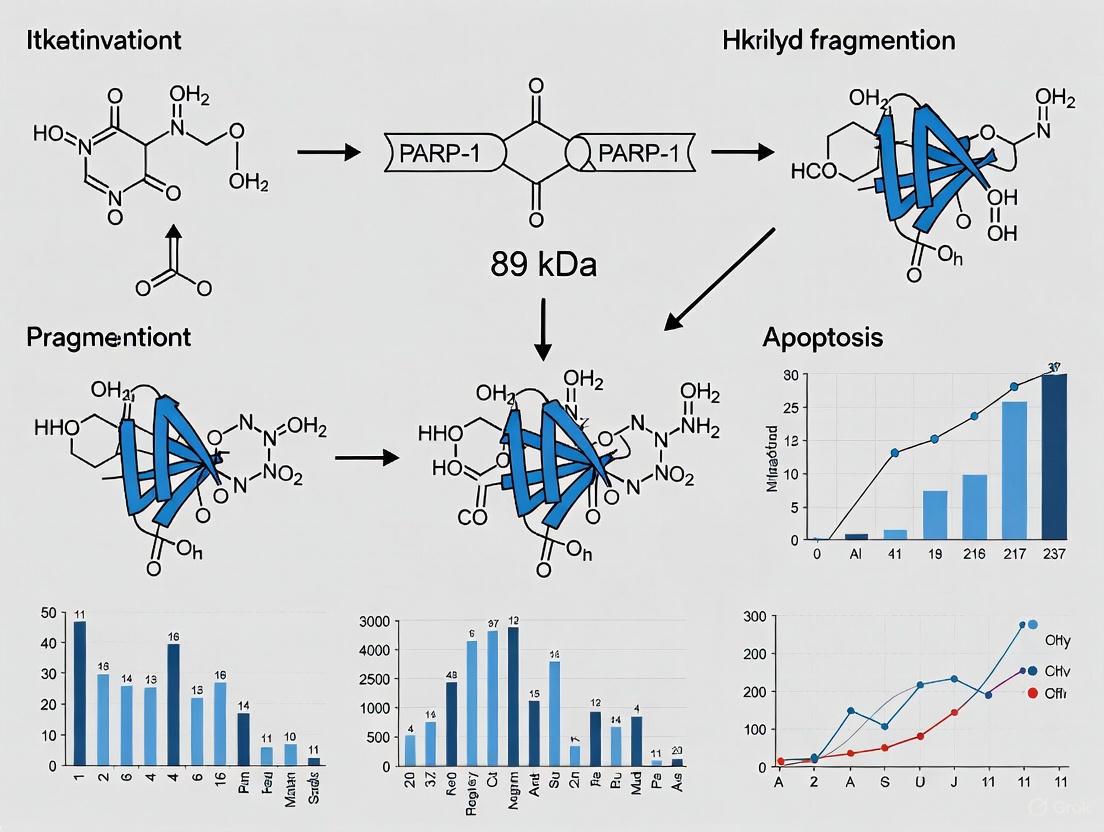
Accurate detection and clear resolution of the 89 kDa PARP-1 cleavage fragment are critical for research in apoptosis, cancer biology, and the development of PARP-targeting therapeutics.
Optimizing Band Resolution for the 89 kDa PARP-1 Fragment: A Technical Guide for Research and Drug Development
Abstract
Accurate detection and clear resolution of the 89 kDa PARP-1 cleavage fragment are critical for research in apoptosis, cancer biology, and the development of PARP-targeting therapeutics. This article provides a comprehensive guide for scientists and drug development professionals, covering the foundational biology of caspase-mediated PARP-1 cleavage, optimized methodological protocols for Western blotting, advanced troubleshooting strategies to overcome common pitfalls, and rigorous validation techniques to ensure data specificity and reproducibility. By integrating the latest research with practical applications, this resource aims to enhance experimental accuracy in studies of programmed cell death and PARP inhibitor efficacy.
Understanding the 89 kDa PARP-1 Fragment: Biological Significance and Cleavage Mechanisms
Frequently Asked Questions (FAQs)
1. What are the main domains of PARP-1 and their functions? PARP-1 is a 116-kDa protein organized into three primary domains with distinct functions [1] [2]:
- DNA-Binding Domain (DBD): Located at the N-terminus, it contains zinc finger motifs that recognize and bind to DNA strand breaks, initiating PARP-1 activation.
- Automodification Domain (AMD): The central region that serves as a target for covalent attachment of PAR polymers, regulating PARP-1 activity and interactions.
- Catalytic Domain (CD): Found at the C-terminus, it polymerizes ADP-ribose units from NAD+ onto target proteins.
2. Where is the caspase cleavage site in PARP-1, and what are the fragments produced? Caspases-3 and -7 cleave PARP-1 at the DEVD214 site within the nuclear localization signal near the DNA-binding domain [1] [3] [2]. This proteolysis generates two signature fragments:
- A 24-kDa fragment containing the DNA-binding domain
- An 89-kDa fragment containing the automodification and catalytic domains
3. What is the functional consequence of PARP-1 cleavage by caspases? Cleavage inactivates PARP-1's DNA repair function [3] [4]. The 24-kDa fragment remains bound to DNA breaks, acting as a trans-dominant inhibitor of DNA repair enzymes [2] [4]. The 89-kDa fragment translocates to the cytoplasm, where it can function as a PAR carrier to induce AIF-mediated cell death [3] [5].
4. How does PARP-1 cleavage influence cell death pathways? The cleavage fragments regulate cell death in opposing ways [1]. The 89-kDa fragment promotes cytotoxicity and inflammatory responses, while the 24-kDa fragment and uncleavable PARP-1 mutants exhibit cytoprotective effects. The 89-kDa fragment with attached PAR polymers can induce AIF release from mitochondria, bridging caspase-mediated apoptosis and parthanatos [3] [4].
PARP-1 Domain Architecture and Cleavage Fragments
Table 1: PARP-1 Domains and Their Characteristics
| Domain | Location | Size | Key Functions | Protease Sensitivity |
|---|---|---|---|---|
| DNA-Binding Domain (DBD) | N-terminus | 46-kDa | Recognizes DNA breaks via zinc fingers; contains nuclear localization signal | Caspase cleavage site (DEVD214); calpain target |
| Automodification Domain (AMD) | Central region | 22-kDa | Accepts PAR polymers; contains BRCT fold for protein-protein interactions | Caspase cleavage generates 89-kDa fragment |
| Catalytic Domain (CD) | C-terminus | 54-kDa | Transfers ADP-ribose from NAD+ to target proteins | Caspase cleavage generates 89-kDa fragment |
Table 2: PARP-1 Cleavage Fragments and Their Properties
| Fragment | Size | Domains Contained | Cellular Localization | Functions |
|---|---|---|---|---|
| 24-kDa | 24-kDa | DNA-binding domain | Nuclear retention | Binds irreversibly to DNA breaks; inhibits DNA repair; conserves cellular ATP |
| 89-kDa | 89-kDa | Automodification + Catalytic domains | Cytoplasmic translocation | Serves as PAR carrier; induces AIF-mediated apoptosis; promotes inflammatory responses |
PARP-1 Cleavage and Fragment Fate Pathway
Troubleshooting Guide: Improving Band Resolution for 89-kDa PARP-1 Fragment
Problem: Poor resolution or detection of the 89-kDa PARP-1 cleavage fragment in Western blotting.
Potential Causes and Solutions:
Table 3: Troubleshooting Western Blot Detection of PARP-1 Fragments
| Problem | Possible Cause | Solution | Experimental Notes |
|---|---|---|---|
| Weak or absent 89-kDa signal | Incomplete protein separation | Optimize gel percentage (8-12% gradient recommended); extend electrophoresis time | The 89-kDa fragment may be masked by strong full-length PARP-1 signal |
| Multiple non-specific bands | Antibody cross-reactivity | Validate antibody specificity with PARP-1 knockout controls; optimize blocking conditions | Use antibodies targeting the C-terminal catalytic domain for 89-kDa detection |
| Smearing or poor resolution | Protein degradation | Use fresh protease inhibitors; maintain samples on ice; minimize freeze-thaw cycles | The 89-kDa fragment is more stable than full-length PARP-1 in apoptotic cells |
| Inconsistent cleavage detection | Suboptimal apoptosis induction | Include positive controls (staurosporine, actinomycin D); verify caspase activation | PARP-1 cleavage occurs after caspase-3/7 activation during apoptosis |
Experimental Protocol for Inducing and Detecting PARP-1 Cleavage:
Cell Treatment and Apoptosis Induction:
Sample Preparation for Western Blotting:
- Prepare lysis buffer with fresh protease inhibitors (including caspase inhibitors if studying alternative cleavage)
- Use Laemmli buffer with adequate reducing agents
- Heat denature at 95°C for 5-10 minutes
Gel Electrophoresis Optimization:
- Use 4-12% gradient gels for optimal separation of 24-kDa and 89-kDa fragments
- Run at constant voltage (100-120V) until dye front approaches bottom
- Include pre-stained molecular weight markers spanning 20-100 kDa
Transfer and Detection:
- Transfer to PVDF membrane for better retention of low abundance fragments
- Use antibodies targeting C-terminal epitopes for 89-kDa detection
- Optimize exposure times to detect both full-length and cleaved fragments
The Scientist's Toolkit: Essential Research Reagents
Table 4: Key Reagents for PARP-1 Cleavage Research
| Reagent | Function/Application | Example Products | Experimental Considerations |
|---|---|---|---|
| Caspase-3/7 Inhibitors | Distinguish caspase-dependent cleavage | zVAD-fmk | Confirm specificity by comparing with caspase-3 knockout cells |
| PARP Inhibitors | Study PARP-1 enzymatic function | PJ34, ABT-888, Olaparib | Different inhibitors have varying trapping potentials |
| Apoptosis Inducers | Activate caspase cascade | Staurosporine, Actinomycin D | Titrate concentration to achieve submaximal cleavage |
| PARP-1 Antibodies | Detect full-length and fragments | Anti-C-terminal for 89-kDa; Anti-N-terminal for 24-kDa | Validate with known positive controls |
| PAR Antibodies | Detect PARylation activity | Anti-PAR monoclonal antibodies | PAR modification affects fragment mobility |
| Fluorescent PARP-1 Constructs | Live-cell imaging of dynamics | PARP1-EGFP BAC transgenes | Avoid overexpression artifacts; use near-physiological expression |
Live-Cell Imaging Protocol for PARP-1 Dynamics:
- Generate stable cell lines expressing fluorescently-tagged PARP-1 at near-physiological levels using BAC transgenes [6]
- Perform micro-irradiation with precise UV laser in defined nuclear regions
- Capture images at high temporal resolution (sub-second) using spinning-disk confocal microscopy
- Analyze PARP-1 kinetics and retention mathematically rather than by visual inspection alone [6]
The Role of Caspases-3 and -7 in Generating the 89 kDa Fragment
Frequently Asked Questions (FAQs)
1. What specific caspases generate the 89 kDa PARP-1 fragment and what is the evidence? Caspase-3 and Caspase-7 are the primary executioner caspases responsible for cleaving full-length PARP-1 (116 kDa) to generate the 89 kDa fragment. This cleavage is a well-established hallmark of apoptotic cell death [2] [7]. The discovery that a protease with activity resembling caspase-3 (then known as prICE) cleaves PARP-1 to yield an 85-kD fragment was a foundational observation in the field [2]. Subsequent research has solidified that caspase-3 and the highly related caspase-7 recognize the same cleavage site in PARP-1 in vivo [2].
2. What is the exact cleavage site in PARP-1? Caspase-3 and -7 cleave human PARP-1 at the DEVD214↓G215 amino acid sequence [2] [7]. This site is located between the DNA-binding domain and the automodification domain.
3. What are the functional consequences of PARP-1 cleavage? Cleavage by caspases serves two primary functions:
- Inactivation of DNA Repair: It separates the DNA-binding domain (which remains in the nucleus as a 24 kDa fragment) from the catalytic domain (the 89 kDa fragment), effectively shutting down PARP-1's role in DNA repair. This facilitates the demolition phase of apoptosis [4] [2].
- Generation of a Signaling Fragment: The 89 kDa fragment, which contains the automodification and catalytic domains, can be modified with poly(ADP-ribose) (PAR) polymers. This poly(ADP-ribosyl)ated 89 kDa fragment translocates to the cytoplasm and acts as a "PAR carrier," where it can induce the release of Apoptosis-Inducing Factor (AIF) from mitochondria, contributing to cell death [4] [3] [5].
4. Is the 89 kDa fragment exclusively a marker for apoptosis? While its generation is a hallmark of apoptosis, the 89 kDa fragment's function may extend beyond a simple inactivation switch. Research indicates it plays an active role in shuttling PAR to the cytoplasm to promote AIF-mediated death, illustrating a point of crosstalk between apoptotic (caspase-dependent) and parthanatos (PAR-dependent) cell death pathways [4] [3]. Furthermore, other proteases like calpains, granzymes, and lysosomal proteases (during necrosis) can cleave PARP-1, but they generate different signature fragments (e.g., a 50 kDa fragment in necrosis), not the 89/24 kDa pair characteristic of caspase action [2] [8].
5. Can I detect the 89 kDa fragment in the cytoplasm? Yes. The 89 kDa fragment lacks a nuclear localization signal (NLS). After cleavage, it is liberated from the nucleus and can be translocated to the cytoplasm, whereas the 24 kDa DNA-binding fragment remains nuclear [3] [2]. This cytoplasmic localization is a key part of its role in inducing AIF release [4].
Troubleshooting Guide: Detecting the 89 kDa PARP-1 Fragment
Problem 1: Weak or Absent Band at 89 kDa
| Potential Cause | Recommended Solution |
|---|---|
| Insufficient Apoptotic Induction | Optimize the type, concentration, and duration of apoptotic stimulus (e.g., Staurosporine, Actinomycin D, Cisplatin). Use a positive control (e.g., pre-treated apoptotic cell lysates) [4] [9]. |
| Incomplete Caspase Activation | Confirm caspase-3/7 activity in your lysates using a fluorometric or colorimetric caspase activity assay. Treat cells with a pan-caspase inhibitor (e.g., zVAD-fmk) as a negative control; it should prevent fragment generation [4] [10]. |
| Poor Protein Extraction | Use a robust RIPA buffer supplemented with protease inhibitors. For nuclear and cytoplasmic fractionation, a validated protocol using NP-40 lysis can ensure efficient separation and detection of the fragments [9]. |
Problem 2: Non-Specific or Multiple Bands
| Potential Cause | Recommended Solution |
|---|---|
| Antibody Specificity | Validate your antibody for detecting the C-terminal 89 kDa fragment, not the full-length protein or the 24 kDa N-terminal fragment. Check the manufacturer's data sheet for known cross-reactivity. |
| Non-Caspase Proteolysis | If your cell death model involves necrosis or other pathways, other proteases (e.g., calpains, cathepsins) may generate alternative cleavage fragments. Using a caspase-specific inhibitor can help confirm the source of the cleavage [2] [8]. |
| Overloading or Degradation | Ensure optimal protein loading (20-50 µg per lane for WB). Keep samples on ice and include protease inhibitors to prevent non-specific degradation. |
Problem 3: Inconsistent Results Between Nuclear and Cytoplasmic Fractions
| Potential Cause | Recommended Solution |
|---|---|
| Fractionation Purity | Validate the purity of your subcellular fractions. Use markers for cytoplasm (GAPDH), nucleus (Lamin B, PARP1 full-length/24kDa), and other compartments (e.g., mitochondria). A protocol using NP-40 lysis is effective for clean separation [9]. |
| Dynamic Translocation | The 89 kDa fragment translocates to the cytoplasm after cleavage. The timing of your experiment is critical. Perform a time-course experiment to capture this dynamic process [4] [3]. |
Experimental Protocols for Key Methodologies
Protocol 1: Induction of Apoptosis and Lysate Preparation for 89 kDa Detection
This protocol is adapted from methods used in the search results to reliably generate the 89 kDa PARP-1 fragment [4] [9].
- Cell Culture and Seeding: Seed appropriate cells (e.g., HeLa, HCT116) in 6-well plates and allow them to adhere overnight to reach 60-80% confluency.
- Apoptotic Induction: Treat cells with an apoptosis inducer.
- Cell Lysis:
- Aspirate the medium and wash cells with ice-cold PBS.
- Lyse cells directly in the well with 150-200 µL of pre-chilled RIPA buffer (supplemented with 1x protease inhibitor cocktail and 1 mM PMSF).
- Scrape the cells and transfer the lysate to a microcentrifuge tube.
- Incubate on ice for 15-30 minutes with occasional vortexing.
- Centrifuge at 14,000 x g for 15 minutes at 4°C.
- Protein Quantification and Storage: Transfer the supernatant (whole cell lysate) to a new tube. Determine protein concentration using a BCA or Bradford assay. Aliquot and store at -80°C.
Protocol 2: Subcellular Fractionation for Tracking 89 kDa Fragment Translocation
This protocol, based on a method validated in the search results, allows for clean separation of nuclear and cytoplasmic components to monitor the translocation of the 89 kDa fragment [9].
- Harvest and Hypotonic Lysis:
- Harvest apoptosis-induced and control cells by gentle scraping.
- Pellet cells (500 x g, 5 min, 4°C) and wash with PBS.
- Resuspend the cell pellet thoroughly in 5x pellet volume of Hypotonic Lysis Buffer (10 mM HEPES pH 7.9, 10 mM KCl, 1.5 mM MgCl2, 0.1 mM EGTA, 0.1% NP-40, plus fresh protease inhibitors).
- Incubate on ice for 5-10 minutes.
- Cytoplasmic Fraction (Supernatant 1):
- Centrifuge at 3,000 x g for 5 minutes at 4°C.
- Carefully transfer the supernatant to a fresh tube. This is the cytoplasmic fraction.
- Nuclear Wash and Lysis:
- Wash the nuclear pellet with 1 mL of Hypotonic Lysis Buffer without NP-40. Centrifuge again and discard the supernatant.
- Resuspend the nuclear pellet in 2-3x pellet volume of Isotonic Nuclear Lysis Buffer (20 mM HEPES pH 7.9, 400 mM NaCl, 1.5 mM MgCl2, 0.1 mM EGTA, 0.3% NP-40, 10% glycerol, plus protease inhibitors).
- Vortex vigorously and incubate on ice for 30 minutes with occasional mixing.
- Nuclear Fraction (Supernatant 2):
- Centrifuge at 14,000 x g for 15 minutes at 4°C.
- Transfer the supernatant to a new tube. This is the nuclear fraction.
- Analysis: Quantify both fractions and analyze by Western Blotting.
Table 1: Apoptotic Inducers and PARP-1 Cleavage Dynamics
This table summarizes experimental conditions from the cited research that successfully generate the 89 kDa fragment [4] [9].
| Apoptotic Inducer | Cell Line | Concentration | Treatment Duration | Key Observed Outcome |
|---|---|---|---|---|
| Staurosporine | HeLa | 0.5 - 1 µM | 4 - 6 hours | PAR synthesis detected at 1h, peaks at 4-6h; 89 kDa fragment generated and translocated to cytoplasm [4]. |
| Actinomycin D | HeLa | 0.5 - 1 µg/mL | 4 - 6 hours | Caspase activation leads to PARP-1 autopoly(ADP-ribosyl)ation and fragmentation [4]. |
| Cisplatin | HeLa, Caov-4 | 35 µM | 16 - 24 hours | Cleaved caspase-3 and -2 detected in nuclear fractions at 16h; PARP-1 cleavage to 89 kDa observed [9]. |
Table 2: Key Research Reagents for 89 kDa PARP-1 Fragment Studies
| Reagent | Function/Application | Example from Literature |
|---|---|---|
| Caspase-3/7 Inhibitor (zVAD-fmk) | Pan-caspase inhibitor used as a negative control to confirm caspase-dependent PARP-1 cleavage. Prevents 89 kDa fragment generation [4] [7]. | zVAD-fmk pretreatment completely suppressed staurosporine-induced cell death and PAR synthesis [4]. |
| PARP Inhibitors (PJ34, ABT-888) | Pharmacological inhibitors of PARP catalytic activity. Used to dissect PARP-1's role in cell death pathways. | PJ34 increased viable cell count after staurosporine treatment, showing PARP-1's partial role downstream of caspases [4]. |
| Anti-PARP-1 Antibody | Primary antibody for Western Blotting. Must be validated to recognize the C-terminal 89 kDa fragment. | Used in Western blot analysis to detect the appearance of the 89 kDa fragment and the disappearance of full-length PARP-1 [4] [9]. |
| NP-40 Detergent | Non-ionic detergent critical for effective subcellular fractionation to cleanly separate cytoplasmic and nuclear components. | A rapid fractionation protocol using 0.3% NP-40 was selected for efficient separation of pure cytoplasmic and nuclear fractions [9]. |
Signaling Pathway and Experimental Workflow Visualization
PARP-1 Cleavage and Fragment Translocation
Experimental Workflow for 89 kDa Fragment Analysis
Distinguishing Apoptosis from Parthanatos
Troubleshooting Guide: Key Differential Features and Assays
Researchers often encounter challenges when trying to confirm whether cell death in their experiments occurs via apoptosis or parthanatos. The table below outlines the critical parameters to distinguish these two pathways, with particular attention to PARP-1 cleavage patterns.
Table 1: Key Differential Features between Apoptosis and Parthanatos
| Parameter | Apoptosis | Parthanatos |
|---|---|---|
| PARP-1 Cleavage | Caspase-dependent cleavage into 24 kDa and 89 kDa fragments [3] [11] | No cleavage; full-length PARP-1 hyperactivation [12] |
| Catalytic Activity | Inactivated post-cleavage [3] | Hyperactivated, leading to massive PAR polymer synthesis [12] [13] |
| Key Initiator | Caspase activation [14] | PARP-1 hyperactivation [12] [15] |
| Energy Status | ATP-dependent | NAD+/ATP depletion [12] |
| Death-Inducing Factor | Caspases, cytochrome c | AIF nuclear translocation, MIF [12] [3] [15] |
| DNA Fragmentation Pattern | Ordered, internucleosomal (180-200 bp ladder) | Massive, random fragmentation [13] |
| Nuclear Morphology | Chromatin condensation, nuclear blebbing | Nuclear condensation and expansion [13] |
Frequently Asked Questions (FAQs)
Q1: I've detected an 89 kDa PARP-1 fragment in my Western blot. Does this confirm apoptosis is occurring? Not necessarily. While the 89 kDa fragment is a classic hallmark of caspase-mediated apoptosis [3], recent research reveals a more complex picture. In some caspase-dependent apoptosis models, this fragment can become poly(ADP-ribosyl)ated and translocate to the cytoplasm, functioning as a carrier for PAR polymers to induce AIF-mediated death [3]. You must corroborate this finding with other assays. Check for the complementary 24 kDa fragment and confirm caspase-3 activation to conclude apoptosis.
Q2: My results show positive TUNEL staining and ATP depletion. Which death pathway is this indicative of? This combination is highly suggestive of parthanatos. While TUNEL staining indicates DNA fragmentation, it is not specific to one pathway. However, coincident ATP depletion is a key metabolic feature of parthanatos, resulting from PARP-1 hyperactivation consuming NAD+ and subsequently affecting ATP production [12]. In apoptosis, ATP is typically required for the execution phase.
Q3: Can apoptosis and parthanatos occur simultaneously in the same cell culture? It is unlikely that they occur simultaneously in the same cell, as the pathways can be mutually inhibitory. However, both death subroutines can be triggered in a population of cells treated with the same stimulus [13] [16]. The dominant pathway depends on the cell type, nature of the insult, and cellular energy status. For example, a single stimulus like staurosporine or photodynamic treatment can induce apoptosis in one cell line and parthanatos in another [13].
Q4: Why is my Western blot for the 89 kDa fragment showing a weak or smeary band? Poor band resolution for the 89 kDa PARP-1 fragment can arise from several issues:
- Incomplete Caspase Cleavage: The cleavage reaction might not have gone to completion, resulting in a mixture of full-length and fragmented PARP-1.
- Post-Translational Modifications: The 89 kDa fragment can be modified, notably by poly(ADP-ribosyl)ation, which alters its molecular weight and can cause smearing [3]. Including dePARylation enzymes in your sample preparation can help.
- Protein Degradation: General protein degradation due to improper sample handling can obscure clear bands.
- Antibody Specificity: Ensure your antibody is specific to the C-terminal epitope of PARP-1 to avoid cross-reactivity.
Experimental Protocols for Key Assays
Protocol 1: Differentiating PARP-1 Cleavage by Western Blot
This protocol is designed to optimize band resolution for the 89 kDa fragment and full-length PARP-1.
- Sample Preparation:
- Lyse cells in RIPA buffer supplemented with protease inhibitors and a broad-spectrum caspase inhibitor (e.g., z-VAD-fmk). Note: Omit the caspase inhibitor if you are trying to capture physiological cleavage.
- For potential PAR-modified proteins, consider adding PARP inhibitors to the lysis buffer to prevent artefactual modification post-lysis.
- Gel Electrophoresis:
- Use a 4-20% gradient SDS-PAGE gel for optimal separation of the 116 kDa (full-length), 89 kDa (catalytic fragment), and 24 kDa (DNA-binding fragment) proteins.
- Load a pre-stained protein ladder and include both positive and negative controls (e.g., staurosporine-treated cells for apoptosis, MNNG-treated cells for parthanatos).
- Immunoblotting:
- Interpretation:
- Apoptosis: Bands at ~89 kDa and ~24 kDa, with corresponding caspase-3 cleavage.
- Parthanatos: Strong signal for full-length PARP-1 (116 kDa) and a strong PAR polymer signal, absence of the 24 kDa fragment.
Protocol 2: Immunofluorescence for AIF Localization
AIF translocation from mitochondria to the nucleus is a defining event in parthanatos.
- Cell Culture and Staining:
- Plate cells on glass coverslips and apply your death-inducing stimulus.
- At designated time points, fix cells with 4% paraformaldehyde for 15 minutes and permeabilize with 0.2% Triton X-100.
- Immunostaining:
- Incubate with a primary antibody against AIF and a mitochondrial marker (e.g., COX IV).
- Incubate with fluorescently-labeled secondary antibodies (e.g., Alexa Fluor 488 for AIF, Alexa Fluor 555 for mitochondria).
- Counterstain nuclei with DAPI.
- Imaging and Analysis:
Signaling Pathway Diagrams
The following diagrams illustrate the core signaling pathways for apoptosis and parthanatos, highlighting the critical divergent roles of PARP-1.
Apoptosis and Parthanatos Pathways
PARP-1 Proteolysis in Apoptosis
This diagram details the caspase-mediated cleavage of PARP-1, a key apoptotic event.
The Scientist's Toolkit: Research Reagent Solutions
The table below lists essential reagents and their functions for studying apoptosis and parthanatos.
Table 2: Essential Reagents for Cell Death Pathway Analysis
| Reagent | Function/Application | Key Experimental Use |
|---|---|---|
| z-VAD-fmk | Pan-caspase inhibitor [3] | To inhibit apoptosis and confirm caspase-independent death (e.g., parthanatos). |
| PJ34 / ABT-888 (Olaparib) | PARP-1 catalytic inhibitors [3] [16] | To suppress PARP-1 hyperactivation and confirm its role in cell death. Cytoprotective in parthanatos models. |
| Anti-PARP-1 (C-terminal) | Antibody targeting the catalytic domain. | Detects full-length PARP-1 and the 89 kDa cleavage fragment by Western blot [3]. |
| Anti-PARP-1 (N-terminal) | Antibody targeting the DNA-binding domain. | Detects full-length PARP-1 and the 24 kDa cleavage fragment by Western blot [11]. |
| Anti-PAR Polymer | Antibody against poly(ADP-ribose) chains. | Key marker for PARP-1 hyperactivation; used in Western blot or immunofluorescence to detect parthanatos [12] [3]. |
| Anti-AIF | Antibody against Apoptosis-Inducing Factor. | Used in immunofluorescence to monitor AIF translocation from mitochondria to the nucleus, a hallmark of parthanatos [3] [13]. |
| 3-Aminobenzamide (3-AB) | PARP-1 inhibitor [13] | Used in viability assays to test if cell death is PARP-1 dependent. |
| Staurosporine | Induces apoptosis [3] | Common positive control for inducing caspase activation and PARP-1 cleavage. |
| MNNG / H₂O₂ | DNA alkylating agent / Oxidizing agent [12] [17] | Common positive controls for inducing oxidative DNA damage and parthanatos. |
Experimental FAQs: Unraveling the 89 kDa PARP-1 Fragment
Q1: What is the functional significance of the 89 kDa PARP-1 fragment in cell death?
The 89 kDa PARP-1 fragment is not merely an inactive byproduct of caspase cleavage. It functions as a crucial carrier of poly(ADP-ribose) (PAR) polymers from the nucleus to the cytoplasm. Once in the cytoplasm, the PAR polymers attached to this fragment facilitate the release of Apoptosis-Inducing Factor (AIF) from mitochondria. This cascade connects caspase-mediated apoptosis with AIF-mediated DNA fragmentation, amplifying the cell death signal [3].
Q2: What is the primary methodological approach for detecting the 89 kDa fragment and its translocation?
The standard methodology involves induction of apoptosis, followed by subcellular fractionation and Western blotting.
- Apoptosis Induction: Treat cells (e.g., HeLa cells) with established apoptosis inducers like staurosporine (1 μM) or actinomycin D for a time course (e.g., 1-6 hours) [3].
- Pharmacological Inhibition: Use caspase inhibitors (e.g., zVAD-fmk) or PARP inhibitors (e.g., PJ34, ABT-888) as control conditions to confirm the specificity of the pathway [3].
- Subcellular Fractionation: Separate nuclear and cytoplasmic protein fractions post-treatment.
- Western Blotting: Probe the cytoplasmic fraction with an antibody against the C-terminal region of PARP-1 to specifically identify the 89 kDa fragment. Simultaneously, probe for AIF to monitor its release from mitochondria and translocation to the nucleus [3].
Q3: During apoptosis, where do the different PARP-1 cleavage fragments localize?
Caspase cleavage of PARP-1 results in two primary fragments with distinct subcellular fates, a critical detail for interpreting experimental results from fractionation studies [3] [18] [19].
- The 24 kDa Fragment: This N-terminal fragment, which contains the DNA-binding domain, remains tightly bound to DNA lesions in the nucleus [3].
- The 89 kDa Fragment: This C-terminal fragment, containing the automodification and catalytic domains, is translocated to the cytoplasm. This translocation is dependent on its prior poly(ADP-ribosyl)ation [3].
Q4: How does the 89 kDa PARP-1 fragment trigger AIF release, and how can I confirm this in my experiments?
The 89 kDa fragment itself does not directly interact with AIF. Instead, the covalently attached PAR polymers on the fragment are the key ligands that bind to AIF. This binding disrupts AIF's association with the mitochondrial membrane, leading to its release [3] [20]. To confirm this interaction, you can:
- Perform co-immunoprecipitation assays using an anti-PAR antibody to pull down the PARylated 89 kDa fragment and its associated proteins, then probe for AIF.
- Use immunofluorescence microscopy to visualize the co-localization of PAR signals (from the 89 kDa fragment) and AIF in the cytoplasm following apoptotic induction [3].
Troubleshooting Guide: Resolving Key Experimental Challenges
Problem: Inconsistent detection of the 89 kDa fragment in Western blots.
- Potential Cause 1: Inefficient apoptosis induction or incorrect timing of sample collection. The 89 kDa fragment is a transient intermediate.
- Solution: Perform a time-course experiment and use a positive control for apoptosis (e.g., active caspase-3 detection). Ensure staurosporine is used at an effective concentration (e.g., 1 μM) [3].
- Potential Cause 2: Poor subcellular fractionation, leading to nuclear contamination in the cytoplasmic fraction or incomplete release of cytoplasmic content.
- Solution: Always validate your fractionation protocol by probing for specific markers of different compartments (e.g., Lamin B1 for nucleus, α-tubulin for cytoplasm).
- Potential Cause 3: Antibody specificity issues.
- Solution: Use an antibody that specifically recognizes the C-terminal end of PARP-1. Validate the antibody using PARP-1 knockdown cells as a negative control [3].
Problem: Failure to observe AIF translocation to the nucleus despite detecting the 89 kDa fragment.
- Potential Cause 1: The cell type or death stimulus may not strongly engage the parthanatos pathway.
- Solution: Use a positive control stimulus known to induce robust PARP-1 activation and parthanatos, such as the DNA-alkylating agent N-methyl-N'-nitro-N-nitrosoguanidine (MNNG) [3].
- Potential Cause 2: AIF release requires additional downstream events beyond its interaction with PAR, such as specific proteolytic processing.
- Solution: Investigate the processing of AIF. The membrane-bound mature AIF (∼62 kDa) can be cleaved by calpains or other proteases to generate a soluble, pro-apoptotic form (∼57 kDa) that translocates more efficiently [20] [21]. Check for the presence of this truncated AIF form in your cytoplasmic and nuclear fractions.
Table 1: Key Molecular Weights and Fragments
| Molecule | Full-Length Size | Cleavage Fragment | Size | Key Domains and Features |
|---|---|---|---|---|
| PARP-1 | 116 kDa [3] | 89 kDa fragment | 89 kDa | Automodification domain, Catalytic domain, carries PAR polymers [3] |
| 24 kDa fragment | 24 kDa | DNA-binding domain (ZnF1 & ZnF2), nuclear localization signal [3] [22] | ||
| AIF | ∼67 kDa (precursor) [21] [23] | ∼62 kDa (mature, membrane-tethered) [21] | ∼57 kDa (truncated, soluble) | Mitochondrial oxidoreductase, released upon PAR binding [20] [21] |
Table 2: Common Reagents for Pathway Investigation
| Reagent | Function / Target | Example | Key Experimental Use |
|---|---|---|---|
| Apoptosis Inducer | Activates caspase cascade | Staurosporine, Actinomycin D [3] | Induce PARP-1 cleavage and generate the 89 kDa fragment. |
| PARP Inhibitor | Blocks PARP catalytic activity | PJ34, ABT-888 [3] | Confirm PARP-1 dependency in cell death; prevents PAR synthesis and 89 kDa fragment translocation. |
| Caspase Inhibitor | Blocks caspase activity | zVAD-fmk [3] | Differentiate between caspase-dependent and independent death pathways; prevents PARP-1 cleavage. |
| PAR Antibody | Detects PAR polymers | N/A | Visualize and pull down the PARylated 89 kDa fragment; essential for confirming its role as a PAR carrier. |
The Scientist's Toolkit: Research Reagent Solutions
Table 3: Essential Research Materials
| Item | Function/Explanation |
|---|---|
| HeLa Cell Line | A commonly used model system in which the PARP-1/AIF pathway has been well-characterized [3]. |
| Anti-PARP-1 Antibody (C-terminal specific) | Crucial for specifically detecting the 89 kDa fragment without cross-reacting with the 24 kDa fragment in Western blots. |
| Subcellular Fractionation Kit | For clean separation of nuclear and cytoplasmic proteins to accurately track fragment translocation and AIF release. |
| Biotinylated NAD+ | A tool used to directly label and track PAR synthesis and the proteins that become poly(ADP-ribosyl)ated. |
Pathway and Workflow Visualizations
Signaling Pathway of 89 kDa Fragment-Mediated Cell Death
Experimental Workflow for Fragment Analysis
The 89 kDa poly(ADP-ribose) polymerase-1 (PARP-1) fragment is a key cleavage product generated by caspases-3 and -7 during programmed cell death [3] [4]. This fragment results from caspase cleavage at a specific site within the nuclear localization signal near the DNA-binding domain, producing a 24-kDa fragment (containing the DNA-binding motif) and the 89-kDa fragment (containing the automodification and catalytic domains) [3]. In disease research, this fragment serves as a critical molecular switch, shifting cellular outcomes from DNA repair towards apoptosis, with significant implications for understanding cancer, neurodegenerative disorders, and drug mechanisms [4].
Biological Significance & Signaling Pathways
Role in Apoptosis and Parthanatos
The 89 kDa PARP-1 fragment functions as a cytoplasmic PAR carrier that bridges caspase-dependent apoptosis and PARthanatos, a caspase-independent cell death pathway [3] [4]. Following caspase cleavage, the 89 kDa fragment with covalently attached PAR polymers translocates from the nucleus to the cytoplasm, while the 24 kDa fragment remains associated with DNA lesions [3]. In the cytoplasm, the PAR polymers attached to the 89 kDa fragment bind to apoptosis-inducing factor (AIF), facilitating its release from mitochondria and subsequent translocation to the nucleus, where it induces large-scale DNA fragmentation and nuclear shrinkage [3]. This pathway is particularly relevant in neurodegenerative conditions like Parkinson's disease and brain ischemia, where PARP1 overactivation occurs [3].
Implications for Cancer and Neurodegeneration
In cancer research, the 89 kDa PARP-1 fragment represents a critical indicator of treatment response, as many chemotherapeutic agents induce apoptosis through caspase activation [3] [4]. In neurodegenerative disease, PARP1 overactivation and subsequent fragmentation contribute to parthanatos, suggesting therapeutic potential for PARP inhibitors in conditions like Parkinson's disease and brain ischemia [3].
Figure 1: Signaling Pathway of 89 kDa PARP-1 Fragment in Cell Death
The Scientist's Toolkit: Research Reagent Solutions
Table 1: Essential Research Reagents for 89 kDa PARP-1 Fragment Studies
| Reagent/Category | Specific Examples | Function & Application |
|---|---|---|
| PARP Inhibitors | PJ34, ABT-888 [3] | Pharmacological inhibition of PARP1 activity; used to investigate parthanatos and validate PARP-dependent effects. |
| Caspase Inhibitors | zVAD-fmk [3] | Pan-caspase inhibitor; distinguishes caspase-dependent vs. independent cell death pathways. |
| Apoptosis Inducers | Staurosporine, Actinomycin D [3] [4] | Conventional inducers of caspase-mediated apoptosis; stimulate PARP1 cleavage in experimental models. |
| Primary Antibodies | Anti-PARP1 (cleaved specific) [24] [25] | Detect full-length and 89 kDa fragment; specificity is critical for accurate Western blot interpretation. |
| Secondary Antibodies | HRP-conjugated anti-rabbit/mouse [24] [25] | Detection of primary antibody; must be matched to host species of primary antibody. |
| Detection Reagents | ECL substrates [24] [25] | Chemiluminescent detection for Western blotting; enhanced sensitivity for low-abundance targets. |
| Protein Ladders | Pre-stained markers, MagicMark XP [26] | Molecular weight standards; essential for confirming 89 kDa fragment size. |
| Positive Controls | Apoptotic cell lysates [24] [27] | Validate experimental system and antibody performance; e.g., staurosporine-treated HeLa cells. |
| Protease Inhibitors | PMSF, protease inhibitor cocktails [24] [27] | Prevent protein degradation during sample preparation; crucial for preserving cleavage fragments. |
Troubleshooting Guide: Resolving Common Experimental Challenges
FAQ: No or Weak Signal for 89 kDa Fragment
Q: My Western blot shows no or very weak signal for the 89 kDa PARP-1 fragment, despite using apoptosis-induced cells. What could be wrong?
- Antibody Issues:
- Cause: Antibody may not recognize the cleaved fragment; inappropriate dilution; or antibody degradation [25] [27].
- Solution: Use an antibody validated for detecting caspase-cleaved PARP1. Perform a dilution series to optimize concentration (e.g., test 1:500 to 1:3000) [27]. Include a positive control (e.g., lysate from staurosporine-treated cells) to confirm antibody efficacy [24] [27].
- Insufficient Apoptosis Induction:
- Poor Transfer Efficiency:
- Cause: The 89 kDa fragment may not have transferred efficiently from the gel to the membrane [25] [26].
- Solution: Use a reversible protein stain (e.g., Ponceau S) or total protein stain on the membrane post-transfer to confirm successful transfer of proteins in the correct molecular weight range [26]. Ensure proper membrane activation and transfer apparatus setup [27].
FAQ: Non-Specific Bands or High Background
Q: I see multiple non-specific bands or high background, making it difficult to interpret the specific 89 kDa band. How can I resolve this?
- Antibody Specificity/Concentration:
- Cause: Too high concentration of primary or secondary antibody leads to non-specific binding [24] [26].
- Solution: Titrate both primary and secondary antibodies to find the minimal concentration that gives a strong specific signal. For secondary antibodies, a dilution of 1:5000 to 1:20000 is often effective [25] [27].
- Insufficient Blocking or Washing:
- Cause: Incomplete blocking of non-specific sites on the membrane or inadequate washing after antibody incubations [24] [26].
- Solution: Extend blocking time to at least 1 hour at room temperature or overnight at 4°C [26]. Use a different blocking agent (e.g., switch from milk to BSA, especially for phospho-proteins) [26]. Increase wash frequency and duration (e.g., three 5-10 minute washes with TBST with vigorous shaking) [27].
- Membrane Handling:
- Cause: Allowing the membrane to dry out during processing causes high, speckled background [26].
- Solution: Ensure the membrane remains fully submerged in buffer throughout all incubation and wash steps.
FAQ: Smearing or Poor Band Resolution
Q: The 89 kDa band appears smeared, diffused, or poorly resolved. What steps can I take to sharpen the band?
- Sample Preparation:
- Cause: Protein degradation or overloaded sample [25] [28] [29].
- Solution: Always prepare samples on ice using fresh protease inhibitor cocktails [24] [27]. Avoid repeated freeze-thaw cycles of lysates. Centrifuge samples before loading to remove insoluble debris [29]. Ensure you are not overloading the gel; a general recommendation is 20-50 µg of total protein per lane for cell lysates [26].
- Gel Electrophoresis Conditions:
- Cause: Running gel at too high voltage generates excessive heat, denaturing proteins and causing smearing [28] [29].
- Solution: Use an appropriate gel percentage (e.g., 8-10% for the 89 kDa fragment) [27]. Run gels at a constant voltage recommended for the gel system (e.g., 80-120V for mini-gels) and perform electrophoresis in a cold room or with a cooling unit [29].
- Incomplete Denaturation:
Table 2: Troubleshooting Guide for Western Blot Analysis of 89 kDa PARP-1
| Problem | Possible Causes | Recommended Solutions |
|---|---|---|
| No Signal | Antibody not specific for cleaved form; Caspase activity absent; Transfer failed [25] [27]. | Validate antibody with positive control; Confirm apoptosis; Check transfer with protein stain [26] [27]. |
| Weak Signal | Low antibody concentration; Low target abundance; Short exposure [25] [26]. | Optimize antibody dilution; Increase protein load; Lengthen exposure/ECL incubation [25]. |
| Multiple Bands | Non-specific antibody binding; Protein degradation; Protein aggregation [24] [25]. | Titrate antibody; Use fresh protease inhibitors; Ensure complete denaturation [29]. |
| High Background | Inadequate blocking; Antibody concentration too high; Membrane dried out [24] [26]. | Optimize blocking (time/reagent); Dilute antibodies; Keep membrane wet [26]. |
| Band Smiling/Frowning | Improper gel polymerization; Electrophoresis heat unevenness [25] [29]. | Ensure gel sets evenly; Use proper voltage and cooling [29]. |
Optimized Experimental Workflow for Clear 89 kDa Fragment Detection
Figure 2: Optimized Workflow for PARP-1 Cleavage Detection
Critical Step Details
- Sample Preparation: Treat cells with 1 µM staurosporine for 4-6 hours to induce robust apoptosis and PARP-1 cleavage [3]. Include a negative control (untreated cells) and a positive control (commercially available apoptotic lysate) [24] [27].
- Gel Selection and Electrophoresis: For resolving the 89 kDa fragment, an 8-10% separation gel is optimal [27]. Using a freshly prepared Tris-glycine-SDS buffer system ensures clear separation from non-specific bands.
- Transfer Conditions: For a standard mini-gel system, transfer at 100V for 60-90 minutes on ice is effective. The addition of 20% methanol to the transfer buffer promotes efficient adsorption of the 89 kDa fragment to PVDF membranes [26].
- Antibody Incubation and Detection: Incubate with primary antibody in blocking buffer at 4°C overnight for optimal specificity. When using chemiluminescence, perform a time-course exposure (e.g., 5s, 30s, 60s, 5min) to capture the signal without saturation [24].
Mastering the detection and interpretation of the 89 kDa PARP-1 fragment through optimized Western blotting is fundamental for research into apoptosis mechanisms in cancer and neurodegeneration. By implementing the systematic troubleshooting approaches and refined protocols outlined in this guide, researchers can overcome common technical challenges, thereby generating reliable and reproducible data that advances our understanding of cell death pathways and therapeutic interventions.
Proven Protocols for Precise Detection and Separation of the 89 kDa Fragment
In protease research, particularly in studies focused on the 89 kDa cleavage fragment of PARP-1, achieving optimal band resolution in gel electrophoresis is critical. The 89 kDa fragment, resulting from caspase cleavage of full-length PARP-1 (116 kDa), serves as a key biochemical marker for apoptosis. Precise separation and clear visualization of this fragment are essential for accurate interpretation of experimental results in cell death studies and drug development. This guide provides detailed methodologies and troubleshooting advice to optimize gel electrophoresis conditions for this specific application.
Troubleshooting Band Resolution and Clarity
Poorly Separated or Smeared Bands
Smeared, fuzzy, or poorly resolved bands are common issues that can obscure critical results, such as distinguishing the 89 kDa PARP-1 fragment from other proteolytic products.
Causes and Solutions:
- Gel Percentage is Incorrect: Using a gel with pores that are too large will not resolve proteins of similar molecular weight effectively.
- Solution: For the 89 kDa fragment, use a gel percentage between 8% and 12%. A 10% gel is often ideal for resolving proteins in the 50-150 kDa range [30].
- Sample Degradation: Nucleic acids and proteins can be degraded by nucleases or proteases, creating a continuous smear of fragments.
- Voltage Too High: Excessive voltage causes localized heating (Joule heating), which can denature proteins and cause smearing.
- Sample Overloading: Loading too much protein (>500 ng per band) overwhelms the gel's capacity, leading to trailing smears and U-shaped bands.
- Incorrect Buffer or High Salt Concentration: High salt in the sample buffer increases conductivity, distorting the electric field and migration.
Faint or Absent Bands
The failure to visualize bands can stem from issues at various stages, from sample preparation to visualization.
Causes and Solutions:
- Insufficient Sample Concentration: The starting concentration of the target protein may be below the detection limit of the stain.
- Low Sensitivity of Stain: The fluorescent stain may not be sensitive enough, or its concentration may be too low.
- Solution: Use a sufficient amount of stain and allow adequate staining time. For thick or high-percentage gels, extend the staining duration to allow for full penetration [30].
- Problems with Electrophoresis Setup: The power supply may not be connected correctly, or the buffer may be depleted.
Optimized Protocols for PARP-1 Fragment Analysis
Standard SDS-PAGE Protocol for 89 kDa PARP-1 Fragment
This detailed protocol is designed to achieve sharp resolution of the 89 kDa PARP-1 cleavage fragment.
Gel Preparation:
- Prepare a discontinuous SDS-polyacrylamide gel.
- For the separating gel, use a final concentration of 10% acrylamide to optimally resolve proteins near 89 kDa.
- For the stacking gel, use a final concentration of 4% or 5% acrylamide.
- Ensure the gel thickness is 3–4 mm; thicker gels can lead to band diffusion and smearing [30].
Sample Preparation:
- Mix the protein sample with an equal volume of 2X Laemmli SDS-PAGE loading buffer containing SDS and a reducing agent like β-mercaptoethanol.
- Heat-denature the samples at 95–100°C for 5-10 minutes to ensure complete unfolding and negative charge acquisition from SDS.
- Centrifuge briefly before loading to collect condensation.
Gel Electrophoresis:
- Load pre-stained protein molecular weight markers and samples into the wells.
- Fill the electrophoresis tank with 1X Tris-Glycine-SDS running buffer.
- Run the gel initially at a constant voltage of 80-100V until the dye front enters the separating gel.
- Increase the voltage to 110-130V for the remainder of the run. Monitor the run to prevent the target protein or dye front from migrating off the gel [31] [30].
Visualization:
- After electrophoresis, carefully transfer the gel to a staining solution containing a fluorescent stain compatible with proteins.
- Stain according to the manufacturer's protocol, ensuring the gel is fully submerged.
- Destain if necessary to reduce background.
- Visualize the gel using an appropriate imaging system with the correct light source for the stain's excitation wavelength.
Troubleshooting Workflow Diagram
The following diagram outlines a systematic approach to diagnosing and resolving common gel electrophoresis problems.
The Scientist's Toolkit: Essential Research Reagents
The table below lists key reagents and materials crucial for successful gel electrophoresis in the context of PARP-1 research.
Table: Essential Reagents for PARP-1 Gel Electrophoresis
| Item | Function/Application | Key Considerations |
|---|---|---|
| Acrylamide | Forming the porous gel matrix for size-based separation. | Use 10% for optimal resolution of 89 kDa PARP-1 fragment [30]. |
| Protein Molecular Weight Marker | Estimating the size of separated protein bands. | Essential for confirming the size of the 89 kDa PARP-1 fragment. |
| SDS (Sodium Dodecyl Sulfate) | Denatures proteins and confers a uniform negative charge. | Critical for separation based on molecular weight, not charge or shape. |
| Laemmli Sample Buffer | Prepares samples for loading; contains SDS, glycerol, and a tracking dye. | Must be reducing (contain DTT or β-mercaptoethanol) to break disulfide bonds. |
| Tris-Glycine-SDS Running Buffer | Provides ions for conductivity and maintains pH during electrophoresis. | Must be fresh and at the correct concentration to ensure proper migration [30] [32]. |
| Fluorescent Protein Stain | Visualizes protein bands after electrophoresis. | Safer alternatives (e.g., GelRed/GelGreen for DNA; SYPRO Ruby for protein) are recommended over toxic stains like ethidium bromide [31]. |
Frequently Asked Questions (FAQs)
Q1: My gel shows "smiling" bands (curved upwards). What is the cause and how can I fix it? A: "Smiling" bands are primarily caused by uneven heating across the gel, where the center becomes hotter than the edges, causing faster migration in the middle lanes. To resolve this, run the gel at a lower voltage to reduce Joule heating, use a power supply with a constant current mode, and ensure fresh buffer is used at a consistent level in the tank [32].
Q2: I see a clear band for my protein marker, but no bands in my sample lanes. What should I check first? A: Since the marker is visible, the electrophoresis setup is functioning. The problem lies with the sample itself. First, verify the sample concentration—it may be too low. Second, re-check all sample preparation steps for potential degradation or loss. Ensure that the loading dye was added correctly [31] [30].
Q3: What is the single most important factor for improving resolution between protein bands of similar size? A: The gel concentration is the most critical factor. Selecting a gel with a pore size optimized for your target molecular weight range is essential for achieving sharp, well-resolved bands. For the 89 kDa PARP-1 fragment, a 10% gel is typically the best starting point [30] [32].
Q4: How can I prevent smearing in my protein gel? A: To prevent smearing, ensure samples are properly denatured by heating in SDS-containing loading buffer. Avoid sample degradation by working on ice with pre-chilled reagents and using protease inhibitors if necessary. Furthermore, do not overload the wells and run the gel at an appropriate voltage [30] [32].
In the study of cellular responses to DNA damage and programmed cell death, the cleavage of Poly(ADP-ribose) polymerase 1 (PARP1) is a critical event. Caspase-mediated cleavage of the 116-kDa full-length PARP1 during apoptosis generates two primary fragments: an 89-kDa C-terminal fragment (containing the automodification and catalytic domains) and a 24-kDa N-terminal fragment (containing the DNA-binding domain) [3] [2]. Research focusing on the 89-kDa fragment, which acts as a cytoplasmic poly(ADP-ribose) (PAR) carrier in parthanatos, requires precise detection methods [3] [4]. The selection of a primary antibody with high specificity for the C-terminal catalytic domain is therefore paramount. This guide addresses common experimental challenges and provides troubleshooting advice to improve band resolution and interpretation for 89-kDa PARP1 fragment research.
FAQs and Troubleshooting Guides
FAQ 1: Why is specificity for the C-terminal catalytic domain so important for studying the 89-kDa PARP1 fragment?
Answer: Antibodies targeting the C-terminal catalytic domain are essential because they selectively identify the 89-kDa cleavage fragment while ignoring the 24-kDa N-terminal fragment. This specificity is crucial for accurate interpretation of experimental results.
- Different Cellular Fates: After caspase cleavage, the 89-kDa and 24-kDa fragments localize to different cellular compartments. The 89-kDa fragment, containing the automodification and catalytic domains, can be translocated from the nucleus to the cytoplasm, where it functions as a carrier for PAR polymers [3] [4]. The 24-kDa fragment remains bound to DNA in the nucleus [3].
- Functional Studies: The 89-kDa fragment can be poly(ADP-ribosyl)ated and is involved in key cell death pathways. Its translocation to the cytoplasm can induce apoptosis-inducing factor (AIF) release from mitochondria, a key step in parthanatos [3] [4]. Using a C-terminal specific antibody allows researchers to specifically track this fate.
- Avoiding False Negatives: An antibody targeting an epitope lost during caspase cleavage (e.g., within the caspase cleavage site itself) would fail to detect any fragment, leading to an incomplete picture of PARP1 status.
FAQ 2: I see multiple bands close to 89 kDa in my western blot. How can I improve band resolution and confirm the identity of the correct band?
Answer: Non-specific or fuzzy bands are a common challenge. The following troubleshooting table summarizes strategies to address this.
Table: Troubleshooting Multiple or Fuzzy Bands near 89 kDa
| Issue | Potential Cause | Recommended Solution |
|---|---|---|
| Multiple bands close to 89 kDa | Non-specific antibody binding; other PARP1 proteolytic fragments (e.g., from calpain, cathepsin) [2] | Optimize antibody dilution; include a caspase-specific PARP1 cleavage inhibitor (e.g., zVAD-fmk) as a negative control [3]. |
| Fuzzy, diffuse bands | Overloaded protein samples; inefficient transfer; glycosylation or other PTMs | Reduce protein loading; optimize transfer conditions; use high-quality, fresh buffers. |
| Inconsistent results between experiments | Variation in sample preparation; uneven cell treatment | Standardize lysis protocols, ensure consistent induction of apoptosis (e.g., using staurosporine or actinomycin D) [3]. |
Key Experimental Protocols for Validation:
Induction of Apoptosis and PARP1 Cleavage:
- Treat cells (e.g., HeLa cells) with a known apoptosis inducer such as staurosporine (1 µM) or actinomycin D for a duration of 1-6 hours [3].
- Include control groups treated with both the apoptosis inducer and a pan-caspase inhibitor (e.g., zVAD-fmk, 20-50 µM). This serves as a critical negative control, as it should prevent the formation of the 89-kDa fragment [3].
- Harvest cells and prepare protein lysates using RIPA buffer supplemented with protease inhibitors.
Western Blot Optimization:
- Use 10-12% SDS-PAGE gels for optimal separation of proteins in the 80-100 kDa range.
- Load 20-30 µg of total protein per lane. Overloading can cause poor resolution.
- Include a positive control lysate from apoptotic cells to confirm antibody performance.
- After transfer, probe the membrane with your primary antibody specific for the C-terminal domain of PARP1.
- Use a validated secondary antibody conjugated to HRP or another detection enzyme, ensuring it is species-appropriate.
The diagram below illustrates the logical workflow for confirming the identity of the 89-kDa band.
FAQ 3: My C-terminal specific antibody detects the full-length PARP1 but not the 89-kDa fragment in my apoptosis model. What could be wrong?
Answer: Failure to detect the fragment despite apoptotic stimuli suggests issues with the experimental conditions or sample integrity.
- Confirm Apoptosis Induction: Verify that apoptosis is occurring robustly in your model. Use independent markers such as caspase-3 activation (e.g., by detecting cleaved caspase-3) or phosphatidylserine externalization (Annexin V staining).
- Check Antibody Specificity: Ensure the antibody is validated for detecting the caspase-generated 89-kDa fragment, not just full-length PARP1. Consult the manufacturer's datasheet for supporting data.
- Optimize Lysis and Detection: The 89-kDa fragment may translocate to the cytoplasm [3]. Ensure your lysis buffer is efficient for both nuclear and cytoplasmic proteins. Consider using a more sensitive detection system (e.g., chemiluminescent substrates with high signal-to-noise ratio) if the fragment is less abundant.
FAQ 4: How can I distinguish between different PARP1 cleavage fragments generated by various proteases?
Answer: PARP1 is a substrate for several "suicidal proteases" beyond caspases, including calpains, cathepsins, granzymes, and matrix metalloproteinases (MMPs), each producing signature fragments of different molecular weights [2].
- Caspases: Generate the classic 89-kDa and 24-kDa fragments [3] [2].
- Other Proteases: For example, calpains can produce a 55-kDa fragment [2].
- Strategy for Distinction:
- Use Selective Inhibitors: Co-treat cells with protease-specific inhibitors (e.g., zVAD-fmk for caspases, calpeptin for calpains).
- Employ Cleavage-Site Specific Antibodies: Some antibodies are designed to recognize the new neo-epitope created by a specific protease's cleavage.
- Analyze Fragment Size: Use high-quality western blotting with good molecular weight standards to accurately determine the size of the observed fragments.
The diagram below maps the PARP1 protein domain structure and the cleavage events triggered by different proteases.
The Scientist's Toolkit: Research Reagent Solutions
This table lists essential reagents and their functions for studying the 89-kDa PARP1 fragment, as cited in the literature.
Table: Key Reagents for 89-kDa PARP1 Fragment Research
| Reagent | Function/Application | Example in Context |
|---|---|---|
| C-terminal Specific PARP1 Antibody | Primary antibody for specifically detecting full-length PARP1 and the 89-kDa fragment in techniques like Western blot and immunofluorescence. | Critical for distinguishing the C-terminal 89-kDa fragment from the N-terminal 24-kDa fragment [3] [4]. |
| Apoptosis Inducers (Staurosporine, Actinomycin D) | Chemical inducers of caspase-dependent apoptosis, leading to PARP1 cleavage. | Used at varying concentrations (e.g., staurosparine 1 µM) to trigger PARP1 cleavage and generate the 89-kDa fragment for study [3]. |
| Caspase Inhibitors (zVAD-fmk) | Irreversible pan-caspase inhibitor. Serves as a critical negative control. | Pretreatment with zVAD-fmk (e.g., 20-50 µM) prevents PARP1 cleavage, confirming that fragment generation is caspase-dependent [3]. |
| PARP Inhibitors (PJ34, ABT-888) | Small molecule inhibitors of PARP enzymatic activity. | Used to investigate the role of PARP1 activity in cell death pathways (e.g., PJ34 reduced staurosporine-induced cytotoxicity) [3]. |
| Secondary Antibodies (Conjugated to HRP or Fluorophores) | Required for signal detection in immunoassays. Anti-mouse/rabbit IgG conjugated to enzymes or fluorophores. | Used with chromogenic substrates like DAB for Western blot or for fluorescence detection in microscopy [33]. |
Sample Preparation Techniques to Prevent Artefactual Proteolysis
In the study of apoptotic pathways, particularly the analysis of specific cleavage fragments like the 89 kDa PARP-1 fragment, sample preparation is a critical step that can significantly impact experimental outcomes. Artefactual proteolysis during this phase can generate misleading bands on Western blots, potentially resulting in false positives or incorrect data interpretation. This technical guide addresses common pitfalls and provides optimized protocols to ensure the integrity of your protein samples, with a specific focus on PARP-1 fragment research.
Frequently Asked Questions (FAQs)
1. Why do I see additional bands below my target 89 kDa PARP-1 fragment on my Western blot? Additional bands often indicate protein degradation from artefactual proteolysis. When proteases remain active during sample preparation, they can cleave your target protein into smaller fragments. For PARP-1 research, this is particularly problematic as the 89 kDa fragment itself is a caspase cleavage product, and additional degradation can obscure results [2]. Proper inhibition of proteases immediately upon cell lysis is essential to prevent this issue.
2. How quickly should I process my samples after cell lysis to prevent degradation? You should add hot sample buffer and heat samples immediately after lysis. Delaying even 2-4 hours at room temperature can allow proteases present in the lysate to digest proteins of interest. As little as 1 pg of protease in a protein sample can cause major degradation if not inactivated promptly [34].
3. What temperature and duration are recommended for heating samples? Heating at 75°C for 5 minutes is sufficient for most applications and helps avoid Asp-Pro bond cleavage that can occur at higher temperatures (95-100°C). However, several proteins remain stable at 100°C for several hours, so optimization may be required for your specific protein targets [34].
4. Can the choice of lysis buffer affect proteolysis in my samples? Yes, different lysis buffers are suited for different subcellular localizations. RIPA buffer is recommended for whole cell lysates and nuclear proteins like PARP-1, while NP-40 is suitable for cytoplasmic proteins. Always add protease inhibitors to your lysis buffer immediately before use [35] [36].
Troubleshooting Guide: Common Artefacts and Solutions
Table 1: Identifying and Resolving Sample Preparation Issues
| Problem | Potential Cause | Solution | Prevention Tip |
|---|---|---|---|
| Multiple bands or smearing on gel | Protease activity during sample preparation | Add protease inhibitors to lysis buffer; keep samples on ice; heat immediately [34] [36] | Prepare fresh inhibitor cocktails for each experiment |
| Faint or no bands | Over-degradation; insufficient protein loading | Optimize protein concentration; ensure proper cell lysis | Use BCA assay for accurate quantification [35] |
| Bands at unexpected molecular weights | Incomplete denaturation; Asp-Pro bond cleavage | Use appropriate sample buffer; optimize heating conditions (try 75°C instead of 100°C) [34] | Ensure correct sample buffer-to-protein ratio [34] |
| High background in Western blot | Insufficient removal of insoluble material | Centrifuge lysates after preparation; load only supernatant [35] | Filter samples if necessary before loading |
Optimized Protocols for PARP-1 Research
Cell Lysis Protocol for Apoptosis Studies
This protocol is specifically optimized for maintaining the integrity of PARP-1 and its cleavage fragments during apoptosis research:
- Preparation: Pre-cool centrifuge to 4°C and place PBS on ice.
Lysis Buffer Formulation:
- For nuclear proteins like PARP-1: Use RIPA Lysis Buffer (25 mM Tris-HCl pH 7.6, 150 mM NaCl, 1% NP-40, 1% sodium deoxycholate, 0.1% SDS) [35]
- Add protease inhibitors immediately before use:
- PMSF (serine and cysteine protease inhibitor)
- Aprotinin (trypsin, chymotrypsin and plasmin inhibitor)
- EDTA (metalloprotease inhibitor) [36]
- Leupeptin (lysosomal protease inhibitor)
Lysis Procedure for Adherent Cells:
- Aspirate culture medium and wash cells with ice-cold PBS
- Add ice-cold lysis buffer (200-400 μL for 6-well plate)
- Incubate on ice with gentle shaking for 5 minutes
- Scrape cells and transfer to microcentrifuge tube
- Centrifuge at 14,000 × g for 15 minutes at 4°C
- Transfer supernatant to new tube [35]
Protein Quantification:
Sample Preparation for SDS-PAGE
Table 2: Sample Preparation Components and Their Functions
| Component | Function | Recommended Concentration |
|---|---|---|
| SDS (Sodium Dodecyl Sulfate) | Denatures proteins; imparts uniform negative charge | 1-2% in sample buffer [37] |
| Reducing Agent (DTT or β-mercaptoethanol) | Breaks disulfide bonds; ensures complete denaturation | 50-100 mM [35] [37] |
| Glycerol | Increases density for well loading | 5-10% [37] |
| Tracking Dye (Bromophenol Blue) | Visualizes migration during electrophoresis | 0.001-0.01% [37] |
| Tris-HCl Buffer | Maintains pH during denaturation | 50-100 mM, pH 6.8 [37] |
Sample Preparation Steps:
- Mix cell lysate with SDS sample buffer to achieve final 1X concentration
- For reduced samples: Add reducing agent (10X) to final 1X concentration
- Heat at 75°C for 5-10 minutes (optimized to prevent Asp-Pro cleavage) [34]
- Centrifuge briefly to collect condensate before loading
- Load 20-40 μg protein per well for optimal detection [34]
Experimental Workflow for Preventing Artefactual Proteolysis
The following diagram illustrates the critical steps in sample preparation to prevent artefactual proteolysis:
Sample Preparation Quality Control Workflow - This diagram outlines the critical steps for preventing artefactual proteolysis, highlighting key risks and prevention strategies.
The Scientist's Toolkit: Essential Research Reagents
Table 3: Key Research Reagents for PARP-1 Fragment Studies
| Reagent Category | Specific Examples | Function in PARP-1 Research |
|---|---|---|
| Protease Inhibitors | PMSF, Aprotinin, Leupeptin, EDTA | Prevent artefactual proteolysis of PARP-1 fragments [35] [36] |
| PARP Inhibitors | PJ34, ABT888 | Experimental controls for PARP-1 dependent cell death [3] |
| Apoptosis Inducers | Staurosporine, Actinomycin D | Activate caspases to generate 89 kDa PARP-1 fragment [3] [4] |
| Caspase Inhibitors | zVAD-fmk | Confirm caspase-dependent PARP-1 cleavage [3] |
| Lysis Buffers | RIPA Buffer, NP-40 Buffer | Extract PARP-1 from nuclear compartment [35] |
| Detection Antibodies | PARP-1 antibodies (specific to 89 kDa fragment) | Identify the caspase-cleaved PARP-1 fragment [3] [2] |
Proper sample preparation is fundamental to successful PARP-1 fragment analysis. By implementing these protocols and troubleshooting guides, researchers can significantly reduce artefacts caused by proteolysis, leading to more reliable and reproducible data in apoptosis research. Consistent practices in maintaining cold temperatures, using fresh protease inhibitors, and optimizing heating conditions will ensure the integrity of your protein samples and the accuracy of your experimental results.
Validated Lysis Buffers and Protease/Caspase Inhibitor Cocktails
Why is the 89 kDa PARP-1 Fragment Difficult to Detect?
The 89 kDa fragment of PARP-1 is a definitive signature of caspase-mediated apoptosis [2]. However, its detection by western blot is often challenging due to several factors:
- Rapid Degradation: The 89 kDa fragment can be a transient species and is susceptible to further degradation by other activated proteases, such as lysosomal cathepsins released during necrosis or other non-apoptotic cell death [8].
- Competing Cleavage Events: PARP-1 is a substrate for multiple "suicidal" proteases. In necrosis, lysosomal proteases like cathepsins B and G can cleave PARP-1 into a dominant 50 kDa fragment, which can obscure the detection of the apoptotic 89 kDa fragment [8].
- Incomplete Protease Inhibition: During cell lysis, endogenous proteases are released from cellular compartments. If not immediately and effectively inhibited, they can degrade the target 89 kDa fragment before analysis.
- Presence of Poly(ADP-ribose) Polymers: The 89 kDa fragment can be modified by poly(ADP-ribose) (PAR) chains, which may alter its electrophoretic mobility or interfere with antibody binding [3].
Validated Lysis Buffer and Inhibitor Formulations
The cornerstone of reliable 89 kDa PARP-1 detection is a lysis buffer that immediately inactivates all relevant proteases. The following validated formulation is recommended for the preparation of cell lysates for apoptosis detection.
Table 1: Validated Lysis Buffer and Inhibitor Cocktail Composition
| Component | Final Concentration | Function & Rationale |
|---|---|---|
| Base Lysis Buffer | - | Provides the ionic environment for protein solubilization. |
| Tris-HCl (pH 7.4) | 20-50 mM | Maintains physiological pH. |
| NaCl | 150 mM | Provides salinity for protein stability. |
| EDTA | 2-10 mM | Crucial: Chelates metal ions, reversibly inhibiting metalloproteases. Incompatible with metal-affinity purification [38]. |
| Glycerol | 10% (v/v) | Stabilizes protein structure. |
| Broad-Spectrum Protease Inhibitor Cocktail | 1X | A pre-mixed "cocktail" is essential to inhibit multiple protease classes simultaneously [39] [40]. |
| AEBSF | 0.2-1.0 mM | Irreversible serine protease inhibitor; a more stable and water-soluble alternative to PMSF. |
| Aprotinin | 100-200 nM | Reversible serine protease inhibitor. |
| E-64 | 1-20 µM | Irreversible cysteine protease inhibitor. |
| Leupeptin | 10-100 µM | Reversible inhibitor of serine, cysteine, and threonine proteases. |
| Pepstatin A | 1-20 µM | Reversible aspartic protease inhibitor (requires DMSO for solubilization). |
| Bestatin | 1-10 µM | Reversible aminopeptidase inhibitor. |
| Caspase Inhibitor (Optional) | To capture the 89 kDa fragment by halting further caspase activity during lysis. | |
| z-VAD-fmk | 10-50 µM | A cell-permeable, broad-spectrum caspase inhibitor. Can be added to cell culture prior to lysis and/or directly to the lysis buffer. |
Standardized Experimental Protocol
- Preparation of Lysis Buffer: Prepare a fresh 1X working solution of lysis buffer. Add the broad-spectrum protease inhibitor cocktail and any optional caspase inhibitor (e.g., z-VAD-fmk) to the ice-cold base lysis buffer just before use [38] [40]. Vortex thoroughly.
- Cell Harvesting and Lysis:
- Harvest cells and wash with ice-cold PBS.
- Lyse the cell pellet in an appropriate volume of the freshly prepared, ice-cold lysis buffer.
- Incubate on ice for 15-30 minutes with occasional vortexing.
- Clarification and Quantification:
- Centrifuge the lysates at >12,000 x g for 15 minutes at 4°C to remove insoluble material.
- Transfer the supernatant (cleared lysate) to a new pre-chilled tube.
- Determine the protein concentration using a compatible assay (e.g., BCA assay).
- Sample Analysis:
- Mix protein lysate with Laemmli sample buffer.
- Denature samples at 95-100°C for 5-10 minutes.
- Load 20-50 µg of total protein per lane on a 4-12% Bis-Tris polyacrylamide gel for SDS-PAGE, followed by western blotting.
PARP-1 Cleavage and Detection Workflow
The following diagram illustrates the proteolytic pathways of PARP-1 and the critical control points for successful 89 kDa fragment detection.
The Scientist's Toolkit: Essential Research Reagents
Table 2: Key Reagent Solutions for PARP-1 Fragment Research
| Reagent | Function in Research | Key Considerations |
|---|---|---|
| Broad-Spectrum Protease Inhibitor Cocktail | Prevents non-specific degradation of PARP-1 and its fragments during cell lysis by inhibiting serine, cysteine, aspartic, and metalloproteases. | Use pre-made commercial cocktails for consistency and cost-effectiveness [39] [40]. Always add fresh to lysis buffer. |
| Caspase-3/7 Inhibitor (z-VAD-fmk) | A pan-caspase inhibitor used to confirm the caspase-dependent origin of the 89 kDa fragment in mechanistic studies. | Can be added to cell culture prior to induction of apoptosis to prevent PARP-1 cleavage. |
| PARP Inhibitors (e.g., PJ34, ABT-888) | Used to inhibit PARP-1 enzymatic activity. Helps study the interplay between PARP-1's catalytic function and its cleavage [41] [3]. | PARP inhibition can synergize with DNA-damaging agents to induce apoptosis, increasing 89 kDa fragment generation. |
| PARG Inhibitor (e.g., ADP-HPD) | Inhibits poly(ADP-ribose) glycohydrolase (PARG), preventing PAR degradation. Useful for studying PAR-modified forms of the 89 kDa fragment [41]. | A PARG inhibitor was critical in activity assays to measure PAR accumulation. |
| Anti-PARP-1 Antibody (C-terminal specific) | Detects full-length PARP-1 (116 kDa) and the 89 kDa cleavage fragment, which contains the C-terminal catalytic domain. | Antibody selection is critical. Avoid N-terminal antibodies that will not recognize the 89 kDa fragment. |
Troubleshooting FAQ
Q1: My western blot shows a weak or absent 89 kDa band, but the full-length PARP-1 is also faint. What should I check?
- A: This typically indicates general protein degradation. Verify that your protease inhibitor cocktail was added fresh to the lysis buffer and that all steps were performed on ice. Ensure the cocktail is comprehensive, covering serine, cysteine, aspartic, and metalloproteases. Check the expiration date of your inhibitor stocks.
Q2: I see multiple lower molecular weight bands (around 50 kDa or 40 kDa) instead of a clean 89 kDa band. What is happening?
- A: This is a classic signature of non-apoptotic cleavage. The 50 kDa fragment is a marker of necrosis, generated by lysosomal proteases like cathepsins [8]. Ensure your cell death model is robustly apoptotic and that you are not lysing a large number of necrotic cells. Increasing the specificity of your caspase inhibition (with z-VAD-fmk) during the death induction can help.
Q3: My positive control (e.g., Staurosporine-treated cells) shows a clean 89 kDa band, but my experimental samples do not. What does this mean?
- A: This confirms your detection method is working. The result suggests your experimental treatment may not be inducing classical caspase-mediated apoptosis, or it may be triggering a mixed mode of cell death. Investigate alternative cell death pathways (e.g., necroptosis, parthanatos) relevant to your model.
FAQs on Mechanisms and Experimental Design
Q1: What is the role of the 89 kDa PARP-1 fragment in cell death, and how is it generated? The 89 kDa PARP-1 fragment is a cleavage product generated when caspases-3 and -7 cleave full-length PARP1 (116 kDa) during apoptosis. This fragment contains the automodification and catalytic domains. When cells are treated with apoptosis inducers like staurosporine and actinomycin D, caspase activation leads to PARP1 cleavage. The 89 kDa fragment, with poly(ADP-ribose) (PAR) polymers still attached, can translocate from the nucleus to the cytoplasm. In the cytoplasm, it facilitates the release of Apoptosis-Inducing Factor (AIF) from mitochondria by binding to it via the PAR polymers. AIF then translocates to the nucleus, leading to chromatin condensation and large-scale DNA fragmentation, a hallmark of a specific cell death pathway [3].
Q2: How do staurosporine and actinomycin D trigger different cell death pathways? Both staurosporine and actinomycin D are potent inducers of apoptosis, but they can engage different pathways:
- Staurosporine can induce apoptosis through both caspase-dependent and caspase-independent mechanisms. In some cell lines, a broad-spectrum caspase inhibitor (Z-VAD-fmk) can block early apoptosis, but a secondary, late apoptotic process still occurs, indicating redundant parallel pathways [42]. Specifically, in pancreatic carcinoma cells (PaTu 8988t and Panc-1), staurosporine induces apoptosis via the intrinsic pathway, characterized by activation of caspase-9 and modulation of Bcl-2 family proteins [43]. It also induces G2/M cell cycle arrest in leukemic cells [44].
- Actinomycin D is a DNA intercalator that causes DNA damage. The specific cell death pathway engaged by actinomycin D, in conjunction with staurosporine, involves caspase-mediated PARP1 cleavage and the subsequent cytoplasmic translocation of the 89 kDa PARP1 fragment, linking apoptosis to parthanatos-like events [3].
Q3: What are the recommended concentrations and treatment durations for these inducers? Optimal concentration and duration depend on the cell line. The following table summarizes conditions from cited literature:
Table: Representative Treatment Conditions from Literature
| Cell Line | Inducer | Concentration | Duration | Key Outcome | Citation |
|---|---|---|---|---|---|
| HeLa | Staurosporine | Not Specified | 6 hours | Cytotoxicity, PAR formation, AIF translocation | [3] |
| U-937 | Staurosporine | 0.5 µM / 1 µM | 18 hours / 24 hours | G2/M arrest & apoptosis | [44] |
| PaTu 8988t / Panc-1 | Staurosporine | 1 µM | 3-24 hours | Activation of intrinsic apoptosis | [43] |
| L1210/S | Staurosporine | Not Specified | 3 hours | Early, caspase-dependent apoptosis | [42] |
Q4: What controls are essential for experiments with these inducers?
- Negative Control: Untreated cells cultured under identical conditions.
- Inhibitor Controls: To delineate pathways, use caspase inhibitors (e.g., Z-VAD-fmk) [42] [3] or PARP inhibitors (e.g., PJ34) [3].
- Technical Controls: Include molecular weight markers on every gel and positive controls for apoptosis (e.g., a known apoptotic cell lysate) for immunoblotting.
Troubleshooting Guide for 89 kDa PARP-1 Fragment Detection
Problem 1: Faint or No Bands for the 89 kDa PARP-1 Fragment This is often due to low signal, which can stem from several factors.
Table: Troubleshooting Faint or Absent Bands
| Possible Cause | Recommendations & Solutions |
|---|---|
| Low Apoptosis Induction | - Confirm apoptosis induction using Annexin V/PI flow cytometry.- Optimize inducer concentration and duration for your specific cell line (see table above).- Use a positive control (e.g., staurosporine-treated HeLa or U-937 cells). |
| Insufficient Protein Load | - Load a minimum of 0.1–0.2 μg of protein per millimeter of gel well width [45].- Use a BCA or Bradford assay to accurately quantify protein concentration before loading.- Concentrate your protein lysate if necessary. |
| Inefficient Transfer or Staining | - Use a high-sensitivity chemiluminescent substrate.- Ensure optimal transfer efficiency by checking membrane contact and transfer time.- For thick or high-percentage gels, allow a longer staining period for fluorescent stains to penetrate [45]. |
Problem 2: Smearing or Poor Resolution of Bands Smearing compromises the clear distinction of the 89 kDa fragment from other proteins or degradation products.
Table: Troubleshooting Smearing and Poor Resolution
| Possible Cause | Recommendations & Solutions |
|---|---|
| Protein Degradation | - Always perform lysis on ice using pre-chilled buffers containing fresh protease and phosphatase inhibitors.- Use labware free of nucleases and wear gloves to prevent contamination [45].- Aliquot and store lysates at -80°C if not used immediately. |
| Sample Overloading | - Avoid overloading wells; the general recommendation is 0.1–0.2 μg of sample per millimeter of a gel well’s width [45] [46].- Trailing smears and warped bands are characteristic of overloaded gels. |
| Suboptimal Gel Electrophoresis | - Ensure the gel percentage is appropriate. For a 89 kDa protein, 8-12% gels are typically suitable.- Apply voltage as recommended; very low or high voltage can create suboptimal resolution [45].- Ensure electrodes are connected correctly and the running buffer is compatible and fresh. |
Problem 3: Non-Specific Bands or High Background
- Cause: Antibody cross-reactivity or contaminated reagents.
- Solutions:
- Validate the PARP1 antibody for specificity in detecting the 89 kDa cleavage fragment.
- Include a negative control (untreated cells) to identify non-specific bands.
- Optimize antibody dilution and increase the number and duration of washes.
- Use high-purity, molecular biology-grade reagents [45].
Experimental Protocols
Protocol 1: Inducing Apoptosis and Detecting PARP1 Cleavage via Immunoblot
Objective: To induce apoptosis with staurosporine and detect the resulting 89 kDa PARP1 fragment by Western blot.
Materials:
- Cell Line: HeLa, U-937, or other relevant cells.
- Inducer: Staurosporine (e.g., from Sigma-Aldrich) [43].
- Key Reagents: RIPA Lysis Buffer (supplemented with protease inhibitors) [44] [43], SDS-PAGE gels (8-12%), Primary Antibody (PARP1, specific for 89 kDa fragment), Secondary Antibody (HRP-conjugated), Enhanced Chemiluminescence (ECL) Detection Reagents.
Method:
- Cell Culture and Treatment: Culture cells to ~70-80% confluence. Treat with a predetermined optimal concentration of staurosporine (e.g., 0.5-1 µM) for a specific duration (e.g., 4-6 hours for HeLa, 18-24 hours for U-937) [3] [44]. Include an untreated control.
- Cell Lysis: Harvest cells and lyse in ice-cold RIPA buffer containing protease inhibitors for 15-30 minutes on ice. Centrifuge at 12,000-13,000 x g for 30 minutes at 4°C [44] [43].
- Protein Quantification and Preparation: Determine protein concentration of the supernatant. Dilute samples with Laemmli buffer.
- SDS-PAGE and Western Blot: Load 20-30 μg of total protein per well and separate by SDS-PAGE. Transfer to a nitrocellulose membrane.
- Immunodetection: Block membrane, then incubate with primary antibody against PARP1 overnight at 4°C. After washing, incubate with HRP-conjugated secondary antibody. Detect using an ECL system.
- Expected Result: Apoptotic samples should show a clear band at ~89 kDa in addition to the full-length PARP1 at 116 kDa.
Protocol 2: Confirming Apoptosis by Flow Cytometry
Objective: To quantitatively assess apoptosis rates following inducer treatment.
Materials:
- Reagents: APC or FITC-conjugated Annexin V, Propidium Iodide (PI) or 7-AAD, Binding Buffer [44] [43].
Method:
- Cell Treatment: Treat cells as described in Protocol 1.
- Staining: Harvest both adherent and floating cells. Resuspend ~1x10^5 cells in 100 μL of binding buffer. Add 5 μL of Annexin V-APC/FITC and 5 μL of PI/7-AAD. Incubate for 15 minutes at room temperature in the dark [43].
- Analysis: Add additional binding buffer and analyze immediately by flow cytometry (e.g., FACS Calibur). Use untreated and single-stained controls for compensation and gating.
- Interpretation: Early apoptotic cells are Annexin V+/PI-; late apoptotic/necrotic cells are Annexin V+/PI+.
Signaling Pathway and Experimental Workflow
Research Reagent Solutions
Table: Essential Reagents for PARP-1 Cleavage Research
| Reagent | Function in Experiment | Example & Note |
|---|---|---|
| Staurosporine | Broad-spectrum kinase inhibitor used to induce intrinsic apoptosis. | Sigma-Aldrich; requires optimization of concentration for each cell line [44] [43]. |
| Actinomycin D | DNA intercalator that causes DNA damage, used as an apoptosis inducer. | Used in combination with staurosporine to study PARP1 fragment generation [3]. |
| PARP1 Antibody | Detects both full-length (116 kDa) and cleaved (89 kDa) PARP1 by immunoblot. | Critical to select an antibody validated for detecting the caspase-cleaved fragment. |
| Caspase Inhibitor (Z-VAD-fmk) | Pan-caspase inhibitor used as a control to confirm caspase-dependent steps in apoptosis. | Blocks PARP1 cleavage and early apoptosis in some cell lines [42] [3]. |
| Annexin V / PI Staining Kit | Used in flow cytometry to quantitatively assess early and late apoptosis. | BD Biosciences; essential for correlating PARP1 cleavage with apoptosis rates [44] [43]. |
| Protease Inhibitor Cocktail | Added to lysis buffer to prevent protein degradation during sample preparation. | Roche; ensures integrity of protein samples, preventing artifactual bands or smearing [44]. |
Troubleshooting Poor Band Resolution: Artifacts, Smearing, and Specificity Issues
Resolving Co-migration with Other PARP-1 Fragments (e.g., 55 kDa, 24 kDa)
Within the broader thesis on improving band resolution for the 89 kDa PARP-1 fragment, a common experimental challenge is its co-migration with other cleavage fragments, notably the 55 kDa and 24 kDa species. This technical support center provides targeted troubleshooting guides and FAQs to help researchers resolve these issues, ensuring accurate interpretation of Western blot data in apoptosis and DNA damage response studies.
Troubleshooting Guide & FAQs
Q1: Why does my 89 kDa PARP-1 band appear as a doublet or smear on my Western blot, making it difficult to distinguish from the 55 kDa fragment?
A1: This is typically due to incomplete separation during SDS-PAGE, often caused by suboptimal gel composition or running conditions. The close proximity in molecular weight between the full-length PARP-1 (116 kDa), the 89 kDa cleavage fragment, and the 55 kDa fragment can lead to overlapping bands if the gel's resolving power is insufficient.
- Solution: Optimize your polyacrylamide gel percentage. A gradient gel (e.g., 4-20%) or a specific lower percentage gel (8%) can often provide better separation in this molecular weight range compared to a standard 10% gel.
- Protocol: Optimized SDS-PAGE for PARP-1 Fragment Separation
- Prepare a 4-20% gradient polyacrylamide gel or a single-percentage 8% resolving gel.
- Load 20-30 µg of total protein per lane alongside a pre-stained protein ladder.
- Run the gel in 1X SDS-PAGE running buffer at a constant voltage of 90-100V through the stacking gel, then increase to 120-130V for the resolving gel until the dye front is near the bottom.
- Transfer to a PVDF membrane using standard wet or semi-dry transfer protocols.
Q2: What are the primary causes of non-specific bands at ~55 kDa and ~24 kDa when using my PARP-1 antibody?
A2: Non-specific binding is a frequent issue. Many PARP-1 antibodies are raised against the full-length protein and may cross-react with other proteins or its own cleavage fragments if the epitope is present in multiple fragments.
- Solution: Titrate your primary antibody and increase the stringency of washes.
- Protocol: Antibody Titration and High-Stringency Washing
- Perform a checkerboard titration of your primary PARP-1 antibody. Test dilutions from 1:500 to 1:5000.
- After primary antibody incubation, wash the membrane with 1X TBST (Tris-Buffered Saline with Tween-20) three times for 5 minutes each.
- Perform two additional high-stringency washes with TBST containing 0.5M NaCl for 10 minutes each.
- Proceed with secondary antibody incubation and detection.
Q3: How can I definitively confirm the identity of the 89 kDa fragment and rule out co-migration with the 55 kDa fragment?
A3: The most definitive method is to use cleavage-site-specific antibodies and include appropriate controls.
- Solution: Use an antibody specific for the caspase-cleaved 89 kDa fragment (which recognizes the neo-epitope at the C-terminus after cleavage at D214). Additionally, use cell treatments that induce apoptosis to serve as a positive control for cleavage.
- Protocol: Confirmatory Assay Using Apoptosis Induction
- Treat cells (e.g., HeLa, Jurkat) with 1 µM Staurosporine for 4-6 hours to induce apoptosis and PARP-1 cleavage.
- Prepare cell lysates from treated and untreated control cells.
- Run SDS-PAGE and Western blot as described in Q1.
- Probe the membrane with:
- A general PARP-1 antibody (shows full-length 116 kDa and all fragments).
- A caspase-cleaved PARP-1 (Asp214) specific antibody (shows only the 89 kDa fragment).
- Compare the banding patterns. The cleaved-specific antibody should yield a single, clean band at 89 kDa in the treated sample, confirming its identity.
Data Presentation
Table 1: PARP-1 Fragments and Key Characteristics
| Fragment | Molecular Weight | Origin / Cleavage Site | Primary Antibody for Detection |
|---|---|---|---|
| Full-Length | 116 kDa | Native, uncleaved PARP-1 | General PARP-1 Ab |
| p89 | 89 kDa | Caspase-3/7 cleavage at D214 | Cleaved PARP-1 (Asp214) Ab |
| p55 | ~55 kDa | Alternative cleavage or degradation | General PARP-1 Ab (may cross-react) |
| p24 | ~24 kDa | Caspase cleavage fragment | General PARP-1 Ab (may cross-react) |
Table 2: Troubleshooting Common Co-migration Issues
| Problem | Potential Cause | Recommended Solution |
|---|---|---|
| 89 kDa band too close to 55 kDa | Insufficient gel resolution | Use 8% or 4-20% gradient gel; extend run time. |
| Smearing between 55-89 kDa | Protein overloading | Reduce protein load to 15-20 µg; check protein quantification. |
| Non-specific band at ~55 kDa | Antibody cross-reactivity | Titrate antibody; use high-stringency washes. |
| Weak 89 kDa signal | Inefficient transfer or low cleavage | Optimize transfer conditions; include apoptosis positive control. |
Experimental Protocols & Visualization
PARP-1 Cleavage Pathway During Apoptosis
PARP-1 Cleavage in Apoptosis
Workflow for Resolving Co-migration
Co-migration Resolution Workflow
The Scientist's Toolkit
Table 3: Key Research Reagent Solutions for PARP-1 Fragment Analysis
| Reagent / Material | Function / Purpose |
|---|---|
| 4-20% Gradient Polyacrylamide Gel | Provides superior resolution for separating proteins between 10-200 kDa, critical for distinguishing 89 kDa from 55 kDa PARP-1. |
| Caspase-Cleaved PARP-1 (Asp214) Antibody | Specifically detects the apoptosis-generated 89 kDa fragment; essential for confirming identity and avoiding cross-reactivity. |
| General PARP-1 Antibody | Detects full-length (116 kDa) and all major fragments; useful for overall profiling but may show cross-reactivity. |
| Staurosporine | A potent inducer of apoptosis; used as a positive control to generate the 89 kDa cleavage fragment in cell cultures. |
| Pre-stained Protein Ladder | Allows accurate tracking of electrophoresis and transfer, and precise molecular weight estimation of separated bands. |
| PVDF Membrane | Preferred over nitrocellulose for better retention of higher molecular weight proteins like PARP-1 and its fragments. |
| High-Salt Wash Buffer (TBST + 0.5M NaCl) | Increases wash stringency to reduce non-specific antibody binding and minimize background and non-specific bands. |
Eliminating Non-Specific Bands and High Background Noise
In research focused on the 89 kDa PARP-1 cleavage fragment, a hallmark of caspase-mediated apoptosis, clean Western blot results are not merely desirable—they are essential for accurate data interpretation. The presence of non-specific bands or high background noise can obscure this critical biomarker, leading to flawed conclusions about cellular death pathways. This guide provides targeted troubleshooting strategies to overcome these common challenges, ensuring the clear detection and reliable quantification of the 89 kDa PARP-1 fragment in your experiments.
Understanding the Problem: FAQ
What causes high background noise on a Western blot? High background, which appears as a uniform, dark haze across the membrane, is primarily caused by antibodies binding non-specifically. Key reasons include insufficient blocking of the membrane, using excessively high antibody concentrations, inadequate washing steps, or accidental drying of the membrane [47] [48]. For researchers detecting the 89 kDa PARP-1 fragment, this haze can make it difficult to distinguish the specific band from the background, complicating quantification.
Why do non-specific bands appear, and how can I tell them apart from my target? Non-specific bands are unexpected bands that appear at molecular weights different from your protein of interest. They are often caused by antibody-related issues, such as a polyclonal antibody recognizing multiple epitopes or an antibody concentration that is too high [49] [48]. Protein degradation or the presence of protein isoforms and post-translational modifications can also generate extra bands [47] [48]. To identify your target band, always use a molecular weight marker and a positive control if available. In the context of PARP-1 research, remember that caspase-3 cleavage produces a specific 89 kDa fragment, while cleavage by other proteases (e.g., calpains, cathepsins) can generate fragments of different sizes, which should not be confused with non-specific bands [2].
My blot for the 89 kDa PARP-1 fragment is messy. Where should I start troubleshooting? Begin with the most common and easily adjustable parameters. First, titrate your primary and secondary antibodies, as excess antibody is a frequent cause of background [47] [50]. Second, ensure you are blocking sufficiently with an appropriate agent [51]. Third, increase the rigor of your washing [47]. It is crucial to change only one variable at a time to accurately identify the solution [51].
Troubleshooting Guide: Systematic Solutions
The following table provides a structured approach to diagnosing and resolving the issues of non-specific bands and high background.
Table 1: Troubleshooting Non-Specific Bands and High Background
| Problem Area | Potential Cause | Recommended Solution | PARP-1 Specific Consideration |
|---|---|---|---|
| Antibodies | Primary antibody concentration too high [47] [49] | Perform a dilution series (titration) to find the optimal concentration [47] [52]. | |
| Secondary antibody concentration too high [48] | Dilute secondary antibody further (e.g., 1:5,000 to 1:20,000) [51] [48]. | ||
| Low antibody specificity or cross-reactivity [49] [52] | Include a secondary-only control; use antibodies validated for Western blotting [48] [52]. | Verify antibody datasheet confirms reactivity to the C-terminal 89 kDa PARP-1 fragment [3] [2]. | |
| Blocking & Washing | Incomplete blocking [47] [51] | Increase blocking time (e.g., 2 hours or overnight at 4°C) and/or concentration (e.g., 5%) [47]. | For phospho-specific targets, use BSA instead of milk to avoid interference with phosphoproteins in milk [47] [48]. |
| Inadequate washing [47] [50] | Increase wash number, duration, and vigor (e.g., 5-6 washes of 10 minutes each with TBST) [47] [48]. | ||
| Membrane & Sample | High inherent binding capacity of PVDF membrane [47] [50] | Switch to nitrocellulose membrane, which often yields a lower background [47]. | |
| Protein degradation in sample [47] | Use fresh protease inhibitors during sample preparation and keep samples on ice [47] [48]. | Prevents appearance of lower molecular weight bands that could be mistaken for PARP-1 cleavage fragments [47] [2]. | |
| Detection | Over-exposure during imaging [47] | Shorten exposure time or use your imager's signal saturation alert [47] [48]. |
Visual Guide to Troubleshooting Logic
The following flowchart outlines a logical, step-by-step process to resolve non-specific bands and high background based on the strategies detailed above.
The Scientist's Toolkit: Essential Research Reagents
Selecting the right reagents is fundamental to optimizing your Western blot. The table below lists key materials and their functions, with specific notes for PARP-1 research.
Table 2: Key Research Reagent Solutions for Western Blotting
| Reagent | Function | Considerations for PARP-1 Research |
|---|---|---|
| Blocking Agents (BSA, Non-fat Dry Milk) [47] [50] | Coats the membrane to prevent non-specific antibody binding. | BSA is preferred for detecting phosphorylated proteins, as milk contains phosphoproteins [47] [48]. |
| Membranes (Nitrocellulose, PVDF) [47] [50] | Solid support to which separated proteins are transferred. | Nitrocellulose often yields lower background; PVDF has higher binding capacity and is more durable [47] [50]. |
| Wash Buffer (TBST, PBST) [47] [51] | Removes unbound antibodies and reagents; Tween-20 reduces hydrophobic interactions. | Critical for reducing background. Increase number and duration of washes for problematic blots [47] [51]. |
| Protease Inhibitor Cocktail [47] | Prevents proteolytic degradation of proteins in your sample. | Essential to prevent generation of non-specific PARP-1 fragments due to sample degradation [47] [2]. |
| Primary Antibody | Specifically binds to the 89 kDa PARP-1 fragment. | Must be validated for specificity. Titration is required to find the optimal signal-to-noise ratio [49] [52]. |
| HRP-Conjugated Secondary Antibody | Binds to the primary antibody and produces a detectable signal. | Avoid sodium azide in storage buffers, as it inhibits HRP activity [48]. |
Advanced Salvage Protocols
When initial optimization fails, these advanced protocols can help salvage your experiment.
Protocol 1: Extended Washing and Stripping
- Extended Wash: If background is observed after detection, place the membrane back in wash buffer and agitate vigorously for several hours or overnight at 4°C. Re-image to see if the background is reduced [47].
- Membrane Stripping: If extended washing is insufficient, use a stripping buffer to remove the primary and secondary antibodies.
- Warning: This can damage the membrane or the target protein and should be used as a last resort.
- Procedure: Incubate the membrane in a mild stripping buffer (e.g., a low-p glycine solution) for 10-15 minutes at room temperature with agitation. Wash thoroughly, re-block the membrane, and re-probe with antibodies using newly optimized conditions [47].
Protocol 2: Troubleshooting a No Signal Scenario A faint or absent 89 kDa band requires a different troubleshooting approach.
- Verify Transfer: Stain the membrane with Ponceau S or the gel with Coomassie post-transfer to confirm successful protein transfer [48].
- Check Antibody Functionality: Perform a dot blot with a known positive control lysate to confirm the primary antibody is active and the secondary antibody is functional [48].
- Review Sample Preparation: Ensure you are using an appropriate apoptosis inducer (e.g., staurosporine) and that your lysis buffer contains a fresh protease inhibitor cocktail to preserve the 89 kDa fragment [3].
Optimizing Transfer Conditions to Prevent Loss of High Molecular Weight Target
FAQs on the 89 kDa PARP-1 Fragment
Q1: Why is the 89 kDa PARP-1 fragment a critical biomarker in cell death research? The 89 kDa fragment is a cleaved product of full-length PARP1 (116 kDa), generated by the action of caspases-3 and -7 during apoptosis [3] [2]. This cleavage occurs between the DNA-binding domain and the automodification domain, producing a 24 kDa DNA-binding fragment and the 89 kDa fragment that contains the automodification and catalytic domains [3] [53]. Its detection serves as a definitive signature for caspase-mediated apoptotic cell death, distinguishing it from other forms of programmed cell death like parthanatos [3] [2] [54]. In recent research, this fragment has also been identified as a carrier of poly(ADP-ribose) (PAR) polymers to the cytoplasm, where it facilitates the release of Apoptosis-Inducing Factor (AIF) from mitochondria, amplifying the cell death cascade [3].
Q2: What are the primary technical challenges in detecting the 89 kDa PARP-1 fragment via Western blotting? The main challenges involve:
- Specificity of Detection: Ensuring the antibody reliably distinguishes the 89 kDa fragment from the full-length PARP1 and other non-specific bands [53].
- Band Resolution: Achieving clear separation between the 116 kDa and 89 kDa bands, which can be difficult if the gel electrophoresis or transfer conditions are suboptimal.
- Signal Loss: The 89 kDa fragment can be lost during experimental procedures, particularly during the transfer step in Western blotting, leading to weak or absent signals [2]. This is the core challenge addressed in this guide.
Q3: How can I confirm that a weak 89 kDa band is due to transfer inefficiency and not low expression? To diagnose transfer-related issues:
- Stain Your Membrane: After transfer, use a reversible protein stain (e.g., Ponceau S) on the PVDF or nitrocellulose membrane. This will reveal if high molecular weight proteins, in general, have been efficiently transferred.
- Probe for a High MW Control: Include an antibody against another high molecular weight nuclear protein (e.g., lamin B1) in your experiment. If both your target 89 kDa band and this control are weak, but a lower molecular weight control is strong, it strongly indicates a problem with the transfer of higher mass proteins.
- Check the Gel Post-Transfer: Staining the polyacrylamide gel after the transfer with Coomassie Blue can show if significant protein remains in the gel, confirming an inefficient transfer.
Troubleshooting Guide for 89 kDa PARP-1 Detection
Table 1: Troubleshooting Low Signal Intensity for the 89 kDa PARP-1 Fragment
| Problem Observed | Potential Causes | Recommended Solutions |
|---|---|---|
| Faint or absent 89 kDa band | Inefficient transfer of high MW proteins | Use wet tank transfer systems; Ensure adequate cooling during transfer; Extend transfer time [2]. |
| Protein aggregation or degradation | Include fresh protease inhibitors; Avoid over-boiling samples; Use a freshly prepared gel. | |
| Poor band resolution | Gel percentage不合适 | Use a lower percentage acrylamide gel (e.g., 8-10%) for better separation of high MW proteins. |
| Incomplete denaturation | Ensure sample buffer contains adequate SDS and reducing agent; Heat samples properly. | |
| High background noise | Non-specific antibody binding | Optimize antibody dilution; Increase the stringency of membrane washing [53]. |
| Multiple non-specific bands | Antibody cross-reactivity | Use a validated, specific antibody that recognizes the caspase-cleavage site of PARP1 [53]. |
Detailed Experimental Protocols
Protocol 1: Optimized Semi-Dry Transfer for High Molecular Weight Targets
This protocol is designed to maximize the efficiency of transferring proteins around 89 kDa from the gel to the membrane.
- Gel Preparation: After electrophoresis, carefully rinse the gel in transfer buffer to remove residual SDS and glycine.
- Membrane Activation: Cut a PVDF membrane to the size of the gel. Activate it by briefly soaking in 100% methanol, then equilibrate in transfer buffer.
- Transfer Stack Assembly: On the semi-dry blotter's anode, assemble the stack in this order:
- Two filter papers soaked in transfer buffer.
- The activated PVDF membrane.
- The polyacrylamide gel.
- Two additional soaked filter papers. Ensure no air bubbles are trapped between layers by rolling a sterile tube over the stack.
- Transfer Buffer: Use a standard Tris-Glycine buffer with 20% methanol. For enhanced transfer of high MW proteins, you may add 0.1% SDS, but note this can reduce protein binding to PVDF.
- Transfer Conditions: For an 89 kDa target, perform the transfer at a constant current of 0.8 mA per cm² of gel area for 75-90 minutes. Ensure the apparatus is placed on a cooling block or in a cold room to prevent overheating.
Protocol 2: Validating PARP-1 Cleavage via Western Blot
This methodology outlines the steps from sample preparation to detection, with emphasis on points critical for observing the 89 kDa fragment.
Sample Preparation (HeLa cells treated with Staurosporine):
- Culture and treat cells with 1 µM Staurosporine for 4-6 hours to induce apoptosis [3].
- Lyse cells in a RIPA buffer supplemented with a complete protease inhibitor cocktail.
- Centrifuge lysates at 12,000 x g for 15 minutes at 4°C. Collect the supernatant.
- Determine protein concentration using a BCA assay.
- Mix 20-30 µg of protein with 4X Laemmli sample buffer, boil at 95°C for 5 minutes.
Gel Electrophoresis:
- Use a 4-20% gradient or a 10% Tris-Glycine polyacrylamide gel.
- Load pre-stained protein molecular weight markers for tracking.
- Run the gel at 100-120V until the dye front reaches the bottom.
Western Blotting:
- Follow the optimized transfer protocol above (Protocol 1).
- After transfer, block the membrane with 5% non-fat dry milk in TBST for 1 hour at room temperature.
- Incubate with primary PARP antibody (e.g., Cell Signaling Technology #9542) at a 1:1000 dilution in blocking buffer overnight at 4°C [53]. This antibody is raised against the caspase cleavage site and detects both full-length (116 kDa) and the large fragment (89 kDa).
- Wash membrane 3 times for 10 minutes each with TBST.
- Incubate with an appropriate HRP-conjugated secondary antibody for 1 hour at room temperature.
- Wash again as before.
- Detect using a high-sensitivity ECL substrate and visualize with a chemiluminescence imager.
PARP-1 Cleavage in Apoptosis Signaling Pathway
The following diagram illustrates the key steps leading to the generation of the 89 kDa PARP-1 fragment, a central event in apoptosis.
Research Reagent Solutions
Table 2: Essential Reagents for 89 kDa PARP-1 Fragment Research
| Reagent / Material | Function / Role | Example & Specification |
|---|---|---|
| Anti-PARP Antibody | Primary antibody for WB detection; must recognize cleavage site. | CST #9542; Rabbit mAb; detects endogenous 116 kDa & 89 kDa fragments [53]. |
| Caspase Activator | Induces apoptosis to generate the 89 kDa fragment in vitro. | Staurosporine; 1 µM, 4-6 hour treatment in HeLa cells [3]. |
| PARP Inhibitor (Control) | Pharmacologically inhibits PARP1 activity; control for cell death pathways. | PJ34; specific inhibitor of PARP1-dependent cell death [3]. |
| Caspase Inhibitor (Control) | Inhibits caspase activity; prevents PARP1 cleavage. | zVAD-fmk; pan-caspase inhibitor [3]. |
| PVDF Membrane | Membrane for Western blotting; superior for high MW protein retention. | 0.45 µm PVDF; activated in methanol before transfer. |
| Protease Inhibitor Cocktail | Prevents protein degradation during sample preparation. | EDTA-free cocktail; added fresh to lysis buffer. |
| HRP-Conjugated Secondary Antibody | Enables chemiluminescent detection of the primary antibody. | Anti-rabbit IgG, HRP-linked; used at 1:2000-1:5000 dilution. |
FAQs: Diagnosing Smearing in Your 89 kDa PARP-1 Blot
Q1: What are the primary causes of smearing in western blots for an 89 kDa protein like the PARP-1 fragment?
Smearing, which appears as a downward or upward streak from the main band, can result from several factors. The two most common causes are protein overload (too much protein loaded per lane) and protein degradation (cleavage of the protein by proteases). Other causes include improper gel electrophoresis conditions, such as running the gel at too high a voltage, or issues with sample preparation, such as high salt concentrations [55] [56] [57].
Q2: How can I determine if smearing is due to protein overload or protein degradation?
You can differentiate between the causes by examining the pattern on the gel or blot. Protein overload often results in a dense, smeared band that may also show horizontal spreading into adjacent lanes [55] [58]. Protein degradation typically appears as multiple weaker bands or a smear below the expected molecular weight, indicating the presence of protein fragments [59] [57]. Running a smaller amount of your sample alongside a fresh, properly prepared control can help confirm the diagnosis.
Q3: Why is the 89 kDa PARP-1 fragment particularly susceptible to degradation?
PARP-1 is a key protein in DNA damage response and cell death pathways (e.g., parthanatos and apoptosis) and is itself a target for cleavage by caspases and other proteases [3] [60] [1]. The 89 kDa fragment, generated by caspase cleavage, contains the automodification and catalytic domains [3]. Experimental procedures that involve excessive heat, multiple freeze-thaw cycles, or insufficient protease inhibition can artificially accelerate its degradation, leading to smeared or multiple bands [59] [61].
Q4: What specific steps can I take to prevent degradation of the 89 kDa PARP-1 fragment during sample preparation?
The following table summarizes the critical steps to preserve protein integrity:
Table: Protocol to Prevent Protein Degradation
| Step | Action | Rationale |
|---|---|---|
| Lysis | Use ice-cold lysis buffer supplemented with a broad-spectrum protease inhibitor cocktail immediately before homogenization. | Inactivates proteases released during cell disruption [59] [61]. |
| Homogenization | Keep samples on ice throughout the process. Use mechanical homogenization (e.g., Polytron) for tissues. | Maintains low temperature to minimize enzymatic activity [59]. |
| Handling | Avoid multiple freeze-thaw cycles of lysates. Aliquot samples for single use. | Each freeze-thaw cycle risks protease activation and protein cleavage [57] [61]. |
| Heating | Boil samples at 95-100°C for 5-10 minutes in SDS-sample buffer. For membrane proteins, optimize temperature to prevent aggregation. | Ensures complete denaturation while avoiding excessive heat that can degrade some proteins [58]. |
| Storage | Snap-freeze samples in liquid N2 and store at -80°C. | Preserves protein structure and post-translational modifications long-term [59]. |
Q5: My band is still faint and smeared after optimizing sample preparation. What should I check next?
If degradation and overload have been ruled out, focus on the gel electrophoresis conditions. Running the gel at too high a voltage can generate excessive heat, causing bands to smear [56] [57] [58]. Troubleshoot by reducing the voltage and running the gel for a longer duration, or by performing the run in a cold room or with a cooling apparatus [56] [58]. Also, ensure your running and transfer buffers are fresh and correctly formulated [58].
Experimental Protocols for Optimal Band Resolution
Protocol for Diagnosing Protein Overload vs. Degradation
This experiment will help you conclusively identify the root cause of smearing in your western blots.
Objective: To determine whether smearing of the 89 kDa PARP-1 fragment is caused by excessive protein loading or proteolytic degradation.
Materials:
- Protein samples (e.g., cell lysate from cells treated with a PARP-1 activator like Staurosporine or a DNA-damaging agent) [3] [60].
- Freshly prepared SDS-PAGE gel (appropriate percentage for your target).
- Standard SDS-PAGE running buffer.
- Primary antibody against PARP-1 (detecting the 89 kDa fragment).
- Enhanced chemiluminescence (ECL) substrate.
Method:
- Sample Preparation: Prepare a series of dilutions of your protein lysate in SDS sample buffer (e.g., 5 μg, 10 μg, 20 μg, 40 μg per lane) [55] [58].
- Gel Electrophoresis: Load the diluted samples onto the SDS-PAGE gel. Include a pre-stained protein ladder.
- Electrophoresis: Run the gel at a constant voltage (e.g., 100-150V). To prevent heat-induced smearing, consider running the gel at a lower voltage (e.g., 80-100V) for a longer time if overheating is suspected [56] [58].
- Western Transfer and Detection: Transfer proteins to a PVDF membrane, block, and incubate with your anti-PARP-1 primary antibody, followed by an HRP-conjugated secondary antibody. Develop with ECL substrate.
Expected Results and Interpretation:
- Protein Overload: If smearing decreases as the amount of protein loaded per lane is reduced, the initial smearing was likely due to overloading [55] [58]. The optimal load is the highest amount that gives a sharp, clean band.
- Protein Degradation: If the smearing pattern (e.g., multiple lower molecular weight bands) remains consistent across all sample loads, it strongly indicates proteolytic degradation [59] [57]. This necessitates a review of your sample preparation protocol.
Optimized Sample Preparation Protocol to Minimize Degradation
This detailed protocol is designed to protect your 89 kDa PARP-1 fragment from degradation during extraction.
Objective: To extract proteins while maintaining the integrity of the 89 kDa PARP-1 fragment.
Reagents:
- RIPA Lysis Buffer or similar.
- Protease Inhibitor Cocktail (without EDTA for metal-chelating sensitivity).
- Phosphatase Inhibitor Cocktail (if studying phosphorylation).
- SDS Sample Buffer (5x).
- Dithiothreitol (DTT) or β-mercaptoethanol.
Procedure:
- Prepare Lysis Buffer: Add protease and phosphatase inhibitors to the ice-cold lysis buffer immediately before use [59] [61].
- Lyse Cells/Tissue:
- For cells: Aspirate media, wash with ice-cold PBS, and add lysis buffer directly to the plate. Scrape cells and collect the lysate.
- For tissues: Homogenize the tissue in lysis buffer using a mechanical homogenizer (e.g., Polytron) on ice [59].
- Incubate and Clarify: Incubate the lysate on ice for 15-30 minutes. Centrifuge at 14,000–17,000 x g for 15 minutes at 4°C to pellet insoluble debris [61].
- Collect Supernatant: Transfer the supernatant (soluble protein fraction) to a new pre-chilled tube.
- Protein Quantification: Determine protein concentration using a Bradford or BCA assay.
- Prepare for Electrophoresis: Mix the protein lysate with 5x SDS sample buffer and reducing agent (e.g., DTT or β-mercaptoethanol). Denature by heating at 95-100°C for 5-10 minutes [58]. For proteins prone to aggregation, heating at 70°C for 10-20 minutes can be tested as an alternative [61].
- Immediately load onto gel or snap-freeze in liquid nitrogen and store at -80°C.
This workflow can be visualized in the following diagram:
The Scientist's Toolkit: Research Reagent Solutions
Table: Essential Reagents for 89 kDa PARP-1 Fragment Research
| Reagent | Function | Technical Notes |
|---|---|---|
| Protease Inhibitor Cocktail | Prevents proteolytic degradation by inhibiting a wide range of proteases (e.g., serine, cysteine, metalloproteases). | Must be added fresh to lysis buffer. Use EDTA-free cocktails if your protein or activity is metal-ion dependent [59] [61]. |
| PARP-1 Antibody | Detects full-length (116 kDa) and cleaved fragments (89 kDa and 24 kDa) of PARP-1. | Ensure the antibody epitope is within the C-terminal region (automodification & catalytic domains) to specifically recognize the 89 kDa fragment [3]. |
| Chemiluminescent Substrate | Generates light signal for detection of the target protein band. | For low-abundance proteins like cleavage fragments, use high-sensitivity substrates to enhance signal [61]. |
| PVDF Membrane | Serves as the solid support for immobilized proteins after transfer. | PVDF has higher protein binding capacity than nitrocellulose, which can improve detection of low-abundance targets [59] [61]. |
| SDS-PAGE Gel (8-10%) | Separates proteins by molecular weight. | An 8-10% gel is optimal for resolving proteins in the ~90 kDa range, such as the 89 kDa PARP-1 fragment [59] [58]. |
| Reducing Agent (DTT/BME) | Breaks disulfide bonds to fully denature proteins. | Ensures proteins migrate based on molecular weight alone. Use fresh to maintain efficacy [59] [58]. |
Decision Workflow for Troubleshooting Smearing
The following diagram outlines a systematic approach to diagnose and resolve smearing issues in your western blots for the 89 kDa PARP-1 fragment.
Fine-Tuning Blocking and Antibody Incubation for Cleaner Signals
For researchers investigating apoptosis and DNA repair mechanisms, the detection of the 89 kDa PARP-1 cleavage fragment serves as a critical biomarker. However, achieving clean, reproducible signals in Western blotting for this fragment presents unique technical challenges. This guide provides targeted troubleshooting and optimization strategies to enhance band resolution specifically for PARP-1 research, enabling more reliable data interpretation in drug development and mechanistic studies.
Technical Troubleshooting Guide
Common Issues and Solutions for PARP-1 Detection
| Problem | Possible Causes | Recommended Solutions | Expected Outcome |
|---|---|---|---|
| High Background Signal [62] [63] | Incomplete blocking; antibody concentration too high; insufficient washing. | Increase blocking buffer concentration to 5%; extend blocking time to 1-2 hours; switch from milk to BSA for phospho-specific antibodies; optimize antibody dilutions. [62] [64] | Clean membrane with low background noise, maximizing signal-to-noise ratio. |
| Weak or Faint 89 kDa Band [62] | Over-blocking masking epitopes; insufficient primary antibody; protein degradation. | Reduce blocking concentration to 3% or duration to 30 min; titrate primary antibody (e.g., try 1:500-1:2000 for PARP Antibody #9542); confirm sample integrity. [62] [65] | Clear, detectable band for the 89 kDa fragment without overexposure. |
| Non-Specific Bands [62] | Insufficient blocking; antibody cross-reactivity. | Increase blocking time or temperature; switch blocking agent (e.g., try casein); include detergent (0.1% Tween-20). [62] | A single, clean band at the expected molecular weight (89 kDa). |
| Blotchy or Uneven Background [63] | Air bubbles during transfer; uneven antibody distribution; antibody aggregation. | Ensure thorough bubble removal during transfer; use consistent agitation during incubations; filter antibodies to remove aggregates. [63] | Even background across the entire membrane. |
| Missing Bands [63] | Air bubbles during transfer; transfer buffer depletion; incorrect membrane choice. | Check transfer sandwich assembly; use fresh transfer buffer; confirm membrane compatibility (Nitrocellulose or PVDF are common). [63] | All expected bands, including the 89 kDa fragment, are present. |
Optimized Protocol for 89 kDa PARP-1 Fragment Detection
Step 1: Membrane Blocking
- Preparation: Prepare a 5% solution of your chosen blocking agent in TBST (Tris-Buffered Saline with 0.1% Tween-20). [62]
- Agent Selection:
- Incubation: Incubate the membrane for 1 hour at room temperature with gentle rocking. For stubborn background, overnight incubation at 4°C can be beneficial. [62] [64]
Step 2: Primary Antibody Incubation
- Dilution: Dilute the PARP primary antibody in the chosen blocking buffer. For Cell Signaling Technology's PARP Antibody #9542, a starting dilution of 1:1000 is recommended for Western blot. [65]
- Incubation: Incubate with the membrane for 1 hour at room temperature or overnight at 4°C for increased sensitivity, with constant agitation. [63]
- Specificity: Note that a good antibody, like #9542, should detect both the full-length PARP1 (116 kDa) and the large cleavage fragment (89 kDa) without cross-reacting with other PARP isoforms. [65]
Step 3: Washing
- Wash the membrane three times for 5-10 minutes each with TBST to remove unbound antibody, ensuring consistent agitation. [62] [63]
Step 4: Secondary Antibody Incubation
- Dilution: Dilute the HRP-conjugated secondary antibody in blocking buffer as per the manufacturer's instructions (typically 1:2000 to 1:10,000).
- Incubation: Incubate for 1 hour at room temperature with gentle rocking. [62]
Step 5: Final Washing and Detection
- Perform 3-5 washes for 5 minutes each with TBST to minimize background. [62] [63]
- Proceed with your chosen chemiluminescent or fluorescent detection method.
PARP-1 Cleavage and Detection Pathway
Frequently Asked Questions (FAQs)
Q1: Why is blocking so critical for detecting the 89 kDa PARP-1 fragment? Blocking is a critical preparatory step that saturates the unused protein-binding sites on the membrane after transfer. If these sites are left open, antibodies will bind to them non-specifically, causing a high background signal that can mask the specific 89 kDa band or create a blotchy appearance, making quantification unreliable. [62] [64]
Q2: What is the best blocking buffer for PARP-1 Western blotting? There is no single "best" buffer, as the choice depends on your specific experimental conditions. [62]
- For general apoptosis studies: 5% Non-fat dry milk in TBST is a cost-effective and efficient choice. [62] [64]
- If you encounter high background or are studying phosphorylation: 3-5% BSA in TBST is often superior, as it lacks interfering phosphoproteins found in milk. [62] The key is consistency and potential empirical testing to find what works best in your lab.
Q3: My 89 kDa band is faint, but the background is low. What should I optimize first? A faint specific signal with low background often suggests the signal itself is weak. Your primary troubleshooting steps should be:
- Titrate your primary antibody: Increase the antibody concentration or extend the incubation time (e.g., overnight at 4°C). [62] [63]
- Check sample preparation: Ensure you are starting with sufficient protein and that the 89 kDa fragment is being generated by confirming apoptosis induction in your model. [3] [63]
- Re-evaluate blocking: While rare, over-blocking can sometimes mask epitopes; try reducing the blocking concentration or duration slightly. [62]
Q4: How can I prevent a blotchy or uneven background on my membrane? Blotchiness is often a physical issue during the workflow. [63] To prevent it:
- During transfer: Ensure no air bubbles are trapped in the gel-membrane sandwich. [63]
- During incubations: Ensure consistent and gentle agitation throughout all steps (blocking, antibody, washing) to ensure even reagent distribution. [62] [63]
- With antibodies: Filter aggregate antibodies through a 0.22 µm filter before use to prevent speckling. [63]
Western Blot Optimization Workflow
Research Reagent Solutions
The following table lists key reagents essential for successful detection of the PARP-1 89 kDa fragment, based on commonly used and cited materials.
| Reagent | Function in Experiment | Key Considerations |
|---|---|---|
| PARP Antibody (e.g., #9542) [65] | Primary antibody for detecting full-length (116 kDa) and cleaved (89 kDa) PARP1. | Validate specificity; should not cross-react with other PARP isoforms. Optimal dilution ~1:1000. [65] |
| Nitrocellulose or PVDF Membrane [62] | Solid support for immobilizing transferred proteins for probing. | Nitrocellulose is common; PVDF offers higher binding capacity. Ensure membrane is fully wetted. [62] [63] |
| Non-Fat Dry Milk [62] [64] | Protein-based blocking agent to reduce nonspecific antibody binding. | Cost-effective for general use. Avoid if detecting phosphoproteins due to phosphatase activity. [62] |
| Bovine Serum Albumin (BSA) [62] [64] | Protein-based blocking agent, purer than milk. | Preferred for phospho-specific antibodies or when milk gives high background. Use at 3-5%. [62] |
| Tris-Buffered Saline with Tween (TBST) [62] | Standard wash and dilution buffer. | Tween-20 (0.05-0.1%) reduces surface tension and helps wash away unbound reagents, lowering background. [62] [63] |
Validating Your Results: Ensuring Specificity and Reproducibility
Using PARP-1 Knockdown/Knockout Cell Lines as Negative Controls
Core Concepts for Experimental Design
PARP-1 Cleavage and the 89-kDa Fragment Poly(ADP-ribose) polymerase 1 (PARP-1) is a 116-kDa nuclear protein that plays a critical role in the DNA damage response. During caspase-dependent apoptosis, activated caspases-3 and -7 cleave PARP-1 at a specific site, generating a 24-kDa fragment (containing the DNA-binding domain) and an 89-kDa fragment (containing the automodification and catalytic domains) [3] [4]. This cleavage event serves as an important biochemical marker for apoptosis. The 89-kDa fragment, when poly(ADP-ribosyl)ated, can translocate to the cytoplasm, function as a PAR carrier, and promote apoptosis-inducing factor (AIF)-mediated cell death, creating a link between caspase-dependent apoptosis and parthanatos [3] [4].
The Critical Role of PARP-1 Modified Cell Lines PARP-1 knockdown (KD) or knockout (KO) cell lines are essential negative controls that provide:
- Specificity Confirmation: Verifying that observed experimental effects, including antibody detection and phenotypic outcomes, are directly attributable to PARP-1.
- Background Reduction: Minimizing non-specific signals in techniques like Western blotting, especially when detecting the 89-kDa cleavage fragment.
- Functional Validation: Serving as a baseline to confirm the success of apoptosis induction and the specificity of PARP-1 cleavage.
Troubleshooting Guides
Poor Band Resolution for the 89-kDa Fragment in Western Blot
| Potential Cause | Diagnostic Experiments | Recommended Solution |
|---|---|---|
| Non-specific antibody binding | Compare Western blot signals in wild-type (WT) vs. PARP-1 KO/KO cells; use siRNA rescue experiment to confirm specificity. | Pre-adsorb antibody with KO cell lysate; optimize blocking conditions (e.g., 5% BSA in TBST). |
| Incomplete transfer of 89-kDa protein | Stain membrane with reversible stain (e.g., Ponceau S) post-transfer to visualize protein ladder and transfer efficiency. | Use PVDF membrane; optimize transfer protocol (semi-dry transfer, add 0.1% SDS to transfer buffer). |
| PARP-1 fragment co-migration with other proteins | Treat WT cells with apoptosis inducers (e.g., 1 µM Staurosporine for 6h) to increase 89-kDa fragment levels [3]. | Use high-percentage (12-15%) SDS-PAGE gels; run samples alongside purified PARP-1 protein standard. |
Failure to Induce or Detect PARP-1 Cleavage
| Potential Cause | Diagnostic Experiments | Recommended Solution |
|---|---|---|
| Inefficient apoptosis induction | Measure caspase-3/7 activity using fluorescent substrate assay; check for other apoptosis markers (e.g., Annexin V). | Titrate apoptosis inducer (e.g., Actinomycin D, Staurosporine); treat for 4-6 hours [3]. |
| Unexpected cell death pathway activation | Use PARP-1 inhibitor (e.g., PJ34, 10 µM) and caspase inhibitor (zVAD-fmk, 20 µM) to distinguish parthanatos from apoptosis [3]. | If caspase-independent death predominates, switch to a stronger caspase-dependent apoptosis inducer. |
| Rapid degradation of cleavage fragments | Treat cells with proteasome inhibitor (MG132, 10 µM) for 2h pre-harvest; lyse cells in RIPA buffer with fresh protease inhibitors. | Shorten treatment duration; optimize lysis protocol to include complete protease inhibitor cocktail. |
Specificity Concerns in PARP-1 KD/KO Lines
| Potential Cause | Diagnostic Experiments | Recommended Solution |
|---|---|---|
| Incomplete PARP-1 knockdown | Perform qRT-PCR to measure residual PARP-1 mRNA; use multiple antibodies targeting different PARP-1 domains. | Use validated shRNA constructs [3]; employ dual gRNA CRISPR/Cas9 system for KO; perform single-cell cloning. |
| Compensatory upregulation of other PARP family members | Perform Western blot for PARP-2, PARP-3 in KD/KO lines; measure total cellular PARylation levels after DNA damage. | Characterize baseline PARylation; consider double KD of PARP-1 and PARP-2 for specific functional studies. |
| Off-target effects in KD/KO lines | Perform rescue experiment with cDNA encoding RNAi-resistant PARP-1; use multiple distinct KD constructs. | Include multiple independent KD/KO clones in experiments; validate findings with pharmacological inhibition (e.g., AG14361, Olaparib). |
Essential Experimental Protocols
Protocol 1: Validating PARP-1 Knockdown/Knockout Cell Lines
Purpose: To confirm successful PARP-1 ablation at molecular and functional levels. Reagents: RIPA lysis buffer, protease inhibitors, PARP-1 antibody (multiple epitopes), PARP-1 shRNA [3], PARP inhibitor (AG14361 or PJ34) [3] [66].
Procedure:
- Molecular Validation:
- Prepare whole-cell lysates from WT and candidate PARP-1 KD/KO cells.
- Perform Western blotting using antibodies against different PARP-1 domains (N-terminal, DNA-binding domain, C-terminal catalytic domain).
- Confirm >90% reduction in PARP-1 protein compared to WT cells [3].
Functional Validation:
Phenotypic Confirmation:
- Expose WT and PARP-1 KD/KO cells to apoptosis inducers (Staurosporine, 1µM, 6h).
- Assess 89-kDa fragment generation by Western blot.
- PARP-1 deficient cells should show no detectable 89-kDa fragment [3].
Protocol 2: Optimizing Detection of the 89-kDa PARP-1 Fragment
Purpose: To enhance sensitivity and specificity for detecting the 89-kDa PARP-1 cleavage fragment during apoptosis. Reagents: Staurosporine (1µM), Actinomycin D (500nM), Caspase-3/7 substrate (Ac-DEVD-AMC), PARP-1 antibody (specific for C-terminal fragment), Enhanced chemiluminescence substrate.
Procedure:
- Apoptosis Induction:
- Seed WT and PARP-1 KD/KO cells at 70% confluence in 6-well plates.
- Induce apoptosis with Staurosporine (1µM) or Actinomycin D (500nM) for 4-6 hours [3].
- Include PARP-1 KD/KO cells as negative controls.
Cell Lysis and Protein Extraction:
- Lyse cells in RIPA buffer supplemented with fresh protease inhibitors (including 1mM PMSF).
- Centrifuge at 14,000g for 15min at 4°C.
- Collect supernatant and determine protein concentration.
Western Blot Optimization:
- Load 30-50μg protein per lane on 10% or 12% SDS-PAGE gels.
- Transfer to PVDF membrane using semi-dry transfer system (constant 25V for 1h).
- Block membrane with 5% BSA in TBST for 1h at room temperature.
- Incubate with primary antibody (1:1000 dilution) recognizing C-terminal PARP-1 epitope overnight at 4°C.
- Use PARP-1 KD/KO cell lysates as specificity controls.
- Develop with enhanced chemiluminescence substrate and capture multiple exposures.
Protocol 3: Distinguishing Apoptosis from Parthanatos
Purpose: To determine whether cell death occurs through caspase-dependent apoptosis (with PARP-1 cleavage) or PARP-1-mediated parthanatos. Reagents: zVAD-fmk (pan-caspase inhibitor, 20µM), PJ34 (PARP-1 inhibitor, 10µM), Staurosporine, MNNG (alkylating agent), AIF antibody.
Procedure:
- Inhibitor Pretreatment:
- Pre-treat cells with zVAD-fmk (20µM) or PJ34 (10µM) for 1h before apoptosis induction [3].
- Induce cell death with Staurosporine (1µM, 6h) for apoptosis or MNNG (500µM, 2h) for parthanatos.
Cell Death Pathway Analysis:
- Monitor PARP-1 cleavage by Western blot (89-kDa fragment indicates apoptosis).
- Assess AIF translocation from mitochondria to nucleus by immunofluorescence (indicates parthanatos) [3].
- Measure caspase-3/7 activity using fluorescent substrate.
Interpretation:
PARP-1 Signaling Pathway in Cell Death
This diagram illustrates the dual role of PARP-1 in cell death pathways. The 89-kDa fragment serves as a critical link between caspase-dependent apoptosis and AIF-mediated cell death, functioning as a PAR carrier to facilitate AIF release from mitochondria [3] [4]. PARP-1 KD/KO cell lines are essential for distinguishing between these pathways.
Research Reagent Solutions
| Reagent Type | Specific Examples | Function in PARP-1 Research |
|---|---|---|
| PARP-1 Inhibitors | PJ34 (10 µM), ABT-888, AG14361 (10 µM), Olaparib [3] [66] [69] | Inhibit PARP-1 enzymatic activity; distinguish PARP-1-dependent effects; control for parthanatos. |
| Apoptosis Inducers | Staurosporine (1 µM, 6h), Actinomycin D (500 nM, 6h) [3] | Activate caspase-3/7; induce PARP-1 cleavage to 89-kDa fragment; positive control for apoptosis. |
| Caspase Inhibitors | zVAD-fmk (20 µM) [3] | Pan-caspase inhibitor; blocks PARP-1 cleavage; distinguishes caspase-dependent vs independent death. |
| PARP-1 shRNA | Validated PARP-1 shRNA constructs [3] | Generate stable KD cell lines; achieve >90% PARP-1 reduction; essential negative control. |
| PARP-1 Antibodies | Anti-C-terminal, Anti-N-terminal, Anti-DNA binding domain [3] | Detect full-length PARP-1 (116-kDa) and cleavage fragments (89-kDa, 24-kDa); confirm KD/KO efficiency. |
| PAR Antibodies | Anti-poly(ADP-ribose) antibody [3] [70] | Measure PARP-1 enzymatic activity; monitor DNA damage response; validate inhibitor efficacy. |
Frequently Asked Questions
Q1: My PARP-1 KO cells still show residual 89-kDa fragment in Western blots. What could explain this? This could indicate incomplete knockout, potential compensation by other PARP family members, or non-specific antibody binding. First, confirm complete PARP-1 ablation using multiple antibodies targeting different domains. Include a positive control with PARP-1 inhibitor-treated cells. Pre-adsorb your primary antibody with KO cell lysate to reduce non-specific signals. Consider that some commercial PARP-1 antibodies may cross-react with other proteins in the 85-90 kDa range.
Q2: When should I use pharmacological inhibition versus genetic KO of PARP-1 as a control? Each approach has distinct advantages. Pharmacological inhibition (e.g., AG14361, PJ34) provides rapid, reversible inhibition and is ideal for acute experiments. Genetic KO cells are essential for long-term studies, eliminating potential compensatory mechanisms that can develop with chronic inhibition. For definitive evidence of PARP-1-specific effects, use both approaches in parallel. PARP-1 KO cells are particularly crucial for 89-kDa fragment studies as they provide a clean background with no endogenous PARP-1 to cleave [3] [69].
Q3: How can I distinguish between the 89-kDa PARP-1 fragment and other cellular proteins of similar size? The most reliable approach is to use PARP-1 KO cells as a negative control on the same blot. The authentic 89-kDa fragment should be absent in KO cells. Additionally, treat wild-type cells with a caspase inhibitor (zVAD-fmk); this should prevent appearance of the 89-kDa band. Using an antibody specific for the C-terminal region of PARP-1 will also help confirm identity. Time-course experiments with apoptosis inducers should show progressive increase in the 89-kDa fragment concurrent with decrease in full-length PARP-1 [3].
Q4: Why is proper detection of the 89-kDa fragment important for drug development research? The 89-kDa PARP-1 fragment serves as a precise biomarker for caspase-dependent apoptosis. In drug development, particularly for cancer therapeutics, accurately monitoring this fragment provides crucial information about a compound's mechanism of action—whether it induces apoptotic cell death. Furthermore, understanding the role of the 89-kDa fragment as a PAR carrier linking apoptosis to AIF-mediated death pathways reveals potential combination therapy strategies and helps elucidate resistance mechanisms in PARP inhibitor-resistant malignancies [3] [71] [4].
Pharmacological Validation with PARP Inhibitors and Caspase Inhibitors
This technical support guide is designed to assist researchers in the pharmacological validation of experiments, with a specific focus on troubleshooting issues related to improving band resolution for the 89 kDa PARP-1 fragment, a key cleavage product during apoptosis. The cleavage of full-length PARP-1 (116 kDa) by caspases to the 89 kDa fragment is a well-established biomarker for programmed cell death. This guide provides targeted FAQs and troubleshooting protocols to ensure high-quality data interpretation in studies involving PARP and caspase inhibitors.
Frequently Asked Questions (FAQs)
FAQ: PARP Inhibitors
Q1: What is the primary mechanism of action of PARP inhibitors in cancer therapy? PARP inhibitors (PARPi) are a class of targeted cancer drugs that work primarily by inhibiting the enzymatic activity of PARP1, a key protein involved in the repair of DNA single-strand breaks (SSBs) via the base excision repair pathway [72] [73]. Their efficacy is most pronounced in tumors with pre-existing deficiencies in the homologous recombination (HR) repair pathway, such as those with BRCA1 or BRCA2 mutations. This approach exploits the concept of synthetic lethality, where the simultaneous disruption of two repair pathways (SSB repair by PARPi and HR by BRCA mutation) leads to cell death, while disruption of either alone is survivable [73] [74].
Q2: Why might my PARP inhibitor treatment not show the expected cytotoxic effect in cell models? Several factors could contribute to a lack of expected effect:
- HR Proficiency: Your cell model may have an intact homologous recombination (HR) pathway, making it less sensitive to PARP inhibition alone [73].
- Presence of Resistance Mechanisms: Tumors can develop resistance through mechanisms such as secondary mutations that restore BRCA function or upregulation of drug efflux pumps [74].
- Insufficient Target Engagement: Verify that the inhibitor is effectively blocking PARP activity by using a PARylation assay to detect a reduction in poly(ADP-ribose) (PAR) levels in treated cells [73].
FAQ: Caspase Inhibitors
Q3: What is the key structural feature that defines caspase inhibitor specificity? Caspase inhibitors are typically designed as tetrapeptide (or tripeptide) pseudosubstrates that mimic the cleavage site of natural caspase targets [75] [76]. They contain an aspartic acid residue at the P1 position and an electrophilic "warhead" (e.g., fluoromethyl ketone -fmk or aldehyde -CHO) that covalently binds the catalytic cysteine residue in the caspase active site, thereby inhibiting the enzyme [77] [75]. The peptide sequence determines its selectivity for different caspases.
Q4: My caspase inhibitor is not preventing PARP-1 cleavage. What could be wrong?
- Incorrect Inhibitor Specificity: The 89 kDa PARP-1 fragment is primarily generated by executioner caspases like caspase-3 and -7. Ensure you are using a broad-spectrum caspase inhibitor (e.g., Z-VAD-FMK) or a specific caspase-3 inhibitor (e.g., Z-DEVD-FMK) [75] [76].
- Irreversible vs. Reversible Inhibition: Aldehyde-based inhibitors (e.g., DEVD-CHO) are reversible and may be less potent in long-term assays. Fluoromethyl ketone (-fmk) derivatives are irreversible and often more effective in cell-based systems [77] [75].
- Off-Target Cell Death: PARP-1 cleavage is a hallmark of apoptosis. If cell death is occurring through a non-apoptotic pathway (e.g., necroptosis), caspase inhibitors will not prevent it [78].
Troubleshooting Guides
Guide 1: Optimizing Band Resolution for the 89 kDa PARP-1 Fragment
A clear and sharp 89 kDa band is critical for accurate interpretation. Poor resolution can lead to misinterpretation of apoptotic activity.
Table 1: Troubleshooting Poor Band Resolution in Western Blotting for PARP-1 Cleavage
| Problem | Potential Cause | Solution |
|---|---|---|
| Smearing around 89 kDa band | Protein degradation due to improper sample handling or overloading. | - Keep samples on ice; use fresh protease inhibitor cocktails.- Reduce total protein load per well.- Ensure quick lysis of cells. |
| Faint or absent 89 kDa band | Insufficient apoptosis induction; low antibody affinity. | - Include a positive control (e.g., cells treated with Staurosporine).- Titrate antibody concentration for optimal signal. |
| Multiple non-specific bands | Non-optimal antibody binding conditions. | - Optimize blocking conditions and antibody dilution.- Include a secondary-only control to identify non-specific bands. |
| Poor separation between 116 kDa and 89 kDa | Inadequate gel electrophoresis. | - Use a high-quality, fresh polyacrylamide gel.- Ensure proper gel composition and running conditions to resolve the ~27 kDa size difference. |
Guide 2: Validating Inhibitor Efficacy in Experimental Models
Before concluding experimental results, it is essential to confirm that your pharmacological inhibitors are working as intended.
Table 2: Key Validation Experiments for PARP and Caspase Inhibitors
| Inhibitor Class | Validation Method | Expected Outcome for Successful Inhibition | Key Reagents |
|---|---|---|---|
| PARP Inhibitors | PARylation Assay [73] | >90% reduction in poly(ADP-ribose) (PAR) levels in treated cells vs. control, measured by Western blot or immunofluorescence. | Anti-PAR antibody; DNA-damaging agent (e.g., H₂O₂). |
| Caspase Inhibitors | Caspase Activity Assay | Significant reduction in enzymatic activity (e.g., caspase-3/7 activity) in apoptotic cells treated with the inhibitor. | Fluorogenic caspase substrate (e.g., DEVD-AFC); apoptosis inducer. |
| Both | Western Blot for PARP-1 Cleavage | Attenuation or disappearance of the 89 kDa PARP-1 fragment in inhibitor-treated apoptotic samples. | Anti-PARP-1 antibody (detecting both full-length and cleaved fragments). |
The Scientist's Toolkit: Research Reagent Solutions
Table 3: Essential Reagents for Pharmacological Validation Studies
| Reagent | Function/Application | Example Products |
|---|---|---|
| PARP Inhibitors | Induce synthetic lethality in HR-deficient cells; chemosensitizers. | Olaparib, Rucaparib, Niraparib, Veliparib [73] [74]. |
| Caspase Inhibitors | Inhibit apoptosis and validate caspase-dependent mechanisms. | Z-VAD-FMK (pan-caspase inhibitor), Z-DEVD-FMK (caspase-3/7 inhibitor), Q-VD-OPh (broad-spectrum, less toxic) [77] [75] [76]. |
| Anti-PARP-1 Antibody | Detect full-length (116 kDa) and cleaved (89 kDa) PARP-1 via Western blot. | - |
| Anti-PAR Antibody | Validate PARP inhibitor efficacy by measuring reduction in PARylation. | - |
| Fluorogenic Caspase Substrate | Measure caspase enzyme activity in a quantitative assay. | Ac-DEVD-AFC (for caspase-3/7). |
| Positive Control for Apoptosis | Induce apoptosis and PARP-1 cleavage as a positive control. | Staurosporine, Camptothecin. |
Experimental Protocols & Workflows
Core Protocol: Validating PARP-1 Cleavage and Inhibitor Specificity
This protocol outlines a standard experiment to confirm that PARP-1 cleavage is caspase-dependent.
Step 1: Cell Treatment and Lysis
- Seed cells in appropriate culture dishes.
- Pre-treat experimental groups with a caspase inhibitor (e.g., 20 µM Z-VAD-FMK) for 1 hour.
- Induce apoptosis in the relevant groups using a known inducer (e.g., 1 µM Staurosporine for 4-6 hours).
- Lyse cells using RIPA buffer supplemented with protease inhibitors. Keep samples on ice.
Step 2: Protein Quantification and Western Blotting
- Quantify protein concentration using a BCA or Bradford assay.
- Load 20-40 µg of total protein per well on a 4-12% Bis-Tris polyacrylamide gel to ensure good separation of the 116 kDa and 89 kDa bands.
- Transfer proteins to a PVDF membrane.
- Block membrane with 5% non-fat milk in TBST for 1 hour.
- Incubate with primary anti-PARP-1 antibody overnight at 4°C.
- Wash and incubate with HRP-conjugated secondary antibody for 1 hour at room temperature.
- Develop using an enhanced chemiluminescence (ECL) substrate.
Step 3: Interpretation of Expected Results
- Lane 1 (Control): Strong band at 116 kDa (intact PARP-1).
- Lane 2 (Apoptosis Inducer): Strong band at 89 kDa (cleaved fragment), with possible reduction of the 116 kDa band.
- Lane 3 (Apoptosis Inducer + Caspase Inhibitor): Attenuation of the 89 kDa band and preservation of the 116 kDa band, confirming caspase-dependent cleavage.
Visualizing Signaling Pathways and Workflows
Diagram Title: PARP-Caspase Pathway & Inhibitor Action
Diagram Title: PARP-1 Cleavage Validation Workflow
Comparative Analysis with Full-Length PARP-1 and Other Cleavage Products
Poly(ADP-ribose) polymerase-1 (PARP-1) is a nuclear enzyme that plays crucial roles in DNA repair, transcriptional regulation, and cell death pathways. Upon activation by DNA damage or specific protease activity, PARP-1 undergoes cleavage at defined sites, generating distinct fragments with unique biological functions. The primary cleavage fragments include the 24-kDa DNA-binding domain (DBD) fragment and the 89-kDa automodification and catalytic domain fragment, produced through caspase-3 and caspase-7 mediated cleavage at the DEVD214 site [1] [2].
Understanding the differential behavior of these fragments compared to full-length PARP-1 is essential for researchers studying cellular responses to stress, apoptosis, and various disease pathologies. This technical guide provides comprehensive troubleshooting and methodological support for investigating these PARP-1 forms in experimental systems.
PARP-1 Cleavage Pathway and Fragment Localization
Diagram Title: PARP-1 Cleavage Pathway and Fragment Fate
Troubleshooting Guide: Resolving 89 kDa PARP-1 Fragment Detection Issues
Common Western Blot Problems and Solutions for PARP-1 Research
Table 1: Troubleshooting 89 kDa PARP-1 Fragment Detection in Western Blotting
| Problem | Possible Causes | Recommended Solutions | PARP-1 Specific Considerations |
|---|---|---|---|
| Weak or No Signal for 89 kDa Fragment | Insufficient protein transfer | Verify transfer efficiency with reversible protein stain [26]; Increase transfer time for larger fragments | 89 kDa fragment may require longer transfer time than smaller proteins |
| Low antigen abundance | Increase protein loading (20-30 μg per lane minimum) [25]; Concentrate samples | Apoptotic cells may have variable 89 kDa fragment levels depending on caspase activation | |
| Antibody issues | Validate antibody specificity for 89 kDa fragment; Check antibody storage conditions | Ensure antibody recognizes C-terminal epitopes of PARP-1 [2] | |
| Non-specific Bands | Antibody concentration too high | Titrate antibody concentration; Optimize dilution conditions [26] | PARP-1 has multiple isoforms and cleavage products - confirm target specificity |
| Protein degradation | Use fresh protease inhibitors; Work rapidly on ice [25] | Degradation can produce additional fragments confusing 89 kDa identification | |
| High Background | Incomplete blocking | Optimize blocking conditions (1hr RT or 4°C overnight) [26]; Use 5% non-fat dry milk | PARP-1 fragments may require specialized blocking due to charge characteristics |
| Excessive antibody | Reduce primary/secondary antibody concentration; Increase wash stringency [25] | ||
| Smearing or Diffuse Bands | Protein aggregation | Reduce sample viscosity by DNA digestion [26]; Ensure proper denaturation | PARP-1 fragments may aggregate due to DNA binding properties [1] |
| Gel issues | Ensure fresh SDS-PAGE reagents; Proper polymerization | ||
| Incorrect Molecular Size | Protein modifications | Consider phosphorylation/ribosylation states [25]; Use appropriate controls | PARP-1 undergoes extensive post-translational modification affecting mobility |
Optimized Experimental Protocol for PARP-1 Fragment Analysis
Sample Preparation for PARP-1 Cleavage Studies:
- Cell Lysis: Use ice-cold RIPA buffer supplemented with fresh protease inhibitors (including caspase inhibitors if studying cleavage prevention)
- Protein Quantification: Perform BCA assay with BSA standards for accurate quantification
- Denaturation: Heat samples at 70°C for 10 minutes in SDS sample buffer (avoid boiling to prevent protein aggregation) [25]
- DNA Contamination: For viscous samples (common with nuclear proteins like PARP-1), briefly sonicate or use benzonase treatment to reduce viscosity [26]
Electrophoresis and Transfer:
- Gel Selection: Use 4-12% Bis-Tris gradient gels for optimal resolution of 24 kDa and 89 kDa fragments
- Electrophoresis Conditions: Run at constant voltage (120-150V) with cooling to prevent "smiling" artifacts [25]
- Transfer Parameters: For 89 kDa fragment, use wet transfer at 100V for 90 minutes with 20% methanol in transfer buffer [26]
Immunodetection:
- Blocking: Block with 5% non-fat dry milk in TBST for 1 hour at room temperature
- Antibody Incubation: Use PARP-1 primary antibody (validated for cleavage fragment detection) at optimized dilution in blocking buffer overnight at 4°C
- Washing: Wash 3×10 minutes with TBST containing 0.05% Tween-20 [25]
- Detection: Use enhanced chemiluminescence with appropriate exposure times (start with 30 seconds and adjust)
Frequently Asked Questions (FAQs)
Q1: Why is the 89 kDa PARP-1 fragment important in cell death research?
The 89 kDa fragment is not merely an inactive cleavage product but plays active roles in cell death pathways. Recent research shows it functions as a PAR carrier to the cytoplasm, where it facilitates apoptosis-inducing factor (AIF) release from mitochondria, contributing to caspase-mediated apoptosis [3]. This fragment contains the automodification and catalytic domains but lacks the nuclear localization signal, enabling its cytoplasmic translocation and participation in parthanatos, a programmed cell death pathway distinct from apoptosis [3] [2].
Q2: How do I distinguish between the 89 kDa PARP-1 fragment and non-specific bands?
- Use positive controls from cells treated with known apoptosis inducers (staurosporine, actinomycin D) [3]
- Employ PARP-1 knockout cells or siRNA knockdown to confirm specificity
- Perform peptide competition assays with the immunizing peptide
- Validate with multiple antibodies targeting different PARP-1 epitopes
- Compare fragment appearance with caspase activation markers in time-course experiments
Q3: What are the functional differences between full-length PARP-1 and its cleavage products?
Table 2: Functional Comparison of Full-Length PARP-1 and Its Cleavage Fragments
| PARP-1 Form | Subcellular Localization | Primary Functions | Impact on Cell Survival |
|---|---|---|---|
| Full-length PARP-1 | Nuclear | DNA damage repair, transcriptional regulation, energy consumption | Context-dependent: pro-survival (DNA repair) or pro-death (energy depletion) |
| 24-kDa Fragment | Nuclear (DNA-bound) | Dominant-negative inhibitor of DNA repair, conserves cellular ATP | Generally protective against energy depletion [1] |
| 89-kDa Fragment | Cytoplasmic (after cleavage) | PAR carrier, facilitates AIF release, modulates inflammatory response | Cytotoxic [1] [3] |
| Uncleavable PARP-1 Mutant | Nuclear | Enhanced DNA binding resistance to caspase cleavage | Cytoprotective in ischemia models [1] |
Q4: Why might I detect unexpected PARP-1 fragment sizes?
Unexpected fragment sizes may result from:
- Alternative protease cleavage (calpains, cathepsins, granzymes, MMPs) producing different signature fragments [2]
- Post-translational modifications (phosphorylation, ADP-ribosylation) affecting electrophoretic mobility
- Species-specific variations in PARP-1 sequence and size
- Protein degradation during sample preparation
Q5: How can I improve resolution between the 89 kDa fragment and nearby bands?
- Use longer gel electrophoresis (e.g., 10cm resolving gel)
- Optimize acrylamide concentration (8-10% for 89 kDa)
- Ensure fresh electrophoresis buffer
- Reduce sample load if bands are overlapping
- Run samples in adjacent lanes with different loading amounts for comparison
Research Reagent Solutions for PARP-1 Fragment Studies
Table 3: Essential Reagents for PARP-1 Cleavage Fragment Research
| Reagent/Category | Specific Examples | Research Application | Technical Considerations |
|---|---|---|---|
| PARP-1 Antibodies | Anti-PARP-1 C-terminal specific; Cleavage-specific antibodies | Detecting full-length vs. fragment forms; Assessing cleavage efficiency | Validate specificity with knockout controls; Choose antibodies targeting appropriate domains [1] |
| Apoptosis Inducers | Staurosporine, Actinomycin D [3] | Generating positive controls for PARP-1 cleavage | Optimize concentration and treatment time for your cell type |
| Caspase Inhibitors | zVAD-fmk (pan-caspase) [3] | Confirming caspase-dependent cleavage mechanisms | Use as negative controls to confirm caspase-mediated cleavage |
| PARP Inhibitors | PJ34, ABT-888 [3]; Talazoparib [79] | Studying PARP-1 trapping and cleavage relationships | Different inhibitors have varying trapping efficiencies [79] |
| Cell Lines | SH-SY5Y, HeLa [1] [3]; PARP-1-/- CAL51 [79] | Model systems for PARP-1 function and cleavage studies | Use knockout lines to confirm antibody specificity |
| Protein Size Markers | Prestained protein ladders including 75-100 kDa range [26] | Accurate molecular weight determination for fragment identification | Choose markers with reference points at 25 kDa and 90 kDa |
Advanced Technical Considerations
PARP-1 Fragment Interactions and Regulatory Mechanisms
The functional impact of PARP-1 fragments extends beyond their direct enzymatic activities. Research has identified complex regulatory mechanisms:
Post-cleavage Modifications: The 89 kDa fragment can undergo SUMOylation by PIAS4 and subsequent ubiquitylation by RNF4, leading to recruitment of p97 ATPase which removes PARP-1 from chromatin [79]. This process represents an important quality control mechanism for dealing with trapped PARP-1.
Inflammatory Regulation: PARP-1 cleavage fragments differentially regulate NF-κB activity. The 89 kDa fragment induces significantly higher NF-κB and iNOS promoter activity compared to full-length PARP-1, while the 24 kDa fragment and uncleavable PARP-1 show reduced inflammatory signaling [1].
Methodological Workflow for Comprehensive PARP-1 Fragment Analysis
Diagram Title: PARP-1 Fragment Analysis Workflow
This comprehensive technical support guide provides researchers with essential tools for investigating PARP-1 cleavage fragments, with particular emphasis on resolving the challenging 89 kDa fragment. Proper methodological execution and troubleshooting are critical for accurate interpretation of PARP-1's diverse roles in cellular physiology and pathology.
Cross-Validation with Complementary Assays (e.g., Immunofluorescence, FACS)
In the study of programmed cell death, the 89 kDa cleavage fragment of Poly(ADP-ribose) polymerase 1 (PARP-1) serves as a critical biochemical signature, distinguishing between apoptosis and other cell death pathways such as parthanatos. This fragment is generated when executioner caspases-3 and -7 cleave the 116 kDa full-length PARP-1, separating the DNA-binding domain from the catalytic domain [3] [2]. Recent research has revealed that this fragment is not merely an inert byproduct of apoptosis; it functions as a cytoplasmic poly(ADP-ribose) (PAR) carrier that induces apoptosis-inducing factor (AIF) release from mitochondria, thereby bridging caspase-mediated apoptosis and AIF-mediated DNA fragmentation [3] [4]. For researchers investigating cell death mechanisms in neurodegeneration, cancer, and drug development, achieving clear band resolution for this 89 kDa fragment is technically challenging but essential for accurate data interpretation. This technical support guide provides comprehensive troubleshooting and complementary assay strategies to enhance detection specificity and validate findings across multiple experimental platforms.
Technical Background: PARP-1 Cleavage and Its Significance
PARP-1 Cleavage in Cell Death Pathways
PARP-1 is a nuclear enzyme activated by DNA damage. Its cleavage by different proteases generates signature fragments that indicate the specific cell death pathway activated:
- Caspase-Dependent Apoptosis: Cleavage by caspases-3 and -7 produces 24 kDa and 89 kDa fragments [2]. The 24 kDa fragment contains the DNA-binding domain and remains nuclear, while the 89 kDa fragment (containing the automodification and catalytic domains) translocates to the cytoplasm [3] [4].
- Parthanatos: A caspase-independent pathway involving PARP-1 overactivation, leading to PAR polymer translocation and AIF release [3].
- Other Proteases: Calpains, cathepsins, granzymes, and matrix metalloproteinases can also cleave PARP-1, generating different signature fragments [2].
The following diagram illustrates the central role of the 89 kDa PARP-1 fragment in coordinating a key cell death pathway:
Diagram 1: The 89 kDa PARP-1 Fragment in Apoptosis. This pathway shows how caspase-mediated cleavage generates the 89 kDa fragment, which translocates to the cytoplasm, binds AIF, and facilitates nuclear translocation leading to DNA fragmentation.
The Scientist's Toolkit: Essential Reagents for PARP-1 Fragment Research
The table below details key reagents essential for studying the 89 kDa PARP-1 fragment.
Table 1: Research Reagent Solutions for PARP-1 Fragment Analysis
| Reagent Category | Specific Examples | Function & Importance in PARP-1 Research |
|---|---|---|
| PARP Inhibitors | PJ34, ABT-888 | Pharmacologically inhibits PARP-1 activity; used to dissect the role of PARP in cell death pathways and validate cleavage events [3]. |
| Caspase Inhibitors | zVAD-fmk | Pan-caspase inhibitor; used to confirm caspase-dependent PARP-1 cleavage and distinguish apoptosis from caspase-independent death [3]. |
| Apoptosis Inducers | Staurosporine, Actinomycin D | Conventional apoptosis inducers that trigger caspase activation and subsequent PARP-1 cleavage, serving as positive controls [3] [4]. |
| Primary Antibodies | Anti-PARP-1, Anti-cleaved PARP-1 (89 kDa fragment) | Specifically detect full-length PARP-1 (116 kDa) and the caspase-cleaved fragment (89 kDa) in Western blot, IF, and flow cytometry [3] [2]. |
| Viability Dyes | Propidium Iodide (PI), 7-AAD, DAPI | Distinguish viable from dead cells during flow cytometry analysis, critical for accurate interpretation of PARP-1 cleavage in specific cell populations [80] [81]. |
| Fc Receptor Blockers | Human or Mouse Fc Block | Reduce non-specific antibody binding in flow cytometry and immunofluorescence, lowering background and improving signal-to-noise ratio [80] [81]. |
| Compensation Beads | Anti-Mouse/Rabbit Ig Capture Beads | Essential for setting accurate fluorescence compensation in multicolor flow cytometry experiments [80]. |
Troubleshooting Guide: Poor Band Resolution for the 89 kDa PARP-1 Fragment
Western Blot Troubleshooting
A primary challenge in PARP-1 research is achieving clear resolution between the 116 kDa full-length protein and the 89 kDa cleavage fragment on Western blots.
Table 2: Troubleshooting Weak or Poorly Resolved 89 kDa Bands in Western Blot
| Problem | Potential Source | Recommended Solution & Methodology |
|---|---|---|
| Weak or No Signal | Inadequate antigen detection. | - Antibody Titration: Perform a concentration gradient (e.g., 0.5-2.0 µg/mL) to determine optimal signal-to-noise [80].- Bright Fluorophores: For low-abundance targets, use high-sensitivity substrates or fluorescently-labeled secondary antibodies [80]. |
| Poor Band Resolution | Inappropriate gel percentage or running conditions. | - Gel Optimization: Use 8-12% Bis-Tris gels for optimal separation in the 50-150 kDa range.- Extended Run Time: Allow sufficient electrophoresis time for clear separation between 116 kDa and 89 kDa bands. |
| Non-Specific Bands | Antibody cross-reactivity or sample degradation. | - Peptide Competition: Pre-incubate antibody with immunizing peptide to confirm specificity; loss of the 89 kDa band confirms specificity [82].- Fresh Protease Inhibitors: Always use fresh cocktails to prevent non-specific protein degradation. |
| High Background | Non-specific antibody binding. | - Blocking Optimization: Increase blocking time (1-2 hours) or use different blockers (e.g., 5% BSA or non-fat dry milk).- Increased Washes: Add detergent (e.g., 0.1% Tween-20) to wash buffers and increase wash frequency/volume [80] [81]. |
Flow Cytometry (FACS) Troubleshooting
When analyzing PARP-1 cleavage by intracellular flow cytometry, several issues can compromise data quality.
Table 3: Troubleshooting PARP-1 Detection in Flow Cytometry
| Problem | Potential Source | Recommended Solution & Methodology |
|---|---|---|
| High Background Fluorescence | Autofluorescence from dead/dying cells or non-specific binding. | - Viability Dye: Always include a viability dye (e.g., PI, 7-AAD) to gate out dead cells [80] [81].- Fc Receptor Blocking: Use species-specific Fc block prior to antibody staining to prevent non-specific binding [80].- Use Fresh Cells: Reduce autofluorescence by avoiding over-fixation and using fresh or briefly-fixed cells [80]. |
| Low Signal Intensity | Inadequate antibody access or fluorophore issues. | - Permeabilization Validation: Ensure permeabilization buffers (e.g., 0.1-0.5% Saponin, Triton X-100) are appropriate for nuclear targets [80].- Check Laser/Filter Setup: Verify the flow cytometer is configured for your fluorophore's excitation/emission spectra [80].- Protect from Light: Prevent fluorophore photobleaching by keeping samples in the dark [80] [81]. |
| Poor Population Separation | Inadequate compensation or spillover. | - Single-Stained Controls: Use compensation beads or cells stained with each fluorophore individually to set accurate compensation [80].- Brightness-Antigen Matching: Pair bright fluorophores (e.g., PE) with low-abundance antigens and dim fluorophores with highly expressed antigens [80] [81]. |
| Unusual Scatter Properties | Poor sample quality or cellular debris. | - Gentle Handling: Avoid harsh vortexing or centrifugation to maintain cell integrity [81].- Analyze Promptly: Run samples as soon as possible after staining and processing [81]. |
Immunofluorescence (IF) Troubleshooting
Immunofluorescence allows for the subcellular localization of the 89 kDa fragment, such as its translocation to the cytoplasm.
Table 4: Troubleshooting PARP-1 Detection in Immunofluorescence
| Problem | Potential Source | Recommended Solution & Methodology |
|---|---|---|
| Diffuse or Weak Nuclear Signal | Improper fixation/permeabilization. | - Fixation Optimization: Test different formaldehyde concentrations (0.5-4%) and avoid exceeding 30-minute fixation times [80].- Order of Staining: For combined surface/intracellular staining, always perform surface staining first, then fix and permeabilize [80]. |
| High Cytoplasmic Background | Non-specific antibody binding or over-fixation. | - Permeabilization Alternatives: If detergents cause high background, test alcohol-based permeabilization (methanol/acetone), noting that methanol may decrease signals from PE/APC conjugates [80].- Antibody Validation: Use peptide blocking assays to confirm signal specificity for the PARP-1 epitope [82]. |
| Co-localization Artifacts | Antibody cross-reactivity or spectral bleed-through. | - Validated Antibodies: Use antibodies validated for IF and specific for the cleaved fragment.- Control Experiments: Include single-stained controls for each channel to check for bleed-through and set appropriate acquisition settings. |
Experimental Protocols for Cross-Validation
Complementary Assay: Peptide Competition for Antibody Validation
To confirm that an observed signal specifically represents the 89 kDa PARP-1 fragment, perform a peptide competition assay.
Detailed Protocol:
- Prepare Antibody-Peptide Mixture: Incubate the anti-PARP-1 (cleaved) antibody with a 5-10 fold molar excess of the immunizing peptide (the specific antigenic sequence used to generate the antibody) for 1-2 hours at room temperature prior to application on the sample [82].
- Parallel Staining: On adjacent sections or a duplicate sample, apply the antibody alone (without competing peptide).
- Standard Procedure: Continue with your standard Western blot, IF, or flow cytometry protocol for both samples.
- Interpretation: Specific binding is confirmed by a significant reduction or complete absence of the 89 kDa signal in the peptide-blocked sample compared to the antibody-only control. Critical Note: Peptide competition confirms that the antibody binds to its intended peptide, but should be combined with other validation strategies (e.g., KO cell lines) to confirm on-target protein binding [82].
Complementary Assay: Flow Cytometry with FMO Controls
In multicolor flow cytometry panels detecting PARP-1 cleavage, Fluorescence Minus One (FMO) controls are essential for accurate gating.
Detailed Protocol:
- Panel Design: Design your multicolor panel including the antibody against the 89 kDa PARP-1 fragment, cell surface markers, and a viability dye.
- Prepare FMO Control: For the PARP-1 channel, prepare a control tube containing all antibodies and dyes except the anti-PARP-1 antibody. Replace the volume with buffer.
- Staining and Acquisition: Stain your experimental samples and the FMO control(s) in parallel and acquire data.
- Gating Strategy: Use the FMO control to set the boundary between negative and positive populations for the PARP-1 cleavage signal. This control accurately assesses background fluorescence and spillover from all other channels in the panel, ensuring that your gating for the 89 kDa fragment is precise and not influenced by background [80].
The following diagram outlines the workflow for using these complementary assays to validate your findings:
Diagram 2: Experimental Workflow for Cross-Validation. This workflow integrates standard detection methods (Western Blot, Flow Cytometry, Immunofluorescence) with complementary assays (Peptide Competition, FMO Controls, Subcellular Localization) to conclusively validate the presence and identity of the 89 kDa PARP-1 fragment.
Frequently Asked Questions (FAQs)
Q1: My Western blot shows a band at ~89 kDa, but my flow cytometry data for the same sample is negative for cleaved PARP-1. What is the most likely explanation? A: This discrepancy most commonly arises from inadequate permeabilization. The 89 kDa fragment is initially generated in the nucleus. For flow cytometry antibodies to access this nuclear target, cells must be sufficiently permeabilized after fixation. Review your permeabilization buffer (e.g., switch to a stronger detergent like Triton X-100) and incubation time. In contrast, Western blot uses full denaturation, making the epitope accessible.
Q2: How can I definitively prove that my antibody is specific for the 89 kDa PARP-1 fragment and not a non-specific protein? A: A multi-pronged approach is required:
- Peptide Competition: As described in Section 4.1, pre-adsorption with the immunizing peptide should abolish the signal [82].
- Genetic Knockdown: Use siRNA or CRISPR/Cas9 to knock down PARP-1 expression. The specific band should be reduced or absent in the knockdown cells.
- Stimulus-Knockout Combination: Treat PARP-1 proficient and deficient cells with a known apoptosis inducer (e.g., staurosporine). The 89 kDa band should appear only in the proficient, treated cells [3].
Q3: I am detecting the 89 kDa fragment in my model of neuronal death, but a caspase inhibitor (zVAD) does not block cell death. What does this mean? A: This suggests that your system may involve crosstalk between apoptotic and parthanatos pathways. The 89 kDa fragment is a hallmark of caspase activity. However, research shows this fragment can, when poly(ADP-ribosyl)ated, translocate to the cytoplasm and promote AIF release, which can propagate a caspase-independent death signal [3] [4] [2]. The cell death may have been initiated by caspases but is executed via AIF.
Q4: What is the best way to distinguish the 89 kDa caspase-generated fragment from other PARP-1 fragments? A: The specific protease responsible dictates the fragment size. The 89 kDa fragment is specific to caspase-3 and -7 cleavage. Other proteases generate different signatures: calpain produces a 55-62 kDa fragment, granzyme A a 50 kDa fragment, and MMPs a 35-40 kDa fragment [2]. Using antibodies specific for the caspase-cleaved neo-epitope and comparing the fragment's molecular weight to these known standards is key.
Establishing a Standard Operating Procedure for Inter-Laboratory Reproducibility
Technical Support Center: FAQs and Troubleshooting Guides
This section provides direct answers to common experimental challenges in 89 kDa PARP-1 fragment research.
Frequently Asked Questions (FAQs)
Q1: Why do I observe multiple bands or smearing near the 89 kDa region in my Western blot? Multiple bands or smearing often indicate protein degradation or improper sample preparation. Ensure your lysis buffer contains fresh protease inhibitors (especially caspase and calpain inhibitors) and that all steps are performed on ice. Incomplete blocking of PARP-1's enzymatic activity during lysis can also lead to artifactual poly(ADP-ribosyl)ation, altering the protein's apparent molecular weight [2].
Q2: What is the specific biological significance of the 89 kDa PARP-1 fragment? The 89 kDa fragment is a signature cleavage product of caspase-3 and caspase-7. It contains the auto-modification and catalytic domains but loses the DNA-binding domain. Recent research indicates this fragment can translocate to the cytoplasm, bind poly(ADP-ribose) (PAR), and facilitate apoptosis-inducing factor (AIF)-mediated cell death, a pathway known as parthanatos [4] [2].
Q3: My band resolution is poor. How can I improve the sharpness of my 89 kDa band? Optimize your SDS-PAGE conditions. Use a freshly prepared, high-quality bis-tris or tris-glycine gel with an appropriate percentage (8-12%) for optimal separation in the 80-100 kDa range. Ensure the electrophoresis buffer is cold and run at a constant voltage until the dye front just exits the gel. See the troubleshooting table below for a systematic approach.
Q4: How can I distinguish between caspase-dependent apoptosis and parthanatos in my experiments? The 89 kDa fragment is associated with both processes. To distinguish them, use specific inhibitors: Z-VAD-FMK for caspases and PARP inhibitors (e.g., PJ34, Olaparib) for parthanatos. Additionally, assess downstream markers; AIF translocation to the nucleus is a key hallmark of parthanatos, while nuclear fragmentation is more characteristic of caspase-dependent apoptosis [4].
Troubleshooting Guide for Band Resolution Issues
The following table summarizes common problems and solutions related to achieving clear, reproducible bands for the 89 kDa PARP-1 fragment.
| Problem | Potential Causes | Recommended Solutions |
|---|---|---|
| Multiple Bands/Smearing | Protein degradation; Artifactual PARylation [2]. | Use fresh, broad-spectrum protease inhibitors; Include PARP inhibitors in lysis buffer; Keep samples on ice. |
| Poor Band Sharpness | Improper gel percentage; Overloading; Old buffer [2]. | Use 8-12% gels; Load 20-50 µg protein; Use fresh running buffer; Run gel at low temperature. |
| High Background Noise | Incomplete blocking; Non-specific antibody binding. | Block with 5% BSA or non-fat milk for 1-2 hours; Optimize primary antibody dilution and incubation time. |
| Weak or Absent Signal | Low protein transfer efficiency; Inactive antibodies. | Use PVDF membrane for better protein retention; Validate transfer with Ponceau S staining; Check antibody expiry. |
| Inconsistent Results Between Labs | Variation in sample prep protocols; Different antibody clones. | Adopt a standardized, detailed SOP; Use the same validated antibody source across labs. |
Experimental Protocols for Key Methodologies
Protocol 1: Standardized Sample Preparation for PARP-1 Immunoblotting
Objective: To extract and prepare proteins for the specific and clear detection of the 89 kDa PARP-1 fragment.
Materials:
- Lysis Buffer: RIPA buffer supplemented immediately before use with:
- 1 mM PMSF
- 10 µM Caspase Inhibitor (Z-VAD-FMK)
- 10 µM Calpain Inhibitor (MDL-28170)
- 1x Protease Inhibitor Cocktail
- 1 µM PARP Inhibitor (PJ34)
- Pre-chilled PBS (Phosphate Buffered Saline)
- BCA or Bradford Protein Assay Kit
Methodology:
- Cell Harvesting: Wash cells with ice-cold PBS. Scrape cells in PBS and pellet by centrifugation at 500 x g for 5 minutes at 4°C.
- Lysis: Lyse the cell pellet in an appropriate volume of supplemented lysis buffer (e.g., 100 µL per 1x10⁶ cells). Vortex briefly and incubate on ice for 30 minutes.
- Clarification: Centrifuge the lysate at 14,000 x g for 15 minutes at 4°C.
- Quantification: Carefully transfer the supernatant to a new tube. Determine the protein concentration using a BCA or Bradford assay.
- Preparation for Electrophoresis: Dilute the protein lysate with 4x Laemmli sample buffer to a final 1x concentration. Denature the samples at 95°C for 5 minutes, then immediately place on ice. Samples can be stored at -80°C for future use.
Protocol 2: Optimized Western Blotting for 89 kDa Fragment Resolution
Objective: To achieve high-resolution separation and specific detection of the 89 kDa PARP-1 fragment.
Materials:
- Gel: 10% Bis-Tris polyacrylamide gel.
- Running Buffer: 1x MOPS or MES SDS Running Buffer.
- Transfer Buffer: 1x Tris-Glycine buffer with 20% methanol.
- Membrane: 0.45 µm PVDF membrane.
- Blocking Buffer: 5% (w/v) Bovine Serum Albumin (BSA) in TBST.
- Primary Antibody: Anti-PARP-1 antibody (specific for the C-terminal catalytic domain).
- Secondary Antibody: HRP-conjugated anti-rabbit or anti-mouse IgG.
Methodology:
- Electrophoresis: Load 20-50 µg of denatured protein per well alongside a pre-stained protein ladder. Run the gel at a constant 120-150V in cold running buffer until the dye front is about 1 cm from the bottom.
- Transfer: Activate the PVDF membrane in 100% methanol for 1 minute. Assemble the transfer stack and transfer proteins at a constant 100V for 1 hour in a cold room or with an ice pack.
- Blocking: Block the membrane in 5% BSA/TBST for 2 hours at room temperature on a rocking platform.
- Antibody Incubation:
- Primary Antibody: Incubate with anti-PARP-1 antibody (diluted in blocking buffer as per manufacturer's recommendation) overnight at 4°C.
- Wash: Wash the membrane 3 times for 10 minutes each with TBST.
- Secondary Antibody: Incubate with HRP-conjugated secondary antibody (in blocking buffer) for 1 hour at room temperature.
- Wash: Repeat the washing step as above.
- Detection: Develop the blot using a high-sensitivity chemiluminescent substrate and image with a CCD-based system.
Visualization of Signaling Pathways and Workflows
PARP-1 Cleavage and Cell Death Pathways
Experimental Workflow for Reproducible PARP-1 Analysis
The Scientist's Toolkit: Research Reagent Solutions
Essential materials and reagents for successful 89 kDa PARP-1 fragment research.
| Reagent/Material | Function/Application | Critical Notes for Reproducibility |
|---|---|---|
| Caspase-3/7 Inhibitor (Z-VAD-FMK) | Prevents caspase-mediated PARP-1 cleavage during sample preparation [2]. | Use fresh aliquots; add to lysis buffer immediately before use to prevent generation of the 89 kDa fragment as an artifact. |
| PARP Inhibitor (PJ34, Olaparib) | Blocks PARP-1 enzymatic activity [4]. | Prevents artifactual poly(ADP-ribosyl)ation that can cause smearing or band shifts. Essential in lysis buffer. |
| Broad-Spectrum Protease Inhibitor Cocktail | Inhibits various proteases (e.g., calpains, cathepsins) [2]. | Use a commercial cocktail suited for mammalian cell extracts. Ensure it is added to all buffers contacting the protein sample. |
| Anti-PARP-1 Antibody (C-terminal specific) | Detects full-length PARP-1 and the 89 kDa fragment. | Select an antibody raised against an epitope in the catalytic domain. Validate specificity using PARP-1 knockout controls. |
| PVDF Membrane | Matrix for protein immobilization after transfer. | Superior retention of the 89 kDa protein compared to nitrocellulose. Pre-wet in 100% methanol before use. |
| Precision Plus Protein Kaleidoscope Ladder | Molecular weight standard for Western blotting. | Provides clear reference points at 100 kDa and 75 kDa, allowing accurate identification of the 89 kDa band. |
Conclusion
Mastering the resolution of the 89 kDa PARP-1 fragment is more than a technical exercise; it is fundamental to generating reliable data in cell death research and therapeutic development. A robust methodological approach, grounded in a deep understanding of PARP-1 biology, ensures accurate interpretation of caspase activity and apoptotic commitment. The strategies outlined here—from optimized protocols to rigorous validation—provide a framework for enhancing data quality. Future directions will involve adapting these techniques for complex models like 3D cultures and patient-derived samples, and correlating fragment levels with clinical responses to PARP inhibitors, thereby bridging a critical gap between basic research and clinical application in oncology and beyond.
References
- 1. Poly(ADP-ribose) polymerase-1 and its cleavage products ... [https://pmc.ncbi.nlm.nih.gov/articles/PMC4013233/]
- 2. PARP-1 cleavage fragments: signatures of cell-death ... [https://biosignaling.biomedcentral.com/articles/10.1186/1478-811X-8-31]
- 3. The 89-kDa PARP1 cleavage fragment serves as a ... [https://pmc.ncbi.nlm.nih.gov/articles/PMC7948984/]
- 4. The 89-kDa PARP1 cleavage fragment serves as a ... - PubMed [https://pubmed.ncbi.nlm.nih.gov/33168626/]
- 5. The 89-kDa PARP1 cleavage fragment serves as a ... [https://www.sciencedirect.com/science/article/pii/S0021925820000320]
- 6. Protocol for quantifying PARP inhibitor-induced changes in ... [https://pmc.ncbi.nlm.nih.gov/articles/PMC12509909/]
- 7. Activation and Caspase-mediated Inhibition of PARP - PMC [https://pmc.ncbi.nlm.nih.gov/articles/PMC99613/]
- 8. Characterization of the necrotic cleavage of poly(ADP- ... [https://www.nature.com/articles/4400851]
- 9. Apoptosis regulation by subcellular relocation of caspases [https://www.nature.com/articles/s41598-018-30652-x]
- 10. The proteolytic landscape of cells exposed to non-lethal ... [https://www.nature.com/articles/s41420-021-00539-4]
- 11. (PARP)-1 N-Terminal Fragment Down Regulates ... [https://www.longdom.org/open-access/parp1-nterminal-fragment-down-regulates-endogenous-parp1-expression-and-activity-and-sensitises-cells-to-oxidative-stres-33065.html]
- 12. Molecular mechanisms of cell death by parthanatos [https://pmc.ncbi.nlm.nih.gov/articles/PMC11445734/]
- 13. Cell Death Mechanisms in Tumoral and Non ... [https://www.nature.com/articles/srep41340]
- 14. Parthanatos and apoptosis: unraveling their roles in cancer ... [https://pubmed.ncbi.nlm.nih.gov/40166425/]
- 15. Exploring the role of parthanatos in CNS injury [https://www.sciencedirect.com/science/article/pii/S2090123224001747]
- 16. Article PARP-1 improves leukemia outcomes by inducing ... [https://www.sciencedirect.com/science/article/pii/S2666379123003580]
- 17. Poly(ADP-ribose) polymerase (PARP-1) is not involved in ... [https://pmc.ncbi.nlm.nih.gov/articles/PMC179890/]
- 18. PARP-1 cleavage fragments: signatures of cell-death ... [https://pmc.ncbi.nlm.nih.gov/articles/PMC3022541/]
- 19. Poly(ADP-ribose) polymerase-1 cleavage during apoptosis [https://link.springer.com/article/10.1023/A:1016119328968]
- 20. Apoptosis-Inducing Factor (AIF) in Physiology and Disease [https://pmc.ncbi.nlm.nih.gov/articles/PMC5952348/]
- 21. Apoptosis-Inducing Factor: Structure, Function, and Redox ... [https://pmc.ncbi.nlm.nih.gov/articles/PMC3096518/]
- 22. The DNA-Binding Domain of Human PARP-1 Interacts with ... [https://www.sciencedirect.com/science/article/pii/S0022283611000635]
- 23. Apoptosis-inducing factor (AIF) at the crossroad of cell survival ... [https://biosignaling.biomedcentral.com/articles/10.1186/s12964-025-02272-2]
- 24. Western Blot避坑指南:高频问题解析与科学解决方案 [https://www.biomart.cn/news/16/3242338.htm]
- 25. Western Blot常见问题分析 [https://www.affbiotech.com/article/2020/07/09/52.html]
- 26. Western Blot常见问题指南 - 赛默飞 [https://www.thermofisher.cn/cn/zh/home/life-science/protein-biology/protein-biology-learning-center/protein-gel-electrophoresis-information/western-blot-troubleshooting.html]
- 27. Western Blot检测基本过程、结果分析及常见问题 [https://www.novopro.cn/articles/201605121003.html]
- 28. 解析电泳实验中条带模糊不清的关键原因 [https://www.liuyishengwu.com/news/hangye/1175.html]
- 29. SDS-PAGE/聚丙烯酰胺凝胶电泳的常见问题解析(FAQ) ... [https://www.detaibio.com/topics/sds-page-faq.html]
- 30. Nucleic Acid Gel Electrophoresis Troubleshooting [https://www.thermofisher.com/us/en/home/life-science/cloning/cloning-learning-center/invitrogen-school-of-molecular-biology/na-electrophoresis-education/na-electrophoresis-troubleshooting.html]
- 31. Troubleshooting Nucleic Acid Gel Electrophoresis—Solved in ... [https://www.yeasenbio.com/blogs/molecular-biology/troubleshooting-nucleic-acid-gel-electrophoresis-solved-in-one-go]
- 32. Troubleshooting Common Electrophoresis Problems and ... [https://www.labx.com/resources/troubleshooting-common-electrophoresis-problems-and-artifacts/5539]
- 33. Detection & Visualization of Antibody Binding [https://www.rndsystems.com/resources/protocols/detection-visualization-antibody-binding]
- 34. Common artifacts and mistakes made in electrophoresis [https://pmc.ncbi.nlm.nih.gov/articles/PMC7295095/]
- 35. Western Blot Sample Preparation Protocol [https://www.thermofisher.com/us/en/home/life-science/protein-biology/protein-biology-learning-center/protein-gel-electrophoresis-information/western-blot-protocols/western-blot-sample-preparation.html]
- 36. Sample Preparation for Western Transfer: A Definitive Guide [https://info.gbiosciences.com/blog/bid/194143/sample-preparation-for-western-blotting-a-definitive-guide]
- 37. Overview of SDS-PAGE [https://www.creative-proteomics.com/resource/overview-of-sds-page.htm]
- 38. Protease Inhibitors 101: Best Practices for Use in the Lab [https://bitesizebio.com/58195/protease-inhibitors-101/]
- 39. Understanding Protease Inhibitor Cocktails: Deep Overview [https://www.goldbio.com/blogs/articles/understanding-protease-inhibitors-and-protease-inhibitor-cocktails-deep-overview?srsltid=AfmBOopnd-Y7EY8MQM14ZL1pzObYHp3uiKxz9o_X4fq9eVugIvLgNbPs]
- 40. Protease Inhibitor Cocktails: How They Prevent Protein ... [https://www.bosterbio.com/blog/post/what-are-protease-inhibitor-cocktails?srsltid=AfmBOopaf2KWzVcstbADQqexkjc9Xb_wEITOC4xpF8usVSkgPUeIF74X]
- 41. Basal activity of a PARP1-NuA4 complex varies ... [https://pmc.ncbi.nlm.nih.gov/articles/PMC4177365/]
- 42. apoptosis through both caspase-dependent... Staurosporine induces [https://www.nature.com/articles/1204436?error=cookies_not_supported&code=2969ac86-7512-4c8d-a8f7-d13436eb67a3]
- 43. apoptosis in pancreatic carcinoma cells PaTu... Staurosporine induces [https://eurjmedres.biomedcentral.com/articles/10.1186/s40001-019-0365-x]
- 44. of Apoptosis by Induction Involves the Inhibition of... Staurosporine [https://ar.iiarjournals.org/content/29/8/2893]
- 45. Nucleic Acid Gel Electrophoresis Troubleshooting [https://www.thermofisher.com/lk/en/home/life-science/cloning/cloning-learning-center/invitrogen-school-of-molecular-biology/na-electrophoresis-education/na-electrophoresis-troubleshooting.html]
- 46. Tips for Troubleshooting Problems Gel Electrophoresis [https://www.linkedin.com/advice/3/how-can-you-troubleshoot-issues-gel-electrophoresis-wnvof]
- 47. A Scientist's Guide to Conquering High Background in ... - clyte [https://www.clyte.tech/post/guide-to-conquering-high-background-in-western-blotting?srsltid=AfmBOorHFBa25FHkjk7K2MapxUJctf7LrBrVuaF0M1qv90sDMx6lFlPO]
- 48. The 8 Western Blot Failures and How to Prevent Them (2025 ... [https://wildtypeone.substack.com/p/the-8-western-blot-failures-and-how?utm_campaign=post&triedRedirect=true]
- 49. Western Blot Troubleshooting: Non-specific bands [https://azurebiosystems.com/blog/western-blot-troubleshooting-what-to-do-about-non-specific-bands/]
- 50. 5 Tips for Reducing Non-specific Signal on Western Blots [https://nordicbiosite.com/news/5-tips-for-reducing-non-specific-signal-on-western-blots]
- 51. Remove Non-specific Binding For Great Western Blot images [https://bitesizebio.com/26042/non-specific-binding-tips-to-sharpen-up-your-western-blot/]
- 52. Common Challenges in Western Blotting and How to ... [https://blog.mblintl.com/common-challenges-in-western-blotting-and-how-to-overcome-them]
- 53. Antibody | Cell Signaling Technology PARP [https://www.cellsignal.com/products/primary-antibodies/parp-antibody/9542]
- 54. Poly(ADP-ribose) polymerase-1 mediated caspase ... [https://www.sciencedirect.com/science/article/abs/pii/S0891584905001632]
- 55. Western Blot Troubleshooting [https://www.thermofisher.com/us/en/home/life-science/protein-biology/protein-biology-learning-center/protein-gel-electrophoresis-information/western-blot-troubleshooting.html]
- 56. Troubleshooting SDS-PAGE Gel Running Issues [https://www.goldbio.com/blogs/articles/troubleshooting-sds-page-gel-running-issues?srsltid=AfmBOooM2lwx1r00Rv2lrMaWgAf-Bj0bivGJ3J9EMLvljcDYnxFeuxXP]
- 57. Troubleshooting Sodium Dodecyl Sulfate- Polyacrylamide ... [https://www.hycultbiotech.com/sds-page/troubleshooting/]
- 58. 6 Best Tips for Troubleshooting Poor Band Separation on ... [https://azurebiosystems.com/blog/6-tips-for-troubleshooting-poor-band-separation-on-sds-page-gels/]
- 59. An overview of technical considerations for Western blotting ... [https://pmc.ncbi.nlm.nih.gov/articles/PMC5138151/]
- 60. Doxorubicin-induced necrosis is mediated by poly-(ADP ... [https://www.nature.com/articles/srep15798]
- 61. Western blot protocol for low abundance proteins [https://www.abcam.com/en-us/technical-resources/protocols/western-blot-protocol-for-low-abundance-proteins]
- 62. Western blot blocking: Best practices [https://www.abcam.com/en-us/knowledge-center/western-blot/western-blot-blocking-methods]
- 63. Blotchy Western Blot: Causes, Troubleshooting & Best Practices [https://www.astorscientific.us/blogs/news/blotchy-western-blot?srsltid=AfmBOopLMhElZ3DBjT0HuoTunuOe0Z30D14qxIug2m1Epvnce4bTyenx]
- 64. How to Perfect Blocking in Western Blot for Optimal Results [http://prosciinc.pbworks.com/How%20to%20Perfect%20Blocking%20in%20Western%20Blot%20for%20Optimal%20Results]
- 65. PARP Antibody #9542 [https://www.cellsignal.com/products/primary-antibodies/parp-antibody/9542?srsltid=AfmBOoqPypJrAHKXknk3rGHu5_zZiKNMZrEzAxDN_bnIlG1IMBbJzqLw]
- 66. PARP1 Exacerbates Prostatitis by Promoting M1 ... [https://pmc.ncbi.nlm.nih.gov/articles/PMC12596315/]
- 67. PARP1 promotes replication-independent DNA double-strand ... [https://pmc.ncbi.nlm.nih.gov/articles/PMC12265532/]
- 68. TNF-induced necroptosis and PARP-1-mediated necrosis ... [https://link.springer.com/article/10.1007/s00018-013-1381-6]
- 69. Minimizing DNA trapping while maintaining activity ... [https://www.nature.com/articles/s41419-024-07277-2]
- 70. Serine ADPr on histones and PARP1 is a cellular target of ... [https://www.nature.com/articles/s41589-025-01974-5]
- 71. RSL3 promotes PARP1 apoptotic functions by distinct ... [https://cmbl.biomedcentral.com/articles/10.1186/s11658-025-00785-9]
- 72. PARP Inhibitors: Clinical Relevance, Mechanisms of Action ... [https://pmc.ncbi.nlm.nih.gov/articles/PMC7509090/]
- 73. Molecular Pathways: Targeting PARP in Cancer Treatment [https://pmc.ncbi.nlm.nih.gov/articles/PMC3600578/]
- 74. Mechanism and current progress of Poly ADP-ribose ... [https://www.sciencedirect.com/science/article/pii/S0753332219352837]
- 75. Caspases: pharmacological manipulation of cell death - PMC [https://pmc.ncbi.nlm.nih.gov/articles/PMC1236692/]
- 76. Caspase Inhibitor - an overview [https://www.sciencedirect.com/topics/pharmacology-toxicology-and-pharmaceutical-science/caspase-inhibitor]
- 77. A long way to go: caspase inhibitors in clinical use [https://www.nature.com/articles/s41419-021-04240-3]
- 78. structural and molecular mechanisms and functions in cell ... [https://www.nature.com/articles/s41421-025-00791-3]
- 79. The ubiquitin-dependent ATPase p97 removes cytotoxic ... [https://pmc.ncbi.nlm.nih.gov/articles/PMC8760077/]
- 80. Flow Cytometry Troubleshooting Guide [https://www.bio-techne.com/applications/flow-cytometry/flow-cytometry-troubleshooting-guide]
- 81. Flow Cytometry Troubleshooting Guide [https://fluorofinder.com/flow-cytometry-troubleshooting/]
- 82. Hallmarks of Antibody Validation: Complementary Strategies [https://www.cellsignal.com/about-us/approach-validation-principles/complementary-assay?srsltid=AfmBOopX9-zM6uxPq1CplPLFvbwyyWeD__a8-MCu_xP72DBRGcHae6pF]