Overcoming Mitochondrial Apoptosis Resistance: Molecular Mechanisms, Therapeutic Strategies, and Future Directions
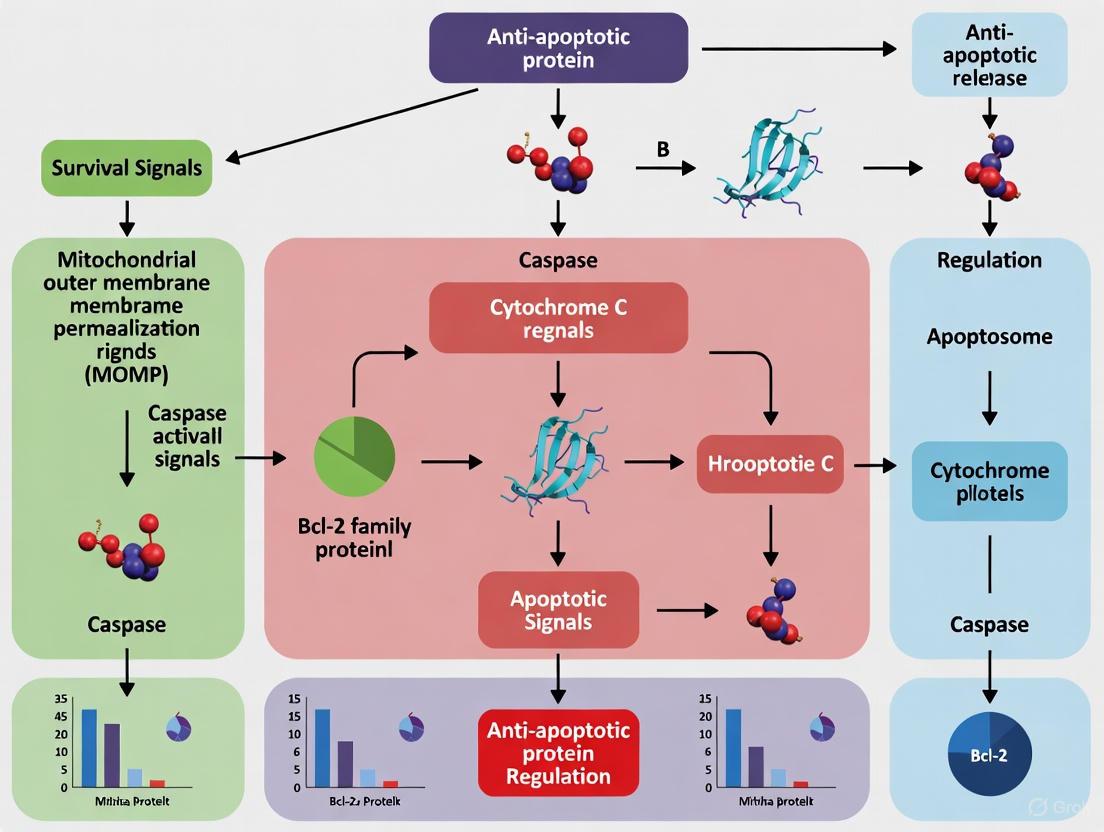
Mitochondrial resistance to apoptosis is a critical barrier in cancer treatment, leading to therapeutic failure and disease progression.
Overcoming Mitochondrial Apoptosis Resistance: Molecular Mechanisms, Therapeutic Strategies, and Future Directions
Abstract
Mitochondrial resistance to apoptosis is a critical barrier in cancer treatment, leading to therapeutic failure and disease progression. This article synthesizes the latest research on the complex molecular mechanisms underpinning this resistance, encompassing alterations in Bcl-2 family proteins, mitochondrial dynamics (fusion/fission), metabolic reprogramming, and quality control via mitophagy. It further explores innovative therapeutic strategies to overcome this resistance, including BH3 mimetics, inducers of novel cell death pathways like ferroptosis and cuproptosis, and inhibitors of mitochondrial dynamics. The content also addresses challenges in therapeutic optimization and evaluates preclinical and clinical validation of emerging mitochondrial-targeted agents. Aimed at researchers, scientists, and drug development professionals, this review provides a comprehensive roadmap for developing next-generation therapies that effectively target the mitochondrial core of apoptosis resistance.
Deconstructing the Mitochondrial Shield: Core Mechanisms of Apoptosis Resistance
Troubleshooting Common Experimental Challenges
FAQ: My BH3 profiling results are inconsistent. What could be the cause? Inconsistent BH3 profiling data often stems from variable peptide quality or mitochondrial preparation integrity.
- Root Cause 1: Peptide Degradation or Solubility. Synthetic BH3-only domain peptides are unstable if handled improperly.
- Solution: Prepare fresh peptide stocks for each assay. Dissolve peptides in DMSO, aliquot, and store at -80°C. Avoid freeze-thaw cycles. Verify peptide sequence and purity (>90%) via mass spectrometry upon receipt.
- Root Cause 2: Non-viable or Impure Mitochondrial Fractions.
- Solution: Isolate mitochondria from freshly harvested cells using differential centrifugation. Confirm membrane integrity by measuring cytochrome c release. Use a control BH3-only peptide (e.g., BIM) as a positive control in every assay run to validate the system.
FAQ: My cell lines show variable resistance to venetoclax despite similar BCL-2 expression levels. Why? Variable resistance often indicates upregulation of alternative anti-apoptotic proteins or post-translational modifications stabilizing them.
- Root Cause 1: Compensatory Upregulation of MCL-1 or BCL-xL.
- Solution: Perform immunoblotting to analyze protein levels of MCL-1, BCL-xL, and BCL-2. Combine venetoclax with specific MCL-1 inhibitors (S63845) or BCL-xL inhibitors (A-1331852) to test for synergistic cell death.
- Root Cause 2: BCL-2 Phosphorylation Modifying Drug Binding.
- Solution: Use Phos-tag gels to detect BCL-2 phosphorylation, particularly at Ser70, which can confer resistance to taxanes and potentially impact BH3 mimetic binding [1].
- Root Cause: Disruption of Protein-Protein Interactions.
- Solution: Use mild, non-denaturing lysis buffers (e.g., CHAPS-based). Avoid prolonged incubation on ice. Crosslink cells with membrane-permeable crosslinkers (e.g., DSP) prior to lysis to capture transient interactions. Include positive controls (e.g., BAD/BCL-2 interaction) to validate your IP antibodies and protocol.
Core Signaling Pathways & Experimental Workflows
The BCL-2 Family Regulatory Network
This diagram illustrates the core interactions between BCL-2 family members that determine cellular fate by regulating mitochondrial outer membrane permeabilization (MOMP).
BH3 Profiling Experimental Workflow
This flowchart outlines the key steps for performing dynamic BH3 profiling, a functional assay to measure mitochondrial priming and dependence on anti-apoptotic proteins.
Research Reagent Solutions
Table 1: Essential Reagents for Studying BCL-2 Family Function
| Reagent Category | Specific Examples | Key Function | Experimental Application |
|---|---|---|---|
| BH3 Mimetics | Venetoclax (ABT-199), Navitoclax (ABT-263), S63845 (MCL-1i), A-1331852 (BCL-xLi) | Specifically inhibit anti-apoptotic proteins by mimicking BH3-only proteins [1] [2] | Determine anti-apoptotic protein dependence; overcome treatment resistance |
| BH3-only Peptides | BIM BH3, BAD BH3, NOXA BH3, MS-1 (HRK-derived) | Synthetic peptides to probe mitochondrial apoptosis priming [3] | BH3 profiling; measure "primed" state of mitochondria |
| Antibodies for Detection | Anti-BCL-2 (clone 100), Anti-BCL-xL (54H6), Anti-MCL-1 (D35A5), Anti-BIM (C34C5), Anti-BAX (D2E11), Anti-BAK (D4E4) | Detect protein expression, localization, and interactions | Western blot, immunohistochemistry, co-immunoprecipitation |
| Cell Line Models | OCI-AML3 (AML), RS4;11 (B-ALL), Pfeiffer (DLBCL), Eμ-myc transgenic models | Well-characterized models with defined BCL-2 family dependencies [4] | Preclinical testing of therapeutic strategies |
| Apoptosis Detection Kits JC-1, TMRM, Annexin V/PI, Caspase-3/7 Glo | Measure mitochondrial membrane potential, phosphatidylserine exposure, caspase activation | Quantify apoptosis induction in response to treatments |
Quantitative Data & Dependence Profiles
Table 2: BCL-2 Family Protein Binding Affinities and Therapeutic Targeting
| Anti-apoptotic Protein | Overexpression in Cancers | High-Affinity BH3 Binders | BH3 Mimetic Inhibitors | Clinical Status |
|---|---|---|---|---|
| BCL-2 | CLL (≈100%), FL (90%), DLBCL (20-30%) [1] [4] | BIM, BAD, PUMA [3] [5] | Venetoclax (ABT-199) | FDA-approved for CLL/AML [1] [2] |
| BCL-xL | DLBCL, Hodgkin lymphoma, solid tumors | BIM, PUMA, BAD, HRK [3] | Navitoclax (ABT-263), A-1331852 | Clinical trials (dose-limited by thrombocytopenia) [4] |
| MCL-1 | AML, multiple myeloma, DLBCL, HCC | BIM, NOXA, PUMA [3] [5] | S63845, AMG-176, AZD5991 | Phase I/II trials (cardiotoxicity concerns) [4] |
| BCL-w | Burkitt lymphoma, DLBCL, FL, MZL [4] | BIM, BAD, BIK, HRK [3] | Not yet specifically targeted | Research stage |
Table 3: Common BCL-2 Family Genetic Alterations in Hematologic Malignancies
| Genetic Alteration | Malignancy | Functional Consequence | Therapeutic Implication |
|---|---|---|---|
| t(14;18) translocation | Follicular lymphoma (90%) [1] [4] | BCL2 overexpression under IGH enhancer | High sensitivity to venetoclax |
| 13q14 deletion | CLL (>50%) [1] | Loss of miR-15/16, leading to BCL2 mRNA stabilization | Venetoclax response, but resistance can emerge |
| BCL2 mutations (F104L/C) | Venetoclax-resistant lymphomas [2] | Reduced drug binding without altering pro-survival function | Need for combination therapies |
| BIM deletions | Mantle cell lymphoma (20%) [4] | Loss of key activator BH3-only protein | Resistance to BH3 mimetics |
| MCL1 amplification/gains | ABC-DLBCL (20-25%), multiple myeloma [4] | Overexpression of alternative anti-apoptotic protein | Rationale for MCL-1 inhibitors |
| Low BIM/PUMA mRNA | Burkitt lymphoma (40%) [4] | Epigenetic silencing of pro-apoptotic sentinels | Priming for resistance to intrinsic apoptosis |
Metabolic Reprogramming and OXPHOS Dependency as a Resistance Niche
Troubleshooting Guides and FAQs
Frequently Asked Questions (FAQs)
Q1: Why do some cancer cells become more dependent on OXPHOS after developing resistance to targeted therapies? A1: Oncogene-addicted cancer cells that develop resistance to targeted therapies, such as EGFR tyrosine kinase inhibitors, often undergo metabolic reprogramming that increases their reliance on mitochondrial OXPHOS. This switch from glycolysis to OXPHOS provides resistant cells with a survival advantage and represents an adaptive resistance mechanism. Research demonstrates that this OXPHOS dependency can be therapeutically exploited, as treatment with OXPHOS inhibitors like OPB-51602 has been shown to restore sensitivity to targeted therapies in resistant models [6].
Q2: How does OXPHOS inhibition reduce tumor hypoxia and potentially improve therapy outcomes? A2: Pharmacological inhibition of OXPHOS reduces the oxygen consumption rate of tumor cells, thereby alleviating diffusion-limited hypoxia within tumors. This metabolic rewiring shifts energy production from oxygen-dependent OXPHOS towards glycolysis, indicated by increased extracellular acidification and glucose uptake. Reduced hypoxia can potentially enhance the efficacy of both radiotherapy and immunotherapy, as hypoxia is a known cause of resistance to these treatments. However, caution is warranted due to potential systemic adverse effects from such metabolic interventions [7].
Q3: What is the relationship between mitochondrial dynamics and therapeutic resistance in cancer? A3: Mitochondrial dynamics—including fusion, fission, and mitophagy—play crucial roles in determining cancer cell susceptibility to treatments. Dysregulation of proteins such as MFN1, MFN2, DRP1, and OPA1 is associated with proliferation and chemoresistance across various tumors. Through these processes, cancer cells maintain a functional mitochondrial population that supports energy production, biosynthetic pathways, and stress tolerance, thereby increasing their resistance to chemotherapeutic drugs [8].
Q4: How can targeting Bcl-2 family proteins help overcome apoptosis resistance? A4: The Bcl-2 family of proteins are key regulators of the intrinsic apoptotic pathway. In cancer, overexpression of anti-apoptotic members (e.g., Bcl-2, Bcl-xL, Mcl-1) conveys resistance by preventing mitochondrial outer membrane permeabilization (MOMP) and subsequent caspase activation. Small molecule inhibitors targeting these anti-apoptotic proteins, known as BH3 mimetics, can directly induce apoptosis or sensitize cancer cells to conventional therapeutics by restoring the apoptotic potential [9] [10].
Q5: What role does the tumor microenvironment play in promoting OXPHOS dependency and resistance? A5: The tumor microenvironment, particularly cancer-associated fibroblasts (CAFs), engages in metabolic symbiosis with cancer cells through the "reverse Warburg effect." In this model, CAFs undergo aerobic glycolysis and export metabolic intermediates such as lactate, pyruvate, and ketone bodies. Cancer cells can then import these metabolites to fuel their OXPHOS, supporting their energy needs and promoting survival under therapeutic stress [9] [11].
Troubleshooting Common Experimental Challenges
Challenge 1: Inconsistent Results in Measuring OXPHOS Inhibition
- Problem: Variable outcomes when testing OXPHOS inhibitors across different cancer cell models.
- Solution:
- Characterize Baseline Metabolism: First, determine the baseline metabolic phenotype of your cell lines using Seahorse XF Analyzers to measure both Oxygen Consumption Rate (OCR, for OXPHOS) and Extracellular Acidification Rate (ECAR, for glycolysis). Heterogeneous responses are often due to intrinsic metabolic differences between models [7].
- Optimize Inhibitor Concentration: Perform dose-response curves using inhibitors like IACS-010759, atovaquone, or metformin. Use the Mito Stress Test kit (Agilent) according to the manufacturer's protocol, sequentially injecting oligomycin, FCCP, and rotenone/antimycin to obtain parameters like basal respiration and ATP-linked respiration [7].
- Confirm Metabolic Shift: Validate the metabolic rewiring from OXPHOS to glycolysis by measuring the increase in ECAR via the Glyco Stress Test and the upregulation of glucose uptake, for instance via [18F]FDG uptake assays [7].
Challenge 2: Failure to Induce Apoptosis Despite Bcl-2 Inhibition
- Problem: Cancer cells do not undergo apoptosis after treatment with BH3 mimetics.
- Solution:
- Profile Bcl-2 Family Expression: Use western blotting to characterize the expression levels of pro- and anti-apoptotic Bcl-2 family proteins (e.g., Bcl-2, Mcl-1, Bcl-xL, Bax, Bak). Resistance can be due to high levels of non-targeted anti-apoptotic proteins [9].
- Check for MOMP Execution: Assess the integrity of the mitochondrial outer membrane by measuring cytochrome c release from the mitochondria into the cytosol via subcellular fractionation and western blotting. Also, monitor the activation of executioner caspases (caspase-3/7) using fluorescent activity assays [9] [10].
- Investigate Compensatory Pathways: Evaluate the activation status of pro-survival pathways like PI3K/AKT, which are often hyperactive in multi-drug resistant tumors and can counteract pro-apoptotic signals. Combining BH3 mimetics with AKT inhibitors may be necessary [9].
Challenge 3: Modeling Metabolic Plasticity and Resistance In Vitro
- Problem: 2D monolayer cultures fail to recapitulate the metabolic heterogeneity and therapy resistance observed in vivo.
- Solution:
- Implement 3D Culture Models: Generate 3D tumor spheroids. Seed cells (e.g., 10,000 cells/well) in U-bottom ultra-low attachment plates with a low percentage of Matrigel (e.g., 2.5%) and centrifuge to form spheroids. These models better mimic diffusion-limited hypoxia and metabolic gradients found in tumors [7].
- Monitor Hypoxia in Spheroids: Use spheroid models engineered with HIF1α-responsive element (HRE)-eGFP constructs. This allows for real-time monitoring of hypoxia via live-cell imaging (e.g., IncuCyte ZOOM System) following OXPHOS inhibition, directly visualizing the reduction in hypoxic regions [7].
- Co-culture with Stromal Cells: Establish co-cultures with Cancer-Associated Fibroblasts (CAFs) to model the "reverse Warburg effect." This setup allows you to study how metabolic crosstalk, such as the transfer of lactate from CAFs to cancer cells, fuels OXPHOS and confers resistance [11].
Summarized Data Tables
Table 1: Characterized OXPHOS Inhibitors and Their Experimental Effects
| Inhibitor Name | Molecular Target | Key Experimental Findings | Model Systems Tested | Potential Limitations |
|---|---|---|---|---|
| IACS-010759 | Mitochondrial Complex I | - Reduces oxygen consumption rate (OCR) [7].- Induces a shift to glycolysis (increased ECAR) [7].- Reduces tumor hypoxia in spheroids and in vivo [7]. | - 2D cell cultures (e.g., MC38, MOC1) [7].- 3D spheroid models [7].- Syngeneic immunocompetent mouse models [7]. | - Can cause systemic adverse effects due to metabolic rewiring [7]. |
| Atovaquone | Mitochondrial Complex III | - Attenuates OXPHOS [7].- Increases glycolytic activity [7]. | - 2D cell cultures [7].- 3D spheroid models [7]. | - Further investigation needed for efficacy in resistant niches [7]. |
| Metformin | Mitochondrial Complex I | - Inhibits OXPHOS [7].- Promotes metabolic shift towards glycolysis [7]. | - 2D cell cultures [7].- 3D spheroid models [7]. | - Variable potency; often requires high doses [7]. |
| OPB-51602 | OXPHOS (STAT3 inhibition) | - Restores sensitivity to EGFR TKIs in oncogene-addicted, therapy-resistant cells [6].- Shows efficacy in TKI-resistant patients [6]. | - Oncogene-addicted cancer cell lines [6].- Clinical patient subset [6]. | - Clinical development and specificity profile require further validation [6]. |
Table 2: Key Assays for Investigating Mitochondrial Apoptosis Resistance
| Assay Type | Target of Measurement | Key Parameters | Technical Considerations |
|---|---|---|---|
| Seahorse XF Mito Stress Test | OXPHOS Function | - Basal Respiration- ATP-linked Respiration- Maximal Respiration- Spare Respiratory Capacity | - Optimize cell seeding density [7].- Use appropriate mitochondrial inhibitors (oligomycin, FCCP, rotenone/antimycin) [7]. |
| Seahorse XF Glyco Stress Test | Glycolytic Function | - Glycolysis- Glycolytic Capacity- Glycolytic Reserve | - Measure extracellular acidification rate (ECAR) after sequential injection of glucose, oligomycin, and 2-DG [7]. |
| Flow Cytometry with JC-1/TMRM | Mitochondrial Membrane Potential (ΔΨm) | - Shift in fluorescence emission (JC-1) or intensity (TMRM) indicating loss of ΔΨm. | - Use as an early indicator of apoptosis and mitochondrial health. Correlate with other apoptosis assays [12]. |
| Caspase-3/7 Activity Assay | Apoptosis Execution | - Fluorescent signal from cleavage of caspase-specific substrates. | - Perform at various time points after treatment. Can be adapted for live-cell imaging [9] [10]. |
| Cytochrome c Release (WB/IF) | Mitochondrial Outer Membrane Permeabilization (MOMP) | - Translocation of cytochrome c from mitochondrial fraction to cytosolic fraction. | - Requires careful subcellular fractionation to avoid mitochondrial rupture [9] [10]. |
| [18F]FDG Uptake Assay | Glucose Uptake | - Radioactive uptake indicating glycolytic flux. | - Can be performed in vitro (cells) and ex vivo (tissues) [7]. Indicates metabolic shift upon OXPHOS inhibition [7]. |
Signaling Pathways and Experimental Workflows
Mitochondrial Regulation of Apoptosis and Metabolic Resistance
Experimental Workflow for Targeting OXPHOS Dependency
The Scientist's Toolkit: Research Reagent Solutions
Table 3: Essential Reagents for Investigating OXPHOS Dependency and Apoptosis Resistance
| Reagent / Tool | Primary Function / Target | Example Application in Research | Key Experimental Notes |
|---|---|---|---|
| IACS-010759 | Potent, selective inhibitor of mitochondrial Complex I [7]. | Investigating the metabolic rewiring and vulnerabilities of OXPHOS-dependent resistant cells [7]. | Monitor for systemic toxicity in vivo. Use Seahorse XF Analyzer to confirm OCR reduction [7]. |
| BH3 Mimetics (e.g., ABT-199/Venetoclax) | Small molecule inhibitors that antagonize anti-apoptotic Bcl-2 proteins (e.g., Bcl-2, Bcl-xL, Mcl-1) [9]. | Restoring mitochondrial apoptosis in resistant cancer cells, often used in combination therapies [9] [13]. | Profile the specific anti-apoptotic protein dependency of the cell line first. Can be combined with OXPHOS inhibitors [9]. |
| Seahorse XF Analyzer Kits (Mito/Glyco Stress Tests) | Simultaneously measure OCR and ECAR in live cells to profile metabolic phenotype [7]. | Defining the baseline metabolic state (glycolytic vs. OXPHOS) and validating the effects of metabolic inhibitors [7]. | Critical for optimizing treatment protocols and confirming metabolic shifts. Requires careful optimization of cell number [7]. |
| HIF-1α Reporter Constructs (HRE-eGFP) | Hypoxia sensing; GFP expression under control of Hypoxia Response Elements [7]. | Visualizing and quantifying hypoxia reduction in 3D spheroids or in vivo after OXPHOS inhibition [7]. | Enables real-time, non-invasive monitoring of tissue oxygenation changes in complex models [7]. |
| 3D Spheroid Culture Systems (e.g., ULA plates, Matrigel) | Mimic in vivo tumor architecture, including metabolic gradients and diffusion-limited hypoxia [7]. | Studying metabolic heterogeneity and therapy resistance in a more physiologically relevant context than 2D cultures [7]. | Essential for validating the impact of OXPHOS inhibition on tumor hypoxia [7]. |
| CAFs (Cancer-Associated Fibroblasts) | Key stromal component that engages in metabolic symbiosis with cancer cells [9] [11]. | Modeling the "reverse Warburg effect" in co-culture systems to study its role in fueling OXPHOS and resistance [11]. | Co-culture experiments are necessary to dissect the metabolic crosstalk within the TME [11]. |
Frequently Asked Questions (FAQs)
FAQ 1: What are the core molecular executors of mitochondrial fission and fusion, and how do they directly influence a cell's susceptibility to apoptosis?
The core regulators of mitochondrial dynamics are specific GTPase proteins. Fusion of the outer mitochondrial membrane is mediated by Mitofusins 1 and 2 (MFN1/2), while inner membrane fusion is regulated by Optic Atrophy 1 (OPA1) [8]. Fission is primarily executed by Dynamin-Related Protein 1 (Drp1), which is recruited from the cytosol to the mitochondrial surface by receptors like mitochondrial fission factor (MFF), mitochondrial dynamics proteins MiD49/51, and fission protein 1 (Fis1) [14] [15].
Their influence on apoptosis is direct and mechanistic:
- Pro-Fusion (MFN2, OPA1): Enhance resistance to apoptosis. MFN2 can directly tether the endoplasmic reticulum to mitochondria, facilitating calcium signaling and, under certain conditions, apoptosis initiation. However, OPA1 plays a more critical role in maintaining cristae junctions, preventing the release of cytochrome c, a key step in the intrinsic apoptosis pathway [16] [8].
- Pro-Fission (Drp1): Promotes apoptosis. Fission facilitates the fragmentation of the mitochondrial network, which can isolate damaged mitochondria for mitophagy. However, excessive fission also creates smaller, fragmented mitochondria that are more prone to Membrane Outer Membrane Permeabilization (MOMP), the point of no return for intrinsic apoptosis [14] [15]. Drp1 activation, often through phosphorylation at S616 by kinases like CDK1 or ERK, is a hallmark of pro-apoptotic signaling [14].
FAQ 2: Our team is observing inconsistent cytochrome c release in apoptosis assays. Could cristae remodeling be a factor, and how can we detect these ultrastructural changes?
Yes, inconsistent cytochrome c release is a classic symptom of dysregulated cristae remodeling. Cytochrome c is normally sequestered within the cristae lumen; its release requires the remodeling and widening of the cristae junctions (CJs) [16].
The key regulator for this process is OPA1. In its long form (L-OPA1), it stabilizes and tightens CJs. Proteolytic cleavage of L-OPA1 to short forms (S-OPA1) promotes CJ opening, facilitating cytochrome c release and apoptosis [16]. Inconsistencies in your assays could stem from variable OPA1 processing or the activity of the MICOS complex, a large protein assembly that scaffolds the CJs. Abnormalities in the MICOS complex lead to CJ detachment and aberrant cristae structure [16].
To detect these changes, you require high-resolution imaging:
- Transmission Electron Microscopy (TEM): This remains the gold standard for visualizing cristae ultrastructure. You can directly observe CJ width, cristae density, and overall morphology [16] [17].
- Deep Learning-Assisted TEM Analysis: New frameworks now automate the segmentation and quantification of mitochondrial parameters from TEM images (e.g., area, cristae count), reducing analysis time by 90% and minimizing human error [17]. This provides robust, quantitative data on morphological changes.
FAQ 3: We are investigating drug resistance in cancer. What is the evidence that mitochondrial dynamics are a viable therapeutic target to re-sensitize cells to treatment?
There is strong and growing evidence that cancer cells exploit mitochondrial dynamics to evade cell death. Mitochondrial dynamics are now considered a core component of cancer drug resistance [8] [15].
- Metabolic Reprogramming: Many cancers, including prostate cancer, show increased dependence on Oxidative Phosphorylation (OXPHOS). This metabolic phenotype is associated with resistance to various therapies [18].
- Apoptotic Evasion: Overexpression of anti-apoptotic Bcl-2 family proteins (e.g., Bcl-2, Bcl-xL, MCL-1) is a common resistance mechanism. They inhibit MOMP by binding and neutralizing pro-apoptotic proteins like Bax and Bak [19] [20] [15].
- Dynamic Plasticity: Tumors can shift their mitochondrial dynamics to survive. For example, some cells may increase fusion to mix and dilute cellular damage, while others might increase fission to isolate and remove damaged parts via mitophagy, thereby increasing overall population resilience [8].
Targeting these pathways is a viable strategy. For instance:
- BH3 Mimetics (e.g., Venetoclax) are drugs that specifically inhibit anti-apoptotic Bcl-2 proteins, pushing the cell toward MOMP and apoptosis [15].
- Drp1 Inhibitors (e.g., Mdivi-1) can inhibit excessive fission, preventing the fragmentation that facilitates apoptosis and has shown promise in some models to suppress tumor growth [14] [15].
Troubleshooting Guides
Problem: Inconsistent Induction of Mitochondrial Fission via Pharmacological Agents
Table: Troubleshooting Mitochondrial Fission Induction
| Problem Observation | Potential Cause | Recommended Solution |
|---|---|---|
| Variable or weak mitochondrial fragmentation across cell population. | Inconsistent Drp1 activation due to variable phosphorylation. | - Validate Drp1 phosphorylation status at S616 via western blot.- Pre-treat cells in synchronized or consistent metabolic state (e.g., consistent serum starvation prior to treatment). |
| No fission observed despite using established Drp1 activators (e.g., CCCP). | Compensatory fusion activity overpowering fission; or impaired Drp1 recruitment. | - Combine fission inducer with a fusion inhibitor (e.g., MFN inhibitor).- Check expression levels of Drp1 mitochondrial receptors (MFF, MiD49/51) via qPCR or western blot. |
| High cell death concurrent with fission induction. | Agent is causing excessive, toxic fragmentation. | - Titrate the concentration of the fission inducer and reduce exposure time.- Implement live-cell imaging to monitor fission kinetics and viability (e.g., with MitoTracker and a viability dye). |
Problem: Difficulty in Quantifying Cristae Remodeling in Response to Pro-Apoptotic Stimuli
Table: Troubleshooting Cristae Remodeling Analysis
| Problem Observation | Potential Cause | Recommended Solution |
|---|---|---|
| TEM images are unclear or lack sufficient resolution for cristae junctions. | Suboptimal sample preparation or fixation. | - Ensure use of glutaraldehyde/paraformaldehyde dual fixation and post-fixation with osmium tetroxide [17].- Request ultrathin sections (e.g., 65 nm) from your EM core facility. |
| Manual analysis of TEM images is time-consuming and subjective. | Inherent limitations of manual segmentation and quantification. | - Employ a deep learning-based segmentation model. These frameworks can reduce analysis time by 90% and provide objective, reproducible metrics for cristae parameters [17]. |
| Uncertain molecular link between stimulus and cristae structure. | Lack of biochemical correlation. | - Couple TEM analysis with western blot analysis of OPA1 processing (L-OPA1 vs. S-OPA1 ratios) and key MICOS complex subunits (e.g., MIC60) [16]. |
Key Experimental Protocols
Protocol 1: Assessing Mitochondrial Morphology and Cristae Structure via TEM
This protocol outlines the steps for preparing samples to visualize mitochondrial dynamics and cristae remodeling using Transmission Electron Microscopy, a critical technique for ultrastructural analysis [17].
- Fixation: Immediately after treatment, wash cells with PBS and fix with 2.5% glutaraldehyde + 2% paraformaldehyde in 0.1M phosphate buffer (pH 7.4) for 24 hours at 4°C.
- Washing: Rinse the fixed cells 3 times in 0.1M phosphate buffer.
- Post-fixation: Treat cells with 1% osmium tetroxide in 0.1M phosphate buffer for 1.5 hours at room temperature to stain lipid membranes.
- Dehydration: Gradually dehydrate the sample using a graded ethanol series (50%, 70%, 90%, 100%), each step for 10 minutes.
- Infiltration and Embedding: Infiltrate cells with propylene oxide, then embed in epoxy resin (e.g., Poly/Bed 812) and polymerize at 60°C for 48 hours.
- Sectioning and Staining: Cut ultrathin sections (65 nm) using an ultramicrotome. Mount sections on grids and stain with 5% uranyl acetate (10 min) followed by 1% lead citrate (5 min).
- Imaging and Analysis: Acquire images using a TEM at 80 kV. Analyze using manual methods in ImageJ or, for higher throughput and objectivity, use a deep learning-driven segmentation pipeline [17].
Protocol 2: Functional Analysis of MOMP and Cytochrome c Release
This protocol describes a method to confirm the functional consequence of cristae remodeling by measuring cytochrome c release, a key event in the intrinsic apoptosis pathway.
- Cell Fractionation: After treatment, harvest cells and wash with ice-cold PBS. Use a cell fractionation kit or differential centrifugation to separate the cytosolic fraction from the heavy membrane fraction (containing mitochondria).
- Western Blotting: Prepare protein lysates from both the cytosolic and mitochondrial fractions. Ensure equal protein loading.
- Immunoblotting: Probe the blots with the following antibodies:
- Anti-cytochrome c: Look for an increase in the cytosolic fraction and a corresponding decrease in the mitochondrial fraction.
- Compartment Markers: Use COX IV (mitochondrial marker) and α-tubulin or GAPDH (cytosolic markers) to confirm the purity of your fractions and ensure the cytochrome c signal is due to translocation, not general leakage.
- Quantification: Use densitometry to quantify the band intensities and calculate the ratio of cytosolic to mitochondrial cytochrome c.
Signaling Pathway Diagrams
Diagram 1: Mitochondrial Control of Apoptosis. This diagram illustrates the integrated role of mitochondrial dynamics and cristae remodeling in the intrinsic apoptosis pathway. Pro-apoptotic signals disrupt the balance of BCL-2 family proteins, promoting Drp1-mediated fission and OPA1/MICOS-dependent cristae remodeling. These dynamics facilitate Mitochondrial Outer Membrane Permeabilization (MOMP) and the release of cytochrome c from its cristae stores, triggering caspase activation and cellular apoptosis [16] [14] [20].
The Scientist's Toolkit: Research Reagent Solutions
Table: Essential Reagents for Investigating Mitochondrial Dynamics in Apoptosis
| Reagent / Tool | Primary Function | Key Application in Research |
|---|---|---|
| MitoTracker Probes (e.g., Deep Red, CMXRos) | Fluorescent dyes that accumulate in active mitochondria. | Live-cell imaging of mitochondrial mass, membrane potential, and network morphology. |
| Drp1 Inhibitors (e.g., Mdivi-1) | Selective inhibitor of Drp1 GTPase activity. | To chemically inhibit mitochondrial fission and study its functional consequences on apoptosis [14] [15]. |
| OPA1 Antibodies | Detect total OPA1 and differentiate long (L-OPA1) and short (S-OPA1) isoforms. | Western blot analysis to assess the proteolytic processing of OPA1, a key indicator of cristae remodeling status [16] [8]. |
| BH3 Mimetics (e.g., Venetoclax/ABT-199) | Small molecules that inhibit anti-apoptotic proteins like BCL-2. | To directly target the apoptotic machinery and probe mitochondrial priming for death, often used in cancer research [19] [15]. |
| Seahorse XF Analyzer | Measures Oxygen Consumption Rate (OCR) and Extracellular Acidification Rate (ECAR). | Functional profiling of mitochondrial respiration and cellular metabolic phenotype in real-time [18]. |
| Deep Learning Segmentation Models | AI-based tools for automated image analysis. | High-throughput, objective quantification of mitochondrial morphology and cristae structure from TEM images [17]. |
Mitophagy, the selective autophagic degradation of mitochondria, is a critical mitochondrial quality control (MQC) mechanism that maintains cellular homeostasis by eliminating dysfunctional or superfluous mitochondria [21] [22]. However, in the context of diseases such as cancer, this essential housekeeping function can be co-opted to promote cell survival under stress, thereby contributing to apoptosis resistance and complicating therapeutic interventions [23] [24]. This guide is designed to support researchers in navigating this duality, providing targeted troubleshooting and methodological support for experiments aimed at dissecting and overcoming mitophagy-mediated apoptosis resistance.
Core Mechanisms & Signaling Pathways
Understanding the primary mitophagy pathways is fundamental to designing and interpreting experiments. The two major mechanisms are ubiquitin-mediated (notably the PINK1-Parkin pathway) and receptor-mediated mitophagy.
PINK1-Parkin Pathway (Ubiquitin-Dependent)
This well-characterized pathway acts as a sensitive sensor for mitochondrial damage [21] [25].
- Damage Sensing: In healthy mitochondria, PINK1 is imported and degraded. Upon mitochondrial depolarization, PINK1 import is halted, leading to its stabilization and accumulation on the outer mitochondrial membrane (OMM) [21] [25] [26].
- Signal Amplification: PINK1 auto-phosphorylates and phosphorylates ubiquitin. This recruits the E3 ubiquitin ligase Parkin from the cytosol and activates it via phosphorylation [21] [25].
- Execution: Activated Parkin ubiquitinates numerous OMM proteins (e.g., MFN1, MFN2, VDAC1). These ubiquitin chains serve as "eat-me" signals, recruiting autophagy adaptor proteins like OPTN and NDP52, which in turn bind LC3 on the forming autophagosome, encapsulating the mitochondrion for degradation [21] [25].
Receptor-Mediated Pathways (Ubiquitin-Independent)
This pathway utilizes specific OMM proteins that act as mitophagy receptors by directly interacting with LC3 on autophagosomes via an LC3-interacting region (LIR) [25].
- FUNDC1: Accumulates under hypoxic stress. Its activity is regulated by phosphorylation; dephosphorylation enhances its interaction with LC3. It also recruits DRP1 to promote mitochondrial fission, facilitating the isolation of damaged organelles [25].
- BNIP3 & NIX/BNIP3L: These hypoxia-inducible proteins possess a BH3 domain that can bind LC3. Their function and stability are regulated by phosphorylation from kinases such as ULK1 and JNK1/2. NIX is crucial for mitochondrial clearance during erythrocyte maturation [25].
The diagram below illustrates the coordinated sequence of these core mechanisms.
The Scientist's Toolkit: Research Reagent Solutions
This table catalogs essential reagents for modulating and monitoring mitophagy in experimental models.
Table 1: Key Research Reagents for Mitophagy Studies
| Reagent / Tool | Function / Target | Key Application & Notes |
|---|---|---|
| Mdivi-1 | Allosteric inhibitor of DRP1 (fission) [27] [28] | Inhibits fission-associated mitophagy; use to probe role of mitochondrial fragmentation. |
| Liensinine | Inhibits autophagosome-lysosome fusion [23] | Blocks late-stage mitophagy; does not alter lysosomal pH (differs from CQ/BafA1). |
| Chloroquine (CQ) / Hydroxychloroquine (HCQ) | Lysosome alkalinization inhibitor [23] | Inhibits degradative phase; widely used in clinical trials. |
| Ceramide (e.g., LCL-461) | Inducer of "lethal mitophagy" [23] | Promotes excessive mitophagy leading to cell death; potential in FLT3-ITD+ AML. |
| siRNA/shRNA (ATG5, ATG7, PINK1, Parkin, BNIP3, etc.) | Genetic knockdown of pathway components [23] [28] | To establish genetic requirement of specific proteins in mitophagy. |
| TMRM / JC-1 | Fluorescent probes for mitochondrial membrane potential (ΔΨm) [28] [26] | Measure mitochondrial depolarization, a key mitophagy trigger. |
| LC3B Antibody | Immunofluorescence / Western blot detection [25] [28] | Monitor autophagosome formation; puncta formation indicates autophagy activity. |
| mt-Keima | Ratiometric pH-sensitive fluorescent mitochondrial probe [25] | Distinguishes neutral (mitochondrial) vs. acidic (lysosomal) pH; gold standard for mitophagy flux. |
Troubleshooting Common Experimental Challenges
This section addresses frequent problems encountered in mitophagy research.
FAQ 1: My mitophagy induction assay shows mitochondrial depolarization and Parkin recruitment, but I do not observe efficient lysosomal degradation. What could be the issue?
- Potential Cause 1: Off-target pathway inhibition. Check if your experimental conditions (e.g., cell stressor) inadvertently inhibit lysosomal function or autophagosome-lysosome fusion.
- Troubleshooting Steps:
- Perform a Flux Assay: Use a tandem-tagged reporter (e.g., mt-Keima) or treat cells with lysosomal inhibitors (e.g., Bafilomycin A1, Chloroquine, Liensinine [23]). If the signal increases with inhibition, it confirms functional flux. A lack of increase suggests a block in earlier steps.
- Probe Lysosomal Function: Assess lysosomal pH and protease activity using LysoTracker and magic red cathepsin substrates, respectively.
- Check Key Fusion Proteins: Evaluate the expression and localization of proteins involved in fusion, such as RAB7A. Liensinine, for example, blocks fusion by reducing RAB7A recruitment to lysosomes [23].
FAQ 2: I am observing contradictory cell survival outcomes when inducing mitophagy in my cancer model. How can I determine if it is acting as a pro-survival or cell death mechanism?
- Potential Cause: The dual role of mitophagy. Moderate activation may promote survival by removing damaged mitochondria, while excessive, unregulated mitophagy can lead to catastrophic mitochondrial loss and bioenergetic crisis [23] [24].
- Troubleshooting Steps:
- Quantify the Extent: Do not just induce mitophagy; titrate the induction. Use multiple doses of your inducer (e.g., Ceramide analogs [23]) and correlate the level of mitophagy flux with cell death markers (Annexin V, caspase activation).
- Monitor Energetic Status: Measure cellular ATP levels concurrently. A sharp decline in ATP following strong mitophagy induction suggests lethal metabolic disruption.
- Inhibit Strategically: If mitophagy is pro-survival, its inhibition should sensitize cells to your stressor (e.g., chemotherapy). If it is lethal, inhibition should rescue cell viability [23].
FAQ 3: My negative control cells show baseline levels of mitophagy, confounding my experimental results. How can I reduce this background signal?
- Potential Cause: Constitutive mitophagy is a normal homeostatic process and can be elevated in rapidly dividing cells or under suboptimal culture conditions (e.g., nutrient stress, high ROS).
- Troubleshooting Steps:
- Optimize Cell Culture: Ensure cells are not over-confluent and are fed with fresh media appropriately to avoid nutrient deprivation, which can induce autophagy.
- Use Validated Knockdowns: Employ siRNA or CRISPR/Cas9 to create isogenic cell lines lacking key mitophagy proteins (e.g., PINK1, Parkin, or FUNDC1 [25] [23]) to serve as stringent negative controls.
- Establish a Proper Baseline: Always include a "full inhibition" control (e.g., cells treated with both mitophagy inducer and a late-stage inhibitor like Bafilomycin A1) to quantify true induced mitophagy flux above the background.
Experimental Protocols for Key Applications
Protocol: Assessing Mitophagy Flux Using mt-Keima
Principle: mt-Keima is a fluorescent protein targeted to the mitochondrial matrix. Its excitation spectrum shifts upon delivery from the neutral mitochondrial environment to the acidic lysosome, allowing ratiometric quantification of mitophagy [25].
Workflow:
- Cell Preparation: Seed your cells (e.g., HeLa, H9c2 cardiomyoblasts) and transduce with an mt-Keima adenovirus. Allow 24-48 hours for expression.
- Experimental Treatment: Apply your mitophagy inducer (e.g., 10-20 µM CCCP for PINK1-Parkin pathway; Hypoxia for receptor-mediated) for a desired timeframe (e.g., 6-24 hours). Include a control group and a group co-treated with a lysosomal inhibitor (e.g., 100 nM Bafilomycin A1) for the last 4-6 hours to confirm flux.
- Imaging & Analysis: Visualize cells by confocal microscopy using dual-excitation (e.g., 458 nm for neutral mitochondria, 561 nm for acidic lysosomes). Calculate the ratio of 561 nm/458 nm emission. An increase in this ratio indicates mitophagy flux.
Protocol: Genetic Validation via siRNA Knockdown
Principle: To establish the genetic requirement of a specific protein in your observed mitophagic response.
Workflow:
- Design: Select validated siRNA pools targeting your gene of interest (e.g., PINK1, FUNDC1) and a non-targeting control (NTC) siRNA.
- Transfection: Transfect cells using your standard method (e.g., lipofection). Incubate for 48-72 hours to achieve sufficient protein knockdown.
- Induction & Analysis: Induce mitophagy and assess the outcome compared to NTC cells.
- Western Blot: Probe for downstream events (e.g., loss of mitochondrial proteins like TOM20 in a Parkin-dependent assay).
- Imaging: Quantify the co-localization of mitochondria (e.g., TOM20 staining) with lysosomes (LAMP1 staining) or autophagosomes (LC3 puncta).
The following tables consolidate key quantitative findings from the literature, highlighting the dual role of mitophagy.
Table 2: Mitophagy as a Pro-Survival Mechanism in Disease
| Disease / Context | Mitophagy Inducer / Regulator | Observed Outcome (Pro-Survival) | Citation |
|---|---|---|---|
| Cancer (Colorectal CSC) | Doxorubicin (induces BNIP3L) | Inhibition of mitophagy via BNIP3L silencing enhanced doxorubicin sensitivity. | [23] |
| Cancer (Breast Cancer) | Liensinine (inhibitor) | Liensinine enhanced sensitivity to doxorubicin, paclitaxel, vincristine, and cisplatin. | [23] |
| Atherosclerosis | Oxidized LDL (PINK1/Parkin) | PINK1/Parkin silencing impaired mitophagy flux and enhanced VSMC apoptosis. | [28] |
| Cancer (Neuroblastoma) | UNBS1450 treatment | Efficient mitophagy blocked apoptosis; inhibition by ATG5/ATG7 siRNA reactivated cell death. | [23] |
Table 3: Mitophagy as a Cell Death Mechanism
| Disease / Context | Mitophagy Inducer / Regulator | Observed Outcome (Cell Death) | Citation |
|---|---|---|---|
| Cancer (AML) | Ceramide / LCL-461 (ceramide analog) | Induced "lethal mitophagy", attenuating drug resistance in FLT3-ITD+ AML models. | [23] |
| Heart Disease | UPRmt (e.g., LONP1, OMI/HTRA2) | Moderate UPRmt activation is protective; excessive activation is cardiotoxic, promoting apoptosis. | [29] |
FAQs: Cell Death Pathways in Cancer Drug Resistance Research
How can I confirm that observed cell death is PANoptosis and not just a single pathway like apoptosis?
To conclusively identify PANoptosis, you must demonstrate the simultaneous activation of key molecular markers from at least two, and often all three, of the core regulated cell death pathways: pyroptosis, apoptosis, and necroptosis [30] [31]. PANoptosis is regulated by a multiprotein complex called the PANoptosome, which contemporaneously engages molecules from these distinct pathways [31].
Essential Experimental Validation:
- Molecular Profiling: Use immunoblotting to detect cleaved executioner proteins from multiple pathways in your samples. The presence of cleaved caspase-3 (apoptosis executor), phospho-MLKL (necroptosis executor), and cleaved Gasdermin D (pyroptosis executor) in the same cell population is a strong indicator [30] [32] [31].
- Pathway Inhibition: Employ specific chemical inhibitors or genetic knockdowns. PANoptosis will not be fully blocked by inhibiting only one pathway (e.g., a caspase inhibitor like Z-VAD-FMK for apoptosis, GSK'872 for RIPK3 in necroptosis, or a caspase-1 inhibitor for pyroptosis) [32] [31]. The combined loss of multiple pathways is required to prevent cell death.
- Morphological Analysis: Combine assays to capture mixed morphological features. While pure apoptosis shows cell shrinkage and blebbing, and pyroptosis/necroptosis show plasma membrane rupture, PANoptosis can present a complex morphology [33] [30] [34]. Use microscopy alongside vital dyes like propidium iodide to assess membrane integrity.
Table 1: Key Markers to Distinguish PANoptosis from Single Pathway Death
| Target Pathway | Key Marker to Detect | Detection Method | Interpretation for PANoptosis |
|---|---|---|---|
| Apoptosis | Cleaved Caspase-3; Cleaved PARP | Western Blot, Flow Cytometry | Must be present alongside a marker from another pathway. |
| Necroptosis | Phospho-MLKL (Thr357/Ser358) | Western Blot, IHC | Must be present alongside a marker from another pathway. |
| Pyroptosis | Cleaved Gasdermin D (GSDMD) | Western Blot, IHC | Must be present alongside a marker from another pathway. |
| PANoptosis | Co-localization of above markers | Multiple parallel assays | Confirmed by presence of markers from ≥2 pathways. |
Our team is investigating mitochondrial apoptosis resistance in solid tumors. What alternative cell death pathways could be targeted therapeutically?
Mitochondrial apoptosis resistance, often mediated by the overexpression of anti-apoptotic BCL-2 family proteins like BCL-2, BCL-XL, and MCL1, is a major hurdle in cancer therapy [35] [36]. Targeting alternative, non-apoptotic cell death pathways that can bypass this resistance is a promising strategy.
Promising Alternative Pathways:
- Necroptosis: This pathway is independent of the core apoptotic machinery and is executed by MLKL downstream of RIPK1 and RIPK3 [30] [32]. It can be induced by ligands like TNF-α when caspase-8 activity is inhibited, making it an excellent backup when tumors resist apoptosis [30] [31].
- Pyroptosis: An inflammatory lytic death executed by Gasdermin family proteins (e.g., GSDMD), which form pores in the plasma membrane upon cleavage by inflammatory caspases (e.g., caspase-1/4/5) [30] [32]. It can be triggered by certain chemotherapies and oncolytic viruses, directly lysing tumor cells and stimulating anti-tumor immunity.
- Ferroptosis: An iron-dependent form of death characterized by the accumulation of phospholipid peroxides [30]. It is distinct from apoptosis and necroptosis and is executed through the failure of the glutathione-dependent antioxidant defense, primarily GPX4 [30] [32]. Many therapy-resistant cells, particularly those with mesenchymal or stem-like phenotypes, are highly vulnerable to ferroptosis inducers.
- PANoptosis: Engaging this unified cell death pathway can overcome resistance mechanisms that protect against a single pathway. Certain infectious agents and cytokine combinations are potent inducers of PANoptosis, offering a multi-pronged attack on resistant tumors [30] [31].
Table 2: Targeting Alternative Death Pathways to Overcome Apoptosis Resistance
| Pathway | Key Executor Protein | Therapeutic Triggering Strategy | Advantage in Resistant Cancers |
|---|---|---|---|
| Necroptosis | MLKL | SMAC mimetics + caspase inhibition; TLR3 agonists | Bypasses mitochondrial block; can be backup when caspases are inhibited. |
| Pyroptosis | Gasdermin D (GSDMD) | Certain chemotherapies (e.g., cisplatin); Inflammasome activators | Induces inflammatory lytic death, stimulates anti-tumor immunity. |
| Ferroptosis | GPX4 (inhibition required) | GPX4 inhibitors (e.g., RSL3); System xc- inhibitors (e.g., Erastin) | Effective against mesenchymal and persister cells resistant to apoptosis. |
| PANoptosis | PANoptosome Complex | Combined innate immune triggers (e.g., IFN-γ + TAK1 inhibitor) | Activates a redundant death network, difficult for tumors to evade. |
We see unexpected inflammatory responses in our cell death models. How do we determine if pyroptosis or necroptosis is the cause?
Both pyroptosis and necroptosis are lytic and pro-inflammatory, releasing damage-associated molecular patterns (DAMPs) and cytokines [30]. To distinguish them, you need to focus on their unique and non-redundant molecular executors.
Troubleshooting Guide for Inflammatory Lytic Death:
Assess the Key Executioner Proteins:
- For Pyroptosis: Detect cleaved Gasdermin D (GSDMD) by western blot. The N-terminal fragment of GSDMD is the definitive marker for pore formation in the plasma membrane [30] [32].
- For Necroptosis: Detect phosphorylated MLKL (at Thr357/Ser358 in humans) by western blot or specific antibodies. Phospho-MLKL oligomerizes and translocates to the plasma membrane to execute cell lysis [32].
Use Specific Pharmacological Inhibitors:
- To implicate necroptosis, use the specific RIPK1 inhibitor Nec-1s (7-Cl-O-Nec-1) or the RIPK3 inhibitor GSK'872 [32]. Significant reduction in cell death and inflammation suggests a necroptotic component.
- For pyroptosis, use caspase-1 inhibitors (e.g., VX-765) or caspase-4/5/11 inhibitors. However, note that caspase-1 is also involved in cytokine maturation, so its inhibition may reduce inflammation without fully blocking death.
Check for Upstream Caspase Involvement:
- Pyroptosis is typically initiated by caspase-1 (via canonical inflammasomes) or caspase-4/5/11 (via non-canonical pathways) [30] [32]. Detection of active forms of these caspases supports pyroptosis.
- Necroptosis occurs when caspase-8 is inhibited, allowing the RIPK1-RIPK3-MLKL axis to proceed [30] [31]. Check for the absence of caspase-8 activity.
What are the essential controls for experiments using BH3-mimetics to avoid misinterpretation of cell death data?
BH3-mimetics like venetoclax (BCL-2 inhibitor) are powerful tools but require careful experimental design to ensure that observed effects are on-target [36].
Critical Controls and Considerations:
- Baseline Protein Profiling: Before treatment, profile the expression levels of key anti-apoptotic BCL-2 family proteins (BCL-2, BCL-XL, MCL1) in your cell models. A cell dependent on MCL1 will not die from BCL-2-specific inhibition alone [36].
- Use Validated Positive Controls: Include a well-established positive control for cell death, such as a known potent activator of intrinsic apoptosis (e.g., staurosporine). This verifies that your detection assays are functioning correctly.
- Confirm On-Target Mitochondrial Engagement:
- Measure mitochondrial outer membrane permeabilization (MOMP). This can be done by assessing the release of cytochrome c from mitochondria into the cytosol using subcellular fractionation and western blot [33] [36].
- Use a BCL-2 family dependency assay (e.g., BH3 profiling) to independently confirm the primed state and dependencies of your mitochondria.
- Rule Out Off-Target Effects: Use genetic controls if possible. Knockdown or knockout of the specific BH3-mimetic's target (e.g., BCL2 gene) should confer resistance to the drug, confirming on-target activity [36].
- Check for Alternative Death Activation: As BH3-mimetics can sensitize cells to other death pathways, analyze markers of necroptosis, pyroptosis, or ferroptosis in your setup, especially if cell death is not fully blocked by caspase inhibitors [31] [36].
The Scientist's Toolkit: Research Reagent Solutions
Table 3: Essential Reagents for Studying Cell Death Interplay
| Reagent / Tool | Primary Function | Example Use-Case | Key Considerations |
|---|---|---|---|
| Venetoclax (ABT-199) | Selective BCL-2 inhibitor; BH3-mimetic | Inducing intrinsic apoptosis in BCL-2-dependent leukemia/lymphoma cells. | Check MCL1 and BCL-XL expression, as their overexpression confers resistance [36]. |
| Nec-1s (7-Cl-O-Nec-1) | Specific RIPK1 inhibitor | Inhibiting necroptotic cascade; distinguishing it from other lytic death pathways. | More specific than original Nec-1; RIPK1 can also contribute to apoptosis under some conditions [32]. |
| GSK'872 | Potent RIPK3 inhibitor | Specifically blocking necroptosis downstream of RIPK3 activation. | High concentrations can induce caspase-8-mediated apoptosis; titrate carefully [32]. |
| Z-VAD-FMK | Pan-caspase inhibitor | Blocking apoptotic and other caspase-dependent death pathways (e.g., parts of pyroptosis). | Can unmask or sensitize to necroptosis; not a definitive proof of apoptosis alone [30] [31]. |
| Erastin | System xc- inhibitor | Inducing ferroptosis by depleting glutathione and inhibiting GPX4. | Positive control for ferroptosis; confirm with ferroptosis inhibitors like Ferrostatin-1 [30] [32]. |
| Anti-Cleaved Caspase-3 Antibody | Detects active apoptosis executioner | Validating apoptosis via Western Blot, Flow Cytometry, or IHC. | A hallmark of apoptosis, but can also be cleaved in some non-apoptotic contexts; use in combination with other markers [33] [32]. |
| Anti-Phospho-MLKL Antibody | Detects activated necroptosis executioner | Specific detection of necroptosis in cell lysates or tissues. | Phosphorylation at specific sites (e.g., Ser358 in humans) is required for MLKL function [32]. |
| Anti-Cleaved GSDMD Antibody | Detects active pyroptosis executioner | Specific detection of pyroptosis in cell lysates or tissues. | Recognizes the N-terminal pore-forming fragment; definitive marker for pyroptosis induction [30] [32]. |
Therapeutic Arsenal: Targeting Mitochondrial Vulnerabilities to Restore Cell Death
Core Concepts and Mechanisms of Action
What is the core function of BH3 mimetics?
BH3 mimetics are a class of small molecule drugs designed to directly antagonize anti-apoptotic Bcl-2 family proteins (such as BCL-2, BCL-xL, and MCL-1) to overcome apoptotic resistance in cancer cells. They function by competitively binding to the hydrophobic grooves of these anti-apoptotic proteins, thereby displacing pro-apoptotic BH3-only proteins and freeing them to activate the executioner proteins BAX and BAK. This leads to Mitochondrial Outer Membrane Permeabilization (MOMP), cytochrome c release, and caspase activation, ultimately triggering apoptotic cell death [37] [38].
How does the Bcl-2 family regulate mitochondrial apoptosis?
The Bcl-2 protein family are central regulators of the intrinsic (mitochondrial) apoptotic pathway. The family is divided into three functional groups [37] [10]:
- Anti-apoptotic proteins (e.g., BCL-2, BCL-xL, MCL-1) that preserve mitochondrial integrity and prevent cell death.
- Pro-apoptotic effector proteins (BAX, BAK) that, when activated, oligomerize and cause MOMP.
- BH3-only proteins (e.g., BIM, PUMA, BID, NOXA) that sense cellular stress signals and initiate apoptosis by neutralizing anti-apoptotic proteins or directly activating BAX/BAK.
The balance between these opposing factions determines cellular fate. Cancer cells often overexpress anti-apoptotic members, tilting the balance toward survival and contributing to therapy resistance [37] [38].
Troubleshooting Common Experimental Challenges
What are the primary mechanisms of acquired resistance to BH3 mimetics?
Acquired resistance is a major clinical challenge. The key mechanisms identified in research settings are summarized in the table below.
| Resistance Mechanism | Description | Potential Experimental Approaches to Overcome |
|---|---|---|
| Mcl-1 Upregulation | Overexpression of Mcl-1, which is not targeted by first-gen mimetics like ABT-737, can sequester freed BIM, maintaining cell survival [39]. | Combine with mTOR inhibitors (e.g., CCI-779) to downregulate Mcl-1 [39]. |
| Adaptive BCL-2 Upregulation | Cancer cells adapt to pathway inhibition (e.g., MEK+FAK inhibition) by increasing BCL-2 expression as a survival feedback loop [40]. | Co-target the primary pathway and BCL-2 (e.g., add venetoclax to MEKi+FAKi) [40]. |
| Tumor Microenvironment (TME) Signaling | Hypoxia, cytokine networks, and stromal interactions in the TME can upregulate anti-apoptotic Bcl-2 members, fostering a protective niche [38]. | Use BCL-2 inhibitors to reprogram the TME from immunosuppressive ("cold") to immune-responsive ("hot") [38]. |
Why is my BH3 mimetic treatment failing to induce apoptosis despite confirmed BCL-2 expression?
Single-agent failure is common. Beyond the mechanisms above, consider these factors:
- Insufficient Priming: The degree to which anti-apoptotic proteins are already bound to pro-apoptotic partners ("priming") determines sensitivity. Cells with low priming are inherently resistant [37].
- Alternative Survival Pathways: Activation of parallel survival pathways, such as PI3K/AKT, can maintain cell survival independently of BCL-2 [40].
- BAX/BAK Deficiencies: Apoptosis execution requires functional BAX/BAK. Cells with mutations or defects in these effector proteins will be resistant to BH3 mimetics [37].
Recommended Experiment: Perform dynamic BH3 profiling to assess the "primed" state of your cell lines and their functional dependence on specific anti-apoptotic proteins. This can predict sensitivity and guide rational combination therapies.
How can I effectively model the role of the tumor microenvironment in BH3 mimetic resistance?
The TME is a key contributor to resistance. To model this in vitro:
- Co-culture Systems: Culture your cancer cells with stromal cells (e.g., cancer-associated fibroblasts) or immune cells (e.g., Tregs, MDSCs) known to supply pro-survival signals [38].
- Hypoxia Chambers: Experiment under physiologically relevant low-oxygen conditions (1-5% O₂), as hypoxia is a potent inducer of anti-apoptotic protein expression [38].
- 3D Culture Models: Use spheroids or organoids to better recapitulate the structural, biochemical, and cellular interactions of the in vivo TME compared to 2D monolayers.
Essential Experimental Protocols
Protocol 1: Assessing Synergy in Combination Therapies
This protocol is adapted from studies that successfully combined BH3 mimetics with other targeted agents to overcome resistance [39] [40].
Objective: To determine if a candidate combination therapy acts synergistically to induce apoptosis in a resistant cell model.
Materials:
- BH3 mimetic (e.g., ABT-737, Venetoclax)
- Combination agent (e.g., mTOR inhibitor, MEK/FAK inhibitor)
- Resistant cancer cell line
- 96-well cell culture plates
- Annexin V binding buffer, FITC-Annexin V, and Propidium Iodide (PI)
- Flow cytometer
- Cell viability assay (e.g., MTT, CellTiter-Glo)
Method:
- Cell Plating: Plate cells in 96-well plates at a density that ensures they are in log-phase growth at the time of analysis (e.g., 5,000-10,000 cells/well).
- Drug Treatment:
- Treat cells with a dose matrix of the BH3 mimetic and the combination agent. Use a range of concentrations (e.g., 0.1x, 0.3x, 1x, 3x, 10x IC₅₀) for each drug alone and in all possible combinations.
- Include DMSO-only treated wells as a vehicle control.
- Incubate for 24-72 hours based on your model's response kinetics.
- Apoptosis Measurement (Annexin V/PI Staining):
- Harvest cells and wash with cold PBS.
- Resuspend cell pellet in 100 µL of Annexin V binding buffer.
- Add FITC-Annexin V and PI (per manufacturer's instructions) and incubate for 15 minutes in the dark.
- Add an additional 400 µL of binding buffer and analyze by flow cytometry within 1 hour.
- Quantify the percentage of cells in early (Annexin V+/PI-) and late (Annexin V+/PI+) apoptosis.
- Viability Assessment: In parallel plates, perform a cell viability assay (e.g., CellTiter-Glo) according to the manufacturer's protocol to measure metabolic activity/cell number.
- Data Analysis: Use software like CompuSyn to calculate a Combination Index (CI). A CI < 1 indicates synergy, CI = 1 indicates additivity, and CI > 1 indicates antagonism.
Protocol 2: Evaluating Mitochondrial Apoptotic Engagement via Western Blot
Objective: To confirm that cell death is occurring through the mitochondrial apoptotic pathway and to identify key protein changes.
Materials:
- Treated and control cells
- RIPA lysis buffer with protease and phosphatase inhibitors
- SDS-PAGE and Western blotting equipment
- Primary antibodies against: BCL-2, MCL-1, BCL-xL, BIM, PUMA, cleaved PARP, cleaved Caspase-3, Cytochrome c (cytosolic fraction), and a loading control (e.g., GAPDH, Vinculin).
Method:
- Protein Extraction: Lyse cells after treatment to extract total protein. For cytochrome c release, perform subcellular fractionation to isolate the cytosolic fraction.
- Western Blotting: Separate proteins by SDS-PAGE, transfer to a membrane, and probe with specific primary antibodies followed by HRP-conjugated secondary antibodies.
- Key Observations:
- Apoptosis Execution: Look for the appearance of cleaved PARP and cleaved Caspase-3 bands.
- Mitochondrial Engagement: Confirm increased levels of cytochrome c in the cytosolic fraction.
- Mechanistic Insights: Monitor changes in the levels of anti-apoptotic proteins (e.g., Mcl-1 downregulation) and pro-apoptotic BH3-only proteins (e.g., upregulation of BIM, PUMA) [39] [40].
The Scientist's Toolkit: Key Research Reagents
| Research Reagent | Function in Experiment | Example & Notes |
|---|---|---|
| ABT-737 / Navitoclax | Pan-inhibitor of BCL-2, BCL-xL, and BCL-w. Useful for proof-of-concept but causes thrombocytopenia due to BCL-xL inhibition [39] [38]. | Widely used in preclinical studies; tool compound. |
| Venetoclax (ABT-199) | Selective BCL-2 inhibitor. Key for validating BCL-2-specific dependencies and is clinically approved for AML and CLL [40] [38]. | First-line choice for BCL-2-dependent models. |
| BCL-xL Selective Inhibitors | Tools to dissect the specific role of BCL-xL. | A-1331852 (research use). Toxicity profile limits clinical use. |
| MCL-1 Inhibitors | Essential for targeting MCL-1-driven resistance. | S63845 (research use). Several agents are in clinical trials. |
| mTOR Inhibitor (e.g., CCI-779) | Downregulates Mcl-1 protein levels, synergizing with BH3 mimetics in resistant models [39]. | Useful combination partner for ABT-737. |
| MEK/FAK Inhibitors | Creates a dependency on BCL-2 for survival in uveal melanoma, priming cells for venetoclax [40]. | Trametinib (MEKi) + VS-4718 (FAKi). |
Signaling Pathways and Experimental Workflows
BCL-2 Family Regulation of Mitochondrial Apoptosis
This diagram illustrates the core signaling pathway of the Bcl-2 family in regulating mitochondrial apoptosis, a process targeted by BH3 mimetics [37] [10].
Experimental Workflow for Overcoming Resistance
This flowchart outlines a logical experimental strategy for investigating and overcoming resistance to BH3 mimetics, based on the cited research [39] [40] [38].
Mitochondrial dynamics, the processes of fission and fusion mediated by key GTPases like DRP1 (Dynamin-Related Protein 1) and OPA1 (Optic Atrophy 1), are crucial regulators of cellular apoptosis [41] [42]. In cancer, dysregulation of these processes promotes tumor survival, metastasis, and resistance to chemotherapeutic agents [41] [1] [8]. Excessive mitochondrial fission, driven by DRP1, is frequently associated with enhanced tumor proliferation and evasion of cell death [41] [43]. Conversely, OPA1-mediated maintenance of inner mitochondrial membrane architecture and cristae integrity is essential for preventing cytochrome c release, a key step in initiating apoptosis [44] [45]. Therefore, targeting DRP1 to inhibit fission or OPA1 to disrupt cristae morphology presents a promising therapeutic strategy to overcome mitochondrial apoptosis resistance mechanisms in cancer treatment [41] [44] [8].
Core Concepts: The Machinery of Mitochondrial Dynamics
Key Regulators and Their Functions
- DRP1 (Dynamin-Related Protein 1): A cytosolic GTPase that translocates to the mitochondrial outer membrane (OOM) to execute fission. It is recruited by receptors including MFF, MID49/51, and FIS1 [41] [42]. DRP1 assembly into spirals constricts and divides mitochondria, a process often hyperactivated by oncogenic signaling [42] [44] [8].
- OPA1 (Optic Atrophy 1): A GTPase located in the mitochondrial inner membrane (MIM) that regulates inner membrane fusion and, critically, maintains cristae structure [44] [8]. Cristae are the specialized folds that house the electron transport chain and sequencer cytochrome c. OPA1 exists in long (L-OPA1) and short (S-OPA1) proteolytic forms, which work together to control fusion efficiency and cristae morphology [8].
- Mitofusins (MFN1/2): GTPases embedded in the OOM that mediate outer membrane fusion, working in concert with OPA1 to achieve complete mitochondrial fusion [41] [8].
- BCL-2 Family Proteins: Sentinels of mitochondrial apoptosis. Pro-apoptotic proteins like BAX and BAK oligomerize to form pores in the OOM during apoptosis, leading to Mitochondrial Outer Membrane Permeabilization (MOMP) and cytochrome c release. This process is regulated by the balance between pro- and anti-apoptotic BCL-2 family members [1] [42].
Table 1: Key Proteins in Mitochondrial Dynamics and Apoptosis
| Protein Name | Primary Function | Role in Apoptosis Resistance |
|---|---|---|
| DRP1 | Mitochondrial Fission | Promotes fragmentation, linked to increased tumor growth and metastasis; inhibition can suppress tumorigenesis [41] [43]. |
| OPA1 | Inner Membrane Fusion & Cristae Integrity | Maintains tight cristae junctions, preventing cytochrome c release; its loss triggers apoptosis and disrupts ETC function [44] [8]. |
| MFN1/2 | Outer Membrane Fusion | Regulates mitochondrial network connectivity and participates in mitophagy; can tether mitochondria to the ER [41] [8]. |
| BCL-2/BCL-xL | Anti-apoptotic Regulation | Binds and inhibits pro-apoptotic BAX/BAK, preventing MOMP and conferring resistance to chemotherapy [1]. |
| BAX/BAK | Pro-apoptotic Effectors | Form pores in the OOM to execute MOMP, committing the cell to die [1] [42]. |
Signaling Pathways and Functional Interplay
The following diagram illustrates the core signaling pathways and functional relationships between DRP1 and OPA1 in the context of cancer and apoptosis resistance.
The Scientist's Toolkit: Research Reagent Solutions
Table 2: Essential Reagents for Investigating OPA1 and DRP1
| Reagent / Tool | Function / Target | Key Application in Research |
|---|---|---|
| Mdivi-1 | Small-molecule inhibitor of DRP1 GTPase activity [43]. | Used to pharmacologically inhibit mitochondrial fission and study its functional consequences on tumor growth and apoptosis sensitization [43]. |
| MYLS22 | Specific, first-in-class OPA1 inhibitor [44]. | Used to disrupt mitochondrial inner membrane fusion and cristae structure, probing its role in ETC function and cell survival [44]. |
| Venetoclax (ABT-199) | Highly specific BCL-2 inhibitor [1]. | Induces apoptosis in cancer cells by blocking the anti-apoptotic function of BCL-2; often used in combination studies to overcome resistance [1]. |
| CRISPR/Cas9 Gene Knockout | Targeted deletion of DNM1L (DRP1) or OPA1 genes. | Enables genetic dissection of protein function. Studies show tissue-specific effects: Drp1 KO inhibits pancreatic cancer but not lung adenocarcinoma [44]. |
| JC-1 / TMRM | Fluorescent dyes for measuring mitochondrial membrane potential (ΔΨm) [46] [47]. | Key functional assays to determine mitochondrial health following dynamics disruption. A loss of ΔΨm is a hallmark of mitochondrial dysfunction and early apoptosis. |
| Seahorse Bioanalyzer | Instrument for measuring Oxygen Consumption Rate (OCR) and Extracellular Acidification Rate (ECAR) [46] [47]. | Profiles cellular metabolism in real-time, assessing how OPA1 or DRP1 inhibition impacts oxidative phosphorylation and glycolytic function [44] [47]. |
| Antibodies for DRP1, OPA1, SDHA, VDAC | Protein detection via Western Blot (WB) and Immunohistochemistry (IHC). | Validates knockout efficiency and monitors protein expression levels. SDHA and VDAC serve as loading controls for mitochondrial mass [44]. |
Experimental Protocols & Workflows
Assessing the Functional Interdependence of OPA1 and DRP1
The following workflow outlines a key experiment to determine the synthetic lethal interaction between OPA1 and DRP1, as demonstrated in lung adenocarcinoma models [44].
Detailed Methodology:
Genetic Manipulation:
- Use CRISPR/Cas9 systems to create acute deletions. Generate stable knockout pools quickly to avoid adaptive resistance. Validate knockout efficiency via immunoblotting using antibodies against DRP1 and OPA1. Use mitochondrial markers like SDHA and VDAC as loading controls to confirm deletion does not alter overall mitochondrial mass [44].
Phenotypic Assays:
- Colony Formation: Plate cells at low density and allow them to grow for 1-2 weeks. Fix and stain colonies with crystal violet to quantify clonogenic survival. The expected result is that Opa1 KO severely inhibits colony formation, while simultaneous Drp1 KO rescues this effect in vitro [44].
- Metabolic Profiling: Use a Seahorse Bioanalyzer to perform Mitochondrial Stress Tests. Key parameters to monitor: Basal OCR, ATP-linked respiration, and maximal respiration. Opa1 KO is expected to collapse ETC function, which is rescued by concurrent Drp1 deletion [44] [47].
- Cristae Morphology: Utilize transmission electron microscopy (EM) to visualize ultrastructural changes. Opa1 KO leads to disorganized, fragmented cristae, a phenotype reversible by Drp1 co-deletion [44] [46].
In Vivo Validation:
- Use the KrasLSL-G12D/+; Trp53FL/FL (KP) genetically engineered mouse model (GEMM). Cross with Dnm1lFL/FL (KPD), Opa1FL/FL (KPO), and double-floxed (KPDO) mice.
- Induce tumor growth by intratracheal administration of Adenovirus-Cre (AdCre).
- After 10-12 weeks, quantify tumor burden and perform IHC on lung sections to assess Drp1 and Opa1 protein levels in individual tumors. Derive tumor cell lines to check for the retention of floxed alleles via PCR, as this indicates a selective pressure for the protein's expression during tumor development [44].
Protocol: BH3 Profiling to Measure Apoptotic Priming
BH3 profiling is a functional assay that measures how close a cell is to the apoptotic threshold, which is crucial for predicting sensitivity to drugs like Venetoclax and to mitochondrial dynamics disruption [1].
- Principle: This technique uses synthetic peptides corresponding to the BH3 domains of pro-apoptotic proteins to probe mitochondrial dependency and anti-apoptotic dependencies. The loss of mitochondrial membrane potential (ΔΨm) upon peptide exposure indicates apoptotic priming.
- Procedure:
- Cell Permeabilization: Permeabilize isolated tumor cells with low concentrations of digitonin to allow BH3 peptides access to the mitochondria.
- Peptide Incubation: Incubate cells with a panel of BH3 peptides (e.g., BIM, BID, BAD, HRK, NOXA) at specific concentrations.
- Readout: Measure the dissipation of ΔΨm over time (60-120 minutes) using a fluorescent dye like JC-1 or TMRM via flow cytometry or a fluorescence plate reader [1] [46].
- Interpretation: A cell that undergoes rapid ΔΨm loss with a "sensitizer" peptide like BAD is likely dependent on BCL-2 or BCL-xL for survival. This profile can identify candidates for Venetoclax treatment and can be used to test how DRP1 or OPA1 inhibition alters the apoptotic priming of cancer cells [1].
Troubleshooting Guides & FAQs
Frequently Asked Questions
Q1: We inhibited DRP1 in our KRas-mutant lung adenocarcinoma model but saw no anti-tumor effect, contrary to literature on pancreatic cancer. What could explain this?
- A: This is a recognized tissue-specific phenomenon. Research shows that while Drp1 deletion suppresses KRas-driven pancreatic cancer, it is dispensable for lung adenocarcinoma (LUAD) growth in vivo [44]. The tumor's tissue of origin significantly influences its metabolic dependencies. In this case, focus on OPA1, which is essential for maintaining ETC function and NAD+ regeneration in LUAD with high basal fission activity [44].
Q2: Our OPA1 knockout consistently fails to reduce tumor growth in our mouse model, despite strong in vitro data. What should we check?
- A: Check for incomplete recombination and selection pressure. In GEMMs with floxed Opa1 alleles (KPO), there is a strong in vivo selection for tumor cells that retain functional OPA1 [44]. To diagnose:
- Perform IHC on tumor sections to confirm Opa1 protein loss.
- Derive tumor cell lines and use PCR to check for the retention of the floxed Opa1 allele. The persistence of even a single floxed allele indicates powerful selection pressure, confirming OPA1's critical role in vivo [44].
- A: Check for incomplete recombination and selection pressure. In GEMMs with floxed Opa1 alleles (KPO), there is a strong in vivo selection for tumor cells that retain functional OPA1 [44]. To diagnose:
Q3: How can we determine if inhibiting mitochondrial dynamics is successfully sensitizing cancer cells to apoptosis?
- A: Beyond standard viability assays, employ these specific techniques:
- Monitor Cytochrome c Release: Use immunofluorescence or subcellular fractionation to detect the translocation of cytochrome c from mitochondria to the cytosol after treatment.
- Measure Caspase-3/7 Activation: Use commercial luminescent or fluorescent substrates to quantify the activity of these executioner caspases.
- Perform BH3 Profiling: As described in Section 4.2, this assay can detect a "priming" shift following OPA1 or DRP1 inhibition, indicating a lowered threshold for apoptosis [1].
- A: Beyond standard viability assays, employ these specific techniques:
Q4: We observe fragmented mitochondria after OPA1 inhibition, but how do we confirm this is specifically affecting cristae morphology?
- A: Mitochondrial fragmentation is a general phenotype. To specifically assess cristae morphology, you require transmission electron microscopy (EM) [44] [46]. This is the gold-standard method to visualize the internal ultrastructure of mitochondria. In OPA1-deficient cells, you will observe visibly swollen, disorganized, and fragmented cristae compared to the tight, lamellar cristae in control cells [44].
Troubleshooting Common Experimental Challenges
Table 3: Troubleshooting Key Experimental Issues
| Problem | Potential Cause | Solution |
|---|---|---|
| High Cell Death in Control Group during Mitochondrial Isolation | Physical shear stress during homogenization; localized heating leading to protein denaturation [46]. | Pre-cool all equipment and perform all steps at 0-4°C. Optimize homogenization intensity and duration. Use two low-speed centrifugation steps to remove nuclei/debris to increase yield [46]. |
| Low Purity of Isolated Mitochondria | Contamination with other organelles (e.g., peroxisomes, ER) from differential centrifugation [46]. | Follow crude extraction with a sucrose or Optiprep density gradient centrifugation purification step. This separates organelles by density, yielding highly pure mitochondria for proteomics or functional assays [46]. |
| Inconsistent Results with DRP1 Inhibitor (Mdivi-1) | Off-target effects; variable activity between cell lines; insufficient inhibition. | Use multiple approaches to validate findings: (1) Titrate the inhibitor dose, (2) Use genetic knockdown/knockout of DRP1 as a parallel strategy, and (3) Monitor fission inhibition directly via live-cell imaging of mitochondrial morphology [43]. |
| OPA1 Inhibition Disrupts ETC but not ATP Levels | The primary defect may be in NAD+ regeneration rather than ATP synthesis per se. OPA1 loss disrupts complex I function, impairing the TCA cycle and NADH oxidation [44]. | Measure NAD+/NADH ratios and complex I activity specifically. Use assays that probe dependency on oxidative metabolism, such as growth in galactose medium, which forces cells to rely on mitochondria for ATP production [44]. |
Frequently Asked Questions (FAQs)
Q1: What is the core scientific premise behind combining ETC complex inhibitors with glutaminase blockade?
The combination targets two major, interconnected pillars of mitochondrial metabolism in cancer cells. Many cancers, including NOTCH1-driven T-ALL and AML, rely heavily on oxidative phosphorylation (OxPhos) for survival. Inhibiting the electron transport chain (ETC), particularly Complex I, with agents like IACS-010759, induces a metabolic crisis and redox imbalance [48] [49]. As a compensatory mechanism, the cancer cell undergoes metabolic reprogramming and becomes critically dependent on glutaminolysis to fuel the tricarboxylic acid (TCA) cycle—a process known as anaplerosis [48]. Blockading glutaminase (GLS), the key enzyme that converts glutamine to glutamate, with inhibitors like CB-839, simultaneously cuts off this vital escape route, creating a synthetic lethal interaction that potently induces cell death and overcomes mitochondrial apoptosis resistance [48] [50].
Q2: In which cancer types is this combination strategy most supported by preclinical evidence?
Strong preclinical data supports this strategy in specific hematological and solid malignancies:
- T-cell Acute Lymphoblastic Leukemia (T-ALL): NOTCH1-mutant T-ALL cells show elevated OxPhos gene expression and are highly sensitive to Complex I inhibition. The combination of IACS-010759 and L-asparaginase (which has GLS-inhibiting activity) demonstrates profound tumor reduction in preclinical models [48].
- Acute Myeloid Leukemia (AML): Mitochondrial adaptations, including upregulated OPA1 and tighter cristae, are linked to resistance against BH3 mimetics like venetoclax. Targeting mitochondrial metabolism, including ETC function, can re-sensitize resistant AML cells to apoptosis [51].
- Cancers with Low OxPhos or ETC Dysfunction: Tumors with inherent low ETC activity exhibit a dependency on purine salvage for survival. Blocking the salvage enzyme HPRT1 in these contexts synergizes with ETC inhibition [52].
Q3: What are the primary mechanisms of resistance to this approach, and how can they be countered?
Cancer cells can develop resistance through metabolic flexibility and mitochondrial adaptations. Key mechanisms and potential counter-strategies include:
- Metabolic Rewiring: Cells may upregulate alternative nutrient pathways, such as fatty acid oxidation or glycolysis. Counter this by profiling the tumor's metabolic state and employing triple-therapy combinations that target these backup pathways [50] [49].
- Mitochondrial Dynamics: Resistant cells often display altered mitochondrial morphology, such as fused networks and tighter cristae mediated by OPA1 upregulation, which helps them resist cytochrome c release [51]. Combining ETC/GLS inhibitors with OPA1 inhibitors (e.g., MYLS22) can disrupt this adaptive response and re-sensitize cells to apoptosis [51].
- Enhanced Antioxidant Defenses: To cope with increased ROS from ETC inhibition, cells may bolster their antioxidant capacity. Co-treatment with pro-oxidant agents or NRF2 inhibitors can push the cell into lethal oxidative stress [49].
Q4: How does this combination impact the tumor immune microenvironment?
The effects are dual and must be carefully considered. While the primary goal is to kill cancer cells, these metabolic inhibitors can also affect immune cells. Glutamine metabolism is crucial for the activation and function of T-cells [50]. Inhibiting glutaminase systemically could potentially impair the anti-tumor immune response. However, some tumor cells are more metabolically addicted to glutamine than T-cells, creating a potential therapeutic window. Newer agents like JHU083 are designed to be preferentially activated in the tumor microenvironment, potentially sparing T-cell function and even enhancing immunotherapy efficacy [50].
Troubleshooting Common Experimental Issues
Table 1: Common Problems and Solutions in ETC and Glutaminase Inhibition Experiments
| Problem | Potential Causes | Recommended Solutions |
|---|---|---|
| Low Cytotoxicity In Vitro | • Inadequate metabolic dependency.• Suboptimal drug concentration/duration.• High antioxidant capacity in media (e.g., serum). | • Pre-screen cell lines for OxPhos and glutaminase dependency [48] [50].• Perform dose-time matrix assays; use galactose media to force OxPhos reliance [52].• Use low-serum or serum-free conditions during treatment. |
| Lack of Synergy In Vivo | • Pharmacokinetic mismatch (different half-lives).• Compensatory nutrient uptake in vivo.• Off-target toxicity limiting dosing. | • Conduct PK/PD studies to align dosing schedules for maximal target coverage.• Consider dietary interventions (e.g., low-glutamine diet) [50].• Explore alternative dosing routes (e.g., osmotic pumps) or prodrugs (e.g., JHU083) [50]. |
| Inconsistent Apoptosis Readouts | • Inefficient MOMP or caspase-independent death.• Activation of parallel cell death pathways (e.g., necroptosis, ferroptosis). | • Monitor multiple apoptosis markers (e.g., cytochrome c release, caspase-3/7, Annexin V) [20].• Analyze additional death pathways by measuring lipid peroxidation (ferroptosis) or RIPK3/MLKL activation (necroptosis) [20] [49]. |
| Adaptive Resistance in Long-Term Cultures | • Selection for mitochondrial DNA mutations.• Upregulation of drug efflux pumps (e.g., P-glycoprotein). | • Isolate resistant clones and perform RNA-seq/metabolomics to identify escape pathways [51].• Use verapamil or other pump inhibitors as a control, or switch to resistant-pump incompetent agents. |
Core Signaling Pathways and Workflows
The following diagram synthesizes the core metabolic disruption, compensatory mechanisms, and lethal synergy central to this therapeutic strategy.
Detailed Experimental Protocols
Protocol 1: Assessing Metabolic Dependency & Drug Synergy In Vitro
Objective: To determine the sensitivity of cancer cell lines to ETC and GLS inhibition and quantify their synergistic interaction.
Materials:
- Cell lines of interest (e.g., NOTCH1-mutant T-ALL, AML)
- IACS-010759 (Complex I inhibitor) and CB-839 (GLS inhibitor)
- Seahorse XF Analyzer (or equivalent)
- DMEM-based Seahorse XF Base Medium
- Glucose, Glutamine, Oligomycin, FCCP, Rotenone/Antimycin A
- Cell Titer-Glo Luminescent Cell Viability Assay
- Annexin V/PI Apoptosis Detection Kit
Method:
- Metabolic Phenotyping:
- Seed cells in a Seahorse XF96 cell culture microplate.
- Follow the manufacturer's protocol for the Mito Stress Test. Key parameters to calculate: Basal Respiration, ATP-linked Respiration, Maximal Respiration, and Spare Respiratory Capacity [48].
- Cells with high basal and maximal respiration are likely more dependent on OxPhos and thus more susceptible to ETC inhibition.
Synergy Viability Assay:
- Seed cells in 96-well plates. The following day, treat with a matrix of IACS-010759 and CB-839 concentrations (e.g., 8x8 serial dilutions).
- Include single-agent and vehicle (DMSO) controls.
- Incubate for 72-96 hours. Measure cell viability using Cell Titer-Glo.
- Analyze data using synergy analysis software (e.g., SynergyFinder) to calculate Bliss Independence or Loewe scores to confirm synergy [48].
Apoptosis Confirmation:
- Treat cells with vehicle, single agents, and the synergistic combination for 24-48 hours.
- Harvest cells and stain with Annexin V-FITC and Propidium Iodide (PI).
- Analyze by flow cytometry. A significant increase in Annexin V+/PI- (early apoptotic) and Annexin V+/PI+ (late apoptotic/necrotic) populations confirms the induction of apoptosis [20].
Protocol 2: Validating Mitochondrial Apoptosis Priming
Objective: To investigate the effects of ETC/GLS inhibition on mitochondrial priming for apoptosis, specifically focusing on cristae remodeling and cytochrome c release.
Materials:
- Treated and untreated cells
- Transmission Electron Microscopy (TEM) reagents
- Antibodies for cytochrome c, OPA1, BAX, BAK
- Mitochondrial isolation kit
- Immunofluorescence staining supplies
Method:
- Transmission Electron Microscopy (TEM):
- Fix cell pellets in glutaraldehyde, post-fix in osmium tetroxide, and embed in resin.
- Prepare ultra-thin sections and stain with uranyl acetate and lead citrate.
- Image mitochondria. Analyze cristae width, density, and overall morphology. Resistant cells often show tighter, more numerous cristae; effective treatment should induce cristae remodeling and swelling [51].
Cytochrome c Release Assay:
- After treatment, fractionate cells into cytosolic and mitochondrial fractions using a mitochondrial isolation kit.
- Perform Western blotting on both fractions using anti-cytochrome c antibody.
- Effective combination therapy should show a strong increase in cytochrome c in the cytosolic fraction compared to controls, indicating MOMP [20] [51].
Immunofluorescence for BAX/BAK Oligomerization:
- Seed cells on coverslips, treat, and then fix and permeabilize.
- Co-stain with antibodies against BAX or BAK and a mitochondrial marker (e.g., TOM20).
- Image using confocal microscopy. Look for bright, punctate foci of BAX/BAK on mitochondria, indicating activation and oligomerization, a key step in MOMP [20].
The Scientist's Toolkit: Research Reagent Solutions
Table 2: Essential Reagents for Investigating ETC and Glutaminase Inhibition
| Reagent / Tool | Primary Function | Key Application in Research | Example Citations |
|---|---|---|---|
| IACS-010759 | Potent and selective inhibitor of mitochondrial Electron Transport Chain Complex I. | Induces OxPhos collapse, NADH reductive stress, and purine metabolism remodeling; used to model ETC dysfunction. | [48] [52] |
| CB-839 (Telaglenastat) | Allosteric, orally bioavailable inhibitor of kidney-type glutaminase (GLS). | Blocks glutaminolysis, cutting off a key anaplerotic route; used alone or in combination to induce synthetic lethality. | [48] [50] |
| L-Asparaginase | Enzyme that depletes asparagine and, secondarily, glutamine. | Part of standard care for ALL; its efficacy is partly due to GLS-inhibitory activity, providing clinical validation. | [48] |
| MYLS22 / Opitor-0 | Small-molecule inhibitors of the mitochondrial fusion protein OPA1. | Reverses mitochondrial cristae tightening, promotes cytochrome c release, and overcomes BH3 mimetic resistance. | [51] |
| Seahorse XF Analyzer | Real-time measurement of oxygen consumption rate (OCR) and extracellular acidification rate (ECAR). | Functional phenotyping of cellular metabolism; essential for validating ETC inhibition and metabolic reprogramming. | [48] |
| NDI1 (Yeast NADH Dehydrogenase) | Alternative, rotenone/IACS-insensitive NADH dehydrogenase. | Genetic rescue tool to confirm that IACS-010759 effects are specifically due to Complex I inhibition. | [52] |
| LbNOX (L. brevis NADH Oxidase) | Enzyme that oxidizes NADH to NAD+ independent of the ETC. | Targeted to cytosol or mitochondria to dissect the impact of NAD+ regeneration from ETC function on cell survival. | [52] |
Frequently Asked Questions (FAQs)
Q1: Our research on overcoming mitochondrial apoptosis resistance in cancer focuses on inducing alternative cell death pathways. Why should we prioritize investigating ferroptosis and cuproptosis?
A1: Ferroptosis and cuproptosis are compelling non-apoptotic pathways that can eliminate cancer cells which have developed resistance to mitochondrial apoptosis, a common treatment obstacle.
- Ferroptosis is an iron-dependent form of regulated cell death driven by lipid peroxidation and the failure of the glutathione-dependent antioxidant defense system, particularly GPX4 [53] [54] [55]. Its mechanistic independence from caspase activation allows it to bypass classic apoptotic resistance mechanisms often driven by BCL-2 family protein dysregulation or caspase deficiencies [1] [56].
- Cuproptosis is a more recently discovered copper-dependent cell death process. Its proposed mechanism involves copper binding to lipoylated proteins in the tricarboxylic acid (TCA) cycle, leading to subsequent protein aggregation, proteotoxic stress, and ultimately cell death [57] [58] [59]. This represents a novel vulnerability tied to mitochondrial metabolism.
Q2: We are trying to induce ferroptosis in our apoptosis-resistant ovarian cancer cell lines, but we are not observing significant cell death. What could be the reason?
A2: Failure to induce ferroptosis can stem from several common experimental pitfalls:
- Insufficient Iron Pool: Ferroptosis is iron-dependent. Ensure your culture media contains sufficient bioavailable iron (e.g., via Ferric Ammonium Citrate supplementation) to drive the Fenton reaction, which generates the reactive oxygen species necessary for lipid peroxidation [54].
- Compensatory Pathways: Cancer cells can upregulate parallel antioxidant systems. The FSP1-CoQ10 pathway is a major GPX4-independent resistance mechanism [55]. Consider co-targeting GPX4 (e.g., with RSL3) and FSP1 to overcome this.
- Inherent Genetic Resistance: High expression of SLC7A11 (the core component of System Xc⁻) or GPX4 can confer resistance. Validate the baseline mRNA and protein levels of these key regulators in your cell lines. Combining a System Xc⁻ inhibitor (e.g., Erastin) with a GPX4 inhibitor may be necessary for synergistic effect [55] [60].
Q3: How can we specifically detect and confirm cuproptosis in our experimental models, and not other forms of metal-dependent cell death like ferroptosis?
A3: Specific detection of cuproptosis requires a multi-faceted approach focusing on its unique hallmarks:
- Key Biomarkers: Monitor for critical molecular events, including:
- Intracellular copper overload: Use copper-specific fluorescent probes (e.g., CTAP-1, Phen Green SK) or ICP-MS.
- FDX1 and Protein Lipoylation: FDX1 is a key regulator of cuproptosis. Assess FDX1 expression and the lipoylation status of DLAT and other TCA cycle proteins via western blot. A decrease in lipoylation is a key indicator [57] [59].
- Mitochondrial Stress: Look for TCA cycle disruption and loss of mitochondrial membrane potential, distinct from the mitochondrial shrinkage seen in ferroptosis [58] [59].
- Rescue Experiments: The gold standard for confirmation is a rescue experiment using specific, cell-permeable copper chelators like Tetrathiomolybdate (TTM). If cell death is reversed by TTM but not by ferroptosis inhibitors (e.g., Ferrostatin-1) or apoptosis inhibitors (e.g., Z-VAD-FMK), it strongly indicates cuproptosis [58].
Q4: What are the primary safety concerns when designing in vivo experiments with cuproptosis inducers, given copper's essential biological role?
A4: Systemic copper chelation or induction poses significant safety challenges due to copper's role as an essential co-factor for numerous enzymes (e.g., cytochrome c oxidase, SOD3).
- Risk of Systemic Toxicity: Off-target copper depletion can cause anemia, neutropenia, and other deficiencies [59].
- Targeted Delivery Solutions: To mitigate this, employ targeted delivery systems. Nanoparticles or conjugates designed to deliver copper ions or cuproptosis inducers (like Elesclomol) specifically to the tumor microenvironment can maximize efficacy and minimize systemic exposure [59].
- Monitoring: Closely monitor animal health, including complete blood counts and overall behavior, throughout the study.
Troubleshooting Guides
Troubleshooting Low Ferroptosis Induction
| Symptom | Possible Cause | Recommended Solution |
|---|---|---|
| Low cell death after inducer treatment [55] [60] | Inadequate cellular iron levels | Supplement culture media with 1-10 µM Ferric Ammonium Citrate (FAC). |
| Upregulation of FSP1 resistance pathway | Combine GPX4 inhibitor (RSL3, 100-500 nM) with an FSP1 inhibitor (i.e., iFSP1, 1 µM). | |
| High expression of SLC7A11/GPX4 | Use a combination of Erastin (10-20 µM) and RSL3 (100-500 nM). Validate target engagement via western blot for GPX4 and SLC7A11. | |
| Inconsistent results between assays | Use of non-specific cell death assays | Use a multi-assay approach: Measure lipid peroxidation with C11-BODIPY 581/591 (2.5 µM) flow cytometry and confirm with rescue by Ferrostatin-1 (1 µM). |
Troubleshooting Cuproptosis Specificity
| Symptom | Possible Cause | Recommended Solution |
|---|---|---|
| Cell death not rescued by copper chelators [57] [58] [59] | Death is not copper-dependent (e.g., ferroptosis, apoptosis) | Characterize cell death with specific inhibitors: Tetrathiomolybdate (TTM, 100 nM) for cuproptosis, Ferrostatin-1 for ferroptosis, Z-VAD-FMK for apoptosis. |
| High background toxicity in vitro | Non-specific copper ionophore toxicity | Titrate the concentration of copper ions (e.g., CuCl₂) or ionophores (e.g., Elesclomol). Start with low doses (10-100 nM) and perform a time-course experiment. |
| Lack of expected molecular markers | Insufficient FDX1 expression or protein lipoylation | Select cell lines with high FDX1 expression. Confirm induction of cuproptosis by western blot for reduced lipoylation of DLAT and FDX1 protein levels. |
Key Signaling Pathways
Core Ferroptosis Signaling Pathway
The diagram below illustrates the core regulatory network of ferroptosis, highlighting key inhibitory and induction targets.
Core Cuproptosis Signaling Pathway
The diagram below outlines the established mitochondrial mechanism of cuproptosis, centered on FDX1 and protein lipoylation.
Experimental Protocols
Protocol: Inducing and Quantifying Ferroptosis In Vitro
Objective: To reliably induce and confirm ferroptosis in apoptosis-resistant cancer cell lines.
Materials:
- Apoptosis-resistant cancer cell line (e.g., OVCAR-3, MIA PaCa-2)
- Complete cell culture media
- Ferroptosis inducers: Erastin (10 mM stock in DMSO), RSL3 (5 mM stock in DMSO)
- Ferroptosis inhibitor: Ferrostatin-1 (Fer-1, 10 mM stock in DMSO)
- C11-BODIPY 581/591 dye (2 mM stock in DMSO)
- CellTiter-Glo Luminescent Cell Viability Assay kit
- Flow cytometry compatible tubes and equipment
Method:
- Seed cells in 96-well (viability) or 6-well (flow cytometry) plates and allow to adhere overnight.
- Pre-treatment: For rescue groups, pre-treat cells with 1 µM Ferrostatin-1 for 1 hour.
- Induction: Treat cells with:
- Vehicle control (DMSO, <0.1%)
- Erastin (10-20 µM)
- RSL3 (100-500 nM)
- Erastin/RSL3 + Fer-1 (1 µM)
- Incubate for 12-48 hours (time-course recommended).
- Viability Assay:
- Equilibrate CellTiter-Glo reagents and plates to room temperature.
- Add an equal volume of CellTiter-Glo reagent to each well.
- Shake for 2 minutes, incubate for 10 minutes in the dark.
- Record luminescence on a plate reader.
- Lipid Peroxidation Assay (via Flow Cytometry):
- Harvest treated cells from 6-well plates.
- Load cells with 2.5 µM C11-BODIPY in serum-free media for 30 minutes at 37°C.
- Wash twice with PBS and resuspend in FBS-free media.
- Analyze immediately on a flow cytometer. Measure the fluorescence shift from red (~590 nm) to green (~510 nm). An increase in green fluorescence indicates lipid peroxidation.
Data Analysis: Viability data is normalized to the vehicle control. Ferroptosis is confirmed when cell death and lipid peroxidation are significantly reversed by Ferrostatin-1 but not by apoptosis inhibitors [55].
Protocol: Inducing and Validating Cuproptosis In Vitro
Objective: To induce and specifically confirm copper-dependent cuproptosis.
Materials:
- FDX1-high cancer cell line (e.g., identified from database screening)
- Complete cell culture media
- Copper source: CuCl₂ (1 mM stock in water) or ionophore Elesclomol (1 mM stock in DMSO)
- Copper chelator: Tetrathiomolybdate (TTM) (10 mM stock in water)
- Antibodies for Western Blot: Anti-FDX1, Anti-Lipoic Acid, Anti-DLAT, Anti-β-Actin
- MTT or CellTiter-Glo viability assay kit
Method:
- Seed cells in culture plates and allow to adhere overnight.
- Co-treatment: For rescue groups, pre-treat cells with 100 nM TTM for 2 hours.
- Induction: Treat cells with:
- Vehicle control
- Elesclomol (10-100 nM) + CuCl₂ (1-10 µM) or CuCl₂ (10-50 µM) alone
- Inducer + TTM (100 nM)
- Incubate for 6-24 hours.
- Viability Assay: Perform MTT or CellTiter-Glo assay as per manufacturer's instructions.
- Molecular Validation (Western Blot):
Data Analysis: Cuproptosis is confirmed when cell death is significantly rescued by TTM and is accompanied by a decrease in lipoylated proteins.
The Scientist's Toolkit: Research Reagent Solutions
The following table catalogs essential reagents for researching ferroptosis and cuproptosis.
| Reagent Name | Primary Function | Key Application Notes | Relevant Pathway |
|---|---|---|---|
| Erastin | System Xc⁻ inhibitor | Depletes glutathione; use at 10-20 µM; often combined with RSL3 [55]. | Ferroptosis |
| RSL3 | Direct GPX4 inhibitor | Covalently binds and inhibits GPX4; use at 100-500 nM [55]. | Ferroptosis |
| Ferrostatin-1 (Fer-1) | Lipophilic antioxidant | Scavenges lipid radicals; use at 0.5-1 µM for rescue experiments [55]. | Ferroptosis |
| C11-BODIPY 581/591 | Lipid peroxidation sensor | Fluorescence shifts from red to green upon oxidation; use at 2.5 µM for flow cytometry [55]. | Ferroptosis |
| Elesclomol | Copper ionophore | Shuttles extracellular copper into cells; highly potent; use in low nM range with CuCl₂ [58]. | Cuproptosis |
| Tetrathiomolybdate (TTM) | High-affinity copper chelator | Rescues cuproptosis; use at 50-100 nM; critical for confirming specificity [59]. | Cuproptosis |
| Anti-Lipoic Acid Antibody | Detect lipoylated proteins | Western blot to monitor loss of lipoylation, a key hallmark of cuproptosis [57]. | Cuproptosis |
| Anti-FDX1 Antibody | Detect FDX1 expression | Western blot to confirm presence of key regulator; FDX1 knockdown can confer resistance [57]. | Cuproptosis |
The orphan nuclear receptor Nur77 (also known as NR4A1, TR3, or NGFI-B) represents a critical endogenous node for modulating programmed cell death, presenting a compelling therapeutic target for overcoming mitochondrial apoptosis resistance in cancer. As a transcription factor, Nur77 regulates diverse physiological processes, but its non-genomic, pro-apoptotic activity at mitochondria offers a unique opportunity for therapeutic intervention [61] [62]. This technical resource examines the molecular mechanisms governing Nur77's apoptotic function and provides practical experimental guidance for researchers investigating this pathway. Nur77 exhibits a remarkable functional duality: while nuclear localization often associates with survival and proliferation, its translocation to mitochondria triggers potent apoptosis through Bcl-2 conversion [62] [63] [64]. This compartmentalization-dependent functionality creates both challenges and opportunities for harnessing its pro-apoptotic potential. The following sections provide detailed methodologies, troubleshooting guidance, and reagent solutions to facilitate research into this promising pathway for overcoming apoptosis resistance.
Core Mechanism: The Nur77-Mediated Apoptotic Pathway
The Nur77-Bcl-2 Interaction Switch
The principal mechanism underlying Nur77's pro-apoptotic function involves its direct interaction with the anti-apoptotic protein Bcl-2 at mitochondria, converting Bcl-2 from a protector to a killer of cancer cells [63] [65]. This conversion represents a paradigm-shifting mechanism in apoptosis regulation, as it subverts the normal function of a key anti-apoptotic protein. When Nur77 translocates to mitochondria in response to specific stimuli, it binds to Bcl-2 through an interaction site located in the unstructured loop region between the BH3 and BH4 domains of Bcl-2 [63]. This binding induces a conformational change in Bcl-2 that exposes its pro-death BH3 domain, transforming it into a Bax-like killer protein that triggers cytochrome c release and caspase activation [36] [63]. This Nur77-Bcl-2 apoptotic pathway thus represents a powerful endogenous mechanism that can be harnessed to overcome the mitochondrial apoptosis resistance commonly observed in cancer cells.
The regulation of this pathway involves precise phosphorylation events, particularly those mediated by p38α MAPK. Research demonstrates that p38α MAPK phosphorylates Bcl-2 at specific residues (Ser87 and Thr56) within its loop domain, and this phosphorylation is essential for facilitating the Nur77-Bcl-2 interaction [63]. Inhibition of p38α MAPK activation or mutation of these phosphorylation sites significantly impairs the ability of Nur77 to bind Bcl-2 and induce apoptosis, highlighting the critical role of this kinase in modulating the pathway [63].
Figure 1: The Nur77-Bcl-2 Apoptotic Pathway. Apoptotic stimuli activate p38α MAPK and induce Nur77 expression. Phosphorylation of Bcl-2 facilitates interaction with mitochondrial-translocated Nur77, converting Bcl-2 to a pro-apoptotic form that triggers cytochrome c release.
Subcellular Localization Dictates Functional Outcome
The subcellular localization of Nur77 serves as a critical determinant of its functional outcome, creating a binary switch between survival and death responses [62] [64]. In normal conditions and in response to certain growth signals, Nur77 resides primarily in the nucleus where it functions as a transcription factor regulating genes involved in proliferation, differentiation, and inflammation [61] [62]. However, in response to specific apoptotic stimuli, Nur77 undergoes rapid nuclear export and translocates to mitochondria, where it engages the apoptotic machinery [62] [63] [64]. This translocation is regulated by several factors, including post-translational modifications (particularly phosphorylation), interactions with protein partners like RXRα, and the activity of specific nuclear export signals [62] [64]. The regulatory mechanisms controlling Nur77's localization represent potential intervention points for therapeutic strategies aimed at activating its pro-apoptotic function.
Research Reagent Solutions: Essential Tools for Nur77 Investigation
Table 1: Key Research Reagents for Studying Nur77-Mediated Apoptosis
| Reagent/Category | Specific Examples | Research Application | Key Functional Insights |
|---|---|---|---|
| Nur77 Modulators | CCE9 [63] | Induces Nur77 expression and mitochondrial localization | Activates p38α MAPK; promotes Nur77-Bcl-2 interaction |
| BI1071 [65] | Binds Nur77 directly; promotes mitochondrial targeting | Triggers Nur77-Bcl-2 interaction; effective in vivo | |
| Cytosporone B [61] [64] | Nur77 agonist | Inhibits pro-inflammatory gene expression in microglia | |
| Genetic Tools | Nur77 knockout cells (CRISPR/Cas9) [65] | Establish Nur77-dependence in apoptotic assays | Validates specificity of Nur77-mediated effects |
| Bcl-2 mutants (S87A, T56A) [63] | Study phosphorylation-dependent interactions | Confirms p38α MAPK regulation of Nur77-Bcl-2 binding | |
| GFP-Nur77 constructs [65] | Visualize subcellular localization | Tracks nuclear-to-mitochondrial translocation | |
| Detection Reagents | Phospho-specific Bcl-2 antibodies [63] | Detect Bcl-2 phosphorylation at Ser87/Thr56 | Confirms p38α MAPK activation and pathway engagement |
| Mito-tracker dyes [65] | Visualize mitochondria in live cells | Colocalization studies with Nur77-GFP | |
| JC-1 probe [65] | Measure mitochondrial membrane potential | Assess functional consequences of Nur77 mitochondrial targeting |
Experimental Protocols: Key Methodologies for Pathway Investigation
Protocol 1: Assessing Nur77-Bcl-2 Interaction and Localization
Purpose: To evaluate Nur77 expression, subcellular localization, and interaction with Bcl-2 in response to apoptotic stimuli [63] [65].
Materials:
- Cell lines of interest (e.g., HeLa, HCT116, A549)
- Nur77 modulators (CCE9, BI1071, or other candidates)
- Lysis buffers for subcellular fractionation
- Antibodies: anti-Nur77, anti-Bcl-2, anti-Hsp60 (mitochondrial marker), anti-Lamin B (nuclear marker)
- Plasmid constructs: GFP-Nur77, myc-Bcl-2
- Mito-tracker dyes for live-cell imaging
Procedure:
- Cell Treatment and Fractionation:
- Plate cells at 60-70% confluence and treat with Nur77 modulators for 1-8 hours (time-course recommended)
- Perform subcellular fractionation using differential centrifugation:
- Harvest cells and resuspend in hypotonic buffer (10 mM HEPES, pH 7.9)
- Homogenize with Dounce homogenizer (30-50 strokes)
- Centrifuge at 800 × g for 10 min to collect nuclear fraction
- Centrifuge supernatant at 10,000 × g for 15 min to collect mitochondrial fraction
- Retain supernatant as cytosolic fraction
Interaction Analysis:
- Perform co-immunoprecipitation using anti-Nur77 or anti-Bcl-2 antibodies
- Incubate 500 μg mitochondrial fraction protein with 2 μg primary antibody overnight at 4°C
- Add Protein A/G beads for 2 hours, wash 3× with lysis buffer
- Elute proteins and analyze by Western blotting
Localization Assessment:
- Transfert cells with GFP-Nur77 construct 24 hours prior to treatment
- Stain mitochondria with Mito-tracker Deep Red (100 nM, 30 min)
- Fix cells and analyze by confocal microscopy
- Quantify colocalization using Pearson's correlation coefficient
Troubleshooting Tips:
- If fractionation purity is compromised, validate with compartment-specific markers
- If interaction is weak, try crosslinker (e.g., DSP) before lysis to stabilize transient interactions
- For localization studies, include leptomycin B (20 ng/mL) to confirm CRM1-dependent nuclear export
Protocol 2: Functional Apoptosis Assays in Nur77-Modified Cells
Purpose: To establish Nur77-dependence of apoptotic responses and assess functional outcomes [63] [65].
Materials:
- Wild-type and Nur77-knockout cells (generated via CRISPR/Cas9)
- Apoptosis inducers and Nur77 modulators
- Annexin V/propidium iodide staining kit
- Caspase-3/7 activity assay reagents
- JC-1 mitochondrial membrane potential dye
- Cytochrome c release assay kit
Procedure:
- Genetic Validation:
- Generate Nur77-knockout cells using CRISPR/Cas9 with gRNA: 5'-ACCTTCATGGACGGCTACAC-3' [65]
- Validate knockout by Western blotting and functional assays
- Create stable rescue lines with WT and mutant Nur77 constructs
Apoptosis Assessment:
- Treat wild-type and Nur77-knockout cells with modulators for 12-48 hours
- Assess apoptosis by:
- Annexin V/PI staining and flow cytometry
- Caspase-3/7 activity using fluorescent substrates
- PARP cleavage by Western blotting
Mitochondrial Functional Analysis:
- Load cells with JC-1 dye (2 μM, 30 min) after treatment
- Analyze by flow cytometry: measure FL1 (monomeric, green) vs FL2 (aggregate, red) fluorescence
- Calculate red/green ratio as indicator of mitochondrial membrane potential
- For cytochrome c release, use digitonin permeabilization followed by subcellular fractionation
Troubleshooting Tips:
- If apoptosis is inconsistent, optimize treatment duration and concentration
- Include Bcl-2 overexpression to confirm pathway specificity
- Use multiple apoptosis detection methods for validation
Table 2: Quantitative Profiling of Nur77-Mediated Apoptotic Responses
| Experimental Condition | Nur77 Induction (Fold Change) | Mitochondrial Localization (% Cells) | Apoptosis Induction (% Above Control) | Key Experimental Notes |
|---|---|---|---|---|
| CCE9 (10 μM, 3 hr) [63] | 3.5-4.2x | 65-75% | 40-50% | p38α MAPK dependent; requires Bcl-2 phosphorylation |
| BI1071 (5 μM, 6 hr) [65] | 2.8-3.5x | 70-80% | 45-55% | Direct Nur77 binding; effective in xenograft models |
| p38α MAPK inhibition + CCE9 [63] | 3.1-3.8x | 15-25% | 5-10% | Confirms p38α requirement for localization |
| Bcl-2 S87A/T56A mutant + CCE9 [63] | 3.3-4.0x | 60-70% | 10-15% | Phosphorylation required for functional interaction |
| Nur77 KO + CCE9 [65] | N/A | N/A | 5-8% | Confirms Nur77-dependence of apoptosis |
Frequently Asked Questions: Technical Troubleshooting Guide
Q1: Our cellular fractionation shows Nur77 in mitochondrial fractions, but we don't observe apoptosis. What might explain this discrepancy?
A: Several factors could explain this observation:
- Verify that mitochondrial Nur77 is functionally engaging Bcl-2 by co-immunoprecipitation [63]
- Check Bcl-2 phosphorylation status at Ser87 and Thr56, as non-phosphorylated Bcl-2 may not undergo functional conversion [63]
- Assess downstream apoptotic events (cytochrome c release, caspase activation) to identify where the pathway is blocked [36] [65]
- Consider cell-type specific factors; some cancer cells express high levels of additional anti-apoptotic proteins (MCL-1, BCL-XL) that may compensate [36]
Q2: What are the best validation approaches to confirm specificity of Nur77-mediated apoptosis?
A: A multi-pronged validation strategy is recommended:
- Generate Nur77-knockout cells using CRISPR/Cas9 and demonstrate loss of response [65]
- Use pharmacological inhibitors of key pathway components (p38α MAPK inhibitors) to block specific steps [63]
- Employ rescue experiments with wild-type Nur77 but not DNA-binding or translocation-deficient mutants [65]
- Demonstrate Bcl-2 dependence using Bcl-2 knockout cells or phosphorylation-deficient mutants [63]
Q3: Our Nur77 modulators show strong in vitro efficacy but poor in vivo activity. What optimization strategies should we consider?
A: This common challenge may be addressed through:
- Compound optimization to improve pharmacokinetic properties while maintaining Nur77-binding capability [65]
- Exploring formulation strategies to enhance bioavailability
- Verifying that target engagement occurs in vivo through analysis of tumor samples
- Considering combination strategies with conventional chemotherapeutics to enhance efficacy [61] [36]
Q4: How can we effectively monitor Nur77 subcellular localization in live cells?
A: Several reliable approaches exist:
- GFP-Nur77 constructs combined with Mito-tracker dyes provide real-time visualization of translocation [65]
- Immunofluorescence with compartment-specific markers in fixed cells
- Automated high-content imaging systems for quantitative analysis of localization changes
- Biophysical techniques like FRET between Nur77 and mitochondrial proteins
Q5: Why does Nur77 appear to have conflicting pro-survival and pro-apoptotic functions in the literature?
A: This duality stems from several factors:
- Subcellular localization dictates function (nuclear = often pro-survival, mitochondrial = pro-apoptotic) [62] [64]
- Cell type and context differences influence Nur77's functional outcomes [61]
- Different stimuli engage distinct Nur77 modification and interaction patterns
- The balance of co-factors and interaction partners varies between cellular contexts [61] [66]
The Nur77-Bcl-2 apoptotic pathway represents a therapeutically promising endogenous mechanism for overcoming mitochondrial apoptosis resistance. Successful research in this area requires careful attention to several key aspects: (1) rigorous validation of Nur77 and Bcl-2 dependence using genetic approaches; (2) comprehensive assessment of both expression and subcellular localization; and (3) confirmation of the functional conversion of Bcl-2 through phosphorylation and interaction analyses. The experimental frameworks and troubleshooting guidance provided here offer a foundation for advancing research in this area, potentially contributing to novel therapeutic strategies for apoptosis-resistant cancers. As research progresses, combination approaches targeting both Nur77 and complementary apoptotic regulators may yield particularly powerful strategies for reactivating cell death in refractory malignancies.
Navigating Resistance and Synergy: Strategies for Enhanced Therapeutic Efficacy
Overcoming Adaptive Responses and Compensatory Pathways
Core Mechanism FAQs
What are the primary mitochondrial mechanisms that confer resistance to apoptosis in cancer cells? Cancer cells exploit several mitochondrial pathways to evade programmed cell death. The primary mechanisms include the overexpression of anti-apoptotic Bcl-2 family proteins (such as Bcl-2 and Bcl-xL), which prevent Mitochondrial Outer Membrane Permeabilization (MOMP) and the subsequent release of cytochrome c [20] [19]. Additionally, altered mitochondrial dynamics—where imbalanced fusion/fission and impaired mitophagy prevent the removal of damaged mitochondria—support cell survival [8]. Metabolic reprogramming, particularly an increased reliance on oxidative phosphorylation (OXPHOS) as seen in prostate cancer, also contributes to apoptosis resistance and tumor survival [18].
How does mitochondrial dynamics influence therapeutic efficacy? Mitochondrial dynamics, the balance between fission and fusion, is a critical compensatory pathway. Dysregulation of proteins like MFN1/2 (fusion) and DRP1 (fission) is associated with chemoresistance in various tumors [8]. For instance, excessive fission can facilitate the segregation of damaged mitochondria, while enhanced fusion can dilute stress and sustain energy production, allowing cancer cells to tolerate chemotherapeutic drugs [67] [8]. Targeting these dynamics, for example by inhibiting DRP1, can re-sensitize resistant cells to apoptosis [8].
What is the role of mitophagy in cancer drug resistance? Mitophagy, the selective autophagy of mitochondria, plays a dual role. It can act as a tumor suppressor by removing damaged mitochondria. However, in established cancer cells, it can be co-opted as a pro-survival mechanism by clearing mitochondria that are prone to releasing pro-apoptotic factors [68] [69]. This cytoprotective form of mitophagy allows cancer cells to survive metabolic stresses induced by therapies, contributing to resistance [8]. The PINK1/Parkin pathway is a key regulator of this process [70].
Experimental Troubleshooting Guides
Issue: Failure to Induce Apoptosis with BH3 Mimetics
Potential Cause 1: Compensatory Upregulation of Other Anti-Apoptotic Proteins. Inhibition of one anti-apoptotic Bcl-2 protein (e.g., Bcl-2) can lead to the compensatory overexpression of another (e.g., Mcl-1 or Bcl-xL), maintaining resistance to MOMP [19].
- Diagnostic Protocol: Perform co-immunoprecipitation or proximity ligation assays to analyze the protein-protein interactions between pro-apoptotic effectors (like Bak, Bax) and various anti-apoptotic partners (Bcl-2, Mcl-1, Bcl-xL) after treatment with a single-agent BH3 mimetic.
- Solution: Implement a combination therapy using two or more BH3 mimetics that target different anti-apoptotic Bcl-2 family members. For example, use Venetoclax (Bcl-2 specific) in conjunction with an Mcl-1 inhibitor [19].
Potential Cause 2: Insufficient Priming of the Mitochondrial Apoptotic Pathway. The efficacy of BH3 mimetics depends on the cell's "primed" state, where pro-apoptotic proteins are poised to initiate apoptosis.
- Diagnostic Protocol: Conduct a BH3 profiling assay. This functional test measures mitochondrial membrane depolarization in response to synthetic BH3 peptides. A weak response indicates low mitochondrial priming.
- Solution: Pre-treat cells with agents that increase priming, such as chemotherapeutic drugs that cause DNA damage or transcriptional inhibitors that reduce levels of short-lived anti-apoptotic proteins [20] [19].
Issue: Loss of Mitochondrial Membrane Potential (ΔΨm) Not Leading to Cell Death
Potential Cause: Metabolic Reprogramming and Adaptive Shift to Glycolysis. Cells may lose ΔΨm in response to treatment, but instead of undergoing apoptosis, they survive by shifting their energy production from OXPHOS to glycolysis, a hallmark of the Warburg effect.
- Diagnostic Protocol: Measure extracellular acidification rate (ECAR) and oxygen consumption rate (OCR) simultaneously using a Seahorse Analyzer to quantify glycolytic flux and mitochondrial respiration in real-time.
- Solution: Employ a combinatorial approach that targets both mitochondrial respiration and glycolysis. For instance, combine an OXPHOS inhibitor (e.g., Metformin) with a glycolysis inhibitor (e.g., 2-Deoxy-D-glucose) [18].
Issue: Inconsistent Responses in Inducing Mitochondrial Fission
Potential Cause: Inadequate Post-Translational Regulation of DRP1. The recruitment and fission activity of DRP1 are regulated by phosphorylation and other post-translational modifications. Inconsistent results may stem from variable activation of upstream kinases.
- Diagnostic Protocol: Perform western blot analysis to check the phosphorylation status of DRP1 at key residues (e.g., Ser616 for activation, Ser637 for inhibition) in your experimental models.
- Solution: Optimize the use of specific activators or inhibitors that target the kinases/phosphatases regulating DRP1, such as CDK1 or CAMKIIa inhibitors, to achieve more consistent and controlled fission [8].
Key Signaling Pathways and Experimental Workflows
Mitochondrial Intrinsic Apoptosis and Resistance Pathways
This diagram illustrates the core mitochondrial apoptosis pathway and key resistance mechanisms, highlighting how compensatory dynamics and mitophagy create adaptive responses.
Experimental Workflow for Overcoming Apoptosis Resistance
This workflow outlines a systematic protocol for investigating and targeting mitochondrial adaptive responses in a research setting.
Table 1: Efficacy of Selected Mitochondria-Targeting Agents in Preclinical Models
| Therapeutic Agent | Primary Target | Experimental Model | Key Outcome Measure | Result | Proposed Resistance Mechanism Addressed |
|---|---|---|---|---|---|
| Venetoclax (ABT-199) [19] | Bcl-2 | Chronic Lymphocytic Leukemia (CLL) cells | Apoptosis induction (Annexin V+) | ~80% cell death in sensitive CLL cells | Overexpression of Bcl-2 |
| ME-344 [70] | OXPHOS Inhibitor | Breast cancer xenografts | Tumor volume reduction | >50% reduction vs. control | Metabolic reprogramming (OXPHOS dependency) |
| MitoQ [71] | Mitochondrial Antioxidant | Parkinson's disease models | Dopaminergic neuron survival | Significant protection | Oxidative stress-induced apoptosis |
| Rhodamine 123 [71] | ΔΨm (DLC) | Lung carcinoma cells | Selective drug accumulation | 10-50x higher in cancer cells | Evasion of apoptosis via high ΔΨm |
| Silibinin [69] | Mitophagy Inducer | Glioblastoma cells | ATP depletion & cell death | Lethal mitophagy; ATP depleted | Cytoprotective mitophagy bypassed |
Research Reagent Solutions
Table 2: Essential Reagents for Investigating Mitochondrial Apoptosis Resistance
| Reagent / Tool | Category | Primary Function in Research | Example Application |
|---|---|---|---|
| BH3 Mimetics (e.g., Venetoclax, ABT-737) [19] | Small Molecule Inhibitor | Displace pro-apoptotic proteins from anti-apoptotic pockets (Bcl-2, Bcl-xL). | Testing dependency on specific anti-apoptotic proteins; overcoming Bcl-2-mediated resistance. |
| MitoTracker Probes (e.g., Red CMXRos, Green FM) | Fluorescent Dye | Staining of mitochondria in live cells based on mass and membrane potential (ΔΨm). | Visualizing mitochondrial network morphology, mass, and health. |
| Tetramethylrhodamine, Ethyl Ester (TMRE) | Fluorescent Dye | Potentiometric dye for measuring mitochondrial membrane potential (ΔΨm). | Quantifying loss of ΔΨm as an early indicator of mitochondrial dysfunction and MOMP. |
| MitoSOX Red | Fluorescent Dye | Selective detection of mitochondrial superoxide. | Measuring site-specific ROS production in response to oxidative stressors or drugs. |
| Seahorse XF Analyzer Kits [18] | Bioenergetic Assay | Real-time measurement of OCR and ECAR in live cells. | Profiling cellular metabolic phenotype and identifying shifts between OXPHOS and glycolysis. |
| DRP1 Inhibitors (e.g., Mdivi-1) [8] | Small Molecule Inhibitor | Inhibits GTPase activity of DRP1, preventing mitochondrial fission. | Probing the role of excessive fission in chemoresistance and testing combination strategies. |
| PINK1/Parkin Activators [68] | Protein/Pathway Activator | Induces mitophagy via the PINK1/Parkin pathway. | Studying the dual role of mitophagy in cell survival vs. death and its contribution to therapy resistance. |
| Cyclosporin A [71] | Small Molecule Inhibitor | Inhibits Mitochondrial Permeability Transition Pore (MPT) by binding cyclophilin D. | Investigating the role of MPT in necrosis/apoptosis and protecting against ischemia-reperfusion injury. |
Frequently Asked Questions (FAQs)
FAQ 1: Why is targeting mitochondria considered a rational strategy to overcome chemoresistance? Mitochondria are central hubs for regulating cell death, metabolism, and stress responses. A primary mechanism of chemoresistance is the evasion of mitochondrial apoptosis, a process often controlled by the BCL-2 family of proteins [72]. Furthermore, cancer cells exhibit metabolic plasticity, often reprogramming their mitochondrial metabolism to survive the stress induced by chemotherapy [73]. Targeting mitochondria can therefore directly engage cell death pathways and disrupt the adapted metabolic functions that tumors depend on for survival.
FAQ 2: What are the key mitochondrial processes that can be targeted to re-sensitize resistant cancer cells? The most promising mitochondrial targets are:
- The Apoptotic Machinery: Components like the BCL-2 family proteins (e.g., BCL-2, BCL-xL, MCL-1) that prevent Mitochondrial Outer Membrane Permeabilization (MOMP), a point-of-no-return in cell death [72].
- Metabolic Pathways: Key processes include Oxidative Phosphorylation (OXPHOS), which some cancers depend on, and substrate utilization pathways like glutaminolysis [18] [73] [74].
- Mitochondrial Dynamics: The balance between mitochondrial fission and fusion, regulated by proteins like DRP1, MFN1/2, and OPA1, is often dysregulated in cancer and influences drug response [75].
- Mitophagy: The selective removal of damaged mitochondria, which can promote cell survival under stress [75].
FAQ 3: How can I determine if a cancer cell line is dependent on OXPHOS versus glycolysis? A standard methodology involves using a Seahorse XF Analyzer or similar instrument to measure cellular metabolic fluxes in real-time. The key experiment is the MitoStress Test, which sequentially injects modulators of the electron transport chain. The data output provides quantitative metrics on basal and maximal respiration, ATP production, and glycolytic capacity, allowing for a direct comparison of the two major energy-producing pathways [18].
FAQ 4: What are common reasons for the failure of BH3-mimetics in pre-clinical experiments? Failure can often be attributed to:
- Incorrect Profiling: The cancer cell line may not be "primed for death" and dependent on the specific anti-apoptotic protein (e.g., MCL-1 vs. BCL-2) that the mimetic targets. BH3-profiling can help identify this dependency [72].
- Compensatory Upregulation: Inhibition of one anti-apoptotic protein (e.g., BCL-2) can lead to the rapid stabilization and increased expression of another (e.g., MCL-1), conferring resistance [72].
- Deficient Effector Proteins: Genomic loss or mutation of the key apoptotic effectors BAX and BAK can render BH3-mimetics ineffective, as MOMP cannot be executed [72].
FAQ 5: Are there specific considerations for combining mitochondrial-targeting agents with immunotherapy? Yes. A key consideration is that inducing immunogenic cell death (ICD) is crucial for activating an anti-tumor immune response. Mitochondrial apoptosis can be immunogenic. Furthermore, reversing T-cell exhaustion, a common immune evasion mechanism, requires functional mitochondrial metabolism in T-cells. Therefore, combining agents that selectively target tumor cell mitochondria without impairing immune cell function is a critical area of investigation.
Troubleshooting Guides
Problem: Failure to Induce Apoptosis with Chemotherapy
Background: Many chemotherapeutic agents ultimately kill cells by triggering the mitochondrial pathway of apoptosis. Resistance can occur when this pathway is blocked.
Investigation & Solution Protocol:
| Step | Investigation/Action | Technical Approach | Interpretation & Next Steps |
|---|---|---|---|
| 1 | Confirm failure of MOMP and Caspase activation. | - MOMP: Image cells stained with cytochrome c antibody post-treatment. Diffuse staining indicates release.- Caspase-3/7: Use a commercial live-cell activity assay or Western blot for cleaved caspase-3. | If MOMP/caspase activation fails, the block is upstream of mitochondria or at the level of BCL-2 proteins. Proceed to Step 2. |
| 2 | Profile dependence on anti-apoptotic BCL-2 proteins. | Perform BH3-profiling. Treat permeabilized cells with specific BH3-only peptides (e.g., BIM, BAD, HRK) and measure mitochondrial membrane potential loss or cytochrome c release [72]. | Identifies which anti-apoptotic protein (BCL-2, BCL-xL, MCL-1) the mitochondria are "addicted" to for survival. |
| 3 | Apply a rational combination. | Co-administer chemotherapy with a specific BH3-mimetic (e.g., Venetoclax for BCL-2, A-1331852 for BCL-xL, S63845 for MCL-1) based on the BH3-profiling results. | The goal is to pharmacologically mimic the sensitiser BH3-only proteins, displacing activators like BIM to directly activate BAX/BAK and trigger MOMP [72]. |
Problem: Metabolic Adaptation to OXPHOS Inhibition
Background: Targeting mitochondrial energy production (e.g., with complex I inhibitors like metformin) can fail as cells rewire their metabolism to use alternative fuels.
Investigation & Solution Protocol:
| Step | Investigation/Action | Technical Approach | Interpretation & Next Steps |
|---|---|---|---|
| 1 | Quantify the metabolic shift. | Use a Seahorse XF Analyzer to perform a MitoStress Test on cells before and after development of resistance to the OXPHOS inhibitor. | A decrease in oxygen consumption rate (OCR) and an increase in extracellular acidification rate (ECAR) confirm a shift to glycolysis. |
| 2 | Identify compensatory nutrient pathways. | - Glutamine Dependence: Culture cells in glutamine-free media with the inhibitor.- Fatty Acid Oxidation (FAO): Treat with an FAO inhibitor (e.g., Etomoxir).- Metabolomics: Analyze TCA cycle intermediates. | If glutamine withdrawal enhances cell death, the cells are using glutamine to fuel the TCA cycle. Similarly, sensitivity to Etomoxir indicates reliance on FAO [73]. |
| 3 | Apply a rational combination. | Combine the OXPHOS inhibitor with an agent that blocks the identified compensatory pathway.- For Glutamine: Use a glutaminase (GLS) inhibitor like CB-839.- For Lipids: Use a fatty acid synthase (FASN) inhibitor [73]. | This dual metabolic blockade removes the cell's escape route, leading to bioenergetic crisis and death. |
Key Signaling Pathways in Mitochondrial Apoptosis Resistance
The diagram below illustrates the core components of the mitochondrial apoptosis pathway and the primary points of failure that lead to chemoresistance. Targeting these nodes with specific agents can overcome resistance.
Diagram 1: Targeting the Mitochondrial Apoptosis Pathway to Overcome Resistance. The pathway shows how cancer cells resist death by upregulating anti-apoptotic proteins (BCL-2, MCL-1), which sequester activators and prevent BAX/BAK activation. BH3-mimetics (dashed lines) can overcome this by inhibiting the anti-apoptotic proteins, freeing the activators to trigger MOMP and apoptosis.
Experimental Workflow for Evaluating Mitochondrial-Targeting Combinations
This workflow outlines a systematic approach to test the efficacy of a mitochondrial-targeting agent in combination with standard chemotherapy.
Diagram 2: Experimental Workflow for Rational Combination Therapy Development. This workflow guides the researcher from model creation through mechanistic validation, ensuring the selected combination is based on the specific resistance phenotype of the cancer cells. CTG: CellTiter-Glo.
Research Reagent Solutions
The table below catalogs key reagents and tools used in the featured experiments for investigating mitochondrial targets.
| Reagent Category | Specific Example(s) | Function / Mechanism of Action | Application in Research Context |
|---|---|---|---|
| BH3 Mimetics | Venetoclax (ABT-199), A-1331852, S63845 | Inhibit specific anti-apoptotic BCL-2 proteins (BCL-2, BCL-xL, MCL-1), freeing pro-apoptotic proteins to activate apoptosis [72]. | Overcoming apoptosis resistance; used post-BH3-profiling to target identified dependency. |
| OXPHOS Inhibitors | Metformin, Phenformin, IACS-010759 | Inhibit mitochondrial Electron Transport Chain (ETC), particularly Complex I, reducing ATP production and inducing energetic stress [73] [74]. | Targeting OXPHOS-dependent tumors; studying metabolic adaptation and combination strategies. |
| Glutaminase Inhibitor | CB-839 (Telaglenastat) | Inhibits mitochondrial glutaminase (GLS), blocking the conversion of glutamine to glutamate, thereby crippling the TCA cycle in glutamine-addicted cells [73]. | Preventing metabolic adaptation to OXPHOS inhibition; combination therapy. |
| Metabolic Profiling | Seahorse XF MitoStress Test Kit | Measures Oxygen Consumption Rate (OCR) and Extracellular Acidification Rate (ECAR) to quantify mitochondrial function and glycolytic activity in live cells [18]. | Phenotyping metabolic dependencies of cell lines; evaluating metabolic effects of treatments. |
| Apoptosis Assays | Cytochrome c Release Assay, Caspase-3/7 Activity Assays, BH3 Profiling | Directly measures key events in the mitochondrial apoptosis pathway: MOMP (cytochrome c release) and downstream caspase activation [72]. | Confirming engagement of the apoptotic pathway; troubleshooting failure of cell death. |
| Mitochondrial Dye | TMRE, JC-1 | Fluorescent dyes that accumulate in active mitochondria in a membrane potential-dependent manner. Loss of signal indicates loss of mitochondrial health or MOMP. | Assessing mitochondrial membrane potential as a marker of health and early apoptosis. |
Frequently Asked Questions (FAQs)
Q1: What is the primary source of on-target toxicity when inhibiting anti-apoptotic BCL2 proteins, and why does it occur?
A1: The primary source of on-target toxicity arises from the physiological role of anti-apoptotic proteins in maintaining the survival of healthy cells. For instance, BCL-XL inhibition is notoriously associated with dose-limiting thrombocytopenia (platelet loss) because platelets rely on BCL-XL for their survival. Similarly, the development of MCL1 inhibitors has been challenged by observed cardiac toxicities. This occurs because these proteins are essential for maintaining mitochondrial outer membrane integrity in non-cancerous tissues; inhibiting them disrupts this function, leading to unintended cell death [36].
Q2: Beyond hematological toxicity, what are other common mechanisms of on-target toxicity for mitochondrial-targeting agents?
A2: Other mechanisms include:
- Metabolic Disruption: Inhibiting oxidative phosphorylation (OXPHOS) can severely affect energy-dependent normal tissues. For example, the heart and nervous system, which have high metabolic demands, are particularly vulnerable to OXPHOS inhibitors [74].
- ROS Imbalance: Therapeutic strategies that increase reactive oxygen species (ROS) to kill cancer cells can cause significant oxidative damage to normal cells if not selectively targeted, leading to off-tumor tissue injury [74].
Q3: What strategies are emerging to overcome the on-target toxicity of BCL-XL inhibition?
A3: The most advanced strategies focus on tumor-specific drug delivery. This includes:
- PROteolysis TArgeting Chimeras (PROTACs): These molecules are designed to degrade BCL-XL specifically within tumor cells, potentially sparing platelets in the bloodstream [36].
- Antibody-Drug Conjugates (ADCs): These constructs aim to deliver BCL-XL inhibitors selectively to tumor cells by conjugating them to antibodies that recognize tumor-specific surface antigens [36].
Q4: How can researchers pre-clinically model and assess on-target toxicities for novel BH3-mimetics?
A4: A comprehensive preclinical assessment should include:
- Primary Cell Assays: Testing compounds on primary human hematopoietic stem and progenitor cells (HSPCs) to model myelotoxicity, and on human cardiomyocytes or cardiac slices to assess cardiotoxicity potential.
- Platelet Viability Assays: Performing ex vivo assays on human platelets to directly measure the induction of apoptosis following BCL-XL inhibition.
- Genetically Engineered Models: Utilizing animal models with tissue-specific gene deletions to replicate the on-target effects observed in humans.
Q5: Are certain cancer types more amenable to selective mitochondrial apoptosis induction, and why?
A5: Yes, cancers that exhibit "oncogene addiction" to a specific anti-apoptotic protein are more amenable. A prime example is chronic lymphocytic leukemia (CLL), where cancer cells are highly dependent on BCL-2 for survival. This dependency creates a therapeutic window that allows the BCL-2-selective inhibitor venetoclax to effectively kill cancer cells with manageable toxicity to normal tissues, a concept known as "phenotypic targeting" [36].
Troubleshooting Guides
Problem: Dose-Limiting Thrombocytopenia in BCL-XL-Targeted Therapy
Background: BCL-XL is critical for platelet survival. Its inhibition leads to accelerated platelet apoptosis and thrombocytopenia, severely limiting the therapeutic dose of effective BCL-XL inhibitors [36].
Investigation & Solutions:
- Confirm On-Target Mechanism:
- Experiment: Perform flow cytometry on patient blood samples using Annexin V to detect phosphatidylserine exposure on platelets, a marker of apoptosis.
- Expected Data: A significant increase in Annexin V-positive platelets following drug administration confirms on-target activity.
- Strategy 1: Utilize a PROTAC Modality
- Principle: A BCL-XL PROTAC recruits the cellular degradation machinery (E3 ubiquitin ligase) to the BCL-XL protein, leading to its ubiquitination and proteasomal degradation. The tissue distribution of the E3 ligase can confer selectivity [36].
- Experimental Workflow:
- Design and synthesize a heterobifunctional molecule linking a BCL-XL ligand to a ligand for a tumor-enriched E3 ubiquitin ligase.
- Validate in vitro: Treat cancer cell lines and primary platelet preparations. Measure BCL-XL protein levels via western blot and assess platelet viability via ATP-based luminescence assays.
- Validate in vivo: Administer the PROTAC in a patient-derived xenograft model. Monitor tumor volume and regularly assess platelet counts in peripheral blood.
The following diagram illustrates the mechanism of a BCL-XL PROTAC designed to minimize on-target toxicity by selectively degrading BCL-XL in tumor cells.
- Strategy 2: Develop an Antibody-Drug Conjugate (ADC)
- Principle: A BCL-XL inhibitor (payload) is conjugated to a monoclonal antibody that targets a tumor-associated surface antigen. The ADC is internalized upon binding, and the payload is released inside the cancer cell, minimizing systemic exposure [36].
- Experimental Workflow:
- Conjugate Synthesis: Link a potent BCL-XL inhibitor to an antibody against a target like HER2 or TROP2 using a cleavable linker.
- In vitro Cytotoxicity and Specificity: Test the ADC on antigen-positive and antigen-negative cancer cell lines. Compare its cytotoxicity and its effect on co-cultured platelets relative to the free payload.
- In vivo Efficacy and Toxicity: Evaluate the ADC in immunodeficient mice bearing antigen-positive tumors. Monitor tumor growth and perform serial complete blood counts (CBC) to assess platelet toxicity.
Problem: Cardiac Toxicity in MCL1-Targeted Therapy
Background: MCL1 is essential for the survival of cardiomyocytes. Its inhibition can lead to irreversible cardiac damage, halting the clinical development of several MCL1 inhibitors [36].
Investigation & Solutions:
- Confirm On-Target Mechanism:
- Experiment: Treat human induced pluripotent stem cell-derived cardiomyocytes (iPSC-CMs) with the MCL1 inhibitor. Measure markers of apoptosis (e.g., caspase-3/7 activation) and loss of mitochondrial membrane potential (using a dye like TMRE).
- Strategy: Implement a Therapeutic Window Dosing Strategy
- Principle: This strategy involves intermittent, pulsed dosing designed to induce apoptosis in tumor cells (which are primed for death and may have higher MCL1 dependency) while allowing cardiomyocytes time to recover.
- Experimental Workflow:
- In vitro Time-Course Assay: Treat cancer cell lines and iPSC-CMs with the MCL1 inhibitor for varying durations (e.g., 6-48 hours). Wash out the drug and monitor cell death over 72 hours to find a "kill window" that is toxic to cancer cells but tolerable to cardiomyocytes.
- Validate in vivo: In a syngeneic or xenograft model, compare continuous dosing with an intermittent schedule (e.g., 5 days on, 9 days off). Use echocardiography to monitor cardiac function and measure plasma cardiac troponin levels as a biomarker of damage.
The table below summarizes the primary on-target toxicities associated with inhibiting key mitochondrial apoptosis regulators and lists potential mitigation strategies.
Table 1: On-Target Toxicities and Mitigation Strategies for Key Apoptotic Targets
| Target | Primary On-Target Toxicity | Underlying Physiological Role | Potential Mitigation Strategies |
|---|---|---|---|
| BCL-XL | Severe thrombocytopenia | Essential for platelet survival [36] | PROTACs, Antibody-Drug Conjugates (ADCs), Intermittent Dosing [36] |
| MCL1 | Cardiac toxicity | Critical for survival of cardiomyocytes [36] | Intermittent/Pulsed Dosing, Combination Therapies to Lower Effective Dose, Tumor-Specific Delivery |
| OXPHOS | Toxicity in high-metabolic tissues (e.g., heart, liver) | Central to energy production in post-mitotic tissues [74] | Exploit cancer-specific metabolic dependencies, Lower-dose combinations |
The Scientist's Toolkit: Research Reagent Solutions
Table 2: Essential Reagents for Investigating Mitochondrial Apoptosis and Toxicity
| Reagent / Tool | Function / Application | Example Use in Toxicity Studies |
|---|---|---|
| Annexin V / Propidium Iodide (PI) | Flow cytometry staining to detect early (Annexin V+) and late (Annexin V+/PI+) apoptotic cells. | Quantifying platelet apoptosis or death in primary cardiomyocyte cultures. |
| MitoTracker Probes (e.g., Orange, Green) | Fluorescent dyes that accumulate in active mitochondria based on membrane potential (Orange) or mass (Green). | Assessing mitochondrial health and mass in normal cells after drug treatment. |
| TMRE / JC-1 Dye | Cationic dyes that indicate mitochondrial membrane potential (ΔΨm); loss of signal indicates depolarization. | Measuring early mitochondrial dysfunction in iPSC-derived cardiomyocytes. |
| Seahorse XF Analyzer | Instrument for real-time measurement of mitochondrial respiration (OCR) and glycolysis (ECAR). | Profiling the bioenergetic stress imposed on normal cells by OXPHOS inhibitors [35]. |
| Human iPSC-Derived Cardiomyocytes | In vitro model of human cardiac tissue for predictive cardiotoxicity screening. | Testing the toxic profile of MCL1 inhibitors in a human-relevant system. |
| Primary Human Platelets | Freshly isolated platelets from healthy donors for ex vivo toxicity testing. | Directly assessing the platelet-killing activity of BCL-XL inhibitors. |
Experimental Protocols
Protocol 1: Assessing BCL-XL Inhibitor-Induced Thrombocytopenia Ex Vivo
Objective: To quantify the cytotoxic effect of a BCL-XL inhibitor on human platelets. Materials: Fresh whole blood from healthy volunteers, BCL-XL inhibitor (e.g., A-1331852), DMSO vehicle control, Annexin V binding buffer, FITC-Annexin V, prostaglandin E1 (PGE1), centrifuge, flow cytometer. Procedure:
- Platelet Isolation: Collect whole blood in sodium citrate tubes. Centrifuge at 200 x g for 15 minutes to obtain platelet-rich plasma (PRP). Add PGE1 (1 µM) to prevent activation during processing.
- Compound Treatment: Aliquot PRP into a 96-well plate. Treat with a dose range of the BCL-XL inhibitor (e.g., 0.1 nM - 10 µM) or vehicle control. Incubate for 16-20 hours at 37°C in a CO₂ incubator.
- Annexin V Staining: After incubation, transfer 50 µL of each sample to a FACS tube. Add 100 µL of Annexin V binding buffer and 2 µL of FITC-Annexin V. Incubate for 15 minutes in the dark at room temperature.
- Flow Cytometry Analysis: Add 300 µL of binding buffer and analyze samples immediately on a flow cytometer. Acquire at least 10,000 events per sample from the platelet gate (identified by forward and side scatter).
- Data Analysis: Calculate the percentage of Annexin V-positive platelets for each condition. The IC₅₀ for platelet death can be determined using non-linear regression analysis.
Protocol 2: Evaluating MCL1 Inhibitor Cardiotoxicity Using iPSC-Derived Cardiomyocytes
Objective: To measure mitochondrial dysfunction and apoptosis in human cardiomyocytes after MCL1 inhibition. Materials: Human iPSC-derived cardiomyocytes (commercially available), MCL1 inhibitor (e.g., S63845), DMSO vehicle control, TMRE dye, Caspase-Glo 3/7 Assay, microplate reader, fluorescent microscope. Procedure:
- Cell Culture: Plate iPSC-derived cardiomyocytes in a 96-well plate according to the manufacturer's instructions and culture until they exhibit synchronous beating.
- Compound Treatment: Treat cells with a dose range of the MCL1 inhibitor (e.g., 10 nM - 10 µM) or vehicle control for 6-24 hours.
- Mitochondrial Membrane Potential (ΔΨm) Assay:
- Load cells with 100 nM TMRE in culture medium for 30 minutes at 37°C.
- Wash cells with PBS and measure fluorescence (Ex/Em = 549/575 nm) using a microplate reader. A decrease in fluorescence indicates loss of ΔΨm.
- Caspase-3/7 Activity Assay:
- Following the TMRE readout, add an equal volume of Caspase-Glo 3/7 reagent to each well.
- Incubate the plate for 30-60 minutes at room temperature with gentle shaking.
- Measure luminescence. An increase in signal indicates caspase activation and apoptosis.
- Data Analysis: Normalize all values to the vehicle control. Plot dose-response curves to determine the compound's toxic threshold.
The Role of the Tumor Microenvironment in Shielding Mitochondria
Technical Troubleshooting Guides
Troubleshooting Inconsistent Mitophagy Measurements in TME Co-cultures
Problem: Inconsistent mitophagy flux measurements when assessing cancer cells co-cultured with TME components (CAFs, TAMs).
Solution: Implement the following optimized protocol:
Materials:
- Mt-Keima reporter system (or LC3-II/p62/SQSTM1 Western blot)
- Bafilomycin A1 (100 nM)
- Cell-permeable MitoTracker Deep Red (50 nM)
- Confocal microscopy with 488 nm and 561 nm excitation filters
Step-by-Step Protocol:
- Establish Co-culture System: Plate cancer cells and stromal cells at 3:1 ratio in transwell system or direct contact, depending on experimental needs.
- Transduce with Mt-Keima: Use lentiviral Mt-Keima at MOI 20 for 48 hours, then select with puromycin (2 μg/mL) for 72 hours.
- Treat with Bafilomycin A1: Add 100 nM bafilomycin A1 4 hours before measurement to inhibit lysosomal degradation and measure cumulative mitophagy.
- Image Acquisition: Use 488 nm excitation (neutral pH) and 561 nm excitation (acidic pH) with emission at 620 nm. Calculate mitophagy index as ratio of acidic to neutral signals.
- Data Normalization: Normalize to mitochondrial mass using MitoTracker Deep Red staining and cell count.
Troubleshooting Tips:
- If signal-to-noise ratio is poor, optimize viral titer and confirm mitochondrial localization.
- For 3D spheroid models, use tissue clearing techniques for better imaging penetration.
- Account for TME-induced metabolic changes by measuring extracellular acidification rate (ECR) and oxygen consumption rate (OCR) simultaneously.
Troubleshooting Mitochondrial Transfer Assays
Problem: Difficulty detecting and quantifying mitochondrial transfer between TME components.
Solution: Optimized mitochondrial transfer detection protocol:
Materials:
- MitoTracker Green (50 nM) and MitoTracker Deep Red (50 nM)
- CellTrace Violet or CFSE
- Cytochalasin B (10 μM) as TNT formation inhibitor
- GW4869 (10 μM) as EV release inhibitor
- Flow cytometry with appropriate filter sets
- Confocal microscopy with z-stack capability
Step-by-Step Protocol:
- Label Cells Separately: Label donor cells (e.g., cancer cells) with MitoTracker Deep Red and recipient cells (e.g., T cells) with MitoTracker Green and CellTrace Violet for 30 minutes at 37°C.
- Establish Co-culture: Co-culture at 1:1 ratio for 24-48 hours in appropriate medium.
- Inhibition Controls: Include cytochalasin B (10 μM) to inhibit TNTs and GW4869 (10 μM) to inhibit EV release as specificity controls.
- Flow Cytometry Analysis: Gate on CellTrace Violet-positive recipient cells and quantify MitoTracker Deep Red signal transfer.
- Microscopy Validation: Perform confocal microscopy with z-stacking to confirm intracellular localization of transferred mitochondria.
Troubleshooting Tips:
- If background is high, include additional washing steps and optimize dye concentration.
- For functional transfer assessment, use mitochondria with specific tags (e.g., Mito-DsRed) and measure OCR in recipient cells.
- Validate specificity by using ρ0 cells (mitochondria-deficient) as negative controls.
Frequently Asked Questions (FAQs)
Q1: How does the TME directly protect cancer cell mitochondria from apoptosis?
A1: The TME protects cancer cell mitochondria through multiple mechanisms:
- Metabolic Coupling: Cancer-associated fibroblasts (CAFs) undergo aerobic glycolysis and export lactate and pyruvate that fuel mitochondrial oxidative phosphorylation in cancer cells, maintaining mitochondrial membrane potential and preventing apoptosis [18].
- Mitophagy Regulation: TME components secrete factors that inhibit excessive mitophagy, preserving functional mitochondria. Hypoxic conditions stabilize HIF-1α, which transcriptionally regulates BNIP3-mediated mitophagy [75] [76].
- Oxidative Stress Management: TAMs and MDSCs in the TME help buffer ROS through antioxidant secretion (e.g., glutathione), preventing mitochondrial permeability transition pore opening and cytochrome c release [49] [77].
Q2: What are the key technical challenges in studying TME-mitochondria interactions?
A2: Key challenges include:
- Metabolic Plasticity: Rapid metabolic adaptation when isolating cells from TME context requires development of in situ fixation and analysis techniques.
- Spatial Heterogeneity: Mitochondrial function varies dramatically across tumor regions (hypoxic vs. normoxic, invasive front vs. core).
- Model Limitations: 2D cultures fail to recapitulate TME complexity, while advanced 3D models (organoids, spheroids) present challenges for real-time mitochondrial function assessment.
- Multiplexed Measurements: Simultaneous assessment of mitochondrial function (Seahorse), dynamics (imaging), and cellular identity (markers) in complex co-cultures.
Q3: Which mitochondrial stress pathways are most potently suppressed by the TME?
A3: The TME most effectively suppresses:
- MOMP (Mitochondrial Outer Membrane Permeabilization): Through upregulation of anti-apoptotic Bcl-2 family proteins induced by TME-secreted factors [19].
- Cuproptosis: TME components can chelate copper ions and buffer lipid peroxidation, inhibiting this newly described mitochondrial cell death pathway [49].
- Immunogenic Cell Death: TME factors prevent mitochondrial translocation of death signals and subsequent release of DAMPs that would activate immune responses [49].
Table 1: Mitochondrial Transfer Efficiency in Different TME Contexts
| Transfer Direction | Efficiency Range | Primary Mechanism | Functional Consequence | Key Inhibitors |
|---|---|---|---|---|
| Cancer cell → T cell | 15-30% [78] | TNTs (60%), EVs (40%) [78] | T cell dysfunction/senescence [78] | Cytochalasin B, GW4869 [78] |
| CAF → Cancer cell | 20-45% [76] | TNTs (primary) | Chemoresistance [76] | Cytochalasin B [78] |
| MSC → Cancer cell | 25-50% | EV-mediated | Enhanced OXPHOS [76] | GW4869 [78] |
| Cancer cell → Macrophage | 10-25% | TNTs and EVs | M2 polarization [77] | Cytochalasin B + GW4869 [78] |
Table 2: TME-Induced Changes in Mitochondrial Dynamics Proteins
| Protein | Expression Change in TME | Functional Impact | Assessment Method |
|---|---|---|---|
| MFN1/2 | Downregulated 40-60% [75] | Reduced fusion, fragmented network [75] | Western, immunofluorescence |
| DRP1 | Upregulated 2-3 fold [75] | Enhanced fission, mitophagy [75] | Phospho-specific antibodies |
| OPA1 | Cleaved to S-OPA1 [75] | IMM remodeling, cristae changes [75] | Long/short isoform separation |
| PINK1/Parkin | Context-dependent | Mitophagy flux alteration [76] | Mt-Keima, Western |
Signaling Pathway Diagrams
TME Mitochondrial Shielding Pathways
Mitochondrial Transfer Mechanism
The Scientist's Toolkit: Research Reagent Solutions
Table 3: Essential Reagents for TME-Mitochondria Research
| Reagent/Category | Specific Examples | Function/Application | Key Considerations |
|---|---|---|---|
| Mitochondrial Transfer Inhibitors | Cytochalasin B (10 μM), GW4869 (10 μM), Y-27632 (20 μM) [78] | Inhibit TNT formation (Cytochalasin B) or EV release (GW4869) to study transfer mechanisms [78] | Use combination for complete inhibition; optimize concentration for cell viability |
| Metabolic Profiling | Seahorse XF MitoStress Test, MitoTracker probes (Deep Red, Green, CM-H2XRos) | Measure OXPHOS function, mitochondrial mass, and membrane potential in real-time [18] [49] | Normalize to protein/cell count; account for TME-induced metabolic plasticity |
| Mitophagy Reporters | Mt-Keima, mt-mKate2-GFP, LC3-II/p62 antibodies | Quantify mitophagy flux in live cells or fixed samples [75] [76] | Use bafilomycin A1 control; confirm specificity with PINK1/Parkin modulation |
| TME Modeling Systems | 3D spheroids, organoids, transwell co-culture, patient-derived xenografts | Recapitulate physiological TME architecture and signaling [79] | Balance physiological relevance with experimental tractability |
| Mitochondrial Dynamics Modulators | Mdivi-1 (DRP1 inhibitor), Leptocephalus B (MFN agonist) | Manipulate fission/fusion balance to test functional importance [75] | Verify on-target effects with morphological and functional readouts |
| Cell-Type Specific Markers | CD45 (immune), α-SMA (CAFs), EpCAM (epithelial), Mito-DsRed | Identify and isolate specific TME components for mitochondrial analysis [78] [77] | Use combinatorial markers for purity; consider mitochondrial contamination during sorting |
Biomarker-Driven Approaches for Patient Stratification and Treatment Selection
Frequently Asked Questions (FAQs)
FAQ 1: What are the primary mitochondrial mechanisms that contribute to apoptosis resistance in cancer? Cancer cells exploit several mitochondrial mechanisms to resist programmed cell death. Key processes include the dysregulation of the Bcl-2 family of proteins (overexpression of anti-apoptotic members like Bcl-2 and Bcl-xL, and downregulation of pro-apoptotic members like Bax and Bak), which inhibits Mitochondrial Outer Membrane Permeabilization (MOMP) and prevents the release of cytochrome c [19] [80]. Furthermore, alterations in mitochondrial dynamics—such as increased fission mediated by DRP1 or fusion regulated by MFN1/MFN2 and OPA1—and enhanced mitophagy help cancer cells eliminate damaged mitochondria, thereby increasing their tolerance to chemotherapeutic stress and promoting survival [8] [81].
FAQ 2: Which biomarker types are most relevant for identifying tumors with mitochondrial apoptosis resistance? Several biomarker classes are crucial for detecting mitochondrial apoptosis resistance. Key molecular biomarkers include the expression levels of anti-apoptotic Bcl-2 family proteins, the mutational status of genes like TP53, and the ratio of pro- to anti-apoptotic proteins [19] [80]. Functional biomarkers are also critical; these encompass measures of mitochondrial membrane potential, metabolic reprogramming (such as the Warburg effect), and the efficiency of mitochondrial fusion/fission processes [8] [81]. Detection leverages multi-omics approaches (proteomics, transcriptomics) on tissue samples and emerging liquid biopsies for circulating tumor DNA (ctDNA) and extracellular vesicles, which can provide a systemic view of resistance mechanisms [82] [83].
FAQ 3: How can biomarker-driven clinical trial designs improve the development of drugs targeting mitochondrial resistance? Strategic trial design is essential for evaluating therapies against mitochondrial resistance. Enrichment designs enroll only patients whose tumors test positive for a specific biomarker (e.g., high Bcl-2 expression), which offers efficient signal detection but can lead to narrow drug labels [84]. Stratified randomization within all-comers trials ensures balanced allocation of patients across treatment arms based on prognostic mitochondrial biomarkers (e.g., MFN2 expression), preventing bias and enabling broader population assessments [84]. Tumor-agnostic basket trials allow enrollment of patients with different cancer types but a shared mitochondrial biomarker (e.g., a specific mtDNA mutation), which can rapidly identify efficacy across tumor lineages [84].
FAQ 4: What are the common technical challenges in validating mitochondrial biomarkers, and how can they be addressed? Common challenges include tumor heterogeneity, where a single tissue biopsy may not capture the full molecular landscape of a tumor, leading to false negatives. This can be mitigated by using liquid biopsies like ctDNA analysis for systemic monitoring [82] [83]. Assay standardization is another major hurdle; variations in sample collection, processing, and analytical methods can compromise results. Implementing validated, Clinical Laboratory Improvement Amendments (CLIA)-certified assays and adhering to standards like Europe's In Vitro Diagnostic Regulation (IVDR) ensure reliability and regulatory compliance [85]. Finally, data integration from multi-omics platforms (genomics, proteomics, metabolomics) requires sophisticated bioinformatics and AI tools to derive clinically actionable insights [82] [85].
Troubleshooting Guides
Problem 1: Inconsistent Results in Measuring Mitochondrial Membrane Potential (ΔΨm)
- Potential Cause 1: Variability in dye loading and concentration. Fluorescent dyes like JC-1 or TMRM are sensitive to loading conditions and concentration.
- Solution: Standardize dye concentration, incubation time, and temperature across all experiments. Include a positive control (e.g., cells treated with a protonophore like FCCP) to confirm dye response in each run.
- Potential Cause 2: Differences in cell metabolic states. Fluctuations in nutrient availability or cellular stress can alter ΔΨm independently of the treatment.
- Solution: Ensure consistent cell culture conditions, including passage number, seeding density, and media composition. Quiescent cells before the assay by using serum-free media if appropriate.
Problem 2: Failure to Detect Expected Biomarker in Liquid Biopsy ctDNA
- Potential Cause 1: Low tumor fraction in blood sample. The concentration of ctDNA can be low, especially in early-stage disease or post-therapy.
- Solution: Increase blood sample volume (e.g., two 10mL Streck tubes instead of one) and use high-sensitivity next-generation sequencing (NGS) panels with unique molecular identifiers (UMIs) to enhance detection of low-frequency variants [82] [83].
- Potential Cause 2: Pre-analytical degradation. ctDNA is highly susceptible to degradation if plasma is not separated from blood cells promptly.
- Solution: Process blood samples within a strict timeframe (e.g., within 2-6 hours of draw). Use dedicated blood collection tubes and establish a standard operating procedure for plasma separation and storage at -80°C.
Problem 3: High Background in Immunohistochemistry (IHC) Staining for Bcl-2 Family Proteins
- Potential Cause 1: Non-specific antibody binding or over-fixation of tissue.
- Solution: Optimize antibody dilution and include appropriate controls (positive tissue, negative isotype, and no-primary-antibody). For over-fixed tissue, consider antigen retrieval methods, such as heat-induced epitope retrieval (HIER) with citrate buffer at precise pH and time.
- Potential Cause 2: Endogenous peroxidase activity not fully blocked.
- Solution: Extend the incubation time with peroxidase blocking solution (e.g., 3% H₂O₂ for 15-20 minutes) and confirm complete blocking by developing a negative control slide without primary antibody.
Experimental Protocols
Protocol 1: Isolating Mitochondria from Cultured Cancer Cells for Functional Assays This protocol describes a differential centrifugation method for obtaining an intact mitochondrial fraction from cell culture.
- Harvesting: Grow cells to 70-80% confluence. Harvest cells by trypsinization and wash twice with ice-cold phosphate-buffered saline (PBS).
- Homogenization: Pellet 5-10 x 10⁷ cells. Resuspend the pellet in 10 volumes of ice-cold Mitochondrial Isolation Buffer (e.g., 200 mM mannitol, 70 mM sucrose, 10 mM HEPES, 1 mM EGTA, pH 7.4) supplemented with protease inhibitors. Homogenize with a pre-chilled Dounce homogenizer (30-40 strokes). Check cell lysis under a microscope (>90% lysis is ideal).
- Centrifugation: Centrifuge the homogenate at 1,000 x g for 10 minutes at 4°C to remove nuclei and unbroken cells.
- Mitochondrial Pellet: Transfer the supernatant to a fresh tube and centrifuge at 12,000 x g for 15 minutes at 4°C. The resulting pellet is the crude mitochondrial fraction.
- Washing: Gently resuspend the mitochondrial pellet in Isolation Buffer and repeat the high-speed centrifugation (12,000 x g for 15 minutes). The final pellet can be resuspended in a suitable buffer for downstream applications (e.g., respiration assays, western blotting). Determine protein concentration via BCA assay.
Protocol 2: Analyzing Apoptotic Commitment via Cytochrome c Release Assay This protocol uses differential digitonin permeabilization and centrifugation to separate cytosolic fractions containing released cytochrome c.
- Treatment and Harvest: Treat cells with the apoptotic agent of interest and appropriate controls. Harvest cells by trypsinization and wash with ice-cold PBS.
- Permeabilization: Resuspend the cell pellet (1 x 10⁷ cells) in 1 mL of Cytosolic Extraction Buffer (e.g., 220 mM mannitol, 68 mM sucrose, 50 mM PIPES-KOH, 50 mM KCl, 5 mM EGTA, 2 mM MgCl₂, 1 mM DTT, pH 7.4) containing 100 µg/mL digitonin. Incubate on ice for 10 minutes, with gentle vortexing every 2 minutes. Monitor permeabilization by trypan blue exclusion (>95% blue cells).
- Fraction Separation: Centrifuge the permeabilized cells at 16,000 x g for 15 minutes at 4°C. The supernatant (S-100 fraction) contains the cytosolic proteins, including any released cytochrome c. The pellet contains mitochondria and other organelles.
- Detection: Analyze the S-100 fraction and the mitochondrial pellet (resuspended in RIPA buffer) by western blotting. Probe for cytochrome c (a shift from pellet to supernatant indicates release) and use compartment-specific controls like COX IV (mitochondrial) and α-tubulin (cytosolic).
Protocol 3: Profiling Mitochondrial Fusion/Fusion Dynamics by Live-Cell Imaging This protocol outlines the use of fluorescent probes to monitor mitochondrial morphology in real-time.
- Cell Preparation: Seed cells into a glass-bottomed imaging dish and allow them to adhere for 24 hours.
- Staining: Load cells with a mitochondrial-specific fluorescent dye, such as MitoTracker Red CMXRos (50-100 nM) or a genetically encoded mito-GFP construct, according to manufacturer's instructions. Incubate for 15-30 minutes at 37°C.
- Imaging: Replace the staining medium with fresh, pre-warmed culture medium. Image cells immediately using a high-resolution confocal or spinning-disk microscope equipped with an environmental chamber maintained at 37°C and 5% CO₂. Acquire time-lapse images every 5-10 seconds for 15-30 minutes.
- Analysis: Analyze the acquired images using specialized software (e.g., ImageJ with MiNA plugin or IMARIS). Quantify parameters like mitochondrial branch length, degree of interconnectivity (network formation), and fission/fusion events per minute.
Signaling Pathways and Experimental Workflows
Mitochondrial Apoptosis Signaling Pathway
Diagram Title: Mitochondrial Apoptosis Signaling Pathways
Biomarker Discovery & Validation Workflow
Diagram Title: Biomarker Development Pipeline
The Scientist's Toolkit: Research Reagent Solutions
Table: Essential Reagents for Mitochondrial Apoptosis and Biomarker Research
| Category | Reagent / Kit | Primary Function / Application |
|---|---|---|
| Cell Death Detection | JC-1 / TMRM Dye | Fluorescent probes for measuring mitochondrial membrane potential (ΔΨm); JC-1 exhibits emission shift from green to red with high ΔΨm [81]. |
| Annexin V / Propidium Iodide | Standard flow cytometry assay for detecting phosphatidylserine externalization (early apoptosis) and loss of membrane integrity (necrosis) [80]. | |
| Caspase-Glo Assays | Luminescent kits to measure the activity of caspases (e.g., 3/7, 8, 9) in a high-throughput format [80]. | |
| Mitochondrial Function | Seahorse XF Analyzer Kits | Real-time measurement of mitochondrial respiration (OCR) and glycolysis (ECAR) in live cells [8] [81]. |
| MitoTracker Probes | Cell-permeant dyes (e.g., CMXRos, Green FM) for labeling live mitochondria and tracking morphology and mass via fluorescence microscopy [8]. | |
| Anti-Cytochrome c Antibody | Key antibody for western blotting or immunofluorescence to monitor its release from mitochondria during apoptosis [80]. | |
| Biomarker Detection | Bcl-2 Family Antibodies | Antibodies for IHC and western blot to quantify protein levels of key regulators (e.g., Bcl-2, Bcl-xL, Bax, Bak, MCL-1) [19] [80]. |
| Liquid Biopsy Kits | Circulating tumor DNA (ctDNA) extraction and NGS library prep kits (e.g., from Qiagen, Roche) for non-invasive biomarker analysis [82] [83]. | |
| Digital PCR Assays | Ultra-sensitive detection and absolute quantification of low-frequency mutations (e.g., in mtDNA or nuclear DNA) in tumor samples or liquid biopsies [82]. | |
| Pathway Modulation | BH3 Mimetics (e.g., ABT-199/Venetoclax) | Small molecule inhibitors that selectively target and inhibit anti-apoptotic Bcl-2 proteins to reactivate the intrinsic apoptosis pathway [19] [80]. |
| DRP1 Inhibitors (e.g., Mdivi-1) | Chemical inhibitors of mitochondrial fission protein DRP1, used to study the role of mitochondrial dynamics in chemoresistance [8]. |
From Bench to Bedside: Preclinical Models and Clinical Translation of Mitochondrial Therapies
In Vitro and In Vivo Validation of Mitochondrial-Targeted Agents
Mitochondrial-targeted agents represent a promising therapeutic strategy for overcoming apoptosis resistance in cancer and other diseases. Validating these agents requires a rigorous, multi-stage approach to confirm that they effectively engage their mitochondrial targets, disrupt the intended signaling pathways, and produce a measurable biological effect. This guide addresses the most common challenges researchers face during this process, providing troubleshooting advice and proven solutions to ensure the reliability and reproducibility of your experimental data.
Frequently Asked Questions (FAQs) & Troubleshooting
1. Our mitochondrial-targeted agent shows excellent in vitro efficacy but fails in animal models. What could be the cause? A common cause is poor in vitro-in vivo correlation (IVIVC) due to the unique physicochemical properties of nano-formulations or targeted compounds. In vitro dissolution and absorption profiles can differ significantly from in vivo behavior, leading to unexpected results [86].
- Troubleshooting Steps:
- Review Formulation Factors: Ensure your in vitro assays account for critical parameters like particle size, surface charge (zeta potential), and drug release kinetics that significantly influence in vivo absorption [86].
- Incorporate Physiological Factors: Develop your in vitro models to better mimic in vivo conditions, considering gastrointestinal pH, enzymes, and transit time for oral formulations [86].
- Establish a Correlation: Use mathematical modeling to correlate in vitro drug release data with in vivo absorption data. A strong IVIVC model is highly recommended for regulatory approval of novel nanomedicines and can predict in vivo performance more accurately [86].
2. How can we confirm that our agent is successfully targeting the mitochondria and not other cellular compartments? Specific and quantitative assessment of mitochondrial targeting remains a significant challenge in the field [87].
- Troubleshooting Steps:
- Use Validated Chemical Tags: Employ and validate mitochondrial-targeting ligands, such as the protein fragment used in a study to deliver cisplatin specifically to mitochondria [88]. Always confirm specificity with controlled experiments.
- Employ High-Resolution Imaging: Use confocal microscopy with organelle-specific fluorescent dyes (e.g., MitoTracker) to visually confirm co-localization of your labeled agent with mitochondria.
- Assess Functional Engagement: Measure early functional outcomes of successful targeting, such as a rapid decrease in mitochondrial membrane potential (ΔΨm) or an increase in mitochondrial reactive oxygen species (mtROS) [87] [20].
3. We are not observing the expected induction of apoptosis despite confirmed mitochondrial targeting. Why? Cancer cells often evade apoptosis by overexpressing anti-apoptotic proteins like BCL-2, BCL-xL, and MCL-1, which can compensate for mitochondrial disruption [1] [81].
- Troubleshooting Steps:
- Profile Anti-apoptotic Proteins: Check the expression levels of key anti-apoptotic BCL-2 family members in your cell lines. Resistance can be linked to high levels of BCL-2, MCL-1, or BCL-xL [1].
- Consider Combination Therapy: Combine your agent with a BH3 mimetic like venetoclax (a BCL-2 inhibitor) to directly block anti-apoptotic proteins and sensitize cells to mitochondrial apoptosis [1].
- Measure Upstream Events: Confirm that your agent is inducing mitochondrial outer membrane permeabilization (MOMP) by assaying for cytochrome c release from the mitochondria into the cytosol, a key commitment step to apoptosis [1] [20].
4. How can we differentiate between apoptosis and other forms of cell death like necroptosis in our assays? Mitochondria are central hubs for multiple cell death pathways, including apoptosis, necroptosis, and pyroptosis, a convergence known as PANoptosis [20]. Your agent might be triggering an alternative pathway.
- Troubleshooting Steps:
- Use Pathway-Specific Inhibitors: Employ caspase inhibitors (e.g., Z-VAD-FMK for apoptosis) and necroptosis inhibitors (e.g., Necrostatin-1 to inhibit RIPK1) to see which one rescues cell viability [20].
- Analyze Molecular Markers: Use Western blotting to detect cleavage of caspases (e.g., caspase-3 for apoptosis) or phosphorylation of MLKL (for necroptosis) [20].
- Examine Morphology: Use microscopy to observe classic morphological differences: apoptosis features cell shrinkage and nuclear fragmentation, while necroptosis involves cell swelling and plasma membrane rupture [89].
5. Our agent works on parental cancer cells but is ineffective on a drug-resistant line. What strategies can overcome this? Drug-resistant cells often undergo metabolic reprogramming and enhance their mitochondrial repair pathways, making them less susceptible to stress [90] [81].
- Troubleshooting Steps:
- Target Mitochondrial DNA (mtDNA): Resistant cells may rely on nuclear DNA repair mechanisms. Use agents specifically designed to damage mtDNA, as they can bypass this resistance, as demonstrated with mitochondrial-targeted cisplatin [88].
- Increase Oxidative Stress: Utilize agents that boost mitochondrial ROS (e.g., 2-methoxyestradiol, Artesunate) to overwhelm the antioxidant systems often upregulated in resistant cells [90].
- Inhibit Metabolic Adaptation: Target mitochondrial metabolic pathways, such as with glutaminase-1 (GLS1) inhibitors, to disrupt the bioenergetic support that drives resistance [90].
The table below summarizes key parameters and methods for validating mitochondrial-targeted agents across experimental models.
Table 1: Key Assays for In Vitro and In Vivo Validation of Mitochondrial-Targeted Agents
| Validation Parameter | In Vitro Methods | In Vivo Methods | Key Outcome Measures |
|---|---|---|---|
| Targeting Efficiency | Confocal microscopy, Subcellular fractionation + HPLC/MS, ΔΨm-sensitive dyes (JC-1, TMRM) [87] [88] | Bioimaging (e.g., PET/CT with mitochondrial tracers), Ex vivo organ analysis [87] | Co-localization coefficient, Drug concentration in isolated mitochondria, Shift in ΔΨm [87] [88] |
| Engagement of Apoptotic Pathway | Western blot (Cytochrome c release, BAX/BAK oligomerization, Caspase-3/9 cleavage), BH3 profiling [1] [20] | Immunohistochemistry (IHC) of tumor sections (cleaved Caspase-3), TUNEL assay [1] | Increase in cytosolic Cytochrome c, Activation of executioner caspases, Apoptotic index in tumors [1] [20] |
| Mitochondrial Functional Impact | Seahorse Analyzer (OCR, ATP production), ROS-sensitive fluorescent probes (DCFDA, MitoSOX), JC-1 assay for ΔΨm [87] [20] | N/A (Inferred from efficacy and histology) | Decreased OCR & ATP, Increased mtROS, Loss of ΔΨm [87] [20] |
| Overall Efficacy & Toxicity | Cell viability assays (MTT, Annexin V/PI), High-content imaging | Tumor volume measurement, Animal survival study, Histopathology of major organs [88] | IC50, Annexin V+ cell population, Tumor growth inhibition, Survival benefit, Absence of organ damage [88] |
Essential Experimental Protocols
Protocol 1: Validating Mitochondrial Targeting via Subcellular Fractionation and Drug Quantification This protocol is critical for confirming that your agent accumulates in mitochondria and not other compartments [88].
- Cell Lysis and Fractionation: Treat cells with your agent, then homogenize them. Use differential centrifugation to isolate a pure mitochondrial fraction (often through a sucrose density gradient).
- Purity Validation: Validate the purity of your mitochondrial fraction by Western blotting for markers of mitochondria (e.g., COX IV), nuclei (e.g., Lamin B1), and cytosol (e.g., GAPDH).
- Drug Quantification: Lyse the isolated mitochondria and use a sensitive method like Liquid Chromatography-Mass Spectrometry (LC-MS) to quantify the concentration of your agent. Compare this to the concentration in the cytosolic fraction.
Protocol 2: Assessing Mitochondrial Membrane Potential (ΔΨm) A loss of ΔΨm is an early indicator of mitochondrial dysfunction and commitment to apoptosis [87].
- Staining: Load cells with the fluorescent dye JC-1. At high ΔΨm, JC-1 forms aggregates that emit red fluorescence. At low ΔΨm, it remains in a monomeric state that emits green fluorescence.
- Analysis by Flow Cytometry: Analyze the stained cells using flow cytometry. A decrease in the red-to-green fluorescence intensity ratio indicates a collapse of ΔΨm.
- Control: Include a positive control (e.g., cells treated with a protonophore like FCCP) that completely depolarizes the mitochondria.
Protocol 3: BH3 Profiling to Measure Apoptotic Priming BH3 profiling is a functional assay that measures how close a cell is to the apoptotic threshold, predicting sensitivity to mitochondrial-targeted agents [1].
- Permeabilize Cells: Gently permeabilize cells to allow entry of synthetic BH3 peptides.
- Incubate with BH3 Peptides: Expose the cells to peptides derived from different BH3-only proteins (e.g., BIM, BAD, PUMA). Each peptide has a specific binding profile to anti-apoptotic proteins.
- Measure MOMP: Quantify the loss of ΔΨm or cytochrome c release after peptide exposure. A response to a specific peptide indicates dependence on the corresponding anti-apoptotic protein (e.g., BAD peptide sensitivity indicates BCL-2 dependence).
Signaling Pathway Visualization
The following diagram illustrates the core mitochondrial apoptosis pathway and the points of intervention for targeted agents.
Diagram 1: Targeting the Mitochondrial Apoptosis Pathway. This illustrates how BH3 mimetics (green) block anti-apoptotic proteins, while mitochondrial-targeted agents (green) induce stress or directly trigger MOMP to overcome resistance.
The Scientist's Toolkit: Research Reagent Solutions
Table 2: Essential Reagents for Validating Mitochondrial-Targeted Agents
| Reagent / Tool | Function / Application | Key Examples & Notes |
|---|---|---|
| Mitochondrial Dyes | Visualizing mitochondria and measuring membrane potential (ΔΨm) in live cells. | MitoTracker (e.g., Deep Red): For stable localization. JC-1 / TMRM: Ratiometric dyes for ΔΨm. MitoSOX Red: Specific for mitochondrial superoxide[migration:1] [20]. |
| BH3 Mimetics | Inhibit specific anti-apoptotic proteins to test for "priming" and overcome resistance. | Venetoclax (ABT-199): BCL-2 inhibitor. A-1331852: BCL-xL inhibitor. S63845 / AMG-176: MCL-1 inhibitors (research use) [1]. |
| Pathway Activators & Inhibitors | Tools to modulate specific pathways and confirm mechanism of action. | ABT-737 (Pan-BCL-2 inhibitor): Positive control for apoptosis. Z-VAD-FMK (Caspase inhibitor): To confirm apoptotic death. Necrostatin-1: Inhibits necroptosis [20] [89]. |
| Antibodies for Key Proteins | Detecting expression, localization, and activation states of pathway components. | Anti-Cytochrome c: For release assays. Anti-cleaved Caspase-3: Apoptosis marker. Anti-BCL-2 family proteins: Profiling resistance. Anti-COX IV: Mitochondrial loading control [1] [20]. |
| Mitochondrial-Targeting Moieties | Directing therapeutic agents to the mitochondrial matrix or membrane. | Triphenylphosphonium (TPP+): Common cationic carrier. Mitochondrial-Penetrating Peptides (MPPs): For larger cargo [88]. |
| Standard Chemotherapeutics | Controls for inducing mitochondrial stress and apoptosis. | Cisplatin: DNA damage-induced apoptosis. Artesunate / 2-Methoxyestradiol: ROS-inducing agents [90] [88]. |
BH3 mimetics are a class of small molecule drugs designed to counteract the anti-apoptotic proteins that allow cancer cells to evade programmed cell death. These compounds mimic the function of native BH3-only proteins, which are natural initiators of apoptosis. By binding to the hydrophobic groove of anti-apoptotic BCL-2 family proteins, they displace pro-apoptotic proteins, triggering mitochondrial outer membrane permeabilization (MOMP), cytochrome c release, and the activation of caspases that execute cell death [91] [92] [93]. The development of these agents represents a significant advancement in targeting the intrinsic apoptosis pathway for cancer therapy.
The intrinsic apoptotic pathway is tightly regulated by the balance between pro-survival and pro-apoptotic members of the BCL-2 protein family.
- Pro-survival Proteins: BCL-2, BCL-XL, MCL-1, BCL-W, and BFL-1. These proteins guard cell survival by sequestering pro-apoptotic effectors [94] [95].
- Pro-apoptotic Proteins:
- Effectors: BAX and BAK. When activated, they oligomerize to form pores in the mitochondrial outer membrane, a process known as MOMP [94].
- BH3-only proteins: Sensitizers (e.g., BAD, NOXA) and activators (e.g., BIM, PUMA, BID). They initiate apoptosis by neutralizing pro-survival proteins or directly activating BAX/BAK [92] [95].
BH3 mimetics function as sensitizers by competitively binding to pro-survival proteins, thereby freeing the pro-apoptotic proteins to initiate cell death [92]. The specificity of a BH3 mimetic is determined by its binding affinity for the hydrophobic groove of different pro-survival family members.
The diagram below illustrates the core mechanism of BH3 mimetics in triggering intrinsic apoptosis.
Comparative Analysis of BH3 Mimetics
The following tables provide a detailed comparison of established and emerging BH3 mimetics, highlighting their targets, development status, and primary challenges.
Table 1: Profile of Key BH3 Mimetics
| BH3 Mimetic | Primary Target(s) | Key Characteristics | Clinical Status / Context |
|---|---|---|---|
| Venetoclax (ABT-199) | BCL-2 | High selectivity for BCL-2; avoids navitoclax-associated thrombocytopenia [96] [91]. | Approved for AML, CLL; used with HMAs or LDAC [96] [94]. |
| Navitoclax (ABT-263) | BCL-2, BCL-XL, BCL-W | Predecessor to venetoclax; dose-limiting thrombocytopenia due to BCL-XL inhibition [91] [92]. | Clinical trials; investigated in combination therapies [92]. |
| ABT-737 | BCL-2, BCL-XL, BCL-W | Parent compound of navitoclax; preclinical tool [96] [92]. | Preclinical tool [92]. |
| MCL-1 Inhibitors (e.g., S63845, AMG-176) | MCL-1 | Target a key resistance protein to venetoclax; some associated with cardiotoxicity [94] [95]. | Clinical development; explored to overcome resistance [91] [95]. |
| BCL-XL Inhibitors (e.g., A-1331852, DT2216) | BCL-XL | DT2216 is a PROTAC degrader, may spare platelets [92] [95]. | Preclinical / Early Clinical [92]. |
| Dual BCL-2/XL Inhibitors | BCL-2 & BCL-XL | Aim to preempt resistance but face toxicity challenges [91]. | Research and development phase [91]. |
Table 2: Clinical Response and Resistance Profile of Venetoclax in AML
| Parameter | Details & Context |
|---|---|
| Response Rates (with HMA/LDAC) | CR+CRi rates of 54-81% in newly diagnosed elderly/unfit AML patients [96]. |
| Predictive Mutations (Sensitive) | NPM1, IDH1, IDH2, TET2, RUNX1 [96]. |
| Predictive Mutations (Resistant) | FLT3-ITD, TP53, ASXL1, complex karyotype, secondary AML [96]. |
| Primary Resistance | ~30% of AML patients fail to respond [94]. |
| Acquired Resistance | Majority of responders eventually relapse, often within limited duration [96] [94]. |
The Scientist's Toolkit: Essential Reagents
Table 3: Key Research Reagents for Investigating BH3 Mimetics
| Reagent / Assay | Function / Application in Research |
|---|---|
| BH3 Profiling | Functional assay to measure mitochondrial apoptotic priming and dependencies, predicting sensitivity to BH3 mimetics [96] [93]. |
| RPMI-1640 Medium | Standard cell culture medium for maintaining hematologic cell lines (e.g., THP-1, MV4-11) [97]. |
| Navitoclax (ABT-263) | Pan-BCL-2 inhibitor used as a control in viability assays to investigate mechanisms of resistance [97]. |
| Etoposide | DNA topoisomerase II inhibitor; used as a cell death inducer in co-treatment experiments [97]. |
| Recombinant TRAIL | Activates the extrinsic apoptosis pathway; used to study cross-talk between intrinsic and extrinsic pathways [97]. |
| Lipopolysaccharide (LPS) | Toll-like receptor agonist; used to model pro-inflammatory activation and its impact on apoptosis resistance [97]. |
| ρ⁰ Cells (mtDNA-depleted) | Generated using dideoxycytidine; used to study the specific role of mitochondrial function in apoptosis [97]. |
| Resazurin Reduction Assay | Fluorometric method for quantifying the number of viable cells in culture after drug treatment [97]. |
Frequently Asked Questions (FAQs) & Troubleshooting
Q1: What are the primary mechanisms of resistance to venetoclax we observe in our AML cell lines?
A1: The most documented mechanism is the upregulation of alternative pro-survival BCL-2 family proteins, particularly MCL-1 and BCL-XL. When BCL-2 is inhibited by venetoclax, cancer cells can become reliant on these other proteins for survival [91] [94]. This adaptation can occur through various pathways:
- Signaling Pathway Activation: Mutations in FLT3-ITD can activate the MAPK pathway, upregulating MCL-1. Activation of the AKT and NF-κB pathways can also increase levels of MCL-1 and BCL-XL [91].
- Altered Cellular Metabolism: Increased oxidative phosphorylation (OxPhos) is linked to venetoclax resistance, as AML cells shift their energy metabolism to survive [91].
- Microenvironmental Protection: Factors from the niche, such as cytokines (e.g., IL-10) or CD40L, can activate survival pathways that upregulate non-BCL-2 anti-apoptotic proteins [91].
Q2: Our BH3 profiling data suggests MCL-1 dependency. What are the potential strategies to overcome this in our combination therapy experiments?
A2: Several strategies are under investigation to target MCL-1 dependency:
- Direct MCL-1 Inhibitors: Compounds like S63845 can be used in vitro to directly inhibit MCL-1. However, note that clinical development of some MCL-1 inhibitors has been challenged by cardiotoxicity concerns [94] [95].
- Indirect MCL-1 Downregulation: Combine venetoclax with agents that reduce MCL-1 expression. MAPK/ERK inhibitors or CDK9 inhibitors (which impact MCL-1 transcription/translation) can be effective [91] [94].
- Triplet Therapies: In FLT3-mutated AML, adding a FLT3 inhibitor (e.g., gilteritinib) to venetoclax + HMA can block the signaling that drives MCL-1 expression [96] [94].
Q3: How can we model the leukemic microenvironment's role in conferring resistance to BH3 mimetics in a 3D culture system?
A3: A high-density three-dimensional (3D) culture model can simulate the sterile inflammatory response of the bone marrow niche.
- Protocol Summary: Seed AML cells (e.g., THP-1) in a U-bottom 96-well plate at a high density (e.g., 1x10⁶ cells/mL) and culture for 5 days without medium change. This forces the formation of 3D multicellular aggregates and creates a pro-inflammatory, apoptosis-resistant state [97].
- Key Readouts: Cells from these high-density cultures (HDCs) can be analyzed for:
- Viability: After treatment with venetoclax or other inducers (e.g., etoposide) using resazurin assays [97].
- Mitochondrial Function: Assess changes in oxygen consumption rate (OCR), ROS generation, and mitochondrial membrane potential [97].
- Gene Expression: RNA-Seq can reveal downregulation of OxPhos and TCA cycle genes, consistent with a resistant phenotype [97].
Q4: We see variable responses to venetoclax based on genetic subtypes. Which mutations should we stratify our experiments by?
A4: Clinical data clearly shows mutation-specific response patterns. Prioritize stratifying your cell lines or PDX models by the following:
- Sensitive Group: NPM1, IDH1/2, TET2, RUNX1 mutations [96].
- Resistant Group: FLT3-ITD, TP53, ASXL1 mutations, and models with complex karyotypes or secondary AML background [96]. For the resistant group, investigate the underlying mechanisms, such as MCL-1 upregulation in FLT3-ITD models or altered mitochondrial function in TP53 mutant contexts [96] [98].
Experimental Protocol: Evaluating Resistance Mechanisms
Title: In Vitro Co-treatment Protocol to Assess MCL-1 Mediated Venetoclax Resistance and Combination Strategies.
Objective: To determine if resistance to venetoclax in a given AML cell line is mediated by MCL-1 and to evaluate the efficacy of combination therapy with an MCL-1 inhibitor.
Materials:
- AML cell lines (e.g., THP-1, MV4-11).
- Venetoclax (Selleckchem, #S8048).
- MCL-1 inhibitor (e.g., S63845, Cayman Chemical, #19742).
- Cell culture medium (RPMI-1640 + 10% FBS).
- 96-well cell culture plates.
- Resazurin sodium salt (Sigma-Aldrich, #R7017).
- Plate reader capable of fluorescence measurement (Ex/Em 560/590 nm).
Method:
- Cell Plating: Harvest and count exponentially growing cells. Seed cells in a 96-well plate at a density of 50,000 cells per well in 100 μL of complete medium. Include triplicates for each condition.
- Drug Treatment: Prepare stock solutions and serial dilutions in DMSO or PBS. Add drugs to the wells according to the following conditions:
- Condition 1: Vehicle control (DMSO, equivalent volume).
- Condition 2: Venetoclax alone (e.g., a dose range from 1 nM to 1 μM).
- Condition 3: MCL-1 inhibitor alone (e.g., S63845, dose range from 1 nM to 1 μM).
- Condition 4: Combination of venetoclax and MCL-1 inhibitor (use a fixed ratio of concentrations based on initial single-agent IC₅₀ values).
- Incubate the plate for 24-48 hours at 37°C and 5% CO₂.
- Viability Assessment: After incubation, add 20 μL of 0.15 mg/mL resazurin solution to each well. Incubate for 2-4 hours. Measure the fluorescence intensity.
- Data Analysis: Calculate the percentage of viable cells for each condition relative to the vehicle control. Use software like GraphPad Prism to calculate IC₅₀ values and perform synergy analysis (e.g., using the Chou-Talalay method) for the combination treatment.
Troubleshooting:
- High Background in Control: Ensure cells are in log-phase growth and not over-confluent at the start of the assay.
- No Synergy Observed: The cell line may be dependent on other pro-survival proteins like BCL-XL. Consider testing a BCL-XL inhibitor or using BH3 profiling to re-assess dependencies.
The field is moving towards rational combination therapies and the development of novel agents to overcome resistance. Key future directions include:
- Triplet Therapies: Combining venetoclax with an HMA and a third, mutation-specific agent (e.g., FLT3 or IDH1/2 inhibitors) [96].
- Dual BH3 Mimetics: Simultaneously targeting BCL-2 and MCL-1 with specific mimetics is a powerful strategy being tested preclinically and clinically [96] [95].
- Beyond Hematology: Exploring the efficacy of BH3 mimetics in solid tumors and non-oncological conditions like autoimmune diseases and fibrosis [95].
- Addressing "Double-Bolt Locking": This emerging resistance mechanism involves concurrent upregulation and stabilization of multiple anti-apoptotic proteins, requiring multi-targeted inhibition strategies [95].
In conclusion, while venetoclax has validated the therapeutic targeting of BCL-2, overcoming resistance requires a deep understanding of apoptotic dependencies and the dynamic adaptations of cancer cells. The next generation of BH3 mimetics and intelligent combination regimens hold the promise of deeper and more durable responses for patients.
FAQs: Mitochondrial Apoptosis and Clinical Trial Outcomes
Q1: Why have many clinical trials targeting mitochondrial metabolism failed despite strong preclinical evidence?
A1: Failures stem from several interconnected factors:
- Toxicity and Narrow Therapeutic Index: Mitochondrial electron transport chain (ETC) function is essential for normal tissue, including immune cells like T cells. Potent inhibitors (e.g., IACS-010759, a complex I inhibitor) have caused dose-limiting toxicities such as lactic acidosis and neurotoxicity in phase I trials, preventing the administration of doses high enough for efficacy [99].
- Lack of Patient Stratification: Many trials did not select patients based on biomarkers predictive of response. For example, the efficacy of metformin relies on the expression of Organic Cation Transporters (OCTs) for cellular uptake. Tumors lacking OCT expression are inherently resistant, yet previous trials enrolled patients without screening for this marker [99].
- Metabolic Flexibility and Redundancy: Cancer cells can adapt to mitochondrial inhibition by switching metabolic pathways. For instance, resistance to metformin can occur through increased glucose flux or upregulation of oxidative phosphorylation (OXPHOS) genes, allowing tumors to bypass the drug's effect [99].
- Overlooked Compensatory Mechanisms: Targeting one anti-apoptotic protein (e.g., BCL-2) can be ineffective if others (e.g., MCL-1, BCL-xL, or Galectin-3) are present at high levels and compensate for its loss, maintaining the tumor's resistance to apoptosis [100] [101].
Q2: What are the key successes in targeting mitochondrial apoptosis, and what did they teach us?
A2: The primary success is the approval of venetoclax (ABT-199), a BCL-2 inhibitor, for certain leukemias. Its success provides crucial lessons [100]:
- Targeting the Right Dependency: Chronic Lymphocytic Leukemia (CLL) and Acute Myeloid Leukemia (AML) cells are often "primed for death" and highly dependent on BCL-2 for survival. Venetoclax exploits this specific dependency [100].
- The Importance of Predictive Biomarkers: Functional assays like BH3 profiling can identify tumors that are primed for apoptosis and dependent on specific anti-apoptotic proteins (e.g., BCL-2 over MCL-1), allowing for better patient selection [100].
- Rational Combination Therapy: Venetoclax is often used in combination with other agents (e.g., azacitidine in AML). This approach helps overcome resistance by simultaneously targeting multiple survival pathways [100].
Q3: How does the tumor microenvironment contribute to resistance against mitochondrial-targeted therapies?
A3: The tumor microenvironment (TME) fosters resistance through:
- Hypoxia: Tumor hypoxia is immunosuppressive and can diminish the effectiveness of various treatments, including immunotherapy. It can also alter mitochondrial function and the cell's metabolic state, potentially reducing the efficacy of ETC inhibitors [99].
- Metabolic Cross-talk: Tumor cells can obtain necessary building blocks from their surroundings. For example, cells can become resistant to metformin by scavenging asparagine from the environment. Combining metformin with asparaginase (which depletes serum asparagine) has been shown to diminish tumor growth in preclinical models [99].
- Interaction with Immune Cells: Mitochondrial ETC function is necessary for T cell activity. If an ETC inhibitor accumulates in T cells, it could impair the anti-tumor immune response, though this area requires further investigation [99].
Troubleshooting Guides for Common Experimental Challenges
Challenge 1: Inconsistent Cell Death Response to BCL-2 Inhibition
| Observation | Potential Cause | Solution / Investigation |
|---|---|---|
| No cell death despite high BCL-2 expression. | Compensation by other anti-apoptotic proteins (e.g., MCL-1, BCL-xL). | 1. Perform BH3 profiling to map the dependence on specific anti-apoptotic proteins [100].2. Use western blotting to quantify levels of MCL-1 and BCL-xL [100].3. Test a combination of BCL-2 and MCL-1 inhibitors. |
| Initial response followed by rapid resistance. | Selection of clones with upregulated MCL-1 or mutations in BIM. | 1. Analyze post-treatment samples for MCL-1 expression and BIM phosphorylation status [100].2. Combine BCL-2 inhibition with agents that target the resistant pathway (e.g., ERK inhibitors to prevent BIM degradation). |
| Variable response across cell lines from the same cancer type. | Heterogeneous dependencies on mitochondrial apoptosis. | Stratify cell lines using functional assays (BH3 profiling) rather than relying solely on protein expression levels to identify "primed" and dependent models [100]. |
Challenge 2: Off-Target Toxicity in Preclinical Models for Mitochondrial Inhibitors
| Observation | Potential Cause | Solution / Investigation |
|---|---|---|
| Potent compound kills cancer cells in vitro but is toxic in animal models. | The inhibitor affects mitochondrial function in vital normal tissues (e.g., heart, brain). | 1. Investigate if toxicity is on-target by examining tissue types with high mitochondrial demand [99].2. Develop prodrugs activated specifically in the tumor microenvironment (e.g., by hypoxia or tumor-specific enzymes).3. Explore drug delivery systems (e.g., nanoparticles) to improve tumor-specific targeting [99]. |
| Compound fails due to narrow therapeutic window. | Inadequate differential uptake or dependency between tumor and normal cells. | 1. Evaluate the expression of uptake transporters (e.g., OCTs) in both tumor and critical normal tissues [99].2. Screen for tumor types with specific metabolic vulnerabilities (e.g., homologous recombination deficiency) that increase their reliance on mitochondrial function [99]. |
Key Experimental Protocols
Protocol 1: BH3 Profiling to Assess Apoptotic Priming and Dependencies
Purpose: To functionally determine how "primed" a cell is for apoptosis and which anti-apoptotic protein(s) it relies on for survival [100].
Workflow:
- Isolate Mitochondria: Permeabilize cells to gain access to mitochondria.
- Incubate with BH3 Peptides: Expose mitochondria to synthetic peptides mimicking various BH3-only proteins (e.g., BIM, BAD, HRK, NOXA). Each peptide has a specific binding profile to anti-apoptotic proteins.
- Measure MOMP Output: Quantify mitochondrial outer membrane permeabilization (MOMP), the commitment step to intrinsic apoptosis. This is typically done by measuring the release of cytochrome c or the loss of mitochondrial membrane potential (ΔΨm) using a fluorescent dye.
- Interpretation:
- High priming: Response to a direct activator peptide like BIM indicates the cell is ready for apoptosis.
- BCL-2 dependence: Response to the BAD peptide suggests dependence on BCL-2/BCL-xL.
- MCL-1 dependence: Response to the NOXA peptide suggests dependence on MCL-1.
The following diagram illustrates the core workflow and decision-making process in BH3 profiling.
Protocol 2: Evaluating the Role of Drug Transporters in Mitochondrial Inhibitor Efficacy
Purpose: To determine if the efficacy of a mitochondrial drug (e.g., metformin) is dependent on specific influx transporters like Organic Cation Transporters (OCTs) [99].
Workflow:
- Gene Expression Analysis: Quantify mRNA levels of relevant transporters (e.g., OCT1, OCT3) in your cell lines via qRT-PCR.
- Pharmacological Inhibition: Treat cells with the mitochondrial drug (e.g., metformin) in the presence or absence of a selective OCT inhibitor (e.g., cimetidine).
- Genetic Knockdown/Out: Use CRISPR/Cas9 or siRNA to knock out OCT genes in the cell line of interest.
- Functional Assays: Measure the drug's effect on:
- Viability: Using assays like CellTiter-Glo.
- Apoptosis: Via flow cytometry for Annexin V/PI staining.
- Mitochondrial Function: Using Seahorse Analyzer to measure Oxygen Consumption Rate (OCR).
- Interpretation: A significant reduction in drug efficacy upon OCT inhibition or knockout confirms transporter-dependent activity. This highlights the need to stratify patients based on transporter expression in clinical trials.
Research Reagent Solutions
The following table lists key reagents and tools essential for researching mitochondrial apoptosis resistance.
| Reagent / Tool | Function / Application | Key Consideration |
|---|---|---|
| BH3 Mimetics (e.g., Venetoclax/ABT-199, ABT-737, A-1210477, S63845) | Selective small-molecule inhibitors of anti-apoptotic BCL-2 proteins (BCL-2, BCL-xL, MCL-1). Used to probe dependencies and induce apoptosis in primed cells [100]. | Specificity varies; confirm target engagement and check for compensatory upregulation of other anti-apoptotic family members. |
| Mitochondrial Dyes (e.g., TMRE, JC-1, MitoTracker) | Fluorescent probes to measure mitochondrial membrane potential (ΔΨm), a key indicator of mitochondrial health and early apoptosis [9]. | TMRE/JC-1 signal loss indicates depolarization. Use in conjunction with other apoptosis assays for confirmation. |
| Seahorse XF Analyzer | Instrument to measure real-time Oxygen Consumption Rate (OCR) and Extracellular Acidification Rate (ECAR) in live cells. Critical for assessing mitochondrial respiration and glycolytic function [99]. | Allows functional assessment of how drugs or genetic modifications impact cellular metabolism and mitochondrial ETC activity. |
| OCT Transporter Inhibitors (e.g., Cimetidine) | Pharmacological blockers of Organic Cation Transporters. Used to investigate the transporter-dependence of drugs like metformin [99]. | Useful for in vitro experiments; confirms whether drug uptake is a limiting factor for efficacy. |
| siRNA / CRISPR Libraries | For targeted gene knockdown or knockout of mitochondrial proteins (e.g., DRP1, OPA1, MFN1/2), apoptosis regulators (BCL-2 family), or drug transporters (OCTs) [99] [8]. | Enables functional genomic screens to identify genes that modulate sensitivity or resistance to mitochondrial-targeted therapies. |
Key Signaling Pathways in Mitochondrial Apoptosis
The intrinsic apoptosis pathway is tightly regulated by the BCL-2 protein family. Understanding these interactions is fundamental to overcoming resistance. The diagram below summarizes the key components and their interactions.
Technical Troubleshooting Guides
Troubleshooting Mitochondrial Transfer Experiments
Problem: Inconsistent detection of mitochondrial transfer from cancer cells to T cells.
- Potential Cause 1: Insufficient co-culture time. Mitochondrial transfer is a slow process that may not be detectable within short timeframes.
- Solution: Extend co-culture time beyond 24 hours. Transfer rarely occurs within 24 hours but becomes detectable after this period [78].
- Potential Cause 2: Suboptimal experimental conditions for tunneling nanotube (TNT) formation.
- Solution: Ensure culture conditions support TNT formation. Confirm transfer mechanism using specific inhibitors: treat with cytochalasin B (TNT inhibitor) and GW4869 (small EV release blocker). Expect substantial reduction in transfer with these treatments [78].
- Potential Cause 3: Inadequate verification of homoplasmy.
- Solution: After co-culture, sort single T cells and sequence mtDNA at multiple time points. Homoplasmic replacement requires sufficient time (approximately 15 days in experimental models) [78].
Problem: Acquired mitochondrial dysfunction in tumor-infiltrating lymphocytes (TILs).
- Potential Cause: Transfer of mitophagy-inhibitory molecules with mitochondria.
- Solution: Investigate mitophagy activity specifically in T cells that have received cancer cell mitochondria. Assess presence of mitophagy-inhibitory molecules that are co-transferred, preventing normal mitochondrial quality control [78].
Troubleshooting T Cell Metabolic Dysfunction
Problem: CD8+ T cells exhibit poor persistence and anti-tumor activity in vitro.
- Potential Cause 1: Excessive oxidative stress and mitochondrial damage.
- Potential Cause 2: Incorrect metabolic programming during activation.
- Potential Cause 3: Impaired memory T cell formation.
Problem: Natural Killer (NK) cells show reduced tumor surveillance capability.
- Potential Cause 1: Mitochondrial fragmentation in hypoxic tumor microenvironment.
- Potential Cause 2: Defective metabolic activation.
Frequently Asked Questions (FAQs)
Q1: How does mitochondrial transfer from cancer cells to T cells actually suppress anti-tumor immunity? Cancer cells transfer mitochondria with mutated mtDNA to T cells via tunneling nanotubes (TNTs) and extracellular vesicles (EVs). These transferred mitochondria avoid normal mitophagy due to co-transferred inhibitory molecules. T cells that acquire these mtDNA mutations develop metabolic abnormalities, senescence, and impaired effector functions, ultimately damaging anti-tumor immunity [78].
Q2: What is the clinical evidence linking mitochondrial transfer to immunotherapy outcomes? Clinical data shows that the presence of mtDNA mutations in tumor tissue is a poor prognostic factor for patients with melanoma or non-small-cell lung cancer receiving immune checkpoint inhibitors. Analysis of patient specimens has identified shared mtDNA mutations between cancer cells and tumor-infiltrating lymphocytes [78].
Q3: How do mitochondrial dynamics influence T cell function in the tumor microenvironment? During T cell activation, mitochondria accumulate at the immune synapse, and TCR stimulation increases mitochondrial fission, generating ROS and ATP essential for calcium homeostasis and signaling. Conversely, in the TME, hypoxia promotes mitochondrial structural damage and reduces ATP production, inducing T-cell exhaustion [77] [102].
Q4: What role does mitochondrial ROS play in anti-tumor immunity? Mitochondrial ROS has dual roles: low levels promote T-cell exhaustion, while normal levels enhance antigen presentation by dendritic cells. In the TME, high ROS levels can oxidize MHC class I molecules, impairing antigen loading and TCR-MHC/peptide complex stability, thus contributing to immune tolerance [77] [102].
Q5: How can targeting mitochondrial apoptosis pathways overcome treatment resistance? The nuclear receptor Nur77 can translocate to mitochondria and promote conversion of anti-apoptotic Bcl-2 to a pro-apoptotic state, disrupting mitochondrial fission/fusion balance and inhibiting mitophagy. These effects cause irreversible mitochondrial damage and apoptosis, potentially overcoming resistance mechanisms [13].
Quantitative Data Tables
Table 1: Mitochondrial Transfer Mechanisms and Efficiency
| Transfer Mechanism | Key Molecules/Structures | Inhibition Strategy | Transfer Efficiency Reduction |
|---|---|---|---|
| Tunneling Nanotubes (TNTs) | Actin filaments | Cytochalasin B | Substantial reduction [78] |
| Small Extracellular Vesicles (<200nm) | CD9, TSG101, Cytochrome C | GW4869 | Substantial reduction [78] |
| Larger EVs/Naked Mitochondria | - | Y-27632 | Moderate reduction [78] |
| Combined TNTs and Small EVs | - | Cell-culture inserts + GW4869 | Maximum reduction [78] |
Table 2: Metabolic Profiles of Immune Cells in Tumor Microenvironment
| Immune Cell Type | Metabolic Preference in TME | Key Mitochondrial Features | Impact on Anti-Tumor Immunity |
|---|---|---|---|
| CD8+ T cells | Impaired OXPHOS, increased glycolysis | Structural damage, reduced ATP production | Exhaustion, dysfunction [77] [102] |
| CD4+ T cells | Shift toward fatty acid oxidation | Increased lipid uptake | Supports immunosuppressive phenotype [77] |
| Tregs | OXPHOS, enhanced lipid metabolism | FOXP3 inhibits glycolysis | Promotes immunosuppression [77] |
| M1 Macrophages | Glycolysis | Secretes lactate | Pro-inflammatory, anti-tumor [77] [102] |
| M2 Macrophages | OXPHOS, fatty acid oxidation | High CD36, mitochondrial fusion | Pro-tumor, immunosuppressive [77] [102] |
| NK cells | Aerobic glycolysis, OXPHOS | Fragmented morphology in hypoxia | Reduced tumor surveillance [77] [102] |
Table 3: Mitochondrial-Targeted Strategies to Enhance Immunotherapy
| Therapeutic Strategy | Molecular Target | Expected Outcome | Current Status |
|---|---|---|---|
| DLCs modifications | Mitochondrial lipid bilayer | Enhanced drug penetration | Preclinical development [77] [102] |
| Triphenylphosphonium conjugates | Mitochondrial membrane potential | Targeted drug delivery | Preclinical development [102] |
| Bcl-2 inhibitors | Bcl-2 family proteins | Restore apoptosis sensitivity | Clinical trials [10] |
| mPTP modulators | Mitochondrial permeability transition pore | Regulate cell death | Preclinical/Clinical development [10] |
| ROS-inducing agents | Electron transport chain | Modulate immune signaling | Preclinical development [10] |
| Sirt3 activators | Protein acetylation | Enhance memory T cell formation | Preclinical development [77] [102] |
Experimental Protocols
Protocol: Detecting Mitochondrial Transfer from Cancer Cells to T Cells
Principle: This protocol enables tracking of functional mitochondrial transfer from cancer cells to T cells using fluorescent labeling and flow cytometry [78].
Step-by-Step Methodology:
- Label cancer cells: Transduce cancer cell line (e.g., MEL02, MEL04) with MitoDsRed, a mitochondria-specific fluorescent protein.
- Establish co-culture: Co-culture labeled cancer cells with target T cells (e.g., TIL02, TIL04#9) at appropriate ratio (suggested 1:1 to 1:5 cancer:T cells).
- Time course: Maintain co-culture for extended period (beyond 24 hours, up to 15 days for homoplasmy studies).
- Inhibition controls: Include parallel co-cultures with:
- Cytochalasin B (2.5-5μM) to inhibit TNT formation
- GW4869 (5-10μM) to block small EV release
- Cell-culture inserts (3μm and 0.4μm) to prevent direct cell contact
- Analysis: After co-culture, analyze T cells for DsRed signal by flow cytometry or microscopy to detect transferred mitochondria.
- Validation: Sort single T cells and sequence mtDNA to confirm homoplasmic replacement at various time points.
Key Considerations:
- Include wild-type and mtDNA-mutated cancer cells to compare transfer efficiency
- Use electron microscopy to validate mitochondrial morphology changes
- Assess functional consequences by measuring T cell metabolism and effector functions
Protocol: Assessing Mitochondrial Fitness in Tumor-Infiltrating T Cells
Principle: This protocol evaluates mitochondrial function in T cells isolated from tumor microenvironment to identify metabolic defects [77] [102].
Step-by-Step Methodology:
- T cell isolation: Isolate TILs from fresh tumor specimens using CD45+CD3+ sorting.
- Metabolic profiling:
- Measure OXPHOS capacity using Seahorse XF Analyzer
- Assess glycolytic flux through extracellular acidification rate (ECAR)
- Quantify ATP production
- Mitochondrial morphology: Perform electron microscopy to evaluate cristae structure and membrane integrity.
- ROS measurement: Use MitoSOX Red or similar probes to quantify mitochondrial superoxide production.
- Mitophagy assessment: Monitor mitophagy flux using mt-Keima or LC3-II colocalization with mitochondrial markers.
- Functional correlates: Simultaneously assess T cell effector functions (cytokine production, cytotoxicity).
Intervention Studies:
- Transfer isolated mitochondria from cancer cells to healthy T cells
- Modulate PGC-1α expression to enhance mitochondrial biogenesis
- Activate Sirt3 to improve OXPHOS capacity
Signaling Pathway Diagrams
Diagram 1: Mitochondrial Transfer-Mediated T Cell Dysfunction. This pathway illustrates how cancer cells transfer mitochondria with mutated mtDNA to T cells via TNTs and EVs, leading to T cell dysfunction and poor immunotherapy outcomes.
Diagram 2: Metabolic Reprogramming in Tumor Microenvironment. This diagram shows how TME conditions drive metabolic shifts that suppress anti-tumor immunity and highlights potential therapeutic interventions.
Research Reagent Solutions
Table 4: Essential Reagents for Mitochondrial-Immunity Research
| Reagent/Category | Specific Examples | Primary Function | Application Notes |
|---|---|---|---|
| Mitochondrial Trackers | MitoTracker Green, MitoTracker Red, MitoSOX Red | Visualize mitochondria and measure ROS | Use MitoSOX for specific superoxide detection [78] |
| Metabolic Inhibitors | Cytochalasin B, GW4869, Y-27632 | Block specific mitochondrial transfer mechanisms | Cytochalasin B inhibits TNTs; GW4869 blocks small EVs [78] |
| mtDNA Sequencing Tools | Single-cell mtDNA sequencing, FFPE-compatible protocols | Detect mtDNA mutations and homoplasmy | Required to validate mitochondrial transfer [78] |
| Metabolic Modulators | PGC-1α enhancers, Sirt3 activators | Improve mitochondrial function in T cells | Counteract T cell exhaustion in TME [77] [102] |
| Mitophagy Reporters | mt-Keima, LC3-II mitochondrial colocalization assays | Monitor mitochondrial quality control | Essential for studying transferred mitochondria [78] |
| Mitochondrial Transfer Models | MitoDsRed-labeled cancer cells, co-culture systems | Experimental study of intercellular transfer | Requires extended culture periods (>24h) [78] |
| Apoptosis Modulators | Bcl-2 inhibitors, Nur77-targeting compounds | Overcome mitochondrial apoptosis resistance | Restore cell death sensitivity [10] [13] |
Troubleshooting Guide: Common Experimental Challenges
FAQ 1: Why is my mitochondrial-targeted nanoparticle showing low cellular uptake and targeting efficiency?
- Potential Cause: Inefficient cellular internalization or failure to exploit mitochondrial targeting signals.
- Solution:
- Verify Targeting Ligand Functionality: Ensure your targeting ligands (e.g., TPP+, Dequalinium) are correctly conjugated to the nanoparticle surface and remain functional. Use techniques like NMR or MS to confirm conjugation [103] [104].
- Optimize Surface Charge: Mitochondrial membranes are negatively charged. Incorporating cationic species like TPP+ can enhance attraction and accumulation through electrostatic interactions [105] [103].
- Utilize Active Targeting: Functionalize nanoparticles with mitochondrial-penetrating peptides (MPPs) or ligands that bind to specific mitochondrial surface receptors to improve specificity beyond relying solely on membrane potential [105].
- Confirm Membrane Potential Dependence: Treat cells with a membrane potential disruptor (e.g., CCCP). A significant drop in mitochondrial association of your nanoparticle confirms a potential-dependent uptake mechanism [105].
FAQ 2: My nanoparticle successfully reaches the mitochondria, but the therapeutic effect is low. What could be wrong?
- Potential Cause: Inefficient drug release at the target site or failure to trigger the intended mitochondrial apoptosis pathway.
- Solution:
- Implement Stimuli-Responsive Release: Design nanoparticles that release their payload in response to mitochondrial-specific stimuli, such as the high reactive oxygen species (ROS) levels, elevated glutathione (GSH), or specific pH found in diseased mitochondria [105] [106].
- Check Drug Integrity: Ensure the encapsulated drug remains stable and active during the nanoparticle synthesis and storage process.
- Target Apoptotic Machinery: For overcoming apoptosis resistance, co-deliver agents that modulate the BCL-2 protein family. Combining BH3 mimetics (e.g., Venetoclax) with other chemotherapeutics in a single nano-formulation can synergistically sensitize cancer cells to mitochondrial apoptosis [107] [1].
- Assess Mitochondrial Membrane Permeabilization (MOMP): Use assays to measure cytochrome c release or monitor MOMP via fluorescence microscopy to confirm the activation of the intrinsic apoptotic pathway [107] [1].
FAQ 3: The nanoparticle formulation exhibits high cytotoxicity even in healthy cells. How can I improve its biocompatibility?
- Potential Cause: Non-specific interactions due to surface charge, material composition, or uncontrolled drug release during circulation.
- Solution:
- Modulate Surface Properties: Incorporate polyethylene glycol (PEG) or other hydrophilic polymers to create a "stealth" effect, reducing non-specific protein adsorption and immune recognition [108].
- Employ Biodegradable Materials: Use FDA-approved, biodegradable polymers like PLGA for nanoparticle construction to prevent long-term accumulation and toxicity [104].
- Fine-tune Cationic Charge: While cationic charge aids mitochondrial targeting, excessive positive charge can cause membrane disruption and general cytotoxicity. Optimize the density of cationic groups (e.g., TPP+) to balance targeting and safety [103].
- Implement Precision Targeting: Utilize dual-targeting strategies—first to the tumor tissue via the EPR effect or cancer-specific ligands, and then to the mitochondria within the target cells—to minimize off-site effects [105] [109].
FAQ 4: I am encountering issues with characterizing the drug release profile from my nanocarrier in a biological environment. What methods are available?
- Potential Cause: Standard methods struggle to distinguish between encapsulated, protein-bound, and free/unbound drug fractions in complex media like plasma.
- Solution:
- Utilize the Stable Isotope Tracer Ultrafiltration Assay (SITUA): This advanced bioanalytical technique, developed by the Nanotechnology Characterization Laboratory (NCL), uses a stable isotopically labeled version of the drug to accurately fractionate and quantify the various drug populations (encapsulated, free, protein-bound) in plasma. This is ideal for formulation optimization and pharmacokinetic studies [110].
Table 1: Key Characteristics of Select Mitochondria-Targeted Nanocarriers
| Nanocarrier Type | Key Targeting Moieties | Therapeutic Payload | Primary Disease Model | Key Outcome/Advantage |
|---|---|---|---|---|
| Liposomes [103] [104] | TPP+, Dequalinium (DQA) | Antioxidants, Chemotherapeutics | Neurodegenerative, Cancer | Improved membrane fusion; bypasses endosomal trapping. |
| Polymeric NPs (e.g., PLGA) [105] [104] | Mitochondrial-Penetrating Peptides (MPPs), TPP+ | Genes (DNA, siRNA), Drugs | Cancer, Diabetes | High biocompatibility; sustained release kinetics. |
| Inorganic NPs (e.g., Gold) [104] | TPP+ | None (Photothermal) | Cancer | Served as photothermal agents; external light activation. |
| MITO-Porter [103] | TPP+, SS Peptide | Proteins, Nucleic Acids | Various | High-efficiency delivery to mitochondrial matrix via membrane fusion. |
| Albumin NPs (e.g., Abraxane) [108] | Endogenous Albumin Pathways (gp60/SPARC) | Paclitaxel | Cancer | Clinically approved; avoids toxic solvents (Cremophor). |
Table 2: Key Reagents for Modulating Mitochondrial Apoptosis in Resistance Research
| Reagent / Tool | Target / Mechanism | Experimental Function in Apoptosis Research |
|---|---|---|
| BH3 Mimetics (e.g., Venetoclax) [107] [1] | BCL-2 anti-apoptotic proteins | Inhibits BCL-2, displacing pro-apoptotic proteins to initiate MOMP. |
| Mcl-1 Inhibitors [107] [1] | Mcl-1 anti-apoptotic protein | Overcomes resistance conferred by Mcl-1 overexpression. |
| Mdivi-1 [103] | Drp1 (Fission Protein) | Inhibits excessive mitochondrial fission, mitigating apoptosis in some contexts. |
| IAP Inhibitors [107] | Inhibitor of Apoptosis Proteins (IAPs) | Antagonizes IAPs to promote caspase activation. |
| Carbonyl cyanide m-chlorophenyl hydrazone (CCCP) [105] | Mitochondrial Membrane Potential | A mitochondrial uncoupler used as a control to disrupt potential-dependent targeting. |
Experimental Protocols
Protocol 1: Assessing Mitochondrial Localization of Nanoparticles
- Objective: To visually confirm the colocalization of fluorescently labeled nanoparticles with mitochondria in cultured cells.
- Materials: Cell line of interest, fluorescently tagged nanoparticles, MitoTracker Deep Red, culture medium, formaldehyde, confocal microscope.
- Methodology:
- Cell Seeding: Seed cells onto glass-bottom confocal dishes and culture until 60-70% confluency.
- Staining and Incubation: Replace medium with a solution containing MitoTracker Deep Red (as per manufacturer's instructions) and incubate (typically 15-30 min at 37°C).
- Nanoparticle Exposure: Wash cells to remove excess dye. Incubate cells with the fluorescent nanoparticle formulation for the desired time.
- Fixation and Imaging: Wash cells thoroughly with PBS to remove uninternalized nanoparticles. Fix cells with 4% formaldehyde. Image using a confocal microscope.
- Analysis: Use image analysis software (e.g., ImageJ) to calculate the Pearson's correlation coefficient or Mander's overlap coefficient between the nanoparticle fluorescence and the MitoTracker signal to quantify colocalization [105] [103].
Protocol 2: Evaluating Apoptotic Activation via Mitochondrial Pathway
- Objective: To measure key markers of intrinsic apoptosis following treatment with mitochondria-targeted therapeutics.
- Materials: Treated cells, caspase-9 activity assay kit, cytochrome c ELISA kit, antibodies for BAX/BAK oligomerization, Western blot equipment.
- Methodology:
- Caspase-9 Activation: Use a commercial luminescent or colorimetric caspase-9 assay kit on cell lysates. Activated caspase-9 is a direct indicator of apoptosome formation following cytochrome c release [107] [1].
- Cytochrome c Release: Fractionate cells to separate cytosolic and mitochondrial fractions. Detect cytochrome c in the cytosolic fraction via Western blot or ELISA, confirming MOMP [1].
- BAX/BAK Oligomerization: Perform cross-linking on isolated mitochondrial fractions, followed by Western blot analysis under non-reducing conditions. Higher molecular weight oligomers indicate activation of these pro-apoptotic proteins [107] [1].
Signaling Pathways and Experimental Workflows
The Scientist's Toolkit: Research Reagent Solutions
Table 3: Essential Materials for Mitochondria-Targeted Nanomedicine Research
| Category | Reagent / Material | Specific Function / Rationale |
|---|---|---|
| Targeting Ligands | Triphenylphosphonium (TPP+) | Cationic moiety that drives accumulation in the negatively charged mitochondrial matrix [103]. |
| Dequalinium (DQA) | A self-assembling cationic amphiphile with innate mitochondrial tropism, often used to form "DQAsomes" [103]. | |
| Mitochondrial-Penetrating Peptides (MPPs) | Cell-penetrating peptides engineered for enhanced mitochondrial membrane translocation [105]. | |
| Nanocarrier Components | PLGA | A biodegradable, FDA-approved polymer for sustained drug release [104]. |
| DSPE-PEG | A phospholipid-PEG conjugate used to stabilize lipid-based nanoparticles and impart "stealth" properties [108]. | |
| Cardiolipin | A mitochondrial-specific phospholipid incorporated into liposomes to enhance mitochondrial fusion [105]. | |
| Bioanalytical Assays | SITUA | The Stable Isotope Tracer Ultrafiltration Assay precisely measures encapsulated, free, and protein-bound drug fractions in nanomedicines for accurate PK studies [110]. |
| BH3 Profiling | A functional assay that measures mitochondrial priming to predict sensitivity to apoptosis-inducing drugs and identify resistance mechanisms [1]. | |
| Key Inhibitors & Dyes | MitoTracker Dyes | Cell-permeant fluorescent dyes that accumulate in active mitochondria, essential for colocalization studies [105]. |
| CCCP | A mitochondrial uncoupler used as a critical control to test if nanoparticle uptake is dependent on the mitochondrial membrane potential [105]. | |
| Z-VAD-FMK | A pan-caspase inhibitor used to confirm the caspase-dependent nature of cell death in apoptosis assays [107]. |
Conclusion
Overcoming mitochondrial apoptosis resistance requires a multi-faceted approach that targets its core molecular drivers—Bcl-2 family imbalance, dysregulated dynamics, and metabolic adaptations. The convergence of research detailed in this article underscores that the very mitochondrial pathways co-opted for survival represent actionable vulnerabilities. The future of this field lies in developing more selective mitochondrial inhibitors, devising intelligent combination regimens that preempt resistance, and employing robust biomarkers to guide therapy. Furthermore, exploring the intersection of mitochondrial biology with immuno-oncology presents a promising frontier. By continuing to dissect and target the mitochondrial command center, researchers and clinicians can fundamentally shift the paradigm in the treatment of resistant cancers and other apoptosis-related diseases.
References
- 1. Targeting Mitochondrial Apoptosis to Overcome Treatment ... [https://pmc.ncbi.nlm.nih.gov/articles/PMC7139457/]
- 2. The role of BCL-2 family proteins in regulating apoptosis ... [https://www.frontiersin.org/journals/oncology/articles/10.3389/fonc.2022.985363/full]
- 3. Mechanisms of Action of Bcl-2 Family Proteins - PMC [https://pmc.ncbi.nlm.nih.gov/articles/PMC3683897/]
- 4. Targeting the Bcl-2 Family in B Cell Lymphoma - PMC [https://pmc.ncbi.nlm.nih.gov/articles/PMC6331425/]
- 5. Harnessing PUMA's lethal potential: BCL-2 family ... [https://www.sciencedirect.com/science/article/pii/S246829422500111X]
- 6. Metabolic reprogramming of oncogene-addicted cancer ... [https://www.sciencedirect.com/science/article/pii/S2213231718310747]
- 7. Inhibition of OXPHOS induces metabolic rewiring and reduces ... [https://pmc.ncbi.nlm.nih.gov/articles/PMC11513494/]
- 8. The molecular mechanisms of mitochondrial dynamics ... [https://translational-medicine.biomedcentral.com/articles/10.1186/s12967-025-07078-x]
- 9. Apoptosis Deregulation and the Development of Cancer ... [https://pmc.ncbi.nlm.nih.gov/articles/PMC8430856/]
- 10. Mitochondrial orchestration of PANoptosis - PubMed Central [https://pmc.ncbi.nlm.nih.gov/articles/PMC12540656/]
- 11. Metabolic reprogramming in colorectal cancer: a review of ... [https://www.nature.com/articles/s41420-025-02623-5]
- 12. Recent advances in apoptosis, mitochondria and drug ... [https://www.sciencedirect.com/science/article/pii/S0005272811000612#!]
- 13. Review Harnessing Nur77's mitochondrial apoptotic pathway [https://www.sciencedirect.com/science/article/pii/S0753332225002859]
- 14. Mitochondrial dynamics in health and disease [https://www.nature.com/articles/s41392-023-01547-9]
- 15. Mitochondrial signaling pathways and their role in cancer ... [https://www.sciencedirect.com/science/article/abs/pii/S0898656824002973]
- 16. Mitochondrial cristae remodeling: Mechanisms, functions, and ... [https://pmc.ncbi.nlm.nih.gov/articles/PMC12615294/]
- 17. Deep learning-driven automated mitochondrial ... [https://www.nature.com/articles/s41598-025-03311-1]
- 18. Mitochondrial involvement in PC: improving therapeutic ... [https://pmc.ncbi.nlm.nih.gov/articles/PMC12634518/]
- 19. Overcoming cancer drug resistance: insights into Apoptotic ... [https://www.frontiersin.org/journals/oncology/articles/10.3389/fonc.2025.1677380/full]
- 20. Mitochondrial orchestration of PANoptosis: mechanisms, ... [https://www.nature.com/articles/s41420-025-02750-z]
- 21. The mitophagy pathway and its implications in human ... [https://www.nature.com/articles/s41392-023-01503-7]
- 22. Mitophagy and Quality Control Mechanisms in Mitochondrial Maintenance - PubMed [https://pubmed.ncbi.nlm.nih.gov/29462587/]
- 23. Dual Role of Mitophagy in Cancer Drug Resistance | Anticancer Research [https://ar.iiarjournals.org/content/38/2/617]
- 24. Exploring the role of mitophagy in tumor progression and ... [https://www.sciencedirect.com/science/article/pii/S0167488924000958]
- 25. Mitophagy in Cell Death Regulation: Insights into Mechanisms ... [https://pmc.ncbi.nlm.nih.gov/articles/PMC11506020/]
- 26. Mitophagy as a mitochondrial quality control mechanism in ... [https://pmc.ncbi.nlm.nih.gov/articles/PMC10167083/]
- 27. Molecular mechanisms of mitochondrial quality control [https://translationalneurodegeneration.biomedcentral.com/articles/10.1186/s40035-025-00505-5]
- 28. Mitophagy acts as a safeguard mechanism against human ... [https://www.oncotarget.com/article/8936/text/]
- 29. Mitochondrial unfolded protein response, mitophagy and other mitochondrial quality control mechanisms in heart disease and aged heart - PMC [https://pmc.ncbi.nlm.nih.gov/articles/PMC7230417/]
- 30. Regulated cell death pathways and their roles in ... [https://www.nature.com/articles/s12276-023-01069-y]
- 31. From pyroptosis, apoptosis and necroptosis to PANoptosis [https://www.sciencedirect.com/science/article/pii/S2001037021003287]
- 32. Studying cell death [https://www.abcam.com/en-us/technical-resources/guides/cell-death-guide/studying-cell-death]
- 33. Apoptosis - StatPearls - NCBI Bookshelf [https://www.ncbi.nlm.nih.gov/books/NBK499821/]
- 34. Guidelines for the use and interpretation of assays ... [https://pmc.ncbi.nlm.nih.gov/articles/PMC2757140/]
- 35. Mitochondrial dysfunction-mediated apoptosis resistance ... [https://pmc.ncbi.nlm.nih.gov/articles/PMC4865976/]
- 36. The BCL2 family: from apoptosis mechanisms to new ... [https://www.nature.com/articles/s41392-025-02176-0]
- 37. Mitochondrial signaling in cell death via the Bcl-2 family - PMC [https://pmc.ncbi.nlm.nih.gov/articles/PMC2874116/]
- 38. The BCL-2–Tumor Microenvironment Axis: Mechanisms of ... [https://www.sciencedirect.com/science/article/abs/pii/S1040842825003932]
- 39. Co- targeting of Bcl - 2 and mTOR pathway triggers synergistic... [https://pubmed.ncbi.nlm.nih.gov/26392332/]
- 40. Inhibition of anti-apoptotic BCL2 overcomes adaptive ... [https://pmc.ncbi.nlm.nih.gov/articles/PMC12557573/]
- 41. Targeting mitochondrial structure and dynamics for ... [https://journals.plos.org/plosbiology/article?id=10.1371/journal.pbio.3003453]
- 42. Mitochondrial dynamics and apoptosis - PMC - PubMed Central [https://pmc.ncbi.nlm.nih.gov/articles/PMC2732420/]
- 43. Inhibition of Drp1-dependent mitochondrial fission by ... [https://www.sciencedirect.com/science/article/pii/S1043661823000282]
- 44. Opa1 and Drp1 reciprocally regulate cristae morphology, ETC ... [https://pmc.ncbi.nlm.nih.gov/articles/PMC10265649/]
- 45. How mitochondrial dynamics shape cellular commitment to ... [https://www.sciencedirect.com/science/article/pii/S153458072400532X]
- 46. Common methods in mitochondrial research (Review) - PMC [https://pmc.ncbi.nlm.nih.gov/articles/PMC9448300/]
- 47. Overview of methods that determine mitochondrial function ... [https://www.sciencedirect.com/science/article/pii/S0026049525001696]
- 48. of Inhibition ... | Nature Communications mitochondrial complex [https://www.nature.com/articles/s41467-022-30396-3?error=cookies_not_supported&code=e19a2c76-9ee4-4a9d-9fec-71d83ad26bf7]
- 49. Targeting metabolic vulnerabilities, oxidative stress, and ... [https://www.sciencedirect.com/science/article/abs/pii/S0304419X25002331]
- 50. Enhancing the efficacy of glutamine metabolism inhibitors in cancer... [https://pmc.ncbi.nlm.nih.gov/articles/PMC9064286/]
- 51. Small-molecule OPA1 inhibitors reverse mitochondrial ... [https://pmc.ncbi.nlm.nih.gov/articles/PMC12525776/]
- 52. Electron transport chain inhibition increases cellular ... [https://pmc.ncbi.nlm.nih.gov/articles/PMC11240302/]
- 53. Research progress on the role and mechanisms of ... [https://www.nature.com/articles/s41420-025-02808-y]
- 54. Ferroptosis: molecular mechanisms, pathophysiology, and ... [https://pmc.ncbi.nlm.nih.gov/articles/PMC12559158/]
- 55. Ferroptosis as a Therapeutic Target: Advances in Drug ... [https://jyoungpharm.org/10.5530/jyp.20250082]
- 56. Current Strategies in Overcoming Resistance of Cancer ... [https://www.sciencedirect.com/science/article/abs/pii/S0074769606510046]
- 57. Exploring gene biomarkers and targeted drugs for ferroptosis ... [https://pmc.ncbi.nlm.nih.gov/articles/PMC12069744/]
- 58. The molecular mechanism and therapeutic landscape of ... [https://pubmed.ncbi.nlm.nih.gov/40341098/]
- 59. Review Cuproptosis in stroke: Molecular Mechanisms and ... [https://www.sciencedirect.com/science/article/pii/S0361923025004265]
- 60. Research progress on ferroptosis and PARP inhibitors in ... [https://www.frontiersin.org/journals/pharmacology/articles/10.3389/fphar.2025.1598279/full]
- 61. Controversy and multiple roles of the solitary nucleus receptor ... [https://pmc.ncbi.nlm.nih.gov/articles/PMC11904867/]
- 62. Characteristics of Nur77 and its ligands as potential ... [https://pmc.ncbi.nlm.nih.gov/articles/PMC6236262/]
- 63. Modulation of the Nur77-Bcl-2 apoptotic pathway by p38α ... [https://www.oncotarget.com/article/19227/text/]
- 64. Characteristics of Nur77 and its ligands as [https://www.spandidos-publications.com/10.3892/mmr.2018.9515]
- 65. BI1071, a novel Nur77 modulator, induces apoptosis of cancer ... [https://pmc.ncbi.nlm.nih.gov/articles/PMC6527444/]
- 66. Inhibition of apoptosis by Nur77 through NF-κB activity ... [https://www.nature.com/articles/4401737]
- 67. Mitochondrial dynamics in adaptive and maladaptive cellular ... [https://pmc.ncbi.nlm.nih.gov/articles/PMC6716149/]
- 68. Mitochondria-associated programmed cell death as a ... [https://www.nature.com/articles/s12276-023-01046-5]
- 69. Advances in mitophagy and mitochondrial apoptosis ... [https://www.frontiersin.org/journals/pharmacology/articles/10.3389/fphar.2023.1211719/full]
- 70. Mitochondrial dysfunction: mechanisms and advances in ... [https://www.nature.com/articles/s41392-024-01839-8]
- 71. Pharmacological targeting of mitochondria in disease - PMC [https://pmc.ncbi.nlm.nih.gov/articles/PMC2189819/]
- 72. Mitochondrial apoptosis: killing cancer using the enemy within [https://pmc.ncbi.nlm.nih.gov/articles/PMC4366906/]
- 73. Mitochondrial determinants of chemoresistance - PMC [https://pmc.ncbi.nlm.nih.gov/articles/PMC8992520/]
- 74. The mechanisms of action of mitochondrial targeting ... [https://www.frontiersin.org/journals/pharmacology/articles/10.3389/fphar.2023.1243613/full]
- 75. The molecular mechanisms of mitochondrial dynamics and ... [https://pmc.ncbi.nlm.nih.gov/articles/PMC12492677/]
- 76. Recent advances and applications of mitochondria in tumors ... [https://pmc.ncbi.nlm.nih.gov/articles/PMC12247300/]
- 77. Mitochondria-targeted strategies in tumor immunity [https://www.frontiersin.org/journals/immunology/articles/10.3389/fimmu.2025.1646138/full]
- 78. Immune evasion through mitochondrial transfer in the ... [https://www.nature.com/articles/s41586-024-08439-0]
- 79. Leveraging the Tumor Microenvironment as a Target for ... [https://pmc.ncbi.nlm.nih.gov/articles/PMC12388993/]
- 80. Apoptosis: A Comprehensive Overview of Signaling ... [https://www.mdpi.com/2073-4409/13/22/1838]
- 81. Revealing the landscape of targeting mitochondrial ... [https://www.sciencedirect.com/science/article/pii/S2667005425000638]
- 82. Cancer Biomarkers: Reflection on Recent Progress, Emerging ... [https://pmc.ncbi.nlm.nih.gov/articles/PMC12468363/]
- 83. Bridging Discovery and Treatment: Cancer Biomarker [https://www.mdpi.com/2072-6694/17/22/3720]
- 84. Biomarker-Driven Clinical Trials in Oncology [https://www.precisionformedicine.com/blog/biomarker-driven-clinical-trials-in-oncology-enrichment-stratification-all-comers-basket-when-to-use-what-and-why]
- 85. Insights from Biomarkers & Precision Medicine 2025 [https://www.signifyresearch.net/insights/biomarkers-billions-and-breakthroughs-insights-from-biomarkers-precision-medicine-2025/]
- 86. An overview of the alarming impediments encountered ... [https://www.sciencedirect.com/science/article/pii/S2352952025000398]
- 87. Targeting Mitochondrial Dynamics via EV Delivery in ... [https://pmc.ncbi.nlm.nih.gov/articles/PMC12609785/]
- 88. Resistance is futile [https://news.mit.edu/2013/new-way-to-kill-cancer-cells-resistant-to-cisplatin-1031]
- 89. Study IDs key protein for cell death [https://news.mit.edu/2013/study-ids-key-protein-for-cell-death-0514]
- 90. Promising Anti-Mitochondrial Agents for Overcoming ... [https://pubmed.ncbi.nlm.nih.gov/33669515/]
- 91. Mechanisms of venetoclax resistance and solutions - PMC [https://pmc.ncbi.nlm.nih.gov/articles/PMC9597307/]
- 92. Adapted to Survive: Targeting Cancer Cells with BH3 ... [https://pmc.ncbi.nlm.nih.gov/articles/PMC9306285/]
- 93. BH3-mimetics: recent developments in cancer therapy [https://jeccr.biomedcentral.com/articles/10.1186/s13046-021-02157-5]
- 94. Venetoclax therapy and emerging resistance mechanisms ... [https://www.nature.com/articles/s41419-024-06810-7]
- 95. Advances and Challenges in BH3 Mimetic-Based Therapies [https://www.mdpi.com/1422-0067/26/20/9859]
- 96. The Growing Role of the BH3 Mimetic Drug Venetoclax in ... [https://pmc.ncbi.nlm.nih.gov/articles/PMC9652018/]
- 97. Mitochondrial Dysfunction in Apoptosis-Resistant Acute ... [https://www.mdpi.com/2218-273X/15/12/1635]
- 98. GD3 synthase drives resistance to p53-induced apoptosis ... [https://pubmed.ncbi.nlm.nih.gov/40382494/]
- 99. Molecular and cellular mechanisms underlying the failure of ... [https://pmc.ncbi.nlm.nih.gov/articles/PMC10836798/]
- 100. Targeting Mitochondrial Apoptosis to Overcome Treatment ... [https://www.mdpi.com/2072-6694/12/3/574]
- 101. Why anti-Bcl-2 clinical trials fail: a solution - PMC [https://pmc.ncbi.nlm.nih.gov/articles/PMC4058422/]
- 102. Mitochondria-targeted strategies in tumor immunity - PMC [https://pmc.ncbi.nlm.nih.gov/articles/PMC12611915/]
- 103. Mitochondria-Targeted, Nanoparticle-Based Drug-Delivery Systems: Therapeutics for Mitochondrial Disorders - PMC [https://pmc.ncbi.nlm.nih.gov/articles/PMC9144057/]
- 104. Functionalized Nanosystems for Targeted Mitochondrial Delivery - PMC [https://pmc.ncbi.nlm.nih.gov/articles/PMC3299903/]
- 105. Frontiers | Advancements in mitochondrial-targeted nanotherapeutics: overcoming biological obstacles and optimizing drug delivery [https://www.frontiersin.org/journals/immunology/articles/10.3389/fimmu.2024.1451989/full]
- 106. Nanotechnology in medicine: a double-edged sword for ... [https://healthnanotechnology.biomedcentral.com/articles/10.1186/s44301-025-00008-2]
- 107. Overcoming Tumor Resistance in CAR‐T‐Cell Therapy - PMC [https://pmc.ncbi.nlm.nih.gov/articles/PMC11459502/]
- 108. Challenges in Development of Nanoparticle-Based ... [https://pmc.ncbi.nlm.nih.gov/articles/PMC3326161/]
- 109. Nanomedicine: How nanomaterials are transforming drug ... [https://www.sciencedirect.com/science/article/pii/S2949829524000901]
- 110. Technical Services for Select Assays - NCI [https://dctd.cancer.gov/drug-discovery-development/assays/nano/technical-services]