Pan-Caspase vs. Specific Caspase Inhibitors: A Comparative Analysis of Efficacy, Applications, and Clinical Translation
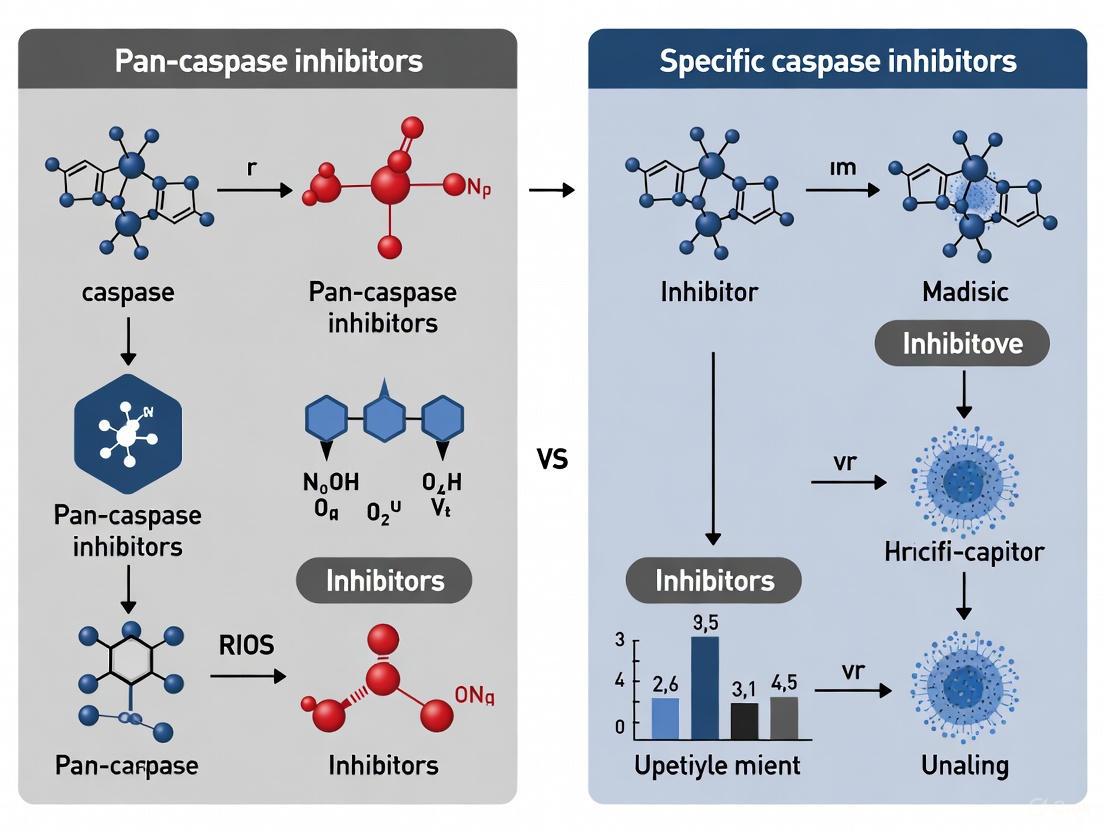
Caspase inhibitors represent a promising therapeutic strategy for pathologies involving dysregulated cell death, such as inflammatory, neurodegenerative, and metabolic diseases, as well as ischemia-reperfusion injury.
Pan-Caspase vs. Specific Caspase Inhibitors: A Comparative Analysis of Efficacy, Applications, and Clinical Translation
Abstract
Caspase inhibitors represent a promising therapeutic strategy for pathologies involving dysregulated cell death, such as inflammatory, neurodegenerative, and metabolic diseases, as well as ischemia-reperfusion injury. This review provides a comprehensive comparative analysis of pan-caspase inhibitors versus specific caspase inhibitors, addressing their mechanisms, efficacy, and clinical progress. We explore the foundational biology of caspases in apoptosis and pyroptosis, evaluate methodological approaches for inhibitor design and assessment, and troubleshoot challenges including toxicity and off-target effects. By validating performance across disease models and examining the clinical trial landscape, we synthesize critical insights to guide the future development of targeted, effective caspase-modulating therapies.
The Caspase Universe: Defining Key Players in Cell Death and Their Therapeutic Targets
Caspases are an evolutionarily conserved family of cysteine-dependent proteases that serve as fundamental regulators of programmed cell death (PCD) and inflammation [1] [2]. These enzymes are synthesized as inactive zymogens (procaspases) and undergo proteolytic activation at specific aspartic acid residues, leading to the formation of active enzymes composed of large and small subunits [3] [1]. Historically, the scientific community has classified caspase family members into three distinct categories based on their primary functions and positions within proteolytic cascades: apoptotic initiators, apoptotic executioners/effectors, and inflammatory caspases [3] [4] [1].
This traditional, function-oriented classification system has provided a valuable framework for understanding the hierarchical organization of caspase-mediated pathways. Initiator caspases, characterized by long pro-domains, act upstream to initiate the cell death cascade. Effector caspases, featuring short pro-domains, function downstream to execute the death program by cleaving numerous cellular substrates. Inflammatory caspases primarily regulate the maturation of pro-inflammatory cytokines rather than mediating apoptotic death [3]. While this classification remains widely used, emerging evidence revealing extensive non-apoptotic functions and complex cross-talk between pathways is driving the development of more nuanced models that reflect the multifunctionality of these proteases [4].
Traditional Caspase Classes: Structure, Function, and Key Members
The table below summarizes the defining characteristics, activation mechanisms, and primary functions of the three traditional caspase classes.
Table 1: Traditional Classification of Caspases Based on Structure and Function
| Classification | Key Members | Structural Domains/Features | Activation Mechanism | Primary Functions |
|---|---|---|---|---|
| Apoptotic Initiators | Caspase-2, -8, -9, -10 [1] [2] | Long pro-domain containing either a Death Effector Domain (DED) (caspase-8, -10) or a Caspase Activation and Recruitment Domain (CARD) (caspase-2, -9) [3] [1] [2] | Recruitment to large multi-protein complexes via adapter proteins (e.g., FADDosome, Apoptosome) leading to auto-activation [1] [2] [5] | Initiate apoptosis cascades; caspase-8 is key for extrinsic pathway, caspase-9 for intrinsic pathway [1] [2] |
| Apoptotic Effectors/Executioners | Caspase-3, -6, -7 [1] [2] | Short pro-domain lacking CARD or DED domains [3] | Cleaved and activated directly by initiator caspases [1] | Execute apoptosis by cleaving structural and regulatory cellular proteins (e.g., PARP, lamin proteins); responsible for morphological changes of cell death [1] [2] |
| Inflammatory Caspases | Caspase-1, -4, -5, -11 (murine homolog of -4/-5) [1] [2] [5] | CARD domain in the pro-domain [3] [1] | Activated within inflammasome complexes [5] | Mediate inflammatory responses by processing pro-inflammatory cytokines (e.g., IL-1β, IL-18); can also cleave gasdermin proteins to induce pyroptosis [1] [2] [5] |
Expanding the Paradigm: Non-Apoptotic Functions and a Modern Classification Proposal
Mounting evidence demonstrates that caspase functions extend far beyond their traditional roles in cell death and inflammation, challenging the conventional classification system. Caspases are now known to regulate vital non-lethal processes including neuronal synaptic remodeling, cellular differentiation, metabolic reprogramming, and mechanoadaptation [4]. These non-apoptotic functions are governed by precisely controlled gradients of enzymatic activity and spatiotemporal localization within the cell [6] [4]. For instance, sublethal activation of caspase-3 in neurons mediates dendritic spine remodeling by selectively cleaving the synaptic scaffold protein SynGAP1, an event essential for neural plasticity [4]. Similarly, caspase-6 has been identified as a critical non-apoptotic effector required for the morphological adaptation of human pulmonary artery endothelial cells to fluid shear stress, a fundamental biomechanical force in vascular homeostasis [6].
Based on these novel functions, a modern "functional continuum" model has been proposed, reclassifying caspases into three activity-driven categories [4]:
- Homeostatic Caspases: Function at low activity levels to maintain fundamental physiological processes (e.g., synaptic plasticity).
- Defensive Caspases: Operate at intermediate activity levels to mediate immune surveillance and inflammatory responses.
- Remodeling Caspases: Activated near or beyond a specific threshold to execute irreversible structural remodeling, which includes both sublethal restructuring and apoptotic/pyroptotic death programs [4].
This model innovatively incorporates non-cell death functions into caspase classification and acknowledges the significant functional overlap between categories, with caspase-8 being a prime example of a protease with cross-cluster functionality [4].
Comparative Analysis of Caspase Inhibitors: Pan-Caspase vs. Specific Inhibitors
The development of caspase inhibitors represents a major therapeutic endeavor aimed at treating diseases involving dysregulated cell death and inflammation, such as neurodegenerative disorders, liver diseases, and sepsis [3] [5] [7]. These inhibitors are broadly categorized as pan-caspase inhibitors or specific caspase inhibitors, each with distinct mechanisms, advantages, and limitations.
Table 2: Comparison of Pan-Caspase versus Specific Caspase Inhibitors
| Feature | Pan-Caspase Inhibitors | Specific Caspase Inhibitors |
|---|---|---|
| Mechanism & Examples | Irreversible, broad-spectrum inhibition of multiple caspases. • Z-VAD-FMK: Peptide-based, irreversible [7]. • Q-VD-OPh: Broad-spectrum, enhanced efficacy and reduced toxicity in vitro [3]. • Emricasan (IDN-6556): Orally active, pan-caspase inhibitor tested in liver diseases [3] [7]. | Target individual caspases or specific subfamilies. • Z-VDVAD-FMK: Targets caspase-2 [6]. • Z-DEVD-FMK: Targets caspase-3/7 [6] [8]. • Z-VEID-FMK: Targets caspase-6 [6]. • VX-765 (Belnacasan): Targets caspase-1 [3]. |
| Key Advantages | • Useful as a first-line experimental tool to implicate caspase involvement in a process [7]. • Can be effective when multiple caspase pathways are activated simultaneously. | • Reduced off-target effects and toxicity by sparing non-targeted caspases [3] [9]. • Allows for precise dissection of specific caspase functions in complex biological processes. |
| Major Limitations & Clinical Challenges | • Poor specificity can lead to adverse effects by disrupting vital non-apoptotic functions of non-target caspases [3] [7]. • Clinical trials for several pan-caspase inhibitors (e.g., Emricasan) have been terminated due to inadequate efficacy or toxicity concerns [3]. | • Achieving high selectivity is challenging due to the high structural and sequence homology among caspases [3] [9]. • Functional redundancy between caspases can limit the efficacy of single-caspase inhibition [5]. |
| Therapeutic Context | Investigated for liver diseases (e.g., hepatitis, NASH) and ischemia-reperfusion injury [3] [7]. | Explored for rheumatoid arthritis (caspase-1 inhibitors) and specific cancer types [3] [5]. |
Experimental Analysis: Methodologies for Assessing Caspase Function and Inhibition
Detailed Protocol: Screening for Caspase Involvement in Shear Stress Adaptation
A 2025 study investigating the role of caspases in endothelial mechanoadaptation provides a robust experimental blueprint [6].
- Cell Culture: Human Pulmonary Artery Endothelial Cells (hPAEC) were cultured on fibronectin-coated surfaces and used between passages 4-6.
- Pharmacologic Inhibition: Cells were pre-treated for one hour with a panel of 2 µM fluoromethyl ketone (FMK)-derivatized peptide inhibitors, each with a tetrapeptide sequence specific to target caspases: Z-WEHD-FMK (caspase-1/4/5), Z-VDVAD-FMK (caspase-2), Z-DEVD-FMK (caspase-3/7), Z-VEID-FMK (caspase-6), Z-IETD-FMK (caspase-8/10), and Z-LEHD-FMK (caspase-9). A negative control (Z-FA-FMK) was included.
- Shear Stress Application: Cells were subjected to unidirectional laminar shear stress (15 dyn/cm² for 72 hours) using an ibidi pump system.
- Morphological Analysis: The percentage of cells that underwent elongation and alignment in the direction of flow was quantified to assess "shear adaptation."
- Validation with Live-Cell Imaging: Caspase-6 activation was confirmed using live-cell FRET imaging, which revealed progressive activation starting at 18 hours of shear stress, localized predominantly in the perinuclear region [6].
Detailed Protocol: High-Throughput Screening for Caspase-10 Inhibitors
A 2025 study established a novel screening platform to discover selective caspase-10 inhibitors [9].
- Protein Engineering: An engineered caspase-10 protein (proCASP10TEV Linker) was generated by replacing the native caspase cleavage sites with tobacco etch virus (TEV) protease recognition sequences. This design ensured low background activity and robust TEV-dependent activation.
- High-Throughput Screening (HTS): The engineered protease was subjected to a ~100,000 compound screen. Enzyme activity was measured using cleavage of a fluorogenic substrate (Ac-VDVAD-AFC).
- Hit Validation: Primary hits were counter-screened against TEV protease itself to distinguish compounds inhibiting TEV from those genuinely targeting procaspase-10. This was followed by confirmatory studies and resynthesis of hit compounds to validate activity and understand the mode of action [9].
The logical workflow and key findings of this screening approach are summarized in the diagram below.
The Scientist's Toolkit: Essential Research Reagents
Table 3: Key Reagents for Studying Caspase Function and Inhibition
| Reagent / Tool | Function / Specificity | Example Application |
|---|---|---|
| FMK-derivatized Peptide Inhibitors [6] | Irreversible, cell-permeable inhibitors; specificity determined by the tetrapeptide sequence (e.g., Z-VEID-FMK for caspase-6). | Screening for specific caspase involvement in cellular processes, as in the shear adaptation study [6]. |
| Fluorogenic Substrates [9] | Peptides linked to a fluorophore (e.g., AFC). Caspase cleavage releases the fluorophore, generating a measurable signal. | Quantifying caspase activity in enzymatic assays and high-throughput screens (e.g., using Ac-VDVAD-AFC for caspase-10) [9]. |
| Activity-Based Probes (e.g., Rho-DEVD-AOMK) [9] | Covalently label the active site of caspases, allowing for detection and visualization of active enzyme populations. | Confirming the presence of active caspase in purified protein samples or fixed cells [9]. |
| Engineered Activatable Proteases (e.g., proCASP10TEV Linker) [9] | Caspase zymogens engineered to be activated by a specific protease (e.g., TEV), minimizing background activity. | Enabling robust high-throughput screens for zymogen-selective inhibitors [9]. |
| FLICA Caspase Assay Kits [6] | Fluorescently-labeled inhibitors (FAM-FLICA) that covalently bind to active caspases in live cells. | Detecting and quantifying active caspases in cultured cells via flow cytometry or fluorescence microscopy [6]. |
Caspase Signaling Pathways and Regulatory Complexes
Caspase activation and function are regulated through their recruitment into large multiprotein complexes. The following diagram illustrates the major signaling pathways and complexes that govern the activation of initiator caspases, leading to apoptosis or inflammation.
The traditional classification of caspases into initiator, effector, and inflammatory categories has provided an essential foundation for understanding programmed cell death and inflammation. However, the ongoing discovery of non-apoptotic functions, such as caspase-6's role in mechanoadaptation and caspase-3's involvement in synaptic plasticity, necessitates a more dynamic and nuanced model [6] [4]. The emerging "functional continuum" paradigm, which incorporates activity gradients and spatiotemporal localization, better reflects the biological complexity of these proteases [4]. This evolving understanding directly impacts therapeutic strategies, highlighting the need for highly selective inhibitors that can modulate specific caspase functions in disease contexts without disrupting vital homeostatic processes, a challenge that remains at the forefront of caspase research and drug development [3] [4].
Biological Roles in Apoptosis, Pyroptosis, and Inflammation
Caspases, an evolutionarily conserved family of cysteine-dependent aspartate-specific proteases, serve as master regulators of programmed cell death (PCD) and inflammatory signaling [2]. These enzymes modulate multiple vital cellular processes including apoptosis, proliferation, differentiation, and inflammatory responses [3]. The dysregulation of caspase-mediated pathways constitutes a fundamental mechanism underlying the pathogenesis of various diseases, spanning inflammatory conditions, neurological disorders, metabolic diseases, and cancer [3] [2]. Within the cell death landscape, caspases execute distinct yet interconnected pathways: apoptosis represents a non-lytic, immunologically silent form of PCD crucial for development and homeostasis; pyroptosis manifests as a lytic, highly inflammatory cell death that amplifies immune responses; while necroptosis provides a caspase-independent backup cell death pathway [10] [11] [12]. Understanding the intricate roles of caspases across these pathways provides the foundational context for developing therapeutic caspase inhibitors, which aim to precisely modulate cell death and inflammation in pathological conditions.
Molecular Mechanisms of Caspase-Mediated Pathways
Apoptotic Signaling Cascades
Apoptosis proceeds through two principal pathways that converge on executioner caspases. The extrinsic pathway initiates at the plasma membrane through death receptors (e.g., Fas, TNFR) that recruit the adaptor protein FADD to form the Death-Inducing Signaling Complex (DISC), leading to activation of initiator caspases-8 and -10 [2] [12]. The intrinsic pathway triggers mitochondrial outer membrane permeabilization (MOMP) in response to cellular stress, releasing cytochrome c which promotes formation of the apoptosome complex with Apaf-1 and pro-caspase-9 [2] [11]. Both pathways ultimately activate executioner caspases-3, -6, and -7, which cleave cellular substrates including PARP and nuclear lamins, resulting in characteristic apoptotic morphology featuring cell shrinkage, membrane blebbing, and formation of apoptotic bodies [2] [12].
Table 1: Key Caspases in Apoptotic Pathways
| Pathway | Initiator Caspases | Executioner Caspases | Key Adaptors/Effectors |
|---|---|---|---|
| Extrinsic | Caspase-8, Caspase-10 | Caspase-3, -6, -7 | FADD, DISC |
| Intrinsic | Caspase-9 | Caspase-3, -6, -7 | Apaf-1, Cytochrome c, Bcl-2 family |
Pyroptotic Signaling Cascades
Pyroptosis represents a lytic, inflammatory form of programmed cell death primarily executed by gasdermin family proteins [13]. The canonical pathway involves intracellular sensors (e.g., NLRP3, AIM2) that detect danger signals and recruit ASC to form inflammasomes, which activate caspase-1 [12] [14]. Active caspase-1 cleaves pro-IL-1β and pro-IL-18 into mature cytokines while simultaneously cleaving gasdermin D (GSDMD), liberating its N-terminal domain (GSDMD-NT) that oligomerizes to form plasma membrane pores [13]. The non-canonical pathway directly engages inflammatory caspases-4/5 (human) or caspase-11 (mouse) in response to cytosolic LPS, which also cleave GSDMD to initiate pore formation [12] [13]. These membrane pores disrupt ionic gradients, causing water influx, cellular swelling, eventual membrane rupture, and release of inflammatory mediators that drive potent immune activation [12] [14].
PANoptosis: An Integrated Cell Death Framework
PANoptosis represents a unified innate immune inflammatory cell death pathway that incorporates components from pyroptosis, apoptosis, and necroptosis [11] [14]. This pathway is regulated by multifaceted macromolecular complexes called PANoptosomes, which serve as molecular scaffolds for contemporaneous engagement of key molecules from multiple cell death pathways [11]. PANoptosis activation occurs in response to specific triggers including viral, bacterial, and fungal infections, as well as sterile insults like cytokine storms and ischemic injuries [11] [14]. The ZBP1-, AIM2-, and NLRP12-PANoptosomes represent characterized complexes that integrate sensors and regulators to coordinate inflammatory cell death beyond what any single pathway can accomplish independently [10] [11].
Figure 1: Caspase-Mediated Cell Death Pathways. Apoptosis, pyroptosis, and PANoptosis represent distinct but interconnected programmed cell death pathways initiated and executed by specific caspase families.
Comparative Analysis of Caspase Inhibitor Strategies
Pan-Caspase Inhibitors: Broad-Spectrum Therapeutics
Pan-caspase inhibitors employ a broad-spectrum approach designed to simultaneously target multiple caspases involved in various cell death pathways. These inhibitors typically incorporate peptide recognition sequences conjugated to electrophilic functional groups that covalently modify the catalytic cysteine residue in caspase active sites [3]. The pan-caspase inhibitor Q-VD-OPh demonstrates enhanced cell permeability and reduced toxicity compared to earlier generation inhibitors like Z-VAD-FMK, maintaining efficacy at high concentrations (up to 500-1000 µM) without significant adverse effects in vitro [3]. Emricasan (IDN-6556) emerged as an irreversible pan-caspase inhibitor advanced to clinical trials for liver diseases, showing promise in reducing hepatic apoptosis and fibrosis in preclinical models [3] [7]. However, clinical development of emricasan was ultimately terminated due to undisclosed reasons potentially related to inadequate efficacy or adverse effects from simultaneous inhibition of multiple caspase-dependent processes [3].
Table 2: Characteristics of Pan-Caspase Inhibitors
| Inhibitor | Mechanism | Therapeutic Applications | Clinical Status |
|---|---|---|---|
| Q-VD-OPh | Irreversible broad-spectrum | Preclinical models of neurodegeneration, SIV infection | Preclinical |
| Emricasan (IDN-6556) | Irreversible pan-caspase | Liver diseases, NASH, hepatitis C | Clinical trials terminated |
| Z-VAD-FMK | Irreversible broad-spectrum | Preclinical models of apoptosis | Preclinical research tool |
Selective Caspase Inhibitors: Precision Targeting
Selective caspase inhibitors aim to precisely modulate specific caspase functions while minimizing off-target effects. The development of genuinely selective inhibitors remains challenging due to the high structural conservation among caspase active sites [15]. VX-740 (pralnacasan), a caspase-1 selective inhibitor, demonstrated efficacy in rheumatoid arthritis and osteoarthritis models but was discontinued due to liver toxicity observed in animal studies at high doses [3]. VX-765 (belnacasan), another caspase-1 selective inhibitor with improved potency over pralnacasan, similarly faced clinical termination despite promising anti-inflammatory effects [3]. Recent advances in caspase-2 selective inhibition have yielded compounds like LJ2a and LJ3a featuring modified pentapeptide structures with non-natural amino acid substitutions at the P2 position, achieving remarkable selectivity (LJ3a shows ~1000-fold preference for caspase-2 over caspase-3) and potent inactivation kinetics (k3/Ki ~5,500,000 M⁻¹ s⁻¹ for LJ2a) [15]. These selective inhibitors show promise in models of nonalcoholic steatohepatitis (NASH) and Alzheimer's disease by specifically targeting caspase-2-mediated stress pathways without disrupting broader caspase functions [15].
Table 3: Selective Caspase Inhibitors in Development
| Inhibitor | Primary Target | Selectivity Features | Development Status |
|---|---|---|---|
| VX-740 (Pralnacasan) | Caspase-1 | Peptidomimetic inhibitor | Clinical trials terminated (liver toxicity) |
| VX-765 (Belnacasan) | Caspase-1 | Reversible inhibitor | Clinical trials terminated |
| LJ2a/LJ3a | Caspase-2 | >1000-fold selectivity vs caspase-3 | Preclinical |
| GS-9450 | Caspase | Lead optimization for hepatitis C | Phase 2 trials |
Experimental Approaches for Caspase Inhibitor Evaluation
Biochemical Characterization of Inhibitor Potency and Selectivity
Rigorous biochemical characterization forms the foundation for evaluating caspase inhibitor efficacy and specificity. Standard protocols employ recombinant human caspases (1-12) incubated with fluorogenic substrates (e.g., Ac-DEVD-AMC for caspase-3, Ac-VDVAD-AMC for caspase-2) in the presence of varying inhibitor concentrations [15]. Reaction kinetics are monitored continuously using fluorometric plate readers to determine inhibition constants (Ki), inactivation rates (k3/Ki), and IC50 values [15]. For irreversible inhibitors, progress curve analysis under steady-state conditions provides accurate measurements of the second-order rate constant for enzyme inactivation (k3/Ki), which reflects both binding affinity and covalent modification efficiency [15]. Specificity profiling against related proteases including cathepsins, kallikreins, and other protease families ensures minimal off-target activity [15].
Figure 2: Biochemical Characterization Workflow. Sequential experimental approach for evaluating caspase inhibitor potency, kinetics, and specificity using recombinant enzymes and fluorogenic substrates.
Cell-Based Models for Therapeutic Efficacy Assessment
Cell-based systems provide critical insights into caspase inhibitor functionality within physiological contexts. Primary cell models include bone marrow-derived macrophages (BMDMs) and human monocyte-derived macrophages stimulated with canonical cell death inducers: LPS+ATP for pyroptosis, staurosporine for apoptosis, TNF-α+z-VAD for necroptosis, and influenza A virus for PANoptosis [10]. Treatment outcomes are quantified through multiple parameters including viability assays (MTT, Alamar Blue), cytotoxicity measurements (LDH release), caspase activity (fluorogenic substrates or Western blotting of cleavage products), and cytokine secretion (ELISA for IL-1β, IL-18) [10]. For caspase-2 specific inhibitors, specialized models include primary hippocampal neurons treated with β-amyloid oligomers to assess synaptic protection, and hepatocyte systems evaluating SREBP2 activation and lipid metabolism in NASH pathogenesis [15]. These cellular models enable researchers to validate inhibitor efficacy, cell permeability, and cytoprotective effects in disease-relevant contexts before advancing to in vivo studies.
In Vivo Disease Models for Therapeutic Validation
Animal models of human diseases provide the final preclinical validation step for caspase inhibitor therapeutics. Established models include bile duct ligation and methionine/choline-deficient (MCD) diet for NASH, demonstrating that caspase inhibitors like emricasan can attenuate hepatic apoptosis, inflammation, and fibrosis [7]. Ischemia-reperfusion models in heart, brain, kidney, and liver evaluate the cytoprotective effects of caspase inhibition in acute injury settings [14]. Neurodegeneration models employing intracerebral injection of β-amyloid oligomers or tau fibrils assess cognitive protection and synaptic preservation by caspase inhibitors [15]. These in vivo studies typically administer inhibitors via oral gavage, intraperitoneal injection, or continuous infusion, monitoring disease progression through histological analysis, biochemical markers of cell death, functional assessments, and behavioral tests where appropriate.
The Scientist's Toolkit: Essential Research Reagents
Table 4: Key Research Reagents for Caspase and Cell Death Studies
| Reagent Category | Specific Examples | Research Applications |
|---|---|---|
| Recombinant Caspases | Human caspase-1 to -12 | Biochemical inhibition assays, substrate specificity profiling |
| Fluorogenic Substrates | Ac-DEVD-AMC (caspase-3), Ac-VDVAD-AMC (caspase-2), Ac-WEHD-AMC (caspase-1) | Enzyme activity measurements, inhibitor potency determination |
| Cell Death Inducers | LPS+ATP (pyroptosis), Staurosporine (apoptosis), TNF-α+z-VAD (necroptosis) | Specific pathway activation in cellular models |
| Antibodies for Detection | Anti-cleaved caspase-3, Anti-GSDMD-NT, Anti-cleaved PARP | Immunodetection of activated caspases and substrates in cells and tissues |
| Pan-Caspase Inhibitors | Q-VD-OPh, Z-VAD-FMK, Emricasan | Broad-spectrum caspase inhibition controls |
| Selective Inhibitors | VX-765 (caspase-1), LJ2a/LJ3a (caspase-2) | Specific pathway interrogation |
Clinical Implications and Therapeutic Perspectives
The translational potential of caspase inhibitors spans diverse pathological conditions characterized by dysregulated cell death and inflammation. In hepatic diseases, pan-caspase inhibitors like emricasan demonstrated significant reductions in serum transaminase levels in hepatitis C patients and attenuated fibrosis in NASH models [7]. For inflammatory disorders, caspase-1 inhibitors showed promise in preclinical models of rheumatoid arthritis, gout, and osteoarthritis by suppressing IL-1β and IL-18 maturation [3] [7]. In neurological conditions, caspase-2 inhibition protected against synapse loss in Alzheimer's models, while pan-caspase inhibitors reduced infarct volume in cerebral ischemia [15] [14]. However, the clinical advancement of caspase inhibitors has faced substantial challenges, including inadequate efficacy, off-target toxicity, and compensatory activation of alternative cell death pathways upon caspase inhibition [3]. The emerging paradigm of PANoptosis further complicates therapeutic targeting, as inhibition of individual caspases may simply shift cell death modalities without providing comprehensive protection [11] [14]. Future directions include developing context-specific combination therapies, optimizing inhibitor pharmacokinetics and tissue targeting, and identifying patient subgroups most likely to benefit from caspase-directed interventions based on biomarkers of specific cell death pathway activation.
The strategic dichotomy between pan-caspase and selective caspase inhibition presents researchers and clinicians with complementary therapeutic approaches, each with distinct advantages and limitations. Pan-caspase inhibitors offer broad-spectrum protection against multiple cell death pathways simultaneously, which may be advantageous in complex pathologies featuring concurrent activation of apoptosis, pyroptosis, and necroptosis [3] [14]. Conversely, selective caspase inhibitors provide precise targeting of specific disease mechanisms with potentially reduced off-target effects, but risk compensatory pathway activation [15]. The emerging understanding of PANoptosis as an integrated cell death pathway suggests that future therapeutic strategies may require simultaneous targeting of multiple caspases and associated regulators within PANoptosome complexes [11] [14]. As our comprehension of caspase biology continues to evolve, particularly regarding non-apoptotic functions and pathway crosstalk, the next generation of caspase inhibitors will likely incorporate more sophisticated targeting strategies, improved pharmacodynamic properties, and personalized application based on specific disease mechanisms and patient biomarkers.
Caspases, an evolutionary conserved family of cysteine-dependent aspartate-specific proteases, stand at the crossroads of programmed cell death (apoptosis) and inflammation, making them attractive therapeutic targets for numerous pathologies [3] [16]. These enzymes are synthesized as inactive zymogens (procaspases) and become activated through specific cleavage or dimerization events [17]. The historic belief of caspases as mere mediators of apoptosis and inflammation has been challenged by emerging evidence revealing their involvement in diverse cellular processes far beyond these classical functions, including proliferation, differentiation, and synaptic plasticity [3] [15]. This complexity underscores the critical need to fully understand the molecular basis of caspase inhibition.
The development of caspase inhibitors has followed two principal strategies: active-site directed inhibitors that target the conserved catalytic cavity, and allosteric inhibitors that modulate enzyme activity by binding to distinct regulatory sites [18]. Active-site inhibitors typically mimic the natural substrate's aspartic acid residue and form covalent or reversible interactions with the catalytic cysteine, while allosteric inhibitors exploit remote binding sites to induce conformational changes that affect catalytic efficiency [18]. This review provides a comprehensive comparison of these inhibition strategies, focusing on their mechanistic foundations, experimental validation, and therapeutic potential within the context of contemporary drug discovery paradigms.
Molecular Architecture of Caspases and Inhibition Strategies
Structural Classification and Active Site Conservation
Caspases share a highly conserved three-dimensional fold that supports their stringent specificity for cleaving after aspartic acid residues [16]. Their active sites are almost identical, featuring a deep, highly basic pocket formed by conserved arginine and glutamine residues that perfectly accommodates the P1 aspartic acid side chain of substrates [16]. This structural conservation is both a blessing and a curse for drug development—while it enables the design of broad-spectrum inhibitors, it presents significant challenges for achieving caspase-specific inhibition.
Caspases are conventionally categorized by function and structural features:
- Initiator Caspases (Group II): Contain long pro-domains with caspase activation and recruitment domains (CARD) or death effector domains (DED); include caspases-2, -8, -9, and -10 [3] [17].
- Effector/Executioner Caspases (Group III): Feature short pro-domains and include caspases-3, -6, and -7, which execute the apoptotic program by cleaving cellular substrates [3] [17].
- Inflammatory Caspases (Group I): Contain CARD domains in their long pro-domains and include caspases-1, -4, -5, and -11, which primarily process pro-inflammatory cytokines [3].
Despite these classifications, the extreme similarity of active sites across the caspase family has complicated the development of selective inhibitors, as compounds designed to target one caspase often exhibit significant cross-reactivity with other family members [15].
Mechanisms of Caspase Inhibition
| Inhibition Mechanism | Molecular Target | Key Features | Representative Compounds |
|---|---|---|---|
| Active-Site Directed | Catalytic cavity with conserved Cys residue | Binds catalytic site; often peptide-based; can be reversible or irreversible | zVAD-fmk, Q-VD-OPh, Ac-DEVD-CHO, VX-765 (Belnacasan) [3] [7] |
| Allosteric | Dimerization interface or other regulatory sites | Induces conformational changes; typically non-peptide; reversible | Comp-A, Comp-B, Comp-C, Comp-D (NSC series) [18] |
| Natural Inhibitors | Various caspase domains | Viral or cellular origin; broad specificity | CrmA, p35, IAP family proteins (XIAP, cIAP1) [3] |
The two primary inhibition strategies exploit different molecular vulnerabilities. Active-site directed inhibitors, which constitute the majority of developed compounds, typically incorporate an electrophilic "warhead" (e.g., aldehyde, ketone, or nitrile groups) that covalently links with the nucleophilic thiol group of the catalytic cysteine [3]. These inhibitors frequently employ peptide moieties that mirror natural caspase substrates to determine selectivity for specific caspases [3] [16]. For instance, Ac-YVAD-CHO preferentially inhibits caspase-1, while Ac-DEVD-CHO shows stronger selectivity for caspase-3 [3].
In contrast, allosteric inhibitors represent a more recent innovation in caspase pharmacology. These compounds bind to regions distinct from the catalytic site, particularly the dimerization interface that is crucial for the activation and activity of initiator caspases [18]. By preventing proper dimerization or inducing conformational changes that reverberate to the active site, allosteric inhibitors effectively suppress caspase activity without competing directly with substrates [18].
Diagram 1: Molecular mechanisms of caspase inhibition. Active-site directed inhibitors compete with substrates or covalently modify the catalytic cysteine, while allosteric inhibitors bind remote sites like the dimerization interface to induce conformational changes.
Comparative Analysis of Caspase Inhibitors
Pan-Caspase Inhibitors: Breadth Versus Specificity
Pan-caspase inhibitors represent the broadest class of caspase-directed therapeutics, designed to target conserved features across multiple caspase family members. Their development has been motivated by the therapeutic need in conditions where multiple caspases contribute to pathology, such as liver diseases, neurodegenerative disorders, and ischemic injury [3] [17].
Q-VD-OPh stands as a superior pan-caspase inhibitor with notable advantages over earlier compounds like Z-VAD-fmk. It exhibits enhanced cell permeability, reduced cellular toxicity even at high concentrations (up to 500-1000 µM), and effectiveness at significantly lower doses (5 µM in cell culture, 20 mg/kg in vivo) [17]. As a broad-spectrum irreversible inhibitor, Q-VD-OPh effectively inhibits recombinant caspases-1, -3, -8, and -9 with IC₅₀ values ranging from 25 to 400 nM [17]. The inhibitor's valine-aspartate amino acids facilitate its broad specificity, while the quinolyl and phenoxy moieties enhance cellular permeability [17]. Its ability to cross the blood-brain barrier makes it particularly valuable for neuroprotective applications, as demonstrated in models of ischemic stroke where it reduced infarct size and caspase-3 positive cells in the penumbra region [17].
Z-VAD-fmk represents an earlier generation of pan-caspase inhibitors that has revealed important complexities in caspase inhibition biology. While effective in many apoptotic paradigms, Z-VAD-fmk has been associated with significant limitations, including toxicity at higher concentrations (around 50 µM) and the endogenous production of fluoroacetate, which is particularly toxic to liver cells [17]. Perhaps most importantly, research has shown that Z-VAD-fmk can induce alternative cell death pathways under certain conditions, particularly in classically activated macrophages (CAMs) where it triggers necroptosis through ROS-mediated activation of MLKL and p38 [19] [20]. This phenomenon underscores the intricate balance of cell death pathways and the potential compensatory mechanisms that can emerge upon caspase inhibition.
Emricasan (IDN-6556) exemplifies the transition of pan-caspase inhibitors toward clinical application. This peptidomimetic irreversible pan-caspase inhibitor was developed specifically for liver diseases and showed efficacy in preclinical and clinical studies [3] [7]. However, its clinical development was ultimately terminated due to side effects from extended treatment and undisclosed reasons [3]. Similarly, VX-740 (Pralnacasan), a caspase-1 selective peptidomimetic inhibitor, showed promise for rheumatoid arthritis and osteoarthritis but was discontinued due to liver toxicity observed in animal models at high doses [3].
Selective Caspase Inhibitors: Precision Challenges
The development of genuinely selective caspase inhibitors represents a formidable challenge in chemical biology due to the exceptional conservation of caspase active sites. Nevertheless, recent innovations have yielded promising advances in achieving meaningful selectivity.
For caspase-2, genuine selectivity has been achieved through structural modifications at the P2 position. Inhibitors LJ2a and LJ3a, derived from the VDVAD pentapeptide structure but incorporating non-natural modifications at P2 (6-methyl-tetrahydro-isoquinoline and 3-(S)-neopentyl proline, respectively), demonstrate remarkable selectivity and potency [15]. LJ2a inhibits human caspase-2 with an exceptionally high inactivation rate (k₃/Kᵢ ~5,500,000 M⁻¹ s⁻¹), while LJ3a shows approximately 1000-fold selectivity for caspase-2 over caspase-3 [15]. This unprecedented selectivity stems from strategic exploitation of subtle differences in the S2 subsite between caspase-2 and caspase-3, achieved by replacing the alanine at P2 in the native peptide with bulkier residues that are better accommodated in the caspase-2 active site [15].
The therapeutic potential of these selective caspase-2 inhibitors is substantial, given caspase-2's established roles in nonalcoholic steatohepatitis (NASH) and Alzheimer's disease models [15]. In cellular models, LJ2a and LJ3a fully inhibit caspase-2-mediated site-1 protease (S1P) cleavage and subsequent sterol regulatory element-binding protein 2 (SREBP2) activation, suggesting a potential mechanism for preventing NASH development [15]. Furthermore, in primary hippocampal neurons treated with β-amyloid oligomers, submicromolar concentrations of these inhibitors prevent synapse loss, indicating their potential for Alzheimer's disease therapeutics [15].
For caspase-1, selective inhibition has been pursued primarily for inflammatory conditions. VX-765 (Belnacasan), a reversible caspase-1 inhibitor, demonstrated greater potency than its predecessor VX-740 but was similarly halted in clinical trials due to liver toxicity concerns [3]. This recurring theme of hepatotoxicity among caspase inhibitors highlights the critical need for better understanding of caspase functions beyond their intended targets and improved predictive models for adverse effects.
Quantitative Comparison of Inhibitor Efficacy
Table 1: Kinetic parameters and selectivity profiles of representative caspase inhibitors
| Inhibitor | Primary Target | IC₅₀ / Potency | Selectivity Profile | Cellular Efficacy | Therapeutic Context |
|---|---|---|---|---|---|
| Q-VD-OPh | Pan-caspase | 25-400 nM (caspases-1,3,8,9) [17] | Broad spectrum | 5 µM in cell culture; 20 mg/kg in vivo [17] | Neuroprotection, liver diseases, ischemia |
| Z-VAD-fmk | Pan-caspase | Variable; higher doses needed [17] | Broad spectrum | Toxic at ~50 µM [17] | General apoptosis research |
| LJ2a | Caspase-2 | k₃/Kᵢ ~5,500,000 M⁻¹ s⁻¹ [15] | ~1000-fold selective over caspase-3 [15] | Submicromolar in neurons [15] | NASH, Alzheimer's models |
| LJ3a | Caspase-2 | High inactivation rate for caspase-2 [15] | 946× less efficient on caspase-3 [15] | Submicromolar in neurons [15] | NASH, Alzheimer's models |
| VX-765 | Caspase-1 | Not specified | Inflammatory caspases | Effective in inflammation models [3] | Rheumatoid arthritis, inflammatory diseases |
| Comp-A/B/C/D | Allosteric, pan-caspase | Sub-micromolar IC₅₀ [18] | 10-fold preference for caspases over other proteases [18] | 100 nM in cellular assays [18] | Apoptosis-related pathologies |
Table 2: Experimental models and therapeutic potential of caspase inhibitors
| Inhibitor | Validated Disease Models | Key Experimental Findings | Clinical Status | Limitations |
|---|---|---|---|---|
| Q-VD-OPh | Ischemic stroke, perinatal stroke, SIV infection [17] | Reduced infarct size, improved survival, decreased viral loads [17] | Preclinical | Gender-dependent efficacy in stroke models [17] |
| Emricasan (IDN-6556) | Liver diseases, hepatic fibrosis [3] [7] | Attenuated hepatic injury and fibrosis; reduced serum transaminases in HCV patients [7] | Clinical development terminated [3] | Side effects from extended treatment [3] |
| LJ2a/LJ3a | NASH models, Alzheimer's models [15] | Inhibited S1P cleavage and SREBP2 activation; prevented synapse loss [15] | Preclinical | Further ADME/toxicity studies needed |
| VX-740/VX-765 | Rheumatoid arthritis, osteoarthritis [3] | Significant potency in RA and OA treatment [3] | Clinical trials terminated [3] | Liver toxicity in animal models [3] |
| Comp-A/B/C/D | UV-induced apoptosis, TNF-α-induced apoptosis [18] | Inhibited intrinsic and extrinsic apoptosis; prevented IL generation [18] | Preclinical | Copper-containing structure may limit development |
Experimental Approaches for Evaluating Caspase Inhibitors
Standardized Methodologies for Inhibitor Characterization
Robust evaluation of caspase inhibitors requires integrated experimental approaches spanning biochemical, cellular, and in vivo models. The following methodologies represent standard practices in the field:
Recombinant Enzyme Assays: Initial characterization typically employs purified active recombinant caspases with fluorogenic substrates containing the canonical DEVD (for caspase-3/7), VDVAD (for caspase-2), WEHD (for caspase-1), or other specific sequences [15] [16]. The liberation of fluorescent groups (e.g., AMC, AFC) upon substrate cleavage allows continuous monitoring of enzyme activity and determination of inhibition parameters (IC₅₀, Kᵢ, k₃/Kᵢ) [16]. Positional scanning substrate combinatorial libraries (PS-SCL) have been instrumental in defining inherent subsite preferences and guiding rational inhibitor design [16].
Cellular Apoptosis Models: Cell-based validation typically involves inducing apoptosis through intrinsic pathway activators (e.g., UV radiation, staurosporine, etoposide) or extrinsic pathway triggers (e.g., TNF-α plus cycloheximide, Fas ligand) [17] [18]. Inhibition efficacy is assessed through multiple endpoints: morphological examination of apoptotic features (cell shrinkage, membrane blebbing), quantification of caspase activity in cell extracts, and flow cytometric analysis with Annexin V/PI staining [17] [18]. For specialized applications like neuroprotection, primary neuronal cultures exposed to cytotoxic insults (e.g., β-amyloid oligomers, oxygen-glucose deprivation) provide relevant models [15] [17].
In Vivo Disease Models: Animal models of human diseases remain indispensable for evaluating therapeutic potential. For caspase inhibitors, commonly employed models include middle cerebral artery occlusion for ischemic stroke, bile duct ligation or MCD diet for liver diseases, orthotopic implantation for cancer, and transgenic approaches for neurodegenerative conditions [15] [17] [7]. These models allow assessment of pharmacokinetics, biodistribution (including blood-brain barrier penetration), efficacy in complex pathophysiology, and potential toxicities [17].
Diagram 2: Comprehensive experimental workflow for evaluating caspase inhibitors. The tiered approach progresses from biochemical characterization to in vivo efficacy and safety assessment.
The Scientist's Toolkit: Essential Research Reagents
Table 3: Key research reagents for studying caspase inhibition
| Reagent Category | Specific Examples | Application & Function | Experimental Notes |
|---|---|---|---|
| Recombinant Caspases | Human active recombinant caspase-1, -2, -3, -6, -8, -9 [15] | Biochemical inhibition assays; substrate specificity profiling | Commercially available from multiple suppliers (Enzo Life Sciences, R&D Systems) |
| Fluorogenic Substrates | Ac-DEVD-AMC (caspase-3/7), Ac-VDVAD-AMC (caspase-2), Ac-WEHD-AMC (caspase-1) [15] [16] | Enzyme activity measurements; inhibitor potency determination | AMC (7-amino-4-methylcoumarin) release monitored at ex/em ~380/460 nm |
| Control Inhibitors | zVAD-fmk (pan-caspase), Ac-DEVD-CHO (caspase-3), Ac-YVAD-CHO (caspase-1) [15] | Assay controls; benchmark comparisons | aldehyde-based inhibitors are reversible; fmk-based are irreversible |
| Cell Death Inducers | Staurosporine, etoposide, UV radiation (intrinsic pathway); TNF-α + CHX (extrinsic pathway) [17] [18] | Cellular model establishment; apoptosis induction | Concentration and time optimization required for each cell type |
| Detection Antibodies | Anti-cleaved caspase-3, anti-PARP cleavage, anti-MLKL phosphorylation [19] [20] | Apoptosis/necroptosis verification; pathway analysis | Essential for confirming specific cell death mechanisms |
| Pathway Inhibitors | Necrostatin-1 (RIP1 inhibitor), 3-methyladenine (autophagy inhibitor) [19] [20] | Mechanism dissection; alternative death pathway identification | Critical for identifying compensatory cell death mechanisms |
Allosteric Inhibition: A Novel Paradigm in Caspase Targeting
Discovery and Validation of Allosteric Caspase Inhibitors
The identification of allosteric caspase inhibitors represents a significant advancement in the field, offering an alternative to active-site directed compounds. Through high-throughput screening of 317,856 compounds using a reconstituted cytochrome c-mediated caspase activation assay, researchers identified a group of non-peptide caspase inhibitors (Comp-A, B, C, D) that share common chemical scaffolds and mechanism of action [18]. These pyridinyl, copper-containing molecules with multi-ring structures inhibit multiple caspases with sub-micromolar IC₅₀ values but exhibit minimal activity against other proteases like cathepsin C, papain, calpain I, and trypsin, demonstrating their selectivity for caspases [18].
Kinetic analysis revealed that these compounds do not compete for the catalytic sites of the enzymes, suggesting an allosteric mechanism [18]. The co-crystal structure of one compound (Comp-A) with caspase-7 provided definitive evidence for this mode of action, showing binding at the dimerization interface—a common structural element shared by all active caspases but distinct from the catalytic pocket [18]. Biochemical analyses confirmed that the compound abates caspase-8 dimerization, providing a mechanistic explanation for its inhibitory effect on initiator caspases that require dimerization for activation [18].
Functional Advantages of Allosteric Modulation
Allosteric caspase inhibitors offer several potential advantages over active-site directed compounds. Their binding sites are less conserved across the caspase family, raising the possibility of achieving greater selectivity among caspase isoforms [18]. Additionally, as non-peptide compounds, they may exhibit improved pharmacological properties, including enhanced metabolic stability and oral bioavailability compared to peptide-based inhibitors [18].
Functionally, these allosteric inhibitors demonstrate efficacy in diverse experimental paradigms. They inhibit both intrinsic (UV-induced) and extrinsic (TNF-α-induced) apoptosis in various mammalian cell lines, and also suppress caspase-1-mediated interleukin generation in macrophages, indicating potential applications in both apoptotic and inflammatory conditions [18]. At concentrations as low as 100 nM, these compounds significantly diminish apoptotic morphology in HeLa cells, suggesting efficient cellular penetration and target engagement [18].
Challenges and Future Perspectives in Caspase Inhibitor Development
Current Limitations and Clinical Setbacks
The clinical translation of caspase inhibitors has faced substantial challenges, with multiple promising candidates failing in advanced clinical trials. The termination of Emricasan (IDN-6556), VX-740 (Pralnacasan), and VX-765 (Belnacasan) development due to efficacy concerns or toxicity highlights the significant hurdles in targeting caspases therapeutically [3]. Several interconnected factors contribute to these challenges:
Target Specificity Concerns: The high degree of structural conservation among caspase active sites makes genuine selectivity difficult to achieve. Even inhibitors designed for specific caspases often show cross-reactivity with other family members, potentially leading to unintended biological consequences [3] [15]. This is particularly problematic given the diverse physiological roles of different caspases beyond apoptosis and inflammation.
Compensatory Cell Death Mechanisms: Inhibition of caspases does not always prevent cell death but may instead promote alternative death pathways. As demonstrated with Z-VAD-fmk in classically activated macrophages, caspase inhibition can trigger necroptosis through ROS-mediated activation of MLKL and p38 [19] [20]. Similarly, caspase inhibition has been shown to induce autophagy-dependent cell death in certain contexts [20]. This redundancy in cell death mechanisms represents a fundamental challenge for therapeutic intervention.
Incomplete Understanding of Caspase Biology: Emerging evidence suggests caspases participate in numerous non-apoptotic processes, including proliferation, differentiation, synaptic plasticity, and metabolic regulation [3] [15]. The functional consequences of inhibiting these non-canonical caspase functions remain poorly understood but may contribute to the adverse effects observed with pan-caspase inhibitors.
Emerging Strategies and Future Directions
Despite these challenges, several promising strategies may advance the field of caspase inhibitor development:
Structure-Guided Design: The detailed structural information now available for caspase-inhibitor complexes enables more rational design approaches. The successful development of genuinely selective caspase-2 inhibitors (LJ2a, LJ3a) through strategic modifications at the P2 position demonstrates the power of structure-based design [15]. Similar approaches targeting subtle differences in caspase active sites may yield other selective inhibitors.
Allosteric Modulation: The discovery and validation of allosteric caspase inhibitors opens new avenues for therapeutic intervention [18]. By targeting less-conserved regions like the dimerization interface, allosteric modulators may achieve improved selectivity profiles. Further exploration of caspase allosteric sites represents a promising frontier.
Context-Specific Application: Rather than broad applications, future caspase inhibitor therapies may need targeting to specific pathological contexts where the balance of benefits versus risks is favorable. For example, short-term administration in acute conditions (e.g., ischemic stroke, myocardial infarction) may avoid the complications associated with chronic dosing [17].
Combination Therapies: Given the redundancy in cell death pathways, combining caspase inhibitors with blockers of alternative death mechanisms (e.g., necroptosis inhibitors) may provide enhanced protection in specific pathological contexts [19] [20].
The continued evolution of caspase inhibitor development will require integrated approaches combining structural biology, chemical optimization, and sophisticated disease modeling to balance efficacy with safety. As our understanding of caspase biology expands beyond their traditional roles in apoptosis and inflammation, so too will our ability to target these enzymes effectively for therapeutic benefit.
Caspases, cysteine-aspartic proteases, are central executors of apoptosis and inflammation, making their regulators critical for cellular homeostasis and potential therapeutic interventions [21]. Among the most potent regulators are natural caspase inhibitors, which include viral proteins like CrmA and p35, as well as cellular proteins such as the Inhibitor of Apoptosis proteins (IAPs). These inhibitors have become essential tools for deciphering complex cell death pathways and are promising candidates for treating diseases characterized by dysregulated apoptosis, including stroke, liver injury, and neurodegenerative disorders [22] [23] [24]. This guide provides a comparative analysis of these natural inhibitors, focusing on their efficacy, mechanisms, and experimental applications within the broader research context of pan-caspase inhibition versus targeted specificity.
Comparative Analysis of Natural Caspase Inhibitors
Table 1: Characteristics of Natural Caspase Inhibitors
| Inhibitor | Origin | Caspase Specificity | Primary Mechanisms | Key Experimental Findings |
|---|---|---|---|---|
| p35 | Baculovirus | Pan-caspase inhibitor (caspases-1, -3, -6, -7, -8, -10) [22] | Irreversible, suicide inhibition through cleavage of its reactive site loop [22] | Significantly increased neuronal survival by ~50% in a rat stroke model; reduced caspase-3, cytosolic cytochrome c, and nuclear AIF [22] [25] |
| CrmA | Cowpox virus | Specific for caspases-1 and -8 [22] | Reversible, competitive inhibition | Not neuroprotective in a rat stroke model; no significant reduction in neuronal death compared to controls [22] [25] |
| IAPs | Cellular (e.g., XIAP) | Specific for caspases-3, -7, and -9 [26] [21] | BIR domains bind and directly inhibit caspase active sites; ubiquitination of caspases for proteasomal degradation [21] | Not directly covered in search results; widely documented in literature as key endogenous regulators of apoptosis. |
| Emricasan | Synthetic (IDN-6556) | Pan-caspase inhibitor [23] [24] | Reversible, competitive inhibition of multiple caspases | Reduced apoptosis and ECM production in Fuchs endothelial corneal dystrophy models; improved liver graft function in clinical trials [23] [24] |
| Z-VAD-FMK | Synthetic | Pan-caspase inhibitor [27] [26] | Irreversible, cell-permeable inhibitor binding catalytic site | Mitigated noise-induced hearing loss in rodents; reduced ABR threshold shifts and rescued outer hair cells [27] |
Table 2: Experimental Evidence and Performance Data
| Inhibitor | Model System | Experimental Readout | Efficacy (Quantitative Results) | Reference |
|---|---|---|---|---|
| p35 | Rat MCAO Stroke Model | Neuronal survival (X-gal positive cells) | ~50% survival in ischemic cortex vs. contralateral side [22] | [22] |
| p35 | Rat MCAO Stroke Model | Immunofluorescence (caspase-3, cytochrome c, AIF) | Marked reduction in active caspase-3, cytosolic cytochrome c, and nuclear AIF translocation [22] | [22] |
| CrmA | Rat MCAO Stroke Model | Neuronal survival (X-gal positive cells) | No significant protective effect [22] | [22] |
| Emricasan | FECD Mouse Model | Corneal endothelial cell density | Significantly higher cell density and improved hexagonality vs. controls [23] | [23] |
| Emricasan | Human Liver Transplant | Serum AST/ALT levels | Significant reduction in transaminases (Organ storage/flush: 15 μg/mL) [24] | [24] |
| Z-VAD-FMK | Rodent NIHL Model | ABR Threshold Shift | Significant mitigation at low and mid-frequencies [27] | [27] |
| Z-VAD-FMK | Rodent NIHL Model | Outer Hair Cell Rescue | Rescued hair cells across middle and basal cochlear turns [27] | [27] |
Mechanisms of Action and Signaling Pathways
The differential efficacy of caspase inhibitors like p35 and CrmA stems from their distinct mechanisms of action within the apoptotic signaling cascade.
Figure 1: Caspase Inhibition Pathways. This diagram illustrates the intrinsic and extrinsic apoptosis pathways and the specific points where natural inhibitors p35, CrmA, and IAPs exert their effects. p35 provides broad inhibition of executioner caspases, while CrmA and IAPs target more specific points in the cascade.
p35 functions as a suicide substrate, undergoing initial cleavage by a caspase, which leads to a covalent thioester bond between the enzyme and the inhibitor, permanently inactivating the caspase [22]. This mechanism allows p35 to inhibit a broad range of caspases effectively. In contrast, CrmA acts as a competitive, reversible inhibitor that primarily targets initiator caspases like caspase-1 and -8, with limited efficacy against executioner caspases such as caspase-3 [22]. The broader specificity of p35 explains its superior neuroprotective performance in experimental stroke models, where multiple caspases are activated simultaneously [22] [25]. Cellular IAPs, such as XIAP, directly bind and inhibit the active sites of caspases-3, -7, and -9 through their BIR domains, and can also promote caspase ubiquitination and degradation [21].
Experimental Evidence and Key Findings
In Vitro and In Vivo Neuroprotection
A pivotal study directly comparing p35 and CrmA in a rat model of permanent distal middle cerebral artery occlusion (MCAO) demonstrated p35's significant advantage. Researchers utilized Herpes Simplex Virus (HSV) vectors to deliver the genes for p35, CrmA, or a control bilaterally into rat brains 12-16 hours before inducing stroke [22].
Experimental Protocol:
- Animal Model: Male Sprague-Dawley rats (280-320 g)
- Vector Delivery: HSV vectors (2.5 μl) for p35, CrmA, or control (β-gal) injected bilaterally into the cortex at coordinates AP -2 mm, ML ±2.8 mm relative to bregma
- Ischemia Induction: Permanent MCAO combined with 1-hour bilateral common carotid artery occlusion
- Assessment: At 48 hours post-MCAO, neuronal survival was quantified by counting X-gal-positive cells in the ischemic cortex versus the contralateral non-ischemic cortex. Immunofluorescence staining for active caspase-3, cytosolic cytochrome c, and nuclear AIF translocation was performed on adjacent sections [22].
Results: Neurons transduced with p35 showed approximately 50% survival in the ischemic cortex, a significant increase compared to CrmA or control vectors, which offered no protection [22] [25]. Furthermore, p35-infected neurons exhibited markedly reduced levels of active caspase-3, prevented the release of cytochrome c from mitochondria, and inhibited the nuclear translocation of Apoptosis-Inducing Factor (AIF), indicating suppression of both caspase-dependent and caspase-independent apoptotic pathways [22].
Therapeutic Applications in Disease Models
The efficacy of caspase inhibition extends beyond stroke models, demonstrating promise in treating organ-specific pathologies.
Emricasan in Fuchs Endothelial Corneal Dystrophy (FECD):
- Experimental Protocol: Patient-derived FECD cells and Col8a2Q455K/Q455K mouse models were treated with emricasan. In vitro, apoptosis and extracellular matrix (ECM) production were assessed via Annexin V assay and transcriptomic analysis. In vivo, mice received 0.1% emricasan eye drops twice daily from 8 to 28 weeks of age, with endothelial cell density and morphology evaluated by specular microscopy [23].
- Results: Emricasan reduced apoptosis and pathological ECM production by selectively inhibiting caspase-7. Treated mice showed significantly higher endothelial cell density, improved cell hexagonality, and reduced cell size variation compared to controls [23].
Z-VAD-FMK in Noise-Induced Hearing Loss (NIHL):
- Experimental Protocol: Rodents were exposed to 110 dB continuous white noise for 1 hour. A single intraperitoneal injection of Z-VAD-FMK (3 mg/kg) was administered 6 hours post-exposure. Auditory brainstem responses (ABRs) were measured, and cochlear hair cell density was analyzed 28 days post-intervention [27].
- Results: Z-VAD-FMK treatment significantly mitigated ABR threshold shifts, particularly at low and mid-frequencies, and rescued outer hair cells across middle and basal cochlear turns. Protein analysis showed reduced levels of caspase-9 and the inflammatory cytokine IL-1β [27].
The Scientist's Toolkit: Essential Research Reagents
Table 3: Key Research Reagents for Caspase Inhibition Studies
| Reagent | Function/Application | Example Use in Context |
|---|---|---|
| HSV Vectors | Efficient gene delivery system, particularly neurotropic | Delivery of p35 and CrmA transgenes in rat stroke models [22] |
| Caspase-Glo 3/7 Assay | Luminometric measurement of caspase-3/7 activity | Quantifying apoptosis induction in cell cultures (e.g., MDA-MB-231 cells) [28] |
| Ac-DEVD-AMC | Fluorogenic substrate for caspase-3 and -7 | In vitro enzyme activity assays to test inhibitor efficacy [28] |
| Annexin V Staining | Flow cytometry-based detection of phosphatidylserine externalization (early apoptosis) | Measuring apoptotic cells in emricasan-treated FECD cell cultures [23] |
| TUNEL Assay | Histochemical detection of DNA fragmentation (late apoptosis) | Assessing apoptosis in liver transplant tissue sections [24] |
| Z-VAD-FMK | Cell-permeable, irreversible pan-caspase inhibitor | In vivo intervention for noise-induced hearing loss [27] |
Figure 2: Experimental Workflow. A generalized workflow for designing experiments to evaluate caspase inhibitors, covering key decision points from model selection to data collection.
The comparative analysis of natural caspase inhibitors reveals a critical trade-off between broad-spectrum efficacy and target specificity. Viral inhibitor p35 demonstrates superior, broad-protective effects in complex pathological models like cerebral ischemia by simultaneously inhibiting multiple caspases and crosstalk with caspase-independent pathways [22] [25]. In contrast, CrmA's narrow specificity limits its therapeutic application in diseases with multifaceted apoptosis activation [22]. Synthetic pan-caspase inhibitors like emricasan and Z-VAD-FMK validate this approach, showing clinical promise in organ preservation and hearing loss [27] [23] [24]. Future research should focus on optimizing inhibitor delivery, timing, and selectivity to harness the full potential of caspase-targeted therapies while minimizing interference with essential non-apoptotic caspase functions [21].
From Bench to Bedside: Designing and Applying Caspase Inhibitors in Disease Models
Caspases are an evolutionarily conserved family of cysteine-dependent proteases that play essential roles in modulating critical biological processes, including apoptosis, proliferation, differentiation, and inflammation [3]. Dysregulation of caspase-mediated cell death and inflammatory responses contributes significantly to the pathogenesis of various diseases, such as inflammatory conditions, neurological disorders, metabolic diseases, and cancer [3]. This understanding has rendered caspases attractive therapeutic targets, driving the development of diverse inhibitor classes. The landscape of caspase inhibitors spans natural compounds, peptide-based agents, peptidomimetics, and non-peptidic small molecules, each with distinct pharmacological profiles. This guide objectively compares the design strategies, experimental efficacy data, and practical applications of these different inhibitor classes within caspase-targeted therapeutic research, providing researchers with a structured framework for evaluating their relative advantages and limitations in specific experimental or clinical contexts.
Comparative Analysis of Caspase Inhibitor Classes
Table 1: Key Characteristics of Major Caspase Inhibitor Classes
| Inhibitor Class | Representative Compounds | Mechanism of Action | Target Specificity | Key Advantages | Major Limitations |
|---|---|---|---|---|---|
| Peptide-Based | Ac-YVAD-CHO, Ac-DEVD-CHO, Z-VAD-FMK, Q-VD-OPh | Peptide sequence binds caspase active site; C-terminal warhead (e.g., CHO, FMK) covalently modifies catalytic cysteine | Variable (broad to specific): Ac-YVAD-CHO (caspase-1), Ac-DEVD-CHO (caspase-3) [3] | High selectivity based on peptide sequence; well-established synthesis | Poor membrane permeability; metabolic instability; rapid clearance; toxicity concerns (e.g., Z-VAD-FMK) [3] |
| Peptidomimetic | VX-740 (Pralnacasan), VX-765 (Belnacasan), IDN-6556 (Emricasan), LJ2a, LJ3a [3] [15] | Modified peptide backbone mimics natural substrate; enhanced pharmacophores | Variable: VX-765 (inflammatory caspases) [3], LJ3a (highly selective for caspase-2) [15] | Improved stability and bioavailability over peptides; retained target specificity | Complex synthesis; potential hepatotoxicity (e.g., VX-740, VX-765) [3] |
| Non-Peptidic Compounds | Isatin sulfonamide derivatives [3] | Small molecules that occupy caspase active site without peptide backbone | Variable, often broad-spectrum | Favorable drug-like properties; good oral bioavailability; metabolic stability | Challenges in achieving high specificity due to conserved caspase active sites |
Table 2: Quantitative Comparison of Selected Caspase Inhibitors
| Compound Name | Inhibitor Class | Primary Caspase Target(s) | Key Kinetic Parameters | Experimental Efficacy | Clinical Status |
|---|---|---|---|---|---|
| Q-VD-OPh | Peptide-based (irreversible) | Pan-caspase inhibitor [29] | N/A | Maintained human neutrophil viability and function for 5 days at 10 μM; prevented apoptosis markers (nuclear condensation, DNA fragmentation, PS externalization) [29] | Preclinical research |
| Emricasan (IDN-6556) | Peptidomimetic (irreversible) | Pan-caspase inhibitor [23] | N/A | Reduced apoptosis and ECM production in Fuchs endothelial corneal dystrophy models; selective caspase-7 inhibition in vitro [23] | Clinical trials terminated (undisclosed reasons) [3] |
| VX-765 (Belnacasan) | Peptidomimetic (reversible) | Inflammatory caspases (e.g., caspase-1) [3] | N/A | Significant potency in inflammatory disease models [3] | Clinical trials terminated (liver toxicity) [3] |
| LJ3a | Peptidomimetic (irreversible) | Caspase-2 (highly selective) [15] | ~1000x higher inactivation rate for caspase-2 vs. caspase-3; k3/Ki ~5,500,000 M-1s-1 for caspase-2 [15] | Prevented synapse loss in primary hippocampal neurons treated with β-amyloid oligomers (submicromolar concentrations) [15] | Preclinical research |
| LJ2a | Peptidomimetic (irreversible) | Caspase-2 [15] | k3/Ki ~5,500,000 M-1s-1 for caspase-2 [15] | Inhibited caspase-2-mediated S1P cleavage and SREBP2 activation; protected against microtubule destabilization-induced cell death [15] | Preclinical research |
Experimental Protocols for Evaluating Caspase Inhibitors
In Vitro Assessment of Caspase Inhibition Efficacy
Objective: To evaluate the protective effects of caspase inhibitors against apoptosis in cell culture models. Materials: Caspase inhibitors (e.g., Q-VD-OPh, Emricasan, Z-VAD-FMK), immortalized human corneal endothelial cells (iHCEC) or FECD cell lines (iFECD), cell culture medium, TGF-β2, Annexin V staining kit, ECM production assays [23]. Procedure:
- Culture iHCEC or iFECD cells in appropriate medium until 80% confluency [23].
- Pre-treat cells with caspase inhibitors (typically 10 μM) for 1-2 hours before apoptosis induction [23].
- Induce apoptosis using 10 ng/mL TGF-β2, 0.5 μM staurosporine, 10 μM thapsigargin, or other stressors for 24 hours [23].
- Assess apoptosis via Annexin V staining per manufacturer protocol: harvest cells using Accutase, incubate with Annexin V reagent, and quantify positive cells using flow cytometry [23].
- Evaluate extracellular matrix production using appropriate assays (e.g., immunostaining, Western blot) [23].
- For caspase-specific assessment, perform selective caspase knockdown using siRNA prior to inhibitor treatment [23].
Kinetic Characterization of Inhibitor Selectivity
Objective: To determine inactivation kinetics and selectivity profiles of caspase inhibitors. Materials: Recombinant human caspases (caspase-1, -2, -3, -6, -7, etc.), fluorogenic substrates (e.g., Ac-VDVAD-AMC for caspase-2, Ac-DEVD-AMC for caspase-3), caspase inhibitors, reaction buffers, fluorescence plate reader [15]. Procedure:
- Prepare serial dilutions of caspase inhibitors in appropriate buffer.
- Incubate fixed concentration of recombinant caspase with varying inhibitor concentrations for different time periods.
- Add fluorogenic substrate and measure residual enzyme activity continuously via fluorescence emission.
- Calculate apparent second-order rate constants (k3/Ki) from the time- and concentration-dependent loss of enzyme activity.
- Repeat for multiple caspase family members to determine selectivity ratios (e.g., k3/Ki for caspase-2 ÷ k3/Ki for caspase-3) [15].
- Compare selectivity profiles across inhibitor classes and specific compounds.
In Vivo Evaluation in Disease Models
Objective: To assess therapeutic potential of caspase inhibitors in animal models of human disease. Materials: Col8a2Q455K/Q455K mice (FECD model), 0.1% Emricasan eye drops, specular microscopy, RNA sequencing reagents [23]. Procedure:
- Administer caspase inhibitors via appropriate route (e.g., topical eye drops twice daily for Emricasan in FECD model) [23].
- Treat animals for extended period (e.g., 8 to 28 weeks of age) [23].
- Monitor therapeutic outcomes: for FECD, evaluate endothelial cell density, hexagonality, cell size variation, and guttae area via contact specular microscopy [23].
- Analyze transcriptomic changes in target tissues using RNA sequencing [23].
- Assess mechanism-specific endpoints: e.g., synapse protection in neurodegenerative models, SREBP2 activation in metabolic models [15].
Signaling Pathways and Experimental Workflows
Diagram Title: Caspase Inhibitor Evaluation Workflow
Diagram Title: Caspase-Mediated Pathological Pathways and Inhibition
The Scientist's Toolkit: Essential Research Reagents
Table 3: Key Research Reagents for Caspase Inhibitor Studies
| Reagent/Category | Specific Examples | Research Application | Key Features & Considerations |
|---|---|---|---|
| Broad-Spectrum Caspase Inhibitors | Q-VD-OPh, Z-VAD-FMK, Emricasan (IDN-6556) [3] [29] | Initial screening; pan-caspase inhibition studies; cell death prevention | Q-VD-OPh: non-toxic, irreversible, broad protection (e.g., 5-day neutrophil survival) [29]; Z-VAD-FMK: widely used but potential toxicity [3] |
| Selective Caspase Inhibitors | Ac-YVAD-CHO (caspase-1), Ac-DEVD-CHO (caspase-3), LJ3a (caspase-2) [3] [15] | Pathway-specific studies; target validation; reducing off-target effects | LJ3a: exceptional selectivity (~1000x for caspase-2 vs. caspase-3) [15]; Peptide aldehydes: reversible inhibition but poor stability [3] |
| Recombinant Active Caspases | Human caspase-1, -2, -3, -6, -7, -8, -9 [15] | Enzyme kinetics; inhibitor specificity profiling; high-throughput screening | Commercial availability enables standardized assays; essential for determining k3/Ki and selectivity ratios [15] |
| Fluorogenic Caspase Substrates | Ac-VDVAD-AMC (caspase-2), Ac-DEVD-AMC (caspase-3), Ac-WEHD-AMC (inflammatory caspases) [15] | Enzyme activity assays; inhibitor potency assessment; high-throughput screening | AMC (7-amino-4-methylcoumarin) release generates quantifiable fluorescence signal; substrate specificity profiles guide appropriate selection |
| Apoptosis Detection Kits | Annexin V/propidium iodide, APO-BRDU (DNA fragmentation), caspase activity assays [23] [29] | Quantifying apoptotic cells; mechanism of cell death; inhibitor efficacy validation | Annexin V detects phosphatidylserine externalization (early apoptosis); DNA fragmentation assays detect late apoptosis [23] [29] |
| Specialized Cell Models | Immortalized human corneal endothelial cells (iHCEC), FECD patient-derived cells (iFECD), primary hippocampal neurons [23] [15] | Disease-specific mechanism studies; translational research | Patient-derived cells maintain disease pathology; primary neurons essential for neurodegnerative studies [23] [15] |
| Animal Disease Models | Col8a2Q455K/Q455K mice (FECD model), amyloid precursor protein transgenic mice (AD models) [23] [15] | In vivo therapeutic efficacy; toxicity assessment; pharmacokinetic studies | Genetically engineered models recapitulate human disease pathology for preclinical validation [23] [15] |
The comparative analysis of caspase inhibitor classes reveals a critical trade-off between specificity and breadth of activity that must be strategically balanced based on research or therapeutic objectives. Peptide-based inhibitors provide valuable research tools with predictable specificity patterns but face significant pharmacological limitations. Peptidomimetics represent a substantial advancement, achieving enhanced stability while enabling both broad-spectrum activity (e.g., Emricasan) and remarkable specificity (e.g., LJ3a for caspase-2). Non-peptide small molecules offer promising drug-like properties but face challenges in overcoming the high conservation of caspase active sites. The experimental data summarized in this guide demonstrates that the choice between pan-caspase inhibition and targeted specific inhibition must be guided by the pathological context—where broad protection may benefit multifactorial conditions like liver disease or FECD, whereas highly specific inhibition shows exceptional promise for precision applications in neurological disorders and specific metabolic conditions. As caspase research continues to evolve beyond traditional apoptotic and inflammatory roles, the strategic development of next-generation inhibitors will require increasingly sophisticated approaches to balance potency, specificity, and pharmacological properties for successful clinical translation.
Caspases, an evolutionarily conserved family of cysteine-dependent aspartate-specific proteases, stand as central regulators of programmed cell death (apoptosis) and inflammation [3] [16]. The dysregulation of these enzymes is implicated in a plethora of human diseases, ranging from neurodegenerative disorders and ischemic injuries to cancer and inflammatory conditions [17] [3]. This broad pathophysiological significance has rendered caspases attractive therapeutic targets, driving the development of diverse inhibitory compounds. These inhibitors primarily fall into two strategic categories: broad-spectrum pan-caspase inhibitors and specific caspase inhibitors. Pan-caspase inhibitors, designed to target multiple caspase family members simultaneously, offer a powerful tool for determining the overall contribution of caspase-mediated pathways in cellular processes. In contrast, specific inhibitors aim to selectively inhibit individual caspases, allowing for the precise dissection of their unique functions and reducing potential off-target effects [3] [30]. The central challenge in the field lies in designing specific inhibitors that achieve genuine selectivity, given the extremely high structural conservation of caspase active sites [30]. This guide provides a comparative analysis of the efficacy and selectivity of these inhibitor classes, presenting key quantitative data and experimental methodologies to inform their research application.
Caspase Biology and Signaling Pathways
Caspases are synthesized as inactive zymogens (procaspases) and undergo activation through dimerization or proteolytic cleavage [17]. They are broadly categorized based on their function. Initiator caspases (e.g., caspases-2, -8, -9, -10) are activated in response to specific pro-apoptotic signals and initiate the cell death cascade. Effector caspases (e.g., caspases-3, -6, -7) are activated by initiator caspases and are responsible for the proteolytic cleavage of numerous cellular substrates, leading to the characteristic morphological changes of apoptosis [17] [31]. A third group, the inflammatory caspases (e.g., caspases-1, -4, -5), is primarily involved in the maturation of pro-inflammatory cytokines such as IL-1β [31].
Apoptosis proceeds primarily via two interconnected signaling pathways, both culminating in the activation of effector caspases, as illustrated in the diagram below.
Figure 1: Core Apoptotic Signaling Pathways. The extrinsic (death receptor) and intrinsic (mitochondrial) pathways converge on the activation of effector caspases, leading to apoptosis. The dotted line represents cross-talk between the pathways via tBid.
Comparative Inhibitor Profiles: Quantitative Data
The efficacy of caspase inhibitors is quantitatively assessed using the Half Maximal Inhibitory Concentration (IC50), which measures the concentration required to inhibit 50% of a specific caspase's enzymatic activity under defined experimental conditions. Lower IC50 values indicate greater potency. The following table benchmarks key pan-caspase and selective inhibitors.
Table 1: Benchmarking IC50 Values and Selectivity of Caspase Inhibitors
| Inhibitor Name | Class/Selectivity | Molecular Target(s) | Reported IC50 / Ki Values | Key Characteristics & Notes |
|---|---|---|---|---|
| Q-VD-OPh [17] [32] | Pan-caspase Inhibitor | Caspases-1, -3, -8, -9 | 25 - 400 nM (range for caspases 1, 3, 8, 9) [32] | Superior broad-spectrum inhibitor; non-toxic in vivo, crosses blood-brain barrier [17]. |
| Z-VAD-FMK [17] [3] | Pan-caspase Inhibitor | Broad caspase spectrum | Requires high doses (~50 µM); less specific than Q-VD-OPh [17]. | Classic, widely used pan-caspase inhibitor; can be toxic at high concentrations [17] [3]. |
| Belnacasan (VX-765) [32] [3] | Selective / Inflammatory Pan | Caspase-1 | Ki = 0.8 nM (cell-free assay) [32] | Peptidomimetic, reversible inhibitor; advanced to clinical trials for inflammation [3]. |
| Z-YVAD-FMK [32] [31] | Selective Inhibitor | Caspase-1 | Information Missing | Cell-permeable, irreversible caspase-1 inhibitor; used in research [32]. |
| Ac-DEVD-CHO [32] [16] | Selective Inhibitor | Caspases-3, -7 | Ki = 0.2 nM (Caspase-3), Ki = 0.3 nM (Caspase-7) [32] | Potent reversible aldehyde inhibitor for effector caspases [32] [16]. |
| LJ3a [30] | Caspase-2 Selective | Caspase-2 | k3/Ki ~5,500,000 M⁻¹s⁻¹ (Inactivation rate for Casp2) | Highly selective irreversible peptidomimetic; 946x more efficient for Casp2 over Casp3 [30]. |
Achieving genuine selectivity is a significant hurdle in caspase inhibitor design. For example, while the pentapeptide Ac-VDVAD-CHO is a known Caspase-2 inhibitor, it also efficiently inhibits Caspase-3 [30]. The development of LJ3a, which incorporates a modified P2 residue (3-(S)-neopentyl proline), demonstrates a successful structure-based strategy to achieve high selectivity by exploiting subtle differences in the caspase-2 active site [30].
Essential Experimental Protocols for Efficacy Assessment
Colorimetric Caspase Enzyme Activity Assay
This standard in vitro protocol measures caspase activity and its inhibition using recombinant enzymes and chromogenic substrates [31].
- Solution Preparation: Prepare a 2X Reaction Buffer (e.g., 100 mM HEPES [pH 7.2], 100 mM NaCl, 0.2% CHAPS, 20 mM EDTA, 10% Glycerol, and 10 mM DTT).
- Reaction Setup: In a 96-well plate, mix the following:
- Recombinant caspase enzyme (e.g., 0.2 units/µL final concentration).
- The inhibitor compound at varying concentrations (typically diluted in DMSO).
- 2X Reaction Buffer.
- Incubate the plate for 10 minutes to allow inhibitor-enzyme interaction.
- Reaction Initiation: Add the appropriate caspase-specific tetrapeptide substrate conjugated to para-nitroaniline (pNA) (e.g., Ac-DEVD-pNA for caspase-3/7) at a final concentration of 200 µM.
- Incubation and Measurement: Incubate the plate at 37°C for 1-2 hours. During this time, active caspases cleave the substrate, releasing the yellow chromophore pNA.
- Detection: Measure the absorbance at 405 nm using a microplate ELISA reader. The level of absorbance is directly proportional to caspase activity.
- Data Analysis: Plot the inhibitor concentration against the percentage of remaining caspase activity to calculate the IC50 value.
Cell-Based DNA Fragmentation Assay
This functional cell-based assay assesses the biological consequence of caspase inhibition by measuring a hallmark of late-stage apoptosis: DNA fragmentation [31]. The workflow is summarized below.
Figure 2: Workflow for Cell-Based Caspase Inhibition Assay. This protocol evaluates an inhibitor's ability to prevent etoposide-induced DNA fragmentation in Jurkat cells [31].
Protocol Details:
- Culture Jurkat cells (a human T-lymphocyte line) in complete RPMI-1640 medium [31].
- Pre-incubate cells with the caspase inhibitor or vehicle control (e.g., DMSO) for 1 hour.
- Induce apoptosis by adding a potent inducer like etoposide (68 µM) and incubate for 18 hours.
- Harvest cells by centrifugation and lyse them using an appropriate lysis buffer.
- Isolate the fragmented (soluble) DNA from the intact (chromosomal) DNA by centrifugation.
- Quantify the fragmented DNA. This can be done by gel electrophoresis to visualize the characteristic "DNA ladder" or using more quantitative methods like spectrophotometry.
- The efficacy of the caspase inhibitor is determined by its ability to reduce the amount of DNA fragmentation compared to the etoposide-only control [31].
The Scientist's Toolkit: Key Research Reagents
Table 2: Essential Reagents for Caspase Inhibition Research
| Reagent Category | Specific Examples | Research Application & Function |
|---|---|---|
| Pan-Caspase Inhibitors | Q-VD-OPh, Z-VAD-FMK, Emricasan (IDN-6556) [17] [3] [30] | To broadly block caspase-mediated apoptosis in vitro and in vivo; determine if a process is caspase-dependent. |
| Selective Caspase Inhibitors | Ac-DEVD-CHO (Casp-3/7), Z-YVAD-FMK (Casp-1), Belnacasan (Casp-1), LJ3a (Casp-2) [32] [30] | To dissect the specific role of an individual caspase in a signaling pathway or cellular response. |
| Fluorogenic Substrates | Ac-DEVD-AMC (for Casp-3/7), Ac-WEHD-AMC (for Casp-1), Ac-VDVAD-AMC (for Casp-2) [16] [30] | To measure caspase enzyme activity kinetically in cell lysates or with recombinant enzymes via fluorescence release. |
| Recombinant Enzymes | Active recombinant Caspase-1, -2, -3, -6, -8, -9, etc. [31] [30] | For direct in vitro enzymatic assays to determine inhibitor potency (IC50/Ki) and selectivity. |
| Apoptosis Inducers | Etoposide [31], Tumor Necrosis Factor-α (TNF-α) [33] | To trigger the intrinsic (etoposide) or extrinsic (TNF-α) apoptotic pathways in cell cultures for functional inhibition studies. |
The choice between pan-caspase and specific inhibitors is dictated by the research question. Pan-caspase inhibitors like Q-VD-OPh are invaluable tools for confirming the overarching role of caspases in a biological process, offering high potency and often favorable in vivo properties [17]. Conversely, the emergence of genuinely selective inhibitors, such as the caspase-2 inhibitor LJ3a, enables the precise deconvolution of individual caspase functions within complex signaling networks, a critical step for target validation in drug development [30]. Researchers must therefore carefully consider the trade-offs between breadth and specificity, using the quantitative IC50 and selectivity data, alongside robust experimental protocols, to select the optimal tool for their specific application. The ongoing challenge in the field remains the development of inhibitors with even greater selectivity and improved pharmacological profiles to fully realize the therapeutic potential of caspase modulation.
Caspases, an evolutionarily conserved family of cysteine-dependent aspartate-specific proteases, serve as master regulators of programmed cell death (PCD) and inflammation [1]. These enzymes mediate crucial pathways including apoptosis, pyroptosis, and necroptosis, playing indispensable roles in cellular homeostasis, development, and immune responses [1]. Dysregulation of caspase-mediated processes constitutes a fundamental pathological mechanism in a wide spectrum of human diseases, ranging from neurological disorders and hepatic conditions to inflammatory diseases and cancer [3]. This understanding has rendered caspases attractive therapeutic targets for pharmacological intervention.
Among the strategies for targeting caspase activity, pan-caspase inhibitors represent a class of compounds designed to broadly inhibit multiple caspase family members simultaneously. This approach offers potential advantages in pathological states where multiple caspase pathways are activated synergistically or redundantly. The comparative efficacy of these inhibitors—encompassing their potency, selectivity, pharmacokinetics, and therapeutic windows—forms a critical area of investigation for research scientists and drug development professionals. This guide provides a detailed, data-driven comparison of three prominent pan-caspase inhibitors: Q-VD-OPh, Z-VAD-FMK, and IDN-6556 (Emricasan), framing their profiles within the broader thesis of pan-caspase versus specific caspase inhibition strategies in translational research.
Comparative Profile of Leading Pan-Caspase Inhibitors
The following section synthesizes key chemical, biochemical, and application data for the three target inhibitors into structured tables, facilitating direct comparison of their properties and experimental use.
Table 1: Biochemical and Pharmacological Profile Comparison
| Property | Q-VD-OPh | Z-VAD-FMK | IDN-6556 (Emricasan) |
|---|---|---|---|
| Chemical Type | Peptide-based, irreversible | Peptide-based, irreversible | Peptidomimetic, irreversible |
| Molecular Weight | 513.49 g/mol [34] | Information not in sources | 569.50 g/mol [35] |
| IC₅₀ Range (Pan-Caspase) | 25 - 400 nM (caspases-1, 3, 8, 9) [34] | Information not in sources | 0.025 - 0.27 μM (cell-based assays) [35] |
| Key In Vitro Working Concentration | 5 - 20 μM [17] | Information not in sources | 10 - 50 μM [35] |
| Key In Vivo Dosage | 20 mg/kg (rodents) [17] | 3 mg/kg (rodents) [27] | 0.03 - 3 mg/kg (rodents, i.p.) [35] |
| Blood-Brain Barrier Permeable | Yes [17] | Information not in sources | Information not in sources |
| Reported In Vivo Toxicity | Low/nontoxic [17] [3] | Information not in sources | Liver toxicity with extended treatment [3] |
| Clinical Trial Status | Preclinical research | Preclinical research | Clinical trials terminated due to liver toxicity [3] |
Table 2: Research Applications and Model Systems
| Inhibitor | Documented Research Applications | Key Findings in Models | Mechanistic Insights |
|---|---|---|---|
| Q-VD-OPh | - Bacterial skin infections (MRSA, S. pyogenes) [36]- Ischemic stroke [17]- Perinatal stroke [17] | - Reduced skin lesion size/bacterial load in mice [36]- Neuroprotective in female stroke models [17] | - Reduces monocyte/neutrophil apoptosis [36]- Enhances macrophage necroptosis & TNF production [36] |
| Z-VAD-FMK | - Noise-Induced Hearing Loss (NIHL) [27]- Ototoxicity (gentamicin) [27] | - Mitigated auditory threshold shifts, rescued hair cells [27]- Reduced caspase-9 and IL-1β levels [27] | - Binds catalytic site of caspases, halting apoptosis [27] |
| IDN-6556 (Emricasan) | - Liver injury models [35]- Islet cell transplantation [35]- Viral infection (Zika) [35] | - Reduced TUNEL-positive cells & ALT in HFD mice [35]- Enhanced diabetes reversal post-transplant [35] | - Orally active, irreversible inhibition [35]- Significant first-pass liver effect [35] |
Experimental Protocols for Key Studies
To ensure experimental reproducibility, this section outlines detailed methodologies from pivotal studies cited in this guide.
Protocol: Evaluating Q-VD-OPh in a Bacterial Skin Infection Model
This protocol is adapted from the study demonstrating Q-VD-OPh's efficacy against MRSA skin infections in mice [36].
- 1. Animal Model: Utilize a mouse model (e.g., C57BL/6) of MRSA skin infection.
- 2. Infection & Intervention: Infect mice with MRSA via subcutaneous injection. Administer a single systemic dose of Q-VD-OPh (e.g., 20 mg/kg) to the treatment group, with a vehicle control for the control group.
- 3. Outcome Assessment: Monitor the following parameters over several days post-infection:
- Lesion Size: Measure the area of skin lesions.
- Bacterial Burden: Quantify bacterial load in the infected tissue by homogenizing the tissue and plating serial dilutions for colony-forming unit (CFU) counts.
- Immunological Analysis: Analyze cytokine levels (e.g., TNF) in serum or tissue homogenates via ELISA. Perform flow cytometry on infected skin to identify and quantify immune cell populations (e.g., TNF-producing neutrophils and monocytes/macrophages).
- 4. Mechanistic Validation: To confirm the TNF-dependent mechanism, repeat the experiment in TNF-deficient mice or in wild-type mice pre-treated with an anti-TNF antibody.
Protocol: Assessing Z-VAD-FMK in Noise-Induced Hearing Loss
This protocol is based on the research investigating Z-VAD-FMK as a therapeutic for acoustic trauma in a rodent model [27].
- 1. Animal Grouping: Assign rodents (e.g., Brown Norway rats) into four groups: (1) unexposed control, (2) noise-exposed, (3) noise + vehicle, (4) noise + Z-VAD-FMK.
- 2. Noise Exposure: Expose animals to continuous octave-band noise (110 dB SPL, 4-8 kHz) for 1 hour. Keep animals awake and unrestrained in a calibrated sound chamber.
- 3. Drug Administration: At 6 hours post-noise exposure, administer a single intraperitoneal injection of Z-VAD-FMK at 3 mg/kg, dissolved in 10% DMSO. The vehicle control group receives 10% DMSO only.
- 4. Functional Assessment: Perform Auditory Brainstem Response (ABR) measurements before exposure and at multiple time points post-exposure (e.g., days 1, 3, 7, 14, 28). Record thresholds, wave I amplitudes, and latencies at various frequencies (e.g., 2-32 kHz).
- 5. Histological & Biochemical Analysis: Euthanize animals at the study endpoint (e.g., day 28). Harvest cochleae for:
- Hair Cell Counts: Dissect and immunostain the cochlear sensory epithelium to quantify outer and inner hair cell survival.
- Protein Analysis: Isolve cochlear proteins and measure levels of key markers like cleaved caspase-9 and IL-1β via Western blot or ELISA.
Molecular Mechanisms and Signaling Pathways
Pan-caspase inhibitors exert their effects by integrating into and modulating complex, interconnected cell death pathways. The following diagram illustrates the key pathways and points of inhibition.
Key Mechanistic Insights from Comparative Studies
Apoptosis versus Pyroptosis: While Q-VD-OPh inhibits inflammasome-dependent caspase-1 activation and IL-1β production, its efficacy in MRSA infection was maintained in mice deficient for key pyroptosis components (caspase-1, gasdermin D), indicating its primary protective mechanism is independent of inflammasome-mediated pyroptosis [36].
Crosstalk and Pathway Switching: A critical finding is that pan-caspase inhibition can shift the dominant mode of cell death. Q-VD-OPh treatment reduced apoptosis but concurrently enhanced necroptosis of macrophages, which was associated with increased serum TNF and reliant on TNF signaling for its overall efficacy [36]. This underscores caspases' role as molecular switches between PCD pathways.
Beyond Apoptosis: The efficacy of Z-VAD-FMK in noise-induced hearing loss involved reduced levels of not only the apoptotic marker caspase-9 but also the inflammatory cytokine IL-1β, highlighting that therapeutic benefits often arise from simultaneous inhibition of both cell death and inflammation [27].
The Scientist's Toolkit: Essential Research Reagents
Table 3: Key Reagents for Caspase Inhibition Research
| Reagent / Material | Critical Function in Research | Example Use Case |
|---|---|---|
| Active Recombinant Caspases | In vitro enzymatic assays to determine inhibitor IC₅₀ values and selectivity profiles. | Profiling inhibitor potency against caspases-1, -3, -8, and -9 [15]. |
| Fluorogenic Caspase Substrates | Detect and quantify caspase activity in cell lysates or purified systems. | Ac-DEVD-AMC (for caspase-3/7); Ac-VDVAD-AMC (for caspase-2) [15]. |
| Cell Lines for Apoptosis Assays | Model systems for evaluating inhibitor efficacy in a cellular context. | WEHI-231 cells (B-cell apoptosis), Jurkat cells (Fas-mediated apoptosis), primary hepatocytes [34] [35]. |
| Animal Models of Disease | In vivo validation of therapeutic efficacy and pharmacokinetics. | Mouse MRSA skin infection [36]; rodent noise-induced hearing loss [27]; mouse liver injury models [35]. |
| Antibodies for Detection | Assess pathway modulation via Western blot, ELISA, or IHC. | Antibodies against cleaved caspases, PARP, TNF, IL-1β [36] [27]. |
| Vehicle Formulations | Solubilize inhibitors for in vivo administration while maintaining biocompatibility. | 10% DMSO for Z-VAD-FMK [27]; 5% DMSO, 40% PEG300, 5% Tween-80, 50% ddH₂O for Q-VD-OPh [34]. |
Discussion: Efficacy, Selectivity, and Clinical Translation
The comparative data reveals a nuanced landscape for pan-caspase inhibitors. Q-VD-OPh is distinguished by its well-characterized mechanism in infectious disease models, low toxicity profile in preclinical studies, and ability to cross the blood-brain barrier, making it a preferred tool in neuroscience research [36] [17]. Z-VAD-FMK, one of the earlier broad-spectrum inhibitors, has demonstrated efficacy in localized injury models like NIHL but has limitations regarding potential toxicity and is generally less characterized than Q-VD-OPh [3] [27]. IDN-6556 (Emricasan) represents the most clinically advanced candidate, with oral bioavailability and proven efficacy in liver injury models; however, its clinical development has been hampered by dose-limiting liver toxicity upon extended treatment, a stark reminder of the challenges in this field [3] [35].
The broader thesis of pan-caspase versus specific caspase inhibition is highlighted by these findings. While pan-caspase inhibitors offer the advantage of blocking redundant death pathways, their broad action can lead to unintended consequences, such as the shift from apoptosis to necroptosis or interference with non-apoptotic cellular functions of caspases [36] [3]. This often underlies the efficacy-toxicity challenge, as seen with Emricasan. The future of therapeutic caspase inhibition may therefore lie in developing more selective inhibitors or combination therapies that target specific pathological caspases while sparing others essential for normal cellular function [3] [15].
Caspases, an evolutionarily conserved family of cysteine-dependent aspartate-specific proteases, serve as critical regulators of programmed cell death and inflammation [37] [1]. Historically classified as either apoptotic (caspase-2, -3, -6, -7, -8, -9, -10) or inflammatory (caspase-1, -4, -5, -11), our understanding has evolved to recognize that caspases exhibit multifaceted roles beyond these traditional categories [37] [3]. The dysregulation of caspase-mediated processes has been implicated in numerous pathologies, including inflammatory diseases, neurological disorders, metabolic diseases, and cancer, rendering them attractive therapeutic targets [38] [3]. While broad-spectrum pan-caspase inhibitors initially showed promise, their clinical development has been hampered by inadequate efficacy, poor target specificity, and adverse side effects [38] [3]. In contrast, selective caspase inhibitors offer the potential for targeted intervention with reduced off-target effects, presenting a promising avenue for therapeutic development. This review comprehensively compares the experimental profiles, mechanisms, and therapeutic potential of three specific caspase inhibitors: VX-765 (caspase-1), selective caspase-3 inhibitors, and novel caspase-2 inhibitors such as LJ2a/LJ3a.
Caspase-1 Inhibition with VX-765 (Belnacasan)
Mechanism of Action and Therapeutic Applications
VX-765 (belnacasan) is a reversible peptidomimetic inhibitor that selectively targets caspase-1, the core effector of the NLRP3 inflammasome [38] [3]. Caspase-1 drives both canonical inflammatory pathways through activation of IL-1β and IL-18, and non-canonical functions involving unconventional protein secretion and lysosomal regulation [39] [40]. In osteoarthritis (OA) pathophysiology, caspase-1 contributes to a vicious cycle of chronic low-grade inflammation, chondrocyte senescence, and extracellular matrix (ECM) degradation [39] [40]. Beyond OA, VX-765 has demonstrated efficacy in atherosclerosis models, where it restrains caspase-1-mediated interleukin-1β production and gasdermin D processing while antagonizing NLRP3 inflammasome assembly [41].
Experimental Data and Efficacy Profiles
Recent multi-omics research investigating VX-765 in human chondrocytes revealed compelling mechanistic insights. The inhibitor significantly reduced Caspase-1 activity, cellular senescence, and MMP13 secretion while enhancing cell migration [39] [40]. Integrated transcriptomic and proteomic analyses demonstrated that VX-765 reprograms OA-activated signaling pathways, significantly downregulating pathways related to senescence, inflammation, complement activation, and ECM organization, while upregulating interferon-α/γ responses [39]. Molecular docking analyses further suggested that caspase-1 may directly bind key regulators including MMP13, CTSD, ABL1, and SOX9 [40].
Table 1: Experimental Efficacy of VX-765 in Disease Models
| Disease Model | Experimental System | Key Findings | Reference |
|---|---|---|---|
| Osteoarthritis | Human chondrocytes (in vitro) | ↓ Caspase-1 activity, ↓ senescence, ↓ MMP13 secretion, ↑ cell migration | [39] [40] |
| Atherosclerosis | ApoE−/− and Ldlr−/− mice (in vivo) | ↓ Vascular inflammation, ↓ atherosclerosis, ↑ mitophagy, ↑ efferocytosis | [41] |
| Atherosclerosis | Macrophages (in vitro) | ↓ NLRP3 inflammasome assembly, ↓ mitochondrial ROS, ↓ pyroptosis | [41] |
Experimental Protocols for VX-765 Research
In Vitro OA Model Establishment: Primary human chondrocytes from OA patients or healthy donors are treated with TNF-α (10-20 ng/mL for 24 hours) to simulate inflammatory conditions, with VX-765 typically applied at concentrations ranging from 1-10 µM [39] [40]. Subsequent assessments include Caspase-1 activity assays, senescence-associated β-galactosidase staining, transwell migration assays, and MMP13 secretion quantification via ELISA or immunoblotting [39].
Multi-omics Analysis: Following VX-765 treatment, transcriptomic profiling via RNA sequencing and proteomic analysis using LC-MS/MS are conducted. Integrated bioinformatics analyses include pathway enrichment analysis (KEGG, Gene Ontology), protein-protein interaction network mapping, and molecular docking studies to predict direct binding interactions [39] [40].
Caspase-2 Selective Inhibitors
Mechanism and Selectivity Challenges
Caspase-2, the most evolutionarily conserved caspase family member, participates in stress-induced apoptosis and non-apoptotic functions including cell cycle regulation, DNA damage response, and neurodegenerative pathways [15]. It has emerged as a promising therapeutic target for nonalcoholic steatohepatitis (NASH) and Alzheimer's disease [15]. However, developing genuinely selective caspase-2 inhibitors has proven exceptionally challenging due to the high structural similarity between caspase active sites, particularly the shared active site features with caspase-3 [15].
Novel Irreversible Inhibitors with Enhanced Selectivity
Recent advances have yielded novel irreversible peptidomimetics such as LJ2a and LJ3a, derived from the VDVAD pentapeptide structure but incorporating non-natural modifications at the P2 position and an irreversible warhead [15]. These compounds demonstrate remarkable selectivity and potency profiles:
Table 2: Characterization of Selective Caspase-2 Inhibitors
| Inhibitor | Key Structural Features | Potency (k3/Ki) | Selectivity (Casp2 vs. Casp3) | Cellular Effects |
|---|---|---|---|---|
| LJ2a | Quinadoyl-Val-Asp-Val-[6-methyl-tetrahydro-isoquinoline]-Asp-difluorophenoxymethyl-ketone | ~5,500,000 M⁻¹s⁻¹ | Not specified | Inhibits S1P cleavage and SREBP2 activation; prevents synapse loss in neurons |
| LJ3a | Quinadoyl-Val-Asp-Val-[3-(S)-neopentyl proline]-Asp-difluorophenoxymethyl-ketone | Not specified | 946-fold more efficient on Casp2 vs. Casp3 | Prevents synapse loss induced by β-amyloid oligomers |
These inhibitors represent significant advances over earlier caspase-2 inhibitors like Ac-VDVAD-CHO and z-VDVAD-fmk, which showed limited selectivity against caspase-3 [15]. The spatial configuration of Cα at the P2 position has been identified as a critical determinant of inhibitor efficacy and selectivity [15].
Experimental Applications
In cellular models, LJ2a and LJ3a inhibit cell death induced by microtubule destabilization or hydroxamic acid-based deacetylase inhibition [15]. Furthermore, in transfected human cell lines overexpressing site-1 protease (S1P), sterol regulatory element-binding protein 2 (SREBP2), and Casp2, these inhibitors fully block Casp2-mediated S1P cleavage and subsequent SREBP2 activation, suggesting potential for preventing NASH development [15]. In primary hippocampal neurons treated with β-amyloid oligomers, submicromolar concentrations of LJ2a and LJ3a prevent synapse loss, indicating therapeutic potential for Alzheimer's disease [15].
Caspase-3 Inhibition Strategies
Dual Roles in Cell Death Pathways
Caspase-3 traditionally functions as a key executioner protease in apoptosis, responsible for cleaving cellular substrates such as PARP and lamin proteins [1]. However, emerging evidence reveals its involvement in inflammatory lytic cell death through cleavage of gasdermin E (GSDME) [37]. When cleaved by caspase-3, GSDME releases its N-terminal fragment, which executes pyroptosis by forming plasma membrane pores [37] [1]. This dual functionality complicates therapeutic targeting, as caspase-3 inhibition may simultaneously suppress apoptosis while potentially enhancing alternative cell death pathways.
Inhibitor Development and Challenges
The development of selective caspase-3 inhibitors has proven challenging due to the high structural conservation among executioner caspases. While peptidic inhibitors such as Ac-DEVD-CHO and Ac-DEVD-CMK demonstrate selectivity for caspase-3, their therapeutic utility is limited by poor pharmacokinetic properties [38] [3]. Non-peptidic compounds including isatin sulfonamides and allosteric inhibitors (FICA, DICA) have been explored, though clinical advancement has been limited [38] [3].
The complex role of caspase-3 in cellular homeostasis presents additional challenges, as broad inhibition may disrupt physiological processes. Recent research has revealed that caspase-3 can also cleave other gasdermin family members (GSDMB, GSDMD) at non-canonical sites, potentially suppressing pyroptosis—adding another layer of complexity to its functional repertoire [1].
Comparative Efficacy: Selective vs. Pan-Caspase Inhibitors
Specificity and Therapeutic Window
The development of caspase inhibitors has been marked by significant challenges, with only a few candidates progressing to clinical trials and none achieving approved clinical use to date [38] [3]. Pan-caspase inhibitors such as VX-740 (pralnacasan), IDN-6556 (emricasan), and Q-VD-OPh demonstrate broad activity across multiple caspases but have faced limitations including hepatotoxicity (VX-740, VX-765) and inadequate efficacy profiles [38] [3].
Table 3: Clinical Development Status of Caspase Inhibitors
| Inhibitor | Target Specificity | Clinical Status | Major Limitations |
|---|---|---|---|
| VX-765 | Caspase-1 (reversible) | Clinical trials terminated | Liver toxicity |
| VX-740 | Caspase-1 | Phase IIa terminated | Hepatotoxicity in animal models |
| IDN-6556 | Pan-caspase (irreversible) | Clinical development terminated | Undisclosed side effects with extended treatment |
| Q-VD-OPh | Pan-caspase (irreversible) | Preclinical/Research | Nontoxic in vitro, limited clinical data |
| LJ2a/LJ3a | Caspase-2 (irreversible) | Preclinical research | Genuinely selective, therapeutic potential in NASH and AD models |
Molecular Basis for Selectivity
The genuine selectivity achieved by recent caspase-2 inhibitors stems from strategic targeting of subtle structural differences in caspase active sites. The incorporation of bulky residues at the P2 position, such as substituted isoquinolines or 3-(S)-substituted prolines, creates steric constraints that are better accommodated by the caspase-2 active site compared to the highly similar caspase-3 active site [15]. This approach demonstrates the potential for structure-guided design to overcome historical challenges in achieving caspase selectivity.
The Scientist's Toolkit: Essential Research Reagents
Table 4: Key Research Reagents for Caspase Inhibition Studies
| Reagent | Function/Application | Examples |
|---|---|---|
| Selective Inhibitors | Pharmacological targeting of specific caspases | VX-765 (caspase-1), LJ2a/LJ3a (caspase-2), Ac-DEVD-CHO (caspase-3) |
| Activity Assays | Quantifying caspase enzymatic activity | Fluorogenic substrates (Ac-YVAD-AMC for caspase-1, Ac-VDVAD-AMC for caspase-2, Ac-DEVD-AMC for caspase-3) |
| Cell Death Inducers | Activating specific caspase pathways | TNF-α (inflammation), staurosporine (apoptosis), β-amyloid oligomers (neuronal stress) |
| Antibodies | Detecting cleavage and activation | Anti-cleaved caspase-3, anti-GSDMD, anti-IL-1β, anti-MMP13 |
| Omics Technologies | Comprehensive pathway analysis | RNA sequencing, LC-MS/MS proteomics, molecular docking |
Signaling Pathways and Experimental Workflows
Caspase-1 Signaling in Inflammation
Caspase-1 Activation and VX-765 Inhibition Pathway
Experimental Workflow for Inhibitor Validation
Comprehensive Inhibitor Validation Workflow
The strategic development of specific caspase inhibitors represents a promising approach for targeting caspase-dependent pathways in human diseases. VX-765 demonstrates robust caspase-1 inhibition with beneficial effects on chondrocyte function in osteoarthritis and vascular inflammation in atherosclerosis, though its clinical translation has been limited by toxicity concerns [39] [40] [41]. The novel caspase-2 inhibitors LJ2a and LJ3a achieve unprecedented selectivity through innovative structural modifications, showing particular promise for NASH and Alzheimer's disease applications [15]. Caspase-3 inhibition remains challenging due to its dual roles in apoptosis and pyroptosis, necessitating more sophisticated targeting strategies.
Future directions should focus on enhancing inhibitor selectivity through structural biology insights, improving therapeutic windows by addressing toxicity concerns, and developing context-specific delivery systems to maximize efficacy while minimizing off-target effects. The continued refinement of selective caspase inhibitors holds significant potential for advancing therapeutics in inflammatory diseases, neurodegenerative disorders, and metabolic conditions where caspase dysregulation plays a central pathogenic role.
Overcoming Clinical Hurdles: Efficacy, Toxicity, and Selectivity Challenges
Caspases, an evolutionarily conserved family of cysteine-dependent proteases, play essential roles in modulating critical biological processes including apoptosis, proliferation, differentiation, and inflammation [3]. The dysregulation of caspase-mediated cell death and inflammation has been pathologically linked to a wide spectrum of diseases, rendering caspases attractive therapeutic targets for conditions ranging from inflammatory and neurological disorders to cancer and liver diseases [3] [2]. Despite the identification and development of numerous caspase inhibitors, the clinical translation of these compounds has faced substantial challenges. To date, only a limited number of synthetic caspase inhibitors have advanced into clinical trials, with none achieving successful clinical adoption [3]. This comprehensive analysis examines the principal clinical setbacks encountered by caspase inhibitors, with particular focus on hepatotoxicity and inadequate therapeutic efficacy, while contrasting the profiles of pan-caspase inhibitors against more targeted approaches.
Mechanisms of Caspase Activation and Inhibition
Caspase Functions in Programmed Cell Death
Caspases serve as pivotal regulators across multiple programmed cell death (PCD) pathways. They can be structurally categorized by their pro-domain features: inflammatory caspases contain a caspase activation and recruitment domain (CARD), apoptotic initiator caspases possess either CARD or death effector domain (DED), while executioner caspases have short pro-domains lacking these domains [3]. Functionally, caspases-2, -8, -9, and -10 primarily initiate apoptosis, whereas caspases-3, -6, and -7 execute it [2]. Beyond apoptosis, caspases are integral to pyroptosis (caspases-1, -3, -4, -5, -6, -7, -8, -9, -10, -11) and regulate necroptosis through caspase-8 inhibition [2].
Table 1: Caspase Classification and Primary Functions
| Caspase Type | Members | Activation Domain | Primary Functions |
|---|---|---|---|
| Inflammatory | Caspase-1, -4, -5, -11, -12 | CARD | Inflammation, pyroptosis |
| Apoptotic Initiator | Caspase-2, -8, -9, -10 | CARD or DED | Initiate apoptosis |
| Apoptotic Executioner | Caspase-3, -6, -7 | Short pro-domain | Execute apoptosis |
Caspase Inhibition Strategies
Therapeutic caspase inhibition strategies encompass several approaches. Natural caspase inhibitors include viral proteins like CrmA and p35, as well as cellular inhibitor of apoptosis (IAP) proteins [3]. Synthetic inhibitors are classified as:
- Peptide-based inhibitors: Feature aspartic acid modified with electrophilic groups (aldehyde, ketone, or nitrile) that covalently link to the catalytic cysteine [3].
- Peptidomimetic inhibitors: Developed to overcome pharmacological drawbacks of peptide inhibitors, with improved stability and potency [3].
- Non-peptidic compounds: Small molecules designed to circumvent limitations of peptidomimetic inhibitors [3].
Figure 1: Caspase Inhibition Strategies and Compound Classes
Clinical Setbacks: Hepatotoxicity Profiles
Liver Toxicity in Clinical Trials
Hepatotoxicity has emerged as a recurrent and dose-limiting adverse effect that has terminated the clinical development of multiple promising caspase inhibitors. The peptidomimetic caspase-1 inhibitor VX-740 (pralnacasan) demonstrated significant potency for rheumatoid arthritis and osteoarthritis in clinical trials but was terminated due to liver toxicity induced by high doses in animal models [3]. Similarly, VX-765 (belnacasan), a reversible caspase-1 inhibitor with enhanced potency for inflammatory diseases, faced clinical trial termination attributable to hepatotoxicity concerns [3]. Another pan-caspase inhibitor, IDN-6556 (emricasan), progressed through preclinical and clinical studies for liver diseases but ultimately had its clinical development terminated following undisclosed side effects triggered by extended treatment [3].
The mechanisms underlying caspase inhibitor hepatotoxicity are multifaceted, potentially involving off-target effects on inflammatory pathways. Research indicates that caspase inhibition can impact NLRP3 inflammasome activation, which plays a critical role in liver pathophysiology [42]. The NLRP3 inflammasome activation requires two signals and triggers caspase-1-mediated processing and secretion of pro-inflammatory cytokines IL-1β and IL-18 [42]. Inhibition of specific caspases may disrupt delicate immune homeostasis in hepatic tissues, potentially contributing to observed hepatotoxicity.
Necroptosis and Apoptosis Interconnection
Emerging evidence suggests that caspase inhibition may activate alternative cell death pathways, particularly RIPK3-mediated necroptosis, which contributes to hepatic damage. Studies demonstrate that certain RIPK3 inhibitors unexpectedly trigger RIPK3-mediated apoptosis at concentrations approximately twice their EC50 values, primarily through recruitment of RIPK1 and assembly of a death-inducing signaling complex including FADD and caspase-8 [33]. This on-target toxicity has significantly impacted the safety and viability of RIPK3 inhibitors for clinical use, preventing their further development [33]. The intricate crosstalk between apoptotic and necroptotic pathways underscores the complexity of targeting cell death regulators without triggering compensatory mechanisms.
Inadequate Therapeutic Efficacy
Limited Clinical Benefits
Beyond toxicity concerns, caspase inhibitors have demonstrated inadequate therapeutic efficacy across multiple clinical contexts. This insufficient efficacy often stems from poor target specificity, non-target caspase selectivity, and redundant cell death pathways that activate upon caspase inhibition [3]. The historic focus on caspases as mediators of apoptosis and inflammation has overlooked their emerging roles in diverse cellular processes beyond these canonical functions [3]. Consequently, inhibiting their activity to target apoptotic or inflammatory functions has proven more complex than initially anticipated.
Evidence indicates that upon targeted caspase inhibition, alternative signaling pathways are activated, potentially compensating for the inhibited caspases and diminishing therapeutic efficacy [3]. This biological redundancy presents a fundamental challenge for caspase-targeted therapies, as cells possess multiple mechanisms to execute cell death when primary pathways are compromised.
Specific Efficacy Limitations
In the context of hearing loss, Z-VAD-FMK, a pan-caspase inhibitor, demonstrated only partial mitigation of cochlear dysfunction in rodent models of noise-induced hearing loss [27]. Treatment rescued outer hair cells across middle and basal cochlear turns and reduced caspase-9 and IL-1β levels, but provided incomplete functional protection [27]. Similarly, in HIV-1 research, pan-caspase inhibitors induced secretion of lymphotoxin-α from cytokine-primed NK cells, potentially contributing to viral reservoir reactivation but failing to fully eradicate latency [43].
Table 2: Efficacy Profiles of Selected Caspase Inhibitors in Disease Models
| Compound | Caspase Target | Disease Model | Efficacy Outcome | Limitations |
|---|---|---|---|---|
| Z-VAD-FMK | Pan-caspase | Noise-induced hearing loss | Partial protection of auditory function | Incomplete hair cell rescue |
| Q-VD-OPh | Pan-caspase | Neutrophil lifespan extension | Extended viability for 5+ days | Mitochondrial depolarization continued |
| VX-740 (Pralnacasan) | Caspase-1 | Rheumatoid arthritis | Significant potency | Hepatotoxicity at high doses |
| VX-765 (Belnacasan) | Caspase-1 | Inflammatory diseases | Enhanced potency | Hepatotoxicity in trials |
| IDN-6556 (Emricasan) | Pan-caspase | Liver diseases | Initial efficacy | Side effects with extended treatment |
Pan-Caspase vs. Specific Inhibitors: A Comparative Analysis
Pan-Caspase Inhibitor Applications
Pan-caspase inhibitors have demonstrated utility across various research contexts, albeit with limitations. Q-VD-OPh, a broad-spectrum caspase inhibitor, has shown enhanced efficacy, permeability, and reduced toxic effects in vitro even at high concentrations (500-1000 µM) [3]. In human neutrophils, a single 10 µM dose of Q-VD-OPh markedly prolonged cell lifespan, preventing apoptosis for at least 5 days as indicated by analysis of nuclear morphology, DNA fragmentation, and phosphatidylserine externalization [29]. Functional capacity for phagocytosis, NADPH oxidase activity, chemotaxis, and degranulation were maintained following Q-VD-OPh treatment, albeit to varying extents [29].
Z-VAD-FMK, another pan-caspase inhibitor, has demonstrated protective effects for cochlear hair cells exposed to ototoxic agents [27]. In noise-induced hearing loss models, Z-VAD-FMK administration partially mitigated auditory brainstem response threshold shifts, particularly at low and mid frequencies, and rescued outer hair cells across middle and basal cochlear turns [27]. Its broad inhibition of multiple caspases offers superior protection for cochlear hair cells compared to therapies targeting individual caspases [27].
Selective Caspase Inhibition Strategies
The development of selective caspase inhibitors represents an alternative approach to potentially mitigate toxicity associated with broad-spectrum inhibition. Recent advances include structure-based design of selective compounds and innovative screening platforms. For caspase-10, which lacks selective inhibitors despite its important functions in immune cell apoptosis, researchers have developed a tobacco etch virus (TEV) activation-based screening platform to discover procaspase-10 inhibitors that target the zymogen form [9]. This approach exploits the reduced structural homology of precursor caspases compared to active proteases to achieve enhanced selectivity [9].
For caspase-7, virtual screening and molecular docking identified risperidone as a potential inhibitor that demonstrated anti-apoptotic effects in CHO cells without affecting caspase-7 gene expression [8]. In the context of necroptosis, structure-based design of RIPK3 inhibitors that stabilize inactive conformations has shown promise in avoiding on-target apoptosis [33]. The representative compound LK01003 exhibited high selectivity across a panel of 379 kinases and did not induce on-target apoptosis [33].
Figure 2: Comparative Analysis of Pan-Caspase versus Specific Inhibitor Approaches
Experimental Models and Methodologies
Key Experimental Protocols
Noise-Induced Hearing Loss Model: Rodents were assigned to four groups: (1) unexposed, (2) noise-exposed, (3) noise + vehicle, and (4) noise + Z-VAD-FMK. Noise delivery consisted of 1 hour of 110 dB continuous white-noise, with Z-VAD-FMK administered intraperitoneally at 3 mg/kg 6 hours post-exposure. Auditory brainstem responses (ABRs), cochlear hair cell density, and protein levels were evaluated post-interventions [27].
Neutrophil Lifespan Analysis: Human neutrophils were isolated from heparin-anticoagulated whole blood using dextran sedimentation and Ficoll-Hypaque density gradient separation. Cells were resuspended at 1×10^6 cells/ml in HEPES-buffered RPMI-1640 medium with 10% FBS. Q-VD-OPh was added at 10 μM at culture initiation. Apoptosis was assessed via nuclear morphology, DNA fragmentation, phosphatidylserine externalization, procaspase-3 processing, and caspase activity measurements [29].
High-Throughput Caspase-10 Screening: Engineered TEV-cleavable caspase-10 protein was subjected to a ~100,000 compound screen with an average Z' value of 0.58. The TEV-activatable caspase-10 construct showed low background, high stability, and robust TEV-dependent activity. Counter-screening against TEV protease delineated bona fide procaspase-10 inhibitors [9].
The Scientist's Toolkit: Essential Research Reagents
Table 3: Key Research Reagents for Caspase Inhibition Studies
| Reagent | Primary Function | Application Context |
|---|---|---|
| Z-VAD-FMK | Irreversible pan-caspase inhibitor | Noise-induced hearing loss models, otoprotection studies |
| Q-VD-OPh | Non-toxic, irreversible pan-caspase inhibitor | Neutrophil lifespan extension, apoptosis inhibition |
| VX-740 (Pralnacasan) | Peptidomimetic caspase-1 inhibitor | Rheumatoid arthritis models (discontinued) |
| VX-765 (Belnacasan) | Reversible caspase-1 inhibitor | Inflammatory disease models (discontinued) |
| IDN-6556 (Emricasan) | Pan-caspase inhibitor | Liver disease models (development terminated) |
| Ac-YVAD-CHO | Caspase-1 selective inhibitor | Inflammasome studies, IL-1β processing |
| Ac-DEVD-CHO | Caspase-3 selective inhibitor | Apoptosis execution studies |
| GSK'872 | RIPK3 inhibitor | Necroptosis studies, on-target apoptosis analysis |
| LK01003 | Selective RIPK3 inhibitor | Necroptosis inhibition without on-target apoptosis |
The clinical development of caspase inhibitors has faced substantial challenges, primarily driven by dose-limiting hepatotoxicity and insufficient therapeutic efficacy. The recurrent hepatotoxicity observed with multiple caspase inhibitors across different chemical classes suggests a potential class effect requiring more thorough preclinical safety assessment. Future therapeutic strategies should consider several approaches to overcome these limitations. First, the development of more selective caspase inhibitors targeting specific caspase functions or zymogen forms may reduce off-target effects and associated toxicities [9]. Second, combination therapies targeting complementary cell death pathways could mitigate the compensatory activation of alternative death mechanisms upon caspase inhibition. Third, tissue-specific delivery systems might enhance therapeutic efficacy while reducing systemic exposure and associated toxicities.
The continued investigation of non-apoptotic caspase functions and their interplay with other cell death pathways remains essential for developing successful therapeutic caspase inhibitors. As our understanding of caspase biology evolves, particularly regarding their roles in diverse cellular processes beyond apoptosis and inflammation, more targeted and effective therapeutic strategies may emerge to overcome the challenges that have hampered clinical translation to date.
Balancing Potency and Specificity to Minimize Off-Target Effects
Caspases, an evolutionary conserved family of cysteine-dependent proteases, play essential roles in modulating critical biological processes including apoptosis, proliferation, and inflammation [3]. The dysregulation of caspase-mediated cell death and inflammation has been linked to the pathogenesis of various diseases such as inflammatory diseases, neurological disorders, metabolic diseases, and cancer [3]. This established caspases as attractive therapeutic targets, prompting the development of numerous inhibitory compounds. However, a fundamental challenge persists in caspase inhibitor design: balancing potent, broad-spectrum activity against multiple caspases with highly specific targeting of individual caspase family members [15]. This comparison guide objectively analyzes the experimental performance profiles of pan-caspase inhibitors versus specific caspase inhibitors, providing researchers with critical data to inform therapeutic development strategies. The central thesis examined herein posits that while pan-caspase inhibitors offer robust efficacy across multiple disease models, specific caspase inhibitors provide enhanced safety profiles through reduced off-target effects—each finding application in distinct therapeutic contexts.
Caspase Inhibitor Classifications and Mechanisms
Caspase inhibitors are broadly categorized by their mechanism of action and target specificity. Understanding these fundamental classifications provides crucial context for interpreting their experimental and therapeutic performance.
Pan-Caspase Inhibitors
Pan-caspase inhibitors are characterized by their broad-spectrum activity against multiple caspase family members. They typically function through irreversible binding to the catalytic cysteine residue in the caspase active site [3]. The first synthetic caspase inhibitors were developed as peptides, featuring an aspartic acid residue modified with a reactive electrophilic group that enables covalent linkage with the nucleophilic active thiol site of the enzyme [3]. Common examples include Z-VAD-FMK, Q-VD-OPh, and emricasan (IDN-6556), all of which contain a pharmacophore that recognizes the conserved structural elements across multiple caspases [3]. Their broad target range makes them particularly valuable for research applications requiring comprehensive caspase blockade and in pathological conditions where multiple caspase pathways are simultaneously activated.
Specific Caspase Inhibitors
Specific caspase inhibitors are designed to selectively target individual caspase family members, primarily through optimization of peptide sequences that recognize unique substrate-binding pockets in specific caspases [15]. For instance, Ac-YVAD-CHO demonstrates selectivity for caspase-1 by mimicking its pro-IL-1β cleavage site, while Ac-DEVD-CHO shows stronger selectivity for caspase-3 due to its PARP cleavage site recognition [3]. The development of genuinely selective inhibitors is challenging because caspases have extremely similar active sites [15]. Recent advances, such as the LJ-series compounds (LJ2a, LJ3a) targeting caspase-2, incorporate non-natural amino acid modifications at the P2 position and irreversible warheads to achieve remarkable selectivity—with LJ3a demonstrating approximately 1000-fold higher inactivation rates for caspase-2 compared to caspase-3 [15].
Allosteric Caspase Inhibitors
A novel class of non-peptide caspase inhibitors functions through allosteric mechanisms rather than active site binding. Compounds such as Comp-A and Comp-B identified through high-throughput screening bind to the dimerization interface of caspases, subsequently altering the conformation of the catalytic site [18]. Structural analysis reveals that these pyridinyl, copper-containing molecules with multi-ring structures inhibit caspase activity without competing for catalytic sites [18]. This allosteric mechanism represents a promising alternative approach to caspase inhibition that may offer unique selectivity profiles and reduced off-target effects compared to traditional active-site-directed inhibitors.
Comparative Efficacy Analysis: Experimental Data
Direct comparison of pan-caspase versus specific inhibitors across biochemical, cellular, and in vivo models reveals distinct efficacy and selectivity profiles that inform their appropriate research and therapeutic applications.
Table 1: Biochemical Profiling of Caspase Inhibitors
| Inhibitor | Type | Primary Targets | Key Kinetic Parameters | Selectivity Assessment |
|---|---|---|---|---|
| Z-VAD-FMK | Pan-caspase | Broad spectrum (caspase-2, -3, -8, -9) [38] | Irreversible inhibition [3] | Low selectivity; inhibits multiple caspases [3] |
| Emricasan (IDN-6556) | Pan-caspase | Caspase-3, -7, -8 [38] | Irreversible inhibition [3] | Improved metabolic stability but broad target range [3] |
| Q-VD-OPh | Pan-caspase | Caspase-1, -2, -3, -6, -8, -9 [38] | Irreversible inhibition [3] | Broad spectrum with reduced cellular toxicity [3] |
| LJ3a | Specific (Caspase-2) | Caspase-2 [15] | k₃/Kᵢ ≈ 5,500,000 M⁻¹s⁻¹ [15] | ~1000-fold selectivity for caspase-2 over caspase-3 [15] |
| Ac-DEVD-CHO | Specific (Caspase-3) | Caspase-3 [3] | Reversible inhibition [3] | Selectivity based on PARP cleavage site recognition [3] |
| Comp-B (NSC277584) | Allosteric | Multiple caspases [18] | IC₅₀ ~0.2-0.5 µM for caspase-3 [18] | >10-fold selectivity for caspases over other proteases [18] |
Table 2: Cellular and In Vivo Efficacy Profiles
| Inhibitor | Cellular Efficacy | In Vivo Disease Models | Experimental Outcomes | Potential Limitations |
|---|---|---|---|---|
| Z-VAD-FMK | Inhibits apoptosis induced by multiple stimuli [7] | Noise-induced hearing loss [27], HIV-1 latency reversal [44] | Protected cochlear hair cells [27]; Induced LTα secretion from NK cells [44] | High toxicity in vivo [3] |
| Emricasan | Reduces apoptosis and ECM production in corneal endothelial cells [23] | Fuchs endothelial corneal dystrophy mouse model [23] | Improved endothelial cell density; reduced variation in cell size [23] | Clinical development terminated due to side effects [3] |
| VX-765 (Belnacasan) | Inhibits caspase-1-mediated IL-1β production [3] | Inflammatory disease models [3] | Effective in rheumatoid arthritis and osteoarthritis models [3] | Clinical trials terminated due to liver toxicity [3] |
| LJ2a/LJ3a | Inhibits caspase-2-mediated cell death [15] | NASH and Alzheimer's disease models [15] | Prevented synapse loss in primary neurons treated with β-amyloid oligomers [15] | Limited in vivo data available for newer compounds |
| Compounds A-D | Blocks both intrinsic and extrinsic apoptosis [18] | Inflammation models [18] | Inhibited caspase-1-mediated interleukin generation in macrophages [18] | Novel class requiring further validation |
Detailed Experimental Protocols
To facilitate replication and standardization across research environments, detailed methodologies for key experiments evaluating caspase inhibitor efficacy are provided below.
Caspase Inhibition Kinetics Assay
Objective: Quantify inhibitor potency and selectivity through enzyme kinetics [15].
- Reagents: Recombinant human caspases (caspase-2, -3, -6, -7, -8, -9), fluorogenic substrates (Ac-DEVD-AMC for caspase-3, Ac-VDVAD-AMC for caspase-2), assay buffer (100 mM HEPES, 10% sucrose, 0.1% CHAPS, 10 mM DTT, pH 7.4) [15].
- Procedure:
- Pre-incubate caspase enzyme with varying inhibitor concentrations (0-10 µM) for 30 minutes at 25°C.
- Initiate reaction by adding fluorogenic substrate at 50 µM final concentration.
- Monitor fluorescence continuously (Ex/Em = 380/460 nm) for 60 minutes using a plate reader.
- Calculate inhibition constants (Kᵢ) and inactivation rates (k₃/Kᵢ) from nonlinear regression of progress curves [15].
- Data Analysis: Determine IC₅₀ values from dose-response curves. For irreversible inhibitors, calculate second-order rate constants (k₃/Kᵢ) under pre-steady-state conditions [15].
Cellular Apoptosis Protection Assay
Objective: Evaluate inhibitor efficacy in preventing apoptosis in cell culture [23].
- Cell Lines: HeLa cells (intrinsic apoptosis), U937 cells (extrinsic apoptosis), or primary cell types relevant to disease model.
- Apoptosis Induction:
- Intrinsic pathway: UV radiation (100 mJ/cm²) or staurosporine (0.5-1 µM).
- Extrinsic pathway: TNF-α (10-50 ng/mL) with cycloheximide (10 µg/mL) [18].
- Treatment: Apply caspase inhibitors (0.01-100 µM) 1 hour prior to apoptosis induction.
- Assessment Methods:
- Annexin V/PI Staining: Quantify apoptotic cells by flow cytometry at 6-24 hours post-induction [23].
- Caspase Activity Measurement: Harvest cells, prepare lysates, and measure caspase-3/7 activity using DEVD-AMC substrate [18].
- Morphological Analysis: Assess apoptotic morphology (membrane blebbing, chromatin condensation) by fluorescence microscopy after Hoechst staining [18].
In Vivo Efficacy Evaluation
Objective: Assess therapeutic potential in disease models [27] [23].
- Animal Models:
- Dosing Protocol:
- Endpoint Measurements:
- Functional: Auditory brainstem responses (ABRs) for hearing loss models [27]; specular microscopy for corneal endothelial cell density and morphology [23].
- Histological: Cochlear hair cell density counts [27]; corneal guttae area quantification [23].
- Biochemical: Caspase activity and IL-1β levels in tissue homogenates [27].
Signaling Pathways and Experimental Workflows
The molecular mechanisms of caspase inhibitors and their evaluation through standardized experimental workflows can be visualized through the following diagrams:
The Scientist's Toolkit: Essential Research Reagents
Table 3: Key Research Reagents for Caspase Inhibitor Studies
| Reagent/Category | Specific Examples | Research Application | Key Features & Considerations |
|---|---|---|---|
| Pan-Caspase Inhibitors | Z-VAD-FMK, Q-VD-OPh, Emricasan (IDN-6556) [3] [38] | Broad-spectrum caspase inhibition; apoptosis rescue experiments | Z-VAD-FMK: Widely used but cellular toxicity [3]; Q-VD-OPh: Improved efficacy and reduced toxicity [3] |
| Selective Caspase Inhibitors | Ac-YVAD-CHO (caspase-1), Ac-DEVD-CHO (caspase-3), LJ3a (caspase-2) [3] [15] | Specific pathway inhibition; target validation studies | LJ3a: ~1000-fold selectivity for caspase-2 over caspase-3 [15]; Ac-DEVD-CHO: Reversible caspase-3 inhibition [3] |
| Fluorogenic Substrates | Ac-DEVD-AMC (caspase-3/7), Ac-VDVAD-AMC (caspase-2), Ac-WEHD-AMC (caspase-1) [16] | Enzyme activity assays; inhibitor potency determination | AMC (7-amino-4-methylcoumarin) release detected at Ex/Em = 380/460 nm [16] |
| Active Recombinant Caspases | Human caspase-1, -2, -3, -6, -7, -8, -9 [15] | Biochemical characterization; high-throughput screening | Commercial sources available; quality varies between suppliers; require activity verification [15] |
| Apoptosis Inducers | Staurosporine, UV radiation, TNF-α + cycloheximide [18] | Cellular model systems; therapeutic efficacy testing | Different inducers activate distinct apoptotic pathways (intrinsic vs. extrinsic) [18] |
| Detection Antibodies | Annexin V conjugates, cleaved caspase antibodies, PARP cleavage antibodies [23] | Apoptosis quantification; target engagement assessment | Annexin V/PI staining distinguishes early apoptosis from necrosis [23] |
The comparative analysis of pan-caspase versus specific inhibitors reveals a strategic balance between potency and specificity that must be aligned with research or therapeutic objectives. Pan-caspase inhibitors (Z-VAD-FMK, emricasan, Q-VD-OPh) demonstrate robust efficacy across multiple disease models—protecting against noise-induced hearing loss [27], reducing hepatic apoptosis [7], and ameliorating corneal endothelial dysfunction [23]. Their broad mechanism of action facilitates rapid therapeutic evaluation but introduces significant safety challenges, as evidenced by clinical trial failures due to inadequate efficacy or adverse safety profiles [3]. Conversely, specific caspase inhibitors (LJ3a, Ac-YVAD-CHO) offer enhanced safety potential through precise target engagement, with LJ3a representing a breakthrough in caspase-2 selectivity [15]. The emerging class of allosteric inhibitors (Comp-A, Comp-B) presents a novel mechanism that may circumvent limitations of active-site-directed compounds [18]. For research applications requiring comprehensive pathway blockade, pan-caspase inhibitors remain invaluable tools, while specific inhibitors enable precise dissection of individual caspase contributions to disease pathogenesis. The future of caspase-targeted therapeutics will likely involve context-dependent application—with pan-caspase inhibitors finding utility in acute conditions requiring broad intervention, and specific inhibitors enabling chronic disease management with reduced off-target effects.
Addressing Compensatory Cell Death Pathways Upon Caspase Inhibition
The therapeutic inhibition of caspases, key enzymes in apoptotic cell death, represents a promising strategy for treating numerous pathologies characterized by excessive apoptosis, including neurodegenerative diseases, hepatic injury, and stroke [38] [17]. However, a significant challenge complicating this approach is the consistent observation that inhibiting one cell death pathway often leads to the activation of compensatory alternative pathways [38] [45]. This phenomenon forces a critical evaluation within drug development: can we achieve comprehensive cytoprotection by targeting a single pathway, or are multi-target approaches necessary? This guide objectively compares the efficacy of broad-spectrum pan-caspase inhibitors against more specific caspase inhibitors, framing the analysis within the broader thesis that inhibitor selection must be guided by a sophisticated understanding of the cell death network's complexity. The activation of compensatory mechanisms not only questions the efficacy of single-target strategies but also dictates the design of pre-clinical experiments and the interpretation of therapeutic outcomes.
Compensatory Mechanisms: The Scientific Foundation
Documented Compensatory Pathways
Upon caspase inhibition, cells can circumvent the blocked apoptotic pathway through several well-documented mechanisms:
- Alternative Caspase Activation: Studies using the neurotoxin MPP+ in dopaminergic neuronal models demonstrate that when caspase-3 and -9 activation is absent, upstream initiator caspases like caspase-2 and -8, as well as effector caspase-6 and -7, become activated to drive apoptosis [45]. This indicates a robust, compensatory caspase network.
- Caspase-Independent Death: Emerging evidence shows that caspase inhibition can trigger alternative, caspase-independent cell death processes [38]. For instance, the Apoptosis-Inducing Factor (AIF) translocates from mitochondria to the nucleus upon MPP+ challenge, providing a parallel death mechanism even when key caspases are suppressed [45].
- Non-Apoptotic Signaling Functions: Beyond death, caspases function in signaling. Inhibiting them, particularly initiator caspases, can disrupt processes like apoptosis-induced proliferation (AiP), where caspases trigger the secretion of mitogens for wound repair and regeneration [46]. Unintended disruption of these roles is a significant side effect of non-selective inhibition.
Differential Inhibition Thresholds
The efficacy of caspase inhibition varies dramatically depending on the specific apoptotic marker being measured. Research in a rodent sepsis model revealed that preventing DNA fragmentation requires a significantly higher level of caspase-3 inhibition compared to blocking other apoptotic events like spectrin proteolysis or phosphatidylserine externalization [47]. This suggests that even small, residual quantities of uninhibited caspase-3 suffice to initiate critical downstream death events, presenting a substantial therapeutic challenge for achieving complete cytoprotection [47].
Comparative Efficacy: Pan-Caspase vs. Specific Inhibitors
The choice between a pan-caspase inhibitor and a specific inhibitor involves a trade-off between breadth of action and potential for triggering compensatory pathways. The following table summarizes key inhibitors and the experimental evidence regarding their efficacy and limitations.
Table 1: Comparative Profile of Selected Caspase Inhibitors
| Inhibitor Name | Type / Specificity | Key Experimental Findings on Efficacy & Compensation | Model System | Key References |
|---|---|---|---|---|
| Q-VD-OPh | Pan-caspase (Broad spectrum) | • Superior neuroprotection in penumbra vs. core after stroke.• Reduced caspase-3+ cells; efficacy gender-dependent (protective in females).• Low toxicity, crosses BBB, effective at low doses. | Ischemic Stroke (Mice/Rats), Perinatal Stroke | [17] |
| Z-VAD-FMK | Pan-caspase (Broad spectrum) | • Requires high, potentially toxic doses for efficacy.• Linked to endogenous production of toxic fluoroacetate.• Fails to inhibit all caspases equally. | Various Cell Culture Models | [17] |
| Emricasan (IDN-6556) | Pan-caspase (Broad spectrum) | • Reduces apoptosis and ECM accumulation in corneal dystrophy.• Efficacy linked to selective inhibition of caspase-7. | Fuchs Endothelial Corneal Dystrophy (Human Cells, Mouse Model) | [48] |
| M867 | Specific (Caspase-3) | • Blocks spectrin proteolysis at low concentrations but requires near-total inhibition to prevent DNA fragmentation.• Highlights differential thresholds for apoptotic markers. | Rodent Sepsis Model (Thymocytes) | [47] |
| Ac-YVAD-CHO | Specific (Caspase-1) | • Potent inhibitor of caspase-1/inflammation.• Therapeutic utility limited by poor membrane permeability and stability. | In Vitro Biochemical Assays | [38] |
Analysis of Comparative Data
The data reveals that pan-caspase inhibitors like Q-VD-OPh and Emricasan generally show a superior ability to mitigate cell death in complex disease models where multiple caspases or compensatory pathways are involved. For example, Emricasan's success in a corneal dystrophy model was specifically linked to its inhibition of caspase-7, a target that may be part of a compensatory cascade [48]. Conversely, specific inhibitors, while valuable as mechanistic tools, face greater risks of failure due to pathway redundancy. The case of M867 demonstrates that even highly effective specific inhibition may be insufficient if it does not reach the critical threshold needed to block all aspects of the cell death phenotype [47].
Experimental Protocols for Evaluating Inhibitors
Protocol 1: Assessing Compensatory Caspase Activation
This protocol is adapted from studies investigating Parkinson's disease models [45].
- 1. Objective: To identify which alternative caspases are activated when a primary apoptotic pathway is inhibited.
- 2. Cell Line/Treatment: Utilize a relevant cell model (e.g., MN9D dopaminergic cells). Induce apoptosis with a specific stimulus (e.g., MPP+ neurotoxin at 500 µM for 24 hours under serum-free conditions).
- 3. Inhibitor Application: Co-treat cells with a specific caspase inhibitor (e.g., a caspase-9 inhibitor) or a pan-caspase inhibitor (e.g., Q-VD-OPh at 5 µM [17]).
- 4. Readout and Analysis:
- Western Blotting: Analyze protein lysates for cleavage (activation) of a panel of caspases (e.g., caspase-2, -3, -6, -7, -8, -9).
- Cell Death ELISA: Quantify DNA fragmentation using a cell death detection ELISA kit [47].
- Caspase Activity Assays: Use fluorogenic substrates specific for different caspases to measure their enzymatic activity.
Protocol 2: Quantifying Differential Inhibition Thresholds
This protocol is based on seminal work in sepsis models [47].
- 1. Objective: To determine the level of caspase inhibition required to block different apoptotic markers.
- 2. In Vivo Model: Induce apoptosis in a rodent model (e.g., sepsis via cecal ligation and puncture (CLP)).
- 3. Inhibitor Administration: Continuously infuse a titrated dose of a caspase inhibitor (e.g., caspase-3-specific M867) via an intravenous catheter for 24 hours post-surgery.
- 4. Tissue Analysis & Protein Extraction: Harvest target tissues (e.g., thymus) and prepare protein extracts.
- 5. Multi-Parameter Apoptosis Assessment:
- Spectrin Cleavage ELISA: Quantify caspase-specific cleavage of αII-spectrin to assess effector caspase activity [47].
- DNA-Histone ELISA: Measure mono- and oligonucleosomes in the cytoplasm to quantify DNA fragmentation [47].
- Western Blotting: Confirm caspase-3 processing and cleavage of other substrates like PARP.
The experimental workflow for a comprehensive evaluation of caspase inhibitors is outlined below.
Diagram: Experimental Workflow for Caspase Inhibitor Evaluation. A comprehensive assessment requires multiple biochemical and cellular readouts to fully capture inhibitor efficacy and compensatory activation (PS: Phosphatidylserine).
The Scientist's Toolkit: Key Research Reagents
Table 2: Essential Reagents for Studying Compensatory Cell Death
| Research Reagent | Function & Application in Caspase Studies |
|---|---|
| Q-VD-OPh | A broad-spectrum, irreversible pan-caspase inhibitor with low cellular toxicity. Used to investigate whether blocking all caspases provides superior protection versus specific inhibition [17]. |
| Z-VAD-FMK | A widely used, cell-permeable pan-caspase inhibitor. Serves as a common tool for initial apoptosis inhibition studies, though its potential toxicity at high doses is a concern [17]. |
| Caspase-Specific siRNAs | For selective gene knockdown of individual caspases (e.g., caspase-2, -7, -8). Critical for identifying the specific roles of caspases in compensatory pathways without pharmacological off-target effects [48]. |
| Cell Death Detection ELISA | A photometric enzyme immunoassay for quantitative in vitro determination of cytoplasmic histone-associated DNA fragments, a key late-stage apoptotic marker [47]. |
| Fluorogenic Caspase Substrates | Peptide substrates (e.g., DEVD-AFC for caspase-3/7) that release a fluorescent signal upon cleavage. Used to measure the enzymatic activity of specific caspases in cell lysates. |
| Antibodies for Cleaved Targets | Neo-epitope antibodies that specifically recognize caspase-cleaved fragments of proteins like PARP, αII-spectrin, and caspases themselves, essential for Western blot analysis [47]. |
The evidence clearly indicates that no single caspase inhibitor is universally superior. The compensatory activation of cell death pathways upon caspase inhibition is a fundamental roadblock in therapeutically targeting apoptosis. Pan-caspase inhibitors currently offer a broader protective profile in complex disease models, but their potential to disrupt non-apoptotic caspase functions remains a risk [38] [46]. The future of this field lies in developing strategies that account for the entire cell death network. This includes designing multi-target inhibitors, identifying key nodal points in compensatory pathways (like caspase-2 or -7), and establishing personalized approaches based on the specific caspase profiles of a given pathology. For researchers, this mandates a rigorous experimental framework that moves beyond single-readout assays to a multi-parameter validation system, as detailed in this guide, to truly decipher and overcome the challenge of compensatory cell death.
Formulation and Delivery Strategies for Enhanced Bioavailability
Caspases, an evolutionarily conserved family of cysteine-dependent aspartate-specific proteases, are key mediators of apoptosis and inflammation [3] [16]. Their dysregulation contributes to pathogenesis in hepatic, neurodegenerative, and inflammatory diseases, making them attractive therapeutic targets [3] [49]. Caspase inhibitors are broadly categorized as pan-caspase inhibitors, which broadly target multiple caspases, or specific caspase inhibitors, designed to selectively inhibit individual caspases like caspase-1, -2, -3, or -6 [3] [30]. A significant challenge in therapeutic development is that despite promising preclinical results, no caspase inhibitor has yet achieved clinical approval, largely due to issues of inadequate efficacy, poor target specificity, and adverse side effects [3] [49]. This guide provides a comparative analysis of pan-caspase versus specific caspase inhibitors, focusing on their formulation, efficacy, and experimental applications to inform drug development strategies.
Comparative Analysis of Caspase Inhibitors
Pan-Caspase Inhibitors
Pan-caspase inhibitors are characterized by their broad-spectrum activity across multiple caspase family members. They typically feature a peptide backbone with an electrophilic warhead that irreversibly binds the catalytic cysteine residue in the caspase active site [49].
Table 1: Characteristics of Major Pan-Caspase Inhibitors
| Inhibitor Name | Chemical Class | Key Features | Therapeutic Applications | Research Findings |
|---|---|---|---|---|
| Z-VAD-FMK [3] [27] [49] | Peptide-based, irreversible (FMK warhead) | Broad-spectrum; good cellular permeability; some toxicity concerns [49] | Noise-Induced Hearing Loss (NIHL): 3 mg/kg, single intraperitoneal injection 6h post-noise exposure reduced ABR threshold shifts and rescued outer hair cells in rodents [27]. | Reduced caspase-9 and IL-1β levels in cochlear tissue; demonstrates anti-apoptotic and anti-inflammatory effects [27]. |
| Q-VD-OPh [3] [49] | Peptidomimetic, irreversible (OPh warhead) | Enhanced efficacy, permeability, and reduced toxicity compared to FMK inhibitors; can cross blood-brain barrier [3] [49]. | Liver Injury, Neurodegeneration: Effective in reducing cell death in models of liver disease and SIV infection, even at high concentrations (up to 1000 µM) without toxicity [3]. | Maintained T cell ratios and decreased viral loads in SIV-infected rhesus macaques [3]. |
| Emricasan (IDN-6556) [3] [23] | Peptidomimetic, irreversible | Advanced to clinical trials for liver diseases; inhibits caspase-3, -7, -8 [3] [23]. | Fuchs Endothelial Corneal Dystrophy (FECD): 10 µM in vitro reduced apoptosis and ECM production; 0.1% eye drops in mice improved endothelial cell density [23]. Liver Disease: Reduced serum transaminases in hepatitis C patients; attenuated hepatic injury and fibrosis in mouse models [7]. | Acts selectively via caspase-7 inhibition to suppress ECM accumulation without affecting TGF-β signaling [23]. |
| VX-166 [3] [49] | Peptidomimetic, irreversible | Pan-caspase inhibitor with reported effects on caspase-1, -3, -7 [3]. | Sepsis, Liver Disease: Demonstrated protective potential in sepsis models and reduced caspase-3 activity and fibrosis in a NASH mouse model [49]. | Decreased hepatic apoptosis and fibrosis in a model of non-alcoholic steatohepatitis (NASH) [7] [49]. |
Specific Caspase Inhibitors
Specific caspase inhibitors are engineered for selectivity toward a single caspase, aiming to minimize off-target effects and toxicity. Achieving genuine selectivity is challenging due to the high structural conservation of caspase active sites [30].
Table 2: Characteristics of Major Specific Caspase Inhibitors
| Inhibitor Name | Target Caspase | Chemical Class | Key Features | Research Findings |
|---|---|---|---|---|
| VX-765 (Belnacasan) [3] [49] | Caspase-1 (also -4) [3] | Peptidomimetic, reversible | Potent anti-inflammatory inhibitor; clinical trials terminated due to liver toxicity [3]. | Effective in animal models of inflammatory diseases, including rheumatoid arthritis and psoriasis [3] [49]. |
| VX-740 (Pralnacasan) [3] | Caspase-1 | Peptidomimetic, irreversible | Orally active; showed significant potency for rheumatoid arthritis and osteoarthritis [3]. | Clinical trials terminated due to liver toxicity observed in animal models at high doses [3]. |
| LJ3a [30] | Caspase-2 | Peptidomimetic, irreversible (difluorophenoxymethyl-ketone warhead) | Genuine selectivity; ~1000x higher inactivation rate for Casp2 vs. Casp3 [30]. | Inhibits Casp2-mediated S1P cleavage, preventing SREBP2 activation (relevant to NASH). Prevents synapse loss in primary neurons treated with β-amyloid oligomers (relevant to Alzheimer's) at submicromolar concentrations [30]. |
| Ac-DEVD-CHO [3] [16] | Caspase-3 | Peptide-based, reversible (aldehyde warhead) | Selectivity derived from PARP cleavage site (DEVD); poor membrane permeability and stability [3] [16]. | Widely used as a research tool to define caspase-3 function in apoptotic pathways [3]. |
| M826 [3] [50] | Caspase-3 | Non-peptidic, reversible | Improved pharmacological properties over peptide-based inhibitors. | Showed neuroprotection against malonate-induced striatal injury in a rat model of Huntington's disease [50]. |
Direct Comparative Analysis: Pan vs. Specific Inhibitors
Quantitative Efficacy and Selectivity Data
Table 3: Head-to-Head Experimental Comparison
| Comparison Parameter | Pan-Caspase Inhibitor (Example) | Specific Caspase Inhibitor (Example) | Experimental Context |
|---|---|---|---|
| In Vitro IC₅₀ / Inactivation Rate | Emricasan: Broadly inhibits executioner caspases (3, 7, 8) [3]. | LJ3a: k3/Ki ~5,500,000 M⁻¹ s⁻¹ for caspase-2; ~946x more selective for caspase-2 over caspase-3 [30]. | Enzyme kinetics with recombinant human caspases [30]. |
| In Vivo Efficacy (Dosage) | Z-VAD-FMK: 3 mg/kg, single i.p. injection effective in rodent NIHL model [27]. | LJ3a: Submicromolar concentrations effective in primary neuron model of Alzheimer's synaptotoxicity [30]. | Animal models of disease [30] [27]. |
| Therapeutic Window / Toxicity | Q-VD-OPh: Non-toxic in vitro at high concentrations (500-1000 µM) [3] [49]. VX-740/VX-765: Clinical development halted due to liver toxicity [3]. | LJ3a/LJ2a: No acute toxicity reported in cellular models [30]. Theoretically higher due to selectivity, but clinical data is lacking. | Cell viability assays and animal toxicology studies [3] [30]. |
| Key Advantage | Broad protection in pathologies with multiple caspase involvement (e.g., NIHL, sepsis) [27] [49]. | Precision targeting to block specific pathways without disrupting essential caspase functions, reducing potential side effects [30]. | N/A |
Formulation and Bioavailability Strategies
Improving the bioavailability of caspase inhibitors is a critical focus of formulation science, as many early inhibitors had poor pharmacokinetic properties.
- Warhead Engineering: Replacing the fluoromethyl ketone (FMK) warhead (e.g., in Z-VAD-FMK), which can be metabolized to toxic fluoroacetate, with an O-phenoxy (OPh) group (e.g., in Q-VD-OPh) improves stability and reduces toxicity while maintaining cell permeability and blood-brain barrier penetration [49].
- Peptidomimetic Design: Reducing the peptidic nature of inhibitors enhances metabolic stability, cell permeability, and oral bioavailability. Emricasan and VX-765 are examples of peptidomimetics that advanced to clinical trials [3] [49].
- Non-Peptidic Small Molecules: Using fragment-based screening and combinatorial chemistry, researchers have developed non-peptidic inhibitors (e.g., isatin sulfonamides) with improved drug-like properties, such as better absorption, distribution, and metabolic stability [3] [51].
- Delivery Routes: Localized delivery can overcome systemic exposure limitations. For example, topical application of 0.1% Emricasan eye drops demonstrated efficacy in a mouse model of Fuchs' Endothelial Corneal Dystrophy, directly targeting the affected corneal tissue [23].
Experimental Protocols for Comparative Evaluation
Protocol 1: In Vitro Caspase Inhibition Kinetics
Objective: To determine the potency (IC₅₀) and selectivity of a candidate caspase inhibitor against a panel of recombinant caspases.
Materials:
- Recombinant Human Caspases (e.g., caspase-1, -2, -3, -6, -8, -9) [30]
- Fluorogenic Substrates: Ac-DEVD-AMC (for caspase-3), Ac-VDVAD-AMC (for caspase-2), Ac-WEHD-AMC (for caspase-1) [16] [30]
- Inhibitor Compounds: Serial dilutions of pan- and specific inhibitors (e.g., Q-VD-OPh, LJ3a)
- Assay Buffer: Standard caspase assay buffer (e.g., 100 mM HEPES, 10% sucrose, 0.1% CHAPS, pH 7.4)
- Microplate Fluorescence Reader
Methodology:
- Enzyme-Inhibitor Pre-incubation: In a black 96-well plate, incubate a fixed concentration of each recombinant caspase (e.g., 1-10 nM) with a range of inhibitor concentrations (e.g., 0.1 nM to 100 µM) in assay buffer for 30-60 minutes at 25°C [30].
- Reaction Initiation: Add the appropriate fluorogenic substrate (e.g., 50 µM final concentration) to initiate the reaction.
- Kinetic Measurement: Immediately monitor the increase in fluorescence (Ex/Em ~380/460 nm for AMC) every minute for 60-120 minutes.
- Data Analysis:
- Calculate initial reaction velocities (Vᵢ) for each inhibitor concentration.
- Normalize Vᵢ as a percentage of the velocity in a no-inhibitor control (V₀).
- Plot % activity vs. log[Inhibitor] and fit the data to a sigmoidal dose-response curve to determine the IC₅₀ value for each caspase.
- Selectivity is calculated as the ratio of IC₅₀ for off-target caspases to the IC₅₀ for the primary target.
Protocol 2: In Vivo Efficacy in Disease Models
Objective: To evaluate the protective efficacy of a pan-caspase vs. a specific inhibitor in a rodent model of noise-induced hearing loss (NIHL).
Materials:
- Animals: Brown Norway rats (or C57BL/6 mice)
- Test Compounds: Z-VAD-FMK (pan-caspase, 3 mg/kg) [27], a suitable specific inhibitor (e.g., caspase-2 or -3 inhibitor), vehicle control (e.g., 10% DMSO)
- Noise Exposure System: Soundproof chamber with speakers for 110 dB octave-band noise (4-8 kHz) delivery for 1 hour [27]
- Functional Assessment: Auditory Brainstem Response (ABR) equipment
- Histology Reagents: Paraformaldehyde, phosphate-buffered saline (PBS), antibodies for hair cell markers (e.g., Myosin VIIa)
Methodology:
- Group Allocation: Randomly assign animals to: Unexposed control, Noise-exposed + Vehicle, Noise-exposed + Z-VAD-FMK, Noise-exposed + Specific Inhibitor [27].
- Noise Exposure & Dosing: Expose animals (except unexposed controls) to 1 hour of 110 dB noise. Administer compounds via intraperitoneal injection 6 hours post-noise exposure [27].
- Functional Testing: Measure ABR thresholds at frequencies from 2 kHz to 32 kHz before noise exposure and at days 1, 3, 7, 14, and 28 post-exposure [27].
- Tissue Collection & Analysis: Euthanize animals at study endpoint (e.g., day 28). Harvest cochleae for:
- Immunohistochemistry: Dissect and stain cochlear sensory epithelia to quantify outer and inner hair cell survival and caspase activation (e.g., cleaved caspase-3 staining) [27].
- Protein Analysis: Homogenize cochlear tissues for Western blotting to assess levels of apoptotic markers (e.g., caspase-9) and inflammatory markers (e.g., IL-1β) [27].
- Statistical Analysis: Use ANOVA with post-hoc tests to compare ABR threshold shifts and hair cell counts between treatment and control groups.
Signaling Pathways and Logical Workflows
Caspase Signaling in Apoptosis and Inhibition
The following diagram illustrates the core apoptotic pathways and the points of intervention for pan-caspase and specific caspase inhibitors.
The Scientist's Toolkit: Essential Research Reagents
Table 4: Key Reagents for Caspase Research
| Reagent Category | Specific Examples | Primary Function in Research |
|---|---|---|
| Recombinant Active Caspases | Human caspase-1, -2, -3, -6, -8, -9 [30] | In vitro enzyme kinetics and high-throughput screening for inhibitor potency and selectivity [30]. |
| Fluorogenic Caspase Substrates | Ac-DEVD-AMC (caspase-3/7), Ac-VDVAD-AMC (caspase-2), Ac-WEHD-AMC (caspase-1) [16] [30] | Quantifying caspase activity in cell lysates, recombinant enzyme assays, and live-cell imaging [16]. |
| Cell Death Inducers | Staurosporine, TNF-α/Cycloheximide, Etoposide, β-amyloid oligomers [30] [23] | Experimentally inducing intrinsic or extrinsic apoptosis in cellular models to test inhibitor efficacy [30] [23]. |
| Validated Antibodies | Anti-cleaved caspase-3, Anti-PARP (cleaved), Anti-caspase-9 [27] [50] | Detecting caspase activation and downstream apoptotic events in cells and tissues via Western blot and immunohistochemistry [27]. |
| Positive Control Inhibitors | Z-VAD-FMK (pan-caspase), Q-VD-OPh (pan-caspase), Ac-DEVD-CHO (caspase-3) [3] [49] | Benchmarking the performance and expected effects of novel caspase inhibitors in experimental systems [3]. |
Head-to-Head: Validating Inhibitor Performance Across Preclinical and Clinical Settings
The pursuit of effective neuroprotective therapies has increasingly focused on modulating programmed cell death, with caspase inhibitors emerging as pivotal therapeutic candidates. Within this domain, a fundamental strategic division exists between pan-caspase inhibitors, which broadly target multiple caspases, and specific caspase inhibitors, designed to selectively inhibit key executioner caspases such as caspase-3/7. This review objectively compares the efficacy of these two strategic approaches across experimental models of stroke and neurodegenerative diseases, framing the analysis within the broader thesis that therapeutic efficacy is critically dependent on the specific neuropathological context, including the disease model, timing of intervention, and cellular death pathways engaged.
Comparative Efficacy Data in Neurological Models
Table 1: Comparative Efficacy of Pan-Caspase and Specific Caspase Inhibitors in Stroke Models
| Inhibitor / Strategy | Specificity | Model | Key Efficacy Findings | Proposed Mechanism | Citation |
|---|---|---|---|---|---|
| Q-VD-OPh | Pan-caspase | Male 129S6SvEv mice (MCAO) | Increased survival; reduced caspase-3+ cells in penumbra, but not core. | Broad inhibition of initiator and effector caspases in the slower-progressing penumbra. | [17] |
| Q-VD-OPh | Pan-caspase | Perinatal stroke (P7 rats) | Neuroprotective in females, improving survival; no significant effect in males. | Gender-dependent mitochondrial responses influencing caspase activation. | [17] |
| NWL283 | Caspase-3/7 | Endothelin-1 cortical stroke (mice) | Reduced CC3+ and TUNEL+ cells; increased neuronal survival (30%); improved functional outcomes. | Selective inhibition of key effector caspases; high BBB penetration (brain/plasma ratio >3.0). | [52] |
| M826 | Caspase-3 | Neonatal H-I (rat) | Reduced DNA fragmentation and tissue loss; did not block early calpain activation. | Blockade of delayed, caspase-3-mediated cell death post-injury. | [53] |
Table 2: Efficacy in Other Neurological and Sensory Models
| Inhibitor / Strategy | Specificity | Model | Key Efficacy Findings | Proposed Mechanism | Citation |
|---|---|---|---|---|---|
| Z-VAD-FMK | Pan-caspase | Noise-Induced Hearing Loss (rodent) | Mitigated ABR threshold shifts; rescued outer hair cells; reduced caspase-9 and IL-1β. | Broad suppression of caspase-dependent apoptosis in cochlear hair cells. | [27] |
| Lemon Peel Extract (LPE) | Multi-target (BuChE, MAO, SOD) | In vitro AD/PD models | Inhibited BuChE (IC50 ~73 µM), MAO-A/B (IC50 ~80 µM); reduced Aβ aggregation. | Natural polyphenols acting on multiple pathogenic pathways simultaneously. | [54] |
Detailed Experimental Protocols
In Vivo Stroke Model with Caspase-3/7 Inhibition
This protocol is adapted from the study on the specific caspase-3/7 inhibitor NWL283 [52].
- 1. Animal Model and Stroke Induction:
- Subjects: Young adult male mice.
- Stroke Induction: Focal stroke is induced in the sensory motor cortex via injection of Endothelin-1 (ET-1). ET-1 is a potent vasoconstrictor that causes a temporary reduction in local blood flow, mimicking ischemic conditions.
- 2. Drug Treatment Protocol:
- Compound: NWL283, a proprietary peptidomimetic and irreversible antagonist of the caspase-3/7 Cys163 catalytic active site.
- Dosage and Administration: 21 mg/kg, delivered via intraperitoneal (IP) injection.
- Treatment Schedule: The first dose is administered 1 hour post-stroke surgery, followed by daily injections for up to 8 days.
- 3. Outcome Assessment:
- Histological Analysis (Post-stroke day 1 & 8): Animals are sacrificed at specified time points. Brain tissues are analyzed via:
- Immunostaining for Cleaved Caspase-3 (CC3): To quantify apoptotic cells.
- TUNEL Staining: To label DNA fragmentation, a hallmark of cell death.
- NeuN Staining: To quantify surviving neurons in the core and perilesional area.
- Functional Outcome (Up to 28 days): Motor function and gait are assessed longitudinally to determine recovery of neurological function.
- Inflammation Analysis (Post-stroke day 3): Immunostaining for Iba1 is used to quantify and characterize resting (ramified) and activated (ameboid) microglia near the lesion site.
- Histological Analysis (Post-stroke day 1 & 8): Animals are sacrificed at specified time points. Brain tissues are analyzed via:
In Vivo Stroke Model with Pan-Caspase Inhibition
This protocol is based on studies utilizing the pan-caspase inhibitor Q-VD-OPh [17].
- 1. Animal Model and Stroke Induction:
- Subjects: Male 129S6SvEv mice or 7-day-old rat pups (for perinatal stroke).
- Stroke Induction: Transient Middle Cerebral Artery Occlusion (MCAO). A filament is inserted to block the MCA for a defined period (e.g., 45-60 minutes), followed by reperfusion to simulate ischemic stroke and reperfusion injury.
- 2. Drug Treatment Protocol:
- Compound: Q-VD-OPh, a broad-spectrum caspase inhibitor.
- Dosage and Administration: 20 mg/kg, typically administered via IP injection.
- Treatment Timing: Often administered at the onset of reperfusion.
- 3. Outcome Assessment:
- Infarct Volume Measurement: Brains are sectioned and stained (e.g., with TTC) to quantify the volume of damaged tissue.
- Caspase-3 Immunostaining: To assess the spatial and temporal activation of apoptosis, particularly distinguishing between the ischemic core and the penumbra.
- Sex-Specific Analysis: Separate cohorts of male and female animals are used to evaluate gender-dependent efficacy, with analysis of mitochondrial cytochrome c release.
Signaling Pathways and Inhibitor Mechanisms
Apoptosis Signaling Pathways in Neurological Injury
The diagram below illustrates the core apoptotic pathways implicated in stroke and neurodegeneration, highlighting the points of inhibition for pan-caspase and specific caspase inhibitors.
Experimental Workflow for In Vivo Efficacy Testing
The following diagram outlines a standardized workflow for evaluating the efficacy of caspase inhibitors in a preclinical stroke model, integrating key procedures from the cited protocols.
The Scientist's Toolkit: Key Research Reagent Solutions
Table 3: Essential Reagents for Caspase Inhibition Research
| Reagent / Material | Function in Research | Key Characteristics & Examples |
|---|---|---|
| Pan-Caspase Inhibitors | To broadly inhibit initiator and effector caspases; used to determine the overall contribution of caspase-mediated apoptosis to a pathology. | Q-VD-OPh: Superior broad-spectrum potency, low toxicity, crosses BBB [17]. Z-VAD-FMK: Widely used, but less specific and can be toxic at high doses [17] [27]. |
| Specific Caspase Inhibitors | To selectively target key effector caspases (e.g., 3/7) or specific initiator caspases; used to delineate the role of specific pathways. | NWL283: Irreversible caspase-3/7 inhibitor, high water solubility, designed for active BBB transport [52]. M826: Selective, reversible caspase-3 inhibitor used to define caspase-3-specific roles [53]. |
| Animal Disease Models | To provide a pathophysiologically relevant context for testing therapeutic efficacy. | MCAO: Standard for ischemic stroke with reperfusion [17]. ET-1 Injection: Model for focal cortical stroke [52]. Noise Exposure: Model for sensorineural hearing loss (NIHL) [27]. |
| Apoptosis Assay Kits | To quantify and visualize apoptosis in tissues and cells. | TUNEL Kits: Detect DNA fragmentation. Antibodies against Cleaved Caspases (CC3): Detect activated caspases. Activity Assays: Fluorogenic or colorimetric substrates for specific caspases. |
| Multi-Target Natural Extracts | To investigate the effects of simultaneous modulation of multiple cell death and inflammatory pathways. | Citrus limon Peel Extract (LPE): Acts as a natural inhibitor of BuChE, MAO-A/B, SOD, and Aβ aggregation for AD/PD research [54]. |
The comparative analysis of pan-caspase and specific caspase inhibitors reveals a nuanced landscape of neuroprotection. Pan-caspase inhibitors like Q-VD-OPh offer broad protection by simultaneously targeting multiple nodes in the apoptotic cascade, which can be advantageous in complex injuries involving both intrinsic and extrinsic pathways. However, this broad activity may be less efficient and can obscure the specific roles of individual caspases. In contrast, specific caspase inhibitors such as NWL283 and M826 demonstrate that precision targeting of key effector caspases (3/7) can yield potent neuroprotection, enhanced neuronal survival, and significant functional recovery, potentially with a superior safety profile due to reduced off-target effects. The efficacy of either strategy is not absolute but is profoundly influenced by the pathological context, including the injury type, cellular death mechanisms (pure apoptosis vs. mixed apoptosis/necrosis), timing of intervention, and even subject sex. Future research and drug development should continue to refine the specificity and pharmacokinetic properties of caspase inhibitors, with a growing interest in multi-targeting approaches for addressing the complex pathophysiology of neurodegenerative diseases and stroke.
Caspases, a family of cysteine-aspartate proteases, are critical regulators of cell death and inflammation, making them attractive therapeutic targets for inflammatory diseases [3] [26]. In the context of rheumatoid arthritis (RA) and COVID-19, dysregulated caspase activity contributes significantly to disease pathogenesis, particularly through the activation of inflammasome complexes and promotion of inflammatory cell death pathways like pyroptosis [55] [56]. This review provides a comparative analysis of pan-caspase inhibitors versus specific caspase inhibitors, evaluating their performance in preclinical and clinical models of RA and COVID-19. We examine experimental data on efficacy, mechanisms of action, and therapeutic potential to inform future drug development strategies for these complex inflammatory conditions.
Caspase Functions in Inflammatory Diseases
Caspase Roles in Rheumatoid Arthritis
In RA, caspase-mediated inflammation drives synovial pathology and joint destruction. Caspase-1 stands out as a key executioner, activated within the NLRP3 inflammasome complex in response to cellular stress and damage-associated molecular patterns [55]. This activation leads to the proteolytic maturation of pro-inflammatory cytokines IL-1β and IL-18, which promote synovitis and cartilage degradation [55] [57]. Additionally, caspase-1 cleaves gasdermin D, triggering pyroptotic cell death and further amplifying the inflammatory cascade within the rheumatoid joint [55]. Beyond caspase-1, caspase-3 has been identified as a significant hub gene in RA networks, implicating it in both apoptotic and inflammatory processes in the disease [58].
Caspase Roles in COVID-19 Pathogenesis
COVID-19 severity is characterized by dysregulated immune responses with caspase activation at its core. Single-cell RNA sequencing reveals distinct caspase expression patterns in immune cells from COVID-19 patients, with caspase-1 upregulated in CD4+ T-cells of hospitalized patients [59]. This caspase activation drives pyroptosis in infected cells, releasing inflammatory contents that contribute to the cytokine release syndrome observed in severe COVID-19 [56]. Elevated caspase-3/7 activity has also been documented in red blood cells from COVID-19 patients, potentially linked to the coagulopathies characteristic of severe disease [59]. The intersection between COVID-19 and RA is particularly noteworthy, as RA patients demonstrate significantly worse COVID-19 outcomes, including higher rates of hospitalization (29%), ICU admission (10%), and mortality (8%) compared to the general population [60].
Table 1: Key Caspases in Inflammatory Disease Pathogenesis
| Caspase | Primary Function | Role in RA | Role in COVID-19 |
|---|---|---|---|
| Caspase-1 | Inflammatory caspase; activates IL-1β, IL-18 | NLRP3 inflammasome activation in synovium; promotes inflammation | Upregulated in CD4+ T-cells; drives pyroptosis and cytokine release |
| Caspase-3 | Executioner caspase; apoptosis & inflammation | Hub gene in RA networks; synovial cell death | Elevated in RBCs; potential role in coagulopathy |
| Caspase-8 | Initiator caspase; apoptosis & inflammation | Regulates immune cell death | Modulates inflammatory response to SARS-CoV-2 |
Pan-Caspase versus Specific Caspase Inhibitors: Mechanism and Classification
Caspase inhibitors are broadly categorized based on their target specificity and chemical structure. Pan-caspase inhibitors like emricasan (IDN-6556) and Q-VD-OPh are designed to target multiple caspase family members simultaneously, containing electrophilic groups that covalently bind the catalytic cysteine residue in caspase active sites [3]. These compounds typically incorporate peptide recognition sequences modified with fluoromethyl ketone (FMK) or phenoxy groups to enhance cell permeability and stability [3]. In contrast, specific caspase inhibitors display selectivity for particular caspase family members; VX-740 (pralnacasan) and VX-765 (belnacasan) preferentially inhibit caspase-1, while isatin sulfonamides demonstrate selectivity for caspase-3 [3] [26].
The therapeutic rationale for pan-caspase inhibition lies in simultaneously modulating multiple cell death and inflammatory pathways that are often concurrently activated in complex diseases. However, this broad activity profile also increases the risk of off-target effects and toxicity, as evidenced by liver toxicity observed with VX-740 in animal models [3]. Specific caspase inhibitors offer more targeted intervention but may be insufficient for diseases with redundant caspase activation networks.
Table 2: Caspase Inhibitors in Development for Inflammatory Diseases
| Inhibitor | Target Specificity | Chemical Class | Development Status | Key Findings |
|---|---|---|---|---|
| Emricasan (IDN-6556) | Pan-caspase | Peptidomimetic | Clinical trials terminated | Showed efficacy in liver diseases; side effects with extended treatment |
| Q-VD-OPh | Pan-caspase | Peptide-FMK | Preclinical | Enhanced efficacy, permeability; nontoxic at high concentrations in vitro |
| VX-765 (Belnacasan) | Caspase-1 specific | Peptidomimetic | Clinical trials terminated | Significant potency for inflammatory diseases; liver toxicity concerns |
| VX-740 (Pralnacasan) | Caspase-1 specific | Peptidomimetic | Clinical trials terminated | Efficacy in RA and osteoarthritis models; liver toxicity at high doses |
| Minocycline | Caspase-1, -3 | Non-peptide | Investigational | Docks with caspase-1 active region; reduces cytokine storm in COVID-19/RA models |
Comparative Performance in Disease Models
Rheumatoid Arthritis Models
In collagen-induced arthritis (CIA) rat models, pan-caspase inhibition demonstrates broad anti-inflammatory effects, significantly alleviating joint swelling, synovial tissue proliferation, and erosion [58]. These treatments reduce expression of multiple inflammatory mediators, including TNF-α, IL-6, IL-1β, and IL-18, by simultaneously targeting both inflammatory and apoptotic caspase pathways [58]. The pan-caspase inhibitor Q-VD-OPh shows particularly favorable properties in RA models, maintaining efficacy while demonstrating minimal toxicity even at high concentrations (500-1000 µM) [3].
Specific caspase-1 inhibitors like VX-740 and VX-765 have shown significant promise in RA models, effectively reducing IL-1β and IL-18 processing and subsequent inflammation [3]. However, their clinical development has been hampered by hepatotoxicity concerns identified in animal studies [3]. Interestingly, the tetracycline antibiotic minocycline has emerged as a promising caspase-1 inhibitor in RA models, demonstrating ability to generate highly stable complexes with the caspase-1 active region and effectively reduce inflammation in CIA models [55].
COVID-19 Models
In COVID-19 models, pan-caspase inhibitors exhibit particular promise for addressing the multifaceted caspase activation observed in severe infection. Emricasan demonstrates ex vivo efficacy in reducing caspase activation in blood cells from COVID-19 patients with lingering symptoms, suggesting potential for managing long COVID manifestations [59]. The ability of pan-caspase inhibitors to simultaneously target both the inflammatory caspase pathways driving cytokine release and the apoptotic caspases contributing to lymphopenia makes them especially attractive for COVID-19 treatment [56].
Specific caspase-1 inhibition has shown more limited efficacy in COVID-19 models, likely due to the involvement of multiple caspase family members in SARS-CoV-2 pathogenesis [56]. Computational studies indicate that minocycline can form stable interactions with the caspase-1 active site, potentially mitigating the cytokine storm inflammation in patients with COVID-19 and RA comorbidity [55]. However, clinical evidence supporting specific caspase-1 inhibition in COVID-19 remains limited compared to pan-caspase approaches.
Table 3: Efficacy Outcomes of Caspase Inhibitors in Disease Models
| Inhibitor Type | RA Model Outcomes | COVID-19 Model Outcomes | Advantages | Limitations |
|---|---|---|---|---|
| Pan-Caspase Inhibitors | Reduces joint swelling, synovial proliferation, inflammatory cytokines | Attenuates caspase-1 in T-cells; reduces caspase-3/7 in RBCs | Broad-spectrum activity; targets multiple cell death pathways | Potential toxicity; lack of specificity may disrupt homeostatic caspase functions |
| Specific Caspase-1 Inhibitors | Decreases IL-1β, IL-18 processing; reduces inflammation | Limited efficacy due to redundant caspase activation | Targeted approach; potentially better safety profile | Insufficient for diseases with multiple caspase involvement; hepatotoxicity concerns |
Experimental Protocols and Methodologies
In Vitro Assessment Protocols
Standardized experimental protocols are essential for evaluating caspase inhibitor efficacy. For cell viability and proliferation assays, researchers typically employ the CCK-8 assay on TNF-α-stimulated MH7A human synovial cells, with caspase inhibitors applied across a concentration gradient (typically 0-100 µM) for 24-72 hours [58]. EdU incorporation assays further quantify proliferative capacity following treatment, while colony formation assays measure long-term reproductive cell death after caspase inhibition [58].
For apoptosis detection, flow cytometry with Annexin V-FITC/propidium iodide staining is standard, with caspase inhibitor treatment typically preceding apoptosis induction by various stimuli [58]. Caspase activity assays utilize fluorogenic substrates (e.g., WEHD-afc for caspase-1, DEVD-afc for caspase-3/7) in cell lysates from treated cultures, with fluorescence quantification to determine inhibitory potency [59]. Western blot analysis confirms effects on downstream targets, typically assessing cleavage of PARP-1, gasdermin D, and IL-1β following inhibitor treatment [58].
In Vivo Model Systems
In RA research, the collagen-induced arthritis (CIA) model in DBA/1 mice or rats represents the gold standard, with caspase inhibitors typically administered daily via oral gavage or intraperitoneal injection following disease onset [58]. Disease severity is quantified using arthritis scoring systems (0-4 per paw), joint thickness measurements, and histological assessment of synovitis, cartilage damage, and bone erosion [58].
For COVID-19 studies, caspase inhibitors are evaluated in SARS-CoV-2-infected mice expressing human ACE2 or in ex vivo models using peripheral blood mononuclear cells (PBMCs) from COVID-19 patients [59] [56]. Treatment efficacy endpoints include viral load quantification (via RT-PCR), inflammatory cytokine profiling (IL-6, IL-1β, TNF-α via ELISA), immune cell phenotyping by flow cytometry, and assessment of lung pathology [59] [56].
Signaling Pathways and Molecular Mechanisms
The efficacy of caspase inhibitors in inflammatory diseases must be understood within the context of their molecular targets and signaling pathways. The diagram below illustrates key caspase-mediated pathways in RA and COVID-19 pathogenesis and their inhibition by therapeutic compounds.
Caspase Pathways in RA and COVID-19. This diagram illustrates the shared caspase-mediated pathways in rheumatoid arthritis (RA) and COVID-19 pathogenesis, highlighting points of intervention for specific and pan-caspase inhibitors. Both diseases trigger inflammasome activation, leading to caspase-1 activation which drives pyroptosis and pro-inflammatory cytokine release. Caspase-3 and other caspases (8, 9, 7) contribute to apoptotic cell death and amplify inflammation. Specific caspase inhibitors primarily target caspase-1, while pan-caspase inhibitors broadly target multiple caspase family members, potentially providing more comprehensive modulation of inflammatory cell death pathways in these complex diseases.
The Scientist's Toolkit: Essential Research Reagents
Table 4: Essential Research Reagents for Caspase Inhibition Studies
| Reagent/Category | Specific Examples | Research Applications | Key Functions |
|---|---|---|---|
| Cell Lines | MH7A human synovial cells, THP-1 monocytes, primary PBMCs | In vitro screening, mechanism studies | Disease-relevant models for evaluating inhibitor efficacy & toxicity |
| Animal Models | Collagen-induced arthritis (CIA) mice/rats, hACE2 transgenic mice | In vivo efficacy, dosing, toxicity studies | Physiologically relevant systems for preclinical assessment |
| Activity Assays | Fluorogenic substrates (WEHD-afc, DEVD-afc), FLICA kits | Target engagement, potency determination | Quantitative measurement of caspase activity and inhibition |
| Antibodies | Anti-cleaved caspase-3, anti-GSDMD, anti-IL-1β p17 | Western blot, immunohistochemistry, flow cytometry | Detection of caspase activation & downstream substrate cleavage |
| Cytokine Detection | IL-1β, IL-18, IL-6 ELISA kits, multiplex bead arrays | Functional efficacy assessment | Quantification of inflammatory cytokine production |
| Chemical Inhibitors | Emricasan, VX-765, Q-VD-OPh, minocycline, Z-VAD-FMK | Experimental controls, reference compounds | Benchmarking novel inhibitors, pathway modulation |
The comparative analysis of caspase inhibitors in RA and COVID-19 models reveals a complex efficacy landscape shaped by disease-specific pathophysiology. Pan-caspase inhibitors demonstrate superior performance in COVID-19 models, where simultaneous targeting of multiple caspase-driven processes (inflammatory cytokine production, pyroptosis, lymphopenia) provides comprehensive modulation of the dysregulated immune response [59] [56]. In contrast, specific caspase-1 inhibitors show promising efficacy in RA models but face clinical development challenges due to toxicity concerns [3] [55]. The emerging understanding of non-apoptotic caspase functions and caspase-independent cell death pathways highlights the need for more sophisticated inhibition strategies that balance efficacy with safety [3]. Future directions should include structure-based inhibitor design to enhance selectivity within caspase families, development of context-dependent inhibition approaches, and exploration of combination therapies targeting complementary cell death pathways. The high prevalence of severe COVID-19 outcomes in RA patients (8% mortality) further underscores the clinical importance of understanding shared caspase pathways and developing effective therapeutic interventions for these intersecting inflammatory conditions [60].
Caspases, a family of cysteine-aspartic proteases, are master regulators of critical cellular processes including apoptosis, proliferation, differentiation, and inflammation [3] [1]. Dysregulation of caspase-mediated pathways contributes to the pathogenesis of diverse diseases, making caspase inhibition a promising therapeutic strategy [3]. Caspase inhibitors are broadly categorized as pan-caspase inhibitors, which target multiple caspases broadly, or specific caspase inhibitors, which selectively inhibit individual caspases (e.g., caspase-1) [3]. This guide provides a structured comparison of the efficacy, applications, and experimental protocols for these two inhibitor classes in two distinct pathological contexts: liver injury and sensorineural hearing loss.
Comparative Efficacy in Disease Models
The therapeutic performance of pan versus specific caspase inhibitors varies significantly across different disease models. The data below summarize key experimental findings from recent studies.
Table 1: Comparison of Caspase Inhibitors in Liver Injury Models
| Inhibitor Name | Type / Specificity | Disease Model | Key Efficacy Outcomes | Reported Limitations |
|---|---|---|---|---|
| Emricasan (IDN-6556) [24] [61] | Pan-caspase inhibitor | Human liver transplantation (CI/WR injury) [24] | - Reduced serum markers of apoptosis (CK18Asp396) [24]- Significantly lowered AST/ALT levels [24]- Decreased pro-inflammatory cytokines (IL-6, IL-8, IFN-γ) during NMP [61] | Clinical development terminated for some indications due to undisclosed reasons and side effects from extended treatment [3] |
| Emricasan (IDN-6556) [61] | Pan-caspase inhibitor | Normothermic Machine Perfusion (NMP) of discarded human livers [61] | - Mitigated innate immune and pro-inflammatory responses [61]- Improved hepatocellular function (lactate clearance) [61] | Inadequate efficacy or adverse safety profile in some clinical trials [3] |
| VX-740 (Pralnacasan) [3] | Specific Caspase-1 Inhibitor | Rheumatoid Arthritis & Osteoarthritis [3] | Significant potency in pre-clinical models [3] | Clinical trials terminated due to liver toxicity in animal models [3] |
| VX-765 (Belnacasan) [3] | Specific Caspase-1 Inhibitor | Inflammatory Diseases [3] | Greater potency than VX-740 [3] | Clinical trials terminated due to liver toxicity [3] |
Table 2: Comparison of Caspase Inhibitors in Hearing Loss Models
| Inhibitor Name | Type / Specificity | Disease Model | Key Efficacy Outcomes | Reported Limitations |
|---|---|---|---|---|
| Z-VAD-FMK [27] [62] | Pan-caspase inhibitor | Noise-Induced Hearing Loss (NIHL) in rodents [27] [62] | - Mitigated ABR threshold shifts, especially at low/mid frequencies [27]- Rescued outer hair cells in middle/basal cochlear turns [27]- Reduced caspase-9 and IL-1β levels [27] | High toxicity observed in vivo in some studies [3] |
| CY-09 [63] | Specific (NLRP3 Inflammasome Inhibitor) | Sudden Sensorineural Hearing Loss (SSNHL) from labyrinthine hemorrhage in mice [63] | - Ameliorated hearing loss and vestibular dysfunction [63]- Inhibited NLRP3 inflammasome activation and associated pyroptosis [63] | Targets the upstream inflammasome complex, not caspases directly [63] |
| Piceatannol, Oridonin [64] | Specific (Inflammasome Pathway Modulation) | Age-related & Noise-induced Hearing Loss [64] | - Demonstrated otoprotective effects in preclinical models [64]- Reduced inflammation and pyroptosis [64] | Preclinical stage; efficacy and safety in humans unknown [64] |
Detailed Experimental Protocols
To ensure reproducibility and provide technical context for the data presented, this section outlines the key methodologies employed in the cited studies.
Liver Transplantation and Machine Perfusion Models
Human Liver Preservation Injury (Emricasan) [24]: In a Phase II clinical trial, human livers were subjected to cold ischemia/warm reperfusion (CI/WR) injury during transplantation. The pan-caspase inhibitor Emricasan (IDN-6556) was administered via the organ storage and flush solution at concentrations of 5 μg/mL or 15 μg/mL, with some recipient groups also receiving a 0.5 mg/kg intravenous dose. Apoptosis was quantified by measuring serum levels of the apoptosis-associated CK18Asp396 (M30) neo-epitope, TUNEL assay, and caspase 3/7 immunohistochemistry. Liver injury was assessed by tracking serum aspartate aminotransferase (AST) and alanine aminotransferase (ALT) levels [24].
Normothermic Machine Perfusion (Emricasan) [61]: Discarded human livers were perfused ex situ using the Liver Assist device. Emricasan was dissolved in DMSO and added to the circulating perfusate at a dose of 5 mg per kg of liver weight immediately before connecting the organ to the perfusion device. Hepatocellular function was defined by the graft's ability to clear lactate to below 2.5 mmol/L. Innate immune response was assessed via RNA sequencing of core needle biopsies and ELISA measurements of pro-inflammatory cytokines (e.g., IL-6, IL-8, IFN-γ) in the perfusate over time [61].
Noise-Induced Hearing Loss Model
- Rodent NIHL Model (Z-VAD-FMK) [27]: Brown Norway rats were exposed to 110 dB continuous white-noise for 1 hour. The pan-caspase inhibitor Z-VAD-FMK (3 mg/kg), dissolved in 10% DMSO, was administered via a single intraperitoneal injection 6 hours after the conclusion of noise exposure. Auditory function was evaluated using Auditory Brainstem Response (ABR) measurements at frequencies from 2 kHz to 32 kHz, conducted before exposure and at days 1, 3, 7, 14, and 28 post-exposure. Cochlear histology was performed to assess outer hair cell survival, and protein analysis (likely Western Blot or ELISA) was used to quantify levels of caspase-9 and IL-1β [27].
Signaling Pathways and Mechanisms of Action
The diagrams below illustrate the key caspase-mediated signaling pathways in liver injury and hearing loss, highlighting the points of intervention for pan and specific caspase inhibitors.
Diagram 1: Caspase pathways and inhibitor targets in liver injury and hearing loss. Pan-caspase inhibitors broadly block multiple apoptotic and inflammatory caspases, while specific inhibitors target the caspase-1-mediated pyroptosis pathway.
The Scientist's Toolkit: Key Research Reagents
Table 3: Essential Reagents for Caspase Inhibition Research
| Reagent / Material | Function / Application | Example Use Case |
|---|---|---|
| Emricasan (IDN-6556) | Irreversible pan-caspase inhibitor | Investigating apoptosis in liver IRI and during normothermic machine perfusion [24] [61]. |
| Z-VAD-FMK | Broad-spectrum, irreversible pan-caspase inhibitor | Studying the role of apoptosis in noise-induced and ototoxic hearing loss in rodent models [27]. |
| VX-765 (Belnacasan) | Reversible, specific caspase-1 inhibitor | Probing the specific role of inflammasome-driven inflammation (e.g., in inflammatory disease models) [3]. |
| TUNEL Assay Kit | Detects DNA fragmentation in apoptotic cells | Quantifying apoptotic cells in tissue sections (e.g., liver biopsies, cochlear whole mounts) [24]. |
| Caspase-3/7 Activity Assay | Measures executioner caspase activity | Evaluating the efficacy of caspase inhibitors in cell cultures or tissue lysates. |
| ALT/AST Assay Kits | Measures liver enzyme levels in serum | Assessing the degree of hepatocellular injury in liver studies [24]. |
| Auditory Brainstem Response (ABR) System | Measures hearing thresholds in animals | Functional assessment of hearing loss and therapeutic efficacy in rodent models [27]. |
The comparative data reveal a critical trade-off between the broad efficacy of pan-caspase inhibitors and the targeted safety profile aspired to by specific inhibitors. In liver injury, pan-inhibitors like Emricasan demonstrate tangible benefits in reducing apoptosis and inflammation in clinical and ex vivo settings [24] [61]. However, the clinical failure of several specific caspase-1 inhibitors due to liver toxicity underscores the complexity of selectively targeting inflammatory caspases without disrupting vital homeostatic functions [3].
In hearing loss, the pan-inhibitor Z-VAD-FMK shows robust protection, likely because the pathology involves a cascade of caspase activation (including caspases-9 and -3) downstream of noise stress [27]. In contrast, specific inhibition of the NLRP3/caspase-1 axis is a promising strategy for hearing loss explicitly driven by inflammatory pyroptosis, such as in labyrinthine hemorrhage [63].
A pivotal consideration is the emerging understanding of non-apoptotic caspase functions. Recent research in liver regeneration shows that sublethal activation of executioner caspases (caspase-3/7) can actually promote hepatocyte proliferation via JAK/STAT3 signaling [65]. This paradox complicates the therapeutic use of pan-caspase inhibitors, as broad suppression might inadvertently impair the liver's innate regenerative capacity.
Conclusion: The choice between pan and specific caspase inhibition is context-dependent. Pan-caspase inhibitors may offer superior efficacy in acute, severe injuries involving multiple cell death pathways (e.g., liver IRI, NIHL). In contrast, specific inhibitors targeting defined inflammatory pathways (e.g., NLRP3/Caspase-1) hold promise for chronic or inflammation-driven pathologies, with a potentially better safety profile. Future research should focus on identifying patient populations and injury stages most likely to benefit from each strategy, and on developing more specific inhibitors with reduced off-target effects.
Caspases are an evolutionarily conserved family of cysteine-dependent proteases that play essential roles in modulating critical biological processes, including apoptosis, proliferation, differentiation, and inflammatory response [3]. The historic belief of caspases primarily as mediators of apoptosis and inflammation has rendered them attractive therapeutic targets for a plethora of diseases. Dysregulation of caspase-mediated cell death and inflammation has been linked to the pathogenesis of various conditions, such as inflammatory diseases, neurological disorders, metabolic diseases, and cancer [3] [1]. The rationale for targeting caspases is straightforward: in conditions characterized by excessive cell death (e.g., neurodegenerative disorders, liver diseases, ischemia-reperfusion injury), caspase inhibitors could protect cells, whereas in diseases with insufficient apoptosis (e.g., cancer), caspase activators could reinstate cell death programs [66].
Over the past decades, hundreds of natural and artificial caspase inhibitors have been designed and synthesized as potential therapeutic tools [3]. These compounds range from broad-spectrum pan-caspase inhibitors to highly specific inhibitors targeting individual caspases. However, the clinical translation of these compounds has been remarkably challenging. Despite promising results in preclinical animal models, only a limited number of synthetic caspase inhibitors have advanced into clinical trials, with none achieving successful approval for clinical use to date [3] [49]. This review provides a comprehensive comparison of the clinical trial outcomes for various caspase inhibitors, analyzing the factors behind their successes and failures, and synthesizing the crucial lessons learned for future drug development.
Comparative Analysis of Caspase Inhibitors in Clinical Development
Classification and Mechanisms of Caspase Inhibitors
Caspase inhibitors are generally classified based on their structure and mechanism of action. Peptide-based inhibitors were the first synthetic compounds developed, featuring an aspartic acid residue modified with a reactive electrophilic group (warhead) that covalently links to the catalytic cysteine residue in the caspase active site [3]. These warheads determine whether inhibition is reversible (e.g., aldehyde, ketone, or nitrile groups) or irreversible (e.g., fluoromethyl ketone (FMK) or chloromethyl ketone (CMK) groups) [67]. Peptidomimetic inhibitors were subsequently developed to overcome the pharmacological drawbacks of peptidic inhibitors, such as poor stability, low potency, and rapid metabolism [3]. More recently, non-peptidic compounds and allosteric inhibitors have been explored to improve target selectivity and drug-like properties [18].
Table 1: Classification and Characteristics of Caspase Inhibitors
| Category | Mechanism of Action | Representative Compounds | Advantages | Limitations |
|---|---|---|---|---|
| Peptide-based Inhibitors | Covalently bind catalytic cysteine with electrophilic warheads | Z-VAD-FMK, Ac-DEVD-CHO, Ac-YVAD-CHO | High specificity for caspase families, widely used as research tools | Poor membrane permeability, stability, and potency; metabolic instability |
| Peptidomimetic Inhibitors | Reduced peptidic nature with modified backbone | Emricasan (IDN-6556), Pralnacasan (VX-740), VX-765 (Belnacasan) | Improved stability and potency compared to peptides | Limited oral bioavailability, off-target effects |
| Non-peptidic Compounds | Small molecules targeting active site | Isatin sulfonamides | Enhanced metabolic stability, improved pharmacokinetics | Limited specificity among caspase family members |
| Allosteric Inhibitors | Bind to dimerization interface, altering catalytic site conformation | Compounds A-D identified by high-throughput screening [18] | Novel mechanism, potential for improved specificity | Early stage of development, limited clinical data |
Clinical Trial Outcomes: Successes and Failures
Despite extensive research, the clinical development of caspase inhibitors has been marked by numerous challenges and failures. The following table summarizes key candidates that have advanced to clinical trials and their outcomes.
Table 2: Clinical Trial Outcomes of Selected Caspase Inhibitors
| Compound | Inhibitor Type | Primary Target | Indication(s) | Clinical Trial Phase | Outcome | Reasons for Failure/Termination |
|---|---|---|---|---|---|---|
| Pralnacasan (VX-740) | Peptidomimetic, reversible | Caspase-1 | Rheumatoid Arthritis, Osteoarthritis | Phase II | Terminated | Liver toxicity in long-term animal studies [3] [66] |
| VX-765 (Belnacasan) | Peptidomimetic, reversible | Caspase-1 | Epilepsy, Psoriasis, Rheumatoid Arthritis | Phase II | Terminated (for inflammatory indications) | Liver toxicity concerns; development continues for epilepsy [3] [66] |
| Emricasan (IDN-6556) | Irreversible pan-caspase | Multiple caspases | Liver diseases (HCV, NASH, fibrosis), Post-transplant | Phase II/III | Development discontinued | Inadequate efficacy, undisclosed safety concerns [3] [23] |
| GS-9450 | Selective irreversible | Caspases 1, 8, 9 | NAFLD/NASH | Phase II | Terminated | Limited efficacy, safety concerns [67] |
Among the most advanced candidates, emricasan demonstrated promising preclinical results, showing efficacy in ameliorating liver fibrosis by inhibiting hepatocyte apoptosis [66]. In a multicenter, double-blind, placebo-controlled clinical trial in patients with chronic HCV infection, emricasan demonstrated efficacy without severe adverse side effects [66]. However, its clinical development was ultimately terminated due to undisclosed reasons, reportedly including inadequate efficacy and potential safety concerns with extended treatment [3] [23].
Similarly, pralnacasan showed significant promise in preclinical models, inhibiting type II collagen-induced arthritis in mice and reducing forepaw inflammation by decreasing disease severity by 70% [66]. Phase I clinical trials demonstrated that the drug was well tolerated with an oral bioavailability of 50% [66]. A phase II trial in patients with rheumatoid arthritis demonstrated that pralnacasan was well tolerated and exhibited significant anti-inflammatory effects with no significant adverse side effects [66]. Despite these encouraging results, pralnacasan was withdrawn from clinical trials because liver toxicity was observed in long-term animal studies [3] [66].
VX-765, another caspase-1 inhibitor, demonstrated greater potency than pralnacasan in preclinical studies [66]. It displayed efficacy in animal models of collagenase-induced arthritis and spontaneous osteoarthritis [66]. Phase I clinical trials demonstrated a dose-dependent reduction of cytokine levels in plasma, and a phase II trial in patients with psoriasis supported further clinical investigation [66]. However, development for inflammatory diseases was discontinued, also due to liver toxicity concerns, though it remains in development for epilepsy [3] [66].
Experimental Models and Methodologies in Caspase Inhibitor Research
Standardized Experimental Protocols for Evaluating Caspase Inhibitors
To enable meaningful comparison across different caspase inhibitors, researchers have established standardized experimental protocols that span from in vitro assays to in vivo models. The following workflow illustrates a typical experimental pipeline for evaluating caspase inhibitors:
Diagram 1: Experimental workflow for evaluating caspase inhibitors
In Vitro Enzymatic Assays
The initial screening typically involves enzyme inhibition assays using recombinant caspases. These assays measure the ability of inhibitors to block caspase activity using fluorogenic substrates that emit fluorescence upon cleavage [66]. For example, the half-maximal inhibitory concentration (IC~50~) values are determined for candidate compounds against various caspases to establish potency and selectivity profiles. The assay conditions are standardized with specific buffer systems, substrate concentrations, and reaction times to enable cross-study comparisons [18].
Cell-Based Apoptosis Models
Cell culture models are used to evaluate the functional activity of caspase inhibitors in a cellular context. Common methodologies include:
- Annexin V/Propidium Iodide Staining: To detect phosphatidylserine externalization (early apoptosis) and membrane integrity (necrosis) [23] [29].
- Caspase Activity Assays: Measurement of caspase activation in cell lysates using fluorogenic substrates [18].
- Nuclear Morphology Assessment: Evaluation of apoptotic nuclear changes (condensation, fragmentation) using DNA-binding dyes like Hoechst or DAPI [29].
- Western Blot Analysis: Detection of caspase cleavage and processing, as well as cleavage of caspase substrates (e.g., PARP) [27].
In Vivo Disease Models
Animal models of human diseases are crucial for evaluating therapeutic efficacy before clinical trials. Commonly used models include:
- Liver Injury Models: Anti-Fas antibody-induced liver injury, bile duct ligation, non-alcoholic steatohepatitis (NASH) models [49].
- Neurodegeneration Models: Cerebral ischemia-reperfusion, traumatic brain injury, neurodegenerative disease models [49].
- Inflammatory Disease Models: Collagen-induced arthritis, psoriasis models [66] [49].
- Hearing Loss Models: Noise-induced hearing loss in rodents [27].
In these models, caspase inhibitors are administered via various routes (oral, intravenous, intraperitoneal), and efficacy is assessed through histological analysis, biochemical markers, and functional outcomes.
The Scientist's Toolkit: Essential Research Reagents
Table 3: Key Research Reagents for Caspase Inhibition Studies
| Reagent/Category | Specific Examples | Primary Research Application | Key Characteristics |
|---|---|---|---|
| Pan-Caspase Inhibitors | Z-VAD-FMK, Q-VD-OPh, Emricasan (IDN-6556) | Broad-spectrum apoptosis inhibition; study of overall caspase contribution to cell death | Z-VAD-FMK: widely used but some toxicity concerns; Q-VD-OPh: reduced toxicity, better cell permeability [27] [29] |
| Caspase-Specific Inhibitors | Ac-DEVD-CHO (caspase-3), Ac-YVAD-CHO (caspase-1), Z-LEHD-FMK (caspase-9) | Elucidation of specific caspase functions in biological processes | Target individual caspases with varying selectivity; useful for pathway dissection |
| Activity Assay Kits | Fluorogenic substrates (e.g., DEVD-AFC, WEHD-AFC), Caspase-Glo Assays | Quantification of caspase activity in cell lysates or tissue extracts | Provide sensitive, quantitative measurements of caspase activation |
| Apoptosis Detection Reagents | Annexin V conjugates, DNA fragmentation kits, M30 CytoDeath antibody | Detection and quantification of apoptotic cells | Annexin V: early apoptosis marker; DNA fragmentation: late apoptosis marker |
| Cell Death Inducers | Staurosporine, TNF-α + Cycloheximide, UV irradiation, Etoposide | Induction of controlled apoptosis in experimental systems | Activate intrinsic or extrinsic apoptosis pathways |
Molecular Pathways and Mechanisms of Caspase Inhibition
Caspases function within complex regulatory networks that control programmed cell death. The following diagram illustrates the key apoptotic pathways and sites of caspase inhibitor action:
Diagram 2: Caspase-dependent apoptotic pathways and inhibition mechanisms
The intricate interplay between different cell death pathways explains some of the challenges in therapeutic caspase inhibition. Caspases are interconnected with various forms of programmed cell death, including apoptosis, pyroptosis, and necroptosis [1]. For example, caspase-8 serves as a molecular switch between apoptosis, necroptosis, and pyroptosis, and its inhibition can potentially shift cell death to alternative pathways [1]. This complexity underscores the importance of understanding the broader context of cell death regulation when developing therapeutic interventions.
Lessons Learned and Future Perspectives
Analysis of Clinical Failures and Challenges
The consistent failure of caspase inhibitors in clinical trials despite promising preclinical data reveals several critical challenges:
Inadequate Efficacy and Target Specificity: Many caspase inhibitors lack sufficient specificity, leading to off-target effects and inadequate therapeutic efficacy. The high structural similarity among caspase active sites makes selective inhibition particularly challenging [3].
Toxicity Concerns: Hepatotoxicity has been a recurring issue, as observed with pralnacasan and VX-765, where liver toxicity emerged in long-term animal studies despite promising initial clinical results [3] [66].
Compensatory Cell Death Pathways: Emerging evidence indicates that inhibition of caspases may activate alternative caspase-independent cell death processes, potentially limiting therapeutic efficacy [3]. For instance, when apoptosis is inhibited, cells may undergo necroptosis or pyroptosis instead [1].
Non-Apoptotic Functions of Caspases: Caspases participate in diverse cellular processes beyond apoptosis and inflammation, including proliferation, differentiation, and cellular remodeling [3]. Inhibiting these non-apoptotic functions may lead to unintended consequences.
Pharmacological Challenges: Many caspase inhibitors, particularly peptide-based compounds, exhibit poor drug-like properties, including limited oral bioavailability, poor membrane permeability, and metabolic instability [3] [49].
Emerging Strategies and Future Directions
Future development of caspase-targeted therapeutics is incorporating several strategic approaches to address these challenges:
Allosteric Inhibition: Targeting the dimerization interface of caspases rather than the conserved active site represents a promising approach for achieving greater specificity [18]. Allosteric inhibitors can alter caspase conformation without directly competing with substrate binding.
Context-Specific Inhibition: Rather than broad caspase inhibition, developing inhibitors for specific pathological contexts where individual caspases play dominant roles may improve therapeutic windows.
Combination Therapies: Targeting caspases in combination with other cell death regulators may prevent compensatory activation of alternative death pathways.
Improved Delivery Systems: Advanced formulation strategies and targeted delivery approaches may enhance drug bioavailability while reducing off-target effects.
Biomarker-Driven Patient Selection: Identifying biomarkers that predict response to caspase inhibition could enable better patient stratification and improve clinical trial outcomes.
In conclusion, while the clinical development of caspase inhibitors has faced significant challenges, the substantial investment in understanding caspase biology and inhibitor pharmacology has provided valuable insights for future drug discovery efforts. The lessons learned from past failures are now informing new approaches that may eventually fulfill the therapeutic potential of caspase modulation in human diseases.
Conclusion
The comparative analysis reveals a critical trade-off: pan-caspase inhibitors offer broad-spectrum protection in complex pathologies but face greater toxicity risks, while specific inhibitors provide targeted intervention but may be circumvented by compensatory pathways. The consistent clinical challenges of efficacy, specificity, and safety underscore that a one-size-fits-all approach is ineffective. Future directions must include developing novel, non-toxic inhibitors with refined selectivity, exploring combination therapies, and employing patient stratification based on disease-specific caspase activation patterns. Success in this field hinges on a deeper understanding of non-apoptotic caspase functions and the complex crosstalk between cell death pathways to enable precise therapeutic control in clinical practice.
References
- 1. Caspases as master regulators of programmed cell death [https://pmc.ncbi.nlm.nih.gov/articles/PMC12229594/]
- 2. Caspases as master regulators of programmed cell death [https://www.nature.com/articles/s12276-025-01470-9]
- 3. A long way to go: caspase inhibitors in clinical use [https://www.nature.com/articles/s41419-021-04240-3]
- 4. The multifunctionality of the caspase family of proteases [https://www.sciencedirect.com/science/article/abs/pii/S0098299725000755]
- 5. Caspases as Targets for Drug Development - NCBI - NIH [https://www.ncbi.nlm.nih.gov/books/NBK6578/]
- 6. Caspase-6 Is a Non-Apoptotic Effector of Shear-Induced ... [https://pmc.ncbi.nlm.nih.gov/articles/PMC12609614/]
- 7. Caspase Inhibitor - an overview [https://www.sciencedirect.com/topics/medicine-and-dentistry/caspase-inhibitor]
- 8. Virtual screening and experimental analysis of caspase-7 ... [https://www.sciencedirect.com/science/article/pii/S0717345824000150]
- 9. An activation-based high throughput screen identifies caspase ... [https://pubs.rsc.org/en/content/articlehtml/2025/cb/d5cb00017c]
- 10. A comparative study of apoptosis, pyroptosis, necroptosis, and ... [https://pmc.ncbi.nlm.nih.gov/articles/PMC10898734/]
- 11. From pyroptosis, apoptosis and necroptosis to PANoptosis [https://pmc.ncbi.nlm.nih.gov/articles/PMC8405902/]
- 12. What is the difference between pyroptosis and apoptosis? [https://www.ptglab.com/news/blog/what-is-the-difference-between-pyroptosis-and-apoptosis/?srsltid=AfmBOopyuMzxW2STYmYCJs7acaolXLjCuAG8zCRKVa5nqrGgG_TC1SUY]
- 13. Biological and pharmacological roles of pyroptosis in ... [https://biosignaling.biomedcentral.com/articles/10.1186/s12964-024-01966-3]
- 14. The molecular mechanisms and therapeutic implications of ... [https://link.springer.com/article/10.1007/s10495-025-02157-2]
- 15. Genuine selective caspase-2 inhibition with new irreversible ... [https://pmc.ncbi.nlm.nih.gov/articles/PMC9666555/]
- 16. Caspase Substrates and Inhibitors - PMC [https://pmc.ncbi.nlm.nih.gov/articles/PMC3721276/]
- 17. Inhibition of Apoptosis and Efficacy of Pan Caspase Inhibitor ... [https://pmc.ncbi.nlm.nih.gov/articles/PMC4395138/]
- 18. A Class of Allosteric, Caspase Inhibitors Identified by High ... [https://pmc.ncbi.nlm.nih.gov/articles/PMC3428514/]
- 19. Pan-caspase inhibitors induce necroptosis via ROS ... [https://www.sciencedirect.com/science/article/abs/pii/S0014482719302113]
- 20. Pan-Caspase Inhibitor zVAD Induces Necroptotic and ... [https://pubmed.ncbi.nlm.nih.gov/34949739/]
- 21. The concealed side of caspases: beyond a killer of cells [https://link.springer.com/article/10.1007/s00018-024-05495-7]
- 22. Viral caspase inhibitor p35, but not crmA, is ... [https://pmc.ncbi.nlm.nih.gov/articles/PMC2144739/]
- 23. Therapeutic Potential of Emricasan, a Pan-Caspase ... [https://pmc.ncbi.nlm.nih.gov/articles/PMC11988121/]
- 24. Clinical Trial of the Pan-Caspase Inhibitor, IDN-6556, in ... [https://www.sciencedirect.com/science/article/pii/S1600613522145600]
- 25. Viral caspase inhibitor p35, but not crmA, is neuroprotective in ... [https://pubmed.ncbi.nlm.nih.gov/17945431/]
- 26. Caspases: structural and molecular mechanisms and ... [https://pmc.ncbi.nlm.nih.gov/articles/PMC12052993/]
- 27. Pan-caspase inhibitor protects against noise-induced ... [https://www.frontiersin.org/journals/neuroscience/articles/10.3389/fnins.2025.1497773/full]
- 28. Some natural flavonoids are competitive inhibitors of ... [https://pmc.ncbi.nlm.nih.gov/articles/PMC3226999/]
- 29. Effects of the pan-caspase inhibitor Q-VD-OPh on human ... [https://journals.plos.org/plosone/article?id=10.1371/journal.pone.0316912]
- 30. Genuine selective caspase-2 inhibition with new ... [https://www.nature.com/articles/s41419-022-05396-2]
- 31. Development of cell death-based method for the selectivity ... [https://pmc.ncbi.nlm.nih.gov/articles/PMC2780545/]
- 32. Caspase-1 Selective Inhibitors [https://www.selleckchem.com/subunits/Caspase-1_Caspase_selpan.html]
- 33. Structure-based design of potent and selective inhibitors ... [https://pmc.ncbi.nlm.nih.gov/articles/PMC12062462/]
- 34. Q-VD-Oph | Caspase inhibitor | Mechanism | Concentration [https://www.selleckchem.com/products/q-vd-oph.html]
- 35. Emricasan (PF 03491390) | pan-Caspase Inhibitor [https://www.medchemexpress.com/Emricasan.html?srsltid=AfmBOoqoIeVMhJD_sbhJltCevqizEOImK-w7BC6cn5UC6WtBsuWJXTXB]
- 36. - Pan as a potential host-directed immunotherapy... caspase inhibition [https://pubmed.ncbi.nlm.nih.gov/34233954/]
- 37. structural and molecular mechanisms and functions in cell ... [https://www.nature.com/articles/s41421-025-00791-3]
- 38. A long way to go: caspase inhibitors in clinical use - PMC [https://pmc.ncbi.nlm.nih.gov/articles/PMC8519909/]
- 39. Targeting Caspase-1 in osteoarthritis: multi-omics insights ... [https://www.frontiersin.org/journals/immunology/articles/10.3389/fimmu.2025.1677801/full]
- 40. Targeting Caspase-1 in osteoarthritis: multi-omics insights into ... [https://pmc.ncbi.nlm.nih.gov/articles/PMC12532135/]
- 41. Novel role for caspase 1 inhibitor VX765 in suppressing ... [https://www.nature.com/articles/s41419-022-04966-8]
- 42. NLRP3 Inflammasome Activation in Liver Disorders [https://pmc.ncbi.nlm.nih.gov/articles/PMC12205705/]
- 43. Pan-caspase inhibitors induce secretion of HIV-1 latency ... [https://pubmed.ncbi.nlm.nih.gov/39905001/]
- 44. Pan-caspase inhibitors induce secretion of HIV-1 latency ... [https://www.nature.com/articles/s41420-025-02330-1]
- 45. Compensatory caspase activation in MPP+-induced cell ... [https://pmc.ncbi.nlm.nih.gov/articles/PMC11924527/]
- 46. caspases drive apoptosis-induced proliferation in tissue ... [https://www.nature.com/articles/cdd201747]
- 47. Differential Efficacy of Caspase Inhibitors on Apoptosis ... [https://pmc.ncbi.nlm.nih.gov/articles/PMC2211770/]
- 48. Therapeutic Potential of Emricasan, a Pan-Caspase ... [https://www.mdpi.com/2073-4409/14/7/498]
- 49. pharmacological caspase inhibitors [https://www.jpp.krakow.pl/journal/archive/08_15/articles/01_article.html]
- 50. Caspase Inhibitors: Prospective Therapies for Stroke - PMC [https://pmc.ncbi.nlm.nih.gov/articles/PMC9214550/]
- 51. Identification and Evaluation of Novel Small Molecule Pan ... [https://pmc.ncbi.nlm.nih.gov/articles/PMC3035168/]
- 52. Inhibition of Apoptosis in a Model of Ischemic Stroke Leads to ... [https://pmc.ncbi.nlm.nih.gov/articles/PMC10855341/]
- 53. Selective, Reversible Caspase-3 Inhibitor Is ... [https://www.sciencedirect.com/science/article/pii/S0021925818756822]
- 54. Inhibition of Enzymes Involved in Neurodegenerative ... [https://pmc.ncbi.nlm.nih.gov/articles/PMC10489013/]
- 55. SARS-CoV-2 induces “cytokine storm” hyperinflammatory ... [https://pmc.ncbi.nlm.nih.gov/articles/PMC9751040/]
- 56. Emerging Insights on Caspases in COVID-19 ... [https://www.frontiersin.org/journals/immunology/articles/10.3389/fimmu.2022.842740/full]
- 57. The Rheumatology Drugs for COVID-19 Management [https://pmc.ncbi.nlm.nih.gov/articles/PMC7919806/]
- 58. Integrating Network Pharmacology and Experimental ... [https://pmc.ncbi.nlm.nih.gov/articles/PMC12298222/]
- 59. Caspases and therapeutic potential of caspase inhibitors in ... [https://pmc.ncbi.nlm.nih.gov/articles/PMC8222863/]
- 60. Rheumatoid arthritis and COVID-19 outcomes: a systematic ... [https://bmcrheumatol.biomedcentral.com/articles/10.1186/s41927-024-00431-5]
- 61. Pan-caspase inhibition during normothermic machine ... [https://www.frontiersin.org/journals/immunology/articles/10.3389/fimmu.2022.940094/full]
- 62. Pan-caspase inhibitor protects against noise-induced hearing ... [https://pubmed.ncbi.nlm.nih.gov/39995440/]
- 63. Targeting NLRP3/caspase-1/GSDMD to treat inner ear ... [https://www.sciencedirect.com/science/article/abs/pii/S152500162500485X]
- 64. NLRP3 inflammasome and hearing loss - PubMed Central - NIH [https://pmc.ncbi.nlm.nih.gov/articles/PMC12497346/]
- 65. Sublethal executioner caspase activation in hepatocytes ... [https://pmc.ncbi.nlm.nih.gov/articles/PMC12407553/]
- 66. The potential for caspases in drug discovery - PubMed Central [https://pmc.ncbi.nlm.nih.gov/articles/PMC3289102/]
- 67. Caspase Inhibitor - an overview [https://www.sciencedirect.com/topics/pharmacology-toxicology-and-pharmaceutical-science/caspase-inhibitor]