PARP-1 Cleavage as an Apoptosis Marker: A Comprehensive Western Blot Guide from Mechanism to Validation
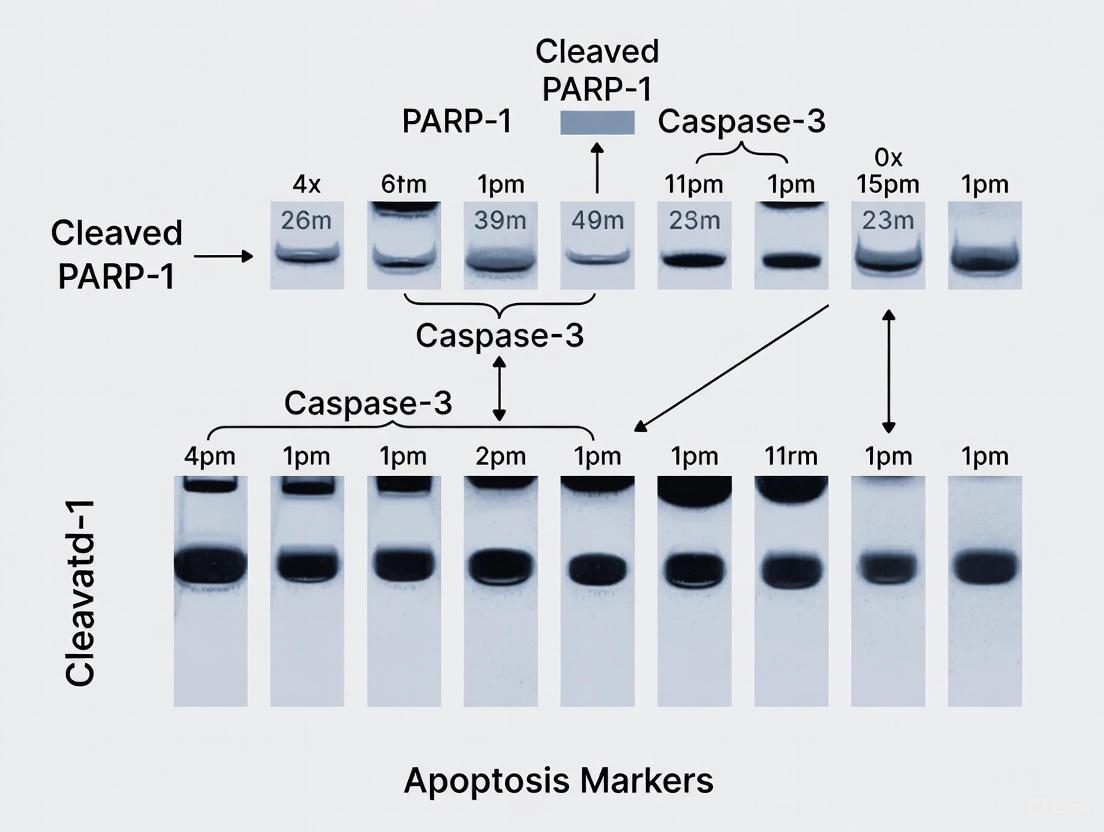
This article provides a comprehensive guide for researchers on correlating PARP-1 cleavage with key apoptosis markers in Western blot analysis.
PARP-1 Cleavage as an Apoptosis Marker: A Comprehensive Western Blot Guide from Mechanism to Validation
Abstract
This article provides a comprehensive guide for researchers on correlating PARP-1 cleavage with key apoptosis markers in Western blot analysis. It covers the foundational biology of PARP-1 proteolysis by caspases and other proteases, detailed methodological protocols for simultaneous detection of multiple cell death markers, strategies for troubleshooting common assay challenges, and rigorous approaches for data validation. By integrating mechanistic insights with practical application, this resource aims to enhance the accuracy and reliability of apoptosis assessment in diverse research contexts, from basic cancer biology to preclinical drug development.
The Biology of PARP-1 Cleavage: Understanding the Proteolytic Signature of Apoptosis
The cleavage of poly(ADP-ribose) polymerase-1 (PARP-1) is widely recognized as a biochemical hallmark of apoptosis, serving as a critical event that redirects this multifunctional nuclear enzyme from DNA repair duties to facilitating cellular disassembly [1] [2]. As a 116 kDa nuclear enzyme involved primarily in detecting and repairing DNA damage, PARP-1 becomes one of the primary substrates for activated caspases during programmed cell death [1] [3]. This proteolytic cleavage event separates PARP-1's DNA-binding domain from its catalytic domain, effectively halting its DNA repair activity and preventing futile energy consumption during the cell's final stages [1] [4]. For researchers investigating apoptosis mechanisms, the detection of characteristic PARP-1 cleavage fragments has become an essential biomarker for confirming caspase activation and commitment to cell death pathways [1] [2] [5].
The significance of PARP-1 cleavage extends beyond merely inactivating DNA repair. Emerging evidence indicates that the resulting fragments may actively participate in signaling processes, including potentially promoting innate immune responses and distinct forms of programmed cell death [4] [6]. This article provides a comprehensive comparison of PARP-1's role transition through caspase-mediated cleavage, detailing experimental approaches for its detection, and contextualizing its value within a broader apoptosis marker analysis framework for Western blot research.
Structural Domains of PARP-1 and Caspase Cleavage Sites
PARP-1 is composed of several functionally specialized domains that dictate its cellular functions and determine its fate during apoptosis [1]. The DNA-binding domain (DBD) located at the N-terminus contains two zinc finger motifs that enable PARP-1 to detect DNA strand breaks with high affinity [1]. This domain is connected via a nuclear localization signal (NLS) to the central auto-modification domain (AMD), which serves as a target for covalent poly(ADP-ribosyl)ation and contains a BRCT fold that facilitates protein-protein interactions [1]. The C-terminus harbors the catalytic domain (CD) responsible for poly(ADP-ribose) polymerization using NAD+ as substrate [1].
During apoptosis, caspases (primarily caspase-3 and -7) cleave PARP-1 at a specific aspartic acid residue located within the NLS region between the DBD and AMD domains [1] [2]. The conserved cleavage site sequence DEVD↑G (where ↑ indicates the cleavage site between aspartate 214 and glycine 215 in human PARP-1) is recognized by effector caspases [2] [7]. This proteolytic event generates two major fragments: a 24 kDa N-terminal fragment containing the DBD and a 89 kDa C-terminal fragment comprising the AMD and CD [1] [2]. The separation of these domains has profound functional consequences that effectively repurpose PARP-1 during cell death.
Figure 1: Domain structure of PARP-1 and caspase-mediated cleavage. PARP-1 is cleaved by effector caspases during apoptosis at aspartate 214, generating 24 kDa and 89 kDa fragments with distinct cellular fates and functions.
Functional Consequences of PARP-1 Cleavage
Disruption of DNA Repair Capacity
The cleavage of PARP-1 between its DNA-binding and catalytic domains effectively terminates its role in DNA repair [1]. The 24 kDa fragment retains the zinc finger motifs that confer high-affinity DNA binding, allowing it to remain bound to DNA strand breaks [1]. However, without the catalytic domain, this fragment cannot initiate poly(ADP-ribosyl)ation or recruit DNA repair machinery. Research indicates that this 24 kDa fragment may actually function as a trans-dominant inhibitor of DNA repair by occupying DNA break sites and blocking access by intact PARP-1 molecules or other repair enzymes [1]. This mechanism ensures that valuable cellular energy is not expended on DNA repair during the execution phase of apoptosis.
Conservation of Cellular Energy
PARP-1 activation in response to DNA damage consumes substantial amounts of NAD+, which in turn depletes ATP pools through NAD+ resynthesis pathways [3]. During apoptosis, caspase-mediated cleavage of PARP-1 prevents this energy depletion by inactivating the enzyme's catalytic function [3]. Studies comparing cell death pathways have demonstrated that prevention of PARP-1 cleavage through mutation of the caspase cleavage site sensitizes cells to necrotic death following death receptor activation, underscoring the importance of this energy conservation mechanism for the efficient execution of apoptosis [3].
Potential Signaling Functions of Cleavage Fragments
Emerging evidence suggests that PARP-1 cleavage fragments may actively participate in signaling processes rather than simply representing inactivation products [4] [6]. The 89 kDa fragment can undergo translocation to the cytoplasm under certain conditions, where it may function as a carrier of poly(ADP-ribose) (PAR) polymers [4]. This PAR shuttle capability has been implicated in facilitating apoptosis-inducing factor (AIF) release from mitochondria, thereby promoting a caspase-independent cell death pathway known as parthanatos [4].
Additionally, recent research has revealed that the truncated PARP-1 (tPARP1) fragment can interact with the RNA polymerase III (Pol III) complex in the cytoplasm during innate immune responses to foreign DNA [6]. This interaction facilitates ADP-ribosylation of Pol III and enhances IFN-β production, suggesting that PARP-1 cleavage products may serve to amplify inflammatory signaling during apoptosis triggered by pathogenic insults [6].
Comparative Analysis of PARP-1 Proteolytic Fragments in Different Cell Death Pathways
PARP-1 undergoes proteolytic processing in various forms of cell death, with distinct cleavage patterns serving as signatures for specific death programs [1] [5]. The following table summarizes the characteristic PARP-1 fragments generated by different proteases across multiple cell death pathways.
Table 1: PARP-1 Cleavage Fragments Across Different Cell Death Pathways
| Cell Death Pathway | Primary Proteases | Characteristic PARP-1 Fragments | Functional Consequences | Research Detection Methods |
|---|---|---|---|---|
| Apoptosis | Caspase-3, Caspase-7 | 24 kDa + 89 kDa fragments [1] [2] | Inactivation of DNA repair; Energy conservation; Possible signaling functions [1] [4] | Western blot with cleavage-specific antibodies (e.g., anti-cleaved PARP Asp214) [2] |
| Necrosis | Lysosomal proteases (Cathepsins B, D, G) | 50 kDa fragment [5] | Unregulated proteolysis; Cellular disintegration [5] | Western blot with antibodies detecting 50 kDa fragment; Lack caspase activation markers [5] |
| Parthanatos | Calpains, other Ca²⁺-activated proteases | Multiple fragments (40-55 kDa range) [1] | AIF-mediated chromatinolysis; Caspase-independent death [4] [8] | Co-detection of AIF translocation and PAR accumulation [4] |
The differential cleavage patterns of PARP-1 provide researchers with valuable diagnostic signatures for distinguishing between various cell death mechanisms in experimental models. The classic 89 kDa fragment resulting from caspase cleavage has become one of the most reliable biomarkers for confirming apoptotic cell death, while alternative fragmentation patterns indicate non-apoptotic death pathways [1] [5].
PARP-1 Cleavage in Neurodegenerative Contexts
In neurodegenerative diseases, PARP-1 cleavage represents a significant event marking the transition from attempted DNA repair to neuronal cell death [1] [8]. Research has demonstrated PARP-1 cleavage in experimental models of cerebral ischemia, Alzheimer's disease, Parkinson's disease, traumatic brain injury, and excitotoxicity [1] [8]. The detection of cleaved PARP-1 fragments in these contexts provides evidence of caspase activation and apoptotic commitment in vulnerable neuronal populations.
Beyond its role as a cell death marker, PARP-1 overactivation followed by cleavage may contribute directly to neurodegenerative pathology through multiple mechanisms, including energy failure, inflammation, and the generation of toxic PAR aggregates [8]. These findings have stimulated interest in PARP inhibitors as potential therapeutic agents for neurodegenerative conditions, with some compounds demonstrating protective effects in preclinical models [8].
Experimental Detection and Analysis Methods
Western Blot Protocols for PARP-1 Cleavage Detection
The detection of PARP-1 cleavage by Western blotting requires specific methodological considerations to accurately identify the characteristic fragments:
Sample Preparation:
- Prepare cell lysates using RIPA buffer supplemented with protease inhibitors (including caspase inhibitors to prevent post-lysis cleavage artifacts)
- Include phosphatase inhibitors to maintain phosphorylation states
- Use nuclear extraction protocols when analyzing subcellular localization of fragments
- Process samples immediately or flash-freeze in liquid nitrogen for storage at -80°C
Electrophoresis and Transfer:
- Use 4-12% Bis-Tris gradient gels for optimal separation of full-length (116 kDa) and cleaved (89 kDa) PARP-1
- Employ wet or semi-dry transfer systems with PVDF membranes for efficient protein transfer
- Verify transfer efficiency with Ponceau S staining before immunodetection
Immunodetection:
- Use primary antibodies specifically recognizing the cleaved 89 kDa fragment (e.g., Cleaved PARP (Asp214) D64E10 Rabbit mAb #5625) [2]
- Include antibodies against full-length PARP-1 to assess cleavage ratio
- Perform simultaneous detection of caspase-3 cleavage (17/19 kDa fragments) to confirm apoptotic activation
- Use appropriate loading controls (e.g., lamin A/C for nuclear fractions, GAPDH for total lysates)
Quantification and Analysis:
- Calculate cleavage ratio as: 89 kDa band intensity / (116 kDa + 89 kDa band intensities)
- Normalize data to untreated controls or time-zero timepoints
- Establish statistical significance through multiple independent replicates
Correlation with Other Apoptosis Markers
For comprehensive apoptosis assessment, PARP-1 cleavage should be evaluated alongside other established markers in a multiplex approach:
Table 2: Essential Apoptosis Markers for Correlation with PARP-1 Cleavage
| Marker Category | Specific Targets | Detection Methods | Temporal Relationship to PARP-1 Cleavage |
|---|---|---|---|
| Caspase Activation | Caspase-3 (17/19 kDa fragments), Caspase-7, Caspase-9 | Western blot, Fluorogenic substrates, Activity assays | Precedes or coincides with PARP-1 cleavage [1] [2] |
| Mitochondrial Events | Cytochrome c release, Bax translocation, ΔΨm collapse | IHC/IF, Subcellular fractionation, JC-1 staining | Typically precedes PARP-1 cleavage [9] |
| Membrane Alterations | Phosphatidylserine externalization | Annexin V-FITC/propidium iodide staining [6] | Can precede nuclear events like PARP-1 cleavage |
| Nuclear Morphology | Chromatin condensation, DNA fragmentation | Hoechst/DAPI staining, TUNEL assay [9] | Generally follows PARP-1 cleavage |
The sequential analysis of these markers in relation to PARP-1 cleavage provides researchers with a temporal framework for apoptosis progression and helps distinguish between commitment phases and execution phases of cell death.
Research Reagent Solutions for PARP-1 Cleavage Studies
Table 3: Essential Research Reagents for PARP-1 Cleavage Analysis
| Reagent Category | Specific Examples | Research Applications | Key Features |
|---|---|---|---|
| Cleavage-Specific Antibodies | Cleaved PARP (Asp214) (D64E10) Rabbit mAb #5625 [2] | Western blot, IHC, IF, IP, Flow cytometry | Detects 89 kDa fragment only; does not recognize full-length PARP-1; human, mouse, monkey reactivity |
| Caspase Inhibitors | zVAD-fmk (pan-caspase inhibitor), DEVD-CHO (caspase-3/7 specific) | Inhibition experiments to confirm caspase-dependent cleavage [5] [3] | Cell-permeable; reversible or irreversible inhibition |
| PARP Activity Assays | PAR ELISA, NAD+ consumption assays, Auto-ADP-ribosylation detection | Functional assessment of PARP-1 activation pre-cleavage | Quantitative measurement of enzyme activity |
| Apoptosis Inducers | Staurosporine, Actinomycin D, Etoposide, TNF-α + cycloheximide [4] [3] | Positive controls for PARP-1 cleavage experiments | Established mechanisms; reproducible kinetics |
| Cell Death Detection Kits | TUNEL assay kits, Annexin V/propidium iodide kits, Caspase activity assays [9] [6] | Multiplex apoptosis analysis alongside PARP-1 cleavage | Standardized protocols; quantitative results |
Signaling Pathways Involving PARP-1 Cleavage
The integration of PARP-1 cleavage within broader apoptotic signaling networks reveals its position as a convergence point for multiple death pathways. The following diagram illustrates key signaling contexts where PARP-1 cleavage occurs and its functional consequences.
Figure 2: PARP-1 cleavage integrates multiple apoptotic signaling pathways. PARP-1 proteolysis serves as a convergence point for various death stimuli, leading to coordinated cellular dismantling through multiple mechanisms.
PARP-1 cleavage stands as a definitive biochemical marker of apoptosis commitment, providing researchers with a reliable indicator of caspase activation and the transition from DNA repair efforts to programmed cellular disassembly. The characteristic 89 kDa fragment resulting from caspase-mediated cleavage at aspartate 214 serves not only to inactivate PARP-1's DNA repair functions but may also participate actively in signaling processes that facilitate cell death execution. When correlated with other apoptosis markers in Western blot analyses, PARP-1 cleavage provides valuable temporal and mechanistic insights into cell death pathways relevant to diverse research contexts, from cancer therapeutics to neurodegenerative diseases. The well-established protocols and reagent systems for detecting this event make it an accessible and informative component of comprehensive apoptosis assessment in experimental models.
Caspase-3 and caspase-7, the two key executioner caspases in apoptosis, jointly orchestrate the proteolytic cleavage of poly(ADP-ribose) polymerase 1 (PARP-1), generating signature 89 kDa and 24 kDa fragments. This cleavage event is a well-established biochemical hallmark of apoptosis and serves as a critical mechanism to suppress DNA repair during programmed cell death. While these caspases share functional redundancy and recognize similar optimal peptide sequences, emerging evidence reveals significant differences in their substrate specificity, regulation, and non-apoptotic functions. This guide systematically compares the roles of caspase-3 and caspase-7 in PARP-1 cleavage, supported by experimental data and detailed methodologies, to provide researchers with a comprehensive framework for interpreting this key apoptotic marker in Western blot analyses.
Caspase-3 and caspase-7 are executioner caspases that play pivotal roles in the terminal phases of apoptosis [10]. These cysteine proteases share an optimal peptide recognition sequence and are both proteolytically activated by initiator caspases-8 and -9 during death receptor- and DNA-damage-induced apoptosis, respectively [10]. Once activated, they cleave a broad range of cellular substrates, with PARP-1 being one of the most biologically significant and widely studied targets [11].
The cleavage of PARP-1 by these caspases represents a decisive step in apoptotic commitment. This event serves to inactivate PARP-1's DNA repair functions, prevent cellular energy depletion, and facilitate the dismantling of the cell [12]. The resulting 89 kDa and 24 kDa PARP-1 fragments have become established biomarkers for detecting caspase-mediated apoptosis in experimental systems, particularly in Western blot applications [11].
Despite their similarities, a growing body of evidence indicates that caspase-3 and caspase-7 are not functionally identical. They exhibit differences in substrate specificity, cellular regulation, and even participation in non-apoptotic processes [10] [13]. Understanding these distinctions is essential for proper interpretation of apoptotic signaling in research and drug development contexts.
Comparative Analysis of Caspase-3 and Caspase-7
Structural and Functional Characteristics
Table 1: Key characteristics of caspase-3 and caspase-7
| Feature | Caspase-3 | Caspase-7 |
|---|---|---|
| Classification | Executioner caspase | Executioner caspase |
| Optimal Recognition Sequence | DEVD | DEVD [10] |
| Activation Mechanisms | Caspase-8, -9, granzyme B [10] | Caspase-8, -9, caspase-1 (inflammation) [10] |
| Primary Functions | Apoptosis execution, substrate cleavage [14] | Apoptosis execution, inflammation, cytoprotective autophagy [10] [15] |
| Key Structural Features | Heterodimeric caspase fold | Heterodimeric caspase fold with unique exosite [13] |
| PARP-1 Cleavage | Generates 89 kDa and 24 kDa fragments [11] | Generates 89 kDa and 24 kDa fragments [11] |
| Non-Apoptotic Roles | Limited evidence | Cytoprotective autophagy, stress adaptation [15] |
Quantitative Cleavage Specificities and Substrate Profiles
Table 2: Substrate cleavage profiles and cellular roles
| Parameter | Caspase-3 | Caspase-7 |
|---|---|---|
| Number of Known Substrates | Hundreds of targets [13] | Hundreds of targets [13] |
| Cleavage Rate Variation | >500-fold within substrate cohort [13] | >500-fold within substrate cohort [13] |
| Specific Preferential Substrates | PARP-1, many others [13] | PARP-1, p23, specific targets via exosite [10] [13] |
| Response in Knockout Models | Resistant to UV- and FasL-induced apoptosis (MEFs) [10] | More resistant to UV- and FasL-induced apoptosis than caspase-3-/- MEFs [10] |
| Role in Development | Embryonic lethality in double knockouts with caspase-7 [10] | Embryonic lethality in double knockouts with caspase-3 [10] |
| Inflammatory Response | No protection from LPS-induced lethality [10] | Resistance to endotoxemia, protection from LPS-induced lethality [10] |
PARP-1 Cleavage: Mechanism and Consequences
Cleavage Products and Their Biological Significance
PARP-1 cleavage by caspase-3 and caspase-7 occurs at a specific aspartic acid residue within the nuclear localization signal near the DNA-binding domain, resulting in the production of two characteristic fragments: a 24 kDa DNA-binding domain fragment and an 89 kDa catalytic fragment [4] [16]. The 24 kDa fragment retains the ability to bind DNA but lacks catalytic activity, while the 89 kDa fragment contains the auto-modification domain and catalytic domain but has impaired DNA binding capability [11].
Recent research has revealed that the 89 kDa PARP-1 fragment can serve as a cytoplasmic carrier of poly(ADP-ribose) (PAR) polymers, facilitating the translocation of PAR to the cytoplasm where it promotes apoptosis-inducing factor (AIF)-mediated cell death, creating a connection between caspase-dependent apoptosis and parthanatos [4] [16]. This finding demonstrates the complex interplay between different cell death pathways and suggests additional biological significance for the PARP-1 cleavage fragments beyond the simple inactivation of DNA repair.
Caspase-3 vs. Caspase-7 in PARP-1 Cleavage
While both caspases cleave PARP-1 to generate the same characteristic fragments, emerging evidence suggests potential differences in their efficiency and regulation of this cleavage. Caspase-7 utilizes an exosite to promote PARP-1 proteolysis, indicating a more specialized mechanism for substrate recognition [13]. Additionally, the presence of poly(ADP-ribosyl)ation can influence which caspase targets PARP-1, with evidence suggesting that this modification can shift cleavage preference from caspase-3 to caspase-7 in certain cellular contexts [11].
In non-lethal stress conditions, caspase-7 undergoes non-canonical processing at calpain cleavage sites flanking a PARP-1 exosite, resulting in stable intermediate fragments (p29/p30) that may modulate PARP-1 activity differently than during apoptosis [15]. This suggests that the relationship between these caspases and PARP-1 is more complex than previously appreciated, extending beyond their apoptotic functions.
Experimental Protocols for Detection
Western Blot Protocol for PARP-1 Cleavage Detection
The following protocol is adapted from established methodologies for detecting caspase-mediated PARP-1 cleavage [17]:
Cell Lysis and Protein Extraction:
- Treat cells with apoptotic stimuli (e.g., bark extracts at IC50, staurosporine, or other inducers) for appropriate time periods (typically 24 hours).
- Harvest cells, wash with PBS, and lyse in protease-inhibitor cocktail buffer.
- Centrifuge lysates at 2500 ×g for 15 minutes and collect supernatant.
- Determine protein concentration using a bicinchoninic acid (BCA) protein assay kit.
SDS-PAGE and Western Blotting:
- Separate protein samples (60-80 µg) by SDS-PAGE using 10% gels.
- Transfer proteins to Polyvinylidene difluoride (PVDF) membranes.
- Block membranes with 5% skimmed milk in 1X TBS + 0.1% Tween 20 for 60 minutes.
- Incubate with primary antibodies diluted 1:1000 in blocking buffer at 4°C overnight:
- Caspase-3 (Cell Signaling Technology #9661)
- Caspase-7 (Cell Signaling Technology #9492)
- PARP (Cell Signaling Technology #9542)
- GAPDH (internal control, Santa Cruz Biotechnology #sc-32233)
- Wash membranes and incubate with appropriate secondary antibodies (anti-rabbit sc-2030 or anti-mouse sc-2005) diluted 1:2000 for 1 hour at room temperature.
- Detect bands using enhanced chemiluminescence (ECL) reagent and imaging system such as GE Healthcare Bio-Sciences AB Image Quant LAS 4000.
Caspase Activity Assays
Caspase-Glo 3/7 Assay: This luminescent assay simultaneously measures caspase-3 and -7 activities in cultured cells [18]:
- Culture cells in multiwell plates and treat with apoptotic inducers.
- Add Caspase-Glo 3/7 Reagent in an "add-mix-measure" format.
- The reagent lyses cells, providing substrates for caspase cleavage.
- Caspase-3/7 cleavage of the DEVD-based proluminescent substrate releases aminoluciferin, which is converted to light by luciferase.
- Measure the resulting "glow-type" luminescent signal, which is proportional to caspase-3/7 activity.
Signaling Pathways and Molecular Interactions
Diagram 1: Caspase activation pathways and PARP-1 cleavage. This diagram illustrates the proteolytic cascades leading to caspase-3 and caspase-7 activation through both extrinsic (death receptor) and intrinsic (mitochondrial) apoptotic pathways, as well as caspase-7 activation via inflammasomes under inflammatory conditions [10]. The dotted line indicates caspase-7-specific activation through caspase-1 inflammasomes. Active caspase-3 and caspase-7 cleave PARP-1 to generate the signature 89 kDa and 24 kDa fragments, with the 89 kDa fragment potentially contributing to parthanatos through AIF release [4] [16].
The Scientist's Toolkit: Essential Research Reagents
Table 3: Key research reagents for studying caspase-3/7 and PARP-1 cleavage
| Reagent/Assay | Specificity/Function | Example Products | Applications |
|---|---|---|---|
| Caspase-3 Antibody | Detects full-length (35 kDa) and cleaved (17 kDa) caspase-3 [14] | Cell Signaling Technology #9662 [14] | WB, IP, IHC |
| Caspase-7 Antibody | Detects caspase-7 protein | Cell Signaling Technology #9492 [17] | WB, IP |
| PARP Antibody | Detects full-length (113 kDa) and cleaved (89 kDa, 24 kDa) PARP-1 | Cell Signaling Technology #9542 [17] | WB |
| Caspase-Glo 3/7 Assay | Luminescent measurement of caspase-3/7 activity | Promega Caspase-Glo 3/7 Assay [18] | High-throughput screening |
| Caspase Inhibitors | DEVD-based inhibitors for caspase-3/7 | Various commercial suppliers | Functional studies |
| Secondary Antibodies | Anti-rabbit/anti-mouse HRP-conjugated | Santa Cruz Biotechnology sc-2030/sc-2005 [17] | WB detection |
Discussion and Research Implications
The detection of the 89 kDa and 24 kDa PARP-1 fragments remains a cornerstone method for confirming apoptotic activity in experimental systems. However, researchers should be aware of several critical considerations when interpreting these results. First, while both caspase-3 and caspase-7 generate identical PARP-1 fragments, their relative contributions may vary depending on cell type, apoptotic stimulus, and cellular context [10]. Second, the presence of PARP-1 cleavage fragments should be interpreted alongside other apoptotic markers, as certain non-apoptotic conditions may produce similar cleavage patterns [15].
Recent research has revealed that caspase-3 and caspase-7 play roles beyond apoptosis, including regulation of cytoprotective autophagy and cellular stress adaptation [15]. In these non-lethal stress conditions, caspase-7 undergoes non-canonical processing, resulting in stable intermediate fragments (p29/p30) that differ from the fully processed active enzyme in apoptosis [15]. This complexity underscores the importance of comprehensive experimental design that includes multiple time points, concentration gradients, and complementary assay types to properly distinguish between apoptotic and non-apoptotic caspase functions.
For drug development professionals, the differential expression and activation of these caspases in various cancer types may have implications for therapeutic targeting. The synthetic lethality observed between caspase-3/7 deficiency and BRCA1 loss suggests potential combination therapies that could exploit these relationships [15]. Furthermore, the emerging role of caspase-7 in inflammation and endotoxemia indicates broader pathological relevance beyond cancer [10].
As research continues to elucidate the distinct and overlapping functions of caspase-3 and caspase-7, the interpretation of PARP-1 cleavage data will undoubtedly become more sophisticated, enabling more precise assessment of apoptotic signaling in both basic research and drug discovery contexts.
Programmed cell death (PCD) is orchestrated by a complex network of proteolytic events that extend far beyond the well-characterized caspase family. While caspases are undeniably central to apoptosis, other proteases including calpains, granzymes, and various lysosomal proteases contribute significantly to the dismantling of cellular structures during cell death. In Western blot research, poly (ADP-ribose) polymerase 1 (PARP-1) cleavage serves as a canonical marker for apoptosis, typically yielding a characteristic 89 kDa fragment through caspase-mediated proteolysis. However, this cleavage event represents merely one node in an extensive network of proteolytic activities that collectively execute cell death. This guide provides a comparative analysis of the key proteases beyond caspases that contribute to PCD, equipping researchers with the methodological framework to accurately detect and interpret these complex proteolytic events in their experimental systems.
Protease Families in Cell Death: Key Characteristics and Substrates
Comparative Protease Profiles
Table 1: Characteristic Features of Major Cell Death Proteases
| Protease | Primary Classification | Optimal Cleavage Motif | Key Substrates | PARP-1 Cleavage | Primary Cellular Functions |
|---|---|---|---|---|---|
| Caspase-3 | Cysteine aspartase | DEXD [13] | PARP-1, caspase-7, gelsolin [13] [19] | 89 kDa fragment [20] | Chief apoptosis executioner |
| Granzyme B | Serine protease | IEPD [19] | Caspase-3, c-gelsolin [19] [21] | Indirect via caspase activation [21] | Cytotoxic lymphocyte death induction |
| Calpain | Calcium-dependent cysteine protease | Prefers Val/Leu at P2 [22] | Spectrin, caspases [22] | Variable fragments | Calcium-mediated death, necrosis |
| Caspase-7 | Cysteine aspartase | Similar to caspase-3 [13] | PARP-1 [13] | 89 kDa fragment | Apoptosis executioner, redundant with caspase-3 |
Quantitative Cleavage Profiles
Table 2: Proteolytic Scope and Experimental Detection
| Protease | Known Substrates | Cleavage Rate Variation | Detectable Fragments | Inhibitors | Required Cofactors |
|---|---|---|---|---|---|
| Caspase-3 | >292 substrates [23] | >500-fold between substrates [13] | PARP-1 (89 kDa), gelsolin (45 kDa N-terminal) [19] | Z-VAD-FMK, DEVD-CHO [22] | None (activated by cleavage) |
| Granzyme B | Dozens (direct) | Not characterized | c-gelsolin (45 kDa) [19] | AAD-CHO, serpins | Perforin (for delivery) |
| Executioner Caspases (C3/C7) | 453 in apoptosis; 92 in mild stress [22] | Not characterized | Multiple discrete fragments [22] | Z-VAD-FMK [22] | None (activated by cleavage) |
Granzyme B: The Cytotoxic Lymphocyte Protease
Mechanism of Action and Substrate Profile
Granzyme B, a serine protease delivered by cytotoxic T lymphocytes and natural killer cells, represents a crucial caspase-independent cell death pathway. Although Granzyme B exhibits caspase-like specificity for aspartate residues, its substrate repertoire and activation mechanisms display significant differences. Research has demonstrated that isolated mouse Granzyme B cleaves cytoplasmic gelsolin (c-gelsolin) in vitro, generating an NH2-terminal fragment that constitutively severs actin filaments [19]. This direct cleavage occurs without destroying target cells, suggesting potential sub-lethal functions in immune regulation.
Notably, when delivered to intact target cells by ex vivo immune Tc cells, Granzyme B mediates c-gelsolin proteolysis predominantly via activation of caspases-3/7 rather than through direct cleavage [19]. This hierarchical relationship highlights the complex interplay between different protease families in executing cell death. The observation that Granzyme B secreted by Tc cells initiates a caspase cascade that disintegrates the actin cytoskeleton in target cells suggests this process may contribute to anti-viral host defense [19].
Experimental Protocols for Granzyme B Detection
Methodology for Assessing Granzyme B-Mediated Cleavage:
- Isolated Enzyme Assays: Incubate 300 nM purified recombinant substrate proteins (e.g., c-gelsolin) with indicated concentrations of Granzyme B in gelsolin reaction buffer (6 mM Tris/HCl, 1.2 mM CaCl2, pH 7.5) for specified time points [19]
- Cell-Based Delivery Systems: Utilize ex vivo derived, virus-immune Granzyme B+ Tc cells (Granzyme A−/− Tc) to assess physiological substrate cleavage
- Caspase Inhibition Controls: Include caspase inhibitors (Z-VAD-FMK, 20-50 µM) to distinguish between direct Granzyme B cleavage and caspase-mediated events [22]
- Detection Methods: Western blot analysis for substrate cleavage fragments (e.g., c-gelsolin 45 kDa fragment) and caspase activation (cleaved caspase-3)
Figure 1: Granzyme B Cell Death Signaling Pathway - This diagram illustrates the dual mechanisms of Granzyme B-mediated cell death, including both direct substrate cleavage and caspase-dependent pathways.
Calpains and Other Cell Death Proteases
Calcium-Activated Proteases in Cell Death
Calpains represent a family of calcium-activated cysteine proteases that contribute to both apoptotic and necrotic cell death pathways. Unlike caspases and Granzyme B, calpains exhibit broader substrate specificity without absolute residue requirements at cleavage sites, though they often prefer valine or leucine at the P2 position [22]. Calpains function as important mediators of calcium-induced cell death and can process both structural proteins and signaling molecules.
The role of calpains in PCD is particularly evident in contexts of excitotoxicity, ischemia-reperfusion injury, and certain neurodegenerative conditions. Calpain-mediated cleavage events often produce fragment patterns distinct from caspase cleavage, enabling researchers to differentiate between these proteolytic pathways through Western blot analysis. For example, calpain-mediated PARP-1 cleavage typically generates fragments of different sizes compared to the characteristic 89 kDa caspase-generated fragment.
Proteolytic Landscapes in Stressed Cells
Recent proteomic analyses have revealed fascinating insights into the cooperative nature of proteolytic activities during cell stress and death. A comprehensive study examining the proteolytic landscape in cells exposed to non-lethal stresses found that 92 proteins were cleaved at one or a few discrete sites under low stress conditions, compared to 453 proteins cleaved during apoptosis [22]. Strikingly, upon exposure to non-lethal stresses, no discrete cleavage was detected in cells lacking caspase-3 and caspase-7, indicating that the proteolytic landscape in stressed viable cells fully depends on the activity of executioner caspases [22].
This research suggests that so-called executioner caspases fulfill important stress adaptive responses distinct from their role in apoptosis, with caspase activity levels distinctively lower than those observed in apoptotic cells [22]. These findings highlight the importance of considering both the extent of proteolysis and the specific cleavage events when interpreting Western blot data in cell death research.
Experimental Approaches for Protease Differentiation
Western Blot Strategies for Protease Identification
Comprehensive Caspase Activation Assessment: This protocol enables parallel assessment of multiple caspases from a single cellular population to accurately determine PCD activation [24].
Cell Lysis and Protein Extraction:
- Lyse cells in RIPA buffer supplemented with protease and phosphatase inhibitors
- Sonicate extracts and centrifuge at 13,000 rpm to collect supernatants
- Determine protein concentration using BCA assay [25]
Western Blot Conditions:
- Load 20-50 μg protein per lane on 4-12% Bis-Tris gels
- Transfer to PVDF membranes using standard protocols
- Block with 5% non-fat milk or BSA in TBST
Antibody Panel for Protease Discrimination:
- Caspase-3: Detect full-length (35 kDa) and cleaved fragments (17/19 kDa)
- Caspase-7: Detect full-length (35 kDa) and cleaved fragments (20 kDa)
- PARP-1: Distinguish full-length (116 kDa) and cleaved fragments (89 kDa caspase-dependent; alternative fragments for other proteases)
- Granzyme B: Detect active form in target cells
- Caspase-1: Differentiate apoptotic vs. inflammatory PCD [24]
Inhibition Studies:
- Include caspase inhibitors (Z-VAD-FMK, 20-50 μM) to confirm caspase-dependent events
- Utilize calpain inhibitors (e.g., MDL28170) to assess calcium-dependent proteolysis
- Consider Granzyme B inhibitors (AAD-CHO) in cytotoxic cell models
Figure 2: Experimental Workflow for Cell Death Protease Analysis - This workflow outlines the key steps for differentiating protease activities in programmed cell death research.
The Scientist's Toolkit: Essential Research Reagents
Table 3: Key Research Reagents for Cell Death Protease Studies
| Reagent/Category | Specific Examples | Function/Application | Considerations |
|---|---|---|---|
| Caspase Inhibitors | Z-VAD-FMK (pan-caspase), DEVD-CHO (caspase-3/7) | Differentiate caspase-dependent vs independent death | Use 20-50 μM for cell-based studies [22] |
| Protease Substrates | Recombinant PARP-1, c-gelsolin, fluorogenic peptide substrates | In vitro cleavage assays | Confirm purity and activity of recombinant proteins [19] |
| Activation Antibodies | Anti-cleaved caspase-3, anti-cleaved PARP (89 kDa), anti-Granzyme B | Detect active proteases and specific cleavage events | Validate specificity with knockout controls [24] |
| Cell Death Inducers | Cisplatin (apoptosis), ionizing radiation (PANoptosis), cytotoxic lymphocytes (Granzyme B) | Activate specific cell death pathways | Titrate for desired death magnitude [22] [9] |
| Proteomic Tools | Subtiligase-based N-terminal labeling, TAILS, LATE method | Global identification of cleavage sites | Requires specialized expertise and equipment [23] [26] |
The comprehensive analysis of proteolytic events during cell death requires researchers to look beyond the traditional caspase-centric paradigm. While PARP-1 cleavage remains a valuable marker for apoptosis, its interpretation should be contextualized within a broader proteolytic landscape that includes Granzyme B, calpains, and other proteases. The experimental approaches outlined in this guide provide a framework for differentiating between these various proteolytic activities, enabling more accurate characterization of cell death pathways in research models. As the field continues to evolve, the integration of traditional Western blot methodologies with emerging proteomic technologies will further enhance our understanding of the complex protease networks that govern cellular demise.
Poly (ADP-ribose) polymerase-1 (PARP-1) is a nuclear enzyme with well-established roles in DNA repair and cellular homeostasis. However, during cell death, PARP-1 becomes a primary target for proteolytic cleavage by various proteases activated in distinct death pathways. The specific cleavage fragments generated serve as molecular signatures that researchers can exploit to identify the particular cell death pathway activated. This proteolytic processing not only inactivates PARP-1's DNA repair functions but also generates fragments with unique biological activities that can influence the death process itself. Through western blot analysis, researchers can detect these characteristic cleavage patterns to differentiate between apoptosis, necrosis, and other forms of cell death, providing critical insights into cellular responses to pathological insults and therapeutic agents.
PARP-1 Cleavage Fragments as Hallmarks of Specific Cell Death Pathways
The cleavage pattern of PARP-1 provides a molecular signature that distinguishes between different cell death pathways. Various proteases target PARP-1 at specific sites, generating characteristic fragments that can be detected through western blot analysis.
Table 1: PARP-1 Cleavage Products in Different Cell Death Pathways
| Cell Death Pathway | Proteases Involved | Cleavage Fragments | Functional Consequences | Detection Methods |
|---|---|---|---|---|
| Apoptosis | Caspase-3, Caspase-7 | 89 kDa (AMD+CD), 24 kDa (DBD) | Inactivation of DNA repair; Conservation of ATP; DNA binding of 24-kDa fragment inhibits repair | Western blot, Immunocytochemistry [1] [27] |
| Necrosis | Cathepsins B, D, G (Lysosomal proteases) | ~50 kDa fragment | Not well characterized; May involve altered signaling | Western blot, Activity assays [5] |
| Inflammasome Activation | Caspase-7 (non-apoptotic) | 89 kDa, 24 kDa | Enhanced NF-κB target gene expression; Chromatin decondensation | Western blot, Chromatin immunoprecipitation [28] |
The 89-kDa fragment contains the auto-modification domain (AMD) and catalytic domain (CD), while the 24-kDa fragment comprises the DNA-binding domain (DBD). During apoptosis, the 24-kDa fragment remains bound to DNA, acting as a trans-dominant inhibitor of DNA repair enzymes, thereby preventing DNA repair and conserving cellular ATP pools to support the apoptotic process [1]. In contrast, necrosis involves lysosomal proteases that generate a dominant 50-kDa fragment, though the functional significance of this fragment remains less clearly defined [5].
Experimental Approaches for Detecting PARP-1 Cleavage
Standard Western Blot Protocol for PARP-1 Cleavage Detection
To reliably detect PARP-1 cleavage fragments, researchers should follow a standardized western blot protocol. Begin by preparing cell lysates using RIPA buffer supplemented with protease inhibitors. Load 20-50 μg of protein per lane on 8-12% SDS-PAGE gels to achieve optimal separation of full-length PARP-1 (113 kDa) and its cleavage fragments. Transfer proteins to PVDF membranes and block with 5% non-fat milk in TBST. For immunodetection, use primary antibodies specific for PARP-1: mouse monoclonal C2-10 (1:5,000 dilution) recognizes the 89-kDa fragment, while other antibodies may target different epitopes [29]. Incubate with appropriate HRP-conjugated secondary antibodies and develop using enhanced chemiluminescence. Include both positive controls (cells treated with apoptotic inducers like staurosporine) and negative controls (untreated cells) to validate the results.
In Situ Detection and Relationship to DNA Fragmentation
For spatial analysis within individual cells, immunocytochemical methods can detect PARP cleavage using antibodies specific to the 89-kDa fragment (PARP p89). This approach allows correlation with DNA fragmentation through simultaneous TUNEL staining. Research demonstrates that PARP cleavage typically precedes DNA fragmentation by approximately 30 minutes during apoptosis induced by various stimuli [27] [30]. The timing varies by induction method—TNF-α treatment triggers PARP cleavage within 30 minutes, while camptothecin requires about 90 minutes. Flow cytometry and laser scanning cytometry enable multiparameter analysis of PARP cleavage in relation to cell cycle position, revealing S-phase specificity for camptothecin-induced cleavage but not for TNF-α-induced cleavage [27].
Functional Consequences of PARP-1 Cleavage in Cell Death Decision-Making
PARP-1 cleavage represents a critical regulatory point that influences the mode of cell death. In apoptosis, caspase-mediated cleavage of PARP-1 serves to inactivate DNA repair functions, thereby ensuring the irreversibility of the death process while conserving cellular ATP levels necessary for the energy-dependent apoptotic process [3]. This cleavage event functions as a molecular switch between apoptotic and necrotic cell death fates.
The functional significance of PARP-1 cleavage is particularly evident in studies using caspase-resistant PARP-1 mutants. Cells expressing PARP-1 with a mutated caspase cleavage site (D214N) show increased sensitivity to TNF-α-induced necrosis, demonstrating that preventing PARP-1 cleavage shifts the balance from apoptosis to necrosis [7] [3]. This noncleavable PARP-1 mutant has been instrumental in revealing the role of PARP-1 cleavage in inflammation, as PARP-1 knockin mice (PARP-1KI/KI) with the D214N mutation show reduced inflammatory responses and resistance to endotoxic shock and ischemia-reperfusion injury [7].
Beyond its role in cell death execution, PARP-1 cleavage also participates in inflammatory signaling. During inflammasome activation, caspase-7 cleaves PARP-1 at the promoters of specific NF-κB target genes, leading to PARP-1 dissociation from chromatin and enhanced gene expression [28]. This non-apoptotic function reveals a novel role for PARP-1 cleavage in regulating inflammatory gene expression independent of cell death.
The Scientist's Toolkit: Essential Research Reagents
Table 2: Key Research Reagents for PARP-1 Cleavage Studies
| Reagent Category | Specific Examples | Research Applications | Key Considerations |
|---|---|---|---|
| PARP Antibodies | C2-10 (anti-PARP-1), Anti-89 kDa fragment | Western blot, Immunocytochemistry for detecting cleavage fragments | Antibody specificity determines which fragments are detected [29] |
| Caspase Inhibitors | zVAD-fmk (pan-caspase inhibitor) | Distinguishing caspase-dependent vs independent cleavage; Studying necrosis | zVAD-fmk potentiates TNF-induced necrosis [3] [5] |
| PARP Inhibitors | 3-aminobenzamide (3-AB) | Studying PARP activity in cell death pathways | Inhibits PARP enzymatic activity but not cleavage [29] |
| Cell Death Inducers | Camptothecin, TNF-α, Etoposide, H₂O₂ | Inducing specific death pathways for PARP cleavage studies | Different inducers activate distinct proteases [27] [5] |
| Lysosomal Protease Inhibitors | Cathepsin inhibitors | Studying necrotic PARP cleavage | Cathepsins B and G cleave PARP-1 during necrosis [5] |
PARP-1 Cleavage in Correlation with Other Apoptosis Markers
In western blot research, correlating PARP-1 cleavage with other apoptosis markers provides a more comprehensive understanding of cell death mechanisms. The temporal relationship between PARP cleavage and DNA fragmentation is particularly informative, with PARP cleavage typically preceding DNA strand breaks by approximately 30 minutes [27]. This progression can be mapped experimentally through time-course studies combining western blot analysis for PARP cleavage with TUNEL assays for DNA fragmentation.
Additional apoptotic markers that complement PARP-1 cleavage analysis include caspase-3 activation, cytochrome c release, and phosphatidylserine externalization. The integration of multiple detection methods—western blot for molecular fragments, flow cytometry for population analysis, and immunocytochemistry for spatial resolution—provides a multidimensional view of cell death processes. This integrated approach is particularly valuable for distinguishing between overlapping death pathways and identifying dominant mechanisms in specific experimental or pathological contexts.
Visualization of PARP-1 Cleavage Pathways
The analysis of PARP-1 cleavage patterns provides researchers with a powerful diagnostic tool for identifying specific cell death pathways activated in experimental models or pathological conditions. The characteristic fragment signatures—89 kDa and 24 kDa fragments in apoptosis versus 50 kDa fragments in necrosis—serve as reliable biomarkers that can be detected through standardized western blot protocols. The integration of PARP-1 cleavage data with other apoptotic markers creates a comprehensive picture of cell death mechanisms, enabling more precise interpretations of cellular responses to genotoxic stress, therapeutic agents, and disease processes. As research continues to uncover novel functions for PARP-1 fragments in signaling pathways, the interpretation of these cleavage patterns will remain an essential skill in cell death research and drug development.
Poly(ADP-ribose) polymerase-1 (PARP-1) is a 113-116 kDa nuclear enzyme that plays a dual role in cellular stress responses. Under mild DNA damage conditions, it facilitates DNA repair, but under severe stress, it becomes a marker for programmed cell death through proteolytic cleavage [1]. This cleavage event has become a fundamental hallmark in cell death research, serving as a crucial indicator for differentiating between apoptosis and alternative cell death pathways. The specific cleavage patterns of PARP-1 provide researchers with biochemical signatures that can distinguish between various modes of cell death, including apoptosis, necrosis, and parthanatos [5] [1]. This review systematically correlates PARP-1 cleavage fragments with complementary apoptotic markers, experimental methodologies, and the regulatory frameworks provided by Bcl-2 family proteins, offering a comprehensive guide for western blot-based apoptosis research.
PARP-1 Cleavage Signatures Across Cell Death Pathways
Characteristic Proteolytic Fragments as Pathway Indicators
PARP-1 serves as a substrate for multiple classes of proteases, with each producing distinctive cleavage fragments that serve as biochemical signatures for specific cell death pathways.
Table 1: PARP-1 Cleavage Signatures Across Cell Death Pathways
| Cell Death Pathway | Primary Proteases | PARP-1 Fragments | Functional Consequences | Inhibitor Sensitivity |
|---|---|---|---|---|
| Apoptosis | Caspase-3, Caspase-7 | 89 kDa + 24 kDa | Inactivation of DNA repair; 89 kDa fragment translocates to cytoplasm [1] [31] | zVAD-fmk sensitive [5] |
| Necrosis | Cathepsins B, G, Lysosomal proteases | ~50 kDa fragment | Distinct from apoptotic cleavage; mediated by lysosomal proteases [5] | zVAD-fmk insensitive [5] |
| Parthanatos | - | - | PAR polymer synthesis and translocation | PARP inhibitors (PJ34, ABT-888) [31] |
The 89-kDa fragment generated during caspase-dependent apoptosis contains the automodification and catalytic domains and translocates to the cytoplasm, while the 24-kDa fragment with DNA-binding capacity remains nuclear [31]. This cleavage separates the DNA-binding domain from the catalytic domain, effectively halting DNA repair and facilitating the apoptotic process [1] [3]. In contrast, necrotic cleavage produces a dominant 50-kDa fragment through the action of lysosomal proteases such as cathepsins B and G, which is not inhibited by broad-spectrum caspase inhibitors like zVAD-fmk [5].
Mitochondrial Regulation: Integrating PARP-1 Cleavage into Apoptotic Cascades
Bcl-2 Family Proteins as Central Regulators
The Bcl-2 protein family serves as the primary regulatory system for mitochondrial outer membrane permeabilization (MOMP), the pivotal event in intrinsic apoptosis. These proteins are categorized into three functional groups based on their structural domains and apoptotic functions [32].
Table 2: Bcl-2 Protein Family Classification and Functions
| Protein Class | Representative Members | BH Domains | Primary Function |
|---|---|---|---|
| Anti-apoptotic | Bcl-2, Bcl-xL, Mcl-1 | BH1-BH4 | Bind and sequester pro-apoptotic proteins; maintain mitochondrial integrity [32] |
| BH3-only | Bid, Bim, Bad, Noxa, Puma | BH3 only | Sense cellular stress; directly or indirectly activate Bax/Bak [33] [32] |
| Pore-forming/Executioner | Bax, Bak | BH1-BH3 | Mediate MOMP through oligomerization; enable cytochrome c release [33] |
The balance between these competing factions determines cellular fate, with the ratio of pro-to anti-apoptotic members functioning as a critical rheostat for apoptosis induction [32]. Bcl-2 itself can directly interact with PARP1, suppressing its enzymatic activity and inhibiting PARP1-dependent DNA repair, demonstrating cross-talk between the mitochondrial regulatory system and nuclear DNA damage response [34].
Experimental Evidence for Bcl-2 Family Control of Apoptosis
Genetic studies using cells deficient for all eight proapoptotic BH3-only proteins (OctaKO) have demonstrated that while these cells are resistant to most apoptotic stimuli, they undergo efficient Bax/Bak-dependent apoptosis when both Bcl-xL and Mcl-1 are inactivated [33]. This underscores the critical importance of anti-apoptotic protein neutralization in apoptosis initiation. Furthermore, research has revealed that the outer mitochondrial membrane itself may serve as the direct activator of Bax/Bak following BH3-only-mediated neutralization of anti-apoptotic Bcl-2 proteins [33].
The integration of PARP-1 cleavage into this mitochondrial framework occurs through multiple mechanisms. The BCL-2 family protein BCL-RAMBO interacts with glucose-regulated protein 75 (GRP75) to promote cytochrome c release and PARP-1 cleavage, demonstrating a direct molecular connection between these regulatory systems [35]. Additionally, caspase-mediated cleavage of PARP-1 generates an 89-kDa fragment that serves as a cytoplasmic poly(ADP-ribose) (PAR) carrier, inducing apoptosis-inducing factor (AIF) release from mitochondria and creating an amplification loop connecting nuclear apoptosis initiation to mitochondrial events [31] [4].
Experimental Methodologies for Apoptosis Detection
Western Blot Protocols for PARP-1 Cleavage Analysis
Standardized experimental protocols enable consistent detection and interpretation of PARP-1 cleavage events in apoptosis research.
Cell Culture and Treatment:
- Utilize appropriate cell lines (e.g., Jurkat T cells for lymphocyte models, HeLa for epithelial models) [5] [31]
- Apply apoptotic inducers: Staurosporine (0.5-2 μM for 4-6 hours), Actinomycin D (0.5-1 μg/mL for 16-24 hours), or Etoposide (VP-16, 50-100 μM for 16-24 hours) [5] [31] [1]
- Include controls: caspase inhibitors (zVAD-fmk, 20-50 μM) and PARP inhibitors (PJ34, ABT-888, 10-50 μM) [5] [31]
Protein Extraction and Western Blotting:
- Prepare whole cell lysates using RIPA buffer with protease inhibitors
- Separate 20-30 μg protein by SDS-PAGE (8-10% gels)
- Transfer to PVDF membranes and block with 5% non-fat milk
- Incubate with primary antibodies: anti-PARP-1 (specific for full-length and fragments), anti-cleaved caspase-3, anti-caspase-7, anti-Bcl-2 family proteins [5] [35]
- Use HRP-conjugated secondary antibodies and chemiluminescent detection
Data Interpretation:
- Apoptotic signature: increased 89 kDa fragment with corresponding decrease in full-length PARP-1
- Confirm with caspase-3/7 cleavage (appearance of p20 subunit) [35]
- Executioner caspase activity can be quantified using fluorogenic substrates (e.g., Ac-DEVD-AFC) [35]
Complementary Apoptosis Assays
Beyond PARP-1 cleavage detection, comprehensive apoptosis analysis should include complementary methods:
- Annexin V/PI staining for flow cytometry to detect phosphatidylserine externalization [34] [31]
- Mitochondrial membrane potential assessment using JC-1 or TMRM dyes
- Cytochrome c release assays via subcellular fractionation and western blotting
- DNA fragmentation analysis by TUNEL assay or comet assay [34]
Signaling Pathway Integration and Visualization
The following diagram illustrates the interconnected pathways linking PARP-1 cleavage to mitochondrial regulation through Bcl-2 family proteins:
Figure 1: Integrated Pathway Connecting PARP-1 Cleavage to Mitochondrial Apoptosis
BCL-RAMBO-GRP75 Cooperation in Apoptosis Signaling
Recent research has identified specific molecular interactions that connect PARP-1 cleavage to mitochondrial apoptosis regulation. BCL-RAMBO (BCL2-like 13) interacts with GRP75 (glucose-regulated protein 75) via its BHNo domain, facilitating cytochrome c release and PARP-1 cleavage [35]. This interaction demonstrates the sophisticated crosstalk between Bcl-2 family members and PARP-1-mediated apoptosis. Genetic studies in Drosophila confirm this relationship, where mutations in Hsc70-5 (a GRP75 ortholog) partially suppress the rough eye phenotype caused by BCL-RAMBO expression [35]. In human cells, GRP75 co-expression with BCL-RAMBO enhances executioner caspase activity and PARP-1 cleavage, while GRP75 knockdown attenuates these effects [35].
The Scientist's Toolkit: Essential Research Reagents
Table 3: Key Research Reagents for PARP-1 and Apoptosis Studies
| Reagent/Category | Specific Examples | Research Application | Mechanistic Insight |
|---|---|---|---|
| Caspase Inhibitors | zVAD-fmk (20-50 μM) | Distinguish caspase-dependent vs independent death [5] [3] | Broad-spectrum caspase inhibition; prevents PARP-1 apoptotic cleavage |
| PARP Inhibitors | PJ34, ABT-888, 3-AB | Inhibit PARP catalytic activity; study parthanatos [31] | Block PAR synthesis; prevent AIF release and energy depletion |
| Apoptosis Inducers | Staurosporine, Actinomycin D, Etoposide, TNF | Activate intrinsic or extrinsic apoptosis pathways [5] [3] [31] | Trigger mitochondrial signaling or death receptor activation |
| Necrosis Inducers | H₂O₂ (0.1%), HgCl₂ (100 μM) | Induce necrotic cell death with PARP-1 cleavage [5] | Generate oxidative stress; activate lysosomal proteases |
| BCL-2 Inhibitors | ABT-737, ABT-199 (Venetoclax) | Disrupt BCL-2 interactions; induce MOMP [34] [33] | Displace pro-apoptotic proteins or PARP1 from BCL-2 |
| Selective Antibodies | Anti-PARP-1 (full-length and fragments), anti-cleaved caspases, Bcl-2 family proteins | Detect cleavage events and protein localization [5] [1] | Identify specific proteolytic fragments; confirm pathway activation |
Discussion: Experimental Considerations and Interpretation Guidelines
Technical Considerations for Western Blot Analysis
When correlating PARP-1 cleavage with other apoptotic markers, researchers must consider several technical aspects. Antibody selection is critical, as some PARP-1 antibodies recognize both full-length and cleaved forms, while others are specific to the 89-kDa fragment [31]. Timing of analysis requires optimization, as PARP-1 cleavage typically occurs after caspase activation but before DNA fragmentation. The 89-kDa fragment may be rapidly degraded, making detection challenging in late-stage apoptosis [1]. Researchers should include multiple time points and use positive controls (e.g., staurosporine-treated cells) to validate their detection systems.
Integrating PARP-1 Cleavage into Comprehensive Apoptosis Assessment
PARP-1 cleavage should not be interpreted in isolation but as part of a comprehensive apoptotic signature. The appearance of the 89-kDa fragment should correlate with other apoptotic markers, including:
- Phosphatidylserine externalization (Annexin V positivity)
- Caspase-3 and caspase-7 activation
- Cytochrome c release from mitochondria
- Nuclear condensation and DNA fragmentation
Differentiation between apoptosis and other cell death pathways requires additional characterization. Caspase-independent PARP-1 activation occurs in parthanatos, where PAR translocation to the cytoplasm triggers AIF release [31] [4]. The recent discovery that truncated PARP-1 mediates ADP-ribosylation of RNA polymerase III during cytosolic DNA-induced apoptosis reveals novel connections between innate immunity and apoptotic signaling [6].
PARP-1 cleavage serves as a critical integration point connecting DNA damage response with mitochondrial regulation through Bcl-2 family proteins. The characteristic 89-kDa and 24-kDa fragments generated during apoptosis provide a definitive biochemical marker that, when correlated with other apoptotic indicators, offers robust evidence of programmed cell death activation. The expanding understanding of PARP-1 fragments as active signaling molecules, rather than merely inactive cleavage products, highlights the dynamic role of this enzyme in cell fate decisions. As research continues to elucidate the complex interactions between PARP-1 and Bcl-2 family members, particularly in cancer and neurodegenerative diseases, the strategic combination of PARP inhibitors with BH3-mimetics represents a promising therapeutic approach for manipulating cell survival pathways in human disease.
Optimized Western Blot Protocols for Simultaneous Detection of PARP-1 Cleavage and Apoptosis Markers
Poly (ADP-ribose) polymerase-1 (PARP-1) is a 113-kDa nuclear chromatin-associated enzyme that plays a central role in the cellular response to DNA damage, primarily through the base excision repair (BER) pathway [11] [36]. Beyond DNA repair, PARP-1 participates in diverse cellular processes including transcription, genomic stability maintenance, and cell death regulation [11] [7]. During apoptosis, PARP-1 becomes a primary substrate for caspase proteases, particularly caspase-3 and caspase-7, which cleave the enzyme at a specific aspartate residue (Asp214) within the conserved DEVD motif [11] [36]. This proteolytic cleavage separates the 24-kDa DNA-binding domain (DBD) from the 89-kDa fragment containing the auto-modification and catalytic domains, effectively inactivating the enzyme and preventing wasteful consumption of cellular ATP during programmed cell death [11] [36]. The appearance of the 89-kDa cleavage fragment is considered a biochemical hallmark of apoptosis and serves as a widely recognized marker for distinguishing apoptosis from necrotic cell death [11] [36]. This review provides a comprehensive comparison of antibodies targeting full-length PARP-1 and its characteristic cleavage fragments, with experimental protocols for validating their performance in apoptosis research.
PARP-1 Biology and Cleavage Significance in Apoptosis
Structural Domains and Cleavage Sites of PARP-1
PARP-1 features a modular domain architecture consisting of three primary functional regions. The N-terminal DNA-binding domain (DBD) contains two zinc finger motifs that enable the protein to recognize and bind to DNA strand breaks [11] [37]. The central auto-modification domain (AMD) serves as a target for covalent poly(ADP-ribosyl)ation, while the C-terminal catalytic domain (CAT) mediates the transfer of ADP-ribose units from NAD+ to acceptor proteins [11] [37]. The caspase cleavage site at Asp214 is located within the DBD, and cleavage at this site generates two primary fragments: a 24-kDa fragment containing the DBD and an 89-kDa fragment comprising the AMD and CAT domains [11] [36].
Table 1: PARP-1 Domains and Cleavage Fragments
| Domain/Fragment | Molecular Weight | Functional Characteristics | Proteases Known to Cleave PARP-1 |
|---|---|---|---|
| Full-length PARP-1 | 113 kDa | Functional enzyme with DNA binding and catalytic activity | - |
| DNA-binding Domain (DBD) | 24 kDa (after cleavage) | Contains zinc finger motifs; binds irreversibly to damaged DNA | Caspase-3, Caspase-7 [11] [36] |
| Catalytic Fragment | 89 kDa (after cleavage) | Contains auto-modification and catalytic domains; reduced DNA binding | Caspase-3, Caspase-7, Calpains, Cathepsins, Granzymes, MMPs [11] |
| Auto-modification Domain (AMD) | Part of 89 kDa fragment | Target for poly(ADP-ribosyl)ation | - |
| Catalytic Domain (CAT) | Part of 89 kDa fragment | Transfers ADP-ribose units from NAD+ to target proteins | - |
Biological Significance of PARP-1 Cleavage
The cleavage of PARP-1 during apoptosis serves multiple important biological functions. The 24-kDa fragment retains the ability to bind tightly to DNA strand breaks but lacks catalytic activity, effectively blocking access to DNA repair enzymes and ensuring the apoptotic process proceeds efficiently [11]. Meanwhile, the 89-kDa fragment, liberated from its DNA-binding moiety, exhibits significantly reduced DNA binding capacity and may be released from the nucleus into the cytosol [11] [36]. This cleavage event is thought to conserve cellular energy pools by preventing PARP-1 activation in response to DNA fragmentation during apoptosis, thereby directing DNA-damaged cells toward apoptotic rather than necrotic cell death [36]. Research using caspase-resistant PARP-1 mutants (where Asp214 is mutated to Asn) has demonstrated that preventing PARP-1 cleavage can influence inflammatory responses and cellular fate decisions, highlighting the regulatory importance of this proteolytic event [7].
Figure 1: PARP-1 Cleavage in Apoptotic Pathway. Caspase-mediated cleavage of PARP-1 at Asp214 represents a key commitment step in the apoptosis pathway.
Comparative Analysis of PARP-1 Antibodies
Antibodies Targeting Full-length PARP-1
Antibodies recognizing full-length PARP-1 are valuable tools for assessing total PARP-1 expression levels regardless of cleavage status. These antibodies typically target epitopes outside the caspase cleavage site and can detect both the intact 113-kDa protein and, in some cases, the cleavage fragments depending on the specific epitope recognized. When selecting full-length PARP-1 antibodies, researchers should consider the application requirements (western blot, immunoprecipitation, immunohistochemistry) and whether quantification of the uncleaved protein specifically is needed during apoptosis experiments.
Cleavage-Specific PARP-1 Antibodies
Cleavage-specific PARP-1 antibodies represent more specialized reagents that selectively recognize the neo-epitopes created by caspase-mediated proteolysis. These antibodies typically target the N-terminus of the 89-kDa fragment that becomes exposed after cleavage at Asp214 [36] [38]. The clone F21-852 antibody, for instance, is well-characterized for specifically detecting the 89-kDa cleavage fragment without cross-reacting with full-length PARP-1 [36]. Similarly, the clone 2G13 recombinant monoclonal antibody has been validated for detecting cleaved PARP-1 across multiple applications including western blot, flow cytometry, and immunohistochemistry [38].
Table 2: Comparison of Commercial PARP-1 Antibodies
| Antibody Clone/Specificity | Host Species | Recognized Antigen | Applications | Key Characteristics |
|---|---|---|---|---|
| F21-852 (Cleavage-specific) | Mouse | N-terminus of 89-kDa fragment (after Asp214) | WB, IP, ICS [36] | Does not react with intact PARP-1; specifically detects 89-kDa fragment [36] |
| 2G13 (Cleavage-specific) | Rabbit recombinant | Epitope within 10 amino acids from N-terminal region containing cleavage site | WB, FC, ICC, IHC [38] | ZooMAb recombinant antibody; enhanced specificity and lot-to-lot consistency [38] |
| Full-length PARP-1 antibodies | Various | Epitopes outside cleavage region | WB, IP, IHC | Detects both full-length and potentially cleavage fragments depending on epitope |
Technical Considerations for Antibody Selection
When selecting antibodies for PARP-1 detection, researchers should consider several technical factors. For apoptosis studies where specific detection of cleavage is required, cleavage-specific antibodies provide superior specificity and reduced background compared to general PARP-1 antibodies. The species reactivity should be verified against the experimental model, though many PARP-1 antibodies show cross-reactivity due to the highly conserved nature of the cleavage site region [36]. Application-specific validation is also critical—antibodies performing well in western blot may not be optimal for immunohistochemistry or flow cytometry without additional validation. For quantitative assessments, recombinant monoclonal antibodies like the ZooMAb series may offer better lot-to-lot consistency [38].
Experimental Validation of PARP-1 Cleavage
Western Blot Protocol for PARP-1 Cleavage Detection
Sample Preparation:
- Culture approximately 1×10⁶ Jurkat cells per experimental condition.
- Induce apoptosis using 4 µM camptothecin for 4 hours or 50 µM etoposide for appropriate duration [36] [38].
- Prepare cell lysates using RIPA buffer supplemented with protease inhibitors.
- Determine protein concentration using BCA assay and adjust samples to equal concentrations.
Electrophoresis and Blotting:
- Load 20-50 µg of total protein per lane on 4-12% Bis-Tris polyacrylamide gels.
- Conduct electrophoresis at 120-150 V for 1-2 hours using MOPS or MES running buffer.
- Transfer proteins to PVDF membranes using wet or semi-dry transfer systems.
Antibody Detection:
- Block membranes with 5% non-fat milk in TBST for 1 hour at room temperature.
- Incubate with primary antibody (diluted in blocking buffer) overnight at 4°C:
- Wash membrane 3× with TBST for 10 minutes each.
- Incubate with appropriate HRP-conjugated secondary antibody (1:2,000-1:10,000) for 1 hour at room temperature.
- Develop using enhanced chemiluminescence substrate and image with digital imaging system.
Expected Results: Successful apoptosis induction should yield a prominent band at ~89 kDa corresponding to the cleaved PARP-1 fragment, with corresponding decrease in full-length 113-kDa PARP-1 signal [36] [38].
Correlation with Additional Apoptosis Markers
To comprehensively validate apoptosis induction, PARP-1 cleavage should be correlated with other established apoptosis markers. Caspase-3 activation can be detected using antibodies recognizing the active (cleaved) form of caspase-3 or through fluorogenic caspase activity assays. Additional apoptotic markers including DNA fragmentation (TUNEL assay), phosphatidylserine externalization (Annexin V staining), and mitochondrial membrane potential changes (JC-1 or TMRM staining) provide complementary evidence of apoptotic progression. A time-course experiment can reveal the temporal sequence of apoptotic events, with PARP-1 cleavage typically occurring after caspase-3 activation but before extensive DNA fragmentation.
Figure 2: Experimental Workflow for PARP-1 Cleavage Analysis. Comprehensive workflow for detecting and validating PARP-1 cleavage in apoptosis models.
Troubleshooting Common Issues
Several technical challenges may arise when detecting PARP-1 cleavage. Incomplete cleavage may indicate suboptimal apoptosis induction, requiring titration of apoptosis-inducing agents or extended treatment durations. Excessive background signal can be addressed by optimizing antibody concentrations and increasing wash stringency. For quantitative comparisons, ensure samples are within the linear detection range of the imaging system and normalize to appropriate loading controls (e.g., GAPDH, β-actin, or histone H3). When working with tissue samples, pre-analytical factors including ischemia time and fixation conditions can impact cleavage detection and should be standardized.
Research Reagent Solutions
Table 3: Essential Reagents for PARP-1 Cleavage Studies
| Reagent/Category | Specific Examples | Function/Application | Validation Considerations |
|---|---|---|---|
| Cell Lines | Jurkat, HeLa | Apoptosis induction models | Camptothecin (4 µM, 4h) treatment for Jurkat cells [36] |
| Apoptosis Inducers | Camptothecin, Etoposide, Cisplatin | Induce caspase-dependent apoptosis | Titrate concentration and duration for optimal cleavage [36] [38] |
| Primary Antibodies | Anti-cleaved PARP (F21-852), Anti-cleaved PARP-1 (2G13) | Detect PARP-1 cleavage fragments | Validate species cross-reactivity; optimize dilution [36] [38] |
| Secondary Antibodies | HRP-conjugated anti-mouse/rabbit IgG | Signal detection in western blot | Match host species of primary antibody; optimize dilution |
| Control Lysates | Camptothecin-treated Jurkat lysates | Positive controls for cleavage | Commercially available (e.g., BD Cat. No. 51-16606N) [36] |
| Detection Reagents | ECL substrates, fluorescent secondary antibodies | Signal generation | Ensure compatibility with imaging system |
Antibodies targeting PARP-1 and its characteristic cleavage fragments provide invaluable tools for apoptosis research. Cleavage-specific antibodies targeting the 89-kDa fragment offer superior specificity for detecting apoptotic cells and are particularly useful for quantifying apoptosis induction across various research contexts. When correlated with other apoptotic markers and properly validated using established experimental protocols, PARP-1 cleavage detection serves as a robust and reliable indicator of caspase-dependent apoptotic cell death. The selection of appropriate antibodies, combined with rigorous experimental design and validation, enables researchers to accurately investigate apoptotic mechanisms in diverse biological and pathological contexts.
In the context of apoptosis research, Western blotting remains an indispensable technique for detecting key molecular events, such as the cleavage of PARP-1, a well-established hallmark of programmed cell death [39] [5]. However, conventional Western blot methodologies typically require large antibody volumes (often 10-15 mL) to fully submerge the membrane during incubation, presenting significant financial and practical challenges for research laboratories [40]. The consumption of costly antibody stocks represents a substantial portion of research budgets, particularly when working with rare or expensive antibodies. Furthermore, these conventional protocols often necessitate extended incubation periods, frequently requiring researchers to work outside standard hours to complete experiments.
This guide objectively compares innovative membrane probing strategies that dramatically reduce antibody consumption while maintaining—and in some cases enhancing—detection sensitivity and specificity. We focus specifically on the Sheet Protector (SP) strategy for Western blotting and related minimal volume techniques, framing our analysis within the broader research context of correlating PARP-1 cleavage with other apoptosis markers. These approaches address the critical need for efficiency in biochemical research without compromising data quality, enabling researchers to conduct more experiments with limited resources while obtaining publication-quality results for apoptosis studies.
Technical Comparison of Membrane Probing Strategies
Conventional vs. Sheet Protector Western Blot Protocols
The conventional (CV) method for Western blot membrane probing involves placing the protein-transferred membrane in a dedicated container filled with a large volume of primary antibody solution (typically 10 mL for a mini-gel) to ensure complete coverage [40]. This container is then placed on a rocker or shaker, usually at 4°C, for an extended incubation period (often overnight) to facilitate antibody-antigen binding. While this approach has proven effective for decades, it consumes substantial quantities of precious antibodies, with most of the antibody in the bulk reservoir remaining unreacted and ultimately discarded [40]. This inefficient usage pattern creates significant limitations for research laboratories, particularly those working with limited antibody stocks or conducting high-throughput screening experiments.
In contrast, the Sheet Protector (SP) strategy represents a paradigm shift in membrane probing methodology. This innovative approach utilizes common stationery sheet protectors to create a minimal-volume reaction environment [40]. After blocking, the membrane is briefly washed and blotted to remove residual moisture before being placed on a cropped sheet protector leaflet. A precisely calculated small volume of primary antibody working solution (typically 20-150 µL, adjustable based on membrane size) is applied directly to the membrane surface. The upper leaflet of the sheet protector is then gently placed over the membrane, allowing the antibody solution to disperse as a thin, uniform layer across the entire membrane surface through surface tension effects [40]. This "SP unit" can then be incubated under various conditions without agitation, significantly reducing both antibody consumption and hands-on time.
Quantitative Performance Comparison
The following table summarizes the key operational differences and performance metrics between conventional and sheet protector Western blot methods, with particular relevance to apoptosis marker detection:
Table 1: Direct comparison of conventional and sheet protector Western blot methods
| Parameter | Conventional Method | Sheet Protector Strategy |
|---|---|---|
| Antibody Volume | 10-15 mL | 20-150 µL (adjustable by size) |
| Incubation Time | Overnight (18 hours) | 15 minutes to 2 hours |
| Incubation Temperature | 4°C with agitation | Room temperature without agitation |
| Agitation Requirement | Essential (rocking/shaking) | Not required |
| Sensitivity & Specificity | Established standard | Comparable to conventional method |
| Special Equipment | Dedicated containers, rocker | Common stationery supplies |
| Practical Applications | Standard protocols | Ideal for rare/expensive antibodies |
Beyond these operational advantages, research has demonstrated that the SP strategy produces sensitivity and specificity comparable to conventional methods when detecting common apoptosis markers [40]. For housekeeping proteins such as GAPDH, α-tubulin, and β-actin, the signal intensity achieved with the SP method using appropriate antibody concentrations matches that of conventional protocols. This performance parity extends to the detection of cleaved PARP-1 fragments, a crucial apoptosis marker discussed in detail in subsequent sections.
Related Minimal Volume Techniques
The principle of minimal volume incubation extends beyond Western blotting to other critical laboratory techniques. In flow cytometry, researchers have developed a low-volume staining protocol that reduces antibody consumption by up to 80% while maintaining data quality [41]. This method involves carefully removing supernatant from cell pellets and adding precisely titrated antibody mixtures in minimal volumes (20 µL compared to the traditional 100 µL), demonstrating that antibody concentration rather than absolute volume is the primary determinant of effective staining [41]. The conceptual parallel between these minimal volume approaches across different laboratory techniques underscores a broader trend toward reagent conservation in biomedical research.
Experimental Protocols for Apoptosis Research
Detailed Sheet Protector Western Blot Protocol
The following section provides a comprehensive, step-by-step methodology for implementing the sheet protector strategy in apoptosis research, with particular emphasis on detecting PARP-1 cleavage fragments:
Membrane Preparation: Following standard protein transfer to a nitrocellulose (NC) membrane, confirm successful transfer using Ponceau S staining [40]. Wash the membrane three times with TBST (Tris-buffered saline with 0.1% Tween-20) for 5 minutes per wash with gentle agitation (200 RPM) [40].
Blocking: Incubate the membrane in 5% skim milk solution prepared in TBST for 1 hour with gentle rocking to prevent non-specific antibody binding [40].
Antibody Solution Preparation: While blocking, prepare the primary antibody working solution by diluting the antibody to the desired concentration in 5% skim milk solution. For cleaved PARP-1 detection, appropriate antibody concentrations typically range from 0.1 to 1.0 µg/mL, though optimal concentrations should be determined empirically for each antibody lot [40].
SP Unit Assembly: After blocking, briefly immerse the membrane in TBST to wash away excess skim milk. Thoroughly blot the membrane using a paper towel to absorb residual moisture without allowing it to dry completely. Place the semi-dried membrane on a leaflet of a cropped sheet protector. Apply the calculated volume of primary antibody working solution to the membrane surface. The required volume can be estimated using the formula: $V_{cover}=10n$, where $n$ represents the total lane number for a 15-well comb [40]. Gently place the upper leaflet of the sheet protector over the membrane, allowing the antibody solution to disperse evenly across the entire surface through surface tension, forming the complete "SP unit."
Incubation: For incubations under 2 hours, the SP unit can be placed directly on the laboratory bench at room temperature. For extended incubations (e.g., overnight), place the SP unit on a wet paper towel and seal it inside a zipper bag to prevent evaporation [40].
Post-Incubation Processing: Following primary antibody incubation, carefully remove the membrane from the SP unit and wash three times with TBST. Proceed with standard secondary antibody incubation, washing, and detection protocols according to your laboratory's established procedures [40].
Detection of PARP-1 Cleavage in Apoptosis
PARP-1 cleavage represents a critical biochemical marker of apoptosis, producing characteristic fragments that serve as definitive indicators of programmed cell death [39]. During apoptosis, executioner caspases (primarily caspase-3) cleave the full-length 116 kDa PARP-1 protein at the Asp214-Gly215 site, generating two prominent fragments: a 24 kDa DNA-binding domain and an 89 kDa catalytic domain [42] [43]. The detection of this 89 kDa fragment, often using cleavage-specific antibodies, provides compelling evidence of apoptotic activity in experimental systems [42].
When implementing the sheet protector strategy for PARP-1 cleavage detection, researchers should note that the lack of a large antibody pool necessitates potential optimization of antibody concentration to achieve signal intensity comparable to conventional methods. Empirical testing has demonstrated that slightly higher antibody concentrations (e.g., 0.2-0.5 µg/mL rather than 0.1 µg/mL) may be required to maintain optimal signal-to-noise ratios for cleaved PARP-1 detection [40]. This adjustment compensates for the reduced total antibody quantity while still achieving substantial cost savings compared to conventional methods.
Correlation with Complementary Apoptosis Markers
To comprehensively assess apoptotic activity, researchers should correlate PARP-1 cleavage data with other established apoptosis markers. The table below outlines key apoptotic markers and their significance:
Table 2: Key apoptosis markers for comprehensive pathway analysis
| Marker Category | Specific Markers | Significance in Apoptosis |
|---|---|---|
| Executioner Caspases | Cleaved caspase-3, cleaved caspase-7 | Direct mediators of apoptotic proteolysis [39] |
| Initiator Caspases | Caspase-8, caspase-9 | Extrinsic and intrinsic pathway activation [39] |
| BCL-2 Family | Bcl-2, Bax, Bad | Regulators of mitochondrial pathway [39] |
| Additional Markers | Cytochrome c, AIF | Mitochondrial membrane permeabilization [44] |
The sheet protector strategy facilitates efficient multiplex detection of these apoptosis markers by enabling sequential stripping and reprobing of membranes with minimal antibody consumption. The reduced exposure to harsh stripping conditions when using minimal antibody volumes may help preserve membrane integrity, potentially extending the useful life of each blot for multiple target assessments.
Research Reagent Solutions for Apoptosis Detection
The successful implementation of efficient membrane probing strategies requires specific research reagents and materials. The following table details essential solutions for apoptosis research, particularly focusing on PARP-1 cleavage detection:
Table 3: Essential research reagents for apoptosis detection via Western blot
| Reagent/Material | Function/Purpose | Application Notes |
|---|---|---|
| Cleaved PARP-1 (Asp214) Antibody | Detects 89 kDa apoptosis-specific fragment [42] | Does not recognize full-length PARP-1; species reactivity: Human, Mouse [42] |
| Sheet Protectors | Creates minimal-volume reaction environment | Common stationery material; enables uniform antibody distribution [40] |
| Nitrocellulose Membrane | Matrix for protein immobilization | 0.2 µm pore size recommended for optimal protein retention [40] |
| Caspase-Specific Antibodies | Detects initiator/executioner caspase activation | Essential for apoptotic pathway characterization [39] |
| HRP-Conjugated Secondary Antibodies | Signal generation for detection | Compatible with chemiluminescent substrates [40] |
| ECL Substrate | Chemiluminescent detection | Enables visualization of protein bands [40] |
Data Interpretation and Technical Considerations
Analyzing PARP-1 Cleavage Patterns
When interpreting Western blot results for PARP-1 cleavage, researchers should recognize that the appearance of the 89 kDa fragment, concurrent with diminution of the full-length 116 kDa PARP-1 band, represents a definitive indicator of apoptosis [42] [39]. Densitometric analysis comparing the ratio of cleaved to full-length PARP-1 provides a quantitative measure of apoptotic progression [39]. This analysis should be normalized to housekeeping proteins (e.g., GAPDH, β-actin) to account for potential loading variations [39].
Beyond apoptosis, researchers should note that PARP-1 can undergo cleavage during necrosis, producing a different fragment pattern characterized by a prominent 50 kDa fragment [5]. This necrotic cleavage is mediated by lysosomal proteases (cathepsins B and G) rather than caspases and is not inhibited by broad-spectrum caspase inhibitors like zVAD-fmk [5]. Distinguishing between these cleavage patterns is essential for accurate cell death mechanism identification.
Technical Considerations and Optimization
While the sheet protector strategy offers significant advantages, researchers should consider several technical aspects during implementation:
- Antibody Concentration Optimization: The reduced volume in the SP strategy may require empirical determination of optimal antibody concentrations, which may differ from conventional protocols [40].
- Membrane Uniformity: Ensuring complete and even distribution of the minimal antibody solution across the membrane surface is critical for uniform detection.
- Evaporation Control: For extended incubations, proper sealing of the SP unit is essential to prevent antibody solution evaporation, which could cause uneven results or membrane drying [40].
- Detection Sensitivity: For low-abundance targets, slight increases in antibody concentration or enhanced detection methods may be necessary to maintain sensitivity comparable to conventional overnight incubations.
Visualizing Apoptosis Signaling Pathways
The following diagrams illustrate key apoptosis signaling pathways and experimental workflows relevant to PARP-1 cleavage detection using minimal volume techniques.
Apoptosis Signaling Pathways Leading to PARP-1 Cleavage
Diagram Title: Apoptosis Signaling Pathways to PARP-1 Cleavage
Sheet Protector Western Blot Workflow
Diagram Title: Sheet Protector Western Blot Workflow
The implementation of efficient membrane probing strategies, particularly the sheet protector method and related minimal volume techniques, represents a significant advancement for apoptosis research methodology. These approaches directly address the critical challenges of antibody conservation and procedural efficiency while maintaining the sensitivity and specificity required for rigorous scientific investigation.
For researchers focused on correlating PARP-1 cleavage with other apoptosis markers, these methods enable more comprehensive pathway analysis within practical resource constraints. The substantial reduction in antibody consumption (up to 99% compared to conventional methods) makes these approaches particularly valuable for screening experimental conditions, characterizing new apoptosis inducers, or validating genetic models of cell death regulation.
As the field of apoptosis research continues to evolve, with increasing emphasis on multiplexed analyses and pathway crosstalk, the adoption of efficient methodological approaches like the sheet protector strategy will play an increasingly important role in facilitating sophisticated experimental designs and accelerating scientific discovery.
Within apoptosis research, a central thesis posits that the cleavage of PARP-1 by caspases is a definitive biochemical marker of programmed cell death. Correlating PARP-1 cleavage with the activation of executioner caspases, such as Caspase-3 and Caspase-7, provides a more robust and conclusive assessment of the apoptotic pathway. Western blotting remains a cornerstone technique for this purpose. This guide objectively compares the primary multiplexing approaches for detecting these key markers on a single blot, supported by experimental data, to empower researchers in selecting the optimal strategy for their investigations.
Comparison of Multiplexing Methodologies
The two predominant techniques for multiplex western blotting are the traditional Stripping & Reprobing method and the modern Sequential Blotting approach. The following data, compiled from recent experimental comparisons, highlights the critical performance differences.
Table 1: Performance Comparison of Multiplexing Approaches
| Feature | Traditional Stripping & Reprobing | Sequential Blotting (Fluorescent/IRDye) |
|---|---|---|
| Total Experiment Time | ~24-48 hours (including overnight incubations) | ~8-10 hours |
| Signal Integrity | High risk of target degradation or incomplete stripping; data loss up to 40% | Preserved; allows for accurate co-localization analysis |
| Quantitative Accuracy | Compromised; variable signal loss affects ratio calculations between targets | High; enables precise normalized quantification (e.g., pPARP/tPARP) |
| Multiplexing Capacity | Typically 2-3 targets, limited by cumulative damage | 2-4+ targets, limited only by antibody host species and channel availability |
| Required Primary Ab Incubation | Sequential, with stripping steps in between | Simultaneous (cocktail) |
| Key Advantage | Compatible with standard chemiluminescence systems | Superior data quality, throughput, and reproducibility |
Table 2: Quantitative Data from a Representative Apoptosis Experiment (Staurosporine-treated HeLa Cells)
| Target | Expected Size (kDa) | Sequential Blotting Signal (Intensity) | Stripping/Reprobing Signal (Intensity) | Signal Retention |
|---|---|---|---|---|
| PARP-1 (Full-length) | 116 | 1,250,000 | 810,000 | 65% |
| PARP-1 (Cleaved) | 89 | 980,000 | 450,000 | 46% |
| Cleaved Caspase-3 | 17/19 | 1,100,000 | 520,000 | 47% |
| β-Actin | 42 | 1,500,000 | 1,200,000 | 80% |
Note: Signal intensities are arbitrary units. The data demonstrates significant and variable loss of signal for apoptosis-specific cleaved fragments using the stripping method, which can lead to misinterpretation of the extent of cell death.
Detailed Experimental Protocols
Protocol 1: Sequential Blotting with Fluorescent Secondaries
This protocol is recommended for its superior reliability and quantitative output.
- Protein Separation & Transfer: Resolve 20-30 μg of whole cell lysate on a 4-12% Bis-Tris polyacrylamide gel. Transfer to a low-fluorescence PVDF membrane using a standard wet or semi-dry transfer system.
- Blocking: Block the membrane with Intercept (TBS) Blocking Buffer for 1 hour at room temperature with gentle agitation.
- Primary Antibody Cocktail Incubation: Prepare a cocktail of primary antibodies in blocking buffer. Example: Mouse anti-PARP-1 (1:1000), Rabbit anti-Cleaved Caspase-3 (Asp175) (1:500), and Rabbit anti-β-Actin (1:5000). Note: Use antibodies from different host species where possible. Incubate overnight at 4°C with agitation.
- Washing: Wash the membrane 3 x 5 minutes with TBST.
- Secondary Antibody Cocktail Incubation: Prepare a cocktail of fluorescently-labeled secondary antibodies (e.g., IRDye 680RD Donkey anti-Mouse, IRDye 800CW Donkey anti-Rabbit) at 1:15,000 in blocking buffer. Incubate for 1 hour at room temperature, protected from light.
- Washing & Imaging: Wash 3 x 5 minutes with TBST. Image the membrane using a fluorescence-enabled imaging system (e.g., LI-COR Odyssey or Azure Sapphire) using the appropriate channels.
Protocol 2: Traditional Stripping & Reprobing
This protocol is provided for reference but is not recommended for critical quantitative work.
- First Detection: Perform standard western blotting through detection via chemiluminescence. Ensure the signal is not saturated.
- Membrane Stripping: Incubate the membrane in a harsh stripping buffer (e.g., 62.5 mM Tris-HCl pH 6.8, 2% SDS, 100 mM β-mercaptoethanol) for 15-30 minutes at 50-60°C with agitation.
- Washing: Wash the membrane thoroughly 3 x 10 minutes with TBST.
- Blocking & Reprobing: Re-block the membrane for 1 hour. Proceed with incubation for the next primary antibody, followed by its corresponding secondary antibody and chemiluminescent detection.
Apoptosis Signaling Pathway and Workflow
Title: PARP-1 Cleavage in Apoptosis
Title: Sequential Blotting Workflow
The Scientist's Toolkit: Research Reagent Solutions
Table 3: Essential Materials for Apoptosis Multiplexing
| Reagent / Material | Function & Rationale |
|---|---|
| Low-Fluorescence PVDF Membrane | Minimizes background autofluorescence, crucial for high-sensitivity fluorescent detection. |
| Phospho-Specific & Cleavage-Specific Antibodies | Targets the activated (phosphorylated) or cleaved forms of proteins (e.g., Cleaved Caspase-3), providing specific readouts of pathway activity. |
| Cross-Adsorbed Secondary Antibodies | Antibodies pre-adsorbed against serum proteins of other species to prevent cross-reactivity in multiplex antibody cocktails. |
| Fluorescent Dye-Conjugated Secondaries (e.g., IRDye) | Enable simultaneous detection of multiple targets on the same blot without the need for stripping. |
| Fluorescence-Compatible Imaging System | Scanner or imager capable of detecting near-infrared (NIR) or other fluorescent signals at specific wavelengths. |
| Modified Laemmli Sample Buffer | Sample preparation buffer that efficiently denatures proteins while preserving post-translational modifications like phosphorylation. |
Poly (ADP-ribose) polymerase-1 (PARP-1) is a 116 kDa nuclear enzyme that plays a central role in DNA repair and serves as a crucial marker for detecting apoptotic cell death. During apoptosis, executioner caspases (primarily caspase-3 and -7) cleave PARP-1 at the Asp214-Gly215 site, generating characteristic 24 kDa DNA-binding and 89 kDa catalytic fragments [1] [45]. This cleavage event separates the DNA-binding domain from the catalytic domain, inactivating the enzyme and preventing DNA repair while facilitating cellular disassembly. The detection of cleaved PARP-1 fragments, particularly the 89 kDa fragment, has become a well-established biochemical hallmark of apoptosis across diverse research applications from basic science to drug development [39] [45]. This guide provides a comprehensive comparison of sample preparation methodologies for detecting PARP-1 cleavage across different biological systems, enabling researchers to select appropriate models and optimize protocols for apoptosis detection.
Sample Source Comparison and Selection Guide
The choice of sample source significantly impacts the detection of PARP-1 cleavage and its correlation with other apoptotic markers. Each model system offers distinct advantages and limitations for apoptosis research.
Table 1: Comparison of Sample Sources for Apoptosis and PARP-1 Cleavage Studies
| Sample Source | Key Applications | Advantages | Limitations | Key Apoptotic Markers to Correlate with PARP-1 Cleavage |
|---|---|---|---|---|
| Cell Line Models (e.g., SH-SY5Y, Jurkat T cells) [43] [5] | Mechanistic studies, drug screening, pathway analysis [43] [46] | High homogeneity, controlled environment, scalable, easily transfected [43] | May not fully recapitulate tissue complexity and microenvironment | Caspase-3/7 activation, cytochrome c release, phosphatidylserine externalization (Annexin V) |
| Tissue Homogenates (e.g., mouse tissue) [47] | Disease modeling, in vivo studies, translational research | Provides physiological context, maintains some tissue architecture [47] | Cellular heterogeneity, requires optimization for lysis and extraction [47] | Tissue-specific markers, cleaved lamin A, cleaved cytokeratin-18 [47] |
| Clinical Specimens (e.g., patient-derived xenografts) [46] | Biomarker validation, personalized medicine, therapeutic resistance studies [46] | Highest clinical relevance, captures patient-specific factors [46] | Limited availability, high variability, ethical and regulatory considerations | Patient-specific genetic markers, clinical pathology correlations |
Experimental Protocols for Sample Preparation
Cell Culture Models and Apoptosis Induction
For in vitro apoptosis studies, human neuroblastoma cells (SH-SY5Y) and Jurkat T cells represent well-characterized models. SH-SY5Y cells can be cultured in Dulbecco's Modified Eagle's Medium (DMEM) supplemented with 10% heat-inactivated fetal bovine serum, 100 U/ml penicillin, and 100 mg/ml streptomycin at 37°C in 5% CO₂ [43]. Apoptosis can be induced through oxygen/glucose deprivation (OGD) to model ischemic injury [43], or via chemical inducers. For PARP-1 cleavage analysis in specific genetic contexts, generate tetracycline-inducible stable transfectants using Lipofectamine RNAi max for siRNA-PARP-1 transfection at 25 nM concentration [43].
Tissue Homogenate Preparation from Mouse Models
Proper tissue homogenization is critical for preserving protein integrity and detecting PARP-1 cleavage fragments in vivo [47]:
Homogenization Buffer Preparation: Prepare lysis buffer containing 50 mM HEPES (pH 7.5), 0.1% CHAPS, 2 mM dithiothreitol, 0.1% Nonidet P-40, 1 mM EDTA, 1 mM phenylmethylsulfonyl fluoride, 2 μg/ml leupeptin, and 2 μg/ml pepstatin A at 4°C [47].
Tissue Processing: Homogenize tissue samples using a Dounce homogenizer in pre-chilled lysis buffer. Maintain samples at 4°C throughout the process to prevent protein degradation.
Protein Quantification: Determine protein concentration using the Bicinchoninic Acid (BCA) Protein Assay Kit per manufacturer's instructions to ensure equal loading across samples [47].
Apoptosis Detection Workflow
The following diagram illustrates the core workflow for preparing samples and detecting apoptosis through PARP-1 cleavage and other key markers:
Western Blot Protocol for PARP-1 Cleavage Detection
Protein Separation: Separate 20-50 μg of total protein per sample using SDS-PAGE (8-12% gels) for optimal resolution of full-length (116 kDa) and cleaved PARP-1 (89 kDa) fragments [39].
Protein Transfer: Transfer proteins to PVDF membrane using standard wet or semi-dry transfer systems [47].
Blocking and Antibody Incubation: Block membrane with 5% non-fat dry milk or BSA in TBST for 1 hour at room temperature. Incubate with primary antibodies against cleaved PARP-1 (Asp214) at 1:1000 dilution overnight at 4°C [45].
Detection: Incubate with appropriate HRP-conjugated secondary antibodies (1:5000 dilution) for 1 hour at room temperature. Detect using enhanced chemiluminescence substrate and imaging system [47].
Normalization: Strip and re-probe membranes with loading control antibodies (GAPDH or β-actin) at 1:10,000 dilution for accurate quantification [47].
PARP-1 Cleavage in Apoptotic Signaling Pathways
PARP-1 cleavage represents a convergence point in apoptotic signaling, with distinct proteases generating characteristic fragments that serve as signatures for different cell death programs. The following diagram illustrates the central role of PARP-1 cleavage within apoptotic pathways and its correlation with other key markers:
The Scientist's Toolkit: Essential Research Reagents
Table 2: Key Research Reagents for PARP-1 Cleavage and Apoptosis Detection
| Reagent Category | Specific Examples | Application and Function |
|---|---|---|
| Cell Culture Models | SH-SY5Y human neuroblastoma cells [43], Jurkat T cells [5] | Well-characterized apoptosis models for mechanistic studies |
| Apoptosis Inducers | Oxygen/glucose deprivation [43], RSL3 [46], etoposide [1] | Activate intrinsic/extrinsic apoptotic pathways to induce PARP-1 cleavage |
| Caspase Substrates | DEVD-AMC/AFC (caspase-3/7) [47], LEHD-AMC (caspase-9) [47] | Fluorogenic peptide substrates for measuring caspase activity |
| Primary Antibodies | Cleaved PARP (Asp214) #9541 [45], caspase-3, cytochrome c [47] | Detect cleaved PARP-1 fragments and other apoptotic markers by Western blot |
| Lysis Buffers | CHAPS-containing buffer [47], RIPA buffer | Extract proteins while maintaining integrity of cleaved fragments |
| PARP Inhibitors | Olaparib, PJ-34 [48] | Investigate PARP function and therapeutic applications |
Data Interpretation and Technical Considerations
Quantification and Normalization Strategies
When interpreting Western blot data for PARP-1 cleavage, employ these quantification approaches:
- Cleaved to Full-Length Ratio: Calculate the ratio of cleaved PARP-1 (89 kDa) signal intensity to full-length PARP-1 (116 kDa) intensity within the same sample [39].
- Loading Control Normalization: Normalize both cleaved and full-length PARP-1 signals to housekeeping proteins (GAPDH, β-actin) to account for variations in sample loading and transfer efficiency [47].
- Densitometry Analysis: Use software such as ImageJ for band intensity quantification. Present results as relative intensity levels or ratios to demonstrate apoptotic progression [39].
Troubleshooting Common Challenges
- Low Signal Intensity: Optimize antibody concentrations and extend exposure times. Verify apoptosis induction efficiency through complementary assays (caspase activity) [39].
- Non-Specific Bands: Include appropriate controls (caspase inhibitor pretreatment, PARP-1 siRNA) to confirm specificity of observed fragments [47].
- Sample Degradation: Always prepare fresh protease inhibitor cocktails and maintain samples at 4°C during processing to prevent non-apoptotic proteolysis [47].
- Multiple Cleavage Fragments: Recognize that different proteases (calpains, cathepsins, granzymes) can generate additional PARP-1 fragments under specific conditions, which may indicate alternative cell death pathways [1].
Sample preparation methodology significantly influences the detection and interpretation of PARP-1 cleavage as a key apoptosis marker. Cell line models offer controlled systems for mechanistic studies, tissue homogenates provide physiological context, while clinical specimens deliver the highest translational relevance. Successful correlation of PARP-1 cleavage with other apoptotic markers requires optimized protocols for each sample type, appropriate controls, and rigorous quantification methods. By implementing the standardized protocols and troubleshooting approaches outlined in this guide, researchers can reliably detect PARP-1 cleavage across diverse experimental systems, advancing our understanding of apoptotic mechanisms in health and disease.
In the field of molecular biology and cell death research, quantitative densitometry of western blot data has emerged as an indispensable technique for objectively measuring protein expression and cleavage events. This guide focuses specifically on the quantification of PARP-1 cleavage, a well-established hallmark of apoptosis that serves as a critical biomarker for researchers investigating programmed cell death mechanisms. The cleavage of the 116-kDa full-length PARP-1 into signature 24-kDa and 89-kDa fragments represents a definitive molecular event in the apoptotic cascade, resulting from the activation of executioner caspases-3 and -7 [43] [1]. This proteolytic cleavage separates the DNA-binding domain from the catalytic domain, effectively inactivating PARP-1's DNA repair function and facilitating the dismantling of the cell [1]. Within the context of a broader thesis on correlating apoptosis markers, establishing standardized methodologies for quantifying PARP-1 cleavage provides an essential framework for comparing apoptotic responses across experimental conditions, drug treatments, and disease models.
The accurate quantification of this cleavage event through densitometric analysis allows researchers to move beyond qualitative assessments toward precise, reproducible measurements of apoptotic induction. This is particularly valuable in drug development contexts, where determining the efficacy of pro-apoptotic compounds requires sensitive and reliable biomarkers [39]. Furthermore, correlating PARP-1 cleavage patterns with other apoptotic markers enables a comprehensive understanding of cell death pathways and their therapeutic implications in cancer and neurodegenerative diseases [1] [49].
Methodological Framework: Quantitative Densitometry for Apoptosis Detection
Essential Principles of Western Blot Quantification
Western blot densitometry involves the quantitative measurement of protein band intensity on immunoblots, transforming visual data into numerical values that can be statistically analyzed. For apoptosis research specifically, this technique enables researchers to calculate the ratio between cleaved fragments and full-length proteins, providing a sensitive metric for cell death activation [39]. The fundamental principle involves quantifying the cleavage ratio—the proportion of cleaved PARP-1 relative to the total PARP-1 present in the sample—which correlates directly with the extent of apoptotic activity within the cell population.
The accuracy of densitometric analysis hinges on several critical factors: linear range detection (ensuring band intensities fall within the dynamic range of both the detection method and imaging system), proper normalization (accounting for variations in sample loading and transfer efficiency), and appropriate controls (including positive and negative apoptosis controls to validate the experimental system) [39]. Modern software solutions such as Image Studio (LI-COR) and ImageJ (NIH) have streamlined this quantification process, enabling precise band detection, background subtraction, and ratio calculations that form the basis for establishing apoptotic thresholds [50].
Core Protocol for Quantifying PARP-1 Cleavage
The standard workflow for quantifying PARP-1 cleavage begins with sample preparation and progresses through several validated steps to ensure reproducible results:
Sample Preparation and Electrophoresis: Prepare cell lysates using appropriate lysis buffers containing protease inhibitors to prevent protein degradation. Quantify protein concentrations using standardized assays (e.g., BCA assay) to ensure equal loading across gels. Load 20-50 μg of total protein per lane on SDS-polyacrylamide gels, alongside molecular weight markers and appropriate controls [39].
Membrane Transfer and Blocking: Transfer proteins from gels to PVDF or nitrocellulose membranes using wet or semi-dry transfer systems. Block membranes with 5% non-fat dry milk or BSA in TBST for 1 hour at room temperature to prevent non-specific antibody binding [39].
Antibody Incubation: Incubate membranes with primary antibodies specific for PARP-1 overnight at 4°C. Optimal results typically require anti-PARP-1 antibodies that recognize both full-length (116 kDa) and the large cleavage fragment (89 kDa). Common dilutions range from 1:1000 to 1:5000 depending on antibody specificity [39]. Follow with appropriate secondary antibodies conjugated to HRP or fluorescent tags for detection.
Image Acquisition and Analysis: Capture blot images using chemiluminescent, fluorescent, or colorimetric detection systems. Ensure images are not saturated and fall within the linear range of detection. Import images into quantification software (ImageJ or Image Studio) for analysis [50].
Table 1: Key Antibodies for PARP-1 Cleavage Detection
| Antibody Target | Specificity | Band Sizes | Application |
|---|---|---|---|
| PARP-1 (Full-length) | N-terminal epitope | 116 kDa | Total PARP-1 detection |
| Cleaved PARP-1 | C-terminal epitope | 89 kDa | Apoptotic fragment |
| Cleaved PARP-1 | DBD epitope | 24 kDa | DNA-binding fragment |
| Caspase-3 (Cleaved) | Activated form | 17/19 kDa | Apoptosis initiation |
| β-actin | Housekeeping | 42 kDa | Loading control |
Calculating Cleavage Ratios and Establishing Thresholds
The quantitative assessment of PARP-1 cleavage follows a systematic calculation process that enables objective comparison across experimental conditions:
Measure Band Intensities: Using quantification software, measure the intensity of both full-length PARP-1 (116 kDa) and the cleaved fragment (89 kDa) bands. Subtract background signals from adjacent areas for accuracy.
Calculate Cleavage Ratio: Apply the formula: Cleavage Ratio = Intensity of Cleaved Fragment / (Intensity of Full-Length + Intensity of Cleaved Fragment). This calculation represents the proportion of PARP-1 that has been cleaved, providing a normalized value between 0 and 1 [39].
Normalize to Loading Controls: Divide cleavage ratios by the intensity of housekeeping proteins (e.g., β-actin, GAPDH) to account for potential variations in sample loading. This generates normalized cleavage values that can be compared across different blots and experiments [39].
Establish Apoptosis Thresholds: Determine baseline cleavage ratios in negative control samples (untreated/healthy cells) and positive controls (cells treated with known apoptosis inducers). The apoptotic threshold is typically established as a statistically significant increase (commonly p < 0.05) over the baseline cleavage ratio observed in negative controls [39].
Table 2: Representative PARP-1 Cleavage Data in Experimental Models
| Cell Type | Treatment | Full-length PARP-1 | Cleaved PARP-1 (89 kDa) | Cleavage Ratio | Significance vs Control |
|---|---|---|---|---|---|
| SH-SY5Y [43] | Control | 1.00 ± 0.08 | 0.05 ± 0.01 | 0.05 ± 0.01 | - |
| SH-SY5Y [43] | OGD 6h | 0.62 ± 0.07 | 0.41 ± 0.05 | 0.40 ± 0.04 | p < 0.001 |
| SH-SY5Y [43] | OGD/ROG | 0.58 ± 0.06 | 0.52 ± 0.06 | 0.47 ± 0.05 | p < 0.001 |
| Primary Cortical Neurons [43] | OGD 6h/ROG | 0.71 ± 0.08 | 0.35 ± 0.04 | 0.33 ± 0.03 | p < 0.01 |
| PARP-1UNCL [43] | OGD/ROG | 0.95 ± 0.09 | 0.08 ± 0.02 | 0.08 ± 0.02 | NS |
Experimental Data Comparison: PARP-1 Cleavage Across Research Models
Systematic Analysis of Cleavage Patterns
The quantitative assessment of PARP-1 cleavage reveals distinct patterns across different experimental models and apoptosis-inducing conditions. Systematic analysis of these patterns provides crucial insights into cell death mechanisms and enables researchers to select appropriate model systems for specific research questions. In cerebral ischemia models utilizing oxygen/glucose deprivation (OGD), PARP-1 cleavage demonstrates a time-dependent increase, with cleavage ratios rising from approximately 0.05 under control conditions to 0.40 after 6 hours of OGD exposure in SH-SY5Y neuroblastoma cells [43]. This significant increase (p < 0.001) correlates with the activation of executioner caspases and subsequent apoptotic signaling.
The functional consequences of PARP-1 cleavage extend beyond serving as a mere biomarker. Research demonstrates that the expression of specific cleavage fragments directly influences cellular viability and inflammatory responses. In neuronal models, expression of the 24-kDa fragment (PARP-124) conferred protection from oxygen/glucose deprivation damage, while the 89-kDa fragment (PARP-189) exhibited cytotoxic effects [43]. These findings highlight the importance of not only quantifying total cleavage but also understanding the biological activities of the resulting fragments, which may exert opposing effects on cell survival pathways.
Correlation with Complementary Apoptosis Markers
A comprehensive apoptosis assessment requires correlating PARP-1 cleavage data with other established cell death markers to validate findings and provide mechanistic insights. The table below illustrates representative correlations between PARP-1 cleavage and complementary apoptosis indicators across experimental conditions:
Table 3: Correlation of PARP-1 Cleavage with Other Apoptosis Markers
| Experimental Condition | PARP-1 Cleavage Ratio | Caspase-3 Activation | Bcl-xL Expression | Cell Viability | NF-κB Activity |
|---|---|---|---|---|---|
| Control Neurons | 0.05 ± 0.01 | Baseline | 1.00 ± 0.08 | 100% ± 5% | Baseline |
| OGD 6h [43] | 0.40 ± 0.04 | 3.5-fold increase | 0.82 ± 0.07 | 62% ± 6% | 2.1-fold increase |
| OGD/ROG [43] | 0.47 ± 0.05 | 4.2-fold increase | 0.75 ± 0.06 | 58% ± 5% | 2.8-fold increase |
| PARP-124 Expression [43] | 0.15 ± 0.03 | 1.8-fold increase | 1.25 ± 0.09 | 85% ± 7% | 1.5-fold increase |
| PARP-189 Expression [43] | 0.52 ± 0.06 | 4.8-fold increase | 0.65 ± 0.05 | 45% ± 5% | 3.5-fold increase |
The data reveal consistent correlations between PARP-1 cleavage ratios and other apoptotic indicators. For instance, conditions exhibiting high PARP-1 cleavage (e.g., PARP-189 expression) consistently demonstrate elevated caspase-3 activation, reduced Bcl-xL expression (an anti-apoptotic protein), diminished cell viability, and enhanced NF-κB activity [43]. These correlations strengthen the validity of PARP-1 cleavage as a reliable apoptosis biomarker and provide insights into the interconnected nature of cell death pathways.
Advanced Technical Approaches: Methodologies for Comprehensive Apoptosis Assessment
Integrated Protocol for Correlating PARP-1 Cleavage with Caspase Activation
A comprehensive understanding of apoptotic signaling requires integrated methodologies that simultaneously assess PARP-1 cleavage and caspase activation. The following protocol outlines an optimized approach for this correlated analysis:
Parallel Western Blotting: Process identical samples on parallel gels for simultaneous detection of PARP-1 and caspases. Alternatively, use membrane stripping and reprobing protocols to detect multiple targets from the same blot, though this may reduce signal sensitivity for low-abundance proteins [39].
Caspase Activity Assays: Supplement western blot data with fluorometric or colorimetric caspase activity assays using specific substrates (e.g., DEVD-pNA for caspases-3/7). These functional assays provide complementary data to immunoblotting by measuring enzymatic activity rather than protein cleavage alone [51].
Temporal Analysis: Collect time-course samples to establish the sequence of apoptotic events. Typically, caspase activation precedes detectable PARP-1 cleavage, with maximal caspase activity occurring 1-2 hours before peak PARP-1 cleavage ratios in many model systems [1].
Apoptosis Antibody Cocktails: Utilize commercially available apoptosis antibody cocktails that contain multiple pre-optimized antibodies against PARP-1, caspases, and other apoptosis markers. These cocktails improve workflow efficiency and ensure consistent antibody concentrations across experiments [39].
Quantitative Proteomics for Systematic Identification of Cleavage Events
Advanced proteomic approaches have emerged as powerful tools for systematically identifying protease cleavage events on a global scale. The COFRADIC (Combined FRActional Diagonal Chromatography) methodology, combined with stable isotopic labeling, enables highly automated, software-based quantification and annotation of protein processing events, including PARP-1 cleavage [52]. This approach involves:
Stable Isotope Labeling: Incorporate light (12C6) or heavy (13C6) isotopic variants of arginine using SILAC (Stable Isotope Labeling by Amino acids in Cell culture) to metabolically label proteins in control and experimental groups [52].
Proteome Mixing and N-terminal Peptide Enrichment: Mix equal parts of light and heavy labeled proteome preparations, with the experimental sample incubated with apoptosis inducers. Isolate N-terminal peptides using COFRADIC technology, which selectively enriches for native N-terminal and protease-generated neo-N-terminal peptides [52].
Mass Spectrometry Analysis: Analyze sorted peptides by LC-MS/MS to identify cleavage sites. Caspase-generated neo-N-terminal peptides appear as specific doublets with equal intensities (ratio = 1), while other N-terminal peptides show different ratio values, enabling automated identification of genuine cleavage events [52].
This quantitative N-terminal proteomics approach has been successfully applied to identify cleavage events mediated by caspase-3, cataloging 141 peptides corresponding to 76 caspase-3-regulated cleavage events in 72 proteins, all showing the expected cleavage after aspartic acid residues [52].
Signaling Pathways: Molecular Context of PARP-1 Cleavage in Apoptosis
The cleavage of PARP-1 occurs within a complex regulatory network involving multiple interconnected signaling pathways. The following diagram illustrates the key apoptotic pathways and molecular interactions that regulate and result from PARP-1 cleavage:
Diagram 1: PARP-1 Cleavage in Apoptosis Signaling Pathways
This pathway illustrates how PARP-1 cleavage integrates into broader apoptotic signaling. DNA damage triggers PARP-1 activation, leading to poly(ADP-ribose) polymer formation and eventual NAD+ depletion when damage is severe [43] [49]. This energy crisis promotes caspase activation, which in turn cleaves PARP-1 at the DEVD214 site, generating the characteristic 24-kDa and 89-kDa fragments [1]. The 24-kDa fragment retains DNA-binding capability but lacks catalytic activity, potentially acting as a trans-dominant inhibitor of DNA repair and facilitating apoptotic progression [1]. Additionally, different cleavage fragments may differentially regulate inflammatory signaling through NF-κB, adding another layer of complexity to PARP-1's role in cell fate decisions [43].
The Scientist's Toolkit: Essential Research Reagent Solutions
Successful quantification of PARP-1 cleavage and establishment of apoptotic thresholds requires access to specific, validated research tools. The following table details essential reagents and their applications in apoptosis research:
Table 4: Essential Research Reagents for PARP-1 Cleavage Studies
| Reagent Category | Specific Examples | Function/Application | Key Considerations |
|---|---|---|---|
| PARP-1 Antibodies | Anti-PARP-1 (full-length), Cleaved PARP-1 (89 kDa), PARP-1 (24 kDa) | Detection of specific PARP-1 forms and fragments | Validate specificity for target epitopes; check cross-reactivity |
| Caspase Antibodies | Cleaved Caspase-3, Caspase-7, Caspase-9 | Detection of caspase activation | Prefer antibodies targeting cleaved/activated forms |
| Apoptosis Inducers | Staurosporine, Etoposide, Actinomycin D | Positive controls for apoptosis induction | Establish dose-response curves for each cell type |
| PARP Inhibitors | Olaparib, Veliparib, Talazoparib | Investigate PARP-1 function in apoptosis | Different inhibitors have varying trapping potentials [53] |
| Cell Death Assays | Annexin V, Propidium Iodide, MTT | Correlative viability assessment | Combine with western blot for comprehensive analysis |
| Protein Ladders | Prestained protein markers, High-range MW standards | Accurate molecular weight determination | Include markers spanning 20-120 kDa for apoptosis proteins |
| Detection Systems | HRP-chemiluminescence, Fluorescent secondaries | Signal detection and quantification | Ensure linear range for accurate densitometry |
| Loading Controls | β-actin, GAPDH, Tubulin, Histone H3 | Normalization of protein loading | Select controls appropriate for subcellular fractionation |
Comparative Analysis: Research Applications Across Experimental Systems
Platform Comparison for Densitometry Quantification
The accurate quantification of PARP-1 cleavage ratios requires appropriate software tools for densitometric analysis. The table below compares commonly used platforms for western blot quantification:
Table 5: Densitometry Software Platform Comparison
| Software Platform | Key Features | PARP-1 Cleavage Applications | Limitations |
|---|---|---|---|
| Image Studio (LI-COR) | Direct instrument integration, multiplex fluorescent detection, automated background subtraction | Simultaneous quantification of full-length and cleaved PARP-1, ratio calculations | Commercial license required, specific to LI-COR instruments [50] |
| ImageJ (Fiji) | Open-source, customizable macros, gel analysis function | Band intensity quantification, background subtraction, ratio calculations | Steeper learning curve, manual lane detection required |
| MASCOT Distiller | MS/MS data integration, isotopic labeling quantification | SILAC-based quantification of cleavage events in proteomic studies | Specialized for mass spectrometry data [52] |
| Commercial Densitometry | Pre-packaged algorithms, batch processing, automated reporting | High-throughput screening applications, standardized workflows | Costly, limited customization options |
PARP-1 Cleavage Patterns Across Cell Death Modalities
PARP-1 cleavage manifests differently depending on the specific cell death pathway activated. Understanding these patterns is essential for accurate interpretation of experimental results:
Classical Apoptosis: Characterized by caspase-dependent PARP-1 cleavage generating the canonical 89-kDa and 24-kDa fragments. This pattern demonstrates clear correlation with other apoptotic markers such as caspase-3 activation and phosphatidylserine externalization [1].
Caspase-Independent Cell Death: PARP-1 overactivation may lead to parthanatos, a cell death pathway involving AIF (Apoptosis-Inducing Factor) translocation from mitochondria to nucleus. This pathway features substantial PAR polymer formation but may lack the characteristic caspase-mediated cleavage pattern [49].
Inflammatory Cell Death: Certain conditions may involve PARP-1 cleavage by non-caspase proteases including calpains, cathepsins, granzymes, or matrix metalloproteinases, generating alternative cleavage fragments (e.g., 50-kDa, 40-kDa, or 35-kDa fragments) that serve as signatures for specific protease activities [1].
Necroptosis: This programmed necrosis pathway typically demonstrates minimal PARP-1 cleavage despite significant cell death, providing a distinguishing feature from apoptotic mechanisms.
The consistent methodology for calculating cleavage ratios enables direct comparison across these different cell death modalities, facilitating mechanistic insights into dominant death pathways under specific experimental or therapeutic conditions.
The quantitative densitometry of PARP-1 cleavage represents a cornerstone methodology in modern apoptosis research, providing a reliable, reproducible means of assessing programmed cell death activation across diverse experimental systems. By establishing standardized approaches for calculating cleavage ratios and correlating these data with complementary apoptosis markers, researchers can generate comparable, statistically robust datasets that advance our understanding of cell death mechanisms in health and disease. The continued refinement of these quantitative approaches, coupled with emerging technologies in proteomic analysis and multi-parameter assessment, promises to further enhance the precision and predictive value of PARP-1 cleavage as a biomarker for therapeutic development and mechanistic studies.
Solving Common Challenges in PARP-1 Cleavage Detection and Apoptosis Assay Integration
The detection of cleaved Poly(ADP-ribose) polymerase-1 (PARP-1) serves as a cornerstone assay for identifying apoptotic activity in cellular systems, particularly in cancer research and therapeutic development. During apoptosis, caspase-3 and caspase-7 cleave the 113-kDa full-length PARP-1 at the Asp214 site, generating characteristic 24-kDa and 89-kDa fragments [36] [1]. The 89-kDa fragment, which contains the automodification and catalytic domains, is widely recognized as a specific biochemical marker of apoptosis [36]. However, researchers frequently encounter experimental challenges with weak or atypical cleavage signals that compromise data interpretation, often stemming from suboptimal protein preparation and loading techniques. This guide systematically compares optimization strategies for lysis buffers and protein loading to enhance detection of PARP-1 cleavage, providing supporting experimental data within the broader context of correlating PARP-1 cleavage with other apoptosis markers in Western blot research.
Technical Challenges in PARP-1 Cleavage Detection
Biological Complexity of PARP-1 Cleavage
PARP-1 cleavage represents more than a simple apoptotic marker; its fragments may actively participate in regulating cell death and survival pathways. Research indicates that the 89-kDa fragment might exhibit cytotoxic properties, while the 24-kDa DNA-binding fragment can act as a trans-dominant inhibitor of intact PARP-1 [43] [1]. This complexity means that cleavage detection provides insight into both the occurrence and potential functional consequences of apoptotic signaling. Furthermore, PARP-1 is susceptible to cleavage by multiple proteases beyond caspases, including calpains, cathepsins, granzymes, and matrix metalloproteinases, each generating distinctive signature fragments that may indicate different cell death programs [1]. This protease promiscuity can contribute to atypical cleavage patterns that complicate standard apoptosis assessment.
Common Experimental Pitfalls
Several technical factors frequently undermine reliable PARP-1 cleavage detection:
- Incomplete lysis: Nuclear localization of PARP-1 necessitates lysis buffers capable of efficiently disrupting nuclear membranes.
- Protein degradation: Improper handling or protease inhibition can generate non-specific cleavage fragments.
- Suboptimal antibody selection: Antibodies must specifically recognize the 89-kDa fragment without cross-reacting with full-length PARP-1 or other proteins.
- Inconsistent protein loading: Uneven loading masks true biological variation in cleavage extent.
- Transfer inefficiency: The 89-kDa fragment may transfer differently than full-length PARP-1.
Lysis Buffer Composition for Optimal PARP-1 Extraction
Critical Lysis Buffer Components
Effective extraction of cleaved PARP-1 fragments requires lysis buffers that balance complete protein solubilization with preservation of cleavage fragments. The following components are particularly crucial:
Table 1: Essential Lysis Buffer Components for PARP-1 Cleavage Studies
| Component | Recommended Concentration | Function | Optimization Tips |
|---|---|---|---|
| Detergent | 1% SDS | Solubilizes nuclear proteins and disrupts nucleic acid-protein interactions | Higher concentrations (up to 2%) may improve nuclear protein yield |
| Salt | 150-200 mM NaCl | Prevents non-specific protein aggregation | Excess salt may interfere with electrophoresis |
| Protease Inhibitors | Broad-spectrum cocktail with emphasis on caspase inhibitors | Prevents post-lysis degradation and preserves cleavage fragments | Include serine, cysteine, and aspartic protease inhibitors |
| Phosphatase Inhibitors | Sodium fluoride, β-glycerophosphate | Preserves phosphorylation states that may affect antibody recognition | Particularly important when studying signaling upstream of PARP-1 cleavage |
| Chelating Agents | 1-5 mM EDTA/EGTA | Inhibits metalloproteases that may generate atypical cleavage | May affect certain caspase activities |
Specialized Lysis Protocol for Cleaved PARP-1
Based on methodologies from cited literature, the following optimized protocol ensures maximal recovery of both full-length and cleaved PARP-1:
- Cell pretreatment: Include a positive control (e.g., camptothecin at 4 µM for 4 hours in Jurkat cells) to induce apoptosis and generate cleaved PARP-1 [36].
- Lysis buffer preparation: Prepare fresh lysis buffer containing 1% SDS, 150 mM NaCl, 50 mM Tris-HCl (pH 8.0), 1x protease inhibitor cocktail, 1x phosphatase inhibitor cocktail, and 5 mM EDTA.
- Rapid processing: Maintain samples on ice throughout processing; for adherent cells, scrape directly into lysis buffer.
- Thermal denaturation: Heat samples to 95°C for 5 minutes using a heating block to ensure complete denaturation and caspase inactivation [36].
- Shearing: Pass lysates through a small-gauge needle (25-27G) to reduce viscosity from released DNA.
- Clarification: Centrifuge at 14,000 × g for 10 minutes and collect the aqueous phase for analysis [36].
This protocol has demonstrated efficacy in specifically detecting the ~89 kDa cleaved PARP-1 fragment in apoptotic cells while minimizing non-specific degradation [36].
Protein Loading Strategies for Enhanced Cleavage Detection
Normalization Methods Comparison
Accurate normalization is fundamental to meaningful cleavage quantification. Traditional housekeeping proteins present significant limitations for apoptosis studies, as they may themselves be degraded during cell death. Recent evidence supports total protein (TP) normalization as a superior approach:
Table 2: Comparison of Normalization Methods for PARP-1 Cleavage Studies
| Method | Principle | Advantages | Limitations | Coefficient of Variation |
|---|---|---|---|---|
| Total Protein | Stain-free or chemical staining of total protein | Lowest technical variance; unaffected by biological changes; linear dynamic range | Requires specialized equipment for stain-free; additional steps for chemical stains | 5-8% [54] |
| Housekeeping Proteins (GAPDH, Actin, Tubulin) | Detection of constitutively expressed proteins | Widely established; minimal additional reagents | Expression changes during apoptosis; higher variability | 15-25% [54] |
| PARP-1 Full-Length | Ratio of cleaved to full-length PARP-1 | Direct measure of cleavage efficiency | Problematic with extensive cleavage; full-length may be depleted | Not systematically quantified |
A recent systematic comparison demonstrated that TP normalization exhibited the lowest variance among technical replicates compared to all investigated housekeeping proteins and showed superior alignment with expected values when loaded as a protein gradient [54].
Dynamic Loading Range Optimization
Implementing a dynamic loading approach that varies total protein load across experimental conditions ensures that antigen detection remains within the linear dynamic range of the assay:
- Preliminary range-finding experiment: Load a dilution series (10-50 µg) of a positive control lysate to establish the linear detection range for both full-length and cleaved PARP-1.
- Sample-specific adjustment: Adjust loading amounts based on protein concentration measurements to ensure equal loading across all samples.
- Validation of linearity: Confirm that signal intensities for both full-length and cleaved PARP-1 respond linearly to loading amount.
- Reference sample inclusion: Include a reference sample on every blot to facilitate inter-blot normalization.
This dynamic loading paradigm has been shown to provide more accurate expression profiles compared to standard fixed loading approaches [55].
Experimental Protocol for PARP-1 Cleavage Analysis
Sample Preparation Workflow
The following comprehensive protocol integrates optimized lysis and loading strategies:
Detection and Quantification
- Electrophoresis: Use 4-12% Bis-Tris gels for optimal resolution of full-length (113-kDa) and cleaved (89-kDa) PARP-1.
- Transfer: Employ wet transfer systems for efficient transfer of the 89-kDa fragment; verify transfer efficiency with stain-free imaging or Ponceau staining.
- Antibody selection: Use cleavage-specific antibodies that recognize the 89-kDa fragment (e.g., clone F21-852) without cross-reacting with full-length PARP-1 [36].
- Detection system: Select chemiluminescent substrates with wide linear dynamic range to accurately quantify both strong and weak signals.
- Normalization: Implement total protein normalization using stain-free technology or Ponceau S staining as the primary method [54].
Research Reagent Solutions
Table 3: Essential Reagents for PARP-1 Cleavage Studies
| Reagent Category | Specific Product/Example | Function in PARP-1 Cleavage Detection |
|---|---|---|
| Cleavage-Specific Antibodies | Purified Mouse Anti-Cleaved PARP (Asp214), Clone F21-852 (BD Pharmingen) | Specifically detects 89-kDa fragment without cross-reactivity to full-length PARP-1 [36] |
| Positive Control Lysates | Camptothecin-treated Jurkat cell lysate (BD Biosciences) | Provides consistent positive control for cleaved PARP-1 (89-kDa) [36] |
| Apoptosis Inducers | Camptothecin (4 µM, 4 hours) | Induces caspase-dependent apoptosis and PARP-1 cleavage for experimental controls [36] |
| Lysis Buffers | 1% SDS Buffer with protease/phosphatase inhibitors | Efficiently extracts nuclear proteins while preventing post-lysis degradation [36] |
| Normalization Tools | Stain-free gels or total protein stains (e.g., Ponceau S) | Enables total protein normalization superior to housekeeping proteins [54] |
| Caspase Inhibitors | z-VAD-fmk (pan-caspase inhibitor) | Validates caspase-dependence of cleavage observed [56] [57] |
Data Interpretation and Correlation with Apoptosis Markers
Expected Results and Troubleshooting
Under optimized conditions, clear detection of the 89-kDa cleaved PARP-1 fragment should be evident in apoptotic samples, while minimal to no detection should occur in viable cells. The following table outlines common issues and solutions:
Table 4: Troubleshooting PARP-1 Cleavage Detection
| Issue | Potential Causes | Solutions |
|---|---|---|
| Weak cleavage signal | Insufficient apoptosis induction; inefficient transfer; low antibody sensitivity | Include positive control; optimize transfer time; validate antibody dilution |
| Non-specific bands | Incomplete blocking; antibody cross-reactivity; protein degradation | Optimize blocking conditions; use cleavage-specific antibodies; fresh protease inhibitors |
| High background | Excessive primary antibody; insufficient washing | Titrate antibody; increase wash stringency |
| Inconsistent replicates | Uneven protein loading; variable lysis efficiency | Implement total protein normalization; standardize lysis protocol |
Correlation with Apoptosis Markers
To contextualize PARP-1 cleavage within broader apoptotic signaling, correlate with additional markers:
PARP-1 cleavage should correlate temporally with caspase-3/7 activation and precede later apoptotic events such as nuclear fragmentation. Discrepancies between PARP-1 cleavage and other apoptotic markers may indicate alternative cleavage by non-caspase proteases or technical artifacts requiring further investigation [1] [57].
Optimization of lysis buffers and protein loading strategies is fundamental to reliable detection of PARP-1 cleavage in apoptosis research. The implementation of stringent lysis conditions with adequate detergent and protease inhibitors, combined with total protein normalization and dynamic loading approaches, significantly enhances detection sensitivity and reproducibility. These optimized protocols enable researchers to more accurately correlate PARP-1 cleavage with other apoptotic markers, strengthening experimental conclusions in cell death research and therapeutic development.
In the field of apoptosis research, particularly in studies investigating PARP-1 cleavage as a hallmark of programmed cell death, reagent variability presents a significant challenge to experimental reproducibility. Lot-to-lot variance (LTLV) in antibodies and other critical reagents negatively affects assay accuracy, precision, and specificity, leading to considerable uncertainty in reported results [58]. For researchers tracking PARP-1 cleavage fragments—the 89 kDa and 24 kDa products of caspase-mediated cleavage—this variability can compromise data interpretation and translational potential [43] [5]. Immunoassays, including western blotting, are particularly vulnerable to LTLV due to their dependence on biological reagents that are inherently difficult to standardize [58]. This guide examines the sources and impacts of reagent variability while providing evidence-based strategies for managing these challenges in apoptosis research.
Understanding PARP-1 Cleavage in Apoptosis Signaling
Poly (ADP-ribose) polymerase-1 (PARP-1) is a 116 kDa nuclear enzyme that plays a key role in DNA repair and cell death signaling. During apoptosis, executioner caspases-3 and -7 cleave PARP-1 at the DEVD214/G215 site, generating characteristic 89 kDa and 24 kDa fragments [43]. This cleavage event inactivates PARP-1's DNA repair function and facilitates cellular disassembly, making it a reliable biomarker for apoptosis detection [59] [60].
It is important to note that PARP-1 can also be cleaved during necrosis, but this process produces a different fragment pattern dominated by a 50 kDa fragment through lysosomal protease activity (e.g., cathepsins B and G) rather than caspase-mediated cleavage [5]. Researchers must therefore use appropriate controls to distinguish between these distinct cell death mechanisms.
The diagram below illustrates the PARP-1 cleavage pathway during apoptosis and its correlation with other apoptosis markers:
Comparing Apoptotic and Necrotic PARP-1 Cleavage Patterns
PARP-1 cleavage follows distinct pathways in apoptosis versus necrosis, producing different fragment sizes that serve as diagnostic markers for each cell death mechanism. The table below summarizes the key characteristics of PARP-1 cleavage in these two processes:
Table 1: PARP-1 Cleavage in Apoptosis vs. Necrosis
| Characteristic | Apoptosis | Necrosis |
|---|---|---|
| Primary Cleavage Fragments | 89 kDa and 24 kDa | 50 kDa |
| Cleaving Enzymes | Caspases-3/7 | Lysosomal proteases (cathepsins B, D, G) |
| Inhibitor Sensitivity | Inhibited by zVAD-fmk | Not inhibited by zVAD-fmk |
| Cellular Process | Programmed cell death | Accidental cell death |
| PARP-1 Cleavage as a Hallmark | Well-established apoptosis marker | Emerging necrosis marker |
Root Causes of Lot-to-Lot Reagent Variability
Antibody variability stems primarily from the biological nature of production systems. Monoclonal antibodies generally exhibit minimal lot-to-lot variation as they originate from hybridoma cells that secrete specific antibodies to a single epitope. In contrast, polyclonal antibodies show significant lot-to-lot variation because they are produced by a new host immunization for each lot [61].
Based on two decades of assay development experience, researchers estimate that approximately 70% of an immunoassay's performance is determined by raw materials, while the remaining 30% is ascribed to production processes [58]. This distribution highlights why biological reagents present such a substantial challenge for standardization.
Key Reagents Contributing to PARP-1 Cleavage Assay Variability
- Antibodies: Variations in specificity, affinity, and concentration can significantly impact detection. Antibody aggregates can cause high background and signal leap [58].
- Enzymes: Common enzymes like horseradish peroxidase (HRP) and alkaline phosphatase (ALP) may show notable differences in enzymatic activity between lots despite similar purity levels [58].
- Cell Lines: Different cell lines (e.g., SH-SY5Y, Jurkat, primary cortical neurons) show varying sensitivity in apoptosis detection assays [60] [43].
- Assay Buffers: Deviations in pH, conductivity, or composition can alter antibody-antigen interactions [58].
- Positive Control Lysates: Lysates from cells known to express PARP-1 cleavage fragments are essential for validation [62].
Experimental Protocols for Detecting Apoptosis Markers
Western Blot Protocol for PARP-1 Cleavage Detection
R&D Systems' quality control Western blot protocol with modifications for apoptosis detection [63]:
Sample Preparation:
- Treat protein samples with equal volumes of 2X reducing sample buffer (6% SDS, 0.25 M Tris, pH 6.8, 10% glycerol, 10 mM NaF, bromophenol blue with 20 mM DTT)
- Heat in boiling water bath for 5 minutes
Electrophoresis:
- Use 10% acrylamide gels for PARP-1 (116 kDa) and its fragments (89 kDa)
- Run at constant current: 20 mA initially, increasing to 40 mA as dye front migrates
Transfer to Membrane:
- Use PVDF membrane activated in methanol
- Semi-dry transfer at 1.9-2.5 mA per cm² of gel area for 30-60 minutes
Immunostaining:
- Block membrane with 3% BSA in TTBS for 1-2 hours
- Incubate with primary antibody (e.g., PARP Antibody #9542 at 1:1000 dilution) for 1 hour at room temperature or overnight at 4°C [59]
- Wash membrane and incubate with species-appropriate HRP-conjugated secondary antibody
- Develop with appropriate substrate (e.g., NBT/BCIP for colorimetric detection)
Caspase-3/7 Activity Detection Protocol
The most popular apoptosis assay in high-throughput formats measures executioner caspase-3/7 activity [60]:
- Use opaque-walled white plates for optimal luminescent detection
- Employ luminogenic caspase substrates (e.g., DEVD-aminoluciferin)
- Caspase-3/7 cleaves the substrate to release aminoluciferin, which is utilized by firefly luciferase to generate photons
- Measure light output as relative luminescence units (RLU) using a plate-reading luminometer
- The luminogenic assay is 20-50-fold more sensitive than fluorogenic versions
The experimental workflow for comprehensive apoptosis analysis is shown below:
Essential Research Reagent Solutions
Table 2: Key Reagents for Apoptosis and PARP-1 Cleavage Research
| Reagent Category | Specific Examples | Function in Apoptosis Research |
|---|---|---|
| Primary Antibodies | PARP-1 Antibody (e.g., #9542) [59] | Detects full-length (116 kDa) and cleaved (89 kDa) PARP-1 |
| Positive Control Lysates | Apoptosis-induced cell lysates [62] | Verify antibody performance and assay functionality |
| Caspase Substrates | DEVD-aminoluciferin, DEVD-AMC [60] | Measures caspase-3/7 activity as apoptosis marker |
| Secondary Antibodies | HRP-conjugated antibodies [63] | Enables detection of primary antibodies in western blot |
| Loading Controls | Actin, GAPDH, Tubulin [62] | Normalizes protein loading across samples |
| Apoptosis Inducers | Staurosporine, Etoposide [5] | Positive controls for inducing apoptosis |
| Caspase Inhibitors | zVAD-fmk [5] | Confirms caspase-dependent apoptosis mechanisms |
Managing Lot-to-Lot Variability: Evidence-Based Strategies
New Reagent Lot Validation Protocols
Clinical laboratories perform lot-to-lot validation testing to ensure consistency in patient results, and research laboratories should implement similar rigorous approaches [64]. The following strategies are recommended:
Comparative Patient Sample Testing: Test 5-20 patient samples with both old and new reagent lots across the assay's reportable range, focusing particularly on medical decision points [64].
Risk-Based Approach: Categorize tests based on their historical variability:
- Group 1: Unstable analytes/reagents - collect four QC measurements per level with new lot
- Group 2: Tests with rare variation - patient comparisons only if QC measurements show violations
- Group 3: Historically variable tests (e.g., hCG, troponin) - always test 10 patient samples regardless of QC results [64]
Statistical Quality Control: Use the Clinical and Laboratory Standards Institute (CLSI) protocol for evaluating reagent lot-to-lot variation, which provides guidance on establishing performance criteria, statistical power, and sample size determination [64].
Proactive Variability Reduction Techniques
- Antibody Titration: Always titrate new antibody lots to determine optimal concentration rather than assuming previous conditions remain ideal [61].
- Bulk Purchasing: For long-term studies, purchase sufficient quantities from the same lot to maintain consistency throughout the project [61].
- Comprehensive Controls: Include positive, negative, and loading controls in every experiment [62].
- Instrument QC: Regularly quality control instruments using standardized beads or protocols to ensure consistent performance [61].
- Storage Optimization: Follow manufacturer storage instructions precisely, as antibodies (particularly tandem dyes) are sensitive to temperature, light, and time [61].
Effectively navigating reagent variability requires a multifaceted approach combining rigorous validation, comprehensive controls, and systematic monitoring. As research continues to elucidate the complex roles of PARP-1 cleavage fragments in cell viability and inflammatory responses [43], maintaining reagent consistency becomes increasingly critical for generating reliable, reproducible data. By implementing the strategies outlined in this guide—including proper validation protocols, standardized experimental procedures, and appropriate controls—researchers can significantly reduce the impact of lot-to-lot variability and advance our understanding of apoptosis mechanisms with greater confidence and precision.
In western blot research focused on apoptosis, the cleavage of poly(ADP-ribose) polymerase-1 (PARP-1) serves as a fundamental biochemical marker for distinguishing programmed cell death from other forms of cellular demise. However, accurate interpretation depends critically on differentiating specific, caspase-mediated PARP-1 cleavage from non-specific degradation artifacts that can occur during sample preparation or in alternative cell death pathways. This guide provides a structured framework for identifying true apoptotic PARP-1 cleavage through appropriate controls, confirmatory assays, and methodological rigor, enabling researchers to draw reliable conclusions about cell death mechanisms in experimental models relevant to drug development.
PARP-1 Cleavage: A Hallmark of Apoptosis
Biochemical Basis of PARP-1 Cleavage
PARP-1 is a 116 kDa nuclear enzyme that plays a central role in DNA repair and maintenance of genomic integrity. During apoptosis, PARP-1 undergoes specific proteolytic cleavage primarily by executioner caspases-3 and -7 at the conserved sequence DEVD214↓G215, located within the nuclear localization signal near the DNA-binding domain [31] [11]. This cleavage event separates the 24 kDa N-terminal DNA-binding domain (containing two zinc finger motifs) from the 89 kDa C-terminal fragment (containing the automodification and catalytic domains) [65] [11]. The 24 kDa fragment remains tightly bound to DNA breaks, acting as a trans-dominant inhibitor of DNA repair, while the 89 kDa fragment translocates to the cytoplasm, where recent evidence suggests it may participate in additional signaling events [31] [66].
Biological Significance in Apoptosis
The cleavage of PARP-1 serves multiple physiological functions during apoptosis. Initially, it was thought primarily to conserve cellular ATP and NAD+ pools by inactivating PARP-1's energetically costly enzymatic function, thereby facilitating the apoptotic process [12]. However, emerging research indicates more complex roles, including the regulation of transcriptional events and participation in innate immune signaling through interactions with cytoplasmic complexes [43] [66]. The appearance of the 89 kDa fragment has become a well-established biochemical hallmark of apoptosis across numerous experimental systems, from cancer cell lines to neuronal models [11] [67].
Specific Cleavage Versus Non-Specific Degradation
Differentiating specific PARP-1 cleavage from non-specific degradation is essential for accurate interpretation of apoptosis experiments. The table below outlines the key characteristics that distinguish these processes.
Table 1: Distinguishing Specific PARP-1 Cleavage from Non-Specific Degradation
| Characteristic | Specific Caspase Cleavage | Non-Specific Degradation |
|---|---|---|
| Fragment Pattern | Discrete bands at ~89 kDa and ~24 kDa | Multiple irregular fragments (e.g., 50 kDa in necrosis) |
| Protease Involvement | Caspase-3 and -7 | Lysosomal proteases (cathepsins), calpains, matrix metalloproteinases |
| Inhibitor Sensitivity | Inhibited by zVAD-fmk and DEVD-CHO | Resistant to caspase inhibitors; inhibited by leupeptin, E-64 |
| Cellular Context | Ordered apoptosis | Necrosis, autolysis, poor sample handling |
| Functional Outcome | Generation of defined fragments with potential signaling functions | Complete loss of protein function |
| Subcellular Localization | 89 kDa fragment translocates to cytoplasm | Typically remains nuclear until late stages |
Specific Cleavage Fragments
During caspase-mediated apoptosis, PARP-1 is cleaved into predictable fragments of 89 kDa and 24 kDa [65] [11]. The 89 kDa fragment contains the automodification domain and catalytic domain, while the 24 kDa fragment comprises the DNA-binding domain. These fragments exhibit specific subcellular redistribution, with the 89 kDa fragment translocating to the cytoplasm where it may function as a carrier of poly(ADP-ribose) (PAR) polymers to facilitate apoptosis-inducing factor (AIF) release from mitochondria [31]. Antibodies specifically recognizing the cleaved form of PARP-1 (such as those targeting the Asp214 cleavage site) provide enhanced specificity for detecting apoptotic cells compared to antibodies recognizing both full-length and cleaved PARP-1 [65] [68].
Non-Specific Degradation Patterns
In contrast to specific cleavage, non-specific degradation of PARP-1 occurs through various mechanisms and produces different fragment patterns. During necrosis, PARP-1 is cleaved by lysosomal proteases such as cathepsins B and G, generating a characteristic 50 kDa fragment [5]. This process is not inhibited by broad-spectrum caspase inhibitors like zVAD-fmk, providing a key experimental distinction from apoptotic cleavage. Additional proteases including calpains, granzymes, and matrix metalloproteinases can also cleave PARP-1 under specific conditions, producing fragments ranging from 42-89 kDa [11] [68]. Non-specific degradation often results from suboptimal sample preparation, such as prolonged time between cell collection and lysis, improper storage conditions, or repeated freeze-thaw cycles.
Essential Controls and Confirmatory Assays
Pharmacological Inhibition Studies
Pharmacological inhibitors provide a powerful approach for distinguishing specific PARP-1 cleavage from non-specific degradation. The table below summarizes key inhibitors and their applications in characterizing PARP-1 cleavage.
Table 2: Pharmacological Inhibitors for Characterizing PARP-1 Cleavage
| Inhibitor | Target | Working Concentration | Effect on PARP-1 Cleavage | Interpretation |
|---|---|---|---|---|
| zVAD-fmk | Pan-caspase inhibitor | 20-50 µM | Prevents 89 kDa fragment formation | Confirms caspase dependence |
| DEVD-CHO | Caspase-3/7 inhibitor | 10-100 µM | Inhibits 89 kDa fragment generation | Specific caspase-3/7 involvement |
| PJ34 | PARP-1 enzymatic inhibitor | 1-10 µM | Reduces PAR formation; effects on cleavage context-dependent | distinguishes parthanatos |
| E-64 | Cysteine protease inhibitor | 10-50 µM | Prevents cathepsin-mediated degradation | Inhibits lysosomal proteolysis |
| Leupeptin | Serine/cysteine proteases | 10-100 µM | Blocks non-specific degradation | Supports sample integrity |
Implementation of inhibitor studies should include pre-treatment of cells (typically 1-2 hours prior to apoptosis induction) followed by assessment of PARP-1 cleavage patterns by western blotting. Combining multiple inhibitors with different specificities can provide conclusive evidence for the proteolytic pathways involved.
Caspase Activity Assays
Direct measurement of caspase activity provides orthogonal confirmation of apoptotic signaling correlated with PARP-1 cleavage. Fluorometric or colorimetric assays using caspase-specific substrates (e.g., DEVD-afc for caspase-3, IETD-afc for caspase-8, LEHD-afc for caspase-9) quantify enzymatic activity in cell lysates. Caspase-3 activity typically increases 3-10 fold during apoptosis, closely correlating with the appearance of the 89 kDa PARP-1 fragment [11]. These assays should be performed according to manufacturer protocols, with inclusion of appropriate controls (untreated cells, zVAD-fmk inhibited samples) to establish specificity.
Complementary Apoptosis Assays
Correlating PARP-1 cleavage with multiple apoptosis markers strengthens experimental conclusions. Recommended complementary assays include:
- Annexin V/propidium iodide staining: Distinguishes early apoptotic (Annexin V+/PI-) from late apoptotic/necrotic (Annexin V+/PI+) populations by flow cytometry [66].
- DNA fragmentation analysis: Detects internucleosomal DNA cleavage characteristic of apoptosis through agarose gel electrophoresis (DNA laddering) or TUNEL assay.
- Morphological assessment: Evaluates characteristic apoptotic changes (cell shrinkage, chromatin condensation, nuclear fragmentation) by fluorescence microscopy following Hoechst or DAPI staining.
The simultaneous assessment of PARP-1 cleavage with these established apoptosis markers provides a multi-parameter validation of apoptotic induction and execution.
Experimental Protocols for Distinguishing Cleavage Patterns
Optimized Western Blot Protocol
Sample Preparation:
- Harvest cells at appropriate time points post-treatment, wash with ice-cold PBS
- Lyse cells in RIPA buffer (50 mM Tris-HCl pH 7.4, 150 mM NaCl, 1% NP-40, 0.5% sodium deoxycholate, 0.1% SDS) supplemented with fresh protease inhibitors (1 mM PMSF, 10 µg/ml leupeptin, 10 µg/ml aprotinin) and caspase inhibitors (if needed)
- Incubate on ice for 15-30 minutes, vortex briefly every 5 minutes
- Centrifuge at 14,000 × g for 15 minutes at 4°C
- Transfer supernatant to fresh tubes, determine protein concentration by BCA assay
- Prepare samples in Laemmli buffer, heat at 95°C for 5 minutes
Electrophoresis and Detection:
- Load 20-50 µg protein per lane on 4-12% Bis-Tris gradient gels
- Transfer to PVDF membranes using standard wet transfer protocols
- Block membranes with 5% non-fat dry milk in TBST for 1 hour at room temperature
- Incubate with primary antibodies in blocking solution overnight at 4°C
- Wash membranes 3× with TBST, 10 minutes each
- Incubate with appropriate HRP-conjugated secondary antibodies (1:5000) for 1 hour at room temperature
- Develop using enhanced chemiluminescence substrate
Key Considerations:
- Include molecular weight markers to verify fragment sizes
- Always run untreated control samples and apoptosis-positive controls (e.g., staurosporine-treated cells)
- Ensure adequate protein separation to resolve 116 kDa (full-length), 89 kDa (cleaved), and potential degradation fragments
- Store samples at -80°C if not used immediately; avoid repeated freeze-thaw cycles
Subcellular Fractionation Protocol
Subcellular fractionation provides additional evidence for specific PARP-1 cleavage by demonstrating cytoplasmic translocation of the 89 kDa fragment.
Protocol:
- Harvest cells by gentle scraping, wash with ice-cold PBS
- Resuspend in hypotonic buffer (10 mM HEPES pH 7.9, 1.5 mM MgCl2, 10 mM KCl, 0.5 mM DTT, protease inhibitors)
- Incubate on ice for 15 minutes, then homogenize with 15-20 strokes in Dounce homogenizer
- Centrifuge at 1000 × g for 10 minutes at 4°C to pellet nuclei
- Collect supernatant as cytoplasmic fraction
- Wash nuclear pellet with hypotonic buffer, then lyse in RIPA buffer
- Centrifuge nuclear lysate at 14,000 × g for 15 minutes, collect supernatant
- Analyze both fractions by western blotting using PARP-1 antibodies and subcellular markers (e.g., Lamin A/C for nuclear fraction, GAPDH for cytoplasmic fraction)
The presence of the 89 kDa PARP-1 fragment in the cytoplasmic fraction strongly supports specific caspase-mediated cleavage rather than non-specific degradation [31] [66].
The Scientist's Toolkit: Research Reagent Solutions
Table 3: Essential Reagents for PARP-1 Cleavage Studies
| Reagent | Specific Application | Key Features | Example Products |
|---|---|---|---|
| Cleaved PARP-1 (Asp214) Antibodies | Specific detection of apoptotic PARP-1 cleavage | Recognizes 89 kDa fragment; does not detect full-length PARP-1 | Cell Signaling Technology #9541 [65] |
| Pan-PARP-1 Antibodies | Detection of both full-length and cleaved PARP-1 | Identifies total PARP-1 and cleavage pattern; useful for ratio quantification | Proteintech 60555-1-Ig [68] |
| Caspase Inhibitors | Determining caspase dependence of cleavage | zVAD-fmk (pan-caspase); DEVD-CHO (caspase-3/7 specific) | Multiple commercial sources |
| PARP-1 Activity Inhibitors | Distinguishing parthanatos from apoptosis | PJ34, ABT-888 (specific PARP-1 enzymatic inhibitors) | Multiple commercial sources |
| Apoptosis Inducers | Positive controls for PARP-1 cleavage | Staurosporine, actinomycin D, etoposide | Multiple commercial sources |
| Protease Inhibitor Cocktails | Preventing non-specific degradation during processing | Combinations targeting serine, cysteine, aspartic proteases | Multiple commercial sources |
Signaling Pathways and Experimental Workflows
The following diagram illustrates the key pathways involved in PARP-1 cleavage and the experimental approach for distinguishing specific cleavage from non-specific degradation:
Figure 1: PARP-1 Cleavage Pathways and Experimental Discrimination Strategy
Data Interpretation and Common Pitfalls
Quantitative Analysis
For quantitative assessments of PARP-1 cleavage, calculate the ratio of cleaved PARP-1 (89 kDa) to total PARP-1 (full-length + cleaved). This normalized approach accounts for potential variations in protein loading and expression levels. Densitometric analysis of western blot bands should be performed using established software packages, with background subtraction and linear range verification. Time-course experiments typically show progressive increases in the cleavage ratio, with maximal cleavage often observed 6-24 hours after apoptosis induction, depending on the cell type and stimulus.
Troubleshooting Artifacts
Common artifacts and their resolutions include:
- Multiple non-specific bands: Optimize protein concentration, fresh protease inhibitors, minimize freeze-thaw cycles
- Weak or absent signal: Verify antibody specificity, optimize dilution, check transfer efficiency
- Incomplete separation of fragments: Use higher percentage gels (10-12%) or gradient gels (4-12%)
- Inconsistent results between technical replicates: Ensure uniform cell treatment, lysis conditions, and sample processing
Validation in Complex Models
In vivo samples or complex co-culture systems may present additional challenges, including heterogeneous cell populations and varying kinetics of apoptosis. In these contexts, PARP-1 cleavage analysis should be complemented with histological assessment and cell-type-specific markers. Regional variations in PARP-1 cleavage patterns have been documented in neurological models, emphasizing the importance of context-specific interpretation [69].
Rigorous discrimination between specific PARP-1 cleavage and non-specific degradation is essential for accurate apoptosis assessment in research and drug development. This requires a multifaceted approach combining specific reagents, appropriate controls, and complementary assays. The methodologies outlined herein provide a framework for confident identification of caspase-mediated PARP-1 cleavage, enabling more reliable interpretation of apoptotic mechanisms in experimental systems. As research continues to reveal novel functions for PARP-1 fragments in cell death signaling pathways, these fundamental discrimination techniques remain the foundation for advancing our understanding of cell death biology.
In western blot research focused on apoptosis, capturing the cleavage of poly(ADP-ribose) polymerase-1 (PARP-1) presents a significant technical challenge. As a hallmark event in programmed cell death, PARP-1 is cleaved by caspases from its full-length 113 kDa form into characteristic 89 kDa and 24 kDa fragments [7] [6]. This cleavage event serves as a crucial surrogate marker for apoptosis, but its transient nature demands precise temporal resolution in experimental design [6]. The biological significance of this cleavage extends beyond merely marking apoptotic initiation; the truncated PARP-1 (tPARP1) translocates to the cytoplasm where it recognizes the RNA polymerase III (Pol III) complex and facilitates ADP-ribosylation that promotes IFN-β production, thereby actively contributing to the apoptotic process [6]. Understanding the timing of this molecular event and its correlation with other apoptotic markers is essential for researchers and drug development professionals studying cell death pathways, cancer therapeutics, and inflammatory responses. This guide examines optimized methodologies for capturing these transient cleavage events, comparing conventional approaches with innovative techniques that enhance temporal resolution while maintaining data integrity required for high-impact publications.
PARP-1 Cleavage Biology and Technical Detection Challenges
Molecular Basis of PARP-1 Cleavage During Apoptosis
PARP-1 cleavage occurs primarily at the conserved caspase-3 recognition site DEVD214, separating the N-terminal DNA-binding domain (24 kDa) from the C-terminal catalytic domain (89 kDa) [7] [6]. This cleavage event represents more than simply an apoptosis marker; it constitutes a functional transition in cellular signaling. The 89 kDa truncated PARP-1 (tPARP1) relocates from the nucleus to the cytoplasm, where its BRCT domain facilitates interaction with the RNA polymerase III complex [6]. This interaction enables tPARP1 to catalyze ADP-ribosylation of Pol III, which subsequently enhances IFN-β production and amplifies the apoptotic response [6]. The functional significance of this cleavage is further demonstrated by studies showing that non-cleavable PARP-1 (generated by mutating D214N) produces markedly different phenotypic outcomes in disease models, including reduced inflammatory responses and increased resistance to endotoxic shock and ischemia-reperfusion injury [7].
Technical Challenges in Capturing Transient Cleavage Events
Detecting PARP-1 cleavage presents several technical challenges that complicate time-course experiments:
- Rapid transition kinetics: The transition from full-length to cleaved PARP-1 occurs rapidly once caspases are activated, creating a narrow window for detection that varies by cell type and apoptotic stimulus [6].
- Spatial redistribution: Following cleavage, tPARP1 translocates from nucleus to cytoplasm, requiring researchers to consider subcellular localization in experimental design [6].
- Stoichiometric relationships: The simultaneous appearance of cleavage fragments and disappearance of full-length protein creates complex quantification challenges, particularly when comparing across time points.
- Simultaneous marker correlation: Effectively correlating PARP-1 cleavage with other apoptotic markers requires optimized protocols that preserve protein integrity across multiple detection systems.
These challenges necessitate carefully optimized western blot protocols with enhanced temporal resolution and sensitivity to accurately capture the dynamics of PARP-1 cleavage throughout apoptosis progression.
Experimental Strategies for Time-Course Western Blotting
Conventional Versus Sheet Protector Western Blot Methods
The standard approach to time-course western blotting involves collecting samples at multiple time points following apoptotic induction, followed by protein extraction, gel electrophoresis, transfer to membrane, and sequential antibody probing. While this conventional method produces reliable results, it presents significant limitations for capturing rapid, transient events like PARP-1 cleavage due to extended protocol times and substantial antibody consumption.
The recently developed Sheet Protector (SP) strategy addresses these limitations by enabling ultra-low volume antibody incubation [70]. This technique utilizes common stationery sheet protectors to create a minimal-volume reaction environment where 20-150 µL of antibody solution forms a thin layer over the nitrocellulose membrane, compared to the 10 mL typically required in conventional (CV) methods [70]. The SP approach offers several advantages for time-course experiments:
- Dramatically reduced incubation times: Antibody binding occurs on the order of minutes rather than hours [70]
- Room temperature incubation: Eliminates the need for overnight cold room incubation [70]
- Significant antibody conservation: Reduces antibody consumption by up to 98%, particularly valuable for rare or expensive antibodies [70]
- Elimination of agitation requirements: The capillary action and surface tension maintain even antibody distribution without mechanical rocking [70]
Table 1: Comparison of Conventional vs. Sheet Protector Western Blot Methods for Time-Course Experiments
| Parameter | Conventional (CV) Method | Sheet Protector (SP) Strategy |
|---|---|---|
| Antibody Volume | 10 mL for mini-gel | 20-150 µL (adjustable based on membrane size) |
| Incubation Time | Overnight (18 hours) | Minutes to 2 hours |
| Incubation Temperature | 4°C with agitation | Room temperature without agitation |
| Agitation Requirement | Constant rocking at 60 RPM | No agitation needed |
| Detection Sensitivity | Standard | Comparable to conventional method |
| Implementation Cost | Standard laboratory equipment | Requires only common stationery sheet protectors |
Optimized Time-Course Protocol for PARP-1 Cleavage Detection
Sample Preparation and Apoptosis Induction:
- Culture HeLa cells (or relevant cell line) in appropriate medium and induce apoptosis using your selected stimulus (e.g., poly(dA-dT) transfection to mimic pathogenic DNA, staurosporine, or other apoptotic inducers) [6].
- Design a time-course series with frequent early time points (e.g., 0, 15, 30, 60, 120, 240 minutes) to capture initial cleavage events, followed by longer intervals for later apoptosis progression.
- Include positive controls (cells treated with known apoptotic inducer) and negative controls (untreated cells).
- Prepare cell lysates using RIPA buffer supplemented with protease inhibitors and caspase inhibitors to prevent post-lysis cleavage events that could distort temporal resolution [70].
Gel Electrophoresis and Protein Transfer:
- Prepare 8-12% acrylamide gels suitable for resolving proteins in the 25-150 kDa range [70].
- Load 10-30 µg of protein per lane, including pre-stained molecular weight markers.
- Perform electrophoresis and transfer to 0.2 µm nitrocellulose membrane [70].
- Confirm transfer efficiency using Ponceau S staining [70].
Sheet Protector Antibody Incubation:
- Block membrane with 5% skim milk in TBST for 1 hour [70].
- Briefly immerse membrane in TBST to remove excess blocking solution and blot residual moisture with paper towels [70].
- Place membrane on a cropped sheet protector leaflet.
- Apply minimal volume primary antibody solution (calculated as approximately 20-150 µL for a mini-gel membrane) [70].
- Carefully overlay with upper sheet protector leaflet, allowing antibody solution to distribute evenly by surface tension.
- Incubate at room temperature for 15-120 minutes without agitation. For extended incubations, place the sheet protector unit on wet paper towels in a sealed bag to prevent evaporation [70].
- Proceed with standard washing and secondary antibody incubation steps.
Detection and Analysis:
- Develop blots using enhanced chemiluminescence or fluorescent substrates [70].
- Image using digital imaging systems capable of capturing linear signal range.
- Quantify band intensities using analysis software such as FIJI [70].
- Normalize using total protein normalization rather than housekeeping proteins for more accurate quantification [71] [72].
Correlation with Apoptosis Markers and Data Interpretation
Apoptotic Signaling Cascade and PARP-1 Cleavage Context
The following diagram illustrates the key apoptotic signaling events and their temporal relationship to PARP-1 cleavage:
Diagram 1: Apoptotic Signaling Cascade Featuring PARP-1 Cleavage
Experimental Workflow for Time-Course Analysis
The following workflow outlines the optimized experimental process for capturing PARP-1 cleavage events:
Diagram 2: Experimental Workflow for PARP-1 Cleavage Time-Course
Essential Research Reagents and Materials
Table 2: Key Research Reagent Solutions for PARP-1 Cleavage Studies
| Reagent/Material | Function/Application | Specification Considerations |
|---|---|---|
| Anti-PARP-1 Antibodies | Detection of full-length and cleaved PARP-1 | Select antibodies that recognize both full-length (113 kDa) and cleaved (89 kDa) forms; validate for western blotting [6] |
| Caspase-3 Antibodies | Correlation with initiator caspase | Essential for confirming apoptotic activation upstream of PARP-1 cleavage |
| Apoptosis Inducers | Experimental induction of cell death | Poly(dA-dT) for innate immune activation, staurosporine, or other cell-type specific inducers [6] |
| Sheet Protectors | Low-volume antibody incubation | Standard office supply sheet protectors; ensure clean, non-coated surfaces [70] |
| Nitrocellulose Membrane | Protein immobilization | 0.2 µm pore size recommended for optimal protein retention [70] |
| Protease Inhibitors | Prevention of post-lysis degradation | Include in lysis buffers to maintain protein integrity during processing |
| Chemiluminescent Substrate | Signal detection | HRP-compatible substrates with enhanced sensitivity for low-abundance targets [70] |
Data Normalization and Publication Standards
Quantitative Analysis and Normalization Strategies
Accurate quantification of PARP-1 cleavage requires careful normalization strategies to distinguish experimental variability from true biological changes. While traditional housekeeping protein (HKP) normalization using GAPDH, β-tubulin, or β-actin has been widely used, significant limitations have prompted a shift toward total protein normalization (TPN) [71] [72]. HKP expression demonstrates considerable variability across cell types, developmental stages, and experimental conditions, potentially introducing artifacts in quantitative analysis [72]. TPN approaches, such as No-Stain Protein Labeling Reagents or total protein stains, provide superior accuracy by normalizing target protein signals to the total protein content in each lane, offering a broader dynamic range and internal quality control for electrophoresis and transfer efficiency [72].
For PARP-1 cleavage quantification, calculate the cleavage ratio using the formula: Cleavage Ratio = Intensity of 89 kDa fragment / (Intensity of 113 kDa form + Intensity of 89 kDa fragment)
This ratio provides a normalized measure of cleavage progression across time points, independent of total protein loading variations.
Publication Guidelines for Western Blot Data
Leading journals have implemented specific requirements for western blot publication to enhance data reproducibility and integrity:
- Image Manipulation Policies: Nature, Science, and Cell Press journals prohibit specific electronic enhancements that obscure, eliminate, or misrepresent original data. Adjustments must be applied evenly across entire images, and nonlinear manipulations must be explicitly disclosed [72] [73].
- Data Transparency Requirements: Original, unprocessed images must be retained and frequently submitted as supplementary information. Nature portfolio journals typically require publication of unprocessed blot images in Supplementary Information [73].
- Figure Presentation Standards: Cropped gels must retain all important bands and include molecular weight markers. When comparing samples from different gels, the divisions must be clearly indicated, and loading controls must be run on the same blot as target proteins [72].
- Methodological Documentation: Comprehensive descriptions of antibodies (including catalog numbers, dilutions, and incubation conditions) and detailed methodologies are mandatory for publication [72].
Capturing transient PARP-1 cleavage events in time-course experiments demands optimized approaches that balance temporal resolution with methodological rigor. The Sheet Protector strategy offers significant advantages for these dynamic studies through reduced incubation times, minimal reagent consumption, and simplified protocols without compromising detection sensitivity. When correlating PARP-1 cleavage with other apoptotic markers, researchers should implement total protein normalization rather than housekeeping protein controls to enhance quantitative accuracy. Adherence to evolving journal publication standards, including appropriate image presentation and data transparency, ensures that research findings meet the credibility requirements of high-impact publications. By integrating these methodological refinements with careful experimental design, researchers can more effectively elucidate the complex temporal relationships between PARP-1 cleavage and broader apoptotic signaling networks, advancing both fundamental understanding and therapeutic applications in cell death research.
Multiplex fluorescent western blotting has become an indispensable technique in molecular biology, particularly for complex analyses such as correlating PARP-1 cleavage with other apoptosis markers. This methodology enables researchers to simultaneously detect multiple protein targets on a single blot, thereby conserving precious samples while increasing data accuracy and reproducibility [74]. The technique is especially valuable in apoptosis research, where understanding the temporal relationship between PARP-1 cleavage and other cell death markers is crucial for deciphering cell death mechanisms and evaluating therapeutic efficacy.
Traditional western blotting methods often face limitations when analyzing multiple targets, requiring researchers to run duplicate gels or perform stripping and reprobing procedures that can compromise data integrity. In contrast, fluorescent multiplexing allows for the simultaneous detection of PARP-1 fragments alongside other apoptosis indicators such as caspases and Bcl-2 family proteins on the same membrane [75]. This capability is particularly important when working with limited sample sources, such as primary neuronal cultures or precious clinical specimens, where obtaining sufficient material for multiple experiments may be challenging. The direct correlation between targets within the same sample lane eliminates lane-to-lane variation, providing more reliable quantitative data for statistical analysis [76].
However, implementing multiplex fluorescent western blotting presents unique challenges, particularly concerning antibody cross-reactivity and signal optimization. These technical hurdles can compromise data interpretation if not properly addressed through rigorous experimental design and validation. This guide provides a comprehensive framework for troubleshooting these critical aspects, with specific application to PARP-1 cleavage analysis in apoptosis research.
Understanding PARP-1 Cleavage in Apoptosis
PARP-1 Cleavage Fragments as Apoptosis Markers
Poly(ADP-ribose) polymerase-1 (PARP-1) is a nuclear enzyme with crucial roles in DNA repair and maintenance of genomic stability. During apoptosis, PARP-1 undergoes specific proteolytic cleavage by activated caspases-3 and -7 at the DEVD214 site, generating signature fragments of 24 kDa and 89 kDa [43]. This cleavage event serves as a well-established biochemical marker of apoptosis, effectively distinguishing it from other cell death mechanisms such as necrosis.
Research demonstrates that these cleavage fragments may possess distinct biological activities that influence cell fate decisions. In models of oxygen/glucose deprivation (OGD) mimicking ischemic conditions, the expression of different PARP-1 fragments produces markedly different effects on cell viability. Specifically, the 24 kDa fragment (PARP-124) and an uncleavable PARP-1 mutant (PARP-1UNCL) conferred protection from OGD damage, while the 89 kDa fragment (PARP-189) exhibited cytotoxic properties [43]. These findings highlight the functional significance of PARP-1 cleavage beyond its role as a mere apoptosis marker.
Correlating PARP-1 Cleavage with Other Apoptosis Markers
In apoptotic pathways, PARP-1 cleavage does not occur in isolation but rather as part of a coordinated cascade of proteolytic events and signaling modifications. Multiplex western blotting enables researchers to simultaneously monitor PARP-1 cleavage alongside other key apoptosis indicators, providing a more comprehensive understanding of cell death mechanisms. Critical apoptosis markers to analyze in conjunction with PARP-1 include:
- Caspase-3: The primary executioner caspase responsible for PARP-1 cleavage, typically detected as both full-length (35 kDa) and activated fragments (17/19 kDa)
- Caspase-7: Another executioner caspase that contributes to PARP-1 cleavage
- BCL-2 family proteins: Including both pro-apoptotic (Bax, Bak, Bid) and anti-apoptotic (Bcl-2, Bcl-xL) members that regulate mitochondrial outer membrane permeabilization
- Cytochrome c: Its release from mitochondria into the cytosol triggers caspase activation
- Various phosphorylated signaling proteins: Including JNK, p38 MAPK, and other kinases involved in apoptosis regulation
The ability to detect multiple targets simultaneously allows researchers to establish temporal relationships between these events and determine the sequence of apoptotic signaling. For instance, correlating the appearance of PARP-1 cleavage fragments with caspase activation or Bcl-2 phosphorylation status can provide insights into the specific apoptotic pathway being activated in response to different stimuli.
Fundamental Principles of Multiplex Fluorescent Western Blotting
Fluorescent Versus Chemiluminescent Detection
Understanding the fundamental differences between fluorescent and chemiluminescent detection is crucial for effective implementation of multiplex western blotting. The table below compares these two detection methodologies:
Table 1: Comparison of Fluorescent and Chemiluminescent Detection Methods
| Parameter | Fluorescent Detection | Chemiluminescent Detection |
|---|---|---|
| Signal Source | Direct signal from fluorophore | Indirect signal from enzymatic reaction |
| Signal Duration | Extended (weeks to months) | Limited (minutes to hours) |
| Quantitative Linear Range | Greater linear range for accurate quantification | Limited linear range, prone to saturation |
| Multiplexing Capability | Excellent, simultaneous detection of multiple targets | Poor, requires stripping and reprobing |
| Reproducibility | High consistency between blots and experiments | Possible variation between blots |
| Sensitivity | Good, with large range of fluorophores available | Excellent, with variety of substrates available |
| Instrument Requirements | Requires imaging system with appropriate light sources and filters | Film or digital imaging system |
Fluorescent detection offers particular advantages for apoptosis research, where quantifying the ratio of full-length PARP-1 to its cleavage products provides important information about the extent of cell death. The extended linear range of fluorescence detection enables accurate quantification across a wide dynamic range, which is essential when comparing samples with varying degrees of apoptosis [75] [76].
Multiplexing Workflow and Experimental Design
A typical multiplex fluorescent western blotting experiment follows a systematic workflow that requires careful planning at each stage. The diagram below illustrates the key steps in the experimental process, highlighting critical decision points for optimizing detection and minimizing cross-reactivity:
Diagram 1: Multiplex Western Blot Workflow
This workflow highlights the sequential nature of multiplex western blotting, with each step building upon the previous one. Particular attention should be paid to the antibody validation phase, which is critical for ensuring specific detection without cross-reactivity. For apoptosis studies focusing on PARP-1 cleavage, this workflow enables simultaneous detection of multiple protein targets at different molecular weights, including full-length PARP-1 (116 kDa), the 89 kDa cleavage fragment, and the 24 kDa fragment, along with other apoptosis markers.
Troubleshooting Antibody Cross-Reactivity
Strategic Antibody Selection
Antibody selection represents the foundation of successful multiplex detection and is the most critical factor in preventing cross-reactivity. The following guidelines ensure optimal antibody performance:
Host Species Selection: Choose primary antibodies raised in distantly related host species such as rabbit, mouse, and chicken. Avoid combining antibodies from closely related species like mouse and rat, as secondary antibodies may cross-react [74] [77]. For PARP-1 detection in apoptosis studies, rabbit anti-PARP-1 antibodies are widely available and can be effectively combined with mouse anti-caspase-3 and chicken anti-Bcl-2 antibodies.
Antibody Validation: Use antibodies specifically validated for western blotting applications. Check manufacturer datasheets for information on species reactivity, approved applications, and recommended working dilutions. For apoptosis research, verify that antibodies specifically recognize both full-length proteins and their cleavage fragments where applicable.
Clonality Considerations: Monoclonal antibodies generally offer higher specificity compared to polyclonal preparations. However, high-quality polyclonal antibodies can provide stronger signals for low-abundance targets. When using multiple monoclonal antibodies from the same species, ensure they belong to different IgG subclasses (e.g., IgG1, IgG2a) that can be distinguished by subclass-specific secondary antibodies [74].
Epitope Tags: For transfected cell models expressing epitope-tagged proteins (e.g., GFP-PARP-1), consider using fluorophore-conjugated primary antibodies specific to the epitope tag. This approach eliminates the need for species-specific secondary antibodies, thereby reducing potential cross-reactivity [75].
Secondary Antibody Optimization
Secondary antibodies contribute significantly to cross-reactivity issues in multiplex western blotting. The following optimization strategies minimize these problems:
Cross-Adsorption: Always use highly cross-adsorbed secondary antibodies that have been specifically purified to remove antibodies that might recognize non-target species. This is particularly important when working with tissue samples, which may contain immunoglobulins from multiple species [74] [77].
Host Consistency: When possible, select all secondary antibodies derived from the same host species (e.g., donkey anti-rabbit, donkey anti-mouse, donkey anti-chicken) to eliminate cross-reactivity between different secondary antibodies [74].
Concentration Optimization: Titrate secondary antibody concentrations to find the optimal balance between signal strength and background. The recommended concentration range for fluorescent secondary antibodies is typically between 0.4 and 0.1 µg/mL (1:5,000–1:20,000) for imaging on CCD systems [75].
Spectral Compatibility: Ensure that fluorophore conjugates have non-overlapping emission spectra to prevent bleed-through between channels. For Odyssey imaging systems, common combinations include IRDye 680RD with IRDye 800CW, or VRDye 490 with VRDye 549 [74].
Experimental Validation of Antibody Specificity
Before combining antibodies in a multiplex experiment, rigorous validation is essential to confirm specificity and absence of cross-reactivity. The following step-by-step protocol ensures reliable results:
Individual Antibody Validation:
- Perform preliminary blots with each primary antibody alone under the same assay conditions to determine expected banding patterns and identify possible non-specific bands [74] [77].
- For PARP-1 antibodies, verify detection of both full-length protein (116 kDa) and characteristic cleavage fragments (89 kDa and 24 kDa) in apoptotic samples.
Cross-Reactivity Testing:
- Run samples in triplicate on the same gel, separated by molecular weight markers.
- Transfer to a membrane that can be cut vertically between each replicate set.
- Incubate one replicate with primary antibody #1 only and the appropriate secondary antibody.
- Incubate one replicate with primary antibody #2 only and the appropriate secondary antibody.
- Incubate one replicate with both primary antibodies and both secondary antibodies.
- Image the blots in the appropriate channels; band intensity should be identical among all three conditions for both targets, with no off-target bands [74].
Control Experiments:
- Include secondary antibody-only controls to identify any non-specific binding of secondary antibodies to sample proteins.
- Use known positive and negative control samples to verify antibody specificity.
- For apoptosis studies, include samples treated with apoptosis inducers (e.g., staurosporine) and inhibitors (e.g., Z-VAD-FMK) to confirm expected changes in PARP-1 cleavage and other markers.
Signal Optimization Strategies
Comprehensive Reagent Selection
Optimal signal-to-noise ratio in multiplex fluorescent western blotting requires careful selection of reagents and materials. The following table outlines essential solutions and their functions:
Table 2: Research Reagent Solutions for Multiplex Fluorescent Western Blotting
| Reagent Category | Specific Recommendations | Function and Importance |
|---|---|---|
| Transfer Membrane | Nitrocellulose or low-fluorescence PVDF | Minimizes autofluorescence; standard PVDF has high background fluorescence in visible light range [75] |
| Blocking Buffer | Fluorescence-compatible blocking buffers (e.g., Blocker FL) | Reduces nonspecific background; milk contains biotin and can autofluoresce [75] |
| Sample Buffer | Fluorescence-compatible sample buffer without bromophenol blue | Bromophenol blue fluoresces and increases background; compatible buffers eliminate this issue [75] |
| Molecular Weight Marker | iBright Prestained Protein Ladder (2-4 µL) | Provides reference for molecular weight; overloading increases background fluorescence [75] |
| Wash Buffer | TBS or PBS with 0.1% Tween-20 | Removes unbound antibodies; filtering eliminates particulate contaminants that cause fluorescent artifacts [77] |
| Antibody Diluent | Blocking buffer with 0.1% Tween-20 | Stabilizes antibodies during incubation; detergents at higher concentrations can autofluoresce [78] |
Proper reagent selection significantly impacts signal quality. For example, using low-fluorescence PVDF membranes instead of standard PVDF can dramatically reduce background autofluorescence, particularly in the green channel (488 nm) [75]. Similarly, fluorescence-compatible sample buffers eliminate the fluorescence contributed by bromophenol blue, which is present in most standard loading buffers.
Optimization of Detection Parameters
Signal detection requires careful optimization to maximize sensitivity while minimizing background:
- Fluorophore Selection: Choose fluorophores with excitation and emission spectra compatible with your imaging system's filter sets. The table below shows common filter sets and compatible fluorophores for the iBright FL1500 Imaging System:
Table 3: Filter Sets and Compatible Fluorophores for Multiplex Detection
| Excitation Channel | Excitation Range (nm) | Emission Channel | Emission Range (nm) | Compatible Fluorophores |
|---|---|---|---|---|
| EX1 | 455-485 | EM1 | 515-564 | Alexa Fluor Plus 488, Alexa Fluor 488 |
| EX2 | 515-545 | EM2 | 568-617 | Alexa Fluor Plus 555, Alexa Fluor 546 |
| EX3 | 608-632 | EM3 | 675-720 | Alexa Fluor Plus 647, Alexa Fluor 594 |
| EX4 | 610-660 | EM4 | 710-730 | Alexa Fluor Plus 680, Alexa Fluor 680 |
| EX5 | 745-765 | EM5 | 800-850 | Alexa Fluor Plus 800, Alexa Fluor 790 |
Channel Selection Strategy: Assign the 800 nm channel to less abundant protein targets and the 700 nm channel to more abundant targets [74]. For PARP-1 cleavage analysis, the 89 kDa fragment is typically less abundant than full-length PARP-1, making it a good candidate for detection in the 800 nm channel.
Image Acquisition Settings: Use the autoexposure feature on imaging instruments to determine optimal exposure times for each channel. Avoid overexposure, which can lead to signal saturation and compromised quantification [78].
Background Reduction: Filter all buffers before use to remove particulates that can settle on membranes and create fluorescent artifacts. Handle membranes with clean gloves and blunt forceps to prevent scratches and contamination [75] [77].
Quantitative Analysis and Normalization
Accurate quantification of multiplex western blot data requires appropriate normalization strategies:
Linear Range Determination: Establish the combined linear range for all targets and internal loading controls. The linear range is the range of sample loading that produces a linear relationship between the amount of target on the membrane and the band intensity [74]. For PARP-1 cleavage analysis, this ensures accurate quantification of both full-length and cleaved fragments across different sample types.
Normalization Methods:
- Housekeeping Proteins: Traditional loading controls such as GAPDH, β-actin, or tubulin. Verify that expression remains constant under experimental conditions.
- Total Protein Stain: Normalization to total protein using stains like Revert 700 or Revert 520 Total Protein Stain provides a more reliable reference, as housekeeping proteins can vary under certain conditions [74].
- Pan Protein Normalization: For post-translational modifications, use the total amount of target protein as its own internal loading control for normalization (e.g., total PARP-1 for PARP-1 cleavage fragments) [74].
Data Analysis Software: Utilize specialized software such as Empiria Studio for data analysis, as it eliminates variability from subjective choices like background subtraction selection and provides built-in workflows for consistent analysis [74].
Experimental Protocols for PARP-1 Cleavage Analysis
Sample Preparation and Gel Electrophoresis
Proper sample preparation is crucial for successful detection of PARP-1 cleavage fragments:
Cell Lysis and Protein Extraction:
- Use RIPA buffer (25 mM Tris-HCl pH 7.6, 150 mM NaCl, 1% NP-40, 1% sodium deoxycholate, 0.1% SDS) containing protease inhibitors (e.g., 1 μg/mL leupeptin, 1 mM PMSF) and phosphatase inhibitors (e.g., 2.5 mM sodium pyrophosphate, 1 mM β-glycerophosphate, 2.5 mM sodium orthovanadate) [79] [76].
- For tissue samples, homogenize in extraction buffer at approximately 1:10 w/v (tissue weight/buffer volume) using a Dounce homogenizer or electric homogenizer.
- Centrifuge samples at 20,000 × g for 20 minutes at 4°C and collect supernatant.
- Determine protein concentration using BCA or Bradford assay, ensuring R-squared value ≥0.99 for the standard curve [76].
Sample Preparation:
- Use fluorescence-compatible sample buffer without bromophenol blue.
- For a standard load of 15 μg protein, make up to 10 μL with dH₂O, add 5 μL of 4× loading buffer.
- Heat samples at 98°C for 2 minutes [76].
- Include positive controls such as recombinant proteins or pre-apoptotic cell lysates to aid band identification.
Gel Electrophoresis:
- Use 4-12% Bis-Tris gradient gels for optimal separation of proteins across a broad molecular weight range.
- For PARP-1 cleavage analysis, MES running buffer provides better resolution for proteins between 3.5-160 kDa.
- Load molecular weight markers (3 μL) and samples (10-15 μL).
- Run gels at 80 V for 4 minutes, then increase to 180 V for 50 minutes or until the dye front reaches the bottom [76].
Transfer, Blocking, and Antibody Incubation
Protein Transfer:
- Use low-fluorescence PVDF or nitrocellulose membranes activated according to manufacturer's instructions.
- For standard wet transfers, use 25 mM Tris, 192 mM glycine, 20% methanol at 70V for 2 hours at 4°C.
- For high molecular weight proteins (>100 kDa), decrease methanol to 5-10% and increase transfer time to 3-4 hours [79].
- Verify transfer efficiency using reversible protein stains or prestained markers.
Blocking and Antibody Incubation:
- Block membranes with fluorescence-compatible blocking buffer (e.g., Blocker FL) for at least 1 hour at room temperature.
- Prepare primary antibody mixtures in blocking buffer with 0.1% Tween-20.
- Incubate membranes with primary antibody mixture overnight at 4°C with gentle agitation.
- Wash membranes 3× for 5 minutes each with TBS or PBS containing 0.1% Tween-20.
- Incubate with secondary antibody mixture (highly cross-adsorbed fluorescent conjugates) for 1 hour at room temperature protected from light.
- Perform final washes (3× for 5 minutes each) before imaging [75] [76].
Multiplex fluorescent western blotting represents a powerful methodology for investigating complex biological processes such as apoptosis, enabling simultaneous detection of PARP-1 cleavage fragments alongside other key apoptotic markers. The successful implementation of this technique requires meticulous attention to antibody selection, rigorous validation procedures, and optimization of detection parameters to minimize cross-reactivity and maximize signal quality.
The troubleshooting strategies outlined in this guide provide a systematic approach to addressing the most common challenges in multiplex detection. By applying these principles, researchers can generate reliable, quantitative data that enhances our understanding of PARP-1 cleavage dynamics and its correlation with other apoptotic events. As the field continues to advance, further refinements in fluorescent detection technologies and antibody specificity will undoubtedly expand the capabilities of multiplex western blotting for apoptosis research and drug development.
Correlating PARP-1 Cleavage with Complementary Apoptosis Markers and Functional Assays
The mitochondrial pathway of apoptosis, or the intrinsic pathway, is a tightly regulated process crucial for maintaining cellular homeostasis and eliminating damaged cells. This pathway integrates diverse death signals, culminating in mitochondrial outer membrane permeabilization (MOMP) and the release of pro-apoptotic factors such as cytochrome c. The cleavage of poly (ADP-ribose) polymerase-1 (PARP-1) is a well-established hallmark of apoptotic cell death, serving as a key indicator of caspase activation. In caspase-dependent apoptosis, PARP-1 is cleaved by executioner caspases-3 and -7 into characteristic fragments of 89-kDa and 24-kDa [31] [1]. The 24-kDa fragment, containing the DNA-binding domain, remains bound to damaged DNA and acts as a trans-dominant inhibitor of DNA repair, thereby facilitating the apoptotic process. The 89-kDa fragment, which contains the automodification and catalytic domains, can be translocated to the cytoplasm [31]. Correlating the classical biomarker of PARP-1 cleavage with specific mitochondrial events—namely, cytochrome c release, Bax activation, and PUMA induction—provides a more comprehensive framework for validating and interpreting apoptotic signaling in western blot research.
Key Mitochondrial Apoptosis Markers: Mechanisms and Interrelationships
Cytochrome c Release
In healthy cells, cytochrome c is localized in the mitochondrial intermembrane space, where it functions as an essential component of the electron transport chain. During apoptosis, MOMP permits the release of cytochrome c into the cytosol [80]. Once in the cytosol, cytochrome c binds to Apaf-1, triggering the formation of the apoptosome complex. This complex recruits and activates procaspase-9, which in turn cleaves and activates executioner caspases-3 and -7, leading to the signature cleavage of cellular substrates like PARP-1 [1]. The detection of cytochrome c release from mitochondria into the cytosol, typically via western blot analysis of fractionated cellular extracts, serves as a definitive marker for MOMP and the commitment to mitochondrial apoptosis.
Bax Activation
Bax is a pro-apoptotic member of the Bcl-2 family that resides in the cytosol of healthy cells in an inactive conformation. Apoptotic stimuli, such as those mediated by activator BH3-only proteins (e.g., tBID, BIM, PUMA), induce a stepwise structural reorganization of Bax [81]. This activation involves the exposure of its N-terminal domain, translocation to the mitochondria, and insertion into the outer mitochondrial membrane. At the membrane, Bax homo-oligomerizes to form pores that facilitate MOMP and cytochrome c release [81] [80]. The activation and mitochondrial translocation of Bax can be visualized by techniques such as bimolecular fluorescence complementation (BiFC) [80] and detected in western blots through analysis of cytosolic and mitochondrial fractions. Its kinetics are slower than the related protein BAK, which is already an integral mitochondrial membrane protein [81].
PUMA Induction
PUMA (p53 upregulated modulator of apoptosis) is a potent BH3-only protein that is transcriptionally upregulated in response to diverse apoptotic stimuli, including DNA damage and endoplasmic reticulum (ER) stress [81]. As a direct activator, PUMA can engage and conformationally activate multidomain pro-apoptotic proteins like Bax and Bak. This interaction initiates their oligomerization and drives MOMP. Studies have demonstrated that deficiency in Bim and Puma significantly impedes ER stress-induced BAX/BAK activation and apoptosis, underscoring their non-redundant roles in connecting certain death signals to the core mitochondrial apoptotic machinery [81]. Induction of PUMA is typically measured by monitoring its mRNA or protein levels via qRT-PCR or western blotting, respectively.
Table 1: Key Mitochondrial Apoptosis Markers and Their Roles
| Marker | Localization (Non-Apoptotic) | Key Apoptotic Event | Downstream Consequence |
|---|---|---|---|
| Cytochrome c | Mitochondrial intermembrane space | Released to cytosol | Apoptosome formation, caspase-9 activation [80] |
| Bax | Cytosol (inactive) | Mitochondrial translocation & oligomerization | Mitochondrial outer membrane permeabilization (MOMP) [81] [80] |
| PUMA | Cytosol (transcriptionally induced) | Binds and activates Bax/Bak | Initiates Bax/Bak activation cascade [81] |
| PARP-1 | Nucleus | Cleaved by caspases-3/7 into 89 kDa and 24 kDa fragments | Inactivation of DNA repair; hallmark of caspase activation [31] [1] |
Integrated Apoptotic Signaling Pathway
The following diagram illustrates the coordinated sequence of events integrating PUMA induction, Bax activation, cytochrome c release, and PARP-1 cleavage during mitochondrial apoptosis.
Experimental Data and Comparative Analysis of Markers
Temporal and Functional Relationships
Different mitochondrial apoptosis markers exhibit distinct activation kinetics and provide unique information within the cell death cascade. The following table summarizes quantitative and kinetic data from key studies to enable direct comparison.
Table 2: Comparative Analysis of Apoptosis Marker Kinetics and Detection
| Marker | Key Experimental Readout | Typical Onset Post-Stimulation | Sensitivity in Model Systems | Correlation with PARP-1 Cleavage |
|---|---|---|---|---|
| PUMA Induction | Upregulation of mRNA/protein; essential for ER stress-induced death [81] | Early (Transcriptional) | HeLa cells: Bim/Puma deficiency impedes Bax/Bak activation [81] | Upstream initiator; precedes PARP-1 cleavage |
| Bax Activation | Mitochondrial translocation & oligomerization; ~15-fold fluorescence increase in BiFC [80] | Intermediate | MCF-7 cells: Fluorescence complementation upon etoposide treatment [80] | Precedes and triggers caspase activation |
| Cytochrome c Release | Translocation from mitochondria to cytosol (cell fractionation) | Post-MOMP | MCF-7 cells: Detected after Bax translocation [80] | Direct activator of caspases leading to PARP-1 cleavage |
| PARP-1 Cleavage | Appearance of 89 kDa fragment on western blot [31] [1] | Late (Downstream of caspase-3) | HeLa cells: Detected after staurosporine-induced caspase-3 activation [31] | Gold-standard marker of execution-phase caspase activity |
Mitochondrial Content as a Determinant of Apoptotic Sensitivity
Beyond the specific protein interactions, the overall mitochondrial mass of a cell is a critical non-genetic factor determining its sensitivity to apoptosis. Research has demonstrated that in a clonal population of HeLa cells, the cellular mitochondrial content significantly influences apoptotic fate. Cells with higher mitochondrial content are more prone to die in response to TRAIL stimulation, a ligand for the extrinsic apoptosis pathway [82]. This correlation exists because the levels of both pro- and anti-apoptotic proteins are modulated by the mitochondrial content. This regulatory role makes mitochondrial mass a powerful global biomarker for predicting the susceptibility of cells, including cancer cells, to apoptotic stimuli. A similar correlation between mitochondrial content and apoptotic protein levels has also been observed in colon cancer biopsies, suggesting its broader relevance [82].
Essential Protocols for Detection and Analysis
Detecting Cytochrome c Release and Bax Translocation by Cell Fractionation and Western Blotting
This protocol allows for the specific detection of protein localization changes during apoptosis.
- Cell Treatment and Harvesting: Induce apoptosis in cultured cells (e.g., MCF-7, HeLa) using an appropriate stimulus (e.g., 50 μM etoposide, 1 μM staurosporine). Harvest cells at various time points post-induction.
- Cell Fractionation: Use a commercial cell fractionation kit to separate cytosolic and heavy membrane/mitochondrial fractions. Briefly, wash cells with PBS, resuspend in a hypotonic buffer, and homogenize with a Dounce homogenizer. Confirm cell membrane disruption by microscopy.
- Centrifugation: Centrifuge the homogenate at a low speed (e.g., 1,000 × g) to remove nuclei and unbroken cells. Then, centrifuge the resulting supernatant at a high speed (e.g., 10,000 × g) to pellet the heavy membrane fraction (containing mitochondria). The resulting supernatant is the cytosolic fraction.
- Western Blotting: Resolve proteins from both cytosolic and mitochondrial fractions on SDS-PAGE gels. Transfer to a membrane and probe with specific antibodies:
- Cytochrome c: Its appearance in the cytosolic fraction indicates release.
- Bax: Its shift from the cytosolic to the mitochondrial fraction indicates activation.
- Loading Controls: Use antibodies against compartment-specific proteins like COX IV (mitochondria) and β-tubulin or GAPDH (cytosol).
Monitoring Bax Activation Using Bimolecular Fluorescence Complementation (BiFC)
This live-cell imaging technique visualizes Bax oligomerization in real-time with high specificity and low background [80].
- Plasmid Transfection: Co-transfect cells with two constructs: one encoding Bax fused to the N-terminal fragment of YFP (N-YFP–Bax) and another encoding Bax fused to the C-terminal fragment of YFP (C-YFP–Bax).
- Live-Cell Imaging: Culture transfected cells on an imaging-compatible dish. After 24 hours, treat with an apoptotic inducer (e.g., etoposide) and place under a live-cell imaging microscope maintained at 37°C and 5% CO₂.
- Image Acquisition and Analysis: Acquire fluorescence images at regular intervals (e.g., every 15 minutes). In healthy cells, YFP fluorescence is negligible due to the cytosolic, closed conformation of Bax. Upon apoptosis induction, Bax translocates to mitochondria and oligomerizes, bringing the split YFP fragments into proximity and reconstituting fluorescence, which can be quantified as a fold-increase over baseline [80].
Correlating with PARP-1 Cleavage via Western Blot
This is a standard endpoint assay to confirm the execution phase of apoptosis.
- Protein Extraction and Electrophoresis: Prepare whole-cell lysates from control and treated cells. Separate equal amounts of protein via SDS-PAGE.
- Immunoblotting: Transfer proteins to a membrane and probe with a PARP-1 antibody that recognizes both the full-length protein (116 kDa) and the large cleavage fragment (89 kDa).
- Data Interpretation: The presence of the 89 kDa fragment (and corresponding decrease in full-length PARP-1) is a clear indicator of caspase-3/7 activity. This should be correlated with the data from mitochondrial markers to build a complete timeline of apoptotic events.
The Scientist's Toolkit: Essential Research Reagents
The following table lists key reagents and their applications for studying mitochondrial apoptosis and PARP-1 cleavage.
Table 3: Essential Reagents for Apoptosis Research
| Reagent / Assay | Specific Target/Function | Key Application in Apoptosis Research |
|---|---|---|
| Anti-Cytochrome c Antibody | Cytochrome c protein | Detects cytochrome c release via western blot of fractionated cell lysates or immunofluorescence. |
| Anti-Bax Antibody | Bax protein (conformation-specific antibodies available) | Detects Bax expression, conformational change, and mitochondrial translocation via western blot or IF. |
| Anti-PUMA Antibody | PUMA protein | Measures induction of PUMA in response to stress via western blot or qRT-PCR for mRNA. |
| Anti-PARP-1 Antibody | Full-length and cleaved PARP-1 | Gold-standard detection of apoptosis via the appearance of the 89 kDa cleavage fragment on western blot. |
| Caspase-Glo 3/7 Assay | Activity of caspases-3 and -7 | Homogeneous, luminescent measurement of executioner caspase activity in live cells for HTS [60]. |
| MitoTracker Green FM | Cellular mitochondrial mass | Stains mitochondria regardless of membrane potential; used to correlate mitochondrial content with apoptotic sensitivity [82]. |
| Annexin V Probes | Phosphatidylserine exposure on outer leaflet | Detects early-stage apoptosis via flow cytometry or plate-based assays (often paired with viability dyes) [60]. |
| Split YFP/BiFC Vectors | Protein-protein interactions/proximity | Visualizes Bax activation and oligomerization in live cells with high signal-to-noise ratio [80]. |
In western blot research, the cleavage of poly (ADP-ribose) polymerase-1 (PARP-1) serves as a well-established biochemical hallmark of apoptosis. During early apoptosis, executioner caspases-3 and -7 cleave the 116 kDa PARP-1 protein into characteristic 24 kDa and 89 kDa fragments, resulting in inactivation of its DNA repair function and facilitation of cellular dismantling [60] [83]. This specific proteolytic event represents a definitive point-of-no-return in the apoptotic cascade, making it a valuable indicator for researchers investigating cell death mechanisms. However, relying solely on PARP-1 cleavage detection provides limited information about the temporal stage of apoptosis or the proportion of cells undergoing death within a heterogeneous population.
This methodological guide addresses the critical need for cross-validation approaches in cell death research by providing a comprehensive comparison of three fundamental techniques: Annexin V staining for early apoptosis detection, TUNEL assay for late apoptosis identification, and cell viability measurements for contextual interpretation. By integrating these functional assays with PARP-1 cleavage analysis in western blot experiments, researchers can achieve a multidimensional understanding of apoptotic progression, distinguish between different cell death modalities, and generate quantitatively robust data for publication-quality research in drug development and mechanistic studies.
Methodological Principles and Temporal Applications
Each apoptosis detection method targets specific biochemical events that occur at different stages of the cell death process, creating a temporal profile from early to late apoptotic events when used in combination.
Table 1: Core Characteristics of Apoptosis Detection Methods
| Method | Target Parameter | Detection Stage | Key Advantages | Primary Limitations |
|---|---|---|---|---|
| PARP-1 Cleavage (Western Blot) | Caspase-mediated cleavage of PARP-1 protein | Mid-apoptosis | High specificity for apoptosis; molecular weight confirmation | Population-average measurement; requires cell lysis |
| Annexin V Staining | Phosphatidylserine (PS) externalization | Early apoptosis | Live cell application; distinguishes early/late apoptosis | Cannot distinguish apoptotic from other PS-exposing death [84] |
| TUNEL Assay | DNA fragmentation | Late apoptosis | High specificity for nuclear apoptosis | Labor-intensive; may miss early apoptotic cells [85] |
| Cell Viability Assays | Membrane integrity/metabolic function | Viability context | Simple, high-throughput; contextual reference | Does not specifically detect apoptosis [86] |
PARP-1 Cleavage Analysis
PARP-1 cleavage detection via western blot provides definitive biochemical evidence of caspase activation in the apoptotic pathway. The cleavage occurs at a specific DEVD amino acid sequence, generating ~89 kDa and ~24 kDa fragments, with the 89 kDa fragment being most commonly detected in western blot assays [60]. This method offers high specificity for apoptosis confirmation but represents a population-average measurement rather than single-cell analysis.
Annexin V Staining Principles
Annexin V staining detects the translocation of phosphatidylserine (PS) from the inner to the outer leaflet of the plasma membrane, one of the earliest events in apoptosis. Annexin V is a 35-36 kDa calcium-dependent phospholipid-binding protein with high affinity for PS [87] [84]. The key advantage of this method is its ability to distinguish between early apoptotic cells (Annexin V-positive, viability dye-negative) and late apoptotic/necrotic cells (Annexin V-positive, viability dye-positive) when combined with membrane integrity markers like propidium iodide (PI) or 7-AAD [87]. This method is particularly valuable for flow cytometry applications, where the fluorescence intensity difference between apoptotic and non-apoptotic cells typically reaches approximately 100-fold [87].
TUNEL Assay Fundamentals
The TUNEL (Terminal deoxynucleotidyl transferase dUTP Nick End Labeling) assay detects DNA fragmentation, a characteristic late-stage apoptotic event involving internucleosomal cleavage. The method works by labeling the 3'-hydroxyl termini in double-strand DNA breaks using terminal deoxynucleotidyl transferase (TdT) [60] [85]. Modern approaches like the Click-iT TUNEL assay incorporate alkyne-modified dUTP followed by detection using copper-catalyzed click chemistry with azide-derivatized fluorophores, improving sensitivity and reliability [85]. This method is particularly effective for identifying late apoptotic cells in fixed tissues or cell cultures.
Cell Viability Measurements
Cell viability assays provide essential contextual information for interpreting apoptosis-specific assays. Common approaches include:
- Membrane integrity assays using dyes like propidium iodide, 7-AAD, or trypan blue that are excluded by intact plasma membranes [85] [86]
- Metabolic activity assays such as MTT, WST, or ATP-based measurements that reflect cellular energy capacity [86]
- LDH release assays that detect cytosolic enzyme leakage upon membrane compromise [88] [86]
These methods help distinguish between primary necrosis and secondary necrosis in late apoptosis, enabling more accurate quantification of cell death populations.
Experimental Protocols and Technical Implementation
Annexin V Staining Protocol for Flow Cytometry
The following protocol is adapted from established methodologies for detection of early apoptosis [87] [84]:
Reagents Required:
- Annexin V conjugate (e.g., Alexa Fluor 488, FITC, or APC)
- Annexin V binding buffer (1X concentration, containing calcium)
- Viability dye (propidium iodide, 7-AAD, or SYTOX Green)
- Appropriate cell culture reagents and apoptosis inducers
Procedure:
- Cell Preparation: Harvest approximately 1-5 × 10^5 cells per sample by gentle centrifugation (300 × g for 5 minutes). For adherent cells, use gentle trypsinization and wash with serum-containing media before staining [84].
- Staining Solution: Resuspend cell pellet in 100-500 μL of 1X Annexin V binding buffer.
- Dye Addition: Add Annexin V conjugate (typically 5 μL) and viability dye (e.g., 1-5 μL of PI or 7-AAD) to cell suspension.
- Incubation: Incubate at room temperature for 15-20 minutes in the dark. Do not wash after incubation.
- Analysis: Analyze samples within 1 hour using flow cytometry with appropriate excitation/emission settings for the chosen fluorophores.
Critical Considerations:
- Always include untreated controls, Annexin V-only, and viability dye-only samples for proper gating and compensation.
- Avoid fixatives before analysis as they disrupt membrane integrity and cause false positives.
- Process samples quickly and maintain calcium concentration for optimal Annexin V binding.
- For adherent cells, consider alternative detachment methods as trypsinization may cleave surface phosphatidylserine [85].
TUNEL Assay Protocol for Fixed Cells
The Click-iT TUNEL assay provides enhanced sensitivity for detecting DNA fragmentation [85]:
Reagents Required:
- Click-iT TUNEL Imaging Assay Kit (with appropriate fluorophore)
- Phosphate-buffered saline (PBS)
- Cell fixation solution (4% formaldehyde in PBS)
- Permeabilization solution (0.25% Triton X-100 in PBS)
- Recombinant DNase I (for positive control)
Procedure:
- Cell Fixation: Fix cells with 4% formaldehyde for 15 minutes at room temperature.
- Permeabilization: Permeabilize cells with 0.25% Triton X-100 for 20 minutes.
- TUNEL Reaction: Prepare TdT reaction mixture according to manufacturer's instructions and incubate with samples for 60 minutes at 37°C.
- Click Reaction: Add Click-iT reaction cocktail and incubate for 30 minutes at room temperature protected from light.
- Analysis: Wash samples and analyze by fluorescence microscopy or flow cytometry.
Validation Controls:
- Positive control: Treat samples with DNase I (1-3 U/mL for 10 minutes) to induce DNA breaks.
- Negative control: Omit TdT enzyme from the reaction mixture.
Cell Viability Assessment Protocol
Simultaneous Viability Staining with Annexin V:
- Follow the Annexin V staining protocol above, incorporating a membrane-impermeant viability dye.
- Analyze by flow cytometry with the following population distinctions:
- Viable cells: Annexin V-negative, viability dye-negative
- Early apoptotic: Annexin V-positive, viability dye-negative
- Late apoptotic/necrotic: Annexin V-positive, viability dye-positive
Metabolic Assay (MTT/WST) Protocol:
- Plate cells at appropriate density and apply experimental treatments.
- Add MTT (0.5 mg/mL) or WST reagent according to manufacturer's instructions.
- Incubate for 1-4 hours at 37°C to allow formazan crystal formation.
- Measure absorbance at 570 nm (MTT) or appropriate wavelength for WST reagents.
- Normalize values to untreated controls.
Quantitative Comparison and Correlation Data
Cross-validation of apoptosis detection methods requires understanding their quantitative relationships and detection sensitivities across the apoptotic timeline.
Table 2: Quantitative Correlation Between Apoptosis Detection Methods
| Treatment Condition | PARP-1 Cleavage (% of max) | Annexin V+ PI- (% of cells) | TUNEL+ (% of cells) | Viability (% of control) | Key Experimental Insight |
|---|---|---|---|---|---|
| Staurosporine (2h) | 15-25% | 20-35% | 5-15% | 85-95% | Annexin V detects early apoptosis before DNA fragmentation |
| Staurosporine (6h) | 65-80% | 55-70% | 40-60% | 45-60% | Maximal PARP cleavage correlates with mid-stage apoptosis |
| Camptothecin (4h) | 40-60% | 35-50% [87] | 25-40% | 60-75% | Flow cytometry enables multiparameter apoptosis assessment |
| Anti-FAS (8h) | 70-90% | 65-80% | 70-85% | 20-40% | Late-stage apoptosis shows concordance across all markers |
Temporal Resolution of Apoptotic Markers
The sequential activation of apoptotic markers creates a detectable timeline that can be captured through multiparameter assessment:
- Early phase (0-2 hours): Phosphatidylserine externalization (detectable by Annexin V) precedes significant PARP-1 cleavage and DNA fragmentation
- Mid phase (2-6 hours): Caspase-mediated PARP-1 cleavage reaches maximum levels while Annexin V positivity remains high and TUNEL signal increases
- Late phase (6+ hours): DNA fragmentation (TUNEL detection) becomes prominent while metabolic activity and membrane integrity decline
Detection Sensitivity and Technical Considerations
Flow Cytometry Applications: Modern annexin V assays demonstrate approximately 100-fold difference in fluorescence intensity between apoptotic and non-apoptotic cells, enabling clear population discrimination [87]. Luminescent caspase-3/7 assays show 20-50-fold greater sensitivity than fluorogenic versions, facilitating miniaturization for high-throughput screening [60].
Limitations and Artifact Considerations:
- Annexin V false positives: Can occur in cells with compromised membranes regardless of apoptotic status; always include viability markers [84]
- TUNEL assay challenges: DNA fragmentation can occur in late-stage necrosis; requires careful optimization of fixation and permeabilization [83]
- Viability assay discrepancies: Metabolic assays (MTT/WST) may not correlate directly with cell numbers under treatment conditions that affect cellular metabolism independently of viability [89] [86]
Integrated Experimental Design for Apoptosis Validation
Cross-Validation Workflow
A robust apoptosis assessment strategy integrates multiple methods to capture different stages of the cell death process:
Apoptosis Signaling Pathway Context
Understanding the molecular context of PARP-1 cleavage within apoptotic signaling pathways enhances experimental interpretation:
Research Reagent Solutions
Table 3: Essential Reagents for Apoptosis Detection Assays
| Reagent Category | Specific Examples | Application Function | Key Considerations |
|---|---|---|---|
| Annexin V Conjugates | Alexa Fluor 488, FITC, PE, APC | PS externalization detection | Choose fluorophore compatible with instrument lasers and filters [87] |
| Viability Dyes | Propidium iodide, 7-AAD, SYTOX Green | Membrane integrity assessment | Select based on excitation/emission overlap with other fluorophores |
| Caspase Substrates | DEVD-AMC, DEVD-AFC, DEVD-pNA | Caspase-3/7 activity measurement | Fluorogenic vs. chromogenic substrates offer different sensitivity [60] |
| TUNEL Assay Kits | Click-iT TUNEL assays | DNA fragmentation detection | Click chemistry offers improved specificity over direct labeling [85] |
| PARP-1 Antibodies | Anti-PARP-1 (cleaved and full-length) | Western blot detection | Cleavage-specific antibodies provide enhanced specificity |
| Binding Buffers | Annexin V binding buffer (5X) | Calcium-dependent PS binding | Maintain correct calcium concentration for optimal binding [84] |
Cross-validation of PARP-1 cleavage data with functional apoptosis assays provides researchers with a comprehensive framework for cell death analysis. The strategic integration of Annexin V staining, TUNEL assays, and viability measurements addresses the temporal progression of apoptosis from initial phosphatidylserine externalization through caspase activation (PARP-1 cleavage) to terminal DNA fragmentation. This multifaceted approach enables distinction between apoptotic and non-apoptotic cell death mechanisms, provides quantitative population data to complement western blot findings, and enhances experimental robustness for drug development and mechanistic studies. By implementing these correlated methodologies, researchers can advance beyond single-parameter apoptosis assessment to generate multidimensional, publication-quality data with enhanced biological relevance and statistical confidence.
Poly(ADP-ribose) polymerase-1 (PARP-1) is a nuclear enzyme that plays a pivotal role in the cellular response to DNA damage, functioning as a critical sensor for DNA strand breaks [90] [91]. Upon activation by DNA damage, PARP-1 catalyzes the transfer of ADP-ribose units from nicotinamide adenine dinucleotide (NAD+) to various nuclear acceptor proteins, including itself, in a process known as poly(ADP-ribosyl)ation [92] [93]. This post-translational modification serves as a signal for the recruitment of DNA repair machinery, making PARP-1 essential for genomic stability through its involvement in multiple DNA repair pathways, including base excision repair (BER), single-strand break repair, and double-strand break repair mechanisms [90] [93].
Beyond its DNA repair functions, PARP-1 has emerged as a key mediator and biomarker of cell death. The enzyme serves as a substrate for various proteases activated in different cell death pathways, generating specific cleavage fragments that serve as molecular signatures for particular modes of cellular demise [11]. During apoptosis, PARP-1 is cleaved by caspases-3 and -7 at the DEVD214 site within the nuclear localization signal, producing characteristic 24-kDa and 89-kDa fragments [43] [11]. In contrast, necrosis is associated with the generation of a distinct 50-kDa fragment through cleavage by lysosomal proteases such as cathepsins B and G [5]. These specific cleavage patterns make PARP-1 a valuable diagnostic tool for distinguishing between different cell death modalities in experimental settings.
The cleavage of PARP-1 has significant functional consequences. In apoptosis, caspase-mediated cleavage separates the DNA-binding domain from the catalytic domain, effectively inactivating the enzyme and preventing excessive NAD+ consumption, thereby conserving cellular energy for the ordered execution of the apoptotic program [11]. Recent evidence suggests that the cleavage fragments may also acquire novel functions, with the 89-kDa fragment potentially serving as a cytoplasmic carrier of poly(ADP-ribose) (PAR) that can induce apoptosis-inducing factor (AIF)-mediated cell death, illustrating the complex regulatory roles of these fragments [16].
This review provides a comprehensive comparison of PARP-1 cleavage patterns across different cell death contexts induced by chemotherapeutic agents, targeted therapies, and radiation treatment. By synthesizing experimental data on cleavage signatures, their functional implications, and correlation with other apoptotic markers, we aim to provide researchers with a practical framework for interpreting PARP-1 cleavage in Western blot analyses across diverse experimental and therapeutic contexts.
PARP-1 Structure, Domains, and Cleavage Sites
Structural Organization and Functional Domains
PARP-1 is a modular protein comprising several structurally and functionally distinct domains that orchestrate its response to DNA damage. The N-terminal region contains a DNA-binding domain (DBD) composed of two zinc finger motifs (Zn1 and Zn2) that recognize DNA strand breaks, with a third zinc finger (Zn3) contributing to inter-domain communication and DNA-dependent activation [11] [93]. This region also contains a nuclear localization signal (NLS) that ensures PARP-1's nuclear localization [43] [16].
The central region of PARP-1 contains the automodification domain (AMD), which features a BRCA1 C-terminus (BRCT) motif that facilitates protein-protein interactions [11] [93]. This domain serves as the primary acceptor site for poly(ADP-ribose) chains, allowing PARP-1 to regulate its own activity through automodification [93].
The C-terminal region houses the catalytic domain (CD), which is responsible for the transfer of ADP-ribose units from NAD+ to target proteins. This domain contains the highly conserved WGR motif (Trp-Gly-Arg) that regulates catalytic activity in response to DNA binding, and the ADP-ribosyl transferase (ART) subdomain that encompasses the NAD+ binding pocket and catalytic residue Glu988 [93].
Protease Cleavage Sites and Signature Fragments
PARP-1 serves as a substrate for multiple proteases activated in different cell death pathways, with each protease generating characteristic cleavage fragments that serve as signatures for specific death modalities.
Caspase-mediated cleavage occurs primarily at the DEVD214 site located within the nuclear localization signal between the DNA-binding domain and the automodification domain [43] [11]. This cleavage generates two major fragments: a 24-kDa N-terminal fragment containing the DNA-binding domain, and an 89-kDa C-terminal fragment comprising the automodification and catalytic domains [43] [11] [16]. The 24-kDa fragment retains DNA-binding capability but lacks catalytic activity, while the 89-kDa fragment contains the catalytic domain but has impaired nuclear localization due to disruption of the NLS [11] [16].
Lysosomal protease-mediated cleavage during necrosis involves cathepsins B and G, which generate a distinct 50-kDa fragment [5]. Additional proteases including calpains, granzymes, and matrix metalloproteinases can also cleave PARP-1 at unique sites, producing characteristic fragment patterns that identify specific protease activities and cell death pathways [11].
The following diagram illustrates the domain architecture of PARP-1 and the cleavage sites targeted by different proteases in various cell death contexts:
Table 1: PARP-1 Domains and Their Functions
| Domain | Size | Key Features | Functional Role |
|---|---|---|---|
| DNA-Binding Domain (DBD) | 24 kDa | Three zinc fingers (Zn1, Zn2, Zn3), nuclear localization signal (NLS) | Recognizes and binds to DNA strand breaks; mediates nuclear localization |
| Automodification Domain (AMD) | 22 kDa | BRCT motif, glutamate residues for PAR attachment | Accepts poly(ADP-ribose) chains; facilitates protein-protein interactions |
| Catalytic Domain (CD) | 54 kDa | WGR motif, ART subdomain with NAD+ binding site | Catalyzes poly(ADP-ribose) formation; transfers ADP-ribose units to target proteins |
PARP-1 Cleavage in Chemotherapy-Induced Cell Death
Cleavage Patterns Across Different Chemotherapeutic Agents
Chemotherapeutic agents induce PARP-1 cleavage through diverse mechanisms, primarily by causing DNA damage that triggers apoptotic signaling cascades. The specific cleavage patterns observed depend on the type of DNA damage induced and the cellular context.
DNA-damaging agents such as etoposide (VP-16), camptothecin, and doxorubicin consistently induce caspase-mediated PARP-1 cleavage, generating the characteristic 89-kDa and 24-kDa fragments [11] [94]. In HL-60 human promyelocytic leukemia cells treated with etoposide phosphate, PARP-1 cleavage occurs primarily through caspase-3 activation, with the 89-kDa fragment appearing as a dominant cleavage product [11]. The appearance of these fragments correlates with other apoptotic markers, including cytochrome c release, caspase activation, and phosphatidylserine externalization.
Dose-dependent and temporal patterns of PARP-1 cleavage have been observed across multiple chemotherapeutic agents. Higher concentrations of DNA-damaging agents typically accelerate the kinetics of PARP-1 cleavage, with the 89-kDa fragment appearing within 2-4 hours of treatment in sensitive cell lines [11] [94]. The cleavage fragments accumulate over time, with complete conversion of full-length PARP-1 to cleavage products observed in cells committed to apoptotic death.
Functional Consequences of PARP-1 Cleavage in Chemotherapy Response
The cleavage of PARP-1 during chemotherapy-induced apoptosis serves multiple functional roles that influence treatment outcomes and cellular responses.
Inactivation of DNA repair occurs through the separation of the DNA-binding domain from the catalytic domain, effectively halting PARP-1-mediated DNA repair processes [11]. This may enhance the cytotoxicity of DNA-damaging chemotherapeutic agents by preventing the repair of drug-induced DNA lesions. The 24-kDa DNA-binding fragment acts as a trans-dominant inhibitor of intact PARP-1 by occupying DNA strand breaks and blocking access by functional PARP-1 molecules [11].
Modulation of cell death pathways through the actions of PARP-1 cleavage fragments has been increasingly recognized. The 89-kDa fragment, when modified with poly(ADP-ribose) chains, can translocate to the cytoplasm and facilitate AIF release from mitochondria, potentially amplifying cell death signals [16]. This mechanism may contribute to the progression from apoptosis to other forms of cell death under conditions of severe genotoxic stress.
Correlation with treatment response makes PARP-1 cleavage a valuable biomarker for assessing chemotherapy efficacy. The appearance of PARP-1 cleavage fragments correlates with positive response to chemotherapeutic agents in various cancer models, while resistance to therapy is often associated with impaired PARP-1 cleavage despite the presence of other apoptotic markers [11] [94].
Table 2: PARP-1 Cleavage Patterns in Response to Chemotherapeutic Agents
| Chemotherapeutic Agent | Primary Mechanism | PARP-1 Cleavage Fragments | Caspases Involved | Key Experimental Findings |
|---|---|---|---|---|
| Etoposide (VP-16) | Topoisomerase II inhibitor | 89 kDa, 24 kDa | Caspase-3, Caspase-7 | Cleavage observed in HL-60 cells; correlates with DNA fragmentation [11] |
| Camptothecin | Topoisomerase I inhibitor | 89 kDa, 24 kDa | Caspase-3 | Time-dependent cleavage in various cancer cell lines [11] |
| Doxorubicin | DNA intercalation, topoisomerase inhibition | 89 kDa, 24 kDa | Caspase-3 | Cleavage precedes nuclear condensation and apoptotic body formation [11] |
| Staurosporine | Protein kinase inhibitor | 89 kDa, 24 kDa | Caspase-3, Caspase-7 | Induces PARP-1 autopoly(ADP-ribosyl)ation and fragmentation [16] |
| Actinomycin D | Transcription inhibitor | 89 kDa, 24 kDa | Caspase-3, Caspase-7 | Generates poly(ADP-ribosyl)ated 89-kDa fragment that translocates to cytoplasm [16] |
Experimental Protocols for Detection
Cell culture and treatment: HL-60, SH-SY5Y, or other relevant cancer cell lines are cultured in appropriate media and treated with chemotherapeutic agents at various concentrations (e.g., 1-100 μM etoposide, 0.1-10 μM camptothecin) for different time periods (2-24 hours) [11] [94].
Protein extraction and Western blotting: Cells are lysed in RIPA buffer containing protease inhibitors. Protein concentrations are determined by BCA assay, and equal amounts (20-40 μg) are separated by SDS-PAGE (8-12% gels) [94]. Proteins are transferred to PVDF membranes, blocked with 5% non-fat milk, and incubated with primary antibodies against PARP-1 (specific for full-length and cleavage fragments) overnight at 4°C [94].
Antibodies and detection: Commercial PARP-1 antibodies (Santa Cruz Biotechnology, Cell Signaling) that recognize both full-length and cleavage fragments are used at manufacturer-recommended dilutions [94]. HRP-conjugated secondary antibodies and enhanced chemiluminescence detection systems are employed for visualization. Concurrent probing for caspase-3 cleavage (17/19 kDa fragments) and other apoptotic markers (e.g., cytochrome c, AIF) provides complementary evidence of apoptotic activation [11] [16].
PARP-1 Cleavage in Targeted Cancer Therapy
PARP Inhibitors and Synthetic Lethality
PARP inhibitors (PARPi) represent a class of targeted therapeutics that exploit specific vulnerabilities in cancer cells, particularly those with deficiencies in homologous recombination repair pathways such as BRCA1/2-mutated cancers [92] [93]. The synthetic lethality approach with PARPi has demonstrated significant clinical efficacy in various cancer types.
Mechanism of action: PARP inhibitors (olaparib, rucaparib, niraparib, talazoparib) function by competing with NAD+ for binding to the catalytic site of PARP-1, thereby inhibiting its enzymatic activity [92] [93]. This inhibition traps PARP-1 on DNA, prevents the repair of single-strand breaks, and leads to the accumulation of replication-associated double-strand breaks that are lethal in HR-deficient cells [92] [94].
PARP-1 cleavage as a biomarker of response: In PARPi-sensitive models, effective treatment induces caspase-mediated PARP-1 cleavage, generating the characteristic 89-kDa fragment [94] [93]. This cleavage serves as a pharmacodynamic marker of drug activity and correlates with apoptotic commitment. In Ewing sarcoma cells (RD-ES and SK-N-MC), olaparib treatment induced PARP-1 cleavage at low concentrations (IC50 0.5-1 μM), significantly lower than required in non-Ewing sarcoma cell lines (>5 μM) [94].
PARP-1 Cleavage in Other Targeted Therapy Approaches
Beyond PARP inhibitors, other targeted therapeutic approaches also modulate PARP-1 cleavage through various mechanisms.
HER2-targeted therapies in breast cancer models have shown interesting interactions with PARP-1 function. HER2-overexpressing cancers exhibit activated NF-κB, which blocks apoptosis and may confer resistance to HER2-targeted drugs [92]. PARP inhibition in these cells reduces IKKα expression and p65 phosphorylation while increasing IκBα, leading to decreased NF-κB transcriptional activity and enhanced apoptosis, as evidenced by PARP-1 cleavage [92].
EWS-FLI1 dependent sensitivity in Ewing sarcomas demonstrates a unique relationship between oncogenic fusion proteins and PARP-1. The EWS-FLI1 fusion protein maintains PARP-1 expression through a positive feedback loop, creating dependency on PARP-1 function [94]. Silencing of EWS-FLI1 abrogates the sensitivity to PARP inhibitors and reduces PARP-1 cleavage, indicating the essential role of this oncogenic fusion in determining PARPi response [94].
Cell death pathway modulation by targeted agents can influence the pattern and consequences of PARP-1 cleavage. In some contexts, targeted therapies promote alternative forms of cell death beyond classical apoptosis, which may involve distinct PARP-1 processing patterns or generate unique cleavage fragments through activation of non-caspase proteases [11] [5].
Table 3: PARP-1 Cleavage in Targeted Therapy Approaches
| Therapeutic Approach | Molecular Target | PARP-1 Cleavage Pattern | Key Experimental Evidence |
|---|---|---|---|
| PARP Inhibitors (Olaparib) | PARP-1 Catalytic Site | 89 kDa fragment | IC50 0.5-1 μM in Ewing sarcoma vs >5 μM in non-Ewing cells; cleavage correlates with γH2AX formation [94] |
| HER2-targeted Therapy + PARPi | HER2 signaling + PARP-1 | 89 kDa fragment | PARPi reduces NF-κB activity in HER2+ cells; enhances apoptosis and PARP-1 cleavage [92] |
| EWS-FLI1 dependent targeting | EWS-FLI1 fusion protein | 89 kDa fragment | EWS-FLI1 silencing abrogates PARPi sensitivity and cleavage; positive feedback maintains PARP-1 expression [94] |
| BRCA-deficient tumors | Homologous Recombination | 89 kDa fragment | Synthetic lethality in BRCA-mutated cancers; PARP-1 cleavage marks apoptotic response to PARPi [92] [93] |
Experimental Protocols for Targeted Therapy Studies
Cell viability and proliferation assays: Ewing sarcoma (RD-ES, SK-N-MC) and control non-Ewing sarcoma cell lines (HT1080, SK-LMS-1) are treated with PARP inhibitors (olaparib, 0.1-10 μM) for 72 hours [94]. Cell viability is assessed using MTT assays, and IC50 values are calculated from dose-response curves [94].
Genetic manipulation: Inducible shRNA systems (e.g., shRNA against EWS-FLI1 in A673 cells) are used to silence target genes [94]. Cells are transduced with lentiviral vectors carrying PARP-1 shRNA or scrambled control, selected with puromycin (2 μg/mL) for three weeks, and target gene expression is induced with doxycycline (1 μg/mL) [94].
Western blot analysis for cleavage fragments: Treated cells are lysed and analyzed by Western blotting using antibodies against PARP-1, PAR, γH2AX, pATM, and cleaved caspase-3 [94]. Parallel assessment of DNA damage markers (γH2AX) and apoptosis markers (cleaved caspase-3) provides context for interpreting PARP-1 cleavage data.
PARP-1 Cleavage in Radiation-Induced Cell Death
Radiation Quality and Dose-Response Relationships
Ionizing radiation induces PARP-1 cleavage through the generation of diverse DNA lesions, including single-strand breaks, double-strand breaks, and base damage. The pattern and extent of PARP-1 cleavage depend on radiation quality, dose, and cellular context.
Dose-dependent effects: Radiation induces PARP-1 cleavage in a dose-dependent manner, with higher doses (2-10 Gy) typically producing more extensive cleavage [90] [91]. However, PARP-1 has been shown to play a particularly significant role in the cellular response to low-dose radiation (<0.5 Gy), where its inhibition produces marked radiosensitization [91]. This suggests that PARP-1-mediated repair pathways are especially important for handling the limited DNA damage induced by low radiation doses.
Temporal patterns: Radiation-induced PARP-1 cleavage follows distinct kinetic patterns, with initial activation of PARP-1 occurring within minutes of radiation exposure, as evidenced by auto-poly(ADP-ribosyl)ation, followed by caspase-mediated cleavage during the execution phase of apoptosis hours later [90] [91]. The 89-kDa fragment typically appears 4-24 hours post-irradiation, depending on radiation dose and cellular radiosensitivity.
PARP Inhibition and Radiosensitization
PARP inhibitors have emerged as potent radiosensitizers that enhance radiation-induced cell death through multiple mechanisms.
DNA damage persistence: PARP inhibition impairs the repair of radiation-induced DNA damage, particularly single-strand breaks, which are converted to double-strand breaks during DNA replication [90] [94] [91]. In Ewing sarcoma cells, olaparib combined with radiation resulted in more DNA damage at 1 hour (mean tail moment 36-54 vs. 26-28 in Comet assay) and sustained damage at 24 hours (24-29 vs. 6-8) compared to radiation alone [94].
Enhanced apoptosis: The combination of PARP inhibitors with radiation synergistically increases apoptotic cell death. In Ewing sarcoma models, this combination led to a 2.9-4.0 fold increase in apoptosis and a 1.6-2.4 fold increase in overall cell death compared to radiation alone [94]. This enhanced cell death correlates with increased PARP-1 cleavage and caspase-3 activation.
Cell type specificity: The radiosensitizing effects of PARP inhibitors vary significantly between cell types. Ewing sarcoma cells show particular sensitivity to PARP inhibitor-mediated radiosensitization, which depends on EWS-FLI1 expression [94]. This cell-type specificity highlights the importance of molecular context in determining PARP-1-related responses to radiation.
Alternative Cell Death Pathways in Radiation Response
While radiation typically induces caspase-mediated PARP-1 cleavage and apoptosis, alternative cell death pathways can also be engaged, particularly with higher radiation doses or in specific cellular contexts.
Parthanatos: In cases of severe DNA damage, PARP-1 overactivation can lead to parthanatos, a caspase-independent cell death pathway characterized by massive PAR synthesis, NAD+ depletion, and AIF translocation from mitochondria to the nucleus [90] [16]. This pathway may be particularly relevant in radioresistant cell populations or with high radiation doses.
Necrotic cleavage: Radiation can also induce necrotic cell death under certain conditions, characterized by the appearance of the 50-kDa PARP-1 fragment generated by lysosomal proteases [5]. This pattern is more likely with extreme radiation doses or in cells with impaired apoptotic machinery.
The following diagram illustrates the diverse cell death pathways activated by different cancer treatments and their characteristic PARP-1 cleavage patterns:
Table 4: PARP-1 Cleavage in Radiation-Induced Cell Death
| Radiation Context | Primary Cleavage Fragments | Key Proteases | Functional Consequences | Experimental Evidence |
|---|---|---|---|---|
| Low-Dose Radiation (<0.5 Gy) | 89 kDa (delayed) | Caspase-3 | PARP-1 plays significant role in survival; inhibition causes radiosensitization | PARP-1 knockdown increases low-dose radiation sensitivity [91] |
| Conventional Doses (2-10 Gy) | 89 kDa, 24 kDa | Caspase-3, Caspase-7 | Apoptotic cell death; modest radiosensitization with PARP inhibition | 1.5-2.0 fold sensitization enhancement ratios with PARPi [90] [91] |
| High-Dose/Radioresistant Cells | PAR-modified 89 kDa | Caspase-independent | Parthanatos; AIF translocation, caspase-independent death | PARP-1 hyperactivation leads to AIF nuclear translocation [90] |
| Extreme Radiation Doses | 50 kDa | Cathepsins B, G | Necrotic cell death; membrane disruption, inflammation | Lysosomal protease cleavage observed in Jurkat T cells [5] |
Experimental Protocols for Radiation Studies
Radiation treatment conditions: Cells are plated and allowed to adhere overnight, then irradiated using a 137Cs γ-ray source at specified doses (typically 0.5-10 Gy for in vitro studies) [94]. For combination studies, PARP inhibitors are added 1-2 hours before radiation exposure.
DNA damage assessment: The Comet assay (single cell gel electrophoresis) is performed using commercial kits according to manufacturer instructions [94]. Olive tail moment values are calculated from at least 50 cells per group using appropriate software. Alternatively, γH2AX immunofluorescence can be used to quantify DNA double-strand breaks.
Clonogenic survival assays: Following treatment, 200-1000 cells are plated in triplicate and incubated for 7-14 days to allow colony formation [94]. Colonies are fixed, stained, and counted (colonies >50 cells), with survival fractions calculated relative to untreated controls.
Western blot analysis for cleavage: Protein extracts are prepared at various timepoints post-irradiation (1-24 hours) and analyzed for PARP-1 cleavage fragments using specific antibodies [94]. Concurrent assessment of PAR levels, caspase activation, and AIF localization provides complementary information about cell death pathways.
The Scientist's Toolkit: Essential Reagents and Methodologies
Key Research Reagent Solutions
The following table compiles essential reagents, antibodies, and experimental tools for studying PARP-1 cleavage in different cell death contexts:
Table 5: Essential Research Reagents for PARP-1 Cleavage Studies
| Reagent Category | Specific Examples | Application/Function | Experimental Notes |
|---|---|---|---|
| PARP-1 Antibodies | Santa Cruz Biotechnology (sc-53643), Cell Signaling (#9542) | Detection of full-length and cleavage fragments | Select antibodies that recognize both full-length and 89 kDa fragment for comprehensive analysis |
| Apoptosis Markers | Cleaved Caspase-3 (Cell Signaling), Annexin V kits, JC-1 dye | Correlation with apoptotic activation | Combine multiple markers for definitive apoptosis assessment |
| PARP Inhibitors | Olaparib, Rucaparib, Niraparib, Talazoparib | PARP enzymatic inhibition; synthetic lethality studies | Dose-response essential (typically 0.1-10 μM for in vitro studies) |
| DNA Damage Indicators | γH2AX antibodies, Comet assay kits, anti-PAR antibodies | Assessment of DNA damage response | PAR antibodies detect PARP activation prior to cleavage |
| Cell Death Inducers | Etoposide, Staurosporine, Actinomycin D, H2O2 | Positive controls for cleavage experiments | Concentration and time-course optimization required |
| Protease Inhibitors | zVAD-fmk (caspase inhibitor), E64d (cathepsin inhibitor) | Pathway-specific inhibition | Use to distinguish between cleavage pathways |
| Secondary Antibodies | HRP-conjugated, fluorescence-conjugated | Detection in Western blot/IF | Ensure species compatibility with primary antibodies |
Methodological Considerations for PARP-1 Cleavage Analysis
Sample preparation optimization: The lysis buffer composition significantly impacts PARP-1 cleavage detection. RIPA buffer with fresh protease inhibitors is recommended to prevent post-lysis cleavage artifacts [94]. Immediate processing or freezing at -80°C preserves cleavage patterns.
Controls and validation: Each experiment should include:
- Untreated controls to establish baseline PARP-1 expression
- Positive controls (e.g., staurosporine-treated cells) to validate cleavage detection
- Specificity controls using protease inhibitors to confirm cleavage mechanisms
- Loading controls (β-actin, GAPDH) for normalization
Multiplex detection approaches: Combining PARP-1 cleavage analysis with other apoptotic markers strengthens experimental conclusions. Sequential probing for PARP-1, caspase-3, and PAR on the same membrane provides complementary information about the timing and extent of cell death pathway activation.
Quantification strategies: Densitometric analysis of Western blot bands should normalize cleavage fragment intensity to both full-length PARP-1 and loading controls. Time-course experiments are essential for capturing dynamic cleavage processes, as single timepoints may miss transient cleavage events.
The analysis of PARP-1 cleavage provides valuable insights into cell death mechanisms activated by diverse cancer treatments, including chemotherapeutic agents, targeted therapies, and radiation. The characteristic cleavage patterns—specifically the 89-kDa and 24-kDa fragments in apoptosis and the 50-kDa fragment in necrosis—serve as molecular signatures that distinguish between different cell death pathways. These cleavage events not only represent biochemical markers of protease activation but also exert functional consequences that influence treatment responses and cellular outcomes.
The correlation between PARP-1 cleavage patterns and other apoptotic markers in Western blot analyses provides a robust framework for assessing treatment efficacy and understanding resistance mechanisms across different therapeutic contexts. In chemotherapy, PARP-1 cleavage correlates with positive treatment response and serves as an indicator of apoptotic commitment. For targeted therapies, particularly PARP inhibitors, cleavage fragments represent pharmacodynamic markers of drug activity and synthetic lethality. In radiation oncology, PARP-1 cleavage patterns reflect the complex interplay between DNA repair and cell death decisions, with implications for radiosensitization strategies.
As cancer therapeutics continue to evolve, the interpretation of PARP-1 cleavage in the context of other apoptotic markers will remain an essential skill for researchers and drug development professionals. The integration of cleavage data with functional outcomes and molecular context provides a comprehensive understanding of treatment mechanisms and resistance patterns, ultimately guiding the development of more effective cancer therapies.
In the landscape of cancer therapeutics, the development of robust pharmacodynamic biomarkers is crucial for assessing drug efficacy and biological activity. Poly(ADP-ribose) polymerase-1 (PARP-1) cleavage has emerged as a significant biomarker, providing a measurable indicator of cellular response to therapy, particularly apoptosis. PARP-1, a 113-kDa nuclear enzyme, plays a central role in DNA repair and cell death decisions. During apoptosis, PARP-1 is cleaved by caspases-3 and -7 at the DEVD214 site, generating characteristic 24-kDa and 89-kDa fragments [5] [11] [31]. This cleavage event serves as a well-established hallmark of apoptosis, making it a valuable tool for monitoring treatment-induced cell death in clinical trials, especially those involving PARP inhibitors and DNA-damaging agents.
The integration of PARP-1 cleavage analysis into clinical trial frameworks provides critical insights into drug mechanism of action, target engagement, and correlation with therapeutic response. This review examines the clinical translation of PARP-1 cleavage as a pharmacodynamic biomarker, comparing its utility across therapeutic contexts and providing detailed experimental protocols for its detection and interpretation.
PARP-1 Cleavage Fragments as Cell Death Signatures
PARP-1 cleavage produces distinct fragments that serve as signatures for specific cell death pathways. The differential cleavage patterns help distinguish between apoptosis and other forms of cell death, providing critical contextual information for interpreting treatment responses.
Table 1: PARP-1 Cleavage Fragments Across Cell Death Pathways
| Cell Death Pathway | Proteases Involved | PARP-1 Fragments Generated | Functional Consequences |
|---|---|---|---|
| Apoptosis | Caspases-3 and -7 | 24-kDa (DNA-binding domain) and 89-kDa (catalytic domain) | Inactivation of DNA repair, conservation of cellular ATP, facilitation of programmed cell death |
| Necrosis | Lysosomal proteases (cathepsins B and G) | 50-kDa fragment | Distinct from apoptotic cleavage, not inhibited by caspase inhibitors |
| Parthanatos | Calpains, cathepsins, granzymes, MMPs | Various specific fragments | Caspase-independent programmed cell death |
Beyond the classical 24-kDa and 89-kDa apoptotic fragments, research has revealed additional complexity in PARP-1 processing. During necrosis, PARP-1 undergoes cleavage by lysosomal proteases, particularly cathepsins B and G, generating a predominant 50-kDa fragment that is not inhibited by broad-spectrum caspase inhibitors [5]. This distinct cleavage signature helps differentiate necrotic from apoptotic cell death in therapeutic contexts. Furthermore, multiple "suicidal" proteases including calpains, cathepsins, granzymes, and matrix metalloproteinases can process PARP-1 into specific signature fragments associated with particular pathological conditions [11].
The functional consequences of PARP-1 cleavage extend beyond simple enzyme inactivation. The 24-kDa fragment containing the DNA-binding domain remains bound to DNA breaks, acting as a trans-dominant inhibitor of DNA repair by blocking access of functional PARP-1 molecules [11] [31]. Recent evidence indicates that the 89-kDa fragment may serve as a carrier for poly(ADP-ribose) (PAR) polymers to the cytoplasm, where it facilitates apoptosis-inducing factor (AIF) release from mitochondria, contributing to caspase-independent cell death pathways [31]. This multifaceted role of PARP-1 fragments underscores their biomarker value in tracking complex cell death mechanisms activated by cancer therapies.
PARP-1 Cleavage in Clinical Trials: Comparative Data
The utility of PARP-1 cleavage as a pharmacodynamic biomarker has been demonstrated in multiple clinical contexts, particularly in trials combining PARP inhibitors with DNA-damaging chemotherapeutic agents. The following table summarizes key findings from clinical investigations that monitored PARP-1 cleavage as a biomarker of treatment response.
Table 2: PARP-1 Cleavage as a Biomarker in Clinical Trial Contexts
| Therapeutic Context | Trial Phase/Type | PARP-1 Cleasure Assessment Method | Key Findings | Clinical Correlation |
|---|---|---|---|---|
| Veliparib + Irinotecan | Phase I (35 patients with advanced solid tumors) | Paired tumor biopsies; PARP-1 cleavage fragments via Western blot | Veliparib reduced tumor PAR levels at all doses; Increased γ-H2AX and pNBS1 with combination | 19% partial response rate (6/31 evaluable patients); MTD established [95] |
| PARP Inhibitor Monotherapy | Multiple trials (BRCA-mutated cancers) | Various (tissue and surrogate markers) | PARP cleavage correlates with apoptotic response in sensitive tumors | Predictive of treatment efficacy in HR-deficient cancers |
| DNA-Damaging Agents | Preclinical and early-phase trials | Western blot, immunohistochemistry | PARP-1 cleavage fragments detectable in tumor tissue post-treatment | Serves as early indicator of treatment-induced apoptosis |
A notable example comes from a Phase I trial of veliparib combined with irinotecan in patients with advanced solid tumors. This study implemented paired tumor biopsies obtained after irinotecan alone and after veliparib/irinotecan combination to evaluate PARP inhibition and explore DNA damage signals [95]. The research demonstrated that veliparib could be safely combined with irinotecan at doses that inhibit PARP catalytic activity, with preliminary antitumor activity justifying further evaluation of the combination. The study established that PARP-1 cleavage fragments could be detected in patient samples and correlated with other DNA damage markers, including γ-H2AX and pNBS1 [95].
The value of PARP-1 cleavage detection extends beyond PARP inhibitor trials to encompass various DNA-damaging agents. In the veliparib/irinotecan trial, the maximum tolerated dose was established at 100 mg/m² irinotecan (days 1, 8) combined with veliparib 40 mg BID (days -1-14) on a 21-day cycle, with dose-limiting toxicities including fatigue, diarrhea, febrile neutropenia, and neutropenia [95]. This careful dose optimization was facilitated by pharmacodynamic assessments including PARP-1 cleavage analysis, highlighting how biomarker evaluation contributes to rational dose selection in early-phase trials.
Experimental Protocols for PARP-1 Cleavage Detection
Tumor Biopsy Processing and Western Blot Methodology
The detection of PARP-1 cleavage fragments requires specific methodological approaches, optimally using paired tumor biopsies collected before and after treatment. The following protocol is adapted from the Phase I veliparib/irinotecan trial with enhancements for comprehensive biomarker analysis [95]:
Sample Collection and Preparation:
- Obtain paired tumor biopsies (pre-treatment and post-treatment) using standardized biopsy techniques
- For the Phase I trial, biopsies were obtained after irinotecan alone and after veliparib/irinotecan combination
- Immediately flash-freeze tissue samples in liquid nitrogen and store at -80°C until analysis
- Homogenize tissue samples in RIPA buffer supplemented with protease and phosphatase inhibitors
- Quantify protein concentration using BCA assay and normalize samples for equal loading
Western Blot Procedure:
- Separate proteins (20-50 μg per lane) on 4-12% Bis-Tris gradient gels
- Transfer to PVDF membranes using standard wet or semi-dry transfer systems
- Block membranes with 5% non-fat milk or BSA in TBST for 1 hour
- Incubate with primary antibodies against PARP-1 (specific for full-length and fragments) overnight at 4°C
- Use antibodies recognizing both full-length PARP-1 (116-kDa) and the 89-kDa cleavage fragment
- Include loading controls (β-actin, GAPDH, or histone proteins)
- Wash membranes and incubate with appropriate HRP-conjugated secondary antibodies
- Develop using enhanced chemiluminescence substrate and image with digital imaging system
Data Interpretation:
- Quantify band intensities for full-length PARP-1 and cleavage fragments
- Calculate cleavage ratio: 89-kDa fragment / (full-length + 89-kDa fragment)
- Correlate PARP-1 cleavage with other apoptotic markers (caspase activation, DNA fragmentation)
- Compare pre- and post-treatment samples to assess treatment-induced cleavage
Complementary Assays for Correlative Analysis
To strengthen the interpretation of PARP-1 cleavage data, implement correlative assays that provide contextual information about DNA damage and repair responses:
Immunohistochemistry for DNA Damage Markers:
- Perform IHC staining for γ-H2AX (DNA double-strand breaks) and pNBS1 (DNA damage response)
- Quantify staining intensity and foci formation in tumor sections
- Correlate with PARP-1 cleavage patterns from adjacent tissue sections
PAR Immunoblotting:
- Detect poly(ADP-ribose) levels to confirm PARP inhibition in trials involving PARP inhibitors
- Use specific PAR antibodies to assess catalytic inhibition independent of cleavage
Apoptosis Assessment:
- Perform TUNEL assay to detect DNA fragmentation
- Assess caspase-3/7 activation using fluorogenic substrates or cleaved caspase immunohistochemistry
- Correlate with PARP-1 cleavage timeline to establish sequence of apoptotic events
PARP-1 Cleavage in Apoptosis Signaling Pathways
The role of PARP-1 cleavage in apoptosis occurs within a complex signaling network that integrates DNA damage sensing, repair processes, and cell death decisions. The following diagram illustrates the key pathways and molecular relationships involved in treatment-induced PARP-1 cleavage:
Figure 1: PARP-1 Cleavage in Apoptosis Signaling Pathways
This pathway illustrates how PARP-1 cleavage integrates into the cellular response to DNA-damaging cancer therapies. Following DNA damage, PARP-1 activation initially promotes DNA repair through PAR synthesis. With severe damage, caspase activation leads to PARP-1 cleavage, generating fragments that contribute to apoptosis through multiple mechanisms. The 24-kDa fragment inhibits DNA repair by occupying DNA breaks, while the 89-kDa fragment may participate in parthanatos, a caspase-independent cell death pathway [31]. This dual role underscores the importance of monitoring both fragments as comprehensive biomarkers of treatment response.
Research Reagent Solutions for PARP-1 Cleavage Studies
The following table provides essential reagents and materials for investigating PARP-1 cleavage in preclinical and clinical studies, compiled from methodologies used in cited research.
Table 3: Essential Research Reagents for PARP-1 Cleavage Studies
| Reagent Category | Specific Examples | Research Application | Key Considerations |
|---|---|---|---|
| PARP-1 Antibodies | Anti-PARP-1 (full-length), Anti-cleaved PARP-1 (89-kDa fragment) | Western blot, immunohistochemistry, immunofluorescence | Select antibodies that specifically recognize cleavage fragments; validate for specific applications |
| Caspase Substrates/Assays | Fluorogenic caspase-3/7 substrates (Ac-DEVD-AFC), caspase activity kits | Quantification of caspase activation; correlation with PARP-1 cleavage | Time-course studies to establish sequence of caspase activation and PARP cleavage |
| DNA Damage Markers | Anti-γ-H2AX, anti-pNBS1 | Immunohistochemistry, Western blot | Correlate DNA damage with PARP-1 cleavage; assess DNA repair inhibition |
| PARP Inhibitors | Veliparib, olaparib, rucaparib, niraparib, talazoparib | Pharmacological inhibition studies; combination therapies | Consider differential trapping capabilities; catalytic inhibition vs. PARP-DNA trapping |
| Apoptosis Detection Kits | TUNEL assay, Annexin V staining, caspase-3 activity kits | Multiparameter apoptosis assessment | Correlate PARP-1 cleavage with other apoptotic markers for comprehensive analysis |
| Cell Death Inducers | Staurosporine, actinomycin D, DNA-damaging chemotherapeutics | Positive controls for apoptosis induction | Establish expected PARP-1 cleavage patterns in experimental systems |
These reagent solutions enable comprehensive assessment of PARP-1 cleavage in the context of cancer therapy trials. When designing studies, it is essential to include appropriate controls, including untreated cells/tissues and positive controls for apoptosis induction (e.g., staurosporine-treated samples) to establish expected cleavage patterns. Furthermore, the combination of PARP-1 cleavage analysis with complementary assays for DNA damage and caspase activation provides a more robust framework for interpreting pharmacodynamic responses to therapeutic interventions.
PARP-1 cleavage represents a validated pharmacodynamic biomarker with demonstrated utility across multiple cancer therapy contexts, from early-phase trials to combination regimens. The detection of characteristic 24-kDa and 89-kDa fragments provides a measurable indicator of apoptosis activation that correlates with treatment response and target engagement. As cancer therapeutics continue to evolve, particularly with the expanding use of PARP inhibitors and DNA-damaging agents, the integration of PARP-1 cleavage analysis into biomarker strategies offers a robust approach to assessing biological activity, optimizing dosing regimens, and validating mechanism of action. Through standardized methodologies and comprehensive correlative analyses, this biomarker continues to provide critical insights that bridge preclinical findings and clinical application in the development of novel cancer therapies.
Conclusion
The detection of PARP-1 cleavage by Western blot remains a cornerstone method for apoptosis assessment, providing a specific and reliable signature of caspase activation. When properly correlated with complementary apoptosis markers such as caspase-3 activation, mitochondrial membrane potential changes, and cytochrome c release, it offers a comprehensive view of cell death pathways. Future directions should focus on standardizing quantification methods, expanding applications in clinical specimen analysis, and exploring the significance of non-canonical cleavage fragments in alternative cell death programs. As targeted therapies and combination treatments continue to evolve, robust detection of PARP-1 cleavage will remain essential for evaluating therapeutic efficacy and understanding mechanisms of treatment resistance in cancer and other diseases.
References
- 1. PARP-1 cleavage fragments: signatures of cell-death ... [https://biosignaling.biomedcentral.com/articles/10.1186/1478-811X-8-31]
- 2. Cleaved PARP (Asp214) (D64E10) Rabbit Monoclonal ... [https://www.cellsignal.com/products/primary-antibodies/cleaved-parp-asp214-d64e10-rabbit-monoclonal-antibody/5625?srsltid=AfmBOoq-IpYSxDkqE8RQ7es4WChZULeuOVdZXlejaDK4p1q6bnleyfNa]
- 3. Activation and Caspase-mediated Inhibition of PARP - PMC [https://pmc.ncbi.nlm.nih.gov/articles/PMC99613/]
- 4. The 89-kDa PARP1 cleavage fragment serves as a ... - PubMed [https://pubmed.ncbi.nlm.nih.gov/33168626/]
- 5. Characterization of the necrotic cleavage of poly(ADP- ... [https://www.nature.com/articles/4400851]
- 6. Truncated PARP1 mediates ADP-ribosylation of RNA ... [https://www.nature.com/articles/s41421-021-00355-1]
- 7. Noncleavable poly(ADP-ribose) polymerase-1 regulates ... [https://pmc.ncbi.nlm.nih.gov/articles/PMC522248/]
- 8. Roles and therapeutic potential of PARP-1 in ... [https://www.sciencedirect.com/science/article/abs/pii/S0006295225006380]
- 9. STING directly interacts with PAR to promote apoptosis ... [https://www.nature.com/articles/s41418-025-01457-z]
- 10. Caspase-7: a protease involved in apoptosis and inflammation [https://pmc.ncbi.nlm.nih.gov/articles/PMC2787741/]
- 11. PARP-1 cleavage fragments: signatures of cell-death ... [https://pmc.ncbi.nlm.nih.gov/articles/PMC3022541/]
- 12. Role of Poly(ADP-ribose) Polymerase (PARP) Cleavage in ... [https://www.sciencedirect.com/science/article/pii/S0021925819652385]
- 13. Caspases and their substrates | Cell Death & Differentiation [https://www.nature.com/articles/cdd201744]
- 14. Caspase-3 Antibody #9662 [https://www.cellsignal.com/products/primary-antibodies/caspase-3-antibody/9662?srsltid=AfmBOopWqQDlfQKAbFLGECCFBM34bECfsljdLcB6Wev2vcl61c2p4PBn]
- 15. Caspase 3 and caspase 7 promote cytoprotective autophagy ... [https://pmc.ncbi.nlm.nih.gov/articles/PMC11882052/]
- 16. The 89-kDa PARP1 cleavage fragment serves as a ... [https://www.sciencedirect.com/science/article/pii/S0021925820000320]
- 17. 4.8. Western Blotting of Caspase-3 and Caspase-7 [https://bio-protocol.org/exchange/minidetail?id=5744401&type=30]
- 18. Caspase-Glo® 3/7 Assay Protocol [https://www.promega.com/resources/protocols/technical-bulletins/101/caspase-glo-37-assay-protocol/]
- 19. Granzyme B-induced and Caspase 3-dependent Cleavage ... [https://pmc.ncbi.nlm.nih.gov/articles/PMC2881814/]
- 20. Potential biological role of poly (ADP-ribose) polymerase ... [https://pmc.ncbi.nlm.nih.gov/articles/PMC2800114/]
- 21. Granzyme B Mimics Apical Caspases: DESCRIPTION OF A ... [https://www.sciencedirect.com/science/article/pii/S0021925819884521]
- 22. The proteolytic landscape of cells exposed to non-lethal ... [https://www.nature.com/articles/s41420-021-00539-4]
- 23. Global Sequencing of Proteolytic Cleavage Sites in ... [https://pmc.ncbi.nlm.nih.gov/articles/PMC2566540/]
- 24. Evaluation of Caspase Activation to Assess Innate Immune ... [https://pmc.ncbi.nlm.nih.gov/articles/PMC10202388/]
- 25. DNA damage induced by KP372-1 hyperactivates PARP1 ... [https://www.nature.com/articles/s41598-020-76850-4]
- 26. In-Depth Characterization of Apoptosis N-Terminome ... [https://www.sciencedirect.com/science/article/pii/S1535947623000956]
- 27. Cleavage of Poly(ADP-ribose) polymerase measured in situ in ... [https://pubmed.ncbi.nlm.nih.gov/10666341/]
- 28. Inflammasome-Activated Caspase 7 Cleaves PARP1 to ... [https://www.sciencedirect.com/science/article/pii/S109727651200175X]
- 29. Cell Death and Autophagy under Oxidative Stress: Roles of ... [https://pmc.ncbi.nlm.nih.gov/articles/PMC3422003/]
- 30. Relationship to DNA Fragmentation and Cell Cycle ... [https://www.sciencedirect.com/science/article/abs/pii/S0014482799947961]
- 31. The 89-kDa PARP1 cleavage fragment serves as a ... [https://pmc.ncbi.nlm.nih.gov/articles/PMC7948984/]
- 32. BCL-2 family isoforms in apoptosis and cancer [https://www.nature.com/articles/s41419-019-1407-6]
- 33. Inactivation of prosurvival Bcl-2 proteins activates Bax/Bak ... [https://pmc.ncbi.nlm.nih.gov/articles/PMC4840302/]
- 34. BCL2 suppresses PARP1 function and non-apoptotic cell death [https://pmc.ncbi.nlm.nih.gov/articles/PMC4075432/]
- 35. The BCL-2 family protein BCL-RAMBO interacts and ... [https://www.nature.com/articles/s41598-023-41196-0]
- 36. Purified Mouse Anti-Cleaved PARP (Asp214) [https://www.bdbiosciences.com/en-us/products/reagents/western-blotting-and-molecular-reagents/western-blot-reagents/purified-mouse-anti-cleaved-parp-asp214.552596]
- 37. Poly(ADP-ribose) polymerase-1 (PARP1)-based dual ... [https://www.sciencedirect.com/science/article/abs/pii/S0223523425007020]
- 38. Anti-cleaved PARP-1 Antibody, clone 2G13 ... [https://www.sigmaaldrich.com/US/en/product/sigma/zrb1544?srsltid=AfmBOordcQhMuTxnQX-qX6Z1ygX9jWKi3aj9Vwf1jr78-aJuHchCrnlO]
- 39. Apoptosis western blot guide [https://www.abcam.com/en-us/knowledge-center/western-blot/western-blot-analysis-of-apoptosis]
- 40. Sheet Protector Strategy for Western Blot to Reduce Antibody ... [https://biologicalproceduresonline.biomedcentral.com/articles/10.1186/s12575-025-00300-6]
- 41. Effective flow cytometric phenotyping of cells using minimal ... [https://pmc.ncbi.nlm.nih.gov/articles/PMC3523330/]
- 42. Cleaved PARP (Asp214) Antibody #9541 [https://www.cellsignal.com/products/primary-antibodies/cleaved-parp-asp214-antibody/9541?srsltid=AfmBOoocdYAhIwKgDByzYYescWnLcjpmb2ZD2az9dKPHWZgRZyFKGbaF]
- 43. Poly(ADP-ribose) polymerase-1 and its cleavage products ... [https://pmc.ncbi.nlm.nih.gov/articles/PMC4013233/]
- 44. Apoptosis detection: a purpose-dependent approach ... [https://pmc.ncbi.nlm.nih.gov/articles/PMC8208110/]
- 45. Cleaved PARP (Asp214) Antibody #9541 [https://www.cellsignal.com/products/primary-antibodies/cleaved-parp-asp214-antibody/9541?srsltid=AfmBOor23zumxdaEqs1M3aVGBf27i46y3X5U1Prj7gdo8ChG9uOmQ6t-]
- 46. RSL3 promotes PARP1 apoptotic functions by distinct ... [https://pmc.ncbi.nlm.nih.gov/articles/PMC12492750/]
- 47. Caspase Protocols in Mice - PMC - PubMed Central - NIH [https://pmc.ncbi.nlm.nih.gov/articles/PMC4084876/]
- 48. PARP12-mediated ADP-ribosylation contributes to breast ... [https://pmc.ncbi.nlm.nih.gov/articles/PMC11757654/]
- 49. PARP-1: a critical regulator in radioprotection and ... [https://www.frontiersin.org/journals/pharmacology/articles/10.3389/fphar.2023.1198948/full]
- 50. Free Western Blot Quantification Software [https://www.licorbio.com/image-studio-lite]
- 51. Quantitative analysis of fluorescent caspase substrate ... [https://www.nature.com/articles/4400769]
- 52. A Quantitative Proteomics Design for Systematic ... [https://pmc.ncbi.nlm.nih.gov/articles/PMC2953924/]
- 53. Differential trapping of PARP1 and PARP2 by clinical PARP ... [https://pmc.ncbi.nlm.nih.gov/articles/PMC3528345/]
- 54. Superior normalization using total protein for western blot ... [https://journals.plos.org/plosone/article?id=10.1371/journal.pone.0328136]
- 55. A reliable Western blot workflow with improved dynamic ... [https://www.sciencedirect.com/org/science/article/pii/S0829821125000164]
- 56. TDP43 is a newly identified substrate for PS1, enhancing ... [https://www.nature.com/articles/s41420-025-02340-z]
- 57. A Dual Role for Poly(ADP-Ribose) Polymerase-1 During ... [https://pmc.ncbi.nlm.nih.gov/articles/PMC3491962/]
- 58. Lot-to-Lot Variance in Immunoassays—Causes, ... [https://pmc.ncbi.nlm.nih.gov/articles/PMC10252387/]
- 59. PARP Antibody #9542 [https://www.cellsignal.com/products/primary-antibodies/parp-antibody/9542?srsltid=AfmBOooOimywKyimgzNNAb2X25NVYLrACNpDip2kgOaQpwQoGbCt22ep]
- 60. Apoptosis Marker Assays for HTS - NCBI [https://www.ncbi.nlm.nih.gov/books/NBK572437/]
- 61. Ensure Reproducibility: Control for Lot-to-Lot Variation of ... [https://bitesizebio.com/29066/control-lot-to-lot-variation-of-antibodies/]
- 62. Recommended controls for western blot [https://www.abcam.com/en-us/technical-resources/guides/western-blot-guide/recommended-controls-for-western-blot]
- 63. R&D Systems Quality Control Western Blot Protocol [https://www.rndsystems.com/resources/protocols/western-blot-qc-protocol]
- 64. Managing Reagent Lot to Lot Variability [https://myadlm.org/science-and-research/clinical-chemistry/clinical-chemistry-trainee-council/pearls-of-laboratory-medicine-in-english/2015/managing-reagent-lot-to-lot-variability]
- 65. Cleaved PARP (Asp214) Antibody #9541 [https://www.cellsignal.com/products/primary-antibodies/cleaved-parp-asp214-antibody/9541?srsltid=AfmBOoq2cb1uCFU_CN7iWIoxHQdluvinxn_WZIDKyhfnoP7FOVFIVfhj]
- 66. Truncated PARP mediates ADP-ribosylation of RNA polymerase III for... 1 [https://www.nature.com/articles/s41421-021-00355-1?error=cookies_not_supported&code=7c7517a9-2360-487a-b211-7763a18b9069]
- 67. Poly(ADP-ribose) polymerase-1 cleavage during apoptosis [https://link.springer.com/article/10.1023/A:1016119328968]
- 68. Cleaved PARP1 antibody (60555-1-Ig) [https://www.ptglab.com/products/Cleaved-PARP1-Antibody-60555-1-Ig.htm?srsltid=AfmBOop45U4eTF7KaUbfsYRGv1xTfHKLQ672tUjxQ6li2WNSV1jK_ZMK]
- 69. PARP1 activation/expression modulates regional-specific ... [https://pmc.ncbi.nlm.nih.gov/articles/PMC4454306/]
- 70. Sheet Protector Strategy for Western Blot to Reduce ... [https://pmc.ncbi.nlm.nih.gov/articles/PMC12462392/]
- 71. Follow Publication Standards for Western Blot Data ... [https://www.licorbio.com/applications/quantitative-western-blots/produce-better-blots]
- 72. 2024 Guide to Quantitative Western Blot Publication [https://www.thermofisher.com/blog/life-in-the-lab/2023-guide-to-quantitative-western-blot-publication/]
- 73. 2024 Scientific Publication Requirements for Western Blots ... [https://azurebiosystems.com/blog/publication-requirements-for-western-blots-and-gels/]
- 74. Good Multiplexing Gone Bad [https://www.licorbio.com/support/contents/applications/western-blots/good-multiplexing-gone-bad.html]
- 75. Fluorescent Western Blotting | Thermo Fisher Scientific - US [https://www.thermofisher.com/us/en/home/life-science/protein-biology/protein-biology-learning-center/protein-biology-resource-library/pierce-protein-methods/fluorescent-western-blotting.html]
- 76. A Guide to Modern Quantitative Fluorescent Western ... [https://pmc.ncbi.nlm.nih.gov/articles/PMC4354265/]
- 77. Tips for Multiplex Fluorescent Western Blotting [https://www.rockland.com/resources/tips-for-multiplex-fluorescent-western-blotting/?srsltid=AfmBOooYPfwDgC-bwNVVzh4iGHx0S_iSLztTLopoP0IjSr534Ew0YHCx]
- 78. Western Blot Troubleshooting [https://www.thermofisher.com/us/en/home/life-science/protein-biology/protein-biology-learning-center/protein-gel-electrophoresis-information/western-blot-troubleshooting.html]
- 79. Western Blotting Troubleshooting Guide [https://www.cellsignal.com/learn-and-support/troubleshooting/western-blot-troubleshooting-guide?srsltid=AfmBOoqJDhw9T2Ab7CM1KGie6rrlWHDiY7Zic3WIAzI7i62bHXpMgnVe]
- 80. Utilizing mitochondrial events as biomarkers for imaging ... [https://pmc.ncbi.nlm.nih.gov/articles/PMC3168990/]
- 81. Article Stepwise Activation of BAX and BAK by tBID, BIM ... [https://www.sciencedirect.com/science/article/pii/S109727650900690X]
- 82. Mitochondrial levels determine variability in cell death by ... [https://www.nature.com/articles/s41467-017-02787-4]
- 83. Programmed cell death detection methods: a systematic ... [https://link.springer.com/article/10.1007/s10495-022-01735-y]
- 84. Annexin V staining assay protocol for apoptosis [https://www.abcam.com/en-us/technical-resources/protocols/annexin-v-for-apoptosis]
- 85. Assays for Apoptosis and Autophagy—Section 15.5 [https://www.thermofisher.com/us/en/home/references/molecular-probes-the-handbook/assays-for-cell-viability-proliferation-and-function/assays-for-apoptosis.html]
- 86. Guidelines for Regulated Cell Death Assays: A Systematic ... [https://www.frontiersin.org/journals/cell-and-developmental-biology/articles/10.3389/fcell.2021.634690/full]
- 87. Annexin V Staining | Thermo Fisher Scientific - US [https://www.thermofisher.com/us/en/home/life-science/cell-analysis/cell-viability-and-regulation/apoptosis/annexin-v-staining.html]
- 88. LL-37-induced caspase-independent apoptosis is ... [https://www.sciencedirect.com/science/article/pii/S0196978120301819]
- 89. CeDaD—a novel assay for simultaneous tracking of cell death ... [https://pmc.ncbi.nlm.nih.gov/articles/PMC11880512/]
- 90. PARP-1: a critical regulator in radioprotection and ... [https://pmc.ncbi.nlm.nih.gov/articles/PMC10283042/]
- 91. Poly(ADP-ribose) Polymerase-1 and Ionizing Radiation [https://www.sciencedirect.com/science/article/abs/pii/S0936655503002231]
- 92. Beyond DNA Repair: Additional Functions of PARP-1 in ... [https://pmc.ncbi.nlm.nih.gov/articles/PMC3841914/]
- 93. The potential of PARP inhibitors in targeted cancer therapy ... [https://www.frontiersin.org/journals/molecular-biosciences/articles/10.3389/fmolb.2022.1073797/full]
- 94. Combining poly(ADP-ribose) polymerase 1 (PARP ... [https://pmc.ncbi.nlm.nih.gov/articles/PMC3823674/]
- 95. Phase I safety, pharmacokinetic and pharmacodynamic ... [https://pmc.ncbi.nlm.nih.gov/articles/PMC4930710/]