PARP-1 Cleavage: Molecular Mechanisms and Therapeutic Consequences in DNA Repair Inactivation
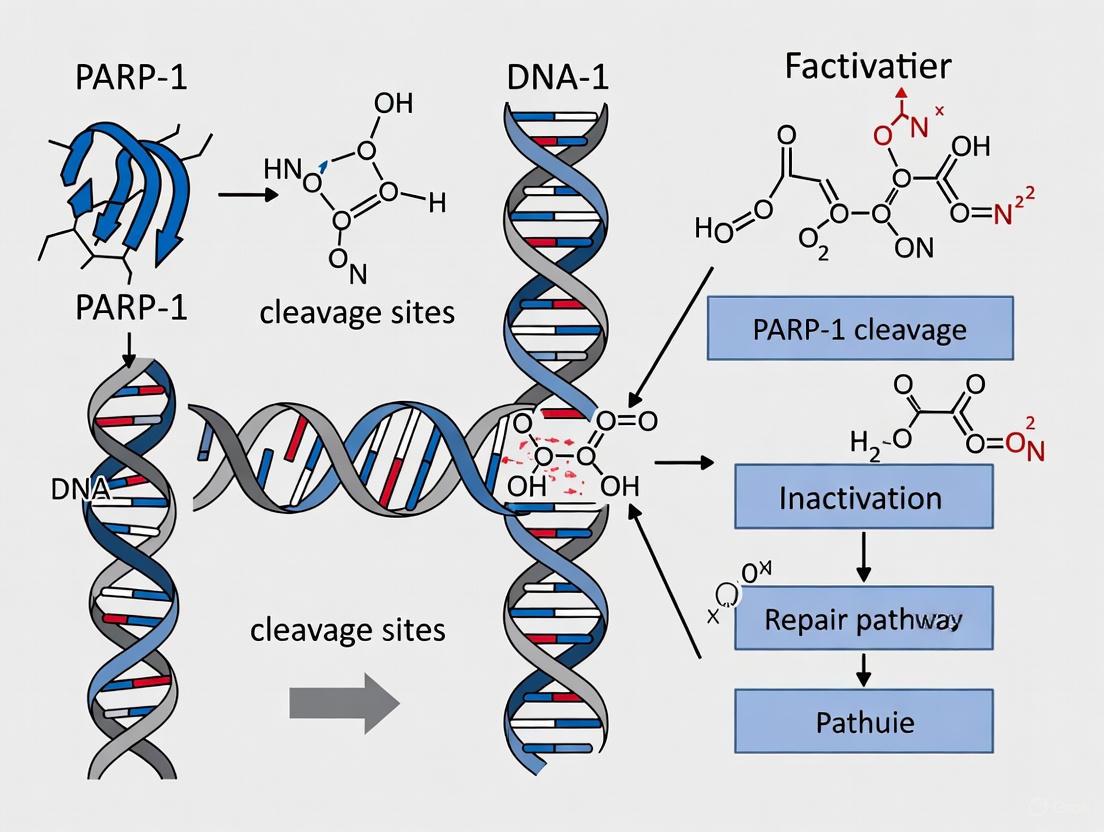
This article provides a comprehensive analysis of how PARP-1 cleavage serves as a critical molecular switch that inactivates DNA repair pathways.
PARP-1 Cleavage: Molecular Mechanisms and Therapeutic Consequences in DNA Repair Inactivation
Abstract
This article provides a comprehensive analysis of how PARP-1 cleavage serves as a critical molecular switch that inactivates DNA repair pathways. We examine the specific proteolytic cleavage events mediated by caspases and other proteases that generate signature PARP-1 fragments, particularly the 24-kDa DNA-binding domain and 89-kDa catalytic fragment. The content explores how these fragments dominantly inhibit DNA repair processes, conserve cellular energy during apoptosis, and facilitate alternative cell death pathways like parthanatos. For researchers and drug development professionals, we detail current methodological approaches for detecting PARP-1 cleavage, discuss therapeutic applications in oncology, address challenges in PARP inhibitor resistance, and present comparative analyses with PARP-2 function. The integration of foundational mechanisms with clinical applications provides a robust framework for understanding PARP-1 cleavage as both a biological regulator and therapeutic target.
The Molecular Architecture of PARP-1 and Cleavage Mechanisms
Poly(ADP-ribose) polymerase-1 (PARP-1) is a critical nuclear enzyme that functions as a primary sensor of DNA damage, playing indispensable roles in maintaining genomic integrity through its involvement in various DNA repair pathways. As the founding member of the PARP family, this 113 kDa protein accounts for approximately 90% of cellular PARylation activity and possesses a multi-domain architecture that enables its rapid response to DNA strand breaks [1] [2]. The enzyme catalyzes the transfer of ADP-ribose units from NAD+ to target proteins, forming branched poly(ADP-ribose) (PAR) chains that serve as recruitment signals for DNA repair machinery [3] [4]. PARP-1's function extends beyond DNA repair to include transcription regulation, chromatin remodeling, and cell death signaling [5] [2]. The critical positioning of PARP-1 in DNA damage response pathways has made it a prominent therapeutic target, particularly in oncology, where PARP inhibitors exploit synthetic lethality in homologous recombination-deficient cancers [6] [7]. This technical analysis examines the structure-function relationships of PARP-1's core domains and elucidates how proteolytic cleavage inactivates its DNA repair capabilities, providing a mechanistic foundation for understanding PARP-1-directed therapeutic strategies.
Structural Organization of PARP-1 Domains
PARP-1 is organized into three primary functional domains that work in concert to detect DNA damage and initiate appropriate cellular responses: an N-terminal DNA-binding domain (DBD), a central automodification domain (AMD), and a C-terminal catalytic domain (CAT) [4] [1]. The multi-domain architecture enables PARP-1 to act as a molecular sensor that undergoes significant conformational changes upon DNA binding, transitioning from an autoinhibited state to a catalytically active form.
Table 1: Primary Structural Domains of PARP-1
| Domain | Position (aa) | Key Subdomains/Motifs | Molecular Weight | Primary Functions |
|---|---|---|---|---|
| DNA-Binding Domain (DBD) | 1-353 | Zinc Finger 1 (Zn1, aa 1-111), Zinc Finger 2 (Zn2, aa 117-201), Zinc Finger 3 (Zn3, aa 279-333), Nuclear Localization Signal | ~46 kDa | Damage recognition, DNA binding, enzyme activation |
| Automodification Domain (AMD) | 389-643 | BRCT motif, WGR domain | ~22 kDa | Protein-protein interactions, auto-ribosylation, regulatory function |
| Catalytic Domain (CAT) | 662-1014 | Helical subdomain (HD), ADP-ribosyl transferase subdomain (ART), PARP signature sequence | ~54 kDa | NAD+ binding, PAR chain initiation, elongation, and branching |
Table 2: Zinc Finger Subdomains within the DNA-Binding Domain
| Zinc Finger | Position | DNA Binding Specificity | Functional Role | Mutation Effects |
|---|---|---|---|---|
| Zn1 | 1-111 | Binds to 5' end of DNA break | Primary damage recognition, initiates DNA binding | Complete loss of DNA binding when deleted |
| Zn2 | 117-201 | Binds to 3' end of DNA break | Enhances binding affinity, stabilizes interaction | Reduced DNA affinity, minimal effect on activity |
| Zn3 | 279-333 | Does not directly bind DNA | Allosteric regulation, enzyme activation | Abolishes DNA-dependent PARP-1 activation |
The DNA-binding domain (DBD) represents the N-terminal region of PARP-1 and contains three zinc finger motifs (Zn1, Zn2, and Zn3) that facilitate recognition of and binding to DNA lesions [4] [1]. Zn1 and Zn2 directly contact damaged DNA, with Zn1 binding the 5' end and Zn2 binding the 3' end of DNA breaks [7]. Zn3 does not directly bind DNA but is essential for allosteric activation of the catalytic domain following DNA binding [1] [8]. The DBD also contains a nuclear localization signal (NLS) that directs PARP-1 to the nucleus and a caspase cleavage site (DEVD at positions 211-214) that is proteolyzed during apoptosis [5] [1].
The central automodification domain (AMD) contains a BRCT (BRCA1 C-terminal) motif that mediates protein-protein interactions and a WGR domain (conserved Trp, Gly, Arg residues) that interacts with Zn1, Zn3, the CAT domain, and DNA [4]. This domain is enriched in glutamate and lysine residues that serve as primary acceptors for auto-PARylation, a regulatory mechanism that modulates PARP-1's affinity for DNA and facilitates the recruitment of repair proteins [9] [1].
The C-terminal catalytic domain (CAT) contains the NAD+ binding site and catalytic triad residues responsible for PAR chain initiation, elongation, and branching [4] [1]. This domain includes a helical subdomain (HD) that maintains autoinhibition in the absence of DNA damage and an ADP-ribosyl transferase subdomain (ART) that executes the PARylation reaction [8]. The CAT domain is highly conserved across PARP family members and represents the primary target for PARP inhibitor drugs [4] [6].
Diagram 1: PARP-1 Structural Domain Organization. The three primary domains with their key subdomains and functional elements are shown in relation to their linear arrangement along the polypeptide chain.
Domain-Specific Functions and Activation Mechanism
DNA Recognition and Binding Dynamics
The DNA-binding domain initiates PARP-1's response to DNA damage through a sophisticated mechanism involving sequential zinc finger engagement and DNA conformational changes. Single-molecule FRET studies have revealed that PARP-1 employs an induced fit mechanism rather than conformational selection for DNA damage recognition [8]. In the absence of PARP-1, nicked DNA maintains a relatively unperturbed conformation similar to undamaged B-form DNA. Upon encountering DNA damage, Zn2 first engages with the 3' side of the break, inducing an intermediate kinked DNA state. Subsequent binding of Zn1 to the 5' side stabilizes a highly kinked DNA conformation (approximately 130° bend angle) that facilitates PARP-1 activation [8]. This multi-step binding process converts PARP-1 from a collection of flexibly linked domains to a compact, assembled structure positioned at the damage site.
The zinc fingers exhibit distinct roles in DNA recognition: Zn1 and Zn2 mediate direct DNA contact, while Zn3 facilitates allosteric communication between the DBD and catalytic domain [1]. Mutational analyses demonstrate that deletion of both Zn1 and Zn2 reduces DNA-binding affinity by over 250-fold and abolishes enzymatic activity, whereas deletion of Zn2 alone only moderately reduces DNA affinity without completely disrupting function [1]. Specific point mutations in Zn1 (F44A, V48A, F44A/V48A) significantly impair DNA binding, while mutations in Zn3 (W318, T316) abolish DNA-dependent PARP-1 activation despite not directly contacting DNA [1]. These findings highlight the specialized functions of each zinc finger in the DNA damage recognition process.
Automodification and Protein Interactions
The central automodification domain serves as a critical regulatory center through its BRCT motif and WGR domain. The BRCT domain facilitates protein-protein interactions with DNA repair factors including XRCC1, while the WGR domain connects the DBD and CAT domains, enabling allosteric activation [4] [1]. The AMD contains the primary acceptor sites for auto-PARylation, predominantly at glutamate and lysine residues. Auto-PARylation introduces extensive negative charge that promotes PARP-1 dissociation from DNA, prevents excessive NAD+ consumption, and creates a binding platform for PAR-reading proteins [3] [9].
Functional studies demonstrate that the BRCT domain is dispensable for PARP-1 catalytic activity and mADPR formation but essential for recruiting XRCC1 to DNA damage sites [9]. This suggests that DNA repair complex assembly and second messenger generation represent parallel signaling pathways downstream of PARP-1 activation. The WGR domain plays a crucial role in DNA-dependent activation by interacting with Zn1, Zn3, the CAT domain, and DNA itself, serving as an allosteric regulator that communicates DNA binding to the catalytic domain [4] [8].
Catalytic Activation and PAR Synthesis
The catalytic domain executes PAR synthesis through a carefully regulated mechanism that couples DNA damage detection to enzymatic output. In the absence of DNA damage, the helical subdomain (HD) maintains autoinhibition by blocking NAD+ access to the active site [8]. DNA binding induces large-scale conformational changes that relieve this autoinhibition, positioning the ART subdomain for efficient catalysis. The catalytic triad within the ART domain facilitates transfer of ADP-ribose from NAD+ to acceptor proteins, followed by elongation and branching of PAR chains [4] [1].
PARP-1's catalytic activity is regulated at multiple levels, including auto-PARylation, which introduces repulsive negative charges that promote enzyme dissociation from DNA [3]. The by-product nicotinamide provides mild feedback inhibition, while highly branched PAR structures create excessive negative charge that terminates PARylation activity [3]. Additionally, PARP-1 is subject to various post-translational modifications including phosphorylation, acetylation, and sumoylation that fine-tune its catalytic output in response to cellular conditions [3] [2].
Diagram 2: PARP-1 Activation Pathway. The sequential process of PARP-1 activation from initial DNA damage recognition through catalytic activation and eventual autoPARylation-mediated release.
PARP-1 Cleavage and Inactivation of DNA Repair
Proteolytic Cleavage by Cell Death Proteases
PARP-1 serves as a primary substrate for multiple proteases involved in cell death pathways, with cleavage representing a definitive biochemical marker for specific cell death programs [5]. Caspases, particularly caspase-3 and caspase-7, cleave PARP-1 at the DEVD motif (positions 211-214) within the DBD, generating characteristic 24-kDa and 89-kDa fragments [5] [3]. The 24-kDa fragment contains the Zn1 and Zn2 DNA-binding motifs, while the 89-kDa fragment comprises the Zn3 finger, AMD, and CAT domains [5]. This cleavage event severs the functional connection between the DNA-binding and catalytic domains, effectively abolishing PARP-1's ability to respond to DNA damage.
Additional proteases target PARP-1 at distinct cleavage sites: calpains cleave during calcium-mediated cell death, granzymes A and B execute cleavage in immune-mediated cell killing, cathepsins target PARP-1 during autophagic and necrotic death, and matrix metalloproteinases generate unique PARP-1 fragments [5]. Each protease produces specific signature cleavage fragments that serve as biomarkers for particular cell death programs, reflecting the diverse regulatory mechanisms that terminate PARP-1 function during cellular stress.
Table 3: PARP-1 Cleavage by Suicide Proteases
| Protease | Cleavage Site | Fragment Sizes | Cell Death Context | Functional Consequences |
|---|---|---|---|---|
| Caspase-3/7 | DEVD↓G (211-214) | 24 kDa + 89 kDa | Apoptosis | Separates DBD from CAT, prevents DNA repair |
| Calpain | Unknown | 55 kDa + 62 kDa | Calcium-mediated necrosis | Incomplete cleavage, partial function retention |
| Granzyme A/B | Multiple sites | Varied fragments | Immune-mediated cytotoxicity | Complete PARP-1 inactivation |
| Cathepsins | Unknown | 50 kDa + 64 kDa | Autophagic/necrotic death | Alternative inactivation pathway |
| MMPs | Specific sites | Unique fragments | Tissue remodeling contexts | Distinct regulatory mechanism |
Mechanisms of DNA Repair Inactivation
Proteolytic cleavage of PARP-1 disrupts DNA repair through multiple complementary mechanisms. The 24-kDa fragment generated by caspase cleavage retains the Zn1 and Zn2 DNA-binding motifs but lacks catalytic function. This fragment acts as a trans-dominant inhibitor by irreversibly binding to DNA strand breaks and blocking access by intact PARP-1 and other DNA repair enzymes [5]. Structural studies indicate that the 24-kDa fragment maintains high-affinity DNA binding through its zinc fingers, effectively "clogging" DNA damage sites and preventing repair complex assembly.
Simultaneously, the 89-kDa fragment containing the catalytic domain exhibits dramatically reduced DNA binding capacity and becomes displaced from the nucleus to the cytosol [5] [3]. This spatial segregation ensures that the catalytic domain cannot be recruited to DNA damage sites even if it retains residual enzymatic activity. The combined effect of these cleavage events is the termination of PAR signaling at damage sites, conservation of cellular NAD+ and ATP pools, and elimination of PAR-mediated survival signals that would otherwise oppose cell death execution [5].
The critical importance of PARP-1 cleavage is evidenced by its evolutionary conservation and the timing of the cleavage event during apoptosis - PARP-1 is among the first substrates processed by executioner caspases, highlighting its strategic position as a switch between survival and death pathways [5]. This proteolytic inactivation prevents wasteful energy consumption on DNA repair in committed cells and facilitates the apoptotic process by removing a key component of the cellular repair machinery.
Research Methods and Experimental Approaches
Key Methodologies for PARP-1 Domain Analysis
The intricate structure-function relationships of PARP-1 domains have been elucidated through diverse experimental approaches that provide complementary insights into its mechanism of action. Single-molecule FRET (smFRET) has revealed real-time dynamics of PARP-1 DNA binding and the induced fit mechanism of damage recognition [8]. This technique employs fluorophore-labeled DNA substrates to monitor conformational changes in both PARP-1 and DNA during complex formation, providing unprecedented temporal resolution of the binding process.
Structural biology approaches including X-ray crystallography and cryo-EM have determined high-resolution structures of PARP-1 domains both individually and in complex with DNA damage substrates [8]. These studies have illuminated the allosteric transitions that occur upon DNA binding and the molecular basis for catalytic activation. Complementary biochemical assays measure PARP-1 enzymatic activity through NAD+ consumption, PAR formation, or automodification status using Western blotting with PAR-specific antibodies [9].
Cell-based reconstitution studies using PARP-1-deficient cells (e.g., DT40 lymphocytes) transfected with wild-type or mutant PARP-1 constructs have been instrumental for determining domain functions in physiological contexts [9]. These systems allow assessment of how specific domain modifications affect PARP-1's roles in DNA repair, transcription regulation, and cell death signaling. Laser microirradiation combined with live-cell imaging provides spatial and temporal analysis of PARP-1 recruitment to DNA damage sites and the kinetics of subsequent repair factor assembly [10] [7].
Table 4: Essential Research Reagents and Methodologies
| Reagent/Method | Specific Application | Key Experimental Outcomes |
|---|---|---|
| smFRET with labeled DNA | DNA binding kinetics and conformational changes | Quantification of DNA kinking angles, binding intermediates |
| PAR-specific antibodies | Detection of PARylation (10H, E61A) | AutoPARylation status, PAR chain length and distribution |
| PARP-1 deficient cell lines | Functional domain complementation | Domain requirements for DNA repair, transcription, cell death |
| Laser microirradiation | Recruitment kinetics to localized damage | Temporal analysis of domain requirements for damage recognition |
| Site-directed mutants | Structure-function analysis | Determination of essential residues for DNA binding and catalysis |
| PARP inhibitors | Mechanistic studies and therapeutic applications | Allosteric effects on DNA binding, trapping mechanisms |
Experimental Workflow for Domain Functional Analysis
A comprehensive approach to analyzing PARP-1 domain functions incorporates multiple methodological platforms to establish robust structure-function relationships. The following integrated workflow represents state-of-the-art methodologies for characterizing PARP-1 domains:
Construct Design and Validation: Generate PARP-1 expression constructs containing specific domain deletions (ΔZn1, ΔZn2, ΔZn3, ΔBRCT, ΔWGR) or point mutations (F44A, V48A, W318A) in appropriate vectors [9] [1]. Verify expression and stability of mutant proteins through Western blotting.
In Vitro DNA Binding Assays: Employ electrophoretic mobility shift assays (EMSA) and surface plasmon resonance (SPR) to quantify binding affinity and kinetics of PARP-1 variants for different DNA lesion types (nicks, gaps, double-strand breaks) [8].
Single-Molecule Analysis: Implement smFRET with fluorophore-labeled DNA substrates to visualize real-time conformational changes during PARP-1 DNA binding and determine how domain modifications alter the induced fit mechanism [8].
Enzymatic Activity Characterization: Measure NAD+ consumption and PAR synthesis using radiometric or colorimetric assays to determine catalytic efficiency of PARP-1 variants [9]. Assess automodification status through Western blotting with PAR-specific antibodies.
Cellular Functional Assays: Transfect PARP-1-deficient cells with mutant constructs and assess DNA repair capacity through comet assays, γH2AX focus formation, and cell survival following DNA damage [9] [7]. Monitor recruitment kinetics to localized damage via laser microirradiation.
Protease Sensitivity Assessment: Incubate PARP-1 variants with caspases, calpains, or other relevant proteases and analyze cleavage patterns by Western blotting to determine how domain modifications affect sensitivity to proteolytic inactivation [5].
This multi-faceted approach provides comprehensive insights into how specific domains contribute to PARP-1's overall function and how their proteolytic cleavage leads to irreversible inactivation of DNA repair capabilities.
Implications for Cancer Therapy and Drug Development
The detailed understanding of PARP-1's structural domains and cleavage mechanisms has profound implications for therapeutic development, particularly in oncology. PARP inhibitors (PARPi) represent a cornerstone of targeted cancer therapy for homologous recombination-deficient tumors, with several FDA-approved agents including olaparib, niraparib, and talazoparib [4] [6]. These compounds mimic the nicotinamide moiety of NAD+ and compete for binding in the catalytic domain, inhibiting PAR synthesis and trapping PARP-1 on DNA [4] [10].
The trapping phenomenon occurs when PARPi prevent autoPARylation and subsequent dissociation of PARP-1 from DNA lesions, effectively converting the enzyme into a toxic DNA-blocking protein [10] [6]. Different PARPi exhibit varying trapping potentials based on their allosteric effects on PARP-1 DNA affinity: talazoparib demonstrates strong trapping (class I), olaparib shows neutral effects (class II), while veliparib promotes PARP-1 release (class III) [10] [8]. Understanding these distinctions is crucial for optimizing therapeutic applications and managing potential resistance mechanisms.
Resistance to PARPi emerges through multiple mechanisms including restoration of homologous recombination, loss of PARP-1 expression, mutations affecting PARP-1 trapping, and enhanced drug efflux [4]. Novel therapeutic strategies to overcome resistance include developing dual-target inhibitors that simultaneously engage PARP-1 and other cancer-relevant targets such as HDACs, PI3Ks, or EZH2 [4]. Combination approaches with DNA-damaging agents, immunotherapies, or alternative DNA repair inhibitors also show promise for expanding PARPi efficacy beyond BRCA-mutant cancers.
The fundamental knowledge of PARP-1 domain architecture and cleavage mechanisms continues to inform the development of next-generation therapeutic agents that exploit distinct aspects of PARP-1 biology. As research uncovers new dimensions of PARP-1's roles in DNA repair, transcription, and cell death, the therapeutic targeting of this multifaceted enzyme will undoubtedly evolve to address current limitations and expand clinical applications.
Poly(ADP-ribose) polymerase-1 (PARP-1) is a critical nuclear enzyme involved in DNA damage detection and repair. Its proteolytic cleavage by caspases during apoptosis represents a decisive biochemical event that inactivates DNA repair processes and facilitates programmed cell death. This technical review examines the molecular mechanism by which caspases-3 and -7 recognize and cleave PARP-1, generating signature 24-kDa and 89-kDa fragments. We detail how this cleavage event serves as a molecular switch between cell survival and death, with particular emphasis on its implications for cancer therapy and neurodegenerative diseases. The article provides comprehensive experimental methodologies for detecting these fragments and analyzes emerging evidence of their roles beyond simple inactivation, including the newly discovered function of the 89-kDa fragment as a poly(ADP-ribose) carrier in parthanatos. This synthesis underscores how caspase-mediated PARP-1 cleavage represents a critical point of crosstalk between apoptotic pathways and DNA repair mechanisms, with significant implications for targeted therapeutic development.
PARP-1 is an abundant nuclear enzyme with approximately 1-2 million copies per cell, accounting for approximately 85% of total cellular PARP activity [5]. As a primary DNA damage sensor, PARP-1 plays a fundamental role in maintaining genomic integrity through its involvement in multiple DNA repair pathways, including base excision repair (BER), single-strand break repair, and an alternate non-homologous end joining pathway [5]. Beyond its repair functions, PARP-1 participates in diverse cellular processes including transcription, immune responses, inflammation, and learning and memory [5].
The caspase-mediated cleavage of PARP-1 is widely recognized as a biochemical hallmark of apoptosis and represents a critical mechanism for irrevocably committing a cell to death by preventing DNA repair [5]. This proteolytic event severs the functional domains of PARP-1, effectively terminating its capacity to coordinate DNA repair while simultaneously generating fragments with potential novel functions. Understanding the precise molecular mechanisms governing this process provides crucial insights into cell fate decisions and offers therapeutic opportunities for diseases characterized by dysregulated cell death, particularly cancer and neurodegenerative conditions [5] [11].
Molecular Anatomy of PARP-1 and Caspase Cleavage Sites
Structural Domains of PARP-1
PARP-1 is a 116-kDa protein organized into three principal functional domains [5] [12]:
- DNA-binding domain (DBD): A 46-kDa N-terminal region containing two zinc finger motifs that confer high affinity for specific DNA structures including double-strand breaks, cruciforms, and nucleosomes.
- Automodification domain (AMD): A 22-kDa central region containing a BRCT fold (a motif found in many DNA repair proteins) that facilitates protein-protein interactions and serves as a target for covalent auto-modification.
- Catalytic domain (CD): A 54-kDa C-terminal region that polymerizes linear or branched poly-ADP-ribose units from NAD+ onto target proteins.
A third zinc finger motif located between the second zinc finger and the AMD plays an important role in inter-domain interactions and is vital for PARP-1 enzymatic action [5]. The DNA-binding domain recognizes DNA strand breaks, resulting in dimerization and catalytic activation [12].
Caspase Recognition and Cleavage Site
Caspases-3 and -7 recognize and cleave PARP-1 at a specific amino acid sequence (DEVD) located between the DNA-binding domain and the automodification domain, specifically after Asp214 and Gly215 in the human protein [13]. This cleavage site is positioned within a nuclear localization signal near the DNA-binding domain [12]. Proteolysis at this site produces two signature fragments:
Table 1: PARP-1 Fragments Generated by Caspase Cleavage
| Fragment | Molecular Weight | Domains Contained | Key Features |
|---|---|---|---|
| N-terminal | 24-kDa | DNA-binding domain (DBD) with 2 zinc finger motifs | Contains nuclear localization signal; remains bound to DNA breaks; acts as trans-dominant inhibitor of intact PARP-1 |
| C-terminal | 89-kDa | Automodification domain (AMD) and catalytic domain (CD) | Lacks nuclear localization signal; translocates to cytoplasm; may be poly(ADP-ribosyl)ated |
The cleavage event strategically separates the DNA-binding function from the catalytic activity, ensuring comprehensive inactivation of PARP-1's role in DNA repair [5] [12].
Functional Consequences of PARP-1 Cleavage
Inactivation of DNA Repair
The proteolytic cleavage of PARP-1 represents a decisive biochemical event that effectively halts DNA repair during apoptosis through multiple mechanisms:
Dominant-negative inhibition: The 24-kDa fragment retains the DNA-binding capability but lacks catalytic function. This fragment irreversibly binds to DNA strand breaks, acting as a trans-dominant inhibitor that blocks access by intact PARP-1 and other DNA repair enzymes to damage sites [5] [12].
Physical separation of functional domains: The 89-kDa fragment containing the catalytic domain is liberated from DNA damage sites due to its inability to bind DNA directly. Although it retains catalytic potential, its dissociation from nuclear DNA prevents productive engagement with DNA repair processes [5].
Subcellular redistribution: The 89-kDa fragment, which lacks the nuclear localization signal, translocates from the nucleus to the cytoplasm, physically removing catalytic potential from the nuclear compartment where DNA repair occurs [12].
This multi-layered inactivation mechanism ensures that DNA repair processes cannot interfere with the efficient execution of apoptosis, particularly the systematic fragmentation of nuclear DNA.
Role in Cell Death Pathways
PARP-1 cleavage functions as a critical molecular switch between different modes of cell death:
Apoptosis: In caspase-dependent apoptosis, PARP-1 cleavage conserves cellular ATP pools that would otherwise be depleted by excessive PARP-1 activation, thereby supporting the energy-dependent apoptotic process [13]. The inactivation of DNA repair facilitates the systematic fragmentation of DNA by apoptotic nucleases.
Parthanatos: Recent research has revealed that the 89-kDa PARP-1 fragment serves as a carrier for poly(ADP-ribose) (PAR) polymers to the cytoplasm, where they induce the release of apoptosis-inducing factor (AIF) from mitochondria [12] [14]. This represents a novel mechanism of crosstalk between caspase-dependent apoptosis and PAR-mediated parthanatos.
Necrosis regulation: In death receptor signaling, the cleavage of PARP-1 by caspases prevents ATP depletion, thereby ensuring the execution of apoptosis rather than necrosis [13]. When caspase activity is inhibited, PARP-1 remains active and contributes to necrotic cell death through massive ATP consumption.
The following diagram illustrates the key events in PARP-1 cleavage and its role in cell death pathways:
Experimental Analysis of PARP-1 Cleavage
Detection Methodologies
The detection and quantification of PARP-1 cleavage fragments provides critical information about caspase activation and the commitment to apoptotic cell death. Western blot analysis represents the most widely employed methodology:
Standard Western Blot Protocol:
- Cell lysis: Prepare whole cell extracts using RIPA or similar lysis buffer (50 mM Tris-HCl pH 7.4, 1% NP-40, 0.25% sodium deoxycholate, 150 mM NaCl, 1 mM EDTA) supplemented with protease and phosphatase inhibitors [15].
- Protein quantification: Determine protein concentration using Bradford or BCA assays, with 40 μg of total protein typically loaded per lane [15].
- Electrophoresis: Separate proteins by SDS-PAGE using 8-12% gradient gels to resolve both full-length PARP-1 (116-kDa) and the cleavage fragments (89-kDa and 24-kDa).
- Membrane transfer and blocking: Transfer to PVDF or nitrocellulose membranes, followed by blocking with 5% non-fat milk or BSA in TBST.
- Antibody detection: Incubate with primary antibodies against PARP-1 (commonly recognizing epitopes in the catalytic domain). Antibodies specifically recognizing the cleaved forms are also available.
- Visualization: Use appropriate HRP-conjugated secondary antibodies with chemiluminescent detection.
Key Technical Considerations:
- The 24-kDa fragment may be challenging to detect due to its small size and potential masking by other proteins; optimization of gel conditions is often necessary.
- Simultaneous detection of cleaved caspase-3 provides confirmation of apoptotic activation [16].
- PARP-1 cleavage can be quantified as the ratio of the 89-kDa fragment to full-length PARP-1, providing a quantitative measure of apoptotic progression.
Experimental Induction and Inhibition
Table 2: Common Reagents for Studying PARP-1 Cleavage
| Reagent/Condition | Mechanism of Action | Effect on PARP-1 Cleavage | Typical Concentrations |
|---|---|---|---|
| Staurosporine | Broad-spectrum protein kinase inhibitor | Induces caspase-3 activation and PARP-1 cleavage [12] | 0.5-2 μM for 4-6 hours |
| Actinomycin D | Transcription inhibitor | Promotes caspase-dependent PARP-1 cleavage [12] | 0.5-1 μg/mL for 6-8 hours |
| Etoposide (VP-16) | Topoisomerase II inhibitor | Induces DNA damage and caspase-mediated PARP-1 cleavage [5] | 20-100 μM for 12-24 hours |
| zVAD-fmk | Pan-caspase inhibitor | Prevents PARP-1 cleavage [12] [13] | 20-50 μM (pre-treatment 1-2 hours) |
| PJ34 | PARP inhibitor | Blocks PARP activity but not cleavage [12] | 10-20 μM |
Experimental workflows typically involve treating cells with apoptosis inducers for specified durations, followed by protein extraction and analysis. Time-course experiments are particularly valuable for establishing the sequence of caspase activation and PARP-1 cleavage relative to other apoptotic events.
Research Reagent Solutions
Table 3: Essential Research Tools for PARP-1 Cleavage Studies
| Reagent Category | Specific Examples | Research Applications | Technical Notes |
|---|---|---|---|
| PARP-1 Antibodies | Anti-PARP-1 (CST #9532) [15] | Detection of full-length and cleaved fragments by Western blot, IF | Catalytic domain antibodies detect both full-length and 89-kDa fragment |
| Cleavage-specific Antibodies | Anti-cleaved PARP-1 (Asp214) [16] | Specific detection of caspase-cleaved PARP-1 | Preferentially recognizes the 89-kDa fragment |
| Caspase Inhibitors | zVAD-fmk (pan-caspase) [13] | Inhibition of PARP-1 cleavage; distinguishing caspase-dependent apoptosis | Can potentiate necrosis in some models [13] |
| PARP Inhibitors | Olaparib, PJ34, ABT-888 [12] [17] | Studying PARP-1 enzymatic function independent of cleavage | Used in combination studies with apoptotic inducers |
| Activity Assays | PAR ELISA/ Western Blot (Anti-PAR antibody) [12] [15] | Measuring PARP-1 enzymatic activity before and after cleavage | PAR accumulation indicates hyperactivation |
| Cell Lines | HeLa, HCT116, HL-60 [5] [12] [17] | Model systems for apoptosis research | Differential sensitivity to apoptotic stimuli |
The following diagram outlines a typical experimental workflow for analyzing PARP-1 cleavage in response to apoptotic stimuli:
Implications for Therapeutic Development
The strategic inactivation of DNA repair through PARP-1 cleavage has significant implications for cancer therapy, particularly in the context of synthetic lethality approaches:
PARP inhibitor development: Small molecule PARP inhibitors (e.g., olaparib) trap PARP-1 on DNA, preventing its auto-modification and release. This results in replication fork collapse and double-strand breaks that require homologous recombination for repair [17]. In BRCA-deficient tumors lacking homologous recombination capability, this synthetic lethality induces catastrophic cell death.
Therapeutic resistance: Cancer cells may develop resistance to PARP inhibitors through multiple mechanisms, including restoration of homologous recombination, stabilization of replication forks, or altered expression of apoptosis regulators [15] [17]. Understanding PARP-1 cleavage dynamics may help overcome such resistance.
Combination therapies: Novel spirobenzoxazinone and salicylamide derivatives demonstrate promising PARP-1 inhibitory activity with IC50 values in the low micromolar range [17]. These compounds induce robust PARP-1 cleavage and show synergistic lethality when combined with doxorubicin in colony-formation assays.
Biomarker development: The detection of PARP-1 cleavage fragments in tumor samples may serve as a pharmacodynamic biomarker for effective target engagement in clinical trials of PARP inhibitors and other DNA-damaging agents.
Discussion and Future Perspectives
The caspase-mediated cleavage of PARP-1 represents an elegant molecular mechanism for ensuring the irreversible commitment to cell death by simultaneously inactivating DNA repair and potentially activating novel pro-death functions. While the generation of the 24-kDa and 89-kDa fragments has been extensively characterized, several emerging areas warrant further investigation:
First, the discovery that the 89-kDa fragment can serve as a PAR carrier to the cytoplasm, facilitating AIF release and parthanatos, reveals unexpected complexity in the functions of cleavage fragments [12] [14]. This suggests that PARP-1 cleavage not only eliminates its DNA repair function but may actively participate in promoting cell death through alternative mechanisms. The relative contributions of this pathway in different cell types and under various death stimuli remain to be fully elucidated.
Second, the non-apoptotic functions of caspases and the presence of cleaved caspase-3 in non-apoptotic cells [16] raise intriguing questions about potential regulated PARP-1 cleavage in non-lethal cellular processes. The detection of significant discrepancies between cC3+ and cPARP+ cells in neural tissues [16] suggests complex regulation of this pathway in post-mitotic cells.
Third, the development of novel PARP-1 inhibitors with improved specificity and pharmacokinetic properties continues to be an active area of research [17]. The structural insights gained from molecular docking studies of spirobenzoxazinone and salicylamide derivatives provide valuable guidance for rational drug design.
Finally, the interplay between PARP-1 cleavage and other post-translational modifications, particularly ubiquitination and deubiquitination by enzymes such as USP10 [15], represents a sophisticated regulatory layer that influences PARP-1 stability and function in DNA damage response. Targeting these regulatory mechanisms may provide new therapeutic opportunities for enhancing the efficacy of PARP inhibitors in cancer treatment.
In conclusion, the caspase-mediated generation of the 24-kDa and 89-kDa PARP-1 signature fragments represents a critical biochemical event that irrevocably inactivates DNA repair during apoptosis. Continued investigation of this process will undoubtedly yield new insights into cell death regulation and opportunities for therapeutic intervention in cancer and other diseases characterized by dysregulated cell death.
Alternative Cleavage by Calpains, Granzymes, and Other Suicidal Proteases
Poly (ADP-ribose) polymerase-1 (PARP-1) is a critical nuclear enzyme for DNA damage repair and genome integrity maintenance. While caspase-mediated cleavage of PARP-1 during apoptosis is well-characterized, alternative cleavage by other proteolytic enzymes represents a significant regulatory mechanism that modulates PARP-1 function beyond classical apoptosis. This technical review examines how calpains, granzymes, cathepsins, and matrix metalloproteinases target PARP-1 at distinct cleavage sites, generating signature fragments with potentially unique biological activities. Within the context of DNA repair research, these alternative cleavage events effectively inactivate PARP-1's canonical DNA repair functions while potentially initiating novel signaling pathways. Understanding these complex proteolytic regulations provides crucial insights for therapeutic interventions in cancer, neurodegenerative diseases, and inflammatory conditions where PARP-1 activity is dysregulated.
PARP-1 is a multifunctional nuclear enzyme that serves as a primary sensor of DNA damage, playing crucial roles in DNA repair pathways including base excision repair (BER) and single-strand break repair [3] [11]. The enzyme comprises several functional domains: a DNA-binding domain (DBD) containing zinc fingers, an automodification domain (AMD), and a C-terminal catalytic domain (CAT) responsible for poly(ADP-ribose) synthesis [18]. Upon detecting DNA strand breaks, PARP-1 becomes activated and catalyzes the transfer of ADP-ribose units from NAD+ to target proteins, including itself, facilitating the recruitment of DNA repair complexes [3] [11].
While PARP-1's role in DNA repair is well-established, its cleavage by various proteases represents a critical regulatory mechanism that modulates its function. Beyond the canonical caspase cleavage that occurs during apoptosis, PARP-1 is targeted by multiple "suicidal proteases" including calpains, granzymes, cathepsins, and matrix metalloproteinases (MMPs) [19]. These proteolytic events generate specific PARP-1 fragments with distinct properties and functions, effectively inactivating its DNA repair capacity while potentially initiating alternative signaling pathways. This review systematically examines the alternative cleavage of PARP-1 by these proteases and the functional consequences for DNA repair processes and cellular fate decisions.
PARP-1 Domains and Canonical Functions
Structural Organization
PARP-1 is a 113 kDa protein consisting of 1,014 amino acids with a modular domain structure [18]. The N-terminal DBD contains three zinc finger motifs (Zn1, Zn2, Zn3) that recognize and bind to DNA damage sites. Zn1 and Zn2 specifically recognize DNA damage gaps by binding to the 5' and 3' ends respectively, while Zn3 facilitates domain interactions for target protein activation [18] [20]. The nuclear localization signal (NLS) is also located within the DBD, ensuring proper nuclear localization of the enzyme. The central AMD, containing a BRCT (BRCA1 C-terminal) domain, serves as the target for auto-ADP-ribosylation and facilitates protein-protein interactions. The C-terminal CAT domain comprises the helical subdomain (HD) and the ADP-ribosyl transferase (ART) subdomain, which contains the NAD+ binding site and PAR catalytic site [18].
DNA Repair Mechanisms
PARP-1's primary function in DNA repair involves its activation upon binding to DNA single-strand and double-strand breaks [3]. This interaction triggers a conformational change that dramatically increases its catalytic activity, leading to auto-poly(ADP-ribosyl)ation and the subsequent recruitment of DNA repair scaffold proteins such as XRCC1 [3]. The extensive branching network of PAR on PARP-1 acts as a signal to attract and assemble multiprotein complexes involved in chromatin remodeling, DNA repair, and damage checkpoint signaling [3]. Through these mechanisms, PARP-1 plays essential roles in maintaining genomic integrity, with PARP-1 knockout mice demonstrating hypersensitivity to DNA damaging agents and increased genomic instability [3].
Suicidal Proteases and Their PARP-1 Cleavage Signatures
Beyond the well-characterized caspase cleavage, PARP-1 is targeted by multiple proteases that generate distinctive cleavage fragments, serving as biomarkers for specific cell death pathways and cellular conditions.
Table 1: Suicidal Proteases and Their PARP-1 Cleavage Patterns
| Protease | Activation Conditions | Cleavage Sites | PARP-1 Fragments | Functional Consequences |
|---|---|---|---|---|
| Caspase-3/7 | Apoptosis | DEVD214↓G [19] | 24 kDa (DBD) + 89 kDa (AMD+CAT) [21] | Inactivation of DNA repair; conservation of cellular ATP |
| Calpain | Calcium dysregulation, spinal cord injury, neurodegeneration | Undetermined specific sites | 55 kDa + 42 kDa (estimated) [19] | Associated with excitotoxicity, neurodegeneration |
| Granzyme A | Immune response (cytotoxic lymphocytes) | Unknown | 50 kDa fragment [19] | Cleavage during immune-mediated cell killing |
| Granzyme B | Immune response (cytotoxic lymphocytes) | IEPD??↓ [19] | 64 kDa + 50 kDa (estimated) [19] | Caspase-independent apoptosis in target cells |
| Cathepsins | Lysosomal permeabilization | Unknown | Various fragments [19] | Associated with autophagic cell death |
| MMPs | Extracellular matrix remodeling | Unknown | 35-40 kDa fragment [19] | Potential role in tissue remodeling and inflammation |
Calpain-Mediated Cleavage
Calpains are calcium-dependent cysteine proteases existing as two major isoforms: calpain I (μ-calpain) and calpain II (m-calpain), requiring micromolar and millimolar calcium concentrations for activation, respectively [22]. These proteases function as heterodimers composed of an 80 kDa catalytic subunit and a 30 kDa regulatory subunit [22]. Calpain activation has been implicated in various pathological conditions including neuronal apoptosis following spinal cord injuries, neurodegenerative diseases, and cerebral ischemia [22].
During cellular stress leading to calcium dysregulation, calpains cleave PARP-1, generating distinct fragments of approximately 55 kDa and 42 kDa [19]. This cleavage pattern differs significantly from caspase-mediated cleavage and is associated with excitotoxic and neurodegenerative conditions rather than classical apoptosis. The exact cleavage sites and the functional properties of these calpain-generated PARP-1 fragments remain active areas of investigation, though their appearance is considered a signature of calpain activation in specific cell death pathways.
Granzyme-Mediated Cleavage
Granzymes are serine proteases secreted by cytotoxic lymphocytes and natural killer cells to eliminate target cells. Granzyme A and B represent two major granzymes with distinct substrate specificities and functions [19].
Granzyme B, which shares substrate specificity with caspases, cleaves PARP-1 at IEPD sites, generating fragments of approximately 64 kDa and 50 kDa [19]. This cleavage occurs during immune-mediated cell killing and contributes to the rapid elimination of target cells. In contrast, Granzyme A, which prefers cleavage after basic residues, generates a distinct 50 kDa PARP-1 fragment [19]. These differential cleavage patterns represent specific signatures of immune-mediated cytotoxicity and provide mechanisms for inactivation of DNA repair in target cells during immune responses.
Other Proteases
Additional proteases including cathepsins (lysosomal cysteine proteases) and matrix metalloproteinases (MMPs) have also been reported to cleave PARP-1 under specific conditions [19]. Cathepsin-mediated PARP-1 cleavage is associated with autophagic cell death pathways, while MMP cleavage may play roles in tissue remodeling and inflammatory responses. The specific cleavage sites and fragment sizes for these proteases are less characterized but represent alternative mechanisms for PARP-1 regulation beyond the classical apoptotic pathway.
Functional Consequences for DNA Repair
The cleavage of PARP-1 by various suicidal proteases has significant implications for its DNA repair functions, effectively inactivating this critical pathway while potentially generating fragments with novel activities.
Inactivation of DNA Repair Capacity
Proteolytic cleavage of PARP-1 typically separates the DNA-binding domain from the catalytic domain, effectively abolishing its ability to respond to DNA damage and initiate repair processes [19]. In the case of caspase cleavage, the 24 kDa fragment containing the DBD remains bound to DNA breaks, acting as a trans-dominant inhibitor that blocks access for other DNA repair enzymes [19]. Similarly, cleavage by other proteases likely disrupts the structural integrity required for PARP-1's DNA damage sensing and repair functions.
This inactivation of DNA repair capacity during cell death processes prevents unnecessary energy expenditure on DNA repair in doomed cells and may facilitate the execution of cell death programs by allowing DNA damage accumulation.
Potential Gain-of-Function Activities
Emerging evidence suggests that certain PARP-1 cleavage fragments may acquire novel functions distinct from the full-length protein. For example, the 89 kDa caspase-generated fragment (tPARP1) translocates to the cytoplasm during apoptosis where it can mono-ADP-ribosylate RNA polymerase III (Pol III), facilitating IFN-β production and enhancing apoptotic responses [23]. This represents a gain-of-function activity that potentially amplifies cell death signaling.
Similarly, other cleavage fragments may possess unique properties that influence cellular processes beyond DNA repair. The specific functions of calpain-, granzyme-, and other protease-generated PARP-1 fragments represent an important area for future investigation, as these fragments may contribute to the physiological and pathological consequences of PARP-1 cleavage in different cellular contexts.
Experimental Approaches and Methodologies
Detection and Characterization of PARP-1 Cleavage
Table 2: Key Research Reagents for PARP-1 Cleavage Studies
| Reagent/Cell Line | Specificity/Application | Experimental Utility | Example Sources |
|---|---|---|---|
| Anti-Cleaved PARP-1 antibody [SP276] | Recognizes 27 kDa cleaved fragment (cPARP) [24] | Western blot, IHC detection of apoptotic PARP-1 cleavage | Commercial (Abcam ab225715) |
| PARP-1 knockout cell lines | Genetic PARP-1 deficiency | Controls for antibody specificity; background reduction | Generated via CRISPR/Cas9 |
| Staurosporine | Induces apoptosis via protein kinase inhibition | Positive control for caspase-mediated PARP-1 cleavage | Commercial suppliers |
| Calcium ionophores | Elevate intracellular Ca2+ | Induction of calpain-mediated PARP-1 cleavage | A23187, ionomycin |
| PARP-1UNCL construct | Caspase-uncleavable PARP-1 mutant [21] | Distinguishing caspase-dependent vs independent cleavage | Site-directed mutagenesis |
| Caspase inhibitors | e.g., Z-VAD-FMK (pan-caspase inhibitor) | Inhibiting caspase-mediated PARP-1 cleavage | Commercial suppliers |
| Calpain inhibitors | e.g., MDL-28170, calpeptin | Inhibiting calpain-mediated PARP-1 cleavage | Commercial suppliers |
Western blot analysis remains the primary method for detecting PARP-1 cleavage fragments, with specific antibodies available that recognize either full-length PARP-1 or particular cleavage fragments [24]. For example, the anti-cleaved PARP-1 antibody [SP276] specifically recognizes the 27 kDa caspase-generated fragment, serving as a specific marker for apoptotic cleavage [24]. Protease-specific inhibitors (e.g., caspase inhibitors like Z-VAD-FMK, calpain inhibitors like MDL-28170) are essential tools for distinguishing the contributions of different proteases to PARP-1 cleavage in various experimental models.
Functional Assays for DNA Repair Capacity
To assess the functional consequences of PARP-1 cleavage on DNA repair, several experimental approaches can be employed:
- Comet assay: Measures DNA strand break accumulation in cells expressing cleaved PARP-1 fragments [24]
- Host cell reactivation assay: Assesses cellular capacity to repair damaged reporter plasmids
- Immunofluorescence for DNA repair foci: Monitors recruitment of DNA repair proteins (e.g., XRCC1, RAD51) to sites of damage
- NAD+/ATP depletion assays: Measures energy consumption following PARP-1 activation [18]
These functional assays, combined with expression of specific PARP-1 cleavage fragments (e.g., PARP-124, PARP-189) or uncleavable mutants (PARP-1UNCL), allow researchers to determine how different cleavage events impact DNA repair capacity and cellular responses to genotoxic stress [21].
Visualization of PARP-1 Cleavage Pathways
Diagram 1: PARP-1 Cleavage Pathways and Functional Consequences. This diagram illustrates how different cellular stressors activate specific proteases that cleave PARP-1 into distinct fragments, leading to inactivation of DNA repair and other functional outcomes.
Discussion and Future Perspectives
The alternative cleavage of PARP-1 by calpains, granzymes, and other suicidal proteases represents a significant expansion of PARP-1's regulatory mechanisms beyond classical caspase-mediated cleavage during apoptosis. These proteolytic events not only inactivate PARP-1's DNA repair functions but may also generate fragments with novel signaling properties that influence cellular fate decisions and pathological processes.
Several important questions remain unanswered and represent promising directions for future research. What are the exact cleavage sites for non-caspase proteases on PARP-1? Do the different cleavage fragments possess unique gain-of-function activities beyond DNA repair inactivation? How do these alternative cleavage events contribute to specific pathological conditions such as neurodegeneration, inflammation, and cancer? Addressing these questions will enhance our understanding of PARP-1 regulation and may identify new therapeutic targets for diseases characterized by dysregulated cell death and DNA repair.
From a therapeutic perspective, the differential cleavage of PARP-1 by various proteases offers potential opportunities for selective intervention. Inhibitors targeting specific PARP-1 cleavage events or the activities of particular cleavage fragments could provide more precise therapeutic approaches with reduced side effects compared to broad PARP inhibition. Furthermore, the detection of specific PARP-1 cleavage fragments may serve as valuable biomarkers for diagnosing specific disease states and monitoring treatment responses in conditions where alternative PARP-1 cleavage occurs.
PARP-1 cleavage by suicidal proteases represents a critical regulatory mechanism that extends beyond the canonical caspase-mediated cleavage during apoptosis. Calpains, granzymes, cathepsins, and MMPs target PARP-1 at distinct sites, generating signature fragments that effectively inactivate its DNA repair capacity while potentially initiating alternative signaling pathways. Understanding these complex proteolytic regulations provides crucial insights into cellular stress responses and offers new perspectives for therapeutic interventions in cancer, neurodegenerative diseases, and inflammatory conditions where PARP-1 activity is dysregulated. As research in this area advances, the specific functions of different PARP-1 cleavage fragments and their roles in pathophysiology will likely emerge as important considerations for targeted therapeutic development.
The 24-kDa Fragment as a Trans-Dominant Inhibitor of DNA Repair
Within the broader context of PARP-1 cleavage and its role in inactivating DNA repair, the caspase-generated 24-kDa N-terminal fragment (p24) has emerged as a critical trans-dominant inhibitor of genomic maintenance. This fragment, produced during apoptosis, retains the DNA-binding capability of full-length PARP-1 but lacks its catalytic domain, enabling it to irreversibly occupy DNA damage sites and disrupt repair processes. This whitepaper synthesizes current mechanistic understanding of p24 function, detailing its structural basis, inhibitory mechanisms across DNA repair pathways, and experimental methodologies for its study. We present quantitative data on its binding affinities and inhibitory potency, along with standardized protocols for investigating its function, providing researchers with essential tools for exploring this significant apoptotic regulator and its implications in cancer therapy and resistance mechanisms.
Poly(ADP-ribose) polymerase-1 (PARP-1) is a nuclear enzyme with well-established roles in DNA damage recognition and repair, participating in multiple pathways including base excision repair (BER), single-strand break repair (SSBR), and double-strand break repair [25] [1]. The enzyme's structure comprises three primary domains: an N-terminal DNA-binding domain (DBD) containing two zinc fingers, a central automodification domain (AMD), and a C-terminal catalytic domain (CAT) [1]. During apoptosis, PARP-1 undergoes proteolytic cleavage by executioner caspases (caspase-3 and -7) at a specific DEVD motif, generating two prominent fragments: an 89-kDa C-terminal fragment containing the catalytic domain and a 24-kDa N-terminal fragment (p24) consisting of the DNA-binding domain [19]. This cleavage event is considered a biochemical hallmark of apoptosis and serves as a critical point of crosstalk between cell death execution and DNA repair termination.
The 24-kDa fragment operates as a trans-dominant inhibitor by competing with intact DNA repair proteins for binding to DNA strand breaks, effectively shutting down repair capacity in dying cells [19] [26]. This review comprehensively examines the mechanistic basis for p24's inhibitory function, its specific impacts on different DNA repair pathways, experimental approaches for its study, and the therapeutic implications of understanding this phenomenon in the context of cancer treatment and resistance mechanisms.
Structural Basis of p24 Function
Domain Architecture of PARP-1 and Cleavage Products
PARP-1 is a 1014-amino acid protein with a modular structure that dictates its function and regulation. The caspase cleavage site between residues 211-214 separates the DNA-binding domain from the rest of the protein [19] [1]. The resulting 24-kDa fragment (p24) contains the first 214 amino acids, encompassing both zinc finger domains (F1 and F2) that confer DNA damage recognition capability [27] [19]. These zinc fingers are of a highly unusual type, characterized by a CCHC ligand pattern and a long sequence separation (26-37 residues) between ligands 2 and 3 [27].
The structural independence of the zinc fingers in the absence of DNA enables the p24 fragment to maintain DNA-binding functionality despite separation from the catalytic domain [27]. Importantly, the p24 fragment lacks the automodification domain present in full-length PARP-1, which normally facilitates dissociation from DNA through poly(ADP-ribosyl)ation [26]. This structural deficiency underlies the fragment's ability to irreversibly bind DNA damage sites and exert its trans-dominant inhibitory effect.
Table 1: Domain Structure of PARP-1 and Its Cleavage Fragments
| Protein | Molecular Weight | Domains Present | Key Functional Capabilities | Regulatory Mechanisms |
|---|---|---|---|---|
| Full-length PARP-1 | 113 kDa | DBD (ZnF1, ZnF2), AMD, CAT | DNA binding, PAR synthesis, Protein recruitment | Automodification, Dissociation from DNA |
| 24-kDa Fragment (p24) | 24 kDa | DBD (ZnF1, ZnF2) only | DNA damage recognition and binding | None (lacks automodification domain) |
| 89-kDa Fragment | 89 kDa | AMD, CAT | Reduced PAR synthesis | Altered cellular localization (cytosolic) |
DNA Recognition and Binding Characteristics
The F1 and F2 zinc fingers of PARP-1 share highly similar structural folds and dynamics, with F2 demonstrating stronger interaction with nicked or gapped DNA ligands compared to F1 [27]. The F1+F2 fragment recognizes DNA single-strand breaks as a monomer in a single orientation, with recognition primarily achieved by F2, which binds DNA in an essentially identical manner whether present in isolation or in the two-finger fragment [27]. This persistent DNA-binding mode is conserved in the p24 fragment, which exhibits approximately 25% of the DNA-binding activity of full-length PARP-1 [26].
The p24 fragment interacts with the same spectrum of BER intermediates as full-length PARP-1, including gapped, nicked, and flap-containing DNA structures [26]. However, unlike full-length PARP-1, its binding cannot be regulated through poly(ADP-ribosyl)ation, leading to sustained occupation of DNA repair intermediates and effective blockade of subsequent repair steps.
Mechanisms of DNA Repair Inhibition
Differential Impact on DNA Repair Pathways
The 24-kDa PARP-1 fragment exerts distinct inhibitory effects on different DNA repair pathways, with particularly potent activity against long-patch base excision repair (LP-BER). Research demonstrates that p24 preferentially suppresses LP-BER compared to short-patch BER (SP-BER) through specific mechanisms:
SP-BER Inhibition: The interaction of p24 with nicked DNA containing ligatable termini provides only partial inhibition of SP-BER, with gap filling and nick sealing catalyzed by extract enzymes remaining functional despite p24 presence [26]. This pathway involves DNA polymerase β (pol β)-mediated single-nucleotide insertion and subsequent ligation, which can proceed with relatively minimal steric interference from bound p24.
LP-BER Inhibition: p24 demonstrates potent suppression of LP-BER by binding to DNA intermediates containing 5′-flap structures and inhibiting two critical enzymatic activities: strand-displacement DNA synthesis and flap endonuclease 1 (FEN1) activity [26]. The binding of p24 to DNA duplexes with a 5′-furan or 5′-flap at the 5′-side of a nick effectively blocks the strand-displacement synthesis necessary for LP-BER progression.
Table 2: Quantitative Analysis of p24 Inhibitory Effects on BER Pathways
| BER Pathway | Key Enzymes Affected | Inhibition Efficiency | Mechanism of Inhibition | Competitive Dynamics |
|---|---|---|---|---|
| Short-Patch BER | pol β, DNA ligase | Partial inhibition (incomplete block of gap filling and nick sealing) | Steric hindrance | Reversible by pol β addition |
| Long-Patch BER | pol β/δ/ε, FEN1, PCNA | Strong inhibition (blocks strand-displacement synthesis and FEN1 activity) | Competitive binding to flap structures | Not reversed by FEN1 or PCNA addition |
| SSBR | XRCC1, DNA ligase III | Significant inhibition (25% activity of full-length PARP1) | Occupation of strand break sites | Depletes functional repair complexes |
Competition with Repair Enzymes
The trans-dominant inhibitory function of p24 primarily operates through competitive binding to DNA repair intermediates, effectively excluding essential repair enzymes from damage sites. p24 competes with multiple LP-BER proteins, including FEN1 and PCNA, for access to DNA substrates [26]. Experimental evidence indicates that stimulation of LP-BER reactions through addition of FEN1 or PCNA to nuclear extracts remains suppressed in the presence of p24, demonstrating efficient competitive binding against these critical repair factors [26].
Notably, the inhibitory effect of p24 on strand-displacement DNA synthesis can be partially overcome by adding pol β to nuclear extracts, suggesting a hierarchical competition dynamic where pol β can access DNA despite p24 binding, while FEN1 and PCNA cannot [26]. This differential accessibility underscores the specificity of p24's inhibitory mechanism and highlights pol β as a potential resistance factor against p24-mediated repair suppression.
The flow diagram below illustrates the competitive inhibition mechanism of the 24-kDa PARP-1 fragment in long-patch base excision repair:
Experimental Analysis of p24 Function
Key Methodologies for Investigating p24 Inhibition
Research on the 24-kDa PARP-1 fragment has employed several specialized techniques to characterize its DNA-binding properties and inhibitory functions:
Photocross-linking Assay: This method utilizes photoreactive DNA probes containing FABGdCTP (exo-N-[4-(4-azido-2,3,5,6,-tetrafluorobenzylidenehydrazinocarbonyl)-butylcarbamoyl]-2′-deoxycytidine-5′-triphosphate) to analyze protein-DNA interactions [26]. DNA duplexes mimicking BER intermediates (gapped, nicked, or flap-containing) are incubated with nuclear extracts or purified proteins, followed by UV irradiation to cross-link bound proteins. Subsequent electrophoresis and autoradiography identify specific protein-DNA complexes, demonstrating that p24 interacts with the same spectrum of BER intermediates as full-length PARP-1.
In vitro BER Kinetic Assay: This functional approach evaluates p24's impact on DNA repair synthesis and ligation [26]. Nuclear extracts are incubated with defined DNA substrates containing specific lesions (e.g., uracil or abasic sites) in the presence of [α-32P]dATP and unlabeled dNTPs. Repair products are resolved by denaturing PAGE and quantified, enabling precise measurement of p24's differential inhibition of SP-BER versus LP-BER pathways.
Competition Binding Analysis: To quantify p24's competitive binding against repair enzymes, nuclear extracts are pre-incubated with varying concentrations of p24 before adding DNA substrates [26]. The extent of inhibition provides insight into competitive dynamics, revealing that p24 efficiently competes with FEN1 and PCNA but is partially overcome by pol β.
The experimental workflow for analyzing p24 function integrates these methodologies as shown below:
Research Reagent Solutions
Table 3: Essential Research Reagents for p24 Functional Studies
| Reagent/Category | Specific Examples | Experimental Function | Key Characteristics/Applications |
|---|---|---|---|
| DNA Substrates | Gapped, nicked, and flap-containing DNA duplexes | BER intermediate mimics | Photoreactive analogs (FABGdCTP) enable cross-linking studies |
| Protein Sources | Bovine testis nuclear extract, Mouse embryonic fibroblast extract | Source of BER machinery | Endogenous repair enzymes for functional assays |
| Enzymes | pol β, FEN1, PCNA, APE1 | Pathway-specific components | Competition binding studies; rescue experiments |
| Detection Systems | [γ-32P]ATP, [α-32P]dATP, T4 polynucleotide kinase | Radiolabeling and detection | Repair synthesis quantification; binding visualization |
| p24 Preparations | Recombinant p24, Apoptotic extract-derived p24 | Primary inhibitory agent | Comparative studies with full-length PARP1 |
Biological Implications and Therapeutic Context
The 24-kDa PARP-1 fragment represents a critical mechanism for ensuring irreversible commitment to apoptosis by preventing DNA repair in dying cells [19]. This function has significant implications for cancer biology and therapy:
Cell Fate Determination: PARP-1 cleavage and p24 generation help enforce the apoptotic program by eliminating repair capacity, pushing cells toward death rather than attempted survival [19] [11]. The 24-kDa fragment irreversibly binds to nicked DNA, inhibiting DNA repair enzymes and conserving cellular ATP pools that would otherwise be depleted by attempted repair [19].
Cancer Therapy Implications: Many chemotherapeutic agents induce DNA damage that converges on double-strand break formation [28]. The presence of p24 in apoptotic cells may influence therapeutic efficacy by ensuring death commitment in damaged cells. Additionally, understanding this mechanism provides insights into resistance pathways that might bypass p24-mediated repair inhibition.
Therapeutic Targeting Potential: The unique properties of p24 suggest potential avenues for therapeutic development. Molecules that mimic p24's competitive binding could potentially enhance the efficacy of DNA-damaging agents, particularly in tumors with intact apoptotic machinery. Furthermore, modulating the balance between PARP-1 cleavage and full-length function may represent a strategy for overcoming resistance to PARP inhibitors in clinical use [29].
The 24-kDa fragment of PARP-1 serves as a critical molecular switch that irreversibly commits cells to apoptosis by terminating DNA repair capacity. Through its retained DNA-binding capability in the absence of regulatory domains, p24 effectively competes with essential repair enzymes for DNA damage sites, with particularly potent activity against long-patch base excision repair. The experimental methodologies outlined here provide robust approaches for further investigating this significant apoptotic regulator. As research continues to elucidate the detailed structural and functional relationships governing p24 activity, new opportunities may emerge for therapeutic intervention in cancer and other diseases characterized by dysregulated DNA damage response.
Functional Consequences of the 89-kDa Catalytic Fragment
Poly(ADP-ribose) polymerase 1 (PARP1) plays a central role in the cellular DNA damage response, and its proteolytic cleavage is a critical event in cell fate determination. During apoptosis, caspases-3 and -7 cleave PARP1 into 24-kDa and 89-kDa fragments. While the 24-kDa fragment has been well-characterized as a DNA repair inhibitor, the 89-kDa catalytic fragment has recently emerged as an active signaling molecule with distinct functions. This review comprehensively examines the functional consequences of the 89-kDa PARP1 fragment, focusing on its role as a cytoplasmic poly(ADP-ribose) (PAR) carrier that facilitates apoptosis-inducing factor (AIF)-mediated cell death. We synthesize current understanding of how this fragment bridges caspase-dependent apoptosis and parthanatos, analyze its implications for DNA repair inactivation, and discuss emerging therapeutic opportunities. The evidence presented herein fundamentally reframes PARP1 cleavage from a simple inactivation mechanism to a sophisticated process that generates active fragments with specialized biological functions.
PARP1 is a 116-kDa nuclear enzyme that serves as a primary DNA damage sensor, detecting single-strand breaks through its N-terminal zinc finger domains [30]. Upon binding to DNA lesions, PARP1 catalyzes the synthesis of poly(ADP-ribose) (PAR) chains using NAD+ as a substrate, facilitating the recruitment of DNA repair proteins [12] [11]. This function is crucial for base excision repair (BER), the primary pathway for repairing single-strand breaks.
During apoptosis, executioner caspases-3 and -7 cleave PARP1 at the conserved DEVD214 motif located within the nuclear localization signal (NLS) near the DNA-binding domain [21] [19]. This proteolytic event generates two principal fragments: a 24-kDa N-terminal fragment containing the DNA-binding domain and a 89-kDa C-terminal fragment containing the automodification and catalytic domains [12] [31]. Traditional understanding held that this cleavage simply inactivated PARP1 to prevent futile DNA repair during apoptosis while conserving cellular energy [11]. However, emerging evidence demonstrates that these fragments acquire novel functions that actively promote cell death pathways rather than merely terminating DNA repair activities.
Table 1: Characteristics of PARP1 Cleavage Fragments
| Fragment | Size | Domains Contained | Primary Localization | Reported Functions |
|---|---|---|---|---|
| 24-kDa | 24 kDa | DNA-binding domain (Zn fingers F1 & F2) | Nuclear | Irreversibly binds DNA breaks; acts as trans-dominant inhibitor of DNA repair [12] [19] |
| 89-kDa | 89 kDa | Automodification domain, Catalytic domain | Cytoplasmic (after translocation) | Serves as PAR carrier; induces AIF release from mitochondria; promotes cell death [12] [31] [14] |
Multifunctional Roles of the 89-kDa PARP1 Fragment
Cytoplasmic PAR Carrier Function
The 89-kDa PARP1 fragment serves as a critical vehicle for transporting poly(ADP-ribose) (PAR) polymers from the nucleus to the cytoplasm, a function that full-length PARP1 cannot perform due to its strong nuclear localization. Following caspase-mediated cleavage, the 89-kDa fragment, which retains the automodification domain with covalently attached PAR polymers, is translocated to the cytoplasm [12] [14]. This translocation occurs because the cleavage site lies within the nuclear localization signal, disrupting proper nuclear targeting of the 89-kDa fragment while the 24-kDa fragment remains nuclear due to its intact NLS [21].
Once in the cytoplasm, the PAR polymers attached to the 89-kDa fragment serve as docking sites for apoptosis-inducing factor (AIF), a flavoprotein normally anchored to the mitochondrial inner membrane [12] [31]. This PAR-AIF interaction facilitates AIF release from mitochondria, after which AIF translocates to the nucleus and collaborates with other factors to trigger large-scale DNA fragmentation [12] [14]. This pathway represents a crucial convergence point between caspase-mediated apoptosis and AIF-mediated parthanatos.
Induction of AIF-Mediated Cell Death
The 89-kDa fragment plays an active role in promoting cell death through both direct and indirect mechanisms. Research demonstrates that expression of the 89-kDa fragment alone is sufficient to induce cytotoxicity, whereas the 24-kDa fragment and uncleavable PARP1 mutants exhibit protective effects in models of oxygen/glucose deprivation [21]. This cytotoxic function depends on the fragment's ability to carry PAR to the cytoplasm and facilitate AIF release.
Notably, the cell death promoted by the 89-kDa fragment exhibits features distinct from classical apoptosis. It occurs independently of further caspase activity once the initial cleavage has occurred and results in chromatin condensation and DNA fragmentation patterns characteristic of parthanatos [12] [19]. This hybrid cell death pathway allows for amplification of the initial apoptotic signal through AIF-mediated mechanisms, potentially serving as a fail-safe mechanism to ensure elimination of damaged cells.
Modulation of Inflammatory Responses
Beyond its role in cell death execution, the 89-kDa PARP1 fragment influences inflammatory signaling pathways, particularly through modulation of NF-κB activity. Studies demonstrate that the 89-kDa fragment induces significantly higher NF-κB activity compared to wild-type PARP1, leading to increased expression of pro-inflammatory mediators including iNOS and COX-2 [21]. This enhanced NF-κB transactivation likely results from altered protein-protein interactions enabled by the exposed domains of the 89-kDa fragment.
The pro-inflammatory functions of the 89-kDa fragment may have important pathological implications in conditions where PARP1 cleavage occurs, such as cerebral ischemia, neurodegeneration, and inflammatory conditions [21] [19]. In these contexts, the 89-kDa fragment may amplify inflammatory damage independently of its cell death functions, representing a potential therapeutic target for dual cytoprotective and anti-inflammatory effects.
Experimental Models and Methodologies
Established Cell Death Models
Research characterizing the 89-kDa PARP1 fragment has employed diverse experimental models of cell death, each offering unique insights into its biological functions. Staurosporine and actinomycin D treatment in HeLa cells represents a well-established apoptosis model that induces caspase-3 activation, PARP1 cleavage, and subsequent generation of the 89-kDa fragment [12] [14]. In these models, inhibition of either caspases (with zVAD-fmk) or PARP1 (with PJ34 or ABT888) significantly reduces cell death, demonstrating the functional importance of PARP1 cleavage in this process.
Oxygen/glucose deprivation (OGD) models in neuronal cells, including SH-SY5Y neuroblastoma cells and primary rat cortical neurons, have been instrumental in distinguishing the functions of different PARP1 fragments [21]. In these systems, expression of the 89-kDa fragment alone induces cytotoxicity, while the 24-kDa fragment and uncleavable PARP1 provide protection, directly demonstrating the toxic potential of this fragment. Additional models including inflammasome-activated pyroptosis in macrophages and RSL3-induced ferroptosis-apoptosis crosstalk in cancer cells have further expanded understanding of the 89-kDa fragment's roles beyond classical apoptosis [32] [29].
Table 2: Experimental Models for Studying the 89-kDa PARP1 Fragment
| Experimental Model | Inducing Stimulus | Key Findings | Reference |
|---|---|---|---|
| HeLa cells | Staurosporine, Actinomycin D | Caspase-3 activation generates PARylated 89-kDa fragment that translocates to cytoplasm and induces AIF release [12] [14] | Mashimo et al., 2021 |
| SH-SY5Y neuroblastoma cells | Oxygen/glucose deprivation (OGD) | Expression of 89-kDa fragment alone is cytotoxic and increases NF-κB activity [21] | Braun et al., 2014 |
| Bone marrow-derived macrophages | ATP, Nigericin (inflammasome activation) | Caspase-1 and -7 mediate PARP1 cleavage to 89-kDa fragment during pyroptosis [32] | Lamkanfi et al., 2010 |
| Various cancer cell lines | RSL3 (ferroptosis inducer) | RSL3 triggers caspase-dependent PARP1 cleavage alongside reduced full-length PARP1 [29] | Li et al., 2025 |
Critical Methodological Approaches
Several key methodologies have been essential for characterizing the 89-kDa PARP1 fragment and its functions:
Western Blot Analysis: Using PARP1 antibodies that recognize the C-terminal portion of the protein enables specific detection of the 89-kDa fragment and distinction from full-length PARP1 [12] [32]. This approach has been crucial for documenting PARP1 cleavage kinetics in response to various stimuli and validating the effects of pharmacological inhibitors or genetic manipulations.
Subcellular Fractionation with Immunodetection: Combining cellular fractionation techniques with Western blotting or immunofluorescence has demonstrated the translocation of the 89-kDa fragment from nucleus to cytoplasm following cleavage [12] [14]. These experiments directly visualizes the PAR carrier function of the fragment and its redistribution during cell death.
Viability Assays with PARP and Caspase Inhibitors: Pharmacological inhibition using PARP inhibitors (PJ34, ABT888) and pan-caspase inhibitors (zVAD-fmk) has been instrumental in dissecting the relative contributions of PARP1 activation versus cleavage in cell death pathways [12]. These approaches demonstrate that both PARP activity and caspase activation are required for efficient cell death in many models.
Recombinant Protein Expression: Expression of individual PARP1 fragments (e.g., 89-kDa alone) in cellular models has enabled researchers to isolate the functions of specific fragments from the full-length protein [21]. This approach directly demonstrates the cytotoxic potential of the 89-kDa fragment independent of other cleavage events.
Research Reagent Solutions
The following table summarizes essential research tools for investigating the 89-kDa PARP1 fragment and its functional consequences:
Table 3: Essential Research Reagents for Studying the 89-kDa PARP1 Fragment
| Reagent/Category | Specific Examples | Function/Application | Reference |
|---|---|---|---|
| PARP Inhibitors | PJ34, ABT888, Olaparib | Inhibit PARP catalytic activity; distinguish PARylation-dependent vs independent functions | [12] [33] |
| Caspase Inhibitors | zVAD-fmk (pan-caspase) | Block caspase-mediated PARP1 cleavage; assess caspase-dependence of processes | [12] [32] |
| Apoptosis Inducers | Staurosporine, Actinomycin D | Activate caspases-3/7 to induce PARP1 cleavage and generate 89-kDa fragment | [12] [14] |
| PARP1 Antibodies | C-terminal specific antibodies | Specifically detect 89-kDa fragment in Western blot, distinguishing from full-length PARP1 | [12] [32] |
| AIF Antibodies | AIF-specific antibodies | Monitor AIF release from mitochondria and nuclear translocation during 89-kDa-mediated cell death | [12] [31] |
| PAR Antibodies | PAR-specific antibodies (10H) | Detect PAR polymers attached to 89-kDa fragment; visualize PAR translocation to cytoplasm | [12] [14] |
| Cell Death Assays | Live/Dead assay, Annexin V/PI staining | Quantify cell death induction in response to 89-kDa fragment expression or PARP1 cleavage | [32] [29] |
| Recombinant PARP1 Fragments | 89-kDa fragment expression constructs | Express 89-kDa fragment independently to study its functions without full-length PARP1 | [21] |
Visualization of Signaling Pathways and Experimental Workflows
Diagram 1: Signaling Pathway of 89-kDa PARP1 Fragment in Cell Death. This diagram illustrates the sequence of events from DNA damage to cell death execution, highlighting the central role of the 89-kDa fragment as a cytoplasmic PAR carrier that facilitates AIF-mediated parthanatos.
Diagram 2: Experimental Workflow for Characterizing 89-kDa PARP1 Fragment Functions. This workflow outlines key methodological approaches for investigating the formation, localization, and functional consequences of the 89-kDa PARP1 fragment in cell death pathways.
Therapeutic Implications and Future Directions
Cancer Therapy Applications
The functional properties of the 89-kDa PARP1 fragment present intriguing opportunities for cancer therapy development. PARP inhibitors (PARPi) have established efficacy in homologous recombination-deficient cancers, particularly those with BRCA1/2 mutations, through synthetic lethality [33]. However, resistance frequently develops through multiple mechanisms including HR restoration, reduced PARP trapping, and replication fork stabilization.
Emerging strategies seek to exploit the cell death-amplifying functions of the 89-kDa fragment to overcome PARPi resistance. Recent research demonstrates that the ferroptosis inducer RSL3 promotes apoptosis through dual mechanisms: caspase-dependent PARP1 cleavage generating the 89-kDa fragment, and simultaneous reduction of full-length PARP1 via inhibition of METTL3-mediated m6A modification [29]. This coordinated approach maintains cytotoxic efficacy in PARPi-resistant cells and suppresses xenograft tumor growth in vivo, suggesting promising therapeutic avenues.
Neuroprotective Strategies
In neurological contexts, inhibition of PARP1 cleavage or neutralization of the 89-kDa fragment may provide neuroprotection. Studies demonstrate that expression of uncleavable PARP1 (PARP-1UNCL) or the 24-kDa fragment confers protection from oxygen/glucose deprivation damage in neuronal cells, while the 89-kDa fragment is cytotoxic [21]. These findings suggest that specifically targeting the 89-kDa fragment or preventing its formation could ameliorate neuronal loss in stroke, neurodegeneration, and other CNS injuries where parthanatos contributes to pathogenesis.
The pro-inflammatory functions of the 89-kDa fragment further support its potential as a therapeutic target in inflammatory neurological conditions. The fragment's ability to enhance NF-κB activity and increase expression of iNOS and COX-2 suggests that its inhibition could provide combined anti-inflammatory and cytoprotective effects [21]. Development of agents that specifically block the PAR carrier function of the 89-kDa fragment or its interaction with AIF represents a promising direction for future therapeutic development.
Emerging Research Directions
Several emerging research areas promise to expand understanding of the 89-kDa fragment's functional significance. These include:
- Investigating non-apoptotic functions of the fragment in physiological processes including transcription regulation and cellular differentiation
- Exploring fragment roles in non-canonical cell death pathways beyond apoptosis and parthanatos
- Developing fragment-specific detection methods and animal models to study its functions in vivo
- Investigating potential contributions to aging and age-related diseases through persistent low-level formation
- Exploring tissue-specific differences in fragment handling and consequences
These research directions will likely reveal additional complexity in how PARP1 cleavage products coordinate cellular stress responses and fate decisions.
The 89-kDa PARP1 catalytic fragment represents far more than a mere inactive byproduct of PARP1 cleavage. Through its functions as a cytoplasmic PAR carrier, AIF release inducer, and NF-κB activity modulator, this fragment actively promotes cell death and inflammatory signaling pathways. Its ability to bridge caspase-dependent apoptosis and AIF-mediated parthanatos creates a powerful amplification mechanism for eliminating damaged cells, while its inflammatory functions may contribute to pathology in various disease states.
The evolving understanding of the 89-kDa fragment's functional consequences reframes PARP1 cleavage as a process that generates specialized signaling molecules with distinct biological activities, rather than simply terminating DNA repair capabilities. This paradigm shift opens new therapeutic opportunities for manipulating this fragment in cancer therapy, neuroprotection, and inflammatory conditions. Future research dissecting the precise molecular mechanisms governing the fragment's formation, localization, and interactions will undoubtedly yield additional insights with fundamental and translational significance.
Cellular Energy Conservation Through NAD+ and ATP Preservation
This technical guide explores the critical role of Poly(ADP-ribose) polymerase-1 (PARP-1) cleavage in modulating cellular energy homeostasis by preserving NAD+ and ATP pools. PARP-1, a nuclear enzyme activated by DNA damage, consumes substantial NAD+ during its catalytic activity, potentially depleting cellular energy reserves. Cleavage by executioner caspases during apoptosis serves as a vital metabolic conservation mechanism, inactivating DNA repair functions to redirect energy toward programmed cell death execution. This review synthesizes current molecular understanding of PARP-1 cleavage fragments, their distinct biological activities, and experimental approaches for investigating these processes, providing researchers with methodological frameworks for studying cellular energy regulation in DNA damage response pathways.
PARP-1 is a 113-kDa nuclear enzyme that functions as a primary sensor of DNA damage, with key roles in DNA repair, transcriptional regulation, and cell death signaling [3]. Upon binding to DNA strand breaks, PARP-1 becomes catalytically active, consuming nicotinamide adenine dinucleotide (NAD+) to synthesize poly(ADP-ribose) (PAR) chains on target proteins, including itself—a process known as poly(ADP-ribosyl)ation or PARylation [3] [34]. A single PARP-1 molecule can add up to 200 ADP-ribose units to protein acceptors, with extensive PARylation leading to significant NAD+ consumption [5]. Under conditions of extensive DNA damage, PARP-1 hyperactivation can deplete cellular NAD+ pools, subsequently exhausting ATP reserves through NAD+ resynthesis pathways, ultimately triggering an energy crisis that culminates in necrotic cell death [34]. This PARP-1-mediated energy depletion represents a critical junction in cellular fate determination, positioned between survival and death pathways.
PARP-1 Cleavage as a Mechanism for Energy Conservation
Caspase-Mediated Cleavage of PARP-1
During apoptosis, PARP-1 undergoes proteolytic cleavage at the DEVD214G motif by executioner caspases-3 and -7, generating two principal fragments: a 24-kDa N-terminal DNA-binding fragment and an 89-kDa C-terminal catalytic fragment [21] [5] [14]. This cleavage event serves as a well-established biochemical hallmark of apoptosis and represents a strategic cellular mechanism for conserving energy during programmed cell death. The 24-kDa fragment retains the DNA-binding domain but lacks catalytic activity, while the 89-kDa fragment contains the auto-modification and catalytic domains but has impaired DNA binding capacity [5]. Importantly, caspase-mediated cleavage separates the DNA-binding domain from the catalytic domain, effectively terminating PARP-1's enzymatic activity and preventing further NAD+ consumption [14] [34]. This conservation of cellular energy reserves allows the cell to complete the apoptotic program efficiently without succumbing to necrosis due to energy depletion.
Structural and Functional Consequences of Cleavage
Table 1: PARP-1 Cleavage Fragments and Their Properties
| Fragment | Molecular Weight | Domains Contained | Functional Consequences | Subcellular Localization |
|---|---|---|---|---|
| 24-kDa Fragment | 24 kDa | DNA-binding domain (DBD) with two zinc finger motifs | Irreversibly binds DNA strand breaks; acts as trans-dominant inhibitor of PARP-1; blocks DNA repair | Nuclear retention |
| 89-kDa Fragment | 89 kDa | Auto-modification domain (AMD) and catalytic domain (CD) | Reduced DNA binding capacity; minimal catalytic activity; can serve as PAR carrier | Translocates to cytoplasm |
The structural reorganization resulting from PARP-1 cleavage has significant functional implications. The 24-kDa fragment remains tightly bound to DNA damage sites, where it functions as a trans-dominant inhibitor of DNA repair by blocking access of intact PARP-1 and other repair factors to strand breaks [5]. Meanwhile, the 89-kDa fragment exhibits reduced affinity for DNA and can translocate to the cytoplasm [14]. Recent research has revealed that the 89-kDa fragment can serve as a carrier for poly(ADP-ribose) polymers, transporting them to the cytoplasm where they participate in alternative cell death pathways such as parthanatos by facilitating apoptosis-inducing factor (AIF) release from mitochondria [14]. This mechanism represents a sophisticated switch between different cell death modalities, with energy conservation serving as the regulatory nexus.
Experimental Evidence for Energy Conservation
Quantitative Assessment of PARP-1 Cleavage Effects
Table 2: Quantitative Effects of PARP-1 Cleavage on Cell Viability and Energy Parameters
| Experimental Condition | Cell Viability | NAD+ Levels | PAR Formation | NF-κB Activity | Key Downstream Effects |
|---|---|---|---|---|---|
| PARP-1WT (Wild-type) | Baseline viability during OGD/ROG | Baseline depletion | Baseline levels | Baseline activation | Standard inflammatory response |
| PARP-1UNCL (Uncleavable) | Increased protection from OGD/ROG damage [21] | No significant difference from PARP-1WT [21] | No significant difference from PARP-1WT [21] | Similar induction of NF-κB translocation [21] | Decreased iNOS, COX-2; Increased Bcl-xL [21] |
| PARP-124 (24-kDa Fragment) | Cytoprotective effects [21] | Not reported | Not reported | Similar NF-κB translocation [21] | Decreased iNOS, COX-2; Increased Bcl-xL [21] |
| PARP-189 (89-kDa Fragment) | Cytotoxic [21] | Not reported | Not reported | Significantly higher NF-κB activity [21] | Increased iNOS, COX-2; Decreased Bcl-xL [21] |
Research utilizing cleavage-resistant PARP-1 mutants (PARP-1UNCL) has demonstrated that prevention of caspase cleavage does not significantly alter PAR formation or NAD+ depletion during oxygen/glucose deprivation (OGD) challenges, suggesting that energy conservation may not be the sole function of PARP-1 cleavage [21]. Instead, studies indicate that the cleavage fragments themselves exert distinct biological activities that influence cell survival and inflammatory responses independent of NAD+ conservation [21]. Specifically, expression of the 24-kDa fragment appears to confer cytoprotective effects, while the 89-kDa fragment promotes cytotoxicity, potentially through differential regulation of NF-κB transcriptional activity and downstream effectors including iNOS, COX-2, and Bcl-xL [21].
PARP-1 Activation in Disease Contexts
In experimental models of atrial fibrillation, tachypacing-induced DNA damage triggers PARP-1 activation, leading to significant NAD+ depletion and subsequent contractile dysfunction in cardiomyocytes [35]. PARP1 inhibition or NAD+ replenishment prevents this functional decline, demonstrating the critical relationship between PARP-1 activity, NAD+ availability, and cellular function [35]. This pathophysiological context illustrates the consequences of uncontrolled PARP-1 activation without adequate cleavage mechanisms, resulting in energy crisis and functional impairment.
Molecular Mechanisms and Signaling Pathways
Diagram 1: PARP-1 Cleavage in Cell Fate Decision-Making. This pathway illustrates how PARP-1 cleavage directs cellular energy toward apoptosis completion instead of necrosis.
The decision between apoptotic and necrotic cell death hinges on PARP-1's cleavage status. As illustrated in Diagram 1, extensive DNA damage activates PARP-1, triggering massive NAD+ consumption for PAR synthesis. Subsequent ATP depletion for NAD+ resynthesis creates an energy crisis that would typically lead to necrosis. However, caspase activation during apoptosis cleaves PARP-1, terminating its catalytic activity and conserving sufficient energy for the controlled execution of apoptotic programmed cell death.
Experimental Methodologies
In Vitro Models of Ischemia and PARP-1 Cleavage Assessment
Oxygen/Glucose Deprivation (OGD) and Restoration Protocol:
Cell Culture Systems: Utilize SH-SY5Y human neuroblastoma cells or primary rat cortical neurons cultured in Dulbecco's modified Eagle's medium (DMEM) supplemented with 10% fetal bovine serum, penicillin (100 U/ml), and streptomycin (100 mg/ml) at 37°C in 5% CO2 [21].
OGD Induction: Replace culture medium with deoxygenated, glucose-free balanced salt solution and place cells in a hypoxic chamber (0.5-1% O2, 5% CO2, balance N2) for predetermined periods (typically 6 hours) [21].
Restoration Phase (ROG): Return cells to normal oxygenated culture medium with glucose and maintain under normoxic conditions for recovery periods (e.g., 15 hours) [21].
PARP-1 Cleavage Detection: Analyze cells via Western blotting using PARP-1 specific antibodies to detect full-length (116-kDa) and cleavage fragments (89-kDa and 24-kDa). Enhanced caspase activity confirmed by fluorogenic substrate assays [21].
Genetic Manipulation Approaches:
siRNA-Mediated Knockdown: Transfect cells with PARP-1-targeting siRNA (sequence: 5′-ACGGTGATCGGTAGCAACAAA-3′) at 25 nM concentration using Lipofectamine RNAiMAX [21].
Expression Vectors: Employ tet-inducible systems for controlled expression of PARP-1 variants (PARP-1WT, PARP-1UNCL, PARP-124, PARP-189). For primary neurons, utilize adeno-associated virus (AAV) vectors for transduction [21].
Viability Assessment: Implement MTT assays, lactate dehydrogenase release measurements, or propidium iodide exclusion flow cytometry at multiple timepoints during OGD and ROG phases [21].
Analytical Techniques for Energy Metabolism
NAD+ Quantification:
- Utilize enzymatic cycling assays that convert NAD+ to a fluorescent product measurable at 560-580 nm emission [35].
- Normalize NAD+ levels to total cellular protein content or cell count.
- Include NAD+ standards for accurate quantification.
PAR Immunodetection:
- Employ anti-PAR antibodies for Western blotting or immunofluorescence to visualize PAR polymer accumulation [35].
- Use specific PARP inhibitors (e.g., ABT-888, olaparib, 3-AB) as negative controls.
ATP Measurement:
- Implement luciferase-based ATP detection assays with luminescence readout.
- Correlate ATP levels with NAD+ measurements and cell viability parameters.
Diagram 2: Experimental Workflow for PARP-1 Cleavage and Energy Studies. This workflow outlines key methodological components for investigating PARP-1 cleavage in energy conservation.
Research Reagent Solutions
Table 3: Essential Research Reagents for PARP-1 Cleavage and Energy Studies
| Reagent/Category | Specific Examples | Function/Application | Experimental Notes |
|---|---|---|---|
| PARP-1 Expression Constructs | PARP-1WT, PARP-1UNCL (uncleavable mutant), PARP-124 (24-kDa fragment), PARP-189 (89-kDa fragment) [21] | Structure-function studies of PARP-1 cleavage fragments | Express in tet-inducible systems; Use AAV vectors for primary neurons |
| PARP-1 siRNA | Target sequence: 5′-ACGGTGATCGGTAGCAACAAA-3′ [21] | Knockdown of endogenous PARP-1 | Use at 25 nM concentration with Lipofectamine RNAiMAX |
| PARP Inhibitors | Nicotinamide, 3-AB, ABT-888 (Veliparib), Olaparib [35] [34] | Pharmacological inhibition of PARP catalytic activity | Confirm specificity; olaparib and ABT-888 are PARP1/2 specific |
| Caspase Inhibitors | Z-VAD-FMK (pan-caspase inhibitor), DEVD-CHO (caspase-3/7 inhibitor) | Inhibition of PARP-1 cleavage | Use to validate caspase-dependent cleavage mechanisms |
| PAR Antibodies | Anti-poly(ADP-ribose) antibodies (multiple clones) | Detection of PAR polymer formation | Use for Western blotting and immunofluorescence |
| PARP-1 Cleavage Antibodies | Antibodies specific to full-length and fragments (24-kDa, 89-kDa) | Detection of PARP-1 cleavage | Cleaved fragments indicate caspase activation |
| Cell Viability Assays | MTT, LDH release, propidium iodide exclusion | Assessment of cell survival and death | Correlate with PARP-1 cleavage status |
| NAD+/ATP Assays | Enzymatic cycling assays, luciferase-based ATP detection | Quantification of energy metabolites | Normalize to protein content or cell number |
PARP-1 cleavage represents a sophisticated cellular mechanism for redirecting energy resources during critical stress responses. While initially hypothesized primarily as a NAD+ conservation strategy, current evidence indicates that the biological consequences of PARP-1 cleavage extend beyond simple energy preservation to include modulation of inflammatory responses and differential regulation of cell survival pathways. The 24-kDa and 89-kDa cleavage fragments exert distinct and often opposing effects on cellular viability, suggesting that PARP-1 cleavage serves as a molecular switch between life and death decisions rather than merely preventing energy depletion. Understanding these mechanisms provides valuable insights for therapeutic interventions in conditions characterized by PARP-1 overactivation, including neurological disorders, cardiovascular diseases, and cancer. Future research directions should focus on elucidating the structural basis for the differential functions of PARP-1 fragments and developing strategies to modulate their activities for therapeutic benefit.
Detection Methods and Therapeutic Exploitation in Oncology
Poly(ADP-ribose) polymerase-1 (PARP-1) is a 113-116 kDa nuclear enzyme that plays a critical role in the cellular response to DNA damage, particularly in the detection and repair of DNA single-strand breaks via the base excision repair pathway [3] [19]. Upon activation by DNA strand breaks, PARP-1 catalyzes the synthesis of poly(ADP-ribose) (PAR) chains on target proteins using NAD+ as a substrate, which serves as a signal for the recruitment of DNA repair machinery [3] [36]. However, when DNA damage is excessive, PARP-1 becomes a substrate for proteolytic cleavage by various cell death proteases, generating specific fragments that serve as biomarkers for different cell death pathways and result in the inactivation of its DNA repair function [19]. This cleavage separates the DNA-binding domain from the catalytic domain, effectively halting PARP-1's role in DNA repair and facilitating cell death processes [19] [12]. The detection and analysis of these specific cleavage fragments through Western blot and proteomic approaches provide critical insights into cellular stress responses, mechanisms of cell death, and the efficacy of cancer therapies, particularly PARP inhibitors.
PARP-1 Structure and Functional Domains
The PARP-1 protein is organized into three major functional domains that dictate its activity and fate during proteolytic cleavage:
- DNA-Binding Domain (DBD, 46 kDa): Located at the N-terminus, this domain contains two zinc finger motifs that recognize and bind to DNA strand breaks [19]. This binding activates the catalytic function of PARP-1 and is essential for its role in DNA damage response.
- Automodification Domain (AMD, 22 kDa): This central domain serves as the primary target for PARP-1's automodification activity through poly(ADP-ribosyl)ation [19]. The BRCT fold within this domain facilitates protein-protein interactions that recruit DNA repair enzymes to damage sites.
- Catalytic Domain (CD, 54 kDa): Located at the C-terminus, this domain polymerizes ADP-ribose units from NAD+ onto target proteins [19]. It is responsible for the synthesis of linear and branched PAR chains that function as signals for DNA repair.
A nuclear localization signal (NLS) is positioned near the DNA-binding domain, and a critical caspase-cleavage site exists between the DBD and AMD domains [12]. Understanding this domain architecture is essential for interpreting the functional consequences of PARP-1 cleavage fragments and their role in inactivating DNA repair capabilities.
PARP-1 Cleavage Fragments: Signatures of Protease Activity
Different proteases cleave PARP-1 at specific sites, generating characteristic fragments that serve as molecular signatures for distinct cell death pathways [19]. The table below summarizes the major PARP-1 cleavage fragments, their sizes, and their biological significance.
Table 1: Characteristic PARP-1 Cleavage Fragments and Their Significance
| Fragment Size | Generating Protease(s) | Domains Contained | Biological Significance |
|---|---|---|---|
| 89 kDa | Caspase-3, Caspase-7 [12] [37] | AMD + CD | Caspase-dependent apoptosis marker; translocates to cytoplasm [12] |
| 24 kDa | Caspase-3, Caspase-7 [19] [12] | DBD + NLS | Remains nuclear; acts as trans-dominant inhibitor of DNA repair [19] |
| 50 kDa | Cathepsins B & G (Necrosis) [38] | Not fully characterized | Marker of lysosomal protease activity in necrotic cell death [38] |
| 40-50 kDa (multiple) | Calpain, Granzyme A, MMPs [19] | Various | Associated with alternative cell death pathways (necrosis, autophagy) |
The most extensively characterized cleavage occurs during apoptosis, when caspases-3 and -7 cleave PARP-1 at the DEVD214↓G215 motif (human PARP-1), separating the N-terminal DNA-binding domain (24 kDa fragment) from the C-terminal automodification and catalytic domains (89 kDa fragment) [37]. This specific cleavage event serves as a well-established biochemical marker for apoptosis [19] [37].
Figure 1: PARP-1 Cleavage by Caspases and Functional Consequences. PARP-1 is cleaved by caspase-3/7 at Asp214-Gly215, generating 24 kDa and 89 kDa fragments with distinct cellular fates that collectively contribute to DNA repair inactivation.
PARP-1 Cleavage and DNA Repair Inactivation
The proteolytic cleavage of PARP-1 has significant functional consequences for DNA repair capacity within the cell:
Inhibition of DNA Repair Activity: Cleavage separates the DNA-binding domain from the catalytic domain, rendering PARP-1 unable to perform its essential functions in DNA damage recognition and repair complex assembly [19]. The 24 kDa fragment, which contains the DNA-binding domain, remains tightly associated with DNA strand breaks but lacks catalytic activity, effectively acting as a trans-dominant inhibitor that blocks access for intact PARP-1 molecules and other repair factors [19] [12].
Conservation of Cellular Energy: By inactivating PARP-1, cells prevent excessive NAD+ and ATP consumption that would occur through hyperactivation of PARP-1 in response to extensive DNA damage [19]. This energy conservation may support the ordered execution of the cell death program.
Differential Effects of Cleavage Fragments: Research indicates that the 24 kDa and 89 kDa fragments may have opposing effects on cell viability. Expression of the 24 kDa fragment conferred protection from oxygen/glucose deprivation damage in neuronal models, while expression of the 89 kDa fragment was cytotoxic [39]. This suggests that the cleavage fragments may actively participate in modulating cell death pathways beyond simply inactivating DNA repair.
The inactivation of PARP-1 through proteolytic cleavage represents a critical point of no return in severe DNA damage responses, committing the cell to death rather than repair.
Western Blot Detection of PARP-1 Cleavage
Western blot analysis remains the gold standard technique for detecting and quantifying PARP-1 cleavage fragments in cellular and tissue samples. The following section provides detailed methodologies for this approach.
Sample Preparation
- Cell Lysis: Use RIPA buffer (50 mM Tris-HCl pH 7.4, 150 mM NaCl, 1% NP-40, 0.5% sodium deoxycholate, 0.1% SDS) supplemented with protease inhibitors (e.g., 1 mM PMSF, 1 μg/mL leupeptin, 1 μg/mL aprotinin) and 1 mM sodium orthovanadate as phosphatase inhibitor [19] [12].
- Protein Quantification: Determine protein concentration using Bradford or BCA assay. Typical loading amounts are 20-50 μg of total protein per lane for cell lysates and 30-80 μg for tissue homogenates.
- Sample Denaturation: Mix protein lysates with 2× Laemmli buffer (125 mM Tris-HCl pH 6.8, 4% SDS, 20% glycerol, 0.02% bromophenol blue) containing 5% β-mercaptoethanol. Heat at 95-100°C for 5-10 minutes to denature proteins.
Electrophoresis and Transfer
- Gel Selection: Use 8-12% Tris-glycine or 4-12% Bis-Tris gradient gels for optimal separation of PARP-1 fragments. The 89 kDa fragment resolves well in 8% gels, while higher percentage gels (10-12%) provide better resolution for the 24 kDa fragment.
- Electrophoresis Conditions: Run at constant voltage (100-150V) until the dye front reaches the bottom of the gel. Include pre-stained protein molecular weight markers covering the 20-116 kDa range.
- Membrane Transfer: Transfer proteins to PVDF or nitrocellulose membranes using wet or semi-dry transfer systems. For complete transfer of all fragments, use standard conditions (100V for 1 hour or 30V overnight at 4°C).
Antibody Detection
Table 2: Key Antibodies for PARP-1 Cleavage Fragment Detection
| Antibody Specificity | Clone/Catalog | Dilution | Fragment Detected | Key Application |
|---|---|---|---|---|
| Cleaved PARP (Asp214) | Polyclonal #9541 [37] | 1:1000 (WB) | 89 kDa (C-terminal) | Specific apoptosis detection |
| PARP-1 N-terminal | Various commercial sources | 1:1000-1:5000 | 24 kDa and full-length | DNA-binding domain detection |
| PARP-1 C-terminal | Various commercial sources | 1:1000-1:5000 | 89 kDa and full-length | Catalytic domain detection |
| PAR polymer | 10H, various clones | 1:1000-1:5000 | PARylated fragments | PARP activation status |
| Secondary Antibodies | HRP-conjugated | 1:2000-1:10000 | - | Signal amplification |
- Blocking: Incubate membrane with 5% non-fat dry milk or BSA in TBST (Tris-buffered saline with 0.1% Tween-20) for 1 hour at room temperature to prevent non-specific binding.
- Primary Antibody Incubation: Dilute primary antibody in blocking solution or TBST with 1% BSA. Incubate membrane with gentle shaking for 1-3 hours at room temperature or overnight at 4°C.
- Secondary Antibody Incubation: Use species-appropriate HRP-conjugated secondary antibody diluted in blocking solution (typically 1:2000-1:10000). Incubate for 1 hour at room temperature.
- Detection: Develop using enhanced chemiluminescence (ECL) or super-sensitive ECL substrates. Expose to X-ray film or capture using a digital imaging system with multiple exposure times to ensure linear signal detection.
Optimization and Troubleshooting
- Simultaneous Detection of Multiple Fragments: To detect both 24 kDa and 89 kDa fragments on the same blot, use an antibody that recognizes an epitope in the DNA-binding domain (for 24 kDa) and a separate antibody specific for the cleaved C-terminal fragment (for 89 kDa) [37]. Alternatively, strip and reprobe the same membrane.
- Validation of Cleavage Specificity: Include appropriate controls such as:
- Quantification: Use densitometry software to quantify band intensities. Calculate the ratio of cleaved fragments to full-length PARP-1 or to loading controls (e.g., GAPDH, actin) for normalized comparisons across samples.
Figure 2: Western Blot Workflow for PARP-1 Cleavage Detection. This comprehensive protocol outlines the key steps for detecting PARP-1 cleavage fragments, from sample preparation through final analysis of fragment patterns.
Advanced Proteomic Approaches for PARP-1 Analysis
While Western blotting provides information about the presence and abundance of PARP-1 cleavage fragments, mass spectrometry-based proteomic approaches offer comprehensive characterization of PARP-1 modifications, cleavage sites, and interacting partners.
Sample Preparation for Proteomic Analysis
- PARP-1 Enrichment: Use immunoprecipitation with PARP-1-specific antibodies to enrich PARP-1 and its fragments from complex lysates. Alternatively, utilize PAR-binding reagents (e.g., macrodomains, specific antibodies) to isolate PARylated proteins [36].
- Protein Digestion: For bottom-up proteomics, digest proteins with trypsin, Lys-C, or other proteases. For cleavage site mapping, consider using multiple proteases with different specificities to increase sequence coverage.
- PAR Enrichment and Handling: To study PARylation sites, use specific enrichment strategies such as Af1521 macrodomain-based pull-down or antibody-based enrichment. Include phosphatase treatment to distinguish phosphorylation from ADP-ribosylation [36].
Mass Spectrometry Analysis
- Liquid Chromatography-Mass Spectrometry (LC-MS/MS): Use nanoflow LC systems coupled to high-resolution mass spectrometers (Orbitrap, Q-TOF) for sensitive detection and identification of PARP-1 fragments and modifications.
- Data Acquisition Methods:
- Data-Dependent Acquisition (DDA): Suitable for comprehensive profiling of PARP-1 and its interacting partners.
- Data-Independent Acquisition (DIA): Provides more consistent quantification across multiple samples.
- Targeted Methods (SRM/PRM): Ideal for precise quantification of specific cleavage fragments in complex samples.
- Special Considerations for PARylation Analysis: ADP-ribosylation presents analytical challenges due to its labile nature, heterogeneity, and large size. Use stepped higher-energy collisional dissociation (HCD) or electron-transfer/higher-energy collisional dissociation (EThcD) to preserve the modification while generating sequence ions [36].
Data Analysis and Interpretation
- Database Searching: Search MS/MS data against appropriate protein databases using search engines (e.g., MaxQuant, Proteome Discoverer) with parameters that include PARP-1 cleavage products and ADP-ribosylation as variable modifications.
- Modification Site Localization: Use software tools (e.g., PTM-RS, LuciPHOR2) to confidently localize modification sites and cleavage sites within the PARP-1 sequence.
- Quantitative Analysis: Apply label-free or isotopic labeling approaches (SILAC, TMT) to quantify changes in PARP-1 cleavage and modification across different conditions.
The Scientist's Toolkit: Essential Research Reagents
Table 3: Key Research Reagents for PARP-1 Cleavage Studies
| Reagent Category | Specific Examples | Function/Application |
|---|---|---|
| PARP-1 Antibodies | Cleaved PARP (Asp214) #9541 [37] | Specific detection of caspase-cleaved 89 kDa fragment |
| Caspase Inhibitors | zVAD-fmk (pan-caspase) [38] [12] | Inhibition of caspase-mediated PARP-1 cleavage |
| Apoptosis Inducers | Staurosporine, Actinomycin D [12] | Positive controls for inducing caspase-mediated PARP-1 cleavage |
| PARP Inhibitors | Olaparib, Talazoparib, Veliparib [40] | Research tools to study PARP inhibition and trapping |
| PAR Antibodies | 10H clone and others | Detection of PARP activation through PAR synthesis |
| Protease Inhibitors | PMSF, leupeptin, aprotinin [19] | Prevention of artifactual proteolysis during sample preparation |
| Cell Death Assays | Annexin V, PI staining, LDH release | Correlation of PARP-1 cleavage with cell death metrics |
| Lysosomal Inhibitors | E64d, pepstatin A [38] | Inhibition of cathepsin-mediated PARP-1 cleavage in necrosis |
Applications in Research and Drug Development
The detection and analysis of PARP-1 cleavage fragments have significant applications across multiple areas of biomedical research:
- Therapeutic Response Monitoring: PARP-1 cleavage serves as a pharmacodynamic biomarker for the efficacy of PARP inhibitors and other DNA-damaging cancer therapeutics [6] [40]. Monitoring cleavage patterns can provide early indicators of treatment response and help optimize dosing regimens.
- Mechanistic Studies of Cell Death: The specific pattern of PARP-1 fragments helps distinguish between apoptosis, necrosis, and other cell death modalities [38] [19]. This is particularly valuable in neurodegenerative diseases, ischemia-reperfusion injury, and toxicological studies.
- PARP Inhibitor Development: Understanding PARP-1 cleavage mechanisms informs the development of next-generation PARP inhibitors with improved efficacy and reduced resistance [6] [40]. The differential effects of cleavage fragments on cell survival may reveal new therapeutic strategies.
- Synthetic Lethality Applications: In HR-deficient cancers, PARP inhibition leads to synthetic lethality [6] [40]. Monitoring PARP-1 cleavage and its consequences provides insights into the mechanisms underlying this therapeutic approach and potential resistance mechanisms.
Western blot and proteomic analysis of PARP-1 cleavage fragments provide critical insights into cellular stress responses, DNA repair inactivation, and cell fate decisions. The specific cleavage patterns serve as biochemical signatures that distinguish between different cell death pathways and reflect the functional status of DNA repair mechanisms. As research continues to elucidate the complex roles of PARP-1 and its cleavage products in cellular physiology and pathology, the methodologies described in this technical guide will remain essential tools for basic research, drug discovery, and therapeutic monitoring. The integration of traditional Western blot approaches with advanced proteomic technologies offers a comprehensive framework for understanding how PARP-1 cleavage contributes to DNA repair inactivation and subsequent cellular outcomes in health and disease.
Poly (ADP-ribose) polymerase (PARP) inhibitors represent a breakthrough in targeted cancer therapy, particularly for tumors with homologous recombination deficiencies. These inhibitors exert their cytotoxic effects through two distinct but interconnected mechanisms: catalytic inhibition of PARP enzymatic activity and PARP-DNA trapping. While catalytic inhibition blocks the repair of DNA damage, PARP trapping stabilizes PARP-DNA complexes, creating physical obstacles to DNA replication that are more cytotoxic than unrepaired single-strand breaks. This review comprehensively examines both mechanisms, their relative contributions to cytotoxicity, and their relationship to PARP-1 cleavage, which serves as both a biomarker for cell death pathways and an inactivation mechanism for DNA repair. Understanding the intricate balance between these mechanisms is crucial for optimizing PARP inhibitor therapy and developing next-generation inhibitors with improved efficacy and reduced resistance.
PARP1 is a nuclear enzyme that serves as a primary sensor for DNA single-strand breaks (SSBs) and plays a crucial role in DNA damage repair pathways, particularly base excision repair (BER) [41] [42]. The PARP family consists of 17 members, with PARP1 accounting for approximately 85% of total cellular PARP activity [19]. PARP1 possesses a modular domain structure that includes three zinc-finger DNA-binding domains (Zn1, Zn2, and Zn3) at the N-terminus responsible for recognizing DNA damage, a BRCA1 C-terminus (BRCT) domain that mediates protein-protein interactions and automodification, a Trp-Gly-Arg (WGR) domain that regulates catalytic activity in response to DNA damage, and a C-terminal catalytic domain comprising an auto-inhibitory helical subdomain (HD) and the ADP-ribosyl transferase (ART) subdomain that contains the NAD+-binding pocket [42].
Upon binding to DNA strand breaks, PARP1 undergoes allosteric activation and catalyzes the transfer of ADP-ribose units from NAD+ to target proteins, including itself, in a process known as poly(ADP-ribosyl)ation (PARylation) [41] [42]. This extensive PARylation serves as a signal for the recruitment of DNA repair proteins such as XRCC1, DNA ligase III, and DNA polymerase beta to damage sites [41]. AutoPARylation of PARP1 also facilitates its release from DNA through charge repulsion between the negatively charged PAR chains and DNA, allowing repair to proceed [42]. The PAR chains have a short half-life and are rapidly degraded by poly(ADP-ribose) glycohydrolase (PARG) and ADP-ribose hydrolase 3 (ARH3), ensuring dynamic regulation of this process [42].
PARP Catalytic Inhibition Mechanism
Fundamental Principles of Catalytic Inhibition
Catalytic inhibition of PARP represents the fundamental mechanism by which PARP inhibitors block the enzymatic activity of PARP proteins. All clinical PARP inhibitors function as competitive antagonists that bind to the highly conserved NAD+ binding pocket within the catalytic domain of PARP1, preventing the utilization of NAD+ as a substrate and consequently inhibiting PAR chain formation [42] [43]. These inhibitors contain a nicotinamide pharmacophore that mimics the natural NAD+ substrate, allowing them to effectively compete for binding to the catalytic site [42].
The inhibition of PARP catalytic activity disrupts multiple DNA repair pathways, including base excision repair (BER), nucleotide excision repair (NER), and alternative non-homologous end joining (NHEJ) [41] [42]. When PARP catalytic activity is inhibited, the repair of single-strand breaks is impaired, leading to the persistence of DNA lesions that can convert to double-strand breaks during DNA replication. In cells with pre-existing defects in homologous recombination repair pathways, such as those with BRCA1 or BRCA2 mutations, this accumulation of double-strand breaks becomes lethal, exemplifying the concept of synthetic lethality [41] [42].
Structural Basis for Catalytic Inhibition
The structural basis for catalytic inhibition involves specific interactions between PARP inhibitors and key residues in the NAD+ binding pocket. FDA-approved PARP inhibitors, including olaparib, niraparib, rucaparib, and talazoparib, all share common interactions despite their structural differences [43]. These interactions typically include hydrogen bonding with the backbone atoms of Gly863 and Ser904, as well as stacking interactions with Tyr907 in the PARP1 catalytic domain [43]. The conservation of these key residues across PARP family members explains why most clinical PARP inhibitors exhibit limited selectivity between PARP1 and PARP2, though this non-selective inhibition profile has been associated with hematological toxicities [43].
Table 1: FDA-Approved PARP Inhibitors and Their Key Characteristics
| PARP Inhibitor | Primary Approved Indications | Key Structural Features | Catalytic Inhibition Potency |
|---|---|---|---|
| Olaparib | BRCA-mutated breast cancer, ovarian cancer, prostate cancer, pancreatic cancer | Phthalazinone core | Moderate |
| Niraparib | Ovarian cancer | Indazole core | Moderate to high |
| Rucaparib | Ovarian cancer, pancreatic cancer | Dihydrodiazepinophenone core | Moderate |
| Talazoparib | BRCA-mutated breast cancer, prostate cancer | Dihydroisoquinolinone core with fused bicyclic system | High |
PARP-DNA Trapping Mechanism
The PARP Trapping Phenomenon
Beyond catalytic inhibition, PARP inhibitors exert their cytotoxic effects through a distinct mechanism known as PARP trapping, which involves the stabilization of PARP-DNA complexes at sites of DNA damage [42] [44]. This phenomenon was discovered when researchers observed that PARP inhibition caused greater cytotoxicity than PARP1 depletion alone, suggesting that inhibitors do more than simply eliminate PARP enzymatic function [42]. PARP trapping creates physical barriers on DNA that block replication fork progression and transcription machinery, generating more cytotoxic lesions than unrepaired single-strand breaks alone [42] [44].
The current model suggests that PARP trapping occurs through a kinetic phenomenon where PARP inhibitors increase the probability of PARP re-binding to damaged DNA in the absence of recruitment of other DNA binding proteins [44]. Contrary to initial hypotheses that trapping resulted from physical stalling of PARP1 on DNA, recent evidence indicates that PARP1 continues to exchange at sites of DNA damage even in the presence of PARP inhibitors [44]. The trapped PARP1-DNA complexes are highly cytotoxic as they collide with replication forks, causing fork collapse and the formation of double-strand breaks that require complex repair processes [42].
Structural Determinants of Trapping Potency
The potency of PARP trapping varies significantly among different PARP inhibitors and does not directly correlate with their catalytic inhibition efficiency [44]. For instance, talazoparib demonstrates approximately 100-fold greater trapping potency than veliparib, despite having binding affinities within the same order of magnitude [44]. This differential trapping ability correlates with the cytotoxic potency of these inhibitors, with strong trappers like talazoparib showing greater anticancer efficacy than weak trappers like veliparib [44].
Recent research has revealed that allosteric effects play a crucial role in determining trapping potency. Some PARP inhibitors, classified as type I inhibitors, enhance PARP1's affinity for DNA through allosteric regulation [45]. AZ0108, a phthalazinone-based inhibitor, was identified as a type I inhibitor that induces replication stress in tumorigenic cells, unlike the structurally related olaparib [45]. The cellular effects of type I inhibition can be finely tuned through structural modifications, as demonstrated by the development of Pip6, an AZ0108 analog with similar type I inhibition but approximately 90-fold greater cytotoxicity due to prolonged target residence time [45].
Table 2: Comparison of PARP Inhibitor Trapping Potencies and Cellular Effects
| PARP Inhibitor | Relative Trapping Potency | Cellular EC50 (μM) | Key Characteristics | Allosteric Effects |
|---|---|---|---|---|
| Talazoparib | High | 0.0005-0.002 | Most potent trapper; strong cytotoxicity | Type II inhibitor |
| Niraparib | Intermediate | 0.006-0.013 | Balanced trapping and inhibition | Type II inhibitor |
| Olaparib | Intermediate | 0.005-0.035 | Moderate trapper; well-tolerated | Type II inhibitor |
| Rucaparib | Intermediate | 0.05-0.1 | Similar to olaparib | Type II inhibitor |
| Veliparib | Low | 1.5-7.0 | Weak trapper; mainly catalytic inhibitor | Type II inhibitor |
| AZ0108 | Variable | ~0.2 | Type I inhibitor; induces replication stress | Type I inhibitor (enhances DNA affinity) |
Experimental Methodologies for Studying PARP Inhibition and Trapping
Chromatin Fractionation Assay for PARP Trapping
The chromatin fractionation assay represents a standard methodology for quantifying PARP trapping in cellular systems. This technique measures the amount of PARP1 retained on chromatin after DNA damage induction in the presence of PARP inhibitors [44].
Protocol:
- Cell Treatment: Treat cells (e.g., HT1080 fibrosarcoma cells) with PARP inhibitors at varying concentrations (typically 1-10 μM for strong trappers, 10-100 μM for weak trappers) for 1-2 hours prior to DNA damage induction.
- DNA Damage Induction: Expose cells to DNA-damaging agents such as hydrogen peroxide (100-200 μM for 10 minutes) or methyl methanesulfonate (1-2 mM for 1 hour) to generate single-strand breaks.
- Cellular Fractionation: Harvest cells and separate chromatin-bound proteins using subcellular fractionation:
- Lyse cells in hypotonic buffer (10 mM HEPES, 10 mM KCl, 1.5 mM MgCl2, 0.34 M sucrose, 10% glycerol, 1 mM DTT, protease inhibitors) with 0.1% Triton X-100 on ice for 5-10 minutes.
- Pellet nuclei by low-speed centrifugation (4,000 × g for 5 minutes).
- Wash nuclear pellets and isolate chromatin-bound proteins by digestion with micrococcal nuclease (100-200 U/mL for 10-20 minutes at 37°C) or extraction with high-salt buffer (300-500 mM NaCl).
- Western Blot Analysis: Resolve proteins by SDS-PAGE and transfer to membranes. Probe with PARP1-specific antibodies to detect chromatin-bound PARP1. Normalize to histone H3 (chromatin marker) and total PARP1 levels.
This assay enables researchers to compare trapping efficiencies across different PARP inhibitors and establish dose-response relationships [44].
Live-Cell Target Engagement and Residence Time Measurements
Advanced techniques have been developed to measure PARP inhibitor binding kinetics in live cells, providing insights into target residence time and its relationship to trapping potency [44].
Fluorescence Anisotropy Competitive Binding Assay Protocol:
- Cell Preparation: Culture HT1080 or other appropriate cell lines in clear-bottom 96-well plates.
- Fluorescent Probe Loading: Incubate cells with a fluorescently labeled PARP inhibitor (e.g., BODIPY FL-conjugated olaparib) at a concentration near its Kd value.
- Competitive Displacement: Add excess unlabeled competitor PARP inhibitors (100-1000 × Kd) and monitor fluorescence anisotropy over time (typically 0-120 minutes).
- Data Analysis: Calculate dissociation rate constants (koff) by fitting anisotropy decay curves to a one-phase exponential decay model. Determine half-life of target engagement as ln(2)/koff.
This methodology revealed that PARP inhibitor dissociation rates (koff) correlate with cellular basal PARP activity and that PARP activation slows apparent dissociation rates for all tested inhibitors regardless of trapping potency [44].
Diagram Title: Chromatin Fractionation Workflow for PARP Trapping
PARP-1 Cleavage: Inactivation of DNA Repair and Cell Death Signaling
Proteolytic Cleavage of PARP-1 by Cell Death Proteases
PARP-1 serves as a key substrate for several "suicidal proteases" that cleave it into specific fragments during different forms of cell death [19]. Caspase-3 and caspase-7 cleave PARP-1 at the DEVD214 site within the nuclear localization signal, generating a 24-kDa DNA-binding domain (DBD) fragment and an 89-kDa catalytic fragment [21] [19]. This cleavage event is considered a hallmark of apoptosis and serves to inactivate DNA repair processes while conserving cellular ATP pools [19]. The 24-kDa fragment retains the zinc-finger motifs that enable tight binding to DNA strand breaks, where it functions as a trans-dominant inhibitor of DNA repair by blocking access of repair enzymes to damaged DNA [19].
Beyond caspases, PARP-1 is also cleaved by other proteases including calpains, cathepsins, granzymes, and matrix metalloproteinases (MMPs), each generating distinct signature fragments that serve as biomarkers for specific cell death pathways [19]. For instance, calpain cleavage produces a 55-kDa fragment, while granzyme A generates a 50-kDa fragment, and MMPs produce 55-kDa and 62-kDa fragments [19]. These cleavage events represent specific signatures of protease activity in unique cell death programs and contribute to the inactivation of DNA repair during cell death execution.
Functional Consequences of PARP-1 Cleavage
The cleavage of PARP-1 has significant functional consequences that extend beyond simple enzyme inactivation. Research has demonstrated that different PARP-1 fragments can exert opposing effects on cell viability and inflammatory responses [21]. In models of oxygen/glucose deprivation (in vitro ischemia), expression of an uncleavable PARP-1 (PARP-1UNCL) or the 24-kDa fragment (PARP-124) conferred protection from ischemic damage, while expression of the 89-kDa catalytic fragment (PARP-189) was cytotoxic [21].
PARP-1 cleavage also influences inflammatory responses by modulating NF-κB activity. The cytotoxic PARP-189 fragment induced significantly higher NF-κB activity than wild-type PARP-1, along with increased protein expression of inflammatory mediators COX-2 and iNOS, and decreased expression of the anti-apoptotic protein Bcl-xL [21]. In contrast, the protective PARP-1UNCL and PARP-124 fragments decreased iNOS and COX-2 expression while increasing Bcl-xL levels [21]. These findings demonstrate that PARP-1 cleavage products regulate cellular viability and inflammatory responses in opposing ways during ischemic stress.
Diagram Title: PARP-1 Cleavage Mechanism and Consequences
Research Reagent Solutions for PARP Studies
Table 3: Essential Research Tools for PARP Inhibition and Trapping Studies
| Research Tool | Function/Application | Example Use | Key Characteristics |
|---|---|---|---|
| PARP Inhibitors (clinical) | Mechanistic studies of catalytic inhibition vs. trapping | Dose-response studies of talazoparib vs. veliparib | Varying trapping efficiencies; differential cytotoxicity |
| PARP1 Knockout Cells | Control for PARP1-specific effects | Comparison with inhibitor treatments | Distinguish enzymatic vs. trapping effects |
| DNA Damage Agents | Induce specific DNA lesions for PARP activation | H2O2 (SSBs), camptothecin (TOP1cc), etoposide (DSBs) | Different damage types engage PARP distinctly |
| Chromatin Fractionation Kit | Isolate chromatin-bound proteins | Quantification of trapped PARP1 | Standardized protocol for trapping assays |
| PARP1 Antibodies | Detect full-length and cleaved PARP1 | Western blot, immunofluorescence | Specific epitopes for different fragments |
| Fluorescent PARP Probes | Live-cell target engagement studies | Fluorescence anisotropy binding assays | BODIPY FL-olaparib for cellular koff measurements |
| Caspase Inhibitors | Distinguish apoptosis-dependent cleavage | Z-VAD-FMK for pan-caspase inhibition | Identify caspase-independent PARP functions |
| NAD+ Assay Kits | Monitor PARP activity and cellular energy status | Correlate NAD+ depletion with PARP activation | Measure metabolic consequences of PARP hyperactivation |
Clinical Implications and Therapeutic Applications
Synthetic Lethality in BRCA-Deficient Cancers
The clinical application of PARP inhibitors primarily exploits the concept of synthetic lethality in tumors with homologous recombination deficiencies, particularly those harboring BRCA1 or BRCA2 mutations [41] [42]. Cancer cells with defective HR repair due to BRCA mutations remain viable through backup DNA repair mechanisms mediated by PARP. When PARP is inhibited in these cells, the accumulation of unrepaired DNA damage leads to genomic instability and cell death [41]. Clinical trials have demonstrated that cells deficient in BRCA1 or BRCA2 are 57- and 133-fold more sensitive to PARP inhibition than normal cells, respectively [41].
The differential trapping potency of PARP inhibitors has significant clinical implications. Strong PARP trappers like talazoparib demonstrate enhanced antitumor efficacy but also increased toxicity, while weak trappers like veliparib may offer better tolerability but reduced single-agent activity [44] [43]. This therapeutic window must be carefully considered when selecting PARP inhibitors for specific clinical contexts, particularly in combination therapies where toxicity profiles become increasingly important.
Combination Therapy Strategies
PARP inhibitors have been combined with various DNA-damaging agents to enhance antitumor efficacy, though these combinations often face challenges with dose-limiting toxicities [46]. A recent phase I trial investigated a novel combination strategy using CRLX101, a nanoparticle topoisomerase I inhibitor, with olaparib employing a "gapped" dosing schedule [46]. This approach integrated tumor-targeted drug delivery with optimized PARP inhibitor scheduling to enable administration of higher olaparib doses while reducing hematological toxicity [46].
The trial established a maximum tolerated dose of CRLX101 12 mg/m² every two weeks with olaparib 250 mg twice daily on days 3-13 and 17-26, demonstrating that targeted delivery of a TOP1 inhibitor combined with gapped scheduling allowed higher olaparib dosing than previously achievable in combination regimens [46]. Pharmacodynamic analysis revealed elevated DNA damage with the combination treatment compared to CRLX101 alone, supporting the mechanistic rationale for this approach [46]. Among evaluable patients, two achieved partial responses and six had stable disease, suggesting promising activity for this strategy in advanced solid tumors [46].
PARP inhibitors represent a paradigm shift in cancer therapy, leveraging both catalytic inhibition and PARP-DNA trapping mechanisms to achieve synthetic lethality in HR-deficient tumors. While catalytic inhibition disrupts DNA repair processes, PARP trapping creates physical barriers to DNA replication that demonstrate significantly greater cytotoxicity. The cleavage of PARP-1 by suicidal proteases serves as both a biomarker for specific cell death pathways and an inactivation mechanism for DNA repair, with different cleavage fragments exerting opposing effects on cell viability and inflammatory responses. Understanding the intricate balance between these mechanisms is crucial for optimizing PARP inhibitor therapy, developing next-generation inhibitors with improved therapeutic indices, and designing rational combination strategies that maximize efficacy while minimizing toxicity. Future research should focus on elucidating the precise structural determinants of trapping potency, identifying biomarkers for trapping-dependent cytotoxicity, and developing novel inhibitors that selectively modulate specific PARP functions.
Synthetic lethality represents a transformative paradigm in precision oncology, exploiting specific genetic vulnerabilities in cancer cells. The interaction between poly (ADP-ribose) polymerase (PARP) inhibitors and BRCA-deficient tumors constitutes the first clinically validated example of this approach, with profound implications for treating breast, ovarian, pancreatic, and prostate cancers. This whitepaper examines the molecular mechanisms underlying PARP-BRCA synthetic lethality, detailing how PARP-1 cleavage inactivates DNA repair pathways and analyzing current clinical applications. We integrate recent advances in understanding PARP inhibitor function, including emerging models beyond traditional DNA trapping, and provide technical resources to support ongoing research and drug development efforts.
Fundamental Principles
Synthetic lethality occurs when loss-of-function mutations in either of two genes individually is viable, but simultaneous disruption of both results in cell death [47]. In clinical oncology, this concept enables selective targeting of cancer cells harboring specific mutations while sparing normal tissues. The PARP-BRCA interaction represents the most successful application of this principle, where tumors with BRCA1 or BRCA2 deficiencies exhibit exceptional sensitivity to PARP inhibition [48] [47].
BRCA1 and BRCA2 proteins play essential roles in homologous recombination (HR), a high-fidelity pathway for repairing DNA double-strand breaks (DSBs). Individuals with germline BRCA mutations face significantly elevated cancer risks, with BRCA1 mutation carriers having 57% risk for breast and 40% for ovarian cancer, while BRCA2 carriers face 49% and 18% risks respectively [47]. PARP enzymes, particularly PARP1, function as critical sensors and initiators of DNA repair pathways, especially base excision repair (BER) and single-strand break repair (SSBR) [3] [49].
Historical Context and Clinical Translation
The conceptual foundation for PARP-BRCA synthetic lethality was established in 2005, with seminal studies demonstrating that BRCA-deficient cells are approximately 1000-fold more sensitive to PARP inhibition than wild-type cells [47]. This discovery rapidly translated to clinical applications, leading to the 2014 approval of olaparib as the first PARP inhibitor for BRCA-mutant ovarian cancer. Currently, six PARP inhibitors have received regulatory approval worldwide, fundamentally changing treatment paradigms for multiple cancer types [47].
Table 1: Clinically Approved PARP Inhibitors
| PARP Inhibitor | Initial Approval Year | Key Approved Indications |
|---|---|---|
| Olaparib | 2014 | Ovarian, breast, pancreatic, prostate cancer |
| Rucaparib | 2016 | Ovarian, prostate cancer |
| Niraparib | 2017 | Ovarian, fallopian tube, peritoneal cancer |
| Talazoparib | 2018 | HER2-negative breast cancer with germline BRCA mutations |
| Fluzoparib | 2020 | Ovarian cancer |
| Pamiparib | 2020 | Ovarian cancer |
Molecular Mechanisms of PARP1 in DNA Repair
PARP1 Structure and Domains
PARP1 is a multifunctional nuclear enzyme comprising three primary domains that coordinate its DNA damage response activities. The N-terminal DNA-binding domain (DBD) contains two zinc finger motifs that recognize and bind to DNA lesions [19] [49]. The central automodification domain (AMD) features a BRCT fold that facilitates protein-protein interactions and serves as the primary target for auto-ADP-ribosylation [19]. The C-terminal catalytic domain (CAT) mediates poly(ADP-ribosyl)ation using NAD+ as a substrate [47].
Upon binding to DNA single-strand breaks (SSBs) via its DBD, PARP1 undergoes conformational changes that dramatically enhance its catalytic activity [3]. The activated enzyme then catalyzes the transfer of ADP-ribose units from NAD+ to acceptor proteins, including itself and various nuclear proteins, forming extensive poly(ADP-ribose) (PAR) chains [49]. These PAR chains serve as recruitment signals for DNA repair proteins such as XRCC1, DNA ligase III, and DNA polymerase β, thereby initiating DNA repair processes [49] [47].
PARP1 in DNA Repair Pathways
PARP1 plays a central role in multiple DNA repair mechanisms, with its most clearly established function in SSBR. Upon detecting SSBs, PARP1 activation and subsequent PAR synthesis facilitates the recruitment of XRCC1, which acts as a scaffold for additional repair factors [49]. The traditional view positioned PARP1 within base excision repair (BER); however, recent evidence suggests PARP1 is not essential for BER but rather functions in a distinct SSBR pathway that shares BER components [48].
Beyond SSBR, PARP1 contributes to double-strand break repair through both non-homologous end joining (NHEJ) and homologous recombination (HR) pathways. PARP1 also stabilizes replication forks under conditions of replication stress and facilitates the repair of Topoisomerase 1-induced DNA breaks [49] [46]. The multifaceted involvement of PARP1 in genomic maintenance explains the profound cellular consequences of its inhibition, particularly in DNA repair-deficient backgrounds.
Diagram 1: PARP1 Function & Inhibition in DNA Repair
PARP1 Cleavage and DNA Repair Inactivation
Proteolytic Cleavage of PARP1
PARP1 serves as a key substrate for multiple cell death proteases, with cleavage patterns serving as biochemical signatures for specific cell death pathways. During apoptosis, caspases-3 and -7 cleave PARP1 at the DEVD214 site within the nuclear localization signal, generating 24-kDa and 89-kDa fragments [19] [31]. The 24-kDa fragment contains the DNA-binding domain and remains nuclear, while the 89-kDa fragment comprises the automodification and catalytic domains [19].
This proteolytic cleavage fundamentally alters PARP1 function. The 24-kDa fragment acts as a trans-dominant inhibitor of DNA repair by irreversibly binding to DNA strand breaks and blocking access by functional PARP1 and other repair proteins [19]. The 89-kDa fragment, while retaining catalytic potential, exhibits disrupted cellular localization and function. This cleavage event serves as a committed step in cell death execution, preventing energy-wasteful DNA repair during apoptosis and facilitating the dismantling of the nucleus [19] [31].
Functional Consequences of PARP1 Cleavage
The biological consequences of PARP1 cleavage extend beyond simple enzyme inactivation. Recent research reveals that the 89-kDa fragment can serve as a cytoplasmic PAR carrier that induces apoptosis-inducing factor (AIF)-mediated parthanatos, a caspase-independent cell death pathway [31]. In this capacity, the cleaved fragment translocates to the cytoplasm while carrying PAR polymers, facilitating AIF release from mitochondria and triggering cell death.
Additionally, PARP1 cleavage products differentially regulate inflammatory responses through modulation of NF-κB activity. Expression of the 89-kDa fragment increases NF-κB transcriptional activity and upregulates pro-inflammatory mediators like iNOS and COX-2, while the 24-kDa fragment and uncleavable PARP1 exert protective effects in neuronal ischemia models [21]. These findings demonstrate that PARP1 cleavage fragments actively participate in cellular signaling beyond their traditional role in DNA repair inhibition.
Table 2: PARP1 Cleavage Products and Their Functions
| Cleavage Fragment | Size | Domains Contained | Cellular Localization | Primary Functions |
|---|---|---|---|---|
| 24-kDa fragment | 24 kDa | DNA-binding domain (zinc fingers) | Nuclear | Dominant-negative inhibitor of DNA repair by blocking DNA break access |
| 89-kDa fragment | 89 kDa | Automodification and catalytic domains | Cytoplasmic (after cleavage) | PAR carrier in parthanatos; enhances NF-κB activity and inflammation |
| Uncleavable PARP1 | 113 kDa | Full-length (mutated cleavage site) | Nuclear | Cytoprotective; reduces inflammatory response |
PARP Inhibitor Mechanisms and Evolving Paradigms
Traditional Models: PARP Trapping and Synthetic Lethality
The established model for PARP-BRCA synthetic lethality posits that PARP inhibitors exert cytotoxicity through dual mechanisms: catalytic inhibition and PARP trapping. Catalytic inhibition prevents PAR formation, disrupting the recruitment of DNA repair machinery to single-strand breaks. PARP trapping occurs when inhibitors stabilize PARP-DNA complexes at damage sites, creating physical obstacles to replication fork progression [48] [6].
In BRCA-proficient cells, PARP inhibitor-induced lesions are resolved through homologous recombination. However, BRCA-deficient cells cannot perform HR-mediated repair, leading to accumulation of irreparable DNA damage and cell death [48] [47]. This synthetic lethal interaction explains the selective toxicity of PARP inhibitors toward HR-deficient tumors while sparing normal tissues.
Emerging Mechanisms: Transcription-Replication Conflicts
Recent research has revealed additional mechanisms underlying PARP inhibitor toxicity. A landmark 2024 study demonstrated that synthetic lethality in HR-deficient cells results predominantly from unresolved transcription-replication conflicts (TRCs) rather than PARP trapping [50]. PARP1 interacts with TIMELESS and TIPIN, components of the fork protection complex that prevent collisions between replication and transcription machineries.
According to this model, PARP1 detects TRCs and signals to TIMELESS to stall the replisome until conflicts are resolved. PARP inhibition disrupts this coordination, leading to uncontrolled TRCs that generate DNA damage specifically in HR-deficient cells [50]. Importantly, this TRC-dependent synthetic lethality correlates with inhibition of PARP1 enzymatic activity rather than trapping potential, suggesting new avenues for therapeutic development with improved safety profiles.
Diagram 2: TRC Model of PARP Inhibitor Synthetic Lethality
Clinical Applications and Trial Methodologies
Current Clinical Landscape
PARP inhibitors have revolutionized treatment for BRCA-associated cancers, with approved indications spanning ovarian, breast, pancreatic, and prostate cancers. The clinical development of these agents exemplifies successful translation of synthetic lethality from concept to practice. PARP inhibitors demonstrate particular efficacy as maintenance therapy following platinum-based chemotherapy, significantly extending progression-free survival across multiple cancer types [46] [47].
Recent clinical investigations have focused on expanding PARP inhibitor applications beyond BRCA-mutant tumors to cancers with broader homologous recombination deficiencies (HRD). This expanded approach potentially encompasses up to 50% of high-grade serous ovarian cancers and significant proportions of other solid tumors [47]. Additionally, combination strategies with other targeted agents, immunotherapies, and novel DNA-damaging compounds represent active areas of clinical investigation.
Clinical Trial Methodology: Gapped Dosing Strategy
A recent Phase I trial (NCT02769962) addressed the challenge of combining PARP inhibitors with DNA-damaging chemotherapy by implementing an innovative gapped scheduling approach [46]. This trial combined CRLX101, a nanoparticle topoisomerase I inhibitor, with olaparib using a carefully timed schedule to maximize efficacy while minimizing hematological toxicity.
The trial methodology involved:
- Drug Administration: CRLX101 administered at 12 mg/m² intravenously every two weeks with olaparib given at 250 mg twice daily on days 3-13 and 17-26 of a 28-day cycle
- Dose Optimization: A 48-hour delay between CRLX101 and olaparib initiation to permit bone marrow recovery
- Endpoint Evaluation: Primary assessment of maximum tolerated dose, with secondary endpoints including pharmacokinetics, pharmacodynamics, overall survival, and progression-free survival
This gapped scheduling strategy enabled administration of higher olaparib doses (250 mg BID) than previously achievable in combination therapy, demonstrating 2 partial responses and 6 stable diseases among 19 evaluable patients with advanced solid tumors [46]. The approach provides a methodological framework for optimizing therapeutic index in DNA damage response inhibitor combinations.
Table 3: Clinical Trial Outcomes of PARP Inhibitor Combinations
| Trial Design | Patient Population | PARP Inhibitor Dosing | Combination Agent | Key Efficacy Outcomes |
|---|---|---|---|---|
| Phase I NCT02769962 (gapped schedule) | Advanced solid tumors (n=24) | Olaparib 250 mg BID (days 3-13, 17-28) | CRLX101 12 mg/m² q2w | 2 PR, 6 SD; median PFS 2.34 mo, OS 6.06 mo |
| Traditional combination (historical control) | Advanced solid tumors | Substantially reduced doses due to DLTs | Conventional TOP1 inhibitors | Limited efficacy due to required dose reductions |
The Scientist's Toolkit: Research Reagent Solutions
Table 4: Essential Research Reagents for PARP-BRCA Synthetic Lethality Studies
| Research Reagent | Category | Key Applications | Experimental Considerations |
|---|---|---|---|
| PARP inhibitors (olaparib, talazoparib, etc.) | Small molecule inhibitors | In vitro and in vivo inhibition of PARP enzymatic activity | Varying PARP-trapping potentials influence cellular effects; consider inhibitor specificity |
| BRCA1/2 siRNA/shRNA | Gene silencing tools | Creating isogenic HR-deficient models for synthetic lethality studies | Confirm knockdown efficiency via Western blot and functional HR assays |
| PARP1 cleavage antibodies | Immunological reagents | Detection of 24-kDa and 89-kDa fragments as apoptosis markers | Optimize for specific fragments; distinguish from full-length PARP1 |
| γH2AX antibodies | DNA damage markers | Immunofluorescence detection of DNA double-strand breaks | Quantification requires standardized counting methods; time-course analyses recommended |
| HR and NHEJ reporter assays | Functional DNA repair assays | Measuring pathway-specific DNA repair capacity | Includes DR-GFP (HR) and EJ5-GFP (NHEJ) systems; normalize for transfection efficiency |
| Uncleavable PARP1 mutants | Molecular biology tools | Studying PARP1 cleavage-specific functions without caspase effects | DEVD214 mutation prevents caspase cleavage while maintaining other functions |
Key Experimental Protocols
PARP1 Cleavage Detection Protocol
Purpose: To detect and quantify PARP1 cleavage fragments as biomarkers of apoptosis and cell death pathways.
Methodology:
- Prepare cell lysates using RIPA buffer supplemented with protease inhibitors
- Perform Western blotting with 4-12% Bis-Tris gradient gels for optimal separation of fragments
- Transfer to PVDF membranes and block with 5% non-fat milk
- Probe with primary antibodies specific for PARP1 cleavage fragments (24-kDa and 89-kDa)
- Use appropriate HRP-conjugated secondary antibodies and chemiluminescent detection
- Normalize to loading controls (e.g., GAPDH, actin) for quantification
Technical Notes: For clear separation of the 24-kDa fragment, use extended electrophoresis times. Fragment-specific antibodies provide superior detection compared to N-terminal or C-terminal antibodies that recognize multiple forms [19] [31].
Synthetic Lethality Assessment Protocol
Purpose: To evaluate synthetic lethal interactions between PARP inhibition and BRCA deficiency.
Methodology:
- Establish isogenic cell line pairs (BRCA-proficient vs. BRCA-deficient)
- Treat cells with titrated PARP inhibitor concentrations (typically 0.1-10 μM)
- Assess viability using clonogenic survival assays (7-14 days) or resazurin-based metabolic assays (72-96 hours)
- Quantify DNA damage via γH2AX immunofluorescence staining and foci counting
- Analyze cell cycle progression by flow cytometry with PI staining
- Confirm mechanism through comet assays for DNA strand breaks
Technical Notes: Clonogenic assays provide the gold standard for measuring long-term synthetic lethality. Include positive controls (e.g., BRCA-deficient cell lines with known PARP inhibitor sensitivity) and validate BRCA status through genomic and functional assays [48] [47].
Future Directions and Clinical Challenges
Next-Generation PARP-Targeted Therapies
Current research focuses on developing PARP inhibitors with reduced trapping potential while maintaining catalytic inhibition, potentially improving therapeutic indices by minimizing hematological toxicity [50]. Additionally, combination strategies represent a major frontier, with preclinical evidence supporting PARP inhibitor combinations with immune checkpoint inhibitors, ATR inhibitors, and WEE1 inhibitors.
The discovery of transcription-replication conflicts as a key mechanism of synthetic lethality opens new avenues for therapeutic intervention. Targeting TIMELESS or other TRC resolution components may provide alternative approaches for treating HR-deficient cancers while potentially overcoming PARP inhibitor resistance [50]. Furthermore, expanding the concept of synthetic lethality beyond PARP-BRCA to other DNA repair vulnerabilities represents an active research area, with ATR, WEE1, and WRN emerging as promising targets [47].
Addressing Resistance Mechanisms
The clinical success of PARP inhibitors has been tempered by the inevitable development of resistance. Key resistance mechanisms include restoration of HR function through secondary BRCA mutations, stabilization of replication forks through loss of PARP1 regulators, and upregulation of drug efflux pumps [6]. Understanding these resistance pathways is critical for developing sequential treatment strategies and novel compounds that overcome or prevent resistance.
Future clinical trials will likely focus on biomarker-driven patient selection beyond BRCA status, rational combination therapies, and sequencing strategies to maximize clinical benefit. The integration of PARP inhibitors with novel targeted agents and immunotherapies holds promise for expanding their utility across broader patient populations and overcoming the challenge of treatment resistance.
PARP-BRCA synthetic lethality represents a landmark achievement in precision oncology, demonstrating how fundamental understanding of DNA repair mechanisms can translate to transformative cancer therapies. The intricate relationship between PARP1 function, its proteolytic cleavage, and DNA repair inactivation provides critical insights for optimizing current treatments and developing next-generation approaches. As research continues to unravel the complexities of PARP biology and synthetic lethal interactions, the clinical application of these principles will undoubtedly expand, offering new hope for patients with DNA repair-deficient cancers.
The 89-kDa Fragment as Cytoplasmic PAR Carrier in Parthanatos
Poly(ADP-ribose) polymerase 1 (PARP1) is a critical nuclear enzyme involved in DNA damage repair. Under conditions of excessive DNA damage, PARP1 becomes hyperactivated and initiates parthanatos, a form of programmed cell death distinct from apoptosis. A crucial step in this process involves the cleavage of PARP1 by caspases, generating 24-kDa and 89-kDa fragments. Recent research has elucidated a novel function for the 89-kDa fragment: it serves as a cytoplasmic poly(ADP-ribose) (PAR) carrier that facilitates the release of apoptosis-inducing factor (AIF) from mitochondria, ultimately leading to cell death. This whitepaper examines the molecular mechanisms through which PARP- cleavage fragments, particularly the 89-kDa fragment, contribute to parthanatos and how this cleavage event effectively inactivates DNA repair processes, creating a point of no return in the cell death pathway.
PARP1 is a 113-kDa nuclear enzyme that functions as a primary sensor of DNA damage [3] [51]. Its domain structure includes a DNA-binding domain (DBD) containing zinc fingers, an automodification domain (AMD), and a C-terminal catalytic domain (CAT) [51]. Upon detecting DNA strand breaks, PARP1 becomes activated and catalyzes the transfer of ADP-ribose units from NAD+ to target proteins, including itself, forming branched PAR chains [31] [3]. This PARylation plays crucial roles in:
- DNA repair recruitment: PAR chains serve as a signal for recruiting DNA repair proteins like XRCC1 to damage sites [3]
- Chromatin relaxation: Negative charges from PAR chains loosen chromatin structure, enabling repair machinery access [3]
- Energy regulation: Excessive PARP1 activation depletes cellular NAD+ and ATP pools [21]
When DNA damage exceeds repair capacity, cells may undergo parthanatos, a caspase-independent programmed cell death pathway characterized by PARP1 hyperactivation, PAR accumulation, and AIF-mediated DNA fragmentation [31] [52]. The cleavage of PARP1 by caspases represents a critical juncture between DNA repair attempts and the commitment to cell death.
Molecular Mechanisms of PARP1 Cleavage and Fragment Generation
Caspase Cleavage of PARP1
During apoptosis, PARP1 is cleaved by caspases-3 and -7 at a conserved DEVD214 motif located within the nuclear localization signal (NLS) near the DNA-binding domain [31] [19] [12]. This proteolytic event generates two principal fragments:
Table 1: PARP1 Cleavage Fragments and Their Properties
| Fragment | Size | Domains Contained | Localization | Primary Functions |
|---|---|---|---|---|
| 24-kDa | 24 kDa | Zinc fingers 1-2, NLS | Nuclear | Irreversibly binds DNA breaks; acts as trans-dominant inhibitor of PARP1 [19] [53] |
| 89-kDa | 89 kDa | Zinc finger 3, BRCT, WGR, CAT | Cytoplasmic | Contains catalytic activity; serves as PAR carrier to cytoplasm [31] [12] |
This cleavage event separates the DNA-binding domain from the catalytic domain, fundamentally altering PARP1's function from DNA repair to promoting cell death.
Structural and Functional Consequences
The proteolytic cleavage of PARP1 has several critical consequences:
- Inactivation of DNA repair: The 24-kDa fragment remains bound to DNA breaks but cannot catalyze PAR synthesis, effectively acting as a trans-dominant inhibitor that blocks access of intact PARP1 and other repair proteins to DNA damage sites [19] [53]
- Altered subcellular localization: The 89-kDa fragment loses the NLS sequence and translocates to the cytoplasm [31] [12]
- Persistent catalytic capacity: The 89-kDa fragment retains the catalytic domain and can carry PAR polymers into the cytoplasm [12] [53]
Figure 1: PARP1 Cleavage and Fragment Generation Pathway
The 89-kDa Fragment as a Cytoplasmic PAR Carrier
Mechanisms of PAR Translocation
Traditional understanding suggested that PAR polymers were released from PARP1 and independently translocated to the cytoplasm. However, recent research demonstrates that the 89-kDa fragment itself serves as a PAR carrier [31] [12]. Key mechanistic insights include:
- Covalent PAR attachment: The 89-kDa fragment contains the automodification domain with covalently attached PAR polymers [12]
- Nuclear export: Following cleavage, the 89-kDa fragment translocates from the nucleus to the cytoplasm [31]
- AIF binding facilitation: PAR polymers on the 89-kDa fragment bind to mitochondrial AIF, facilitating its release [12] [52]
This carrier function provides a direct molecular link between nuclear DNA damage and mitochondrial cell death initiation.
Induction of AIF-Mediated Cell Death
Once in the cytoplasm, the PAR-laden 89-kDa fragment initiates a critical sequence of events:
- Mitochondrial interaction: The fragment binds to AIF anchored in the mitochondrial membrane via its PAR polymers [12]
- AIF release: This binding induces AIF release from mitochondria [31] [52]
- Nuclear translocation: Freed AIF (which contains its own NLS) translocates to the nucleus [12]
- DNA fragmentation: In the nucleus, AIF associates with nucleases (including MIF) and induces large-scale DNA fragmentation [52]
This process represents the execution phase of parthanatos and is morphologically distinct from apoptotic cell death.
Figure 2: Parthanatos Pathway Initiated by the 89-kDa PARP1 Fragment
Experimental Evidence and Methodologies
Key Experimental Findings
Table 2: Experimental Evidence Supporting the PAR Carrier Function
| Experimental Approach | Key Findings | References |
|---|---|---|
| Staurosporine-induced apoptosis in HeLa cells | Caspase activation induced PARP1 autopoly(ADP-ribosyl)ation and fragmentation; 89-kDa fragments translocated to cytoplasm | [31] [12] |
| Pharmacological inhibition (PARP vs. caspase) | PARP inhibition (PJ34) improved viability; caspase inhibition (zVAD-fmk) completely suppressed cell death and PAR synthesis | [12] |
| PARP1 shRNA knockdown | Reduced PAR synthesis, prevented AIF translocation and nuclear shrinkage | [12] |
| Immunoblotting and cellular localization | Confirmed 89-kDa fragment generation and cytoplasmic translocation following caspase activation | [31] [12] |
| In vitro PARylation assays | PAR inhibits basal activity of 89-kDa fragment; regulatory fragment complements for DNA-dependent activation | [53] |
Critical Methodologies for Studying the 89-kDa Fragment
Researchers employing the following methodologies have been instrumental in characterizing the 89-kDa fragment:
1. Cell Culture and Apoptosis Induction
- Use of HeLa cells and primary cortical neurons [21] [12]
- Apoptosis inducers: staurosporine (0.5-1 μM for 6h) and actinomycin D [31] [12]
- PARP inhibitors: PJ34 (10 μM) and ABT-888; caspase inhibitor: zVAD-fmk (20-50 μM) [12]
2. PARP1 Cleavage Fragment Analysis
- Western blotting using PARP1 antibodies recognizing full-length and 89-kDa fragment [12]
- Detection of PAR polymers using anti-PAR antibodies (10H) [12] [54]
- Immunofluorescence microscopy to track fragment localization [12]
3. AIF Translocation Assessment
- Subcellular fractionation to separate nuclear and cytoplasmic components [12]
- Immunofluorescence staining for AIF and measurement of nuclear shrinkage [12]
- Proximity ligation assays to detect PAR-AIF interactions [54]
Research Reagent Solutions
Table 3: Essential Research Reagents for Studying PARP1 Cleavage and Parthanatos
| Reagent Category | Specific Examples | Research Application | Mechanistic Function |
|---|---|---|---|
| PARP Inhibitors | PJ34, ABT-888, Talazoparib | Inhibit PARP catalytic activity; study PAR-dependent processes | Block PAR synthesis; prevent energy depletion and parthanatos [12] [54] |
| Caspase Inhibitors | zVAD-fmk (pan-caspase inhibitor) | Block caspase-mediated PARP1 cleavage | Prevent 89-kDa fragment generation; distinguish apoptosis from parthanatos [12] |
| PARG Inhibitors | PDD00017273 | Stabilize PARylation by blocking degradation | Enhance detection of PARylated proteins; study PAR dynamics [54] |
| Apoptosis Inducers | Staurosporine, Actinomycin D | Induce caspase activation and PARP1 cleavage | Generate 89-kDa fragments for functional studies [31] [12] |
| DNA Damaging Agents | N-methyl-N'-nitro-N-nitrosoguanidine (MNNG), Camptothecin | Induce PARP1 hyperactivation | Trigger parthanatos pathway independently of caspases [12] |
| Antibodies | Anti-PAR (10H), Anti-PARP1 (cleavage specific), Anti-AIF | Detect PAR formation, PARP1 cleavage, AIF translocation | Visualize and quantify key steps in parthanatos pathway [12] [54] |
Implications for Therapeutic Development
The elucidation of the 89-kDa fragment's role as a cytoplasmic PAR carrier has significant implications for therapeutic development:
- Neurodegenerative diseases: PARP1 activation and parthanatos contribute to neuronal loss in Parkinson's disease, Alzheimer's disease, and stroke [21] [52]
- Cancer therapy: PARP inhibitors are clinically used for BRCA-deficient cancers; understanding parthanatos provides additional strategies for combination therapies [6]
- Therapeutic targeting: Potential targets include PARP1 hyperactivation, PAR signaling, AIF release, and the specific interactions between the 89-kDa fragment and AIF [52]
The 89-kDa PARP1 fragment represents a critical molecular switch that transitions cells from DNA repair to irreversible commitment to parthanatos. Its function as a cytoplasmic PAR carrier provides a mechanistic explanation for how nuclear DNA damage signals are transmitted to mitochondria, resulting in this distinct form of programmed cell death. Further research into the regulation of this process may yield novel therapeutic approaches for conditions characterized by dysregulated cell death.
Next-Generation PARP-1 Selective Inhibitors to Reduce Hematological Toxicity
Poly (ADP-ribose) polymerase inhibitors (PARPis) represent a cornerstone of targeted therapy for cancers with homologous recombination repair (HRR) deficiencies. First-generation PARPis, which inhibit both PARP1 and PARP2, are associated with significant hematological toxicities that limit their therapeutic window. Emerging evidence indicates that PARP1 inhibition alone is sufficient for synthetic lethality in HRR-deficient cells, while PARP2 inhibition contributes disproportionately to hematopoietic toxicity. This whitepaper examines the development of next-generation, highly selective PARP1 inhibitors, such as saruparib (AZD5305), which are designed to maintain potent antitumor efficacy while mitigating dose-limiting hematological adverse events. Data from preclinical models and early-phase clinical trials demonstrate that PARP1-selective inhibitors exhibit a superior safety profile and enhanced combinability with other anticancer agents, offering a promising strategy to overcome the limitations of first-generation PARPis.
The poly (ADP-ribose) polymerase (PARP) family consists of 17 proteins, with PARP1 and PARP2 being the primary enzymes activated by DNA damage [55]. PARP1 is a critical nuclear sensor for DNA single-strand breaks (SSBs) and double-strand breaks (DSBs). Upon binding to DNA damage sites, its enzymatic activity is stimulated, leading to the synthesis of long, branched poly (ADP-ribose) (PAR) chains on itself (autoPARylation) and on target proteins [3] [49]. This PARylation serves as a recruitment signal for DNA repair proteins and promotes chromatin relaxation, facilitating DNA repair processes such as base excision repair (BER) and single-strand break repair (SSBR) [3] [49].
First-generation PARP inhibitors (e.g., olaparib, niraparib, talazoparib) are not fully selective; they inhibit both PARP1 and PARP2 with similar potency [55] [56]. Although clinically effective, their use is constrained by a class-wide profile of hematological toxicities, including anemia, neutropenia, and thrombocytopenia, which often necessitate dose reductions or treatment discontinuation [57] [56]. Recent research has delineated the distinct biological roles of PARP1 and PARP2, revealing that PARP2 inhibition is strongly linked to hematological toxicity. PARP2 plays a key role in hematopoietic renewal and erythropoiesis; its inhibition disrupts these processes, leading to the observed myelosuppression [55] [58]. Crucially, studies have established that the synthetic lethality in BRCA1/2-mutated cancers is primarily mediated through the inhibition and trapping of PARP1, not PARP2 [55] [58]. This fundamental insight provides the therapeutic rationale for developing PARP1-selective inhibitors: by sparing PARP2, it is possible to retain robust antitumor efficacy while significantly reducing hematological toxicity, thereby widening the therapeutic window [55] [57] [56].
Quantitative Comparison of PARP Inhibitors
The distinction between first-generation and next-generation PARP inhibitors is quantifiable in terms of selectivity, efficacy, and toxicity profiles. The data below summarize key comparative findings.
Table 1: Preclinical Comparison of PARP1-Selective vs. First-Generation PARP Inhibitors
| Parameter | First-Generation PARPi (e.g., Olaparib) | Next-Gen PARP1-Selective Inhibitor (Saruparib/AZD5305) | Source/Reference |
|---|---|---|---|
| Primary Target | PARP1 & PARP2 | PARP1 (highly selective) | [55] [58] |
| Preclinical CR Rate | 37% (in PDX models) | 75% (in PDX models) | [58] |
| Median Preclinical PFS | 90 days | >386 days | [58] |
| Key Toxicity Link | PARP2 inhibition linked to hematological toxicity | Sparing PARP2 reduces hematological toxicity | [55] [56] |
| PARP Trapping | PARP1 & PARP2 trapping | Selective PARP1 trapping (sufficient for synthetic lethality) | [58] |
Table 2: Clinical Hematological Toxicity Profile of Saruparib (from the PETRA Trial) This table summarizes the incidence of grade 3 or higher hematological adverse events at the recommended Phase 2 dose (60 mg daily) of saruparib, demonstrating its improved tolerability [57].
| Adverse Event | Incidence (Grade ≥3) |
|---|---|
| Anemia | 11.3% |
| Neutropenia | 10.6% |
| Thrombocytopenia | 5.7% |
| Dose Reductions | 14.2% |
| Dose Discontinuations | 3.5% |
Mechanism of Action: From DNA Repair to Synthetic Lethality
The Core Function of PARP1 in DNA Repair
PARP1 is a rapid DNA damage sensor. Its domain structure, comprising DNA-binding zinc fingers, an auto-modification domain, and a catalytic domain, enables it to bind DNA breaks and initiate the DNA damage response [49]. Its primary role in SSB repair is through the BER/SSBR pathway. Upon binding a SSB, activated PARP1 synthesizes PAR chains, which serve as a signal for the recruitment of downstream repair factors, including the scaffold protein XRCC1 [3] [49]. This process is crucial for maintaining genomic integrity.
PARP Trapping and Synthetic Lethality
The cytotoxicity of PARP inhibitors extends beyond the simple inhibition of catalytic activity. A key mechanism is "PARP trapping," wherein the inhibitor stabilizes PARP on DNA, preventing its dissociation and creating a cytotoxic complex that blocks replication fork progression [55] [46]. These trapped complexes collide with the replication machinery, leading to replication fork collapse and the generation of double-strand breaks (DSBs) [55]. In healthy cells with functional homologous recombination (HR) repair (e.g., mediated by BRCA1/2), these DSBs are faithfully repaired. However, in HR-deficient (HRD) cancer cells (e.g., with BRCA mutations), the loss of this error-free repair pathway leads to genomic instability and cell death—a phenomenon known as synthetic lethality [55] [59]. Research has conclusively shown that PARP1 trapping, not PARP2 trapping, is the critical event driving this synthetic lethality in HRD cancers [58].
PARP1 Cleavage as a Marker of Inactivation
Beyond inhibition by small molecules, PARP1 activity is regulated by proteolytic cleavage during cell death. PARP1 is a primary substrate for several "suicidal" proteases, including caspases (in apoptosis), calpains, cathepsins, and granzymes [19]. Cleavage by caspase-3 between its second and third zinc-binding domains is a hallmark of apoptosis, producing a characteristic 89 kDa fragment containing the catalytic domain and a 24 kDa DNA-binding fragment [19]. This cleavage serves to inactivate PARP1's DNA repair function. The 24 kDa fragment retains high affinity for damaged DNA but lacks catalytic activity, acting as a trans-dominant inhibitor that blocks access for other repair enzymes, thereby conserving cellular ATP for the execution of the death program [19]. Thus, PARP1 cleavage is a definitive signature of its functional inactivation and a commitment to cell death.
Experimental Protocols for Evaluating PARP1-Selective Inhibitors
In Vivo Efficacy and Toxicity Assessment Using Patient-Derived Xenograft (PDX) Models
Objective: To evaluate the antitumor efficacy and hematological toxicity of a PARP1-selective inhibitor (e.g., AZD5305) compared to a first-generation PARPi (e.g., olaparib) in vivo. Methodology:
- Model Generation: Implant fresh tumor fragments from patients with documented BRCA1/2 or PALB2 mutations into the flanks of immunodeficient mice (e.g., athymic nude mice) to establish PDX models [58].
- Treatment Groups: Once tumors reach a measurable volume (e.g., 100-300 mm³), randomize tumor-bearing mice into groups:
- Vehicle control
- PARP1-selective inhibitor (e.g., AZD5305 at 1 mg/kg, p.o., six times/week)
- First-generation PARPi (e.g., olaparib at 100 mg/kg, p.o., six times/week) [58].
- Efficacy Monitoring: Measure tumor dimensions with calipers bi-weekly. Calculate tumor volume (V = 4π/3 × L × l²). Assess response using modified RECIST criteria:
- Complete Response (CR): Best response < -95%
- Partial Response (PR): -95% < best response < -30% [58].
- Toxicity Monitoring: Record mouse body weight twice weekly as a general health indicator. Collect blood samples periodically for complete blood count (CBC) analysis to quantify red blood cells, neutrophils, and platelets, enabling direct comparison of hematological toxicity between treatment arms [58].
- Resistance Studies: To model acquired resistance, maintain treatment in responding models until tumors regrow. Analyze resistant tumors via DNA/RNA sequencing and functional assays (e.g., RAD51 foci formation) to identify resistance mechanisms [58].
Pharmacodynamic Assessment of DNA Damage and Replication Stress
Objective: To confirm the on-target mechanism of action and quantify replication stress induced by PARP1-selective inhibition. Methodology:
- Tissue Collection: After a set treatment period (e.g., 12 days), harvest tumors from treated and control mice.
- Immunofluorescence Staining: Process tumor tissues for frozen or paraffin sections. Perform staining with antibodies against:
- γH2AX: A well-established marker for DNA double-strand breaks. An increase in γH2AX foci indicates accumulated DNA damage [46] [58].
- RAD51: A key protein in homologous recombination. The presence of RAD51 foci indicates functional HR repair. Loss of RAD51 foci is expected in HR-deficient tumors sensitive to PARP inhibition [58].
- pRPA32 (S4/S8): Phosphorylated RPA is a marker of replication stress and extensive DNA resection, often elevated upon PARP trapping [58].
- Imaging and Quantification: Acquire high-resolution images using a confocal microscope. Quantify the number and intensity of foci per nucleus using image analysis software (e.g., ImageJ). Compare results between treatment groups to demonstrate the superior or equivalent induction of replication stress and DNA damage by the PARP1-selective inhibitor.
The Scientist's Toolkit: Key Research Reagents
Table 3: Essential Reagents for PARP1 Inhibitor Research
| Reagent / Model | Function / Application in Research |
|---|---|
| Saruparib (AZD5305) | A highly selective PARP1 inhibitor used as a tool compound to dissect PARP1-specific biology and assess therapeutic potential in vitro and in vivo [57] [58]. |
| Patient-Derived Xenograft (PDX) Models | Preclinical models that retain the genetic and histological characteristics of the original patient tumor; crucial for evaluating drug efficacy and modeling resistance in a clinically relevant context [58]. |
| Anti-γH2AX Antibody | For detecting and quantifying DNA double-strand breaks via immunofluorescence or Western blot; a key pharmacodynamic biomarker for PARPi efficacy [46] [58]. |
| Anti-RAD51 Antibody | Used in immunofluorescence assays to assess homologous recombination functionality by quantifying RAD51 foci formation; loss of foci indicates HR deficiency [58]. |
| BRCA1/2 Mutant Cell Lines | Isogenic cell line pairs (e.g., BRCA2-deficient vs. BRCA2-proficient) are used to validate the synthetic lethality mechanism of PARP inhibitors in a controlled genetic background. |
Visualizing the Pathway to Selective Inhibition
The following diagram synthesizes the logical progression from the problem of toxicity with first-generation inhibitors to the development and validation of a PARP1-selective solution.
The advent of next-generation PARP1-selective inhibitors marks a significant evolution in targeting the DNA damage response for cancer therapy. By precisely targeting PARP1 and sparing PARP2, agents like saruparib (AZD5305) are designed to decouple potent antitumor efficacy from the dose-limiting hematological toxicities associated with first-generation PARP1/2 inhibitors. Robust preclinical data and emerging clinical evidence confirm this improved therapeutic index. Furthermore, the cleaner safety profile of these selective inhibitors may enable more effective combination regimens with other anticancer agents, such as chemotherapy or ATR inhibitors, providing new avenues to overcome and delay resistance. Continued research and clinical development of these agents are poised to improve outcomes for patients with HRR-deficient cancers.
The clinical development of poly (ADP-ribose) polymerase inhibitors (PARPi) represents a breakthrough in targeted cancer therapy, particularly for tumors with homologous recombination repair (HRR) deficiencies. Despite impressive initial responses in cancers with BRCA1/2 mutations and other HRR defects, the emergence of resistance remains a significant clinical challenge. This technical review examines the molecular mechanisms underlying PARPi resistance and evaluates rational combination strategies designed to overcome or prevent resistance. We focus on translational approaches that target vulnerable pathways in resistant tumors, with emphasis on preclinical evidence and ongoing clinical investigations. The integration of these combination therapies into treatment paradigms offers promising avenues to extend the efficacy of PARP inhibition across broader patient populations and overcome the limitations of monotherapy.
PARP1 is a nuclear enzyme with critical functions in DNA damage recognition and repair. Its role in the DNA damage response (DDR) network makes it an attractive therapeutic target. PARP1 catalyzes the polymerization of ADP-ribose units (PAR) from NAD+ onto itself and target proteins, creating a platform for the recruitment of DNA repair proteins [49] [60]. This PARylation activity is rapidly stimulated by various DNA lesions, including single-strand breaks (SSBs) and double-strand breaks (DSBs) [49].
PARP1 Domains and Structure-Function Relationships
PARP1 contains three primary functional domains:
- DNA-binding domain (DBD): Comprises zinc finger motifs that recognize and bind to DNA lesions
- Auto-modification domain (AMD): Contains a BRCT fold involved in protein-protein interactions
- Catalytic domain (CD): Mediates PAR polymer synthesis using NAD+ as substrate [49] [19]
The therapeutic efficacy of PARPi stems from two primary mechanisms: catalytic inhibition of the PARP enzyme and PARP-DNA trapping, wherein PARP inhibitors stabilize PARP1 on DNA, creating physical barriers to replication fork progression [61] [62]. PARP trapping is now recognized as a major contributor to the cytotoxic effects of PARPi, with different inhibitors exhibiting varying trapping potencies [61].
PARP1 Cleavage and DNA Repair Inactivation
PARP1 serves as a substrate for several proteases during cell death processes. Cleavage by caspases during apoptosis generates signature fragments (89-kD catalytic fragment and 24-kD DBD fragment) [19]. The 24-kD fragment retains DNA-binding capability but lacks catalytic function, acting as a trans-dominant inhibitor of DNA repair by blocking access of functional PARP1 and other repair proteins to DNA damage sites [19]. This cleavage event serves as a biomarker for apoptotic commitment and functionally inactivates DNA repair capacity, contributing to cell death execution.
Mechanisms of PARP Inhibitor Resistance
Resistance to PARPi therapy emerges through diverse molecular adaptations that restore DNA repair capacity, enhance replication fork stability, or diminish PARP trapping. Understanding these mechanisms is essential for developing effective combination strategies.
Table 1: Key Mechanisms of PARP Inhibitor Resistance
| Resistance Mechanism | Molecular Alterations | Functional Consequences |
|---|---|---|
| HR Restoration | BRCA1/2 reversion mutations; BRCA1 promoter demethylation; 53BP1/Shieldin loss; hypomorphic BRCA isoforms | Restores error-free DNA repair; bypasses synthetic lethality |
| Replication Fork Stabilization | Reduced MRE11 recruitment; loss of PTIP or CHD4; EZH2 downregulation; ATR pathway activation | Protects stalled forks from nucleolytic degradation |
| Diminished PARP Trapping | PARP1 mutations (e.g., R591C); PARG overexpression; PARP1 downregulation | Reduces cytotoxic PARP-DNA complexes |
| Drug Efflux & Altered Metabolism | P-glycoprotein upregulation; reduced PARP1 expression | Decreases intracellular drug accumulation & target engagement |
Restoration of Homologous Recombination
HR restoration represents the most characterized resistance mechanism, occurring through multiple molecular events:
Reversion mutations: Secondary mutations in BRCA1/2 that restore the open reading frame and functional protein expression occur in up to 39% of BRCA-mutated prostate cancers and 24% of ovarian cancers after PARPi progression [62]. These mutations frequently revert the frameshift caused by the original mutation, enabling production of functional BRCA proteins.
Epigenetic alterations: Demethylation of epigenetically silenced BRCA1 or RAD51C promoters can restore HR capacity. In ovarian cancer, loss of BRCA1 promoter methylation correlates with reduced PARPi response [62].
53BP1/Shieldin pathway loss: In BRCA1-deficient models, inactivation of 53BP1 or Shieldin complex components (REV7, SHLD1, SHLD2, SHLD3) restores end resection and HR through alternative pathway activation [63] [62].
Replication Fork Protection
BRCA-deficient cells normally exhibit replication fork instability due to uncontrolled MRE11-mediated resection. Resistant cells develop mechanisms to protect stalled forks:
- Altered nuclease recruitment: Loss of PTIP or CHD4 reduces MRE11 recruitment to stalled forks, preventing excessive degradation [62].
- ATR/CHK1 pathway activation: Enhanced ATR signaling promotes RAD51 loading and fork stabilization in BRCA1-deficient resistant cells [62].
- SLFN11 inactivation: Loss of this replication stress regulator is associated with PARPi resistance and increased ATR dependence [62].
PARP1-Targeted Resistance
Alterations directly affecting PARP1 function or expression represent emerging resistance mechanisms:
- PARP1 mutations: Specific mutations (e.g., R591C) in the DNA-binding domain diminish PARP trapping without affecting catalytic activity [62].
- PARG overexpression: Enhanced PAR glycohydrolase activity accelerates PAR chain removal, counteracting PARPi effects [49] [62].
- PARP1 downregulation: Reduced PARP1 expression limits target availability for both inhibition and trapping [62].
Rational Combination Strategies
Targeting resistance mechanisms through rational drug combinations represents a promising approach to extend PARPi efficacy. The following strategies are under active preclinical and clinical investigation.
Combining PARP Inhibitors with DNA Damage Response Targets
Table 2: PARPi Combinations with DDR-Targeted Agents
| Combination Target | Rationale | Development Stage |
|---|---|---|
| ATR Inhibitors | Target replication fork stability in HR-restored tumors; overcome SLFN11 loss-mediated resistance | Clinical trials (e.g., AZD6738 + olaparib) |
| ATM Inhibitors | Enhance synthetic lethality in HRD backgrounds; impair backup DSB repair pathways | Preclinical & early clinical |
| WEE1 Inhibitors | Exacerbate replication stress through cell cycle checkpoint abrogation | Clinical trials |
| USP1 Inhibitors | Regulate PARP1 trapping & deubiquitination; sensitize HR-proficient models | Preclinical (SJB3-019A + niraparib) |
USP1-PARP1 axis targeting: Recent research identified ubiquitin-specific protease 1 (USP1) as a key regulator of PARP1 function. USP1 deubiquitinates PARP1, controlling its chromatin trapping and PARylation activity [64]. Combined USP1 and PARP inhibition enhances replicative stress, DNA damage, and cell death in both platinum-sensitive and resistant ovarian cancer models, irrespective of HR status [64]. This combination represents a promising approach for overcoming PARPi resistance.
ATR inhibition: ATR kinase coordinates replication stress response and stabilizes stalled forks. In PARPi-resistant cells with restored fork protection, ATR inhibition re-sensitizes tumors by disabling this stabilization mechanism. The ATR inhibitor AZD-6738 demonstrates synergistic activity with PARPi in preclinical models, particularly in SLFN11-deficient contexts [64] [62].
Immunotherapy Combinations
The interplay between DNA damage and immune activation provides rationale for PARPi-immunotherapy combinations. PARP inhibition increases tumor mutational burden and neoantigen load, potentially enhancing T-cell recognition and infiltration [62]. Additionally, PARPi upregulates PD-L1 expression through STING pathway activation, creating immune-suppressive feedback that can be blocked with PD-1/PD-L1 inhibitors [62]. Clinical trials investigating PARPi with immune checkpoint blockers show mixed results to date, with efficacy potentially restricted to specific molecular subgroups.
Targeting Alternative Resistance Pathways
Angiogenesis inhibition: Combination of PARPi with anti-angiogenic agents (e.g., bevacizumab) capitalizes on non-overlapping toxicities and potential synergistic activity. The PAOLA-1 trial demonstrated improved progression-free survival with olaparib-bevacizumab maintenance in HRD-positive ovarian cancer [62]. Proposed mechanisms include vascular normalization improving drug delivery and VEGF inhibition impairing DNA repair in endothelial cells.
PI3K/AKT pathway inhibition: Preclinical evidence suggests cross-talk between PI3K signaling and DNA repair pathways. PI3K inhibition downregulates BRCA1/2 expression, potentially sensitizing tumors to PARPi. Combined PARP and PI3K inhibition demonstrates synergy in triple-negative breast cancer and ovarian models [62].
Experimental Approaches and Methodologies
Assessing PARP Inhibitor Response and Resistance
Cell viability assays: Dose-response curves using PARPi as single agents and in combination, calculating combination indices (CI) to determine synergistic, additive, or antagonistic effects. Typical protocols use 72-hour treatments with viability readouts (e.g., CellTiter-Glo) [64].
DNA damage quantification:
- Immunofluorescence staining for γH2AX, 53BP1, and RAD51 foci formation
- Comet assays to measure single-strand and double-strand breaks
- Western blotting for phospho-RPA32, CHK1, and other DDR markers [64]
Replication fork stability assays: DNA fiber assays to measure fork speed and restart capacity; monitoring EdU or BrdU incorporation to track replication dynamics [64] [62].
PARP trapping assessment: Chromatin fractionation followed by PARP1 immunoblotting; immunofluorescence colocalization of PARP1 with chromatin markers [61].
In Vivo Validation Models
Patient-derived xenografts (PDXs): PDX models from PARPi-resistant patients enable evaluation of resistance mechanisms and combination therapy efficacy while preserving tumor heterogeneity [62].
Genetically engineered mouse models (GEMMs): BRCA-deficient GEMMs facilitate studies of tumor evolution under PARPi selective pressure and identification of resistance biomarkers [62].
Circulating tumor DNA (ctDNA) analysis: Longitudinal monitoring of reversion mutations and other resistance alterations during treatment provides real-time insights into resistance evolution [62].
Research Reagent Solutions
Table 3: Essential Research Reagents for PARP1 Studies
| Reagent/Category | Specific Examples | Research Applications |
|---|---|---|
| PARP Inhibitors | Olaparib, Rucaparib, Niraparib, Talazoparib | PARP catalytic inhibition & trapping studies |
| USP1 Inhibitors | SJB3-019A, KSQ-4279 | Investigate deubiquitination-PARP1 axis |
| ATR Inhibitors | AZD-6738 (Ceralasertib) | Target replication stress response |
| PARP1 Degraders | PROTAC 180055 | Selective PARP1 degradation without trapping |
| Antibodies | PARP1 (CST #9532), PAR (CST #83732), USP10 (CST #8501) | Western blot, immunofluorescence, IP |
| DNA Damage Markers | γH2AX, 53BP1, RAD51 | Quantify DNA repair capacity |
| Protease Assays | Caspase-3, Calpain substrates | PARP1 cleavage analysis |
PROTAC-based PARP1 degradation: The PROTAC molecule 180055, developed by conjugating a Rucaparib derivative with a VHL E3 ligase ligand, achieves selective PARP1 degradation without DNA trapping effects [61]. This molecule demonstrates a DC50 of 180-240 nM across multiple cancer cell lines and represents a promising approach to separate PARP1 degradation from trapping-mediated toxicities [61].
USP1 targeting reagents: The USP1 inhibitors SJB3-019A and KSQ-4279 enable investigation of PARP1 deubiquitination. USP1 inhibition increases PARP1 K63-linked polyubiquitination, modulating its trapping and catalytic activity [64].
Visualization of Key Pathways and Experimental Approaches
USP1-PARP1 Regulatory Axis
Diagram 1: USP1-PARP1 regulatory feedback loop in DNA damage response. USP1 deubiquitinates PARP1, regulating its chromatin trapping and PARylation activity. Combined USP1 and PARP inhibition enhances DNA damage and cell death.
PARP1 Cleavage and DNA Repair Inactivation
Diagram 2: PARP1 cleavage inactivates DNA repair during apoptosis. Caspase-mediated cleavage generates 24-kD and 89-kD fragments, with the DNA-binding fragment acting as a trans-dominant inhibitor of DNA repair.
Combination therapies represent the frontier of PARPi clinical development, offering promising strategies to overcome resistance and expand therapeutic utility. The successful translation of these approaches requires careful consideration of several factors:
Biomarker development: Identifying predictive biomarkers for specific resistance mechanisms will enable precision matching of combination therapies to individual tumor vulnerabilities. Longitudinal ctDNA monitoring for reversion mutations and other resistance alterations provides dynamic assessment of evolving tumor biology.
Therapeutic sequencing: Optimizing treatment sequences and timing of combination initiation remains challenging. Earlier intervention with rational combinations may prevent resistance emergence rather than attempting to overcome established resistance.
Toxicity management: Combination therapies often exhibit overlapping toxicities, particularly hematological adverse events. Next-generation PARP1-selective inhibitors and intermittent dosing schedules may improve therapeutic indices [55].
Innovative modalities: Emerging approaches including PARP1 degraders (PROTACs) and targeted protein degradation strategies offer alternative mechanisms to overcome resistance while potentially reducing toxicity profiles [61].
The continued elucidation of PARP1's multifaceted roles in DNA repair, replication fork stability, and immune modulation will undoubtedly reveal new combinatorial opportunities. As our understanding of resistance mechanisms deepens, rationally designed combination therapies will increasingly enable durable disease control in PARPi-treated patients.
Addressing PARP Inhibitor Resistance and Optimization Strategies
Poly (ADP-ribose) polymerase (PARP) inhibitors represent a groundbreaking class of targeted cancer therapeutics that exploit the principle of synthetic lethality, particularly in tumors with homologous recombination repair (HRR) deficiencies such as those harboring BRCA1/2 mutations. Since the initial approval of olaparib in 2014, these agents have fundamentally transformed treatment paradigms for ovarian, breast, pancreatic, and prostate cancers. PARP inhibitors (PARPi) selectively target cancer cells by inhibiting DNA single-strand break repair, leading to the accumulation of DNA double-strand breaks (DSBs) that prove lethal in homologous recombination (HR)-deficient backgrounds. Despite their transformative potential, the clinical efficacy of PARP inhibitors is substantially limited by both intrinsic and acquired resistance mechanisms. Among the diverse resistance pathways that have been identified, efflux pump upregulation and homologous recombination repair restoration represent two of the most clinically significant challenges. Understanding these mechanisms is crucial for developing strategies to overcome resistance, particularly in the context of how PARP-1 cleavage and inactivation intersects with DNA repair pathways. This review comprehensively examines the molecular basis of these resistance mechanisms, their clinical implications, and the experimental approaches used in their investigation.
The Molecular Basis of PARP Inhibitor Action and Resistance
PARP-1 Function and Synthetic Lethality
PARP-1, the most abundant member of the PARP superfamily, functions as a critical DNA damage sensor and signaling molecule. Upon detecting DNA single-strand breaks (SSBs), PARP-1 becomes activated and catalyzes the transfer of ADP-ribose units from NAD+ to target proteins, forming branched poly(ADP-ribose) (PAR) chains in a process termed PARylation. This post-translational modification serves as a platform for recruiting additional DNA repair factors and facilitates chromatin relaxation, enabling repair complexes to access damaged DNA. Auto-PARylation of PARP-1 subsequently promotes its dissociation from DNA, allowing completion of the repair process through base excision repair (BER) pathways.
The therapeutic efficacy of PARP inhibitors stems from their ability to exploit synthetic lethality in HR-deficient cells. This concept describes a genetic interaction where simultaneous disruption of two pathways leads to cell death, while impairment of either pathway alone is viable. In BRCA1/2-deficient tumors, HR-mediated repair of double-strand breaks is compromised. PARP inhibition in this context creates an intolerable burden of DNA damage through two primary mechanisms: catalytic inhibition of PARP enzymatic activity and PARP trapping, where PARP-DNA complexes become stabilized on chromatin, creating physical barriers to DNA replication and transcription. The convergence of these effects generates persistent replication-associated DSBs that cannot be adequately repaired in HR-deficient backgrounds, ultimately triggering genomic instability and cell death.
Table 1: Approved PARP Inhibitors and Their Key Characteristics
| PARP Inhibitor | FDA Approval Year | Primary Indications | PARP Trapping Potency | Notable Toxicities |
|---|---|---|---|---|
| Olaparib | 2014 | Ovarian cancer, breast cancer | Intermediate | Anemia, creatinine elevation |
| Niraparib | 2017 | Ovarian cancer | High | Thrombocytopenia, neutropenia |
| Rucaparib | 2016 | Ovarian cancer | Intermediate | Transaminase elevation |
| Talazoparib | 2018 | Breast cancer | Highest | Anemia, fatigue |
PARP-1 Cleavage and DNA Repair Inactivation
The cleavage and subsequent inactivation of PARP-1 represents a critical event in the DNA damage response that intersects with PARP inhibitor mechanisms. During apoptosis, PARP-1 is cleaved by caspases-3 and -7, separating its DNA-binding domain from its catalytic domain, thereby inactivating its enzymatic function. This proteolytic cleavage prevents excessive PARP-1 activation and NAD+ depletion during programmed cell death, which would otherwise compromise cellular energy homeostasis. In the context of PARP inhibitor resistance, understanding PARP-1 cleavage is particularly relevant because it represents an alternative pathway of PARP-1 inactivation that may influence therapeutic efficacy. Furthermore, recent evidence suggests that resistance mechanisms may co-opt aspects of this cleavage pathway to circumvent PARP inhibitor-induced cell death, highlighting the complex interplay between DNA repair inactivation and resistance development.
Efflux Pump-Mediated PARP Inhibitor Resistance
Mechanism of Efflux Pump Resistance
The upregulation of drug efflux transporters represents a primary mechanism of resistance shared by multiple chemotherapeutic classes, including PARP inhibitors. Among these transporters, P-glycoprotein (Pgp/ABCB1) has been most extensively characterized in the context of PARPi resistance. Pgp is an ATP-binding cassette (ABC) transporter that utilizes ATP hydrolysis to actively efflux substrates across cellular membranes, substantially reducing intracellular drug accumulation. In genetically engineered mouse models (GEMMs) of BRCA1-deficient mammary tumors, the emergence of PARPi resistance was frequently associated with Pgp upregulation, resulting in significantly reduced intracellular concentrations of olaparib [65]. The clinical relevance of this finding is underscored by observations that differential efflux capacity among various PARP inhibitors may influence their susceptibility to this resistance mechanism, with newer generation PARP inhibitors like AZD2461 specifically designed as poor Pgp substrates to circumvent this resistance pathway [65].
Experimental Approaches for Studying Efflux-Mediated Resistance
Investigating efflux-mediated PARPi resistance requires integrated methodological approaches spanning in vitro models, pharmacokinetic analyses, and functional assays:
Cell Line Models and Resistance Induction: PARPi-resistant cell lines can be established through continuous exposure to incrementally increasing drug concentrations. The PEO1/OlaJR ovarian cancer model, for instance, was developed using higher initial olaparib doses with short-term exposure, resulting in resistance characterized by robust drug efflux activity alongside restored BRCA2 function [66]. These models facilitate the dissection of resistance mechanisms and screening of reversal strategies.
Intracellular Drug Accumulation Assays: Quantifying intracellular PARP inhibitor concentrations is fundamental to confirming efflux-mediated resistance. Liquid chromatography-mass spectrometry (LC-MS/MS) enables precise measurement of drug levels in sensitive versus resistant cells, with and without Pgp inhibitors. The specific Pgp inhibitor tariquidar has been demonstrated to reverse olaparib resistance in Pgp-overexpressing models, restoring intracellular drug concentrations and cytotoxicity [65].
Transporter Expression Profiling: Comprehensive assessment of ABC transporter expression at both mRNA (qRT-PCR) and protein (Western blot, immunohistochemistry) levels identifies specific efflux pumps involved in resistance. Membrane localization of Pgp can be further confirmed through immunofluorescence staining.
Functional Efflux Assays: Fluorescent substrate retention assays using Pgp substrates such as calcein-AM or rhodamine-123 provide functional validation of transporter activity. Increased fluorescent dye efflux in resistant cells confirms functional pump activity, which should be reversible with pharmacological inhibition.
Table 2: Research Reagent Solutions for Studying Efflux-Mediated Resistance
| Research Reagent | Function/Application | Experimental Context |
|---|---|---|
| Tariquidar | Specific P-glycoprotein inhibitor | Reversal of PARPi resistance in Pgp-overexpressing models [65] |
| Calcein-AM | Fluorescent Pgp substrate | Functional efflux assays to quantify transporter activity |
| K14cre;Brca1F/F;p53F/F mouse model | Genetically engineered mouse model of BRCA1-deficient breast cancer | In vivo study of Pgp-mediated PARPi resistance [65] |
| AZD2461 | PARP inhibitor with poor Pgp substrate properties | Counteracting Pgp-mediated resistance [65] |
| PEO1/OlaJR cells | PARPi-resistant ovarian cancer cell line with efflux activity | Study of concurrent efflux and HR restoration mechanisms [66] |
Clinical Implications and Overcoming Strategies
The clinical manifestation of efflux-mediated resistance presents as disease progression following initial response or innate lack of response to PARP inhibition. Addressing this resistance mechanism requires strategic approaches:
Alternative PARP Inhibitors: Utilizing PARP inhibitors with inherently poor affinity for efflux transporters represents a direct strategy. AZD2461 was specifically developed as a poor Pgp substrate and demonstrates efficacy in Pgp-mediated olaparib-resistant models [65].
Efflux Pump Inhibition: Co-administration of Pgp inhibitors represents a conceptually straightforward approach, though clinical implementation has been challenging due to pharmacokinetic interactions and toxicity concerns. Third-generation Pgp inhibitors with improved specificity and tolerability profiles may offer renewed potential for this strategy.
Intermittent Dosing Schedules: Pulsatile high-dose PARP inhibitor regimens may potentially overcome efflux-mediated resistance by transiently saturating transporter capacity, though this approach requires careful validation in clinical settings.
Restoration of Homologous Recombination Repair
Mechanisms of HR Restoration
The restoration of homologous recombination capacity represents the most extensively characterized mechanism of PARPi resistance, occurring through several molecular pathways:
BRCA Reversion Mutations: Secondary mutations in BRCA1/2 genes that restore the open reading frame and partially or fully recover protein function constitute a primary resistance mechanism. These reversion mutations have been documented in 46% of recurrent platinum-resistant epithelial ovarian carcinomas and include base substitutions, insertions, deletions, or intrachromosomal genomic rearrangements that counteract the original pathogenic mutation [67] [68]. Circulating tumor DNA (ctDNA) analysis has revealed that BRCA reversion mutations predict both primary and acquired resistance to rucaparib in high-grade ovarian carcinoma [66].
Epigenetic Resuscitation: For tumors with epigenetic silencing of HR genes, particularly BRCA1 promoter hypermethylation, resistance can emerge through promoter demethylation and consequent re-expression of functional protein. This mechanism highlights the plasticity of resistance development beyond genetic alterations [67].
53BP1 Pathway Alterations: Loss of 53BP1 or its downstream effectors (including RIF1 and the shieldin complex) can partially restore HR proficiency in BRCA1-deficient contexts by relieving the blockade on DNA end resection [68] [65]. This adaptation permits alternative HR pathway activation despite persistent BRCA1 deficiency, representing a bypass mechanism of resistance.
Stabilization of Replication Forks: HR-independent resistance mechanisms include protection of stalled replication forks from degradation. In BRCA2-mutant models, PARPi resistance can emerge through suppression of EZH2/MUS81 signaling, reducing replication-associated DNA damage and enabling survival despite persistent HR deficiency [66].
Figure 1: Pathways of Homologous recombination Restoration in PARPi Resistance. Multiple molecular mechanisms can restore HR capacity or its functional outcomes, leading to PARPi resistance.
Experimental Approaches for Studying HR Restoration
Genomic Analysis of Reversion Mutations: Next-generation sequencing of tumor samples or ctDNA collected pre- and post-resistance enables detection of BRCA reversion mutations. Targeted deep sequencing approaches are particularly valuable for identifying low-frequency subclones harboring reversion events.
Functional HR Assays: Direct assessment of HR proficiency is possible through RAD51 focus formation assays following DNA damage induction. Immunofluorescence staining of RAD51 foci provides a quantitative measure of functional HR capacity. Alternatively, DR-GFP and other reporter-based systems enable direct quantification of HR-mediated repair efficiency.
Replication Fork Stability Assessments: Fiber assay techniques evaluate replication fork dynamics and stability in the presence of PARP inhibition. Measuring the ratio of IdU/CldU tract lengths provides insights into fork protection and restart capability, key determinants of PARPi resistance.
3D Cell Culture and PDX Models: Patient-derived xenograft (PDX) models and organoid cultures maintain the genomic heterogeneity of original tumors and provide physiologically relevant systems for studying HR restoration mechanisms and testing combination therapies.
Table 3: Quantitative Biomarkers of HR Restoration in Clinical Studies
| Biomarker | Detection Method | Frequency in Resistance | Associated PARPi |
|---|---|---|---|
| BRCA1/2 reversion mutations | ctDNA sequencing | Up to 46% in ovarian cancer [67] | Rucaparib, Olaparib [66] |
| 53BP1 loss | Immunohistochemistry | 25-27% in mouse models [65] | Olaparib, AZD2461 [65] |
| RAD51 focus formation | Immunofluorescence | 30-40% in preclinical models [66] | Multiple PARPi [68] |
| Replication fork stabilization | DNA fiber assay | Variable by cell context | Olaparib [66] |
Clinical Implications and Overcoming Strategies
HR restoration presents a significant clinical challenge, with emerging strategies to counteract this resistance mechanism:
Combination with DNA Damage Response Inhibitors: Co-targeting complementary DNA repair pathways represents a promising approach. ATR inhibitors demonstrate particular potential, as ATR signaling promotes HR restoration through multiple mechanisms. Preclinical evidence confirms that ATR inhibition overcomes both PARPi and platinum resistance in ovarian cancer models [66].
Adaptive Treatment Scheduling: The study by [66] revealed that PARPi resistance mechanisms differ significantly based on treatment schemes. Higher initial doses with shorter duration favored BRCA2 reversion and drug efflux, while lower doses with prolonged exposure selected for mesenchymal transition and replication fork stabilization. This suggests that adaptive dosing regimens may influence the evolutionary trajectory of resistance.
Longitudinal Biomarker Monitoring: Serial assessment of HR status through ctDNA analysis for reversion mutations and functional imaging approaches enables early detection of resistance emergence, permitting timely intervention before clinical progression.
Integrated Experimental Framework for PARPi Resistance Research
Comprehensive Resistance Assessment Workflow
A systematic approach to PARPi resistance investigation incorporates orthogonal methodologies to capture the complexity of resistance mechanisms:
Step 1: Resistance Induction and Characterization: Establish resistant models through prolonged PARPi exposure under varying dosing schemes (e.g., high-dose/short-term vs. low-dose/long-term) to mirror clinical resistance patterns [66]. Comprehensive characterization includes IC50 determination, cross-resistance profiling to platinum agents, and morphological assessment.
Step 2: Mechanistic Screening: Implement integrated screening covering major resistance pathways:
- Efflux transporter expression (Pgp, BCRP) quantification via qRT-PCR and Western blot
- HR functionality assessment through RAD51 foci formation and reporter assays
- Replication fork stability evaluation via DNA fiber assays
- Genomic and epigenomic profiling for reversion mutations and promoter methylation status
Step 3: Functional Validation: Employ CRISPR/Cas9-mediated gene editing to establish causal relationships between identified alterations and resistance phenotypes. Isogenic cell lines with specific resistance mutations (e.g., BRCA reversion edits, 53BP1 knockout) provide definitive validation.
Step 4: Preclinical Therapeutic Testing: Evaluate combination strategies in validated resistance models, with emphasis on agents targeting identified resistance mechanisms. ATR inhibitors, for instance, show particular promise against HR restoration-mediated resistance [66].
Figure 2: Integrated Experimental Framework for PARPi Resistance Investigation. The workflow encompasses resistance induction under different treatment schemes, mechanistic screening, and validation of combination strategies.
Advanced Model Systems for Resistance Research
Patient-Derived Organoids (PDOs): These 3D culture systems maintain the genetic heterogeneity and tissue architecture of original tumors, enabling investigation of resistance mechanisms in clinically relevant models and facilitating personalized therapeutic screening.
Circulating Tumor Cell (CTC) Models: CTC-derived cultures provide non-invasive, serial sampling opportunities for monitoring resistance evolution throughout treatment courses, capturing dynamic adaptations in real-time.
Genetically Engineered Mouse Models (GEMMs): Sophisticated in vivo systems like the K14cre;Brca1F/F;p53F/F model enable study of resistance in immunocompetent contexts with intact tumor microenvironments, revealing mechanisms such as 53BP1 loss that might be missed in simplified systems [65].
The challenges posed by efflux pump-mediated drug resistance and homologous recombination repair restoration highlight the remarkable adaptability of cancer cells under therapeutic pressure. These resistance mechanisms significantly limit the long-term efficacy of PARP inhibitors across multiple cancer types, particularly in the ovarian cancer setting where they have shown greatest clinical utility. Understanding these pathways within the broader context of PARP-1 cleavage and DNA repair inactivation provides crucial insights for developing next-generation therapeutic strategies.
Future research directions should prioritize longitudinal biomarker monitoring to detect resistance emergence before clinical progression, development of rational combination therapies that preemptively target resistance mechanisms, and implementation of adaptive treatment strategies that evolve in response to tumor dynamics. The integration of functional imaging, liquid biopsy approaches, and advanced model systems will be essential for translating mechanistic insights into improved patient outcomes. Furthermore, investigating the intersection between PARP-1 cleavage and resistance mechanisms may reveal novel vulnerabilities that can be therapeutically exploited. As our understanding of PARPi resistance deepens, the potential to transform these agents from transiently effective treatments into durable therapeutic options becomes increasingly attainable.
The poly (ADP-ribose) polymerase 1 (PARP1) enzyme is a critical nuclear protein responsible for detecting DNA damage and initiating multiple DNA repair pathways, including base excision repair (BER) and single-strand break repair (SSBR) [3] [49]. Its function is paramount for maintaining genomic integrity, and its inhibition forms the basis of a synthetic lethality approach in cancers with homologous recombination repair (HRR) deficiencies, such as those with BRCA1/2 mutations [3] [69] [49]. A critical regulatory mechanism of PARP1 activity is its proteolytic cleavage by various "suicidal proteases" during different cell death pathways [5]. Caspases, for instance, cleave PARP1 between its second and third zinc-binding domains, producing a characteristic 24 kDa DNA-binding domain (DBD) fragment and an 89 kDa catalytic fragment [5]. This cleavage event serves as a well-established biomarker for apoptosis and effectively inactivates PARP1's DNA repair function. The 24 kDa fragment acts as a trans-dominant inhibitor by irreversibly binding to DNA strand breaks, thereby blocking the recruitment and function of intact PARP1 and other DNA repair enzymes [5]. This process conserves cellular ATP pools and facilitates programmed cell death.
However, cancer cells frequently develop resistance to PARP inhibitor (PARPi) monotherapy through mechanisms such as the restoration of HRR capacity, activation of alternative DNA repair pathways, and upregulation of parallel survival signaling networks [70] [71] [72]. This review explores the emerging strategy of dual-targeting PARP inhibitors, which simultaneously inhibit PARP along with other key targets like histone deacetylases (HDAC) and phosphoinositide 3-kinase (PI3K), to overcome resistance and enhance anti-tumor efficacy. This approach is fundamentally rooted in the intricate biology of PARP1, including its cleavage-dependent inactivation.
PARP-1 Biology and Cleavage as a Signature of Cell Death
Domain Structure and Cleavage Fragments
PARP1 is a multi-domain protein comprising three primary functional regions [5] [49]:
- A 46-kDa DNA-binding domain (DBD) at the N-terminus, containing two zinc finger motifs that facilitate tight binding to DNA strand breaks.
- A 22-kDa auto-modification domain (AMD) in the central region, which functions as a target for covalent auto-modification and contains a BRCT fold for protein-protein interactions.
- A 54-kDa catalytic domain (CD) at the C-terminus, which polymerizes ADP-ribose units from NAD+ onto target proteins.
During various cell death processes, PARP1 is cleaved by specific proteases, generating signature fragments that serve as biomarkers and functional modulators [5]. Table 1 summarizes the key proteases and their specific cleavage effects on PARP1.
Table 1: PARP-1 Cleavage by Suicidal Proteases and Resulting Fragments
| Protease | Cleavage Site | Resulting Fragments | Functional Consequence |
|---|---|---|---|
| Caspase-3/7 | Between 2nd & 3rd zinc-binding domains [5] | 24 kDa (DBD) + 89 kDa (AMD+CD) [5] | Hallmark of apoptosis; 24-kDa fragment irreversibly binds DNA, inhibiting repair [5]. |
| Calpain | Specific site(s) distinct from caspases [5] | Variable fragments (e.g., 55-62 kDa) [5] | Associated with calpain-mediated cell death pathways (e.g., excitotoxicity) [5]. |
| Granzyme A | Specific site(s) distinct from caspases [5] | 50 kDa + 64 kDa [5] | Linked to immune cell-mediated cytotoxicity [5]. |
| Cathepsins | Specific site(s) distinct from caspases [5] | Variable fragments [5] | Observed in autophagic and necrotic cell death pathways [5]. |
| MMPs | Specific site(s) distinct from caspases [5] | Variable fragments [5] | Implicated in specific pathological conditions [5]. |
Functional Consequences of Cleavage
The cleavage of PARP1 by caspases is a decisive event in apoptosis. The 24-kDa DBD fragment retains the ability to bind tightly to DNA strand breaks but lacks catalytic activity. By occupying DNA damage sites, this fragment acts as a trans-dominant inhibitor of intact PARP1 and other DNA repair enzymes, thereby preventing DNA repair and conserving cellular energy (ATP) for the execution of apoptosis [5]. Interestingly, research indicates that the cleavage fragments themselves can have opposing effects on cell viability. In models of in vitro ischemia, the expression of the 24-kDa fragment or an uncleavable PARP1 mutant was protective, while expression of the 89-kDa fragment was cytotoxic, suggesting complex roles beyond simple inactivation [39].
Dual PARP and HDAC Inhibition
Synergistic Rationale and Molecular Mechanisms
Histone deacetylases (HDACs) and PARP1 are both overexpressed in various cancers, including triple-negative breast cancer (TNBC), and their co-expression is significantly associated with a poorer prognosis [71]. The combination of PARP and HDAC inhibitors shows strong synergy through several interconnected mechanisms:
- Induction of BRCAness: HDAC inhibitors can downregulate critical HRR proteins, such as BRCA1 and RAD51, thereby crippling the HRR pathway and restoring tumor sensitivity to PARP inhibition via synthetic lethality [71].
- Chromatin Remodeling: HDAC inhibition leads to histone hyperacetylation, resulting in a more open chromatin structure. This can increase DNA damage and enhance the retention of PARP inhibitors on DNA, a phenomenon known as "PARP trapping" [71].
- Activation of the cGAS-STING Pathway: Dual inhibition promotes the accumulation of cytosolic DNA fragments, which activates the cGAS-STING innate immune pathway. This leads to type I interferon production and subsequent activation of the JAK-STAT signaling pathway, resulting in the expression of pro-inflammatory chemokines and enhanced T-cell infiltration into the tumor microenvironment [71].
- Enhanced Antigen Presentation and Immune Response: HDAC inhibitors upregulate major histocompatibility complex (MHC) class I antigen-processing and presentation genes. Combined with PARPi-induced neoantigen generation, this promotes anti-tumor immunity and can synergize with immune checkpoint blockade therapy [71].
Table 2: Key Experimental Findings in Dual PARP/HDAC Inhibition
| Experimental Model | Treatment | Key Findings | Source |
|---|---|---|---|
| TNBC Cells (in vitro) | Novel dual PARP/HDAC inhibitors (B101-B202 series) | Inhibited PARP1 (IC50: 13.15-19.01 nM) and HDAC1; induced apoptosis, reduced migration/invasion. [71] | |
| SCLC Cells (in vitro) | CUDC-907 (HDAC/PI3Ki) + Olaparib (PARPi) | Synergistic cytotoxicity (CI <1); downregulated MYC, FoxM1; impaired DSB repair (↓Rad51 foci). [70] | |
| Immunocompetent Mouse Model | Dual PARP/HDAC inhibitor + anti-PD-L1 | Enhanced antitumor immunity; increased CD8+ T-cell infiltration and tumor growth suppression. [71] |
Experimental Protocols for Assessing Combination Efficacy
Protocol 1: Colony Formation Assay for Synergy [71]
- Cell Seeding: Plate breast cancer cell lines (e.g., MDA-MB-436, MDA-MB-231) at a low density in 6-well plates.
- Drug Treatment: After 24 hours, treat cells with different concentrations of PARPi (olaparib), HDACi (chidamide), or their combination for 10-14 days. Include a DMSO vehicle control.
- Culture and Stain: Refresh drug-containing media every 3-4 days. After the incubation period, wash cells with PBS, fix with 4% paraformaldehyde, and stain with 0.1% crystal violet.
- Quantification: Image the plates and count the number of colonies (typically defined as >50 cells). Analyze the data using software like CalcuSyn to determine the Combination Index (CI), where CI < 1 indicates synergy.
Protocol 2: Immunofluorescence for DNA Damage Repair [70]
- Cell Treatment and Fixation: Treat SCLC cells with inhibitors (e.g., 10 nM CUDC-907, 10 μM olaparib) for 24 hours. Fix cells onto glass slides using 1-4% paraformaldehyde.
- Permeabilization and Blocking: Permeabilize cells with 0.5% Triton X-100 and block with 5% bovine serum albumin (BSA) to prevent non-specific antibody binding.
- Antibody Staining: Incubate cells with primary antibodies against DNA damage markers (e.g., γ-H2AX, 1:500; Rad51, 1:500) overnight at 4°C. The following day, incubate with fluorophore-conjugated secondary antibodies (e.g., Alexa Fluor 488, 594) for 1 hour in the dark.
- Imaging and Analysis: Counterstain nuclei with DAPI, mount slides, and image using a fluorescence microscope. Quantify the number of γ-H2AX and Rad51 foci per nucleus to assess DNA double-strand break formation and repair capacity.
The following diagram illustrates the core signaling pathways affected by dual PARP/HDAC inhibition.
Figure 1: Signaling Pathways Activated by Dual PARP/HDAC Inhibition. Dual inhibitors target DNA repair and chromatin structure, leading to immune activation and synthetic lethality.
Dual PARP and PI3K Pathway Inhibition
Mechanistic Insights and Supporting Data
The PI3K/AKT/mTOR signaling pathway is frequently deregulated in cancers and promotes cell survival, proliferation, and resistance to therapy. Combining PI3K and PARP inhibitors addresses this resistance through multiple mechanisms [70]:
- Downregulation of MYC and FoxM1: The dual HDAC/PI3K inhibitor CUDC-907 downregulates MYC paralogs and the transcription factor FoxM1, which are key drivers of cell cycle progression and DNA repair [70].
- G1 Cell Cycle Arrest: CUDC-907 induces G1 arrest, preventing cells from entering the S-phase where PARPi-induced DNA damage is most detrimental [70].
- Impairment of DSB Repair: The combination significantly impairs the repair of DNA double-strand breaks by reducing the formation of Rad51 foci, a key step in homologous recombination [70].
Table 3: Quantitative Synergy Data for CUDC-907 and Olaparib in SCLC Models
| Cell Line / Model | CUDC-907 IC50 | Olaparib IC50 | Combination CI Value | Key Biomarker Changes |
|---|---|---|---|---|
| SCLC Cell Line Panel | Low nanomolar range [70] | Not specified | CI < 1 (Synergistic) [70] | ↓p-AKT, ↓c-MYC, ↓FoxM1, ↓Rad51 foci [70] |
| SCLC PDX Model | - | - | Enhanced tumor growth inhibition vs. monotherapy [70] | Consistent with in vitro biomarker downregulation [70] |
Protocol: Assessing DNA Damage and Repair In Vivo
Protocol: Analysis of Treatment Efficacy in Patient-Derived Xenograft (PDX) Models [70]
- Model Establishment: Implant patient-derived SCLC tumor fragments into immunodeficient mice.
- Randomization and Dosing: Once tumors reach a predetermined volume (e.g., 150-200 mm³), randomize mice into treatment groups: vehicle control, CUDC-907 monotherapy, olaparib monotherapy, and combination therapy. Administer drugs via oral gavage or intraperitoneal injection at optimized doses and schedules.
- Tumor Monitoring: Measure tumor volumes and body weights 2-3 times per week to assess efficacy and toxicity.
- Endpoint Analysis: At the end of the study, harvest tumors. A portion of the tumor can be fixed and paraffin-embedded for immunohistochemistry (IHC) analysis of DNA damage markers (γ-H2AX) and cleaved caspase-3 for apoptosis. Another portion should be snap-frozen for protein extraction and subsequent Western blot analysis of pathway modulation (e.g., p-AKT, FoxM1, MYC).
Other Promising Combinatorial Targets and Future Directions
ATR Inhibition to Overcome Resistance
In ATM-deficient prostate cancer models, acquired resistance to PARP inhibition is associated with a bypass of G2/M arrest and a greater reliance on the ATR-CHK1 axis to manage replication stress and DNA damage [72]. Resistant cells upregulate ATR signaling as a compensatory survival mechanism. Consequently, combining a PARP inhibitor with an ATR inhibitor (ATRi) restores sensitivity in these resistant models by enhancing replication stress [72]. This combination is being actively explored in clinical trials.
Next-Generation PARP1-Selective Inhibitors and Clinical Landscape
To improve the therapeutic window, next-generation PARP inhibitors are being developed with high selectivity for PARP1 over PARP2 and PARP3 (e.g., AZD5305, saruparib) [72]. The clinical pipeline for PARP inhibitors is robust, with over 30 active drugs in development. As of 2025, clinical trials are increasingly focused on combination therapies [69] [73]. Olaparib is the most widely tested agent across all trial phases, followed by niraparib, talazoparib, and rucaparib [69]. The most common molecular targets for these drugs are PARP1 and PARP2 [69].
The Scientist's Toolkit: Essential Research Reagents
Table 4: Key Reagents for Investigating Dual PARP-Targeting Therapies
| Reagent / Assay | Function / Purpose | Example Application |
|---|---|---|
| CUDC-907 | Dual-acting small molecule inhibitor of PI3K and HDAC [70] | Study synergy with PARP inhibitors in SCLC and other solid tumors [70]. |
| Novel Benzamide Derivatives (e.g., B102) | Dual PARP/HDAC inhibitors based on olaparib structure [71] | Mechanistic studies on BRCAness, cGAS-STING activation, and antitumor immunity [71]. |
| AZD6738 (ATR Inhibitor) | Small molecule inhibitor of the ATR kinase [72] | Overcome acquired PARPi resistance in ATM-deficient models [72]. |
| CellTiter-Glo Assay | Luminescent assay to quantify ATP levels as a measure of cell viability [70] | Determine IC50 values and synergy (CI) in cell viability screens [70]. |
| Neutral Comet Assay | Electrophoresis-based method to detect DNA double-strand breaks [70] | Assess the extent of DNA damage induced by single or combination agents [70]. |
| Anti-γ-H2AX & Anti-Rad51 Antibodies | Immunofluorescence markers for DNA DSBs and functional HRR, respectively [70] | Evaluate the formation and repair of DNA damage in treated cells [70]. |
| Patient-Derived Xenograft (PDX) Models | In vivo models that better recapitulate human tumor heterogeneity and drug response [70] | Preclinical evaluation of combination therapy efficacy and biomarker discovery [70]. |
The BRCAness phenotype represents a pivotal concept in oncology, describing tumors that share molecular characteristics with those harboring BRCA1/2 mutations but without the classical germline alterations. This phenotype, characterized predominantly by homologous recombination deficiency (HRD), creates therapeutic vulnerabilities that can be exploited by targeted therapies like PARP inhibitors. A critical and interconnected mechanism influencing this paradigm is the proteolytic cleavage of poly (ADP-ribose) polymerase 1 (PARP-1), which inactivates its DNA repair functions and can synergize with pre-existing HRD. This whitepaper provides an in-depth technical examination of the BRCAness phenotype, its relationship with PARP-1 cleavage, and detailed experimental methodologies for researchers and drug development professionals working in cancer biology and therapeutics.
Genomic integrity is continuously challenged by both endogenous and exogenous DNA-damaging agents. To counteract this, eukaryotic cells have evolved sophisticated DNA Damage Response (DDR) pathways, with poly (ADP-ribose) polymerase 1 (PARP-1) acting as a critical first responder. PARP-1 is a nuclear enzyme that rapidly senses DNA single-strand breaks (SSBs) and, to a lesser extent, double-strand breaks (DSBs) [3] [74]. Upon binding to DNA damage, its enzymatic activity is dramatically enhanced, leading to the synthesis of poly (ADP-ribose) (PAR) chains on itself (automodification) and other target proteins. This PARylation acts as a recruitment signal for other DNA repair proteins and facilitates chromatin remodeling, thereby initiating the repair process, primarily base excision repair (BER) [3] [19].
The BRCAness phenotype is defined by a functional deficiency in the homologous recombination (HR) pathway, a high-fidelity mechanism for repairing DSBs, which is the hallmark of tumors with classical BRCA1 or BRCA2 mutations. However, the BRCAness phenotype can arise from epigenetic silencing, mutations in other HR-related genes (e.g., ATM, PALB2, RAD51), or other alterations that render the HR pathway ineffective [75]. This shared functional outcome—HRD—creates a unique dependency on alternative, often error-prone, DNA repair pathways. When PARP activity is pharmacologically inhibited in HRD-deficient cells, the accumulation of unrepaired SSBs leads to replication fork collapse and the formation of DSBs that cannot be accurately repaired, resulting in genomic instability and cell death, a mechanism known as synthetic lethality [76] [75]. The cleavage and inactivation of PARP-1 by various cell-death proteases represents a parallel, physiological mechanism to disrupt DNA repair, which is a key focus in understanding the full therapeutic potential of targeting the BRCAness phenotype.
PARP-1: Structure, Function, and Activation
Domain Architecture and Molecular Mechanisms
PARP-1 is a multi-domain protein of approximately 113 kDa. Its structure is organized to facilitate DNA damage detection, catalytic activation, and protein-protein interactions [3] [19] [77].
- DNA-Binding Domain (DBD): Located at the N-terminus, it contains two zinc finger motifs (Zn1 and Zn2) that are primarily responsible for recognizing and binding to DNA strand breaks. A third zinc finger (Zn3) follows and is crucial for inter-domain communication and full enzymatic activation [19] [74].
- Automodification Domain (AMD): This central domain contains a BRCT fold and is the primary target for PARP-1's own PARylation activity. Automodification reduces PARP-1's affinity for DNA and facilitates the recruitment of other DNA repair proteins [3] [19].
- Catalytic Domain (CD): Residing at the C-terminus, this domain possesses ADP-ribosyltransferase activity. It uses NAD+ as a substrate to synthesize PAR chains on target proteins [3] [77].
The current model of PARP-1 activation, derived from structural studies, reveals a multi-step allosteric process. The two N-terminal zinc fingers cooperatively recognize the extreme deformability of DNA single-strand breaks. This binding event triggers a series of conformational changes that drive the stepwise self-assembly of the remaining PARP-1 domains, ultimately leading to the relief of autoinhibition and a dramatic increase in the catalytic activity of the C-terminal domain [74]. Subsequent automodification, primarily on the AMD domain, adds extensive negative charges through PAR chains, which leads to the release of PARP-1 from DNA, allowing repair and replication to proceed [3] [74].
PARP-1's Role in DNA Repair Pathways
PARP-1 is a cornerstone of genomic maintenance, playing roles in several DNA repair mechanisms, as summarized in the table below.
Table 1: DNA Repair Pathways Involving PARP-1
| Repair Pathway | Type of DNA Damage Addressed | Role of PARP-1 |
|---|---|---|
| Base Excision Repair (BER) | Single-strand breaks (SSBs), damaged bases | Primary sensor and initiator; recruits repair machinery via PAR synthesis [3] [19]. |
| Alternative Non-Homologous End Joining (alt-NHEJ) | Double-strand breaks (DSBs) | Functions in a backup, error-prone DSB repair pathway with DNA ligase III, particularly when classical NHEJ or HR are defective [3] [19]. |
| Homologous Recombination (HR) | Double-strand breaks (DSBs) | Influences HR, though its role is complex; PARP1 inhibition or cleavage can promote error-prone repair in HR-deficient backgrounds, leading to synthetic lethality [3] [75]. |
The BRCAness Phenotype and Homologous Recombination Deficiency
BRCAness extends the concept of HRD beyond the confines of classical BRCA1/2 mutations. Tumors exhibiting this phenotype share clinical features with BRCA-mutant cancers, including improved sensitivity to platinum-based chemotherapy and PARP inhibitors [75].
Platinum agents (e.g., cisplatin, carboplatin) form intra-strand DNA crosslinks that, during replication, can cause DSBs. These breaks are typically repaired by HR. In cells with HRD due to BRCAness, this repair is compromised, leading to the accumulation of lethal DNA damage and cell death [75]. The clinical relevance of the BRCAness phenotype is profound, as it identifies a broader patient population that may benefit from targeted therapies like PARP inhibitors.
Table 2: Alterations Leading to the BRCAness Phenotype
| Type of Alteration | Examples | Impact on HR Pathway |
|---|---|---|
| Germline Mutations | BRCA1, BRCA2 | Direct loss of core HR protein function [75]. |
| Somatic Mutations | ATM, CHEK2, PALB2, RAD51C/D | Loss of function in key HR signaling or effector proteins [75]. |
| Epigenetic Silencing | Promoter hypermethylation of BRCA1 or RAD51C | Transcriptional silencing leading to loss of protein expression and HRD [75]. |
PARP-1 Cleavage: A Physiological Inactivation of DNA Repair
A critical regulatory mechanism that intersects with the BRCAness paradigm is the proteolytic cleavage of PARP-1. This process serves as a definitive marker for specific cell death pathways and represents a natural mechanism for irreversibly inactivating DNA repair.
Proteases and Their Signature Cleavage Fragments
PARP-1 is a preferred substrate for a family of "suicidal" proteases activated during different modes of cell death. The cleavage of PARP-1 by these proteases generates specific signature fragments, which can be used as biomarkers to identify the active cell death pathway in experimental and pathological contexts [19] [32].
Table 3: PARP-1 Cleavage by Suicidal Proteases
| Protease | Cell Death Context | Signature Cleavage Fragment(s) | Functional Consequence |
|---|---|---|---|
| Caspase-3/-7 | Apoptosis | 24 kDa (DBD) + 89 kDa (AMD+CD) [19] [77] [32] | Inactivation of DNA repair; 24kDa fragment acts as a trans-dominant inhibitor of full-length PARP-1 [19]. |
| Caspase-1/-7 | Pyroptosis | ~89 kDa fragment [32] | Contributes to inflammatory cell death; partial protection against pyroptosis in PARP1-/- macrophages [32]. |
| Calpains | Necrosis, Excitotoxicity | Specific fragments (e.g., 55 kDa, 40 kDa) [19] | Inactivation of DNA repair during calcium-dependent cell death. |
| Cathepsins | Lysosomal-mediated Necrosis | Various fragments [19] | Inactivation of DNA repair during necrotic cell death. |
| Granzymes | Immune-mediated Cytotoxicity | Various fragments (e.g., 50 kDa, 42 kDa) [19] | Cytotoxic lymphocyte-induced inactivation of target cell DNA repair. |
The most well-characterized cleavage event occurs during apoptosis, where executioner caspases (caspase-3 and -7) cleave PARP-1 between Asp214 and Gly215 in human PARP-1. This proteolysis separates the 24 kDa DNA-binding domain (containing the two zinc fingers) from the 89 kDa fragment containing the automodification and catalytic domains [19] [77]. The 24 kDa fragment retains high affinity for DNA strand breaks but cannot catalyze PAR synthesis. Its irreversible binding to damaged DNA effectively blocks the access of full-length, functional PARP-1 and other repair enzymes, thereby acting as a trans-dominant inhibitor of DNA repair and conserving cellular ATP to facilitate the apoptotic process [19].
Interplay with BRCAness and Therapeutic Implications
The relationship between PARP-1 cleavage and BRCAness is multifaceted. In a therapeutic context, the goal of PARP inhibitor treatment is to achieve a functional mimicry of PARP-1 cleavage—that is, the inhibition of its DNA repair activity—specifically in tumor cells that already have a pre-existing HRD (BRCAness). This combination is synthetically lethal. Furthermore, the detection of PARP-1 cleavage fragments can serve as a pharmacodynamic biomarker in clinical trials, indicating that a therapeutic agent has successfully induced a specific cell death pathway in the tumor [19] [32].
Experimental Protocols for Investigating PARP-1 and BRCAness
This section provides detailed methodologies for key experiments used in this field.
Protocol: Detecting PARP-1 Cleavage via Immunoblotting
Purpose: To identify and quantify the cleavage of PARP-1 in cells undergoing cell death, allowing for the differentiation between apoptosis, pyroptosis, and other death pathways.
Materials:
- Cell Lysates: Treated and control cell samples.
- Lysis Buffer: 150 mM NaCl, 10 mM Tris pH 7.4, 5 mM EDTA, 1 mM EGTA, 0.1% Nonidet P-40, supplemented with a protease inhibitor cocktail [32].
- Antibodies: Primary antibody against PARP1 (e.g., Cell Signaling Technologies) that detects full-length (113 kDa) and the signature 89 kDa apoptotic fragment [77] [32]. HRP-conjugated secondary antibody.
- Other Reagents: SDS-PAGE gel, nitrocellulose membrane, enhanced chemiluminescence (ECL) substrate.
Methodology:
- Cell Lysis: Wash cells with PBS and lyse in ice-cold lysis buffer for 30 minutes. Clarify lysates by centrifugation.
- Protein Separation: Denature protein samples in SDS buffer, boil for 5 minutes, and separate by SDS-PAGE.
- Membrane Transfer: Transfer proteins from the gel to a nitrocellulose membrane.
- Immunoblotting:
- Block the membrane with 5% non-fat milk.
- Incubate with primary anti-PARP1 antibody (dilution ~1:1000) overnight at 4°C.
- Wash membrane and incubate with HRP-conjugated secondary antibody.
- Detect signal using ECL reagent and visualize/quantify using a chemiluminescence imager [32].
Data Interpretation: The presence of the 89 kDa fragment alongside the diminishment of the full-length 113 kDa band is indicative of caspase-mediated apoptosis. The absence of the 89 kDa fragment but presence of other fragments may suggest alternative protease activity (e.g., calpain, cathepsin).
Protocol: In Vitro PARP-1 Cleavage Assay
Purpose: To directly demonstrate the activity of a specific protease on PARP-1 and identify the resulting cleavage fragments in a controlled system.
Materials:
- Recombinant PARP-1: Purified to near homogeneity (commercially available from sources like Trevigen) [32].
- Proteases: Recombinant active proteases of interest (e.g., caspase-3, caspase-1, calpain).
- Protease Assay Buffer: 20 mM HEPES-KOH (pH 7.5), 10 mM KCl, 1.5 mM MgCl2, 1 mM EDTA, 1 mM DTT [32].
Methodology:
- Reaction Setup: In a 50 µL total reaction volume, incubate recombinant PARP-1 (e.g., 0.5-1 µg) with the protease (e.g., 30 nM) in the protease assay buffer.
- Incubation: Incubate the reaction at 37°C for a time course (e.g., 0, 15, 30, 60 minutes).
- Reaction Termination: Stop the reaction by adding an equal volume of 2X SDS sample buffer and boiling for 5 minutes.
- Analysis: Analyze the cleavage products by SDS-PAGE and immunoblotting with anti-PARP1 antibody as described in Protocol 5.1 [32].
The Scientist's Toolkit: Essential Research Reagents
Table 4: Key Reagents for PARP-1 and BRCAness Research
| Reagent / Assay | Function / Application | Example & Specification |
|---|---|---|
| PARP-1 Antibodies | Detecting full-length and cleaved PARP-1 in WB, IHC, IF/ICC. | Rabbit polyclonal antibody (e.g., Affinity Biosciences #DF7198); detects endogenous PARP1 at 113 kDa (precursor) and 89 kDa (cleaved) [77]. |
| PARP Inhibitors | Research tools and therapeutic agents to inhibit PARP enzymatic activity. | Small molecules like Olaparib, Rucaparib; bind the catalytic domain and trap PARP-1 on DNA [3] [76]. |
| Live/Dead Cell Assay | Quantifying cell death (e.g., pyroptosis, apoptosis) in vitro. | Commercial assays (e.g., Invitrogen) that monitor early membrane permeabilization [32]. |
| Recombinant PARP-1 | Substrate for in vitro cleavage assays, enzyme activity assays. | Highly purified human PARP-1 (e.g., from Trevigen) [32]. |
| Recombinant Proteases | Effectors for in vitro cleavage assays (caspases, calpains, etc.). | Active recombinant human caspase-3, caspase-7, caspase-1 [32]. |
| HRD Score Assays | Genomic scar analysis to quantify homologous recombination deficiency. | Commercial genomic profiling tests that evaluate loss of heterozygosity, telomeric allelic imbalance, and large-scale state transitions. |
Visualizing Signaling Pathways and Experimental Workflows
PARP-1 Activation and Cleavage in DNA Damage and Cell Death
Title: PARP-1 Activation and Cleavage in Cell Fate Decisions.
Synthetic Lethality in BRCAness
Title: Synthetic Lethality of PARP Inhibition in HR-Deficient Cells.
The study of the BRCAness phenotype and its interplay with PARP-1 biology represents a frontier in precision oncology. Understanding how the physiological inactivation of PARP-1 via cleavage contributes to cell death pathways provides a deeper mechanistic rationale for therapeutic strategies that induce or exploit this phenomenon. As research progresses, the integration of BRCAness biomarkers, including genomic scars and functional HRD assays, with a nuanced understanding of PARP-1 regulation will be crucial for optimizing patient selection, overcoming drug resistance, and developing the next generation of targeted cancer therapies.
Optimizing Patient Selection Through Homologous Recombination Deficiency Testing
Homologous recombination deficiency (HRD) has emerged as a critical predictive biomarker in oncology, guiding the use of poly(ADP-ribose) polymerase inhibitors (PARPi) in various cancer types. HRD represents a state of genomic instability resulting from impaired DNA double-strand break repair via the homologous recombination repair (HRR) pathway. The clinical significance of HRD testing stems from the synthetic lethality paradigm: while inhibition of PARP enzymes is tolerable in healthy cells, it becomes lethal in HRD-deficient cancer cells that have lost their ability to adequately repair DNA damage [78]. This mechanistic relationship forms the foundation for precision oncology approaches in ovarian, breast, pancreatic, and prostate cancers. The process of PARP-1 cleavage, which inactivates its DNA repair capacity, represents a crucial molecular event that intersects with HRD status. During apoptosis, activated caspases cleave PARP-1 into 24-kDa and 89-kDa fragments, preventing wasteful NAD+ and ATP consumption and facilitating programmed cell death [34]. This inactivation of DNA repair through PARP-1 cleavage becomes particularly consequential in HRD tumor contexts, where multiple DNA repair pathways are compromised simultaneously. This technical guide examines current HRD testing methodologies, validation frameworks, and their application in optimizing patient selection for targeted therapies.
HRD Mechanisms and Clinical Significance
Molecular Basis of Homologous Recombination Deficiency
Homologous recombination constitutes a high-fidelity DNA repair pathway for double-strand breaks (DSBs) and replication fork stabilization. The HRR process involves a coordinated sequence of molecular events: DSB recognition by the MRN complex (MRE11, RAD50, NBS1), ATM kinase activation, end resection creating 3' single-stranded DNA overhangs, BRCA1 and CHEK2 recruitment, RPA stabilization, PALB2 and BRCA2-mediated RAD51 loading, and ultimately DNA synthesis using the sister chromatid as a template [79]. HRD arises from disruptions in this pathway through multiple mechanisms, including germline or somatic mutations in HRR genes (BRCA1, BRCA2, PALB2, RAD51, ATM, CHEK2), epigenetic silencing via promoter hypermethylation (particularly of BRCA1 and RAD51C), and other alterations that compromise pathway function [80] [79]. The concept of "BRCAness" describes tumors that phenocopy BRCA-deficient cells through these alternative HRD mechanisms, expanding the population potentially benefiting from PARPi beyond those with canonical BRCA mutations [79].
PARP-1 Cleavage and DNA Repair Inactivation
PARP-1 plays multifaceted roles in DNA damage response, with its cleavage representing a critical control point in cell fate decisions. During excessive DNA damage, PARP-1 becomes hyperactivated, depleting cellular NAD+ and ATP pools through excessive poly(ADP-ribose) formation, potentially leading to energy crisis-induced necrosis [34]. To enable controlled apoptosis, caspases cleave PARP-1 into 24-kDa N-terminal and 89-kDa C-terminal fragments. The 24-kDa fragment containing the DNA-binding domain acts as a dominant-negative inhibitor of intact PARP-1, while the 89-kDa fragment retains minimal catalytic activity [34]. This cleavage event serves as an irreversible commitment to cell death by preventing DNA repair capacity and conserving energy for apoptotic execution. The relationship between PARP-1 cleavage and HRD becomes therapeutically exploitable through PARP inhibition, which induces synthetic lethality in HRD tumor cells.
Table 1: Causes and Consequences of Homologous Recombination Deficiency
| Category | Specific Mechanisms | Functional Impact |
|---|---|---|
| Genetic Causes | Germline mutations (BRCA1, BRCA2, PALB2, RAD51, ATM, CHEK2) | Disrupted protein function in HRR pathway |
| Somatic mutations in HRR genes | Acquired HRD in tumor tissue | |
| Epigenetic Causes | BRCA1 promoter hypermethylation | Transcriptional silencing of BRCA1 |
| RAD51C promoter hypermethylation | Impaired RAD51 loading and strand invasion | |
| Structural Causes | Loss of heterozygosity (LOH) | Loss of wild-type allele in heterozygous cells |
| Functional Consequences | Genomic scars (LOH, TAI, LST) | Historical footprint of HRD |
| Mutational signatures | Specific patterns of base changes | |
| PARPi sensitivity | Synthetic lethality with PARP inhibition |
PARP Inhibitor Mechanisms Beyond Synthetic Lethality
While synthetic lethality in HRD backgrounds represents the primary mechanism of PARPi efficacy, emerging research reveals additional anticancer activities. PARP-1 regulates NF-κB-mediated transcription through direct interaction with histone acetyltransferases p300/CBP and co-activation of NF-κB-dependent gene expression [34]. PARP inhibition attenuates pro-inflammatory cytokine production (TNFα, IL-6, INFγ) and demonstrates efficacy in HER2-positive breast cancer through NF-κB pathway modulation independent of HRD status [34]. Recent evidence suggests that PARP1, in conjunction with TIMELESS and TIPIN, protects replication forks from transcription-replication conflicts (TRCs) in early S phase [40]. This PARP1 function appears particularly relevant for PARPi synthetic lethality, as inhibiting transcription elongation in early S phase renders HR-deficient cells resistant to PARPi [40]. Furthermore, PARP-1 regulates cellular energetics and death pathways through multiple mechanisms including parthanatos, a PAR-mediated cell death process involving mitochondrial AIF release [34].
HRD Testing Methodologies and Technical Validation
Genomic Scar Analysis: The Current Standard
Current FDA-approved HRD tests primarily evaluate "genomic scars" – persistent genomic alterations that serve as historical footprints of HRD. These scars comprise three well-validated signatures:
- Loss of Heterozygosity (LOH): Irreversible loss of one parental allele at specific chromosomal loci, with tumors classified as HRD when percentage of genomic LOH (gLOH) ≥14% [79].
- Telomeric Allelic Imbalance (TAI): Subtelomeric regions with allelic imbalance not crossing the centromere, with number of TAI (NtAI) ≥22 indicating HRD [79].
- Large-Scale Transitions (LST): Chromosomal breaks between adjacent regions >10 Mb, with ≥15 LSTs in near-diploid or ≥20 in near-tetraploid tumors indicating HRD [79].
The unweighted sum of these three signatures generates a Genomic Instability Score (GIS), also termed HRD-sum, which demonstrates superior performance in differentiating HRD from HR-proficient tumors compared to individual signatures [80] [79]. The GIS threshold of ≥42 is commonly used to classify tumors as HRD-positive in ovarian cancer [80].
Diagram 1: HRD testing workflow from sample to result interpretation.
Comparative Test Performance and Validation
Technical validation of HRD tests requires comparison against established reference assays. Recent studies demonstrate substantial agreement between developing in-house tests and gold-standard assays. The GS Focus HRD test (QIAseq Custom Panel) showed high concordance with MyChoice CDx Plus HRD (kappa: 0.8, 95% CI: 0.60-0.98) in a prospective cohort of 41 ovarian cancer samples [80]. This validation study reported overall accuracy, sensitivity, and specificity of 90% compared to the reference test, with complete concordance in BRCA1/2 mutation detection across six mutation-positive samples [80].
Table 2: Comparison of HRD Testing Platforms
| Test Platform | Methodology | Genomic Features Analyzed | Clinical Validation |
|---|---|---|---|
| MyChoice CDx Plus (Myriad) | SNP array/NGS | LOH, TAI, LST, BRCA1/2 status | FDA-approved; reference standard in clinical trials |
| GS Focus HRD (Oncoclínicas) | NGS (13,809 SNPs) | LOH, TAI, LST, BRCA1/2 status | 90% accuracy vs MyChoice; kappa: 0.8 [80] |
| FoundationOne CDx | NGS | LOH, BRCA1/2 status | FDA-approved; does not assess full GIS signature [80] |
| In-house NGS panels | Targeted NGS | Variable based on gene content | Require technical validation against reference standards |
Limitations and Dynamic Nature of HRD Status
A critical consideration in HRD testing is the dynamic nature of HRD status, particularly regarding genomic scar-based assays. Genomic scars represent historical footprints of HRD that persist even if functional HR repair is restored through secondary mutations or other mechanisms [79]. For example, reversion mutations in HR genes occurring after biopsy can restore HR proficiency while genomic scars remain detectable, potentially leading to PARPi resistance despite positive HRD testing [79]. This limitation underscores the need for functional HRD assessments that reflect current tumor status rather than historical genomic instability.
Experimental Protocols for HRD Assessment
Sample Preparation and DNA Extraction
Robust HRD testing begins with appropriate sample preparation and quality control. The following protocol outlines the technical requirements for reliable HRD assessment using the GS Focus HRD test as described in the validation study [80]:
- Tissue Selection: Formalin-fixed paraffin-embedded (FFPE) tumor blocks with >20% tumor cellularity and <10% necrosis as determined by pathological review.
- DNA Extraction: Use ReliaPrep FFPE gDNA Isolation System (Promega) or equivalent, following manufacturer's protocol with minimum 100 ng DNA input.
- Quality Control: Assess DNA quantity and quality using fluorometric methods (Qubit) and fragment analysis (TapeStation); acceptable DNA degradation indicated by DV200 >30%.
Library Preparation and Sequencing
The NGS library preparation follows specific parameters for optimal HRD assessment:
- Library Construction: Perform using QIAseq Custom Panel (QIAGEN) according to manufacturer's recommendations.
- Target Enrichment: Custom panel targeting 13,809 single nucleotide polymorphisms (SNPs) distributed across the genome for comprehensive genomic scar assessment.
- Sequencing Parameters: Sequence on Illumina platforms (NovaSeq 6000) to achieve minimum 150x coverage across targeted regions.
Bioinformatics Analysis for Genomic Instability Scoring
The bioinformatics pipeline for HRD assessment involves multiple computational steps:
- Variant Calling: Process raw sequencing data through alignment (hg19 reference genome), duplicate marking, and variant calling using validated algorithms.
- LOH Calculation: Identify genomic regions with loss of heterozygosity using allele frequency deviations in tumor-normal pairs or using tumor-only approaches with population frequency databases.
- TAI Assessment: Detect telomeric allelic imbalances defined as sub-telomeric regions with allelic imbalance extending to the telomere but not crossing the centromere.
- LST Scoring: Identify chromosomal breaks between adjacent segments larger than 10 Mb after filtering for chromosome arms smaller than 10 Mb.
- GIS Computation: Calculate genomic instability score as unweighted sum of LOH, TAI, and LST scores.
The Scientist's Toolkit: Essential Research Reagents
Table 3: Essential Research Reagents for HRD Testing and PARP Research
| Reagent/Category | Specific Examples | Research Application | Technical Considerations |
|---|---|---|---|
| DNA Extraction Kits | ReliaPrep FFPE gDNA Isolation System (Promega) | Isolation of high-quality DNA from FFPE specimens | Minimum input: 100 ng; address FFPE-induced crosslinking |
| Targeted NGS Panels | QIAseq Custom Panel (QIAGEN) | SNP-based genomic scar analysis | Covers 13,809 SNPs for LOH/TAI/LST detection |
| MyChoice CDx Plus (Myriad) | Reference standard HRD testing | Commercial reference test for validation studies | |
| PARP Inhibitors | Olaparib, Talazoparib, Veliparib, Saruparib | Functional assessment of PARPi sensitivity | Differential trapping potentials and reverse allostery effects [40] |
| Transcriptional Inhibitors | DRB (5,6-dichloro-1-β-D-ribofuranosylbenzimidazole) | Studying transcription-replication conflicts | Inhibits transcription elongation; suppresses PARPi-induced DNA damage in early S phase [40] |
| Cell Synchronization Agents | Thymidine, RO-3306 (CDK1 inhibitor) | Cell cycle phase-specific studies | Enables examination of HRD effects in specific cell cycle phases |
| DNA Damage Markers | γH2AX, 53BP1, RAD51 antibodies | Immunofluorescence detection of DNA damage | Foci formation indicates DSBs and repair pathway activation |
Emerging Concepts and Future Directions
The HRD testing landscape continues to evolve with several emerging concepts shaping future directions. Beyond genomic scar analysis, mutational signatures associated with HRD provide complementary information about ongoing DNA repair deficiencies [79]. The dynamic nature of HRD status presents both challenges and opportunities for repeated testing through liquid biopsy approaches. Recent research highlighting the role of PARP1 in resolving transcription-replication conflicts (TRCs) suggests new mechanisms of PARPi efficacy beyond traditional synthetic lethality models [40]. This paradigm shift indicates that PARPi sensitivity in HRD backgrounds may stem primarily from inability to repair TRC-induced DNA damage rather than trapped PARP complexes blocking replication forks [40].
Functional assessments of HRD, including RAD51 foci formation assays and drug response profiling, offer complementary approaches to genomic scar analysis that may better reflect real-time HR status. The integration of multilevel data – including genomic scars, mutational signatures, gene expression profiles, and epigenetic modifications – promises more comprehensive HRD assessment capable of addressing tumor heterogeneity and temporal evolution of HR status.
Standardization of HRD testing methodologies remains challenging due to technological variability and different scoring algorithms across platforms. Recent consensus recommendations from the Association for Molecular Pathology, Association of Cancer Care Centers, and College of American Pathologists provide guidelines for HRD test validation and implementation in clinical laboratories [81]. These recommendations emphasize analytical validation, proficiency testing, and quality control measures to ensure reproducible results across laboratories.
As HRD testing expands beyond ovarian cancer to breast, pancreatic, and prostate malignancies, context-specific thresholds and interpretation guidelines will be essential for optimizing patient selection across cancer types. The ongoing refinement of HRD assessment methodologies will continue to enhance precision oncology approaches for PARPi therapy and other DNA damage response-targeted agents.
Novel Delivery Systems and Pharmacokinetic Optimization
Poly(ADP-ribose) polymerase 1 (PARP1) is a critical nuclear enzyme that functions as a primary DNA damage sensor and responder. [49] It catalyzes the polymerization of ADP-ribose units from NAD+ onto itself and target proteins, a process known as poly(ADP-ribosyl)ation (PARylation), which recruits DNA repair machinery to damage sites. [49] [82] PARP1's role in DNA repair becomes particularly significant when examining its cleavage fragments, which effectively inactivate its repair functions. [21] [5]
During caspase-dependent apoptosis, activated caspases 3 and 7 cleave PARP1 at the DEVD214 site within its nuclear localization signal, producing two characteristic fragments: a 24-kDa DNA-binding fragment and an 89-kDa catalytic fragment. [21] [5] This cleavage event serves as a molecular switch that terminates DNA repair activities and facilitates programmed cell death. [5] The 24-kDa fragment retains DNA-binding capability but lacks catalytic function, while the 89-kDa fragment contains the auto-modification and catalytic domains but cannot bind DNA effectively. [5] Recent research has revealed that these cleavage fragments play additional roles in cell death pathways, including serving as carriers for poly(ADP-ribose) (PAR) translocation to the cytoplasm. [14]
Understanding PARP1 cleavage mechanisms provides critical insights for cancer therapy development, particularly for optimizing novel delivery systems and pharmacokinetic profiles of PARP inhibitors and DNA-damaging agents.
PARP-1 Cleavage Mechanisms and Functional Consequences
Structural Domains and Cleavage Sites
PARP1 comprises three primary functional domains: an N-terminal DNA-binding domain (DBD) containing two zinc finger motifs, a central auto-modification domain (AMD) with a BRCT fold, and a C-terminal catalytic domain (CD). [5] The caspase cleavage site (DEVD214) is situated within the DBD, specifically within the nuclear localization signal. [21] This strategic positioning ensures that cleavage separates the DNA-binding functionality from the catalytic activity.
Table 1: PARP1 Cleavage Fragments and Their Properties
| Fragment | Molecular Weight | Domains Contained | Cellular Localization | Primary Functions |
|---|---|---|---|---|
| 24-kDa fragment | 24 kDa | DNA-binding domain (zinc fingers) | Nuclear | Irreversibly binds damaged DNA; acts as trans-dominant inhibitor of PARP1 |
| 89-kDa fragment | 89 kDa | Auto-modification domain + Catalytic domain | Cytoplasmic (after cleavage) | Serves as PAR carrier to cytoplasm; induces AIF-mediated apoptosis |
Beyond caspase-mediated cleavage, PARP1 is also susceptible to proteolysis by other "suicidal proteases" including calpains, cathepsins, granzymes, and matrix metalloproteinases, each generating distinctive signature fragments associated with specific cell death pathways. [5] For instance, granzyme A cleavage produces a 50-kDa fragment and a 62-kDa fragment, while calpain cleavage generates a 55-kDa fragment and a 62-kDa fragment. [5] These alternative cleavage patterns highlight the complex regulation of PARP1 function in different cellular contexts.
Functional Consequences of PARP1 Cleavage
The cleavage of PARP1 fundamentally inactivates its DNA repair capabilities through multiple mechanisms. The 24-kDa fragment binds irreversibly to DNA strand breaks, acting as a trans-dominant inhibitor that blocks access for intact PARP1 molecules and other repair proteins. [5] Meanwhile, the 89-kDa fragment, while retaining catalytic potential, cannot localize to DNA damage sites efficiently. [5] This cleavage event conserves cellular ATP pools by preventing excessive PARP1 activation and NAD+ depletion. [21]
Recent research has revealed an additional role for the 89-kDa fragment as a cytoplasmic PAR carrier that induces apoptosis-inducing factor (AIF)-mediated cell death (parthanatos). [14] Following caspase activation, the poly(ADP-ribosyl)ated 89-kDa PARP1 fragments translocate to the cytoplasm, where AIF binding to the attached PAR polymers facilitates further nuclear translocation, triggering chromatin condensation and DNA fragmentation. [14]
Figure 1: PARP-1 Cleavage Pathway and Functional Consequences. Following DNA damage, PARP1 recruitment and activation triggers caspase-mediated cleavage, generating fragments that inhibit DNA repair and promote cell death.
Therapeutic Challenges and Delivery System Innovations
Challenges in Conventional PARP Inhibitor Combinations
The combination of PARP inhibitors with DNA-damaging chemotherapeutics has demonstrated compelling preclinical efficacy but faces significant clinical challenges. Dose-limiting toxicities, particularly myelosuppression, have hindered the clinical application of these combinations. [46] For instance, a study combining the PARP inhibitor veliparib with topotecan (a TOP1 inhibitor) required dose reductions to only 3% and 40% of their respective single-agent maximum tolerated doses (MTDs) due to severe hematological toxicity. [46] This toxicity profile substantially limits the therapeutic potential of these combinations.
The pharmacological basis for these challenges lies in the simultaneous exposure of both tumor and healthy cells to DNA-damaging agents and repair inhibitors. Bone marrow cells, with their rapid proliferation rates, are particularly vulnerable to DNA damage, leading to the observed hematological toxicities. [46] Furthermore, achieving sufficient tumor concentrations of both agents while maintaining acceptable systemic exposure has proven difficult with conventional administration approaches.
Nanoparticle Delivery Systems for Targeted Therapy
Recent advances in nanoparticle-based delivery systems have enabled more targeted approaches to combination therapy. CRLX101 represents an innovative example—a nanoparticle-drug conjugate formulation of camptothecin that exhibits prolonged circulation and preferential tumor accumulation through the enhanced permeability and retention (EPR) effect. [46] This nanopharmaceutical approach provides several pharmacokinetic advantages:
- Passive Tumor Targeting: The leaky vasculature of tumors allows accumulation of nanoparticles of specific size ranges (typically 10-200 nm)
- Controlled Drug Release: CRLX101 gradually releases active camptothecin over time, maintaining therapeutic concentrations at tumor sites
- Reduced Systemic Exposure: Preferential tumor targeting decreases drug exposure in healthy tissues, potentially mitigating toxicity
Table 2: Pharmacokinetic Parameters of CRLX101 and Olaparib Combination
| Parameter | CRLX101 (12 mg/m²) | Olaparib (250 mg BID) | Clinical Significance |
|---|---|---|---|
| CMAX (plasma) | 5230 ng/mL (conjugated CPT) 266.9 ng/mL (unconjugated CPT) | Not specified | Controlled release profile from nanoparticle |
| Dosing Schedule | Every 2 weeks | Days 3-13 and 17-28 of 28-day cycle | Gapped scheduling reduces overlapping toxicity |
| Key Toxicities | Hematological (anemia, leukopenia, lymphopenia) | Hematological (neutropenia, thrombocytopenia) | Manageable with dose interruptions and growth factors |
| MTD | 12 mg/m² | 250 mg twice daily | Higher than previously achievable with conventional combinations |
The tumor-targeted delivery of CRLX101 enables higher local concentrations of the TOP1 inhibitor while reducing systemic exposure, potentially widening the therapeutic window for combination therapy with PARP inhibitors. [46]
Pharmacokinetic Optimization Through Gapped Scheduling
Preclinical Rationale for Temporal Separation
The gapped scheduling approach emerged from preclinical studies that more accurately modeled human hematopoietic DNA repair dynamics. [46] These investigations revealed two critical findings that informed clinical trial design:
- A minimum 24-hour separation between CRLX101 administration and olaparib initiation significantly reduced bone marrow toxicity while maintaining antitumor efficacy
- Extended olaparib dosing following CRLX101 enhanced DNA damage persistence in tumor cells without exacerbating hematological toxicity
This temporal separation capitalizes on differential repair capacities between tumor and healthy cells. While rapidly dividing bone marrow cells require efficient DNA repair for survival, many tumors have compromised DNA repair pathways (including HR deficiency), making them more vulnerable to persistent DNA damage.
Clinical Implementation and Outcomes
Based on this preclinical rationale, a phase I clinical trial (NCT02769962) implemented a gapped schedule with a 48-hour delay between CRLX101 infusion and olaparib initiation. [46] This schedule introduced an additional safety buffer to ensure adequate marrow recovery while maintaining overlapping therapeutic exposure in tumor tissue.
The trial established the maximum tolerated dose at CRLX101 12 mg/m² every two weeks with olaparib 250 mg twice daily on days 3-13 and 17-28 of a 28-day cycle. [46] This represents a significant improvement over previous combination attempts, allowing olaparib dosing at 83% of its standard monotherapy dose alongside a therapeutic dose of the TOP1 inhibitor.
Pharmacodynamic assessments demonstrated elevated γH2AX levels (a DNA damage marker) with the combination treatment compared to CRLX101 alone, supporting mechanistic efficacy. [46] Among 19 evaluable patients, the combination showed promising activity with 2 partial responses and 6 cases of stable disease. [46]
Figure 2: Gapped Scheduling Protocol for CRLX101 and Olaparib Combination. Temporal separation allows bone marrow recovery while maintaining synergistic DNA damage in tumor tissue.
Experimental Protocols for PARP-1 Cleavage Research
In Vitro PARP1 Cleavage Assay
Objective: To detect and quantify PARP1 cleavage fragments in response to DNA damage and caspase activation. [21] [5]
Materials:
- SH-SY5Y human neuroblastoma cells or primary cortical neurons
- PARP1 constructs (wild-type, uncleavable mutant, 24-kDa, 89-kDa fragments)
- Staurosporine or actinomycin D (apoptosis inducers)
- Oxygen/glucose deprivation (OGD) system for ischemia modeling
- Lysis buffer (RIPA buffer with protease inhibitors)
- Anti-PARP1 antibodies (specific for N-terminal and C-terminal epitopes)
- Caspase inhibitors (Z-VAD-FMK) and PARP inhibitors (olaparib)
Methodology:
- Culture SH-SY5Y cells in Dulbecco's modified Eagle's medium (DMEM) supplemented with 10% fetal bovine serum, 100 U/ml penicillin, and 100 mg/ml streptomycin at 37°C in 5% CO2. [21]
- Transfect cells with PARP1 constructs using tetracycline-inducible system or viral transduction. [21]
- Induce apoptosis with staurosporine (0.5-1 μM) or actinomycin D (1-5 μM) for 4-24 hours. [14] Alternatively, subject cells to oxygen/glucose deprivation for 6 hours followed by restoration of oxygen/glucose (OGD/ROG) to simulate ischemia-reperfusion injury. [21]
- Pre-treat control groups with caspase inhibitors (Z-VAD-FMK, 20-50 μM) 1 hour before apoptosis induction.
- Lyse cells in RIPA buffer with protease inhibitors. Separate proteins by SDS-PAGE (8-12% gels).
- Transfer to PVDF membranes and immunoblot with anti-PARP1 antibodies.
- Detect cleavage fragments (89-kDa and 24-kDa) using chemiluminescence.
Data Interpretation: Cleavage is indicated by the appearance of 89-kDa and 24-kDa fragments with corresponding decrease in full-length PARP1 (116-kDa). Caspase inhibitor pretreatment should prevent fragment generation.
DNA ADP-ribosylation Assay
Objective: To characterize PARP1-mediated ADP-ribosylation of DNA substrates with specific break configurations. [83]
Materials:
- Purified recombinant human PARP1 enzyme
- 32P-radiolabelled Dbait-based DNA structures with defined breaks
- NAD+ substrate (1 mM stock concentration)
- Reaction buffer (50 mM Tris-HCl, pH 8.0, 50 mM NaCl, 5 mM MgCl2, 1 mM DTT)
- Histone PARylation factor 1 (HPF1) for serine-targeting comparison
- Denaturing polyacrylamide gel electrophoresis (PAGE) system
Methodology:
- Design and prepare DNA substrates with specific break configurations (single-strand breaks, double-strand breaks with varying overhangs). [83]
- Set up reaction mixtures containing: 50 nM PARP1, 100 nM DNA substrate, 50 μM-1 mM NAD+ in reaction buffer. [83]
- Incubate at 25°C for 10-60 minutes.
- Stop reactions with 0.1% SDS and 10 mM EDTA.
- Analyze products by denaturing PAGE (15% gel).
- Visualize using phosphorimaging for radiolabeled substrates.
- Compare PARylation efficiency across different DNA break configurations.
Data Interpretation: PARP1 preferentially ADP-ribosylates 3'-terminal phosphates at blunt double-strand break ends, with efficiency dependent on distance between breaks in the same DNA molecule. [83]
The Scientist's Toolkit: Essential Research Reagents
Table 3: Key Research Reagents for PARP1 Cleavage Studies
| Reagent/Category | Specific Examples | Research Application | Technical Function |
|---|---|---|---|
| PARP1 Constructs | Wild-type PARP1 (PARP1-WT), Uncleavable PARP1 (PARP1-UNCL), PARP-124 (24-kDa), PARP-189 (89-kDa) [21] | Functional analysis of cleavage fragments | Define structure-function relationships of cleavage products |
| Cell Models | SH-SY5Y human neuroblastoma cells, Primary rat cortical neurons [21] | Ischemia-reperfusion studies, Apoptosis models | Physiologically relevant systems for PARP1 cleavage analysis |
| Apoptosis Inducers | Staurosporine, Actinomycin D, Oxygen/glucose deprivation (OGD) systems [21] [14] | Activate caspases to induce PARP1 cleavage | Experimental trigger for apoptotic pathways |
| PARP Inhibitors | Olaparib, Veliparib, Talazoparib, Rucaparib [46] [69] | Investigate synthetic lethality, Therapeutic combinations | Block PARP catalytic activity and trapping |
| Detection Antibodies | Anti-PARP1 (N-terminal and C-terminal specific), Anti-PAR polymer [21] [5] | Western blot, Immunofluorescence | Detect full-length and cleaved PARP1 fragments |
| DNA Substrates | Dbait-based DNA structures with defined breaks, 32P-radiolabeled oligonucleotides [83] | DNA ADP-ribosylation assays | Characterize PARP1 activity and specificity |
| Protease Inhibitors | Caspase inhibitors (Z-VAD-FMK), Calpain inhibitors [5] | Pathway dissection | Determine specific protease involvement |
The intersection of PARP1 biology, cleavage mechanisms, and advanced delivery systems represents a promising frontier in cancer therapeutics. The strategic implementation of tumor-targeted drug delivery combined with pharmacokinetic optimization through gapped scheduling successfully addresses previous toxicity barriers, enabling effective combination therapy.
Future research directions should focus on several key areas:
- Biomarker Development: Identifying predictive biomarkers beyond HR deficiency to optimize patient selection
- Novel Cleavage-Targeting Therapies: Developing agents that specifically modulate PARP1 cleavage fragments
- Advanced Delivery Platforms: Engineering next-generation nanoparticles with improved tumor targeting and controlled release profiles
- Combination Strategies: Exploring PARP inhibitors with emerging DNA damage response agents (ATR, WEE1, DNA-PK inhibitors)
The continued elucidation of PARP1 cleavage mechanisms and their functional consequences will undoubtedly reveal new therapeutic opportunities and further refine delivery approaches for maximizing antitumor efficacy while minimizing toxicity.
Timing and Sequencing in Combination Therapy Regimens
The poly (ADP-ribose) polymerase 1 (PARP1) enzyme is a critical nuclear protein responsible for detecting DNA single-strand breaks (SSBs) and initiating their repair via the base excision repair (BER) pathway [3] [49]. Its role in maintaining genomic stability is paramount, as PARP1 knockout mice demonstrate heightened sensitivity to DNA-damaging agents and increased genomic instability [3]. PARP1 becomes activated upon binding to DNA damage sites through its zinc finger domains, leading to auto-poly(ADP-ribosyl)ation (PARylation) using NAD+ as a substrate [3] [49]. This PARylation acts as a signal for the recruitment of other DNA repair proteins, such as XRCC1, which acts as a scaffold for additional repair factors [3] [49].
A crucial regulatory mechanism for PARP1 activity is its proteolytic cleavage, which permanently inactivates its DNA repair functions and serves as a commitment step toward cell death [19]. This cleavage is executed by a specific class of cell death proteases, most notably caspases, during apoptosis [19]. The cleavage of PARP1 separates its DNA-binding domain from its catalytic domain, resulting in a dominant-negative fragment that blocks DNA repair capacity [19] [21]. Understanding the mechanisms and consequences of PARP1 cleavage provides critical insights for developing effective combination therapy regimens, particularly regarding treatment timing and sequencing to maximize therapeutic efficacy in cancer treatment.
PARP-1 Cleavage: Mechanism and Functional Consequences
Proteases Mediating PARP-1 Cleavage and Their Signature Fragments
PARP1 serves as a primary substrate for several cell death proteases, often termed "suicidal proteases," which generate distinct signature fragments that can be used as biomarkers for specific cell death pathways [19]. The most well-characterized PARP1 cleavage occurs during caspase-mediated apoptosis, but other proteases including calpains, cathepsins, granzymes, and matrix metalloproteinases (MMPs) also target PARP1 under different pathological conditions [19]. Each protease cleaves PARP1 at specific recognition sites, producing fragments of characteristic molecular weights that serve as signatures for the particular cell death program activated.
Table 1: Proteases that Cleave PARP-1 and Their Signature Fragments
| Protease | Cleavage Site | Resulting Fragments | Associated Cell Death Pathway | Pathological Context |
|---|---|---|---|---|
| Caspase-3/7 | DEVD²¹⁴↓G | 24 kDa (DBD) + 89 kDa (AMD+CAT) | Apoptosis | Cerebral ischemia, Alzheimer's, brain tumors [19] |
| Calpain | Not specified | 55 kDa + 62 kDa (alternative fragments) | Necrosis, excitotoxicity | Neuronal injury [19] |
| Granzyme A | Not specified | 50 kDa + 65 kDa (alternative fragments) | Immune-mediated cytotoxicity | Viral infection, immune response [19] |
| MMPs | Not specified | 35-40 kDa (further degradation) | Tissue remodeling, inflammation | CNS pathologies [19] |
The best-characterized PARP1 cleavage occurs during apoptosis, where executioner caspases-3 and -7 recognize and cleave PARP1 at the DEVD²¹⁴↓G motif located within the nuclear localization signal of its DNA-binding domain [19] [21]. This proteolysis produces two primary fragments: a 24-kDa fragment containing the DNA-binding domain (DBD) with two zinc finger motifs, and an 89-kDa fragment containing the auto-modification domain (AMD) and catalytic domain (CAT) [19]. The 24-kDa fragment retains the ability to bind tightly to DNA strand breaks but lacks catalytic activity, functioning as a trans-dominant inhibitor of DNA repair by blocking access of intact PARP1 and other repair enzymes to DNA damage sites [19]. The 89-kDa fragment, while containing the catalytic domain, has significantly reduced DNA binding capacity and often translocates from the nucleus to the cytoplasm, further diminishing DNA repair capacity in the nucleus [19] [21].
Functional Consequences of PARP-1 Cleavage on DNA Repair
PARP1 cleavage represents an irreversible commitment to cell death by simultaneously inactivating DNA repair mechanisms and conserving cellular energy. The 24-kDa DNA-binding fragment irreversibly binds to DNA strand breaks, creating a physical barrier that prevents other DNA repair proteins from accessing and repairing the damage [19]. This fragment acts as a trans-dominant inhibitor of PARP1, essentially blocking the repair of DNA damage even when functional PARP1 molecules are present in the cell [19].
Simultaneously, PARP1 cleavage serves a protective function by preventing catastrophic NAD+ and ATP depletion [19]. Active PARP1 consumes substantial amounts of NAD+ during extensive DNA damage, which can lead to energy crisis and necrotic cell death. By cleaving PARP1, cells terminate this excessive NAD+ consumption, thereby conserving energy pools [19]. Recent research has also revealed that PARP1 cleavage fragments differentially modulate inflammatory responses through NF-κB signaling, adding another layer of complexity to their biological functions [21].
Table 2: Functional Properties of PARP-1 Cleavage Fragments
| Fragment | Domains Contained | Cellular Localization | DNA Binding | Catalytic Activity | Primary Functions |
|---|---|---|---|---|---|
| 24 kDa | DNA-binding domain (ZnF1, ZnF2) | Nuclear retention | High affinity, irreversible | None | Dominant-negative inhibitor of DNA repair, blocks repair enzyme access [19] |
| 89 kDa | Auto-modification domain, Catalytic domain | Cytoplasmic translocation | Greatly reduced | Reduced, disabled | Disrupted nuclear localization, potential role in cytoplasmic signaling [19] [21] |
| Uncleavable PARP-1 | Full-length (non-cleavable mutant) | Nuclear | Normal | Normal | Cytoprotective, reduces inflammatory response, improves cell viability during stress [21] |
Experimental evidence demonstrates that cells expressing cleavage-resistant PARP1 (PARP-1UNCL) or the 24-kDa fragment show significantly improved viability under ischemic conditions compared to those expressing wild-type PARP1 or the 89-kDa fragment [21]. This cytoprotection occurs without corresponding changes in PAR or NAD+ levels, suggesting alternative mechanisms beyond energy conservation, potentially involving modulation of inflammatory responses through NF-κB regulation [21].
PARP-1 Cleavage in Cancer Therapy and Synthetic Lethality
PARP Inhibitors and Trapping Mechanisms
PARP inhibitors (PARPi) have emerged as powerful cancer therapeutics that exploit the concept of synthetic lethality in homologous recombination (HR)-deficient cancers, particularly those with BRCA1/2 mutations [84] [85]. These inhibitors—including olaparib, niraparib, rucaparib, and talazoparib—compete with NAD+ for binding to the catalytic domain of PARP1, blocking its enzymatic activity [84] [85]. However, beyond simple catalytic inhibition, different PARPi exhibit varying capacities for "PARP trapping," where the inhibited PARP1 protein remains bound to DNA damage sites, creating cytotoxic lesions that block replication [86] [87].
The trapping potency varies significantly among PARPi, with the following hierarchy established: talazoparib > olaparib ≈ niraparib > rucaparib > veliparib [86] [84]. This PARP trapping is considered more cytotoxic than the mere accumulation of unrepaired SSBs, explaining the differential efficacy among PARPi despite similar catalytic inhibition profiles [86]. The structural basis for this differential trapping involves allosteric changes induced by inhibitor binding that enhance PARP1's affinity for DNA ends, preventing its dissociation from damage sites [87].
PARP-1 Cleavage as a Therapeutic Biomarker and Resistance Mechanism
PARP1 cleavage serves as an important biomarker for assessing treatment efficacy and understanding resistance mechanisms in cancer therapy. The appearance of the 24-kDa and 89-kDa PARP1 fragments indicates successful induction of apoptosis following treatment with DNA-damaging agents or PARPi [19]. However, cancer cells can develop resistance to PARPi through multiple mechanisms, including restoration of HR capacity, increased replication fork stability, and reduced PARP1 expression [85].
Recent research has revealed a complex relationship between PARP1 inactivation, cleavage, and therapeutic outcomes. While PARP1 null cells are viable, the expression of catalytically inactive PARP1 (PARP1-E988A) acts in a dominant-negative manner, causing embryonic lethality in mouse models and high genomic instability [88]. This demonstrates that inactive PARP1 is more damaging than its complete absence, providing insights into the on-target toxicities observed with clinical PARPi [88]. Furthermore, PARP1 deficiency can create synthetic viability for BRCA2-deficient cells through impaired recruitment of MRE11 nuclease to stalled replication forks, paradoxically protecting forks from degradation and enabling cell survival despite HR deficiency [89]. This unexpected effect highlights the complex interplay between DNA repair pathways and the importance of understanding timing and sequencing in combination therapies.
Experimental Analysis of PARP-1 Cleavage
Detection Methodologies and Workflows
The analysis of PARP1 cleavage employs various experimental approaches centered on detecting the characteristic proteolytic fragments, primarily the 24-kDa and 89-kDa fragments generated by caspase cleavage. Western blotting represents the most common and reliable method for detecting these fragments, using antibodies targeting different PARP1 domains [19] [21]. The standard protocol involves separating protein extracts from treated cells via SDS-PAGE, transferring to membranes, and probing with anti-PARP1 antibodies that can distinguish between full-length (116-kDa) and cleaved fragments.
Diagram Title: PARP-1 Cleavage Detection Workflow
Additional methodological approaches include immunofluorescence microscopy to visualize PARP1 cleavage fragments in situ, subcellular fractionation to track nuclear versus cytoplasmic localization of fragments, and flow cytometry combined with antibody staining for high-throughput analysis of PARP1 cleavage in cell populations [19] [21]. For specific therapeutic applications, particularly in evaluating PARP inhibitor efficacy, researchers employ specialized assays such as:
PARP Trapping Assays: Combine PARPi treatment with DNA-damaging agents, followed by chromatin fractionation to quantify PARP1 bound to chromatin [86].
Clonogenic Survival Assays: Measure cell survival after sequential treatments with DNA-damaging agents and PARPi to determine synthetic lethal interactions [89].
Comet Assays: Evaluate DNA strand break accumulation following PARP1 inhibition or cleavage [3].
Research Reagent Solutions
Table 3: Essential Research Reagents for PARP-1 Cleavage Studies
| Reagent/Category | Specific Examples | Function/Application | Experimental Notes |
|---|---|---|---|
| PARP-1 Antibodies | Anti-PARP1 (sc-7150), Cleaved PARP (Asp214) | Detection of full-length and cleaved fragments in WB, IF | Target different epitopes; cleaved-specific antibodies preferred for apoptosis detection [19] [21] |
| Cell Lines | SH-SY5Y neuroblastoma, BRCA-deficient lines (e.g., BRCA2⁻/⁻ mESC) | Model systems for cleavage studies | HR-deficient lines show PARPi hypersensitivity; neuronal models for ischemia studies [21] [89] |
| PARP Constructs | PARP-1WT, PARP-1UNCL (cleavage-resistant), PARP-124, PARP-189 | Functional analysis of cleavage fragments | Cleavage-resistant mutant (PARP-1UNCL) has Asp→Glu mutation at caspase site [21] |
| PARP Inhibitors | Olaparib, Talazoparib, Veliparib, Niraparib | Induce PARP trapping and synthetic lethality | Different trapping potencies: Talazoparib > Olaparib > Veliparib [86] [84] |
| Apoptosis Inducers | Staurosporine, Etoposide, DNA-damaging agents (MMS, H₂O₂) | Activate caspases and induce PARP-1 cleavage | Positive controls for cleavage experiments; concentration and time optimization required [19] |
| Caspase Inhibitors | Z-VAD-FMK (pan-caspase), DEVD-CHO (caspase-3) | Inhibit PARP-1 cleavage; confirm caspase dependence | Validate caspase-specific cleavage mechanisms [19] |
Timing and Sequencing Considerations in Combination Therapy
The temporal relationship between PARP1 inhibition, cleavage, and DNA damage induction is critical for designing effective combination regimens. Key principles emerge from preclinical studies:
PARP Inhibitor Sequencing with DNA-Damaging Agents
The sequence of administration significantly impacts therapeutic efficacy. PARP inhibitors show enhanced cytotoxicity when administered after DNA-damaging chemotherapy or radiation, as the inhibited PARP1 cannot repair the treatment-induced DNA damage [84]. This sequence capitalizes on the synthetic lethality concept in HR-deficient tumors. However, paradoxical effects have been observed where PARP inhibition before BRCA2 loss creates synthetic viability through impaired MRE11 recruitment to stalled replication forks, protecting rather than killing cells [89]. This highlights the critical importance of considering the genetic context and timing of PARP inhibition relative to other genetic alterations.
Biomarker-Driven Treatment Windows
Monitoring PARP1 cleavage fragments provides a pharmacodynamic biomarker for determining optimal treatment schedules. The appearance of the 24-kDa fragment indicates successful apoptosis induction and can guide the timing of subsequent treatment cycles [19]. Furthermore, since PARP1 cleavage inactivates DNA repair, therapies that induce cleavage should be sequenced before or concurrently with agents that require functional DNA repair for resistance, thereby preventing repair of therapy-induced DNA damage.
Novel Therapeutic Sequences
Emerging strategies explore combining PARP inhibitors with agents that modulate PARP1 cleavage. For instance, agents that promote PARP1 hyperactivation followed by induced cleavage may create synergistic effects with DNA-damaging chemotherapy [3] [87]. Additionally, the development of dual inhibitors targeting both PARP and other oncogenic pathways (EGFR, CDK4/6, etc.) represents a promising approach to overcome resistance by simultaneously targeting multiple vulnerabilities [85].
PARP1 cleavage serves as a critical control point that irrevocably inactivates DNA repair capacity and commits cells to apoptotic death. The 24-kDa fragment generated by caspase-mediated cleavage acts as a dominant-negative inhibitor that blocks DNA repair processes, providing both a mechanism for ensuring cell death and a valuable biomarker for monitoring treatment efficacy. Understanding the timing and sequencing of therapies that induce or exploit PARP1 cleavage is essential for designing effective combination regimens in cancer treatment. The integration of PARP inhibitors with DNA-damaging agents, guided by biomarker assessment of PARP1 cleavage fragments, represents a promising strategy for maximizing therapeutic efficacy while minimizing resistance development. Future research directions should focus on optimizing these temporal sequences in different genetic contexts and developing novel agents that specifically target the cleavage process or its downstream consequences.
Functional Validation and Comparative Analysis with PARP-2
This technical guide provides a comprehensive overview of the phenotypic characterization of Poly (ADP-ribose) polymerase-1 (PARP-1) deficient cellular and animal models. PARP-1 is a nuclear enzyme crucial for DNA damage repair, transcriptional regulation, and cell death pathways. The generation and analysis of Parp-1<sup>-/-</sup> models have elucidated its essential functions in base excision repair and single-strand break repair, with double Parp-1<sup>-/-</sup>Parp-2<sup>-/-</sup> embryos exhibiting embryonic lethality at gastrulation, underscoring the vital role of poly(ADP-ribosyl)ation in development [90] [91]. This whitepaper details the methodologies for genotyping and phenotyping PARP-1 deficient models, quantitative phenotypic data, experimental protocols, and key reagent solutions, framed within the broader context of how PARP-1 cleavage inactivates DNA repair processes.
PARP-1 is a 113kDa nuclear enzyme that serves as a primary DNA damage sensor and key player in maintaining genomic integrity [3]. As the founding member of a family of 17 PARP proteins, PARP-1 accounts for approximately 85% of cellular PARP activity [3] [19]. The enzyme becomes activated upon binding to DNA single-strand and double-strand breaks via its N-terminal zinc fingers, leading to conformational changes that significantly enhance its catalytic activity at the C-terminal domain [3]. Once activated, PARP-1 catalyzes the poly(ADP-ribosyl)ation of target proteins using NAD+ as a substrate, initiating the recruitment of DNA repair machinery to damage sites [3] [92]. This post-translational modification is crucial for various DNA repair pathways, including base excision repair (BER) and single-strand break repair (SSBR) [90] [92]. The critical role of PARP-1 in DNA repair is evidenced by the hypersensitivity of PARP-1 null animals to DNA damaging agents and their increased genomic instability [3]. Beyond DNA repair, PARP-1 participates in transcriptional regulation, chromatin remodeling, and multiple cell death pathways, making it a multifaceted player in cellular homeostasis [3] [19].
Phenotypic Characterization of PARP-1 Deficient Models
Core Phenotypes of PARP-1 Deficiency
Table 1: Phenotypic Characterization of PARP-1 Deficient Mice
| Phenotypic Category | Specific Characteristics | Experimental Evidence |
|---|---|---|
| DNA Damage Response | Hypersensitivity to γ-irradiation and alkylating agents [3] | Increased sister chromatid exchange, genomic instability [3] |
| Viability & Development | Viable and phenotypically normal [3] | Viable embryonic development [3] |
| Tumor Susceptibility | Increased spontaneous tumors with Ku80 haploinsufficiency [3] | Higher liver and brain tumor incidence with age [3] |
| Reproductive Effects | Female lethality with Parp-1+/-Parp-2-/- genotype [90] | X chromosome instability [90] |
| Embryonic Lethality | Double Parp-1-/-Parp-2-/- die at gastrulation [90] [91] | Demonstrates crucial role of poly(ADP-ribosyl)ation in development [90] [91] |
PARP-1 deficient mice are viable and phenotypically normal under standard laboratory conditions, which initially suggested functional redundancy within the PARP family [3]. However, detailed characterization revealed significant vulnerabilities under stress conditions. These animals exhibit marked hypersensitivity to DNA-damaging agents such as γ-irradiation and alkylating agents, demonstrating the critical role of PARP-1 in DNA damage response [3]. With age, PARP-1 knockout mice develop spontaneous genomic instability and display increased tumor incidence, particularly in specific genetic contexts such as haploinsufficiency for DNA repair enzymes like Ku80 [3]. Female PARP-1 knockout mice develop mammary carcinomas with age, a process accelerated by the concurrent loss of p53 [3]. The essential nature of poly(ADP-ribosyl)ation in development is demonstrated by the embryonic lethality of double Parp-1-/-Parp-2-/- embryos at gastrulation [90] [91]. Additionally, a specific female lethality related to X chromosome instability is associated with the Parp-1+/-Parp-2-/- genotype, revealing specialized functions in maintaining chromosomal stability [90].
Cellular Phenotypes and DNA Repair Deficiencies
Table 2: DNA Repair Deficiencies in PARP-1 Deficient Cells
| DNA Repair Pathway | Deficiency in PARP-1-/- Cells | Functional Consequences |
|---|---|---|
| Base Excision Repair (BER) | Impaired BER activity [19] | Accumulation of DNA single-strand breaks [19] |
| Single-Strand Break Repair (SSBR) | Defective repair machinery recruitment [90] | Increased sensitivity to SSB-inducing agents [90] |
| Double-Strand Break Repair | Contribution to alternate NHEJ pathway with DNA ligase III [19] | Defects in DSB repair in certain contexts [19] |
| Genomic Integrity | Increased sister chromatid exchange [3] | Elevated genomic instability [3] |
At the cellular level, PARP-1 deficiency results in impaired DNA repair capabilities across multiple pathways. PARP-1-/- cells exhibit compromised base excision repair (BER) activity, which is essential for removing and replacing damaged bases [19]. These cells also show defects in single-strand break repair (SSBR), as PARP-1 normally functions as a molecular sensor that recruits repair machinery to sites of DNA damage [90]. PARP-1 contributes to double-strand break repair through an alternate non-homologous end joining pathway with DNA ligase III [19]. Interestingly, research has revealed that overexpression of the DNA binding domain of PARP-1 (lacking the catalytic domain) can decrease double-strand break repair, indicating that its enzymatic activity is not essential for all repair processes and that regulatory functions independent of catalysis play important roles [19].
PARP-1 Cleavage as an Inactivation Mechanism in DNA Repair
Proteolytic Cleavage of PARP-1 by Cell Death Proteases
PARP-1 is a preferred substrate for multiple proteases activated in different cell death pathways, and its cleavage serves as both a biomarker and an active mechanism for shutting down DNA repair during cell death [19] [32]. The protease-mediated inactivation of PARP-1 is a shared feature of apoptotic, necrotic, and pyroptotic cells [32]. During apoptosis, PARP-1 is cleaved by executioner caspases (primarily caspase-3 and caspase-7) between the second and third zinc-binding domains, producing characteristic 89-kD catalytic and 24-kD DNA-binding domain fragments [3] [19]. This cleavage prevents DNA strand-break binding from inducing NAD+ catalysis and serves as an energy conservation measure [3] [19]. In pyroptosis, a pro-inflammatory programmed cell death mode, PARP-1 processing into an 89 kDa fragment occurs in a caspase-1 and caspase-7 dependent manner upon activation of inflammasomes such as Nlrp3 and Nlrc4 [32]. During necrosis, PARP-1 is cleaved by lysosomal cathepsins and other proteases, contributing to the irreversible shutdown of DNA repair functions [19] [32].
Functional Consequences of PARP-1 Cleavage
The proteolytic cleavage of PARP-1 has several critical functional consequences that promote cell death execution. The 24-kD cleaved fragment containing two zinc-finger motifs is retained in the nucleus where it irreversibly binds to nicked DNA and acts as a trans-dominant inhibitor of active PARP-1, effectively blocking DNA repair activities [19]. The 89-kD fragment containing the auto-modification and catalytic domains has a greatly reduced DNA binding capacity and is liberated from the nucleus into the cytosol [19]. PARP-1 cleavage inhibits DNA repair capacity while conserving cellular ATP pools that would otherwise be depleted by PARP-1 activation [19]. Research using PARP-1 knockout macrophages has demonstrated a modest but statistically significant reduction in Nlrp3 inflammasome-induced pyroptosis, suggesting that inflammasome-mediated inactivation of PARP-1 contributes to pyroptotic cell death execution [32].
Figure 1: PARP-1 Cleavage Pathways in Cell Death. This diagram illustrates the proteolytic cleavage of PARP-1 by different proteases activated in apoptosis, pyroptosis, and necrosis, resulting in DNA repair inhibition and cell death execution [3] [19] [32].
Experimental Protocols for PARP-1 Research
Generation and Genotyping of PARP-1 Deficient Models
The generation and characterization of PARP-1 deficient cellular and animal models follow standardized operating procedures that enable precise phenotypic analysis [90] [91]. For mouse embryonic fibroblast (MEF) isolation, embryos are harvested at day 13.5 post-coitum from Parp-1+/- intercrosses. Following dissection and tissue dissociation, cells are cultured in Dulbecco's Modified Eagle Medium supplemented with 10% fetal bovine serum, L-glutamine, and antibiotics [90] [91]. For genotyping, genomic DNA is extracted from tail biopsies or cultured cells using standard phenol-chloroform extraction or commercial kits. PCR amplification is performed using allele-specific primers that distinguish between wild-type and targeted Parp-1 alleles. Reaction conditions typically include initial denaturation at 94°C for 5 minutes, followed by 35 cycles of denaturation (94°C, 30 seconds), annealing (60°C, 30 seconds), and extension (72°C, 45 seconds), with a final extension at 72°C for 7 minutes [90] [91]. Products are separated by agarose gel electrophoresis and visualized under UV light to identify homozygous knockout, heterozygous, and wild-type animals.
Functional Characterization of DNA Repair Capacity
To assess DNA repair functionality in PARP-1 deficient cells, several key assays are employed. The chromosomal aberration assay involves treating cells with DNA-damaging agents (e.g., H2O2 or methyl methanesulfonate) for specified durations, followed by colchicine treatment to arrest cells in metaphase [90] [91]. Cells are then harvested, subjected to hypotonic solution, fixed with methanol:acetic acid, and dropped onto slides for Giemsa staining and microscopic analysis. The sister chromatid exchange assay utilizes bromodeoxyuridine incorporation during two cell cycles, with chromosomes stained with Hoechst 33258 and Giemsa solution to visualize exchanges [90]. For colony survival assays, cells are exposed to increasing concentrations of DNA-damaging agents, plated at low density, and cultured for 7-10 days before fixation, staining, and counting of colonies containing >50 cells [90]. Additional specialized assays include the comet assay for single-strand break detection, immunofluorescence for γH2AX foci formation analysis at double-strand breaks, and Western blotting for PAR polymer formation to assess residual PARP activity [3] [90].
Figure 2: Experimental Workflow for PARP-1 Research. This diagram outlines the key methodological steps in generating and characterizing PARP-1 deficient models, from initial model generation to mechanistic insights [90] [91].
The Scientist's Toolkit: Key Research Reagents
Table 3: Essential Research Reagents for PARP-1 Studies
| Reagent/Cell Line | Specific Function/Application | Key Utility in PARP-1 Research |
|---|---|---|
| PARP-1-/- MEFs | Primary cells from Parp-1 knockout embryos | Assessment of DNA repair defects in primary cells [90] [91] |
| PARP-1-/- mice | Animal model for in vivo studies | Analysis of developmental roles, tissue-specific functions [3] [90] |
| Anti-PARP-1 antibodies | Detection of full-length and cleaved PARP-1 | Western blot, immunofluorescence for PARP-1 cleavage analysis [19] [32] |
| Anti-cleaved PARP-1 antibodies | Specific detection of apoptosis-related fragments (89 kDa) | Apoptosis quantification, caspase activity assessment [93] [19] |
| Caspase inhibitors | Inhibition of specific protease activities (Z-VAD-FMK for caspases) | Determination of protease-specific PARP-1 cleavage pathways [19] [32] |
| DNA damaging agents | Induction of specific DNA lesions (H2O2, MMS, γ-irradiation) | Challenge tests for DNA repair functionality [3] [90] |
The experimental characterization of PARP-1 deficient models relies on a specific set of research reagents and tools. Bone marrow-derived macrophages (BMDMs) are prepared by isolating bone marrow from femurs of 6-12 week old mice and culturing in IMDM containing 10% heat-inactivated FBS, 20% L cell-conditioned medium, and antibiotics at 37°C in a humidified atmosphere with 5% CO2 for 5-7 days before experimentation [32]. For inflammasome activation studies, specific ligands including bacterial lipopolysaccharide (LPS), the TLR2 agonist Pam3-CSK4, and the fungal cell wall component mannan are used at concentrations of 10 μg/mL, while ATP is utilized at 5 mM and nigericin at 20 μM to activate the Nlrp3 inflammasome [32]. Commercial PARP-1 antibodies enable detection of both full-length (116 kDa) and cleaved fragments (89 kDa, 24 kDa) via Western blotting, with cleavage products serving as specific signatures of protease activity in unique cell death programs [19] [32]. DNA damage sensitivity is quantified using colony formation assays following exposure to increasing concentrations of DNA-damaging agents, with survival fractions calculated relative to untreated controls [90].
Research Implications and Therapeutic Applications
The phenotypic characterization of PARP-1 deficient models has profound implications for understanding DNA repair mechanisms and developing targeted cancer therapies. The hypersensitivity of PARP-1 deficient cells to DNA-damaging agents forms the mechanistic basis for PARP inhibitors in cancer therapy, exploiting the principle of synthetic lethality in BRCA-deficient tumors [3] [94] [92]. The embryonic lethality observed in double Parp-1-/-Parp-2-/- embryos demonstrates the crucial role of poly(ADP-ribosyl)ation in development and highlights potential toxicity concerns with pan-PARP inhibition [90] [91]. This has driven the development of selective PARP-1 inhibitors with improved therapeutic windows, such as AZD5305, which shows >500-fold selectivity for PARP-1 over PARP-2 and reduced hematological toxicity compared to first-generation inhibitors [94]. The characterization of PARP-1 cleavage fragments as specific biomarkers for different cell death modalities has diagnostic applications across multiple pathological conditions, including cancer, neurodegeneration, and inflammatory diseases [93] [19]. Research using PARP-1 deficient macrophages in pyroptosis studies has revealed connections between DNA damage response and inflammation, suggesting potential applications in immunooncology and inflammatory disease treatment [32].
Comparative Analysis of PARP-1 versus PARP-2 in Base Excision Repair
Base excision repair (BER) is a critical cellular pathway for correcting small base lesions and single-strand breaks (SSBs) caused by endogenous and exogenous DNA-damaging agents. Poly(ADP-ribose) polymerase 1 (PARP-1) and poly(ADP-ribose) polymerase 2 (PARP-2) are DNA-dependent nuclear enzymes that play essential, overlapping, yet distinct roles in this repair pathway. As the major sensors of DNA strand breaks, they become catalytically activated upon binding to DNA damage sites, synthesizing poly(ADP-ribose) (PAR) chains on themselves and target proteins to facilitate DNA repair. While PARP-1 accounts for approximately 85-90% of cellular PARylation activity, PARP-2 contributes the remaining 10-15%, and their combined activity is essential for embryonic development, as double knockout is lethal [5] [95]. This analysis systematically compares the structural features, functional mechanisms, and collaborative roles of PARP-1 and PARP-2 in BER, framed within the context of how PARP-1 cleavage serves as a critical inactivation mechanism in DNA repair processes.
Structural and Functional Divergence
Domain Architecture and DNA Binding Characteristics
PARP-1 and PARP-2 exhibit significant structural differences that underlie their functional specialization within the BER pathway. PARP-1 is a multi-domain protein containing a 46-kD DNA-binding domain (DBD) with two zinc finger motifs, a 22-kD auto-modification domain (AMD) featuring a BRCT fold for protein-protein interactions, and a 54-kD C-terminal catalytic domain responsible for polymerizing ADP-ribose units [5]. In contrast, PARP-2 has a simpler domain architecture with significant structural homology primarily in the catalytic domain, while differing substantially in its DNA-binding regions [96]. These structural variations translate to differences in DNA damage recognition and binding kinetics, with PARP-1 acting as the primary sensor that responds rapidly to various DNA break types, while PARP-2 demonstrates selective activation by 5'-phosphorylated DNA intermediates and may function at later stages of the repair process [96] [95].
Table 1: Structural and Functional Properties of PARP-1 and PARP-2
| Property | PARP-1 | PARP-2 |
|---|---|---|
| Domain Architecture | Three-domain structure: DBD (2 zinc fingers), AMD, Catalytic Domain | Simplified architecture with homology primarily in catalytic domain |
| Molecular Weight | 113 kDa | 62 kDa |
| Cellular Abundance | ~1-2 million molecules per cell (85-90% of PARylation activity) | Lower abundance (10-15% of PARylation activity) |
| DNA Damage Recognition | Broad specificity for various DNA breaks | Selective activation by 5'-phosphorylated DNA intermediates |
| Kinetics in BER | Early response to DNA damage | Potentially later stage function |
| Binding Affinity for XRCC1 | Moderate (EC~50~ ~150-200 nM based on PARP1-XRCC1 interaction studies) | Moderate (EC~50~ = 190 ± 18 nM) [96] |
| Auto-regulation of PAR Elongation | Standard | Stronger inhibition at high PARP and NAD+ concentrations [96] |
Collaborative Roles in Base Excision Repair
PARP-1 and PARP-2 function collaboratively yet exhibit distinct roles within the BER pathway. PARP-1 serves as the primary coordinator and sensor of DNA lesions, rapidly binding to various types of DNA damage including single-strand breaks and BER intermediates [97]. Upon activation, it catalyzes the formation of extensive PAR chains that facilitate the recruitment of essential repair factors such as XRCC1 and DNA polymerase β (Polβ) [97]. PARP-2 complements this function by potentially acting at later stages of BER, particularly through its selective activation by specific DNA intermediates [96]. Both enzymes interact with key BER proteins including APE1, Polβ, and XRCC1, though with varying affinities. Notably, PARP-2 forms more dynamic complexes with common protein partners whose stability is effectively modulated by DNA intermediates [96]. The functional redundancy between these enzymes is demonstrated by the synthetic lethality of their combined deletion and their collaborative stabilization of replication forks that encounter BER intermediates [95].
Table 2: Protein Interaction Profiles in BER Pathway
| Protein Partner | PARP-1 Binding Affinity (EC~50~) | PARP-2 Binding Affinity (EC~50~) | Functional Consequence |
|---|---|---|---|
| XRCC1 | ~150-200 nM (estimated from PARP1 studies) | 190 ± 18 nM [96] | Recruitment of scaffold protein to damage sites |
| Polβ | Moderate (specific values not provided) | 185 ± 18 nM [96] | Coordination of gap-filling DNA synthesis |
| APE1 | Not specified | 61 ± 8 nM [96] | Interaction with AP endonuclease |
| PARP1 | Self-association: 152 ± 12 nM [96] | 146 ± 10 nM [96] | Heterocomplex formation; major form at excessive PARP1 levels |
Experimental Approaches for PARP Analysis
Methodologies for Studying PARP Interactions and Functions
Understanding the distinct roles of PARP-1 and PARP-2 in BER requires specialized experimental approaches that can quantify their interactions with DNA repair proteins and assess their functional contributions. Fluorescence-based techniques, particularly Fluorescence Resonance Energy Transfer (FRET) and fluorescent titration methods, have proven invaluable for detecting and quantifying PARP-protein interactions with high sensitivity [96]. These approaches typically utilize fluorophore-labeled proteins (e.g., FAM-, Alexa Fluor 488-, Cy3-, or Cy5-labeled) with careful optimization to ensure no more than one fluorescent label per protein molecule, maintaining protein activity while enabling precise measurement of binding affinities. For PARP-2, studies have demonstrated substantial increases in fluorescence intensity (1.8- to 3.5-fold) in the presence of saturating concentrations of protein partners like Polβ and XRCC1, indicating significant environmental changes for the fluorophore upon protein-protein association [96].
Dynamic light scattering (DLS) techniques provide complementary information about the oligomerization states and size distributions of PARP complexes and their PARylated forms. This method is particularly useful for characterizing the automodification reactions of PARP-1 and PARP-2 in various conditions, including the presence of different BER proteins. When combined with fluorescent detection systems like Celena S Digital Imaging using differentially labeled proteins, DLS can visualize intermolecular associates formed by PARylated PARP-1/PARP-2 and their protein mixtures [96]. Functional assessments of BER efficiency often employ alkaline comet assays to directly measure the kinetics of SSB resolution following exposure to methyl methanesulfonate (MMS) or other DNA-damaging agents, providing quantitative data on repair proficiency in PARP-deficient cell lines [95].
The Scientist's Toolkit: Essential Research Reagents
Table 3: Key Research Reagents for PARP-BER Studies
| Reagent/Cell Line | Application | Key Features/Function |
|---|---|---|
| PARP Inhibitors (Olaparib, Veliparib, BMN 673/Talazoparib) | Functional studies of PARP inhibition | Tool compounds to disrupt catalytic activity; clinical relevance [97] [7] |
| PARP in vivo Pharmacodynamic Assay 2nd Generation (PDA II) Kit | Cellular PAR level quantification | Measures PAR levels in cell extracts; validated for pharmacodynamic studies [97] |
| SV40-transformed MEFs (wild-type, polβ⁻/⁻, Xrcc1⁻/⁻) | BER deficiency models | Defined genetic backgrounds for studying PARP interactions with BER components [97] |
| Fluorophore-labeled Proteins (FAM-, AF-, Cy3-, Cy5-PARP1/PARP2) | Protein interaction studies | Enable fluorescence titration and FRET experiments to determine binding constants [96] |
| B02 (Rad51 inhibitor) | HR deficiency induction | Small molecule inhibitor that disrupts Rad51 binding to ssDNA; tests synthetic lethality [95] |
| DNA Damage Agents (MMS, H~2~O~2~, phleomycin) | Genotoxic stress induction | Activate PARP-dependent DNA damage response; MMS specifically challenges BER pathway [95] |
PARP-1 Cleavage as a Regulatory Mechanism in DNA Repair
Proteolytic Cleavage as an Inactivation Switch
PARP-1 cleavage represents a critical mechanism for irrevocably inactivating its DNA repair functions during programmed cell death. This proteolytic processing is executed by various "suicidal" proteases, including caspases, calpains, cathepsins, granzymes, and matrix metalloproteinases, each generating specific signature fragments that serve as biomarkers for distinct cell death pathways [5]. During apoptosis, caspase-3 and caspase-7 cleave PARP-1 at a specific aspartate residue within the glutamate-valine-aspartate-glycine motif, producing two characteristic fragments: an 89-kD catalytic fragment containing the AMD and catalytic domain, and a 24-kD DNA-binding domain fragment [5]. This cleavage event serves as a biochemical hallmark of apoptosis and effectively terminates PARP-1's role in DNA repair. The 24-kD fragment, retaining the two zinc-finger motifs, remains bound to damaged DNA in the nucleus where it acts as a trans-dominant inhibitor of intact PARP-1 molecules, thereby blocking the recruitment of other DNA repair enzymes to damage sites [5].
The functional consequences of PARP-1 cleavage extend beyond simple enzyme inactivation. The 24-kD DBD fragment irreversibly bound to DNA strand breaks creates a steric blockade that prevents access by other DNA repair machinery components, including base excision repair enzymes [5]. Meanwhile, the 89-kD catalytic fragment with greatly reduced DNA binding capacity is liberated from the nucleus into the cytosol, eliminating the possibility of functional PARP-1 reconstitution [5]. This cleavage mechanism also conserves cellular ATP pools that would otherwise be depleted by NAD+ resynthesis in continuously activated PARP-1 [5]. The critical nature of this inactivation process is highlighted by its conservation across multiple cell death pathways and its dysregulation in various pathological conditions, including cerebral ischemia, neurodegenerative diseases, and traumatic brain injury [5].
Visualization of PARP-1 Cleavage and BER Pathway
PARP1 Cleavage Disrupts BER Pathway
Therapeutic Implications and Research Applications
PARP Inhibitors and Synthetic Lethality
The distinct functions of PARP-1 and PARP-2 have significant implications for targeted cancer therapies, particularly in the context of synthetic lethality. PARP inhibitors (PARPi) have emerged as promising therapeutic agents that exploit DNA repair deficiencies in cancer cells, with notable efficacy in tumors harboring BRCA1/2 mutations [69]. Current clinical development shows a significant trend toward selective PARP-1 inhibitors, as research indicates that PARP1 inhibition alone is sufficient to induce cell death in homologous recombination repair-deficient cancer cells, whereas PARP2 inhibition is linked to hematological toxicity [98]. This understanding has driven the development of next-generation selective PARP-1 inhibitors like AZD5305, which demonstrate superior efficacy and safety profiles compared to first-generation pan-PARP inhibitors [98].
The synthetic lethal relationship between PARP inhibition and homologous recombination deficiency presents a paradigm for precision medicine in oncology. Clinical trials have registered significant activity of PARP inhibitors in metastatic castration-resistant prostate cancer (mCRPC), with approximately one-quarter of mCRPC patients exhibiting homologous recombination repair pathway defects that confer sensitivity to these agents [69]. Interestingly, while PARP-1 and PARP-2 show redundancy in BER, they display distinct roles in synthetic lethality interactions, with PARP-1 disruption being the primary driver of toxicity in HR-deficient backgrounds, while PARP-2 deletion shows no additional sensitization to HR inhibition [95]. This differential effect highlights the importance of understanding the unique functions of these enzymes in developing targeted therapies.
Research Models for PARP Function Analysis
Various sophisticated research models have been developed to dissect the specific contributions of PARP-1 and PARP-2 in DNA repair pathways. Isogenic cell line pairs, particularly PARP1⁻/⁻, PARP2⁻/⁻, and PARP1/2 double knockout cells, provide powerful systems for comparing the functional consequences of individual versus combined PARP deficiencies [95]. These models have been instrumental in demonstrating that while single PARP-1 or PARP-2 knockout cells show relatively mild sensitivity to methyl methanesulfonate (MMS), double knockout cells exhibit significantly enhanced sensitivity and defective SSB resolution [95]. Similarly, XRCC1-deficient and Polβ-deficient cell lines enable researchers to study PARP functions in specific BER-deficient contexts, revealing that these deficiencies result in hypersensitivity to PARP inhibitors even in the absence of exogenous DNA damage [97].
Advanced imaging and biophysical techniques further enhance our ability to characterize PARP functions in DNA repair. The bromodeoxyuridine (BrdU)-based assay for visualizing single-stranded DNA formation enables quantitative assessment of DNA end resection following PARP inhibition [7]. Combined with replication protein A (RPA) accumulation measurements, these approaches provide direct readouts of resection activity and homologous recombination progression. Laser-induced DNA damage systems coupled with real-time tracking of PARP-1 and PARP-2 recruitment kinetics offer temporal resolution of the earliest events in DNA damage response, revealing that PARP-1 activation occurs within milliseconds after DSB induction, preceding and priming the accumulation of other repair factors [7]. These sophisticated methodologies continue to refine our understanding of the intricate relationship between PARP-1 and PARP-2 in maintaining genomic stability.
Poly (ADP-ribose) polymerase (PARP) enzymes are critical nuclear proteins responsible for detecting DNA damage and initiating repair pathways. The PARP family consists of 17 members, with PARP1 and PARP2 being the primary DNA damage-responsive enzymes, sharing structural similarities and overlapping functions in DNA repair [99]. PARP1 accounts for approximately 90% of cellular PARP activity, while PARP2 contributes 5-10% of the total DNA damage-induced PAR formation [99] [86]. Traditionally, PARP inhibitor development focused on combined PARP-1/2 inhibition, with drugs like olaparib, niraparib, rucaparib, and talazoparib demonstrating efficacy in homologous recombination-deficient cancers. However, emerging evidence reveals that differential inhibition of PARP1 versus combined PARP-1/2 leads to distinct toxicity profiles, fundamentally altering the therapeutic window of these anticancer agents.
This whitepaper examines the mechanistic basis for the observed differential toxicities, focusing on how PARP-1 cleavage inactivates DNA repair and influences treatment outcomes. Understanding these distinctions is crucial for developing next-generation PARP inhibitors with improved safety profiles while maintaining antitumor efficacy.
Molecular Mechanisms of PARP-1 and PARP-2 in DNA Repair
Structural and Functional Divergence
PARP1 and PARP2, while both activated by DNA damage, exhibit significant structural differences that inform their biological functions and the consequences of their inhibition.
Table 1: Structural and Functional Comparison of PARP1 and PARP2
| Feature | PARP1 | PARP2 |
|---|---|---|
| Molecular Weight | 113 kDa | 62 kDa |
| Protein Domains | Two zinc-finger DNA-binding motifs, automodification domain, C-terminal catalytic domain | Highly basic DNA-binding domain, automodification domain, C-terminal catalytic domain |
| DNA Damage Recognition | Binds single-strand and double-strand DNA breaks | Recognizes gaps, flaps, and DNA discontinuities |
| Cellular Abundance | ~1-2 million molecules per cell [19] | Less abundant |
| Contribution to Total PARP Activity | ~90% [99] | 5-10% [86] |
| Catalytic Domain Similarity | Reference | ~69% similarity to PARP1 [99] |
PARP1 contains two zinc-finger motifs in its N-terminal DNA-binding domain that enable recognition of both single-strand and double-strand DNA breaks [3]. Binding induces conformational changes that activate its C-terminal catalytic domain, initiating poly(ADP-ribosyl)ation using NAD+ as a substrate [3]. This results in extensive, branched ADP-ribose polymers on target proteins, including PARP1 itself (automodification), histones, and other DNA repair proteins.
PARP2, discovered through residual PARP activity in PARP1-deficient cells, features a structurally different DNA-binding domain without zinc-finger motifs [99]. Instead, it possesses a highly basic region that recognizes specific DNA structures including gaps and flaps [99]. While the catalytic domains of PARP1 and PARP2 share significant similarity (~69%), small structural differences may account for variations in substrate specificity [99].
PARP Activation and DNA Repair Pathways
Both PARP1 and PARP2 function as DNA damage sensors and signal transducers, playing dual roles in the DNA damage response [99]. Upon activation, they catalyze the addition of poly(ADP-ribose) (PAR) chains to target proteins, which:
- Promotes chromatin decondensation around damage sites through electrostatic repulsion
- Recruits DNA repair proteins via PAR-binding motifs
- Facilitates the assembly of repair complexes through protein-protein interactions
- Regulates enzyme activity of repair factors through allosteric modifications
PARP1 is particularly critical for base excision repair (BER) and single-strand break repair (SSBR). It recruits essential scaffold proteins like XRCC1, which coordinates the activity of Polβ, DNA ligases, and other repair factors [55]. The automodification of PARP1 eventually leads to its dissociation from DNA, allowing repair completion.
Figure 1: PARP1 Activation, Repair, and Trapping Mechanisms. PARP inhibitors stabilize PARP1-DNA complexes, leading to replication fork collapse and cell death.
PARP-1 Cleavage: A Signature of Cell Death Pathways
PARP1 serves as a key substrate for multiple cell death proteases, with its cleavage fragments serving as biomarkers for specific death pathways. The protease-specific cleavage patterns of PARP1 not only inactivate DNA repair but also actively participate in cell death execution.
Caspase-Mediated Cleavage in Apoptosis
During apoptosis, PARP1 is cleaved by caspase-3 and caspase-7 at a specific DEVD motif located between the second and third zinc-binding domains [3] [19]. This proteolysis produces two characteristic fragments:
- A 24-kD DNA-binding fragment containing the two zinc-finger motifs
- An 89-kD catalytic fragment containing the automodification and catalytic domains [19]
The 24-kD fragment remains tightly bound to DNA strand breaks, acting as a trans-dominant inhibitor of DNA repair by blocking access for other repair proteins, including intact PARP1 molecules [19]. This irreversible binding conserves cellular ATP pools that would otherwise be depleted by PARP1 hyperactivation, facilitating the apoptotic process. The 89-kD fragment, liberated from the nucleus into the cytosol, has significantly reduced DNA binding capacity [19].
Alternative Proteolytic Cleavage in Non-Apoptotic Cell Death
Beyond caspases, PARP1 is cleaved by other "suicidal proteases" in alternative cell death pathways:
- Calpain: Cleaves PARP1 during calcium-mediated cell death, producing fragments distinct from caspase cleavage [19]
- Granzyme A and B: Cytotoxic lymphocyte-derived proteases that target PARP1 during immune-mediated cell killing [3] [19]
- Cathepsins: Lysosomal proteases that cleave PARP1 during autophagic cell death [3]
- Matrix Metalloproteinases (MMPs): Generate specific PARP1 fragments in distinctive cell death contexts [19]
Each protease produces specific PARP1 cleavage fragments that serve as signature biomarkers for particular cell death programs, providing mechanistic insight into death pathways activated in different therapeutic contexts [19].
Differential Toxicity of PARP-1 vs. Combined PARP-1/2 Inhibition
Hematological Toxicity Associated with PARP2 Inhibition
Recent clinical evidence indicates that PARP2 inhibition is strongly associated with hematological toxicity, which significantly impacts the tolerability and efficacy of PARP inhibitor therapies [55]. This discovery emerged from observations that patients treated with combined PARP-1/2 inhibitors frequently experienced dose-limiting hematological toxicities, including:
- Anemia
- Leukopenia
- Lymphopenia
- Thrombocytopenia
- Neutropenia (including febrile neutropenia)
These toxicities often necessitate dose reductions, treatment interruptions, or discontinuation, substantially limiting the therapeutic window of combined PARP-1/2 inhibitors [55] [46]. In contrast, preclinical models suggest that synthetic lethality in BRCA-mutated cancers depends primarily on PARP1 inhibition, while PARP2 is not essential for this antitumor effect [55].
Table 2: Clinical Toxicity Profiles of PARP Inhibition Strategies
| Toxicity Type | Combined PARP-1/2 Inhibitors | PARP1-Selective Inhibitors (Emerging) |
|---|---|---|
| Hematological Toxicities | Frequent, often dose-limiting | Expected reduced incidence |
| Non-Hematological Toxicities | Fatigue, nausea, asthenia | Similar profile anticipated |
| Maximum Tolerated Dose | Limited by hematological toxicity | Potentially higher doses achievable |
| Therapeutic Window | Narrowed by off-target toxicity | Potentially wider |
| Dose Modifications | Frequently required | Less frequently required |
PARP Trapping Potency and Differential Inhibitor Effects
PARP inhibitors exert cytotoxicity not only through catalytic inhibition but also by trapping PARP-DNA complexes [86]. These trapped complexes are more cytotoxic than unrepaired single-strand breaks caused by catalytic inhibition alone, as they physically obstruct replication forks [86] [55].
Significantly, different PARP inhibitors exhibit varying potencies in trapping PARP-DNA complexes. Studies demonstrate the following trapping hierarchy: MK-4827 > olaparib (AZD-2281) ≫ veliparib (ABT-888) [86]. This pattern is not correlated with catalytic inhibition properties, suggesting distinct structural mechanisms influence trapping efficiency.
The trapped PARP-DNA complexes are repaired through specific pathways, including:
- Homologous recombination (HR)
- Fanconi anemia pathway
- Post-replication repair
- Polymerase β and FEN1-mediated mechanisms [86]
This explains why HR-deficient cells (e.g., BRCA1/2 mutations) are particularly sensitive to PARP inhibitors, as they cannot effectively resolve these lethal complexes.
Experimental Approaches for Evaluating PARP Inhibition
Key Methodologies for PARP-DNA Trapping Assessment
Subcellular Fractionation and Immunoblotting
This technique separates cellular components to quantify PARP trapped in chromatin following DNA damage and inhibitor treatment.
Protocol:
- Treat cells with DNA-damaging agents (e.g., MMS, H₂O₂) and PARP inhibitors
- Harvest cells and fractionate using commercial kits (e.g., Subcellular Protein Fractionation Kit, Thermo Scientific)
- Separate nuclear soluble and chromatin-bound fractions
- Perform immunoblotting with anti-PARP1 antibodies (e.g., sc-7150, Santa Cruz Biotechnology)
- Quantify band intensity using densitometric analysis (e.g., Image J software) [86]
Key Reagents:
- Anti-PARP1 antibody (sc-7150, Santa Cruz Biotechnology)
- Anti-histone H3 antibody (chromatin loading control)
- Anti-γ-tubulin antibody (cytosolic marker)
- Subcellular Protein Fractionation Kit (Thermo Scientific)
Cell Viability and Sensitivity Assays
These assays determine IC₅₀/IC₉₀ values for PARP inhibitors across cell lines with different genetic backgrounds.
Protocol:
- Seed cells in 384-well or 96-well plates (200-1,500 cells/well depending on plate format)
- Continuously expose to PARP inhibitors at various concentrations for 72 hours
- Measure cell viability using ATP-based assays (e.g., ATPlite 1-step kit, PerkinElmer)
- Quantify luminescence using a multilabel reader
- Calculate survival percentages relative to untreated controls [86]
Key Reagents:
- ATPlite 1-step kit (PerkinElmer)
- PARP inhibitors (olaparib, veliparib, MK-4827, etc.)
PARP Cleavage Analysis
Detects specific PARP1 cleavage fragments to identify activated cell death pathways.
Protocol:
- Treat cells with death inducers (e.g., staurosporine for apoptosis, calcium ionophores for necrosis)
- Prepare whole cell lysates
- Perform SDS-PAGE and immunoblotting with PARP1 antibodies
- Identify characteristic cleavage fragments:
- 89-kD + 24-kD fragments: Caspase-mediated apoptosis
- 50-kD + 40-kD fragments: Calpain-mediated death
- Alternative fragments: Granzyme, cathepsin, or MMP-mediated death [19]
The Scientist's Toolkit: Essential Research Reagents
Table 3: Key Research Reagents for PARP Inhibition Studies
| Reagent/Cell Line | Specific Function | Experimental Application |
|---|---|---|
| PARP1-deficient MEFs | PARP1 null cells | Determine PARP1-specific effects |
| PARP2-deficient MEFs | PARP2 null cells | Determine PARP2-specific effects |
| DT40 mutant panels | Isogenic DNA repair mutants | Identify repair pathways for PARP-DNA complexes |
| Anti-PARP1 antibody (sc-7150) | Detect PARP1 protein | Western blot, immunoprecipitation |
| Anti-PARP2 antibody (ab93416) | Detect PARP2 protein | Western blot, chromatin binding |
| Anti-PAR polymer antibody | Detect PAR formation | Measure PARP activation |
| Anti-γH2AX antibody | Detect DNA double-strand breaks | Measure DNA damage response |
| Olaparib (AZD-2281) | PARP-1/2 inhibitor (clinical) | Reference PARP inhibitor studies |
| Veliparib (ABT-888) | PARP-1/2 inhibitor (clinical) | Low-trapping inhibitor comparator |
| CRLX101 | Nanoparticle TOP1 inhibitor | Combination studies with PARP inhibitors [46] |
Clinical Implications and Next-Generation PARP Inhibitors
Expanding the Therapeutic Window
The recognition that PARP2 inhibition drives hematological toxicity while contributing minimally to synthetic lethality has prompted development of PARP1-selective inhibitors [55]. These next-generation agents aim to maintain antitumor efficacy while reducing dose-limiting toxicities, potentially enabling:
- Higher dose intensities with improved tolerability
- Better combination therapy profiles with cytotoxic agents
- Extended treatment duration through reduced hematological suppression
- Broader therapeutic applications beyond BRCA-mutant cancers
Clinical trials implementing innovative scheduling approaches, such as "gapped dosing" between chemotherapy and PARP inhibitor administration, have demonstrated reduced hematological toxicity while maintaining efficacy [46]. This strategy allows bone marrow recovery while sustaining tumor cell killing.
Novel Therapeutic Combinations
Emerging research explores intersections between PARP inhibition and other cell death pathways, particularly ferroptosis - an iron-dependent form of regulated cell death characterized by lipid peroxidation [59]. PARP inhibitors can modulate ferroptosis through:
- p53-dependent downregulation of SLC7A11, impairing glutathione biosynthesis [59]
- Niraparib-induced fatty acid uptake and lipid peroxidation via CD36 upregulation [59]
- BRCA1-mediated regulation of GPX4 degradation, influencing ferroptosis sensitivity [59]
These mechanisms suggest potential combination strategies with ferroptosis inducers to overcome PARP inhibitor resistance in ovarian and other cancers.
Figure 2: Differential Toxicity and Efficacy of PARP1-Selective vs. Combined PARP1/2 Inhibition. PARP1 mediates synthetic lethality while PARP2 inhibition drives hematological toxicity.
The differential toxicity profiles between PARP1-selective and combined PARP-1/2 inhibition represent a pivotal advancement in targeted cancer therapy. The recognition that PARP2 inhibition primarily drives hematological toxicity while contributing minimally to synthetic lethality provides a mechanistic basis for developing next-generation PARP1-selective inhibitors. Furthermore, understanding PARP1 cleavage as not merely a biomarker but an active participant in cell death pathways offers insights into treatment response and resistance mechanisms.
These findings underscore the importance of isoform-selective inhibition as a strategy to widen the therapeutic window of PARP-targeted therapies. As research continues to elucidate the distinct biological functions of PARP1 and PARP2, both in DNA repair and beyond, more precise therapeutic interventions will emerge, ultimately improving outcomes for cancer patients.
Poly(ADP-ribose) polymerase 1 (PARP-1) serves as a critical first responder to DNA damage within the complex architecture of eukaryotic chromatin. As a highly abundant nuclear enzyme, PARP-1 detects DNA lesions and orchestrates repair processes through its catalytic activity of synthesizing poly(ADP-ribose) (PAR) chains using NAD+ as a substrate [5] [100]. The enzyme's functionality is intrinsically linked to the nucleosomal environment, where genomic DNA is compacted into repeating units of nucleosomes—147 base pairs of DNA wrapped around a histone octamer core [101]. Understanding PARP-1 cleavage within this chromatin context is essential for elucidating its role in DNA repair inactivation and cell fate decisions.
PARP-1 operates as a molecular switch whose functions are regulated by both automodification and proteolytic cleavage. In response to DNA damage, PARP-1 binds to DNA lesions through its N-terminal zinc finger domains, undergoes conformational activation, and initiates poly(ADP-ribosyl)ation of itself and target proteins [102] [100]. This post-translational modification recruits DNA repair machinery such as XRCC1, DNA ligase III, and DNA polymerase beta to damage sites [103] [100]. However, under conditions of severe genotoxic stress, PARP-1 becomes a substrate for proteolytic cleavage by caspases and other cell death proteases, generating signature fragments that inactivate its repair functions and facilitate apoptotic progression [5]. This review examines the mechanisms and consequences of PARP-1 cleavage within nucleosomal environments, focusing on its implications for DNA repair inactivation in therapeutic contexts.
Structural and Functional Domains of PARP-1
PARP-1 is a multifunctional enzyme composed of several specialized domains that govern its DNA-binding, catalytic, and protein-interaction capabilities. The modular organization of PARP-1 enables its dual roles in DNA repair and cell death signaling.
Table 1: Structural Domains of PARP-1 and Their Functions
| Domain | Size | Key Functions | Cleavage Fragments |
|---|---|---|---|
| DNA-Binding Domain (DBD) | 46 kDa | Contains two zinc finger motifs; recognizes and binds to DNA strand breaks | 24 kDa fragment (caspase cleavage); retains DNA binding capability |
| Auto-Modification Domain (AMD) | 22 kDa | Target for PARylation; facilitates release from DNA after catalysis | 89 kDa fragment (caspase cleavage); contains AMD and catalytic domain |
| Catalytic Domain (CD) | 54 kDa | Mediates poly(ADP-ribose) polymerization using NAD+ as substrate | 89 kDa fragment (caspase cleavage); has reduced enzymatic activity |
The DNA-binding domain enables PARP-1 to detect DNA lesions with high sensitivity, while the catalytic domain executes PAR synthesis upon activation [5] [100]. The auto-modification domain serves as a regulatory region that becomes PARylated during activation, facilitating chromatin release and interaction with other repair proteins [102] [5]. This domain organization becomes critically important when considering the consequences of PARP-1 cleavage, as proteolytic processing separates the DNA-binding functionality from the catalytic activity, effectively converting PARP-1 from a DNA repair enzyme into a dominant-negative inhibitor of repair [5].
PARP-1 Interactions with Nucleosomal Structures
PARP-1 exhibits distinct binding affinities for different chromatin substrates, which directly influences its activation and functional outcomes in response to DNA damage. Quantitative studies have revealed that unmodified PARP-1 binds with high affinity to both linker-ended trinucleosomes (LE-Tri, Kd ≈ 12.7 nM) and non-linker-ended trinucleosomes (NLE-Tri, Kd ≈ 4.8 nM), indicating its ability to interact with nucleosomal structures even in the absence of exposed DNA ends [102]. This chromatin binding capacity is mediated through the PARP-1 DNA-binding domain, which recognizes specific structural features within the nucleosomal environment.
Following automodification, PARP-1 undergoes significant changes in its chromatin interactions. Automodified PARP-1 (AM-PARP-1) shows reduced affinity for intact chromatin (Kd for NLE-Tri increases to ≈ 101 nM) while maintaining binding to nucleosomes with exposed DNA ends [102]. This switch in binding preference coincides with the acquisition of a novel function—AM-PARP-1 gains histone chaperone activity, demonstrated by its high binding affinity for histones H2A-H2B (Kd ≈ 2.3 nM) and capacity to assemble nucleosomes efficiently [102]. The dynamic nature of PAR modification, with rapid synthesis by PARP-1 and degradation by poly(ADP-ribose) glycohydrolase (PARG), creates a transient window during which PARP-1 can transition from chromatin compaction to nucleosome assembly functions [102].
Table 2: PARP-1 Binding Affinities for Chromatin Substrates
| Binding Substrate | Unmodified PARP-1 Kd (nM) | Automodified PARP-1 Kd (nM) | Functional Implications |
|---|---|---|---|
| NLE-Tri (non-linker-ended trinucleosomes) | 4.8 ± 2.1 | 101 ± 23 | Strong binding to intact chromatin; reduced after automodification |
| LE-Tri (linker-ended trinucleosomes) | 12.7 ± 6.4 | 10 ± 2 | Maintained binding to nucleosomes with DNA ends |
| H2A-H2B (histone dimer) | >500 | 2.3 ± 0.8 | Acquisition of histone chaperone function after automodification |
| Nuc207 (nucleosome with linker DNA) | 1.0 ± 0.2 | 13.2 ± 2 | High affinity for nucleosomes with exposed DNA ends |
Figure 1: PARP-1 Functional Switching Through Automodification in Chromatin
PARP-1 Cleavage by Cell Death Proteases
PARP-1 serves as a key substrate for several proteases activated during cell death, with each protease generating characteristic cleavage fragments that serve as molecular signatures for specific cell death pathways. Caspase-3 and caspase-7 cleave PARP-1 at aspartic acid 214 and glycine 215, separating the 24 kDa DNA-binding domain fragment from the 89 kDa fragment containing the auto-modification and catalytic domains [5]. This proteolytic event is considered a hallmark of apoptosis and effectively inactivates PARP-1's DNA repair functions by separating the DNA-binding capability from the catalytic domain while conserving cellular ATP pools that would otherwise be depleted by excessive PARP-1 activation [5] [100].
Beyond caspases, PARP-1 is cleaved by other proteases including calpains, cathepsins, granzymes, and matrix metalloproteinases (MMPs), each generating distinct fragment patterns that indicate activation of specific cell death pathways [5]. For instance, during necrosis, PARP-1 becomes overactivated in response to extensive DNA damage, leading to NAD+ and ATP depletion that ultimately triggers cell lysis [100]. The specific PARP-1 cleavage fragments thus serve as biochemical markers that can distinguish between different modes of cell death, providing valuable diagnostic information in experimental and clinical contexts.
Table 3: PARP-1 Cleavage by Different Proteases in Cell Death Pathways
| Protease | Cleavage Site | Fragment Sizes | Cell Death Pathway | Functional Consequences |
|---|---|---|---|---|
| Caspase-3/7 | Asp214-Gly215 | 24 kDa + 89 kDa | Apoptosis | Inactivates DNA repair; conserves ATP; promotes cell dismantling |
| Calpains | Not specified | 55 kDa + 62 kDa | Necrosis, excitotoxicity | Alternative cleavage during calcium-mediated cell death |
| Cathepsins | Not specified | 35 kDa + 52 kDa | Lysosomal cell death | Cleavage during protease release from lysosomes |
| Granzyme A | Not specified | 50 kDa + 65 kDa | Immune-mediated killing | CTL/NK cell-induced apoptosis |
| MMPs | Not specified | 35 kDa + 55 kDa | Inflammation-associated death | Extracellular cleavage in tissue remodeling |
Functional Consequences of PARP-1 Cleavage in DNA Repair Inactivation
Proteolytic cleavage of PARP-1 during cell death effectively terminates its DNA repair functions through multiple mechanisms that operate within the nucleosomal environment. The 24 kDa DNA-binding fragment generated by caspase cleavage retains the zinc finger motifs necessary for DNA recognition but lacks the catalytic domain required for PAR synthesis [5]. This fragment remains tightly bound to DNA strand breaks, where it acts as a trans-dominant inhibitor that blocks access by intact PARP-1 molecules and other repair proteins [5] [100]. The irreversible binding of this fragment to damaged DNA prevents successful repair complex assembly and contributes to the point of no return in apoptotic commitment.
Simultaneously, the 89 kDa fragment containing the auto-modification and catalytic domains exhibits significantly reduced DNA binding capacity and is displaced from the nucleus to the cytoplasm [5]. Although this fragment retains the catalytic domain, its nuclear exclusion and separation from the DNA-binding domain render it functionally inactive in DNA repair. Recent evidence suggests that the 89 kDa fragment may acquire novel pro-apoptotic functions in the cytoplasm, potentially directly participating in caspase-mediated DNA fragmentation [29] [5]. This cleavage-mediated functional conversion represents a strategic cellular mechanism to eliminate competing DNA repair activities during apoptosis, ensuring efficient and irreversible cell dismantling.
The chromatin context significantly influences PARP-1 cleavage dynamics and consequences. In nucleosomal environments, PARP-1's accessibility to proteases may be modulated by its binding state—chromatin-bound versus free nucleoplasmic pools. Furthermore, the recently identified histone chaperone activity of automodified PARP-1 suggests that cleavage may also disrupt nucleosome reassembly processes during DNA repair, creating an additional layer of functional inactivation in the chromatin context [102].
Figure 2: PARP-1 Cleavage-Mediated DNA Repair Inactivation Pathway
Experimental Approaches for Studying PARP-1 Cleavage in Chromatin Context
In Situ Fractionation Technique for PARP-1 Localization
The abundance of nuclear PARP-1 presents challenges for visualizing its recruitment to specific DNA lesions. An in situ fractionation technique has been developed to selectively remove unbound PARP-1 while retaining chromatin-bound protein, enabling precise localization studies [104].
Protocol:
- Culture cells on coverslips and subject to local or global UV irradiation as experimental paradigm
- Permeabilize cells with CSK buffer (10 mM PIPES pH 7.0, 100 mM NaCl, 300 mM sucrose, 3 mM MgCl₂) containing 0.5% Triton X-100 (C+T buffer)
- Extract with CSK buffer containing 0.5% Triton X-100 and 0.42 M NaCl (C+T+S buffer) to remove unbound nuclear PARP-1
- Fix with 3.7% formaldehyde for 15 minutes at room temperature
- Process for immunocytochemistry using PARP-1 antibodies and DNA damage markers (e.g., DDB2 for UV lesions or γH2AX for double-strand breaks)
Validation: This protocol efficiently extracts free PARP-1 while retaining chromatin-bound protein, as verified by immunoblotting of cell fractions [104]. The technique has been validated using GFP-tagged PARP-1 and its DNA-binding domain, demonstrating specific retention at damage sites after fractionation.
PARP-1 DNA-Binding and Cleavage Assays
Defined oligonucleotide substrates with specific lesions enable characterization of PARP-1 binding and cleavage in nucleosomal contexts.
UV-Damaged DNA Footprinting Assay:
- Prepare model oligonucleotides (≥80 bp) containing single UV lesions (CPD or 6-4PP) surrounded by multiple restriction enzyme sites
- Incubate with purified PARP-1 under binding conditions (25 mM HEPES pH 7.5, 50 mM NaCl, 1 mM DTT, 0.1 mg/mL BSA)
- Treat with restriction enzymes to assess protection patterns
- Resolve products by denaturing PAGE and visualize by autoradiography
Results: PARP-1 casts a bilateral asymmetric footprint extending from -12 to +9 nucleotides on either side of UV lesions, indicating direct binding to damaged bases rather than adjacent DNA structures [104]. This binding can occur simultaneously with DDB2, suggesting potential cooperation in early damage recognition.
Cleavage Assay:
- Incubate PARP-1 with nucleosome substrates containing defined lesions
- Add activated caspases (caspase-3 or -7) at physiological concentrations
- Monitor cleavage kinetics by Western blotting using PARP-1 domain-specific antibodies
- Assess DNA binding retention of cleavage fragments by EMSA or chromatin immunoprecipitation
Research Reagent Solutions for PARP-1 Chromatin Studies
Table 4: Essential Research Reagents for PARP-1 Chromatin Studies
| Reagent/Category | Specific Examples | Research Applications | Technical Considerations |
|---|---|---|---|
| PARP Inhibitors | Olaparib, Veliparib, Talazoparib | Mechanistic studies; synthetic lethality applications | Varying trapping potentials; consider specific inhibitor properties for experimental design |
| Cell Lines | PARP-1⁻/⁻ MEFs; BRCA-deficient lines; PARPi-resistant models | Genetic validation; therapeutic response studies | Verify recombination status; authenticate regularly |
| Antibodies | Anti-PARP-1 (full length); anti-cleaved PARP-1 (Asp214); anti-PAR; anti-γH2AX | Detection of expression, cleavage, activation, and DNA damage | Validate for specific applications (WB, ICC, IP); species compatibility |
| Nucleosome Substrates | Widom 601 positioning sequence; tetrasomes; nucleosomal arrays | In vitro binding and activity assays | Controlled positioning and composition; defined linker DNA lengths |
| Proteases | Active caspase-3/7; calpain; cathepsins | Cleavage assays; cell death pathway studies | Optimize activity conditions; use specific inhibitors as controls |
Therapeutic Implications and Research Perspectives
The strategic inactivation of PARP-1 through cleavage has significant implications for cancer therapy, particularly in the context of PARP inhibitor (PARPi) treatments. PARP inhibitors like olaparib, talazoparib, and veliparib trap PARP-1 on DNA in a non-productive state, preventing its release and creating cytotoxic lesions that are particularly deleterious in homologous recombination-deficient cancers [46] [6]. Understanding the interplay between PARPi-induced trapping and PARP-1 cleavage provides insights for optimizing therapeutic strategies.
Emerging research indicates that PARP-1 regulation occurs through additional mechanisms beyond proteolytic cleavage. Recent findings demonstrate that the ferroptosis activator RSL3 triggers PARP-1 depletion through inhibition of METTL3-mediated m⁶A modification, reducing PARP-1 translation independently of proteolytic cleavage [29]. This pathway operates in parallel to caspase-dependent PARP-1 cleavage and presents an alternative mechanism for modulating PARP-1 function in therapeutic contexts. Furthermore, RSL3 retains pro-apoptotic functions in PARPi-resistant cells, suggesting potential strategies for overcoming PARPi resistance [29].
Future research directions should focus on elucidating the structural basis of PARP-1 recognition within nucleosomal environments, developing more precise tools to monitor PARP-1 cleavage dynamics in live cells, and exploring combinatorial approaches that exploit both cleavage-dependent and independent mechanisms of PARP-1 inactivation. The development of novel assays to study PARP-1 interactions with different chromatinized DNA lesions will be essential for advancing our understanding of its roles in DNA repair and cell fate decisions.
Cross-Species Conservation of PARP-1 Cleavage Mechanisms
Poly (ADP-ribose) polymerase 1 (PARP-1) is a critical nuclear enzyme involved in DNA damage repair, transcriptional regulation, and cell death signaling. Proteolytic cleavage of PARP-1 serves as a key regulatory mechanism that terminates its DNA repair functions and directs cellular fate toward distinct death pathways. This technical review examines the evolutionary conservation of PARP-1 cleavage mechanisms across species, detailing the specific protease families involved, their cleavage sites, and the functional consequences for DNA repair inactivation. Experimental evidence demonstrates that PARP-1 serves as a substrate for multiple cell death proteases including caspases, calpains, cathepsins, granzymes, and matrix metalloproteinases, each generating signature cleavage fragments that serve as biomarkers for specific cell death programs. The cross-species conservation of these cleavage events underscores their fundamental importance in cellular homeostasis and provides critical insights for therapeutic interventions in cancer and neurodegenerative diseases where PARP-1-mediated cell death pathways are dysregulated.
PARP-1 is an abundant nuclear enzyme with approximately 1-2 million copies per cell that accounts for approximately 85% of total cellular poly(ADP-ribosyl)ation activity [19]. This multifunctional protein plays well-established roles in DNA damage repair, genome integrity maintenance, and transcriptional regulation [3]. The enzyme becomes activated upon binding to DNA single-strand and double-strand breaks through its N-terminal zinc finger domains, leading to catalytic activation at its C-terminal region [3]. Once activated, PARP-1 catalyzes the transfer of ADP-ribose units from NAD+ to acceptor proteins, including itself, forming extensive branched polymers of poly(ADP-ribose) (PAR) that serve as recruitment signals for DNA repair complexes [3] [42].
Proteolytic cleavage of PARP-1 represents a critical regulatory mechanism that irrevocably inactivates its DNA repair functions and contributes to cell fate decisions. As a preferred substrate for several 'suicidal' proteases, PARP-1 undergoes specific proteolytic processing during various forms of cell death [19]. The resulting signature cleavage fragments not only serve as biomarkers for specific protease activation but also exhibit distinct functional properties that influence cell death progression. This review examines the evolutionary conservation of PARP-1 cleavage mechanisms, focusing on how different protease families target PARP-1 across species and the consequences for DNA repair inactivation.
Understanding these cleavage events is particularly relevant for therapeutic development, as PARP inhibitors have emerged as a revolutionary class of drugs in cancer treatment, especially for malignancies with DNA repair deficiencies such as BRCA-mutated cancers [105] [42]. The cleavage and consequent inactivation of PARP-1 represents a fundamental process that is conserved across diverse species, highlighting its critical role in cellular homeostasis.
PARP-1 Structure and Functional Domains
PARP-1 is a modular protein comprising several structured domains that mediate its DNA binding, catalytic activity, and protein-protein interactions. Understanding this domain architecture is essential for contextualizing protease cleavage sites and their functional consequences.
Domain Organization
The PARP-1 protein contains six functional domains that coordinate its cellular functions [42]:
- Three zinc-finger DNA-binding domains (Zn1, Zn2, and Zn3) in the N-terminus responsible for recognizing specific DNA structures and mediating interdomain contacts
- BRCA1 C-terminus (BRCT) domain that mediates protein-protein interactions and serves as the region for PARP-1 auto-modification
- Trp-Gly-Arg (WGR) domain that interacts with DNA and regulates catalytic activity in response to DNA damage
- C-terminal catalytic domain comprising two subdomains: the auto-inhibitory helical subdomain (HD) and the ADP-ribosyl transferase (ART) subdomain
DNA Recognition and Catalytic Activation
PARP-1 exhibits low intrinsic enzymatic activity under normal conditions but undergoes significant catalytic activation upon binding to DNA strand breaks via its zinc finger domains [3]. This binding induces conformational changes that relieve autoinhibition and allow NAD+ access to the catalytic pocket [3] [42]. The ART subdomain contains the conserved catalytic pocket that interacts with NAD+ and catalyzes ADP-ribosylation, while the HD subdomain inhibits NAD+ binding when PARP-1 is not bound to DNA [42].
Table: PARP-1 Functional Domains and Their Roles in DNA Repair
| Domain | Position | Function | Role in DNA Repair |
|---|---|---|---|
| Zn1, Zn2, Zn3 | N-terminal (1-372) | DNA strand break recognition | Initial damage sensing and PARP-1 activation |
| BRCT | Central (373-485) | Protein-protein interactions | Recruitment of DNA repair proteins |
| WGR | Central (486-525) | DNA interaction, regulatory | Allosteric regulation of catalytic activity |
| HD | C-terminal (526-659) | Auto-inhibitory control | Prevents NAD+ binding in absence of DNA damage |
| ART | C-terminal (660-1014) | Catalytic activity | ADP-ribose polymerization on target proteins |
PARP-1 Cleavage by Caspases
Caspase-3 and Caspase-7 Mediated Cleavage
Caspase-mediated cleavage of PARP-1 represents the most extensively characterized proteolytic processing event and is considered a biochemical hallmark of apoptosis [13] [19]. During apoptosis, executioner caspases (primarily caspase-3 and caspase-7) cleave PARP-1 at a specific DEVD214↓G motif located between the second and third zinc-binding domains [13] [19]. This cleavage event separates the N-terminal DNA-binding domain (24 kDa) from the C-terminal catalytic domain (89 kDa), effectively inactivating DNA repair capability [19].
The biological significance of this cleavage event involves multiple aspects:
- Prevention of energy depletion: By inactivating PARP-1, cells prevent excessive NAD+ and ATP consumption that would occur due to PARP-1 hyperactivation in response to apoptotic DNA fragmentation [13]
- Facilitation of apoptotic progression: The 24-kD DNA-binding fragment remains tightly bound to DNA breaks, potentially blocking access for DNA repair enzymes and ensuring irreversible commitment to apoptosis [19]
- Conservation of energy resources: Maintaining ATP levels is essential for the efficient execution of the energy-dependent apoptotic program [13]
Cross-Species Conservation of Caspase Cleavage
The caspase cleavage site in PARP-1 exhibits remarkable evolutionary conservation across diverse species. Phylogenetic analyses indicate that PARP-1 genes are present in all eukaryotic supergroups, with the last common eukaryotic ancestor encoding at least two PARP proteins, one similar to human PARP-1 [106]. This deep evolutionary conservation underscores the fundamental importance of regulated PARP-1 inactivation in cellular homeostasis.
Table: PARP-1 Cleavage Sites by Different Protease Families
| Protease Family | Cleavage Site | Fragments Generated | Cellular Context | Functional Outcome |
|---|---|---|---|---|
| Caspase-3/-7 | DEVD214↓G | 24 kDa (DBD) + 89 kDa (CD+AMD) | Apoptosis | DNA repair inactivation, energy conservation |
| Calpain | Multiple sites | 55 kDa + 42 kDa (approx.) | Necrosis, excitotoxicity | Alternative cell death pathway |
| Cathepsins | Not fully characterized | Varied fragments | Autophagic cell death | Lysosomal cell death |
| Granzyme A | Not characterized | 50 kDa + 64 kDa (approx.) | Immune-mediated killing | Cytotoxic lymphocyte activity |
| Granzyme B | Similar to caspases | Similar to caspase fragments | Immune-mediated killing | Caspase-independent apoptosis |
| MMPs | Not characterized | 55 kDa + 50 kDa (approx.) | Extracellular remodeling | Tissue injury responses |
PARP-1 Cleavage by Other Cell Death Proteases
Beyond caspases, PARP-1 serves as a substrate for several other protease families activated in distinct cell death pathways, illustrating the convergent evolution of PARP-1 as a central regulatory node in cell fate decisions.
Calpain-Mediated Cleavage
Calpain proteases, calcium-activated cysteine proteases, cleave PARP-1 during necrotic cell death and excitotoxicity [19]. Unlike caspase cleavage, calpain-mediated processing generates different PARP-1 fragments, including approximately 55 kDa and 42 kDa species [19]. This cleavage occurs in response to intracellular calcium perturbations and is associated with pathological conditions such as cerebral ischemia and traumatic brain injury [19]. The functional consequences of calpain-mediated PARP-1 cleavage include the promotion of alternative cell death pathways that diverge from classical apoptosis.
Cathepsin-Mediated Cleavage
Lysosomal cathepsins target PARP-1 during autophagic cell death pathways [3] [19]. While the specific cleavage sites are less characterized than for caspases, cathepsin-mediated PARP-1 processing represents an important mechanism connecting lysosomal permeabilization with nuclear events during cell death. This pathway highlights the role of PARP-1 cleavage in multiple cell death contexts beyond apoptosis.
Granzyme-Mediated Cleavage
Cytotoxic lymphocytes and natural killer cells release granzyme proteases that cleave PARP-1 during immune-mediated cell killing [3] [19]. Both granzyme A and granzyme B can process PARP-1, with granzyme B generating cleavage fragments similar to those produced by caspases due to shared substrate specificity for aspartate residues [19]. This mechanism enables the immune system to directly initiate PARP-1 inactivation and DNA repair disruption in target cells.
Matrix Metalloproteinase Cleavage
Certain matrix metalloproteinases (MMPs), particularly membrane-type MMPs, can cleave PARP-1 under specific pathological conditions [19]. For example, MMP-2 generates signature 55 kDa and 50 kDa PARP-1 fragments in response to oxidative stress in astrocytes [19]. This cleavage represents a novel mechanism linking extracellular proteolytic events with nuclear DNA damage responses.
Experimental Analysis of PARP-1 Cleavage
Standard Experimental Protocols
The analysis of PARP-1 cleavage employs well-established molecular biology techniques that can be adapted for cross-species comparisons:
Cell Culture and Treatment
- Culture appropriate cell lines (e.g., L929 fibrosarcoma cells for TNF-induced necrosis, MCF-7 for caspase-3 deficiency studies) [13] [107]
- Apply apoptotic inducers: Etoposide (50-100 μM), Staurosporine (1-2 μM), Anti-Fas antibodies (500 ng/mL) [107]
- Apply necrotic inducers: TNF-α (10-50 ng/mL) in combination with caspase inhibitors like zVAD (20-100 μM) [13]
- Include protease inhibitors for specific pathways: Calpain inhibitors (ALLN, 25-50 μM), Cathepsin inhibitors (E64d, 10 μM), Caspase inhibitors (zVAD-fmk, 20-100 μM) [13] [19]
PARP-1 Cleavage Detection
- Prepare whole cell lysates using RIPA buffer with protease inhibitors [108]
- Perform Western blotting with anti-PARP-1 antibodies (e.g., from Active Motif, 39559) [108]
- Detect characteristic cleavage fragments: 89 kDa and 24 kDa for caspases, 55 kDa and 42 kDa for calpains [19]
- Use secondary antibodies with appropriate HRP conjugation for chemiluminescent detection [108]
Functional Assays
- Assess DNA repair capacity through comet assays or γH2AX foci formation
- Measure PARP-1 enzymatic activity using NAD+ consumption assays
- Evaluate cell death commitment through Annexin V/propidium iodide staining [13]
Research Reagent Solutions
Table: Essential Reagents for PARP-1 Cleavage Studies
| Reagent/Category | Specific Examples | Function/Application | Experimental Notes |
|---|---|---|---|
| Cell Lines | L929 fibrosarcoma, MCF-7 (caspase-3 deficient), PARP-1(-/-) fibroblasts | Model systems for different cell death pathways | MCF-7 cells lack caspase-3; require transfection for caspase-3 studies [13] [107] |
| PARP-1 Antibodies | Anti-PARP-1 (Active Motif, 39559), Custom anti-PAR (EMD Millipore, MABE1031) | Detection of full-length and cleaved PARP-1 | Anti-PAR antibodies detect PAR polymer formation [108] |
| Protease Inhibitors | zVAD-fmk (caspases), ALLN (calpains), E64d (cathepsins) | Inhibition of specific protease families to determine contribution to cleavage | zVAD potentiates TNF-induced necrosis by blocking caspase-mediated PARP-1 cleavage [13] |
| PARP Inhibitors | Olaparib, Talazoparib, PJ34 | Catalytic inhibition of PARP-1 | Used at 10 μM for most experimental applications [108] [42] |
| Cell Death Inducers | Etoposide, Staurosporine, TNF-α, Anti-Fas antibodies | Activation of specific cell death pathways | Concentration and duration vary by cell type and death pathway [13] [107] |
| Activity Assays | NAD+ consumption, PAR polymer formation | Functional assessment of PARP-1 activity | Can be coupled with cleavage analysis [3] [42] |
Visualization of PARP-1 Cleavage Pathways
The following diagram illustrates the key protease pathways that cleave PARP-1 and their functional consequences for DNA repair inactivation:
PARP-1 Cleavage Pathways and DNA Repair Inactivation: This diagram illustrates how different protease families cleave PARP-1 during specific cell death contexts, resulting in irreversible DNA repair inactivation. The signature cleavage fragments serve as biomarkers for distinct cell death pathways while ensuring termination of DNA repair activities.
Evolutionary Conservation and Functional Significance
Cross-Species Conservation Patterns
Phylogenetic analyses reveal that PARP-1 genes are present across eukaryotic supergroups, with the last common eukaryotic ancestor encoding proteins of this type [106]. This deep evolutionary conservation indicates the fundamental importance of regulated PARP-1 function and inactivation throughout evolution. Key conservation patterns include:
- Universal presence in eukaryotes: PARP-1 homologs have been identified in all six eukaryotic supergroups, though some lineages have independently lost these genes [106]
- Functional conservation: The ancestral PARP-1 protein likely functioned in DNA damage response similar to human PARP-1 [106]
- Cleavage site conservation: Caspase cleavage sites are particularly well-conserved across species, indicating strong selective pressure maintaining this regulatory mechanism
Functional Consequences for DNA Repair Inactivation
The cleavage of PARP-1 by various proteases achieves irreversible inactivation of its DNA repair functions through multiple mechanisms:
- Separation of functional domains: Cleavage between the DNA-binding and catalytic domains prevents coordinated function [19]
- Dominant-negative effects: The 24-kD DNA-binding fragment remains tightly bound to DNA breaks, potentially blocking access for other repair enzymes [19]
- Altered subcellular localization: The 89-kD catalytic fragment may be liberated from the nucleus into the cytosol, removing it from its site of action [19]
- Prevention of PARP-1 hyperactivation: Cleavage prevents excessive NAD+ and ATP depletion that would compromise cellular energy status [13]
Therapeutic Implications
Understanding PARP-1 cleavage mechanisms has significant translational relevance for disease treatment:
- Cancer therapy: PARP inhibitors exploit synthetic lethality in BRCA-deficient cancers by blocking DNA repair [105] [42]
- Neuroprotection: Inhibiting PARP-1 cleavage or activity shows promise in cerebral ischemia, trauma, and excitotoxicity [19]
- Inflammatory diseases: Modulating PARP-1 function may ameliorate conditions where PARP-1 contributes to inflammatory responses [3] [19]
The cleavage of PARP-1 represents a deeply evolutionarily conserved mechanism for irrevocably inactivating DNA repair and committing cells to specific death pathways. Multiple protease families, including caspases, calpains, cathepsins, granzymes, and matrix metalloproteinases, target PARP-1 at specific sites, generating signature fragments that serve as biomarkers for distinct cell death programs. The cross-species conservation of these cleavage events underscores their fundamental importance in cellular homeostasis.
From a therapeutic perspective, understanding PARP-1 cleavage mechanisms provides critical insights for developing novel interventions in cancer, neurodegenerative diseases, and other conditions where programmed cell death is dysregulated. The continued investigation of PARP-1 cleavage across species will further elucidate the intricate regulation of DNA repair and cell fate decisions, potentially revealing new therapeutic targets for modulating these processes in human disease.
The cleavage of poly (ADP-ribose) polymerase-1 (PARP-1) is a critical biochemical event that inactivates DNA repair pathways and serves as a well-established biomarker for treatment response in cancer therapy. This whitepaper provides an in-depth technical analysis of PARP-1 cleavage as a clinically validated biomarker, examining its correlation with treatment effectiveness across various therapeutic contexts. We present comprehensive data on the quantitative relationships between PARP-1 cleavage fragments and treatment outcomes, detail standardized experimental protocols for detection and validation, and visualize the underlying molecular mechanisms. This resource aims to equip researchers, scientists, and drug development professionals with the methodological framework and analytical tools necessary for implementing PARP-1 cleavage assessment in both preclinical and clinical settings to evaluate therapeutic efficacy.
PARP-1 is a nuclear enzyme with a fundamental role in maintaining genomic integrity through its involvement in multiple DNA repair pathways, including base excision repair (BER), single-strand break repair, and aspects of double-strand break repair [5] [25] [3]. The enzyme functions as a molecular sensor for DNA damage, binding to strand breaks and catalyzing the synthesis of poly(ADP-ribose) (PAR) chains on itself and other nuclear proteins. This PARylation acts as a signal to recruit other DNA repair proteins to damage sites, facilitating efficient repair [25] [3]. The critical role of PARP-1 in DNA repair makes it a significant target for cancer therapeutics, particularly PARP inhibitors (PARPi) that induce synthetic lethality in homologous recombination-deficient cancers [6].
During apoptosis, PARP-1 becomes a primary substrate for executioner caspases (caspase-3 and -7), which cleave the 116-kD full-length protein into specific signature fragments: a 24-kD DNA-binding domain (DBD) and an 89-kD catalytic fragment containing the auto-modification and catalytic domains [5]. This proteolytic cleavage serves as an irreversible inactivation mechanism, preventing DNA repair and facilitating the apoptotic process. The 24-kD fragment retains DNA-binding capability but loses catalytic activity and functions as a trans-dominant inhibitor of intact PARP-1, further blocking DNA repair processes [5]. This characteristic cleavage pattern has established PARP-1 proteolysis as a recognized biomarker for detecting apoptotic cell death in response to various anticancer treatments [5] [109].
PARP-1 Cleavage as a Biomarker: Quantitative Clinical Correlations
The detection and quantification of PARP-1 cleavage fragments provide valuable insights into treatment effectiveness across various cancer types and therapeutic modalities. The following table summarizes key clinical and preclinical studies demonstrating the correlation between PARP-1 cleavage and treatment response.
Table 1: Quantitative Correlations Between PARP-1 Cleavage and Treatment Response
| Cancer Type | Treatment | PARP-1 Cleavage Correlation | Clinical/Preclinical Evidence | Reference |
|---|---|---|---|---|
| Colon Cancer | Topoisomerase I inhibitors (Topotecan, CPT-11) | Strong correlation with apoptosis; predictive marker for treatment effectiveness | Increased cleavage in vitro, in xenograft models, and in patient samples during Phase II trials | [109] |
| Breast Cancer (Sporadic) | Not specified (analysis of primary tumors) | PARP1 cleaved (PARP1c) form expressed in 85% of cases | Nuclear expression observed in large cohort (n=1,269); association with DNA repair protein expression | [110] |
| Breast Cancer (BRCA1-mutated) | Not specified (analysis of primary tumors) | PARP1 cleaved (PARP1c) form expressed in 79% of cases | High expression in BRCA1-mutated tumors (n=43) | [110] |
| Multiple Cancers | Various DNA-damaging agents | 89-kD and 24-kD fragments serve as biomarkers for caspase-mediated apoptosis | Signature fragments indicate protease activity and cell death commitment | [5] |
The presence of PARP-1 cleavage fragments demonstrates significant utility as a surrogate endpoint for assessing treatment effectiveness. In colon cancer models, PARP cleavage showed a strong correlation with the percentage of acridine orange-positive apoptotic cells following treatment with topoisomerase I inhibitors [109]. This correlation was consistent across in vitro cell lines, in vivo xenograft models, and most importantly, in clinical samples from patients undergoing treatment, underscoring its translational relevance.
In breast cancer, the assessment of both cleaved (PARP1c) and non-cleaved (PARP1nc) forms in large clinical cohorts reveals distinct biological behaviors. PARP1nc expression was associated with more aggressive tumor features including larger tumor size and higher grade, while PARP1c showed significant association with estrogen receptor (ER) status [110]. The high prevalence of PARP1 cleavage forms in BRCA1-mutated tumors further supports its relevance in homologous recombination-deficient contexts where PARP inhibitor therapy is most effective.
Experimental Protocols for PARP-1 Cleavage Detection
Immunohistochemical Staining and Evaluation
Immunohistochemistry (IHC) provides a clinically applicable method for detecting PARP-1 cleavage fragments in formalin-fixed, paraffin-embedded (FFPE) tissue specimens, allowing for correlation with histopathological features.
Table 2: Key Research Reagents for PARP-1 Cleavage Detection
| Reagent/Category | Specific Examples | Function/Application | Technical Notes |
|---|---|---|---|
| Primary Antibodies | PARP1 cleaved (PARP1c), PARP1 non-cleaved (PARP1nc) | Specific detection of cleavage fragments and full-length protein | Optimal dilution determined empirically; validate specificity via Western blot |
| Detection System | Novolink polymer detection system | Signal amplification and visualization | Includes Peroxidase Block, Post Primary Block, Novolink Polymer, DAB chromogen |
| Tissue Preparation | Tissue Microarray (TMA) | High-throughput analysis of multiple tumor samples | 0.6mm cores from representative tumor regions arrayed in recipient paraffin blocks |
| Antigen Retrieval | Citrate buffer (pH 6.0) | Epitope unmasking | 20 min retrieval using microwave oven |
| Staining Assessment | Modified Histochemical Score (H-score) | Semi-quantitative evaluation of protein expression | Product of staining intensity (0-3) and percentage of positive cells (0-100%); final score 0-300 |
Protocol Details:
- Tissue Sectioning: Cut 4μm thick sections from FFPE tissue blocks or TMAs
- Deparaffinization and Rehydration: Xylene treatment followed by alcohol gradients
- Antigen Retrieval: Perform in citrate buffer (pH 6.0) for 20 minutes using microwave oven
- Peroxidase Blocking: Incubate with Peroxidase Block for 5 minutes to quench endogenous peroxidase activity
- Protein Blocking: Apply Protein Block for 5 minutes to reduce non-specific binding
- Primary Antibody Incubation: Incubate with optimally diluted primary antibody for 60 minutes
- Polymer Detection: Apply Novolink Polymer for 30 minutes after TBS wash
- Chromogen Development: Use DAB working solution (1:20 DAB chromogen in substrate buffer) for 5 minutes
- Counterstaining and Mounting: Hematoxylin counterstain followed by dehydration and coverslipping
Evaluation Method: Assessment should be performed on malignant cell nuclei exclusively. For TMAs, evaluate two cores per tumor, scoring each core individually with calculation of the mean score. Apply a semi-quantitative modified H-score that incorporates both staining intensity (0=negative, 1=weak, 2=moderate, 3=strong) and percentage of positive cells. Establish validated cut-off values for clinical interpretation (e.g., H-score of 200 for PARP1c and 10 for PARP1nc based on median values) [110].
Western Blot Analysis for Cleavage Fragment Detection
Western blotting remains the gold standard for specific identification of PARP-1 cleavage fragments based on molecular weight and remains widely used in preclinical studies.
Sample Preparation:
- Prepare whole cell extracts from treated cells or homogenized tissue samples
- Include appropriate controls (untreated, apoptosis inducers)
- Determine protein concentration using standardized assays (e.g., BCA, Bradford)
Electrophoresis and Transfer:
- Separate proteins using SDS-PAGE (8-10% gels)
- Include molecular weight standards for accurate size determination
- Transfer to PVDF or nitrocellulose membranes using standard protocols
Antibody Detection:
- Block membranes with 5% non-fat milk or BSA in TBST
- Incubate with primary antibodies against PARP-1 (capable of detecting full-length and cleavage fragments)
- Use HRP-conjugated secondary antibodies with enhanced chemiluminescence detection
- Normalize to housekeeping proteins (e.g., actin, GAPDH)
Fragment Identification: The characteristic caspase-mediated cleavage generates specific fragments: 89-kD catalytic fragment and 24-kD DNA-binding fragment [5]. Multiple proteases beyond caspases can cleave PARP-1 during different cell death programs, including calpains, cathepsins, granzymes, and matrix metalloproteinases, each generating distinctive signature fragments that can provide information about the specific cell death pathway activated [5].
Molecular Mechanisms: PARP-1 Cleavage and DNA Repair Inactivation
The cleavage of PARP-1 during apoptosis represents a decisive biochemical event that irrevocably commits the cell to death by eliminating essential DNA repair capabilities. The molecular consequences of this proteolytic processing are illustrated in the following diagram:
Diagram Title: PARP-1 Cleavage Mediates DNA Repair Inactivation During Apoptosis
The diagram illustrates three critical phases in the PARP-1 cleavage process:
Phase 1: DNA Damage Recognition and Repair Initiation Intact PARP-1 recognizes DNA strand breaks through its N-terminal DNA-binding domain, undergoing conformational changes that activate its C-terminal catalytic domain. The activated enzyme then synthesizes poly(ADP-ribose) (PAR) chains on itself and other nuclear proteins, creating a recruitment platform for DNA repair complexes including XRCC1, which facilitates efficient DNA repair [5] [25] [3].
Phase 2: Apoptotic Commitment and PARP-1 Proteolysis Following sufficient DNA damage or other apoptotic signals, executioner caspases (primarily caspase-3 and -7) are activated. These proteases recognize and cleave PARP-1 at a specific amino acid sequence (DEVD↓G) located between the DNA-binding and automodification domains, generating the characteristic 24-kD DNA-binding fragment and 89-kD catalytic fragment [5].
Phase 3: DNA Repair Inactivation and Apoptotic Execution The 24-kD fragment retains DNA-binding capability through its zinc finger motifs but lacks catalytic function. This fragment acts as a trans-dominant inhibitor by irreversibly binding to DNA strand breaks and blocking access for intact PARP-1 and other repair proteins [5]. The 89-kD catalytic fragment has dramatically reduced DNA binding capacity and is liberated from the nucleus to the cytosol [5]. Together, these events ensure the irreversible shutdown of DNA repair capacity, conserving cellular ATP that would otherwise be consumed by PARP-1 activity, and facilitating the systematic dismantling of the cell during apoptosis.
Advanced Research Applications and Therapeutic Implications
PARP-1 Cleavage in the Context of PARP Inhibitor Therapy
PARP inhibitors (PARPi) have emerged as powerful targeted therapies for cancers with homologous recombination deficiencies, particularly those with BRCA1/2 mutations. While initially developed to inhibit PARP enzymatic activity, their mechanism of action extends beyond catalytic inhibition to include PARP trapping - the stabilization of PARP-DNA complexes that block replication fork progression [25] [6]. This trapped state creates cytotoxic lesions that require homologous recombination for repair, creating synthetic lethality in HR-deficient cancers.
Recent research has revealed additional mechanisms underlying PARPi efficacy. PARP1 functions with TIMELESS and TIPIN to protect the replisome in early S phase from transcription-replication conflicts (TRCs) [40]. The synthetic lethality of PARP inhibitors with HR deficiency appears linked to an inability to repair DNA damage caused by these conflicts, rather than solely by trapped PARPs [40]. This understanding refines our interpretation of PARP-1 cleavage in the context of PARP inhibitor treatment, as cleavage may represent a downstream consequence of unresolved TRCs rather than direct drug action.
PARP-1 in Cell Death Pathways Beyond Apoptosis
While caspase-mediated PARP-1 cleavage is a hallmark of apoptosis, multiple other proteases can cleave PARP-1 during alternative cell death programs, each generating signature fragments that serve as biomarkers for specific death pathways:
- Calpains: Calcium-activated proteases that cleave PARP-1 during excitotoxicity and neuronal cell death [5]
- Granzymes: Serine proteases delivered by cytotoxic T-cells and NK cells that cleave PARP-1 during immune-mediated cell killing [5] [3]
- Cathepsins: Lysosomal proteases that cleave PARP-1 during autophagic cell death [5]
- Matrix Metalloproteinases: Extracellular proteases that can generate specific PARP-1 fragments [5]
The detection of these alternative cleavage fragments provides additional diagnostic information about the specific cell death mechanisms activated in response to different therapeutic interventions.
Technical Considerations for Biomarker Implementation
Successful implementation of PARP-1 cleavage as a biomarker requires attention to several technical considerations:
- Sample Timing: Cleavage fragments have transient expression patterns that require appropriate timing of sample collection
- Fragment Stability: PARP-1 fragments may have different stability profiles than the full-length protein
- Assay Validation: Antibodies must be rigorously validated for specific detection of cleavage fragments versus full-length PARP-1
- Quantitative Methods: Image analysis algorithms for IHC or densitometry for Western blots require standardization across laboratories
- Pre-analytical Variables: Tissue processing, fixation time, and storage conditions can impact cleavage fragment detection
PARP-1 cleavage represents a mechanistically grounded, clinically validated biomarker that provides critical insights into treatment-induced cell death and therapeutic effectiveness. The characteristic proteolytic fragments serve as direct indicators of apoptotic commitment through irreversible DNA repair inactivation. Standardized experimental protocols for detecting these fragments, particularly through immunohistochemistry in clinical specimens, enable correlation with treatment response across diverse cancer types. As targeted therapies like PARP inhibitors continue to transform cancer treatment, the assessment of PARP-1 cleavage remains an essential tool for evaluating treatment mechanisms, monitoring therapeutic efficacy, and guiding clinical decision-making. Future advancements in detecting specific cleavage patterns associated with different cell death pathways will further enhance the diagnostic and prognostic utility of this established biomarker.
Conclusion
PARP-1 cleavage represents a pivotal biological switch that efficiently inactivates DNA repair by generating dominant-negative fragments that block repair machinery access to damage sites while simultaneously redirecting cellular processes toward programmed cell death. The 24-kDa fragment's irreversible binding to DNA strand breaks prevents repair complex assembly, while the 89-kDa fragment facilitates parthanatos through cytoplasmic PAR signaling. These mechanisms have been successfully exploited therapeutically through PARP inhibitors that induce synthetic lethality in HR-deficient cancers. Future directions should focus on overcoming resistance mechanisms through next-generation selective PARP-1 inhibitors, dual-targeting approaches, and expanded biomarkers beyond BRCA mutations. The continued elucidation of PARP-1's multifaceted roles in DNA repair inactivation, cell death pathways, and chromatin remodeling will undoubtedly yield novel therapeutic strategies for cancer and other diseases characterized by genomic instability.
References
- 1. The Enigmatic Function of PARP1: From PARylation ... [https://www.mdpi.com/2073-4409/8/12/1625]
- 2. Multifaceted Role of PARP-1 in DNA Repair and ... [https://www.mdpi.com/2073-4409/9/1/41]
- 3. Functional Aspects of PARP1 in DNA Repair and ... [https://pmc.ncbi.nlm.nih.gov/articles/PMC4030864/]
- 4. Role of PARP-1 structural and functional features in ... [https://www.sciencedirect.com/science/article/abs/pii/S0045206825000689]
- 5. PARP-1 cleavage fragments: signatures of cell-death ... [https://pmc.ncbi.nlm.nih.gov/articles/PMC3022541/]
- 6. The basi(c)s of PARP inhibitor efficacy and resistance [https://www.sciencedirect.com/science/article/pii/S0093775423000611]
- 7. Poly(ADP-ribose) polymerase-1 antagonizes DNA ... [https://www.nature.com/articles/s41467-019-10741-9]
- 8. Structural dynamics of DNA strand break sensing by PARP ... [https://www.nature.com/articles/s41467-022-34148-1]
- 9. Structure/Function Analysis of PARP-1 in Oxidative and ... [https://journals.plos.org/plosone/article?id=10.1371/journal.pone.0006339]
- 10. The dynamics and Regulation of PARP1 and PARP2 in ... [https://pmc.ncbi.nlm.nih.gov/articles/PMC12217778/]
- 11. PARP-1, a determinant of cell survival in response to DNA ... [https://www.sciencedirect.com/science/article/pii/S0301472X03000833]
- 12. The 89-kDa PARP1 cleavage fragment serves as a ... [https://pmc.ncbi.nlm.nih.gov/articles/PMC7948984/]
- 13. Activation and Caspase-mediated Inhibition of PARP - PMC [https://pmc.ncbi.nlm.nih.gov/articles/PMC99613/]
- 14. The 89-kDa PARP1 cleavage fragment serves as a ... [https://www.sciencedirect.com/science/article/pii/S0021925820000320]
- 15. The deubiquitination-PARylation positive feedback loop of ... [https://www.nature.com/articles/s41388-025-03428-7]
- 16. Cleaved caspase-3 is present in the majority of glial cells in ... [https://pmc.ncbi.nlm.nih.gov/articles/PMC10912154/]
- 17. Spirobenzoxazinone and salicylamide derivatives as novel ... [https://pubmed.ncbi.nlm.nih.gov/40252565/]
- 18. Biological function, mediate cell death pathway and their ... [https://www.frontiersin.org/journals/nutrition/articles/10.3389/fnut.2022.1093939/full]
- 19. PARP-1 cleavage fragments: signatures of cell-death ... [https://biosignaling.biomedcentral.com/articles/10.1186/1478-811X-8-31]
- 20. Review Calpains — An elaborate proteolytic system [https://www.sciencedirect.com/science/article/pii/S1570963911002317]
- 21. Poly(ADP-ribose) polymerase-1 and its cleavage products ... [https://pmc.ncbi.nlm.nih.gov/articles/PMC4013233/]
- 22. Role of Calpain in Apoptosis - PMC - NIH [https://pmc.ncbi.nlm.nih.gov/articles/PMC3584455/]
- 23. Truncated PARP1 mediates ADP-ribosylation of RNA ... [https://www.nature.com/articles/s41421-021-00355-1]
- 24. Anti-Cleaved PARP1 antibody [SP276] (ab225715) [https://www.abcam.com/en-us/products/primary-antibodies/cleaved-parp1-antibody-sp276-ab225715]
- 25. PARP1: Structural insights and pharmacological targets for ... [https://www.sciencedirect.com/science/article/pii/S1568786421000811]
- 26. Suppression of base excision repair reactions by apoptotic ... [https://www.sciencedirect.com/science/article/abs/pii/S1568786406003685]
- 27. The DNA-Binding Domain of Human PARP-1 Interacts with ... [https://pmc.ncbi.nlm.nih.gov/articles/PMC3094755/]
- 28. DNA repair and the contribution to chemotherapy resistance [https://genomemedicine.biomedcentral.com/articles/10.1186/s13073-025-01488-8]
- 29. RSL3 promotes PARP1 apoptotic functions by distinct ... [https://pmc.ncbi.nlm.nih.gov/articles/PMC12492750/]
- 30. The DNA-Binding Domain of Human PARP-1 Interacts with ... [https://www.sciencedirect.com/science/article/pii/S0022283611000635]
- 31. The 89-kDa PARP1 cleavage fragment serves as a ... - PubMed [https://pubmed.ncbi.nlm.nih.gov/33168626/]
- 32. Proteolytic inactivation of poly (ADP-ribose) polymerase 1 ... [https://pmc.ncbi.nlm.nih.gov/articles/PMC3104018/]
- 33. Clinical approaches to overcome PARP inhibitor resistance [https://molecular-cancer.biomedcentral.com/articles/10.1186/s12943-025-02355-1]
- 34. Beyond DNA Repair: Additional Functions of PARP-1 in ... [https://pmc.ncbi.nlm.nih.gov/articles/PMC3841914/]
- 35. DNA damage-induced PARP1 activation confers ... [https://www.nature.com/articles/s41467-019-09014-2]
- 36. Proteomic analysis of the downstream signaling ... - PMC - NIH [https://pmc.ncbi.nlm.nih.gov/articles/PMC5790594/]
- 37. Cleaved PARP (Asp214) Antibody #9541 [https://www.cellsignal.com/products/primary-antibodies/cleaved-parp-asp214-antibody/9541?srsltid=AfmBOoqcQA1yoSRtc0SHcCcnHdSspINGAvdb065DHnEv945yM_1tJvCg]
- 38. Characterization of the necrotic cleavage of poly(ADP- ... [https://www.nature.com/articles/4400851]
- 39. Poly(ADP-ribose) polymerase-1 and its cleavage products ... [https://www.sciencedirect.com/science/article/pii/S0167488913004242]
- 40. Transcription–replication conflicts underlie sensitivity to ... [https://www.nature.com/articles/s41586-024-07217-2]
- 41. Review of Poly (ADP-ribose) Polymerase (PARP ... [https://pmc.ncbi.nlm.nih.gov/articles/PMC4806654/]
- 42. Human PARP1 substrates and regulators of its catalytic activity [https://pmc.ncbi.nlm.nih.gov/articles/PMC9995695/]
- 43. Small molecule tractable PARP inhibitors: Scaffold ... [https://www.sciencedirect.com/science/article/abs/pii/S0045206823005540]
- 44. PARP trapping is governed by the PARP inhibitor ... [https://pmc.ncbi.nlm.nih.gov/articles/PMC11259578/]
- 45. Allosteric regulation of DNA binding and target residence ... [https://www.sciencedirect.com/science/article/pii/S2451945622004123]
- 46. Tumor-targeted top1 inhibitor delivery with optimized parp ... [https://www.nature.com/articles/s41467-025-64509-5]
- 47. Synthetic Lethality‐Based Targets and Their Exploration in ... [https://pmc.ncbi.nlm.nih.gov/articles/PMC12381573/]
- 48. The underlying mechanism for the PARP and BRCA ... [https://pmc.ncbi.nlm.nih.gov/articles/PMC5528309/]
- 49. The multifaceted roles of PARP1 in DNA repair and chromatin ... [https://pmc.ncbi.nlm.nih.gov/articles/PMC6591728/]
- 50. Synthetic lethality by PARP inhibitors: new mechanism ... [https://www.nature.com/articles/s41392-024-01893-2]
- 51. The Enigmatic Function of PARP1: From PARylation Activity to ... [https://pmc.ncbi.nlm.nih.gov/articles/PMC6953017/]
- 52. The key players of parthanatos: opportunities for targeting ... [https://link.springer.com/article/10.1007/s00018-021-04109-w]
- 53. Regulatory apoptotic fragment of PARP1 complements ... [https://www.sciencedirect.com/science/article/abs/pii/S1568786423001477]
- 54. PARylation prevents the proteasomal degradation of ... [https://www.nature.com/articles/s41467-021-25252-9]
- 55. Targeting PARP1: A Promising Approach for Next- ... [https://pmc.ncbi.nlm.nih.gov/articles/PMC12162764/]
- 56. Current status and future promise of next-generation poly ... [https://pmc.ncbi.nlm.nih.gov/articles/PMC9899804/]
- 57. PARP1-Selective Inhibitors Generate Excitement in Solid ... [https://www.onclive.com/view/parp1-selective-inhibitors-generate-excitement-in-solid-tumors]
- 58. The PARP1 selective inhibitor saruparib (AZD5305) elicits ... [https://genomemedicine.biomedcentral.com/articles/10.1186/s13073-024-01370-z]
- 59. Research progress on ferroptosis and PARP inhibitors in ... [https://www.frontiersin.org/journals/pharmacology/articles/10.3389/fphar.2025.1598279/full]
- 60. PARP Inhibitors: Clinical Relevance, Mechanisms of Action ... [https://www.frontiersin.org/journals/cell-and-developmental-biology/articles/10.3389/fcell.2020.564601/full]
- 61. Minimizing DNA trapping while maintaining activity ... [https://www.nature.com/articles/s41419-024-07277-2]
- 62. PARP inhibitors: enhancing efficacy through rational ... [https://www.nature.com/articles/s41416-023-02326-7]
- 63. PARP Inhibitor Resistance Mechanisms and Implications ... [https://pmc.ncbi.nlm.nih.gov/articles/PMC7465003/]
- 64. USP1 deubiquitinates PARP1 to regulate its trapping and ... [https://pmc.ncbi.nlm.nih.gov/articles/PMC11559621/]
- 65. Mechanisms of Resistance to PARP Inhibitors—Three and ... [https://pmc.ncbi.nlm.nih.gov/articles/PMC6936267/]
- 66. Distinct roles of treatment schemes and BRCA2 on the ... [https://www.nature.com/articles/s41388-022-02491-8]
- 67. Mechanisms of resistance to PARP inhibitors - an evolving ... [https://pmc.ncbi.nlm.nih.gov/articles/PMC8992504/]
- 68. PARP inhibitor resistance: the underlying mechanisms and ... [https://molecular-cancer.biomedcentral.com/articles/10.1186/s12943-020-01227-0]
- 69. PARP Inhibitors in the Treatment of Prostate Cancer [https://pmc.ncbi.nlm.nih.gov/articles/PMC12573472/]
- 70. The dual HDAC-PI3K inhibitor CUDC-907 displays single ... [https://pmc.ncbi.nlm.nih.gov/articles/PMC7568419/]
- 71. Novel dual inhibitors of PARP and HDAC induce ... - Nature [https://www.nature.com/articles/s41419-023-06303-z]
- 72. Combination therapy overcomes secondary PARPi ... [https://www.nature.com/articles/s41698-025-01179-y]
- 73. PARP Inhibitor Pipeline Outlook Report 2025 [https://www.theglobeandmail.com/investing/markets/markets-news/GetNews/35288855/parp-inhibitor-pipeline-outlook-report-2025-comprehensive-overview-of-emerging-therapies-and-strategic-market-trends/]
- 74. Structural Basis of Detection and Signaling of DNA Single- ... [https://www.sciencedirect.com/science/article/pii/S1097276515008230]
- 75. 关于BRCA突变在泌尿生殖系统和妇科肿瘤中最新研究的系统性 ... [https://pcm.amegroups.org/article/view/6824/10711]
- 76. 技术| PARP抑制剂与癌症治疗 - ByDrug - 医药魔方 [https://bydrug.pharmcube.com/news/detail/a1672572c4eadd737292c130a7036c14]
- 77. PARP1 Antibody | Affinity Biosciences LTD|亲科生物官网 [https://affbiotech.cn/goods-6000-DF7198-PARP1_Antibody.html]
- 78. PARP Inhibitors: Clinical Relevance, Mechanisms of Action ... [https://pmc.ncbi.nlm.nih.gov/articles/PMC7509090/]
- 79. Homologous recombination deficiency (HRD) testing landscape [https://pmc.ncbi.nlm.nih.gov/articles/PMC11846297/]
- 80. Homologous recombination deficiency test validation in ... [https://www.frontiersin.org/journals/molecular-biosciences/articles/10.3389/fmolb.2025.1524594/full]
- 81. Recommendations for Clinical Molecular Laboratories ... [https://www.sciencedirect.com/science/article/abs/pii/S1525157825001369]
- 82. PARP1: Structural Insights and Pharmacological Targets ... [https://pmc.ncbi.nlm.nih.gov/articles/PMC8206044/]
- 83. Insight into DNA substrate specificity of PARP1-catalysed ... [https://www.nature.com/articles/s41598-020-60631-0]
- 84. Therapeutic Potential of PARP Inhibitors in the Treatment ... [https://pmc.ncbi.nlm.nih.gov/articles/PMC8392860/]
- 85. Poly(ADP-ribose) polymerase-1 (PARP1)-based dual ... [https://www.sciencedirect.com/science/article/abs/pii/S0223523425007020]
- 86. Differential trapping of PARP1 and PARP2 by clinical PARP ... [https://pmc.ncbi.nlm.nih.gov/articles/PMC3528345/]
- 87. Review The complex universe of inactive PARP1 [https://www.sciencedirect.com/science/article/abs/pii/S016895252400204X]
- 88. Inactive PARP1 causes embryonic lethality and genome ... [https://pmc.ncbi.nlm.nih.gov/articles/PMC10401025/]
- 89. Synthetic viability by BRCA2 and PARP1/ARTD1 deficiencies [https://www.nature.com/articles/ncomms12425]
- 90. Phenotypic characterization of Parp-1 and Parp-2 deficient ... [https://pubmed.ncbi.nlm.nih.gov/21870269/]
- 91. Phenotypic characterization of Parp-1 and Parp-2 deficient mice ... [https://www.merckmillipore.com/QA/en/tech-docs/paper/1496572]
- 92. 靶向DNA损伤反应途径:PARP抑制剂抗肿瘤治疗研究进展 [https://html.rhhz.net/ZGYLXTB/html/201802003.htm]
- 93. Cleaved PARP:细胞凋亡的分子标志与研究进展 [https://www.chemicalbook.com/SupplierNews_581512.htm]
- 94. 靶向PARP1:新一代聚(ADP-核糖)聚合酶抑制剂的有前景策略 [https://www.ebiotrade.com/newsf/2025-6/20250613045158770.htm]
- 95. PARP1 and PARP2 stabilise replication forks at base excision ... [https://pmc.ncbi.nlm.nih.gov/articles/PMC5821833/]
- 96. Functional Roles of PARP2 in Assembling Protein–Protein ... [https://pmc.ncbi.nlm.nih.gov/articles/PMC8124814/]
- 97. Base excision repair defects invoke hypersensitivity to ... [https://pmc.ncbi.nlm.nih.gov/articles/PMC4135006/]
- 98. Discovery of selective PARP1/EZH2 inhibitor inducing ... [https://www.sciencedirect.com/science/article/abs/pii/S0223523425010529]
- 99. PARP-1 and PARP-2: New players in tumour development [https://pmc.ncbi.nlm.nih.gov/articles/PMC3180065/]
- 100. Poly (ADP-ribose) polymerase [https://en.wikipedia.org/wiki/Poly_(ADP-ribose)_polymerase]
- 101. The Role of PARP1 and PAR in ATP-Independent ... [https://pmc.ncbi.nlm.nih.gov/articles/PMC9859207/]
- 102. Automodification switches PARP-1 function from chromatin ... [https://pmc.ncbi.nlm.nih.gov/articles/PMC4156740/]
- 103. Repair pathway for PARP-1 DNA-protein crosslinks - PMC [https://pmc.ncbi.nlm.nih.gov/articles/PMC6312470/]
- 104. Characterization of the interactions of PARP-1 with UV- ... [https://www.nature.com/articles/srep19020]
- 105. Poly (ADP-Ribose) Polymerase 1 ( PARP ) Inhibitor Pipeline Insight... [https://www.linkedin.com/pulse/poly-adp-ribose-polymerase-1-parp-inhibitor-pipeline-insight-bora-sbzkc]
- 106. Evolutionary history of the poly(ADP-ribose) polymerase gene ... [https://pmc.ncbi.nlm.nih.gov/articles/PMC2964712/]
- 107. Caspase-3-mediated Processing of Poly(ADP-ribose) ... [https://www.sciencedirect.com/science/article/pii/S0021925818466495]
- 108. Mapping the Subtype-Specific PARP1 ADP-ribosylated ... - PMC [https://pmc.ncbi.nlm.nih.gov/articles/PMC12621782/]
- 109. Detection of poly(ADP-ribose) polymerase cleavage ... - PubMed [https://pubmed.ncbi.nlm.nih.gov/10100720/]
- 110. Biological and clinical significance of PARP1 protein ... [https://link.springer.com/article/10.1007/s10549-014-3230-1]