Phase I Apoptosis: Decoding Cell Shrinkage and Eosinophilia as Key Early Biomarkers
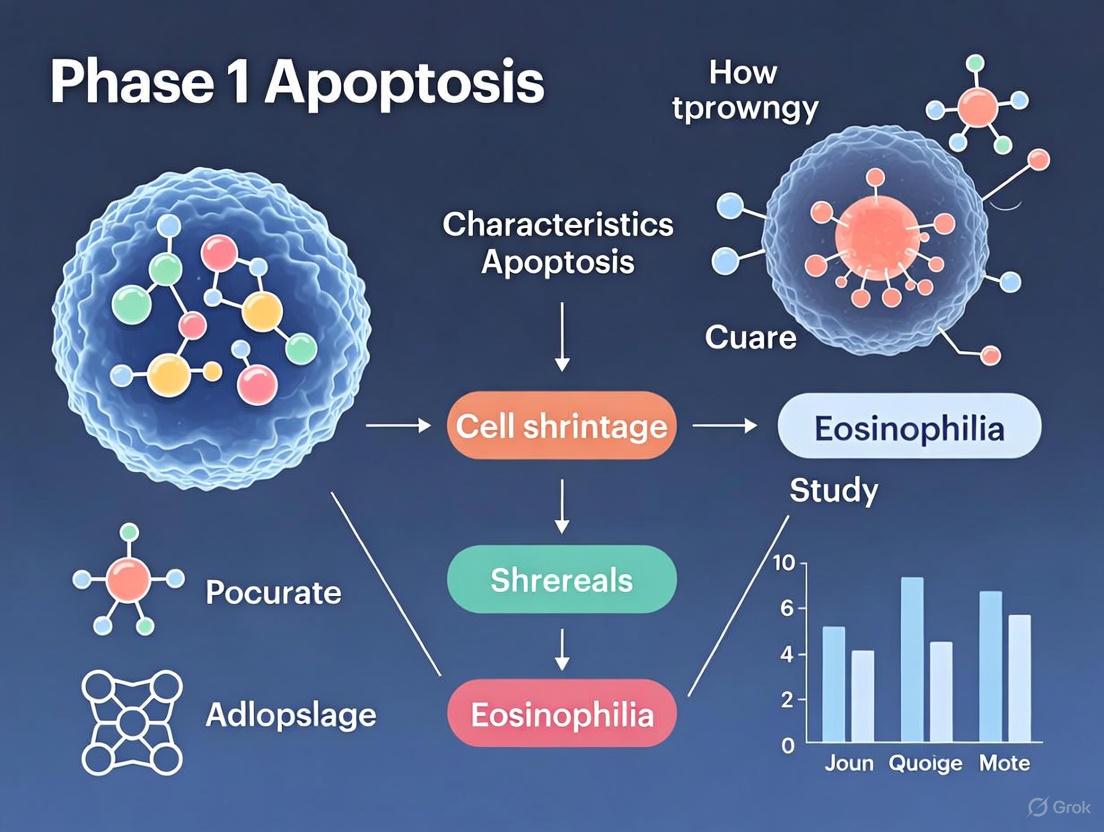
This article provides a comprehensive analysis of the early phase (Phase I) of apoptosis, focusing on the critical morphological hallmarks of cell shrinkage and increased eosinophilia.
Phase I Apoptosis: Decoding Cell Shrinkage and Eosinophilia as Key Early Biomarkers
Abstract
This article provides a comprehensive analysis of the early phase (Phase I) of apoptosis, focusing on the critical morphological hallmarks of cell shrinkage and increased eosinophilia. Tailored for researchers, scientists, and drug development professionals, it explores the foundational biochemical mechanisms driving these changes, details state-of-the-art detection methodologies, offers troubleshooting for common experimental challenges, and validates findings through comparative analysis with other cell death modalities. The synthesis of this information aims to enhance the accuracy of early apoptosis detection in both research and preclinical drug screening, with significant implications for understanding cancer, neurodegenerative diseases, and inflammatory disorders.
The Foundations of Early Apoptosis: Unraveling Cell Shrinkage and Eosinophilia
Phase I apoptosis, the initial commitment stage of programmed cell death, is characterized by distinct morphological and biochemical alterations that irrevocably propel a cell toward demolition. This phase encompasses cellular shrinkage, chromatin condensation, and the externalization of phosphatidylserine, setting it apart from all other forms of cell death. This technical guide delineates the core characteristics, molecular regulators, and detection methodologies that define Phase I apoptosis. We provide a detailed examination of the intrinsic and extrinsic signaling pathways that initiate this process, supported by structured data summaries and experimental workflows. The content is framed within broader research on characteristic cell shrinkage and eosinophilia, providing researchers and drug development professionals with a foundational resource for investigating this critical physiological and pathological process.
Apoptosis, a genetically programmed and active form of cell death, is essential for embryonic development, tissue homeostasis, and the elimination of damaged or potentially harmful cells [1] [2]. Unlike necrotic cell death, which results from injury and triggers inflammation, apoptosis is a controlled, orderly process that dismantles the cell without damaging surrounding tissues [2] [3]. The term "apoptosis" was formally introduced in 1972 by Kerr, Wyllie, and Currie, deriving from the Greek word for "falling off" to describe this natural process of cell removal [2].
The process of apoptosis can be broadly divided into two overarching phases: the initiation phase (Phase I) and the execution phase (Phase II). Phase I, the focus of this whitepaper, represents the initiation of programmed cell demolition. During this stage, the cell receives and processes decisive death signals, leading to the first observable morphological and biochemical changes but maintaining membrane integrity [1] [4]. This phase is characterized by cell shrinkage, chromatin condensation, and the externalization of "eat-me" signals like phosphatidylserine [4] [3]. Phase II, or the execution phase, is the final step where the cell is systematically dismantled by effector caspases, leading to DNA fragmentation, formation of apoptotic bodies, and phagocytosis by neighboring cells [1] [3]. This review will dissect the defining events of Phase I apoptosis, providing a technical foundation for its identification and study.
Morphological and Biochemical Hallmarks of Phase I
The transition of a cell into Phase I apoptosis is marked by a series of specific, observable morphological changes that distinguish it from other forms of cell death such as necrosis, necroptosis, or oncosis [4] [5]. These features are the cornerstone of histological and microscopic identification.
Core Morphological Characteristics
- Cellular Shrinkage: One of the earliest morphological indicators is a reduction in cell volume. The cell disassembles its cytoskeleton through the action of activated caspases, leading to a condensed cytoplasm [1]. This is in stark contrast to oncosis or necrosis, where the cell and its organelles swell [5].
- Chromatin Condensation (Pyknosis): The nuclear chromatin condenses into compact, well-defined, dark-staining masses against the nuclear envelope, a process known as pyknosis [1] [4]. This is a hallmark of apoptosis and reflects the initiation of nuclear dismantling.
- Loss of Cell-Cell Contact: The shrinking cell detaches from its neighboring cells and the extracellular matrix [1] [3].
- Increased Eosinophilia: The cytoplasm of the shrinking cell becomes deeply eosinophilic due to condensation, making it stain more intensely with eosin dye in hematoxylin and eosin (H&E) preparations [1].
- Membrane Blebbing: The cell membrane undergoes dynamic changes, forming bulges or "blebs," though the membrane itself remains intact, preventing the release of pro-inflammatory cellular contents [4] [3].
Table 1: Contrasting Morphological Features of Phase I Apoptosis and Other Cell Death Types
| Feature | Phase I Apoptosis | Necrosis/Oncosis | Necroptosis |
|---|---|---|---|
| Cell Volume | Shrinking | Swelling | Swelling |
| Plasma Membrane | Intact, blebbing | Ruptured | Ruptured |
| Chromatin | Condensed (Pyknosis) | Karyolysis (Dissolution) | Condensed (variable) |
| Inflammation | Immunologically silent | Pro-inflammatory | Pro-inflammatory |
| Energy Dependence | ATP-dependent | ATP-independent | ATP-dependent |
Key Biochemical Events
- Phosphatidylserine (PS) Externalization: In viable cells, phosphatidylserine is restricted to the inner leaflet of the plasma membrane. During early Phase I apoptosis, PS is rapidly translocated to the outer leaflet, serving as a critical "eat-me" signal for phagocytes [1] [4]. This is a key biomarker for detection.
- Caspase Activation: The initiator caspases (e.g., caspase-8 and -9) become activated. This activation is a point of no return, triggering a proteolytic cascade that leads to the cleavage of key cellular substrates, including cytoskeletal proteins and regulators of DNA integrity [1] [4] [3].
- Mitochondrial Outer Membrane Permeabilization (MOMP): In the intrinsic pathway, the mitochondrial outer membrane becomes permeable, leading to the release of pro-apoptotic factors like cytochrome c into the cytosol [4] [3]. This is a tightly regulated event controlled by the Bcl-2 protein family.
Molecular Mechanisms and Signaling Pathways
Phase I apoptosis is primarily mediated by two core signaling pathways—the extrinsic (death receptor) pathway and the intrinsic (mitochondrial) pathway—which converge to activate the caspase cascade [1] [4] [3].
The Extrinsic Pathway
The extrinsic pathway is triggered by the binding of extracellular death ligands to their corresponding cell surface death receptors.
- Key Receptors and Ligands: Fas (CD95/Apo-1) and its ligand (FasL), TNF Receptor 1 (TNFR1) and TNF-α, and TRAIL receptors (DR4/DR5) and TRAIL [1] [4].
- DISC Formation: Ligand binding induces receptor trimerization and recruitment of the adaptor protein FADD (Fas-Associated Death Domain) and procaspase-8, forming the Death-Inducing Signaling Complex (DISC) [6] [4].
- Caspase-8 Activation: Within the DISC, procaspase-8 undergoes autocatalytic activation. Active caspase-8 then directly cleaves and activates downstream effector caspases, such as caspase-3, initiating the execution phase [4] [3].
The Intrinsic Pathway
The intrinsic pathway is activated by internal cellular stress signals, including DNA damage, oxidative stress, growth factor deprivation, and irradiation [1] [3].
- Bcl-2 Family Regulation: The pathway is governed by the balance between pro-apoptotic (e.g., Bax, Bak, Bid, Bim, Puma) and anti-apoptotic (e.g., Bcl-2, Bcl-xL) members of the Bcl-2 protein family [1] [6] [3].
- MOMP and Cytochrome c Release: Cellular stress signals shift the balance in favor of pro-apoptotic proteins, leading to mitochondrial outer membrane permeabilization (MOMP). This allows cytochrome c to leak from the mitochondrial intermembrane space into the cytosol [1] [3].
- Apoptosome Formation: In the cytosol, cytochrome c binds to Apoptotic Protease Activating Factor 1 (Apaf-1), which oligomerizes in the presence of ATP/dATP to form the apoptosome. The apoptosome then recruits and activates procaspase-9 [6] [4].
The following diagram illustrates the key steps and molecular players in these two initiation pathways:
Experimental Detection and Methodologies
Accurate detection of Phase I apoptosis requires a multi-parametric approach, as no single assay can fully capture its complexity. The following table summarizes key assays organized by their detection target [1].
Table 2: Key Methodologies for Detecting Phase I Apoptosis
| Detection Target | Assay/Method | Key Reagents | Technical Readout | Phase I Specificity |
|---|---|---|---|---|
| Cytomorphology | Fluorescence Microscopy | DAPI, Hoechst dyes | Chromatin condensation (brighter fluorescence) | High |
| Membrane Changes | Annexin V Staining | Annexin V-FITC/PI | PS externalization (Annexin V+/PI-) | High for early phase |
| Caspase Activity | Fluorogenic Assay / Western Blot | Caspase-3, -8, -9 substrates; PARP antibodies | Cleavage of substrates or PARP | High (mid-phase) |
| Mitochondrial Changes | Flow Cytometry | JC-1, TMRM dyes | Loss of mitochondrial membrane potential (ΔΨm) | High for intrinsic pathway |
| DNA Fragmentation | TUNEL Assay | TdT enzyme, fluorescent-dUTP | Labeling of DNA strand breaks | Lower (late Phase I/Phase II) |
Detailed Experimental Protocol: Annexin V/Propidium Iodide (PI) Assay
The Annexin V/PI assay is the gold standard for detecting early apoptosis by measuring phosphatidylserine (PS) externalization while simultaneously testing membrane integrity [1] [4].
Principle: Annexin V is a calcium-dependent phospholipid-binding protein with high affinity for PS. In early apoptotic cells (Phase I), PS is exposed on the outer leaflet, but the cell membrane remains intact, making them Annexin V-positive and PI-negative (Annexin V+/PI-). Late apoptotic or necrotic cells have compromised membranes and are both Annexin V and PI-positive.
Procedure:
- Cell Preparation: Harvest cells (adherent cells may require gentle trypsinization or scraping) and wash twice with cold phosphate-buffered saline (PBS).
- Staining: Resuspend ~1x10^5 to 1x10^6 cells in 100 µL of 1X Annexin V Binding Buffer.
- Incubation: Add 5 µL of fluorescently conjugated Annexin V (e.g., FITC) and 5 µL of Propidium Iodide (PI) staining solution to the cell suspension.
- Incubate: Vortex gently and incubate for 15 minutes at room temperature (25°C) in the dark.
- Analysis: Within 1 hour, add 400 µL of 1X Annexin V Binding Buffer to each tube and analyze by flow cytometry. Measure Annexin V fluorescence at ~518 nm and PI fluorescence at >617 nm.
Interpretation:
- Viable Cells: Annexin V-/PI-
- Early Apoptotic Cells (Phase I): Annexin V+/PI-
- Late Apoptotic/Necrotic Cells: Annexin V+/PI+
The workflow for this protocol is outlined below:
The Scientist's Toolkit: Essential Research Reagents
A robust investigation of Phase I apoptosis requires a suite of specific reagents and tools to modulate and measure the key events described above.
Table 3: Key Research Reagent Solutions for Phase I Apoptosis Studies
| Reagent/Tool | Category | Function/Application | Example Targets |
|---|---|---|---|
| Recombinant Death Ligands | Inducer | Activate extrinsic pathway | FasL, TRAIL, TNF-α |
| Staurosporine | Chemical Inducer | Broad kinase inhibitor; potent intrinsic pathway activator | Protein Kinases |
| Annexin V Conjugates | Detection | Binds externalized PS for flow cytometry or microscopy | Phosphatidylserine |
| Fluorogenic Caspase Substrates | Detection | Emit fluorescence upon cleavage by active caspases | Caspase-3, -8, -9 |
| JC-1 Dye | Detection | Mitochondrial potential sensor (J-aggregates red, monomer green) | ΔΨm |
| BH3 Mimetics | Modulator | Inhibit anti-apoptotic Bcl-2 proteins to promote intrinsic apoptosis | Bcl-2, Bcl-xL |
| Pan-Caspase Inhibitor (z-VAD-fmk) | Inhibitor | Irreversibly inhibits caspase activity; confirms caspase-dependence | Broad-spectrum caspases |
| Anti-Bcl-2 Antibodies | Detection/Modulation | Detect protein levels (Western/IF) or block function (inhibition) | Bcl-2 |
Phase I apoptosis represents the critical initiation stage of programmed cell demolition, defined by a signature set of morphological and biochemical events including cell shrinkage, chromatin condensation, and phosphatidylserine externalization. Its precise regulation through the intrinsic and extrinsic pathways ensures the selective and safe removal of cells without provoking an inflammatory response. A thorough understanding of these defining characteristics, coupled with robust detection methodologies like the Annexin V/PI assay, is fundamental for research in developmental biology, tissue homeostasis, and the pathogenesis of diseases such as cancer and neurodegeneration. As drug development increasingly focuses on modulating apoptotic pathways to overcome treatment resistance, the nuanced study of Phase I will continue to provide vital insights and therapeutic opportunities.
Cell shrinkage, known as pyknosis, is a fundamental morphological hallmark of the initial phase of apoptosis. This process is orchestrated by a tightly regulated biochemical cascade where the activation of caspase enzymes directly triggers the systematic dismantling of the cellular cytoskeleton. The breakdown of this structural framework is a primary driver of the cell's contraction. Understanding the precise mechanisms linking caspase activation to cytoskeletal disruption is crucial for research in various fields, including eosinophilia and the development of targeted therapies. This whitepaper provides an in-depth technical review of these mechanisms and presents standardized experimental protocols for their detection.
Apoptosis, or programmed cell death, is characterized by a series of distinct morphological changes: cell shrinkage, chromatin condensation, nuclear fragmentation, membrane blebbing, and formation of apoptotic bodies [7]. Among these, cell shrinkage is one of the earliest observable events, marking the commitment of the cell to the death pathway [8].
This shrinkage is not a passive collapse but an active, energy-dependent process mediated by the proteolytic activity of caspases. These cysteine-aspartic proteases are the primary effectors of apoptosis, cleaving hundreds of cellular substrates to execute cell death methodically [7]. The integrity of the cytoskeleton—comprising actin microfilaments, intermediate filaments, and microtubules—is essential for maintaining cell shape and volume. The targeted cleavage of key cytoskeletal proteins by active caspases is the central mechanism that induces the loss of structural integrity and consequent contraction of the cell [9].
Molecular Mechanisms of Cytoskeletal Breakdown
Caspase Activation: The Initiating Event
Apoptosis proceeds primarily via two pathways that converge on caspase activation:
- The Extrinsic Pathway: Initiated by the ligation of death receptors (e.g., Fas, TNFR) at the cell surface, leading to the assembly of the Death-Inducing Signaling Complex (DISC) and activation of initiator caspase-8 [8].
- The Intrinsic Pathway: Triggered by internal cellular stresses (e.g., DNA damage, oxidative stress), leading to mitochondrial outer membrane permeabilization (MOMP), release of cytochrome c, formation of the apoptosome, and activation of initiator caspase-9 [8].
Both pathways converge on the activation of executioner caspases, primarily caspase-3 and caspase-7 [8]. Caspase-3 is the primary executioner caspase and serves as a key point of convergence and amplification of the death signal. Once activated, it systematically cleaves a wide range of cellular substrates, including structural proteins.
Caspase-Mediated Cleavage of Cytoskeletal Components
The following table summarizes the key cytoskeletal targets of caspase-3 and the consequences of their cleavage.
Table 1: Key Cytoskeletal Proteins Cleaved by Caspases During Apoptosis
| Cytoskeletal Element | Key Caspase Substrate(s) | Consequence of Cleavage |
|---|---|---|
| Actin Microfilaments | Actin, Gelsoilin, Fodrin | Disassembly of cortical actin network, loss of cellular adhesion, and membrane blebbing [9]. |
| Intermediate Filaments | Cytokeratins (e.g., CK18), Lamin A/C | Loss of structural integrity, disruption of nuclear lamina, and contribution to nuclear fragmentation [10]. |
| Microtubules | Tubulin | Disruption of intracellular transport and cellular polarity [9]. |
The discovery that cytoskeletal disruption is not merely a consequence but an active component of the apoptotic cascade was solidified by research demonstrating that direct pharmacological disruption of the cytoskeleton is sufficient to induce T-cell apoptosis via a caspase-3 mediated mechanism [9]. This finding places the cytoskeleton as a critical regulatory node in the control of cell survival.
Integrated Signaling Pathway
The diagram below illustrates the core signaling pathway from initial apoptotic stimulus to the execution of cell shrinkage via cytoskeletal breakdown.
Diagram Title: Caspase-Driven Pathway to Cell Shrinkage
Experimental Detection and Methodologies
Accurate detection of cell shrinkage and its underlying mechanisms requires a multi-parametric approach, combining morphological, biochemical, and functional assays.
Core Assays for Apoptosis and Cell Shrinkage
The following assays are fundamental for investigating cell shrinkage and apoptosis in a research setting.
Table 2: Core Methodologies for Detecting Cell Shrinkage and Apoptosis
| Method Category | Assay/Technique | Target/Principle | Key Output | Considerations |
|---|---|---|---|---|
| Morphological | Light & Electron Microscopy | Cell morphology, chromatin condensation, organelle structure | Qualitative visualization of cell shrinkage, pyknosis, apoptotic bodies [7] [8] | Gold standard for morphology; endpoint assay, requires expertise [8]. |
| Flow Cytometry (FSC/SSC) | Cell size (FSC) and granularity (SSC) | Quantification of cell population exhibiting reduced FSC (shrinkage) [11] | Rapid, quantitative, works with heterogeneous populations. | |
| Biochemical | Western Blot / ELISA | Caspase-3 cleavage; Cleaved substrates (e.g., CK18) | Detection of active caspase-3 and specific cleavage products [10] | Confirms biochemical mechanism; M30 ELISA detects caspase-cleaved CK18 [10]. |
| Fluorogenic Caspase Assay | Caspase enzyme activity using DEVD-based substrates | Quantitative activity measurement of executioner caspases [12] | Highly specific and sensitive; can be adapted for HTS. | |
| Functional / Viability | LDH Release Assay | Plasma membrane integrity | Measures cytotoxicity and late-stage apoptosis/necrosis [11] | Simple colorimetric readout; cannot detect early apoptosis. |
| MTT / XTT Assay | Mitochondrial reductase activity | Indirect measure of metabolic activity and cell viability [11] | Can underestimate viability in early apoptosis; background interference possible [11]. |
Detailed Experimental Protocol: Integrated Workflow
This protocol outlines a comprehensive workflow for correlating caspase activation with cytoskeletal breakdown and cell shrinkage.
Objective: To induce apoptosis and simultaneously measure caspase-3 activation, cytokeratin cleavage, and cell shrinkage.
Sample Preparation:
- Cell Culture: Use adherent cell lines (e.g., HeLa, A549) or primary cells relevant to the research (e.g., eosinophils for related studies). Culture cells in appropriate medium. For eosinophils, note that survival in vitro requires specific cytokines like GM-CSF or IL-5 to prevent spontaneous apoptosis [13] [14].
- Apoptosis Induction: Treat cells with a pro-apoptotic stimulus (e.g., 1-2 µM Staurosporine for 2-6 hours; anti-Fas antibody for Jurkat cells). Include a vehicle control.
- Inhibition Control (Optional): Pre-treat a sample with a pan-caspase inhibitor (e.g., Z-VAD-FMK, 20-50 µM) for 1 hour before apoptosis induction to confirm caspase-dependence.
Procedure Workflow: The integrated experimental workflow for confirming the mechanism is depicted below.
Diagram Title: Experimental Workflow for Apoptosis Analysis
Key Reagent Solutions:
- Pan-Caspase Inhibitor (Z-VAD-FMK): A cell-permeable, irreversible broad-spectrum caspase inhibitor. Used to confirm the caspase-dependent nature of the observed cell death [11].
- M30 Apoptosense ELISA: A specific immunoassay that detects a caspase-cleaved neo-epitope of cytokeratin 18 (CK18), providing a serological biomarker of epithelial cell apoptosis [10].
- Fluorogenic Caspase-3 Substrate (e.g., Ac-DEVD-AMC): A peptide substrate (DEVD) conjugated to a fluorescent reporter (AMC). Cleavage by caspase-3 releases the fluorophore, allowing quantitation of enzyme activity via fluorometry [12].
- Annexin V-FITC / Propidium Iodide (PI): Used in flow cytometry to distinguish early apoptotic (Annexin V+/PI-), late apoptotic (Annexin V+/PI+), and necrotic (Annexin V-/PI+) cells based on phosphatidylserine exposure and membrane integrity [11].
Context in Eosinophilia Research
The mechanisms of cell shrinkage and apoptosis are particularly relevant in eosinophilic disorders, where a central problem is the pathological accumulation of eosinophils in tissues due to delayed apoptosis [14].
- Survival Signaling: Eosinophil survival in tissues is significantly prolonged by cytokines such as GM-CSF, IL-3, and most specifically, IL-5 [13] [14]. These cytokines activate signaling pathways (e.g., JAK/STAT, PI3K/Akt) that suppress the intrinsic apoptotic pathway, maintaining cellular integrity and preventing caspase activation.
- Therapeutic Targeting: Inducing eosinophil apoptosis is a validated therapeutic strategy. For example, anti-IL-5 monoclonal antibodies (e.g., Mepolizumab) work by depriving eosinophils of this critical survival signal, thereby promoting the default apoptotic program, which includes cell shrinkage and subsequent phagocytic clearance [14].
- Biomarker Potential: Assays that detect apoptosis, such as the M30 ELISA for cleaved CK18, could be adapted or investigated for their utility in monitoring the efficacy of pro-apoptotic therapies in eosinophilic diseases, providing a pharmacodynamic biomarker [10].
Cell shrinkage during Phase I apoptosis is an active process directly resulting from the caspase-mediated dismantling of the cellular cytoskeleton. The interplay between caspase activation and the cleavage of structural targets like actin and cytokeratins is a critical execution point in the apoptotic pathway. Robust, multi-faceted experimental approaches are essential for accurately detecting and quantifying this phenomenon. In the context of eosinophilia research, a deep understanding of these mechanisms provides a foundation for developing therapies designed to shift the balance toward eosinophil apoptosis, thereby resolving damaging inflammatory responses. Continued research into the specific cytoskeletal degradation pathways will undoubtedly yield more precise biomarkers and therapeutic targets.
Eosinophil granulocytes are bone marrow-derived leukocytes that play a critical role in host defense, particularly against helminth parasites, and are key effector cells in allergic inflammation and asthma [15] [14]. Their name derives from their distinctive "eosin-loving" granules that stain dark pink with acid dyes due to their high cationic protein content [16]. A fundamental aspect of eosinophil biology is their tightly regulated lifespan, with programmed cell death (apoptosis) serving as a crucial control mechanism for resolving eosinophilic inflammation [13] [15].
In the context of phase I apoptosis, eosinophils undergo characteristic morphological changes, with cytoplasmic condensation being a primary feature [13]. This process involves cell shrinkage, nuclear coalescence, and chromatin condensation, culminating in the formation of apoptotic bodies that are phagocytosed by macrophages without eliciting an inflammatory response [13] [17]. Simultaneously, eosinophils contain a remarkable arsenal of pre-formed protein content within their specific granules, including cytotoxic cationic proteins and an extensive array of cytokines [16]. Understanding the biochemistry of these interconnected processes—cytoplasmic condensation during apoptosis and the regulated secretion of granule proteins—provides critical insights for developing targeted therapies for eosinophil-associated disorders.
Biochemical Basis of Cytoplasmic Condensation in Eosinophil Apoptosis
Morphological and Molecular Hallmarks of Eosinophil Apoptosis
Spontaneous eosinophil apoptosis occurs within 2-4 days in the absence of survival-prolonging cytokines, with approximately 50% of cells undergoing apoptosis within 2 days under standard culture conditions [13]. This process follows a characteristic sequence of biochemical events:
- Cell Shrinkage and Cytoplasmic Condensation: The eosinophil undergoes progressive reduction in cell volume, accompanied by increased cytoplasmic density [13].
- Nuclear Changes: Chromatin condensation and nuclear coalescence occur, followed by DNA fragmentation [13].
- Phosphatidylserine Exposure: Externalization of phosphatidylserine to the outer leaflet of the plasma membrane represents an early apoptotic marker, preceding other manifestations of apoptosis [13].
- Mitochondrial Changes: Dissipation of mitochondrial transmembrane potential (ΔΨm) occurs, representing a commitment point in the apoptotic cascade [13].
Table 1: Temporal Sequence of Key Events in Spontaneous Eosinophil Apoptosis
| Time Frame | Apoptotic Event | Detection Method |
|---|---|---|
| Early (0-24 hours) | Phosphatidylserine exposure | Annexin-V staining |
| Mid (24-48 hours) | Cell shrinkage, cytoplasmic condensation | Decreased forward scatter (FSC) |
| Mid (24-48 hours) | Mitochondrial depolarization | ΔΨm dissipation assays |
| Late (48-96 hours) | DNA fragmentation | DNA fragmentation assays |
| Late (48-96 hours) | Nuclear condensation | Morphological examination |
Molecular Regulators of Eosinophil Survival and Apoptosis
The balance between eosinophil survival and apoptosis is governed by competing molecular pathways that either inhibit or promote the apoptotic program:
- Survival-Prolonging Pathways: Cytokines including IL-5, GM-CSF, and IL-3 activate Lyn/Syk-Ras-Raf-1-ERK1/2, Jak2-STAT1, and PI3K-Akt pathways, ultimately preventing apoptosis through inhibition of Bax translocation to mitochondria and upregulation of anti-apoptotic Bcl-xL [13] [15]. Nuclear factor kappa B (NF-κB) serves as a crucial transcription factor mediating eosinophil survival [13].
- Pro-Apoptotic Pathways: In the absence of survival signals, eosinophils default to spontaneous apoptosis through mitochondrial-centered intrinsic pathways involving Bax activation [13]. Extrinsic pathways can be triggered by Fas ligation or death receptors, while pharmacological agents like glucocorticoids and theophylline can accelerate apoptosis [13] [17].
Diagram 1: Regulatory pathways controlling eosinophil survival and apoptosis
Eosinophil Granule Proteins: Content and Secretion Mechanisms
Composition of Eosinophil Granules
Eosinophil specific granules represent unique secretory organelles characterized by an internal crystalline core and an outer electron-lucent matrix, surrounded by a delimiting trilaminar membrane [16]. These granules serve as storage sites for a diverse array of pre-formed proteins:
- Cationic Proteins: Major basic protein (MBP) forms the crystalline core of granules and is the most abundant cationic protein [16]. Other cationic proteins include eosinophil cationic protein (ECP), eosinophil peroxidase (EPO), and eosinophil-derived neurotoxin (EDN) [16] [18].
- Cytokines and Chemokines: Eosinophils store over three dozen cytokines preformed within specific granules, including IL-2, IL-3, IL-4, IL-5, IL-7, IL-13, IL-16, TNF-α, TGF-β, and RANTES [16] [18].
- Enzymes: Eosinophil granules contain hydrolytic enzymes and Charcot-Leyden crystal lysophospholipase [16] [18].
Table 2: Major Eosinophil Granule-Derived Proteins and Their Functions
| Protein Category | Specific Components | Biological Functions |
|---|---|---|
| Cationic Proteins | Major basic protein (MBP) | Forms granule crystalline core; toxic to parasites and host tissues |
| Eosinophil cationic protein (ECP) | Ribonuclease activity; toxic to helminths and host tissues; antiviral properties | |
| Eosinophil peroxidase (EPO) | Generates reactive oxygen species; antimicrobial activity | |
| Eosinophil-derived neurotoxin (EDN) | Ribonuclease activity; antiviral properties; neurotoxicity | |
| Cytokines/Chemokines | IL-3, IL-5, GM-CSF | Autocrine survival factors; eosinophilopoiesis |
| IL-4, IL-13 | Th2 response promotion; B cell help | |
| TGF-β, TNF-α | Tissue remodeling; inflammation | |
| RANTES, eotaxins | Chemoattraction of eosinophils and other leukocytes | |
| Enzymes | Charcot-Leyden crystal protein | Lysophospholipase activity; crystallizes in tissues |
| Hydrolytic enzymes | Various degradative functions |
Mechanisms of Granule Protein Secretion
Eosinophils utilize distinct pathways for the secretion of their granule-derived proteins, allowing for differential release of specific mediators:
- Piecemeal Degranulation (PMD): This is the predominant secretory pathway in most inflammatory scenarios, characterized by selective mobilization of granule-derived cytokines into spherical and tubular vesicles (eosinophil sombrero vesicles) that transport specific cargo to the plasma membrane for release [16]. PMD results in progressive emptying of granule contents without granule-plasma membrane fusion.
- Classical Exocytosis: Individual granules fuse directly with the plasma membrane, resulting in wholesale release of granule contents [16].
- Compound Exocytosis: Intracellular granules fuse together before fusion with the plasma membrane and release of combined contents [16].
- Eosinophil Cytolysis: Intact granules are extruded from eosinophils and deposited within tissues, where they can function as stimulus-responsive secretory-competent organelles [16].
Diagram 2: Eosinophil granule protein secretion mechanisms
Experimental Methodologies for Studying Eosinophil Apoptosis and Protein Content
Eosinophil Isolation and Culture Protocols
Standardized methodologies for eosinophil purification and maintenance are essential for studying apoptosis and protein secretion:
- Eosinophil Isolation: Human eosinophils are typically isolated from peripheral blood by negative selection using CD16-negative selection, which yields populations of >95% purity [13].
- Culture Conditions: Isolated eosinophils are cultured in complete medium (RPMI 1640 with 10% fetal calf serum, 2 mM L-glutamine, 100 U/mL penicillin, and 100 μg/mL streptomycin) at 37°C in 5% CO₂ [13].
- Survival Modulation: For survival prolongation, cells are treated with GM-CSF, IL-5, or IL-3 (typically 1-10 ng/mL). For apoptosis induction, cells are cultured without cytokines or treated with pro-apoptotic agents (glucocorticoids, theophylline, or Fas ligation) [13] [17].
Apoptosis Detection Methods
Multiple complementary techniques are employed to quantify and characterize eosinophil apoptosis:
- Annexin-V/Propidium Iodide Staining: Detects phosphatidylserine exposure (early apoptosis) and membrane integrity (late apoptosis/necrosis) [13].
- Morphological Examination: Light or electron microscopy assessment of characteristic apoptotic changes (cell shrinkage, nuclear condensation) [13].
- DNA Fragmentation Assays: Detection of internucleosomal DNA cleavage using TUNEL or gel electrophoresis [13].
- Mitochondrial Transmembrane Potential (ΔΨm): Measured using fluorescent dyes like JC-1 or DiOC₆(3) [13].
- Flow Cytometry Analysis: Forward scatter (FSC) measurements to detect cell shrinkage and side scatter (SSC) for granularity changes [13].
Table 3: Key Experimental Assays for Eosinophil Apoptosis and Protein Analysis
| Assay Type | Specific Methodology | Parameter Measured | Technical Considerations |
|---|---|---|---|
| Apoptosis Quantification | Annexin-V/PI staining | Phosphatidylserine exposure, membrane integrity | Early apoptotic marker; requires fresh cells |
| DNA fragmentation (TUNEL) | Internucleosomal DNA cleavage | Late apoptotic marker | |
| Morphological analysis | Cellular and nuclear condensation | Gold standard but subjective | |
| ΔΨm dissipation | Mitochondrial membrane potential | Commitment point in apoptosis | |
| Protein Detection | Immuno-electron microscopy | Subcellular protein localization | Requires specialized expertise |
| ELISA | Cytokine concentration in supernatants | Bulk measurement; no cellular localization | |
| Western blot | Protein expression and cleavage | Requires sufficient cell numbers | |
| Cellular Function | Chemotaxis assays | Migration toward chemoattractants | Requires optimization of gradients |
| Survival assays | Viability in response to stimuli | Time-course experiments essential |
Analysis of Granule Proteins and Secretion
Advanced techniques enable detailed characterization of eosinophil granule content and secretion mechanisms:
- Immuno-electron Microscopy: Using antibody Fab fragments conjugated to nano-gold particles to localize specific cytokines and cationic proteins within granules and secretory vesicles [16].
- Cytokine Measurement: ELISA and multiplex assays to quantify secreted cytokines in supernatants from stimulated eosinophils [16].
- Ultrastructural Analysis: Transmission electron microscopy to visualize granule morphology, vesicle formation, and stages of piecemeal degranulation [16].
- Three-dimensional Modeling: Electron tomographic analyses to reconstruct vesicular trafficking pathways [16].
The Scientist's Toolkit: Essential Research Reagents
Table 4: Key Research Reagents for Eosinophil Apoptosis and Protein Studies
| Reagent Category | Specific Examples | Research Application | Mechanism of Action |
|---|---|---|---|
| Survival Cytokines | IL-5, GM-CSF, IL-3 | Inhibit spontaneous apoptosis | Activate PI3K-Akt, JAK-STAT, and NF-κB pathways |
| Pro-apoptotic Agents | Dexamethasone, Prednisolone | Induce eosinophil apoptosis | Glucocorticoid receptor-mediated gene regulation |
| Theophylline | Induce apoptosis in presence of IL-5 | Elevates intracellular cAMP; inhibits PDE | |
| Death Receptor Activators | Anti-Fas antibodies | Activate extrinsic apoptosis pathway | Fas receptor ligation |
| Signal Transduction Inhibitors | PI3K inhibitors (LY294002) | Block survival signaling | Inhibit PI3K-Akt pathway |
| JAK inhibitors | Block cytokine signaling | Inhibit JAK-STAT pathway | |
| NF-κB inhibitors | Block survival signaling | Prevent NF-κB nuclear translocation | |
| Detection Reagents | Annexin-V conjugates | Detect early apoptosis | Binds exposed phosphatidylserine |
| JC-1, DiOC₆(3) | Measure mitochondrial ΔΨm | Fluorescent potential-sensitive dyes | |
| Secretion Modulators | Eotaxin-1, RANTES | Stimulate piecemeal degranulation | CCR3 receptor activation |
| Calcium ionophores | Stimulate classical exocytosis | Increase intracellular calcium |
The biochemistry of increased eosinophilia encompasses two fundamental aspects: the controlled process of cytoplasmic condensation during apoptosis that limits eosinophil numbers, and the remarkable protein content within eosinophil granules that mediates their diverse functions in health and disease. The intricate balance between survival-prolonging signals and pro-apoptotic pathways determines eosinophil lifespan and accumulation in tissues, while the sophisticated mechanisms of granule protein storage and secretion enable these cells to rapidly deploy pre-formed mediators without requiring de novo synthesis.
Understanding these biochemical processes at the molecular level provides critical insights for developing targeted therapeutic strategies for eosinophil-associated disorders. Pharmacological agents that promote eosinophil apoptosis or modulate the selective release of granule-derived proteins represent promising approaches for controlling pathological eosinophilia while preserving homeostatic eosinophil functions. The continued elucidation of eosinophil biochemistry will undoubtedly yield new opportunities for intervention in allergic diseases, hypereosinophilic syndromes, and other eosinophil-mediated conditions.
Within the tightly regulated process of apoptosis, pyknosis has long been recognized as a morphological hallmark of nuclear disintegration. However, emerging evidence reveals that profound structural alterations to chromatin occur significantly earlier in the apoptotic cascade, preceding both classical pyknotic morphology and caspase activation. This technical review synthesizes recent findings on these early chromatin dynamics, framing them within the broader context of Phase I apoptosis research characterized by cell shrinkage and eosinophilia. We detail the mechanistic drivers of chromatin compaction, provide validated experimental protocols for its detection, and analyze its potential as a therapeutic target. For researchers and drug development professionals, understanding this "nuclear prelude" is critical for developing novel strategies to modulate cell death in cancer, neurodegenerative diseases, and beyond.
Apoptosis, a genetically programmed form of cell death, is characterized by distinct morphological changes including cell shrinkage, membrane blebbing, nuclear fragmentation, and the formation of apoptotic bodies [19]. In pathological examinations, these changes manifest as deeply eosinophilic cytoplasm and hyperchromatic, condensed nuclei [19]. The nuclear demise during apoptosis traditionally culminates in pyknosis—the irreversible condensation of chromatin—followed by karyorrhexis (nuclear fragmentation) [20] [21].
However, the established sequence of apoptotic events is being redefined. Recent super-resolution microscopy studies on cortical neurons demonstrate that chromatin compaction precedes the activation of executioner caspases and overt nuclear shrinkage [22]. This early chromatin compaction is not merely a consequence of the apoptotic cascade but appears to be an active, regulated process that critically influences the cell death pathway [22]. When this chromatin dynamics are interfered with, the cell death fate can be altered, potentially leading to necrotic-like outcomes instead of classical apoptosis [22].
This whitepaper explores these early nuclear events, positioning them within the Phase I characteristics of apoptosis where cell shrinkage and eosinophilia first become apparent. We provide a technical resource for detecting, quantifying, and understanding the significance of chromatin changes that serve as the nuclear prelude to pyknosis.
The Mechanistic Foundation of Nuclear Apoptosis
Classical Pyknosis and Its Pathways
Pyknosis represents the endpoint of nuclear apoptosis—an irreversible state of chromatin condensation identifiable by light microscopy as a shrunken, hyperchromatic nucleus [20] [21]. Biochemically, pyknosis is categorized into two distinct types:
- Nucleolytic Pyknosis: Characteristic of apoptosis, this process involves caspase-dependent activation of endonucleases like CAD (Caspase-Activated DNase), which cleaves DNA at internucleosomal linker regions, producing the characteristic 180-200 base pair "DNA ladder" [20] [23]. This is accompanied by regulated chromatin condensation and nuclear membrane disruption [21].
- Anucleolytic Pyknosis: More associated with necrosis, this form involves chromatin condensation without systematic enzymatic DNA fragmentation. It is often triggered by ATP depletion, calcium overload, and involves distinct molecular players such as phosphorylation of the barrier-to-autointegration factor (BAF), leading to chromatin detachment from the nuclear envelope [20] [21].
The execution of these pathways dismantles the nucleus through degradation of structural components like nuclear lamins and facilitates the packaging of cellular contents for efficient clearance [19] [20].
Early Chromatin Compaction: A New Frontier
Before these terminal events, a critical phase of early chromatin compaction occurs. In developing cortical neurons, this compaction is detectable via super-resolution imaging before caspase-3 activation and cell shrinkage [22]. This process can be classified into five progressive stages, beginning with a granular reorganization of chromatin that evolves into more dense configurations [22].
Crucially, this early compaction is differentially regulated from later apoptotic execution:
- It remains unaffected by pharmacological inhibition of caspase-3 [22].
- It is modulated by actomyosin activity and nuclear myosin IC expression, linking the cytoskeleton to nuclear events [22].
- Interfering with this chromatin dynamics can prevent apoptotic death, but may redirect the cell toward a necrotic-like fate, underscoring its critical role in determining the mode of cell death [22].
This early phase represents a potential decision point in the cell death cascade, offering novel intervention targets distinct from the final execution pathways.
Experimental Evidence and Quantitative Data
Key Findings from Model Systems
Table 1: Key Experimental Findings on Early Chromatin Changes
| Experimental Model | Inducer/Treatment | Key Finding | Measurement Technique |
|---|---|---|---|
| Cortical Neurons (in vitro) [22] | Staurosporine | Chromatin compaction precedes caspase-3 activation and nuclear shrinkage. | Live-cell spinning disk confocal microscopy (H2B::mCherry), SMLM |
| Cortical Neurons (in vitro) [22] | Staurosporine + Caspase-3 Inhibitor | Early chromatin compaction is caspase-3 independent. | Sobel edge detection (Chromatin Compaction Parameter - CCP) |
| Cortical Neurons (in vitro) [22] | Actomyosin modulation | Prevents apoptosis, leads to necrotic-like death. Alters chromatin dynamics. | Nuclear size measurement, CCP, Caspase substrate (NucView) |
| HepG2 & HK-2 cells [23] | Cisplatin, Staurosporine, Camptothecin | Nuclear condensation/fragmentation detected via Hoechst 33258 fluorescence increase. | Quantitative spectrofluorometry |
| LNCaP & MDA-MB-231 cells [24] | Cycloheximide (CHX) | Apoptosis induction causes reduced nuclear area and increased DAPI staining intensity. | Fluorescence microscopy, morphometric analysis (area, perimeter, brightness) |
The data from these diverse models confirm that early nuclear changes are a conserved and measurable phenomenon. The spectrofluorometric assay using Hoechst 33258, for instance, provides a quantitative, high-throughput compatible method to detect these changes based on increased fluorescence upon binding to compacted DNA [23]. Furthermore, computerized analysis of fluorescently stained nuclei (e.g., with DAPI) can detect early, pre-pyknosis changes in parameters such as nuclear area, perimeter, and staining intensity [24].
Quantitative Analysis of Nuclear Morphology
Table 2: Quantifiable Nuclear Morphology Parameters in Apoptosis
| Parameter | Description | Change During Early Apoptosis | Technical Method of Measurement |
|---|---|---|---|
| Chromatin Compaction Parameter (CCP) [22] | Density of chromatin-associated edges within the nucleus (Sobel edge detection). | Increases | Single Molecule Localization Microscopy (SMLM), Confocal Imaging |
| Nuclear Area [24] | Two-dimensional cross-sectional area of the nucleus. | Decreases | Fluorescence microscopy (DAPI/Hoechst stain), software analysis |
| Nuclear Perimeter [24] | Length of the nuclear boundary. | Decreases | Fluorescence microscopy, software analysis |
| Staining Intensity [24] | Fluorescence brightness per nucleus (e.g., DAPI, Hoechst). | Increases | Spectrofluorometry, fluorescence microscopy, flow cytometry |
| Caspase-3 Activity [22] | Activation of executioner caspase. | Unchanged during initial compaction | Fluorescent caspase substrates (e.g., NucView) |
Detailed Experimental Protocols
Protocol 1: Live-Cell Imaging and Quantification of Chromatin Compaction
This protocol, adapted from [22], is designed to visualize and quantify early chromatin dynamics in live cells.
- Cell Preparation and Transduction: Culture primary cortical neurons (or other model cell lines). Transduce with a histone H2B fused to a fluorescent protein (e.g., mCherry) to label chromatin.
- Apoptosis Induction and Pharmacological Intervention: Induce apoptosis using a suitable agent (e.g., 1µM Staurosporine). To test specificity, include parallel treatments with caspase inhibitors (e.g., Z-VAD-FMK) or actomyosin modulators (e.g., Blebbistatin).
- Time-Lapse Imaging: Perform live-cell imaging using a spinning disk confocal microscope. Maintain cells at 37°C and 5% CO₂. Acquire images of the H2B fluorescent signal at regular intervals (e.g., every 10-30 minutes) over several hours.
- Image Analysis - Chromatin Compaction Parameter (CCP):
a. For each nucleus and time point, apply a Sobel edge detection algorithm to the fluorescence image to highlight sharp transitions in signal intensity, corresponding to chromatin "edges."
b. Calculate the total number of edge pixels within the nuclear region (
Edge Count). c. Determine the cross-sectionalNuclear Area. d. Compute the CCP as: CCP = Edge Count / Nuclear Area. An increasing CCP indicates progressive chromatin compaction. - Correlative Analysis: Align CCP kinetics with other parameters, such as nuclear size and the time of caspase activation (measured using a live-cell compatible fluorescent substrate like NucView 488).
Experimental workflow for live-cell analysis of chromatin compaction.
Protocol 2: Quantitative Spectrofluorometric Assay for Nuclear Condensation
This protocol, based on [23], provides a high-throughput, quantitative method for detecting nuclear condensation and fragmentation in intact cells.
- Cell Seeding and Treatment: Seed cells (e.g., HepG2, HK-2) in a 96-well plate. Allow to adhere overnight. Treat cells with apoptotic inducers (e.g., Cisplatin, Camptothecin) and controls for 6-48 hours.
- Cell Fixation and Washing: After treatment, centrifuge the plate (5 min, 8000×g) to sediment all cells. Carefully remove most of the culture medium and replace with 1× PBS.
- Hoechst Staining: Add Hoechst 33258 dye to each well to a final concentration of 2 µg/mL. Incubate for 5 minutes at room temperature, protected from light.
- Fluorescence Measurement: Measure fluorescence using a plate reader with excitation at 352 nm and emission at 461 nm.
- Data Analysis: Subtract the background fluorescence (wells without cells). Express the results in Relative Fluorescence Units (RFU). A significant increase in RFU in treated cells compared to untreated controls indicates nuclear condensation and fragmentation.
Protocol 3: Fluorescence Microscopy-Based Nuclear Morphometry
This protocol, adapted from [24], allows for the multi-parametric analysis of nuclear morphological changes.
- Cell Culture and Apoptosis Induction: Seed cells (e.g., LNCaP, MDA-MB-231) on imaging plates. Induce apoptosis (e.g., with 3.0 µM Cycloheximide) for 24 hours.
- Cell Fixation and Permeabilization: Wash cells with PBS and fix with 4% paraformaldehyde for 15 minutes. Permeabilize cells with 0.2% Triton X-100.
- Nuclear Staining: Stain DNA with DAPI (1.0 µg/mL) or Hoechst dyes.
- Image Acquisition: Capture fluorescent images using a microscope with a 20x objective or higher. Acquire multiple images from different fields to ensure a robust sample size.
- Automated Morphometric Analysis: Use image analysis software (e.g., Hybrid Cell Count module in Keyence BZ-II Analyzer, or ImageJ) to identify individual nuclei based on size and fluorescence intensity. For each nucleus, quantify:
- Area (µm²)
- Perimeter (µm)
- Major and Minor Axis (µm)
- Mean Fluorescence Intensity/Brightness
- Statistical Analysis: Compare the distribution of these parameters between treated and control groups using Student's t-test or similar statistics. Apoptotic populations will show significantly decreased nuclear area and increased fluorescence intensity.
The Scientist's Toolkit: Research Reagent Solutions
Table 3: Essential Reagents and Tools for Studying Early Chromatin Changes
| Reagent / Tool | Function / Application | Example Use Case |
|---|---|---|
| H2B::mCherry Plasmid [22] | Live-cell labeling of chromatin for dynamic imaging. | Quantifying chromatin dynamics in real-time before and during apoptosis. |
| Hoechst 33258 / DAPI [23] [24] | Cell-permeable DNA dyes that exhibit enhanced fluorescence upon binding compacted DNA. | Spectrofluorometric quantitation or microscopic visualization of nuclear condensation. |
| Caspase-3 Inhibitor (Z-VAD-FMK) [22] | Pharmacologically blocks executioner caspase activity. | Differentiating between caspase-dependent and -independent nuclear events. |
| Staurosporine [22] [23] | Broad-spectrum protein kinase inhibitor; potent apoptosis inducer. | A positive control for triggering apoptosis and subsequent chromatin changes. |
| Actomyosin Inhibitors (e.g., Blebbistatin) [22] | Inhibits myosin II ATPase activity, disrupting actomyosin contraction. | Probing the role of the cytoskeleton in driving early chromatin compaction. |
| Sobel Edge Detection Algorithm [22] | Image analysis technique to quantify texture and edges. | Calculating the Chromatin Compaction Parameter (CCP) from fluorescence images. |
| TUNEL Assay Kits [19] [23] | Detects DNA fragmentation by labeling 3'-OH ends of DNA breaks. | Confirming late-stage apoptotic DNA cleavage (pyknosis/karyorrhexis). |
Signaling Pathways and Molecular Interactions
The transition from a healthy nucleus to a pyknotic one involves a complex interplay of signals originating from both outside and inside the cell. As visualized below, early chromatin compaction is triggered by internal stress signals (Intrinsic Pathway) or external death signals (Extrinsic Pathway). A key insight is that early chromatin compaction is initiated upstream of caspase-3 activation, potentially through actomyosin-based forces or other caspase-independent effectors. Caspase-3 then acts as a key amplifier, activating CAD to execute nucleolytic pyknosis and lamin cleavage to dismantle the nuclear scaffold.
Signaling pathways leading to pyknosis, highlighting early chromatin compaction.
Apoptosis, or programmed cell death, is a fundamental process crucial for maintaining tissue homeostasis, organ development, and eliminating damaged or potentially harmful cells [25]. The execution of apoptosis occurs through a series of highly orchestrated morphological changes, classically divided into distinct phases. Among the earliest and most characteristic events are those defining Phase I apoptosis, which include cell shrinkage, loss of microvilli, and detachment from neighboring cells [25]. These initial structural alterations precede more drastic events like chromatin condensation and apoptotic body formation. Within the context of a broader thesis on Phase I apoptosis, this guide provides an in-depth technical examination of these specific features, with particular attention to the phenomenon of cell shrinkage and its relationship to eosinophilia in stained tissue samples. For researchers and drug development professionals, a precise understanding and ability to detect these early markers is paramount for accurately identifying apoptotic events, screening potential therapeutic compounds, and understanding the fundamental mechanisms of cell death.
Core Morphological Characteristics in Phase I Apoptosis
The initial phase of apoptosis sets it apart from other forms of cell death, such as oncosis or necrosis, which are characterized by cell swelling rather than shrinkage [26]. The key distinguishing features of Phase I apoptosis are detailed below.
- Cell Shrinkage and Cytoplasmic Condensation: A primary and early indicator of apoptosis is a reduction in cell volume. This is in direct opposition to the cell swelling observed in ischemic injury or oncosis, where failure of ion pumps leads to an influx of sodium and water [26]. In apoptosis, the cell actively condenses its cytoplasm through mechanisms that are not fully elucidated but involve the dismantling of the cytoskeletal framework.
- Loss of Microvilli and Membrane Blebbing: The cell surface undergoes significant remodeling. Specialized structures such as microvilli are lost, leading to a smoother cell contour [25]. Concurrently, the cell membrane often exhibits dynamic, outward blebbing. It is critical to distinguish this from the cell swelling and vacuolar degeneration seen in reversible injury, where the cytoplasm becomes rarefied and organelles are dispersed [26].
- Detachment from Neighbors and Extracellular Matrix: A pivotal event for the removal of apoptotic cells is their loss of adhesion. The cell detaches from its surrounding neighbors and the extracellular matrix, rounding up in the process [25]. This detachment is mediated by the cleavage of adhesion proteins by activated caspases and allows the cell to be efficiently phagocytosed by nearby macrophages or other cells without eliciting an inflammatory response.
The following table summarizes the key morphological differences between early apoptosis and reversible cell injury, highlighting the contrasting features.
Table 1: Contrasting Early Apoptosis with Reversible Cell Injury
| Feature | Phase I Apoptosis | Reversible Cell Injury (e.g., Acute Cell Swelling) |
|---|---|---|
| Cell Volume | Decreased (shrinkage) | Increased (swelling) |
| Cell Surface | Loss of microvilli; membrane blebbing | May be intact; can exhibit vacuolar degeneration |
| Cell Adhesion | Detachment from neighbors and matrix | Typically maintained |
| Cytoplasm | Condensed, concentrated | Diluted (rarefied); organelles dispersed |
| Outcome | Progression to programmed cell death | Return to homeostasis if injury is removed |
The Link to Eosinophilia
In histology, eosinophilia refers to the increased staining intensity of the cytoplasm with the dye eosin, which binds to basic proteins. In apoptotic cells, the cytoplasmic condensation that occurs during shrinkage leads to a higher concentration of proteins per unit volume. This increased density results in the characteristic intense eosinophilic (pink) staining observed under light microscopy in cells undergoing apoptosis [25]. Therefore, cell shrinkage and eosinophilia are intrinsically linked morphological observations in the early stages of programmed cell death.
Experimental Protocols for Detection
Accurate identification of early apoptotic features requires a combination of techniques. Below are detailed methodologies for detecting loss of microvilli, cell detachment, and associated biochemical events.
Protocol 1: Transmission Electron Microscopy (TEM) for Ultra-structural Analysis
Transmission Electron Microscopy is the gold standard for visualizing the ultra-structural changes in early apoptosis, including the loss of microvilli and cell detachment [25].
1. Sample Preparation and Fixation:
- Culture cells on appropriate supports or pellet suspension cells.
- Primary Fixation: Fix cells in a solution of 3% glutaraldehyde in 0.1 M sodium cacodylate buffer (pH 7.2) for a minimum of 1-2 hours at 4°C. This cross-links proteins and preserves cellular structure.
- Washing: Rinse the fixed cells 3-5 times with the same cacodylate buffer to remove excess fixative.
- Post-fixation: Treat cells with 1% osmium tetroxide in 0.1 M cacodylate buffer for 1-2 hours at 4°C. Osmium tetroxide stabilizes lipids and provides electron density.
- Dehydration: Gradually dehydrate the samples using a graded series of acetones (e.g., 50%, 70%, 90%, 100%) to remove all water.
2. Embedding and Sectioning:
- Infiltrate the dehydrated samples with a resin, such as Araldite, and polymerize at 60°C for 24-48 hours to form a solid block.
- Use an ultramicrotome (e.g., Reichert OmU4) to cut ultra-thin sections (typically 60-90 nm thick).
- Collect sections on copper or nickel grids.
3. Staining and Imaging:
- Stain the grids with uranyl acetate and lead citrate to enhance contrast.
- Image using a Transmission Electron Microscope. Apoptotic cells in Phase I will show cell shrinkage, disappearance of microvilli, and cavitations (vacuoles). The loss of microvilli is a key diagnostic feature visible at this high resolution [25].
Protocol 2: Flow Cytometry for Annexin V/Propidium Iodide (PI) Staining
This assay detects phosphatidylserine (PS) externalization, an early biochemical event that coincides with morphological changes like cell detachment.
1. Cell Harvesting and Washing:
- Gently harvest adherent cells using a non-enzymatic method (e.g., gentle scraping with a cell scraper in a calcium-containing buffer) or low-concentration trypsin with EDTA inhibition to preserve membrane integrity. This is critical for accurately assessing cell detachment.
- Wash cells twice with cold phosphate-buffered saline (PBS).
2. Staining:
- Resuspend approximately 1 x 10^5 to 1 x 10^6 cells in 100 μL of Annexin-Binding Buffer (e.g., Hanks' Balanced Salt Solution with 2.5 mM Ca²⁺).
- Add a fluorophore-conjugated Annexin V (e.g., FITC-labeled) to the cell suspension. Annexin V binds to PS exposed on the outer leaflet of the plasma membrane.
- Add Propidium Iodide (PI) from a 1 mg/mL stock solution to a final concentration as per kit instructions. PI is a DNA dye that is excluded from live and early apoptotic cells but enters cells with compromised membrane integrity (late apoptotic/necrotic).
- Incubate the mixture for 15-20 minutes at room temperature in the dark.
3. Analysis:
- Within 1 hour, analyze the cells using a flow cytometer.
- Annexin V+/PI- cells are classified as being in early apoptosis. This externalization of PS also acts as an "eat-me" signal for phagocytes, which is functionally linked to the prior event of cell detachment from the matrix and neighbors [27].
Protocol 3: Fluorescence Microscopy for Actin Cytoskeleton and Nuclear Morphology
This protocol visualizes the reorganization of the cytoskeleton underlying the loss of microvilli and cell rounding.
1. Cell Culture and Staining:
- Culture cells on glass coverslips in a multi-well plate.
- Induce apoptosis if necessary. Fix cells with 4% paraformaldehyde for 15 minutes at room temperature.
- Permeabilize cells with 0.1% Triton X-100 in PBS for 5 minutes.
- Block non-specific binding with 1% bovine serum albumin (BSA) in PBS for 30 minutes.
- Stain F-actin using phalloidin conjugated to a fluorophore (e.g., TRITC or Alexa Fluor) for 1 hour. Phalloidin specifically binds to filamentous actin, revealing the structure of the cortical cytoskeleton and microvilli.
- Counterstain nuclei with Hoechst 33,342, DAPI, or Acridine Orange for 10-15 minutes to assess chromatin condensation [25].
2. Imaging and Analysis:
- Mount coverslips on glass slides and image using a fluorescence or confocal microscope.
- Analysis: Non-apoptotic cells will show a well-defined cortical actin ring and numerous actin-rich microvilli. Early apoptotic cells will display a disorganized actin cytoskeleton, loss of microvilli, and cell rounding. Nuclear stains will reveal chromatin condensation (pyknosis) in later stages [25].
Visualization of Early Apoptotic Signaling Pathways
The morphological changes of Phase I apoptosis are driven by the activation of specific biochemical pathways. The following diagram illustrates the key signaling events that lead to the distinguishing features of cell shrinkage, loss of microvilli, and detachment.
Diagram 1: Signaling Pathways in Early Apoptosis
The Scientist's Toolkit: Key Research Reagents
The following table catalogues essential reagents and their applications for studying the distinguishing features of early apoptosis.
Table 2: Essential Reagents for Apoptosis Research
| Research Reagent | Function/Binding Specificity | Application in Detecting Early Apoptosis |
|---|---|---|
| Fluorophore-conjugated Annexin V | Binds to phosphatidylserine (PS) exposed on the outer membrane leaflet. | Flow cytometry and microscopy to detect one of the earliest biochemical events, often concurrent with cell detachment. |
| Propidium Iodide (PI) | Intercalates into DNA of cells with compromised plasma membranes. | Used with Annexin V to distinguish early apoptotic (Annexin V+/PI-) from late apoptotic/necrotic (Annexin V+/PI+) cells. |
| Hoechst 33,342 / DAPI | DNA-binding dyes that show increased intensity with chromatin condensation. | Fluorescence microscopy to visualize nuclear changes (pyknosis) that follow initial cytoplasmic changes. |
| Phalloidin ( conjugated) | High-affinity binding to filamentous (F-) actin. | Visualizing the disintegration of the cortical actin cytoskeleton and loss of microvilli via fluorescence microscopy. |
| Anti-Fas Antibody (Agonistic) | Cross-links the Fas death receptor to activate the extrinsic apoptotic pathway. | Induction of apoptosis in experimental models to study the ensuing morphological changes. |
| MitoCapture Reagent | Fluorescent dye that aggregates (red) in healthy mitochondria but remains as monomers (green) when potential is lost. | Detecting the decrease in mitochondrial membrane potential (ΔΨm), an early marker of the intrinsic apoptotic pathway. |
| Caspase Inhibitors (e.g., Z-VAD-FMK) | Broad-spectrum, cell-permeable inhibitor of caspases. | A control to confirm that observed morphological changes are caspase-dependent and specific to apoptosis. |
| Glutaraldehyde & Osmium Tetroxide | Primary and post-fixatives for electron microscopy. | Essential for preserving ultra-structural details like microvilli loss and cytoplasmic condensation for TEM analysis. |
The initial phase of apoptosis, marked by cell shrinkage, loss of microvilli, and detachment from neighbors, represents a critical window for identifying and quantifying programmed cell death. These features are not merely morphological curiosities but are the visible manifestations of a tightly regulated biochemical cascade. The link between cytoplasmic condensation and the resulting eosinophilia provides a classic histological marker. For the modern researcher, a multifaceted approach—combining traditional histology with advanced techniques like flow cytometry (Annexin V/PI), fluorescence microscopy (cytoskeletal and nuclear staining), and ultra-structural analysis (TEM)—is essential for definitive characterization. The reagents and protocols detailed in this guide provide a solid foundation for investigating these fundamental processes, with significant implications for basic research in cell biology and the development of novel therapeutics in oncology and beyond.
Detecting Phase I Markers: From Microscopy to Molecular Assays
Programmed cell death, or apoptosis, is a fundamental biological process critical for maintaining tissue homeostasis and development. It is characterized by a series of highly specific morphological changes, with cell shrinkage and alterations in staining intensity serving as key hallmarks during the initial phase I of apoptosis [28] [24]. In the context of eosinophil research—particularly in allergic diseases like asthma—understanding and quantifying these changes is paramount for developing therapeutic strategies aimed at resolving eosinophilic inflammation [14] [13]. Eosinophils, unlike many other cell types, require external stimuli such as IL-5 or GM-CSF for survival; in their absence, they undergo spontaneous apoptosis within days [13]. This review provides an in-depth technical guide on employing light and electron microscopy to visualize and quantify the characteristic shrinkage and staining intensity changes that occur during eosinophil apoptosis, providing researchers with robust methodologies for advancing drug discovery in eosinophil-associated disorders.
Core Principles: Apoptotic Morphology in Eosinophils
Defining Phase I Apoptotic Characteristics
The initial phase of apoptosis in eosinophils is marked by distinct, sequential morphological events that can be visualized through various microscopy techniques. Cell shrinkage is one of the earliest detectable features, occurring alongside cytoplasmic condensation [28] [24]. This is rapidly followed by chromatin condensation (pyknosis) and nuclear fragmentation [24]. A critical biochemical event is the loss of phospholipid asymmetry in the plasma membrane, leading to the externalization of phosphatidylserine (PS) [13] [29]. This externalization serves as a primary "eat-me" signal for phagocytes and provides a key detectable parameter. In eosinophils, research indicates that PS exposure is an early, caspase-dependent event that precedes other well-established manifestations of apoptosis, including the dissipation of mitochondrial membrane potential and DNA fragmentation [13].
Technical Advantages of Morphological Assessment
Quantifying these morphological changes offers several advantages over purely molecular techniques. Light microscopy, especially transmitted light modalities like Differential Interference Contrast (DIC) and Phase Contrast (PC), allows for real-time observation of apoptosis without perturbing cells with stains or probes [28]. This enables the tracking of dynamic processes like cytoplasmic blebbing and cell shrinking in living cells. Furthermore, the quantification of nuclear morphology parameters—such as area, perimeter, and staining intensity—via fluorescence microscopy provides a simple, robust, low-cost method for detecting and quantifying apoptotic cascades in both early and late stages [24]. When higher resolution is required to visualize ultrastructural changes, electron microscopy techniques offer unparalleled detail, with staining intensity directly correlating with the concentration of heavy atom stains used to enhance contrast [30].
Light Microscopy Methodologies
Transmitted Light Microscopy for Live-Cell Analysis
Transmitted light microscopy is the most straightforward method for detecting apoptosis in real-time without using stains [28]. DIC and Phase Contrast microscopy can directly visualize the hallmark morphological changes of early apoptosis, including cell shrinkage, cytoplasmic condensation, and membrane blebbing [28]. For live-cell imaging of eosinophils, cells should be maintained in near-homeostatic conditions to prevent experimental induction of cell death. Cultures can be imaged in a single Z-plane by time-lapse light microscopy with a framing rate of 2-4 frames/minute [28]. To induce apoptosis experimentally for study, eosinophils can be treated with 10 µM Staurosporine (a protein kinase inhibitor) 30 minutes prior to imaging [28]. This method is cost-effective, non-invasive, and allows for continuous kinetic analysis of the same cell population over time.
Fluorescence Microscopy and Nuclear Morphometry
Fluorescence microscopy provides a powerful tool for quantifying specific nuclear changes during apoptosis. A standardized nuclear morphology assay can be implemented as follows [24]:
- Cell Preparation and Staining: After experimental treatment (e.g., with 3.0 µM cycloheximide for 24 hours), cells are washed with PBS, permeabilized with 0.2% Triton X-100, and stained with 1.0 µg/ml DAPI for nucleus visualization.
- Image Acquisition: Using a fluorescence microscope with a 20x objective, capture 10 images from different sites of the culture dish to ensure representative sampling.
- Morphometric Analysis: Use image analysis software (e.g., BZ II Analyzer or ImageJ) to quantify parameters for each single nucleus, excluding small fragments and clusters by setting size criteria (e.g., 1.0 to 200 µm²). Key parameters to measure include nuclear area, perimeter, major and minor axis, and fluorescence brightness [24].
Studies demonstrate that apoptotic cells exhibit significantly reduced nuclear area and perimeter alongside increased nuclear staining intensity due to chromatin condensation [24]. This method is highly reproducible and capable of detecting apoptosis in both early and late stages.
Annexin V Propidium Iodide Assay
The Annexin V/PI assay is a sensitive method for detecting early apoptosis through PS externalization while simultaneously assessing membrane integrity [29]. For eosinophils, the protocol involves:
- Sample Preparation: Incubate 1×10⁶ cells/ml with FITC-conjugated Annexin V and propidium iodide in a binding buffer containing Ca²⁺.
- Analysis: Analyze samples by flow cytometry or fluorescence microscopy. Annexin V-FITC binding is detectable in eosinophils maintained at 37°C as early as 5 hours post-purification and proves to be one of the most sensitive markers of apoptosis [29].
- Interpretation: Annexin V-positive, PI-negative cells are considered early apoptotic, while double-positive cells are in late apoptosis or undergoing secondary necrosis [29]. Note that for eosinophils treated with staurosporine, apoptotic morphological changes can precede Annexin V binding, suggesting variations in apoptotic pathways under different stimuli [29].
Table 1: Comparison of Light Microscopy Methods for Apoptosis Detection
| Method | What is Monitored | Time to Complete | Complexity | Real-time Monitoring |
|---|---|---|---|---|
| Transmitted Light (DIC/PC) | Cell size/morphology, shrinkage, blebbing | + (Fast) | + (Low) | Yes [28] |
| Nuclear Morphometry | Nuclear area, perimeter, fluorescence intensity | ++ (Moderate) | ++ (Moderate) | No [24] |
| Annexin V/PI Assay | Phosphatidylserine exposure, membrane integrity | ++ (Moderate) | ++ (Moderate) | Limited [29] |
| Caspase-3/7 Activation | Caspase enzyme activity using fluorescent substrates | ++ (Moderate) | ++ (Moderate) | Yes [31] |
Electron Microscopy Techniques
Traditional Staining for Ultrastructural Analysis
Transmission Electron Microscopy (TEM) provides nanoscale resolution of apoptotic ultrastructure. The conventional double-staining method uses uranyl acetate (UA) followed by Reynold's lead citrate (RPb) to enhance contrast of cellular components [32]. However, UA is radioactive and subject to strict international regulations, prompting the development of alternatives. A novel, reliable replacement is Mayer's Hematoxylin (MH) followed by RPb (MH-RPb) [32]. The protocol involves:
- Staining Procedure: Stain ultrathin sections with Mayer's Hematoxylin for 10 minutes at room temperature, followed by Reynold's lead citrate for 5 minutes [32].
- Resulting Contrast: MH-RPb effectively stains nuclear chromatin, ribosomes, plasma membranes, and various cytoplasmic organelles, though it may produce slightly softer contrast compared to UA-RPb [32]. The aluminum in hematoxylin complexes with nucleic acids, while lead citrate binds to proteins and glycogens, providing comprehensive ultrastructural detail.
Quantitative Stain Density Analysis
For serial block-face electron microscopy (SBEM) and focused ion beam SEM (FIB-SEM), optimizing stain density is crucial for image quality. A quantitative method to determine stain density in embedded specimens involves:
- Sample Preparation: Prepare tissue blocks (e.g., mouse liver) following standard protocols with heavy metal stains (osmium tetroxide, uranyl acetate, lead aspartate) [30]. Cut sections of known thickness (100-750 nm) using an ultramicrotome.
- TEM Imaging and Calculation: Image sections in TEM and measure bright-field intensities from regions containing both pure embedding material and stained biological structures. Stain density (atoms per unit volume) can be determined using the ratio of intensities, section thickness, and the elastic scattering cross-section for the heavy atoms used [30]. This approach ensures optimal staining for 3D EM techniques without masking subtle ultrastructural features.
Expansion Microscopy for Enhanced Resolution
Ten-fold Robust Expansion Microscopy (TREx) is a novel technique that physically expands specimens to achieve approximately 10-fold resolution improvement, enabling detailed visualization of subcellular structures with standard microscopes [33]. The TREx protocol involves:
- Anchoring: Chemically anchor proteins and biomolecules directly to a swellable polymer gel.
- Digestion and Expansion: Perform aggressive proteolysis to homogenize the specimen, then add water to trigger isotropic gel expansion [33].
- Imaging: Image the expanded sample with standard fluorescence microscopy, achieving resolution comparable to more complex super-resolution methods. TREx is compatible with both cultured cells and thick tissue sections, making it valuable for analyzing apoptotic ultrastructure in various research contexts [33].
Table 2: Electron Microscopy Staining Methods and Applications
| Method | Staining Protocol | Key Applications | Advantages | Limitations |
|---|---|---|---|---|
| UA-RPb Staining | 5 min UA + 5 min RPb [32] | General ultrastructure, high-contrast imaging | Gold standard, excellent contrast | Radioactive, strict regulations |
| MH-RPb Staining | 10 min MH + 5 min RPb [32] | Nuclear chromatin, membranes, ribosomes | Non-radioactive, stable supply | Slightly softer contrast vs. UA |
| Stain Density Quantification | Intensity ratio measurements in TEM [30] | Optimizing stain for SBEM/FIB-SEM | Quantitative, ensures optimal signal | Requires specialized knowledge |
| TREx | Gel anchoring, digestion, 10x expansion [33] | Subcellular protein localization, ultrastructure | 10x resolution, compatible with standard microscopes | Multi-step protocol |
Advanced Integrated Workflows
Kinetic Live-Cell Apoptosis Assays
Modern live-cell analysis systems, such as the Incucyte platform, enable kinetic quantification of apoptosis in real-time through no-wash, mix-and-read assays [31]. These systems can multiplex multiple parameters simultaneously:
- Caspase-3/7 Activation: Use cell-permeable, non-fluorescent substrates that are cleaved by activated caspases to release DNA-binding fluorescent labels [31].
- PS Externalization: Employ Annexin V conjugated to bright, photostable fluorophores to detect PS exposure on apoptotic cells [31].
- Multiplexing: Combine apoptosis assays with nuclear labels (e.g., Nuclight Reagents) and cytotoxicity dyes to simultaneously measure proliferation, apoptosis, and necrosis in the same well over time [31].
This approach allows for pharmacological investigations with high temporal resolution, revealing compound effects with kinetic concentration-response curves that are invaluable for drug discovery.
Correlative Microscopy Approaches
For comprehensive analysis, correlative light and electron microscopy (CLEM) combines the dynamic, functional information from light microscopy with the high-resolution structural context of EM. A suggested workflow for eosinophil apoptosis research involves:
- Live-Cell Imaging: Track the same eosinophil population over time using phase contrast and fluorescence (Annexin V, caspase substrates) to identify early apoptotic events.
- Sample Preparation: Fix cells at specific timepoints post-induction, using standardized protocols for EM.
- TEM Analysis: Image the same cells previously identified by light microscopy to correlate early biochemical events (PS exposure) with ultrastructural changes (organelle condensation, membrane blebbing).
This integrated approach provides unprecedented insight into the spatiotemporal progression of apoptotic events in eosinophils.
The Scientist's Toolkit
Table 3: Essential Research Reagents and Materials for Apoptosis Visualization
| Reagent/Material | Function | Example Application |
|---|---|---|
| Mayer's Hematoxylin | Electron microscopic stain alternative to uranyl acetate | Staining ultrathin sections for TEM [32] |
| Reynold's Lead Citrate | Enhances contrast for proteins and glycogens in EM | Post-staining after uranyl acetate or hematoxylin [32] |
| Annexin V-FITC | Detects phosphatidylserine exposure on apoptotic cells | Flow cytometry or fluorescence microscopy for early apoptosis [29] |
| Propidium Iodide | Assesses cell membrane integrity | Differentiating early vs. late apoptosis with Annexin V [29] |
| DAPI | Fluorescent DNA stain for nuclear morphology | Quantifying nuclear condensation and fragmentation [24] |
| Staurosporine | Protein kinase inhibitor induces intrinsic apoptosis | Experimental induction of apoptosis in eosinophils [28] |
| Incucyte Caspase-3/7 Dye | Non-fluorescent substrate for activated caspases | Real-time kinetic apoptosis assays in live cells [31] |
| TREx Gel Reagents | Polymer gel for physical sample expansion | Achieving ~10x resolution improvement in light microscopy [33] |
Signaling Pathways in Eosinophil Apoptosis
The regulation of eosinophil apoptosis involves a balance between survival-prolonging signals and pro-apoptotic pathways. The following diagram illustrates the key signaling pathways involved in spontaneous, glucocorticoid-induced, and Fas-mediated eosinophil apoptosis, highlighting points where morphological changes are triggered.
This diagram illustrates the complex interplay between survival and apoptotic signaling pathways in eosinophils. Spontaneous apoptosis proceeds via the mitochondrial pathway when survival factors are withdrawn, leading to Bax translocation, cytochrome c release, and caspase activation [13]. In contrast, Fas-mediated apoptosis and glucocorticoid-induced apoptosis activate caspases through more direct routes [13]. These converging pathways ultimately trigger the characteristic morphological changes of apoptosis: phosphatidylserine externalization (an early event in eosinophils), cell shrinkage, and chromatin condensation [13] [24] [29]. The balance between survival signals from cytokines like IL-5 and GM-CSF and these pro-apoptotic pathways determines eosinophil fate in health and disease [14] [13].
The precise visualization and quantification of cell shrinkage and staining intensity changes provide critical insights into the early phases of eosinophil apoptosis. By employing the light and electron microscopy techniques detailed in this guide—from basic transmitted light observation to advanced expansion microscopy and quantitative stain density analysis—researchers can obtain comprehensive data on apoptotic progression. The integration of these methodologies with kinetic live-cell analysis and standardized morphological assays creates a powerful framework for evaluating therapeutic compounds aimed at resolving pathological eosinophilia. As imaging technologies continue to advance, particularly in the realms of correlative microscopy and super-resolution techniques, our ability to decipher the subtle architectural changes underlying eosinophil apoptosis will undoubtedly yield new opportunities for intervention in allergic and eosinophil-associated diseases.
Hematoxylin and Eosin (H&E) staining remains the most fundamental and widely used histological stain in medical diagnosis and research, serving as the principal tissue stain for visualizing cellular and tissue structure [34] [35]. Within the specific context of apoptosis research, H&E staining plays a crucial role in identifying key morphological features of programmed cell death, particularly during the early phases. Eosinophilia—the intense pink staining of the cytoplasm due to increased binding of the acidic dye eosin—represents a critical histological hallmark of early apoptosis [19]. This in-depth technical guide examines the application of H&E staining for detecting eosinophilia within phase I apoptosis, providing researchers with detailed methodologies, comparative analyses, and practical tools for implementing this gold standard technique in experimental and diagnostic settings.
The enduring value of H&E staining lies in its ability to reveal general microscopic anatomy through a simple yet powerful colorimetric principle: hematoxylin, generally cationic when complexed with a mordant, stains nucleic acids in the nucleus a purplish-blue, while eosin, an anionic dye, stains cytoplasmic proteins and the extracellular matrix various shades of pink [35] [36]. In apoptotic cells, this results in a characteristic appearance where the cell cytoplasm becomes intensely eosinophilic (bright pink) due to cytoplasmic condensation and loss of basophilic ribosomal RNA, while the nucleus undergoes distinctive changes including pyknosis (chromatin condensation) and karyorrhexis (nuclear fragmentation) [19]. This visually distinct pattern makes H&E an indispensable first-line tool for identifying apoptotic cells in tissue sections.
Core Principles: H&E Staining in Apoptosis Research
Biochemical Basis of Eosin Staining
The diagnostic power of H&E in apoptosis detection stems from the differential affinity of its two dye components for distinct cellular components. Eosin Y, the most commonly used form of eosin, is an acidic, anionic dye that binds electrostatically to positively charged (acidophilic) components in tissues, primarily intracellular and extracellular proteins [34] [36]. The intensity of eosin staining is directly influenced by the concentration and structural organization of these proteins. During early apoptosis (phase I), several biochemical alterations occur that enhance eosin binding:
- Cellular dehydration and condensation: The execution phase of apoptosis involves caspase-mediated breakdown of the cytoskeleton and cellular shrinkage, leading to increased protein density within the cytoplasm [19].
- Loss of basophilic components: Degradation of ribosomal RNA reduces the basophilic (hematoxylin-staining) elements in the cytoplasm, diminishing the blue counterstain and allowing the eosinophilic staining to predominate [19].
- Changes in protein conformation: Protease activation during apoptosis may expose additional cationic amino groups (e.g., lysine and arginine residues), creating more binding sites for the anionic eosin molecules [19].
These biochemical alterations create the characteristic intense cytoplasmic eosinophilia that distinguishes early apoptotic cells from their normal counterparts under light microscopy.
H&E Staining Protocol for Optimal Eosinophil Detection
A standardized H&E protocol is essential for consistent identification of apoptotic eosinophilia. The following table outlines a regressive staining method that provides an optimal balance between nuclear and cytoplasmic detail [34]:
Table 1: Standard H&E Staining Protocol for Apoptosis Research
| Step | Reagent | Duration | Purpose | Technical Notes |
|---|---|---|---|---|
| 1 | Xylene | 2 minutes × 2 changes | Dewaxing | Complete removal of embedding medium |
| 2 | 100% Ethanol | 2 minutes × 2 changes | Dehydration | Ensures proper hydration series |
| 3 | 95% Ethanol | 2 minutes | Rehydration | Transition to aqueous solutions |
| 4 | Tap Water | 2 minutes | Rinsing | Removes alcohol residues |
| 5 | Hematoxylin | 3 minutes | Nuclear staining | Aluminum-based (e.g., Harris) preferred |
| 6 | Tap Water | 1 minute | Rinsing | Removes excess hematoxylin |
| 7 | Acid Differentiation | 1 minute | Selective removal | Mild acid (e.g., 0.5% HCl in 70% EtOH) |
| 8 | Tap Water | 1 minute | Rinsing | Stops differentiation |
| 9 | Bluing Solution | 1 minute | Alkalinization | Scott's Tap Water or weak ammonia solution |
| 10 | Tap Water | 1 minute | Rinsing | Removes alkaline solution |
| 11 | 95% Ethanol | 1 minute | Dehydration | Prepares for eosin application |
| 12 | Eosin Y | 45 seconds | Cytoplasmic staining | Critical step for eosinophilia detection |
| 13 | 95% Ethanol | 1 minute | Differentiation | Removes excess eosin |
| 14 | 100% Ethanol | 1 minute × 2 changes | Dehydration | Complete dehydration for clearing |
| 15 | Xylene | 2 minutes × 2 changes | Clearing | Alcohol removal for mounting |
| 16 | Resinous Mountant | Permanent | Mounting | Preserves staining long-term |
For specialized detection of eosinophil granulocytes (which exhibit natural eosinophilia), a modified protocol using 1% Eosin Y in tap water for 5 minutes followed by an extended wash until sections are almost unstained can enhance contrast by removing eosin from connective tissues, making eosinophil granules the most prominent feature [37].
Comparative Analysis: H&E Versus Specialized Stains
Limitations of H&E in Eosinophil Detection
While H&E staining effectively demonstrates general tissue eosinophilia in apoptotic cells, it has specific limitations for specialized applications such as quantifying eosinophil granulocytes in inflammatory conditions. The eosin dye can stain the cytoplasm of all cells to different degrees of red, making differentiation challenging when cell morphology is not typical or during intensive infiltration with other inflammatory cells, particularly neutrophils [38]. This non-specific staining can cause visual fatigue when reading numerous slides and may lead to inaccuracies in eosinophil quantification.
Alternative Staining Methods
Research comparing four staining methods for detecting eosinophils in formalin-fixed nasal polyps revealed significant differences in eosinophil counting data (p < 0.05) [38]. The following table summarizes the comparative performance of these staining techniques:
Table 2: Comparison of Eosinophil Detection Methods in Histology
| Staining Method | Specificity for Eosinophils | Background Staining | Eosinophil Count | Applications |
|---|---|---|---|---|
| Conventional H&E | Low (stains all cells) | Moderate to High | Lower than specialized stains | General histology, initial apoptosis screening |
| Chromotrope 2R | High | Low | Reference standard | Eosinophilic CRSwNP definition, research quantification |
| Congo Red | High | Moderate (stains elastic fibers) | Comparable to Chromotrope 2R | Eosinophil studies with minimal connective tissue |
| MBPmAb IHC | Highest (specific to MBP) | Low | Higher than other methods | Gold standard for specific eosinophil identification |
Notably, Chromotrope 2R and MBP monoclonal antibody immunohistochemistry demonstrated superior specificity with lower background staining compared with Congo red and conventional H&E [38]. These specialized methods may be preferable for precise eosinophil quantification in research settings, while H&E remains ideal for initial screening and general histological assessment.
Experimental Framework: Integrating H&E in Apoptosis Research
Tissue Processing for Apoptosis Studies
Proper tissue preparation is essential for accurate detection of apoptotic eosinophilia. For solid tumors and tissues, mechanical disaggregation paired with enzymatic dissociation using collagenase (II, IV, V, or XI) plus DNase for 1 hour produces the highest yield of viable cells per gram of tissue while preserving cellular diversity [39]. Longer dissociation times lead to increasing cell death and disproportionate loss of cell subsets, potentially confounding apoptosis assessment. Key markers for establishing cell identity in conjunction with H&E morphology include CD45 (leukocytes), cytokeratin (epithelial cells), vimentin (mesenchymal cells), and cell-type-specific markers such as GFAP for glial cells [39].
Quantitative Assessment of Apoptotic Eosinophilia
Digital pathology platforms enable quantitative assessment of eosinophilia in H&E-stained sections. In comparative studies, sections can be scanned using a digital slide scanner (e.g., Aperio AT Turbo) with consecutive square areas (e.g., 0.09 mm²) selected for consistent counting across samples [38]. While manual counting by experienced pathologists remains common, automated image analysis systems can provide more standardized quantification of eosinophilic area or apoptotic index in tissue sections.
The Scientist's Toolkit: Essential Reagents and Materials
Table 3: Essential Research Reagents for H&E-Based Apoptosis Studies
| Reagent/Material | Function | Application Notes |
|---|---|---|
| 10% Neutral Buffered Formalin | Tissue fixation | Preserves morphology while maintaining antigenicity for potential IHC |
| Paraffin Embedding Medium | Tissue support for sectioning | Enables thin (5μm) sections for optimal staining |
| Hematoxylin (Alum-based) | Nuclear counterstain | Harris, Mayer's, or Gill's formulations; progressive or regressive use |
| Eosin Y (1% aqueous) | Cytoplasmic stain | Detects protein condensation in apoptotic cells |
| Acid Differentiation Solution | Selective dye removal | 0.5% HCl in 70% ethanol for controlled hematoxylin removal |
| Bluing Solution | pH adjustment | Scott's Tap Water or ammonia water to convert hematoxylin to blue |
| Xylene/Histoclear | Clearing agent | Removes alcohol prior to mounting; essential for transparency |
| Resinous Mounting Medium | Permanent preservation | Maintains stain quality and enables long-term storage |
Methodological Workflow and Signaling Pathways
The following diagram illustrates the integrated experimental workflow for detecting eosinophilia in apoptotic cells, from tissue processing to final interpretation:
Diagram 1: Experimental Workflow for H&E-Based Apoptosis Detection
The molecular pathways regulating apoptosis and subsequent eosinophilia are complex and involve multiple interconnected mechanisms. The following diagram outlines key apoptotic signaling pathways and their relationship to the morphological features detected by H&E staining:
Diagram 2: Apoptotic Signaling Pathways and Morphological Correlates
H&E staining maintains its position as the gold standard for initial identification of eosinophilia in apoptotic cells due to its technical simplicity, cost-effectiveness, and ability to provide comprehensive structural context [35]. While specialized staining methods offer greater specificity for specific cell types like eosinophil granulocytes [38], H&E remains unsurpassed for routine histological assessment of apoptosis in both research and diagnostic settings. The characteristic eosinophilia observed during early apoptosis results from profound cytoplasmic condensation and biochemical alterations that enhance eosin binding, providing a readily detectable morphological marker of programmed cell death. By implementing standardized protocols and understanding both the capabilities and limitations of H&E staining, researchers can reliably utilize this foundational technique to investigate apoptotic processes across diverse experimental and clinical contexts.
Fluorescence microscopy utilizing DAPI (4',6-diamidino-2-phenylindole) and Hoechst stains represents a cornerstone technique in cell biology, particularly in the identification of early apoptotic events. These blue-fluorescent, nuclear-specific dyes exhibit a strong affinity for adenine-thymine (A/T)-rich regions in DNA, experiencing a significant fluorescence enhancement upon binding to the minor groove of double-stranded DNA [40]. Within the context of Phase I apoptosis characterization, these dyes serve as powerful tools for visualizing key morphological hallmarks such as nuclear condensation (pyknosis) and nuclear fragmentation (karyorrhexis) [1] [23]. As cells initiate the programmed cell death cascade, the breakdown of the nuclear envelope and condensation of chromatin create altered binding sites for these dyes, leading to detectable changes in fluorescence intensity and nuclear morphology that researchers can quantify [23]. This technical guide provides researchers and drug development professionals with advanced methodologies for applying these essential tools in apoptosis research, with a specific focus on detecting characteristic cell shrinkage and eosinophilia.
Table 1: Fundamental Characteristics of DAPI and Hoechst Stains
| Characteristic | DAPI | Hoechst 33342 | Hoechst 33258 |
|---|---|---|---|
| Primary Application | Fixed cells [40] | Live cells [40] | Live & fixed cells [23] |
| Excitation/Emission (nm) | 358/461 [40] | 350/461 [40] | 352/461 [23] |
| Recommended Staining Concentration | 1 µg/mL (fixed), 10 µg/mL (live) [40] | 1 µg/mL [40] | 1-2 µg/mL [23] |
| Cell Permeability | Moderate [40] | High [40] | High [23] |
| Relative Toxicity | Higher [40] | Lower [40] | Lower [23] |
| Key Distinguishing Feature | Stable in mounting medium [40] | Optimal for live-cell imaging [40] | Used in quantitative spectrofluorometric assays [23] |
The Role of Nuclear Stains in Detecting Apoptotic Morphology
Linking Staining to Apoptotic Phases
During the intrinsic pathway of apoptosis, cellular stress triggers mitochondrial cytochrome c release, initiating a caspase cascade that ultimately leads to characteristic morphological changes [1] [41]. The execution phase, mediated by effector caspases (caspases-3, -6, and -7), results in the systematic dismantling of cellular components, including degradation of the nuclear envelope and activation of endonucleases that fragment nuclear DNA [1]. It is these specific nuclear alterations that DAPI and Hoechst stains are exquisitely sensitive to. The dyes bind to DNA in a quantitative manner, meaning that the total integrated fluorescence intensity of a nucleus correlates with its DNA content [42]. In early and mid-stage apoptosis, the chromatin undergoes irreversible condensation (pyknosis), leading to a more compact structure that can result in brighter, more focused fluorescence per unit area [23]. In later stages, the nucleus fragments into discrete apoptotic bodies (karyorrhexis), which are visible as multiple, smaller fluorescent bodies under the microscope [1].
Differentiating Apoptosis from Other Cell Death Mechanisms
A critical application of DAPI and Hoechst staining is to help distinguish apoptosis from other regulated cell death pathways. While apoptosis is characterized by cell shrinkage, chromatin condensation, and formation of apoptotic bodies, necroptosis and pyroptosis present different morphological profiles. Necroptosis features cytoplasmic swelling (oncosis) and early plasma membrane rupture, while pyroptosis is characterized by rapid plasma membrane rupture and the release of proinflammatory intracellular contents [41]. The intact cell membrane of apoptotic cells in the early stages ensures that nuclear staining remains well-defined, whereas in lytic forms of cell death, the loss of membrane integrity can lead to diffuse and irregular staining patterns. Furthermore, the organized DNA fragmentation into oligonucleosomal fragments (ladders) in apoptosis can sometimes be inferred from a speckled or granular nuclear staining pattern, unlike the more random DNA degradation in necrosis [1].
Diagram 1: Nuclear apoptosis detection principle.
Quantitative Spectrofluorometric Assay for Apoptosis Detection
Beyond qualitative imaging, Hoechst 33258 can be employed in a quantitative spectrofluorometric assay to detect nuclear condensation and fragmentation in intact cells, providing a high-throughput, quantitative method for apoptosis screening [23].
Optimized Protocol for Spectrofluorometric Detection
This protocol is designed for cells cultured in 96-well plates and has been validated using apoptotic inducers such as cisplatin, staurosporine, and camptothecin [23].
- Cell Preparation and Treatment: Seed cells (e.g., HepG2 or HK-2) in a 96-well plate and allow them to adhere. Treat with the apoptotic inducer of choice for the desired duration (e.g., 6–48 hours) [23].
- Sample Preparation: After treatment, centrifuge the plate (5 minutes, 8000× g, room temperature) to ensure all cells are sedimented at the bottom of the well. Replace 70 µL of the culture medium with 70 µL of PBS 1× in each well [23].
- Staining: Add 10 µL of Hoechst 33258 dye directly to each well to achieve a final concentration of 2 µg/mL. Gently mix the plate [23].
- Incubation and Measurement: Incubate the plate for 5 minutes at room temperature. Measure the fluorescence intensity using a spectrofluorometer or a fluorescence plate reader with excitation at 352 nm and emission at 461 nm [23].
- Data Analysis: Subtract the background fluorescence from blank wells (containing PBS and dye but no cells). Express the extent of nuclear condensation and fragmentation in Relative Fluorescence Units (RFU). An increase in RFU compared to untreated controls indicates apoptosis-associated nuclear changes [23].
Comparison of Apoptosis Detection Methods
Table 2: Comparison of Key Methods for Detecting Apoptosis
| Method | What is Monitored | Complexity | Cost | Real-time Monitoring | Key Advantage |
|---|---|---|---|---|---|
| Spectrofluorometry (H33258) | Nuclear condensation/fragmentation [23] | ++ | + | No | High-throughput, quantitative [23] |
| Light Microscopy (Transmitted) | Size/morphology, blebbing [28] | + | + | Yes | Simple, no staining [28] |
| Light Microscopy (Fluorescence) | DNA fragmentation, protein activation [28] | ++ | + | Yes | Multiplexing capability [28] |
| TUNEL Assay | DNA fragmentation [1] [23] | +++ | +++ | No | High specificity for DNA breaks [1] |
| Flow Cytometry | DNA content, membrane permeability, protein markers [28] | +++ | ++ | No | High-content, single-cell data [28] |
| DNA Ladder Assay | Internucleosomal DNA fragmentation [1] [23] | ++ | + | No | Confirms classic apoptotic pattern [1] |
| Caspase Activity Assay | Caspase-3/7 activation [1] [28] | ++ | ++ | Yes (with specific probes) | Direct pathway confirmation [1] |
Detailed Experimental Protocols for Fluorescence Microscopy
Staining of Live Cells for Time-Lapse Apoptosis Imaging
For observing the dynamic process of apoptosis, staining live cells is essential. Hoechst 33342 is generally preferred for live-cell staining due to its superior cell permeability and lower toxicity compared to DAPI [40].
Method A: Medium Exchange
- Prepare a staining solution by diluting Hoechst 33342 in complete culture medium to a final concentration of 1 µg/mL [40].
- Remove the existing culture medium from the cells and replace it with the staining solution.
- Incubate the cells at room temperature or 37°C for 5–15 minutes [40].
- For long-term imaging, the staining solution may be replaced with fresh, dye-free medium, although washing is not strictly necessary for specific nuclear staining. Proceed to image the cells [40].
Method B: Direct Addition (for minimal perturbation)
- Prepare a 10X intermediate dilution of Hoechst 33342 in complete culture medium (e.g., 10 µg/mL) [40].
- Without removing the medium from the cells, add 1/10 volume of the 10X dye solution directly to the well.
- Immediately mix thoroughly by gently pipetting the medium up and down or by swirling the plate.
- Incubate and image as described in Method A [40].
Staining of Fixed Cells or Tissue Sections
For endpoint analyses or when combining with immunostaining, fixed samples are used. DAPI is often the preferred choice for fixed-cell staining [40].
- Fixation: Fix cells or tissue sections according to standard laboratory protocols (e.g., with 4% paraformaldehyde).
- Staining Solution: Dilute DAPI in PBS to a final concentration of 1 µg/mL. This solution can also contain detergents (e.g., 0.1% Triton X-100) for permeabilization or blocking agents if performing simultaneous immunostaining [40].
- Staining: Apply the DAPI solution to the fixed cells or tissue sections and incubate at room temperature for at least 5 minutes [40].
- Mounting and Imaging: The samples can be imaged immediately after staining. Optionally, wash with PBS to remove excess dye. For preservation, mount the samples using an antifade mounting medium. DAPI can be included directly in the mounting medium for a one-step procedure [40].
The Scientist's Toolkit: Essential Research Reagents
Table 3: Key Reagents for DAPI/Hoechst Staining and Apoptosis Detection
| Reagent / Kit | Function / Application | Key Features |
|---|---|---|
| Hoechst 33342 | Live-cell nuclear staining & apoptosis detection [40] | Low toxicity, cell-permeant, ideal for time-lapse [40] |
| Hoechst 33258 | Nuclear staining for fixed/live cells & quantitative assays [23] | Used in spectrofluorometric assays for nuclear condensation [23] |
| DAPI (as dilactate salt) | Fixed-cell nuclear staining & apoptosis detection [40] | High stability in solution and mounting medium [40] |
| NucView 488 Caspase-3/7 Assay Kit | Simultaneous detection of caspase activation & morphology [28] | Live-cell compatible, becomes fluorescent upon caspase cleavage [28] |
| Annexin V Conjugates | Detection of phosphatidylserine externalization (early apoptosis) [1] [28] | Often used in combination with DAPI/Hoechst to distinguish early vs. late apoptosis [1] |
| Propidium Iodide (PI) | Viability stain to identify necrotic/late apoptotic cells [1] | Distinguishes cells with compromised membranes; used with Annexin V [1] |
| Antifade Mounting Medium (with DAPI) | Preservation of fluorescence for fixed samples [40] | One-step mounting and counterstaining, reduces photobleaching [40] |
Advanced Applications and Integrated Workflows
Multiplexing with Other Apoptosis Markers
A major strength of DAPI and Hoechst stains is their compatibility with other fluorescent probes, enabling multiparametric analysis of cell death. A common workflow involves combining nuclear staining with markers for different apoptotic stages.
Diagram 2: Apoptosis staging workflow.
Annexin V/DAPI/Hoechst Assay: This is a gold-standard for identifying early apoptosis. In viable cells, phosphatidylserine (PS) is located on the inner leaflet of the plasma membrane. Early in apoptosis, PS is translocated to the outer leaflet, where it can be detected by fluorescently labeled Annexin V. Cells in early apoptosis are Annexin V positive and DAPI/Hoechst negative (indicating an intact membrane). Late apoptotic and necrotic cells, with compromised membranes, become positive for both Annexin V and membrane-impermeant dyes like DAPI or propidium iodide (PI) [1] [28].
Caspase Sensor/Nuclear Stain Co-staining: To confirm the activation of the apoptotic execution machinery, fluorogenic caspase substrates like NucView 488 can be used. These substrates are non-fluorescent until cleaved by active caspase-3/7, upon which they bind to DNA and produce a green nuclear fluorescence. This can be combined with a far-red DNA stain (e.g., RedDot1) or DAPI/Hoechst (with careful spectral unmixing) to simultaneously monitor caspase activation and nuclear morphology in live cells [28].
Troubleshooting and Technical Considerations
Photoconversion: A lesser-known issue with DAPI and Hoechst is their susceptibility to photoconversion by UV light, which can cause them to fluoresce in other channels (e.g., green) and create crosstalk [40]. To mitigate this, image the green channel before switching to the DAPI channel, or use mounting media specifically formulated to reduce this effect. Alternatively, consider using nuclear stains from the NucSpot series, which are designed to avoid photoconversion [40].
Cell Health and Staining Efficiency: The health of the cell culture critically impacts staining. Dead cells often take up Hoechst dyes much more efficiently, which can overwhelm the image. Use maximally healthy, mid-log phase cultures for live-cell imaging [43]. Staining efficiency can also be inferior in rich media like YES; washing cells with PBS or water before staining in a simple buffer can produce superior results [43].
Quantification and Specificity: While increased Hoechst 33258 fluorescence correlates with nuclear condensation, it is crucial to correlate these findings with other apoptotic markers. The spectrofluorometric assay may be less sensitive to early cellular damage than metabolic assays like WST-1 but provides specific information on structural nuclear changes characteristic of mid-to-late apoptosis [23].
The precise characterization of programmed cell death, or apoptosis, is a cornerstone of cancer research, particularly in the era of immunotherapy. Within this context, the analysis of early apoptotic events provides critical insights into treatment efficacy and disease mechanisms. This technical guide details the application of flow cytometry for detecting two fundamental characteristics of early-phase apoptosis: the loss of plasma membrane asymmetry, detected via Annexin V binding, and concomitant cell shrinkage, analyzed through light scatter parameters. These methods are framed within emerging clinical findings that link immune activation, such as treatment-induced eosinophilia, with improved patient outcomes, underscoring the value of precise apoptosis assays in both basic research and translational drug development [44] [45].
Core Principles of Annexin V Staining
The Molecular Basis of Phosphatidylserine Externalization
Annexin V is a 35-36 kDa human vascular anticoagulant protein that binds with high affinity to phosphatidylserine (PS) in a calcium-dependent manner [46] [47]. In viable, healthy cells, PS is predominantly restricted to the inner, cytoplasmic leaflet of the plasma membrane. During the early stages of apoptosis, this membrane asymmetry is lost, and PS becomes translocated to the outer, extracellular leaflet, marking the cell for recognition and phagocytosis by macrophages [46]. This externalized PS serves as a primary "eat-me" signal and represents one of the earliest detectable events in the apoptotic cascade, preceding other hallmarks such as DNA fragmentation and loss of membrane integrity.
Fluorescently conjugated Annexin V proteins are employed as sensitive probes to detect this surface-exposed PS. The binding is rapid, with a high affinity (Kd ~5 x 10⁻¹⁰ M), and can generate a fluorescence intensity shift of approximately 100-fold between apoptotic and non-apoptotic cells when measured by flow cytometry [46] [47]. The binding is reversible upon chelation of calcium ions (e.g., with EDTA), a feature that can be utilized in experimental controls [47].
Correlation with Morphological Changes: Cell Shrinkage
Concurrent with PS externalization, apoptotic cells undergo distinct morphological changes, one of the most notable being a reduction in cell volume, often referred to as cell shrinkage. In flow cytometry, this physical change is detected through alterations in light scattering properties.
- Forward Scatter (FSC): Correlates with cell size or volume. A decrease in FSC signal indicates cell shrinkage.
- Side Scatter (SSC): Correlates with the internal complexity or granularity of the cell. Changes in SSC during apoptosis can be variable, often showing a transient increase due to chromatin condensation and organelle compaction.
The combined analysis of Annexin V fluorescence and light scatter parameters provides a multi-parametric and highly reliable assessment of early apoptosis.
Technical Protocols and Experimental Design
A Detailed Protocol for Annexin V Staining
The following protocol is optimized for the detection of apoptosis in both suspension and adherent cell cultures using flow cytometry, synthesizing best practices from major reagent providers [46] [48].
Stage 1: Cell Preparation and Staining
- Induce and Harvest Cells: After applying the apoptotic stimulus, collect 1–5 x 10⁵ cells by centrifugation. For adherent cells, use gentle trypsinization (avoiding prolonged exposure) and wash with serum-containing media to neutralize the trypsin.
- Wash Cells: Pellet cells by centrifugation and wash once with a cold PBS buffer.
- Resuspend in Binding Buffer: Resuspend the cell pellet in 500 µL of 1X Annexin V binding buffer. This buffer is critical as it provides the calcium required for Annexin V binding.
- Add Staining Reagents:
- Add 5 µL of Annexin V conjugate (e.g., FITC, Alexa Fluor 488).
- To distinguish late apoptotic/necrotic cells, add 5 µL of a viability dye such as Propidium Iodide (PI) or 7-AAD.
- Incubate: Incubate the cell suspension for 5–15 minutes at room temperature in the dark to prevent fluorochrome photobleaching.
Stage 2: Analysis via Flow Cytometry
- Analyze Promptly: Analyze the stained cells by flow cytometry within 1 hour to maintain cell viability and staining integrity.
- Configure Instrument:
Critical Considerations:
- Live-Cell Assay: Annexin V staining must be performed on live cells. If fixation is absolutely necessary, specific conditions (aldehyde-based, alcohol-free fixatives and buffers containing Ca²⁺) must be used to retain the signal, though this is not generally recommended [46].
- Avoid False Positives: Cells with compromised membranes (necrotic or late-stage apoptotic) allow Annexin V to access PS on the inner leaflet, causing false-positive staining. The mandatory inclusion of a viability dye like PI is required to identify and exclude these populations [46].
- Controls are Essential:
- Unstained cells.
- Cells with Annexin V only.
- Cells with viability dye only.
- Cells treated with an apoptosis inducer (e.g., camptothecin) as a positive control.
Workflow for Apoptosis Analysis by Flow Cytometry
The following diagram illustrates the key steps and decision points in the experimental workflow, from sample preparation to data interpretation.
Data Analysis and Interpretation
Gating Strategy and Population Discrimination
A robust gating strategy is essential for accurate data interpretation in flow cytometry [49]. The core steps are as follows:
- Exclude Doublets and Debris: Plot FSC-Area vs. FSC-Height or SSC-Area vs. SSC-Height to identify and gate on single cells, excluding cell aggregates and debris.
- Gate on Morphologically Intact Cells: Use FSC (cell size) vs. SSC (granularity) to gate on the main population of interest, excluding small debris and large, granular dead cells. Apoptotic cells often show reduced FSC.
- Exclude Dead Cells: From the singlet and morphologically normal gate, use the viability dye (e.g., PI) to exclude cells that are already dead or have severely compromised membranes.
- Analyze Annexin V Binding: On the viable cell population, create a bivariate dot plot of Annexin V fluorescence vs. viability dye fluorescence. This plot typically divides the cell population into four distinct quadrants [46] [48] [47]:
- Annexin V⁻ / Viability Dye⁻ (Lower Left): Viable, non-apoptotic cells.
- Annexin V⁺ / Viability Dye⁻ (Lower Right): Early apoptotic cells. These cells have exposed PS but maintain an intact membrane, excluding the viability dye.
- Annexin V⁺ / Viability Dye⁺ (Upper Right): Late apoptotic or necrotic cells. These cells have exposed PS and have lost membrane integrity.
- Annexin V⁻ / Viability Dye⁺ (Upper Left): This population is typically considered dead or damaged cells that have lost membrane integrity without undergoing PS externalization, often seen in primary necrosis.
Key Reagents and Tools for Apoptosis Detection
Table 1: Essential Reagents for Annexin V Flow Cytometry
| Reagent / Tool | Function / Description | Examples & Key Considerations |
|---|---|---|
| Annexin V Conjugate | Fluorescently-labeled protein that binds externalized PS. | Alexa Fluor 488, FITC, PE, APC [46]. Choice depends on laser lines and filter setup of the flow cytometer. |
| Viability Dye | Distinguishes cells with intact vs. compromised membranes. | Propidium Iodide (PI), 7-AAD, SYTOX Green [46] [47]. Must be impermeant to live cells and spectrally distinct from Annexin V fluorochrome. |
| Annexin Binding Buffer | Provides optimal Ca²⁺ concentration for binding and maintains cell viability. | Commercially available as concentrated solutions (e.g., 5X or 10X) [46]. Must be calcium-rich and isotonic. |
| Positive Control | Validates the entire staining and analysis process. | Cells treated with a known apoptosis inducer (e.g., 10 µM camptothecin for 4-6 hours) [46]. |
Fluorochrome Selection and Instrument Configuration
The choice of Annexin V conjugate is determined by the available laser lines and emission filters on the flow cytometer. The table below provides a guide for common fluorochromes.
Table 2: Common Annexin V Conjugates and Flow Cytometry Setup [46]
| Annexin V Conjugate | Ex/Em Maxima (nm) | Common Laser Line | Common Emission Filter |
|---|---|---|---|
| Alexa Fluor 488 / FITC | 490/525 | 488 nm | 530/30 nm |
| PE | 565/578 | 488 nm, 532 nm, 561 nm | 585/42 nm |
| Alexa Fluor 647 / APC | 650/660 | 633 nm, 637 nm | 660/20 nm |
| Pacific Blue | 410/455 | 405 nm | 450/50 nm |
Connecting Apoptosis with Eosinophilia in Cancer Research
The analysis of apoptosis extends beyond in vitro assays into the realm of clinical biomarkers, where intriguing connections with systemic immune responses are being uncovered. Recent clinical studies have highlighted eosinophilia—an increase in eosinophil counts—as a potential on-treatment biomarker for positive responses to cancer immunotherapies.
- Anti-PD-1 Therapy in NSCLC: In a study of 204 NSCLC patients treated with nivolumab (anti-PD-1), a higher baseline blood eosinophil percentage (≥1.7%) was significantly associated with longer progression-free survival and overall survival. The eosinophil levels were positively correlated with activated effector memory T-cell subsets, suggesting a link between eosinophilia and activated T-cell immunity [44].
- Dendritic Cell Vaccines in Solid Tumors: An analysis of 67 patients with metastatic solid tumors revealed that 87% developed eosinophilia (≥5%) during DC-based immunotherapy. Patients who achieved high eosinophil counts (≥20%) had a significantly prolonged median overall survival of 58 months compared to 20 months in patients with lower counts [45].
These findings position treatment-induced eosinophilia as a potential indicator of a productive anti-tumor immune response. The accurate measurement of therapy-induced tumor cell apoptosis, using the Annexin V and cell shrinkage techniques detailed in this guide, provides a direct readout of treatment efficacy at the cellular level, complementing systemic immune biomarkers like eosinophilia.
The Scientist's Toolkit: Research Reagent Solutions
Table 3: Essential Materials for Apoptosis Detection via Flow Cytometry
| Item | Function | Specific Role in Apoptosis Detection |
|---|---|---|
| Annexin V Kits | All-in-one solutions for apoptosis detection. | Typically include an Annexin V conjugate, a viability dye, and binding buffer, ensuring reagent compatibility and protocol optimization [46] [48]. |
| Stand-alone Annexin V Conjugates | Flexible probes for custom assay design. | Allow researchers to pair Annexin V with other markers or viability dyes not included in standard kits, enabling complex multi-color panels [46]. |
| Viability Stains | Cell membrane integrity assessment. | Critical for distinguishing early apoptotic (dye-negative) from late apoptotic/necrotic (dye-positive) cells. Examples: PI, 7-AAD, Fixable Viability Dyes [46] [47]. |
| Apoptosis Inducers | Experimental positive controls. | Compounds like camptothecin (topoisomerase inhibitor) or staurosporine (kinase inhibitor) are used to induce apoptosis in control samples, validating the staining protocol [46]. |
| Flow Cytometer | Multi-parameter cell analysis. | Instrument for quantifying fluorescence and light scatter from single cells. Must be equipped with lasers and filters matching the chosen Annexin V fluorochrome [50] [49]. |
Apoptosis, or programmed cell death, is a genetically programmed, ATP-dependent, enzyme-driven mechanism that eliminates cells deemed unnecessary or potentially harmful to the organism [19]. This process maintains tissue homeostasis during development and adult life, and its dysregulation contributes to numerous diseases [19]. Phase I apoptosis is characterized by specific morphological features including cell shrinkage, chromatin condensation, and deep eosinophilia of the cytoplasm [19]. Biochemically, the initiation of apoptosis triggers a cascade of proteolytic events mediated by caspases that result in the characteristic cleavage of key cellular substrates, most notably poly(ADP-ribose) polymerase (PARP) [51].
The cleavage of PARP serves as a crucial biochemical switch that determines the mode of cell death. During apoptosis, caspases (particularly caspase-3 and -7) cleave the 116-kDa PARP enzyme at a specific DEVD site, separating the 24-kDa DNA-binding domain from the 85-kDa catalytic domain [51] [52]. This proteolytic inactivation prevents PARP from catalyzing extensive poly(ADP-ribosyl)ation, which would otherwise deplete cellular NAD+ and ATP stores, thereby preserving the energy-dependent apoptotic process [51]. In contrast, during necrotic cell death, the absence of caspase-mediated PARP cleavage allows persistent PARP activation, leading to catastrophic ATP depletion and a shift toward inflammatory necrosis [51]. Thus, detecting PARP cleavage via Western blotting provides researchers with a critical biomarker that not only confirms apoptosis but also helps distinguish it from other forms of cell death.
Biochemical Relationship Between Caspase Activation and PARP Cleavage
Caspases as Executioners of Apoptosis
Caspases, a family of cysteine-aspartic proteases, serve as the primary executioners of apoptotic cell death [19]. These enzymes exist as inactive zymogens in living cells and become activated through proteolytic cleavage during apoptosis initiation [19]. Caspases can be broadly categorized into initiator caspases (including caspases-2, -8, -9, and -10) that respond to proximal death signals, and effector caspases (including caspases-3, -6, and -7) that carry out the proteolytic dismantling of cellular structures [19]. Of these, caspase-3 is the most frequently activated executioner caspase and serves as the primary enzyme responsible for cleaving the majority of cellular substrates during apoptosis, including PARP [19].
The activation of caspases occurs through two principal pathways: the extrinsic pathway, initiated by death receptors such as TNF-R1 and Fas (CD95) on the cell surface, and the intrinsic pathway, triggered by intracellular stress signals including DNA damage, oxidative stress, and chemotherapeutic agents [19]. The extrinsic pathway primarily activates caspase-8, while the intrinsic mitochondrial pathway activates caspase-9 [19]. Both pathways converge on the activation of effector caspases-3 and -7, which then systematically cleave key cellular proteins to execute the apoptotic program [19].
PARP as a Critical Caspase Substrate
PARP-1 is an abundant nuclear enzyme that functions as a molecular DNA damage sensor [51]. Upon detecting DNA strand breaks, PARP-1 becomes activated and catalyzes the transfer of ADP-ribose polymers from NAD+ to various nuclear acceptor proteins, including itself [51]. This poly(ADP-ribosyl)ation recruits DNA repair machinery to sites of damage and facilitates DNA repair processes [51]. However, during apoptosis, the cleavage and inactivation of PARP-1 by caspases prevents massive NAD+ and ATP depletion that would otherwise occur due to persistent PARP activation in response to apoptotic DNA fragmentation [51].
The cleavage of PARP occurs at a specific aspartic acid residue (Asp214) located within the DEVD consensus sequence recognized by effector caspases [51] [52]. This cleavage event separates the N-terminal DNA-binding domain (24-kDa fragment) from the C-terminal catalytic domain (85-kDa fragment), thereby abolishing PARP's enzymatic activity [51]. Research has demonstrated that this cleavage event not only inactivates PARP but also contributes to chromatin structural changes during apoptosis, as both cleavage fragments dissociate from chromatin [52]. The detection of the 85-kDa PARP fragment via Western blotting has thus become a gold standard biomarker for confirming caspase activation and apoptosis in experimental systems.
Table 1: Key Proteins in Caspase-PARP Apoptosis Pathway
| Protein | Full Name | Function in Apoptosis | Cleavage/Activation |
|---|---|---|---|
| Caspase-3 | Cysteine-aspartic protease-3 | Primary executioner caspase; cleaves PARP and other substrates | Activated by cleavage by initiator caspases-8 or -9 |
| Caspase-7 | Cysteine-aspartic protease-7 | Effector caspase; cleaves PARP and other substrates | Activated by cleavage by initiator caspases |
| PARP-1 | Poly(ADP-ribose) polymerase-1 | DNA repair enzyme; caspase substrate | Cleaved by caspases-3/7 at Asp214 to 85-kDa and 24-kDa fragments |
| Caspase-8 | Cysteine-aspartic protease-8 | Initiator caspase in extrinsic pathway | Activated by death receptor clustering |
| Caspase-9 | Cysteine-aspartic protease-9 | Initiator caspase in intrinsic pathway | Activated by Apaf-1/cytochrome c complex (apoptosome) |
Pathway Visualization: Caspase Activation Leading to PARP Cleavage
The following diagram illustrates the sequential relationship between caspase activation and PARP cleavage during apoptosis execution:
Experimental Protocols for Detection
Western Blot Methodology for PARP Cleavage Detection
The detection of PARP cleavage via Western blotting requires careful optimization to accurately capture this key apoptotic event. Below is a detailed protocol for analyzing PARP cleavage and caspase activation:
Sample Preparation:
- Harvest cells during the appropriate timeframe for apoptosis induction (typically 4-48 hours post-stimulus, depending on model system)
- Lyse cells using RIPA buffer supplemented with protease inhibitors (including caspase inhibitors to prevent post-lysis artifacts) and phosphatase inhibitors
- Quantify protein concentration using a compatible assay (e.g., BCA or Bradford assay)
- Dilute samples to equal concentrations in Laemmli buffer containing β-mercaptoethanol or DTT
- Heat denature at 95-100°C for 5-10 minutes
Gel Electrophoresis and Transfer:
- Load 20-50 μg of total protein per lane on 8-12% SDS-PAGE gels, depending on PARP expression levels
- Include molecular weight markers and appropriate controls (untreated, apoptosis-induced, and caspase inhibitor-treated samples)
- Perform electrophoresis at constant voltage (100-150V) until adequate separation
- Transfer to PVDF or nitrocellulose membrane using wet or semi-dry transfer systems
- Verify transfer efficiency with Ponceau S staining or total protein staining methods
Antibody Detection:
- Block membranes with 5% non-fat dry milk or BSA in TBST for 1 hour at room temperature
- Incubate with primary antibodies against PARP (preferentially recognizing both full-length and cleaved fragments) and caspases (pro-form and cleaved forms) overnight at 4°C
- Use appropriate dilutions as recommended by manufacturers (typically 1:1000 for PARP antibodies)
- Wash membranes 3× with TBST for 5-10 minutes each
- Incubate with HRP-conjugated secondary antibodies for 1 hour at room temperature
- Develop using enhanced chemiluminescence (ECL) or similar detection systems
- Image using digital imaging systems capable of capturing linear signal range
Normalization and Quantification:
- Strip and reprobe membranes or use parallel gels for loading controls
- Implement total protein normalization (TPN) as the gold standard for quantification [53]
- Avoid reliance on housekeeping proteins (HKP) such as GAPDH, β-actin, or β-tubulin, as their expression can vary significantly with experimental conditions [53]
- Use fluorescent total protein labeling reagents for accurate normalization across lanes [53]
- Perform densitometric analysis using ImageJ/FIJI or specialized imaging software
- Calculate cleavage ratios as (cleaved PARP intensity) / (total PARP intensity) or (cleaved PARP intensity) / (total protein normalization factor)
Workflow Visualization: Western Blot Detection of PARP Cleavage
The following diagram outlines the complete experimental workflow for detecting PARP cleavage via Western blotting:
Essential Research Reagents and Solutions
Table 2: Key Research Reagents for Caspase and PARP Detection
| Reagent Category | Specific Examples | Function in Apoptosis Detection |
|---|---|---|
| Caspase Inhibitors | zVAD-fmk (pan-caspase inhibitor) | Validates caspase-dependent apoptosis; prevents PARP cleavage [51] |
| PARP Antibodies | Anti-PARP (cleavage-specific and total) | Detects full-length (116-kDa) and cleaved (85-kDa) PARP fragments |
| Caspase Antibodies | Anti-caspase-3, -7, -8, -9 | Detects pro-form and activated cleaved forms of caspases |
| Apoptosis Inducers | Anti-CD95, TNF-α, Staurosporine | Triggers extrinsic or intrinsic apoptosis pathways [51] |
| Total Protein Stains | No-Stain Protein Labeling Reagent, Ponceau S | Enables total protein normalization (TPN) for accurate quantification [53] |
| Detection Systems | ECL substrates, fluorescent secondaries | Visualizes antibody-bound targets on Western blots |
| Housekeeping Antibodies | GAPDH, β-actin, β-tubulin (if used) | Traditional loading controls (being replaced by TPN) [53] |
Quantitative Data Analysis and Interpretation
Quantification Standards for Publication-Quality Western Blots
For publication-quality data, particularly in top-tier journals, researchers must adhere to specific standards for Western blot quantification and presentation:
Total Protein Normalization (TPN):
- TPN is now considered the gold standard for Western blot normalization and is increasingly required by major journals [53]
- This method normalizes target protein signal to the total protein in each lane, providing superior accuracy over housekeeping proteins [53]
- TPN accounts for variability in protein concentration, sample loading, and transfer efficiency [53]
- Fluorescent total protein labeling methods offer high sensitivity, low background, and a broad dynamic range for quantification [53]
Housekeeping Protein Limitations:
- Traditional housekeeping proteins (GAPDH, β-actin, β-tubulin) demonstrate variable expression across cell types, developmental stages, and experimental conditions [53]
- HKPs often saturate at lower protein concentrations, creating nonlinear dynamic ranges [53]
- Many journals now explicitly discourage sole reliance on HKPs for normalization [53]
Data Presentation Requirements:
- Include original, uncropped blot images in supplemental materials
- Label all lanes clearly and indicate molecular weight markers
- Avoid excessive image manipulation; only apply minimal, uniform adjustments to entire images
- Clearly indicate when lanes have been rearranged from different parts of the same gel
- Provide statistical analysis of biological replicates with appropriate error measurements
Temporal Relationship of Caspase Activation and PARP Cleavage
Table 3: Temporal Sequence of Apoptotic Events in Phase I Apoptosis
| Time Post-Induction | Caspase Activation | PARP Cleavage | Morphological Changes |
|---|---|---|---|
| 0-2 hours | Initiation of caspase-8 or -9 activation | Undetectable | Minimal changes; normal morphology |
| 2-4 hours | Significant activation of initiator caspases; beginning of caspase-3 activation | Initial detection of 85-kDa fragment | Early cell shrinkage; mild eosinophilia |
| 4-8 hours | Peak caspase-3/7 activity; full processing of executioner caspases | Maximum PARP cleavage (85-kDa fragment predominant) | Pronounced cell shrinkage; chromatin condensation |
| 8-24 hours | Caspase activity declines; secondary necrosis may occur | Persistent cleaved PARP fragment; eventual degradation | Late apoptosis/secondary necrosis; membrane blebbing |
| >24 hours | Minimal caspase activity | Fragment degradation | Complete cellular disintegration |
Technical Considerations and Troubleshooting
Common Experimental Challenges and Solutions
Optimizing Detection Sensitivity:
- PARP cleavage fragments may be transient or present at low abundance; use high-affinity antibodies validated for cleavage detection
- Optimize protein loading amounts to ensure detection of both full-length and cleaved fragments without signal saturation
- For low-abundance targets, consider enhanced ECL substrates or fluorescent detection methods
Avoiding False Positives:
- Include caspase inhibitor controls (e.g., zVAD-fmk) to confirm caspase-dependence of PARP cleavage [51]
- Distinguish specific PARP cleavage from nonspecific proteolysis by confirming the expected 85-kDa fragment size
- Validate antibodies using PARP knockout cells or siRNA knockdown where possible
Journal-Specific Publication Guidelines:
- Nature requires loading controls be run on the same blot, discourages high-contrast images that may mask additional bands, and prohibits certain image manipulations [53]
- Science prefers 300 dpi CMYK images at submission and uses Proofig to screen for image manipulation [53]
- Cell Press requires separate figure files in TIFF or PDF format and transparent explanation of any image processing [53]
- Journal of Biological Chemistry specifically addresses Western blot presentation, requiring description of antibody methods and inclusion of molecular weight markers [53]
The detection of PARP cleavage through Western blotting remains a cornerstone method for biochemically confirming apoptosis in experimental systems. When coupled with analysis of caspase activation, this approach provides researchers with a robust framework for identifying programmed cell death and distinguishing it from other forms of cellular demise. The critical relationship between caspase activation and PARP cleavage represents more than just a biomarker correlation—it embodies a fundamental biochemical switch that determines cellular fate decisions between apoptosis and necrosis. As technical standards evolve toward total protein normalization and more rigorous image presentation guidelines, researchers must adapt their methodologies to ensure the continued reliability and reproducibility of apoptosis detection in scientific literature. Through careful application of the protocols and considerations outlined in this guide, researchers can confidently utilize PARP cleavage as a key biochemical confirmation of caspase-mediated apoptosis in their experimental systems.
Resolving Technical Challenges in Early Apoptosis Detection
This technical guide addresses the key challenges in accurately identifying phase I apoptotic eosinophils, a critical task in inflammatory disease and drug development research. It provides detailed methodologies and solutions to overcome common artifacts, ensuring data reliability.
Core Characteristics of Phase I Eosinophil Apoptosis
The initial phase of eosinophil apoptosis, often called "early apoptosis," is characterized by a series of morphological and biochemical events that precede membrane rupture. Accurate identification of these changes is fundamental to the field, but is susceptible to several pitfalls. The key characteristics are summarized in the table below.
Table 1: Key Characteristics of Phase I Eosinophil Apoptosis and Associated Detection Pitfalls
| Characteristic | Description | Common Detection Method | Primary Pitfall |
|---|---|---|---|
| Cell Shrinkage | Reduction in cell volume and cytoplasmic condensation. [7] | Light microscopy, Flow cytometry (FSC) | Distinction from other causes of cell shrinkage; loss of cells during processing. |
| Chromatin Condensation (Pyknosis) | Nuclear shrinkage and increased chromatin density. [7] | Light/electron microscopy, DNA-binding dyes | Overlap with necrotic karyolysis; subjective quantification. |
| Cytoplasmic Eosinophilia | Increased binding of eosin dye due to heightened protein concentration. [7] | H&E staining | Misidentification of other eosinophilic structures (e.g., red blood cells, collagen). [54] |
| Phosphatidylserine (PS) Externalization | Translocation of PS from the inner to outer leaflet of the plasma membrane. [27] [13] | Annexin V binding | False positives from mechanical damage, trypsin/EDTA use, or necrotic cells. [55] |
| Mitochondrial Changes | Loss of mitochondrial membrane potential (ΔΨm); release of pro-apoptotic proteins. [27] [56] | ΔΨm-sensitive dyes (e.g., JC-1), Western blot | Compound autofluorescence; interference from cellular stress not culminating in apoptosis. [57] |
Critical Artifacts and Strategic Solutions
Phosphatidylserine (PS) Externalization and Annexin V Staining
The Annexin V/propidium iodide (PI) assay is a cornerstone for detecting early apoptosis but is highly prone to technical artifacts.
Pitfall: False Positive Annexin V Staining: Mechanical stress from cell harvesting, over-trypsinization, or using EDTA-containing buffers can disrupt membrane asymmetry, causing PS exposure unrelated to apoptosis. [55] Calcium is essential for Annexin V binding, and EDTA chelates calcium, preventing the assay from working entirely. [55]
Solution:
- Gentle Cell Handling: Use gentle pipetting and consider EDTA-free dissociation enzymes like Accutase. [55]
- Include Crucial Controls: Always run unstained, single-stained (Annexin V-only, PI-only), and a positive control (e.g., cells treated with a known apoptotic inducer) to properly set up flow cytometry compensation and gates. [55]
- Rapid Analysis: Analyze samples within 1 hour of staining to prevent secondary necrosis and loss of membrane integrity. [55]
Staining Artifacts in Histological Analysis
Accurately identifying eosinophils and their apoptotic state in tissue sections is complicated by stain selection and subjective interpretation.
Pitfall: Misidentification of Eosinophils: In standard H&E-stained sections, eosinophil granules can be mistaken for red blood cells, plasma cell cytoplasm, or fragmented collagen fibers, especially if the cell is degranulated or the nucleus is not in the plane of section. [54]
Solution: Employ Selective Stains: Studies comparing staining methods demonstrate that Direct Fast Scarlet (DFS) and May-Grünwald Giemsa (MG) offer superior and more selective visualization of eosinophil granules compared to H&E. [54] One study found ECs were significantly higher with MG and DFS staining than with HE, regardless of the examiner. DFS provided the highest color value difference (ΔE), enhancing objective identification. [54] Another study confirmed that Astra Blue/Vital New Red also provides excellent color contrast for eosinophil quantitation. [58]
Table 2: Comparison of Histochemical Stains for Eosinophil Detection
| Stain | Principle | Advantages | Disadvantages |
|---|---|---|---|
| Hematoxylin & Eosin (H&E) | Eosin binds to cationic proteins in granules. [7] | Standard, widely available. | Low color contrast; prone to misidentification. [54] |
| Direct Fast Scarlet (DFS) | Selectively binds to eosinophil granules. [54] | Highest selective visualization; reduces inter-observer variability. [54] | Less common protocol. |
| May-Grünwald Giemsa (MG) | Metachromatic staining of granules. | Excellent for granular detail; useful for blood and tissue. [54] | Requires specific expertise. |
| Astra Blue/Vital New Red | Differentiates cell types via color contrast. | High contrast aids rapid detection and quantitation. [58] | Multi-step procedure. |
Compound and Technology Interference in High-Content Screening (HCS)
HCS assays are powerful for multiparameter analysis but introduce unique sources of interference.
Pitfall: Compound-Mediated Interference: Test compounds can be autofluorescent or act as fluorescence quenchers, producing false-positive or false-negative results in assays relying on fluorescent probes. [57] Furthermore, compounds that are cytotoxic or disrupt cell adhesion can cause significant cell loss, which may be misinterpreted as a pro-apoptotic effect or invalidate statistical analysis. [57]
Solution:
- Implement Counter-Screens: Include assays to detect autofluorescence and quenching at the beginning of the testing paradigm. [57]
- Statistical Flagging: Use nuclear count and fluorescence intensity data to statistically flag outliers indicative of compound-mediated cell loss or interference. [57]
- Orthogonal Assays: Confirm key findings using an orthogonal assay with a fundamentally different detection technology (e.g., non-optical). [57]
Detailed Experimental Protocol: Annexin V/PI Apoptosis Assay
This protocol is optimized for human eosinophils to minimize the artifacts discussed. [27] [55]
Materials
- Eosinophils: Isolated from peripheral blood via negative selection (e.g., anti-CD16). [27]
- Culture Medium: Iscove’s Modified Dulbecco’s Medium (IMDM) supplemented with 10% autologous serum and penicillin/streptomycin. [27]
- Annexin V-binding buffer: Hanks' Balanced Salt Solution (HBSS) with 2.5 mM Ca²⁺. Store at 4°C. [27]
- Fluorophore-conjugated Annexin V: e.g., FITC, PE, or APC. Select a fluorophore not compromised by cellular autofluorescence or other labels (e.g., avoid FITC if cells express GFP). [55]
- Propidium Iodide (PI) stock solution: 1 mg/mL in sterile ddH₂O. [27]
Procedure
- Cell Preparation and Culture: Isolate eosinophils using a gentle, negative selection method to prevent activation. Culture cells in a 96-well flat-bottomed plate at a density of 1x10⁵ cells/well in pre-warmed IMDM with 10% autologous serum. Treat cells with the agent of interest. [27]
- Harvesting: Gently resuspend cells and transfer to a microcentrifuge tube. Avoid pipetting that creates shear forces. Critical Note: Always include the supernatant from cultured cells, as apoptotic cells tend to detach and would otherwise be lost. [55]
- Staining: Pellet cells by gentle centrifugation (300 x g for 5 minutes). Resuspend the pellet in 100 µL of Annexin V-binding buffer. Add fluorophore-conjugated Annexin V according to the manufacturer's recommendation and 1-2 µL of PI stock solution. Incubate for 15 minutes at room temperature in the dark. [27] [55]
- Analysis: After incubation, add 400 µL of Annexin V-binding buffer to each tube and analyze by flow cytometry within 1 hour. [55]
Workflow Visualization
The Scientist's Toolkit: Essential Reagent Solutions
Table 3: Key Research Reagents for Eosinophil Apoptosis Studies
| Reagent / Kit | Function / Application | Technical Notes |
|---|---|---|
| CD16-Negative Selection Kit | Isolation of pure eosinophils from peripheral blood. [27] | Prevents cell activation that can occur with other methods; critical for accurate baseline apoptosis measurement. [27] |
| Accutase / EDTA-free Enzymes | Gentle detachment of adherent cells. | Preserves membrane integrity and prevents Annexin V binding artifacts caused by Ca²⁺ chelation. [55] |
| MitoCapture Apoptosis Kit | Detection of mitochondrial membrane potential (ΔΨm) loss. [27] | A fluorometric method to assess the intrinsic apoptosis pathway; susceptible to compound autofluorescence. [27] [57] |
| Annexin V-APC/PE Conjugates | Flow cytometry detection of PS exposure. | Alternative to FITC; use to avoid spectral overlap with GFP or cellular autofluorescence. [55] |
| Direct Fast Scarlet Stain | Selective histochemical staining of eosinophils in tissue. [54] | Provides superior color contrast vs. H&E, reducing inter-observer counting variability. [54] |
| Caspase Inhibitors (e.g., Z-VAD-FMK) | Pan-caspase inhibitor. | Used to confirm caspase-dependent apoptosis; validates that observed death is truly apoptotic. [27] |
Apoptosis Signaling Pathway Context
Understanding the molecular pathways helps in designing assays and interpreting results where artifacts may obscure the true biology. Eosinophil apoptosis can be triggered via extrinsic (death receptor) or intrinsic (mitochondrial) pathways, which converge on the activation of executioner caspases. [27] [56] Spontaneous apoptosis in the absence of survival signals primarily follows the intrinsic pathway. [13]
By integrating these detailed protocols, strategic solutions, and critical tools, researchers can significantly enhance the accuracy and reliability of their data in the complex analysis of eosinophil apoptosis.
The integrity of biological research, particularly in the study of subtle cellular events, hinges on the quality of sample preparation. This is especially true for investigating phase I apoptosis, characterized by initial morphological changes such as cell shrinkage and cytoplasmic eosinophilia. These early indicators are not only fragile but also easily obscured or artificially induced by suboptimal preparation techniques. This guide provides an in-depth framework of best practices for sample preparation, tailored specifically for researchers aiming to accurately preserve and analyze these delicate morphological features within the broader context of apoptosis research. The principles outlined are foundational for reliable data in drug development, where quantifying initial apoptotic response is critical for evaluating therapeutic efficacy.
Fundamentals of Morphological Preservation
The primary challenge in preserving morphology for apoptosis research lies in balancing the dual objectives of ultrastructural integrity and biomolecule antigenicity. Chemical fixation stabilizes tissue architecture by forming covalent cross-links between biomolecules, but excessive cross-linking can mask antigen epitopes and induce shrinkage artifacts that mimic apoptotic changes [59].
- Chemical Fixation: Aldehyde-based fixatives are the cornerstone of morphological preservation. Paraformaldehyde (PFA) penetrates tissue rapidly due to its low molecular weight and provides moderate cross-linking, which helps retain antigenicity for subsequent immunolabeling. For superior structural preservation, especially of membranes, glutaraldehyde is used due to its stronger and more extensive cross-linking capability. However, this can compromise antigenicity. A common optimized strategy is to use a mixture of low concentrations of glutaraldehyde (e.g., 0.01–0.05%) with PFA [59]. This combination leverages the rapid penetration of PFA with the superior structural fixation of glutaraldehyde, minimizing the artifactual shrinkage that high concentrations of glutaraldehyde can cause.
- Cryopreservation and Cryo-fixation: For the highest fidelity in preserving native molecular conformations and preventing the leaching of soluble components, physical fixation methods are superior. Techniques like high-pressure freezing (HPF) vitrify biological samples within milliseconds under high pressure, effectively "freezing" cellular structures in their native state without ice crystal formation [59]. This is often coupled with the Tokuyasu frozen ultrathin sectioning technique, which avoids the damaging effects of resin embedding and significantly improves the preservation of antigenic activity for immunolabeling studies [59].
Table 1: Comparison of Common Chemical Fixatives for Apoptosis Morphology Studies
| Fixative | Penetration Ability | Key Fixed Components | Impact on Ultrastructure | Effect on Immunolabeling | Key Considerations |
|---|---|---|---|---|---|
| Paraformaldehyde | Strong | Proteins, Nucleic acids | Moderate preservation; some membrane distortion | Good antigen preservation | Ideal for combined IHC/IF; can be mixed with glutaraldehyde |
| Glutaraldehyde | Stronger | Proteins, Enzymes, Glycogen | Excellent preservation; can cause tissue shrinkage | Masks antigen epitopes | Use at low concentrations (e.g., 0.05%) in mix for EM |
| Osmium Tetroxide | Mild | Best for lipid preservation | Stabilizes membranes; enhances EM contrast | Severely destroys antigen activity | Use for post-fixation in EM only; not for IHC |
| Glyoxal | Strong | Membrane & cytoskeletal proteins | Can increase sectioning difficulty | Low pH may enhance epitope exposure | Milder alternative; requires protocol optimization |
Advanced Protocols for Cell Processing and Encapsulation
For cytological specimens, such as cells in suspension studied for apoptosis, traditional methods can lead to uneven cell distribution and loss. The alginate-encapsulated cell block protocol offers a robust solution, providing a stable 3D matrix that protects cellular integrity and allows for superior histological processing [60].
Protocol: Alginate-Encapsulated Cell Block Preparation
This protocol is designed to create stable, paraffin-embedded blocks from cell pellets, ideal for observing uniform morphological features across a sample [60].
Materials Required:
- Phosphate Buffered Saline (PBS)
- Centrifuge
- 1% Sodium Alginate solution
- 0.1 M Calcium Chloride (CaCl₂) solution
- 10% Neutral Buffered Formalin (NBF)
- Histopathological cassettes with biopsy sponges
- Tissue processor and paraffin embedding system
Procedure:
- Cell Pellet Formation: Harvest and suspend cells in PBS. Centrifuge to form a pellet.
- Alginate Mixing:
- If the cell pellet is visible and volume is ≥ 0.5 ml, directly add approximately 750 µl of 1% sodium alginate to the pellet.
- If the pellet is not visible or volume is < 0.5 ml, concentrate the supernatant by centrifugation, decant, and add 750 µl of 1% sodium alginate.
- Encapsulation: Gently mix the cell-alginate suspension with a pipette tip. Slowly drip the suspension into a 0.1 M CaCl₂ solution to form spherical conglomerates. The calcium ions cross-link the alginate, trapping the cells in a hydrogel.
- Curing: Incubate the alginate beads in the CaCl₂ solution for 15 minutes to ensure complete polymerization.
- Fixation: Transfer the alginate beads into a histopathological cassette, securing them with biopsy sponges. Immerse the cassette in 10% NBF for 6–24 hours at 4–8°C. Note: In controlled lab settings with predefined cell content, fixation can be performed after encapsulation to optimize bead structure [60].
- Processing: Process the fixed alginate beads in a tissue processor using standard protocols for dehydration and paraffin infiltration.
- Embedding and Sectioning: Embed the block in paraffin. Section at 3–4 µm thickness using a microtome for H&E staining and immunohistochemistry.
This method has demonstrated over 95% diagnostic consistency when validated against histopathological specimens and is compatible with automated staining systems [60].
Visualizing the Workflow
The following diagram illustrates the key decision points and steps in the alginate encapsulation cell block protocol:
Detection and Analysis of Early Apoptosis Markers
Accurate identification of phase I apoptosis relies on correlating classic morphological features with specific biochemical assays.
Morphological and Biochemical Correlates
- Cell Shrinkage: One of the earliest visible signs is a reduction in cell volume. This can be quantified using flow cytometry by analyzing forward scatter (FSC), where a decrease indicates a smaller cell size [11].
- Cytoplasmic Eosinophilia (Increased Eosin Staining): As the cell shrinks, the cytoplasm becomes denser and more readily binds the acidic dye eosin, resulting in a darker pink color on an H&E stain. This is due to the loss of water and the increased concentration of proteins.
- Chromatin Condensation: The nucleus exhibits pyknosis, where chromatin condenses into dense, shapeless masses that are hyper-basophilic on H&E staining. This can be confirmed with specific DNA-binding fluorescent dyes like Hoechst or DAPI viewed under fluorescence microscopy [11].
Key Assays and Methodologies
Table 2: Key Assays for Detecting Early Apoptotic Features
| Assay Method | Target/Principle | Morphological Correlation | Technical Considerations |
|---|---|---|---|
| H&E Staining | General morphology; eosin binds cytoplasmic proteins, hematoxylin binds DNA. | Directly visualizes cell shrinkage, cytoplasmic eosinophilia, and nuclear pyknosis. | The gold standard for initial assessment. Requires expert pathological review. |
| Flow Cytometry (FSC) | Laser light scattering to measure cell size and granularity. | Decreased Forward Scatter (FSC) indicates cell shrinkage. | Provides rapid, quantitative data on a per-cell basis for a population. |
| Plasma Membrane Integrity Assays (e.g., Trypan Blue) | Dye exclusion by an intact plasma membrane. | Apoptotic cells maintain membrane integrity in early phases, excluding the dye. | Distinguishes early apoptosis (dye-negative) from late apoptosis/necrosis (dye-positive). |
| Caspase Activity Assays | Fluorometric or colorimetric detection of activated caspase-3/7. | Biochemical confirmation of apoptosis commitment; precedes full morphological breakdown. | Specific for the apoptotic pathway but may not detect caspase-independent death. |
Visualizing Apoptosis Signaling Pathways
Understanding the molecular pathways helps contextualize the morphological changes. The following diagram outlines the intrinsic and extrinsic pathways converging on the execution phase, which manifests as the morphological features of apoptosis.
The Scientist's Toolkit: Essential Reagents and Materials
A curated list of key reagents is critical for implementing the protocols discussed.
Table 3: Research Reagent Solutions for Apoptosis Morphology Studies
| Reagent/Material | Function/Application | Specific Example/Note |
|---|---|---|
| Sodium Alginate | Forms a biocompatible hydrogel for cell encapsulation, preserving 3D architecture and preventing cell loss. | Used at 1% concentration in alginate-encapsulated cell block protocol [60]. |
| Calcium Chloride (CaCl₂) | Ionic cross-linker for sodium alginate, inducing polymerization to form stable beads. | Used as 0.1 M solution for encapsulating cell-alginate mixtures [60]. |
| Paraformaldehyde (PFA) | Primary fixative that cross-links proteins, preserving structure while maintaining reasonable antigenicity. | Often used at 4% in buffer. A key component of mixed aldehyde fixation for EM [59]. |
| Glutaraldehyde | Powerful cross-linking fixative providing excellent ultrastructural preservation for electron microscopy. | Use at low concentrations (0.01-0.05%) mixed with PFA to balance structure and antigenicity [59]. |
| Neutral Buffered Formalin (NBF) | Standard histological fixative for light microscopy, providing good morphological preservation for H&E. | 10% NBF is used for post-encapsulation fixation of cell blocks [60]. |
| Anti-Fas Monoclonal Antibody | Agonistic antibody used to experimentally induce apoptosis via the extrinsic pathway in research models. | Used in cultured human eosinophils to study Fas-mediated apoptosis [61]. |
| IL-5, GM-CSF, IL-3 | Pro-survival cytokines that delay eosinophil apoptosis; used to manipulate cell survival in vitro. | Withdrawal of these factors induces apoptosis in eosinophil cultures [62] [14]. |
| Caspase Inhibitors (e.g., zVAD-fmk) | Pan-caspase inhibitor used experimentally to confirm the caspase-dependent nature of cell death. | Can be used to inhibit apoptosis and shift cell death towards necroptosis under certain conditions [3]. |
The fidelity of research on phase I apoptosis is fundamentally dependent on the initial steps of sample preparation. Adherence to the detailed best practices outlined—from the judicious selection of fixatives to the implementation of advanced encapsulation protocols—ensures the reliable preservation of fragile morphological features like cell shrinkage and eosinophilia. These protocols, when combined with robust detection assays and a clear understanding of the underlying signaling pathways, provide a solid technical foundation. For researchers in drug development and basic science, mastering these techniques is not merely a procedural necessity but a critical factor in generating accurate, reproducible, and meaningful data on the life and death of cells.
Optimizing Antibody Cocktails for Multiplex Apoptosis Marker Detection
Apoptosis, or programmed cell death, is a fundamental process for maintaining cellular homeostasis, characterized by specific morphological changes including cell shrinkage, chromatin condensation, and DNA fragmentation [63]. In the context of eosinophilia research, understanding and accurately detecting apoptosis is crucial, as eosinophils undergo spontaneous apoptosis in the absence of survival-prolonging cytokines like GM-CSF, IL-5, or IL-3 [13]. The optimization of antibody cocktails for multiplex apoptosis marker detection enables researchers to simultaneously monitor multiple signaling pathways within the same sample, providing a comprehensive view of cell death mechanisms while conserving precious samples and reagents.
Apoptosis occurs primarily through two distinct pathways: the extrinsic (death receptor) pathway and the intrinsic (mitochondrial) pathway [64]. The extrinsic pathway initiates when death receptors on the cell surface (such as Fas, TRAIL receptors, and TNF receptors) bind with their respective ligands, forming a death-inducing signaling complex (DISC) that activates initiator caspases like caspase-8 and caspase-10 [64]. Conversely, the intrinsic pathway triggers in response to internal cellular stressors like DNA damage or oxidative stress, regulated by Bcl-2 family proteins that control mitochondrial membrane permeability, leading to cytochrome c release and apoptosome formation [64]. Accurate detection of markers from both pathways is essential for understanding the complex mechanisms governing eosinophil apoptosis and its implications for diseases such as asthma.
Key Apoptosis Markers and Targets for Multiplex Detection
Marker Selection Strategy
Selecting appropriate markers for multiplex apoptosis detection requires understanding the temporal sequence of apoptotic events and their relevance to specific research contexts. For eosinophilia research, focusing on markers that differentiate between spontaneous apoptosis and induced apoptosis pathways is particularly valuable. During spontaneous eosinophil apoptosis, phosphatidylserine (PS) externalization occurs early, preceding many other apoptotic manifestations [13]. This makes Annexin V binding, which detects PS exposure, a valuable early marker in multiplex panels.
The table below summarizes key apoptosis markers suitable for multiplex detection, their cellular locations, and detection methods:
| Marker Category | Specific Markers | Cellular Location | Detection Method | Apoptosis Stage |
|---|---|---|---|---|
| Early Apoptosis | Phosphatidylserine | Cell membrane (outer leaflet) | Annexin V binding [63] | Early |
| Caspase Activation | Cleaved Caspase-3, Cleaved Caspase-8, Cleaved Caspase-9 | Cytoplasm | IHC, ICC, Flow cytometry [64] [65] | Mid |
| DNA Damage/Reponse | γH2AX | Nucleus | Flow cytometry [65] | Early-Mid |
| Mitochondrial | Cytochrome c, Bcl-2 family proteins | Mitochondria/Cytosol | Western blot, ICC [64] [63] | Mid |
| Caspase Substrates | Cleaved PARP (89 kDa fragment) | Nucleus | Western blot, IF [64] [66] | Mid-Late |
| Cell Proliferation | Phospho-Histone H3 (Ser10) | Nucleus | IF [66] | N/A (Mitosis marker) |
| Cytoskeletal | α-Tubulin | Cytoskeleton | IF [66] | Structural reference |
Pathway-Specific Markers
For comprehensive pathway analysis, target markers representing both major apoptotic pathways. For the intrinsic pathway, focus on Bcl-2 family proteins (both pro-apoptotic like Bax and anti-apoptotic like Bcl-2), cytochrome c release, and caspase-9 activation [64]. For the extrinsic pathway, target caspase-8 activation and death receptor engagement [64]. Execution-phase markers like caspase-3 and caspase-7 activation, along with their substrates (particularly cleaved PARP), provide confirmation that apoptosis has reached an irreversible stage [64] [66].
In eosinophilia research, incorporating markers that differentiate spontaneous apoptosis from glucocorticoid-induced apoptosis can provide valuable insights. Spontaneous eosinophil apoptosis shows distinct signaling patterns compared to Fas-induced or glucocorticoid-induced apoptosis, with delayed apoptosis of blood and nasal polyp tissue eosinophils only partly prevented by anti-GM-CSF, anti-IL-5, and/or anti-IL-3 antibodies [13]. This suggests additional regulatory mechanisms that can be explored through multiplex marker analysis.
Antibody Cocktail Design and Optimization
Principles of Cocktail Formulation
Designing effective antibody cocktails for multiplex apoptosis detection requires careful consideration of target compatibility, antibody specificity, and detection methodology. Successful multiplexing depends on selecting antibodies from different host species or with different conjugation chemistries to prevent cross-reactivity. For simultaneous monitoring of mitotic index and programmed cell death, a cocktail might include antibodies targeting α-tubulin (structural reference), phospho-histone H3 (Ser10) (mitosis marker), and cleaved PARP (Asp214) (apoptosis marker) [66].
When formulating cocktails, verify that antibodies recognize their intended targets in the same cellular compartment without steric interference. For instance, combining a mitochondrial marker (like cytochrome c) with a nuclear marker (like cleaved PARP) and a cytoskeletal marker (like α-tubulin) typically works well because these targets occupy distinct cellular locations [66]. Additionally, ensure that the epitopes being targeted remain accessible in the fixation and permeabilization methods employed.
Experimental Design for Cocktail Validation
Before implementing a new antibody cocktail in critical experiments, perform rigorous validation to confirm specificity and sensitivity:
- Single Antibody Validation: Test each antibody individually using appropriate positive and negative controls to establish baseline performance [65].
- Specificity Testing: Use small molecule inhibitors or siRNA knockdown to confirm signal reduction for each target.
- Cross-reactivity Assessment: Test secondary antibodies against all potential primary antibody species to identify any non-specific binding.
- Titration Optimization: Determine optimal antibody concentrations for each target in both singleplex and multiplex formats [65].
For eosinophil-specific applications, include controls for spontaneous apoptosis (eosinophils cultured without survival cytokines) and survival-prolonged eosinophils (treated with GM-CSF or IL-5) to establish the dynamic range of apoptotic markers [13].
Multiplex Detection Techniques and Protocols
Multiplex Immunofluorescence Protocol
Multiplex immunofluorescence enables simultaneous detection of multiple apoptosis markers in tissue sections or cultured cells. The following protocol adapts principles from commercial multiplex apoptosis kits for research applications [66]:
Materials Needed:
- Primary antibodies against targets of interest (e.g., cleaved PARP, phospho-Histone H3, α-tubulin)
- Species-specific secondary antibodies conjugated to different fluorophores (e.g., Alexa Fluor 488, 555, 647)
- Fixation solution (e.g., 4% paraformaldehyde)
- Permeabilization buffer (e.g., 0.1% Triton X-100)
- Blocking solution (e.g., 5% BSA in PBS)
- Mounting medium with DAPI
Procedure:
- Cell Preparation and Fixation:
- Culture eosinophils on chamber slides or coverslips under experimental conditions.
- Fix cells with 4% paraformaldehyde for 15 minutes at room temperature.
- Wash three times with PBS.
Permeabilization and Blocking:
- Permeabilize cells with 0.1% Triton X-100 in PBS for 10 minutes.
- Block with 5% BSA in PBS for 1 hour to reduce non-specific binding.
Primary Antibody Incubation:
- Prepare primary antibody cocktail in blocking solution.
- Apply cocktail to cells and incubate overnight at 4°C.
- Wash three times with PBS.
Secondary Antibody Incubation:
- Prepare secondary antibody cocktail in blocking solution.
- Apply cocktail to cells and incubate for 1 hour at room temperature in the dark.
- Wash three times with PBS.
Mounting and Imaging:
- Mount slides with antifade mounting medium containing DAPI for nuclear counterstaining.
- Image using a fluorescence microscope with appropriate filter sets for each fluorophore.
Flow Cytometry-Based Multiplex Apoptosis Detection
Flow cytometry enables quantitative analysis of apoptosis markers at single-cell resolution. Advanced approaches can simultaneously monitor up to six immunogenic cell injury signaling readouts: DNA damage response (γH2AX), apoptosis (cleaved caspase-3), necroptosis (p-MLKL), mitosis (p-Histone H3), autophagy (LC3), and the unfolded protein response (p-EIF2α) [65]. The protocol below outlines this multiplex approach:
Materials Needed:
- Fluorescently conjugated antibodies against apoptosis targets
- Fixation buffer (e.g., 4% paraformaldehyde)
- Permeabilization buffer (e.g., 90% methanol)
- Cell barcoding dyes (e.g., Pacific Orange, Alexa 750) for multiplexing samples
- Flow cytometry staining buffer (PBS with 1% BSA)
Procedure:
- Cell Treatment and Fixation:
- Treat eosinophils with experimental conditions in multiwell plates.
- Fix cells with 4% paraformaldehyde for 15 minutes.
- Wash with PBS.
Fluorescent Cell Barcoding:
- Label different treatment groups with unique concentrations of cell barcoding dyes.
- Combine samples after barcoding to stain in a single tube, reducing technical variability.
Intracellular Staining:
- Permeabilize cells with 90% methanol for 30 minutes on ice.
- Wash with flow cytometry staining buffer.
- Incubate with pre-titrated antibody cocktail for 1 hour at room temperature.
- Wash twice with staining buffer.
Data Acquisition and Analysis:
- Acquire data on a spectral flow cytometer capable of detecting multiple fluorophores.
- De-barcode samples during analysis to assign cells to their original treatment groups.
- Analyze apoptosis marker expression in different cell populations.
This ten-color flow cytometry panel enables high-throughput screening of apoptosis pathways, allowing researchers to perform 336 individual assays per flow cytometry run (seven functional markers across 48 plate wells) [65].
Research Reagent Solutions
The table below details essential reagents for multiplex apoptosis detection, their functions, and application notes:
| Reagent Category | Specific Examples | Function | Application Notes |
|---|---|---|---|
| Primary Antibodies | Cleaved PARP (Asp214) [66], Cleaved Caspase-3 [65], γH2AX [65] | Detect specific apoptosis markers | Validate for specific applications; check species reactivity |
| Secondary Antibodies | Alexa Fluor conjugates (488, 555, 647) [66] | Signal amplification and multiplexing | Use cross-adsorbed antibodies to minimize cross-reactivity |
| Cell Viability Markers | 7-AAD, Propidium Iodide [63], DAPI | Distinguish apoptotic from necrotic cells | Combine with Annexin V for early apoptosis detection [63] |
| Phospho-Specific Antibodies | Phospho-Histone H3 (Ser10) [66], p-MLKL [65] | Detect phosphorylation events in signaling pathways | Requires specific fixation and permeabilization methods |
| Cytometric Beads | Fluorescent cell barcoding dyes [65] | Sample multiplexing | Enable processing of multiple samples in a single tube |
| Fixation/Permeabilization | Paraformaldehyde, Methanol, Triton X-100 | Preserve cellular structure and enable intracellular antibody access | Optimization required for different antibody combinations |
Signaling Pathway Visualizations
Apoptosis Signaling Pathways
Multiplex Apoptosis Detection Workflow
Data Analysis and Interpretation
Quantitative Analysis of Multiplex Apoptosis Data
Effective analysis of multiplex apoptosis data requires specialized approaches to extract meaningful biological insights. For fluorescence microscopy data, quantify signal intensity for each marker in individual cells and calculate the percentage of cells positive for each apoptosis marker. Normalize data to appropriate controls, such as untreated cells or cells with known apoptosis status.
For flow cytometry data, use barcoding dyes to de-multiplex samples and analyze each treatment condition separately. Apply gating strategies to identify populations based on marker expression:
- Viable Cells: Low Annexin V, low viability dye incorporation
- Early Apoptotic: High Annexin V, low viability dye
- Late Apoptotic: High Annexin V, high viability dye
- Necrotic: Low Annexin V, high viability dye
Within each population, analyze expression of additional apoptosis markers like cleaved caspase-3, cleaved PARP, and γH2AX to build a comprehensive picture of cell death mechanisms.
Troubleshooting Common Issues
Multiplex apoptosis detection can present technical challenges that require specific troubleshooting approaches:
- High Background Signal: Increase blocking time or optimize blocking buffer composition; titrate antibodies to find optimal concentrations; increase wash stringency.
- Weak Target Signal: Check antigen preservation during fixation; optimize permeabilization conditions; confirm antibody specificity and reactivity for your application.
- Spectral Overlap: Implement compensation controls for flow cytometry; choose fluorophores with minimal spectral overlap; use sequential staining if necessary.
- Inconsistent Results Between Replicates: Standardize cell culture conditions; ensure consistent treatment timing; use cell barcoding to minimize technical variability.
For eosinophil-specific applications, note that spontaneous apoptosis progresses rapidly once initiated, with approximately 50% of eosinophils undergoing spontaneous apoptosis within 2 days in culture without survival cytokines [13]. This rapid progression requires careful timing of experimental endpoints to capture the appropriate stage of apoptosis.
Optimizing antibody cocktails for multiplex apoptosis marker detection represents a powerful approach for advancing eosinophilia research. By simultaneously monitoring multiple components of apoptotic pathways, researchers can gain comprehensive insights into the complex regulation of eosinophil survival and death. The protocols and strategies outlined in this technical guide provide a foundation for developing robust multiplex assays that conserve samples while maximizing information content.
As single-cell technologies continue to advance, the ability to monitor multiple apoptosis markers in parallel will become increasingly valuable for understanding cellular heterogeneity in response to therapeutic interventions. The integration of multiplex apoptosis detection with other omics approaches promises to unlock new insights into eosinophil biology and identify novel therapeutic targets for eosinophilic disorders.
The accurate discrimination between apoptosis and necrosis is a cornerstone of interpretative toxicologic pathology, especially within the context of Phase I studies where understanding the specific mode of cell death is critical for risk assessment. Historically, apoptosis and necrosis were viewed as distinct forms of cell death; however, a paradigm shift has led to the understanding that they represent extremes of a shared biochemical network, often described as the apoptosis-necrosis continuum [67] [68]. This continuum model posits that the same initial insult can lead to either apoptotic or necrotic morphology, influenced by factors such as the severity of the insult, tissue type, cellular energy status (ATP levels), and the availability of executioner molecules like caspases [67] [69] [68]. A decrease in caspase availability or intracellular ATP, for instance, can convert an ongoing apoptotic process into a necrotic one [68]. This fundamental insight is crucial for Phase I apoptosis research, where characterizing the primary mechanism of compound-induced cytotoxicity is essential. Relying on a single diagnostic method can lead to misinterpretation, as cell death pathways are interconnected and dynamic. Therefore, ensuring specificity in diagnosis requires a multifaceted approach grounded in a clear understanding of morphology, supported by biochemical techniques, and contextualized within the experimental framework.
Core Concepts: Defining the Morphologic and Mechanistic Hallmarks
Apoptosis: Programmed and Phagocytized Cell Death
Apoptosis is a genetically controlled, energy-dependent process of programmed cell death that is vital for normal development, homeostasis, and the removal of damaged cells [68].
- Morphology in H&E-stained Sections: The classic features of an apoptotic cell, as visible under light microscopy, include cell shrinkage, cytoplasmic condensation (often increasing eosinophilia), and nuclear condensation and fragmentation [70] [68]. The nucleus undergoes pyknosis (condensation) and karyorrhexis (fragmentation), resulting in the formation of multiple, discrete, dark basophilic bodies [68]. A key diagnostic feature is that these changes affect single cells or small clusters of non-contiguous cells within a tissue. The cell eventually fragments into membrane-bound apoptotic bodies that are rapidly phagocytosed by neighboring cells or macrophages, preventing an inflammatory response [70] [68].
- Biochemical Mechanisms: Apoptosis is executed through several well-defined pathways, all of which typically converge on the activation of a family of cysteine proteases called caspases [68]. The three main pathways are:
- The Intrinsic (Mitochondrial) Pathway, triggered by internal cell damage, leading to mitochondrial outer membrane permeabilization and cytochrome c release, which activates caspase-9.
- The Extrinsic (Death Receptor) Pathway, initiated by ligand binding to transmembrane death receptors, which activates caspase-8.
- The Perforin/Granzyme Pathway, utilized by cytotoxic T cells, which can activate caspases directly [68].
Necrosis: Unprogrammed and Inflammatory Cell Death
Necrosis has traditionally been viewed as an unprogrammed, catastrophic form of cell death resulting from overwhelming stress or injury, leading to a failure of homeostatic control [71].
- Morphology in H&E-stained Sections: Necrosis is characterized by cell swelling (oncosis), loss of plasma membrane integrity, and organelle disruption [70]. The nucleus typically undergoes pyknosis, karyorrhexis, and karyolysis (dissolution). Unlike apoptosis, necrosis often affects contiguous groups of cells within a tissue. The critical event is the rupture of the plasma membrane, which results in the release of intracellular contents into the extracellular space, provoking a potent inflammatory response [71] [70] [68].
- Biochemical Mechanisms: Necrosis was long considered an unordered process, but regulated forms of necrosis have been identified. A key distinguishing feature from apoptosis is the general lack of caspase activation in necrotic cell death [72]. Its initiation is often linked to bioenergetic failure, such as a severe drop in ATP levels [68].
The Continuum and "Secondary Necrosis"
The rigid distinction between apoptosis and necrosis is often blurred in vivo and in vitro. Cells that initiate apoptosis may not be cleared by phagocytes in a timely manner, particularly in cell culture systems. These uncleared apoptotic cells will eventually lose membrane integrity and undergo secondary necrosis, displaying a mixed morphology of apoptotic initiation (e.g., chromatin condensation) and necrotic termination (membrane rupture) [73] [72]. This highlights the importance of temporal analysis in assigning the mode of cell death.
The following diagram illustrates the key morphological decision points and the concept of the apoptosis-necrosis continuum, guiding the pathologist from initial observation to a final diagnosis.
Figure 1: Morphological Decision Pathway for Apoptosis and Necrosis. This diagnostic workflow, based on H&E-stained sections, guides the differentiation between apoptosis and necrosis. The central "Apoptosis-Necrosis Continuum" ellipse reflects the understanding that these are not always mutually exclusive endpoints. The pathway also illustrates the progression to secondary necrosis, which occurs when apoptotic cells are not phagocytosed. [70] [68] [72]
Quantitative and Functional Discrimination Methods
Moving beyond pure morphology, several biochemical and functional assays are available to provide quantitative data and confirm the mode of cell death. These are particularly valuable in in vitro systems used in Phase I screening.
Standard Biochemical and Flow Cytometry Assays
- Annexin V/Propidium Iodide (PI) Staining: This is a widely used flow cytometry assay. Annexin V binds to phosphatidylserine (PS), which is externalized on the outer leaflet of the plasma membrane in early apoptosis. Propidium iodide (PI) is a DNA dye that is excluded from cells with an intact plasma membrane. Thus, Annexin V+/PI- cells are considered early apoptotic, while Annexin V+/PI+ cells may be in late apoptosis or secondary necrosis. Cells that are Annexin V-/PI+ are often classified as necrotic, though this can be complicated as primary necrotic cells may also bind Annexin V due to membrane damage [71] [72].
- Caspase Activity Assays: The detection of active caspases is a strong indicator of apoptosis. This can be done using fluorogenic substrates that emit fluorescence upon cleavage by specific caspases (e.g., DEVD for effector caspases) or by immunodetection of cleaved caspase substrates [68] [72].
- DNA Fragmentation Analysis: Apoptosis is often associated with internucleosomal DNA cleavage, producing a characteristic "ladder" pattern on an agarose gel. In contrast, necrosis typically results in random DNA degradation and a "smear" pattern. The TUNEL (Terminal deoxynucleotidyl transferase dUTP Nick End Labeling) assay can label DNA breaks in situ but requires caution in interpretation, as it can also label DNA breaks in necrotic cells [70] [74] [68].
Advanced Real-Time Live-Cell Imaging
A powerful modern approach involves the use of genetically encoded biosensors that allow for the real-time discrimination of apoptosis and necrosis at the single-cell level. This method overcomes the snapshot limitations of assays like Annexin V/PI.
The core technology uses a stable cell line expressing two probes:
- A FRET-based caspase sensor (e.g., CFP and YFP linked by a DEVD caspase-cleavage site). Upon caspase activation, the linker is cleaved, leading to a loss of FRET (measured as a change in the CFP/YFP emission ratio).
- A non-soluble fluorescent marker targeted to an organelle, such as Mito-DsRed, which is retained in the cell unless the membrane is completely permeabilized.
Using this system, three distinct populations can be quantified in real-time:
- Live Cells: Retain both the FRET probe (no ratio change) and Mito-DsRed fluorescence.
- Apoptotic Cells: Show a FRET ratio change (indicating caspase activation) but retain Mito-DsRed fluorescence.
- Necrotic Cells: Lose the soluble FRET probe due to membrane rupture (no fluorescence in CFP/YFP channels) but retain the Mito-DsRed signal for a period, confirming cell death without prior caspase activation [72].
The experimental workflow for this robust method is detailed below.
Figure 2: Workflow for Real-Time Apoptosis/Necrosis Discrimination using Live-Cell Imaging. This diagram outlines the protocol for using stable cell lines expressing dual fluorescent probes to dynamically track cell death pathways, providing unambiguous discrimination between apoptosis and primary necrosis. [72]
Essential Research Reagents and Experimental Tools
A successful investigation into the apoptosis-necrosis continuum requires a carefully selected toolkit. The following table catalogues key reagents and their applications for ensuring diagnostic specificity.
Table 1: Key Research Reagent Solutions for Cell Death Analysis
| Reagent / Assay | Primary Function | Key Interpretative Insights |
|---|---|---|
| H&E Staining [70] [68] | Morphological assessment of tissue sections and cell cultures. | The foundational method. Distinguishes apoptosis (cell shrinkage, chromatin condensation, apoptotic bodies) from necrosis (cell swelling, loss of membrane integrity). |
| Annexin V / PI Staining [71] [72] | Flow cytometry-based detection of phosphatidylserine exposure and membrane integrity. | Identifies early apoptotic (Annexin V+/PI-) and late apoptotic/necrotic (Annexin V+/PI+) populations. Interpretation requires caution due to Annexin V binding on necrotic cells. |
| Caspase Activity Kits (Fluorogenic substrates, antibodies) [68] [72] | Detection of caspase activation via fluorescence or immunoassays. | Confirms engagement of the core apoptotic execution machinery. A key differentiator from caspase-independent necrosis. |
| FRET-based Caspase Biosensor (e.g., CFP-DEVD-YFP) [72] | Real-time, live-cell imaging of caspase-3/7 activation. | Allows kinetic single-cell analysis of apoptosis. Loss of FRET signal indicates specific caspase cleavage. |
| Organelle-Targeted Fluorescent Proteins (e.g., Mito-DsRed) [72] | Labeling of intracellular structures to monitor cell integrity. | Used in conjunction with FRET probes; retention of signal after loss of cytosolic probes confirms necrotic membrane rupture. |
| TUNEL Assay Kits [70] [74] | In situ labeling of DNA strand breaks. | Can detect apoptotic DNA fragmentation but is not specific, as necrosis also causes DNA damage. Must be used with morphological confirmation. |
| Electron Microscopy [70] [73] | Ultra-structural analysis of cells. | The gold standard for detailed morphology. Can definitively identify early apoptotic changes (chromatin margination) and necrotic features (organelle swelling). |
Implications for Phase I Apoptosis and Eosinophilia Research
The principles of navigating the cell death continuum have direct and critical implications for Phase I studies, particularly those focusing on characterizing compound-induced cytotoxicity and its morphological signatures, such as cell shrinkage and eosinophilia.
- Specificity in Target Engagement and Safety Assessment: For a novel compound intended to induce apoptosis in target cells (e.g., an anticancer drug), confirming a primarily apoptotic mechanism is vital. The inadvertent induction of necrosis can lead to local inflammation and tissue damage, posing a significant safety risk [72]. The advanced methods described here, especially real-time imaging, allow researchers to definitively demonstrate that cell death is caspase-dependent, thereby confirming the intended mechanism of action and differentiating it from off-target toxic necrosis.
- Context-Dependent Cell Death in Eosinophils: Research on eosinophils, key players in allergic asthma, provides a compelling example of the continuum in vivo. While in vitro studies show eosinophils undergo spontaneous apoptosis in the absence of survival signals (e.g., GM-CSF, IL-5) [13], tissue studies of human nasal polyps revealed that clearance of eosinophils largely occurred through non-apoptotic pathways, including cytolysis (a form of necrosis) and transepithelial migration, with very few cells displaying classic apoptotic morphology or being engulfed by macrophages [73]. This highlights that the predicted cell death pathway from in vitro models may not always hold in complex tissue environments, underscoring the need for morphological confirmation in relevant tissues during preclinical studies.
- Informed Protocol Development: The recognition that apoptosis can convert to necrosis (secondary necrosis) in vitro if phagocytosis is absent [72] dictates careful timing in assay endpoints. Snapshot data from a single time point may capture this transition state and lead to misclassification. Phase I protocols should therefore incorporate kinetic analyses or multiple time points to accurately characterize the primary death mechanism induced by a test article.
Navigating the apoptosis-necrosis continuum is not an academic exercise but a practical necessity in Phase I research. A definitive diagnosis cannot rely on a single parameter. Instead, it requires a weight-of-evidence approach, integrating the gold standard of morphological assessment in H&E-stained sections with specific biochemical and functional assays. The adoption of modern, real-time imaging technologies that can track caspase activation and membrane integrity simultaneously in live cells provides an unprecedented level of specificity, enabling researchers to confidently discriminate between these critically different modes of cell death. By applying this rigorous, multi-modal strategy, scientists can ensure accurate compound characterization, derive more meaningful safety assessments, and advance drugs with a clearer understanding of their biological effects.
The accurate quantification of protein expression is a cornerstone of molecular biology, particularly in the study of complex processes like phase I apoptosis. This initial stage is characterized by distinct morphological changes, including cell shrinkage and chromatin condensation, often accompanied by eosinophilia—an increased staining by the dye eosin in hematoxylin and eosin (H&E) preparations, indicative of cytoplasmic compaction and protein denaturation. To objectively measure the molecular underpinnings of these phenomena, researchers rely heavily on techniques such as Western blotting. The analytical process of densitometry, which measures the optical density of protein bands, transforms these visual signals into quantifiable data. This raw data, however, must be contextualized to account for technical variations in sample loading, transfer efficiency, and detection. This is achieved through normalization to housekeeping proteins, which are constitutive proteins expressed at relatively constant levels across different experimental conditions. This guide details the integrated strategies of densitometry and normalization, providing a rigorous framework for generating reliable, reproducible quantitative data in apoptosis and eosinophilia research, thereby ensuring that observed changes reflect true biological variation rather than experimental artifact.
Densitometry: From Image Acquisition to Data Extraction
Densitometry is the quantitative process of analyzing the density of a substance; in the context of Western blotting, it refers to measuring the darkness of a protein band, which is proportional to the amount of target protein present.
Experimental Workflow for Western Blot Densitometry
The following diagram outlines the core steps involved in a standard densitometry workflow for Western blot analysis.
Detailed Methodologies for Key Experiments
Protocol 1: Image Acquisition for Chemiluminescent Western Blots
- Objective: To capture a digital image of the Western blot membrane with a high dynamic range and without signal saturation.
- Materials: Chemiluminescent substrate (e.g., Luminol/Enhancer), charged-coupled device (CCD) camera-based imager or laser scanner, Western blot membrane.
- Procedure:
- Incubate the membrane with an appropriate chemiluminescent substrate according to the manufacturer's instructions.
- Place the membrane in the imager/digitizer. Ensure the instrument is set to capture in a high-bit-depth format (e.g., 16-bit TIFF) to maximize the dynamic range.
- Perform a series of exposures with varying durations (e.g., 1 second, 10 seconds, 60 seconds). The optimal exposure is one where the strongest band of interest is not saturated (i.e., the pixel intensity has not reached the maximum value, often 65,535 for a 16-bit image).
- Select the exposure image with no saturated bands for densitometric analysis. Avoid image post-processing adjustments like contrast or brightness enhancement, as these can distort the quantitative data.
Protocol 2: Background Subtraction and Band Quantification
- Objective: To accurately measure the integrated intensity of each protein band while correcting for non-specific background signal.
- Materials: Digital blot image, image analysis software (e.g., ImageJ/Fiji, ImageLab, ImageStudio).
- Procedure using ImageJ:
- Open the 16-bit TIFF image in ImageJ.
- Using the "Rectangle" tool, draw a box tightly around the first band of interest.
- Run the "Gels" analysis function (
Analyze > Gels > Select First Lane). The software will plot the lane profile. - Use the "Magic Wand" tool to select the peak corresponding to the band. The integrated density value will be recorded.
- To subtract local background, move the same rectangular selection to an adjacent area of the membrane devoid of any bands and measure the integrated density. Subtract this background value from the band's integrated density.
- Repeat for all bands and all lanes.
Normalization to Housekeeping Proteins
Normalization is a critical control step that corrects for technical variances, ensuring that changes in the target protein are reflective of biological changes and not differences in total protein loaded.
Selection and Validation of Housekeeping Proteins
The choice of an appropriate housekeeping protein (HKP) is experimental context-dependent. The table below summarizes common HKPs and their considerations in apoptosis research.
Table 1: Common Housekeeping Proteins for Apoptosis Research
| Protein | Molecular Weight | Primary Function | Advantages | Limitations in Apoptosis Context |
|---|---|---|---|---|
| GAPDH | ~36 kDa | Glycolytic enzyme | Ubiquitous, high expression | Expression can be altered by cellular metabolic status; may change during cell death. |
| β-Actin | ~42 kDa | Cytoskeletal structural protein | Very common, robust expression | Susceptible to proteolytic cleavage by caspases during apoptosis, leading to degraded bands. |
| α-Tubulin | ~50-55 kDa | Cytoskeletal structural protein | Stable, commonly used | Similar to actin, the cytoskeleton is a target during apoptosis, potentially affecting stability. |
| Vinculin | ~116-124 kDa | Cytoskeletal/Membrane protein | Often more stable than actin in certain contexts | Higher molecular weight; verification of stability is required. |
| Lamin B1 | ~66 kDa | Nuclear envelope structural protein | Useful for nuclear protein studies | Can be cleaved during apoptosis; not suitable for late-stage apoptosis analysis. |
Normalization Workflow and Data Integrity
The process of normalization involves direct comparison of the target protein signal to the HKP signal from the same sample. The following diagram illustrates this critical workflow and its inherent quality controls.
Experimental Protocol for Housekeeping Protein Normalization
Protocol 3: Sequential Probing and Normalization Data Analysis
- Objective: To detect and quantify a housekeeping protein on the same membrane as the target protein for the purpose of data normalization.
- Materials: Previously imaged Western blot membrane, stripping buffer (e.g., Mild Stripping Buffer: 15 g Glycine, 1 g SDS, 10 ml Tween 20 in 1L, pH 2.2), primary antibody against selected HKP, relevant secondary antibody.
- Procedure:
- After completing the imaging and analysis of the target protein, briefly rinse the membrane in TBST.
- Incubate the membrane with gentle agitation in an appropriate stripping buffer for 10-15 minutes at room temperature to remove the primary and secondary antibodies for the target protein.
- Wash the membrane extensively with TBST (3 x 5 minutes).
- To confirm complete stripping, re-incubate the membrane with the chemiluminescent substrate and re-image. No signal should be detected for the target protein.
- Block the membrane again for 1 hour.
- Incubate with the primary antibody against the HKP (e.g., β-Actin) overnight at 4°C, followed by the appropriate secondary antibody.
- Develop and capture the image of the HKP as described in Protocol 1.
- Perform densitometry on the HKP bands as described in Protocol 2.
- For each lane, calculate the normalized target protein expression using the formula: Normalized Value = (Raw Integrated Density of Target Protein Band) / (Raw Integrated Density of Housekeeping Protein Band).
The Scientist's Toolkit: Research Reagent Solutions
A successful quantitative Western blotting experiment relies on a suite of specific reagents and tools. The following table details essential items and their functions.
Table 2: Essential Research Reagents for Densitometry and Normalization
| Item/Category | Specific Examples | Critical Function |
|---|---|---|
| Image Capture System | CCD-based Imagers, Laser Scanners | Converts the chemiluminescent or fluorescent signal into a high-fidelity, high dynamic range digital image suitable for quantification. |
| Densitometry Software | ImageJ (Fiji), Bio-Rad ImageLab, LI-COR Image Studio | Provides tools for defining lanes and bands, subtracting background, and calculating integrated density values. |
| Validated Primary Antibodies | Anti-Cleaved Caspase-3, Anti-PARP, Anti-Bax, Anti-Bcl-2 | Specifically binds to the target protein of interest and the housekeeping protein. Validation for application (e.g., Western blot) is crucial. |
| Chemiluminescent Substrates | Luminol/Peroxide-based kits, Enhanced Chemiluminescence (ECL) | Enzymatic reaction with HRP-conjugated secondary antibody produces light proportional to the amount of target protein. |
| Membrane Stripping Buffer | Mild acidic buffer (Glycine, SDS), Commercially available kits | Removes bound antibodies from the membrane without stripping off the immobilized proteins, allowing for re-probing. |
| Housekeeping Protein Antibodies | Anti-β-Actin, Anti-GAPDH, Anti-α-Tubulin | Serves as the internal loading control for normalization; choice must be empirically validated for the specific apoptosis model. |
| Standardized Ladder | Pre-stained Protein Ladder | Allows for molecular weight verification and orientation of the membrane. |
| Blocking Agent | Non-fat dry milk (5%), Bovine Serum Albumin (BSA) | Reduces non-specific binding of antibodies to the membrane, minimizing background noise. |
Data Presentation and Analysis
The final step involves summarizing the quantitative data for statistical analysis and presentation. The raw and normalized data should be compiled as shown in the example below.
Table 3: Example Data Table from an Apoptosis Induction Experiment
| Sample Condition | Target Protein (Raw IntDen) | β-Actin (Raw IntDen) | Normalized Value (Target/β-Actin) | Mean ± SEM (n=3) |
|---|---|---|---|---|
| Control | 45,200 | 105,500 | 0.428 | 0.43 ± 0.02 |
| Control | 48,100 | 110,200 | 0.437 | |
| Control | 42,500 | 102,100 | 0.416 | |
| Apoptosis Induced | 95,800 | 98,400 | 0.974 | 1.01 ± 0.04 |
| Apoptosis Induced | 105,200 | 102,500 | 1.026 | |
| Apoptosis Induced | 99,500 | 101,100 | 0.984 |
This structured approach to densitometry and normalization provides a robust framework for quantifying protein expression changes during phase I apoptosis, enabling researchers to draw confident conclusions about the molecular characteristics of cell shrinkage and eosinophilia.
Validating Phase I Apoptosis and Distinguishing It from Other Death Pathways
Apoptosis, or programmed cell death, is a fundamental biological process characterized by a cascade of specific morphological and biochemical events. In the context of phase I apoptosis characteristics—particularly cell shrinkage and eosinophilia—the integration of multiple detection modalities provides researchers with a more comprehensive understanding of this crucial cellular process. This integrated approach is especially valuable when studying specialized cells such as eosinophils, which play significant roles in inflammatory conditions like asthma and undergo rapid spontaneous apoptosis in the absence of survival-promoting cytokines such as GM-CSF, IL-5, or IL-3 [13].
The correlative approach detailed in this technical guide addresses a critical methodological gap: single-method assays often provide limited snapshots of a dynamic process. Morphological assessment reveals structural changes, TUNEL assays detect DNA fragmentation, and caspase activity measurements identify proteolytic cascade initiation. When used in isolation, each method has inherent limitations; when integrated, they provide orthogonal validation and temporal resolution throughout the apoptotic process. This is particularly relevant for drug discovery and development, where accurate quantification of apoptotic induction is essential for evaluating therapeutic efficacy and safety [75] [25].
Morphological Hallmarks of Phase I Apoptosis
The initial phase of apoptosis establishes the foundational characteristics detectable through morphological assessment. During this period, cells undergo distinct structural transformations that serve as the first visible indicators of programmed cell death.
Defining Characteristics of Phase I
- Cell Shrinkage: Reduction in cell volume due to cytoplasmic condensation [25]
- Increased Eosinophilia: Enhanced staining with eosin dyes resulting from chromatin condensation and decreased water content [25]
- Preserved Membrane Integrity: Plasma membrane remains intact while losing specialized structures such as microvilli [25]
- Chromatin Condensation: Marginalization of chromatin against the nuclear envelope (pyknosis) [41]
These morphological features represent the initial commitment to apoptosis and can be observed using both light and electron microscopy techniques. For eosinophils specifically, spontaneous apoptosis occurs within days when survival-prolonging stimuli are absent, making morphological assessment particularly valuable for quantifying this process [13].
Detection Methodologies for Morphological Assessment
Table 1: Morphological Assessment Techniques for Phase I Apoptosis
| Method | Staining Technique | Key Readouts | Optimal Phase Detection |
|---|---|---|---|
| Light Microscopy | Hematoxylin & Eosin (H&E), Giemsa, Wright's | Cell shrinkage, eosinophilia, nuclear condensation | Phase IIb (apoptotic bodies) [25] |
| Fluorescence Microscopy | Hoechst 33342, DAPI, Acridine Orange | Chromatin condensation, nuclear fragmentation | Phase IIb (apoptotic bodies) [25] |
| Transmission Electron Microscopy | Uranyl acetate-lead citrate | Cavitation, chromatin marginalization, organelle compaction | Phases I, IIa, and IIb [25] |
Biochemical Assays for Apoptosis Detection
Biochemical assays provide specific molecular information complementary to morphological assessment, enabling researchers to identify and quantify specific events in the apoptotic cascade.
TUNEL Assay: Principles and Applications
The Terminal deoxynucleotidyl transferase dUTP nick end labeling (TUNEL) assay detects DNA fragmentation, a hallmark of apoptosis that occurs during later stages of the process. The assay identifies the free 3'-hydroxyl termini generated when endogenous endonucleases cleave DNA between nucleosomes, producing fragments of 180-200 base pairs and their multiples [25] [76].
During the assay, terminal deoxynucleotidyl transferase (TdT) enzyme catalyzes the addition of modified nucleotides (EdUTP, BrdUTP, or fluorescently-labeled dUTP) to the 3'-OH ends of fragmented DNA. These incorporated nucleotides are then detected using various strategies, including click chemistry or antibody-based detection [76]. The TUNEL assay has become a gold standard for detecting apoptotic cells in situ, though researchers should note that DNA fragmentation can also occur in necrotic cells and that recent evidence suggests apoptosis reversal (anastasis) is possible even after DNA fragmentation has begun [77].
Caspase Activity Assessment
Caspases, a family of cysteine-aspartic proteases, serve as central executioners of apoptosis. They exist as inactive zymogens (procaspases) in living cells and become activated through proteolytic cleavage during apoptosis initiation [41]. Caspase-3, in particular, serves as a key effector caspase that cleaves various cellular substrates, leading to the characteristic morphological changes of apoptosis.
Activated caspase-3 can be detected using immunohistochemical methods with antibodies specific to the cleaved, active form of the enzyme [78]. This allows for spatial localization of caspase activation within tissue sections or cell cultures. Alternative methods for caspase detection include fluorometric or colorimetric assays utilizing specific substrates containing caspase cleavage sites, as well as western blotting to identify caspase cleavage fragments [25].
Integrated Workflow for Correlative Detection
The true power of apoptosis analysis emerges when morphological and biochemical techniques are systematically integrated. This correlative approach provides temporal resolution and orthogonal validation throughout the apoptotic process.
Experimental Design for Correlative Analysis
A robust integrated workflow should incorporate both temporal and technical considerations to capture the progression of apoptotic events:
Sample Preparation: Utilize cells or tissue sections appropriate for multiple detection modalities. For eosinophil research, purify cells from peripheral blood using CD16-negative selection methods [13].
Time Course Establishment: Given the dynamic nature of apoptosis, establish appropriate time points for analysis. For eosinophils without survival factors, analyze at 0, 5, 20, and 24 hours to capture early through late apoptotic events [29].
Sequential Staining Protocol: Implement staining procedures that preserve epitopes and enzymatic activities for multiple detection methods.
Detailed Protocol: TUNEL and Active Caspase-3 Double Labeling
This protocol enables simultaneous detection of DNA fragmentation and caspase activation in the same sample, providing powerful correlative data [78]:
Sample Preparation: Rehydrate paraffin-embedded tissue sections or cultured cells for 10 minutes in PBS at room temperature.
TUNEL Assay Components:
- Treat with Proteinase K for 30 minutes at room temperature
- Block endogenous peroxidase with H₂O₂ for 10 minutes
- Incubate with TdT labeling buffer for 5 minutes
- Apply TdT labeling mixture and incubate for 1 hour at 37°C
- Stop the reaction with Stop Buffer for 5 minutes
- Detect with Streptavidin-HRP for 30 minutes
- Develop with DAB chromogen (3-8 minutes) to produce brown nuclear staining
Active Caspase-3 Immunodetection:
- Apply avidin-biotin blocking reagents
- Incubate with anti-active Caspase-3 antibody (5-15 µg/mL) overnight at 2-8°C
- Detect with appropriate secondary antibody (30-60 minutes)
- Incubate with Streptavidin-HRP for 30 minutes
- Develop with AEC Chromogen (2-5 minutes) to produce red cytoplasmic staining
Counterstaining and Mounting: Apply appropriate counterstains (e.g., hematoxylin) and mount with aqueous mounting medium
This double-labeling approach allows clear identification of:
- TUNEL-positive cells (brown nuclei)
- Caspase-3-positive cells (red cytoplasm)
- Double-positive cells (brown nuclei with red cytoplasm)
- Non-apoptotic cells (counterstain only)
Workflow Integration Diagram
Comparative Analysis of Detection Methods
Understanding the relative strengths, limitations, and temporal applicability of each apoptosis detection method is essential for appropriate experimental design and data interpretation.
Table 2: Comparative Analysis of Apoptosis Detection Methods
| Method | Detection Principle | Phase Detected | Advantages | Limitations |
|---|---|---|---|---|
| Morphological Assessment | Cell shrinkage, chromatin condensation, eosinophilia | Early to Late (I-IIb) [25] | Direct visualization, intuitive, establishes tissue context | Subjective quantification, requires expertise, may miss early phases |
| TUNEL Assay | DNA fragmentation (3'-OH ends) | Middle to Late [25] [76] | High sensitivity, specific for apoptosis vs. necrosis, works in situ | Possible false positives from necrosis, DNA damage, or anastasis [77] |
| Caspase-3 Activity | Proteolytic activation of executioner caspases | Early to Middle [78] [25] | Specific for apoptotic pathway, multiple detection formats | May miss caspase-independent apoptosis, transient activation window |
| Annexin V Binding | Phosphatidylserine externalization | Early [13] [29] | Early detection, flow cytometry compatible | Requires live cells, not specific to apoptosis alone |
| Mitochondrial Membrane Potential | ΔΨm dissipation via fluorescent dyes | Early [25] | Early detection, indicates intrinsic pathway | Affected by cell health, nonspecific stressors |
Advanced Techniques and Emerging Technologies
The field of apoptosis detection continues to evolve with advancements in imaging, artificial intelligence, and novel probe development that enhance the capabilities of correlative detection.
Artificial Intelligence and Automated Analysis
Recent developments in deep learning have revolutionized apoptosis detection in live-cell imaging. The ADeS (Apoptosis Detection System) platform utilizes transformer-based architecture to automatically detect and quantify apoptotic events in microscopy time-lapses with classification accuracy above 98% [79]. This approach can identify apoptotic cells based on morphological hallmarks such as cell shrinkage, membrane blebbing, and apoptotic body formation without requiring specific biochemical labels, making it particularly valuable for longitudinal studies of phase I characteristics.
AI-powered platforms are increasingly integrated with high-content screening systems, enabling automated gating, real-time image analysis, and predictive modeling that enhance assay accuracy and laboratory productivity [75]. These systems can process vast amounts of data from high-throughput screening, identifying subtle patterns difficult for human analysis and accelerating drug discovery applications.
Multiparametric Flow Cytometry
Flow cytometry platforms now support sophisticated multiparametric analysis of apoptosis by simultaneously measuring multiple parameters including:
- Annexin V binding (phosphatidylserine exposure)
- Propidium iodide uptake (membrane integrity)
- Caspase activation (with FLICA reagents)
- Mitochondrial membrane potential (with JC-1 or TMRM dyes)
- Cell shrinkage (forward scatter) and granularity (side scatter)
This approach enables researchers to distinguish between different stages of apoptosis and identify heterogeneous cellular responses within populations, particularly valuable for evaluating drug effects in cancer research and toxicology studies [75].
The Scientist's Toolkit: Essential Reagents and Materials
Successful implementation of correlative apoptosis detection requires specific reagents and tools optimized for the techniques described.
Table 3: Essential Research Reagents for Correlative Apoptosis Detection
| Reagent/Material | Function | Example Applications | Key Considerations |
|---|---|---|---|
| Click-iT TUNEL Assay Kits | Detection of DNA fragmentation via EdUTP incorporation and click chemistry | In situ apoptosis detection in tissue sections and cultured cells [76] | Compatible with multiplexing; Plus version preserves fluorescent proteins |
| Anti-Active Caspase-3 Antibodies | Specific detection of cleaved, activated caspase-3 | IHC, immunofluorescence, and flow cytometry to confirm apoptotic commitment [78] | Validated for specific applications; species compatibility required |
| Annexin V-FITC/PI Apoptosis Detection Kits | Dual staining for PS exposure and membrane integrity | Flow cytometry to distinguish early apoptotic (Annexin V+/PI-) from late apoptotic/necrotic (Annexin V+/PI+) cells [75] [29] | Requires calcium-containing buffer; analysis of fresh, unfixed cells |
| Cell Permeant Caspase Substrates (FLICA) | Fluorochrome-labeled caspase inhibitors that bind active caspases | Live-cell imaging and flow cytometry to track caspase activation kinetics | Covalently binds active enzymes; requires proper controls for quantification |
| Hoechst 33342, DAPI, or SYTOX Green | Nuclear counterstains for morphological assessment | Chromatin condensation and nuclear fragmentation analysis across platforms | Varying membrane permeability; cytotoxicity at high concentrations |
Apoptosis Signaling Pathways
Understanding the molecular pathways governing apoptosis provides essential context for interpreting correlative detection data, particularly when studying specific cell types like eosinophils or evaluating drug mechanisms.
The diagram above illustrates the key apoptotic signaling pathways with special consideration for eosinophil biology. Notably, survival-prolonging cytokines such as GM-CSF, IL-5, and IL-3 inhibit the intrinsic (mitochondrial) pathway in eosinophils, preventing spontaneous apoptosis [13]. Withdrawal of these signals permits mitochondrial outer membrane permeabilization, cytochrome c release, and activation of executioner caspases that orchestrate the morphological and biochemical hallmarks detectable through the correlative methods described in this guide.
The integration of morphological assessment with biochemical assays such as TUNEL and caspase activity detection provides a powerful multidimensional approach to apoptosis research. This correlative methodology enables researchers to capture the complete temporal progression of apoptotic events from initial phase I characteristics (cell shrinkage and eosinophilia) through terminal DNA fragmentation.
For research focused on specialized cells such as eosinophils or therapeutic development in areas like oncology, this integrated approach offers distinct advantages over single-method assays. The orthogonal validation provided by multiple detection modalities increases confidence in experimental results, while the ability to localize specific events within tissue architecture preserves essential biological context. As the apoptosis assay market continues to evolve with technological advancements in AI, multiplexing, and high-content screening, the principles of correlative detection outlined in this guide will remain foundational for rigorous apoptosis research [75].
By implementing the detailed protocols, comparative analyses, and reagent recommendations provided in this technical guide, researchers can design robust experimental workflows that fully capture the complexity of apoptotic processes across diverse biological systems and therapeutic contexts.
Within the broader context of a thesis on Phase I apoptosis characteristics, particularly cell shrinkage and its study in eosinophil research, understanding the distinct profiles of apoptosis and necrosis is paramount. For researchers and drug development professionals, accurately distinguishing between these two modes of cell death is critical, as apoptosis is a tightly regulated, non-inflammatory process, whereas necrosis is an unregulated event that often triggers harmful inflammation [29] [80] [81]. This distinction is especially relevant in the study of eosinophils, prominent cells in inflammatory diseases like asthma, where inducing apoptosis is a proposed therapeutic strategy to resolve inflammation safely [29] [13]. This guide provides a detailed comparative analysis of their morphological and immunological profiles, supported by experimental protocols and key research tools.
Core Concepts and Definitions
Apoptosis: Programmed Cell Death
Apoptosis is an active, genetically regulated process of cellular suicide that plays a crucial role in normal development, tissue homeostasis, and the removal of damaged cells [80] [82] [81]. It is characterized by a cascade of molecular events mediated by caspases, leading to controlled cellular dismantling without eliciting an inflammatory response [80] [81]. Apoptosis can be triggered via intrinsic (mitochondrial) or extrinsic (death receptor) pathways [80].
Necrosis: Accidental Cell Death
Necrosis has traditionally been viewed as a passive, accidental form of cell death resulting from extreme external stimuli, such as toxins, infections, or physical trauma [80] [82] [83]. It is characterized by a loss of cellular regulation, swelling, and membrane rupture, leading to the release of intracellular contents and a consequent inflammatory response [80] [81]. It is important to note that regulated forms of necrosis, such as necroptosis, have also been identified, which involve specific signaling pathways [80].
Comparative Profiles: A Detailed Analysis
The following table provides a systematic comparison of the defining characteristics of apoptosis and necrosis, synthesizing key morphological, biochemical, and functional differences.
Table 1: Comprehensive Comparison of Apoptosis and Necrosis
| Feature | Apoptosis | Necrosis |
|---|---|---|
| Basic Nature | Active, programmed, regulated process [80] [82] | Passive, accidental, unregulated process [80] [83] |
| Inducing Stimuli | Physiological signals (e.g., developmental cues), internal damage (DNA damage, ER stress), mild toxins [80] [82] | Pathological conditions (e.g., mechanical injury, chemical toxins, infections) [80] [82] |
| Morphological Changes | ||
| Cell Size | Cell shrinkage and condensation [80] [81] | Cell and organelle swelling (oncosis) [80] [82] |
| Plasma Membrane | Blebbing with intact integrity; formation of apoptotic bodies [80] [81] | Loss of integrity and rupture [80] [81] |
| Nucleus | Chromatin condensation (pyknosis) and fragmentation (karyorrhexis); DNA laddering [80] [81] | Random DNA degradation; nuclear condensation and disintegration [80] |
| Organelles | Generally intact, no visible changes initially [82] | Swelling and disintegration (e.g., mitochondria, ER) [80] [82] |
| Biochemical Changes | ||
| Key Mediators | Caspase activation (caspase cascade) [80] [81] | Does not depend on caspases [82] |
| Energy Dependence | ATP-dependent [80] | ATP-independent [80] |
| Immunological & Tissue Response | No inflammatory response; phagocytosis of apoptotic bodies by macrophages [80] [81] | Enhancement of inflammatory response; cell lysis [80] [81] |
| Scope | Localized to individual cells [82] | Often affects groups of contiguous cells [80] [82] |
Eosinophil Apoptosis as a Research Model
Eosinophils provide an excellent model for studying Phase I apoptosis. In the absence of survival-promoting cytokines like IL-5 or GM-CSF, these cells spontaneously undergo apoptosis within a few days [29] [13]. This process involves characteristic cell shrinkage, chromatin condensation, and externalization of phosphatidylserine (PS) [29]. Research indicates that the assessment of apoptotic morphology in eosinophils via staining is a highly sensitive marker, and the binding of FITC-labelled Annexin V to exposed PS is an even more sensitive early detection method [29]. Understanding these mechanisms is a key therapeutic strategy for resolving eosinophilic inflammation in diseases like asthma by promoting the safe phagocytic clearance of these cells [29] [13].
Experimental Protocols for Distinction
Accurately differentiating between apoptosis and necrosis, especially in the early stages, requires a combination of techniques. Below are detailed protocols for key methodologies.
Annexin V/Propidium Iodide (PI) Binding Assay by Flow Cytometry
This is a cornerstone method for distinguishing between viable, early apoptotic, and late apoptotic/necrotic cells based on plasma membrane characteristics [29] [11].
Principle: In viable cells, phosphatidylserine (PS) is located on the inner leaflet of the plasma membrane. Early in apoptosis, PS is translocated to the outer leaflet, where it can be bound by FITC-conjugated Annexin V. Propidium iodide (PI) is a DNA dye that is excluded from cells with an intact membrane. Therefore:
- Annexin V-FITC⁻/PI⁻: Viable cell.
- Annexin V-FITC⁺/PI⁻: Early apoptotic cell (PS externalized, membrane intact).
- Annexin V-FITC⁺/PI⁺: Late apoptotic or necrotic cell (membrane integrity lost).
- Annexin V-FITC⁻/PI⁺: Primarily indicates necrotic cell, though this population is often small [29].
Workflow Diagram:
- Key Considerations:
- Vital Assay: Cells should be analyzed immediately after staining, as fixation can permeabilize membranes and cause artifacts.
- Calcium Dependence: The binding of Annexin V to PS is Ca²⁺-dependent, so a calcium-containing binding buffer must be used [29].
- Eosinophil Specificity: In eosinophil research, this method has proven to be the most sensitive marker for detecting early apoptosis, even preceding significant morphological changes in some cases [29] [13].
Morphological Assessment by Light and Electron Microscopy
Direct visualization of cellular and nuclear morphology remains a gold standard for confirming the type of cell death.
Principle: Apoptotic cells exhibit characteristic shrinkage, chromatin condensation, and formation of apoptotic bodies. Necrotic cells display swelling and loss of membrane integrity [81] [83].
Protocol for Light Microscopy (e.g., Kimura Staining):
- Prepare Wet Mounts: Place a small aliquot of cell suspension on a microscope slide.
- Stain: Apply a vital stain like Kimura stain.
- Examine: Observe under a high-power oil immersion lens.
- Score: Apoptotic eosinophils are identified by cell shrinkage, cytoplasmic condensation, and nuclear coalescence into a single, darkly stained sphere or multiple rounded nuclear fragments [29].
Protocol for Transmission Electron Microscopy (TEM):
- Fixation: Fix cell pellets in 2.5% glutaraldehyde in cacodylate buffer.
- Post-fixation: Treat with 1% osmium tetroxide.
- Dehydration: Dehydrate through a graded series of ethanol.
- Embedding: Embed in epoxy resin.
- Sectioning: Cut ultrathin sections (60-90 nm).
- Staining: Stain with uranyl acetate and lead citrate.
- Imaging: Examine under TEM. Apoptotic cells show preserved organelles, condensed chromatin, and membrane-bound apoptotic bodies. Necrotic cells show swollen organelles, disrupted membranes, and flocculent chromatin [84] [81].
The Scientist's Toolkit: Essential Research Reagents
The following table lists key reagents and their applications in cell death research, particularly relevant to the study of eosinophils.
Table 2: Key Research Reagent Solutions
| Reagent / Kit | Primary Function in Cell Death Assays |
|---|---|
| FITC-labelled Annexin V | Detection of phosphatidylserine (PS) exposure on the outer leaflet of the cell membrane, a key early event in apoptosis. Used in flow cytometry and fluorescence microscopy [29]. |
| Propidium Iodide (PI) | A vital dye that stains DNA in cells with compromised plasma membrane integrity, distinguishing late apoptotic and necrotic cells from early apoptotic and viable ones [29]. |
| Caspase Activity Assays | Measure the activation of key effector caspases (e.g., caspase-3, -7) using fluorogenic or colorimetric substrates, providing biochemical confirmation of apoptosis [80] [81]. |
| Cell Viability Kits (MTT/XTT) | Spectrophotometric measurement of metabolic activity (e.g., succinate dehydrogenase activity) as an indicator of overall cell health and viability [11]. |
| Antibodies against BAX/BCL-2 | Investigate the intrinsic apoptotic pathway by detecting shifts in the balance of pro- and anti-apoptotic BCL-2 family proteins via Western blot or IHC [80] [85]. |
| Cytokines (IL-5, GM-CSF) | Used in eosinophil research as survival-promoting factors to inhibit spontaneous apoptosis, serving as critical controls in experimental design [29] [13]. |
Signaling Pathways in Cell Death
Understanding the molecular circuitry is essential for mechanistic studies. The following diagrams outline the core pathways.
Core Apoptotic Signaling Pathways
Simplified Necrotic Pathway
The classical characterization of apoptosis, defined by cell shrinkage, membrane blebbing, and caspase-3 activation, has long served as a paradigm for regulated cell death. However, the discovery of other programmed cell death pathways, notably pyroptosis and necroptosis, has revealed a complex landscape of cell death mechanisms with distinct morphological and functional consequences. This whitepaper provides an in-depth technical comparison of these pathways, focusing on their unique molecular regulators, morphological hallmarks, and functional outcomes in innate immunity and disease. Framed within the context of Phase I apoptosis research, we detail experimental methodologies for distinguishing these pathways and present a curated toolkit of research reagents. Understanding these contrasting mechanisms is critical for developing targeted therapeutic strategies for cancer, infectious diseases, and inflammatory disorders.
The seminal description of apoptosis by Kerr, Wyllie, and Currie in 1972 established a framework for understanding regulated cell death, defining the characteristic features of cell shrinkage, chromatin condensation, and formation of apoptotic bodies that are neatly phagocytosed by neighboring cells without inciting inflammation [81]. This "silent" death, often considered the default programmed cell death (PCD) pathway, is catalyzed by a cascade of caspases and is vital for development, homeostasis, and eliminating damaged cells [86] [87].
However, the cell death universe has dramatically expanded. It is now clear that cells possess multiple molecularly distinct suicide programs that are activated in response to specific stimuli. Pyroptosis is an inflammatory lytic death triggered by microbial infection and mediated by inflammatory caspases (e.g., caspase-1) and gasdermin proteins [88] [89]. Necroptosis is another lytic pathway, considered a "backup" death mechanism when apoptosis is blocked, and is dependent on the kinases RIPK1 and RIPK3 and executed by MLKL [88] [41]. While this review contrasts apoptosis with pyroptosis and necroptosis as requested, it is important to note that other pathways like ETosis (a process of releasing extracellular traps) and ferroptosis (an iron-dependent death) also represent significant, distinct modalities.
For researchers focused on the initial characteristics of apoptosis, recognizing these alternatives is essential. The morphological and biochemical hallmarks that define Phase I apoptosis—such as cytoplasmic shrinkage and eosinophilia—are not universal. Misidentification can occur without careful mechanistic dissection. This guide provides a technical foundation for contrasting these pathways, with a focus on molecular mechanisms, experimental detection, and their implications in drug development.
Molecular Mechanisms and Morphological Hallmarks
The fundamental differences between apoptosis, pyroptosis, and necroptosis are rooted in their unique molecular components and the resulting cellular morphologies.
Core Signaling Pathways
Apoptosis: This non-lytic death is primarily executed by effector caspases-3 and -7. It can be initiated via two main routes:
- Extrinsic Pathway: Triggered by ligand binding to death receptors (e.g., Fas, TNFR1) at the cell surface, leading to the formation of a complex that activates caspase-8 [87] [41].
- Intrinsic Pathway: Initiated by intracellular stress signals (e.g., DNA damage, oxidative stress) that cause mitochondrial outer membrane permeabilization (MOMP), releasing cytochrome c. Cytochrome c then forms the apoptosome with Apaf-1, activating caspase-9 [86] [41]. Both pathways converge on the activation of effector caspases-3/7, which cleave hundreds of cellular substrates to systematically dismantle the cell.
Pyroptosis: This lytic, inflammatory death is a key component of the innate immune response. It is triggered by the sensing of PAMPs or DAMPs by pattern recognition receptors (PRRs), which nucleate the assembly of large multiprotein complexes called inflammasomes [88] [89]. Inflammasomes serve as activation platforms for the inflammatory caspase, caspase-1. Active caspase-1 cleaves the pro-inflammatory cytokines IL-1β and IL-18 into their active forms and also cleaves gasdermin D (GSDMD). The N-terminal fragment of GSDMD oligomerizes and forms large pores in the plasma membrane, leading to ion dysregulation, cell swelling, and eventual membrane rupture [88] [89].
Necroptosis: This pathway is often activated when caspase-8 is inhibited, serving as a backup cell death program. It is initiated by death receptors or other innate immune sensors. The key molecular event is the formation of the necrosome, a complex containing RIPK1 and RIPK3 [88] [41]. RIPK3 phosphorylates the pseudokinase MLKL, causing it to oligomerize, translocate to the plasma membrane, and execute cell death by forming pores, similarly leading to membrane rupture and release of cellular contents [90] [41].
The following diagram summarizes the core signaling pathways for these three cell death types:
Comparative Morphology and Outcomes
The distinct molecular mechanisms described above manifest in unique morphological profiles, which are critical for their identification and functional consequences.
Table 1: Comparative Overview of Apoptosis, Pyroptosis, and Necroptosis
| Feature | Apoptosis | Pyroptosis | Necroptosis |
|---|---|---|---|
| Stimuli | Developmental cues, DNA damage, growth factor withdrawal [86] | Intracellular pathogens (bacteria, viruses), PAMPs, DAMPs [88] [89] | Death receptor ligands (e.g., TNF-α) when caspases are inhibited [88] [41] |
| Key Initiators | Caspase-8 (extrinsic), Caspase-9 (intrinsic) [87] | Caspase-1, Caspase-4/5/11 [88] | RIPK1, RIPK3 [88] |
| Key Executors | Caspase-3/7 [81] | Gasdermin D (GSDMD) [88] [89] | MLKL [88] [41] |
| Morphology | Cell shrinkage, chromatin condensation, apoptotic body formation [86] [81] | Cell swelling, plasma membrane pore formation, eventual lysis [89] | Cell swelling (oncosis), organelle expansion, plasma membrane rupture [41] |
| Membrane Integrity | Maintained until late stages | Compromised by pores, then ruptured | Compromised by pores, then ruptured |
| Inflammatory Response | Non-inflammatory (silent removal) [41] | Highly inflammatory (release of IL-1β, IL-18, and DAMPs) [87] [89] | Inflammatory (release of DAMPs and cellular contents) [89] [41] |
| Phagocytosis | Efficient phagocytosis of apoptotic bodies | Not applicable due to lysis | Not applicable due to lysis |
The defining morphological feature of Phase I apoptosis—cell shrinkage—stands in stark contrast to the swelling (oncosis) observed in both pyroptosis and necroptosis. Furthermore, the integrity of the plasma membrane is a key differentiator; it is preserved in apoptosis until the final stages, allowing for orderly packaging and engulfment, whereas it is deliberately compromised in pyroptosis and necroptosis to trigger alarm and immune activation [89] [41].
Experimental Protocols for Discriminating Cell Death Pathways
Accurately distinguishing between these cell death modalities requires a multi-faceted approach combining morphological assessment, biochemical markers, and pharmacological inhibition. The following workflow provides a strategic guide for such discrimination.
Detailed Methodologies for Key Assays
1. Morphological Analysis via Microscopy This is the first line of discrimination, harkening back to the original definitions of these processes.
- Protocol: Seed cells in a multi-well imaging plate. Induce cell death with your chosen stimulus. For live-cell imaging, use time-lapse microscopy to capture dynamic changes. For endpoint analysis, fix cells and stain with dyes like Hoechst 33342 (nuclear morphology) and Phalloidin (actin cytoskeleton). Capture images using high-resolution fluorescence or phase-contrast microscopy.
- Key Readouts:
- Apoptosis: Look for cell shrinkage, nuclear condensation (pyknosis), nuclear fragmentation (karyorrhexis), and blebbing of the plasma membrane without immediate rupture [81].
- Pyroptosis/Necroptosis: Identify cell swelling (oncosis), and in the case of pyroptosis, a ballooning phenotype before plasma membrane rupture [89].
2. Membrane Integrity Assays Lytic cell death (pyroptosis, necroptosis) compromises the plasma membrane, while apoptosis largely preserves it.
- Lactate Dehydrogenase (LDH) Release Assay [90]:
- Protocol: Treat cells in culture. Collect the cell culture supernatant after death induction. Mix the supernatant with the LDH assay reagent (containing lactate, INT, and NAD+) and incubate for 20-30 minutes at room temperature. Measure the absorbance at 490-500 nm. The amount of formazan product formed is proportional to LDH activity and thus, to the number of lysed cells.
- Interpretation: High LDH release in the supernatant indicates lytic cell death (pyroptosis/necroptosis). Low release suggests apoptosis.
- Propidium Iodide (PI) Staining:
- Protocol: Induce cell death. Add PI (1-5 µg/mL) directly to the culture medium for the final 10-15 minutes of incubation. Wash cells and analyze by fluorescence microscopy or flow cytometry. PI is impermeant to live and early apoptotic cells but enters dead cells with compromised membranes.
- Interpretation: PI-positive cells have lost membrane integrity, characteristic of lytic death.
3. Caspase Activity Assays
- Protocol: Use fluorogenic or colorimetric substrates. For example, DEVD-AFC or DEVD-pNA is a substrate for effector caspases-3/7. For caspase-1, use WEHD- or YVAD-based substrates. Lyse treated cells and incubate the lysate with the substrate. Monitor the release of the fluorochrome (AFC) or chromophore (pNA) over time using a plate reader.
- Interpretation: Strong caspase-3/7 activity is indicative of apoptosis. Strong caspase-1 activity is a hallmark of pyroptosis. Necroptosis typically occurs in the absence of significant caspase-8 or -3 activity [41].
4. Detection of Key Executor Proteins by Western Blot This provides molecular-level confirmation.
- Protocol: Lyse treated cells in RIPA buffer. Resolve proteins by SDS-PAGE and transfer to a PVDF membrane. Probe with specific antibodies.
- Key Targets:
5. Pharmacological Inhibition Using specific inhibitors is a powerful functional test.
- Protocol: Pre-treat cells with inhibitors 1-2 hours before applying the cell death stimulus.
- Common Inhibitors:
- Pan-caspase inhibitor (z-VAD-fmk): Blocks apoptosis and other caspase-dependent pathways. If cell death is inhibited, it is likely apoptotic. If death persists, it may be necroptotic.
- Necroptosis inhibitor (Necrostatin-1, Nec-1s): Specifically inhibits RIPK1. Inhibition of death confirms a necroptotic component [88] [41].
- Pyroptosis inhibitor (Disulfiram or a Caspase-1 inhibitor, e.g., VX-765): Disulfiram blocks GSDMD pore formation. Inhibition confirms pyroptosis [89].
The Scientist's Toolkit: Essential Research Reagents
The following table compiles key reagents used to study and distinguish between these cell death pathways, based on experimental protocols cited in the literature.
Table 2: Research Reagent Solutions for Cell Death Studies
| Reagent / Tool | Function / Target | Application in Cell Death Research | Example Use Case |
|---|---|---|---|
| z-VAD(OMe)-FMK (z-VAD) [88] | Pan-caspase inhibitor | To broadly inhibit caspase-dependent apoptosis and distinguish it from caspase-independent pathways. | Used in combination with TNF-α to induce necroptosis by blocking apoptotic caspase-8 [88]. |
| Necrostatin-1 (Nec-1s) [88] | RIPK1 inhibitor | A specific tool to inhibit the necroptosis pathway. | Confirms necroptosis when it reduces cell death in the presence of a caspase inhibitor [88] [41]. |
| CY-09 [90] | NLRP3 Inflammasome inhibitor | Blocks the assembly and activation of the NLRP3 inflammasome, a key trigger for pyroptosis. | Used to rescue cells from NLRP3-driven pyroptosis and its downstream effects, e.g., in osteogenic differentiation studies [90]. |
| Staurosporine (STS) [88] | Protein kinase inhibitor | A canonical inducer of the intrinsic apoptosis pathway. | Serves as a positive control for apoptosis in comparative studies [88]. |
| LPS + ATP [88] | TLR4 ligand + P2X7 purinergic receptor activator | A canonical two-signal model to activate the NLRP3 inflammasome and induce pyroptosis in macrophages. | Used as a positive control for pyroptosis; LPS provides signal 1 (priming) and ATP provides signal 2 (activation) [88]. |
| TNF-α + z-VAD [88] | Death receptor ligand + caspase inhibitor | A classic combination to induce necroptosis by engaging the death receptor pathway while blocking apoptosis. | Used as a positive control for necroptosis [88] [41]. |
| Anti-Cleaved Caspase-3 Antibody | Detects activated caspase-3 | A standard immunohistochemical and Western blot marker for apoptosis execution. | Differentiates apoptosis (positive) from necroptosis and pyroptosis (typically negative) [81]. |
| Anti-Gasdermin D (N-term) Antibody | Detects the active, pore-forming fragment of GSDMD | A specific biomarker for pyroptosis execution. | Confirms pyroptosis via Western blot; the cleaved fragment is a definitive readout [88] [89]. |
| Anti-phospho-MLKL Antibody | Detects phosphorylated MLKL | A specific biomarker for necroptosis execution. | Confirms necroptosis via Western blot or immunofluorescence [90] [41]. |
Discussion and Research Implications
The delineation of pyroptosis and necroptosis from apoptosis has profound implications for understanding disease pathogenesis and developing novel therapeutics. Unlike the quiet, anti-inflammatory nature of apoptosis, pyroptosis and necroptosis are inherently pro-inflammatory, acting as "whistle blowers" that alert the immune system to danger [41]. This makes them double-edged swords: they are essential for host defense against pathogens, but their dysregulation can drive pathology in inflammatory diseases.
Recent research highlights the concept of PANoptosis, a unique inflammatory cell death pathway that integrates components from pyroptosis, apoptosis, and necroptosis and is regulated by multifaceted complexes called PANoptosomes [88] [90]. For instance, in a study exploring how TNF-α inhibits osteogenic differentiation, researchers observed morphological features of all three death types in the same field of view, and inhibiting NLRP3 (a pyroptosis component) rescued cells from death and restored differentiation, suggesting PANoptosis as the underlying mechanism [90]. This illustrates that these pathways are not always mutually exclusive and can engage in complex crosstalk, a crucial consideration for researchers.
From a drug development perspective, targeting specific cell death pathways offers promising avenues. In cancer, where apoptosis is often evaded, inducing necroptosis or pyroptosis could be an alternative strategy to kill tumor cells. Conversely, in degenerative or inflammatory diseases like osteoarthritis, rheumatoid arthritis, or sepsis, inhibiting pyroptosis or necroptosis could dampen destructive inflammation and preserve tissue function [89]. The reagents and methodologies detailed in this guide are therefore not just academic tools but are essential for validating drug targets and screening for novel compounds that can precisely modulate these life-and-death decisions.
The efficient clearance of apoptotic cells via phagocytosis, a process known as efferocytosis, is critical for the resolution of inflammation and the maintenance of tissue homeostasis. This process is intrinsically linked to the specific morphological and biochemical alterations that characterize the early phases of apoptosis. This technical guide delineates the cascade of events in Phase I apoptosis—including cell shrinkage, cytoplasmic condensation, and surface protrusion formation—and details how these changes directly facilitate downstream recognition and uptake by phagocytes. With a specific focus on eosinophil research, we provide a comprehensive framework of quantitative assays, experimental protocols, and signaling pathways to equip researchers and drug development professionals with the tools to investigate and modulate this critical physiological process.
Apoptosis, or programmed cell death, is a tightly regulated process essential for tissue differentiation, organ development, aging, and the elimination of damaged or mutant cells [25]. The functional consequence of successful apoptosis extends beyond mere cell death to encompass the silent, non-phlogistic removal of cellular debris, which prevents inflammatory responses and promotes tissue repair. This removal is orchestrated by phagocytes, such as macrophages, which seek out and engulf apoptotic cells. The efficacy of this phagocytic uptake is not a passive event but is directly governed by the specific morphological and biochemical "eat-me" signals displayed during the early phases of apoptosis [27].
In the context of eosinophil research, this link is particularly salient. Eosinophils are central to the pathogenesis of allergic diseases like asthma and eczema, and their accumulation at inflammatory sites can lead to tissue damage. The resolution of eosinophilic inflammation is heavily dependent on constitutive eosinophil apoptosis and subsequent efferocytosis. Defects in either process can result in secondary necrosis, release of toxic intracellular mediators, and perpetuation of chronic inflammation [27]. Understanding the bridge between early apoptotic characteristics and phagocytic clearance is therefore paramount for developing novel therapeutic strategies aimed at resolving inflammation.
Phase I Apoptosis: Defining Early Morphological and Biochemical Hallmarks
The initial phase of apoptosis, often designated as Phase I, is marked by a series of distinct and measurable morphological and biochemical events that commit the cell to death and prepare it for recognition.
Core Morphological Characteristics
The earliest morphological signs of apoptosis become evident during Phase I. These changes can be quantitatively assessed using various microscopic techniques and serve as the first visual indicators of impending phagocytosis.
Table 1: Key Morphological Changes in Phase I Apoptosis
| Morphological Feature | Description | Detection Method | Quantitative/Qualitative Readout |
|---|---|---|---|
| Cell Shrinkage | Decreased cell volume and increased cell density due to water loss. | Transmission Electron Microscopy (TEM) [25] | Quantitative measurement of cell cross-sectional area from micrographs. |
| Cytoplasmic Condensation | Increased eosinophilia (intensity of eosin staining) and loss of organellar structure. | Light Microscopy (e.g., H&E, Giemsa staining) [25] | Qualitative scoring of staining intensity and cytoplasmic texture. |
| Surface Protrusion Formation | Development of cavitations (vacuoles) and protrusions on the cell membrane. | Transmission Electron Microscopy (TEM) [25] | Qualitative observation of membrane integrity and architecture. |
| Loss of Microvilli | Disappearance of specialized surface structures. | Scanning Electron Microscopy (SEM) | Qualitative assessment of cell surface topology. |
Underlying Biochemical Triggers
The morphological shifts observed in Phase I apoptosis are driven by a defined set of biochemical events. The activation of cysteine-aspartic proteases (caspases) is a central event. In eosinophils, this involves caspases 3, 6, 7, 8, and 9, which are activated via either the extrinsic (death receptor) or intrinsic (mitochondrial) pathways [27].
A key early event in the intrinsic pathway is the alteration in mitochondrial membrane potential. A decrease in this potential is a recognized early marker of apoptosis, preceding DNA fragmentation [25]. This is often associated with the release of pro-apoptotic factors like cytochrome c from the mitochondrial intermembrane space into the cytosol, triggering the caspase cascade [25] [27]. Concurrently, the activation of endogenous endonucleases is triggered, which will later cleave DNA at internucleosomal sites [25].
Bridging to Phagocytosis: Signaling "Find-Me" and "Eat-Me"
The morphological changes of Phase I apoptosis are not merely indicative of cell death; they are functionally coupled to the phagocytic clearance machinery through the exposure of specific molecular signals.
Key Phagocytic Signals
The most well-characterized "eat-me" signal is the externalization of phosphatidylserine (PS). In viable cells, PS is restricted to the inner leaflet of the plasma membrane. During early apoptosis, it is translocated to the outer leaflet, where it serves as a primary ligand for phagocyte receptors [27]. This exposure can be accelerated by increased intracellular Ca²⁺ and Mg²⁺ concentrations, which also activate endonucleases [25].
Other changes that facilitate recognition include alterations in the glycosylation pattern of surface proteins, expression of calreticulin, and modification of ICAM-1 epitopes [27]. The release of soluble "find-me" signals, such as lipids and nucleotides, from the apoptotic cell helps to recruit phagocytes to the site of death.
The Phagocytic Response
The recognition of PS and other signals by phagocyte receptors (e.g., Tim-4, BAI1) initiates a process of engulfment. Uptake of apoptotic eosinophils by macrophages typically induces a phenotypic switch from a pro-inflammatory (M1) to a pro-resolving (M2) state. This is characterized by the release of anti-inflammatory cytokines like IL-10 and TGF-β, and pro-resolving lipids such as resolvins, which actively promote the resolution of inflammation and tissue repair [27].
Experimental Protocols for Tracking the Link
To empirically link early morphological changes to downstream phagocytosis, a combination of assays tracking morphology, biochemical signals, and functional uptake is required.
Protocol 1: Concurrent Assessment of Morphology and Phosphatidylserine Exposure
This protocol uses Annexin V staining in conjunction with microscopic evaluation to correlate PS exposure with morphological changes in eosinophils.
Detailed Methodology:
- Eosinophil Culture: Isolate human eosinophils via negative selection (e.g., anti-CD16) and culture in IMDM supplemented with 10% autologous serum in a 96-well flat-bottomed plate at a density of 1x10⁶ cells/mL. Maintain at 37°C in 5% CO₂ [27].
- Induction of Apoptosis: Induce apoptosis using a chosen stimulus (e.g., 1 μM dexamethasone or 50 μM R-roscovitine). Include an untreated control for constitutive apoptosis.
- Staining: At designated timepoints (e.g., 0, 6, 12, 24 hours), harvest cells and resuspend in ice-cold Annexin-Binding Buffer (e.g., HBSS with 2.5 mM Ca²⁺). Add fluorophore-conjugated Annexin V (e.g., FITC) and propidium iodide (PI, 1 μg/mL final concentration). Incubate for 15 minutes in the dark on ice [27].
- Analysis by Fluorescence Microscopy:
- Place a drop of stained cell suspension on a glass slide and apply a coverslip.
- Using a fluorescence microscope with appropriate filter sets, visualize at least 200 cells per sample.
- Annexin V-FITC+ / PI- cells are in early apoptosis, displaying PS exposure with an intact membrane.
- Simultaneously, note the morphology of the stained cells. Early apoptotic cells will exhibit cell shrinkage and cytoplasmic condensation.
- Data Interpretation: Quantify the percentage of cells that are both Annexin V-positive and exhibit clear morphological features of Phase I apoptosis.
Protocol 2: Functional Phagocytosis Uptake Assay
This protocol quantitatively measures the efficiency with which phagocytes clear apoptotic eosinophils.
Detailed Methodology:
- Preparation of Apoptotic Eosinophils: Induce apoptosis in a population of eosinophils as described in Protocol 1. Optionally, label these cells with a fluorescent cell tracker dye (e.g., CFSE, 5 μM) for 30 minutes at 37°C prior to induction, then wash thoroughly.
- Preparation of Phagocytes: Differentiate human monocyte-derived macrophages (e.g., with GM-CSF for M1-like or M-CSF for M2-like phenotypes) in tissue culture plates.
- Co-culture: Add the labeled, apoptotic eosinophils to the macrophage monolayer at a defined ratio (e.g., 5:1, eosinophils:macrophages). Centrifuge the plate briefly (300 x g, 3 min) to synchronize contact. Co-culture for 1-2 hours at 37°C.
- Removal of Non-engulfed Cells: After co-culture, vigorously wash the monolayer with cold PBS to remove non-adherent and non-internalized eosinophils.
- Quantification:
- Flow Cytometry: Detach macrophages gently and analyze by flow cytometry. The percentage of fluorescent-positive macrophages indicates the population that has engulfed labeled apoptotic cells.
- Confocal Microscopy: Fix the macrophage monolayer, stain actin filaments (e.g., with phalloidin) and nuclei (e.g., DAPI), and image using a confocal microscope. This allows for visual confirmation of internalization (as opposed to surface adherence) of the apoptotic material.
Table 2: Quantitative Data from Integrated Apoptosis-Phagocytosis Assays
| Assay Type | Target Readout | Typical Data from Early Apoptosis (Eosinophil) | Correlation with Phagocytic Uptake Efficiency |
|---|---|---|---|
| Annexin V/PI + Microscopy | % Cells in Early Apoptosis (Annexin V+/PI-, shrunken morphology) | 20-40% at 12-18 hours (constitutive) [27] | Positive correlation; higher early apoptosis predicts greater subsequent uptake. |
| Mitochondrial Potential Assay | % Cells with Depolarized Mitochondria (ΔΨm loss) | >50% can precede PS exposure [25] | Strong predictor; loss of ΔΨm is an early event committing cell to death and clearance. |
| Functional Phagocytosis Assay | % Macrophages with Engulfed Apoptotic Cells | N/A | 60-80% of macrophages may be positive after 2h co-culture with a population containing 30% early apoptotic cells. |
The Scientist's Toolkit: Essential Reagents and Materials
Table 3: Research Reagent Solutions for Apoptosis-Phagocytosis Studies
| Reagent/Material | Function/Application | Example Product/Specification |
|---|---|---|
| Fluorophore-conjugated Annexin V | Flow cytometry or microscopy-based detection of phosphatidylserine exposure on the outer leaflet of the cell membrane. | FITC-Annexin V, PE-Annexin V |
| Propidium Iodide (PI) | Fluorescent DNA dye used to distinguish late apoptotic/necrotic cells (PI-positive) from early apoptotic cells (PI-negative) with compromised membrane integrity. | 1 mg/mL stock solution in ddH₂O [27] |
| MitoCapture Kit | Fluorometric assessment of mitochondrial membrane potential. In cells with high potential, the dye aggregates and emits red; in depolarized cells, it remains monomeric and emits green. | Biovision MitoCapture Mitochondrial Apoptosis Detection Kit [27] |
| Caspase Inhibitors (e.g., Z-VAD-FMK) | Pan-caspase inhibitor used to confirm the caspase-dependence of the apoptotic process and subsequent phagocytic signals. | Cell-permeable broad-spectrum caspase inhibitor |
| Recombinant Human IL-5 / GM-CSF | Survival cytokines used to delay eosinophil apoptosis in vitro, serving as a negative control for spontaneous apoptosis assays. | >95% purity, carrier-free [27] |
| R-roscovitine (CDKi) | Cyclin-dependent kinase inhibitor used as a pharmacological inducer of eosinophil apoptosis via mitochondrial membrane potential loss and Mcl-1 downregulation. | Selleckchem CYC202 (R-roscovitine) [27] |
| Iscove's Modified Dulbecco's Medium (IMDM) | Cell culture medium optimized for the in vitro maintenance of hematopoietic cells, including eosinophils. | Supplemented with 10% autologous serum and penicillin/streptomycin [27] |
The journey of an apoptotic cell from its initial, subtle morphological changes in Phase I to its ultimate clearance by a phagocyte is a meticulously orchestrated biological process. The early events—cell shrinkage, cytoplasmic condensation, and the resultant exposure of "eat-me" signals like phosphatidylserine—are not merely correlates of cell death but are functional prerequisites for efficient, non-inflammatory efferocytosis. In eosinophil biology, understanding this link provides a critical framework for developing therapeutic interventions that can enhance the resolution of allergic and inflammatory diseases by ensuring the timely and complete removal of these granulocytes. The experimental frameworks and tools detailed in this guide provide a robust foundation for researchers to dissect this critical pathway further.
Apoptosis, or programmed cell death, is a highly regulated process essential for maintaining cellular homeostasis in multicellular organisms [91]. Unlike traumatic cell death (necrosis), apoptosis is an active process that eliminates specific cells without eliciting inflammatory responses, playing critical roles in embryonic development, cell renewal, and externally induced cell death [91]. The process is characterized by distinct morphological changes, with phase I apoptosis marked by specific features including cell shrinkage and chromatin condensation (pyknosis) [91].
From a histological perspective, the term "eosinophilia" in apoptosis refers to the increased staining affinity of the cytoplasm for the dye eosin, resulting from cytoplasmic condensation and loss of volume during the early stages of programmed cell death [91]. This phenomenon is readily observable under light microscopy and represents one of the key diagnostic features for identifying apoptotic cells in tissue sections.
The biological mechanism of apoptosis operates through two major signaling pathways: the extrinsic (death receptor-mediated) and intrinsic (mitochondrial) pathways [91]. Both pathways converge to activate executioner caspases, which orchestrate the systematic dismantling of cellular components. The intricate regulation of apoptosis makes it a critical focus for therapeutic interventions, particularly in diseases like cancer where apoptotic pathways are frequently dysregulated.
Molecular Mechanisms of Apoptosis Initiation
Core Apoptotic Pathways
The initiation of apoptosis occurs through two well-defined molecular pathways that respond to different death signals but converge on caspase activation:
Extrinsic Pathway: This receptor-mediated pathway is triggered by extracellular ligands binding to death receptors belonging to the tumor necrosis factor (TNF) receptor superfamily [91]. Upon activation, these receptors recruit adapter proteins through their cytoplasmic death domains, forming the Death-Inducing Signaling Complex (DISC) that initiates caspase activation.
Intrinsic Pathway: This mitochondrial pathway responds to internal cellular stressors including DNA damage, hypoxia, and oncogene expression [91]. The pathway is regulated by the Bcl-2 family of proteins, with pro-apoptotic members (e.g., Bax) promoting mitochondrial outer membrane permeabilization and anti-apoptotic members (e.g., Bcl-2) inhibiting this process.
Perforin-Granzyme Pathway: Cytotoxic T lymphocytes and natural killer cells can induce apoptosis in target cells through the release of perforin and granzymes [91]. Perforin forms pores in the target cell membrane, allowing granzyme entry. Granzymes, particularly granzyme B, directly activate executioner caspases.
Key Regulatory Proteins and Checkpoints
Apoptosis is tightly regulated by several protein families that function as critical checkpoints:
Caspases: Cysteine-aspartic proteases that serve as the primary executioners of apoptosis. Initiator caspases (e.g., caspase-8, -9) are activated through oligomerization, while executioner caspases (e.g., caspase-3, -6, -7) dismantle cellular structures and inhibit repair processes [91].
Inhibitors of Apoptosis Proteins (IAPs): A family of anti-apoptotic proteins that function as key regulatory checkpoints. X-linked IAP (XIAP) directly inhibits caspases-3, -7, and -9, while cellular IAP1/2 (c-IAP1/2) modulate signaling through ubiquitination pathways [92]. IAPs are frequently overexpressed in cancer cells, contributing to therapeutic resistance.
The Bcl-2 Family: Comprises both pro-apoptotic (Bax, Bak, Bid) and anti-apoptotic (Bcl-2, Bcl-xL, MCL1) members that regulate mitochondrial outer membrane permeabilization, controlling the release of cytochrome c and other pro-apoptotic factors [93].
p53 Tumor Suppressor: Plays a critical role in initiating apoptosis in response to cellular stress and DNA damage. p53 activates pro-apoptotic factors while suppressing anti-apoptotic factors, serving as a crucial fail-safe mechanism in the cell cycle [91].
The following diagram illustrates the core apoptotic signaling pathways and their interconnections:
Apoptosis in Disease Models: From Cancer to Regenerative Medicine
Cancer and Apoptosis Evasion
The evasion of apoptosis is a hallmark of cancer, enabling uncontrolled cell proliferation and tumor development [91]. Multiple mechanisms contribute to apoptotic resistance in cancer cells:
p53 Mutations: The p53 tumor suppressor gene is mutated in over 50% of all human cancers, eliminating a critical pathway for apoptosis initiation in response to DNA damage [91].
IAP Overexpression: Inhibitors of Apoptosis Proteins are overexpressed in almost all cancer types, providing robust protection against caspase-mediated cell death [92]. XIAP, the most extensively studied IAP family member, directly inhibits caspases-3, -7, and -9 through binding interactions.
Bcl-2 Family Dysregulation: Overexpression of anti-apoptotic Bcl-2 family proteins, particularly MCL1, is common in many cancers [93]. MCL1 is one of the most highly overexpressed proteins in cancer types resistant to standard chemotherapies.
Death Receptor Pathway Alterations: Mutations in death receptors or downstream signaling components can render cancer cells resistant to extrinsic apoptosis signals.
The critical role of apoptosis in cancer is further evidenced by its involvement in immune-mediated tumor control. Cytotoxic T lymphocytes induce apoptosis in target cells through perforin-granzyme mediated pathways, representing a key mechanism of anti-tumor immunity [91].
Apoptosis in Regenerative Medicine and Tissue Engineering
Beyond its role in disease pathogenesis, apoptosis is being harnessed for therapeutic applications in regenerative medicine. Recent research has explored apoptosis-assisted decellularization for producing tissue-engineered heart valves (TEHVs) [94]. This innovative approach offers significant advantages:
- Enhanced removal of intracellular proteins and damage-associated molecular patterns (DAMPs)
- Better preservation of extracellular matrix (ECM) integrity and mechanical properties
- Introduction of beneficial biochemical cues from the apoptotic secretome that foster tissue remodeling
This application demonstrates how the controlled induction of apoptosis can be leveraged for constructive therapeutic purposes beyond simply eliminating diseased cells.
Advanced Models for Studying Apoptosis in Drug Screening
Limitations of Conventional Screening Models
Traditional preclinical models for evaluating drug efficacy have significant limitations in accurately recapitulating the tumor microenvironment and its impact on apoptosis:
2D Cell Culture Systems: Fail to reproduce the three-dimensional architecture, cellular interactions, and physiological gradients present in living tumors [95].
Conventional Tumoroid Models: While offering 3D structure, these often lack dynamic circulation systems and cannot analyze regional variations in drug response [95].
Animal Models: Though providing systemic context, these are low-throughput, time-consuming, and may not accurately predict human-specific responses [95].
These limitations are particularly problematic for studying apoptosis, which is influenced by complex microenvironmental factors including oxygen tension, pH, and cell-cell interactions.
Innovative Platform: Tumor-Microenvironment-on-Chip (TMoC)
The Tumor-Microenvironment-on-Chip (TMoC) represents a significant advancement in apoptosis research and drug screening [95]. This microfluidic platform addresses key limitations of conventional models through several innovative features:
3D Dynamic Culture: Recreates diverse and heterogeneous cellular environments with controlled circulation that simulates blood flow [95].
Regional Analysis Capability: The elongated culture area (2 cm × 1 cm × 250 μm) enables independent assessment of drug responses from normoxic to hypoxic regions in a gradient manner [95].
Real-time Apoptosis Monitoring: The thin culture layer allows continuous microscopic observation of apoptosis induction and progression across different tumor regions [95].
Preservation of Tumor Heterogeneity: Maintains intratumoral heterogeneity (ITH) derived from both intrinsic factors (genetic, transcriptional variations) and external factors (hypoxia, pH gradients) [95].
Experimental validation has demonstrated that TMoC achieves 93% consistency with animal experiment response results while enabling rapid screening within 72 hours [95]. The platform supports culture of both mouse-derived and patient-derived tumor cells, enhancing its translational relevance.
The following workflow illustrates the TMoC platform operation and its application in apoptosis-based drug screening:
Quantitative Analysis of Apoptosis Assays in Drug Discovery
The apoptosis assays market reflects the growing importance of apoptosis screening in pharmaceutical development. Market analysis projects substantial growth from USD 2.7 billion in 2024 to USD 6.1 billion by 2034 in North America alone, with a compound annual growth rate (CAGR) of 8.4% [96]. This growth is driven by:
- Increasing prevalence of chronic diseases (cancer, neurodegenerative disorders)
- Growing demand for personalized medicine approaches
- Technological advancements in flow cytometry and high-throughput screening
- Rising applications in toxicology and drug safety assessment
Table 1: North America Apoptosis Assay Market Segmentation (2024-2034)
| Segment | 2024 Market Size (USD Billion) | 2034 Projected Market Size (USD Billion) | CAGR | Key Growth Drivers |
|---|---|---|---|---|
| Consumables | 1.5 | 3.4 | 8.5% | High-throughput screening demand, reagent innovations |
| Instruments | 1.2 | 2.7 | 8.3% | Automation, AI integration, high-content imaging |
| Pharmaceutical & Biotechnology | 1.8 | 4.1 | 8.6% | Drug discovery pipelines, personalized medicine |
| Academic & Research | 0.6 | 1.3 | 8.0% | Basic apoptosis research, grant funding |
The consumables segment leads the market, driven by the need for consistent, reproducible reagents and assay kits for routine cell death detection in pharmaceutical research and clinical laboratories [96]. Technological advancements, particularly the integration of artificial intelligence for automated gating and real-time image processing, are significantly enhancing assay accuracy and laboratory efficiency [96].
Therapeutic Targeting of Apoptosis Pathways
IAP-Targeting Therapies
Targeting Inhibitors of Apoptosis Proteins has emerged as a promising strategy for overcoming therapeutic resistance in cancer:
SMAC Mimetics: These small-molecule antagonists mimic the natural IAP inhibitor SMAC (Second Mitochondria-derived Activator of Caspases), promoting caspase activation and apoptosis restoration [92].
Mechanisms of Action: SMAC mimetics induce rapid degradation of c-IAP1 and c-IAP2, activating both canonical and non-canonical NF-κB pathways and sensitizing tumor cells to death receptor-mediated apoptosis [92].
Combination Strategies: IAP-targeting therapies demonstrate enhanced efficacy when combined with conventional chemotherapeutics, overcoming multidrug resistance mechanisms [92].
Clinical development of IAP-targeted therapies faces challenges including optimal patient selection, managing compensatory mechanisms, and minimizing on-target toxicities.
MCL1 Inhibition Strategies
MCL1 represents a particularly attractive therapeutic target due to its frequent overexpression in treatment-resistant cancers:
BRD-810: A novel MCL1 inhibitor that demonstrates potent anti-cancer activity across multiple cancer models, including breast cancer, lung cancer, melanoma, and leukemia [93].
Kinetic Optimization: BRD-810 is engineered for rapid clearance (within hours) to minimize potential cardiovascular side effects that have plagued other MCL1 inhibitors [93].
Preclinical Efficacy: In animal models, BRD-810 triggers significant tumor regression without causing weight loss or detectable cardiac toxicity markers [93].
The development of BRD-810 illustrates the importance of optimizing pharmacokinetic properties in apoptosis-targeting therapies to maximize therapeutic index and minimize adverse effects.
Death Receptor Pathway Activation
Therapeutic strategies to activate extrinsic apoptosis pathways include:
Agonistic Death Receptor Antibodies: Monoclonal antibodies that activate death receptors such as TRAIL-R1 and TRAIL-R2 to initiate caspase cascades.
Combination Approaches: Death receptor agonists often require combination with sensitizing agents to overcome resistance mechanisms in cancer cells.
Table 2: Apoptosis-Targeting Therapeutic Agents in Development
| Therapeutic Class | Representative Agents | Molecular Target | Mechanism of Action | Development Status |
|---|---|---|---|---|
| SMAC Mimetics | LCL161, Birinapant | c-IAP1/2, XIAP | Promote caspase activation | Clinical Trials |
| MCL1 Inhibitors | BRD-810, S63845 | MCL1 | Disrupts MCL1-Bak/Bax interaction | Preclinical/Clinical |
| BCL-2 Inhibitors | Venetoclax | BCL-2 | Promotes mitochondrial apoptosis | FDA Approved |
| Death Receptor Agonists | Dulanermin, Conatumumab | TRAIL-R1/R2 | Activate extrinsic pathway | Clinical Trials |
The Scientist's Toolkit: Essential Reagents and Methodologies
Core Research Reagent Solutions
Table 3: Essential Reagents for Apoptosis Research
| Reagent/Category | Specific Examples | Research Application | Key Features |
|---|---|---|---|
| Caspase Activity Assays | Fluorogenic caspase substrates, Caspase-Glo assays | Quantification of caspase activation | High sensitivity, kinetic capability |
| Phosphatidylserine Detection | Annexin V-FITC conjugates | Early apoptosis detection | Flow cytometry compatibility |
| Mitochondrial Function Assays | JC-1, TMRM, MitoTracker | Mitochondrial membrane potential | Early apoptosis indicator |
| DNA Fragmentation Kits | TUNEL assay kits | Late apoptosis detection | Histological applications |
| Cell Viability Reagents | Propidium iodide, 7-AAD | Membrane integrity assessment | Necrosis discrimination |
| IAP-Targeting Compounds | SMAC mimetics | Pathway inhibition studies | Resistance mechanism analysis |
| MMP Assays | JC-1, Tetramethylrhodamine | Mitochondrial permeability | Bcl-2 family function |
Advanced Methodological Approaches
Modern apoptosis research employs sophisticated methodological approaches to overcome traditional limitations:
High-Content Screening: Automated imaging systems combined with multiparametric analysis enable comprehensive assessment of morphological changes characteristic of phase I apoptosis, including cell shrinkage and membrane blebbing.
Flow Cytometry Panels: Multiparameter flow cytometry allows simultaneous detection of multiple apoptosis markers (Annexin V, caspase activation, mitochondrial membrane potential) at single-cell resolution.
Live-Cell Imaging: Continuous monitoring of apoptosis progression using fluorescent biosensors and automated imaging systems provides kinetic information about cell death dynamics.
Microfluidic Platforms: Technologies like TMoC enable real-time, regional analysis of apoptosis induction in physiologically relevant microenvironments, addressing critical limitations of conventional models [95].
The study of phase I apoptosis remains a critical frontier in biomedical research, with profound implications for understanding disease pathogenesis and developing novel therapeutic strategies. The characteristic features of early apoptosis - including cell shrinkage, chromatin condensation, and cytoplasmic eosinophilia - serve as important morphological markers in both basic research and clinical applications.
Future directions in apoptosis research will likely focus on several key areas:
Spatiotemporal Resolution: Advanced imaging and microfluidic technologies will enable unprecedented resolution of apoptosis initiation and propagation within complex tissue contexts [95].
Computational Integration: Artificial intelligence and machine learning approaches will enhance the analysis of high-content apoptosis screening data, identifying subtle patterns and predictive biomarkers [96].
Personalized Medicine Applications: Patient-specific apoptosis profiling may guide selection of optimal therapeutic regimens, particularly for combination therapies targeting multiple apoptosis regulators.
Engineering Applications: Beyond therapeutic induction of apoptosis, controlled apoptotic processes will find increasing applications in tissue engineering and regenerative medicine, as demonstrated by apoptosis-assisted decellularization approaches [94].
The continued refinement of apoptosis-targeting therapies, coupled with advanced screening platforms like TMoC, holds significant promise for overcoming treatment resistance in cancer and other diseases characterized by apoptotic dysregulation. As our understanding of the complex regulatory networks governing cell death deepens, so too will our ability to harness this knowledge for therapeutic benefit.
Conclusion
The precise identification of Phase I apoptosis through its characteristic morphological signatures—cell shrinkage and increased eosinophilia—is a cornerstone of accurate cell death analysis. These early events, driven by caspase-mediated proteolysis and cytoplasmic condensation, serve as critical biomarkers for researchers and drug developers. A multidisciplinary approach, combining traditional histology with modern molecular techniques, is essential for validating these findings and distinguishing them from other cell death pathways. Future research should focus on developing more sensitive, high-throughput methods for detecting these early changes and further elucidating their role as therapeutic targets in cancer, where apoptosis is often suppressed, and in neurodegenerative and inflammatory diseases, where it may be overactive. Mastering the detection and interpretation of Phase I apoptosis directly enhances the development and evaluation of novel therapeutics.
References
- 1. Apoptosis - StatPearls - NCBI Bookshelf [https://www.ncbi.nlm.nih.gov/sites/books/NBK499821/]
- 2. Apoptosis-Mechanisms, Regulation in Pathology, and ... [https://www.intechopen.com/chapters/1210078]
- 3. Apoptosis: A Comprehensive Overview of Signaling ... [https://www.mdpi.com/2073-4409/13/22/1838]
- 4. Research progress on morphology and mechanism of ... [https://www.nature.com/articles/s41419-024-06712-8]
- 5. Unravelling oncosis: morphological and molecular insights ... [https://www.frontiersin.org/journals/immunology/articles/10.3389/fimmu.2024.1450998/full]
- 6. Comprehensive landscape of cell death mechanisms [https://www.frontiersin.org/journals/cell-and-developmental-biology/articles/10.3389/fcell.2025.1611055/full]
- 7. Apoptosis: A Review of Programmed Cell Death - PMC [https://pmc.ncbi.nlm.nih.gov/articles/PMC2117903/]
- 8. Detection of apoptosis : A review of conventional and novel techniques... [https://pubs.rsc.org/en/content/articlehtml/2010/ay/c0ay00247j]
- 9. disruption induces T Cytoskeletal apoptosis by... cell [https://pubmed.ncbi.nlm.nih.gov/10622279/]
- 10. Biomarkers of apoptosis | British Journal of Cancer [https://www.nature.com/articles/6604519]
- 11. Guidelines for Regulated Cell Death Assays: A Systematic ... [https://www.frontiersin.org/journals/cell-and-developmental-biology/articles/10.3389/fcell.2021.634690/full]
- 12. Biomarkers and Molecular Probes for Cell Death Imaging and ... [https://pmc.ncbi.nlm.nih.gov/articles/PMC3477794/]
- 13. Regulation of Spontaneous Eosinophil Apoptosis—A ... [https://pmc.ncbi.nlm.nih.gov/articles/PMC4167313/]
- 14. Eosinophil Survival and Apoptosis in Health and Disease - PMC [https://pmc.ncbi.nlm.nih.gov/articles/PMC2846745/]
- 15. Apoptosis of Eosinophil Granulocytes - PMC - PubMed Central [https://pmc.ncbi.nlm.nih.gov/articles/PMC7763668/]
- 16. Eosinophil Secretion of Granule-Derived Cytokines [https://www.frontiersin.org/journals/immunology/articles/10.3389/fimmu.2014.00496/full]
- 17. Apoptosis of eosinophils and lymphocytes in allergic ... [https://www.sciencedirect.com/science/article/abs/pii/S0091674999701077]
- 18. Eosinophilia: Practice Essentials, Pathophysiology, Etiology [https://emedicine.medscape.com/article/199879-overview]
- 19. Apoptosis - StatPearls - NCBI Bookshelf [https://www.ncbi.nlm.nih.gov/books/NBK499821/]
- 20. Pyknosis [https://grokipedia.com/page/Pyknosis]
- 21. Pyknosis [https://en.wikipedia.org/wiki/Pyknosis]
- 22. Chromatin compaction precedes apoptosis in developing ... [https://pmc.ncbi.nlm.nih.gov/articles/PMC9359995/]
- 23. Quantitative spectrofluorometric assay detecting nuclear ... [https://www.nature.com/articles/s41598-021-91380-3]
- 24. Detection and Quantification of Nuclear Morphology ... [https://ar.iiarjournals.org/content/37/5/2239]
- 25. Apoptosis detection: a purpose-dependent approach ... [https://pmc.ncbi.nlm.nih.gov/articles/PMC8208110/]
- 26. Cell Swelling - an overview [https://www.sciencedirect.com/topics/biochemistry-genetics-and-molecular-biology/cell-swelling]
- 27. Assays of Eosinophil Apoptosis and Phagocytic Uptake [https://link.springer.com/protocol/10.1007/978-1-0716-1095-4_10]
- 28. Light Microscopy as a Tool to Detect Apoptosis and Other ... [https://pmc.ncbi.nlm.nih.gov/articles/PMC12051451/]
- 29. A comparative study of different methods for the ... [https://www.sciencedirect.com/science/article/abs/pii/S0022175998001033]
- 30. Quantitative method for estimating stain density in electron ... [https://pmc.ncbi.nlm.nih.gov/articles/PMC7530943/]
- 31. Kinetic quantification of apoptosis [https://www.news-medical.net/whitepaper/20251027/Kinetic-quantification-of-apoptosis-using-Incucytec2ae-live-cell-imaging-assays.aspx]
- 32. Novel electron microscopic staining method using ... [https://www.nature.com/articles/s41598-022-11523-y]
- 33. Visualizing cellular and tissue ultrastructure using Ten-fold ... [https://elifesciences.org/articles/73775]
- 34. H&E Staining Overview: A Guide to Best Practices [https://www.leicabiosystems.com/us/knowledge-pathway/he-staining-overview-a-guide-to-best-practices/]
- 35. H&E stain [https://en.wikipedia.org/wiki/H%26E_stain]
- 36. Hematoxylin and Eosin Staining: A Really Easy Introduction [https://bitesizebio.com/13400/a-beginners-guide-to-haematoxylin-and-eosin-staining/]
- 37. for Eosin | Stainsfile Eosinophils [https://www.stainsfile.com/protocols/eosin-for-eosinophils/]
- 38. Comparison of four staining methods for detecting eosinophils in... [https://www.nature.com/articles/s41598-018-36102-y?error=cookies_not_supported&code=ee79f57d-6d58-4757-958d-7595afdd2040]
- 39. Single cell analysis of human tissues and solid tumors with ... [https://pmc.ncbi.nlm.nih.gov/articles/PMC5459378/]
- 40. Cell Staining with Hoechst or DAPI Nuclear Stains [https://biotium.com/tech-tips-protocols/protocol-staining-cells-with-hoechst-or-dapi-nuclear-stains/]
- 41. Programmed cell death detection methods: a systematic ... [https://link.springer.com/article/10.1007/s10495-022-01735-y]
- 42. Cell cycle staging of individual cells by fluorescence ... [https://pmc.ncbi.nlm.nih.gov/articles/PMC6318798/]
- 43. Staining cells with DAPI or Hoechst - PombeNet Forsburg Lab [https://dornsife.usc.edu/pombenet/dapi-staining/]
- 44. Eosinophils as predictive biomarkers in anti-programmed cell ... [https://pmc.ncbi.nlm.nih.gov/articles/PMC12537673/]
- 45. Blood Eosinophilia Is an on-Treatment Biomarker in ... [https://pmc.ncbi.nlm.nih.gov/articles/PMC7150785/]
- 46. Annexin V Staining | Thermo Fisher Scientific - US [https://www.thermofisher.com/us/en/home/life-science/cell-analysis/cell-viability-and-regulation/apoptosis/annexin-v-staining.html]
- 47. Annexin V [https://www.rndsystems.com/resources/articles/annexin-v]
- 48. Annexin V staining assay protocol for apoptosis [https://www.abcam.com/en-us/technical-resources/protocols/annexin-v-for-apoptosis]
- 49. Data analysis in flow cytometry [https://www.abcam.com/en-us/technical-resources/guides/flow-cytometry-guide/data-analysis-in-flow-cytometry]
- 50. Guidelines for the use of flow cytometry and cell sorting in ... [https://pmc.ncbi.nlm.nih.gov/articles/PMC9165548/]
- 51. Activation and Caspase-mediated Inhibition of PARP - PMC [https://pmc.ncbi.nlm.nih.gov/articles/PMC99613/]
- 52. Inflammasome-Activated Caspase 7 Cleaves PARP1 to ... [https://www.sciencedirect.com/science/article/pii/S109727651200175X]
- 53. 2024 Guide to Quantitative Western Blot Publication [https://www.thermofisher.com/blog/life-in-the-lab/2023-guide-to-quantitative-western-blot-publication/]
- 54. Eosinophilic gastrointestinal disorders: variations in ... [https://pmc.ncbi.nlm.nih.gov/articles/PMC12040485/]
- 55. Common Problems and Solutions in Annexin V-Based Flow ... [https://www.yeasenbio.com/blogs/cell/common-problems-and-solutions-in-annexin-v-based-flow-cytometry-apoptosis-assays]
- 56. Mitochondria in the Center of Human Eosinophil Apoptosis ... [https://www.mdpi.com/1422-0067/15/3/3952]
- 57. Interference and Artifacts in High-content Screening - NCBI - NIH [https://www.ncbi.nlm.nih.gov/books/NBK615088/]
- 58. Comparison of histochemical methods for the analysis ... [https://www.frontiersin.org/journals/veterinary-science/articles/10.3389/fvets.2025.1540995/full]
- 59. Immunoelectron microscopy: a comprehensive guide from ... [https://pmc.ncbi.nlm.nih.gov/articles/PMC12420552/]
- 60. Alginate encapsulated cell blocks improve diagnostic ... [https://www.nature.com/articles/s41598-025-21615-0]
- 61. Fas-Mediated Apoptosis in Cultured Human Eosinophils [https://www.sciencedirect.com/science/article/pii/S0006497120647930]
- 62. Apoptosis of Eosinophil Granulocytes [https://www.mdpi.com/2079-7737/9/12/457]
- 63. Apoptosis [https://www.abcam.com/en-us/technical-resources/guides/cell-health-guide/apoptosis]
- 64. Apoptosis antibodies: Tools for cell death detection [https://www.abcam.com/en-us/knowledge-center/antibodies/apoptosis-antibodies]
- 65. An immunogenic cell injury module for the single-cell ... [https://pmc.ncbi.nlm.nih.gov/articles/PMC9424577/]
- 66. PathScan® Apoptosis and Proliferation Multiplex IF Kit [https://www.cellsignal.com/products/primary-antibodies/apoptosis-and-proliferation-multiplex-if-kit/7851?srsltid=AfmBOopxSbhDfOsXfYmwQrJ-fU3Y8J-45sTIS0roMAd0_2kjmP34exFK]
- 67. The apoptosis-necrosis continuum: insights from ... [https://pubmed.ncbi.nlm.nih.gov/12949404/]
- 68. Recommendations from the INHAND Apoptosis/Necrosis ... [https://pmc.ncbi.nlm.nih.gov/articles/PMC4785073/]
- 69. Apoptosis and necrosis in toxicology: a continuum or ... [https://pubmed.ncbi.nlm.nih.gov/9504137/]
- 70. Morphological assessment of apoptosis [https://www.sciencedirect.com/science/article/abs/pii/S1046202307002150]
- 71. Quantitative Analysis of Apoptosis and Necrosis in Live ... [https://pubmed.ncbi.nlm.nih.gov/36087259/]
- 72. A quantitative real-time approach for discriminating ... [https://pmc.ncbi.nlm.nih.gov/articles/PMC5253725/]
- 73. Occurrence of Apoptosis, Secondary Necrosis, and ... [https://pubmed.ncbi.nlm.nih.gov/15229095/]
- 74. Qualitative and quantitative estimates of apoptosis from ... [https://www.nature.com/articles/4400816]
- 75. Apoptosis Assay Market Size Report, 2025 – 2034 [https://www.gminsights.com/industry-analysis/apoptosis-assay-market]
- 76. TUNEL Assays | Thermo Fisher Scientific - US [https://www.thermofisher.com/us/en/home/life-science/cell-analysis/cell-viability-and-regulation/apoptosis/tunel-assays.html]
- 77. Do TUNEL and Other Apoptosis Assays Detect Cell Death in ... [https://pmc.ncbi.nlm.nih.gov/articles/PMC7730366/]
- 78. Detection of Apoptosis with Double Labeling: TUNEL and ... [https://www.rndsystems.com/resources/protocols/technical-notes-detection-apoptosis-double-labeling-tunel-and-active-caspase-3]
- 79. Transformer-based spatial-temporal detection of apoptotic ... [https://elifesciences.org/reviewed-preprints/90502]
- 80. What is the difference between necrosis and apoptosis? [https://www.ptglab.com/news/blog/what-is-the-difference-between-necrosis-and-apoptosis/?srsltid=AfmBOoocLlAVScV3Q5xy7Rfp-bNB9VAdgIB8hivpBOwwBFaDvrOcLjj2]
- 81. Apoptosis, Pyroptosis, and Necrosis: Mechanistic Description ... [https://pmc.ncbi.nlm.nih.gov/articles/PMC1087413/]
- 82. Necrosis Vs. Apoptosis: Processes, Necrotic Cell Death ... [https://www.akadeum.com/blog/necrosis-vs-apoptosis-processes-necrotic-cell-death-apoptosis-steps/?srsltid=AfmBOooaioej9TX01URMXfxelomMvevetMmOthJt69b6E2hEJO4sVuDU]
- 83. Distinguishing between apoptosis and necrosis using a ... [https://www.sciencedirect.com/science/article/abs/pii/S0956566309000360]
- 84. Eosinophil ETosis and Cancer: Ultrastructural Evidence ... [https://www.mdpi.com/2072-6694/17/19/3250]
- 85. The Role of Eosinophils, Eosinophil-Related Cytokines and AI ... [https://pmc.ncbi.nlm.nih.gov/articles/PMC12024677/]
- 86. Types of Cell Death from a Molecular Perspective [https://www.mdpi.com/2079-7737/12/11/1426]
- 87. Apoptosis vs Pyroptosis vs Necrosis vs Ferroptosis vs ... [https://www.bocsci.com/blog/apoptosis-vs-pyroptosis-vs-necrosis-vs-ferroptosis-vs-autophagy/?srsltid=AfmBOopEHE_--dO-tjk-B6ctKqa8KqTWKEqCjylwZgpq98CCxt5YdBJs]
- 88. A comparative study of apoptosis, pyroptosis, necroptosis, and ... [https://pmc.ncbi.nlm.nih.gov/articles/PMC10898734/]
- 89. Targeting Cell Death: Pyroptosis, Ferroptosis, Apoptosis ... [https://www.frontiersin.org/journals/cell-and-developmental-biology/articles/10.3389/fcell.2021.789948/full]
- 90. Identification of the pyroptosis, apoptosis, and necroptosis ... [https://eurjmedres.biomedcentral.com/articles/10.1186/s40001-025-02702-4]
- 91. Apoptosis and apoptotic body: disease message and ... [https://pmc.ncbi.nlm.nih.gov/articles/PMC6340950/]
- 92. Targeting the inhibitors of apoptosis proteins (IAPs) to ... [https://www.frontiersin.org/journals/pharmacology/articles/10.3389/fphar.2025.1562167/full]
- 93. New drug triggers rapid cell death in cancer models [https://www.broadinstitute.org/news/new-drug-triggers-rapid-cell-death-cancer-models]
- 94. Apoptosis as a Strategy for Enhancing Decellularization ... [https://www.sciencedirect.com/science/article/pii/S0142961225006842]
- 95. Real-time and regional analysis of the efficacy of anticancer ... [https://pubs.rsc.org/en/content/articlehtml/2025/lc/d4lc00990h]
- 96. North America Apoptosis Assay Market Trends 2025–2034 [https://www.gminsights.com/industry-analysis/north-america-apoptosis-assay-market]