Phosphorylation Control of Caspase Cascades: Molecular Mechanisms and Therapeutic Implications
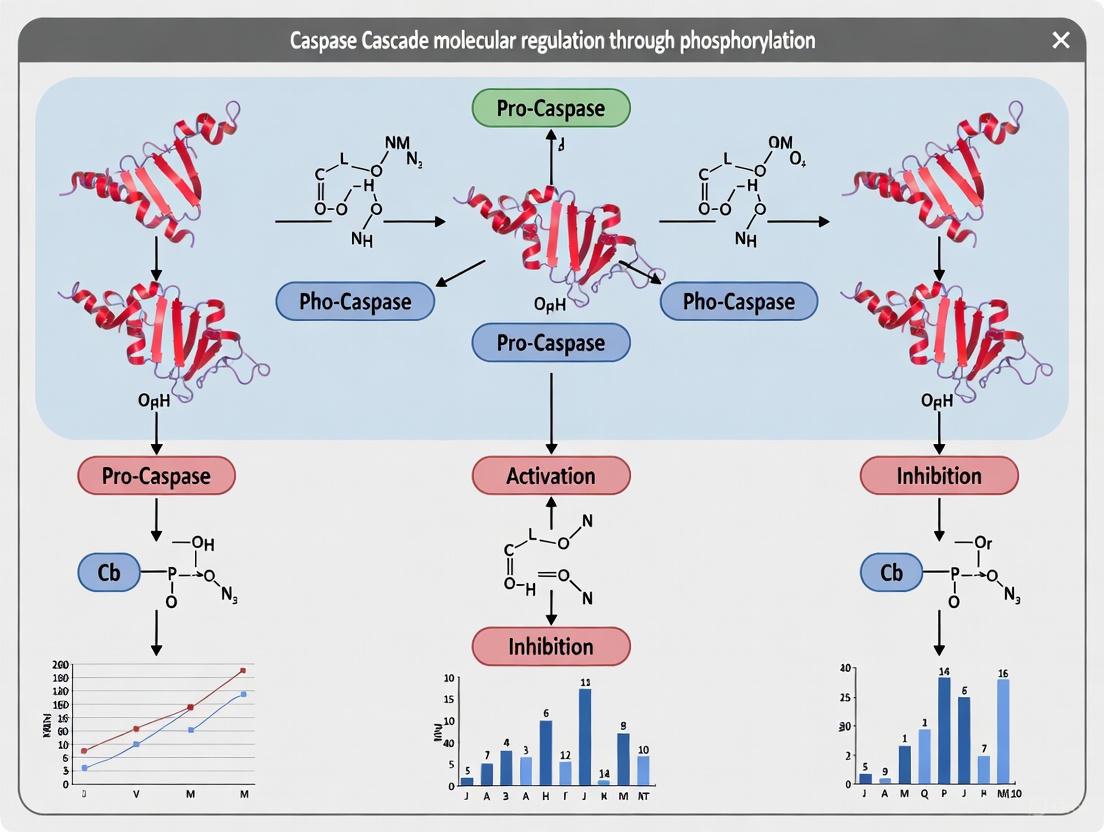
This article provides a comprehensive analysis of phosphorylation as a central mechanism regulating caspase cascade activity, a crucial process in programmed cell death and cellular homeostasis.
Phosphorylation Control of Caspase Cascades: Molecular Mechanisms and Therapeutic Implications
Abstract
This article provides a comprehensive analysis of phosphorylation as a central mechanism regulating caspase cascade activity, a crucial process in programmed cell death and cellular homeostasis. Targeting researchers and drug development professionals, it synthesizes foundational knowledge on kinase-caspase crosstalk, explores methodological approaches for investigating phospho-regulation, addresses common experimental challenges, and validates findings through comparative analysis across caspase family members and disease contexts. The content bridges fundamental molecular mechanisms with translational applications, highlighting emerging therapeutic opportunities through phospho-targeting strategies in cancer and other diseases where apoptotic pathways are dysregulated.
Molecular Foundations of Caspase Regulation Through Phosphorylation
Caspases, an evolutionarily conserved family of cysteine-dependent aspartate-specific proteases, function as crucial mediators of programmed cell death (PCD) and inflammation [1] [2]. These enzymes cleave their substrates after aspartic acid residues, orchestrating a proteolytic cascade that dictates cellular fate [3]. Initially identified through their role in apoptosis, caspases are now recognized as integral components of multiple cell death pathways, including pyroptosis, necroptosis, and the more recently characterized PANoptosis [1] [4]. The precise regulation of caspase activity is vital for maintaining cellular homeostasis, embryonic development, and immune responses [1] [5]. Dysregulation of caspase functions is implicated in a wide spectrum of diseases, including cancer, neurodegenerative disorders, and inflammatory conditions, establishing them as significant therapeutic targets [1] [6] [7]. This technical guide provides an in-depth examination of caspase cascades, focusing on their molecular regulation, with particular emphasis on phosphorylation events within the broader context of cell death signaling networks.
Caspase Classification and Molecular Structure
Structural Organization and Activation Mechanism
Caspases are synthesized as inactive zymogens (pro-caspases) that require proteolytic processing for activation. The structure of a typical pro-caspase consists of an N-terminal prodomain, followed by a large subunit (p20) and a small subunit (p10) [2] [5]. The large subunit contains the active-site pentapeptide motif QACXG, which is essential for catalytic activity [2]. Activation involves proteolytic cleavage at specific aspartic acid residues within the linker regions, removing the prodomain and separating the large and small subunits. This process enables the formation of an active heterotetrameric enzyme comprising two heterodimers of p20 and p10, which creates two active sites [5].
Table 1: Human Caspase Classification Based on Primary Function and Structural Domains
| Caspase | Primary Classification | Prodomain Type | Activation Complex | Key Substrates/Effectors |
|---|---|---|---|---|
| Caspase-1 | Inflammatory | CARD | Inflammasome | GSDMD, IL-1β, IL-18 |
| Caspase-2 | Apoptotic Initiator | CARD | PIDDosome | BID, Caspase-3 |
| Caspase-3 | Apoptotic Executioner | Short | Apoptosome/DISC | PARP, Lamin, GSDME |
| Caspase-4 | Inflammatory | CARD | Non-canonical Inflammasome | GSDMD |
| Caspase-5 | Inflammatory | CARD | Inflammasome | GSDMD |
| Caspase-6 | Apoptotic Executioner | Short | - | Lamin, Caspase-8 |
| Caspase-7 | Apoptotic Executioner | Short | - | PARP, GSDMB, GSDMD |
| Caspase-8 | Apoptotic Initiator | DED | DISC, RIPoptosome | Caspase-3, BID, GSDMC |
| Caspase-9 | Apoptotic Initiator | CARD | Apoptosome | Caspase-3, Caspase-7 |
| Caspase-10 | Apoptotic Initiator | DED | DISC | Caspase-3, Caspase-7 |
| Caspase-11 | Inflammatory (Mouse) | CARD | Non-canonical Inflammasome | GSDMD |
| Caspase-12 | Inflammatory/ER stress | CARD | ER stress complex | - |
Functional Classification Schemes
Caspases can be categorized through multiple classification systems that reflect their functional and structural characteristics:
Traditional Classification: Based on primary functions, caspases are divided into apoptotic caspases (caspase-2, -3, -6, -7, -8, -9, -10) and inflammatory caspases (caspase-1, -4, -5, -11, -12) [3] [2]. However, emerging evidence shows apoptotic caspases can also drive inflammatory lytic cell death, blurring this distinction [7].
Hierarchical Classification: Apoptotic caspases are further subdivided into initiator caspases (caspase-2, -8, -9, -10) containing long prodomains (CARD or DED), and executioner caspases (caspase-3, -6, -7) with short prodomains [6] [5]. Initiator caspases auto-activate within large multiprotein complexes, while executioner caspases are activated by initiator caspases [5].
Prodomain-Based Classification: A more modern system classifies caspases into CARD-containing (caspase-1, -2, -4, -5, -9, -11, -12), DED-containing (caspase-8, -10), and short/no prodomain-containing groups (caspase-3, -6, -7) [7]. This classification better reflects activation mechanisms and is increasingly relevant for understanding caspase functions beyond apoptosis.
Caspase Activation Pathways and Molecular Mechanisms
The Extrinsic Apoptotic Pathway
The extrinsic apoptotic pathway is initiated by extracellular death ligands binding to cell surface death receptors. This pathway primarily activates caspase-8 through the Death-Inducing Signaling Complex (DISC) [6] [8].
The assembly of the DISC complex begins when death ligands (e.g., FasL, TNF-α) bind to their corresponding death receptors (e.g., Fas, TNFR1), inducing receptor trimerization [8]. The adaptor protein FADD (Fas-associated death domain) is recruited to the activated receptors through death domain (DD) interactions. FADD then recruits procaspase-8 via homotypic death effector domain (DED) interactions, forming the complete DISC [1] [8]. Within the DISC, caspase-8 undergoes proximity-induced dimerization and autocatalysis, generating active caspase-8 [5]. Active caspase-8 then propagates the death signal through two parallel mechanisms: direct cleavage and activation of executioner caspase-3, and proteolytic activation of Bid to tBid, which amplifies the death signal through the intrinsic pathway [8].
The Intrinsic Apoptotic Pathway
The intrinsic apoptotic pathway is triggered by intracellular stress signals, including DNA damage, oxidative stress, and ER stress, leading to mitochondrial outer membrane permeabilization (MOMP) [6] [9].
The Bcl-2 protein family tightly regulates MOMP through a balance between pro-apoptotic (Bax, Bak, Bid, Bim) and anti-apoptotic (Bcl-2, Bcl-xL) members [6] [8]. Following apoptotic stimuli, activated pro-apoptotic Bcl-2 members oligomerize and permeabilize the mitochondrial outer membrane, facilitating the release of cytochrome c and other pro-apoptotic factors into the cytosol [8]. Cytochrome c binds to Apaf-1 (apoptotic protease-activating factor 1), inducing a conformational change that enables Apaf-1 to oligomerize into a wheel-like structure known as the apoptosome [5]. The apoptosome recruits and activates procaspase-9 through CARD-CARD interactions, generating active caspase-9 [10] [5]. Caspase-9 then cleaves and activates the executioner caspases-3 and -7, initiating the execution phase of apoptosis [5].
Inflammatory Caspase Pathways
Inflammatory caspases (caspase-1, -4, -5, -11) primarily regulate pyroptosis, a highly inflammatory form of programmed cell death [1] [4]. These caspases are activated by innate immune sensors that detect pathogen-associated molecular patterns (PAMPs) or damage-associated molecular patterns (DAMPs).
Caspase-1 is activated within inflammasome complexes, which are multiprotein oligomers typically composed of a sensor protein (e.g., NLRP3), adaptor protein ASC, and procaspase-1 [4]. The ASC adaptor contains a PYD domain that interacts with the sensor and a CARD domain that recruits procaspase-1 through CARD-CARD interactions [10]. Caspase-4, -5 (human), and -11 (murine) function as sensors for intracellular lipopolysaccharide (LPS) and activate pyroptosis independently of inflammasome scaffolding [1]. Upon activation, inflammatory caspases cleave gasdermin D (GSDMD), releasing its N-terminal domain (GSDMD-N), which oligomerizes and forms pores in the plasma membrane [1]. This pore formation leads to IL-1β and IL-18 secretion, followed by osmotic lysis and inflammatory cell death [1] [4].
Cross-Talk Between Cell Death Pathways and PANoptosis
Extensive molecular cross-talk exists between apoptosis, pyroptosis, and necroptosis pathways, culminating in the emerging concept of PANoptosis - a coordinated inflammatory cell death pathway incorporating features of all three pathways [4].
Table 2: Caspase Functions Across Different Programmed Cell Death Pathways
| Caspase | Apoptosis Role | Pyroptosis Role | Necroptosis Role | Molecular Switch Function |
|---|---|---|---|---|
| Caspase-1 | Limited role | Primary activator via GSDMD | - | Can induce apoptosis when GSDMD absent |
| Caspase-3 | Executioner (PARP, lamin) | Executioner via GSDME cleavage | - | Cleaves GSDMB/D at non-canonical sites to suppress pyroptosis |
| Caspase-6 | Executioner (lamin, caspase-8) | Regulates GSDMB-mediated pyroptosis | - | Activates caspase-8 leading to BID-dependent apoptosis |
| Caspase-7 | Executioner (PARP) | Suppresses via non-canonical GSDMD cleavage | - | Cleaves GSDMB/D to inhibit pyroptosis |
| Caspase-8 | Extrinsic initiator | Cleaves GSDMC; activates inflammatory response | Inhibits by cleaving RIPK1/RIPK3 | Molecular switch between apoptosis, necroptosis, and pyroptosis |
| Caspase-9 | Intrinsic initiator | Indirectly via caspase-3/GSDME activation | Inhibits by cleaving RIPK1 | Primarily apoptotic with indirect inflammatory roles |
PANoptosis is defined as an inflammatory programmed cell death pathway activated by specific triggers and regulated by PANoptosome complexes, which incorporate components from multiple cell death pathways [4]. These supramolecular complexes nucleate through scaffold proteins that contain interaction domains facilitating the assembly of apoptosis, pyroptosis, and necroptosis components. Caspase-8 serves as a critical molecular switch in PANoptosis, integrating signals from different pathways [1] [4]. When caspase-8 is active, it promotes apoptosis and inhibits necroptosis through cleavage of RIPK1 and RIPK3 [1]. However, when caspase-8 is inhibited, cells may undergo necroptosis or pyroptosis depending on cellular context and available molecular components [1]. Similarly, caspase-6 has recently been identified as a regulator of PANoptosis, forming positive feedback loops that amplify cell death signaling [4].
Molecular Regulation of Caspase Activity
Phosphorylation-Based Regulation
Phosphorylation represents a crucial mechanism for fine-tuning caspase activity and function. Several caspases are regulated by phosphorylation events that either enhance or suppress their activity:
Caspase-9: Phosphorylation at specific residues can either inhibit or promote its activation. For instance, phosphorylation at Thr125 by CDK1 inhibits caspase-9 activity, while phosphorylation at Ser144 by ERK promotes its proteasomal degradation [7].
Caspase-2: Phosphorylation regulates its activation in response to DNA damage. Phosphorylation at specific sites controls the assembly of the PIDDosome complex, which activates caspase-2 [7].
Caspase-8: Multiple phosphorylation sites regulate its recruitment to death receptors and enzymatic activity. Tyrosine phosphorylation can either promote or inhibit caspase-8 activation depending on the cellular context and specific residues modified [7].
The Bcl-2 family proteins, key regulators of the intrinsic apoptotic pathway, are also subject to extensive phosphorylation regulation. Phosphorylation of Bad prevents its interaction with anti-apoptotic Bcl-2 and Bcl-xL proteins, while phosphorylation of Bim targets it for ubiquitin-mediated degradation, reducing its pro-apoptotic activity [8]. Conversely, phosphorylation of Bid in response to DNA damage prevents its activation and promotes cell survival pathways [8].
Regulatory Complexes and Protein Interactions
Caspase activation is governed by several high-molecular-weight complexes that nucleate through homotypic interactions between specific protein domains:
Apoptosome: Cytochrome c-induced oligomerization of Apaf-1 forms the apoptosome, which activates caspase-9 through CARD-CARD interactions [10] [5].
DISC (Death-Inducing Signaling Complex): Formed by activated death receptors, FADD, and caspase-8/10 through DED-DED interactions [1] [8].
Inflammasome: Multiprotein complexes comprising pattern recognition receptors, ASC adaptor, and caspase-1, assembled through PYD-PYD and CARD-CARD interactions [10].
PIDDosome: Composed of PIDD, RAIDD, and caspase-2, facilitating caspase-2 activation in response to DNA damage [10].
RIPoptosome: A complex containing RIPK1, FADD, and caspase-8 that serves as a platform for caspase-8 activation independent of death receptors [1].
These complexes function as molecular platforms that concentrate caspase zymogens, enabling proximity-induced autoprotcolytic activation. The assembly and disassembly of these complexes are tightly regulated by post-translational modifications, including phosphorylation.
Inhibitor of Apoptosis Proteins (IAPs)
IAPs, including XIAP, c-IAP1, and c-IAP2, constitute a family of proteins that directly bind to and inhibit caspases [6] [8]. XIAP employs a bipartite inhibition mechanism, with its BIR2 domain inhibiting caspase-3 and -7, and its BIR3 domain inhibiting caspase-9 [8]. IAPs can target active caspases for ubiquitination and proteasomal degradation, thereby attenuating the apoptotic signal [8]. The mitochondrial proteins Smac/DIABLO and HtrA2/Omi counteract IAP-mediated caspase inhibition by binding to IAPs and displacing caspases, thus promoting apoptosis [6] [5].
Experimental Methodologies for Caspase Research
Caspase Activity Detection Methods
Table 3: Comparative Analysis of Caspase Detection Methodologies
| Method Category | Specific Techniques | Key Advantages | Limitations | Suitable Applications |
|---|---|---|---|---|
| Antibody-Based Methods | Western blotting, Immunofluorescence, IHC | Specific caspase identification, localization in tissues, semi-quantification | Does not directly measure activity, potential cross-reactivity | Caspase expression profiling, cleavage status assessment |
| Fluorogenic/Luminescent Substrates | DEVD-afe, LEVD-afe, WEHD-afe substrates with fluorophores | High sensitivity, quantitative, adaptable to HTS | Does not distinguish between closely related caspases, substrate specificity issues | High-throughput drug screening, kinetic studies of caspase activation |
| Live-Cell Imaging | FRET-based reporters, FLIVO dyes, single-cell live imaging | Temporal resolution, single-cell dynamics, spatial information | Technical complexity, potential phototoxicity, requires specialized equipment | Real-time monitoring of caspase activation in cultured cells or tissues |
| Mass Spectrometry | Proteomic identification of cleavage products, PTM analysis | Comprehensive substrate identification, unbiased discovery | Technically challenging, expensive, complex data analysis | Discovery of novel caspase substrates, cleavage site mapping |
| Multiplex Assays | Multiplex ELISA, Luminex, protein arrays | Multiple caspase measurement, high content data | Higher cost, optimization required | Systems biology approaches, pathway analysis |
Detailed Experimental Protocol: Caspase Activation Analysis
Objective: To comprehensively analyze caspase activation in cell culture models of intrinsic and extrinsic apoptosis.
Materials and Reagents:
- Cell lines of interest (e.g., HeLa, Jurkat, primary cells)
- Apoptosis inducers: Anti-Fas antibody (CH-11, 500 ng/mL) for extrinsic pathway, Staurosporine (1-2 μM) for intrinsic pathway
- Caspase inhibitors: Z-VAD-FMK (pan-caspase inhibitor, 20 μM), Z-DEVD-FMK (caspase-3 inhibitor, 20 μM)
- Lysis buffer: 50 mM HEPES (pH 7.4), 100 mM NaCl, 0.1% CHAPS, 10% sucrose, 5 mM DTT
- Caspase assay buffer: 50 mM HEPES (pH 7.4), 100 mM NaCl, 0.1% CHAPS, 10% sucrose, 5 mM DTT, 10 mM EDTA
- Fluorogenic substrates: Ac-DEVD-afe (caspase-3/7), Ac-LEHD-afe (caspase-9), Ac-IETD-afe (caspase-8)
- Antibodies: Anti-caspase-3, anti-cleaved caspase-3, anti-caspase-8, anti-caspase-9, anti-PARP, anti-β-actin
- SDS-PAGE and Western blotting equipment
Procedure:
Cell Culture and Treatment:
- Seed cells at appropriate density (e.g., 5×10^5 cells/mL) and allow to adhere overnight.
- Pre-treat cells with caspase inhibitors for 1 hour prior to apoptosis inducers.
- Treat cells with apoptosis inducers for various time points (0, 2, 4, 8, 16 hours).
- Collect cells by centrifugation (300 × g, 5 minutes) and wash with PBS.
Protein Extraction:
- Lyse cells in ice-cold lysis buffer (50-100 μL per 10^6 cells) for 30 minutes on ice.
- Clarify lysates by centrifugation (16,000 × g, 15 minutes, 4°C).
- Determine protein concentration using Bradford or BCA assay.
Caspase Activity Assay:
- Dilute cell lysates (20-50 μg protein) in caspase assay buffer to a final volume of 90 μL.
- Add 10 μL of 400 μM fluorogenic substrate (final concentration 40 μM).
- Incubate at 37°C for 1-2 hours protected from light.
- Measure fluorescence using a plate reader (excitation 400 nm, emission 505 nm for AFC substrates).
- Express activity as fold-increase over untreated control.
Western Blot Analysis:
- Separate proteins (20-30 μg per lane) by SDS-PAGE (12-15% gels).
- Transfer to PVDF membranes and block with 5% non-fat milk in TBST.
- Incubate with primary antibodies (1:1000 dilution) overnight at 4°C.
- Incubate with HRP-conjugated secondary antibodies (1:5000) for 1 hour at room temperature.
- Develop using enhanced chemiluminescence substrate and visualize.
Data Analysis:
- Normalize caspase activity to protein content.
- Compare cleavage patterns across treatment conditions.
- Perform statistical analysis using appropriate tests (e.g., Student's t-test, ANOVA).
The Scientist's Toolkit: Essential Research Reagents
Table 4: Essential Research Reagents for Caspase Studies
| Reagent Category | Specific Examples | Key Applications | Technical Notes |
|---|---|---|---|
| Caspase Inhibitors | Z-VAD-FMK (pan-caspase), Z-DEVD-FMK (caspase-3), Z-IETD-FMK (caspase-8) | Mechanistic studies, apoptosis inhibition validation | Cell-permeable, irreversible; use 10-50 μM concentrations |
| Activity Assay Kits | Fluorogenic substrates (DEVD-afe, IETD-afe, LEHD-afe), luminescent caspase-Glo kits | Quantitative activity measurement, high-throughput screening | Optimize substrate concentration; include positive controls |
| Activation Antibodies | Anti-cleaved caspase-3, anti-cleaved caspase-9, anti-cleaved PARP | Specific detection of active caspases, immunohistochemistry | Validate specificity with knockout controls; optimize dilutions |
| Apoptosis Inducers | Anti-Fas antibody, Staurosporine, Etoposide, TNF-α with cycloheximide | Pathway-specific caspase activation | Titrate for optimal response; include time course experiments |
| Live-Cell Imaging Tools | FLIVO dyes, CellEvent Caspase-3/7 Green, FRET-based SCAT probes | Real-time activation kinetics, single-cell analysis | Consider phototoxicity; optimize loading concentrations |
| Recombinant Proteins | Active caspase-3, -8, -9 | In vitro cleavage assays, substrate identification | Aliquot and store at -80°C; include activity validation |
Concluding Perspectives
Caspase cascades represent sophisticated molecular signaling networks that extend far beyond their traditional roles in apoptosis. The intricate regulation of these proteases, particularly through phosphorylation events and supramolecular complex assembly, enables precise control over cell fate decisions. The emerging understanding of caspase functions in PANoptosis highlights their roles as integrators of multiple cell death pathways, with significant implications for therapeutic interventions in cancer, inflammatory diseases, and neurodegenerative disorders. Future research focusing on the structural basis of caspase regulation, particularly phosphorylation-mediated mechanisms within death complexes, will undoubtedly yield novel insights into cell death control and identify new targets for therapeutic development. The continued refinement of research methodologies, especially live-cell imaging and proteomic approaches, will enable increasingly sophisticated analysis of caspase functions in both physiological and pathological contexts.
The caspase family of cysteine proteases functions as the principal executioner of programmed cell death (PCD), cleaving hundreds of cellular substrates to orchestrate apoptotic dismantling of the cell. For decades, the canonical view positioned caspases squarely within death signaling pathways. However, emerging research has revealed an extensive and sophisticated regulatory interface between caspase proteolytic pathways and kinase-mediated phosphorylation events. This kinase-caspase crosstalk represents a critical regulatory nexus that fine-tunes the balance between cellular survival and death, extending caspase functions beyond apoptosis into processes including differentiation, inflammation, and metabolic reprogramming.
Kinase-caspase interactions operate through a bidirectional regulatory paradigm: kinases phosphorylate caspases to modulate their activation and activity, while caspases cleave kinases to either terminate pro-survival signals or generate pro-death peptide fragments. This reciprocal regulation enables cells to integrate multiple signaling inputs to determine fate decisions. The molecular characterization of this crosstalk has profound implications for understanding disease mechanisms, particularly in cancer and neurodegenerative disorders, where dysregulated cell death is a hallmark feature. This review synthesizes current knowledge of kinase-caspase crosstalk, focusing on structural mechanisms, functional consequences, experimental methodologies, and therapeutic implications.
Molecular Mechanisms of Kinase-Mediated Caspase Regulation
Phosphorylation as a Direct Modulator of Caspase Function
Protein kinases regulate caspase activity through phosphorylation at specific serine, threonine, or tyrosine residues, with consequences ranging from complete inhibition to enhanced activation. These modifications typically occur within critical caspase domains, including the prodomain, active site, or interdomain linkers, thereby influencing caspase maturation, catalytic efficiency, or substrate recognition.
Caspase-8 phosphorylation on Tyrosine 380 by Src kinase represents a paradigm-shifting example of oncogenic kinase signaling hijacking caspase function. In glioblastoma, Src-dependent phosphorylation at Y380 rewires caspase-8 from its pro-apoptotic function to a pro-tumorigenic role, promoting cancer cell migration, NF-κB activation, and metabolic reprogramming [11]. Phosphorylated caspase-8 sustains mTORC1 activation, leading to p62 phosphorylation at serine 349, which enhances p62-dependent sequestration of KEAP1 and consequent NRF2 signaling activation [11]. This phosphorylation-driven pathway ultimately promotes energy metabolism and tumor aggressiveness in glioblastoma models.
Caspase-9 regulation exemplifies how multiple kinase pathways converge on a single caspase. Protein Kinase C ζ (PKCζ) phosphorylates caspase-9 at Ser-144, an inhibitory modification that restrains the intrinsic apoptotic pathway during hyperosmotic stress [12]. Additionally, ERK MAP kinase phosphorylates caspase-9 at Thr-125 in growth factor-stimulated cells, while Protein Kinase B/Akt and Protein Kinase A also target caspase-9 at distinct sites [12]. This multi-kinase regulation positions caspase-9 as a focal point for integrating diverse survival and stress signals.
Effector caspase regulation extends this paradigm to the executioners of apoptosis. The bacterial kinase LegK3 from Legionella pneumophila phosphorylates executioner caspases-3 and -7 at Ser-29 and Ser-199 respectively, and initiator caspase-9 at Thr-102 [13]. These phosphorylation events, occurring in the prodomain or interdomain linkers, interfere with the ability of these caspases to serve as substrates for upstream activators without directly impacting their proteolytic activity once cleaved [13]. This mechanism represents an evolutionary adaptation whereby an intracellular pathogen maintains host cell viability by strategically disrupting caspase activation hierarchies.
Table 1: Key Caspase Phosphorylation Events and Functional Consequences
| Caspase | Phosphorylation Site | Kinase | Functional Consequence | Cellular Context |
|---|---|---|---|---|
| Caspase-8 | Tyrosine 380 | Src | Rewires from apoptosis to promote mTORC1/NRF2 signaling | Glioblastoma |
| Caspase-9 | Serine 144 | PKCζ | Inhibits intrinsic apoptosis | Hyperosmotic stress |
| Caspase-9 | Threonine 125 | ERK MAPK | Suppresses apoptosis | Growth factor signaling |
| Caspase-3 | Serine 29 | LegK3 | Prevents maturation by initiator caspases | Bacterial infection |
| Caspase-7 | Serine 199 | LegK3 | Prevents maturation by initiator caspases | Bacterial infection |
| Caspase-9 | Threonine 102 | LegK3 | Prevents maturation | Bacterial infection |
Structural Basis for Phosphorylation-Mediated Regulation
The structural context of phosphorylation sites dictates the mechanistic basis for caspase regulation. Phosphorylation within the caspase active site can directly impede substrate binding or catalytic efficiency. Alternatively, phosphorylation in interdomain linkers or oligomerization interfaces can influence caspase maturation, dimerization, or recruitment to activation complexes.
Caspases are synthesized as inactive zymogens consisting of an N-terminal prodomain, a large subunit (p20), and a small subunit (p10) [5]. Initiator caspases possess long prodomains containing protein interaction motifs (CARD or DED) that facilitate recruitment to activation platforms like the DISC (caspase-8) or apoptosome (caspase-9) [5]. Phosphorylation within these prodomains can modulate platform binding, as demonstrated by the PKCζ-mediated phosphorylation of caspase-9 at Ser-144, which resides in the structural interface critical for apoptosome function [12].
For executioner caspases-3 and -7, which exist as preformed dimers requiring cleavage for activation, phosphorylation within the interdomain linker regions can prevent processing by initiator caspases. The LegK3-mediated phosphorylation of caspase-3 at Ser-29 and caspase-7 at Ser-199 exemplifies this mechanism, strategically positioning phosphate groups to sterically hinder initiator caspase access without altering the executioners' intrinsic catalytic activity once activated [13].
Caspase-Mediated Kinase Regulation and Pathway Modulation
Proteolytic Activation of Kinase Signaling
While kinases regulate caspases through phosphorylation, caspases reciprocally modulate kinase pathways through proteolytic cleavage. In many cases, caspase-mediated cleavage activates kinases, converting them into pro-apoptotic effectors. The cleavage of Rho-associated kinase 1 (ROCK1) by caspases represents a classic example, generating a constitutively active fragment that induces membrane blebbing, a characteristic morphological feature of apoptosis [14].
This activation mechanism extends to other kinases, including PAK2, MST1, and PKCδ, whose caspase-mediated cleavage produces catalytically active fragments that amplify death signals or execute specific apoptotic subroutines. These cleavage events often remove autoinhibitory domains or regulatory subunits, unleashing kinase activity that contributes to cytoskeletal reorganization, nuclear fragmentation, or other apoptotic hallmarks.
Proteolytic Inactivation of Survival Signaling
Caspases also terminate anti-apoptotic signaling through the cleavage-mediated inactivation of pro-survival kinases. Multiple kinase pathways that promote cellular proliferation and survival are dismantled during apoptosis via precise proteolytic events. For instance, caspase-mediated cleavage of AKT, RAF1, and MEKK1 generates dominant-negative fragments that further suppress pro-survival signaling and create feed-forward loops that reinforce the death commitment [15].
The cleavage of RIP1 during monocyte-to-macrophage differentiation illustrates how caspase-mediated kinase regulation can serve non-apoptotic functions. In this context, caspase-8-mediated cleavage of RIP1 downregulates NF-κB activity, facilitating macrophage differentiation independent of cell death [16]. This example highlights the functional diversity of kinase cleavage events, which can promote either apoptosis or differentiation depending on cellular context.
Table 2: Functional Consequences of Caspase-Mediated Kinase Cleavage
| Kinase | Cleavage Caspase | Functional Consequence | Biological Outcome |
|---|---|---|---|
| ROCK1 | Caspase-3 | Activation | Membrane blebbing in apoptosis |
| PAK2 | Caspase-3 | Activation | Membrane blebbing, apoptotic morphology |
| MST1 | Caspase-3 | Activation | Chromatin condensation |
| PKCδ | Caspase-3 | Activation | Mitochondrial dysfunction, apoptosis |
| RIP1 | Caspase-8 | Inactivation | NF-κB downregulation, macrophage differentiation |
| AKT | Caspase-3 | Inactivation | Termination of pro-survival signaling |
Advanced Methodologies for Studying Kinase-Caspase Crosstalk
Phosphoproteomic Approaches for Global Mapping
Advanced proteomic technologies have revolutionized the study of kinase-caspase crosstalk by enabling global, unbiased mapping of phosphorylation events during apoptotic processes. The quantitative Phospho-Protein Topography and Migration Analysis Platform (qP-PROTOMAP) integrates stable isotopic labeling (SILAC) with phosphopeptide enrichment and SDS-PAGE separation to simultaneously analyze proteolytic and phosphorylation events [14].
This methodology revealed extensive apoptosis-specific phosphorylation, with over 500 such events identified in Jurkat T-cells undergoing intrinsic apoptosis [14]. Notably, these apoptosis-specific phosphorylation sites were enriched on cleaved proteins and clustered around caspase cleavage sites, suggesting functional coordination between proteolysis and phosphorylation. The workflow involves:
- Culturing control and apoptotic cells in media containing isotopically light and heavy amino acids, respectively
- Combining proteomes and separating by SDS-PAGE
- Slicing gel lanes into bands for in-gel tryptic digestion
- Enriching phosphopeptides via immobilized metal-affinity chromatography (IMAC)
- Analyzing peptides by LC-MS/MS
- Integrating phosphorylation sites into topographical maps of cleaved proteins
This approach identified phosphorylation events that directly influence caspase cleavage efficiency, including phosphorylation at the +3 position relative to cleavage sites that dramatically enhances proteolysis by caspase-8 [14].
Targeted Experimental Approaches
Beyond global proteomics, targeted methodologies remain essential for mechanistic studies. Co-immunoprecipitation assays validate specific kinase-caspase interactions, while in vitro kinase assays using recombinant proteins establish direct phosphorylation relationships. Site-directed mutagenesis of phosphorylation sites followed by functional assays determines the physiological relevance of identified modifications.
For studying caspase-mediated kinase cleavage, in vitro cleavage assays with recombinant caspases and kinase substrates, coupled with immunoblotting to detect cleavage fragments, provide direct evidence of proteolytic events. Complementary cellular approaches involving caspase inhibition or genetic ablation establish the functional consequences of these cleavage events in physiological contexts.
Table 3: Essential Research Reagents for Studying Kinase-Caspase Crosstalk
| Reagent/Category | Specific Examples | Experimental Function |
|---|---|---|
| Kinase Inhibitors | Myristoylated PKCζ pseudosubstrate, M-791 (caspase-3 inhibitor) | Specific pathway inhibition to establish mechanistic relationships |
| Phosphorylation-Specific Antibodies | Anti-caspase-9 pSer144, Anti-p62 pSer349 | Detection of specific phosphorylation events in cellular assays |
| Expression Plasmids | Wild-type and kinase-dead LegK3 (LegK3D/A), phospho-mutant caspases | Functional dissection of phosphorylation events through mutational analysis |
| Activity Reporters | Ac-DEVD-AMC (caspase-3/7 substrate), DEVD-GreenNucTM | Quantification of caspase activation in live or fixed cells |
| Proteomic Materials | SILAC amino acids, IMAC resins, CCF4/AM β-lactamase substrate | Global analysis of phosphorylation and proteolytic events during apoptosis |
Signaling Pathways and Visual Synthesis
Integrated Pathway Diagrams
The complex relationships within kinase-caspase crosstalk are visualized below, integrating key regulatory events into coherent signaling pathways.
Diagram 1: Integrated Kinase-Caspase Crosstalk Signaling Pathways. This diagram visualizes three key regulatory paradigms: (1) Oncogenic Src kinase phosphorylation of caspase-8 in glioblastoma that promotes metabolic reprogramming; (2) PKCζ-mediated phosphorylation of caspase-9 during stress responses that inhibits apoptosis; (3) Bacterial LegK3 kinase phosphorylation of multiple caspases to prevent host cell death and promote intracellular bacterial growth.
Experimental Workflow Visualization
The proteomic methodologies for studying kinase-caspase crosstalk involve sophisticated multi-step workflows as illustrated below.
Diagram 2: qP-PROTOMAP Workflow for Simultaneous Analysis of Phosphorylation and Proteolysis. This experimental pipeline enables global profiling of apoptosis-specific phosphorylation events and their relationship to caspase-mediated cleavage through integration of SILAC labeling, SDS-PAGE separation, IMAC-based phosphopeptide enrichment, and LC-MS/MS analysis.
Therapeutic Implications and Future Perspectives
The intricate crosstalk between kinases and caspases presents compelling therapeutic opportunities, particularly in oncology where dysregulated cell death and kinase signaling are hallmarks of cancer. Targeting kinase-mediated caspase phosphorylation represents a promising strategy for reactivating apoptotic programs in resistant tumors. For instance, small molecule inhibitors of Src kinase could potentially reverse the oncogenic phosphorylation of caspase-8 at Y380, restoring apoptotic sensitivity in glioblastoma [11].
Conversely, strategies that enhance caspase-mediated inactivation of pro-survival kinases could synergize with conventional therapies to overcome resistance. The discovery that phosphorylation at the +3 position of caspase cleavage sites enhances proteolysis by caspase-8 suggests that mimetic compounds could be developed to potentiate caspase-mediated dismantling of survival pathways [14].
In infectious disease, understanding how bacterial kinases like LegK3 manipulate host cell death could inform anti-virulence strategies that disarm pathogens without selective pressure for resistance [13]. As the structural basis for kinase-caspase interactions becomes increasingly characterized, structure-guided drug design will enable more precise targeting of these regulatory interfaces.
Future research directions should prioritize the comprehensive mapping of the kinase-caspase interactome under diverse physiological and pathological conditions, the development of optogenetic tools for spatiotemporal control of phosphorylation events, and the translation of mechanistic insights into targeted therapeutics that exploit this critical regulatory nexus for disease treatment.
Kinase-caspase crosstalk represents a sophisticated regulatory layer that fine-tunes cell fate decisions through reciprocal post-translational modifications. Phosphorylation regulates caspase activation, activity, and substrate specificity, while caspase-mediated cleavage modulates kinase signaling pathways to either promote or suppress cell death. This bidirectional communication forms a critical decision-making network that integrates diverse cellular signals to determine survival outcomes. The continuing elucidation of these mechanisms promises not only fundamental biological insights but also novel therapeutic approaches for cancer, neurodegenerative diseases, and infectious disorders where dysregulated cell death is pathogenic.
The caspase family of cysteine proteases serves as the central executioner of programmed cell death (PCD), playing critical roles in cellular homeostasis, development, and disease pathogenesis [17] [5]. The precise regulation of their activity is paramount, achieved through intricate molecular mechanisms including their domain architecture, oligomerization state, and post-translational modifications (PTMs) [17] [18]. Among PTMs, phosphorylation stands out as a key reversible switch that fine-tunes caspase function, influencing conformation, activity, and localization [18] [19]. This whitepaper delves into the structural principles governing caspase phosphorylation, examining how phosphosites integrated within specific protein domains enable allosteric control over the caspase conformational ensemble. Framed within broader research on the caspase cascade, this synthesis of structural bioinformatics, evolutionary analysis, and biochemical methodology provides a framework for targeting regulatory sites for therapeutic intervention.
Caspase Domain Architecture and Classification
Caspases are synthesized as inactive zymogens, with their structural organization fundamentally defining their activation mechanisms and roles in cell death pathways [5].
Table 1: Caspase Classification by Domain Architecture and Function
| Classification | Representative Members | Prodomain Feature | Activation Mechanism | Primary Role in PCD |
|---|---|---|---|---|
| Initiator Caspases | Caspase-8, -9, -10 | Long prodomain containing Death Effector Domains (DED) or Caspase Activation and Recruitment Domain (CARD) | Induced proximity & autocatalysis on activating platforms (e.g., DISC, Apoptosome) [5] | Initiates apoptotic signaling; acts as molecular switch between apoptosis, necroptosis, and pyroptosis [17] |
| Effector Caspases | Caspase-3, -6, -7 | Short or absent prodomain | Proteolytic cleavage by initiator caspases [5] | Executes cell dismantling by cleaving hundreds of cellular substrates [17] |
The transition from zymogen to active enzyme involves proteolytic cleavage between the large (p20) and small (p10) subunits and removal of the prodomain, leading to the formation of a active homodimer, often described as a tetramer comprising two p20/p10 heterodimers [5]. Initiator caspases, characterized by long prodomains, exist as stable monomers and require dimerization on specific activating platforms for full activity. In contrast, effector caspases possess short prodomains, exist as stable dimers, and are activated by initiator-mediated cleavage of the intersubunit linker [18] [5].
Structural Consequences of Phosphorylation
Protein phosphorylation, the reversible addition of a phosphate group to serine, threonine, or tyrosine residues, is a major regulatory PTM. A recent global comparative structural analysis of 225 phosphorylated proteins revealed general principles of phosphorylation-driven regulation [19].
Table 2: Quantified Structural Effects of Protein Phosphorylation
| Structural Parameter | Observed Effect | Functional Implication |
|---|---|---|
| Global Backbone Conformation | Median RMSD of 1.14 Å between phosphorylated and non-phosphorylated structures; only 28.14% show changes ≥ 2 Å [19] | Phosphorylation typically induces subtle, stabilizing conformational changes rather than large-scale rearrangements. |
| Structural Uniformity | Significantly smaller median RMSD among phosphorylated structures vs. non-phosphorylated counterparts [19] | Phosphorylation often stabilizes a particular backbone conformation, reducing structural heterogeneity. |
| Allosteric Mechanism | A subset of phosphosites shows mechanical coupling with functional sites distal to the modification site [19] | Phosphorylation can exert effects over distance, aligning with the domino model of allosteric signal transduction. |
Phosphorylation can act through two primary mechanisms: orthosterically, by directly modifying a functional site, or allosterically, by inducing structural and dynamic changes that modulate regions distal to the phosphosite [19]. The allosteric mechanism is particularly relevant for caspase regulation.
Mapping Phosphorylation in Caspases
Phosphorylation regulates caspase activity by influencing the conformational equilibrium between inactive and active states. Key phosphosites have been identified near an allosteric hotspot adjacent to α-helix 3 in the catalytic subunit [18].
Key Regulatory Phosphosites in Caspases
Table 3: Experimentally Characterized Caspase Phosphosites
| Caspase | Phosphosite | Structural Location | Functional Consequence | Conservation |
|---|---|---|---|---|
| Caspase-8 | S347 | Near α-helix 3, allosteric hotspot | Reduces activity [18] | Highly conserved [18] |
| Caspase-3 | S150 | Near α-helix 3, allosteric hotspot | Reduces activity [18] | Highly conserved [18] |
| Caspase-7 | T173 | Near α-helix 3, allosteric hotspot | Reduces activity [18] | Highly conserved [18] |
| Caspase-8 | S305 | Near the allosteric hotspot | Modulates function via the hotspot [18] | Not conserved |
| Caspase-9 | N/A | N/A | Activated by phosphorylation at T125 by CDK1/cyclin B1 [19] | Context-dependent |
Phosphorylation at the conserved hotspot (e.g., caspase-8 S347, caspase-3 S150, caspase-7 T173) typically inhibits caspase activity [18]. This suggests present-day caspases have repurposed an inherited allosteric network from a common ancestral scaffold to modulate function [18]. Beyond the structured core, phosphorylation in disordered loop regions can also alter function, as seen with ubiquitination of caspase-8 K224, K229, and K231, which regulates activation and degradation by affecting interaction networks at the structure's base [18].
Experimental Protocol: Comparative Structural Analysis of Phosphorylation
This protocol outlines the computational methodology for systematically evaluating phosphorylation-induced structural changes, as employed in recent large-scale analyses [19].
Workflow Diagram Title: Computational Phospho-Structural Analysis
Detailed Methodology:
- Dataset Curation: Mine the Protein Data Bank (PDB) for proteins with both phosphorylated and non-phosphorylated solved structures. The dataset used by [19] included 225 different proteins and 347 different phosphosites.
- Quality Filtering: Impose strict filters to ensure structure quality, sufficient sequence coverage of the full protein, and sequence consistency between compared structures [19].
- Structural Alignment and Quantification: Superimpose structures of the same protein in its phosphorylated and non-phosphorylated states. Calculate the backbone root mean square deviation (RMSD) to quantify global conformational change [19].
- Analysis of Dynamics and Strain: Employ molecular dynamics (MD) simulations and analytical tools to assess changes in protein dynamics and mechanical strain upon phosphorylation. Network analysis can identify residue interaction networks that transmit allosteric signals [18] [19].
Experimental Protocol: Phosphoproteomics in Complex Models
For analyzing phosphorylation in specific biological contexts, such as development, quantitative phosphoproteomics provides a powerful tool.
Workflow Diagram Title: Phosphoproteomics Workflow
Detailed Methodology:
- Sample Preparation and Lysis: Culture cells or tissues (e.g., mouse extended pluripotent stem cell-derived blastoids) under relevant conditions and lyse using appropriate buffers to preserve phosphorylation states [20].
- Protein Digestion: Digest the extracted proteins into peptides using a site-specific protease like trypsin [20].
- Phosphopeptide Enrichment: Enrich phosphorylated peptides from the complex peptide mixture using immobilized metal affinity chromatography (IMAC) or titanium dioxide (TiO2) to facilitate their detection [20].
- Peptide Fractionation: Fractionate peptides using high-pH reverse-phase chromatography to reduce sample complexity and increase depth [20].
- LC-MS/MS Analysis: Analyze fractions via high-resolution liquid chromatography-tandem mass spectrometry (LC-MS/MS) [20].
- Data Analysis: Process raw data with software (e.g., Proteome Discoverer) to confidently assign phosphorylation sites and perform quantitative comparisons [20].
The Scientist's Toolkit: Research Reagent Solutions
Table 4: Essential Reagents for Phospho-Caspase Research
| Reagent / Tool | Function / Application | Key Considerations |
|---|---|---|
| Phospho-Specific Antibodies | Detect specific phosphorylated caspases via Western blot, ELISA, ICC/IHC, flow cytometry [21]. | Specificity and affinity are critical; validation with phosphodeficient mutants is essential. |
| Kinase Activity Assays | Measure activity of upstream kinases (e.g., CDK1) using colorimetric, radioactive, or fluorometric detection [21]. | Provides indirect evidence; does not capture endogenous phosphatase activity or direct caspase phosphorylation status. |
| Universal Kinase Activity Kit | Quantify kinase activity for any ADP-producing kinase without radioactivity [21]. | Non-radioactive; adaptable for various kinases. |
| Simple Western (Automated Capillary Western) | Fully automated, quantitative Western blotting; requires only 3 µL sample; can resolve phosphorylated isoforms via charge-based assays [21]. | High sensitivity and throughput; enables multiplexing of phospho- and total-protein detection. |
| Phospho-Specific ELISA | Highly sensitive and quantitative measurement of specific caspase phosphorylation in a microplate format [21]. | More quantitative than Western blot; suitable for higher throughput screening. |
| LC-MS/MS System | High-resolution identification and quantification of global phosphorylation sites (phosphoproteomics) [20]. | Requires specialized equipment and expertise; enables unbiased discovery of novel phosphosites. |
The intricate relationship between caspase domain architecture and phosphorylation sites forms a critical regulatory layer controlling the caspase cascade. Structural bioinformatics has revealed that phosphorylation often exerts its effects through subtle, allosteric mechanisms, stabilizing specific conformations within the caspase ensemble [18] [19]. Key conserved phosphosites near structural hotspots can inhibit activity, while other modifications in loop regions influence activation and degradation. Advanced techniques in phosphoproteomics and comparative structural analysis, supported by phospho-specific reagents, provide the necessary toolkit to decipher this complex regulatory landscape. A deep mechanistic understanding of how phosphorylation manipulates caspase structure and dynamics is fundamental for developing novel therapeutic strategies aimed at modulating cell death in diseases such as cancer and neurodegenerative disorders.
Phosphorylation as a Molecular Switch in Caspase Activation
Caspases, the primary executioners of programmed cell death, are regulated by a complex network of post-translational modifications, with phosphorylation emerging as a critical molecular switch controlling their activation and activity. This technical review synthesizes current knowledge on how kinase-mediated phosphorylation regulates caspase function through structural rearrangements, subcellular localization, and protein stability. We examine specific phosphorylation events that either inhibit or promote caspase activity, focusing on structural mechanisms and functional consequences across caspase family members. The findings presented herein support a broader thesis that phosphorylation serves as a fundamental regulatory layer in the caspase cascade, with significant implications for therapeutic intervention in cancer, neurodegenerative disorders, and inflammatory diseases. For research professionals and drug development specialists, this review provides both mechanistic insights and practical methodologies for investigating phosphorylation-dependent caspase regulation.
Caspases are cysteine-dependent aspartate-specific proteases that function as critical regulators of programmed cell death (PCD), including apoptosis and inflammatory forms of cell death such as pyroptosis [1] [22]. These enzymes are synthesized as inactive zymogens that require proteolytic activation or dimerization to gain full catalytic activity [23]. The caspase family is historically categorized into initiator caspases (caspase-2, -8, -9, -10), which act apically in cell death pathways, and effector caspases (caspase-3, -6, -7), which execute the cell death program by cleaving cellular substrates [23] [1]. More recent classifications based on pro-domain structure categorize caspases into CARD-domain, DED-domain, and short/no pro-domain-containing groups [22].
Beyond their traditional roles in apoptosis, caspases participate in diverse physiological processes including development, immune responses, and cellular homeostasis [1] [22]. Given their destructive potential, caspase activity is tightly regulated through multiple mechanisms, with phosphorylation representing a crucial post-translational modification that fine-tunes their function. Phosphorylation events can regulate caspases at multiple levels: from controlling zymogen activation to modulating enzymatic activity toward specific substrates [23] [24]. Dysregulation of caspase phosphorylation contributes to various pathological conditions, including cancer, neurodegenerative diseases, and autoimmune disorders, highlighting the clinical relevance of understanding these regulatory mechanisms [23] [1] [22].
Molecular Mechanisms of Phosphorylation-Mediated Caspase Regulation
Structural Consequences of Caspase Phosphorylation
Phosphorylation regulates caspase activity through distinct structural mechanisms that impact either the active site conformation or substrate accessibility. The most characterized mechanism involves phosphorylation-induced misalignment of the substrate-binding groove, preventing productive substrate binding. This paradigm is exemplified by caspase-6 phosphorylation at serine 257 (S257) by ARK5 kinase, which results in a steric clash with proline 201 (P201) in the L2' loop [25]. This clash causes substantial misalignment of all four loops that form the substrate-binding groove, effectively inhibiting catalytic activity without disrupting the overall protein fold. Structural studies of the phosphomimetic S257D mutant confirm that this misalignment prevents substrate access to the catalytic center, providing a mechanism for phosphorylation-based caspase inhibition [25].
A similar regulatory strategy operates in caspase-8, where phosphorylation at threonine 265 (T265; T263 in humans) by RSK kinases (RSK1, RSK2, RSK3) regulates both enzymatic activity and protein stability [26]. Phosphorylation at this site inactivates caspase-8's protease function, permitting the occurrence of necroptosis—a form of programmed necrosis—under conditions where apoptosis is suppressed. The structural basis for this inactivation appears to involve conformational changes that restrict access to the catalytic site, though the precise structural alterations differ from those observed in caspase-6 [26] [25]. These examples illustrate how phosphorylation can allosterically control caspase activity through long-range structural effects that perturb the catalytic apparatus.
Table 1: Key Regulatory Phosphorylation Sites in Caspases
| Caspase | Phosphorylation Site | Kinase | Functional Consequence | Structural Mechanism |
|---|---|---|---|---|
| Caspase-6 | Serine 257 | ARK5 | Inhibition of catalytic activity | Steric clash with P201 causes substrate-binding groove misalignment [25] |
| Caspase-8 | Threonine 265 | RSK1, RSK2, RSK3 | Inactivation and destabilization | Conformational change reducing catalytic efficiency; promotes ubiquitination [26] |
| Caspase-9 | Multiple sites | CDK1, PKB/Akt | Inhibition of apoptosome-mediated activation | Prevents dimerization and activation [23] |
| Caspase-3 | Multiple sites | PKC, CAMKII | Modulation of substrate specificity | Alters active site accessibility to specific substrates [24] |
Functional Consequences on Caspase Activity and Specificity
Phosphorylation events can either inhibit or enhance caspase activity in a context-dependent manner. For initiator caspases like caspase-8 and -9, phosphorylation generally serves as an inhibitory switch that prevents inadvertent activation [23] [26]. This inhibition is particularly important in non-apoptotic cellular processes where caspases participate in signaling cascades without triggering cell death. For effector caspases, phosphorylation can modulate substrate specificity rather than causing complete inactivation, enabling selective cleavage of specific protein targets while sparing others [24].
The functional impact of phosphorylation extends beyond direct catalytic inhibition to include effects on protein stability and subcellular localization. Phosphorylation of caspase-8 at T265 promotes its ubiquitination and subsequent degradation, adding a layer of regulation through control of protein abundance [26]. This dual regulation—affecting both activity and stability—creates a robust switch that precisely controls caspase-8 function in different cellular contexts. Similarly, phosphorylation can influence the assembly of caspases into multiprotein complexes such as the death-inducing signaling complex (DISC) for caspase-8 or the apoptosome for caspase-9, thereby regulating pathway-specific activation [23] [1].
Cross-talk between phosphorylation and caspase cleavage adds complexity to the regulatory network. Recent proteomic studies have identified numerous caspase substrates whose cleavage is modulated by phosphorylation status, with phosphorylation near caspase cleavage sites either promoting or inhibiting proteolysis [24]. This hierarchical regulation enables integration of multiple signaling inputs to determine cell fate decisions, with phosphorylation serving as a versatile molecular switch that fine-tunes caspase activity in response to changing cellular conditions.
Diagram 1: Molecular impact of caspase phosphorylation. Kinase-mediated phosphorylation at specific sites triggers structural changes that alter catalytic activity, substrate specificity, and protein stability.
Experimental Approaches and Methodologies
Proteomic Screening for Phosphorylation-Regulated Caspase Substrates
Unbiased proteomic approaches have been developed to systematically identify proteins for which caspase-catalyzed cleavage is modulated by phosphorylation. The Terminal Amino Isotopic Labeling of Substrates (TAILS) workflow represents a powerful methodology for this purpose [24]. This N-terminomic strategy enables comprehensive identification of caspase cleavage sites and how their accessibility changes with phosphorylation status.
The experimental workflow involves preparation of caspase degradomes from cell lysates under two conditions: with native phosphoproteome and after phosphatase treatment. Cell lysates are treated with λ phosphatase to remove phosphate groups, followed by incubation with specific caspases (e.g., caspase-3, -7). Caspase-generated neo-N-termini are then labeled with stable isotopes using dimethylation, followed by tryptic digestion and negative selection of N-terminal peptides using HPG-ALDII polymer. The enriched peptides are analyzed by liquid chromatography-tandem mass spectrometry (LC-MS/MS) to identify cleavage sites and quantify differences between phosphorylated and dephosphorylated conditions [24].
This approach has revealed that phosphorylation generally exerts an inhibitory effect on caspase cleavage when phosphate groups are positioned near scissile bonds, with phosphorylation at P4, P2, and P1' positions showing particularly strong inhibitory effects. However, the screen also identified substrates like MST3 for which cleavage is promoted by phosphorylation, suggesting that phosphorylation can have either positive or negative effects depending on structural context [24].
Table 2: Key Research Reagents for Studying Caspase Phosphorylation
| Reagent/Category | Specific Examples | Function/Application | Experimental Context |
|---|---|---|---|
| Kinase Modulators | RSK inhibitors (BI-D1870) | Inhibit RSK-mediated phosphorylation of caspase-8 | Studying T265 phosphorylation effects [26] |
| Phosphatases | λ bacteriophage phosphatase | Removes phosphate groups for dephosphorylation studies | TAILS workflow for phospho-regulation studies [24] |
| Caspase Inhibitors | z-VAD-fmk (irreversible pan-caspase inhibitor) | Terminates caspase reactions | Proteomic degradome preparation [24] |
| Phospho-specific Antibodies | Anti-phospho-caspase-8 (T263) | Detect specific phosphorylation events | Western blot validation [26] |
| Cell-free Systems | HeLa cell lysates | Native caspase and kinase environment | In vitro caspase activity assays [24] |
| Phosphomimetic Mutants | S257D (caspase-6), T265A (caspase-8) | Simulate constitutive phosphorylation or non-phosphorylatable state | Structural and functional studies [26] [25] |
Validation Methods for Phosphorylation Effects
Following initial identification, the functional consequences of specific phosphorylation events require validation using orthogonal approaches. Site-directed mutagenesis to create phosphomimetic (aspartate or glutamate) or phosphorylation-deficient (alanine) mutants provides a direct method to assess the impact of phosphorylation without manipulating kinase activity [26] [25]. These mutants can be expressed in cellular systems or purified for in vitro enzymatic assays to measure changes in catalytic activity toward synthetic substrates or native protein targets.
Structural techniques, particularly X-ray crystallography, have been instrumental in elucidating the molecular mechanisms of phosphorylation-mediated regulation. Comparison of wild-type and phosphomimetic caspase structures (e.g., caspase-6 S257D) reveals atomic-level details of conformational changes induced by phosphorylation [25]. Additional biophysical methods such as surface plasmon resonance (SPR) and analytical ultracentrifugation can characterize effects on protein-protein interactions and oligomerization states.
In cellular contexts, pharmacological kinase inhibitors and genetic knockout models (e.g., Rsk1/Rsk2/Rsk3 triple knockout mice) help establish physiological relevance of phosphorylation events [26]. These approaches enable researchers to connect molecular mechanisms with functional outcomes in specific tissues or disease models, providing a comprehensive understanding of phosphorylation-dependent caspase regulation.
Diagram 2: Experimental workflow for identifying phosphorylation-regulated caspase substrates. The TAILS proteomic approach identifies cleavage sites modulated by phosphorylation, followed by validation using mutagenesis and functional assays.
Pathophysiological Implications and Therapeutic Targeting
Disease Associations and Molecular Pathology
Dysregulation of caspase phosphorylation contributes significantly to human disease pathogenesis. In cancer, hyperactive oncogenic kinases often phosphorylate and inhibit caspases, providing a survival advantage to tumor cells by blocking apoptosis [24]. For example, increased RSK-mediated phosphorylation of caspase-8 at T263 has been observed in certain malignancies, potentially contributing to resistance to death receptor-mediated apoptosis [26]. Similarly, phosphorylation of caspase-9 by Akt and other survival kinases represents a common mechanism by which cancer cells evade cell death signals [23].
In neurodegenerative disorders, caspase phosphorylation may play contrasting roles depending on cellular context. Caspase-6 phosphorylation by ARK5 kinase normally suppresses its pro-apoptotic activity, but dysregulation of this process has been implicated in the pathogenesis of Huntington's and Alzheimer's diseases [25]. The balance between caspase activation and phosphorylation-mediated inhibition appears critical for neuronal survival, with disruption of this balance contributing to disease progression.
Inflammatory conditions involve complex regulation of inflammatory caspases (caspase-1, -4, -5, -11) as well as apoptotic caspases that can participate in pyroptosis (caspase-3, -8) [1] [22]. Phosphorylation events that modulate the switch between apoptotic and inflammatory cell death pathways can significantly impact disease outcomes, as demonstrated by the organ-specific effects of caspase-8 phosphorylation in regulating TNF-induced necroptosis and inflammation [26].
Therapeutic Opportunities and Challenges
The strategic manipulation of caspase phosphorylation represents a promising therapeutic approach for various diseases. Several strategies have emerged, including: (1) developing kinase inhibitors that specifically target caspases' regulatory kinases; (2) designing stabilizers that enhance the inhibitory phosphorylation of hyperactive caspases in degenerative diseases; and (3) creating phosphorylation-deficient caspase mutants for gene therapy applications.
However, therapeutic targeting of caspase phosphorylation faces significant challenges. The redundancy among kinase families (e.g., RSK1, RSK2, RSK3 in caspase-8 phosphorylation) may limit the efficacy of single kinase inhibitors [26]. Additionally, the opposing effects of caspase phosphorylation in different tissues (e.g., protective in cecum but sensitizing in duodenum for caspase-8 T265 phosphorylation) complicate systemic therapeutic interventions [26]. Future efforts should focus on tissue-specific delivery approaches and combination therapies that address the complex regulatory networks controlling caspase activity.
Phosphorylation serves as a critical molecular switch that fine-tunes caspase activity in response to cellular signals, with specific phosphorylation events either inhibiting or promoting caspase function through distinct structural mechanisms. The growing recognition of caspases' roles in diverse biological processes beyond cell death, including differentiation, inflammation, and cellular homeostasis, underscores the importance of understanding their sophisticated regulation by phosphorylation.
Future research directions should include: (1) comprehensive mapping of the caspase phosphoproteome under various physiological and pathological conditions; (2) structural characterization of additional phosphorylation-regulated caspases to identify common and unique regulatory principles; (3) development of phospho-specific biosensors to dynamically monitor caspase phosphorylation states in live cells; and (4) exploration of the therapeutic potential of manipulating specific phosphorylation events in caspase-related diseases.
As our understanding of phosphorylation-dependent caspase regulation continues to expand, so too will opportunities for therapeutic intervention in the numerous diseases characterized by dysregulated cell death. The integration of structural biology, proteomics, and disease modeling will be essential for translating mechanistic insights into novel treatment strategies that target the phosphorylation switch in caspase activation.
Cross-talk Between Phosphorylation and Other Post-Translational Modifications
Post-translational modifications (PTMs) represent a crucial regulatory layer in cellular signaling, controlling protein function, stability, localization, and interactions. While historically studied in isolation, emerging research reveals extensive functional crosstalk between different PTM types, creating sophisticated regulatory networks. This crosstalk enables cells to integrate diverse signals and mount precise biological responses. Phosphorylation, one of the most prevalent and well-studied PTMs, engages in particularly complex interactions with other modifications. These interactions occur through multiple mechanistic principles: one PTM can directly influence the addition or removal of another, different PTMs can competitively or cooperatively regulate the same protein site, and PTMs can sequentially or combinatorially control protein function and interactions. Understanding this crosstalk is especially critical in regulated cell death pathways, where the caspase cascade serves as a central integration point for multiple phosphorylation-mediated signals that ultimately determine cellular fate.
Mechanistic Principles of PTM Crosstalk
Molecular Mechanisms of Phosphorylation Crosstalk
The crosstalk between phosphorylation and other PTMs operates through several well-defined molecular mechanisms that significantly expand the regulatory capacity of the proteome.
Structural Modulation: Phosphorylation can induce conformational changes that alter accessibility for other modifying enzymes. For instance, phosphorylation of the C-terminal tail of PTEN by protein kinase CK2 negatively regulates its cleavage by caspase-3, demonstrating how one modification can gate another [27].
Creation or Masking of Interaction Motifs: Phosphorylation can generate binding sites for reader domains, potentially recruiting enzymes that catalyze other PTMs. Conversely, it can disrupt existing interaction interfaces.
Competitive Occupation: When modification sites are in proximity, phosphorylation and other PTMs can compete for the same residue or structurally adjacent residues, creating mutually exclusive modification states.
Sequential and Hierarchical Modifications: One PTM can serve as a prerequisite for another, establishing ordered modification pathways. Research has identified a cohort of over 500 apoptosis-specific phosphorylation events enriched on cleaved proteins and clustered around caspase proteolysis sites, suggesting coordinated regulation [14].
Coordinate Regulation of Phase Separation: Multiple PTMs, including phosphorylation, methylation, acetylation, and ubiquitination, can regulate the formation and stability of biomolecular condensates by modulating multivalent interactions among proteins with intrinsically disordered regions (IDRs) [28].
Quantitative Proteomic Profiling of Apoptotic Phosphoproteome
Advanced proteomic technologies have enabled system-wide investigation of PTM crosstalk. The quantitative phospho-PROTOMAP (qP-PROTOMAP) platform integrates phosphorylation site analysis with protein topography during apoptosis, revealing unprecedented coordination between these modification types [14].
Table 1: Key Findings from qP-PROTOMAP Analysis of Apoptotic Cells
| Parameter | Finding | Implication |
|---|---|---|
| Proteins Detected | 4,521 proteins across early and late apoptosis | Comprehensive coverage of proteome dynamics |
| Phosphorylation Sites Quantified | 5,034 sites on serine, threonine, or tyrosine residues | Extensive phosphorylation network remodeling |
| Proteins with Phosphorylation | 1,624 proteins (36% of detected proteome) | Widespread phosphorylation involvement in apoptosis |
| Cleaved Proteins Identified | 744 proteins (26% of quantified proteome) | Extensive caspase-mediated proteolysis |
| Novel Caspase Substrates | 349 proteins not previously known caspase targets | Significant expansion of known caspase regulon |
| Phosphorylation-Cleavage Proximity | Apoptosis-specific phosphorylation enriched near caspase cleavage sites | Functional coordination between modifications |
This integrated analysis revealed that phosphorylation events are spatially clustered around sites of caspase proteolysis, suggesting these modifications prepare proteins for cleavage or regulate the consequences of cleavage events.
Phosphorylation Crosstalk in Caspase Regulation
Phosphorylation as a Direct Regulator of Caspase Activity
The caspase family of cysteine proteases, central regulators of programmed cell death including apoptosis and pyroptosis, are themselves subject to complex phosphorylation-based regulation that exemplifies functional PTM crosstalk [1]. Different caspases respond to distinct phosphorylation events that either suppress or promote their activity, creating a sophisticated control network for cell fate decisions.
Table 2: Experimentally Characterized Phosphorylation Events Regulating Caspases
| Caspase | Phosphorylation Site | Regulating Kinase | Functional Consequence | Cellular Context |
|---|---|---|---|---|
| Caspase-9 | Ser144 | PKCζ (predominant) | Inhibitory restraint of intrinsic apoptotic pathway | Hyperosmotic stress [12] |
| Caspase-9 | Thr125 | ERK MAP kinase | Inhibitory phosphorylation | Growth factor signaling [12] |
| Caspase-3 | Ser29 | LegK3 (bacterial kinase) | Inhibits suitability as caspase-8 substrate | Legionella pneumophila infection [13] |
| Caspase-7 | Ser199 | LegK3 (bacterial kinase) | Inhibits suitability as caspase-8 substrate | Legionella pneumophila infection [13] |
| Caspase-9 | Thr102 | LegK3 (bacterial kinase) | Inhibits suitability as upstream regulator substrate | Legionella pneumophila infection [13] |
The functional consequences of caspase phosphorylation are diverse. Phosphorylation of Ser144 in human caspase-9 by PKCζ represents an inhibitory mechanism that restrains the intrinsic apoptotic pathway during hyperosmotic stress, providing a mechanism for cells to survive transient environmental challenges [12]. Similarly, pathogenic bacteria have evolved to exploit this regulatory principle; Legionella pneumophila translocates the effector kinase LegK3 into host cells, where it phosphorylates multiple caspases to inhibit apoptosis and maintain the replication niche [13].
Structural and Biophysical Basis for Phosphorylation-Mediated Caspase Regulation
The structural context of phosphorylation sites determines their functional impact. In caspase-9, Ser144 phosphorylation occurs in a region critical for its function, while phosphorylation of executioner caspases like caspase-3 and caspase-7 at sites within their prodomains or interdomain linkers interferes with their suitability as substrates for initiator caspases without directly affecting their proteolytic activity once activated [13].
Figure 1: Phosphorylation-mediated regulation of caspases. Multiple kinases phosphorylate specific residues on initiator and executioner caspases to inhibit apoptosis in response to survival signals, cellular stress, or bacterial infection.
Experimental Approaches for Studying PTM Crosstalk
Integrated Proteomic Methodologies
The qP-PROTOMAP platform represents a cutting-edge methodology for simultaneous monitoring of proteolysis and phosphorylation dynamics [14]. This integrated approach combines stable isotopic labeling (SILAC), SDS-PAGE separation, phosphopeptide enrichment, and liquid chromatography-mass spectrometry to provide temporal information about both modification types during biological processes.
Figure 2: qP-PROTOMAP workflow for integrated analysis of proteolysis and phosphorylation. The method enables simultaneous monitoring of protein cleavage and phosphorylation dynamics during apoptosis.
The Scientist's Toolkit: Essential Research Reagents
Table 3: Key Research Reagents for Studying Phosphorylation Crosstalk with Caspases
| Reagent Category | Specific Examples | Research Application | Functional Role |
|---|---|---|---|
| Kinase Inhibitors | Myristoylated PKCζ pseudosubstrate, PKCα/β pseudosubstrate [12] | Specific kinase inhibition | Determine kinase-specific effects on caspase regulation |
| Caspase Substrates | Ac-DEVD-AMC (caspase-3/7 substrate) [12] | Caspase activity measurement | Quantify enzymatic activity in fluorescence-based assays |
| Phosphorylation Site-Specific Antibodies | Anti-caspase-9 pSer144 [12] | Detection of specific phosphorylation events | Monitor site-specific phosphorylation in cells and tissues |
| Apoptosis Inducers | Staurosporine, Etoposide (VP-16) [13] | Induction of intrinsic apoptosis pathway | Standardized apoptotic stimulation for experimental consistency |
| Phosphatase Inhibitors | Okadaic acid [12] | Inhibition of cellular phosphatases | Enhance detection of phosphorylated proteins |
| Expression Plasmids | Wild-type and mutant caspase-9, FLAG-PKCζ [12] | Overexpression and mutagenesis studies | Functional characterization of phosphorylation sites |
| Protein Purification Systems | GST-tag, His6-tag systems [12] | Recombinant protein production | Generate modified proteins for biochemical studies |
| Activity-Based Probes | DEVD-green nucleic acid stain [13] | Detection of apoptotic cells | Identify and quantify apoptotic cells in mixed populations |
The extensive crosstalk between phosphorylation and other PTMs represents a fundamental regulatory mechanism that enables precise control of critical cellular processes, particularly in the regulation of programmed cell death. The caspase cascade serves as an integration point where multiple phosphorylation signals converge to determine cell fate, with implications for cancer, neurodegenerative diseases, and infection biology. Future research will likely focus on developing more sophisticated multi-omics approaches that can simultaneously monitor three or more PTM types, creating comprehensive maps of the PTM networks that control cellular decisions. From a therapeutic perspective, understanding the structural basis of how phosphorylation regulates caspases may enable the development of small molecules that mimic these regulatory effects, offering new approaches for modulating cell death in pathological conditions.
Research Approaches for Phospho-Caspase Investigation
Techniques for Mapping Caspase Phosphorylation Sites
The precise regulation of caspase activity is critical for controlling programmed cell death and a myriad of non-apoptotic cellular processes. Post-translational modifications, particularly phosphorylation, serve as a fundamental molecular switch that fine-tunes caspase function, with implications ranging from cancer to neurodegenerative diseases. This technical guide provides an in-depth examination of contemporary methodologies for identifying and validating caspase phosphorylation sites. We detail experimental workflows encompassing phosphosite mapping, kinase identification, and functional validation, with special emphasis on techniques that elucidate the allosteric mechanisms through which phosphorylation regulates caspase activity. Framed within the broader context of caspase cascade regulation, this resource equips researchers with the necessary tools to decipher the complex phospho-regulatory networks that govern caspase function in health and disease.
Caspases, cysteine-dependent aspartate-specific proteases, function as central orchestrators of apoptotic cell death and play increasingly recognized roles in non-apoptotic processes including differentiation, cellular remodeling, and inflammation [22] [5]. Given their potent destructive capacity, caspase activity is tightly regulated through multiple mechanisms, with phosphorylation emerging as a critical post-translational modification that can either inhibit or enhance caspase function [23] [29]. This reversible modification provides cells with dynamic, signal-responsive control over caspase activation thresholds, effectively setting the cellular "rheostat" for apoptosis susceptibility.
The functional consequences of caspase phosphorylation are exemplified in several key regulatory nodes. Protein Kinase A (PKA)-mediated phosphorylation of caspase-9 at Ser-183 disrupts fundamental interactions within the caspase core, promoting disassembly of large and small subunits and forming ordered aggregates, thereby suppressing apoptosis progression [30]. Similarly, p38 MAPK phosphorylation of caspase-3 at Ser-150 introduces an allosteric "kill switch" that dramatically reduces catalytic activity without direct active site occlusion [29]. Beyond endogenous regulation, pathogenic exploitation of these mechanisms is observed in Legionella pneumophila infection, where the bacterial effector LegK3 phosphorylates multiple caspases to prevent apoptosis of host cells [13].
This technical guide details the experimental approaches for mapping these critical regulatory sites, validating their functional impact, and integrating these findings into a comprehensive understanding of caspase regulatory networks. The methodologies outlined herein provide the foundation for targeted therapeutic interventions aimed at modulating caspase activity in disease states.
Established Caspase Phosphorylation Sites and Their Functional Impact
Table 1: Characterized caspase phosphorylation sites and their functional consequences
| Caspase | Phosphorylation Site | Kinase | Functional Consequence | Experimental Evidence |
|---|---|---|---|---|
| Caspase-9 | Ser-183 | PKA | Prevents self-processing, disrupts subunit assembly, inhibits activity | Site-directed mutagenesis, genetic phosphoserine incorporation, activity assays [30] |
| Caspase-3 | Ser-150 | p38 MAPK | Allosteric inhibition, reduces catalytic efficiency against protein substrates | Phylogenetic analysis, X-ray crystallography, molecular dynamics simulations [29] |
| Caspase-7 | Ser-199 | LegK3 (Bacterial) | Prevents maturation by initiator caspases without affecting proteolytic activity | Kinase-dead mutants, infection models, in vitro phosphorylation [13] |
| Caspase-9 | Thr-102 | LegK3 (Bacterial) | Interferes with suitability as substrate for upstream regulators | Pathogen effector screening, translocation assays, caspase activation monitoring [13] |
Core Methodological Framework for Phosphosite Mapping
In Vitro Kinase Assays and Phospho-Amino Acid Analysis
Objective: To establish direct kinase-substrate relationships and identify phosphorylation sites in a controlled system.
Detailed Protocol:
- Protein Purification: Express and purify recombinant caspase protein (zymogen or mature form) using affinity chromatography (e.g., His-tag, GST-tag). Confirm structural integrity via circular dichroism or analytical ultracentrifugation.
- Kinase Reaction:
- Combine caspase (1-10 µg) with active kinase (commercial or purified) in kinase buffer (e.g., 25 mM Tris-HCl pH 7.5, 10 mM MgCl₂, 1 mM DTT).
- Add ATP (100 µM) including [γ-³²P]ATP (5-10 µCi) for radiometric detection.
- Incubate at 30°C for 30-60 minutes.
- Reaction Termination and Analysis:
- Terminate reaction with SDS-PAGE loading buffer.
- Separate proteins by SDS-PAGE, transfer to PVDF membrane, and visualize radioactivity by phosphorimaging.
- For non-radioactive detection, use phospho-specific antibodies after western transfer.
- Phospho-Amino Acid Analysis:
- Excise phosphorylated band from membrane and hydrolyze protein with 6N HCl at 110°C for 60-90 minutes.
- Separate phospho-amino acids by two-dimensional electrophoresis (pH 1.9 and 3.5).
- Identify phospho-serine, threonine, or tyrosine by comparison to standards visualized by ninhydrin staining [30] [13].
Site-Directed Mutagenesis and Functional Validation
Objective: To pinpoint specific phospho-acceptor residues and characterize their functional contribution.
Detailed Protocol:
- Mutagenesis Strategy:
- Design "unphosphorylatable" mutants (Ser/Thr→Ala) and "phosphomimetic" mutants (Ser/Thr→Asp/Glu).
- Use overlap extension PCR or commercial mutagenesis kits to introduce mutations.
- Sequence entire caspase coding region to confirm desired mutations and exclude unintended changes.
- Functional Characterization:
- Express and purify mutant proteins using identical conditions to wild-type.
- Assess phosphorylation susceptibility via in vitro kinase assays.
- Determine catalytic efficiency (kcat/KM) using fluorogenic substrates (e.g., Ac-LEHD-afc for caspase-9).
- Monitor self-processing capability by SDS-PAGE over time.
- For caspase-9, specifically examine disassembly of large and small subunits via size-exclusion chromatography [30].
- Genetic Code Expansion:
- For definitive analysis, utilize genomically recoded E. coli for site-specific phosphoserine incorporation.
- Compare activity of phosphoS99, phosphoS183, and phosphoS195 caspase-9 directly to unphosphorylated protein [30].
Mass Spectrometry-Based Phosphoproteomic Approaches
Objective: To comprehensively identify phosphorylation sites without a priori knowledge of modifying kinases.
Detailed Protocol:
- Sample Preparation:
- Digest phosphorylated caspase with trypsin/Lys-C or other proteases.
- Enrich phosphopeptides using TiO₂, IMAC, or SIMAC (sequential elution from IMAC) approaches.
- LC-MS/MS Analysis:
- Separate peptides by nano-liquid chromatography using C18 columns with 60-120 minute gradients.
- Analyze using data-dependent acquisition on high-resolution mass spectrometers (Orbitrap, timeTOF).
- Implement phospho-directed fragmentation techniques (e.g., stepped higher-energy collisional dissociation).
- Data Analysis:
- Search MS/MS data against caspase sequence databases using search engines (MaxQuant, Andromeda).
- Apply strict false discovery rates (<1%) for phosphosite localization.
- Use tools like Motif-X or PhosphoSitePlus to identify kinase consensus motifs.
- Quantify phosphorylation stoichiometry using label-free or isobaric labeling (TMT, iTRAQ) approaches [29].
Figure 1: Experimental workflow for comprehensive mapping and validation of caspase phosphorylation sites. The pathway integrates both hypothesis-driven and discovery-based approaches to build an integrated regulatory model.
Advanced Techniques for Mechanistic Elucidation
Structural Biology Approaches
X-ray Crystallography:
- Express and purify wild-type and phosphomimetic caspase variants.
- Crystallize using vapor diffusion methods with optimization of pH, precipitant, and temperature.
- Collect diffraction data at synchrotron sources and solve structures by molecular replacement.
- Analyze structural changes, particularly in active site loops, dimer interfaces, and allosteric networks [29].
Molecular Dynamics Simulations:
- Build simulation systems from crystal structures with explicit solvation.
- Perform multi-nanosecond simulations comparing phosphorylated and unphosphorylated forms.
- Calculate root-mean-square fluctuation (RMSF) to identify regions of altered flexibility.
- Analyze interaction networks and allosteric communication pathways [29] [31].
Biophysical Analysis of Phosphorylation Effects
Double Electron-Electron Resonance (DEER) Spectroscopy:
- Introduce cysteine residues at strategic positions for spin labeling.
- Label with MTSSL or other spin probes.
- Measure distance distributions between spin labels in phosphorylated and unphosphorylated states.
- Detect phosphorylation-induced conformational changes in solution state [31].
Analysis of Dimer Stability:
- Use analytical ultracentrifugation to measure sedimentation coefficients.
- Determine dissociation constants for dimeric caspases via concentration-dependent activity assays.
- Monitor thermal stability by differential scanning fluorimetry (DSF) [29].
The Scientist's Toolkit: Essential Research Reagents
Table 2: Key reagents and resources for caspase phosphorylation studies
| Reagent Category | Specific Examples | Application/Function | Technical Considerations |
|---|---|---|---|
| Recombinant Caspases | Human caspase-3, -7, -9 | Substrate for in vitro kinase assays; structural studies | Express as zymogens or two-chain forms; confirm activity with fluorogenic substrates |
| Kinases | PKA, p38 MAPK, LegK3 | Phosphorylation source for in vitro assays | Use active, purified kinases; include kinase-dead controls (e.g., LegK3 D187A) [13] |
| Phospho-Specific Antibodies | Anti-phospho-Ser150 caspase-3 | Detect specific phosphorylation events | Validate specificity with unphosphorylatable mutants |
| Mass Spectrometry Standards | TMT, iTRAQ reagents | Quantitative phosphoproteomics | Include phosphopeptide standards for retention time alignment |
| Fluorogenic Substrates | Ac-LEHD-afc, Ac-DEVD-afc | Caspase activity measurements after phosphorylation | KM values vary between caspases (e.g., ~1-10 µM for Ac-LEHD-afc with caspase-9) [30] |
| Phosphatases | λ protein phosphatase | Phosphorylation reversal controls | Confirm dephosphorylation by mobility shift or phospho-staining |
Pathway Integration and Functional Analysis
Figure 2: Signaling pathways converging on caspase phosphorylation. Multiple upstream signals, including cAMP elevation, cellular stress, and pathogenic infection, lead to kinase-mediated caspase phosphorylation and subsequent apoptosis inhibition.
The meticulous mapping of caspase phosphorylation sites represents a cornerstone of apoptosis research with profound therapeutic implications. The techniques detailed in this guide—from foundational biochemical assays to cutting-edge structural and computational approaches—provide a comprehensive toolkit for deciphering the complex phospho-regulatory codes that govern caspase activity. As research progresses, the integration of these methodologies with live-cell imaging, cryo-electron microscopy, and single-molecule analysis will further illuminate the dynamic nature of caspase regulation. The emerging understanding of allosteric networks and phosphorylation-induced conformational changes, particularly through studies of effector caspases like caspase-3 and -7 and initiator caspases like caspase-8 and -9, opens new avenues for targeted therapeutic development in diseases characterized by dysregulated apoptosis. The continued refinement of these mapping techniques will undoubtedly yield deeper insights into the sophisticated molecular logic that controls cellular life and death decisions.
Functional Assays for Phosphomimetic and Phosphodeficient Mutants
Phosphomimetic and phosphodeficient mutants are indispensable tools in molecular biology for elucidating the functional consequences of protein phosphorylation. These mutants allow researchers to simulate the constitutive phosphorylated or dephosphorylated states of proteins, thereby enabling the dissection of phosphorylation-dependent regulatory mechanisms without the need for modulating kinase or phosphatase activity. Within the intricate regulatory network of the caspase cascade, phosphorylation events serve as critical molecular switches that fine-tune apoptotic signaling, influencing everything from enzyme activation to protein-protein interactions and substrate specificity. This technical guide provides an in-depth overview of the functional assays used to characterize these mutants, with a specific focus on applications in caspase research, delivering a structured framework for researchers, scientists, and drug development professionals.
Core Concepts and Strategic Implementation
Design Rationale for Phosphomutants
The strategic design of phosphomutants is the foundational step in probing phosphorylation-dependent functionality. The most common substitutions are detailed in the table below.
Table 1: Common Amino Acid Substitutions for Phosphomutants
| Residue Type | Phosphodeficient Mutant | Phosphomimetic Mutant | Key Considerations |
|---|---|---|---|
| Serine (S) | Alanine (A) | Glutamate (E) or Aspartate (D) | Glutamate offers a better steric and charge mimic, though both are imperfect. [32] |
| Threonine (T) | Alanine (A) | Glutamate (E) or Aspartate (D) | Similar considerations as for serine. |
| Tyrosine (Y) | Phenylalanine (F) | Glutamate (E) or Aspartate (D) | Phenylalanine removes the phosphate without introducing a negative charge. |
A critical consideration is that glutamic and aspartic acids are imperfect mimics of a phosphorylated residue, as they introduce a negative charge but lack the tetrahedral geometry and size of a phosphate group. For multi-site phosphorylation, combinatorial mutants must be generated to investigate potential additive or synergistic effects. [32]
Workflow for Functional Characterization
A systematic approach to characterizing phosphomutants involves a cascade of assays, progressing from cellular localization to detailed biochemical function and ultimate physiological impact.
Application in Caspase Cascade Regulation
Research has identified specific phosphorylation events on caspases that exert profound regulatory effects on the apoptotic cascade, as summarized below.
Table 2: Experimentally Validated Regulatory Phosphosites in Caspases
| Caspase | Phosphorylation Site | Regulating Kinase | Functional Consequence | Supporting Evidence |
|---|---|---|---|---|
| Caspase-9 | Ser144 | PKCζ | Inhibits apoptosis; restrains intrinsic pathway during hyperosmotic stress. [12] | In vitro kinase assays, cell-free extracts, phospho-specific antibodies. [12] |
| Caspase-9 | Thr125 | ERK MAP Kinase | Inhibitory phosphorylation; suppresses apoptosis in growth-factor stimulated cells. [12] | Cell-based transfection and stimulation assays. [12] |
| Caspase-3 | Ser29 | LegK3 (Bacterial Kinase) | Inhibits maturation/activation without impacting proteolytic activity of the mature enzyme. [13] | Ectopic expression in HeLa/HEK293 cells, infection models. [13] |
| Caspase-7 | Ser199 | LegK3 (Bacterial Kinase) | Inhibits maturation/activation; mechanism of apoptotic suppression by L. pneumophila. [13] | Kinase-dead mutant (LegK3D/A) control, caspase cleavage assays. [13] |
| Caspase-9 | Thr102 | LegK3 (Bacterial Kinase) | Phosphorylation interferes with upstream activation. [13] | Co-immunoprecipitation and in vitro phosphorylation assays. [13] |
These phosphorylation events can inhibit caspase activity through diverse mechanisms, including steric hindrance of activation cleavage sites, modulation of protein-protein interactions within apoptosome complexes, and alteration of subcellular localization. The network of kinase-caspase interactions reveals key regulatory nodes.
Key Experimental Protocols and Methodologies
Site-Directed Mutagenesis and Plasmid Generation
The generation of phosphomutants is typically achieved via PCR-based site-directed mutagenesis. For instance, in a study on the transcription factor FIT, phospho-mutant genomic DNA forms were created, such as FITm(S221A) (phosphodeficient) and FITm(S221E) (phosphomimetic), using specific primers and subsequent Gateway or Gibson assembly cloning. [32] The resulting plasmids must be fully sequenced to verify the introduction of the desired mutation and the absence of spurious PCR errors.
Cell-Based Apoptosis and Caspase Activation Assays
Principle: These assays evaluate the functional outcome of caspase phosphorylation on the apoptotic cascade within a cellular context.
Protocol Outline:
- Transfection: Transfect mammalian cells (e.g., HeLa, HEK293) with plasmids encoding wild-type, phosphomimetic, or phosphodeficient caspase mutants. [12] [13]
- Apoptosis Induction: Treat cells with a pro-apoptotic stimulus (e.g., Staurosporine (STS), Etoposide (VP-16), or overexpress pro-death proteins like BAX). [13]
- Readout and Analysis:
- Western Blotting: Detect caspase activation by probing for the cleaved, active forms (e.g., cleaved Caspase-3) and substrates like cleaved PARP. [13] A successful phosphomimetic mutant at an inhibitory site (e.g., Caspase-9 S144E) would show reduced levels of these cleavage products.
- Fluorogenic Substrate Assay: Measure caspase enzymatic activity in cell lysates using substrates like Ac-DEVD-AMC (for effector caspases). Lysates from cells expressing an inhibitory phosphomimetic mutant will show lower substrate cleavage activity. [12] [33]
- Cell Viability/Death Assays: Quantify apoptosis using ATP-level assays, TUNEL staining, or flow cytometry with dyes like Propidium Iodide (PI). [13]
In Vitro Kinase and Caspase Activity Assays
Principle: This direct biochemical approach confirms a kinase can phosphorylate a caspase and characterizes the impact on enzymatic function.
Protocol Outline:
- Protein Purification: Express and purify recombinant wild-type and phosphomutant caspases (e.g., as GST- or His6-tagged fusion proteins in E. coli). [12]
- In Vitro Phosphorylation: Incubate the purified caspase with the purified kinase (e.g., PKCζ) and ATP in an appropriate kinase buffer. A kinase-dead mutant of the kinase serves as a critical negative control. [12] [13]
- Caspase Activity Measurement:
- Direct Assay: After the kinase reaction, add a fluorogenic caspase substrate (e.g., Ac-DEVD-AMC) to the same mixture and monitor fluorescence over time. [12]
- Cleavage Assay: Use the phosphorylation reaction mix in a separate caspase cleavage assay with a natural protein substrate (e.g., recombinant PARP) or another caspase (e.g., for initiator caspases), analyzed by Western blot. [13]
Analysis of Protein-Protein Interactions
Principle: Phosphorylation can alter the assembly of critical protein complexes, such as the apoptosome.
Protocol Outline:
- Co-Immunoprecipitation (Co-IP): Co-express epitope-tagged (e.g., FLAG) caspase mutants with binding partners (e.g., Apaf-1) in cells. [12]
- Lysis and Immunoprecipitation: Lyse cells under non-denaturing conditions and immunoprecipitate the tagged caspase.
- Analysis: Analyze the immunoprecipitate by Western blotting for the presence of the binding partner. A phosphomimetic mutation that disrupts interaction will show reduced co-precipitation.
The Scientist's Toolkit: Research Reagent Solutions
Table 3: Essential Reagents for Phosphomutant Caspase Research
| Reagent / Assay | Specific Examples | Function in Experimental Workflow |
|---|---|---|
| Site-Directed Mutagenesis Kits | QuikChange Kit (Stratagene) | Introduces point mutations to create phosphomimetic (S/T→D/E; Y→E) and phosphodeficient (S/T→A; Y→F) mutants. [12] |
| Cell Lines | HeLa, HEK293, U2OS | Model systems for transfection, apoptosis induction, and functional characterization of caspase mutants. [12] [13] |
| Apoptosis Inducers | Staurosporine (STS), Etoposide (VP-16) | Activate intrinsic apoptotic pathway to trigger caspase cascade in cell-based assays. [13] |
| Caspase Activity Probes | Ac-DEVD-AMC (for Caspase-3/7), DEVD-GreenNucTM | Fluorogenic substrates and live-cell dyes to measure caspase enzymatic activity and apoptotic progression. [12] [13] |
| Phospho-Specific Antibodies | Anti-Caspase-9 pSer144 (custom) | Validate site-specific phosphorylation in Western blotting or immunofluorescence; often require custom generation. [12] |
| Protein Expression & Purification | pGEX-4T1 (GST-tag), pET28a (His6-tag) | Vectors for bacterial production of recombinant wild-type and mutant caspases for in vitro assays. [12] |
Data Interpretation and Strategic Considerations
When interpreting data from phosphomutant studies, it is crucial to recognize that phosphomimetic mutations are not perfect substitutes for phosphorylation. They can sometimes induce conformational changes not seen in the transiently phosphorylated state. Therefore, a combination of phosphodeficient and phosphomimetic mutants provides the most compelling evidence. Furthermore, the biological context is paramount; an inhibitory phosphorylation event identified in vitro may be overridden by other signaling inputs in a cellular environment. The consistency of findings across multiple assay types (e.g., cellular localization, interaction studies, and functional activity assays) is the strongest indicator of a phosphomutant's true physiological role. Integrating these findings with phosphoproteomic data that identifies sites modified in specific physiological conditions can prioritize phosphosites for functional characterization. [34] High-throughput screening approaches, as demonstrated in yeast, can systematically assign function to phosphosites, a strategy that can be adapted for caspase regulators. [35]
The strategic deployment of phosphomimetic and phosphodeficient mutants, coupled with a robust suite of functional assays, is a powerful approach for deciphering the molecular logic of phosphorylation-based regulation. In the context of the caspase cascade, this methodology has unveiled sophisticated mechanisms by which kinases exert precise control over cell fate. Mastering these techniques is essential for advancing fundamental knowledge of apoptotic signaling and for identifying novel therapeutic nodes in diseases characterized by dysregulated cell death, such as cancer and neurodegenerative disorders. The continued development of more accurate phosphomimetics and high-throughput functional screening methods will further refine our understanding of this critical post-translational regulatory layer.
Monitoring Phosphorylation-Dependent Caspase Activation Kinetics
Caspases, the core executioners of apoptosis, are tightly regulated by phosphorylation, which directly controls their activation kinetics and catalytic activity. This technical guide details the mechanisms by which kinases such as PKA, ARK5, and RSK phosphorylate specific caspase residues, employing advanced methodologies including genetically encoded phosphoserine incorporation, fluorescence biosensors, and quantitative mass spectrometry to monitor these events. The framework presented herein enables researchers to quantify phosphorylation-induced conformational changes, disassembly, and aggregation of caspases, providing critical insights for therapeutic intervention in cancer and neurodegenerative diseases. By integrating real-time imaging, structural analysis, and kinetic profiling, this whitepaper establishes standardized protocols for elucidating the dynamic regulation of caspase cascades, offering a comprehensive toolkit for targeted drug discovery.
Caspases are a family of cysteine-dependent aspartate-specific proteases that function as critical mediators of programmed cell death (apoptosis) and inflammation [1] [2]. These enzymes are synthesized as inactive zymogens (procaspases) and undergo proteolytic activation in response to specific apoptotic signals [30]. The caspase family includes initiator caspases (such as caspase-8, -9, and -10) that launch the apoptotic cascade and executioner caspases (such as caspase-3, -6, and -7) that dismantle cellular components by cleaving key structural and regulatory proteins [1] [36]. Traditionally viewed as apoptosis regulators, caspases are now recognized to participate in diverse cellular processes including differentiation, innate immunity, and inflammatory signaling [7] [36].
Phosphorylation represents a fundamental regulatory mechanism that controls caspase activity through post-translational modification. Kinase-mediated phosphorylation can either activate or suppress caspase function depending on the specific caspase, phosphorylation site, and cellular context [30] [37] [26]. For example, in response to elevated cAMP levels, Protein Kinase A (PKA) phosphorylates caspase-9 at three specific sites (Ser-99, Ser-183, and Ser-195), effectively suppressing apoptosis progression [30]. Similarly, ARK5-mediated phosphorylation of caspase-6 at Ser-257 and RSK-mediated phosphorylation of caspase-8 at Thr-265 provide additional regulatory checkpoints that influence cell fate decisions [37] [26]. These phosphorylation events can modulate caspase activation kinetics through multiple mechanisms, including steric hindrance, structural destabilization, promotion of ordered aggregation, and alteration of substrate binding affinity [30] [37].
Understanding phosphorylation-dependent caspase activation kinetics requires specialized methodological approaches that can capture the dynamic nature of these regulatory events. This guide provides detailed protocols and conceptual frameworks for monitoring these kinetics, with emphasis on quantitative assessment, temporal resolution, and physiological relevance.
Molecular Mechanisms of Phosphorylation-Dependent Caspase Regulation
Key Kinase-Caspase Interactions and Functional Consequences
Phosphorylation regulates caspase activity through distinct molecular mechanisms depending on the specific kinase-caspase pairing and cellular context. The following examples illustrate the diversity of these regulatory relationships:
PKA and Caspase-9: Protein Kinase A phosphorylates caspase-9 at three serine residues (Ser-99, Ser-183, and Ser-195) in response to elevated cAMP levels [30]. Ser-183 has been identified as the functionally critical site, with phosphorylation at this position suppressing caspase-9 activity through a dual mechanism. First, Ser-183 phosphorylation prevents caspase-9 self-processing, which is essential for its activation. Second, it disrupts the fundamental interactions within the caspase-9 core domain, promoting disassembly of the large and small subunits and formation of ordered aggregates approximately 20 nm in diameter [30]. This phosphorylation-induced disassembly occurs despite Ser-183 being a surface residue distal from the interface between the large and small subunits, suggesting allosteric regulation. Phosphomimetic studies (S183E) demonstrate a dramatic 1000-fold decrease in catalytic efficiency, primarily due to impaired substrate binding and reduced catalytic turnover [30].
ARK5 and Caspase-6: ARK5 (also known as NUAK1) phosphorylates caspase-6 at Ser-257, effectively suppressing both its activation and catalytic activity [37]. Structural studies reveal that phosphorylation at this site inhibits self-activation of the caspase-6 zymogen by locking the enzyme in a TEVD193-bound "inhibited state" through intramolecular interactions [37]. Additionally, phosphorylation introduces steric hindrance that interferes with substrate access to the active site. This regulatory mechanism is particularly relevant in neurodegenerative contexts, where caspase-6 activity contributes to the pathogenesis of Huntington's and Alzheimer's diseases [37].
RSK and Caspase-8: Members of the p90 RSK family (RSK1, RSK2, and RSK3) phosphorylate caspase-8 at Thr-265, functioning as critical regulators of cell fate decisions [26]. This phosphorylation event inactivates caspase-8 protease activity and promotes its destabilization through ubiquitin-mediated degradation [26]. The functional consequence of Thr-265 phosphorylation is context-dependent, influencing the balance between apoptosis and necroptosis. In vivo studies demonstrate that preventing Thr-265 phosphorylation (through T265A mutation) produces organ-specific effects, protecting against cecum damage while sensitizing the duodenum to TNF-induced injury [26].
Table 1: Key Kinase-Caspase Regulatory Partnerships
| Kinase | Caspase Target | Phosphorylation Site | Functional Outcome | Cellular Context |
|---|---|---|---|---|
| PKA | Caspase-9 | Ser-183 (primary) | Suppression of self-processing & subunit disassembly | Elevated cAMP signaling |
| ARK5/NUAK1 | Caspase-6 | Ser-257 | Locking in inhibited state & steric hindrance | Neurodegenerative pathways |
| RSK1/2/3 | Caspase-8 | Thr-265 | Inactivation & promotion of degradation | TNF signaling & tissue homeostasis |
| Unknown | Multiple caspases | Various | Modulation of activity | Disease-specific contexts |
Structural Consequences of Caspase Phosphorylation
Phosphorylation induces specific structural changes that alter caspase function through multiple mechanisms. These include:
Active Site Occlusion: Phosphorylation near the catalytic pocket can sterically hinder substrate access, as demonstrated in caspase-6 where phosphomimetic mutation S257E introduces structural constraints that limit active site availability [37].
Subunit Destabilization: In caspase-9, phosphorylation at Ser-183 disrupts critical interactions between large and small subunits, leading to disassembly and formation of inactive aggregates approximately 20 nm in diameter [30].
Allosteric Inhibition: Surface phosphorylation sites distant from the active center can propagate conformational changes through allosteric networks, altering catalytic efficiency and substrate binding affinity [30] [37].
Altered Interaction Interfaces: Phosphorylation can modify protein-protein interaction surfaces, affecting recruitment to activation complexes such as the apoptosome (caspase-9) or death-inducing signaling complex (caspase-8) [30] [26].
These structural modifications ultimately determine the activation kinetics and catalytic competence of caspases in response to specific physiological signals and cellular conditions.
Diagram 1: Kinase-mediated phosphorylation regulatory pathways in caspase activation. Kinases (yellow) phosphorylate specific caspase residues, inhibiting transition from inactive (green) to active (red) states through distinct mechanisms.
Methodologies for Monitoring Phosphorylation-Dependent Caspase Kinetics
Genetic Code Expansion for Site-Specific Phosphorylation
Objective: To incorporate phosphoserine at specific sites in caspase proteins to study the direct effects of phosphorylation without potential confounding factors from kinase treatments.
Protocol:
- Vector Design: Clone caspase gene into an appropriate expression vector compatible with genomically recoded Escherichia coli strains that allow for site-specific incorporation of phosphoserine [30].
- Amber Codon Incorporation: Introduce the amber stop codon (TAG) at positions corresponding to phosphorylation sites (e.g., Ser-99, Ser-183, Ser-195 in caspase-9) through site-directed mutagenesis [30].
- Phosphoserine Incorporation: Express caspase protein in the presence of phosphoserine and the corresponding orthogonal tRNA/tRNA synthetase pair to enable site-specific incorporation [30].
- Protein Purification: Purify phosphoprotein using affinity chromatography followed by size exclusion chromatography to obtain homogeneous preparation [30].
- Activity Assessment: Measure caspase activity using fluorogenic substrates (e.g., Ac-LEHD-afc for caspase-9) and compare phosphorylation site-specific variants to wild-type and unphosphorylatable mutants [30].
Key Considerations: This approach provides unambiguous assignment of phosphorylation effects but yields relatively low protein quantities. Phosphomimetic mutants (glutamate or aspartate) can serve as alternatives for structural studies, though they may not fully recapitulate all properties of phosphorylated proteins [30].
Real-Time Fluorescence Imaging of Caspase Activation
Objective: To dynamically monitor caspase activation kinetics in live cells with high temporal and spatial resolution.
Protocol:
- Reporter System: Utilize stable cell lines expressing caspase-activated fluorescent biosensors, such as the ZipGFP-based caspase-3/7 reporter, which contains a DEVD cleavage motif [38].
- Sensor Mechanism: The biosensor consists of a split-GFP system where the eleventh β-strand is connected to the rest of the GFP via a flexible linker containing the DEVD sequence. Caspase cleavage allows GFP reassembly and fluorescence recovery [38].
- Live-Cell Imaging: Plate reporter cells in appropriate imaging chambers and treat with apoptotic inducers. Monitor fluorescence intensity over time using time-lapse microscopy [38].
- Signal Normalization: Normalize GFP signal to a constitutively expressed fluorescent marker (e.g., mCherry) to account for variations in cell number and expression level [38].
- Inhibitor Controls: Include pan-caspase inhibitors (e.g., zVAD-FMK) or specific kinase inhibitors to confirm the dependence on caspase activity and phosphorylation events [38].
Application to 3D Models: This approach can be adapted to 3D culture systems including spheroids and patient-derived organoids by optimizing imaging parameters and accounting for light penetration limitations [38].
Table 2: Fluorescent Reagents for Caspase Activity Monitoring
| Reagent | Target Caspase | Detection Method | Ex/Em (nm) | Key Features | Applications |
|---|---|---|---|---|---|
| CellEvent Caspase-3/7 Green | Caspase-3/7 | DEVD cleavage & DNA binding | 502/530 | No-wash, fixable | Live-cell imaging, HCS |
| CellEvent Caspase-3/7 Red | Caspase-3/7 | DEVD cleavage & DNA binding | 590/610 | No-wash, fixable | Multiplex imaging, flow cytometry |
| Image-iT LIVE Poly Caspase | Multiple caspases | VAD-FMK binding | 488/530 or 550/595 | Irreversible binding | End-point detection, microscopy |
| ZipGFP Caspase Reporter | Caspase-3/7 | DEVD-dependent GFP reassembly | 488/510 | Low background, stable signal | Long-term live imaging, 3D models |
Quantitative Mass Spectrometry for Caspase Cleavage Kinetics
Objective: To globally profile caspase cleavage events and quantify their kinetics under different phosphorylation states.
Protocol:
- Sample Preparation: Induce apoptosis in cell lines of interest using specific stimuli (e.g., staurosporine, doxorubicin, bortezomib) and harvest at multiple time points corresponding to different stages of cell death [39].
- N-terminal Enrichment: Use subtiligase-mediated labeling to selectively biotinylate free α-amines at neo-N-termini generated by proteolytic cleavage [39].
- Peptide Isolation: Capture biotinylated peptides using streptavidin affinity purification and release them for LC-MS/MS analysis [39].
- Mass Spectrometry Analysis: Perform liquid chromatography-tandem mass spectrometry (LC-MS/MS) using high-resolution instruments for peptide identification [39].
- Quantitative Profiling: Implement selected reaction monitoring (SRM) for targeted quantification of specific caspase cleavage events across multiple samples [39].
- Data Analysis: Identify caspase-specific cleavage sites by motif analysis (aspartic acid at P1 position) and quantify cleavage kinetics based on peptide abundance across time points [39].
Key Advantages: This approach enables unbiased identification of hundreds of caspase cleavage events simultaneously and can detect cell-type-specific and stimulus-specific cleavage patterns that may be modulated by phosphorylation events [39].
Structural Approaches for Elucidating Phosphorylation Mechanisms
Objective: To determine atomic-level structural changes induced by phosphorylation that alter caspase function.
Protocol:
- Protein Crystallography: Express and purify wild-type and phosphomimetic caspase mutants. Generate crystals using sitting-drop vapor diffusion methods [37].
- Data Collection: Collect X-ray diffraction data at synchrotron facilities. Process data using programs like XDS or HKL-2000 [37].
- Structure Determination: Solve structures by molecular replacement using existing caspase structures as search models. Refine structures using phenix.refine and iterative model building in Coot [37].
- Molecular Dynamics Simulations: Perform all-atom molecular dynamics simulations to assess the conformational dynamics and stability of phosphorylated vs. non-phosphorylated caspases [37].
- Biochemical Validation: Correlate structural findings with enzymatic activity assays using fluorogenic substrates to establish structure-function relationships [37].
Application: This approach revealed that caspase-6 phosphorylation at Ser-257 stabilizes an inactive conformation where the intersubunit cleavage site remains bound in the active site, preventing activation [37].
Diagram 2: Integrated experimental workflow for monitoring phosphorylation-dependent caspase activation kinetics, combining biochemical, imaging, and structural approaches.
The Scientist's Toolkit: Essential Research Reagents and Materials
Successful investigation of phosphorylation-dependent caspase kinetics requires specialized reagents and tools. The following table summarizes key solutions for experimental implementation:
Table 3: Essential Research Reagents for Phosphorylation-Dependent Caspase Studies
| Category | Specific Reagents | Key Features | Application Examples |
|---|---|---|---|
| Caspase Activity Reporters | CellEvent Caspase-3/7 Green (Thermo Fisher) | No-wash, fixable, DEVD-based | Real-time apoptosis monitoring in live cells [36] |
| ZipGFP Caspase-3/7 Reporter | Split-GFP with DEVD motif, low background | Long-term imaging, 3D models [38] | |
| Image-iT LIVE Poly Caspase Kit (Thermo Fisher) | FAM-VAD-FMK, pan-caspase detection | End-point detection of multiple active caspases [36] | |
| Kinase Modulators | PKA activators (cAMP analogs) & inhibitors (H-89) | Modulate PKA activity | Studying caspase-9 phosphorylation [30] |
| RSK inhibitors (BI-D1870) | Inhibit RSK kinase activity | Caspase-8 phosphorylation studies [26] | |
| ARK5/NUAK1 modulators | Regulate ARK5 signaling | Caspase-6 phosphorylation analysis [37] | |
| Caspase Inhibitors | zVAD-FMK (pan-caspase inhibitor) | Irreversible broad-spectrum inhibitor | Control for caspase-specific effects [38] |
| DEVD-CHO (caspase-3/7 inhibitor) | Reversible caspase-3/7 inhibitor | Specific executioner caspase inhibition [36] | |
| Phosphorylation Tools | Lambda protein phosphatase (λPP) | Removes phosphate groups | Reversal of phosphorylation effects [30] |
| Phosphospecific antibodies | Detect phosphorylated caspases | Western blot, immunofluorescence [26] | |
| Cell Culture Models | Genomically recoded E. coli | Incorporates phosphoserine | Production of site-specific phosphoproteins [30] |
| Patient-derived organoids (PDOs) | Physiologically relevant 3D models | Caspase activation in disease contexts [38] | |
| Analytical Tools | Subtiligase mutant | Biotinylates N-terminal amines | N-terminomics for cleavage site mapping [39] |
| QTRAP mass spectrometer | High-sensitivity SRM quantification | Kinetic profiling of cleavage events [39] |
Data Analysis and Interpretation Framework
Kinetic Parameter Extraction and Quantification
Accurate interpretation of phosphorylation-dependent caspase activation requires extraction of meaningful kinetic parameters from experimental data:
Activation Time (tₐ): Determine the time from stimulus application to half-maximal caspase activation. Compare this parameter between phosphorylation-proficient and phosphorylation-deficient caspase variants.
Maximal Velocity (Vₘₐₓ): Calculate the maximum rate of substrate cleavage under saturating conditions. Phosphorylation typically reduces Vₘₐₓ by altering catalytic efficiency.
Catalytic Efficiency (k꜀ₐₜ/Kₘ): Derive this parameter from Michaelis-Menten kinetics. For example, caspase-9 S183E phosphomimetic shows a 1000-fold reduction in k꜀ₐₜ/Kₘ compared to wild-type [30].
Cleavage Hierarchy: Establish the temporal sequence of substrate cleavage events using quantitative N-terminomics. Identify which cleavages are most sensitive to phosphorylation-mediated inhibition [39].
Statistical Considerations and Experimental Design
Sample Size: For comparative kinetics studies, include at least three biological replicates with multiple technical replicates to account for experimental variability.
Temporal Resolution: In live-cell imaging, optimize sampling frequency to capture rapid activation events without causing phototoxicity. Typically, 5-30 minute intervals balance resolution and cell health [38].
Normalization Strategies: Implement robust normalization using constitutive fluorescent markers (e.g., mCherry in ZipGFP system) or housekeeping proteins in western blot analyses to control for expression variability [38].
Inhibitor Controls: Always include appropriate kinase and caspase inhibitors to confirm the specificity of observed effects and establish causal relationships between phosphorylation and kinetic changes.
Monitoring phosphorylation-dependent caspase activation kinetics represents a critical capability for understanding apoptotic regulation in both physiological and pathological contexts. The integrated methodologies described herein—spanning genetic code expansion, real-time imaging, quantitative proteomics, and structural analysis—provide a comprehensive toolkit for elucidating these complex regulatory mechanisms.
Future advancements in this field will likely include the development of phosphorylation-specific caspase biosensors that can distinguish between modified and unmodified forms in live cells, single-molecule approaches for visualizing phosphorylation events in real time, and organ-on-a-chip models that recapitulate tissue-specific phosphorylation environments. Additionally, the expanding toolkit of CRISPR-based genome editing enables creation of endogenous phosphorylation site mutations in disease-relevant cell types, providing more physiologically accurate models of caspase regulation.
As our understanding of phosphorylation-dependent caspase kinetics deepens, so too will our ability to target these mechanisms therapeutically. Kinase inhibitors that modulate specific caspase phosphorylation events represent promising avenues for treating conditions characterized by dysregulated apoptosis, including cancer, neurodegenerative diseases, and autoimmune disorders. The methodologies and frameworks presented in this technical guide provide the foundation for these future advances, enabling researchers to decode the complex kinetic regulation of caspase cascades by phosphorylation events.
Strategies for Identifying Upstream Kinase Regulators
In the intricate molecular regulation of cellular processes, protein kinases stand as pivotal regulators, controlling signaling pathways that dictate cell fate, including survival and apoptosis. Within the context of caspase cascade regulation, identifying the specific upstream kinases that phosphorylate and modulate the activity of core components is a fundamental challenge in molecular biology. Phosphorylation acts as a master switch, capable of either activating or suppressing caspase function, thereby determining the apoptotic threshold of a cell. For instance, phosphorylation of caspase-9 by Protein Kinase A (PKA) at Ser-183 prevents its activation and suppresses apoptosis progression through a unique disassembly mechanism of the caspase-9 core [40]. This technical guide details the core strategies and methodologies enabling researchers to systematically identify these upstream kinase regulators, with a focus on applications within caspase phosphorylation research. Mastering these techniques is essential for deconstructing signaling networks and identifying novel therapeutic targets in diseases such as cancer and degenerative disorders.
Core Methodological Strategies
Several sophisticated strategies have been developed to bridge the gap between observing a phosphorylation event and identifying the responsible upstream kinase. The following sections provide an in-depth technical guide to the most powerful and current methods.
Fluorescence Complementation Mass Spectrometry (FCMS)
2.1.1 Principle of the Workflow Fluorescence Complementation Mass Spectrometry (FCMS) is a high-throughput proteomic strategy designed to identify direct kinase-substrate pairs within a living cellular context. The method fundamentally stabilizes typically transient and weak kinase-substrate interactions, allowing for their specific isolation and identification. This is achieved by employing the Bimolecular Fluorescence Complementation (BiFC) assay, where a fluorescent protein (e.g., Venus) is split into two non-fluorescent fragments—an N-terminal (VN) and a C-terminal (VC) fragment. The substrate of interest is fused to one fragment (typically VN), while a library of potential upstream kinases is fused to the other (typically VC). When a kinase and its substrate interact, the fluorescent protein fragments are brought into proximity, reassociating into a stable, fluorescent complex that can be isolated with high specificity [41].
2.1.2 Detailed Experimental Protocol
- Step 1: Construct Generation. Clone your substrate of interest (e.g., a caspase) into a vector containing the Myc epitope tag and the VN155 fragment (Myc-Substrate-VN). In parallel, generate a library of expression vectors for 500+ human kinases, each fused to the VC155 fragment and an HA epitope tag (HA-Kinase-VC) [41].
- Step 2: Cell Transfection and Complex Formation. Co-transfect the substrate construct and the kinase library constructs into a suitable mammalian cell line (e.g., HEK293T cells). This allows for kinase-substrate interactions and the subsequent formation of the stabilized BiFC complex within the native cellular environment [41].
- Step 3: Specific Complex Isolation. Lyse the cells and perform immunoprecipitation using a highly specific GFP nanobody. This engineered antibody recognizes only the reconstituted Venus complex (VN+VC) and not the individual fragments, ensuring the selective pulldown of only true kinase-substrate pairs. This step is followed by stringent washes (e.g., with RIPA buffer, 5 M NaCl, and 500 mM glycine, pH 4.0) to eliminate nonspecific binding [41].
- Step 4: Identification by Mass Spectrometry. Elute the purified protein complexes and digest them with trypsin. Analyze the resulting peptides by liquid chromatography-tandem mass spectrometry (LC-MS/MS). Identify the interacting kinases by searching the MS data against a protein database and quantifying the results. The use of a control substrate (e.g., a phosphorylation-deficient mutant) with Stable Isotope Labeling by Amino acids in Cell culture (SILAC) allows for quantitative distinction between specific and nonspecific interactions [41].
Diagram 1: FCMS experimental workflow for identifying kinase-substrate pairs.
2.1.3 Application to Caspase Research FCMS is exceptionally suited for uncovering novel upstream kinases for caspase family members. While PKA is a known upstream kinase of caspase-9, FCMS could be deployed to systematically screen a kinome library against caspase-9, or other caspases like caspase-3 or -7, to identify a more comprehensive set of regulatory kinases. This can reveal new layers of control within the apoptotic signaling network.
Kinase Inhibitor Profiling to Identify Kinases (KiPIK)
2.2.1 Principle of the Workflow The KiPIK method is a powerful in vitro approach that identifies the upstream kinase for a specific phosphorylation site by exploiting the unique inhibition profiles ("fingerprints") of a large panel of kinase inhibitors. The core idea is that the kinase activity in a cell extract responsible for phosphorylating a given peptide substrate will be inhibited in a pattern that mirrors the known inhibition profile of its direct kinase. By screening a battery of inhibitors with characterized off-target profiles and correlating the resulting inhibition pattern with a database of kinase-inhibitor interactions, the identity of the kinase can be deduced [42].
2.2.2 Detailed Experimental Protocol
- Step 1: Cell Extract Preparation. Culture cells under conditions that promote the phosphorylation event of interest (e.g., serum withdrawal, mitotic arrest, cytokine stimulation). Prepare whole-cell extracts in the presence of phosphatase and protease inhibitors to preserve kinase activities and phosphorylation states. Flash-freeze aliquots for later use [42].
- Step 2: In Vitro Kinase Assay with Inhibitor Panel. Incubate the cell extract with a biotinylated peptide encompassing your phosphosite of interest (e.g., a caspase-derived peptide) and ATP. Perform this reaction in parallel in the presence of individual inhibitors from a characterized library (e.g., the PKIS library of 300+ inhibitors). Use a robotic liquid handler for high-throughput setup [42].
- Step 3: Phosphorylation Quantification. Detect and quantify the phosphorylation of the peptide substrate in each reaction. This is typically done using an ELISA-based format with a phospho-specific antibody against the site of interest [42].
- Step 4: Data Analysis and Kinase Identification. Normalize the phosphorylation levels for each inhibitor relative to a DMSO control. This generates an "inhibition fingerprint." Calculate the Pearson's correlation coefficient (ρ) between this experimental fingerprint and the pre-existing inhibition profiles for hundreds of recombinant kinases. The kinase with the highest correlation score is the prime candidate for being the direct upstream regulator [42].
Diagram 2: KiPIK method for kinase identification using inhibitor fingerprints.
2.2.3 Application to Caspase Research KiPIK is ideal for pinpointing the kinase responsible for a specific, known phosphorylation event on a caspase. For example, if a novel phosphorylation site is discovered on caspase-8 via phosphoproteomics, a KiPIK screen using a peptide containing that site can directly identify its upstream kinase, even if the site falls within a common motif, as demonstrated by its use in identifying PKA as the kinase for BCL9L at S915 [42].
Validating Kinase-Phosphosite Relationships
Once a candidate upstream kinase is identified through FCMS, KiPIK, or in silico prediction, rigorous validation is required.
2.3.1 In Vitro Kinase Assays The gold standard for validation is a direct in vitro kinase assay.
- Protocol: Incubate purified, active recombinant candidate kinase with a purified substrate protein (e.g., full-length caspase or a fragment) in kinase reaction buffer (e.g., 25 mM Tris-HCl pH 7.5, 5 mM β-glycerophosphate, 2 mM DTT, 0.1 mM Na3VO4, 10 mM MgCl2) with ATP. Reactions are typically performed at 30°C for 30 minutes and stopped with SDS-PAGE loading buffer.
- Detection: Phosphorylation is detected by western blot using a phospho-specific antibody against the site or by autoradiography if [γ-32P]ATP is used. For example, the phosphorylation of caspase-9 by PKA can be unequivocally confirmed using this method [40].
2.3.2 Cell-Based Functional Studies To confirm the physiological relevance of the interaction, cell-based studies are essential.
- Kinase Modulation: Modulate the activity of the candidate kinase in cells via overexpression of wild-type or dominant-negative mutants, siRNA/shRNA knockdown, or treatment with specific small-molecule activators/inhibitors.
- Phenotypic Readouts: Measure the impact on the substrate's phosphorylation status (via phospho-western), its catalytic activity (e.g., caspase-3/7 activity assays), and the downstream phenotypic outcome (e.g., apoptosis sensitivity via Annexin V staining). For instance, inhibiting PKA would be expected to enhance caspase-9 activation and sensitize cells to intrinsic apoptotic stimuli [40] [43].
Critical Research Reagents and Tools
Successful execution of these strategies relies on a suite of key reagents. The table below details essential materials and their functions.
Table 1: Key Research Reagent Solutions for Identifying Upstream Kinases
| Reagent / Tool | Function & Application | Key Specifications |
|---|---|---|
| Kinase Expression Library [41] | Provides a comprehensive set of potential upstream regulators for screening (e.g., in FCMS). | ~559 human kinases, tagged (e.g., HA-VC155); coverage and validation are critical. |
| Characterized Inhibitor Library [42] | Enables KiPIK screening by providing fingerprints for kinase identification. | Libraries like PKIS1/2; profiled against 200+ kinases at multiple concentrations. |
| GFP Nanobody / Nanotrap [41] | Highly specific isolation of BiFC complexes in FCMS; reduces background. | Single-chain VHH antibody; high affinity for reconstituted Venus; works under stringent wash conditions. |
| Phospho-Specific Antibodies | Detects specific phosphorylation events in validation assays (Western blot, KiPIK ELISA). | Must be validated for specificity for the phosphorylated residue in the target protein. |
| Stable Isotope Labeling (SILAC) [41] | Allows quantitative comparison in MS-based methods like FCMS to distinguish specific binders. | Uses "heavy" and "light" amino acids; requires specialized media and careful experimental design. |
Analysis of Kinase Regulation in Apoptosis
Applying these strategies to caspase research has yielded profound insights into the complex regulation of apoptosis. The table below summarizes established and discoverable kinase-caspase relationships.
Table 2: Experimentally Validated Kinase-Regulated Caspase Events in Apoptosis
| Caspase | Upstream Kinase | Phosphorylation Site | Functional Outcome | Validation Method |
|---|---|---|---|---|
| Caspase-9 | PKA (Protein Kinase A) | Ser-183 (Thr125 in mouse) | Inhibits activation, promotes core disassembly, suppresses apoptosis [40]. | In vitro kinase assay, mutational analysis, functional rescue. |
| Caspase-9 | ERK1/2 | Thr125 | Inhibits caspase-9 processing and activation [44]. | In vitro kinase assay, pharmacological inhibition in cells. |
| Caspase-9 | CDK1/Cyclin B1 | Thr125 | Blocks caspase-9 activation, potentially during mitosis [44]. | In vitro kinase assay, cell cycle synchronization. |
| Caspase-3 & -7 | Caspase-9 (upstream activator) | Internal Asp residues | Direct cleavage and activation of these effector caspases, executing apoptosis [43]. | In vitro cleavage assay, genetic knockout MEFs. |
The distinct roles of caspases-9, -3, and -7, as revealed by genetic knockout studies, underscore the importance of identifying their unique upstream regulators. For example, caspase-9 is required for mitochondrial morphological changes and ROS production during intrinsic apoptosis, while caspase-3 is the primary executioner and caspase-7 is involved in cell detachment [43]. This functional specialization implies that each caspase is likely under the control of specific kinase networks, making the identification of these upstream regulators a critical step toward targeted therapeutic intervention.
The strategic identification of upstream kinase regulators is a cornerstone of modern signal transduction research, particularly in the precise molecular control of the caspase cascade. Methods like FCMS, which stabilizes interactions in living cells, and KiPIK, which leverages inhibitor fingerprints in cell extracts, provide powerful and complementary tools to move beyond descriptive phosphoproteomics to mechanistic understanding. When combined with rigorous in vitro and cell-based validation, these approaches allow researchers to construct definitive kinase-substrate maps. For scientists focused on apoptosis, the systematic application of these strategies promises to unravel the complex regulatory network that controls cell death, opening new avenues for therapeutic discovery in cancer and other diseases where apoptotic pathways are dysregulated.
High-Throughput Screening for Phospho-Caspase Modulators
Caspases are a family of cysteine-dependent aspartate-specific proteases that serve as critical regulators of cell death, development, and innate immunity [22]. These enzymes are initially synthesized as inactive zymogens (pro-caspases) that require proteolytic activation to gain full enzymatic function. The activation of caspases initiates signaling cascades that drive both non-lytic apoptotic pathways and inflammatory lytic cell death pathways such as pyroptosis and PANoptosis [22]. Given their central role in numerous diseases—including cancer, neurodegeneration, and inflammatory disorders—caspases represent attractive therapeutic targets for pharmacological intervention [45] [22].
Post-translational modifications, particularly phosphorylation, serve as crucial regulatory mechanisms controlling caspase activation and function. These modifications can either enhance or suppress caspase activity, adding complex layers of regulation to cell fate decisions [23]. Targeting these modified caspase forms offers a promising strategy for achieving selectivity in therapeutic development, as phosphorylation states can create unique structural epitopes distinct from those found in constitutively active caspases [45]. This technical guide outlines comprehensive methodologies for high-throughput screening (HTS) approaches specifically designed to identify small-molecule modulators of phospho-caspase proteoforms, framed within the broader context of caspase cascade molecular regulation through phosphorylation.
Caspase Biology and Phosphorylation-Dependent Regulation
Caspase Classification and Activation Mechanisms
Caspases are traditionally categorized based on their structural features and biological functions. Based on pro-domain length and composition, caspases are classified into three groups: CARD-domain containing (caspase-1, -2, -4, -5, -9, -11, -12), DED-domain containing (caspase-8, -10), and short/no pro-domain containing (caspase-3, -6, -7) [22]. From a functional perspective, caspases are divided into initiator caspases (caspase-2, -8, -9, -10) that act apically in cell death pathways, and effector caspases (caspase-3, -6, -7) that execute the cell death program [23].
Initiator caspases are activated through "induced proximity" mechanisms where adaptor proteins interact with their pro-domains to promote dimerization [23]. For example, caspase-8 and -10 are recruited to death-induced signaling complexes (DISCs) through interactions between their death effector domains (DEDs) and adapter proteins like FADD [23] [22]. Effector caspases exist as preformed, inactive dimers and are activated through cleavage by initiator caspases [23]. This hierarchical activation creates amplification cascades that ensure precise control over cell death initiation and execution.
Phosphorylation as a Regulatory Mechanism
Phosphorylation represents a key post-translational modification that regulates caspase activity both before and after activation [23]. Specific phosphorylation events can either enhance or suppress caspase function through various mechanisms:
- Modulation of catalytic activity: Phosphorylation of residues near the active site can directly affect substrate binding and catalytic efficiency.
- Alteration of protein-protein interactions: Phosphorylation can create or disrupt interaction surfaces that affect caspase recruitment to activation complexes.
- Control of subcellular localization: Phosphorylation can influence caspase trafficking between cellular compartments.
- Regulation of protein stability: Phosphorylation can target caspases for degradation or stabilize them against proteasomal breakdown.
The development of screening approaches that specifically target phosphorylated caspase forms leverages these unique structural features to achieve enhanced selectivity, mirroring strategies successfully employed for kinase inhibitors that target inactive enzyme conformations [45].
High-Throughput Screening Platform Development
Engineered Caspase Constructs for State-Specific Screening
Conventional caspase screening assays often utilize constitutively active enzyme forms, which may fail to identify compounds that specifically interact with unique structural features present in phosphorylated or zymogen caspase states. To address this limitation, engineered caspase proteins that can be selectively activated during the screening process offer significant advantages for identifying state-specific modulators.
A recently developed approach involves creating tobacco etch virus (TEV)-activatable caspase constructs [45]. In this system, native caspase cleavage sites are replaced with TEV protease recognition sequences, resulting in caspase proteins with low background activity that can be robustly activated by addition of TEV protease during the assay. This design enables screening for compounds that preferentially target the zymogen conformation, which often exhibits reduced structural homology compared to active proteases, potentially enhancing inhibitor selectivity [45].
Table 1: Engineered Caspase Constructs for State-Specific Screening
| Construct Name | Engineering Strategy | Background Activity | Activation Fold-Change | Application |
|---|---|---|---|---|
| proCASP10TEV Linker | Single TEV site insertion at D415 | Low | High (~8-fold) | Primary HTS |
| proCASP10TEV | TEV site replacement at D415 | High | Moderate | Not suitable for HTS |
| proCASP2xTEV | Dual TEV site insertion at D415 and D435 | Low | Minimal | Not functional |
The proCASP10TEV Linker construct demonstrates optimal characteristics for HTS, with low background activity (minimizing false positives) and robust TEV-dependent activation, achieving an average Z'-factor of 0.58 across screening plates—indicating excellent assay quality for high-throughput applications [45].
Screening Protocol for Phospho-Caspase Modulators
The following detailed protocol describes the implementation of a high-throughput screen for phospho-caspase modulators using engineered TEV-activatable caspase constructs:
Protein Production and Quality Control
- Recombinant Protein Expression: Express engineered pro-caspase constructs with TEV cleavage sites in appropriate mammalian expression systems (e.g., HEK293 cells) to ensure proper post-translational modifications, including phosphorylation.
- Protein Purification: Purify caspase zymogens using affinity chromatography followed by size exclusion chromatography. Include phosphatase inhibitors throughout purification to preserve phosphorylation states.
- Quality Control Assessments:
- Confirm phosphorylation status using phospho-specific antibodies or mass spectrometry.
- Measure baseline activity using fluorogenic substrates (e.g., Ac-VDVAD-AFC) to verify low background activity.
- Test TEV-dependent activation by comparing activity with and without TEV protease treatment.
- Validate phosphorylation-dependent conformational differences through limited proteolysis or hydrogen-deuterium exchange mass spectrometry.
High-Throughput Screening Implementation
- Screening Platform Setup: Conduct screens in 384-well or 1536-well formats to enable testing of large compound libraries. Each well should contain:
- Engineered caspase construct (e.g., 333 nM proCASP10TEV Linker)
- TEV protease (667 nM) to activate caspases during the assay
- Fluorogenic caspase substrate (e.g., 10 μM Ac-VDVAD-AFC)
- Test compound (typically 10 μM in DMSO)
- Control Wells: Include both positive controls (wells with known caspase inhibitors) and negative controls (wells with DMSO only) on each plate to calculate Z'-factors and normalize data.
- Kinetic Readout: Monitor fluorescence continuously (e.g., every 5-10 minutes) for 1-2 hours to capture caspase activity kinetics. Use the linear portion of the progress curves for compound evaluation.
- Counter-Screening: Implement secondary screens against TEV protease itself to exclude compounds that inhibit the activating protease rather than the caspase target.
Diagram 1: HTS workflow for caspase modulators (Title: HTS Screening Workflow)
Data Analysis and Hit Identification
- Primary Analysis: Calculate Z-scores for each compound using the formula: Z = (X - μ)/σ, where X is the compound signal, μ is the plate mean, and σ is the plate standard deviation.
- Hit Selection: Classify compounds with Z-scores less than -3 as preliminary hits, indicating significant inhibition compared to plate controls.
- Concentration-Response Profiling: Retest hit compounds across a range of concentrations (typically 0.1 nM to 100 μM) to generate dose-response curves and calculate IC₅₀ values using the Hill equation [46].
For quantitative HTS (qHTS) where concentration-response relationships are generated simultaneously for thousands of compounds, the Hill equation model is applied:
[ Ri = E0 + \frac{E\infty - E0}{1 + \exp[-h(\log Ci - \log AC{50})]} ]
Where (Ri) is the response at concentration (Ci), (E0) is the baseline response, (E\infty) is the maximal response, (AC_{50}) is the concentration for half-maximal response, and (h) is the Hill slope parameter [46].
Table 2: Key Parameters for HTS Assay Validation
| Parameter | Target Value | Experimental Measurement | Importance |
|---|---|---|---|
| Z'-factor | >0.5 | 0.58 [45] | Assay quality indicator |
| Hit Rate | 0.1-1% | 0.22% [45] | Screening efficiency |
| Signal-to-Noise | >10 | Varies by construct | Detection sensitivity |
| CV (%) | <10% | Plate-dependent | Assay precision |
| DMSO Tolerance | >1% | Typically 0.5-1% | Solvent compatibility |
Case Study: Caspase-10 Inhibitor Screening Campaign
A recent screening campaign focused on identifying caspase-10 inhibitors illustrates the practical application of these methodologies. This effort was motivated by the need for selective caspase-10 tools to delineate its non-redundant functions in immune cell apoptosis, particularly given that humans with inactivating caspase-10 mutations exhibit autoimmunity and excessive T cell proliferation [45].
Screening Implementation and Outcomes
The screening campaign utilized the proCASP10TEV Linker construct in a robust HTS format:
- Library Size: ~100,000 compounds
- Format: 384-well plates
- Assay Conditions: 333 nM caspase, 667 nM TEV protease, 10 μM Ac-VDVAD-AFC substrate
- Performance: Average Z' = 0.58 across all plates, hit rate = 0.22% (Z-score < -3) [45]
Following primary screening, hit compounds underwent rigorous counter-screening and validation:
- TEV Protease Counter-Screening: Eliminated compounds inhibiting TEV protease rather than caspase-10
- Selectivity Profiling: Tested hits against related caspases (e.g., caspase-8) to identify selective inhibitors
- Mechanism of Action Studies: Characterized inhibition mechanisms (competitive, allosteric, covalent)
Key Findings and Compound Classes
The screening campaign identified several interesting compound classes with caspase-10 inhibitory activity:
- Thiadiazine-containing compounds: These compounds were found to undergo isomerization and oxidation to generate cysteine-reactive species with caspase-10 inhibitory activity [45].
- Pifithrin-μ (PFTμ): A previously reported TP53 inhibitor was rediscovered as a promiscuous caspase inhibitor, highlighting the importance of comprehensive counter-screening [45].
- Zymogen-preferential inhibitors: Several hits demonstrated preferential inhibition of the caspase zymogen compared to the active form, validating the screening approach for identifying state-specific modulators [45].
Diagram 2: Caspase activation and inhibition (Title: Caspase Activation and Inhibition)
The Scientist's Toolkit: Essential Research Reagents
Successful implementation of phospho-caspase modulator screening requires specialized reagents and tools. The following table summarizes key resources for establishing a comprehensive screening platform:
Table 3: Research Reagent Solutions for Caspase Modulator Screening
| Reagent Category | Specific Examples | Function/Application | Technical Notes |
|---|---|---|---|
| Engineered Caspases | proCASP10TEV Linker, proCASP8TEV | State-specific screening | Low background activity with robust activation kinetics [45] |
| Activation Enzymes | TEV protease | Controlled caspase activation | High purity, specific activity >1000 U/mg |
| Fluorogenic Substrates | Ac-VDVAD-AFC, Ac-DEVD-AFC | Caspase activity measurement | Group III caspase preference (VDVAD), Group II preference (DEVD) [22] |
| Control Inhibitors | Z-VAD-FMK (pan-caspase), specific peptide inhibitors | Assay validation and controls | Irreversible (e.g., AOMK derivatives) and reversible inhibitors |
| Phosphorylation Tools | Phospho-specific antibodies, phosphatases, kinase kits | Phospho-status modulation and detection | Confirm phosphorylation state and study its functional impact |
| Cell-Based Reporters | SSA repair reporters [47] | Cellular activity assessment | Luciferase-based readouts for high-throughput applications |
| Screening Libraries | Diverse small molecules, fragment libraries | Compound source for screening | Include PPI-focused libraries for challenging targets [48] |
Data Analysis and Hit Validation Strategies
Quantitative HTS Data Analysis
The analysis of qHTS data presents unique statistical challenges, particularly when fitting nonlinear models to concentration-response data. The Hill equation remains the most widely used model for describing sigmoidal concentration-response relationships in qHTS [46]. However, parameter estimates (especially AC₅₀ values) can be highly variable when the tested concentration range fails to establish both upper and lower asymptotes of the curve [46].
To ensure reliable hit identification and characterization:
- Include Adequate Replicates: Increasing sample size significantly improves parameter estimation precision, particularly for AC₅₀ and E_max values [46].
- Implement Quality Control Metrics: Monitor for systematic errors including compound carryover, signal flare, and positional effects within screening plates [46].
- Apply Robust Fitting Algorithms: Use approaches that reliably classify activity across diverse response profile types, including flat curves and non-monotonic relationships that may represent real biology [46].
Mechanistic Follow-up Studies
Following initial hit identification, comprehensive mechanistic characterization is essential:
- Binding Kinetics: Determine association and dissociation rates using surface plasmon resonance or similar techniques.
- Cellular Activity: Validate target engagement in cellular contexts using engineered reporter systems [47].
- Selectivity Profiling: Evaluate activity against related caspases and other proteases to establish selectivity windows.
- Structural Characterization: Pursue co-crystallization of promising compounds with caspase targets to guide optimization efforts.
The integration of these analytical approaches within a screening framework specifically designed to target phospho-caspase forms creates a powerful platform for identifying novel modulators with enhanced selectivity profiles. These tools advance our fundamental understanding of caspase regulation while simultaneously generating valuable chemical probes and potential therapeutic candidates for diseases characterized by dysregulated caspase activity.
Challenges and Solutions in Phospho-Caspase Research
Addressing Context-Dependent Phosphorylation Effects
Protein phosphorylation serves as a fundamental molecular switch that precisely controls caspase function in a context-dependent manner, creating complex regulatory networks that dictate cellular life-and-death decisions. Caspases, the cysteine-dependent aspartate-specific proteases, are crucial regulators of programmed cell death (PCD), mediating pathways including apoptosis, pyroptosis, and necroptosis [1]. Their activity is intricately controlled by post-translational modifications, with phosphorylation representing a key mechanism that fine-tunes caspase function in a tissue-specific, stimulus-dependent, and temporal manner [7] [26]. This context-dependent regulation enables caspases to integrate signals from multiple PCD pathways and perform diverse biological functions beyond cell death, including cellular differentiation, migration, and immune signaling [49].
The multifaceted roles of caspase-8 exemplify the critical importance of context-dependent phosphorylation. This initiator caspase not only triggers extrinsic apoptosis but also suppresses necroptosis, regulates inflammatory responses, and promotes cellular migration [1] [49]. These seemingly contradictory functions are resolved through precise phosphorylation events that modulate caspase-8's stability, catalytic activity, and subcellular localization, creating a sophisticated regulatory system that responds to specific cellular microenvironments [26] [49]. Understanding these phosphorylation-mediated switches is paramount for developing targeted therapeutic strategies for cancer, neurodegenerative disorders, and inflammatory diseases where caspase dysregulation occurs [1] [7].
Key Phosphorylation Events and Their Functional Consequences
Case Study: RSK-Mediated Phosphorylation of Caspase-8 at T265
Recent research has elucidated a critical context-dependent phosphorylation mechanism involving caspase-8 phosphorylation at threonine-265 (T265) by p90 ribosomal S6 kinases (RSKs). This phosphorylation event demonstrates remarkable tissue-specific effects, as revealed through studies comparing Casp8T265A/T265A knock-in mice (where T265 is mutated to alanine to prevent phosphorylation) and Rsk1−/−Rsk2−/−Rsk3−/− triple knockout mice [26].
Table 1: Tissue-Specific Consequences of Caspase-8 T265 Phosphorylation
| Tissue/Organ | Effect of T265 Phosphorylation | Consequence of Preventing Phosphorylation (T265A mutation) | Primary Cell Death Pathway Affected |
|---|---|---|---|
| Cecum | Promotes necroptosis | Markedly reduced tissue injury | Necroptosis (inhibition) |
| Duodenum | Suppresses cell death | Sensitizes to TNF-induced injury; increased basal caspase-8 protein level | Apoptosis and necroptosis |
| Other intestinal regions (ileum, jejunum, colon) | Minimal influence | No noticeable effect on TNF response | Not significantly affected |
| Non-intestinal organs (kidney, liver, lung, etc.) | Limited role | No detectable phenotype | Not significantly affected |
This tissue-specific regulation operates through two distinct mechanisms: in the cecum, T265 phosphorylation inactivates caspase-8, thereby removing its blockade on necroptosis, while in the duodenum, it promotes caspase-8 destabilization through ubiquitination and degradation [26]. When phosphorylation is prevented (T265A mutation), caspase-8-mediated inhibition of necroptosis persists in the cecum (reducing damage), while in the duodenum, stabilized caspase-8 protein sensitizes cells to TNF-induced apoptosis and necroptosis [26].
Tyrosine Phosphorylation in Caspase-8 Regulation
Beyond threonine phosphorylation, tyrosine phosphorylation events further demonstrate the complex regulation of caspase-8. Caspase-8 contains 12 tyrosine residues in its catalytic domain—significantly more than its closest homolog caspase-10—with the majority located on loop-type structures on the periphery of the procaspase [49]. Phosphorylation at tyrosine 380 (Y380) by non-receptor tyrosine kinases of the Src family potentially alters recognition of maturation cleavage motifs and may commit caspase-8 to non-apoptotic pathways, including its role in promoting cell migration [49].
Table 2: Key Caspase Phosphorylation Sites and Their Functional Impacts
| Caspase | Phosphorylation Site | Kinase | Functional Consequence | Biological Context |
|---|---|---|---|---|
| Caspase-8 | T265 (T263 in human) | RSK1, RSK2, RSK3 | Inactivation and destabilization; permits necroptosis | TNF signaling; tissue-specific effects |
| Caspase-8 | Y380 | Src family kinases | Alters maturation cleavage; promotes migration | Integrin signaling; cancer metastasis |
| Caspase-9 | Multiple sites | Various kinases | Modulates apoptosome formation | Intrinsic apoptosis regulation |
Experimental Approaches for Studying Context-Dependent Phosphorylation
Phosphoproteomic Methodologies
Comprehensive analysis of context-dependent phosphorylation requires sophisticated phosphoproteomic approaches. The following workflow adapted from large-scale tissue phosphoproteome studies enables systematic phosphorylation analysis [50]:
Tissue Preservation and Protein Extraction: Immediately snap-freeze tissues to preserve in-vivo phosphorylation states using thermal protein denaturation (e.g., Stabilizor T1) to abolish phosphatase, kinase, and protease activity [50].
Homogenization and Digestion: Homogenize tissues in urea buffer using ceramic beads (e.g., Precellys 24), followed by brief sonication. Digest proteins with endoproteinase Lys-C and trypsin [50].
Phosphopeptide Enrichment: Perform titanium dioxide (TiO₂) chromatography for phosphopeptide enrichment. Two sequential enrichment rounds significantly improve coverage [50].
LC-MS/MS Analysis: Analyze enriched phosphopeptides using high-performance liquid chromatography coupled to tandem mass spectrometry (e.g., LTQ Orbitrap Velos) with HCD fragmentation. A 3-hour gradient provides sufficient separation while maintaining throughput [50].
Data Processing: Process raw files using tools like MaxQuant with label-free algorithms for quantification. Require a localization score ≥75% combined with a ΔPTM ≥5 for confident phosphorylation site assignment [50].
This methodology successfully identified 31,480 phosphorylation sites from 7,280 proteins across 14 rat tissues, demonstrating its utility for capturing context-dependent phosphorylation events [50].
Functional Validation Experiments
To validate the biological significance of identified phosphorylation events, several key experimental approaches are essential:
Kinase-RSK Phosphorylation Assays: Recombinant RSK1, RSK2, and RSK3 can phosphorylate caspase-8 at T265 in vitro, demonstrating functional redundancy [26].
Genetic Mouse Models: Casp8T265A/T265A knock-in mice and Rsk1−/−Rsk2−/−Rsk3−/− triple knockout mice provide robust in vivo validation systems [26].
Bone Marrow Transplantation: Lethally irradiated WT and mutant mice receiving bone marrow from WT or mutant donors help identify hematopoietic versus non-hematopoietic contributions to phenotype [26].
Tissue-Specific Analysis: Western blotting for pMLKL, cleaved caspase-3, and cleaved caspase-8 across different intestinal regions (duodenum, jejunum, ileum, cecum, colon) reveals tissue-specific signaling outcomes [26].
Research Reagent Solutions
Table 3: Essential Research Reagents for Studying Caspase Phosphorylation
| Reagent / Tool | Specification / Function | Research Application |
|---|---|---|
| Casp8T265A/T265A mice | Knock-in mutation preventing T265 phosphorylation | In vivo study of caspase-8 phosphorylation effects |
| Rsk1−/−Rsk2−/−Rsk3−/− mice | Triple knockout eliminating redundant RSK functions | Validation of RSK-specific phosphorylation mechanisms |
| Phospho-specific antibodies | Anti-pMLKL, cleaved caspase-3, cleaved caspase-8 | Detection of active cell death pathways in tissues |
| TiO₂ chromatography beads | Titanium dioxide phosphopeptide enrichment | Phosphoproteome sample preparation for MS |
| LTQ Orbitrap Velos MS | High-resolution mass spectrometer with HCD fragmentation | Phosphopeptide identification and quantification |
| Stabilizor T1 | Instrument for thermal denaturation of tissues | Preservation of in-vivo phosphorylation states |
| Precellys 24 homogenizer | Tissue homogenizer with ceramic beads | Efficient protein extraction while maintaining PTMs |
Visualization of Context-Dependent Phosphorylation Pathways
Caspase8 Phosphorylation Context Diagram - This visualization captures the tissue-specific consequences of RSK-mediated caspase-8 phosphorylation at T265, demonstrating how identical phosphorylation events produce divergent biological outcomes in different tissue contexts.
Discussion and Research Implications
The context-dependent effects of phosphorylation on caspase function represent a critical layer of regulatory complexity in cell death signaling. The tissue-specific outcomes of caspase-8 phosphorylation at T265 underscore the importance of considering cellular microenvironment, kinase expression patterns, and tissue-specific binding partners when interpreting phosphorylation-mediated regulation [26]. These findings have profound implications for therapeutic targeting of caspase pathways, suggesting that successful intervention strategies must account for contextual factors to achieve desired tissue-specific effects.
Future research directions should include comprehensive mapping of phosphorylation sites across all caspases in different tissue contexts, systematic identification of tissue-specific kinases and phosphatases responsible for caspase regulation, and development of context-aware computational models that predict phosphorylation outcomes across different cellular environments [50] [51]. Databases such as PhosCancer, which catalog phosphorylation sites across multiple cancer types, provide valuable resources for identifying clinically relevant phosphorylation events [52]. Additionally, rule-based modeling approaches that incorporate site-specific details of molecular interactions offer promising frameworks for simulating context-dependent phosphorylation effects [51].
Understanding context-dependent phosphorylation effects will accelerate the development of targeted therapies that manipulate caspase activity in disease-specific contexts while minimizing off-target effects in healthy tissues. This approach holds particular promise for cancer treatment, where tissue-specific phosphorylation patterns could be exploited to selectively sensitize malignant cells to cell death induction while sparing normal tissues.
Optimizing Detection of Transient Phosphorylation Events
The detection of transient phosphorylation events represents a significant technical challenge in cell signaling research, particularly within the dynamic regulatory networks of caspase cascades. Protein phosphorylation, the reversible addition of a phosphate group to serine, threonine, or tyrosine residues, serves as a fundamental molecular switch governing protein activity, localization, and interaction networks [19]. Within caspase-mediated pathways, which regulate crucial processes including apoptosis, pyroptosis, and necroptosis, phosphorylation events often exhibit extremely rapid kinetics with half-lives ranging from seconds to minutes [1] [7]. This transience stems from the balanced actions of hundreds of kinases and phosphatases that dynamically control phosphorylation states in response to cellular signals [19].
The biological significance of capturing these ephemeral phosphorylation events extends to multiple research domains. In caspase regulation, phosphorylation events can determine cell fate decisions by modulating enzymatic activity, substrate specificity, and integration of cross-talk between different programmed cell death pathways [1] [7]. From a therapeutic perspective, understanding these regulatory mechanisms offers potential for developing targeted interventions in cancer, neurodegenerative disorders, and inflammatory diseases where caspase dysregulation is a hallmark feature [1]. This technical guide provides comprehensive methodologies for optimizing the detection of these critical but elusive phosphorylation events, with specific emphasis on applications within caspase cascade research.
Technical Approaches for Detection of Transient Phosphorylation
Phosphoproteomics and Mass Spectrometry-Based Methods
Mass spectrometry (MS) has revolutionized phosphorylation-site mapping by enabling rapid identification of phosphorylation sites with precision and sensitivity [53]. The fundamental workflow involves protein digestion, phosphopeptide enrichment, LC-MS/MS analysis, and computational data processing [53]. For transient phosphorylation events, several critical modifications to standard protocols are required:
Rapid Kinase Arrest and Stabilization: Implement rapid thermal denaturation using systems like Stabilizor T1 immediately upon sample collection. This effectively abolishes phosphatase and kinase activity, preserving the in-vivo phosphorylation state by preventing post-mortem modifications [50]. For cell culture experiments, consider direct lysis in hot SDS-containing buffers to instantaneously terminate enzymatic activity.
Phosphopeptide Enrichment Strategies: Utilize titanium dioxide (TiO₂) chromatography for robust phosphopeptide isolation. Perform two sequential enrichment rounds to increase coverage of low-abundance transient phosphopeptides [50]. For complex samples, consider combining TiO₂ with immobilized metal affinity chromatography (IMAC) to capture different phosphopeptide populations.
Quantitative MS Approaches:
- SILAC (Stable Isotope Labeling with Amino Acids in Cell Culture): Allows precise relative quantification by metabolic incorporation of heavy isotopes [53]. Ideal for time-course experiments tracking phosphorylation dynamics.
- Isobaric Tagging (TMT/iTRAQ): Enables multiplexed analysis of up to 8 samples simultaneously, reducing technical variability when comparing multiple time points [53].
- Label-Free Quantification: Useful for tissue samples and primary cells where metabolic labeling is impractical [50].
Advanced Fragmentation Methods: Higher-energy collisional dissociation (HCD) provides superior fragmentation data for phosphopeptides, with no low-mass cut-off and high-resolution fragment ion measurements, significantly improving phosphorylation site localization [50].
Table 1: Mass Spectrometry Methods for Transient Phosphorylation Detection
| Method | Key Features | Temporal Resolution | Applications in Caspase Research |
|---|---|---|---|
| Label-Free Quantification | No metabolic labeling required; applicable to tissues | Minutes | Tissue-specific caspase phosphorylation networks [50] |
| SILAC | High quantitative accuracy; minimal technical variation | 5-10 minutes | Dynamics of caspase activation pathways [53] |
| Isobaric Tagging (TMT/iTRAQ) | Multiplexing (6-8 samples); good coverage | 15-30 minutes | Cross-talk between phosphorylation sites in caspase cascades [53] |
| Targeted MS/SRM | High sensitivity; excellent reproducibility | 2-5 minutes | Quantification of specific caspase phosphorylation events [53] |
Phosphate-Binding Tag (Phos-tag) Technologies
Phos-tag technology provides an alternative approach for detecting phosphorylated proteins through phosphate-selective molecular recognition [54]. The system utilizes alkoxide-bridged dinuclear metal complexes (Zn²⁺ or Mn²⁺) that preferentially capture phosphomonoester dianions on Ser, Thr, and Tyr residues.
Electroblotting with Biotin-Pendant Zn²⁺-Phos-tag: This method enables direct visualization of phosphorylation status through phosphate-selective ECL signals. The protocol involves:
- Standard protein separation by SDS-PAGE
- Electrotransfer to PVDF membranes
- Blocking with phosphate-free buffers
- Incubation with biotin-pendant Zn²⁺-Phos-tag reagent
- Detection with horseradish peroxidase-conjugated streptavidin and ECL [54]
Phosphate Affinity Electrophoresis (Mn²⁺-Phos-tag SDS-PAGE): This technique utilizes polyacrylamide-bound Mn²⁺-Phos-tag to create a phosphate-binding matrix within the gel. Phosphorylated proteins exhibit delayed migration compared to their non-phosphorylated counterparts, enabling:
- Direct visualization of phosphorylation status without antibodies
- Assessment of phosphorylation stoichiometry
- Kinase and phosphatase activity assays [54]
For transient phosphorylation events, Phos-tag electrophoresis offers particular advantages in capturing rapid phosphorylation dynamics, as it can resolve multiple phosphorylation states within a single sample and detect sub-stoichiometric phosphorylation events that might be missed by antibody-based methods.
Dynamic Network Analysis and Computational Modeling
Dynamic network analysis represents a novel computational framework for elucidating protein kinase-substrate interaction dynamics within phosphorylated protein networks [55]. This approach mathematically models the temporal dynamics of phosphorylation events using network theory:
The phosphorylation network is described as: G(t) = (V, E(t))
Where:
- G(t) represents the dynamic network at time t
- V is the set of nodes (proteins in phosphorylation networks)
- E(t) represents interactions with edge weights wᵢ,ⱼ(t) reflecting kinase activity
Edge weights are calculated as: wᵢ,ⱼ(t) = f(kᵢ(t), sⱼ(t), K_D,ᵢ,ⱼ)
Where:
- kᵢ(t) = activity level of kinase i at time t
- sⱼ(t) = concentration of substrate j at time t
- K_D,ᵢ,ⱼ = dissociation constant for kinase-substrate interaction [55]
Feedback loops are modeled using differential equations: d[pᵢ]/dt = kᵢ(t) * (1 - [pᵢ]) - γ[pᵢ]
Where [pᵢ] represents the phosphorylation state of protein i and γ is the dephosphorylation rate constant [55].
This computational framework enables prediction of transient phosphorylation events that might evade experimental detection and provides guidance for optimal time-point selection in empirical studies.
Research Reagent Solutions for Phosphorylation Studies
Table 2: Essential Research Reagents for Transient Phosphorylation Detection
| Reagent/Category | Specific Examples | Function & Application |
|---|---|---|
| Phosphatase Inhibitors | Sodium orthovanadate, β-glycerophosphate, Sodium fluoride | Preserve labile phosphorylation during sample preparation |
| Kinase Inhibitors | Staurosporine, Specific caspase pathway inhibitors (e.g., Z-VAD-FMK) | Arrest kinase activity at precise time points |
| Phos-tag Reagents | Biotin-pendant Zn²⁺-Phos-tag, Acrylamide-pendant Mn²⁺-Phos-tag | Selective capture and detection of phosphoproteins [54] |
| Enrichment Materials | TiO₂ beads, IMAC resins, Phospho-specific antibodies | Isolate phosphopeptides/phosphoproteins from complex mixtures |
| Mass Spec Standards | Stable isotope-labeled peptides, SILAC amino acids | Enable quantitative phosphoproteomics [53] |
| Lysis Buffers | Urea-based buffers with thermal denaturation | Instantaneous kinase/phosphatase inactivation [50] |
Caspase-Focused Methodological Considerations
Caspase Phosphorylation Network Mapping
Caspases exhibit complex phosphorylation patterns that regulate their function across different cell death pathways. Research indicates that caspases including caspase-1, -2, -3, -6, -7, -8, and -9 can be regulated by phosphorylation events that influence their activation, activity, and substrate specificity [1] [7]. For comprehensive mapping of caspase-related phosphorylation events:
Subcellular Fractionation: Isolate mitochondrial, cytoplasmic, and nuclear fractions to capture compartment-specific phosphorylation events, particularly important for initiator caspases like caspase-2 and -9 which exhibit distinct subcellular localizations [1].
Immunoprecipitation Variations:
- Use active-site mutants to trap phosphorylation events during caspase activation
- Employ phospho-specific antibodies when available
- Implement proximity-based labeling to capture transient kinase-caspase interactions
Stimulus Optimization: Apply precise kinetic sampling after apoptotic (e.g., TNF-α, TRAIL) or pyroptotic (e.g., nigericin, ATP) stimuli, with early time points (30 seconds to 5 minutes) particularly crucial for capturing initiation events [1].
Structural Considerations for Caspase Phosphorylation
Structural analyses reveal that phosphorylation commonly induces small, stabilizing conformational changes in proteins, with median backbone RMSD of approximately 1.14Å upon phosphorylation [19]. For caspases specifically:
- Phosphorylation Sites in Structured Domains: Approximately 15% of eukaryotic phosphosites occur within structured domains, and these are predicted to be more likely functional [19]
- Allosteric Regulation: Phosphorylation often acts allosterically, modulating regions distal to the phosphosite through mechanical coupling with functional sites [19]
- Domain-Specific Considerations: Caspases contain either CARD or DED domains that mediate interactions within multiprotein complexes like the FADDosome, RIPoptosome, and inflammasome, where phosphorylation can dramatically alter complex assembly and function [7]
Caspase Phosphorylation Regulatory Network
Integrated Workflow for Comprehensive Analysis
Comprehensive Workflow for Transient Phosphorylation Detection
The optimization of transient phosphorylation event detection requires integrated methodological approaches that combine rapid sample stabilization, sensitive enrichment strategies, quantitative mass spectrometry, and computational modeling. For caspase research specifically, capturing these dynamic events provides critical insights into the molecular switches that control cell fate decisions. Emerging technologies including improved Phos-tag derivatives, more sensitive mass spectrometers, and sophisticated dynamic network models will continue to enhance our ability to resolve these ephemeral but biologically crucial signaling events. The implementation of the comprehensive workflow outlined in this guide will enable researchers to overcome the significant technical challenges associated with transient phosphorylation detection and advance our understanding of caspase regulation in health and disease.
Navigating Cell-Type Specific Regulation Variations
Caspases are evolutionarily conserved cysteine proteases that cleave their substrates at specific aspartic acid residues, playing a central role in programmed cell death (PCD) and maintaining cellular homeostasis [1]. These enzymes are synthesized as inactive zymogens and must undergo precise activation to initiate their proteolytic functions [23]. The regulation of caspase activity occurs through multiple sophisticated mechanisms, with phosphorylation emerging as a critical post-translational modification that fine-tunes caspase function in a cell-type-specific manner [12] [13]. This phosphorylation-based regulation enables cells to integrate signals from various pathways, thereby determining cellular fate decisions between survival and death.
Understanding cell-type-specific variations in caspase regulation is paramount for developing targeted therapeutic interventions. Dysregulated caspase functions are linked to a wide array of pathological conditions, including cancer, neurodegenerative disorders, and inflammatory diseases [1] [7]. The complex interplay between different caspase family members, their activation complexes, and kinase signaling networks creates a sophisticated regulatory landscape that varies across cell types and physiological contexts. This review comprehensively examines the molecular mechanisms of caspase regulation through phosphorylation, highlighting experimental approaches and technical considerations for investigating these pathways across different cellular environments.
Caspase Classification and Fundamental Activation Mechanisms
Caspases are categorized based on their structural features and primary functions in programmed cell death pathways. Initiator caspases (caspase-2, -8, -9, and -10) possess long prodomains containing protein-protein interaction motifs such as the death effector domain (DED) or caspase activation and recruitment domain (CARD), which facilitate their recruitment to specific activation complexes [1] [23]. Effector caspases (caspase-3, -6, and -7) contain shorter prodomains and are primarily activated by initiator caspases, executing the proteolytic cleavage of cellular substrates that leads to the morphological changes characteristic of apoptosis [23].
The activation mechanisms differ significantly between these caspase classes. Initiator caspases are activated through "induced proximity" when adaptor proteins interact with their prodomains and promote dimerization [23]. For example, caspase-8 is activated within the Death-Induced Signaling Complex (DISC) through interaction with Fas-associated death domain (FADD), while caspase-9 is activated through the apoptosome complex formed by Apaf-1 and cytochrome c [23]. In contrast, effector caspases exist as preformed, inactive homodimers that require cleavage by initiator caspases to achieve full enzymatic activity [23].
Table 1: Major Caspase Types and Their Primary Functions
| Caspase Type | Members | Activation Complex | Primary Functions | Structural Features |
|---|---|---|---|---|
| Initiator Caspases | Caspase-8, -9, -10, -2 | DISC, Apoptosome, PIDDosome | Initiate apoptosis signaling pathways | Long prodomain with DED or CARD motifs |
| Effector Caspases | Caspase-3, -6, -7 | Activated by initiator caspases | Execute apoptosis by cleaving cellular substrates | Short prodomain |
| Inflammatory Caspases | Caspase-1, -4, -5, -11 | Inflammasome | Mediate inflammatory responses and pyroptosis | CARD domain in prodomain |
Beyond their traditional roles in apoptosis, caspases participate in multiple programmed cell death pathways, including pyroptosis and necroptosis, and can function as molecular switches between these pathways [1] [4]. Caspase-8, for instance, serves as a critical regulator that can promote extrinsic apoptosis while simultaneously inhibiting necroptosis by cleaving key necroptosis regulators such as RIPK1 and RIPK3 [1]. This functional versatility enables caspases to integrate signals from multiple PCD pathways and respond appropriately to specific cellular insults and environmental cues.
Phosphorylation as a Key Regulatory Mechanism
Protein phosphorylation represents a fundamental mechanism for rapidly and reversibly modulating caspase activity in response to changing cellular conditions. This post-translational modification can either enhance or suppress caspase function depending on the specific residue modified, the kinase involved, and the cellular context. Research has identified several critical phosphorylation sites on caspases that profoundly influence their activation kinetics, enzymatic activity, and interaction with regulatory partners.
Caspase-9 Phosphorylation
Caspase-9 serves as a crucial integration point for multiple kinase signaling pathways that regulate the intrinsic apoptotic pathway. Several phosphorylation sites have been characterized on caspase-9:
- Serine 144 (Ser144): Phosphorylated by protein kinase C zeta (PKCζ) in response to hyperosmotic stress, leading to inhibition of caspase-9 activity and restraint of the intrinsic apoptotic pathway [12]. This phosphorylation event prevents caspase-3 activation and subsequent apoptotic commitment.
- Threonine 125 (Thr125): Targeted by the ERK mitogen-activated protein (MAP) kinase pathway in growth factor-stimulated cells, resulting in inhibitory phosphorylation that suppresses apoptosis [12].
- Additional regulatory sites: Caspase-9 is also phosphorylated by protein kinase B/Akt and protein kinase A, further highlighting its role as a focal point for multiple signaling pathways that restrain apoptosis during mitogenesis and cellular stress [12].
The phosphorylation of caspase-9 at Ser144 by PKCζ provides a mechanism to transiently inhibit apoptosis during hyperosmotic stress, allowing cells to adapt to challenging environmental conditions without undergoing premature cell death [12].
Caspase-3 and Caspase-7 Phosphorylation
The effector caspases-3 and -7 are also subject to phosphorylation-based regulation, as demonstrated by the bacterial kinase LegK3 from Legionella pneumophila. This pathogen employs a sophisticated mechanism to inhibit host cell apoptosis by directly phosphorylating key effector caspases:
- Caspase-3 Phosphorylation: LegK3 phosphorylates caspase-3 at Ser29, located in the prodomain [13].
- Caspase-7 Phosphorylation: LegK3 targets caspase-7 at Ser199, situated in the interdomain linker region [13].
These phosphorylation events do not directly impact the proteolytic activity of the caspases but instead interfere with their suitability as substrates for upstream initiator caspases or upstream regulators, thereby preventing the full activation of the apoptotic cascade [13]. This strategy allows Legionella to maintain the integrity of infected host cells for intracellular bacterial replication.
Functional Consequences of Caspase Phosphorylation
The phosphorylation of caspases can yield diverse functional outcomes depending on the specific modification:
- Inhibition of Proteolytic Activity: Phosphorylation within the active site or regulatory regions can directly suppress caspase enzymatic function.
- Modulation of Activation Cleavage: Phosphorylation can influence the cleavage of caspases by upstream proteases, either facilitating or hindering their activation.
- Altered Protein-Protein Interactions: Phosphorylation can modify the interaction of caspases with regulatory proteins, including activators and inhibitors.
- Changes in Subcellular Localization: Phosphorylation may affect the trafficking of caspases to specific cellular compartments where their activators or substrates reside.
Table 2: Characterized Caspase Phosphorylation Sites and Functional Consequences
| Caspase | Phosphorylation Site | Regulating Kinase | Biological Context | Functional Outcome |
|---|---|---|---|---|
| Caspase-9 | Ser144 | PKCζ | Hyperosmotic stress | Inhibits caspase-9 activity |
| Caspase-9 | Thr125 | ERK MAP kinase | Growth factor signaling | Suppresses apoptosis |
| Caspase-9 | Multiple sites | PKB/Akt, PKA | Survival signaling | Restrains intrinsic apoptosis |
| Caspase-3 | Ser29 | LegK3 (Bacterial) | Legionella infection | Prevents caspase-3 activation |
| Caspase-7 | Ser199 | LegK3 (Bacterial) | Legionella infection | Blocks caspase-7 maturation |
Experimental Approaches for Studying Caspase Phosphorylation
Investigating caspase phosphorylation requires a multidisciplinary approach combining biochemical, cellular, and molecular techniques. Below are detailed methodologies for key experimental procedures used in this field.
In Vitro Kinase Assays
Purpose: To demonstrate direct phosphorylation of caspases by specific kinases under controlled conditions.
Protocol:
- Recombinant Protein Production: Express and purify recombinant caspase and kinase proteins. Caspase-9 can be subcloned into pGEX-4T1 or pET28a vectors for expression as GST- or His6-tagged fusion proteins in E. coli BL21(DE3) strains. Induce expression with 1 mM IPTG for 2 hours at 30°C [12].
- Protein Purification: Affinity purify recombinant proteins using glutathione-Sepharose 4B beads (for GST-tagged proteins) or Ni-nitrilotriacetic acid-agarose beads (for His6-tagged proteins). Elute proteins in HEPES-buffered saline (10 mM HEPES-KOH, pH 7.5, 150 mM NaCl, 0.5 mM DTT, 0.1 mM phenylmethylsulfonyl fluoride, and protease inhibitors) with 15-50 mM glutathione or 25-250 mM imidazole [12].
- Kinase Reaction: Set up 50 μL reactions containing:
- 20 mM HEPES-KOH (pH 7.5)
- 10 mM MgCl₂
- 1 mM DTT
- 100 μM ATP
- 5 μCi [γ-³²P]ATP
- 1-2 μg purified caspase substrate
- 0.1-0.5 μg active kinase
- Incubation and Detection: Incubate reactions at 30°C for 30 minutes, terminate by adding SDS-PAGE sample buffer, and separate proteins by SDS-PAGE. Detect phosphorylated proteins by autoradiography or phosphorimaging [12].
Cell-Based Phosphorylation Analysis
Purpose: To investigate caspase phosphorylation in a physiological cellular context.
Protocol:
- Cell Culture and Transfection: Culture relevant cell lines (e.g., HeLa, HEK293, U2OS) in Dulbecco's modified Eagle medium supplemented with 10% fetal bovine serum, 2 mM glutamine, and antibiotics. Transfect cells with plasmid DNA encoding caspases and/or kinases using appropriate transfection reagents (e.g., Superfect) [12].
- Cellular Stimulation: Subject cells to relevant stimuli (e.g., 1 μM okadaic acid, 25 ng/mL epidermal growth factor, 1 μM TPA, 0.7 M NaCl, or 0.5 M sorbitol) for specified durations to activate kinase pathways [12].
- Immunoprecipitation: Lyse cells in appropriate lysis buffer (e.g., 20 mM Tris-HCl, pH 7.5, 150 mM NaCl, 1% Triton X-100, 1 mM EDTA, protease inhibitors, and phosphatase inhibitors). Incubate lysates with caspase-specific antibodies overnight at 4°C, then precipitate with protein A/G agarose beads [12].
- Western Blot Analysis: Resolve immunoprecipitated proteins by SDS-PAGE, transfer to membranes, and probe with phospho-specific antibodies. Use enhanced chemiluminescence for detection [12].
Functional Assessment of Phosphorylation
Purpose: To determine the functional consequences of caspase phosphorylation on enzymatic activity and cell death.
Protocol:
- Caspase Activity Assays: Measure caspase activity using fluorogenic substrates (e.g., Ac-DEVD-AMC for caspase-3). Prepare cell extracts in lysis buffer and incubate with 50 μM substrate in reaction buffer (20 mM HEPES-KOH, pH 7.5, 10% glycerol, 2 mM DTT) at 37°C. Monitor fluorescence emission over time (excitation 380 nm, emission 460 nm) [12].
- Apoptosis Assessment: Quantify apoptosis using multiple methods:
- Flow Cytometry: Stain cells with annexin V-FITC and propidium iodide, analyze by flow cytometry [13].
- TUNEL Assay: Detect DNA fragmentation using terminal deoxynucleotidyl transferase dUTP nick end labeling [13].
- PARP Cleavage Analysis: Monitor cleavage of poly(ADP-ribose) polymerase by Western blotting as a hallmark of apoptosis [13].
- Site-Directed Mutagenesis: Generate phosphorylation-deficient (serine/threonine to alanine) or phosphomimetic (serine/threonine to aspartate/glutamate) mutants using QuikChange site-directed mutagenesis kit to confirm the functional role of specific phosphorylation sites [12] [13].
Research Reagent Solutions
A comprehensive toolkit of specialized reagents is essential for investigating caspase phosphorylation and its functional consequences.
Table 3: Essential Research Reagents for Caspase Phosphorylation Studies
| Reagent Category | Specific Examples | Applications | Key Features |
|---|---|---|---|
| Kinase Inhibitors | PKCζ pseudosubstrate inhibitor (Myr-SIYRRGARRWRKL) | Inhibit specific kinase activity | Cell-permeable, specific for PKCζ |
| Okadaic acid | Protein phosphatase inhibitor | Induces hyperphosphorylation | |
| Phospho-Specific Antibodies | Anti-phospho-Ser144 caspase-9 | Detect specific caspase phosphorylation | Validated for Western blot, IP |
| Caspase Substrates | Ac-DEVD-AMC | Measure caspase-3/7 activity | Fluorogenic, sensitive detection |
| Activity Assay Reagents DEVD-GreenNucTM | Detect active caspases in cells | Cell-permeable fluorescent indicator | |
| Apoptosis Inducers | Staurosporine (STS) | Induce intrinsic apoptosis | Broad-spectrum kinase inhibitor |
| Etoposide (VP-16) | Trigger DNA damage-induced apoptosis | Topoisomerase II inhibitor | |
| Expression Plasmids | pcDNA3.Caspase-9, pcmv5.FLAG-PKCζ | Heterologous protein expression | Epitope-tagged for detection |
Cell-Type Specific Variations in Caspase Regulation
The regulatory mechanisms governing caspase phosphorylation exhibit significant variation across different cell types, contributing to the diverse cellular responses observed in various physiological and pathological contexts. These variations arise from differences in kinase and phosphatase expression profiles, subcellular localization of signaling components, and the presence of cell-type-specific regulatory proteins.
In immune cells, particularly macrophages, caspase regulation is finely tuned to balance effective pathogen response with prevention of excessive inflammation. The integration of caspases within PANoptosis complexes exemplifies this sophisticated regulation, where caspases-1, -3, -6, and -8 interact with components of multiple cell death pathways to generate tailored responses to specific pathogens [7] [4]. For instance, caspase-8 functions as a molecular switch that can promote apoptosis, inhibit necroptosis, or facilitate pyroptosis depending on the cellular context and activating stimuli [1].
In neuronal cells, distinct caspase regulatory mechanisms have evolved to protect long-lived, post-mitotic cells from inappropriate activation of cell death pathways. The phosphorylation of caspase-9 by survival kinases such as PKCζ and ERK provides a critical barrier against accidental apoptosis, which is particularly important in neuronal populations that cannot be replaced [12]. Dysregulation of these protective phosphorylation mechanisms contributes to the pathogenesis of neurodegenerative diseases, highlighting the clinical importance of understanding cell-type-specific caspase regulation.
Cancer cells frequently exploit caspase regulatory mechanisms to evade cell death and promote survival. Aberrant kinase signaling pathways in cancer cells, such as constitutive ERK or Akt activation, lead to increased inhibitory phosphorylation of caspases, particularly caspase-9 [12]. This phosphorylation-mediated suppression of apoptosis represents a key mechanism of therapeutic resistance, underscoring the potential of targeting these regulatory pathways for cancer treatment.
Technical Challenges and Methodological Considerations
Studying cell-type-specific variations in caspase regulation presents several technical challenges that researchers must carefully address to generate meaningful data.
Preservation of Native Phosphorylation States
The labile nature of protein phosphorylation requires rigorous methodological approaches to preserve physiological phosphorylation states during experimental procedures:
- Rapid Processing: Process cell samples quickly after experimental treatments to minimize phosphatase activity.
- Comprehensive Inhibitor Cocktails: Include both protease and phosphatase inhibitors (e.g., sodium fluoride, sodium orthovanadate, β-glycerophosphate) in all lysis and purification buffers.
- Temperature Control: Maintain samples at 4°C during extraction and purification procedures to slow enzymatic activities.
Validation of Phosphorylation Sites
Proper validation of phosphorylation sites requires multiple complementary approaches:
- Mass Spectrometry Analysis: Utilize liquid chromatography-tandem mass spectrometry (LC-MS/MS) to directly identify phosphorylation sites on purified caspases.
- Phospho-Specific Antibodies: Develop and validate antibodies specifically recognizing phosphorylated residues.
- Functional Mutagenesis: Confirm the functional significance of phosphorylation sites by generating phosphorylation-deficient and phosphomimetic mutants.
Contextual Functional Analysis
Given the complex interplay between different cell death pathways, comprehensive functional analysis is essential:
- Multiple Assay Approaches: Employ complementary apoptosis assays (annexin V staining, TUNEL, caspase activity) to capture different aspects of cell death.
- Pathway-Specific Reagents: Utilize specific inhibitors of apoptosis (z-VAD-fmk), necroptosis (necrostatin-1), and pyroptosis (disulfiram) to delineate the contribution of each pathway.
- Single-Cell Analysis: Implement flow cytometry or live-cell imaging to address heterogeneous cellular responses within populations.
Visualization of Caspase Regulation Networks
The following diagrams illustrate key signaling pathways and regulatory networks in caspase phosphorylation.
Diagram 1: Caspase-9 Phosphorylation Regulation
Diagram 2: Bacterial Inhibition of Caspases
Diagram 3: Experimental Workflow for Phosphorylation Studies
The intricate regulation of caspases through phosphorylation represents a critical mechanism for fine-tuning cellular life-and-death decisions in a cell-type-specific manner. The expanding repertoire of identified phosphorylation sites on various caspases, coupled with the growing understanding of their functional consequences, highlights the sophistication of this regulatory system. Future research in this field will likely focus on several key areas:
First, the discovery of novel phosphorylation sites and their regulating kinases across different caspase family members will continue to enhance our understanding of the complex regulatory networks controlling programmed cell death. Advanced phosphoproteomics approaches will be particularly valuable in this endeavor, enabling comprehensive mapping of phosphorylation events under various physiological and pathological conditions.
Second, elucidating the structural basis of how phosphorylation modulates caspase function will provide critical insights for rational drug design. Determining high-resolution structures of phosphorylated caspases and their complexes with regulatory proteins will reveal the conformational changes induced by phosphorylation and facilitate the development of small molecules that can mimic or disrupt these modifications.
Finally, translating this knowledge into therapeutic applications represents the ultimate goal of caspase regulation research. Developing strategies to selectively modulate caspase phosphorylation in specific cell types holds tremendous promise for treating diseases characterized by dysregulated cell death, including cancer, neurodegenerative disorders, and autoimmune conditions. The continuing exploration of cell-type-specific variations in caspase regulation will undoubtedly yield novel therapeutic targets and advance our ability to precisely manipulate cell fate decisions in human health and disease.
Balancing Apoptotic and Non-Apoptotic Caspase Functions
Caspases, a family of cysteine-dependent aspartate-specific proteases, are critically recognized as central regulators of programmed cell death (PCD), mediating pathways including apoptosis, pyroptosis, and necroptosis [1] [22]. Historically classified as either apoptotic (caspase-2, -3, -6, -7, -8, -9, -10) or inflammatory (caspase-1, -4, -5, -11) caspases, this traditional categorization has been challenged by extensive research over the past decades [22] [7]. It is now evident that caspases exhibit multifaceted roles beyond cell death, functioning as crucial signaling molecules in processes devoid of cell death outcomes. Non-apoptotic caspase activities are essential for neuronal development, including axon and dendrite pruning, neurite outgrowth, and synaptic plasticity [56] [57]. Furthermore, they play critical roles in myeloid cell differentiation, erythroid maturation, and immune cell regulation [58] [57]. This functional duality necessitates exquisite regulatory mechanisms to ensure that limited, localized caspase activation can mediate vital physiological processes without triggering unintended cell death. The balance between these apoptotic and non-apoptotic functions is governed by molecular regulation, with phosphorylation emerging as a key mechanism controlling caspase activity, localization, and fate decisions within cellular signaling networks [59]. This guide examines the mechanisms underlying this balance, with emphasis on phosphorylation-mediated regulation within the broader context of caspase cascade research.
Caspase Classification and Molecular Architecture
Caspases are expressed as inactive zymogens and undergo proteolytic activation at specific aspartic acid residues [22] [60]. Their structure typically includes an N-terminal pro-domain, followed by large (~20 kDa) and small (~10 kDa) catalytic subunits [3]. Initiator caspases (caspase-1, -2, -4, -5, -8, -9, -10, -11, -12) possess long pro-domains containing protein-protein interaction motifs such as CARD (Caspase Recruitment Domain) or DED (Death Effector Domain), which facilitate their recruitment to and activation within large multiprotein complexes [1] [22] [60]. In contrast, executioner caspases (caspase-3, -6, -7) typically contain short pro-domains and are activated by initiator caspases through proteolytic processing [1] [22].
Table 1: Functional Classification of Mammalian Caspases
| Caspase | Primary Classification | Pro-Domain | Key Functions in Cell Death | Non-Apoptotic Roles |
|---|---|---|---|---|
| Caspase-1 | Inflammatory | CARD | Pyroptosis (via GSDMD cleavage) | Cytokine maturation (IL-1β, IL-18) |
| Caspase-2 | Apoptotic Initiator | CARD | Intrinsic apoptosis, DNA damage response | Tumor suppression, genomic stability, metabolism |
| Caspase-3 | Apoptotic Executioner | Short | Apoptosis execution, PARP cleavage | Neuronal differentiation, synaptic plasticity, erythroid maturation |
| Caspase-4/5/11 | Inflammatory | CARD | Non-canonical pyroptosis (GSDMD cleavage) | Innate immunity |
| Caspase-6 | Apoptotic Executioner | Short | Apoptosis execution, lamin cleavage | Axon pruning, synaptic plasticity |
| Caspase-7 | Apoptotic Executioner | Short | Apoptosis execution, PARP cleavage | Inflammatory cell death modulation |
| Caspase-8 | Apoptotic Initiator | DED | Extrinsic apoptosis, necroptosis inhibition | Immune cell homeostasis, NF-κB activation |
| Caspase-9 | Apoptotic Initiator | CARD | Intrinsic apoptosis (apoptosome) | - |
| Caspase-10 | Apoptotic Initiator | DED | Extrinsic apoptosis | Regulation of caspase-8-mediated cell death |
Beyond the apoptotic-inflammatory dichotomy, caspases can be classified based on their substrate specificities into three groups: Group I (caspase-1, -4, -14 with preference for (W/L/Y)EHD), Group II (caspase-2, -3, -7 with preference for DEXD), and Group III (caspase-6, -8, -9, -10 with preference for (L/V/I)EXD) [22]. This substrate-based classification provides insights into the functional specialization of different caspases and their potential roles in specific cellular processes.
Caspase Activation Pathways and Signaling Networks
Caspases are activated through several well-characterized pathways, each initiated by distinct intracellular signals and molecular platforms. The extrinsic (death receptor) pathway is triggered by ligand-dependent stimulation of death receptors (e.g., Fas/CD95, TNFR1), leading to formation of the Death-Inducing Signaling Complex (DISC) where caspase-8 and -10 are activated [56] [60]. The intrinsic (mitochondrial) pathway is initiated by intracellular stress signals causing mitochondrial outer membrane permeabilization (MOMP) and cytochrome c release, promoting apoptosome formation and caspase-9 activation [56] [1]. The inflammasome pathway activates caspase-1 through canonical inflammasomes (e.g., NLRP3), while non-canonical inflammasomes activate caspase-4/5/11 [22] [7]. Additionally, cytotoxic lymphocytes activate caspases through granzyme B delivery via perforin [60].
Diagram 1: Caspase Activation Pathways and Cross-Talk. Multiple pathways lead to caspase activation, with significant cross-talk between them. Phosphorylation serves as a key regulatory mechanism at multiple nodes.
The CD95 (Fas/APO-1) system exemplifies the complex regulation of caspase activity, where the same receptor can trigger both apoptotic and non-apoptotic signaling depending on cellular context [61]. The strength of CD95 stimulation, initial levels of anti-apoptotic proteins like c-FLIP, and post-translational modifications of core DISC components determine the life/death decisions at CD95 [61]. Low-level stimulation often promotes non-apoptotic outcomes, while high-level stimulation typically triggers apoptosis, demonstrating how signal intensity can dictate functional outcomes.
Non-Apoptotic Caspase Functions in Cellular Physiology
Neuronal Development and Plasticity
During neural development, caspases mediate essential non-lethal functions including axon and dendrite pruning, neurite outgrowth, and synaptic plasticity [56]. In Drosophila, the initiator caspase DRONC and effector caspases are required for dendritic pruning during metamorphosis [56]. Similarly, in mammalian retinal ganglion cells, caspase-3 and -6 mediate axon pruning to refine neuronal connections [56]. These processes involve spatially restricted caspase activation confined to specific subcellular compartments without propagating throughout the entire cell, thereby preventing full-blown apoptosis.
The molecular mechanisms underlying compartmentalized caspase activation in neurons involve localized inhibition and subcellular targeting. XIAP (X-linked Inhibitor of Apoptosis Protein) and other IAPs restrict caspase activity to specific subcellular locations, while additional regulatory proteins create diffusion barriers that prevent caspase propagation [56]. In axon pruning induced by neurotrophic factor deprivation, caspase activation is transcriptionally regulated and confined to the axonal compartment, where cleaved caspase-3 and -6 can be detected without somatic apoptosis [56].
Immune Cell Regulation and Differentiation
Caspases play crucial roles in immune cell differentiation and function beyond their inflammatory activities. In myeloid cell differentiation, subtle caspase activation is associated with erythroid maturation, megakaryocyte differentiation, and macrophage development [58]. During erythropoiesis, a tightly orchestrated interaction between caspase-3 activation and the chaperone HSP70 occurs, where HSP70 migrates to the nucleus to protect the master regulator GATA-1 from caspase-mediated cleavage while permitting the limited proteolysis necessary for terminal differentiation [58].
In megakaryocytes, spatially restricted activation of caspase-3 promotes proplatelet maturation and platelet shedding [58]. Similarly, caspase-8 activation downstream of colony-stimulating factor-1 receptor in monocytes leads to macrophage differentiation without inducing cell death [58]. These examples demonstrate how the spatial and temporal regulation of caspase activity enables their participation in differentiation programs.
Additional Non-Apoptotic Functions
Beyond neuronal and immune functions, caspases regulate diverse cellular processes including:
- Cell proliferation and tissue regeneration through non-cell autonomous effects on survival and proliferation [56]
- Sterile inflammation through caspase-mediated processing of inflammatory cytokines [57]
- Tumor suppression through genomic stability maintenance, particularly for caspase-2 [57]
- Cellular homeostasis through selective proteolysis of specific substrates [22]
Table 2: Non-Apoptotic Caspase Functions and Regulatory Mechanisms
| Biological Process | Key Caspases Involved | Molecular Mechanisms | Regulatory Constraints |
|---|---|---|---|
| Axon/Dendrite Pruning | Caspase-3, -6, -9, DRONC | Localized activation in specific neuronal compartments, MAPK signaling (JNK, DLK) | Spatial restriction by XIAP, compartmentalization |
| Synaptic Plasticity | Caspase-3 | Limited proteolysis of synaptic proteins | Calcium-dependent regulation |
| Erythroid Differentiation | Caspase-3 | GATA-1 protection by HSP70, selective substrate cleavage | Molecular chaperone protection of key regulators |
| Megakaryocyte Differentiation | Caspase-3 | Spatially restricted activation in cytoplasm | Compartmentalization, threshold regulation |
| Macrophage Differentiation | Caspase-8 | Downregulation of NF-κB activity, NPM1 cleavage | Molecular platform formation, c-FLIP regulation |
| Innate Immunity | Caspase-1, -4, -5, -11 | Inflammasome formation, cytokine processing | Autoproteolytic activation, subcellular localization |
Molecular Regulation of Caspase Activity
Phosphorylation as a Key Regulatory Mechanism
Phosphorylation represents a fundamental mechanism for regulating caspase activity and function. Multiple kinases have been identified that phosphorylate specific caspases, modulating their activation, activity, and substrate specificity [59]. For instance, MK2 prevents TNF-induced apoptosis and necroptosis by directly phosphorylating RIPK1 at Ser321, while TBK1 and IKKε inhibit TNF-induced cell death via RIPK1 phosphorylation [59]. Additionally, kinases including IKKα/β, TAK1, PLK1, and AMPK regulate inflammatory cell death through phosphorylation events [59].
The phosphorylation status of caspase-8 at specific residues (e.g., Tyr380) affects its catalytic activity and ability to induce apoptosis [61]. Similarly, phosphorylation of caspase-9 at multiple sites either promotes or inhibits its activation, demonstrating the complex regulation of initiator caspases by phosphorylation [3]. These modifications create a sophisticated control system that integrates caspase activity with broader cellular signaling networks.
Molecular Compartmentalization and Restricted Activation
The spatial regulation of caspase activation represents another critical control mechanism. In non-apoptotic functions, caspases are often activated in specific subcellular compartments without propagating throughout the entire cell [56]. This compartmentalization is achieved through several mechanisms:
- Localized inhibitor expression (e.g., XIAP in specific cellular compartments)
- Scaffold proteins that restrict caspase activity to specific locations
- Diffusion barriers that prevent caspase propagation
- Selective substrate availability in different cellular compartments
In neurons, for example, caspase activation during pruning is restricted to dendrites or axons through mechanisms that prevent retrograde propagation to the cell body [56]. Similarly, in differentiating myeloid cells, caspase-3 activation is spatially restricted to the cytoplasm while nuclear factors are protected [58].
Threshold Regulation and Molecular Switches
Caspase regulation involves precise threshold mechanisms that determine whether activation remains sublethal or progresses to apoptosis. The induced proximity model explains how initiator caspases are activated through dimerization in large multiprotein complexes, while effector caspases require proteolytic processing [60]. The balance between caspase activation and endogenous inhibitors (IAPs, c-FLIP) establishes threshold levels that must be overcome for full apoptosis induction [61].
Molecular switches, such as the caspase-8/c-FLIPL heterodimer, can convert apoptotic signals into non-apoptotic outcomes. At intermediate expression levels, c-FLIPL enhances caspase-8 activation in a limited manner that promotes non-apoptotic signaling rather than cell death [61]. Similarly, the strength and duration of death receptor stimulation influences whether CD95 engagement leads to apoptosis or non-apoptotic signaling [61].
Diagram 2: Caspase-8 as a Molecular Switch in Life/Death Decisions. Caspase-8 activation at the DISC can lead to different cellular outcomes depending on c-FLIP isoform expression, phosphorylation status, and cellular context.
Experimental Approaches for Studying Caspase Functions
Methodologies for Detecting Non-Apoptotic Caspase Activity
Studying non-apoptotic caspase functions requires specialized approaches that can detect limited, localized caspase activation below the threshold for apoptosis:
Fluorescence Resonance Energy Transfer (FRET) Reporters
- Principle: Engineered constructs containing caspase cleavage sites linked to FRET pairs (e.g., CFP/YFP) that lose FRET signal upon cleavage
- Application: Real-time monitoring of caspase activity in live cells with subcellular resolution
- Protocol: Transfect cells with FRET-based caspase reporters (e.g., SCAT series for caspase-3), image using confocal microscopy, and quantify FRET efficiency changes over time
- Considerations: Enables detection of localized caspase activation in specific compartments (axons, dendrites, organelles)
Compartment-Specific Caspase Inhibition
- Principle: Targeted expression of caspase inhibitors (e.g., p35, XIAP) in specific cellular compartments
- Application: Determination of compartment-specific caspase functions
- Protocol: Express compartment-targeted inhibitors using localization signals (nuclear, mitochondrial, axonal), challenge with specific stimuli, and assess functional outcomes
- Considerations: Useful for establishing causal relationships between localized caspase activity and specific functions
Cleavage-Specific Antibodies and Activity-Based Probes
- Principle: Antibodies recognizing neo-epitopes created by caspase cleavage or activity-based probes that covalently label active caspases
- Application: Detection of limited caspase activation in tissues and fixed cells
- Protocol: Perform immunohistochemistry or immunofluorescence with cleavage-specific antibodies (e.g., anti-cleaved caspase-3), visualize using appropriate detection methods
- Considerations: Provides snapshot of caspase activation but not real-time dynamics
Approaches for Manipulating Caspase Activity
Pharmacological Inhibition
- Broad-spectrum inhibitors: z-VAD-fmk (irreversible pan-caspase inhibitor)
- Specific inhibitors: z-DEVD-fmk (caspase-3/7 preferential), z-VEID-fmk (caspase-6 preferential)
- Application: Acute inhibition to establish caspase requirement for specific processes
- Limitations: Potential off-target effects, incomplete specificity
Genetic Approaches
- Knockout models: Conventional and conditional knockout mice for specific caspases
- Knockdown approaches: siRNA, shRNA for transient caspase suppression
- Dominant-negative constructs: Expression of catalytically inactive caspase mutants
- Application: Determination of caspase necessity and sufficiency for specific functions
Optogenetic and Chemogenetic Tools
- Optogenetic caspase activation: Light-inducible caspase fusion proteins (e.g., caspase-FKBP-FRB systems)
- Chemogenetic approaches: Caspase activation using chemically induced dimerization
- Application: Precise spatiotemporal control of caspase activation to establish causal relationships
The Scientist's Toolkit: Essential Research Reagents
Table 3: Key Research Reagents for Studying Caspase Functions
| Reagent Category | Specific Examples | Key Applications | Technical Considerations |
|---|---|---|---|
| Caspase Inhibitors | z-VAD-fmk (pan-caspase), z-DEVD-fmk (caspase-3/7), z-VEID-fmk (caspase-6), Q-VD-OPh | Acute inhibition studies, determining caspase requirement | Concentration optimization needed, potential off-target effects at high concentrations |
| Activity Reporters | FRET-based SCAT reporters, NucView 488 caspase-3 substrate, CellEvent caspase-3/7 reagent | Live-cell imaging of caspase activation, high-throughput screening | Verification of specificity with inhibitors recommended |
| Antibodies | Cleaved caspase-3 (Asp175), cleaved caspase-8 (Asp391), cleaved caspase-9 (Asp315), cleaved PARP (Asp214) | Immunodetection in fixed cells and tissues, Western blotting | Multiple validation methods recommended (genetic knockout controls) |
| Expression Constructs | Wild-type caspases, dominant-negative caspases, CrmA (caspase-1/8 inhibitor), p35 (effector caspase inhibitor) | Overexpression studies, rescue experiments, compartment-specific inhibition | Titration required to avoid non-physiological effects |
| Genetic Models | Caspase knockout mice (conventional and conditional), CRISPR/Cas9 knockout cells, transgenic reporter mice | Determination of non-redundant functions in physiological contexts | Compensation during development possible in full knockouts |
| Activity-Based Probes | Biotin- or fluorophore-labeled caspase inhibitors (e.g., FAM-VAD-fmk), AB50 for caspase-3 | Active enzyme profiling, pulldown experiments, in vivo labeling | Can be used for proteomic identification of active caspases |
The balance between apoptotic and non-apoptotic caspase functions represents a sophisticated regulatory network essential for normal physiology and disrupted in disease. Key principles governing this balance include molecular compartmentalization, threshold regulation, post-translational modifications (particularly phosphorylation), and cellular context. Understanding these regulatory mechanisms provides insights into how limited caspase activation can mediate essential physiological processes without triggering cell death.
Future research directions should focus on:
- Elucidating the complete phosphoregulatory network controlling caspase activity and function
- Developing more sophisticated tools for monitoring and manipulating caspase activity with spatiotemporal precision
- Understanding how caspase non-apoptotic functions are disrupted in disease states, including neurodegeneration, cancer, and autoimmune disorders
- Exploring therapeutic opportunities for modulating specific caspase functions without disrupting essential apoptotic pathways
The continued investigation of caspase functions beyond cell death will undoubtedly reveal new biological insights and potential therapeutic avenues for diverse human diseases.
Technical Considerations for In Vivo Phosphorylation Studies
Protein phosphorylation is a fundamental post-translational modification that regulates virtually all cellular processes, including signal transduction, cell cycle progression, and programmed cell death. In the specific context of caspase cascade molecular regulation, phosphorylation serves as a critical switch that can either activate or inhibit caspase function, thereby modulating key cell death pathways such as apoptosis, pyroptosis, and necroptosis. Technical considerations for in vivo phosphorylation studies present unique challenges due to the labile nature of phosphate groups, dynamic regulation by kinases and phosphatases, and spatial-temporal specificity of phosphorylation events. This technical guide outlines optimized methodologies and critical procedural considerations for investigating phosphorylation within caspase regulatory networks, providing researchers with frameworks to generate robust, reproducible data that can advance therapeutic development targeting caspase-mediated diseases.
Sample Preparation and Preservation
The integrity of phosphorylation studies begins with appropriate sample preparation and preservation techniques. Phosphorylation states can change rapidly following tissue collection or cell disruption due to the continued activity of kinases and phosphatases. Immediate stabilization of the phosphoproteome is therefore essential for capturing biologically relevant phosphorylation states.
Rapid Tissue Processing: For tissue samples, immediate snap-freezing in liquid nitrogen is crucial to preserve the in vivo phosphorylation state. This process effectively abolishes the activity of protein phosphatases, kinases, and proteases that can alter phosphorylation site abundance during sample handling [50]. Mechanical homogenization should be performed while samples remain frozen, using either high-powered bench-top homogenizers or commercial "bead-beaters" to effectively release intracellular proteins into solution while maintaining sample integrity [62].
Specialized Lysis Buffers: The formulation of lysis buffer requires careful consideration of the target proteins and their subcellular localization. For phosphorylation studies, denaturing conditions are typically employed using RIPA (radioimmunoprecipitation assay) buffer, which contains SDS and effectively disrupts protein-protein interactions while solubilizing membrane-bound and nuclear proteins [63]. Most critically, lysis buffers must be supplemented with phosphatase inhibitors to prevent dephosphorylation during sample processing. Essential phosphatase inhibitors include:
- Sodium orthovanadate (1 mM) for tyrosine phosphatases
- β-glycerophosphate (1-2 mM) for serine and threonine phosphatases
- Sodium fluoride (5-10 mM) for serine and threonine phosphatases [63]
Additionally, protease inhibitors such as PMSF (1 mM), aprotinin (2 µg/ml), and leupeptin (1-10 µg/ml) should be included to prevent protein degradation [63]. All lysis procedures should be performed on ice with pre-chilled buffers to maintain low enzymatic activity throughout processing.
Protein Quantification and Normalization: Accurate protein quantification is essential for equal loading across experimental conditions. The BCA assay is generally preferred for phosphorylation studies as it is compatible with detergents and denaturing reagents, though it cannot be used with reducing agents [63]. Bradford assay represents an alternative that is compatible with reducing agents but not detergents. Following quantification, samples should be diluted in Laemmli buffer supplemented with fresh reducing agents (DTT or β-mercaptoethanol) to eliminate higher order protein structure, with a final protein concentration >0.5 µg/µl recommended for optimal results [63].
Table 1: Essential Inhibitors for Phosphorylation Studies
| Inhibitor Type | Specific Inhibitors | Final Concentration | Target Enzymes |
|---|---|---|---|
| Phosphatase Inhibitors | Sodium orthovanadate | 1 mM | Tyrosine phosphatases |
| β-glycerophosphate | 1-2 mM | Serine/threonine phosphatases | |
| Sodium fluoride | 5-10 mM | Serine/threonine phosphatases | |
| Protease Inhibitors | PMSF | 1 mM | Serine proteases |
| Aprotinin | 2 µg/ml | Trypsin, Chymotrypsin, Plasmin | |
| Leupeptin | 1-10 µg/ml | Lysosomal proteases |
Electrophoresis and Transfer Considerations
Proper electrophoretic separation and efficient transfer of proteins to membranes are critical steps that significantly impact the quality of phosphorylation detection.
Gel Selection and Electrophoresis Conditions: The choice of polyacrylamide gel concentration depends on the molecular weight of the target proteins. For most caspases, which typically range from 30-50 kDa, gels between 10-15% provide optimal separation [62] [64]. Discontinuous PAGE systems are standard, with MOPS-based running buffers recommended for proteins around 75 kDa and MES buffers for proteins under 36 kDa [62]. Electrophoresis is typically performed at 200V for approximately 60 minutes, though conditions may require optimization based on specific protein characteristics and gel dimensions.
Specialized Electrophoresis for Phosphoprotein Resolution: For detecting phosphorylation-dependent mobility shifts, Phos-Tag gel electrophoresis provides enhanced resolution. Phos-Tag is a dinuclear metal complex that binds strongly to phosphoryl groups at neutral pH, significantly inhibiting the migration of phosphorylated proteins regardless of the phosphorylation site [65]. This results in distinct banding patterns where phosphorylated species migrate slower than their unphosphorylated counterparts, enabling detection of multiple phosphorylation states without requiring phospho-specific antibodies.
Membrane Transfer and Immobilization: Wet transfer methods are generally preferred for phosphoprotein analysis, particularly for larger proteins. PVDF membranes are recommended due to their high protein-binding capacity and mechanical strength, though they require pre-wetting in methanol prior to transfer [66]. Nitrocellulose membranes represent an alternative with high affinity for proteins but greater fragility. Methanol is typically included in transfer buffers for improved protein retention on PVDF membranes, though it should be excluded or reduced when transferring larger proteins (>100 kDa) to prevent excessive dehydration and poor transfer efficiency [62]. Transfer efficiency should be verified using membrane stains such as Ponceau S, which can be subsequently removed with TBST washes [66].
Detection and Immunoblotting Strategies
Specific detection of phosphorylated proteins requires optimized immunoblotting conditions to maintain antibody specificity while minimizing background signal.
Blocking Conditions: For phosphorylation-specific western blotting, blocking with 5% w/v BSA in TBST is strongly recommended over milk-based blockers [66]. Casein, a phosphoprotein present in milk, can cause high background through cross-reactivity with phospho-specific antibodies and secondary detection reagents. Blocking should be performed for at least 1 hour at 4°C with continuous agitation to ensure uniform coverage and effective reduction of non-specific binding sites [66].
Antibody Selection and Validation: Phospho-specific antibody quality represents the most critical factor in successful detection. Antibodies targeting phosphorylated epitopes must be rigorously validated using appropriate controls, including:
- Phosphorylated peptide or protein with phosphorylation at the specific site of interest (positive control)
- Unphosphorylated peptide or protein (negative control)
- Cells treated with specific kinase inhibitors or phosphatase treatment to abolish phosphorylation
- Genetic ablation of the target protein where feasible [65]
For caspase phosphorylation studies, it is important to note that while pan-phosphotyrosine antibodies are generally reliable, there are no effective "pan" phospho-serine or threonine antibodies available commercially. Therefore, detection of serine and threonine phosphorylation requires antibodies targeting the specific amino acid sequence surrounding the phosphorylation site [65].
Antibody Incubation and Optimization: Primary antibody incubation should be performed overnight at 4°C with continuous agitation in sealed bags, hybridization tubes, or Falcon tubes using approximately 2.5 mL of diluted antibody per blot [66]. Optimal antibody dilution should be determined empirically for each application, though manufacturers' recommendations provide a useful starting point. Secondary antibodies conjugated to horseradish peroxidase (HRP) are typically diluted 1:5,000 in TBST, though this requires optimization based on signal intensity and background [66]. Fluorescently-conjugated secondary antibodies offer advantages for multiplex detection and quantitative analysis when multiple phosphorylated proteins need to be assessed simultaneously [65].
Table 2: Key Research Reagents for Phosphorylation Studies
| Reagent Category | Specific Examples | Function/Application |
|---|---|---|
| Phosphatase Inhibitors | Sodium orthovanadate, β-glycerophosphate | Preserve phosphorylation states during sample preparation |
| Protease Inhibitors | PMSF, Aprotinin, Leupeptin | Prevent protein degradation |
| Lysis Buffers | RIPA buffer, NP-40 buffer | Solubilize proteins while maintaining phosphorylation |
| Phospho-specific Antibodies | Caspase-3 phospho-Ser150, Caspase-9 phospho-Thr125 | Detect specific phosphorylation events |
| Secondary Detection Reagents | HRP-conjugated antibodies, Fluorescently-labeled antibodies | Enable visualization of specific antibody binding |
| Specialized Gels | Phos-Tag acrylamide, High-percentage gels | Enhance resolution of phosphoprotein variants |
| Blocking Reagents | BSA | Reduce non-specific antibody binding |
Caspase Phosphorylation Context and Normalization
Understanding the biological context of caspase phosphorylation is essential for appropriate experimental design and data interpretation in phosphorylation studies.
Caspase-Specific Phosphoregulation: Caspases are evolutionarily conserved cysteine proteases with molecular weights typically ranging from 30-50 kDa, consisting of an N-terminal pro-domain, a large subunit (~20 kDa), and a small subunit (~10 kDa) [64]. Phosphorylation regulates caspases through multiple mechanisms, including affecting their activation, activity, and substrate specificity. For example, caspase-8, which plays a central role in extrinsic apoptosis and serves as a molecular switch among apoptosis, necroptosis, and pyroptosis, is regulated by phosphorylation at multiple sites that either promote or inhibit its function [1]. Similarly, caspase-9, primarily associated with intrinsic apoptosis, is regulated by phosphorylation events that control its activation and subsequent cleavage of downstream effector caspases-3 and -7 [1].
Normalization Strategies: Accurate normalization is critical for meaningful quantification of phosphorylation signals. Recommended approaches include:
- Total protein normalization: Staining membranes with Coomassie or REVERT total protein stains after immunodetection
- Housekeeping proteins: Detection of constitutively expressed proteins such as GAPDH or beta-actin
- Total target protein: Parallel detection of the non-phosphorylated form of the target protein using pan-specific antibodies [65]
The optimal normalization strategy depends on experimental conditions and potential changes in protein expression during interventions. Reporting both phosphorylated and total protein levels provides the most comprehensive understanding of phosphorylation dynamics.
Quantification and Data Analysis: Chemiluminescent signals should be captured within the linear range of the detection system, requiring multiple exposure times for samples with varying expression levels [62]. Densitometric analysis using rolling ball background subtraction algorithms provides semi-quantitative data, though absolute quantification requires comparison to purified phosphorylated protein standards, which are rarely available [62]. Fluorescence-based western blotting offers improved quantitative capabilities and enables multiplex detection of multiple phosphorylation targets simultaneously [65].
Troubleshooting and Quality Control
Robust phosphorylation studies require systematic quality control measures and troubleshooting of common issues.
Common Technical Challenges: Weak signals in phosphorylation detection may result from insufficient antibody binding, degraded samples, or loss of phosphorylation due to phosphatase activity. Ensuring fresh phosphatase inhibitors are included in all buffers and optimizing antibody concentrations can address these issues [66]. High background often stems from inappropriate blocking buffers—BSA should replace milk-based blockers to avoid casein interference [66]. Inconsistent results may arise from variable transfer efficiency or uneven membrane exposure, necessitating verification of transfer conditions and consistent agitation during incubations.
Specificity Verification: Antibody specificity should be confirmed through peptide competition experiments, where pre-incubation with the phosphorylated target peptide abolishes signal while the non-phosphorylated peptide does not [65]. Additionally, biological validation using kinase inhibitors or phosphatase treatment provides functional confirmation of phosphorylation-specific detection.
Experimental Controls: Comprehensive phosphorylation studies should include multiple control conditions:
- Expression level of housekeeping genes for loading normalization
- Total target protein expression to distinguish phosphorylation from expression changes
- Phosphorylated positive controls when available
- Unphosphorylated negative controls
- Stimulated and unstimulated conditions to demonstrate dynamic range [65]
Workflow for Phosphorylation Studies: This diagram outlines the critical steps for in vivo phosphorylation studies, highlighting key technical considerations at each stage to preserve and detect labile phosphorylation events.
Alternative Methodologies and Advanced Approaches
While western blotting remains the gold standard for targeted phosphorylation analysis, several complementary approaches offer additional insights for caspase phosphorylation research.
Mass Spectrometry-Based Phosphoproteomics: Quantitative mass spectrometry represents the most powerful technique for comprehensive analysis of cellular signaling networks [50]. Advances in methodology include robust phosphopeptide enrichment techniques such as titanium dioxide chromatography, combined with high-resolution hybrid mass spectrometers [50]. This approach enables identification and quantification of thousands of phosphorylation sites simultaneously, providing systems-level insights into caspase regulatory networks. However, this method requires specialized equipment and expertise, making it less accessible for routine analysis.
Phos-Tag Electrophoresis: As mentioned previously, Phos-Tag gel electrophoresis provides antibody-independent detection of phosphorylated proteins through mobility shifts [65]. This technique is particularly valuable for detecting novel phosphorylation events or when phospho-specific antibodies are unavailable. Phos-Tag can be used in conjunction with western blotting or mass spectrometry to characterize phosphorylation status across multiple sites simultaneously.
Flow Cytometry for Phospho-Specific Analysis: For cell-based studies, flow cytometry enables single-cell analysis of phosphorylation events using phospho-specific antibodies [65]. This approach provides quantitative data on phosphorylation heterogeneity within populations and can be combined with cell surface markers to investigate phosphorylation in specific cell types. However, flow cytometry is primarily suitable for analysis of abundant proteins and requires validation of antibody specificity in intracellular staining applications.
Each methodological approach offers distinct advantages and limitations, with optimal selection dependent on research questions, available resources, and required throughput. Integrated approaches combining multiple techniques often provide the most comprehensive understanding of caspase phosphorylation dynamics in physiological and pathological contexts.
Validation and Therapeutic Translation of Phospho-Regulation
Comparative Analysis of Phosphorylation Across Caspase Family Members
Caspases, a family of cysteine-dependent aspartate-specific proteases, function as crucial mediators of programmed cell death, inflammation, and cellular homeostasis. Post-translational modifications, particularly phosphorylation, represent a fundamental regulatory layer controlling caspase activity, stability, and function. This technical review provides a comprehensive analysis of phosphorylation events across caspase family members, examining their molecular mechanisms, structural consequences, and functional impacts on caspase-dependent signaling pathways. We synthesize current research identifying specific phosphorylation sites, the responsible kinases, and resulting biological outcomes, highlighting the complex regulatory networks that modulate caspase activity through phosphorylation. The emerging understanding of caspase phosphorylation reveals novel therapeutic opportunities for manipulating cell death pathways in cancer, neurodegenerative disorders, and infectious diseases, presenting new avenues for targeted drug development in caspase-mediated pathologies.
Caspases are evolutionarily conserved cysteine proteases that cleave their substrates at specific aspartic acid residues, playing central roles in programmed cell death (PCD) processes including apoptosis, pyroptosis, and necroptosis [1]. These enzymes are synthesized as inactive zymogens that require proteolytic activation or dimerization to gain full catalytic activity [23]. The caspase family is historically categorized into inflammatory caspases (caspase-1, -4, -5, and -11) and apoptotic caspases, with the latter further subdivided into initiators (caspase-2, -8, -9, and -10) and executioners (caspase-3, -6, and -7) [7] [22]. However, emerging evidence reveals considerable functional overlap and crosstalk between these categories, with several apoptotic caspases participating in inflammatory cell death pathways [22].
Phosphorylation has emerged as a critical regulatory mechanism controlling caspase activity, stability, and subcellular localization. This reversible post-translational modification enables rapid cellular responses to changing environmental conditions and signaling cues. Protein kinases phosphorylate specific serine, threonine, or tyrosine residues within caspase structures, potentially altering their conformational stability, catalytic efficiency, interaction partners, and susceptibility to proteolytic activation [37] [26] [13]. The strategic importance of phosphorylation-mediated caspase regulation is highlighted by the observation that several bacterial pathogens have evolved virulence factors that specifically target caspases for phosphorylation to suppress host cell death and maintain infection niches [13]. Understanding the structural basis and functional consequences of caspase phosphorylation provides fundamental insights into cell death regulation and reveals novel therapeutic targets for caspase-associated diseases.
Systematic Analysis of Phosphorylation Events in Caspase Family Members
Executioner Caspases
Caspase-3 undergoes phosphorylation at multiple residues that modulate its activity and function. The bacterial kinase LegK3 from Legionella pneumophila phosphorylates caspase-3 at Ser29, located within the prodomain [13]. This phosphorylation event interferes with the ability of initiator caspases or upstream regulators to cleave and activate caspase-3 without directly impacting the proteolytic activity of the mature enzyme. Additionally, caspase-3 contains an intrinsic "safety-catch" mechanism consisting of three consecutive aspartic acid residues that maintain the zymogen in an inactive state through intramolecular electrostatic interactions [67]. While not phosphorylation-based, this regulatory mechanism demonstrates the sophisticated control strategies governing caspase-3 activity.
Caspase-6 is robustly regulated by phosphorylation at Ser257, a modification catalyzed by the host kinase ARK5 (also known as NUAK1) [37]. This phosphorylation event inhibits both caspase-6 activation and activity through distinct mechanisms. Structural studies utilizing phosphomimetic mutants (S257E) revealed that phosphorylation locks caspase-6 in an "inhibited state" by stabilizing the interaction between the intersubunit linker (containing the cleavage site TEVD(^{193})) and the active site [37]. This configuration prevents autocatalytic processing and maintains the zymogen in an inactive conformation. Additionally, the phosphorylated residue creates steric hindrance that interferes with substrate binding and catalytic efficiency in the activated enzyme.
Caspase-7 is targeted by the bacterial effector LegK3 at Ser199, located within the interdomain linker region [13]. Similar to its effect on caspase-3, LegK3-mediated phosphorylation of caspase-7 reduces its suitability as a substrate for upstream activators without diminishing the intrinsic proteolytic activity of the mature form. This strategic phosphorylation at the interdomain linker likely interferes with the accessibility of cleavage sites required for caspase-7 activation, thereby maintaining the executioner caspase in its inactive zymogen state during bacterial infection.
Table 1: Phosphorylation Sites in Executioner Caspases
| Caspase | Phosphorylation Site | Responsible Kinase | Functional Consequences |
|---|---|---|---|
| Caspase-3 | Ser29 | LegK3 (Bacterial) | Prevents activation by upstream proteases without affecting mature enzyme activity |
| Caspase-6 | Ser257 | ARK5/NUAK1 (Host) | Inhibits both activation and activity through steric hindrance and stabilization of inhibited state |
| Caspase-7 | Ser199 | LegK3 (Bacterial) | Reduces suitability as substrate for activators without impacting catalytic activity of mature form |
Initiator Caspases
Caspase-8 is phosphorylated at Thr265 (numbered according to murine sequence; corresponds to Thr263 in humans) by members of the p90 RSK family (RSK1, RSK2, and RSK3) [26]. This phosphorylation event serves as a critical molecular switch that influences cell fate decisions between apoptosis and necroptosis. RSK-mediated phosphorylation at Thr265 inactivates caspase-8's catalytic activity and promotes its degradation via the ubiquitin-proteasome pathway, thereby relieving caspase-8-mediated suppression of necroptosis [26]. The regulatory impact of this phosphorylation exhibits remarkable tissue specificity, demonstrated by the contrasting phenotypes in Casp8T265A/T265A knock-in mice: protected against TNF-induced necroptotic cecum damage but sensitized to TNF-induced injury in the duodenum [26].
Caspase-9 can be phosphorylated by the bacterial kinase LegK3 at Thr102, located within the interdomain linker [13]. This modification follows the pattern observed with executioner caspases, where phosphorylation at the interdomain linker region interferes with the proteolytic activation of the caspase without directly inhibiting the catalytic activity of the processed enzyme. By targeting this critical initiator caspase of the intrinsic apoptotic pathway, LegK3 effectively suppresses mitochondrial-mediated apoptosis in infected cells.
Table 2: Phosphorylation Sites in Initiator Caspases
| Caspase | Phosphorylation Site | Responsible Kinase | Functional Consequences |
|---|---|---|---|
| Caspase-8 | Thr265 (Murine) | RSK1, RSK2, RSK3 (Host) | Inactivates enzymatic activity, promotes degradation, and permits necroptosis |
| Caspase-9 | Thr102 | LegK3 (Bacterial) | Interferes with activation without affecting mature enzyme activity |
Structural Consequences of Caspase Phosphorylation
The structural impacts of phosphorylation vary depending on the location of the modified residue within the caspase architecture:
- Active site proximity: Phosphorylation at residues near the catalytic center, such as Ser257 in caspase-6, directly interferes with substrate binding and catalytic efficiency through steric hindrance and charge repulsion [37].
- Interdomain linkers: Phosphorylation within interdomain linker regions (e.g., Ser199 in caspase-7, Thr102 in caspase-9) disrupts the proteolytic cleavage sites required for caspase activation, preventing the conformational changes necessary for maturation [13].
- Allosteric regulation: Phosphorylation at distal sites can induce long-range conformational changes that stabilize autoinhibited states, as demonstrated by the phosphomimetic caspase-6 mutant (S257E) that maintains the zymogen in the TEVD(^{193})-bound "inhibited state" [37].
These structural modifications enable precise spatial and temporal control over caspase activity, allowing cells to integrate multiple signaling inputs to determine cell fate decisions.
Molecular Mechanisms and Functional Consequences
Kinase-Specific Regulatory Networks
Host Kinase Networks: Endogenous kinase-mediated phosphorylation represents an intrinsic regulatory mechanism for controlling caspase activity in physiological and pathological contexts. The AMPK-related kinase ARK5 (NUAK1) phosphorylates caspase-6 at Ser257, providing a direct link between cellular energy status and apoptotic susceptibility [37]. Similarly, the RSK family kinases (RSK1, RSK2, RSK3) phosphorylate caspase-8 at Thr265, creating a checkpoint that determines the transition between apoptotic and necroptotic cell death pathways [26]. These host kinase-caspase interactions enable sophisticated integration of environmental cues and cellular signaling events to guide programmed cell death decisions.
Pathogen-Evolved Kinases: Bacterial pathogens have developed sophisticated virulence mechanisms that directly target host cell death pathways. Legionella pneumophila encodes the eukaryotic-like Ser/Thr kinase LegK3, which phosphorylates multiple caspases (caspase-3, -7, and -9) to inhibit apoptosis and preserve the replication niche [13]. This multi-caspase targeting strategy effectively suppresses both the intrinsic (caspase-9-mediated) and execution (caspase-3/7-mediated) phases of apoptosis, demonstrating the strategic importance of caspase regulation in host-pathogen interactions.
Functional Outcomes of Caspase Phosphorylation
- Inhibition of Zymogen Activation: Phosphorylation at critical cleavage sites or interdomain linkers prevents proteolytic processing and maturation of caspase zymogens, maintaining them in an inactive state [37] [13].
- Modulation of Catalytic Activity: Phosphorylation events near the active site can directly inhibit catalytic activity through steric hindrance or charge repulsion, as observed with caspase-6 phosphorylation at Ser257 [37].
- Altered Protein Stability: Phosphorylation can target caspases for ubiquitination and proteasomal degradation, effectively reducing cellular caspase levels, as demonstrated with RSK-mediated phosphorylation of caspase-8 at Thr265 [26].
- Pathway Switching: Phosphorylation-mediated caspase inhibition can redirect cell death signaling toward alternative pathways, such as the RSK-caspase-8 axis that permits necroptosis when apoptosis is suppressed [26].
Diagram Title: Caspase Phosphorylation Regulatory Network
Experimental Methodologies for Studying Caspase Phosphorylation
Structural Biology Approaches
X-ray Crystallography: Determining three-dimensional structures of phosphorylated caspases or phosphomimetic mutants provides atomic-level insights into the mechanistic basis of phosphorylation-mediated regulation. The crystal structures of caspase-6 phosphomimetic mutants (ΔproCASP6S257E and p20/p10S257E) revealed how phosphorylation stabilizes the inhibited state by locking the intersubunit linker in the active site [37]. Similar approaches have been applied to other caspase family members to elucidate phosphorylation-induced conformational changes.
Molecular Dynamics (MD) Simulations: Computational approaches complement experimental structural biology by modeling the dynamic consequences of phosphorylation on caspase flexibility, stability, and interactions. MD simulations of phosphorylated caspase-6 confirmed that the S257E mutation accurately mimics the structural impacts of genuine phosphorylation, validating the use of phosphomimetic mutants for functional studies [37].
Biochemical and Cellular Assays
In Vitro Kinase Assays: These experiments demonstrate direct kinase-substrate relationships by incubating purified kinases with caspase substrates in the presence of ATP, followed by detection of phosphorylation via autoradiography, phospho-specific antibodies, or mass spectrometry [37] [26] [13].
Phospho-specific Antibody Development: Generating antibodies that specifically recognize phosphorylated caspase epitopes enables detection and quantification of phosphorylation events in cellular contexts. These reagents facilitate assessment of phosphorylation status under different physiological conditions and in response to various stimuli [26].
Phosphomimetic Mutagenesis: Substituting phosphorylatable residues with glutamic acid or aspartic acid (to mimic phosphorylated serine/threonine) or alanine (to prevent phosphorylation) creates valuable tools for investigating the functional consequences of phosphorylation without manipulating kinase activity [37] [26].
Functional Rescue Experiments: Complementing genetic knockout models (e.g., RSK triple knockout mice) with phosphomimetic or phosphorylation-deficient caspase mutants establishes causal relationships between specific phosphorylation events and phenotypic outcomes [26].
Diagram Title: Experimental Workflow for Caspase Phosphorylation Studies
The Scientist's Toolkit: Research Reagent Solutions
Table 3: Essential Research Reagents for Caspase Phosphorylation Studies
| Reagent Category | Specific Examples | Research Application |
|---|---|---|
| Phosphomimetic Mutants | Caspase-6 S257E, Caspase-8 T265A | Functional analysis of phosphorylation without kinase manipulation |
| Kinase Expression Constructs | RSK1/2/3, ARK5/NUAK1, LegK3 (wild-type and kinase-dead) | Source of kinase activity for in vitro and cellular assays |
| Phospho-specific Antibodies | Anti-phospho-MLKL, Anti-phospho-caspase-8 (T265) | Detection and quantification of phosphorylation events in cells and tissues |
| Activity Assays | Fluorogenic caspase substrates (DEVD-AMC, VEID-AFC) | Measurement of caspase enzymatic activity in different phosphorylation states |
| Structural Biology Tools | Crystallization screening kits, Molecular dynamics software | Determination of phosphorylation-induced conformational changes |
| Animal Models | RSK triple knockout mice, Casp8T265A/T265A knock-in mice | Investigation of physiological relevance in whole organisms |
Therapeutic Implications and Future Perspectives
The strategic phosphorylation of caspases represents a promising therapeutic target for modulating cell death pathways in human diseases. In neurodegenerative conditions such as Alzheimer's and Huntington's disease, where caspase-6 activity contributes to pathogenesis, enhancing ARK5-mediated phosphorylation could provide neuroprotection by suppressing caspase-6 activation [37]. In cancer, where evasion of apoptosis is a hallmark, pharmacological activation of RSK-mediated caspase-8 phosphorylation might promote survival, while inhibition of this pathway could sensitize tumors to cell death in combination with conventional therapies [26].
The discovery of bacterial kinases that target multiple caspases reveals both a virulence mechanism and a potential source of therapeutic inspiration. The broad-spectrum caspase inhibitory activity of LegK3 suggests that developing small molecules that mimic its effects could yield novel anti-apoptotic agents for conditions involving excessive cell death [13]. Conversely, inhibitors of host kinases that inactivate caspases might restore apoptotic sensitivity in treatment-resistant cancers.
Future research directions should focus on identifying additional phosphorylation events across the caspase family, particularly on tyrosine residues, which remain underexplored. The development of more specific pharmacological tools to manipulate caspase phosphorylation states, coupled with advanced structural studies of fully phosphorylated caspases, will enhance our understanding of this critical regulatory mechanism and its therapeutic potential across the spectrum of caspase-mediated diseases.
Validation of disease models is a fundamental pillar in translational research, ensuring that preclinical findings reliably predict human biology and therapeutic responses. Within the broader context of caspase cascade molecular regulation and phosphorylation research, robust validation becomes paramount for elucidating complex signaling pathways and their dysregulation in disease states. Caspases, as crucial regulators of programmed cell death including apoptosis, pyroptosis, and necroptosis, represent key therapeutic targets in both cancer and neurodegenerative disorders [1] [7]. The intricate phosphorylation events controlling caspase activation and function necessitate disease models that accurately recapitulate these molecular processes for successful drug development.
The validation frameworks for cancer and neurodegenerative disease models share common principles but employ distinct methodologies tailored to their specific pathological features. In cancer research, validation often focuses on predictive accuracy for drug response and disease progression, while neurodegenerative disease models require validation against complex neurological phenotypes and proteomic signatures. This technical guide examines current validation methodologies across these domains, with emphasis on their application to caspase pathway research and therapeutic development.
Foundational Concepts: Caspase Regulation and Disease Implications
Molecular Regulation of Caspases in Cell Death Pathways
Caspases are evolutionarily conserved cysteine proteases that cleave substrates at specific aspartic acid residues, serving as master regulators of programmed cell death (PCD) [1]. These enzymes orchestrate multiple cell death pathways through complex molecular interactions and post-translational modifications, including phosphorylation events that modulate their activity. The caspase family can be categorized structurally by their pro-domains into CARD-containing (caspases-1, -2, -4, -5, -9, -11, -12), DED-containing (caspases-8, -10), and short/no pro-domain groups (caspases-3, -6, -7) [7].
Table 1: Caspase Functions in Programmed Cell Death Pathways
| Caspase | Primary Functions | Regulated Cell Death Pathways | Molecular Substrates/Effectors |
|---|---|---|---|
| Caspase-1 | Inflammatory response | Pyroptosis, PANoptosis | GSDMD, IL-1β, IL-18 |
| Caspase-2 | Stress sensing | Apoptosis, Ferroptosis | BID, Cell cycle regulators |
| Caspase-3 | Executioner caspase | Apoptosis, Pyroptosis | PARP1, GSDME, Lamin proteins |
| Caspase-6 | Apoptosis execution | Apoptosis, PANoptosis | Caspase-8, Lamin A/C, GSDMB |
| Caspase-7 | Executioner caspase | Apoptosis | PARP1, GSDMB, GSDMD |
| Caspase-8 | Initiator caspase | Apoptosis, Pyroptosis, Necroptosis | BID, GSDMC, RIPK1, RIPK3 |
| Caspase-9 | Initiator caspase | Intrinsic Apoptosis | Caspase-3, Caspase-7, RIPK1 |
| Caspase-11/4/5 | Inflammatory response | Pyroptosis | GSDMD |
Recent research has revealed extensive crosstalk between previously distinct cell death pathways, leading to the identification of PANoptosis—an integrated inflammatory programmed cell death pathway incorporating features of apoptosis, pyroptosis, and necroptosis [4]. This pathway is regulated by sophisticated molecular complexes termed PANoptosomes, which bring together regulatory molecules from multiple cell death pathways. Caspases-6 and -8 play particularly important roles in PANoptosis, serving as molecular switches that determine cell fate in response to specific stimuli [4].
Caspase Dysregulation in Disease Pathogenesis
Dysregulated caspase functions are implicated in a wide array of diseases. In cancer, compromised apoptosis through caspase inhibition enables uncontrolled cell proliferation and tumor survival [1] [7]. Conversely, in neurodegenerative disorders such as Alzheimer's disease (AD), Parkinson's disease (PD), and amyotrophic lateral sclerosis (ALS), excessive caspase activation contributes to neuronal loss [7] [68]. The molecular mechanisms underlying these pathologies often involve phosphorylation-mediated regulation of caspase activity and substrate specificity, highlighting the importance of validated models that accurately represent these regulatory networks.
Validation Frameworks and Methodologies
Core Validation Principles Across Disease Models
Validation of disease models requires a multi-faceted approach assessing different aspects of model fidelity and predictive value. Eddy et al. (2012) outlined five types of validity essential for comprehensive model evaluation [69]:
- Face validity: Whether the model conceptually makes sense for representing the disease process
- Internal validity: Coding accuracy and technical implementation
- Cross validity: Comparison of predictions across different models (comparative modeling)
- External validity: Ability to predict data not used in model calibration
- Predictive validity: Capacity to predict outcomes before they are observed
External and predictive validation provide the most rigorous assessment of model accuracy, particularly for predicting outcomes under novel scenarios—the primary purpose of translational disease models [69].
Validation in Cancer Models
Cancer model validation employs diverse methodologies ranging from statistical assessment of predictive accuracy to validation against clinical trial outcomes.
Table 2: Validation Approaches for Cancer Models
| Validation Type | Methodology | Application Example | Key Metrics |
|---|---|---|---|
| Microsimulation Model Validation | Comparison against randomized controlled trials | Validation against UK Flexible Sigmoidoscopy Screening Trial [69] | Hazard ratios for cancer incidence and mortality, screen-detected cancers |
| Machine Learning Model Validation | Internal and temporal validation with resampling | Young-onset colorectal cancer risk stratification [70] | Area Under Curve (AUC), recall, specificity, calibration |
| High-Dimensional Prognosis Model Validation | Comparison of internal validation strategies | Transcriptomic models for head and neck tumors [71] | Time-dependent AUC, C-index, integrated Brier Score |
| Liquid Biopsy Assay Validation | Multi-center, multi-platform consistency testing | OncoSeek multi-cancer early detection test [72] | Sensitivity, specificity, consistency across platforms |
The CISNET colorectal cancer microsimulation models provide an exemplary case study in comprehensive model validation. These models were externally validated against the United Kingdom Flexible Sigmoidoscopy Screening Trial, demonstrating accurate prediction of colorectal cancer mortality reduction ten years after screening (predicted hazard ratios: 0.56-0.68 vs. observed: 0.56) [69]. This validation provided critical insights into unobservable disease processes, supporting the assumption that the average time from adenoma initiation to preclinical cancer is lengthy (up to 25 years), with a mean sojourn time of approximately 4 years [69].
For machine learning approaches in cancer risk stratification, recent studies demonstrate the superiority of Random Forest algorithms for young-onset colorectal cancer (YOCRC) detection, achieving AUCs of 0.859-0.888 in internal and temporal validation cohorts [70]. Proper handling of imbalanced data through random downsampling and rigorous feature selection using Boruta algorithms were critical validation components.
In high-dimensional settings such as transcriptomic prognosis models, internal validation strategies must be carefully selected. Simulation studies comparing train-test, bootstrap, and cross-validation approaches recommend k-fold cross-validation and nested cross-validation for optimal stability and reliability, particularly with sufficient sample sizes [71].
Validation in Neurodegenerative Disease Models
Neurodegenerative disease model validation faces unique challenges including disease heterogeneity, extended preclinical phases, and the complexity of recapitulating human neurological pathology.
Induced pluripotent stem cell (iPSC) models have emerged as powerful tools for neurodegenerative disease research. The validation workflow for iPSC-based models involves a systematic 5-step process [73]:
- Edit: Introduction of disease-relevant mutations using CRISPR-Cas9 genome editing
- Differentiate: Guided differentiation into relevant neuronal subtypes (e.g., dopaminergic neurons for Parkinson's disease)
- Characterize: Comprehensive assessment of pluripotency and genomic stability
- Measure: High-content screening for disease-relevant phenotypes
- Validate: Functional assessment against known disease mechanisms
Large-scale proteomic consortia represent another validation approach for neurodegenerative diseases. The Global Neurodegeneration Proteomics Consortium (GNPC) has established one of the world's largest harmonized proteomic datasets, comprising approximately 250 million unique protein measurements from over 35,000 biofluid samples [68]. This resource enables validation of disease-specific protein signatures across multiple cohorts, platforms, and conditions—significantly enhancing the robustness of biomarker discovery.
Key proteomic validation findings from GNPC include [68]:
- Disease-specific differential protein abundance patterns across AD, PD, FTD, and ALS
- Transdiagnostic proteomic signatures of clinical severity
- Robust plasma proteomic signature of APOE ε4 carriership, reproducible across multiple neurodegenerative conditions
- Distinct patterns of organ aging across different neurodegenerative diseases
Experimental Protocols for Caspase-Centric Model Validation
Protocol 1: Validating Caspase Activation in iPSC-Derived Neuronal Models
Purpose: To validate disease-specific caspase activation patterns in iPSC-derived neuronal models of neurodegeneration.
Materials:
- Gibco PSC Dopaminergic Neuron Differentiation Kit [73]
- CellInsight CX7 High-Content Screening Platform [73]
- KaryoStat Assays for genomic stability assessment [73]
- Caspase-specific antibodies and activity probes
- Recombinant growth factors and cytokines for differentiation
Methodology:
- Differentiate control and patient-specific iPSCs into dopaminergic neurons using validated protocols [73]
- Assess caspase expression and activation through:
- Immunocytochemistry for cleaved caspase-3, -6, -8
- FRET-based caspase activity assays
- Phosphoproteomic analysis of caspase regulatory sites
- Challenge models with disease-relevant stressors (e.g., oxidative stress, proteotoxic stress)
- Quantify neuronal death and subtype vulnerability using high-content imaging
- Correlate caspase activation patterns with established neurodegenerative biomarkers
Validation Metrics:
- Concordance with post-mortem human tissue caspase activation patterns
- Specificity of caspase activation for vulnerable neuronal populations
- Pharmacological response to caspase inhibitors
- Correlation between caspase activation and functional neuronal deficits
Protocol 2: Multi-platform Validation of Caspase-Related Biomarkers
Purpose: To validate caspase-associated protein signatures across multiple analytical platforms and cohorts.
Materials:
- Plasma/serum samples from well-characterized patient cohorts
- Multi-platform proteomic analysis (SomaScan, Olink, mass spectrometry) [68]
- Roche Cobas e411/e601 analyzers [72]
- Bio-Rad Bio-Plex 200 system [72]
Methodology:
- Measure caspase-cleaved proteins (e.g., GSDMD, GSDME, PARP1 fragments) across multiple platforms
- Assess inter-laboratory consistency using correlation analyses (target: Pearson correlation >0.95) [72]
- Validate disease-specific signatures in independent cohorts
- Establish receiver operating characteristics for disease classification
- Assess longitudinal changes in relation to clinical progression
Validation Metrics:
- Platform consistency (correlation coefficients)
- Classification accuracy (AUC, sensitivity, specificity)
- Clinical severity correlation (Spearman correlation)
- Cross-disease specificity of caspase-related signatures
The Scientist's Toolkit: Essential Research Reagents and Platforms
Table 3: Research Reagent Solutions for Caspase and Disease Modeling Research
| Category | Specific Product/Platform | Research Application | Key Features |
|---|---|---|---|
| Genome Editing | CRISPR-Cas9 systems [73] | Introduction of disease-associated mutations | High efficiency editing in stem cells |
| Stem Cell Culture | StemFlex/laminin system [73] | Maintenance of pluripotent stem cells | Enhanced cell survival after transfection |
| Cell Delivery | Neon Transfection System [73] | Nucleic acid and protein delivery | Up to 90% transfection efficiency |
| Differentiation | Gibco PSC Dopaminergic Neuron Differentiation Kit [73] | Parkinson's disease modeling | Rapid differentiation to authentic midbrain DA neurons |
| Proteomic Analysis | SomaScan, Olink, Mass Spectrometry [68] | Biomarker discovery and validation | High-dimensional protein measurement |
| Protein Quantification | Roche Cobas e411/e601 [72] | Liquid biopsy protein markers | Clinical-grade reproducibility |
| High-Content Screening | CellInsight CX7 HCS Platform [73] | Phenotypic characterization | Confocal and widefield imaging modes |
| Genomic Stability | KaryoStat Assays [73] | Quality control for edited cell lines | Higher resolution than G-banding karyotyping |
Visualization of Key Workflows and Pathways
Caspase Regulation in Programmed Cell Death Pathways
Disease Model Validation Workflow
Robust validation of disease models represents a critical bridge between basic caspase research and clinical application. The evolving understanding of caspase functions in integrated cell death pathways like PANoptosis necessitates increasingly sophisticated validation approaches that capture this complexity [4]. Future directions in disease model validation will likely include:
- Multi-omics integration combining proteomic, transcriptomic, and phosphoproteomic data to validate caspase regulatory networks
- Advanced preclinical model systems incorporating human iPSC-derived cells, organoids, and patient-derived xenografts that better recapitulate human disease [74]
- AI-enhanced validation frameworks leveraging machine learning to identify complex patterns in high-dimensional validation data [70]
- International consortia approaches following the GNPC model to enable validation across diverse populations and platforms [68]
As caspase-targeted therapies advance toward clinical application, stringent validation of the disease models used in their development will be essential for translating mechanistic insights into meaningful patient benefit.
Caspase-3, traditionally recognized as a key executioner protease in apoptosis, demonstrates a paradoxical function in oncogenesis, where its activity and phosphorylation state facilitate rather than suppress malignant transformation. Accumulating evidence reveals that caspase-3 operates as a critical signaling node in cancer progression, with its regulatory phosphorylation events serving as molecular switches that control non-apoptotic cellular processes. This technical guide examines the mechanistic role of caspase-3 phosphorylation within the broader context of caspase cascade molecular regulation, focusing on its impact on oncogenic signaling pathways. The complex duality of caspase-3—balancing cell death against pro-survival and transformation functions—makes it a compelling subject for therapeutic targeting. Understanding how phosphorylation events modulate these opposing functions provides crucial insights for developing targeted cancer interventions, particularly for aggressive malignancies like breast cancer and melanoma where caspase-3 expression correlates with poor prognosis despite its apoptotic role [75] [76] [77].
Molecular Mechanisms of Caspase-3 Phosphorylation
Caspase-3 undergoes sophisticated post-translational regulation, with phosphorylation serving as a primary mechanism for fine-tuning its activity below the apoptotic threshold. The allosteric network centered on the helix-3 C-terminal loop (H3CL) represents a crucial regulatory site, where evolutionary adaptations have introduced nuanced control mechanisms.
Table 1: Key Caspase-3 Phosphorylation Sites and Regulatory Kinases
| Phosphorylation Site | Regulatory Kinase | Functional Consequence | Biological Context |
|---|---|---|---|
| Ser150 | p38 MAPK | Allosteric inhibition; reduces activity without abolishing function | Survival in human neutrophils; developmental processes [29] |
| Thr152 | Unknown | Introduces mammalian "kill switch"; abolishes activity upon modification | More recent evolutionary adaptation in mammalian caspase-3 [29] |
| Multiple sites (unidentified) | PKCδ | Promotes autocatalytic cleavage and apoptosis; positive feedback | Human monocytes; amplifies apoptotic cascade [78] |
| Unspecified | PKCζ | Promotes autocatalytic cleavage and activation | Regulatory mechanism in apoptosis [79] |
The H3CL region, particularly the conserved Ser150, represents a critical allosteric site approximately 33 Å from either active site of the caspase-3 dimer. Phylogenetic analysis reveals that Ser150 evolved with apoptotic caspases, while Thr152 represents a more recent evolutionary event in mammalian caspase-3. Modifications at this loop propagate through structural networks to both active sites via two primary pathways: (1) through helix-3 and a connecting surface helix to the active site of the same protomer, and (2) through a cluster of hydrophobic residues to the active site of the second protomer [29]. This intricate relay system allows phosphorylation events to precisely modulate catalytic efficiency without completely abolishing enzyme function, enabling caspase-3 to participate in non-apoptotic processes including cellular differentiation and oncogenic transformation.
The allosteric mechanism exhibits evolutionary stratification—Ser150 modifications reduce activity while maintaining function for developmental roles, whereas Thr152 phosphorylation essentially abolishes activity, representing a mammalian-specific "kill switch." This hierarchical control system allows fine-tuned regulation of caspase-3 activity appropriate for diverse cellular contexts [29].
Caspase-3 in Oncogenic Transformation: Experimental Evidence
In Vitro and In Vivo Transformation Models
Recent investigations demonstrate that caspase-3 activation is not merely a consequence but a facilitator of oncogenic transformation. In malignant transformation induced by oncogenic cocktails (c-Myc, p53DD, Oct-4, and H-Ras), caspase-3 activation increases progressively in a time-dependent manner, with the highest levels observed in fully transformed colonies [75]. Crucially, genetic ablation of caspase-3 significantly attenuates oncogene-induced transformation of mammalian cells and reduces anchorage-independent growth in soft agar assays, confirming its proactive role in malignancy.
Table 2: Caspase-3 in Experimental Transformation Models
| Experimental Model | Key Findings | Impact of Caspase-3 Ablation |
|---|---|---|
| Oncogenic cocktail (mPOR) - c-Myc, p53DD, Oct-4, H-Ras transduced human fibroblasts | Progressive caspase-3 activation during transformation; highest activity in transformed colonies [75] | Significant decrease in transformation rates; reduced soft agar colony formation; delayed tumor formation in xenografts [75] |
| MMTV-PyMT transgenic mouse model of breast cancer | Caspase-3 consistently activated during mammary tumor development [75] | Delayed tumor onset (median 100 days vs. 47.7 days in wild-type); reduced tumor burden and metastasis; prolonged lifespan [75] |
| Melanoma cell migration and invasion models | Caspase-3 constitutively associated with cytoskeleton; regulates coronin 1B activity [76] | Impaired cell adhesion, migration, and invasion in vitro and in vivo [76] |
| Human breast cancer cells under non-lethal stress | Caspase-3 promotes cytoprotective autophagy and DNA damage response [80] | Reduced LC3B and ATG7 transcript levels; impaired H2AX phosphorylation; synthetic lethality with BRCA1 loss [80] |
In the MMTV-PyMT transgenic mouse model of breast cancer, caspase-3 deficiency profoundly impacts tumor development, delaying median tumor onset from 47.7 days to 100 days and significantly reducing metastatic lung tumors [75]. This demonstrates the physiological relevance of caspase-3 in oncogene-driven malignancy within an intact tumor microenvironment.
Downstream Effector Mechanisms
The pro-oncogenic functions of caspase-3 are mediated through specific downstream effectors. A primary mechanism involves endonuclease G (EndoG) translocation, where active caspase-3 triggers EndoG release from mitochondria, followed by nuclear migration and induction of Src-STAT3 phosphorylation, thereby facilitating oncogenic transformation [75]. Additionally, caspase-3 promotes melanoma cell motility through direct interaction with coronin 1B, a key regulator of actin polymerization, independently of its apoptotic protease function [76]. In breast cancer models under non-lethal stress conditions, caspase-3 works with caspase-7 to promote cytoprotective autophagy and DNA damage response, enabling stress adaptation that supports tumor cell survival [80].
Experimental Methodologies for Investigating Caspase-3 Phosphorylation
Oncogenic Transformation Assays
The foundational protocol for investigating caspase-3 in oncogenic transformation involves generating cancer stem-like cells from primary human fibroblasts through defined genetic factors:
Oncogene Transduction: Combine transduction of four oncogenic factors (c-Myc, p53DD, Oct-4, and H-Ras) using lentiviral or retroviral delivery systems to induce malignant transformation [75].
Transformation Monitoring: Assess transformation efficiency through:
- Loss of contact inhibition observed via phase-contrast microscopy
- Dense colony formation in standard culture conditions
- Anchorage-independent growth in soft agar (hallmark of transformation) [75]
Caspase-3 Activity Tracking:
- Western blot analysis for cleaved/active caspase-3 throughout transformation process
- Non-invasive caspase-3 reporter systems (Luc-GFP fusion protein linked to polyubiquitin domain) for live monitoring [75]
Functional Validation:
- Fluorescence-activated cell sorting (FACS) to separate subpopulations with varying caspase-3 activities
- Re-plating sorted populations to evaluate colony formation capacity correlated with caspase-3 activity levels [75]
Phosphorylation-Specific Investigations
To directly examine phosphorylation mechanisms:
Site-Specific Mutagenesis: Generate caspase-3 mutants at identified phosphorylation sites (e.g., Ser150, Thr152) using CRISPR/Cas9 or traditional site-directed mutagenesis [29].
Kinase Interaction Mapping: Identify interaction motifs in caspase-3 necessary for kinase binding through co-immunoprecipitation and mass spectrometry [78].
Phosphorylation Site Mapping: Utilize mass spectroscopy to identify specific phosphorylated residues in caspase-3 following kinase activation [78].
Biophysical Studies: Employ X-ray crystallography and molecular dynamics simulations to define allosteric networks and conformational changes resulting from phosphorylation [29].
Signaling Pathways and Molecular Networks
The signaling networks through which caspase-3 phosphorylation influences oncogenic transformation involve complex interactions with multiple pathways. The diagram below illustrates the principal mechanisms:
This network illustrates how caspase-3 integrates diverse oncogenic signals through phosphorylation-dependent and independent mechanisms to drive multiple aspects of malignant progression.
Research Reagent Solutions
Table 3: Essential Research Reagents for Caspase-3 Phosphorylation Studies
| Reagent/Category | Specific Examples | Research Application | Key Features/Considerations |
|---|---|---|---|
| Caspase-3 Activity Reporters | Non-invasive caspase-3 reporter (Luc-GFP fusion protein linked to polyubiquitin domain) [75] | Live monitoring of caspase-3 activation during transformation | Enables FACS sorting of subpopulations based on caspase-3 activity levels; tracks kinetics without cell disruption |
| Genetic Modification Tools | CRISPR/Cas9 for caspase-3 knockout; Inducible expression systems (doxycycline-inducible vectors) [75] [81] | Establishing isogenic cell lines; controlled gene expression | Caspase-3 knockout fibroblasts and MEFs; inducible prodomain deletion mutants for functional studies |
| Phospho-Specific Antibodies | Anti-caspase-3 (phospho-Ser150); Cleaved caspase-3 antibodies [29] [78] | Detecting phosphorylation events; assessing activation status | Critical for Western blot, immunofluorescence; validate with phosphorylation site mutants |
| Kinase Modulators | p38 MAPK inhibitors; PKCδ activators/inhibitors [29] [78] | Functional studies of phosphorylation mechanisms | Establish causal relationships between kinase activity and caspase-3 function |
| Cell Line Models | MMTV-PyMT transgenic mice; Caspase-3 deficient mice; Human melanoma lines (WM793, WM852); Caspase-3-/- MEFs [75] [76] [81] | In vitro and in vivo transformation studies | Provide relevant biological context; enable genetic manipulation; MEFs ideal for reconstitution experiments |
| Functional Assay Systems | Soft agar colony formation; Transwell migration/invasion; Annexin V apoptosis; IncuCyte live-cell imaging [75] [76] | Quantifying transformation phenotypes | Standardized metrics for comparison across studies; real-time kinetic data |
The investigation of caspase-3 phosphorylation reveals a sophisticated regulatory network that extends far beyond its traditional apoptotic functions, positioning this protease as a critical integration point for cellular fate decisions in oncogenic contexts. The experimental methodologies and reagents outlined in this technical guide provide a foundation for further exploration of caspase-3's dual roles in cell death and transformation. Particularly promising are emerging strategies that exploit the non-apoptotic functions of caspase-3 for therapeutic benefit, including synthetic lethal approaches combining caspase-3 inhibition with BRCA1 deficiency [80], and interventions targeting specific phosphorylation events to modulate caspase-3 activity without completely abolishing its apoptotic capacity. As research continues to unravel the complex regulation of caspase-3 phosphorylation, new opportunities will emerge for precisely targeting this multifunctional protein in cancer treatment, potentially overcoming limitations of conventional therapies that fail to account for its pro-survival functions in malignant transformation.
Therapeutic Targeting of Phospho-Caspase Pathways in Drug Development
Caspases, an evolutionarily conserved family of cysteine-dependent proteases, serve as master regulators of programmed cell death (PCD) and inflammation. These enzymes cleave their substrates at specific aspartic acid residues and are synthesized as inactive zymogens that require proteolytic activation [17] [82]. The caspase family is broadly classified into initiator caspases (caspase-8, -9, -10) featuring long prodomains with protein-protein interaction motifs, and executioner caspases (caspase-3, -6, -7) containing short prodomains [5]. Beyond their traditional roles in apoptosis and inflammation, emerging evidence reveals caspase involvement in diverse physiological processes including cellular differentiation, axon guidance, and synaptic plasticity [5].
Phosphorylation represents a crucial post-translational modification that fine-tunes caspase activity, creating a sophisticated regulatory layer that integrates multiple signaling pathways. This phospho-regulation enables cells to dynamically control caspase function in response to survival signals, environmental stresses, and developmental cues [12] [15]. The intricate crosstalk between kinase signaling networks and caspase activation pathways forms a critical decision-making nexus that determines cellular fate, balancing survival against programmed destruction [15]. Understanding these phospho-caspase pathways has become increasingly relevant for therapeutic intervention in diseases characterized by aberrant cell death regulation, including cancer, neurodegenerative disorders, and inflammatory conditions [17] [82].
Molecular Mechanisms of Caspase Phosphorylation
Key Phosphorylation Sites and Regulatory Kinases
Caspase activity is precisely modulated through phosphorylation at specific serine, threonine, or tyrosine residues by various protein kinases. These modifications can either enhance or suppress caspase function depending on the cellular context and specific residues modified.
Table 1: Experimentally Confirmed Caspase Phosphorylation Sites
| Caspase | Phosphorylation Site | Regulatory Kinase | Functional Consequence | Experimental Evidence |
|---|---|---|---|---|
| Caspase-9 | Ser-144 | PKCζ | Inhibitory; restrains intrinsic apoptosis | In vitro kinase assays, phospho-specific antibodies, mutagenesis [12] |
| Caspase-9 | Thr-125 | ERK MAPK | Inhibitory; suppresses apoptosis in growth factor-stimulated cells | Cell-free systems, in vivo phosphorylation studies [12] |
| Caspase-9 | Multiple sites | Protein Kinase B/Akt, PKA | Inhibitory; survival signaling | Kinase assays, pharmacological inhibitors [12] |
The phosphorylation of caspase-9 at Ser-144 by protein kinase C zeta (PKCζ) represents a particularly well-characterized regulatory mechanism. This phosphorylation event is stimulated by hyperosmotic stress and serves to restrain the intrinsic apoptotic pathway during cellular stress, allowing potential recovery [12]. The methodological approach for identifying this site involved a combination of in vitro kinase assays with purified PKCζ and caspase-9, site-directed mutagenesis to create phosphorylation-deficient (S144A) and phosphomimetic (S144D) mutants, and generation of phosphorylation state-specific antibodies for detecting endogenous phospho-Ser144 caspase-9 [12].
Structural Consequences of Caspase Phosphorylation
Phosphorylation induces conformational changes that modulate caspase function through several mechanisms. The addition of negatively charged phosphate groups can sterically hinder substrate access to the catalytic cleft, alter interaction surfaces for binding partners, or impact the stability and cellular localization of caspases [12] [15]. For caspase-9, phosphorylation at Ser-144, which resides near the catalytic domain, likely impedes the conformational changes required for optimal catalytic activity following apoptosome formation [12].
The following diagram illustrates the molecular mechanism through which PKCζ-mediated phosphorylation inhibits caspase-9 activity, providing a crucial survival signal during cellular stress:
Experimental Approaches for Studying Phospho-Caspase Pathways
Methodologies for Phosphorylation Detection and Analysis
Investigating phospho-caspase pathways requires specialized experimental approaches to detect and characterize phosphorylation events. The following protocols outline key methodologies used in this field:
Protocol 1: In Vitro Kinase Assay for Caspase Phosphorylation
- Step 1: Purify recombinant caspase (e.g., His6-tagged caspase-9) using affinity chromatography (Ni-NTA agarose) [12].
- Step 2: Isolate active kinase (e.g., PKCζ) from mammalian cells via immunoprecipitation or use commercially available active kinase [12].
- Step 3: Set up reaction mixture containing kinase assay buffer (HEPES-KOH pH 7.5, MgCl₂, DTT), ATP (including [γ-³²P]ATP for radiolabeling or cold ATP for mass spectrometry), purified caspase, and kinase [12].
- Step 4: Incubate at 30°C for 30-60 minutes with gentle agitation.
- Step 5: Terminate reaction by adding SDS-PAGE sample buffer and heating to 95°C for 5 minutes.
- Step 6: Analyze phosphorylation by autoradiography (for radiolabeled ATP), phospho-specific antibodies, or mass spectrometry [12].
Protocol 2: Cell-Based Phosphorylation Validation
- Step 1: Transfect cells (e.g., HEK293, U2OS) with wild-type or phosphorylation site mutant caspase constructs using appropriate transfection reagents [12].
- Step 2: Serum-starve cells for 24 hours to reduce basal phosphorylation signaling.
- Step 3: Treat with specific stimuli (e.g., 0.7 M NaCl for hyperosmotic stress, 1 μM okadaic acid for phosphatase inhibition) for predetermined timepoints [12].
- Step 4: Lyse cells in SDS-PAGE sample buffer or appropriate lysis buffer containing phosphatase and protease inhibitors.
- Step 5: Analyze lysates by Western blotting using phospho-specific and total protein antibodies.
- Step 6: Perform caspase activity assays using fluorogenic substrates (e.g., Ac-DEVD-AMC) to correlate phosphorylation with functional consequences [12].
Research Reagent Solutions
Table 2: Essential Research Reagents for Phospho-Caspase Studies
| Reagent/Category | Specific Examples | Function/Application | Key Features |
|---|---|---|---|
| Kinase Inhibitors | PKCζ pseudosubstrate inhibitor, OA (phosphatase inhibitor) | Modulating phosphorylation pathways | Cell-permeable, specific targeting [12] |
| Phospho-Specific Antibodies | Anti-pSer144 caspase-9, pan-phospho antibody sets | Detecting phosphorylation events | Validation in knockout/knockdown models [12] |
| Caspase Activity Assays | Ac-DEVD-AMC, Ac-YVAD-AMC, Z-VAD-FMK | Measuring caspase activity | Fluorometric or colorimetric readouts [12] [82] |
| Expression Constructs | Wild-type and mutant caspases, constitutively active kinases | Mechanistic studies | Site-directed mutagenesis for phosphorylation sites [12] |
| Cell-Free Systems | HeLa S100 extracts, purified apoptosome components | Reconstituting signaling pathways | Controlled environment for biochemical studies [12] |
Therapeutic Targeting Strategies
Caspase Inhibitors in Clinical Development
The strategic inhibition of specific caspases represents a promising therapeutic approach for multiple pathological conditions. Both peptide-based and small-molecule inhibitors have been developed to target caspase activity, with varying degrees of success and selectivity.
Table 3: Caspase-Targeted Therapeutic Agents in Development
| Therapeutic Agent | Target | Chemical Class | Therapeutic Indication | Development Status |
|---|---|---|---|---|
| VX-765 (Belnacasan) | Caspase-1 | Peptidomimetic | Inflammatory diseases | Clinical trials terminated (liver toxicity) [82] |
| VX-740 (Pralnacasan) | Caspase-1 | Peptidomimetic | Rheumatoid arthritis, osteoarthritis | Clinical trials terminated (liver toxicity in animals) [82] |
| IDN-6556 (Emricasan) | Pan-caspase | Irreversible peptidomimetic | Liver diseases | Clinical development terminated [82] |
| Q-VD-OPh | Pan-caspase | Carboxyterminal-conjugated | Neurodegeneration, SIV/HIV models | Preclinical (improved efficacy/toxicity profile) [82] |
| Ventus Caspase-4/5 Inhibitors | Caspase-4/5 | Novel allosteric small molecules | Inflammatory bowel disease, sepsis | Preclinical (improved cellular potency) [83] |
The challenges in developing clinically viable caspase inhibitors include target specificity, cellular potency, and toxicity concerns. Earlier caspase inhibitors required high doses that led to toxicity and program discontinuations [83]. However, newer approaches utilizing structural biology and specialized platforms like the ReSOLVE platform have identified highly potent and selective small molecules that inhibit caspase-4/5 via a novel allosteric mechanism, demonstrating significantly improved cellular potency with potential for lower clinical doses and improved safety profiles [83].
Kinase-Targeted Modulation of Caspase Activity
An alternative approach to direct caspase inhibition involves targeting the upstream kinases that regulate caspase activity through phosphorylation. This strategy leverages the well-established druggability of kinase targets while indirectly modulating caspase-mediated cell death pathways.
Protein Kinase C (PKC) Isoforms present particularly promising targets for indirect caspase modulation. The PKC family comprises classical (α, β, γ), novel (δ, ε, θ, η), and atypical (ζ, λ/i) isoforms, with the atypical PKCζ implicated in caspase-9 phosphorylation and inhibition [12]. Unlike direct caspase inhibitors, PKCζ inhibitors would potentially promote apoptosis in specific contexts by relieving caspase-9 inhibition.
The remarkable clinical success of kinase inhibitors in oncology is evidenced by the 85 FDA-approved small molecule protein kinase inhibitors available as of 2025, with approximately 75 prescribed for neoplastic diseases [84]. These drugs predominantly target receptor protein-tyrosine kinases (45 drugs), nonreceptor protein-tyrosine kinases (21 drugs), and protein-serine/threonine kinases (14 drugs), with an additional 5 targeting dual specificity kinases [84]. This established clinical landscape supports the feasibility of kinase-targeted approaches for modulating caspase activity.
The following diagram illustrates the strategic landscape for therapeutic targeting of phospho-caspase pathways, highlighting both direct and indirect approaches:
Future Directions and Clinical Perspectives
The therapeutic targeting of phospho-caspase pathways faces several challenges and opportunities for future development. The historical failure of many caspase inhibitors in clinical trials, primarily due to inadequate efficacy, poor target specificity, or adverse side effects, highlights the complexity of caspase biology and the need for more sophisticated targeting strategies [82]. Key considerations for future therapeutic development include:
Context-Dependent Caspase Functions: Emerging evidence reveals that caspases participate in multiple cellular processes beyond apoptosis and inflammation, including proliferation, differentiation, and synaptic plasticity [5] [82]. Successful therapeutic strategies must account for these non-apoptotic functions to avoid unintended consequences of caspase inhibition.
Alternative Cell Death Pathways: Inhibition of caspase-mediated apoptosis may activate alternative cell death mechanisms, including caspase-independent pathways, potentially limiting therapeutic efficacy [82]. Combination approaches targeting multiple cell death modalities may be necessary in certain pathological contexts.
Isoform-Specific Targeting: The development of highly specific caspase inhibitors remains challenging due to structural conservation among caspase family members. The advent of novel platforms for drug discovery, such as the ReSOLVE platform used by Ventus Therapeutics to identify allosteric caspase-4/5 inhibitors, represents a promising approach for achieving greater specificity [83].
Biomarker-Driven Patient Selection: Identifying predictive biomarkers for phospho-caspase pathway activity will be essential for stratifying patient populations most likely to benefit from targeted therapies.
The intricate crosstalk between phosphorylation signaling networks and caspase activation pathways continues to emerge as a critical regulatory node in cell fate decisions. As our understanding of these phospho-caspase networks deepens, so too will opportunities for therapeutic intervention in the numerous diseases characterized by dysregulated cell death, potentially offering new hope for conditions with limited current treatment options.
Emerging Clinical Implications and Biomarker Potential
Caspases, once considered mere executioners of apoptosis, are now recognized as central regulators of a complex network of programmed cell death (PDCD) pathways with far-reaching clinical implications. Their activity is intricately controlled by post-translational modifications, particularly phosphorylation, which fine-tunes their function within molecular cascades. This whitepaper delineates the emerging roles of caspases as diagnostic and prognostic biomarkers and as therapeutic targets across oncology, neurodegenerative disorders, and inflammatory diseases. We summarize quantitative clinical data, provide detailed experimental methodologies for investigating caspase phosphorylation, and visualize key signaling pathways. The integration of caspase biology into a phosphorylation-centric research framework opens new avenues for precision medicine and targeted therapeutic development.
Caspases are evolutionarily conserved cysteine proteases that cleave substrates at specific aspartic acid residues, playing a central role in programmed cell death (PDCD) and inflammation [1]. The traditional classification of caspases as either apoptotic or inflammatory is being superseded by models that account for their multifunctionality, shaped by dynamic activity gradients and spatiotemporal localization [85]. Phosphorylation, a key post-translational modification, acts as a critical molecular switch that directly regulates caspase activity, influencing the balance between cell survival and death [12] [15]. Dysregulation of caspase-mediated pathways is implicated in a wide array of pathologies, positioning caspases and their regulatory networks as promising biomarkers and therapeutic targets. This review frames these advancements within the context of molecular regulation through phosphorylation, highlighting its central role in caspase function and clinical application.
Clinical Implications of Caspase Dysregulation
Oncology
In cancer, caspases exhibit a dual nature. While their pro-apoptotic role is often suppressed to enable tumor survival, specific caspases are co-opted by cancer cells to promote progression, invasion, and therapy resistance.
- Caspase-8 as an Oncogenic Signal Integrator: In glioblastoma (GBM), Caspase-8 expression is paradoxically upregulated. Src-dependent phosphorylation of Caspase-8 at Tyrosine 380 (Y380) dampens its apoptotic function and unlocks a novel non-canonical role [11]. This phosphorylated Caspase-8 activates mTORC1 signaling, leading to metabolic rewiring and sustained activation of the NRF2-mediated antioxidant pathway, which contributes to tumor aggressiveness and resistance [11].
- Caspase-3 in Pyroptosis and Immune Surveillance: The apoptotic executioner caspase-3 can cleave gasdermin E (GSDME), switching the mode of cell death from non-inflammatory apoptosis to lytic, inflammatory pyroptosis [1] [22]. This switch can amplify anti-tumor immunity. Furthermore, at sublethal levels, caspase-3 can process IL-18 fragments that activate immune surveillance, aiding in the recognition and elimination of cancer cells [85].
- PANoptosis in Cancer: PANoptosis, an integrated inflammatory cell death pathway combining features of apoptosis, pyroptosis, and necroptosis, is regulated by complexes containing multiple caspases (e.g., caspase-1, -3, -8) [22] [4]. Dysregulation of PANoptosis is linked to tumor progression and response to therapy, making its constituent caspases compelling points for intervention [4].
Neurodegenerative Diseases
Dysregulation of caspase-mediated cell death and inflammatory signaling is a hallmark of neurodegenerative diseases like Amyotrophic Lateral Sclerosis (ALS) and Alzheimer's disease.
- Biomarkers in Fast-Progressing ALS: Fast-progressing ALS is characterized by accelerated neuronal death. Key biomarkers include elevated levels of neurofilament light chain (NfL) and phosphorylated neurofilament heavy chain (pNfH) in cerebrospinal fluid (CSF) and blood, which serve as indicators of axonal degeneration [86]. These are part of a broader pathophysiological cascade involving TDP-43 protein aggregation, mitochondrial collapse, and neuroinflammation, processes often initiated or amplified by caspase activity [86].
- Non-Apoptotic Roles in Synaptic Plasticity: Beyond cell death, caspases regulate neuronal function. Sublethal activation of caspase-3 mediates dendritic spine remodeling by cleaving the synaptic scaffold protein SynGAP1, which is essential for neural plasticity [85]. Similarly, caspase-6 regulates synaptic plasticity through Drebrin cleavage within dendrites, with its misregulation contributing to synaptic loss in neurodegeneration [85].
Inflammatory and Infectious Diseases
Inflammatory caspases are central to host defense, but their aberrant activation can lead to pathological inflammation.
- Caspase-1 and the Inflammasome: Caspase-1 is activated within inflammasome complexes upon detection of pathogens or damage. It cleaves pro-IL-1β and pro-IL-18 into their active forms and cleaves GSDMD to execute pyroptosis, an inflammatory lytic cell death [1] [22]. Overactivation of this pathway is implicated in autoinflammatory diseases and sepsis.
- Caspase-4/5/11 in Non-Canonical Inflammasome Signaling: These caspases directly sense intracellular lipopolysaccharide (LPS), leading to GSDMD cleavage and pyroptosis, which is crucial for defending against Gram-negative bacteria [22]. During sepsis, caspase-11 exhibits a "functional continuum," providing immune defense at sublethal levels in early stages but triggering lethal metabolic dysregulation when highly activated [85].
Table 1: Caspase Functions and Clinical Associations in Disease
| Caspase | Primary Functions | Regulatory Phosphorylation | Clinical Disease Associations |
|---|---|---|---|
| Caspase-8 | Extrinsic apoptosis, necroptosis inhibition, pyroptosis switch, metabolic rewiring [1] [11] | Src-dependent phosphorylation at Y380 (inhibits apoptosis, promotes oncogenic signaling) [11] | Glioblastoma (aggressiveness, therapy resistance) [11] |
| Caspase-9 | Intrinsic apoptosis initiation [1] | Phosphorylation at Ser144 by PKCζ (inhibitory); at Thr125 by ERK (inhibitory) [12] | Cancer (suppressed apoptosis); Hyperosmotic stress response [12] |
| Caspase-3 | Apoptosis execution, pyroptosis via GSDME cleavage, synaptic remodeling [1] [85] | Sublethal vs. lethal activity gradients [85] | Cancer (immune surveillance); Neurodegeneration (synaptic loss) [85] [86] |
| Caspase-1 | Inflammasome activation, pyroptosis via GSDMD cleavage, IL-1β/IL-18 maturation [22] | Activation via supramolecular complex formation [22] | Autoinflammatory diseases, sepsis, infection [22] |
Caspases as Biomarkers: Quantitative Data and Potential
The quantification of caspase activity, cleavage products, and related biomarkers provides powerful tools for diagnosis, prognosis, and monitoring therapeutic response.
Table 2: Quantitative Biomarkers in Caspase-Associated Pathologies
| Biomarker | Pathology | Detection Method | Levels / Significance | Source/Reference |
|---|---|---|---|---|
| Neurofilament Light Chain (NfL) | Fast-progressing ALS | Simoa assay (blood, CSF) | Elevated months before peak symptoms; predicts rapid functional decline [86] | Blood, CSF [86] |
| Phospho-Neurofilament Heavy Chain (pNfH) | Fast-progressing ALS | Immunoassay (CSF) | Correlates with rate of functional loss and axonal degeneration [86] | CSF [86] |
| Caspase-8 Expression | Glioblastoma | Transcriptomics, Proteomics | Aberrantly upregulated; positive correlation with NFE2L2 (NRF2) expression [11] | Tumor tissue [11] |
| Caspase-Cleaved Keratin 18 (M30) | Epithelial cell apoptosis (e.g., liver disease, cancer therapy response) | ELISA (serum) | Quantifies caspase-mediated cleavage, indicating apoptotic activity [87] | Serum [87] |
| Caspase-Cleaved PARP | General apoptosis marker | Western Blot, IHC (tissue) | Signature cleavage fragment (89 kDa) indicates executioner caspase activation [1] [87] | Tissue, cell lysates [1] |
| Lactic Acid Dehydrogenase (LDH) | Pyroptosis, Necroptosis | Colorimetric assay (cell culture media, serum) | Released upon plasma membrane rupture; indicator of lytic cell death [1] | Cell culture media, serum [1] |
Experimental Protocols for Investigating Caspase Phosphorylation
Understanding the molecular regulation of caspases requires robust methodologies to study their phosphorylation. Below is a detailed protocol based on current research.
Protocol: Identifying and Validating an Inhibitory Phosphorylation Site on Caspase-9
This protocol is adapted from the study that identified Ser144 of human caspase-9 as a novel inhibitory phosphorylation site targeted by PKCζ [12].
Objective: To identify and characterize a novel phosphorylation site on caspase-9 and its functional consequence on caspase activity.
Materials and Reagents:
- Cell Lines: HeLa, HEK293, or U2OS cells.
- Plasmids: pcDNA3.Caspase-9 (wild-type and site-directed mutants, e.g., S144A).
- Kinase Inhibitors/Activators: Okadaic acid (OA, a phosphatase inhibitor), myristoylated PKCζ pseudosubstrate inhibitor, hyperosmotic stress inducers (0.7 M NaCl, 0.5 M sorbitol).
- Antibodies:
- Phospho-specific antibody: Rabbit anti-caspase-9 pSer144 (custom-generated against phosphopeptide GALEpSLRGNAD) [12].
- General antibodies: Sheep polyclonal anti-caspase-9, anti-PKCζ, anti-pan-PKC.
- Activity Assay: Ac-DEVD-AMC fluorogenic substrate (for caspase-3/-7 activity as a downstream readout for caspase-9 activity).
Methodology:
- In Vitro Phosphorylation in Cell-Free Extract:
- Incubate recombinant human procaspase-9 (e.g., His6-tagged) in concentrated HeLa S100 cytosolic extracts.
- Treat extracts with okadaic acid (OA) to inhibit protein phosphatases and promote phosphorylation.
- Resolve proteins by SDS-PAGE and perform Western blotting with the phospho-specific anti-caspase-9 pSer144 antibody to detect phosphorylation.
Validation in Intact Cells:
- Transfect U2OS or HEK293 cells with wild-type or mutant (S144A) caspase-9 plasmids.
- Serum-starve cells for 24 hours to reduce basal signaling.
- Stimulate cells with OA, hyperosmotic stress (NaCl/sorbitol), or other relevant stimuli to activate PKCζ.
- Lyse cells and analyze caspase-9 phosphorylation by Western blot.
Functional Consequence on Apoptosis:
- Co-transfect cells with caspase-9 (WT or S144A) and Apaf-1 constructs to force apoptosome formation.
- Measure downstream caspase activation by monitoring the cleavage of the fluorogenic substrate Ac-DEVD-AMC.
- Compare the rate and extent of DEVD-ase activation between WT and phosphorylation-deficient (S144A) caspase-9. The S144A mutant is expected to promote more rapid caspase-3 activation [12].
Kinase Interaction and Specificity:
- Use co-immunoprecipitation to assess the interaction between caspase-9 and PKCζ under different stress conditions.
- Confirm kinase specificity using a myristoylated PKCζ pseudosubstrate inhibitor and observe its effect on caspase-9 phosphorylation and activity.
Protocol: Phosphoproteomic Analysis of Caspase-8-Dependent Signaling
This protocol is based on the study investigating Caspase-8's role in modulating the NRF2 pathway in glioblastoma [11].
Objective: To comprehensively identify Caspase-8-dependent changes in the proteome and phosphoproteome, revealing downstream signaling pathways.
Materials and Reagents:
- Cell Line: Glioblastoma cells (e.g., U87-MG) with stable genetic silencing of Caspase-8 (shC8) and control (shCTR).
- Lysis Buffer: Urea-based or strong detergent-based buffer for complete protein extraction, supplemented with phosphatase and protease inhibitors.
- Mass Spectrometry: LC-MS/MS system equipped for Data-Independent Acquisition (DIA).
- Enrichment: TiO2 or IMAC magnetic beads for phosphopeptide enrichment.
Methodology:
- Sample Preparation:
- Culture shC8 and shCTR cells and harvest in biological replicates.
- Lyse cells, reduce and alkylate proteins, and digest with trypsin.
- Desalt the resulting peptides and split the sample for total proteome and phosphoproteome analysis.
Phosphopeptide Enrichment:
- Subject one portion of the peptides to phosphopeptide enrichment using TiO2 or IMAC beads to isolate phosphorylated species.
Mass Spectrometric Analysis:
- Analyze both total proteome and phosphoproteome samples by LC-MS/MS using a DIA method.
- Quantify approximately 6,500 proteins and 12,000+ phosphosites using a label-free quantification approach [11].
Data Analysis:
- Perform Principal Component Analysis (PCA) and Student's T-test to identify proteins and phosphosites significantly modulated by Caspase-8 silencing.
- Conduct gene ontology and pathway enrichment analysis (e.g., on platforms like Metascape) to identify affected biological processes (e.g., metabolism, mTOR signaling).
- Normalize phosphosite abundance to total protein abundance to distinguish genuine signaling changes from expression changes.
- Validate key findings (e.g., phosphorylation of mTOR substrates, p62 at Ser349) by Western blot.
Visualization of Caspase Signaling Pathways
Caspase-8 Phosphorylation and Downstream Oncogenic Signaling
This diagram illustrates the mechanism by which phosphorylated Caspase-8 promotes metabolic rewiring in glioblastoma, bridging Src kinase, mTORC1, and NRF2 signaling [11].
Hierarchical Caspase Activation Cascade
This diagram depicts the molecular ordering of the caspase activation cascade initiated by the intrinsic apoptotic pathway, culminating in the demolition of the cell [1] [88].
The Scientist's Toolkit: Research Reagent Solutions
Table 3: Essential Reagents for Caspase and Phosphorylation Research
| Reagent / Tool | Function / Application | Example Use Case |
|---|---|---|
| Phospho-Specific Antibodies | Detect specific phosphorylation events on caspases and related signaling proteins. | Validating Caspase-9 phosphorylation at Ser144 [12] or p62 phosphorylation at Ser349 [11]. |
| Kinase Inhibitors/Activators | Chemically modulate kinase activity to establish causal links in signaling pathways. | Using PKCζ pseudosubstrate inhibitor to confirm its role in Caspase-9 phosphorylation [12]. |
| Site-Directed Mutagenesis Kits | Generate phosphorylation site mutants (e.g., serine-to-alanine) to study functional consequences. | Creating caspase-9 S144A mutant to prove inhibitory phosphorylation [12]. |
| Fluorogenic Caspase Substrates | Quantify caspase activity in real-time (e.g., Ac-DEVD-AMC for caspases-3/7). | Measuring downstream effector caspase activity after caspase-9 activation [12] [88]. |
| Mass Spectrometry (DIA) | Perform unbiased, global quantification of proteins and post-translational modifications. | Comprehensive phosphoproteomic profiling of Caspase-8 silenced cells [11]. |
| Genetic Silencing Tools (sh/siRNA) | Stably or transiently knock down caspase expression to study loss-of-function phenotypes. | Establishing isogenic glioblastoma cell lines with and without Caspase-8 [11]. |
The emerging clinical landscape of caspases reveals their profound utility as biomarkers and therapeutic targets, intricately governed by molecular mechanisms such as phosphorylation. The "functional continuum" model, which posits that caspase outputs range from homeostatic regulation to defensive inflammation and, finally, to cell death based on activity gradients and spatiotemporal context, provides a sophisticated framework for future research [85]. This model, coupled with a deeper understanding of phosphorylation networks and PANoptosis, is driving the development of precision medicine approaches. Future efforts will focus on translating these insights into clinical practice through the development of conformation-specific caspase inhibitors, biomarker-guided clinical trials, and therapies that selectively modulate specific caspase functions within the death signaling network.
Conclusion
Phosphorylation emerges as a sophisticated regulatory layer that fine-tunes caspase cascade activity, determining cellular fate decisions between survival and death. The intricate crosstalk between kinases and caspases represents a critical control point with profound implications for understanding disease mechanisms and developing targeted therapies. Future research directions should focus on mapping the complete phospho-regulatory landscape of caspases across different cellular contexts, developing selective modulators of specific phospho-events, and translating these findings into clinically viable strategies for diseases characterized by apoptotic dysregulation, particularly in oncology where caspase phosphorylation influences both tumor suppression and promotion. The integration of phospho-caspase signatures as biomarkers and therapeutic targets holds significant promise for advancing precision medicine approaches.
References
- 1. Caspases as master regulators of programmed cell death [https://www.nature.com/articles/s12276-025-01470-9]
- 2. A Comprehensive Exploration of Caspase Detection Methods [https://pmc.ncbi.nlm.nih.gov/articles/PMC11121653/]
- 3. Caspase-mediated regulation of the distinct signaling ... [https://www.sciencedirect.com/science/article/abs/pii/S1567576922004350]
- 4. Caspases in PANoptosis [https://www.sciencedirect.com/science/article/abs/pii/S245231862500011X]
- 5. Caspases in the Developing Central Nervous System [https://www.frontiersin.org/journals/cell-and-developmental-biology/articles/10.3389/fcell.2021.702404/full]
- 6. Apoptosis: A Comprehensive Overview of Signaling Pathways ... [https://pmc.ncbi.nlm.nih.gov/articles/PMC11592877/]
- 7. Caspases: structural and molecular mechanisms and ... [https://pmc.ncbi.nlm.nih.gov/articles/PMC12052993/]
- 8. Cell Death Pathways [https://www.cellsignal.com/pathways/by-research-area/cell-death-pathways?srsltid=AfmBOoqTs5ZhQREhKMbq11ydPmki4NRqU0O_iOyLq0CEPHb_bQJKuP9W]
- 9. Apoptosis: A Comprehensive Overview of Signaling ... [https://www.mdpi.com/2073-4409/13/22/1838]
- 10. Caspase recruitment domains for protein interactions in ... [https://pmc.ncbi.nlm.nih.gov/articles/PMC6365033/]
- 11. Caspase-8 expression and its Src dependent ... [https://www.nature.com/articles/s41418-025-01542-3]
- 12. Regulation of Caspase 9 through Phosphorylation by Protein ... [https://pmc.ncbi.nlm.nih.gov/articles/PMC1291226/]
- 13. Phosphorylation of caspases by a bacterial kinase inhibits ... [https://www.nature.com/articles/s41467-024-52817-1]
- 14. Proteomics reveals distinct forms of functional crosstalk ... [https://pmc.ncbi.nlm.nih.gov/articles/PMC3569040/]
- 15. Caspases and Kinases in a Death Grip [https://www.sciencedirect.com/science/article/pii/S0092867409010381]
- 16. Caspase activation pathways: some recent progress [https://www.nature.com/articles/cdd200959]
- 17. Caspases as master regulators of programmed cell death [https://pmc.ncbi.nlm.nih.gov/articles/PMC12229594/]
- 18. Evolution of the conformational ensemble and allosteric ... [https://pmc.ncbi.nlm.nih.gov/articles/PMC12409990/]
- 19. Global comparative structural analysis of responses to ... [https://www.nature.com/articles/s41467-025-64116-4]
- 20. Protocol to quantify protein phosphorylation in mouse ... [https://pmc.ncbi.nlm.nih.gov/articles/PMC12630328/]
- 21. Methods for Detecting Protein Phosphorylation [https://www.rndsystems.com/resources/articles/methods-detecting-protein-phosphorylation]
- 22. structural and molecular mechanisms and functions in cell ... [https://www.nature.com/articles/s41421-025-00791-3]
- 23. Cellular Mechanisms Controlling Caspase Activation and ... [https://pmc.ncbi.nlm.nih.gov/articles/PMC3660825/]
- 24. An Unbiased Proteomic Screen Reveals Caspase ... [https://pmc.ncbi.nlm.nih.gov/articles/PMC4014278/]
- 25. Phosphorylation Regulates Assembly of the Caspase-6 ... [https://www.sciencedirect.com/science/article/pii/S0969212612000597]
- 26. Phosphorylation of caspase-8 by RSKs via organ- ... [https://www.nature.com/articles/s41420-024-02024-0]
- 27. Phosphorylation-regulated Cleavage of the Tumor ... [https://www.sciencedirect.com/science/article/pii/S0021925820840940]
- 28. Crosstalk between protein post-translational modifications and ... [https://pmc.ncbi.nlm.nih.gov/articles/PMC10860296/]
- 29. Modifications to a common phosphorylation network provide ... [https://pmc.ncbi.nlm.nih.gov/articles/PMC5900778/]
- 30. Phosphorylation by protein kinase A disassembles ... [https://pmc.ncbi.nlm.nih.gov/articles/PMC5988757/]
- 31. Electrostatic Clamp and Loop Dynamics Dictate Caspase‑8 ... [https://pmc.ncbi.nlm.nih.gov/articles/PMC12319900/]
- 32. Phospho‐mutant activity assays provide evidence for ... [https://pmc.ncbi.nlm.nih.gov/articles/PMC6916400/]
- 33. Structural and functional characterization of ... [https://www.sciencedirect.com/science/article/pii/S0005272816300032]
- 34. Systematic discovery of biomolecular condensate-specific ... [https://www.nature.com/articles/s41589-022-01062-y]
- 35. High-throughput functional characterization of protein ... [https://pmc.ncbi.nlm.nih.gov/articles/PMC7612524/]
- 36. Caspase Assays | Thermo Fisher Scientific - US [https://www.thermofisher.com/us/en/home/life-science/cell-analysis/cell-viability-and-regulation/apoptosis/caspase-assays.html]
- 37. Inhibitory Mechanism of Caspase-6 Phosphorylation ... [https://pmc.ncbi.nlm.nih.gov/articles/PMC3346075/]
- 38. Integrated real-time imaging of executioner caspase ... [https://www.nature.com/articles/s41420-025-02662-y]
- 39. Quantitative profiling of caspase-cleaved substrates ... [https://pmc.ncbi.nlm.nih.gov/articles/PMC3412033/]
- 40. by protein kinase A disassembles the Phosphorylation -9 core caspase [https://www.nature.com/articles/s41418-017-0052-9?error=cookies_not_supported&code=d4df877a-f6c8-4252-9b53-5382fff4259c]
- 41. Identification of Upstream Kinases by Fluorescence ... [https://pmc.ncbi.nlm.nih.gov/articles/PMC5658758/]
- 42. Kinase inhibition profiles as a tool to identify ... [https://www.nature.com/articles/s41467-020-15428-0]
- 43. -9, Caspase -3 and caspase -7 have distinct roles during... caspase [https://bmcmolcellbiol.biomedcentral.com/articles/10.1186/1471-2121-14-32]
- 44. -9: structure, mechanisms and clinical application - PMC Caspase [https://pmc.ncbi.nlm.nih.gov/articles/PMC5410359/]
- 45. An activation-based high throughput screen identifies caspase ... [https://pubs.rsc.org/en/content/articlehtml/2025/cb/d5cb00017c]
- 46. Quantitative high-throughput screening data analysis [https://pmc.ncbi.nlm.nih.gov/articles/PMC4375054/]
- 47. High-Throughput Screening to Identify Novel Compounds ... [https://www.mdpi.com/1420-3049/30/8/1811]
- 48. New insights into protein–protein interaction modulators in ... [https://www.nature.com/articles/s41392-024-02036-3]
- 49. Caspase-8 as a Regulator of Tumor Cell Motility - PMC [https://pmc.ncbi.nlm.nih.gov/articles/PMC4106798/]
- 50. Quantitative maps of protein phosphorylation sites across ... [https://pmc.ncbi.nlm.nih.gov/articles/PMC3621391/]
- 51. Guidelines for visualizing and annotating rule-based models [https://pmc.ncbi.nlm.nih.gov/articles/PMC3168731/]
- 52. PhosCancer: A comprehensive database for investigating ... [https://www.sciencedirect.com/science/article/pii/S2589004224022855]
- 53. Mapping and analysis of phosphorylation sites: a quick guide ... [https://pmc.ncbi.nlm.nih.gov/articles/PMC3583658/]
- 54. Phosphate-binding Tag, a New Tool to Visualize ... [https://www.sciencedirect.com/science/article/pii/S1535947620303583]
- 55. [DOCS] Hyperphosphorylated Protein Kinase Interaction Mapping via... [https://gist.github.com/freederia/3c7a03a06fb41814e4871d893ef1d28d]
- 56. Physiological functions of non-apoptotic caspase activity in the ... [https://pmc.ncbi.nlm.nih.gov/articles/PMC5988915/]
- 57. Old, new and emerging functions of caspases | Cell Death ... [https://www.nature.com/articles/cdd2014216]
- 58. Non-apoptotic functions of caspases in myeloid cell ... [https://www.nature.com/articles/cdd201719]
- 59. Regulation of Inflammatory Cell Death by Phosphorylation [https://www.frontiersin.org/journals/immunology/articles/10.3389/fimmu.2022.851169/full]
- 60. Caspase Activation Pathways: an Overview - NCBI - NIH [https://www.ncbi.nlm.nih.gov/books/NBK14011/]
- 61. The Crosstalk of Apoptotic and Non-Apoptotic Signaling in ... [https://www.mdpi.com/2073-4409/13/21/1814]
- 62. An overview of technical considerations for Western ... [https://pmc.ncbi.nlm.nih.gov/articles/PMC5138151/]
- 63. Western Blot: The Complete Guide [https://www.antibodies.com/applications/western-blotting]
- 64. Advances in roles of caspases in programmed cell death [https://www.sciopen.com/article/10.7644/j.issn.1674-9960.2025.06.010]
- 65. 7 Ways to Study Protein Phosphorylation [https://www.raybiotech.com/7-ways-to-study-protein-phosphorylation]
- 66. Western blot for phosphorylated proteins [https://www.abcam.com/en-us/technical-resources/protocols/western-blot-for-phosphorylated-proteins]
- 67. Caspases as Targets for Drug Development - NCBI - NIH [https://www.ncbi.nlm.nih.gov/books/NBK6578/]
- 68. The Global Neurodegeneration Proteomics Consortium [https://www.nature.com/articles/s41591-025-03834-0]
- 69. Validation of Models used to Inform Colorectal Cancer ... [https://pmc.ncbi.nlm.nih.gov/articles/PMC5009464/]
- 70. Development and validation of machine learning models ... [https://www.nature.com/articles/s41698-024-00719-2]
- 71. Internal validation strategy for high dimensional prognosis ... [https://www.sciencedirect.com/science/article/pii/S2001037025003563]
- 72. A large-scale, multi-centre validation study of an AI- ... [https://www.nature.com/articles/s41698-025-01105-2]
- 73. 5 Steps of Neurodegenerative Disease Modeling [https://www.thermofisher.com/us/en/home/life-science/stem-cell-research/induced-pluripotent-stem-cells/disease-modeling-genome-editing-ipscs.html]
- 74. Transforming Cancer Therapy: Insights from 2025 H1 FDA ... [https://blog.crownbio.com/transforming-cancer-therapy-insights-from-2025-h1-fda-approvals-and-preclinical-drug-discovery]
- 75. Caspase-3 promotes oncogene-induced malignant ... [https://www.nature.com/articles/s41419-024-06884-3]
- 76. Atypical contribution of caspase-3 to melanoma cancer cell ... [https://pmc.ncbi.nlm.nih.gov/articles/PMC12500911/]
- 77. Targeting kinases that regulate programmed cell death [https://translational-medicine.biomedcentral.com/articles/10.1186/s12967-025-06367-9]
- 78. Mechanisms of Caspase-3 Regulation in the Execution ... [https://rave.ohiolink.edu/etdc/view?acc_num=osu1331142346]
- 79. Caspase-3 Regulatory Mechanisms [https://proteopedia.org/wiki/index.php/Caspase-3_Regulatory_Mechanisms]
- 80. Caspase 3 and caspase 7 promote cytoprotective autophagy ... [https://journals.plos.org/plosbiology/article?id=10.1371/journal.pbio.3003034]
- 81. The prodomain of caspase-3 regulates its own removal ... [https://www.nature.com/articles/s41420-019-0142-1]
- 82. A long way to go: caspase inhibitors in clinical use [https://www.nature.com/articles/s41419-021-04240-3]
- 83. Ventus Therapeutics Announces Nature Reviews ... [https://www.ventustx.com/ventus-therapeutics-announces-nature-reviews-immunology-publication-demonstrating-the-promise-of-caspase-4-5-as-therapeutic-targets/]
- 84. Properties of FDA-approved small molecule protein kinase ... [https://www.sciencedirect.com/science/article/pii/S1043661825001483]
- 85. The multifunctionality of the caspase family of proteases [https://www.sciencedirect.com/science/article/abs/pii/S0098299725000755]
- 86. Blueprint of Collapse: Precision Biomarkers, Molecular ... [https://www.mdpi.com/1422-0067/26/16/8072]
- 87. Cell Death Pathways [https://www.cellsignal.com/pathways/by-research-area/cell-death-pathways?srsltid=AfmBOoqL810vCiHEY8VFs5RA1612Wa_tm7XZ6fGmbQVpdj2WRMX_-if-]
- 88. Molecular Ordering of the Caspase Activation Cascade ... [https://www.sciencedirect.com/science/article/pii/S0021925820761144]