Real-Time Kinetic Analysis of Apoptosis: Advanced Methods for Live-Cell Imaging and Morphological Assessment
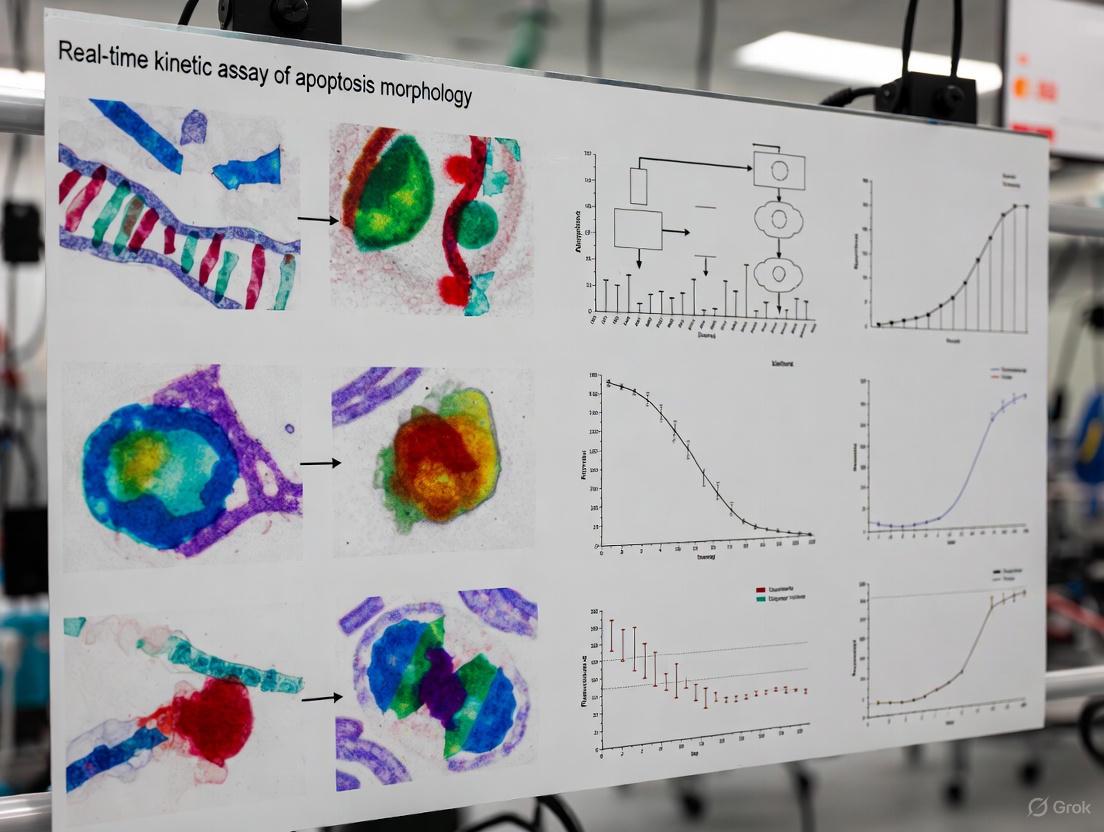
This article provides a comprehensive overview of modern real-time kinetic assays for analyzing apoptotic morphology, a critical capability for researchers and drug development professionals.
Real-Time Kinetic Analysis of Apoptosis: Advanced Methods for Live-Cell Imaging and Morphological Assessment
Abstract
This article provides a comprehensive overview of modern real-time kinetic assays for analyzing apoptotic morphology, a critical capability for researchers and drug development professionals. It covers the foundational principles of apoptosis, including key morphological markers like phosphatidylserine externalization and caspase activation. The content details advanced methodological approaches utilizing live-cell imaging systems and no-wash reagents, explores troubleshooting and optimization strategies for robust data collection, and presents rigorous validation data comparing kinetic methods against traditional endpoint techniques. By synthesizing current research and technological advances, this resource enables more sensitive, accurate, and high-throughput investigation of cell death mechanisms in both 2D and 3D model systems.
Understanding Apoptotic Morphology and the Need for Kinetic Analysis
Apoptosis, or programmed cell death, is a fundamental biological process crucial for normal tissue development and homeostasis. It is characterized by a series of highly regulated and distinctive morphological changes, with membrane blebbing, cell shrinkage, and nuclear condensation representing the primary hallmarks. In the context of modern drug discovery and biomedical research, the ability to monitor these morphological events in real-time provides invaluable kinetic data for assessing compound efficacy, toxicity, and mechanisms of action. Traditional endpoint assays offer limited snapshots of this dynamic process, whereas live-cell kinetic analysis captures the temporal progression of apoptotic events, enabling researchers to precisely determine the onset, duration, and sequence of morphological changes. This application note details the methodologies and reagents for quantifying these key apoptotic hallmarks within a framework of real-time kinetic analysis, providing researchers with robust protocols for high-content screening and mechanistic studies.
Experimental Protocols for Kinetic Apoptosis Assessment
Protocol 1: Multiplexed Kinetic Analysis Using Incucyte Live-Cell Imaging
This protocol enables simultaneous quantification of apoptosis and proliferation in adherent cell cultures, suitable for high-throughput pharmacological studies [1].
Materials:
- Incucyte Live-Cell Analysis System
- Adherent cell line (e.g., HT-1080 fibrosarcoma or A549 cells)
- Incucyte Caspase-3/7 Dye (Green, Red, or Orange)
- Incucyte Nuclight Reagents for nuclear labeling (e.g., NIR for multiplexing)
- Cell culture medium appropriate for cell line
- 96-well or 384-well microplates
- Test compounds (e.g., Camptothecin, Cisplatin, Staurosporine)
Procedure:
- Cell Preparation: Harvest and count cells. For HT-1080 cells, prepare a suspension of 2,000–5,000 cells per well in complete medium for a 96-well plate.
- Nuclear Labeling (Optional): Generate stable nuclear-labeled cells using Incucyte Nuclight NIR Lentivirus Reagent according to manufacturer's instructions.
- Plate Seeding: Seed cells into microplate wells. For kinetic proliferation and apoptosis assays, use 2,000 cells per well in a 96-well format.
- Dye Addition: Add Incucyte Caspase-3/7 Dye directly to culture medium at recommended concentration (typically 1:2000 dilution). Mix gently by pipetting.
- Compound Treatment: After 18-24 hours (or when cells reach 30-50% confluence), add test compounds. For concentration-response studies, prepare serial dilutions (e.g., two-fold or three-fold).
- Data Acquisition: Place plate in Incucyte Live-Cell Analysis System. Acquire phase-contrast and fluorescence images every 2 hours for 48-72 hours using 20x magnification.
- Analysis: Use integrated software to automatically quantify:
- Apoptotic cells: Green fluorescent objects (caspase-3/7 positive)
- Total cell count: NIR nuclear objects (proliferation/confluence)
- Morphological changes: Cell shrinkage and membrane blebbing via phase-contrast analysis
Protocol 2: Label-Free Apoptosis Detection via Apoptotic Body Imaging
This protocol utilizes deep learning-based computer vision to detect apoptotic bodies (ApoBDs) in phase-contrast images, enabling label-free apoptosis kinetic analysis [2].
Materials:
- TIMING (Time-lapse Imaging Microscopy In Nanowell Grids) system or equivalent live-cell imaging system
- Polydimethylsiloxane (PDMS) nanowell arrays
- Effector and target cells (e.g., tumor-infiltrating lymphocytes and Mel526 melanoma cells)
- Phenol red-free cell culture medium
- Axio fluorescent microscope with 20× 0.8 NA objective and scientific CMOS camera
- Humidity/CO₂ controlled incubation chamber
Procedure:
- Cell Preparation: Label effector cells with PKH67 (Green) and target cells with PKH26 (Red) fluorescent dyes at 1μM concentration following manufacturer's protocol.
- Nanowell Loading: Load cells onto nanowell chips at concentration of 2 million effector cells and 1 million target cells per mL.
- Image Acquisition: Place chip in TIMING system and image every 5 minutes in bright-field phase-contrast and fluorescent channels. Maintain temperature at 37°C with 5% CO₂.
- ApoBD Detection: Process time-lapse images using ResNet50 convolutional neural network trained to identify nanowells containing apoptotic bodies.
- Onset Determination: Apply three-frame temporal constraint—apoptosis onset is assigned when ApoBDs are detected in three consecutive frames, with the starting frame designated as time of apoptosis initiation.
- Segmentation and Validation: Use apoptotic body segmentation with intersection over union (IoU) accuracy threshold of 75% for associative identification of apoptotic cells.
Protocol 3: High-Resolution Morphological Analysis Using FF-OCT
This protocol employs Full-Field Optical Coherence Tomography (FF-OCT) for label-free, high-resolution 3D visualization of apoptotic morphological changes [3].
Materials:
- Custom-built time-domain FF-OCT system with Linnik interferometer configuration
- Broadband halogen light source (center wavelength: 650 nm)
- 40× water-immersion objectives (NA: 0.8)
- HeLa cells or other relevant cell line
- Doxorubicin (5 μmol/L in medium) for apoptosis induction
- Ethanol (99%) for necrosis induction (control)
- Precision piezoelectric actuator and motorized sample stage
Procedure:
- Cell Culture: Maintain HeLa cells as monolayer in DMEM under standard culture conditions (37°C, 5% CO₂).
- Apoptosis Induction: Add doxorubicin to culture medium at final concentration of 5 μmol/L in total volume of 1.5 mL.
- FF-OCT Imaging: Initiate imaging immediately after drug treatment. Acquire images continuously at 20-minute intervals for up to 180 minutes.
- 3D Reconstruction: Use phase-shifted interference images to reconstruct en face cross-sections. Stack tomographic images in z-stack format for 3D surface morphology analysis.
- Morphological Analysis: Identify and quantify key apoptotic features:
- Echinoid spine formation and membrane blebbing
- Cell contraction and filopodia reorganization
- Changes in cell-substrate adhesion via interference reflection microscopy (IRM)-like imaging
Quantitative Analysis of Apoptotic Morphological Events
Temporal Sequence of Apoptotic Events
Table 1: Kinetic Profile of Key Apoptotic Events in Different Model Systems
| Morphological Hallmark | Onset Post-Induction | Detection Method | Cell Line | Quantitative Metrics |
|---|---|---|---|---|
| Caspase-3/7 Activation | 2-4 hours | Incucyte Caspase-3/7 Green Dye | HT-1080 | Fluorescent object count; >5-fold increase by 48h with 1μM CMP [1] |
| Phosphatidylserine Externalization | 4-8 hours | Incucyte Annexin V Red Dye | A549 | Concentration-dependent increase; EC₅₀ calculable from kinetic data [1] |
| Membrane Blebbing | 30-120 minutes | FF-OCT/Phase-contrast imaging | HeLa | Visual scoring; surface topography changes [3] |
| Cell Shrinkage | 60-180 minutes | Phase-contrast confluence | HEK293T | 20-40% reduction in projected cell area [4] |
| Nuclear Condensation | 90-240 minutes | Nuclight NIR nuclear labeling | Neuro-2a | Increased nuclear intensity; fragmentation [1] |
| Apoptotic Body Formation | 120-300 minutes | Label-free ApoBD detection | Mel526 | 92% detection accuracy by ResNet50; 75% IoU segmentation [2] |
Pharmacological Response Profiling
Table 2: Compound Efficacy in Inducing Apoptotic Morphological Changes
| Compound | Mechanism | Concentration Range | Time to Onset (Membrane Blebbing) | Caspase-3/7 Peak Activation | Morphological Features Observed |
|---|---|---|---|---|---|
| Camptothecin | DNA topoisomerase inhibitor | 0.001-1 μM | 3-4 hours | 24-48 hours | Cell shrinkage, nuclear condensation, membrane blebbing [1] |
| Cisplatin | DNA cross-linking | 1-25 μM | 4-6 hours | 48-72 hours | Pronounced membrane blebbing, PS externalization [1] |
| Staurosporine | Protein kinase inhibitor | 0.1-10 μM | 2-3 hours | 12-24 hours | Rapid cell shrinkage, intense caspase activation [1] |
| Doxorubicin | Topoisomerase II inhibitor | 5 μM | 30-60 minutes | 6-8 hours | Echinoid spines, filopodia reorganization [3] |
| Nocodazole | Microtubule disruption | 0.1-10 μM | >24 hours (minimal) | Minimal response | Low apoptosis induction across concentrations [1] |
Signaling Pathways in Apoptosis
Table 3: Key Research Reagent Solutions for Apoptosis Morphology Research
| Reagent/Technology | Function | Application in Apoptosis Research | Key Features |
|---|---|---|---|
| Incucyte Caspase-3/7 Dyes | Fluorogenic substrate for activated caspase-3/7 | Quantification of mid-apoptosis commitment | Non-fluorescent until cleaved; multiple colors (Green, Red, Orange); no-wash protocol [1] |
| Incucyte Annexin V Dyes | Binds exposed phosphatidylserine | Detection of early apoptosis | Extremely bright and photostable cyanine dyes; NIR option for multiplexing [1] |
| Incucyte Nuclight Reagents | Nuclear labeling | Cell proliferation and counting | Lentiviral delivery for stable expression; compatible with apoptosis assays [1] |
| OptoBAX 2.0 System | Optogenetic apoptosis induction | Precise temporal control of MOMP | Cry2(1-531).L348F.BAX variant; reduced dark background; extended photocycle [4] |
| TIMING Platform | Nanowell time-lapse imaging | Single-cell apoptosis kinetics in cell-cell interactions | Enables ApoBD detection via ResNet50; label-free capability [2] |
| FF-OCT System | Label-free high-resolution tomography | 3D visualization of morphological changes | Sub-micrometer resolution; no chemical staining required [3] |
| Deep Learning Models (ResNet50) | Apoptotic body detection | Automated label-free apoptosis identification | 92% accuracy in ApoBD detection; 75% IoU segmentation accuracy [2] |
Experimental Workflow for Comprehensive Analysis
Apoptosis, or programmed cell death, is a fundamental process characterized by a series of well-defined biochemical events. Disruption of apoptotic pathways is implicated in numerous diseases, making accurate detection crucial for both basic research and drug discovery [5] [6]. Real-time kinetic assays provide a powerful approach for monitoring the dynamic progression of apoptosis in live cells, offering significant advantages over traditional endpoint measurements. This application note focuses on two principal biochemical hallmarks of apoptosis: the externalization of phosphatidylserine (PS) and the activation of executioner caspases-3 and -7. We detail methodologies for detecting these markers in real time, allowing researchers to capture the kinetic relationship between these key apoptotic events and gain deeper insights into cell death mechanisms.
The transition of phosphatidylserine from the inner to the outer leaflet of the plasma membrane is a near-universal and early event in apoptosis, serving as an "eat-me" signal for phagocytic cells [7] [8]. Concurrently, the initiation of the caspase cascade culminates in the activation of effector caspases-3 and -7, which cleave a multitude of cellular substrates, leading to the characteristic morphological changes of apoptosis [9] [6]. The ability to monitor these events kinetically and in parallel provides a more comprehensive understanding of apoptotic timelines and the mode of action of novel therapeutic agents.
Real-Time Detection of Phosphatidylserine Exposure
Principle and Technology
In viable cells, phosphatidylserine (PS) is predominantly restricted to the inner leaflet of the plasma membrane. During early apoptosis, this asymmetry is lost, and PS is translocated to the outer leaflet, where it becomes accessible for binding [7] [8]. The RealTime-Glo Annexin V Assay utilizes a novel, two-component system to detect this exposure luminometrically. The assay employs recombinant annexin V proteins fused to complementary subunits of NanoBiT luciferase. Upon binding to PS clustered on the apoptotic cell surface, the luciferase subunits are brought into close proximity, reconstituting an active enzyme that generates a luminescent signal in the presence of a proprietary, cell-permeable luciferase substrate. The signal is therefore directly proportional to the amount of PS exposed [7].
This homogeneous, "add-mix-measure" format is non-lytic and allows for continuous monitoring of the same sample over time, from hours to days, without the need for washing steps or cell harvesting. This makes it particularly suitable for kinetic studies and high-throughput screening (HTS) applications where traditional flow cytometry-based annexin V staining would be impractical [7].
Detailed Protocol: RealTime-Glo Annexin V Apoptosis Assay
Materials:
- RealTime-Glo Annexin V Apoptosis and Necrosis Assay (Promega)
- Cell culture under investigation (e.g., SKBR3, U937 cells)
- Appropriate cell culture medium and reagents
- White-walled, clear-bottom 96- or 384-well microplates
- A multimode microplate reader capable of measuring luminescence and fluorescence
Procedure:
- Cell Plating: Plate cells in a white-walled, clear-bottom microplate at an optimal density (e.g., 10,000-50,000 cells per well for a 96-well plate) in growth medium. Include control wells for background (medium only), viable cells (untreated), and apoptotic cells (e.g., treated with 1-2 µM staurosporine for 2-4 hours).
- Treatment: Apply the test compounds or apoptotic inducers to the cells.
- Reagent Preparation: Thaw and equilibrate the 2X RealTime-Glo Annexin V Detection Reagent to room temperature. Prepare the 1X working reagent by diluting it 1:1 with your cell culture medium.
- Assay Initiation: At the desired time point post-treatment, add an equal volume of the 1X detection reagent directly to each well containing cells and culture medium. Mix gently by swirling the plate.
- Real-Time Measurement: Place the microplate in the pre-warmed (37°C, 5% CO2 if possible) plate reader. Measure luminescence (for apoptosis) and, if required, fluorescence (for necrosis, using the integrated dye) at regular intervals (e.g., every 30-60 minutes) over the course of the experiment (e.g., 24-52 hours).
Data Analysis: The raw luminescence data represents the kinetic profile of PS externalization. Data can be normalized to the untreated control and expressed as fold induction over baseline. The time to half-maximal response (T~50~) or the area under the curve (AUC) can be calculated for quantitative comparisons between different treatments.
Real-Time Detection of Caspase-3/7 Activation
Principle and Technology
Caspase-3 and -7 are key effector caspases that are activated in the final stages of the apoptotic cascade. Their activity can be monitored using proluminescent substrates containing the DEVD (Asp-Glu-Val-Asp) tetrapeptide sequence [9]. The Caspase-Glo 3/7 Assay system utilizes a DEVD-aminoluciferin substrate in a proprietary, optimized buffer. Upon addition of the single reagent to cells in culture, cell lysis occurs, and activated caspase-3/7 cleaves the substrate, releasing aminoluciferin. This product is then consumed by a thermostable luciferase, generating a stable "glow-type" luminescent signal that is proportional to caspase activity [9].
This homogeneous bioluminescent assay is highly sensitive and can be performed in a simple "add-mix-measure" format. It is adaptable to multiwell plate formats from 96- to 1,536-well density, making it ideal for screening applications. The use of a luciferase-based readout also minimizes interference from fluorescent compounds compared to fluorogenic assays [9].
Detailed Protocol: Caspase-Glo 3/7 Assay
Materials:
- Caspase-Glo 3/7 Assay System (Promega)
- Cell culture under investigation
- White-walled, solid-bottom 96- or 384-well microplates
- A microplate reader capable of measuring luminescence
Procedure:
- Cell Plating: Plate cells in a white-walled, solid-bottom microplate in growth medium. Include control wells as described in Section 2.2.
- Treatment: Apply the test compounds or apoptotic inducers to the cells for the desired duration.
- Reagent Equilibration: Equilibrate the Caspase-Glo 3/7 Buffer and the lyophilized substrate to room temperature. Prepare the Caspase-Glo 3/7 Reagent by adding the buffer to the substrate vial. Mix by swirling or inverting until the substrate is fully dissolved.
- Assay Initiation: Add a volume of Caspase-Glo 3/7 Reagent equal to the volume of medium present in each well (e.g., add 100 µL of reagent to 100 µL of medium containing cells).
- Incubation and Measurement: Mix the contents gently on an orbital shaker for 30 seconds to ensure homogeneity. Incubate the plate at room temperature for 30-60 minutes to allow the signal to stabilize. Measure the luminescence in the plate reader.
Data Analysis: Luminescence values from experimental wells should be corrected by subtracting the signal from no-cell control wells (background). Caspase activity can be expressed as raw luminescence, fold-increase over untreated controls, or normalized to cell viability data if multiplexed.
Applications and Data Analysis
Kinetic Profiling of Drug-Induced Apoptosis
The combination of PS exposure and caspase-3/7 activation assays provides a powerful tool for kinetically profiling the mechanism of action of therapeutic agents. For instance, treatment of SKBR3 (HER2+) breast cancer cells with the antibody-drug conjugate trastuzumab emtansine induces a time- and dose-dependent increase in both annexin V luminescence and a fluorescent necrosis signal, as measured by the RealTime-Glo assay [7]. This allows researchers to distinguish between primary apoptosis and secondary necrosis over a 52-hour time course, providing critical information on the kinetics and potency of the drug.
Similarly, the Caspase-Glo 3/7 Assay can effectively demonstrate a dose-response to apoptosis inducers like bortezomib, while showing no response to non-inducing compounds such as palbociclib [9]. The linear response of the assay across a broad range of cell numbers ensures accurate quantification of caspase activity.
Discriminating Between Apoptosis and Necroptosis
Real-time assays are particularly valuable for discriminating between different modes of cell death. As demonstrated, the RealTime-Glo Annexin V Assay can differentiate apoptosis induced by TNF-α from necroptosis induced by TNF-α in combination with a caspase inhibitor (Z-VAD-FMK) [7]. The apoptotic phenotype shows a strong luminescent (PS exposure) signal, while the necroptotic phenotype is characterized by a dominant fluorescent (loss of membrane integrity) signal with minimal luminescence. Furthermore, the reversibility of the necroptotic pathway can be confirmed by adding a specific inhibitor like necrostatin-1 [7].
Table 1: Comparison of Real-Time Apoptosis Detection Methods
| Feature | RealTime-Glo Annexin V Assay | Caspase-Glo 3/7 Assay |
|---|---|---|
| Target | Phosphatidylserine (PS) Exposure | Caspase-3/7 Enzyme Activity |
| Detection Mode | Luminescence (Bioluminescence Resonance) | Luminescence (Caspase-cleaved substrate) |
| Assay Format | Homogeneous, "no-wash" | Homogeneous, "add-mix-measure" |
| Key Advantage | Continuous kinetic monitoring of early apoptosis in live cells | Highly sensitive, specific endpoint or kinetic measurement of executioner phase |
| Multiplexing | Can be multiplexed with fluorescence-based necrosis dye and downstream assays | Can be multiplexed with cell viability or cytotoxicity assays |
| Throughput | Suitable for high-throughput screening (HTS) | Highly scalable for HTS (96- to 1,536-well) |
Advanced Genetically Encoded Biosensors
For more specialized applications, particularly in vivo or in complex 3D models, genetically encoded biosensors offer an alternative approach. A novel biosensor based on the C2 domain of lactadherin (MFG-E8) has been developed for specific PS labelling [10]. This system can be delivered via adeno-associated viruses (AAVs) and allows for the detection of PS exposure in vitro, ex vivo, and in vivo, enabling research in physiological contexts beyond traditional cell culture [10]. Similarly, FRET-based caspase sensors (e.g., CFP-DEVD-YFP) allow for real-time visualization of caspase activation at single-cell resolution using live-cell imaging, providing unparalleled spatial and temporal insights [11].
The Scientist's Toolkit: Research Reagent Solutions
Table 2: Essential Reagents for Real-Time Apoptosis Detection
| Reagent / Assay Name | Provider | Principle / Target | Key Application |
|---|---|---|---|
| RealTime-Glo Annexin V Apoptosis and Necrosis Assay | Promega [7] | Annexin V-NanoBiT luciferase fusion proteins binding to PS | Real-time, kinetic monitoring of PS exposure and membrane integrity in live cells. |
| Caspase-Glo 3/7 Assay System | Promega [9] | Proluminescent DEVD-aminoluciferin substrate cleaved by caspases-3/7 | Sensitive, bioluminescent measurement of caspase-3/7 activity in a homogeneous format. |
| CellEvent Caspase-3/7 Green Flow Cytometry Assay Kit | Thermo Fisher Scientific [12] | Fluorogenic DEVD peptide conjugated to a nucleic acid binding dye | Flow cytometric detection of activated caspase-3/7; can be combined with viability stains. |
| Genetically Encoded C2 PS Biosensor | Vilnius University [10] | Recombinant C2 domain of Lactadherin protein binding PS | Labelling exposed PS in vitro, ex vivo, and in vivo models via AAV delivery. |
| FLICA Reagents (e.g., FAM-VAD-FMK) | Immunochemistry Technologies [8] | Fluorochrome-labeled inhibitors of caspases binding active enzyme | Flow cytometric or microscopic detection of active caspases in live cells. |
| SYTOX AADvanced Dead Cell Stain | Thermo Fisher Scientific [12] | Cell-impermeant nucleic acid stain | Discrimination of necrotic/late apoptotic cells in multiplexed assays. |
Visualizing Apoptosis Signaling and Detection Workflows
Apoptosis Pathway and Detection Assays
RealTime-Glo Annexin V Assay Workflow
Apoptosis, or programmed cell death, is a fundamental biological process crucial for maintaining tissue homeostasis and development. It is a tightly regulated mechanism that, when dysregulated, is implicated in a range of human diseases, including cancer, autoimmune diseases, and neurodegeneration [1]. The accurate measurement of apoptosis is therefore paramount in both basic research and drug discovery.
Traditional methods for detecting apoptosis have primarily relied on endpoint assays—single timepoint measurements that provide a static snapshot of this dynamic process. These conventional approaches, while valuable, suffer from two fundamental limitations: their nature as single timepoint snapshots and the sample disturbance caused by invasive procedures. This application note details these limitations and presents kinetic assay solutions that enable continuous, real-time monitoring of apoptotic activity within live cells, providing a more comprehensive understanding of cell death dynamics for researchers and drug development professionals.
Fundamental Limitations of Traditional Endpoint Assays
The Single Timepoint Snapshot Problem
Traditional apoptosis assays capture data at a single, user-defined endpoint, failing to reveal the kinetic profile of cell death.
- Missed Temporal Dynamics: Apoptosis is not a synchronous process across a cell population. A single endpoint cannot capture the variability in the initiation, commitment, and execution phases of apoptosis between individual cells [13]. Critical kinetic information, such as the rate of caspase activation or the order of molecular events, is lost.
- Incomplete Pharmacological Profiles: In drug discovery, the timing and rate of apoptosis induction are critical parameters for evaluating compound efficacy. Endpoint measurements may miss peak activity windows or fail to distinguish between rapid inducers and slow-acting compounds, potentially leading to misleading conclusions about potency and mechanism of action [1].
The Sample Disturbance Problem
Many conventional apoptosis assays require invasive sample manipulation that can disrupt the biological process being measured.
- Loss of Cellular Integrity: Procedures such as cell lifting, washing, and permeabilization can artificially alter PS asymmetry or cause the loss of fragile, dying cells, leading to underestimation of apoptotic activity [1].
- Disruption of Native Microenvironments: Removing cells from their culture conditions for analysis disrupts critical cell-cell and cell-matrix interactions that influence apoptotic signaling in physiologically relevant contexts [14].
- Limited Viability Assessment: Traditional methods like trypan blue exclusion or propidium iodide staining provide only a momentary viability assessment and cannot track the fate of individual cells over time [14].
Table 1: Key Limitations of Common Traditional Apoptosis Assays
| Assay Type | Primary Readout | Single Timepoint Limitations | Sample Disturbance Issues |
|---|---|---|---|
| Annexin V Staining | PS externalization [1] | Single snapshot of PS exposure; misses kinetic progression [1]. | Multiple wash steps risk loss of PS asymmetry and dying cells; requires cell lifting [1] [15]. |
| Caspase Activity (Plate Reader) | Caspase-3/7 activity [16] | Single measurement of caspase activity; cannot track activation kinetics [16]. | Typically requires cell lysis, terminating the experiment [16]. |
| TUNEL Assay | DNA fragmentation [15] | Snapshot of late-stage apoptosis; no early detection [15]. | Multiple, complex processing steps including fixation and permeabilization [15]. |
| Morphological Analysis | Membrane blebbing, nuclear condensation [15] | Static image; cannot observe dynamic morphological changes. | Laborious sample preparation for EM; potential artifacts from fixation [15]. |
Table 2: Impact of Assay Limitations on Data Interpretation
| Limitation | Consequence for Research | Risk in Drug Development |
|---|---|---|
| Single Timepoint | Incomplete understanding of apoptotic pathways and their regulation. | Misclassification of drug candidates; missing optimal dosing windows. |
| Sample Disturbance | Introduction of artifacts; inaccurate quantification of apoptosis levels. | Inconsistent and non-reproducible results; poor translation to in vivo models. |
| Combined Effects | Compromised data quality and reliability of conclusions. | Increased cost and time due to follow-up experiments; potential clinical failure. |
Kinetic Assay Solutions for Real-Time Apoptosis Monitoring
Modern live-cell analysis technologies overcome these limitations by enabling continuous, non-invasive monitoring of apoptosis in the same population of cells over time. These kinetic assays utilize no-wash, mix-and-read reagents and integrated imaging systems to provide rich, time-resolved data [1].
Principle of Kinetic Apoptosis Assays
Kinetic apoptosis assays are based on the same fundamental markers as traditional methods but are engineered for real-time detection in live cultures.
- Caspase-3/7 Activation: Non-fluorescent, cell-permeable substrates containing the DEVD peptide sequence are cleaved by activated caspase-3/7, releasing a DNA-binding fluorescent dye. The resulting increase in nuclear fluorescence is quantified over time as a direct measure of apoptosis [1].
- Phosphatidylserine (PS) Exposure: Fluorochrome-conjugated Annexin V dyes bind to PS residues exposed on the outer leaflet of the plasma membrane. Extremely bright and photostable dyes enable continuous monitoring without the need for wash steps [1].
- Multiplexing Capabilities: These apoptosis markers can be combined with nuclear labels for proliferation (e.g., Nuclight reagents) or cytotoxicity dyes, allowing for simultaneous monitoring of multiple cellular processes within the same experiment [1].
Experimental Protocol: Kinetic Caspase-3/7 Apoptosis Assay in 96-Well Format
This protocol details the procedure for a real-time, no-wash caspase-3/7 assay in adherent cells, adaptable for suspension cells and higher-throughput 384-well formats [1].
Research Reagent Solutions
| Item | Function | Example Product |
|---|---|---|
| Live-Cell Analysis System | Automated imaging and quantification of fluorescence over time. | Incucyte Live-Cell Analysis System [1] |
| Caspase-3/7 Dye | Non-fluorescent substrate cleaved to release fluorescent dye upon caspase activation. | Incucyte Caspase-3/7 Dye (Green, Red, or Orange) [1] |
| Nuclear Dye (Optional) | Labels all nuclei for concurrent confluence and proliferation analysis. | Incucyte Nuclight Reagent [1] |
| Cell Culture Plates | Optically clear bottom for high-quality imaging. | 96-well or 384-well tissue culture-treated plates |
| Apoptosis Inducer | Positive control for assay validation. | Staurosporine (1 µM) or Camptothecin (1 µM) [1] |
Step-by-Step Workflow
Day 1: Cell Seeding
- Harvest adherent cells and prepare a suspension at the optimal density (e.g., 2,000-5,000 cells per well for a 96-well plate in 100 µL of complete medium) [1].
- Seed cells into the wells of the microplate. Include several wells for background controls (medium only, no cells).
- Allow cells to adhere and recover overnight in a 37°C, 5% CO₂ incubator.
Day 2: Treatment and Dye Addition
- Prepare treatment compounds at the desired concentrations in complete medium.
- Add the Incucyte Caspase-3/7 Dye directly to the cell culture medium at the manufacturer's recommended final concentration (e.g., 1:1000 dilution). Mix gently by pipetting.
- For multiplexed analysis: Also add the optional nuclear dye at this step.
- Add compound treatments to the assigned wells. Include a vehicle control (e.g., 0.1% DMSO).
- Carefully place the microplate into the live-cell analysis system, maintained at 37°C and 5% CO₂.
Real-Time Data Acquisition and Analysis
- Program the instrument to acquire images (both phase-contrast and fluorescence) from each well at regular intervals (e.g., every 2-4 hours) for the desired experiment duration (e.g., 48-72 hours) [1].
- Use integrated software to automatically quantify the fluorescent signals. The apoptosis level is typically reported as Caspase-3/7 Positive Object Count or the integrated fluorescence intensity (Green Object Integrated Intensity).
- For multiplexed experiments, the nuclear dye (e.g., NIR) allows for simultaneous quantification of cell proliferation (Total Nuclear Count) or confluence.
Kinetic Caspase-3/7 Assay Workflow: The protocol spans from cell seeding to automated data analysis, enabling continuous, non-invasive monitoring of apoptosis.
Application Example: Pharmacological Profiling of Anti-Cancer Compounds
The power of kinetic apoptosis analysis is demonstrated in a pharmacological study on A549 cancer cells treated with a dilution series of four anti-cancer compounds in the presence of Incucyte Annexin V NIR Dye [1].
Experimental Results and Data Interpretation
- Kinetic and Concentration-Dependent Responses: The assay revealed distinct kinetic profiles and potencies for each compound. Camptothecin, Cisplatin, and Staurosporine showed clear concentration-dependent increases in apoptosis, while Nocodazole induced minimal apoptosis across all tested concentrations [1].
- High-Throughput Capability: The microplate view feature enabled visualization of the entire plate's kinetic response, allowing for rapid assessment of compound effects and quality control [1].
- Morphological Correlation: Representative images confirmed that the Annexin V fluorescent signal correlated with classical morphological features of apoptosis, including cell shrinkage and membrane blebbing, providing validation of the biochemical readout [1].
Table 3: Kinetic Pharmacological Data from A549 Cell Treatment
| Compound | Mechanism of Action | Kinetic Apoptosis Profile | Key Finding |
|---|---|---|---|
| Camptothecin (CMP) | DNA topoisomerase I inhibitor [1] | Strong, concentration-dependent increase in apoptosis over 72 hours [1] | Clear concentration-response relationship with an EC₅₀ in the nanomolar range [1]. |
| Cisplatin (CIS) | DNA cross-linking agent [1] | Concentration-dependent kinetic increase in apoptosis [1] | Delayed onset of apoptosis compared to CMP, highlighting different mechanisms. |
| Staurosporine (SSP) | Broad-spectrum kinase inhibitor | Concentration-dependent kinetic increase in apoptosis [1] | Rapid inducer of apoptosis, with signal detectable within hours. |
| Nocodazole (NCD) | Microtubule polymerization inhibitor | Low levels of apoptosis across all concentrations [1] | Suggests primary anti-proliferative, rather than pro-apoptotic, mechanism at tested doses/time. |
Advanced Kinetic Techniques and Future Directions
Novel Fluorescent Reporter Technologies
Recent advancements have introduced genetically encoded fluorescent reporters for even more precise monitoring of apoptosis.
- Caspase-3/7 GFP Reporter: A novel technology inserts the caspase-3 cleavage motif (DEVD) directly into the structure of GFP. Upon apoptosis induction, caspase-3 cleaves the motif, leading to a loss of fluorescence ("fluorescence switch-off"), allowing sensitive real-time tracking [17].
- Stable Reporter Cell Lines: Lentiviral delivery of biosensors like the ZipGFP-based caspase-3/7 reporter enables the generation of stable cell lines. This system provides a highly specific, irreversible fluorescent signal upon caspase activation and is particularly valuable for long-term studies and 3D culture models, including organoids [14].
Multiplexed Analysis of Complex Biology
Kinetic assays facilitate the investigation of interconnected biological processes.
- Apoptosis-Induced Proliferation (AIP): By combining caspase-3/7 reporters with proliferation dyes, researchers can track the compensatory proliferation of neighboring cells following apoptotic stimuli—a key mechanism in tumor repopulation and therapy resistance [14].
- Immunogenic Cell Death (ICD): Kinetic apoptosis platforms can be coupled with endpoint detection of immunogenic markers like surface-exposed calreticulin, providing a integrated view of cell death and its immunogenic potential, which is crucial for cancer immunotherapy development [14].
The limitations of traditional endpoint assays—their nature as single timepoint snapshots and their susceptibility to sample disturbance—pose significant constraints on apoptosis research and drug discovery. Kinetic live-cell analysis overcomes these hurdles by providing continuous, non-invasive monitoring of cell death in real-time. This approach yields richer, more physiologically relevant data on the dynamics, potency, and mechanism of action of experimental compounds. By adopting these advanced kinetic assays, researchers can gain a more comprehensive and accurate understanding of apoptotic pathways, ultimately enhancing the efficiency and success of therapeutic development.
In the field of cell death research, traditional endpoint assays have long been the standard for detecting apoptotic events. However, these methods provide only a single snapshot in time, failing to capture the inherently dynamic and asynchronous nature of cellular demise. Kinetic analysis represents a paradigm shift, enabling researchers to monitor cell death processes in real-time within the same population of cells, thus preserving critical temporal information that is lost in conventional endpoint measurements. This approach is particularly valuable for capturing transient events such as caspase activation, which can be missed with single-time-point assays [14] [18].
The fundamental limitation of endpoint assays lies in their inability to account for the temporal heterogeneity of apoptotic responses within a cell population. When measuring caspase-3/7 activity—a key executioner phase of apoptosis—researchers have observed that the window of detectable enzymatic activity is often narrow and compound-dependent. For instance, cells treated with bortezomib showed maximal caspase activity at 24 hours, while staurosporine-induced caspase activation peaked at just 6 hours, with signal significantly diminishing by 24 hours [18]. This variability underscores the critical need for continuous monitoring approaches that can identify these optimal measurement windows for different experimental conditions.
Kinetic analysis addresses these challenges by providing a comprehensive temporal profile of cell death events, allowing researchers to establish precise timelines for initiating events, effector mechanisms, and eventual cellular disintegration. This approach has revealed complex biological phenomena such as apoptosis-induced proliferation, where apoptotic cells actively stimulate neighboring cell division through paracrine signaling—a process that can only be properly characterized through continuous observation [14]. Furthermore, kinetic approaches enable the distinction between different modes of cell death, such as apoptosis and primary necrosis, based on their distinct temporal signatures and biochemical features [18].
Technological Approaches for Kinetic Monitoring
Fluorescent Reporter Systems
Genetically encoded fluorescent reporters represent one of the most powerful tools for kinetic analysis of cell death. These systems typically employ caspase-sensing biosensors based on engineered fluorescent proteins that undergo conformational changes upon caspase-mediated cleavage. A prominent example is the ZipGFP-based caspase-3/-7 reporter, which utilizes a split-GFP architecture where the β-strands are connected via a flexible linker containing the DEVD cleavage motif recognized by executioner caspases [14].
In this system, caspase activity separates the GFP β-strands, allowing them to refold into the native β-barrel structure and generate fluorescence. This design provides high specificity, irreversible signal accumulation, and minimal background fluorescence, making it ideal for long-term tracking of apoptotic events. When combined with a constitutively expressed marker such as mCherry for normalization, this system enables precise quantification of caspase activation kinetics at single-cell resolution in both 2D and 3D culture models, including physiologically relevant patient-derived organoids [14].
The utility of this approach extends beyond simple apoptosis detection to the investigation of complex biological processes. For instance, when integrated with proliferation tracking dyes, this platform can simultaneously capture apoptosis-induced proliferation events, where dying cells stimulate division in their neighbors—a phenomenon with significant implications for tumor repopulation after therapy [14]. Additionally, these reporter systems can be coupled with endpoint measurements of immunogenic cell death markers such as surface-exposed calreticulin, providing a comprehensive view of the cell death process and its functional consequences [14].
Live-Cell Imaging Platforms
Automated live-cell imaging systems, such as the Incucyte platform, provide a non-invasive approach for kinetic monitoring of cell death processes. These systems utilize no-wash, mix-and-read reagents that enable continuous measurement of apoptosis markers without disrupting the cellular environment. The Incucyte Apoptosis Assays leverage two primary detection methods: caspase-3/7 substrates that generate fluorescent nuclear signals upon cleavage, and Annexin V conjugates that bind to phosphatidylserine exposed on the outer membrane of apoptotic cells [1].
A key advantage of these platforms is their capacity for multiplexed measurements, allowing simultaneous tracking of apoptosis, viability, and proliferation within the same population. For example, combining caspase-3/7 reagents with nuclear labeling dyes enables parallel quantification of cell death and proliferation dynamics, revealing anti-proliferative and pro-apoptotic drug effects in exquisite detail [1]. This multi-parametric approach provides richer biological context than single-parameter assays and helps distinguish between different mechanisms of compound action.
These systems generate high-content data through both fluorescence and phase-contrast imaging, capturing not only biochemical markers but also morphological hallmarks of apoptosis such as membrane blebbing, cell shrinkage, and nuclear condensation. The integrated analysis software automatically segments and quantifies these fluorescent objects with minimal background, enabling robust pharmacological studies and high-throughput compound screening [1].
Label-Free Imaging Techniques
Label-free imaging technologies represent an emerging approach for kinetic analysis that eliminates potential artifacts associated with fluorescent probes and genetic manipulation. Full-field optical coherence tomography (FF-OCT) is one such technique that enables high-resolution visualization of cellular structural changes during apoptosis and necrosis without exogenous labels [3].
This interferometric imaging method utilizes a broadband light source in a Linnik configuration to achieve sub-micrometer resolution in both axial and transverse dimensions. FF-OCT can capture characteristic apoptotic morphological changes including echinoid spine formation, membrane blebbing, cell contraction, and filopodia reorganization in response to chemotherapeutic agents like doxorubicin [3]. In contrast, necrotic cells induced by ethanol treatment exhibit rapid membrane rupture, intracellular content leakage, and abrupt loss of adhesion structures—all distinguishable through time-lapse FF-OCT imaging.
The technique generates comprehensive 3D surface topography maps of single cells, allowing quantitative analysis of morphological parameters throughout cell death progression. When combined with interference reflection microscopy (IRM)-like imaging, FF-OCT effectively highlights changes in cell-substrate adhesion and boundary integrity during death processes [3]. This label-free approach is particularly valuable for long-term kinetic studies where phototoxicity or reporter perturbation might influence cellular physiology, and for applications in drug toxicity testing where unbiased morphological assessment is preferred.
Table 1: Comparison of Kinetic Analysis Technologies for Cell Death Research
| Technology | Key Features | Temporal Resolution | Applications | Limitations |
|---|---|---|---|---|
| Fluorescent Reporter Systems [14] | Caspase-sensing biosensors (e.g., ZipGFP-DEVD), constitutive cell markers | Minutes to hours | Long-term tracking in 2D/3D models, single-cell resolution, apoptosis-induced proliferation | Requires genetic manipulation, potential phototoxicity |
| Live-Cell Imaging Platforms [1] | No-wash reagents, automated imaging, multiparametric analysis | Minutes to hours | High-throughput screening, pharmacological studies, multiplexed viability/death assays | reagent costs, limited penetration in thick 3D models |
| Label-Free Imaging (FF-OCT) [3] | No exogenous labels, morphological analysis, 3D topography | Minutes | Drug toxicity testing, distinction of death modalities, unbiased assessment | Limited molecular specificity, specialized equipment required |
| Cytotoxicity Dyes [18] | Real-time membrane integrity monitoring, compatible with endpoint assays | Hours | Kinetic cytotoxicity assessment, timing optimization for caspase measurements | Limited to membrane integrity events |
Key Experimental Protocols
Real-Time Kinetic Caspase-3/7 Activation Assay
The following protocol describes a multiplexed approach for kinetically monitoring caspase-3/7 activation in conjunction with cytotoxicity, enabling optimal timing for apoptosis detection. This method is particularly valuable for capturing the transient nature of caspase activity, which typically presents a narrow detection window that varies by cell type and treatment [18].
Materials and Reagents
- CellTox Green Cytotoxicity Assay dye or equivalent membrane integrity dye
- Caspase-Glo 3/7 Assay reagents or equivalent caspase activity assay
- CellTiter-Fluor Cell Viability Assay or equivalent viability assay
- Appropriate cell culture medium and multi-well plates
- Live-cell imaging system or plate reader capable of kinetic measurements
Procedure
- Cell Preparation and Plating: Seed cells in a multi-well plate at an appropriate density determined by preliminary optimization experiments. Allow cells to adhere overnight under standard culture conditions (37°C, 5% CO₂).
Dye Loading and Treatment: Add CellTox Green dye directly to the culture medium at the recommended working concentration. Subsequently treat cells with experimental compounds, including appropriate positive (e.g., staurosporine, bortezomib) and negative controls.
Kinetic Cytotoxicity Monitoring: Place the plate in a live-cell imaging system or plate reader maintained at 37°C with 5% CO₂. Acquire fluorescence measurements (excitation/emission ~485/520 nm) at regular intervals (e.g., every 2-4 hours) for the duration of the experiment (typically 48-72 hours).
Caspase Activity Assessment: When a significant increase in cytotoxicity signal is detected, perform the caspase activity measurement. For the Caspase-Glo 3/7 Assay, add an equal volume of reagent to each well, mix briefly, and incubate for 30-90 minutes before recording luminescence.
Viability Assessment (Optional): Following caspase measurement, the same wells can be assessed for viability using the CellTiter-Fluor Assay according to manufacturer's instructions, enabling triparametric analysis from a single well.
Data Analysis: Normalize all signals to untreated control wells. Plot kinetic curves for cytotoxicity and determine the correlation between cytotoxicity onset and caspase activation peak.
Key Considerations
- This protocol leverages the stable fluorescence signal of cytotoxicity dyes that can be monitored kinetically without affecting cell health, serving as an indicator for optimal caspase measurement timing [18].
- The multiplexed approach provides three critical parameters from the same biological sample: cytotoxicity kinetics (membrane integrity), apoptosis induction (caspase activation), and relative viability [18].
- Researchers should note that the temporal relationship between cytotoxicity and caspase activation varies by compound mechanism. For example, staurosporine shows early caspase activation (peaking at ~6 hours) while bortezomib-induced apoptosis peaks later (~24 hours) [18].
Stable Reporter Cell Line Generation and Application
This protocol describes the creation and implementation of stable fluorescent reporter cells for real-time imaging of caspase dynamics, suitable for both 2D and 3D model systems.
Materials and Reagents
- Lentiviral vector containing caspase-3/7 reporter (e.g., ZipGFP-DEVD construct)
- Constitutive fluorescent marker (e.g., mCherry) for normalization
- Appropriate packaging plasmids for lentivirus production
- Target cells of interest
- Selection antibiotics (e.g., puromycin)
- Organoid culture materials if applicable
Procedure
- Vector Construction: Clone the caspase-3/7 reporter construct containing the DEVD cleavage motif between split GFP β-strands into a lentiviral vector backbone. Include a constitutive fluorescent marker (mCherry) expressed from an independent promoter.
Virus Production and Transduction: Generate lentiviral particles using standard packaging systems. Transduce target cells at appropriate multiplicity of infection (MOI) determined by preliminary titration.
Stable Cell Line Selection: Apply selection pressure (e.g., puromycin) 48 hours post-transduction to select for successfully transduced cells. Expand resistant pools or isolate single clones.
Reporter Validation: Treat reporter cells with known apoptosis inducers (e.g., carfilzomib) and caspase inhibitors (e.g., zVAD-FMK). Confirm caspase-specific response by measuring GFP fluorescence induction and inhibition, respectively. Validate with orthogonal methods such as Western blotting for cleaved PARP and caspase-3.
Application in 2D/3D Models:
- For 2D studies: Plate reporter cells in imaging-compatible plates and treat with experimental conditions. Acquire time-lapse images using live-cell microscopy.
- For 3D models: Generate spheroids or organoids from reporter cells. Embed in appropriate extracellular matrix and treat with compounds. Image using confocal or multiphoton microscopy to capture z-stacks over time.
Image Analysis: Quantify GFP/mCherry fluorescence ratios over time. Use automated segmentation to track apoptosis initiation and propagation at single-cell resolution.
Key Considerations
- The ZipGFP design provides low background and irreversible fluorescence activation, enabling precise tracking of caspase activation history [14].
- The constitutive mCherry signal serves as both a transduction efficiency control and a cell presence indicator, though its long half-life limits its utility for real-time viability assessment [14].
- This system can be extended to monitor complex processes such as apoptosis-induced proliferation by incorporating proliferation tracking dyes, or immunogenic cell death by endpoint staining for surface calreticulin [14].
Signaling Pathways and Experimental Workflows
Caspase Activation Signaling Pathway
The following diagram illustrates the key molecular events in executioner caspase activation during apoptosis, highlighting the points where kinetic analysis provides critical insights into this dynamic process.
This signaling cascade begins with various death stimuli including chemotherapeutic agents, toxins, or physiological signals that activate initiator caspases. These initiator caspases then proteolytically process executioner caspases-3 and -7, converting them from inactive zymogens to active enzymes. The active caspase-3/7 cleaves various cellular substrates, including the DEVD peptide sequence embedded in reporter constructs, leading to fluorescent signal generation. This cascade culminates in the characteristic morphological changes of apoptosis, including membrane blebbing and DNA fragmentation [14] [19].
Kinetic analysis is particularly valuable for capturing the transient nature of caspase-3/7 activation, which represents a critical commitment point in the apoptotic process. The ability to monitor this activation in real-time allows researchers to identify the precise timing of this irreversible step and its correlation with downstream events [18].
Kinetic Experimental Workflow
The following workflow diagram outlines the integrated experimental approach for kinetic analysis of cell death, combining real-time monitoring with endpoint validation assays.
This integrated workflow begins with cell preparation, which may involve using stable reporter cell lines or loading cells with fluorescent dyes for real-time monitoring. Following compound treatment, cells undergo kinetic monitoring for parameters such as cytotoxicity (via membrane integrity dyes) or caspase activation (via reporter fluorescence). When a significant signal change is detected, researchers proceed to endpoint assays such as caspase activity measurements or immunogenic marker detection. Finally, data integration combines kinetic and endpoint measurements for a comprehensive understanding of cell death dynamics [14] [18].
This approach ensures that transient events like caspase activation are captured at their peak, addressing a fundamental limitation of traditional endpoint assays that might miss critical windows of activity. The workflow can be adapted for various experimental models from 2D cultures to complex 3D organoids [14].
Essential Research Reagent Solutions
Table 2: Key Reagents for Kinetic Analysis of Cell Death
| Reagent/Category | Specific Examples | Primary Function | Key Features |
|---|---|---|---|
| Caspase Activity Reporters | ZipGFP-DEVD caspase-3/7 reporter [14] | Real-time visualization of caspase activation | Split-GFP design, low background, irreversible activation |
| Caspase-Glo 3/7 Assay [18] | Luminescent endpoint measurement of caspase activity | Lytic reagent, DEVD substrate, stable luminescent signal | |
| Membrane Integrity Dyes | CellTox Green Cytotoxicity Assay [18] | Kinetic monitoring of cell death via membrane permeability | DNA-binding dye, excluded from viable cells, stable signal |
| Constitutive Cell Markers | mCherry fluorescent protein [14] | Normalization control for cell presence and transduction | Long half-life, spectrally distinct from GFP |
| Viability Assays | CellTiter-Fluor Cell Viability Assay [18] | Measurement of relative viability | Protease activity marker, multiplexable with death assays |
| Live-Cell Imaging Tools | Incucyte Caspase-3/7 Dyes [1] | Automated, no-wash apoptosis monitoring | Non-fluorescent substrates, fluorescent upon cleavage |
| Incucyte Annexin V Dyes [1] | Phosphatidylserine exposure detection | Bright, photostable cyanine dyes, multiple colors | |
| Proliferation Tracking | Proliferation dyes [14] | Detection of apoptosis-induced proliferation | Division tracking in neighboring surviving cells |
The selection of appropriate reagents is critical for successful kinetic analysis of cell death processes. The ZipGFP-based caspase reporter offers particular advantages for long-term live-cell imaging, with its irreversible fluorescence activation providing a permanent record of caspase activation history at single-cell resolution [14]. For researchers requiring flexibility without genetic manipulation, the Incucyte apoptosis assays provide no-wash, mix-and-read solutions compatible with high-throughput screening [1].
The CellTox Green Cytotoxicity Assay serves a dual purpose: both as a direct measure of cytotoxicity and as a timing indicator for optimal caspase activity measurement. Its stable signal over extended periods (up to 72 hours) enables continuous monitoring without the need for multiple replicate plates [18]. When multiplexed with viability and caspase assays, this approach provides triparametric data from the same biological sample, enhancing data consistency and experimental efficiency.
For advanced applications such as detecting apoptosis-induced proliferation or immunogenic cell death, additional specialized reagents are required. Proliferation tracking dyes can capture compensatory proliferation in neighboring cells, while calreticulin antibodies enable detection of this key immunogenic marker through endpoint flow cytometry [14]. This expanding toolkit continues to enhance our capacity to capture the complexity of cell death dynamics in various experimental models.
Implementing Live-Cell Kinetic Assays: From 2D to 3D Models
Apoptosis, or programmed cell death, is a fundamental biological process critical for normal tissue development and homeostasis. Its dysregulation is implicated in a range of human diseases, including cancer, autoimmune disorders, and neurodegeneration [20]. Traditional endpoint apoptosis assays provide limited snapshots of this dynamic process and often involve disruptive wash steps that can lead to the loss of fragile apoptotic cells [21] [1]. The integration of high-content live-cell imaging systems with advanced no-wash reagents represents a transformative approach for real-time kinetic analysis of apoptosis morphology, enabling researchers to capture the entire temporal progression of cell death with single-cell resolution without disturbing the native cellular environment.
This application note details the core methodologies, protocols, and analytical frameworks for implementing kinetic apoptosis assays. We focus on the simultaneous monitoring of key apoptotic markers—specifically caspase-3/7 activation and phosphatidylserine (PS) externalization—within stable, physiologically relevant conditions, providing a multi-parametric profile of cell death mechanisms essential for basic research and drug discovery [1] [20].
No-Wash Reagent Chemistry
The efficacy of kinetic apoptosis imaging hinges on specialized no-wash reagent formulations that minimize cellular disturbance and permit continuous monitoring. Two primary classes of reagents dominate this field:
Caspase-3/7 Substrate Probes: These reagents are built on a fluorogenic substrate principle. They consist of a cell-permeant, non-fluorescent molecule that incorporates the DEVD peptide sequence (a consensus target for caspase-3 and -7) covalently linked to a DNA-binding dye. In healthy cells, the reagent remains intact and diffuse in the cytoplasm. Upon apoptosis induction, activated caspase-3/7 cleaves the DEVD sequence, releasing the high-affinity DNA dye, which then translocates to the nucleus and generates a bright fluorescent signal exclusively in apoptotic cells [21] [22]. This design allows for direct detection of a definitive, irreversible commitment to apoptosis.
Annexin V Probes: The externalization of phosphatidylserine (PS) from the inner to the outer leaflet of the plasma membrane is an early hallmark of apoptosis. Recombinant Annexin V protein has a high affinity for PS. Modern assays use Annexin V conjugated to exceptionally bright and photostable fluorescent dyes (e.g., Cyanine dyes). These reagents are simply added to the culture medium and bind to PS on the surface of apoptotic cells without the need for washing, enabling real-time tracking of this early apoptotic event [1] [20].
Live-Cell Imaging Systems
High-content live-cell imaging systems, such as the Incucyte Live-Cell Analysis System, Opera Phenix Plus, and Operetta CLS, are engineered to maintain optimal cell health during long-term kinetic experiments [20] [23]. These systems are equipped with on-board environmental chambers that meticulously control temperature, CO₂, and humidity, allowing for automated, periodic image acquisition over durations ranging from hours to several days without removing cells from the incubator [23]. Integrated software packages provide powerful tools for automated image analysis, including cell segmentation, fluorescent object counting, and intensity quantification, transforming time-lapse image series into robust, quantitative kinetic data [1] [22].
Experimental Protocols
Multiplexed Kinetic Apoptosis Assay
This protocol describes a procedure for the simultaneous kinetic quantification of caspase-3/7 activation and cell proliferation in a 96-well format using the Incucyte Live-Cell Analysis System, adaptable for other high-content imagers [1] [20].
Materials and Reagents
- Adherent cell line (e.g., HT-1080 fibrosarcoma)
- Complete cell culture medium
- Apoptosis-inducing agent (e.g., Camptothecin)
- Incucyte Nuclight Reagent (for nuclear labeling)
- Incucyte Caspase-3/7 Dye (Green)
- 96-well or 384-well tissue culture plates
- Incucyte Live-Cell Analysis System or equivalent
Procedure
- Cell Preparation: Generate a stable cell line expressing a nuclear label (e.g., Incucyte Nuclight NIR) according to manufacturer instructions. This provides a constitutive signal for all nuclei.
- Cell Plating: Plate cells at an optimized density (e.g., 2,000 – 4,000 cells/well for a 96-well plate) in 100 µL of complete medium. The density should allow for 2-3 population doublings without reaching full confluence by the experiment's end.
- Experimental Treatment: Pre-dilute your test compounds. Add them to the wells at the desired concentrations. Include vehicle control wells (e.g., DMSO) and a positive control (e.g., 1 µM Staurosporine).
- Reagent Addition: Add Incucyte Caspase-3/7 Dye directly to each well. A typical final working concentration is 2.5 µM, but this should be optimized for your specific cell line.
- Image Acquisition and Analysis:
- Place the entire microplate into the pre-equilibrated live-cell imaging system.
- Program the instrument to acquire images from each well at regular intervals (e.g., every 2-4 hours) for the duration of the experiment (e.g., 24-72 hours).
- Use integrated software to define analysis protocols:
- Nuclear Count: Segment the nuclei using the Nuclight signal to quantify total cell number and monitor proliferation.
- Apoptotic Mask: Apply a mask to identify and count cells positive for the Caspase-3/7 Green signal.
High-Throughput Multiplexed Apoptosis/Necrosis Staining
This protocol, adapted from the "HighVia" method, uses a three-dye approach for fixed-endpoint, high-content screening to discriminate between apoptosis and necrosis [24].
Materials and Reagents
- Cell line of interest
- Hoechst 33342 (1 µM final concentration)
- Yo-Pro-3 (1 µM final concentration)
- Annexin V Alexa Fluor 488 (as per manufacturer's recommendation)
- Phenol-free imaging medium
Procedure
- Cell Plating and Treatment: Plate cells in 384-well plates, treat with compounds, and incubate for the desired period (24-72 hours).
- Centrifugation: Centrifuge plates at 400g for 3 minutes to sediment loosely adherent and floating cells, preserving them for analysis.
- Stain Application: Carefully remove 20 µL of media and replace it with 20 µL of staining solution containing Hoechst 33342, Yo-Pro-3, and Annexin V Alexa Fluor 488 diluted in phenol-free complete medium.
- Incubation and Imaging: Incubate the plate for 1 hour at 37°C. Image using a high-content imager (e.g., Operetta) with a 10x objective, acquiring fields for Hoechst, Annexin V, and Yo-Pro-3.
Table 1: Dye Functions in the HighVia Multiplexed Assay
| Reagent | Target | Function | Cell Population Identified |
|---|---|---|---|
| Hoechst 33342 | DNA in all cells | Labels all nuclei | Total cell count |
| Annexin V Alexa Fluor 488 | Externalized PS | Binds to phosphatidylserine on the outer membrane | Early/Late Apoptotic Cells |
| Yo-Pro-3 | DNA in compromised cells | Enters cells with permeabilized membranes | Late Apoptotic/Necrotic Cells |
Data Presentation and Analysis
Quantitative Kinetic Profiling
Live-cell imaging generates rich, time-resolved data that can be visualized and quantified to understand the dynamics of apoptosis induction. The following table summarizes key quantitative metrics derived from such assays.
Table 2: Key Quantitative Metrics from Kinetic Apoptosis Assays
| Metric | Description | Application Example |
|---|---|---|
| Apoptotic Object Count | Number of fluorescently-labeled apoptotic objects per well over time. | Quantifying the absolute number of cells undergoing apoptosis [1]. |
| % Apoptotic Cells | (Apoptotic Object Count / Total Nuclear Count) * 100. | Normalizing apoptosis to total cell number, correcting for effects on proliferation [1]. |
| Time to Half-Maximal Effect (ET₅₀) | Time required to reach 50% of the maximum apoptotic response. | Comparing the kinetics of action between different compounds [1]. |
| IC₅₀ / EC₅₀ | Concentration of compound that induces 50% of its maximal inhibitory or effect. | Pharmacological profiling and potency ranking [1]. |
| Z'-Factor | Statistical measure of assay quality and robustness for HTS. | Validating the suitability of an assay for high-throughput screening campaigns [21]. |
Experimental Workflow and Pathway Visualization
The diagram below illustrates the logical workflow and signaling pathways involved in a multiplexed kinetic apoptosis assay, from experimental setup to data acquisition.
The Scientist's Toolkit: Research Reagent Solutions
Successful implementation of kinetic apoptosis assays relies on a suite of specialized reagents and tools. The following table catalogs essential solutions for the field.
Table 3: Key Reagent Solutions for Live-Cell Apoptosis Research
| Reagent / Tool | Function | Example Application |
|---|---|---|
| CellEvent Caspase-3/7 | Fluorogenic substrate for detecting activated caspase-3/7. No-wash, live-cell compatible, and fixable [21]. | Real-time detection of executioner caspase activity in live cells; multiplexing with other probes post-fixation. |
| Incucyte Caspase-3/7 Dyes | Non-fluorescent DEVD-substrates that release DNA-binding dyes upon cleavage. Available in multiple colors [1] [20]. | Kinetic quantification of apoptosis in a microplate format using the Incucyte system. |
| Incucyte Annexin V Dyes | Bright, photostable Annexin V conjugates for detecting PS externalization. Available in multiple colors [1] [20]. | Kinetic measurement of early apoptosis in live cells without washing steps. |
| Annexin V Alexa Fluor 488 | Standard fluorescent conjugate for PS detection. | Used in multiplexed endpoint assays (e.g., HighVia protocol) to identify apoptotic cells [24]. |
| Yo-Pro-3 | Cell-impermeant cyanine nucleic acid stain. | Distinguishes late apoptotic and necrotic cells with compromised membranes in multiplex assays [24]. |
| Incucyte Nuclight Reagents | Lentiviral reagents for constitutive nuclear labeling (e.g., H2B-GFP, H2B-RFP). | Provides a reference signal for total cell count and proliferation in multiplexed assays [1] [20]. |
| EarlyTox Caspase-3/7 NucView 488 | Fluorogenic caspase-3/7 substrate that labels nuclei upon cleavage. | Compatible with automated imagers like the ImageXpress Pico for endpoint or kinetic apoptosis analysis [22]. |
| Caspase-Glo 3/7 Assay | Luminescent, lytic assay for caspase-3/7 activity. | Highly sensitive, homogeneous endpoint assay suitable for ultra-high-throughput screening in 1536-well plates [16]. |
The synergy between high-content live-cell imaging platforms and sophisticated no-wash reagents has fundamentally advanced the study of apoptotic cell death. This integrated approach provides unparalleled, multi-parametric kinetic data that captures the nuanced progression of apoptosis in physiologically relevant conditions. By enabling direct visualization and robust quantification of key apoptotic events over time, these core technologies empower researchers in cell biology and drug discovery to deconstruct complex cell death mechanisms, accurately profile compound pharmacology, and generate high-quality, information-rich datasets that are indispensable for translational research.
The study of apoptosis, or programmed cell death, is crucial for understanding fundamental biology and developing therapeutic strategies for diseases like cancer and neurodegenerative disorders. A significant advancement in this field is the shift from traditional endpoint assays to real-time kinetic analyses, which allow researchers to observe the dynamic sequence of apoptotic events within the same population of living cells. This continuous monitoring provides a more comprehensive and physiologically relevant understanding of cell death kinetics and mechanisms. Two of the most critical and well-characterized early biochemical markers of apoptosis are the translocation of phosphatidylserine (PS) from the inner to the outer leaflet of the plasma membrane and the activation of caspase enzymes, particularly the executioner caspases-3 and -7. This application note details the selection and use of probes targeting these specific events—Annexin V conjugates for PS exposure and fluorogenic substrates containing the DEVD caspase recognition sequence—within the framework of a real-time kinetic assay. By enabling the continuous, non-destructive tracking of these biomarkers, these probes facilitate a more accurate dissection of apoptotic pathways and compound efficacy in drug screening [25] [26].
The following table summarizes the core characteristics of the two primary probe classes discussed in this note, highlighting their respective targets and outputs in a real-time kinetic context.
Table 1: Key Probes for Real-Time Apoptosis Detection
| Probe Class | Target | Detection Method | Real-Time Readout | Key Feature |
|---|---|---|---|---|
| Annexin V Conjugates | Phosphatidylserine (PS) on the outer membrane leaflet [25] | Luminescence or Fluorescence | Yes | Measures early apoptosis; can be multiplexed with necrosis dyes [27] |
| DEVD-based Caspase Substrates | Activated Caspases-3 and -7 [28] [26] | Luminescence or Fluorescence (No-wash) | Yes | Measures executioner caspase activity; central to apoptotic cascade |
Annexin V Conjugates for PS Exposure
Principle and Mechanism
In viable cells, the phospholipid phosphatidylserine (PS) is restricted to the inner leaflet of the plasma membrane. During the early stages of apoptosis, this asymmetry is lost, and PS becomes exposed on the outer leaflet, serving as a definitive "eat-me" signal for phagocytes [25] [29]. The calcium-dependent protein Annexin V binds with high affinity to exposed PS, making it an ideal probe for detecting early apoptotic cells [25]. Traditional fluorescent Annexin V conjugates require wash steps to remove unbound probe, which can lead to the loss of fragile apoptotic cells and introduce variability. Recent innovations have led to the development of "no-wash," homogenous assay formats suitable for real-time kinetics. One advanced approach uses recombinant Annexin V proteins fused to complementary subunits of a binary luciferase (NanoBiT). Upon binding to PS on the cell surface, the subunits complement to form a functional luciferase, generating a luminescent signal proportional to PS exposure without the need for wash steps [25].
Real-Time Annexin V Assay Protocol (Bioluminescent Method)
This protocol describes a real-time, no-wash method for monitoring PS exposure using a bioluminescent Annexin V assay, adapted from the literature [25].
- Step 1: Cell Seeding and Treatment. Seed cells in a white-walled, clear-bottom 96-well plate at an optimal density (e.g., 10,000-50,000 cells/well) and allow them to adhere overnight. Treat cells with the compound of interest or vehicle control.
- Step 2: Reagent Preparation. Prepare a 2X working solution of the bioluminescent Annexin V reagent in culture medium. This solution contains:
- Recombinant Annexin V-LgBiT and Annexin V-SmBiT fusion proteins at optimized concentrations.
- CaCl₂ (1 mM final concentration) to facilitate Annexin V binding.
- The pro-luciferase substrate Endurazine (a sustained-release form of furimazine).
- (Optional) A cell-impermeant necrosis dye (e.g., a cyanine dye for DNA) to simultaneously monitor loss of membrane integrity.
- Step 3: Assay Initiation and Reading. Gently add an equal volume of the 2X reagent directly to each well of the cell culture plate. Incubate the plate at 37°C in a humidified atmosphere. Measure luminescence (for apoptosis) and fluorescence (for necrosis, if dye is used) sequentially at regular intervals (e.g., every 1-2 hours) over the desired time course (e.g., 24-48 hours) using a multimode plate reader equipped with atmospheric control [25].
The diagram below illustrates the logical workflow and the underlying biochemical principle of this assay.
Fluorogenic Caspase Substrates (DEVD)
Principle and Mechanism
Caspases, a family of cysteine proteases, are the central executioners of apoptosis. Among them, the effector caspases-3 and -7 are responsible for the proteolytic cleavage of numerous cellular proteins, leading to the characteristic morphological changes of apoptosis [26]. These caspases recognize and cleave a specific tetra-peptide sequence, DEVD (Asp-Glu-Val-Asp). Fluorogenic DEVD-based substrates are engineered to exploit this specificity. A standard design involves the DEVD peptide conjugated to a fluorophore whose fluorescence is quenched. Upon cleavage by activated caspases-3/7, the fluorophore is released, resulting in a significant increase in fluorescence [26]. Newer "no-wash" live-cell substrates, such as the CellEvent Caspase-3/7 reagent, use a different strategy. Here, the DEVD sequence is conjugated to a nucleic acid binding dye. The DEVD moiety inhibits DNA binding while the caspase is inactive. Upon cleavage, the dye is released and travels to the nucleus where it binds DNA, producing a bright, concentrated fluorescent signal that is easily detectable without wash steps [26].
Real-Time Caspase-3/7 Activity Assay Protocol
This protocol outlines the use of a no-wash, fluorogenic caspase-3/7 substrate for real-time activity monitoring in live cells.
- Step 1: Cell Preparation. Seed cells in a culture plate suitable for live-cell imaging or fluorescence microplate reading. Grow cells to the desired confluency.
- Step 2: Staining Solution Preparation. Prepare a working solution of the live-cell caspase-3/7 detection reagent (e.g., CellEvent Caspase-3/7 Green or Red reagent) in pre-warmed culture medium. A typical final working concentration is 2-5 µM.
- Step 3: Assay Initiation. Remove the existing culture medium from the cells and replace it with the medium containing the caspase detection reagent.
- Step 4: Real-Time Kinetic Reading. Incubate the stained plate at 37°C in a CO₂ incubator. For kinetic analysis, use a live-cell imager or a fluorescence plate reader with environmental control to take measurements every 30-60 minutes over several hours. The bright nuclear fluorescence indicates cells with active caspase-3/7.
- Step 5: Endpoint Analysis (Optional). After the kinetic readout, the cells can be fixed for subsequent immunocytochemistry or other endpoint analyses, as the signal from some reagents is fixable [26].
The Scientist's Toolkit: Essential Reagents for Apoptosis Detection
Successful real-time apoptosis assays require a suite of reliable reagents. The table below catalogs key solutions for detecting PS exposure and caspase activity.
Table 2: Research Reagent Solutions for Apoptosis Detection
| Reagent Name | Target/Function | Key Feature | Detection Mode |
|---|---|---|---|
| RealTime-Glo Annexin V Assay [27] | PS exposure & Necrosis | No-wash, bioluminescent real-time kinetic PS exposure; includes necrosis dye. | Luminescence & Fluorescence |
| Annexin V FL Conjugate / PI Assay [30] | PS exposure & Membrane Integrity | Standard flow cytometry/microscopy; requires wash steps. Distinguishes early apoptotic (Annexin V+/PI-), late apoptotic (Annexin V+/PI+), and necrotic (Annexin V-/PI+) cells. | Fluorescence |
| Caspase-Glo 3/7 Assay [28] | Caspase-3/7 Activity | Homogeneous, luminescent endpoint assay. Provides a "glow-type" signal for high-throughput screening. | Luminescence |
| CellEvent Caspase-3/7 Reagents [26] | Caspase-3/7 Activity | No-wash, fluorogenic, live-cell compatible; signal is fixable. | Fluorescence (Green/Red) |
| Image-iT LIVE Caspase Kits [26] | Caspase Activity (Family or specific) | Uses fluorochrome-labeled inhibitors of caspases (FLICA) for covalent binding to active caspase enzymes; requires wash step. | Fluorescence |
Integrated Workflow for Multiplexed Real-Time Kinetics
A major strength of the described probes is their compatibility for multiplexed assays, allowing for the simultaneous monitoring of multiple apoptotic parameters from the same well in real time. A powerful combination is the use of the bioluminescent Annexin V assay (for PS exposure) with the fluorogenic CellEvent Caspase-3/7 reagent (for caspase activation) and a viability dye (e.g., a cell-impermeant DNA dye like Propidium Iodide or the proprietary necrosis detection reagent mentioned in [25]) to assess membrane integrity. This triplex assay can delineate the temporal relationship between caspase activation, PS exposure, and the eventual loss of membrane integrity (secondary necrosis). The integrated workflow and the decision logic for data interpretation from such a multiplexed experiment are summarized below.
The integration of Annexin V conjugates and DEVD-based caspase substrates provides a powerful, orthogonal approach for dissecting the apoptotic process in real time. The no-wash, homogenous formats of the latest probe technologies enable sensitive and continuous kinetic monitoring that is superior to single time-point snapshots. This capability is invaluable for accurately determining the sequence of apoptotic events, understanding the mechanism of action of novel compounds, and performing robust high-throughput screening in drug discovery. By carefully selecting the appropriate probes from the available toolkit and implementing the detailed protocols described, researchers can gain deeper insights into cell death pathways and their modulation.
The study of apoptosis, or programmed cell death, is a critical component of drug discovery and development, particularly for understanding mechanisms of drug-induced cytotoxicity and screening potential therapeutic compounds [31] [1]. Traditional endpoint apoptosis assays present significant limitations, including an inability to capture transient apoptotic events, reliance on multiple wash steps that can disrupt cellular integrity, and the necessity for replicate plates to analyze multiple time points [18] [20]. These challenges are compounded when working with diverse cellular models, including both adherent and suspension cell systems.
Modern mix-and-read workflows address these limitations by enabling real-time, kinetic analysis of apoptosis within a physiologically relevant context. These homogeneous protocols eliminate washing, lifting, and fixing steps, thereby preserving fragile cells and maintaining the integrity of apoptotic markers [20]. This application note details optimized protocols for both adherent and suspension cells, leveraging fluorescent indicators for caspase-3/7 activation and phosphatidylserine (PS) externalization—two classical hallmarks of apoptosis [16] [1]. The outlined workflows support multiplexing with viability and cytotoxicity assays, providing a comprehensive view of cell health and death mechanisms in real time.
Research Reagent Solutions
The following table catalogues essential reagents and tools for implementing kinetic apoptosis assays.
Table 1: Key Reagents and Materials for Kinetic Apoptosis Assays
| Item | Function | Example Products & Specifications |
|---|---|---|
| Caspase-3/7 Dyes | Detect executioner caspase activation via cleavage of DEVD-sequence substrates, releasing DNA-binding fluorescent dyes [20] [1]. | Incucyte Caspase-3/7 Green/Red Dye; EarlyTox Nucview488 Caspase 3/7 Assay Kit; Caspase-Glo 3/7 Assay [31] [20]. |
| Annexin V Dyes | Bind to phosphatidylserine (PS) exposed on the outer leaflet of the plasma membrane, an early apoptosis marker [16] [20]. | Incucyte Annexin V Dyes (Green, Red, Orange, NIR); Annexin V conjugated to fluoroprobes [20] [1]. |
| Cytotoxicity Dyes | Identify loss of membrane integrity, marking late apoptosis/necrosis. Can be multiplexed with apoptosis dyes [18] [20]. | CellTox Green Cytotoxicity Assay; Incucyte Cytotox Dyes; Ethidium Homodimer III (EthD-III) [18] [31]. |
| Viability/Proliferation Markers | Track cell number and confluence kinetically without additional staining [20] [1]. | Incucyte Nuclight Reagents (for nuclear labeling); Phase-contrast confluence metrics [20] [1]. |
| Live-Cell Analysis System | Automated imaging incubator system for maintaining physiological conditions and acquiring time-lapse data. | Incucyte Live-Cell Analysis System; ImageXpress Pico Automated Cell Imaging System [31] [20]. |
| Specialized Surfaces | Immobilize non-adherent cells for long-term imaging and analysis [32]. | Smart BioSurface (SBS) slides; Nanostructured titanium oxide-coated plates [32]. |
Apoptosis Signaling Pathways and Detection
Executioner caspases (caspase-3/7) are proteases that, when activated, irreversibly commit the cell to apoptotic death. A key substrate is poly ADP ribose polymerase (PARP), which is cleaved at a DEVD amino acid sequence [16]. Simultaneously, the loss of plasma membrane phospholipid asymmetry leads to the externalization of phosphatidylserine (PS), serving as an "eat-me" signal for phagocytes [20] [1]. The following diagram illustrates the key pathways and the corresponding detection points for the assays described in this document.
Experimental Workflows
The following diagrams and protocols describe the optimized steps for conducting kinetic apoptosis assays with adherent and suspension cells.
Workflow for Adherent Cells
Adherent cell lines (e.g., HeLa, HT-1080, A549) are the most straightforward models for kinetic imaging because they remain naturally immobilized in standard culture vessels [31] [1]. The protocol below is designed for a 96-well plate format.
Detailed Protocol for Adherent Cells:
- Step 1: Cell Seeding. Seed cells at an optimal density (e.g., 2,000-8,000 cells per well for a 96-well plate) in complete growth medium. The ideal density ensures sub-confluent, log-phase growth throughout the experiment without overcrowding [20] [1].
- Step 2: Incubation. Allow cells to adhere and recover for 18-24 hours in a standard cell culture incubator (37°C, 5% CO₂).
- Step 3: Treatment Preparation. Prepare a 2x concentrated treatment mixture in live-cell imaging medium (e.g., Fluorobrite DMEM) containing the test compounds and the desired apoptosis dyes (e.g., Incucyte Caspase-3/7 Dye at 1:500-1:1000 dilution and/or Incucyte Annexin V Dye at 1:200-1:500 dilution) [31] [1].
- Step 4: Treatment Application. Carefully add an equal volume of the 2x treatment mix directly to the well containing the existing culture medium. Mix gently by swirling the plate. This creates a "no-wash," 1x final concentration of all components [20].
- Step 5: Kinetic Imaging. Place the plate into a live-cell analysis system (e.g., Incucyte or ImageXpress Pico). Set the environmental controls to 37°C, 5% CO₂, and high humidity. Program the acquisition settings (e.g., 10X or 20X objective, 2-4 imaging sites per well, images every 2 hours for 48-72 hours) [31] [20].
- Step 6: Data Analysis. Use integrated software (e.g., CellReporterXpress or Incucyte software) to automatically quantify fluorescent objects (corresponding to apoptotic cells) and measure phase-contrast confluence over time [31].
Workflow for Suspension Cells
Kinetic analysis of suspension cells (e.g., Jurkat, THP-1, primary lymphocytes) requires immobilization to prevent cells from moving out of the imaging field. The following workflow compares two effective methods.
Detailed Protocol for Suspension Cells:
- Immobilization Strategy 1: Surface Coating.
- Pre-coat wells of a 96-well plate with 50-100 µL of poly-L-ornithine, poly-D-lysine, or other suitable coating material for at least 30 minutes at room temperature. Aspirate the coating solution and allow the plate to air dry completely [20] [32].
- Seed the suspension cells directly into the coated plate. Proceed with Steps 3-6 from the adherent cell protocol. Coating helps cells weakly adhere to the bottom, keeping them in the focal plane.
- Immobilization Strategy 2: Smart BioSurface & Methylcellulose.
- Step 1: Cell Mounting. Wash cells three times in sterile, room-temperature PBS. Resuspend the cell pellet (e.g., 250,000 cells) in 1000 µL PBS and load the suspension slowly into a well of a titanium-oxide coated SBS multiwell plate. Allow cells to mount for 20-30 minutes at room temperature, followed by 20-30 minutes at 37°C. Do not tilt or shake the plate [32].
- Step 2: Washing and Loading. Carefully remove the PBS with a pipette. Wash the wells twice with serum-free medium to avoid protein contamination that can disrupt adhesion. Gently load a solution of methylcellulose containing the pre-mixed test compounds and apoptosis dyes onto the well [32]. The methylcellulose increases viscosity, effectively immobilizing the cells for imaging.
- Step 3: Imaging. Place the plate into the live-cell imaging system and acquire images as described for adherent cells.
Quantitative Data and Timing Considerations
Critical Timing for Apoptosis Markers
A key challenge in apoptosis research is the transient nature of caspase activation. The optimal time to measure caspase activity is compound-specific and can be missed with single time-point assays [18]. The following table summarizes kinetic data from studies with different apoptosis inducers.
Table 2: Kinetic Profile of Apoptosis Markers in Response to Various Inducers
| Cell Line | Apoptosis Inducer | Key Apoptosis Events and Timing | Reference |
|---|---|---|---|
| K562 | Bortezomib | Significant Caspase-3/7 activity peaks at 24 hours; decreases by 50 hours. Corresponds with onset of cytotoxicity. | [18] |
| K562 | Staurosporine | Significant Caspase-3/7 activity peaks at 6 hours; very little signal remains at 24 hours. Corresponds with early cytotoxicity. | [18] |
| HeLa | Staurosporine | Maximum cells in early apoptosis at 6 hours. Increase in late apoptotic/necrotic cells by 14 hours. Nuclear condensation evident. | [31] |
| HeLa | Etoposide | Maximum cells in early apoptosis at 14 hours. EC₅₀ for early apoptosis: 25.84 μM. | [31] |
| HT-1080 | Cisplatin | Kinetic increase in Annexin V signal (PS exposure) observed over 72 hours, correlating with morphological changes. | [1] |
| A549 | Camptothecin | Concentration-dependent kinetic increase in Annexin V signal, with robust data for concentration-response curves at 72 hours. | [1] |
Multiplexing Apoptosis with Viability and Cytotoxicity
Combining apoptosis markers with viability and cytotoxicity readouts provides a comprehensive picture of cell death mechanisms and helps distinguish between apoptosis and necrosis [18] [20]. The following table illustrates the interpretation of multiplexed data.
Table 3: Interpreting Multiplexed Apoptosis, Viability, and Cytotoxicity Data
| Assay Readout | Viable Cells | Early Apoptosis | Late Apoptosis | Necrosis |
|---|---|---|---|---|
| Caspase-3/7 Signal | Negative | Positive | Positive | Negative |
| Annexin V Signal | Negative | Positive | Positive | May be Positive* |
| Membrane Integrity Dye (e.g., Cytotox Green) | Negative | Negative | Positive (permeable) | Positive (permeable) |
| Viability/Metabolic Activity | High | Decreasing | Low | Low/Absent |
| Typical Morphology | Normal | Membrane blebbing, condensation | Fragmentation | Swelling, lysis |
Note: Necrotic cells may show Annexin V positivity due to total membrane disruption.
Troubleshooting and Protocol Validation
To ensure reliable and reproducible results, consider the following validation steps and troubleshooting tips.
- Determining Optimal Assay Window: For novel compounds or cell lines, use a real-time cytotoxicity dye (e.g., CellTox Green) kinetically to monitor the onset of cell death. The time at which a significant increase in cytotoxicity is observed is the ideal window to measure caspase activity for that specific model [18].
- Validating Apoptosis Mechanism: Multiplex Caspase-3/7 and Annexin V dyes to confirm apoptosis through two distinct biochemical pathways. The sequential appearance of signals (typically Annexin V externalization followed by Caspase-3/7 activation) can confirm the apoptotic mechanism [20] [1].
- Controlling for Cell Type Specificity: Note that some cell types, such as MCF-7 breast cancer cells, lack functional caspase-3. For these cells, rely on Annexin V staining and morphological analysis as the primary apoptosis readouts [20].
- Optimizing Cell Density: For imaging-based cytometry, ensure cells are seeded at a density that allows for reliable segmentation of individual cells. Overconfluence (e.g., >62,500 cells/well in a 96-well plate) can lead to stacking and inaccurate single-cell analysis [33].
- Signal Background: The no-wash, homogenous format of these assays is designed to maintain low background. If high background occurs, confirm that the dye concentrations are optimized and that the plate is protected from ambient light during preparation [20].
The characterization of cell health and response to perturbagens is a cornerstone of biological research and drug discovery. Relying on a single readout often provides an incomplete picture, as compounds can simultaneously induce cell death, inhibit proliferation, and trigger specific death pathways. Multiplexing, the simultaneous measurement of multiple parameters from the same sample, has emerged as a powerful solution, providing a more comprehensive and efficient assessment of cellular outcomes [34] [35]. When framed within the context of real-time kinetic apoptosis morphology research, these multiplexed assays transcend simple endpoint data, capturing the dynamic sequence of cellular events as they unfold. This allows researchers to not only quantify the final outcome but also to understand the tempo and morphological progression of cell death and growth inhibition, offering critical insights for profiling novel therapeutics and understanding fundamental cell biology [36] [35].
Core Multiplexing Assay Technologies
Several technologies and reagent systems have been developed to enable robust, kinetic multiplexing of apoptosis, cytotoxicity, and proliferation. These can be broadly categorized into live-cell analysis platforms and other complementary methods.
Real-Time Live-Cell Analysis Systems
Platforms like the Incucyte Live-Cell Analysis System are engineered for kinetic, multiplexed data collection within a standard cell culture incubator. These systems automate the capture of high-definition phase-contrast and fluorescence images over time, enabling zero-handling observation of the same cell population throughout an experiment [36] [1]. This approach is fundamentally different from endpoint methods like flow cytometry, which requires removing cells from their environment and provides only a single snapshot in time [35]. The integration of "mix-and-read" fluorescent probes allows for non-perturbing, long-term tracking of cellular events.
Proximity Ligation and Multiplex PCR Assays
For highly sensitive protein biomarker detection, multiplexed homogeneous proximity ligation assays (PLA) can be employed. This technology converts protein detection into a quantifiable DNA amplicon via dual-recognition antibody probes and DNA ligation, which is then quantified using microfluidic qPCR. This method offers sub-picomolar sensitivity and can profile dozens of biomarkers from a single, small-volume sample [37]. Furthermore, multiplex PCR remains a key technology for genotyping applications, though its design for high-plex SNP analysis encounters computational phase transitions, making very high-plex assays challenging to design [38].
Key Research Reagent Solutions
The successful implementation of multiplexed assays relies on a suite of non-perturbing, spectrally distinct fluorescent probes. The table below summarizes key reagents essential for this field.
Table 1: Key Research Reagents for Multiplexed Cell Health Assays
| Reagent Name | Function / Target | Key Features and Applications |
|---|---|---|
| Incucyte Cytotox Dyes [36] | Labels dying cells; measures cytotoxicity via loss of membrane integrity. | Inert and non-fluorescent outside cells; enters upon membrane permeabilization. Available in Green, Red, and NIR fluorophores for multiplexing. |
| Incucyte Annexin V Dyes [1] | Binds phosphatidylserine (PS); marker for early apoptosis. | Bright, photostable cyanine dyes; detects PS externalization. Available in Red, Green, Orange, and NIR. |
| Incucyte Caspase-3/7 Dyes [1] | Activated by executioner caspases; marker for apoptosis commitment. | Cell-permeable, non-fluorescent substrate cleaved to release DNA-binding dye upon caspase activation. |
| Incucyte Nuclight Reagents [36] [1] | Labels nuclei for proliferation tracking. | Lentiviral reagents for generating stable cell lines with fluorescently labeled nuclei (e.g., NIR, red). Enables confluence and cell counting. |
| Calcein-Based Probes (e.g., Calcein Orange, Calcein Red) [34] | Measures viability and proliferation via intracellular esterase activity. | Cell-permeable acetoxymethyl (AM) esters hydrolyzed to fluorescent products in live cells. Offer multiwavelength analysis alongside Calcein AM. |
| Cell-Impermeant Viability Dyes (e.g., YOYO-3, Propidium Iodide) [35] | Labels cells with compromised membranes; measures cytotoxicity. | Traditionally used for flow cytometry; some, like YOYO-3 (Y3), are compatible with kinetic live-cell imaging. |
Detailed Experimental Protocols
The following protocols are adapted for a real-time live-cell analysis system and are designed for a 96-well plate format.
Protocol 1: Triplex Apoptosis, Cytotoxicity, and Proliferation Kinetics
This protocol enables simultaneous kinetic tracking of three fundamental cell health parameters.
Materials:
- Adherent cells (e.g., HT-1080 fibrosarcoma or A549 cells)
- Complete growth medium (phenol red-free is recommended for enhanced fluorescence detection [35])
- Test compounds (e.g., Camptothecin, Cisplatin)
- Incucyte Nuclight Reagent (e.g., NIR for nuclear labeling)
- Incucyte Annexin V Dye (e.g., Green)
- Incucyte Cytotox Dye (e.g., Red)
- 96-well tissue culture-treated microplate
- Incucyte Live-Cell Analysis System or equivalent
Procedure:
- Cell Seeding: Generate a stable cell line expressing Incucyte Nuclight NIR using lentiviral transduction according to the manufacturer's instructions. Seed these cells into the 96-well plate at an optimal density (e.g., 2,000-5,000 cells/well in 100 µL of growth medium) and incubate overnight at 37°C, 5% CO₂.
- Treatment and Dye Addition: The next day, prepare a 2X concentration of your test compounds in growth medium. Add 100 µL of the 2X compound solution directly to each well, resulting in the desired 1X final concentration. Simultaneously, add the Incucyte Annexin V Green and Incucyte Cytotox Red Dyes to achieve their recommended working concentrations (no washing steps are required) [1].
- Real-Time Data Acquisition: Place the plate into the Incucyte Live-Cell Analysis System. Program the instrument to automatically scan each well at regular intervals (e.g., every 2-4 hours) for the duration of the experiment (e.g., 24-72 hours). The system will capture high-definition phase-contrast, NIR (nuclei/proliferation), green (apoptosis), and red (cytotoxicity) images.
- Automated Image Analysis: Use the integrated software to define analysis recipes.
- Proliferation: Quantify the number of NIR-positive nuclei (NIR Object Count) or calculate cell confluence from phase-contrast images.
- Apoptosis: Quantify the number of green fluorescent objects (Annexin V Green Object Count).
- Cytotoxicity: Quantify the number of red fluorescent objects (Cytotox Red Object Count).
Protocol 2: Multiplexed Viability and Cytotoxicity Profiling Using Calcein Probes
This protocol utilizes Calcein-based probes to measure viability and can be multiplexed with cytotoxicity assays, compatible with plate readers, flow cytometry, and microscopy [34].
Materials:
- Cells (e.g., CHO, CPA, or Jurkat cells)
- Growth medium and HBSS buffer with HEPES
- Calcein Orange AM or Calcein Red AM
- Cytotoxicity dye (e.g., propidium iodide or an Incucyte Cytotox Dye)
- 96-well black-walled, clear-bottom plate
- Fluorescence microplate reader, flow cytometer, or microscope
Procedure:
- Cell Preparation: Plate cells in the 96-well plate and incubate overnight.
- Dye Loading: Remove the culture medium and replace with 100 µL of 1X HBSS containing 20 mM HEPES and 2-5 µM of the chosen Calcein probe (e.g., Calcein Orange). Incubate for 15-30 minutes at 37°C [34].
- Wash and Add Cytotoxicity Dye: After incubation, wash the cells twice with buffer to remove excess dye. Then, add fresh medium containing your test compounds and a cytotoxicity dye.
- Measurement: Read the plate immediately and at desired time points. Calcein Orange fluorescence can be measured using TRITC filters (Ex/Em ~525/550 nm), while cytotoxicity dyes like propidium iodide are measured in the red channel. For kinetic analysis, transfer the plate to a live-cell imager after step 3.
Data Analysis and Interpretation
The rich, kinetic data generated from these multiplexed assays require robust analysis methods to extract meaningful biological insights.
Kinetic Data Transformation and Indices
Beyond simple object counts over time, data can be transformed into more informative metrics.
Table 2: Key Quantitative Metrics for Multiplexed Kinetic Data Analysis
| Metric | Calculation / Definition | Biological Interpretation |
|---|---|---|
| Apoptotic Index | (Number of Annexin V+ Cells / Total Number of Nuclei) × 100 | The percentage of the population undergoing apoptosis at a given time. |
| Cytotoxic Index | (Number of Cytotox+ Cells / Total Number of Nuclei) × 100 | The percentage of the population with compromised membranes at a given time. |
| Normalized Proliferation | (NIR Object Count in Treated Well / NIR Object Count in Control Well) × 100 | The percentage of cell growth relative to an untreated control. |
| Time to Half-Maximal Effect (ET₅₀) | The time taken to reach 50% of the maximum fluorescent signal for apoptosis or cytotoxicity. | Indicates the kinetics of cell death onset; a shorter ET₅₀ suggests faster-acting compounds. |
Differentiating Cytostatic vs. Cytotoxic Effects
Multiplexed data allow for clear discrimination between different mechanisms of action:
- Cytotoxic Effect: A strong increase in apoptosis and cytotoxicity signals, coupled with a stagnation or decrease in proliferation (nuclear count).
- Cytostatic Effect: A pronounced suppression of proliferation (nuclear count) without a significant increase in apoptosis or cytotoxicity signals [36].
Application in Pharmacological Profiling
The power of multiplexed, kinetic assays is exemplified in pharmacological dose-response studies. As shown in one study, A549 cells treated with a dilution series of Camptothecin in the presence of Incucyte Annexin V NIR Dye showed a kinetic, concentration-dependent increase in apoptosis [1]. The data can be visualized as kinetic curves for each concentration and then transformed into concentration-response curves at a specific time point to determine IC₅₀ values. This approach reveals not only the potency of a compound but also the kinetics of its effect, which can vary significantly between different compounds and mechanisms of action [1].
Visualizing Signaling Pathways and Experimental Workflows
The following diagrams illustrate the logical relationships in cell death pathways and the integrated experimental workflow described in this application note.
Diagram 1: Integrated Cell Fate Decision Pathway. This diagram visualizes the competing pro-survival and pro-death signaling pathways that determine cell fate following a perturbation, culminating in the measurable phenotypes of apoptosis, cytotoxicity, and proliferation.
Diagram 2: Experimental Workflow for Triplex Live-Cell Assay. This diagram outlines the key steps in a multiplexed experiment, from cell plating and reagent addition to automated image analysis and the simultaneous output of three key cell health parameters.
The transition from traditional two-dimensional (2D) monolayer cell models to three-dimensional (3D) microtissues represents a paradigm shift in oncology and immuno-oncology research. A growing body of evidence indicates that studies utilizing organoids and microtissues yield more predictive and translational insights compared to 2D models [39]. These advanced model systems better replicate the in vivo tumor microenvironment (TME), enabling more physiologically relevant investigation of drug functionality, immune-tumor cell interactions, and chemoresistance mechanisms [39].
A critical advancement in this field is the integration of real-time kinetic assays that capture dynamic cellular processes, particularly apoptosis. Unlike endpoint measurements that provide only a snapshot in time, kinetic monitoring reveals the temporal progression of cell death events, allowing researchers to discriminate between apoptosis and necrosis and understand the sequence of cellular events in response to therapeutic agents [40] [41]. This approach is especially valuable for cancer research where resistance to apoptotic triggers is a recognized hallmark, and where the mode of cell death (apoptosis versus necrosis) has significant implications for therapeutic efficacy and inflammatory responses [40] [41].
Key Principles of Real-Time Kinetic Analysis in 3D Models
Advantages Over Traditional Endpoint Assays
Real-time kinetic analysis addresses significant limitations of traditional methods that are often time-consuming, costly, or require complex workflows. Many conventional approaches rely on fluorescent probes that may interfere with cellular biology, end-point analyses that miss dynamic changes over time, or indirect biochemical readouts that fail to capture important morphological details [39]. In contrast, continuous live-cell imaging preserves physiological relevance while generating quantifiable, kinetic data that reveals temporal patterns often missed with single-time-point methods [39] [41].
Apoptosis Detection Modalities
Table 1: Comparison of Cell Death Detection Methods
| Method | What is being monitored | Time to complete | Complexity | Real-time monitoring |
|---|---|---|---|---|
| Gel Electrophoresis | DNA fragmentation | Moderate | Moderate | No |
| Western Blot | Mitochondrial damage; protein markers | High | High | No |
| Flow Cytometry | DNA fragmentation; size/morphology; membrane permeability | Moderate | High | No |
| Light Microscopy (Transmitted) | Size/morphology | Low | Low | Yes |
| Light Microscopy (Fluorescence) | DNA fragmentation; morphology; membrane permeability; protein markers | Moderate | Moderate | Yes |
Light microscopy serves as a powerful tool for detecting apoptosis through multiple imaging modalities. Transmitted light techniques (phase contrast or differential interference contrast) can identify characteristic morphological changes without staining, including cell shrinkage and cytoplasmic blebbing [40]. Fluorescence modalities enable visualization of specific apoptotic events using probes for caspase activation, DNA fragmentation, or membrane alterations [40] [41].
Discrimination Between Apoptosis and Necrosis
A significant challenge in cell death research is distinguishing between apoptosis and necrosis, as both forms can occur simultaneously or sequentially in experimental conditions. The development of sensitive live-cell methods for discriminating these processes at single-cell level has advanced significantly through genetically encoded FRET-based caspase detection probes combined with organelle-targeted fluorescent proteins [41]. This approach enables researchers to visualize caspase activation (indicating apoptosis) while simultaneously monitoring membrane integrity loss (associated with necrosis) [41].
Research Reagent Solutions
Table 2: Essential Research Reagents and Materials for 3D Kinetic Assays
| Reagent/Material | Function/Application | Examples/Specifications |
|---|---|---|
| Extracellular Matrix | Provides structural support for 3D spheroid formation; mimics tumor microenvironment | Matrigel (minimum concentration 4.5 mg/mL) [39] |
| Fluorescent Reporter Lines | Enables non-disruptive cell quantification and tracking | Incucyte Nuclight Red Lentivirus Reagent; Incucyte Cytolight Green Lentivirus Reagent [39] |
| Apoptosis Detection Probes | Identifies specific stages of programmed cell death | NucView 488 caspase-3/7 substrate; Annexin V probes [40] [41] |
| FRET-Based Caspase Sensors | Allows real-time visualization of caspase activation in live cells | ECFP-DEVD-EYFP constructs; stable cell lines expressing caspase sensors [41] |
| Organelle-Specific Fluorescent Tags | Facilitates simultaneous monitoring of multiple cellular compartments | Mito-DsRed (mitochondrial targeting) [41] |
| Cell Culture Plastics | Supports spheroid formation and maintenance | Nunclon Sphera low attachment plates [42] |
Protocol 1: Real-Time Analysis of 3D Multi-Spheroid Formation and Drug Response
Experimental Workflow
Materials and Methods
Coating 96-Well Plates with Extracellular Matrix:
- Add 40 μL/well of Matrigel (diluted in serum-free media to a minimum concentration of 4.5 mg/mL) to 96-well plates [39].
- Polymerize at 37°C for 30 minutes [39].
Cell Seeding and Spheroid Formation:
- Harvest and count cells of interest [39].
- Seed cells into pre-coated 96-well plates at desired densities:
- Monitor multi-spheroid formation using live-cell analysis system (DF Brightfield acquisition, 10x magnification, every six hours) for three days [39].
Treatment and Kinetic Imaging:
- Following multi-spheroid formation, add immune cells (if applicable) at optimized effector-to-target ratio (E:T) in a volume of 50 μL/well [39].
- Add appropriate treatments to assay plates (50 μL/well) at 4x final assay concentration to achieve final volume of 200 μL/well [39].
- Monitor multi-spheroid proliferation using live-cell analysis system (six-hour repeat scanning) for up to ten days [39].
Data Analysis and Interpretation
The Incucyte Spheroid Software Module automatically quantifies brightfield count, object size, and eccentricity over time, providing extensive data on spheroid formation and growth rates [39]. These parameters can be plotted kinetically to illustrate cell type-specific growth profiles and treatment effects.
Morphological Analysis: Stromal cells such as normal human dermal fibroblasts (NHDFs) significantly influence tumor multi-spheroid morphology. For example, SK-BR-3 cells in mono-culture may not form compact multi-spheroids, while co-cultures with NHDFs lead to more compact aggregates [39]. Similarly, MDA-MB-231 multi-spheroids can transition from a stellate, branched appearance to more clustered, rounded structures when co-cultured with NHDFs over six days [39].
Pharmacological Analysis: This platform enables quantitative assessment of compound effects on spheroid viability and growth. For example, treatment with standard-of-care agents like Lapatinib, ZK164015, and Camptothecin demonstrates concentration-dependent inhibition of spheroid size across breast tumor cell lines (MCF7, MDA-MB-231, BT-474, and SK-BR-3) [39].
Protocol 2: Discrimination of Apoptosis and Necrosis Using FRET-Based Sensors
Experimental Workflow
Principles of FRET-Based Apoptosis Detection
This protocol utilizes a genetically encoded FRET-based caspase sensor consisting of donor fluorophore ECFP and acceptor fluorophore EYFP joined with an activated caspase-specific amino acid linker 'DEVD' [41]. During apoptosis, caspase-3/7 cleaves the DEVD linker, disrupting FRET and increasing the ECFP/EYFP ratio [41]. Simultaneously, mitochondrial-targeted DsRed (Mito-DsRed) serves as a stable marker that persists in both apoptotic and necrotic cells, allowing discrimination between death mechanisms [41].
Materials and Methods
Cell Line Development:
- Generate stable cell lines expressing homogenous levels of both the FRET-based caspase sensor (ECFP-DEVD-EYFP) and Mito-DsRed [41].
- Select single-cell clones with homogeneous expression of both probes for consistent imaging and quantification [41].
Treatment and Time-Lapse Imaging:
- Expose cells to apoptosis inducers (e.g., doxorubicin, staurosporine) or necrosis inducers (e.g., H₂O₂) [41].
- Perform real-time imaging at 15-45 minute intervals for up to 24 hours using wide-field microscopy, confocal microscopy, or high-throughput imagers [41].
- For imaging:
Data Analysis and Interpretation
Table 3: Discrimination of Cell States Using FRET Probes
| Cell State | FRET Probe Status | Mito-DsRed Fluorescence | Morphological Features |
|---|---|---|---|
| Live Cells | Intact ECFP-EYFP probe without ratio change | Retained | Normal cell architecture |
| Apoptotic Cells | FRET loss (increased ECFP/EYFP ratio) due to caspase cleavage | Retained | Cell shrinkage, membrane blebbing |
| Necrotic Cells | Loss of ECFP-EYFP fluorescence without prior ratio change | Retained (initially) | Cellular swelling, membrane disruption |
Three distinct cell populations can be quantified using this approach: (1) apoptotic cells showing ECFP/EYFP ratio change while retaining mitochondrial red fluorescence; (2) necrotic cells lacking ECFP/EYFP fluorescence but retaining red fluorescence; and (3) live cells with intact FRET probe without ratio change and retained mitochondrial fluorescence [41].
This method is particularly valuable for identifying cells that shift from apoptotic to necrotic status (secondary necrosis), which typically occurs 45 minutes to 3 hours after caspase activation [41]. An imaging interval of 30-45 minutes is sufficient to distinguish primary necrotic and secondary necrotic cells [41].
Troubleshooting and Technical Considerations
Optimization of 3D Culture Conditions
Successful implementation of these protocols requires careful attention to 3D culture conditions. The composition and concentration of extracellular matrix significantly impact spheroid morphology and growth characteristics. Matrix concentration should be optimized for each cell type, with Matrigel recommended at minimum 4.5 mg/mL for robust spheroid formation [39].
Cell seeding density must be empirically determined for each application. A density of 1000 cells/well (for each cell type in co-culture) provides reliable spheroid formation for many breast cancer cell lines, but optimization may be required for other cell types [39].
Imaging Parameter Optimization
For reliable kinetic data, maintain consistent imaging parameters throughout the experiment. Extended depth of focus Brightfield (DF Brightfield) image acquisition facilitates long-term imaging of tumor spheroids cultivated on extracellular matrix [39]. This advanced image acquisition yields high-contrast Brightfield images that can be easily processed using built-in analysis definitions [39].
For fluorescence imaging, minimize light exposure to prevent phototoxicity, which can artificially induce cell death. Use the lowest possible illumination intensity and exposure times that provide sufficient signal-to-noise ratio [40]. Control for potential autofluorescence of culture components by including appropriate background controls.
Validation of Apoptosis Detection
While FRET-based sensors provide specific detection of caspase activation, complementary methods can validate morphological features of apoptosis. Transmitted light microscopy (phase contrast or DIC) can identify characteristic apoptotic morphology including cell shrinkage and membrane blebbing [40]. This non-perturbing approach can corroborate fluorescence-based findings without additional staining.
The integration of 3D model systems with real-time kinetic assays represents a significant advancement in cancer research and drug discovery. These approaches provide more physiologically relevant platforms for evaluating therapeutic efficacy and mechanisms of action while capturing dynamic cellular processes that traditional endpoint assays miss. The protocols outlined here enable researchers to quantitatively monitor spheroid responses to therapeutic interventions and discriminate between apoptosis and necrosis with temporal precision. As these technologies continue to evolve, they promise to enhance the predictive validity of preclinical drug screening and provide deeper insights into tumor biology and treatment resistance mechanisms.
Optimizing Assay Performance and Overcoming Common Challenges
The activation of caspase-3 and -7 serves as a crucial marker for apoptosis; however, their activity is inherently transient [18]. This creates a significant challenge for researchers: measuring caspase activity too early or too late in the apoptotic process can result in a false negative, leading to the incorrect conclusion that a treatment did not induce apoptosis [18]. The timing of peak caspase activation varies dramatically depending on the cell type, specific apoptotic inducer, and its concentration [18] [43]. For instance, cells treated with staurosporine can exhibit peak caspase-3/7 activity as early as 6 hours, while those treated with bortezomib may not reach peak activity until 24 hours post-treatment [18]. This variability makes the use of a single, predetermined endpoint for caspase measurement unreliable. Therefore, kinetic monitoring of cell health is essential to accurately identify the optimal window for assaying caspase activity, ensuring that critical data is not missed [18].
Real-Time Kinetic Cytotoxicity Assay as a Timing Indicator
The CellTox Green Cytotoxicity Assay provides a powerful solution for kinetically tracking the onset of cell death without lysing cells, thereby allowing researchers to monitor the same sample over time [18]. This assay utilizes a cyanine dye that is excluded from viable cells but readily binds to DNA released from cells that have lost membrane integrity—a key event in cell death [18]. The fluorescent signal increases as cytotoxicity progresses and is stable for up to 72 hours [18].
The fundamental strategy is to use the onset of a significant cytotoxicity signal as a trigger to perform the caspase-3/7 activity assay. Research has demonstrated that the highest caspase signal corresponds closely with the first detectable increase in cytotoxicity [18]. This relationship allows researchers to treat a single plate with the cytotoxic compound and the CellTox Green dye, incubate it, and take periodic fluorescence readings. When the cytotoxicity signal shows a substantial increase over the baseline, it indicates the appropriate time to lyse the plate and measure caspase activation.
Table 1: Kinetic Cytotoxicity and Caspase Activation Profiles for Different Apoptotic Inducers
| Compound | Cell Line | Cytotoxicity Onset | Peak Caspase-3/7 Activity | Key Finding |
|---|---|---|---|---|
| Staurosporine | K562 | 6 hours | 6 hours | Caspase signal significantly decreases by 24 hours [18]. |
| Bortezomib | K562 | 24 hours | 24 hours | Little caspase activity at 6 hours; signal declines by 50 hours [18]. |
| Terfenadine | K562 | 24 hours | 24 hours | Cytotoxicity increase corresponded with apoptosis signal [18]. |
| SAHA | K562 | 48 hours | 48 hours | Cytotoxicity increase corresponded with caspase activity and decreased viability [18]. |
| Digitonin | K562 | 2 hours | Not Detected | Primary necrosis caused cell death without caspase activation [18]. |
Protocol: Kinetic Cytotoxicity Monitoring to Guide Caspase-3/7 Assay
This protocol outlines the steps for using the CellTox Green Cytotoxicity Assay to determine the optimal time point for measuring caspase-3/7 activation with the Caspase-Glo 3/7 Assay [18].
Materials:
- CellTox Green Cytotoxicity Assay (e.g., Promega)
- Caspase-Glo 3/7 Assay (e.g., Promega)
- Opaque-walled, white microplates (96-, 384-, or 1536-well)
- Multi-mode plate reader capable of measuring fluorescence and luminescence
- Cell culture and test compounds
Procedure:
- Plate Cells and Dose Compound: Seed cells in an opaque-walled, white microplate. Add the CellTox Green reagent directly to the wells at the recommended concentration (e.g., 1:1000 dilution) simultaneously with your test compounds.
- Incubate and Monitor Kinetic Cytotoxicity:
- Incubate the plate at 37°C.
- Measure the fluorescence (excitation ~485 nm, emission ~520 nm) at regular intervals (e.g., 6, 12, 18, 24, 30, 48, 72 hours).
- Plot the fluorescence data as fold-change over the untreated control.
- Identify Cytotoxicity Onset: Analyze the kinetic fluorescence data. A significant increase in fluorescence signal indicates the onset of cytotoxicity and serves as the trigger for the caspase assay.
- Perform Caspase-Glo 3/7 Assay:
- Once cytotoxicity is detected, equilibrate the plate and Caspase-Glo 3/7 reagents to room temperature.
- Add an equal volume of Caspase-Glo 3/7 reagent to each well.
- Mix contents gently on an orbital shaker for 30 seconds to 1 minute.
- Incubate at room temperature for 30 minutes to 1 hour (or as optimized).
- Measure the luminescent signal in the plate reader.
- Data Analysis: Calculate the fold-increase in luminescence for treated samples relative to the untreated control. The signal is proportional to caspase-3/7 activity.
Direct Caspase-3/7 Activity Measurement
The Caspase-Glo 3/7 Assay is a homogeneous, luminescent assay widely used to measure caspase activity [18] [16]. The assay relies on a proluminescent substrate containing the DEVD tetrapeptide sequence, which is cleaved specifically by caspase-3 and -7. This cleavage releases aminoluciferin, a substrate for luciferase, resulting in the generation of a stable, "glow-type" luminescent signal [18] [16]. The assay is lytic, meaning it terminates the experiment for that well, which is why kinetic cytotoxicity monitoring is performed on a parallel plate or used as a guide for when to apply this endpoint assay.
Table 2: Key Research Reagent Solutions for Apoptosis Detection
| Reagent / Assay | Function / Target | Key Feature | Detection Method |
|---|---|---|---|
| Caspase-Glo 3/7 Assay | Measures activity of executioner caspases-3 and -7 | Homogeneous, "add-mix-measure" format; high sensitivity (luminescent) [16] | Luminescence |
| CellTox Green Cytotoxicity Assay | Labels DNA in cells with compromised membranes | Real-time, kinetic monitoring of cell death; non-lytic [18] | Fluorescence |
| CellTiter-Fluor Cell Viability Assay | Measures viable cells via protease activity | Can be multiplexed with cytotoxicity and caspase assays [18] | Fluorescence |
| Annexin V Binding Assays | Detects phosphatidylserine (PS) externalization | Early marker of apoptosis; can be used in no-wash HTS formats [16] | Fluorescence / Luminescence |
| Fluorogenic Caspase Substrates (e.g., DEVD-AMC) | Synthetic substrates cleaved by caspases | Allows for kinetic measurement of caspase activity in live cells [44] | Fluorescence |
Protocol: Caspase-3/7 Activity Assay for Apoptosis Detection
This protocol details the standalone use of the Caspase-Glo 3/7 Assay, which is optimal when the caspase activation window is already known or estimated [16].
Materials:
- Caspase-Glo 3/7 Reagent
- Opaque-walled, white microplates
- Plate shaker and luminometer
Procedure:
- Cell Preparation and Treatment: Plate cells in a white, opaque-walled plate and treat with compounds for a predetermined duration. Include a negative control (vehicle-only) and a positive control (e.g., staurosporine).
- Reagent Addition: Equilibrate the plate and Caspase-Glo 3/7 reagent to room temperature. Add an equal volume of reagent to each well.
- Mixing and Incubation: Mix the contents on an orbital shaker for 30 seconds to 1 minute to ensure lysis. Incubate the plate at room temperature for 30 minutes to 1 hour to allow the luminescent signal to develop and stabilize.
- Signal Measurement: Record the luminescence in a plate-reading luminometer. The signal is stable for approximately one hour [18].
- Data Analysis: Normalize the luminescent readings of treated samples to the vehicle control. A fold-increase in luminescence indicates caspase-3/7 activation.
Multiplexing for Comprehensive Cell Health Assessment
To gain a more holistic understanding of the cell death mechanism, the caspase-3/7 and cytotoxicity assays can be multiplexed with a cell viability assay, such as the CellTiter-Fluor Cell Viability Assay [18]. This approach allows researchers to simultaneously measure viability, cytotoxicity, and apoptosis from the same well, providing data that can help distinguish between apoptosis, necrosis, and other modes of cell death. For example, a treatment that causes a strong cytotoxicity signal with no caspase activation and a sharp drop in viability, as seen with digitonin, is indicative of primary necrosis [18].
Signaling Pathways and Experimental Workflow
The following diagrams illustrate the core apoptotic signaling pathways and the recommended experimental workflow for kinetic monitoring.
Within the context of real-time kinetic assays for apoptosis morphology research, selecting appropriate fluorescent probes is paramount. Long-term incubation and imaging place unique demands on dye performance, where conventional markers often fail due to photobleaching and cellular toxicity. These limitations can obscure critical dynamic processes in cell death studies, such as the transient activation of caspases or the slow remodeling of the plasma membrane. This application note details the key criteria—superior photostability, minimal cytotoxicity, and optimal spectral properties—for selecting compatible dyes, and provides validated protocols for their use in kinetic apoptosis assays.
The Critical Role of Probe Properties in Kinetic Apoptosis Research
Real-time kinetic apoptosis research requires fluorescent probes that can withstand prolonged imaging without compromising cell health or data integrity. Key properties include:
- Photostability: The probe must resist photobleaching under continuous illumination to allow for reliable data collection over hours or days. Conventional solvatochromic probes like Prodan or Laurdan are not suitable for continuous observation due to low photostability [45].
- Low Phototoxicity and Cytotoxicity: The probe should not induce cell death or adversely affect cellular physiology, either in the dark or upon light exposure. This is crucial for observing authentic, unperturbed apoptotic pathways [45] [46].
- Brightness and Polarity Responsiveness: High brightness ensures a strong signal, while sensitivity to the local microenvironment (e.g., membrane lipid order) allows for the detection of biophysical changes during apoptosis [45].
- Optimal Excitation/Emission Wavelengths: Longer excitation wavelengths are desirable to reduce phototoxicity and autofluorescence, and to improve tissue penetration [47].
Table 1: Comparison of Conventional and Advanced Fluorescent Probes for Long-Term Imaging
| Probe Name | Primary Application | Key Limitations | Key Advantages for Long-Term Incubation | Recommended Incubation Time |
|---|---|---|---|---|
| Prodan/Laurdan [45] | Membrane lipid order | UV excitation (cell damage), low photostability, low quantum yield | N/A | Not suitable for long-term |
| FπCM [45] | Membrane lipid order | Requires validation for specific cell lines | Excellent photostability (>1 h continuous light), low phototoxicity, bright emission | > 60 minutes (continuous imaging) |
| MemBright Probes [48] | Plasma membrane staining | Not specifically for apoptosis | "Turn-on" fluorescence at membrane, high contrast, compatible with long-term live-cell imaging | Hours to days (time-lapse) |
| CellBrite Steady Kits [49] | Cell surface / Membrane | Not specifically for apoptosis | Stable, even staining for ≥24 hours; low cytotoxicity | ≥ 24 hours |
| NucSpot Live Stains [49] | Nuclear staining (live cells) | - | No-wash, nontoxic, stable for several days | Several days |
| TUNEL Assay Kits (Cell Meter) [50] | DNA fragmentation (apoptosis) | Requires cell fixation and permeabilization | High sensitivity, specific for late apoptosis; safer, non-carcinogenic buffer | Endpoint only (fixed cells) |
Selecting Probes for Specific Apoptotic Morphological Hallmarks
Apoptosis presents distinct morphological hallmarks that can be visualized with specific probes. The following table outlines targeted solutions for long-term kinetic studies.
Table 2: Probe Selection Guide for Apoptotic Hallmarks in Kinetic Assays
| Apoptotic Hallmark | Recommended Probe/Assay | Key Characteristics | Compatibility with Long-Term Kinetic Assays |
|---|---|---|---|
| Membrane Asymmetry (PS Externalization) | Annexin V conjugates (e.g., Alexa Fluor) [51] | Binds to phosphatidylserine; often multiplexed with viability dyes. | Moderate. Can be used kinetically with no-wash protocols, but binding is event-based. |
| Membrane Permeability Changes | YO-PRO-1 [51] | Green-fluorescent nucleic acid stain; permeant to apoptotic but not live cells. | Good for kinetic monitoring of early permeability changes. |
| Caspase Activation | Caspase-Glo 3/7 Assay [18] [16] | Luminescent, measures caspase-3/7 activity. Lytic and endpoint. | Low for single-well kinetics. Use for determining optimal timepoints from parallel kinetic cytotoxicity data [18]. |
| DNA Fragmentation | TUNEL Assay (Cell Meter) [50] | Fluorescence-based, labels exposed 3´-OH ends of DNA breaks. | Low. Requires cell fixation and permeabilization; best for endpoint analysis. |
| Nuclear Condensation/Fragmentation | Hoechst 33342 / Vybrant DyeCycle Violet [51] [49] | Cell-permeant DNA stains that show brighter, condensed nuclei in apoptosis. | Excellent. No-wash, low toxicity, and stable for days, ideal for real-time nuclear morphology tracking [49]. |
| Cytotoxicity/Membrane Integrity | CellTox Green Dye [18] | DNA-binding dye excluded from viable cells; fluorescence increases with loss of membrane integrity. | Excellent. Can be added at seeding for no-wash, real-time kinetic cytotoxicity monitoring for up to 72 hours. |
Experimental Protocols
Protocol 1: Kinetic Monitoring of Apoptosis Onset Using a Cytotoxicity Indicator Dye
This protocol uses a cytotoxicity dye to kinetically track cell death in real-time, guiding the timing for endpoint apoptosis assays like caspase detection [18].
Workflow Diagram: Kinetic Cytotoxicity & Apoptosis Assay
Materials:
- CellTox Green Cytotoxicity Assay [18]
- Caspase-Glo 3/7 Assay [18] [16]
- Cell culture medium and test compounds
- Multi-well plate reader capable of kinetic fluorescence and endpoint luminescence measurement
Procedure:
- Cell Seeding and Staining: Seed cells in an opaque-walled, clear-bottom 96- or 384-well plate. At the time of compound addition, also add the CellTox Green Dye directly to the culture medium according to the manufacturer's instructions. This creates a "no-wash" setup [18].
- Kinetic Fluorescence Reading: Place the plate in a pre-warmed plate reader. Program the instrument to read the fluorescence (Ex/Em ~485/520 nm) at regular intervals (e.g., every 1-6 hours) for the duration of the experiment (up to 72 hours) [18].
- Monitor Cytotoxicity Onset: In real-time, observe the fluorescence data. A significant increase in fluorescence signal indicates a loss of membrane integrity and the onset of cytotoxicity.
- Endpoint Caspase Activity Assay: Once the kinetic cytotoxicity data shows a clear upward trend, immediately remove the plate from the reader and perform the Caspase-Glo 3/7 Assay following the manufacturer's protocol. This involves adding an equal volume of Caspase-Glo 3/7 reagent to each well, incubating for a period (e.g., 30 minutes), and then measuring luminescence [18] [16]. The timepoint of peak cytotoxicity typically corresponds with peak caspase activity in apoptotic cells [18].
- Data Analysis: Correlate the kinetic cytotoxicity trace with the endpoint caspase activity to determine the window of apoptosis for your specific cell line and compound.
Protocol 2: Long-Term Live-Cell Imaging of Membrane and Nuclear Morphology During Apoptosis
This protocol leverages highly photostable, non-toxic dyes for simultaneous visualization of membrane and nuclear changes throughout apoptosis via time-lapse microscopy.
Workflow Diagram: Live-Cell Apoptosis Imaging
Materials:
- FπCM probe or similar photostable solvatochromic membrane dye [45]
- NucSpot Live 650 or similar far-red, non-toxic nuclear stain [49]
- Live-cell imaging medium
- Confocal or epifluorescence microscope with an environmental chamber
Procedure:
- Cell Preparation: Seed cells into a glass-bottom imaging plate suitable for high-resolution microscopy and allow them to adhere.
- Staining: Co-stain the cells with the FπCM probe (e.g., at a predetermined optimal concentration in imaging medium) and the NucSpot Live 650 nuclear dye according to their respective datasheets. Some stains, like NucSpot, are designed for no-wash protocols to minimize disturbance [49].
- Image Acquisition: Place the plate on the microscope equipped with an environmental chamber maintaining 37°C and 5% CO₂. Set up a time-lapse experiment, acquiring images of both the membrane (FπCM channel, e.g., Ex/Em ~364/431 nm in non-polar environments) and nucleus (NucSpot channel, Ex/Em ~650/675 nm) at desired intervals over the course of hours or days. The exceptional photostability of FπCM allows for continuous observation for over 60 minutes without fading [45].
- Data Analysis: Quantify changes in membrane lipid order by analyzing the emission shift of the solvatochromic FπCM probe. Simultaneously, track nuclear morphology changes such as condensation and fragmentation using the NucSpot signal.
The Scientist's Toolkit: Key Research Reagent Solutions
Table 3: Essential Reagents for Kinetic Apoptosis Assays
| Item | Function/Application | Key Features for Long-Term/Kinetic Studies |
|---|---|---|
| FπCM Probe [45] | Photostable solvatochromic probe for imaging membrane lipid order. | Ultra-high-light-resistance, low phototoxicity, enables video-rate observation of membrane physiological phenomena. |
| CellTox Green Dye [18] | Real-time, kinetic cytotoxicity indicator. | Can be added at seeding for no-wash, kinetic reads; stable for up to 72 hours; non-toxic to live cells. |
| Caspase-Glo 3/7 Assay [18] [16] | Lytic, luminescent assay for caspase-3/7 activity. | Highly sensitive, "add-mix-measure" homogeneous format; ideal for endpoint measurement at timepoints identified by kinetic assays. |
| NucSpot Live Stains [49] | Non-toxic nuclear counterstains for live cells. | No-wash, fixable, and stable for several days; allows long-term tracking of nuclear morphology. |
| CellBrite Steady Kits [49] | Stable, non-toxic cell surface and membrane stains. | Fast, even staining in complete medium; stable for ≥24 hours for prolonged membrane tracking. |
| Annexin V Binding Assays (No-wash) [16] | Detect phosphatidylserine externalization on the plasma membrane. | Homogeneous, no-wash formats (e.g., using enzyme complementation) are compatible with plate reader-based kinetic analysis. |
| TUNEL Assay Kits (Cell Meter) [50] | Fluorescence-based detection of DNA fragmentation. | High sensitivity for late apoptosis/necrosis; available with safe, non-carcinogenic buffers. |
Successful long-term kinetic analysis of apoptosis morphology hinges on the careful selection of fluorescent probes based on photostability, toxicity, and compatibility with real-time imaging. Moving beyond conventional dyes to advanced, photostable probes like FπCM for membranes and non-toxic nucleic acid stains for nuclei, combined with strategic assay multiplexing, provides a powerful approach to unravel the complex and dynamic sequence of apoptotic events. The protocols outlined herein offer a robust framework for researchers to obtain high-quality, temporally resolved data in studies of cell death and drug mechanisms.
Within real-time kinetic assays for apoptosis morphology research, minimizing background interference is paramount for obtaining high-fidelity data. The composition of the cell culture media, specifically its calcium ion (Ca²⁺) concentration, is a critical yet frequently overlooked variable that directly impacts the signal-to-noise ratio and the validity of apoptotic markers. This application note details the quantitative impact of media composition on assay background and provides optimized protocols for real-time kinetic analysis of apoptotic morphology.
The externalization of phosphatidylserine (PS), a key early apoptotic event detected by Annexin V binding, is a Ca²⁺-dependent process [52]. Consequently, the Ca²⁺ levels in the assay environment can significantly influence binding efficiency and kinetics. Furthermore, the use of specialized buffers versus standard cell culture media can introduce unintended cellular stress, artificially altering apoptotic kinetics and background staining levels [52]. This document provides a standardized framework to mitigate these variables, ensuring robust and reproducible data in high-content, label-free imaging studies.
The Critical Role of Calcium and Media
Calcium's Dual Role in Apoptosis Detection
Calcium ions are integral to both the execution and detection of apoptosis. Intracellularly, Ca²⁺ acts as a second messenger, and its disruption is a known mechanism for triggering apoptosis, as demonstrated in studies on colon cancer cells and chicken embryo fibroblasts [53] [54]. For detection, the binding of Annexin V to exposed PS on the outer leaflet of the plasma membrane is strictly dependent on the presence of Ca²⁺ [52].
Buffer-Induced Artifacts and Background Stress
Traditional flow cytometry protocols for Annexin V staining utilize high-calcium Annexin Binding Buffer (ABB). However, live-cell kinetic imaging reveals that incubation in ABB can be stressful to cells. Research shows that vehicle-treated cells cultured in ABB demonstrated a twofold increase in basal apoptosis rates, and this effect synergized with pro-apoptotic agents, leading to an eightfold increase in apoptosis compared to cells in standard Dulbecco's Modified Eagle's Medium (DMEM) [52]. This buffer-induced stress significantly elevates background apoptosis, complicating data interpretation and reducing assay sensitivity.
Table 1: Comparative Analysis of Apoptosis Assay Media and Buffers
| Media/Buffer Type | Calcium (Ca²⁺) Concentration | Impact on Basal Apoptosis | Key Advantages | Key Limitations |
|---|---|---|---|---|
| Standard Cell Culture Media (e.g., DMEM) | ~1.8 mM [52] | Lower baseline; more physiologically relevant [52] | Supports long-term cell health; suitable for kinetic studies; lower background. | Annexin V labeling intensity may be lower than in supplemented buffers. |
| Annexin Binding Buffer (ABB) | ~1.5-2.0 mM (supplemented) [52] | Can double basal apoptosis rates [52] | Can improve initial Annexin V labeling intensity in endpoint assays. | Chemically stressful; incompatible with long-term live-cell imaging; increases background. |
| Calcium-Supplemented Media | >1.8 mM (e.g., +2 mM CaCl₂) [52] | Requires empirical determination | Can enhance Annexin V signal intensity. | Risk of Annexin V-positive puncta formation on cell surfaces [52]. |
Experimental Protocols
Protocol 1: Optimized Kinetic Apoptosis Assay with Annexin V and Viability Dye
This protocol is designed for real-time, high-content imaging to distinguish early and late apoptotic events while minimizing background stress.
Key Research Reagent Solutions:
- Recombinant Annexin V-488 or -594: Binds exposed phosphatidylserine for detection of early apoptosis [52].
- YOYO-3 Iodide: A low-toxicity, cell-impermeant viability dye that labels nuclei upon loss of membrane integrity; preferable to DRAQ7 for faster kinetics and lower effective concentration [52].
- Cell Culture Media (e.g., DMEM): Used as the assay medium to maintain cell health and minimize buffer-induced stress [52].
- Pro-apoptotic Inducer (e.g., Staurosporine, Doxorubicin): Positive control agents to trigger apoptosis [55] [18] [52].
Procedure:
- Cell Seeding and Culture: Seed cells into a multi-well plate suitable for high-content imaging (e.g., μ-Slide I Lauer Family). Culture cells under standard conditions (37°C, 5% CO₂) until they reach 60-80% confluence.
- Reagent Preparation and Treatment:
- Prepare a working solution containing a low concentration of Annexin V fluorophore (0.25 - 0.5 μg/mL, or ~7-14 nM) and YOYO-3 (e.g., 1 nM) in pre-warmed cell culture media [52].
- Replace the existing cell culture media with the reagent-containing media.
- Add the apoptotic inducer or test compound to the respective wells.
- Real-Time Imaging and Data Acquisition:
- Data Analysis:
- Quantify the percentage of Annexin V-positive/YOYO-3-negative cells (early apoptosis) and Annexin V-positive/YOYO-3-positive cells (late apoptosis) over time.
- Generate kinetic curves of apoptosis progression.
Kinetic Apoptosis Assay Workflow
Protocol 2: Label-Free Assessment of Apoptosis via Quantitative Phase Imaging (QPI)
This protocol uses QPI to monitor apoptosis through morphological changes without labels, completely bypassing issues related to calcium and dye background.
Key Research Reagent Solutions:
- Quantitative Phase Imaging System (e.g., Q-PHASE or FF-OCT): For label-free, high-resolution monitoring of subtle changes in cell mass, density, and morphology [55] [56].
- Cell Culture Media: Standard media without any fluorescent dyes.
Procedure:
- Cell Preparation: Seed cells into an appropriate imaging plate as in Protocol 1.
- Treatment and Imaging: Add the apoptotic inducer and immediately place the plate in the QPI system. Begin time-lapse imaging at high frequency (e.g., every 5-20 minutes) [56].
- Parameter Extraction and Analysis:
- Track key morphological parameters over time, including:
- Cell Density (pg/pixel): A key parameter found to be indicative of cell death subroutines [55].
- Cell Dynamic Score (CDS): The average intensity change of cell pixels, which reflects dynamical changes in cell morphology [55].
- Specific Features: Membrane blebbing, cell contraction, spine formation (apoptosis) vs. swelling and rapid rupture (necrosis) [55] [56].
- Track key morphological parameters over time, including:
- Machine Learning Classification: Utilize trained models (e.g., LSTM networks) to automatically classify cell death subroutines based on the extracted QPI parameters, achieving prediction accuracies of over 75% for caspase-dependent and -independent death [55].
Table 2: Key Morphological Parameters in QPI for Cell Death Analysis
| QPI Parameter | Description | Association with Apoptosis | Quantitative Value/Notes |
|---|---|---|---|
| Cell Density | Dry mass per pixel [55]. | Changes characteristically during different death subroutines [55]. | Used for label-free detection; accuracy of 76% vs. manual annotation [55]. |
| Cell Dynamic Score (CDS) | Average intensity change of cell pixels over time [55]. | Captures dynamical morphological changes [55]. | A key parameter for classifying caspase-3,7-dependent/independent death [55]. |
| Membrane Blebbing | Formation of small, dynamic protrusions [56]. | A classic hallmark of apoptosis [55] [56]. | Observed as "Dance of Death" in QPI/time-lapse [55]. |
| Cell Swelling & Rupture | Rapid increase in volume followed by membrane disintegration [56]. | Characteristic of necrotic death (e.g., necroptosis, pyroptosis) [55]. | Contrasts with apoptotic morphology [55] [56]. |
Signaling Pathways in Apoptosis and Detection
The following diagram integrates the intrinsic apoptotic signaling pathway with the key detection methodologies discussed in this note, highlighting the points where calcium and media composition play a role.
Apoptosis Pathway and Detection Methods
The study of apoptosis, or programmed cell death, is a critical component in biomedical research, particularly for understanding disease mechanisms and developing new therapeutic agents. A significant challenge in this field is the accurate and efficient quantification of morphological changes in cells undergoing apoptosis. Modern research increasingly relies on fluorescence microscopy to visualize these changes, generating vast amounts of image data that require sophisticated computational tools for analysis. Automated algorithms for segmenting and quantifying fluorescent objects have become indispensable, enabling high-throughput, unbiased analysis of apoptotic morphology with minimal human intervention. These tools are particularly valuable in real-time kinetic assays, where they facilitate the continuous monitoring of dynamic cellular processes, providing richer data than single time-point endpoints.
This application note details established protocols and algorithms for quantifying fluorescent objects, with a specific focus on applications within real-time kinetic apoptosis morphology research. We provide a comprehensive guide covering key reagent solutions, experimental methodologies, performance data, and visualization workflows to support researchers in implementing these powerful techniques.
Research Reagent Solutions for Fluorescence-Based Apoptosis Detection
The following table summarizes essential reagents and their functions for detecting apoptosis via fluorescent markers.
Table 1: Key Research Reagents for Fluorescent Apoptosis Detection
| Reagent Name | Function / Target | Detection Method | Key Characteristics |
|---|---|---|---|
| Incucyte Caspase-3/7 Dyes [1] | Caspase-3/7 activity (Apoptosis) | Fluorescence (Red, Green, Orange) | Non-fluorescent, cell-permeable substrate; cleaved to release DNA-binding fluorophore upon caspase activation. |
| Incucyte Annexin V Dyes [1] | Phosphatidylserine (PS) exposure (Apoptosis) | Fluorescence (Red, Green, Orange, NIR) | Binds to exposed PS on the outer leaflet of the plasma membrane; no-wash, mix-and-read format. |
| Caspase-Glo 3/7 Assay [18] | Caspase-3/7 activity (Apoptosis) | Luminescence | Lytic, homogenous assay providing a stable "glow-type" luminescent signal. |
| CellTox Green Cytotoxicity Assay [18] | Loss of membrane integrity (Cytotoxicity) | Fluorescence (Green) | Cyanine dye excluded from viable cells; fluorescence enhances upon binding to DNA in dead cells; suitable for kinetic, real-time measurement. |
| ZipGFP-based Caspase-3/7 Reporter [14] | Caspase-3/7 activity (Apoptosis) | Fluorescence (Green) | Genetically encoded, stable reporter; DEVD cleavage site separates split-GFP fragments, allowing fluorescence reconstitution upon caspase activation. |
Experimental Protocols for Kinetic Apoptosis Assays
Protocol 1: Real-Time Kinetic Assay Using No-Wash Apoptosis Dyes
This protocol, adapted from the Incucyte Apoptosis Assay, enables kinetic, non-invasive quantification of apoptosis in adherent cell cultures [1].
Cell Seeding and Preparation:
- Seed adherent cells (e.g., HT-1080, A549) in a 96-well or 384-well tissue culture plate at an optimized density (e.g., 2,000–5,000 cells per well for a 96-well plate) in complete growth medium.
- Allow cells to adhere and recover overnight in a standard cell culture incubator (37°C, 5% CO₂).
Reagent Addition and Treatment:
- Prepare the working solution of the fluorescent apoptosis reagent (e.g., Incucyte Caspase-3/7 Green Dye or Annexin V NIR Dye) in pre-warmed culture medium according to the manufacturer's instructions.
- Remove the plate from the incubator and carefully add the reagent solution directly to each well. The final volume should be consistent across the plate.
- Add the apoptotic inducer compounds (e.g., cisplatin, camptothecin, staurosporine) or vehicle control (e.g., DMSO) to the designated wells. Include technical replicates for each condition.
- Gently mix the plate on an orbital shaker to ensure homogeneity.
Real-Time Imaging and Data Acquisition:
- Place the plate into the live-cell analysis system (e.g., Incucyte Live-Cell Analysis System).
- Set the imaging schedule, defining the interval between scans (e.g., every 2-4 hours) and the total duration of the experiment (e.g., 48-72 hours).
- Configure the microscope settings. For a 20x objective, define the number of images per well to ensure adequate sampling.
- Set up the fluorescence channel appropriate for the dye used (e.g., Green for Caspase-3/7 Green, NIR for Annexin V NIR) alongside phase-contrast channels.
Image Analysis and Quantification:
- Use the integrated software (e.g., Incucyte Integrated Software) to define the analysis settings.
- For fluorescence quantification, create a segmentation mask that identifies the fluorescent apoptotic objects based on a user-defined intensity threshold.
- The primary metric for analysis is typically the Fluorescent Object Count or Integrated Fluorescence Intensity per well, which is plotted kinetically over time.
Protocol 2: Multiplexed Kinetic Measurement of Apoptosis and Viability
This protocol details how to multiplex a cytotoxicity assay with an apoptosis assay to gain a comprehensive view of cell health, as demonstrated in Promega application notes [18].
Cell Seeding with Cytotoxicity Dye:
- Seed cells in a multi-well plate as described in Protocol 1.
- At the time of compound treatment, add the CellTox Green Cytotoxicity Dye directly to the culture medium. This dye is non-cytotoxic and enables continuous monitoring.
Kinetic Cytotoxicity Monitoring:
- Place the plate in a kinetic-capable plate reader or live-cell imager pre-equilibrated to 37°C and 5% CO₂.
- Read the CellTox Green fluorescence (excitation ~485 nm, emission ~520 nm) at regular intervals (e.g., every 2-6 hours).
- Monitor the fluorescence signal. A sustained increase in fluorescence indicates the onset of cytotoxicity and loss of membrane integrity.
Endpoint Apoptosis Assay:
- When a significant increase in cytotoxicity signal is observed (indicating active cell death in the population), initiate the caspase-3/7 endpoint assay.
- Equilibrate the Caspase-Glo 3/7 Reagent to room temperature.
- Add an equal volume of the reagent to each well of the culture plate.
- Mix the contents gently on an orbital shaker for 30 seconds to induce cell lysis and initiate the reaction.
- Incubate the plate at room temperature for 30-60 minutes to allow the luminescent signal to stabilize.
- Measure the luminescence using a plate reader.
Data Integration:
- Correlate the kinetic cytotoxicity trace with the single-time-point caspase-3/7 luminescence measurement.
- A simultaneous peak in cytotoxicity and a strong caspase signal confirm apoptosis. A cytotoxicity spike without significant caspase activation suggests a non-apoptotic death mechanism like necrosis.
Algorithm Performance and Quantitative Data
The performance of automated detection algorithms is critical for reliable data generation. The following table summarizes quantitative performance metrics for several advanced algorithms as reported in recent literature.
Table 2: Performance Metrics of Automated Detection Algorithms
| Algorithm / Platform | Application Context | Key Performance Metrics | Reported Advantages |
|---|---|---|---|
| IVEA (Module 1) [57] | Detection of random vesicle exocytosis (burst events) | Recall: 99.71 ± 0.29% Precision: 94.49 ± 3.23% F1 Score: 96.71 ± 1.91% (at low noise levels) | ~60x faster than manual analysis; versatile for different event types via specialized modules. |
| Marker-Free Image Stitching [58] | Stitching multi-frame dPCR and microarray images | Improved intensity uniformity by ≈29.6% compared to conventional methods. | Platform-independent; no fiducial markers required; enhances signal integrity for downstream analysis. |
| CellDeathPred [59] | Classification of apoptosis vs. ferroptosis from cell painting images | Average accuracy of 95% for distinguishing apoptotic/ferroptotic/healthy cells (on non-confocal data). | Uses deep learning on cell painting data; does not require pre-filtering of cells. |
Workflow and Signaling Pathway Visualizations
Logical Workflow for Kinetic Apoptosis Analysis
The diagram below outlines the core logical workflow for setting up and analyzing a real-time kinetic apoptosis experiment.
Caspase-3/7 Activation Signaling Pathway
This diagram illustrates the key steps in the apoptosis executioner pathway and how it is detected by fluorescent reagents and reporters.
In the context of real-time kinetic assays for apoptosis morphology research, achieving robust data is paramount. Kinetic assays, which measure the change in analyte detection over time, offer significant advantages over single time-point endpoint assays, including the ability to discriminate true signal from background noise and to capture dynamic cellular events [60]. However, researchers often encounter challenges with low signal-to-noise ratios and variable kinetic profiles that can compromise data integrity. This guide provides a systematic approach to troubleshooting these critical issues, ensuring the accurate and sensitive quantification of apoptotic processes.
Understanding Kinetic Assays and Common Pitfalls
Real-time kinetic analysis provides a powerful method for quantifying apoptotic events, such as phosphatidylserine (PS) externalization using Annexin V probes or caspase-3/7 activation [52] [1]. Unlike endpoint assays, kinetic measurements track the progression of cell death over time, offering richer data on the onset, rate, and extent of apoptosis [61] [60].
Common challenges in these assays include:
- Low Signal-to-Noise (S/N) Ratio: Impedes the detection of true positive apoptotic events.
- Variable Kinetic Profiles: Leads to inconsistent replication of treatment effects.
- Non-Specific Signals: Arises from assay interference or suboptimal conditions.
The table below summarizes the core differences between kinetic and endpoint assay formats, highlighting why kinetic approaches are particularly valuable for apoptosis research despite their technical challenges.
Table 1: Key Differences Between Kinetic and Endpoint Assays
| Parameter | Kinetic Assay | Endpoint Assay |
|---|---|---|
| Data Collection | Multiple measurements over time | Single or few measurements |
| Signal Handling | Discriminates signal from noise via slope analysis | Background effects must be well-characterized |
| Information Content | Provides rate data and reaction progression | Provides a binary or single-time-point result |
| Hook Effect | Can detect and potentially resolve it | May produce false negatives due to hook effect |
| Tolerance to Variation | Can normalize for some reagent or reader variations | Requires tight control of all system tolerances |
Troubleshooting Low Signal-to-Noise Ratio
A low S/N ratio can mask genuine apoptosis signals and reduce assay sensitivity. The following sections address primary causes and solutions.
Optimize Assay Reagents and Probes
The choice and handling of detection reagents fundamentally impact S/N performance.
Table 2: Reagent Optimization for Improved S/N Ratio
| Issue | Recommended Action | Rationale |
|---|---|---|
| Suboptimal Probe Concentration | Titrate Annexin V (test as low as 0.25 µg/mL) and viability dyes (e.g., YOYO-3) [52]. | Using excessively high probe concentrations can increase background; lower concentrations can be sufficient and reduce noise. |
| Fluorophore Selection | Use bright, red-shifted fluorophores (e.g., Cyanine dyes) for Annexin V [60] [1]. | Bright fluorophores increase photon count; red-shifted dyes reduce interference from compound auto-fluorescence. |
| Calcium Dependence | Use standard cell culture media (e.g., DMEM with ~1.8 mM Ca²⁺); avoid supplemental calcium chloride [52]. | While Ca²⁺ is needed for Annexin V binding, high concentrations can promote non-specific punctate staining [52]. |
| Buffer-Induced Stress | Avoid dedicated Annexin V Binding Buffers (ABB) for long-term culture; use complete cell culture media [52]. | ABB can synergize with apoptotic inducers and increase basal death rates, increasing background signal [52]. |
Address Technical and Instrumental Noise
Instrument settings and sample handling contribute significantly to noise levels.
- Fluorescence Detection: For fluorescent assays, mitigate inner filter effects by minimizing test compound concentration and using kinetic readouts that analyze the slope of signal progression, which is unaffected by static background interference [60].
- Cell Handling: Implement "zero-handling" protocols to minimize mechanical stress. Flowing cells during sample preparation for traditional methods can induce membrane instability and artificial staining [52] [61].
- Reader Calibration: Perform in-factory or pre-assay calibration to establish a baseline S/N ratio. This helps in normalizing minor variations in instrument components, which is especially useful for systems with lower-cost detectors [60].
Addressing Variable Kinetic Profiles
Inconsistent replication of kinetic curves between experiments suggests a lack of assay robustness.
Control Cell Culture and Treatment Variables
Biological variability is a major source of inconsistent kinetics.
- Cell Health and Seeding Density: Maintain consistent, healthy cultures and use standardized seeding protocols. Account for treatment-induced proliferation changes or cell detachment by multiplexing apoptosis markers with nuclear labels for normalization [52] [61] [1].
- Treatment Optimization: Accurately titrate apoptosis inducers (e.g., staurosporine, cisplatin). Kinetic data can reveal the time of onset and rate of apoptosis, which are crucial for comparing different treatments or genetic perturbations [52] [1].
Manage Analytical Interferents
Interfering substances in the sample can alter reaction kinetics.
- Preanalytical Effects: Control for pre-assay variables such as sample evaporation, dilution, contamination, or photodecomposition of analytes [60].
- Mechanisms of Analytical Interference:
- Chemical Artefacts: An interferent may suppress the chemical reaction or compete for reagents.
- Detection Artefacts: Compounds with similar fluorescent properties to the analyte can cause false positives.
- Physical Artefacts: Changes in sample viscosity or turbidity can alter the detected signal.
- Enzyme Inhibition: In caspase activity assays, interferents can compete for the substrate [60].
- Squelch Control: For known, unavoidable interferents, consider spiking the assay matrix with a fixed concentration of the interferent to establish a calibrated baseline noise level. A true signal will then be detected as a spike above this baseline [60].
Essential Protocols for Robust Kinetic Apoptosis Assays
Protocol 1: Real-Time Annexin V Staining for High-Content Imaging
This protocol is adapted for live-cell imaging systems (e.g., Incucyte) [52] [1].
Key Reagent Solutions:
- Recombinant Annexin V: Conjugated to a bright, photostable dye (e.g., Annexin V-CF dyes).
- Viability Dye: YOYO-3 is recommended over DRAQ7 or PI for its faster kinetics and lower toxicity in prolonged assays [52].
- Culture Medium: Use standard complete medium (e.g., DMEM). Do not use Annexin V Binding Buffer.
Procedure:
- Seed Cells: Plate adherent cells in a 96-well or 384-well imaging plate at an optimized density (e.g., 2,000-5,000 cells/well) and allow to adhere for 18-24 hours.
- Prepare Working Dye Solution: Dilute Annexin V fluorophore and viability dye (e.g., YOYO-3) in pre-warmed complete medium.
- Treat and Add Dyes: Add experimental treatments to the wells. Subsequently, add the dye working solution directly to the culture medium. Use a "mix-and-read" approach; do not wash.
- Real-Time Imaging: Place the plate in a live-cell imager maintained at 37°C and 5% CO₂. Acquire both phase-contrast and fluorescence images every 2-4 hours for 24-72 hours.
- Quantitative Analysis: Use integrated software to automatically segment and quantify fluorescent objects (Annexin V-positive and viability dye-positive) in each well over time.
Protocol 2: Multiplexed Kinetic Analysis of Apoptosis and Proliferation
This protocol allows for the simultaneous monitoring of cell death and cell number, correcting for the effects of cytostatic agents [61] [1].
Key Reagent Solutions:
- Nuclear Label: Incucyte Nuclight Lentivirus reagents for stable nuclear expression (e.g., far-red fluorescence).
- Apoptosis Reporter: Incucyte Caspase-3/7 Green Dye or Annexin V Dye.
Procedure:
- Generate Stable Line: Transduce cells with Nuclight Lentivirus and select to create a population with fluorescently labeled nuclei.
- Seed and Treat: Seed the engineered cells into an imaging plate. The following day, add experimental treatments and the apoptosis reporter dye.
- Kinetic Imaging: Image the plate every 2-4 hours. Collect data for the nuclear signal (cell count/confluence) and the apoptosis signal (caspase-3/7 activation or PS externalization).
- Data Normalization: Normalize the apoptosis signal (e.g., Caspase-3/7 Green object count) to the nuclear count or percent confluence at each time point. This corrects for well-to-well variability in seeding and treatment-induced anti-proliferative effects.
Visualizing Key Signaling Pathways and Workflows
Diagram 1: Kinetic Assay Workflow
Diagram 2: Apoptosis Pathways & Detection
The Scientist's Toolkit: Key Reagents and Materials
The following table details essential components for establishing robust kinetic apoptosis assays.
Table 3: Research Reagent Solutions for Kinetic Apoptosis Assays
| Item | Function | Application Notes |
|---|---|---|
| Recombinant Annexin V | Binds to externalized PS on apoptotic cell membranes. | Use bright, photostable conjugates (e.g., AlexaFluor, Cyanine dyes). Titrate to lowest effective concentration (~0.25 µg/mL) [52]. |
| Caspase-3/7 Substrate | Fluorogenic peptide (DEVD) cleaved by active caspases. | Cell-permeable, non-fluorescent until cleaved. Provides a specific signal for effector caspase activation [1]. |
| Viability Dyes (YOYO-3) | Labels cells with compromised membrane integrity (late apoptosis/necrosis). | Superior for kinetic assays vs. DRAQ7 or PI due to faster kinetics and lower toxicity [52]. |
| Nuclear Label (Nuclight) | Fluorescent nuclear marker for cell counting and normalization. | Enables multiplexing of apoptosis with proliferation/confluence, correcting for cytostatic effects [1]. |
| Live-Cell Imaging System | Automated microscope for kinetic imaging in controlled environment. | Essential for zero-handling, real-time data acquisition. Allows for high-throughput pharmacological studies [52] [61] [1]. |
Validating Kinetic Assays and Comparative Analysis with Traditional Methods
This application note details the development and validation of a novel bioluminescent Annexin V-based probe that demonstrates a 10-fold enhancement in detection sensitivity compared to conventional flow cytometry methods. The Annexin V-Renilla luciferase fusion protein (ArFP) enables real-time, kinetic analysis of apoptosis in both in vitro and in vivo settings, providing researchers with a powerful tool for monitoring programmed cell death with unprecedented sensitivity. This technology represents a significant advancement for drug discovery, therapeutic efficacy assessment, and fundamental apoptosis research, particularly within the context of real-time kinetic assays for apoptosis morphology studies.
Apoptosis, or programmed cell death, plays a crucial role in both physiological and pathological processes, including development, tissue homeostasis, cancer, and neurodegenerative disorders [62]. The translocation of phosphatidylserine (PS) from the inner to the outer leaflet of the plasma membrane serves as one of the earliest detectable events of apoptosis [63] [64]. Annexin V, a 35-36 kDa human protein, binds to externalized PS with high affinity in a calcium-dependent manner, making it an ideal marker for detecting early apoptotic cells [63] [65].
Traditional Annexin V detection methods rely on fluorescent conjugates analyzed by flow cytometry. While well-established, this approach suffers from limitations including autofluorescence, spectral overlap, and inability to perform longitudinal monitoring in live animals [66]. This application note presents a transformative bioluminescence-based Annexin V probe that addresses these limitations, offering a 10-fold sensitivity improvement and enabling real-time kinetic analysis of apoptosis in living systems.
Technological Advancement: The ArFP Biosensor
Probe Design and Characterization
The novel Annexin V-Renilla luciferase fusion protein (ArFP) was engineered by creating a chimeric protein combining the PS-binding capability of Annexin V with the bioluminescent properties of a serum-stable mutant of Renilla luciferase (RLuc8) [66].
Key Design Features:
- Molecular Weight: 73 kDa (vs. 36 kDa for native Annexin V)
- Structural Integrity: Circular dichroism spectroscopy confirms preserved secondary structure of both protein components
- Thermal Stability: Two distinct transition phases at ~48°C and 73°C, corresponding to each protein domain
- Production: Expressed in E. coli with >95% purity, eliminating batch-to-batch variability associated with chemical conjugation methods [66]
Table 1: Biochemical Characterization of ArFP Compared to Native Components
| Parameter | Annexin V | RLuc8 | ArFP Fusion |
|---|---|---|---|
| Molecular Weight | 36 kDa | 37 kDa | 73 kDa |
| PS Binding Affinity (KD) | ~13 μM | N/A | 20.7 μM |
| Peak Emission | N/A | 480 nm | Red-shifted relative to RLuc8 |
| Serum Stability | High | Low (wild-type) | High (RLuc8 mutant) |
| Purification Yield | ~150 mg/L | ~150 mg/L | ~150 mg/L |
Sensitivity Enhancement Mechanism
The dramatic sensitivity improvement of ArFP stems from two key factors:
Superior Signal-to-Noise Ratio: Bioluminescence detection generates minimal background compared to fluorescence, which suffers from autofluorescence in biological samples [66]. The RLuc8 mutant exhibits a 4-fold increase in light output and 200-fold greater serum stability compared to wild-type luciferase [66].
Enhanced PS-Binding Capability: Structural analysis confirms that the fusion architecture maintains complete accessibility of the Annexin V domain for PS binding, with affinity (KD = 20.7 μM) nearly identical to native Annexin V (KD = 13 μM) [66].
Comparative Performance Data
In Vitro Sensitivity Assessment
The ArFP biosensor demonstrates significantly enhanced detection capabilities across multiple cell lines and experimental conditions.
Table 2: Quantitative Comparison of Detection Methods
| Detection Method | Limit of Detection | Background Signal | Time Resolution | Multiplexing Capability |
|---|---|---|---|---|
| Flow Cytometry (FITC-Annexin V) | ~100-fold fluorescence increase [63] | High (autofluorescence) | Single time point | Moderate (3-4 colors) |
| Fluorescent Microscopy (FITC-Annexin V) | ~10-100 cells | High | Moderate | Good |
| ArFP Bioluminescence | ~10-fold improvement over flow | Negligible | Continuous kinetic | Excellent |
In Vivo Application Data
ArFP enables unprecedented apoptosis detection in living animal models, demonstrating its utility for therapeutic monitoring in disease-relevant contexts:
- Ischemia/Reperfusion Injury: Successful detection of apoptosis in surgery-induced models
- Corneal Injury: Sensitive monitoring of cellular death in ocular tissue
- Retinal Degeneration: Quantitative assessment of apoptosis in age-related macular degeneration models [66]
Experimental Protocols
ArFP-Based Apoptosis Detection Protocol
Materials Required:
- Recombinant ArFP protein
- Coelenterazine substrate (freshly prepared)
- Calcium-containing binding buffer (10 mM HEPES, 140 mM NaCl, 2.5 mM CaCl₂, pH 7.4)
- Cell culture or animal model system
- Luminescence plate reader or imaging system
Step-by-Step Procedure:
Sample Preparation:
- For cell cultures: Harvest cells, wash with PBS, and resuspend in binding buffer at 1×10⁶ cells/mL
- For tissue samples: Prepare thin sections or use whole tissue imaging approaches
- For live animal imaging: Administer ArFP intravenously
Staining Procedure:
- Add ArFP to sample at final concentration of 10-50 nM
- Incubate for 15-30 minutes at room temperature protected from light
- Add coelenterazine substrate to final concentration of 1-5 μM
Signal Detection:
- For plate-based assays: Measure luminescence immediately using integration times of 0.1-1 second
- For kinetic assays: Take repeated measurements over desired time course
- For animal imaging: Acquire images using appropriate bioluminescence imaging system
Data Analysis:
- Normalize signals to untreated controls
- Calculate fold-increase in luminescence compared to baseline
- Generate kinetic curves for time-course experiments
Multiplexing with Viability Markers
To distinguish apoptotic cells from necrotic cells, ArFP can be multiplexed with cell-impermeant DNA dyes:
- Propidium Iodide (PI): Traditional viability dye for end-point assays [63] [62]
- SYTOX AADvanced: Enhanced permeability for dead cell identification [63]
- Ethidium Homodimer III: Superior photostability for long-term kinetic assays [31]
Real-Time Kinetic Apoptosis Monitoring
For continuous monitoring of apoptosis progression:
- Seed cells in appropriate culture vessels
- Add ArFP and coelenterazine directly to culture media
- Maintain physiological conditions (37°C, 5% CO₂) throughout imaging
- Acquire images at regular intervals (15-60 minutes)
- Analyze time-dependent changes in bioluminescence signal [31]
Signaling Pathways and Experimental Workflows
Apoptosis Signaling and Detection Pathway
Experimental Workflow for Kinetic Apoptosis Detection
The Scientist's Toolkit: Essential Research Reagents
Table 3: Key Reagents for Enhanced Apoptosis Detection
| Reagent/Category | Specific Examples | Function & Application |
|---|---|---|
| Bioluminescent Annexin V | ArFP (Annexin V-RLuc8 fusion) | High-sensitivity PS detection for in vitro and in vivo applications [66] |
| Superfolder GFP Fusion | sfGFP-ANXV | Improved folding and solubility for fluorescent detection [65] |
| Viability Probes | Propidium Iodide, 7-AAD, SYTOX Green, SYTOX AADvanced | Membrane integrity assessment for distinguishing apoptotic stages [63] [31] |
| Caspase Substrates | NucView 488 Caspase-3/7, Caspase-Glo 3/7 | Detection of caspase activation as complementary apoptosis marker [18] [31] |
| Calcium Buffers | Annexin Binding Buffer (commercial 5x) | Essential for Annexin V-PS binding interaction [63] [62] |
| Advanced PS Binders | MFG-E8 derivatives, C1-tetramer | Higher affinity alternatives for PS detection on EVs [67] |
Application in Drug Discovery and Development
The enhanced sensitivity of ArFP-based apoptosis detection provides significant advantages throughout the drug development pipeline:
- High-Throughput Screening: Enables identification of pro-apoptotic compounds in ultra-HTS formats [16]
- Kinetic Profiling: Facilitates optimal timing for combination therapies by capturing transient caspase activation [18]
- Therapeutic Efficacy Assessment: Allows longitudinal monitoring of treatment response in animal models without euthanasia [66]
- Toxicity Screening: Detects drug-induced apoptosis in normal tissues for improved safety profiling
The development of ArFP represents a paradigm shift in apoptosis detection methodology, offering a 10-fold sensitivity enhancement over traditional flow cytometry approaches. This bioluminescence-based biosensor enables real-time kinetic analysis of cell death in both in vitro and in vivo settings, providing researchers with an unprecedented window into the dynamics of apoptotic processes. The technology's superior signal-to-noise ratio, compatibility with live-cell imaging, and ability to multiplex with complementary assays make it an indispensable tool for advancing apoptosis research, drug discovery, and therapeutic development.
Within apoptosis research and drug development, the choice of detection methodology fundamentally shapes the quantity and quality of the data obtained. This application note provides a direct comparison between two dominant approaches: modern real-time kinetic live-cell imaging and traditional endpoint methods such as Caspase-Glo 3/7 assays and Annexin V/Propidium Iodide (PI) flow cytometry. Framed within the broader thesis that real-time kinetic analysis is redefining apoptosis morphology research, we detail how kinetic methodologies deliver rich, temporal data and uncover biological insights that are lost to single-time-point endpoint protocols.
The following table summarizes the core differences between kinetic imaging and endpoint assays based on the cited literature.
Table 1: Direct comparison of kinetic imaging and endpoint apoptosis assays.
| Parameter | Kinetic Live-Cell Imaging | Endpoint Caspase-Glo 3/7 | Endpoint Annexin V/PI Flow Cytometry |
|---|---|---|---|
| Temporal Resolution | Continuous, real-time data collection [35] [1] | Single, user-defined time point [16] [20] | Single, user-defined time point [35] [20] |
| Data Richness | High-content; provides kinetic curves, single-cell resolution, and morphological data [68] [69] | Single data point (e.g., RLU); population average [16] | Single data point (% positive); population average [35] |
| Sample Handling | Minimal to none; "no-wash", "add-mix-read" protocols [35] [1] [7] | Lysate-based; requires reagent addition and lysis [16] | Extensive; requires cell harvesting, staining, and washing [68] [35] [20] |
| Throughput | High to ultra-high (96-/384-well formats) [35] [1] | Ultra-high (1536-well format possible) [16] | Low to medium; limited by sample processing time [35] |
| Sensitivity | High; 10-fold more sensitive than flow cytometry for Annexin V detection [68] | High (luminogenic > fluorogenic formats) [16] | Moderate [68] |
| Morphological Context | Yes; direct visualization of blebbing, shrinkage, etc. [1] [20] [69] | No | Limited (based on light scatter, no high-res images) |
| Primary Readout | PS externalization (Annexin V) & Caspase-3/7 activation | Caspase-3/7 activity | PS externalization & membrane integrity |
Detailed Experimental Protocols
Protocol: Real-Time Kinetic Apoptosis Assay using Live-Cell Imaging
This protocol, adapted from the SPARKL and Incucyte methodologies, is designed for a multiplexed, kinetic assessment of apoptosis in a 96-well plate format [35] [1] [20].
Table 2: Key reagents and materials for the kinetic imaging protocol.
| Item | Function |
|---|---|
| Live-Cell Imager (e.g., Incucyte) | Automated, in-incubator imaging system for kinetic data collection. |
| Incucyte Annexin V Dye (e.g., Red, Green, NIR) | Binds to exposed phosphatidylserine (PS); labels apoptotic cells. |
| Incucyte Caspase-3/7 Dye (e.g., Green, Red) | Cell-permeable, non-fluorescent substrate cleaved to release DNA-binding dye upon caspase activation. |
| Incucyte Nuclight Reagent (optional) | Labels nuclei for simultaneous proliferation tracking. |
| Phenol Red-Free Media | Reduces background fluorescence for improved signal-to-noise. |
Procedure:
- Plate Cells: Seed adherent cells in a 96-well plate at an optimal density for proliferation (e.g., 2,000-5,000 cells/well) in phenol red-free growth media. Incubate overnight.
- Add Reagents & Treatments: Prepare a master mix containing the pre-optimized concentrations of Incucyte Annexin V Dye and/or Incucyte Caspase-3/7 Dye in growth media. Add this mix and your experimental treatments (e.g., chemotherapeutics, toxins) to the cells. No washing is required.
- Kinetic Imaging & Analysis: Place the plate in the live-cell imager housed inside a standard CO₂ incubator. Program the instrument to capture high-resolution phase-contrast and fluorescence images from multiple fields per well at regular intervals (e.g., every 2-4 hours) for the duration of the experiment (1-3 days). The integrated software automatically segments and quantifies fluorescent objects (apoptotic events) and confluence at each time point.
Protocol: Endpoint Apoptosis Analysis via Annexin V/PI Flow Cytometry
This traditional protocol involves cell harvesting and staining for analysis on a flow cytometer [35] [7].
Procedure:
- Harvest Cells: For both adherent and suspension cells, collect culture supernatant (contains detached dead cells) and then trypsinize adherent cells. Combine all cells and pellet by centrifugation.
- Wash Cells: Resuspend the cell pellet in cold PBS or a commercial binding buffer and centrifuge again. Decant supernatant.
- Stain Cells: Resuspend the cell pellet (~1x10⁶ cells) in 100 µL of binding buffer containing a pre-optimized concentration of Fluorescently-labeled Annexin V (e.g., Annexin V-FITC) and Propidium Iodide (PI).
- Incubate: Incubate the cell suspension for 15-20 minutes at room temperature in the dark.
- Acquire Data: Within 1 hour, analyze the stained cells using a flow cytometer. Acquire a sufficient number of events (e.g., 10,000) per sample. Viable cells are Annexin V-/PI-; early apoptotic cells are Annexin V+/PI-; and late apoptotic/necrotic cells are Annexin V+/PI+.
Protocol: Endpoint Caspase-3/7 Activity using Caspase-Glo 3/7 Assay
This homogeneous, luminescent assay measures caspase-3/7 activity as a marker of apoptosis commitment [16].
Procedure:
- Plate Cells: Seed cells in a white-walled, opaque-bottom 96- or 384-well plate to maximize luminescence signal recovery.
- Treat Cells: Apply experimental treatments for the desired duration.
- Add Reagent: Equilibrate the Caspase-Glo 3/7 reagent to room temperature. Add a volume of reagent equal to the volume of media in each well directly to the cells. No washing or cell lysis is required prior to addition.
- Mix and Incubate: Mix the contents of the plate gently on a plate shaker for 30 seconds to induce cell lysis. Incubate the plate at room temperature for 30 minutes to 3 hours to allow the luminescent signal to develop.
- Record Luminescence: Measure the luminescent signal (Relative Luminescence Units, RLU) using a plate-reading luminometer. The signal is proportional to the amount of caspase-3/7 activity present.
Data and Visualization
Experimental Workflow Comparison
The following diagram illustrates the fundamental procedural differences between the kinetic and endpoint workflows, highlighting the significant disparity in handling and data output.
Apoptosis Signaling Pathway
A core advantage of kinetic imaging is its ability to resolve the temporal sequence of key events in the apoptotic pathway, as shown in the diagram below.
Representative Kinetic Data Output
Kinetic imaging generates rich, time-resolved data that allows for sophisticated analysis, as shown in the table below summarizing common data outputs.
Table 3: Types of data generated by kinetic live-cell imaging assays.
| Data Type | Description | Application |
|---|---|---|
| Time-Course Curves | Graphs of apoptotic event count or fluorescence intensity over time. | Reveal lag phases, rate, and magnitude of cell death response [35]. |
| Concentration-Response | Dose-dependence of apoptosis quantified at different time points. | Pharmacological profiling of drug potency and efficacy [1] [20]. |
| Single-Cell Kinetics | Analysis of the exact timing of death for individual cells within a population. | Reveals heterogeneity in response to a uniform stimulus [35] [69]. |
| Multiplexed Phenotyping | Correlating apoptosis signals with proliferation or cytotoxicity metrics. | Discriminates cytostatic from cytotoxic effects [1] [20]. |
The Scientist's Toolkit: Essential Reagent Solutions
Table 4: Key reagents and tools for modern apoptosis research.
| Tool / Reagent | Function | Example Application |
|---|---|---|
| Incucyte Annexin V Dyes | Bright, photostable dyes for real-time, no-wash detection of PS exposure [1] [20]. | Kinetic profiling of drug-induced apoptosis. |
| Incucyte Caspase-3/7 Dyes | Cell-permeable substrates that become fluorescent upon caspase activation [1] [20]. | Confirming engagement of the core apoptotic machinery. |
| RealTime-Glo Annexin V Assay | Luciferase-based annexin V fusion proteins for bioluminescent PS detection in plate readers [7]. | High-throughput screening in standard luminometers. |
| Caspase-Glo 3/7 Assay | Luminescent endpoint assay for caspase activity; highly sensitive [16]. | Ultra-HTS for caspase activation in 1536-well formats. |
| Nuclight Lentivirus Reagents | Generate stable cell lines with fluorescently labeled nuclei [20]. | Multiplexed tracking of proliferation and apoptosis. |
| Cytotox Dyes (e.g., YOYO-3, DRAQ7) | Cell-impermeable DNA dyes to mark loss of membrane integrity [35]. | Distinguishing early vs. late apoptosis/necrosis. |
| ADeS (AI Detection System) | Deep learning software for probe-free detection of apoptosis based on morphology [69]. | Label-free analysis of apoptosis in complex models like intravital microscopy. |
The direct comparison presented in this application note demonstrates that real-time kinetic imaging represents a paradigm shift in apoptosis research. While endpoint assays like Caspase-Glo and flow cytometry retain utility for specific, high-throughput endpoint questions, they provide a static snapshot of a dynamic process and involve disruptive sample handling. Kinetic imaging delivers superior temporal resolution, rich single-cell data, and direct morphological validation in a simplified, high-throughput workflow. For researchers aiming to understand the precise kinetics, heterogeneity, and morphological progression of apoptotic cell death, live-cell kinetic imaging is the unequivocal tool of choice.
Within drug discovery, a compound's mode of action (MoA) is traditionally deciphered through a series of endpoint assays, which provide a static snapshot of cellular death. However, this approach often misses critical kinetic information that can uniquely characterize drug behavior. This application note details a methodology for the pharmacological profiling of anti-cancer compounds by integrating real-time, live-cell analysis to capture distinct kinetic signatures of apoptosis. Framed within broader thesis research on real-time kinetic assays for apoptosis morphology, this study demonstrates how kinetic data provides a richer, more informative profile of compound activity, enabling more informed decisions in lead optimization and MoA elucidation. We present a consolidated protocol using kinetic cytotoxicity as a guide for timing endpoint caspase measurements, alongside multiplexed assays to deconvolute complex cell death phenotypes [18].
Theoretical Background and Key Pathways
Apoptosis, or programmed cell death, is a tightly regulated process essential for maintaining tissue homeostasis. Its deregulation is a hallmark of cancer, making it a primary target for therapeutic intervention [70]. Two core pathways converge on a common execution phase:
- The Extrinsic Pathway: Initiated by the binding of death ligands (e.g., FasL) to cell surface death receptors, leading to the formation of the Death-Inducing Signaling Complex (DISC) and activation of initiator caspase-8.
- The Intrinsic Pathway: Triggered by cellular stress signals (e.g., DNA damage, oxidative stress), leading to mitochondrial outer membrane permeabilization (MOMP), release of cytochrome c, and formation of the apoptosome, which activates initiator caspase-9.
Both pathways culminate in the activation of executioner caspases-3 and -7, which cleave a plethora of cellular substrates, resulting in the characteristic morphological changes of apoptosis, including cell shrinkage, membrane blebbing, and DNA fragmentation [70] [16]. A critical early event is the loss of plasma membrane asymmetry and the externalization of phosphatidylserine (PS), which serves as an "eat-me" signal for phagocytic cells [20].
The following diagram illustrates the core apoptotic signaling pathways and the key biomarkers detectable by the assays described in this protocol.
Experimental Data and Kinetic Signatures
The kinetic profile of apoptosis, particularly the activation of caspase-3/7, is highly compound-dependent. Measuring this transient signal requires careful timing, which can be informed by monitoring the onset of cytotoxicity in real-time [18].
Compound-Specific Caspase Activation Kinetics
Data from treatments with bortezomib and staurosporine on K562 cells illustrate the profound differences in kinetic signatures. The optimal window for detecting caspase-3/7 activity is uniquely defined for each compound and coincides with the initial, significant increase in cytotoxicity signal [18].
Table 1: Kinetic Caspase-3/7 Activation and Cytotoxicity Profiles
| Compound | Cell Line | Caspase-3/7 Peak Signal (Fold Change) | Corresponding Cytotoxicity Increase | Optimal Measurement Window |
|---|---|---|---|---|
| Bortezomib | K562 | ~8-fold at 24 hours [18] | Significant at 24 hours [18] | 24 hours post-treatment |
| Staurosporine | K562 | ~11-fold at 6 hours [18] | Significant at 6 hours [18] | 6 hours post-treatment |
| SAHA | K562 | Significant increase at 48 hours [18] | Observed at 48 hours [18] | 48 hours post-treatment |
| Terfenadine | K562 | Significant increase at 24 hours [18] | Observed at 24 hours [18] | 24 hours post-treatment |
Multiplexed Kinetic Profiling of Cell Death
Multiplexing cytotoxicity, caspase activity, and viability assays from the same well provides a cohesive and comprehensive picture of the cell death process. This approach was used to confirm the MoA of several compounds [18]:
- SAHA: Showed concurrent increases in cytotoxicity and caspase-3/7 activity with a corresponding decrease in viability at 48 hours, confirming an apoptotic phenotype.
- Digitonin: Caused a rapid increase in cytotoxicity within 2 hours, but no corresponding caspase-3/7 activation, consistent with a primary necrotic mechanism of cell death [18].
Detailed Experimental Protocols
Protocol 1: Kinetic Cytotoxicity Monitoring to Guide Caspase-3/7 Assay Timing
This protocol uses a real-time cytotoxicity assay to determine the optimal time point for measuring the transient caspase-3/7 signal [18].
Workflow Overview
Materials
- Cell Line: K562 cells (or other relevant line) cultured in appropriate medium (e.g., RPMI-1640 with 10% FBS) [18].
- Reagents:
- CellTox Green Cytotoxicity Assay (Promega): Cyanine dye for DNA binding upon loss of membrane integrity.
- Test Compounds: Prepared in DMSO or aqueous buffer.
- Cell Culture Plates: 96-well or 384-well clear-bottom plates suitable for fluorescence reading.
Procedure
- Cell Seeding and Dye Loading: Seed cells at an optimal density (e.g., 10,000-50,000 cells per well for a 96-well plate) in growth medium containing the CellTox Green Dye at the recommended final concentration [18].
- Compound Treatment: Add a serial dilution of the test compounds to the wells. Include vehicle control (e.g., DMSO) and a positive control for apoptosis (e.g., 1 µM staurosporine).
- Kinetic Fluorescence Monitoring:
- Place the plate in a compatible live-cell analysis system (e.g., Incucyte) or plate reader maintained at 37°C and 5% CO₂.
- Measure green fluorescence (∼485–520 nm Ex/Em) at regular intervals (e.g., every 2–6 hours) for up to 72 hours.
- Data Analysis and Decision Point:
- Calculate the fold-change in fluorescence relative to the vehicle control for each time point.
- The optimal time to assay for caspase activity is when a significant and sustained increase in cytotoxicity signal is observed for the positive control and higher concentrations of test compounds [18].
Protocol 2: Caspase-3/7 Activity Measurement via Luminescent Assay
This is a lytic, endpoint assay that provides a highly sensitive readout of executioner caspase activity [16].
Materials
- Caspase-Glo 3/7 Reagent (Promega): Contains a luminogenic DEVD-tetrapeptide substrate.
- Equipment: Luminescence-compatible multiwell plate reader. Opaque-walled white plates are recommended for optimal signal-to-noise [16].
Procedure
- Assay Initiation: Following the kinetic cytotoxicity readout, equilibrate the plate and Caspase-Glo 3/7 Reagent to room temperature.
- Reagent Addition: Add a volume of Caspase-Glo 3/7 Reagent equal to the volume of medium present in each well.
- Incubation and Lysis: Mix the plate gently on an orbital shaker for 30–60 seconds. Incubate the plate at room temperature for 30–60 minutes to allow for cell lysis and the luciferase reaction to generate a stable "glow-type" luminescent signal [16].
- Luminescence Measurement: Read the plate using a luminometer. The resulting signal (Relative Luminescence Units, RLU) is proportional to the amount of caspase-3/7 activity present.
Protocol 3: Multiplexed Viability, Cytotoxicity, and Apoptosis Assay
This protocol allows for the simultaneous assessment of three key parameters from a single well, reducing variability and providing a more robust dataset [18].
Materials
- CellTiter-Fluor Cell Viability Assay (Promega): A fluorogenic peptide substrate measured through protease activity, which serves as a marker of viable cell mass.
- CellTox Green Cytotoxicity Assay.
- Caspase-Glo 3/7 Assay.
Procedure
- Setup: Seed cells with CellTox Green Dye and treat with compounds as described in Protocol 1.
- Kinetic Cytotoxicity Monitoring: Monitor green fluorescence kinetically to determine the appropriate time point for the multiplexed endpoint.
- Viability and Caspase Measurement:
- At the determined time point, add the CellTiter-Fluor Reagent directly to the wells, incubate for 30-60 minutes, and record the fluorescence (∼380–500 nm Ex/Em) to measure viability.
- Immediately following, add the Caspase-Glo 3/7 Reagent, incubate, and record the luminescence as per Protocol 2 [18].
The Scientist's Toolkit: Essential Research Reagents
Table 2: Key Reagents for Kinetic Apoptosis Profiling
| Reagent / Assay | Primary Function | Key Feature in Profiling |
|---|---|---|
| CellTox Green Cytotoxicity Assay | DNA-binding dye that labels dead cells upon loss of membrane integrity [18]. | Enables real-time, kinetic monitoring of cytotoxicity to guide timing of endpoint assays without additional plates [18]. |
| Caspase-Glo 3/7 Assay | Lytic, luminogenic assay that measures activity of executioner caspases-3 and -7 [16]. | Highly sensitive "gold standard" for confirming commitment to apoptosis; ideal for HTS with a stable "glow" signal [16]. |
| Incucyte Annexin V Dyes | Fluorescently-labeled recombinant protein binding to externalized PS on apoptotic cells [20]. | Allows live-cell, kinetic tracking of an early apoptotic marker without washing steps, inside an incubator [20]. |
| Incucyte Caspase-3/7 Dyes | Cell-permeable, non-fluorescent substrates that release fluorescent DNA dye upon cleavage by caspase-3/7 [20]. | Provides kinetic, single-well data on caspase activation, correlating signal with cell morphology via live-cell imaging [20]. |
| CellTiter-Fluor Viability Assay | Fluorogenic assay measuring a conserved protease activity within live cells [18]. | Used in multiplexing to normalize apoptosis/cytotoxicity data to viable cell mass, distinguishing cytostatic from cytotoxic effects [18]. |
This case study establishes a robust framework for the pharmacological profiling of anti-cancer compounds based on their kinetic signatures. The core principle of using real-time cytotoxicity to inform the measurement of transient apoptotic events like caspase activation ensures that critical data windows are not missed. The presented protocols, which can be performed in a multiplexed format, provide a multi-faceted view of a compound's effect on cell health, enabling more accurate MoA classification and a deeper understanding of compound behavior. Integrating these kinetic and multiparametric approaches into standard drug discovery workflows will significantly enhance the efficiency of lead optimization and the identification of novel anti-cancer therapeutics.
Within the context of real-time kinetic assays for apoptosis morphology research, distinguishing between programmed cell death and accidental necrosis is paramount for accurate interpretation of experimental outcomes, particularly in drug discovery. Apoptosis and necrosis involve distinct biochemical pathways and morphological changes, and their discrimination is essential for understanding drug mechanisms and toxicities [11] [8]. While flow cytometry provides high-throughput population data, it traditionally lacks the morphological context to visually confirm the cell death mechanism at the single-cell level [71] [72]. This application note details methodologies that integrate live-cell fluorescent signaling with high-resolution morphological validation, enabling researchers to correlate population-level kinetics with definitive, single-cell phenotypic analysis.
The Scientist's Toolkit: Research Reagent Solutions
The following table catalogues essential reagents and tools for implementing the described assays.
Table 1: Key Research Reagent Solutions for Apoptosis and Necrosis Detection
| Item | Function/Application | Key Features |
|---|---|---|
| FRET Caspase Sensor (e.g., ECFP-DEVD-EYFP) [11] | Genetically encoded probe for detecting caspase-3/7 activation in live cells. | Cleavage by executioner caspases disrupts FRET, increasing ECFP/EYFP ratio. Adaptable for HTS. |
| Mito-DsRed [11] | Fluorescent protein targeted to mitochondria. | Serves as a stable marker for cellular integrity; retained in necrosis, lost late in apoptosis. |
| Annexin V Conjugates (e.g., Annexin V-488, -594) [1] [73] | Binds phosphatidylserine (PS) exposed on the outer leaflet of the plasma membrane during early apoptosis. | Early apoptotic marker. Real-time, no-wash protocols are available for kinetic imaging. |
| Caspase-3/7 Dyes (e.g., Incucyte Caspase-3/7 Dye) [1] | Cell-permeable, non-fluorescent substrates cleaved by active caspases to release DNA-binding fluorophores. | Provides a direct readout of effector caspase activity. Ideal for multiplexing with viability or proliferation markers. |
| Viability Dyes (e.g., YOYO-3, DRAQ7, Propidium Iodide) [8] [73] | Membrane-impermeable dyes that stain nucleic acids upon loss of plasma membrane integrity. | Marks late-stage apoptotic (secondary necrosis) and primary necrotic cells. |
| Compensation Beads (e.g., UltraComp eBeads) [74] | Microspheres used to set up fluorescence compensation and instrument calibration in flow cytometry. | Critical for accurate multicolor flow cytometry by correcting for fluorescent spillover. |
| Full-Field Optical Coherence Tomography (FF-OCT) [3] | Label-free, high-resolution interferometric imaging technique. | Visualizes 3D morphological changes (e.g., membrane blebbing, rupture) without stains or fixation. |
Core Methodologies & Experimental Protocols
A Multiparametric Live-Cell Imaging Assay for Discriminating Apoptosis and Necrosis
This protocol utilizes a dual-fluorescent reporter system to simultaneously track caspase activation and cellular integrity, allowing for the real-time discrimination of apoptosis, necrosis, and secondary necrosis at single-cell resolution [11].
Key Experimental Workflow
The following diagram outlines the core experimental workflow and the logic for distinguishing cell states based on the fluorescent signals.
Detailed Protocol
Cell Line Engineering and Preparation
- Generate a stable cell line (e.g., neuroblastoma U251) expressing a FRET-based caspase sensor (ECFP-DEVD-EYFP) [11].
- Further transduce the cells with a Mito-DsRed construct to label mitochondria. Select single-cell clones to ensure homogeneous expression of both probes [11].
- Plate cells in an appropriate multi-well plate (e.g., 96- or 384-well) suitable for high-content imaging.
Real-Time Imaging and Treatment
- Pre-incubate cells in imaging-complete medium. Establish a baseline by acquiring images prior to compound addition.
- Treat cells with the experimental compounds (e.g., 5 μmol/L doxorubicin to induce apoptosis, or high-concentration H₂O₂ to induce primary necrosis) [11] [3].
- Place the plate in a live-cell imaging system (e.g., Incucyte or confocal microscope) maintained at 37°C and 5% CO₂.
- Acquire images automatically at regular intervals (e.g., every 30-60 minutes) for 24-48 hours. Capture the following channels:
- Donor (ECFP): Excitation ~433 nm, Emission ~475 nm.
- Acceptor (EYFP): Excitation ~513 nm, Emission ~527 nm.
- Mito-DsRed: Excitation ~557 nm, Emission ~579 nm.
Data Analysis and Cell Death Classification
- Calculate the ECFP/EYFP fluorescence ratio for each cell over time. A sustained increase in this ratio indicates caspase activation and confirms apoptosis [11].
- Use the Mito-DsRed signal to monitor cellular integrity. The sudden loss of both the FRET probe and Mito-DsRed indicates primary necrosis. The loss of Mito-DsRed following FRET loss indicates secondary necrosis [11].
- Quantify the percentage of cells in each category (live, apoptotic, necrotic) over time to generate kinetic cell death profiles.
Quantitative Analysis of Apoptotic Morphology via Label-Free FF-OCT
This protocol employs FF-OCT for high-resolution, label-free validation of the morphological changes associated with cell death, serving as a powerful orthogonal technique [3].
Key Morphological Features
The following diagram summarizes the distinct morphological features of apoptosis and necrosis that can be visualized using FF-OCT.
Detailed Protocol
Sample Preparation and Induction of Cell Death
- Culture adherent cells (e.g., HeLa cells) on glass-bottom dishes suitable for the FF-OCT system.
- To induce apoptosis, treat cells with 5 μmol/L doxorubicin. To induce primary necrosis, treat cells with a high concentration of ethanol (e.g., 99%) [3].
- Immediately transfer the dish to the custom-built time-domain FF-OCT system for imaging.
FF-OCT Imaging and 3D Reconstruction
- Utilize a broadband halogen light source (center wavelength 650 nm) in a Linnik-interferometer configuration with high-NA water immersion objectives (e.g., 40x, NA 0.8) [3].
- Acquire en face (x-y) cross-sectional images by scanning the coherence gate through the cell depth (z-axis). Collect image stacks at regular intervals (e.g., every 20 minutes) for several hours.
- Reconstruct 3D surface topography and internal structures from the z-stack data by mapping the depth of maximum reflected intensity for each pixel [3].
Morphological Analysis
- Analyze the time-lapse image series for characteristic features.
- For apoptosis: Identify cell shrinkage, membrane blebbing, and the formation of echinoid spines and apoptotic bodies [3].
- For necrosis: Identify rapid cell swelling, membrane rupture, and leakage of intracellular contents [3].
- Use interference reflection microscopy (IRM)-like imaging with FF-OCT to monitor changes in cell-substrate adhesion, a key indicator of loss of cellular integrity [3].
Data Integration and Comparison
Quantitative Comparison of Cell Death Assays
The table below summarizes the performance and output of different methodologies for detecting and discriminating cell death.
Table 2: Comparison of Apoptosis/Necrosis Detection Assays
| Assay Method | Key Readout | Discriminates Apoptosis/ Necrosis? | Throughput | Morphological Validation | Key Advantage |
|---|---|---|---|---|---|
| Dual FRET/Mito-DsRed Imaging [11] | Caspase activation (FRET ratio) & membrane integrity (Mito-DsRed retention). | Yes, in real-time. | Medium to High | Indirect (via fluorescence) | Confirmatory; distinguishes primary from secondary necrosis. |
| Annexin V/YOYO-3 Kinetic Imaging [73] | PS exposure (Annexin V) & loss of membrane integrity (YOYO-3). | Yes, kinetically (early vs. late death). | High | No | High-sensitivity, real-time kinetic data without sample processing. |
| Label-Free FF-OCT [3] | High-resolution 3D cellular morphology. | Yes, based on structural features. | Low | Direct, label-free | Gold-standard morphological validation without staining artifacts. |
| Flow Cytometry (Annexin V/PI) [8] [72] | PS exposure and membrane permeability at endpoint. | Yes, but snapshot in time. | High | No | High-throughput population statistics. |
| Imaging Flow Cytometry [71] | Multiparametric fluorescence + cell images. | Yes, with morphological context. | Medium | Direct, per cell | Combines high-throughput of flow with imaging. |
Correlating Population Kinetics with Single-Cell Events
The power of these integrated approaches is the ability to translate population-level data into definitive mechanistic insights. For instance, a population-level increase in the FRET ratio from the caspase sensor indicates a collective apoptotic response [11]. By simultaneously inspecting the corresponding FF-OCT images or the Mito-DsRed channel, researchers can validate that this signal originates from cells displaying classic apoptotic morphology—such as contraction and blebbing—and not from an artifact [11] [3]. Conversely, a sub-population showing a sudden loss of all fluorescent probes without a prior FRET ratio change can be definitively classified as primary necrosis and correlated with the characteristic swollen, ruptured morphology seen in FF-OCT [11] [3]. This correlation ensures that quantitative kinetic data from population-based assays is grounded in biologically verified single-cell events.
Within the context of real-time kinetic assays for apoptosis morphology research, establishing robust and reproducible experimental methods is paramount for generating reliable, high-quality data. For researchers and drug development professionals, the challenge extends beyond simply observing phenotypic changes; it requires quantifying these observations in a manner that is statistically sound, reproducible across different laboratory settings, and predictive of screening performance. Apoptosis assays, particularly those leveraging advanced multiparametric technologies like high-content screening and quantitative phase imaging, generate complex datasets that demand rigorous quality assessment [75] [55]. This application note details the implementation of Z'-factor analysis as a core metric for assay robustness and outlines protocols for establishing inter-laboratory reproducibility, specifically framed within kinetic studies of apoptotic morphology.
The Critical Role of Z'-Factor in Apoptosis Assay Development
Beyond Traditional Metrics: Why Z'-Factor Matters
In high-throughput screening (HTS) and kinetic assay development, traditional metrics like Signal-to-Background ratio (S/B) provide an incomplete picture of assay performance. While S/B calculates the simple ratio of positive to negative control signals ((S/B = \frac{\mu{positive}}{\mu{negative}})), it critically ignores the variability of these signals [76]. Two apoptosis assays could have identical S/B ratios yet perform drastically differently in practice if one exhibits high variability in control measurements. This is particularly relevant in apoptosis morphology research, where subtle, real-time morphological changes—such as membrane blebbing, chromatin condensation, and cell shrinkage—must be distinguished from background noise [55] [41].
The Z'-factor solves this problem by integrating both the dynamic range between controls and their respective variabilities into a single, robust metric [76]. It is defined as:
[ Z' = 1 - \frac{3(\sigmap + \sigman)}{|\mup - \mun|} ]
where:
- ( \mu_p ) = mean of positive control
- ( \mu_n ) = mean of negative control
- ( \sigma_p ) = standard deviation of positive control
- ( \sigma_n ) = standard deviation of negative control
Interpreting Z'-Factor for Apoptosis Research
The Z'-factor provides a standardized scale for evaluating assay quality, which is readily applicable to kinetic apoptosis assays [76].
Table 1: Interpretation of Z'-Factor Values in Assay Development
| Z'-Factor Range | Assay Quality | Interpretation for Apoptosis Morphology Assays |
|---|---|---|
| 0.8 – 1.0 | Excellent | Ideal for HTS; clear separation between viable and apoptotic cells with minimal variability. |
| 0.5 – 0.8 | Good | Suitable for HTS; reliable distinction of apoptotic morphology possible. |
| 0 – 0.5 | Marginal | Requires optimization; overlap between control populations may lead to false positives/negatives. |
| < 0 | Poor | Unacceptable; controls are indistinguishable. |
For apoptosis research, a Z' > 0.5 is generally considered the minimum for a robust screen, indicating that the assay can reliably distinguish between viable cells and those undergoing apoptotic morphological changes [76].
Quantitative Analysis of Assay Robustness
The following table provides a concrete example of how two apoptosis assays with identical S/B ratios can have vastly different Z'-factors, underscoring the importance of using this more comprehensive metric.
Table 2: Comparative Analysis of Apoptosis Assay Performance Metrics
| Performance Parameter | Assay A (Excellent) | Assay B (Marginal) |
|---|---|---|
| Mean Positive Control (Apoptotic Cells, RFU) | 120 | 120 |
| Mean Negative Control (Viable Cells, RFU) | 12 | 12 |
| Standard Deviation (Positive) | 5 | 20 |
| Standard Deviation (Negative) | 3 | 10 |
| Signal-to-Background (S/B) | 10 | 10 |
| Z'-Factor | 0.78 | 0.17 |
As demonstrated, while both assays show a 10-fold signal window, Assay A's low variability makes it excellent for screening, whereas Assay B's high variability renders it marginal despite the same S/B. In a real-world kinetic apoptosis screen, Assay B would produce a high rate of false positives and negatives [76].
Protocol: Z'-Factor Determination for Kinetic Apoptosis Morphology Assays
This protocol is designed for a 96-well plate format, assessing the robustness of an apoptosis assay using high-content imaging of morphological features.
Reagent and Material Setup
- Cells: Adherent cell line (e.g., U251, DU145, LNCaP, or MDA-MB-231) [55] [77].
- Positive Control Apoptosis Inducer: 0.5 µM Staurosporine or 0.1 µM Doxorubicin in DMSO [55] [41].
- Negative Control: Vehicle control (e.g., 0.1% DMSO in culture medium).
- Staining Reagents (if applicable):
- Equipment: High-content imager or plate reader capable of kinetic measurements.
Experimental Procedure
Cell Seeding:
Treatment and Control Setup:
- Positive Control Wells (n≥16): Treat with a validated apoptosis inducer (e.g., 0.5 µM Staurosporine).
- Negative Control Wells (n≥16): Treat with vehicle control.
- For a full-scale screen, include test compound wells.
Kinetic Imaging and Data Acquisition:
- For endpoint analysis, incubate with apoptosis inducers for a predetermined time (e.g., 12-24 hours).
- For true real-time kinetics, initiate time-lapse imaging immediately after compound addition. Acquire images every 30-60 minutes for 24-48 hours [55] [41].
- Acquire relevant fluorescence channels (e.g., FITC for Annexin V, TRITC for PI, DAPI for nuclei) and/or quantitative phase images [55] [77].
Image and Data Analysis:
- Segment cells based on nuclear or cytoplasmic staining.
- Extract multiparametric readouts for each cell. Key parameters for apoptosis morphology include:
- Nuclear Morphology: Nuclear size, intensity, and texture (condensation) [55].
- Membrane Integrity: PI intensity [77].
- Phosphatidylserine Exposure: Annexin V-FITC intensity [77].
- Caspase Activation: FRET ratio change or CellEvent signal [55] [41].
- Cell Density & Dynamics: Cell Dynamic Score (CDS) from QPI [55].
- Export the mean value per well for a primary readout (e.g., Caspase-3/7 signal intensity) for Z'-factor calculation.
Z'-Factor Calculation
- Calculate the mean (( \mup ), ( \mun )) and standard deviation (( \sigmap ), ( \sigman )) for the positive and negative control wells.
- Apply the Z'-factor formula: [ Z' = 1 - \frac{3(\sigmap + \sigman)}{|\mup - \mun|} ]
- A Z' > 0.5 indicates the assay is robust enough for screening. If Z' < 0.5, investigate sources of variability (e.g., cell seeding density, reagent dispensing, imaging consistency) and re-optimize.
Extending Z'-Factor to Multiparametric Apoptosis Analysis
Modern apoptosis research often uses multiparametric assays. A key limitation of the standard Z'-factor is its reliance on a single readout. An extension of the Z'-factor has been developed which uses linear projections to condense multiple readouts (e.g., cell density, CDS, caspase activation) into a single parameter for assay quality assessment [75]. This approach is highly applicable to high-content screening and QPI datasets, allowing for a more holistic view of assay robustness that encompasses the complex morphology of cell death [75] [55].
Protocol: Establishing Inter-laboratory Reproducibility
Reproducibility across laboratories is a critical benchmark for any assay intended for collaborative research or regulatory application.
Core Protocol Harmonization
- Standardized Protocol: Develop a detailed, step-by-step protocol covering every aspect from cell culture conditions (passage number, confluence, media serum lot) to data analysis parameters [79].
- Reagent Standardization: Use the same sources and lots of key reagents (e.g., apoptosis inducers, fluorescent dyes, antibodies) across all participating labs wherever possible [79].
- Control Wells: Each experimental plate should include the same set of internal controls (positive, negative, blank) as defined in Section 4.1.
Implementation of Process Controls and Spike-Ins
To control for variability in pre-analytical steps, incorporate spike-in controls.
- Nucleic Acid Spike-In for cfDNA Analysis: When analyzing circulating cell-free DNA (cfDNA) as a cell death biomarker, spike plasma samples with an exogenous, plasmid-derived DNA sequence (e.g., from Arabidopsis thaliana) of defined length. The recovery of this spike-in, quantified by digital PCR (dPCR), serves as a quality control metric for the extraction process, with a coefficient of variation (CV) of <5% being achievable [79].
- Fluorescent Bead Standards: For flow cytometry and high-content imaging, use fluorescent calibration beads in each run to ensure instrument performance is consistent across sites and over time.
Data Collection and Analysis for Reproducibility Assessment
- Blinded Sample Testing: A central lab should prepare and distribute aliquots of identical, pre-treated cell samples or complex biological samples (e.g., spiked plasma) to all participating labs [79].
- Parallel Assay Execution: Each lab processes the samples and runs the kinetic apoptosis assay according to the harmonized protocol.
- Centralized Data Analysis: While labs can perform initial analysis, a centralized team should re-analyze all raw data (e.g., image sets, flow cytometry files) using a single, standardized analysis pipeline to remove inter-lab analytical bias.
- Statistical Comparison: Calculate the inter-laboratory CV for key endpoints (e.g., % apoptosis at 24h, Z'-factor, IC₅₀ of a reference compound). A low inter-lab CV demonstrates strong reproducibility.
The following workflow diagram summarizes the key steps for establishing inter-laboratory reproducibility.
Inter-lab Reproducibility Workflow
The Scientist's Toolkit: Essential Reagents and Materials
Table 3: Research Reagent Solutions for Apoptosis Morphology Assays
| Reagent Category | Specific Examples | Function in Apoptosis Assay |
|---|---|---|
| Apoptosis Inducers (Positive Controls) | Staurosporine (0.5 µM), Doxorubicin (0.1 µM) [55] | Induces robust, reproducible apoptosis for establishing positive control signal. |
| Fluorescent Probes / Biosensors | Annexin V-FITC, Propidium Iodide (PI) [77], CellEvent Caspase-3/7 [55], FRET-based caspase sensor (ECFP-DEVD-EYFP) [41] | Detect specific apoptotic events: PS exposure, membrane integrity, caspase activation. |
| Genetic Reporters | Mito-DsRed [41], monomeric FPs (e.g., mTagBFP2, EGFP, Venus, mCherry) [80] | Enable live-cell tracking of organelle dynamics and protein localization during apoptosis. |
| Quality Control Tools | Arabidopsis DNA spike-in [79], fluorescent calibration beads | Monitor extraction efficiency and instrument performance for inter-lab standardization. |
| Key Antibodies | Anti-CD44-APC [77], Phospho-specific Antibodies | Track surface protein expression changes or signaling events in apoptotic subpopulations. |
The integration of Z'-factor analysis and rigorous inter-laboratory validation protocols provides a powerful framework for establishing highly robust kinetic assays for apoptosis morphology research. By moving beyond simple signal-to-background metrics and proactively addressing sources of variability both within and between laboratories, researchers can generate data with the reliability required for critical decision-making in drug discovery and mechanistic biology. The standardized protocols and tools outlined here offer a actionable path toward achieving this goal, ensuring that observations of complex cellular death phenotypes are both statistically sound and broadly reproducible.
Conclusion
Real-time kinetic analysis represents a paradigm shift in the study of apoptotic morphology, moving beyond static endpoint measurements to provide dynamic, data-rich insights into cell death mechanisms. The integration of live-cell imaging with optimized fluorescent probes enables sensitive detection of early apoptotic events, accurate quantification of death kinetics, and the ability to multiplex readouts in physiologically relevant models, including 3D cultures. These methodologies offer clear advantages over traditional flow cytometry, including reduced sample handling, elimination of mechanical stress artifacts, and 10-fold greater sensitivity. As this field advances, future directions will likely focus on developing more photostable probes, refining AI-driven image analysis for complex morphology, and expanding applications in high-throughput drug screening and the characterization of novel cell death pathways such as ferroptosis and immunogenic cell death. The adoption of these kinetic approaches will undoubtedly accelerate therapeutic discovery and enhance our fundamental understanding of cell fate decisions in health and disease.
References
- 1. Kinetic quantification of apoptosis using Incucyte® live-cell ... [https://www.news-medical.net/whitepaper/20251027/Kinetic-quantification-of-apoptosis-using-Incucytec2ae-live-cell-imaging-assays.aspx]
- 2. Automated detection of apoptotic bodies and cells in label-free ... [https://pmc.ncbi.nlm.nih.gov/articles/PMC10563152/]
- 3. High-Resolution Imaging of Morphological Changes ... [https://www.mdpi.com/2079-6374/15/8/522]
- 4. Imaging of morphological and biochemical hallmarks ... [https://pmc.ncbi.nlm.nih.gov/articles/PMC6851291/]
- 5. Apoptosis Assays | Thermo Fisher Scientific - US [https://www.thermofisher.com/us/en/home/life-science/cell-analysis/cell-viability-and-regulation/apoptosis.html]
- 6. Apoptosis detection: a purpose-dependent approach ... [https://pmc.ncbi.nlm.nih.gov/articles/PMC8208110/]
- 7. Detecting Apoptosis in Real Time [https://www.promega.com/resources/pubhub/features/introduction-to-luminescent-annexin-v-apoptosis-detection/]
- 8. Flow cytometry-based apoptosis detection - PMC [https://pmc.ncbi.nlm.nih.gov/articles/PMC3863590/]
- 9. Caspase-Glo® 3/7 Assay System [https://www.promega.com/products/cell-health-assays/apoptosis-assays/caspase_glo-3_7-assay-systems/]
- 10. Genetically encoded phosphatidylserine biosensor for in ... [https://pubmed.ncbi.nlm.nih.gov/37501184/]
- 11. A quantitative real-time approach for discriminating ... [https://pmc.ncbi.nlm.nih.gov/articles/PMC5253725/]
- 12. CellEvent™ Caspase-3/7 Green Flow Cytometry Assay Kit [https://www.thermofisher.com/order/catalog/product/C10427]
- 13. Technological advances in real-time tracking of cell death - PMC [https://pmc.ncbi.nlm.nih.gov/articles/PMC3037440/]
- 14. Integrated real-time imaging of executioner caspase ... [https://www.nature.com/articles/s41420-025-02662-y]
- 15. Comparision of apoptosis detection methods | PPTX [https://www.slideshare.net/slideshow/comparision-of-apoptosis-detection-methods/134834403]
- 16. Apoptosis Marker Assays for HTS - NCBI [https://www.ncbi.nlm.nih.gov/books/NBK572437/]
- 17. "Reading cell death with light: Real-time visualization of ... [https://www.eurekalert.org/news-releases/1096590]
- 18. Using a Real Time Kinetic Cytotoxicity Assay to Determine ... [https://www.promega.com/resources/pubhub/using-a-real-time-kinetic-cytotoxicity-assay-to-determine-when-to-detect-apoptosis/]
- 19. Mathematical Modeling of Cell Death and Survival [https://pmc.ncbi.nlm.nih.gov/articles/PMC12651094/]
- 20. Incucyte® Apoptosis Assays for Live-Cell Analysis [https://www.sartorius.com/en/applications/life-science-research/live-cell-assays/apoptosis]
- 21. No-Wash Imaging of Apoptosis: CellEvent Caspase 3/7 ... [https://www.thermofisher.com/us/en/home/references/newsletters-and-journals/bioprobes-journal-of-cell-biology-applications/bioprobes-issues-2011/bioprobes-64-april-2011/cellevent-caspase-3-7-green-detection-reagent-april-2011.html]
- 22. Apoptosis Analysis using Automated Cell Imaging [https://www.moleculardevices.com/products/cellular-imaging-systems/high-content-imaging/pico/apoptosis-analysis-using-automated-cell-imaging]
- 23. Live-Cell Imaging [https://www.revvity.com/category/live-cell-imaging]
- 24. HighVia—A Flexible Live-Cell High-Content Screening ... [https://pmc.ncbi.nlm.nih.gov/articles/PMC7522770/]
- 25. A real-time, bioluminescent annexin V assay for the ... [https://pmc.ncbi.nlm.nih.gov/articles/PMC6373262/]
- 26. Caspase Assays | Thermo Fisher Scientific - US [https://www.thermofisher.com/us/en/home/life-science/cell-analysis/cell-viability-and-regulation/apoptosis/caspase-assays.html]
- 27. RealTime-Glo™ Annexin V Apoptosis and Necrosis Assay ... [https://www.promega.com/resources/protocols/technical-manuals/500/realtime-glo-annexin-v-apoptosis-and-necrosis-assay-protocol/]
- 28. Caspase-Glo® 3/7 Assay Protocol [https://www.promega.com/resources/protocols/technical-bulletins/101/caspase-glo-37-assay-protocol/]
- 29. Phosphatidylserine exposure during apoptosis reflects ... [https://www.nature.com/articles/cdd201293]
- 30. Apoptosis Assay Protocol | Technical Note 244 [https://www.denovix.com/tn-244-denovix-apoptosis-assay-protocol/]
- 31. Monitor Stages of Apoptosis with Live Cell Kinetic Imaging [https://www.moleculardevices.com/en/assets/app-note/dd/img/monitor-multiple-stages-of-apoptosis-with-live-cell-kinetic-imaging]
- 32. Automated workflow for the cell cycle analysis of (non-) ... [https://elifesciences.org/articles/94689]
- 33. Accessible and accurate cytometry analysis of adherent ... [https://www.nature.com/articles/s41598-025-01957-5]
- 34. Cell Multiplexing and Proliferation ... | AAT Bioquest Cytotoxicity [https://www.aatbio.com/resources/application-notes/multiplexing-cell-proliferation-and-cytotoxicity-assays-using-calcein-red-and-cytocalceins]
- 35. Single-Cell and Population-Level Analyses Using Real ... [https://pmc.ncbi.nlm.nih.gov/articles/PMC6810872/]
- 36. Incucyte® Cytotoxicity Assays for Live-Cell Analysis | Sartorius [https://www.sartorius.com/en/applications/life-science-research/live-cell-assays/cytotoxicity]
- 37. Multiplexed Homogeneous Proximity Ligation Assays for ... [https://www.sciencedirect.com/science/article/pii/S1535947620302644]
- 38. Computational tradeoffs in multiplex PCR assay design for ... [https://bmcgenomics.biomedcentral.com/articles/10.1186/1471-2164-6-102]
- 39. multi- 3 tumor D | News-Medical spheroid assays [https://www.news-medical.net/whitepaper/20250430/Real-time-monitoring-of-3D-multi-spheroid-tumor-assays.aspx]
- 40. Light Microscopy as a Tool to Detect Apoptosis and Other ... [https://pmc.ncbi.nlm.nih.gov/articles/PMC12051451/]
- 41. A quantitative real-time approach for discriminating ... [https://www.nature.com/articles/cddiscovery2016101]
- 42. Cell Culture 3 | Thermo Fisher Scientific - ID D Protocols [https://www.thermofisher.com/id/en/home/references/protocols/cell-culture/3-d-cell-culture-protocol.html]
- 43. Quantitative profiling of caspase-cleaved substrates ... [https://pmc.ncbi.nlm.nih.gov/articles/PMC3412033/]
- 44. A Comprehensive Exploration of Caspase Detection Methods [https://www.mdpi.com/1422-0067/25/10/5460]
- 45. Fluorescent Solvatochromic Probes for Long‐Term ... [https://pmc.ncbi.nlm.nih.gov/articles/PMC11077641/]
- 46. New nontoxic dye to probe cell physiology in high content ... [https://www.sciencedirect.com/science/article/pii/S2472555223000758]
- 47. Modulating cellular cytotoxicity and phototoxicity of ... [https://pmc.ncbi.nlm.nih.gov/articles/PMC6814864/]
- 48. MemBright: A Family of Fluorescent Membrane Probes for ... [https://www.sciencedirect.com/science/article/pii/S2451945619300315]
- 49. Cell Stains Selection Guide [https://biotium.com/technology/cellular-stains/cellular-stains-comparison-guides/]
- 50. Visualizing Apoptosis with AAT Bioquest's TUNEL Assays [https://resources.biomol.com/biomol-blog/cellular-self-destruction-visualizing-apoptosis-with-aat-bioquests-tunel-assays]
- 51. Molecular Probes apoptosis assay kits—Table 15.4 [https://www.thermofisher.com/us/en/home/references/molecular-probes-the-handbook/tables/summary-of-molecular-probes-vybrant-apoptosis-assay-kits.html]
- 52. Robust high-throughput kinetic analysis of apoptosis with ... [https://pmc.ncbi.nlm.nih.gov/articles/PMC5261025/]
- 53. Licorice Extract Isoliquiritigenin Increased Cytosol Calcium ... [https://pubmed.ncbi.nlm.nih.gov/40013655/]
- 54. Lead affects the proliferation and apoptosis of chicken ... [https://www.sciencedirect.com/science/article/pii/S0147651325012084]
- 55. The Quantitative-Phase Dynamics of Apoptosis and Lytic ... [https://pmc.ncbi.nlm.nih.gov/articles/PMC6994697/]
- 56. High-Resolution Imaging of Morphological Changes ... [https://pmc.ncbi.nlm.nih.gov/articles/PMC12384366/]
- 57. Highly adaptable deep-learning platform for automated ... [https://www.nature.com/articles/s41467-025-61579-3]
- 58. Automated fluorescence image stitching for high-throughput ... [https://pubs.rsc.org/en/content/articlehtml/2025/ra/d5ra08092d?page=search]
- 59. CellDeathPred: a deep learning framework for ferroptosis ... [https://www.nature.com/articles/s41420-023-01559-y]
- 60. Autonomous Clinical Chemistry Assay Design ... [https://starfishmedical.com/resource/autonomous-clinical-chemistry-assay-design/]
- 61. Single-Cell and Population-Level Analyses Using Real ... [https://www.sciencedirect.com/science/article/pii/S1534580719306999]
- 62. Annexin V PI Staining Guide for Apoptosis Detection [https://www.bosterbio.com/blog/post/methods/flow-cytometry-with-annexin-v-pi-staining?srsltid=AfmBOorA9efVWWre7jgnE5F4xsEjQRRP4KWSAB4SJ7PQu3JLmQNwAMBB]
- 63. Annexin V Staining | Thermo Fisher Scientific - US [https://www.thermofisher.com/us/en/home/life-science/cell-analysis/cell-viability-and-regulation/apoptosis/annexin-v-staining.html]
- 64. Beyond annexin V: fluorescence response of cellular ... [https://pmc.ncbi.nlm.nih.gov/articles/PMC3560882/]
- 65. Characterization of Annexin V Fusion with the Superfolder ... [https://www.frontiersin.org/journals/physiology/articles/10.3389/fphys.2017.00317/full]
- 66. An enhanced bioluminescence-based Annexin V probe for ... [https://www.nature.com/articles/cddis2017141]
- 67. Assessing Extracellular Vesicle Turnover In Vivo Using ... [https://pmc.ncbi.nlm.nih.gov/articles/PMC12561326/]
- 68. Robust high-throughput kinetic analysis of apoptosis with real ... [https://pubmed.ncbi.nlm.nih.gov/27906190/]
- 69. Transformer-based spatial-temporal detection of apoptotic ... [https://elifesciences.org/reviewed-preprints/90502]
- 70. Programmed cell death detection methods - PubMed Central [https://pmc.ncbi.nlm.nih.gov/articles/PMC9308588/]
- 71. Imaging flow cytometry: from high - resolution morphological ... [https://pmc.ncbi.nlm.nih.gov/articles/PMC12098090/]
- 72. Analysis of Apoptotic Cells by Flow and Laser Scanning ... [https://www.sciencedirect.com/science/article/abs/pii/S0076687900220053]
- 73. Robust high-throughput kinetic analysis of apoptosis with ... [https://www.nature.com/articles/cddis2016332]
- 74. Flow Cytometry Compensation Beads [https://www.thermofisher.com/us/en/home/life-science/cell-analysis/flow-cytometry/flow-cytometry-calibration/flow-cytometry-compensation-tools.html]
- 75. Integration of Multiple Readouts into the Z′ Factor for ... [https://www.sciencedirect.com/science/article/pii/S2472555222078662]
- 76. From S/B to Z′: A Better Way to Measure Assay Quality in ... [https://bellbrooklabs.com/z-prime-a-better-way-to-measure-assay-quality-in-hts/?srsltid=AfmBOoqW4RSRqs0PFdjGroowYqA5UsGMuEKmoVwg4N0BpgAcm7mCH3Vp]
- 77. Flow cytometry-based quantitative analysis of cellular ... [https://www.sciencedirect.com/science/article/pii/S2405844024096968]
- 78. In-Cell Western Assay Development Project [https://www.licorbio.com/support/contents/applications/in-cell-western/in-cell-western-assay-development-project.html]
- 79. Interlaboratory evaluation of quality control methods for ... [https://www.sciencedirect.com/science/article/pii/S1871678423000481]
- 80. A Guide to Choosing Fluorescent Protein Combinations ... [https://pmc.ncbi.nlm.nih.gov/articles/PMC8008483/]