Specific Cleaved Caspase-3 Staining: A Complete Guide to Validation and Troubleshooting for Researchers
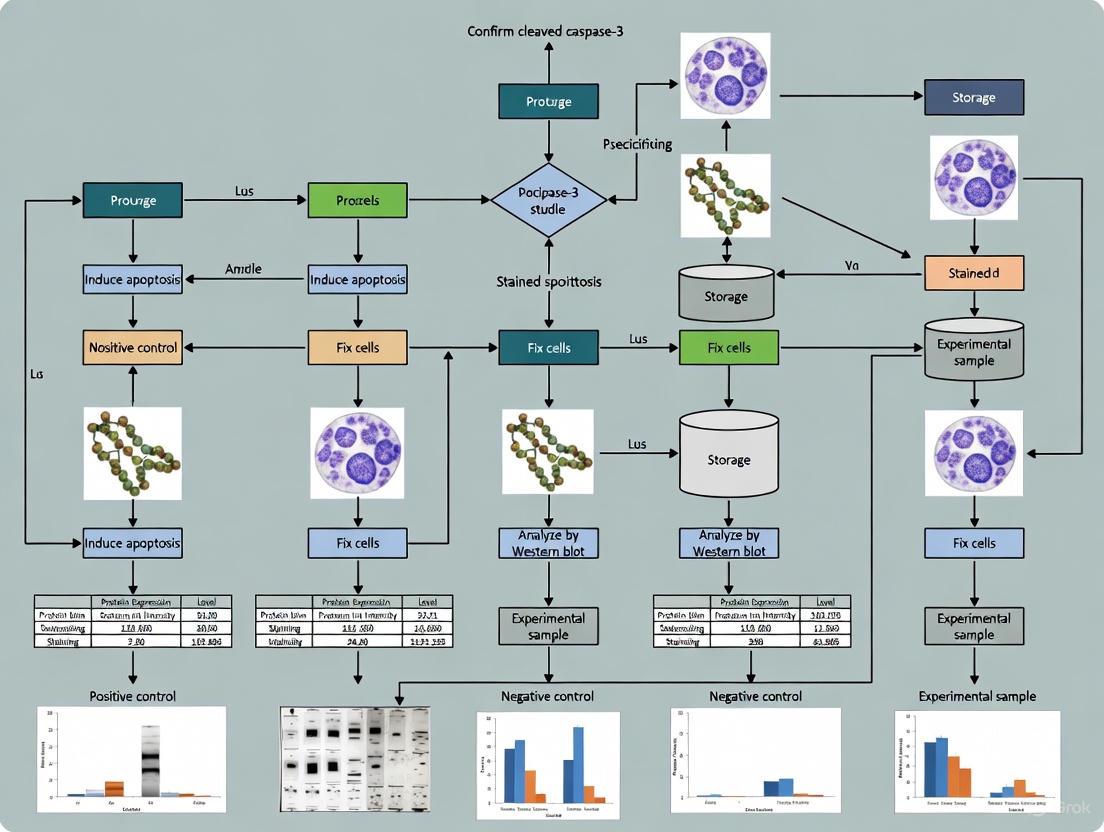
This article provides a comprehensive framework for researchers and drug development professionals to confirm the specificity of cleaved caspase-3 staining, a critical biomarker for apoptosis.
Specific Cleaved Caspase-3 Staining: A Complete Guide to Validation and Troubleshooting for Researchers
Abstract
This article provides a comprehensive framework for researchers and drug development professionals to confirm the specificity of cleaved caspase-3 staining, a critical biomarker for apoptosis. It covers the foundational biology of caspase-3 activation, detailed methodological protocols for immunofluorescence and western blotting, advanced troubleshooting for common issues like non-specific bands and high background, and rigorous validation strategies using orthogonal assays. By integrating foundational knowledge with practical application and validation techniques, this guide ensures accurate and reliable detection of apoptosis in both basic research and preclinical drug screening.
Understanding Caspase-3: From Zymogen to Executioner Protease
The Central Role of Caspase-3 in Apoptotic Execution
Caspase-3 is widely recognized as a critical executioner protease that coordinates the dismantling of cellular structures during apoptotic cell death. As a member of the cysteine-aspartic acid protease family, caspase-3 becomes activated through proteolytic processing of its inactive zymogen into activated p17 and p12 fragments, with cleavage requiring an aspartic acid residue at the P1 position [1]. This enzyme serves as a convergence point for both extrinsic (death receptor) and intrinsic (mitochondrial) apoptotic pathways, proteolytically cleaving numerous cellular targets to execute the apoptotic program [2] [3]. Among executioner caspases, caspase-3 holds a preeminent position; immunodepletion experiments demonstrate that removing caspase-3 abolishes the majority of proteolytic events observed during apoptosis, whereas immunodepletion of other executioner caspases shows minimal impact on apoptotic markers and their cleavage outcomes [2]. The identification of caspase-3 cellular targets remains crucial for understanding cellular mechanisms implicated in various diseases, including cancer, neurodegenerative disorders, and immunodeficiency conditions [2].
Caspase-3 Detection Methods: A Comparative Analysis
Accurate detection of activated caspase-3 is essential for apoptosis research, with multiple methodological approaches available to researchers. Each technique offers distinct advantages and limitations regarding sensitivity, specificity, temporal resolution, and applicability to different experimental systems.
Antibody-Based Detection Methods
Antibody-based methods utilize antibodies specifically designed to recognize either the cleaved/activated form of caspase-3 or both the full-length and cleaved forms.
Table 1: Comparison of Caspase-3 Antibodies for Various Applications
| Antibody | Reactivity | Western Blot | IP | IHC | Flow Cytometry | IF |
|---|---|---|---|---|---|---|
| Cleaved Caspase-3 (Asp175) (D3E9) Rabbit mAb | H, (M, R, Mk, B, Pg) | N/A | N/A | ++++ | ++++ | ++++ |
| Cleaved Caspase-3 (Asp175) (5A1E) Rabbit mAb | H, M, R, Mk, (Dg) | ++++ | ++++ | +++ | ++ | ++ |
| Cleaved Caspase-3 (Asp175) Antibody | H, M, R, Mk, (B, Dg, Pg) | ++++ | +++ | ++++ | +++ | +++ |
| Caspase-3 (3G2) Mouse mAb | H | +++ | - | - | - | - |
| Caspase-3 Antibody | H, M, R, Mk | +++ | +++ | ++ | - | - |
Application Key: WB=Western Blotting, IP=Immunoprecipitation, IHC=Immunohistochemistry, IF=Immunofluorescence; Reactivity Key: H=Human, M=Mouse, R=Rat, Mk=Monkey, B=Bovine, Dg=Dog, Pg=Pig; (++++)=Very Highly Recommended, (+++)=Highly Recommended, (++)=Recommended, (-)=Not Recommended, N/A=Not Applicable; Species in parentheses are predicted to react based on 100% sequence homology [4].
The Cleaved Caspase-3 (Asp175) Antibody exemplifies the specificity achievable with well-designed antibodies, detecting endogenous levels of the large fragment (17/19 kDa) of activated caspase-3 resulting from cleavage adjacent to Asp175 without recognizing full-length caspase-3 or other cleaved caspases [1]. Technical modifications can enhance antibody-based detection; for instance, Western blot sensitivity for caspase-3 can be significantly improved through protocol modifications incorporating glutaraldehyde [5].
A critical comparative study examining caspase detection methods in aminoglycoside-induced hair cell death revealed that caspase-directed antibodies provide a precise "snapshot" of apoptosis, labeling only cells currently undergoing apoptotic death. In contrast, fluorogenic caspase substrates like CaspaTag label all cells that have undergone apoptotic death in addition to those currently in the death process, making them ideal for showing overall patterns of cell death over time [3].
Fluorescent Reporter Systems for Live-Cell Imaging
Genetically-encoded fluorescent reporters enable real-time monitoring of caspase-3 activation dynamics in living cells, offering unprecedented temporal resolution.
FRET-Based Reporters: One prominent approach utilizes Förster Resonance Energy Transfer between cyan (CFP) and yellow (YFP) fluorescent proteins linked by a caspase-3 cleavage sequence (DEVD). Before caspase activation, FRET occurs efficiently between CFP and YFP in close proximity. Upon caspase-3-mediated cleavage of the DEVD linker, the fluorophores separate, reducing FRET efficiency [6]. This system revealed that once initiated, caspase-3 activation completes within approximately 5 minutes at the single-cell level, occurring almost simultaneously with mitochondrial membrane depolarization [6]. A significant advantage of FRET-based detection is the ability to monitor caspase-3 activation without affecting the kinetics of the apoptotic process itself [6].
FLIM-FRET Applications: Fluorescence Lifetime Imaging further enhances FRET applications by measuring changes in fluorescence lifetime independent of reporter concentration or imaging depth. Researchers have applied FLIM-FRET to image real-time activation of a caspase-3 reporter containing the DEVD sequence in multiple environments ranging from 2D cell culture to 3D spheroid systems and in vivo tumor xenografts [7]. This technique is particularly valuable for complex models where light scattering and absorption complicate intensity-based measurements.
Switch-On Fluorescence Indicators: Recently developed genetically-encoded indicators like VC3AI (Venus-based Caspase-3 Activity Indicator) employ a different mechanism, remaining non-fluorescent until cleaved by caspase-3-like proteases [8]. These indicators utilize cyclized chimeras containing a caspase-3 cleavage site that switches to a fluorescent conformation upon proteolysis. The cyclization prevents background fluorescence from intermolecular complementation, creating highly sensitive reporters with minimal background [8].
Table 2: Comparison of Caspase-3 Detection Methodologies
| Method | Principle | Temporal Resolution | Spatial Context | Key Advantages | Key Limitations |
|---|---|---|---|---|---|
| Cleavage-Specific Antibodies | Immunodetection of activated caspase-3 fragments | Fixed time points | Preserved in fixed tissues | High specificity for activated form; works in archived samples | No live-cell capability; requires fixation |
| FRET-Based Reporters | Cleavage-dependent change in energy transfer | Real-time (minutes) | Single-cell resolution in live cells | Kinetic data; single-cell heterogeneity | Requires transfection/transduction |
| FLIM-FRET | Fluorescence lifetime change after cleavage | Real-time | Live cells in 3D environments | Depth-independent; quantitative | Technically demanding instrumentation |
| Switch-On Fluorescent Reporters | Dark-to-bright fluorescence after cleavage | Real-time | Single-cell resolution in live cells | Low background; high contrast | May require validation of specificity |
| Fluorogenic Substrates (CaspaTag) | Binding to active caspase cysteine residues | Cumulative labeling | Live or unfixed tissue | Labels historical and current activity | Less precise temporal resolution |
Experimental Protocols for Caspase-3 Detection
Western Blot Detection of Cleaved Caspase-3
The Apoptosis Marker: Cleaved Caspase-3 (Asp175) Western Detection Kit provides a standardized approach for detecting caspase-3 processing and activation [1]. The protocol typically involves:
- Cell Lysis and Protein Extraction: Harvest cells and lyse using RIPA buffer supplemented with protease and phosphatase inhibitors.
- Protein Quantification and Separation: Determine protein concentration using BCA assay, resolve equal amounts of protein by SDS-PAGE (12-15% gels optimal for detecting 17/19 kDa fragments).
- Membrane Transfer and Blocking: Transfer proteins to PVDF membrane, block with 5% non-fat milk or BSA in TBST.
- Antibody Incubation: Incubate with primary cleaved caspase-3 (Asp175) antibody overnight at 4°C, followed by HRP-conjugated secondary antibody.
- Signal Detection: Develop using enhanced chemiluminescence substrate. Full-length caspase-3 (35 kDa) serves as a useful reference [1].
Technical enhancement: Incorporating glutaraldehyde during the transfer or blocking steps significantly improves antibody binding sensitivity for caspase-3 detection [5].
Generation of Stable Cell Lines Expressing Caspase-3 Reporters
For live-cell imaging applications, creating stable cell lines expressing caspase-3 reporters is essential:
- Vector Construction: Clone LSS-mOrange-DEVD-mKate2 cassette into PiggyBac transposon vector (PB-CMV-MCS-EF1-Puro) for stable integration [7].
- Transfection: Co-transfect reporter construct with Super PiggyBac Transposase expression vector using FuGENE 6 Transfection Reagent or calcium phosphate method [7].
- Selection and Sorting: Select transduced cells with puromycin (1-2 μg/mL) for 7-10 days, then FACS-sort to isolate populations with uniform reporter expression [7].
- Validation: Confirm reporter functionality by treating with known caspase-3 inducers (e.g., staurosporine) and imaging cleavage-dependent fluorescence changes.
FLIM-FRET Imaging of Caspase-3 Activation
Protocol for quantifying caspase-3 activation using FLIM-FRET in 2D and 3D culture models:
- Sample Preparation: Plate stable reporter cells on glass-bottom dishes or embed in 3D matrices like Matrigel.
- Treatment and Imaging: Apply apoptotic stimuli, then image using two-photon or confocal microscope with time-correlated single photon counting capability.
- Lifetime Measurement: Excite LSS-mOrange at 440-460 nm, collect emission at 560-600 nm, then fit lifetime decay curves per pixel.
- Data Analysis: Calculate mean fluorescence lifetime; increased lifetime indicates caspase-3 activation and FRET reduction [7].
Control experiments should include caspase inhibitor (Z-DEVD-fmk) treatment to confirm specificity, and comparison with non-cleavable control reporter (DEVG mutant) [6].
Caspase-3 Signaling Pathways and Substrate Specificity
Caspase-3 recognizes the canonical DEVD tetrapeptide sequence, though its substrate specificity extends beyond this core motif. While in vitro studies initially identified DEVD as the preferred recognition sequence for caspase-3 [2], subsequent research revealed that amino acids outside the tetrapeptide core (positions P6, P5, P2', and P3') critically influence caspase-3 specificity toward natural substrates [2]. This extended recognition motif explains why caspase-3 and the highly similar caspase-7, which share the same DEVD tetrapeptide preference, demonstrate distinct substrate specificities in vivo [2].
Figure 1: Caspase-3 Activation Pathways in Apoptosis. This diagram illustrates the central position of caspase-3 at the convergence of extrinsic and intrinsic apoptotic pathways, and its role in cleaving key substrates like MEK1 to promote cell death.
Recent research has identified MEK1 (MAPK/ERK kinase 1) as a specific caspase-3 substrate that illustrates the functional crosstalk between pro-survival and pro-apoptotic signaling [9]. During apoptosis, MEK1 is cleaved specifically by caspase-3 at an evolutionarily conserved Asp282 residue within its kinase domain, resulting in loss of catalytic activity [9]. This cleavage event represents a critical feedback mechanism where caspase-3 suppresses the pro-survival ERK signaling pathway, thereby sensitizing cells to apoptotic death. Gene knockout experiments confirmed that MEK1 cleavage is mediated specifically by caspase-3, with no involvement from other executioner caspases (-6 or -7) [9]. The physiological relevance of this mechanism is underscored by the discovery that a RASopathy-associated MEK1(Y130C) mutation prevents caspase-3-mediated cleavage and consequently protects cells from stress-induced apoptosis [9].
Research Reagent Solutions for Caspase-3 Studies
Table 3: Essential Research Reagents for Caspase-3 Detection
| Reagent Category | Specific Examples | Key Applications | Function and Utility |
|---|---|---|---|
| Cleavage-Specific Antibodies | Cleaved Caspase-3 (Asp175) (D3E9) Rabbit mAb; Cleaved Caspase-3 (Asp175) (5A1E) Rabbit mAb | IHC, IF, Flow Cytometry, WB | Specifically detect activated caspase-3 fragments without cross-reactivity to full-length protein or other caspases |
| Western Blot Kits | Cleaved Caspase-3 (Asp175) Western Detection Kit | Western blotting | Provides complete system for detecting caspase-3 processing with controls and markers |
| Fluorescent Reporters | LSS-mOrange-DEVD-mKate2; CFP-DEVD-YFP; VC3AI | Live-cell imaging, FLIM, FRET | Enable real-time monitoring of caspase-3 activation kinetics in living cells |
| Caspase Inhibitors | Z-DEVD-fmk; Z-VAD-fmk | Control experiments | Validate specificity of caspase-3 activation; Z-DEVD-fmk specifically targets caspase-3-like proteases |
| Activity Assays | CaspaTag kits; Fluorogenic substrates | Solution-based or in situ activity detection | Directly measure enzymatic activity rather than cleavage status |
| Validation Tools | Caspase-3 deficient cells; Uncleavable mutants | Specificity controls | Confirm observed effects are caspase-3 dependent |
The central role of caspase-3 in apoptotic execution necessitates precise, specific detection methods for accurate research outcomes. Antibody-based approaches provide high specificity for histological applications and fixed-timepoint analyses, while fluorescent reporter systems enable unprecedented visualization of caspase-3 activation dynamics in real-time within living cells. The development of increasingly sophisticated tools, including FLIM-FRET compatible reporters and switch-on fluorescent indicators, continues to expand our capability to study caspase-3 activity in physiologically relevant models such as 3D culture systems and in vivo environments. The discovery of specific caspase-3 substrates like MEK1 illustrates how caspase-3 functions not merely as a passive executioner, but as an active regulator of competing cellular signaling pathways. As detection methodologies continue to advance, they will undoubtedly reveal further complexity in the caspase-3 regulatory network and its implications for human health and disease.
Caspase-3 serves as a critical executioner protease in apoptotic pathways, with its activation serving as a definitive marker for programmed cell death. The cleavage at Asp175 represents a pivotal biochemical event that transforms the inactive zymogen into an active enzyme capable of dismantling cellular components. Understanding the specificity of detecting this cleavage event is fundamental for research in developmental biology, cancer therapeutics, and neurodegenerative diseases. This guide provides an objective comparison of methodologies and reagents used to confirm the specificity of cleaved caspase-3 staining, equipping researchers with the tools to accurately interpret apoptosis in experimental models.
The Biochemical Basis of Caspase-3 Activation
Caspase-3 exists as an inactive pro-enzyme (zymogen) that requires proteolytic processing for activation. This process involves cleavage at specific aspartic acid residues to generate the active heterotetramer composed of two large (p17) and two small (p12) subunits [10]. The cleavage at Asp175 (using human caspase-3 numbering) occurs within the conserved caspase-3 sequence and yields the characteristic p17 and p12 fragments that constitute the active enzyme [11] [12].
The prodomain of caspase-3, though shorter than those of initiator caspases, plays a crucial regulatory role in its activation. Recent research demonstrates that complete removal of the prodomain does not render caspase-3 constitutively active but rather lowers its activation threshold, making cells more susceptible to apoptotic signals [13]. Specific amino acids within the prodomain, particularly D9, are vital for caspase-3 function, suggesting an initial cleavage event at D9 may be required to allow subsequent cleavage at D28 for complete prodomain removal [13].
Caspase-3 occupies a central position in apoptotic pathways, functioning as a convergence point for both intrinsic (mitochondrial) and extrinsic (death receptor) apoptosis pathways [10]. Once activated, caspase-3 cleaves numerous cellular targets, including poly(ADP-ribose) polymerase (PARP), leading to the characteristic biochemical and morphological changes associated with apoptotic cell death [6] [10].
Table 1: Key Domains and Cleavage Sites in Caspase-3 Activation
| Domain/Feature | Description | Functional Significance |
|---|---|---|
| Prodomain | N-terminal region (approximately 28 amino acids) | Regulatory function; complete removal required for full activation [13] |
| Large Subunit (p17) | Contains the catalytic cysteine residue (C163) | Forms active enzyme when complexed with p12 subunit [13] |
| Small Subunit (p12) | C-terminal region of the protein | Heterodimerizes with p17 to form active site [10] |
| Asp175 Cleavage Site | Site between large and small subunits | Cleavage generates active fragments; recognition site for many antibodies [11] [12] |
| Catalytic Site | Contains C163 essential for proteolytic activity | Point mutations (e.g., C163A) render enzyme inactive [13] |
Methodological Approaches for Detecting Activated Caspase-3
Antibody-Based Detection Methods
Antibodies specific to the cleaved form of caspase-3 provide a powerful tool for detecting apoptosis in cells and tissues. These reagents typically recognize the neoepitope exposed after cleavage at Asp175, allowing specific detection of activated caspase-3 without cross-reactivity with the full-length zymogen [11] [12].
Western Blotting remains a cornerstone technique for confirming caspase-3 activation, with cleaved caspase-3 antibodies detecting the 17/19 kDa fragments resulting from cleavage adjacent to Asp175 [11] [14]. Proper analysis requires understanding that caspase activation involves a cascade of cleavage events, and western blotting provides information about both processing and abundance [14].
Immunohistochemistry and Immunofluorescence applications enable spatial localization of activated caspase-3 within tissue sections and cells, with recommended dilutions typically ranging from 1:400 to 1:500 for these techniques [11] [12]. Researchers must be aware that non-specific labeling may occur in specific subtypes of healthy cells, such as pancreatic alpha-cells, and nuclear background may be observed in certain species [11].
Flow Cytometry facilitates quantification of caspase-3 activation at the single-cell level in population studies, with fixed/permeabilized protocols typically using antibody dilutions around 1:800 [11].
Table 2: Comparison of Cleaved Caspase-3 Antibody Performance Across Applications
| Application | Recommended Dilution | Key Detection | Limitations |
|---|---|---|---|
| Western Blot | 1:1,000 [11] | 17/19 kDa fragments [11] | Does not provide single-cell resolution |
| Immunohistochemistry (Paraffin) | 1:400 [11] | Spatial localization in tissue context | Potential non-specific labeling in specific cell types [11] |
| Immunofluorescence | 1:400-1:500 [11] [12] | Subcellular localization | Nuclear background in rat and monkey samples [11] |
| Flow Cytometry | 1:800 [11] | Quantitative population analysis | Requires cell permeabilization |
FRET-Based Caspase-3 Reporters
Fluorescence Resonance Energy Transfer (FRET)-based biosensors provide a dynamic approach to monitor caspase-3 activation in living cells with high spatiotemporal resolution. These biosensors typically consist of two fluorescent proteins (e.g., CFP and YFP, or LSS-mOrange and mKate2) linked by a peptide sequence containing the DEVD caspase-3 cleavage motif [6] [7].
Before caspase-3 activation, the close proximity of the fluorophores enables FRET to occur. Upon caspase-3 activation and cleavage of the DEVD sequence, the fluorophores separate, leading to a decrease in FRET efficiency that can be quantified by various imaging methods [6] [7]. Research has demonstrated that once initiated, caspase-3 activation is remarkably rapid, completing within 5 minutes or less in single cells, and occurs almost simultaneously with mitochondrial membrane potential depolarization [6].
The FLIM-FRET (Fluorescence Lifetime Imaging Microscopy-FRET) approach offers particular advantages for detecting caspase-3 activation in complex environments, including 3D spheroids and in vivo models, as fluorescence lifetime measurements are independent of probe concentration or excitation intensity [7].
Biochemical Activity Assays
Capillary Electrophoresis (CE) combined with FRET-based substrates enables high-throughput detection of caspase-3 activity in cell populations. This approach has revealed that different types of cells present distinct caspase-3 activation sensitivities under the same drug treatment, and combination treatments can significantly accelerate the caspase-3 activation process [15].
Enzymatic assays measuring cleavage of synthetic substrates containing the DEVD sequence (such as DEVD-pNA or DEVD-AMC) provide quantitative information about caspase-3 activity in cell lysates. These assays detect the proteolytic activity rather than the physical presence of the cleaved protein, offering complementary evidence for caspase-3 activation.
Experimental Design for Validating Staining Specificity
Controls for Specificity Verification
Negative Controls are essential for establishing staining specificity. These include:
- Caspase-3 deficient cells [13] or tissues from caspase-3 knockout animals [16]
- Unstained samples to assess autofluorescence
- Isotype controls for antibody-based methods
- Cells expressing catalytic mutant caspase-3 (C163A or C163S) that cannot be activated [13]
Positive Controls validate the detection method:
- Cells treated with known apoptosis inducers (e.g., staurosporine, cisplatin) [6] [15]
- Serum withdrawal from cultured cells [13]
- Validation with multiple detection methods on parallel samples
Multiparameter Apoptosis Assessment
Relying on a single method for apoptosis detection carries inherent risks of false positives or negatives. A comprehensive approach should include:
Correlation with Morphological Changes: Caspase-3 activation should precede or coincide with characteristic apoptotic morphology, including cell shrinkage, membrane blebbing, and nuclear condensation [6].
Parallel Assessment of Apoptosis Markers:
- PARP cleavage detection provides evidence of downstream caspase-3 activity [6]
- Mitochondrial membrane potential changes often coincide with caspase-3 activation [6]
- Phosphatidylserine externalization detected by Annexin V staining
Research Reagent Solutions
Table 3: Essential Research Reagents for Caspase-3 Studies
| Reagent/Category | Specific Examples | Function/Application |
|---|---|---|
| Cleaved Caspase-3 Antibodies | Cleaved Caspase-3 (Asp175) Antibody #9661 (Cell Signaling) [11]; Caspase 3 (Cleaved Asp175) Polyclonal Antibody (Thermo Fisher, PA5-114687) [12] | Detect activated caspase-3 in WB, IHC, IF, Flow |
| FRET-Based Biosensors | CFP-DEVD-YFP [6]; LSS-mOrange-DEVD-mKate2 [7] | Live-cell imaging of caspase-3 activation |
| Caspase Inhibitors | zVAD-fmk (broad-spectrum) [6]; DEVD-based inhibitors | Specificity controls; mechanistic studies |
| Activity Assay Substrates | DEVD-pNA; DEVD-AMC | Fluorometric or colorimetric activity measurement |
| Apoptosis Inducers | Staurosporine [6]; Cisplatin, Camptothecin, Etoposide [15] | Positive controls for caspase-3 activation |
| Validated Cell Lines | Caspase-3 deficient MEFs [13]; Stable reporter lines [7] | Control and experimental systems |
Technical Considerations and Troubleshooting
Temporal Dynamics of Caspase-3 Activation
The timing of caspase-3 activation detection requires careful consideration. While population-level analyses suggest a slow activation process over several hours, single-cell studies reveal that once initiated, caspase-3 activation completes within 5 minutes or less [6]. This rapid activation kinetics means that sampling frequency significantly impacts detection sensitivity.
Species-Specific Considerations
Antibodies against cleaved caspase-3 show varying reactivity across species. Many commercial antibodies recognize human, mouse, and rat caspase-3 [11] [12], but researchers should verify cross-reactivity for less common model organisms. Non-specific labeling patterns may also differ between species, with noted nuclear background in rat and monkey samples [11].
Optimization Guidelines
Sample Preparation: Proper fixation and permeabilization are critical for antibody-based detection. For immunofluorescence, paraformaldehyde fixation with Triton X-100 permeabilization (0.1%) effectively preserves epitopes while allowing antibody access [12].
Antibody Validation: Always include both positive and negative controls in each experiment. Compare results with alternative detection methods when possible.
Signal Interpretation: Be aware that cleaved caspase-3 may display subcellular compartmentalization, with both cytoplasmic and nuclear localization reported in various models [10] [16]. Punctate caspase-3 staining patterns may indicate localized activation events rather than whole-cell apoptosis [16].
Advanced Applications and Emerging Insights
Non-Apoptotic Functions of Caspase-3
Beyond its well-established role in cell death, emerging evidence indicates that caspase-3 participates in non-apoptotic processes, including synaptic plasticity, neural development, and cellular differentiation [17]. These functions often involve limited or localized caspase-3 activation that does not necessarily lead to cell death, presenting both challenges and opportunities for detection method specificity.
Caspase-3 in Disease Models
Caspase-3 activation serves as a key marker in various disease contexts. In Alzheimer's disease models, caspase-3 activation contributes to synapse elimination [16], while in cancer models, it mediates response to chemotherapeutic agents [15]. The ability to specifically detect cleaved caspase-3 enables evaluation of therapeutic efficacy and disease mechanisms.
Caspase-3 Activation Pathway
Specificity Validation Workflow
The confirmation of specific cleaved caspase-3 staining requires a multifaceted approach that combines biochemical, imaging, and genetic methods. The cleavage at Asp175 represents a definitive biochemical event in caspase-3 activation, but proper interpretation demands careful consideration of temporal dynamics, appropriate controls, and correlation with complementary apoptosis markers. By implementing the rigorous validation strategies outlined in this guide, researchers can confidently detect and quantify caspase-3 activation across diverse experimental systems, from two-dimensional cell cultures to complex in vivo models. As our understanding of non-apoptotic caspase-3 functions expands, these precise detection methods will continue to provide critical insights into both physiological and pathological processes.
Caspase-3, a cysteine-aspartic protease, serves as a central executioner in the apoptotic cascade, cleaving target proteins at specific aspartic acid residues to orchestrate programmed cell death [18]. Its activation is a definitive marker of apoptosis across diverse research contexts, from cancer therapeutics to forensic pathology [18] [19]. During activation, caspase-3 itself undergoes proteolytic cleavage. The pro-enzyme is processed into distinct subunits, typically observed at 17 kDa, 19 kDa, and 20 kDa on western blots, with the 17 kDa and 19/20 kDa fragments representing the large and small subunits of the active enzyme, respectively [20]. Interpreting this banding pattern is crucial for confirming specific caspase-3 activation and distinguishing true apoptosis from nonspecific staining. This guide provides a structured framework for researchers to accurately identify, quantify, and validate these key subunits, ensuring reliable interpretation of apoptotic events in disease mechanisms and drug development.
Deciphering the Banding Pattern: Subunit Characteristics and Significance
The appearance of the 17 kDa and 19/20 kDa bands provides direct evidence of caspase-3 activation. However, the presence of multiple bands can introduce ambiguity. The following workflow outlines a systematic approach for confirmation.
Key Characteristics of Caspase-3 Subunits
- The 17 kDa Large Subunit: This fragment results from the cleavage of the pro-enzyme and pairs with the small subunit to form the active heterotetramer. Its presence is a strong indicator of successful activation.
- The 19 kDa and 20 kDa Intermediate Fragments: These bands often represent partially cleaved or intermediate forms during the stepwise processing of pro-caspase-3. Their presence can vary based on cell type, apoptotic stimulus, and efficiency of the cleavage process [20].
- The 12 kDa Small Subunit: Although not the focus of this title, this subunit is the partner to the 17 kDa large subunit. Antibodies may not always detect it, as some are designed to target the N-terminus or other epitopes present on the larger fragments.
- Pro-caspase-3 (~35 kDa): The intact, inactive precursor. A decrease in its band intensity, coupled with the appearance of the cleavage products, confirms activation.
Experimental Data and Quantitative Comparison
The table below summarizes the key attributes of the primary bands observed during caspase-3 activation.
Table 1: Characteristics of Major Caspase-3 Bands in Western Blot Analysis
| Band Designation | Predicted Size (kDa) | Status | Significance in Apoptosis | Common Causes of Variation |
|---|---|---|---|---|
| Pro-caspase-3 | ~32-35 | Inactive Precursor | Indicates potential reservoir for activation | Alternative splicing isoforms can cause minor size differences [20]. |
| Intermediate Fragment | ~19-20 | Partially Cleaved | Intermediate step in activation cascade | Can be more prominent with certain stimuli or short induction times. |
| Large Subunit | ~17 | Active Fragment | Forms the catalytic core of active caspase-3 | Post-translational modifications (e.g., phosphorylation) can subtly shift apparent molecular weight [20]. |
| Small Subunit | ~12 | Active Fragment | Pairs with large subunit | Often not detected by all antibodies. |
Essential Methodologies for Validating Specificity
Confirming that observed staining is specific to caspase-3 cleavage is paramount. The following experimental protocols are foundational for this validation.
Pharmacological Inhibition with Caspase Inhibitors
Using specific, cell-permeable inhibitors is a direct method to confirm caspase-3's role.
- Protocol: Pre-treat cells with a pan-caspase inhibitor like Z-VAD-fmk (e.g., 20-50 µM) or the more specific caspase-3/7 inhibitor Z-DEVD-fmk (e.g., 50-200 µM) for 1-2 hours before applying the apoptotic stimulus [8]. The high dose of Z-DEVD-fmk (200 µM) is reported to almost totally block fluorescence in biosensor-based apoptosis detection [8].
- Expected Outcome: Effective inhibition will significantly reduce or abolish the appearance of the 17 kDa and 19/20 kDa cleavage bands, confirming their dependence on caspase activity.
Genetic Knockdown of Caspase-3/7
Reducing enzyme expression provides genetic evidence for specificity.
- Protocol: Use siRNA or shRNA to knock down caspase-3 (or caspase-7 in caspase-3-deficient cells like MCF-7) [8]. Transfect cells with the targeting constructs, select stable clones or assay after transient transfection (e.g., 48-72 hours), then induce apoptosis.
- Expected Outcome: Knockdown of caspase-7 in MCF-7 cells has been shown to significantly suppress apoptosis-induced fluorescence in caspase activity reporters, validating target engagement [8]. In western blots, this should manifest as a strong reduction in cleavage band intensity.
Antibody Validation and Control Samples
A critical step is to ensure the antibody itself is specific.
- Protocol: Include both positive and negative control lysates on every blot. A positive control can be lysate from cells treated with a known apoptosis inducer (e.g., staurosporine, 1 µM for 4-6 hours). A negative control is lysate from healthy, untreated cells.
- Expected Outcome: The antibody should show a strong, clean signal at the correct molecular weights in the positive control and minimal to no signal in the negative control. Non-specific bands at other sizes indicate potential antibody cross-reactivity.
The Scientist's Toolkit: Research Reagent Solutions
Successful interpretation of caspase-3 banding patterns relies on a suite of essential reagents and tools.
Table 2: Essential Reagents for Caspase-3 Cleavage Analysis
| Reagent / Solution | Function | Application Notes |
|---|---|---|
| Caspase-3 Antibody | Detects both pro- and cleaved forms of caspase-3. | Select antibodies validated for Western Blot (WB). Anti-cleaved caspase-3 antibodies specifically recognize the activated form. |
| Z-DEVD-fmk Inhibitor | Irreversibly inhibits caspase-3-like proteases (DEVDases) by binding the active site. | Used at 50-200 µM for pre-treatment to confirm caspase-dependent cleavage [8]. |
| Apoptosis Inducers | Positive control stimuli to trigger caspase-3 activation. | Staurosporine, TNF-α (with cycloheximide in some models), or chemotherapeutic drugs like 5-FU [8] [19]. |
| Enhanced Chemiluminescence (ECL) Substrate | Generates light signal for antibody-bound protein band detection. | Choose high-sensitivity substrates for low-abundance cleaved subunits. Ensure even distribution for accurate quantification [21]. |
| Housekeeping Protein Antibodies | Loading controls for normalization (e.g., GAPDH, Actin). | Note: Expression can vary. Total Protein Normalization (TPN) is increasingly the gold standard for more accurate quantification [22]. |
| No-Stain Protein Labeling Reagent | Fluorescent total protein stain for superior normalization (TPN). | Provides a uniform signal for total protein in each lane, overcoming limitations of housekeeping proteins [22]. |
Advanced Analysis: Quantitative Western Blotting and Data Interpretation
Moving from simple detection to accurate quantification is essential for publication-quality data.
Normalization Strategies for Accurate Quantification
Normalization accounts for technical variations and is a critical step in quantitative Western blotting to ensure reliable and reproducible results [21] [23].
- Total Protein Normalization (TPN): This method, increasingly required by top journals, involves staining and quantifying the total protein in each lane before or during antibody probing [22]. It is less prone to variation caused by changes in single housekeeping proteins and provides a broader linear detection range [21] [22].
- Housekeeping Protein (HKP) Normalization: The traditional method involves calculating the ratio of the target protein band intensity (e.g., cleaved caspase-3) to a housekeeping protein like GAPDH or Actin from the same sample [21]. However, HKP expression can vary with cell type, experimental conditions, and disease state, leading to inaccuracies [22].
Quantification Workflow and Best Practices
The following diagram illustrates the core steps for robust quantification of caspase-3 cleavage fragments.
- Image Capture: Save blot images in a lossless format (e.g., TIFF) and avoid overexposure, which saturates bands and makes quantification impossible [21] [22].
- Background Subtraction: Use software like ImageJ to measure and subtract the background intensity adjacent to each band [21].
- Data Analysis: Calculate the fold change in cleaved caspase-3 by dividing the normalized density of treated samples by the normalized density of the control sample. For statistical analysis, fold changes are often expressed on a log scale (e.g., log2) [21].
Accurately interpreting the 17 kDa, 19 kDa, and 20 kDa subunits of caspase-3 requires more than just observing bands on a blot. It demands a systematic, multi-faceted approach that integrates pharmacological, genetic, and methodological controls. By employing specific inhibitors, validating antibodies with appropriate controls, and utilizing rigorous quantification methods like total protein normalization, researchers can confidently confirm that their observed staining is a specific report of apoptotic activity. This rigorous framework is essential for generating reliable data that advances our understanding of cell death in basic research and therapeutic development.
Apoptosis, or programmed cell death, is orchestrated by a family of intracellular proteases known as caspases. These enzymes are broadly classified into two functional categories: initiator caspases (including caspase-8, -9, and -10) that sense apoptotic signals and initiate the cascade, and executioner caspases (including caspase-3, -6, and -7) that carry out the dismantling of the cell [24] [25]. Among all, caspase-3 is recognized as the primary executioner, responsible for the majority of proteolytic events during apoptosis [26]. Its activation is often considered a point of no return, committing the cell to death. For researchers and drug development professionals, accurately detecting caspase-3 activity and confirming the specificity of this detection is paramount. Non-specific signals, particularly from other caspases with overlapping substrate preferences like caspase-7, can lead to misinterpretation of experimental results. This guide provides a structured comparison of caspase-3's properties against other caspases and outlines validated experimental protocols to ensure specific and reliable detection in apoptosis research.
Caspase Classification and Activation Mechanisms
Structural and Functional Classification of Caspases
Caspases are cysteine-dependent aspartate-specific proteases, present in healthy cells as inactive zymogens (pro-enzymes) [24] [26]. Their activation triggers a proteolytic cascade. The classification is based on their role in the apoptotic pathway and their structural features:
- Initiator Caspases (e.g., caspase-8, -9, -10): These have long prodomains (∼100 residues) and are activated by induced proximity and dimerization upon recruitment to large activation platforms like the Death-Inducing Signaling Complex (DISC) for caspase-8 or the Apoptosome for caspase-9 [24].
- Executioner Caspases (e.g., caspase-3, -6, -7): These possess short prodomains (<30 residues) and exist as inactive dimers. They are activated by proteolytic cleavage between their large and small subunits, a step primarily performed by initiator caspases [24].
Table 1: Functional Classification of Major Mammalian Caspases
| Caspase | Primary Role | Prodomain Length | Activation Mechanism | Primary Activation Platform |
|---|---|---|---|---|
| Caspase-8 | Initiator | Long | Induced Dimerization | DISC (Extrinsic Pathway) |
| Caspase-9 | Initiator | Long | Induced Dimerization | Apoptosome (Intrinsic Pathway) |
| Caspase-3 | Executioner | Short | Proteolytic Cleavage | Cleaved by Caspase-8, -9, -10 |
| Caspase-7 | Executioner | Short | Proteolytic Cleavage | Cleaved by Caspase-8, -9, -10 |
Caspase Activation Pathways
The following diagram illustrates the hierarchical relationship between initiator and executioner caspases within the core apoptotic pathways, highlighting the central role of caspase-3.
As shown in Figure 1, initiator caspases are activated by specific death signals. Once active, they cleave and activate the executioner caspases, primarily caspase-3 and caspase-7. Notably, caspase-8 can directly process pro-caspase-3 with high efficiency, making it a major physiological target [27]. Caspase-3 then amplifies the death signal by cleaving a vast range of cellular substrates, leading to the morphological changes characteristic of apoptosis [24] [25].
Quantitative Comparison of Caspase Properties
A clear understanding of the kinetic and biochemical properties of different caspases is fundamental to designing specific detection strategies.
Table 2: Comparative Biochemical Properties of Apoptotic Caspases
| Caspase | Primary Cleavage Motif | Catalytic Efficiency Relative to Caspase-3 | Key Distinguishing Features |
|---|---|---|---|
| Caspase-3 | DEVD | Highest [28] | Central executioner; vast substrate pool; most efficient turnover [28]. |
| Caspase-7 | DEVD | Lower than caspase-3 [28] | Biochemically similar to caspase-3 but functionally distinct; overlapping but non-identical substrate pool [28]. |
| Caspase-8 | IETD | N/A | Initiator; directly activates caspase-3; can be processed by caspase-6 in a feedback loop [24] [28]. |
| Caspase-9 | LEHD | N/A | Initiator; activated by dimerization on the apoptosome; activity can be modulated by allosteric regulators [24] [28]. |
The data in Table 2 reveals a key challenge in specificity: caspase-3 and caspase-7 share the same preferred tetrapeptide motif, DEVD. This means fluorogenic substrates or inhibitors based on the DEVD sequence will detect the activity of both enzymes, necessitating additional validation methods to attribute the signal specifically to caspase-3.
Experimental Protocols for Specific Caspase-3 Detection
Flow Cytometry Using Cleaved Caspase-3-Specific Antibodies
The most specific method for detecting caspase-3 activation is through the use of antibodies that recognize the cleaved (active) form of the enzyme, but not its full-length precursor.
- Induction and Harvesting: Induce apoptosis in your cell culture system. Harvest cells using a gentle method like trypsinization or cell scraping, and wash with PBS.
- Fixation and Permeabilization: Resuspend the cell pellet in a commercial fixation/permeabilization buffer (e.g., BD Cytofix/Cytoperm) and incubate for 20-30 minutes on ice. This step is crucial for allowing the antibody to access intracellular antigens.
- Staining: Wash cells with a permeabilization/wash buffer. Incubate the cell pellet with a phycoerythrin (PE)-conjugated anti-cleaved caspase-3 antibody (e.g., from BD Biosciences) for 30-60 minutes at room temperature, protected from light.
- Analysis: Wash the cells to remove unbound antibody and resuspend in flow cytometry buffer. Analyze immediately on a flow cytometer. Cells positive for PE fluorescence are undergoing caspase-3-mediated apoptosis.
Key Specificity Control: To confirm the specificity of the staining, include a control sample pre-treated with a pan-caspase inhibitor (e.g., Z-VAD-FMK). This should significantly reduce or eliminate the cleaved caspase-3 signal [29].
Caspase-3/7 Activity Assays and Deconvolution
While activity assays are powerful, the shared DEVD motif of caspase-3 and -7 requires careful interpretation.
Protocol: CellEvent Caspase-3/7 Green Flow Cytometry Assay [30]:
- Staining: Add the cell-permeant CellEvent Caspase-3/7 Green Detection Reagent directly to the culture medium of live cells at the recommended concentration (e.g., 0.5-1 µL per 100 µL of media).
- Incubation: Incubate the cells for 30-60 minutes at 37°C, protected from light. During apoptosis, activated caspase-3 and -7 cleave the reagent, releasing a DNA-binding dye that fluoresces upon binding to DNA.
- Analysis (No Wash): Analyze the cells by flow cytometry or fluorescence microscopy without washing or fixing. This is a no-wash protocol that helps retain the signal from apoptotic cells.
Deconvoluting Caspase-3 from Caspase-7 Activity: Since DEVD-based reagents cannot distinguish caspase-3 from caspase-7, specificity must be achieved through complementary methods:
- Immunoblotting: Run parallel samples for Western blot analysis using antibodies specific for the cleaved fragments of caspase-3 and caspase-7. This provides molecular weight confirmation of the specific caspase being activated [31].
- Genetic Knockdown: Use siRNA or CRISPR to selectively knock down caspase-3 or caspase-7. A significant reduction in DEVDase activity upon caspase-3 knockdown confirms its major contribution to the signal [28].
The Scientist's Toolkit: Essential Reagents for Caspase-3 Research
Table 3: Key Research Reagents for Specific Caspase-3 Detection
| Reagent / Kit | Specificity | Principle / Function | Key Application |
|---|---|---|---|
| Anti-Cleaved Caspase-3 (PE) [29] | Caspase-3 specific | Antibody recognizing a neo-epitope exposed only after caspase-3 cleavage. | Highly specific detection of active caspase-3 by flow cytometry or immunofluorescence. |
| CellEvent Caspase-3/7 Green Kit [30] | Caspase-3 and Caspase-7 | Cell-permeant fluorogenic substrate (DEVD sequence). | Live-cell, no-wash kinetic analysis of combined caspase-3/7 activity. |
| Caspase-3/7 Activity Flow Cytometry Kit (STEMCELL) [32] | Caspase-3 and Caspase-7 | Irreversible binding of TF2-DEVD-FMK to active enzyme. | Flow cytometry-based quantification of cells with active caspase-3/7. |
| Z-VAD-FMK (Pan-Caspase Inhibitor) | All caspases | Irreversibly binds the active site of most caspases. | Essential negative control to confirm caspase-dependent apoptosis. |
| Neo-Epitope Antibodies (NEAs) [31] | Pan-specific for DXXD fragments | Antibodies recognizing the common C-terminal structure of many caspase-cleaved proteins. | Immunoprecipitation and discovery of novel caspase substrates; confirms global caspase activity. |
Specific detection of caspase-3 activation is a cornerstone of reliable apoptosis research. While its shared substrate preference with caspase-7 presents a challenge, this can be overcome by a strategic combination of tools. Antibodies against the cleaved form of caspase-3 provide the highest specificity for unambiguous identification of this key executioner. Fluorogenic activity assays offer convenience and sensitivity for kinetic studies but are best interpreted in the context of caspase-3/7 activity unless supplemented with immunoblotting. By understanding the distinct activation mechanisms and biochemical profiles of initiator and executioner caspases, and by applying the validated protocols and controls outlined in this guide, researchers can generate robust and interpretable data to advance our understanding of cell death in health and disease.
Caspase-3 is a cysteine-aspartic protease recognized as a critical executioner enzyme in the process of apoptosis, or programmed cell death [10]. Its activation represents a point of convergence for the major apoptotic signaling pathways—both the intrinsic (mitochondrial) and extrinsic (death receptor) pathways [10]. For researchers and drug development professionals, the specific detection of cleaved, active caspase-3 is a fundamental method for confirming apoptosis in experimental models, from cancer research to neurobiology [26] [33]. This guide provides a structured comparison of caspase-3's role across pathways, supported by experimental data and detailed protocols to ensure the specificity of its detection.
Caspase-3 as the Central Executioner of Apoptosis
Caspase-3 exists in cells as an inactive zymogen (pro-caspase-3) that requires proteolytic cleavage for activation. Upon activation, it cleaves a wide array of cellular substrates, leading to the characteristic biochemical and morphological changes of apoptosis [10].
- Proteolytic Activation: The activation process involves cleavage at specific aspartic acid residues, generating active fragments of 17 kDa and 12 kDa [34]. Antibodies specific to these cleaved forms are widely used to detect apoptosis [26].
- Key Substrate: A quintessential substrate of caspase-3 is Poly (ADP-ribose) Polymerase (PARP). Cleavage of the 116 kDa PARP into an 85 kDa fragment inactivates its DNA repair function and is considered a hallmark of apoptosis [35].
- Developmental and Pathological Relevance: Caspase-3 is indispensable for normal development; mice with a caspase-3 gene knockout display severe defects, including ectopic cell masses, and die prematurely [10]. Its activity is also implicated in various pathological conditions, including cerebral ischemia and cancer [33] [36].
Pathway Comparison: Activation of Caspase-3
The two primary pathways to caspase-3 activation, along with key experimental data, are summarized below. A critical concept is the presence of crosstalk between these pathways, such as the cleavage of Bid by caspase-8, which can amplify the apoptotic signal via the intrinsic pathway [36].
The following diagram illustrates the sequence of events in the intrinsic and extrinsic apoptotic pathways, culminating in the activation of caspase-3.
Comparative Experimental Data
The table below summarizes quantitative data from a 2023 study investigating a novel pyrrolidine derivative (SS13) on colon cancer cells, demonstrating caspase-3 activation via both pathways [36].
Table 1: Caspase-3 Pathway Activation in Colon Cancer Cells Treated with SS13 [36]
| Feature | HCT116 Cell Line | Caco-2 Cell Line |
|---|---|---|
| IC₅₀ (MTT assay) | 3.2 ± 0.1 μmol/L | 2.2 ± 1.5 μmol/L |
| Key Intrinsic Pathway Markers | Reduced MMP; Dysregulation of Bcl-2 family proteins | Reduced MMP; Dysregulation of Bcl-2 family proteins |
| Key Extrinsic Pathway Markers | Activation of Caspase-8; Overexpression of FasL | Activation of Caspase-8; Overexpression of TNF-α |
| Execution Phase Markers | Activation of Caspases-3/7; Cleavage of PARP | Activation of Caspases-3/7; Cleavage of PARP |
| Functional Outcome | Inhibition of cell migration | Inhibition of cell migration |
Experimental Protocols for Detecting Active Caspase-3
Confirming the specificity of cleaved caspase-3 staining is paramount. Below are detailed methodologies for three key techniques.
Flow Cytometry for Cleaved Caspase-3
This protocol allows for the quantification of the percentage of cells undergoing apoptosis within a population [26].
- Induction and Fixation: Induce apoptosis in cells. Harvest and wash cells with PBS. Fix cells using a paraformaldehyde-based fixative (e.g., 4% for 15 minutes at room temperature).
- Permeabilization: Pellet cells and carefully resuspend in a cold, saponin-based permeabilization buffer (e.g., 0.1% saponin in PBS) to allow antibody entry.
- Antibody Staining: Incubate cells with a fluorochrome-conjugated antibody specific for cleaved caspase-3 (not the full-length protein) for 30-60 minutes in the dark. Include an isotype control for gating.
- Analysis: Wash cells to remove unbound antibody. Resuspend in buffer and analyze immediately by flow cytometry. The fluorescent signal in the relevant channel indicates cells positive for cleaved caspase-3.
Western Blot for Caspase-3 and PARP Cleavage
Western blotting confirms activation and demonstrates proteolytic processing of caspase-3 and its substrate, PARP [34] [36].
- Protein Extraction: Lyse control and treated cells in RIPA buffer supplemented with protease inhibitors.
- Gel Electrophoresis: Separate 20-30 μg of total protein per lane on a 4-20% SDS-PAGE gel.
- Membrane Transfer: Transfer proteins from the gel to a nitrocellulose or PVDF membrane.
- Antibody Probing:
- Block membrane with 5% non-fat milk.
- Incubate with primary antibodies against:
- Caspase-3 (to detect full-length ~35 kDa and large fragment ~17/19 kDa).
- PARP (to detect full-length ~116 kDa and cleaved fragment ~85 kDa).
- Wash membrane and incubate with an HRP-conjugated secondary antibody.
- Detection: Develop the blot using enhanced chemiluminescence (ECL). The appearance of the 17/19 kDa caspase-3 fragment and the 85 kDa PARP fragment confirms apoptosis.
Fluorometric Caspase-3 Activity Assay
This assay measures the enzymatic activity of caspase-3 in cell lysates using a synthetic, fluorogenic substrate [33].
- Lysate Preparation: Prepare cell lysates from control and treated samples in a lysis buffer with a neutral pH (7.4 is optimal for activity).
- Reaction Setup: Combine cell lysate with the fluorogenic substrate DEVD-afc (e.g., 12.5 μM) in assay buffer. The sequence DEVD is the canonical cleavage site for caspase-3.
- Incubation and Measurement: Incubate the reaction mixture at 37°C. Measure the fluorescence (excitation ~400 nm, emission ~505 nm) at 5-minute intervals for up to 35 minutes.
- Data Calculation: Caspase-3-like activity is calculated as the rate of increase in fluorescence (pmol of cleaved substrate per mg of protein per minute). Specificity can be confirmed by pre-incubating samples with the caspase-3 inhibitor DEVD-fmk.
The Scientist's Toolkit: Key Research Reagents
A selection of essential reagents for studying caspase-3-mediated apoptosis is listed below.
Table 2: Essential Reagents for Caspase-3 Research
| Reagent / Assay | Function / Specificity | Example Application(s) |
|---|---|---|
| Anti-Cleaved Caspase-3 Antibody (#9662) | Detects endogenous large fragment (17 kDa) of caspase-3; does not recognize full-length protein [34]. | Western Blot (1:1000), Immunohistochemistry (IHC) (1:100-1:400), Flow Cytometry [34]. |
| Caspase-3 Colorimetric/Fluorometric Assay Kits | Quantifies caspase-3/7 activity using DEVD-pNA (colorimetric) or DEVD-afc (fluorometric) substrates [33]. | Measuring enzymatic activity in cell or tissue lysates; high-throughput screening. |
| PARP Antibody | Detects full-length (116 kDa) and caspase-cleaved (85 kDa) PARP; serves as a downstream marker of caspase-3 activity [35]. | Western Blot to confirm functional caspase-3 activation. |
| Caspase-3 Fluorescent Biosensor (e.g., VC3AI) | Genetically encoded, cyclic protein that becomes fluorescent upon cleavage by caspase-3/7, enabling real-time tracking in live cells [8]. | Real-time, single-cell analysis of apoptosis in 2D or 3D culture models. |
| Pan-Caspase Inhibitor (z-VAD-fmk) | Cell-permeable, irreversible inhibitor of a broad range of caspases [35]. | Negative control to confirm caspase-dependent apoptosis. |
| Caspase-3 Specific Inhibitor (z-DEVD-fmk) | Cell-permeable, irreversible inhibitor that specifically targets caspase-3 and related DEVDases [33] [8]. | Validating the specific role of caspase-3 in cell death. |
Advanced Concepts and Methodological Considerations
Redundancy and Specificity with Caspase-7
Caspase-3 and the highly homologous caspase-7 are both effector caspases activated in apoptosis. While there is partial redundancy—for example, caspase-7 can process caspases-2 and -6 in the absence of caspase-3—they are not fully interchangeable [37]. Studies using knockout cells and selective inhibitors show they have distinct substrate preferences and efficiencies; caspase-3 is generally more potent against many key substrates like Bid and RIP1 [37]. This underscores the importance of specifically measuring caspase-3 when it is the protein of interest.
Controls for Specific Staining
To unequivocally confirm that cleaved caspase-3 staining is specific, researchers must incorporate rigorous controls.
- Positive Control: A sample treated with a known apoptosis inducer (e.g., staurosporine, anti-Fas antibody) should show strong positive staining [38] [33].
- Negative Control: An untreated, healthy cell population should show minimal to no signal.
- Inhibitor Control: Pre-treating cells with a caspase-3 inhibitor (z-DEVD-fmk) or a pan-caspase inhibitor (z-VAD-fmk) prior to apoptosis induction should significantly reduce or abolish the cleaved caspase-3 signal [8]. This is the most critical control for establishing specificity.
- Isotype Control: For flow cytometry or IHC, use an irrelevant antibody of the same isotype to set the baseline for non-specific binding.
Best Practices for Detecting Cleaved Caspase-3 in Fixed and Lysed Samples
Immunofluorescence (IF) enables researchers to visualize protein localization and expression within a cellular context, providing powerful insights into cellular processes. When studying apoptosis, the detection of cleaved caspase-3 serves as a critical benchmark for confirming the activation of the cell death execution pathway. However, a foundational thesis in rigorous assay development posits that specific staining must be systematically confirmed through controlled experimental validation, not merely assumed. This guide objectively compares core protocol components—permeabilization, blocking, and antibody incubation—by synthesizing standardized methodologies and quantitative data from the literature. The focus is on providing researchers, scientists, and drug development professionals with the experimental framework necessary to verify that observed cleaved caspase-3 immunofluorescence signal is accurate, specific, and reproducible.
Comparative Analysis of Core Protocol Components
Permeabilization Methods
Permeabilization is a critical step that enables antibody access to intracellular targets like cleaved caspase-3. The choice of agent and condition directly impacts epitope preservation and signal quality. The table below compares common permeabilization strategies.
Table 1: Comparison of Permeabilization Reagents and Conditions
| Permeabilization Agent | Concentration | Incubation Time & Temperature | Key Applications and Considerations |
|---|---|---|---|
| Triton X-100 [39] [40] | 0.1 - 0.5% | 5 minutes, 4°C or Room Temperature | General purpose; effective for most intracellular targets. Not ideal for membrane-associated proteins as it destroys membranes [39]. |
| Tween-20 [39] | 0.05% (in wash buffer) | Used in wash steps post-permeabilization | A milder detergent; may better preserve certain cell structures and target antigens [39]. |
| Saponin [41] | 0.5% | 10 minutes, Room Temperature | Creates small pores in membranes; often used for intracellular membrane-bound antigens. Reversible, so must be included in all subsequent buffers [41]. |
| Digitonin [41] | 100 μM | 10 minutes, Room Temperature | Also used for its specific properties in permeabilizing plasma but not intracellular membranes [41]. |
| Methanol Fixation [39] | 100% (chilled to -20°C) | 5 minutes, Room Temperature | Serves as both fixative and permeabilizing agent. Permeabilization step is not required after methanol fixation [39]. |
Blocking Buffers and Reagents
Blocking is essential to prevent non-specific antibody binding, a common cause of false-positive signals in caspase-3 staining. The efficacy of a blocking buffer depends on its composition and the specific experimental context.
Table 2: Comparison of Blocking Buffer Formulations
| Blocking Buffer Formulation | Composition | Incubation Conditions | Mechanism and Key Advantages |
|---|---|---|---|
| Serum-Based Block [39] [40] [41] | 1-5% Normal serum from secondary antibody host species in PBS + detergent [39] [40]. | 30 minutes - 2 hours, Room Temperature [40] [41]. | Serum proteins bind to non-specific sites. Critical: Serum must match the host species of the secondary antibody to prevent cross-reactivity [39] [40]. |
| BSA-Based Block [39] [42] | 1% Bovine Serum Albumin (BSA) in PBS + 0.1-0.3% Triton X-100 [39]. | 30 minutes, Room Temperature. | Inert protein solution occupies sticky sites. Use IgG-free BSA to avoid background from cross-reacting secondary antibodies [42]. |
| Specialized Buffer (PBT-G) [39] | 1X PBS, 1% BSA, 0.05% Tween-20, 300 mM Glycine. | 30 minutes, Room Temperature. | Glycine neutralizes free aldehyde groups from PFA fixation, while BSA and detergent reduce hydrophobic and ionic interactions. |
| Fab Fragment Block [42] | 20-40 μg/mL unconjugated Fab fragment antibody in buffer. | After routine blocking. | Essential when primary antibody host matches tissue species. Blocks endogenous immunoglobulins, preventing secondary antibody binding [42]. |
Antibody Incubation and Validation
Antibody incubation conditions and rigorous validation controls are the cornerstones of specific staining. This is particularly true for cleaved caspase-3, where confirming the absence of non-specific signal is paramount.
Table 3: Antibody Incubation Parameters and Specificity Controls
| Parameter | Typical Conditions | Experimental Purpose & Impact on Specificity |
|---|---|---|
| Primary Antibody Incubation [39] [40] | Overnight at 4°C or 2 hours at Room Temperature, in blocking buffer. | Longer, colder incubation can enhance specificity and signal-to-noise for many targets [39]. |
| Primary Antibody Dilution [43] | Titrated from 1:50 to 1:6,400 (or manufacturer's recommendation). | Titration is mandatory. High concentrations cause background; low concentrations weaken signal [43]. |
| Secondary Antibody Incubation [39] [40] | 1 hour, Room Temperature, in the dark. Typical dilution 1:500 - 1:1000 in blocking buffer. | Use cross-adsorbed secondary antibodies to minimize cross-reactivity with other species in the experiment [42]. |
| No-Primary Control [40] | Incubate with blocking buffer and secondary antibody only. | Identifies non-specific binding or insufficient blocking related to the secondary antibody. |
| Isotype Control | Incubate with an irrelevant IgG from the same host species as the primary. | Matches the non-specific binding profile of the primary antibody, helping to define true positive signal. |
| Absorption Control | Pre-incubate primary antibody with its target antigen peptide. | A dramatic reduction in signal confirms the antibody is binding specifically to the target epitope. |
Experimental Protocols for Key Applications
Standard Protocol for Cleaved Caspase-3 Detection in Cultured Cells
This protocol is adapted from established immunofluorescence guidelines for caspase detection and general cell staining [39] [40].
Materials:
- Cells: Cultured on #1.5 glass coverslips coated with poly-D-lysine [39].
- Fixative: 4% Paraformaldehyde (PFA) in PBS [39] [43].
- Permeabilization Buffer: PBS with 0.1% Triton X-100 [40].
- Blocking Buffer: 5% normal serum (from secondary antibody host species), 0.1% Triton X-100 in PBS [39] [40].
- Antibodies: Validated anti-cleaved caspase-3 primary antibody and species-specific fluorophore-conjugated secondary antibody.
- Counterstain: DAPI (1 μg/mL) or Hoechst 33342 [39] [43].
- Mounting Medium: Anti-fade mounting medium [39].
Procedure:
- Fixation: Aspirate culture media and wash cells 3x with PBS. Fix with 4% PFA for 10 minutes at room temperature [39].
- Permeabilization: Aspirate PFA and wash 3x with PBS. Permeabilize with 0.1% Triton X-100 in PBS for 5 minutes at room temperature [40].
- Blocking: Incubate coverslips with blocking buffer for 30 minutes at room temperature in a humidified chamber [39].
- Primary Antibody Incubation: Apply diluted cleaved caspase-3 primary antibody in blocking buffer. Incubate overnight at 4°C in a humidified, dark chamber [40].
- Washing: Wash coverslips 3 times with PBS containing 0.1% Triton X-100, 5 minutes per wash [39].
- Secondary Antibody Incubation: Apply fluorophore-conjugated secondary antibody in blocking buffer. Incubate for 1 hour at room temperature in the dark [39] [40].
- Final Washing and Mounting: Wash 3 times with PBS. Incubate with DAPI for 1 minute [41]. Rinse and mount coverslips onto slides with anti-fade medium. Seal with nail polish if required [39].
Protocol for Multiplex Immunofluorescence
Multiplexing to co-stain cleaved caspase-3 with other markers (e.g., cell-type-specific proteins) requires additional planning to avoid cross-reactivity and spectral overlap [42] [44].
Key Methodological Considerations:
- Antibody Host Species: For simultaneous indirect detection, primary antibodies must be raised in different host species to prevent cross-reactivity of secondary antibodies [39] [42].
- Secondary Antibody Selection: Use highly cross-adsorbed secondary antibodies to minimize off-target binding. Ideally, all secondary antibodies should share the same host species to prevent them from binding to each other [42].
- Fluorophore Assignment: Match the brightest fluorophores to the least abundant targets (e.g., cleaved caspase-3 in early apoptosis). Spread fluorophores across different laser lines to minimize spectral spillover [42] [44].
- Sequential Staining: For antibodies from the same host species, perform staining sequentially: complete the blocking, primary, and secondary antibody steps for one antigen before moving to the next [39].
- Validation: Optimize and validate each antibody individually, including single-stain controls, before combining them in a multiplex panel [42] [44].
Figure 1: A strategic workflow for developing a multiplex immunofluorescence experiment, highlighting key planning and optimization steps [42] [44].
The Scientist's Toolkit: Essential Reagents for Validated Staining
Table 4: Key Research Reagent Solutions for Immunofluorescence
| Reagent / Solution | Critical Function | Recommendation for Specificity |
|---|---|---|
| Normal Serum (Donkey, Goat, etc.) | Blocks non-specific binding sites. Serum must be from the same species as the secondary antibody host [39] [40]. | Crucial for low background. Using mismatched serum is a common source of high non-specific signal. |
| Cross-Adsorbed Secondary Antibodies | Recognizes primary antibodies from a specific species while minimizing reaction with immunoglobulins from other species [42]. | Essential for multiplex IF. Ensures each secondary antibody binds only to its intended primary antibody. |
| IgG-Free BSA | A blocking agent that avoids introducing bovine immunoglobulins, which could be recognized by cross-reacting secondary antibodies [42]. | Improves blocking efficiency over standard BSA by eliminating a potential source of background. |
| Fab Fragment Antibodies (e.g., FabuLight) | Unconjugated Fab fragments bind to and block endogenous immunoglobulins within the sample (e.g., in mouse tissue) [42]. | Critical when using a primary antibody from the same species as the sample (e.g., mouse-on-mouse). |
| Phosphatase Inhibitors | Included in all buffers to prevent dephosphorylation of labile epitopes, such as phosphorylated signaling proteins [39]. | Mandatory for targets like phospho-proteins. Omission can lead to false-negative results. |
Supporting Experimental Data: Caspase-3 IHC vs. TUNEL
While flow cytometry is an alternative, immunohistochemistry (IHC) on tissue sections provides spatial context. A comparative study of apoptosis detection methods in prostate cancer xenografts provides quantitative data supporting the use of activated caspase-3 IHC as a specific and reliable method [45].
Table 5: Correlation of Apoptotic Indices Measured by Different Methods
| Method A | Method B | Correlation Coefficient (R) | Experimental Conclusion |
|---|---|---|---|
| Activated Caspase-3 IHC | Cleaved Cytokeratin 18 IHC | 0.89 | Excellent correlation between two antibody-based methods targeting different apoptotic components [45]. |
| Activated Caspase-3 IHC | TUNEL Assay | 0.75 | Good correlation, though TUNEL can be less specific, also detecting late-stage necrosis and autolysis [45]. |
The study concluded that activated caspase-3 immunohistochemistry was an easy, sensitive, and reliable method for detecting and quantifying apoptosis in this model, and was therefore recommended over the TUNEL assay for tissue sections [45]. This data underscores the value of well-validated antibody-based detection.
Figure 2: A logical framework for validating the specificity of cleaved caspase-3 immunofluorescence staining, integrating key experimental controls and correlations.
Western blotting remains a cornerstone technique in molecular biology for detecting specific proteins within a complex mixture. A critical application of this method is the detection of cleaved caspase-3, a key executioner protease in the apoptotic pathway, which serves as a definitive biomarker for programmed cell death. Confirming that staining for cleaved caspase-3 is specific is paramount in research and drug development, as non-specific signals can lead to erroneous conclusions about therapeutic efficacy. This guide objectively compares the two primary detection methodologies—chemiluminescent (ECL) and fluorescent detection—situating them within an experimental framework designed to validate the specificity of apoptotic signaling.
Detection Methodologies: ECL vs. Fluorescence
The choice between chemiluminescent and fluorescent detection significantly impacts the sensitivity, quantification, and multiplexing capabilities of a western blot experiment [46].
Comparative Analysis of ECL and Fluorescent Detection
The following table summarizes the core differences between these two primary detection methods, which are critical for experimental planning [46].
| Feature | Chemiluminescent (ECL) Detection | Fluorescent Detection |
|---|---|---|
| Sensitivity | Very high | High |
| Multiplexing | No | Yes (2-4 targets simultaneously) |
| Signal Stability | Short-lived (enzymatic) | Long-lasting; signal can be re-imaged |
| Quantification | Narrow linear range | Broad linear range; superior for quantification |
| Required Equipment | Film or standard gel documentation system | Fluorescence-capable imager |
| Best Application | Simple, single-target blots; quick expression checks; low-abundance targets | Multiplexing, precise quantification, normalization, publication-quality data |
Strengths of ECL Detection: ECL is characterized by its high sensitivity, which makes it particularly suitable for detecting low-abundance targets like cleaved caspase-3 [46]. It is a accessible and cost-effective method, as most laboratories already possess the necessary equipment (film or a basic gel doc) and the required HRP-conjugated secondary antibodies are widely available and budget-friendly [46].
Strengths of Fluorescent Detection: Fluorescent western blotting excels in complex experimental setups. Its ability to multiplex—detecting two to four proteins on a single blot—allows researchers to directly correlate caspase-3 cleavage with other apoptotic markers or loading controls in the same sample [46]. The signal is stable over time, permitting multiple scans, and the broad linear range of the signal facilitates more robust quantification and normalization [46].
Experimental Protocols for Caspase-3 Detection
To confirm the specificity of cleaved caspase-3 staining, a multi-faceted approach is recommended, leveraging more than one method to ascertain caspase activation [47].
Protocol 1: Detection of Cleaved Caspase-3 by Western Blot
This standard protocol can be adapted for both ECL and fluorescent detection.
- Protein Extraction and Quantification: Homogenize mouse tissue or lyse cultured cells using a lysis buffer (e.g., 50 mM HEPES, pH 7.5, 0.1% CHAPS, 2 mM DTT, 0.1% Nonidet P-40, 1 mM EDTA) supplemented with protease inhibitors [47]. Quantify the protein concentration using an assay such as the BCA Protein Assay Kit [47].
- Gel Electrophoresis and Transfer: Separate equal amounts of protein by size using SDS-PAGE gel electrophoresis [48]. Subsequently, transfer the proteins from the gel to a blotting membrane, typically PVDF or nitrocellulose [47] [48].
- Blocking and Antibody Incubation: Block the membrane with a blocking buffer to prevent non-specific antibody binding [48]. Incubate the membrane with a primary antibody specific for the cleaved (active) form of caspase-3 [47]. Wash the membrane to remove unbound antibody, then incubate with an appropriate secondary antibody conjugated to HRP (for ECL) or a fluorophore (for fluorescence) [46] [48].
- Detection: For ECL, incubate the membrane with a chemiluminescent substrate and detect the light-emitting reaction using film or a digital imager [46] [48]. For fluorescence, scan the membrane using a fluorescence imager at the appropriate excitation/emission wavelength for the fluorophore [46].
Protocol 2: Caspase Activity Assay Using Synthetic Substrates
This method provides functional validation of caspase activation independent of immunodetection.
- Prepare Tissue Homogenate: Homogenize tissue in lysis buffer as described in Protocol 1 [47].
- Set Up Reaction: In a caspase assay buffer (100 mM HEPES, pH 7.2, 10% sucrose, 0.1% CHAPS, 1 mM Na-EDTA, 2 mM DTT), combine a quantified amount of protein lysate with a caspase-specific synthetic peptide substrate [47]. For caspase-3/7 activity, the substrate DEVD-AMC or DEVD-AFC is commonly used. The substrate is cleaved by active caspase, releasing a fluorescent leaving group (AMC or AFC) [47].
- Measure Activity: Monitor the increase in fluorescence over time using a microplate reader. The rate of fluorescence increase is proportional to caspase activity in the sample [47].
Experimental Workflow for Specific Caspase-3 Detection
The following diagram illustrates the logical workflow for confirming the specificity of cleaved caspase-3 staining, integrating the protocols described above.
The Scientist's Toolkit: Key Research Reagent Solutions
Successful and specific detection of cleaved caspase-3 relies on a suite of essential reagents. The table below details these key materials and their functions.
| Research Reagent | Function / Explanation |
|---|---|
| Antibody to Cleaved Caspase-3 | A primary antibody that specifically recognizes the activated, cleaved fragment of caspase-3, and not the full-length, inactive pro-caspase-3. This specificity is the foundation of the assay [47]. |
| Caspase-Specific Synthetic Substrate (DEVD-AMC/AFC) | A peptide substrate used in activity assays. The sequence DEVD is cleaved by caspase-3/7, releasing a fluorescent chromophore (AMC or AFC) to provide a functional readout of enzyme activity [47]. |
| HRP- or Fluorophore-Conjugated Secondary Antibody | Binds the primary antibody and enables detection. HRP is for chemiluminescence; fluorophores (e.g., Cy3, IRDye) are for fluorescence detection [46]. |
| Chemiluminescent Substrate | A reagent containing luminol and enhancers that, when catalyzed by HRP, produces light for detection on film or a digital imager [46]. |
| PVDF or Nitrocellulose Membrane | The porous membrane to which proteins are transferred after electrophoresis and which serves as the support for antibody probing [47] [48]. |
| Antibody to Additional Caspase Substrate (e.g., PARP) | An antibody that detects a well-characterized caspase cleavage product, such as cleaved PARP. Used as a secondary validation of apoptosis and caspase activation [47] [31]. |
| Pan-Caspase Inhibitor (e.g., QVD-OPH) | A critical control reagent. Pre-treatment with an inhibitor should abolish the cleaved caspase-3 signal, confirming its dependence on specific caspase activity [31]. |
Supporting Experimental Data and Controls for Specificity
To build a compelling case for specific cleaved caspase-3 detection, experimental data must include rigorous controls.
Quantitative Data from Comparative Studies
While direct head-to-head data for caspase-3 is not provided in the search results, the general performance characteristics of ECL and fluorescence, as outlined in the first table, hold true. For cleaved caspase-3, a low-abundance target, ECL might offer a marginal sensitivity advantage, whereas fluorescence would be superior for normalizing cleaved caspase-3 levels to a housekeeping protein like GAPDH or to total protein stain on the same blot [46].
Key Experimental Controls
- Inhibitor Control: The most robust control for specificity is pre-treating samples with a pan-caspase inhibitor like QVD-OPH. A significant reduction or abolition of the cleaved caspase-3 signal upon inhibitor treatment confirms that the signal is due to specific caspase activity [31].
- Multi-Method Correlation: Specificity is greatly strengthened by demonstrating a strong correlation between the cleaved caspase-3 signal on a western blot and independent measures of apoptosis, such as the caspase-3/7 activity assay and the appearance of other caspase-cleaved proteins like PARP or cytokeratin-18 [47].
- Neo-Epitope Antibodies: For the highest level of specificity, antibodies generated against the C-terminal neo-epitope created by caspase cleavage can be used. These antibodies are designed to recognize only the cleaved product and not the full-length protein, as they bind to the new "DXXD" structure exposed after cleavage [31].
Choosing between ECL and fluorescent western blot detection for confirming cleaved caspase-3 specificity hinges on the experimental goals. ECL detection offers a highly sensitive, straightforward, and cost-effective solution for initial detection and confirmation. In contrast, fluorescent detection provides a powerful platform for rigorous quantification, multiplexing, and normalization, which is often required for publication and drug development studies. Ultimately, employing a combination of these detection methods alongside caspase activity assays and appropriate pharmacological inhibitors provides the most definitive evidence for specific caspase-3 activation, ensuring the reliability and interpretability of research findings in apoptosis.
For researchers and drug development professionals, the specific detection of caspase-3 activation is a cornerstone of apoptosis research. The distinction between the inactive full-length protein and its cleaved, active form provides critical insights into cell death mechanisms in diseases ranging from cancer to neurodegenerative disorders. This guide objectively compares commercially available antibody clones specific for cleaved caspase-3, providing structured experimental data and protocols to empower scientists in validating apoptosis-specific staining in their research models.
Caspase-3 Biology and Cleavage Specificity
Caspase-3 is a critical executioner protease synthesized as an inactive 32 kDa proenzyme (procaspase-3). During apoptosis, it undergoes proteolytic processing at specific aspartic acid residues, generating active fragments of 17 kDa and 12 kDa that form the functional enzyme [49] [50]. This cleavage event serves as a definitive biochemical marker of apoptotic commitment.
The key cleavage site recognized by specific antibodies occurs adjacent to Asp175 [50], which becomes exposed only after proteolytic activation. Antibodies targeting this neo-epitope provide superior specificity for detecting genuine apoptosis compared to those recognizing both full-length and cleaved caspase-3.
Comparative Analysis of Validated Antibody Clones
The following table summarizes key characteristics of well-validated antibody clones specific for cleaved caspase-3:
| Antibody Clone | Host Species & Type | Recognized Epitope | Reactivity | Applications | Key Distinguishing Features |
|---|---|---|---|---|---|
| 5A1E [50] | Rabbit monoclonal | N-terminal residues adjacent to Asp175 of human caspase-3 | Human, Mouse, Rat, Monkey | WB, IHC, IF, FC, ELISA | Detects only 17/19 kDa fragments; No cross-reactivity with full-length caspase-3 |
| HMV307 [51] | Recombinant rabbit monoclonal | Unspecified caspase-3 epitope | Human | IHC (predominant) | Recommended dilution: 1:100-1:200; Positive control: Stomach surface epithelium |
| AB3623 [49] | Rabbit polyclonal | Active (cleaved) form proprietary peptide | Human, Mouse, Rat | IF, IHC, WB | Detects only cleaved p17 fragment; Does not detect precursor form |
Table 1: Comparison of validated antibody clones for detecting cleaved caspase-3. WB: Western Blot; IHC: Immunohistochemistry; IF: Immunofluorescence; FC: Flow Cytometry.
Experimental Protocols for Specificity Validation
Protocol 1: Western Blot Analysis for Cleaved Caspase-3
Recommended Antibody: Cleaved Caspase-3 (5A1E) Rabbit mAb #9664 [50]
- Sample Preparation: Prepare lysates from apoptotic cells (e.g., Jurkat cells treated with 0.5 μM staurosporine for 10-18 hours) [49]. Include positive and negative controls.
- Gel Electrophoresis: Load 20-30 μg protein per lane on 4-20% gradient SDS-PAGE gels.
- Transfer: Transfer to PVDF membrane using standard wet or semi-dry transfer systems.
- Blocking: Block with 5% non-fat dry milk in TBST for 1 hour at room temperature.
- Primary Antibody Incubation: Incubate with cleaved caspase-3 antibody (1:1000 dilution) in blocking buffer overnight at 4°C [50].
- Detection: Use appropriate HRP-conjugated secondary antibody (1:2000-1:5000) and ECL detection system.
- Expected Results: Specific bands at 17 kDa and/or 19 kDa; no detection at 32 kDa (full-length caspase-3).
Protocol 2: Immunohistochemistry for Tissue-Based Apoptosis Detection
Recommended Antibody: Caspase-3 (HMV307) [51]
- Tissue Preparation: Use freshly cut formalin-fixed, paraffin-embedded sections (<10 days between cutting and staining).
- Deparaffinization and Antigen Retrieval: Perform heat-induced antigen retrieval for 5 minutes in an autoclave at 121°C in pH 7.8 Target Retrieval Solution buffer [51].
- Primary Antibody Incubation: Apply HMV307 at 1:200 dilution at 37°C for 60 minutes.
- Visualization: Use EnVision Kit according to manufacturer's directions.
- Controls: Use stomach tissue as positive control (surface epithelial cells should show moderate to strong cytoplasmic positivity) and deep gastric glands as negative control [51].
Protocol 3: Specificity Validation Using Caspase Inhibitors
- Treatment: Pre-treat cells with pan-caspase inhibitor Z-VAD-fmk (20-50 μM) or specific caspase-3 inhibitor Ac-DEVD-CHO before apoptosis induction [52] [33].
- Expected Outcome: Complete abrogation of cleaved caspase-3 signal in inhibitor-treated samples confirms antibody specificity for caspase-dependent cleavage events.
The Scientist's Toolkit: Essential Research Reagents
| Reagent / Solution | Function / Application | Example Usage |
|---|---|---|
| Z-VAD-fmk [52] | Pan-caspase inhibitor | Specificity control for caspase-dependent apoptosis |
| Staurosporine [49] | Protein kinase inhibitor; apoptosis inducer | Positive control for caspase-3 activation (0.5 μM, 10-18 hours) |
| Recombinant Caspase-3 [53] | Enzyme for in vitro cleavage assays | Validation of antibody specificity and cleavage efficiency |
| Ac-DEVD-CHO [52] | Caspase-3 specific inhibitor | Confirmation of caspase-3-specific cleavage events |
| Target Retrieval Solution (pH 7.8) [51] | Antigen unmasking for IHC | Heat-induced epitope retrieval for formalin-fixed tissues |
Table 2: Essential research reagents for caspase-3 activation studies and antibody validation.
Interpretation and Troubleshooting
- Non-Specific Staining: Some healthy cell types (e.g., pancreatic alpha-cells) may show non-specific labeling in immunofluorescence [50]. Always include appropriate negative controls.
- Multiple Band Patterns: The cleaved caspase-3 (5A1E) antibody detects both 17 kDa and 19 kDa fragments, representing different processing intermediates of activated caspase-3 [50].
- Tissue-Specific Expression: Normal tissues show variable caspase-3 expression, with highest levels in lymphoid tissues and gastrointestinal tract [51]. Consider baseline expression when interpreting results.
- Low Signal in Tissues: When working with tissue samples, active caspase-3 levels can be below detection limits. Use neuronal cultures treated with staurosporine as a strong positive control [49].
Selecting appropriate validated antibody clones for cleaved versus full-length caspase-3 requires careful consideration of experimental context and validation data. The 5A1E clone demonstrates superior specificity for the activated form across multiple applications, while HMV307 offers well-characterized IHC performance. Rigorous validation using the outlined protocols and control experiments ensures accurate interpretation of caspase-3 activation data, providing reliable insights into apoptotic mechanisms in both basic research and drug development contexts.
Accurate detection of cleaved caspase-3, a key executioner protease in apoptosis, is fundamental to research in cancer biology, neuroscience, and drug development. Its activation through proteolytic processing serves as a definitive marker for programmed cell death, making it essential for evaluating therapeutic efficacy and understanding disease mechanisms. However, the specificity of cleaved caspase-3 staining is heavily dependent on pre-analytical variables, particularly sample preparation techniques that preserve protein integrity and post-translational modifications. The integrity of experimental data begins at the point of cell lysis, where careful selection of buffers and inhibitors determines whether researchers observe true biological signals or artifacts of sample degradation. This guide provides a systematic comparison of lysis buffers and protease inhibitors, supported by experimental data, to establish reliable protocols for specific cleaved caspase-3 detection.
Section 1: Lysis Buffer Composition and Selection Criteria
Mammalian Cell Lysis Buffer Comparison
The choice of lysis buffer determines which cellular compartments are accessed, the preservation of protein complexes, and compatibility with downstream applications. Below is a comparative analysis of common mammalian cell lysis buffers:
Table 1: Comparison of Mammalian Cell Lysis Buffers
| Buffer Type | Key Components | Primary Applications | Protein Targets | Downstream Compatibility | Key Considerations |
|---|---|---|---|---|---|
| RIPA Buffer | 25 mM Tris-HCl, 150 mM NaCl, 1% NP-40, 1% sodium deoxycholate, 0.1% SDS [54] | Total protein extraction under denaturing conditions [54] | Membrane, cytoplasmic, and nuclear proteins [54] | SDS-PAGE, western blotting [54] | Harsh detergents may disrupt protein complexes and affect some enzyme activities [54] |
| IP Lysis Buffer | Modified RIPA formulation without SDS [54] | Immunoprecipitation, pull-down assays [54] | Soluble cellular proteins, protein complexes [54] | IP, Co-IP, affinity purification [54] | Preserves protein-protein interactions; no denaturants [54] |
| M-PER Reagent | Non-denaturing detergent in 25 mM bicine buffer (pH 7.6) [54] | Mild extraction of cytoplasmic and nuclear proteins [54] | Soluble proteins with native conformation [54] | IP, western blots, ELISA, enzyme assays [54] | 5-minute lysis protocol; suitable for adherent cells in culture plates [54] |
| NP-40 Cell Lysis Buffer | 50 mM Tris (pH 7.4), 250 mM NaCl, 5 mM EDTA, 1% NP-40 [54] | Cytoplasmic protein extraction [54] | Cytoplasmic proteins, membrane-associated proteins [54] | ELISA, protein electrophoresis, western blotting [54] | Milder than RIPA; maintains some protein functions [54] |
Tissue-Specific Lysis Considerations
Protein extraction from tissues presents unique challenges due to structural complexity and higher protease content:
- T-PER Tissue Protein Extraction Reagent: Effectively extracts proteins from heart, liver, kidney, lung, and spleen tissues using a non-denaturing detergent in 25 mM bicine buffer (pH 7.6) with 150 mM NaCl [54]. Requires mechanical homogenization and yields approximately 80-120 mg protein per gram of tissue depending on tissue type [54].
- N-PER Neuronal Protein Extraction Reagent: Specifically formulated for brain tissue and primary neurons, providing superior protein yield compared to general tissue buffers (see Figure 4) [54]. This specialized formulation is particularly important for neuronal apoptosis studies where caspase-3 activation patterns may be region-specific.
Section 2: Protease and Phosphatase Inhibition Strategies
Protease Inhibitor Mechanisms and Formulations
During cell lysis, compartmentalization breaks down, releasing proteases that can rapidly degrade proteins of interest, including caspase-3 and its cleavage products [55]. Protease inhibitors function through reversible or irreversible binding to protease active sites:
- Reversible inhibitors (e.g., Aprotinin, Bestatin) bind through non-covalent interactions and must be used at appropriate concentrations to effectively outcompete natural substrates [55].
- Irreversible inhibitors (e.g., AEBSF, E-64) covalently modify active sites, permanently inactivating proteases [55].
Table 2: Commonly Used Protease Inhibitors and Their Characteristics
| Inhibitor | Target Proteases | Mechanism | Stock Concentration | Working Concentration | Stability in Aqueous Solution | Special Considerations |
|---|---|---|---|---|---|---|
| AEBSF | Serine proteases [55] | Irreversible [55] | 100 mM [55] | 0.2-1.0 mM [55] | Stable at -20°C for 3 months [55] | Water-soluble; may modify amino acids in proteins for downstream MS [55] |
| Aprotinin | Serine proteases [55] | Reversible [55] | 10 mg/mL [55] | 100-200 nM [55] | 6 months at -70°C [55] | Dissociates at extreme pH (<3 or >10) [55] |
| E-64 | Cysteine proteases [55] | Irreversible [55] | 1 mM [55] | 1-20 μM [55] | 6 months at -20°C [55] | High specificity and solubility [55] |
| EDTA | Metalloproteases [55] | Reversible (chelator) [55] | 0.5 M (pH 8) [55] | 2-10 mM [55] | 1 year at 20°C [55] | Incompatible with IMAC and 2D gels; strips nickel from columns [55] |
| Leupeptin | Serine, cysteine & threonine proteases [55] | Reversible [55] | 10 mM [55] | 10-100 μM [55] | 1 week at 4°C or 6 months at -20°C [55] | May affect Bradford protein assays [55] |
| Pepstatin A | Aspartic proteases [55] | Reversible [55] | 1 mM [55] | 1-20 μM [55] | 6 months at -20°C [55] | Low water solubility; typically prepared in DMSO [55] |
Phosphatase Inhibition for Phosphoprotein Preservation
When studying signaling pathways upstream of caspase-3 activation, phosphatase inhibitors are essential for maintaining the phosphorylation status of proteins:
- Halt Phosphatase Inhibitor Cocktail: Contains sodium fluoride, sodium orthovanadate, sodium pyrophosphate, and β-glycerophosphate to inhibit serine/threonine phosphatases and tyrosine phosphatases [56]. Provided as a 100X concentrated liquid in DMSO, it is incompatible with 2D gel electrophoresis and some IMAC methods [56].
- Pierce Phosphatase Inhibitor Mini Tablets: Similar inhibitor composition in tablet format, easily dissolved in 10 mL of solution [56]. Experimental data demonstrates effective preservation of phosphorylation states of MEK, MAPK, and STAT3 in HeLa cell lysates (see Figure 3) [56].
Commercial Inhibitor Cocktails: Performance Comparison
Broad-spectrum protease inhibitor cocktails combine multiple inhibitors to target diverse protease classes simultaneously. Experimental data demonstrates significant performance differences between formats:
- Halt Protease Inhibitor Cocktail: Shown to provide ≥97% protease inhibition compared to ≥59% for tablet formats in validated protease assays using rat pancreas extract (see Figure 2) [56].
- Pierce Protease Inhibitor Tablets: Effective for broad-spectrum inhibition across various tissues and cell types, with easy-to-use format (1 tablet per 50 mL buffer) [56].
- EDTA-Free Formulations: Essential for downstream applications involving metal chelation, such as immobilized metal affinity chromatography (IMAC) or 2D gel electrophoresis [56] [55].
Section 3: Experimental Controls for Cleaved Caspase-3 Specificity
Control Strategies for Method Validation
Specific detection of cleaved caspase-3 requires rigorous controls to distinguish true apoptosis signals from non-specific staining or non-apoptotic caspase activation:
- Biological Controls: Include both induced apoptosis samples (e.g., staurosporine-treated cells) and non-induced controls in every experiment [33] [57].
- Technical Controls: Caspase inhibition using zDEVD-fmk (cell-permeable caspase-3 inhibitor) demonstrates specificity by reducing signal in induced samples [33].
- Specificity Controls: siRNA-mediated caspase-3 knockdown or caspase-3 deficient cells provide definitive evidence of antibody specificity.
Research indicates that cleaved caspase-3 expression after cerebral ischemia exhibits different phenotypes and is predominantly non-apoptotic, highlighting the importance of proper controls [57]. Studies show lacking colocalization of cleaved caspase-3 and TUNEL staining in many cells, suggesting non-apoptotic functions [57].
Western Blot Quality Controls for Caspase-3 Detection
- Molecular Weight Markers: Essential for verifying the expected size of cleaved caspase-3 fragments (p17 and p12) [58]. Unfortunately, over 95% of published western blots lack visible molecular weight markers, compromising the ability to confirm specific detection [58].
- Total Protein Normalization: More reliable than housekeeping proteins alone for quantitative western blotting [59]. AzureRed Total Protein Stain or similar products enable accurate normalization without membrane stripping [59].
- Linear Range Determination: Generate standard curves with sample amounts covering expected experimental range to ensure signal proportionality [59]. For cleaved caspase-3 detection, this is particularly important due to potentially low abundance of cleaved fragments compared to full-length protein.
Section 4: Integrated Workflow for Specific Cleaved Caspase-3 Detection
Comprehensive Sample Preparation Workflow
The following diagram illustrates the integrated workflow for sample preparation specifically optimized for cleaved caspase-3 detection:
Western Blot Controls for Caspase-3 Specificity
The following workflow details the essential controls required for validating specific cleaved caspase-3 detection:
Section 5: Research Reagent Solutions for Caspase-3 Studies
Table 3: Essential Research Reagents for Cleaved Caspase-3 Studies
| Reagent Category | Specific Products | Function in Caspase-3 Research | Key Considerations |
|---|---|---|---|
| Complete Lysis Systems | RIPA Buffer [54], M-PER Mammalian Protein Extraction Reagent [54], T-PER Tissue Protein Extraction Reagent [54] | Cellular membrane disruption and protein solubilization | Select based on downstream applications; RIPA for total protein, M-PER for native proteins, T-PER for tissues [54] |
| Protease Inhibitor Cocktails | Halt Protease Inhibitor Cocktail [56], Pierce Protease Inhibitor Tablets [56], Broad Spectrum Protease Inhibitor Cocktail (Boster Bio) [60] | Prevention of caspase-3 degradation and processing by other proteases | Cocktails provide broader protection than single inhibitors; EDTA-containing vs. EDTA-free formulations [56] [55] [60] |
| Phosphatase Inhibitors | Halt Phosphatase Inhibitor Cocktail [56], Pierce Phosphatase Inhibitor Mini Tablets [56] | Preservation of phosphorylation states in upstream signaling pathways | Essential for studying regulatory phosphorylation events; incompatible with some downstream applications [56] |
| Caspase Inhibitors | zDEVD-fmk [33], zVAD-fmk [33] | Specific caspase-3 inhibition for control experiments | Confirms specificity of cleaved caspase-3 detection; used to establish background signal [33] |
| Western Blotting Materials | Low-fluorescence PVDF membranes [59], BSA-based blocking buffers [59], Species-specific secondary antibodies [59] | Specific detection and quantification of cleaved caspase-3 | PVDF preferred over nitrocellulose for fluorescent detection; milk interferes with phosphotyrosine detection [59] |
Specific detection of cleaved caspase-3 requires an integrated approach to sample preparation that begins with appropriate lysis buffer selection and continues through rigorous application of controls. The data presented demonstrates that commercial inhibitor cocktails consistently outperform individual inhibitors or tablet formats, providing ≥97% protease inhibition compared to ≥59% for alternative formats. Furthermore, specialized lysis buffers tailored to specific sample types (cultured cells vs. tissues) significantly impact protein yield and integrity. By implementing the optimized workflows and control strategies outlined in this guide, researchers can significantly enhance the reliability and specificity of cleaved caspase-3 detection in apoptosis studies, ultimately leading to more accurate conclusions about cell death mechanisms in both basic research and drug development contexts.
Confirming the specificity of cleaved caspase-3 staining is a fundamental requirement in cell death research, as caspase-3 activation represents a committed step in the apoptotic cascade. However, a single-parameter assay is often insufficient to unequivocally demonstrate apoptosis, given the complexity and interconnected nature of cell death pathways. Multiplexing, the simultaneous detection of multiple apoptotic markers within the same experimental system, provides a powerful solution to this challenge. By correlating cleaved caspase-3 with other specific apoptotic events, researchers can distinguish true apoptosis from other forms of cell death and avoid false positives from non-specific antibody binding.
Among the most robust strategies is co-staining cleaved caspase-3 with cleaved Poly (ADP-ribose) polymerase (PARP), a well-characterized caspase-3 substrate. PARP cleavage is a hallmark apoptotic event; during apoptosis, caspase-3 cleaves the 116 kDa PARP protein into characteristic 89 kDa and 24 kDa fragments, which inactivates its DNA repair function and ensures the disassembly of the cell [61] [35] [62]. The simultaneous detection of active caspase-3 and its functional consequence—PARP cleavage—provides a high degree of confidence in the specificity of the staining and the occurrence of apoptosis. This guide objectively compares the performance of various methods for detecting these key markers, providing experimental data and protocols to inform researchers' choices.
Key Apoptotic Markers and Their Interrelationship
The Caspase-3 and PARP Cleavage Axis in Apoptosis
Apoptosis proceeds via a coordinated cascade of proteolytic events. Executioner caspases, including caspase-3 and -7, are responsible for the terminal proteolytic events that dismantle the cell [61]. Among their key substrates is PARP, an enzyme involved in DNA repair. The cleavage of PARP by caspases is not merely a bystander event; it serves a critical functional role. Failure of PARP cleavage can lead to a switch from apoptotic to necrotic cell death due to catastrophic ATP depletion, as the activated, uncleaved PARP excessively consumes NAD+ in response to apoptotic DNA damage [35] [62]. Therefore, detecting the cleavage of both caspase-3 and PARP confirms not only that the apoptotic pathway has been activated but also that a key regulatory step has been executed.
A Toolkit of Apoptosis Research Reagents
The following table details essential reagents for investigating apoptosis through caspase-3 and PARP cleavage.
Table 1: Key Research Reagent Solutions for Apoptosis Detection
| Reagent / Assay | Function / Target | Key Features and Applications |
|---|---|---|
| Caspase-Glo 3/7 Assay [61] | Measures caspase-3/7 activity | Luminescent, homogeneous (no-wash) assay. Highly sensitive, adaptable to 3D cultures, HTS-compatible (96-, 384-, 1536-well). |
| Annexin V Binding Assays [61] [63] | Detects phosphatidylserine (PS) exposure on the outer membrane leaflet | Early apoptosis marker. Flow cytometry or live-cell imaging. Fluorescently tagged versions (e.g., Annexin V-488, -594) enable real-time kinetic analysis. |
| Neo-epitope Antibodies (NEAs) [31] | Detect caspase-cleaved peptide neo-epitopes (e.g., cleaved PARP, cleaved caspase-6) | High specificity for apoptotic cells; recognize C-terminal 'DXXD' motif exposed only after caspase cleavage. Useful for WB, IP, and potentially IHC. |
| PARP Cleavage Antibodies [64] [65] | Detect cleaved fragments of PARP (e.g., 89 kDa) | Specific for the caspase-generated cleavage product. Used in WB, flow cytometry (after fixation/permeabilization), and immunofluorescence. |
| YOYO-3 / DRAQ7 [63] | Cell-impermeable viability dyes | Distinguish late apoptosis/necrosis (membrane permeable). YOYO-3 shows faster staining and lower toxicity for long-term imaging. |
| Apoptosis Antibody Cocktails [64] | Pre-mixed antibodies against multiple apoptosis markers (e.g., pro/p17-caspase-3, cleaved PARP, actin) | Streamline WB workflows, improve reproducibility, and provide a comprehensive view of apoptotic activity. |
Comparative Performance of Detection Methodologies
Different detection platforms offer varying advantages in throughput, sensitivity, and multiplexing capacity. The choice of method depends on the research question, whether it is high-throughput drug screening or detailed mechanistic study.
Table 2: Comparison of Apoptosis Detection Method Performance
| Method | Throughput | Sensitivity (vs. Flow Cytometry) | Key Advantages | Limitations / Pitfalls |
|---|---|---|---|---|
| High-Content Live-Cell Imaging (Annexin V) [63] | High | ~10x more sensitive | Real-time kinetics, single-cell resolution, non-toxic, no sample handling artifacts. | Requires specialized equipment, lower analysis speed than plate readers. |
| Luminescent Caspase-3/7 Assays [61] | Ultra-High (1536-well) | ~20-50x more sensitive than fluorescent versions | Homogeneous, minimal compound interference (vs. fluorescent), easily miniaturized. | Lysed cell-based; no spatial information. |
| Flow Cytometry [66] [65] | Medium | Baseline | Multiparameter single-cell analysis, can combine Annexin V, viability dyes, and immunostaining (e.g., cleaved PARP). | Sample processing can induce stress and artifact [63]; provides only endpoint data. |
| Western Blotting [64] | Low | N/A (Bulk Analysis) | Specific protein modification detection (cleaved PARP, caspases), quantitative with densitometry. | No single-cell data, requires large cell numbers, labor-intensive. |
| Multi-Immunofluorescence [67] | Medium (post-staining) | N/A (Morphology-based) | Spatial profiling within tissue architecture, co-registration of multiple biomarkers (e.g., cPARP, Ki67) in tumor/stromal areas. | Image analysis complexity; potential for antibody cross-reactivity. |
Experimental Data Highlights
- Live-Cell Imaging vs. Flow Cytometry: A direct comparison showed that real-time Annexin V detection in culture medium identified apoptotic cells earlier and with greater sensitivity than flow cytometry, which was confounded by the synergistic stress of traditional Annexin V Binding Buffer [63].
- Luminescent vs. Fluorescent Caspase Assays: In Jurkat cells, a luminogenic caspase-3/7 assay demonstrated approximately 20-fold higher sensitivity than a fluorogenic assay using the same DEVD substrate sequence, enabling the use of fewer cells per well [61].
- Multiplex IHC Analysis: A study comparing image analysis platforms (QuPath, ImmunoRatio, VisioPharm) for evaluating cleaved PARP (cPARP) and Ki67 in patient-derived explants found that all three generated data comparable to a histomorphometrist, validating automated digital pathology for robust, quantitative spatial profiling of apoptosis [67].
Detailed Experimental Protocols
Protocol 1: Co-staining Cleaved Caspase-3 and Cleaved PARP for Flow Cytometry
This protocol enables the simultaneous detection of cleaved caspase-3 and cleaved PARP at the single-cell level, allowing for correlation of the initiator caspase with its downstream substrate [65].
- Cell Preparation and Staining: Harvest and wash cells in cold PBS. Stain for early apoptotic markers like Annexin V (if desired) prior to fixation.
- Fixation and Permeabilization: Fix cells using BD CytoFix/Cytoperm reagent or similar (e.g., 4% paraformaldehyde for 15 minutes). Permeabilize the cells with a mild detergent (e.g., 0.1% Triton X-100 in PBS or commercial perm buffers) to allow antibody entry.
- Intracellular Staining: Incubate cells with a cocktail of primary antibodies specific for cleaved caspase-3 and the 89 kDa cleaved PARP fragment. Use isotype controls to define background staining.
- Secondary Staining (if needed): If using unconjugated primary antibodies, incubate with fluorochrome-conjugated secondary antibodies. Note: Directly conjugated antibodies are preferred to minimize non-specific binding.
- DNA Counterstaining: Label DNA with a dye like DAPI (1 µg/ml) to assess cell cycle stage and identify a sub-G1 peak, a marker of late-stage apoptosis [65].
- Data Acquisition and Analysis: Acquire data on a flow cytometer. Analyze the population that is positive for both cleaved caspase-3 and cleaved PARP to confirm specific apoptotic signaling.
Protocol 2: Western Blot Analysis for Caspase-3 Activation and PARP Cleavage
Western blotting provides definitive evidence of caspase activation and substrate cleavage based on molecular weight shifts [64].
- Cell Lysis and Protein Quantification: Lyse cells in RIPA buffer supplemented with protease and phosphatase inhibitors. Quantify protein concentration to ensure equal loading across gels.
- SDS-PAGE and Transfer: Separate 20-50 µg of total protein per lane on SDS-polyacrylamide gels (e.g., 10-12%). Transfer proteins to a nitrocellulose or PVDF membrane.
- Blocking and Antibody Incubation: Block the membrane with 5% non-fat milk or BSA in TBST. Probe the membrane with a combination of the following antibodies:
- Anti-cleaved caspase-3 ( detects the activated fragment)
- Anti-cleaved PARP (specific for the 89 kDa fragment)
- Anti-β-actin or GAPDH (as a loading control)
- Detection and Visualization: Incubate with appropriate HRP-conjugated secondary antibodies and detect using a chemiluminescent substrate.
- Data Interpretation: Use densitometry software (e.g., ImageJ) to quantify band intensities. Calculate the ratio of cleaved protein to the total protein (if total protein antibodies are used) or to the loading control. A high cleaved PARP to full-length PARP ratio is a strong indicator of active apoptosis.
Protocol 3: Real-Time Kinetic Analysis of Apoptosis with Live-Cell Imaging
This protocol leverages the early exposure of phosphatidylserine as a kinetic marker for apoptosis, offering superior sensitivity over endpoint assays [63].
- Cell Plating and Reagent Preparation: Plate cells in a multi-well plate compatible with live-cell imaging. Pre-equilibrate recombinant Annexin V-fluorophore (e.g., Annexin V-488 or -594) in the culture medium (e.g., DMEM) at a concentration of ~0.25 µg/mL. Avoid using traditional high-calcium Annexin Binding Buffer, as it can be stressful to cells over time.
- Induction and Imaging: Add apoptotic inducers to the wells. Place the plate in a high-content live-cell imager maintained at 37°C and 5% CO2. Acquire images at regular intervals (e.g., every 2 hours) for the duration of the experiment (e.g., 24-48 hours).
- Multiplexing with Viability Dye (Optional): To distinguish early apoptosis (Annexin V-positive, membrane-intact) from late apoptosis (membrane-permeable), include a non-toxic viability dye like YOYO-3 at a low concentration.
- Data Analysis: Use the imager's software to quantify the percentage of Annexin V-positive cells over time. Kinetic curves provide precise data on the onset and rate of apoptosis.
Signaling Pathways and Experimental Workflows
The following diagrams illustrate the core apoptotic signaling pathway and a generalized workflow for a multiplexed apoptosis experiment, integrating the methods discussed above.
Diagram 1: Simplified Apoptotic Signaling Pathway. The intrinsic and extrinsic pathways converge on the activation of executioner caspases-3/7, which orchestrate key apoptotic events, including PARP cleavage and PS exposure. These events serve as detectable markers for multiplexed assays.
Diagram 2: Generalized Workflow for Multiplexed Apoptosis Detection. An experiment begins with design and treatment, followed by selection of a primary analysis method (e.g., live-cell imaging or endpoint analysis like flow cytometry/Western blot). Data from all methods are integrated to provide a robust, multi-faceted confirmation of apoptosis.
The strategic multiplexing of apoptosis markers, particularly the co-detection of cleaved caspase-3 and its substrate cleaved PARP, is a powerful approach to confirm the specificity of apoptotic signaling. As the comparative data shows, modern methodologies like high-content live-cell imaging and highly sensitive luminescent assays offer significant advantages in throughput and kinetic analysis over traditional flow cytometry or Western blotting. The choice of method should be guided by the specific research needs: high-content imaging for sensitive, real-time kinetics; flow cytometry for detailed single-cell multi-parameter analysis; and Western blotting for definitive confirmation of protein cleavage events. By implementing these robust, multiplexed protocols, researchers in drug development and basic science can generate highly reliable data, accurately quantifying apoptotic responses to genetic, chemical, and environmental stimuli.
Solving Common Problems: Non-Specific Bands, Background, and Weak Signal
Western blotting remains a cornerstone technique in protein analysis, enabling researchers to detect specific proteins within complex mixtures. However, the appearance of unexpected bands often presents a significant challenge in data interpretation. These anomalous bands can arise from various biological and technical sources, including proteolytic processing, post-translational modifications, and protein aggregation. This guide systematically explores the origins of unexpected Western blot bands, with a specific focus on confirming the specificity of cleaved caspase-3 staining, and provides validated experimental approaches to distinguish true target signals from artifacts.
The Biological Basis of Unexpected Bands
Unexpected bands in Western blots frequently reflect genuine biological processes rather than mere technical artifacts. Understanding these processes is crucial for accurate data interpretation.
Proteolytic Processing: Many proteins undergo proteolytic cleavage as part of their activation or regulation. Caspase-3, a critical effector in apoptosis, is synthesized as an inactive 32 kDa pro-enzyme (p32) that is cleaved upon apoptotic signaling to generate active subunits of p19/17 and p12, which assemble into a functional tetrameric enzyme [68]. Similarly, the prion protein (PrPC) undergoes multiple conserved endoproteolytic events, producing various bioactive fragments including α-cleavage-derived C1, β-cleavage-derived C2, and γ-cleavage-derived fragments [69]. Matrix metalloproteinases (MMPs) can also process extracellular proteins; for instance, MMP-3 cleaves extracellular α-synuclein, generating fragments that facilitate protein aggregation [70].
Post-Translational Modifications (PTMs): PTMs can significantly alter a protein's apparent molecular weight. Glycosylation adds substantial mass, as demonstrated by Programmed Cell Death Ligand 1 (PD-L1), which has a calculated molecular weight of 33 kDa but runs at 45-70 kDa due to extensive N-glycosylation [68]. Ubiquitination adds approximately 8.6 kDa per ubiquitin moiety, and proteins can be mono- or polyubiquitinated, creating higher molecular weight species [68]. While phosphorylation adds only about 1 kDa per modification, multiple phosphorylation events can create detectable shifts [68].
Protein Complexes and Aggregates: Although SDS-PAGE is performed under denaturing conditions, some proteins remain in complexes. The enzyme NQO1 forms homodimers of 66-70 kDa, essential for its enzymatic activity, in addition to its monomeric isoforms of 26, 27, and 31 kDa [68]. Transcription factors like MLXIP form heterodimers with MLX, creating a complex of approximately 130 kDa [68]. Transmembrane and hydrophobic proteins may also aggregate during cell lysis, appearing as high molecular weight smears [68].
Table 1: Common Sources of Unexpected Western Blot Bands
| Band Type | Molecular Weight Discrepancy | Example Protein | Biological Significance |
|---|---|---|---|
| Pro-form/Cleavage Intermediate | Lower or multiple bands | Caspase-3 | 32 kDa inactive pro-enzyme cleaved to p19/17 and p12 active subunits [68] |
| Glycosylated Form | Higher than calculated | PD-L1 | 33 kDa calculated runs at 45-70 kDa; confirmed by PNGase F treatment [68] |
| Ubiquitinated Form | Discrete higher bands | Ubiquitin B (UBB) | Adds ~8.6 kDa per ubiquitin; produces ladder pattern [68] |
| Protein Complex | Higher than monomeric form | NQO1 | Functional homodimers of 66-70 kDa alongside 26-31 kDa monomers [68] |
| Shed Fragment | Lower than full-length | PrPC | ADAM10-mediated shedding produces soluble, nearly full-length fragments [69] |
A Framework for Systematic Troubleshooting
When investigating unexpected bands, employ a systematic approach to distinguish biological significance from technical artifacts.
1. Antibody Validation: Antibody specificity is paramount. "Detection of a single, distinct protein band of the expected molecular weight on a blot may not always indicate antibody specificity," as this band might represent a cross-reactive protein or mixture [71]. Conversely, multiple bands may reflect genuine biological variants like degradation products, PTMs, or splice variants [71]. Knockout (KO) validation is considered the "gold standard"—demonstrating absence of signal in genetically modified cells or tissues lacking the target protein confirms specificity [71].
2. Experimental Controls: Include appropriate positive and negative controls in every experiment. Positive controls (e.g., lysates from cells known to express your target) verify protocol success, while negative controls (e.g., KO lysates) identify non-specific binding [71]. For caspase-3, include lysates from apoptotic cells as positive controls for cleaved forms.
3. Protein Separation and Transfer Optimization: Efficient separation and transfer are critical. Semi-dry blotting may have lower efficiency for proteins >300 kDa [72]. Verify transfer efficiency using reversible protein stains like Ponceau S or superior alternatives [72]. For cleaved fragments with small size differences, use higher percentage polyacrylamide gels to improve resolution [73].
4. Buffer Composition: Adjust buffer compositions to address specific issues. For protein complexes, using 20% β-mercaptoethanol or 100 mM DTT in the 4X SDS sample buffer might help dissociate unspecific bands [68]. Blocking buffers significantly impact antibody performance; empirically test different blocking agents (e.g., BSA, non-fat milk, or commercial blockers) for your specific antibody [72] [71].
Table 2: Troubleshooting Unexpected Bands: Experimental Approaches
| Problem | Experimental Approach | Expected Outcome | Interpretation |
|---|---|---|---|
| Suspected Glycosylation | Treat sample with PNGase F (removes N-linked glycans) before SDS-PAGE [68] | Band shift to lower molecular weight | Confirms glycosylation status; e.g., CD133 shifts from 115-120 kDa to 75-85 kDa after PNGase F [68] |
| Suspected Proteolytic Cleavage | Use antibodies targeting different protein domains (N-terminal, C-terminal, internal) | Different band patterns with different antibodies | Maps cleavage sites; e.g., PrPC fragments identified with epitope-specific antibodies [69] |
| Multiple Bands | Knockout validation [71] | Absence of all bands in KO lysate | Confirms antibody specificity for target protein |
| High Molecular Weight Smears | Increase reducing agent concentration (β-mercaptoethanol or DTT) [68] | Reduction or elimination of smears | Dissociates protein aggregates maintained by disulfide bonds |
| Uncertain Specificity | Orthogonal method (e.g., ELISA, mass spectrometry) | Correlation between methods | Confirms Western blot results; ELISA often used for quantification, western blot for confirmation [74] |
Case Study: Confirming Cleaved Caspase-3 Staining Specificity
Caspase-3 serves as an excellent model for demonstrating systematic validation of proteolytic fragments. The following experimental methodology provides a framework for confirming the specificity of cleaved caspase-3 staining.
Experimental Protocol for Caspase-3 Cleavage Validation
Sample Preparation:
- Induce apoptosis in cultured cells using 1-2 μM staurosporine for 4-6 hours or other apoptotic inducers relevant to your system.
- Prepare lysates using RIPA buffer supplemented with protease and phosphatase inhibitors.
- Quantify protein concentration using a compatible assay such as the BCA assay [75] [76].
- Use caspase-3 knockout cells (commercially available) as negative controls [71].
Gel Electrophoresis and Transfer:
- Use 4-20% gradient SDS-PAGE gels for optimal separation of full-length (32 kDa) and cleaved fragments (17/19 kDa and 12 kDa).
- Load 20-30 μg total protein per lane alongside prestained molecular weight markers.
- Transfer to nitrocellulose or PVDF membrane using wet or semi-dry transfer systems. Verify transfer efficiency with reversible protein stains [72].
Immunoblotting:
- Block membrane with 5% BSA or commercial blocking buffer for 1 hour at room temperature.
- Incubate with primary antibodies targeting both full-length and cleaved caspase-3:
- Anti-caspase-3 antibody (recognizing both pro-form and cleaved fragments)
- Cleavage-specific antibody (recognizing only the activated form)
- Use recommended dilutions (e.g., 1:1000) in blocking buffer overnight at 4°C.
- Include lysate from caspase-3 knockout cells as a negative control.
- Wash membrane with TBST (4 × 5 minutes).
- Incubate with appropriate HRP-conjugated or fluorescently-labeled secondary antibodies (1:2000-1:5000) for 1-2 hours at room temperature [76].
Detection and Analysis:
- Develop blots using enhanced chemiluminescence or fluorescence detection systems.
- Image using CCD camera systems or film.
- Normalize signals to housekeeping proteins (e.g., GAPDH, β-actin) loaded on the same gel.
- For quantitative analysis, ensure signals fall within the linear range of detection [76].
Caspase-3 Processing Pathway and Detection Strategy
Key Validation Steps for Caspase-3 Specificity
Genetic Controls: Use caspase-3 knockout cells or tissues to confirm all observed bands disappear, proving antibody specificity [71].
Multiple Antibody Strategy: Employ antibodies against different caspase-3 epitopes:
- N-terminal antibodies detecting both pro-form and large fragment
- Cleavage-specific antibodies recognizing only the neo-epitope created after cleavage
- C-terminal antibodies detecting pro-form and small fragment
Size Verification: Confirm observed bands align with expected sizes:
- Pro-caspase-3: ~32 kDa
- Cleaved large subunit: ~17-19 kDa
- Cleaved small subunit: ~12 kDa
Biological Context: Correlate caspase-3 cleavage with other apoptotic markers (e.g., PARP cleavage, phosphatidylserine externalization) to establish physiological relevance.
Orthogonal Confirmation: Verify results using alternative methods such as:
Advanced Technical Considerations
Automated Western Blot Systems: Recent technological advances offer automated Western blot systems that can enhance reproducibility. Systems like iBind Flex (semi-automated immunodetection) and JESS Simple Western (fully automated capillary-based system) reduce hands-on time and variability [76]. These systems are particularly valuable for detecting low-abundance proteins and when sample amounts are limited [76].
Quantitative Western Blotting: For quantitative comparisons, ensure:
- Signal detection falls within the linear range (not saturated)
- Appropriate loading controls (e.g., housekeeping proteins) are used
- Background signal is subtracted
- Multiple replicates are performed [76] [73]
Multiplexing Capabilities: Fluorescent Western blot detection enables multiplexing, allowing simultaneous detection of multiple proteins (e.g., pro-form and cleaved caspase-3) in a single experiment [73]. This approach provides internal validation and reduces lane-to-lane variability.
The Scientist's Toolkit: Essential Research Reagents
Table 3: Key Research Reagent Solutions for Western Blot Troubleshooting
| Reagent Category | Specific Examples | Function in Experiment | Application Context |
|---|---|---|---|
| Glycosylation Detection | PNGase F | Removes N-linked glycans by cleaving bond between glycan and asparagine [68] | Confirm suspected glycosylation; e.g., CD133 analysis [68] |
| Reducing Agents | β-Mercaptoethanol (20%), DTT (100 mM) | Dissociates protein complexes maintained by disulfide bonds [68] | Reduce high molecular weight smears; dissociate unspecific bands [68] |
| Protein Ladders | Prestained protein markers, Unstained protein markers | Verify electrophoresis and transfer efficiency; estimate protein size [72] | Essential for all Western blots to monitor procedure success [72] |
| Blocking Buffers | BSA (5%), Non-fat milk (5%), Commercial blockers (e.g., SuperBlock) | Block nonspecific binding sites on membrane [72] | Critical for reducing background; empirical testing recommended [72] [71] |
| Validation Tools | Knockout cell lysates, Overexpression lysates | Confirm antibody specificity (negative control) or protocol success (positive control) [71] | Gold standard for antibody validation; essential for confirming new antibodies [71] |
| Detection Substrates | ECL, ECL Plus, Fluorescent substrates | Generate detectable signal from antibody-bound proteins [72] [73] | Chemiluminescence for sensitivity; fluorescence for multiplexing [73] |
Unexpected bands in Western blots should be approached as potential sources of biological insight rather than mere nuisances. Through systematic investigation using the framework outlined here—incorporating rigorous antibody validation, appropriate controls, and targeted experimental approaches—researchers can confidently interpret these bands. The case of caspase-3 illustrates how careful experimental design can distinguish between pro-forms, cleavage intermediates, and aggregates, transforming potential artifacts into meaningful biological data. By applying these principles and utilizing the essential research reagents detailed in this guide, scientists can enhance the reliability and interpretability of their Western blot data, particularly in critical applications like apoptosis research and drug development.
In the detection of cleaved caspase-3, a critical apoptosis marker, high background signal poses a significant challenge that can compromise experimental specificity and lead to erroneous conclusions. Confirming that staining is specific relies heavily on two fundamental aspects of the immunoassay protocol: the effective blocking of nonspecific sites and the precise stringency of washes to remove loosely bound antibodies. This guide objectively compares the performance of different blocking buffers and wash conditions, providing structured experimental data and protocols to enable researchers to achieve clear, reliable results in their apoptosis research and drug development workflows.
High background fluorescence, or noise, is more than just a nuisance—it obscures critical data, complicates interpretation, and can fundamentally undermine assay validity. In the context of detecting cleaved caspase-3, this often manifests as diffuse, non-specific staining that makes it difficult to distinguish genuine apoptotic cells from background artifact.
The principal cause of high background is the non-specific binding of antibodies to sites other than the target neo-epitope of cleaved caspase-3. This can occur on the membrane or solid support itself, on cellular components with inherent charge or stickiness, or on other proteins that share minor sequence or structural similarities with the target. Furthermore, inadequate removal of unbound antibody during wash steps allows excess reagent to contribute to a generalized signal. Issues at other stages, such as over-fixation of cells, which can create excessive protein cross-linking and mask target sequences, thereby increasing non-specific probe binding, can also elevate background. The strategies outlined below are designed to systematically eliminate these sources of error.
Comparative Analysis of Blocking Buffers
The choice of blocking buffer is a critical first line of defense against high background. The blocking agent's role is to occupy all potential non-specific binding sites on the membrane before antibody incubation. The optimal buffer can vary depending on the specific detection system, the primary antibody, and the sample type.
Experimental Protocol for Buffer Comparison
The following protocol, adapted from a systematic blocker optimization procedure, allows for the direct comparison of different blocking buffers under controlled conditions [77].
- Gel Electrophoresis & Transfer: Load a serial dilution of your sample lysate (e.g., from 313 ng to 10 µg per lane) alongside a positive control (e.g., 5-10 ng of primary antibody) and a protein marker onto a gel. After electrophoresis, transfer the proteins to a membrane [77].
- Membrane Preparation: After transfer, dry the membrane completely. Subsequently, cut the membrane into four identical strips, each containing the full set of sample dilutions [77].
- Blocking: Block each membrane strip with a different blocking buffer for one hour at room temperature with gentle shaking. A suggested comparison includes [77]:
- Strip 1: Intercept (TBS) Blocking Buffer (Protein-based)
- Strip 2: Intercept (PBS) Blocking Buffer (Protein-based)
- Strip 3: Intercept (TBS) Protein-Free Blocking Buffer
- Strip 4: A traditional blocker like 5% non-fat dry milk or BSA in TBST.
- Antibody Incubation & Detection: Dilute the primary anti-cleaved caspase-3 antibody in a diluent made from the respective blocking buffer supplemented with 0.2% Tween 20. Incubate all strips with the same diluted primary antibody, followed by standard wash steps and incubation with a fluorescently-labeled secondary antibody. Image all membranes using the same instrument settings [77].
Performance Data and Comparison
The table below summarizes the typical performance characteristics of common blocking buffers, based on experimental data and manufacturer guidelines.
Table 1: Comparison of Blocking Buffer Performance for Cleaved Caspase-3 Detection
| Blocking Buffer | Best For | Key Advantages | Potential Drawbacks | Relative Signal-to-Noise Ratio |
|---|---|---|---|---|
| Protein-Based (e.g., Intercept TBS/PBS) | General use; Fluorescent (NIR) detection [77] | Very low background; compatible with various detection methods [77] | Can be more expensive than traditional options | High ★★★★☆ |
| Protein-Free (e.g., Intercept Protein-Free) | Phospho-protein detection; minimizing animal-source interference [77] | No enzymatic activity; avoids cross-reactivity with secondary antibodies [77] | May not be as effective for all antibody-antigen pairs | Medium-High ★★★☆☆ |
| 5% Non-Fat Dry Milk | Cost-sensitive workflows | Inexpensive; widely available | Can contain phosphatases and biotin; prone to high background if degraded [78] | Variable ★★☆☆☆ |
| 3-5% Bovine Serum Albumin (BSA) | Phospho-protein detection; preserving labile epitopes [77] | Low in immunoglobulins and phosphatases [78] | More expensive than milk; can vary by supplier | Medium ★★★☆☆ |
Key Takeaways:
- Buffer System Consistency: The buffering system (TBS vs. PBS) must be consistent throughout the entire protocol (blocking, antibody dilution, and washes). For example, TBS-based systems are generally recommended for detecting phospho-proteins because phosphate in PBS can competitively inhibit antibody binding [77].
- Commercial vs. Traditional Buffers: Commercial optimized buffers often provide superior and more consistent signal-to-noise ratios compared to traditional options like milk, which can be a source of background if not freshly prepared [78].
Optimizing Wash Stringency
Even with optimal blocking, ineffective washing is a primary cause of high background. Wash steps remove unbound and non-specifically bound antibodies. The "stringency" of a wash determines its effectiveness, which is controlled by pH, salt concentration, temperature, and detergent strength.
Protocol for Stringency Optimization
A systematic approach to optimizing wash stringency involves testing different conditions. The core wash buffer is typically Tris-Buffered Saline with Tween 20 (TBST) or PBS with Tween 20 (PBST), with a standard concentration of 0.1% Tween 20 [77].
- Prepare Wash Buffers of Varying Stringency:
- Low Stringency: 1X TBST, 0.1% Tween 20, at room temperature.
- Medium Stringency: 1X TBST, 0.1% Tween 20, at 37-45°C. Increasing temperature increases stringency.
- High Stringency: 1X TBST, 0.3-0.5% Tween 20, at 45-55°C. Increasing detergent concentration increases stringency.
- Test the Conditions: After standard blocking and primary/secondary antibody incubation, split your experiment. Subject identical membrane strips or sample sets to four washes of 5 minutes each, but use a different stringency condition for each set.
- Image and Compare: Image the results. The optimal condition will yield the strongest specific signal with the lowest background.
Impact of Wash Stringency on Background
Table 2: Effect of Wash Stringency on Assay Performance
| Stringency Condition | Impact on Specific Signal | Impact on Background Signal | Recommended Scenario |
|---|---|---|---|
| Low (RT, 0.1% Tween) | Preserved | May be insufficiently reduced | Initial testing of a new antibody |
| Medium (37-45°C, 0.1% Tween) | Maintained | Effectively reduced | Ideal for most routine applications, including cleaved caspase-3 detection |
| High (>45°C, >0.3% Tween) | May be diminished or lost | Maximally reduced | Troubleshooting persistently high background; not recommended for delicate epitopes |
Key Takeaways:
- Fresh Buffers are Critical: Always use freshly prepared wash buffers. Degraded or contaminated buffers can fail to remove non-specifically bound probes effectively [79].
- Balance is Essential: Overly stringent washes can strip away specific antibody binding, leading to weak or false-negative signals [79]. Incremental optimization is key.
The following table details key reagents and materials essential for optimizing cleaved caspase-3 detection and reducing background.
Table 3: Key Research Reagent Solutions for Cleaved Caspase-3 Detection
| Reagent / Resource | Function / Purpose | Example & Notes |
|---|---|---|
| Anti-Cleaved Caspase-3 Antibody | Specifically binds the exposed neo-epitope (e.g., p18 subunit) of activated caspase-3, but not the zymogen [80]. | CM1 antiserum [80]; Monoclonal and polyclonal options available from various suppliers. |
| Validated Blocking Buffers | Pre-packaged solutions optimized for low background in specific applications (e.g., fluorescent Western blots) [77]. | Intercept Blocking Buffer (available in TBS/PBS, protein-based and protein-free formulations) [77]. |
| Fluorophore-Conjugated Secondary Antibodies | For detection of the primary antibody in fluorescent-based assays [77]. | IRDye Secondary Antibodies are optimized for use with Odyssey imaging systems [77]. |
| Membrane | Solid support for protein immobilization in Western blotting [77]. | Odyssey Nitrocellulose or PVDF Membrane [77]. For small proteins (<15kDa), a 0.2 µm pore size is recommended to prevent blow-through [78]. |
| Caspase Inhibitor (Control) | Negative control to confirm the specificity of caspase-mediated cleavage and staining [31]. | QVD-OPh is a potent, cell-permeable pan-caspase inhibitor [31]. |
A Strategic Workflow for Assay Optimization
The following diagram illustrates a logical workflow for diagnosing and resolving high background issues, integrating the optimization of both blocking and wash conditions.
Optimization Workflow for High Background
Validating Specificity of Cleaved Caspase-3 Staining
Optimizing blocking and washes is fundamental to achieving a clean signal, but confirming that the signal is genuinely specific to cleaved caspase-3 requires additional validation controls.
- Knockout/Knockdown Control: The most definitive control is to use cells or tissues from a caspase-3-deficient mouse. As demonstrated in foundational studies, CM1 immunoreactivity is entirely absent in the nervous system of these embryos, providing absolute proof of antibody specificity [80].
- Pharmacological Inhibition: Treating cells with a pan-caspase inhibitor like QVD-OPh during apoptosis induction is a strong negative control. This prevents caspase-3 activation and should abolish the specific signal [31].
- Genetic & Protein Controls: Utilize cell lines deficient in pro-apoptotic regulators (e.g., Bax-deficient embryos show decreased cleaved caspase-3 signal) or overexpressing anti-apoptotic proteins (e.g., Bcl-xL-deficient embryos show markedly increased signal) [80].
By systematically applying the blocking and wash optimization strategies outlined in this guide, and incorporating rigorous validation controls, researchers can confidently reduce high background and ensure the specificity of their cleaved caspase-3 staining, thereby generating robust and reliable data for apoptosis research.
For researchers investigating apoptosis, confirming specific staining for cleaved caspase-3 presents a significant experimental challenge. The cleavage of procaspase-3 into its active fragments (p20 and p12) is a definitive marker of apoptotic execution, but detecting this event with high specificity and sensitivity requires meticulous optimization of immunohistochemical conditions [33] [81]. Antibody titration is not merely a recommended preliminary step but a fundamental necessity to distinguish genuine signal from background noise, thereby ensuring that the observed staining accurately reflects the underlying biology of programmed cell death [82] [83]. This guide provides a direct comparison of titration strategies and their impact on the quality of cleaved caspase-3 detection, framed within the essential practice of validating staining specificity.
The Critical Role of Titration in Detecting Cleaved Caspase-3
Caspase-3 is a crucial "executioner" protease in apoptosis, synthesized as an inactive p32 proenzyme that is cleaved into active p20 and p12 fragments during cell death initiation [33] [81]. Detecting this cleavage event via immunostaining is a cornerstone of apoptosis research, but it is fraught with potential pitfalls. Excessive antibody concentration can lead to non-specific binding and high background, obscuring the specific signal, while insufficient antibody may fail to detect genuine low-abundance cleaved fragments [82] [84]. Furthermore, the optimal conditions can vary significantly based on the antibody clone, sample type (e.g., brain tissue versus cell culture), and fixation methods [83]. Titration experiments systematically address these variables, optimizing the signal-to-noise ratio (S/N) to generate reliable, interpretable, and reproducible data for confirming caspase-3 activation [82].
Table 1: Key Consequences of Improper Antibody Titration
| Condition | Impact on Signal | Effect on Background | Risk to Data Interpretation |
|---|---|---|---|
| Antibody Too Concentrated | Saturation or over-amplification | Marked increase due to non-specific binding | False positives; overestimation of apoptosis |
| Antibody Too Dilute | Dim, indistinct signal | Potentially low | False negatives; failure to detect true apoptosis |
| Suboptimal Incubation Time/Temperature | Incomplete or variable epitope binding | Variable | Inconsistent results across experiments |
Comparative Analysis of Titration Approaches
The process of antibody titration involves testing a range of antibody concentrations on a model system that includes both positive and negative controls for the target antigen. For cleaved caspase-3, this typically involves apoptotic cells (positive) and healthy cells (negative) [82] [83]. The quantitative data from such titrations guide the selection of the optimal concentration.
Quantitative Comparison of Titration Results
The following table summarizes typical outcomes from a cleaved caspase-3 antibody titration experiment, illustrating how different concentrations impact key readout parameters.
Table 2: Experimental Data from a Theoretical Cleaved Caspase-3 Antibody Titration
| Antibody Dilution | Mean Fluorescence Intensity (MFI+) in Positive Cells | MFI in Negative Cells | Signal-to-Noise Ratio (S/N) | Stain Index | Recommended Use |
|---|---|---|---|---|---|
| 1:50 | 18,500 | 4,200 | 4.4 | 22.9 | Unacceptable (High Background) |
| 1:200 | 15,000 | 1,100 | 13.6 | 25.4 | Optimal |
| 1:800 | 8,500 | 350 | 24.3 | 20.2 | Good (Budget-friendly) |
| 1:3200 | 2,500 | 100 | 25.0 | 6.6 | Unacceptable (Weak Signal) |
Analysis of Comparative Data: The data in Table 2 demonstrates that the highest S/N or Stain Index does not always correspond to the most usable condition. While the 1:800 and 1:3200 dilutions have a higher S/N, their MFI in positive cells is substantially lower, which could be problematic for detecting low levels of cleaved caspase-3. The 1:200 dilution is optimal because it provides a strong specific signal (high MFI+) while maintaining a low background, resulting in a high Stain Index [82] [84]. Using a more concentrated antibody (1:50) wastes reagent and creates excessive background, compromising data integrity.
Comparison of Incubation Strategies
Incubation time and temperature are equally critical variables that work in concert with antibody concentration.
Table 3: Impact of Incubation Parameters on Cleaved Caspase-3 Staining
| Incubation Condition | Protocol | Advantages | Limitations | Best Suited For |
|---|---|---|---|---|
| Overnight at 4°C | 12-16 hours at 4°C | Highest signal intensity; lowest background; most stable [82] | Longer protocol time | High-quality publications; low-abundance targets |
| 1-2 Hours at Room Temp | 1-2 hours at 21-25°C | Faster than overnight protocol | May require higher antibody concentration; signal can be weaker [82] | Automated platforms; rapid screening |
| 1 Hour at 37°C | 1 hour at 37°C | Fastest protocol | Risk of high background & epitope degradation; not robust [82] | Only when speed is paramount |
Performance Analysis: The data is clear: overnight incubation at 4°C consistently yields superior results for cleaved caspase-3 staining by allowing for maximal specific antibody binding with minimal non-specific interactions [82]. Although shorter incubations at elevated temperatures are possible, they often fail to achieve the same signal intensity and require increased antibody concentrations to compensate, thereby negating any cost or time savings [82]. The stability of the target protein is also a factor; some epitopes may degrade at higher temperatures, leading to reduced signal.
Experimental Protocols for Titration
Detailed Protocol: Antibody Titration
This protocol is adapted from best practices in flow cytometry and immunofluorescence [82] [84] [83].
- Preparation: Label nine tubes. Prepare a staining buffer (e.g., PBS with 1% BSA). Create a stock solution of your cleaved caspase-3 antibody at a concentration higher than the manufacturer's recommendation (e.g., 4x).
- Serial Dilution: Add 50 µL of staining buffer to all tubes. Add 50 µL of the antibody stock to the first tube, mix thoroughly, and transfer 50 µL to the next tube. Repeat this serial dilution until the second-to-last tube, discarding 50 µL from it. The last tube is a negative control with no antibody.
- Cell Staining: Use a cell suspension (100 µL containing 1–5 × 10^5 cells) that includes a mixture of induced apoptotic cells (cleaved caspase-3 positive) and healthy cells (cleaved caspase-3 negative). Add cells to each tube, mix, and incubate in the dark for 30 minutes at room temperature (or per your standard protocol).
- Washing and Analysis: Wash cells with 2 mL of staining buffer, centrifuge (300-400 x g for 5 minutes), and decant the supernatant. Repeat twice. Resuspend the pellet in 200 µL of buffer and analyze by flow cytometry or microscopy.
- Data Calculation: For each dilution, calculate the Stain Index:
(MFI[positive population] - MFI[negative population]) / (2 × standard deviation of the negative population). The dilution that yields the highest Stain Index is optimal [84] [83].
Detailed Protocol: Incubation Time/Temperature Optimization
- Sample Preparation: Prepare multiple identical samples of fixed and permeabilized cells containing both positive and negative controls for cleaved caspase-3.
- Staining Setup: Incubate samples with the optimally titrated cleaved caspase-3 antibody under different conditions. A comprehensive matrix includes 1 hour, 2 hours, and overnight (O/N) at 4°C, 21°C (room temperature), and 37°C [82].
- Analysis: Process all samples simultaneously after the incubations. Quantify the Mean Fluorescence Intensity (MFI) in the positive and negative populations for each condition.
- Optimization: Plot the MFI(+) and S/N for each condition. The condition that delivers the highest MFI(+) with an acceptable S/N is optimal. As demonstrated in the literature, this is most often 4°C overnight [82].
Visualization of Key Concepts
Caspase-3 Activation Pathway
Experimental Titration Workflow
The Scientist's Toolkit: Essential Research Reagents
The following table details key reagents and their functions for successful cleaved caspase-3 detection.
Table 4: Essential Reagents for Cleaved Caspase-3 Staining and Titration
| Reagent / Solution | Critical Function | Application Notes |
|---|---|---|
| Validated Cleaved Caspase-3 Antibody | Specifically binds the cleaved (active) p20 fragment; the primary detection reagent. | Must be validated for the specific application (e.g., IF, IHC, flow); clone specificity matters [82] [81]. |
| Positive Control Cell/ Tissue Sample | Cells undergoing apoptosis (e.g., staurosporine-treated) provide the essential positive signal for titration. | Necessary for calculating the S/N and Stain Index; confirms antibody functionality [33] [83]. |
| Negative Control Cell/ Tissue Sample | Healthy, non-apoptotic cells establish the level of background/noise. | Critical for assessing specificity; ideally, cells that are isogenic but lack the cleavage event [82]. |
| Fluorophore-Conjugated Secondary Antibody | Binds the primary antibody to enable fluorescence detection. | Must be raised against the host species of the primary antibody; choose a bright fluorophore for weak signals [82]. |
| Staining Buffer (with BSA) | Diluent for antibodies; BSA blocks non-specific binding sites to reduce background. | Standardized buffer (e.g., PBS with 1% BSA) is crucial for reproducible dilution series [84] [83]. |
| Fc Receptor Blocking Solution | Blocks non-specific binding of antibodies to Fc receptors on immune cells. | Reduces background in samples containing monocytes, macrophages, etc. [83]. |
The rigorous titration of antibody concentration and optimization of incubation parameters are not optional steps but foundational practices for generating specific and reliable data on cleaved caspase-3. The experimental comparisons presented herein demonstrate that a dilution of 1:200 with overnight incubation at 4°C frequently provides the optimal balance of strong specific signal and low background, though researchers should confirm this for their specific system. By adhering to these detailed protocols and utilizing the appropriate toolkit of reagents, scientists can confidently amplify weak signals and accurately confirm the specific staining of cleaved caspase-3, thereby producing robust findings in the field of apoptosis and drug development.
In apoptosis research, confirming the specificity of cleaved caspase-3 staining is fundamental to accurate data interpretation. However, this process is fraught with technical challenges that can compromise experimental outcomes. Three particular areas—over-fixation, improper permeabilization, and antibody cross-reactivity—represent critical pitfalls that can lead to both false positive and false negative results. This guide examines how these factors impact the detection of cleaved caspase-3 and provides researchers with validated protocols and comparison data to ensure staining specificity. By understanding and addressing these technical variables, scientists can generate more reliable and reproducible data in cell death research and drug development.
Core Challenges in Caspase-3 Staining Specificity
The Impact of Fixation on Epitope Integrity
Fixation is a critical first step that stabilizes cellular components but can significantly alter protein epitopes. Over-fixation with formaldehyde can cause excessive cross-linking, masking the cleaved caspase-3 epitope and reducing antibody access. Studies demonstrate that fixation times exceeding 30 minutes at room temperature with 4% formaldehyde can diminish signal intensity by up to 60% for certain epitopes [85]. Methanol fixation, while excellent for preserving many phosphorylated epitopes, can destroy delicate protein structures and lead to loss of antigenicity [85]. For cleaved caspase-3, the optimal fixation conditions must strike a balance between sufficient cellular preservation and maintained epitope accessibility.
Permeabilization Variables and Cellular Accessibility
Permeabilization enables antibody entry into intracellular compartments, but improper execution can devastate staining quality. Incomplete permeabilization prevents antibody access to cleaved caspase-3, while excessive treatment can damage cellular morphology and increase non-specific binding [86]. Methanol permeabilization, though effective for nuclear targets, is particularly destructive to surface epitopes and can chemically alter sensitive fluorescent proteins [85]. For cleaved caspase-3 localization, saponin-based permeabilization often provides superior results by creating minimal pores that preserve cellular structure while allowing antibody penetration [86].
Antibody Cross-Reactivity Concerns
Antibody cross-reactivity presents a formidable challenge to staining specificity. Cross-reactivity occurs when an antibody recognizes two antigens with similar structural regions, potentially leading to false positive signals [87]. For cleaved caspase-3, this is particularly problematic due to the presence of other caspase family members with homologous sequences. Polyclonal antibodies, while often exhibiting higher sensitivity, have an increased risk of cross-reactivity as they recognize multiple epitopes along the immunogen sequence [87]. Monoclonal antibodies offer greater specificity but may still demonstrate cross-reactivity if the paratope binds to unrelated epitopes with similar molecular characteristics [88].
Table 1: Comparison of Fixation and Permeabilization Methods for Cleaved Caspase-3 Staining
| Method | Optimal Conditions | Advantages | Limitations | Impact on Cleaved Caspase-3 Signal |
|---|---|---|---|---|
| Formaldehyde Fixation | 4%, 30 min at RT [86] | Excellent morphological preservation; compatible with surface and intracellular staining | Over-fixation masks epitopes; requires permeabilization | Signal reduction up to 60% with prolonged fixation [85] |
| Methanol Fixation/Permeabilization | 90% ice-cold, drop-wise addition [86] | Single-step fixation and permeabilization; excellent for phospho-epitopes | Destroys surface epitopes; alters fluorescent proteins | Potential signal enhancement but may increase background [85] |
| Saponin Permeabilization | 0.1-0.5% after formaldehyde fixation [86] | Preserves cellular structure; reversible pores | Requires continuous presence during staining | Optimal balance of signal and specificity for intracellular targets |
| Triton X-100 Permeabilization | 0.1-0.3% for 10-15 min [86] | Strong permeabilization; effective for nuclear targets | Can damage membrane structures; increases background | Potential over-permeabilization leading to non-specific binding |
Experimental Protocols for Validation
Multipass Flow Cytometry for Fragile Epitopes
Recent advancements in multi-pass flow cytometry address the challenge of chemically fragile markers like fluorescent proteins that are damaged by fixation and permeabilization [85]. This technique utilizes individual cell barcoding with laser particles, enabling sequential analysis of the same cells with single-cell resolution maintained. Chemically fragile protein markers are measured prior to destructive sample processing and adjoined to subsequent measurements of intracellular markers after fixation and permeabilization [85].
Protocol Summary:
- Cell Barcoding: Stain cells with biotinylated antibodies against surface markers (e.g., CD45, β2-microglobulin) during 15-minute incubation at 4°C [85]
- Laser Particle Attachment: Add streptavidin-coated laser particles at 10:1 LP:cell ratio, mix using HulaMixer at 4°C for 30 minutes [85]
- Surface Marker Staining: Stain with antibody panel targeting major cell populations in wash buffer for 20 minutes at room temperature [85]
- First Pass Acquisition: Acquire data using multi-pass flow cytometer at medium flow rate (30 μL/min) [85]
- Intracellular Staining: Fix cells with ice-cold methanol while vortexing, incubate on ice for 30 minutes, wash and stain with intracellular antibodies (e.g., cleaved caspase-3) [85]
- Second Pass Acquisition: Acquire final data at slow flow rate (10 μL/min) and combine with first pass data using barcodes [85]
Specificity Validation for Cleaved Caspase-3 Antibodies
To confirm cleaved caspase-3 staining specificity, researchers must implement rigorous validation controls that address cross-reactivity concerns.
Blocking Peptide Validation: Incubate the primary antibody with a 10-fold excess of the immunogen peptide or protein for 30 minutes prior to the antibody incubation step [89]. This should significantly reduce or eliminate staining, confirming specificity.
Cross-Reactivity Assessment:
- Sequence Homology Analysis: Perform NCBI-BLAST with the immunogen sequence against related proteins [87]
- Empirical Testing: Evaluate staining in caspase-3 knockout cell lines or using RNA interference
- Multiparameter Assessment: Combine with additional apoptosis markers (e.g., cleaved PARP, annexin V) for validation [90]
Table 2: Antibody Validation Matrix for Cleaved Caspase-3 Specificity
| Validation Method | Experimental Approach | Expected Outcome for Specific Antibody | Interpretation Guidelines |
|---|---|---|---|
| Immunogen Blocking | Pre-adsorb antibody with immunizing peptide [89] | >80% signal reduction | Confirms antibody binding to intended epitope |
| Species Reactivity | Test in multiple model organisms [91] | Staining in species with >75% homology [87] | Determines cross-species applicability |
| Caspase Family Cross-Reactivity | Western blot with recombinant caspase proteins | Detection only of caspase-3 (17/19 kDa) [91] | Rules out cross-reactivity with caspase-6, -7, -8, etc. |
| Knockout Validation | Stain caspase-3 deficient cells [90] | Absence of specific staining | Gold standard for specificity confirmation |
| Multimarker Correlation | Co-stain with annexin V, TUNEL, or cleaved PARP [90] | High correlation with complementary apoptosis markers | Supports biological relevance of staining |
Research Reagent Solutions
Table 3: Essential Reagents for Validated Cleaved Caspase-3 Detection
| Reagent Category | Specific Products/Formulations | Function in Staining Protocol | Optimization Tips |
|---|---|---|---|
| Fixatives | 4% methanol-free formaldehyde [86] | Preserves cellular architecture while maintaining epitope accessibility | Fix immediately after treatment; avoid over-fixation beyond 30 minutes |
| Permeabilization Agents | Saponin (0.1-0.5%), Triton X-100 (0.1-0.3%), ice-cold methanol [86] | Enables antibody access to intracellular epitopes | Methanol must be added drop-wise while vortexing to prevent hypotonic shock [86] |
| Validated Primary Antibodies | Cleaved Caspase-3 (Asp175) #9661 [91] | Specifically detects 17/19 kDa fragments of activated caspase-3 | Use at 1:800 dilution for flow cytometry; confirms no recognition of full-length caspase-3 [91] |
| Blocking Reagents | Bovine Serum Albumin (1-5%), normal serum from host species [86] | Reduces non-specific antibody binding | Include Fc receptor blocking for immune cells to prevent non-specific staining [86] |
| Specificity Controls | Immunizing peptides, isotype controls [89] | Validates staining specificity through competition | 10-fold excess of immunogen should abolish specific staining [89] |
| Viability Dyes | LIVE/DEAD Fixable Stains, PI, 7-AAD [86] | Excludes dead cells with permeable membranes | Use fixable viability dyes for intracellular staining protocols [86] |
Accurate detection of cleaved caspase-3 requires meticulous attention to technical details throughout the staining workflow. By understanding the impacts of fixation conditions, permeabilization methods, and potential antibody cross-reactivity, researchers can implement appropriate validation strategies to ensure staining specificity. The experimental protocols and comparison data provided here offer a framework for optimizing apoptosis detection assays. As techniques continue to evolve, including multi-pass flow cytometry that circumvents destructive processing steps, researchers have increasingly powerful tools to confirm the specificity of their cleaved caspase-3 staining and generate reliable apoptosis data for basic research and drug development applications.
Western blotting remains a cornerstone technique in biochemical research 44 years after its introduction, consistently appearing as one of the most frequently used protein-related methods in scientific publications [92]. Despite its widespread adoption, the technique faces persistent challenges regarding antibody consumption, particularly when working with rare or expensive antibody stocks [92]. The conventional Western blot method typically requires approximately 10 mL of antibody solution to fully cover a protein-transferred membrane, resulting in significant waste since most antibodies in the bulk reservoir remain unreacted and are eventually discarded [92].
This article examines the Sheet Protector (SP) Strategy, a novel methodological approach that dramatically reduces antibody consumption while maintaining detection sensitivity and specificity. We frame this technical advancement within the critical context of apoptosis research, specifically focusing on the detection of cleaved caspase-3, where antibody specificity is paramount given the protein's complex expression patterns in both apoptotic and non-apoptotic cellular processes [57].
The Sheet Protector Strategy: Mechanism and Implementation
Core Principle and Technical Setup
The Sheet Protector Strategy fundamentally reimagines the antibody incubation process in Western blotting. Rather than submerging the membrane in a large volume of antibody solution, the SP method uses a common stationery sheet protector to create a minimal-volume antibody layer over the nitrocellulose (NC) membrane [92]. The technique involves placing the blocked membrane on a cropped sheet protector leaflet, applying a small volume of primary antibody working solution (20-150 µL for mini-sized membranes), and gently overlaying with the upper leaflet of the sheet protector [92].
This configuration allows the antibody solution to disperse over the membrane as a thin liquid layer maintained by surface tension, balancing between the downward pressure from the weight of the SP leaflet and the counteracting pressure from the solution's surface tension [92]. The SP unit (comprising the sheet protector, membrane, and antibody solution) can be incubated under various conditions, with longer incubations (>2 hours) requiring placement on a wet paper towel sealed inside a zipper bag to prevent evaporation [92].
Comparative Experimental Data: SP Strategy vs. Conventional Method
The effectiveness of the Sheet Protector Strategy has been systematically evaluated against conventional Western blot methods across multiple parameters. The table below summarizes key quantitative comparisons from validation experiments:
Table 1: Performance comparison between Sheet Protector and Conventional Western blot methods
| Parameter | Conventional Method | Sheet Protector Strategy | Experimental Basis |
|---|---|---|---|
| Antibody Volume | 10 mL | 20-150 µL (for mini-membranes) | 4.5 cm-long NC membrane [92] |
| Incubation Time | Overnight (18 hours) | As little as 15 minutes | Time-series apoptosis samples [92] |
| Incubation Conditions | 4°C with agitation (60 RPM) | Room temperature without agitation | Protocol description [92] |
| Antibody Concentration for Comparable Signal | 0.1 µg/mL | 1.0 µg/mL | GAPDH, α-tubulin, β-actin detection [93] |
| Signal Specificity | Comparable | Comparable | Multiple housekeeping proteins [92] |
The relationship between antibody concentration and signal intensity in the SP strategy follows a positive Pearson's correlation, with antibodies used at 1.0 µg/mL in SP exhibiting signal intensities comparable to conventional methods using antibodies at 0.1 µg/mL [93]. This 10-fold higher concentration is substantially offset by the 50-500 fold reduction in total antibody volume used.
Research Reagent Solutions for Implementation
Successful implementation of the Sheet Protector Strategy requires specific laboratory reagents and materials. The following table details essential components and their functions:
Table 2: Essential research reagents and materials for the Sheet Protector Strategy
| Reagent/Material | Specification/Example | Function in Protocol |
|---|---|---|
| Sheet Protector | Standard office document protector | Creates enclosed chamber for minimal antibody distribution |
| Primary Antibodies | Target-specific (e.g., anti-cleaved caspase-3) | Binds to protein of interest with high specificity |
| Secondary Antibodies | HRP-conjugated | Enables chemiluminescent detection of primary antibody |
| Nitrocellulose Membrane | 0.2 μm pore size (e.g., Amersham Protran) | Protein immobilization surface |
| Blocking Solution | 5% skim milk in TBST | Prevents non-specific antibody binding |
| Washing Buffer | TBST (Tris-buffered saline with 0.1% Tween-20) | Removes unbound antibodies between steps |
| Detection Substrate | Chemiluminescent (e.g., WesternBright Quantum) | Generates light signal for HRP-conjugated antibodies |
Experimental Protocol for Sheet Protector Western Blot
Step-by-Step Methodology
The following workflow diagram outlines the complete Sheet Protector Western blot procedure:
Detailed Protocol:
Membrane Preparation: After standard protein transfer and Ponceau S staining confirmation, block the nitrocellulose membrane with 5% skim milk solution for 1 hour with gentle rocking [92].
Pre-Antibody Treatment: Briefly immerse the blocked membrane in TBST to wash away excessive skim milk, then thoroughly blot using a paper towel to absorb any residual moisture [92]. The membrane should be semi-dried before proceeding.
Antibody Application: Place the prepared membrane on a leaflet of a cropped sheet protector. Apply the calculated volume of primary antibody working solution (empirically determined as 20-150 µL for a 4.5 cm-long NC membrane) directly to the membrane surface [92].
Incubation Setup: Gently place the upper leaflet of the sheet protector on the membrane, allowing the antibody solution to disperse as a thin liquid layer by surface tension. For incubations exceeding 2 hours, place the SP unit on a wet paper towel and seal inside a zipper bag to prevent evaporation [92].
Post-Incubation Processing: Following incubation, remove the membrane from the SP unit and perform three standard TBST washes (5 minutes each at 200 RPM) before proceeding with secondary antibody incubation and chemiluminescent detection using standard protocols [92].
Volume Calculation and Optimization
The antibody volume required for SP strategy depends on membrane size and can be calculated using the empirical formula: Volume (µL) = 8.9 × N + 21.5, where N represents the total lane number for a 15-well comb [92]. This formula ensures complete coverage without excess solution, with typical volumes ranging from 20-150 µL depending on experimental setup.
Application in Cleaved Caspase-3 Research
Importance of Specific Detection in Apoptosis Studies
The detection of cleaved caspase-3 presents particular challenges that make antibody conservation and specificity critically important. Research has demonstrated that cleaved caspase-3 expression following experimental stroke exhibits different phenotypes and is predominantly non-apoptotic [57]. Studies in permanent middle cerebral artery occlusion models have shown that cleaved caspase-3 expression rarely associates with TUNEL staining, with nuclear localization in astrocytes adjacent to the lesion and cytosolic activation in distinct cells within necrotic areas [57].
This complex expression pattern necessitates rigorous validation of cleaved caspase-3 antibody specificity, as non-apoptotic functions include roles in cellular differentiation, proliferation, and cell cycle regulation [57]. The Sheet Protector Strategy enhances research in this area by allowing more efficient use of valuable antibodies while maintaining detection reliability.
Validation Framework for Cleaved Caspase-3 Specificity
The following diagram illustrates the logical framework for validating cleaved caspase-3 antibody specificity:
Key Validation Considerations:
Cellular Localization Analysis: Determine whether cleaved caspase-3 expression appears in nuclear (primarily in astrocytes adjacent to infarct areas) or cytoplasmic (within the lesion core) patterns, as these correlate with different biological functions [57].
TUNEL Staining Correlation: Assess the degree of colocalization with TUNEL staining, recognizing that predominant non-apoptotic caspase-3 expression typically shows limited association with DNA fragmentation markers [57].
Phenotypic Contextualization: Interpret cleaved caspase-3 detection within specific pathological contexts, recognizing its association with reactive astrogliosis and macrophage infiltration rather than exclusively apoptotic pathways in certain experimental models [57].
Comparative Advantages and Limitations
Benefits of the Sheet Protector Strategy
The SP strategy offers several significant advantages beyond antibody conservation:
- Universal Accessibility: Uses common laboratory or office consumables without requiring specialized equipment [92]
- Protocol Flexibility: Enables room temperature incubation without agitation, simplifying experimental setup [92]
- Rapid Detection: Reduces incubation time from hours to minutes while maintaining detection sensitivity [92]
- Reduced Environmental Impact: Minimizes chemical waste generation through substantially reduced reagent volumes
Considerations and Potential Limitations
While the SP strategy demonstrates comparable sensitivity and specificity to conventional methods, researchers should consider:
- Antibody Concentration Adjustment: May require higher antibody concentrations (up to 10-fold) to achieve signals equivalent to conventional methods [93]
- Membrane Size Constraints: Optimal for mini-sized membranes; may require scaling for larger formats
- Evaporation Control: Extended incubations require additional measures to prevent solution evaporation
- Technical Consistency: Requires practice to achieve consistent antibody distribution across the membrane surface
The Sheet Protector Strategy represents a significant methodological advancement in Western blot technology, addressing longstanding challenges of antibody consumption while introducing additional efficiencies in incubation time and procedural simplicity. When applied to critical research areas such as cleaved caspase-3 detection, this method provides reliable results while conserving valuable reagents.
The integration of this technique with rigorous antibody validation frameworks enhances research into complex biological processes like apoptosis, where specific detection of cleavage products is essential for accurate mechanistic understanding. As research continues to emphasize reproducibility and efficiency, methodologies like the SP strategy that reduce costs without compromising data quality will become increasingly valuable to the scientific community.
Beyond Staining: Correlative and Orthogonal Assays for Specificity Confirmation
The detection of cleaved caspase-3 via immunohistochemistry (IHC) has become a widely used method for identifying apoptotic cells in diverse research contexts, from cancer biology to neuroscience. However, the presence of cleaved caspase-3 fragments alone does not necessarily confirm the functional execution of apoptosis. False positives can occur due to non-specific antibody binding or non-apoptotic caspase activation, while false negatives may result from suboptimal tissue processing or rapid protein degradation [94] [95]. Consequently, correlating IHC findings with functional caspase activity assays has emerged as the gold standard for validating apoptotic signaling in experimental systems. This guide compares the performance of key validation methodologies, providing researchers with a framework for confirming the specificity and biological relevance of cleaved caspase-3 staining.
Core Principle: Integrating Multiple Lines of Evidence
The fundamental principle underlying robust caspase-3 validation is the integration of multiple, orthogonal detection methods. While IHC provides spatial information about protein distribution and cleavage within tissue architecture, functional assays confirm enzymatic capability—the definitive hallmark of apoptotic execution. This multi-method approach controls for technical artifacts inherent in any single methodology and provides complementary data strengthening experimental conclusions [96] [8].
The relationship between key validation approaches and the biological process they detect can be summarized as follows:
Comparative Performance of Key Validation Methodologies
Technical Comparison of Functional Assays
Different functional assays offer distinct advantages and limitations for confirming caspase-3 activity. The table below summarizes the key characteristics of major validation approaches:
| Method | Detection Principle | Throughput | Spatial Context | Key Applications | Validation Strength |
|---|---|---|---|---|---|
| Fluorogenic Substrates (DEVD-afc/amc) | Enzyme cleavage releases fluorescent signal [33] | Medium-high (plate-based) | No (homogenates) | Biochemical quantification; inhibitor screening | Confirms enzymatic competence; quantitative |
| FRET-Based Reporters | Cleavage separates FRET pair, altering emission [8] | Medium (live-cell imaging) | Yes (subcellular) | Real-time kinetics; single-cell analysis | Visualizes spatiotemporal activation patterns |
| Split GFP/GFP-Intein Reporters | Cleavage induces fluorescence complementation [96] [8] | Medium (imaging) | Yes (cellular) | Long-term tracking; 3D models | Irreversible signal marks apoptotic history |
| Substrate Cleavage Western | Detects caspase-mediated PARP/DFF45 cleavage [96] | Low-medium | No | Mechanistic studies; downstream verification | Confirms functional consequences in cell |
| Live-Cell Dyes (NucView 488) | Membrane-permeant substrate DNA binding post-cleavage [97] | Medium-high | Yes (nuclear) | High-content screening; kinetic studies | Correlates activity with nuclear morphology |
Correlation with Histopathological Outcomes
In clinical and preclinical tissue samples, functional caspase activity demonstrates significant correlations with histopathological parameters and patient outcomes:
| Cancer Type | Cleaved Caspase-3 IHC Pattern | Functional Correlation | Prognostic Significance |
|---|---|---|---|
| Gliomas [98] | >10% tumor cells positive | Associated with apoptotic activity | Favorable prognostic indicator (HR: 0.39) |
| Gastric/Ovarian/Cervical/Colorectal [99] | Cytoplasmic/nuclear staining | Linked to apoptosis-induced proliferation | Shorter overall survival (P<0.001) |
| Oral Tongue SCC [95] | Elevated in tumor vs. normal tissue | Associated with tumor aggressiveness | Context-dependent (stage/differentiation) |
| Cerebral Ischemia [33] | Neuronal staining in ischemic regions | Precedes DNA fragmentation | Therapeutic target for neuroprotection |
Experimental Protocols for Correlation Studies
Integrated Workflow for IHC-Functional Correlation
A standardized approach for correlating cleaved caspase-3 IHC with functional activity assays ensures reproducible and interpretable results:
Protocol 1: Live-Cell Caspase-3 Activity Imaging with NucView 488
Principle: The cell-permeant NucView 488 substrate enters cells and is cleaved by active caspase-3, releasing a DNA-binding dye that fluoresces upon nuclear entry [97].
Detailed Methodology:
- Cell Preparation: Plate cells on uncoated glass coverslips at 0.1×10^6 cells/mL in phenol-free DMEM with 10% FBS. Culture overnight at 34°C/5% CO₂.
- Treatment: Apply apoptotic inducers (e.g., 80mM KCl, 100mM glutamate, or specific therapeutics) directly to culture chamber.
- Substrate Addition: Add 3μL NucView 488 caspase-3 substrate to 500μL media. Protect from light.
- Live-Cell Imaging: Use fluorescence microscope with:
- GFP channel: Gain 140, exposure 500ms
- Brightfield: 2.5V, exposure 240ms
- Maintain 34°C/5% CO₂ throughout imaging
- Image Acquisition: Capture images every 15-30 minutes for 6-36 hours to track caspase activation kinetics.
- Validation Controls: Include zVAD-fmk (pan-caspase inhibitor) and zDEVD-fmk (caspase-3/7 specific inhibitor) to confirm signal specificity.
Correlation with IHC: After imaging, fix cells and process for cleaved caspase-3 IHC on the same coverslip using standard protocols [97].
Protocol 2: Real-Time Monitoring with Genetically Encoded Biosensors
Principle: Stable cell lines expressing caspase-3/7 biosensors (e.g., ZipGFP-based DEVD reporters) enable continuous monitoring of caspase activation alongside constitutive fluorescent markers [96] [8].
Detailed Methodology:
- Reporter Generation: Create lentiviral vectors containing:
- DEVD-ZipGFP caspase sensor (cleavage-dependent)
- Constitutive mCherry marker (transduction/viability control)
- Stable Line Development: Transduce target cells, select with appropriate antibiotics, and validate reporter function.
- Experimental Setup: Plate reporter cells in 2D monolayers or 3D spheroids/organoids.
- Time-Lapse Imaging: Use IncuCyte or similar live-cell imaging system with:
- GFP channel: Caspase-3/7 activation
- RFP channel: Cell presence/viability
- Brightfield: Morphological changes
- Quantitative Analysis: Normalize GFP signal to mCherry to account for cell number changes. Use automated analysis modules (e.g., IncuCyte AI Cell Health Module) to quantify apoptosis kinetics.
- Endpoint Correlation: Fix cells at experimental endpoint for:
- Cleaved caspase-3 IHC
- Annexin V/PI staining by flow cytometry
- Calreticulin exposure assessment (immunogenic cell death)
Key Advantage: This approach provides single-cell resolution of caspase activation dynamics while allowing direct correlation with traditional apoptotic markers [96].
Protocol 3: Biochemical Correlation with DEVDase Activity Assays
Principle: Tissue homogenates from IHC-analyzed samples can be assessed for caspase enzymatic activity using fluorogenic substrates like zDEVD-afc [33].
Detailed Methodology:
- Tissue Homogenization: Prepare 25mM HEPES buffer (pH 7.5) with 0.1% Triton X-100, 5mM MgCl₂, 2mM DTT, and protease inhibitors. Homogenize tissue samples in 4 volumes buffer.
- Centrifugation: Clear homogenates at 50,000×g for 20 minutes at 4°C.
- Activity Assay:
- Combine 100μL supernatant with 900μL 100mM HEPES (pH 7.4) with 2mM DTT
- Add zDEVD-afc substrate to 12.5μM final concentration
- Measure fluorescence (400-505nm) at 5-minute intervals for 35 minutes
- Quantification: Calculate activity as pmol afc released/mg protein/min using afc standard curve.
- Specificity Controls: Include reactions with zDEVD-fmk inhibitor to confirm caspase specificity.
- Correlation Analysis: Match DEVDase activity values with cleaved caspase-3 IHC scores from adjacent tissue sections.
Critical Parameters: Maintain pH >7.4 as activity decreases substantially at lower pH. Process samples quickly to preserve enzyme activity [33].
Research Reagent Solutions for Caspase Validation
A comprehensive toolkit of reagents is essential for rigorous caspase-3 validation studies:
| Reagent Category | Specific Examples | Function & Application | Validation Data |
|---|---|---|---|
| Fluorogenic Substrates | zDEVD-afc, zDEVD-amc [33] | Continuous enzyme activity measurement in lysates | IC₅₀ values for inhibitor screening; kinetic parameters |
| Live-Cell Permeant Substrates | NucView 488 [97] | Real-time apoptosis imaging in live cells | Correlation with TUNEL and morphological apoptosis |
| Caspase Inhibitors | zVAD-fmk (pan-caspase), zDEVD-fmk (caspase-3/7) [96] [33] | Specificity controls for functional assays | Dose-response inhibition of substrate cleavage |
| Genetically Encoded Reporters | ZipGFP-DEVD, VC3AI, SFCAI [96] [8] | Stable expression for long-term kinetic studies | Signal-to-background ratios; activation kinetics |
| Validation Antibodies | Anti-cleaved caspase-3 (IHC validated) [99] [98] | Spatial localization of caspase cleavage | Concordance with functional activity in tissue sections |
| Downstream Target Antibodies | Anti-cleaved PARP, anti-cleaved DFF45 [96] | Verification of functional caspase signaling | Correlation with caspase activity in same samples |
Correlating cleaved caspase-3 immunohistochemistry with functional activity assays remains essential for drawing biologically meaningful conclusions about apoptotic signaling. The most robust validation strategies employ multiple complementary methods—leveraging the spatial resolution of IHC alongside the functional confirmation of enzymatic assays. The experimental approaches detailed in this guide provide researchers with a standardized framework for confirming caspase-3 specificity across diverse research applications, from basic mechanism studies to preclinical drug evaluation. As caspase research evolves, particularly with growing recognition of non-apoptotic functions [94], these correlation strategies will become increasingly vital for accurate interpretation of experimental results.
Leveraging Mass Spectrometry for Definitive Identification of Cleavage Products
Confirming the specificity of cleaved caspase-3 staining represents a significant challenge in cell death research. Traditional antibody-based methods, while widely used, provide indirect evidence of caspase-3 activation and can be prone to false positives from non-specific antibody binding or failure to distinguish between the inactive zymogen and cleaved, active enzyme. Mass spectrometry (MS) has emerged as a powerful alternative that provides direct, definitive identification of caspase-3 cleavage products through precise molecular characterization. This guide objectively compares the performance of MS-based approaches with traditional methods and provides detailed experimental protocols for implementation.
The Critical Need for Specific Caspase-3 Detection
Caspase-3 serves as a key executioner protease in apoptosis, cleaving numerous cellular substrates to orchestrate controlled cell dismantling. Its activation requires proteolytic processing between specific aspartic acid residues to generate active subunits [81]. Research and drug development rely on accurate detection of active caspase-3, as its presence serves as a fundamental biomarker for apoptotic commitment and efficacy of therapeutic agents.
Traditional antibody-based methods detect cleaved caspase-3 through immunoblotting or immunofluorescence. While accessible, these approaches possess limitations:
- Semi-quantitative nature providing limited activity information
- Potential for cross-reactivity with unrelated antigens or inactive caspase-3 forms
- Inability to distinguish between different post-translational modifications that may regulate caspase-3 function [81]
These limitations are particularly problematic when evaluating novel compounds that might modulate caspase-3 activity through direct interaction or modification. Mass spectrometry overcomes these constraints by providing direct sequence information and precise cleavage site mapping.
Mass Spectrometry Approaches: A Comparative Analysis
Terminomics Methods for System-Wide Cleavage Product Identification
"Terminomics" techniques specifically enrich for and identify newly generated protein N-termini (neo-N-termini) created by proteolytic cleavage, enabling system-wide discovery of protease substrates [100].
Table 1: Comparison of Terminomics Methods for Caspase Substrate Identification
| Method | Principle | Advantages | Throughput | Key Applications |
|---|---|---|---|---|
| ATOMS (Amino-Terminal Oriented Mass Spectrometry of Substrates) | Isotopic dimethylation labeling of original vs. proteolytically generated N-termini [101] | Identifies multiple cleavage sites per reaction; not limited by SDS-PAGE resolution [101] | Medium | Identification of 55 neutrophil elastase cleavage sites in laminin-1 and fibronectin-1 [101] |
| Subtiligase Method | Engineered subtiligase labels neo-N-termini with biotinylated tags for enrichment [100] | Unbiased identification; highly reproducible; distinguishes ~8,000 proteolytic peptides [100] | High | Identification of caspase-derived peptides in healthy and apoptotic cells [100] |
| TAILS (Terminal Amine Isotopic Labeling of Substrates) | Negative selection of neo-N-terminal peptides by blocking original protein N-termini [102] | Comprehensive substrate profiling; quantitative | High | System-wide caspase substrate identification [102] |
Targeted Mass Spectrometry for Specific Caspase-3 Cleavage Validation
Unlike discovery-oriented terminomics, targeted MS approaches focus on specific proteins of interest, making them ideal for confirming caspase-3 activation and specific cleavage events:
- Liquid Chromatography-Tandem Mass Spectrometry (LC-MS/MS): Directly identifies and quantifies caspase-3 cleavage products and specific neo-N-termini without antibody enrichment [101]
- Selected Reaction Monitoring (SRM) / Multiple Reaction Monitoring (MRM): Quantitatively measures specific caspase-3 cleavage peptides with high sensitivity and reproducibility
- Intact Protein Mass Analysis: Detects precise mass changes associated with caspase-3 processing or post-translational modifications [103]
Table 2: Performance Comparison: Traditional vs. Mass Spectrometry Methods
| Parameter | Antibody-Based Methods | Targeted MS Approaches | Terminomics/MS Degradomics |
|---|---|---|---|
| Specificity | Moderate (epitope-dependent) | High (sequence-specific) | Highest (direct sequence identification) |
| Sensitivity | High (attomolar for ELISA) | Moderate to High (femtomolar) [100] | Moderate (system-wide coverage) |
| Quantification | Semi-quantitative | Highly quantitative | Quantitative with isotopic labeling [101] |
| Multiplexing Capacity | Low to Moderate | Moderate | High (100s-1000s of cleavage sites) [102] |
| Information Depth | Single protein/cleavage site | Targeted proteins | System-wide substrate profiling [104] |
| Throughput | High | Medium | Low to Medium |
| Cost | Low to Moderate | High | High |
Experimental Protocols for Caspase Cleavage Product Identification
Protocol 1: ATOMS for Targeted Cleavage Site Identification
The ATOMS methodology provides a cost-effective approach for identifying specific cleavage sites in candidate substrate proteins [101]:
Sample Preparation:
- Incubate protein of interest (25 μg) with caspase-3 (1:20-1:40 enzyme:substrate ratio) in appropriate buffer (50 mM HEPES, 100 mM NaCl, 10 mM CaCl₂, pH 7.8) at 37°C for 16 hours [101]
- Include control sample without protease
Isotopic Labeling:
- Denature proteins with 4 M guanidine hydrochloride at 65°C for 10 minutes
- Reduce cysteines with 5 mM DTT (65°C, 1 hour) and alkylate with 15 mM iodoacetamide (room temperature, 2 hours in dark)
- Label protease-treated sample with heavy formaldehyde (¹³CD₂O) and control with light formaldehyde (¹²CH₂O), both in presence of 50 mM sodium cyanoborohydride [101]
Mass Spectrometry Analysis:
- Combine heavy and light labeled proteins, precipitate, and digest overnight with trypsin
- Desalt peptides using C18 reverse-phase chromatography
- Analyze by LC-MS/MS using data-dependent acquisition
- Identify cleavage sites through database searching with appropriate fixed modifications for heavy/light dimethylation [101]
Protocol 2: HTPS for High-Throughput Protease Substrate Profiling
The High-Throughput Protease Screen (HTPS) enables parallel characterization of multiple proteases under near-native conditions [102]:
Native Lysate Preparation:
- Prepare cell lysate with endogenous protease inhibition
- Remove inhibitors and background proteolysis products using 10 kDa MWCO filters
- Retain native protein fold and disulfide bridges to preserve physiological substrate accessibility [102]
Microscale Proteolysis:
- Aliquot 50 μg native lysate per reaction
- Incubate with caspase-3 (1:50 enzyme:substrate ratio) in 96FASP filter plates (10 kDa MWCO)
- Retain undigested proteins and protease on filter; collect cleavage products in flow-through [102]
Direct MS Analysis:
- Analyze flow-through peptides directly by LC-MS/MS without additional processing
- Use unspecific database search parameters to identify protease-generated peptides
- Calculate cleavage entropy and specificity using custom bioinformatics pipelines [102]
Caspase-3 Activation Pathway and MS Identification Strategy
Caspase-3 Activation and MS Detection Pathway
Mass Spectrometry Data Analysis Workflow
MS Data Analysis Workflow
The Scientist's Toolkit: Essential Research Reagents and Materials
Table 3: Essential Research Reagents for Caspase Cleavage Product Analysis
| Reagent/Material | Function | Application Examples | Key Considerations |
|---|---|---|---|
| Recombinant Caspase-3 | Protease source for in vitro cleavage assays | Substrate validation; cleavage kinetics | Ensure proper activation; verify specific activity |
| Isotopic Labels (¹³CD₂O, ¹²CH₂O) | Differential labeling of N-termini for quantification | ATOMS protocol; quantitative degradomics [101] | Fresh preparation required; handle in fume hood |
| Trypsin/Lys-C | Proteolytic digestion for bottom-up proteomics | Protein digestion prior to LC-MS/MS | Sequencing grade recommended for reduced autolysis |
| C18 Reverse-Phase Cartridges | Peptide desalting and cleanup | Sample preparation for MS analysis | Ensure compatibility with MS sensitivity requirements |
| 96FASP Filter Plates (10 kDa MWCO) | High-throughput sample processing | HTPS protocol; native lysate cleavage assays [102] | Enable parallel processing of multiple conditions |
| LC-MS/MS System | Peptide separation and identification | All MS-based cleavage detection approaches | High-resolution instrumentation preferred for confident IDs |
| Database Search Software (MaxQuant, Mascot) | MS/MS spectrum identification | Peptide and protein identification | Proper parameter setting critical for false discovery control |
Mass spectrometry provides researchers with a powerful toolkit for definitive identification of caspase-3 cleavage products, overcoming critical limitations of antibody-based methods. While traditional approaches remain useful for initial screening, MS-based strategies deliver unparalleled specificity through direct sequence identification, enable comprehensive system-wide substrate discovery, and offer robust quantification of cleavage events. The experimental protocols outlined here—from targeted ATOMS to high-throughput HTPS—provide researchers with multiple pathways to validate caspase-3 activation and substrate processing with confidence. As caspase-3 continues to serve as a critical biomarker in basic research and drug development, integrating these MS-based approaches ensures accurate, definitive characterization of apoptotic events and therapeutic responses.
The activation of caspase-3 is a definitive event in the execution phase of apoptosis, serving as a crucial indicator of programmed cell death pathways relevant to cancer biology, neurodegenerative diseases, and drug development [105]. Traditional antibody-based methods for detecting cleaved caspase-3 provide fundamental insights but fall short for dynamic monitoring in living systems. These limitations have driven the development of advanced live-cell imaging approaches, particularly FRET-based caspase-3 sensors and FLICA (Fluorescent Labeled Inhibitors of Caspases) probes, which enable researchers to monitor caspase-3 activation kinetics in real-time within intact cellular environments. The specificity of caspase-3 staining remains a paramount concern, as non-specific signals can profoundly impact the interpretation of therapeutic efficacy in drug screening applications. This comparison guide objectively evaluates these two prominent technologies through the lens of experimental performance, providing researchers with structured data and methodologies to inform their imaging strategy selection.
FRET-Based Caspase-3 Sensors
FRET (Förster Resonance Energy Transfer) based sensors utilize the principle of energy transfer between two fluorescent proteins (donor and acceptor) linked by a caspase-3 cleavage sequence (DEVD). In the intact probe, spatial proximity enables energy transfer from donor to acceptor, producing a characteristic emission signature. Upon caspase-3-mediated cleavage of the DEVD linker, the separation of fluorophores abolishes FRET, resulting in a measurable change in emission ratios or fluorescence lifetimes [106] [107].
These sensors are genetically encoded, enabling cell-specific targeting and subcellular localization. The SCAT3 probe, for instance, incorporates ECFP (donor) and Venus (acceptor) and has been successfully deployed in organotypic cerebellar slices to monitor caspase-3 activation dynamics in individual neurons [107]. Similarly, the TagRFP-23-KFP construct employs red fluorescent proteins, benefiting from reduced phototoxicity and deeper tissue penetration [106].
FLICA Probes
FLICA probes are cell-permeable fluorescent inhibitors that bind covalently to active caspase enzymes. These compounds contain a DEVD peptide sequence linked to a fluorescent dye and an affinity tag that enables irreversible binding to the enzyme's active site. While initially developed for fixed-endpoint assays, recent advancements have optimized these probes for live-cell imaging applications, though their permeability characteristics can limit temporal resolution compared to genetic sensors.
caption: A simplified representation of the molecular mechanisms underlying FRET-based sensors and FLICA probes for detecting active caspase-3.
Performance Comparison: Key Parameters for Live-Cell Imaging
Table 1: Comprehensive comparison of FRET-based caspase-3 sensors versus FLICA probes
| Performance Parameter | FRET-Based Sensors | FLICA Probes |
|---|---|---|
| Detection Principle | Cleavage-induced change in FRET efficiency | Active site binding and covalent attachment |
| Temporal Resolution | Continuous monitoring (seconds to minutes) | Typically endpoint with limited live-cell capability |
| Spatial Localization | Excellent (can be targeted to subcellular compartments) | Diffuse cytoplasmic localization |
| Specificity Validation | Can be confirmed with caspase inhibitors (Ac-DEVD-CMK) and mutant control probes (DEVG) [107] | Competition with unlabeled inhibitors |
| Quantitative Capability | High (FRET efficiency, lifetime measurements) | Moderate (intensity-based measurements) |
| Background Signal | Low with proper spectral unmixing | Can exhibit non-specific binding |
| Phototoxicity Impact | Lower with red-shifted variants (TagRFP-KFP) [106] | Variable depending on dye properties |
| Multiplexing Potential | High (compatible with other fluorescent probes) | Limited by spectral overlap |
| Experimental Duration | Long-term (hours to days) | Short-term (minutes to hours) |
| Throughput Compatibility | Moderate (requires transfection/transduction) | High (direct application to cells) |
Table 2: Quantitative performance data for representative caspase-3 detection technologies
| Technology Specifics | Dynamic Range | Key Metrics Reported | Experimental Context |
|---|---|---|---|
| SCAT3 (ECFP-Venus FRET) | ~40% change in ECFPem/Venusem ratio | Basal ratio: 0.4-0.6; Activated: >1.5-fold increase | Organotypic cerebellar slices, live neurons [107] |
| TagRFP-23-KFP FLIM-FRET | Lifetime shift: 0.93/2.35 ns → 2.42 ns | FRET efficiency calculated from lifetime distributions | A549 cells, apoptosis induced by chemical stimuli [106] |
| FLICA-FAM-DEVD-FMK | Not quantitatively reported in live-cell | Intensity-based quantification | Typically used in flow cytometry, adapted for live imaging |
Experimental Protocols and Methodologies
FRET-Based Caspase-3 Sensor Implementation
Cell Preparation and Transduction: For the TagRFP-23-KFP sensor, researchers used lentiviral vectors (pLVT-TR23K) to transduce A549 lung adenocarcinoma cells. The viral supernatant was applied to cells at a multiplicity of infection of approximately 3:1 (300 μl per 2×10⁴ cells), with fluorescence expression confirmed 48 hours post-transduction [106]. For neuronal studies using SCAT3, organotypic cerebellar slices were prepared from postnatal mice and transfected via biolistic particle delivery (Gene Gun), with measurements performed 48-72 hours post-transfection [107].
Image Acquisition and FRET Quantification: For intensity-based FRET measurements (SCAT3), confocal microscopy was performed with excitation at 458 nm (ECFP) and emissions collected at 470-500 nm (ECFP) and 520-550 nm (Venus). The ECFPem/Venusem ratio was calculated pixel-by-pixel, with decreases indicating caspase-3 activation [107]. For FLIM-FRET (TagRFP-23-KFP), fluorescence lifetime imaging was performed using time-correlated single photon counting (TCSPC). The lifetime distributions were analyzed, with the disappearance of the short-lived component (1.8-2.1 ns) and appearance of the long-lived component (2.4-2.6 ns) indicating probe cleavage [106].
Specificity Controls:
- Co-treatment with caspase-3 inhibitor Ac-DEVD-CMK (100 μM) should abolish FRET changes [107]
- Use of non-cleavable control probe with DEVG mutation instead of DEVD sequence
- RNA interference against caspase-3 to confirm signal dependence
FLICA Probe Methodology
Probe Application: FLICA reagent is reconstituted in DMSO and diluted in culture medium to the working concentration (typically 1-10 μM). Cells are incubated with the probe for 30-60 minutes under standard culture conditions [105].
Wash Procedure: After incubation, cells are thoroughly washed with buffer or fresh medium to remove unbound probe. This step is critical for reducing background signal from non-specifically bound FLICA reagent.
Image Acquisition: Imaging is performed using standard fluorescence microscopy with appropriate filter sets for the specific fluorophore (e.g., FAM-DEVD-FMK: Ex/Em ~492/520 nm). Time-lapse imaging can be attempted but may be limited by probe permeability and retention.
Validation Controls:
- Pre-incubation with unlabeled caspase inhibitor to compete for binding sites
- Comparison with caspase-deficient cells or caspase inhibitor-treated samples
- Co-staining with complementary apoptosis markers (e.g., Annexin V, TUNEL)
Advanced Detection Modalities: FLIM and Quantitative Analysis
Fluorescence Lifetime Imaging Microscopy (FLIM) provides a powerful quantification method for FRET-based caspase sensors that is independent of fluorophore concentration and excitation intensity. The TagRFP-23-KFP system demonstrated a clear lifetime shift from a double-exponential decay (0.93 ns and 2.35 ns) in the intact probe to a single-exponential decay (2.42 ns) after caspase-3 cleavage, representing the fingerprint of released TagRFP molecules [106].
Non-fitting analysis approaches such as the phasor plot method and minimal fraction of interacting donor (mfD) enable rapid FRET-FLIM quantification with lower photon counts, facilitating faster acquisitions compatible with live-cell imaging [108]. For the mTFP1-EYFP FRET pair, an mfD of 0.65 was achieved, nearly double that of mCherry-EGFP (0.35), highlighting the importance of fluorophore selection for quantitative experiments [109].
caption: Data processing workflow for FLIM-FRET analysis of caspase-3 activity, showing the transformation from raw photon counts to lifetime maps and quantitative readouts.
The Scientist's Toolkit: Essential Research Reagents and Materials
Table 3: Key research reagent solutions for caspase-3 live-cell imaging
| Reagent/Material | Function | Example Applications |
|---|---|---|
| SCAT3 (DEVD) | FRET-based caspase-3 sensor | Monitoring constitutive caspase-3 activity in neurons [107] |
| TagRFP-23-KFP | Red-shifted FRET sensor for FLIM | Apoptosis screening in A549 cells; compatible with HTS [106] |
| Ac-DEVD-CMK | Irreversible caspase-3 inhibitor | Specificity control for caspase-3-dependent signals [107] |
| Lentiviral Vectors (pLVT) | Efficient sensor delivery | Creating stable cell lines expressing FRET sensors [106] |
| FLICA-FAM-DEVD-FMK | Fluorescent caspase inhibitor | Direct labeling of active caspase-3 in intact cells |
| C12-TzBIPS | Optical switch probe | High-contrast imaging through background suppression [110] |
| Survivin Expression Vector | Apoptosis inhibitor | Modulating caspase-3 activity for validation studies [107] |
The strategic selection between FRET-based caspase-3 sensors and FLICA probes hinges on specific experimental requirements and the critical need for specificity confirmation. FRET-based sensors offer superior temporal resolution, subcellular targeting capability, and robust quantification through FLIM, making them ideal for kinetic studies of caspase-3 activation dynamics. The genetic encoding of these sensors enables cell-type-specific expression and long-term monitoring, which is invaluable for studying heterogeneous cellular responses. Conversely, FLICA probes provide a straightforward, transfection-free approach suitable for higher-throughput screening applications, though with more limited live-cell compatibility.
For researchers requiring the highest specificity confirmation, the combination of FRET-based sensors with appropriate controls (pharmacological inhibition, mutant probes) and advanced detection modalities (FLIM) provides the most compelling solution. The implementation of these technologies within organotypic culture systems further enhances their biological relevance, bridging the gap between simplified cell cultures and intact animal models. As caspase-3 continues to be a central focus in therapeutic development, these live-cell imaging alternatives empower researchers with sophisticated tools to confidently decipher apoptotic signaling in physiological and pathological contexts.
Confidently confirming the presence of cleaved caspase-3 is fundamental to apoptosis research across diverse biological models. As the primary executioner caspase, caspase-3 is synthesized as an inactive zymogen that, upon proteolytic cleavage at specific aspartic acid residues, becomes enzymatically active and responsible for the systematic dismantling of the cell [26] [111]. While antibodies specific for the cleaved form of caspase-3 provide powerful tools for detection, each methodological platform—Immunofluorescence (IF), Western Blotting, and Immunohistochemistry (IHC)—presents unique advantages and challenges. This guide provides a structured framework for integrating data from these techniques to robustly verify that observed staining specifically indicates caspase-3 activation, thereby ensuring the reliability of experimental conclusions in mechanistic studies and drug development.
Critical Validation of the Cleaved Caspase-3 Antibody
A foundational step in any experiment is confirming the specificity of the primary detection reagent. The widely used Cleaved Caspase-3 (Asp175) Antibody (#9661, Cell Signaling Technology) is a rabbit polyclonal antibody raised against a synthetic peptide from the human caspase-3 sequence adjacent to Asp175. It is designed to detect the endogenous large fragments (17 kDa and 19 kDa) of activated caspase-3 but not the full-length, inactive protein [111].
However, researchers must be aware of critical context-specific findings. A seminal study in Drosophila models demonstrated that while this antibody is a popular marker for apoptotic cells, its immunoreactivity can persist in genetic mutants lacking the caspase-3-like effector caspases (DRICE and DCP-1). This reactivity was instead shown to depend on the activity of the initiator caspase DRONC, suggesting the antibody may recognize additional, unknown proteins in a DRONC-dependent manner [112]. Consequently, in certain model systems, this antibody may be more accurately described as a marker of initiator caspase activity rather than a strictly specific detector of the cleaved executioner caspase-3 [112]. This highlights the non-negotiable need for technical validation within the specific experimental system being used.
Technique-Specific Protocols and Data Interpretation
Western Blotting for Semi-Quantification and Size Resolution
Western blotting is invaluable for confirming the presence of the cleaved caspase-3 fragments based on their molecular weight, providing semi-quantitative data on relative protein levels [113] [111].
Detailed Protocol:
- Sample Preparation: Extract proteins using efficient homogenization methods (e.g., mechanical homogenization, ultrasonication) in a suitable lysis buffer containing protease inhibitors to prevent post-lysis protein degradation [113].
- Gel Electrophoresis: Separate denatured protein extracts (20-40 µg per lane) via SDS-PAGE. A 4-20% gradient gel is often optimal for resolving the 17/19 kDa cleaved fragments from the full-length ~35 kDa procaspase-3.
- Transfer: Electrophoretically transfer proteins from the gel to a nitrocellulose or PVDF membrane.
- Blocking: Incubate the membrane with a blocking reagent such as 5% non-fat dry milk or BSA in TBST for 1 hour at room temperature to minimize non-specific antibody binding.
- Antibody Incubation:
- Probe with Cleaved Caspase-3 (Asp175) Antibody #9661 at a 1:1000 dilution in blocking buffer overnight at 4°C [111].
- Wash membrane thoroughly.
- Incubate with an appropriate HRP-conjugated secondary antibody.
- Detection: Develop using enhanced chemiluminescence (ECL) substrate. Always re-probe the same membrane with a loading control antibody (e.g., GAPDH, β-Actin) to ensure equal protein loading.
Data Interpretation: A specific apoptotic signal is confirmed by the appearance of the characteristic 17 and/or 19 kDa bands in treated samples, which should be absent in negative controls.
Immunofluorescence (IF) / Immunocytochemistry for Spatial and Temporal Dynamics
IF allows for the visualization of caspase-3 activation at the single-cell level, revealing subcellular localization and heterogeneity within a cell population.
Detailed Protocol:
- Cell Culture and Fixation: Culture cells on glass coverslips. Induce apoptosis, then fix cells with 4% paraformaldehyde for 15-20 minutes at room temperature.
- Permeabilization and Blocking: Permeabilize cells with 0.1% Triton X-100 for 10 minutes, then block with 5% normal serum (e.g., goat serum) for 1 hour.
- Antibody Staining:
- Incubate with Cleaved Caspase-3 (Asp175) Antibody #9661 at a 1:400 dilution in blocking buffer overnight at 4°C [111].
- Wash thoroughly.
- Incubate with a fluorophore-conjugated secondary antibody (e.g., Alexa Fluor 488) and a nuclear counterstain (e.g., DAPI) for 1 hour in the dark.
- Mounting and Imaging: Mount coverslips onto glass slides using an anti-fade mounting medium. Image using a fluorescence or confocal microscope.
Data Interpretation: Specific staining is typically localized to the cytoplasm. Correlation with morphological features of apoptosis (e.g., cell shrinkage, nuclear fragmentation) strengthens the conclusion.
Immunohistochemistry (IHC) for Tissue Context
IHC provides critical in-situ context, showing which specific cells within a complex tissue architecture are undergoing apoptosis.
Detailed Protocol (Paraffin-Embedded Tissues):
- Sectioning and Deparaffinization: Cut 4-5 µm thick tissue sections. Deparaffinize in xylene and rehydrate through a graded ethanol series to water.
- Antigen Retrieval: Perform heat-induced epitope retrieval (HIER) using a citrate-based or EDTA-based buffer (pH 6.0 or 9.0) in a pressure cooker or water bath.
- Endogenous Peroxidase Blocking: Incubate sections with 3% hydrogen peroxide to quench endogenous peroxidase activity.
- Blocking and Antibody Incubation:
- Block with normal serum for 1 hour.
- Apply Cleaved Caspase-3 (Asp175) Antibody #9661 at a 1:400 dilution and incubate overnight at 4°C [111].
- Detection: Use a standard HRP-based detection kit (e.g., Avidin-Biotin Complex or polymer-based) and develop with DAB chromogen, which yields a brown precipitate.
- Counterstaining and Mounting: Counterstain with Hematoxylin (which stains nuclei blue), dehydrate, clear, and mount with a permanent mounting medium.
Data Interpretation: Positive cells display brown cytoplasmic staining. Assessment by a trained pathologist or scientist is crucial to distinguish specific signal from artifacts like edge artifact or non-specific staining in necrotic areas.
Integrated Cross-Platform Correlation Framework
The following workflow and table provide a strategy for correlating data across the three platforms to validate specificity.
Table 1: Cross-Platform Technique Comparison for Cleaved Caspase-3 Detection
| Feature | Western Blot | Immunofluorescence (IF) | Immunohistochemistry (IHC) |
|---|---|---|---|
| Primary Application | Confirm specific cleavage via molecular weight; semi-quantification [113] | Single-cell resolution & temporal dynamics in culture | Spatial context within complex tissue architecture |
| Key Data Output | Presence of 17/19 kDa bands | Fluorescent signal & cell morphology | DAB staining in tissue morphology |
| Typical Antibody Dilution | 1:1000 [111] | 1:400 [111] | 1:400 (paraffin) [111] |
| Sample Type | Cell or tissue lysates | Cultured cells on coverslips | Formalin-fixed, paraffin-embedded (FFPE) tissue sections |
| Strengths | Objective size confirmation; semi-quantitative; high specificity with validated antibodies [113] | High spatial resolution; co-localization studies; live-cell imaging possible with reporter systems [96] | Preserves tissue morphology; identifies specific apoptotic cells in a heterogeneous sample |
| Limitations & Pitfalls | No cellular context; potential for non-specific bands | Subjectivity in quantification; antibody cross-reactivity (e.g., in Drosophila [112]) | Antigen retrieval critical; subjective scoring; potential for false positives from retraction artifacts |
Table 2: Essential Experimental Controls for Specificity
| Control Type | Description | Utility Across Platforms |
|---|---|---|
| Negative Biological | Untreated or healthy cells/tissue. | Establishes baseline; confirms signal is induced. |
| Positive Biological | Cells/tissue treated with a known apoptosis inducer (e.g., staurosporine, carfilzomib [96]). | Verifies antibody performance and experimental workflow. |
| Caspase Inhibition | Co-treatment with pan-caspase inhibitor (e.g., zVAD-FMK) [96]. | Confirms caspase-dependence of the signal; critical for specificity. |
| Technical (No Primary) | Omission of the primary cleaved caspase-3 antibody. | Identifies non-specific binding of the secondary antibody or detection system. |
| Genetic Validation | Use of caspase-3 deficient cells (e.g., MCF-7) [96] or RNAi knockdown. | Provides the most rigorous confirmation of antibody specificity. |
The Scientist's Toolkit: Key Research Reagent Solutions
Table 3: Essential Reagents for Cleaved Caspase-3 Detection
| Reagent / Tool | Function & Importance | Examples / Notes |
|---|---|---|
| Cleaved Caspase-3 (Asp175) Antibody #9661 | Primary antibody for detecting activated caspase-3. The most widely validated and cited antibody for this target. | Rabbit polyclonal; works for WB, IF, IHC, Flow Cytometry [111]. |
| Apoptosis Inducers | Positive control to activate caspase-3 in experimental systems. | Carfilzomib [96], Staurosporine, Etoposide. |
| Caspase Inhibitors | Essential negative control to confirm caspase-dependent signal. | zVAD-FMK (pan-caspase inhibitor) [96]. |
| Validated Secondary Antibodies | Conjugated for detection in respective platforms. | HRP-conjugated for WB/IHC; Fluorophore-conjugated (e.g., Alexa Fluor) for IF. |
| Live-Cell Caspase Reporter | For real-time, dynamic imaging of caspase-3/7 activity. | ZipGFP-based DEVD biosensor stable cell lines [96]. |
| Flow Cytometry Assays | For quantitative analysis of apoptotic cell populations. | Can be combined with Annexin V/PI staining for multiparametric analysis [26]. |
Specific detection of cleaved caspase-3 is not achieved by a single perfect method but through rigorous cross-platform correlation. A robust strategy requires the use of multiple, technique-appropriate positive and negative controls, as outlined in Table 2. Western blotting provides the foundational confirmation of specific proteolytic cleavage, which must then be contextualized within single-cell biology by IF and tissue architecture by IHC. Awareness of platform-specific pitfalls—such as the potential for cross-reactivity in non-mammalian models revealed by foundational studies [112]—is essential for accurate data interpretation. By systematically integrating these complementary techniques, researchers can move beyond simple detection to a confident and nuanced validation of apoptosis execution in their experimental systems.
Using Genetic and Pharmacologic Caspase Inhibitors as Specificity Controls
Accurate detection of cleaved caspase-3 is fundamental to apoptosis research, yet antibody non-specificity and off-target staining frequently compromise data interpretation. This guide provides a structured framework for confirming caspase-3 staining specificity by strategically employing genetic and pharmacologic caspase inhibitors. We objectively compare available inhibitors through quantitative data and detailed protocols, enabling researchers to design robust control experiments that validate their apoptotic findings.
The Critical Need for Specificity Controls in Caspase Detection
Caspase-3 serves as a key executioner protease in apoptosis, and its cleaved, active form is a widely used biomarker for programmed cell death. However, commercial antibodies against cleaved caspase-3 can produce false-positive signals through cross-reactivity with other proteins or unrelated caspases. Furthermore, caspase family members share significant structural homology, increasing the risk of assay cross-reactivity. Implementing a comprehensive strategy that combines genetic and pharmacologic inhibition establishes a causal relationship between caspase activity and observed staining, ensuring that experimental conclusions about apoptosis are biologically valid.
Comparative Analysis of Caspase Inhibitor Modalities
The table below summarizes the core characteristics of major pharmacologic and genetic caspase inhibitors relevant for specificity controls.
Table 1: Comparison of Caspase Inhibitor Modalities for Specificity Controls
| Inhibitor Name | Type | Primary Caspase Target(s) | Mechanism of Action | Key Applications in Specificity Controls | Reported Efficacy (in vitro/in vivo) |
|---|---|---|---|---|---|
| Q-VD-OPh | Pharmacologic (Broad-spectrum) | Pan-caspase inhibitor [114] | Irreversible; conjugated to fluoromethyl ketone (FMK) group for covalent cysteine binding [114] | Gold standard for confirming caspase-dependent apoptosis; low cellular toxicity allows high dosing [114] | Effective at 1-20 µM in vitro; protects from apoptosis in septic mouse models [114] [115] |
| Z-VAD-FMK | Pharmacologic (Broad-spectrum) | Pan-caspase inhibitor [33] | Irreversible; FMK-based covalent inhibitor [33] | Common positive control for inhibition; can be used to pre-treat cells to block caspase-3 activation | Used at 10-100 µM in vitro; neuroprotective in mouse ischemia models [33] |
| Z-DEVD-FMK | Pharmacologic (Selective) | Caspase-3, -7 [33] | Irreversible; targets caspase-3-like effector caspases [33] | Directly validates caspase-3-dependent staining and activity; more specific than pan-inhibitors | Inhibits DEVDase activity and reduces ischemic damage in mice at 0.1-1 µg/dose [33] |
| Ac-DEVD-CHO | Pharmacologic (Selective) | Caspase-3 [114] | Reversible; aldehyde group competes for substrate binding [114] | Useful for kinetic studies and in vitro enzymatic assays; confirms substrate specificity | Potent inhibitor in enzyme assays (KM in µM range); poor membrane permeability [114] |
| Emricasan (IDN-6556) | Pharmacologic (Pan-caspase) | Pan-caspase inhibitor [114] [116] | Irreversible peptidomimetic inhibitor | Validated in clinical trials for liver disease; confirms caspase dependence in human-relevant models | Preclinical efficacy in liver injury models; advanced to human trials [114] |
| Caspase-3 Genetic Knockout | Genetic (Specific) | Caspase-3 only [33] | Complete gene deletion eliminates caspase-3 protein | Ultimate specificity control; cleaved caspase-3 staining should be absent in knockout tissues | Absence of caspase-3 protein and activity; validated in knockout mouse models [33] |
| Caspase-8/RIPK3 Double Knockout | Genetic (Pathway) | Caspase-8 (prevents embryonic lethality) [117] | Disrupts extrinsic apoptosis initiation and necroptosis | Confirms staining specificity in extrinsic apoptosis pathways; useful in disease models like COVID-19 | Reduces disease severity and inflammation in SARS-CoV-2 infected mice [117] |
Experimental Protocols for Inhibitor-Based Specificity Controls
Protocol 1: Pharmacologic Inhibition for Cell-Based Caspase-3 Staining
This protocol uses cell-permeable inhibitors to establish a direct link between caspase activity and immunostaining signals.
Key Reagents:
- Q-VD-OPh (pan-caspase inhibitor, preferred for low toxicity)
- Z-DEVD-FMK (caspase-3/7 selective inhibitor)
- Apoptosis-inducing agent (e.g., staurosporine, chemotherapeutic drug)
- Cell culture system of interest
- Cleaved caspase-3 primary antibody
- Appropriate fluorescent secondary antibodies
- Nuclear stain (e.g., DAPI)
- Fluorogenic caspase-3 substrate (e.g., Ac-DEVD-AFC) for activity validation
Methodology:
- Cell Treatment and Inhibition:
- Seed cells in appropriate culture vessels and pre-treat with inhibitor or vehicle control for 1-2 hours prior to apoptosis induction.
- Use optimized concentrations: Q-VD-OPh at 10-20 µM; Z-DEVD-FMK at 20-50 µM [114] [33].
- Induce apoptosis using established methods (e.g., 1 µM staurosporine for 4-6 hours).
Validation of Caspase Inhibition:
- Harvest a subset of cells for caspase-3 activity assay using fluorogenic substrate Ac-DEVD-AFC.
- Measure liberated fluorescence (excitation 400 nm/emission 505 nm) to confirm enzymatic inhibition [33].
Immunofluorescence Staining and Analysis:
- Fix cells with 4% paraformaldehyde and permeabilize with 0.1% Triton X-100.
- Perform standard immunofluorescence for cleaved caspase-3 according to antibody manufacturer's protocol.
- Capture and quantify fluorescence intensity across treatment groups, normalizing to total cell number.
Interpretation: Specific caspase-3 staining will be significantly reduced in inhibitor-treated samples compared to vehicle controls. Persistent staining despite inhibition suggests non-specific antibody binding.
Protocol 2: Genetic Knockout Validation of Antibody Specificity
This approach provides the most definitive evidence for staining specificity through complete elimination of the target protein.
Key Reagents:
- Caspase-3 deficient cells or tissues [33]
- Wild-type control cells or tissues
- Apoptosis-inducing agent
- Cleaved caspase-3 primary antibody
- Western blot reagents for validation
Methodology:
- Model System Preparation:
- Utilize caspase-3 knockout cell lines (e.g., through CRISPR/Cas9) or tissues from caspase-3 deficient mice [33].
- Treat both knockout and wild-type controls with apoptosis-inducing stimulus.
Parallel Staining and Analysis:
- Process wild-type and knockout samples identically for cleaved caspase-3 staining.
- Include Western blot analysis of whole cell lysates to confirm absence of caspase-3 protein in knockout samples.
Specificity Confirmation:
- Compare staining patterns between wild-type and knockout samples.
- True specific staining will be completely absent in knockout samples under identical exposure and processing conditions.
Interpretation: Any residual staining in caspase-3 knockout samples indicates antibody cross-reactivity with unrelated epitopes, requiring antibody validation or replacement.
Caspase Signaling Pathways and Experimental Workflow
The following diagrams illustrate the caspase activation pathways and the experimental approach for validating staining specificity.
Diagram 1: Caspase Activation Pathway and Specificity Challenge. This diagram illustrates the sequential caspase activation during apoptosis and how non-specific staining can confound accurate detection of cleaved caspase-3.
Diagram 2: Experimental Workflow for Specificity Validation. This diagram outlines the step-by-step process for using genetic and pharmacologic controls to validate cleaved caspase-3 staining specificity.
The Scientist's Toolkit: Essential Research Reagents
Table 2: Key Research Reagents for Caspase Specificity Controls
| Reagent Category | Specific Examples | Function in Specificity Controls |
|---|---|---|
| Broad-Spectrum Caspase Inhibitors | Q-VD-OPh, Z-VAD-FMK, Emricasan [114] | Confirm caspase-dependent nature of apoptosis and staining; establish functional link |
| Selective Caspase Inhibitors | Z-DEVD-FMK, Ac-DEVD-CHO [114] [33] | Directly target caspase-3/7 activity; validate antibody specificity for intended target |
| Genetic Knockout Models | Caspase-3 KO cells/mice [33], Caspase-8/RIPK3 DKO [117] | Provide definitive negative controls for antibody validation; eliminate target protein |
| Fluorogenic Substrates | Ac-DEVD-AFC, Ac-DEVD-AMC [118] [33] | Quantitatively measure caspase-3 enzymatic activity independent of antibody staining |
| Validated Antibodies | Cleaved caspase-3 (Asp175) antibodies | Primary detection tools; must be validated with positive and negative controls |
| Apoptosis Inducers | Staurosporine, 5-Fluorouracil, TRAIL [19] | Generate positive control samples with known caspase-3 activation |
Implementing rigorous specificity controls is not optional but essential for credible caspase-3 research. The combined use of pharmacologic inhibitors and genetic knockout models provides complementary evidence that validates antibody specificity and confirms biological function. Q-VD-OPh emerges as the preferred pharmacologic inhibitor due to its broad-spectrum efficacy and low cellular toxicity, while caspase-3 genetic knockout represents the definitive control for antibody validation. By systematically applying these controls and following the detailed protocols provided, researchers can confidently interpret cleaved caspase-3 staining, ensuring that experimental conclusions about apoptosis are built upon a foundation of specific and reproducible data.
Conclusion
Confirming the specificity of cleaved caspase-3 staining is not a single step but a multi-faceted process that integrates deep biochemical understanding, optimized technical protocols, systematic troubleshooting, and rigorous validation with orthogonal methods. For researchers in drug development, this rigorous approach is paramount for accurately assessing the efficacy of novel therapeutics designed to induce or inhibit apoptosis. Future directions will likely involve greater integration of live-cell imaging techniques, high-content automated platforms, and mass spectrometry-based proteomics to provide a more dynamic and comprehensive view of caspase-3 activation in complex biological systems, ultimately accelerating the translation of basic apoptosis research into clinical applications.
References
- 1. Cleaved Caspase-3 (Asp175) Western Detection Kit #9660 [https://www.cellsignal.com/products/primary-antibodies/apoptosis-marker-cleaved-caspase-3-asp175-western-detection-kit/9660?srsltid=AfmBOoqWD8Pd11vwT55B0uaYnRqqEg0xTJQzMJlD8NV0Tg86VftkId0x]
- 2. Developing a powerful In Silico tool for the discovery of novel... [https://pmc.ncbi.nlm.nih.gov/articles/PMC3324375/]
- 3. Comparison of activated caspase detection methods in the ... [https://pmc.ncbi.nlm.nih.gov/articles/PMC2430666/]
- 4. Caspase-3 Antibody Comparison Table [https://www.cellsignal.com/science-resources/caspase-3-signaling/caspase-3-comparison?srsltid=AfmBOool24GNijOloG0Kwk_EziMp2sv5IVYPd1MNXFmcsiuxNwQmTmM5]
- 5. Immunodetection of caspase-3 by Western blot using ... [https://pubmed.ncbi.nlm.nih.gov/21596015/]
- 6. Rapid caspase-3 activation during apoptosis revealed using ... [https://pmc.ncbi.nlm.nih.gov/articles/PMC1083724/]
- 7. A Caspase-3 Reporter for Fluorescence Lifetime Imaging ... [https://pmc.ncbi.nlm.nih.gov/articles/PMC6025355/]
- 8. Visualization of caspase-3-like activity in cells using a ... [https://www.nature.com/articles/ncomms3157]
- 9. ‐ Caspase of MEK1 suppresses ERK signaling and... 3 specific cleavage [https://pmc.ncbi.nlm.nih.gov/articles/PMC10068311/]
- 10. Caspase 3 - an overview [https://www.sciencedirect.com/topics/biochemistry-genetics-and-molecular-biology/caspase-3]
- 11. Cleaved Caspase-3 (Asp175) Antibody #9661 [https://www.cellsignal.com/products/primary-antibodies/cleaved-caspase-3-asp175-antibody/9661?srsltid=AfmBOoqKloCJE_9PUumz9gw3c6jXp1oYUI-1svxg3PWbXF4IZV-b06xZ]
- 12. Caspase 3 (Cleaved Asp175) Polyclonal Antibody [https://www.thermofisher.com/antibody/product/Caspase-3-Cleaved-Asp175-Antibody-Polyclonal/PA5-114687]
- 13. The prodomain of caspase-3 regulates its own removal ... [https://www.nature.com/articles/s41420-019-0142-1]
- 14. Determination of Caspase Activation by Western Blot - PubMed [https://pubmed.ncbi.nlm.nih.gov/34033089/]
- 15. Comparison of caspase-3 activation in tumor cells upon ... [https://pmc.ncbi.nlm.nih.gov/articles/PMC4875466/]
- 16. Activity-dependent synapse elimination requires caspase-3 ... [https://elifesciences.org/reviewed-preprints/101779/reviews]
- 17. Neuronal caspase-3 signaling: not only cell death [https://www.nature.com/articles/cdd2009180]
- 18. Evaluation of Apoptotic Caspase-3 Immunopositivity in Human ... [https://pmc.ncbi.nlm.nih.gov/articles/PMC11989430/]
- 19. Cleavage of CAD by caspase-3 determines the cancer cell ... [https://www.nature.com/articles/s41467-025-60144-2]
- 20. Western Blot Band Sizes: Prediction & Variations Explained | Boster Bio [https://www.bosterbio.com/blog/post/predicting-western-blot-band-sizes]
- 21. Guide to western blot quantification [https://www.abcam.com/en-us/knowledge-center/western-blot/western-blot-quantification]
- 22. 2024 Guide to Quantitative Western Blot Publication [https://www.thermofisher.com/blog/life-in-the-lab/2023-guide-to-quantitative-western-blot-publication/]
- 23. A systematic approach to quantitative Western blot analysis [https://www.sciencedirect.com/science/article/pii/S000326971930750X]
- 24. Human Caspases: Activation, Specificity, and Regulation [https://pmc.ncbi.nlm.nih.gov/articles/PMC2755903/]
- 25. Apoptosis Caspase Pathways [https://www.rndsystems.com/resources/articles/apoptosis-caspase-pathways]
- 26. Detecting Cleaved Caspase-3 in Apoptotic Cells by Flow ... [https://pubmed.ncbi.nlm.nih.gov/27803251/]
- 27. Pro-caspase-3 Is a Major Physiologic Target of Caspase-8 [https://www.sciencedirect.com/science/article/pii/S0021925819596417]
- 28. Exogenous Introduction of Initiator and Executioner Caspases ... [https://pmc.ncbi.nlm.nih.gov/articles/PMC8385707/]
- 29. A sensitive flow cytometry-based cytotoxic T-lymphocyte ... [https://www.sciencedirect.com/science/article/abs/pii/S0022175905001754]
- 30. CellEvent™ Caspase-3/7 Green Flow Cytometry Assay Kit [https://www.thermofisher.com/order/catalog/product/C10427]
- 31. Generation and characterization of antibodies specific for ... [https://www.nature.com/articles/cddis201191]
- 32. Caspase-3/7 Activity Flow Cytometry Kit, Green [https://www.stemcell.com/products/caspase-3-7-activity-flow-cytometry-kit-green.html]
- 33. Activation and Cleavage of Caspase-3 in Apoptosis Induced ... [https://pmc.ncbi.nlm.nih.gov/articles/PMC6793169/]
- 34. Caspase-3 Antibody #9662 [https://www.cellsignal.com/products/primary-antibodies/caspase-3-antibody/9662?srsltid=AfmBOopmDd2gT9Y-BYOfWFYPqtxya8hiK2kl9Zu3XXOkqeVZNm4N0f44]
- 35. Activation and Caspase-mediated Inhibition of PARP - PMC [https://pmc.ncbi.nlm.nih.gov/articles/PMC99613/]
- 36. Involvement of Both Extrinsic and Intrinsic Apoptotic Pathways ... [https://pmc.ncbi.nlm.nih.gov/articles/PMC10380684/]
- 37. Caspase activation pathways: some recent progress [https://www.nature.com/articles/cdd200959]
- 38. Increased activity of caspase 3 and caspase 8 in anti-Fas ... [https://pmc.ncbi.nlm.nih.gov/articles/PMC1905329/]
- 39. ICC/IF Protocol [https://www.antibodies.com/applications/immunofluorescence/immunofluorescence-protocol]
- 40. Protocol for detection of caspases using immunofluorescence [https://www.abcam.com/en-us/technical-resources/protocols/immunofluorescence-protocol-to-detect-caspases]
- 41. Immunofluorescence Protocol [https://www.biossusa.com/pages/immunofluorescence-protocol?srsltid=AfmBOorVMOedo8O83TjD0tNlO_7OwHUC5txD5ctXKfr654NPJdz5wV2Z]
- 42. Considerations for Multiplex Immunofluorescence [https://www.jacksonimmuno.com/secondary-antibody-resource/immuno-techniques/considerations-for-multiplex-immunofluorescence/]
- 43. Yale Immunofluorescence Protocol [https://www.sigmaaldrich.com/US/en/technical-documents/protocol/protein-biology/protein-expression/yale-immunofluorescence-384-well-plates?srsltid=AfmBOopg1yNtUUAu1wA_HuSitW_ix0RyGeE02im0evTtC6sVIscVcf-b]
- 44. Optimizing Multiplex Immunofluorescence Assays on the ... [https://brukerspatialbiology.com/resources/optimizing-multiplex-immunofluorescence-assays-on-cellscape-platform/]
- 45. Comparison of immunohistochemistry for activated ... [https://pubmed.ncbi.nlm.nih.gov/12533835/]
- 46. ECL western blot vs. fluorescent detection [https://www.abcam.com/en-us/stories/articles/ecl-western-blot-vs-fluorescent-detection]
- 47. Caspase Protocols in Mice - PMC - PubMed Central - NIH [https://pmc.ncbi.nlm.nih.gov/articles/PMC4084876/]
- 48. What is Western Blotting, ScanLater Western Blot [https://www.moleculardevices.com/technology/western-blot]
- 49. Anti-Caspase 3 Antibody, active (cleaved) form | AB3623 [https://www.merckmillipore.com/BR/pt/product/Anti-Caspase-3-Antibody-active-cleaved-form,MM_NF-AB3623]
- 50. Cleaved Caspase-3 (Asp175) (5A1E) Rabbit Monoclonal ... [https://www.cellsignal.com/products/primary-antibodies/cleaved-caspase-3-asp175-5a1e-rabbit-mab-bsa-and-azide-free/94530?srsltid=AfmBOoqHCgXN22SZFZPfD9OgxY9o3wjbZo9_BW-AvaMBIWwIWJVk2kjR]
- 51. Caspase-3 (HMV307) [https://ms-validatedantibodies.com/product/caspase-3-hmv307/]
- 52. Identification of Caspase 3-mediated Cleavage and ... [https://www.sciencedirect.com/science/article/pii/S0021925818300401]
- 53. Quantitative Studies of Caspase-3 Catalyzed αII-Spectrin ... [https://pmc.ncbi.nlm.nih.gov/articles/PMC3786445/]
- 54. Cell Lysis Buffers | Thermo Fisher Scientific - US [https://www.thermofisher.com/us/en/home/life-science/protein-biology/protein-purification-isolation/cell-lysis-fractionation/cell-lysis-total-protein-extraction.html]
- 55. Protease Inhibitors 101: Best Practices for Use in the Lab [https://bitesizebio.com/58195/protease-inhibitors-101/]
- 56. Protease and Phosphatase Inhibitors [https://www.thermofisher.com/us/en/home/life-science/protein-biology/protein-purification-isolation/cell-lysis-fractionation/protease-phosphatase-inhibition.html]
- 57. Cleaved caspase-3 expression after experimental stroke ... [https://www.sciencedirect.com/science/article/abs/pii/S0006899311001028]
- 58. Blind spots on western : Assessment of common problems in... blots [https://pmc.ncbi.nlm.nih.gov/articles/PMC9518894/]
- 59. and Quantifying phosphoproteins via Visualizing ... Western Blotting [https://azurebiosystems.com/blog/visualizing-and-quantifying-phosphoproteins-via-western-blotting-part-1-of-2/]
- 60. Protease Inhibitor Cocktails: How They Prevent Protein ... [https://www.bosterbio.com/blog/post/what-are-protease-inhibitor-cocktails?srsltid=AfmBOor1GrwMiPSe7EPIF7dAq_P--lC6AkWZJREWRxJRZDXSr5xVkuFH]
- 61. Apoptosis Marker Assays for HTS - NCBI [https://www.ncbi.nlm.nih.gov/books/NBK572437/]
- 62. Failure of Poly(ADP-Ribose) Polymerase Cleavage by ... [https://pmc.ncbi.nlm.nih.gov/articles/PMC84355/]
- 63. Robust high-throughput kinetic analysis of apoptosis with ... [https://www.nature.com/articles/cddis2016332]
- 64. Apoptosis western blot guide [https://www.abcam.com/en-us/knowledge-center/western-blot/western-blot-analysis-of-apoptosis]
- 65. PARP - Flow Cytometry Core Facility - Blizard Institute [http://www.icms.qmul.ac.uk/flowcytometry/uses/cellcycleanalysis/parp/index.html]
- 66. Apoptosis and Beyond: Cytometry in Studies of ... [https://pmc.ncbi.nlm.nih.gov/articles/PMC3263828/]
- 67. Article Evaluating and comparing immunostaining ... [https://www.sciencedirect.com/science/article/pii/S0023683722003038]
- 68. Western Blot Troubleshooting: Why Does The Observed ... [https://www.ptglab.com/support/western-blot-protocol/western-blot-troubleshooting-why-does-the-observed-protein-molecular-weight-mw-differ-from-the-calculated-one/?srsltid=AfmBOorEZftLbI2Th16u9P3RK9zVwiIscr8Lj4Vdka5Rth7QH_BqjcBF]
- 69. An optimized Western blot assay provides a comprehensive ... [https://pmc.ncbi.nlm.nih.gov/articles/PMC9867980/]
- 70. Proteolytic Cleavage of Extracellular Secreted α-Synuclein ... [https://www.sciencedirect.com/science/article/pii/S0021925820656757]
- 71. Antibody validation for Western blot: By the user, for the user [https://pmc.ncbi.nlm.nih.gov/articles/PMC6983856/]
- 72. Western Blotting: Products, Protocols, & Applications [https://www.thermofisher.com/us/en/home/life-science/protein-biology/protein-biology-learning-center/protein-biology-resource-library/pierce-protein-methods/overview-western-blotting.html]
- 73. ELISA vs western blot | INTEGRA [https://www.integra-biosciences.com/united-states/en/blog/article/elisa-vs-western-blot]
- 74. ELISA vs Western Blot: When to Use Each Immunoassay ... [https://www.thermofisher.com/blog/life-in-the-lab/western-blot-or-elisa/]
- 75. BCA Assay and Lowry Assays [https://www.thermofisher.com/us/en/home/life-science/protein-biology/protein-assays-analysis/protein-assays/bca-protein-assays.html]
- 76. Comparison of Automated and Traditional Western Blotting ... [https://pmc.ncbi.nlm.nih.gov/articles/PMC10142486/]
- 77. Blocking Buffer Optimization Protocol [https://www.licorbio.com/support/contents/applications/western-blots/blocking-buffer-optimization-protocol.html]
- 78. Troubleshooting and Optimizing a Western Blot [https://blog.addgene.org/troubleshooting-and-optimizing-a-western-blot]
- 79. How do I reduce high background in my FISH assay? [https://www.ogt.com/resources/fish-resources-and-support/fish-resources/optimise-your-fish-assay-simple-fixes-for-reducing-high-background-signal/]
- 80. In situ immunodetection of activated caspase-3 in apoptotic ... [https://pubmed.ncbi.nlm.nih.gov/9894607/]
- 81. A Comprehensive Exploration of Caspase Detection Methods [https://pmc.ncbi.nlm.nih.gov/articles/PMC11121653/]
- 82. Immunofluorescence: Antibody Dilution and Incubation ... [https://blog.cellsignal.com/successful-immunofluorescence-antibody-dilution-and-incubation]
- 83. The Power of Reagent Titration in Flow Cytometry - PMC [https://pmc.ncbi.nlm.nih.gov/articles/PMC11506663/]
- 84. Why is it Important to Consider Antibody Titration ... [https://www.bdbiosciences.com/en-sg/learn/science-thought-leadership/blogs/why-antibody-titration]
- 85. Overcoming fixation and permeabilization challenges in ... [https://pmc.ncbi.nlm.nih.gov/articles/PMC11343140/]
- 86. Flow Cytometry Troubleshooting Guide [https://www.cellsignal.com/learn-and-support/troubleshooting/flow-cytometry-troubleshooting-guide?srsltid=AfmBOopHcMHH8xUv8e7MFb9VVaE_Tr-_NFX15dsnchxewQoqLcVTolRu]
- 87. How do I know if the antibody will cross-react? [https://www.ptglab.com/news/blog/how-do-i-know-if-the-antibody-will-cross-react/?srsltid=AfmBOoou_QVBoCBNRO-eEVLlNWz3G4OMrSdH4jSrlDEUhfnHoo1sRYLP]
- 88. Specificity and Cross-Reactivity - NCBI - NIH [https://www.ncbi.nlm.nih.gov/books/NBK2396/]
- 89. How to Troubleshoot Common In-cell Western Issues [https://azurebiosystems.com/blog/most-common-in-cell-western-issues-and-how-to-troubleshoot/]
- 90. Assessment of Apoptosis by Immunohistochemistry to Active ... [https://pmc.ncbi.nlm.nih.gov/articles/PMC2664986/]
- 91. Cleaved Caspase-3 (Asp175) Antibody #9661 [https://www.cellsignal.com/products/primary-antibodies/cleaved-caspase-3-asp175-antibody/9661?srsltid=AfmBOopg_zqq-r789VPkAxA_iPL-N6MaCisMWNIzfv8uvAPb0wADFZUw]
- 92. Sheet Protector Strategy for Western Blot to Reduce ... [https://pmc.ncbi.nlm.nih.gov/articles/PMC12462392/]
- 93. Additional file 4 of Sheet Protector Strategy for Western Blot to ... [https://springernature.figshare.com/articles/journal_contribution/Additional_file_4_of_Sheet_Protector_Strategy_for_Western_Blot_to_Reduce_Antibody_Consumption_and_Incubation_Time/30205181]
- 94. Caspase-3 Is Transiently Activated without Cell Death during ... [https://journals.plos.org/plosone/article?id=10.1371/journal.pone.0015328]
- 95. Expression levels of cleaved caspase-3 ... - Research journals [https://journals.plos.org/plosone/article?id=10.1371/journal.pone.0180620]
- 96. Integrated real-time imaging of executioner caspase ... [https://www.nature.com/articles/s41420-025-02662-y]
- 97. Monitoring Cleaved Caspase-3 Activity and Apoptosis of ... [https://pmc.ncbi.nlm.nih.gov/articles/PMC3462581/]
- 98. Prognostic significance of the immunohistochemical ... [https://pubmed.ncbi.nlm.nih.gov/17606719/]
- 99. Elevated cleaved caspase-3 is associated with shortened ... [https://pmc.ncbi.nlm.nih.gov/articles/PMC4152069/]
- 100. Monitoring proteolytic processing events by quantitative mass ... [https://pmc.ncbi.nlm.nih.gov/articles/PMC5515469/]
- 101. Broad Coverage Identification of Multiple Proteolytic ... [https://pmc.ncbi.nlm.nih.gov/articles/PMC3098582/]
- 102. Mapping specificity, cleavage entropy, allosteric changes ... [https://www.nature.com/articles/s41467-021-21754-8]
- 103. Mass Spectrometric Analysis of Nitric Oxide-modified ... [https://www.sciencedirect.com/science/article/pii/S0021925819725277]
- 104. An atlas of caspase cleavage events in differentiating ... [https://pmc.ncbi.nlm.nih.gov/articles/PMC11344277/]
- 105. A Comprehensive Exploration of Caspase Detection Methods [https://www.mdpi.com/1422-0067/25/10/5460]
- 106. FLIM-FRET Imaging of Caspase-3 Activity in Live Cells ... [https://pmc.ncbi.nlm.nih.gov/articles/PMC3287422/]
- 107. Ex vivo imaging of active caspase 3 by a FRET-based ... [https://pmc.ncbi.nlm.nih.gov/articles/PMC4848850/]
- 108. Non fitting based FRET–FLIM analysis approaches applied ... [https://pmc.ncbi.nlm.nih.gov/articles/PMC5418398/]
- 109. Quantitative Comparison of Different Fluorescent Protein ... [https://pmc.ncbi.nlm.nih.gov/articles/PMC2764072/]
- 110. - High Fluorescence Contrast in Fixed and Imaging Using... Living Cells [https://journals.plos.org/plosone/article?id=10.1371/journal.pone.0064738]
- 111. Cleaved Caspase-3 (Asp175) Antibody #9661 [https://www.cellsignal.com/products/primary-antibodies/cleaved-caspase-3-asp175-antibody/9661?srsltid=AfmBOorxTyK60p-7xp8dZikDSCgZjrwFC9iUKsV8R56NEUcxFq-g_kPw]
- 112. The cleaved-Caspase-3 antibody is a marker of ... [https://pmc.ncbi.nlm.nih.gov/articles/PMC2822068/]
- 113. Western Blotting (Immunoblotting): History, Theory, Uses ... [https://pmc.ncbi.nlm.nih.gov/articles/PMC12303220/]
- 114. A long way to go: caspase inhibitors in clinical use [https://www.nature.com/articles/s41419-021-04240-3]
- 115. Differential Efficacy of Caspase Inhibitors on Apoptosis ... [https://pmc.ncbi.nlm.nih.gov/articles/PMC2211770/]
- 116. Caspases: structural and molecular mechanisms and ... [https://pmc.ncbi.nlm.nih.gov/articles/PMC12052993/]
- 117. Non-apoptotic caspase-8 is critical for orchestrating ... [https://www.nature.com/articles/s41467-025-65098-z]
- 118. Caspase Substrates and Inhibitors - PMC [https://pmc.ncbi.nlm.nih.gov/articles/PMC3721276/]