Strategic Activation of Death Receptors: Optimizing Extrinsic Apoptosis for Cancer Therapy and Drug Development
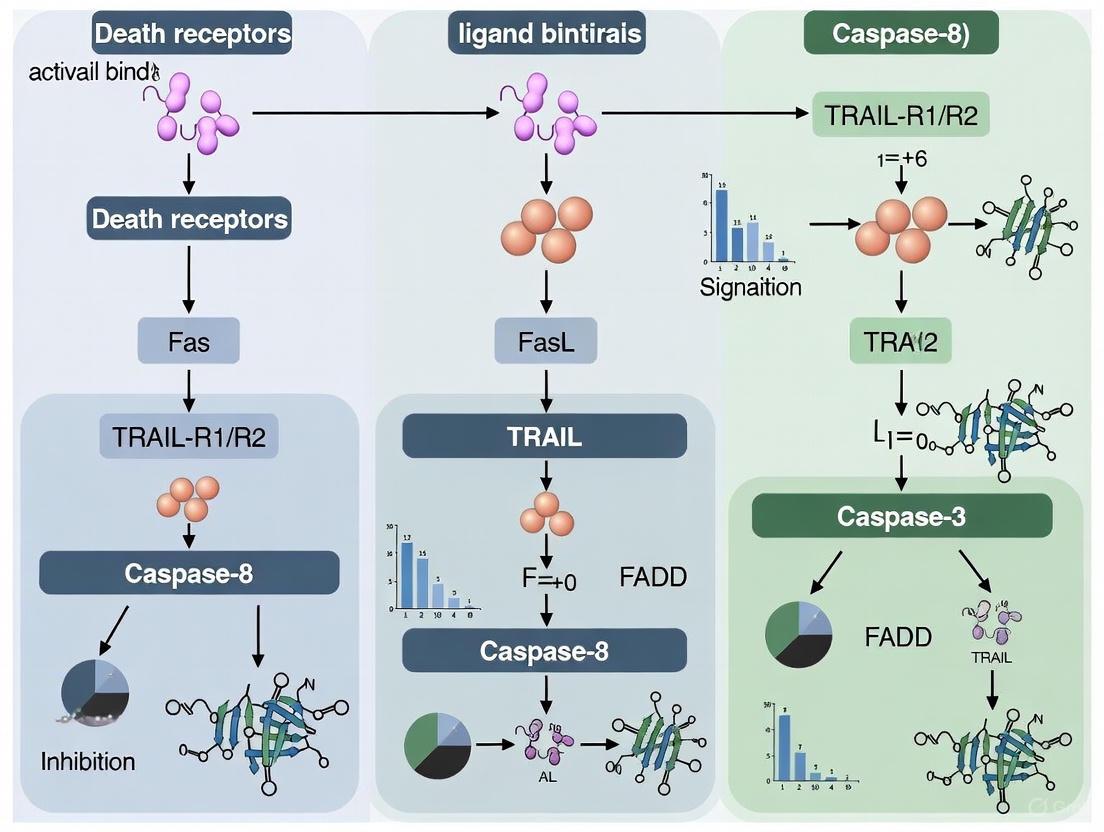
This article provides a comprehensive resource for researchers and drug development professionals on optimizing death receptor-mediated extrinsic apoptosis.
Strategic Activation of Death Receptors: Optimizing Extrinsic Apoptosis for Cancer Therapy and Drug Development
Abstract
This article provides a comprehensive resource for researchers and drug development professionals on optimizing death receptor-mediated extrinsic apoptosis. It covers the foundational biology of death receptors and the Death-Inducing Signaling Complex (DISC), explores advanced methodologies for detecting and activating these pathways, and addresses key challenges such as tumor cell resistance. By synthesizing current research and clinical data, the content offers strategic insights for validating death receptor activation and comparing therapeutic agents, ultimately guiding the development of more effective, targeted cancer therapies that exploit this selective cell death mechanism.
Deconstructing the Death Receptor Pathway: Core Components and Signaling Mechanisms
Technical Support Center
Troubleshooting Guides & FAQs
Q1: My recombinant ligand (e.g., TRAIL) fails to induce significant apoptosis in my cell line. What could be the issue? A: This is a common challenge. The issue often lies with the expression of decoy receptors or intracellular inhibitors.
- Cause 1: Decoy Receptor Interference. Decoy receptors (DcR1, DcR2) bind TRAIL but cannot transmit the death signal, acting as a sink.
- Solution: Use a DR4/DR5-specific agonist antibody that does not bind decoy receptors. Alternatively, confirm decoy receptor expression via western blot or flow cytometry.
- Cause 2: High c-FLIP Expression. c-FLIP inhibits the binding of FADD and caspase-8 to the receptor complex.
- Solution: Combine your ligand treatment with a sensitizing agent like a protein synthesis inhibitor (e.g., cycloheximide) or a specific c-FLIP inhibitor. Knockdown of c-FLIP via siRNA can also confirm its role.
Q2: I observe variable Fas-induced apoptosis between different batches of the same cell line. How can I improve reproducibility? A: Variability often stems from inconsistent receptor expression or cell confluency.
- Cause 1: Fluctuating Fas Receptor Surface Expression.
- Solution: Use flow cytometry to regularly quantify Fas receptor levels before each experiment. Maintain consistent cell passage numbers and avoid high confluency, which can downregulate Fas.
- Cause 2: Inconsistent Agonist Antibody Activity.
- Solution: Use a cross-linking secondary antibody to cluster Fas receptors, which is often required for efficient signaling. Alternatively, use a recombinant FasL preparation that is pre-trimered.
Q3: When stimulating TNFR1, I see a strong survival/pro-inflammatory response but weak apoptosis. How can I shift the balance towards cell death? A: TNFR1 signaling is complex and can lead to either NF-κB activation (survival) or apoptosis. The apoptotic pathway is typically slower and requires inhibition of survival signals.
- Cause: Dominant NF-κB and MAPK Pathway Activation.
- Solution: Inhibit global transcription (e.g., Actinomycin D) or translation (e.g., Cycloheximide) to block the synthesis of NF-κB-induced survival proteins. This sensitizes cells to TNFα-induced apoptosis. Alternatively, co-treat with a SMAC mimetic to antagonize IAPs.
Q4: What are the critical controls for a Death Receptor activation experiment? A: Always include these controls to validate your results:
- Ligand/IgG Control: For agonist antibodies, use an isotype-matched IgG.
- Inhibitor Control: Use a pan-caspase inhibitor (e.g., Z-VAD-FMK) to confirm that cell death is caspase-dependent apoptosis.
- Receptor Blocking Control: Pre-incubate cells with a neutralizing antibody against the death receptor to block ligand-induced death.
- Viability Control: Include a well-treated with a known potent apoptosis inducer (e.g., Staurosporine) as a positive control.
Table 1: Key Death Receptors and Their Ligands
| Receptor | Alternate Name(s) | Ligand(s) | Key Adaptor Protein | Decoy Receptors |
|---|---|---|---|---|
| Fas | CD95, Apo-1 | Fas Ligand (FasL), CD178 | FADD | DcR3 (soluble) |
| TNFR1 | CD120a, p55 | TNFα, Lymphotoxin-α | TRADD | Soluble TNFRs |
| DR4 | TRAIL-R1, Apo-2 | TRAIL (Apo2L) | FADD | DcR1, DcR2, OPG |
| DR5 | TRAIL-R2, Apo-2 | TRAIL (Apo2L) | FADD | DcR1, DcR2, OPG |
Table 2: Common Research Reagents for Death Receptor Studies
| Reagent | Function & Application |
|---|---|
| Recombinant Human TRAIL | Soluble ligand for activating DR4 and DR5. Crucial for studying extrinsic apoptosis. |
| Agonistic Anti-Fas Antibody (clone CH11) | IgM antibody that clusters and activates the Fas receptor. |
| Recombinant Human TNFα | Canonical ligand for TNFR1; used to study both pro-survival and pro-death pathways. |
| Z-VAD-FMK | Irreversible, pan-caspase inhibitor. Used as a control to confirm caspase-dependent apoptosis. |
| Cycloheximide (CHX) | Protein synthesis inhibitor. Used to sensitize cells to death receptor ligands by blocking synthesis of short-lived anti-apoptotic proteins (e.g., c-FLIP). |
| SMAC Mimetic (e.g., Birinapant) | Small molecule that antagonizes IAP proteins, promoting caspase activation and sensitizing cells to death receptor signaling. |
Experimental Protocol: Sensitization to TRAIL-Induced Apoptosis
Objective: To determine if a cell line resistant to TRAIL alone can be sensitized by co-treatment with a SMAC mimetic.
Materials:
- Cell line of interest (e.g., HeLa, A549)
- Recombinant Human TRAIL
- SMAC Mimetic (e.g., Birinapant)
- Cell culture media and reagents
- 96-well tissue culture plates
- Caspase-Glo 3/7 Assay kit or Annexin V / Propidium Iodide staining kit
Method:
- Seed Cells: Plate cells in a 96-well plate at a density of 1x10^4 cells/well in 100 µL of complete growth medium. Incubate for 24 hours.
- Prepare Treatment Conditions:
- Condition 1: Media only (Negative Control)
- Condition 2: TRAIL (e.g., 100 ng/mL)
- Condition 3: SMAC Mimetic (e.g., 1 µM)
- Condition 4: TRAIL (100 ng/mL) + SMAC Mimetic (1 µM)
- Condition 5: Staurosporine (1 µM) (Positive Control for Apoptosis)
- Treat Cells: Add treatments to the wells in a final volume of 200 µL. Perform each condition in triplicate.
- Incubate: Incubate the plate for 16-24 hours at 37°C, 5% CO2.
- Measure Apoptosis:
- Option A (Caspase Activity): Add 100 µL of Caspase-Glo 3/7 reagent to each well. Mix and incubate for 1 hour. Measure luminescence.
- Option B (Membrane Integrity): Harvest cells and stain with Annexin V-FITC and Propidium Iodide. Analyze by flow cytometry.
- Analysis: Compare the level of apoptosis (luminescence or % Annexin V+ cells) across the different treatment conditions. Synergy is indicated when the combination (Condition 4) is significantly greater than the sum of the single agents.
Signaling Pathway Visualizations
Diagram 1: Core Death Receptor Signaling
Diagram 2: TNFR1 Signaling Switch
The Death-Inducing Signaling Complex (DISC) is a multi-protein signaling platform that initiates the extrinsic apoptosis pathway. Formed upon activation of death receptors like Fas (CD95), DR4, and DR5, the DISC serves as the critical control point where life-and-death decisions are made within cells. Understanding its composition, architecture, and activation dynamics is fundamental for research in programmed cell death, cancer biology, and therapeutic development.
Core Architecture of the DISC
Molecular Composition
The DISC comprises several core components that assemble in a specific sequence:
- Death Receptors: Transmembrane proteins (Fas, DR4, DR5) that receive extracellular death signals.
- Adaptor Protein: FADD (Fas-associated death domain) serves as the bridge between activated receptors and effector molecules.
- Initiator Caspases: Procaspase-8 (and procaspase-10) are recruited to the complex and activated through proximity-induced dimerization.
- Regulatory Proteins: c-FLIP (FLICE-like inhibitory protein) exists in multiple splice forms that can either promote or inhibit caspase-8 activation.
Recent cryo-EM structural analysis has revealed that the Fas-FADD death domain complex forms an asymmetric oligomer with a 7:5 stoichiometry (seven Fas death domains to five FADD death domains) in a three-layered architecture [1]. This higher-order assembly is crucial for initiating downstream signaling.
Structural Organization
The diagram below illustrates the core architecture and assembly mechanism of the DISC:
DISC Assembly Mechanism: The process begins with ligand binding to pre-assembled death receptors, stabilizing receptor clusters that recruit FADD via death domain (DD) interactions. FADD then recruits procaspase-8 through homotypic death effector domain (DED) interactions, facilitating caspase-8 activation through proximity-induced dimerization [1] [2].
Key Quantitative Parameters of DISC Components
Stoichiometry and Structural Data
Table 1: Quantitative Parameters of Core DISC Components
| Component | Stoichiometry in Core Complex | Key Structural Features | Activation Threshold |
|---|---|---|---|
| Fas-FADD DD Complex | 7:5 (Fas:FADD) [1] | Three-layered architecture (80×90×60 Å) | Hexameric Fas minimal unit [1] |
| FADD DED Filament | Concentration-dependent polymerization [1] | Hollow helix (90 Å diameter, 20 Å cavity) | 18% filament at 2 mg/mL; 30% at 4 mg/mL [1] |
| Caspase-8 Activation | Dimerization-driven [2] | C3 symmetry (14 Å rise, 49° twist) | Requires DED filament nucleation [1] |
| c-FLIP Regulation | Competitive binding with caspase-8 [3] | Structural homolog of caspase-8 | Inhibition at 1:1 ratio with caspase-8 [3] |
Research Reagent Solutions
Table 2: Essential Research Reagents for DISC Studies
| Reagent Category | Specific Examples | Research Application | Key Considerations |
|---|---|---|---|
| Recombinant Ligands | Soluble FasL, TRAIL/APO2L, TNF-α | Death receptor activation | Soluble vs. membrane-bound effects on signaling [2] |
| Agonistic Antibodies | Anti-Fas (clone CH11), Anti-DR4/DR5 | Receptor clustering studies | Valency impacts signaling efficiency [2] |
| Caspase Inhibitors | zVAD-fmk (pan-caspase), IETD-fmk (caspase-8) | Pathway validation experiments | Confirm specificity with multiple inhibitors [3] |
| Structural Biology Tools | Bril-fused FasDD (solubility tag) [1] | Cryo-EM and structural studies | Tags may alter native stoichiometries [1] |
| c-FLIP Modulators | c-FLIP overexpression vectors, siRNA knockdown | Regulation mechanism studies | Multiple splice forms have opposing functions [3] |
DISC Activation Dynamics: FAQs & Troubleshooting
Assembly and Stoichiometry
Q: Why do I observe different stoichiometries for the Fas-FADD complex in my experiments compared to literature values?
A: The stoichiometry of the Fas-FADD death domain complex can vary due to several factors:
- Experimental conditions: The 7:5 stoichiometry observed in cryo-EM studies may shift toward 5:5 under different buffer conditions [1].
- Receptor pre-assembly: Death receptors exist in pre-assembled states before ligand binding, and different clustering states can recruit varying amounts of FADD.
- Stabilization tags: Fusion proteins like Bril used to enhance solubility for structural studies may stabilize specific oligomeric states not predominant under physiological conditions [1].
Troubleshooting Protocol: To validate your stoichiometry findings:
- Cross-linking analysis: Perform cross-linking at different concentrations followed by SDS-PAGE and immunoblotting.
- Native PAGE: Compare migration patterns under non-denaturing conditions.
- Size exclusion chromatography: Use multi-angle light scattering (SEC-MALS) for absolute molecular weight determination.
- Control experiments: Include both tagged and untagged proteins to identify potential tag artifacts.
Caspase-8 Activation
Q: My DISC immunoprecipitations show procaspase-8 recruitment but minimal activation. What could be limiting activation?
A: Caspase-8 activation requires specific conditions beyond mere recruitment:
- DED filament formation: FADD DED filaments serve as nucleation scaffolds for caspase-8 tandem DED (tDED) assembly. Without proper filament formation, activation is impaired [1].
- c-FLIP interference: High c-FLIP expression, particularly the short isoform (c-FLIP~S~), can form inactive heterodimers with procaspase-8, preventing its activation [3].
- Type I vs. Type II cell distinction: In Type II cells, DISC formation is weaker and requires mitochondrial amplification; these cells show less robust initial caspase-8 activation.
Experimental Solution:
Optimization Protocol for Caspase-8 Activation:
- Verify FADD DED filament formation using gel filtration or electron microscopy at different protein concentrations (2-4 mg/mL optimal range) [1].
- Knock down c-FLIP expression using siRNA and measure activation improvement.
- Use cross-linked ligand or agonistic antibodies to ensure sufficient receptor clustering.
- Test multiple cell lines including Type I (e.g., SKW6.4) and Type II (e.g., Jurkat) to confirm cell-type specific effects.
Signal Amplification
Q: How does the initial DISC formation lead to sufficient caspase activation to commit the cell to apoptosis?
A: Signal amplification occurs through a two-step process:
- DISC nucleation: The initial 7:5 Fas-FADD complex serves as a platform to nucleate FADD DED filament formation [1].
- Filament elongation: FADD DED filaments structurally resemble caspase-8 tDED filaments and directly nucleate their assembly, creating an amplification mechanism that exceeds the initial receptor activation signal.
Key Evidence: Structural analysis shows that FADD DED filaments and caspase-8 tDED filaments share remarkable similarity in their helical parameters (C3 symmetry, ~14 Å axial rise), enabling seamless nucleation and elongation [1].
Advanced Experimental Protocols
DISC Immunoprecipitation and Analysis
Objective: Isolate and analyze native DISC components from stimulated cells.
Step-by-Step Protocol:
Cell Stimulation:
- Use 1-5 × 10^7^ cells per condition
- Stimulate with optimal concentration of cross-linked FasL (100-500 ng/mL) or TRAIL (50-200 ng/mL) for 2-15 minutes
- Include caspase inhibitors (zVAD-fmk, 20 µM) to prevent downstream cleavage events
DISC Immunoprecipitation:
- Lyse cells in 1 mL mild lysis buffer (1% Triton X-100, 20 mM Tris-HCl pH 7.4, 150 mM NaCl, 10% glycerol, protease inhibitors)
- Pre-clear lysates with protein A/G beads for 30 minutes at 4°C
- Immunoprecipitate with 2-4 µg anti-Fas (for Fas DISC) or anti-FADD antibody for 2-4 hours at 4°C
- Capture complexes with protein A/G beads (1-2 hours)
- Wash 3-4 times with lysis buffer
Analysis:
- Resolve by SDS-PAGE (4-12% gradient gels)
- Immunoblot for Fas, FADD, caspase-8, c-FLIP, and caspase-10
- For quantitative analysis, use AQUA mass spectrometry with heavy isotope-labeled peptides [3]
Troubleshooting Tips:
- Weak signal: Increase cell number, optimize stimulation time, test different antibody clones
- High background: Increase wash stringency (add 0.1% SDS to wash buffer), optimize antibody concentration
- Missing components: Check antibody specificity, include positive controls
Measuring DED Filament Formation In Vitro
Objective: Reconstitute and visualize FADD DED filament formation to study nucleation mechanisms.
Step-by-Step Protocol:
Protein Purification:
- Express and purify recombinant FADD DED or full-length FADD from E. coli or HEK293 cells [1]
- Use size exclusion chromatography to isolate monomeric fractions
Filament Assembly:
- Concentrate protein to 2-4 mg/mL in physiological buffer
- Incubate at 37°C for 1-4 hours to allow filament formation
- Monitor assembly by gel filtration (shift to void volume) or native PAGE
Structural Analysis:
- Apply samples to Quantifoil grids for cryo-EM
- Collect data using 300 keV microscope with K3 direct electron detector
- Process data using helical reconstruction software (e.g., RELION, cryoSPARC)
- Build atomic models using Coot and refine with Phenix [1]
Key Parameters for Success:
- Protein quality: >95% purity with minimal degradation
- Concentration: Critical for filament formation (observe 18% to 30% increase in filaments from 2 to 4 mg/mL) [1]
- Buffer conditions: Physiological pH and salt concentrations
Visualization of DISC-Mediated Apoptosis Signaling
The following diagram integrates the core DISC assembly with downstream apoptotic signaling events:
Integrated Apoptosis Signaling: The DISC initiates two distinct apoptosis pathways. In Type I cells, active caspase-8 directly activates executioner caspases (caspase-3/7). In Type II cells, limited caspase-8 activation requires mitochondrial amplification through Bid cleavage, resulting in tBid-mediated MOMP, cytochrome c release, apoptosome formation, and caspase-9 activation [2] [4].
The architecture and activation dynamics of the DISC represent a sophisticated molecular machinery that converts extracellular death signals into irreversible cellular commitment to apoptosis. The recent structural insights into the 7:5 Fas-FADD stoichiometry and the filamentous nature of DED-mediated caspase activation provide a more complete understanding of the signal amplification mechanisms [1]. Future research directions should focus on:
- Therapeutic targeting: Exploiting structural knowledge for developing specific DISC modulators
- Single-cell analysis: Understanding heterogeneity in DISC formation and activation
- Dynamic imaging: Real-time visualization of DISC assembly in living cells
- Crosstalk mechanisms: How DISC signaling integrates with other cell death and survival pathways
The troubleshooting guides and experimental protocols provided here offer practical frameworks for addressing common challenges in extrinsic apoptosis research, enabling more robust and reproducible investigation of this fundamental cell death pathway.
Core Concepts: Caspase-8 at the Crossroads of Cell Death
This section addresses the most frequently asked questions about the fundamental mechanisms of Caspase-8.
FAQ 1: What is the primary function of Caspase-8 in cell death signaling?
Caspase-8 is the initiator caspase at the heart of the extrinsic apoptotic pathway. Its primary function is to transduce signals from activated death receptors (like Fas, TRAIL-R1, and TNFR1) into a proteolytic cascade that executes apoptotic cell death. Upon receptor activation, Caspase-8 is recruited to the Death-Inducing Signaling Complex (DISC), where it dimerizes and activates. Active Caspase-8 then cleaves and activates downstream "executioner" caspases (such as Caspase-3, -6, and -7), leading to the controlled dismantling of the cell [5] [6]. Crucially, Caspase-8 also plays a non-enzymatic, scaffolding role in suppressing a parallel form of inflammatory cell death called necroptosis. By binding to and inhibiting RIPK1, it prevents the formation of the necrosome (RIPK1-RIPK3-MLKL complex). Therefore, Caspase-8 acts as a central switch, promoting apoptosis while actively inhibiting necroptosis [7] [5].
FAQ 2: Under what experimental conditions does the loss of Caspase-8 lead to necroptosis instead of apoptosis?
The shift from apoptosis to necroptosis upon Caspase-8 inhibition is context-dependent and requires three key conditions:
- Absence of Caspase-8 Activity: This can be achieved through genetic knockout (e.g., CRISPR/Cas9), RNA interference (sh/siRNA), or pharmacological inhibition with compounds like Z-IETD-FMK [8].
- Pro-survival Signaling is Blocked: Inhibition of NF-κB signaling, a key pro-survival pathway activated by some death receptors, is often necessary. This can be done using IKKβ inhibitors (e.g., IKK-16) or SMAC mimetics that deplete cIAP proteins [8].
- A Necroptotic Signal is Present: The cells must be stimulated with a death ligand, such as TNFα, FasL, or TRAIL, which initiates the formation of a signaling complex that can default to necroptosis in the absence of Caspase-8 activity [8].
When these conditions are met, RIPK1 is not cleaved by Caspase-8 and instead interacts with RIPK3, which then phosphorylates MLKL, leading to plasma membrane rupture and necroptotic cell death [5] [8].
FAQ 3: What are the key molecular markers to distinguish between apoptosis and necroptosis in my experiments?
Distinguishing between these pathways requires assessing a combination of markers related to caspases, kinase activation, and membrane integrity. The table below summarizes the key differentiating features.
Table 1: Key Markers for Differentiating Apoptosis and Necroptosis
| Feature | Apoptosis | Necroptosis |
|---|---|---|
| Key Initiator | Active Caspase-8 (cleaved form) [6] | Phosphorylated RIPK1, RIPK3, and MLKL [5] |
| Executioner | Active Caspase-3 (cleaved form) [5] [6] | Oligomerized MLKL causing membrane permeabilization [5] |
| Mitochondrial Involvement | Cytochrome c release (intrinsic pathway) [6] | Not typically required |
| Membrane Integrity | Maintained until late stages (Annexin V+/PI- early) [5] | Lost early (Annexin V+/PI+) [5] |
| Morphology | Cell shrinkage, nuclear fragmentation, apoptotic bodies [6] | Cell and organelle swelling, plasma membrane rupture [6] |
| Inhibitors | pan-caspase inhibitors (e.g., Z-VAD-FMK) [8] | Necrostatin-1 (RIPK1 inhibitor), GSK'872 (RIPK3 inhibitor) [5] |
Troubleshooting Guide: Common Experimental Challenges
This section provides solutions to specific, practical problems researchers encounter when studying Caspase-8-mediated death pathways.
Problem 1: Inconsistent Induction of Necroptosis in Cell Culture
- Challenge: Failure to observe robust necroptosis after Caspase-8 inhibition, with cells either surviving or dying via alternative pathways.
- Potential Causes & Solutions:
- Cause A: Incomplete inhibition of Caspase-8 or residual activity.
- Solution: Validate knockdown/knockout efficiency at the protein level via western blot. For pharmacological inhibition, titrate the inhibitor concentration and pre-treat cells for sufficient time. Combine genetic and pharmacological approaches for more robust blockade [8].
- Cause B: Insufficient blockade of pro-survival NF-κB signaling.
- Solution: Co-treatment with an IKKβ inhibitor (e.g., 2.5 μM IKK-16 as used in Ovcar3 cells) or a SMAC mimetic to destabilize the pro-survival complex [8].
- Cause C: The cell line lacks essential necroptosis machinery (RIPK3, MLKL).
- Solution: Prior to experiments, confirm the expression of RIPK3 and MLKL in your cell line by western blot or RT-PCR. Use cell lines known to be competent for necroptosis (e.g., L929, HT-29) [6].
- Cause A: Incomplete inhibition of Caspase-8 or residual activity.
Problem 2: Off-Target Effects in Caspase-8 Inhibition Models
- Challenge: Observed phenotypic effects may not be solely due to the loss of Caspase-8's catalytic activity, complicating data interpretation.
- Potential Causes & Solutions:
- Cause A: The scaffolding function of Caspase-8 is disrupted in knockout models, independently affecting necroptosis suppression.
- Solution: Use catalytic-site mutants of Caspase-8 (e.g., C360A) instead of full knockouts to dissect enzymatic versus scaffolding functions. Complement knockout studies with rescue experiments using the wild-type and mutant proteins [8].
- Cause B: sh/siRNA-mediated knockdown may not achieve complete protein ablation, allowing residual scaffolding function.
- Solution: Use multiple distinct sh/siRNA sequences to control for off-target effects and confirm key findings with a CRISPR/Cas9 knockout clonal line.
- Cause A: The scaffolding function of Caspase-8 is disrupted in knockout models, independently affecting necroptosis suppression.
Problem 3: Differentiating Between Later-Stage Apoptosis and Necroptosis
- Challenge: In later stages, apoptosis can also result in loss of membrane integrity, making it difficult to distinguish from necroptosis based on a single marker like PI uptake.
- Potential Causes & Solutions:
- Cause: Reliance on a single, late-stage marker.
- Solution: Employ a multi-parameter approach as detailed in Table 1. Use flow cytometry to simultaneously measure Annexin V and PI staining, coupled with intracellular staining for cleaved Caspase-3 and phosphorylated MLKL. This allows for the identification of distinct populations: early apoptotic (Annexin V+/Cleaved Casp-3+), late apoptotic/necrotic (Annexin V+/PI+), and specifically necroptotic (Annexin V+/PI+/p-MLKL+) cells [5].
- Cause: Reliance on a single, late-stage marker.
The following table consolidates key quantitative findings from recent research to provide a reference for expected experimental outcomes.
Table 2: Summary of Key Quantitative Findings in Caspase-8 Research
| Experimental Context | Key Measurement | Quantitative Outcome | Citation |
|---|---|---|---|
| c-FLIP(L) deletion in T cells | Necroptosis upon TCR stimulation | Cells underwent RIP-1-dependent necroptosis | [7] |
| IKKβ inhibition in Ovcar3 cells | Viability reduction after 3 vs. 7 days | 17% decrease (3 days) vs. 70% decrease (7 days) | [8] |
| Caspase8 depletion + IKKβ inhibitor | Additional viability reduction in Ovcar3 | Significant additive effect (P<0.04 to P<10⁻³⁷) | [8] |
| RIPK3/Casp8 DKO in Telencephalon | Increase in total cell count | 12.6% increase vs. wild-type | [5] |
| TNFα-induced NF-κB activation | Attenuation with Caspase8 depletion | 20-30% decrease in transcriptional activity (P<0.05) | [8] |
Essential Research Reagent Solutions
This table lists critical reagents and their functions for studying Caspase-8 and regulated cell death.
Table 3: Essential Reagents for Caspase-8 and Death Pathway Research
| Reagent / Tool | Function / Purpose | Example & Key Detail |
|---|---|---|
| Agonistic Death Receptor Antibodies | To selectively activate the extrinsic pathway without ligand variability. | Anti-DR4/DR5 antibodies; efficacy can be enhanced by Fcγ receptor cross-linking [9]. |
| Recombinant Apo2L/TRAIL | The native ligand to initiate Caspase-8-dependent apoptosis. | Recombinant soluble human TRAIL; stability and activity depend on zinc and a homotrimeric structure [9]. |
| Caspase-8 Inhibitors | To block apoptotic initiation and unmask potential necroptosis. | Z-IETD-FMK (pharmacological); shRNA/CRISPR (genetic) [8]. |
| IKKβ Inhibitors | To block pro-survival NF-κB signaling, sensitizing cells to death. | IKK-16; used at 2.5 μM to achieve near-complete NF-κB inhibition in Ovcar3 cells [8]. |
| SMAC Mimetics | To antagonize IAPs, promoting Caspase-8 activation and/or necroptosis. | Compounds that degrade cIAP1/2; can synergize with TNFα to induce death [8]. |
| Necroptosis Inhibitors | To specifically confirm necroptosis is occurring. | Necrostatin-1 (RIPK1 inhibitor), GSK'872 (RIPK3 inhibitor) [5]. |
| Inducible Dimerizer System | To induce "pure" apoptosis or necroptosis in a controlled manner in vivo. | Used in murine tumor models to study the impact of specific death pathways on the immune system [10] [11]. |
Key Experimental Protocols
Protocol 1: Specific Induction of Apoptosis or Necroptosis in Murine Tumors
This protocol, adapted from Hänggi et al., allows for the precise study of each death pathway in an established tumor model [10] [11].
- Generate Engineered Cell Lines:
- Use lentiviral transduction to stably express a specific protein (e.g., a Caspase-8-FKBP fusion) that is dimerized by a small molecule (e.g., AP20187).
- For apoptosis induction, target proteins that directly activate Caspase-8.
- For necroptosis induction, use cells lacking key apoptotic components (e.g., FADD-deficient) and target proteins that activate the RIPK1-RIPK3-MLKL axis.
- Validate Death Induction In Vitro:
- Treat the engineered cells with the dimerizer drug in vitro.
- Use flow cytometry to optimize the death induction schedule and confirm the specific mode of death (e.g., using Annexin V/PI and pathway-specific inhibitors as in Table 1).
- Establish Tumors and Induce Death:
- Inject the validated cells into syngeneic mice to form established tumors.
- Administer the dimerizer drug in vivo according to the optimized schedule to trigger the designated death pathway.
- Optional: Vaccination and Immune Monitoring:
- For immunology studies, an optional "intradermal vaccination" step can be included.
- Track antigen-specific CD8+ T cell responses to compare the immunogenicity of apoptotic versus necroptotic cell death.
Protocol 2: Dissecting the Caspase-8/NF-κB Interplay in Cancer Cells
This protocol is based on the approach used to study ovarian cancer, where Caspase-8 and NF-κB signaling are co-dependent [8].
- Establish Isogenic Pairs:
- Create a stable Caspase-8 knockdown (e.g., using shRNA) in your cell line of interest (e.g., Ovcar3). A non-targeting shRNA serves as the control.
- Inhibit NF-κB Signaling:
- Treat both control and Caspase-8-depleted cells with a titrated concentration of an IKKβ inhibitor (e.g., 2.5 μM IKK-16).
- Stimulate with Death Ligand:
- Challenge the cells with TNFα (e.g., 10-50 ng/mL) to activate the extrinsic pathway.
- Assess Cell Viability and Death Mode:
- Measure cell viability over 3-7 days using assays like MTT or CellTiter-Glo.
- Analyze cell death morphology and confirm the pathway using markers from Table 1 (e.g., cleaved Caspase-3 for apoptosis, p-MLKL for necroptosis).
- Analyze Transcriptional Activity:
- Use an NF-κB luciferase reporter assay to measure how Caspase-8 depletion affects TNFα-induced NF-κB transcriptional activity.
Signaling Pathway Visualizations
The following diagrams illustrate the core regulatory network controlled by Caspase-8.
Diagram 1: Caspase-8 as the central switch. This diagram shows how active Caspase-8 (green) promotes apoptosis while cleaving and inactivating RIPK1 to suppress necroptosis (red). Loss of Caspase-8 allows RIPK1 to initiate necroptosis.
Diagram 2: Molecular decision tree between apoptosis and necroptosis. This workflow shows how TNFα stimulation can lead to different cell fates. When Caspase-8 is present and NF-κB is active, survival prevails. Blocking NF-κB and having high Caspase-8 leads to apoptosis, while blocking both NF-κB and Caspase-8 results in necroptosis [8].
Programmed cell death, or apoptosis, is a fundamental process essential for embryonic development, immune function, and tissue homeostasis. This highly regulated form of cell death occurs primarily through two distinct signaling cascades: the extrinsic (death receptor) pathway and the intrinsic (mitochondrial) pathway. The extrinsic pathway is initiated by the binding of extracellular death ligands (such as FasL or TNF-α) to their corresponding cell surface death receptors. In contrast, the intrinsic pathway is activated by internal cellular stresses—including DNA damage, oxidative stress, or growth factor withdrawal—that converge on mitochondria [12] [13].
While these pathways were initially characterized as separate entities, extensive research has revealed sophisticated communication networks between them. This crosstalk enables signal amplification and ensures an efficient cellular response to diverse death stimuli. The primary molecular bridge connecting these pathways is the proteolytic cleavage of the Bcl-2 family protein Bid by caspase-8, generating its active truncated form (tBid) which translocates to mitochondria to initiate the intrinsic apoptotic program [12] [14]. This integration mechanism is particularly critical in cell types where the extrinsic pathway alone generates insufficient caspase activation to execute cell death, thereby requiring mitochondrial amplification for effective apoptosis.
Understanding this molecular crosstalk is paramount for researchers investigating cancer therapeutics, as many malignant cells exploit these regulatory nodes to evade cell death. Similarly, modulating these integrated pathways holds promise for treating neurodegenerative and autoimmune disorders where apoptotic balance is disrupted [12] [15].
Molecular Mechanisms of Pathway Integration
The Bid-tBid Mitochondrial Amplification Bridge
The most well-characterized mechanism connecting extrinsic and intrinsic apoptosis involves the Bid protein, a member of the BH3-only pro-apoptotic Bcl-2 family. Upon activation of the extrinsic pathway, initiator caspase-8 proteolytically cleaves cytosolic, inactive Bid to generate truncated Bid (tBid) [14]. This cleavage represents the critical molecular switch that engages the mitochondrial pathway.
Once formed, tBid translocates to the outer mitochondrial membrane (OMM), where it interacts with other pro-apoptotic Bcl-2 family members, primarily Bax and Bak [12]. This interaction facilitates the homo-oligomerization of Bax/Bak, leading to mitochondrial outer membrane permeabilization (MOMP). MOMP constitutes a decisive commitment point in apoptosis, as it results in the release of several mitochondrial intermembrane space proteins into the cytosol, including cytochrome c and Smac/DIABLO [12] [13].
Cytochrome c then binds to Apaf-1, forming the apoptosome complex that activates caspase-9, which in turn cleaves and activates executioner caspases-3 and -7. Simultaneously, Smac/DIABLO potentiates apoptosis by neutralizing inhibitor of apoptosis proteins (IAPs), thereby relieving their suppression on caspases [12]. This Bid-mediated amplification loop ensures that even weak death receptor signals can trigger robust apoptotic responses through mitochondrial engagement.
Alternative Molecular Bridges
Beyond the canonical Bid connection, emerging research suggests additional mechanisms facilitate crosstalk between apoptotic pathways:
- Caspase-6-mediated Feedback: Active caspase-3, downstream of mitochondrial amplification, can further process and activate caspase-8, creating a positive feedback loop that enhances initial death receptor signaling [14].
- Reactive Oxygen Species (ROS) Signaling: High levels of ROS, often associated with cellular stress activating the intrinsic pathway, can sensitize cells to death receptor ligands by enhancing DISC formation or modulating regulatory proteins like FLIP and NF-κB [16].
- Calcium Signaling: ER-mitochondria contact sites facilitate calcium transfer, which can modulate mitochondrial metabolism and membrane permeability, indirectly influencing apoptotic crosstalk [17].
The following diagram illustrates the key molecular events in the crosstalk between extrinsic and intrinsic apoptotic pathways:
Key Experimental Workflows for Studying Pathway Crosstalk
Workflow 1: Validating Bid Cleavage and Mitochondrial Engagement
This protocol assesses the proteolytic processing of Bid and subsequent mitochondrial events following death receptor activation.
Step-by-Step Methodology:
- Cell Stimulation: Treat cells (e.g., Jurkat, HeLa) with a death receptor agonist (e.g., anti-Fas antibody for Fas receptor, recombinant TRAIL for TRAIL receptors). Include a pan-caspase inhibitor (e.g., Z-VAD-FMK) in a control group to confirm caspase dependence.
- Protein Extraction: At various time points (e.g., 0, 15, 30, 60, 120 minutes) post-treatment, lyse cells to obtain total protein extracts. For subcellular fractionation, use differential centrifugation to isolate mitochondrial and cytosolic fractions.
- Western Blot Analysis:
- Separate proteins via SDS-PAGE and transfer to PVDF membranes.
- Probe for key proteins using specific antibodies:
- Full-length Bid and tBid: Look for decrease in full-length Bid (~22 kDa) and appearance of tBid (~15 kDa) in total lysates.
- Cytochrome c: Detect its release from mitochondria by its presence in cytosolic fractions.
- Caspase-8 activation: Detect cleaved, active fragments (p43/p41, p18).
- Caspase-3 activation: Detect cleaved, active fragments (p17/p19).
- Loading controls: Use COX IV for mitochondrial fractions and β-actin for total lysates/cytosolic fractions.
- Immunoprecipitation (Optional): To study Bax/Bak activation, immunoprecipitate these proteins from treated cell lysates using conformation-specific antibodies that recognize active forms.
Expected Results: In responsive cells, you should observe sequential cleavage of caspase-8, followed by Bid processing to tBid. Subsequently, cytochrome c should appear in the cytosolic fraction, coinciding with activation of caspase-9 and caspase-3.
Workflow 2: Functional Assessment Using Genetic and Pharmacological Inhibitors
This approach determines the functional contribution of the intrinsic pathway to extrinsic apoptosis execution.
Step-by-Step Methodology:
- Experimental Design: Set up the following experimental conditions:
- Group A: Death receptor agonist only
- Group B: Pre-treatment with Bcl-2/Bcl-xL inhibitor (e.g., ABT-263 / Navitoclax) followed by death receptor agonist
- Group C: Pre-treatment with caspase-8 specific inhibitor (e.g., Z-IETD-FMK) followed by death receptor agonist
- Group D: Pre-treatment with Bid siRNA versus non-targeting control siRNA (transfected 48-72 hours prior)
- Apoptosis Quantification: After treatment (e.g., 6-24 hours), measure apoptosis by:
- Flow Cytometry: Using Annexin V/propidium iodide (PI) staining to distinguish early apoptotic (Annexin V+/PI-) and late apoptotic/necrotic (Annexin V+/PI+) cells.
- Caspase Activity Assays: Use luminescent or fluorescent substrates to measure caspase-8 and caspase-9 activities.
- Cell Viability Assessment: Employ MTT, XTT, or ATP-based assays (e.g., CellTiter-Glo) to measure overall cell death.
Expected Results: In type II cells (which require mitochondrial amplification), Bid knockdown or Bcl-2 overexpression will significantly reduce apoptosis following death receptor activation. Conversely, Bcl-2/Bcl-xL inhibition will sensitize these cells to death receptor agonists. Caspase-8 inhibition should block apoptosis in all cell types.
Troubleshooting Common Experimental Challenges
Researchers often encounter specific technical challenges when studying apoptotic crosstalk. The table below outlines common issues, their potential causes, and recommended solutions.
| Problem | Potential Cause | Solution |
|---|---|---|
| Weak apoptosis after receptor stimulation | Cell type is "Type II" with inefficient DISC formation; High anti-apoptotic protein expression (e.g., c-FLIP, Bcl-2) | Pre-sensitize with protein synthesis inhibitor (cycloheximide) or Bcl-2 inhibitor; Confirm Type II phenotype by checking for enhanced apoptosis with Bcl-2 inhibition [14]. |
| No detectable tBid by western blot | Antibody specificity; Transient nature of tBid; Inefficient caspase-8 activation | Use validated antibodies for tBid; Optimize timing with shorter intervals post-stimulation; Confirm caspase-8 activation as a positive control [18]. |
| High background apoptosis in controls | Serum starvation stress activating intrinsic pathway; Mycoplasma contamination | Use lower serum concentrations for shorter periods; Test and treat cells for mycoplasma; Include vital dye exclusion to assess membrane integrity. |
| Inconsistent cytochrome c release | Crude mitochondrial isolation damaging organelles; Improper fractionation | Optimize digitonin-based fractionation for cleaner cytosolic fractions; Validate fraction purity with compartment-specific markers (e.g., COX IV for mitochondria) [13]. |
| Unexpected caspase-9 activation without cytochrome c release | Alternative activation pathways; Off-target effects | Test for other activators (e.g., ER stress); Use genetic knockout controls (Apaf-1 -/-) if available to confirm apoptosome dependence. |
Frequently Asked Questions (FAQs)
Q1: How can I determine if my cell model is Type I or Type II for apoptosis signaling? A1: The classification depends on whether the cell requires mitochondrial amplification for efficient death receptor-mediated apoptosis. To determine this:
- Treat cells with a death receptor agonist in the presence or absence of a broad-spectrum Bcl-2 inhibitor (e.g., ABT-263).
- If apoptosis is significantly enhanced by Bcl-2 inhibition, your cells are likely Type II.
- Alternatively, directly measure caspase-8 and caspase-9 activation. Type I cells show strong, direct activation of executioner caspases (e.g., caspase-3) by caspase-8, while Type II cells require caspase-9 activation for efficient apoptosis [14].
Q2: Why is Bid cleavage detected, but cytochrome c release is not observed in my experiments? A2: This discrepancy suggests the apoptotic signal is not sufficiently robust to engage the full mitochondrial pathway. Potential explanations include:
- The threshold for MOMP has not been reached due to high levels of anti-apoptotic Bcl-2 proteins.
- Alternative functions of tBid are being activated without full commitment to MOMP.
- Technical issues with the mitochondrial fractionation protocol may be causing false negatives. Verify your results by checking for other mitochondrial events, such as loss of mitochondrial membrane potential using TMRE staining [12] [13].
Q3: What are the best controls to confirm that observed effects are specifically due to extrinsic pathway activation? A3: Essential controls include:
- Receptor specificity control: Use a neutralizing antibody against the death receptor prior to agonist addition.
- Caspase-dependence control: Include a pan-caspase inhibitor (Z-VAD-FMK) to confirm that cell death is apoptotic.
- Ligand activity control: Use an inactive mutant ligand or isotype control antibody.
- Genetic controls: Where possible, use FADD-deficient cells or caspase-8 knockout cells to confirm pathway specificity [18] [14].
Q4: How does the c-FLIP protein regulate the decision point at the DISC? A4: c-FLIP is a critical regulatory protein that exists in multiple isoforms (c-FLIPL, c-FLIPS). It regulates the initiation of extrinsic apoptosis by competing with procaspase-8 for binding to FADD at the DISC.
- At high concentrations, all c-FLIP isoforms inhibit caspase-8 activation and apoptosis.
- At intermediate concentrations, c-FLIPL can form heterodimers with procaspase-8, resulting in limited caspase-8 activation that may be sufficient for Bid cleavage but insufficient for direct activation of executioner caspases, thereby favoring mitochondrial amplification.
- The specific ratio of caspase-8 to c-FLIP at the DISC is a key determinant of life/death decisions following death receptor engagement [19] [14].
Research Reagent Solutions
The following table provides key reagents essential for investigating apoptotic crosstalk, along with their specific functions in experimental protocols.
| Research Reagent | Function in Apoptosis Crosstalk Research |
|---|---|
| Recombinant Death Ligands (e.g., FasL, TRAIL) | Activate specific death receptors to initiate the extrinsic pathway in a controlled manner. |
| Caspase Inhibitors (e.g., Z-VAD-FMK (pan), Z-IETD-FMK (caspase-8)) | Determine caspase dependence and identify specific caspase involvement in signaling steps. |
| Bcl-2/Bcl-xL Inhibitors (e.g., ABT-263/Navitoclax, ABT-199) | Block anti-apoptotic Bcl-2 proteins, sensitizing the mitochondrial pathway and testing Type I/II classification. |
| siRNA/shRNA against Bid | Genetically disrupt the primary molecular bridge between pathways to confirm its role in amplification. |
| Antibodies for Cleaved Caspases (e.g., cleaved caspase-8, -9, -3) | Detect specific activation of initiator and executioner caspases via western blot or immunofluorescence. |
| Antibodies for Bid/tBid | Monitor the key proteolytic cleavage event that connects the extrinsic and intrinsic pathways. |
| Cytochrome c Release Assay Kits | Measure the critical event of MOMP in intact cells or subcellular fractions using standardized protocols. |
| Mitochondrial Membrane Potential Dyes (e.g., TMRE, JC-1) | Assess mitochondrial integrity and function as an early indicator of intrinsic pathway engagement. |
| Annexin V / Propidium Iodide | Quantify phosphatidylserine externalization (early apoptosis) and membrane integrity via flow cytometry. |
FAQ: Core Concepts for Researchers
Q1: What are the primary transcriptional pathways that upregulate death receptors in cancer research? The primary transcriptional pathways regulating death receptor expression involve the tumor suppressor p53, the transcription factor NF-κB, and the endoplasmic reticulum (ER) stress-induced factor C/EBP Homologous Protein (CHOP). These regulators can be activated by distinct cellular stresses, such as DNA damage or ER stress, and they directly bind to the promoter or intronic regions of genes encoding death receptors like DR4 (TRAIL-R1) and DR5 (TRAIL-R2) to modulate their expression and thereby influence cellular sensitivity to extrinsic apoptosis [20] [21].
Q2: How do p53 and NF-κB interact in the control of death receptor expression? The interaction between p53 and NF-κB is complex and context-dependent. They can act cooperatively or antagonistically:
- Cooperation: Following genotoxic stress (e.g., etoposide treatment), p65 (an NF-κB subunit) and p53 can cooperatively bind to a composite site within the first intron of the DR5 gene, leading to synergistic upregulation of DR5 expression [20].
- Antagonism: p53 and NF-κB can mutually inhibit each other's transcriptional activity by competing for a limiting pool of the essential transcriptional coactivators p300 and CREB-binding protein (CBP). The outcome is determined by their relative levels and the cellular stimulus [22].
Q3: What is the role of CHOP in death receptor regulation? CHOP is a key transcription factor induced by endoplasmic reticulum (ER) stress. It is implicated in the transcriptional upregulation of DR5, providing a mechanistic link between proteotoxic stress and the sensitization of cells to TRAIL-mediated apoptosis [23].
Q4: Why is the surface expression of death receptors a critical factor in experimental design? Adequate cell surface localization of DR4 and DR5 is absolutely required for TRAIL-induced apoptosis. Some cancer cells exhibit deficient surface expression of these receptors despite normal total protein levels, leading to innate resistance. Research shows that receptor endocytosis, autophagy, and Ras GTPase signaling can dynamically regulate receptor trafficking, making surface expression a key parameter to measure beyond total mRNA or protein levels [24].
Troubleshooting Guide: Common Experimental Issues
Problem: Low or No Death Receptor Upregulation After Stimulus
| Potential Cause | Diagnostic Approach | Proposed Solution |
|---|---|---|
| Insufficient Stress Induction | Confirm activation of the intended pathway. Measure p53 protein levels (DNA damage), nuclear NF-κB translocation (TNF-α), or CHOP induction (ER stress inducers). | Optimize stimulus dose and duration. Use positive controls (e.g., known DNA-damaging agent like etoposide). |
| Epigenetic Repression | Perform ChIP to check for repressive histone marks or HDAC1 association at the DR5 promoter/intron. | Pre-treat cells with HDAC inhibitors (e.g., Trichostatin A, Valproic Acid) to open chromatin structure [20]. |
| Competition for Co-activators | If simultaneously activating multiple pathways (e.g., p53 and NF-κB), assess if one dominates. | Titrate the stimuli to find a balance, or use siRNA to knock down one factor to relieve competition for p300/CBP [22]. |
| Inherent Resistance | Quantify surface DR4/DR5 via flow cytometry (do not rely on total protein alone). | Use combinatorial approaches; for example, HDAC inhibitors can restore surface expression and sensitivity [24] [20]. |
Problem: High Background Apoptosis in Control Cells
| Potential Cause | Diagnostic Approach | Proposed Solution |
|---|---|---|
| Serum Starvation | Serum withdrawal can independently sensitize cells to apoptosis. | Maintain consistent serum concentrations (e.g., 10% FBS) across all treatment groups, including controls. |
| Constitutive Death Receptor Signaling | Check for endogenous expression of TRAIL or other death ligands in your cell line. | Use a neutralizing antibody against the death ligand or its receptor in control wells. |
| Unexpected Pathway Activation | Test for basal activation of p53, NF-κB, or ER stress in your control cells. | Use more defined culture conditions and ensure cells are not overly confluent or stressed. |
The following table summarizes key death receptor transcriptional regulators and their stimuli based on experimental evidence.
Table 1: Transcriptional Regulators of Death Receptor Expression
| Transcriptional Regulator | Primary Stimuli | Target Death Receptor(s) | Key Regulatory Mechanism |
|---|---|---|---|
| p53 | DNA damage (Etoposide, Doxorubicin, UV, γ-radiation) [20] | DR4, DR5 [20] | Binds to p53 response element in the first intron of the DR5 gene [20]. |
| NF-κB (p65/p50) | TNF-α, EGF, DNA damage (Etoposide) [20] | DR5 [20] | Binds to a κB site adjacent to the p53 site in the DR5 first intron; output depends on co-regulators (e.g., HDAC1 association inhibits expression) [20]. |
| CHOP | ER Stress (Tunicamycin, Thapsigargin) [23] | DR5 [23] | Induced during ER stress; binds to the DR5 promoter region. |
| p73/p63 | DNA Damage [23] | DR5, PUMA (indirect) [23] | p53 family members; can transcriptionally activate DR5 and the pro-apoptotic protein PUMA. |
Table 2: Experimental Stimuli and Their Apoptotic Outcomes
| Stimulus | Pathway Activated | Key Readout | Observed Effect (Example Cell Lines) |
|---|---|---|---|
| Etoposide (100 μM) [20] | p53 & NF-κB | ↑ DR5 mRNA & Protein, Apoptosis | Synergistic DR5 upregulation and apoptosis in HEK293, MCF-7 [20]. |
| TNF-α (10 ng/ml) [22] | NF-κB | p65 Nuclear Translocation, Gene Expression | Can inhibit p53-mediated transactivation [22]. |
| HDAC Inhibitors (TSA 45 nM, VPA 500 μg/ml) [20] | p53 & NF-κB | DR5 Upregulation, Apoptosis | Induces DR5 expression and synergizes with TRAIL to kill cancer cells [20]. |
| TRAIL (1 μg/ml) [20] | Extrinsic Apoptosis | Caspase-8/-3 Cleavage, Apoptosis | Directly triggers apoptosis in DR-positive cells; efficacy enhanced by pre-treatment with chemotherapeutics [20]. |
Signaling Pathway Diagrams
Diagram 1: Transcriptional regulation of death receptors and apoptosis. Multiple stress pathways converge on death receptor gene regulation. p53 and NF-κB can cooperate at a shared regulatory site on the DR5 gene. PUMA, a p53 target, promotes intrinsic apoptosis.
Diagram 2: Experimental workflow for analyzing death receptor upregulation. A step-by-step guide from cell stimulation to phenotypic readout, highlighting key confirmation assays for each stage.
The Scientist's Toolkit: Research Reagent Solutions
Table 3: Essential Reagents for Death Receptor Transcriptional Studies
| Reagent | Function/Application | Example Product / Citation |
|---|---|---|
| Recombinant Human TRAIL | To directly activate the extrinsic apoptosis pathway via DR4/DR5 and test functional outcomes. | Soluble TRAIL (e.g., from ALEXIS [20]) |
| Etoposide | DNA-damaging chemotherapeutic agent used to activate p53 and NF-κB pathways for DR5 upregulation. | 100 µM treatment [20] |
| Trichostatin A (TSA) / Valproic Acid (VPA) | HDAC inhibitors; used to relieve epigenetic repression of the DR5 gene and synergize with TRAIL. | TSA (45 nM), VPA (500 µg/ml) [20] |
| TNF-α | Pro-inflammatory cytokine; potent activator of the canonical NF-κB pathway. | 10 ng/ml [22] |
| Anti-DR5 Antibody | For detecting DR5 protein expression (Western Blot) and surface localization (Flow Cytometry). | Santa Cruz Biotechnology (sc-8412) [20] |
| Anti-p65/RelA Antibody | For monitoring NF-κB activation via Western Blot (total protein) or immunofluorescence (nuclear translocation). | Santa Cruz Biotechnology (sc-109) [22] [20] |
| Anti-p53 Antibody | For detecting p53 stabilization and accumulation upon DNA damage. | DO1 monoclonal antibody [22] |
| CHOP Antibody | For detecting CHOP protein induction upon ER stress. | Also known as GADD153 [23] |
Advanced Methodologies for Death Receptor Activation and Detection in Research & Therapy
Troubleshooting Guide: Overcoming Key Experimental Challenges
Problem 1: My cancer cell lines show resistance to TRAIL/DR5 agonist-induced apoptosis.
- Potential Cause: High expression of anti-apoptotic proteins (e.g., c-FLIP, Bcl-2, Bcl-XL, XIAP) that block caspase-8 activation or mitochondrial amplification of the death signal [25] [26] [27].
- Solution: Pre-treat cells with sensitizing agents.
- Proteasome inhibitors (e.g., Bortezomib) can downregulate c-FLIP and other short-lived anti-apoptotic proteins [26].
- HDAC inhibitors can modulate the expression of both pro- and anti-apoptotic proteins [27].
- Kinase inhibitors (e.g., targeting ERK, AKT, p38) can overcome resistance mediated by pro-survival signaling pathways [28] [27].
- Verification: Perform immunoblotting to confirm downregulation of target proteins (e.g., c-FLIP) post-sensitization.
Problem 2: Agonistic anti-DR5 antibodies exhibit variable and weak killing efficacy in vivo.
- Potential Cause: Inefficient clustering of DR5 receptors, which is required for optimal Death-Inducing Signaling Complex (DISC) formation. Agonistic activity in vivo often depends on binding to Fcγ receptors (FcγR) on innate immune cells for cross-linking [29] [9].
- Solution:
- Verification: Use isogenic cell lines with or without FcγR expression to test the contribution of Fc-mediated cross-linking to apoptosis.
Problem 3: Observed hepatotoxicity or other off-target effects in animal models.
- Potential Cause: Certain TRAIL receptor agonists can trigger apoptotic or inflammatory signaling in sensitive normal tissues. The presence of a free cysteine residue (Cys230) in some recombinant TRAIL preparations can lead to non-physiological aggregation and toxicity [25] [9].
- Solution: Use "non-tagged" or zinc-stabilized recombinant TRAIL preparations that maintain the native, trimeric structure and selective toxicity for cancer cells [25] [9] [27].
- Verification: Test agonists on primary human hepatocytes in vitro to assess potential hepatotoxicity before proceeding to in vivo studies.
Problem 4: Inconsistent apoptosis kinetics and incomplete cell death in a clonal cell population.
- Potential Cause: "Fractional killing" is a common phenomenon where a uniform cell population exhibits heterogeneous responses. This can be due to stochastic variation in protein levels of key signaling nodes (e.g., caspase-8, c-FLIP) and simultaneous activation of pro-survival pathways (NF-κB, MAPK) via the same receptor [28] [14].
- Solution:
- Combine TRAIL receptor agonists with inhibitors of pro-survival pathways (e.g., MEK, PI3K inhibitors) [28].
- Use live-cell imaging to track the timing of death in individual cells and correlate it with expression levels of key regulators.
- Verification: Conduct flow cytometry analysis for cleaved caspase-3 at single-cell resolution to quantify the fraction of apoptotic cells.
Frequently Asked Questions (FAQs)
Q1: What are the primary advantages of small-molecule apoptosis inducers like Raptinal over receptor-targeted biologics?
- A1: Raptinal induces extremely rapid, intrinsic apoptosis within minutes, bypassing upstream signaling and some common resistance mechanisms associated with death receptor pathways [30]. It functions independently of BAX/BAK and directly targets mitochondrial function to cause rapid cytochrome c release, making it a valuable tool for studying fast apoptosis kinetics [30] [31].
Q2: How do decoy receptors (DcR1, DcR2) modulate TRAIL signaling?
- A2: Decoy receptors lack a functional death domain. They act as molecular "decoys" by competing with DR4 and DR5 for TRAIL binding, thereby sequestering the ligand and inhibiting the initiation of the apoptotic signal [25] [27]. DcR2 can also form heterocomplexes with DR5, potentially interfering with productive DISC formation [28] [27].
Q3: My DR5 agonist works well in vitro but fails in a syngeneic mouse model. What could be wrong?
- A3: Ensure your agonist is cross-reactive with the mouse DR5 ortholog. Many human-specific antibodies do not bind mouse DR5, and vice versa. For immunocompetent models, you must use a mouse-specific agonist to account for the contribution of the immune system, as demonstrated with the MD5-1 antibody [29].
Q4: What are the key components of the DISC, and how is it regulated?
- A4: The core DISC comprises the ligated death receptor (DR4/DR5), the adaptor protein FADD, and initiator procaspase-8/10 [25] [14]. A critical regulatory molecule is c-FLIP, which, when present at high levels, binds to FADD and procaspase-8, inhibiting caspase-8 activation and apoptosis. At intermediate levels, c-FLIP can even promote caspase-8 activation [14].
Q5: Can Raptinal be used to study processes beyond core apoptosis, like apoptotic cell clearance?
- A5: Yes, but with a critical caveat. While Raptinal is a potent apoptosis inducer, it also acts as a specific inhibitor of the Pannexin 1 (PANX1) channel [31]. Since caspase-cleaved PANX1 is responsible for releasing "find-me" signals like ATP during apoptosis, its inhibition by Raptinal will disrupt phagocyte recruitment and other PANX1-dependent processes. Choose an alternative apoptosis inducer if studying these specific downstream events [31].
Experimental Protocols for Key Assays
Protocol 1: Analyzing Death Receptor-Mediated Apoptosis via Flow Cytometry
- Purpose: To quantitatively assess apoptosis and distinguish between early apoptotic, late apoptotic, and necrotic cell populations.
- Reagents: Annexin V binding buffer, FITC-conjugated Annexin V, Propidium Iodide (PI) or TO-PRO-3.
- Procedure:
- Induce apoptosis in cells (e.g., with TRAIL, anti-DR5 antibody, or Raptinal) for a predetermined time.
- Harvest cells (including culture supernatant) and wash with cold PBS.
- Resuspend ~1x10^5 cells in 100 µL of Annexin V binding buffer.
- Add FITC-Annexin V and PI/TO-PRO-3 as per manufacturer's instructions. Incubate for 15 minutes in the dark at room temperature.
- Add an additional 400 µL of binding buffer and analyze by flow cytometry within 1 hour.
- Gating Strategy: Annexin V-/PI- (viable); Annexin V+/PI- (early apoptotic); Annexin V+/PI+ (late apoptotic); Annexin V-/PI+ (necrotic). Note: TO-PRO-3 uptake specifically indicates caspase-activated PANX1 channel activity, which is blocked by Raptinal [31].
Protocol 2: Immunoblot Analysis of DISC Composition and Caspase Activation
- Purpose: To confirm DISC formation and visualize the processing of key apoptotic proteins.
- Reagents: Lysis buffer, protein A/G beads, antibodies against DR5, FADD, caspase-8, c-FLIP, caspase-3, PARP.
- Procedure:
- Stimulate cells (e.g., 5-10 x 10^6 per condition) with your agonist (e.g., TRAIL or agonist antibody) for various time points (e.g., 0, 30, 60, 120 min).
- Lyse cells in a mild, non-denaturing lysis buffer to preserve protein complexes.
- For DISC immunoprecipitation, incubate the whole-cell lysate with an antibody against your death receptor (e.g., anti-DR5) coupled to protein A/G beads for 4-6 hours at 4°C [28].
- Wash beads extensively to remove non-specifically bound proteins.
- Elute bound proteins by boiling in SDS sample buffer.
- Subject the eluates (DISC components) and whole-cell lysates (for total protein analysis) to SDS-PAGE, followed by immunoblotting for FADD, caspase-8, and c-FLIP. For downstream signaling, probe whole-cell lysates for processed caspase-3 and cleaved PARP.
Table 1: Comparison of Different Death Receptor-Targeted Agonists
| Agonist Class | Example Agents | Mechanism of Action | Key Advantages | Key Limitations / Toxicities | IC50 / Effective Dose (In Vitro) | Clinical Trial Status |
|---|---|---|---|---|---|---|
| TRAIL Analogs | Recombinant TRAIL (Dulanermin) | Binds DR4 & DR5, inducing DISC formation | Selective tumor cell killing; low systemic toxicity in preclinical models [25] [9] | Short half-life; variable efficacy in clinical trials [9] [27] | Varies by cell line (nM range) | Phase I/II (limited efficacy) |
| DR5 Agonist Antibodies | Conatumumab, Tasisulam, MD5-1 (mouse) | Cross-links DR5, requires FcγR for optimal clustering in vivo [29] | Longer half-life than TRAIL; can engage immune cells for ADCC [29] | Efficacy can be FcγR polymorphism-dependent; hepatotoxicity for some antibodies [9] | Varies by cell line and cross-linking | Phase I/II (limited efficacy as monotherapy) |
| Small-Molecule Inducers | Raptinal | Bypasses receptors, directly triggers mitochondrial cytochrome c release [30] | Ultra-rapid apoptosis (minutes); works in diverse cell lines; bypasses some resistance mechanisms [30] [31] | Non-selective; also inhibits PANX1 channel, complicating interpretation [31] | 0.7 - 3.4 µM across multiple cell lines [30] | Preclinical |
Table 2: Common Sensitizing Agents for Overcoming TRAIL Resistance
| Sensitizer Class | Example Agents | Proposed Mechanism | Combination Efficacy (Preclinical) |
|---|---|---|---|
| Proteasome Inhibitors | Bortezomib, Carfilzomib | Downregulates c-FLIP, Mcl-1; induces ER stress [26] | Synergistic in various solid and hematologic malignancies [26] |
| HDAC Inhibitors | Vorinostat, Voricostat | Modulates expression of death receptors and anti-apoptotic proteins [27] | Synergistic, can upregulate DR5 expression [27] |
| Kinase Inhibitors | Erk, AKT, or p38 inhibitors | Inhibits pro-survival signals that counteract apoptosis [28] | Enhanced fractional killing; can overcome intrinsic resistance [28] |
| BCL-2 Inhibitors | ABT-263 (Navitoclax), ABT-199 (Venetoclax) | Primes mitochondria for apoptosis, synergizing in type II cells [27] | Highly synergistic, especially in lymphoid malignancies [27] |
Signaling Pathway and Experimental Workflow Diagrams
Diagram 1: Apoptosis Signaling Pathways
Diagram 2: Experimental Workflow
The Scientist's Toolkit: Key Research Reagents
Table 3: Essential Reagents for Death Receptor Apoptosis Research
| Reagent Category | Specific Examples | Primary Function in Research | Key Considerations |
|---|---|---|---|
| Recombinant Ligands | Recombinant human TRAIL (non-tagged, zinc-stabilized) | Gold standard agonist for activating DR4 and DR5; used as a positive control for extrinsic apoptosis [25] [9]. | Ensure proper trimerization and absence of tags to avoid non-specific toxicity. |
| Agonist Antibodies | Anti-human DR5 (e.g., Conatumumab), Anti-mouse DR5 (MD5-1) [29] | To specifically target and cluster DR5; useful for studying receptor-specific signaling and in vivo models [29]. | Check species cross-reactivity. Efficacy in vivo may depend on Fc domain and host FcγR expression. |
| Small-Molecule Inducers | Raptinal, Staurosporine | Raptinal: Ultra-fast intrinsic apoptosis inducer [30]. Staurosporine: Well-characterized, slower intrinsic inducer [30]. | Raptinal's dual function as a PANX1 inhibitor must be accounted for in experimental design [31]. |
| Caspase Inhibitors | Q-VD-OPh, z-VAD-fmk | Pan-caspase inhibitors used to confirm the caspase-dependence of cell death [30] [31]. | Q-VD-OPh is more stable and less toxic for long-term assays. |
| Sensitizing Agents | Bortezomib, Vorinostat, Enavatuzumab (anti-DR5 with enhanced clustering) | Used in combination studies to overcome resistance or to create next-generation agonists with improved potency [9] [26] [27]. | Dose and timing relative to the primary agonist are critical for synergy. |
| Detection Antibodies | Anti-cleaved Caspase-8, Anti-cleaved Caspase-3, Anti-cleaved PARP | Gold-standard markers for confirming apoptosis activation via immunoblot or flow cytometry. | Provide definitive evidence of pathway engagement beyond cell viability assays. |
The study of extrinsic apoptosis, initiated by death receptor activation, is fundamental to understanding immune regulation and developing cancer therapeutics. This pathway is triggered by the formation of the Death-Inducing Signaling Complex (DISC), which initiates a proteolytic caspase cascade, leading to controlled cellular dismantling. Accurate detection and quantification of key apoptotic events are therefore crucial for optimizing death receptor activation studies. This guide provides a centralized troubleshooting resource for the primary assays used in this field, helping researchers overcome common experimental challenges and generate reliable, reproducible data.
TUNEL Assay: Troubleshooting DNA Fragmentation
The TUNEL (TdT-mediated dUTP Nick-End Labeling) assay detects DNA fragmentation, a hallmark of late-stage apoptosis. The assay works by using the enzyme Terminal Deoxynucleotidyl Transferase (TdT) to incorporate labeled dUTP at the 3'-hydroxyl ends of fragmented DNA, allowing visualization of apoptotic cells [32].
TUNEL Assay Troubleshooting FAQ
Q1: Why is there no positive signal in my TUNEL assay? A lack of signal can stem from multiple factors:
- Sample and Reagent Issues: Degraded DNA, inactivated TdT enzyme, or degraded fluorescent dUTP in the detection reagent can cause failures [32].
- Inadequate Permeabilization: Insufficient permeabilization can prevent reagents from accessing the nuclear DNA. Optimize the Proteinase K concentration (typically 10–20 μg/mL) and incubation time (15–30 minutes at room temperature) [32].
- Improper Fixation: Using ethanol or methanol-based fixatives can result in low labeling efficiency. It is recommended to use 4% paraformaldehyde dissolved in PBS at a neutral pH [33] [34].
- Fluorescence Quenching: The fluorescent signal is light-sensitive and can be severely quenched if exposed to light during the procedure. Perform all labeling and detection steps in the dark [33].
Q2: Why is there nonspecific staining outside the nucleus? Non-nuclear staining indicates false positives, which can be caused by:
- Cell Death Mode: DNA fragmentation can also occur in necrotic cells or tissues undergoing autolysis [32].
- Over-fixation: Prolonged fixation can cause cell autolysis, leading to irregular DNA strand breaks and false positives. Control the fixation time [33] [34].
- Excessive Reaction Conditions: Excessive TdT enzyme, labeled dUTP concentrations, or prolonged reaction times can amplify background noise. Lower these concentrations or shorten the reaction time [32].
Q3: How can I reduce a high fluorescence background? A high background can obscure specific signals. Key solutions include:
- Insufficient Washing: Residual dye can cause high background. Increase the number of washes after the TUNEL reaction using PBS with 0.05% Tween 20 [32] [33].
- Prolonged Staining: Over-incubating with the TUNEL reaction solution can increase background. Typically, incubate at 37°C for 60 minutes [33].
- Sample Autofluorescence: Autofluorescence from hemoglobin (in tissues) or mycoplasma contamination (in cell cultures) can interfere. Use fluorescence quenching agents or select fluorophores that do not overlap with the autofluorescence spectrum [32].
- Microscope Settings: Excessive exposure time during image capture can saturate the signal. First, adjust the exposure settings using your negative control to eliminate background light, then apply the same conditions to your experimental group [33].
Key Reagents and Methodologies for TUNEL Assay
Table 1: Essential Reagents for TUNEL Assay
| Reagent | Function | Optimization Tips |
|---|---|---|
| Equilibration Buffer | Maintains reaction conditions; Mg²⁺ reduces background, Mn²⁺ enhances efficiency. | Use the buffer provided with the kit for optimal cation concentration [34]. |
| Proteinase K | Permeabilizes cell and nuclear membranes to allow reagent entry. | Titrate concentration (e.g., 20 μg/mL) and time (10-30 min) based on sample thickness to avoid under-permeabilization or damage [32] [34]. |
| TdT Enzyme | Catalyzes the addition of labeled dUTP to 3'-OH ends of fragmented DNA. | Prepare the reaction solution fresh and store briefly on ice to prevent enzyme inactivation [34]. |
| Labeled dUTP | The substrate incorporated into DNA breaks for detection. | For fluorescence detection, avoid light exposure to prevent quenching [32] [33]. |
Recommended Controls:
- Positive Control: Treat a sample with DNase I to induce DNA breaks and verify that the assay is working correctly [32] [34].
- Negative Control: Omit the TdT enzyme from the reaction solution. This controls for non-specific staining or background fluorescence [34].
Annexin V Assay: Troubleshooting Phosphatidylserine Externalization
The Annexin V assay detects the translocation of phosphatidylserine (PS) from the inner to the outer leaflet of the plasma membrane, a key event in early apoptosis. It is typically used in combination with a viability dye like propidium iodide (PI) to distinguish early apoptotic (Annexin V+/PI-) from late apoptotic/necrotic (Annexin V+/PI+) cells [35] [36].
Annexin V Assay Troubleshooting FAQ
Q1: Why is there a high rate of apoptosis in my negative control? Spontaneous apoptosis in control cells suggests suboptimal cell health or handling:
- Poor Cell Status: Cells that are over-confluent, starved, or contaminated may undergo apoptosis. Use healthy, log-phase cells and ensure proper culture conditions [35] [36].
- Rough Handling: Excessive pipetting, over-trypsinization, or using trypsin with EDTA (which chelates Ca²⁺ required for Annexin V binding) can damage cells. Use gentle, EDTA-free dissociation enzymes like Accutase and handle cells with care [35] [36].
- Improper Buffer: Incorrect dilution of the binding buffer can create an osmotic pressure that induces apoptosis. Always dilute buffers according to the kit instructions [35].
Q2: Why are there no positive signals in my treated group? A lack of expected signal can be due to:
- Insufficient Apoptosis Induction: The drug concentration or treatment duration may be too low to trigger detectable apoptosis. Optimize treatment conditions and include a positive control (e.g., cells treated with a known apoptosis inducer) [36].
- Loss of Apoptotic Cells: Apoptotic cells detach and float in the supernatant. Always collect and include the cell culture supernatant during sample preparation [35] [36].
- Reagent Issues: The kit reagents may be degraded due to improper storage or expiration. Verify kit performance with a positive control [36].
Q3: Why is my cell population clustering unclear in flow cytometry? Unclear separation of cell populations on the dot plot complicates analysis:
- Cell Autofluorescence: Intrinsic autofluorescence can interfere with the fluorescent signals. Choose an Annexin V conjugate with a fluorophore that does not overlap with the autofluorescence spectrum, such as PE or APC [35] [36].
- Excessive Apoptosis: Widespread apoptosis can lead to a continuum of staining, blurring population boundaries. Ensure gentle treatment of cells and avoid excessive drug doses or prolonged incubation times [35].
- Incorrect Instrument Settings: Poorly set fluorescence compensation or voltages can cause populations to overlap. Use single-stain controls (Annexin V-only and PI-only) to properly adjust compensation on the flow cytometer [36].
Key Methodologies for Annexin V Assay
Critical Protocol Steps:
- Sample Preparation: Use gentle, EDTA-free cell dissociation methods to preserve membrane integrity and avoid false-positive PS exposure [36].
- Staining: Perform staining in the dark, as the fluorophores are light-sensitive. Do not wash cells after staining, as this can cause loss of the Annexin V-bound cells [36].
- Controls: Always include unstained cells, single-stained controls (for compensation), and a positive control (e.g., cells treated with an apoptosis inducer) to validate the experiment [36].
Caspase Activity Assays: Troubleshooting Key Apoptotic Proteases
Caspases are cysteine-aspartic proteases that act as central executioners of apoptosis. Caspase-3 is a key effector caspase, and its activity is a definitive marker of apoptosis commitment [37].
Caspase Assay Troubleshooting FAQ
Q1: I see very weak to no signal in my colorimetric or luminescent caspase assay. What happened? A weak signal can result from:
- Incorrect Reagent Storage or Preparation: Store all components as directed. For luminescent assays, allow all reagents to warm to room temperature before use. Prepare working solutions of enzymes or substrates fresh and use them promptly [38] [39].
- Low Caspase Activity: The apoptosis induction may be too weak or the timing may be off. Apoptosis is a dynamic process; optimize the dose, timing, and cell number to capture the peak of caspase activity [38].
- Cell Health: The health of the cells prior to treatment is critical. Handle cells gently and follow culturing recommendations to ensure they are in an optimal state before inducing apoptosis [38].
Q2: I am getting an elevated background in my assay. What should I do? High background noise reduces the assay's sensitivity:
- Insufficient Washing: In plate-based formats, residual solution containing the detection enzyme (e.g., HRP) can elevate the background. Ensure thorough washing and complete draining of wells after each wash step [39].
- Prolonged Incubation: Over-incubation with the substrate leads to excessive signal development. Follow the recommended incubation times and temperatures precisely [39].
- Contamination: Contamination of pipettes or substrate solution with the detection enzyme can cause a high background. Use clean equipment and fresh reagents [39].
Q3: What type of multiwell plates and controls should I use for a luminescent caspase assay?
- Plates: For optimum performance in luminescence assays, use opaque, white multiwell plates. Signal is diminished in black plates, and increased well-to-well cross-talk is observed in clear plates [38].
- Controls: Essential controls include [38]:
- Blank (background): Caspase reagent and cell culture medium without cells.
- Negative Control: Caspase reagent and vehicle-treated cells.
- Positive Control: Caspase reagent and cells treated with a known apoptosis inducer.
DISC Assembly Assays: Analyzing the Initiation Complex
The Death-Inducing Signaling Complex (DISC) is the initiating platform of extrinsic apoptosis. Upon ligand binding to a death receptor (e.g., Fas/CD95), the receptor recruits an adapter protein (FADD) and initiator procaspase-8 (and/or procaspase-10), forming the DISC. This leads to the autocatalytic activation of caspase-8, which then propagates the death signal.
Key Methodologies for DISC Analysis
Co-Immunoprecipitation (Co-IP) is the standard method for isolating and studying the native DISC. The general workflow involves:
- Stimulation: Treating cells with a specific death receptor ligand (e.g., FasL).
- Lysis: Using a mild, non-denaturing lysis buffer to preserve protein-protein interactions within the DISC.
- Immunoprecipitation: Capturing the complex using an antibody against the death receptor (e.g., anti-Fas antibody) or another core component, bound to beads.
- Analysis: Washing the beads and eluting the bound proteins for analysis by Western blotting to identify co-precipitated components like FADD and caspase-8.
Critical Considerations for DISC Assays:
- Activation Kinetics: DISC formation is rapid. A time-course experiment is necessary to capture its dynamics.
- Antibody Specificity: The success of the Co-IP hinges on highly specific antibodies that can recognize the native form of the target protein.
- Inhibition: Using specific caspase inhibitors (e.g., Z-VAD-FMK) can help differentiate between initial recruitment and subsequent cleavage events within the complex.
Table 2: Overview of Key Apoptosis Assays in Death Receptor Research
| Assay | Target Process | Key Biomarker | Apoptosis Stage Detected | Common Detection Method |
|---|---|---|---|---|
| DISC Assay | Death Receptor Signaling | FADD, Caspase-8 | Initiation | Co-Immunoprecipitation, Western Blot |
| Annexin V Assay | Loss of Membrane Asymmetry | Externalized Phosphatidylserine | Early | Flow Cytometry, Fluorescence Microscopy |
| Caspase Activity | Protease Cascade Activation | Activated Caspases (e.g., 3/7, 8) | Mid | Luminescence, Colorimetry, Fluorimetry |
| TUNEL Assay | DNA Degradation | DNA Fragmentation | Late | Fluorescence Microscopy |
The Scientist's Toolkit: Essential Research Reagents
Table 3: Research Reagent Solutions for Apoptosis Detection
| Reagent / Kit | Primary Function | Application in Extrinsic Apoptosis |
|---|---|---|
| Recombinant Death Receptor Ligands | Activate the extrinsic pathway by binding to death receptors. | Used to specifically induce and study extrinsic apoptosis (e.g., FasL, TRAIL). |
| Annexin V Conjugates | Bind to externalized phosphatidylserine. | Label early apoptotic cells; available in multiple fluorophores (FITC, PE, APC) for flow cytometry and microscopy [36]. |
| Caspase Activity Assay Kits | Measure the enzymatic activity of specific caspases. | Fluorogenic or luminescent kits (e.g., for caspase-8, -3/7) quantitatively measure key apoptotic events [38] [37]. |
| TUNEL Assay Kits | Label fragmented DNA. | Detect late-stage apoptotic cells in tissue sections or cell samples [32]. |
| Caspase Inhibitors | Irreversibly or reversibly inhibit caspase activity. | Used as control tools to confirm the caspase-dependent nature of cell death (e.g., Z-VAD-FMK) [37]. |
Apoptosis Signaling Pathways and Experimental Workflows
Extrinsic Apoptosis Signaling Pathway
Integrated Apoptosis Detection Workflow
Death Receptor (DR) agonists are a class of therapeutic agents designed to activate the extrinsic apoptosis pathway in cancer cells by binding to specific death receptors on the cell surface, primarily DR4 (TRAIL-R1) and DR5 (TRAIL-R2) [40] [41]. When these receptors are engaged by their natural ligand, TNF-related apoptosis-inducing ligand (TRAIL), or by agonistic antibodies, they trigger a caspase activation cascade that leads to programmed cell death [40] [41] [42]. This pathway is of particular interest in oncology because it offers the potential for cancer-selective cell killing with minimal toxicity to normal cells, unlike conventional chemotherapy [43] [42].
The signaling cascade begins when TRAIL binds to DR4 or DR5, causing receptor trimerization and recruitment of the adaptor protein FADD (Fas-associated death domain) [40] [41]. This leads to the formation of the death-inducing signaling complex (DISC), where initiator caspases (primarily caspase-8) are activated [40] [41]. In some cells (designated Type I cells), active caspase-8 directly activates executioner caspases (caspase-3, -6, -7) to induce apoptosis [41]. In other cells (Type II cells), the apoptotic signal requires amplification through the mitochondrial (intrinsic) pathway, which occurs when caspase-8 cleaves the BH3-only protein Bid to generate tBid, leading to mitochondrial outer membrane permeabilization (MOMP) and release of pro-apoptotic factors like cytochrome c and SMAC/DIABLO [40] [44] [41].
Figure 1: Death Receptor Signaling Pathway and Therapeutic Intervention Points. This diagram illustrates the extrinsic apoptosis pathway initiated by TRAIL binding to DR4/DR5, the connection to the intrinsic mitochondrial pathway via Bid cleavage, key regulatory checkpoints (cFLIP, Bcl-2 family proteins, IAPs), and mechanisms of combinatorial interventions.
Despite the theoretical promise of DR agonists, many cancers demonstrate primary or acquired resistance through various mechanisms, including: downregulation of DR4/DR5 expression; increased expression of decoy receptors (DcR1, DcR2) that compete for TRAIL binding; elevated levels of anti-apoptotic proteins like c-FLIP (which inhibits caspase-8 activation at the DISC); overexpression of Bcl-2 family anti-apoptotic proteins (Bcl-2, Bcl-xL, Mcl-1); and increased inhibitor of apoptosis proteins (IAPs) like XIAP [40] [41] [42]. To overcome these resistance mechanisms, combination strategies with conventional therapies and targeted agents have become essential for maximizing the therapeutic potential of DR agonists.
Troubleshooting Guide: Common Experimental Challenges and Solutions
Variable Sensitivity Between 2D and 3D Culture Models
Problem: Researchers frequently observe that cancer cells showing sensitivity to TRAIL or DR agonists in conventional 2D monolayer culture demonstrate significant resistance when grown as 3D spheroids or organoids, creating challenges in translational predictability.
Explanation: 3D culture systems better mimic the architecture, cellular interactions, and microenvironment of solid tumors, including aspects like hypoxia, nutrient gradients, and altered death receptor expression patterns [45]. A key study demonstrated that while ionizing radiation upregulated both DR4 and DR5 in 2D-cultured lung carcinoma H460 and colon cancer DLD-1 cells, in 3D spheroids, radiation enhanced only DR5 expression but not DR4 [45]. This differential regulation explains why in 3D models, radiation synergized with DR5-specific TRAIL variants but antagonized DR4-specific TRAIL-induced cell death [45].
Solutions:
- Validate findings in multiple model systems: Confirm 2D results in 3D spheroids or patient-derived organoids before drawing conclusions about therapeutic efficacy [45] [46].
- Select appropriate receptor-specific agonists: Based on your experimental model, choose DR4-specific, DR5-specific, or pan-TRAIL agonists accordingly [45].
- Characterize receptor expression patterns: Regularly monitor DR4 and DR5 surface expression in both 2D and 3D cultures using flow cytometry or immunohistochemistry [45].
- Consider combination with radiation: For DR5-targeted approaches, radiation can be an effective sensitizing strategy even in 3D models [45] [46].
Overcoming Resistance in Type II Cancer Cells
Problem: Many solid tumors, particularly pancreatic, colorectal, and some non-small cell lung cancers, are classified as Type II cells that require mitochondrial amplification for apoptosis and show inherent resistance to DR agonists as single agents.
Explanation: In Type II cells, the initial caspase-8 signal generated by DR activation is insufficient to directly trigger apoptosis and requires amplification through the intrinsic pathway via Bid cleavage and MOMP [44] [41]. This creates dependency on mitochondrial priming and vulnerability to anti-apoptotic Bcl-2 family proteins that block MOMP [44] [42]. Pancreatic cancer cells exemplify this challenge, as they frequently overexpress multiple anti-apoptotic proteins including Bcl-2, Bcl-xL, and Mcl-1 [44].
Solutions:
- Combine with BH3 mimetics: Use obatoclax (pan-Bcl-2 inhibitor) or other BH3 mimetics to antagonize Bcl-2, Bcl-xL, and Mcl-1, releasing the brake on mitochondrial apoptosis [44] [47].
- Monitor key biomarkers: Assess expression levels of c-FLIP, Bcl-2 family proteins, and XIAP to identify dominant resistance mechanisms [44] [43].
- Implement dynamic BH3 profiling: This functional assay measures mitochondrial priming and can predict sensitivity to combination therapies [43].
- Target CDK9 to downregulate Mcl-1 and c-FLIP: CDK9 inhibitors like dinaciclib simultaneously reduce Mcl-1 and c-FLIP levels, addressing two key resistance mechanisms with a single agent [43].
Optimizing Dosing Schedules and Sequencing
Problem: The efficacy of combination therapies varies significantly depending on the dosing sequence and timing of administration, leading to inconsistent experimental results.
Explanation: The molecular mechanisms underlying synergistic combinations often require specific sequencing to maximize apoptotic priming while minimizing compensatory survival signaling. For example, certain chemotherapeutic agents need time to upregulate DR expression or downregulate anti-apoptotic proteins before DR agonist administration [40].
Solutions:
- Pre-sensitize with targeted agents: Administer CDK9 inhibitors or BH3 mimetics 4-24 hours before DR agonist exposure to adequately downregulate Mcl-1 and c-FLIP [44] [43].
- Coordinate with cell cycle effects: Schedule DR agonist administration to coincide with maximum DR expression following chemotherapy or radiation [40] [45].
- Perform time-course experiments: Systematically vary the timing between agents in pilot studies to identify optimal sequencing for your specific model system.
- Use clinically relevant dosing: Consider pharmacokinetic parameters such as the short half-life of first-generation TRAIL agonists (3-5 minutes in rodents) when designing in vivo experiments [40] [42].
Quantitative Analysis of Combination Strategy Efficacy
Table 1: Efficacy of Death Receptor Agonist Combinations Across Cancer Types
| Combination Strategy | Cancer Models Tested | Efficacy Metrics | Key Mechanistic Insights | References |
|---|---|---|---|---|
| TRAIL + CDK9 inhibition | NSCLC, pancreatic, ovarian, colorectal, liver, breast cancer | >80% cell death in multiple cell lines; complete abrogation of clonogenic survival; superior to standard-of-care in PDAC organoids | Downregulation of c-FLIP and Mcl-1; enhanced mitochondrial priming via Dynamic BH3 profiling | [43] |
| TRAIL + BH3 mimetics (Obatoclax) | Pancreatic cancer (PANC-1, BxPC-3) | Synergistic cytotoxicity; enhanced Annexin V staining; caspase-8, -9, -3 activation | Displacement of Bak from Bcl-xL/Mcl-1; release of Bim from Bcl-2/Mcl-1; Bid-dependent amplification | [44] |
| TRAIL + Radiation | Lung carcinoma (H460), colon cancer (DLD-1) in 2D vs 3D | Supra-additive cytotoxicity (CI ~0.7); dose enhancement factors 1.3-1.5 in long-term survival | DR5 upregulation in 2D and 3D; DR4 upregulation only in 2D; spatial regulation in tumor architecture | [45] [46] |
| TRAIL + Bortezomib | Various human and mouse cancer cell lines | Sensitization of resistant cells; enhanced apoptotic signaling | Proteasome inhibition impacts multiple regulatory nodes; potential DR clustering enhancement | [41] |
| Second-generation TRAIL (TLY012) + ONC201 | Pancreatic cancer cell lines | Selective, synergistic apoptosis; delayed tumor xenograft growth | Overcomes IAP-mediated resistance; PEGylation extends half-life to 12-18 hours | [42] |
Table 2: Resistance Mechanisms and Corresponding Combination Approaches
| Resistance Mechanism | Molecular Consequences | Recommended Combination Strategies | Potential Biomarkers |
|---|---|---|---|
| High c-FLIP expression | Competes with caspase-8 for DISC binding; limits initiator caspase activation | CDK9 inhibitors; proteasome inhibitors; HDAC inhibitors | c-FLIPL/c-FLIPS ratio by immunoblot |
| Anti-apoptotic Bcl-2 proteins | Blocks mitochondrial amplification in Type II cells; prevents MOMP | BH3 mimetics (Obatoclax, Venetoclax); CDK9 inhibitors (Mcl-1 downregulation) | Bcl-2, Mcl-1, Bcl-xL protein expression; BH3 profiling |
| IAP overexpression | Direct caspase inhibition; blocks execution phase | SMAC mimetics; IAP antagonists | XIAP, cIAP1/2 expression levels |
| Death receptor downregulation | Limited DISC formation; reduced apoptotic initiation | Chemotherapy; radiation; HDAC inhibitors | DR4/DR5 surface expression by flow cytometry |
| Decoy receptor overexpression | Competes for TRAIL binding; acts as molecular sink | Selective DR4 or DR5 agonists; receptor-specific targeting | DcR1/DcR2 to DR4/DR5 expression ratio |
Frequently Asked Questions (FAQs)
Q1: What are the key advantages of second-generation TRAIL receptor agonists compared to first-generation compounds?
A: First-generation TRAIL receptor agonists, including recombinant human TRAIL (dulanermin) and early DR4/DR5 agonist antibodies, demonstrated limited clinical efficacy due to several factors: very short half-life (0.56-1.02 hours for dulanermin), limited capacity to induce higher-order receptor clustering, and insufficient apoptotic signaling [42]. Second-generation agents like TLY012 (PEGylated TRAIL) address these limitations through extended half-life (12-18 hours) and improved receptor clustering capabilities [42]. Additionally, newer agents like eftozanermin alfa (ABBV-621) are engineered for enhanced activity, while receptor-specific variants allow targeting of tumors with particular death receptor expression patterns [45] [42].
Q2: How do I determine whether my experimental cancer model is Type I or Type II for death receptor signaling?
A: The classification can be determined through several experimental approaches: (1) Assess the requirement for mitochondrial amplification by testing whether Bcl-2 or Bcl-xL overexpression confers resistance, or whether pharmacological inhibition of caspase-9 blocks apoptosis [41]; (2) Evaluate Bid dependence using siRNA or knockout models - Type II cells typically show significantly reduced apoptosis with Bid knockdown [44]; (3) Measure caspase-8 activation levels and direct substrate cleavage - Type I cells generate robust caspase-8 activity sufficient for direct effector caspase activation without mitochondrial involvement [41]; (4) Perform dynamic BH3 profiling to quantify mitochondrial priming - Type II cells generally show enhanced priming after effective DR activation [43].
Q3: What are the most promising biomarkers for predicting response to DR agonist combinations?
A: Key predictive biomarkers include: (1) Surface DR4/DR5 expression by flow cytometry, though this alone is insufficient [45]; (2) Ratio of death to decoy receptors (DR4+DR5/DcR1+DcR2) [42]; (3) c-FLIP expression levels, particularly the c-FLIPL isoform [43]; (4) Mcl-1 and Bcl-2 family protein expression patterns [44] [43]; (5) Functional mitochondrial priming as measured by dynamic BH3 profiling [43]; (6) Caspase-8 expression and mutation status, as caspase-8 deficiency confers resistance [41]. A comprehensive biomarker assessment should include both static protein measurements and functional assays of apoptotic competency.
Q4: Why have clinical trials of TRAIL and DR agonists been disappointing despite strong preclinical data?
A: Several factors contribute to the clinical translation challenge: (1) Inadequate model systems - traditional 2D cultures overestimate sensitivity compared to 3D tumors and in vivo models [45]; (2) Patient selection - most trials enrolled broadly without biomarker stratification [42]; (3) Pharmacokinetic limitations - short half-life of first-generation agents limited tumor exposure [40] [42]; (4) Insufficient single-agent activity - most cancers require combinatorial approaches for meaningful efficacy [43] [48]; (5) Compensatory mechanisms - tumor heterogeneity and pathway redundancy enable resistance development [49] [42]. Recent trials incorporating biomarker selection and rational combinations show more promising results.
Q5: How can I effectively combine DR agonists with BH3 mimetics in my experiments?
A: Successful combination requires attention to several factors: (1) Select appropriate BH3 mimetics based on the dominant anti-apoptotic Bcl-2 family proteins in your model - obatoclax for broad Mcl-1, Bcl-2, Bcl-xL inhibition; venetoclax for Bcl-2-specific targeting [44] [47]; (2) Optimize dosing sequence - typically, pre-incubation with BH3 mimetics for 4-16 hours before DR agonist exposure maximizes synergy [44]; (3) Monitor mitochondrial events - assess cytochrome c release, Bax/Bak activation, and ∆Ψm loss to confirm engagement of the intrinsic pathway [44]; (4) Evaluate Bid cleavage as this represents the critical connection point between extrinsic and intrinsic pathways [44]; (5) Include appropriate controls for single agents and vehicle to demonstrate combinatorial rather than merely additive effects.
Research Reagent Solutions
Table 3: Essential Reagents for Death Receptor Agonist Research
| Reagent Category | Specific Examples | Key Applications | Technical Considerations |
|---|---|---|---|
| Death Receptor Agonists | Recombinant TRAIL (various species); DR4-specific agonists (mapatumumab, TRAIL-4C7); DR5-specific agonists (lexatumumab, conatumumab, TRAIL-DHER); second-generation TRAIL (TLY012) | Apoptosis induction; receptor specificity studies; combination screening | Consider species specificity; receptor selectivity; valency and clustering capability |
| BH3 Mimetics | Obatoclax (pan-Bcl-2 inhibitor); Venetoclax (Bcl-2 specific); ABT-737 (Bcl-2/Bcl-xL); A-1331852 (Bcl-xL specific); S63845 (Mcl-1 specific) | Overcoming mitochondrial resistance; enhancing intrinsic pathway activation; mechanistic studies | Select based on anti-apoptotic profile; monitor on-target toxicity in normal cells |
| Sensitizing Agents | CDK9 inhibitors (dinaciclib, NVP-2); Proteasome inhibitors (bortezomib); HDAC inhibitors; SMAC mimetics; Chemotherapeutic agents | Modulating resistance pathways; upstream DR regulation; synergistic combinations | Optimize dosing sequence and concentration; assess effects on target proteins |
| Detection Assays | Annexin V/PI staining; Caspase activity assays (fluorogenic substrates); Western blot (cleaved caspases, PARP, Bid); Mitochondrial membrane potential dyes (JC-1, TMRM); cytochrome c release assays | Apoptosis quantification; pathway mapping; mechanistic validation | Use multiple complementary assays; include time-course analyses |
| Model Systems | 2D monolayer cultures; 3D spheroids; Patient-derived organoids; Xenograft models; Genetically engineered mouse models | Preclinical efficacy assessment; translational relevance; microenvironment studies | Validate findings across multiple systems; recognize limitations of each model |
Experimental Protocols
Protocol for Evaluating TRAIL and CDK9 Inhibitor Combinations
This protocol outlines the methodology for assessing the combinatorial effects of TRAIL and CDK9 inhibitors, one of the most potent sensitization strategies identified to date [43].
Materials:
- Recombinant TRAIL (100 μg/mL stock)
- CDK9 inhibitor (dinaciclib or NVP-2, 10 mM stock in DMSO)
- Cancer cell lines of interest
- Cell culture medium and supplements
- 96-well tissue culture plates
- Cell viability assay (MTT, CellTiter-Glo, or similar)
- Annexin V-FITC/PI apoptosis detection kit
- Lysis buffer for protein extraction
- Antibodies for c-FLIP, Mcl-1, caspase-8, caspase-3, PARP
Procedure:
- Cell Plating: Plate cells in 96-well plates at optimal density (typically 3-5 × 10³ cells/well for most adherent lines) and allow to adhere overnight.
- Drug Treatment:
- Pre-treat cells with CDK9 inhibitor (dinaciclib: 10-100 nM; NVP-2: 5-50 nM) for 4-6 hours
- Add recombinant TRAIL (1-100 ng/mL) while maintaining CDK9 inhibitor presence
- Include single-agent and vehicle controls
- Incubate for 16-24 hours
- Viability Assessment:
- Measure cell viability using CellTiter-Glo or MTT assay according to manufacturer protocols
- Calculate combination indices using Chou-Talalay method or Bliss independence model
- Apoptosis Analysis:
- Harvest cells after 6-16 hours of combination treatment
- Stain with Annexin V-FITC and PI according to kit instructions
- Analyze by flow cytometry within 1 hour
- Quantify early apoptotic (Annexin V+/PI-) and late apoptotic/necrotic (Annexin V+/PI+) populations
- Mechanistic Evaluation:
- Harvest protein lysates after 4-8 hours of treatment
- Perform Western blotting for c-FLIP, Mcl-1, procaspase-8, cleaved caspase-8, procaspase-3, cleaved caspase-3, and PARP cleavage
- Confirm downregulation of c-FLIP and Mcl-1 by CDK9 inhibition
Expected Results: Effective combinations should demonstrate synergistic cell death (combination index <1), significant increases in Annexin V-positive populations, and clear caspase cleavage on Western blots. CDK9 inhibitor pre-treatment should reduce c-FLIP and Mcl-1 protein levels prior to TRAIL addition [43].
Protocol for 2D vs 3D Sensitivity Comparison
This protocol enables researchers to compare death receptor agonist sensitivity between traditional monolayer cultures and more physiologically relevant 3D spheroid models [45].
Materials:
- Low attachment spheroid microplates (96-well or 384-well)
- Extracellular matrix components (Matrigel, collagen) if needed
- Death receptor agonists (TRAIL, DR4-specific, DR5-specific variants)
- Radiation source (if combining with radiotherapy)
- Live/dead staining kit (e.g., Calcein AM/EthD-1)
- Histology equipment for spheroid embedding and sectioning
- DR4 and DR5 antibodies for immunohistochemistry
Procedure:
- 3D Spheroid Formation:
- Prepare single-cell suspensions
- Plate cells in ultra-low attachment plates at optimized densities (500-5000 cells/well depending on cell type)
- Centrifuge plates at 300-500 × g for 10 minutes to encourage cell aggregation
- Culture for 3-7 days until compact spheroids form
- Drug Treatment:
- Treat 2D monolayers and 3D spheroids with identical drug concentrations
- Include TRAIL variants with different receptor specificities
- For radiation combinations, irradiate spheroids with 2-8 Gy using clinical irradiator
- Monitor response for 24-96 hours
- Viability Assessment:
- For 2D: Use standard viability assays (MTT, CellTiter-Glo)
- For 3D: Use ATP-based assays optimized for spheroids or high-content imaging with live/dead stains
- Normalize results to untreated controls
- Death Receptor Expression Analysis:
- Dissociate spheroids for flow cytometry analysis of DR4/DR5 surface expression
- Alternatively, fix, embed, and section spheroids for immunohistochemistry
- Compare expression patterns between peripheral and core regions
Expected Results: Significant differences in sensitivity between 2D and 3D models are commonly observed, with 3D spheroids typically showing greater resistance [45]. Differential regulation of DR4 and DR5 by sensitizing agents like radiation may be observed, with potential implications for receptor-specific agonist selection [45].
Figure 2: Experimental Workflow for Developing Death Receptor Agonist Combinations. This decision tree outlines a systematic approach to identifying resistance mechanisms and selecting appropriate combination strategies based on experimental evidence and molecular profiling.
The strategic combination of death receptor agonists with conventional therapies, targeted agents, and emerging sensitizers represents a promising approach to overcome the therapeutic resistance that has limited single-agent efficacy. The most successful combinations target multiple nodes in the apoptotic machinery simultaneously - enhancing initial DISC activation while removing blocks in both the extrinsic and intrinsic pathways [43] [48]. As the field advances, key areas for continued investigation include the development of improved biomarkers for patient selection, next-generation agonists with enhanced pharmacokinetics and receptor clustering capabilities, and rational combinations that address the specific resistance mechanisms operative in individual tumors [42] [48]. By applying the troubleshooting approaches, experimental protocols, and reagent strategies outlined in this technical resource, researchers can systematically address the challenges in this field and contribute to the development of effective death receptor-targeted cancer therapies.
Frequently Asked Questions (FAQs)
Q1: What are TLY012 and Eftozanermin alfa, and what specific engineering strategies were used to improve their pharmacokinetic profiles? TLY012 and Eftozanermin alfa (ABBV-621) are second-generation TRAIL receptor agonists designed to overcome the limitations of first-generation agents.
- TLY012 is a recombinant human TRAIL (rhTRAIL) derivative that has been PEGylated (conjugated to polyethylene glycol). This modification increases its molecular size, thereby reducing its clearance by renal filtration. This results in a significantly prolonged half-life of 12 to 18 hours, a major improvement over the 0.56 to 1.02-hour half-life of first-generation rhTRAIL (dulanermin) [42] [50].
- Eftozanermin alfa is a fusion protein comprising a DR5-binding oligomer fused to an IgG1 Fc domain [42]. The Fc domain confers a longer half-life by leveraging the neonatal Fc receptor (FcRn) recycling mechanism, which protects the therapeutic from lysosomal degradation and returns it to circulation [51]. Furthermore, the oligomeric structure is designed to induce potent, higher-order clustering of DR5 receptors, leading to enhanced apoptosis signaling [42].
Q2: My cancer cell lines show resistance to TRAIL-induced apoptosis. How can I use these next-generation agonists to overcome this? Resistance can be multifactorial, but these agonists offer several pathways to overcome it.
- Combination with IAP Antagonists: Many resistant cancers, particularly pancreatic cancers, overexpress Inhibitor of Apoptosis Proteins (IAPs) like XIAP and cIAP-1, which block caspase activity. Combining TLY012 or Eftozanermin alfa with IAP antagonists (SMAC mimetics) can synergistically induce apoptosis by relieving this inhibition [42].
- Overcoming Weak Receptor Clustering: First-generation agonist antibodies often failed because their bivalent structure only induced limited receptor trimerization. Eftozanermin alfa's engineered oligomeric structure is designed to drive higher-order clustering of DR5, generating a stronger apoptotic signal [42] [50].
- Synergy with Other Agents: Preclinical data shows that the combination of TLY012 and ONC201 (a TRAIL-pathway inducing compound) can induce synergistic apoptosis in pancreatic cancer cell lines. Furthermore, combining TLY012 with PD-1 immune checkpoint inhibition enhanced anti-tumor activity and promoted CD8+ T cell infiltration in vivo [42].
Q3: Beyond half-life extension, what are the critical Fc-mediated functions I should consider when engineering an Fc-fused agonist like Eftozanermin alfa? The Fc domain is not just a half-life extension tag; it actively influences agonist function.
- Fcγ Receptor (FcγR) Interaction: This is a double-edged sword. Engineering Fc domains to have enhanced affinity for FcγRIIB can improve agonist activity. FcγRIIB acts as a scaffold on the cell surface, promoting cross-linking and higher-order clustering of the death receptor [52].
- Fc-driven Hexamerization: Introducing specific Fc mutations (e.g., E345R) can promote self-association of the Fc-fusion proteins into hexamers at the cell surface. This FcγR-independent mechanism can powerfully cluster death receptors and enhance agonist activity [52].
- Isotype Selection: The choice of IgG isotype (e.g., IgG1, IgG2) impacts agonistic potency due to differences in their hinge region flexibility and disulfide bonding patterns. For some targets like CD40, the IgG2 isotype has shown superior agonistic activity due to its unique compact conformation that favors receptor clustering [52].
Troubleshooting Common Experimental Issues
Issue 1: Lack of Apoptotic Response in Validated Cell Models
| Potential Cause | Diagnostic Experiments | Proposed Solution |
|---|---|---|
| Low Death Receptor Expression | - Perform flow cytometry to quantify surface DR4/DR5 levels.- Check for epigenetic silencing via promoter methylation. | Pre-treat cells with DNA methyltransferase or histone deacetylase inhibitors to potentially upregulate receptor expression [53]. |
| High c-FLIP Expression | - Analyze DISC composition by immunoprecipitating the receptor complex and probing for c-FLIP recruitment via Western blot. | Combine agonists with agents that downregulate c-FLIP (e.g., transcriptional inhibitors, proteasome inhibitors) or use siRNA-mediated knockdown [14] [4]. |
| Overexpression of Anti-apoptotic Bcl-2 Proteins | - Measure protein levels of Bcl-2, Bcl-xL, and Mcl-1 by Western blot.- Use BH3 profiling to assess mitochondrial priming. | Co-administer a BH3 mimetic like venetoclax (BCL-2 inhibitor) to sensitize the mitochondrial apoptotic pathway [42]. |
| Inefficient Receptor Clustering | - Use techniques like FRET or super-resolution microscopy to visualize receptor oligomerization upon agonist binding. | Switch to an agonist engineered for superior clustering (e.g., Eftozanermin alfa) or employ an anti-Fc antibody to cross-link an Fc-fused agonist, artificially enhancing clustering [52] [50]. |
Issue 2: Inconsistent Agonist Potency Between In Vitro and In Vivo Models
| Potential Cause | Diagnostic Experiments | Proposed Solution |
|---|---|---|
| Rapid Clearance In Vivo | - Perform pharmacokinetic (PK) studies to measure serum half-life. Compare to expected values. | If using a non-Fc/PEGylated agonist, reformulate as an Fc-fusion or PEGylated variant. For existing Fc fusions, consider Fc engineering for greater FcRn affinity [51]. |
| Poor Tumor Penetration | - Use immunofluorescence on tumor sections to localize the agonist relative to tumor cells and vasculature. | Explore delivery systems like nanoparticles or utilize an Fc-fusion with a brain-penetrating design (e.g., anti-TfR fusion) if the target is difficult to access [54]. |
| Soluble Decoy Receptor Interference | - Measure levels of soluble decoy receptors (e.g., OPG, DcR1/2) in serum or tumor interstitial fluid. | Use agonists that are specific for DR4/5 and do not bind decoy receptors, such as certain agonistic antibodies, to avoid signal dilution [50] [53]. |
Table 1: Key Pharmacokinetic Parameters of TRAIL Receptor Agonists
| Agonist | Type | Key Engineering Feature | Reported Half-Life (in vivo) | Key Mechanism of Action |
|---|---|---|---|---|
| Dulanermin (1st Gen) | Recombinant TRAIL | N/A | 0.56 - 1.02 hours (Human) [50] | Induces lower-order trimerization of DR4/DR5. |
| TLY012 | PEGylated rhTRAIL | N-terminal PEGylation | 12 - 18 hours (Preclinical) [42] | Prolonged circulation induces DR4/DR5 clustering. |
| Eftozanermin alfa | Fc-fused DR5 Agonist | Oligomeric DR5 binder fused to IgG1-Fc | Significantly extended vs. dulanermin (Preclinical) [42] | FcRn recycling; engineered for potent, higher-order DR5 clustering. |
Table 2: Summary of Strategies to Overcome Resistance to TRAIL Agonists
| Resistance Mechanism | Experimental Strategy | Example Reagents/Tools |
|---|---|---|
| IAP Overexpression | Co-treatment with SMAC mimetics | Birinapant, LCL161 [42] |
| High c-FLIP levels | siRNA knockdown; Co-treatment with FLIP inhibitors | c-FLIP siRNA; Chemotherapeutic agents (e.g., cisplatin) [14] [4] |
| Deficient MOMP | Co-treatment with BH3 mimetics | Venetoclax (BCL-2 inhibitor); A-1331852 (BCL-xL inhibitor) [42] |
| Inefficient DISC formation | Use agonists that force higher-order clustering | Eftozanermin alfa; Agonistic antibodies engineered for hexamerization [42] [52] |
Key Experimental Protocols
Protocol 1: Assessing Death Receptor Surface Expression by Flow Cytometry
This protocol is critical for diagnosing resistance related to low receptor availability.
- Harvesting Cells: Gently detach adherent cells using a non-enzymatic cell dissociation buffer to preserve receptor integrity.
- Staining: Aliquot cells and incubate with fluorescently-labeled antibodies against DR4 and DR5. Include an isotype control antibody to set the negative population.
- Analysis: Analyze the cells using a flow cytometer. Compare the fluorescence intensity of the stained samples to the isotype control to determine the percentage of receptor-positive cells and the mean fluorescence intensity (MFI) as a measure of receptor density.
Protocol 2: Analyzing Death-Inducing Signaling Complex (DISC) Formation by Immunoprecipitation
This protocol allows you to investigate the initial signaling events post-agonist binding.
- Stimulation: Treat cells (approximately 10-20 million) with your agonist (e.g., TLY012 or Eftozanermin alfa at their EC50 concentration) for a short time (e.g., 30-60 minutes).
- Lysis and Clearance: Lyse cells in a mild, non-denaturing lysis buffer. Clear the lysate by centrifugation.
- Immunoprecipitation: Incubate the cleared lysate with an antibody against your target death receptor (e.g., anti-DR5) conjugated to protein G sepharose beads. Use a non-specific IgG as a control.
- Washing and Elution: Wash the beads extensively with lysis buffer to remove non-specifically bound proteins. Elute the bound proteins by boiling in SDS-PAGE sample buffer.
- Analysis: Resolve the eluted proteins by SDS-PAGE and perform Western blotting to probe for key DISC components: FADD, procaspase-8, caspase-8 (cleaved), and c-FLIP [14].
Signaling Pathway and Experimental Workflow
Diagram 1: Engineered Agonist-Induced Extrinsic Apoptosis Pathway. Highlights the direct (Type I) and mitochondrial-amplified (Type II) pathways and the inhibitory role of c-FLIP.
Diagram 2: Recommended Experimental Workflow for Evaluating Agonist Efficacy.
The Scientist's Toolkit: Research Reagent Solutions
Table 3: Essential Reagents for Death Receptor Agonism Research
| Reagent / Material | Primary Function in Research | Example Application |
|---|---|---|
| Recombinant Agonists (TLY012, Eftozanermin alfa) | Induce specific, engineered activation of TRAIL death receptors. | Core reagent for in vitro and in vivo apoptosis induction studies [42]. |
| SMAC Mimetics | Antagonize IAP proteins to lower the threshold for caspase activation. | Used in combination studies to overcome resistance in IAP-high cancers [42]. |
| BH3 Mimetics (e.g., Venetoclax) | Inhibit anti-apoptotic Bcl-2 family proteins to sensitize the mitochondrial pathway. | Co-treatment to overcome resistance in Type II cells or models with high Bcl-2/Bcl-xL [42]. |
| Anti-DR4/DR5 Antibodies (for Flow Cytometry/IP) | Detect and quantify receptor expression and isolate signaling complexes. | Diagnostic tool for receptor status and analysis of DISC composition via immunoprecipitation [53]. |
| c-FLIP and Caspase-8 Antibodies | Detect key regulatory proteins and their cleavage status in the apoptotic pathway. | Western blot analysis to monitor c-FLIP expression and caspase-8 activation/cleavage [14] [4]. |
| Caspase-Glo 3/7 Assay Systems | Provide a luminescent readout of executioner caspase activity. | Quantitative and high-throughput measurement of apoptosis induction in cell cultures. |
Frequently Asked Questions & Troubleshooting Guides
This technical support resource addresses common challenges in Death-Inducing Signaling Complex (DISC) research, providing systems biology approaches to optimize death receptor activation for extrinsic apoptosis studies.
Model Specification & Calibration
Q: My mathematical model of DISC assembly produces unrealistic bistability not observed experimentally. What could be wrong?
A: This often stems from improper handling of c-FLIP stoichiometry or missing feedback loops.
- Issue: The model assumes continuous activation thresholds while experimental data shows switch-like behavior at specific c-FLIP concentrations.
- Solution: Implement a stoichiometric switch mechanism where the c-FLIP:L to procaspase-8 ratio determines activation fate [14]. Calibrate using quantitative Western blot data from type I cells (e.g., SKW6.4) as in the Bentele model [55] [14].
- Troubleshooting Steps:
Q: How do I determine whether to model my experimental system as type I or type II cells?
A: This classification significantly impacts model structure and mitochondrial involvement.
- Decision Framework:
- Experimental Validation: Test apoptosis sensitivity with Bcl-2 overexpression or MOMP inhibition [55]
Experimental Design & Data Integration
Q: My ODE model fits training data but fails to predict new experimental conditions. How can I improve robustness?
A: This indicates potential overfitting or missing regulatory components.
- Solution Framework:
- Advanced Approach: Implement a hybrid model combining ODE dynamics with Boolean network elements for larger-scale regulatory context [56] [14]
Q: What are the key control points to validate when extending apoptosis models to include crosstalk with other cell death pathways?
A: Focus on shared molecular hubs and their contextual regulation.
- Critical Nodes: RIPK1 (necrosis/apoptosis switch), caspase-8 activation threshold, Bcl-2 family proteins, and damage-associated molecular patterns (DAMPs) for immunogenic cell death [56]
- Experimental Design: Use combinatorial inhibition studies (zVAD-fmk, necrostatin-1) to map pathway dominance under specific conditions [12] [56]
Data Analysis & Interpretation
Q: Single-cell data shows heterogeneous apoptosis responses despite uniform death receptor stimulation. How should I model this phenomenon?
A: Cell-to-cell variability requires population-level modeling approaches.
- Solution Strategies:
- Implement stochastic ODE models to capture intrinsic noise in protein expression [58]
- Use network control theory to identify driver regulators of cell fate decisions from scRNA-seq data [58]
- Account for pre-existing variability in endogenous transcription factors that affect conversion efficiency [59]
- Analytical Tools: Employ CEFCON or similar frameworks to infer gene regulatory networks from single-cell transcriptomics [58]
Q: How can I quantitatively distinguish between discrete cell states versus continuous transitions in death receptor signaling?
A: This requires dynamical systems analysis of high-dimensional data.
- Methodology: Apply Waddington landscape concepts where cell fates represent attractors and decisions occur at bifurcation points [60] [61]
- Experimental Approach: Use pseudotime analysis of single-cell trajectories to map the epigenetic landscape [58]
- Mathematical Framework: Model transitions as saddle-point crossings between basins of attraction [60]
Research Reagent Solutions
Table: Essential research tools for DISC dynamics and apoptosis modeling
| Reagent/Cell Line | Key Function | Application Notes |
|---|---|---|
| SKW6.4 cells | Type I cell model for CD95 signaling | High DISC formation; minimal mitochondrial amplification [55] [14] |
| c-FLIP isoforms | Critical DISC regulator | Concentration-dependent switch: low promotes, high inhibits apoptosis [55] [14] |
| zVAD-fmk | Pan-caspase inhibitor | Can shift apoptosis to necroptosis in some contexts [12] |
| Bcl-2/Bcl-xL | Mitochondrial pathway modulators | Distinguishes type I vs. type II responses [55] [56] |
| Recombinant CD95L | Death receptor agonist | Enables controlled receptor activation kinetics [55] [14] |
Experimental Protocols
Quantitative DISC Analysis Protocol
This protocol enables precise quantification of DISC components for mathematical model parameterization.
Materials:
- Agonistic anti-CD95 antibodies (e.g., anti-APO-1)
- Lysis buffer (1% NP-40, 20 mM Tris-HCl pH 7.4, 150 mM NaCl, 10% glycerol, protease inhibitors)
- DISC immunoprecipitation reagents (protein A/G sepharose)
- Quantitative Western blot equipment
- Primary antibodies: anti-FADD, anti-caspase-8, anti-c-FLIP, anti-CD95
Procedure:
- Stimulate 10-20 × 10^6 cells with 1 μg/mL anti-APO-1 for specified durations (0-60 min)
- Lyse cells in 1 mL lysis buffer for 30 min on ice
- Pre-clear lysates by centrifugation at 16,000 × g for 15 min
- Immunoprecipitate DISC components using protein A/G sepharose at 4°C for 2h
- Wash beads 3× with lysis buffer, elute proteins with 2× Laemmli buffer
- Perform quantitative Western blotting with reference standards
- Normalize protein levels to total receptor content [55] [14]
Data Analysis:
- Calculate DISC assembly kinetics using mass action principles
- Determine c-FLIP to procaspase-8 stoichiometry at different time points
- Fit data to ODE models using least squares optimization [55]
Live-Cell Imaging Protocol for Death Receptor Activation
This protocol enables single-cell analysis of apoptosis initiation dynamics.
Materials:
- Spinning disk confocal microscope with environmental control (37°C, 5% CO₂) [57]
- Cells stably expressing FP-tagged caspase biosensors (e.g., SCAT3, CFP-YFP FRET-based)
- Glass-bottom culture dishes
- Time-lapse imaging equipment
Procedure:
- Seed cells at 50-70% confluence in glass-bottom dishes 24h before imaging
- Replace medium with imaging-compatible buffer (e.g., CO₂-independent medium)
- Mount dishes on microscope with temperature and CO₂ control
- Acquire baseline images for 10-20 min (1 frame/2 min)
- Add death receptor ligand without moving dish (use perfusion system if available)
- Continue imaging for 8-24h depending on experimental needs
- Use Perfect Focus or similar systems to maintain focus during long-term imaging [57]
Data Analysis:
- Track single-cell caspase activation kinetics
- Quantify time from stimulation to initial caspase activation
- Analyze cell-to-cell variability in response timing
- Correlate activation timing with expression levels of regulatory proteins [57]
Mathematical Modeling Framework
Table: Key parameters for DISC dynamics models
| Parameter | Description | Typical Range | Estimation Method |
|---|---|---|---|
| k₁ | DISC assembly rate | 0.1-1.0 min⁻¹ | FRAP, co-IP kinetics [14] |
| [c-FLIP]₀ | Basal c-FLIP concentration | 0.1-1.0 μM | Quantitative Western blot [55] [14] |
| Kₘ | c-FLIP inhibition constant | 0.05-0.5 μM | Dose-response with c-FLIP titration [14] |
| τ | Caspase-8 activation delay | 2-10 min | Live-cell imaging [57] |
| n | Hill coefficient (cooperativity) | 1.5-4.0 | Ligand titration curves [14] |
Core ODE Model Framework
The fundamental dynamics of DISC-mediated apoptosis initiation can be captured through these coupled differential equations:
DISC Assembly:
Procaspase-8 Activation:
c-FLIP Regulation:
This framework can be extended based on cell type-specific features and additional regulatory layers [55] [56] [14].
Pathway Diagrams
DISC-Mediated Apoptosis Signaling Pathways
Systems Biology Workflow for DISC Modeling
Overcoming Resistance: Strategies to Enhance Death Receptor-Mediated Apoptosis
Fundamental Resistance Mechanisms in Death Receptor Signaling
This section addresses the core molecular players that inhibit extrinsic apoptosis and their mechanisms of action.
What are the primary molecular mechanisms that confer resistance to death receptor-mediated apoptosis?
Resistance to death receptor-mediated apoptosis is a hallmark of many cancers and is primarily mediated by three key mechanisms: cellular FLICE-inhibitory protein (c-FLIP), Inhibitor of Apoptosis Proteins (IAPs), and decoy receptors. These proteins disrupt the apoptotic signaling cascade at critical points, allowing cells to survive despite receiving death signals.
- c-FLIP acts at the initial signaling complex level, competing with caspase-8 for binding to FADD in the Death-Inducing Signaling Complex (DISC), thereby preventing initiation of the caspase cascade [62].
- IAPs function further downstream by directly binding to and inhibiting active caspases, particularly caspases-3, -7, and -9, thus blocking the execution phase of apoptosis [63].
- Decoy receptors function as molecular sinks at the cell surface, sequestering death ligands like TRAIL without transmitting death signals, thereby preventing activation of the pathway at its inception [64].
The following diagram illustrates how these resistance mechanisms disrupt the extrinsic apoptosis pathway at multiple points:
How does c-FLIP structurally enable its anti-apoptotic function?
c-FLIP exists as multiple splice variants that share structural similarities with caspase-8 but lack catalytic activity, enabling them to act as dominant-negative inhibitors.
- Structural Domains: All c-FLIP isoforms contain two Death Effector Domains (DEDs) that mediate binding to FADD and caspase-8 at the DISC. The long form (c-FLIPL) additionally contains a caspase-like domain that lacks catalytic activity due to critical amino acid substitutions, including the absence of the essential cysteine residue in the active site [62].
- Isoform Variants: The three main human isoforms are:
- c-FLIPL (55 kDa): Contains DEDs and a caspase-like domain
- c-FLIPS (26 kDa): Contains DEDs plus a short C-terminal segment
- c-FLIPR (24 kDa): Contains DEDs with a distinct C-terminal segment [62]
- Mechanism of Inhibition: By binding to FADD and caspase-8 through its DED domains, c-FLIP prevents complete processing and activation of caspase-8 at the DISC. c-FLIPL can form heterodimers with caspase-8, generating limited proteolytic fragments that remain enzymatically inactive [62].
Table: Characteristics of Major c-FLIP Isoforms
| Isoform | Size | Key Domains | Mechanism of Action | Tissue Distribution |
|---|---|---|---|---|
| c-FLIPL | 55 kDa | Two DEDs + caspase-like domain | Forms inactive heterodimers with caspase-8 | Widely expressed |
| c-FLIPS | 26 kDa | Two DEDs + short C-terminal | Strongly inhibits caspase-8 recruitment | Hematopoietic cells |
| c-FLIPR | 24 kDa | Two DEDs + distinct C-terminal | Inhibits caspase-8 activation | Hematopoietic cells |
What is the molecular basis for IAP-mediated caspase inhibition?
IAPs employ distinct structural domains and mechanisms to suppress caspase activity and promote cell survival, with XIAP being the most potent direct caspase inhibitor.
- BIR Domain Specificity: XIAP uses different BIR domains to inhibit specific caspases:
- BIR2 domain directly binds and inhibits executioner caspases-3 and -7
- BIR3 domain binds and inhibits initiator caspase-9 [63]
- RING Domain Function: Most IAPs contain a RING domain that confers E3 ubiquitin ligase activity, enabling them to ubiquitinate target proteins including themselves, caspases, and other IAPs, thereby regulating protein stability and signaling [65].
- Non-Caspase Mechanisms: IAPs also promote cell survival through caspase-independent pathways, including:
- Activation of NF-κB signaling pathways
- Regulation of mitogen-activated protein kinase (MAPK) signaling
- Modulation of receptor-interacting protein kinase 1 (RIPK1) activity in cell death and survival complexes [63]
Table: Human IAP Family Members and Their Functions
| IAP Protein | Alternative Names | Key Structural Domains | Primary Anti-apoptotic Mechanisms |
|---|---|---|---|
| XIAP | BIRC4, hILP | 3 BIR domains, RING | Direct caspase-3, -7, -9 inhibition |
| c-IAP1 | BIRC2, HIAP2 | 3 BIR domains, CARD, RING | NF-κB activation, caspase ubiquitination |
| c-IAP2 | BIRC3, HIAP1 | 3 BIR domains, CARD, RING | NF-κB activation, caspase ubiquitination |
| Survivin | BIRC5 | 1 BIR domain | Mitotic regulation, caspase inhibition |
| Livin | BIRC7, ML-IAP | 1 BIR domain, RING | Caspase inhibition |
| NAIP | BIRC1, NLRB1 | 3 BIR domains, NACHT, LRR | Inhibitor of caspase-3, -9 |
| BRUCE | BIRC6, Apollon | 1 BIR domain, UBC | Caspase inhibition via ubiquitination |
| ILP2 | BIRC8, Ts-IAP | 1 BIR domain, RING | Caspase-9 inhibition |
How do decoy receptors molecularly mimic functional death receptors?
Decoy receptors share structural homology with functional death receptors but lack the intracellular death domains necessary for transmitting apoptosis signals.
- Structural Homology: Decoy receptors such as DcR1, DcR2, and osteoprotegerin possess similar extracellular ligand-binding domains as functional death receptors, enabling them to compete for death ligands like TRAIL [64].
- Deficient Signaling Domains: Unlike functional death receptors that contain intracellular death domains, decoy receptors either:
- Completely lack the intracellular death domain (DcR1)
- Contain a truncated, non-functional death domain (DcR2) [64]
- Alternative Functions: Beyond ligand sequestration, some decoy receptors actively promote survival signaling. DcR2 has been shown to interact with glucose-regulated protein 78 (GRP78) and enhance Akt phosphorylation, further reinforcing resistance to apoptosis [66].
Troubleshooting Experimental Challenges
This section provides practical solutions to common problems encountered when researching apoptosis resistance mechanisms.
My cancer cell lines show variable sensitivity to TRAIL-induced apoptosis despite similar death receptor expression. How can I investigate this?
Variable sensitivity to TRAIL often results from differential expression of resistance proteins rather than death receptor levels themselves. We recommend a systematic approach to identify which resistance mechanism is operational.
- Comprehensive Protein Profiling: Simultaneously analyze expression of key resistance proteins across your cell lines using Western blotting:
- c-FLIP isoforms (L, S, R)
- Multiple IAPs (XIAP, c-IAP1, c-IAP2, survivin)
- Decoy receptors (DcR1, DcR2) [64]
- Functional DISC Analysis: Isolate the native DISC complex after TRAIL stimulation using immunoprecipitation of death receptors, then examine recruitment of FADD, caspase-8, and c-FLIP. High c-FLIP recruitment correlates with resistance [62].
- Pharmacological Inhibition: Use specific inhibitors to test functional contribution of each resistance mechanism:
- SMAC mimetics to antagonize IAPs
- c-FLIP downregulation using RNA interference
- Combination treatments to identify synergistic effects [63]
Table: Experimental Approaches for Diagnosing Apoptosis Resistance Mechanisms
| Resistance Mechanism | Key Investigative Methods | Expected Outcome in Resistant Cells |
|---|---|---|
| c-FLIP-mediated | DISC immunoprecipitation | Enhanced c-FLIP recruitment to DISC |
| c-FLIP isoform-specific Western blot | High c-FLIPL and/or c-FLIPS expression | |
| IAP-mediated | SMAC mimetic sensitivity assays | Increased cell death with IAP antagonism |
| Active caspase-3/7 assays with IAP inhibition | Caspase activation only with IAP blockade | |
| Decoy receptor-mediated | Surface receptor staining by FACS | High DcR1/DcR2 to DR4/DR5 ratio |
| Ligand competition assays | Reduced functional ligand availability |
Why does caspase-8 activation occur without subsequent apoptosis in my experimental system?
Incomplete caspase-8 activation due to c-FLIP presence or IAP-mediated inhibition of downstream caspases can explain this observation. The following diagram illustrates this blocked signaling cascade:
- c-FLIP-Mediated Partial Activation: When c-FLIPL is present at intermediate levels in the DISC, it allows limited caspase-8 processing but prevents full activation. The resulting caspase-8/c-FLIPL heterodimer has reduced catalytic activity insufficient to trigger robust apoptosis [62].
- IAP-Mediated Downstream Block: Even with adequate caspase-8 activation, IAPs (particularly XIAP) can directly bind and inhibit executioner caspases-3 and -7, preventing the final stages of apoptosis. This creates a disconnect between initiator and executioner caspase activity [63].
- Experimental Solutions:
- Combine IAP antagonists with death receptor agonists to relieve downstream inhibition
- Measure multiple caspase activities (caspase-8, -9, -3/7) to identify the blockage point
- Knock down specific IAPs using siRNA to test their individual contributions [63]
How can I effectively target c-FLIP in resistance models given its protein stability and rapid turnover?
c-FLIP proteins are regulated by rapid ubiquitination and proteasomal degradation, which presents both challenges and opportunities for therapeutic targeting.
- Proteasomal Degradation Enhancement: Several approaches can exploit c-FLIP's rapid turnover:
- Combination with proteasome inhibitors can unexpectedly enhance c-FLIP degradation by disrupting balanced protein homeostasis
- Histone deacetylase inhibitors have been shown to downregulate c-FLIP expression through epigenetic mechanisms
- Translation inhibition via compounds like cycloheximide preferentially reduces short-lived proteins like c-FLIP [62]
- Transcriptional Downregulation: Multiple signaling pathways regulate c-FLIP transcription:
- NF-κB activation increases c-FLIP expression
- PPARγ ligands and some chemotherapeutic agents can downregulate c-FLIP transcription
- siRNA and antisense approaches directly target c-FLIP mRNA [62]
- Protocol for c-FLIP Destabilization:
- Treat cells with subtoxic doses of proteasome inhibitors (e.g., MG132, 5-10 μM) for 4-6 hours
- Combine with death receptor agonists (e.g., TRAIL, 50-100 ng/mL)
- Monitor c-FLIP protein levels by Western blot at 2, 4, and 8 hours
- Assess synergy in apoptosis induction by Annexin V staining or caspase-3/7 activity assays [62]
Research Reagent Solutions
This section provides essential reagents and methodologies for studying apoptosis resistance mechanisms.
What are the essential research reagents for investigating c-FLIP, IAP, and decoy receptor functions?
A well-equipped apoptosis research laboratory should maintain these key reagents to comprehensively study resistance mechanisms.
Table: Essential Research Reagents for Apoptosis Resistance Studies
| Research Target | Key Reagents | Specific Applications | Example Commercial Sources |
|---|---|---|---|
| c-FLIP | c-FLIP isoform-specific antibodies (L/S/R) | Western blot, DISC IP | Santa Cruz Biotechnology, Cell Signaling |
| c-FLIP siRNA pools | Functional knockdown studies | Dharmacon, Santa Cruz Biotechnology | |
| Proteasome inhibitors (MG132, Bortezomib) | Protein stability studies | Selleck Chemicals, Sigma-Aldrich | |
| IAPs | SMAC mimetics (BV6, LCL161, GDC-0152) | IAP functional antagonism | MedChemExpress, Selleck Chemicals |
| IAP-specific antibodies (XIAP, c-IAP1, survivin) | Expression profiling | Cell Signaling, R&D Systems | |
| Active caspase-3/7/9 detection kits | Functional apoptosis assays | Promega, Abcam, Thermo Fisher | |
| Decoy Receptors | Recombinant Fc-fused decoy receptors | Ligand competition studies | R&D Systems, Bio-Techne |
| DcR1/DcR2-specific antibodies | Flow cytometry, immunohistochemistry | Abcam, Novus Biologicals | |
| Soluble TRAIL variants | Receptor activation studies | PeproTech, Enzo Life Sciences |
Which experimental protocols are most effective for assessing functional contributions of specific resistance proteins?
We recommend the following standardized protocols for definitive assessment of apoptosis resistance mechanisms.
Protocol 1: DISC Immunoprecipitation and Analysis This protocol assesses the early events in death receptor signaling and c-FLIP's role in modulating DISC function.
- Cell Stimulation: Treat 1-2×10⁷ cells with death receptor agonist (e.g., FLAG-tagged TRAIL, 500 ng/mL) for specified times (typically 5-30 minutes)
- DISC Isolation:
- Lyse cells in mild lysis buffer (1% Triton X-100, 20 mM Tris-HCl pH 7.4, 150 mM NaCl, 10% glycerol, protease inhibitors)
- Immunoprecipitate with anti-FLAG M2 agarose or receptor-specific antibodies
- Wash 3× with lysis buffer
- Elute with 2× Laemmli buffer at 95°C for 5 minutes [62]
- Analysis: Resolve proteins by SDS-PAGE and immunoblot for FADD, caspase-8, c-FLIP, and death receptors
Protocol 2: IAP Antagonism Sensitivity Assay This protocol determines the functional contribution of IAPs to apoptosis resistance in your experimental system.
- Experimental Setup:
- Seed cells in 96-well plates at optimal density (typically 5-10×10³ cells/well)
- Pre-treat with SMAC mimetics (e.g., BV6, 100 nM-1 μM) for 1 hour
- Add death receptor agonists (TRAIL, Fas agonist antibodies) at varying concentrations
- Incubate for 16-24 hours [63]
- Viability Assessment:
- Measure cell viability using MTT, CellTiter-Glo, or similar assays
- Confirm apoptosis by Annexin V/PI staining and flow cytometry
- Analyze caspase activation using fluorescent substrate assays
- Interpretation: Sensitivity to SMAC mimetics indicates functional IAP-mediated resistance
Protocol 3: Decoy Receptor Functional Characterization This protocol evaluates the contribution of decoy receptors to ligand sequestration and resistance.
- Ligand Binding Competition:
- Pre-incubate recombinant TRAIL with soluble Fc-fused decoy receptors (DcR1-Fc, DcR2-Fc)
- Add complexes to death receptor-sensitive cells
- Measure apoptosis induction compared to TRAIL alone [64]
- Gene Editing Approach:
- Use CRISPR/Cas9 to knockout specific decoy receptors in resistant cells
- Validate knockout by flow cytometry and Western blot
- Test sensitivity to death receptor agonists
- Surface Receptor Quantification:
- Stain cells with fluorochrome-conjugated antibodies against DR4, DR5, DcR1, DcR2
- Analyze by flow cytometry
- Calculate functional to decoy receptor ratios [64]
Frequently Asked Questions (FAQs)
Can these resistance mechanisms be simultaneously targeted for enhanced therapeutic effect?
Yes, accumulating evidence supports combination approaches that simultaneously target multiple resistance mechanisms. For instance, combining SMAC mimetics (IAP antagonists) with TRAIL receptor agonists can overcome both IAP-mediated and c-FLIP-mediated resistance through complementary mechanisms. The SMAC mimetics not only antagonize IAPs but can also promote degradation of c-FLIP in some cellular contexts, creating a synergistic effect [63].
How do cancer cells develop resistance to SMAC mimetics?
Resistance to SMAC mimetics can develop through several mechanisms, including:
- Upregulation of alternative survival pathways such as NF-κB or MAPK signaling
- Increased expression of anti-apoptotic Bcl-2 family members
- Mutations in the IAP proteins that affect binding of SMAC mimetics
- Enhanced degradation or efflux of the compounds [63] [65] Regular monitoring of these adaptive responses is recommended during long-term studies.
Are there reliable biomarkers to predict dependence on specific resistance mechanisms?
Several biomarkers show promise for predicting sensitivity to resistance pathway targeting:
- c-FLIP dependence: High c-FLIP expression, particularly the c-FLIPS isoform, correlates with resistance to death receptor agonists [62]
- IAP dependence: Elevated XIAP or c-IAP1 levels predict sensitivity to SMAC mimetics, especially when combined with low SMAC/DIABLO expression [63]
- Decoy receptor dependence: High DcR2 expression correlates with resistance to TRAIL-based therapies, particularly in renal and gastrointestinal cancers [66] Multiplexed assessment of these biomarkers provides the best predictive value.
What are the most physiologically relevant models for studying these resistance mechanisms?
The field recognizes several preferred model systems:
- Patient-derived organoids maintain native expression patterns of resistance proteins
- Isogenic cell line pairs with and without specific resistance factors
- Genetically engineered mouse models with conditional expression of resistance proteins
- 3D spheroid cultures that better mimic tumor microenvironmental influences [62] [63] [66] Traditional 2D cell cultures remain useful for initial screening but should be validated in more complex models.
Technical Support Center
Troubleshooting Guides
Guide 1: Troubleshooting Low Apoptotic Response in Death Receptor Agonist Assays
Problem: Expected cell death is not observed after treatment with TRAIL or other death receptor agonists.
| Possible Cause | Diagnostic Experiments | Proposed Solution |
|---|---|---|
| Constitutive NF-κB Activity | • Measure p65 nuclear translocation via immunofluorescence.• Analyze IκBα degradation via Western blot.• Use NF-κB luciferase reporter assay. | Pre-treat cells with an IKK inhibitor (e.g., BAY 11-7082) or a proteasome inhibitor (e.g., Bortezomib) for 4-6 hours prior to TRAIL exposure [41] [67]. |
| High ERK5 Kinase Activity | • Check phospho-ERK5 levels via Western blot.• Assess TP53INP2 protein stability. | Incorporate a specific ERK5 inhibitor (e.g., JWG-071, AX15836) or a MEK5 inhibitor (e.g., BIX02188) 24 hours before adding TRAIL [68]. |
| Defective Caspase-8 Activation | • Monitor DISC formation by immunoprecipitating FADD or caspase-8.• Check caspase-8 processing via Western blot. | Combine TRAIL with sensitizing agents that enhance caspase-8 ubiquitination and activation, such as TP53INP2 stabilizers [68]. |
| Overexpression of Anti-apoptotic Proteins (e.g., c-FLIP, Bcl-2) | • Quantify c-FLIP and Bcl-2 family protein expression via Western blot. | Use siRNA to knock down c-FLIP or employ BH3 mimetics (e.g., ABT-263) to inhibit Bcl-2/Bcl-xL [41] [69]. |
Guide 2: Addressing Off-Target Effects and Toxicity in Co-Targeting Experiments
Problem: Combination treatments cause excessive cell death in non-malignant control cells or exhibit unexpected cytotoxicity.
| Possible Cause | Diagnostic Experiments | Proposed Solution |
|---|---|---|
| Over-inhibition of Survival Pathways in Normal Cells | • Compare the IC50 of inhibitors between cancer and normal isogenic cell lines.• Monitor cleaved caspase-3 in normal cells. | Titrate inhibitor concentrations to find a window of selectivity. Use intermittent dosing schedules instead of continuous exposure [70]. |
| Synergistic Toxicity | • Perform full dose-response matrix for the drug combination.• Use synergy analysis software (e.g., Combenefit). | Re-optimize the dosing ratio and sequence of administration. For example, administer the sensitizing agent first, followed by the death receptor agonist [41] [71]. |
| Activation of Alternative Cell Death Pathways | • Use specific inhibitors for necroptosis (Nec-1), pyroptosis, or ferroptosis alongside your treatment. | Characterize the mode of cell death to understand the toxic phenotype and adjust the combination accordingly [72]. |
Frequently Asked Questions (FAQs)
FAQ 1: Why do many cancer cells show inherent resistance to TRAIL-induced apoptosis, despite expressing death receptors? Resistance is multifactorial. Key reasons include:
- High expression of decoy receptors (DcR1, DcR2) that sequester TRAIL [41].
- Elevated levels of anti-apoptotic proteins like c-FLIP, which inhibits caspase-8 activation at the DISC, and Bcl-2 or Bcl-xL, which block the mitochondrial amplification loop [41] [69].
- Constitutive activity of pro-survival pathways such as NF-κB, ERK5, and AKT. These pathways transcriptionally upregulate anti-apoptotic genes and can promote the degradation of pro-apoptotic proteins like TP53INP2 [68] [67] [70].
FAQ 2: What are the critical controls for ensuring that observed cell death is specifically due to extrinsic apoptosis?
- Pharmacological Inhibition: Always include a pan-caspase inhibitor (e.g., Z-VAD-FMK or QVD-OPh). A significant reduction in cell death confirms caspase-dependent apoptosis [68].
- Genetic Knockdown: Use siRNA or CRISPR/Cas9 to knock down key initiator caspases (caspase-8 or -10) and assess the impact on cell death.
- Marker Analysis: Monitor specific biochemical hallmarks, such as:
- Early Apoptosis: Phosphatidylserine externalization (Annexin V staining).
- Mid-Stage Apoptosis: Caspase-8 and caspase-3 cleavage (Western blot).
- Late Apoptosis: DNA fragmentation (TUNEL assay or DNA laddering) [72].
FAQ 3: Our Annexin V flow cytometry results show a high background of late apoptosis/necrosis in the untreated control group. How can we resolve this? A high background in the Annexin V/PI assay often points to poor cell health or harsh handling.
- Cell Status: Ensure cells are healthy, not over-confluent, and free from mycoplasma contamination.
- Gentle Handling: Avoid over-trypsinization during harvesting. Use gentle pipetting and centrifuge at low speeds.
- Time Control: Process samples quickly and reduce the time between staining and analysis to minimize spontaneous apoptosis from prolonged in vitro conditions [73].
FAQ 4: From a translational perspective, which co-targeting strategies have shown the most promise in preclinical models? Combinations that simultaneously disarm multiple survival pathways are particularly effective.
- Proteasome Inhibitors (e.g., Bortezomib) + TRAIL: Bortezomib stabilizes TP53INP2 and inhibits NF-κB, strongly sensitizing various cancer cells to TRAIL [41] [68].
- ERK5 Inhibitors (e.g., JWG-071) + TRAIL: This combination stabilizes TP53INP2, enhancing caspase-8 activation and showing efficacy even in 3D organoid models of resistant cancers [68].
- NF-κB Pathway Inhibitors + DR Agonists: Inhibiting the canonical NF-κB pathway removes a critical block on apoptosis and has shown synergy in overcoming chemoresistance [67] [70] [71].
Table 1: Efficacy of Selected Sensitizing Agents in Combination with TRAIL Data compiled from preclinical studies [41] [68].
| Sensitizing Agent | Target Pathway | Cancer Cell Model | Effect on TRAIL IC50 | Key Readout |
|---|---|---|---|---|
| Bortezomib | NF-κB / Proteasome | Various Human Cancer Cell Lines | >10-fold reduction | Increased caspase-8/-3 cleavage; loss of cell viability [41] |
| JWG-071 (ERK5i) | ERK5 Kinase | Endometrial Cancer (Ishikawa) | ~5-fold reduction (at 1 µM) | Enhanced caspase-8 activation; TP53INP2 stabilization [68] |
| BIX02189 (MEK5i) | MEK5/ERK5 | Endometrial Cancer (Ishikawa) | ~4-fold reduction | Increased Annexin V staining [68] |
| Genetic MEK5-KO | MEK5/ERK5 | Endometrial Cancer (Ishikawa) | Not Quantified | Highly sensitized to TRAIL, TNFα, and anti-Fas [68] |
Detailed Experimental Protocols
Protocol 1: Assessing Apoptosis via Annexin V/Propidium Iodide Staining and Flow Cytometry
Purpose: To quantitatively distinguish between live, early apoptotic, late apoptotic, and necrotic cell populations.
Reagents:
- Annexin V Binding Buffer
- Fluorescently conjugated Annexin V (e.g., FITC)
- Propidium Iodide (PI) solution
Procedure:
- Harvest Cells: Gently trypsinize, collect culture supernatant (contains detached apoptotic cells), and combine with trypsinized cells. Centrifuge at 300 x g for 5 minutes.
- Wash: Wash cell pellet once with cold PBS.
- Resuspend: Resuspend ~1x10^5 cells in 100 µL of Annexin V Binding Buffer.
- Stain: Add Annexin V-FITC and PI according to manufacturer's instructions. Incubate for 15 minutes at room temperature in the dark.
- Dilute and Analyze: Add 400 µL of Binding Buffer and analyze by flow cytometry within 1 hour.
Protocol 2: Evaluating Caspase-8 Activation via Western Blot
Purpose: To confirm the initiation of the extrinsic apoptosis pathway by detecting the cleavage of caspase-8.
Reagents:
- RIPA Lysis Buffer (with protease and phosphatase inhibitors)
- Antibodies: Pro-caspase-8, cleaved caspase-8, β-Actin (loading control)
Procedure:
- Treat Cells: Treat cells with your combination therapy (e.g., ERK5 inhibitor + TRAIL). Include controls (DMSO, single agents).
- Lysate Preparation: At various time points (e.g., 3, 6, 9 hours), lyse cells in RIPA buffer on ice. Centrifuge at 14,000 x g for 15 minutes to clear debris.
- Protein Quantification and Electrophoresis: Determine protein concentration, load equal amounts (20-40 µg) onto an SDS-PAGE gel, and run.
- Transfer and Blocking: Transfer to a PVDF membrane, block with 5% non-fat milk.
- Immunoblotting: Incubate with primary antibodies overnight at 4°C, followed by HRP-conjugated secondary antibodies.
- Detection: Develop using enhanced chemiluminescence (ECL). Look for the disappearance of pro-caspase-8 and the appearance of its cleaved fragments (e.g., p43/p41, p18) [68].
The Scientist's Toolkit
Table 2: Key Research Reagent Solutions for Death Receptor Pathway Research
| Item | Function/Application | Example(s) |
|---|---|---|
| Recombinant TRAIL | Death receptor agonist to trigger the extrinsic apoptosis pathway. | Soluble His-tagged TRAIL; cross-linked, bioactive preparations [41]. |
| ERK5/MEK5 Inhibitors | Chemical tools to inhibit the oncogenic MEK5-ERK5 pathway and stabilize TP53INP2. | JWG-071, AX15836 (ERK5i); BIX02188, BIX02189 (MEK5i) [68]. |
| Proteasome Inhibitors | Sensitizing agents that inhibit NF-κB and stabilize pro-apoptotic proteins. | Bortezomib (VELCADE) [41]. |
| Caspase Inhibitors | Essential controls to confirm caspase-dependent apoptosis. | QVD-OPh (pan-caspase inhibitor) [68]. |
| Annexin V Apoptosis Detection Kits | To detect phosphatidylserine exposure on the cell surface, an early marker of apoptosis. | Fluorescently conjugated Annexin V with PI or 7-AAD for flow cytometry [72] [73]. |
| Antibodies for Key Nodes | For analyzing protein expression, cleavage, and localization via Western Blot/IF. | Anti-caspase-8, anti-cleaved caspase-3, anti-TP53INP2, anti-phospho-ERK5, anti-IκBα [41] [68] [67]. |
Signaling Pathway and Experimental Workflow Diagrams
Frequently Asked Questions (FAQs)
FAQ 1: What fundamentally distinguishes a Type I from a Type II apoptotic cell? The core distinction lies in the requirement for mitochondrial amplification of the initial death receptor signal.
- Type I Cells: Are mitochondria-independent. Sufficient levels of active caspase-8 are generated at the Death-Inducing Signaling Complex (DISC) to directly activate downstream effector caspases (like caspase-3) and execute apoptosis [74] [75].
- Type II Cells: Are mitochondria-dependent. The amount of active caspase-8 produced at the DISC is low and requires amplification through the intrinsic pathway. Caspase-8 cleaves the protein Bid to tBid, which triggers mitochondrial outer membrane permeabilization (MOMP), leading to cytochrome c release and apoptosome formation, thereby amplifying the death signal [74] [76].
FAQ 2: How can I experimentally determine my cell line's type? The most direct method involves using specific caspase inhibitors to dissect the pathway.
- Protocol: Treat cells with a death receptor agonist (e.g., TRAIL or an anti-Fas antibody) in the presence or absence of a caspase-9 inhibitor (e.g., Z-LEHD-FMK) or a caspase-8 inhibitor [74].
- Interpretation: If a caspase-9 inhibitor effectively blocks apoptosis, the cells are likely Type II (mitochondria-dependent). If apoptosis proceeds despite caspase-9 inhibition, the cells are classified as Type I (mitochondria-independent) [74].
FAQ 3: What are the key molecular regulators of DISC efficiency? DISC efficiency is controlled by the balance of pro-apoptotic and anti-apoptotic factors at the complex itself.
- Caspase-8: The key initiator protease. Its expression and activation kinetics are critical [77] [75].
- c-FLIP: The primary negative regulator. All isoforms (c-FLIPL, c-FLIPS, c-FLIPR) can be recruited to the DISC, where they compete with caspase-8 for binding to FADD, thereby inhibiting its activation [77] [75]. The caspase-8 to c-FLIP ratio is a decisive factor for apoptosis initiation.
- FADD: The essential adaptor protein that bridges the death receptor and caspase-8 [75].
- Post-translational Modifications: Ubiquitination and phosphorylation of DISC components can either promote or inhibit caspase-8 activation [75].
FAQ 4: My cells express death receptors but are resistant to TRAIL. How can I sensitize them? Resistance can be overcome by targeting the specific bottleneck in the pathway.
- For Type II Cells: Combine TRAIL with agents that target the mitochondrial pathway. This includes BH3 mimetics to inhibit Bcl-2/Bcl-xL, or chemotherapeutic drugs that increase the expression of pro-apoptotic Bcl-2 family proteins [78] [75].
- For All Cells: Strategies that increase procaspase-8 expression, decrease c-FLIP levels (e.g., with proteasome inhibitors), or use novel small molecules like FLIPin that stabilize the active caspase-8/c-FLIPL heterodimer can enhance DISC signaling directly [77] [75].
Troubleshooting Guides
Problem 1: Inconsistent Apoptosis Induction in a Cell Population
- Potential Cause: Heterogeneous cellular context, leading to a mixed population of Type I and Type II cells, or variable expression levels of DISC components and regulators.
- Solution:
- Characterize Subpopulations: Use flow cytometry to analyze surface death receptor expression (e.g., TRAIL-R1/DR4, TRAIL-R2/DR5) and sort into high- and low-expressing populations. Re-test sensitivity.
- Measure Key Regulators: Perform western blot analysis on treated vs. untreated cells to check the protein levels of caspase-8, c-FLIP, FADD, and BID. This can reveal if resistance correlates with high c-FLIP or low caspase-8.
- Confirm Mitochondrial Involvement: Use JC-1 or TMRM dyes to measure mitochondrial membrane potential (ΔΨm) after death receptor engagement. A loss of ΔΨm is a key event in Type II apoptosis.
Problem 2: Low DISC Assembly or Caspase-8 Activation
- Potential Cause: Dominant negative effect of high c-FLIP expression, epigenetic silencing of caspase-8, or recruitment of inhibitory proteins to the DISC.
- Solution:
- Modulate c-FLIP: Use siRNA or shRNA to knock down c-FLIP expression. Alternatively, employ small-molecule inhibitors like FLIPin that target the caspase-8/c-FLIPL heterodimer to promote caspase-8 activity [77].
- Check for Epigenetic Silencing: Treat cells with DNA methyltransferase inhibitors (e.g., 5-aza-2'-deoxycytidine) or histone deacetylase inhibitors. If caspase-8 mRNA and protein levels increase, epigenetic silencing was likely a cause of resistance [78].
- Enhance Receptor Clustering: Use agonistic antibodies against death receptors instead of recombinant TRAIL, as some antibodies can promote more efficient receptor trimerization and DISC assembly [78] [75].
Comparative Data & Experimental Parameters
The following table summarizes the defining characteristics of Type I and II cells, based on foundational research [74].
Table 1: Key Characteristics of Type I vs. Type II Apoptotic Cells
| Feature | Type I Cells | Type II Cells |
|---|---|---|
| Mitochondrial Dependency | Independent | Dependent |
| Key Regulatory Step | DISC efficiency & caspase-8 activation at the membrane | Mitochondrial amplification via BID cleavage & MOMP |
| Effect of Bcl-2 Overexpression | No/Little inhibition of apoptosis | Strong inhibition of apoptosis |
| Effect of Caspase-9 Inhibition | No/Little inhibition of apoptosis | Strong inhibition of apoptosis |
| Prototypical Examples | Thymocytes, SKW6.4 lymphocytic cells, SW480 colon carcinoma cells | Hepatocytes, HCT116 colon carcinoma cells |
Table 2: Experimental Parameters for Determining Cell Type [74]
| Parameter | Protocol Details | Expected Outcome for Type I | Expected Outcome for Type II |
|---|---|---|---|
| Caspase Inhibition Assay | Pre-treat with 20-50 µM Z-LEHD-FMK (caspase-9 inhibitor) for 1 hr, then add death receptor ligand (e.g., 100 ng/mL TRAIL). Measure apoptosis after 6-24 hrs. | Apoptosis proceeds | Apoptosis is blocked |
| Western Blot for BID Cleavage | Treat cells with death receptor ligand. Collect lysates at time points (0, 15, 30, 60, 90 min). Probe with anti-BID antibody. | Minimal or slow BID cleavage | Rapid and efficient BID cleavage |
| Cytochrome c Release Assay | Fractionate cells into cytosol and mitochondria after death receptor activation. Detect cytochrome c in cytosolic fraction by western blot. | No cytochrome c release | Clear cytochrome c release |
Signaling Pathways & Experimental Workflows
Diagram 1: Death Receptor Signaling in Type I vs. Type II Cells
Diagram 2: Experimental Workflow for Cell Type Determination
The Scientist's Toolkit: Research Reagent Solutions
Table 3: Essential Reagents for Death Receptor Pathway Research
| Reagent Category | Example(s) | Primary Function |
|---|---|---|
| Death Receptor Agonists | Recombinant TRAIL, Anti-Fas Agonist Antibody, TRAIL-R1/R2 Agonistic Antibodies (e.g., Mapatumumab, Lexatumumab) | To trigger the extrinsic apoptosis pathway by activating specific death receptors [78] [75]. |
| Caspase Inhibitors | Z-VAD-FMK (pan-caspase), Z-IETD-FMK (caspase-8), Z-LEHD-FMK (caspase-9) | To pharmacologically dissect the apoptotic pathway and confirm the dependency on specific caspases [74]. |
| c-FLIP Targeting Tools | c-FLIP-specific siRNAs/shRNAs, FLIPin small molecules | To reduce the expression or inhibit the function of the key DISC inhibitor c-FLIP, thereby sensitizing cells to apoptosis [77] [75]. |
| Mitochondrial Sensitizers | BH3 mimetics (e.g., ABT-263/Navitoclax), Chemotherapeutic agents (e.g., Doxorubicin) | To prime the mitochondrial pathway for apoptosis, particularly effective in sensitizing Type II cells [78]. |
| Apoptosis Detection Assays | Annexin V/Propidium Iodide, Antibodies against cleaved caspase-3 & cleaved PARP, TUNEL Assay Kits | To quantitatively measure the endpoint of apoptosis through various hallmarks (PS externalization, caspase activation, DNA fragmentation) [79]. |
| DISC Analysis Tools | Antibodies for Immunoprecipitation (e.g., anti-FADD, anti-caspase-8), Death receptor-specific antibodies | To isolate and analyze the protein composition of the DISC to assess assembly efficiency and component stoichiometry [77] [75]. |
Death Receptor 5 (DR5, also known as TRAIL-R2 or TNFRSF10B) is a cell surface pro-apoptotic protein that triggers the extrinsic apoptosis pathway upon binding to its ligand TNF-Related Apoptosis-Inducing Ligand (TRAIL) or upon receptor aggregation. The strategic upregulation of DR5 represents a promising therapeutic approach in cancer research and treatment, as it can sensitize transformed cells to apoptosis with relative selectivity. Cellular stress pathways, particularly Endoplasmic Reticulum (ER) stress and DNA damage response, provide powerful mechanistic leverage to enhance DR5 expression. This technical support document details how to harness these pathways experimentally, troubleshoot common issues, and optimize protocols for reliable DR5 upregulation in research settings.
Molecular Mechanisms of DR5 Upregulation
Key Signaling Pathways Linking Stress to DR5 Expression
Multiple well-defined signaling pathways transduce stress signals from the nucleus and ER to the DR5 promoter. The table below summarizes the primary transcription factors and their inducers that regulate DR5 expression.
Table 1: Key Transcription Factors Regulating DR5 Expression Under Cellular Stress
| Transcription Factor | Upstream Inducer/Pathway | Effect on DR5 Expression | Primary Stress Type |
|---|---|---|---|
| CHOP (GADD153) | PERK/ATF4 ER Stress Pathway, ERK1/2 Signaling [80] [81] | Strong Transcriptional Upregulation | ER Stress [82] |
| p53 | ATM/Chk2, ATR/Chk1 DNA Damage Signaling [83] [84] | Direct Transcriptional Transactivation [80] [81] | DNA Damage |
| NF-κB | DNA-PK, MEK Kinase 1 (MEKK1) [85] | Binds Intronic Region of DR5 Gene [80] [81] | DNA Damage, Genotoxic Stress |
| Elk1 | Ras/c-Raf/MEK/ERK Signaling [86] | Enhances DR5 Transcription | Oncogenic Stress (e.g., Ras mutation) |
| Sp1 | Basal Regulation | Maintains Basal DR5 Transcription [80] [81] | Constitutive |
The following diagram illustrates the core signaling pathways that connect ER stress and DNA damage to the transcriptional upregulation of the DR5 gene.
The Role of the Microenvironment: YAP/TAZ and Mechanical Signaling
Recent research highlights that the cellular microenvironment, particularly extracellular matrix (ECM) rigidity, significantly modulates ER stress-induced DR5 activation. The transcriptional co-activators YAP and TAZ, which are regulated by mechanical signals from the ECM, play a critical role.
- Mechanism: In stiff ECM conditions or on plastic culture plates, YAP/TAZ localize to the nucleus and inhibit TRAIL-R2/DR5-mediated apoptosis. They prevent intracellular TRAIL-R2/DR5 clustering and inhibit the down-regulation of the anti-apoptotic protein cFLIP in tumor cells experiencing ER stress [82].
- Experimental Implication: Cells cultured on soft hydrogel substrates show enhanced sensitivity to ER stress-induced, DR5-mediated apoptosis compared to those on rigid substrates. This is a crucial variable to control in experimental design [82].
Experimental Protocols for Inducing DR5
Protocol 1: Upregulating DR5 via DNA Damage
This protocol uses the genotoxic agent Etoposide to induce DNA damage and upregulate DR5 expression in epithelial-derived cancer cell lines, as described in [85].
1. Materials
- Cell lines: Human embryonic kidney 293 (HEK293), T47D, MDA-MB-468, or ZR-75-1 breast cancer cells.
- Reagents: Etoposide (Sigma), dissolved in DMSO to a stock concentration of 100 mM.
- Control: Dimethyl sulfoxide (DMSO) vehicle.
2. Procedure
- Cell Seeding: Plate cells at a density of 1×10⁶ to 2×10⁶ in standard culture medium and allow to adhere overnight.
- Treatment: Replace medium with fresh medium containing 100 µM Etoposide or an equivalent volume of DMSO vehicle control.
- Incubation: Incubate cells for 16-24 hours in a humidified CO₂ incubator at 37°C.
- Validation:
- Apoptosis Assay: Post-incubation, harvest cells and stain with acridine orange and ethidium bromide. Analyze under a fluorescence microscope to quantify apoptotic cells (identified by condensed DNA).
- DR5 Expression: Confirm DR5 upregulation via Western Blot (using anti-DR5 antiserum) or RNase protection assay.
3. Key Technical Notes
- Dose-Response: A lower concentration of etoposide (e.g., 10-50 µM) may be effective and can be determined by a preliminary dose-response curve.
- Inhibition of Pathway: To confirm the role of NF-κB, co-treat cells with an NF-κB pathway inhibitor (e.g., dominant-negative IκB, ΔIκB) [85].
Protocol 2: Upregulating DR5 via ER Stress
This protocol induces ER stress using specific chemical inducers, leading to the PERK/ATF4/CHOP pathway-mediated upregulation of DR5 [82].
1. Materials
- Cell lines: A549 (lung adenocarcinoma), HeLa (cervical adenocarcinoma).
- ER Stress Inducers:
- Thapsigargin (TG): SERCA pump inhibitor. Prepare a 1 mM stock in DMSO.
- Tunicamycin (TM): N-linked glycosylation inhibitor. Prepare a 1 mg/mL stock in DMSO.
- Dithiothreitol (DTT): Reductant that disrupts disulfide bonds. Prepare a 1 M stock in water.
2. Procedure
- Cell Seeding: Plate cells on both soft hydrogels (e.g., ~1 kPa stiffness) and standard rigid plastic plates to assess the impact of matrix rigidity.
- Treatment: Treat cells with a low, non-lethal dose of the ER stress inductor.
- Thapsigargin: 1 µM for 12-24 hours [82].
- Tunicamycin: 5 µg/mL for 12-24 hours.
- DTT: 2 mM for 6-12 hours (shorter duration due to higher toxicity).
- Incubation: Incubate as per standard cell culture conditions.
- Validation:
- Apoptosis Assay: Measure apoptosis via caspase-8 activation assay (Western Blot for cleaved caspase-8) or Annexin V staining.
- DR5 Clustering: Assess intracellular TRAIL-R2/DR5 clustering by immunofluorescence.
- Genetic Confirmation: Use siRNA knockdown of TRAIL-R2/DR5 or caspase-8 to confirm the specificity of the apoptotic pathway.
3. Key Technical Notes
- Dose Optimization: The optimal concentration and duration for ER stress inducers can vary significantly between cell lines. A time-course and dose-response experiment is critical to find a window that upregulates DR5 without causing immediate, overwhelming apoptosis.
- YAP/TAZ Modulation: To directly investigate their role, perform experiments with YAP/TAZ knockdown (siRNA) or expression of constitutively active YAP (YAP5SA) [82].
Protocol 3: Paradoxical DR5 Upregulation in Ras-Mutant Cells
This protocol exploits the paradoxical activation of the MEK/ERK pathway upon B-Raf inhibition in Ras-mutant cells to increase DR5 expression [86].
1. Materials
- Cell lines: Ras-mutant cancer cells (e.g., H1299, A549).
- Inhibitors: B-Raf inhibitor PLX4032 (Vemurafenib) or Dabrafenib, dissolved in DMSO.
- Control: MEK inhibitor AZD6244 (Selumetinib).
2. Procedure
- Cell Seeding: Plate Ras-mutant cells and allow them to adhere.
- Treatment: Treat cells with low-dose PLX4032 (500 nM - 2 µM) for 24 hours. As a control, treat parallel cultures with the MEK inhibitor AZD6244, which should suppress ERK phosphorylation and DR5 expression.
- Validation:
- Western Blot: Confirm increased levels of p-ERK1/2 and DR5 protein in PLX4032-treated cells, but not in AZD6244-treated cells.
- Surface DR5: Use flow cytometry to confirm an increase in DR5 on the cell surface.
- Sensitization Assay: Pre-treat cells with PLX4032 for 24 hours, then add soluble TRAIL or a DR5 agonistic antibody. Measure synergistic apoptosis.
3. Key Technical Notes
- Genetic Confirmation: The effect is Ras-dependent. Use siRNA against mutant K-Ras or isogenic HCT116 cells (with mutant K-Ras knocked out) to confirm that PLX4032-induced DR5 upregulation is lost [86].
The Scientist's Toolkit: Research Reagent Solutions
Table 2: Essential Reagents for DR5 Upregulation and Analysis Experiments
| Reagent / Tool | Catalog Example | Primary Function / Application | Key Experimental Consideration |
|---|---|---|---|
| Etoposide | Sigma, Cat# E1383 | DNA damaging agent; induces DR5 via NF-κB/p53 [85]. | Use high-purity grade for cell culture. Dissolve in DMSO. |
| Thapsigargin (TG) | Tocris, Cat# 1138 | SERCA inhibitor; induces ER stress and CHOP-mediated DR5 upregulation [82]. | Highly potent; perform careful dose titration. |
| Tunicamycin (TM) | Sigma, Cat# T7765 | N-glycosylation inhibitor; induces ER stress [82]. | Can be used in combination with TG to validate ER stress response. |
| PLX4032 (Vemurafenib) | Selleckchem, Cat# S1267 | B-Raf inhibitor; paradoxically upregulates DR5 in Ras-mutant cells [86]. | Confirm Ras mutation status of cell lines before use. |
| Soluble TRAIL | PeproTech, Cat# 310-04 | Recombinant ligand; used to trigger DR5-mediated apoptosis after receptor upregulation. | Check specific activity and avoid repeated freeze-thaw cycles. |
| Anti-DR5 Antibody | Santa Cruz, Cat# sc-166624 | Detection of DR5 protein expression via Western Blot, IF. | Validate for specific application (WB, IHC, FACS). |
| DR5:Fc Chimera Protein | Alexis Biochemical (Enzo), Cat# ALX-522-008 | Soluble decoy receptor; used to block TRAIL/DR5 interaction and confirm pathway specificity [85]. | Use as a control to neutralize TRAIL-mediated effects. |
| YAP/TAZ siRNA | Dharmacon, ON-TARGETplus SMARTpool | Knockdown of YAP/TAZ to study their inhibitory role in DR5 activation [82]. | Use appropriate non-targeting siRNA controls. |
Troubleshooting Guide & FAQs
FAQ 1: My treatment successfully upregulates DR5 mRNA and protein, but I do not observe a corresponding increase in apoptosis when I add TRAIL. What could be the cause?
- A: This is a common issue. Consider the following points:
- Check Intracellular Inhibitors: DR5-mediated apoptosis can be blocked by high levels of anti-apoptotic proteins like c-FLIP, Bcl-2, or XIAP. Measure their levels in your system. Co-treatment with protein synthesis inhibitors (e.g., cycloheximide) or specific small-molecule inhibitors of these anti-apoptotic proteins can sensitize the cells.
- Confirm Receptor Localization and Clustering: Ensure that the upregulated DR5 is properly localized to the cell membrane and capable of forming functional signaling complexes. The YAP/TAZ pathway can inhibit intracellular DR5 clustering independently of expression levels [82]. Try culturing cells on soft substrates to relieve YAP/TAZ-mediated inhibition.
- Verify Ligand and Receptor Activity: Ensure your TRAIL preparation is active. Use a DR5-specific agonistic antibody as an alternative trigger to confirm the functionality of the receptor.
FAQ 2: I am using Thapsigargin to induce ER stress, but my cells die too rapidly through a DR5-independent pathway before I can perform the TRAIL sensitization assay. How can I adjust the protocol?
- A: This indicates the ER stressor dose is too high.
- Titrate the Stressor: Perform a detailed time-course and dose-response experiment. The goal is to find a low, sub-lethal concentration that robustly upregulates DR5 (as measured by Western Blot) but causes minimal baseline apoptosis (e.g., <10% after 24 hours). Start with lower doses of Thapsigargin (e.g., 50-200 nM) [82].
- Shorten the Pre-treatment Time: Reduce the pre-incubation time with the ER stressor before adding TRAIL. Instead of 24 hours, try 6-12 hours.
- Use a Weaker Stressor: Consider switching to Tunicamycin, which can sometimes induce a slower-onset stress response.
FAQ 3: According to the literature, B-Raf inhibition should upregulate DR5 in my Ras-mutant cell line, but I am not observing this effect. What might be wrong?
- A: Several factors could be at play.
- Confirm Mutational Status: Re-verify that your cell line harbors an activating Ras (K-Ras, N-Ras) mutation via genotyping.
- Check for Paradoxical Activation: Confirm that PLX4032 is indeed causing paradoxical activation of the MEK/ERK pathway in your cells. Always include a Western Blot for p-ERK1/2 as a critical readout alongside DR5. If p-ERK is not increased, the core mechanism is not engaged.
- Inspect Inhibitor Integrity and Concentration: Ensure your PLX4032 stock is fresh, correctly stored, and used at an appropriate concentration (typically 0.5-2 µM). Test its efficacy by demonstrating that it suppresses p-ERK in a B-Raf(V600E) mutant positive control cell line.
- Assay Sensitivity: Ensure your DR5 detection method (e.g., Western Blot) is sensitive enough to detect a potential 2-3 fold increase, which may be biologically significant.
FAQ 4: How does matrix rigidity influence my experiments on DR5 upregulation, and how can I control for it?
- A: Matrix rigidity is a potent regulator of the YAP/TAZ pathway, which directly inhibits TRAIL-R2/DR5 clustering and activation under ER stress [82].
- Awareness: Be aware that results from cells cultured on standard, rigid tissue culture plastic (~2 GPa) may not be fully representative of in vivo conditions and may underpredict the efficacy of a treatment.
- Experimental Control: To directly test this variable, repeat key experiments using hydrogels or other substrates that mimic soft tissue rigidity (e.g., 0.5-5 kPa).
- Genetic Manipulation: As a surrogate, modulate the YAP/TAZ pathway genetically. Knocking down YAP/TAZ in cells on rigid plastic should sensitize them to ER stress-induced, DR5-mediated apoptosis, mimicking a soft matrix environment [82].
Frequently Asked Questions (FAQs)
Q1: My experiment aims to induce apoptosis via death receptor activation, but I observe necroptotic morphology instead. What is the most likely cause and how can I confirm it?
A1: The most likely cause is the unintended inhibition of caspase-8 activity during your death receptor activation protocol. Caspase-8 is the critical molecular switch that suppresses necroptosis; when its activity is low or absent, the signaling pathway shifts from apoptosis to RIPK3/MLKL-mediated necroptosis [87] [88].
To confirm this:
- Check for Phospho-MLKL: Use an antibody against phosphorylated MLKL (p-MLKL) via western blot. The presence of p-MLKL is a definitive marker for ongoing necroptosis [87] [88].
- Use a Necroptosis Inhibitor: Repeat your experiment in the presence of a specific necroptosis inhibitor, such as Necrostatin-1 (RIPK1 inhibitor) or Necrosulfonamide (MLKL inhibitor). If cell death is significantly reduced, it confirms a necroptotic component [88].
- Assess Caspase-8 Activity: Perform a caspase-8 activity assay to verify that the death receptor stimulus is effectively activating caspase-8 in your system. Low activity explains the shift to necroptosis [89] [90].
Q2: How can I ensure my treatment specifically induces caspase-8-dependent apoptosis and not other cell death pathways?
A2: To steer cell fate decisively towards caspase-8-dependent apoptosis, a combination of genetic and pharmacological validation is required.
- Pharmacological Stabilization: Co-treat with a pan-caspase inhibitor (e.g., z-VAD-fmk) to abolish all caspase-mediated apoptosis. Your cell death should be blocked. Conversely, co-treatment with a necroptosis inhibitor should have no protective effect, confirming the death is not necroptotic [91] [88].
- Genetic Knockdown: Knockdown or knockout of key necroptosis mediators like RIPK3 or MLKL will eliminate the possibility of necroptosis, ensuring that any observed death is independent of this pathway [5] [87].
- Monitor Executioner Caspases: Measure the activation (cleavage) of executioner caspases-3/7 and their substrates (e.g., PARP). Robust cleavage indicates an active apoptotic cascade downstream of caspase-8 [42] [92].
Q3: The caspase-8 inhibitor z-IETD-fmk is reported to cause pro-inflammatory cytokine production and neutrophil influx instead of blocking cell death in some infection models. Why does this happen?
A3: This phenomenon highlights a critical non-canonical, cell death-independent role of caspase-8. In specific immune cells like neutrophils, caspase-8 constitutively represses a pro-inflammatory pathway driven by RIPK3 and sustained by tonic interferon-β (IFN-β) production [91].
When caspase-8 is inhibited by z-IETD-fmk, this repression is lifted, leading to:
- Transcriptionally regulated production of cytokines (e.g., IL-1β, IL-18) and chemokines (e.g., Cxcl1, Cxcl2) in a RIPK3-dependent but MLKL-independent manner [91].
- Enhanced neutrophil recruitment and bacterial clearance in vivo [91]. This effect is cell-type specific (observed in neutrophils but not macrophages) and underscores the importance of considering the cellular context when interpreting caspase-8 inhibition data.
Troubleshooting Guides
Problem: Inconsistent Cell Death Outcomes in Response to Identical Death Receptor Agonist
Potential Causes and Solutions:
| Potential Cause | Diagnostic Experiments | Corrective Action |
|---|---|---|
| Variable expression levels of c-FLIP | - Perform western blot for c-FLIP isoforms (long and short) across experimental batches.- Modulate c-FLIP levels (overexpression/knockdown) and assess caspase-8 activation. | - Standardize cell passage number and culture conditions.- Use a cell line with stable, characterized c-FLIP expression. |
| Concurrent innate immune signaling (e.g., from serum components) | - Use defined, serum-free media during stimulation.- Check for activation of NF-κB or interferon-stimulated genes (ISGs). | - Use high-purity, low-endotoxin reagents.- Pre-treat cells with TLR signaling inhibitors (e.g., TLR4 inhibitor TAK-242) if contamination is suspected. |
| Heterogeneous RIPK1 ubiquitination status | - Immunoprecipitate RIPK1 and assess its ubiquitination status by western blot.- Inhibit deubiquitinases (e.g., with a CYLD inhibitor) and check for effect. | - Ensure consistent and potent activation of NF-κB signaling prior to death induction, as this promotes pro-survival RIPK1 ubiquitination [93] [90]. |
Problem: Failure to Activate Caspase-8 Despite Efficient Death Receptor Stimulation
Potential Causes and Solutions:
| Potential Cause | Diagnostic Experiments | Corrective Action |
|---|---|---|
| Inefficient DISC formation | - Perform immunoprecipitation of the death receptor or FADD to analyze DISC composition (recruitment of FADD, procaspase-8, c-FLIP) [89]. | - Ensure your agonist (e.g., FasL, TRAIL) is bioactive and cross-links receptors effectively. Consider using membrane-bound or cross-linked forms of ligands. |
| Dominant-negative effect of c-FLIP short (c-FLIPs) isoform | - Quantify the ratio of caspase-8 to c-FLIPs at the DISC via quantitative western blot after immunoprecipitation [90]. | - Knock down c-FLIP expression using siRNA to shift the balance in favor of procaspase-8 homodimerization. |
| Insufficient procaspase-8 homodimerization | - Use a caspase-8 activity assay specifically measuring activity at the immunoprecipitated DISC [89]. | - Optimize the strength of the death receptor signal. Higher-order receptor clustering is often required for efficient caspase-8 activation [42]. |
Key Experimental Protocols
Protocol: Measuring Caspase-8 Activity at the Death-Inducing Signaling Complex (DISC)
This protocol allows for the specific analysis of caspase-8 activation in its native complex, which is crucial for assessing the efficacy of death receptor activation [89].
1. Cell Culture and Stimulation:
- Culture cells (e.g., HeLa-CD95 or other adherent/suspension lines sensitive to death receptor agonism).
- Stimulate cells to induce apoptosis. For example, treat with CD95L (1-2 µg/mL) for the appropriate time (e.g., 5-30 minutes).
- Include an unstimulated control and a "beads control" for immunoprecipitation.
2. Cell Lysis and DISC Immunoprecipitation:
- Lyse cells in a mild lysis buffer (e.g., 1% Triton X-100, 150 mM NaCl, 20 mM Tris pH 7.4) supplemented with protease and phosphatase inhibitors.
- Critical: Keep samples at 4°C to prevent dissociation of the DISC.
- Centrifuge the lysates to remove insoluble material.
- Incubate the supernatant with antibodies against the death receptor (e.g., anti-CD95) or an adapter protein like FADD. Use protein A/G beads for precipitation.
- Wash the beads extensively with lysis buffer to remove non-specifically bound proteins.
3. Caspase-8 Activity Assay:
- Resuspend the washed beads (with the immunoprecipitated DISC) in a caspase assay buffer.
- Add a caspase-8-specific fluorogenic substrate (e.g., IETD-AFC).
- Incubate at 37°C for 1-2 hours and measure the fluorescence (e.g., excitation 400 nm, emission 505 nm for AFC) at regular intervals.
- Control: Perform the same assay on the "beads control" immunoprecipitate to account for non-specific signal.
4. Western Blot Analysis:
- After the activity assay, elute the proteins from the beads for western blot analysis.
- Probe for key DISC components to confirm efficient immunoprecipitation: caspase-8 (to confirm its recruitment), FADD, and the death receptor [89].
Protocol: Differentiating Apoptosis from Necroptosis in vitro
This workflow provides a step-by-step approach to conclusively determine the dominant cell death pathway.
1. Initial Death Induction:
- Apply your chosen death receptor stimulus (e.g., TNFα, FasL, TRAIL) to the cells.
2. Pharmacological Pathway Inhibition:
- Set up parallel treatment conditions with the following inhibitors:
- z-VAD-fmk (50-100 µM): Pan-caspase inhibitor. Protects from apoptosis.
- Necrostatin-1 (10-30 µM): RIPK1 inhibitor. Blocks necroptosis initiation.
- Combination (z-VAD + Nec-1): To confirm the involvement of regulated cell death.
- DMSO Vehicle: Control.
3. Cell Death and Pathway Analysis:
- Quantify Cell Death: After 12-24 hours, measure cell death using a method that distinguishes between membrane integrity (necroptosis) and apoptosis. Use:
- Propidium Iodide (PI) staining for plasma membrane permeability.
- Annexin V/PI staining to identify early apoptotic (Annexin V+/PI-) and late apoptotic/necrotic (Annexin V+/PI+) populations.
- Analyze Pathway-Specific Markers:
- Apoptosis: Perform western blot for cleaved caspase-3 and cleaved PARP.
- Necroptosis: Perform western blot for phosphorylated MLKL (p-MLKL).
4. Interpretation of Results:
- Apoptosis-Positive: Death is blocked by z-VAD, shows cleaved caspase-3/PARP, and no p-MLKL.
- Necroptosis-Positive: Death is NOT blocked by z-VAD but IS blocked by Nec-1, shows p-MLKL, and lacks cleaved caspase-3.
- Mixed Death: Death is partially blocked by both inhibitors and shows markers of both pathways, indicating a continuum.
Research Reagent Solutions
Essential reagents for studying caspase-8 and the apoptosis-necroptosis continuum.
| Reagent Name | Target/Function | Key Application Notes |
|---|---|---|
| z-IETD-fmk | Caspase-8 Inhibitor | - Can induce pro-inflammatory cytokine production in neutrophils independently of cell death [91]. Use with careful cell-type and context consideration. |
| z-VAD-fmk | Pan-Caspase Inhibitor | - Used to block apoptosis and unmask potential necroptosis. Verify inhibition by checking for absence of caspase-3 cleavage [88]. |
| Necrostatin-1 (Nec-1) | RIPK1 Inhibitor | - A specific tool to inhibit necroptosis. Use to confirm RIPK1-dependent necroptotic death [88]. |
| Recombinant Human TRAIL (rhTRAIL) / Agonistic DR5 Antibodies | Death Receptor Agonist | - Selectively induces extrinsic apoptosis in many cancer cells. Newer engineered versions (e.g., TLY012) have longer half-lives and improved efficacy [42]. |
| Anti-phospho-MLKL (p-MLKL) Antibody | Necroptosis Marker | - The definitive marker for necroptosis execution. Essential for confirming MLKL activation [87]. |
| c-FLIP Antibodies | Caspase-8 Regulator | - Critical for monitoring the expression of long (c-FLIPL) and short (c-FLIPS) isoforms, which decisively influence caspase-8 activation at the DISC [90]. |
| Venetoclax (ABT-199) | BCL-2 Inhibitor | - BH3 mimetic that promotes intrinsic apoptosis. Can be used in combination studies to investigate crosstalk between intrinsic and extrinsic pathways [42]. |
Signaling Pathway & Experimental Workflow Diagrams
Caspase-8: The Molecular Switch
Experimental Decision Workflow
Key Complexes & Cell Fate
Bench to Bedside: Validating Efficacy and Comparing Death Receptor-Targeting Agents
Frequently Asked Questions (FAQs)
Q1: Why do my cancer cell lines show variable sensitivity to TRAIL or DR5 agonist-induced apoptosis? Resistance to TRAIL-induced apoptosis is common and can be attributed to several molecular factors [42]:
- Overexpression of Inhibitory Proteins: High levels of cellular FLICE-inhibitory protein (c-FLIP) can compete with caspase-8 for binding to FADD in the Death-Inducing Signaling Complex (DISC), thereby inhibiting caspase-8 activation [42].
- Dysfunctional Death Receptors: Decreased activity or expression of DR4/5 due to mutations, epigenetic changes, or defective transport to the cell membrane can limit pathway initiation [42].
- Overexpression of IAPs: Proteins like XIAP, cIAP-1, and survivin can directly block the activation of executioner caspases (caspase-3/7), even if the upstream pathway is activated [42] [94].
- Expression of Decoy Receptors: Some cancer cells overexpress decoy receptors (DcR1/2), which bind TRAIL but cannot transmit a death signal, effectively sequestering the ligand away from functional DR4/5 [42].
Q2: How can I overcome resistance to extrinsic apoptosis in preclinical models? Strategies to overcome resistance involve combination therapies that target the inhibitory mechanisms [42] [94]:
- Co-treatment with SMAC Mimetics: These IAP antagonists displace IAPs from caspases, thus promoting caspase activation and apoptosis. They can synergize strongly with TRAIL receptor agonists [42] [94].
- Inhibition of c-FLIP: Using targeted agents to reduce c-FLIP expression can sensitize cells by enhancing caspase-8 activation at the DISC.
- Combination with BCL-2 Inhibitors: For cells that rely on the intrinsic pathway for apoptosis amplification (Type II cells), using a BH3 mimetic like venetoclax can promote mitochondrial outer membrane permeabilization (MOMP) and enhance cell death [42].
Q3: What are the key considerations when selecting an in vivo model for DR5-targeted therapy? The choice of model is critical for translational relevance [42]:
- Tumor Heterogeneity: Ensure the model reflects the heterogeneity of human cancers, particularly regarding DR5 expression levels and the presence of resistance mechanisms.
- Agent Pharmacokinetics: The very short half-life of first-generation rhTRAIL (0.56 to 1.02 hours) limited its efficacy in early clinical trials. Newer agents like PEGylated TLY012 have a prolonged half-life (12-18 hours), which improves tumor exposure and antitumor effects in xenograft models [42].
- Model Validation: Confirm that the xenograft model retains the expression of key pathway components (DR5, caspase-8) and resistance markers (c-FLIP, IAPs) observed in the corresponding human cancer.
Q4: How do I differentiate between extrinsic apoptosis and other cell death pathways in my experiments? Different cell death modalities have distinct morphological and biochemical hallmarks. The table below summarizes key features to help with identification [95] [96].
Table 1: Distinguishing Features of Key Cell Death Modalities
| Cell Death Type | Key Triggers | Molecular Executors | Morphological Features | Immunogenicity |
|---|---|---|---|---|
| Extrinsic Apoptosis | TRAIL, FasL, TNF-α | Caspase-8, Caspase-3/7 | Cellular shrinkage, chromatin condensation, apoptotic bodies | Anti-inflammatory / Tolerogenic [95] |
| Necroptosis | TNF-α, Caspase inhibition | RIPK1, RIPK3, p-MLKL | Cell swelling, plasma membrane rupture, organelle edema | Pro-inflammatory [95] |
| Pyroptosis | Pathogen infection, NLRP3 activation | Caspase-1, Gasdermin D | Cell membrane pore formation, release of IL-1β/IL-18 | Pro-inflammatory [95] |
| Ferroptosis | GPX4 inhibition, iron overload | Lipid peroxidation | Shrunken mitochondria, loss of mitochondrial cristae | Pro-inflammatory [95] |
Troubleshooting Guides
Issue: Inconsistent Apoptotic Response In Vitro
Potential Causes and Solutions:
- Cause 1: Heterogeneous Receptor Expression
- Solution: Characterize DR4 and DR5 surface expression on your cell lines via flow cytometry before experiments. Use cell lines with confirmed, homogeneous receptor expression for consistent results.
- Cause 2: Inadequate DISC Formation
- Solution: Perform co-immunoprecipitation to analyze DISC components (FADD, caspase-8) after receptor stimulation. Low DISC assembly suggests high c-FLIP levels; consider c-FLIP knockdown or SMAC mimetic co-treatment [42].
- Cause 3: Serum Starvation Effects
- Solution: Avoid prolonged serum starvation before apoptosis assays, as this can alter cellular metabolism and prime the intrinsic apoptotic pathway, confounding results.
Issue: Lack of Efficacy in Mouse Xenograft Models
Potential Causes and Solutions:
- Cause 1: Suboptimal Dosing or Pharmacokinetics
- Solution: Review the pharmacokinetic profile of your therapeutic agent. Consider switching to a molecule with a longer half-life (e.g., TLY012) or adjusting the dosing schedule to maintain effective plasma concentrations [42].
- Cause 2: Compensatory Pro-Survival Pathways
- Solution: Analyze tumor samples post-treatment for markers of pathway activation and resistance. Implement rational combination therapies:
- Cause 3: Inefficient Agent Delivery
- Solution: Utilize agents engineered for superior clustering of death receptors. Some next-generation DR5 agonists are designed to induce higher-order clustering, leading to more potent apoptotic signaling [42].
Table 2: Summary of Resistance Mechanisms and Corrective Strategies
| Resistance Mechanism | Detect With | Corrective Strategy | Example Reagents |
|---|---|---|---|
| High c-FLIP Expression | Western Blot (DISC IP) | c-FLIP inhibition; SMAC mimetics | siRNA against c-FLIP; LCL161 [42] [94] |
| IAP Overexpression (XIAP, survivin) | IHC, Western Blot | SMAC mimetics | BV6, LCL161 [42] [94] |
| Defective Death Receptor Expression | Flow Cytometry | Use agents that enhance receptor clustering | Novel DR5 agonist antibodies [42] |
| Type II Cell Phenotype | BH3 Profiling | BCL-2/BCL-xL inhibition | Venetoclax (ABT-199) [42] [94] |
Experimental Protocols for Key Preclinical Assays
Protocol: In Vitro Sensitivity Profiling to Death Receptor Agonists
Objective: To determine the IC₅₀ of a death receptor agonist (e.g., TLY012) in a panel of cancer cell lines.
Materials:
- Cancer cell lines (e.g., pancreatic, colorectal)
- Recombinant human TRAIL or DR5 agonist (e.g., TLY012)
- Cell viability assay kit (e.g., MTT, CellTiter-Glo)
- Annexin V-FITC / Propidium Iodide (PI) staining kit for flow cytometry
Method:
- Cell Seeding: Seed cells in 96-well plates at a density that will be 70-80% confluent at the time of assay (e.g., 5,000 cells/well).
- Treatment: After 24 hours, treat cells with a serial dilution of the death receptor agonist. Include a positive control (e.g., Staurosporine) and a negative control (vehicle).
- Incubation: Incubate for 24-48 hours.
- Viability Measurement: Add the cell viability reagent according to the manufacturer's instructions and measure absorbance/luminescence.
- Apoptosis Confirmation (Parallel Experiment): Use Annexin V/PI staining followed by flow cytometry to confirm that reduced viability is due to apoptosis. Annexin V+/PI- cells indicate early apoptosis.
- Data Analysis: Calculate the percentage of viable cells for each concentration and use non-linear regression to determine the IC₅₀ value.
Protocol: Assessing In Vivo Efficacy in a Xenograft Model
Objective: To evaluate the antitumor activity of a DR5 agonist alone or in combination in immunocompromised mice.
Materials:
- Immunocompromised mice (e.g., NOD/SCID)
- Cancer cells with known DR5 expression
- DR5 agonist (e.g., eftozanermin alfa, TLY012) and combination agent (e.g., SMAC mimetic)
- Calipers for tumor measurement
Method:
- Tumor Implantation: Subcutaneously inject cancer cells into the flanks of mice to establish tumors.
- Randomization: When tumors reach a palpable size (~100-150 mm³), randomize mice into treatment and control groups (n=5-10).
- Dosing: Administer treatments via the intended route (e.g., intraperitoneal, intravenous).
- Group 1: Vehicle control
- Group 2: DR5 agonist monotherapy
- Group 3: Combination agent
- Group 4: DR5 agonist + Combination agent
- Monitoring: Measure tumor volumes and mouse body weights 2-3 times per week.
- Endpoint: Continue the study for a predetermined period or until tumor burden limits are reached in the control group.
- Analysis: Excise tumors, weigh them, and process for immunohistochemistry (IHC) analysis of cleaved caspase-3 (apoptosis marker) and Ki-67 (proliferation marker).
Signaling Pathways and Experimental Workflows
Extrinsic Apoptosis Pathway
Preclinical Validation Workflow
The Scientist's Toolkit: Research Reagent Solutions
Table 3: Essential Reagents for Death Receptor Pathway Research
| Reagent / Tool | Function / Mechanism | Application / Notes |
|---|---|---|
| TLY012 (PEGylated rhTRAIL) | Long-half-life TRAIL receptor agonist; induces trimerization of DR4/5 [42]. | In vitro and in vivo apoptosis induction; superior pharmacokinetics to first-gen rhTRAIL [42]. |
| Eftozanermin alfa (ABBV-621) | Second-generation DR5 agonist antibody engineered for enhanced receptor clustering [42]. | Potent activator of extrinsic apoptosis; designed to overcome limitations of earlier agonist antibodies [42]. |
| Venetoclax (ABT-199) | BH3 mimetic; inhibits anti-apoptotic BCL-2, promoting MOMP and intrinsic apoptosis [42] [94]. | Sensitizes Type II cancer cells to TRAIL/DR5 agonists; used in combination therapy [42]. |
| SMAC Mimetics (e.g., LCL161, BV6) | IAP antagonists; neutralize XIAP, cIAP1/2, promoting caspase activation [42] [94]. | Overcomes IAP-mediated resistance; strong synergy with DR5 agonists [42] [94]. |
| Annexin V / PI Apoptosis Kit | Detects phosphatidylserine externalization (early apoptosis) and membrane integrity (necrosis) [95]. | Standard flow cytometry assay to confirm and quantify apoptotic cell death. |
| Cleaved Caspase-3 Antibody | Detects activated caspase-3, a key executioner caspase in apoptosis [5]. | Immunohistochemistry and Western Blot marker for confirming apoptotic induction in vitro and in vivo. |
Targeting regulated cell death pathways represents a transformative strategy in cancer therapy, aiming to selectively eliminate malignant cells. The development of the BCL2 inhibitor venetoclax validated the therapeutic induction of intrinsic apoptosis, particularly in acute myeloid leukemia (AML) [97]. However, resistance remains a significant challenge, prompting increased focus on the extrinsic apoptosis pathway activated by death receptors [97] [27]. This technical support center provides a structured framework for researchers optimizing death receptor activation studies, covering current clinical landscapes, troubleshooting common experimental challenges, and detailing standardized protocols to enhance reproducibility and translational impact.
Clinical Trial Outcomes at a Glance
The table below summarizes the clinical development status and key outcomes for therapies targeting venetoclax, TRAIL agonists, and DR5 antibodies.
Table 1: Clinical Trial Landscape for Key Apoptosis-Inducing Therapies
| Therapeutic Class | Specific Agent(s) | Clinical Status | Key Outcomes & Challenges | Combination Strategies |
|---|---|---|---|---|
| BCL-2 Inhibitor | Venetoclax (VEN) | Approved (older AML, unfit for ICT) [97] | Improved response vs. AZA alone; 10-50% primary resistance; median OS ~10 months; relapse in ~50% by 18 months [97] | Hypomethylating agents (Azacitidine); Intensive Chemotherapy (7+3) [97] |
| First-Generation TRAIL Receptor Agonists | Recombinant TRAIL, early agonistic antibodies (e.g., Drozitumab) | Limited clinical benefit in trials; largely discontinued [27] [98] | Insufficient agonistic activity; TRAIL resistance in most primary cancer cells; potential toxicity concerns [27] | Chemotherapy; IAP antagonists (SMAC mimetics) [99] |
| Next-Generation DR5 Agonists | IGM-8444, INBRX-109 | Phase 2 [98] | INBRX-109 shows encouraging antitumor activity and favorable safety in chondrosarcoma [80] [98] | Chemotherapy (Doxorubicin); Immune checkpoint inhibitors (anti-PD-1/PD-L1) [98] |
Troubleshooting Guide: Death Receptor Activation Experiments
Question 1: Our in vitro cytotoxicity assays show that cancer cells are resistant to TRAIL or DR5 agonists. What are the primary mechanisms of this resistance, and how can we overcome them?
Resistance to TRAIL-induced apoptosis is multifactorial, involving both intrinsic and acquired mechanisms. Below is a structured troubleshooting guide.
Table 2: Troubleshooting TRAIL/DR5 Agonist Resistance
| Problem & Mechanism | Potential Solution | Supporting Evidence |
|---|---|---|
| Insufficient Death Receptor Expression: Low surface expression of DR4 or DR5 limits DISC formation. | Upregulate DR5 expression using chemotherapeutic agents or small molecules. | Drugs like Aclarubicin and Ibuprofen can upregulate DR5 expression via mechanisms involving transcription factors CHOP, p53, and NF-κB [80]. |
| High Decoy Receptor Expression: Overexpression of decoy receptors (DcR1, DcR2) sequesters TRAIL, preventing signaling. | Use specific DR4/DR5 agonistic antibodies that do not bind to decoy receptors. | Agonistic antibodies against DR5 are designed for high specificity to the death receptor, bypassing decoy receptor-mediated resistance [27]. |
| DISC Inhibition: High intracellular levels of c-FLIP inhibit caspase-8 activation at the DISC. | Combine TRAIL/DR5 agonists with SMAC mimetics (e.g., Birinapant) to degrade cIAPs and enhance caspase-8 activation. | In HPV+ HNSCC models, Birinapant synergized with TRAILR2 antibody to overcome resistance and induce cell death [99]. |
| Mitochondrial Apoptosis Blockade (Type II Cells): In "Type II" cells, robust apoptosis requires mitochondrial amplification, which can be blocked by Bcl-2 family proteins. | Co-target the intrinsic pathway with venetoclax (BCL-2 inhibitor) or other BH3 mimetics. | Venetoclax successfully targets intrinsic apoptosis; combining extrinsic and intrinsic pathway activation is a rational strategy to overcome resistance [97]. |
| Mutated/Defective Death Receptors: Somatic mutations in the Death Domain of DR5 can disrupt DISC assembly. | Genetically screen cell lines for DR mutations and use models with confirmed wild-type receptors. | Mutations in the intracellular domain of DR5 can act in a dominant-negative manner to inhibit apoptosis [98]. |
Question 2: When using Annexin V/PI staining to quantify apoptosis, we encounter high background staining or unclear cell population clustering in flow cytometry. How can we resolve this?
Poor Annexin V staining results are common. The table below outlines frequent issues and their solutions based on standardized protocols.
Table 3: Troubleshooting Annexin V Apoptosis Assays
| Problem | Possible Cause | Recommended Solution |
|---|---|---|
| High Background in Untreated Cells | Poor cell health or contamination before the assay. | Use healthy, low-passage cells and ensure culture is free of contamination [100]. |
| Incomplete washing of the flow cytometer from previous runs. | Clean the flow cytometer fluidic system thoroughly before acquisition [100]. | |
| Interference from fluorescent compounds (e.g., doxorubicin). | Choose a fluorescent channel without interference or use a different detection kit [100]. | |
| Unclear/Poor Clustering of Populations | Excessive cell death leading to generalized Annexin V binding. | Optimize treatment conditions (e.g., reduce drug dose, shorten exposure time) to capture earlier apoptotic stages [100]. |
| Low signal-to-noise ratio due to insufficient dye. | Titrate and optimize the concentration of Annexin V and PI/7-AAD [100]. | |
| Cellular autofluorescence. | Switch to a different fluorescent conjugate (e.g., from FITC to a brighter dye) [100]. | |
| Lack of Expected Positive Signal | Forgetting to add the nuclear dye (PI/7-AAD). | Re-run the experiment, confirming all reagents are added per protocol [100]. |
| Degraded reagents due to improper storage. | Ensure Annexin V and dyes are stored correctly; aliquot to avoid freeze-thaw cycles [100]. |
Experimental Protocols for Death Receptor Research
Protocol 1: Evaluating Synergistic Cell Death with DR5 Agonists and SMAC Mimetics
This protocol is adapted from studies showing that SMAC mimetics can synergize with DR5 agonists to overcome resistance in cancer models like HNSCC [99].
- Cell Seeding: Plate cells in 96-well plates at a density that will be 70-80% confluent at the time of analysis (e.g., 5,000-10,000 cells/well).
- Pre-treatment: Incubate cells with a titrated concentration of the SMAC mimetic (e.g., Birinapant, 0.1-1 µM) for 1-2 hours.
- Co-treatment: Add the DR5 agonistic antibody (e.g., 1-10 µg/mL) or recombinant TRAIL directly to the wells. Include controls for each agent alone and vehicle.
- Incubation: Incubate cells for 16-24 hours.
- Viability/Cytotoxicity Assay:
- Quantify cell viability using a reliable method (e.g., MTT, CellTiter-Glo).
- Alternatively, and for mechanistic insight, harvest cells and analyze apoptosis by flow cytometry using an Annexin V/PI staining kit according to the manufacturer's instructions.
- Data Analysis: Calculate the combination index (CI) using software like CompuSyn to determine synergism (CI < 1), additive effect (CI = 1), or antagonism (CI > 1).
Protocol 2: Upregulating DR5 Expression to Sensitize Cells to TRAIL
This protocol is based on research where compounds like Aclarubicin or Ibuprofen were shown to transcriptionally upregulate DR5, enhancing TRAIL-induced apoptosis [80].
- Cell Treatment: Treat cells with a non-toxic dose of the DR5-inducing compound (e.g., Ibuprofen at 200-400 µM, Aclarubicin at 10-50 nM) for 12-16 hours.
- Validation of DR5 Upregulation:
- Western Blot: Lyse cells and perform Western blotting for DR5. Use β-actin as a loading control.
- Flow Cytometry: Gently detach cells and stain with an anti-DR5 antibody conjugated to a fluorophore for surface DR5 detection. Use an isotype control.
- TRAIL Challenge: After confirming DR5 upregulation, treat the pre-sensitized cells with recombinant TRAIL (e.g., 50-100 ng/mL) for an additional 4-6 hours.
- Apoptosis Assessment: Quantify apoptosis via Annexin V/PI staining and flow cytometry.
Visualizing the Signaling Pathways
The following diagrams illustrate the core signaling pathways and experimental concepts discussed in this article.
Death Receptor Extrinsic Apoptosis Pathway
Strategy to Overcome TRAIL Resistance
The Scientist's Toolkit: Essential Reagents
Table 4: Key Research Reagents for Death Receptor Studies
| Reagent Category | Specific Examples | Function & Application |
|---|---|---|
| Recombinant Ligands | Recombinant Human TRAIL/SuperKillerTRAIL | The natural ligand for DR4 and DR5; used to trigger the extrinsic apoptosis pathway in vitro. |
| Agonistic Antibodies | Anti-DR5 (e.g., TRA-8), IGM-8444 (clinical candidate) | Activate DR5 independently of decoy receptors; used to study receptor-specific signaling and therapy. |
| Sensitizing Agents | Aclarubicin, Ibuprofen, 5,7-Dimethoxyflavone | Small molecules that upregulate DR5 transcription; used to pre-sensitize resistant cancer cells to TRAIL. |
| IAP Antagonists | Birinapant, LCL161 | SMAC mimetics that degrade cIAP1/2 and relieve caspase inhibition; used in combination with DR agonists. |
| Apoptosis Detection | Annexin V-FITC/PI Kit, Caspase-Glo 8 Assay | Fluorescent and luminescent kits to detect phosphatidylserine exposure and caspase activity, respectively. |
| Cell Line Models | HPV+ HNSCC lines (e.g., SCC-47), Sarcoma lines | Well-characterized models with known expression of death receptors and decoys for resistance/sensitivity studies. |
Quantitative Efficacy and Safety Profile Tables
Table 1: Comparative Efficacy of GLP-1 Receptor Agonists for Weight Reduction
Data derived from placebo-controlled randomized clinical trials (55 studies, n=16,269 participants) [101]
| Agonist Class | Specific Agent | Maximum Weight Reduction (kg) | Onset Time (weeks) | Weight Reduction at 52 Weeks (kg) |
|---|---|---|---|---|
| Mono-agonist | Liraglutide | 4.25 | Information Missing | 7.03 |
| Mono-agonist | Semaglutide | Information Missing | Information Missing | 7.03 |
| Dual-agonist | Tirzepatide | 22.6 | 19.5 | 11.07 |
| Tri-agonist | Retatrutide | 22.6 | Information Missing | 24.15 |
| Mono-agonist | Orforglipron | Information Missing | 6.4 | 7.03 |
Table 2: Adverse Event Profile of GLP-1 Receptor Agonists
Incidence compared to placebo, with semaglutide as representative agent [101] [102]
| Adverse Event | Typical Incidence Range | Severity | Management Considerations |
|---|---|---|---|
| Nausea | 11.4-23.2% | Mild-to-moderate | Most frequent during treatment initiation and dose-escalation |
| Vomiting | 2.9-11.5% | Mild-to-moderate | Self-limiting in most cases |
| Diarrhea | 5-11.5% | Mild-to-moderate | Typically transient |
| Constipation | Information Missing | Mild-to-moderate | Reported in literature |
| Treatment Discontinuation | 3.1-6.8% | N/A | Primarily due to gastrointestinal adverse effects |
Death Receptor Agonists: Signaling Pathways and Resistance Mechanisms
Diagram: Death Receptor-Mediated Extrinsic Apoptosis Pathway
Research Reagent Solutions for Death Receptor Research
Table 3: Essential Reagents for Extrinsic Apoptosis Studies
Key research tools for investigating death receptor pathways [27] [48] [103]
| Reagent Category | Specific Examples | Research Application | Key Considerations |
|---|---|---|---|
| TRAIL Receptor Agonists | recombinant TRAIL, TRAIL-R1/2 agonistic antibodies | Selective induction of extrinsic apoptosis in cancer cells | Variable activity based on trimerization stability; second-generation agonists show improved efficacy |
| Caspase Inhibitors | Z-VAD-FMK (pan-caspase), specific caspase-8 inhibitors | Pathway validation and mechanism studies | Confirm specificity for intended caspase; use appropriate controls |
| BH3 Mimetics | ABT-199 (Venetoclax), other Bcl-2 family inhibitors | Targeting intrinsic apoptosis resistance | Can synergize with death receptor agonists to overcome resistance |
| IAP Antagonists | SMAC mimetics (LCL161, BV6) | Counteract inhibitor of apoptosis proteins | Particularly effective in combination with TRAIL receptor agonists |
| Death Receptor Modulators | FasL, TNF-α, TNFR1 agonists | Comparative death receptor studies | Significant systemic toxicity concerns with some agents |
| siRNA/Knockout Tools | DR4, DR5, FADD, caspase-8 targeting | Genetic validation of pathway components | Confirm efficient knockdown and monitor compensatory mechanisms |
Experimental Protocols for Key Assays
Protocol 1: Assessing TRAIL Sensitivity and Resistance in Cancer Cells
Adapted from standardized apoptosis detection methodologies [104] [27]
Objective: Determine sensitivity of cancer cells to TRAIL-induced apoptosis and identify resistance mechanisms.
Materials:
- Recombinant TRAIL (100μg/mL stock solution)
- Cancer cell lines of interest
- Annexin V-FITC apoptosis detection kit
- Caspase-3/7 activity assay reagents
- Western blot equipment and antibodies (DR4, DR5, caspase-8, caspase-3, PARP, Bcl-2)
- Flow cytometer
Procedure:
- Cell Preparation: Seed cells in 12-well plates at 2×10⁵ cells/well and incubate for 24 hours.
- TRAIL Treatment: Treat cells with concentration gradient of TRAIL (0, 10, 50, 100 ng/mL) for 24 hours.
- Viability Assessment: Harvest cells and stain with Annexin V-FITC and propidium iodide according to manufacturer's protocol.
- Flow Cytometry Analysis: Analyze samples using flow cytometry to quantify early apoptotic (Annexin V+/PI-), late apoptotic (Annexin V+/PI+), and necrotic (Annexin V-/PI+) populations.
- Caspase Activation: Measure caspase-3/7 activity using fluorescent substrate cleavage assay.
- Protein Analysis: Perform Western blotting to assess cleavage of caspase-8, caspase-3, and PARP, and expression levels of anti-apoptotic proteins (Bcl-2, Bcl-xL).
- Receptor Expression: Analyze cell surface DR4 and DR5 expression by flow cytometry.
Expected Outcomes: Sensitive cells should show dose-dependent increase in Annexin V positivity, caspase activation, and PARP cleavage. Resistant cells may show impaired death receptor expression or elevated anti-apoptotic protein levels.
Protocol 2: Combination Screening to Overcome TRAIL Resistance
Based on combination approaches demonstrating synergistic effects [48] [27] [105]
Objective: Identify agents that sensitize resistant cancer cells to TRAIL-induced apoptosis.
Materials:
- TRAIL (100μg/mL stock)
- Candidate sensitizing agents (e.g., chemotherapeutic drugs, kinase inhibitors, BH3 mimetics)
- Cell viability assay (MTT or CellTiter-Glo)
- Synergy analysis software (CompuSyn or Chalice)
Procedure:
- Single Agent Screening: Determine IC₂₀ values for TRAIL and each candidate agent alone using dose-response curves (72-hour treatment).
- Combination Matrix Setup: Treat cells with serial dilutions of TRAIL in combination with serial dilutions of candidate agents in 96-well format.
- Viability Quantification: Measure cell viability after 48-72 hours using appropriate assay.
- Synergy Analysis: Calculate combination indices using Chou-Talalay method or Bliss independence model.
- Mechanistic Studies: For synergistic combinations, proceed with apoptosis assays (Annexin V, caspase activation) and Western blotting as in Protocol 1.
Interpretation: Combination index <0.9 indicates synergy, 0.9-1.1 additive effect, and >1.1 antagonism. Focus on synergistic combinations for further development.
Technical Support Center: Troubleshooting Guides and FAQs
Frequently Asked Questions
Q1: Why do my cancer cell lines show complete resistance to TRAIL treatment?
A: TRAIL resistance is multifactorial. Check these common mechanisms:
- Death Receptor Expression: Confirm surface expression of DR4 and DR5 by flow cytometry. Some resistant cells downregulate functional death receptors [27].
- Decoy Receptor Overexpression: Assess DcR1 and DcR2 levels, which can sequester TRAIL without transmitting death signals [27] [48].
- Anti-apoptotic Proteins: Evaluate Bcl-2, Bcl-xL, and Mcl-1 overexpression, which block mitochondrial amplification of death signals [103] [105].
- Caspase-8 Status: Check for caspase-8 mutations or epigenetic silencing, particularly in certain neuroectodermal tumors [105].
- c-FLIP Levels: This caspase-8 homolog competes for binding to FADD but lacks proteolytic activity, effectively inhibiting initiation of the caspase cascade [27].
Q2: What are the most promising combination strategies to overcome resistance to death receptor agonists?
A: Several evidence-based combination approaches show promise:
- Protein Synthesis Inhibitors: Cycloheximide can sensitize resistant cells by depleting short-lived anti-apoptotic proteins like c-FLIP and Mcl-1 [27].
- HDAC Inhibitors: Vorinostat and other HDAC inhibitors can upregulate DR5 expression while simultaneously downregulating c-FLIP and anti-apoptotic Bcl-2 family members [48].
- Proteasome Inhibitors: Bortezomib can sensitize cells by multiple mechanisms including NF-κB inhibition and increased DR5 expression [103].
- Kinase Inhibitors: CDK9 inhibitors potently sensitize to TRAIL by reducing Mcl-1 and c-FLIP levels through transcriptional inhibition [27].
- BH3 Mimetics: Venetoclax and other Bcl-2 family inhibitors can overcome mitochondrial resistance barriers [105] [103].
Q3: How can I properly quantify apoptosis versus other forms of cell death in my experiments?
A: Use a multi-parameter approach to distinguish apoptosis from necrosis/necroptosis:
- Early Apoptosis: Annexin V positivity with maintained membrane integrity (PI exclusion) [104].
- Caspase Activation: Measure caspase-3/7 and caspase-8 activity using fluorogenic substrates [104].
- Mitochondrial Membrane Potential: Use JC-1 or TMRM staining to detect ΔΨm collapse characteristic of intrinsic apoptosis.
- Western Blot Confirmation: Detect cleavage of characteristic substrates like PARP, lamin A, and ICAD [104].
- Necroptosis Exclusion: In caspase-inhibited conditions, check for phospho-MLKL as a necroptosis marker [5].
Q4: What are the key differences between targeting TRAIL-R1 versus TRAIL-R2?
A: While both receptors activate similar downstream pathways, important distinctions exist:
- Signaling Differences: TRAIL-R2 contains a membrane-proximal domain that can interact with Rac1 and promote cancer cell invasion and metastasis in a cell-autonomous manner, whereas TRAIL-R1 lacks this capability [27].
- Cell Type-Specific Expression: Some cell types predominantly express one receptor over the other, affecting response to receptor-specific agonists [27].
- Therapeutic Implications: TRAIL-R2-specific agonists might potentially promote metastasis in certain contexts, suggesting TRAIL-R1-selective agonists may be preferable for some applications [27].
Q5: Why have clinical trials of first-generation TRAIL receptor agonists been disappointing?
A: Multiple factors contributed to limited clinical efficacy:
- Insufficient Agonistic Activity: Many first-generation TRAs had lower activity compared to natural high-activity forms of TRAIL [27].
- Patient Selection: Trials often lacked biomarkers to identify patients with TRAIL-sensitive tumors [27] [48].
- Compensatory Pathways: Tumors frequently employ multiple redundant anti-apoptotic mechanisms requiring combination approaches [103] [105].
- Pharmacokinetic Limitations: Short half-lives and poor tumor penetration limited efficacy of some early agents [48].
- Second-Generation Improvements: Newer TRAs with improved valency, stability, and receptor clustering capabilities show enhanced preclinical activity [27].
Death Receptor 5 (DR5), also known as TRAIL-R2 or TNFRSF10B, is a cell surface receptor that binds to TNF-related apoptosis-inducing ligand (TRAIL) and triggers the extrinsic apoptosis pathway [106] [81]. Under physiological conditions, DR5 demonstrates the strongest affinity for TRAIL and is widely expressed at low levels in normal tissues but significantly upregulated in many tumor types [81]. This selective expression pattern makes DR5 a promising predictive biomarker for patient stratification in cancer therapy and an attractive target for therapeutic development.
The TRAIL-DR5 signaling axis represents a crucial regulatory mechanism when the body responds to various exogenous interference factors, including viruses, chemicals, and radiation [81]. Different modulations of DR5, such as upregulation, activation, and antagonism, hold significant potential for therapeutic applications not only in tumors but also in cardiovascular diseases, autoimmune diseases, viral infections, and radiation injuries [106] [81].
Key Research Reagent Solutions
Table 1: Essential Research Reagents for DR5 Biomarker Studies
| Reagent Category | Specific Examples | Research Application |
|---|---|---|
| DR5 Agonists | Recombinant TRAIL, DR5-selective TRAIL variant (DHER), Anti-DR5 Agonistic Antibodies (Conatumumab/AMG655, Drozitumab, INBRX-109) | Selective induction of apoptosis in DR5-positive cells; therapeutic efficacy studies [107] [81] |
| Apoptosis Detection Assays | TUNEL Assay, Annexin V Staining, Caspase Activity Assays (Caspase-3, -8), TMRE Mitochondrial Membrane Potential Assay | Detection and quantification of apoptotic cells; assessment of mitochondrial membrane integrity [13] |
| Gene Expression Analysis | qPCR Primers for DR5, DR4, IAP genes (XIAP, cIAP1, cIAP2, BIRC5/Survivin) | Measurement of mRNA expression levels of apoptosis-related genes [108] |
| Cell Culture Supplements | TRAIL Sensitizers (5,7-dimethoxyflavone, Aclarubicin, Casticin, Ibuprofen) | Enhancement of DR5 expression and TRAIL-induced apoptosis [81] |
| Pathway Inhibitors | JNK Inhibitors, ERK Inhibitors (PD98059), NF-κB Inhibitors | Investigation of DR5 regulation mechanisms [106] [81] |
Technical FAQs and Troubleshooting Guides
FAQ 1: What are the primary considerations when selecting a DR5 agonist for preclinical studies?
Answer: The choice depends on your specific research goals and cellular context. Recombinant TRAIL activates both DR4 and DR5, while DR5-selective agonists like the DHER variant specifically target DR5 without binding to decoy receptors DcR1 or OPG [107]. For tumor cells with high DR5 expression, selective agonists may provide more specific apoptosis induction with reduced off-target effects. Consider performing receptor expression profiling on your target cells before selecting an agonist.
FAQ 2: Why do some cancer cells show resistance to TRAIL-induced apoptosis despite high DR5 surface expression?
Answer: Resistance mechanisms are multifactorial and may include:
- Upregulation of anti-apoptotic proteins: IAP family members (XIAP, cIAP1, cIAP2, Survivin) can inhibit caspase activation downstream of DR5 signaling [108].
- Decoy receptor expression: DcR1 and DcR2 compete for TRAIL binding without transmitting apoptotic signals [106] [81].
- Intracellular signaling imbalances: Activation of pro-survival pathways like NF-κB or ERK can counteract apoptotic signaling [106].
To overcome resistance, consider combination therapies with sensitizing agents that upregulate DR5 while simultaneously inhibiting anti-apoptotic proteins.
FAQ 3: What is the most reliable method for quantifying DR5 surface expression across patient samples?
Answer: For consistent results in patient stratification:
- Flow cytometry provides quantitative data on DR5 surface expression at single-cell resolution.
- Immunohistochemistry allows spatial visualization of DR5 expression in tissue context.
- mRNA quantification by qPCR supplements protein-level data, though correlation with surface expression should be verified.
Standardize your protocol using internal controls and validate with multiple detection antibodies when possible. Studies have shown that DR5 mRNA expression is significantly upregulated in colorectal cancer tissues (1.915 ± 0.16 fold) compared to normal counterparts (1.174 ± 0.11 fold, p < 0.0001) [108].
FAQ 4: How can I validate the functional activity of DR5 rather than just its surface expression?
Answer: Implement these complementary assays:
- DISC formation analysis: Immunoprecipitate DR5 after TRAIL stimulation and detect recruitment of FADD and caspase-8 [106].
- Caspase activation cascade: Measure sequential activation of caspase-8, caspase-3/7 using fluorescent substrates or cleavage-specific antibodies [13] [109].
- Mitochondrial amplification assessment: Detect Bid cleavage and cytochrome c release in type II cells that require mitochondrial amplification [109].
FAQ 5: What controls are essential when establishing DR5 as a predictive biomarker?
Answer: Implement these critical controls:
- Normal tissue/cell controls to establish baseline DR5 expression [108] [81].
- Isotype controls for antibody-based detection methods.
- Positive controls using TRAIL-sensitive cell lines (e.g., certain colorectal cancer cells).
- Inhibition controls with caspase inhibitors (e.g., Z-VAD-FMK) to confirm apoptosis specificity.
- Genetic controls with DR5 knockdown/knockout cells to verify signal specificity.
Experimental Protocols for Key Assays
Protocol 1: Quantitative DR5 Surface Expression Analysis by Flow Cytometry
Purpose: To quantitatively measure DR5 surface expression on primary patient cells for stratification.
Materials:
- Anti-DR5 antibody (conjugated to fluorophore)
- Isotype control antibody
- Flow cytometry staining buffer (PBS + 2% FBS)
- Fresh patient cells (tumor and normal control)
- Flow cytometer with appropriate laser/filter configuration
Procedure:
- Prepare single-cell suspension from patient samples at 1×10^6 cells/mL.
- Aliquot 100μL cell suspension per staining condition.
- Add Fc block (optional) and incubate 10 minutes at 4°C.
- Stain with anti-DR5 antibody and isotype control at predetermined optimal dilution.
- Incubate 30 minutes at 4°C in the dark.
- Wash twice with staining buffer, centrifuge at 300×g for 5 minutes.
- Resuspend in 200μL staining buffer for immediate acquisition.
- Acquire data on flow cytometer, collecting at least 10,000 events per sample.
- Analyze using geometric mean fluorescence intensity (gMFI) compared to isotype control.
Troubleshooting Tip: If background is high, titrate antibody concentration and increase wash stringency. Include a viability dye to exclude dead cells from analysis.
Protocol 2: Functional Assessment of DR5-Mediated Apoptosis
Purpose: To evaluate the functional consequence of DR5 activation in stratified cell populations.
Materials:
- Recombinant TRAIL or DR5-selective agonist
- Caspase-Glo 3/7 Assay System
- Annexin V-FITC/PI Apoptosis Detection Kit
- Tissue culture plates and appropriate media
- Luminescence-compatible plate reader
- Flow cytometer
Procedure: Caspase Activation Quantification:
- Plate cells at 5×10^3 cells/well in white-walled 96-well plates.
- After adherence, treat with TRAIL/agonist at EC50 concentration (determined previously).
- At various timepoints (2, 4, 6, 8 hours), add Caspase-Glo 3/7 reagent.
- Incubate 30 minutes at room temperature, protected from light.
- Measure luminescence with plate reader.
Membrane Changes Detection:
- Harvest TRAIL-treated and control cells at 6 and 24 hours.
- Wash with cold PBS and resuspend in binding buffer.
- Stain with Annexin V-FITC and PI according to manufacturer's protocol.
- Incubate 15 minutes at room temperature in the dark.
- Analyze by flow cytometry within 1 hour.
Troubleshooting Tip: Include a positive control (e.g., staurosporine-treated cells) and normalize results to vehicle-treated controls. Optimize TRAIL concentration and timing for your specific cell type.
Protocol 3: Gene Expression Profiling of Apoptosis-Related Biomarkers
Purpose: To establish a comprehensive biomarker panel including DR5 and related apoptotic regulators.
Materials:
- RNA extraction kit
- cDNA synthesis kit
- qPCR reagents and instrument
- Primers for DR5, DR4, cIAP1, cIAP2, XIAP, BIRC5/Survivin
- Housekeeping genes (GAPDH, HPRT)
Procedure:
- Extract total RNA from patient samples following manufacturer's protocol.
- Quantify RNA concentration and quality (A260/A280 ratio >1.8).
- Synthesize cDNA using equal RNA input (e.g., 1μg).
- Prepare qPCR reactions with gene-specific primers and SYBR Green master mix.
- Run qPCR with appropriate cycling conditions.
- Analyze using comparative Ct method (2^-ΔΔCt), normalizing to housekeeping genes.
Troubleshooting Tip: Pre-validate primer efficiency (90-110%) and specificity (single peak in melt curve). Include no-template controls and inter-run calibrators for multi-experiment comparisons.
Signaling Pathway Visualization
Diagram 1: DR5-Mediated Apoptosis Signaling Pathway. The diagram illustrates the extrinsic apoptosis pathway initiated by TRAIL-DR5 binding, formation of the Death-Inducing Signaling Complex (DISC), and subsequent caspase activation. Cross-talk with the intrinsic mitochondrial pathway and alternative non-apoptotic signaling are also shown [13] [106] [109].
Data Analysis and Interpretation Guidelines
Table 2: Diagnostic and Prognostic Value of Apoptosis Biomarkers in Colorectal Cancer
| Biomarker | Expression Pattern in CRC | Diagnostic Performance (AUC) | Statistical Significance | Clinical Utility |
|---|---|---|---|---|
| DR5 | Significant upregulation | 0.700 | p < 0.0001 | Differentiates cancerous from normal tissue; potential therapeutic target [108] |
| cIAP1 | Significant down-regulation | 0.628 | p = 0.011 | Diagnostic discrimination; anti-apoptotic role [108] |
| cIAP2 | Significant down-regulation | 0.673 | p < 0.0001 | Prognostic value; association with lower overall survival (p = 0.0098) [108] |
| XIAP | Significant upregulation | Not specified | p = 0.012 | Anti-apoptotic protein; potential resistance mechanism [108] |
| BIRC5/Survivin | Significant upregulation | Not specified | p = 0.0003 | Anti-apoptotic protein; correlates with poor prognosis [108] |
| 5-Gene Panel | Combined signature | 0.685 | p < 0.0001 | Improved diagnostic discrimination [108] |
Interpretation Guidelines:
For Diagnostic Applications: The 5-gene apoptotic biomarker panel (DR5, BIRC5/Survivin, XIAP, c-IAP1, and c-IAP2) provides significant discriminatory value between colorectal cancer and normal tissue with AUC = 0.685 (p < 0.0001) [108]. Implement this panel rather than single markers for improved diagnostic accuracy.
For Therapeutic Prediction: High DR5 expression may predict response to DR5-targeted therapies, but always assess parallel expression of anti-apoptotic proteins (XIAP, Survivin) which may confer resistance despite high DR5 levels [108].
For Prognostic Stratification: cIAP2 down-regulation in CRC associates with lower overall survival probability (p = 0.0098) [108]. Consider this biomarker for risk stratification in clinical trial design.
Threshold Establishment: Establish institution-specific cutoff values for biomarker positivity using ROC curve analysis against clinical outcomes, rather than relying solely on literature values.
Advanced Technical Considerations
Context-Dependent DR5 Signaling
The TRAIL-DR5 signaling axis exhibits a pronounced "double-edged sword" nature in various disease contexts, embodying both deleterious and protective roles [106]. In cardiovascular diseases, for instance, DR5 signaling can contribute to pathology by promoting cardiomyocyte apoptosis and enhancing inflammatory responses, thereby driving the progression of conditions such as myocardial ischemia-reperfusion injury, atherosclerotic plaque destabilization, and heart failure [106]. Conversely, under specific contexts, TRAIL-DR5 signaling can exert protective effects through mechanisms including the regulation of angiogenesis, suppression of inflammation, and facilitation of tissue repair [106].
This functional dichotomy likely stems from cell-type specificity, dynamic microenvironmental changes, and crosstalk with other signaling pathways—such as NF-κB, MAPK, and autophagy-related processes [106]. When designing biomarker strategies, consider these contextual factors, particularly when extrapolating from cancer models to other disease areas.
Biomarker Validation in 3D Models
Conventional 2D cultures often fail to recapitulate the physiological relevance of native tissue environments. For robust biomarker validation, implement 3D culture systems that better mimic in vivo conditions:
- Spheroid Models: Enable assessment of penetration and efficacy in tissue-like structures.
- Organoid Cultures: Preserve patient-specific genetic and phenotypic characteristics.
- Microfluidic Systems: Allow evaluation under flow conditions and nutrient gradients.
Studies have demonstrated that a DR5-selective TRAIL variant (DHER) was more effective in eliminating senescent cancer cells compared to wild-type TRAIL in both 2D and 3D models [107]. This highlights the importance of validating biomarker performance in physiologically relevant model systems.
Integration with Imaging Biomarkers
Advanced imaging techniques can supplement molecular biomarker analysis. Quantitative high-definition microvessel imaging (qHDMI), for instance, provides noninvasive imaging and quantification of microvessels in tumors, extracting vessel morphological features as quantitative biomarkers [110]. Six HDMI biomarkers, including number of vessel segments (p = 0.003), number of branch points (p = 0.003), vessel density (p = 0.03), maximum tortuosity (p = 0.001), microvessel fractal dimension (p = 0.002), and maximum diameter (p = 0.003) have exhibited significant distributional differences between malignant and benign ocular tumors [110]. Consider integrating such imaging biomarkers with molecular DR5 expression for comprehensive patient stratification.
The therapeutic window for a drug is the range of doses that effectively treats a disease without causing unacceptable toxicity [111]. In the context of targeting the extrinsic apoptotic pathway in cancer, this means inducing sufficient tumor cell death while sparing healthy cells. The extrinsic apoptosis pathway begins outside a cell when specific death ligands bind to cell surface Death Receptors (DRs) [109]. This pathway activates cell signaling cascades that are an indispensable part of development and immune function, and its targeted reactivation is a key strategy in oncology [9] [112]. However, a significant challenge in the clinic has been the discrepant results between compelling preclinical efficacy and the disappointing clinical performance of Proapoptotic Receptor Agonists (PARAs) [9]. This technical support guide is designed to help researchers overcome these translational hurdles by providing detailed methodologies and troubleshooting advice for assessing and optimizing the therapeutic window of agents targeting extrinsic apoptosis.
Core Signaling Pathways and Molecular Mechanisms
The Extrinsic Apoptosis Pathway
Understanding the molecular machinery is fundamental to troubleshooting experimental outcomes. The extrinsic pathway is primarily initiated by death ligands such as FasL (Fas Ligand) and TRAIL (TNF-Related Apoptosis-Inducing Ligand, also known as Apo2L) binding to their cognate receptors (e.g., Fas, DR4, DR5) [9] [109] [113]. This ligand-receptor interaction leads to the formation of the Death Inducing Signaling Complex (DISC), where receptor clustering recruits adapter proteins like FADD (Fas-Associated via Death Domain) and initiator caspase-8 [109]. The close proximity of procaspase-8 molecules within the DISC drives their auto-activation. Active caspase-8 then propagates the death signal by directly cleaving and activating downstream effector caspases, such as caspase-3 and -7, which execute the cell death program [109] [113]. Caspase-8 can also amplify the signal through the intrinsic (mitochondrial) pathway by cleaving the protein BID, leading to mitochondrial outer membrane permeabilization and cytochrome c release [109].
Figure 1: The Extrinsic Apoptosis Signaling Pathway. This diagram illustrates the sequence of events from death ligand binding to the execution of apoptosis.
Key Challenges and Resistance Mechanisms
A primary reason for the clinical failure of first-generation PARAs is that tumors often develop high-threshold resistance mechanisms [9]. Key factors influencing this resistance include:
- Receptor Expression and Localization: The surface expression levels of DR4 and DR5 are critical, but not all cells with high receptor expression are sensitive.
- Intracellular Regulators: The expression of inhibitors like c-FLIP (which competes with caspase-8 for binding to FADD) and IAPs (Inhibitor of Apoptosis Proteins) can block signaling at the DISC or downstream caspases, respectively [94] [109].
- Post-Translational Modifications: O-glycosylation of DR4 and DR5 in the Golgi apparatus augments ligand-induced receptor clustering and is essential for efficient signal initiation [9].
- Crosstalk with Other Pathways: Aberrant signaling from pathways like RAS/RAF/MEK/ERK, PI3K/AKT, and NF-κB can promote cell survival and antagonize apoptotic signals [9].
Frequently Asked Questions (FAQs) and Troubleshooting Guides
FAQ 1: Why do my in vitro assays show strong apoptosis, but the in vivo tumor model shows no efficacy?
Answer: This is a common translational discrepancy. The in vivo tumor microenvironment presents additional barriers not found in cell culture.
- Potential Cause 1: Inadequate Potency and Tumor Penetration. First-generation PARAs (soluble TRAIL, agonist antibodies) may have suboptimal potency or fail to achieve sufficient concentration and duration of target engagement in solid tumors [9].
- Solution: Consider next-generation PARAs with enhanced multivalency (e.g., Fc-fusion platforms, liposomal presentations) to increase receptor clustering and signaling potency [9].
- Potential Cause 2: Lack of Predictive Biomarkers. Your cell lines might not accurately model the resistance mechanisms present in human tumors.
- Solution: Implement biomarker-driven patient stratification. Analyze tumor samples for:
- Potential Cause 3: Compensatory Pro-Survival Signals.
- Solution: Explore rational drug combinations, such as co-administering PARAs with SMAC mimetics (IAP antagonists) or BCL-2 antagonists to lower the apoptotic threshold [94] [9].
FAQ 2: My Annexin V/PI staining results are unclear or show high background. What could be wrong?
Answer: Annexin V binding to phosphatidylserine (PS) is a gold-standard assay for early apoptosis, but it is prone to artifacts [114] [115] [116].
Table 1: Common Problems and Solutions in Annexin V/Propidium Iodide (PI) Assays
| Problem | Possible Cause | Recommended Solution |
|---|---|---|
| Lack of early apoptotic cells; mostly late apoptosis/necrosis | Overly intense cell treatment (high drug concentration, organic solvent toxicity) leading to rapid, non-apoptotic death [114]. | Optimize treatment conditions: reduce drug concentration, ensure organic solvents (e.g., DMSO) are <0.5% v/v, use gentler treatment methods. |
| High background fluorescence in untreated controls | Poor cell health or contamination; flow cytometer not cleaned thoroughly; interference from fluorescent compounds (e.g., doxorubicin) [114]. | Use healthy, low-passage cells. Thoroughly clean flow cytometer. For fluorescent drug interference, use a different Annexin V fluorochrome or an alternative apoptosis assay. |
| Unclear cell population clustering | Excessive cell death leading to insufficient dye binding; spontaneous fluorescence; poor cell state [114]. | Increase dye concentration; ensure cells are treated gently during all steps; consider using a different fluorescent kit. |
| Normal cells show significant apoptosis | Rough handling during digestion/resuspension; prolonged incubation time; incorrect dilution of binding buffer causing osmotic stress [114]. | Treat cells gently during pipetting and centrifugation. Strictly control experiment timing. Prepare buffers exactly according to kit instructions. |
FAQ 3: How can I distinguish between apoptosis and other forms of cell death like necroptosis?
Answer: Relying on a single assay can be misleading, as many death mechanisms share common features.
- Use Multiparameter Assays: Do not rely solely on one method like sub-G1 DNA content or loss of mitochondrial membrane potential (ΔΨm), as these occur in both apoptosis and necrosis [115].
- Assay for Specific Hallmarks:
- Caspase Activation: Use fluorogenic caspase substrates (e.g., for caspase-8 or -3) or antibodies against cleaved/active caspases. Caspase activity is a hallmark of apoptosis [116].
- Morphology: The "gold standard" is to assess characteristic morphological changes, such as cell shrinkage, chromatin condensation, and formation of apoptotic bodies, using imaging techniques [116].
- Necroptosis Markers: If caspase activity is low but death is occurring, assay for phosphorylation of MLKL, the executioner protein in necroptosis [94] [113].
Essential Research Reagents and Experimental Protocols
The Scientist's Toolkit: Key Reagent Solutions
Table 2: Essential Reagents for Targeting the Extrinsic Apoptotic Pathway
| Reagent Category | Specific Examples | Function & Application |
|---|---|---|
| Proapoptotic Receptor Agonists (PARAs) | Recombinant Apo2L/TRAIL; Agonistic anti-DR4/DR5 antibodies (e.g., Mapatumumab, Conatumumab) | To directly activate the extrinsic pathway by clustering death receptors on the target cell surface [9]. |
| Sensitizing Agents | BH3 mimetics (e.g., Venetoclax/ABT-199); SMAC mimetics (e.g., LCL161, BV6); c-FLIP inhibitors | To lower the apoptotic threshold by inhibiting anti-apoptotic proteins (Bcl-2, IAPs) [94] [9]. |
| Apoptosis Detection Kits | Annexin V conjugation kits; Fluorogenic caspase assay kits; Mitochondrial membrane potential dyes (JC-1, TMRM) | To quantify and characterize cell death using flow cytometry, fluorescence microscopy, or plate readers [114] [116]. |
| Biomarker Detection Tools | Antibodies for DR4, DR5, c-FLIP, cleaved caspase-8, cleaved caspase-3, PARP cleavage, pMLKL | For Western Blot, immunohistochemistry, or flow cytometry to monitor pathway activation and resistance mechanisms [9] [115]. |
Detailed Protocol: Assessing the Therapeutic Window In Vitro
This protocol outlines a co-culture method to simultaneously evaluate tumor cell kill (efficacy) and non-malignant cell death (toxicity).
Aim: To evaluate the selectivity and therapeutic window of a PARA using a flow cytometry-based co-culture system.
Materials:
- Tumor cell line (e.g., OSCC cell line HSC-3) and non-malignant control cell line (e.g., primary human keratinocytes).
- Recombinant human TRAIL (or other PARA).
- CellTracker dyes (e.g., CMFDA [Green] and CMTMR [Red]).
- Annexin V Binding Buffer, Propidium Iodide (PI).
- Flow cytometer.
Method:
- Cell Labeling: Harvest tumor and normal cells. Resuspend each cell type in serum-free medium containing a different CellTracker dye (e.g., label tumor cells with CMFDA [Green] and normal cells with CMTMR [Red]). Incubate for 30 minutes at 37°C.
- Co-culture Setup: Wash cells thoroughly to remove excess dye. Mix tumor and normal cells at a 1:1 ratio and plate them in a co-culture system.
- Drug Treatment: Treat the co-culture with a dose range of the PARA (e.g., 0, 10, 100, 1000 ng/mL TRAIL). Include a positive control (e.g., 1-5 µM Staurosporine) to induce universal cell death.
- Staining and Analysis: After 16-24 hours, harvest all cells (including those in suspension). Stain with Annexin V (e.g., conjugated to APC) and PI according to standard protocols [114] [116].
- Flow Cytometry Data Acquisition and Analysis:
- Use the green and red fluorescence channels to distinguish between the tumor (Green+) and normal (Red+) cell populations.
- For each population, create an Annexin V vs. PI dot plot to quantify viable (Annexin V-/PI-), early apoptotic (Annexin V+/PI-), and late apoptotic/necrotic (Annexin V+/PI+) cells.
- Calculate the % Specific Apoptosis for tumor and normal cells at each dose.
Data Interpretation:
- A compound with a good therapeutic window will induce high levels of apoptosis in the tumor cell population but minimal apoptosis in the normal cell population across a range of doses.
- Generate dose-response curves for both cell types to estimate the IC₅₀ (potency) and compare the separation between the curves to quantify the Selectivity Index.
Advanced Strategies: Enhancing Therapeutic Window
Diagnostic Biomarker Integration
To move beyond empirical testing, integrate diagnostic biomarkers to predict response [9]. Key biomarkers include:
- DR4/DR5 Expression: Level and localization on tumor and endothelial cells.
- O-glycosylation Enzymes: Expression of enzymes like GALNT14 that modulate receptor function.
- Fcγ Receptor Polymorphism: For antibody-based PARAs, as FcγR binding is required for optimal agonism in vivo [9].
- E-cadherin Expression: Facilitates DR clustering in epithelial cancers.
Rational Combination Therapies
Overcoming resistance often requires combinatorial approaches. The diagram below illustrates a strategic workflow for building effective combinations.
Figure 2: Strategy for Rational Combination Therapy. This workflow links identified resistance mechanisms with targeted therapeutic combinations to overcome them.
In Silico Modeling of Therapeutic Window
Emerging computational approaches integrate genomic profiles with signaling network dynamics to predict drug efficacy, potency, and toxicity, providing a pre-experimental estimate of the therapeutic window [111]. These models simulate dose-response curves for both cancer-specific networks and control networks, allowing for the virtual screening of drug targets and patient stratification based on the dominance of specific genomic determinants [111].
Conclusion
Optimizing death receptor activation requires a multi-faceted approach that integrates a deep understanding of pathway fundamentals with innovative strategies to overcome clinical resistance. The future of this field lies in developing smarter combination therapies that simultaneously activate death receptors and dismantle anti-apoptotic defenses, guided by robust biomarkers and predictive models. As our knowledge of cell death networks deepens, the next generation of therapeutics will likely move beyond simple receptor activation to the precise engineering of cell fate, offering new hope for targeting apoptosis-resistant cancers and improving patient outcomes in oncology and beyond.
References
- 1. Assembly and activation of the death-inducing signaling ... [https://pmc.ncbi.nlm.nih.gov/articles/PMC12168016/]
- 2. Apoptosis Initiation Through the Cell-Extrinsic Pathway [https://www.sciencedirect.com/science/article/abs/pii/B9780124171589000054]
- 3. Molecular architecture of the DED chains at the DISC [https://www.nature.com/articles/cdd2015137]
- 4. Regulation of anoikis by extrinsic death receptor pathways [https://biosignaling.biomedcentral.com/articles/10.1186/s12964-023-01247-5]
- 5. Extrinsic apoptosis and necroptosis in telencephalic ... [https://www.nature.com/articles/s41418-025-01594-5]
- 6. Apoptosis: A Comprehensive Overview of Signaling ... [https://www.mdpi.com/2073-4409/13/22/1838]
- 7. A role for c-FLIP(L) in the regulation of apoptosis, autophagy ... [https://pubmed.ncbi.nlm.nih.gov/23175183/]
- 8. A dual role for Caspase8 and NF-κB interactions in ... [https://www.nature.com/articles/cddiscovery201553]
- 9. Targeting the extrinsic apoptotic pathway in cancer [https://pmc.ncbi.nlm.nih.gov/articles/PMC4319431/]
- 10. Protocol for specific induction of apoptosis or necroptosis in ... [https://www.sciencedirect.com/science/article/pii/S266616672500591X]
- 11. Protocol for specific induction of apoptosis or necroptosis in ... [https://pubmed.ncbi.nlm.nih.gov/41205180/]
- 12. Apoptosis: A Comprehensive Overview of Signaling Pathways ... [https://pmc.ncbi.nlm.nih.gov/articles/PMC11592877/]
- 13. Mechanisms of Cell Death: Apoptosis - CST Blog [https://blog.cellsignal.com/mechanisms-of-cell-death-apoptosis]
- 14. Systems biology of death receptor networks: live and let die [https://www.nature.com/articles/cddis2014160]
- 15. Regulation of mitochondrial dysfunction induced cell ... [https://pmc.ncbi.nlm.nih.gov/articles/PMC9535092/]
- 16. Activation of apoptosis signalling pathways by reactive ... [https://www.sciencedirect.com/science/article/pii/S0167488916302324]
- 17. Mitochondrial dysfunction: mechanisms and advances in ... [https://www.nature.com/articles/s41392-024-01839-8]
- 18. Apoptosis western blot guide [https://www.abcam.com/en-us/knowledge-center/western-blot/western-blot-analysis-of-apoptosis]
- 19. Apoptosis and the FLIP and NF-kappa B proteins as ... [https://pmc.ncbi.nlm.nih.gov/articles/PMC4124053/]
- 20. Transcription Factor NF-κB Differentially Regulates Death ... [https://pmc.ncbi.nlm.nih.gov/articles/PMC1156987/]
- 21. Targeting death receptors in cancer with Apo2L/TRAIL [https://www.sciencedirect.com/science/article/abs/pii/S1471489204000840]
- 22. Transcriptional Cross Talk between NF-κB and p53 - PMC [https://pmc.ncbi.nlm.nih.gov/articles/PMC84141/]
- 23. The role of P53 up-regulated modulator of apoptosis (PUMA ... [https://pmc.ncbi.nlm.nih.gov/articles/PMC8197724/]
- 24. Spatial dynamics of TRAIL death receptors in cancer cells [https://www.sciencedirect.com/science/article/pii/S1368764615000114]
- 25. TRAIL/Apo-2L: Mechanisms and Clinical Applications in Cancer [https://pmc.ncbi.nlm.nih.gov/articles/PMC1506567/]
- 26. TRAIL-induced apoptosis and proteasomal activity [https://www.sciencedirect.com/science/article/pii/S0167488924000314]
- 27. Harnessing TRAIL-induced cell death for cancer therapy [https://www.nature.com/articles/s41418-022-01059-z]
- 28. Dual role of DR5 in death and survival signaling leads to ... [https://www.nature.com/articles/cddis2017423]
- 29. Induction of Tumor-specific T Cell Immunity by Anti-DR5 ... [https://pmc.ncbi.nlm.nih.gov/articles/PMC2211825/]
- 30. A Small Molecule that Induces Intrinsic Pathway Apoptosis ... [https://pmc.ncbi.nlm.nih.gov/articles/PMC4683402/]
- 31. The small molecule raptinal can simultaneously induce ... [https://www.nature.com/articles/s41419-024-06513-z]
- 32. How Much Do You Know About TUNEL Staining? A ... - Yeasen [https://www.yeasenbio.com/blogs/cell/how-much-do-you-know-about-tunel-staining-a-troubleshooting-guide-for-abnormal-staining-results]
- 33. TUNEL FAQ and Solutions [https://www.linkedin.com/pulse/tunel-faq-solutions-elabscience]
- 34. Common Problems and Solutions in TUNEL Assay for ... [https://www.arcegen.com/blogs/cell-anti-contamination-assembly/common-problems-and-solutions-in-tunel-assay-for-detecting-cell-apoptosis]
- 35. Analysis and Solution of Common Problems in Annexin V ... [https://www.elabscience.com/resources/cell-function-guidelines-and-q-a/981?srsltid=AfmBOoo7qLh4alJNVX2bQZsHIC4_IuXgfDuduAnfKLGP6hOJUnqffAob]
- 36. Common Problems and Solutions in Annexin V-Based Flow ... [https://www.yeasenbio.com/blogs/cell/common-problems-and-solutions-in-annexin-v-based-flow-cytometry-apoptosis-assays]
- 37. Caspase-3 Homogeneous Assay Kit [https://bpsbioscience.com/homogeneous-caspase-3-assay-kit-80700]
- 38. FAQ: Caspase-Glo® 3/7 Assay System [https://www.promega.com/resources/pubhub/faq/faq-caspase-glo-3-7/]
- 39. Caspase-3 Colorimetric Protease Assay Kit - FAQs [https://www.thermofisher.com/store/v3/products/faqs/KHZ0022]
- 40. Combined modality therapy with TRAIL or agonistic death ... [https://pmc.ncbi.nlm.nih.gov/articles/PMC3087899/]
- 41. Targeting the extrinsic apoptosis signaling pathway for ... [https://pmc.ncbi.nlm.nih.gov/articles/PMC11028721/]
- 42. Targeting apoptotic pathways for cancer therapy - PMC [https://pmc.ncbi.nlm.nih.gov/articles/PMC11245162/]
- 43. Potent pro-apoptotic combination therapy is highly effective ... [https://www.nature.com/articles/s41418-021-00869-x]
- 44. BH3 Mimetic Obatoclax Enhances TRAIL-Mediated ... [https://pmc.ncbi.nlm.nih.gov/articles/PMC2948485/]
- 45. Ionizing Radiation Increases Death Receptor 5 (DR5) ... [https://pmc.ncbi.nlm.nih.gov/articles/PMC12110968/]
- 46. Enhancing radiation response by a second-generation ... [https://www.sciencedirect.com/science/article/pii/S2405630820300483]
- 47. Targeting the Bcl-2-regulated apoptosis pathway by BH3 ... [https://www.nature.com/articles/cdd200837]
- 48. Review TRIAL-based combination therapies in cancers [https://www.sciencedirect.com/science/article/abs/pii/S1567576924010919]
- 49. Reactivating apoptotic pathways in cancer: A review of ... [https://www.sciencedirect.com/science/article/abs/pii/S0014299925007198]
- 50. Therapeutic targeting of TRAIL death receptors - PMC [https://pmc.ncbi.nlm.nih.gov/articles/PMC9988005/]
- 51. Engineering and Characterization of a Long-Half-Life ... [https://pmc.ncbi.nlm.nih.gov/articles/PMC11372834/]
- 52. Agonist Antibody Challenges and Optimization [https://www.rapidnovor.com/agonist-antibody-challenges-and-optimization/]
- 53. Death Receptors: New Opportunities in Cancer Therapy [https://pmc.ncbi.nlm.nih.gov/articles/PMC5662274/]
- 54. Designing receptor agonists with enhanced ... [https://www.nature.com/articles/s41551-022-00955-6]
- 55. Mathematical modeling of apoptosis - PMC - PubMed Central [https://pmc.ncbi.nlm.nih.gov/articles/PMC3699383/]
- 56. Mathematical Modeling of Cell Death and Survival [https://www.mdpi.com/2073-4409/14/22/1792]
- 57. Imaging intracellular protein dynamics by spinning disk ... [https://pmc.ncbi.nlm.nih.gov/articles/PMC3495241/]
- 58. Deciphering driver regulators of cell fate decisions from ... [https://www.nature.com/articles/s41467-023-44103-3]
- 59. Programming human cell fate: overcoming challenges and ... [https://pmc.ncbi.nlm.nih.gov/articles/PMC10753584/]
- 60. Dynamical landscapes of cell fate decisions - PMC [https://pmc.ncbi.nlm.nih.gov/articles/PMC9184965/]
- 61. Dynamical systems of fate and form in development [https://www.sciencedirect.com/science/article/pii/S1084952125000308]
- 62. Roles of c-FLIP in Apoptosis, Necroptosis, and Autophagy [https://pmc.ncbi.nlm.nih.gov/articles/PMC4219646/]
- 63. Targeting the inhibitors of apoptosis proteins (IAPs) to combat ... [https://pmc.ncbi.nlm.nih.gov/articles/PMC11985858/]
- 64. Mechanisms of Apoptosis Resistance to NK Cell-Mediated ... [https://pmc.ncbi.nlm.nih.gov/articles/PMC7279491/]
- 65. role of inhibitors of apoptosis proteins in cell migration [https://www.nature.com/articles/cddis2013311]
- 66. Decoy receptor 2 mediates the apoptosis-resistant ... [https://www.nature.com/articles/s41419-022-04972-w]
- 67. The NF-κB activation pathways, emerging molecular targets ... [https://pmc.ncbi.nlm.nih.gov/articles/PMC3043547/]
- 68. MAP kinase ERK5 modulates cancer cell sensitivity to ... [https://www.nature.com/articles/s41419-023-06229-6]
- 69. Apoptosis as anticancer mechanism: function and ... [https://www.aging-us.com/article/100934/text]
- 70. Targeting the NF-κB Pathway in Cancer [https://www.mdpi.com/1424-8247/18/11/1764]
- 71. Inhibition of NF-κB signaling unveils novel strategies to ... [https://www.sciencedirect.com/science/article/pii/S1368764623001255]
- 72. Apoptosis - StatPearls - NCBI Bookshelf [https://www.ncbi.nlm.nih.gov/books/NBK499821/]
- 73. Analysis and Solution of Common Problems in Annexin V ... [https://www.elabscience.com/resources/cell-function-guidelines-and-q-a/981?srsltid=AfmBOopG674XSn5Qy1dKuaVCVsXyRmWtnNI5vXv6vwf-cXXgie2l13vs]
- 74. Defining Characteristics of Types I and II Apoptotic Cells in ... [https://pmc.ncbi.nlm.nih.gov/articles/PMC1503670/]
- 75. Turning on TRAIL death receptor-mediated apoptosis in ... [https://www.sciencedirect.com/science/article/abs/pii/S0304419X09000766]
- 76. Research progress on morphology and mechanism of ... [https://www.nature.com/articles/s41419-024-06712-8]
- 77. Dissecting DISC regulation via pharmacological targeting of ... [https://pmc.ncbi.nlm.nih.gov/articles/PMC7308354/]
- 78. Activating Death Receptor DR5 as a Therapeutic Strategy ... [https://pmc.ncbi.nlm.nih.gov/articles/PMC3345273/]
- 79. Cell Viability, Proliferation, Cryopreservation, and ... [https://www.thermofisher.com/ht/en/home/technical-resources/technical-reference-library/cell-analysis-support-center/cell-viability-proliferation-cryopreservation-apoptosis-support/cell-viability-proliferation-cryopreservation-apoptosis-support-troubleshooting.html]
- 80. Advances in the study of death receptor 5 - PubMed Central [https://pmc.ncbi.nlm.nih.gov/articles/PMC11936945/]
- 81. Advances in the study of death receptor 5 [https://www.frontiersin.org/journals/pharmacology/articles/10.3389/fphar.2025.1549808/full]
- 82. Regulation of ER stress-induced apoptotic and ... [https://www.nature.com/articles/s41420-025-02335-w]
- 83. DNA damage and apoptosis | Cell Death & Differentiation [https://www.nature.com/articles/4400938]
- 84. New Insights into the Link Between DNA Damage and Apoptosis [https://pmc.ncbi.nlm.nih.gov/articles/PMC3717195/]
- 85. Increased Expression of Death Receptors 4 and 5 ... [https://pmc.ncbi.nlm.nih.gov/articles/PMC85076/]
- 86. Paradoxical activation of MEK/ERK signaling induced by B-Raf... [https://www.nature.com/articles/srep26803?error=cookies_not_supported&code=b4263475-9a82-4db2-a1ea-d69b59c096df]
- 87. Roles of RIPK3 in necroptosis, cell signaling, and disease [https://www.nature.com/articles/s12276-022-00868-z]
- 88. Necroptosis: a regulated inflammatory mode of cell death [https://jneuroinflammation.biomedcentral.com/articles/10.1186/s12974-018-1235-0]
- 89. Protocol for measuring the caspase-8 activity at the DED ... [https://pmc.ncbi.nlm.nih.gov/articles/PMC12539301/]
- 90. Caspase-8 in inflammatory diseases: a potential therapeutic ... [https://cmbl.biomedcentral.com/articles/10.1186/s11658-024-00646-x]
- 91. Caspase-8 inhibition improves the outcome of bacterial ... [https://pmc.ncbi.nlm.nih.gov/articles/PMC10394171/]
- 92. Caspases as master regulators of programmed cell death [https://www.nature.com/articles/s12276-025-01470-9]
- 93. Necroptotic Cell Death Signaling and Execution Pathway [https://pmc.ncbi.nlm.nih.gov/articles/PMC4600508/]
- 94. Therapeutic Targeting of Apoptosis, Autophagic Cell Death ... [https://pmc.ncbi.nlm.nih.gov/articles/PMC12293011/]
- 95. Comprehensive landscape of cell death mechanisms [https://pmc.ncbi.nlm.nih.gov/articles/PMC12308763/]
- 96. Regulated programmed cell death in acute lung injury [https://www.frontiersin.org/journals/immunology/articles/10.3389/fimmu.2025.1630015/full]
- 97. Targeting regulated cell death pathways in acute myeloid ... [https://pmc.ncbi.nlm.nih.gov/articles/PMC10099605/]
- 98. Targeting Death Receptor 5 (DR5) for the imaging and ... [https://pmc.ncbi.nlm.nih.gov/articles/PMC11402684/]
- 99. Death agonist antibody against TRAILR2/DR5 ... [https://www.nature.com/articles/s41598-021-85589-5]
- 100. Analysis and Solution of Common Problems in Annexin V ... [https://www.elabscience.com/resources/cell-function-guidelines-and-q-a/981?srsltid=AfmBOoqgZN3fYko8AjXkrR1ZzVKOP5SYbUqu-UjG4yTA7gXKxpYKxmId]
- 101. Comparative efficacy and safety of GLP-1 receptor agonists ... [https://pmc.ncbi.nlm.nih.gov/articles/PMC11840199/]
- 102. Unraveling the safety profile of GLP-1 receptor agonists [https://www.sciencedirect.com/science/article/abs/pii/S0223523425009286]
- 103. Broad targeting of resistance to apoptosis in cancer - PMC [https://pmc.ncbi.nlm.nih.gov/articles/PMC4720504/]
- 104. Detection of apoptosis : A review of conventional and novel... [https://pubs.rsc.org/en/content/articlehtml/2010/ay/c0ay00247j]
- 105. Targeting anti-apoptotic mechanisms in tumour cells [https://www.sciencedirect.com/science/article/abs/pii/S0045206825002688]
- 106. The Dual Role of the TRAIL-DR5 Signaling Axis in ... [https://pmc.ncbi.nlm.nih.gov/articles/PMC12570989/]
- 107. Enhanced extrinsic apoptosis of therapy-induced ... [https://www.sciencedirect.com/science/article/pii/S0304383521005541]
- 108. Death receptor 5 (DR5) and a 5-gene apoptotic biomarker ... [https://www.nature.com/articles/srep36532]
- 109. Intrinsic and Extrinsic Pathways of Apoptosis [https://www.thermofisher.com/us/en/home/life-science/antibodies/antibodies-learning-center/antibodies-resource-library/cell-signaling-pathways/cellular-apoptosis-pathway.html]
- 110. Quantitative Biomarkers Derived from a Novel, Contrast ... [https://pmc.ncbi.nlm.nih.gov/articles/PMC10814019/]
- 111. Evaluating a therapeutic window for precision medicine by ... [https://www.nature.com/articles/s42003-022-03872-1]
- 112. Apoptosis – an Ubiquitous T cell Immunomodulator - PMC [https://pmc.ncbi.nlm.nih.gov/articles/PMC3595615/]
- 113. Regulated cell death (RCD) in cancer: key pathways and ... [https://www.nature.com/articles/s41392-022-01110-y]
- 114. Analysis and Solution of Common Problems in Annexin V ... [https://www.elabscience.com/resources/cell-function-guidelines-and-q-a/981?srsltid=AfmBOoqJWWGE3Hsh25vhQA6mmveHxK4AX9bYgsmNGQdDdNJHqzYCezP3]
- 115. Apoptosis assays with lymphoma cell lines [https://pmc.ncbi.nlm.nih.gov/articles/PMC2360094/]
- 116. Apoptosis and Beyond: Cytometry in Studies of ... [https://pmc.ncbi.nlm.nih.gov/articles/PMC3263828/]