The Cellular Compass: How a Protein's Location Doesn't Always Tell Its Story
Recent research into a protein called AKIP1 is challenging fundamental biological assumptions, revealing that sometimes a protein's location is just a scenic backdrop while its true function plays out on a completely different stage.
Introduction
Imagine a bustling city, where the function of a worker is often defined by their location. A chef in a kitchen, a CEO in a corner office—their environment dictates their role. For decades, scientists thought the same was true for proteins within our cells. Where a protein "lives" inside the cell was thought to be the ultimate clue to its job.
But what if that wasn't the whole story? Recent research into a protein called AKIP1 is challenging this fundamental idea, revealing a fascinating cellular paradox: sometimes, a protein's location is just a scenic backdrop, while its true function plays out on a completely different stage .
Key Insight
The discovery that AKIP1's localization does not govern NF-kappaB activation forces us to re-evaluate how we interpret protein function based on cellular location.
Meet the Key Players: AKIP1 and NF-kappaB
To understand this discovery, we first need to meet the main characters in our cellular drama.
AKIP1
A Kinase Interacting Protein 1
Think of AKIP1 as a versatile molecular assistant or a "post-it note." Its primary role seems to be attaching to other proteins and influencing their behavior—guiding them to specific locations, activating them, or helping them survive .
Scientists had observed that AKIP1 isn't confined to one cellular neighborhood. Sometimes it's in the nucleus (the cell's command center), and other times it's in the cytoplasm (the gel-like substance filling the cell). The big question was: does this changing location change its job?
NF-kappaB
Nuclear Factor Kappa-Light-Chain-Enhancer of Activated B Cells
This is one of the cell's most critical alarm systems. When the cell faces stress, like an infection, injury, or harmful radiation, NF-kappaB springs into action .
It travels to the nucleus and acts as a master switch, turning on hundreds of genes responsible for inflammation, cell survival, and immune responses. It's a powerful protein; when it's dysregulated, it can contribute to diseases like cancer and chronic inflammation.
The established theory was simple: if AKIP1 is found in the nucleus, it must be there to help NF-kappaB turn on genes. But science loves a good plot twist.
The Puzzling Discovery: Location vs. Function
For years, the correlation seemed logical. In many cancer cells, high levels of AKIP1 were found in the nucleus alongside active NF-kappaB. It was natural to assume that AKIP1 was a crucial co-pilot for NF-kappaB's mission. However, correlation is not causation .
"A team of curious researchers decided to put this assumption to the ultimate test with a carefully designed experiment. Their findings would challenge a fundamental principle of cell biology."
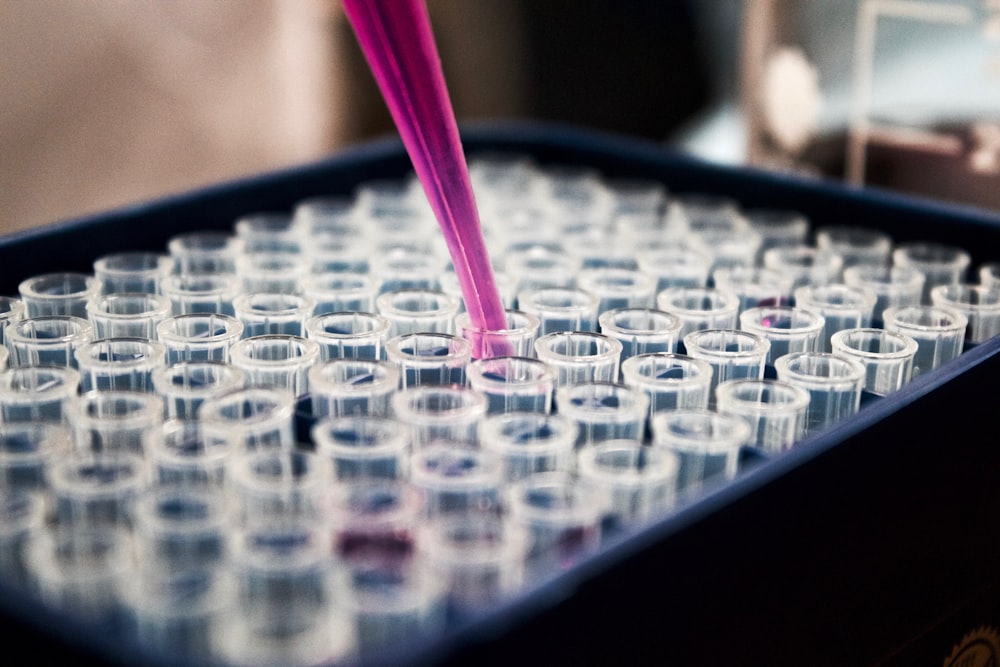
The Crucial Experiment: Forcing AKIP1 to Move
The goal was direct and elegant: artificially force AKIP1 to move to different parts of the cell and see what happens to NF-kappaB. If the old theory was correct, moving AKIP1 into the nucleus should supercharge NF-kappaB activity.
Methodology: A Step-by-Step Guide
The researchers used a common human cell line (HEK293) to conduct their experiment.
1. Engineering the Compass
They created special versions of the AKIP1 protein by fusing it to a "cellular zip code"—a signal sequence that forces the protein to go to a specific location.
- AKIP1-Nuc: Fused to a nuclear localization signal to trap it in the nucleus.
- AKIP1-Cyt: Fused to a nuclear export signal to keep it out of the nucleus and trapped in the cytoplasm.
- AKIP1-WT: The normal, "wild-type" version that can move freely.
2. Transfection
They introduced these engineered AKIP1 genes into separate batches of cells.
3. Sounding the Alarm
To activate NF-kappaB, they treated the cells with Tumor Necrosis Factor-alpha (TNF-α), a potent inflammatory signal that is a well-known trigger for the NF-kappaB pathway.
4. Measuring the Output
After activation, they used a Luciferase Reporter Assay. This is a clever technique where they insert a gene that produces firefly luciferase (the enzyme that makes fireflies glow) only when NF-kappaB is active. The amount of light produced directly measures the level of NF-kappaB activation.
Results and Analysis: A Surprising Standstill
The results were startling. Despite successfully manipulating AKIP1's location (confirmed by other imaging techniques), the activation of NF-kappaB remained completely unchanged.
Nuclear AKIP1
Same NF-kappaB activity as control cells
Cytoplasmic AKIP1
Same NF-kappaB activity as control cells
Mobile AKIP1
No difference in NF-kappaB activity
This was the "eureka" moment. The data clearly demonstrated that various AKIP1 expression levels affect its subcellular localization but have no effect on NF-kappaB activation . AKIP1's presence in the nucleus was not a cause of NF-kappaB activity, but rather a coincidental effect or related to a completely different function.
Data Tables: Visualizing the Evidence
Table 1: Confirmation of AKIP1 Localization
This table confirms that the genetic engineering successfully directed AKIP1 to its intended cellular compartment.
| AKIP1 Variant | Engineered Signal | Observed Primary Location |
|---|---|---|
| AKIP1-Nuc | Nuclear Localization | Nucleus |
| AKIP1-Cyt | Nuclear Export | Cytoplasm |
| AKIP1-WT | None (Normal) | Both Nucleus & Cytoplasm |
Table 2: NF-kappaB Activation Results
Luciferase Reporter Assay - NF-kappaB activity measured in Relative Light Units (RLU)
| Experimental Condition | NF-kappaB Activity (RLU) | Conclusion |
|---|---|---|
| Control (No AKIP1) + TNF-α | 100.0 ± 5.0 | Baseline activation |
| AKIP1-Nuc + TNF-α | 98.5 ± 4.2 | No significant effect |
| AKIP1-Cyt + TNF-α | 101.3 ± 5.5 | No significant effect |
| AKIP1-WT + TNF-α | 99.8 ± 4.8 | No significant effect |
Table 3: The Scientist's Toolkit
A breakdown of the essential tools that made this discovery possible.
| Research Tool | Function in this Experiment |
|---|---|
| Expression Plasmids | Circular DNA vectors used as "delivery trucks" to introduce the engineered AKIP1 genes into the cells. |
| Signal Sequences (NLS/NES) | The molecular "zip codes" (Nuclear Localization Signal / Nuclear Export Signal) fused to AKIP1 to force its location. |
| TNF-alpha (TNF-α) | A cytokine (signaling protein) used as a standardized "alarm signal" to reliably activate the NF-kappaB pathway. |
| Luciferase Reporter Assay | A highly sensitive method that uses a light-producing enzyme as a readout for gene activity, allowing precise measurement of NF-kappaB. |
| Fluorescence Microscopy | A technique used to visually confirm the subcellular location of the tagged AKIP1 proteins, making them glow under a microscope. |
NF-kappaB Activation Across Different AKIP1 Conditions
Visual representation of NF-kappaB activation levels showing no significant difference across experimental conditions.
Conclusion: Redefining the Map of the Cell
A Paradigm Shift in Cellular Biology
This experiment provides a powerful lesson in scientific humility. It shows that even the most logical assumptions—like a protein's location defining its primary function—must be rigorously tested.
The discovery that AKIP1's localization does not govern NF-kappaB activation forces us to re-evaluate its role. So, if AKIP1 isn't there to help NF-kappaB, what is it doing in the nucleus? The answer is the new frontier.
Future Research Directions
Scientists now believe AKIP1 may be involved in other critical nuclear processes, such as:
- Regulating how cells read their own DNA
- Responding to other types of cellular stress
- Interacting with different signaling pathways
- Playing roles in cell cycle regulation
The Cellular City Analogy
It's a reminder that within the microscopic city of the cell, a worker's location can be a red herring, and their true purpose may be far more nuanced and surprising than we ever imagined .
Just as a person might work remotely or have multiple roles in different locations, proteins can have functions that aren't tied to a single cellular compartment.