The Tiny Traffic Cop in Our Cells
How a Microscopic Molecule Could Halt Bladder Cancer
In the bustling city of the human body, sometimes a single, tiny director can stop traffic and change everything. Scientists have just found one such director, and it's rewriting our playbook for fighting cancer.
Introduction: The Cellular Battlefield
Bladder cancer is a significant global health challenge, with hundreds of thousands of new cases diagnosed each year. While treatments have improved, the search for more effective, targeted therapies with fewer side effects is relentless. This search has led scientists deep into the microscopic world of our genes, beyond the well-known DNA, to a fascinating class of molecules called microRNAs.
DNA: The Library
Imagine your DNA as a vast library of cookbooks containing every recipe your body needs to function.
MicroRNAs: The Librarians
MicroRNAs are like tiny, powerful librarians that can grab specific cookbooks and prevent them from being used.
This process, known as "gene silencing," is crucial for controlling cell growth, identity, and even death. When these librarians go on strike or work incorrectly, chaos can ensue—a chaos we call cancer.
Recent groundbreaking research has zeroed in on one such librarian, microRNA-124-3p (miR-124-3p), and its target: a protein called AURKA. The discovery of their relationship is opening a promising new front in the war against bladder cancer.
Main Body: Unraveling the Connection
The Key Players: miR-124-3p vs. AURKA
To understand this breakthrough, let's meet the main characters in this cellular drama:
MicroRNA-124-3p
The "Good Cop": This is a specific microRNA known to be a tumor suppressor. In healthy cells, it helps maintain order by "turning down" the recipes for proteins that promote uncontrolled growth. In many cancers, including bladder cancer, levels of miR-124-3p are mysteriously low, as if the good cop has gone missing.
AURKA
The "Bad Cop": Stands for Aurora Kinase A. This protein is an engine of cell division. It acts like a foreman on a construction site, ensuring that a single cell splits neatly into two. When AURKA is overactive, it drives cells to divide too rapidly and recklessly, a hallmark of cancer. High levels of AURKA are notoriously linked to aggressive tumors and poor patient outcomes.
The Central Theory
What if the missing "good cop," miR-124-3p, is specifically tasked with keeping the "bad cop," AURKA, in check?
A Deep Dive into the Crucial Experiment
To test this theory, scientists designed a series of elegant experiments using human bladder cancer cells in the lab. Here's a step-by-step look at how they proved this vital connection.
The Methodology: A Step-by-Step Investigation
1. The Hypothesis
Researchers proposed that miR-124-3p inhibits bladder cancer cell growth by targeting and suppressing the AURKA protein.
2. Restoring the Good Cop
The team took bladder cancer cells, which have naturally low levels of miR-124-3p, and artificially increased them. They did this by introducing synthetic versions of the miRNA into the cells, a process known as "transfection."
3. Creating a Control Group
For comparison, another set of cancer cells was treated with a "scrambled" miRNA sequence that has no known function. This control group ensures that any observed effects are due to miR-124-3p specifically, and not just the act of adding something to the cells.
4. Running the Tests
With the "good cop" back on duty, the researchers then conducted a battery of tests on both the treated and control cells to see what happened. They measured:
- Proliferation: How fast the cells multiplied.
- Migration: How well the cells could move (a key indicator of cancer's ability to spread, or metastasize).
- Apoptosis: Whether the cells were undergoing programmed cell death (a natural process that cancer cells evade).
- AURKA Levels: They directly measured the amount of AURKA protein present in the cells.

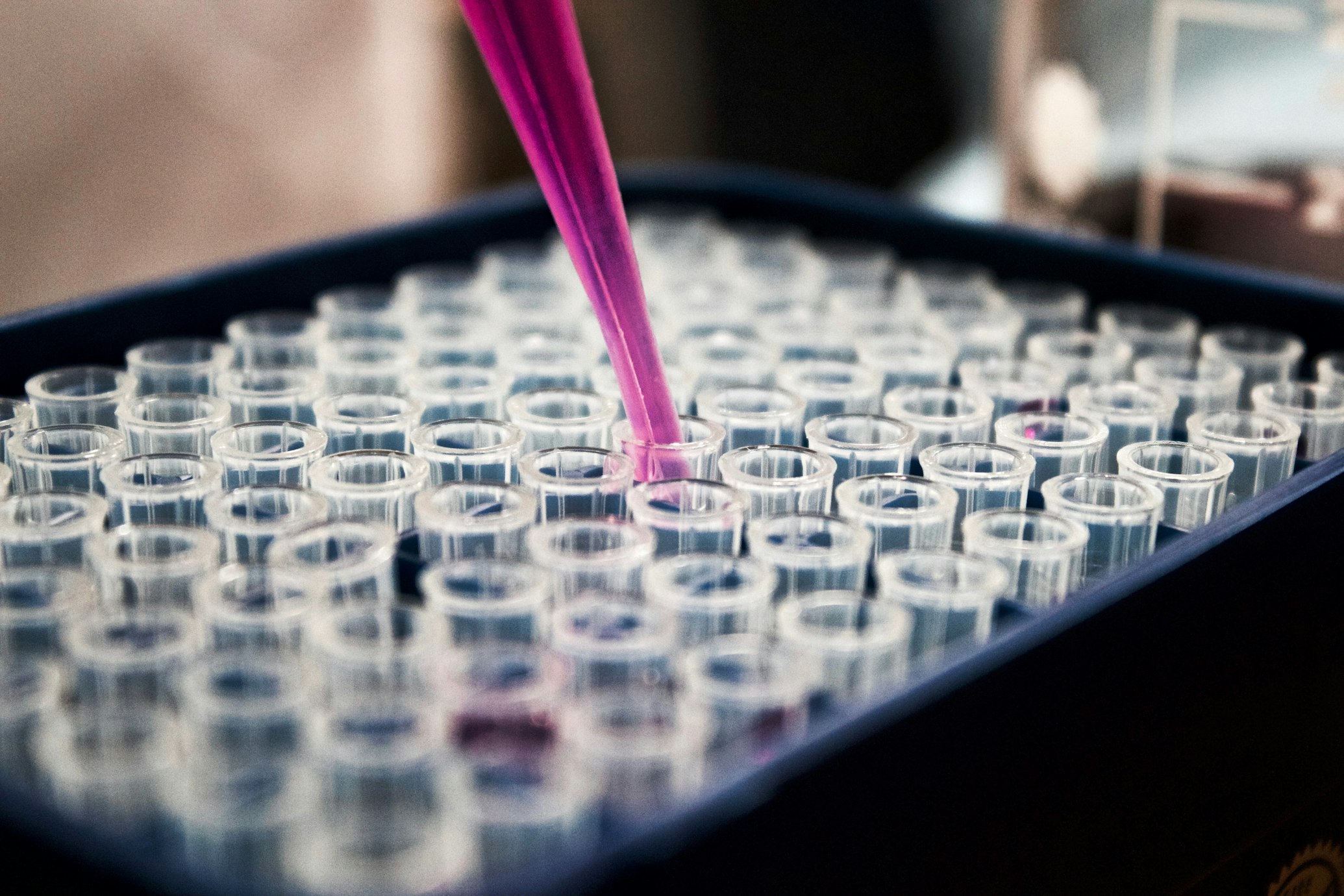
Researchers in a laboratory setting conducting experiments on cancer cells.
The Results: The Good Cop Cleans Up
The findings were striking and clear. Restoring miR-124-3p had a profound anti-cancer effect.
| Cell Behavior | Control Cells (Low miR-124-3p) | Cells with High miR-124-3p | Observed Change |
|---|---|---|---|
| Proliferation | Rapid, uncontrolled growth | Significantly slowed | ~60% reduction |
| Migration | High mobility | Greatly reduced movement | ~55% reduction |
| Apoptosis | Low death rate | Markedly increased | ~300% increase |
Analysis
This data shows that miR-124-3p acts as a powerful brake on cancer growth. It slows down division, limits the ability to spread, and, crucially, pushes the cells toward self-destruction.
But was it really doing this by targeting AURKA? The answer was a resounding yes.
| Sample | Relative AURKA Protein Level |
|---|---|
| Control Cells (Scrambled miRNA) | 100% |
| Cells with High miR-124-3p | ~35% |
Analysis
When miR-124-3p levels were high, AURKA protein levels plummeted. This provided direct evidence that miR-124-3p was successfully "silencing the recipe" for the AURKA protein.
To seal the deal, researchers performed a rescue experiment. They artificially forced cancer cells with high miR-124-3p to also produce extra AURKA (making it ignore the "good cop's" orders).
| Experiment Group | Proliferation Rate |
|---|---|
| Control Cells (Low miR-124-3p) | 100% |
| Cells with High miR-124-3p | 40% |
| Cells with High miR-124-3p + Extra AURKA | 85% |
Analysis
This was the final piece of the puzzle. When AURKA was added back, the cancer cells largely regained their ability to proliferate rapidly, even in the presence of miR-124-3p. This proves that AURKA is a primary, direct target through which miR-124-3p exerts its anti-cancer effects.
Impact of miR-124-3p on Cancer Cell Behavior
The Scientist's Toolkit: Research Reagent Solutions
Behind every great discovery is a set of powerful tools. Here are some of the key reagents and techniques used in this type of cancer biology research.
| Tool / Reagent | Function in the Experiment |
|---|---|
| miRNA Mimics | Synthetic, lab-made molecules that mimic the function of natural miRNAs. Used to "restore" miR-124-3p levels in cancer cells. |
| siRNA (Small Interfering RNA) | Used to knock down specific genes. In follow-up experiments, scientists use siRNA against AURKA to confirm its role by directly silencing it. |
| Cell Viability Assays | Chemical tests (e.g., MTT, CCK-8) that measure the number of living, proliferating cells, providing the data for proliferation rates. |
| Transwell Migration Assay | A chamber-based system that allows researchers to quantitatively measure how many cells can move through a porous membrane, indicating their invasive potential. |
| Flow Cytometry | A laser-based technology that can count and sort cells. It was used here to accurately measure the percentage of cells undergoing apoptosis. |
| Western Blot | A workhorse technique that uses antibodies to detect specific proteins (like AURKA), allowing scientists to visualize and quantify protein levels in cells. |
Laboratory Techniques
Advanced molecular biology methods were crucial for manipulating and measuring cellular components in this research.
Analytical Instruments
Sophisticated equipment enabled precise quantification of cellular responses to miR-124-3p restoration.
Conclusion: A New Avenue for Hope
The discovery that the tiny miR-124-3p acts as a master regulator by targeting the powerful AURKA protein is more than just a fascinating cellular story. It has tangible, exciting implications for the future of cancer care.
Therapeutic Potential
This research transforms miR-124-3p from a mere biological curiosity into a promising therapeutic target.
Imagine a future treatment where doctors could deliver a synthetic version of miR-124-3p directly into a patient's bladder tumor, effectively reinstating the "good cop" to halt cancer progression and trigger its self-destruction. Similarly, drugs that inhibit AURKA are already under investigation, and identifying patients with low miR-124-3p could help select those who would benefit most.
While there is still a long road of clinical trials ahead, this work illuminates a path forward. It reminds us that sometimes, the most powerful solutions are found in the smallest of packages, quietly directing traffic within us all.
Microscopic view of cells, representing the intricate world where miR-124-3p exerts its effects.