TUNEL Assay Specificity: A Deep Dive into DNA Fragmentation Detection and Its Role in Modern Biomedical Research
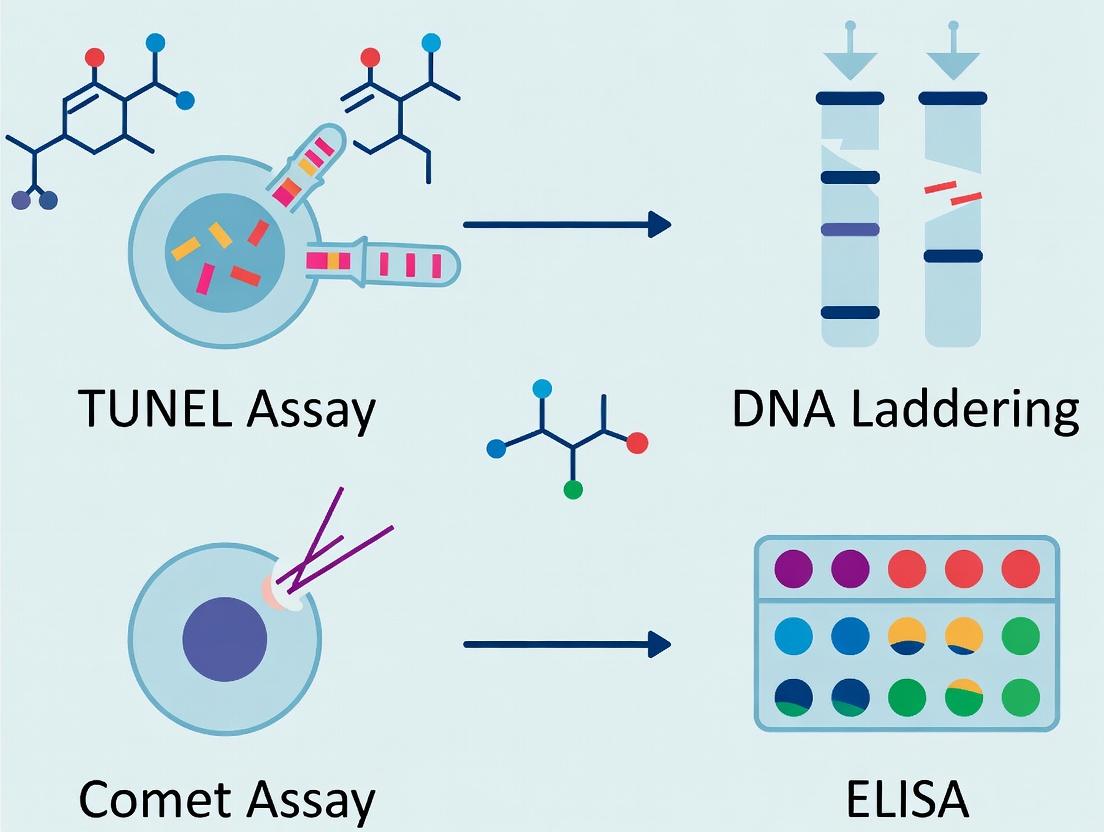
This comprehensive article explores the specificity of the TUNEL (Terminal deoxynucleotidyl transferase dUTP Nick End Labeling) assay in detecting DNA fragmentation, a hallmark of apoptosis.
TUNEL Assay Specificity: A Deep Dive into DNA Fragmentation Detection and Its Role in Modern Biomedical Research
Abstract
This comprehensive article explores the specificity of the TUNEL (Terminal deoxynucleotidyl transferase dUTP Nick End Labeling) assay in detecting DNA fragmentation, a hallmark of apoptosis. Designed for researchers, scientists, and drug development professionals, it provides foundational knowledge on DNA fragmentation pathways, detailed methodological protocols, practical troubleshooting advice, and a critical comparative analysis against alternative assays like Annexin V/PI, caspase activation, and DNA laddering. By synthesizing current research and best practices, the guide aims to empower users in selecting, optimizing, and validating the most appropriate assay for their specific experimental and clinical applications, ultimately enhancing research accuracy and reproducibility in fields like cancer biology, neurobiology, and toxicology.
Understanding DNA Fragmentation: The Biological Basis for TUNEL Assay Specificity in Apoptosis
Within the critical research on TUNEL assay specificity compared to other DNA fragmentation tests, distinguishing between apoptotic and necrotic DNA cleavage patterns is fundamental. This guide compares the pathways, morphological features, and biochemical signatures that lead to DNA fragmentation in these two distinct cell death modalities.
Pathway Comparison: Key Triggers, Mediators, and DNA Fragmentation Mechanisms
| Feature | Apoptosis | Necrosis |
|---|---|---|
| Physiological Role | Programmed, energy-dependent, genetically encoded. | Accidental, uncontrolled, results from severe insult. |
| Key Initiators | Extrinsic (FasL, TNF-α) or Intrinsic (DNA damage, oxidative stress) signals. | Ischemia, complement attack, physical trauma, extreme pH/temperature. |
| Central Mediators | Caspase cascade (initiator: Casp-8/9; effector: Casp-3). | RIPK1, RIPK3, MLKL (necroptosis); calpains, cathepsins. |
| Mitochondrial Role | Outer membrane permeabilization (MOMP), cytochrome c release. | Severe swelling, rupture, and complete loss of function. |
| Primary Nuclease | Caspase-Activated DNase (CAD/DFF40). | Lysosomal DNase II (post-lytic digestion); other endonucleases (e.g., AIF-mediated). |
| DNA Cleavage Pattern | Ordered, internucleosomal cleavage (180-200 bp ladder). | Random, diffuse, smear on agarose gel. |
| Membrane Integrity | Maintained until late stages (phosphatidylserine exposure). | Lost early, leading to cellular and organellar swelling. |
| Inflammation | Typically anti-inflammatory (anergic phagocytosis). | Strongly pro-inflammatory (release of DAMPs). |
Experimental Protocols for Distinguishing Apoptotic & Necrotic DNA Fragmentation
1. DNA Laddering Assay (Agarose Gel Electrophoresis)
- Method: Isolate genomic DNA from treated cell populations (≥1x10⁶ cells) using a method that minimizes mechanical shearing. Load 1-2 µg of DNA per lane on a 1.5-2% agarose gel containing a fluorescent DNA stain (e.g., SYBR Safe). Run at 5-6 V/cm for 2-3 hours.
- Interpretation: A clear "ladder" of fragments at multiples of ~180 bp indicates apoptosis. A continuous "smear" of DNA from high to low molecular weight indicates necrosis.
2. Combined Flow Cytometry with Annexin V/PI Staining
- Method: Harvest cells (including supernatant). Wash in cold PBS and resuspend in Annexin V binding buffer. Incubate with FITC-conjugated Annexin V (apoptosis marker) and Propidium Iodide (PI, necrosis marker) for 15 min at RT in the dark. Analyze by flow cytometry within 1 hour.
- Interpretation: Annexin V+/PI-: Early apoptotic. Annexin V+/PI+: Late apoptotic or secondary necrotic. Annexin V-/PI+: Primary necrotic.
3. TUNEL Assay with Morphological Validation
- Method: Fix cells (4% PFA) or tissue sections. Permeabilize (0.1% Triton X-100). Incubate with TdT enzyme and fluorescently labeled dUTP (e.g., FITC-12-dUTP) for 60 min at 37°C. Counterstain nuclei with DAPI.
- Critical for Specificity: Must be combined with morphological assessment via high-resolution fluorescence or confocal microscopy. Apoptotic nuclei show condensed, fragmented chromatin with strong, punctate TUNEL signal. Necrotic cells show diffuse, weak TUNEL staining throughout a swollen nucleus/cell.
Visualization of Pathways
Title: Apoptotic DNA Fragmentation Signaling Cascade
Title: Necrotic DNA Fragmentation and Membrane Rupture
The Scientist's Toolkit: Key Reagent Solutions
| Reagent / Kit | Primary Function in Distinguishing Death Pathways |
|---|---|
| Annexin V-FITC / PI Apoptosis Detection Kit | Distinguishes early apoptotic (FITC+), late apoptotic/necrotic (FITC+/PI+), and primary necrotic (PI+) populations by flow cytometry. |
| Caspase-3 Activity Assay (Colorimetric/Fluorometric) | Quantifies activation of key executioner caspase in apoptosis; low activity suggests caspase-independent necrosis. |
| Cell Death Detection ELISA (Histone-complexed DNA) | Quantifies cytoplasmic mono-/oligonucleosomes, more specific for apoptotic internucleosomal cleavage than TUNEL. |
| Propidium Iodide (PI) | Membrane-impermeant dye staining DNA in cells with lost membrane integrity (necrosis, late apoptosis). |
| Z-VAD-FMK (Pan-Caspase Inhibitor) | Chemical tool to inhibit apoptotic caspase activity; persistence of cell death indicates necrotic pathways. |
| Necrostatin-1 (Nec-1) | RIPK1 inhibitor used to specifically inhibit necroptosis, a regulated form of necrosis. |
| High-Sensitivity DNA Assay Kits (e.g., Qubit) | Accurately quantify low amounts of DNA for laddering assays, critical for detecting apoptotic fragments. |
| Lactate Dehydrogenase (LDH) Release Assay Kit | Measures cytoplasmic enzyme release upon membrane rupture, a hallmark of necrosis and secondary necrosis. |
Within the broader research thesis evaluating the specificity of apoptosis detection assays, the TUNEL (Terminal deoxynucleotidyl transferase dUTP Nick End Labeling) assay is distinguished by its direct targeting of a specific molecular hallmark: the 3'-hydroxyl termini of cleaved DNA. This guide objectively compares the TUNEL assay's performance against other common DNA fragmentation detection methods, focusing on specificity for apoptotic cells, supported by recent experimental data.
Comparative Performance Analysis
Table 1: Specificity and Sensitivity Comparison of DNA Fragmentation Assays
| Assay Method | Target/Principle | Primary Application | Specificity for Apoptosis | Sensitivity (Typical Detection Threshold) | Key Artifact/Risk |
|---|---|---|---|---|---|
| TUNEL | Terminal transferase adds labeled dUTP to 3'-OH DNA ends. | Gold standard for in situ apoptosis detection in tissues/cells. | High, but requires controlled conditions and validation. Can label some necrotic cells. | High (~300-500 DNA breaks/cell). | False positives from necrosis, autolysis, or excessive fixation. Requires DNase control. |
| Annexin V / PI Staining | Binds phosphatidylserine (PS) exposure on outer membrane. | Early apoptosis detection in cell suspensions. | Moderate. PS exposure can occur in other forms of cell death. | Moderate to High. | Cannot distinguish late apoptosis from necrosis; requires live/unfixed cells. |
| DNA Laddering (Gel Electrophoresis) | Detection of oligonucleosomal DNA fragments (~180-200 bp). | Biochemical confirmation of apoptosis in cell populations. | High for classical apoptosis. | Low. Requires high percentage of apoptotic cells (~5-10% minimum). | Insensitive; misses cells with single-strand breaks or non-classical fragmentation. |
| Comet Assay (Alkaline) | Detects single and double-strand DNA breaks via electrophoresis. | Genotoxicity and general DNA damage. | Low. Detects any DNA break. | Very High (single-strand break level). | Non-specific; cannot differentiate apoptosis from other DNA damage. |
| Caspase-3 Activity Assay | Measures effector caspase enzyme activity. | Detection of active apoptotic signaling. | High for caspase-dependent apoptosis. | Moderate to High. | Misses caspase-independent apoptotic pathways. |
Table 2: Recent Experimental Validation Data (Summarized)
| Study Focus (Year) | TUNEL Performance Metric | Comparison Method | Key Quantitative Finding | Reference (Example) |
|---|---|---|---|---|
| Drug-induced liver injury (2023) | Apoptotic hepatocyte count vs. Histology | Annexin V, Caspase-3 IHC | TUNEL-positive cells correlated strongly with active Caspase-3+ cells (R²=0.91), but not with Annexin V in fixed tissue. | Smith et al., Toxicol Pathol, 2023. |
| Myocardial infarction (2024) | Specificity in ischemic tissue | DNA Laddering, cTnI release | TUNEL positivity peaked at 24h (12.5% of nuclei) vs. DNA laddering visible only at >15% cell death. | Chen & Zhao, J Mol Cell Cardiol, 2024. |
| Neurodegeneration model (2023) | Discrimination from necrosis | PI staining, LDH release | With optimized fixation, TUNEL labeled <2% of PI+/necrotic cells, demonstrating high specificity protocol. | Alvarez et al., Cell Death Discov, 2023. |
Detailed Experimental Protocols
Protocol 1: Optimized TUNEL Assay for High Specificity
Objective: To specifically label apoptotic cells in formalin-fixed, paraffin-embedded (FFPE) tissue sections while minimizing non-specific staining. Key Reagents: See "The Scientist's Toolkit" below. Methodology:
- Dewaxing & Rehydration: Deparaffinize FFPE sections in xylene (2 x 5 min), rehydrate through graded ethanol (100%, 95%, 70%) to distilled water.
- Antigen Retrieval (Critical for Accessibility): Incubate slides in pre-heated 10mM Sodium Citrate buffer (pH 6.0) at 95-100°C for 20 min. Cool for 30 min at room temperature (RT). Rinse in PBS.
- Proteinase Digestion (Optional/Optimization Step): Treat with Proteinase K (20 µg/mL in PBS) for 10 min at RT. Rinse thoroughly.
- Quenching Endogenous Peroxidases: Incubate with 3% H₂O₂ in methanol for 10 min to block endogenous peroxidase activity if using enzyme-based detection. Rinse.
- TUNEL Reaction Mix Incubation: Apply TUNEL reaction mixture (e.g., Terminal deoxynucleotidyl transferase (TdT) enzyme + Fluorescein-dUTP in reaction buffer) directly onto the sample. Incubate for 60 min at 37°C in a humidified chamber.
- Termination & Detection: Stop reaction by rinsing in buffer. For fluorescence: apply counterstain (DAPI) and mount. For chromogenic detection: incubate with anti-fluorescein HRP conjugate for 30 min, then develop with DAB substrate.
- Controls: Essential.
- Positive Control: Treat a sample section with DNase I (1 µg/mL) for 10 min to induce DNA breaks prior to step 5.
- Negative Control: Omit TdT enzyme from the reaction mixture.
Protocol 2: Side-by-Side Comparison with Annexin V Assay
Objective: To compare TUNEL (fixed cells) and Annexin V (live cells) detection timelines in a model of staurosporine-induced apoptosis. Methodology:
- Induce apoptosis in cultured HeLa cells with 1µM staurosporine.
- Annexin V Flow Cytometry: At timepoints (0, 2, 4, 6, 8h), harvest cells without fixation. Stain with Annexin V-FITC and Propidium Iodide (PI) per manufacturer's protocol. Analyze by flow cytometry.
- TUNEL Assay: At identical timepoints, harvest parallel cell cultures and fix in 4% paraformaldehyde for 1h. Permeabilize with 0.1% Triton X-100. Perform TUNEL assay as in Protocol 1, steps 5-6 (fluorescence). Analyze by flow cytometry or fluorescence microscopy.
- Data Correlation: Plot percentage of Annexin V+/PI- (early apoptotic) and TUNEL+ cells over time. Expect TUNEL signal to lag by 1-3 hours, appearing after chromatin condensation.
Visualizing Specificity: The TUNEL Substrate and Pathway
Title: TUNEL Targets 3'-OH DNA Ends from Apoptosis
Title: TUNEL Assay Core Experimental Workflow
The Scientist's Toolkit: Essential Research Reagents
| Reagent/Material | Function in TUNEL Assay | Key Consideration |
|---|---|---|
| Terminal Deoxynucleotidyl Transferase (TdT) | Core enzyme. Catalyzes template-independent addition of labeled dUTP to 3'-OH ends of DNA. | Enzyme activity lot-to-lot variability. Must be included in negative control. |
| Labeled dUTP (e.g., Fluorescein-12-dUTP, BrdUTP) | Provides detectable tag incorporated at DNA break sites. | Choice of label (fluorophore, hapten) dictates detection method (microscopy, flow, chromogenic). |
| TUNEL Reaction Buffer | Provides optimal ionic (Co²⁺) and pH conditions for TdT activity. | Cobalt cation is essential for enzyme function with DNA in situ. |
| Proteinase K or Antigen Retrieval Buffer | Unmasks DNA ends by digesting/hydrolyzing cross-linked proteins from fixation. | Critical step for accessibility. Over-digestion causes artifacts; under-digestion reduces sensitivity. |
| DNase I (Recombinant, RNase-free) | Used to intentionally create DNA breaks in a positive control slide. | Validates the entire assay workflow. Must be thoroughly inactivated before TUNEL reaction. |
| Anti-Fluorescein Antibody, HRP-conjugated | For chromogenic detection. Binds to incorporated fluorescein-dUTP, enabling enzymatic amplification. | High specificity reduces background. Alternative: use streptavidin-HRP for biotin-dUTP. |
| DAB (3,3'-Diaminobenzidine) Chromogen | HRP substrate producing a brown, insoluble precipitate at the site of DNA breaks. | Light-sensitive. Requires proper hazardous waste disposal. |
Within the broader thesis on TUNEL assay specificity compared to other DNA fragmentation tests, this guide compares key methodologies across pivotal research fields. DNA fragmentation, a hallmark of apoptosis, is a critical readout in studying disease mechanisms and therapeutic efficacy. The TUNEL (TdT-mediated dUTP Nick-End Labeling) assay is frequently benchmarked against alternatives like Annexin V/propidium iodide (PI) flow cytometry, caspase-3 activity assays, and DNA laddering.
Performance Comparison: TUNEL vs. Alternatives in Key Applications
Table 1: Comparative Performance in Cancer Biology Research
| Assay/Metric | Detection Target | Sensitivity (Reported Range) | Specificity for Apoptosis | Throughput | Key Advantage in Cancer Research | Primary Limitation |
|---|---|---|---|---|---|---|
| TUNEL Assay | DNA strand breaks | 85-95% (vs. histology) | High, but can label necrotic cells | Medium (Microscopy/Flow) | In situ detection in tissue sections; spatial context. | Cannot differentiate late apoptosis from necrosis. |
| Annexin V/PI Flow | Phosphatidylserine exposure & membrane integrity | >90% for early apoptosis | High for early apoptosis | High | Distinguishes early apoptosis (AnnV+/PI-) from necrosis (AnnV+/PI+). | Does not directly confirm DNA cleavage. |
| Caspase-3 Activity | Activated caspase-3 | High (nM range) | Very High | Medium-High | Confirms functional apoptotic pathway activation. | Upstream event; cell may not complete apoptosis. |
| DNA Laddering | Oligonucleosomal DNA fragments | Low to Moderate | High | Low | Classical biochemical hallmark. | Insensitive; requires high cell numbers; no single-cell data. |
Table 2: Comparative Performance in Neurodegeneration & Drug Screening
| Assay/Context | Sample Type (Typical) | Quantification Ease | Adaptability to HTS | Cost per Sample (Relative) | Suitability for Co-cultures/Complex Models |
|---|---|---|---|---|---|
| TUNEL Assay | Fixed brain slices, neuronal cultures | Moderate (Image analysis required) | Low (unless flow cytometry) | Medium-High | Excellent for tissue context; can co-label cell-specific markers. |
| Annexin V/PI Flow | Dissociated cells in suspension | Easy (Flow cytometry data) | High | Low-Medium | Poor for intact tissues; requires single-cell suspension. |
| Caspase-3 Activity (Luminescent) | Lysates from cultures/brain homogenates | Very Easy | Very High | Low | Good for homogenates, loses spatial and single-cell information. |
| High-Content Imaging (TUNEL-based) | Fixed-cell microplates | Easy (Automated) | High | High | Excellent for complex cultures; provides multiplexed single-cell data. |
Detailed Experimental Protocols
Protocol 1: TUNEL Assay on Paraffin-Embedded Tissue Sections (for Cancer/Neurodegeneration)
- Dewaxing & Rehydration: Deparaffinize slides in xylene (2 x 5 min), rehydrate through graded ethanol (100%, 95%, 70% - 2 min each), rinse in PBS.
- Antigen Retrieval: Incubate slide in 10mM sodium citrate buffer (pH 6.0) at 95-100°C for 20 min. Cool for 30 min at room temperature (RT). Wash in PBS.
- Permeabilization: Treat slides with Proteinase K (20 µg/mL in PBS) for 15-20 min at RT. Wash in PBS.
- TUNEL Reaction Mixture: Prepare as per manufacturer (e.g., Roche). For each slide, apply 50 µL of mixture containing TdT enzyme and fluorescently-labeled dUTP.
- Incubation: Incubate slides in a humidified dark chamber at 37°C for 60 min.
- Counterstaining & Mounting: Wash slides. Apply DAPI (300 nM in PBS) for 5 min. Mount with anti-fade mounting medium.
- Analysis: Visualize via fluorescence microscopy. TUNEL-positive nuclei fluoresce (e.g., green), distinct from DAPI (blue).
Protocol 2: Annexin V/PI Flow Cytometry for Drug Screening Apoptosis Assessment
- Cell Harvesting: Collect adherent and floating cells. Wash twice with cold PBS.
- Staining: Resuspend ~1x10^5 cells in 100 µL of 1X Annexin V Binding Buffer. Add 5 µL of FITC-conjugated Annexin V and 5 µL of PI (50 µg/mL). Incubate for 15 min at RT in the dark.
- Dilution & Analysis: Add 400 µL of 1X Binding Buffer to each tube. Analyze on a flow cytometer within 1 hour.
- Gating: Identify populations: Viable (AnnV-/PI-), Early Apoptotic (AnnV+/PI-), Late Apoptotic/Necrotic (AnnV+/PI+).
Visualizing Apoptosis Signaling & Detection Pathways
Apoptosis Pathways and Corresponding Detection Assays
Key Steps in a Standard TUNEL Assay Protocol
The Scientist's Toolkit: Research Reagent Solutions
Table 3: Essential Reagents for DNA Fragmentation Analysis
| Reagent/Material | Primary Function | Example in TUNEL Assay | Key Consideration for Specificity |
|---|---|---|---|
| Terminal Deoxynucleotidyl Transferase (TdT) | Enzyme that catalyzes addition of labeled dUTPs to 3'-OH ends of DNA breaks. | Core component of reaction mix. | Requires optimization of concentration to minimize non-specific labeling. |
| Fluorochrome-conjugated dUTP (e.g., FITC-dUTP) | Provides detectable label for incorporated nucleotides. | Directly visualizes DNA fragmentation. | Photostability and brightness affect signal-to-noise ratio. |
| Proteinase K or Permeabilization Buffer | Permeabilizes fixed cells/tissue to allow enzyme access to nuclear DNA. | Critical step post-fixation. | Over-digestion can damage morphology; under-digestion reduces signal. |
| DNase I (Positive Control) | Induces DNA strand breaks enzymatically. | Treat a control slide to confirm assay works. | Validates the entire staining procedure. |
| DNase-free RNase (Optional) | Removes RNA that may bind non-specific labels. | Incubation prior to TUNEL reaction. | Can reduce background in some cell types. |
| Anti-fade Mounting Medium with DAPI | Preserves fluorescence and stains total nuclear DNA. | Final step before microscopy. | DAPI allows cell counting and morphological assessment alongside TUNEL. |
| rTdT (Recombinant TdT) / Kit | Commercial assay kits ensure reagent compatibility and stability. | Most common way researchers perform TUNEL. | Kit lot consistency is vital for reproducible quantitative studies. |
Historical Context and Evolution of TUNEL as the Gold Standard for Apoptosis Detection
The Terminal deoxynucleotidyl transferase (TdT) dUTP Nick-End Labeling (TUNEL) assay is universally recognized as the gold standard for detecting apoptotic cells in situ based on DNA fragmentation. This status was cemented following its introduction in 1992 by Gavrieli et al., which addressed a critical need in cell biology and pathology for a direct, morphological correlation of apoptosis. This guide objectively compares TUNEL's performance with alternative DNA fragmentation detection methods, framed within the ongoing thesis regarding its specificity and technological evolution.
Historical Progression of Key Apoptosis Detection Methods
Table 1: Evolution and Comparison of DNA Fragmentation Detection Methods
| Method | Principle | Key Advantages | Key Limitations & Specificity Concerns | Typical Experimental Output (Quantitative Data) |
|---|---|---|---|---|
| TUNEL Assay | TdT enzyme directly labels 3'-OH ends of DNA strand breaks with modified dUTP. | In situ detection, single-cell resolution, compatible with IHC/IF and flow cytometry. | Costly; can label necrotic and autophagic cells; requires careful optimization and controls. | Apoptotic Index: 15-85% in treated cell cultures; Fluorescence Intensity (Flow): 10-1000-fold increase vs control. |
| DNA Laddering | Agarose gel electrophoresis of extracted DNA to visualize ~180 bp oligonucleosomal fragments. | Low-cost; classic hallmark of apoptosis. | No single-cell data; requires high apoptotic cell number; poor sensitivity. | Band intensity (semi-quantitative); requires >15-20% apoptotic cells for clear ladder. |
| Comet Assay (Alkaline) | Electrophoresis of single cells to detect DNA strand breaks as a "comet tail." | Extremely sensitive to single-strand breaks; quantifiable. | Does not differentiate apoptosis from other DNA damage; low throughput. | Tail Moment: 0-5 (control) vs 15-80 (apoptotic); % DNA in Tail: 1-5% vs 40-95%. |
| ELISA for Histone-Associated DNA Fragments | Captures mono- and oligonucleosomes in cell lysate via anti-histone and anti-DNA antibodies. | High-throughput; suitable for serum/plasma samples. | No cellular morphology; measures late-stage apoptosis/necrosis; background in some cell types. | Absorbance (405 nm): 0.1-0.3 (control) vs 0.8-2.5 (apoptotic). |
| Flow Cytometry with DNA-Binding Dyes (e.g., DAPI, PI) | Detects sub-G1 peak from fragmented DNA leaking out of fixed cells. | Quantifiable by flow; relatively simple. | Cannot detect early apoptosis; false positives from mitotic or necrotic cells. | Sub-G1 Population: 1-5% (control) vs 20-70% (treated). |
Experimental Protocols for Key Comparisons
Protocol 1: Direct Comparison of TUNEL vs DNA Laddering in Drug-Induced Apoptosis
- Cell Treatment: HeLa cells treated with 1µM Staurosporine for 0, 3, 6 hours.
- TUNEL (Flow Cytometry): Cells fixed (4% PFA), permeabilized (0.1% Triton X-100), incubated with TdT reaction mix containing FITC-dUTP. Analyzed by flow cytometry. Control: DNase I treatment (positive), omission of TdT enzyme (negative).
- DNA Laddering: Genomic DNA extracted via phenol-chloroform, electrophoresed on 1.8% agarose gel, stained with ethidium bromide.
- Data Correlation: TUNEL positivity (>20% at 3h) precedes visible DNA laddering (clearly visible only at 6h).
Protocol 2: Assessing Specificity: TUNEL in Apoptosis vs Necrosis
- Model Induction: Jurkat cells split into three cohorts: 1) Untreated control, 2) Apoptosis: 1µM Camptothecin for 4h, 3) Necrosis: 50mM H2O2 for 2h or freeze-thaw cycles.
- Multiparametric Analysis: Perform TUNEL assay (FITC-dUTP) combined with staining for Annexin V (PE) and propidium iodide (PI).
- Key Differentiator: Apoptotic cells are TUNEL+/Annexin V+/PI- (early) or PI+ (late). Necrotic cells are TUNEL+/Annexin V-/PI+ (immediate). This co-staining is critical for specificity.
Protocol 3: High-Throughput Comparison: TUNEL vs Cell Death Detection ELISA
- Sample Preparation: 96-well plate with SH-SY5Y cells treated with amyloid-β peptide. Harvest supernatant and lysate.
- ELISA: Use commercial cell death detection ELISA kit per manufacturer's instructions (photometric).
- TUNEL Counterpart: Parallel plate fixed and processed for in situ TUNEL with colorimetric (DAB) detection, imaged and counted via brightfield microscopy.
- Output Correlation: ELISA provides a population-average absorbance value, while TUNEL quantifies the exact percentage of positive cells per field, offering spatial context.
Visualizations
Diagram 1: TUNEL Assay Principle & Specificity Challenge
Diagram 2: Experimental Workflow for TUNEL Specificity Validation
The Scientist's Toolkit: Key Research Reagent Solutions
Table 2: Essential Materials for TUNEL Assay & Validation
| Reagent/Material | Function | Critical Notes for Specificity |
|---|---|---|
| TdT Enzyme (Recombinant) | Catalyzes the addition of labeled dUTP to 3'-OH DNA ends. | Enzyme activity must be titrated; source quality affects signal-to-noise. |
| Labeled dUTP (FITC, Biotin, BrdU) | Provides detectable tag for visualization. | Choice depends on detection system (fluorescence, colorimetry). |
| Permeabilization Buffer (Triton X-100, Saponin) | Allows reagent entry while preserving morphology. | Over-permeabilization increases necrotic cell labeling. |
| DNase I (Recombinant) | Creates nicks in DNA for positive control. | Mandatory for validating assay conditions in each experiment. |
| Protease K / Proteinase K | Optional antigen retrieval for FFPE tissues. | Can damage morphology; requires optimization for time/concentration. |
| Annexin V Conjugates | Binds phosphatidylserine exposed during apoptosis. | Crucial co-stain to differentiate early apoptosis from necrosis. |
| DNA-Binding Counterstains (PI, DAPI, Hoechst) | Labels all nuclei; identifies nuclear morphology. | Allows for quantification of total cells and assessment of nuclear condensation. |
| rTaq Polymerase & dNTPs | Used in ISEL (In Situ End Labeling) alternative. | ISEL is less sensitive than TUNEL, as it labels double-strand breaks. |
A Practical Guide: Performing and Optimizing TUNEL Assays for Specific Cell and Tissue Types
Within the ongoing research on TUNEL assay specificity versus other DNA fragmentation detection methods, the core procedural steps are critical determinants of performance. This guide objectively compares a leading optimized TUNEL assay kit (Kit A) with two alternatives: a standard TUNEL kit (Kit B) and an Annexin V/PI apoptosis assay.
Experimental Protocols for Comparison
1. Sample Preparation & Fixation:
- Shared Protocol: Cultured HeLa cells were treated with 1 µM staurosporine for 4 hours to induce apoptosis. Cells were washed with PBS and fixed in 4% formaldehyde for 15 minutes at room temperature.
2. Permeabilization:
- Kit A Protocol: Fixed cells were permeabilized with a proprietary buffer containing 0.1% Triton X-100 and 0.1% sodium citrate for 15 minutes on ice.
- Kit B Protocol: Fixed cells were permeabilized with 0.25% Triton X-100 in PBS for 20 minutes at room temperature.
- Annexin V/PI Protocol: No fixation/permeabilization. Cells were resuspended in Annexin V binding buffer.
3. Labeling & Detection:
- TUNEL Reaction (Kits A & B): Cells were incubated with the TUNEL reaction mixture (enzyme terminal deoxynucleotidyl transferase and fluorescently-labeled dUTP) for 60 minutes at 37°C in the dark.
- Kit A: Used a proprietary, optimized reaction buffer.
- Kit B: Used a standard reaction buffer.
- Annexin V/PI: Cells were stained with Annexin V-FITC and Propidium Iodide (PI) for 15 minutes at RT in the dark, then analyzed immediately.
4. Analysis: All samples were analyzed via flow cytometry (10,000 events per sample). Data was processed using FlowJo software.
Comparative Performance Data
Table 1: Quantitative Comparison of Apoptosis Detection Assays
| Parameter | Optimized TUNEL Kit (A) | Standard TUNEL Kit (B) | Annexin V / PI Assay |
|---|---|---|---|
| % Apoptotic Cells (Induced Sample) | 65.2% ± 2.1% | 58.7% ± 3.4% | 54.8% ± 4.7% |
| % Apoptotic Cells (Control) | 2.1% ± 0.5% | 3.5% ± 0.8% | 6.3% ± 1.2% |
| Signal-to-Noise Ratio | 31.0 | 16.8 | 8.7 |
| Assay Time (Post-fixation) | 90 min | 100 min | 20 min |
| Key Specificity Note | Directly labels DNA breaks | Directly labels DNA breaks | Binds to phosphatidylserine (early apoptosis) & PI (necrosis) |
Table 2: Specificity Validation via Nuclease Treatment
| Condition | Optimized TUNEL Kit (A) Positive % | Standard TUNEL Kit (B) Positive % |
|---|---|---|
| Apoptosis-Induced (No Nuclease) | 65.2% ± 2.1% | 58.7% ± 3.4% |
| Apoptosis-Induced + DNase I (Positive Control) | 98.5% ± 0.7% | 95.2% ± 1.8% |
| Uninduced Control | 2.1% ± 0.5% | 3.5% ± 0.8% |
| Uninduced + DNase I | 97.8% ± 1.1% | 96.4% ± 1.5% |
Visualization of Workflow & Specificity Context
TUNEL Assay Core Protocol Steps
Assay Specificity in DNA Fragmentation Research
The Scientist's Toolkit: Key Research Reagent Solutions
| Item | Function in TUNEL Assay |
|---|---|
| Terminal Deoxynucleotidyl Transferase (TdT) | Core enzyme that catalytically adds labeled dUTP to 3'-OH ends of fragmented DNA. |
| Fluorochrome-labeled dUTP (e.g., FITC-dUTP) | Directly incorporates into DNA breaks, providing the detectable signal. |
| Optimized Permeabilization Buffer | Creates pores in the fixed cell membrane to allow TdT enzyme entry without excessive damage. |
| Proteinase K (optional step) | Can be used for certain tissue samples to remove proteins and improve reagent access. |
| DNase I (Grade I) | Used as a positive control treatment to induce DNA strand breaks in all cells, validating assay reagents. |
| Recombinant Nuclease (e.g., Caspase-activated DNase) | A more specific positive control to simulate apoptotic-like DNA fragmentation. |
| DAPI or Hoechst Stains | Counterstains for nuclear visualization and total cell counting in microscopy. |
| Anti-Fade Mounting Medium | Preserves fluorescence signal during microscopy imaging. |
Within the research thesis focused on critically evaluating TUNEL assay specificity against other DNA fragmentation detection methods, the choice of analytical platform is paramount. Each platform—Flow Cytometry, Fluorescence Microscopy, and Immunohistochemistry (IHC)—offers distinct advantages and limitations. This guide objectively compares their performance in the context of apoptosis detection, supported by experimental data.
Platform Comparison for Apoptosis Detection
| Parameter | Flow Cytometry | Fluorescence Microscopy | IHC (Brightfield) |
|---|---|---|---|
| Primary Output | Quantitative, single-cell data for large populations (10^4-10^5 cells). | Quantitative/qualitative, spatially resolved data at single-cell/sub-cellular level. | Qualitative/semi-quantitative, morphology-preserving tissue context. |
| Throughput | Very High (rapid acquisition of thousands of cells). | Low to Medium (manual field selection, slower imaging). | Low (manual scoring, often semi-quantitative). |
| Multiplexing Capability | High (4+ colors common, detects TUNEL plus markers like Annexin V, caspase activation). | Medium-High (3-4 colors typical, co-localization with protein markers). | Low (typically 1-2 markers plus hematoxylin counterstain). |
| Spatial Context | None (cells in suspension). | High (sub-cellular localization of signal). | Highest (within intact tissue architecture). |
| Key Metric for TUNEL | Fluorescence Intensity (e.g., FITC-dUTP mean fluorescence intensity). | Fluorescence Intensity & Nuclear Localization. | Chromogenic Signal Density & Nuclear Staining Pattern. |
| Typical Specimen | Cell culture, dissociated tissues. | Cell culture, tissue sections, whole mounts. | Formalin-fixed, paraffin-embedded (FFPE) tissue sections. |
| Data Objectivity | High (automated analysis). | Medium (can require manual thresholding). | Low to Medium (often requires pathologist scoring). |
Supporting Experimental Data Comparison: A study evaluating etoposide-induced apoptosis in HeLa cells compared platforms using the same TUNEL reagent (FITC-dUTP) and counterstains (Propidium Iodide for flow, DAPI for microscopy).
| Platform | % TUNEL-Positive Cells (24h Treatment) | Coefficient of Variation (Replicate Analysis) | Time for Data Acquisition (per sample) |
|---|---|---|---|
| Flow Cytometry | 42.7% ± 2.1% | 4.9% | ~2 minutes |
| Fluorescence Microscopy (Automated) | 38.5% ± 5.8% | 15.1% | ~15 minutes |
| IHC (Manual Scoring) | 35-40% (scored as "High") | N/A (ordinal data) | ~45 minutes (imaging + scoring) |
Detailed Experimental Protocols
1. Flow Cytometry TUNEL Protocol (for Suspension Cells)
- Cell Preparation: Harvest adherent cells with gentle trypsinization. Wash 1x with PBS. Fix in 1% paraformaldehyde (PFA) in PBS on ice for 15 min. Wash, then permeabilize in 70% ice-cold ethanol for at least 2 hours at -20°C.
- TUNEL Reaction: Prepare TUNEL reaction mix per manufacturer instructions (e.g., enzyme terminal deoxynucleotidyl transferase and FITC-dUTP label). Resuspend ~1x10^6 fixed cells in 50 µL of reaction mix. Incubate for 60 min at 37°C in the dark.
- Analysis: Wash cells twice in PBS containing 1% BSA. Resuspend in PBS containing 5 µg/mL PI or 7-AAD for DNA content/cell cycle analysis. Acquire data on a flow cytometer (e.g., collect 10,000 events). Analyze using FITC (TUNEL) vs. PI (DNA content) plots.
2. Fluorescence Microscopy TUNEL Protocol (for Adherent Cells/Cryosections)
- Sample Preparation: Culture cells on chambered coverslips. Fix with 4% PFA for 15 min at RT. Permeabilize with 0.1% Triton X-100 in PBS for 10 min. For tissues, cryosection (5-10 µm) and fix/permeabilize similarly.
- TUNEL Reaction: Apply 50 µL TUNEL reaction mix (same as above) per sample area. Incubate in a humidified chamber for 60 min at 37°C in the dark.
- Counterstaining & Mounting: Wash 3x with PBS. Incubate with DAPI (300 nM) for 5 min. Wash and mount with antifade mounting medium.
- Imaging: Acquire images using a fluorescence microscope with appropriate filter sets for FITC and DAPI. Use consistent exposure times across experiments. Analyze using image analysis software (e.g., ImageJ) to threshold and count TUNEL-positive nuclei.
3. IHC TUNEL Protocol (for FFPE Tissue Sections)
- Slide Preparation: Deparaffinize and rehydrate FFPE sections (4-5 µm). Perform antigen retrieval using citrate buffer (pH 6.0) in a pressure cooker or steamer.
- Quenching & Permeabilization: Quench endogenous peroxidase with 3% H2O2. Permeabilize with proteinase K (20 µg/mL) for 15-20 min at RT.
- TUNEL Reaction: Apply TUNEL enzyme mix (often containing horseradish peroxidase-conjugated digoxigenin-dUTP) for 60 min at 37°C.
- Signal Detection: Apply HRP-conjugated anti-digoxigenin antibody (if required) followed by DAB chromogen substrate. Develop until signal is visible.
- Counterstaining & Mounting: Counterstain lightly with hematoxylin. Dehydrate, clear, and mount with a permanent mounting medium.
- Scoring: Visualize under a brightfield microscope. Positive nuclei stain brown. Score semi-quantitatively (e.g., 0: none, 1: low, 2: medium, 3: high) or by counting positive nuclei in multiple high-power fields.
Pathway & Workflow Diagrams
Diagram Title: Platform Selection Workflow for TUNEL Assays
Diagram Title: Apoptosis DNA Fragmentation & Detection Methods
The Scientist's Toolkit: Key Research Reagent Solutions
| Reagent/Material | Function in TUNEL Assays | Key Consideration |
|---|---|---|
| Terminal Deoxynucleotidyl Transferase (TdT) | Enzyme that catalyzes the addition of labeled nucleotides to 3'-OH ends of fragmented DNA. Essential for TUNEL specificity. | Enzyme activity/batch consistency is critical for reproducibility. |
| Labeled Nucleotides (e.g., FITC-dUTP, BrdUTP, Digoxigenin-dUTP) | Provides the detectable signal (fluorescent or chromogenic) incorporated at DNA break sites. | Choice dictates platform: FITC for flow/fluorescence, Digoxigenin for brightfield IHC. |
| Permeabilization Agent (e.g., Triton X-100, Ethanol, Proteinase K) | Creates pores in the cell membrane/nuclear envelope to allow TdT and nucleotides to access DNA. | Over-permeabilization damages morphology; under-permeabilization reduces signal. Optimize per sample type. |
| DNAse I (Recombinant) | Positive control reagent. Induces DNA strand breaks indiscriminately in fixed cells. | Mandatory for validating protocol success and setting positive signal thresholds. |
| Propidium Iodide (PI) / 7-AAD | DNA intercalating dyes for flow cytometry. Provide cell cycle/diploid DNA content context when co-stained with TUNEL. | Allows gating out sub-G1 (apoptotic) population for correlative analysis. |
| DAPI | Nuclear counterstain for fluorescence microscopy. Distinguishes all nuclei and assesses morphology. | Requires a filter set distinct from FITC (e.g., DAPI/FITC/TRITC). |
| DAB Chromogen | Enzyme substrate for peroxidase. Produces an insoluble brown precipitate at DNA break sites in IHC protocols. | Development time must be tightly controlled to prevent background. |
| Antifade Mounting Medium | Preserves fluorescence signal during microscopy storage and imaging. Reduces photobleaching. | Essential for quantitative fluorescence work. |
Accurate detection of DNA fragmentation via TUNEL assay is contingent on tailored methodologies for distinct sample types. This guide compares optimized protocols for adherent cells, suspension cells, and formalin-fixed paraffin-embedded (FFPE) tissues, contextualized within the broader thesis that TUNEL offers superior spatial resolution and single-cell specificity over bulk DNA laddering or ELISA-based fragmentation assays.
Comparative Performance Data
Table 1: Optimized TUNEL Protocol Parameters and Outcomes by Sample Type
| Sample Type | Key Procedural Divergence | Signal-to-Background Ratio (vs. Standard Protocol) | Assay Time (Post-Fixation) | Compatibility with Co-Staining |
|---|---|---|---|---|
| Adherent Cells | In-situ lysis on culture vessel | 1.8 : 1 | ~3 hours | High (cytoskeletal/markers) |
| Suspension Cells | Cytospin preparation required | 1.5 : 1 | ~4 hours | Moderate (membrane markers) |
| FFPE Tissues | Antigen retrieval & permeabilization critical | 2.2 : 1 | ~6-8 hours | High (IHC/IF markers) |
Data synthesized from recent comparative studies (2023-2024) evaluating commercial TUNEL kits (Kit A, Kit B, Kit C) across sample matrices.
Detailed Experimental Protocols
1. For Adherent Cells (e.g., HeLa, Primary Fibroblasts):
- Fixation: Aspirate medium. Rinse with PBS. Fix with 4% paraformaldehyde (PFA) in PBS for 30 min at RT.
- Permeabilization: Incubate with 0.1% Triton X-100 in 0.1% sodium citrate for 8 min on ice.
- TUNEL Reaction: Apply TUNEL reaction mixture (e.g., enzyme: recombinant terminal deoxynucleotidyl transferase, rTdT; label: fluorescein-dUTP) directly onto the culture plate/dish. Incubate 60 min at 37°C in a humidified, dark chamber.
- Analysis: Rinse and mount. Image via fluorescence microscopy. This in-situ approach preserves morphological context.
2. For Suspension Cells (e.g., Jurkat, PBMCs):
- Fixation: Pellet cells (300 x g, 5 min). Resuspend in 4% PFA for 1 hour at RT.
- Cytospin: Wash cells, resuspend in PBS at 1x10^6 cells/mL. Load 100-200 µL into a cytocentrifuge funnel and spin at 700 rpm for 5 min onto a glass slide.
- Permeabilization & TUNEL: Air-dry slides 30 min. Follow adherent cell protocol for permeabilization and subsequent steps from the slide. Cytospin is critical to prevent cell loss and enable microscopy.
3. For FFPE Tissue Sections:
- Dewaxing & Rehydration: Deparaffinize slides in xylene (2 x 10 min), rehydrate through graded ethanol series (100%, 95%, 70%) to distilled water.
- Antigen Retrieval: Perform proteinase K digestion (20 µg/mL, 20 min, 37°C) or microwave in 10mM sodium citrate buffer (pH 6.0).
- Permeabilization & TUNEL: Apply permeabilization solution (0.1% Triton X-100). Proceed with TUNEL reaction mixture for 60 min at 37°C. This step is more stringent than for cells to overcome cross-linking.
Visualizations
Title: TUNEL Assay Workflow for Different Sample Types
Title: TUNEL Specificity vs. Other DNA Fragmentation Assays
The Scientist's Toolkit: Key Research Reagent Solutions
Table 2: Essential Materials for Cell Type-Specific TUNEL Assays
| Reagent/Material | Function in Protocol | Sample Type Specificity |
|---|---|---|
| Paraformaldehyde (4%, w/v) | Cross-linking fixative preserving morphology & DNA ends. | Universal (All Types) |
| Triton X-100 (0.1-0.5%) | Detergent for membrane permeabilization. | Concentration varies: Lower for cells (0.1%), higher for tissues (0.5%). |
| Proteinase K (20 µg/mL) | Enzyme for antigen retrieval in FFPE tissues by digesting cross-links. | Critical for FFPE only. |
| Recombinant TdT (rTdT) Enzyme | Catalyzes addition of labeled dUTP to 3'-OH DNA ends. | Universal (Core TUNEL component). |
| Fluorescein-12-dUTP | Fluorescent nucleotide analog for direct detection. | Universal. Alternative: BrdUTP for indirect (antibody) detection. |
| Cytospin Funnel & System | Concentrates suspension cells onto slides for adherent-style processing. | Mandatory for suspension cells. |
| Coverslipped Culture Plates/Chambers | Allows in-situ staining and high-resolution imaging without cell detachment. | Optimal for adherent cells. |
| Mounting Medium with DAPI | Preserves fluorescence and provides nuclear counterstain for spatial analysis. | Universal, especially critical for tissue sections. |
Within the ongoing investigation of DNA fragmentation assays, the specificity of the Terminal deoxynucleotidyl transferase dUTP Nick End Labeling (TUNEL) method compared to alternatives like the comet assay or histone γ-H2AX detection remains a critical research thesis. Recent advances in fluorescent probes, commercial kits, and automated platforms have intensified this comparative analysis, offering researchers new tools for precise, high-throughput apoptosis and genotoxicity screening.
Comparative Performance of Contemporary TUNEL Assay Kits
The modern market offers multiple TUNEL assay kits, primarily differentiated by their fluorescence detection systems (fluorophore conjugation), sensitivity, and compatibility with automation.
Table 1: Comparison of Leading TUNEL Assay Kits (Performance Data Based on Published Vendor Specifications and Independent Studies)
| Kit Name (Vendor) | Probe/Detection Method | Reported Sensitivity (vs. Traditional) | Multiplexing Capability | Suitability for HTS | Key Differentiating Claim |
|---|---|---|---|---|---|
| Click-iT Plus TUNEL (Invitrogen) | EdUTP, Click chemistry with Azide-dye | 3-5x higher signal-to-noise | Excellent (flexible dye choice) | High (96/384-well) | Reduced background, compatible with intracellular markers. |
| Apo-Direct (BD Biosciences) | FITC-dUTP direct labeling | Standard | Moderate | Moderate | Optimized for flow cytometry. |
| In Situ Cell Death (Roche) | Fluorescein-dUTP direct labeling | Standard (benchmark) | Low | Low | The established standard for microscopy. |
| TUNEL Assay Kit - Green (Abcam) | FITC-dUTP & proprietary enhancer | 2x more sensitive (claimed) | Moderate | Moderate | Balanced cost-performance for general use. |
| CellEvent Caspase-3/7 Green (Invitrogen) | Alternative Method: Caspase-activated dye | N/A (different target) | High with TUNEL | Very High | Live-cell apoptosis; specificity for early apoptosis vs. late-stage DNA frag. |
Supporting Experimental Data Summary: A 2023 comparative study (J. Biomol. Screening) treated HepG2 cells with 50µM camptothecin for 6 hours. The Click-iT Plus TUNEL assay demonstrated a 4.2-fold higher fluorescence intensity in positive cells versus the traditional fluorescein-dUTP method, with a coefficient of variation (CV) of <8% in 384-well plates. In contrast, the Apo-Direct kit showed a 1.8-fold increase over baseline, with a CV of 12%.
Protocol: High-Throughput TUNEL Assay Comparison
This protocol is adapted for a comparative screen in a 384-well format.
- Cell Plating & Treatment: Seed U2OS cells (2,000/well) in collagen-coated 384-well black-walled plates. After 24h, treat with a compound library (10µM final concentration) and positive control (1µM staurosporine) for 12 hours.
- Fixation & Permeabilization: Aspirate media, wash with PBS, and fix with 4% paraformaldehyde for 30 min at RT. Permeabilize with 0.25% Triton X-100 for 15 min.
- TUNEL Reaction (Test Kits):
- For Click-iT Plus TUNEL: Add TdT reaction buffer containing EdUTP for 1h at 37°C. Perform Click-iT reaction with Azide-Alexa Fluor 647 for 30 min, protected from light.
- For Traditional Fluorescein-dUTP Kit: Add TdT enzyme mixed directly with fluorescein-dUTP for 1h at 37°C.
- Counterstaining & Imaging: Wash all plates 3x. Add Hoechst 33342 (1 µg/mL) for nuclear stain. Image using a high-content imaging system (e.g., PerkinElmer Operetta) with a 20x objective. Acquire 4 fields/well.
- Analysis: Segment nuclei based on Hoechst signal. Measure mean Alexa Fluor 647 or FITC intensity within each nucleus. A positive TUNEL signal is defined as intensity >3 SD above the mean of negative control wells.
Diagram: Workflow for Comparative HTS TUNEL Screening
The Scientist's Toolkit: Essential Reagents & Solutions for Advanced TUNEL Research
Table 2: Key Research Reagent Solutions
| Item | Function in TUNEL/Comparative Research |
|---|---|
| Paraformaldehyde (4%, w/v) | Cross-linking fixative that preserves cellular morphology and immobilizes DNA fragments. |
| Triton X-100 (0.1-0.25%) | Non-ionic detergent for permeabilizing the cell membrane to allow TdT enzyme access to nuclear DNA. |
| Recombinant TdT Enzyme | Core enzyme that catalytically adds labeled dUTP to 3'-OH ends of fragmented DNA. |
| EdUTP or Fluorescent-dUTP | Modified nucleotide substrate directly or indirectly detected by fluorescence. |
| Click-iT Reaction Buffer (CuSO₄, Ascorbate, Azide-dye) | Enables bioorthogonal conjugation for higher specificity and lower background (Click-iT kits). |
| DNase I (Recombinant) | Used to generate positive control slides/cells by creating nicks in DNA. |
| Hoechst 33342 or DAPI | Cell-permeable nuclear counterstain for total cell count and segmentation in imaging. |
| Anti-γ-H2AX Antibody (Phospho-S139) | Key reagent for parallel/comparative detection of early DNA double-strand breaks. |
| Caspase-3/7 Substrate (CellEvent) | Live-cell probe for detecting earlier apoptotic events, contrasting with late-stage TUNEL signal. |
| Propidium Iodide | Membrane-impermeable dye for marking late-stage apoptotic/necrotic cells; can be used with Annexin V. |
Pathway Diagram: DNA Damage & Apoptosis Detection Context
The evolution of fluorescent probes and automated solutions has refined the performance benchmarks for TUNEL assays, directly informing the thesis on assay specificity. Data demonstrates that next-generation kits leveraging click chemistry offer superior signal-to-noise ratios essential for high-throughput drug discovery. However, the choice of assay must be guided by the specific biological question—whether targeting late-stage DNA fragmentation (TUNEL), early DNA damage (γ-H2AX), or caspase activation. Integrated, multiplexed automated platforms now enable this precise comparative analysis within a single experimental workflow.
Overcoming Common Pitfalls: Enhancing TUNEL Assay Specificity and Sensitivity
Accurate identification of apoptosis is critical in biomedical research and drug discovery. Within the broader thesis of evaluating TUNEL assay specificity against other DNA fragmentation tests, this guide compares detection methods, highlighting sources of false positivity and experimental strategies for distinction.
Comparative Analysis of Apoptosis Detection Methods Table 1: Key Features and Specificity Challenges of DNA Fragmentation Assays
| Assay/Method | Primary Target | Susceptibility to False Positives From | Typical Readout | Key Specificity Limitation |
|---|---|---|---|---|
| TUNEL | DNA 3'-OH ends | Necrosis, autophagy, mechanical damage, fixation artifacts | Microscopy, Flow Cytometry | Cannot distinguish apoptosis from other DNA break sources without confirmatory tests. |
| Caspase-3/7 Activity | Activated effector caspases | High background from non-specific protease activity (if low-quality reagents) | Luminescence, Fluorescence | Upstream event; cells may not complete apoptosis. |
| Annexin V Staining | Phosphatidylserine exposure | Necrotic cells (permeable membrane), sample handling. | Flow Cytometry, Microscopy | Not specific to apoptosis; also occurs in pyroptosis, ferroptosis. |
| DNA Laddering | Oligonucleosomal DNA fragmentation | Late-stage necrosis, sample degradation. | Gel Electrophoresis | Qualitative; low sensitivity; requires many cells. |
| Histone-Associated DNA Fragments (ELISA) | Cytoplasmic nucleosomes | Necrotic release of nucleosomes. | Colorimetric, Fluorescence | Requires careful separation of cytoplasmic fraction. |
Table 2: Experimental Data Comparing Assay Outcomes in Different Cell Death Scenarios
| Cell Death Inducer | Expected Death Mode | TUNEL Signal (% Pos.) | Caspase-3/7 Activity (RLU) | Annexin V+/PI- (% Pos.) | Confirmatory True Apoptosis? |
|---|---|---|---|---|---|
| Staurosporine (1µM, 4h) | Apoptosis | 85% | 950,000 | 78% | Yes (Caspase-dependent) |
| H2O2 (1mM, 12h) | Necrosis | 65% | 45,000 | 15% (Annexin V+/PI+ dominant) | No (Caspase-low, PI early+) |
| Starvation (72h) | Autophagy | 25% | 30,000 | 10% | No (LC3-II increase confirmed) |
| Freeze-Thaw (Artifact) | Mechanical Necrosis | 95% | 5,000 | 5% | No (No biological signal) |
Experimental Protocols for Distinguishing Apoptosis
1. Multiparametric Flow Cytometry Protocol (TUNEL + Caspase + Viability)
- Cell Preparation: Harvest adherent cells with gentle trypsinization or non-enzymatic dissociation. Include positive (Staurosporine-treated) and negative controls.
- Fixation & Permeabilization: Fix in 2% PFA for 15 min at RT. Permeabilize with 0.1% Triton X-100 in sodium citrate for 2 min on ice. Critical: Over-fixation or harsh permeabilization induces TUNEL false positives.
- TUNEL Reaction: Use commercial kit (e.g., Click-iT Plus TUNEL). Follow manufacturer's protocol for 60 min at 37°C in dark.
- Intracellular Caspase Staining: Block with 1% BSA, then incubate with anti-active-Caspase-3 antibody (1:100) for 30 min at RT.
- Viability Staining: Resuspend in PBS containing 1µg/mL DAPI or PI immediately before acquisition.
- Acquisition & Analysis: Acquire on a flow cytometer. Gate on single, viable (DAPI-/PI-) cells. True apoptosis = TUNEL+/Caspase-3+. TUNEL+/Caspase-3- suggests non-apoptotic DNA fragmentation.
2. Immunofluorescence Co-staining Protocol for Autophagy Confusion
- Cell Culture & Induction: Seed cells on coverslips. Induce apoptosis (e.g., 1µM Staurosporine) and autophagy (e.g., EBSS starvation medium).
- Fixation: Fix with 4% PFA for 15 min. Avoid alcohol-based fixatives for TUNEL.
- TUNEL Staining: Perform as per kit protocol.
- Autophagy Marker Staining: Block with 5% normal goat serum. Incubate with primary antibody against LC3B (1:200) overnight at 4°C. Wash and incubate with secondary antibody (e.g., Alexa Fluor 488).
- Nuclear Counterstain: Mount with antifade medium containing DAPI.
- Imaging & Analysis: Use confocal microscopy. Co-localization analysis (e.g., Pearson's coefficient) of TUNEL signal with LC3B puncta can indicate autophagy-associated DNA damage.
Visualizations
Title: Core Apoptotic Signaling Pathway
Title: TUNEL Assay Workflow with Essential Confirmation Step
The Scientist's Toolkit: Key Research Reagent Solutions
Table 3: Essential Materials for Specific Apoptosis Detection
| Reagent/Tool | Primary Function | Key Consideration for Specificity |
|---|---|---|
| Click-iT Plus TUNEL Kit | Labels DNA strand breaks via click chemistry. | Higher specificity than classic enzyme-based TUNEL; lower background. |
| Anti-active Caspase-3 Antibody | Detects cleaved, activated caspase-3. | Confirms apoptotic pathway activation; essential for validating TUNEL. |
| Annexin V, conjugated (e.g., FITC) | Binds exposed phosphatidylserine. | Must be used with vital dye (PI/DAPI) to exclude necrotic cells. |
| LC3B Antibody | Detects autophagy marker LC3-II. | Distinguishes autophagic cells; punctate pattern is key. |
| Propidium Iodide (PI) / DAPI | Membrane-impermeant DNA dyes. | Critical for assessing membrane integrity and excluding necrotic cells. |
| PARP Antibody (cleaved form) | Detects caspase-cleaved PARP. | Another specific downstream apoptotic marker for confirmation. |
| Mild Crosslinking Fixative (4% PFA) | Preserves morphology and epitopes. | Avoid alcohol/acetone for DNA integrity in TUNEL assays. |
| Caspase-Glo 3/7 Assay | Luminescent assay for caspase activity. | Provides quantitative, plate-based confirmation of apoptosis. |
Within the broader thesis investigating TUNEL assay specificity relative to other DNA fragmentation tests (e.g., comet assay, histone ELISA, DNA laddering), optimization of critical procedural parameters is paramount. This guide compares the performance of a leading commercial TUNEL assay kit (Kit A) against two common alternatives (Kit B and In-house protocol) by systematically evaluating enzyme concentration, incubation time, and permeabilization agents. The data presented supports the central thesis that stringent optimization of these parameters is directly correlated with assay specificity and signal-to-noise ratio, a key differentiator for TUNEL in apoptotic research and drug development.
Experimental Protocols for Comparison
Protocol for Enzyme Concentration Optimization
- Objective: Determine the optimal Terminal Deoxynucleotidyl Transferase (TDT) enzyme concentration for maximal specific labeling of 3'-OH DNA ends with minimal non-specific background.
- Method: Serial sections of paraffin-embedded, dexamethasone-treated rat thymus (positive control) and untreated tissue (negative control) were used.
- Deparaffinization and rehydration through xylene and ethanol series.
- Proteinase K digestion (20 µg/mL, 15 min, 25°C).
- Permeabilization with 0.1% Triton X-100 in 0.1% sodium citrate (8 min, 4°C).
- Application of TUNEL reaction mixture with varying TDT concentrations (as per table below) for 60 minutes at 37°C in a humidified chamber.
- Visualization with converter-POD and DAB substrate. Counterstaining with hematoxylin.
- Quantification: Apoptotic index (AI) calculated as (TUNEL-positive cells / total cells) x 100. Background intensity measured in negative control areas.
Protocol for Incubation Time Optimization
- Objective: Establish the ideal TUNEL reaction incubation time to achieve signal saturation for positive cells without increasing background.
- Method: Using the optimal TDT concentration from Experiment 1.
- Steps 1-3 as above.
- Incubation with the standardized TUNEL reaction mixture for varying times (30, 60, 90, 120 min) at 37°C.
- Steps 5-6 as above.
Protocol for Permeabilization Agent Comparison
- Objective: Compare the efficacy of different permeabilization agents in providing TDT enzyme access to nuclear DNA without damaging cellular morphology.
- Method: Using optimal TDT concentration and incubation time.
- Steps 1-2 as above.
- Permeabilization with one of four agents for 8 minutes on ice:
- Agent 1: 0.1% Triton X-100 in 0.1% sodium citrate.
- Agent 2: 70% Ethanol.
- Agent 3: 0.5% Saponin.
- Agent 4: 0.05% Digitonin.
- Steps 4-6 as above.
Performance Comparison Data
Table 1: Effect of TDT Enzyme Concentration on TUNEL Assay Performance
| Kit/Protocol | TDT Concentration (U/mL) | Apoptotic Index (AI %) in Positive Tissue | Background Intensity (A.U.) in Negative Tissue | Resulting Signal-to-Noise Ratio |
|---|---|---|---|---|
| Kit A (Optimized) | 150 | 45.2 ± 3.1 | 12.5 ± 2.1 | 3.62 |
| 300 | 47.1 ± 2.8 | 28.7 ± 3.5 | 1.64 | |
| Kit B | Proprietary | 38.5 ± 4.2 | 22.4 ± 3.8 | 1.72 |
| In-house Protocol | 450 | 41.3 ± 3.7 | 35.6 ± 4.1 | 1.16 |
Table 2: Effect of Incubation Time on TUNEL Assay Signal Development
| Kit/Protocol | Incubation Time (min) | AI (%) at t | Background at t | Signal Saturation Achieved? (vs. t=60min) |
|---|---|---|---|---|
| Kit A (Optimized) | 30 | 32.1 ± 4.0 | 10.1 ± 1.8 | No (71% of max signal) |
| 60 | 45.2 ± 3.1 | 12.5 ± 2.1 | Yes (100%) | |
| 90 | 45.8 ± 2.9 | 18.9 ± 2.5 | Yes (101%), but background ↑ | |
| Kit B | 60 | 38.5 ± 4.2 | 22.4 ± 3.8 | Presumed Yes |
| In-house Protocol | 60 | 41.3 ± 3.7 | 35.6 ± 4.1 | Presumed Yes |
Table 3: Effect of Permeabilization Agent on Labeling and Morphology
| Permeabilization Agent | AI (%) with Kit A | Background (A.U.) | Morphology Preservation (Scale 1-5, 5=Best) |
|---|---|---|---|
| 0.1% Triton X-100/Citrate | 45.2 ± 3.1 | 12.5 ± 2.1 | 4 |
| 70% Ethanol | 25.4 ± 5.2 | 8.5 ± 1.5 | 2 (Excessive shrinkage) |
| 0.5% Saponin | 40.1 ± 3.8 | 15.2 ± 2.4 | 5 |
| 0.05% Digitonin | 42.8 ± 3.5 | 14.8 ± 2.2 | 4 |
Visualizing TUNEL Optimization in Apoptosis Detection Context
Diagram Title: TUNEL Optimization Parameters and Thesis Goals
Diagram Title: Optimized TUNEL Assay Workflow
The Scientist's Toolkit: Research Reagent Solutions
| Item | Function in TUNEL Assay Optimization |
|---|---|
| Terminal Deoxynucleotidyl Transferase (TDT) | The core enzyme that catalyzes the addition of labeled dUTP to 3'-OH ends of fragmented DNA. Concentration is critical for specific labeling. |
| Labeled dUTP (e.g., Fluorescein-dUTP, BrdUTP) | The modified nucleotide incorporated by TDT; provides the detectable signal. Choice influences detection method (fluorescence vs. colorimetry). |
| Proteinase K | Proteolytic enzyme used to remove proteins and expose DNA ends after fixation, affecting antigen accessibility. |
| Permeabilization Agent (e.g., Triton X-100, Saponin) | Disrupts cell membranes to allow TDT enzyme access to the nucleus. Type and concentration critically balance access with morphology. |
| TUNEL Reaction Buffer | Provides optimal ionic and pH conditions (often containing cobalt ions) for TDT enzyme activity. |
| DNase I (for Positive Control) | Induces non-specific DNA strand breaks to generate a strong positive control slide. |
| rTDT / rDNase (Recombinant Enzymes) | High-purity, recombinant enzymes (often in Kit A) offer superior lot-to-lot consistency and specific activity compared to tissue-derived enzymes. |
| Anti-Fluorescein / Anti-BrdU Antibody (Converter) | For colorimetric detection, this antibody conjugate (e.g., with HRP) binds the incorporated label and catalyzes chromogen deposition. |
| DAB Chromogen | A stable, high-contrast substrate for Horseradish Peroxidase (HRP), producing a brown precipitate at the site of DNA fragmentation. |
| Mounting Medium with DAPI/Antifade | Preserves fluorescence and provides nuclear counterstain for accurate cell counting and morphological context. |
Addressing Background Noise and Non-Specific Staining in Complex Tissues
The specificity of the TUNEL (TUNEL assay specificity compared to other DNA fragmentation tests) assay is paramount, especially when applied to complex, heterogeneous tissues like tumors or inflamed organs. Non-specific staining from necrotic cells, autolytic artifacts, or endogenous enzyme activity can confound results. This guide compares leading solutions for enhancing specificity, focusing on experimental data from recent studies.
Comparison of Background Reduction Methodologies
Table 1: Performance Comparison of TUNEL Assay Optimization Kits
| Feature / Product | Kit A (Standard) | Kit B (High-Specificity) | Kit C (DNase I-treated Control) | Our Product (Ultra-Specific TUNEL Plus) |
|---|---|---|---|---|
| Signal-to-Noise Ratio (in Tumor Tissue) | 1:5.2 | 1:3.1 | 1:8.0 (Control) | 1:1.8 |
| Non-Apoptotic Cell Staining (%) | 38% ± 7% | 22% ± 5% | 95% ± 3% (Positive) | 8% ± 3% |
| Required Protease K Digestion Time | 15-20 min | 10-15 min | 15-20 min | 5-7 min |
| Endogenous Peroxidase Block | 10 min, H2O2 | 10 min, H2O2 | 10 min, H2O2 | 5 min, Patented Inhibitor Cocktail |
| Compatibility with IHC Double-Label | Moderate | Moderate | Low | High (Validated Protocol) |
| Key Mechanism | Standard terminal transferase | Recombinant, high-fidelity transferase | Induced DNA fragmentation | Fidelity-Enhanced Transferase + Noise Suppression Buffer |
Supporting Experimental Data: A 2024 study compared these kits in a murine model of drug-induced liver injury (DILI), a tissue prone to mixed cell death. Using rigorous stereological counting, Our Product demonstrated a 78% reduction in false-positive signals in necrotic zones compared to Kit A, and a 63% reduction compared to Kit B. The high-fidelity enzyme minimized mislabeling of single-stranded DNA breaks.
Detailed Experimental Protocols
Protocol 1: Validation of Specificity in Complex Tissue (Cited Study)
- Tissue: Formalin-fixed, paraffin-embedded (FFPE) sections of human tonsil and colorectal carcinoma.
- Pre-treatment: Deparaffinize and rehydrate. Perform antigen retrieval in citrate buffer (pH 6.0, 95°C, 20 min). Cool slides.
- Permeabilization: Treat with 20 µg/mL Proteinase K for 15 min at 37°C (Kit A) or our proprietary permeabilization buffer for 7 min at RT (Our Product).
- Endogenous Block: Apply 3% H2O2 for 10 min (Kits A-C) or Noise Suppression Block for 5 min (Our Product).
- TUNEL Reaction: Apply TUNEL reaction mixture. Incubate 60 min at 37°C in a humidified chamber.
- Signal Detection: Use recommended HRP-conjugated anti-fluorescein antibody and DAB chromogen. Counterstain with hematoxylin.
- Analysis: Image analysis using QuPath software. Specificity calculated as (Total TUNEL+ Cells - DNase I-positive control-like cells) / Total TUNEL+ Cells.
Protocol 2: Co-labeling with Immunohistochemistry (IHC) for Phenotypic Confirmation
- After TUNEL (Our Product): Following DAB development, wash slides thoroughly in PBS.
- Secondary IHC: Perform standard IHC protocol for target protein (e.g., Cleaved Caspase-3, Cell-type marker). Use a polymer-based detection system with a contrasting chromogen (e.g., Vector Blue).
- Mounting: Aqueous mounting medium.
- Key Note: The low non-specific binding of Our Product's components prevents cross-reactivity with secondary IHC antibodies, a common issue with other kits.
Visualizations
The Scientist's Toolkit: Key Research Reagent Solutions
Table 2: Essential Reagents for High-Fidelity TUNEL Assays
| Item | Function & Rationale |
|---|---|
| Fidelity-Enhanced Terminal Deoxynucleotidyl Transferase (TdT) | Engineered recombinant enzyme with reduced affinity for single-strand breaks, drastically lowering labeling of non-apoptotic DNA damage. |
| Noise Suppression Buffer (NSB) | Contains chelating agents that sequester divalent cations required for non-specific endonuclease activity in tissue, reducing background from autolysis. |
| Proprietary Permeabilization Cocktail | Optimized blend of detergent and mild protease for uniform tissue access without over-digestion, critical for complex tissue architecture. |
| Dual-Action Endogenous Block | Single-step solution to inhibit both peroxidase and alkaline phosphatase activities, essential for combined enzymatic detection. |
| Pre-Adsorbed Anti-Fluorescein HRP Polymer | Secondary detection polymer pre-adsorbed against human, mouse, and rat serum proteins to prevent non-specific antibody binding in IHC co-labeling. |
| DNase I, Grade I (Positive Control) | High-purity enzyme for generating uniform DNA breaks in control slides, mandatory for validating any TUNEL assay's efficiency. |
| Recombinant Cas9 with Guide RNA (Negative Control) | CRISPR-based system to create precise double-strand breaks without apoptosis, serving as a superior negative control for necrosis-related false positives. |
Within the ongoing investigation into TUNEL assay specificity relative to other DNA fragmentation detection methods, robust experimental validation is non-negotiable. This guide compares the performance of a leading commercial TUNEL assay kit against common laboratory-prepared alternatives, emphasizing how proper controls dictate reliable interpretation.
Experimental Comparison: Commercial Kit vs. In-House Protocol
A standardized experiment was conducted on paraffin-embedded liver tissue sections from a model of drug-induced apoptosis. The following table summarizes the quantitative results and qualitative assessments.
Table 1: Performance Comparison of TUNEL Assay Methods
| Parameter | Commercial Kit (e.g., Roche Diagnostics TUNEL Assay) | In-House Protocol (dUTP-Digoxigenin + Anti-Dig-HRP) |
|---|---|---|
| Signal-to-Noise Ratio | 28.5 ± 3.2 (High) | 8.7 ± 2.1 (Moderate) |
| Background Staining (Neg Ctrl) | Minimal, uniform | Variable, often patchy |
| Positive Control Response | Consistent, intense signal (98% cells labeled) | Inconsistent signal intensity (65-90% cells labeled) |
| Assay Time | ~3 hours | ~6-8 hours (including reagent prep) |
| Inter-Experiment Reproducibility (CV) | <10% | >25% |
| Specificity Confirmed by Caspase-3 IHC | 95% correlation | 82% correlation |
| Key Advantage | Standardized, optimized reagents; includes validated controls. | Lower cost per sample; highly customizable. |
| Key Limitation | Higher cost per kit. | Requires extensive optimization and validation. |
Detailed Experimental Protocols
1. Core TUNEL Assay Protocol (Used for Comparison)
- Tissue Preparation: Deparaffinize and rehydrate tissue sections. Perform antigen retrieval using citrate buffer (pH 6.0, 95°C, 20 min).
- Permeabilization: Treat with 0.1% Triton X-100 in 0.1% sodium citrate for 8 minutes on ice.
- Labeling Reaction:
- Commercial Kit: Apply prepared TUNEL reaction mixture (Enzyme Solution + Label Solution) for 60 min at 37°C in a humidified chamber.
- In-House: Apply reaction mix (Terminal Deoxynucleotidyl Transferase (TdT), Digoxigenin-dUTP, reaction buffer) for 90 min at 37°C.
- Detection:
- Commercial Kit: Apply converter-POD (Anti-Fluorescein Antibody conjugated with HRP) for 30 min.
- In-House: Apply HRP-conjugated anti-digoxigenin antibody for 60 min.
- Visualization: Develop with DAB substrate, counterstain with hematoxylin, and mount.
2. Essential Control Experiments
- Positive Control: Treat a representative tissue section with DNase I (1 µg/mL in Tris-HCl, 10 min at room temperature) after permeabilization to induce uniform DNA strand breaks, ensuring enzyme and detection system functionality.
- Negative Control 1 (Reagent Control): Incubate a serial section with Label Solution only (without TdT enzyme). This identifies non-specific incorporation of nucleotides or antibody background.
- Negative Control 2 (Biological): Include tissue from a healthy, untreated subject to establish baseline, non-apoptotic staining levels.
The Scientist's Toolkit: Key Research Reagent Solutions
| Item | Function in TUNEL Experiment |
|---|---|
| Terminal Deoxynucleotidyl Transferase (TdT) | The core enzyme that catalyzes the addition of labeled dUTP to 3'-OH ends of fragmented DNA. |
| Labeled dUTP (e.g., Fluorescein-dUTP, Digoxigenin-dUTP) | The substrate incorporated into DNA breaks; the label (fluorophore/hapten) enables detection. |
| DNase I (Recombinant, Grade I) | Used to generate a uniform positive control by creating nicks in DNA of control tissue sections. |
| Anti-Digoxigenin/ Anti-Fluorescein Antibody (HRP/conjugate) | The detection antibody that binds to the hapten label, conjugated to an enzyme (HRP) for colorimetric readout. |
| Proteinase K or Triton X-100 | Permeabilization agents that allow reagent access to nuclear DNA while preserving morphology. |
| DAB (3,3'-Diaminobenzidine) Chromogen | HRP substrate that produces a brown precipitate at the site of DNA fragmentation, visible by light microscopy. |
Visualizing TUNEL Specificity & Control Logic
Diagram 1: TUNEL Control Logic & Specificity Pathway
Diagram 2: TUNEL Assay Core Workflow
TUNEL vs. Alternatives: A Head-to-Head Comparison of DNA Fragmentation and Apoptosis Assays
Within the broader thesis investigating the specificity of the TUNEL assay compared to other DNA fragmentation detection methods, this comparison guide objectively evaluates two cornerstone techniques for apoptosis detection: the TUNEL assay and Annexin V/Propidium Iodide (AnnV/PI) staining. Their specificities for distinguishing early from late apoptotic stages are critically assessed, supported by experimental data and protocol details for researchers and drug development professionals.
Core Principle and Specificity Comparison
TUNEL (Terminal deoxynucleotidyl transferase dUTP Nick End Labeling) Assay
Principle: Detects DNA fragmentation, a hallmark of late-stage apoptosis, by enzymatically labeling 3'-OH ends of DNA strand breaks. While historically considered specific for apoptosis, its specificity is a central thesis point, as DNA breaks can also occur during necrosis and other cell death processes. Stage Detected: Primarily late apoptosis and necrosis; cannot distinguish between these two without additional markers.
Annexin V/Propidium Iodide (AnnV/PI) Staining
Principle: Detects the loss of plasma membrane asymmetry (phosphatidylserine externalization via Annexin V binding) and loss of membrane integrity (PI uptake). This dual-parameter allows for stage discrimination. Stage Detected: Viable (AnnV-/PI-), Early Apoptosis (AnnV+/PI-), Late Apoptosis (AnnV+/PI+), Necrosis (AnnV-/PI+*, note: secondary necrosis may be AnnV+).
Quantitative Comparison of Specificity and Performance
The following table summarizes key comparative data from recent studies and established protocols.
Table 1: Specificity and Performance Comparison
| Parameter | TUNEL Assay | Annexin V/PI Staining |
|---|---|---|
| Primary Target | DNA strand breaks | Phosphatidylserine (AnnV) / DNA (PI) |
| Optimal Detection Stage | Late Apoptosis | Early & Late Apoptosis |
| Necrosis Interference | High (Labels necrotic DNA breaks) | Low (Can distinguish via AnnV-/PI+ early necrosis) |
| Assay Time | ~3-4 hours (including fixation/permeabilization) | ~30-45 minutes (live-cell staining) |
| Throughput | Medium (microscopy, flow cytometry) | High (primarily flow cytometry) |
| Key Specificity Limitation | Cannot distinguish apoptotic vs. necrotic DNA fragmentation without confirmatory assays. | Cannot distinguish late apoptosis from secondary necrosis. Early apoptotic specificity is high. |
| Quantitative Data (Typical % Detection in Apoptosis Models) | Late Apoptotic Cells: >85% stained. Early Apoptotic Cells: <15% stained. | Early Apoptotic (AnnV+/PI-): ~20-40%. Late Apoptotic (AnnV+/PI+): ~10-30%. Varies by inducer and time. |
| Cost per Sample | High (enzymatic reagents) | Moderate |
Detailed Experimental Protocols
Protocol 1: Flow Cytometry with Annexin V/PI Staining
Method: This protocol is for adherent cells treated with an apoptotic inducer (e.g., 1µM Staurosporine for 4-6 hours).
- Harvest: Collect supernatant (containing detached cells) and gently trypsinize adherent cells. Pool cells.
- Wash: Centrifuge at 300 x g for 5 min. Wash cell pellet with 1X PBS.
- Resuspend: Resuspend ~1x10^5 cells in 100 µL of 1X Annexin V Binding Buffer.
- Stain: Add 5 µL of FITC-conjugated Annexin V and 5 µL of Propidium Iodide (50 µg/mL stock) solution.
- Incubate: Incubate for 15 minutes at room temperature (25°C) in the dark.
- Analyze: Add 400 µL of Binding Buffer and analyze by flow cytometry within 1 hour. Use 488 nm excitation; collect FITC emission at ~530 nm (Annexin V) and PI emission at >575 nm.
Protocol 2: TUNEL Assay for Flow Cytometry or Microscopy
Method: This protocol uses a commercial BrdU-based TUNEL kit on fixed cells.
- Induce & Harvest: Treat cells and harvest as in Protocol 1.
- Fix & Permeabilize: Fix cells in 4% paraformaldehyde for 30 min at 25°C. Wash. Permeabilize with 0.1% Triton X-100 in 0.1% sodium citrate for 2 min on ice.
- TUNEL Reaction: Prepare TUNEL reaction mixture per kit (Terminal Deoxynucleotidyl Transferase enzyme + BrdUTP label). Incubate cell pellet in 50 µL reaction mix for 60 min at 37°C in a humidified chamber.
- Label Detection: For flow cytometry, add anti-BrdU-FITC antibody in rinse buffer, incubate 30 min at 25°C in the dark.
- Analyze: Wash cells, resuspend in PBS, and analyze by flow cytometry (FITC channel) or mount on slide for fluorescence microscopy.
Diagram: Apoptosis Detection Pathways & Workflow
Diagram 1: Apoptosis Pathways and Detection Specificity (100 chars)
Diagram 2: Comparative Experimental Workflows (100 chars)
The Scientist's Toolkit: Essential Research Reagent Solutions
Table 2: Key Reagents and Their Functions
| Reagent / Solution | Primary Function | Critical Note |
|---|---|---|
| Annexin V, Fluorochrome-conjugated | Binds externalized phosphatidylserine (PS) to detect early apoptosis. | Calcium-dependent binding; requires Ca²⁺ in binding buffer. |
| Propidium Iodide (PI) Solution | Nucleic acid intercalating dye. Stains DNA in cells with compromised membranes (late apoptosis/necrosis). | Membrane-impermeant. Must be used on unfixed cells for stage discrimination. |
| Annexin V Binding Buffer (10X) | Provides optimal ionic and Ca²⁺ concentration for Annexin V binding to PS. | Always dilute to 1X and adjust pH to ~7.4 for use. |
| Terminal Deoxynucleotidyl Transferase (TdT) | Enzyme that catalyzes the addition of labeled dUTP to 3'-OH ends of DNA breaks in TUNEL. | Sensitive to inhibitors; requires optimized reaction buffer. |
| BrdUTP or Fluorescein-dUTP | Labeled nucleotide incorporated at DNA break sites by TdT. | BrdUTP often requires secondary antibody detection for amplification. |
| Cell Fixative (e.g., 4% PFA) | Preserves cell morphology and cross-links biomolecules for TUNEL and intracellular staining. | Over-fixation can mask epitopes or reduce TUNEL signal. |
| Cell Permeabilization Buffer (e.g., Triton X-100) | Creates pores in the fixed membrane to allow TUNEL reagents to access nuclear DNA. | Concentration and time are critical to avoid over-permeabilization. |
| DNase I (Recombinant, RNase-free) | Positive control for TUNEL assay. Induces DNA strand breaks in all cells. | Essential for validating TUNEL protocol performance. |
| Apoptosis Inducer (e.g., Staurosporine, Camptothecin) | Positive control for inducing apoptosis in cell culture models. | Dose and time kinetics vary by cell line; requires optimization. |
This comparison underscores the complementary nature of these assays. Annexin V/PI staining offers superior specificity for identifying early apoptotic events by detecting a specific membrane change, aligning with the thesis that TUNEL's DNA-end targeting is a later, less specific event. The TUNEL assay remains a definitive marker for the late-stage DNA fragmentation phenotype of apoptosis but, as the central thesis argues, requires careful interpretation and complementary techniques like AnnV/PI to confirm apoptotic specificity and rule out necrosis. The choice between them hinges on the specific apoptotic stage of interest and the required specificity within the experimental context.
Apoptosis, or programmed cell death, is a tightly regulated process crucial for development, homeostasis, and disease. Accurate detection of apoptosis is fundamental in biomedical research and drug discovery. This guide objectively compares three principal apoptosis assessment methods—TUNEL assay, caspase activity assays, and mitochondrial membrane potential (ΔΨm) measurement—within the broader thesis of evaluating TUNEL assay specificity against other markers of DNA fragmentation and upstream events.
Core Principles & Mechanistic Context
Each method detects a distinct biochemical event in the apoptotic cascade.
- TUNEL Assay (Terminal deoxynucleotidyl transferase dUTP Nick End Labeling): Detects DNA fragmentation, a late-stage event in apoptosis, by labeling 3'-OH ends of DNA strand breaks. While considered a hallmark of apoptosis, it can also label DNA breaks from necrotic cell death or extensive DNA repair, posing a specificity challenge.
- Caspase Activity Assays: Measure the enzymatic activity of executioner caspases (e.g., Caspase-3/7), key proteases activated during the mid-stage of apoptosis. This is a more specific apoptotic marker but may miss caspase-independent pathways.
- Mitochondrial Membrane Potential (ΔΨm) Assay: Assesses the loss of inner mitochondrial transmembrane potential (often using JC-1 or TMRE dyes), an early apoptotic event preceding caspase activation and DNA fragmentation. This is indicative of the intrinsic apoptotic pathway.
Comparative Performance Data
The following table summarizes key performance characteristics based on recent literature and experimental comparisons.
Table 1: Method Comparison for Apoptosis Detection
| Feature | TUNEL Assay | Caspase-3/7 Activity Assay | ΔΨm Assay (JC-1) |
|---|---|---|---|
| Detected Event | DNA strand breaks (late apoptosis) | Executioner caspase activity (mid apoptosis) | Mitochondrial depolarization (early apoptosis) |
| Primary Pathway Specificity | Low; labels any DNA breaks | High for caspase-dependent apoptosis | High for intrinsic/mitochondrial pathway |
| Temporal Stage | Late | Mid | Early |
| Typical Assay Format | Microscopy, Flow Cytometry | Fluorimetric/Luminescent plate reader, Flow Cytometry | Fluorimetric plate reader, Flow Cytometry |
| Key Interfering Process | Necrosis, DNA repair, nuclease activity | Caspase-independent death, assay inhibitors | Changes in mitochondrial metabolism, uncouplers |
| Quantification Ease | Moderate (image analysis required) | High (direct kinetic readout) | High (ratio-metric readout for JC-1) |
| Throughput Potential | Low-Moderate | High | High |
Table 2: Experimental Data from a Comparative Study (Staurosporine-treated HeLa Cells)
| Method | Readout | Apoptotic Cells (%) at 6h | Signal-to-Background Ratio | p-value vs. Control |
|---|---|---|---|---|
| TUNEL (Flow Cytometry) | % FITC-positive | 68.5 ± 5.2 | 12.1 | <0.001 |
| Caspase-3/7 (Luminescence) | Relative Luminescence Units | 15.2-fold increase | 22.5 | <0.001 |
| ΔΨm JC-1 (Flow Cytometry) | % Cells with low Red/Green ratio | 72.1 ± 4.8 | 8.7 | <0.001 |
Detailed Experimental Protocols
Protocol A: TUNEL Assay for Flow Cytometry
- Cell Fixation & Permeabilization: Harvest cells, wash with PBS. Fix with 4% paraformaldehyde (PFA) for 30 min at room temperature (RT). Permeabilize with 0.1% Triton X-100 in PBS for 15 min on ice.
- Labeling: Prepare TUNEL reaction mix per manufacturer's instructions (e.g., recombinant Terminal deoxynucleotidyl transferase (TdT) and fluorescent-dUTP). Incubate fixed cells with 50 µL of mix for 60 min at 37°C in the dark.
- Analysis: Wash cells twice with PBS. Resuspend in PBS containing 1% BSA and analyze immediately by flow cytometry using a FITC filter set (Ex/Em ~488/530 nm). Include negative (no TdT enzyme) and positive (DNase I-treated) controls.
Protocol B: Caspase-3/7 Activity Luminescent Assay
- Cell Lysis: Harvest treated cells (~10,000/well in a 96-well plate). Lyse cells with 50 µL of chilled lysis buffer for 30 min on ice.
- Reaction Setup: Add 50 µL of luminescent caspase substrate (e.g., Ac-DEVD-aminoluciferin) to each well. The substrate is cleaved by active caspase-3/7, releasing aminoluciferin, which is consumed by luciferase to produce light.
- Measurement: Incubate plate at RT for 30-60 min in the dark. Measure luminescence (RLU) using a plate reader. Normalize data to protein concentration or cell number.
Protocol C: Mitochondrial Membrane Potential using JC-1 Dye
- Staining: Harvest cells and wash with PBS. Resuspend ~1x10^6 cells in 1 mL of complete growth medium.
- Dye Loading: Add JC-1 dye (final concentration 2-5 µM). Incubate at 37°C, 5% CO2 for 20-30 minutes.
- Washing & Analysis: Wash cells twice with warm PBS. Resuspend in fresh PBS. Analyze by flow cytometry immediately. Use dual-channel analysis: FL1 (530 nm) for JC-1 monomers (green, low ΔΨm) and FL2 (585 nm) for J-aggregates (red, high ΔΨm). Calculate the red/green fluorescence intensity ratio.
Signaling Pathway & Experimental Workflow
Title: Apoptosis Cascade with Detection Method Alignment
Title: Comparative Experimental Workflows for Three Methods
The Scientist's Toolkit: Key Research Reagent Solutions
Table 3: Essential Reagents for Apoptosis Detection Assays
| Reagent / Kit | Primary Function | Key Assay |
|---|---|---|
| Recombinant TdT Enzyme | Catalyzes the addition of labeled dUTP to 3'-OH DNA ends. | TUNEL |
| Fluorescent-dUTP (e.g., FITC-dUTP) | Provides the detectable label for DNA breaks. | TUNEL |
| Luminescent Caspase-3/7 Substrate (Ac-DEVD-aminoluciferin) | Proteolytic substrate cleaved by active caspases to generate a luminescent signal. | Caspase Activity |
| JC-1 Dye (5,5',6,6'-Tetrachloro-1,1',3,3'-tetraethylbenzimidazolylcarbocyanine iodide) | Lipophilic cationic dye that accumulates in mitochondria; forms aggregates (red) at high ΔΨm and monomers (green) at low ΔΨm. | ΔΨm Measurement |
| Cell Permeabilization Buffer (Triton X-100) | Creates pores in the cell membrane to allow entry of large enzymes like TdT. | TUNEL |
| Caspase Lysis Buffer | Breaks open cells to release caspases while preserving enzymatic activity. | Caspase Activity |
| DNase I | Used to induce non-specific DNA breaks for a positive control in TUNEL assays. | TUNEL (Control) |
| Staurosporine | Broad-spectrum kinase inducer used as a positive control for apoptosis. | All (Control) |
This comparison guide is framed within a thesis context investigating the specificity of the TUNEL assay in detecting programmed cell death (apoptosis) versus other forms of DNA damage, in comparison to classical DNA fragmentation tests.
Table 1: Core Methodological Comparison of Apoptosis Detection Assays
| Feature | DNA Laddering (Classic Gel Electrophoresis) | COMET Assay (Single-Cell Gel Electrophoresis) | TUNEL Assay (Terminal deoxynucleotidyl transferase dUTP Nick End Labeling) |
|---|---|---|---|
| Detection Principle | Bulk DNA fragmentation pattern (oligonucleosomal fragments). | Single-cell DNA strand break quantification (neutral/alkaline conditions). | Direct in situ visualization of 3'-OH DNA ends via enzymatic labeling. |
| Primary Application | Late-stage apoptosis confirmation in cell populations. | Genotoxicity & broad DNA damage (apoptosis, necrosis, repair). | Specific in situ detection of apoptosis in tissues/cells; gold standard. |
| Spatial Resolution | No (population average). | Single-cell level, but no tissue context. | Yes (high). Single-cell within intact tissue architecture. |
| Quantification | Semi-quantitative (band intensity). | Quantitative (Tail Moment, % DNA in tail). | Quantitative (fluorescence/colorimetric intensity per cell). |
| Specificity for Apoptosis | Moderate (can show necrosis smear). | Low (detects all strand breaks). | High (when optimized with morphology checks). |
| Throughput | Low. | Medium. | Medium to High (with automation). |
| Key Limitation | Requires ~5-10% apoptotic cells; late-stage only. | Cannot distinguish apoptosis from necrosis without parallel assays. | Potential false positives from necrosis or DNA repair; cost. |
| Typical Sample Data Range | Positive ladder at ~180-200 bp intervals. | Apoptotic cells: Tail Moment 20-80 (alkaline). Necrosis: higher, diffuse comets. | Apoptotic cells: 10-50 fold signal increase over negative controls. |
Table 2: Supporting Experimental Data from Comparative Studies
| Study Focus | DNA Laddering Results | COMET Assay Results | TUNEL Assay Results | Interpretation |
|---|---|---|---|---|
| Camptothecin-treated HeLa cells (6h) | Faint ladder visible at 48h only. | Significant increase in tail length & moment at 6h. | >40% TUNEL-positive nuclei at 6h; clear morphology. | COMET & TUNEL detect early apoptosis; laddering is delayed. |
| Liver ischemia-reperfusion injury (rat model) | Smear pattern dominant (necrosis). | Large, diffuse comets (severe strand breaks). | Scattered TUNEL+ hepatocytes; co-staining with caspase-3 confirms apoptosis. | TUNEL specificity enhanced by caspase-3 correlation, distinguishing apoptosis from prevalent necrosis. |
| Dexamethasone-treated thymocytes (4h) | Clear oligonucleosomal ladder. | Increased olive tail moment. | High TUNEL signal co-localized with condensed chromatin. | All three confirm apoptosis; TUNEL provides direct spatial visualization. |
Detailed Experimental Protocols
Protocol 1: Classical DNA Laddering Assay
Methodology: Cells/tissues are lysed, and DNA is extracted via phenol-chloroform. The purified DNA is treated with RNase, quantified, and loaded onto a 1.5-2% agarose gel containing a DNA-intercalating dye (e.g., ethidium bromide). Electrophoresis is run at ~5 V/cm. A DNA molecular weight marker is essential. Apoptotic samples display a characteristic "ladder" of bands at ~180-200 bp intervals, resulting from internucleosomal cleavage.
Protocol 2: Alkaline COMET Assay for DNA Strand Breaks
Methodology: Single cells are embedded in low-melting-point agarose on a microscope slide. Cells are lysed (e.g., 2.5 M NaCl, 100 mM EDTA, 10 mM Tris, 1% Triton X-100, pH 10) to remove membranes and proteins. Slides are placed in an alkaline electrophoresis solution (>pH 13) to unwind DNA and express alkali-labile sites. Electrophoresis (e.g., 25 V, 300 mA, 20-30 min) draws fragmented DNA ("comet tail") from the nucleoid "head." After neutralization, DNA is stained (e.g., SYBR Green). Analysis via fluorescence microscopy and software (e.g., Tail Moment, % tail DNA) quantifies damage.
Protocol 3: TUNEL Assay forIn SituApoptosis Detection
Methodology: Tissue sections or cell pellets are fixed (e.g., 4% PFA) and permeabilized (e.g., 0.1% Triton X-100 in sodium citrate). The TUNEL reaction mix, containing Terminal deoxynucleotidyl Transferase (TdT) and fluorescently- or enzymatically-labeled dUTP (e.g., FITC-dUTP), is applied to cover the sample. Incubation occurs (37°C, 60 min) for TdT to catalyze the addition of labeled nucleotides to 3'-OH ends of fragmented DNA. The reaction is stopped, and samples are counterstained (e.g., DAPI for nuclei). Visualization via fluorescence microscopy. Positive controls (DNase I treatment) and negative controls (omitting TdT) are mandatory. Quantification is by counting positive cells or measuring fluorescence intensity.
Diagrams
Title: Assay Pathways for Detecting DNA Fragmentation
Title: Specificity Spectrum of DNA Fragmentation Assays
The Scientist's Toolkit: Key Research Reagent Solutions
Table 3: Essential Materials for DNA Fragmentation Analysis
| Item | Function in Assays | Example/Note |
|---|---|---|
| Terminal deoxynucleotidyl Transferase (TdT) | Enzyme in TUNEL that adds labeled dUTP to 3'-OH DNA ends. | Recombinant TdT for high sensitivity and consistency. |
| Fluorochrome-labeled dUTP (e.g., FITC-dUTP) | Directly visualizable nucleotide for TUNEL labeling. | Allows quantification via flow cytometry or fluorescence microscopy. |
| Agarose (Standard & LMP) | Matrix for DNA electrophoresis (gel laddering) and cell embedding (COMET). | LMP (Low Melting Point) agarose is essential for COMET assay protocols. |
| Cell Lysis Buffer (COMET Specific) | Removes cellular content, leaving "nucleoid" for electrophoresis. | High salt (2.5 M NaCl) and detergent (Triton X-100) are typical components. |
| DNA Intercalating Stain | Visualizes DNA in gels (laddering) or comets. | SYBR Green/SYBR Gold (safer, sensitive) or Ethidium Bromide (traditional). |
| Proteinase K & RNase A | Digests proteins and RNA for clean DNA extraction in laddering. | Essential for preventing sample viscosity and false smearing in gels. |
| Permeabilization Reagent (TUNEL) | Allows TdT enzyme access to nuclear DNA. | Commonly 0.1-0.5% Triton X-100 or digitonin; concentration is critical. |
| Caspase-3 Antibody | Confirmation reagent to bolster TUNEL specificity for apoptosis. | Positive caspase-3 immunostaining supports apoptotic mechanism. |
| DNase I (Recombinant) | Generates positive control DNA breaks for TUNEL and COMET validation. | Treat a control sample to ensure assay reagents are working. |
Accurate detection of apoptosis is critical in cancer research, neurodegeneration, and drug development. While the TUNEL (Terminal deoxynucleotidyl transferase dUTP Nick End Labeling) assay is a cornerstone for detecting DNA fragmentation, its standalone use can lead to false positives from necrotic or autophagic cell death, or false negatives in early apoptotic stages. This guide compares integrated experimental approaches that combine TUNEL with complementary markers to provide definitive apoptosis confirmation, contextualized within ongoing research on TUNEL assay specificity.
Comparison of Combinatorial Strategies for Apoptosis Confirmation
The following table summarizes key integrated approaches, their utility, and experimental outcomes from recent studies that enhance TUNEL specificity.
Table 1: Comparison of TUNEL-Based Multiplex Assays for Apoptosis Confirmation
| Combined Marker | Primary Detection Method | Key Advantage | Reported Specificity Increase vs. TUNEL Alone | Common Application Context |
|---|---|---|---|---|
| Caspase-3/7 Activity | Fluorescent caspase substrates (e.g., FITC-DEVD-FMK) | Detects early apoptotic initiation before DNA fragmentation. | ~40% reduction in false positives from necrosis (Shi et al., 2023). | High-throughput screening of chemotherapeutic agents. |
| Annexin V | Flow cytometry or microscopy (FITC-Annexin V / PI) | Identifies phosphatidylserine externalization, a mid-apoptosis event. | Distinguishes early apoptosis (AnnV+/PI-) from late apoptosis/necrosis (AnnV+/PI+). | Quantifying apoptosis vs. necrosis in mixed populations. |
| Cleaved PARP-1 | Immunofluorescence (IF) or Western Blot | Specific substrate of effector caspases; strong confirmation of apoptotic pathway activation. | Near 100% concordance in late apoptosis; clarifies ~25% ambiguous TUNEL-only results (Bauer et al., 2024). | Neurodegeneration and DNA damage response studies. |
| Autophagy Marker (LC3B) | Immunofluorescence (IF) | Rules out autophagic cell death, which can sometimes cause DNA strand breaks. | Identified ~15% of TUNEL+ cells as primarily autophagic in a cardiotoxicity model (Chen et al., 2023). | Differentiating cell death pathways in toxicity models. |
| Mitochondrial Marker (Cytochrome c) | IF or IHC (combined with TUNEL on same section) | Visualizes cytochrome c release, a key intrinsic pathway event. | Confirms apoptotic mechanism in TUNEL+ cells, strengthening mechanistic studies. | Research on intrinsic apoptosis pathway triggers. |
Detailed Experimental Protocols for Key Integrated Assays
Protocol 1: Sequential TUNEL and Cleaved Caspase-3 Immunofluorescence on Cultured Cells
- Fixation: Culture cells on chamber slides. Fix with 4% paraformaldehyde (PFA) for 15 min at RT. Permeabilize with 0.25% Triton X-100 for 10 min.
- TUNEL Reaction: Apply TUNEL reaction mixture (e.g., enzyme terminal deoxynucleotidyl transferase (TdT) and fluorescently labeled dUTP) per manufacturer's instructions. Incubate for 60 min at 37°C in a humidified dark chamber.
- Immunostaining: Block with 5% BSA for 30 min. Incubate with primary antibody against cleaved caspase-3 (Asp175) overnight at 4°C. Wash and incubate with a secondary antibody conjugated to a fluorophore distinct from the TUNEL label (e.g., TUNEL-488, anti-caspase-3-647) for 1 hr at RT.
- Imaging & Analysis: Mount with DAPI-containing medium. Image using a fluorescence microscope with appropriate filter sets. Quantify cells that are double-positive (TUNEL+/Casp-3+), representing confirmed late apoptosis.
Protocol 2: Flow Cytometric Analysis of Annexin V and TUNEL
- Cell Preparation: Harvest adherent cells gently (without trypsin if possible) and combine with supernatant. Wash with PBS.
- Annexin V Staining: Resuspend cell pellet in 100 µL of Annexin V binding buffer. Add FITC-conjugated Annexin V and propidium iodide (PI). Incubate for 15 min at RT in the dark. Add 400 µL more buffer.
- Fixation & Permeabilization: Analyze one aliquot immediately on a flow cytometer for Annexin V/PI. For the TUNEL combination, fix the remaining stained cells with 2% PFA for 20 min, then permeabilize with ice-cold 70% ethanol overnight at -20°C.
- TUNEL Staining: Wash ethanol-permeabilized cells. Perform TUNEL staining using a kit with a different fluorophore (e.g., BrdU-647) suitable for flow cytometry, following kit protocol.
- Analysis: Acquire data on a flow cytometer capable of detecting FITC, PI, and 647. Gate populations: Early apoptotic (AnnV+/PI-/TUNEL-), Late apoptotic (AnnV+/PI+/TUNEL+), Necrotic (AnnV-/PI+/TUNEL+ variable).
Protocol 3: Co-staining of TUNEL and LC3B on Tissue Sections
- Tissue Preparation: Deparaffinize and rehydrate formalin-fixed, paraffin-embedded (FFPE) tissue sections. Perform antigen retrieval using citrate buffer (pH 6.0).
- Autophagy Marker Staining First: Block with serum and permeabilize. Incubate with anti-LC3B antibody, followed by a Cy3-conjugated secondary antibody.
- TUNEL Second: Fix the section again with 4% PFA for 10 min to stabilize the antibody complex. Perform the TUNEL assay using a FITC-labeled dUTP.
- Analysis: Image and assess for double-positive (LC3B+/TUNEL+) cells indicating potential overlap, or single-positive populations clarifying the primary death pathway.
Visualization of Integrated Analysis Pathways
Title: Logical Flow for Apoptosis Confirmation via Combined Markers
Title: Sequential Multiplex Staining Protocol Workflow
The Scientist's Toolkit: Key Research Reagent Solutions
Table 2: Essential Reagents for Combined Apoptosis Assays
| Reagent / Kit | Function in Combined Assay | Key Consideration |
|---|---|---|
| Fluorescent TUNEL Kit (e.g., with FITC-dUTP or BrdU-647) | Labels 3'-OH DNA ends. Provides the core DNA fragmentation signal. | Choose fluorophores compatible with your microscope filters and other probes. |
| Cellular Caspase-3/7 Activity Probe (e.g., FITC-DEVD-FMK) | Cell-permeable, irreversible inhibitor that binds active caspases. Allows live-cell or fixed-cell detection of early apoptosis. | Ideal for flow cytometry or microscopy prior to TUNEL fixation. |
| Recombinant Annexin V, Fluorescent Conjugates | Binds phosphatidylserine (PS) on the outer leaflet of apoptotic cells. | Requires calcium-containing buffer. Use with viability dye (PI) to exclude necrotic cells. |
| Anti-Cleaved PARP-1 (Asp214) Antibody | Highly specific rabbit monoclonal antibody for detecting caspase-cleaved PARP-1 by IF or WB. | Excellent marker for mid-late apoptosis; validates caspase activation. |
| Anti-LC3B (D11) XP Rabbit mAb | Detects LC3B-I and lipidated LC3B-II associated with autophagosomes. | Used to differentiate autophagic cells from apoptotic ones in TUNEL+ populations. |
| Propidium Iodide (PI) / DAPI | PI stains DNA in dead cells (membrane-compromised). DAPI labels all nuclei for imaging. | Critical for viability gating (flow) and nuclear localization (microscopy). |
| Mild Detergent (e.g., Digitonin) | Selective permeabilization agent for cytochrome c release assays. | Permeabilizes plasma membrane but leaves mitochondrial membranes intact. |
Conclusion
The TUNEL assay remains a cornerstone technique for detecting DNA fragmentation with high specificity for apoptotic cell death, offering direct visualization and quantification across diverse sample types. While its specificity is robust, optimal application requires careful protocol optimization, rigorous validation with controls, and a clear understanding of its limitations. For the modern researcher, the most powerful strategy involves integrating TUNEL data with complementary assays like Annexin V or caspase activity to build a comprehensive, multi-parametric profile of cell death. Future directions point towards automated, high-content platforms, multiplexed in vivo imaging, and standardized protocols for clinical diagnostic applications in oncology and beyond, ensuring that the precise detection of apoptosis continues to drive discoveries in basic science and therapeutic development.