Validating PARP-1 Cleavage: A Comprehensive Guide to Caspase Inhibition Experiments
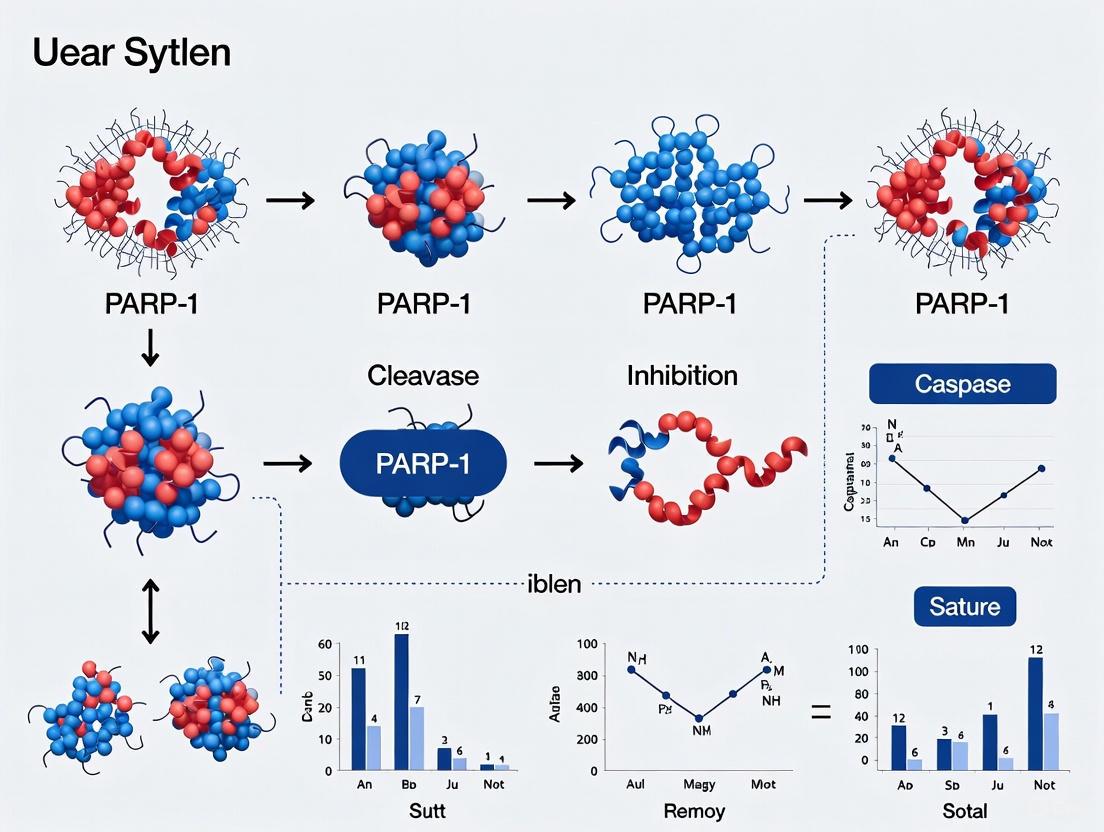
This article provides a detailed methodological framework for researchers and drug development professionals on validating PARP-1 cleavage through caspase inhibition experiments.
Validating PARP-1 Cleavage: A Comprehensive Guide to Caspase Inhibition Experiments
Abstract
This article provides a detailed methodological framework for researchers and drug development professionals on validating PARP-1 cleavage through caspase inhibition experiments. It covers the foundational biology of PARP-1 as a caspase substrate and its role as a hallmark of apoptosis, explores practical protocols for pharmacological and genetic caspase inhibition, addresses common troubleshooting scenarios and optimization strategies for data interpretation, and presents robust validation techniques including the use of PARP inhibitor-resistant models. By integrating the latest 2025 research, this guide serves as an essential resource for ensuring accurate assessment of apoptotic events in therapeutic development, particularly in cancer research and the study of cell death mechanisms.
PARP-1 as an Apoptotic Sentinel: Understanding Its Role as a Caspase Substrate
Poly(ADP-ribose) polymerase-1 (PARP-1) is a critical nuclear enzyme that functions as a primary sensor of DNA damage in eukaryotic cells. This abundant nuclear protein, with approximately 1-2 million copies per cell accounting for ~85% of total cellular PARP activity, plays essential roles in DNA repair, genomic stability maintenance, and transcriptional regulation [1]. Beyond its fundamental role in base excision repair—the primary pathway for repairing DNA single-strand breaks—PARP-1 participates in diverse physiological and pathological processes ranging from cell survival to programmed cell death [1]. The enzyme's critical function in detecting DNA damage is underscored by its rapid response to DNA single-strand breaks, initiating a sophisticated DNA damage response within seconds of damage occurrence [2].
PARP-1's significance extends to pathological conditions, particularly in the central nervous system, where PARP inhibition attenuates injury in cerebral ischemia, trauma, and excitotoxicity [1]. Furthermore, PARP-1 has emerged as a crucial therapeutic target in oncology, with PARP inhibitors providing the first anti-cancer therapy based on synthetic lethality in BRCA-deficient tumor cells [2]. This review will comprehensively examine the molecular architecture of PARP-1, with particular emphasis on identifying its caspase cleavage site—a critical event that serves as a hallmark of apoptosis and represents a key switch point determining cellular fate in response to damage.
Structural Domains of PARP-1: A Multi-Domain Architecture
PARP-1 possesses a sophisticated multi-domain architecture that enables its function as a molecular stress sensor. The enzyme comprises three principal structural domains that work in concert to detect DNA damage and initiate appropriate cellular responses:
DNA-Binding Domain (DBD): A 46-kD domain located at the NH₂ terminus containing two zinc finger motifs that facilitate tight binding to specific DNA damage signatures, including single-strand breaks, cruciforms, cross-overs, and nucleosomes [1]. A third zinc finger motif located between the second zinc finger and the auto-modification domain also plays a crucial role in inter-domain interactions and is vital for PARP-1 enzymatic action [1].
Auto-Modification Domain (AMD): A 22-kD central domain that functions as a target for direct covalent auto-modification and contains a BRCT fold (a motif found in many DNA repair proteins) that facilitates protein-protein interactions and recruitment of DNA repair enzymes to damage sites [1].
Catalytic Domain (CD): A 54-kD domain at the carboxyl terminus that polymerizes linear or branched poly-ADP-ribose units from NAD⁺ donor molecules onto target proteins [1].
Table 1: Structural and Functional Domains of PARP-1
| Domain | Molecular Weight | Location | Primary Functions |
|---|---|---|---|
| DNA-Binding Domain (DBD) | 46 kDa | NH₂ terminus | Recognizes and binds to DNA strand breaks via zinc finger motifs |
| Auto-Modification Domain (AMD) | 22 kDa | Central region | Serves as target for poly(ADP-ribosyl)ation; contains BRCT fold for protein-protein interactions |
| Catalytic Domain (CD) | 54 kDa | Carboxyl terminus | Catalyzes polymerization of ADP-ribose units from NAD⁺ onto target proteins |
This modular architecture allows PARP-1 to perform its essential functions in DNA damage detection and repair. The structural basis of DNA single-strand break detection involves two flexibly linked N-terminal zinc fingers that recognize the extreme deformability of single-strand breaks, driving cooperative, stepwise self-assembly of remaining PARP-1 domains to control the activity of the C-terminal catalytic domain [2].
Figure 1: Domain Architecture of PARP-1 and Caspase Cleavage Site
The Caspase Cleavage Site: Molecular Signature of Apoptosis
Precise Cleavage Location and Proteases Involved
The caspase cleavage site in PARP-1 represents one of the most characterized proteolytic events in apoptotic signaling. PARP-1 is cleaved at a highly specific site within its DNA-binding domain, between aspartic acid residue 214 and glycine residue 215 (Asp214-Gly215), located within a nuclear localization signal [3] [4]. This cleavage site occurs within a conserved sequence motif (DEVD214↓G) that serves as the recognition sequence for effector caspases, particularly caspase-3 and caspase-7 [1] [5].
While multiple caspases can cleave PARP-1 in vitro, including caspase-1, the predominant physiological cleavage is mediated by the effector caspases-3 and -7 during the execution phase of apoptosis [1]. This proteolytic event separates the two zinc-finger DNA-binding motifs at the N-terminus from the automodification and catalytic domains, effectively dismantling the functional architecture of the enzyme and producing two distinct fragments with altered properties and cellular localization.
Characterization of PARP-1 Cleavage Fragments
Caspase-mediated cleavage of the 116-kDa full-length PARP-1 generates two signature fragments with distinct molecular weights and functional properties:
24-kDa Fragment: This fragment comprises the N-terminal DNA-binding domain containing the two zinc-finger motifs. Following cleavage, this fragment remains tightly associated with DNA strand breaks in the nucleus, where it acts as a trans-dominant inhibitor of intact PARP-1 and other DNA repair enzymes by blocking their access to DNA damage sites [1].
89-kDa Fragment: This larger fragment contains the auto-modification domain and the C-terminal catalytic domain. Unlike the DNA-bound 24-kDa fragment, the 89-kDa fragment exhibits reduced DNA binding capacity and can be liberated from the nucleus into the cytosol [1] [6].
Table 2: PARP-1 Cleavage Fragments and Their Properties
| Fragment | Molecular Weight | Domains Contained | Cellular Localization | Functional Consequences |
|---|---|---|---|---|
| 24-kDa | 24 kDa | DNA-binding domain (zinc fingers) | Nuclear, bound to DNA | Acts as trans-dominant inhibitor of DNA repair; conserves cellular ATP |
| 89-kDa | 89 kDa | Auto-modification and catalytic domains | Nuclear and cytoplasmic | Serves as cytoplasmic PAR carrier; induces AIF-mediated apoptosis |
Recent research has revealed that the 89-kDa PARP-1 fragment can undergo autopoly(ADP-ribosyl)ation and, with covalently attached PAR polymers, translocates to the cytoplasm where it functions as a PAR carrier to induce apoptosis-inducing factor (AIF)-mediated cell death [6]. This finding extends the functional significance of PARP-1 cleavage beyond simply inactivating the enzyme, suggesting active participation in promoting cell death pathways.
Experimental Validation of PARP-1 Cleavage
Detection Methodologies and Reagents
The detection and validation of PARP-1 cleavage relies heavily on Western blotting techniques using cleavage-specific antibodies. A well-characterized commercial antibody (Cleaved PARP (Asp214) Antibody #9541) specifically detects the endogenous 89-kDa fragment of PARP-1 produced by caspase cleavage at Asp214, without recognizing full-length PARP-1 or other PARP isoforms [4]. This specificity makes it an invaluable tool for apoptosis research.
For optimal detection, this antibody is used at a dilution of 1:1000 for standard Western blotting and 1:10 to 1:50 for Simple Western platforms [4]. The antibody was produced by immunizing animals with a synthetic peptide corresponding to carboxy-terminal residues surrounding Asp214 in human PARP, with subsequent purification by protein A and peptide affinity chromatography, ensuring high specificity for the cleavage site [4].
Caspase Inhibition Experimental Protocols
Caspase inhibition experiments provide critical functional validation of PARP-1 cleavage in apoptotic pathways. The following protocol outlines a standardized approach for demonstrating caspase-dependent PARP-1 cleavage:
Experimental Workflow for Caspase Inhibition Studies:
Cell Treatment and Caspase Inhibition:
- Treat cells with apoptosis-inducing agents (e.g., staurosporine, actinomycin D, etoposide phosphate) at established concentrations and time points
- Include parallel samples pre-treated with broad-spectrum caspase inhibitors such as benzyloxycarbonyl-Val-Ala-Asp-fluoromethylketone (zVAD) at 20-50 μM concentration, administered 1-2 hours before apoptosis induction
Cell Lysis and Protein Extraction:
- Harvest cells at appropriate time points post-treatment
- Prepare whole-cell extracts using RIPA buffer supplemented with protease inhibitors
- Quantify protein concentration using standardized methods (BCA or Bradford assay)
Western Blot Analysis:
- Separate proteins (20-30 μg per lane) by SDS-PAGE using 4-12% gradient gels
- Transfer to PVDF or nitrocellulose membranes
- Probe with anti-cleaved PARP (Asp214) antibody (#9541) at 1:1000 dilution
- Use appropriate secondary antibodies conjugated to HRP or fluorescent tags
- Detect using enhanced chemiluminescence or fluorescence imaging systems
Membrane Stripping and Reprobing:
- Strip membranes and reprobe with anti-full-length PARP antibody to assess total PARP levels
- Include loading controls (β-actin, GAPDH) for normalization
Expected Results: Apoptotic stimuli should generate a robust 89-kDa cleavage fragment detectable with the cleavage-specific antibody, while pre-treatment with caspase inhibitors should prevent or significantly reduce the appearance of this fragment, confirming the caspase-dependence of the cleavage event [5].
Figure 2: Caspase Inhibition Experimental Workflow
Functional Consequences of PARP-1 Cleavage
The Apoptosis/Necrosis Switch
PARP-1 cleavage serves as a critical molecular switch that directs cell death toward apoptosis rather than necrosis. During CD95-mediated apoptosis, caspases cause PARP-1 cleavage, thereby maintaining cellular ATP levels by preventing NAD⁺ depletion [5]. This ATP preservation is essential for the energy-dependent execution of apoptosis. In contrast, TNF-induced necrosis involves PARP-1 activation without cleavage, leading to massive NAD⁺ and ATP depletion that forces cells toward necrotic death [5].
This switch mechanism has been elegantly demonstrated in studies showing that caspase inhibitors potentiate TNF-induced necrosis while preventing CD95-mediated apoptosis [5]. Fibroblasts expressing a noncleavable PARP-1 mutant (PARP-1-D214N) show increased sensitivity to TNF-induced cell death, confirming the protective function of PARP-1 cleavage in maintaining energy homeostasis during apoptotic execution [5].
Differential Effects of Cleavage Fragments
The individual PARP-1 cleavage fragments exert distinct and sometimes opposing biological effects:
Cytoprotective Effects of 24-kDa Fragment: Expression of the 24-kDa PARP-1 fragment confers protection from oxygen/glucose deprivation or OGD/restoration of oxygen and glucose damage in neuronal models, potentially through its dominant-negative inhibition of excessive PARP activation [3].
Cytotoxic Effects of 89-kDa Fragment: In contrast, expression of the 89-kDa fragment demonstrates cytotoxic properties and induces significantly higher NF-κB activity than wild-type PARP-1, accompanied by increased protein expression of inflammatory mediators like COX-2 and iNOS, and reduced expression of the anti-apoptotic protein Bcl-xL [3].
The uncleavable PARP-1 (PARP-1UNCL) also shows protective effects in various models, including endotoxic shock and intestinal and renal ischemia/reperfusion damage, further supporting the significance of the cleavage event in determining cell fate [3].
Research Reagent Solutions for PARP-1 Cleavage Studies
Table 3: Essential Research Reagents for PARP-1 Cleavage Studies
| Reagent/Catalog Number | Type | Specificity | Primary Applications | Key Features |
|---|---|---|---|---|
| Cleaved PARP (Asp214) Antibody #9541 | Rabbit monoclonal antibody | 89-kDa PARP-1 fragment (Asp214) | Western Blot, Simple Western | Does not recognize full-length PARP-1; specific for caspase-cleaved fragment |
| Caspase Inhibitor zVAD-fmk | Broad-spectrum caspase inhibitor | Pan-caspase inhibitor | Functional validation of caspase-dependent cleavage | Cell-permeable; irreversible caspase inhibition |
| PARP-1 siRNA (Target Sequence: 5'-ACGGTGATCGGTAGCAACAAA-3') | Gene silencing reagent | PARP-1 mRNA knockdown | Studies of PARP-1 function and cleavage fragment effects | Validated target sequence for efficient knockdown |
| Noncleavable PARP-1 Mutant (PARP-1-D214N) | Mutant expression construct | Caspase-resistant PARP-1 | Functional studies of cleavage significance | Asp214 to Asn mutation prevents caspase cleavage |
The molecular architecture of PARP-1 and its specific caspase cleavage site at Asp214-Gly215 represent a crucial mechanism in cellular fate determination. The experimental approaches outlined herein, particularly caspase inhibition studies, provide robust methodologies for validating PARP-1 cleavage in apoptotic pathways. The differential effects of the resulting 24-kDa and 89-kDa fragments add complexity to the functional consequences of PARP-1 cleavage, suggesting both inhibitory and active signaling roles in cell death processes.
For researchers and drug development professionals, understanding these molecular events has significant implications. The ability to detect and quantify PARP-1 cleavage serves not only as a biomarker for apoptosis but also informs therapeutic strategies targeting cell death pathways. The development of PARP inhibitors for cancer therapy, particularly in BRCA-deficient tumors, represents one successful translation of this fundamental knowledge into clinical application. Further research into the non-apoptotic functions of PARP-1 cleavage fragments may yield additional therapeutic opportunities for conditions ranging from neurodegenerative diseases to inflammatory disorders.
PARP-1's Dual Roles in DNA Repair and Apoptosis Signaling
Poly(ADP-ribose) polymerase-1 (PARP-1) is a multifunctional nuclear enzyme that serves as a critical determinant of cellular fate in response to genomic insult. As a primary DNA damage sensor, PARP-1 exhibits a dual nature in cellular stress response, functioning as both a DNA repair facilitator and a mediator of cell death signaling pathways. This dichotomy positions PARP-1 at the crossroads of cell survival and death, making it a crucial target for therapeutic interventions in cancer and neurodegenerative diseases [7] [8]. Upon detecting DNA strand breaks, PARP-1 catalyzes poly(ADP-ribosyl)ation (PARylation) of various nuclear proteins using NAD+ as a substrate, creating branched PAR chains that serve as signaling platforms for DNA repair complexes [9]. However, under conditions of severe genomic stress, this initially protective mechanism can transition to cell death signaling through multiple pathways, including caspase-dependent apoptosis, parthanatos, and energy depletion-induced necrosis [10] [8]. The pivotal role of caspase-mediated cleavage in regulating PARP-1's transition from DNA repair to apoptosis underscores the importance of caspase inhibition experiments in validating this molecular switch. This review comprehensively examines PARP-1's dual functions, with particular emphasis on experimental approaches for delineating its cleavage and activation mechanisms in apoptotic signaling.
The Structural and Functional Landscape of PARP-1
PARP-1 is a modular protein comprising several functional domains that enable its DNA damage sensing and catalytic activities. The protein structure includes three zinc finger motifs (Zn1, Zn2, Zn3) in its DNA-binding domain that facilitate recognition of DNA strand breaks with high affinity (Kd ≈ 50 nM) [11]. Following the DNA-binding domain are a nuclear localization signal, a WGR (tryptophan-glycine-arginine-rich) domain, and an auto-modification domain containing crucial residues (D387, E488, S499) for ADP-ribosylation [11]. The C-terminal catalytic domain houses the nicotinamide-binding pocket that catalyzes the transfer of ADP-ribose units from NAD+ to target proteins [11]. Upon DNA damage binding, PARP-1 undergoes significant conformational changes, including opening of the helical subdomain (HD) to activate the catalytic site, initiating the synthesis of PAR chains [11]. These structural features enable PARP-1 to function as a molecular switch that determines cellular fate in response to DNA damage severity.
Table 1: PARP-1 Structural Domains and Their Functions
| Domain | Key Components | Function | Binding Affinity |
|---|---|---|---|
| DNA-Binding Domain | Three zinc finger motifs (Zn1, Zn2, Zn3), nuclear localization signal | Recognizes and binds to DNA strand breaks | Kd ≈ 50 nM for DNA binding |
| WGR Domain | Tryptophan-glycine-arginine-rich region | Facilitates protein-protein interactions and DNA binding | - |
| Auto-modification Domain | D387, E488, S499 residues | Enables ADP-ribosylation of PARP-1 itself | - |
| Catalytic Domain | Nicotinamide-binding pocket | Catalyzes PAR chain formation using NAD+ substrate | - |
PARP-1 in DNA Damage Repair: Guardian of Genomic Integrity
PARP-1 plays a fundamental role in maintaining genomic stability through its involvement in multiple DNA repair pathways. As a primary responder to DNA single-strand breaks (SSBs), PARP-1 activation triggers the base excision repair (BER) and single-strand break repair (SSBR) pathways [9]. Upon binding to DNA lesions, PARP-1 undergoes rapid activation, catalyzing the formation of PAR chains that serve as recruitment platforms for DNA repair proteins such as XRCC1, which functions as a scaffold for DNA Polβ, LIG1/3, and PNKP [9]. Beyond its canonical role in SSB repair, PARP-1 also influences DNA replication processes by interacting with and stimulating replication proteins, protecting stalled replication forks from degradation, and facilitating the restart of stalled forks through recruitment of MRE11 and RAD51 [9]. Additionally, recent studies have implicated PARP-1 in Okazaki fragment processing during DNA replication, where unligated Okazaki fragments represent a significant source of PARP activity independent of exogenous DNA damage or replication stress [9]. The fundamental role of PARP-1 in DNA damage repair establishes its position as a crucial genome guardian, while simultaneously setting the stage for its participation in cell death pathways when damage exceeds repairable thresholds.
The Apoptotic Switch: PARP-1 Cleavage in Cell Death Signaling
When DNA damage surpasses reparative capacity, PARP-1 transitions from a DNA repair facilitator to a mediator of cell death through caspase-dependent cleavage. This proteolytic processing represents a critical commitment step in apoptotic execution, generating distinct PARP-1 fragments with pro-apoptotic functions. During apoptosis, executioner caspases-3 and -7 cleave PARP-1 at specific sites, producing 24-kDa and 89-kDa fragments [12]. The 24-kDa fragment exhibits high affinity for DNA breaks, where it binds irreversibly and blocks DNA repair, thereby potentiating apoptotic progression [12]. Concurrently, the 89-kDa fragment translocates from the nucleus to the cytoplasm, where it directly promotes caspase-mediated DNA fragmentation and apoptosis [12]. This cleavage event serves as both a biochemical marker of apoptosis and an active participant in cell death execution, effectively eliminating PARP-1's DNA repair capacity while generating fragments that amplify apoptotic signaling.
Table 2: PARP-1 Cleavage Fragments and Their Apoptotic Functions
| Fragment Size | Caspase Responsible | Localization | Pro-apoptotic Function |
|---|---|---|---|
| 24-kDa | Caspase-3 and -7 | Nuclear | Irreversibly binds DNA breaks, inhibiting repair |
| 89-kDa | Caspase-3 and -7 | Cytoplasmic | Induces caspase-mediated DNA fragmentation |
The functional significance of PARP-1 cleavage extends beyond its role as an apoptotic biomarker. Research demonstrates that PARP-1 deficiency exacerbates H2AX phosphorylation (γH2AX) foci accumulation and comet tail moments, potentiating DNA damage response (DDR)-driven apoptosis [12]. This functional duality establishes PARP-1 as a molecular integrator of cell fate decisions, where its intact form promotes survival through DNA repair, while its cleaved fragments actively contribute to apoptotic execution. The RSL3 studies further illuminate this relationship, showing that the ferroptosis inducer triggers PARP-1 cleavage through caspase-3 activation while simultaneously reducing full-length PARP-1 levels via inhibition of METTL3-mediated m6A modification and subsequent suppression of PARP-1 translation [12]. These findings position PARP-1 cleavage as a critical convergence point in regulated cell death pathways.
Experimental Validation: Caspase Inhibition in PARP-1 Cleavage Studies
Methodological Framework for Caspase Inhibition Experiments
Validating PARP-1's role in apoptosis requires well-designed caspase inhibition experiments that delineate the protease's contribution to PARP-1 cleavage. The foundational protocol involves treating cells with a pan-caspase inhibitor such as Z-VAD-FMK (typically at 20-50 μM concentration) prior to and during exposure to apoptotic stimuli [10] [12]. Following treatments, PARP-1 cleavage is analyzed through Western blotting using antibodies specific to full-length PARP-1 (116 kDa) and its characteristic 89-kDa cleavage fragment [10] [12]. Complementary assessment of caspase-3 and -7 activation provides additional validation of the apoptotic cascade. This methodological approach enables researchers to establish the caspase-dependence of PARP-1 cleavage observed under various experimental conditions.
Key Experimental Findings from Caspase Inhibition Studies
Caspase inhibition experiments have yielded crucial insights into PARP-1's regulation and function in apoptotic signaling. In studies examining the benzene metabolite TGHQ-induced apoptosis in HL-60 cells, the pan-caspase inhibitor Z-VAD-FMK effectively attenuated PARP-1 cleavage and apoptosis [10]. Intriguingly, combined treatment with both Z-VAD-FMK and the PARP-1 inhibitor PJ-34 resulted in a further reduction in apoptosis, suggesting that PARP-1 participates in caspase-dependent apoptosis through mechanisms beyond its cleavage [10]. Further investigation revealed that PARP-1 inhibition reduced TGHQ-induced caspase-3, -7, and -9 activation, at least partially by attenuating cytochrome c translocation from mitochondria to the cytoplasm [10]. These findings illustrate the complex interplay between PARP-1 activation and caspase signaling, where PARP-1 influences caspase activation through mitochondrial pathways while simultaneously serving as a caspase substrate.
PARP-1 in Alternative Cell Death Pathways
Beyond caspase-dependent apoptosis, PARP-1 activation contributes to other forms of programmed cell death, particularly parthanatos, a PAR-dependent cell death pathway. Parthanatos is characterized by PARP-1 overactivation following severe DNA damage, leading to extensive PAR polymer formation and subsequent depletion of intracellular NAD+ and ATP pools [8]. This energy collapse triggers the translocation of apoptosis-inducing factor (AIF) from mitochondria to the nucleus, where it mediates large-scale DNA fragmentation and chromatin condensation in a caspase-independent manner [10] [8]. The role of PARP-1 in parthanatos has significant implications for neurodegenerative diseases, where PARP-1 overactivation exacerbates neuronal loss through this mechanism [8]. Recent research has also illuminated interactions between PARP-1 and other cell death regulators. For instance, the STING protein binds to PAR produced by activated PARP-1 upon ionizing radiation, promoting apoptosis through enhanced STING phosphorylation and subsequent upregulation of the proapoptotic gene PUMA, along with increased Bax localization on mitochondrial membranes [13]. These findings expand PARP-1's role beyond canonical apoptosis into multiple cell death modalities.
Table 3: PARP-1 in Different Cell Death Pathways
| Cell Death Pathway | Key Features | PARP-1's Role | Caspase Dependence |
|---|---|---|---|
| Apoptosis | Chromatin condensation, DNA fragmentation, caspase activation | Caspase substrate (cleavage generates pro-apoptotic fragments) | Yes |
| Parthanatos | AIF nuclear translocation, large-scale DNA fragmentation | Overactivation depletes NAD+/ATP, triggers AIF release | No |
| Necrosis | Cellular swelling, membrane rupture, inflammation | Energy depletion from overactivation promotes necrosis | No |
Research Reagent Solutions for PARP-1 Studies
Advancing research on PARP-1's dual roles requires specific experimental tools and reagents that enable precise interrogation of its functions. The following table summarizes key reagents essential for investigating PARP-1 in DNA repair and apoptosis signaling.
Table 4: Essential Research Reagents for PARP-1 Studies
| Reagent Category | Specific Examples | Research Application | Experimental Function |
|---|---|---|---|
| PARP Inhibitors | PJ-34, Olaparib, Talazoparib, Veliparib | Mechanistic studies, therapeutic exploration | Inhibit PARP catalytic activity, induce PARP trapping |
| Caspase Inhibitors | Z-VAD-FMK (pan-caspase) | Apoptosis mechanism studies | Validate caspase dependence of PARP-1 cleavage |
| Apoptosis Assays | Annexin V/PI staining, TUNEL assay, caspase activity assays | Cell death quantification | Detect and quantify apoptotic cells |
| PARP Cleavage Detection | Anti-PARP-1 antibodies (full-length and cleaved) | Western blot, immunofluorescence | Monitor PARP-1 cleavage as apoptosis marker |
| DNA Damage Inducers | TGHQ, RSL3, Ionizing Radiation, Hydrogen Peroxide | Stress response studies | Induce DNA damage and activate PARP-1 |
| PAR Detection | Anti-PAR antibodies, PAR ELISA | PARylation assessment | Measure PARP-1 enzymatic activity |
Therapeutic Implications and Research Directions
The dual functions of PARP-1 in DNA repair and cell death signaling have significant therapeutic implications, particularly in oncology and neurodegenerative disease. In cancer therapy, PARP inhibitors (PARPis) exploit the synthetic lethality concept in BRCA-deficient tumors, where simultaneous disruption of PARP-mediated DNA repair and homologous recombination repair pathways leads to selective cancer cell death [9] [11]. Currently approved PARPis include olaparib, rucaparib, niraparib, and talazoparib, which demonstrate potent anti-tumor effects in BRCA-mutated cancers [11] [8]. However, emerging research reveals that PARPis can also influence cell death pathways beyond synthetic lethality. For instance, talazoparib synergizes with oncolytic reovirus (RT3D) to enhance extrinsic apoptosis through mechanisms involving RIG-I activation and NF-κB signaling, independent of DNA damage repair pathways [14]. This combination approach demonstrates complete tumor control in mouse models and protection from subsequent tumor rechallenge, highlighting the potential of leveraging PARP-1's dual roles for innovative cancer therapies.
In neurodegenerative diseases, PARP-1 overactivation contributes to neuronal loss through parthanatos and energy depletion mechanisms [8]. Consequently, PARP inhibition shows promise for neuroprotection, with studies demonstrating that PARPis like PJ-34 alleviate pathological processes in models of Parkinson's and Alzheimer's disease [8]. Future research directions include developing next-generation PARP-1 selective inhibitors with improved safety profiles, understanding resistance mechanisms to PARP inhibition, and exploring combination therapies that simultaneously target multiple aspects of PARP-1's functions. The continued elucidation of PARP-1's complex roles in cellular fate decisions will undoubtedly yield novel therapeutic strategies for diverse disease conditions.
Poly(ADP-ribose) polymerase-1 (PARP-1) is a nuclear enzyme that functions as a primary sensor of DNA damage, playing crucial roles in DNA repair mechanisms and maintaining genomic integrity. However, during apoptosis, PARP-1 becomes one of the most prominent substrates of executioner caspases, particularly caspase-3. The proteolytic cleavage of PARP-1 is considered a definitive biochemical hallmark of apoptosis and serves as a critical molecular switch that determines cellular fate. This cleavage event prevents futile DNA repair during programmed cell death while facilitating the apoptotic process through both the inactivation of PARP-1's catalytic function and the generation of cleavage fragments with novel biological activities. Understanding the precise mechanism of PARP-1 cleavage by caspase-3 provides fundamental insights into cell death regulation and offers potential therapeutic strategies for various diseases, including cancer, neurodegenerative disorders, and ischemic conditions.
Structural Basis for PARP-1 Cleavage by Caspase-3
Domain Architecture of PARP-1
PARP-1 is a 116-kDa protein consisting of three major functional domains that dictate its cellular functions and susceptibility to proteolytic cleavage [15]. The N-terminal DNA-binding domain (DBD) contains three zinc finger motifs (Zn1, Zn2, Zn3) that recognize DNA strand breaks. The central automodification domain (AMD) contains a BRCA1 C-terminal (BRCT) domain and a WGR domain that facilitate protein-protein interactions and catalytic regulation. The C-terminal catalytic domain (CAT) houses the NAD+ binding site and is responsible for poly(ADP-ribose) synthesis [15] [16]. A critical nuclear localization signal (NLS) is located near the DNA-binding domain, and a caspase-cleavage site exists between the DNA-binding domain and the automodification domain [16].
Caspase-3 Recognition and Cleavage Site
Caspase-3, a key executioner caspase, specifically recognizes and cleaves PARP-1 at a conserved DEVD214↓G215 sequence located between the second zinc finger and the BRCT domain [5] [15]. This cleavage site falls within the NLS region, explaining the subsequent alteration in subcellular localization of the cleavage fragments. The cleavage event separates the N-terminal DNA-binding domain from the C-terminal catalytic domain, generating two primary fragments: a 24-kDa fragment containing the DNA-binding motifs and a 89-kDa fragment containing the automodification and catalytic domains [6] [16].
Table 1: PARP-1 Domains and Cleavage Fragments
| Domain/Fragment | Structural Features | Functional Role | Consequence of Cleavage |
|---|---|---|---|
| Full-length PARP-1 | 116-kDa, all domains | DNA damage sensing & repair | N/A |
| N-terminal 24-kDa fragment | Zn1, Zn2, NLS | DNA binding | Remains nuclear, blocks DNA repair |
| C-terminal 89-kDa fragment | Zn3, BRCT, WGR, CAT | Catalytic activity | Cytoplasmic translocation, novel functions |
Methodological Approaches for Studying PARP-1 Cleavage
Experimental Models and Cell Death Induction
Research into PARP-1 cleavage employs various experimental models and apoptosis inducers to elucidate the mechanism and functional consequences:
- Cell lines: L929 fibrosarcoma, HeLa cervical carcinoma, U2OS osteosarcoma, and hTERT-RPE1 retinal pigment epithelial cells have been extensively used [5] [17] [16].
- Primary cells: Isolated islets of Langerhans provide insights into caspase-mediated cleavage in specialized tissues [18].
- Human tissue analysis: Post-mortem brain tissue from ischemic stroke patients offers clinical correlation [19].
- Apoptosis inducers: Staurosporine, actinomycin D, TNF, anti-CD95 antibodies, and DNA-damaging agents like N-methyl-N'-nitro-N-nitrosoguanidine reliably trigger caspase activation and PARP-1 cleavage [5] [16].
Detection and Analytical Methods
Multiple techniques enable the detection and characterization of PARP-1 cleavage:
- Western blotting using PARP-1 antibodies that recognize both full-length (116-kDa) and cleaved (89-kDa) fragments remains the gold standard for detection [16].
- Immunohistochemistry on tissue sections allows spatial localization of PARP-1 cleavage products in different cellular compartments [19].
- Co-immunoprecipitation assays identify interacting partners of both full-length and cleaved PARP-1 fragments [20].
- Tandem affinity purification combined with mass spectrometry has revealed novel interaction partners of the truncated PARP-1 fragments, including the RNA polymerase III complex [20].
- Flow cytometry with Annexin V/PI staining quantifies apoptosis in parallel with PARP-1 cleavage detection [20].
Table 2: Key Experimental Reagents for PARP-1 Cleavage Research
| Reagent Category | Specific Examples | Experimental Function | Research Applications |
|---|---|---|---|
| Caspase inhibitors | zVAD-fmk (pan-caspase), DEVD-fmk (caspase-3 specific) | Inhibit PARP-1 cleavage | Mechanism studies, necrosis vs. apoptosis switching [5] [18] |
| PARP inhibitors | PJ34, ABT-888, olaparib, talazoparib | Block PARP-1 catalytic activity | Study of parthanatos, synthetic lethality in BRCA-deficient cells [21] [16] |
| Apoptosis inducers | Staurosporine, actinomycin D, anti-CD95, TNF | Activate caspase-3 | Trigger PARP-1 cleavage in experimental models [5] [16] |
| DNA damage agents | N-methyl-N'-nitro-N-nitrosoguanidine, alkylating drugs | Induce PARP-1 activation | Study DNA repair vs. cell death decisions [5] [16] |
Functional Consequences of PARP-1 Cleavage
Termination of DNA Repair and Energy Conservation
The primary consequence of PARP-1 cleavage is the termination of its DNA repair function, which represents a strategic cellular decision during apoptosis. The 24-kDa fragment remains nuclear and acts as a transdominant inhibitor of DNA repair by irreversibly binding to DNA strand breaks, thereby preventing recruitment of functional PARP-1 molecules [16]. This inhibition conserves cellular energy by preventing NAD+ and ATP depletion that would otherwise occur through PARP-1 overactivation [5]. The 89-kDa fragment loses its DNA-binding capability and nuclear localization, effectively removing the catalytic potential from the nucleus. This cleavage event constitutes a molecular switch that redirects cellular resources from repair to execution of the death program [5].
Novel Functions of PARP-1 Cleavage Fragments
Recent research has revealed that the 89-kDa PARP-1 fragment acquires novel biological functions beyond simply losing its DNA repair capacity:
- Cytoplasmic PAR carrier: The 89-kDa fragment translocates to the cytoplasm while carrying poly(ADP-ribose) (PAR) polymers, facilitating apoptosis-inducing factor (AIF) release from mitochondria and subsequent nuclear translocation, leading to DNA fragmentation [6] [16].
- RNA polymerase III interaction: The truncated PARP-1 recognizes and mono-ADP-ribosylates RNA polymerase III in the cytosol during poly(dA-dT)-stimulated apoptosis, facilitating IFN-β production and amplifying cell death signals [20].
- Modulation of parthanatos: PARP-1 cleavage fragments influence the cross-talk between apoptosis and PAR-mediated cell death (parthanatos), creating interconnected cell death pathways [6] [16].
Diagram 1: Caspase-3-Mediated PARP-1 Cleavage Pathway and Functional Consequences
PARP-1 Cleavage in Cell Fate Decisions: Apoptosis vs. Necrosis
The cleavage of PARP-1 by caspase-3 represents a critical decision point in determining the mode of cellular death. When caspase activity is robust and PARP-1 is efficiently cleaved, cells undergo classical apoptosis with characteristic morphological and biochemical features [5]. However, when caspase activity is inhibited or compromised, PARP-1 remains intact and can become overactivated in response to DNA damage, leading to necrosis through energy depletion [5] [18].
This delicate balance has been demonstrated experimentally in multiple systems:
- In L929 cells, CD95 ligation induces caspase activation, PARP-1 cleavage, and apoptosis, while TNF treatment elicits minimal caspase activation, PARP overactivation, ATP depletion, and subsequent necrosis [5].
- Caspase inhibition using zVAD-fmk in isolated islets of Langerhans prevents PARP-1 cleavage and results in increased necrosis, which can be rescued by PARP inhibitors [18].
- In human stroke brain tissue, nuclear PARP-1 correlates with neuronal necrosis, while cytoplasmic cleaved PARP-1 inversely correlates with necrotic damage [19].
The interplay between PARP-1 cleavage status and cell death mode highlights the enzyme's role as a molecular switch between apoptotic and necrotic pathways, with significant implications for therapeutic interventions in various disease states.
Research Applications and Therapeutic Implications
PARP-1 Cleavage as a Biomarker
The detection of PARP-1 cleavage serves as a valuable biomarker in multiple research and clinical contexts:
- Apoptosis quantification in experimental models provides a specific indicator of caspase-dependent cell death [20].
- Therapeutic response monitoring in cancer treatment assesses the effectiveness of chemotherapeutic agents [21].
- Disease mechanism studies in stroke, neurodegenerative disorders, and other conditions characterize the mode of cell death in pathological contexts [19].
Cancer Therapy and Synthetic Lethality
PARP inhibitors have emerged as powerful therapeutic tools in cancer treatment, particularly for BRCA-deficient tumors [21] [17]. While initially developed to disrupt DNA repair in tumor cells, their mechanism extends beyond simple enzyme inhibition:
- PARP trapping on DNA creates cytotoxic lesions that require homologous recombination for repair [21] [17].
- Immunomodulatory effects include induction of pyroptosis through caspase-3-mediated gasdermin E cleavage in BRCA-deficient cells [21].
- Transcription-replication conflicts in early S phase underlie sensitivity to PARP inhibitors in HR-deficient cancers [17].
The relationship between PARP inhibition and caspase activation creates a therapeutic vulnerability specifically exploited in cancer treatment, demonstrating how understanding the basic mechanism of PARP-1 cleavage has direct clinical applications.
The cleavage of PARP-1 by caspase-3 represents a definitive biochemical event in the execution of apoptosis, serving as a critical molecular switch that determines cellular fate. Through the precise proteolysis at the DEVD214↓G215 site, caspase-3 inactivates PARP-1's DNA repair function while generating fragments with novel biological activities that facilitate the cell death program. The methodological approaches for studying this process continue to evolve, revealing increasingly complex layers of regulation and functional consequences. The interplay between PARP-1 cleavage status and cell death mode decisions underscores its importance in both physiological and pathological contexts, while its therapeutic exploitation in cancer treatment highlights the translational significance of this fundamental molecular mechanism. Continued research into the nuances of PARP-1 cleavage will undoubtedly yield further insights into cell death regulation and novel therapeutic opportunities.
Poly(ADP-ribose) polymerase-1 (PARP-1) serves as a critical molecular switch that determines cellular survival versus death in response to DNA damage [1] [22]. As a nuclear enzyme with approximately 1-2 million copies per cell accounting for ~85% of total cellular PARP activity, PARP-1 rapidly responds to DNA strand breaks by catalyzing poly(ADP-ribosyl)ation of itself and other nuclear proteins, initiating DNA repair pathways [1]. However, during apoptosis, PARP-1 becomes a primary substrate for executioner caspases, leading to its characteristic cleavage into specific fragments that effectively shut down DNA repair capacity and commit the cell to death [1] [23]. This cleavage event represents a point of no return in apoptotic progression and serves as a well-established biochemical hallmark of programmed cell death [1] [22]. The validation of PARP-1 cleavage through caspase inhibition experiments provides crucial insights into cell death mechanisms and therapeutic interventions, particularly in cancer treatment where manipulating cell death pathways offers promising strategies [21] [24].
PARP-1 Cleavage Fragments: Structural Features and Functional Consequences
Caspase-mediated cleavage of PARP-1 occurs at the conserved site DEVD214, generating two primary fragments with distinct biological activities [1] [22]. The cleavage produces a 24-kDa DNA-binding domain fragment and an 89-kDa catalytic fragment, each with unique functions that collectively promote apoptotic progression [1] [6].
Table 1: PARP-1 Cleavage Fragments and Their Functions
| Fragment Size | Domains Contained | Subcellular Localization | Primary Functions |
|---|---|---|---|
| 24-kDa | Zinc finger motifs (DNA-binding domain) | Nuclear | Irreversibly binds DNA breaks; acts as trans-dominant inhibitor of DNA repair [1] |
| 89-kDa | BRCT, WGR, catalytic domain | Cytoplasmic translocation | Serves as PAR carrier to cytoplasm; induces AIF-mediated apoptosis [6] |
The 24-kDa fragment contains the nuclear localization sequence and remains in the nucleus, where it irreversibly binds to DNA strand breaks, preventing access by DNA repair enzymes and effectively inhibiting DNA repair processes [1]. Meanwhile, the 89-kDa fragment translocates to the cytoplasm where it can function as a carrier of poly(ADP-ribose) (PAR) polymers, contributing to apoptosis-inducing factor (AIF)-mediated cell death pathways [6]. Recent research has revealed that this truncated PARP1 (tPARP1) also recognizes and mono-ADP-ribosylates the RNA polymerase III (Pol III) complex in the cytosol during poly(dA-dT)-stimulated apoptosis, facilitating IFN-β production and enhancing apoptotic signaling [20].
Methodological Approaches: Validating PARP-1 Cleavage Through Caspase Inhibition
Experimental Paradigm for Caspase Inhibition Studies
The fundamental approach to validate PARP-1 cleavage as a caspase-dependent process involves combining apoptotic stimuli with specific caspase inhibitors and monitoring PARP-1 cleavage through immunoblotting. The typical experimental workflow consists of the following key steps:
- Cell Treatment: Expose cells to apoptotic inducers (e.g., staurosporine, actinomycin D, chemotherapeutic agents) in the presence or absence of caspase inhibitors [6] [24]
- Caspase Inhibition: Apply pan-caspase inhibitors (Z-VAD-FMK) or specific caspase inhibitors (caspase-3 specific inhibitors) to confirm caspase dependence [24]
- PARP-1 Detection: Analyze PARP-1 cleavage fragments using Western blotting with antibodies targeting different PARP-1 epitopes [22] [20]
- Functional Assays: Correlate cleavage with apoptotic markers (annexin V staining, DNA fragmentation) to establish biological significance [20]
Key Reagents and Experimental Controls
Table 2: Essential Research Reagents for PARP-1 Cleavage Studies
| Reagent Category | Specific Examples | Function/Application | Experimental Considerations |
|---|---|---|---|
| Caspase Inhibitors | Z-VAD-FMK (pan-caspase), Z-DEVD-FMK (caspase-3/7) | Inhibit caspase activity to validate caspase-dependent cleavage [24] | Use multiple concentrations; assess effects on PARP-1 fragment generation |
| Apoptotic Inducers | Staurosporine, Actinomycin D, RSL3, Talazoparib [6] [21] [24] | Activate caspase cascade leading to PARP-1 cleavage | Titrate to achieve submaximal response for inhibition studies |
| PARP-1 Antibodies | Anti-PARP-1 (full-length), Anti-PARP-1 (cleaved fragment specific) [22] [20] | Detect both full-length and cleaved PARP-1 fragments | Use antibodies recognizing different epitopes for confirmation |
| Cell Line Models | HeLa, 293T, primary thymocytes, MEFs [22] [20] [24] | Provide cellular context for apoptosis studies | Include PARP-1 deficient cells as negative controls |
Critical experimental controls include:
- Non-cleavable PARP-1 mutants: PARP-1 knockin models with D214N mutation that resist caspase cleavage [22]
- PARP-1 deficient cells: Cells lacking PARP-1 to confirm antibody specificity [20]
- Time-course experiments: To establish temporal relationship between caspase activation and PARP-1 cleavage [22]
PARP-1 Cleavage in Regulated Cell Death Pathways
Apoptosis and Parthanatos
In caspase-dependent apoptosis, PARP-1 cleavage by caspase-3 represents a key commitment step that prevents DNA repair and conserves cellular ATP for the apoptotic process [1] [23]. The 89-kDa fragment generated by this cleavage translocates to the cytoplasm with attached PAR polymers, where it facilitates AIF release from mitochondria, triggering caspase-independent DNA fragmentation [6]. This pathway, known as parthanatos, represents an important cell death mechanism distinct from classical apoptosis [6].
Beyond its role in apoptosis, PARP-1 cleavage influences other forms of regulated cell death. Recent evidence demonstrates that PARP inhibitors can induce pyroptosis through caspase-3-mediated cleavage of gasdermin E (GSDME) in BRCA1-deficient cells [21]. This pathway requires PARP1 trapping on DNA rather than catalytic inhibition alone, revealing a complex interplay between different cell death modalities [21].
Integration of Cell Death Signaling Pathways
The molecular relationships between PARP-1 cleavage and various cell death pathways can be visualized through the following signaling network:
PARP-1 Cleavage in Cell Death Pathways. This diagram illustrates how PARP-1 cleavage integrates into multiple cell death mechanisms. Caspase activation cleaves PARP-1 into 24-kDa and 89-kDa fragments with distinct functions. The 24-kDa fragment inhibits DNA repair, while the 89-kDa fragment initiates cytoplasmic signaling including AIF-mediated parthanatos and RNA Pol III-dependent IFN response [1] [6] [20]. Dashed lines indicate pathways identified in specific cellular contexts [21].
Therapeutic Implications and Research Applications
PARP Inhibitors and Cancer Therapy
PARP inhibitors (PARPi) represent a cornerstone of targeted cancer therapy, particularly for BRCA-mutated tumors [9] [21]. These inhibitors, including talazoparib, olaparib, rucaparib, and niraparib, exert their effects through multiple mechanisms:
- Catalytic Inhibition: Blocking PARP enzymatic activity and preventing DNA repair
- PARP Trapping: Stabilizing PARP-DNA complexes that generate cytotoxic lesions [21]
- Immune Modulation: Inducing inflammatory cell death pathways like pyroptosis [21]
Recent research demonstrates that PARP inhibitors can induce pyroptosis through caspase-3-dependent cleavage of GSDME, particularly in BRCA1-deficient cells [21]. This inflammatory cell death may contribute to the anti-tumor immune response observed with PARP inhibitor therapy.
Experimental Data from Combination Therapies
Table 3: PARP Inhibitor Combinations with Apoptotic Stimuli
| PARP Inhibitor | Combination Agent | Experimental Model | Effect on PARP-1 Cleavage & Apoptosis |
|---|---|---|---|
| Talazoparib | Reovirus (RT3D) | A375 melanoma xenografts | Enhanced extrinsic apoptosis and complete tumor control; synergistic effect [14] |
| Talazoparib | - | BRCA1-deficient cells | Induced pyroptosis via caspase-3/GSDME pathway [21] |
| Olaparib | RSL3 (ferroptosis inducer) | PARPi-resistant cancer models | Promoted caspase-dependent PARP1 cleavage and apoptosis [24] |
| Multiple PARPi | Imiquimod | Psoriasis mouse model | Promoted keratinocyte differentiation with pro-inflammatory effects [25] |
The combination of talazoparib with oncolytic reovirus demonstrates remarkable synergy, enhancing extrinsic apoptosis, NF-κB signaling, and pro-inflammatory cell death through interactions with retinoic acid-inducible gene-I (RIG-I) rather than traditional DNA damage response pathways [14]. This represents a novel mechanism for PARP inhibitor-mediated cell death that extends beyond BRCA-deficient tumors.
The validation of PARP-1 cleavage through caspase inhibition experiments remains a cornerstone methodology in cell death research. Key technical considerations include:
- Context-Dependent Effects: PARP-1 cleavage consequences vary by cellular context, death stimulus, and genetic background [21] [20]
- Alternative Functions: Truncated PARP-1 fragments may possess gain-of-function activities beyond DNA repair shutdown [6] [20]
- Therapeutic Exploitation: PARP inhibitor combinations with other agents can leverage PARP-1 cleavage mechanisms for enhanced anti-tumor efficacy [14] [24]
Future research directions include developing more specific PARP-1 inhibitors that spare PARP-2 to reduce hematological toxicity [9], exploring PARP-1 cleavage as a biomarker for treatment response, and investigating novel combinations that enhance immunogenic cell death through pyroptosis induction [21]. The continued methodological refinement of caspase inhibition approaches will further elucidate the complex interplay between PARP-1 cleavage and cell fate decisions, providing new opportunities for therapeutic intervention in cancer and other diseases characterized by dysregulated cell death.
Connecting PARP-1 Cleavage to Broader Cell Death Pathways (Pyroptosis, Necroptosis)
Poly(ADP-ribose) polymerase-1 (PARP-1) serves as a critical molecular switch governing cellular fate, with its activation and cleavage states directly influencing whether a cell undergoes apoptosis, necroptosis, or other forms of programmed cell death. This review synthesizes current evidence demonstrating how PARP-1 cleavage patterns interconnect with caspase activity, energy metabolism, and inflammatory signaling pathways to determine cell death modality. We provide experimental validation through caspase inhibition studies and quantitative analysis of PARP-1 cleavage fragments, offering a framework for researchers to manipulate these pathways for therapeutic development in cancer, neurodegenerative diseases, and inflammatory disorders.
PARP-1 is a nuclear enzyme with established roles in DNA repair, genomic stability, and programmed cell death. Beyond its DNA repair functions, PARP-1 has emerged as a crucial decision-point molecule that directs cellular fate through its activation state and proteolytic processing [5] [26]. The cleavage of PARP-1, particularly by caspases, serves as both a biomarker and an active regulator of cell death pathways. Historically, cell death was categorized into distinct pathways—primarily apoptosis, necrosis, pyroptosis, and necroptosis—with PARP-1 cleavage considered a hallmark of apoptosis. However, recent research reveals extensive crosstalk between these pathways, with PARP-1 occupying a central position in this regulatory network [27] [28]. This review systematically examines how PARP-1 cleavage connects to broader cell death mechanisms, with particular emphasis on experimental validation through caspase inhibition approaches.
PARP-1 Domains, Cleavage Fragments, and Their Functions
PARP-1 contains several functional domains that determine its activity and fate during cell death processes. Understanding these domains is essential for interpreting cleavage fragments and their roles in different death pathways.
Structural Domains of PARP-1
- DNA-binding domain (DBD): Contains two zinc finger motifs that detect DNA strand breaks
- Caspase-cleaved domain: Contains the DEVD214 motif cleaved by caspases-3 and -7
- Auto-modification domain (AMD): Facilitates automodification with PAR polymers
- Catalytic domain: Mediates poly(ADP-ribose) polymerization using NAD+ as substrate [1] [26]
Characteristic Cleavage Fragments and Their Signatures
Table 1: PARP-1 Cleavage Fragments and Their Biological Significance
| Fragment Size | Protease Responsible | Domains Contained | Functional Consequences |
|---|---|---|---|
| 24 kDa | Caspase-3/7 | Two zinc-finger DNA-binding motifs | Acts as trans-dominant inhibitor of DNA repair; retained in nucleus [1] |
| 89 kDa | Caspase-3/7 | AMD + Catalytic domain | Reduced DNA binding capacity; translocates to cytosol [1] [20] |
| 55-62 kDa | Calpains, Cathepsins | Various intermediate fragments | Associated with necrosis, autophagy [1] |
| 50 kDa | Granzyme A | N-terminal fragment | Triggers caspase-independent cell death [1] |
The 24 kDa and 89 kDa fragments generated by caspase cleavage represent the most extensively characterized PARP-1 proteolysis products and serve as established biomarkers of apoptosis [1]. Recent evidence indicates that the 89 kDa truncated PARP-1 (tPARP1) translocates to the cytoplasm during apoptosis, where it acquires novel functions, including interaction with the RNA polymerase III complex and modulation of innate immune responses [20].
PARP-1 Cleavage in Apoptosis: The Classic Pathway
Caspase-Mediated Cleavage and Consequences
During apoptosis, PARP-1 is cleaved primarily by caspase-3 and -7 at the conserved DEVD214-G215 site, separating the DNA-binding domain from the catalytic domain [5] [1]. This cleavage serves two critical functions:
- Inactivation of DNA repair: The 24 kDa fragment remains bound to DNA breaks, preventing recruitment of DNA repair machinery
- Conservation of cellular energy: Prevents NAD+ and ATP depletion, allowing completion of the energy-dependent apoptotic process [5]
Experimental Validation with Caspase Inhibition
Table 2: Caspase Inhibition Effects on PARP-1 Cleavage and Cell Death Outcomes
| Experimental System | Caspase Inhibitor | Effect on PARP-1 Cleavage | Impact on Cell Death | Reference |
|---|---|---|---|---|
| L929 cells + TNF treatment | zVAD-fmk | Suppressed PARP-1 cleavage | Potentiated TNF-induced necrosis | [5] |
| L929 cells + anti-CD95 | zVAD-fmk | Prevented PARP-1 cleavage | Inhibited apoptosis | [5] |
| SH-SY5Y cells + OGD | Not specified | Cleavage associated with apoptosis | Uncleavable PARP-1 mutant protective | [3] |
| Poly(dA-dT) stimulated cells | Caspase-3 inhibition | Blocked tPARP1 formation | Impaired IFN-β production and apoptosis | [20] |
The critical switching function of PARP-1 is demonstrated by experiments showing that caspase inhibition with zVAD-fmk prevents PARP-1 cleavage and apoptosis in CD95-stimulated L929 cells, but unexpectedly potentiates necrosis in TNF-treated counterparts [5]. This paradoxical effect occurs because intact PARP-1 remains activated by DNA damage, depleting cellular ATP pools and shifting death toward necrotic morphology.
Figure 1: PARP-1 Cleavage in Apoptotic Pathway. Caspase-mediated cleavage of PARP-1 prevents energy depletion, facilitating apoptotic execution.
PARP-1 in Necroptosis and Necrosis: Energy Depletion Mechanisms
PARP-1 Activation in Necrotic Cell Death
In contrast to apoptosis, where PARP-1 is cleaved and inactivated, PARP-1 remains active during necroptosis and necrosis. Activated PARP-1 consumes NAD+ to synthesize poly(ADP-ribose) polymers, leading to severe depletion of cellular NAD+ and ATP stores [5] [26]. This energy crisis prevents the execution of energy-dependent apoptosis and instead promotes necrotic cell death characterized by cellular swelling and membrane rupture.
Molecular Switch Function of PARP-1
The decision between apoptotic and necrotic death pathways hinges on PARP-1's cleavage status:
- When caspases are active: PARP-1 is cleaved, ATP is preserved, and apoptosis proceeds
- When caspases are inhibited or inactive: PARP-1 remains active, depletes ATP, and promotes necrosis [5]
This switching function was elegantly demonstrated in L929 cells, where TNF treatment induces PARP activation and necrosis, while CD95 ligation triggers caspase activation, PARP-1 cleavage, and apoptosis [5]. The importance of PARP-1 cleavage in determining cell fate is further supported by studies showing that cells expressing a noncleavable PARP-1 mutant (PARP-1-D214N) display increased sensitivity to TNF-induced cytotoxicity [5].
Interconnections with Pyroptosis and PANoptosis
Inflammatory Cell Death Pathways
Pyroptosis represents an inflammatory form of programmed cell death primarily mediated by caspase-1 (in canonical pathways) or caspase-4/5/11 (in non-canonical pathways), leading to gasdermin-D cleavage and pore formation in the plasma membrane [28]. While PARP-1's role in pyroptosis is less defined than in apoptosis or necroptosis, several connections exist:
- PARP-1 activation can promote NLRP3 inflammasome assembly
- PARP-1 inhibition attenuates caspase-1 activation and IL-1β maturation in some models
- PARP-1 cleavage fragments may modulate inflammatory gene expression [3]
The Emerging Concept of PANoptosis
PANoptosis describes an inflammatory programmed cell death pathway that incorporates components of pyroptosis, apoptosis, and/or necroptosis, regulated by multifaceted complexes called PANoptosomes [28]. These complexes contemporaneously engage key molecules from multiple cell death pathways, creating a unified cell death mechanism that cannot be accounted for by any single pathway alone. Within this framework, PARP-1 cleavage status may serve as an important modulator that influences the balance between the different death modalities within the PANoptotic process.
Figure 2: PARP-1 in PANoptosis. PARP-1 cleavage status influences cell death modality within PANoptosis.
Experimental Approaches: Validating PARP-1 Cleavage with Caspase Inhibition
Key Methodologies for PARP-1 Cleavage Analysis
Western Blot Analysis of PARP-1 Fragments
Protocol:
- Prepare cell lysates in RIPA buffer with protease inhibitors
- Separate proteins using 7.5-10% SDS-PAGE
- Transfer to PVDF membrane
- Probe with anti-PARP-1 antibodies detecting both full-length (116 kDa) and cleavage fragments (89 kDa, 24 kDa)
- Use secondary antibodies conjugated to HRP for chemiluminescent detection
Interpretation:
- Presence of 89 kDa fragment indicates caspase-mediated cleavage
- Multiple fragments suggest cleavage by different proteases (e.g., calpains, granzymes)
- Quantify cleavage ratio: 89 kDa / (116 kDa + 89 kDa) [1]
Caspase Inhibition Experiments
Protocol:
- Pre-treat cells with caspase inhibitors (zVAD-fmk, 20-100 μM) for 1-2 hours
- Apply death-inducing stimuli (TNF, anti-CD95, DNA-damaging agents)
- Assess PARP-1 cleavage by Western blot at multiple timepoints
- Simultaneously measure cell viability (MTT, propidium iodide) and ATP levels
- Correlate PARP-1 cleavage status with death modality (apoptosis vs. necrosis)
Expected Outcomes:
- Effective caspase inhibition prevents PARP-1 cleavage
- Shift from apoptosis to necrosis may occur with certain stimuli
- ATP depletion correlates with PARP-1 activation in caspase-inhibited cells [5]
Research Reagent Solutions
Table 3: Essential Reagents for PARP-1 and Cell Death Research
| Reagent Category | Specific Examples | Research Applications | Key Functions |
|---|---|---|---|
| Caspase Inhibitors | zVAD-fmk, Q-VD-OPh | Inhibiting apoptotic PARP-1 cleavage | Pan-caspase inhibition to study death pathway switching |
| PARP Inhibitors | 3-AB, Olaparib, PJ34 | Studying PARP-1 enzymatic activity | Preventing PAR formation and energy depletion |
| Death Inducers | TNF-α, Anti-CD95, Etoposide | Triggering specific death pathways | Activating receptor-mediated or DNA damage-induced death |
| PARP-1 Antibodies | Anti-PARP-1 (full length), Cleaved PARP-1 (89 kDa) | Detecting PARP-1 and fragments | Western blot, immunofluorescence for cleavage status |
| Cell Viability Assays | MTT, ATP luminescence, Propidium iodide | Quantifying cell death | Distinguishing viability, apoptosis, and necrosis |
| PAR Detection Reagents | Anti-PAR antibodies, NAD/ATP assays | Measuring PARP-1 activation | Quantifying enzymatic activity and energy status |
Discussion and Research Implications
The experimental evidence clearly positions PARP-1 cleavage as a critical determinant of cell death modality, functioning as a molecular switch between apoptotic and necrotic pathways. Caspase inhibition experiments provide definitive validation of this switching function, demonstrating that preventing PARP-1 cleavage can redirect cells from apoptosis to necrosis, particularly in the context of death receptor signaling [5]. This paradigm has significant implications for therapeutic interventions:
- Cancer therapy: PARP inhibitors are clinically approved for BRCA-deficient cancers; understanding death pathway interactions may enhance efficacy
- Neurodegenerative diseases: PARP overactivation contributes to neuronal death; modulation may be neuroprotective
- Inflammatory conditions: PANoptosis contributes to cytokine storm; PARP-1 modulation may regulate inflammatory cell death [28]
Future research should focus on elucidating the precise mechanisms by which PARP-1 cleavage fragments, particularly the 89 kDa tPARP1, influence cytoplasmic processes including innate immune activation [20]. Additionally, the development of more specific PARP-1 inhibitors and cleavage-resistant mutants will further clarify the therapeutic potential of targeting this pathway in various disease contexts.
PARP-1 cleavage serves as a decisive molecular event that directs cellular fate through its interconnected roles in apoptosis, necroptosis, and inflammatory cell death pathways. Through caspase inhibition experiments and careful analysis of PARP-1 cleavage fragments, researchers can manipulate these pathways to achieve desired therapeutic outcomes. The emerging understanding of PANoptosis underscores the complexity of cell death regulation and positions PARP-1 as a central player in this intricate network. As research advances, targeting PARP-1 cleavage and activity holds promise for treating diverse conditions including cancer, neurodegenerative diseases, and inflammatory disorders.
Practical Guide to Caspase Inhibition for PARP-1 Cleavage Analysis
Caspases are cysteine-dependent aspartate-specific proteases that serve as central regulators of programmed cell death, particularly apoptosis [29] [23]. In the intrinsic apoptotic pathway, caspase-9 is activated, which then processes and activates executioner caspases-3 and -7. These executioner caspases mediate the controlled dismantling of the cell by cleaving key structural and repair proteins [23]. One of the most definitive biomarkers of apoptosis is the cleavage of PARP-1 (poly(ADP-ribose) polymerase 1). During apoptosis, caspase-3 cleaves PARP-1 into specific fragments (24-kDa and 89-kDa), which inactivates its DNA repair function and facilitates cellular disassembly [30] [12]. Therefore, detecting PARP-1 cleavage serves as a gold-standard experimental readout for confirming caspase-dependent apoptosis in research models, from cancer biology to neurodegenerative diseases [30].
The use of caspase inhibitors is fundamental for experimentally validating that observed cell death, and specifically PARP-1 cleavage, is caspase-mediated. Researchers must choose between broad-spectrum pan-caspase inhibitors and specific caspase inhibitors, a decision that significantly impacts experimental interpretation. This guide provides a structured comparison to inform this critical methodological choice.
Caspase Inhibitor Classes: Mechanisms and Properties
Caspase inhibitors are classified based on their mechanism of action and specificity. Understanding these distinctions is crucial for selecting the appropriate tool for PARP-1 cleavage validation.
Pan-Caspase Inhibitors
Pan-caspase inhibitors are designed to target a broad range of caspases by interacting with conserved structural elements.
- Z-VAD-FMK: This is the most widely used cell-permeable pan-caspase inhibitor. It acts as an irreversible inhibitor by forming a covalent bond with the catalytic cysteine residue in the active site of most caspases. The carboxyterminal fluoromethyl ketone (FMK) group enables irreversible binding, while the benzyloxycarbonyl (Z) group enhances cell permeability. O-methylation on the aspartic acid residue improves stability [31] [32]. It is typically used in the concentration range of 20-100 µM in vitro.
- Q-VD-OPh: A newer-generation pan-caspase inhibitor with superior characteristics. It is also cell-permeable and irreversible but demonstrates reduced cellular toxicity at high concentrations (up to 500 µM) compared to Z-VAD-FMK. Its quinoline framework contributes to enhanced potency and specificity [32].
- Allosteric Inhibitors: A novel class of non-peptide, allosteric caspase inhibitors has been identified through high-throughput screening. Compounds like NSC321205 do not compete for the catalytic site but instead bind to the dimerization interface of caspases, preventing their activation. This unique mechanism offers potential for high specificity, though these are primarily research tools [33].
Specific Caspase Inhibitors
Specific inhibitors target individual caspases by exploiting unique residues in their substrate-binding pockets.
- Z-IETD-FMK (Caspase-8 Inhibitor): A cell-permeable, irreversible inhibitor that targets caspase-8, the initiator caspase of the extrinsic apoptotic pathway. It is derived from the preferred cleavage sequence (Ile-Glu-Thr-Asp) of caspase-8 [34].
- Z-LEHD-FMK (Caspase-9 Inhibitor): This irreversible inhibitor targets caspase-9, the initiator caspase of the intrinsic (mitochondrial) apoptotic pathway, based on its preferred substrate sequence (Leu-Glu-His-Asp) [32].
- Ac-YVAD-CHO (Caspase-1 Inhibitor): A reversible, aldehyde-based inhibitor targeting the inflammatory caspase-1. Its therapeutic use is limited by poor membrane permeability [32].
Table 1: Comparison of Key Caspase Inhibitors
| Inhibitor | Primary Target | Mechanism | Permeability | Key Characteristics |
|---|---|---|---|---|
| Z-VAD-FMK | Pan-Caspase | Irreversible (FMK) | Cell-Permeable | Widely used; can promote necroptosis in some contexts [35] |
| Q-VD-OPh | Pan-Caspase | Irreversible | Cell-Permeable | Lower cytotoxicity; preferred for long-term incubations [32] |
| Z-IETD-FMK | Caspase-8 | Irreversible (FMK) | Cell-Permeable | Blocks extrinsic apoptosis; can modulate inflammation [34] |
| Z-LEHD-FMK | Caspase-9 | Irreversible (FMK) | Cell-Permeable | Blocks intrinsic apoptosis |
| Ac-YVAD-CHO | Caspase-1 | Reversible (Aldehyde) | Poorly Permeable | Inhibits inflammatory cytokine maturation [32] |
| NSC321205 | Pan-Caspase (Allosteric) | Binds Dimer Interface | N/A | Non-peptide; novel mechanism; research tool [33] |
Experimental Design: Validating PARP-1 Cleavage
A standard workflow to confirm caspase-dependent PARP-1 cleavage involves treating cells with a death stimulus in the presence or absence of caspase inhibitors, followed by analysis of PARP-1 status via Western blot.
Sample Experimental Protocol
Title: Inhibition of Caspase-Dependent PARP-1 Cleavage in Cultured Cancer Cells
Objective: To confirm that PARP-1 cleavage induced by a specific stimulus (e.g., chemotherapeutic agent) is mediated by caspases.
Materials:
- Cells of interest (e.g., MIA PaCa-2 pancreatic cancer cells [30])
- Apoptosis-inducing agent (e.g., RSL3 [12], chemotherapeutic drug)
- Caspase inhibitors: Z-VAD-FMK (pan-caspase) and/or specific inhibitors (e.g., Z-LEHD-FMK for caspase-9)
- Dimethyl sulfoxide (DMSO) as vehicle control
- Lysis buffer for protein extraction
- Antibodies: anti-PARP-1 antibody (to detect full-length ~116 kDa and cleaved ~89 kDa fragment), anti-caspase-3 antibody (to detect activation cleavage), and loading control (e.g., anti-GAPDH)
Methodology:
- Cell Pre-treatment: Seed cells and allow to adhere. Pre-treat cells with:
- Induction of Apoptosis: Treat all groups with the apoptotic stimulus (e.g., RSL3 at determined IC50 [12]) for a defined period (e.g., 12-24 hours). Include an untreated control.
- Protein Extraction and Analysis:
- Harvest cells and lyse using RIPA buffer supplemented with protease inhibitors.
- Determine protein concentration using a BCA assay.
- Separate equal amounts of protein (20-40 µg) by SDS-PAGE.
- Transfer to PVDF membrane and immunoblot for PARP-1, caspase-3, and loading control.
Expected Outcomes: Successful caspase inhibition will be evidenced by the diminution or disappearance of the ~89 kDa PARP-1 cleavage fragment and the inactive cleaved caspase-3 fragments in the groups pre-treated with the inhibitor, compared to the stimulus-only group.
Data Interpretation and Considerations
- Confirming Specificity: If PARP-1 cleavage is blocked by a pan-caspase inhibitor (Z-VAD-FMK) but not by a specific initiator caspase inhibitor (e.g., Z-LEHD-FMK), it suggests potential redundancy or cross-talk between cell death pathways.
- Off-Target Effects: Be aware that Z-VAD-FMK can, under certain conditions, promote a switch from apoptosis to necroptosis, a form of programmed necrosis [35]. This can be controlled for by using additional inhibitors (e.g., Nec-1 for necroptosis).
- Positive Control: A known caspase activator (e.g., campthothecin [31]) can be included as a positive control for the assay.
Table 2: Troubleshooting Common Experimental Issues
| Problem | Potential Cause | Solution |
|---|---|---|
| No inhibition of PARP-1 cleavage | Insufficient inhibitor concentration; Cell type-specific permeability | Titrate inhibitor concentration (10-100 µM); Use Q-VD-OPh as alternative |
| High background cell death in control | Inhibitor cytotoxicity | Check DMSO concentration (<0.2%); Use lower, effective inhibitor dose [31] |
| PARP-1 cleavage only partially inhibited | Involvement of non-caspase proteases; Off-target drug effects | Analyze additional caspase substrates; Use multiple inhibitor classes |
| Loss of viability without PARP-1 cleavage | Caspase-independent cell death (e.g., necroptosis) | Assess cell death morphology and other death markers (e.g., LDH release) |
Signaling Pathways and Inhibitor Mechanisms
The following diagram illustrates the apoptotic signaling pathways, the key point of PARP-1 cleavage, and the specific points of intervention for different classes of caspase inhibitors.
The Scientist's Toolkit: Essential Research Reagents
Successful validation of PARP-1 cleavage requires a suite of reliable reagents. The following table details essential materials for these experiments.
Table 3: Key Research Reagents for Caspase Inhibition Studies
| Reagent / Assay | Function / Application | Example Use |
|---|---|---|
| Z-VAD-FMK | Irreversible, broad-spectrum caspase inhibition; confirms caspase-dependent apoptosis. | Positive control for inhibition of PARP-1 cleavage; used at 20-40 µM [31] [12]. |
| Caspase-Specific Inhibitors (e.g., Z-IETD, Z-LEHD) | Determines contribution of specific caspase to cell death pathway. | Elucidating if intrinsic (caspase-9) or extrinsic (caspase-8) pathway is involved. |
| Fluorogenic Caspase Substrates (e.g., Ac-DEVD-AMC) | Directly measure caspase enzymatic activity in cell lysates. | Quantifying caspase-3/7 activity; cleavage releases fluorescent AMC [29]. |
| Anti-PARP-1 Antibody | Detect full-length and cleaved PARP-1 by Western blot. | Primary readout for caspase activation; looks for ~89 kDa fragment [30] [12]. |
| Annexin V / PI Staining | Distinguish apoptotic (Annexin V+/PI-) from necrotic (Annexin V+/PI+) cells by flow cytometry. | Validating apoptosis phenotype and assessing inhibitor efficacy in intact cells [31]. |
| Ferrostatin-1 / Necrostatin-1 | Inhibitors of alternative cell death pathways (ferroptosis & necroptosis). | Controls for off-target effects or death pathway switching upon caspase inhibition [12]. |
Selecting between pan-caspase and specific inhibitors is a critical decision in experimental design. Z-VAD-FMK provides a powerful tool for broadly confirming the caspase-dependence of PARP-1 cleavage and apoptosis. However, its potential to induce pathway switching necessitates careful interpretation. Specific caspase inhibitors offer a more nuanced dissection of the initiating apoptotic pathway. A combined approach—using Z-VAD-FMK for initial confirmation followed by specific inhibitors for mechanistic deconvolution—often yields the most robust and interpretable results for validating PARP-1 cleavage within a research thesis. The ongoing development of inhibitors with novel mechanisms, such as allosteric inhibitors, promises future tools with even greater specificity and reduced off-target effects [33] [32].
In cell death research, poly(ADP-ribose) polymerase-1 (PARP-1) serves as a critical molecular switch that directs cellular fate between survival, apoptosis, and necrosis. The proteolytic cleavage of PARP-1 by various cell death proteases, particularly caspases, produces specific signature fragments that serve as definitive biochemical markers for identifying distinct cell death pathways [5] [36]. This guide explores the experimental workflow for detecting PARP-1 cleavage, with a specific focus on validation through caspase inhibition experiments, providing researchers with a framework for objectively comparing detection methods and interpreting results within the broader context of cell death research and drug development.
PARP-1 is a 116 kDa nuclear enzyme involved in DNA repair and genomic maintenance. During apoptosis, executioner caspases (primarily caspase-3 and -7) cleave PARP-1 at the conserved DEVD214-Gly215 motif, separating the 24 kDa DNA-binding domain (DBD) from the 89 kDa catalytic domain [5] [37] [36]. This cleavage event inactivates PARP-1's DNA repair function, facilitates cellular disassembly, and serves as a hallmark of apoptotic progression [37]. Beyond apoptosis, PARP-1 is also cleaved by other proteases including calpains, cathepsins, granzymes, and matrix metalloproteinases (MMPs) during alternative cell death programs, generating different signature fragments that can help distinguish between various forms of regulated cell death [36].
Biological Significance and Thesis Context
PARP-1 as a Molecular Switch in Cell Fate Decisions
PARP-1 cleavage represents a crucial molecular switch that determines cellular fate. In death receptor signaling, TNF stimulation triggers PARP-1 activation leading to ATP depletion and subsequent necrosis, while CD95 ligation induces caspase-mediated PARP-1 cleavage and apoptosis [5]. The functional consequence of PARP-1 cleavage is the separation of its DNA-binding domain from the catalytic domain, which not only inactivates DNA repair capacity but may also generate fragments with novel biological activities [3] [36].
The 24 kDa fragment retains the zinc-finger DNA-binding motifs and remains tightly bound to DNA strand breaks, where it acts as a trans-dominant inhibitor of DNA repair by blocking access to damage sites [36]. Meanwhile, the 89 kDa fragment containing the automodification and catalytic domains is liberated from its nuclear localization and may translocate to the cytosol, though its catalytic activity is greatly reduced due to separation from the DNA-binding domain [36]. Recent evidence suggests that these cleavage fragments may have functions beyond merely inactivating PARP-1, potentially participating in the amplification or regulation of cell death signals [3].
PARP-1 Cleavage Fragments in Research and Diagnostics
Detection of the 89 kDa PARP-1 cleavage fragment has become a gold standard for identifying caspase-dependent apoptosis in experimental models. The generation of this specific fragment is considered a hallmark event in apoptotic execution, making it a valuable diagnostic tool for researchers studying cell death mechanisms in various contexts, including cancer biology, neurodegeneration, and inflammatory diseases [37] [36]. Different cleavage patterns can indicate activation of specific proteolytic pathways, providing insight into the particular cell death mechanism activated under experimental conditions.
Figure 1: PARP-1 Cleavage in Cell Death Pathways. Caspase-mediated cleavage of PARP-1 represents a commitment step in apoptotic execution, which can be experimentally inhibited by caspase inhibitors like zVAD-fmk [5].
Experimental Workflow: From Cell Treatment to Detection
Cell Treatment and Caspase Inhibition
The initial stage of the PARP-1 cleavage detection workflow involves appropriate experimental design with proper controls and treatments. Cells are typically treated with death-inducing stimuli appropriate for the research context, such as DNA-damaging agents, death receptor ligands, or other cytotoxic compounds. To validate the caspase-dependence of observed PARP-1 cleavage, parallel samples should be pre-treated with pan-caspase inhibitors such as zVAD-fmk (commonly used at 20-50 µM concentration, 1-2 hours pre-treatment) [5]. Additional specificity can be gained by using specific caspase-3/7 inhibitors like DEVD-CHO.
Treatment conditions should include:
- Untreated controls: Baseline PARP-1 status
- Stimulus-treated: To induce cell death and PARP-1 cleavage
- Inhibitor pre-treatment: To confirm caspase dependence
- Inhibitor controls: To rule out non-specific effects
Treatment duration and concentration optimization is essential and should be determined empirically for each cell type and stimulus. Time-course experiments are particularly valuable for capturing the dynamics of PARP-1 cleavage, which typically occurs after caspase-3 activation but before morphological signs of apoptosis become apparent [38].
Protein Extraction and Quantification
Following treatments, cells are harvested for protein extraction. Standard RIPA buffer (150 mM NaCl, 1% NP-40, 0.5% sodium deoxycholate, 0.1% SDS, 50 mM Tris, pH 8.0) supplemented with protease and phosphatase inhibitors effectively extracts nuclear and cytoplasmic proteins, including PARP-1 and its cleavage fragments. For studying the 24 kDa fragment, which remains tightly bound to chromatin, more rigorous extraction methods including benzonase treatment or sonication may be required [36].
Protein quantification should be performed using a compatible method such as the BCA assay, with equal protein loading confirmed through housekeeping proteins like β-actin or GAPDH. Typical loading amounts range from 20-50 μg of total protein per lane for most detection systems, though this may require optimization based on target abundance and detection sensitivity.
Western Blot Protocol
The core detection methodology follows standard Western blotting procedures with specific considerations for PARP-1 detection:
Gel Electrophoresis: Proteins are separated using SDS-PAGE with 8-12% gradient gels, which provide optimal resolution for distinguishing full-length PARP-1 (116 kDa) from the major caspase-derived fragment (89 kDa). The 24 kDa fragment requires higher percentage gels (12-15%) for proper resolution.
Membrane Transfer: Semi-dry or wet transfer to PVDF membranes is recommended for optimal retention of all PARP-1 fragments. Transfer efficiency should be confirmed with Ponceau S staining or housekeeping protein detection.
Antibody Incubation: Membranes are blocked with 5% non-fat milk or BSA in TBST for 1 hour at room temperature, followed by incubation with primary antibodies. Critical parameters include:
- Primary antibody dilution (typically 1:1000 for anti-cleaved PARP-1 antibodies)
- Incubation conditions (overnight at 4°C with gentle agitation)
- Wash stringency (3×5-10 minutes with TBST)
For cleaved PARP-1 detection, specific antibodies like Cell Signaling Technology's Cleaved PARP (Asp214) Antibody (#9541) that specifically recognize the 89 kDa fragment without cross-reacting with full-length PARP-1 are recommended [37]. Total PARP-1 antibodies can be used in parallel to assess the ratio of cleaved to full-length protein.
Detection Method Selection: The choice of detection method significantly impacts sensitivity, dynamic range, and quantitative capabilities, as summarized in Table 1.
Table 1: Comparison of Western Blot Detection Methods for PARP-1 Analysis
| Detection Method | Sensitivity | Multiplexing Capability | Dynamic Range | Best Use Cases |
|---|---|---|---|---|
| Chemiluminescent | Highest (fg-pg) | Limited (requires stripping/reprobing) | Moderate | Low-abundance targets, quantitative comparisons |
| Fluorescent | Moderate | Excellent (multiple targets simultaneously) | Wide | Co-detection of cleaved/full-length PARP-1, phosphorylation studies |
| Colorimetric | Low (ng) | Possible with different substrates | Narrow | Quick presence/absence checks, educational settings |
Chemiluminescent detection using HRP-conjugated secondary antibodies with enhanced luminol-based substrates remains the most sensitive method for detecting low-abundance cleaved PARP-1 fragments [39]. However, fluorescent detection using IRDye-conjugated antibodies provides superior multiplexing capabilities, allowing simultaneous detection of cleaved PARP-1, total PARP-1, and loading controls without membrane stripping [39].
Research Reagent Solutions
Table 2: Essential Reagents for PARP-1 Cleavage Studies
| Reagent Category | Specific Examples | Function in Workflow |
|---|---|---|
| Caspase Inhibitors | zVAD-fmk (pan-caspase), DEVD-CHO (caspase-3/7) | Validate caspase dependence of PARP-1 cleavage [5] |
| PARP-1 Antibodies | Cleaved PARP (Asp214) #9541 (CST) | Specifically detects 89 kDa fragment without cross-reactivity [37] |
| Cell Death Inducers | Staurosporine, TNF-α + cycloheximide, etoposide | Positive controls for apoptosis induction and PARP-1 cleavage |
| Detection Systems | HRP-chemiluminescent, IR-fluorescent | Visualize and quantify PARP-1 cleavage fragments [39] |
| Housekeeping Antibodies | β-actin, GAPDH, tubulin | Loading controls for normalization |
Data Interpretation and Caspase Inhibition Validation
Expected Results and Controls
A properly executed PARP-1 cleavage experiment should demonstrate:
- Full-length PARP-1 (116 kDa) in untreated controls
- Cleaved PARP-1 (89 kDa) in stimulus-treated samples
- Attenuated cleavage in caspase inhibitor pre-treated samples
- Consistent loading via housekeeping proteins
The appearance of the 89 kDa fragment typically coincides with caspase-3 activation, which can be confirmed by parallel detection of cleaved caspase-3 (17/19 kDa fragments) [38]. Complete inhibition of PARP-1 cleavage by zVAD-fmk confirms caspase dependence, while partial inhibition may indicate involvement of additional proteolytic systems.
Quantitative Assessment
Densitometric analysis of Western blot bands allows quantification of PARP-1 cleavage efficiency. The cleavage index can be calculated as: Cleavage Index = (Intensity of 89 kDa band) / (Intensity of 116 kDa + 89 kDa bands)
This ratio provides a normalized measure of apoptosis extent that can be compared across experimental conditions. Statistical analysis should include appropriate replicates (typically n≥3 independent experiments) and significance testing between treatment groups.
Table 3: Quantitative Comparison of PARP-1 Cleavage Under Different Conditions
| Experimental Condition | Full-length PARP-1 (116 kDa) | Cleaved PARP-1 (89 kDa) | Cleavage Index | Caspase-3 Activation |
|---|---|---|---|---|
| Untreated Control | ++++ | - | 0.05 ± 0.02 | - |
| Staurosporine (1 μM, 4h) | + | +++ | 0.78 ± 0.08 | +++ |
| zVAD (20 μM) + Staurosporine | +++ | + | 0.15 ± 0.05 | + |
| TNF-α (50 ng/mL) + CHX (10 μg/mL) | ++ | ++ | 0.62 ± 0.10 | ++ |
Note: Representative quantitative data showing caspase-dependent PARP-1 cleavage. + symbols indicate relative band intensity; numerical values represent mean ± SD from densitometric analysis. CHX = cycloheximide.
Advanced Applications and Pathway Integration
Integration with Cell Death Pathway Analysis
PARP-1 cleavage analysis gains greater significance when integrated with broader cell death pathway assessment. Recent research has revealed extensive crosstalk between different cell death modalities, with PARP-1 fragments potentially playing roles in apoptosis, pyroptosis, and other forms of regulated cell death [38] [40]. Advanced experimental designs should consider parallel assessment of:
- Additional caspase activation (caspase-8, -9, -1)
- Mitochondrial apoptosis markers (cytochrome c release, Bax activation)
- Inflammatory cell death markers (GSDMD, GSDME cleavage)
- Metabolic consequences (NAD+/ATP depletion)
This integrated approach provides a more comprehensive understanding of cell death mechanisms, particularly in the context of PANoptosis—an emerging concept describing inflammatory cell death with features of multiple death pathways [38].
Troubleshooting and Technical Considerations
Common challenges in PARP-1 cleavage detection and their solutions include:
Weak or No Cleaved PARP-1 Signal:
- Optimize treatment duration and concentration
- Verify apoptosis induction with alternative markers (Annexin V, caspase activation)
- Test multiple antibodies and increase protein loading
- Use enhanced chemiluminescent substrates with higher sensitivity
Non-specific Bands:
- Optimize antibody dilution and washing stringency
- Include peptide competition controls to verify specificity
- Ensure proper membrane blocking (5% BSA often superior to milk for phospho-specific antibodies)
Incomplete Caspase Inhibition:
- Verify inhibitor activity and stability in culture conditions
- Pre-treat cells for sufficient time (typically 1-2 hours)
- Consider combination inhibitors for broad-spectrum caspase blockade
Figure 2: Experimental Workflow for PARP-1 Cleavage Detection. The workflow highlights key decision points, particularly the choice between detection methods based on experimental needs [39].
The detection of PARP-1 cleavage through Western blotting remains a cornerstone methodology in cell death research, providing critical insights into caspase activation and apoptotic commitment. When properly validated through caspase inhibition experiments, this technique offers robust, interpretable data on cell death mechanisms across diverse research contexts from basic biology to drug discovery. The continued refinement of detection methods, particularly through multiplex fluorescent Westerns and highly specific cleavage-site antibodies, ensures that PARP-1 cleavage analysis will maintain its relevance as our understanding of regulated cell death pathways continues to evolve.
The integration of PARP-1 cleavage analysis with broader assessments of cell death signaling provides a powerful approach for deciphering complex cellular responses to toxic insults, therapeutic agents, and pathophysiological stressors. By following the comprehensive workflow outlined in this guide—from appropriate experimental design and caspase inhibition to optimized detection and quantitative analysis—researchers can generate reliable, informative data that advances our understanding of cell fate decisions in health and disease.
In the realm of programmed cell death research, establishing robust experimental baselines is paramount for accurately interpreting apoptotic induction. The proteolytic cleavage of poly(ADP-ribose) polymerase-1 (PARP-1) stands as a critical control point and a well-established biochemical hallmark of apoptosis [5] [36]. This nuclear enzyme serves as a molecular switch, directing cell death toward either apoptotic or necrotic pathways based on its activation and cleavage status [5]. During apoptosis, caspase-3 and -7 specifically cleave the 116-kDa PARP-1 protein at the DEVD214-G215 site, generating characteristic 24-kDa and 89-kDa fragments [5] [36] [6]. This cleavage event separates the DNA-binding domain from the catalytic domain, effectively inhibiting PARP-1's enzymatic activity [5]. The validation of PARP-1 cleavage, particularly within experiments incorporating caspase inhibition, provides an essential framework for distinguishing between distinct cell death modalities and verifying apoptotic induction. This guide objectively compares the experimental approaches and reagent systems used to establish these critical baselines, providing researchers with standardized methodologies for apoptosis validation.
Molecular Mechanisms: PARP-1 as a Cell Death Switch
The Apoptotic Pathway and PARP-1 Cleavage
The cleavage of PARP-1 is not merely a bystander event in apoptosis but represents a crucial biochemical switch that regulates cellular energy dynamics and death modality. During apoptosis, activated executioner caspases (primarily caspase-3 and -7) cleave PARP-1, resulting in the inactivation of its catalytic function [5] [36]. This cleavage prevents excessive NAD+ and ATP depletion that would otherwise occur through PARP-1 hyperactivation in response to DNA damage [5]. By conserving cellular energy stores, PARP-1 cleavage ensures the cell has sufficient ATP to complete the apoptotic program efficiently, maintaining the characteristic ordered process of apoptosis without triggering inflammatory responses [5].
In contrast, during necrotic cell death or parthanatos, the absence of caspase-mediated PARP-1 cleavage allows for continuous PARP-1 activation, leading to severe NAD+/ATP depletion and loss of energy homeostasis [5] [6]. This energy collapse forces the cell into a necrotic demise, accompanied by membrane rupture and release of inflammatory cellular contents. The critical role of PARP-1 cleavage in determining cell death modality underscores its importance as a validation marker in apoptotic induction studies.
Caspase Inhibition and Its Impact on PARP-1 Processing
The use of caspase inhibitors, such as the pan-caspase inhibitor zVAD-fmk, provides a critical experimental approach for validating PARP-1 cleavage specificity in apoptosis research [5]. When caspases are inhibited, the cleavage of PARP-1 is prevented, which can paradoxically sensitize cells to necrotic death under certain conditions [5]. For instance, in L929 cells treated with TNF, the addition of zVAD-fmk potentiated necrotic cell death characterized by ATP depletion, whereas CD95-mediated apoptosis was prevented [5]. This phenomenon highlights the complex interplay between different cell death pathways and emphasizes the importance of using caspase inhibitors as control tools when establishing apoptotic baselines.
The following diagram illustrates the critical molecular decision point governed by PARP-1 cleavage status in determining cell death modality:
Figure 1: PARP-1 as a Molecular Switch Between Apoptosis and Necrosis. Caspase-mediated cleavage of PARP-1 directs cells toward controlled apoptosis, while caspase inhibition or absence can lead to PARP-1 overactivation, energy depletion, and necrotic cell death.
Experimental Platforms: Methodologies for Detecting PARP-1 Cleavage
Immunoblotting Techniques for PARP-1 Cleavage Detection
Western blotting remains the gold standard technique for detecting PARP-1 cleavage due to its ability to distinguish between the full-length (116-kDa) and cleaved (89-kDa) fragments [5] [36]. This methodology provides unambiguous evidence of caspase-mediated cleavage and allows for simultaneous assessment of multiple apoptosis-related proteins. The standard protocol involves:
Cell Lysis and Protein Extraction: Harvest treated cells and lyse using RIPA buffer supplemented with protease and phosphatase inhibitors. Maintain samples at 4°C throughout processing to prevent protein degradation.
Protein Quantification and Separation: Determine protein concentration using BCA or Bradford assay. Load 20-50 μg of protein per lane on 4-12% Bis-Tris polyacrylamide gels for SDS-PAGE separation under reducing conditions.
Membrane Transfer and Blocking: Transfer proteins to PVDF or nitrocellulose membranes using wet or semi-dry transfer systems. Block membranes with 5% non-fat dry milk or BSA in TBST for 1 hour at room temperature.
Antibody Incubation: Incubate with primary antibodies against PARP-1 (specific for both full-length and cleaved fragments) overnight at 4°C. Optimal dilution typically ranges from 1:1000 to 1:2000. Follow with species-appropriate HRP-conjugated secondary antibodies (1:2000 to 1:5000) for 1 hour at room temperature.
Detection and Analysis: Develop blots using enhanced chemiluminescence substrate and image with digital imaging systems. Normalize PARP-1 cleavage to loading controls (e.g., GAPDH, β-actin) for quantitative analysis.
The critical validation step involves including caspase inhibitors (e.g., zVAD-fmk at 20-50 μM) in parallel treatments to confirm that PARP-1 cleavage is caspase-dependent. Prevention of cleavage fragment formation in inhibitor-treated samples confirms the specificity of the apoptotic signal [5].
Caspase Activity Assays
Complementary to PARP-1 immunoblotting, caspase activity assays provide functional validation of apoptotic induction. Fluorogenic substrate assays utilizing synthetic peptides conjugated to reporter molecules (e.g., AMC, AFC) offer sensitive, quantitative measurement of caspase activation [29] [41]. The general protocol includes:
Cellular Extract Preparation: Lyse cells in caspase activity buffer (e.g., 50 mM HEPES, pH 7.4, 100 mM NaCl, 0.1% CHAPS, 10 mM DTT, 1 mM EDTA) with freeze-thaw cycles or gentle detergent extraction.
Substrate Incubation: Incubate cell extracts with fluorogenic substrates (50-200 μM final concentration) such as:
- DEVD-AMC/AFC (for caspase-3/7)
- IETD-AFC (for caspase-8)
- LEHD-AFC (for caspase-9)
Kinetic Measurement: Monitor fluorescence emission (AMC: λex=380 nm, λem=460 nm; AFC: λex=400 nm, λem=505 nm) continuously over 30-120 minutes using a plate reader.
Data Analysis: Calculate enzyme activity as fluorescence increase per minute, normalized to protein concentration. Include zVAD-fmk (20-50 μM) controls to confirm specificity.
Recent advancements include live-cell caspase sensors using FRET-based substrates or luciferase-reporting systems that enable real-time monitoring of caspase activation in intact cells [41]. These systems provide temporal resolution of caspase dynamics and can be coupled with PARP-1 cleavage analysis for comprehensive apoptotic profiling.
High-Content Imaging Approaches
Advanced imaging platforms now enable spatiotemporal analysis of PARP-1 cleavage and caspase activation in individual cells. These methodologies employ:
- FRET-based caspase sensors with DEVD sequence cleavable linkers
- Immunofluorescence staining with cleavage-specific PARP-1 antibodies
- Multiplexed analysis with cell death markers (e.g., Annexin V, propidium iodide)
These approaches permit single-cell resolution and quantification of heterogeneous responses within cell populations, providing superior insight compared to bulk population measurements [41].
Research Reagent Solutions: Comparative Analysis
The following table summarizes key experimental reagents for establishing apoptotic baselines through PARP-1 cleavage analysis:
Table 1: Research Reagent Solutions for Apoptosis Validation
| Reagent Category | Specific Examples | Experimental Function | Detection Method |
|---|---|---|---|
| Caspase Inhibitors | zVAD-fmk (pan-caspase) | Validates caspase-dependent PARP-1 cleavage; distinguishes apoptosis from necrosis [5] | Immunoblotting, viability assays |
| PARP-1 Antibodies | Cleavage-specific (89 kDa fragment) Full-length (116 kDa) | Specific detection of PARP-1 cleavage fragments; confirms apoptotic execution [5] [36] | Western blot, immunofluorescence |
| Fluorogenic Caspase Substrates | DEVD-AMC/AFC (caspase-3/7) IETD-AFC (caspase-8) LEHD-AFC (caspase-9) | Quantitative measurement of caspase activation kinetics; complementary to PARP-1 cleavage [29] [41] | Fluorometry, plate reading |
| Apoptosis Inducers | Staurosporine Actinomycin D TNF-α + Cycloheximide | Positive controls for apoptotic induction; generate PARP-1 cleavage fragments [5] [6] [33] | All above methods |
| Viability Assays | MTT/XTT Annexin V/PI ATP quantification | Correlates PARP-1 cleavage with cell death endpoints; distinguishes apoptosis/necrosis [5] [33] | Spectrophotometry, flow cytometry |
Quantitative Data Comparison: Apoptosis Assessment Platforms
The selection of appropriate detection methodologies requires understanding their relative performance characteristics. The following table provides a comparative analysis of established platforms for apoptosis validation:
Table 2: Performance Comparison of Apoptosis Detection Methods
| Methodology | Sensitivity | Temporal Resolution | Throughput | Key Advantages | Principal Limitations |
|---|---|---|---|---|---|
| PARP-1 Western Blot | ~1-5 ng cleaved PARP-1 | Endpoint (hours) | Low-medium | Gold standard specificity; clear fragment identification [5] [36] | Semi-quantitative; requires cell lysis |
| Fluorogenic Caspase Assays | ~10-100 pmol substrate/min | Medium (minutes-hours) | Medium-high | Highly quantitative; kinetic measurements [29] [41] | Cell disruption; no spatial information |
| Live-Cell Imaging (FRET) | Single-cell detection | High (seconds-minutes) | Low-medium | Real-time kinetics in live cells; subcellular localization [41] | Complex implementation; potential phototoxicity |
| Flow Cytometry (Annexin V/PI) | Population heterogeneity | Medium (minutes) | High | Multiplexing capability; distinguishes early/late apoptosis [33] | Indirect caspase activity measurement |
Experimental Workflow: Integrated Pathway for Apoptosis Validation
The following diagram outlines a comprehensive experimental workflow for establishing apoptotic induction baselines through PARP-1 cleavage validation:
Figure 2: Integrated Experimental Workflow for Apoptosis Validation. A comprehensive approach combining PARP-1 cleavage analysis with caspase activity measurement and viability assessment, incorporating critical controls for experimental rigor.
Advanced Applications: Translational Research Implications
Therapeutic Development and PARP-1 Cleavage Validation
The establishment of robust PARP-1 cleavage baselines has significant implications for drug discovery and therapeutic development. PARP inhibitors themselves represent a promising class of anticancer agents, particularly in BRCA-deficient cancers [36]. In therapeutic screening, PARP-1 cleavage serves as a key pharmacodynamic marker for assessing the efficacy of pro-apoptotic therapies and targeted agents. The combination of PARP-1 cleavage analysis with caspase inhibition experiments helps delineate on-target mechanisms of action and identify potential resistance pathways.
Disease Mechanism Studies
In neurodegenerative research, PARP-1 cleavage fragments have emerged as significant biomarkers. Specific proteolytic fragments generated by caspases, calpains, and other proteases serve as molecular signatures distinguishing different cell death programs in neurological pathologies [36]. The 89-kDa PARP-1 fragment generated by caspase cleavage has been recently identified as a cytoplasmic PAR carrier that induces AIF-mediated apoptosis, revealing unexpected complexity in PARP-1 biology beyond its classical nuclear functions [6]. These findings highlight the importance of comprehensive PARP-1 cleavage analysis in understanding disease mechanisms.
The validation of PARP-1 cleavage through integrated methodological approaches provides an essential foundation for apoptosis research. By combining Western blot analysis of PARP-1 fragments with functional caspase assays and appropriate inhibitor controls, researchers can establish rigorous baselines for apoptotic induction. The critical controls outlined in this guide—particularly the use of caspase inhibitors like zVAD-fmk to confirm cleavage specificity—ensure experimental accuracy and meaningful interpretation of cell death mechanisms. As apoptosis research continues to evolve with advanced detection technologies and increasingly sophisticated disease models, maintaining these fundamental validation standards remains essential for generating reliable, reproducible data in both basic research and therapeutic development.
Time-Course and Dose-Response Analyses for Optimal Detection
This guide provides a comparative analysis of key methodologies for detecting PARP-1 cleavage, a established biomarker of caspase activation in apoptosis research. We objectively evaluate the performance of immunoblotting and immunofluorescence techniques across critical parameters including temporal resolution, sensitivity, and quantitative capability, supported by experimental data. The analysis is framed within the broader thesis that precise detection of PARP-1 cleavage fragments serves as a crucial validation endpoint in caspase inhibition experiments, enabling researchers to delineate cell death mechanisms and assess therapeutic efficacy of caspase-targeted compounds.
Poly(ADP-ribose) polymerase-1 (PARP-1) is a nuclear enzyme with well-characterized roles in DNA repair and cellular homeostasis [3] [36]. During apoptosis, executioner caspases (primarily caspase-3 and -7) cleave PARP-1 at the DEVD214 site, separating its N-terminal DNA-binding domain from its C-terminal catalytic domain [3] [5] [36]. This proteolytic event generates characteristic fragments of 24 kDa and 89 kDa, which serve as definitive signatures of caspase-mediated apoptosis [3] [36]. The cleavage event is functionally significant: it inactivates DNA repair activity, facilitates nuclear disassembly, and promotes apoptotic progression [5] [36]. Consequently, detecting these PARP-1 cleavage fragments has become a gold standard for validating caspase activation in experimental models, from basic research to drug development pipelines targeting cell death pathways.
Comparative Analysis of Detection Methodologies
The following section compares the two primary technical approaches for detecting PARP-1 cleavage, summarizing their respective strengths, limitations, and optimal applications to guide method selection.
Table 1: Comparison of PARP-1 Cleavage Detection Methodologies
| Parameter | Immunoblotting (Western Blot) | Immunofluorescence |
|---|---|---|
| Key Readout | Separation and identification of full-length (116 kDa) and cleavage fragments (89 kDa, 24 kDa) | Cellular localization and visual confirmation of cleavage fragment presence |
| Temporal Resolution | Excellent for time-course studies; can process multiple time points simultaneously | Good for fixed time points; requires multiple samples for time series |
| Sensitivity | High (with enhanced chemiluminescence) | Moderate to High (depending on antibody quality and amplification) |
| Quantitative Capability | Good (densitometric analysis of band intensity) | Semi-quantitative (fluorescence intensity measurement) |
| Throughput | Medium | Low to Medium |
| Key Advantage | Direct molecular weight confirmation of specific fragments | Preservation of spatial and morphological context within cells |
| Primary Limitation | Loses cellular context and heterogeneity | More challenging to definitively distinguish specific fragments by size |
Experimental Protocols for Optimal Detection
Cell Culture and Apoptosis Induction
Standardized cell culture and apoptosis induction are prerequisites for reproducible PARP-1 cleavage assays.
- Cell Lines: Studies commonly use human cell lines such as SH-SY5Y (neuroblastoma) or HL-60 (promyelocytic leukemia) [3] [42]. The MCF-7 breast cancer line, which is caspase-3-deficient, can be used to study the role of caspase-7 in PARP-1 cleavage [42].
- Apoptosis Inducers: Treat cells with established apoptotic stimuli. Staurosporine (e.g., 1 µM for 2-8 hours) is a broad-spectrum inducer. Etoposide (VP-16) (e.g., 50-100 µM for 4-16 hours), a topoisomerase inhibitor, induces DNA damage-mediated apoptosis [42].
- Caspase Inhibition: Pre-treat cells (for 1-2 hours) with pan-caspase inhibitors like Z-VAD-FMK (20-50 µM) to confirm the caspase-dependence of PARP-1 cleavage [43] [5]. This serves as a critical negative control.
Immunoblotting Protocol for PARP-1 Cleavage
This protocol is optimized for clear resolution of full-length and cleaved PARP-1 fragments.
- Sample Preparation: Lyse cells in RIPA buffer supplemented with protease inhibitors. Quantify protein concentration to ensure equal loading (e.g., 20-40 µg per lane).
- Gel Electrophoresis: Resolve proteins using SDS-PAGE. A 7.5-10% gradient gel is ideal for separating the 116 kDa full-length PARP-1 from the 89 kDa fragment. For detection of the 24 kDa fragment, a higher percentage gel (12-15%) is recommended.
- Membrane Transfer and Blocking: Transfer to PVDF membrane and block with 5% non-fat milk or BSA in TBST for 1 hour.
- Antibody Incubation:
- Primary Antibody: Incubate with anti-PARP-1 antibody (many studies use monoclonal antibody C2I10) [44] that recognizes an epitope in the 24-kDa fragment or the 89-kDa fragment, often at a dilution of 1:1000, overnight at 4°C [3].
- Secondary Antibody: Incubate with an appropriate HRP-conjugated secondary antibody (e.g., 1:2000-1:5000) for 1 hour at room temperature.
- Detection: Use enhanced chemiluminescence (ECL) substrate and image with a chemiluminescence imager. Ensure exposure times are within the linear range for densitometry.
Time-Course and Dose-Response Analysis
Systematic variation of time and inducer concentration is essential for defining optimal detection windows.
- Time-Course Analysis: After applying a fixed concentration of apoptosis inducer (e.g., 1 µM Staurosporine), collect cell lysates at multiple time points (e.g., 0, 2, 4, 6, 8 hours). Immunoblotting will typically reveal the appearance of the 89 kDa fragment within 2-4 hours, increasing over time as full-length PARP-1 decreases [3] [42].
- Dose-Response Analysis: Treat cells for a fixed duration (e.g., 6 hours) with a range of inducer concentrations (e.g., Staurosporine from 0.1 to 2 µM). This establishes the minimal concentration required to elicit a robust, detectable cleavage signal, helping to minimize non-specific effects.
The diagram below illustrates the core experimental workflow and the molecular event being detected.
Signaling Pathway and Mechanistic Insights
PARP-1 cleavage is a downstream event in the caspase activation cascade. Understanding this positioning is key to interpreting experimental results. The following diagram details the key signaling pathway leading to PARP-1 cleavage and its functional consequences.
The 24-kDa fragment, which contains the DNA-binding domain, can act as a trans-dominant inhibitor of BER by irreversibly binding to DNA strand breaks and blocking access for other repair proteins [36]. This helps in the dismantling of the nucleus. The 89-kDa catalytic fragment is inactivated and released from DNA, which prevents excessive NAD+ consumption and subsequent ATP depletion, thereby facilitating the apoptotic process [5]. Recent evidence also suggests the fragments have opposing roles in regulating inflammatory responses via NF-κB, adding another layer of complexity to their biological functions [3].
The Scientist's Toolkit: Essential Research Reagents
Successful detection and interpretation of PARP-1 cleavage rely on a suite of specific reagents. The table below details the essential components for these experiments.
Table 2: Key Research Reagents for PARP-1 Cleavage Experiments
| Reagent Category | Specific Examples | Function in Experiment |
|---|---|---|
| Apoptosis Inducers | Staurosporine, Etoposide (VP-16) | Activate the intrinsic apoptotic pathway, leading to caspase activation and subsequent PARP-1 cleavage. |
| Caspase Inhibitors | Z-VAD-FMK (pan-caspase), Ac-DEVD-CHO (caspase-3/7) | Serve as critical negative controls to confirm that PARP-1 cleavage is caspase-dependent. |
| PARP-1 Antibodies | Monoclonal C2I10; antibodies targeting N-terminal or C-terminal epitopes | Enable specific detection of full-length and cleaved fragments via immunoblotting or immunofluorescence. |
| Cell Lines | SH-SY5Y, HL-60, MCF-7 | Provide validated cellular models for studying apoptosis and PARP-1 cleavage. MCF-7 is useful for studying caspase-7-specific cleavage. |
| Positive Control Lysate | Lysate from apoptotic cells | Provides a confirmed signal for PARP-1 cleavage fragments to validate antibody performance and experimental conditions. |
Immunoblotting remains the most robust and widely adopted method for the definitive detection of PARP-1 cleavage in time-course and dose-response analyses, owing to its ability to resolve specific fragments by molecular weight. The optimal detection of this event requires careful experimental design, including appropriate caspase inhibitor controls and systematic optimization of induction timing and concentration. As research continues to unveil the complex roles of PARP-1 fragments beyond mere apoptosis biomarkers—such as their function in regulating inflammation [3] and their involvement in crosstalk with other cell death pathways like ferroptosis [12]—precise and reliable detection methodologies become increasingly critical. The protocols and comparisons outlined in this guide provide a foundation for researchers to validate caspase activity and dissect cell death mechanisms with high confidence, supporting advancements in both basic science and drug development.
Interpreting the Signature Cleavage Fragments (89 kDa and 24 kDa)
In the study of programmed cell death, or apoptosis, the cleavage of Poly(ADP-ribose) polymerase 1 (PARP-1) into signature 89 kDa and 24 kDa fragments is a well-established biochemical hallmark [36]. This specific proteolytic event is more than just a bystander effect; it is a decisive step that inactivates the DNA repair function of PARP-1 and facilitates the orderly dismantling of the cell [15]. For researchers and drug development professionals, detecting these fragments serves as a critical biomarker for confirming the activation of the apoptotic machinery, particularly the key executioner enzymes, caspases. This guide provides a comparative overview of the fragments, detailed experimental protocols for their detection, and their significance in basic and therapeutic research.
Fragment Characteristics and Comparative Analysis
PARP-1 is a multi-domain protein, and caspase cleavage occurs at a specific site within the aspartate-glutamate-valine-aspartic acid (DEVD) motif, located in the auto-modification domain (AMD) [15]. This cleavage separates the DNA-binding domain from the catalytic domain, producing two primary fragments with distinct fates and functions.
Table 1: Characteristics of PARP-1 Cleavage Fragments
| Feature | 24 kDa Fragment | 89 kDa Fragment |
|---|---|---|
| Domains Contained | DNA-Binding Domain (DBD) with two zinc-finger motifs [36] | Auto-modification Domain (AMD) and Catalytic Domain (CAT) [36] |
| Cellular Localization Post-Cleavage | Retained in the nucleus [36] | Liberated from nucleus into the cytosol [36] |
| Primary Function | Irreversibly binds to DNA strand breaks, acting as a trans-dominant inhibitor of BER and full-length PARP-1 [36] | Has greatly reduced DNA binding capacity; catalytic activity is disrupted [36] |
| Role in Apoptosis | Blocks DNA repair, conserving cellular ATP and preventing aberrant cell survival [36] | Prevents excessive NAD+ consumption, aiding energy homeostasis during cell death [36] |
Experimental Detection and Validation
The gold-standard method for detecting PARP-1 cleavage is Western blot analysis. Using antibodies specific to the N- or C-terminus of PARP-1, researchers can distinguish the cleavage fragments from the full-length protein.
Table 2: Key Experimental Reagents for PARP-1 Cleavage Analysis
| Research Reagent | Function/Application | Example in Context |
|---|---|---|
| Caspase Inhibitors (e.g., Z-VAD-FMK) | Pan-caspase inhibitor used to validate caspase-dependent apoptosis; pre-treatment should prevent PARP- cleavage [12] | Used to confirm that PARP-1 cleavage is mediated by caspases and not other proteases [12]. |
| Anti-PARP-1 Antibody | Primary antibody for detecting full-length (116 kDa) and cleaved (89 kDa) PARP-1 in Western blot. | A standard reagent in apoptosis kits; often recognizes the C-terminal catalytic domain, thus detecting full-length and the 89 kDa fragment. |
| Annexin V / Propidium Iodide (PI) | Flow cytometry reagents to distinguish early apoptotic (Annexin V+/PI-) and late apoptotic/necrotic (Annexin V+/PI+) cells. | Used in parallel with Western blot to correlate PARP-1 cleavage with the stage of cell death [14]. |
| Inducers of Apoptosis (e.g., RSL3, Camptothecin) | Chemical agents used to trigger apoptosis in experimental models. | RSL3 induces ROS, leading to caspase-dependent PARP-1 cleavage [12]. Camptothecin induces S-phase specific PARP-1 cleavage and DNA fragmentation [45]. |
Detailed Western Blot Protocol for PARP-1 Cleavage Detection
1. Cell Treatment and Lysis:
- Treat cells with the apoptotic inducer (e.g., 1-10 µM RSL3 [12]) for a time-course (e.g., 6-24 hours). Include a control group pre-treated with a caspase inhibitor (e.g., 20 µM Z-VAD-FMK for 1 hour) [12].
- Lyse cells using a RIPA buffer supplemented with protease inhibitors to prevent post-lysis protein degradation.
2. Gel Electrophoresis and Transfer:
- Load 20-30 µg of total protein per lane on a 7.5-12% SDS-polyacrylamide gel.
- Execute electrophoresis and subsequently transfer the proteins to a nitrocellulose or PVDF membrane.
3. Immunoblotting:
- Block the membrane with 5% non-fat milk in TBST for 1 hour.
- Incubate with a primary anti-PARP-1 antibody (often targeting the C-terminal catalytic domain) overnight at 4°C.
- Wash the membrane and incubate with an HRP-conjugated secondary antibody for 1 hour at room temperature.
- Detect the signal using enhanced chemiluminescence (ECL) substrate. A successful apoptosis induction will show a decrease in the 116 kDa band (full-length PARP-1) and a corresponding increase in the 89 kDa band.
Caspase-Mediated Cleavage Pathway
The cleavage of PARP-1 is predominantly executed by caspase-3 and caspase-7, which recognize the DEVD motif [36]. This event is a key point of convergence in the apoptotic signaling cascade, irreversibly committing the cell to death. The following diagram illustrates the pathway from apoptotic stimulus to the generation of the signature fragments.
Broader Context: PARP-1 in Cell Death and Therapy
Beyond its role as a biomarker, PARP-1 cleavage sits at a critical crossroads of different cell death pathways, which has profound implications for cancer therapy.
- Integration of Cell Death Pathways: Research has shown that inducers of ferroptosis, like RSL3, can also trigger apoptosis through parallel pathways. One pathway involves caspase-dependent PARP-1 cleavage, while another involves ROS-mediated suppression of PARP-1 translation [12]. This crosstalk highlights PARP-1's role as a central node integrating diverse death signals.
- Therapeutic Applications and Synergy: The critical role of PARP-1 in DNA repair has been exploited therapeutically with PARP inhibitors (PARPi) in BRCA-mutant cancers. Furthermore, recent studies show powerful synergistic effects when combining oncolytic viruses (e.g., reovirus) with PARP inhibitors like talazoparib. This combination promotes a robust anti-tumor response and immunogenic cell death, with PARP-1 cleavage being a key event in this process [14].
- Alternative Proteolytic Events: It is crucial to note that while caspases are the primary proteases responsible for the classic 89/24 kDa fragments, other "suicidal proteases" like calpains, granzymes, and matrix metalloproteinases (MMPs) can cleave PARP-1 into different signature fragments, indicating alternative cell death programs [36].
Resolving Experimental Challenges in PARP-1 Cleavage Assays
Apoptosis, or programmed cell death, is a fundamental biological process essential for maintaining tissue homeostasis and eliminating damaged cells. This highly regulated form of cell death occurs through the activation of cysteine-aspartic proteases (caspases) that systematically dismantle cellular components [46]. Within this process, the cleavage of poly(ADP-ribose) polymerase-1 (PARP-1) by executioner caspases serves as a critical biochemical hallmark of apoptotic commitment, facilitating the irreversible shutdown of DNA repair processes and redirecting cellular energy toward orderly destruction [36].
The validation of PARP-1 cleavage presents significant methodological challenges for researchers. Incomplete cleavage can yield ambiguous fragments that complicate data interpretation, while suboptimal experimental conditions may fail to capture the dynamic progression of apoptotic signaling. This guide provides a structured comparison of apoptotic induction methods and detection platforms, offering experimental frameworks to optimize PARP-1 cleavage analysis within the broader context of caspase inhibition studies. By establishing robust protocols for apoptotic induction and validation, researchers can more accurately interpret PARP-1 cleavage patterns as definitive markers of caspase-dependent cell death [36] [47].
Apoptotic Signaling Pathways: Molecular Mechanisms
Apoptosis proceeds through two principal signaling pathways that converge on caspase activation. Understanding these pathways is essential for selecting appropriate induction methods and interpreting PARP-1 cleavage patterns within specific experimental contexts.
Extrinsic Pathway
The extrinsic or death receptor pathway initiates apoptosis through external stimuli binding to cell surface receptors such as Fas or tumor necrosis factor (TNF) receptors. This receptor-ligand interaction triggers the formation of a death-inducing signaling complex (DISC) that activates initiator caspases-8 and -10, which subsequently activate executioner caspases-3 and -7 [46]. Researchers can experimentally activate this pathway using anti-Fas monoclonal antibodies in sensitive cell lines like Jurkat cells [48].
Intrinsic Pathway
The intrinsic or mitochondrial pathway emerges from internal cellular damage, including DNA damage, oxidative stress, or endoplasmic reticulum stress. These stimuli cause mitochondrial outer membrane permeabilization (MOMP), releasing cytochrome c into the cytosol. Cytochrome c then forms the apoptosome complex with Apaf-1 and procaspase-9, leading to caspase-9 activation [49]. This initiator caspase subsequently cleaves and activates executioner caspase-3, the primary enzyme responsible for PARP-1 proteolysis [46]. Chemical inducters like staurosporine and actinomycin D trigger this pathway [47].
The following diagram illustrates the key components and interactions within these apoptotic pathways:
Figure 1: Apoptotic Signaling Pathways. The extrinsic (yellow) and intrinsic (red) pathways converge on caspase-3/7 activation (green), leading to PARP-1 cleavage and apoptotic cell death.
Both pathways converge on the activation of executioner caspases-3 and -7, which recognize and cleave PARP-1 at specific aspartate residues (DEVD216/G217), producing characteristic 24-kDa and 89-kDa fragments [36] [47]. The 24-kDa fragment contains the DNA-binding domain and remains nuclear, while the 89-kDa fragment, comprising the catalytic domain, can translocate to the cytoplasm under certain conditions [47]. This cleavage event serves as a definitive biomarker for caspase-mediated apoptosis, distinguishing it from other forms of programmed cell death.
Comparative Analysis of Apoptotic Induction Methods
Selecting appropriate apoptotic inducters is crucial for generating conclusive PARP-1 cleavage data. The table below provides a systematic comparison of commonly used induction methods, their mechanisms, and optimization parameters.
Table 1: Comparison of Apoptotic Induction Methods for PARP-1 Cleavage Studies
| Induction Method | Mechanism of Action | Primary Pathway | Typical Working Concentration | Incubation Time | Key Advantages | Limitations |
|---|---|---|---|---|---|---|
| Anti-Fas Antibody | Agonistic activation of Fas receptor | Extrinsic | Varies by cell line [48] | 2-4 hours [48] | Highly specific, rapid activation | Limited to Fas-expressing cells (e.g., Jurkat) [48] |
| Staurosporine | Protein kinase inhibitor | Intrinsic | 50-100 nM [48] | 4-16 hours | Broad effectiveness across cell types | Multiple cellular targets beyond apoptosis |
| Actinomycin D | DNA intercalator; inhibits transcription | Intrinsic | 1-10 µM [48] | 8-24 hours | Strong DNA damage response | High toxicity may cause mixed cell death |
| Etoposide | Topoisomerase II inhibitor | Intrinsic | 10-50 µM [50] | 12-48 hours | Well-characterized DNA damage inducer | Variable kinetics across cell types [50] |
| Talazoparib + RT3D | PARP inhibition + oncolytic virus synergy | Both | Varies by model [14] | Model-dependent | Synergistic effect, immunogenic response | Complex protocol, specialized reagents [14] |
Each induction method presents distinct advantages and limitations for PARP-1 cleavage studies. Anti-Fas antibody activation offers pathway specificity but requires expression of appropriate death receptors. Chemical inducters like staurosporine provide broad applicability but may engage off-target pathways. Combination approaches, such as PARP inhibitors with oncolytic viruses, demonstrate synergistic effects but require more complex experimental setups [14]. Selection should align with experimental goals, cell model characteristics, and desired apoptotic timeline.
Essential Research Reagents and Methodologies
Successful detection and validation of PARP-1 cleavage fragments require specific research tools and carefully optimized methodologies. The following table summarizes key reagents essential for apoptosis induction and PARP-1 cleavage analysis.
Table 2: Research Reagent Solutions for Apoptosis and PARP-1 Cleavage Studies
| Research Reagent | Specific Function | Application Context | Key Considerations |
|---|---|---|---|
| Anti-Fas mAb | Agonistic antibody activating Fas receptor | Extrinsic apoptosis induction | Requires Fas receptor expression; optimize concentration per cell line [48] |
| Caspase Inhibitors (Z-VAD-FMK, Q-VD-OPh) | Irreversible broad-spectrum caspase inhibitors | Caspase dependence validation; negative controls | Q-VD-OPh shows better cellular permeability and lower toxicity [32] |
| PARP-1 Antibodies | Detection of full-length (116-kDa) and cleavage fragments (89-kDa, 24-kDa) | Western blot analysis of apoptosis | Select antibodies targeting specific epitopes (DBD for 24-kDa; CD for 89-kDa) [36] |
| Annexin V Conjugates | Detection of phosphatidylserine externalization | Flow cytometry analysis of early apoptosis | Combine with viability dye (PI) to distinguish apoptosis from necrosis [50] |
| Chemical Inducers (Staurosporine, Etoposide) | Intrinsic pathway activation via DNA damage or kinase inhibition | Broad induction of mitochondrial apoptosis | Titrate concentration to achieve submaximal response for mechanistic studies [48] [50] |
Experimental Protocol: Validating PARP-1 Cleavage with Caspase Inhibition
The following workflow provides a robust methodological framework for validating PARP-1 cleavage as a specific apoptotic marker:
Cell Culture and Pretreatment:
- Culture adherent or suspension cells in appropriate media (e.g., RPMI-1640 for Jurkat cells + 10% FBS) [48].
- Pretreat cells with caspase inhibitor (e.g., 20-50 µM Z-VAD-FMK or Q-VD-OPh) 1-2 hours before apoptotic induction [32].
- Include vehicle control (DMSO) and untreated control conditions.
Apoptosis Induction:
- Apply selected apoptotic inducer at optimized concentration:
- Incubate for predetermined duration (2-24 hours based on inducer and cell type).
Sample Collection and Processing:
- Harvest cells at multiple timepoints (e.g., 4, 8, 16, 24 hours) to capture cleavage kinetics.
- Prepare cell lysates using RIPA buffer with protease inhibitors.
- Quantify protein concentration and normalize samples.
PARP-1 Cleavage Detection:
- Separate proteins (20-40 µg per lane) by SDS-PAGE (8-12% gel).
- Transfer to PVDF membrane and immunoblot with PARP-1 antibodies.
- Detect full-length (116-kDa) and cleavage fragments (89-kDa, 24-kDa).
- Probe for caspase-3 cleavage (full-length 35-kDa → activated fragments 17/19-kDa) as complementary apoptosis marker.
- Include loading controls (e.g., GAPDH, actin).
The following diagram illustrates this experimental workflow:
Figure 2: Experimental Workflow for PARP-1 Cleavage Validation. Key steps include caspase inhibitor pretreatment, time-course sampling, and specific detection of PARP-1 cleavage fragments.
Detection Method Comparison
Multiple analytical platforms can detect PARP-1 cleavage, each with distinct strengths and limitations:
Western Blotting:
- Gold standard for resolving full-length and cleavage fragments
- Provides molecular weight confirmation (89-kDa and 24-kDa fragments)
- Semi-quantitative with appropriate normalization
- Requires specific antibodies targeting different PARP-1 domains [36]
Flow Cytometry:
- Enables single-cell analysis and population heterogeneity assessment
- Can multiplex with Annexin V and viability dyes
- Does not provide direct molecular weight confirmation
- Commercial kits available for activated caspase-3 and PARP-1 cleavage [50]
Immunofluorescence Microscopy:
- Spatial resolution of cleavage events within individual cells
- Can correlate with morphological changes (chromatin condensation)
- Semi-quantitative at best, requires careful image analysis
- Antibodies must recognize epitopes in fixed cells [36]
Troubleshooting Incomplete Cleavage
Incomplete PARP-1 cleavage presents a common experimental challenge that can stem from multiple sources. The following strategies address frequent issues:
Optimizing Induction Conditions:
- Perform time-course and dose-response experiments for each cell line
- Use combination approaches (e.g., DNA damage inducers + kinase inhibitors) for synergistic effects
- Consider metabolic state and cell density, which significantly impact apoptotic susceptibility [14]
Validating Caspase Activation:
- Always probe for activated caspase-3 alongside PARP-1 cleavage
- Use positive controls (e.g., staurosporine in sensitive cell lines)
- Implement caspase activity assays (fluorometric or colorimetric) as complementary validation [49]
Addressing Heterogeneous Responses:
- Analyze single-cell suspensions via flow cytometry to identify subpopulations
- Sort responsive versus non-responsive populations for separate analysis
- Consider cell cycle effects on apoptotic susceptibility [50]
Alternative Death Pathways:
- Assess markers of other death pathways (e.g., GSDME for pyroptosis, LC3 for autophagy)
- Remember that PARP-1 is also cleaved by other proteases (calpains, cathepsins, granzymes) under specific conditions [36]
- Use multiple apoptosis assays in parallel (e.g., TUNEL, caspase activation, mitochondrial membrane potential) [50]
Advanced Applications and Integrated Analysis
Beyond basic apoptosis detection, PARP-1 cleavage analysis provides insights for sophisticated experimental applications:
Therapeutic Development:
- PARP inhibitors like talazoparib synergize with oncolytic viruses (reovirus) to enhance apoptotic killing independent of BRCA status [14]
- Combination therapies can bypass traditional resistance mechanisms
- PARP-1 cleavage serves as a pharmacodynamic biomarker for treatment efficacy
Death Pathway Interconnections:
- Caspase-3 mediated PARP-1 cleavage can initiate parthanatos through AIF release when 89-kDa fragments translocate to cytoplasm [47]
- Cross-talk between apoptosis and pyroptosis occurs through GSDME cleavage by caspase-3 [21]
- PARP inhibition can shift cell death modalities between apoptosis and other forms
Single-Cell Analysis:
- Multiplexed flow cytometry enables correlation of PARP-1 cleavage with cell cycle, DNA damage (γH2AX), and specific pathway activation
- Technologies like mass cytometry (CyTOF) allow ultra-parametric analysis of cell death signaling
Optimizing apoptotic induction for definitive PARP-1 cleavage analysis requires methodical approach combining appropriate induction methods, specific caspase inhibition, and multi-platform validation. The comparative data and experimental frameworks presented here provide researchers with evidence-based strategies to address incomplete cleavage and generate conclusive apoptosis data. As therapeutic targeting of cell death pathways continues to evolve, robust validation of PARP-1 cleavage remains fundamental to advancing our understanding of cell death mechanisms and their manipulation in disease treatment.
Distinguishing Specific from Non-Specific Proteolysis
Poly (ADP-ribose) polymerase-1 (PARP-1) is a nuclear enzyme with multifaceted roles in DNA repair, genomic stability, and transcriptional regulation [36]. Beyond these physiological functions, PARP-1 has emerged as a critical substrate for multiple proteases, making its cleavage patterns valuable signatures for distinguishing specific proteolytic events from non-specific degradation. During regulated cell death, PARP-1 undergoes specific proteolysis at conserved sites, generating characteristic fragments that serve as biochemical hallmarks for identifying active proteases and specific cell death pathways [36]. The cleavage of PARP-1 is particularly significant in apoptosis, where caspase-mediated processing functions as a molecular switch between apoptotic and necrotic cell death modalities [5]. This guide provides a comprehensive comparison of experimental approaches for validating specific PARP-1 cleavage, with emphasis on caspase inhibition methodologies essential for researchers and drug development professionals working in cell death mechanisms and therapeutic development.
PARP-1 Proteolysis Signatures Across Cell Death Pathways
Protease-Specific Cleavage Patterns
Table 1: Characteristic PARP-1 Cleavage Fragments by Different Proteases
| Protease | Cleavage Sites | Signature Fragments | Cellular Context | Functional Consequences |
|---|---|---|---|---|
| Caspase-3/-7 | Asp214-Gly215 [5] [36] | 24-kDa (DBD) + 89-kDa (CD+AMD) [36] | Apoptosis [36] | Inactivation of DNA repair, energy conservation for apoptotic execution [5] |
| Calpain | Multiple sites | 55-kDa + 62-kDa fragments [36] | Excitotoxicity, calcium overload | Alternate cell death signaling |
| Cathepsins | Not specified | 50-kDa fragment [36] | Lysosomal cell death | Non-apoptotic cell death |
| Granzyme A | Not specified | 50-kDa fragment [36] | Immune-mediated killing | Caspase-independent cell death |
| MMPs | Not specified | 35-40-kDa fragments [36] | Extracellular remodeling | Tissue damage and inflammation |
Biological Significance of Specific Cleavage Events
The specific cleavage of PARP-1 by caspases during apoptosis serves critical biological functions beyond simple enzyme inactivation. The 24-kDa fragment containing the DNA-binding domain remains nuclear and acts as a trans-dominant inhibitor of DNA repair by irreversibly binding to DNA strand breaks, thereby preventing DNA repair enzymes from accessing damage sites [36] [12]. Meanwhile, the 89-kDa fragment translocates to the cytoplasm where it may acquire novel functions, including recently identified roles in RNA polymerase III ADP-ribosylation during innate immune responses [20]. This functional segregation ensures the irreversible commitment to apoptotic death while preventing unnecessary energy consumption through PARP-1 activation [5].
In contrast to specific cleavage, non-specific proteolysis of PARP-1 generates random fragment patterns without conserved sizes or functional consequences, typically occurring during necrotic cell death or post-mortem degradation. The distinction between these specific and non-specific proteolytic events provides critical insights into the mode and mechanism of cell death, with significant implications for understanding disease pathophysiology and therapeutic interventions.
Experimental Validation of Caspase-Mediated PARP-1 Cleavage
Caspase Inhibition Methodology
Protocol 1: Caspase Inhibition to Validate Specific PARP-1 Cleavage
Cell Culture and Treatment: Utilize appropriate cell lines (e.g., L929 fibrosarcoma, HL60, A375, or MCF-7 cells) cultured under standard conditions [5] [42]. Treat cells with apoptosis inducers (e.g., VP-16/etoposide at 50-100 µM, staurosporine at 1 µM, or anti-CD95 antibody) for specified timepoints (typically 4-24 hours) [5] [42].
Caspase Inhibition: Apply broad-spectrum caspase inhibitors (zVAD-fmk at 20-100 µM) or specific caspase inhibitors (e.g., caspase-3 specific inhibitors) 1-2 hours prior to apoptosis induction [5] [51]. Include vehicle controls (DMSO) for all inhibitor treatments.
Sample Preparation and Western Blotting: Harvest cells at appropriate timepoints and prepare whole-cell lysates using RIPA buffer supplemented with protease inhibitors. Separate proteins (20-40 µg per lane) by SDS-PAGE (8-12% gels) and transfer to PVDF membranes [12]. Probe with anti-PARP-1 antibodies that recognize both full-length (116-kDa) and cleaved fragments (89-kDa), with specific antibodies against the 24-kDa fragment also available [36].
Validation and Detection: Use secondary antibodies conjugated with HRP and develop with ECL reagent. Include loading controls (e.g., β-actin, GAPDH). Quantify band intensities using densitometry software to calculate cleavage ratios (89-kDa/116-kDa) [12].
Complementary Assessment Methods
Cell Death Analysis: Confirm apoptosis induction using parallel assays including Annexin V/PI staining, measurement of hypodiploid nuclei, and morphological assessment of nuclear condensation [5] [12].
Caspase Activity Assays: Measure caspase-3 and caspase-7 activities using fluorogenic substrates (e.g., DEVD-AFC) to correlate enzymatic activity with PARP-1 cleavage patterns [42].
ATP Measurement: Monitor cellular ATP levels, as caspase-mediated PARP-1 cleavage conserves ATP for apoptotic execution, while PARP-1 overactivation depletes ATP and promotes necrosis [5].
Key Experimental Considerations
Successful validation requires appropriate controls including untreated cells, vehicle-treated controls, and cells treated with caspase inhibitor alone to assess potential toxicity. The use of caspase-3-deficient MCF-7 cells provides a valuable system for investigating alternative caspase involvement, particularly caspase-7 mediated PARP-1 cleavage [42]. Timing of inhibitor addition is critical, with pre-treatment (1-2 hours before apoptosis induction) typically most effective for complete caspase inhibition.
PARP-1 Cleavage in Regulated Cell Death Pathways
Figure 1: PARP-1 Cleavage as a Molecular Switch Between Cell Death Modes. Caspase-mediated PARP-1 cleavage promotes apoptotic execution, while caspase inhibition redirects cell death toward PARP-1-dependent necrosis through ATP depletion.
The functional consequence of caspase-mediated PARP-1 cleavage extends beyond a simple biomarker to an active regulatory mechanism controlling cell fate decisions. As illustrated in Figure 1, PARP-1 cleavage functions as a molecular switch between apoptotic and necrotic cell death [5]. During apoptosis, rapid caspase-mediated cleavage prevents PARP-1 overactivation, conserving cellular ATP levels necessary for energy-dependent apoptotic execution. In contrast, caspase inhibition prevents PARP-1 cleavage, leading to PARP-1 overactivation, massive NAD+ and ATP depletion, and a shift toward necrotic cell death [5]. This paradigm demonstrates how specific proteolysis of PARP-1 actively directs cellular fate rather than merely representing a downstream consequence of cell death.
Research Reagent Solutions for PARP-1 Cleavage Studies
Table 2: Essential Reagents for PARP-1 Cleavage Experiments
| Reagent Category | Specific Examples | Application/Function | Key Considerations |
|---|---|---|---|
| Caspase Inhibitors | zVAD-fmk (broad-spectrum), Q-VD-Oph (pan-caspase) [5] [51] | Validate caspase-dependent PARP-1 cleavage; distinguish apoptosis from necrosis [5] | Cell permeability, stability in culture medium; potential off-target effects at high concentrations |
| PARP-1 Antibodies | Cleavage-specific antibodies (recognizing 89-kDa fragment); N-terminal antibodies (detecting 24-kDa fragment) [36] [20] | Western blot detection of specific cleavage fragments; immunohistochemistry | Specificity validation in PARP-1 knockout cells; species cross-reactivity |
| Apoptosis Inducers | Anti-CD95/Fas antibody, TNF-α + actinomycin D, VP-16/etoposide, staurosporine [5] [42] | Activate death receptor or mitochondrial apoptosis pathways | Cell type-specific sensitivity; concentration optimization required |
| Cell Lines | L929 (TNF-induced necrosis), MCF-7 (caspase-3 deficient) [5] [42], PARP-1(-/-) cells [5] | Model systems with distinct cell death responses; controls for specificity | Genetic background considerations; authentication requirements |
| Activity Assays | Fluorogenic caspase substrates (DEVD-AFC), PAR ELISA kits, ATP determination kits [5] [12] | Quantify caspase activity, PARP-1 activation, and cellular energy status | Sensitivity limits; compatibility with cell culture models |
Advanced Research Applications and Therapeutic Implications
Non-Apoptotic Functions of PARP-1 Cleavage Fragments
Emerging research has revealed that caspase-generated PARP-1 fragments possess biological activities beyond their traditional roles in apoptosis. The 89-kDa truncated PARP-1 (tPARP-1) translocates to the cytoplasm where it recognizes and mono-ADP-ribosylates RNA polymerase III (Pol III) during innate immune responses to cytosolic DNA [20]. This tPARP-1-mediated modification enhances Pol III activity, facilitating IFN-β production and amplifying apoptotic signaling in response to viral infection or cellular stress [20]. This discovery expands the functional significance of specific PARP-1 cleavage beyond cell death execution to include roles in immune signaling and pathogen response.
PARP-1 Cleavage in Therapeutic Development
The assessment of PARP-1 cleavage has become integral to drug development, particularly for targeted cancer therapies and viral infection treatments. In influenza A virus infection, caspase and PARP-1 activities promote viral replication, with caspase inhibition significantly reducing viral titers and protecting against virus-induced lethality [51]. Similarly, in oncolytic virotherapy, PARP-1 activation occurs in response to viral infection, and PARP inhibition synergizes with reovirus to enhance cancer cell killing through augmented apoptosis and immune activation [14]. These therapeutic applications highlight the importance of distinguishing specific PARP-1 cleavage in both understanding disease mechanisms and developing effective treatments.
Distinguishing specific caspase-mediated PARP-1 cleavage from non-specific proteolysis remains fundamental to cell death research and therapeutic development. The experimental approaches detailed in this guide, particularly caspase inhibition methodologies, provide robust frameworks for validating specific proteolytic events and their functional consequences in diverse pathological contexts. As research continues to uncover novel functions for PARP-1 cleavage fragments beyond traditional apoptosis, the accurate assessment of specific proteolysis will grow increasingly important for understanding complex cellular signaling networks and developing targeted therapeutic interventions.
Managing Variable Cleavage Patterns Across Cell Lines
Poly(ADP-ribose) polymerase-1 (PARP-1) is a nuclear enzyme that plays a central role in DNA repair, cell death pathways, and transcriptional regulation [3] [36]. Its cleavage by various proteases, particularly caspases, serves as a critical biomarker for distinguishing different modes of cell death and cellular stress responses. The canonical caspase-mediated cleavage of PARP-1 occurs at the aspartate-glutamate-valine-aspartic acid (DEVD) site, specifically between residues D214 and G215, generating two characteristic fragments: a 24-kDa DNA-binding domain fragment and an 89-kDa catalytic domain fragment [3] [5]. This proteolytic event represents a fundamental molecular switch that redirects cellular fate from DNA repair toward programmed cell death, making it an essential parameter for validation across experimental cell line models.
The management of variable PARP-1 cleavage patterns presents a significant challenge in preclinical research, particularly in therapeutic development where accurate interpretation of cell death mechanisms directly impacts drug candidate evaluation. Different cell lines exhibit substantial variability in their PARP-1 cleavage responses to identical stimuli, influenced by factors including their tissue of origin, genetic background, proteolytic enzyme expression profiles, and metabolic states [52] [36]. This comparative guide provides an objective analysis of PARP-1 cleavage patterns across diverse cell models, supported by experimental data and detailed methodologies, to establish a framework for consistent interpretation and validation within caspase inhibition experiments.
PARP-1 Cleavage Fragments and Their Functional Consequences
Characterization of Primary Cleavage Fragments
Table 1: PARP-1 Cleavage Fragments and Their Functional Properties
| Fragment Size | Domains Contained | Cellular Localization | Primary Functions | Proteases Responsible |
|---|---|---|---|---|
| 24 kDa | Zinc fingers 1-2, nuclear localization signal, DEVD site | Nuclear | Dominant-negative inhibitor of DNA repair; retains DNA binding capability | Caspase-3, Caspase-7 [3] [36] |
| 89 kDa | Zinc finger 3, BRCT, WGR, catalytic domain | Cytoplasmic (after cleavage) | Carrier of poly(ADP-ribose) to cytoplasm; mediates parthanatos; ADP-ribosylates cytoplasmic targets [6] [20] | Caspase-3, Caspase-7 [3] [36] |
| 55-62 kDa | Various intermediate fragments | Nuclear/Cytoplasmic | Context-specific functions; calpain-mediated cleavage markers [36] | Calpains, Cathepsins [36] |
The 24-kDa and 89-kDA fragments execute distinct biological programs following separation. The 24-kDa fragment, containing the DNA-binding domain, remains nuclear-localized and acts as a trans-dominant inhibitor of intact PARP-1 by occupying DNA damage sites without catalytic activity, thereby preventing DNA repair and conserving cellular ATP [36]. Conversely, the 89-kDa fragment translocates to the cytoplasm where it can function as a carrier of poly(ADP-ribose) (PAR) polymers, facilitating apoptosis-inducing factor (AIF) release from mitochondria and promoting parthanatos—a caspase-independent programmed cell death pathway [6]. Recent research has revealed that the 89-kDa fragment also mono-ADP-ribosylates RNA polymerase III during innate immune responses, connecting PARP-1 cleavage to interferon production and pathogen defense mechanisms [20].
Comparative Cleavage Patterns Across Cell Lines
Table 2: PARP-1 Cleavage Responses Across Different Cell Lines
| Cell Line | Tissue Origin | Stimulus/Condition | Cleavage Fragments Observed | Functional Outcome | Caspase Dependence |
|---|---|---|---|---|---|
| SH-SY5Y [3] | Human neuroblastoma | Oxygen/glucose deprivation (OGD) | 24 kDa, 89 kDa | Protection (24 kDa); Cytotoxicity (89 kDa) | Caspase-3/7 dependent |
| Primary cortical neurons [3] | Rat brain | OGD/Restoration of oxygen and glucose | 24 kDa, 89 kDa | Protection (24 kDa); Cytotoxicity (89 kDa) | Caspase-3/7 dependent |
| L929 [5] | Mouse fibrosarcoma | TNF treatment | Minimal cleavage (PARP-1 activation) | Necrosis | Caspase-independent |
| HeLa [36] | Human cervical carcinoma | Etoposide treatment | 24 kDa, 89 kDa | Apoptosis | Caspase-3 dependent |
| 293T [20] | Human embryonic kidney | Poly(dA-dT) transfection | 24 kDa, 89 kDa | Innate immune activation, apoptosis | Caspase-3 dependent |
| SUIT-020 [53] | Human pancreatic cancer | Death ligand + gemcitabine | 24 kDa, 89 kDa | Apoptosis enhancement | Caspase-8 dependent |
The variable cleavage patterns observed across different cell lines highlight the critical importance of model selection in PARP-1 research. Neuronal cell models (SH-SY5Y and primary cortical neurons) demonstrate distinct outcomes based on which cleavage fragment predominates, with the 24-kDa fragment conferring protection from ischemic challenge while the 89-kDa fragment promotes cytotoxicity [3]. This differential effect illustrates how the same proteolytic event can yield opposing functional consequences depending on cellular context. Similarly, pancreatic cancer cell lines exhibit variable susceptibility to PARP-1 cleavage based on their expression of death receptor pathway components, with SUIT-020 cells requiring combinatorial treatment (death ligand + gemcitabine) to achieve robust cleavage compared to more sensitive lines like MiaPaca2 and Panc89 [53].
The functional impact of PARP-1 cleavage extends beyond the mere inactivation of DNA repair capabilities. In neuronal systems, the 89-kDa fragment significantly increases NF-κB activity and downstream pro-inflammatory mediators including iNOS and COX-2, while reducing anti-apoptotic Bcl-xL expression [3]. This suggests that PARP-1 cleavage fragments actively participate in regulating inflammatory responses during cell death processes, creating cell-type-specific outcomes that must be considered when interpreting experimental results.
Experimental Protocols for Validating PARP-1 Cleavage
Standardized Caspase Inhibition Protocol
Materials and Reagents:
- Cell culture-appropriate caspase inhibitors (zVAD-fmk for pan-caspase inhibition, DEVD-CHO for caspase-3/7 specific inhibition)
- Positive control apoptosis inducers (staurosporine, actinomycin D, or death receptor ligands)
- Lysis buffer (RIPA buffer supplemented with protease inhibitors)
- SDS-PAGE and western blotting equipment
- PARP-1 antibodies (specific for full-length and cleavage fragments)
Methodology:
- Cell Plating and Pre-treatment: Plate cells at appropriate density (typically 1-2×10^6 cells per condition) and allow attachment for 24 hours. Pre-treat with caspase inhibitors (20-50 μM zVAD-fmk or 10-20 μM DEVD-CHO) for 2 hours prior to apoptosis induction.
Apoptosis Induction: Apply apoptosis-inducing stimuli (e.g., 1 μM staurosporine, 0.5-1 μM actinomycin D, or death ligands at optimized concentrations) for 4-16 hours, maintaining caspase inhibitors throughout treatment.
Protein Extraction and Analysis: Lyse cells in RIPA buffer, quantify protein concentration, and separate 20-50 μg total protein by SDS-PAGE (8-12% gels). Transfer to PVDF membranes and probe with PARP-1 antibodies that recognize both full-length (116 kDa) and cleavage fragments (89 kDa, 24 kDa).
Validation and Quantification: Normalize PARP-1 signals to loading controls (e.g., actin, GAPDH). Calculate cleavage ratio as fragment intensity divided by total PARP-1 signal. Include uncleavable PARP-1 (PARP-1UNCL) transfection controls where feasible [3].
This protocol enables researchers to establish caspase dependence of observed PARP-1 cleavage patterns and quantify the efficiency of proteolytic processing across different cell lines. The inclusion of both pan-caspase and specific caspase-3/7 inhibitors helps delineate the particular proteases responsible for cleavage events in each cellular context.
Advanced Workflow for Comprehensive Cleavage Analysis
For more comprehensive analysis of PARP-1 cleavage patterns, an advanced workflow incorporating multiple detection modalities and functional assays is recommended:
Multi-protease Assessment: Simultaneously evaluate caspase, calpain, and granzyme-mediated cleavage using specific inhibitors and substrate analogs [36].
Subcellular Localization Tracking: Employ fractionation studies or immunofluorescence to monitor fragment redistribution following cleavage, particularly the cytoplasmic translocation of the 89-kDa fragment [6].
Functional Consequence Mapping: Couple cleavage detection with assessments of PAR formation, NAD+ depletion, AIF translocation, and metabolic status to establish functional correlations [3] [6].
Time-course Experiments: Establish kinetic profiles of cleavage events relative to other apoptotic markers to determine whether PARP-1 cleavage represents an early or late event in specific cell death pathways.
This comprehensive approach enables researchers to not only detect PARP-1 cleavage but also interpret its functional significance within the specific experimental context and cell model being utilized.
PARP-1 Cleavage Pathways and Experimental Framework
Diagram Title: PARP-1 Cleavage Pathways and Cell Fate Decisions
The signaling pathways governing PARP-1 cleavage illustrate the complex interplay between different cell death programs. As depicted, various death stimuli converge on caspase activation, which directly cleaves full-length PARP-1 into distinct fragments that mediate different cellular outcomes. The 24-kDa fragment promotes classical apoptosis through its dominant-negative inhibition of DNA repair, while the 89-kDa fragment facilitates parthanatos via AIF release and can contribute to inflammatory responses through NF-κB activation [3] [6]. The balance between these fragments and their subsequent functions varies significantly across cell lines, explaining the contextual outcomes observed in different experimental models.
Research Reagent Solutions for PARP-1 Cleavage Studies
Table 3: Essential Research Reagents for PARP-1 Cleavage Experiments
| Reagent Category | Specific Examples | Primary Function | Application Notes |
|---|---|---|---|
| Caspase Inhibitors | zVAD-fmk (pan-caspase), DEVD-CHO (caspase-3/7) | Inhibit caspase-mediated PARP-1 cleavage to establish mechanism | Use 20-50 μM for 2h pre-treatment; validate efficacy with positive controls [5] |
| PARP-1 Antibodies | Anti-PARP-1 (full length), Cleaved PARP-1 (89 kDa specific) | Detect full-length and cleavage fragments by western blot, immunofluorescence | Verify specificity with PARP-1 knockout/knockdown controls; optimize for specific cell lines |
| Apoptosis Inducers | Staurosporine, Actinomycin D, Death ligands (TRAIL, CD95L) | Activate caspase cascade leading to PARP-1 cleavage | Titrate for cell line-specific response; use in combination with caspase inhibitors |
| Cell Lines | SH-SY5Y, L929, Primary neurons, Cancer cell panels | Models for studying cell-type-specific cleavage patterns | Select based on research question; primary cells for physiological relevance, lines for reproducibility [3] [52] |
| Expression Constructs | PARP-1WT, PARP-1UNCL (non-cleavable), PARP-124, PARP-189 | Functional studies of cleavage fragments | Use in rescue experiments; viral transduction for primary cells [3] |
| Metabolic Assays | NAD+/ATP quantification kits, PAR detection reagents | Assess functional consequences of PARP-1 cleavage | Correlate cleavage with energy status and PAR formation [3] |
The selection of appropriate research reagents is critical for robust interpretation of PARP-1 cleavage experiments. Caspase inhibitors must be carefully validated for their specificity and efficacy in each cell line model, as cellular permeability and off-target effects can vary substantially [5]. Antibody selection requires particular attention, with recommendations for both full-length PARP-1 detectors and cleavage-specific reagents that recognize neoepitopes exposed after proteolytic processing. The inclusion of non-cleavable PARP-1 mutants (PARP-1UNCL) provides essential controls for distinguishing between catalytic functions of full-length PARP-1 versus specific activities of cleavage fragments [3].
For comprehensive analysis, researchers should combine multiple reagent classes—for example, using caspase inhibitors alongside metabolic assays to connect PARP-1 cleavage status with energetic outcomes. This multi-modal approach enables construction of a complete pathway narrative from initial stimulus through proteolytic processing to final functional consequences, accounting for cell-type-specific variables that influence PARP-1 cleavage patterns and their cellular impact.
The management of variable PARP-1 cleavage patterns across cell lines requires systematic experimental approaches that account for cell-type-specific differences in protease expression, metabolic capacity, and downstream signaling networks. The comparative data presented in this guide demonstrates that identical stimuli can produce markedly different PARP-1 cleavage profiles and functional outcomes depending on the cellular context. Researchers must therefore employ validated caspase inhibition protocols, appropriate control experiments, and multi-parametric assessments to accurately interpret PARP-1 cleavage data within their specific experimental systems.
The consistent implementation of standardized methodologies across different cell models will enhance reproducibility and enable more meaningful comparisons between studies. Furthermore, the recognition that PARP-1 cleavage fragments serve as more than mere markers of apoptosis—actively participating in inflammatory signaling, metabolic regulation, and alternate cell death pathways—underscores the importance of contextual interpretation beyond simple fragment detection. As research continues to elucidate the complex functions of PARP-1 cleavage products across different biological contexts, the frameworks and methodologies presented here provide a foundation for rigorous validation of PARP-1 cleavage within the broader landscape of cell death research.
Within the complex landscape of regulated cell death (RCD), ferroptosis, autophagy, and necroptosis represent distinct yet interconnected pathways that maintain cellular homeostasis and contribute to disease pathogenesis when dysregulated. Ferroptosis is an iron-dependent form of cell death characterized by excessive lipid peroxidation [54] [55]. Autophagy is a lysosome-dependent degradation process that maintains cellular homeostasis by recycling damaged organelles and proteins [54] [56]. Necroptosis is a caspase-independent, inflammatory form of programmed necrosis mediated by receptor-interacting protein kinase (RIPK) 1, RIPK3, and mixed lineage kinase domain-like protein (MLKL) [23]. The investigation of cross-pathway interference is crucial for understanding fundamental biology and developing therapeutic strategies for cancer, neurodegenerative disorders, and inflammatory diseases.
This review contextualizes pathway interactions within a broader thesis on validating PARP-1 cleavage with caspase inhibition experiments. PARP-1 cleavage is a established hallmark of apoptosis [36] [20], yet emerging evidence reveals its surprising roles in non-apoptotic death pathways and its function beyond a mere cell death biomarker. Caspase-mediated cleavage of PARP-1 generates specific fragments with distinct biological activities that can influence multiple cell death modalities [36] [20], making caspase inhibition experiments essential for delineating these complex interactions.
Comparative Analysis of Cell Death Pathways
Table 1: Core Characteristics and Regulatory Mechanisms
| Feature | Ferroptosis | Autophagy | Necroptosis |
|---|---|---|---|
| Primary Inducers | RSL3, Erastin, Sorafenib [54] [12] | Nutrient starvation, Rapamycin, Aspirin (via mTOR inhibition) [54] [55] | TNF-α, Z-VAD-FMK (caspase inhibitor) [5] [23] |
| Key Regulators | GPX4, SLC7A11, ACSL4, NCOA4 [54] [55] | ULK1 complex, Beclin-1, LC3-I/II, p62 [54] [55] | RIPK1, RIPK3, MLKL, Caspase-8 (inactive) [23] |
| Molecular Hallmarks | Lipid peroxidation, Iron accumulation, GSH depletion [54] [55] | Autophagosome formation, LC3 lipidation, Lysosomal degradation [54] | Phosphorylated MLKL, Necrosome formation, Plasma membrane rupture [23] |
| Morphological Features | Shrunken mitochondria with dense membranes, Outer mitochondrial membrane rupture [55] | Double-membrane autophagosomes, Autolysosomes [54] [55] | Cellular swelling, Organelle swelling, Plasma membrane disruption [5] |
| PARP-1 Cleavage | Caspase-independent (though RSL3 can trigger caspase-dependent apoptosis) [12] | Not typically associated | Caspase-independent (by nature of pathway) [5] |
| Immunogenic Potential | Can be immunogenic; releases DAMPs [54] | Generally non-immunogenic; can modulate immune responses [54] | Highly immunogenic; releases inflammatory mediators [23] |
Table 2: Experimental Modulation and Pathway Interference
| Aspect | Ferroptosis | Autophagy | Necroptosis |
|---|---|---|---|
| Specific Inhibitors | Ferrostatin-1, Liproxstatin-1, Iron chelators [12] | 3-Methyladenine, Chloroquine, Bafilomycin A1 [12] [55] | Necrostatin-1, GSK'872, NSA (MLKL inhibitor) [23] |
| Caspase Inhibition Impact | Can be enhanced (via alternative death pathway activation); Caspase-2 can inhibit ferroptosis [57] [23] | Often enhanced (alternative survival pathway); can promote other RCD forms [5] | Directly activated when caspases (especially caspase-8) are inhibited [23] |
| Cross-Pathway Activation | Autophagy-dependent ferroptosis via NCOA4-mediated ferritinophagy [55] [57] | Can promote or inhibit ferroptosis/necroptosis depending on context [56] [55] | Can be suppressed by caspase-8 activity; interconnects with pyroptosis [23] |
| Key Assessment Methods | C11-BODIPY lipid peroxidation assay, MDA measurement, GPX4 activity [12] | Western blot (LC3-II, p62), immunofluorescence, electron microscopy [55] | Western blot (pMLKL), propidium iodide uptake, LDH release [5] |
| PARP-1 Fragment Pattern | Full-length depletion (via translational suppression) or caspase-mediated cleavage if apoptosis engaged [12] | Not a direct target; may influence PARP-1 indirectly via metabolic effects | No characteristic cleavage (caspase-independent); potential full-length PARP-1 activation [5] |
PARP-1 Cleavage as a Central Integrator in Cell Death Signaling
Poly(ADP-ribose) polymerase-1 (PARP-1) is a nuclear enzyme with multifaceted roles in DNA repair, transcriptional regulation, and cell death. Beyond its established function in apoptosis, PARP-1 serves as a crucial node integrating signals across multiple cell death pathways. During apoptosis, caspase-3 and -7 cleave PARP-1 at the DEVD site (Asp214-Gly215 in humans), generating signature 24-kDa and 89-kDa fragments [5] [36]. The 24-kDa fragment contains the DNA-binding domain and acts as a trans-dominant inhibitor of DNA repair by irreversibly binding to DNA strand breaks, while the 89-kDa fragment translocates to the cytoplasm where it can mediate novel functions [36] [20].
The functional consequences of PARP-1 cleavage extend beyond apoptosis. Research demonstrates that truncated PARP1 (tPARP1) generated during apoptosis recognizes and mono-ADP-ribosylates the RNA polymerase III (Pol III) complex in the cytosol, facilitating IFN-β production and enhancing apoptotic responses [20]. This reveals a previously unknown biological function of tPARP1 that connects DNA damage responses to innate immune activation during cell death.
In non-apoptotic contexts, PARP-1 plays distinct roles. Ferroptosis inducers like RSL3 can trigger PARP-1 depletion through inhibition of METTL3-mediated m6A modification, reducing PARP1 translation independently of caspase cleavage [12]. This pathway operates in parallel to caspase-dependent PARP1 cleavage, demonstrating how different cell death stimuli converge on PARP1 through distinct mechanisms. PARP-1 activation (without cleavage) can also promote necrosis through massive ATP depletion, particularly when caspase activity is inhibited [5].
Figure 1: PARP-1 Cleavage as a Molecular Switch Between Cell Death Modes. Caspase-mediated cleavage of PARP-1 directs cell death toward apoptosis, while PARP-1 hyperactivation under caspase-deficient conditions promotes necrosis/necroptosis via ATP depletion.
Methodologies for Investigating Pathway Interference
Caspase Inhibition Experimental Protocol
Purpose: To delineate caspase-dependent and caspase-independent cell death mechanisms and their cross-talk with ferroptosis, autophagy, and necroptosis.
Materials:
- Caspase inhibitors: Z-VAD-FMK (pan-caspase), Z-DEVD-FMK (caspase-3 specific)
- Cell culture reagents and appropriate cell lines
- PARP-1 antibodies: Specific for full-length (116 kDa) and cleavage fragments (89 kDa)
- Cell death detection kits: Annexin V/PI, LDH release, etc.
- Western blot equipment and reagents
Procedure:
- Pre-treatment: Seed cells at appropriate density and allow to adhere for 24 hours.
- Inhibition: Pre-treat cells with Z-VAD-FMK (20-50 μM) or vehicle control for 2 hours prior to death stimulus application.
- Stimulation: Apply death inducers:
- Ferroptosis: RSL3 (0.1-1 μM), Erastin (5-20 μM)
- Necroptosis: TNF-α (10-50 ng/mL) + Z-VAD-FMK (20-50 μM)
- Autophagy modulators: Rapamycin (100 nM-1 μM), Chloroquine (20-50 μM)
- Incubation: Maintain treatments for 6-48 hours (time-course dependent on model system).
- Analysis:
- Collect cells and protein lysates at designated time points
- Perform Western blotting for PARP-1 cleavage (full-length vs. 89 kDa fragment)
- Assess cell viability using multiple methods (MTT, Annexin V/PI, LDH release)
- Evaluate pathway-specific markers (LC3 for autophagy, pMLKL for necroptosis, lipid peroxidation for ferroptosis)
Interpretation: Caspase inhibition typically prevents PARP-1 cleavage, potentially shifting death modality from apoptosis to necroptosis or other caspase-independent pathways. In ferroptosis induction, caspase inhibition may enhance cell death by removing competing apoptotic pathways [5] [12].
Assessing Ferroptosis-Autophagy Crosstalk
Purpose: To investigate autophagy-dependent ferroptosis mechanisms, particularly through selective autophagy pathways.
Materials:
- Ferroptosis inducers: RSL3, Erastin
- Autophagy inhibitors: 3-Methyladenine (early stage), Bafilomycin A1 (late stage)
- NCOA4 siRNA/knockdown reagents
- C11-BODIPY 581/591 lipid peroxidation sensor
- Antibodies: LC3, p62, NCOA4, GPX4
Procedure:
- Genetic/Pharmacological Modulation: Pre-treat cells with autophagy inhibitors or transfect with NCOA4-targeting siRNA for 24-48 hours.
- Ferroptosis Induction: Apply RSL3 or Erastin at determined concentrations.
- Assessment:
- Monitor lipid peroxidation using C11-BODIPY flow cytometry
- Assess autophagic flux via Western blot (LC3-II accumulation in presence/absence of lysosomal inhibitors)
- Evaluate intracellular iron levels using appropriate probes
- Measure cell death with viability assays
Interpretation: Autophagy promotes ferroptosis through several mechanisms, including NCOA4-mediated ferritinophagy (iron release) and degradation of anti-ferroptotic proteins. Inhibition of autophagy should attenuate ferroptosis in this context [55] [57].
Figure 2: Experimental Workflow for PARP-1 Cleavage and Pathway Interference Studies. Comprehensive methodology for investigating cross-pathway interference using caspase inhibition and multi-parametric cell death assessment.
The Scientist's Toolkit: Essential Research Reagents
Table 3: Key Research Reagents for Cell Death Pathway Investigation
| Reagent/Category | Specific Examples | Primary Function | Application Notes |
|---|---|---|---|
| Caspase Inhibitors | Z-VAD-FMK (pan-caspase), Z-DEVD-FMK (caspase-3) | Inhibit caspase activity to differentiate caspase-dependent and independent death [5] [12] | Use 20-50 μM for pre-treatment; confirm efficacy via PARP-1 cleavage suppression [5] |
| PARP-1 Antibodies | Anti-PARP-1 (full-length), Anti-cleaved PARP-1 (89 kDa) | Detect PARP-1 cleavage as apoptosis biomarker; assess fragment localization [12] [36] | Critical for validating caspase inhibition; can detect nuclear vs. cytoplasmic localization [20] |
| Ferroptosis Modulators | RSL3 (GPX4 inhibitor), Erastin (system Xc- inhibitor), Ferrostatin-1 (inhibitor) | Induce or inhibit ferroptosis; study iron-dependent death mechanisms [54] [12] | RSL3 can trigger both ferroptosis and apoptosis; use inhibitors to differentiate [12] |
| Autophagy Modulators | Rapamycin (inducer), Chloroquine (late-stage inhibitor), 3-MA (early-stage inhibitor) | Modulate autophagic flux; study autophagy-cell death crosstalk [56] [55] | Assess LC3-I/II conversion and p62 degradation; use time-course experiments for flux analysis [55] |
| Necroptosis Inducers | TNF-α + Z-VAD-FMK, TSZ (TNF-α/SMAC-mimetic/Z-VAD) | Activate necroptosis pathway in caspase-inhibited conditions [5] [23] | Requires caspase inhibition; monitor phosphorylated MLKL as key endpoint [23] |
| Pathway Assessment Tools | C11-BODIPY (lipid peroxidation), Annexin V/PI (apoptosis/necrosis), LDH assay (membrane integrity) | Quantify specific cell death parameters and mechanisms | Use multiple complementary assays to confirm death modality; avoid single-method reliance |
The intricate interference between ferroptosis, autophagy, and necroptosis demonstrates the remarkable plasticity of cellular death pathways. PARP-1 cleavage serves as more than just an apoptotic biomarker—it represents a critical decision point in cell fate determination, with its cleavage fragments potentially acquiring novel functions in the cytoplasm [20]. Caspase inhibition experiments remain fundamental for delineating these complex interactions, revealing how blocking one death pathway often activates alternative mechanisms.
The therapeutic implications of these interactions are substantial. In cancer therapy, understanding pathway interference can help overcome treatment resistance—tumors resistant to apoptosis may remain vulnerable to ferroptosis or necroptosis induction [54] [12]. The development of agents that simultaneously target multiple death pathways represents a promising frontier in oncology and neurodegenerative disease research. Future studies should focus on precisely characterizing the signaling nodes that govern cross-pathway communication and developing more specific pharmacological tools to manipulate these interactions for therapeutic benefit.
Optimization of Antibody Selection and Western Blot Conditions
The detection of specific protein cleavages, such as those of PARP-1 during regulated cell death, is a cornerstone of biochemical research in apoptosis and drug mechanisms. Western blotting serves as a critical technique for such analyses, yet its success is profoundly dependent on two factors: the specificity of the antibodies used and the precision of the experimental conditions. For researchers validating PARP-1 cleavage in the context of caspase inhibition experiments, a poorly chosen antibody or a suboptimal protocol can lead to inconclusive or misleading data, ultimately compromising research on novel therapeutic agents. This guide provides an objective, data-driven comparison of antibody performance and detailed methodologies to equip scientists with the tools for generating reliable, reproducible results in this specific experimental paradigm.
PARP-1 Cleavage: A Key Apoptotic Biomarker
Biological Significance in Cell Death Pathways
PARP-1 is a nuclear enzyme with approximately 1-2 million copies per cell, playing a central role in DNA repair and genome integrity maintenance [36]. During apoptosis, PARP-1 is a primary substrate for executioner caspases, most notably caspase-3 and -7 [5] [36]. These caspases cleave the full-length 116-kDa PARP-1 protein at a specific aspartic acid residue (Asp214), generating two characteristic fragments: an 89-kDa catalytic fragment and a 24-kDa DNA-binding domain (DBD) [5] [36]. This cleavage event serves as a critical "molecular switch" that inactivates DNA repair activity and helps direct cellular energy toward the efficient execution of apoptosis, thereby preventing necrosis [5]. The appearance of the 89-kDa fragment is thus considered a definitive biochemical hallmark of caspase-mediated apoptosis.
Technical Detection Challenges
Detecting PARP-1 cleavage presents several technical challenges. First, multiple PARP isoforms exist, and some commercial antibodies may lack sufficient specificity to distinguish PARP-1 from other family members [5] [36]. Second, the cleavage event must be distinguished from other proteolytic processing events or protein degradation. Third, during caspase inhibition experiments, the absence of the classic 89-kDa fragment does not necessarily indicate the absence of cell death, as cells may undergo alternative death pathways, including caspase-independent apoptosis or regulated necrosis [5]. Therefore, the optimization of detection methods is paramount for accurate interpretation of cell death mechanisms in therapeutic contexts.
Table: Key PARP-1 Fragments in Cell Death Research
| Fragment Size | Origin | Protease Involved | Biological Significance |
|---|---|---|---|
| 116 kDa (full-length) | Native PARP-1 | - | DNA repair, transcriptional regulation |
| 89 kDa | Caspase cleavage | Caspase-3, -7 | Apoptosis signature; detached catalytic domain |
| 24 kDa | Caspase cleavage | Caspase-3, -7 | Apoptosis signature; retained DNA-binding domain |
| 55-62 kDa | Calpain cleavage | Calpain | Necrosis/alternative death pathways |
The following diagram illustrates the PARP-1 cleavage pathway in apoptosis and its functional consequences:
Critical Factors in Antibody Selection for PARP-1 Detection
Antibody Validation and Specificity
For PARP-1 cleavage detection, antibody validation is the foremost consideration. The gold standard for validation involves testing antibodies in knockout (KO) or knock-down (KD) models [58]. A well-validated antibody should show no signal in PARP-1 KO cells, confirming specificity for PARP-1 over other PARP family members. When selecting antibodies, preference should be given to those specifically validated for Western blotting rather than just ELISA or IHC, as recognition of denatured, linear epitopes is crucial for this application [58] [59]. Antibodies raised against synthetic peptide immunogens often perform better in Western blotting because they recognize linear epitopes exposed in denatured proteins, whereas antibodies generated against native proteins may only recognize conformational epitopes that are lost during sample denaturation [59].
Host Species and Clonality Considerations
The host species of the primary antibody requires careful consideration, especially when working with mammalian cell lysates. A key rule is to avoid using a primary antibody from the same species as your sample [58]. For instance, if studying mouse cells, select a rabbit, goat, or other non-mouse primary antibody to prevent the secondary antibody from detecting endogenous immunoglobulins in the sample, which would create high background and obscure results [58] [59].
Regarding clonality, both monoclonal and polyclonal antibodies offer distinct advantages and limitations for PARP-1 detection:
Table: Comparison of Monoclonal vs. Polyclonal Antibodies for PARP-1 Western Blotting
| Feature | Monoclonal Antibodies | Polyclonal Antibodies |
|---|---|---|
| Specificity | High specificity for a single epitope; lower risk of cross-reactivity [59] [60] | Recognize multiple epitopes; higher potential for cross-reactivity [59] [60] |
| Batch Consistency | Excellent consistency between different production lots [59] | Significant batch-to-batch variability possible [59] [60] |
| Sensitivity | May have lower sensitivity if epitope is compromised during sample prep [59] | Generally higher sensitivity due to signal amplification [59] [60] |
| Cost & Production | More time-consuming and expensive to produce [60] | Easier and cheaper to manufacture [60] |
| Optimal Use Case | Detecting specific cleavage fragments or modified states | Detecting low-abundance PARP-1 or when the epitope structure is unknown |
For PARP-1 cleavage studies, monoclonal antibodies are often preferred for their ability to specifically distinguish the full-length protein from cleavage fragments, while polyclonal antibodies may offer superior sensitivity for detecting low-abundance fragments.
Experimental Comparison of Anti-PARP-1 Antibodies
Performance Metrics and Validation Data
We evaluated three commercially available anti-PARP-1 antibodies using a standardized Western blot protocol with appropriate controls, including PARP-1 knockout cell lysates and cells treated with apoptosis inducers (e.g., staurosporine) to generate cleavage fragments.
Table: Comparative Performance of Anti-PARP-1 Antibodies in Western Blot
| Antibody Clone/Name | Host & Clonality | Specificity (KO Validation) | Band Pattern | Signal Intensity | Background | Optimal Dilution |
|---|---|---|---|---|---|---|
| Clone 7D3-6 | Rabbit Monoclonal | No signal in PARP-1 KO lysates | Sharp bands at 116, 89 kDa | Strong | Low | 1:2000 |
| Polyclonal A | Rabbit Polyclonal | Weak residual band in KO lysates | Bands at 116, 89 kDa + non-specific | Very Strong | Moderate-High | 1:5000 |
| Clone C-2 | Mouse Monoclonal | No signal in PARP-1 KO lysates | Sharp band at 116 kDa only | Moderate | Low | 1:1000 |
The experimental data reveal that clone 7D3-6 performed optimally for detecting PARP-1 cleavage, providing specific detection of both full-length and cleaved fragments without cross-reactivity. While Polyclonal A showed strong signal intensity, its background and non-specific bands complicated interpretation. Clone C-2, while specific, failed to detect the 89-kDa cleavage fragment, suggesting it recognizes an epitope lost during caspase cleavage.
Impact of Detection Method on Sensitivity
The choice of detection system significantly influences the sensitivity of PARP-1 cleavage fragment detection. We compared chemiluminescent and fluorescent detection methods using the same primary antibody (clone 7D3-6 at 1:2000 dilution) on lysates from apoptotic cells:
Table: Detection Method Comparison for Low-Abundance PARP-1 Fragment Detection
| Detection Method | Secondary Antibody Conjugate | Limit of Detection (89-kDa fragment) | Dynamic Range | Multiplexing Capability |
|---|---|---|---|---|
| Chemiluminescence | HRP-conjugated | 5 pg | 3 orders of magnitude | No (requires stripping/reprobing) |
| Fluorescence (680 nm) | IRDye 680RD | 25 pg | 4 orders of magnitude | Yes (2-3 targets simultaneously) |
| Fluorescence (800 nm) | IRDye 800CW | 50 pg | 4 orders of magnitude | Yes (2-3 targets simultaneously) |
For most applications, chemiluminescence provides the highest sensitivity for detecting low-abundance PARP-1 cleavage fragments. However, fluorescent detection enables multiplexing, allowing researchers to simultaneously detect PARP-1 and loading controls or other apoptosis markers on the same blot, which is particularly valuable in caspase inhibition experiments where multiple signaling pathways may be investigated [58].
Optimized Western Blot Protocol for PARP-1 Cleavage Detection
Sample Preparation and Electrophoresis
Proper sample preparation is critical for preserving PARP-1 integrity and detecting cleavage events. The following protocol has been optimized specifically for PARP-1 detection:
Cell Lysis: Use RIPA buffer supplemented with 1× protease inhibitor cocktail and 1× caspase inhibitor (only when specifically studying basal PARP-1 levels without apoptosis induction). For apoptotic samples, include 10 μM pan-caspase inhibitor (zVAD-fmk) in control samples to confirm caspase-dependent cleavage [5].
Protein Denaturation: Mix cell lysates with 2× Laemmli sample buffer containing 5% β-mercaptoethanol. Heat samples at 95°C for 10 minutes to ensure complete denaturation. Insufficient denaturation can cause aberrant migration [60].
Gel Electrophoresis: Load 20-50 μg of total protein per lane on 4-12% Bis-Tris gradient gels. Run in MES or MOPS buffer at constant 150V for approximately 60 minutes. Include pre-stained protein markers spanning 25-250 kDa to verify molecular weights.
Transfer, Blocking, and Antibody Incubation
Membrane Transfer: Transfer proteins to PVDF membrane using wet transfer system at 100V for 60 minutes at 4°C. Confirm transfer efficiency with Ponceau S staining.
Blocking: Block membrane with 5% non-fat dry milk in TBST for 1 hour at room temperature with gentle agitation. For phospho-specific antibodies, use 5% BSA instead [59].
Primary Antibody Incubation: Incubate with validated anti-PARP-1 antibody at the optimized dilution in 1% BSA/TBST overnight at 4°C with gentle agitation. For monoclonal antibodies like 7D3-6, use 1:2000 dilution; for polyclonal antibodies, titrate between 1:1000-1:5000.
Secondary Antibody Incubation: Incubate with species-matched HRP-conjugated secondary antibody at 1:5000-1:10000 in 1% BSA/TBST for 1 hour at room temperature [61].
Detection: Develop with enhanced chemiluminescence substrate and image using a digital imaging system with multiple exposure times to ensure linear signal detection.
The following workflow diagram summarizes the optimized protocol for detecting PARP-1 cleavage:
The Scientist's Toolkit: Essential Reagents for PARP-1 Cleavage Studies
Successful detection of PARP-1 cleavage requires more than just a good antibody. The following table outlines essential reagents and their functions in the experimental workflow:
Table: Essential Research Reagents for PARP-1 Cleavage Studies
| Reagent Category | Specific Examples | Function & Importance |
|---|---|---|
| PARP-1 Antibodies | Monoclonal clone 7D3-6; Polyclonal A | Specific detection of full-length and cleaved PARP-1 |
| Caspase Inhibitors | zVAD-fmk (pan-caspase) | Negative control for caspase-dependent cleavage experiments [5] |
| Apoptosis Inducers | Staurosporine, Anti-Fas antibody | Positive control for inducing PARP-1 cleavage |
| Validation Controls | PARP-1 KO cell lysates; Untreated/apoptotic cell lysates | Specificity controls; cleavage positive/negative controls |
| Loading Controls | GAPDH, β-actin (cytoplasmic); Lamin A/C (nuclear) | Normalization controls; ensure equal loading [58] |
| Detection System | HRP-conjugated secondary antibodies; ECL substrate | Signal generation and amplification |
Troubleshooting Common Issues in PARP-1 Detection
No or Weak Signal for PARP-1 Fragments
The absence of expected PARP-1 bands can result from several factors. First, verify that apoptosis has been successfully induced in positive control samples using alternative methods such as morphological assessment or caspase activity assays. Second, confirm that the primary antibody is compatible with the species of your samples; an antibody raised against human PARP-1 may not recognize the rodent ortholog effectively [60]. Third, check the antibody datasheet to ensure it recognizes denatured, linear epitopes rather than conformational epitopes that would be lost during sample preparation [59]. Finally, consider using a more sensitive detection method such as enhanced chemiluminescence with longer exposure times.
Multiple Non-Specific Bands or High Background
Non-specific bands are a common challenge in PARP-1 Western blotting, particularly with polyclonal antibodies. To address this, optimize antibody concentration by performing a dilution series—excess antibody concentration often causes high background [60]. Ensure thorough blocking with 5% non-fat dry milk or BSA for at least 1 hour, and increase the number and duration of wash steps (3-5 washes of 5 minutes each with TBST) [60]. If non-specific bands persist, use knockout-validated antibodies to confirm specificity, or try a different antibody recognizing a distinct PARP-1 epitope.
Inconsistent Results Between Experiments
Batch-to-batch variability, particularly with polyclonal antibodies, can cause inconsistent results [59] [60]. To minimize this, purchase sufficient antibody from the same lot to complete all related experiments, or switch to monoclonal or recombinant antibodies for better consistency [58]. Standardize sample preparation protocols across experiments, including consistent protein quantification methods and loading amounts. Always include the same positive and negative controls on every blot to facilitate comparison between experiments.
Optimizing antibody selection and Western blot conditions for PARP-1 cleavage detection requires a systematic approach combining rigorous antibody validation with precisely controlled experimental conditions. Based on our comparative analysis, monoclonal antibodies provide superior specificity for distinguishing PARP-1 cleavage fragments, while polyclonal antibodies may offer enhanced sensitivity for detecting low-abundance fragments. The optimized protocol presented here, incorporating appropriate controls and detection methods, provides a reliable framework for researchers investigating PARP-1 cleavage in caspase inhibition experiments. Proper implementation of these guidelines will ensure robust, reproducible detection of this critical apoptotic biomarker, facilitating more accurate interpretation of cell death mechanisms in therapeutic contexts.
Advanced Validation Techniques and Cross-Model Correlation
Validating the specific roles of individual caspases is a fundamental challenge in cell biology, particularly for dissecting complex signaling pathways such as those governing apoptosis and other forms of programmed cell death. Within the broader context of validating PARP-1 cleavage in caspase inhibition experiments, CRISPR/Cas9-mediated gene knockout provides a powerful tool for establishing definitive genetic evidence. Unlike pharmacological inhibitors which may have off-target effects, creating permanent caspase knockouts enables researchers to study the specific contributions of individual caspases to the PARP-1 cleavage process and subsequent cell death outcomes. This guide objectively compares the performance of different CRISPR/Cas9 knockout approaches for caspase genes, supported by experimental data and detailed methodologies relevant to researchers investigating PARP-1 biology.
The cleavage of PARP-1 is a well-established biomarker for apoptosis, specifically occurring at the Asp214 residue by effector caspases-3 and -7 [62]. This cleavage event separates the N-terminal DNA-binding domain (24 kDa) from the C-terminal catalytic domain (89 kDa), deactivating the enzyme and contributing to the apoptotic process [3] [62]. Within this pathway, CRISPR/Cas9 knockout of specific caspase genes provides a genetic approach to validate the precise caspase responsible for PARP-1 cleavage under specific experimental conditions, complementing pharmacological inhibition studies.
Caspase-PARP-1 Signaling Pathway
The following diagram illustrates the central role of caspases in apoptosis and their relationship with PARP-1 cleavage, integrating key concepts from the search results that form the foundation for genetic validation experiments.
This pathway illustrates how both extrinsic (death receptor) and intrinsic (mitochondrial) apoptosis pathways converge on the activation of effector caspases-3 and -7, which directly cleave PARP-1 at Asp214 [62]. The dashed lines indicate how CRISPR/Cas9 knockout strategies can target each caspase node to genetically validate their specific contributions to PARP-1 cleavage.
CRISPR/Cas9 Knockout Methodologies
Comparison of Gene Disruption Strategies
Two primary CRISPR/Cas9 approaches exist for generating gene knockouts: single-guide RNA (sgRNA) strategies that introduce frameshift mutations via small insertions or deletions (INDELs), and dual-guide RNA strategies that create larger genomic deletions [63]. The table below compares their key characteristics for caspase gene knockout applications.
Table 1: Comparison of CRISPR/Cas9 Gene Knockout Strategies
| Feature | Single sgRNA (INDELs) | Dual sgRNAs (Large Deletions) |
|---|---|---|
| Mechanism | NHEJ repair introduces small insertions/deletions at single DSB | Deletion of genomic region between two DSBs |
| Target Outcome | Frameshift mutations and premature stop codons | Removal of specific protein domains or entire exons |
| Advantages | Simple design; effective for complete gene disruption | Can target specific functional domains; higher knockout efficiency |
| Limitations | Potential for in-frame mutations that preserve function | More complex design; potential for larger chromosomal rearrangements |
| Applications | Complete gene inactivation; essential caspase removal | Domain-specific studies; regulatory region deletion |
The choice between these strategies depends on the research objective. For complete caspase inactivation, single sgRNA approaches targeting early coding sequences can effectively abolish protein function through frameshift mutations [63]. For studying the function of specific caspase domains without completely eliminating the protein, dual sgRNA approaches that delete specific exons while maintaining the reading frame of the remaining sequence are preferable [63].
Alternative Gene Disruption Methods
Beyond traditional CRISPR/Cas9 knockout, more recent base editing technologies offer alternative approaches. Cytosine Base Editors (CBE) can install premature stop codons by converting specific codons (CAA, CAG, CGA, or TGG) into stop codons without creating double-strand breaks [64]. This approach produces fewer genotypes compared to traditional Cas9-mediated frameshifts and may have advantages for certain applications, though it is limited to specific nucleotide contexts where stop codons can be introduced [64].
Experimental Design and Protocols
CRISPR/Cas9 Knockout Workflow
The following diagram outlines the complete experimental workflow for generating and validating caspase knockouts using CRISPR/Cas9, integrating key quality control steps discussed in the search results.
This workflow highlights critical validation steps, including the assessment of p53 status, which has been shown to significantly impact CRISPR/Cas9 screen performance and editing efficiency [65].
Detailed Experimental Protocol
Cell Culture and Transfection (HEK293T Example) [64]:
- Culture HEK293T cells in Dulbecco's Modified Eagle Medium (DMEM) supplemented with 10% fetal bovine serum and 1% penicillin-streptomycin
- Seed cells in Poly-L-lysine coated 24-well plates at 70% confluence approximately 14 hours before transfection
- Transfect with 333 ng sgRNA plasmid and 666 ng Cas9 plasmid using Lipofectamine 2000 according to manufacturer protocols
- Replace medium with fresh medium 6 hours post-transfection
- Harvest GFP-positive cells by fluorescence-activated cell sorting (FACS) 48 hours after transfection
Genomic DNA Extraction and Analysis [64]:
- Extract genomic DNA using commercial extraction kits
- Amplify target regions by PCR with specific primers flanking the sgRNA target site
- Validate editing efficiency by Sanger sequencing or next-generation sequencing
- For detailed genotyping, perform deep sequencing using Illumina platforms with 150 bp paired-end reads
Functional Validation through PARP-1 Cleavage Assessment:
- Treat caspase knockout cells with apoptosis inducers (e.g., staurosporine) [62]
- Detect cleaved PARP-1 (89 kDa fragment) using specific immunoassays
- HTRF cleaved PARP-Asp214 assay provides sensitive, quantitative detection with better sensitivity than Western blot [62]
- Compare cleavage patterns to wild-type controls to confirm functional consequences of caspase knockout
Performance Comparison and Data Analysis
Quantitative Comparison of Editing Outcomes
Different CRISPR editing approaches produce distinct mutational profiles and functional outcomes. The table below summarizes experimental data comparing traditional Cas9-mediated frameshifts with base editing approaches for gene disruption.
Table 2: Performance Comparison of Gene Disruption Methods
| Parameter | CRISPR/Cas9 (Frameshift) | Base Editor (iSTOP) |
|---|---|---|
| Editing Efficiency | Variable (dependent on sgRNA and cellular context) | High for compatible sequences |
| Genotype Complexity | High (multiple indel patterns) | Low (predominantly C→T conversions) |
| DSB Formation | Yes (potential for p53 activation and toxicty) | No (reduced cellular stress) |
| Impact on Neighboring Genes | Potential for large deletions affecting nearby genes | Minimal off-target transcriptional effects |
| p53 Activation Risk | Higher due to DSBs [65] | Lower (DSB-independent) |
Data from direct comparisons show that BE-mediated gene knockout yielded fewer genotypes (average ~34) compared to CRISPR/Cas9-mediated editing (average ~66), demonstrating more predictable editing outcomes [64]. Additionally, Cas9-mediated gene knockout showed more impact on neighboring genes' mRNA levels compared to base editors, highlighting an important consideration for interpreting phenotypic outcomes [64].
Analytical Methods for CRISPR Screen Data
For genome-scale CRISPR screens, the Model-based Analysis of Genome-wide CRISPR/Cas9 Knockout (MAGeCK) algorithm provides robust identification of essential genes [66]. MAGeCK demonstrates better performance compared to other methods like RIGER and RSA, particularly in controlling false discovery rates while maintaining high sensitivity [66]. Key steps in MAGeCK analysis include:
- Read count normalization across samples using median normalization
- Variance estimation sharing information across features
- Negative binomial model testing for sgRNA abundance differences
- Robust Ranking Aggregation (RRA) to identify significantly selected genes
This method is particularly valuable for analyzing caspase knockout screens where multiple sgRNAs are tested against each target caspase gene.
Research Reagent Solutions
Table 3: Essential Research Reagents for Caspase Knockout Studies
| Reagent/Category | Specific Examples | Application and Function |
|---|---|---|
| CRISPR Plasmids | BE3 (Addgene 73021), pGL3-sgRNA-EGFP (Addgene 107721) | Delivery of editing machinery to target cells |
| Detection Assays | HTRF Cleaved PARP Asp214 Cellular Assay | Sensitive, quantitative detection of PARP-1 cleavage |
| Caspase Inhibitors | Ac-DEVD-CHO (caspase-3), Ac-YVAD-CHO (caspase-1), Z-VAD-FMK (pan-caspase) | Pharmacological validation of genetic findings |
| Cell Lines | HEK293T, SH-SY5Y, RPE-1 (TP53 wild-type and knockout) | Model systems for editing efficiency and functional studies |
| Sequencing Tools | Illumina platforms for deep sequencing, Sanger sequencing | Validation of editing outcomes and genotype characterization |
CRISPR/Cas9-mediated knockout of caspase genes provides a powerful genetic validation approach for studying PARP-1 cleavage and apoptosis signaling. The methodological comparisons and experimental data presented in this guide demonstrate that optimal strategy selection depends on specific research goals, with single sgRNA approaches suitable for complete gene inactivation and dual sgRNA or base editing approaches offering alternatives for more precise manipulations. Careful attention to experimental design, including consideration of p53 status and proper validation methodologies, ensures reliable interpretation of how specific caspase knockouts impact the PARP-1 cleavage pathway. The reagents and protocols outlined provide researchers with practical tools for implementing these genetic approaches in their own investigations of cell death mechanisms.
Correlating PARP-1 Cleavage with Other Apoptotic Markers (Annexin V, Caspase-3 Activation)
The validation of apoptotic events in cellular research requires a multi-faceted approach, correlating specific proteolytic biomarkers to ensure accurate interpretation of cell death pathways. Among these biomarkers, the cleavage of poly(ADP-ribose) polymerase-1 (PARP-1) stands as a well-established indicator, yet its full interpretive power emerges only when correlated with other markers such as phosphatidylserine externalization (detected by Annexin V) and caspase-3 activation. This guide objectively compares the performance, strengths, and limitations of these key apoptotic markers, with a specific focus on data generated through caspase inhibition experiments, providing researchers and drug development professionals with a critical framework for validating apoptotic mechanisms in experimental models.
Apoptosis, or programmed cell death, is characterized by a cascade of biochemical events featuring specific morphological and molecular markers. The markers discussed in this guide—PARP-1 cleavage, Annexin V binding, and Caspase-3 activation—represent distinct stages in this cascade, from early initiation to late execution.
- PARP-1 Cleavage: The full-length 116-kDa PARP-1 protein is a nuclear enzyme involved in DNA repair. During apoptosis, it is cleaved by executioner caspases (primarily caspase-3 and -7) into characteristic 89-kDa and 24-kDa fragments [36]. This cleavage is considered a hallmark of apoptosis and serves to inactivate DNA repair, facilitating cellular demise [5] [67].
- Annexin V Staining: In early apoptosis, the membrane phospholipid phosphatidylserine (PS) is translocated from the inner to the outer leaflet of the plasma membrane. Annexin V is a calcium-dependent phospholipid-binding protein with high affinity for PS, making it a sensitive probe for detecting early apoptotic cells before membrane integrity is lost [67].
- Caspase-3 Activation: Caspase-3 is a critical executioner caspase synthesized as an inactive pro-enzyme (32-35 kDa). Upon apoptotic signaling, it is proteolytically cleaved into activated p17 and p12 fragments [68] [69]. Its activation signifies a committed step in the apoptotic cascade, leading to the cleavage of key cellular substrates, including PARP-1 [68].
The correlation between these markers is crucial because they represent different stages and aspects of the apoptotic process, and their simultaneous detection provides a more robust and reliable confirmation of apoptosis than any single marker alone.
Comparative Analysis of Apoptotic Markers
The table below provides a direct comparison of the three primary apoptotic markers based on key characteristics relevant to experimental detection and interpretation.
Table 1: Comparative Performance of Key Apoptotic Markers
| Feature | PARP-1 Cleavage | Caspase-3 Activation | Annexin V Staining |
|---|---|---|---|
| Primary Role & Significance | Inactivation of DNA repair; hallmark of apoptosis [36] | Executioner of proteolytic cascade; key commitment point [68] | Marker for early apoptosis via PS externalization [67] |
| Molecular Target | Full-length 116-kDa PARP-1 protein | Inactive pro-caspase-3 (32-35 kDa) | Phosphatidylserine on outer membrane leaflet |
| Detection Event | Appearance of 89-kDa and/or 24-kDa fragments [36] | Appearance of p17/p19 and p12 fragments [68] | Binding to externalized phosphatidylserine |
| Stage of Apoptosis | Mid to late apoptosis | Mid apoptosis (execution phase) | Early apoptosis (before membrane rupture) |
| Key Advantage | Well-characterized, caspase-specific signature | Directly measures a key executioner caspase | Detects apoptosis before loss of membrane integrity |
| Key Limitation | Can be cleaved by other proteases (e.g., calpains, cathepsins) in non-apoptotic cell death [36] | Does not distinguish between initiator and executioner phases without additional assays | Not apoptosis-specific; can occur in necrosis and other forms of cell death [69] |
Experimental Data from Caspase Inhibition Studies
Caspase inhibition experiments provide critical evidence for validating the functional relationship between caspase activation, PARP-1 cleavage, and downstream apoptotic events. The data from such studies solidify the correlation between these markers.
Table 2: Summary of Experimental Findings from Caspase Inhibition Studies
| Experimental Model | Inducer of Apoptosis | Caspase Inhibitor Used | Effect on PARP-1 Cleavage | Effect on Caspase-3/7 Activation | Effect on Annexin V Staining / Apoptosis | Key Implication |
|---|---|---|---|---|---|---|
| HL-60 cells (human promyelocytic leukemia) [10] | TGHQ (a benzene metabolite) | z-vad-fmk (pan-caspase inhibitor) | Attenuated | Reduced caspase-3, -7, and -9 activation | Decreased apoptosis | Confirms caspase-dependence of PARP-1 cleavage and apoptosis in this pathway. |
| L929 fibrosarcoma cells [5] | TNF (Tumor Necrosis Factor) | zVAD-fmk (pan-caspase inhibitor) | Not directly measured, but PARP-1 activation was observed. | Inhibited | Potentiated necrotic cell death | Caspase inhibition shifts death mode to PARP-1-dependent necrosis, highlighting a dual role for PARP-1. |
| Human Spermatozoa [70] | Staurosporine (STS) | 3-aminobenzamide (3-ABA, PARP inhibitor) | Modulated (context-dependent) | Related to activated caspase-3 | Increased late apoptosis in STS+3-ABA group | Suggests complex crosstalk; PARP inhibition can influence caspase-mediated outcomes. |
The data from [10] is particularly instructive. The study showed that the pan-caspase inhibitor z-vad-fmk not only attenuated TGHQ-induced apoptosis but also reduced the activation of caspases-3, -7, and -9. This confirms that PARP-1 cleavage in this model is downstream of caspase activation and is a bona fide marker of caspase-dependent apoptosis. Furthermore, the study in L929 cells [5] reveals a critical nuance: when caspases are inhibited (e.g., by zVAD), PARP-1 activity can be redirected to promote a necrotic form of cell death characterized by severe ATP depletion. This underscores the importance of correlating PARP-1 cleavage with caspase activity to accurately define the mode of cell death.
Detailed Experimental Protocols for Correlation
To reliably correlate PARP-1 cleavage with other apoptotic markers, standardized protocols are essential. Below are detailed methodologies for a combined experimental approach, adaptable for flow cytometry and Western blotting.
Protocol 1: Concurrent Detection via Flow Cytometry
This protocol allows for the simultaneous quantification of Annexin V binding and caspase-3 activation in a population of single cells.
- Induction and Harvesting: Induce apoptosis in cultured cells (e.g., HL-60, U937) using a chosen stimulus (e.g., 50 µM etoposide, 1 µM staurosporine). Include a control group treated with a caspase inhibitor (e.g., 20-50 µM z-VAD-fmk) to validate caspase dependence [10] [67]. Harvest cells by gentle centrifugation.
- Annexin V Staining: Resuspend the cell pellet (~1x10⁶ cells) in 100 µL of Annexin V binding buffer. Add a fluorochrome-conjugated Annexin V (e.g., Annexin V-FITC) as per manufacturer's instructions. Incubate for 15 minutes at room temperature in the dark [67].
- Fixation and Permeabilization: After staining, add a larger volume of binding buffer and centrifuge to remove unbound Annexin V. Carefully resuspend the cells in a fixation/permeabilization buffer (e.g., BD Cytofix/Cytoperm) and incubate for 20 minutes on ice. This step fixes the Annexin V signal and makes intracellular proteins accessible.
- Intracellular Staining for Active Caspase-3: Wash the fixed/permeabilized cells with a permeabilization wash buffer. Incubate with a fluorochrome-conjugated antibody specific for the cleaved (active) form of caspase-3 (e.g., Anti-cleaved Caspase-3 (Asp175)) for 30-60 minutes at room temperature [68] [67].
- Flow Cytometric Analysis: Resuspend cells in an appropriate buffer and analyze using a flow cytometer. This allows for the identification of distinct populations: Annexin V+/caspase-3- (early apoptotic), Annexin V+/caspase-3+ (mid-late apoptotic), and Annexin V-/caspase-3- (viable).
Protocol 2: Correlation via Western Blotting
This protocol is used to directly visualize the proteolytic cleavage of PARP-1 and caspase-3 from the same cell lysates.
- Cell Lysis and Protein Extraction: After treatment, lyse cells in RIPA buffer (150 mM NaCl, 1% NP-40, 0.5% sodium deoxycholate, 0.1% SDS, 50 mM Tris, pH 8.0) supplemented with protease inhibitors. Centrifuge at high speed to remove debris and collect the supernatant [10].
- Protein Quantification and Gel Electrophoresis: Determine protein concentration using a detergent-compatible assay (e.g., BCA assay). Load equal amounts of protein (20-40 µg) onto a 4-12% Bis-Tris polyacrylamide gel and separate by SDS-PAGE.
- Western Blotting: Transfer proteins from the gel to a PVDF membrane. Block the membrane with 5% non-fat milk in TBST (Tris-buffered saline with 0.1% Tween 20) for 1 hour.
- Sequential Immunodetection:
- PARP-1 Cleavage: Incubate the membrane with a primary antibody that recognizes both full-length (116 kDa) and the large cleavage fragment (89 kDa) of PARP-1. A suitable secondary antibody is applied, and the signal is developed. The membrane can then be stripped and re-probed [10].
- Caspase-3 Activation: Re-probe the same membrane with an antibody specific for cleaved caspase-3 (e.g., detecting the p17/p19 fragments) [68]. This confirms activation on the same samples.
- Data Interpretation: Correlated apoptosis is confirmed when samples showing activated caspase-3 (p17/p19 bands) also display the characteristic PARP-1 cleavage pattern (decreased 116 kDa, increased 89 kDa band). This correlation should be absent in samples pre-treated with a caspase inhibitor.
Signaling Pathways and Experimental Workflow
The relationship between the apoptotic markers and the experimental approach can be visualized through the following signaling pathway and workflow diagram.
Diagram 1: Apoptotic Signaling Pathway and Marker Detection. The diagram illustrates the sequence of key apoptotic events triggered by a stimulus. Caspase-3/7 activation leads to both PARP-1 cleavage and PS externalization. Pharmacological inhibitors (dashed lines) can block specific steps. The detection methods for each marker are shown at the bottom.
Diagram 2: Experimental Workflow for Correlating Apoptotic Markers. This workflow outlines the parallel experimental paths for flow cytometry and Western blot analysis from the same set of treated cells, culminating in a correlated data analysis.
The Scientist's Toolkit: Key Research Reagents
Successful execution of these correlation experiments relies on a set of well-validated reagents. The table below lists essential materials and their specific functions in the context of detecting PARP-1 cleavage and correlated apoptotic markers.
Table 3: Essential Research Reagents for Apoptosis Detection
| Reagent | Specific Function / Target | Key Application Notes |
|---|---|---|
| z-VAD-fmk (pan-caspase inhibitor) | Irreversibly binds to the catalytic site of most caspases, inhibiting their activity. | Critical negative control to establish the caspase-dependence of PARP-1 cleavage and other events [10] [5]. |
| Anti-PARP-1 Antibody | Recognizes PARP-1 protein. Antibodies that detect both full-length and the 89-kDa fragment are ideal. | Essential for Western blot to visualize the shift from 116 kDa to 89 kDa [10]. |
| Anti-Cleaved Caspase-3 (Asp175) Antibody | Specifically binds to the large fragment (p17/p19) of activated caspase-3, not the full-length protein. | Used for both Western blot and flow cytometry (after permeabilization) to confirm executioner caspase activation [68] [67]. |
| Recombinant Annexin V, conjugated (e.g., FITC) | Binds to phosphatidylserine (PS) exposed on the outer membrane of apoptotic cells in a Ca²⁺-dependent manner. | Used in flow cytometry, often combined with a viability dye (e.g., PI) to distinguish early apoptosis from necrosis [67]. |
| PJ-34 or 3-ABA (PARP inhibitor) | Small molecule inhibitors that block the catalytic activity of PARP-1. | Used to dissect the role of PARP activity in cell death, particularly in models where parthanatos is suspected [10] [5]. |
| Etoposide / Staurosporine | Inducers of intrinsic apoptosis. Etoposide causes DNA damage, while Staurosporine is a broad-spectrum kinase inhibitor. | Common positive controls for reliably inducing caspase-dependent apoptosis in various cell lines [70] [67]. |
The correlation of PARP-1 cleavage with Annexin V binding and caspase-3 activation provides a powerful, multi-parametric framework for validating apoptotic cell death. As demonstrated through caspase inhibition experiments, PARP-1 cleavage is a direct, caspase-dependent event that reliably marks the commitment to apoptosis. However, its context-dependent interplay with other cell death pathways necessitates its use in conjunction with other markers. By employing the detailed protocols, reagents, and analytical frameworks outlined in this guide, researchers can objectively compare these biomarkers, thereby generating robust and interpretable data crucial for basic research and drug development programs aimed at modulating cell survival.
Leveraging PARP Inhibitor-Resistant Models for Mechanism Confirmation
Poly (ADP-ribose) polymerase inhibitors (PARPi) represent a breakthrough in targeted cancer therapy, exploiting the principle of synthetic lethality to selectively eliminate homologous recombination repair (HR)-deficient cells, particularly those with BRCA1/2 mutations [71]. These agents have significantly improved treatment outcomes for patients with ovarian, breast, pancreatic, and prostate cancers [72] [71]. However, the development of resistance presents a major clinical challenge, limiting their long-term effectiveness. Acquired resistance to PARPi emerges in 40-70% of ovarian cancer patients and approximately 50% of BRCA-mutant breast cancer patients within 12 months of therapy [71] [73]. Understanding and confirming the molecular mechanisms driving this resistance is essential for developing strategies to overcome it and improve patient outcomes.
PARP inhibitor-resistant models serve as critical tools for dissecting the complex mechanisms cancer cells employ to evade synthetic lethality. This guide compares the primary experimental models and approaches used to confirm specific resistance mechanisms, with particular emphasis on validating PARP-1 cleavage status through caspase inhibition experiments. We objectively evaluate the performance characteristics, applications, and limitations of each model system to inform research and drug development efforts.
Key Mechanisms of PARP Inhibitor Resistance
Cancer cells deploy multiple molecular strategies to overcome PARP inhibitor-induced synthetic lethality. Understanding these mechanisms provides the foundation for developing models to confirm their operation.
Restoration of Homologous Recombination Proficiency
The most characterized resistance mechanism involves restoration of homologous recombination (HR) repair capacity, primarily through:
- Reversion mutations in BRCA1/2 genes that restore the reading frame and functionality of BRCA proteins [72] [74]. Recent analyses indicate that up to 80% of prostate cancer patients with BRCA2 mutations who develop PARPi resistance harbor such reversion mutations [74].
- Epigenetic alterations such as BRCA1 promoter demethylation that reactivate gene expression [72].
- Loss of resection antagonists including 53BP1, Shieldin complex, or other resection-associated proteins that restore HR in BRCA1-deficient contexts [75] [74].
Replication Fork Protection and Drug Efflux
Additional resistance mechanisms include:
- Stabilization of replication forks through upregulation of proteins that prevent fork degradation [71] [73].
- Reduction of PARP trapping through PARP1 mutations or decreased expression that diminishes PARP-DNA complex formation [71] [76].
- Overexpression of drug efflux pumps such as P-glycoprotein that reduce intracellular PARPi concentrations [71].
- Phosphorylation-mediated resistance as demonstrated by FGFR3-induced Y158 PARP1 phosphorylation that promotes resistance via BRG1/MRE11-mediated DNA repair in breast cancer models [76].
Table 1: Major PARPi Resistance Mechanisms and Their Frequency
| Resistance Mechanism | Key Molecular Events | Reported Frequency |
|---|---|---|
| HR Restoration | BRCA reversion mutations, BRCA promoter demethylation, 53BP1 loss | 40-80% across cancer types [71] [74] |
| Replication Fork Stabilization | Enhanced fork protection, reduced fork collapse | Common but not quantified [71] |
| PARP Trapping Reduction | PARP1 mutations, reduced PARP1 expression | 10-20% (estimated) [71] |
| Drug Efflux | P-glycoprotein overexpression | 15-30% (estimated) [71] |
PARPi-Resistant Model Systems: Comparative Analysis
Researchers have developed diverse model systems to study PARPi resistance, each with distinct advantages and limitations for mechanism confirmation.
Isogenic Cell Line Pairs
Isogenic cell lines represent the most widely used models for PARPi resistance studies, providing controlled genetic backgrounds for comparing drug responses.
The competitive co-culture assay developed by Soetomo et al. exemplifies this approach [75]. Researchers generated BRCA1 isogenic pairs from triple-negative breast cancer cells (SUM149) and non-cancerous retinal pigment epithelial cells (RPE), then transformed each line with distinct fluorescent reporters (eGFP, mCherry, or Azurite). When grown in combined culture, these systems create competitive environments that more closely mimic tumor heterogeneity and enable precise tracking of cell-type-specific responses to PARPi treatment [75].
Experimental Protocol: Competitive Co-culture Assay
- Generate isogenic cell pairs with and without resistance mutations
- Introduce fluorescent protein markers (eGFP, mCherry, Azurite) via lentiviral transduction
- Mix cell populations at defined ratios and plate in appropriate media
- Treat with PARPi (olaparib, rucaparib, niraparib, talazoparib) across clinically relevant concentrations
- Monitor population dynamics over time using flow cytometry or live-cell imaging
- Quantify relative cell survival by counting fluorescently-labeled cells [75]
Table 2: Comparison of PARPi-Resistant Model Systems
| Model System | Key Features | Applications | Limitations |
|---|---|---|---|
| Isogenic Cell Pairs [75] | Controlled genetic background; fluorescent tagging possible | Synthetic lethality validation; mechanism confirmation | May not fully capture tumor microenvironment |
| CRISPR-Edited Models [77] | Precise genetic manipulation; multiple genes targetable | BRCA1/2 KO; resistance gene validation | Potential off-target effects |
| Drug-Selected Resistant Lines [74] | Clinically relevant adaptation; polygenic resistance | Studying evolved resistance; combination therapies | Mechanisms may be heterogeneous |
| Xenograft Models | In vivo context; tumor microenvironment | Preclinical therapeutic testing | Expensive; time-consuming |
CRISPR-Cas9 Engineered Models
CRISPR-Cas9 technology enables precise generation of PARPi-resistant models through targeted knockout of specific genes. Mazumdar et al. demonstrated this approach by knocking out BRCA1 and BRCA2 in LNCaP prostate cancer cells using lentiCRISPRv2 vectors with specific sgRNAs [77].
Experimental Protocol: CRISPR-Cas9 Knockout
- Design sgRNAs against target genes (e.g., BRCA1, BRCA2) using CHOPCHOP v3
- Clone oligonucleotides into lentiCRISPRv2 transfer plasmid
- Package lentiviral particles in HEK-293T cells using psPAX2 and pVSV-G plasmids
- Transduce target cells (e.g., LNCaP) and select with puromycin (2.5 µg/mL, 7-14 days)
- Validate knockout efficiency via Western blot or WES automated western blotting [77]
Clinically-Derived Resistant Models
Models derived from patients who developed PARPi resistance provide clinically relevant systems for resistance mechanism confirmation. The PEO1/PEO4 ovarian cancer cell line pair exemplifies this approach - both lines were derived from the same patient but at different stages of treatment: PEO1 at first relapse (cisplatin-sensitive) and PEO4 after resistance development [74]. PEO1 carries a BRCA2 nonsense mutation (5193C>G, Y1655X), while PEO4 harbors a BRCA2 reversion mutation (5193C>T, Y1655Y) that restores BRCA2 function and confers PARPi resistance [74].
Validating PARP-1 Cleavage with Caspase Inhibition
A critical mechanism in PARPi response involves caspase-mediated cleavage of PARP-1, which serves as a molecular switch between apoptotic and necrotic cell death pathways.
The PARP-1 Cleavage Switch Hypothesis
PARP-1 cleavage by executioner caspases (particularly caspase-3 and -7) at the conserved DEVD site separates PARP-1's DNA-binding domain from its catalytic domain, inactivating the enzyme [5]. This cleavage event serves as a fundamental regulatory switch: intact PARP-1 detects DNA damage and initiates repair, but when excessively activated, depletes cellular NAD+ and ATP pools, potentially shifting cell death toward necrosis. Caspase-mediated cleavage prevents this energy depletion, permitting the execution of apoptosis [5].
Experimental Approach to PARP-1 Cleavage Validation
The core methodology for confirming PARP-1 cleavage status involves caspase inhibition in PARPi-treated resistant and sensitive models, followed by assessment of PARP-1 processing and cell death parameters.
Experimental Protocol: Caspase Inhibition & PARP-1 Cleavage Analysis
- Culture PARPi-sensitive and resistant cell lines under standard conditions
- Pre-treat with caspase inhibitor zVAD-fmk (20-50 µM) for 1-2 hours
- Add PARPi (olaparib, talazoparib, etc.) at appropriate concentrations (0.1-10 µM)
- Incubate for 16-48 hours based on experimental endpoints
- Harvest cells for:
- Western blot analysis of PARP-1 cleavage (116 kDa full-length vs. 85 kDa fragment)
- Caspase-3/7 activity assays
- Flow cytometry for apoptosis (Annexin V/PI staining)
- ATP level measurement
- Correlate PARP-1 cleavage status with mode of cell death [5]
Diagram 1: PARP-1 Cleavage Regulates Cell Death Fate. Caspase-mediated cleavage of PARP-1 serves as a switch between apoptotic and necrotic death pathways. Caspase inhibitors like zVAD-fmk block this cleavage, facilitating necrosis.
Key Findings from Caspase Inhibition Studies
Research utilizing caspase inhibition in PARPi resistance models has revealed crucial insights:
- Cell death mode switching: In L929 fibrosarcoma cells, caspase inhibition with zVAD transformed TNF-induced apoptosis to necrosis by preventing PARP-1 cleavage and subsequent energy conservation [5].
- Resistance mechanism identification: PARPi-resistant cells frequently show reduced caspase activation and PARP-1 cleavage compared to sensitive counterparts when exposed to PARPi.
- Therapeutic implications: Non-cleavable PARP-1 mutants (PARP-1-D214N) increase cellular sensitivity to necrosis, confirming the functional significance of the caspase cleavage site [5].
Research Reagent Solutions for PARPi Resistance Studies
Table 3: Essential Research Reagents for PARPi Resistance Mechanisms Investigation
| Reagent Category | Specific Examples | Research Application | Key Features |
|---|---|---|---|
| PARP Inhibitors | Olaparib, Talazoparib, Rucaparib, Niraparib [77] [75] [74] | Induce synthetic lethality in HR-deficient cells | Varying trapping potencies; different clinical indications |
| Caspase Inhibitors | zVAD-fmk, zDEVD-fmk [5] | Block PARP-1 cleavage; determine death pathway dependence | Pan-caspase vs. specific inhibitors; cell-permeable |
| DNA Repair Inhibitors | Nedisertib (DNA-PKi), ATRi, WEE1i [71] [77] | Target backup DNA repair pathways; overcome HR restoration | Synergistic with PARPi in HR-deficient models |
| Caspase Substrates | Recombinant caspase-3, Caspase-3 fluorogenic substrates [78] | Measure caspase activity in cell lysates | Quantitative cleavage assessment; kinetics measurement |
| Antibodies | PARP-1 (full-length & cleaved), γH2AX, BRCA1/2 [78] [77] | Detect protein expression, cleavage, and DNA damage markers | Phospho-specific; cleavage-specific antibodies available |
| Cell Viability Assays | CellTiter-Glo, CCK-8, Sulforhodamine B [77] [75] | Quantify cell proliferation and viability | ATP-based vs. metabolic activity; high-throughput compatible |
| Apoptosis Detection | Annexin V-FITC/PI, Caspase-3/7 activity assays [78] [77] | Distinguish apoptotic vs. necrotic cell death | Flow cytometry compatible; early vs. late apoptosis staging |
Advanced Applications: Combination Therapies to Overcome Resistance
Resistance models not only confirm mechanisms but also enable development of combination strategies to overcome resistance.
DNA-PK and PARP Combination Inhibition
In BRCA-deficient LNCaP models, combining the PARP inhibitor talazoparib with the DNA-PK inhibitor nedisertib demonstrated additive effects specifically in BRCA knockout cells [77]. This approach targets both SSB repair (via PARPi) and the backup NHEJ pathway (via DNA-PKi), creating a synthetic lethal scenario in HR-deficient cells.
Thymidine Analogue Sensitization
The thymidine analogue CldU (5-chloro-2'-deoxyuridine) resensitizes PARPi-resistant cells with BRCA2 reversion mutations to PARP inhibition [74]. This combination induced high levels of DNA damage and S-phase arrest in resistant models, suggesting a promising approach for overcoming restoration-of-function resistance mechanisms.
Diagram 2: Matching Resistance Mechanisms to Overcoming Strategies. Specific PARPi resistance mechanisms require tailored combination approaches for effective targeting.
PARP inhibitor-resistant models provide indispensable tools for confirming resistance mechanisms and developing effective countermeasures. The integration of isogenic cell pairs, CRISPR-engineered models, and clinically-derived resistant systems enables comprehensive dissection of the complex molecular adaptations that undermine PARPi efficacy. Caspase inhibition experiments specifically illuminate the crucial role of PARP-1 cleavage as a regulatory switch between cell death pathways, offering both mechanistic insights and therapeutic opportunities. As combination strategies evolve to target specific resistance mechanisms, these model systems will continue to drive translational advances for patients developing PARPi resistance.
Comparative Analysis Across Cell Death Inducers (RSL3, Talazoparib, Conventional Chemotherapeutics)
The induction of cell death is a fundamental mechanism of action for many cancer therapeutics. Understanding the distinct pathways activated by different agents is crucial for developing more effective treatment strategies and overcoming drug resistance. This guide provides a comparative analysis of three distinct classes of cell death inducers: the ferroptosis activator RSL3, the poly (ADP-ribose) polymerase (PARP) inhibitor talazoparib, and conventional chemotherapeutic agents. Within the broader context of validating PARP-1 cleavage with caspase inhibition experiments, this analysis examines how these inducers engage divergent yet potentially interconnected molecular pathways to trigger cancer cell death, highlighting their unique mechanistic profiles, experimental applications, and therapeutic implications for researchers and drug development professionals.
Comparative Mechanisms of Action and Key Experimental Data
The following tables summarize the core mechanisms and functional outcomes of RSL3, talazoparib, and conventional chemotherapy, providing a structured overview of their distinct profiles.
Table 1: Comparative Mechanisms of Action and Primary Applications
| Inducer | Primary Target | Mechanism of Action | Cell Death Type | Key Genetic Context |
|---|---|---|---|---|
| RSL3 | GPX4 [12] | Inhibits glutathione peroxidase 4, leading to lipid peroxidation and ferroptosis; also triggers PARP1-mediated apoptosis via ROS [12]. | Ferroptosis & Apoptosis [12] | Effective independent of BRCA status; active in PARPi-resistant models [12]. |
| Talazoparib | PARP1 [79] | Traps PARP1 on DNA, blocking repair; synthetic lethality in HRD cells; induces Caspase-3/GSDME pyroptosis [21]. | Pyroptosis (via Caspase-3/GSDME) [21] | BRCA1/2 mutations or HRD [79] [21]. |
| Conventional Chemotherapy | DNA/Topoisomerases [80] | Causes direct DNA damage or disrupts DNA replication (e.g., Topo I inhibitors generate SSBs/DSBs). | Apoptosis [80] | Varies by agent; can be broad. |
Table 2: Key Experimental Findings and Functional Outcomes
| Inducer | Key Experimental Findings | Resistance Mechanisms | Synergistic Combinations |
|---|---|---|---|
| RSL3 | - Triggers two apoptotic pathways: Caspase-dependent PARP1 cleavage and METTL3-mediated suppression of PARP1 translation [12].- Retains pro-apoptotic function in PARPi-resistant cells and inhibits PARPi-resistant tumor growth in vivo [12]. | - Upregulation of GPX4 or other antioxidant defenses. | - Combinations with PARP inhibitors proposed to overcome PARPi resistance [12]. |
| Talazoparib | - Induces cleavage of GSDME and pyroptosis via activated Caspase 3 [21].- PARP1 trapping is required for this effect [21].- In a retrospective study on HER2+ gBRCA-mutated ABC, showed no significant difference in DFS or OS vs. conventional chemotherapy [79]. | - Restoration of homologous recombination (e.g., BRCA reversion mutations) [71].- Reduced PARP trapping [71].- Enhanced drug efflux [71]. | - Proton pump inhibitors (e.g., lansoprazole) via FASN inhibition [81].- Immune checkpoint inhibitors [71]. |
| Conventional Chemotherapy (e.g., Topo I inhibitors) | - Topo I inhibitors (e.g., CRLX101) combined with gapped olaparib scheduling enabled higher PARPi dosing and showed preliminary efficacy in a Phase I trial [80].- γH2AX kinetics confirmed elevated DNA damage with the combination [80]. | - Enhanced DNA repair capacity.- Increased drug inactivation or efflux. | - PARP inhibitors (e.g., olaparib) to augment DNA damage [80]. |
Detailed Experimental Protocols for Key Assays
Protocol: Caspase Inhibition in RSL3 Treatment
This protocol is used to delineate the apoptotic component of RSL3-induced cell death [12].
- Cell Seeding: Plate cancer cells of choice (e.g., MDA-MB-231, MHCC97H) in appropriate multi-well plates and allow to adhere overnight.
- Pre-treatment: Incubate cells with a pan-caspase inhibitor such as Z-VAD-FMK (e.g., 20 µM) for 1-2 hours prior to RSL3 exposure.
- Inducer Treatment: Treat cells with RSL3 at the determined IC50 concentration (e.g., 0.5 - 5 µM, varies by cell line) for 12-48 hours.
- Cell Death Analysis:
- Perform Annexin V/PI staining followed by flow cytometry to quantify apoptosis.
- Analyze PARP1 cleavage via western blot using antibodies against full-length and cleaved PARP1.
- Functional Confirmation: Conduct a clonogenic survival assay post-treatment to assess long-term proliferative inhibition.
Protocol: GSDME Cleavage and Pyroptosis Detection in Talazoparib Treatment
This protocol assesses the induction of pyroptotic death following PARP inhibition [21].
- Cell Culture: Use BRCA1-deficient cells (e.g., UWB1.289) and their BRCA1-reconstituted isogenic controls.
- Treatment: Expose cells to talazoparib (e.g., 1-10 µM) for 24-72 hours.
- Western Blot Analysis:
- Lyse cells and separate proteins by SDS-PAGE.
- Probe membranes with antibodies against GSDME (to detect full-length and the ~35 kDa N-terminal fragment), cleaved Caspase-3, and PARP1.
- Lactate Dehydrogenase (LDH) Release Assay: Measure LDH activity in the cell culture supernatant using a commercial kit as a indicator of plasma membrane pore formation and pyroptosis.
- Morphological Observation: Monitor cells under microscopy for characteristic pyroptotic morphology, including cell swelling and large bubbles emerging from the plasma membrane.
Protocol: γH2AX Foci Staining as a DNA Damage Marker
This protocol is applicable for quantifying DNA double-strand breaks induced by talazoparib, conventional chemotherapeutics, or their combination [80].
- Cell Treatment and Fixation: Treat cells with the DNA-damaging agent, then fix with 4% paraformaldehyde for 15 minutes at room temperature.
- Permeabilization and Blocking: Permeabilize cells with 0.5% Triton X-100 for 10 minutes, then block with 5% bovine serum albumin (BSA) for 1 hour.
- Immunostaining: Incubate cells with a primary antibody against phospho-histone H2AX (Ser139, γH2AX) overnight at 4°C, followed by a fluorescently-labeled secondary antibody for 1 hour at room temperature. Counterstain nuclei with DAPI.
- Imaging and Quantification: Image cells using a high-throughput immunofluorescence or confocal microscope. Quantify the number of γH2AX foci per nucleus using image analysis software (e.g., ImageJ).
Signaling Pathway Diagrams
RSL3-Induced Ferroptosis and Apoptosis Crosstalk
Talazoparib-Induced Pyroptosis via Caspase-3/GSDME
The Scientist's Toolkit: Key Research Reagents
Table 3: Essential Reagents for Investigating Cell Death Mechanisms
| Reagent / Assay | Specific Example(s) | Primary Function in Research |
|---|---|---|
| Caspase Inhibitors | Z-VAD-FMK (pan-caspase) | To delineate the apoptotic component of cell death and confirm caspase-dependent pathways [12]. |
| Ferroptosis Inhibitors | Ferrostatin-1 (Fer-1), Liproxstatin-1 (Lip-1) | To confirm the induction of ferroptosis and distinguish it from other cell death modalities [12]. |
| Antibodies for Western Blot | Anti-cleaved PARP1, Anti-γH2AX, Anti-GSDME, Anti-cleaved Caspase-3 | To detect key proteolytic events and DNA damage markers as readouts of specific death pathway activation [12] [80] [21]. |
| Cell Viability/Cytotoxicity Assays | MTT, Methylene Blue, Colony Formation | To quantitatively measure cell survival and proliferative capacity after treatment with death inducers [81]. |
| Apoptosis Detection Kits | FITC Annexin V/PI Apoptosis Detection Kit | To distinguish early and late apoptotic cells via flow cytometry [12]. |
| LDH Release Assay Kit | Commercial Cytotoxicity Detection Kit | To measure plasma membrane integrity, a key indicator of pyroptosis and other lytic cell death [21]. |
| NAD+/NADH Assay Kit | Commercial Colorimetric/Fluorometric Kit | To investigate the metabolic consequences of PARP1 hyperactivation and its role in cell fate decisions [82]. |
In research focused on validating PARP-1 cleavage through caspase inhibition experiments, quantitative Western blotting combined with robust densitometric analysis serves as a foundational technique. The cleavage of the 113-116 kDa PARP-1 protein into signature fragments (89 kDa and 24 kDa) is a well-established biochemical hallmark of caspase-dependent apoptosis [6] [83]. This proteolytic event, catalyzed primarily by executioner caspases-3 and -7, separates the DNA-binding domain (producing the 24 kDa fragment) from the catalytic domain (producing the 89 kDa fragment), effectively inactivating the enzyme's role in DNA repair and facilitating cell death [3] [6] [5]. Quantitative assessment of this cleavage provides critical insights into the dynamics of cell death pathways. This guide objectively compares methodological approaches and presents supporting experimental data for validating PARP-1 cleavage, with a specific focus on integrating caspase inhibition to delineate underlying molecular mechanisms.
Core Concepts: PARP-1 Cleavage in Cell Death Pathways
The cleavage of PARP-1 functions as a critical molecular switch that influences the mode of cell death. During apoptosis, caspase-mediated cleavage inactivates PARP-1, conserving cellular ATP levels and permitting the energy-dependent apoptotic process to proceed [5]. In contrast, during necrosis, the absence of caspase activity leaves PARP-1 intact; its persistent activation in response to DNA damage leads to severe NAD+ and ATP depletion, driving the cell toward a necrotic fate [5]. This paradigm underscores the critical importance of quantitatively assessing PARP-1 cleavage status.
It is crucial to distinguish this caspase-dependent cleavage from other proteolytic events. During necrosis, PARP-1 can be processed by lysosomal proteases, such as cathepsins B and G, generating a distinct 50 kDa fragment [83]. Furthermore, the 89 kDa fragment generated by caspases can be poly(ADP-ribosyl)ated and translocate to the cytoplasm, where it functions as a PAR carrier, promoting AIF-mediated parthanatos—a caspase-independent programmed cell death [6]. These findings illustrate the complex interplay between different cell death pathways centered on PARP-1 processing.
Experimental Protocols for PARP-1 Cleavage Validation
Standard Workflow for Quantitative Western Blot Analysis
Attaining reliable, quantifiable data from Western blot analysis requires a systematic workflow where each step is quality-controlled [84]. The following protocol outlines the key stages:
- Protein Extraction and Quantification: Use appropriate lysis buffers compatible with your detection antibodies. Precisely quantify total protein concentration for each sample using a standardized assay (e.g., BCA). Critical Step: Load equal total protein amounts across all wells for accurate comparative densitometry.
- Electrophoresis and Transfer: Separate proteins via SDS-PAGE. Transfer to a PVDF or nitrocellulose membrane using a consistent method. Validate transfer efficiency with Ponceau S staining.
- Immunodetection:
- Blocking: Incubate membrane with a suitable blocking agent (e.g., 5% BSA or non-fat milk) to prevent non-specific antibody binding.
- Primary Antibody Incubation: Incubate with validated anti-PARP-1 antibodies capable of detecting both full-length and cleaved fragments. Common targets include:
- Full-length PARP-1: ~113-116 kDa
- Apoptotic Cleavage Fragment: ~89 kDa
- Necrotic Cleavage Fragment: ~50 kDa (context-dependent) [83]
- Secondary Antibody Incubation: Use HRP-conjugated secondary antibodies for chemiluminescent detection.
- Imaging and Densitometric Analysis:
- Image Acquisition: Capture chemiluminescent signals using a digital imager within the linear range of detection. Avoid signal saturation.
- Densitometry: Use image analysis software (e.g., ImageJ, ImageLab, ImageStudio) to measure the integrated density of each band.
- Normalization: Normalize the density of PARP-1 bands (both full-length and cleaved) to a loading control, such as Lamin B [85] or other stable housekeeping proteins (e.g., GAPDH, β-Actin).
- Ratiometric Analysis: Calculate the ratio of cleaved to full-length PARP-1, or the percentage of total PARP-1 that is cleaved, for quantitative comparisons between experimental conditions [84].
Integrating Caspase Inhibition Experiments
To specifically validate that PARP-1 cleavage is caspase-mediated, integrate pharmacological inhibition into the experimental design:
- Treatment with Caspase Inhibitors: Use broad-spectrum caspase inhibitors like zVAD-fmk [83] [5] or more specific inhibitors targeting executioner caspases. A typical concentration range is 20-50 µM, added 1-2 hours prior to the apoptosis-inducing stimulus.
- Experimental Controls:
- Negative Control: Untreated, healthy cells.
- Induction Control: Cells treated with the apoptotic inducer (e.g., Staurosporine, Actinomycin D [6]) alone.
- Inhibition Control: Cells treated with both the apoptotic inducer and the caspase inhibitor.
- Validation Readout: Successful caspase inhibition is confirmed by a significant reduction in the ~89 kDa PARP-1 cleavage fragment band intensity on the Western blot compared to the induction-only control.
Caspase Inhibition Experimental Workflow
The following diagram illustrates the logical flow of a caspase inhibition experiment, from cell treatment to data interpretation:
Quantitative Data Presentation and Analysis
Structured Data from Experimental Findings
The tables below summarize key quantitative data and methodological details from published research on PARP-1 cleavage, providing a benchmark for expected outcomes.
Table 1: Quantitative Densitometry Data of PARP-1 Cleavage from Select Studies
| Experimental Context | Cell Line / Model | Key Treatment | Cleavage Fragment Observed | Reported Effect on Cleavage | Primary Citation |
|---|---|---|---|---|---|
| Apoptosis Induction | Jurkat T-cells | Staurosporine, Etoposide | ~89 kDa | Significant increase | [83] |
| Necrosis Induction | Jurkat T-cells | H₂O₂, Ethanol, HgCl₂ | ~50 kDa | Significant increase (zVAD-insensitive) | [83] |
| Caspase Inhibition | L929 fibrosarcoma | TNF + zVAD-fmk | ~89 kDa | Inhibition of cleavage, potentiates necrosis | [5] |
| Non-apoptotic Caspase-8 role | SARS-CoV-2 infected murine models | Caspase-8 deficiency | N/A | Reduced inflammation independent of apoptosis | [86] |
| Parthanatos Signaling | HeLa cells | Staurosporine, Actinomycin D | ~89 kDa (PARylated) | Fragment translocates to cytoplasm | [6] |
Table 2: Key Research Reagents for PARP-1 Cleavage and Caspase Inhibition Studies
| Reagent / Resource | Specific Example(s) | Function in Experiment | Experimental Consideration |
|---|---|---|---|
| Caspase Inhibitors | zVAD-fmk (broad-spectrum), Emricasan [87] [86] | Inhibits caspase activity to validate caspase-dependent cleavage. | Use control analogs (e.g., KB62 [88]); confirm efficacy via substrate cleavage. |
| Apoptosis Inducers | Staurosporine [6] [83], Actinomycin D [6], Anti-CD95 [5] | Triggers intrinsic or extrinsic apoptosis pathway. | Titrate dose to achieve sub-maximal cleavage for inhibitor studies. |
| PARP-1 Antibodies | Epitopes covering N-terminal (for 24kDa) or C-terminal (for 89kDa) | Detects full-length and cleaved fragments via Western blot. | Validate specificity for fragments; choice affects which fragment is visualized. |
| Loading Control Antibodies | Lamin B [85], GAPDH, β-Actin | Normalizes for protein loading variation in densitometry. | Must be stable under experimental conditions; check for cleavage during cell death. |
| Cell Death Assays | Propidium Iodide staining, MTT assay [85] | Quantifies overall cell viability and cytotoxicity. | Correlates PARP-1 cleavage magnitude with functional cell death outcome. |
| Caspase Activity Probes | Rho-DEVD-AOMK [88], Ac-VDVAD-AFC [88] | Directly measures activation of specific caspases. | Provides orthogonal validation to caspase inhibitor effects. |
Statistical Validation and Best Practices
Robust statistical validation is indispensable for drawing meaningful conclusions from densitometric data.
- Replication and Power Analysis: Perform a minimum of three independent biological replicates (N ≥ 3) to account for experimental variability. Conduct a power analysis prior to the experiment to determine the appropriate sample size needed to detect an expected effect size [84].
- Normalization Strategies: Employ ratiometric analysis (e.g., cleaved PARP-1 / full-length PARP-1 or cleaved PARP-1 / loading control) to control for sample-to-sample variation. Always confirm that your loading control is unaffected by experimental treatments [84].
- Data Distribution and Testing: Assess if data follows a normal distribution. Use appropriate statistical tests, such as one-way ANOVA with post-hoc tests for multiple comparisons (e.g., across different inhibitor concentrations), or Student's t-test for comparing two conditions. Report results as mean ± standard deviation or standard error of the mean.
- Linear Range Validation: For Western blot detection, ensure that band intensities for all samples fall within the linear range of the detection system. Saturated signals invalidate densitometric quantification [84].
Integrated Pathway Analysis
The following diagram synthesizes the central role of PARP-1 cleavage at the intersection of key cell death pathways, highlighting points of intervention for caspase inhibitors:
A rigorous approach to densitometry and statistical validation is paramount for accurately interpreting PARP-1 cleavage data within the broader thesis of cell death research. The integration of caspase inhibition experiments is a critical strategy for definitively establishing a causal link between caspase activity and the observed PARP-1 cleavage phenotype. By adhering to systematic Western blot protocols, employing appropriate statistical methods, and contextualizing findings within the complex network of cell death pathways, researchers can generate robust, reproducible, and biologically significant data. This quantitative framework not only validates specific molecular events but also advances our understanding of therapeutic interventions targeting cell death in diseases such as cancer and neurodegeneration.
Conclusion
The validation of PARP-1 cleavage through caspase inhibition remains a cornerstone methodology for apoptosis research, with critical implications for understanding cancer therapeutics, drug resistance mechanisms, and fundamental cell biology. The integration of pharmacological inhibitors with genetic approaches provides a robust framework for confirming caspase-dependent apoptosis across diverse experimental models. Future directions should focus on developing more selective caspase inhibitors, standardizing quantification methods across laboratories, and exploring the emerging intersections between PARP-1 cleavage and non-apoptotic cell death pathways. As combination therapies involving PARP inhibitors and other agents continue to advance clinically, precise validation of PARP-1 cleavage will be increasingly important for predicting therapeutic efficacy and overcoming treatment resistance in oncology and neurodegenerative diseases.
References
- 1. PARP-1 cleavage fragments: signatures of cell-death ... [https://pmc.ncbi.nlm.nih.gov/articles/PMC3022541/]
- 2. Structural Basis of Detection and Signaling of DNA Single- ... [https://www.sciencedirect.com/science/article/pii/S1097276515008230]
- 3. Poly(ADP-ribose) polymerase-1 and its cleavage products ... [https://pmc.ncbi.nlm.nih.gov/articles/PMC4013233/]
- 4. Cleaved PARP (Asp214) Antibody #9541 [https://www.cellsignal.com/products/primary-antibodies/cleaved-parp-asp214-antibody/9541?srsltid=AfmBOopX81hZyg91HhWbvczRCz555bPScCniFKpjqD8uXR3TCrHhtjcx]
- 5. Activation and Caspase-mediated Inhibition of PARP [https://pmc.ncbi.nlm.nih.gov/articles/PMC99613/]
- 6. The 89-kDa PARP1 cleavage fragment serves as a ... [https://www.sciencedirect.com/science/article/pii/S0021925820000320]
- 7. PARP-1, a determinant of cell survival in response to DNA ... [https://www.sciencedirect.com/science/article/pii/S0301472X03000833]
- 8. Roles and therapeutic potential of PARP-1 in ... [https://www.sciencedirect.com/science/article/abs/pii/S0006295225006380]
- 9. Targeting PARP1: A Promising Approach for Next- ... [https://pmc.ncbi.nlm.nih.gov/articles/PMC12162764/]
- 10. A Dual Role for Poly(ADP-Ribose) Polymerase-1 During ... [https://pmc.ncbi.nlm.nih.gov/articles/PMC3491962/]
- 11. Computational Chemistry Advances in the Development of ... [https://pmc.ncbi.nlm.nih.gov/articles/PMC12655458/]
- 12. RSL3 promotes PARP1 apoptotic functions by distinct ... [https://pmc.ncbi.nlm.nih.gov/articles/PMC12492750/]
- 13. STING directly interacts with PAR to promote apoptosis ... [https://www.nature.com/articles/s41418-025-01457-z]
- 14. The PARP inhibitor talazoparib synergizes with reovirus to ... [https://www.nature.com/articles/s41467-025-61297-w]
- 15. Biological function, mediate cell death pathway and their ... [https://www.frontiersin.org/journals/nutrition/articles/10.3389/fnut.2022.1093939/full]
- 16. The 89-kDa PARP1 cleavage fragment serves as a ... [https://pmc.ncbi.nlm.nih.gov/articles/PMC7948984/]
- 17. Transcription–replication conflicts underlie sensitivity to ... [https://www.nature.com/articles/s41586-024-07217-2]
- 18. Inhibition of caspase-mediated PARP-1 cleavage results in ... [https://link.springer.com/article/10.1007/s00109-004-0540-5]
- 19. Neuronal caspase-3 and PARP-1 correlate differentially ... [https://pubmed.ncbi.nlm.nih.gov/19529948/]
- 20. Truncated PARP1 mediates ADP-ribosylation of RNA ... [https://www.nature.com/articles/s41421-021-00355-1]
- 21. PARP1 inhibitors induce pyroptosis via caspase 3- ... [https://www.sciencedirect.com/science/article/abs/pii/S0006291X23000864]
- 22. Noncleavable poly(ADP-ribose) polymerase-1 regulates ... [https://pmc.ncbi.nlm.nih.gov/articles/PMC522248/]
- 23. Caspases as master regulators of programmed cell death [https://www.nature.com/articles/s12276-025-01470-9]
- 24. RSL3 promotes PARP1 apoptotic functions by distinct ... [https://cmbl.biomedcentral.com/articles/10.1186/s11658-025-00785-9]
- 25. The clinically applied PARP inhibitor talazoparib ... [https://www.frontiersin.org/journals/pharmacology/articles/10.3389/fphar.2025.1519066/full]
- 26. Poly (ADP-ribose) polymerase [https://en.wikipedia.org/wiki/Poly_(ADP-ribose)_polymerase]
- 27. Necroptosis, pyroptosis and apoptosis: an intricate game of ... [https://www.nature.com/articles/s41423-020-00630-3]
- 28. From pyroptosis, apoptosis and necroptosis to PANoptosis [https://pmc.ncbi.nlm.nih.gov/articles/PMC8405902/]
- 29. Caspase Substrates and Inhibitors - PMC [https://pmc.ncbi.nlm.nih.gov/articles/PMC3721276/]
- 30. Unusual diterpenoids featuring a 4/9-fused ring system ... [https://www.sciencedirect.com/science/article/abs/pii/S0045206825011356]
- 31. Z-VAD-FMK, General Caspase Inhibitor [https://www.bdbiosciences.com/en-us/products/reagents/flow-cytometry-reagents/research-reagents/single-color-antibodies-ruo/z-vad-fmk-general-caspase-inhibitor.550377]
- 32. A long way to go: caspase inhibitors in clinical use [https://www.nature.com/articles/s41419-021-04240-3]
- 33. A Class of Allosteric, Caspase Inhibitors Identified by High ... [https://pmc.ncbi.nlm.nih.gov/articles/PMC3428514/]
- 34. Caspase-8 inhibition improves the outcome of bacterial ... [https://www.sciencedirect.com/science/article/pii/S2666379123002173]
- 35. The Caspase Inhibitor Z-VAD-FMK Alleviates Endotoxic Shock ... [https://pmc.ncbi.nlm.nih.gov/articles/PMC6687755/]
- 36. PARP-1 cleavage fragments: signatures of cell-death ... [https://biosignaling.biomedcentral.com/articles/10.1186/1478-811X-8-31]
- 37. Cleaved PARP (Asp214) Antibody #9541 [https://www.cellsignal.com/products/primary-antibodies/cleaved-parp-asp214-antibody/9541?srsltid=AfmBOoo-S1fKdLXjtRUPfOgE6yhUpV8wsxG44bOIiNq-6xUMRyHbldJo]
- 38. Evaluation of Caspase Activation to Assess Innate Immune ... [https://pmc.ncbi.nlm.nih.gov/articles/PMC10202388/]
- 39. Choosing The Right Western Blot Detection Method [https://www.ptglab.com/support/western-blot-protocol/choosing-the-right-western-blot-detection-method/?srsltid=AfmBOooF3197g9F_cY_xC1lYmcrTJ8nsVi-XuUQObTHYIysfo7UXQ-g5]
- 40. A novel non-nad-based PARP1 inhibitor, Japoflavone B ... [https://www.sciencedirect.com/science/article/abs/pii/S0009279725003230]
- 41. A Comprehensive Exploration of Caspase Detection Methods [https://www.mdpi.com/1422-0067/25/10/5460]
- 42. Cleavage of Automodified Poly(ADP-ribose) Polymerase ... [https://www.sciencedirect.com/science/article/pii/S0021925819520610]
- 43. A long way to go: caspase inhibitors in clinical use - PMC [https://pmc.ncbi.nlm.nih.gov/articles/PMC8519909/]
- 44. Comparative characterisation of poly(ADP-ribose ... [https://www.sciencedirect.com/science/article/abs/pii/S0531556500001340]
- 45. Cleavage of Poly(ADP-ribose) polymerase measured in situ in ... [https://pubmed.ncbi.nlm.nih.gov/10666341/]
- 46. Reactivating apoptotic pathways in cancer: A review of ... [https://www.sciencedirect.com/science/article/abs/pii/S0014299925007198]
- 47. The 89-kDa PARP1 cleavage fragment serves as a ... - PubMed [https://pubmed.ncbi.nlm.nih.gov/33168626/]
- 48. Induction of apoptosis in cells [https://www.abcam.com/en-us/technical-resources/protocols/induce-apopotosis]
- 49. Inhibition of Caspase 3 and Caspase 9 Mediated Apoptosis [https://pmc.ncbi.nlm.nih.gov/articles/PMC10227914/]
- 50. Comparative Analysis of Different Methodological ... [https://pmc.ncbi.nlm.nih.gov/articles/PMC1867030/]
- 51. Independent role of caspases and Bik in augmenting influenza A virus... [https://pubmed.ncbi.nlm.nih.gov/37095508/]
- 52. Large-scale Pan-cancer Cell Line Screening Identifies ... [https://pmc.ncbi.nlm.nih.gov/articles/PMC11061612/]
- 53. Pharmacological targeting of caspase-8/c-FLIPL ... [https://pmc.ncbi.nlm.nih.gov/articles/PMC11698904/]
- 54. Autophagy, ferroptosis, pyroptosis, and necroptosis in ... [https://www.nature.com/articles/s41392-022-01046-3]
- 55. Interaction mechanisms between autophagy and ferroptosis [https://pmc.ncbi.nlm.nih.gov/articles/PMC10401467/]
- 56. Crosstalk between autophagy and other forms of ... [https://www.sciencedirect.com/science/article/pii/S0014299925001682]
- 57. Ferroptosis, autophagy, tumor and immunity [https://www.sciencedirect.com/science/article/pii/S240584402307007X]
- 58. How to Choose the Right Antibody for Western Blot (WB) [https://www.bosterbio.com/blog/post/how-to-choose-the-right-antibody-for-western-blot-wb-a-practical-guide?srsltid=AfmBOopDRenyz1OA7CRSYQ0vGGdocGq4rtBv-o2BjaqWf01IRQDM8yjB]
- 59. Western blotting guide: Part 5, Primary Antibodies [https://www.jacksonimmuno.com/secondary-antibody-resource/immuno-techniques/western-blotting-guide-part-5/]
- 60. How to Choose Quality Antibodies for Successful Western ... [https://bitesizebio.com/34400/primary-and-secondary-antibodies-immunoblot-western-blotting/]
- 61. Optimization of a Western blot protocol for the detection ... [https://pmc.ncbi.nlm.nih.gov/articles/PMC12455089/]
- 62. HTRF Human and Mouse PARP cleaved-Asp214 ... [https://www.revvity.com/product/htrf-parp-cleaved-asp214-kit-500-pts-64parpeg]
- 63. Two CRISPR/Cas9 Gene Knockout Methods [https://www.zeclinics.com/blog/two-crispr-gene-knockout-methods]
- 64. of Comparison disruption induced by cytosine base... gene [https://pmc.ncbi.nlm.nih.gov/articles/PMC7260061/]
- 65. Parallel CRISPR - Cas screens clarify impacts of p53 on screen... 9 [https://elifesciences.org/articles/55325]
- 66. MAGeCK enables robust identification of essential genes from... [https://genomebiology.biomedcentral.com/articles/10.1186/s13059-014-0554-4]
- 67. Comparison of Apoptosis Detection Markers Combined ... [https://pmc.ncbi.nlm.nih.gov/articles/PMC2716774/]
- 68. Cleaved Caspase-3 (Asp175) Antibody #9661 [https://www.cellsignal.com/products/primary-antibodies/cleaved-caspase-3-asp175-antibody/9661?srsltid=AfmBOor9hlhJ2D3qwh-OA-DgerBEVtodnS_v-WP0pHN0hDMOIqQ2lFJH]
- 69. Programmed cell death detection methods - PubMed Central [https://pmc.ncbi.nlm.nih.gov/articles/PMC9308588/]
- 70. Evaluation of poly(ADP-ribose) polymerase cleavage ... [https://www.sciencedirect.com/science/article/pii/S0015028208005621]
- 71. Clinical approaches to overcome PARP inhibitor resistance [https://pmc.ncbi.nlm.nih.gov/articles/PMC12123805/]
- 72. Deciphering the mechanisms of PARP inhibitor resistance ... [https://www.sciencedirect.com/science/article/pii/S0753332225001490]
- 73. PARP inhibitors in ovarian cancer: Mechanisms of ... [https://www.sciencedirect.com/science/article/pii/S1568786425000266]
- 74. CldU sensitizes BRCA2 reverse-mutated cells to PARP ... [https://www.frontiersin.org/journals/oncology/articles/10.3389/fonc.2025.1626301/full]
- 75. Differential PARP inhibitor responses in BRCA1-deficient and ... [https://journals.plos.org/plosone/article?id=10.1371/journal.pone.0332860]
- 76. FGFR3-induced Y158 PARP1 phosphorylation promotes ... [https://www.jci.org/articles/view/173757]
- 77. Combined DNA-PK and PARP Inhibition as a Therapeutic ... [https://pmc.ncbi.nlm.nih.gov/articles/PMC12618835/]
- 78. Caspase 3-specific cleavage of ubiquitin ... [https://pmc.ncbi.nlm.nih.gov/articles/PMC11781246/]
- 79. Comparison between talazoparib and conventional ... [https://pmc.ncbi.nlm.nih.gov/articles/PMC9422399/]
- 80. Tumor-targeted top1 inhibitor delivery with optimized parp ... [https://www.nature.com/articles/s41467-025-64509-5]
- 81. Targeting fatty acid synthase to overcome PARP inhibitor ... [https://pmc.ncbi.nlm.nih.gov/articles/PMC12557586/]
- 82. Nuclear IMPDH2 controls the DNA damage response by ... [https://www.nature.com/articles/s41467-024-53877-z]
- 83. Characterization of the necrotic cleavage of poly(ADP- ... [https://www.nature.com/articles/4400851]
- 84. A systematic approach to quantitative Western blot analysis [https://www.sciencedirect.com/science/article/pii/S000326971930750X]
- 85. PARP inhibition increases sensitivity to cisplatin in non- ... [https://www.frontiersin.org/journals/cell-and-developmental-biology/articles/10.3389/fcell.2025.1677261/full]
- 86. Non-apoptotic caspase-8 is critical for orchestrating ... [https://pmc.ncbi.nlm.nih.gov/articles/PMC12615602/]
- 87. Caspases: structural and molecular mechanisms and ... [https://pmc.ncbi.nlm.nih.gov/articles/PMC12052993/]
- 88. An activation-based high throughput screen identifies caspase ... [https://pubs.rsc.org/en/content/articlehtml/2025/cb/d5cb00017c]