Research Articles

Caspase-3 Activation: Decoding the All-or-None Signal Between Cell Death and Survival
Executioner caspase-3 has long been defined by its all-or-none activation pattern, considered the irreversible commitment to apoptotic cell death.
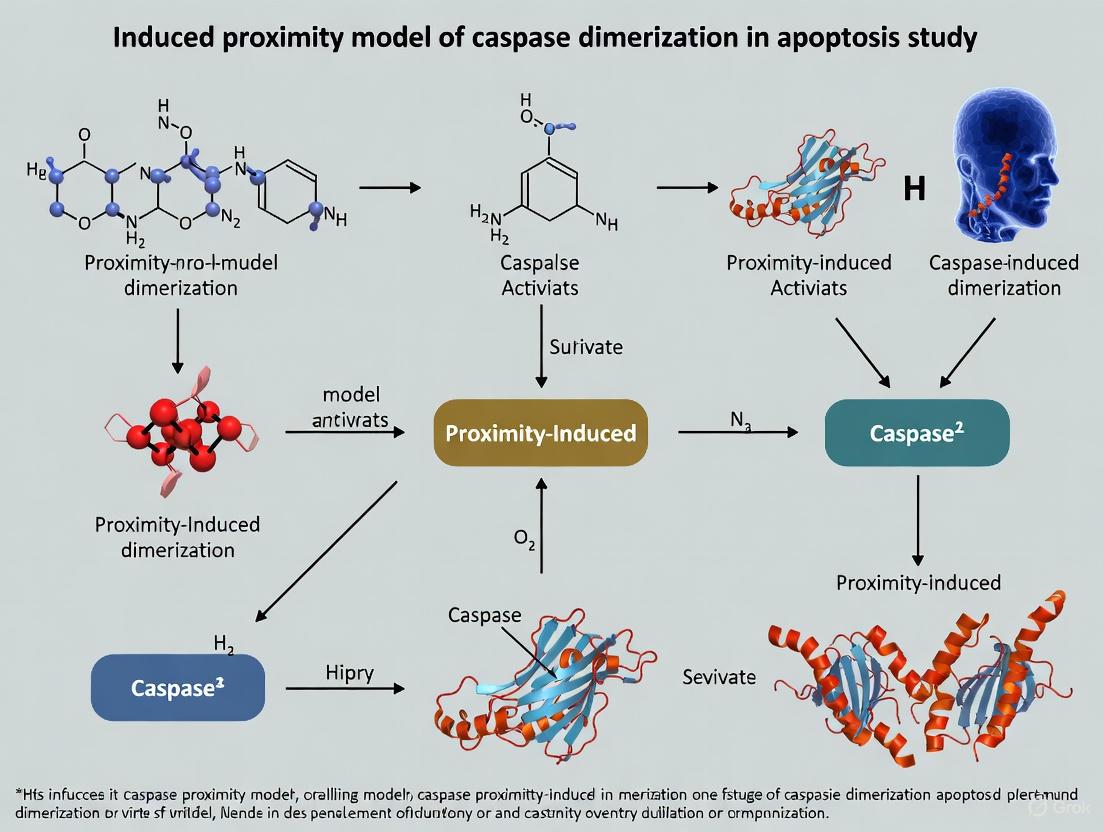
Induced Proximity Model of Caspase Activation: From Dimerization Mechanisms to Therapeutic Applications
This article provides a comprehensive exploration of the induced proximity model, the established paradigm for initiator caspase activation.
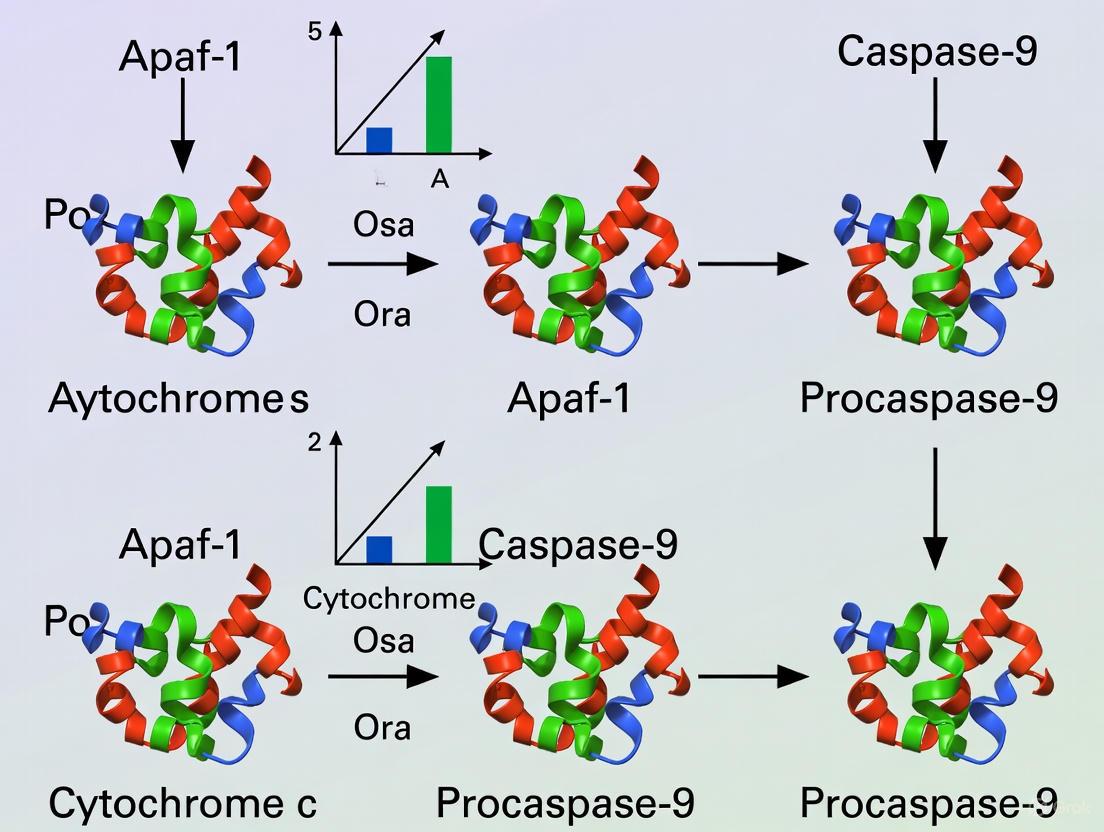
The Apoptosome Complex: Decoding Caspase-9 Activation for Therapeutic Innovation
This article provides a comprehensive analysis of the caspase-9 activation mechanism mediated by the apoptosome complex, a critical control point in the intrinsic apoptosis pathway.
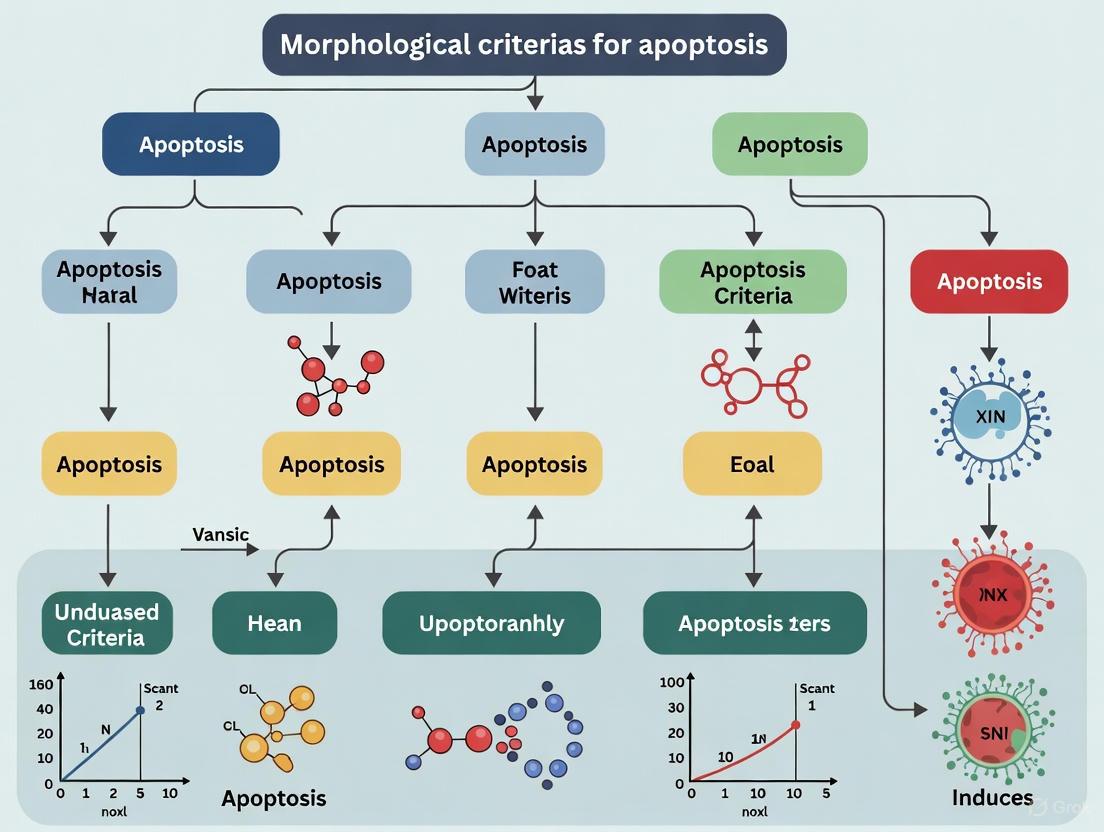
Universal Hallmarks: Assessing Morphological Criteria Consistency Across Apoptosis Inducers in Biomedical Research
This article systematically examines the consistency of core apoptotic morphological criteria—including cell shrinkage, chromatin condensation, membrane blebbing, and apoptotic body formation—across diverse chemical, biological, and physiological inducers.
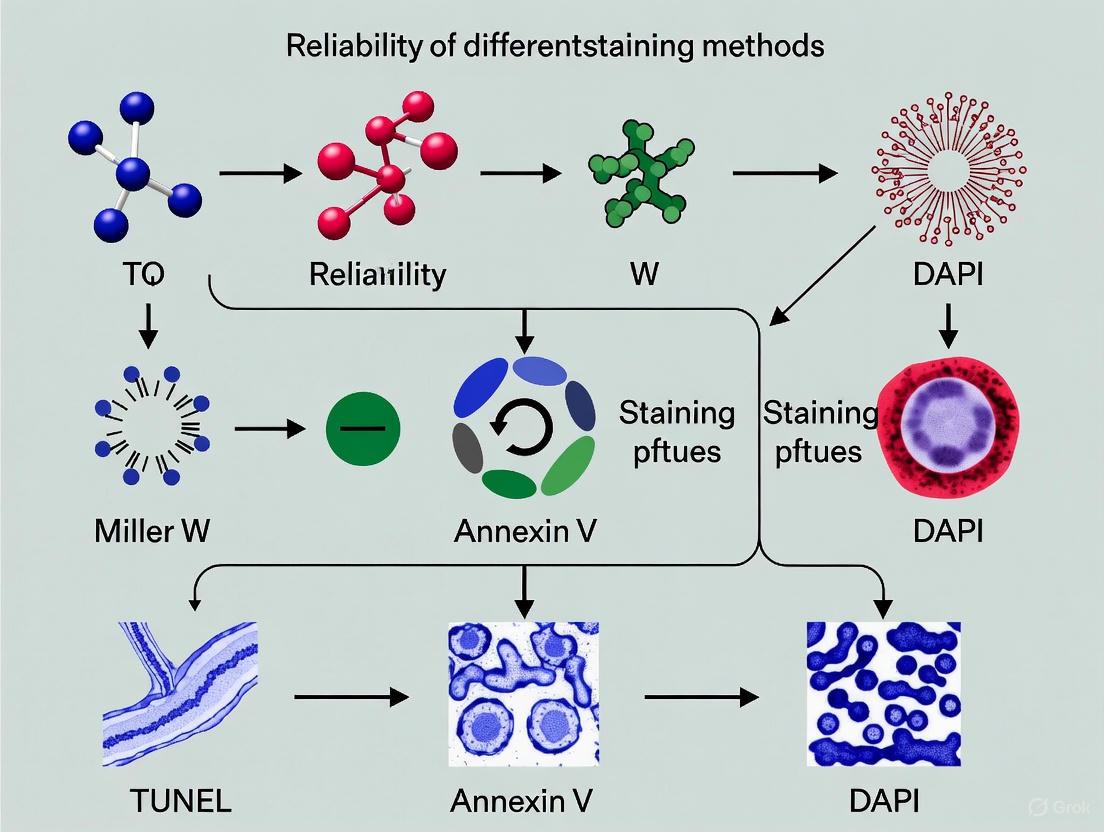
Assessing Apoptosis Staining Reliability: A 2025 Guide for Phase Identification in Biomedical Research
Accurately identifying distinct phases of apoptosis is critical for cancer research, neurobiology, and drug development.
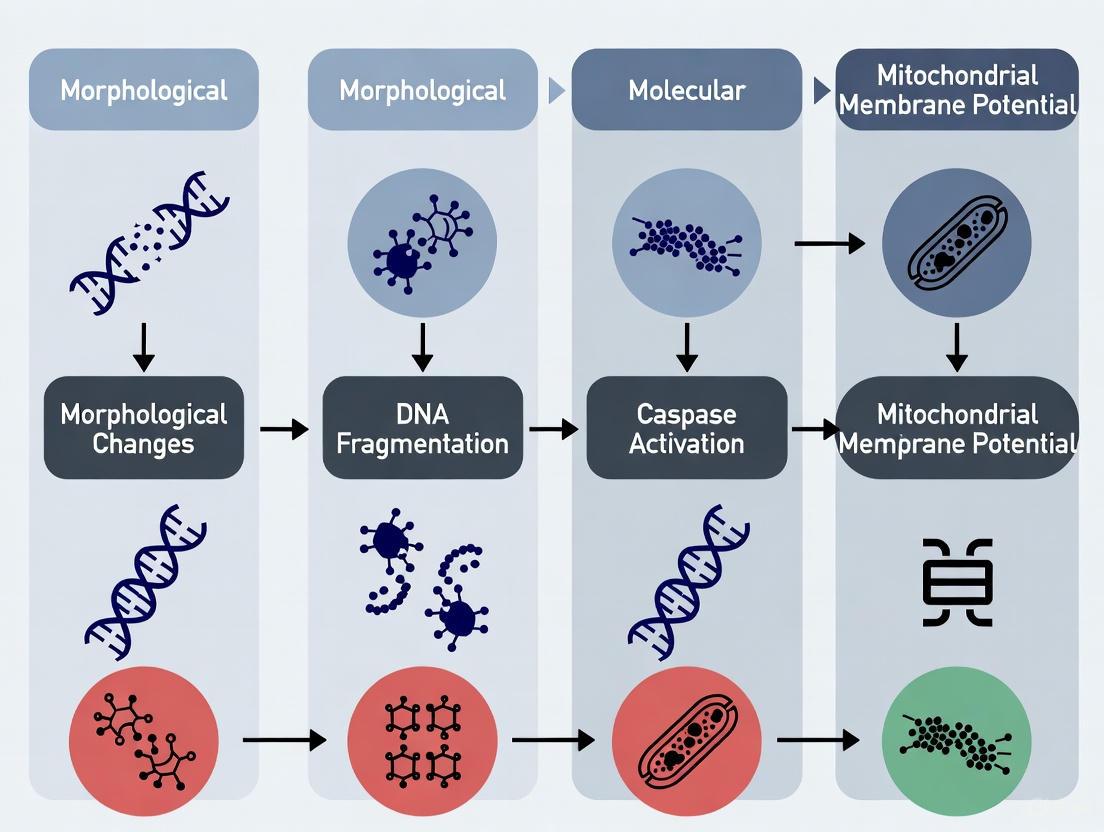
Integrating Morphological and Molecular Apoptosis Detection: A Comprehensive Guide for Enhanced Research and Drug Development
This article provides a comprehensive framework for researchers, scientists, and drug development professionals on the integrated use of morphological and molecular methods for apoptosis detection.

Morphological Hallmarks and Caspase Activation: An Integrated Framework for Tracking Apoptosis in Biomedical Research
This article provides a comprehensive synthesis for researchers and drug development professionals on the critical relationship between phase-specific morphological changes and caspase activation during programmed cell death.
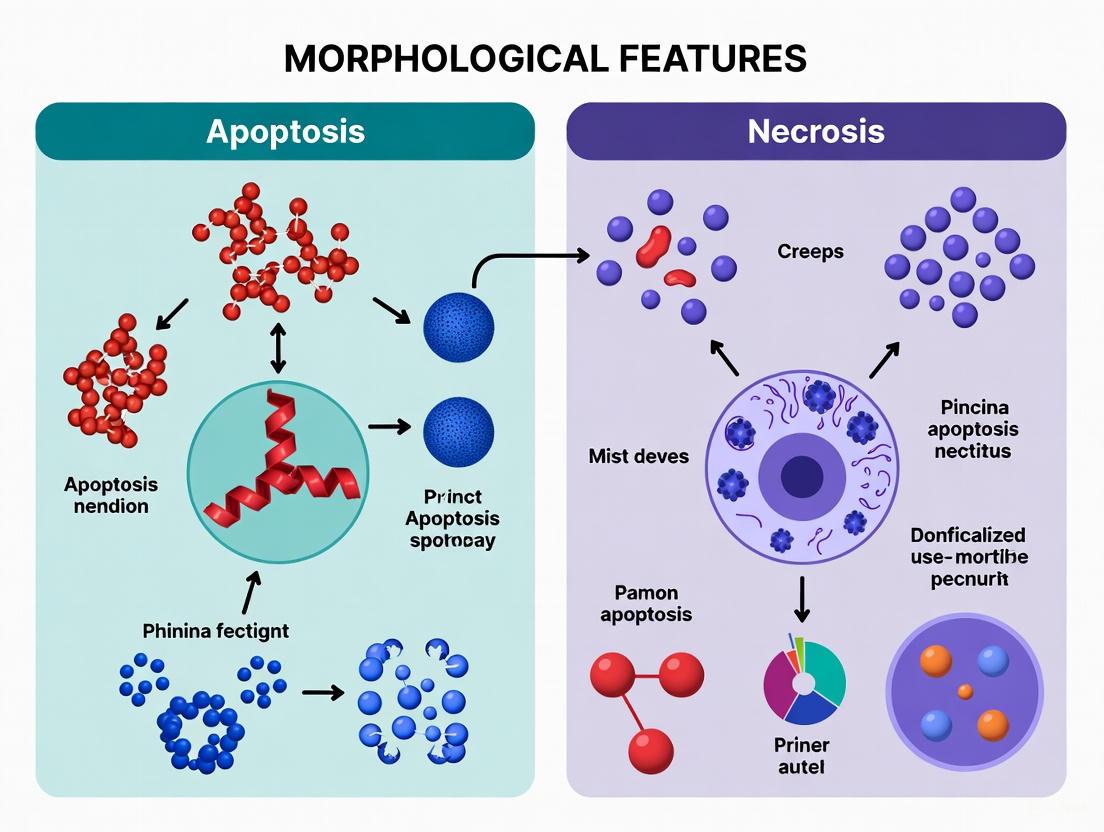
Decoding Cell Death: A Comprehensive Guide to the Morphological Features of Apoptosis vs. Necrosis for Biomedical Research
Accurately distinguishing between apoptosis and necrosis is fundamental in biomedical research, influencing everything from basic mechanistic studies to the evaluation of anticancer therapies.
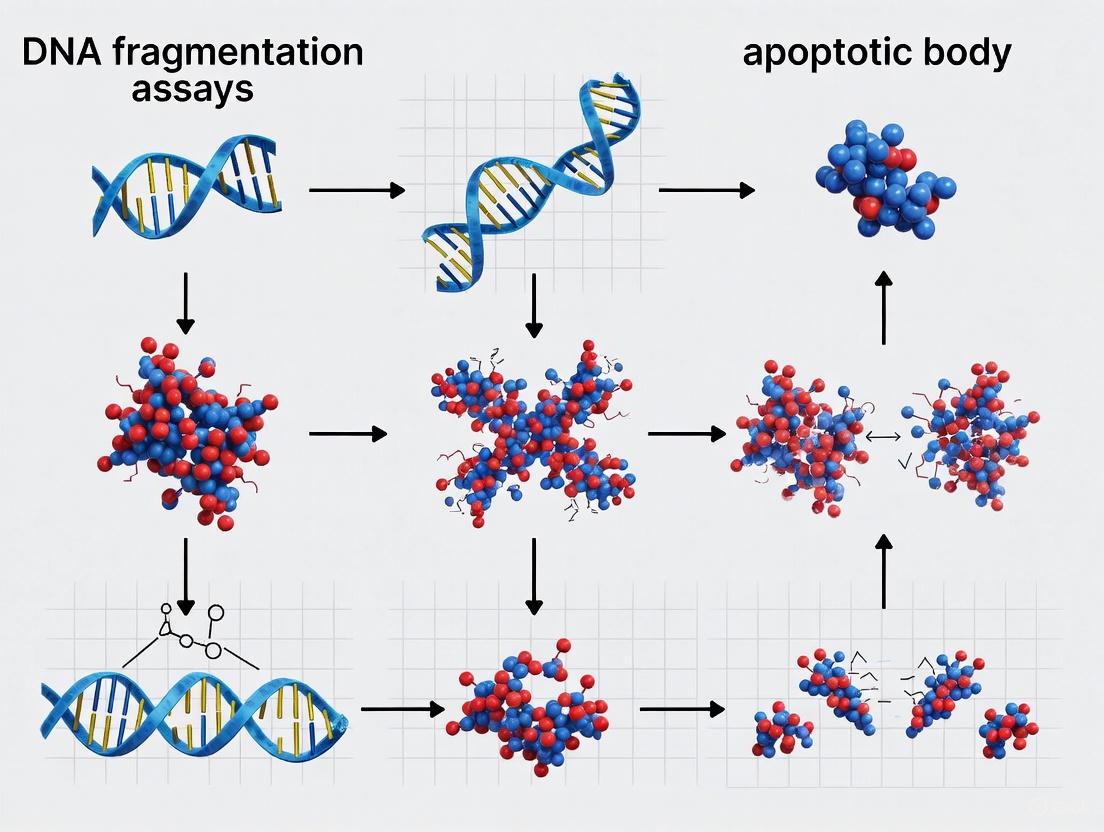
DNA Fragmentation Assays vs. Apoptotic Body Formation: A Comparative Guide for Biomedical Research and Drug Development
This article provides a comprehensive comparison of two fundamental approaches in apoptosis detection: DNA fragmentation assays and apoptotic body formation analysis.
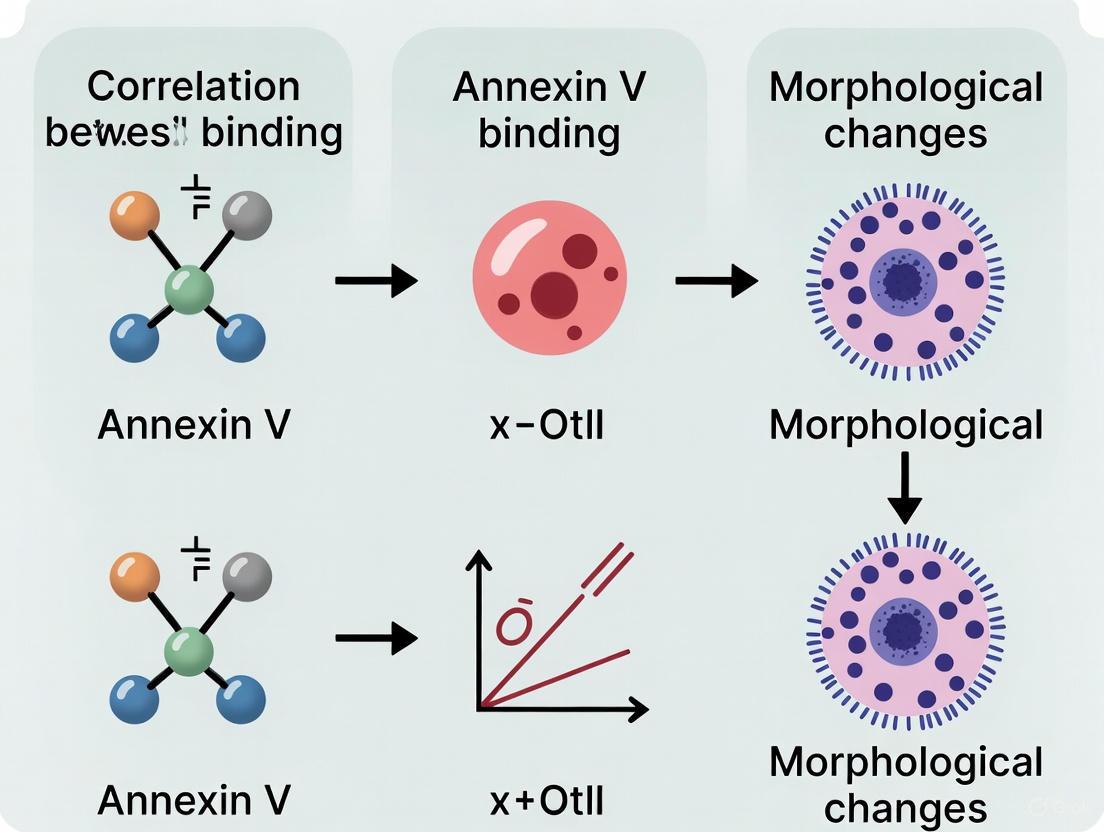
Annexin V Binding and Morphological Changes in Apoptosis: A Temporal Analysis for Research and Drug Discovery
This article provides a comprehensive analysis of the temporal correlation between Annexin V binding, a marker for phosphatidylserine externalization, and the subsequent morphological changes characteristic of apoptosis.